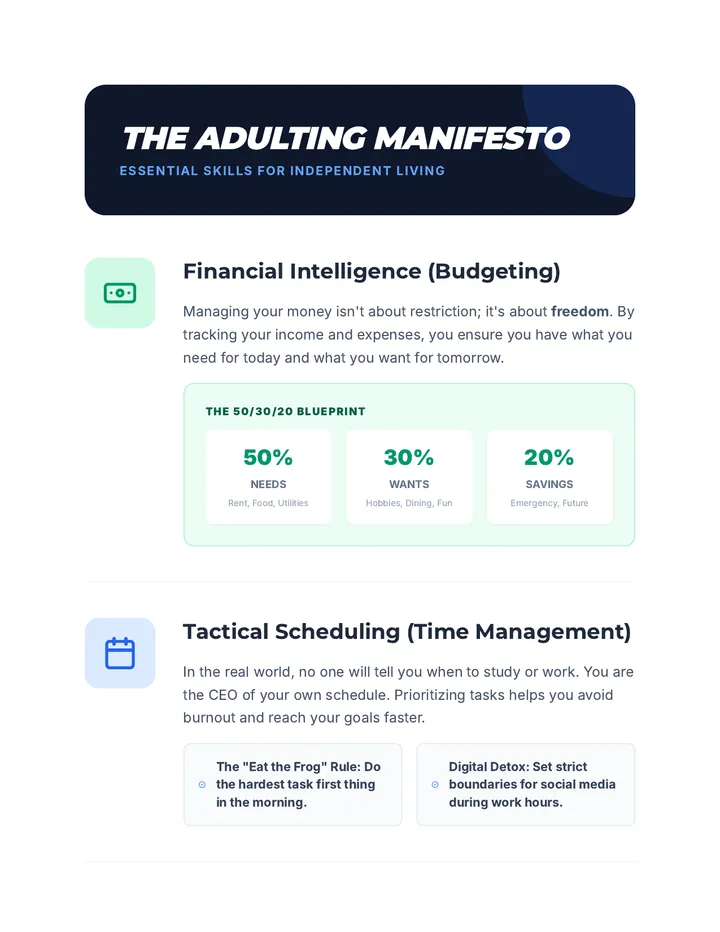
Strategies for prioritization, goal-setting, and overcoming procrastination. Develops proficiency in time-blocking, task delegation, and managing workflow efficiency within professional environments.
A 5-session unit for grades 5–8 that guides students from self-reflection and growth mindset to creating a persuasive mental health public service announcement (PSA). Students explore weaknesses as strengths, identify personal talents, and use their voices to advocate for wellness and coping strategies.
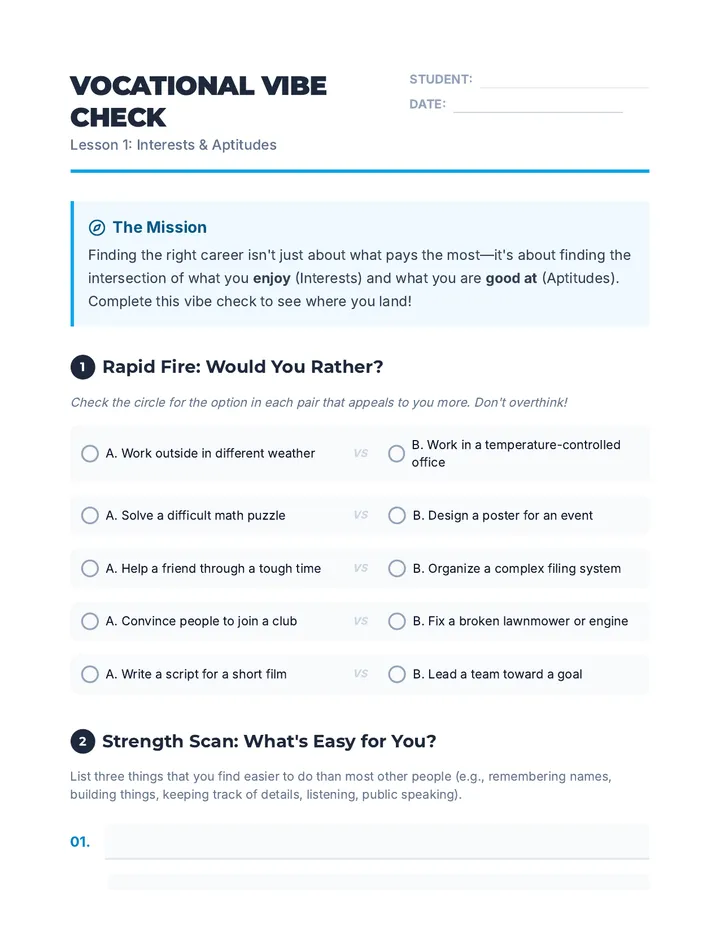
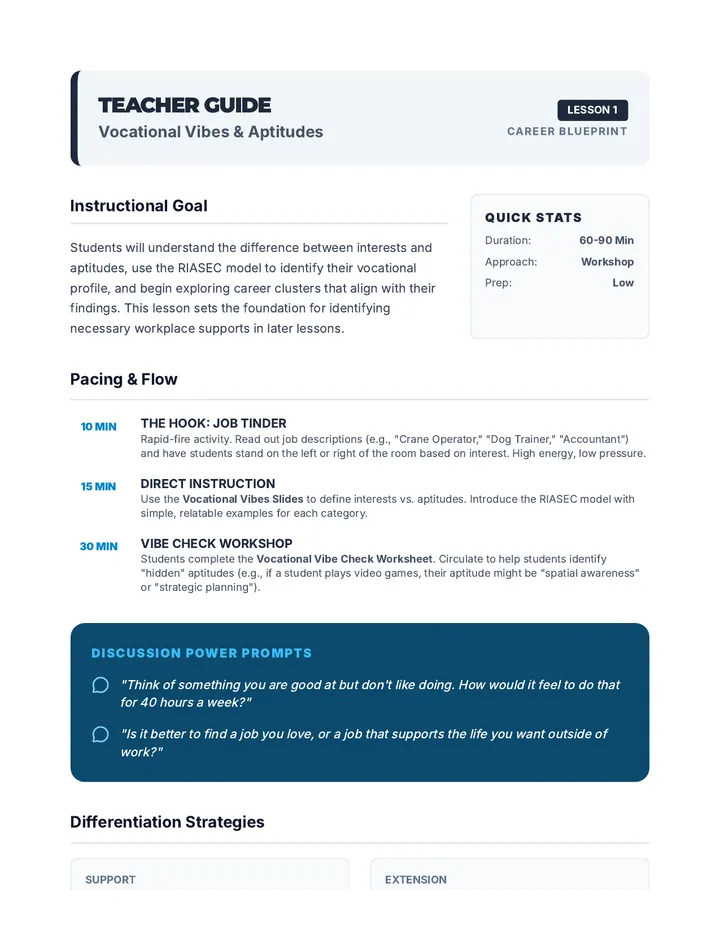
A comprehensive 5-lesson sequence designed for 12th-grade transition students to explore vocational pathways, understand workplace rights, and develop the self-advocacy skills needed for post-secondary success. Students will move from self-discovery to practical workplace navigation, culminating in a professional mindset and a plan for accommodation management.
A comprehensive sequence designed for 6th-grade students to master executive function skills. Students will learn to audit their time, effectively use planners, prioritize tasks using the 'Big Rocks' method, break down large projects through backward planning, and optimize their study environments for focus.
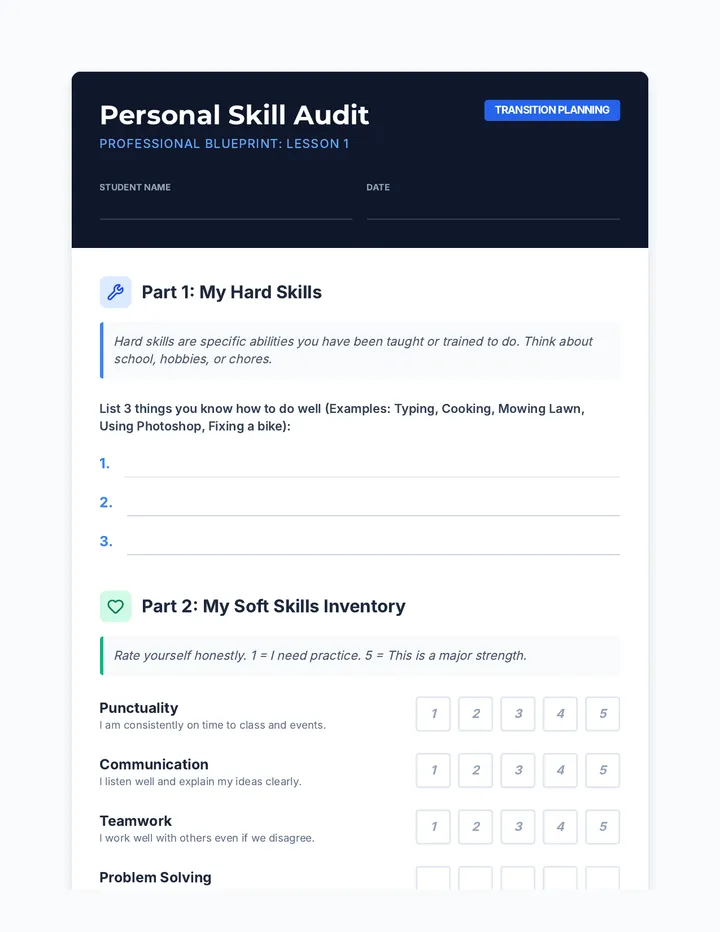
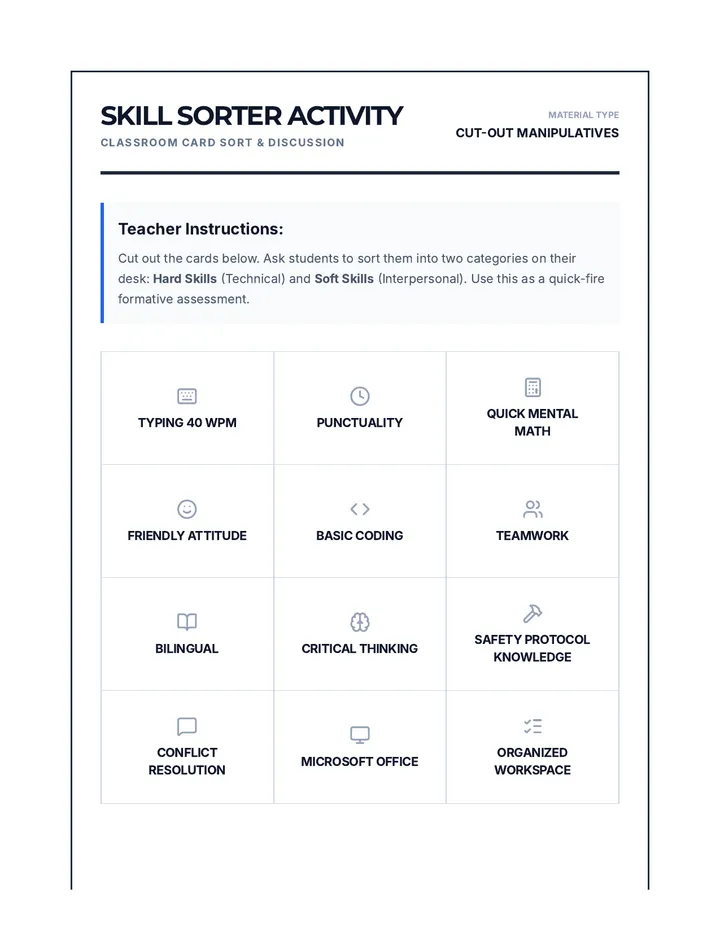
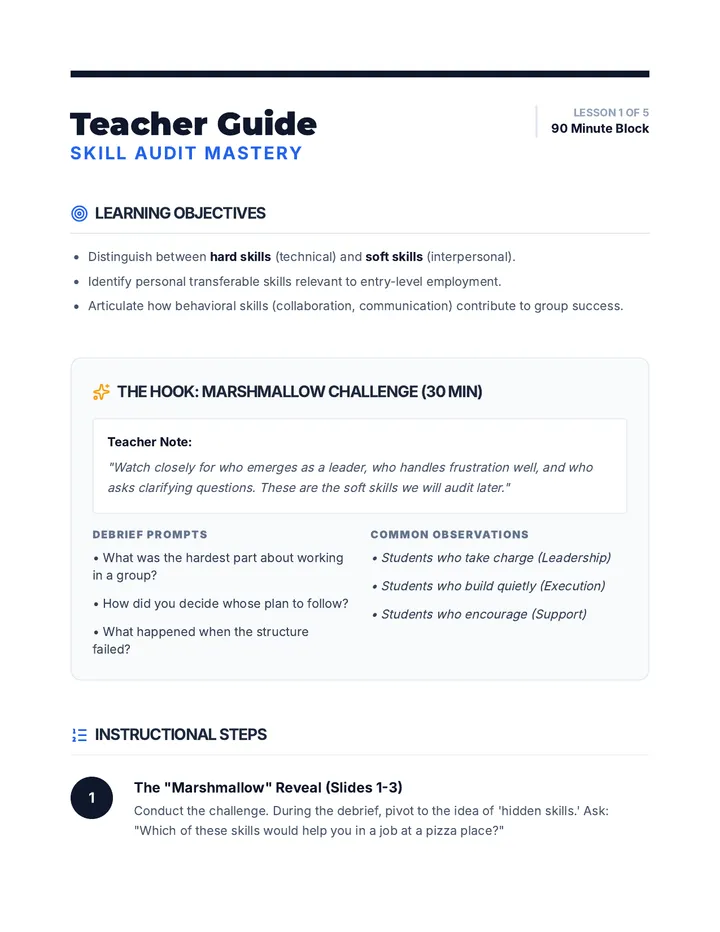
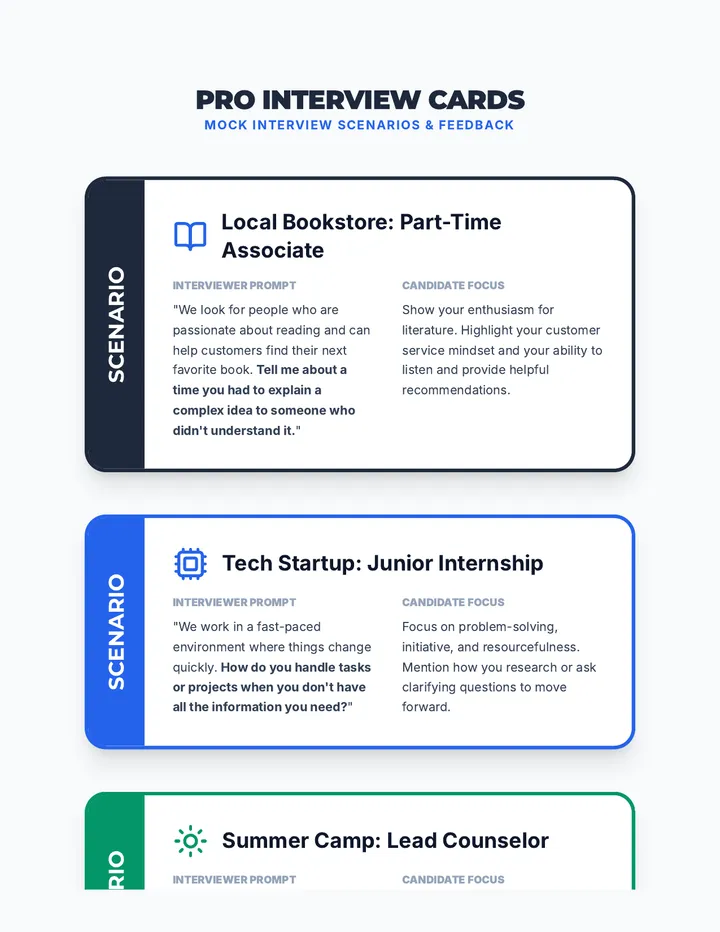
A comprehensive sequence designed for 9th-grade transition students to master the job acquisition cycle. Students progress from identifying soft skills to mastering resumes, applications, and interviews, with a heavy focus on the social 'hidden curriculum' of the workplace.
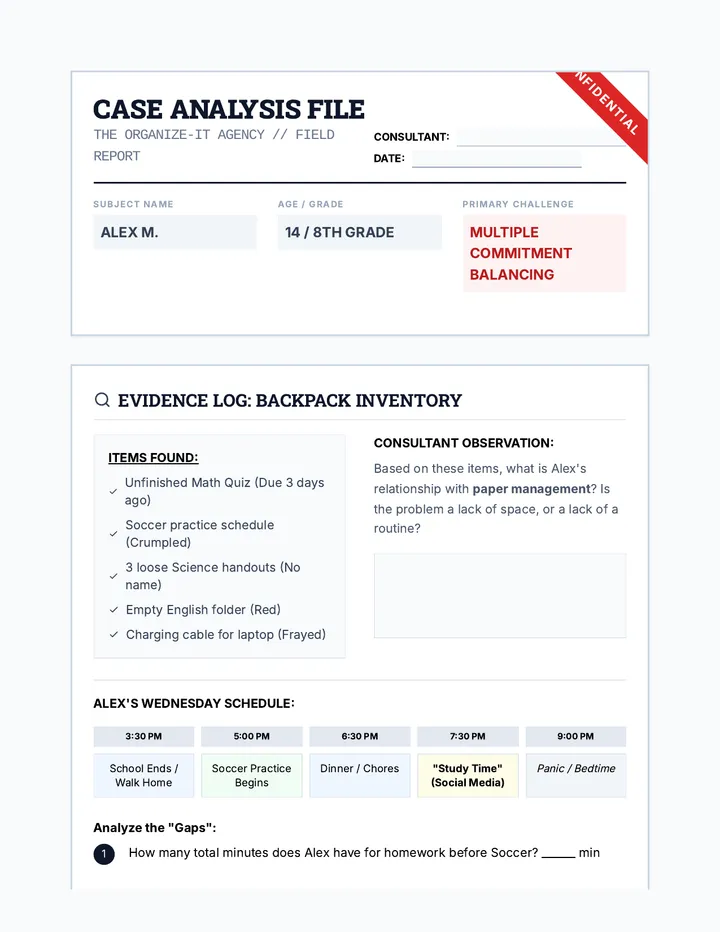
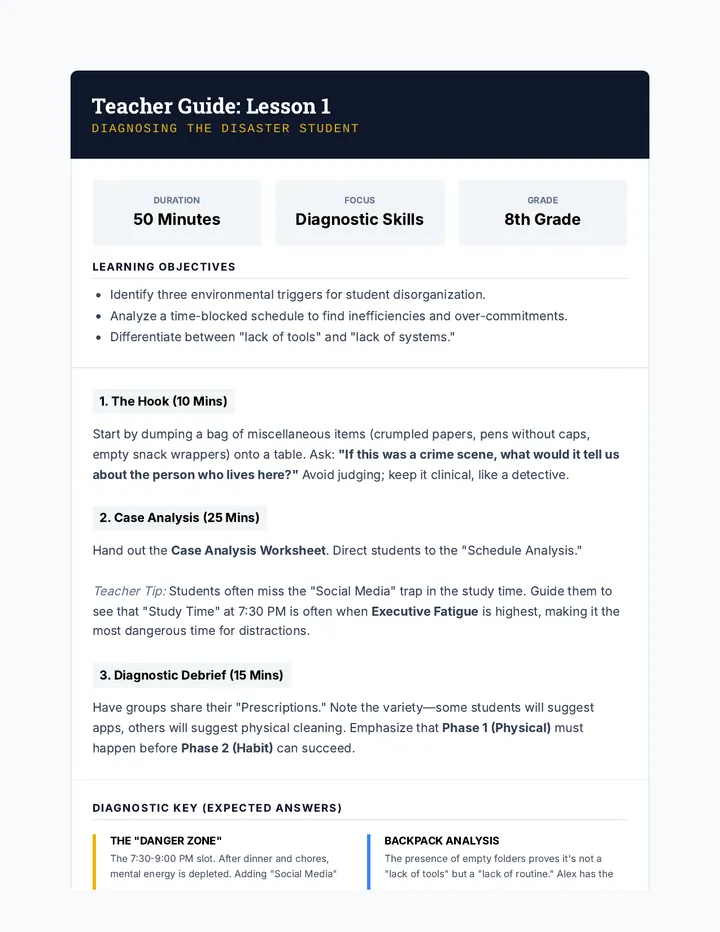
A comprehensive sequence where 8th-grade students act as 'organizational consultants' to diagnose and solve scheduling conflicts and executive functioning challenges through case studies. Students learn root cause analysis, professional self-advocacy, emotional regulation strategies for procrastination, and tool evaluation before creating a final consultancy report.
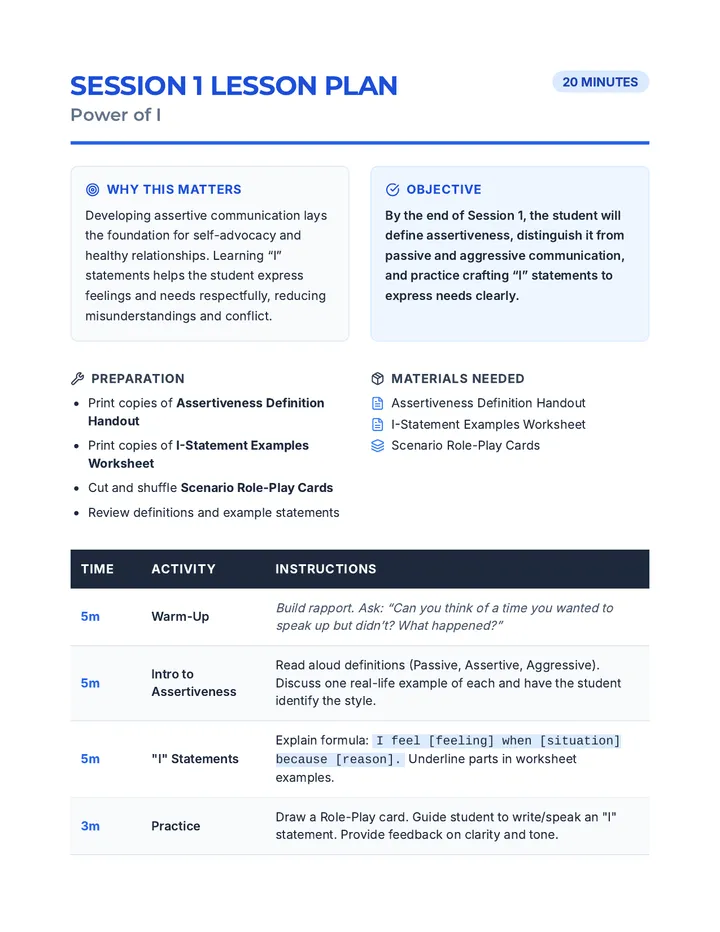
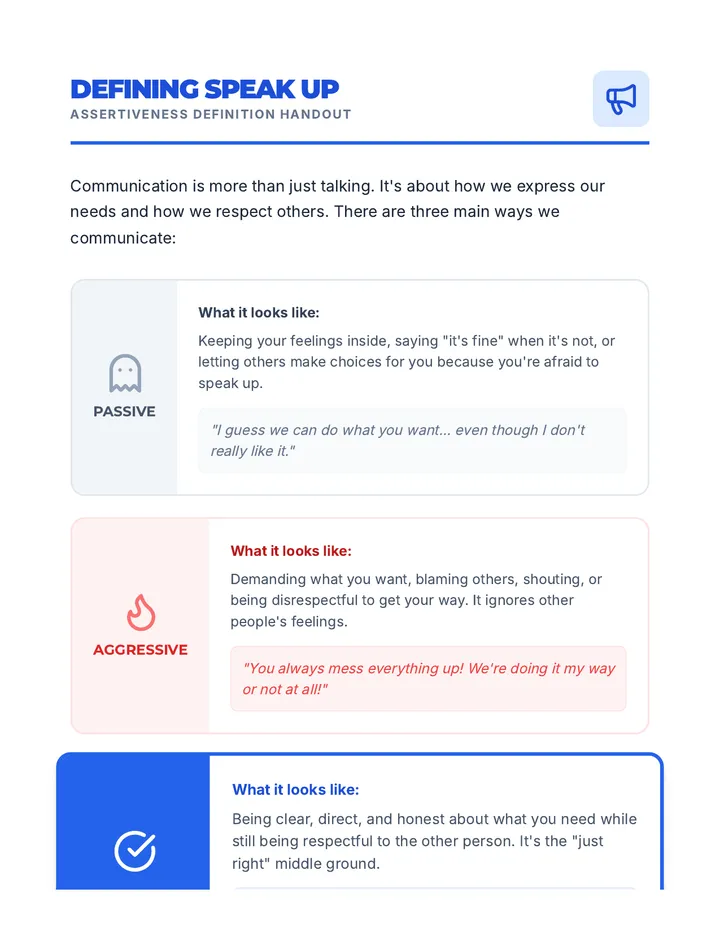
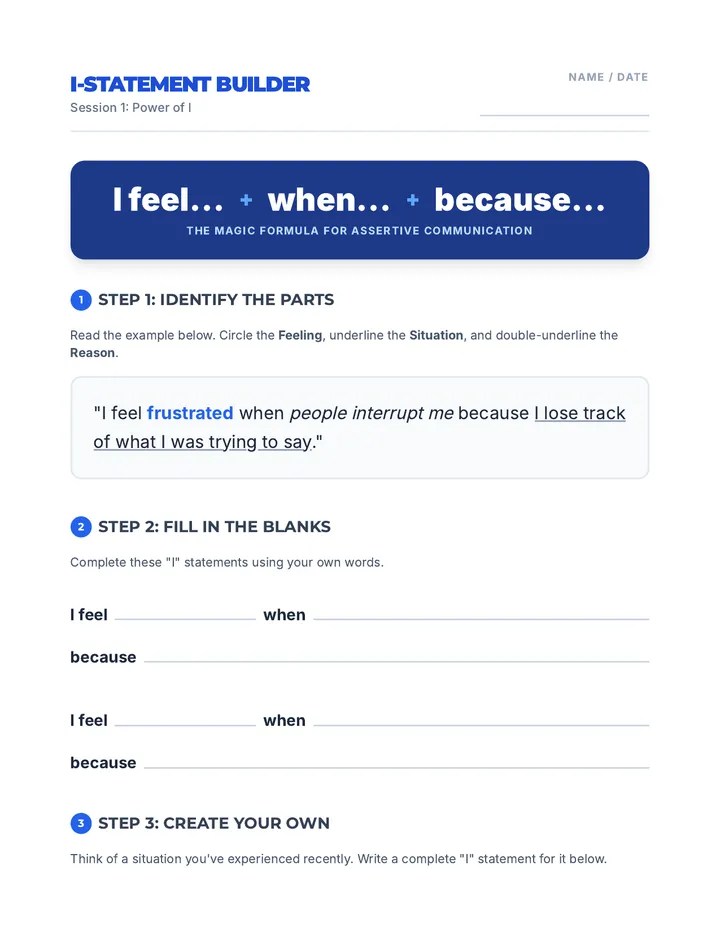
A 5-session intensive for middle school students to develop assertive communication skills, focusing on I-statements, boundaries, refusals, and long-term maintenance.
This sequence guides seventh-grade students through the foundational process of constructing their first professional resume. It covers identifying transferable skills, using action-oriented language, and mastering professional formatting through interactive workshops and simulations.
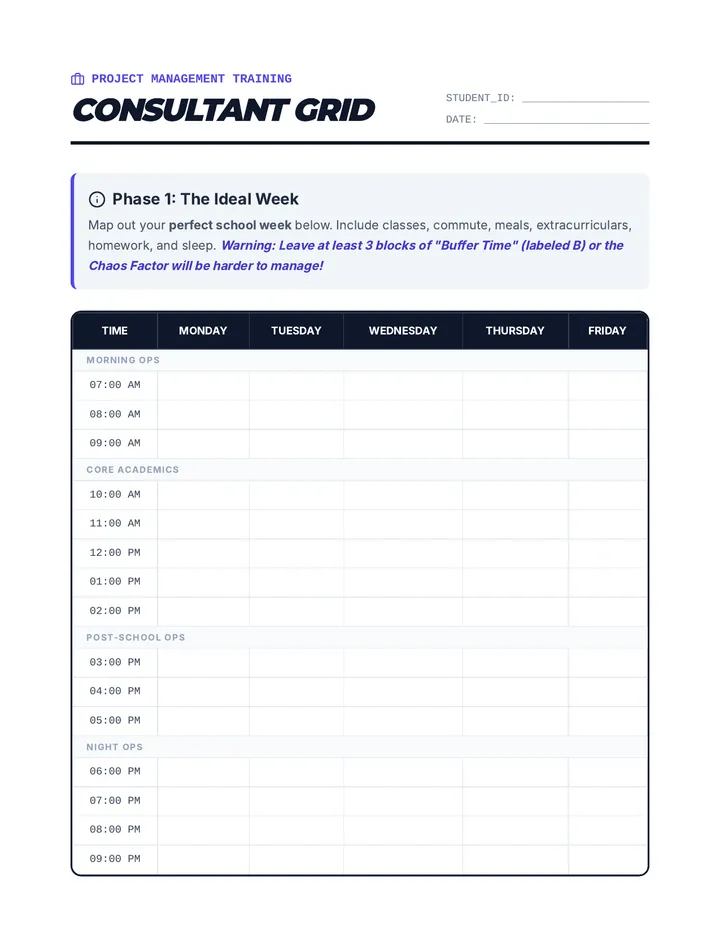
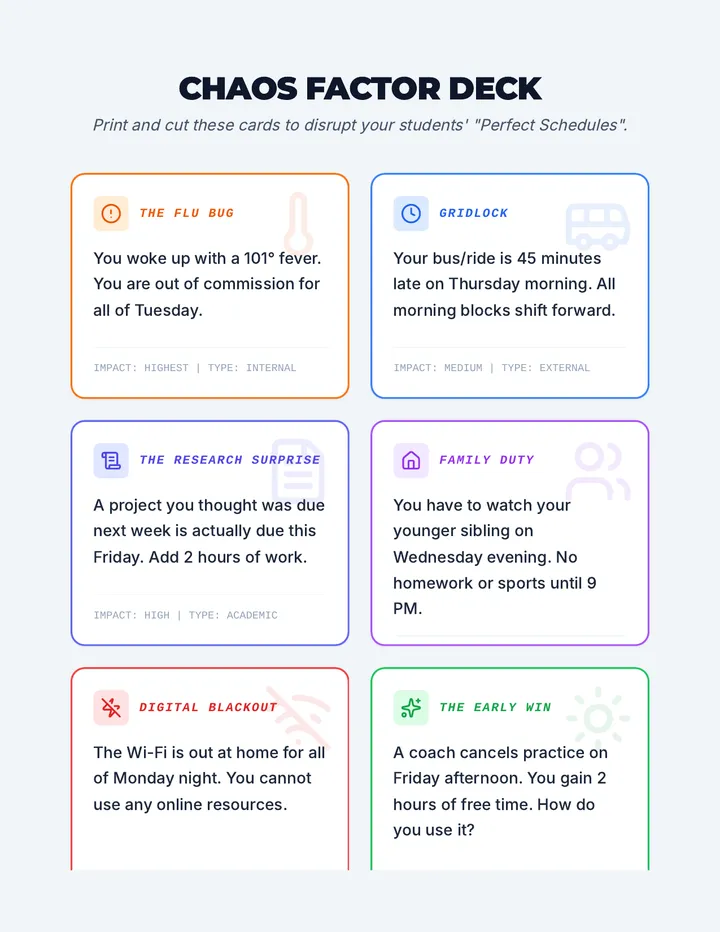
A simulation-based sequence where 10th-grade students act as 'Student-Consultants' to master schedule management and adaptive resiliency. Students learn to handle 'Chaos Factors', negotiate deadlines, and manage energy levels to maintain balance amidst competing demands.
A project-based sequence for 12th-grade students focusing on visual hierarchy, document design, and professional formatting standards. Students move from basic principles of white space to creating a cohesive professional portfolio.
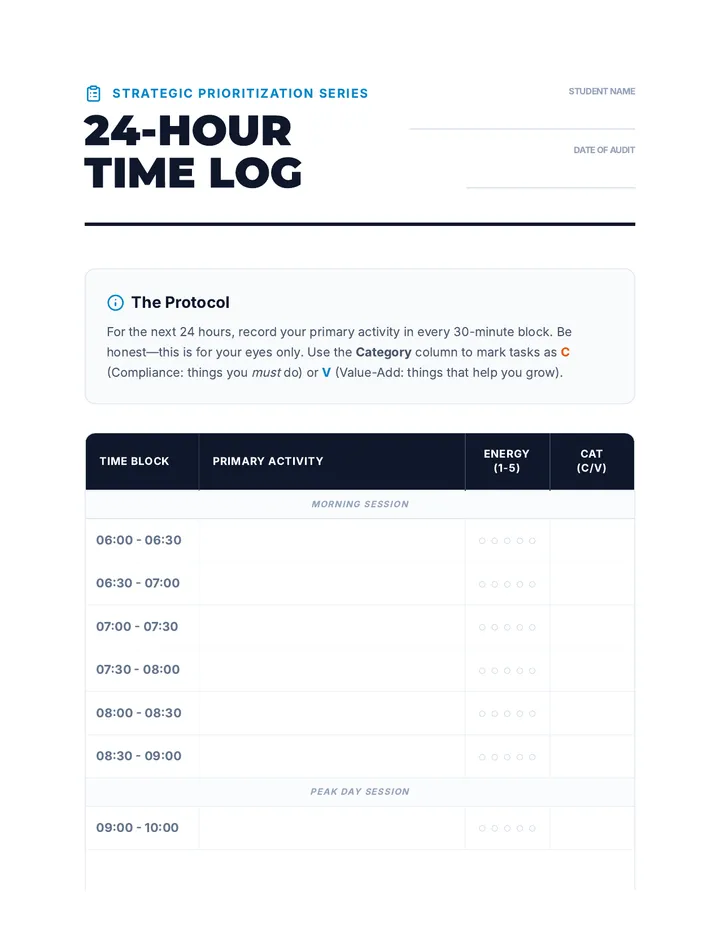
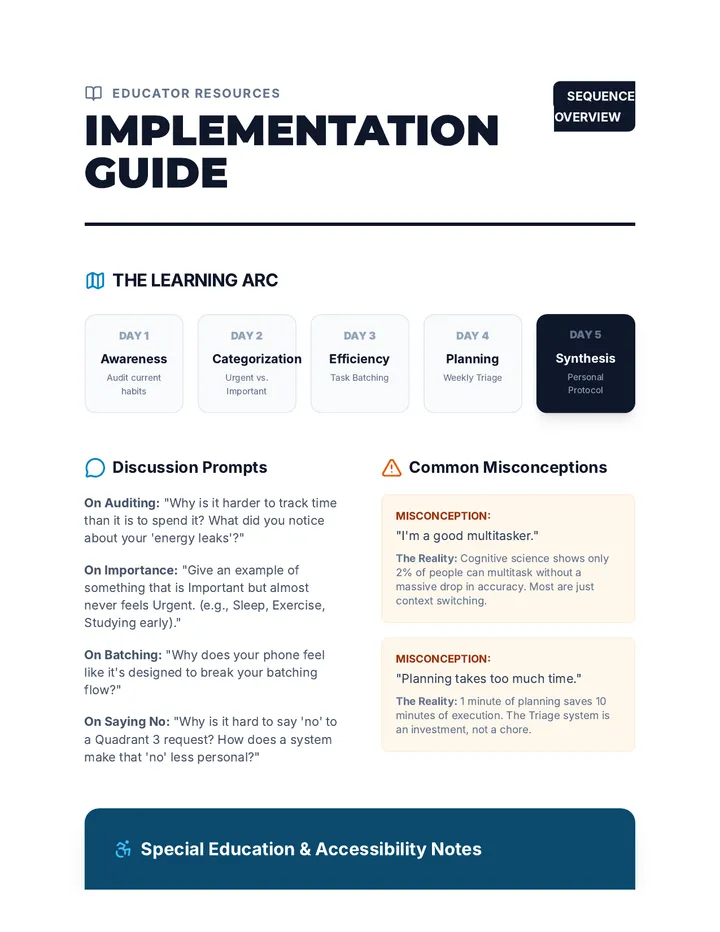
A comprehensive 5-lesson unit for 10th-grade students focusing on executive functioning skills to balance multiple commitments. Students learn time auditing, the Eisenhower Matrix, task batching, and weekly triage systems to develop a personalized priority protocol.
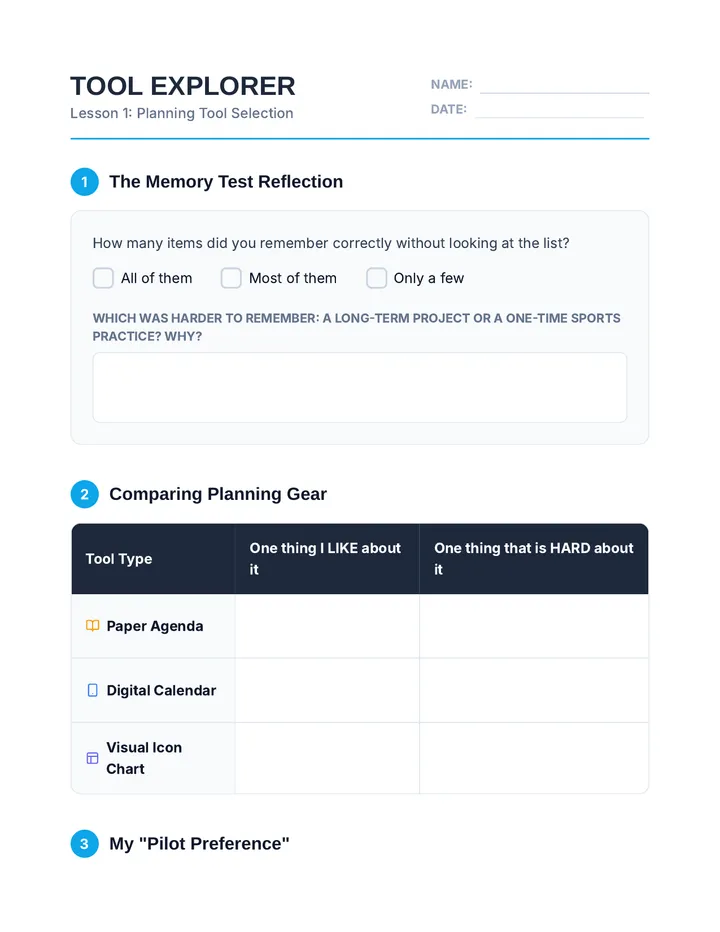
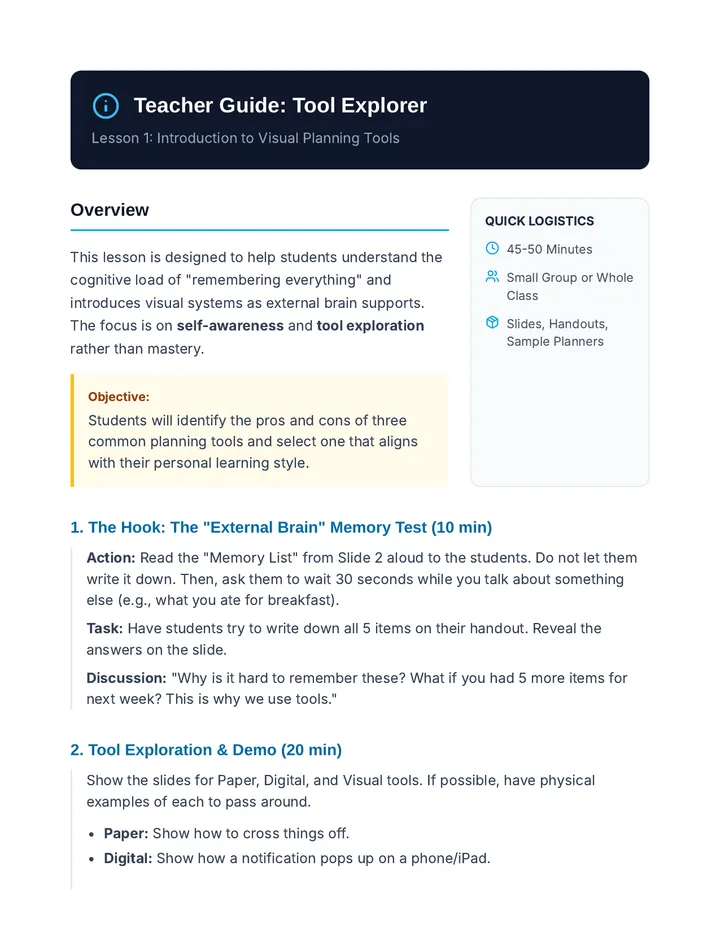
This sequence introduces 6th-grade students to visual planning and time management. Students learn to use different tools, distinguish between fixed and flexible time, and develop routines to maintain a personalized organizational system.
A comprehensive sequence designed to prepare 12th-grade students for a dynamic professional landscape through labor market analysis, career mapping, and strategic 10-year planning. Students will learn to navigate technological shifts and develop a mindset of professional agility.
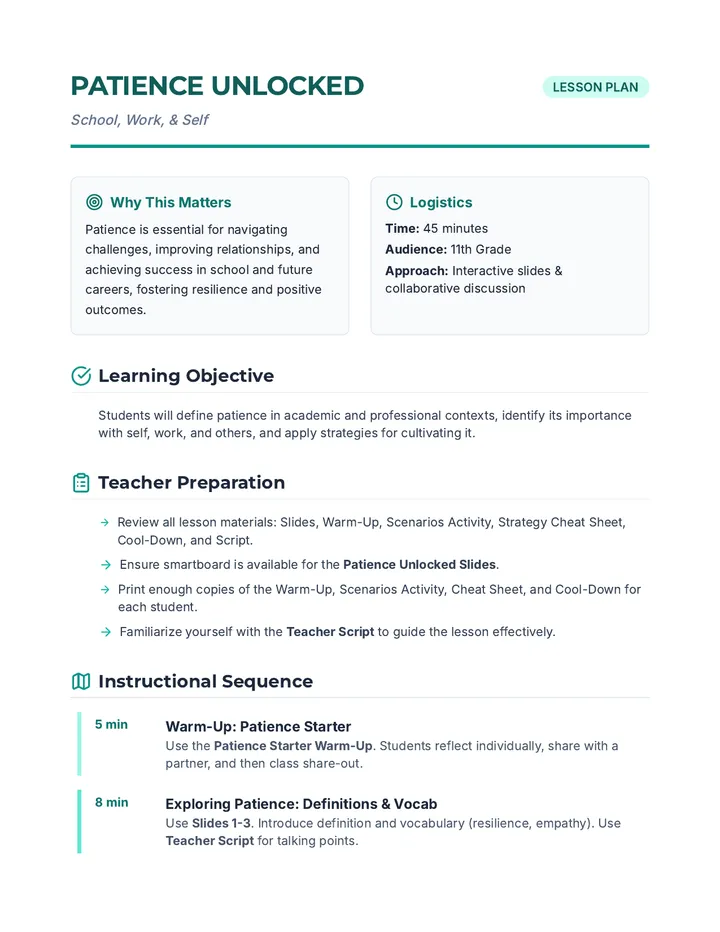
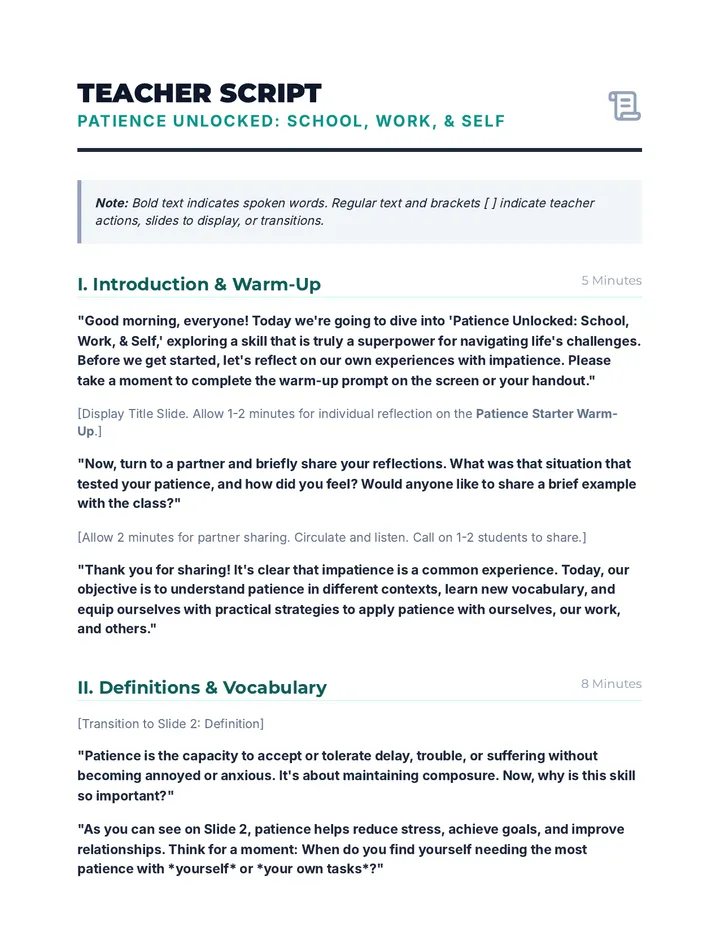
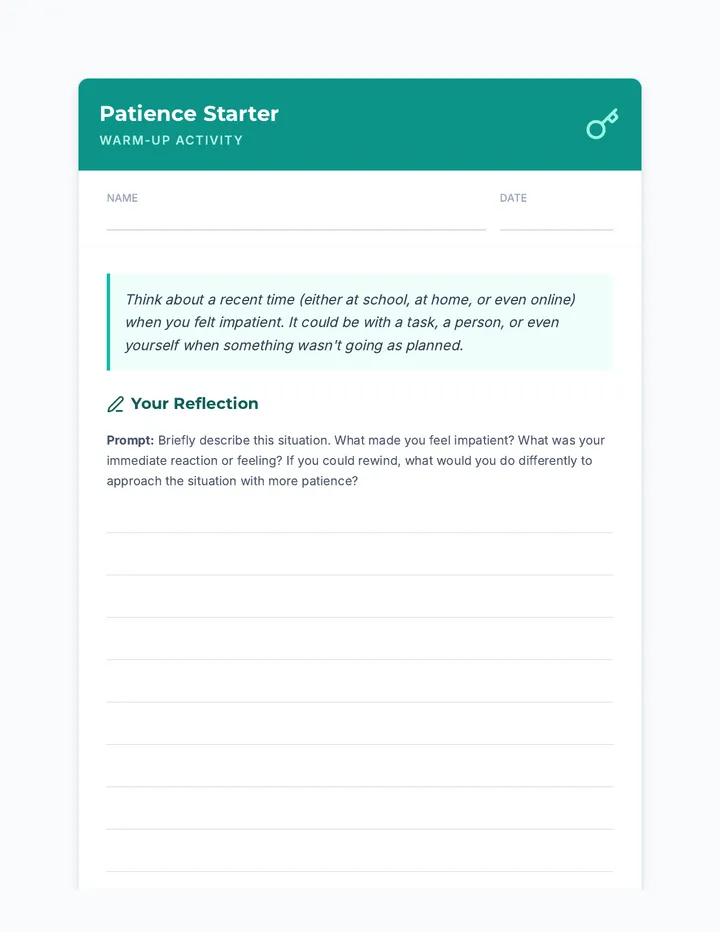
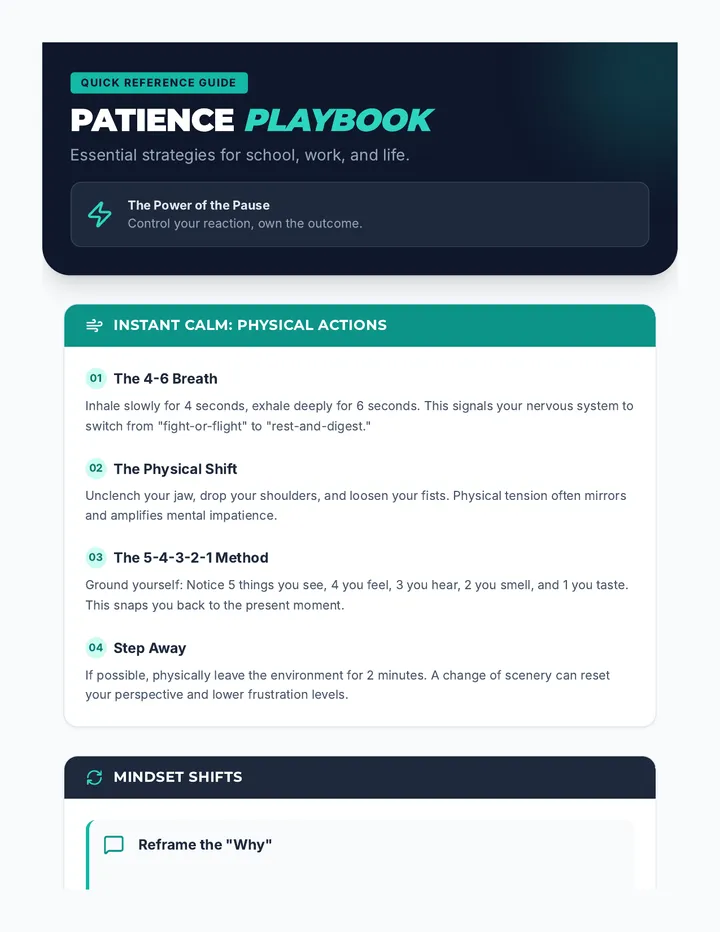
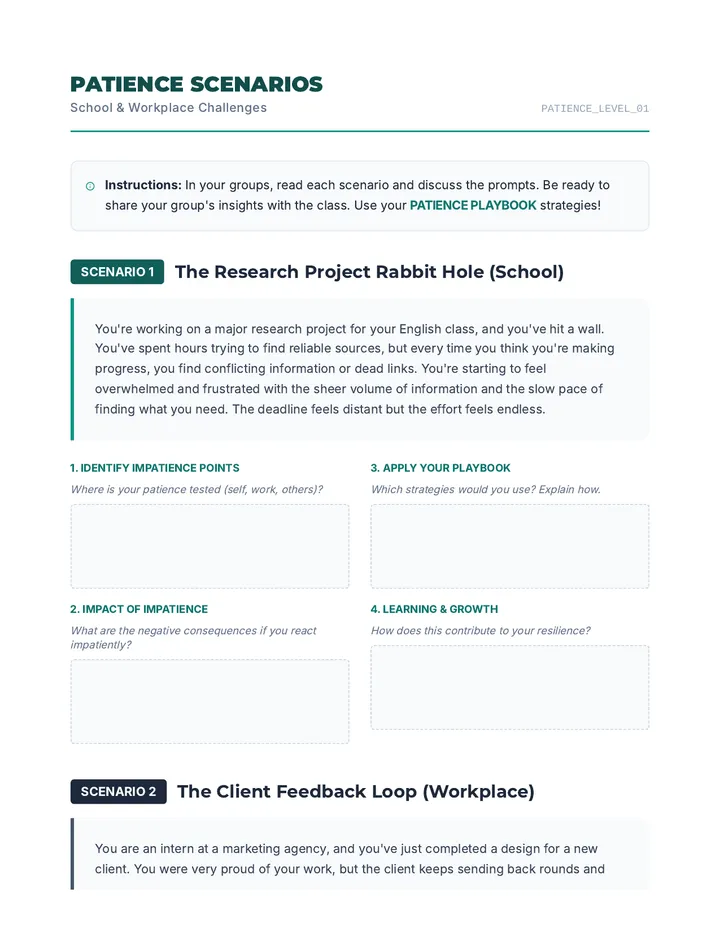
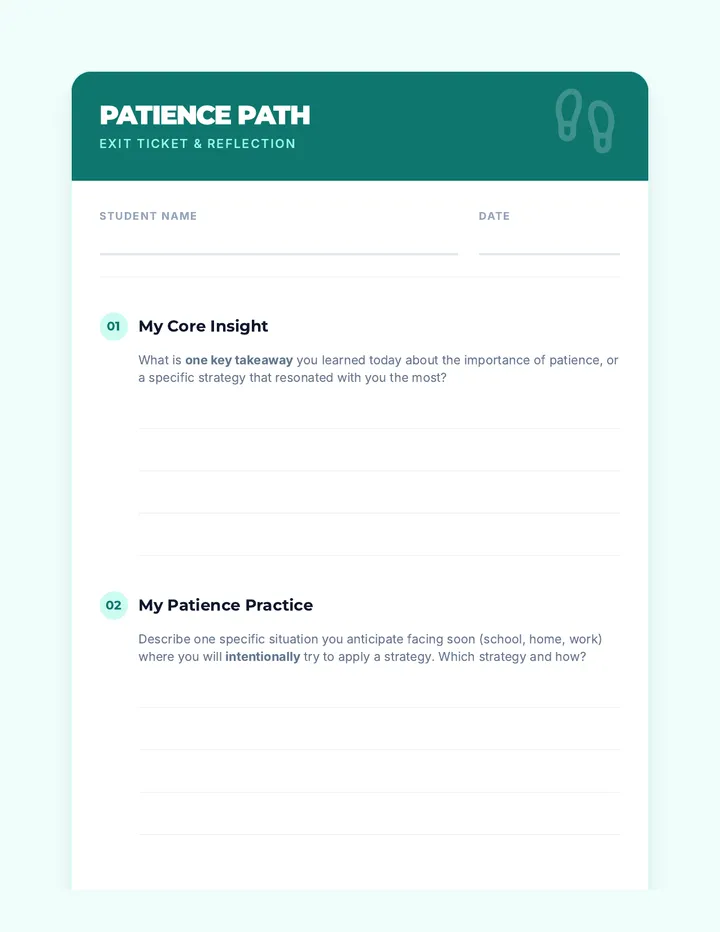
This lesson empowers 11th-grade students to cultivate patience as a critical skill in academic and professional settings. Students will explore strategies for managing impatience with themselves, their work, and others, fostering resilience and positive relationships.
A 45-minute lesson for 6th graders on executive functioning and study skills, using the 'Inner CEO' metaphor to help students master organization, planning, and task management.
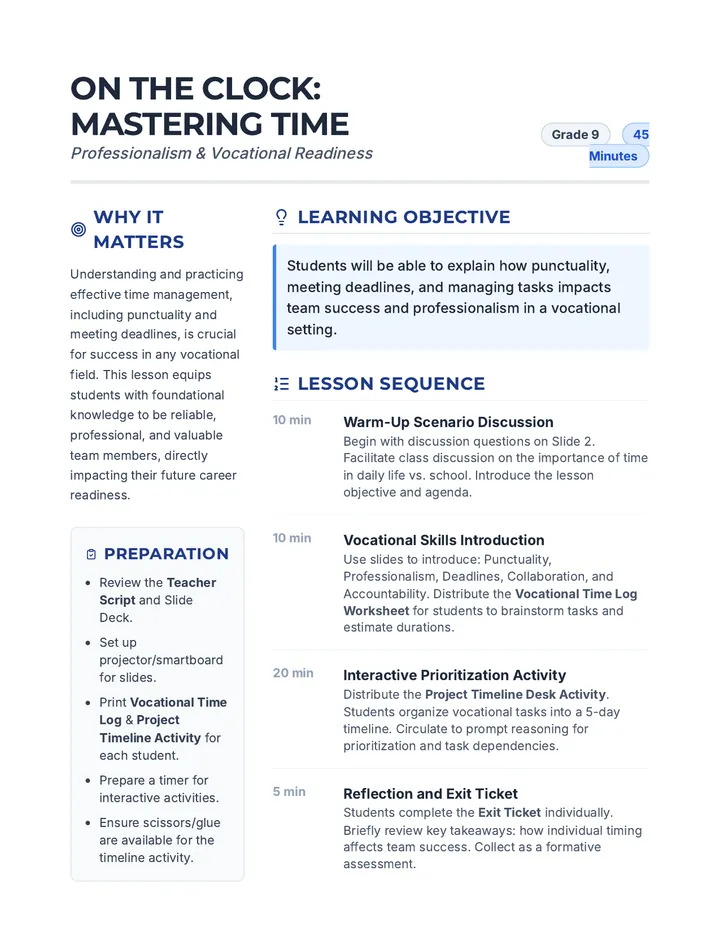
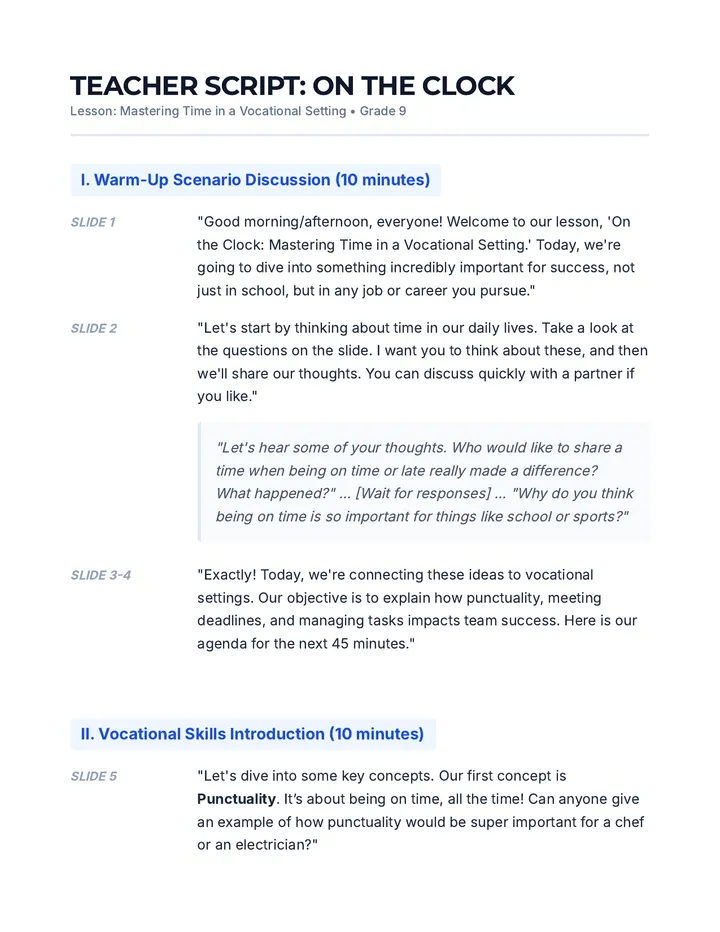
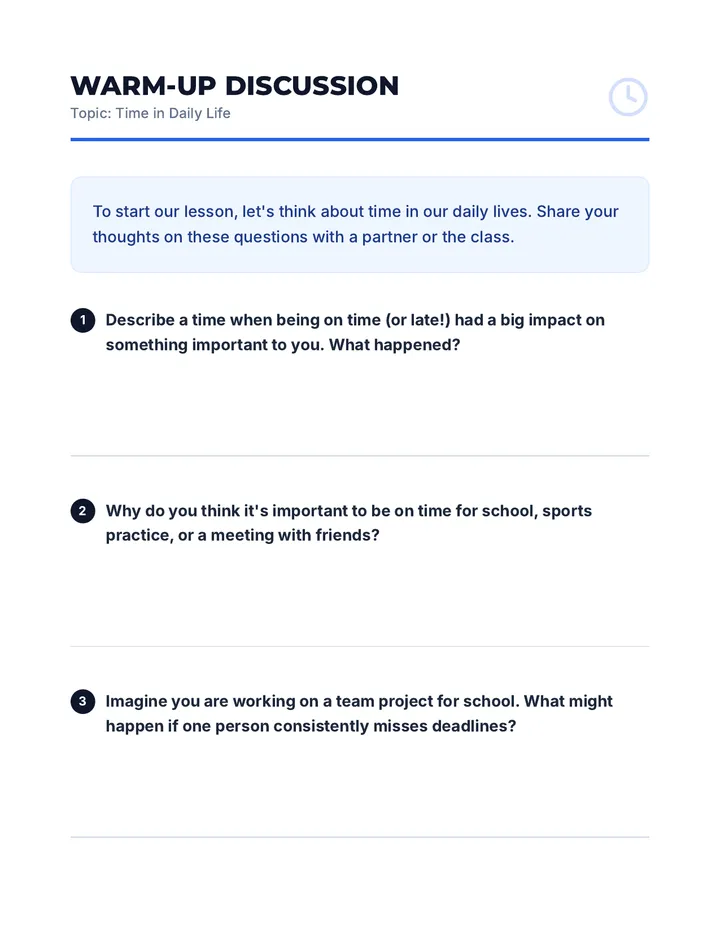
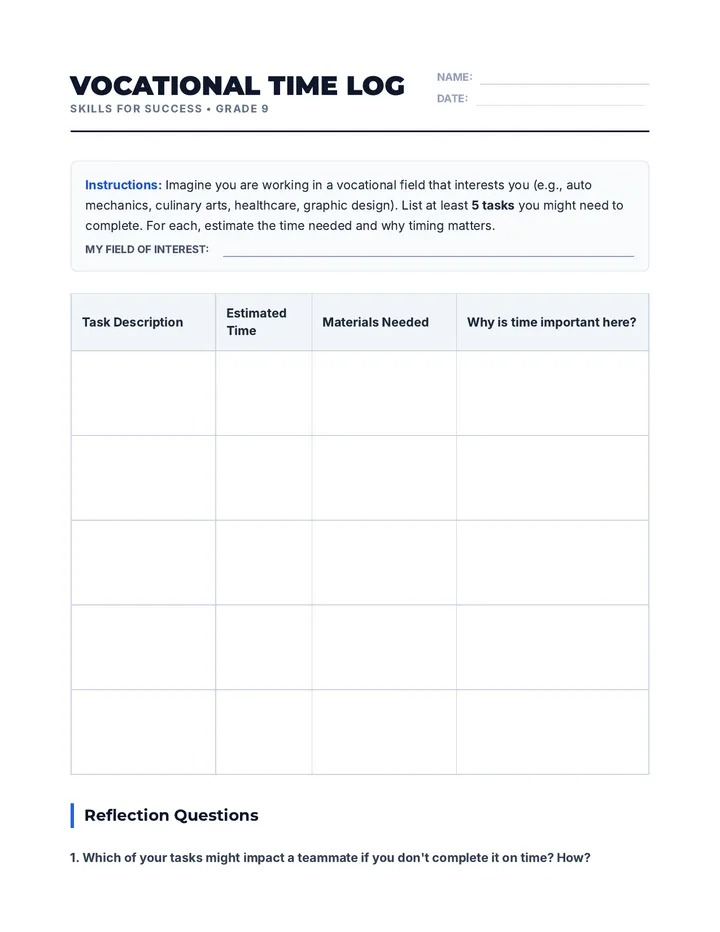
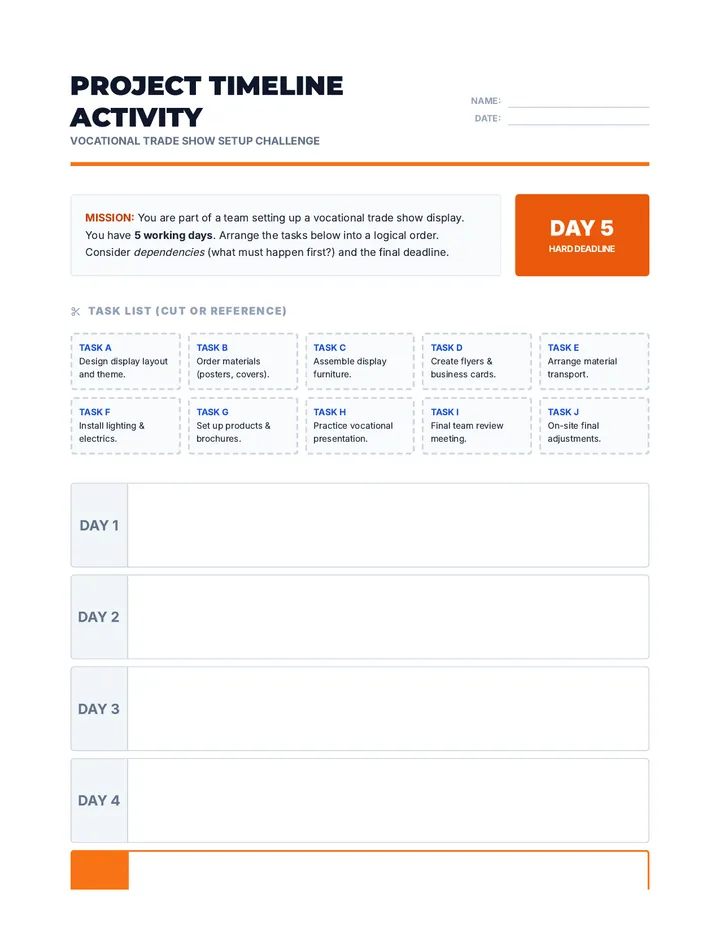
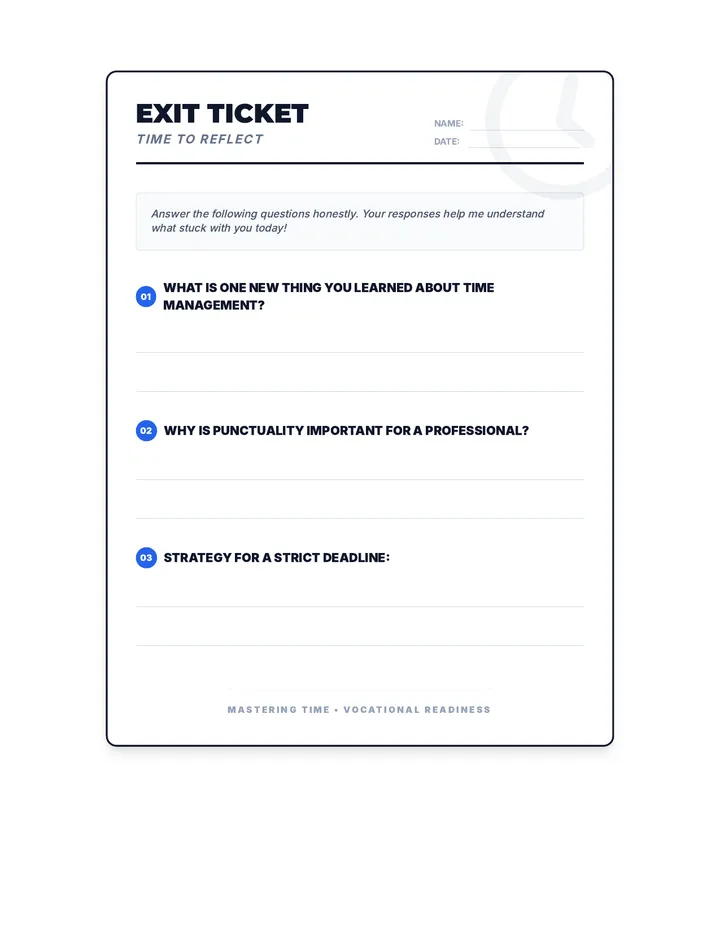
A 45-minute lesson for 9th-grade students on the importance of punctuality, meeting deadlines, and effective task management in vocational careers. Students explore key concepts of professionalism and collaboration through interactive activities like creating a project timeline for a trade show.
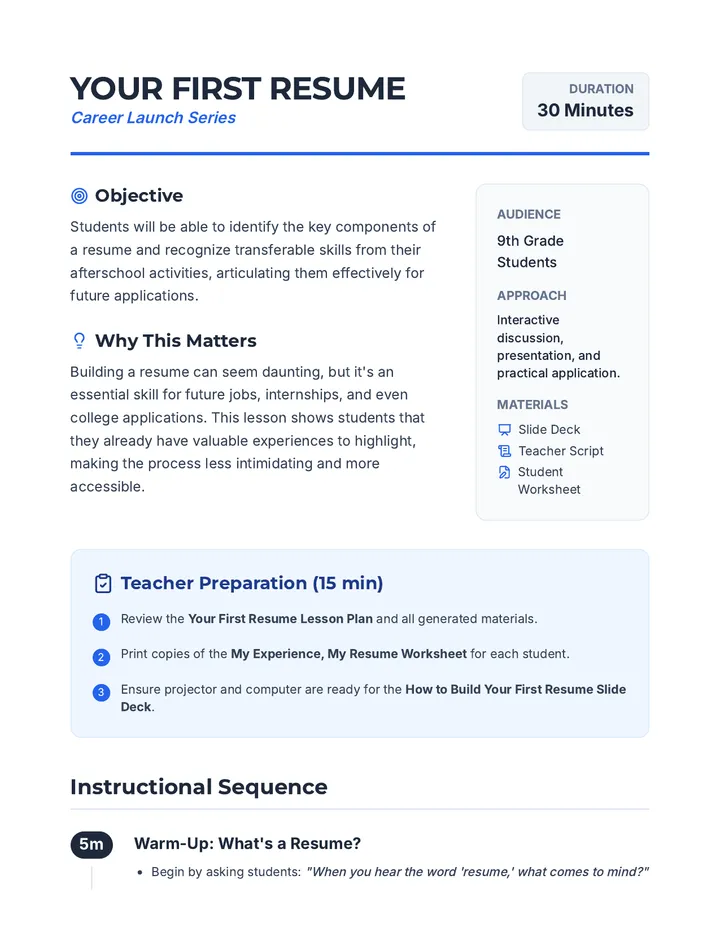
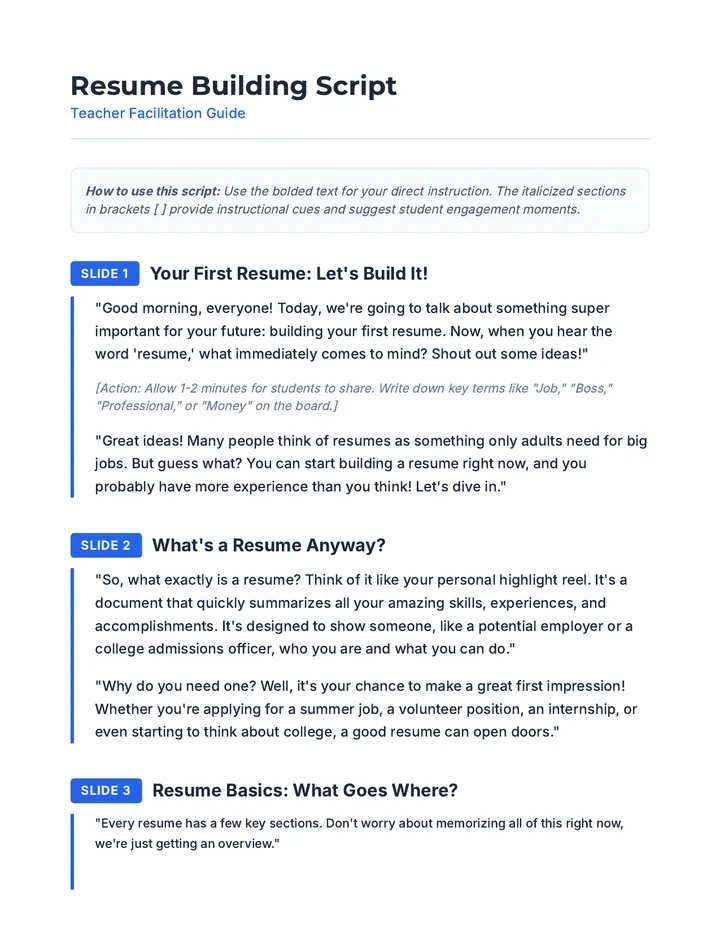
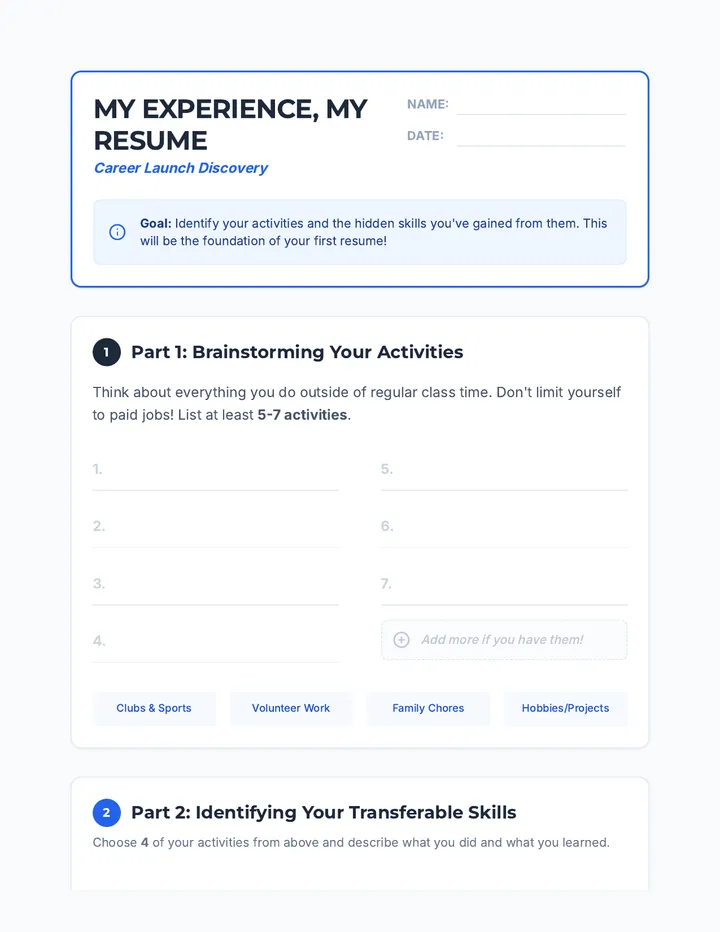
A 30-minute introductory lesson for 9th graders to demystify resume building by identifying transferable skills from afterschool activities and everyday life.
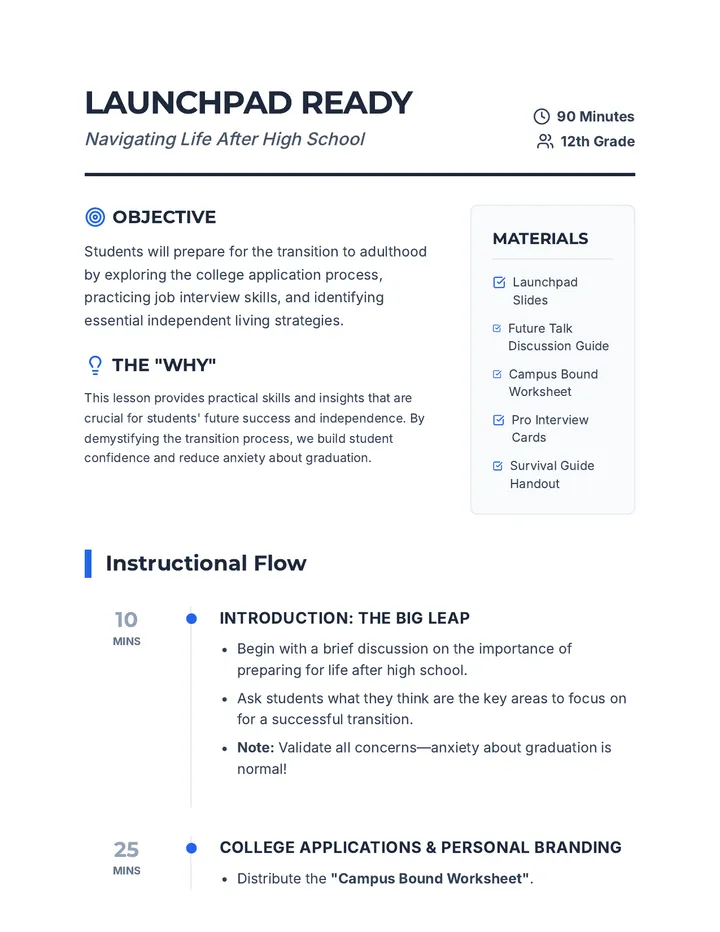
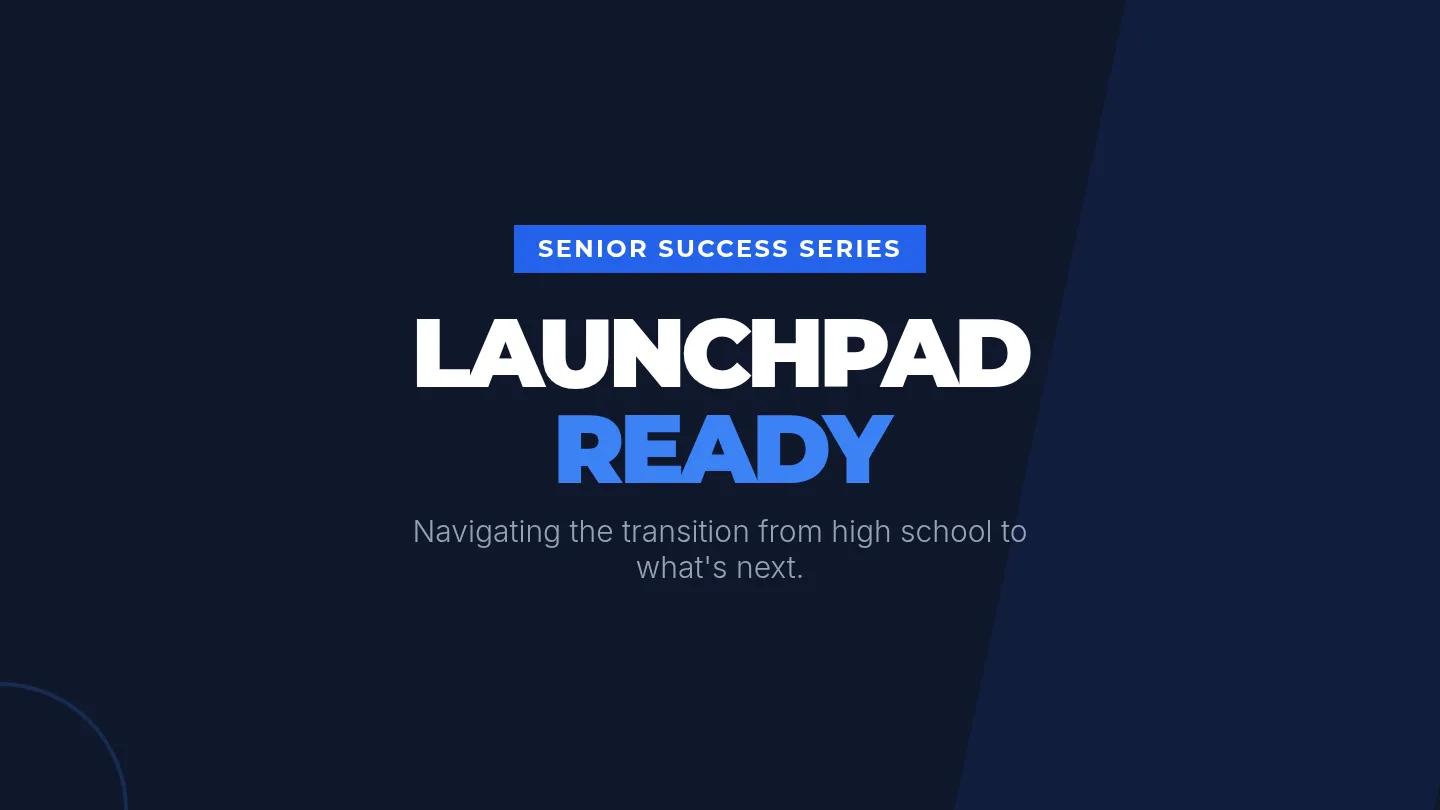
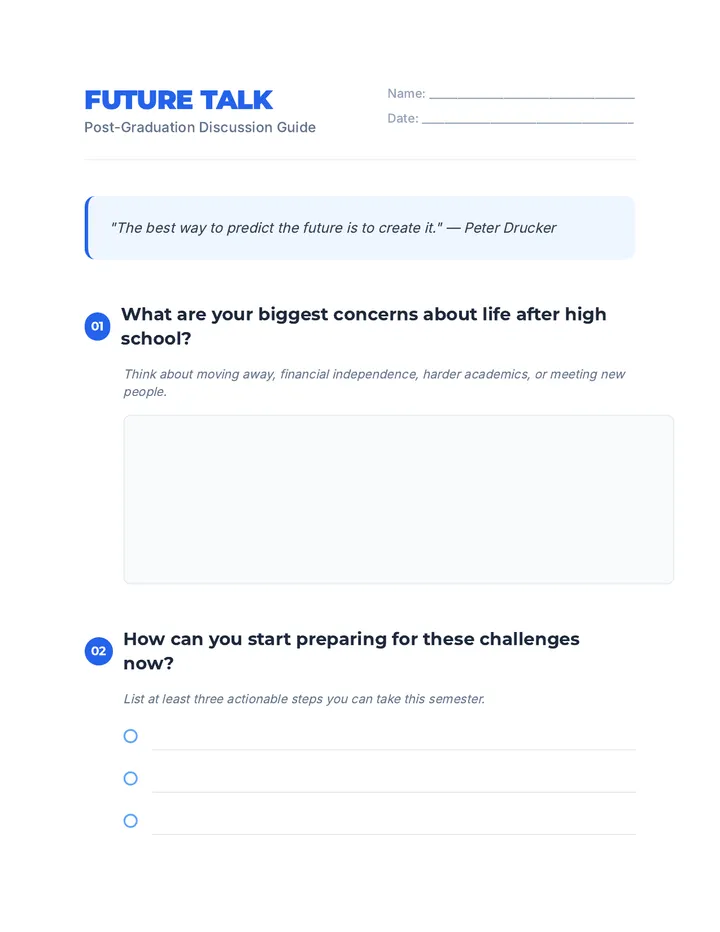
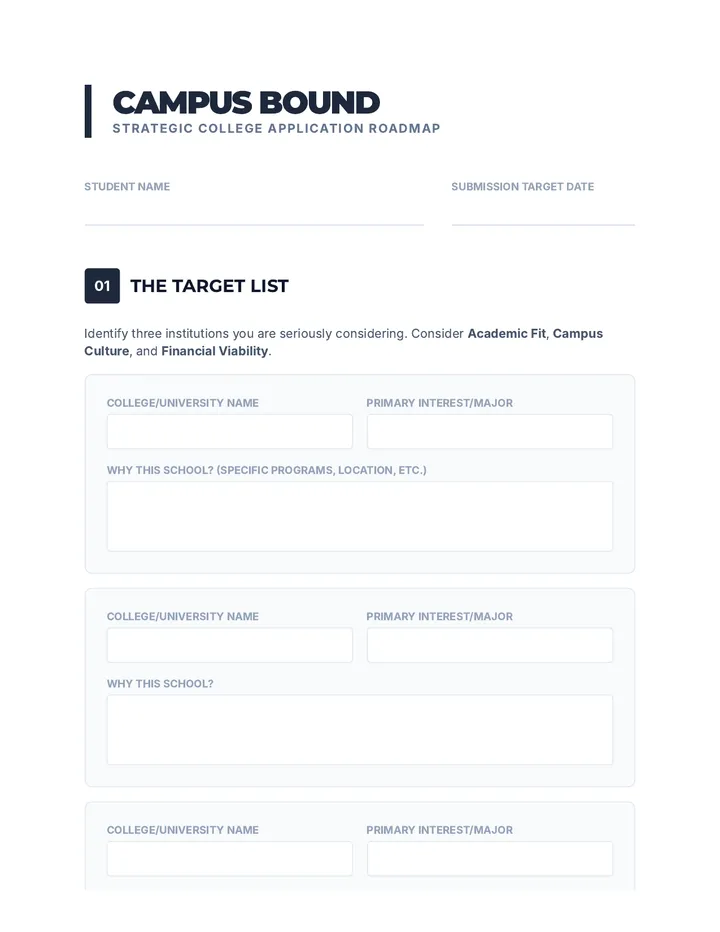
This lesson helps 12th-grade students prepare for the transition to adulthood by exploring college applications, job interviews, and independent living skills. It aims to equip students with the knowledge and confidence to succeed after graduation.
A middle school lesson introducing essential time management skills, focusing on scheduling daily activities and prioritizing tasks effectively using the Eisenhower Matrix concept.
A Tier 3 individual support lesson for 6th graders exploring the concept of time as a limited and valuable resource, featuring time management strategies and personal reflection.
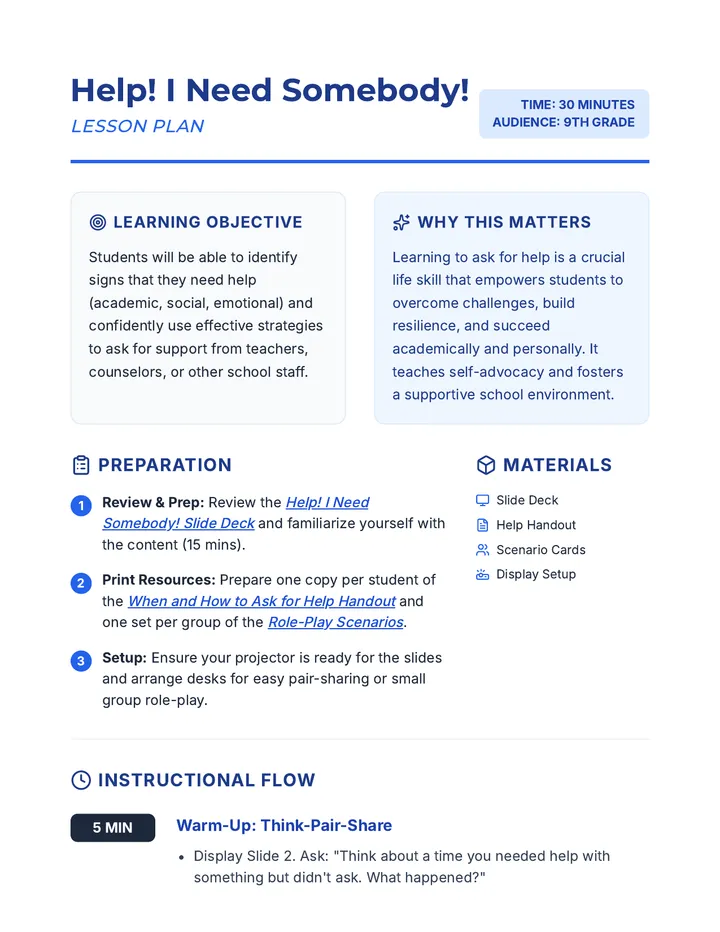
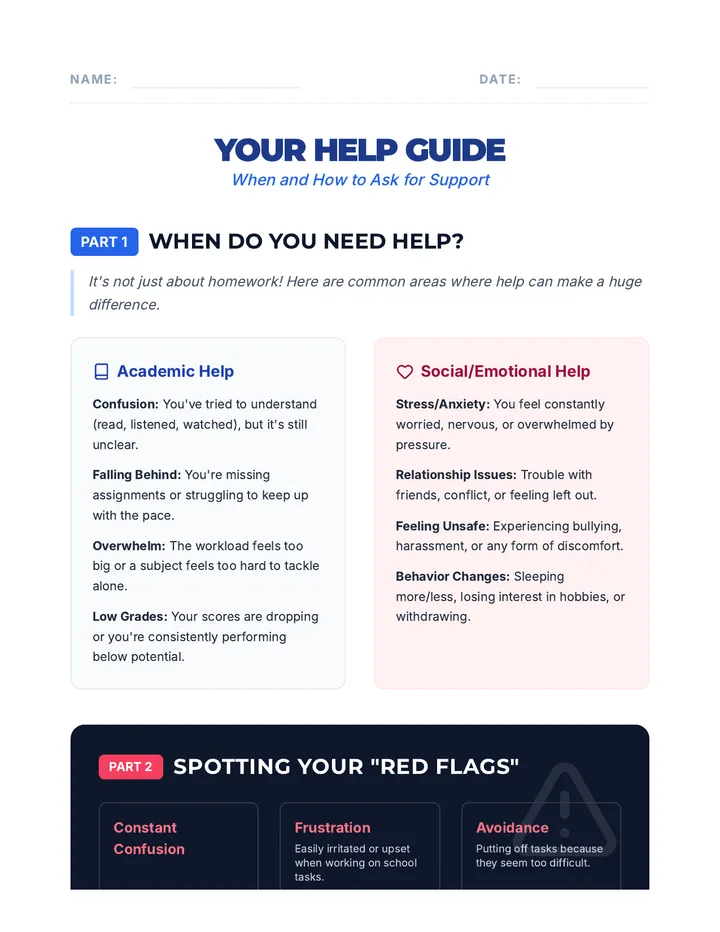
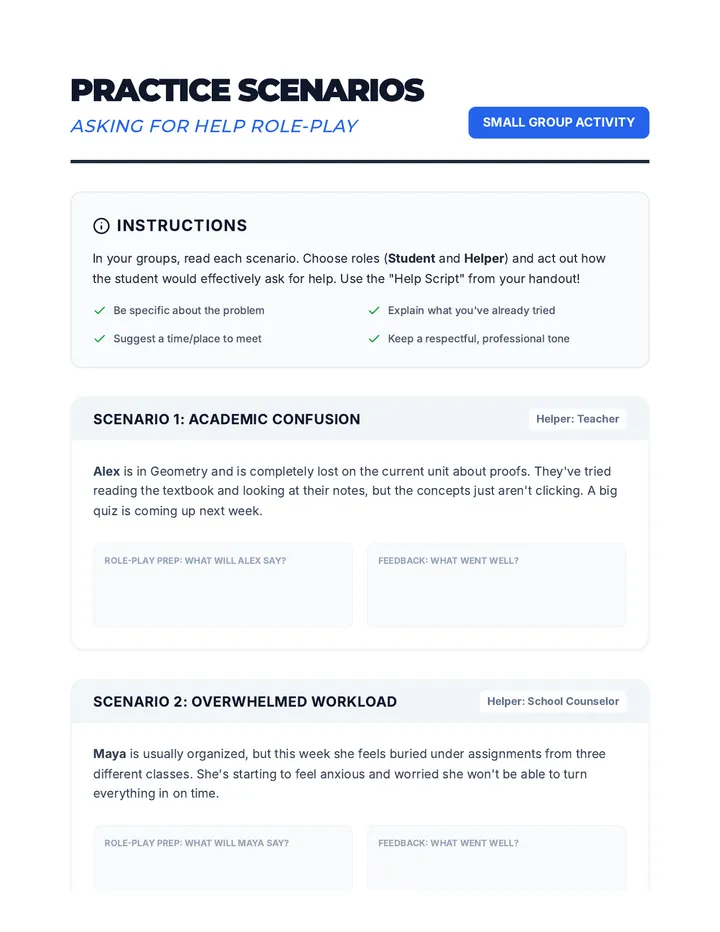
A 30-minute interactive lesson for 9th graders focused on identifying when they need academic or social-emotional support and mastering the art of asking for help effectively. Students learn to spot 'red flags' and practice specific scripts for reaching out to teachers and counselors.
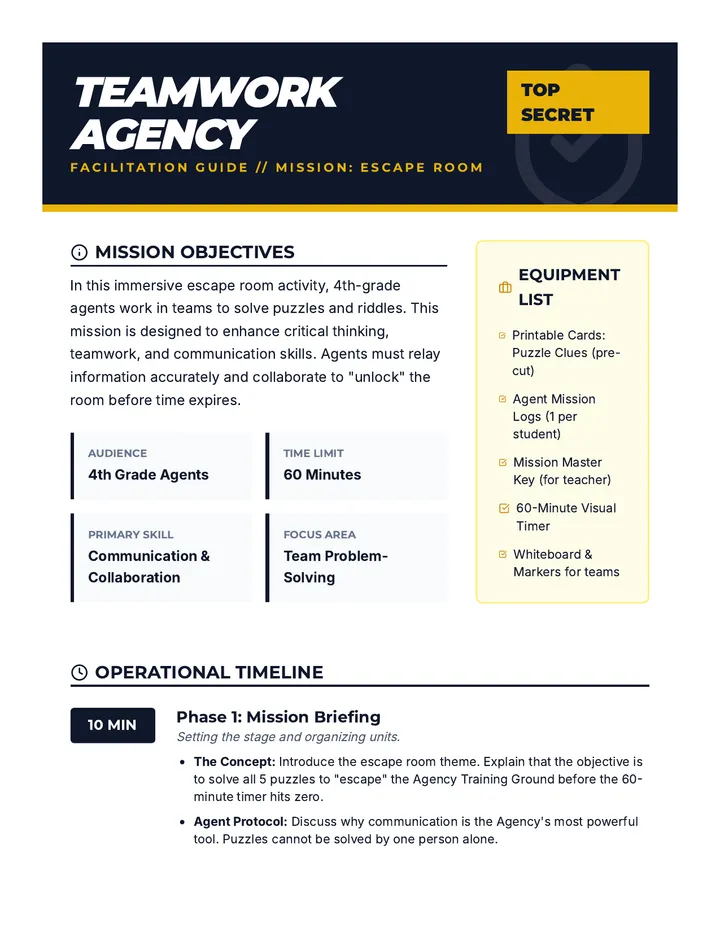
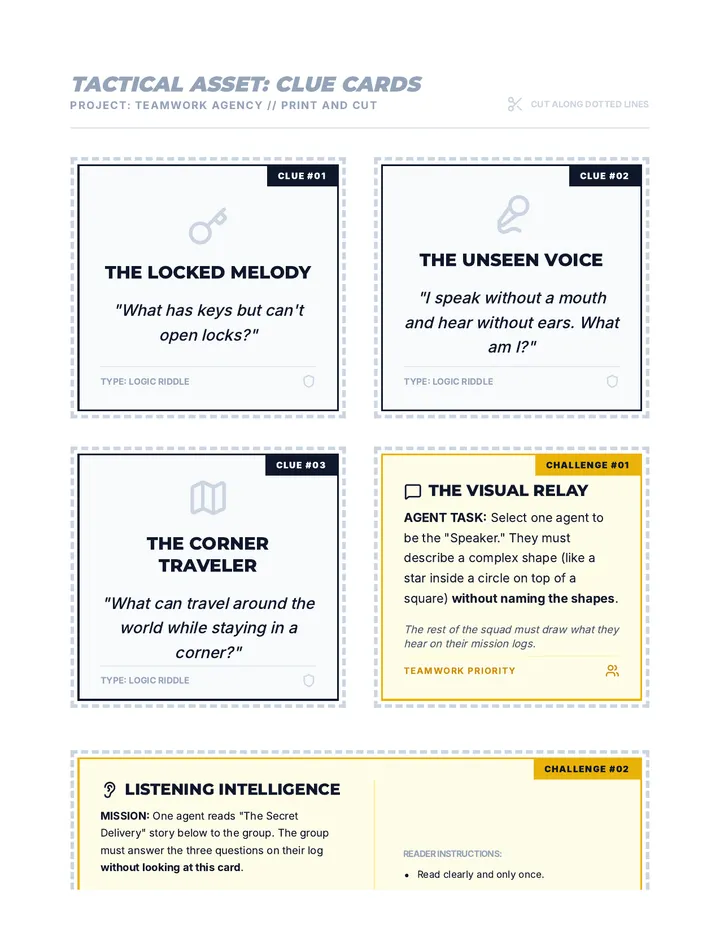
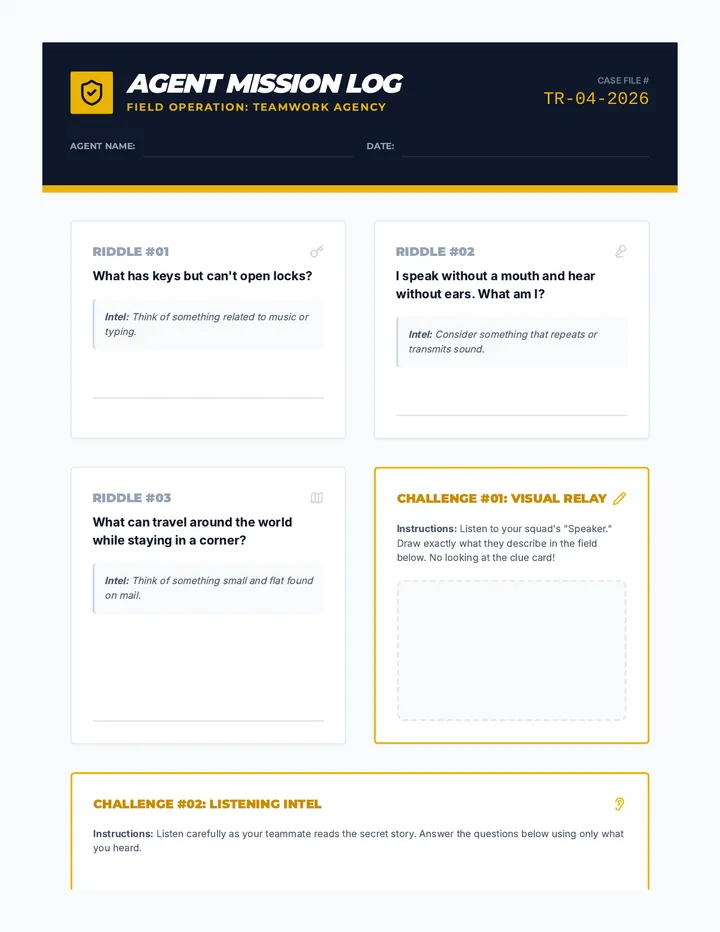
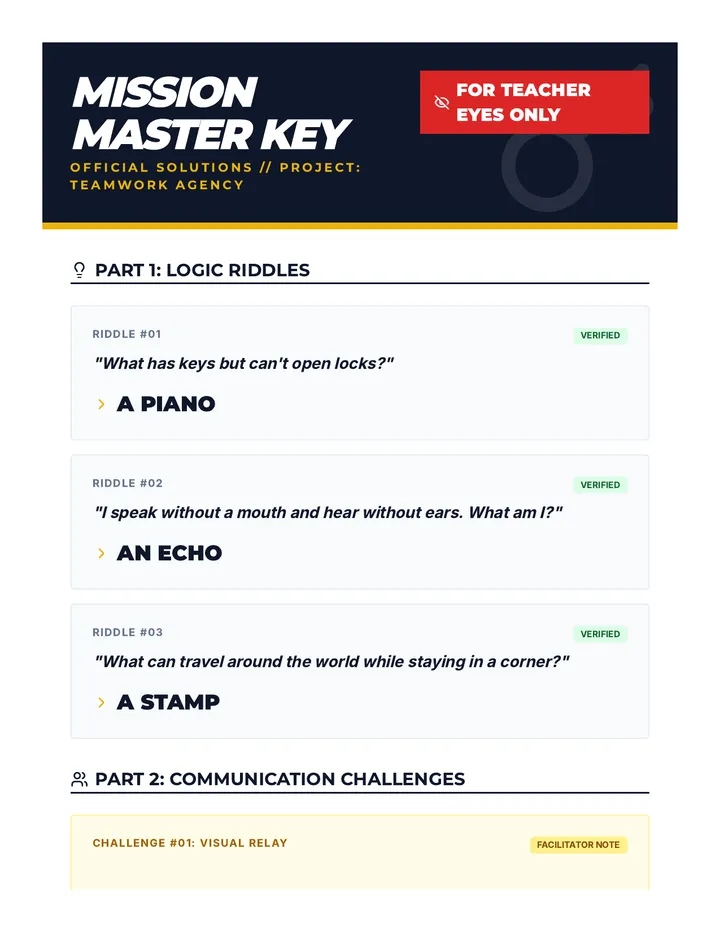
An immersive, spy-themed escape room experience for 4th graders that focuses on building communication and collaborative problem-solving skills. Students work in teams to decode clues and complete communication challenges to 'unlock' the room.
This lesson focuses on enhancing students' ability to manage their time effectively by accurately assessing how long tasks will take and planning accordingly. Through experiential learning and game-based activities, students will challenge their perception of time and improve their planning skills.
A 20-minute introductory lesson for high school students on the importance of soft skills like communication, teamwork, and adaptability for future success.
A comprehensive 30-minute training session for Digital PSAT proctors, covering preparation, active supervision, technical troubleshooting, and post-exam procedures to ensure a fair and secure testing environment.