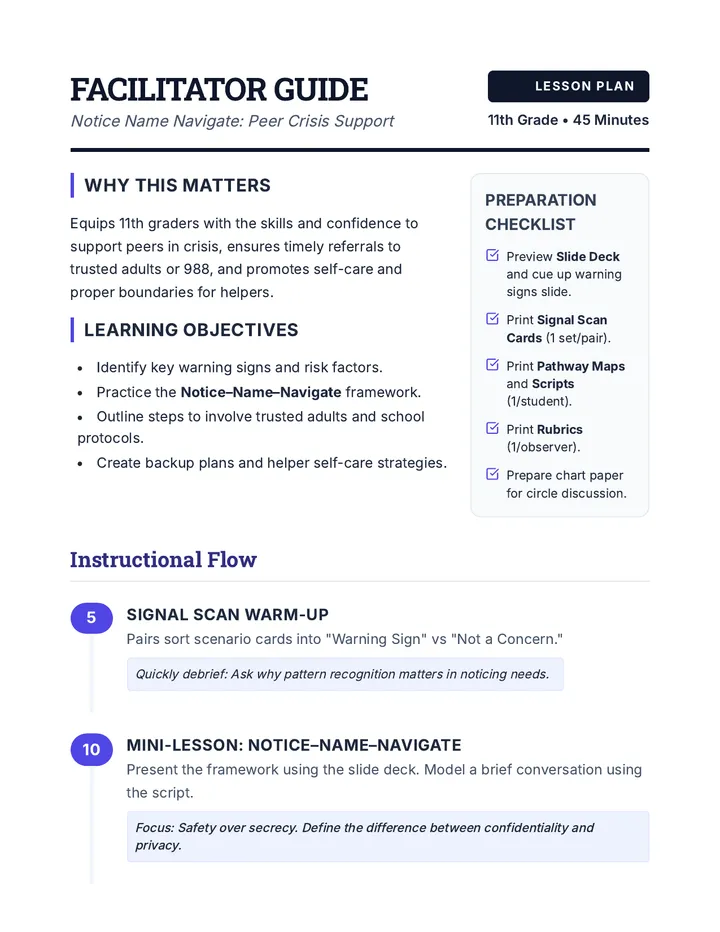
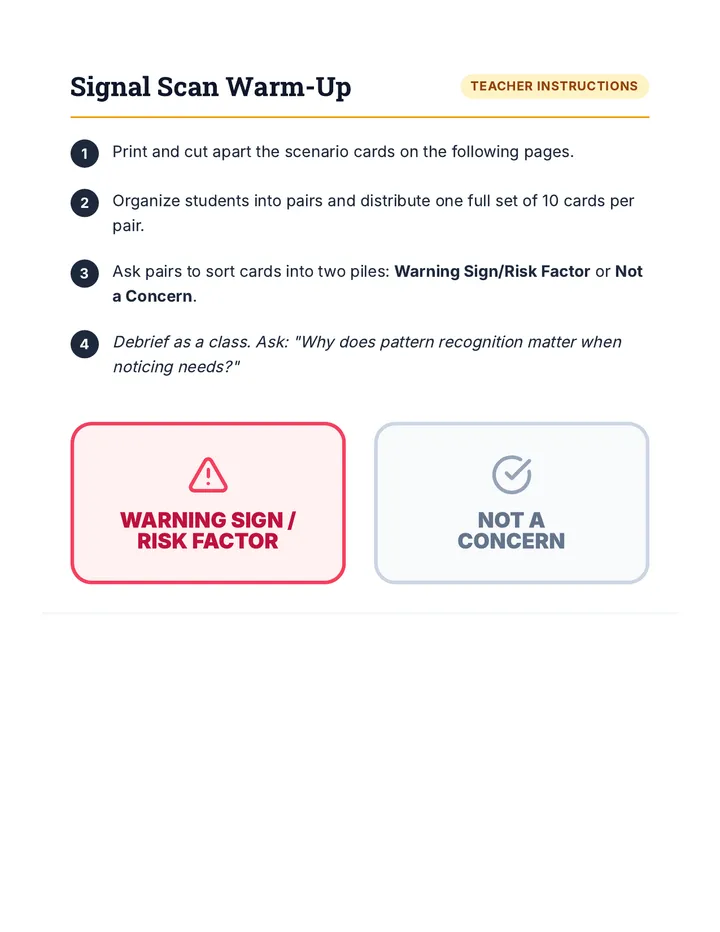
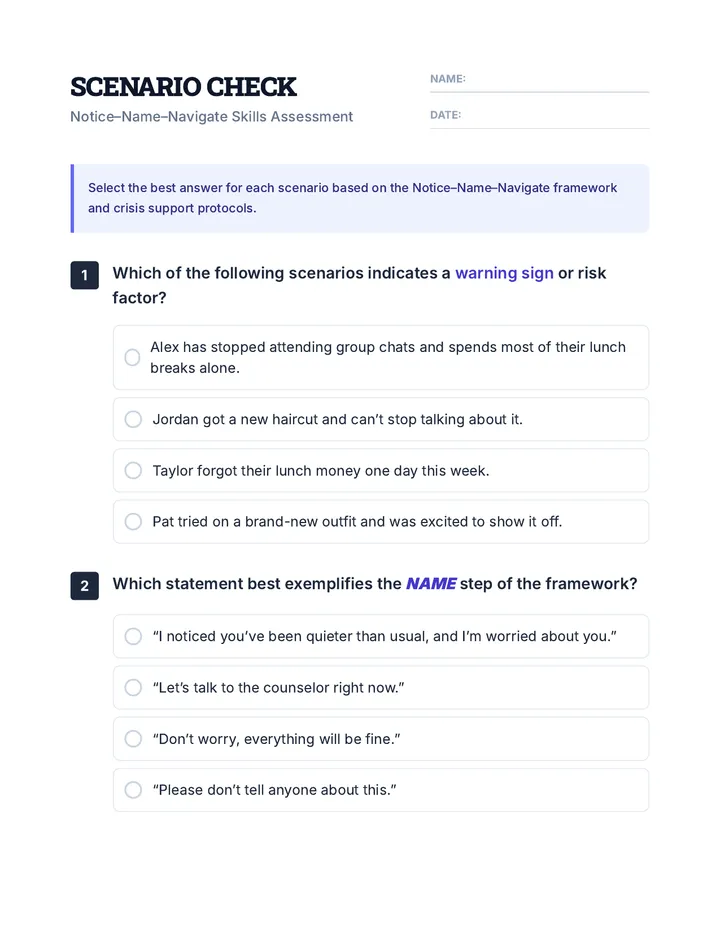
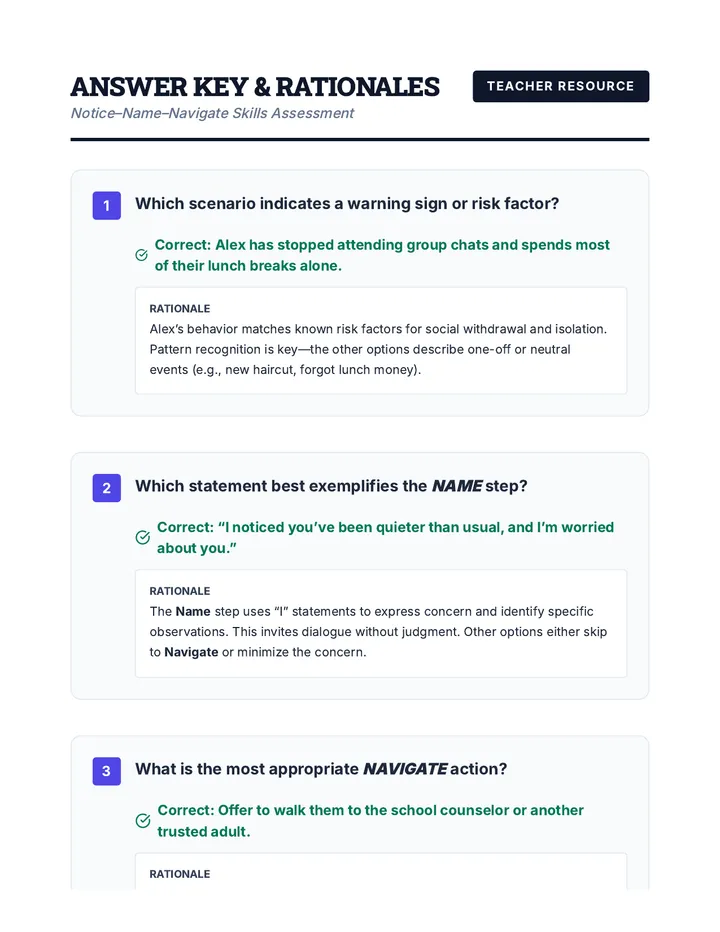
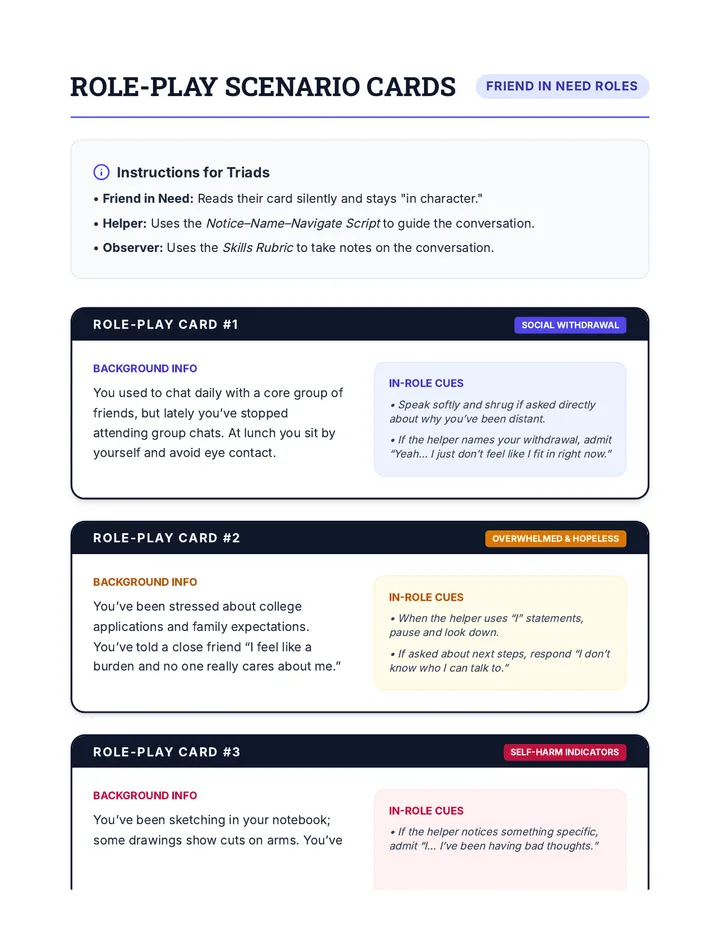
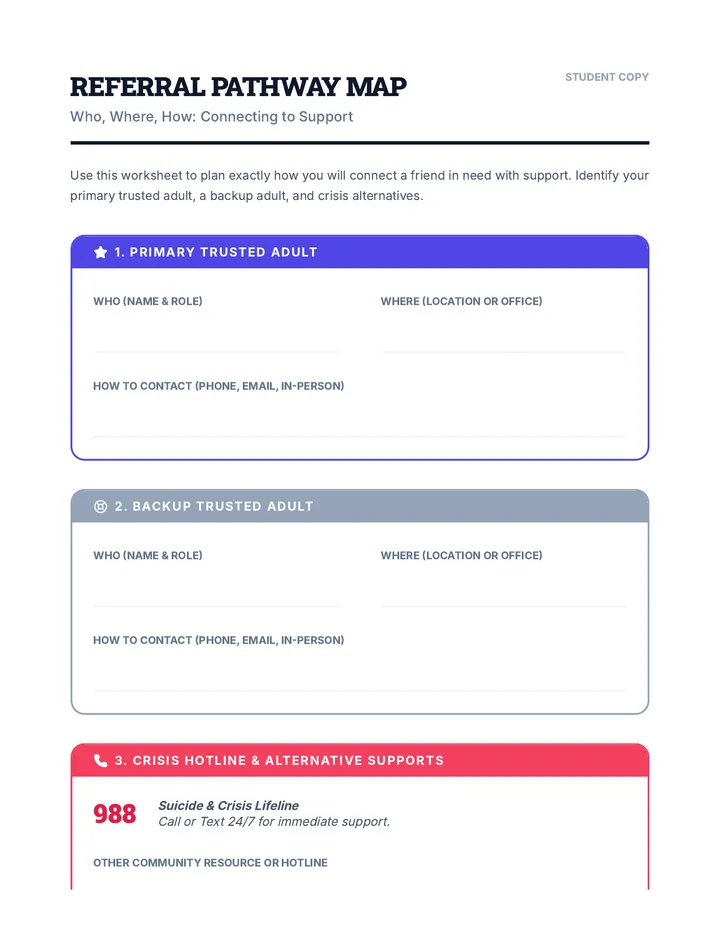
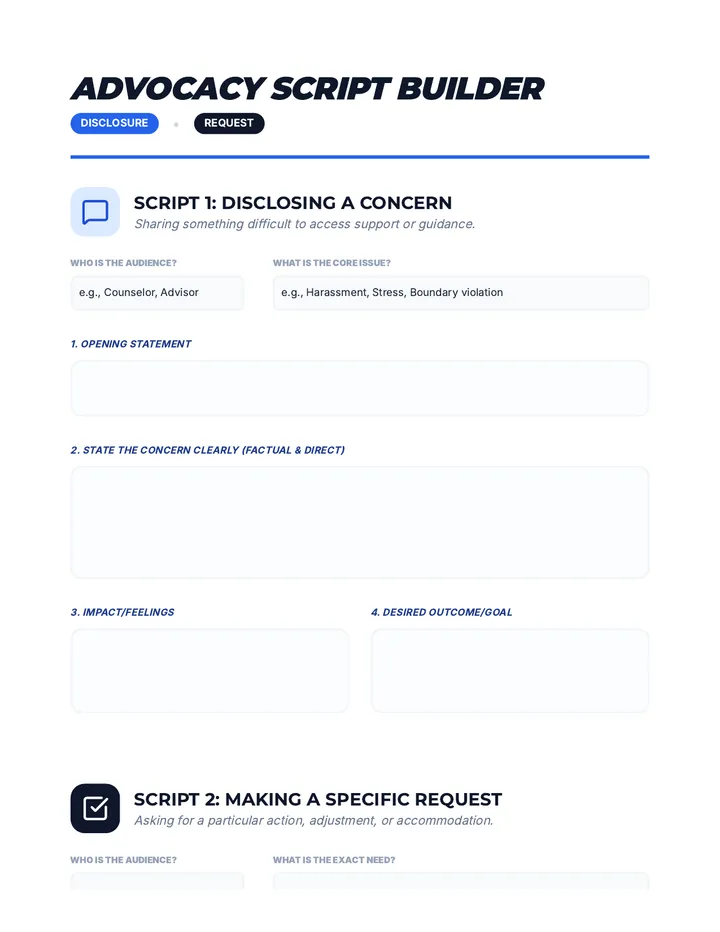
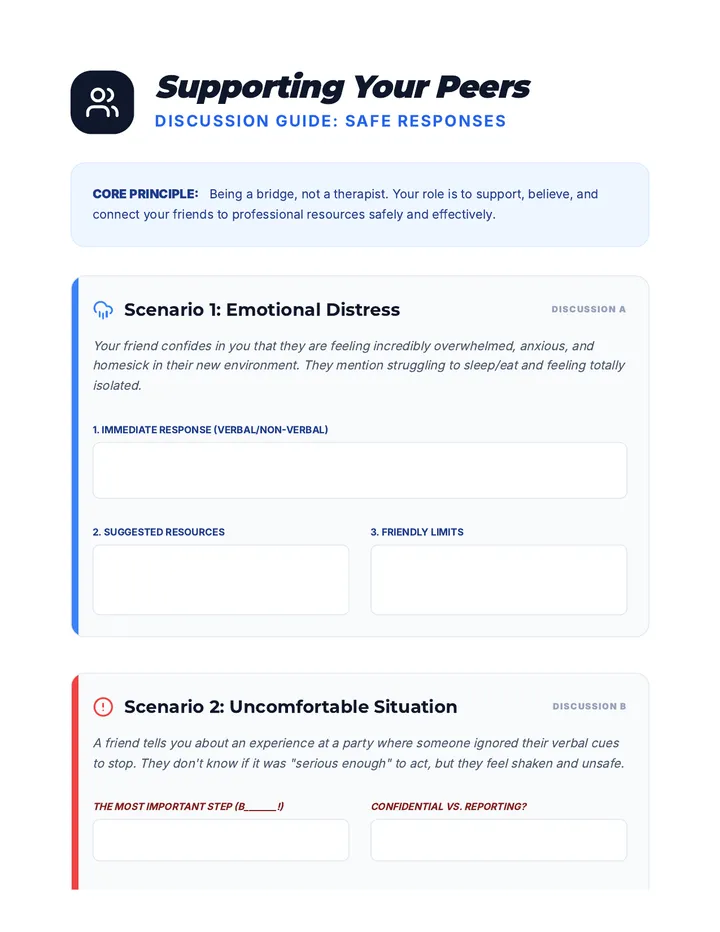
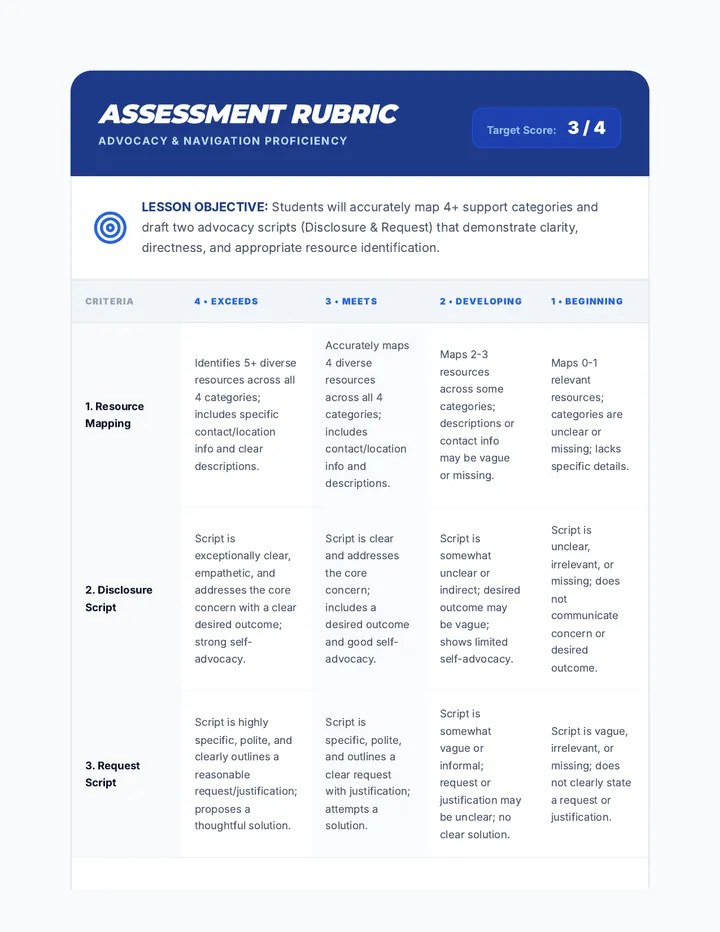
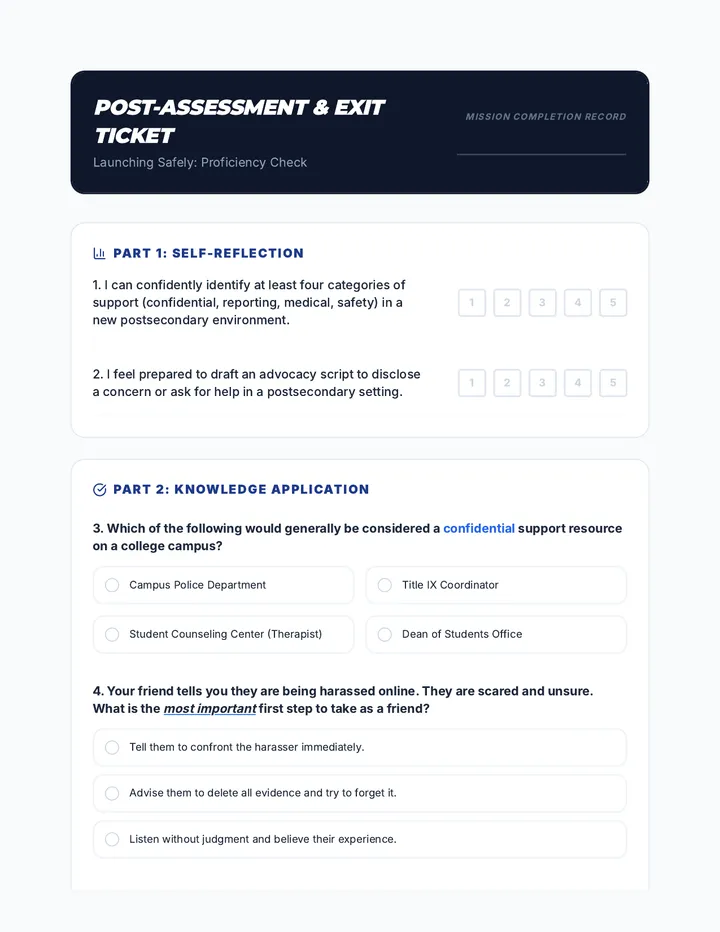
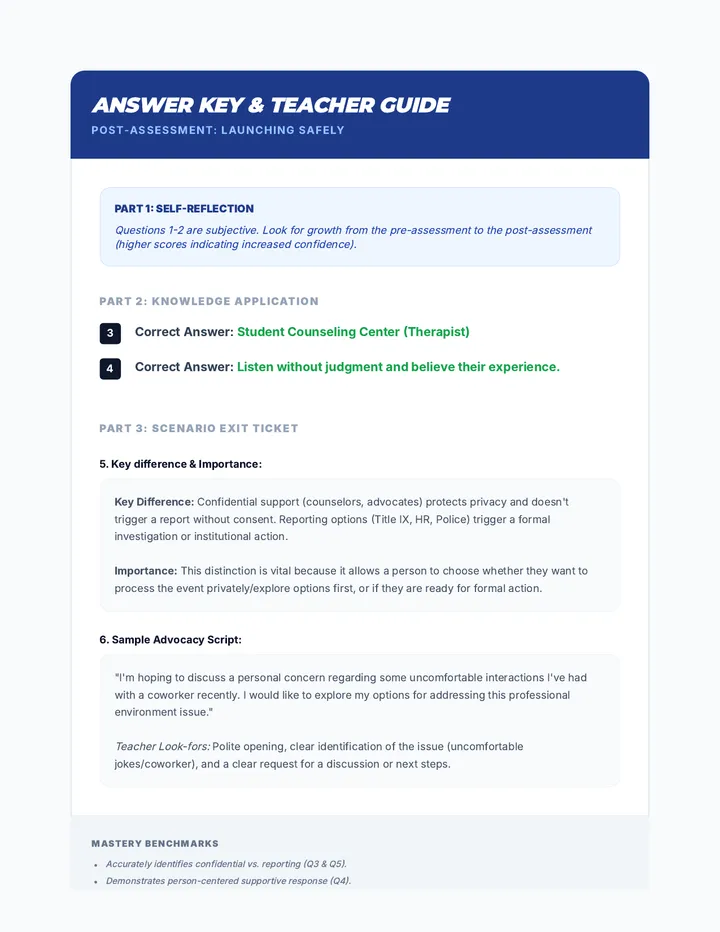
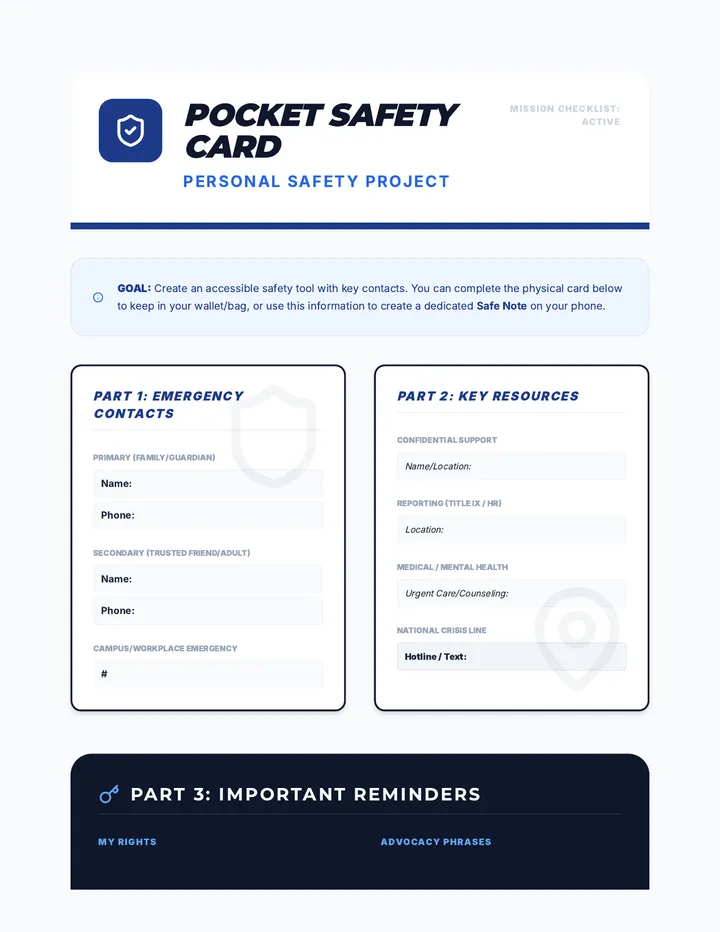
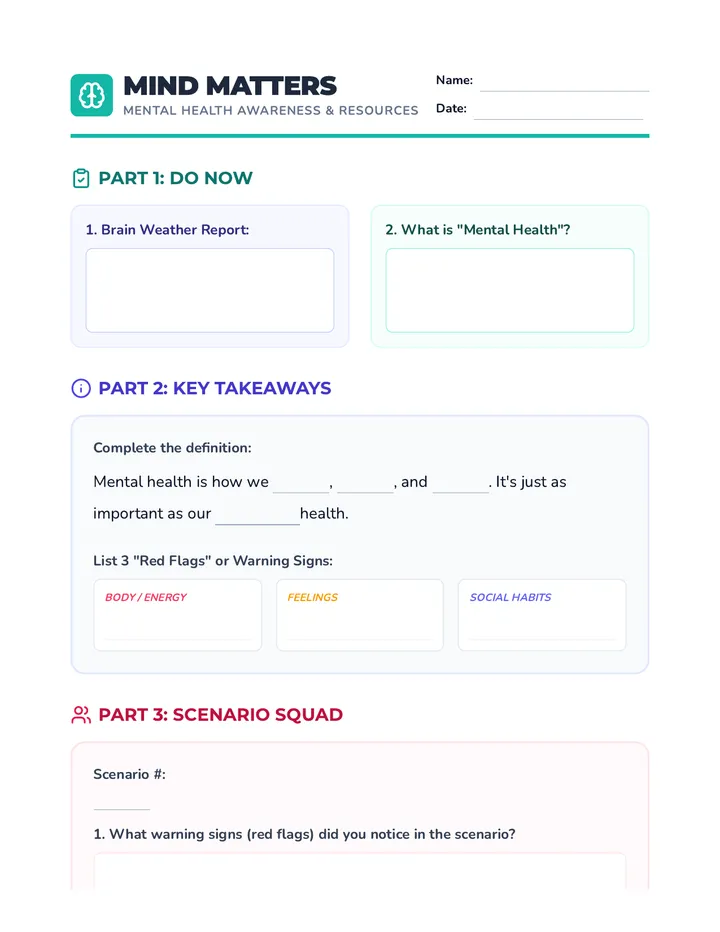
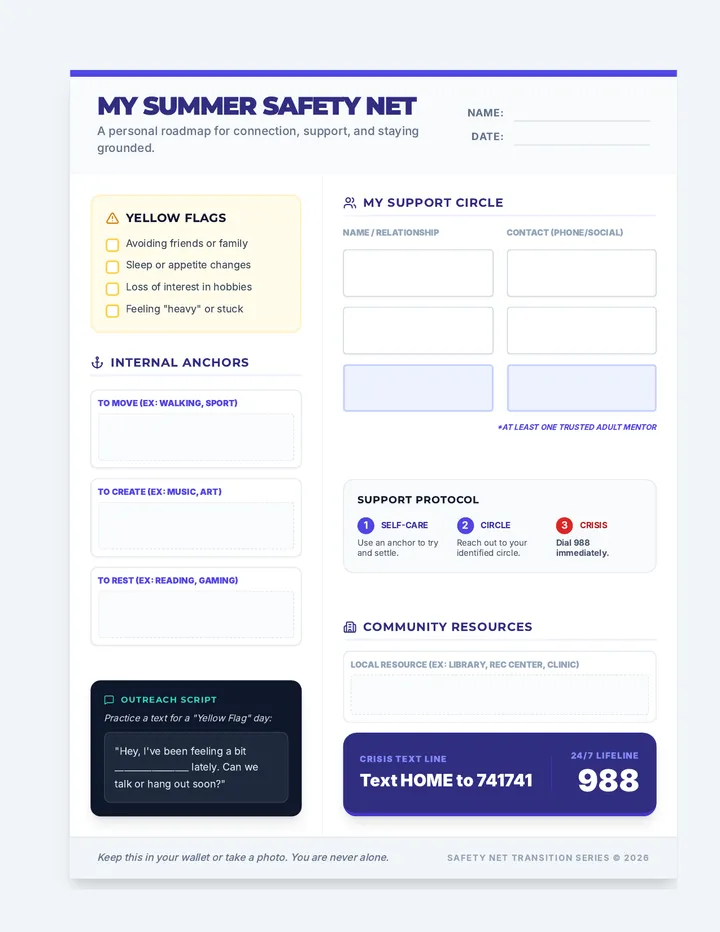
Identifies mental health crises and suicide warning signs while developing personal safety plans and grounding techniques. Equips users with peer gatekeeper skills and direct pathways to professional crisis resources and hotlines.
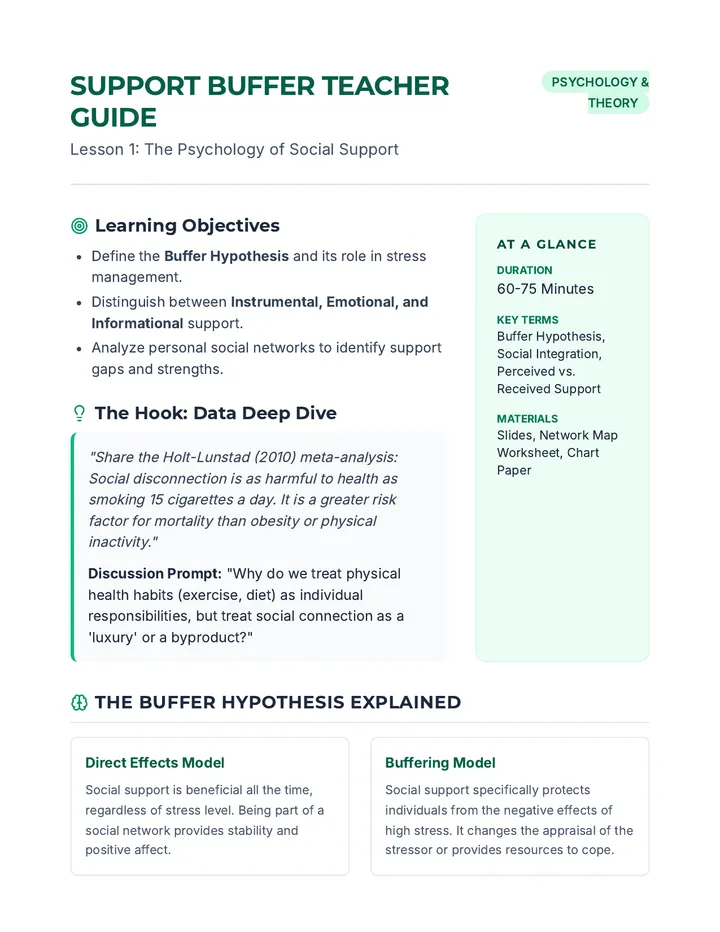
A graduate-level training sequence on facilitating peer support systems to mitigate stress and anxiety. Students learn the science of social support, micro-skills for active listening, boundary setting to prevent burnout, and group facilitation techniques to create sustainable communities of care.
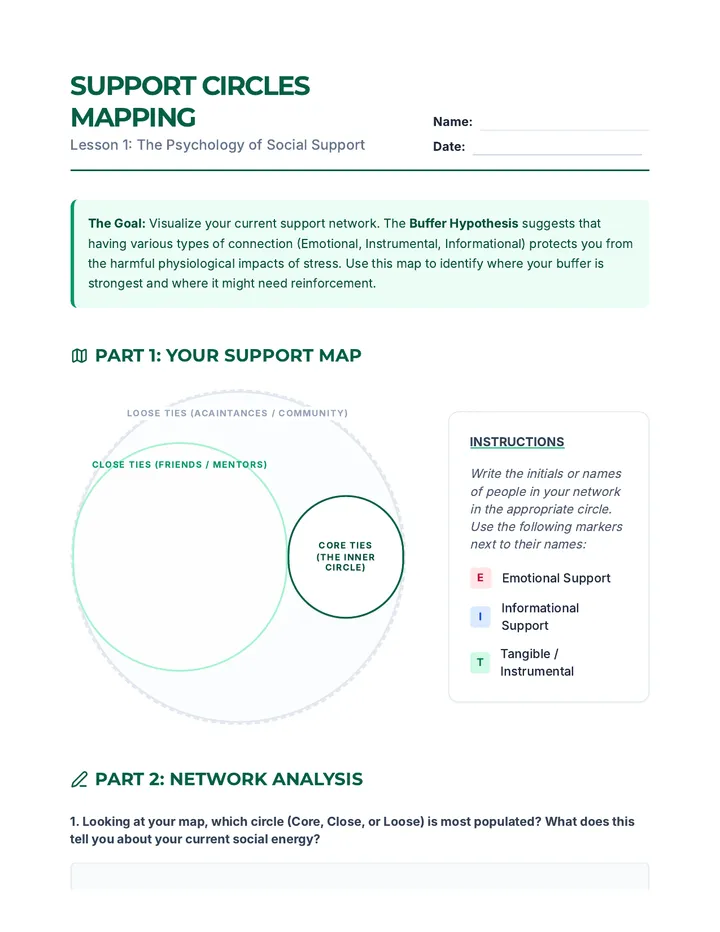
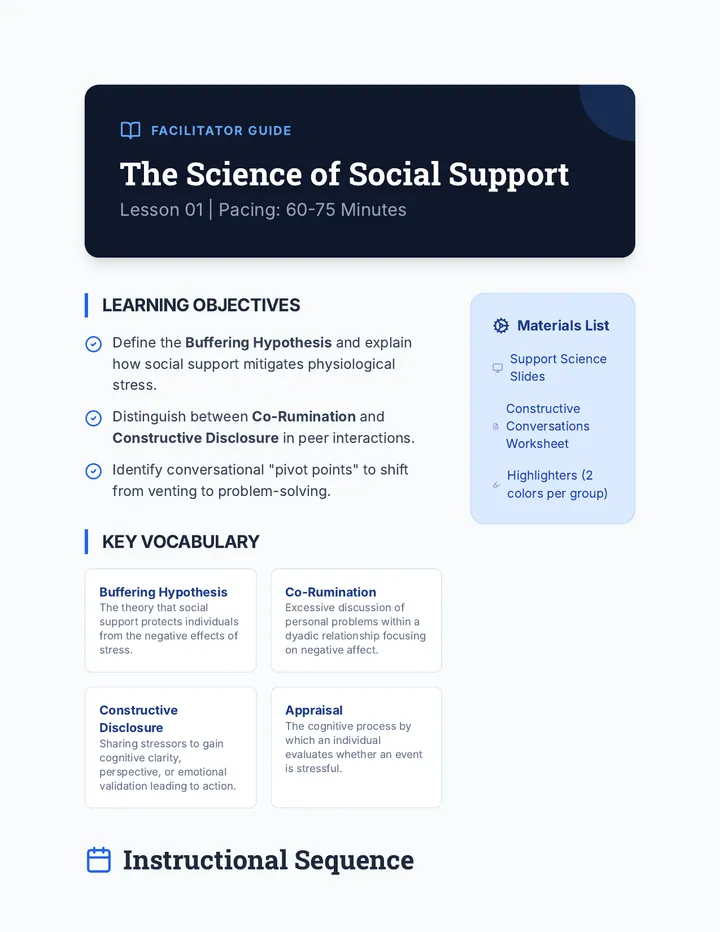
A comprehensive sequence for undergraduate students exploring the social psychology of stress and the practical skills needed to build resilient peer support networks. Students move from theoretical understanding to practical facilitation and community planning.
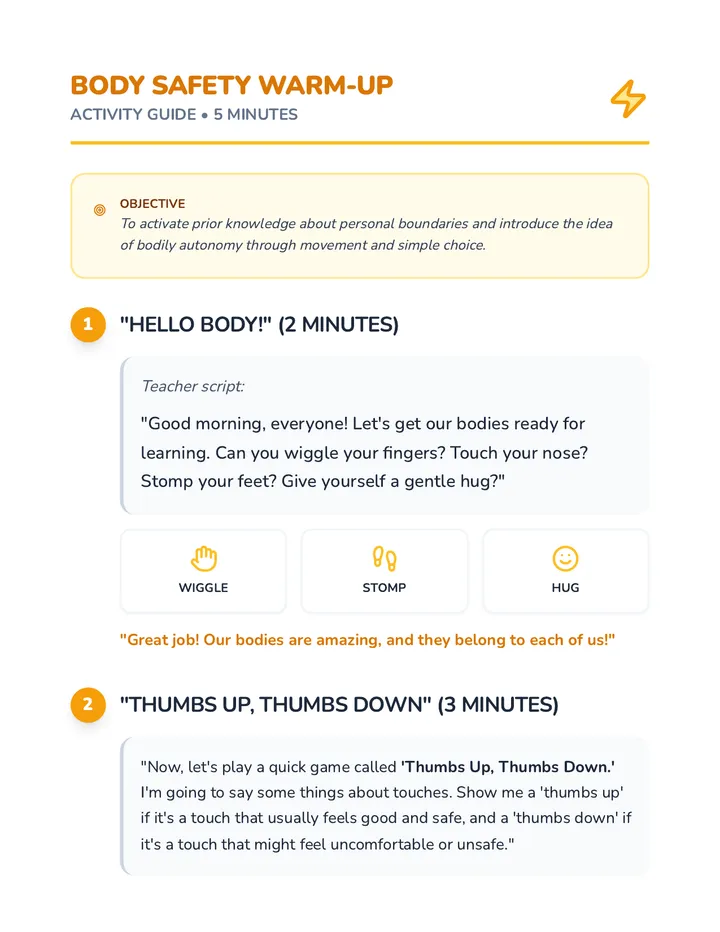
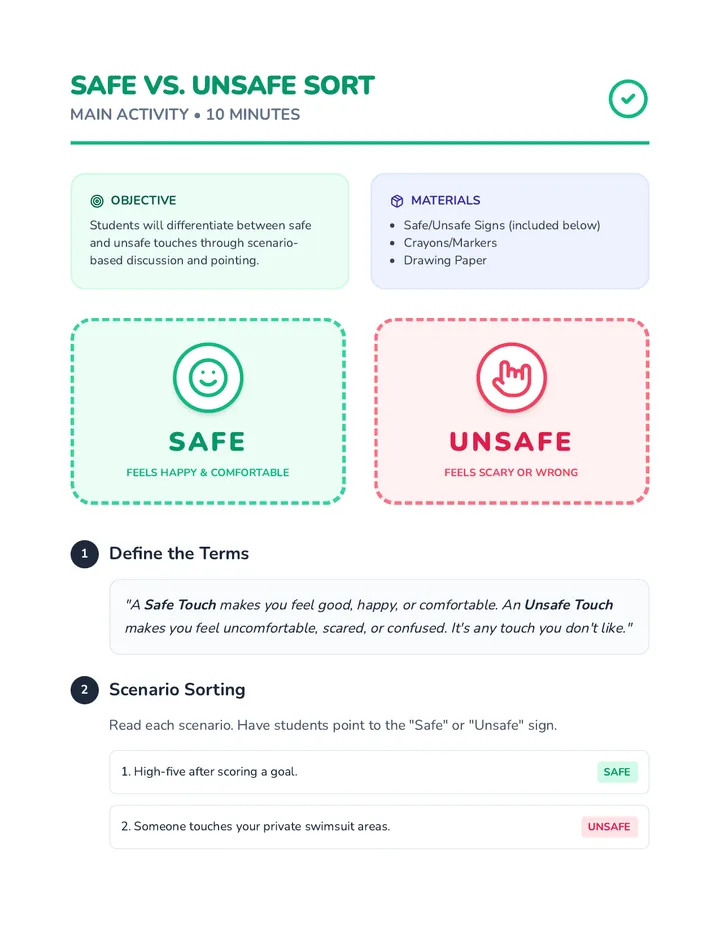
A Kindergarten sequence focused on making digital footprints concrete through physical analogies, promoting online kindness, and establishing safety protocols for young internet users.
A 5-lesson workshop-style sequence for 9th-grade students on recognizing escalation warning signs and applying de-escalation strategies. Students learn situational assessment, verbal techniques, non-verbal communication, and active listening through simulations and mastery-based role-plays.
This sequence explores the psychology of group dynamics and community care. Students learn to recognize burnout, offer effective support, and advocate for cultures where requesting breaks is normalized and valued.
A comprehensive sequence for undergraduate students focusing on executive function and proactive support-seeking. Students move from data-driven self-analysis of energy rhythms to the creation of a long-term 'Semester Sustainability Plan' that treats mental health and support as logistical necessities.
A comprehensive sequence for 10th-grade students focusing on the financial realities of student loan repayment, the impact of debt-to-income ratios, and evaluating the long-term ROI of post-secondary education choices. Students progress from basic math to strategic advisory, culminating in a complex case study analysis.
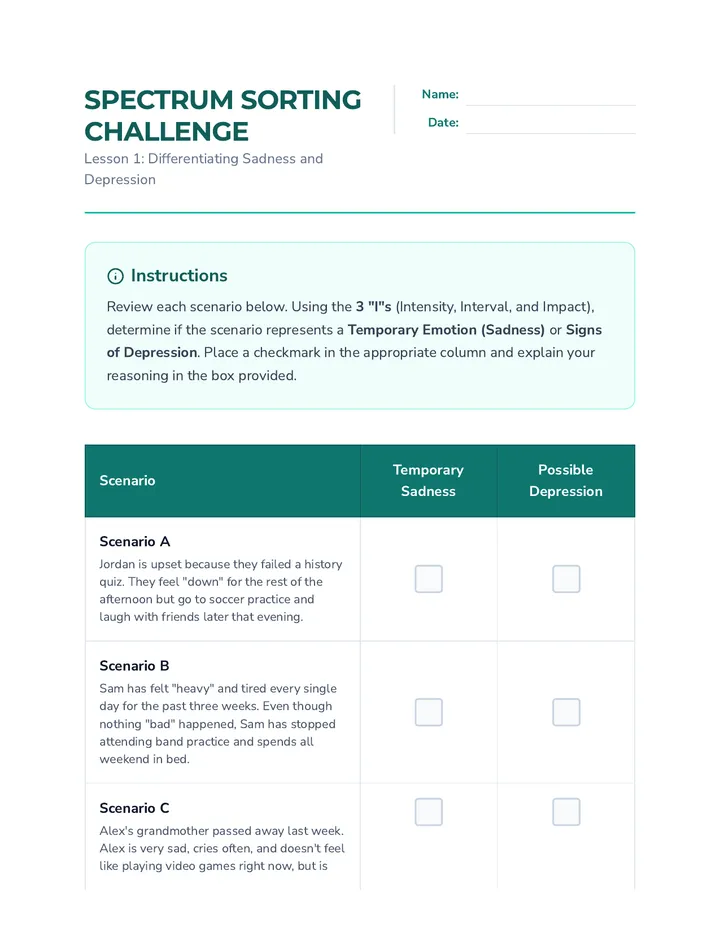
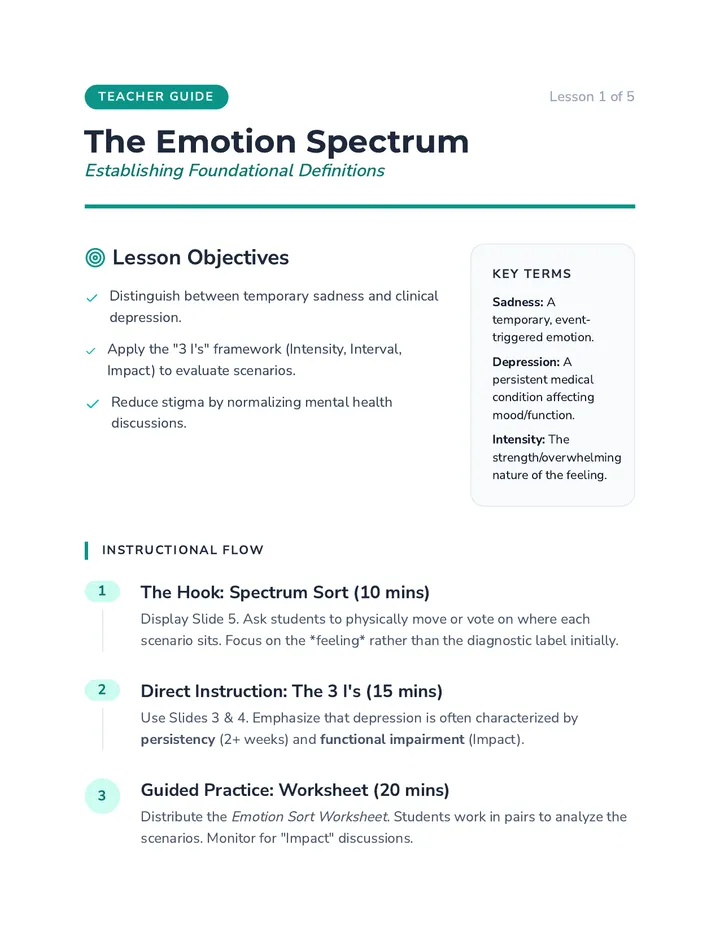
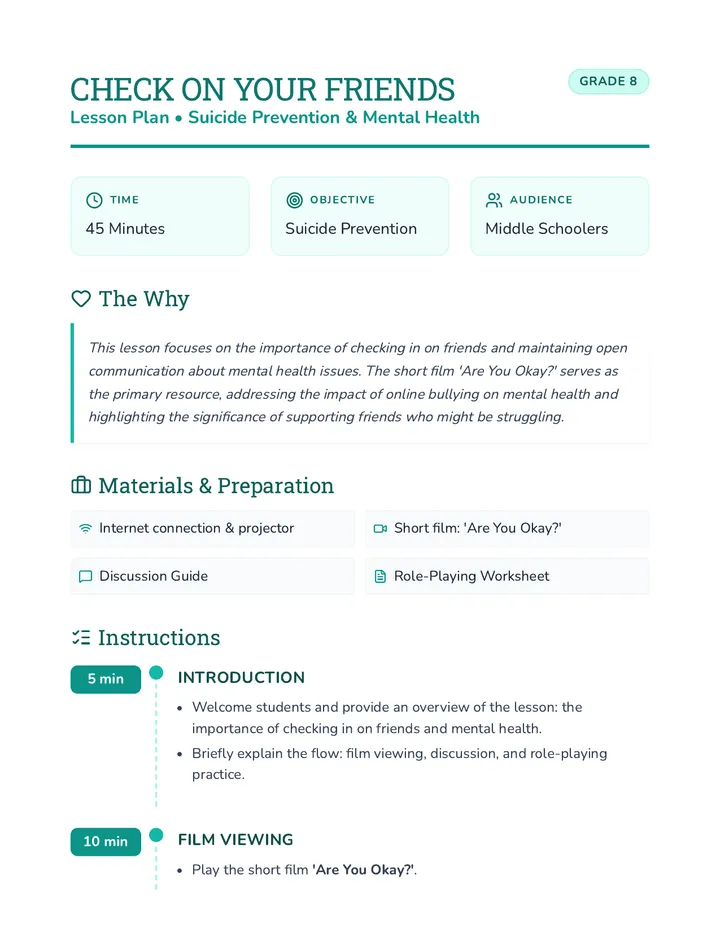
This sequence helps 8th-grade students distinguish between temporary sadness and clinical depression by analyzing behavioral, physical, and emotional indicators. It culminates in learning the ACT (Acknowledge, Care, Tell) strategy for seeking help from trusted adults.
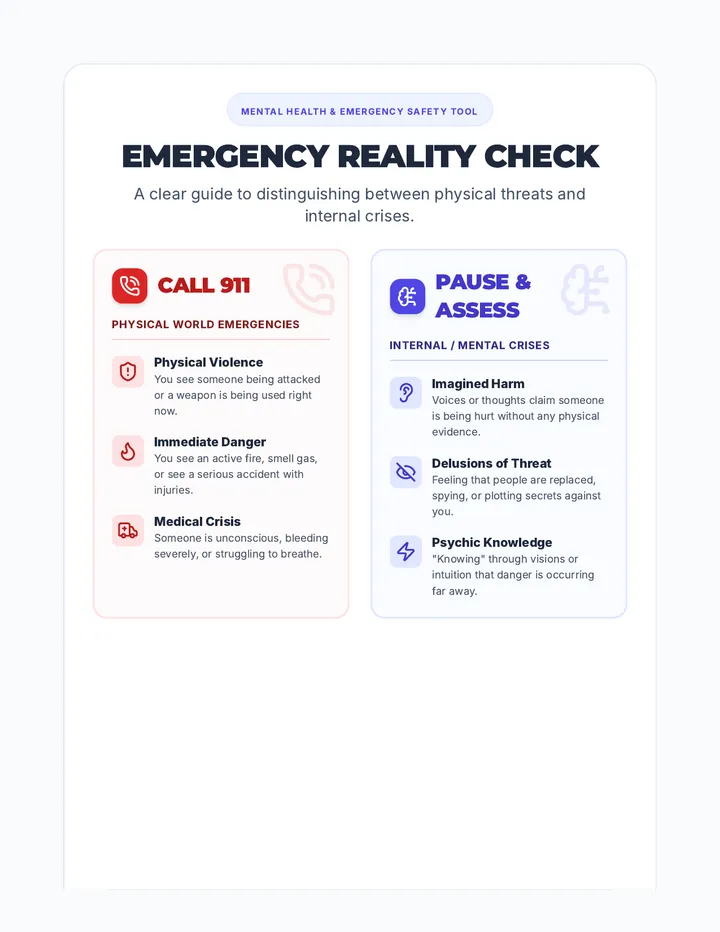
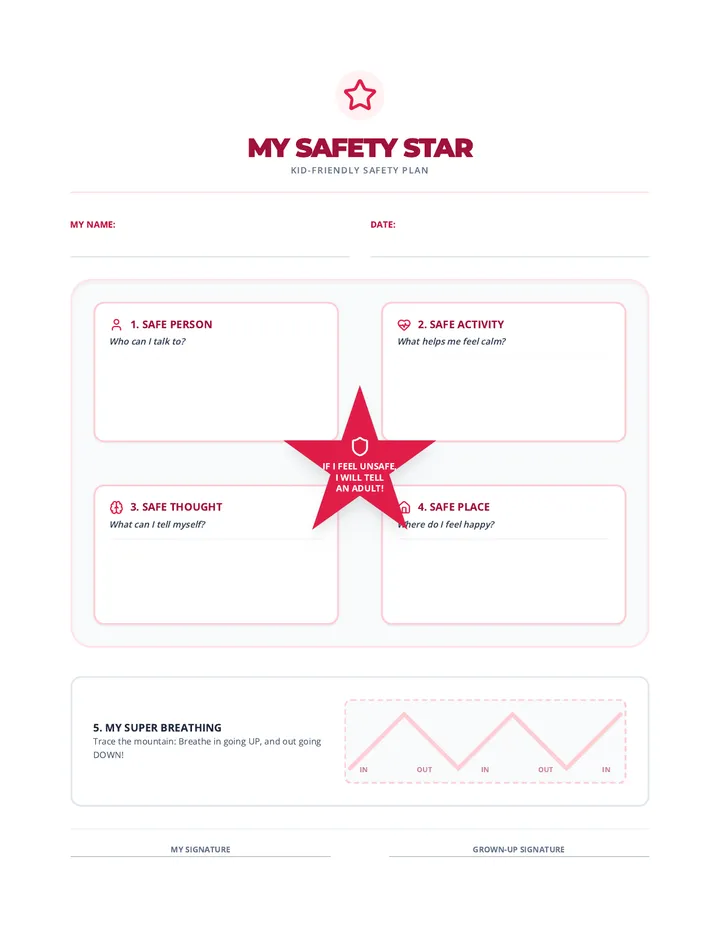
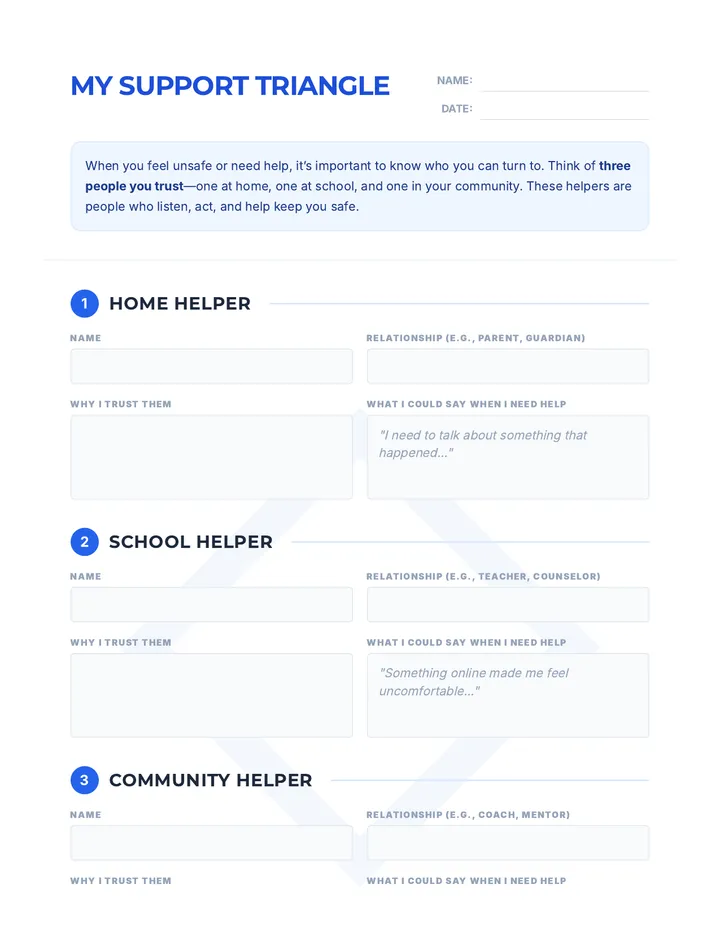
This sequence teaches 4th-grade students how to identify and access external mental health resources and emergency protocols. It covers trusted community adults, the 988 Suicide & Crisis Lifeline, emergency communication skills, and distinguishing between types of crises, culminating in a personal safety plan.
A project-based unit for 4th graders focused on overcoming barriers to seeking mental health support, mastering assertive communication, and advocating for resources through a school-wide informational campaign.
A comprehensive sequence for 4th-grade students to identify, understand, and utilize school-based mental health resources. Students will learn about the roles of school staff, the concept of confidentiality, how to request help, and how to recognize when they need support.
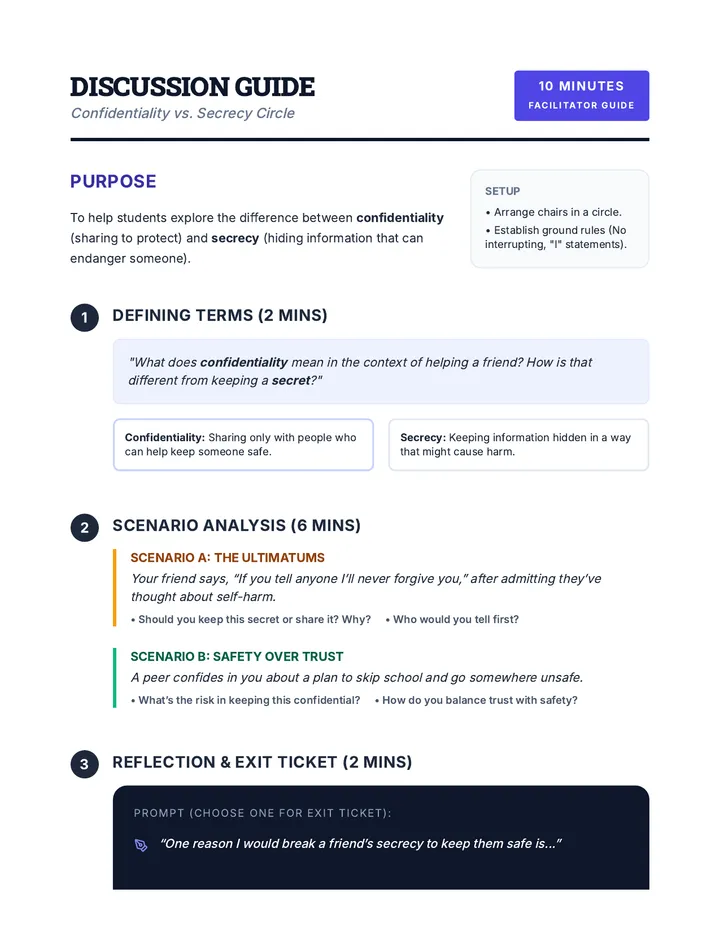
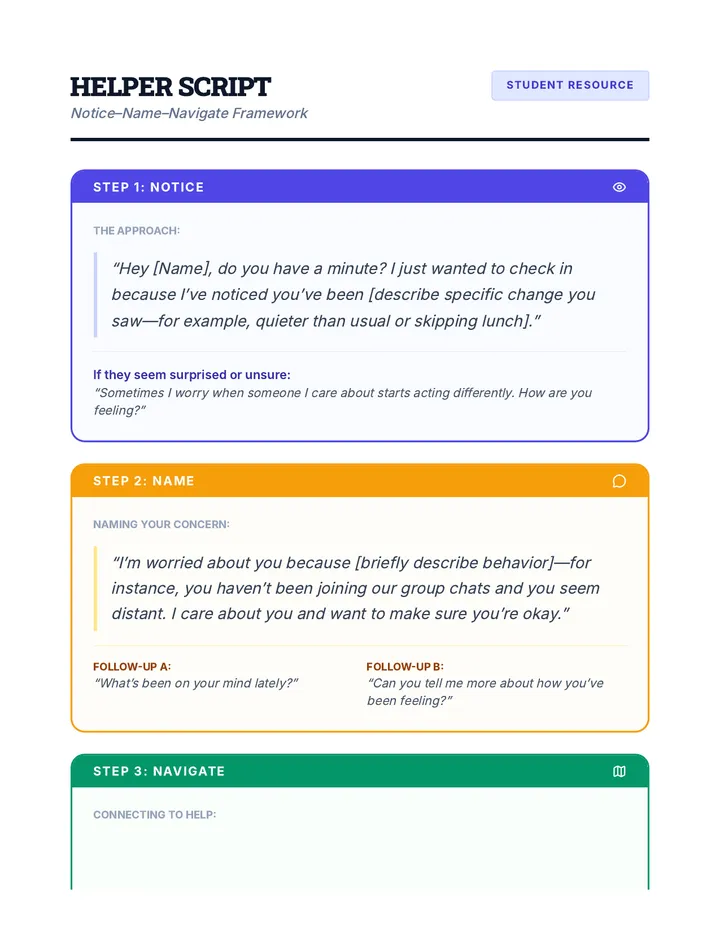
A 5-lesson sequence designed for 5th-grade students to learn how to recognize signs of distress in peers, understand the ethical boundaries of friendship secrets, practice active listening, and safely connect friends to trusted adults through 'warm handoffs.' Students conclude by creating a school-wide advocacy campaign to promote mental health resources.
This sequence introduces 5th-grade students to community mental health resources, crisis hotlines like 988, and the different types of professionals available for support. Students learn to distinguish between emergency and non-emergency needs and practice navigating barriers to care.
This sequence helps 5th-grade students build a personal support system by identifying trusted adults, understanding the school counselor's role, and learning how to articulate a need for help. Through interactive mapping and role-play, students gain the confidence and tools to access mental health resources.
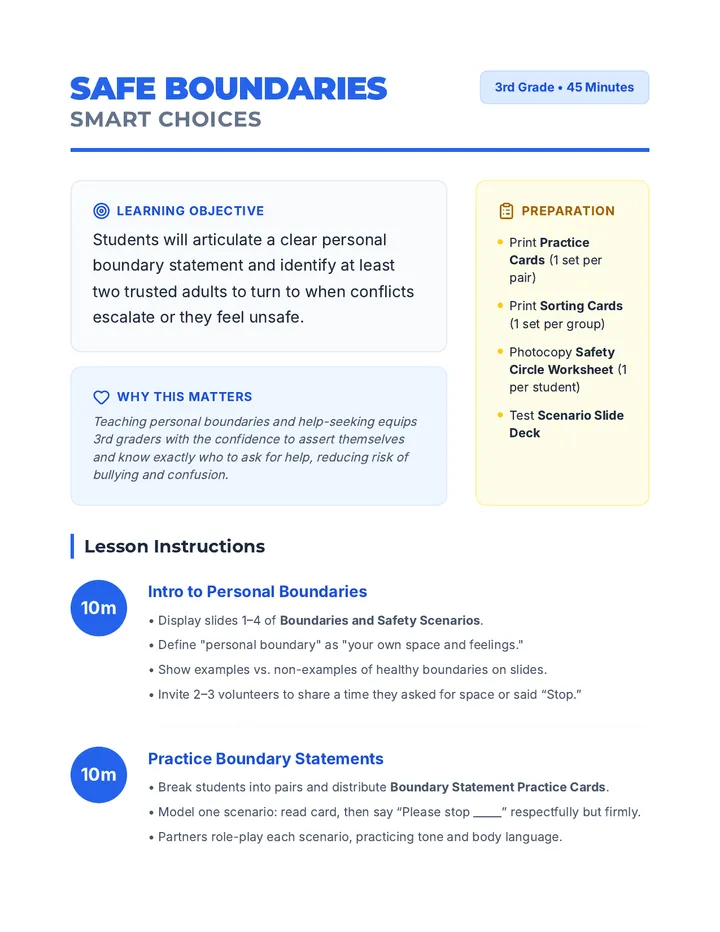
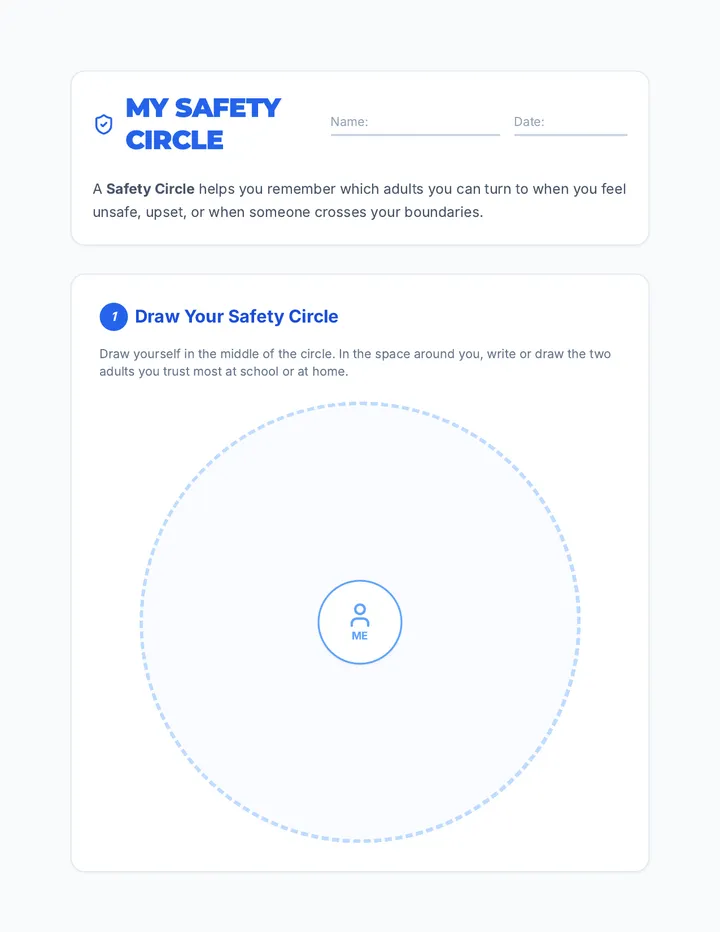
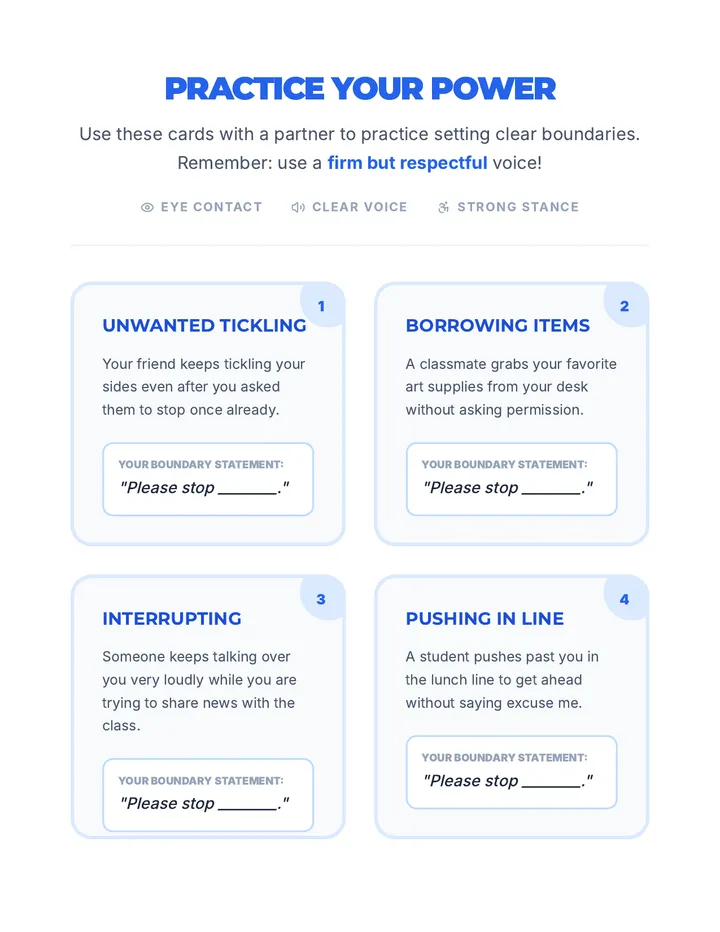
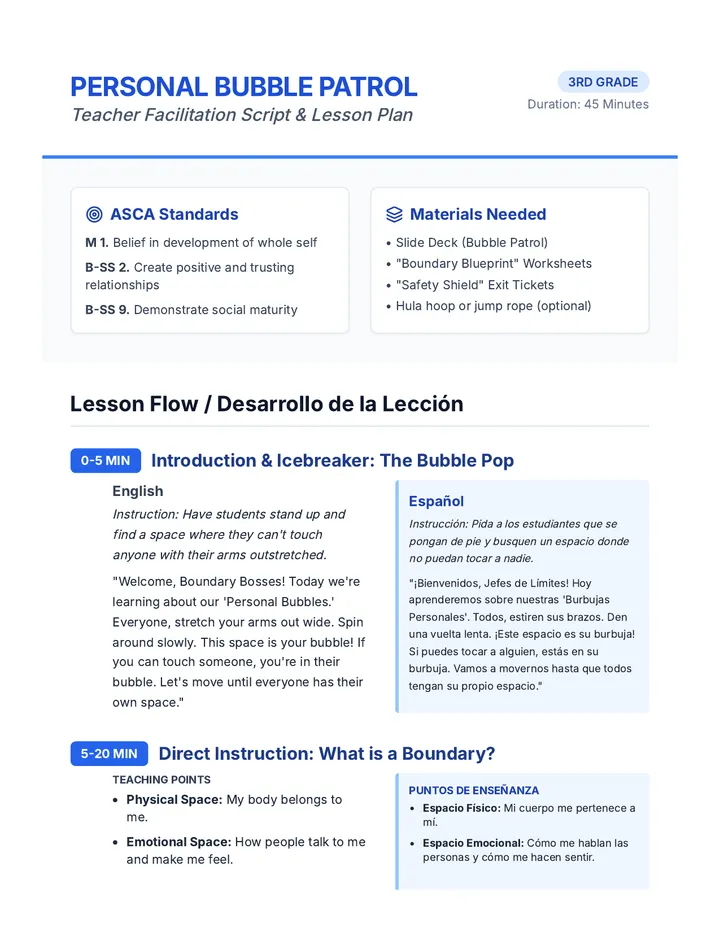
This sequence helps 3rd-grade students build a foundation for mental health awareness by identifying personal support networks, understanding the role of school counselors, and practicing communication skills for asking for help. Students learn to distinguish between small problems and big challenges while creating a concrete safety plan for emotional well-being.
A comprehensive 5-lesson sequence for 11th-grade students focusing on mindfulness, distress tolerance, and radical acceptance. Students move from basic observational skills to creating a personalized 'Personal Crisis Manual' for emotional regulation.
A graduate-level clinical workshop sequence focused on mastering Dialectical Behavior Therapy (DBT) distress tolerance skills. Students move from theory to practical application, learning to coach clients through crisis survival using TIPP, ACCEPTS, IMPROVE, and Self-Soothing techniques.
A comprehensive unit for 2nd-grade students to recognize emotional escalation and apply appropriate grounding strategies. Through storytelling, mapping, and simulation, students build self-awareness and co-regulation skills to navigate crisis moments effectively.
A comprehensive sequence for 6th-grade students on the A.C.T. (Acknowledge, Care, Tell) intervention model for suicide prevention. Students learn to identify warning signs, communicate empathy, and connect peers to trusted adults.
This sequence guides 4th-grade students through self-monitoring and proactive safety planning. Students learn to recognize physical stress signals, identify coping strategies, build a support network of trusted adults, and practice assertive communication, culminating in a personalized safety plan.
A comprehensive toolkit designed for a 6th-grade student to navigate emotional dysregulation. This sequence focuses on identifying internal triggers, building a personalized strategy toolkit, and establishing a clear safety protocol for crisis moments, providing stability in both school and home environments.
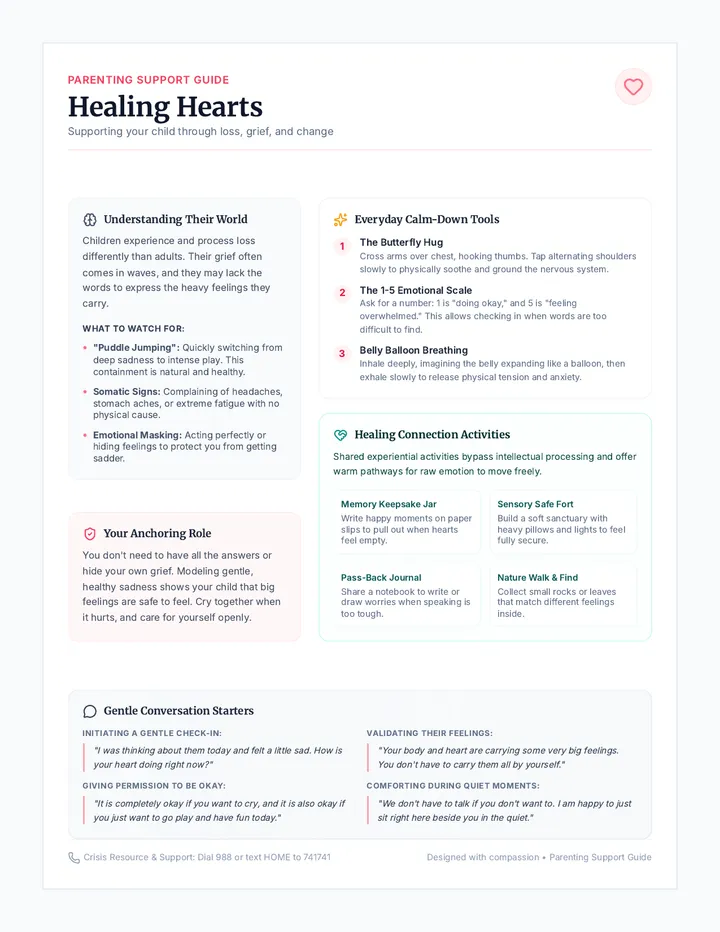
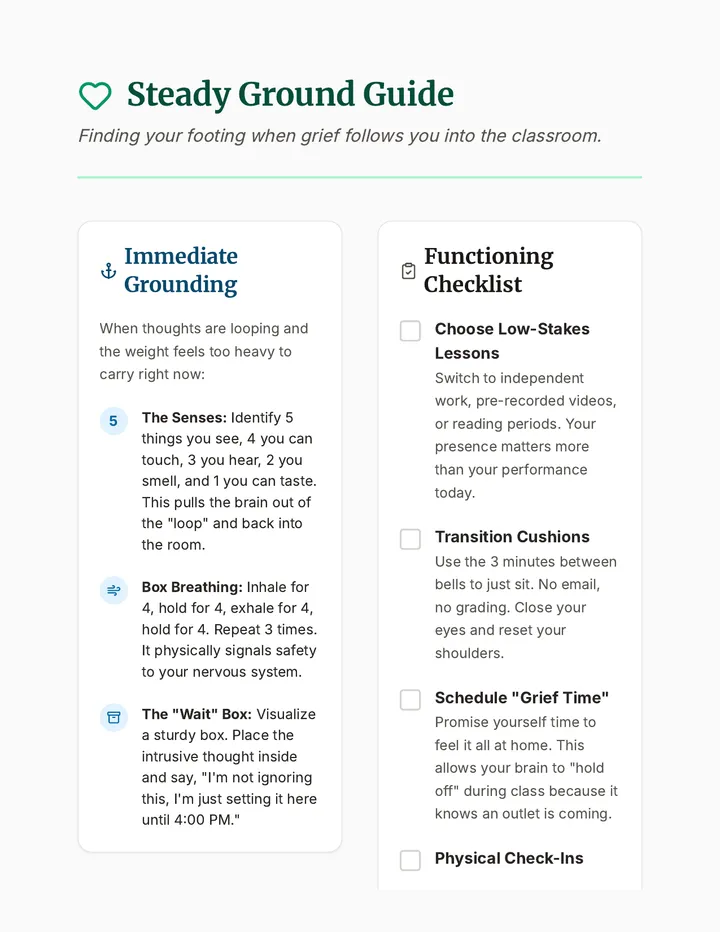
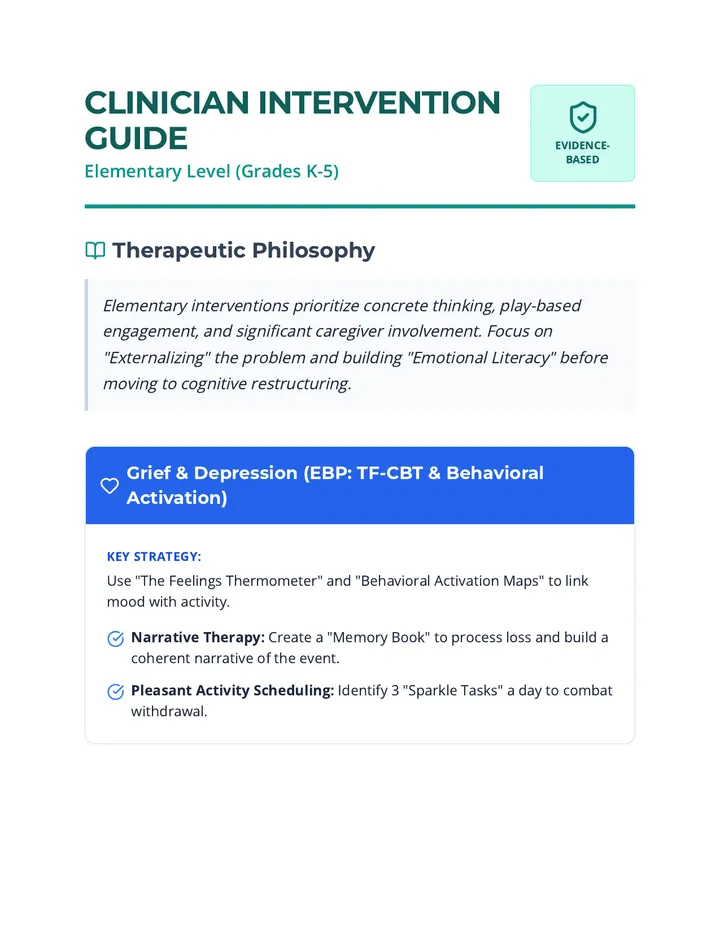
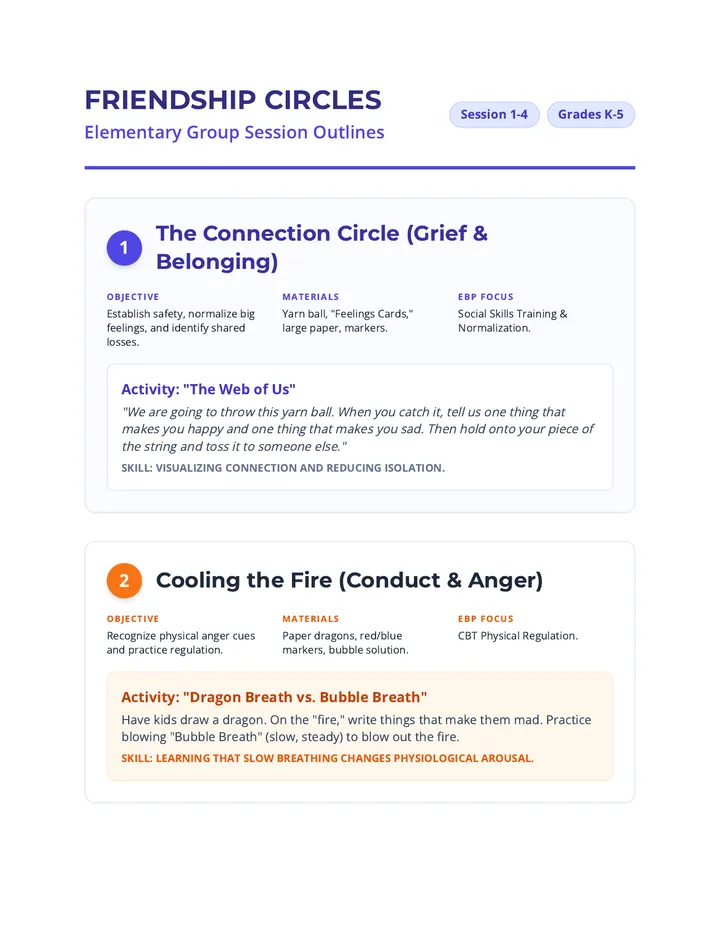
A comprehensive 6-week grief and loss treatment plan designed specifically for adolescent boys. The program, titled 'Healing Horizons,' uses a navigation and exploration metaphor to help teens process their loss, build coping skills, and find a path forward.
A 4-week empowerment group for 7th-grade girls focusing on emotional regulation, self-compassion, and moving past perfectionism and self-harm. The sequence provides a structured, creative, and safe environment to build healthy coping skills.
A comprehensive support program for middle school students focused on navigating depressive moods, building coping skills, and fostering resilience.
A comprehensive mini-unit for high school Life Skills students on personal boundaries, specifically focusing on the difference between friendships and romantic relationships, and how to respect the word 'No'.
A comprehensive collection of social-emotional learning resources designed to help students navigate big feelings, life changes, and social dynamics. This 'field guide' style kit provides practical tools for mindfulness, coping, friendship, and self-worth.
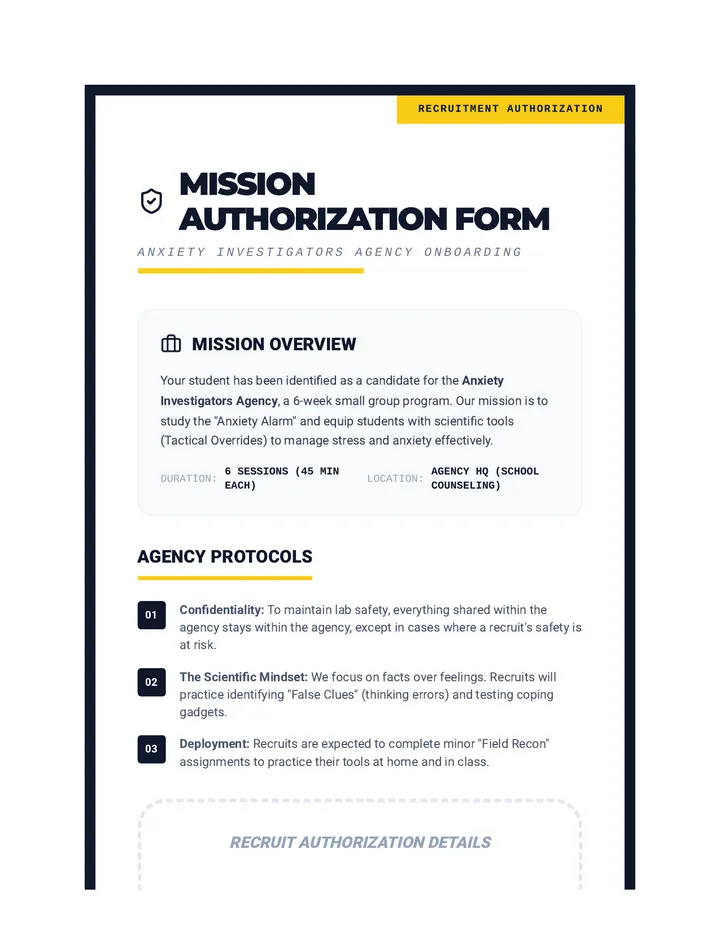
A specialized counseling sequence for 4th-grade students experiencing school phobia and anxiety. This Tier 3 1:1 intervention focuses on rapport building, identifying specific barriers to school attendance, and developing personal coping strategies to increase the student's sense of safety in diverse environments.
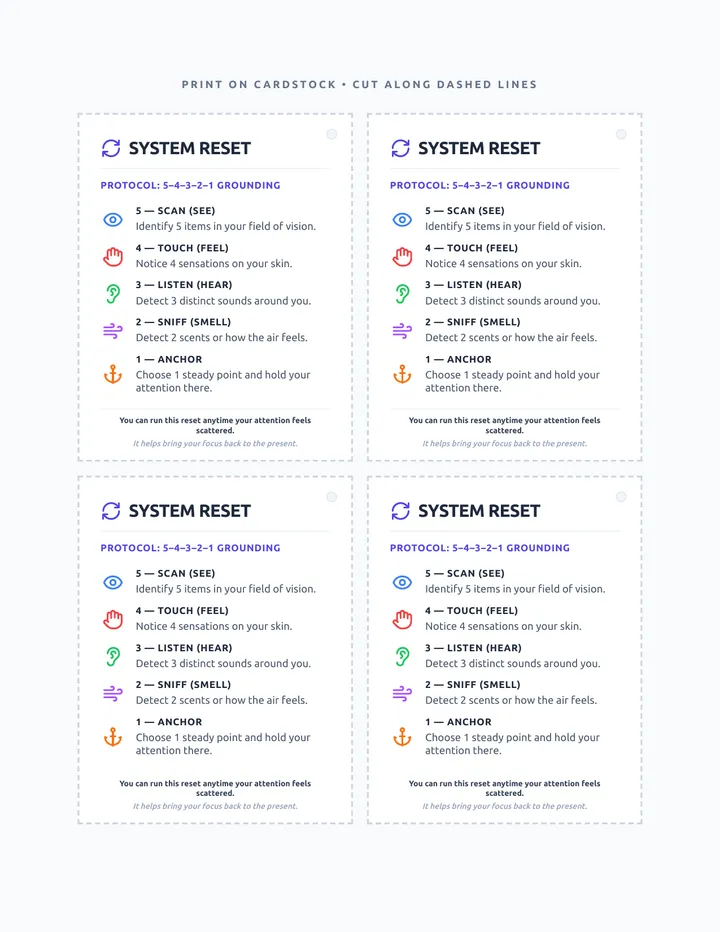
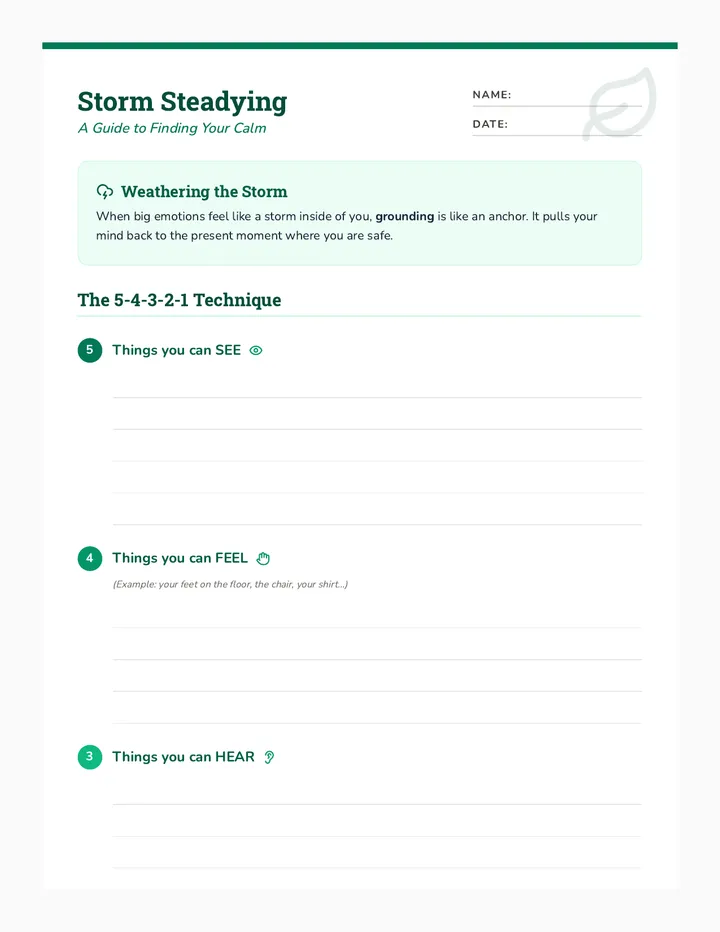
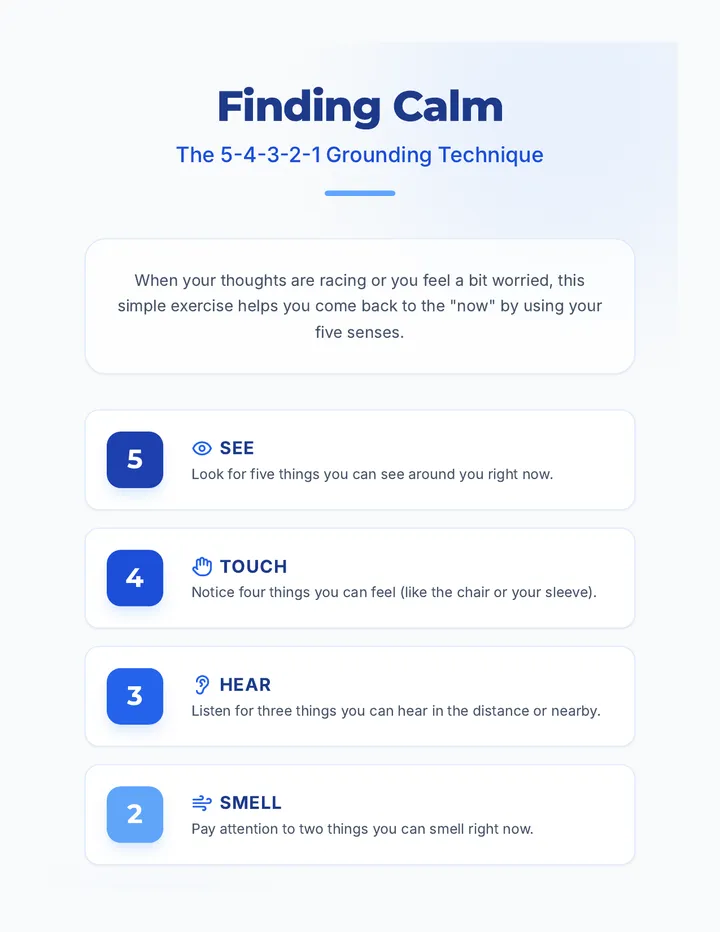
This sequence equips undergraduate students with evidence-based sensory grounding techniques to manage acute emotional distress. Through theory, experimentation, and design, students develop a personalized toolkit for cognitive reorientation and physiological stabilization.
This sequence helps Pre-K students distinguish between past trauma reactions and present safety through environmental scanning, temporal sorting, identifying safe adults, and grounding techniques. Students learn to use their senses to confirm they are safe 'right here and right now'.
A 5-lesson sequence for Pre-K students to help them understand triggers and distinguish past memories from present safety through play and sensory exploration.
A gentle, sensory-based sequence for Kindergarteners to distinguish between past trauma triggers and present safety. Students learn to observe their environment, categorize memories versus reality, and use grounding techniques to feel safe 'right now'.
An advanced clinical sequence for graduate-level counseling students focused on the nuanced application of grounding and self-soothing techniques for clients with complex PTSD and dissociative disorders. The curriculum emphasizes the Window of Tolerance, differentiating dissociation from mindfulness, and navigating sensory triggers to prevent retraumatization.
This graduate-level sequence bridges the gap between neurobiological theory and clinical practice. Students will explore the physiological underpinnings of emotional dysregulation, analyze Polyvagal Theory, and develop the skills to implement and explain sensory-based grounding techniques through an evidence-based lens.
A 5-lesson sequence for 2nd graders focused on using body awareness, proprioception, and movement to find stability and grounding during moments of high stress or crisis. Students move from gross motor stability to discreet, desk-based techniques.
A Kindergarten sequence focused on building a toolkit of sensory and mental grounding strategies to help students navigate moments of distress or crisis. Students move from external sensory exploration to internal visualization and positive self-talk, culminating in a personalized 'Calm Kit.'
A Kindergarten sequence focused on interoception and grounding. Students learn to recognize physical 'alarm bells' of distress, practice interrupting emotional spirals with a 'Pause Button', and create personalized emergency plans using visual grounding tools.
Students design and create a personalized 'Coping Kit' (mental or physical) containing tools for managing crisis moments. This project-based sequence guides 3rd graders through self-reflection, visualization techniques, tool selection, and the creation of a comprehensive safety plan.
An inquiry-based sequence for 8th graders focusing on identifying situational triggers for mental health crises and building resilience through healthy coping strategies and protective factors.
A comprehensive 5-lesson sequence for 8th-grade students on identifying suicide warning signs and seeking help using the ACT (Acknowledge, Care, Tell) model. Students progress from distinguishing stress from crisis to mapping out their personal support systems.
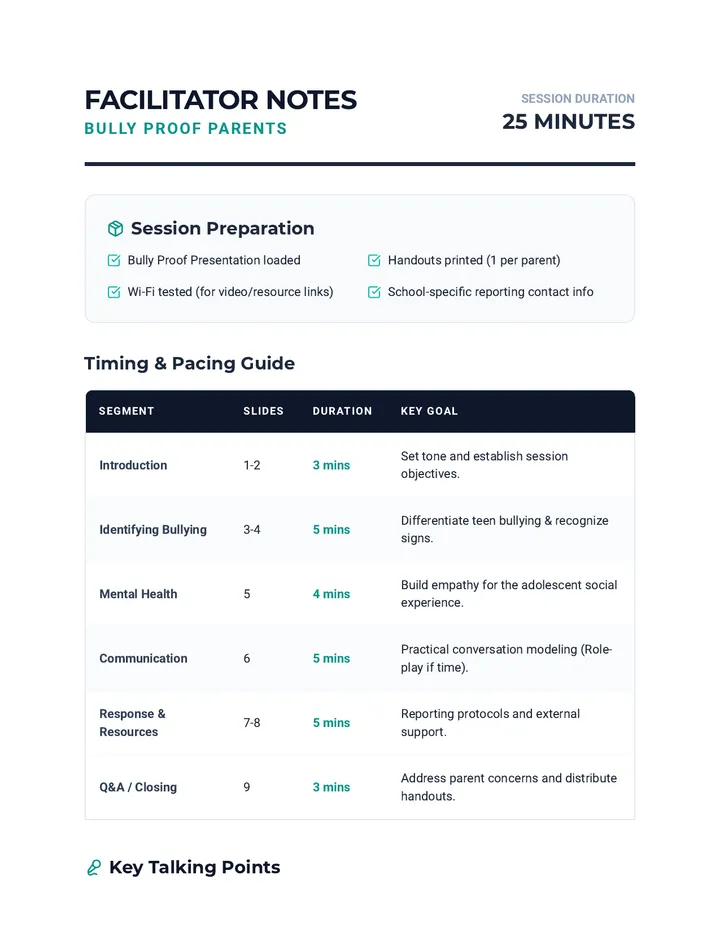
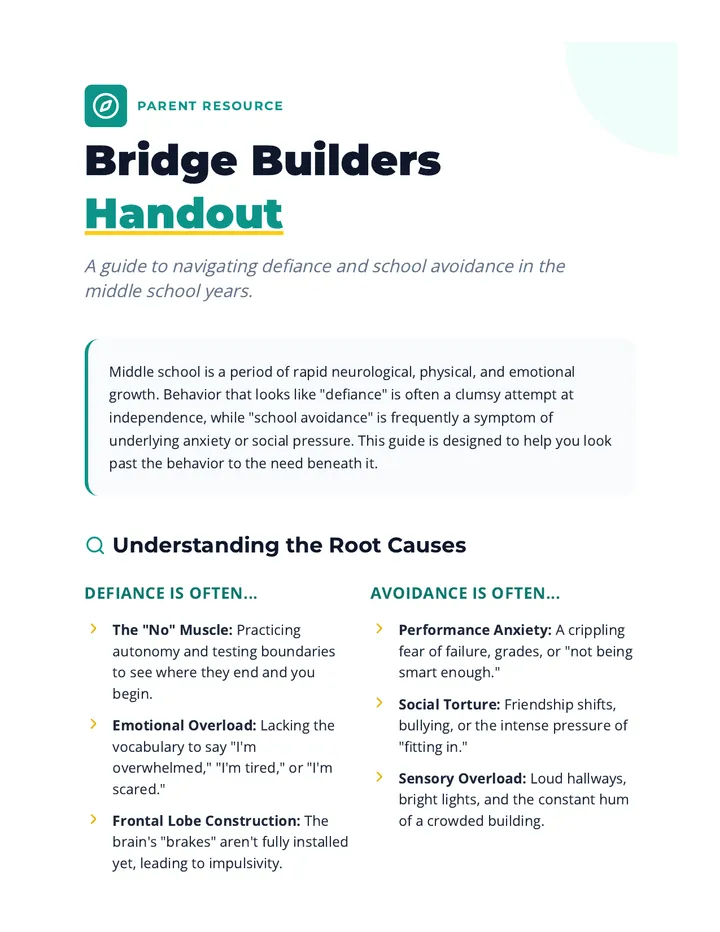
A parent-focused sequence designed to help caregivers differentiate between normal adolescent moodiness and clinical depressive disorders, providing tools for identification and pathways to support.
A mental health awareness sequence for middle school students focusing on the importance of early treatment, normalization of seeking help, and building a personal wellness toolkit.
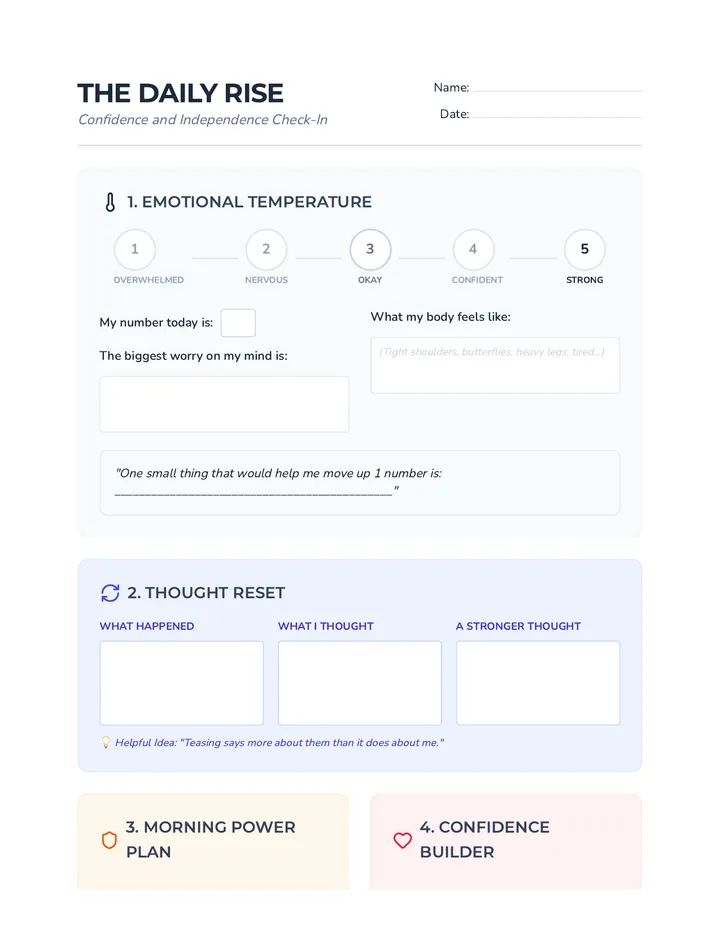
A social-emotional learning unit focused on building self-esteem, identifying personal strengths, and developing strategies to combat bullying and negative self-talk.
A workshop series designed for parents to understand the intersection of high academic achievement and mental health, focusing on identifying high-functioning anxiety and fostering healthy communication.
This sequence demystifies the operational side of crisis hotlines, focusing on technical and legal procedures. Students explore the 988 system, confidentiality laws, and triage protocols to understand how help is delivered and privacy is protected.
This skill-building sequence focuses on communication strategies for seeking crisis support, moving beyond just knowing phone numbers to practicing the specific scripts and techniques needed to facilitate help for oneself or others. Students learn to articulate urgent needs, overcome physiological stress responses, perform 'warm handoffs' as bystanders, and navigate the follow-up steps after a crisis call.
A graduate-level exploration of the ethical and legal complexities surrounding the use of crisis hotlines in clinical practice, focusing on HIPAA, state-specific mandates, and the balance between client autonomy and the duty to protect.
This graduate-level sequence prepares clinical students to effectively triage crises and manage hotline referrals. It covers lethality assessment, the technical mechanics of warm handoffs, involuntary intervention protocols, risk management documentation, and post-crisis therapeutic repair.
This sequence demystifies the operational side of crisis hotlines, focusing on triage, confidentiality, and the technical workflow of help-seeking. Students will learn how risk is assessed and how privacy is maintained, reducing anxiety about reaching out for support.
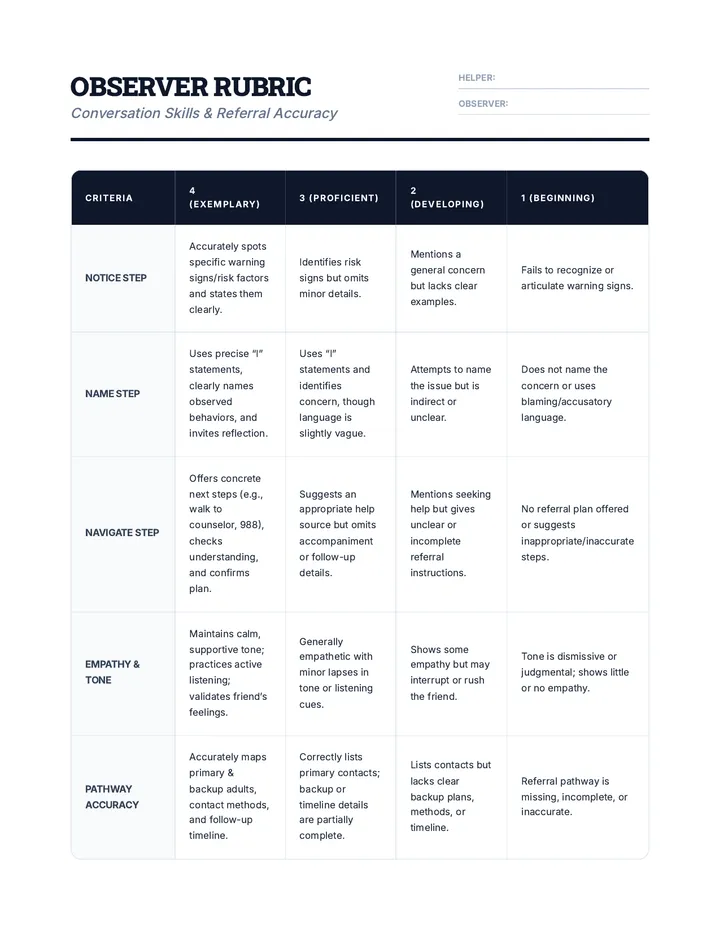
A comprehensive training sequence for undergraduate students to become effective mental health gatekeepers, focusing on identifying crisis signs, direct intervention, and referral pathways.
A project-based unit where 6th-grade students explore school, community, and national mental health resources. Students learn to navigate help-seeking pathways and conclude by creating resource materials for their school community.
This sequence guides 11th-grade students through the logistical and procedural aspects of crisis intervention. Students learn to distinguish between 911 and 988, understand hotline intake protocols, navigate the ethics of confidentiality, explore specialized digital tools, and practice referring peers to appropriate professional resources.
An actionable workshop sequence for 8th graders on recognizing mental health crises and applying the ACT (Acknowledge, Care, Tell) model to ensure peer safety. Students learn to overcome barriers to reporting and practice communicating urgency to trusted adults.
A comprehensive sequence for 7th-grade students focused on actionable safety planning, identifying trusted adults, and understanding reporting protocols related to human and child trafficking. Students move from personal awareness to community advocacy, culminating in the creation of peer-facing safety resources.
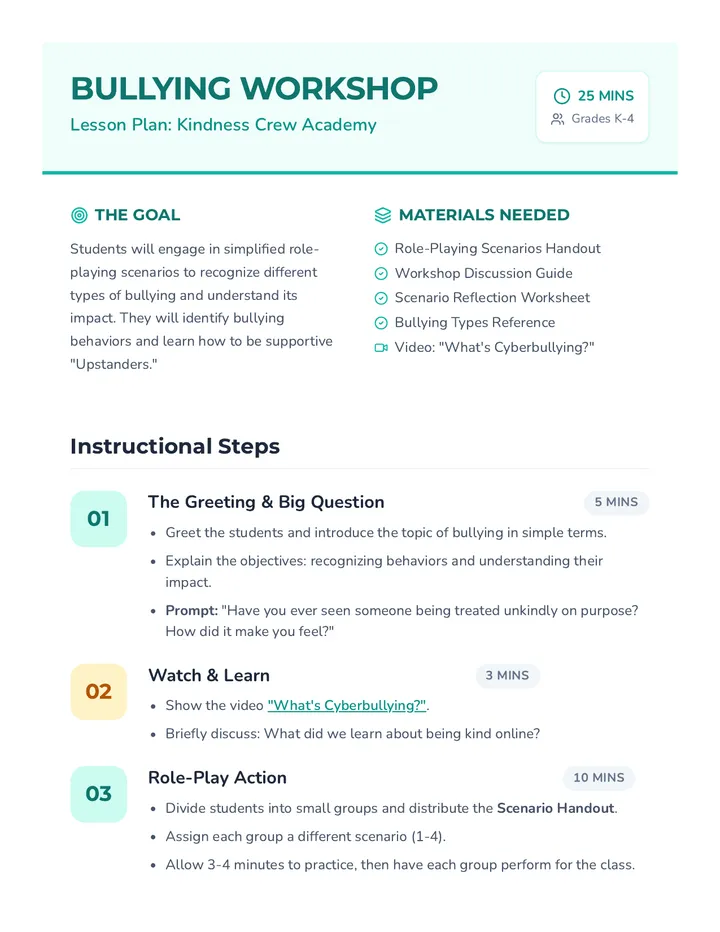
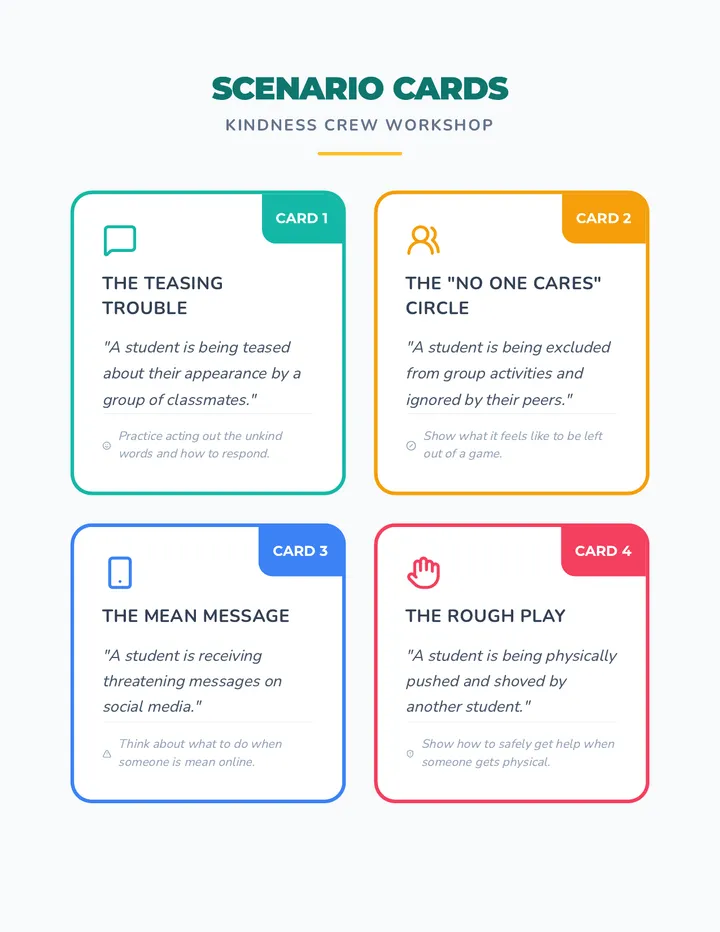
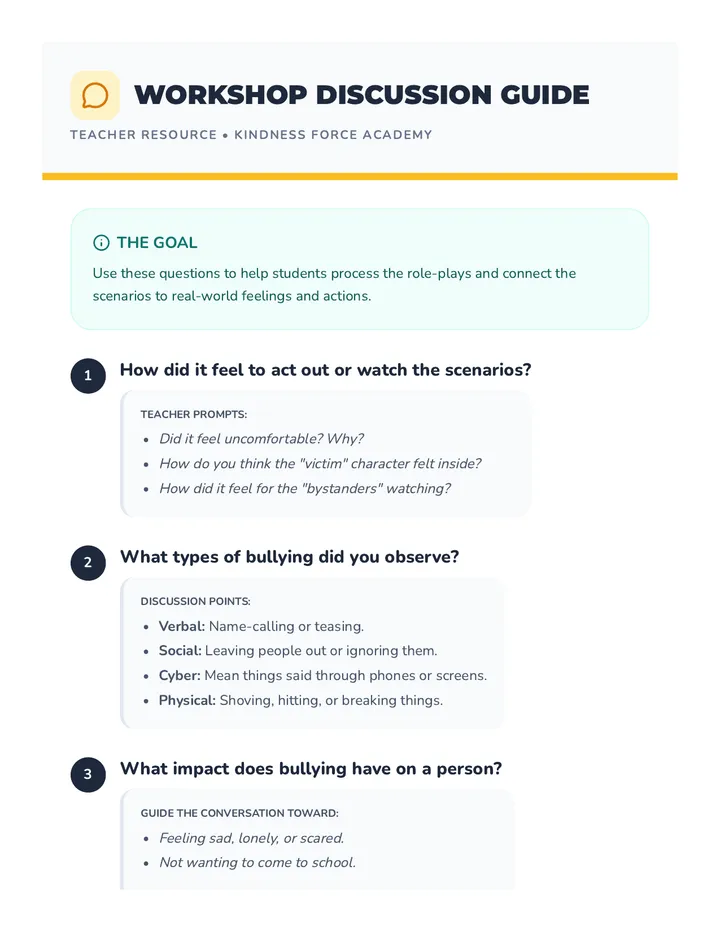
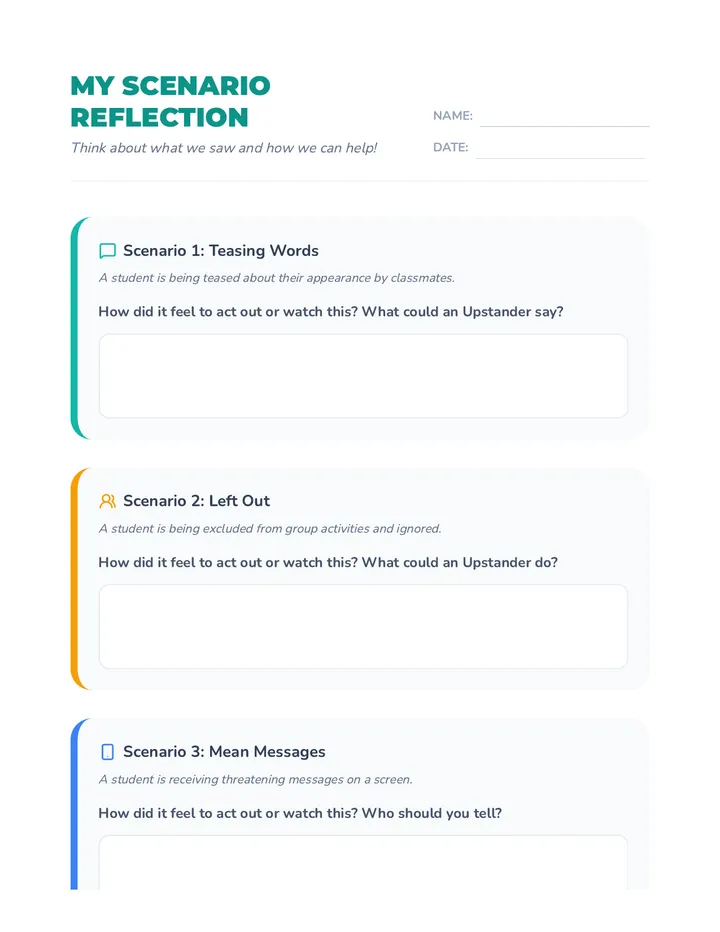
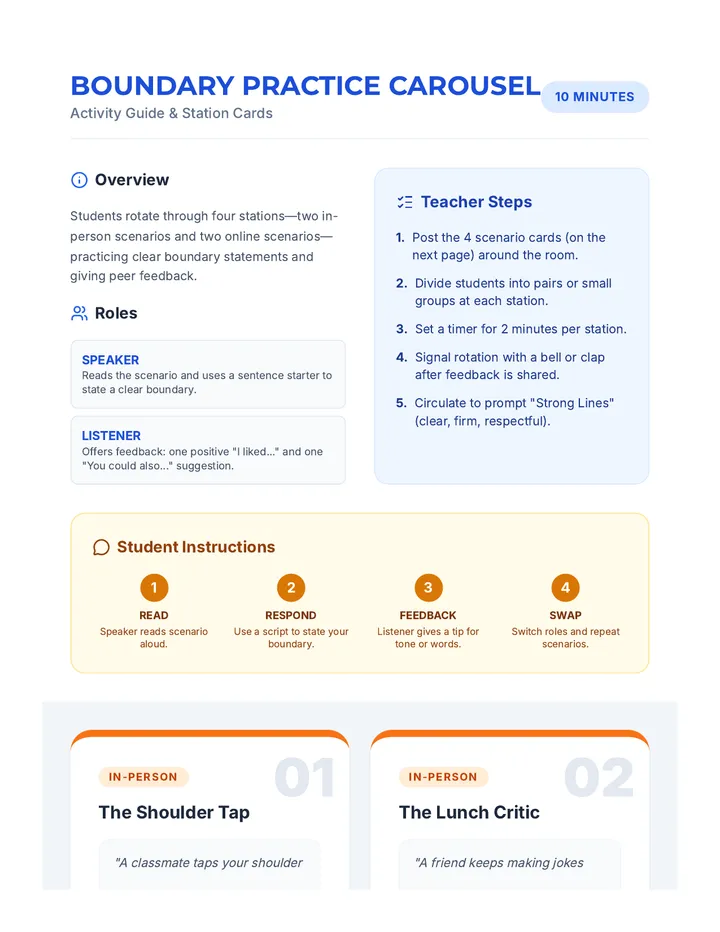
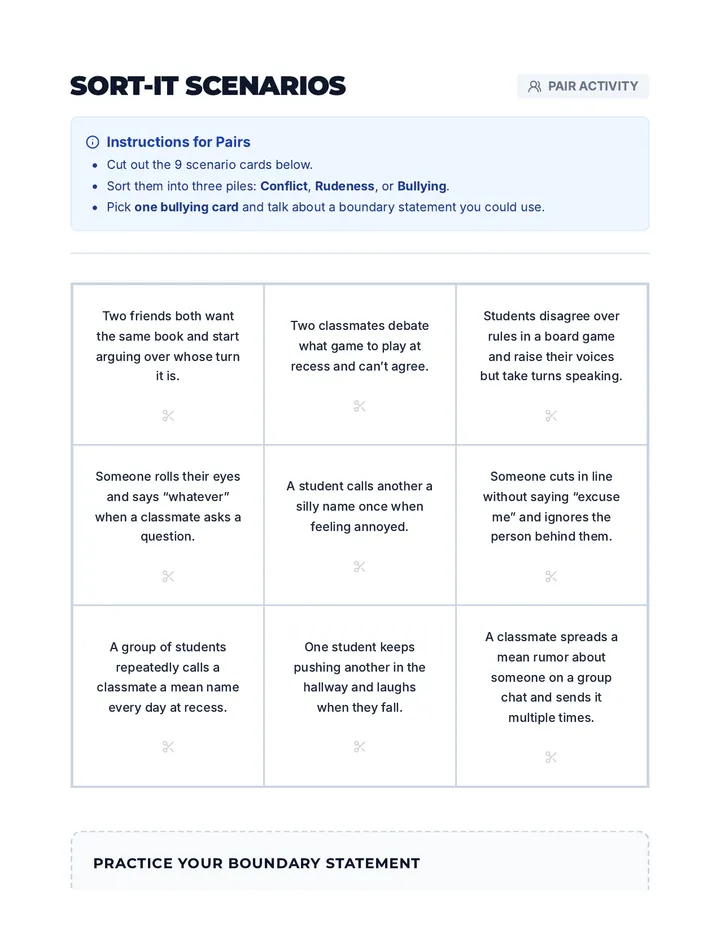
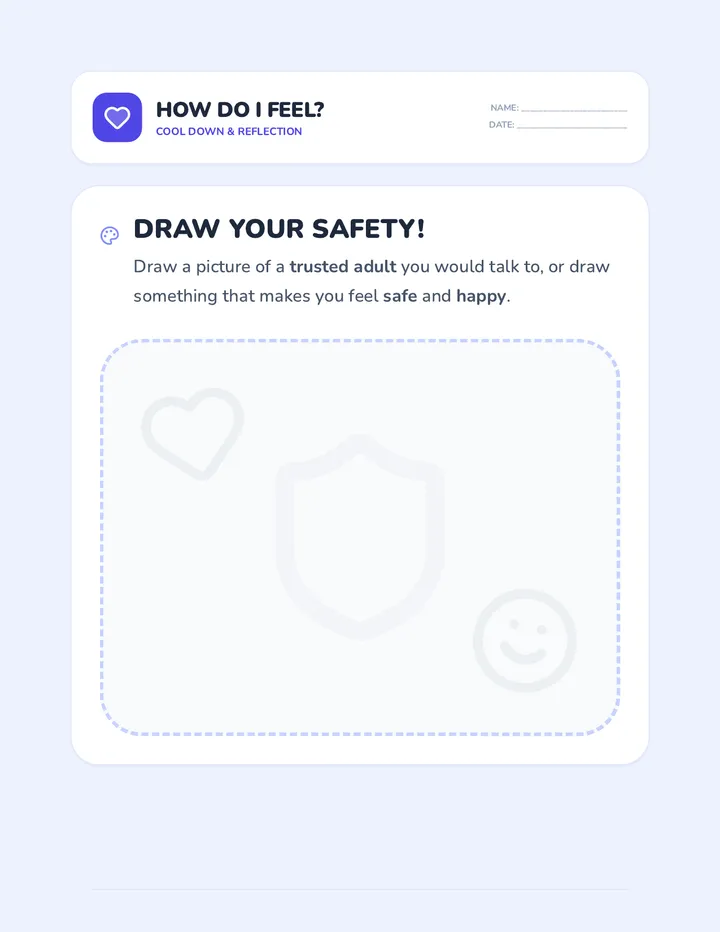
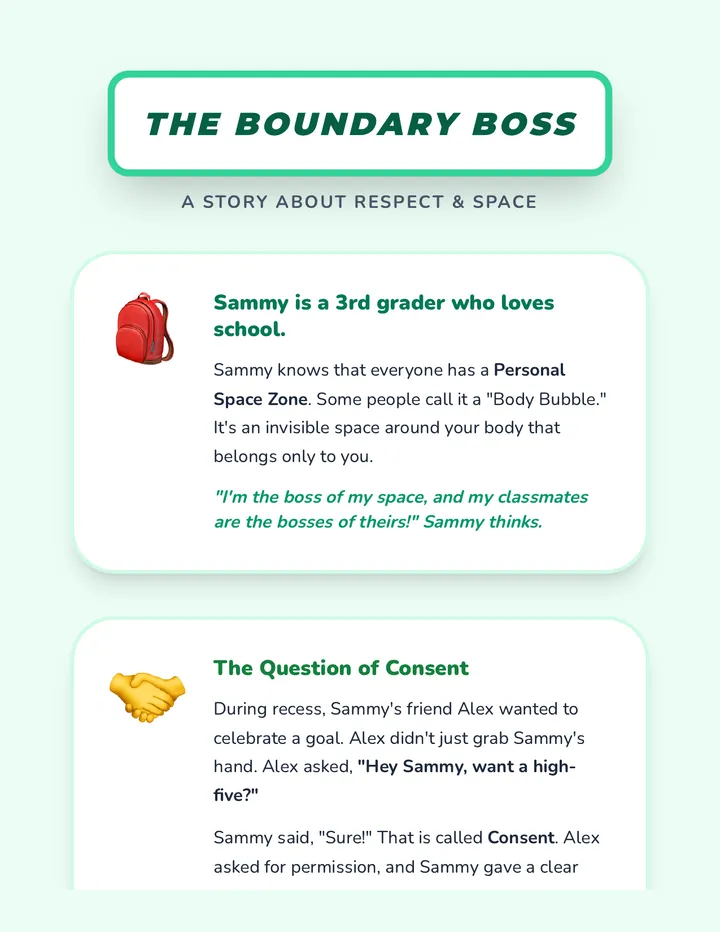
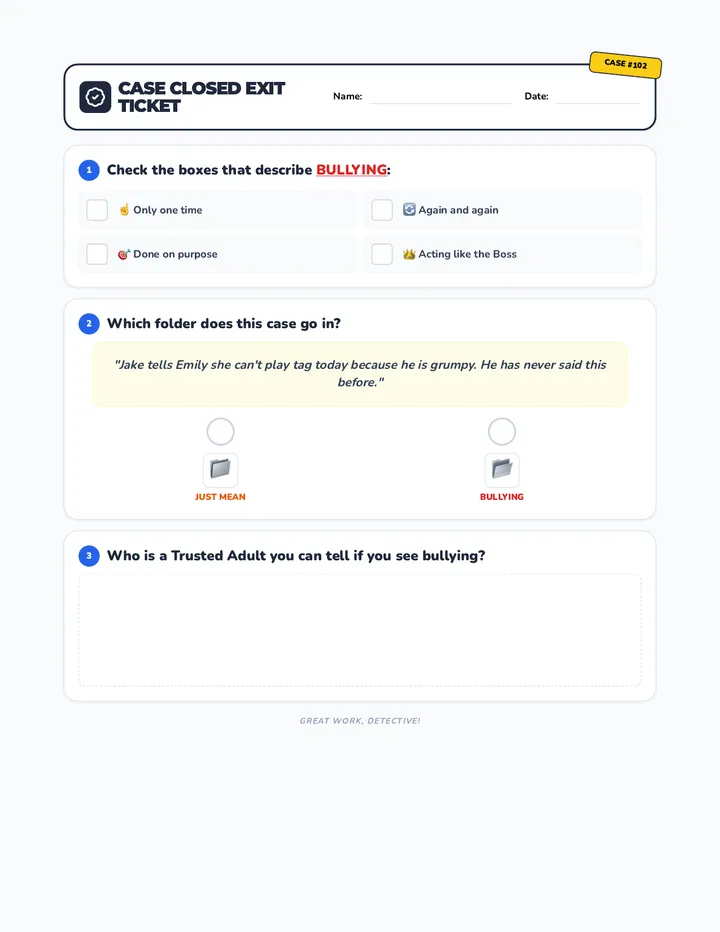
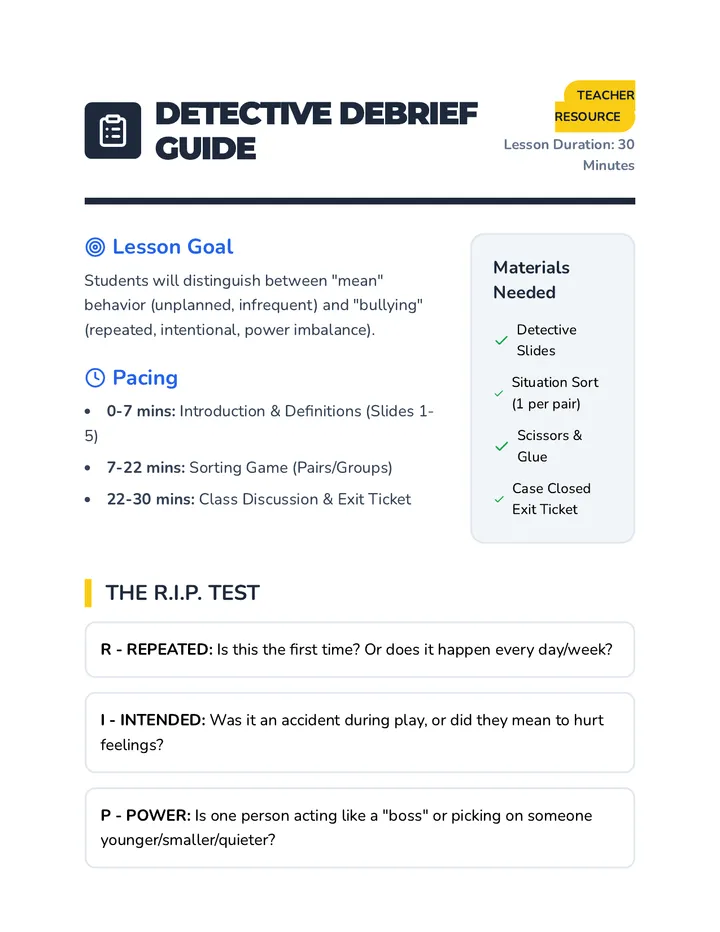
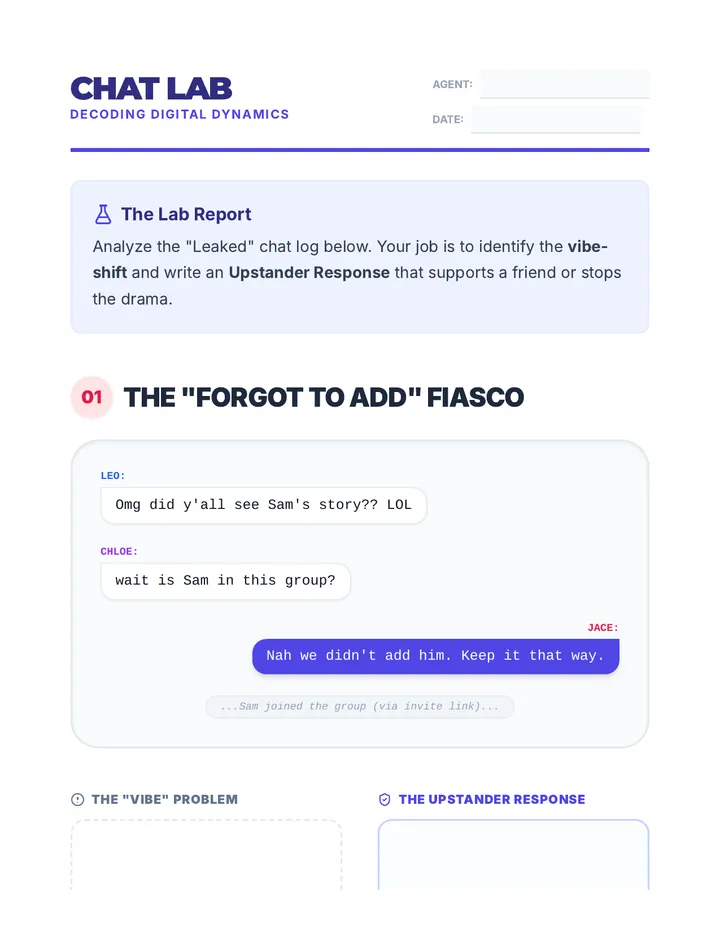
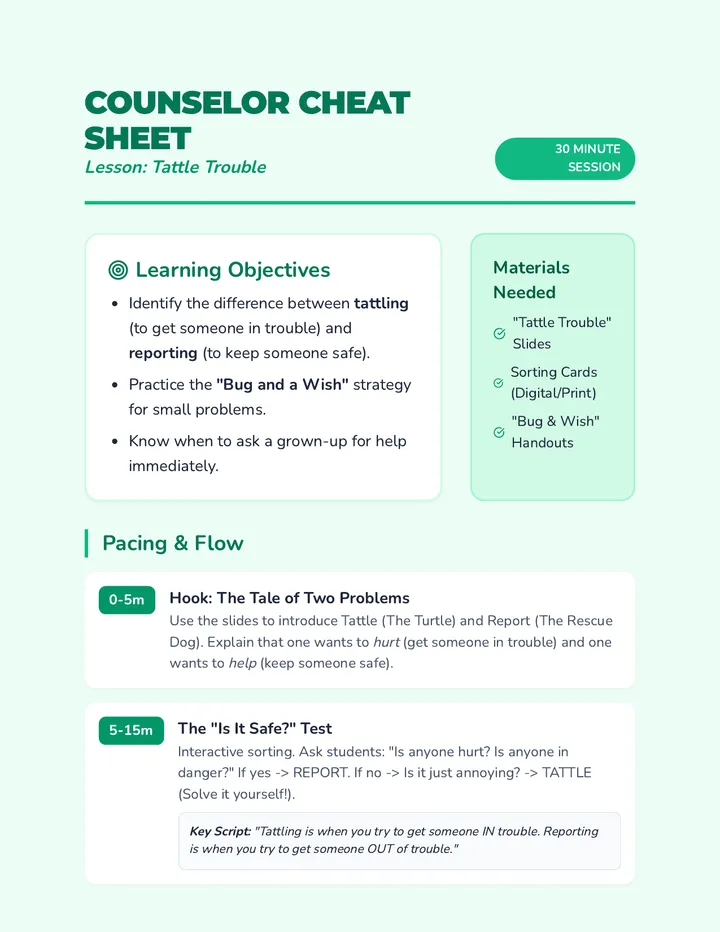
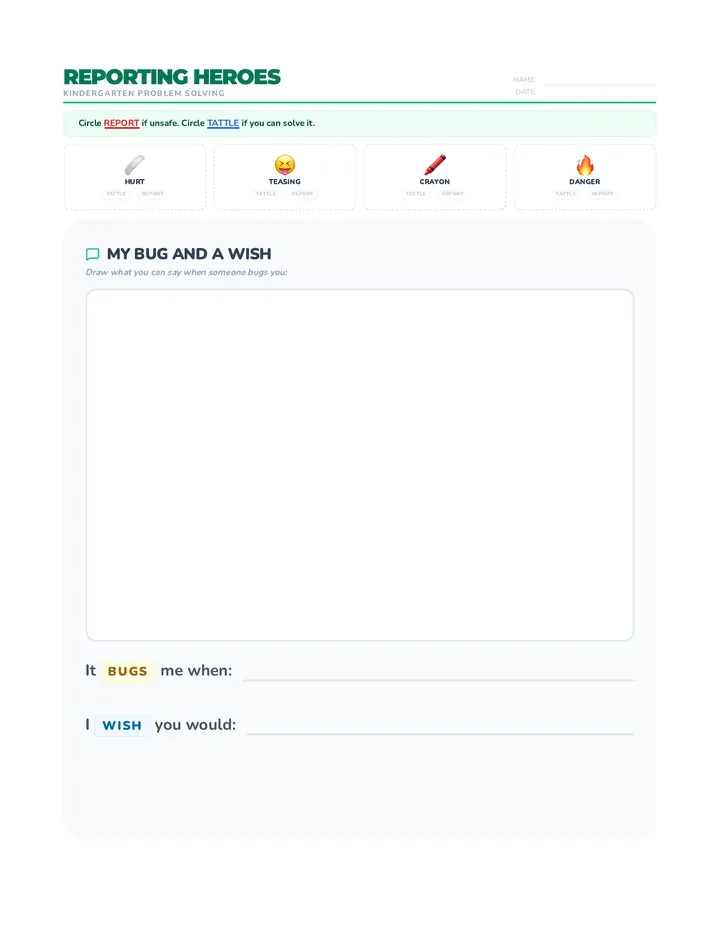
A series of three 10-minute lessons for preschool and kindergarten students on how to identify and respond to unkind behavior and bullying using simple, empowering strategies.
A 6-session Tier 2 intervention curriculum for 7th-grade girls focused on conflict resolution, communication, and self-advocacy using direct, concrete language.
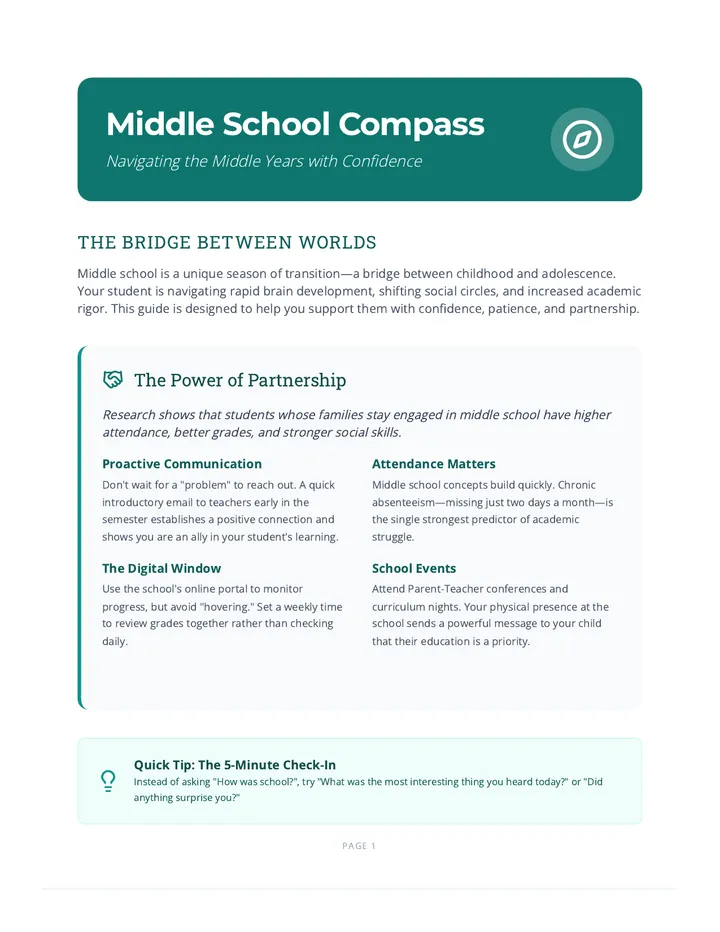
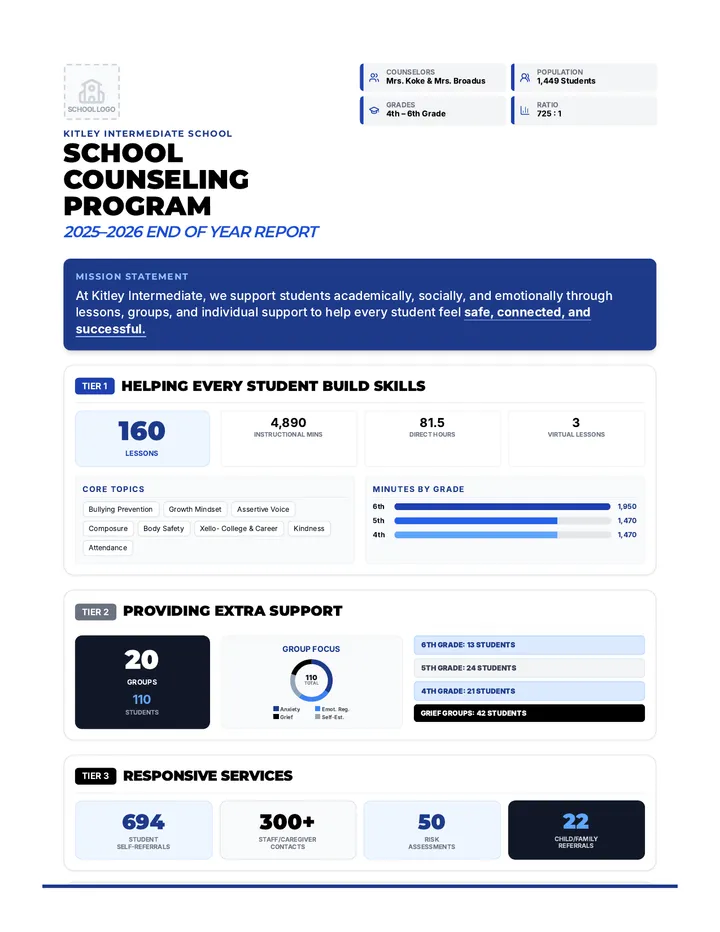
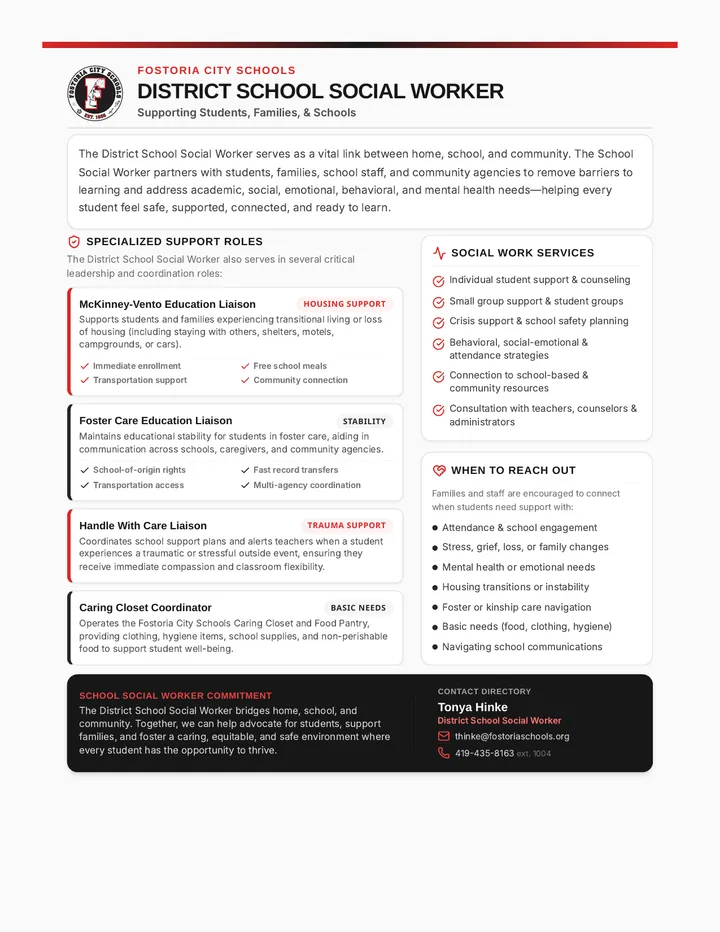
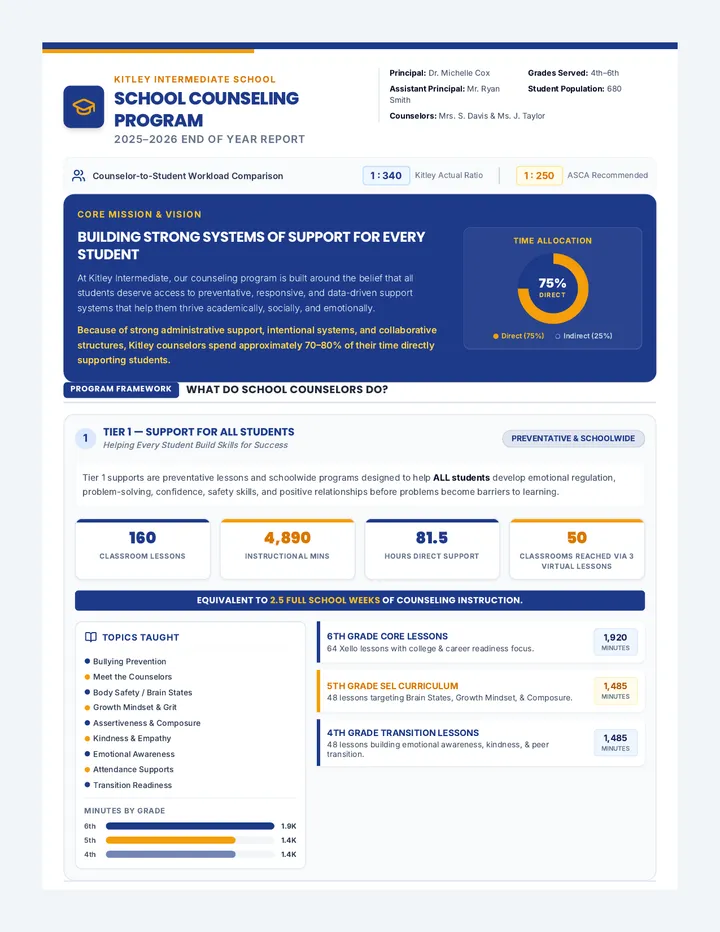
A professional development and outreach series designed to clarify the role of the modern school counselor and strengthen school-home partnerships.
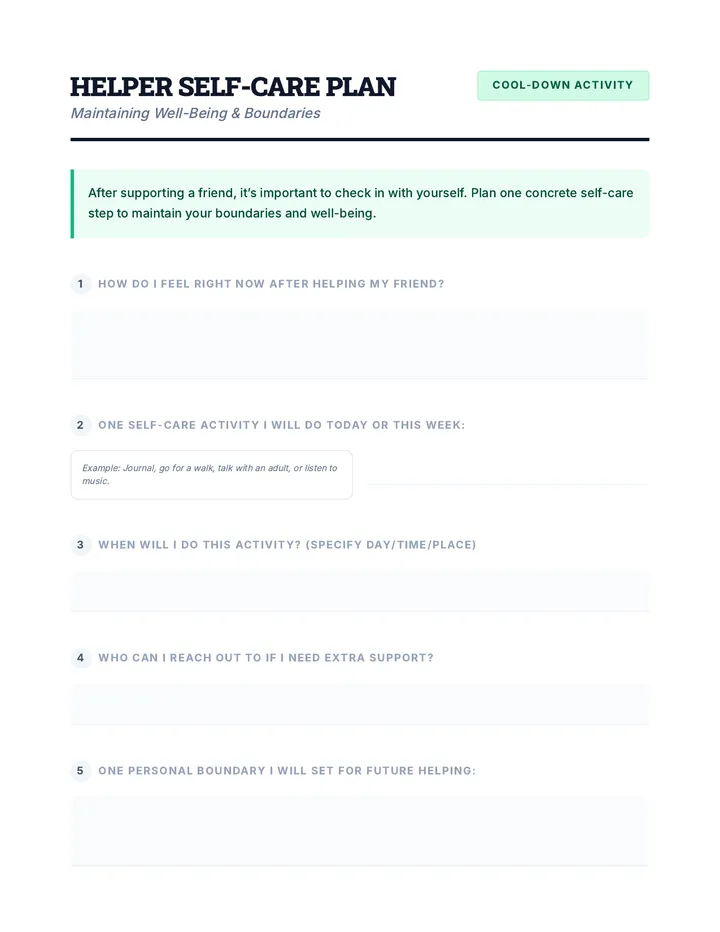
This sequence prepares undergraduate students to facilitate peer-led mental health support groups. It covers ethical boundaries, group safety, advanced communication skills, crisis protocols, and concludes with a practical facilitation session.
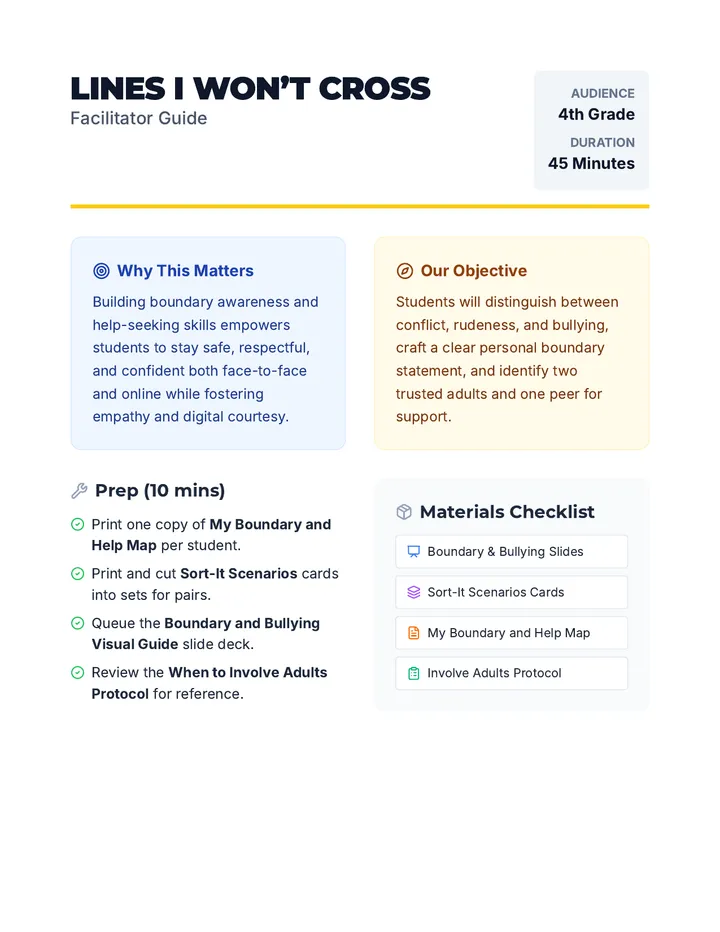
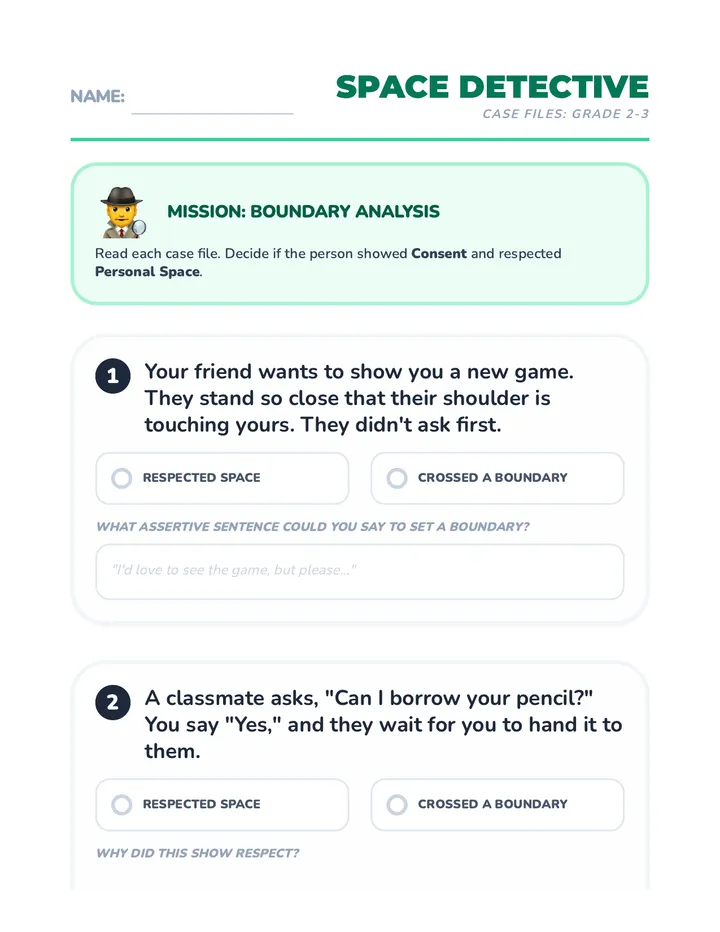
A sequence focused on developing interpersonal communication skills, conflict resolution strategies, and healthy relationship boundaries for middle school students.
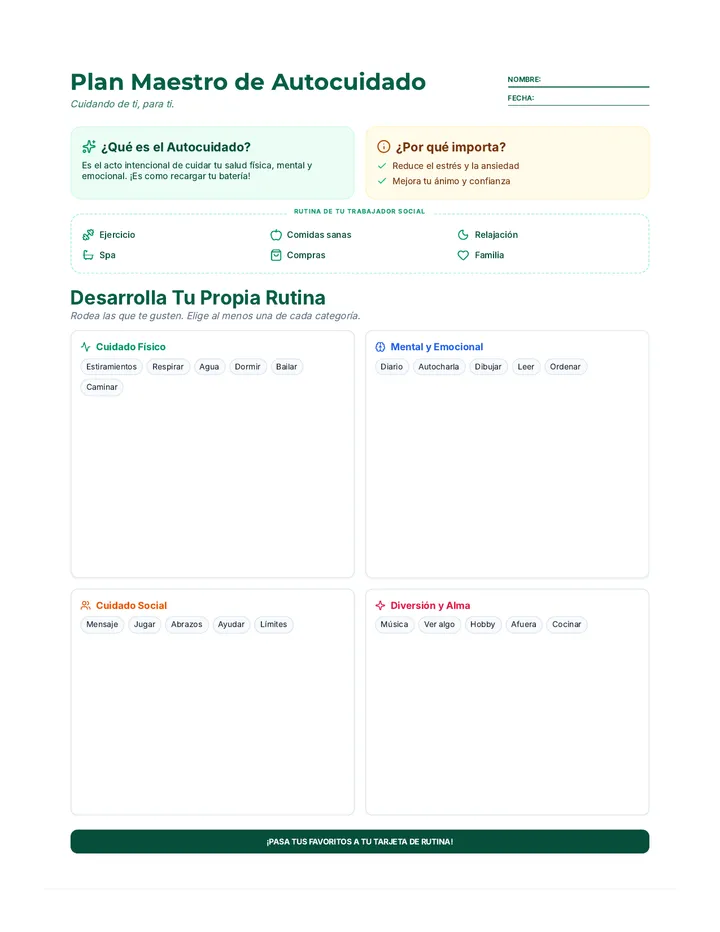
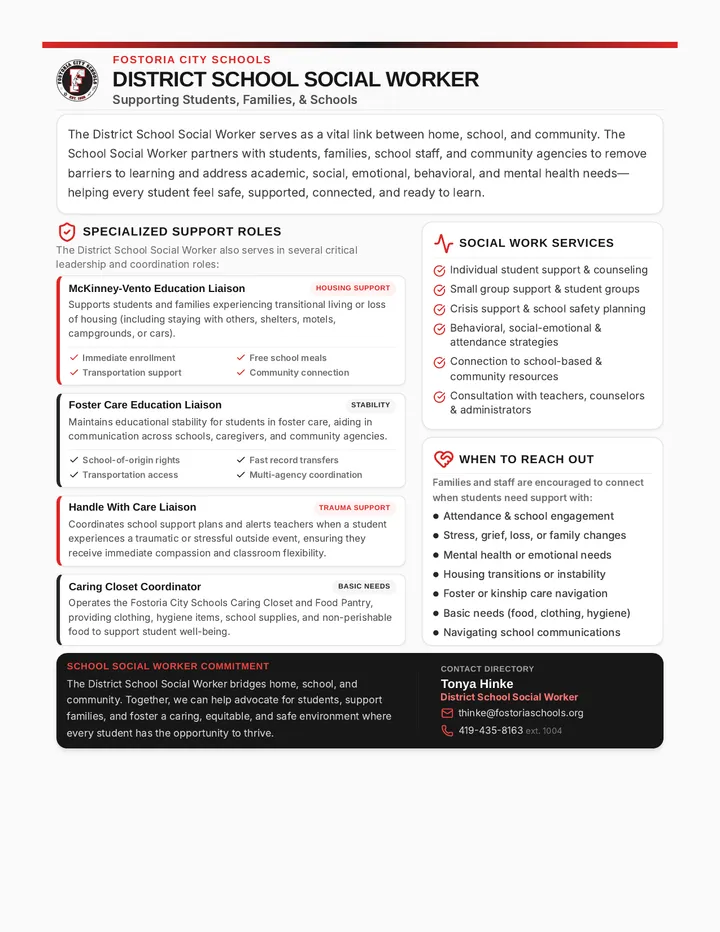
A comprehensive suite of professional resources for social work students and practitioners, covering ethical decision-making, crisis management, grant acquisition, trauma-informed practices, and community evaluation.
A four-week workshop series for high school students focused on building supportive relationships, identifying healthy behaviors, and fostering self-respect.
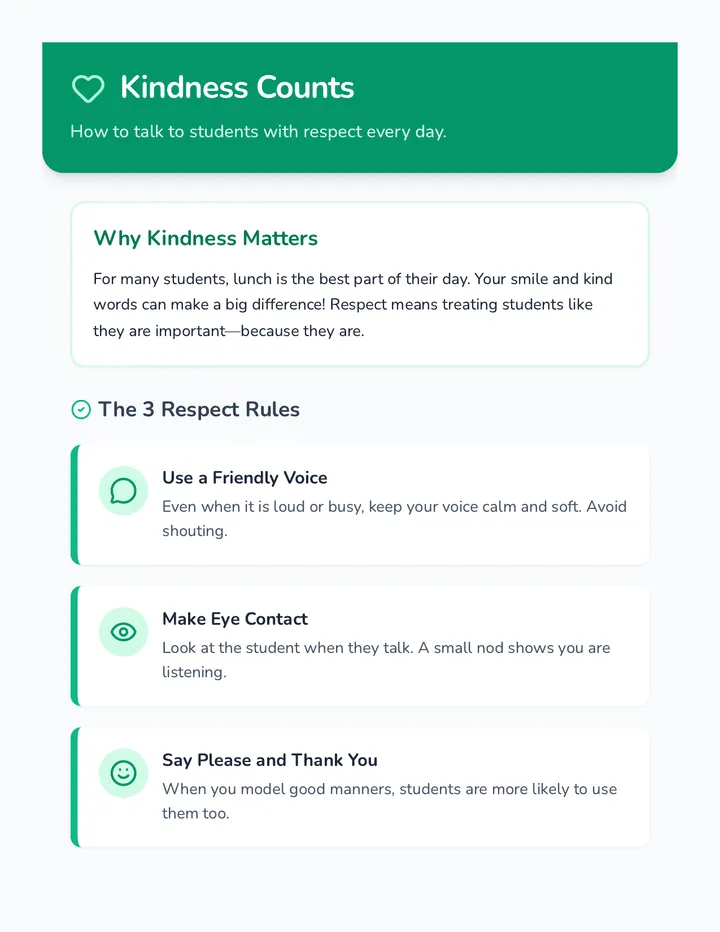
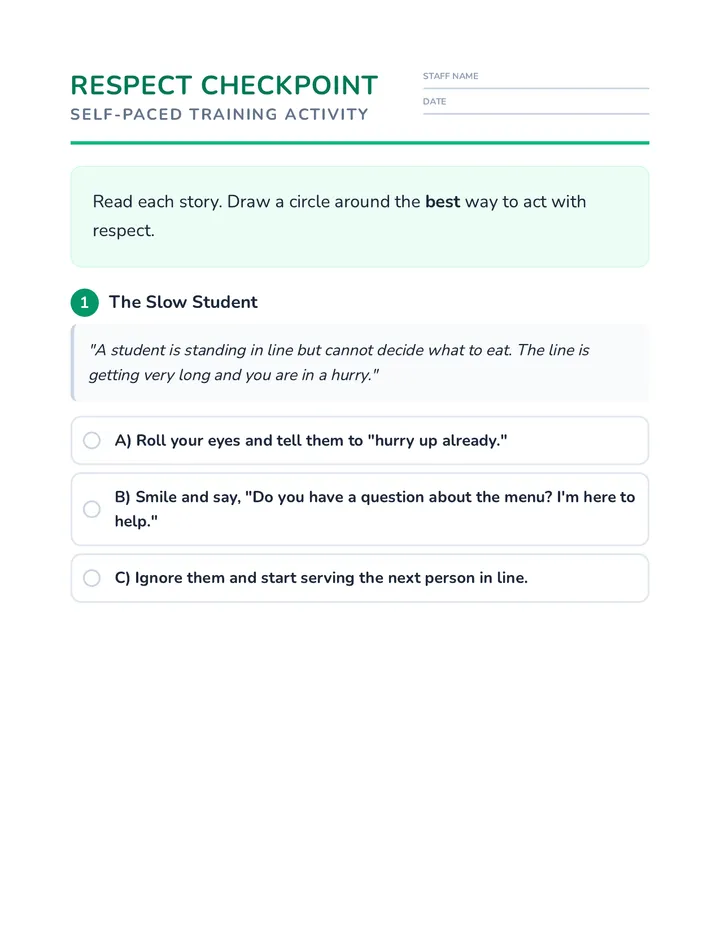
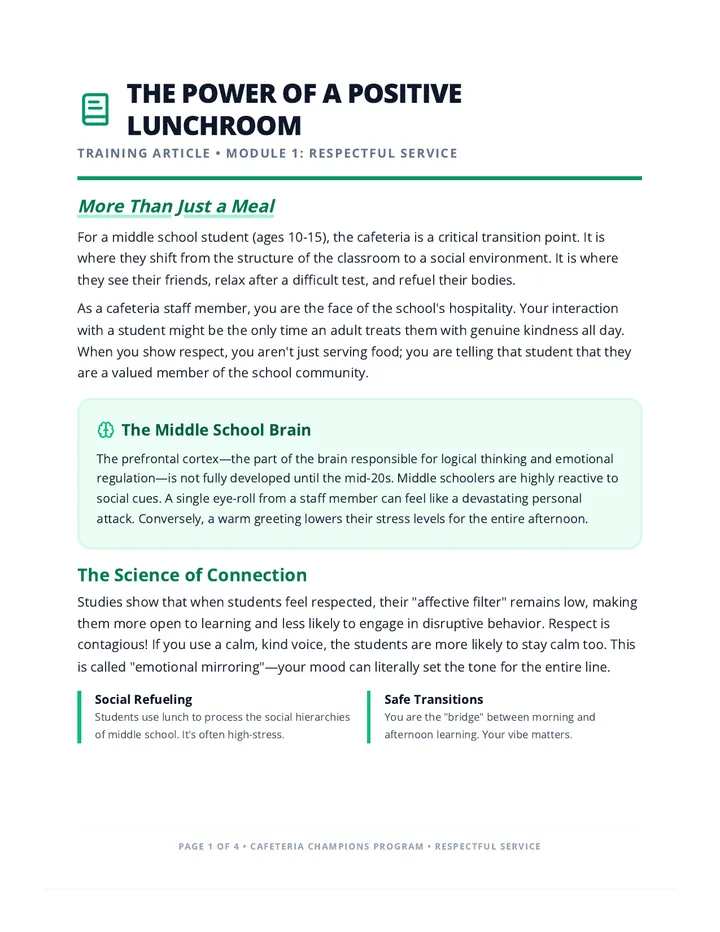
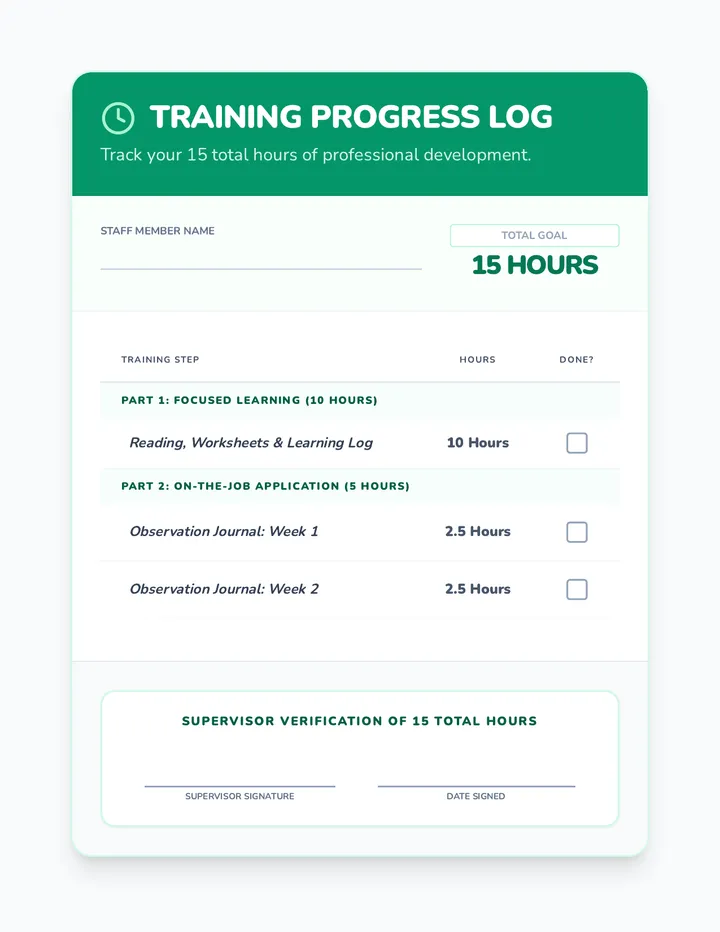
A professional development sequence for elementary school staff to identify and respond to student stress reactions. This sequence includes a 15-minute briefing and high-utility reference materials.
A comprehensive 5-lesson sequence for 11th-grade students focused on mastering the PLEASE skills (DBT therapeutic approach) to reduce emotional vulnerability. Students move from self-assessment to crisis planning, data analysis, and peer consultancy, culminating in a professional 'Resilience Portfolio' designed for their transition to young adulthood.
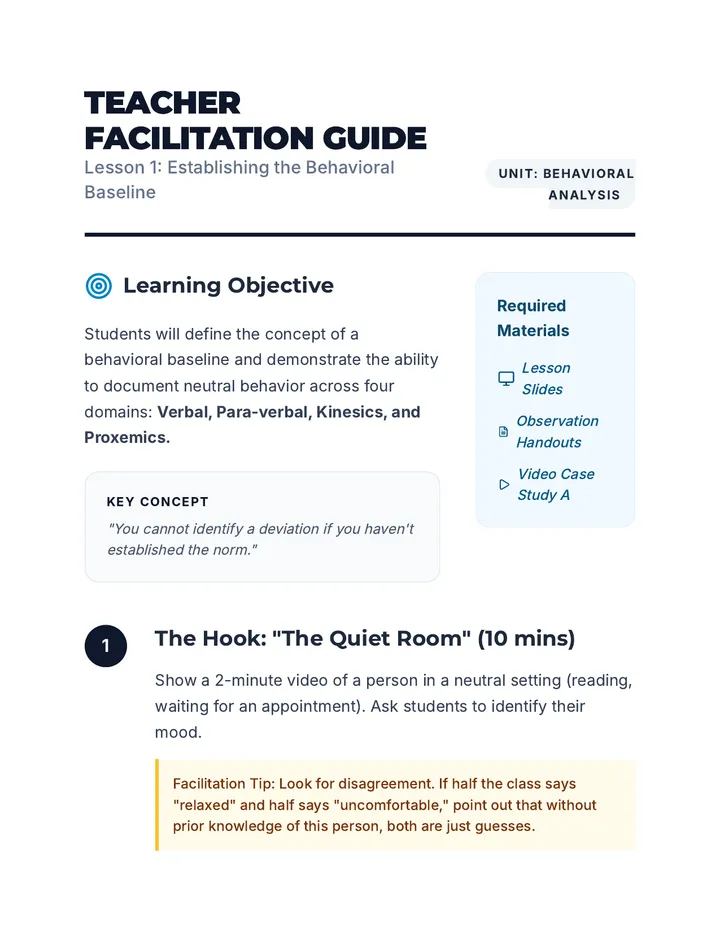
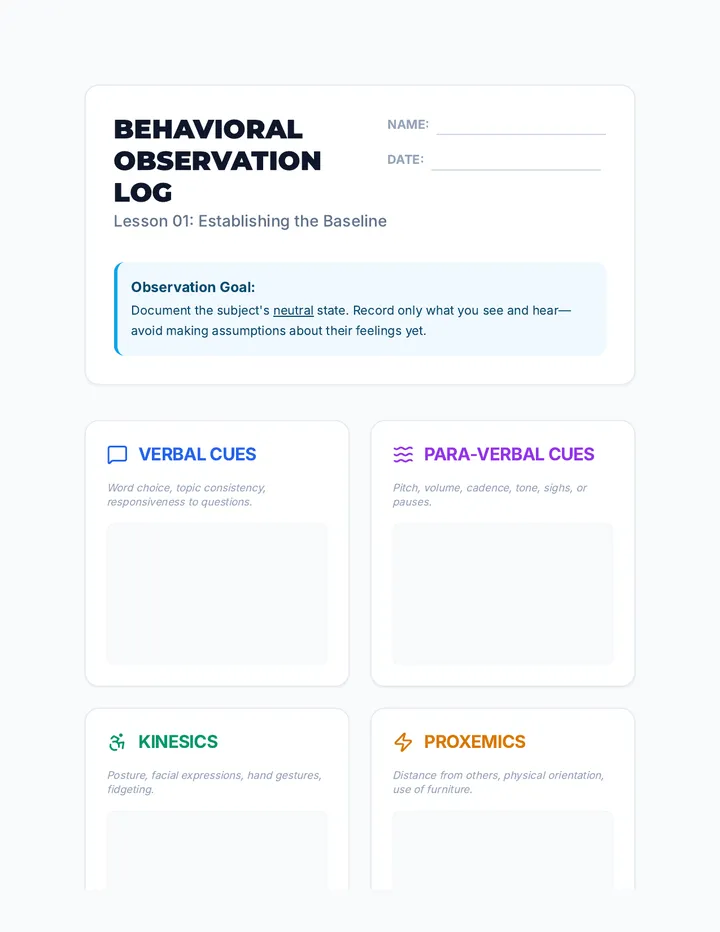
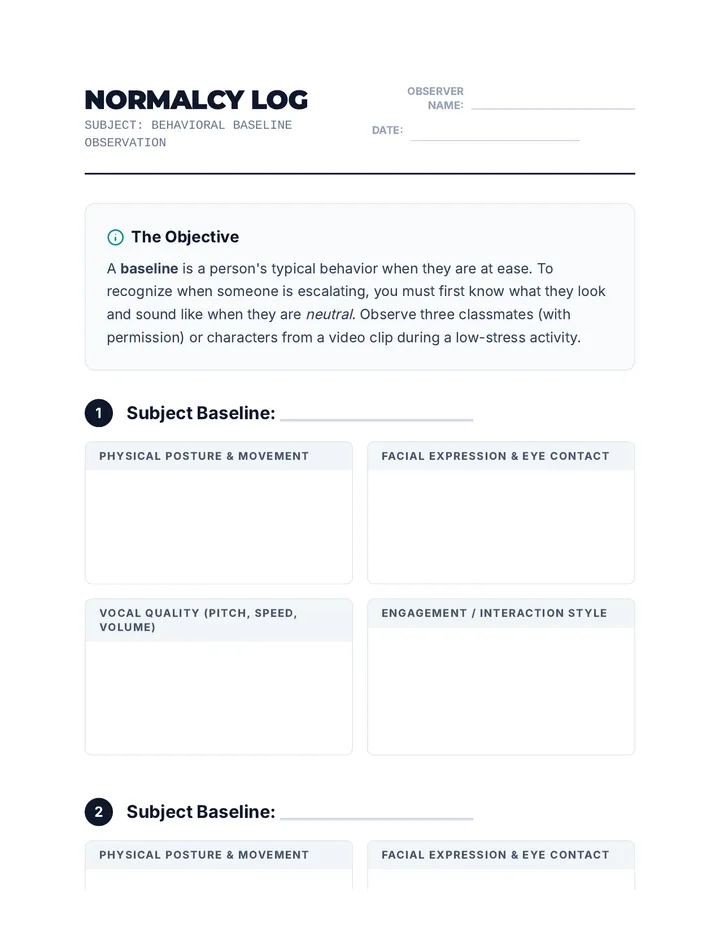
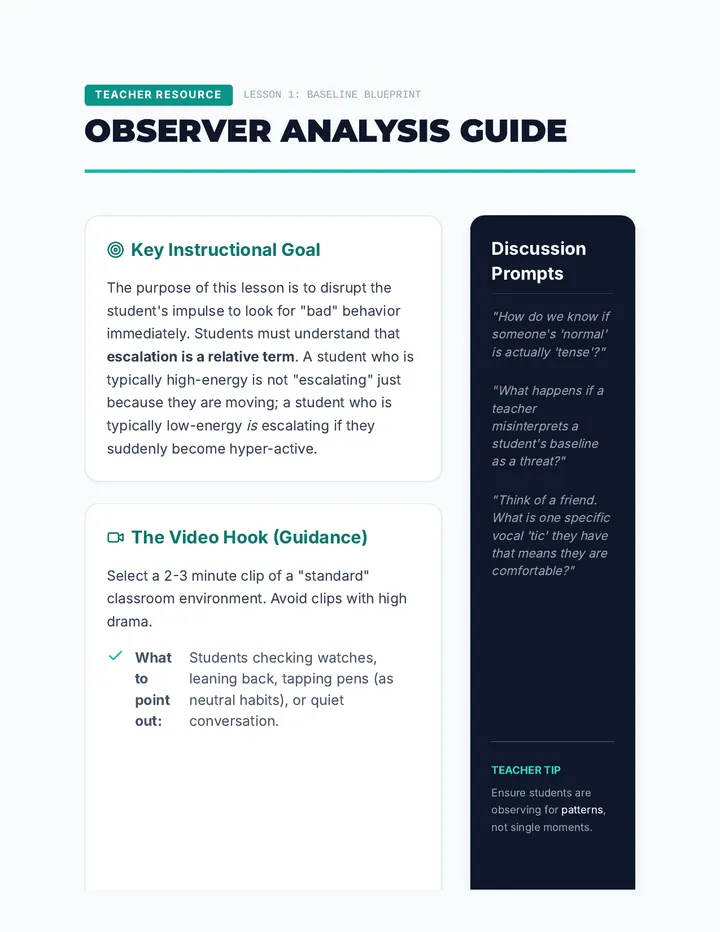
This sequence trains undergraduate students in behavioral health and education to identify the early warning signs of crisis. Students move from establishing behavioral baselines to analyzing motor, verbal, and passive indicators of escalation through case studies and clinical observation.
A high-intensity, simulation-based training sequence for graduate students to master real-time identification of behavioral escalation cues. Students move from identifying subtle micro-behaviors to managing their own physiological responses during high-fidelity crisis simulations.
A high-intensity simulation-based unit for 12th graders focusing on situational awareness and the early detection of behavioral escalation in dynamic environments. Students take on the role of behavioral analysts to identify subtle cues before they lead to crisis.
A comprehensive 5-lesson unit for 12th-grade students on identifying behavioral baselines and recognizing early warning signs of emotional escalation through analytical observation of verbal, para-verbal, and non-verbal cues.
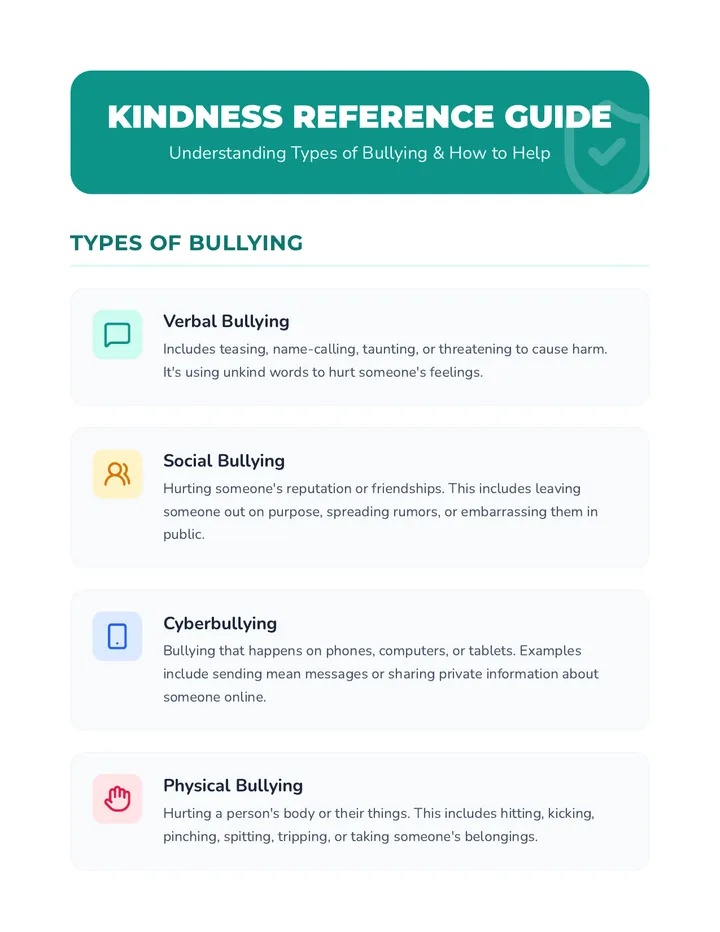
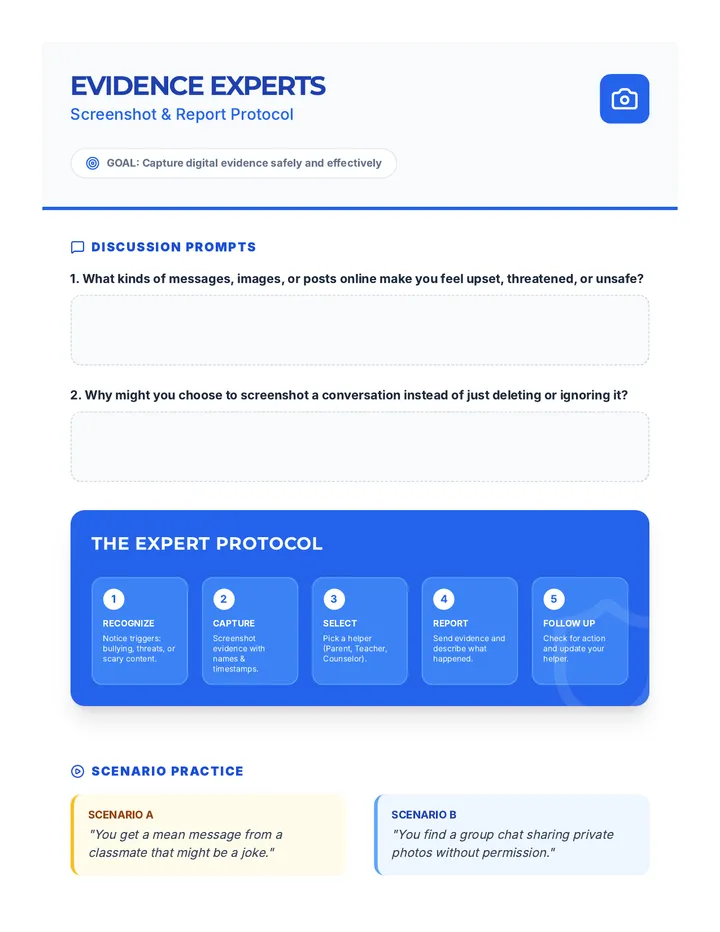
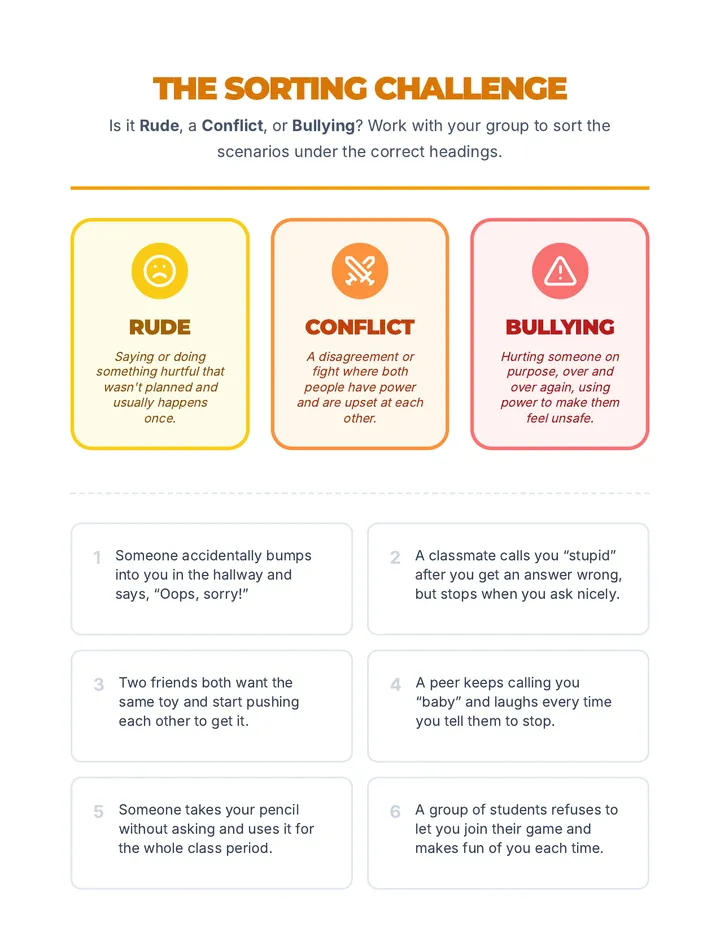
A middle school lesson sequence focused on the distinction between verbal bullying and physical/criminal safety threats, emphasizing resilience for the former and adult intervention for the latter.
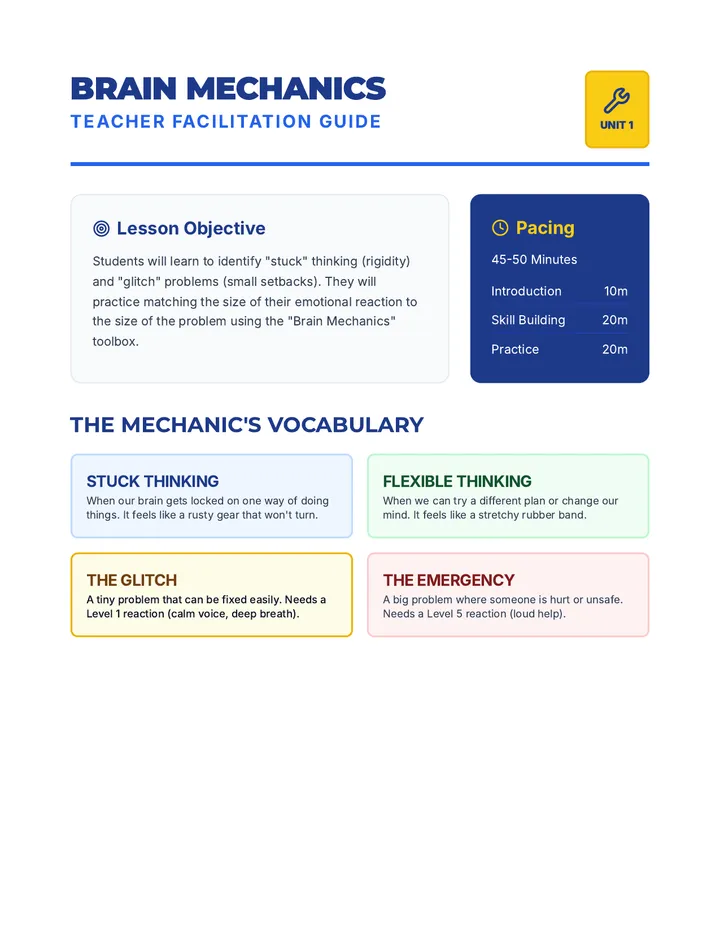
A vocational and life skills sequence for 7th-grade students focusing on working memory through single-step directions. Students explore how strict adherence to sequences ensures safety and success in fields like aviation, cooking, digital security, and emergency response.
A 5-lesson sequence for 9th-grade students focused on developing social awareness and safety by identifying peer behavioral shifts and escalation warning signs through objective observation and non-verbal analysis.
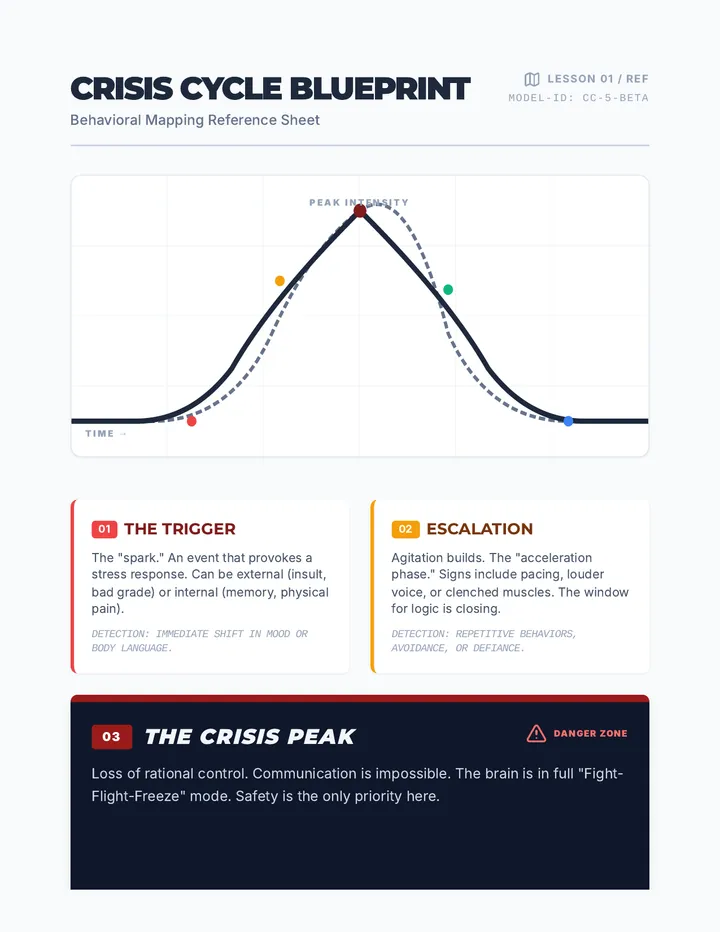
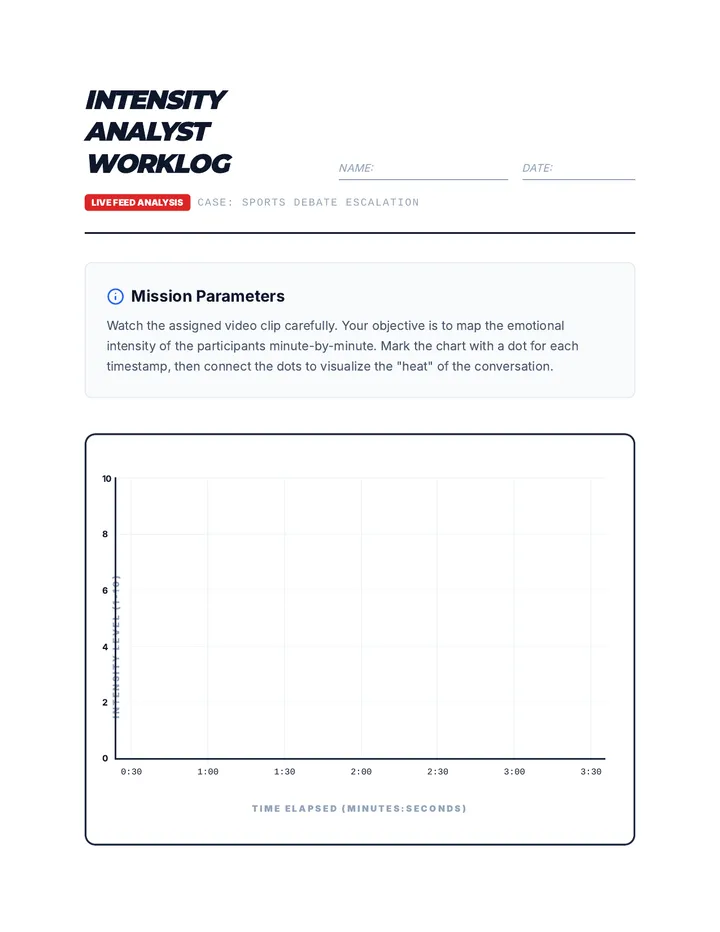
A comprehensive 5-lesson unit on the Crisis Cycle, focusing on identifying triggers, escalation stages, and intervention points through a technical mapping and simulation lens. Students move from theoretical understanding to retroactive detective work to understand behavioral patterns.
This sequence equips undergraduate counseling students with the interpersonal and procedural skills necessary for suicide intervention, covering direct communication, de-escalation, safety planning, lethal means counseling, and legal/ethical mandates.
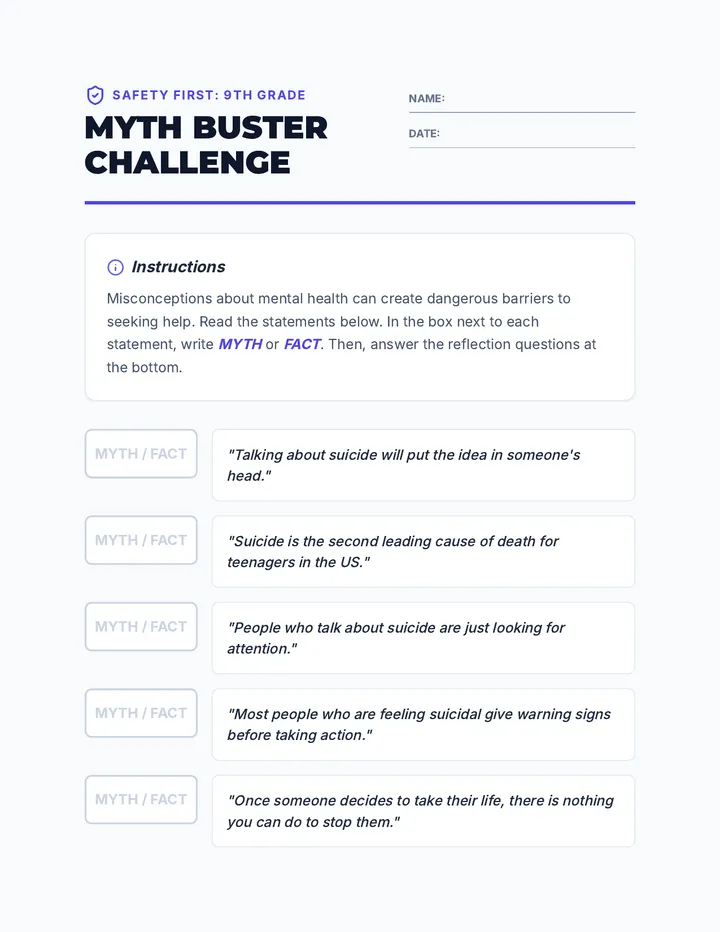
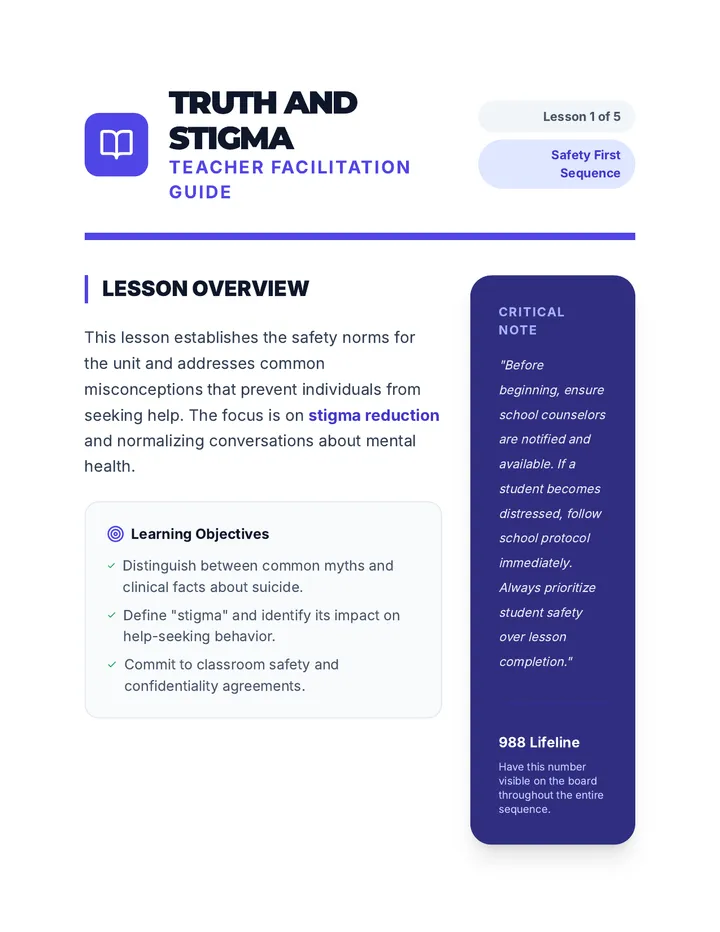
This sequence equips 9th-grade students to recognize signs of emotional distress and suicidal ideation using a safety-first framework. Students progress from debunking myths to identifying warning signs, understanding situational context, practicing the ACT (Acknowledge, Care, Tell) model, and mapping out support resources.
A comprehensive graduate-level training sequence exploring how cultural identity, systemic barriers, and implicit bias influence crisis presentation and peer support. Students move from understanding diverse cultural idioms of distress to developing culturally responsive safety plans that challenge traditional Western medical models.
A comprehensive training for graduate student leaders on the legal, ethical, and systemic dimensions of peer gatekeeping in university settings. This sequence bridges the gap between supportive listening and institutional crisis intervention.
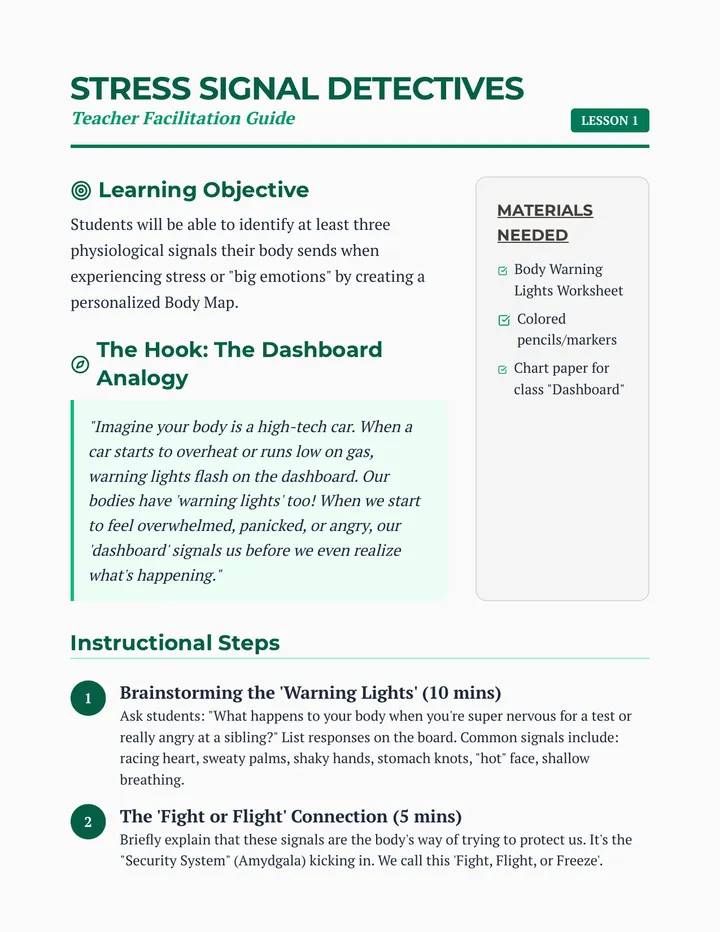
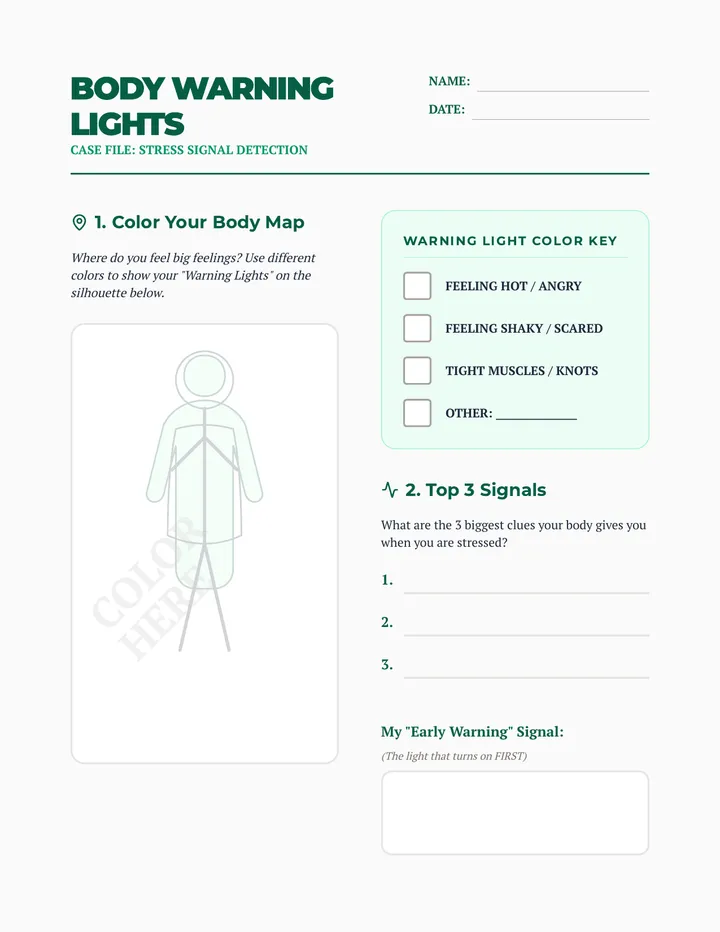
This sequence guides students through identifying physiological and behavioral warning signs of distress, focusing on establishing baselines, mapping internal stress responses, and analyzing external kinetic and vocal shifts to prevent crisis.
This 6th-grade sequence empowers students to become effective peer gatekeepers by teaching them how to recognize signs of distress, use the Acknowledge, Care, Tell (A.C.T.) framework, and overcome social barriers to reporting. Students will move from identifying emotional baselines to mapping out their personal safety networks of trusted adults.