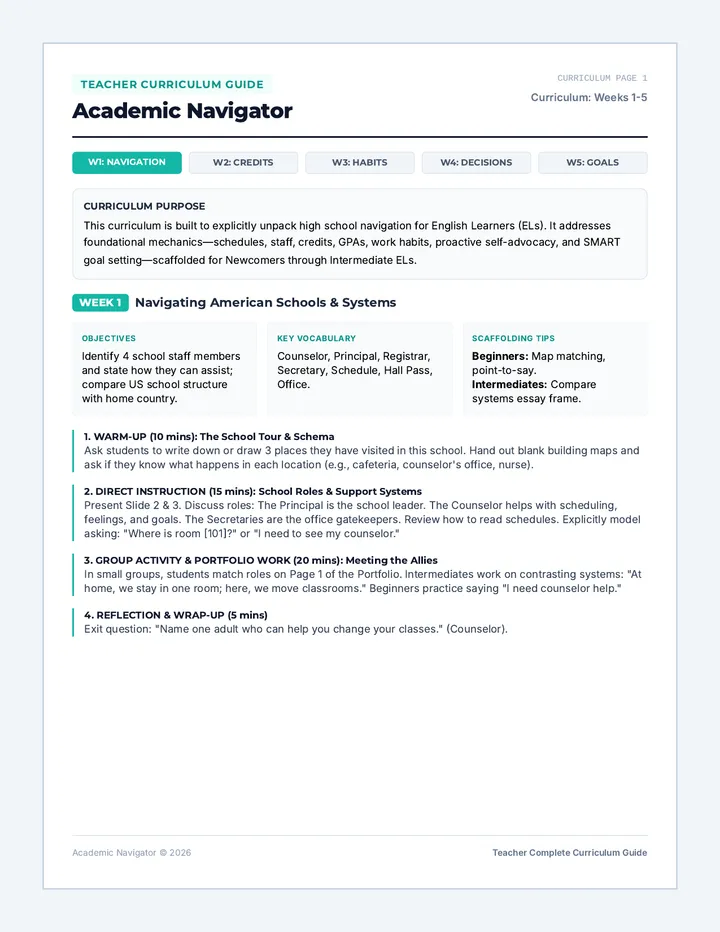
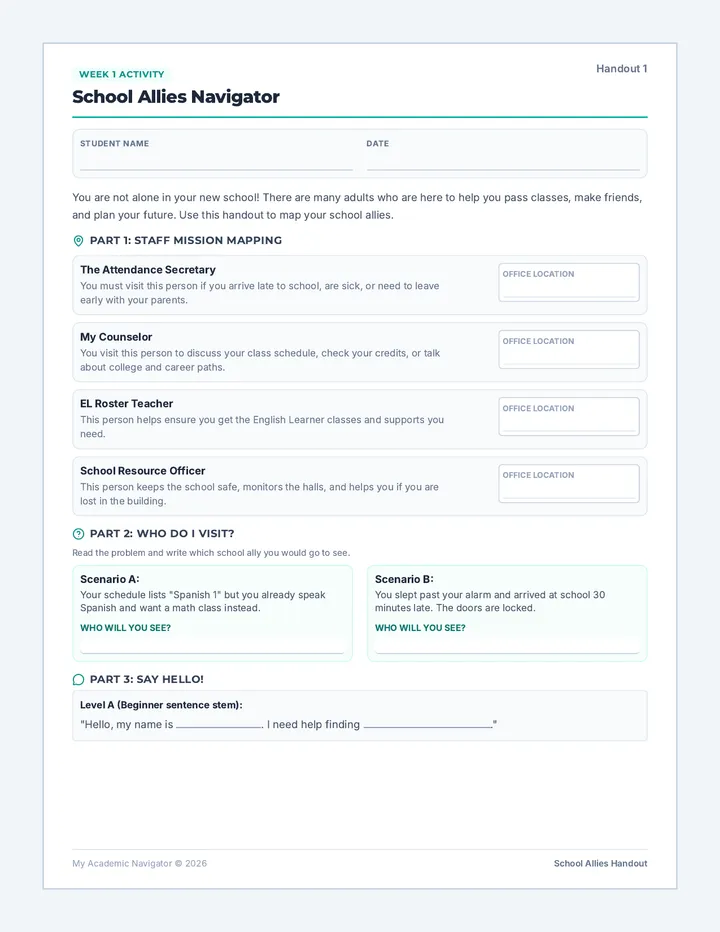
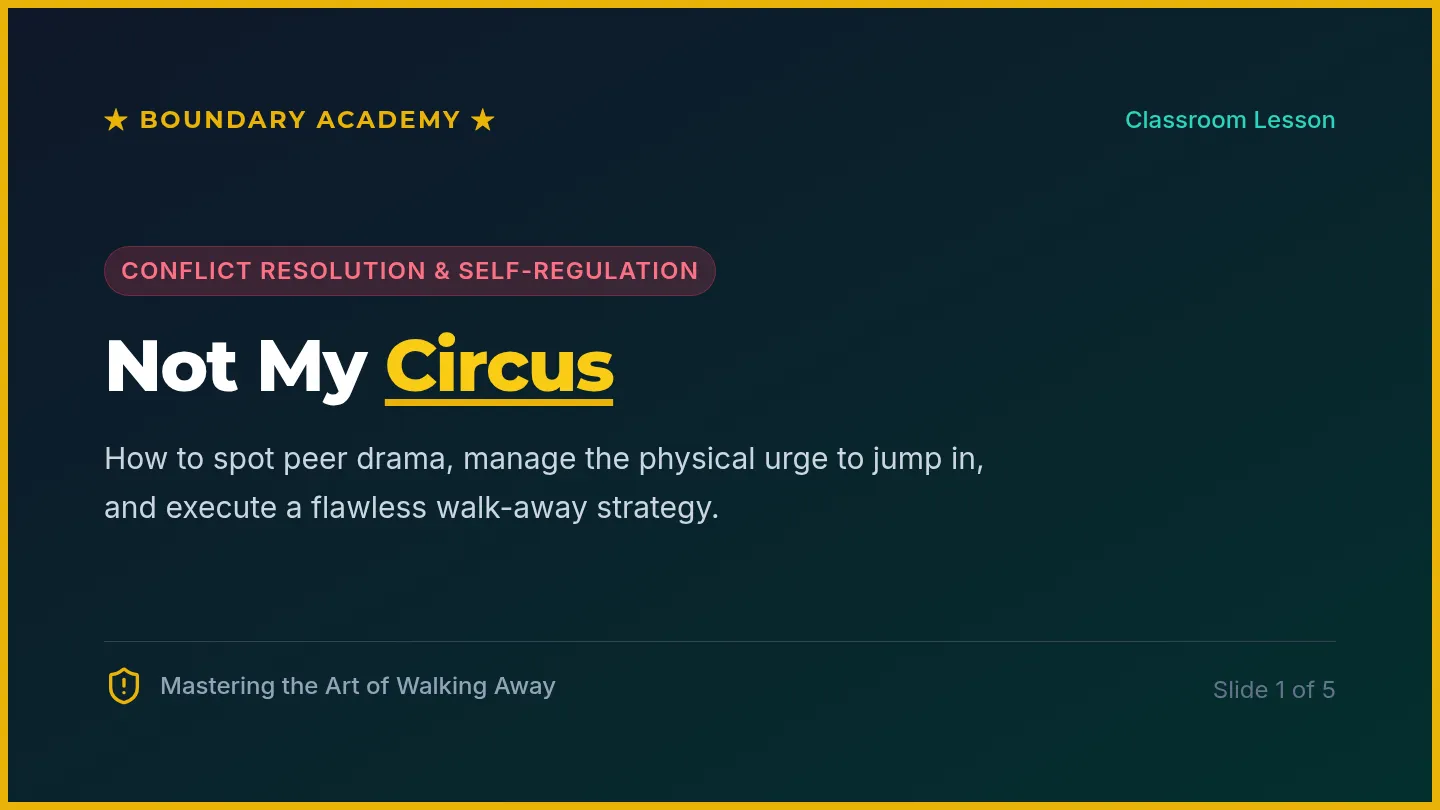
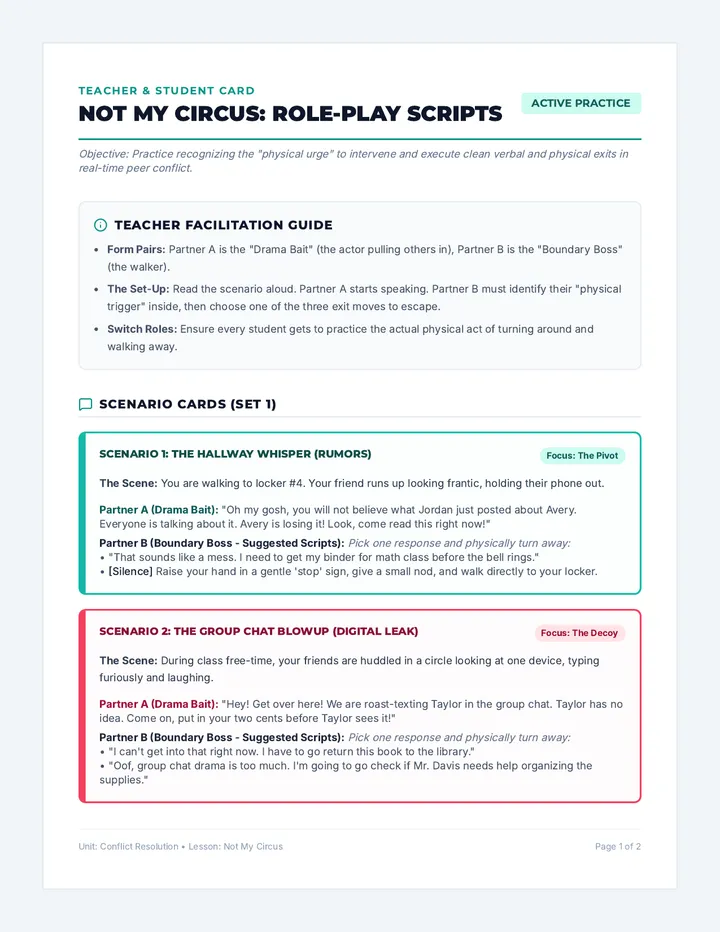
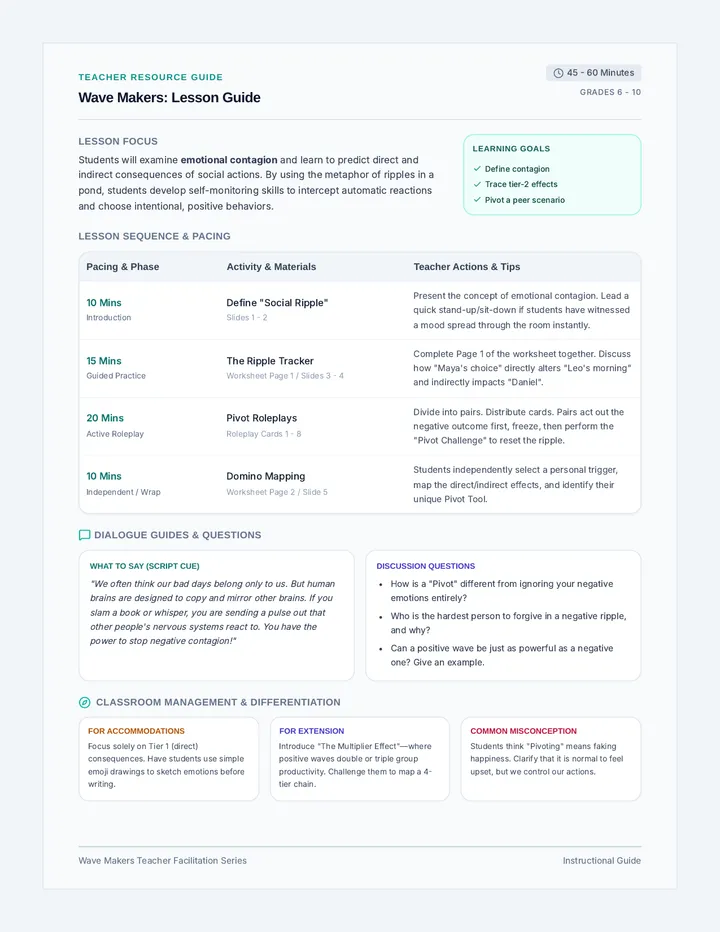
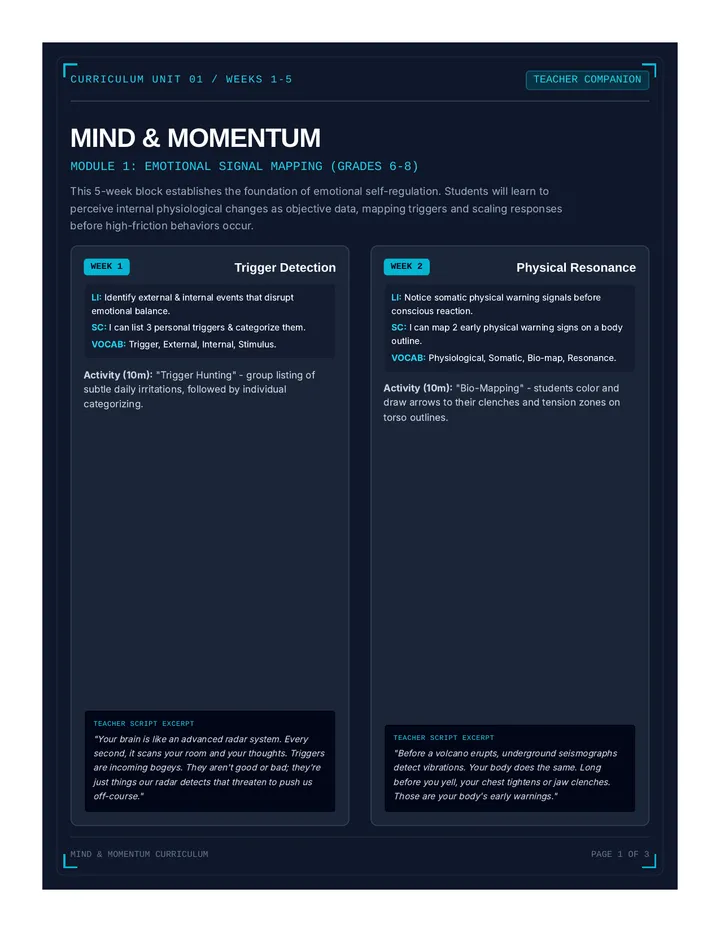
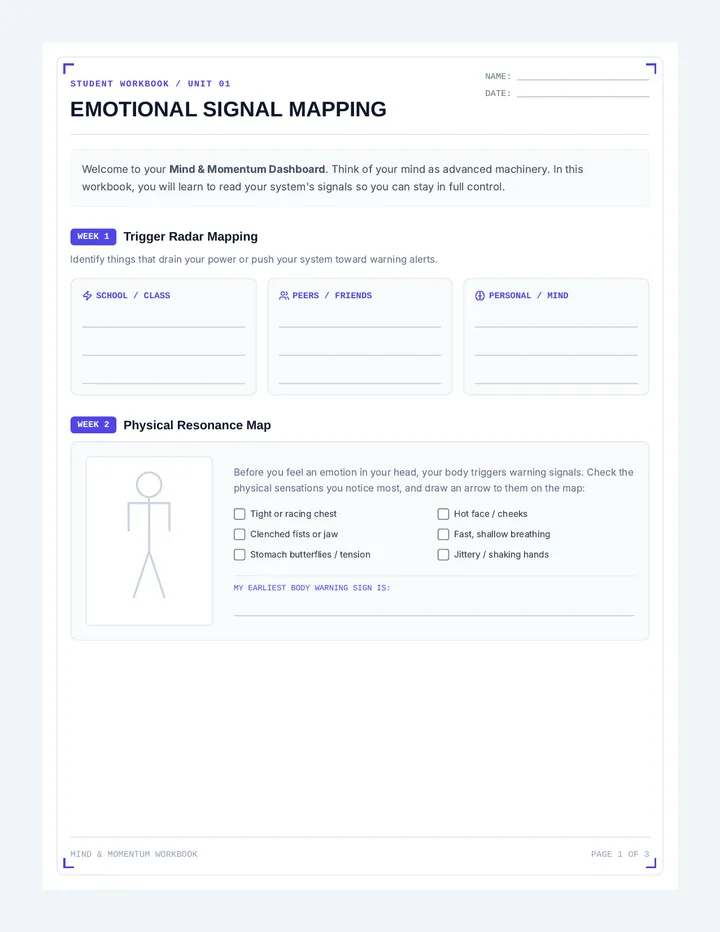
Baseline Blueprint Slides Lesson 01: Establishing the Standard
BASELINE
BLUEPRINT
Understanding the "Normal" to detect the "Abnormal."
Detective Workshop: The Observation
Task: Define "Neutral"
We are going to watch a short clip of a student in a classroom. Your job isn't to find something wrong. Your job is to find everything that is right.
Focus Areas:
Posture & Sitting Style
Speech Speed & Volume
Eye Contact & Focus
Facial Expression
[ Teacher: Embed video clip of neutral classroom behavior here ]
What is a Baseline?
A baseline is the predictable way an individual acts, speaks, and moves when they are at ease or in a neutral state.
Predictable
The patterns we expect from them daily.
Neutral
The state when there is no significant stressor.
Comparison
The "Zero Point" for measuring change.
Without a Baseline, we have no Context.
01
Misinterpretation: Someone who is naturally loud might be seen as "angry" when they are just normal.
02
Missed Signals: Someone who is naturally quiet might be seen as "fine" when they are actually withdrawing.
The Rule of Change
Behavioral escalation isn't just about "bad" behavior—it's about deviations from the baseline.
LAB ACTIVITY
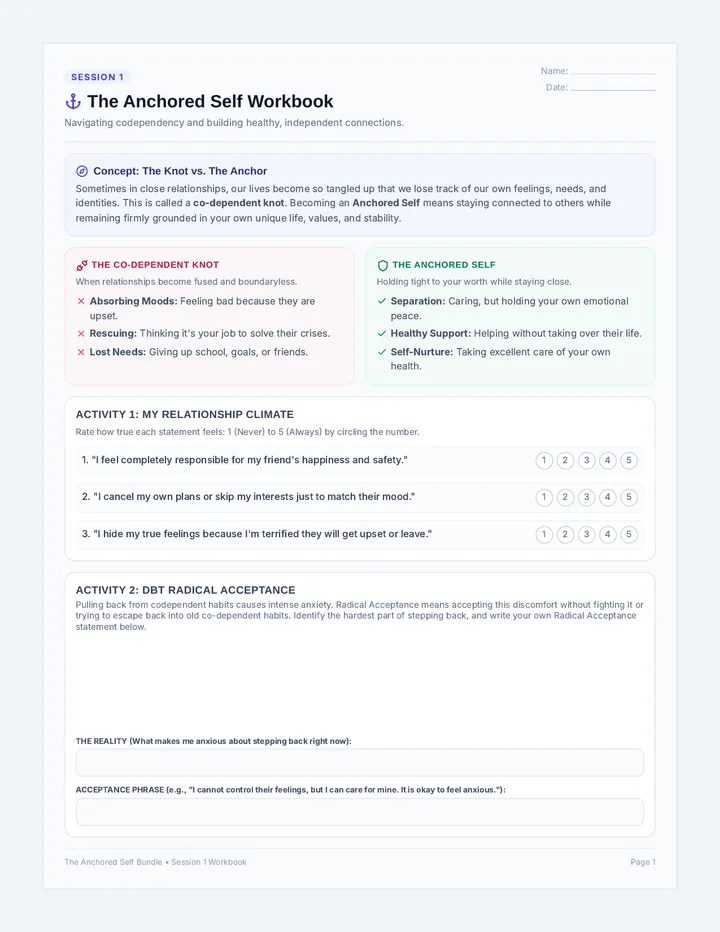
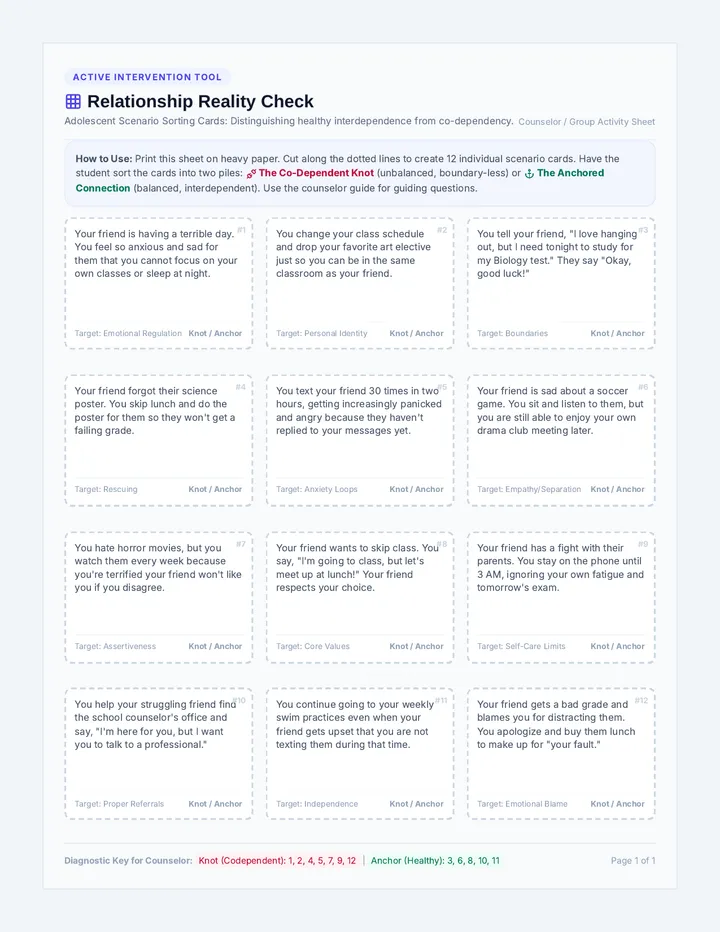
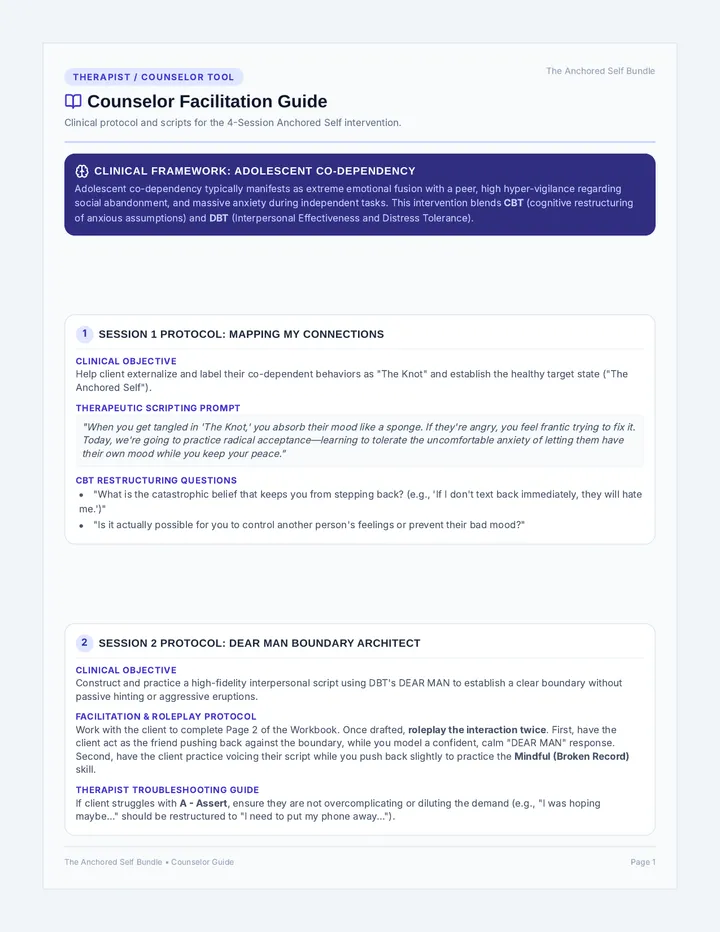
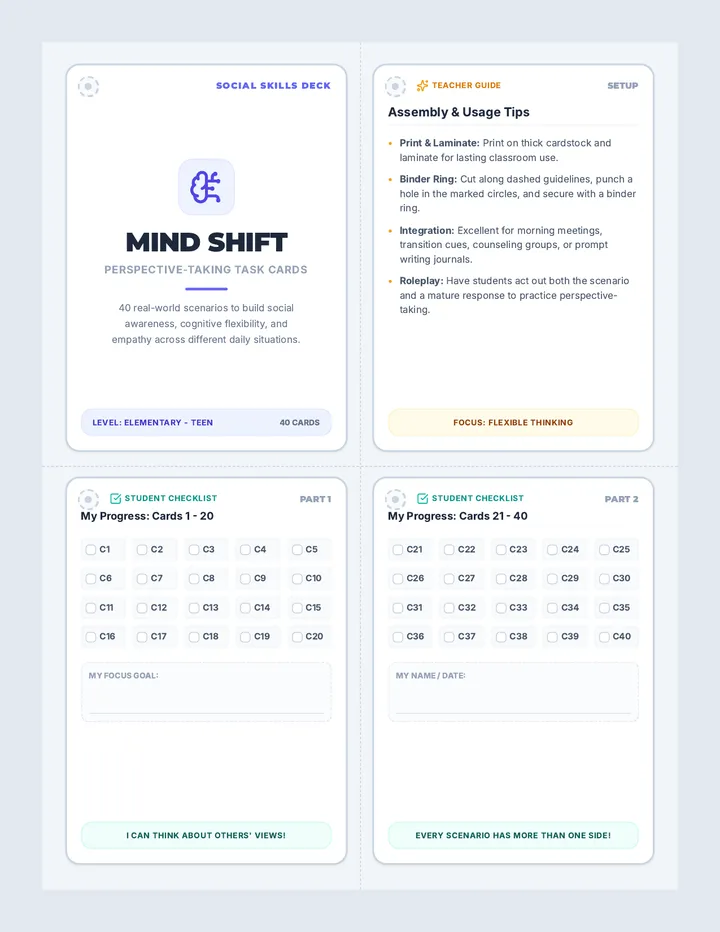
The Normalcy Log
Time to practice. Use your worksheet to document the specific markers of "baseline" for three different classmates in a neutral environment.
Observe
Log
Discuss
Normalcy Log Worksheet Normalcy Log
Subject: Behavioral Baseline Observation
Observer Name:
Date:
The Objective
A baseline is a person's typical behavior when they are at ease. To recognize when someone is escalating, you must first know what they look and sound like when they are neutral. Observe three classmates (with permission) or characters from a video clip during a low-stress activity.
1
Subject Baseline: ________________________
Physical Posture & Movement
Facial Expression & Eye Contact
Vocal Quality (Pitch, Speed, Volume)
Engagement / Interaction Style
2
Subject Baseline: ________________________
Physical Posture & Movement
Facial Expression & Eye Contact
Vocal Quality (Pitch, Speed, Volume)
Engagement / Interaction Style
Reflection & Synthesis
How did the "neutral" state differ between Subject 1 and Subject 2?
Why is it dangerous to assume everyone has the same baseline?
Baseline Analysis Guide Teacher Resource Lesson 1: Baseline Blueprint
Observer Analysis Guide
Key Instructional Goal
The purpose of this lesson is to disrupt the student's impulse to look for "bad" behavior immediately. Students must understand that escalation is a relative term. A student who is typically high-energy is not "escalating" just because they are moving; a student who is typically low-energy is escalating if they suddenly become hyper-active.
The Video Hook (Guidance)
Select a 2-3 minute clip of a "standard" classroom environment. Avoid clips with high drama.
What to point out: Students checking watches, leaning back, tapping pens (as neutral habits), or quiet conversation.
The Challenge: Ask students: "If Subject A started yelling right now, we'd know they were upset. But what if they just sat perfectly still and stopped blinking? Is that escalation?"
Discussion Prompts
"How do we know if someone's 'normal' is actually 'tense'?"
"What happens if a teacher misinterprets a student's baseline as a threat?"
"Think of a friend. What is one specific vocal 'tic' they have that means they are comfortable?"
Teacher Tip
Ensure students are observing for patterns, not single moments. Baselines are established over time.
Baseline Marker Cheat Sheet
Vocal
• Consistent volume
• Rhythmic breathing
• Regular pitch range
• Use of humor/slang
Kinetic
• Loose shoulders
• Varied posture
• Purposeful movement
• Relaxed hands
Ocular
• Soft focus
• Regular blink rate
• Breaks eye contact naturally
• Eyes scanning room
Social
• Responds to name
• Follows social cues
• Stays in proximity
• Maintains personal space
Internal Alarm Slides Lesson 02: The Biology of Crisis
INTERNAL
Alarm
From blood flow to behavior: The sympathetic nervous system in action.
The 60-Second Math Sprint
In a moment, I will display a series of complex math problems. You have 60 seconds to solve as many as possible.
Watch For:
• Heart rate increasing?
• Hands sweating?
• Holding your breath?
• Jaw clenching?
60
Seconds on the Clock
Get your pens ready...
The "Lizard Brain" Overrides
Fight
Preparation for conflict. Increased blood flow to extremities, jaw tension, narrowed eyes.
Flight
Preparation to escape. Pacing, looking at exits, rapid breathing, jittery legs.
Freeze
Hyper-vigilance. Stillness, holding breath, staring, shutdown of speech.
The Mapping of Distress
Internal signals don't stay hidden for long. They leak out as physical markers that anyone can learn to spot.
1
Internal: Heart Rate Up
Visible: Flushed skin, rapid pulse in neck.
2
Internal: Digestion Stops
Visible: Dry mouth, frequent swallowing.
3
Internal: Lung Expansion
Visible: Shallow, upper-chest breathing.
4
Internal: Muscle Priming
Visible: Fists, jaw, or shoulder tension.
Mapping your Early Warning System
We all have a unique "Internal Alarm." Using the worksheet, you're going to map how your body reacts before you feel angry or overwhelmed.
"If you can feel the spark, you can prevent the fire."
Internal Signal Map Worksheet Internal Alarm Map
Assessment: Physiological Signal Identification
Agent Name
Your body knows you are stressed before your mind does. This is your Early Warning System. Use the prompts below to map exactly where you feel stress manifesting in your body.
Interactive Mapping Area
Mark 'X' where you feel tension, heat, or movement during stress.
The Temperature Check
When I begin to feel agitated, my temperature...
Rises (Flushed face, hot neck)
Drops (Cold hands, shivering)
Sweat (Palms, forehead)
The Breath & Heart
My physiological rhythm changes by...
The "Lock-Up" Zones
Where do you hold tension? (e.g., Jaw, Fists, Shoulders, Gut)
The Visible Leak
If someone were looking at you, what is the ONE thing they would see first? (e.g., foot tapping, lip biting, staring)
Analysis: Why is it important to know YOUR internal alarm before you try to help SOMEONE ELSE? Physiology Fact Sheet Guide Teacher Guide Background Knowledge
Physiology of Agitation
The Sympathetic System
The Sympathetic Nervous System (SNS) is the body's "accelerator." When a threat (physical or social) is perceived, the SNS triggers the release of adrenaline and cortisol. This is an involuntary process.
The "Hijack"
The Amygdala (emotional center) can "hijack" the brain, sending signals to the SNS before the Prefrontal Cortex (logical center) has a chance to process the situation. This is why students in the early stages of escalation often cannot "think logically" or "explain why they are upset."
Visible Correlation
Internal State Observable Sign
Vasoconstriction Paleness or Flushed skin
Hyperventilation Short, gasping breaths
Dilated Pupils Staring, "glassy" eyes
Muscle Activation Fisted hands, stiff gait
Sweat Gland Activation Wiping brow or hands
Classroom Facilitation
Normalization
Stress signs are not "failures." They are biological adaptations for survival. Frame the discussion around "The body doing its job."
Safety First
If a student becomes visibly distressed during the math sprint activity, allow them to opt-out. The goal is mild stress, not a genuine panic attack.
The "We" Language
Use "We" and "Our" when discussing stress responses to build collective empathy and reduce stigma.
Debrief Prompt:
"If we notice these signs in a friend, is it better to tell them 'Calm down' or to acknowledge what their body is doing?"
Rumble Signals Slides Lesson 03: The Noise Before the Storm
RUMBLE
SIGNALS
Detecting shifts in movement and voice before crisis occurs.
The Pitch Shift Challenge
We are going to listen to three audio clips of the same phrase:
"I'm fine, let's just keep working."
Clip A
[ Neutral Baseline ]
Clip B
[ Agitation Start ]
Detect Here
Clip C
[ Critical Mass ]
Identify the exact moment the pitch or speed changed.
Vocal
Agitation
Agitation changes the way we use our vocal cords and lungs.
Volume
Either an increase (shouting over others) or a sudden decrease (muttering, whisper-talking).
Cadence
Speech becomes rapid-fire and clipped, or painfully slow and deliberate.
Pitch
The "Voice Crack" or tightening. The voice often goes higher as the throat muscles constrict.
Content
Short, one-word answers. Repetitive phrases. Sarcasm as a defensive tool.
Kinetic
Agitation
Movement is the physical release of internal adrenaline.
1
Pacing: Moving in repetitive patterns or "checking" exits.
2
Fidgeting: Intensive pen clicking, leg bouncing, or skin picking.
3
Invasion: Moving into other people's personal space (encroachment).
The "Agitated Gait"
Watch for movements that are stiff, robotic, or overly forceful (heavy footsteps, slamming objects).
Case Study Workshop
The Shift Tracker
Using the "Shift Tracker" worksheet, we will analyze three video case studies. You must identify the exact moment the subject moves from baseline to rumble stage.
Timestamp
Vocal Shift
Kinetic Shift
Rumble Shift Tracker Worksheet The Shift Tracker
Focus: Kinetic & Vocal Deviations
Observer:
Case Study #:
Timeline Observation (What do you see/hear?) Deviation Score (1-5) Baseline (0:00 - 0:30)
0
|
| The First Shift
Timestamp: ________ |
|
|
| Active Rumble
Timestamp: ________ |
|
|
Vocal Breakdown
Did the subject's voice get higher/faster, or did it go quiet/monotone? How did this impact the feeling of the conversation?
Kinetic Prediction
Based on the movement patterns you saw (pacing, fidgeting, encroachment), what do you think would have happened next if no one intervened?
Vocal Kinetic Shift Key Master Reference Lesson 3: Rumble Signals
Kinetic & Vocal Shift Key
The "Shift" Definition
A shift is a measurable departure from an established baseline. In the 'Rumble' stage, these shifts are active—meaning they involve increased energy output.
Vocal Shift Markers
Clipped Speech
Sentences become short, blunt, and devoid of polite fillers (e.g., "Fine." "Stop." "Whatever.").
Vocal Tightening
Muscle tension in the throat causes the pitch to rise or the voice to sound strained/thin.
Repetitive Content
The subject repeats the same demand or question ("Why you looking at me? Why you looking?").
Kinetic Shift Markers
Encroachment
The subject moves closer to others, violating personal space boundaries to establish dominance or readiness.
Rhythmic Agitation
Repetitive, non-functional movement like foot bouncing or hand wringing that increases in speed.
"The Look-Around"
Scanning the room for exits or potential "audiences" before a crisis occurs.
Teacher Note: The "Exact Moment"
When students are tracking timestamps, emphasize that there is rarely a single "trigger word." Instead, it is a cluster of signals occurring simultaneously. Encourage them to look for the "Vocal/Kinetic Overlap."
Silent Shifts Slides Lesson 04: The Overlooked Signals
SILENT
Shifts
When "Nothing is wrong" is the biggest warning sign of all.
The Power of Absence
Escalation doesn't always roar. Sometimes, it vanishes.
Task: The Silent Observation
Watch the following clip of a character withdrawing. List everything they stopped doing.
[ Teacher: Play silent film clip of avoidance here ]
What is Withdrawal?
Withdrawal is a self-protective mechanism . When the world feels like too much, some people don't fight—they retreat into themselves.
Key Markers:
Aversion to Eye Contact
Physical Isolation (hiding)
Cessation of Speech
Delayed Response Time
Freeze
The system "locks up." Stillness is the main feature. The person might stare blankly or hold their body in a rigid, tense posture.
Rigidity Shallow Breathing
Flight (Internal)
The person is physically present but mentally "gone." They may look at exits, pull their hood up, or hide behind a screen/book.
Aversion Protective Posture
Silence is a Signal
"Because withdrawn students don't disrupt the class, we often think they are fine. In reality, they are often in the deepest stage of distress."
Today's Mission:
Identify the 'Passive Patterns' that signal an internal crisis.
Passive Signs Analysis Worksheet Passive Patterns
Analysis: Identifying Withdrawal & Avoidance
Student Name
"Withdrawal is not a lack of behavior; it is the active behavior of retreat."
Active Rumble (Review)
Shouting / Argumentative
Pacing / Excessive Movement
Clenched Fists / Slamming
Passive Shift (New)
The Silence:
The Gaze:
The Space:
Scenario Analysis
Case 4.A: The "Hoodie" Response
Visual Clue
Maya is usually talkative. Today, after a grade is posted, she pulls her hoodie up, tightens the drawstrings until only her eyes show, and stares at a blank notebook for 15 minutes without writing a word.
Passive Marker Spotted:
The Hidden "Rumble":
Case 4.B: The Delayed Echo
Vocal Clue
Marcus is asked to join a group. He doesn't say no. He just doesn't look up. When a teacher says his name, it takes 10 seconds for him to blink, and his only response is a barely audible "I guess."
Passive Marker Spotted:
The Hidden "Rumble":
Why is a 'Passive Shift' harder for people to notice than an 'Active Rumble'? Withdrawal Facilitation Guide Facilitation Guide Lesson 4: Silent Shifts
Detecting the Invisible
The "Quiet" Bias
In most classrooms, "quiet" is considered a desirable behavior. This lesson's primary challenge is to help students see sudden silence as a significant behavioral deviation. Educators often miss withdrawal because it doesn't disrupt instruction—this is a life-skill lesson in social vigilance.
Scenario Answer Key & Insights
Case 4.A: Maya (The Hoodie)
The Science:
Maya is using the hoodie as a physical barrier. This is an internal "Flight" response. She is physically there but hiding her face to avoid social demands.
• Signs: Rigid posture, avoidance of task, visual barrier.
• The Danger: Shutdown can lead to a sudden, explosive outburst if someone tries to "force" her out of the hoodie without acknowledging the distress.
Case 4.B: Marcus (The Echo)
The Science:
Marcus is in a "Freeze" state. His brain's processing speed has slowed due to a cortisol spike. The 10-second delay is not "disrespect"—it's a biological lag.
• Signs: Delayed response, monotone voice, lack of eye movement.
• The Danger: Misinterpreting the delay as "defiance" often leads to teacher escalation, which pushes the student into a full crisis.
Classroom Discussion Framework
1
"If you see a friend withdrawing like Maya, does asking 'Are you okay?' 10 times help or hurt?"
2
"Think of your own baseline. When you are upset, do you tend to 'Rumble' (get loud/pacing) or 'Shift' (get quiet/hide)?"
3
"How can we support someone who is silent without making them feel more 'watched'?"
Crisis Clock Slides Lesson 05: The Synthesis
CRISIS
CLOCK
Putting it all together to predict and prevent the point of no return.
The Behavioral Detective
Until now, we have studied signals in isolation. But in the real world, signals happen in clusters and sequences.
Your Final Challenge:
"You will receive a scattered 'Case File' of observations. Your job is to organize them into a chronological timeline and determine exactly when the opportunity for de-escalation was highest."
The Timeline
BASELINE
RUMBLE
CRISIS
The Profile Builder
We categorize escalation into three zones to help us choose the right response.
Zone 1
Minor Deviations
Flushed face, fidgeting, quietness. Opportunity: High.
Zone 2
Active Agitation
Pacing, volume increase, repetitive speech. Opportunity: Moderate.
Zone 3
Immediate Agitation
Closing space, shouting, withdrawal/shutdown. Opportunity: Critical/Low.
Enter the Lab
Analyze
Sort through the observation logs in your case file.
Connect
Match physiological signs to behavioral shifts.
Predict
Determine the point of no return for this subject.
"Crisis prevention is not about reacting to an explosion—it's about noticing the fuel being gathered."
You now have the tools to be a 'Gauge' for your community. Use them with empathy.
Escalation Profile Worksheet Escalation Profile
Synthesis: Biological & Behavioral Markers
Analyst Name
Synthesize your learning from the past four lessons. Categorize the physiological, kinetic, and vocal markers into the three zones of the Escalation Profile . These zones help us predict how close an individual is to a point of crisis.
Zone 1: The Spark
High Opportunity for De-Escalation
Internal/Physiological
Kinetic/Movement
Vocal/Speech
Zone 2: The Rumble
Moderate Opportunity
Internal/Physiological
Kinetic/Movement
Vocal/Speech
Zone 3: The Heat
Critical Opportunity
Internal/Physiological
Kinetic/Movement
Vocal/Speech
Critical Reasoning: Why do Zone 3 signals often look different depending on the person (e.g., Loud vs. Silent)? Detective Case File Assessment Detective Case File
Summative Assessment: Escalation Prediction
CONFIDENTIAL
The Subject: Alex R.
Alex is a 10th-grade student. In Lesson 1, we established Alex's baseline: Talkative, makes frequent eye contact, sits with a relaxed posture, and usually speaks at a moderate volume with a sarcastic but friendly tone.
Observation Logs: Period 4
TIMESTAMP: 11:15 AM
Alex enters the room. Instead of the usual "Hey" to the teacher, Alex walks straight to the back desk. Face appears flushed. Alex immediately pulls out a notebook and begins clicking a pen rapidly (approx. 2 clicks per second). When a peer asks a question, Alex responds with a single, clipped "No."
TIMESTAMP: 11:30 AM
Class begins a group project. Alex does not move to join the group. Alex is now pacing in a small 3-foot radius behind the desk. Breathing is visible in the upper chest (shallow). When the teacher approaches, Alex stops pacing and stares at the door, refusing to make eye contact.
TIMESTAMP: 11:45 AM
Teacher asks Alex to sit down. Alex's voice is two octaves higher than baseline. Alex shouts, "I'M DOING MY WORK!" before slamming the notebook shut. Hands are clenched into tight fists. Alex begins looking at the exit repeatedly.
Analyst Report
1. Identifying the "Spark" (Zone 1)
Referencing the 11:15 AM log, what were the three specific signs that Alex had deviated from baseline?
2. The "Shift" vs the "Rumble"
In the 11:30 AM log, did Alex display more Passive Withdrawal or Active Rumble signals? Explain your reasoning using two specific markers from the text.
3. Physiological Correlation
Identify one internal/physiological sign described in the logs and explain how it manifested as a visible external behavior.
Internal Sign:
External Manifestation:
4. The Prediction
At what specific timestamp was the best opportunity for a calm, low-energy de-escalation? Why did the situation become harder to manage at 11:45 AM?