Resilience Jenga Slides Protocol: Foundation
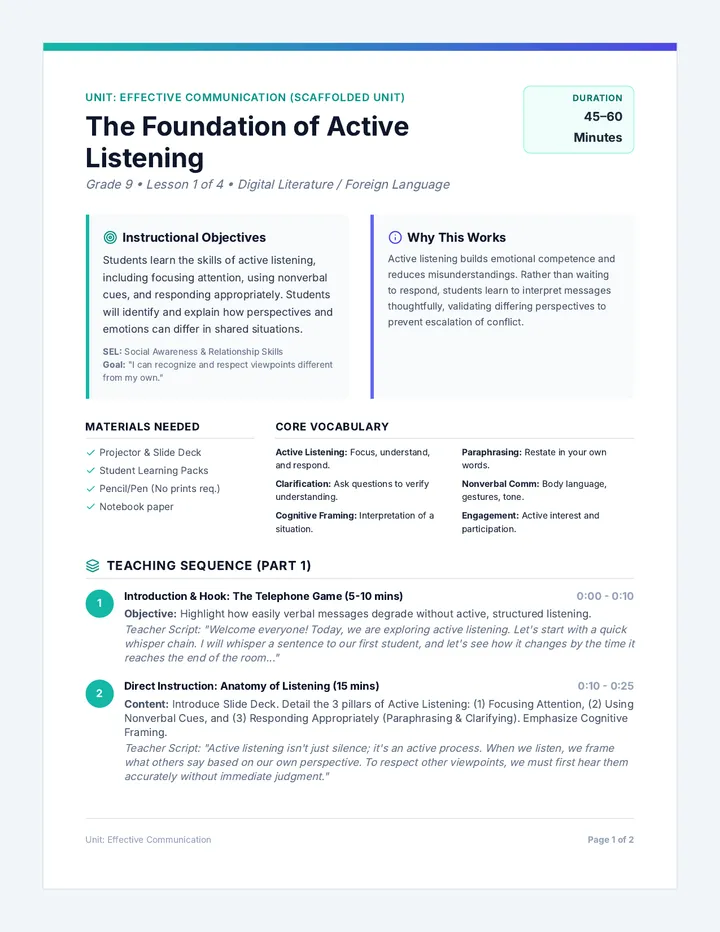
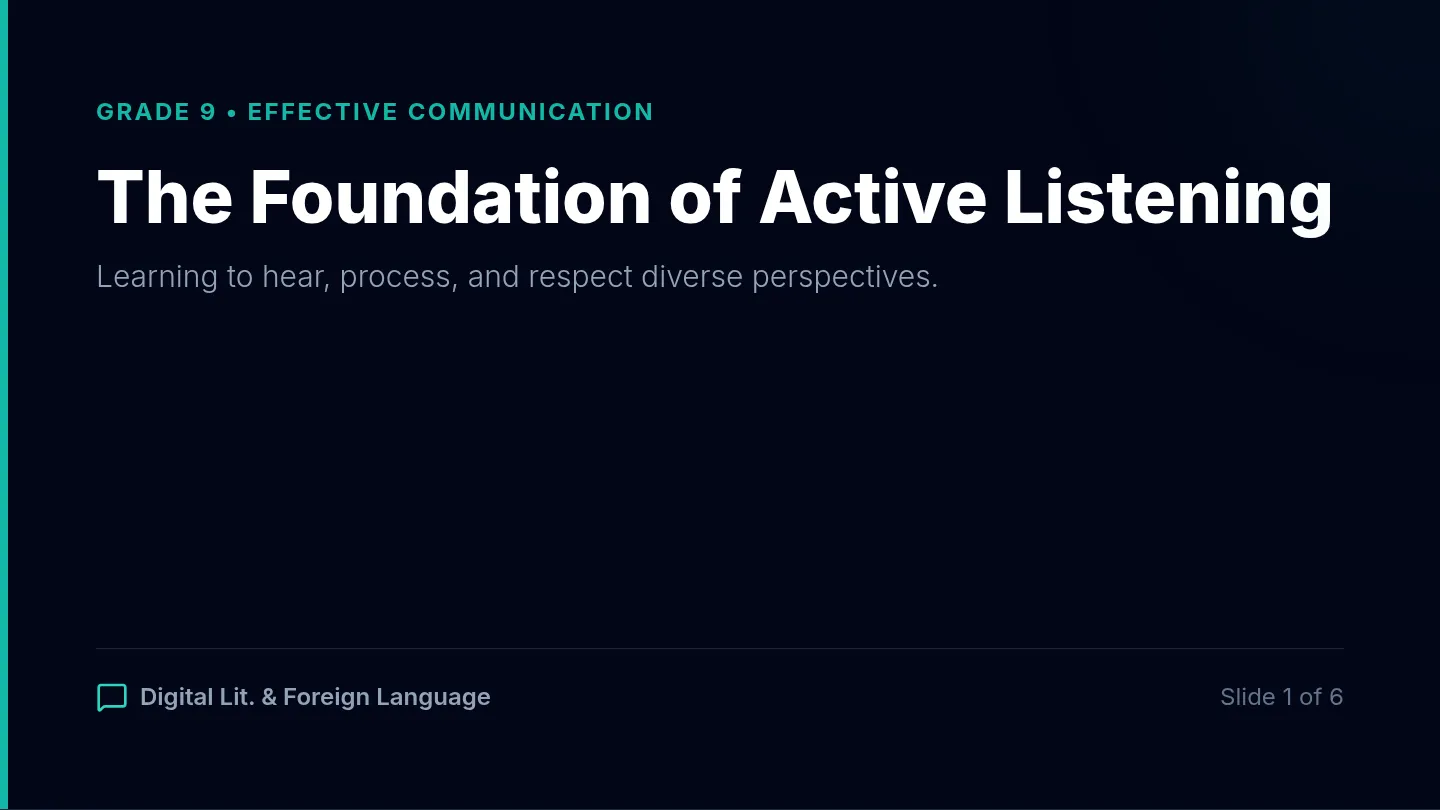
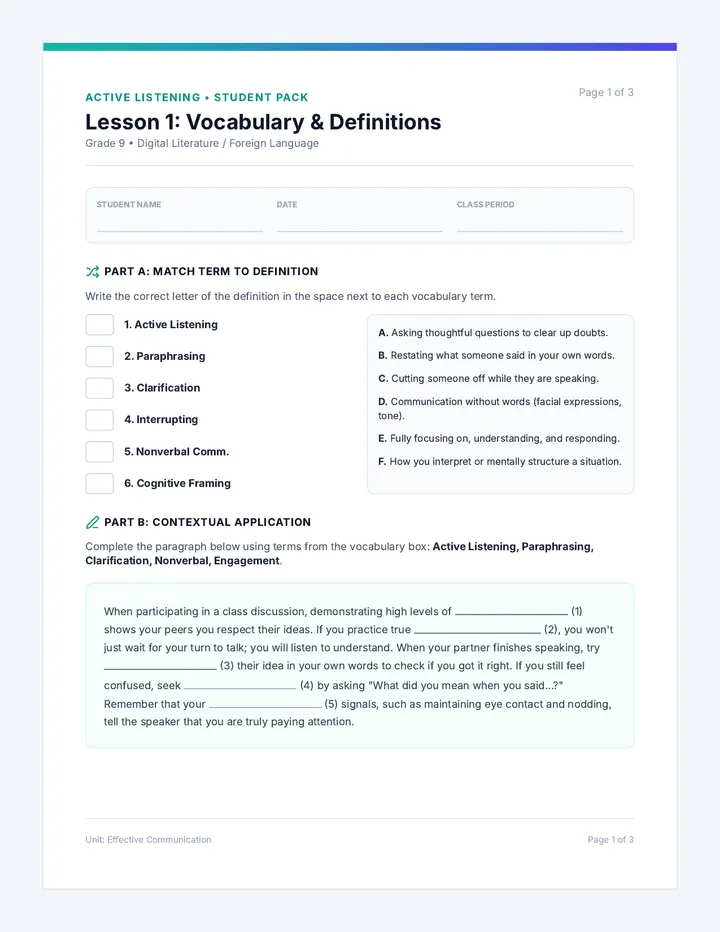
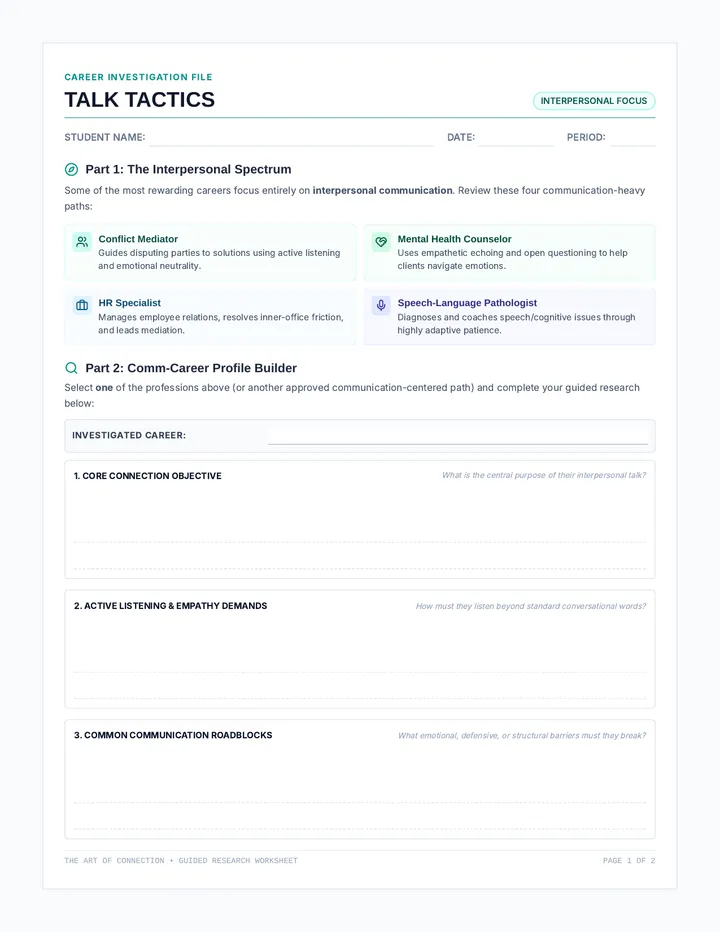
THE RESILIENCE BLUEPRINT
Integrated Self-Assessment & Keystone Habits
OBJECTIVE 01: VULNERABILITY MAPPING
Course: Therapeutic Mastery
The Jenga Principle
Your emotional stability isn't a floating cloud. It's a structural tower built on physical pillars.
When you remove Sleep , the tower wobbles.
When you skip Meals , the center of gravity shifts.
When the foundation is weak, minor stressors cause a total collapse.
Physical Illness (Treat)
Eating (Balanced)
Avoid Substances
Sleep (Balanced)
Exercise
UNSTABLE!
The PLEASE Framework
PL: Physical Illness
Treating physical pain or illness makes you less prone to emotional outbursts. If you are hurting, you are vulnerable.
E: Eating
Balanced eating prevents mood swings caused by blood sugar crashes. Food is fuel for your brain's logic center.
A: Avoid Substances
Mind-altering substances (including excessive caffeine) interfere with natural emotional regulation.
S & E: Sleep & Exercise
Consistent sleep cycles and movement act as natural antidepressants and anxiety reducers.
Identifying the Keystone
A Keystone Habit is one that, when changed, causes other habits to shift automatically.
The Sleep Effect
Fix sleep → Energy for exercise → Better appetite control → Reduced caffeine need.
The Exercise Effect
Daily movement → Deeper sleep → Better mood → Motivation to treat illness.
Mission Briefing
Structural Inventory Phase
1 Complete the PLEASE Inventory Worksheet .
2 Identify your Primary Structural Weakness .
3 Design your Keystone Action Plan .
Foundation Inventory Worksheet DOC_REF: BPR-001
Foundation Inventory
Resilience Protocol Sequence | Phase 01: Assessment
Name:
Date:
Structural Assessment Protocol
Emotional vulnerability is often a byproduct of physical neglect. Use this inventory to map your current physiological foundation. Be brutally honest—this blueprint is for your eyes only to help you build a stronger infrastructure for the pressures of 11th grade and beyond.
PL
Physical Illness
Do you treat physical illness and pain immediately? Do you take prescribed medications as directed?
I ignore minor aches until they become major problems.
I am up-to-date on all medical/dental checks.
I take my meds/vitamins inconsistently.
I have chronic pain I haven't addressed.
E
Eating
Do you eat balanced meals? Do you avoid foods that make you feel emotionally "off"?
I skip meals regularly (especially breakfast/lunch).
I eat a balance of proteins, fats, and carbs daily.
I experience "hangry" mood swings often.
A
Avoid Substances
Do you avoid non-prescribed mood-altering substances (including high caffeine/nicotine)?
I rely on caffeine to get through the day.
I use substances to "numb" or "turn off" my brain.
S
Sleep
Do you get 7-9 hours of sleep? Is your sleep schedule consistent (even on weekends)?
My sleep schedule varies by more than 2 hours every night.
I use screens right up until I fall asleep.
E
Exercise
Do you get some form of movement every day? 20+ minutes of elevated heart rate?
I haven't intentionally exercised in the last week.
Identification: The Keystone Habit
Structural Analysis
Which of the areas above is your weakest link ? More importantly, which area—if fixed—would make the others easier to manage?
My Keystone Habit is:
Evidence (How it impacts other areas):
Immediate Intervention
What is ONE small, manageable change you can make to this habit starting tonight ?
The 24-Hour Action Item:
Anticipated Barrier & Solution:
"A house is only as strong as its foundation. Fix the base to protect the roof."
Keystone Habit Reference Guide Structural Reference
Guide 01-B: The Keystone Mechanics
The Domino Effect
In engineering, a Keystone is the central stone at the top of an arch that locks all the other stones in place. In behavioral psychology, a Keystone Habit is one that creates a "ripple effect" through your life. If you fix it, the other PLEASE skills fall into place with less effort.
IF SLEEP IS YOUR KEYSTONE:
Effect 1
You have energy to Exercise (E).
Effect 2
Appetite hormones stabilize, making Balanced Eating (E) easier.
Effect 3
You don't need Caffeine (A) to stay awake.
Effect 4
Immune system strengthens, reducing Physical Illness (PL).
IF EXERCISE IS YOUR KEYSTONE:
Effect 1
Metabolism regulates, promoting better Eating (E) habits.
Effect 2
Natural physical tiredness leads to deeper Sleep (S).
Effect 3
Endorphins reduce the urge to use Substances (A) for mood regulation.
The 11th Grade Stress Test
Why does this matter now ? 11th grade is often the peak of academic and social pressure. When stress goes UP, we tend to let PLEASE habits go DOWN—which is exactly when we need them most.
Scenario: Finals Week
If you skip Sleep to study, your brain loses "Executive Function." You study longer but remember less, and your anxiety spikes.
Scenario: Social Conflict
If you haven't Eaten, your "Vulnerability Threshold" is low. A minor text from a friend can trigger a major emotional crisis.
Scenario: College Prep
Physical Illness that goes untreated saps the energy you need for applications and extracurriculars. Health is your productivity engine.
Structural Loopholes
Are you "Engineering" an excuse? Watch out for these common habit breakers:
The "Catch-Up" Fallacy
"I'll just sleep 12 hours on Saturday to make up for my 4-hour nights during the week." (Reality: This disrupts your circadian rhythm further.)
The "Fuel vs. Energy" Trap
"I'm too tired to exercise." (Reality: Low-intensity exercise actually increases energy levels and reduces fatigue.)
The "Numbness" Defense
"Caffeine/Vaping helps me focus/calm down." (Reality: These create physical dependency and heighten baseline anxiety over time.)
Crisis Control Slides Protocol: Stress Shield
Coping Ahead
Pre-Engineering Your Resilience for Future Impact
OBJECTIVE 02: FORECASTING & ADAPTATION
Course: Therapeutic Mastery
The Vulnerability Forecast
We often fail our self-care goals not because we aren't "trying," but because we didn't account for the weather .
Upcoming High-Pressure Zones:
Finals/Testing Weeks
Social Events (Prom, Parties)
Holiday/Family Tension
SYSTEM_SCAN: ACTIVE
Define: Coping Ahead
1
Identify a likely future stressful situation where PLEASE skills might fail.
2
Describe what PLEASE skills you will use in that specific moment.
3
Rehearse (mentally or in writing) exactly how you will handle the stress.
System Malfunction Activity
In a moment, you will receive a Disaster Card . These represent life's "unplanned outages." Your job is to adapt your PLEASE protocol to keep the system running.
Technical Failures
Broken phone/laptop during essay deadlines.
Emotional Impact
Sudden friendship conflict or breakup.
Physical Crisis
Injury or illness that stops your exercise routine.
Mental Scripting: The Pro Athlete's Secret
Your brain can't easily tell the difference between a vivid mental rehearsal and real life. When you script your Coping Ahead plan, you are building a neural pathway before the crisis starts.
"When I feel my anxiety rising during the AP test, I will focus on my breath for 30 seconds and remember that I have a balanced lunch waiting for me."
— An example of a Coping Script
Operationalize
The Script
Draft your response to a specific future stressor using the worksheet provided.
The Drill
Practice your script with a partner. "Troubleshoot" their plan for weaknesses.
Disaster Scenario Cards Disaster Scenario Deck
Simulation Activity: Stress Shield | Cut along dotted lines
Instructional Tool
Scenario 01
The All-Nighter Trap
It’s 11:00 PM on Sunday. You just realized you have a major History essay due tomorrow morning that you haven't started. Your friends are all online, also panicking and messaging you.
Breach Sleep & Avoid Substances
Adaptive Challenge:
How do you manage the deadline without sacrificing your foundation or relying on caffeine overdose?
RESILIENCE PROTOCOL ACTIVE
Scenario 02
The Social Shutdown
A close friend stops replying to your texts and you see them posted at a party you weren't invited to. You feel a massive wave of rejection and "doom" setting in.
Breach Eating & Exercise
Adaptive Challenge:
You’ve lost your appetite and want to hide under the covers. How do you force a PLEASE reset?
RESILIENCE PROTOCOL ACTIVE
Scenario 03
The Flu-pocalypse
You wake up with a 101-degree fever on the morning of your varsity game or performance. You’ve worked for 6 months for this moment and feel you "can't" miss it.
Breach Physical Illness & Exercise
Adaptive Challenge:
How do you balance "showing up" with the long-term emotional cost of physical burnout?
RESILIENCE PROTOCOL ACTIVE
Scenario 04
The Tech Blackout
Your laptop charger dies, your phone screen shatters, and the school library is closed for the weekend. You have three deadlines and no way to reach your teacher.
Breach Sleep & Avoid Substances
Adaptive Challenge:
Panic makes you want to stay up all night "figuring it out" without a plan. How do you Coping Ahead here?
RESILIENCE PROTOCOL ACTIVE
Coping Ahead Script Template Stress Shield Script
Resilience Protocol Sequence | Phase 02: Coping Ahead
Version 2.0 // Active Rehearsal
Step 01: Identification
Identify a specific, high-stress event occurring in the next 30-90 days:
What specific emotions do you expect to feel? (Fear, Overwhelm, Sadness, Panic):
Step 02: Structural Risks
Which PLEASE skills are most likely to be neglected during this event? Check all that apply and explain why.
P: Physical Illness
E: Eating (Balanced)
A: Avoid Substances
S: Sleep (Balanced)
E: Exercise
The "Neglect" Logic:
Why will these be hard to keep? (e.g., "I'll think I don't have time to sleep because I'm studying.")
Step 03: The Mental Rehearsal
Write a "script" of how you will handle the stress. Include your PLEASE maintenance plan.
The Action Plan:
"When I encounter [STRESSOR], I will commit to [SPECIFIC PLEASE ACTION] by..."
The Resilience Affirmation:
"Maintaining my foundation is non-negotiable because..."
PROTOCOL STATUS: ENCRYPTED
AUTHORIZED BY: [STUDENT_ID]
BLUEPRINT-02-C
Resilience Data Slides Protocol: Data Analysis
The Resilience Lag
Decoding the Timeline of Behavioral Change
OBJECTIVE 03: PATIENCE & PERSISTENCE
Course: Therapeutic Mastery
Crash vs. Recovery
Emotional stability is like a stock market index. It can crash in a day but takes weeks to recover .
One all-nighter (Sleep breach) causes an immediate drop in mood.
One night of good sleep doesn't fix it immediately. You need consistency .
CRASH The Lag Time
TIME →
MOOD STATUS
The Quick-Fix Trap
The Discouragement Zone
"I slept 8 hours last night and I still feel anxious today. This PLEASE stuff doesn't work."
The Reality Check
It takes 3-5 days of consistent behavior for the biological systems to reset and "catch up" to your mood.
Correlation vs. Causality
A
Track your PLEASE Actions (The Input).
B
Track your Emotional Vulnerability (The Output).
C
Find the Lag . How many days after a breach does your mood tank?
Inquiry Phase
We will now analyze the "Case of Taylor," an 11th grader whose data shows a clear pattern of vulnerability. You must find the lag time and the Keystone Habit breach.
Operation: Data Audit
Analyze Case Study: Taylor's Crash .
Plot the mood vs. behavior on the Resilience Graph .
Answer: How long is Taylor's "Biological Lag"?
Data Tracking Case Study Case Study: Taylor's Crash
Data Audit Reference BPR-03-A
Confidential Log
Subject Profile: Taylor (Age 17)
Taylor is a high-achieving 11th grader involved in soccer and AP courses. Recently, Taylor noticed a "mood crash" on Thursday and Friday. Your task is to analyze Taylor's 14-day tracking log to determine if the crash was a random event or a result of a biological lag from PLEASE breaches.
Day PLEASE Status / Breaches Mood (1-10) Notes Mon (1) Solid. 8hrs sleep. Healthy lunch. 8 Felt productive. Tue (2) Solid. Soccer practice. 8 Routine is good. Wed (3) BREACH: 4hrs sleep (Studying). Skip Lunch. 7 "Tired but fine." Thu (4) BREACH: 5hrs sleep. 3 Red Bulls. No exercise. 6 "A bit jittery." Fri (5) Back to 8hrs sleep. Treating headache. 3 CRASH: Panic attack. Sat (6) Balanced meals. Light walk. 4 Low energy. Sun (7) Solid recovery. 10hrs sleep. 5 Better, but gloomy. Mon (8) Solid. Back to routine. 6 Starting to feel "normal."
Step 1: The Correlation Audit
On what day did Taylor's behavior crash?
On what day did Taylor's mood crash?
What is the "Biological Lag" (in days)?
(Difference between behavior breach and mood crash)
Step 2: Causal Inference
Why did Taylor feel "Fine" on Wednesday despite the breach?
If Taylor had quit the PLEASE skills on Saturday because they "didn't work," what would have likely happened to the mood on Monday?
Data set derived from longitudinal DBT study (Simulation)
Resilience Graphing Activity Resilience Graph Activity
Visualizing the Biological Lag
REF_03_B // SYSTEM_MAPPING
Plotting Protocol
Input A: Mood Rating
Use a solid line to plot Taylor's mood from Day 1 to Day 8. (Data from Case Study BPR-03-A).
Input B: PLEASE Adherence
Use a dashed line to plot Taylor's habit quality (Estimate: 10 = Perfect, 2 = Severe Breach).
109876543210
Day 1Day 2Day 3Day 4Day 5Day 6Day 7Day 8
Analysis: The Lag Zone
Identify the "Gap":
Shade the area between the behavior line and the mood line. What do you notice about this space?
Strategy for the Gap:
When you start doing PLEASE skills again but still feel bad, what can you say to yourself to keep going?
"Consistency is the antidote to vulnerability."
DATA_AUDIT_FINAL
Consultancy Coach Slides Protocol: Peer Consultancy
Life Coach Audit
Peer Review & Collective Resilience
Phase 04: External Verification
Course: Therapeutic Mastery
The "Blind Spot" Problem
We are experts at identifying other people's loopholes, but we often miss our own.
The Consultant's Role:
Audit the feasibility of the PLEASE plan.
Identify hidden "structural loopholes."
Provide "Supportive Friction"—honest feedback.
The Client
Presents their Resilience Blueprint and Coping Scripts.
The Consultant
Asks clarifying questions and offers technical solutions.
The 10-Minute Audit Loop
01
Presentation (2 min)
Client explains their Keystone Habit and their Coping Ahead script for a future stressor.
02
Clarification (2 min)
Consultant asks "How?" and "When?" questions. No advice allowed yet!
03
The Audit (6 min)
Consultant offers feedback: "I noticed a loophole in your sleep plan..." or "What if your phone dies?"
Mastering Technical Feedback
Consultancy is not about being "nice." It's about being effective . A bridge that falls down isn't "nice" to anyone.
Avoid Soft-balling:
"Your plan looks great! Good luck!"
Use Hard Auditing:
"I’m worried that your exercise plan depends on the weather. What's your indoor backup?"
Consultancy Phase: GO
Form groups of 3 (1 Client, 2 Consultants).
Use the Peer Audit Rubric to record feedback.
Rotate roles every 10 minutes.
Peer Audit Framework The Consultant's Audit
Protocol 04-A: Peer Verification Framework
Client Name:
Consultant:
Phase 01: The Technical Audit
Consultant: Check the box if the Client's plan meets the requirement. Ask for clarification if not.
Keystone Identification
Has the client identified ONE clear keystone habit? Is it specific enough to measure? (e.g., "Sleep 8 hours" vs. "Better sleep")
Forecast Accuracy
Is the future stressor realistic and specific? (e.g., "Math Finals" vs. "School")
Behavioral Specificity
In the Coping Ahead script, does the client list a specific action they will take? (e.g., "I will pack a lunch" vs. "I will eat better")
Phase 02: The Loophole Audit
Where is this plan likely to fail? Identify potential "weak points" or loopholes the client missed.
Observation 1 (The "If-Then" Problem):
Observation 2 (The Social Pressure):
Consultant Recommendations
Offer 2 specific, technical improvements to make the Resilience Blueprint more robust.
#1
#2
Blueprint Feasibility Rating
How likely is this plan to survive a "Disaster Scenario"?
1
2
3
4
5
Client Feedback Log:
"The most useful piece of feedback I received was..."
VERIFICATION_CODE: [PEER-AUDIT-COMPLETE]
Portfolio Final Slides Capstone: Mastery
The Resilience Portfolio
Your Personal Infrastructure for Young Adulthood
OBJECTIVE 05: SYNTHESIS & METCOGNITION
Course: Therapeutic Mastery
Beyond 11th Grade
Soon, you will be the sole architect of your daily structure. No parents, no school bells, no mandatory sports.
The College/Workplace Shift:
Freedom of schedule = Freedom to fail PLEASE.
High academic pressure with low supervision.
Social isolation if physical habits crash.
Portfolio Components
Refined Blueprints
Your final PLEASE routine based on peer feedback and data audit.
Coping Ahead Scripts
Scripts for at least 3 high-probability disaster scenarios.
Medical Advocacy Cards
Wallets-sized references for self-care during physical crisis.
Letter to Future Self
A grounding message to read when your foundation starts to crack.
Treating Physical Illness
In a crisis, we often forget how to be a "good parent" to ourselves. The Medical Advocacy Card acts as an emergency instruction manual.
Emergency Protocol:
"If I have a fever above 101, I am NOT allowed to study for more than 30 minutes. I MUST call the doctor and prioritize SLEEP over GRADES."
ADVOCACY CARD
PHARMACY: [Ref #]
NON-NEGOTIABLE: [Habit]
CRISIS CONTACT: [Name]
Final Presentation
"We don't rise to the level of our goals, we fall to the level of our systems."
— James Clear, Atomic Habits
Project Deadline: End of Period
Medical Advocacy Cards Medical Advocacy Tools
Protocol 05-B: Emergency Reference Cards
Resilience Protocol
Non-Negotiable Habit:
Crisis Threshold (When to stop everything):
Authorized for Emergency Use Only
Self-Advocacy Script
"I am experiencing a physical health crisis. To maintain my emotional stability, I am prioritizing my recovery protocol over [STRESSOR] for the next [TIME]."
Contact:
Pharmacy:
Advocacy: Physical Illness
Treat Immediately If:
The "Safety Plan" (Who to tell):
Physical Health is Emotional Wealth
Self-Correction Logic
If I feel [EMOTION], I check my PLEASE foundation:
SLP?
EAT?
MOV?
MED?
Cut along outer borders and laminate for the portfolio.
Future Self Letter Worksheet Letter to Future Self
Protocol 05-C // Synthesis
Grounding the Infrastructure
Before you write, reflect on the core realization from this sequence. Why is the PLEASE foundation non-negotiable for your success in young adulthood?
One thing I know about my 'biological lag' is:
The PLEASE skill I am most likely to abandon when stressed is:
The Resilience Message
Dear Future Self (College/Career),
Think: Write to yourself in a moment where you are exhausted, overwhelmed, and haven't slept. Remind yourself of the Jenga tower. Remind yourself that you cannot think your way out of a physical crisis.
Signed,
Current Mastery Expert
Protocol Sealed
ENCRYPTION_KEY: [RESILIENCE_2026]