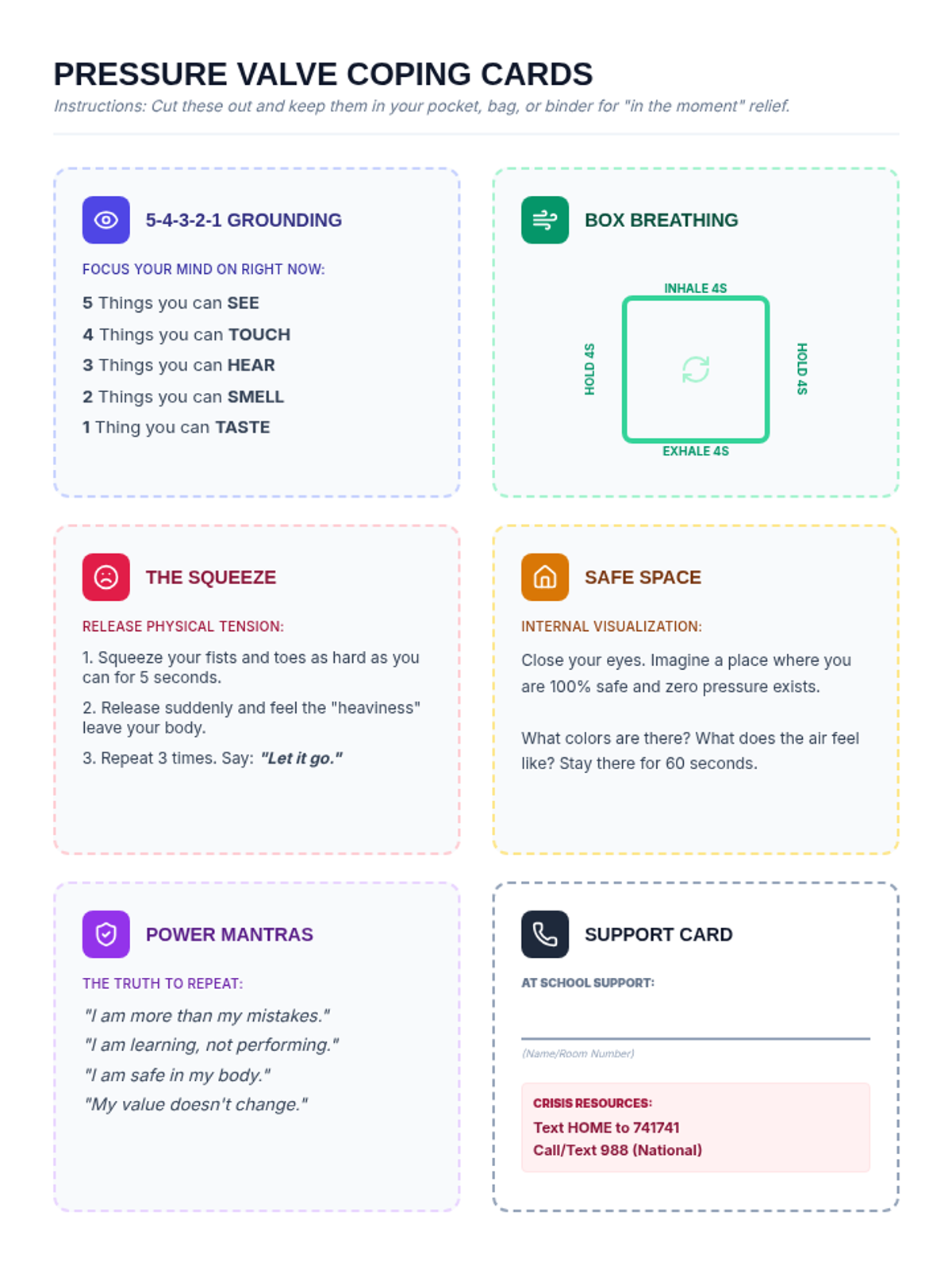
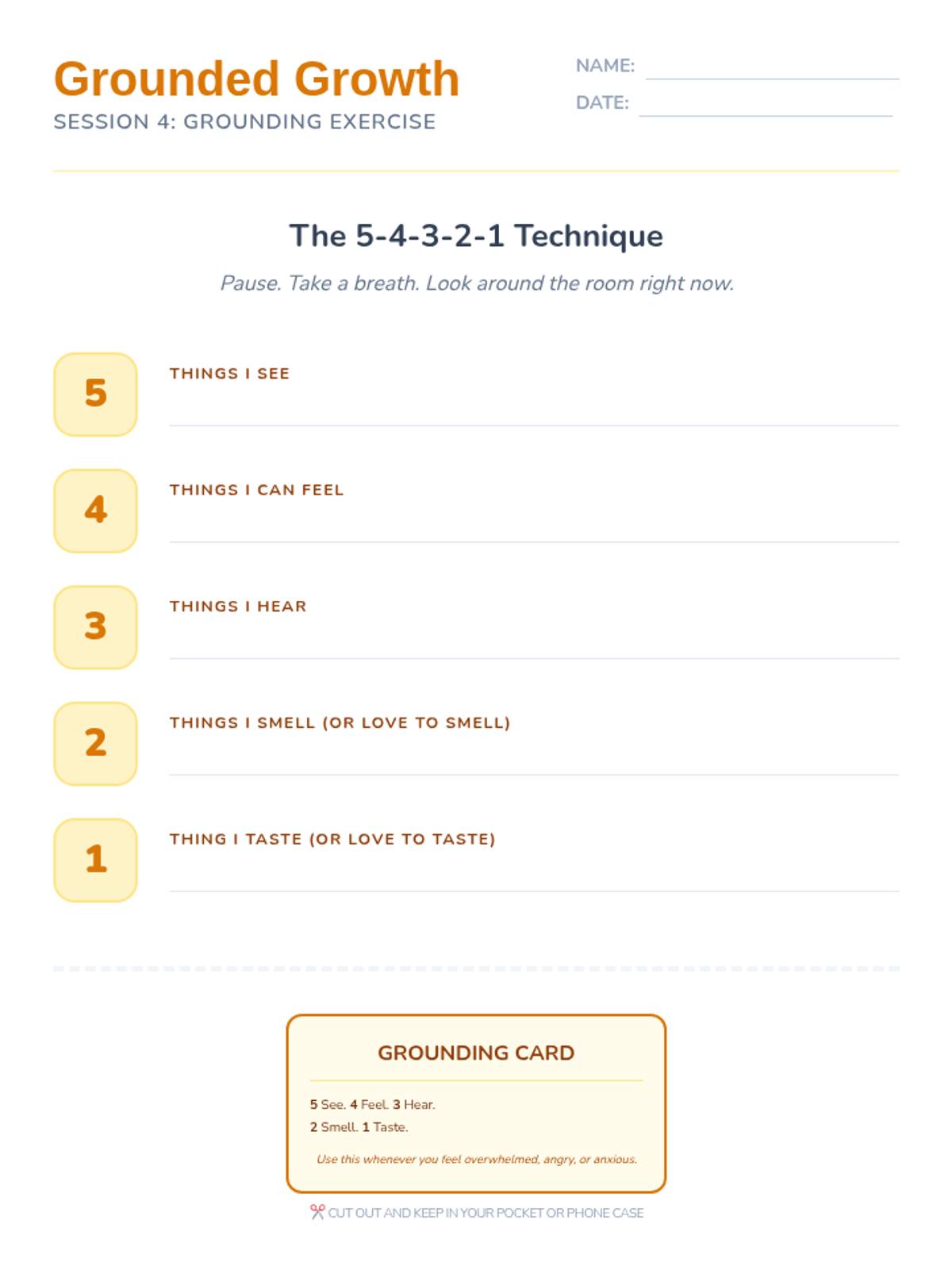
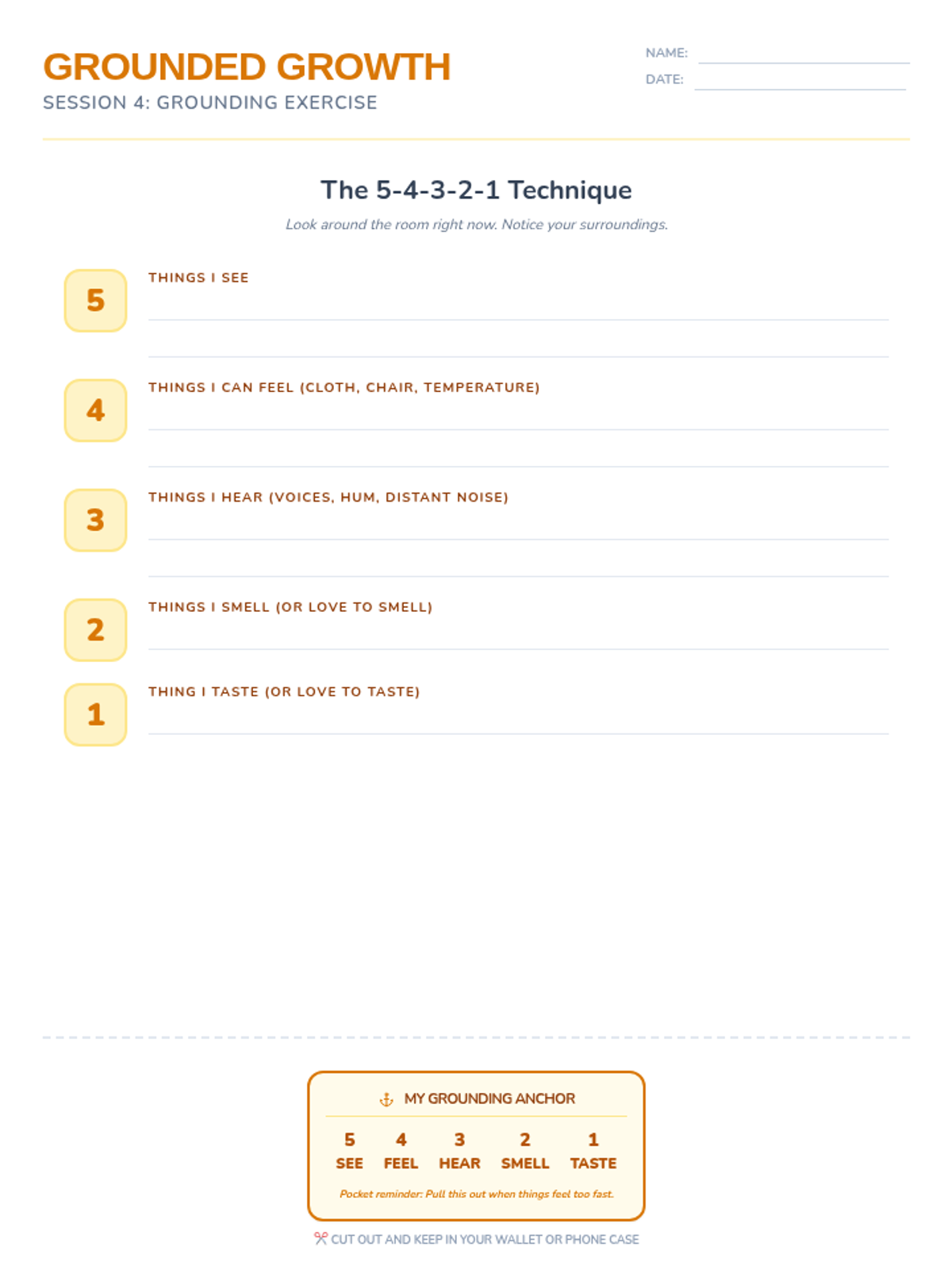
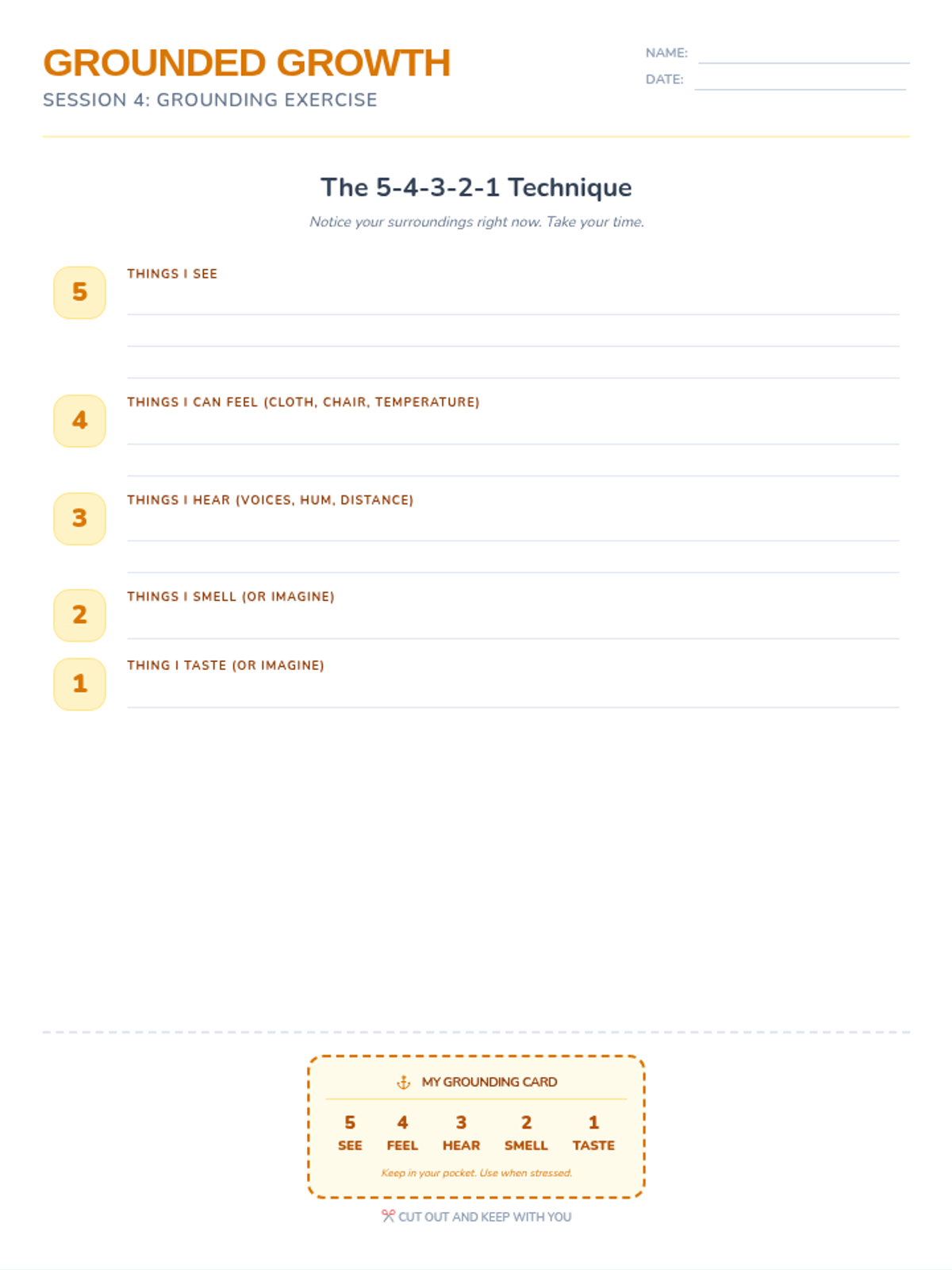
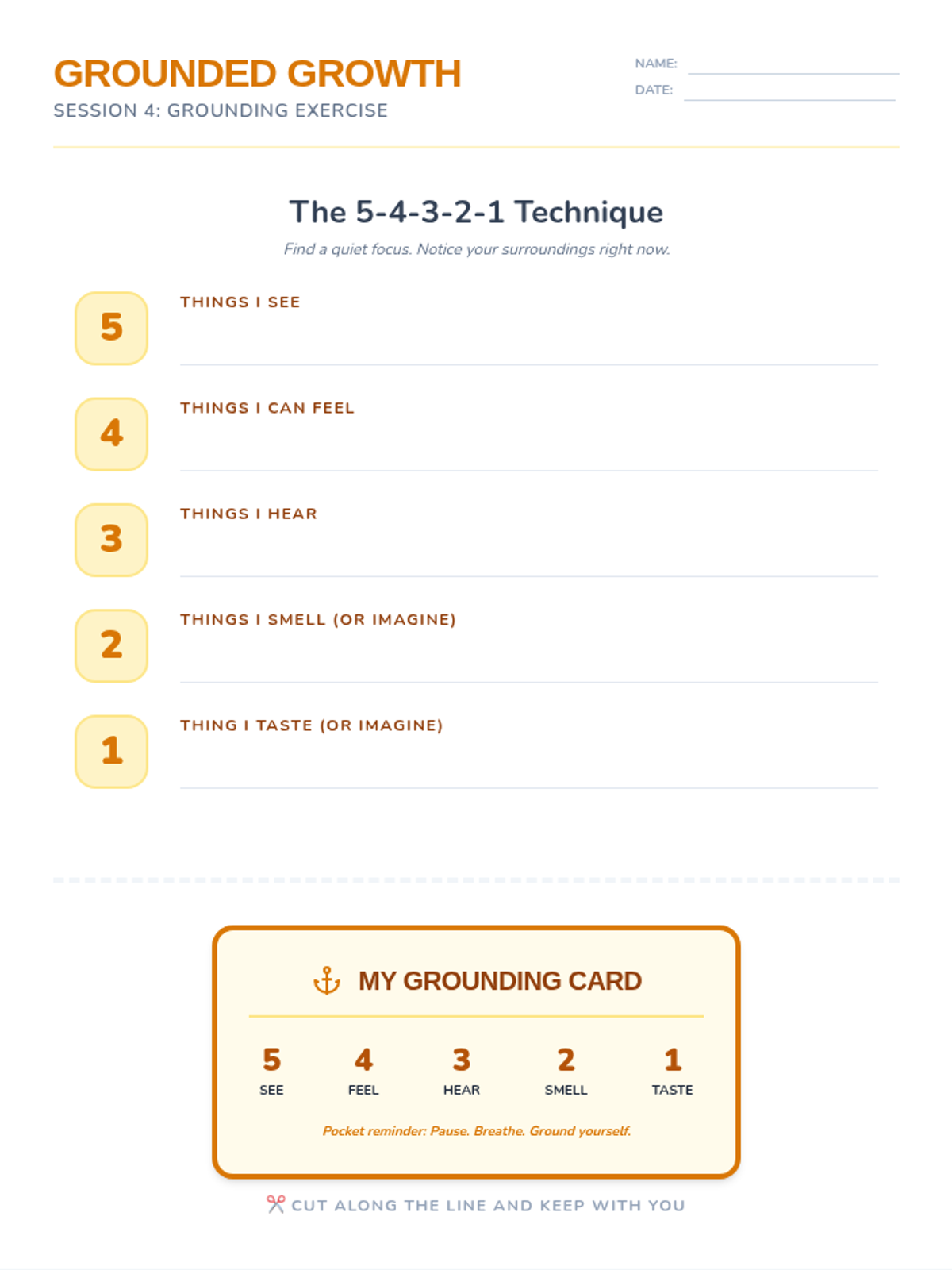
Identifies mental health crises and suicide warning signs while developing personal safety plans and grounding techniques. Equips users with peer gatekeeper skills and direct pathways to professional crisis resources and hotlines.
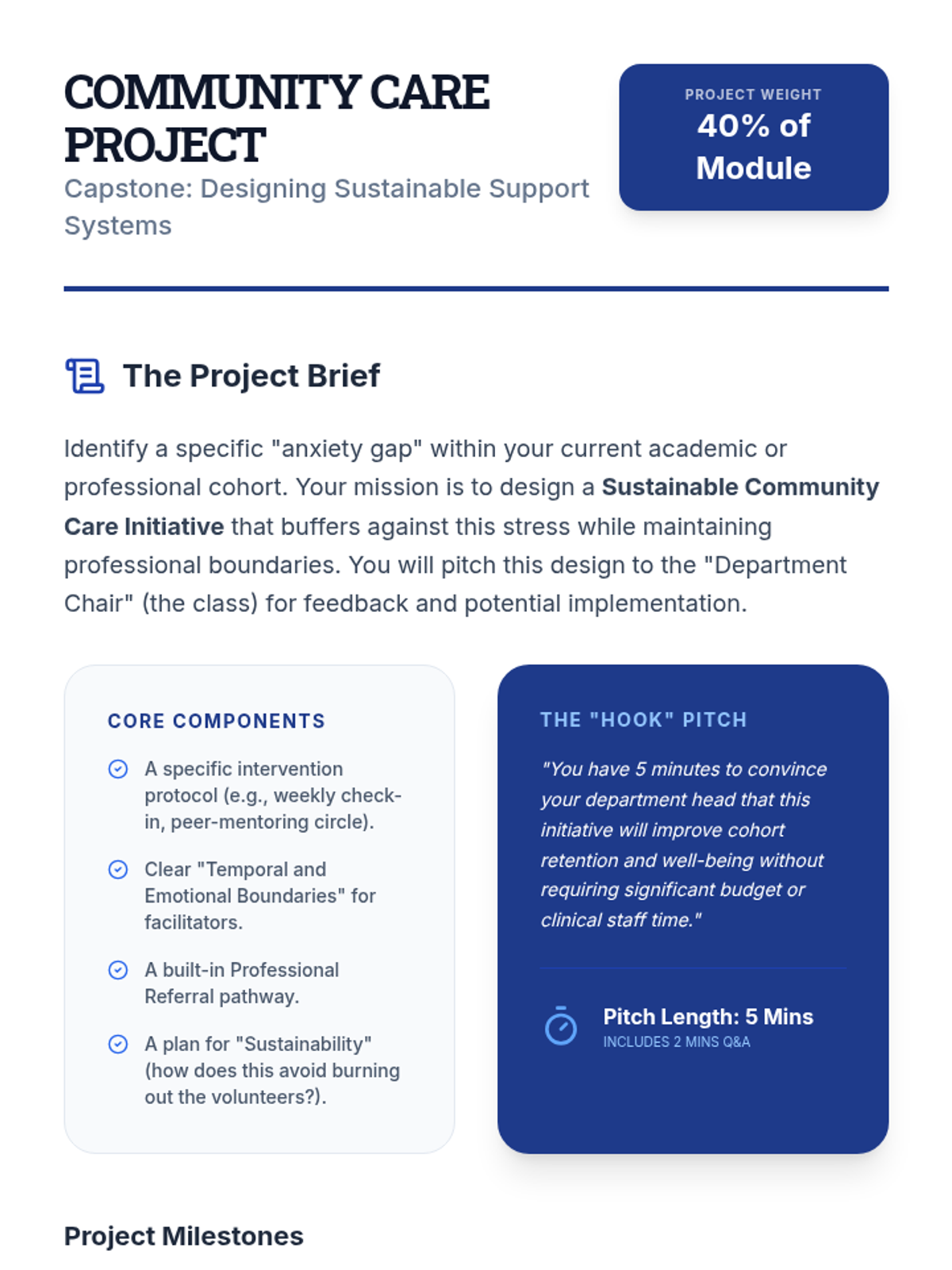
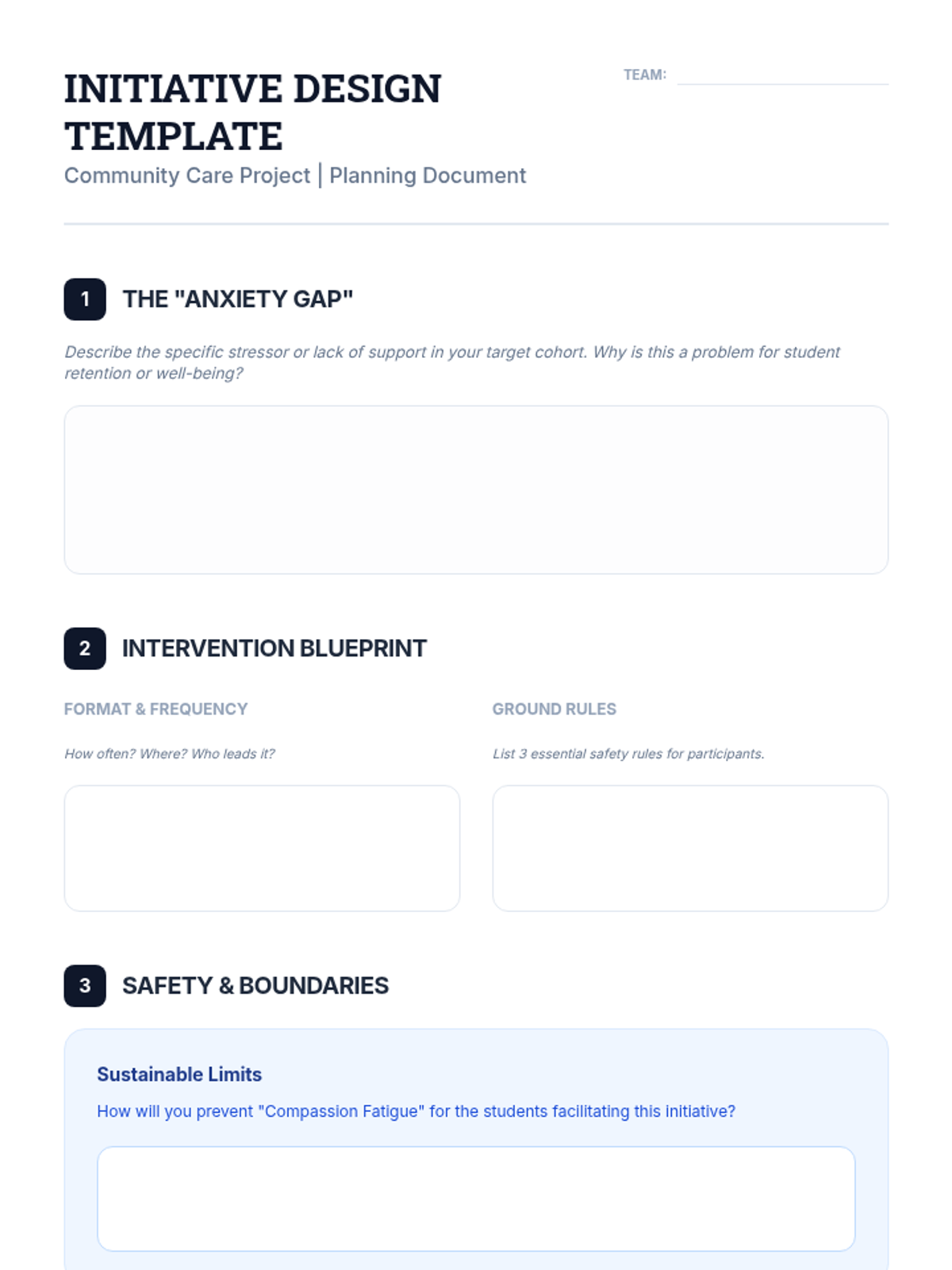
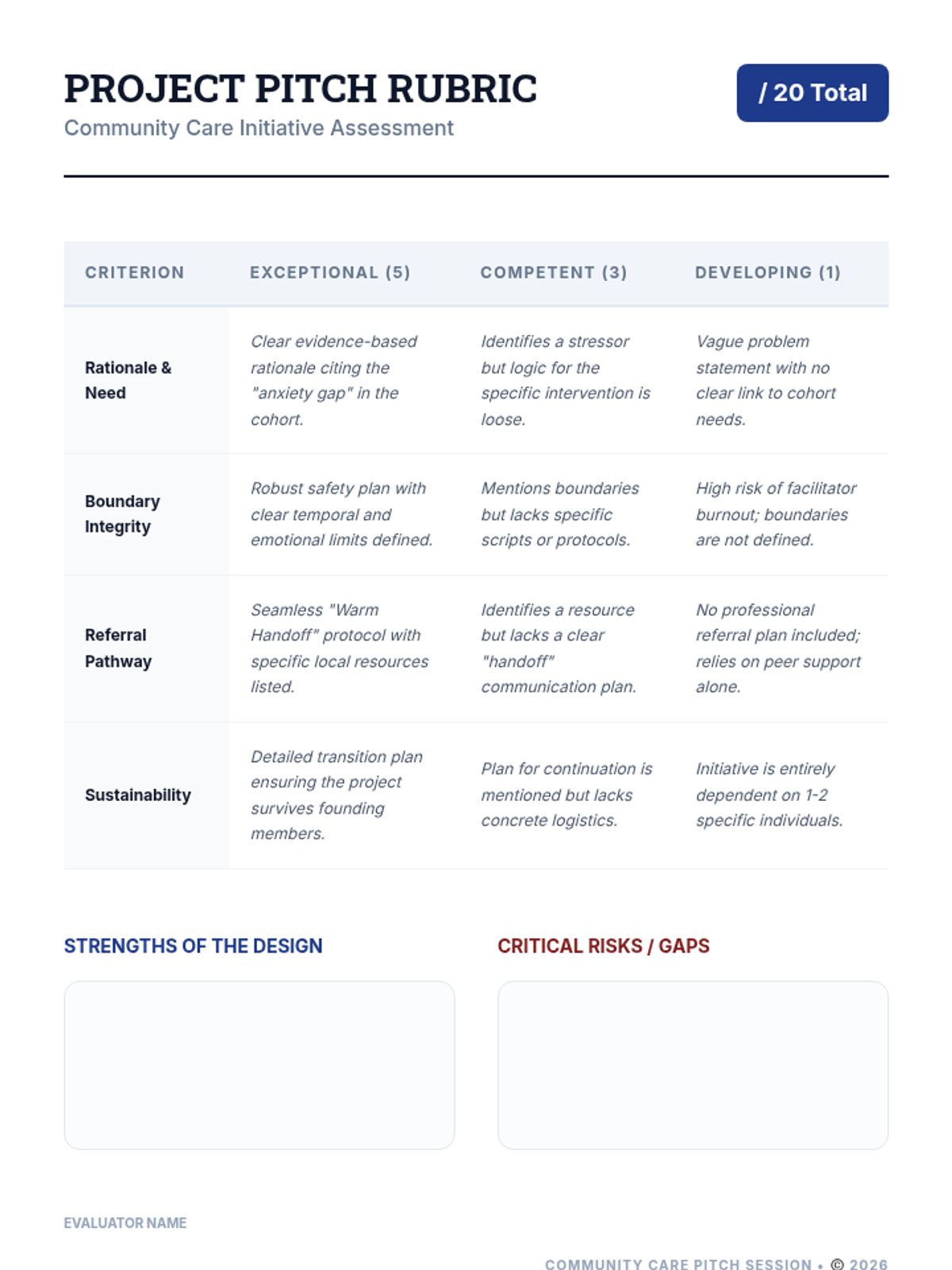
Students design and pitch a sustainable community care initiative tailored to their specific academic or professional cohort.
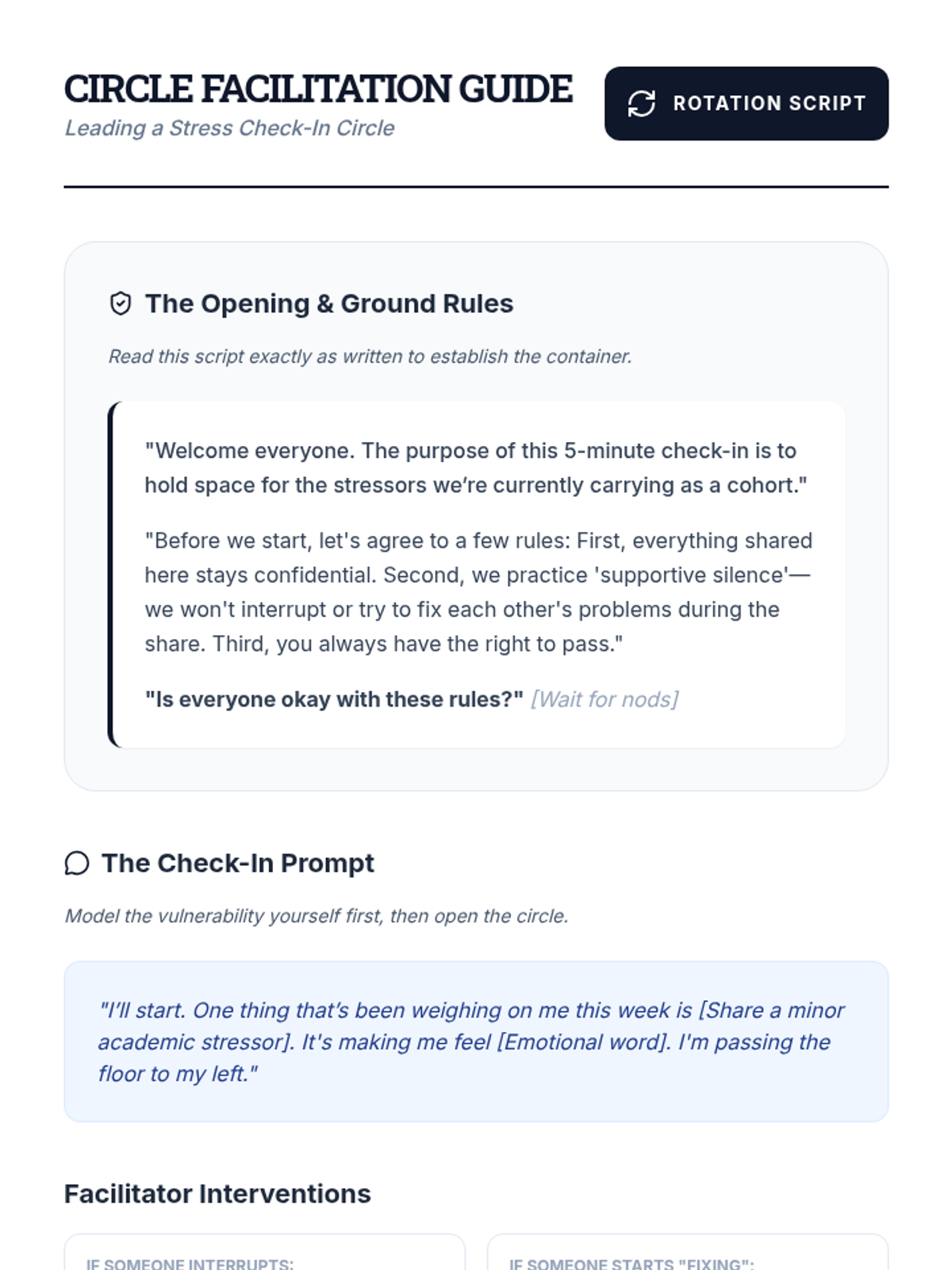
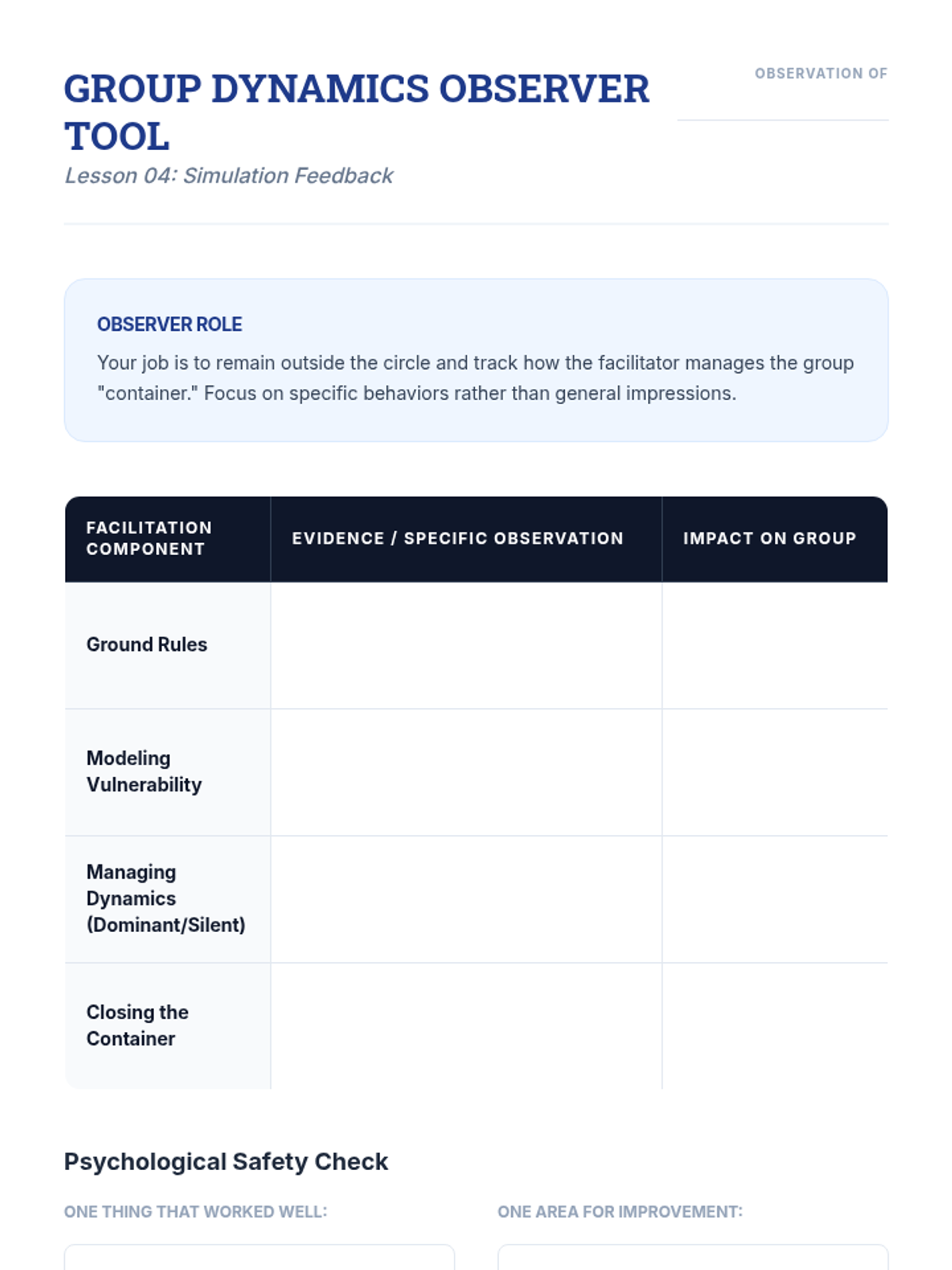
Develops skills for leading group stress check-ins, managing dynamics, and ensuring psychological safety in group settings.
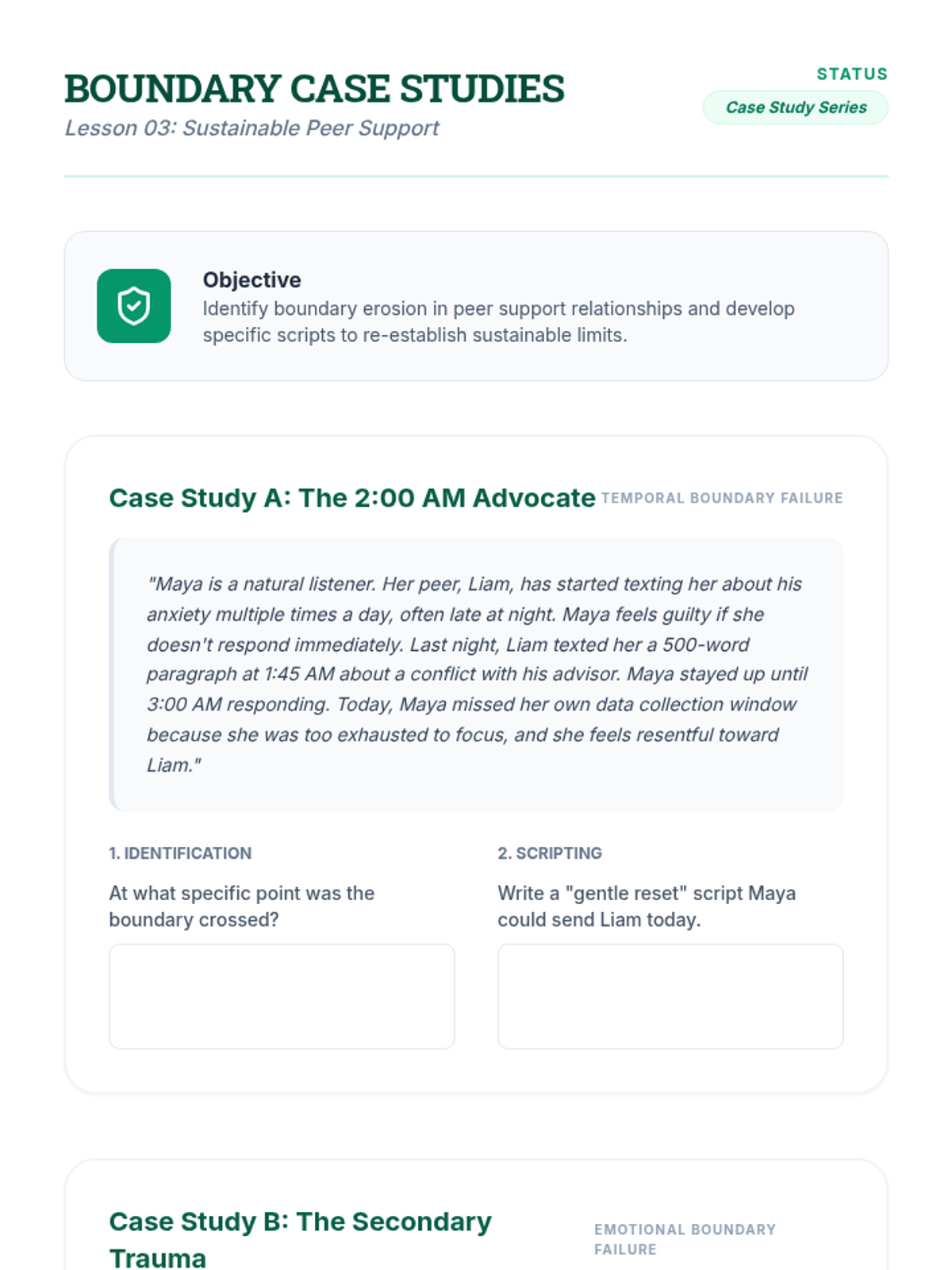
Focuses on preventing compassion fatigue through emotional and temporal boundaries and professional referral protocols.
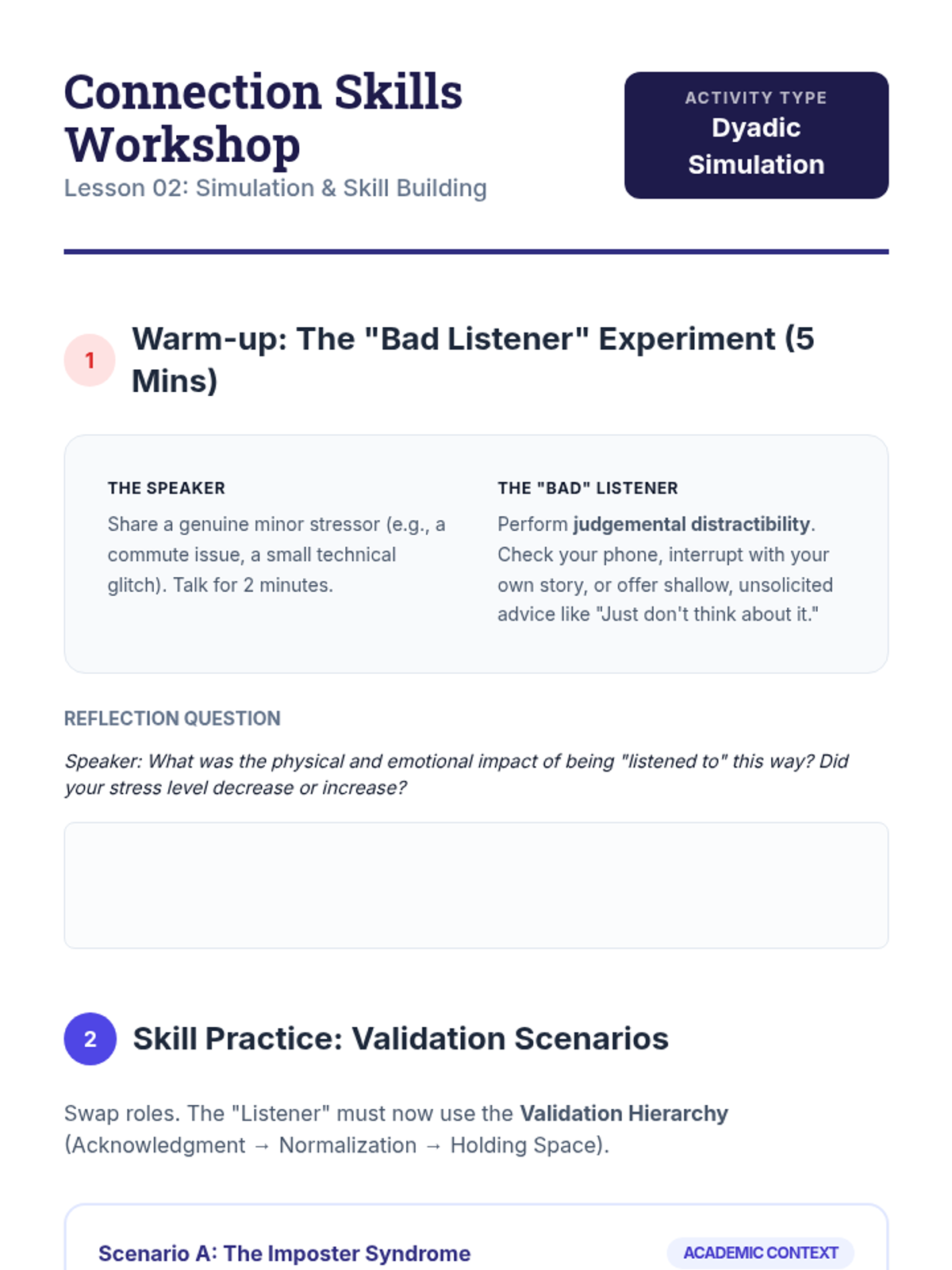
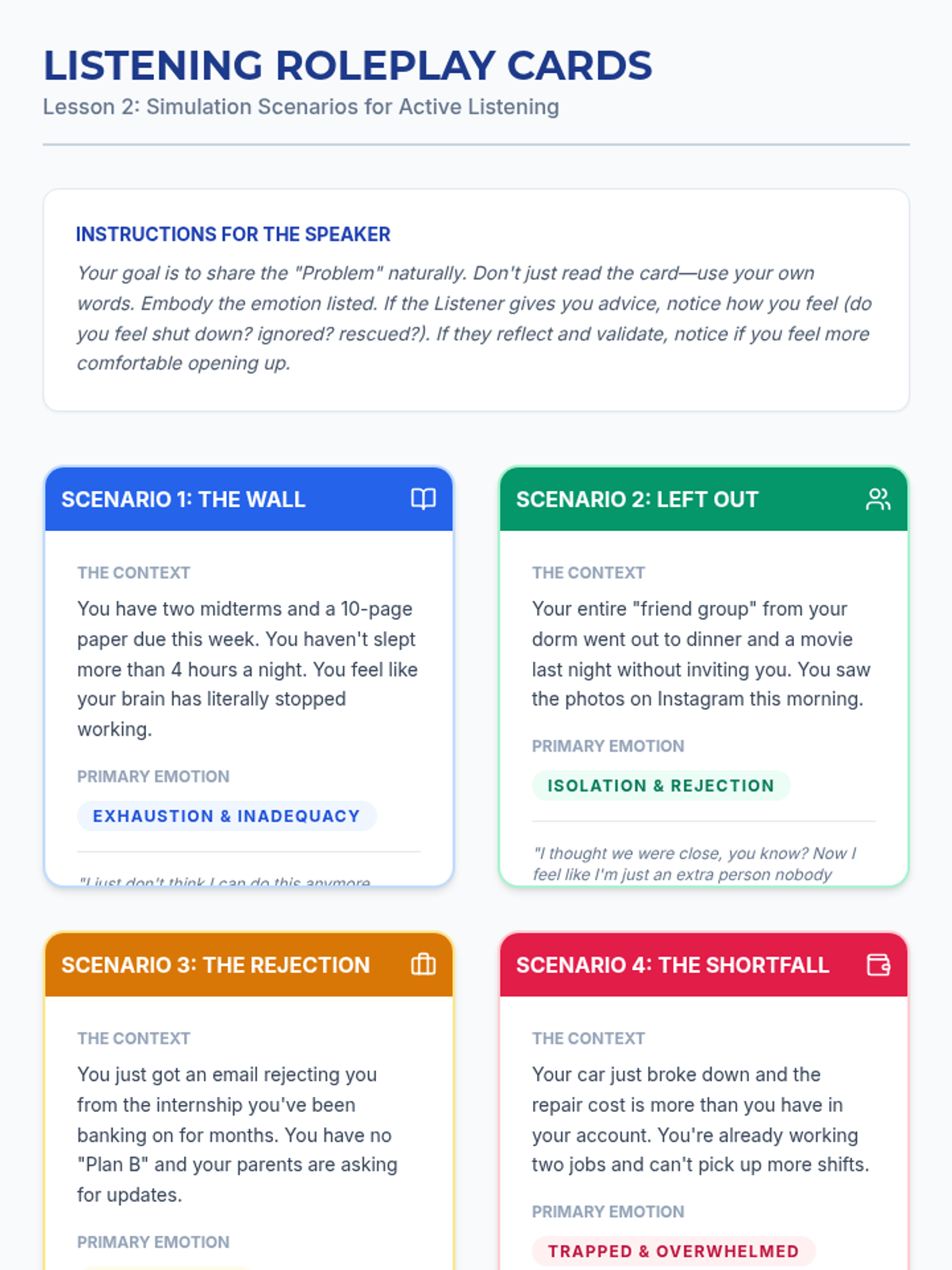
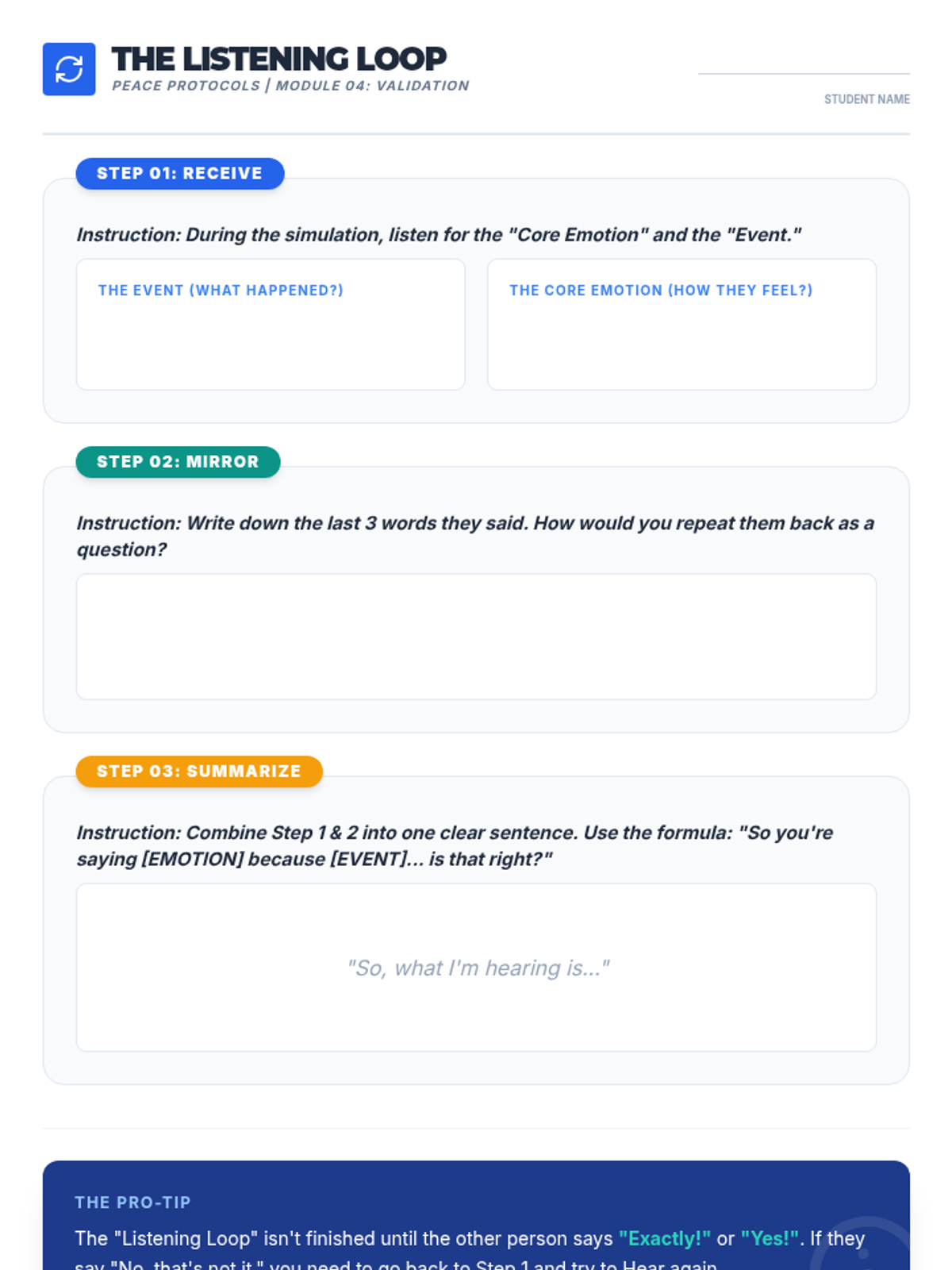
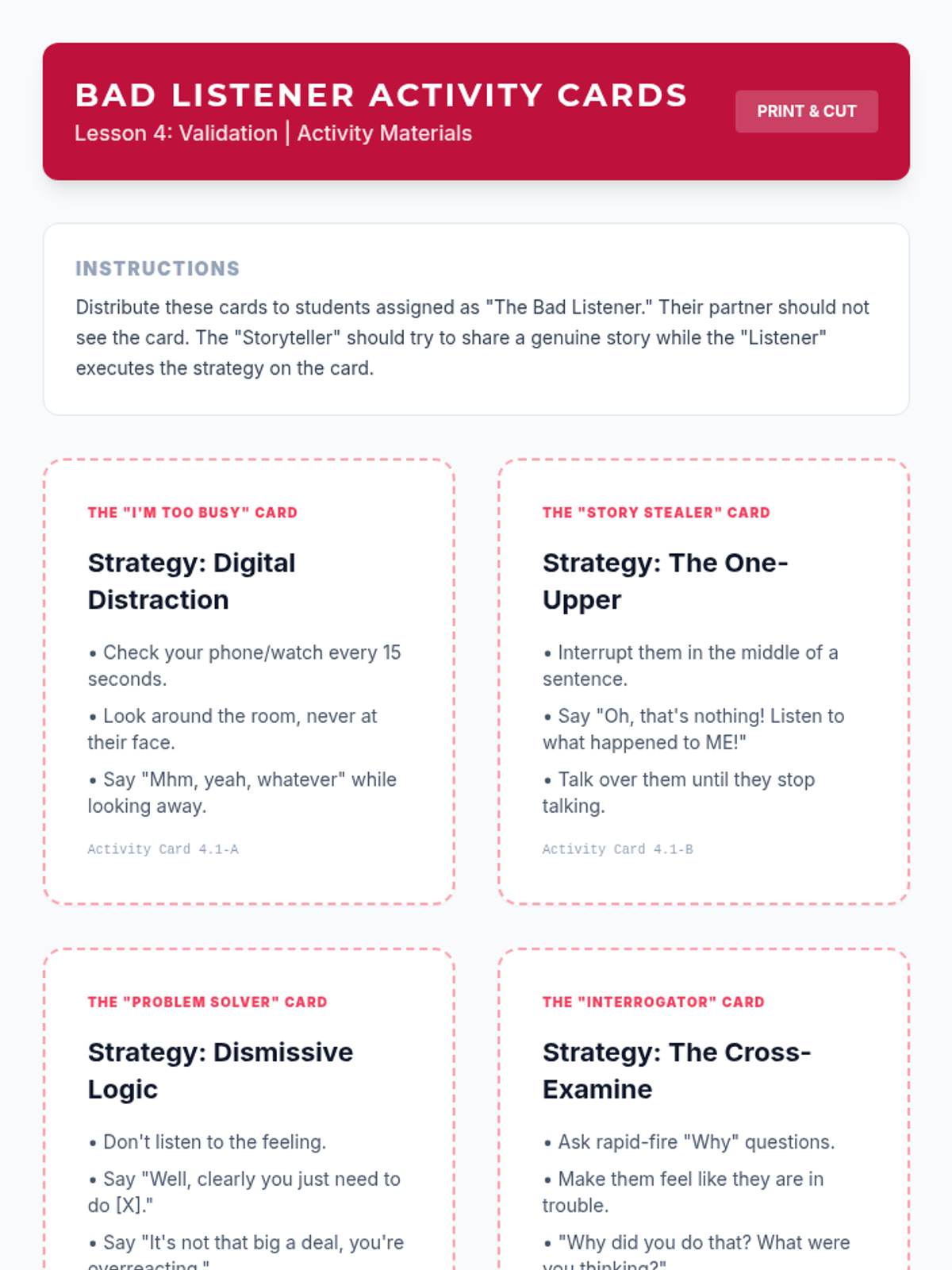
Practical workshop on active listening, validation, and holding space for peers without the pressure to provide immediate solutions.
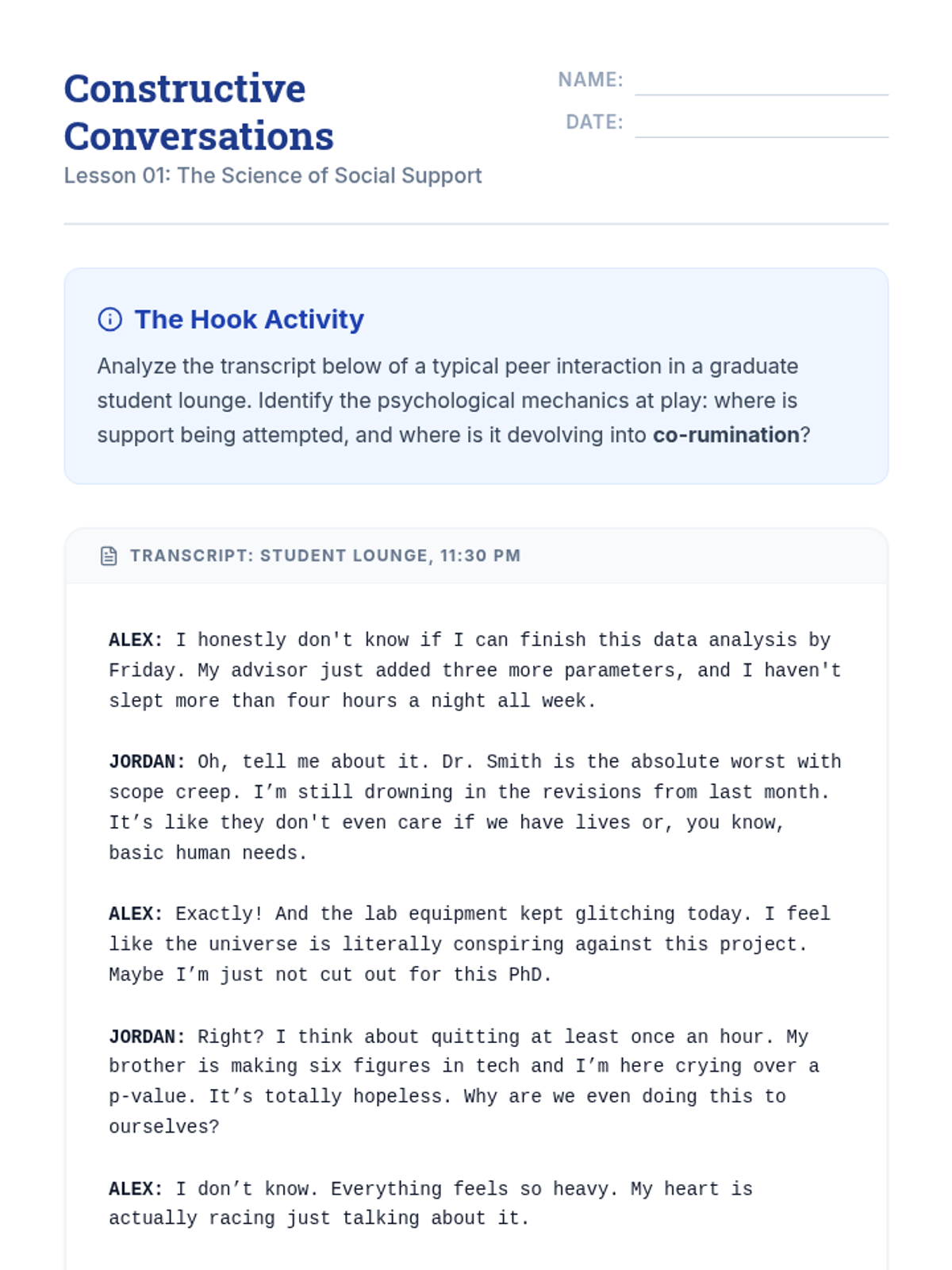
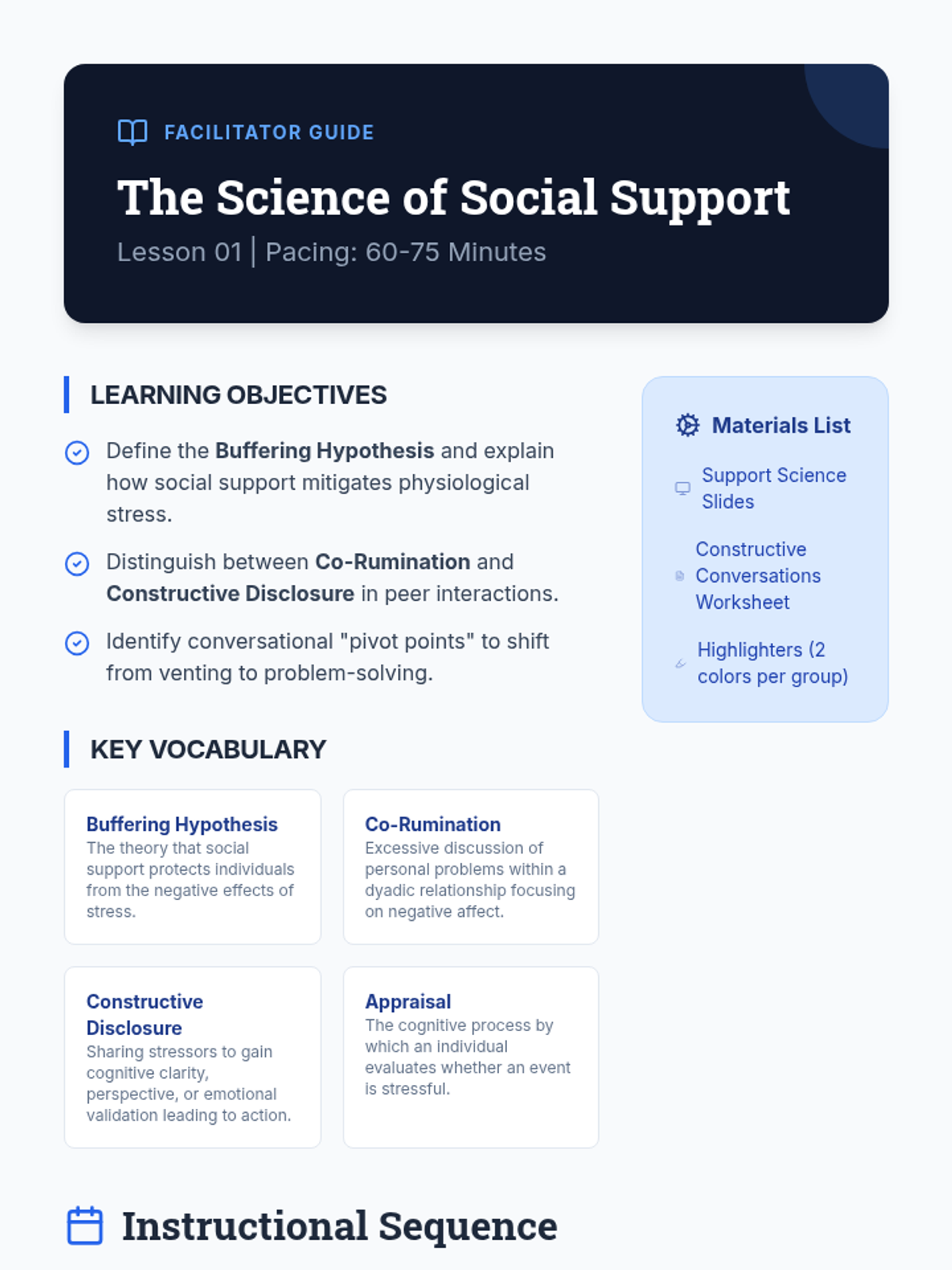
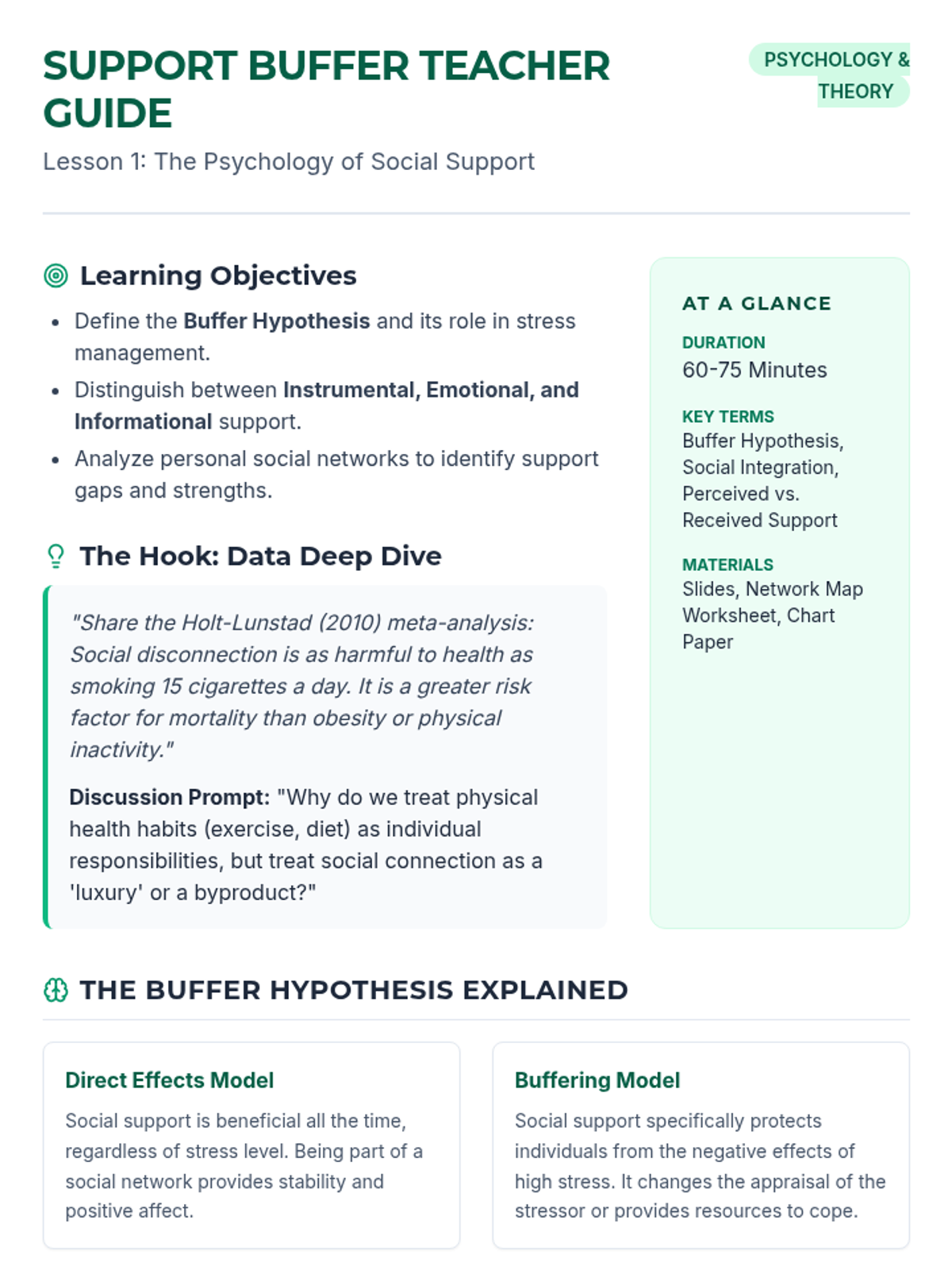
Examines the buffering hypothesis and the psychological mechanics of how social connection mitigates stress, contrasting co-rumination with constructive disclosure.
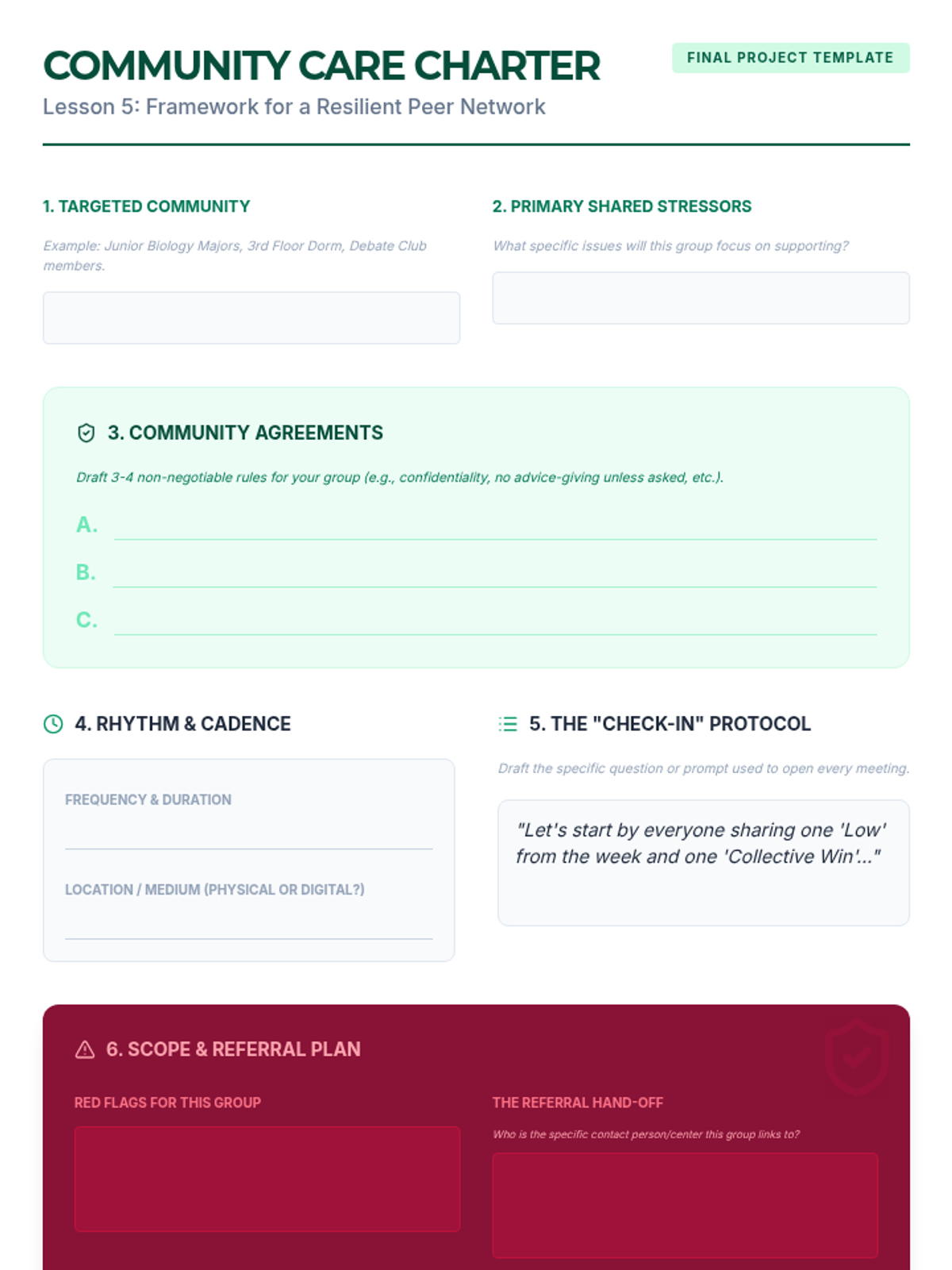
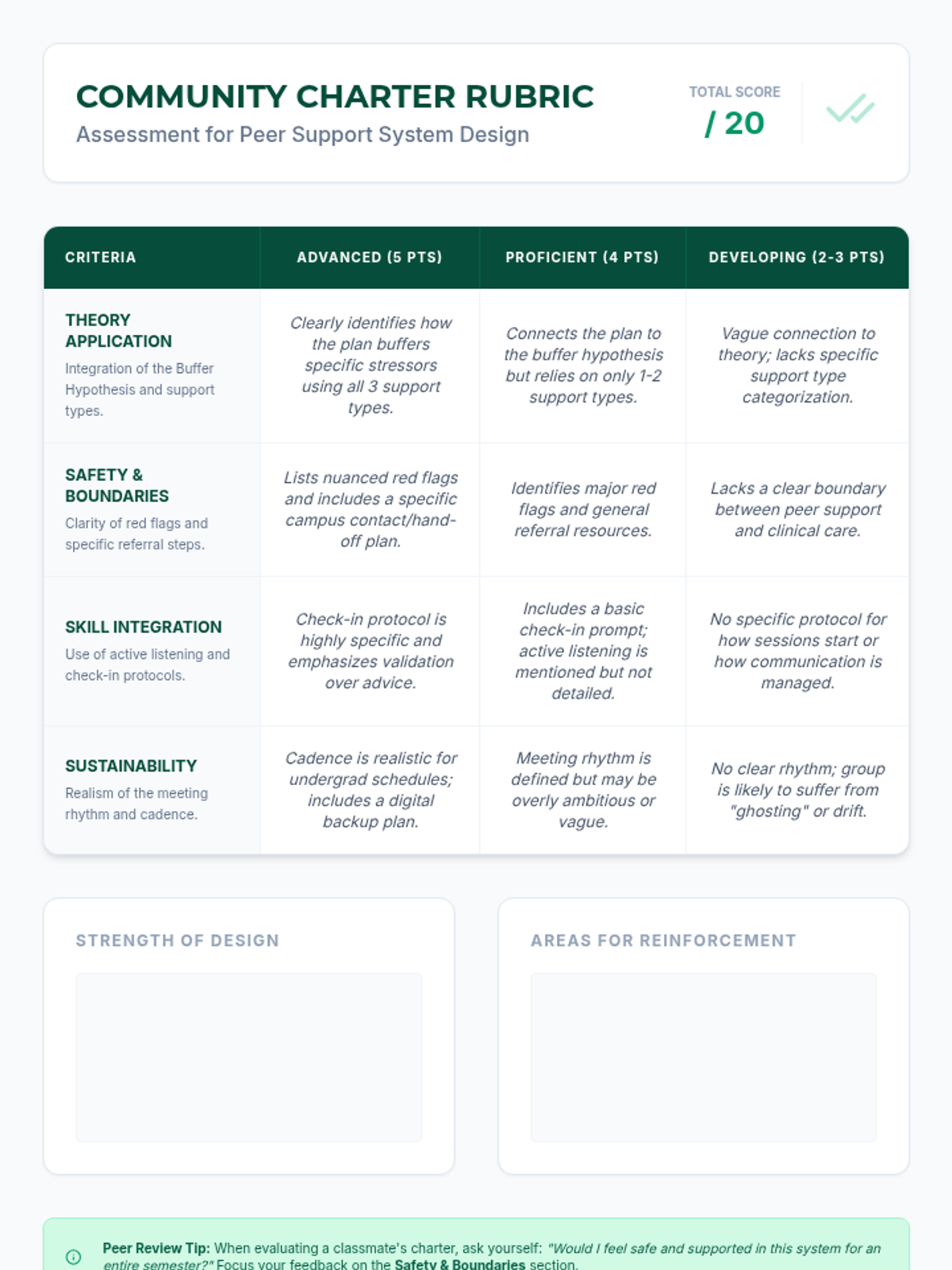
Students design a framework for a community care plan, producing a 'Community Charter' for peer support in a specific campus context.
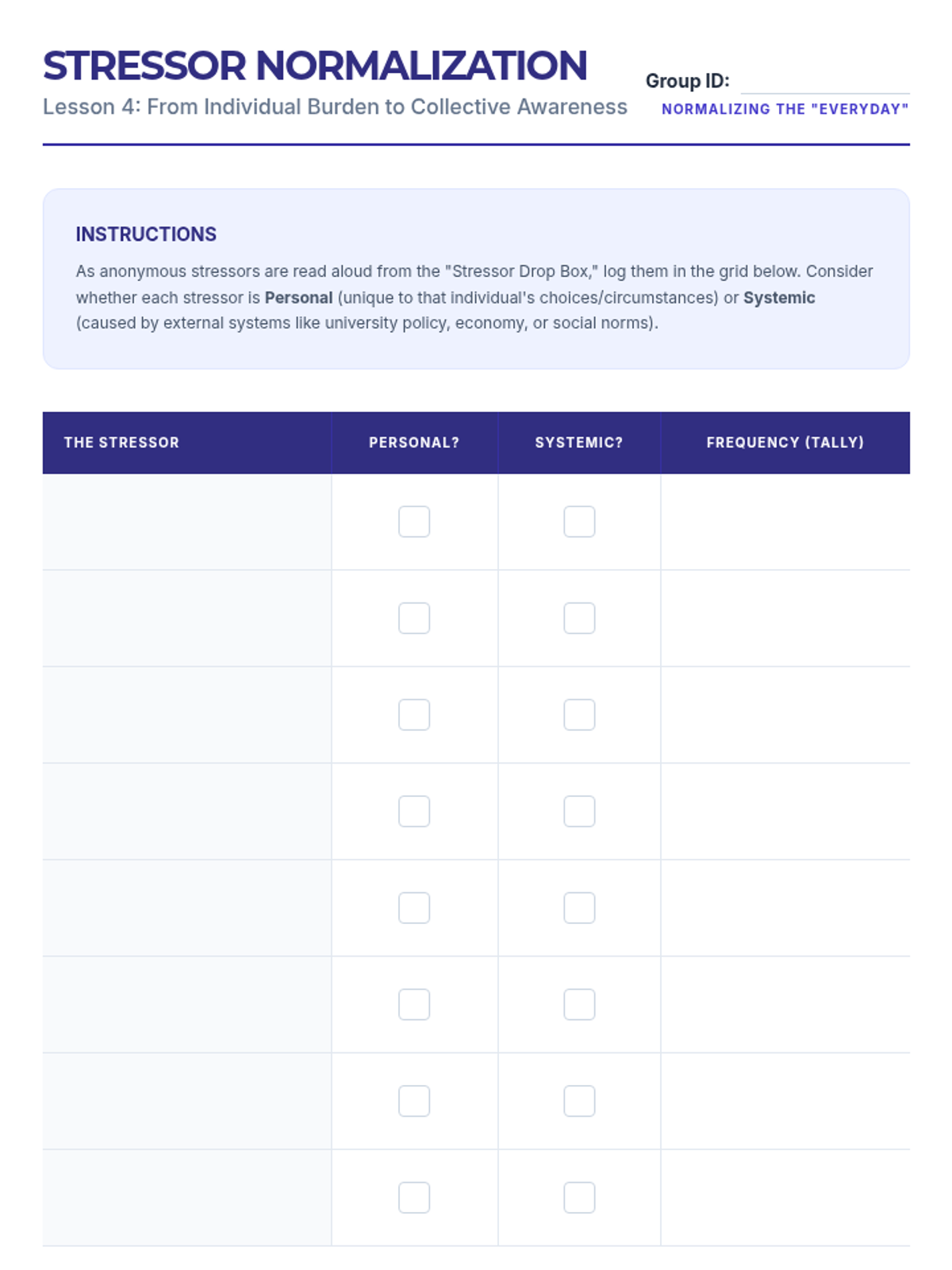
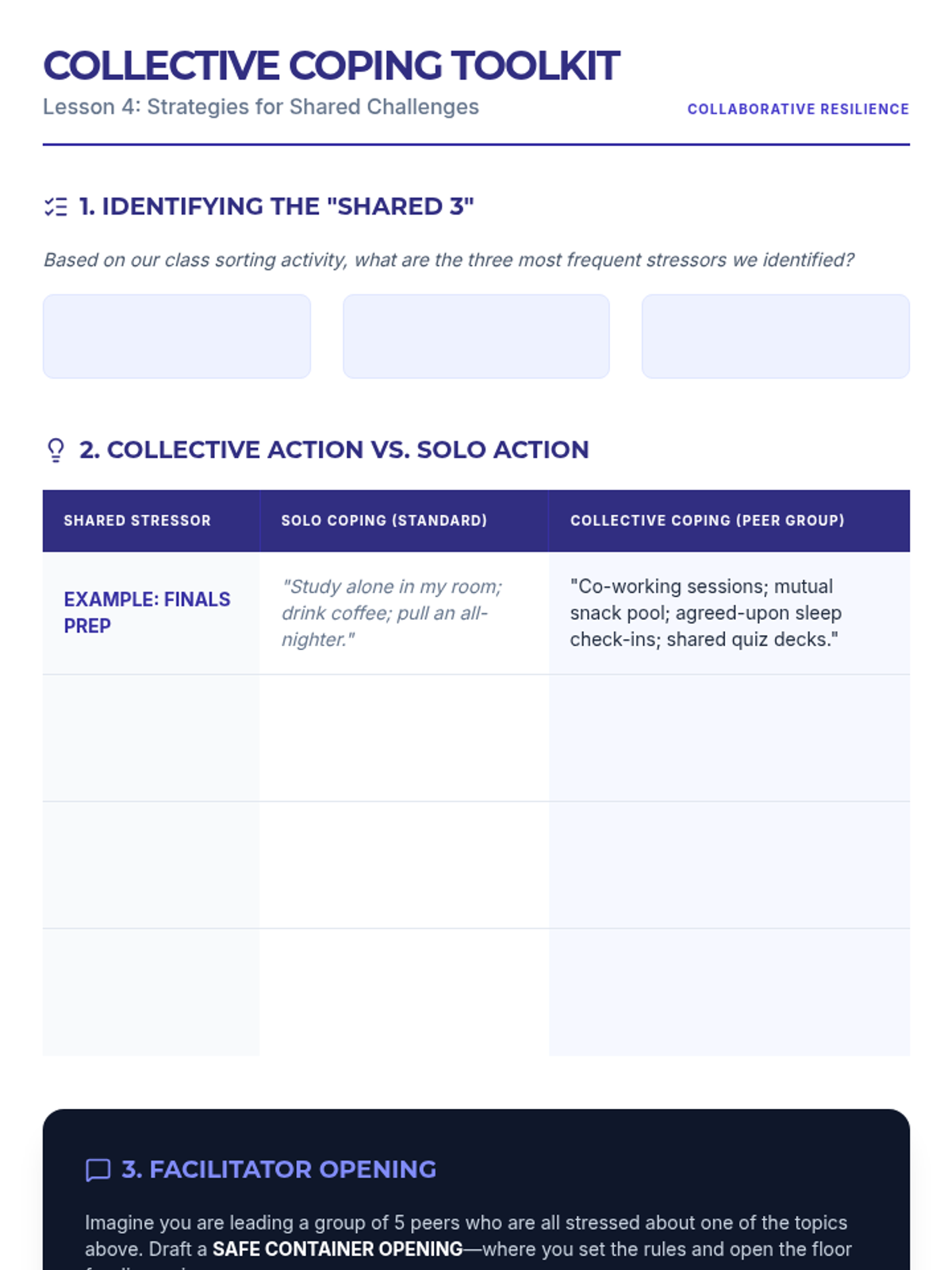
A facilitated dialogue session focusing on common undergraduate stressors, practicing normalization and collective coping strategies.
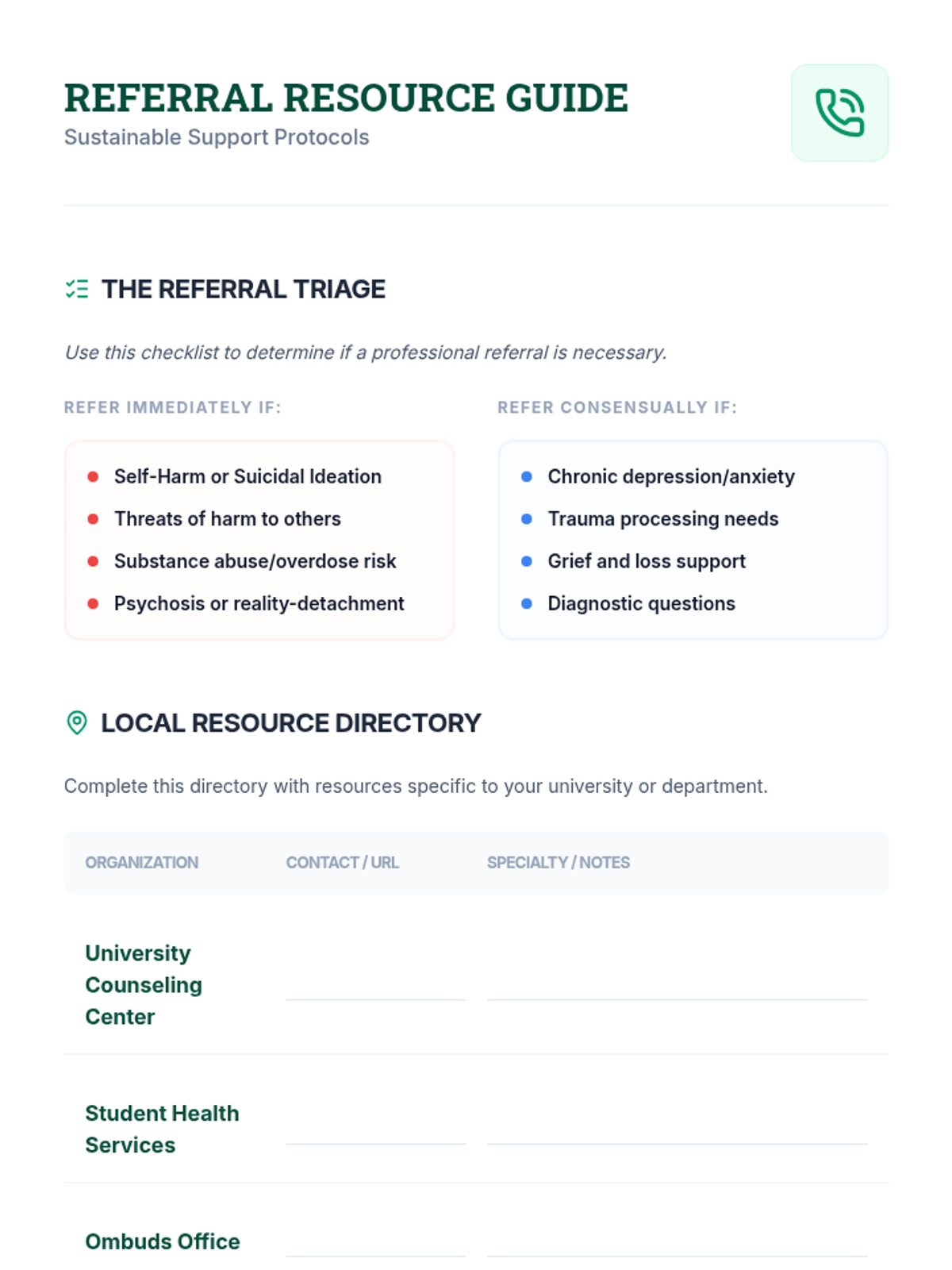
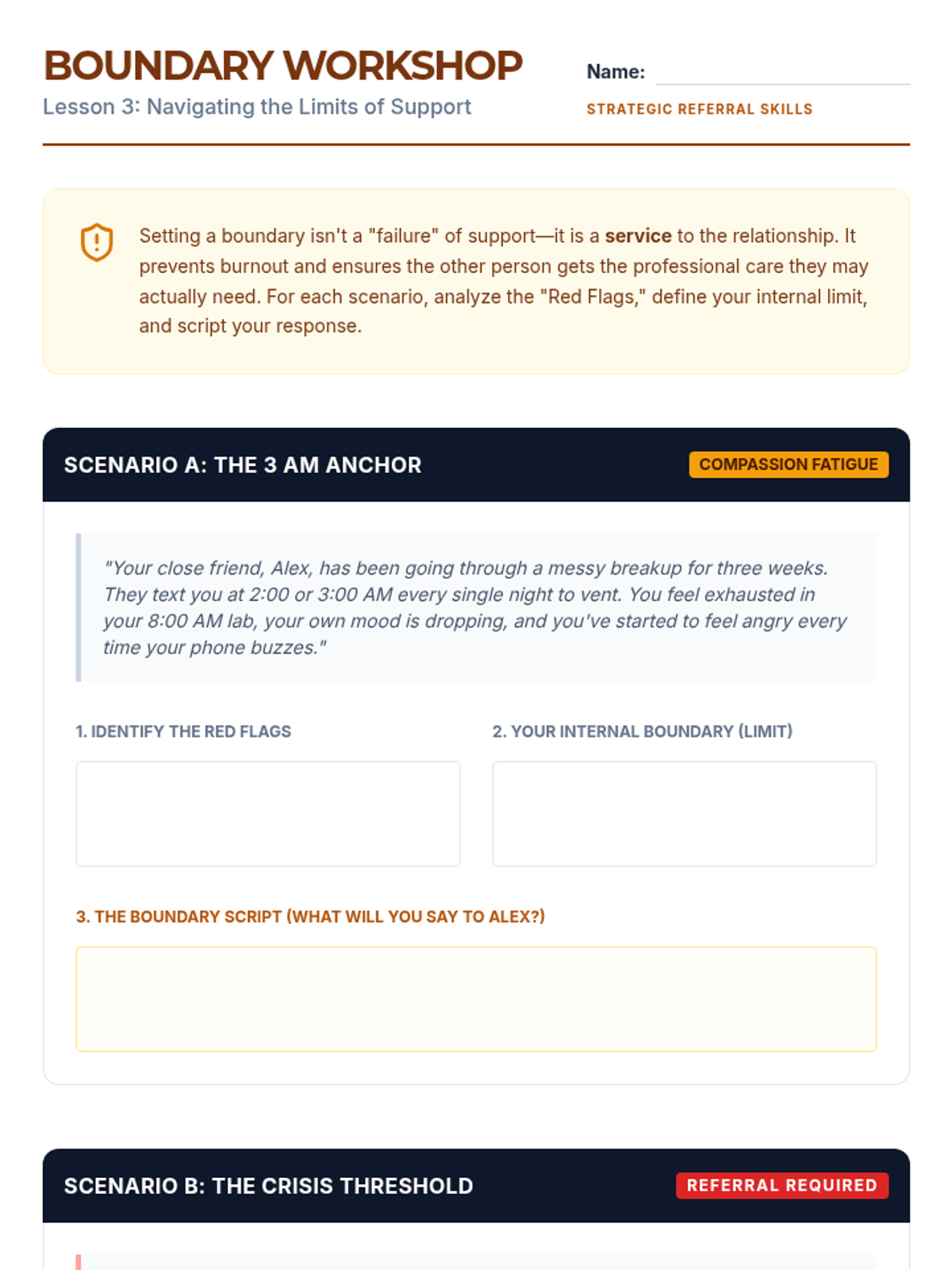
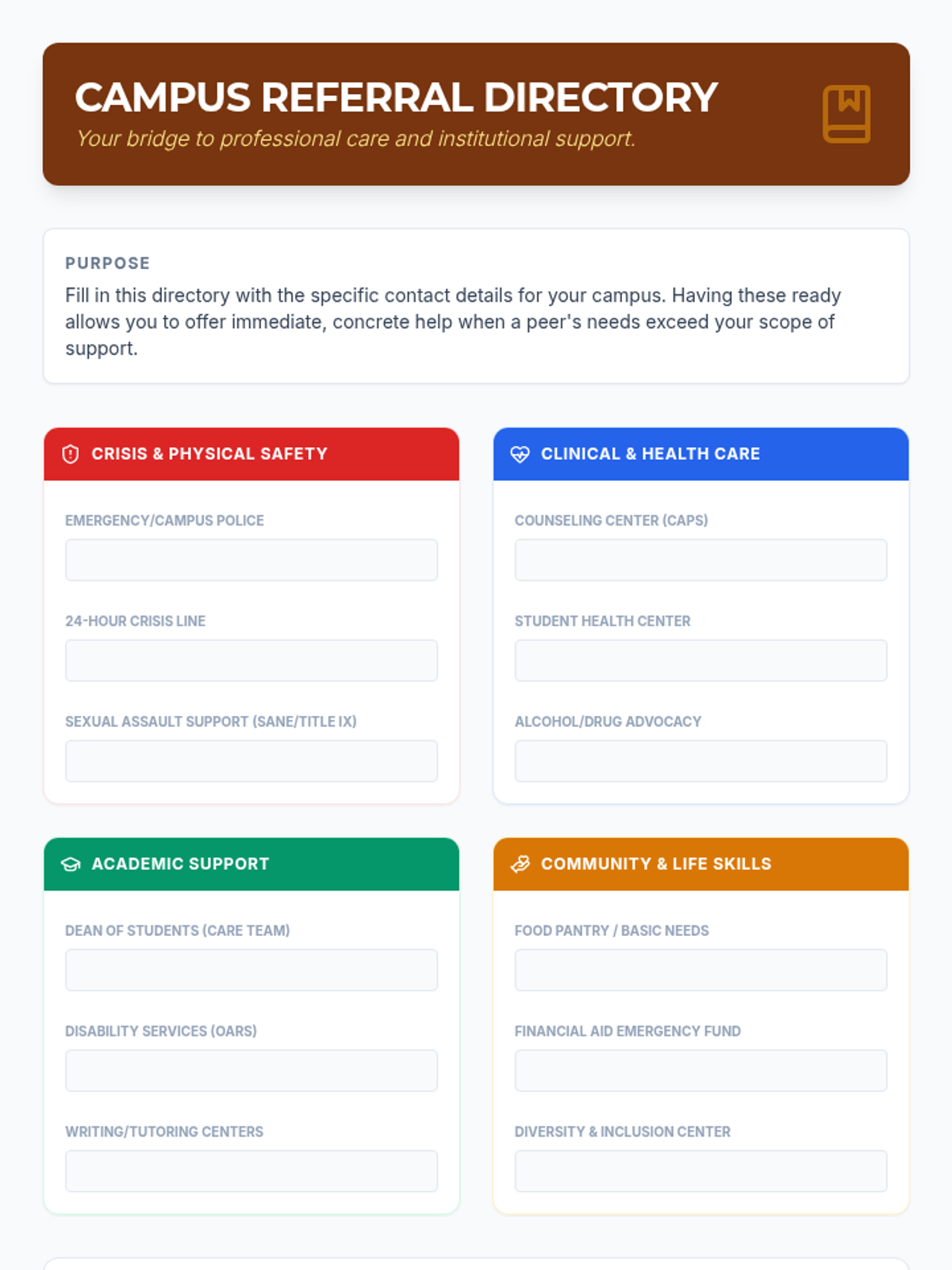
Training on recognizing the limits of peer support and when to refer to professionals, with a focus on setting emotional boundaries to prevent burnout.
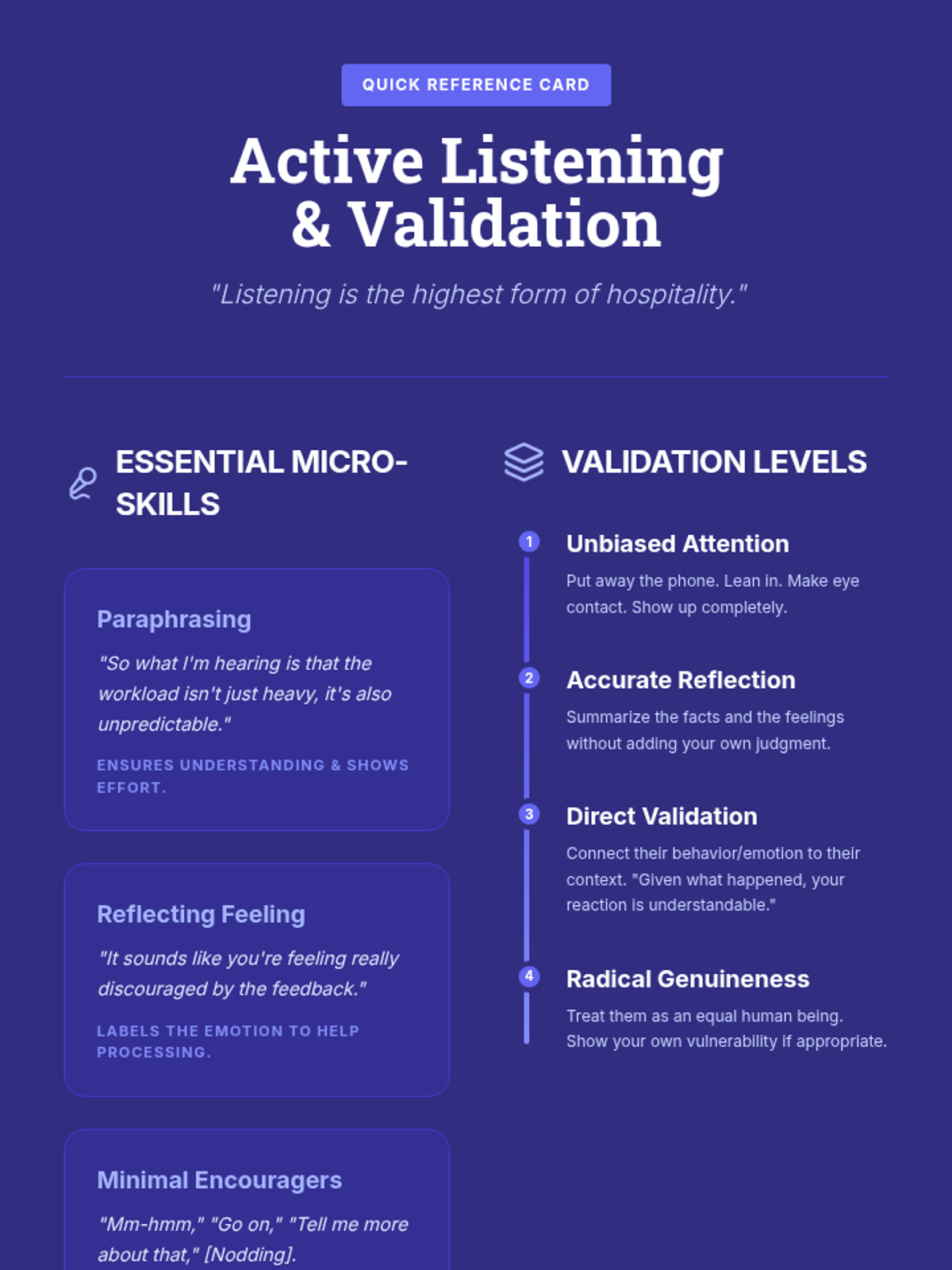
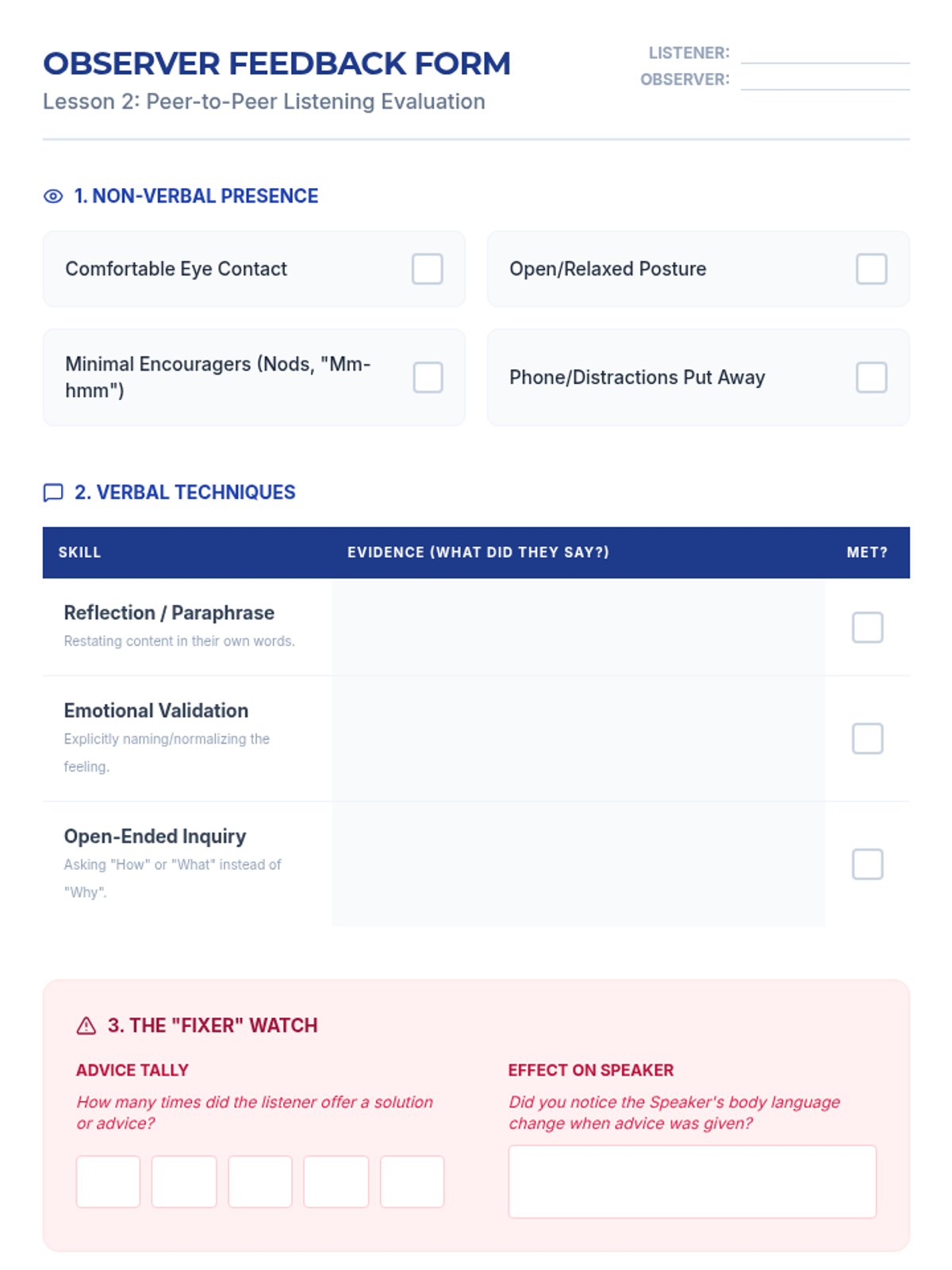
A skill-building session on non-judgmental listening, reflecting, and validating emotions, focusing on 'holding space' rather than problem-solving.
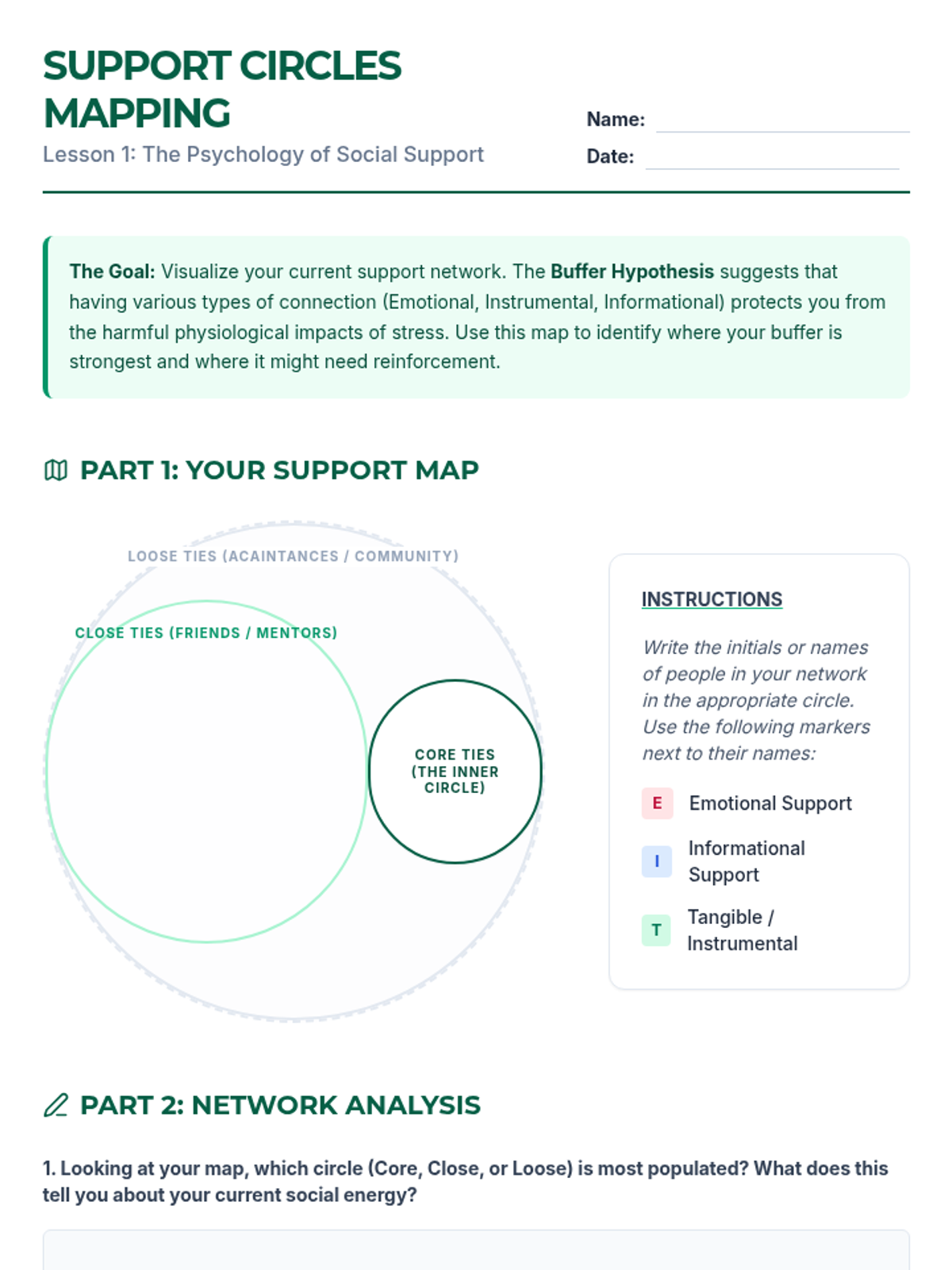
Students explore the 'Buffer Hypothesis' and how social connection mitigates the health impacts of stress, focusing on the difference between instrumental, emotional, and informational support.
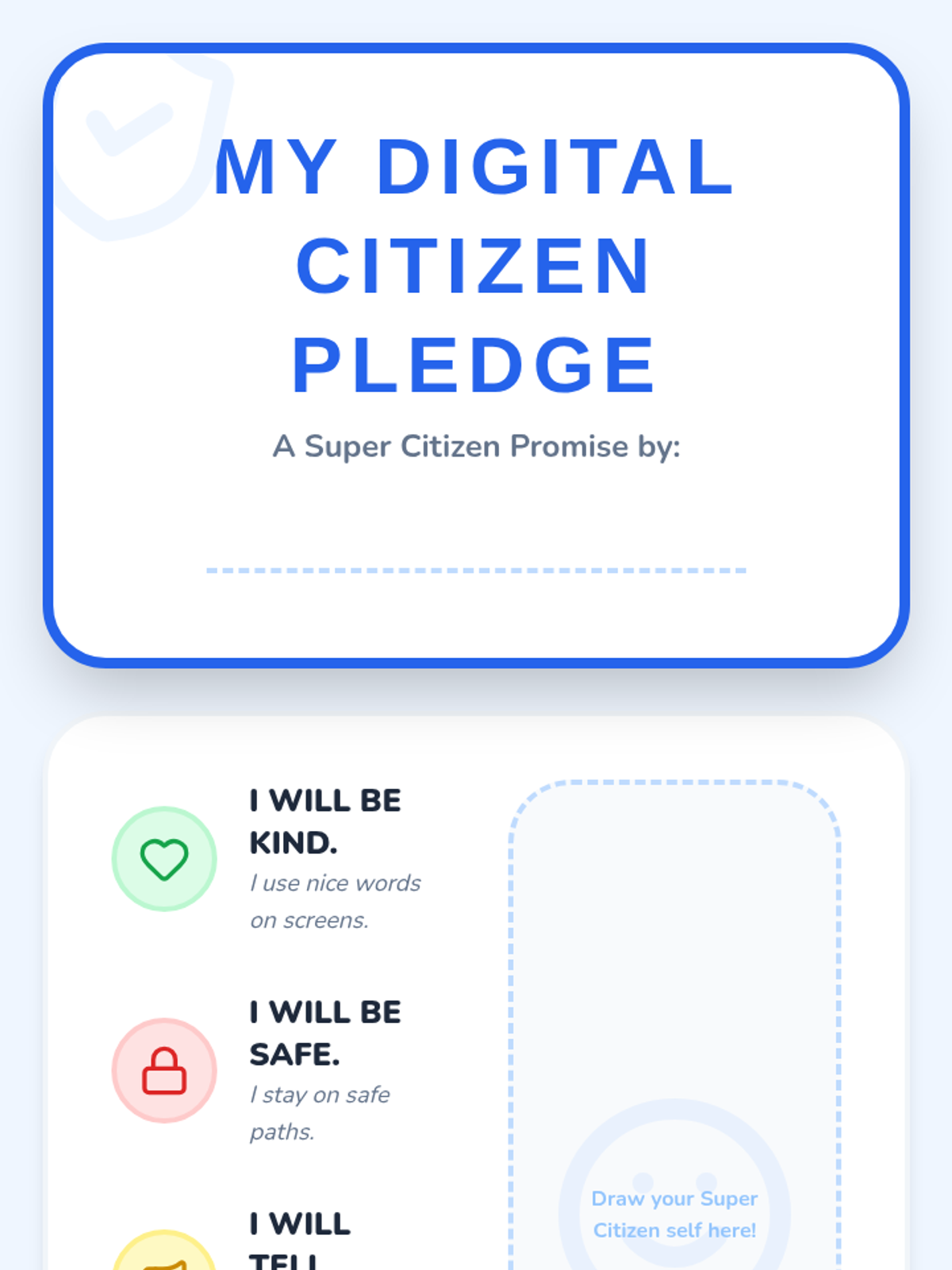
Students synthesize their learning by creating a personal Digital Citizen Pledge and earning their Super Citizen badges.
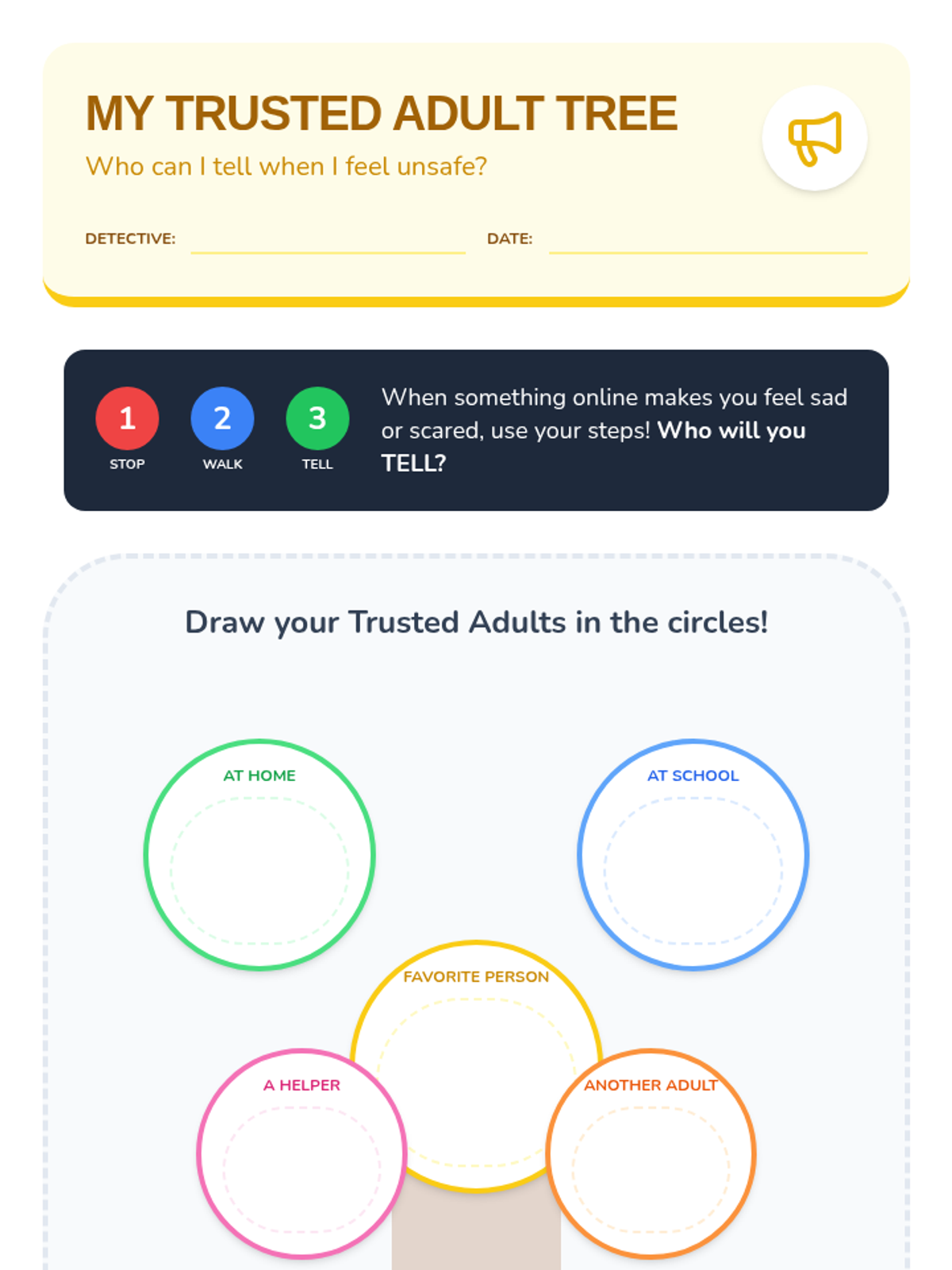
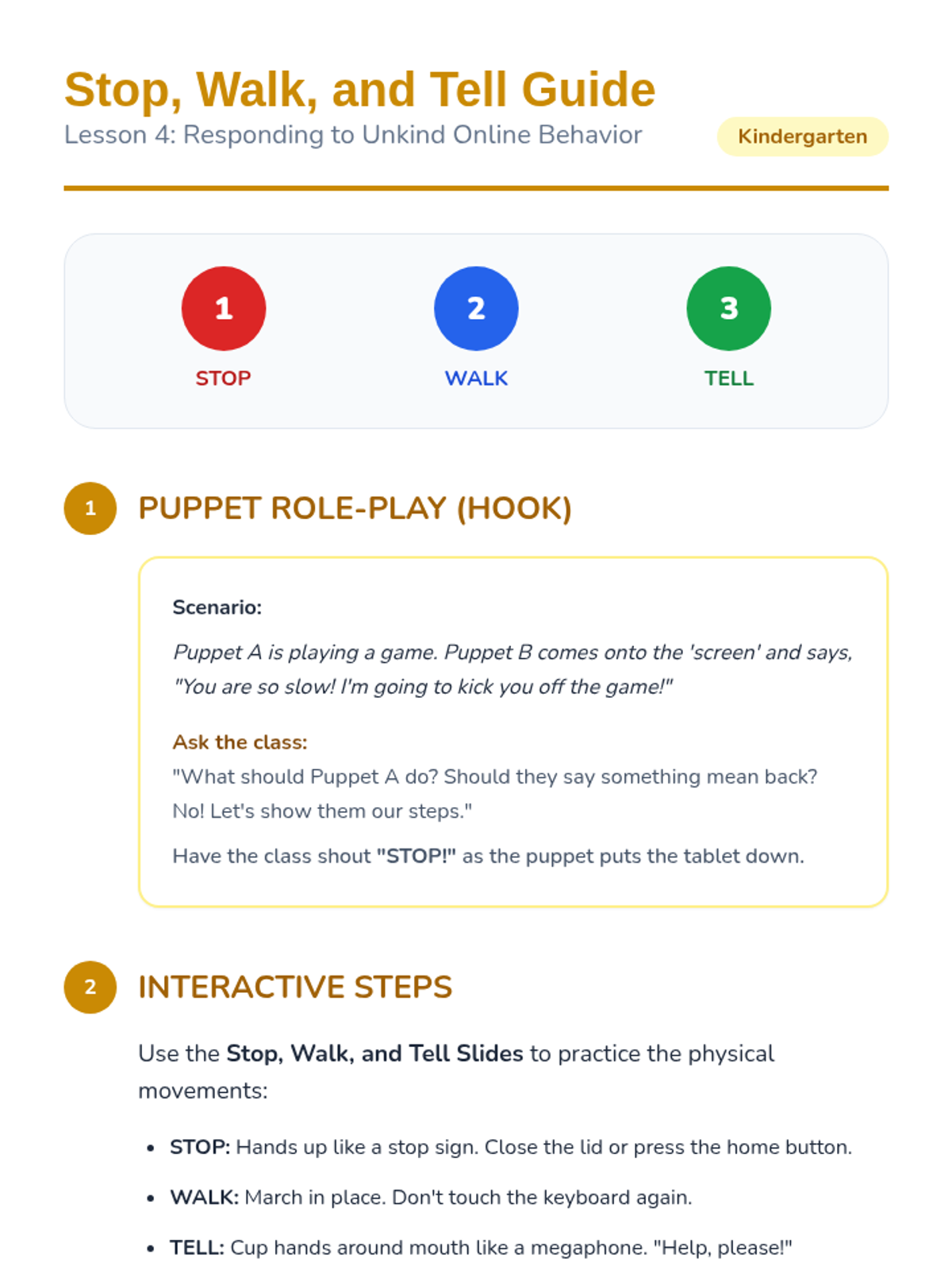
Students practice the "Stop, Walk, and Tell" strategy to respond to unkind behavior or scary content online, focusing on seeking help from trusted adults.
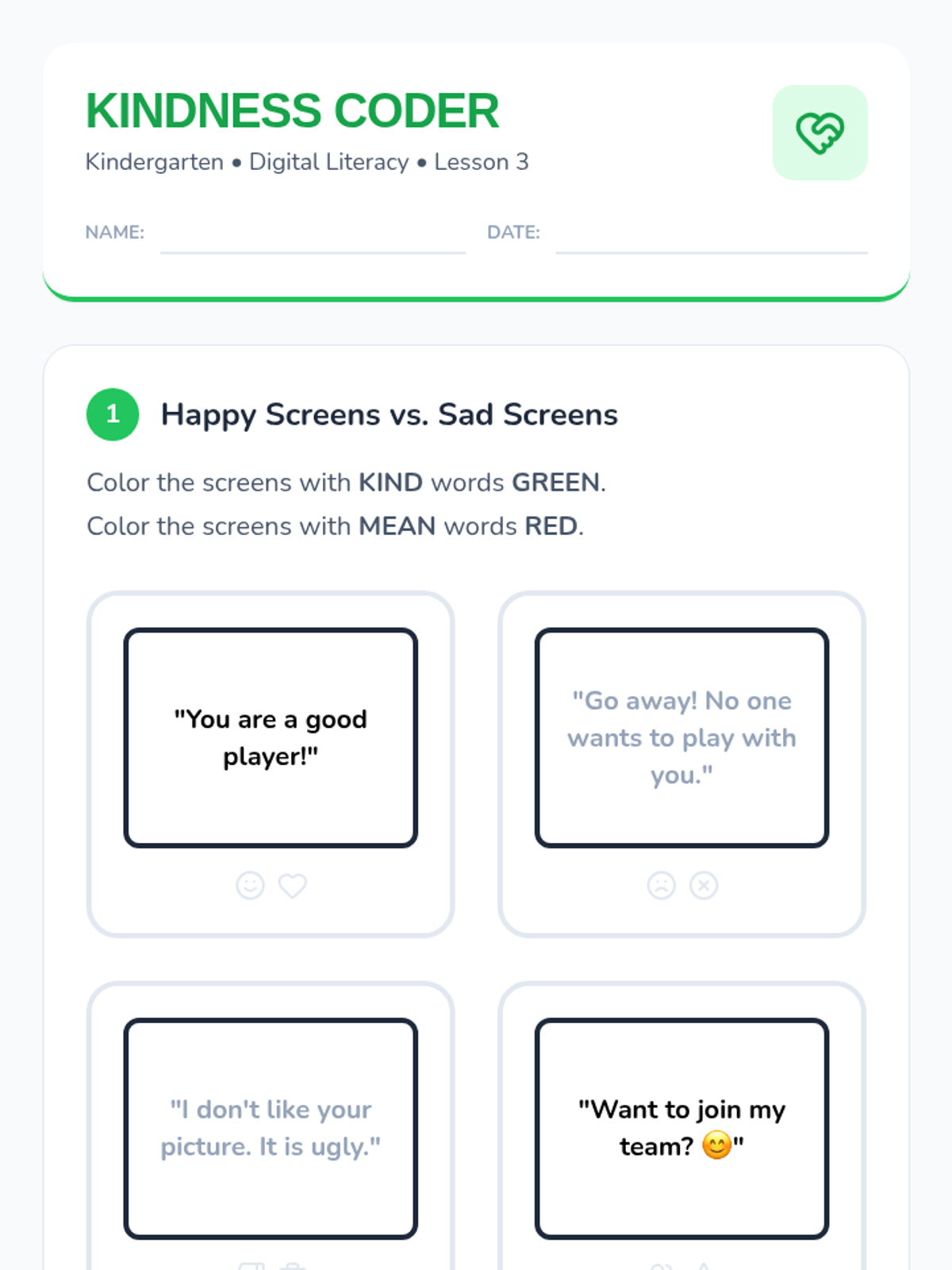
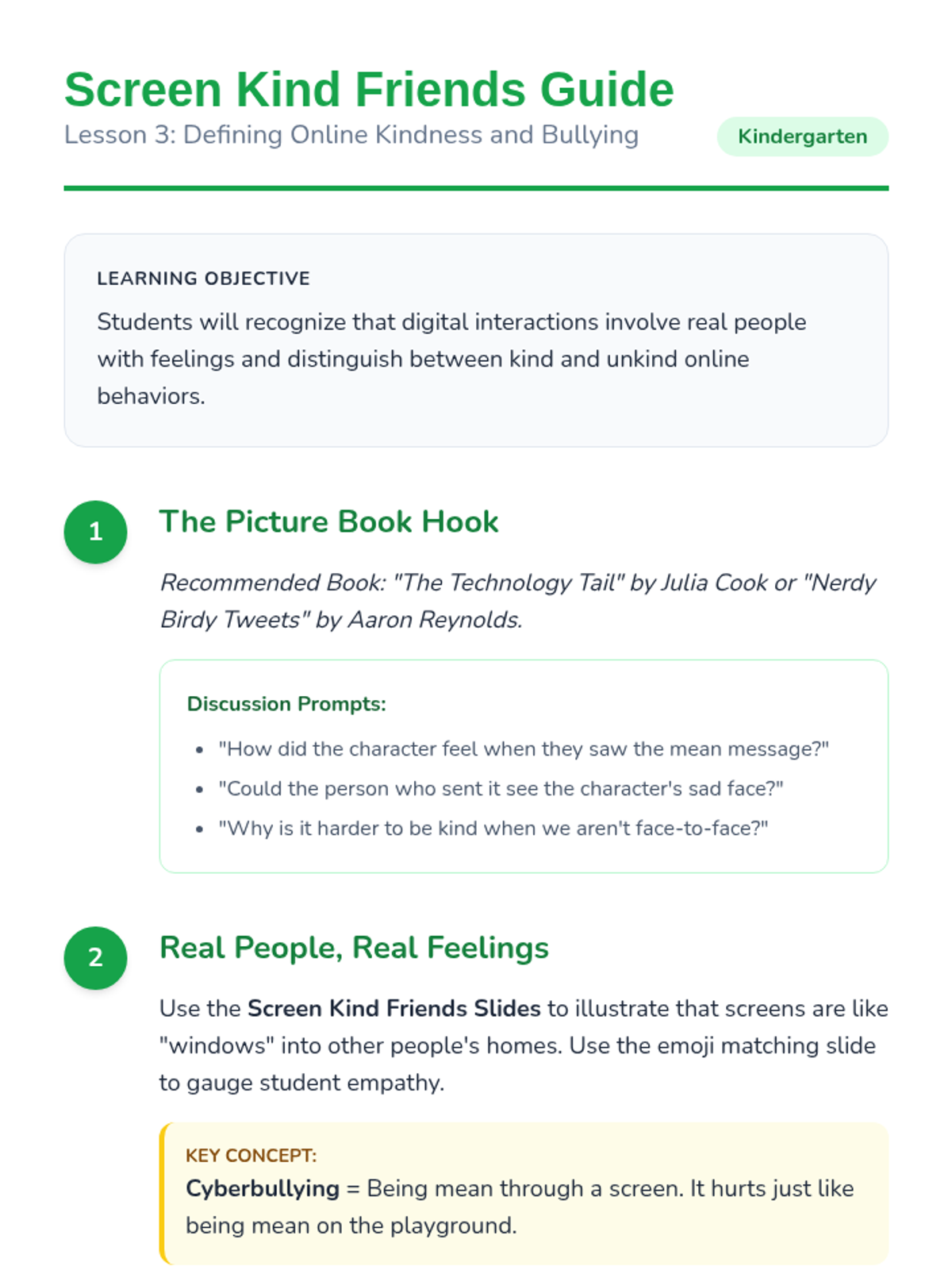
Students learn to identify kind and unkind digital behaviors, focusing on the feelings of others behind the screen and the basics of cyberbullying prevention.
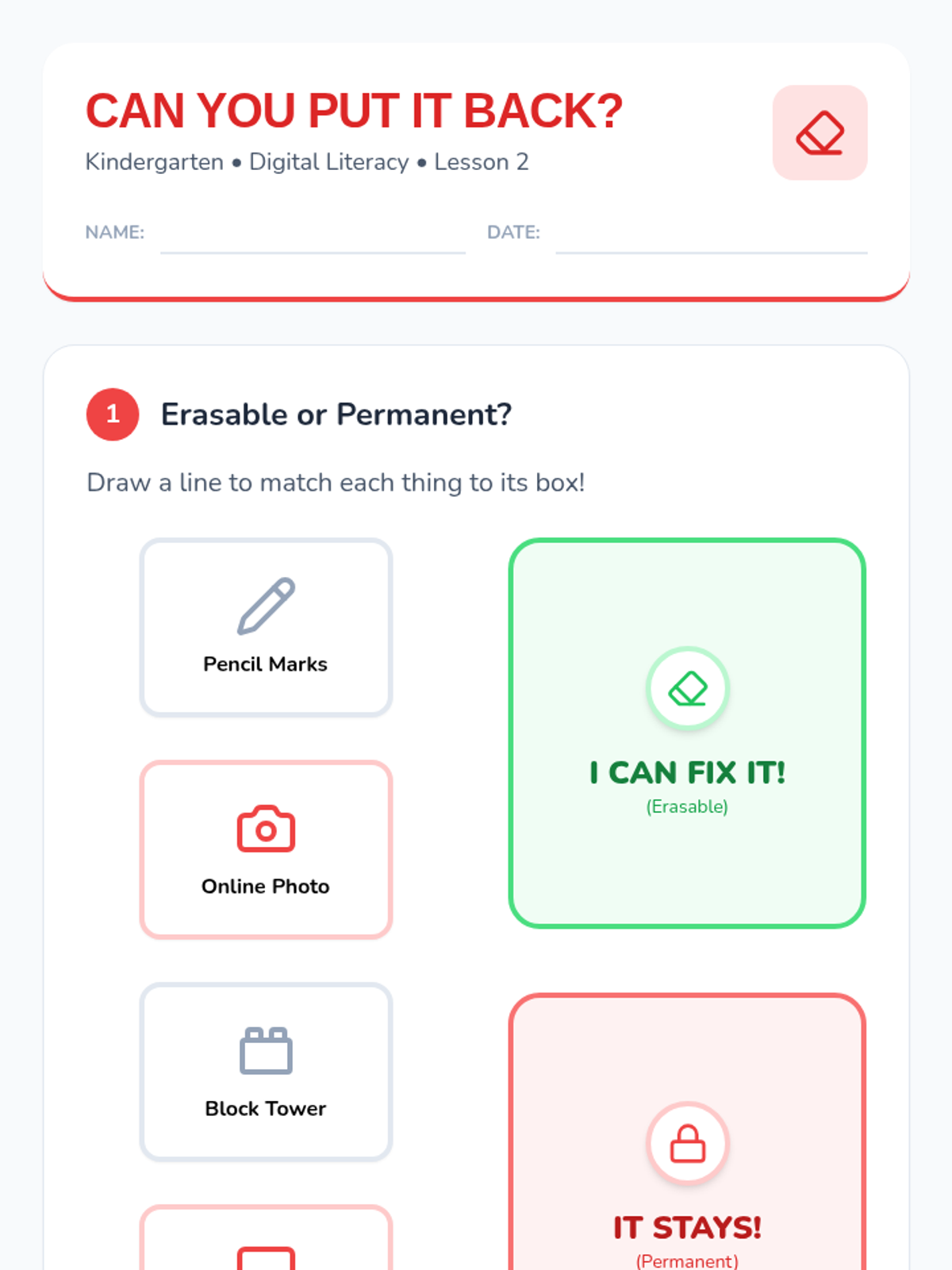
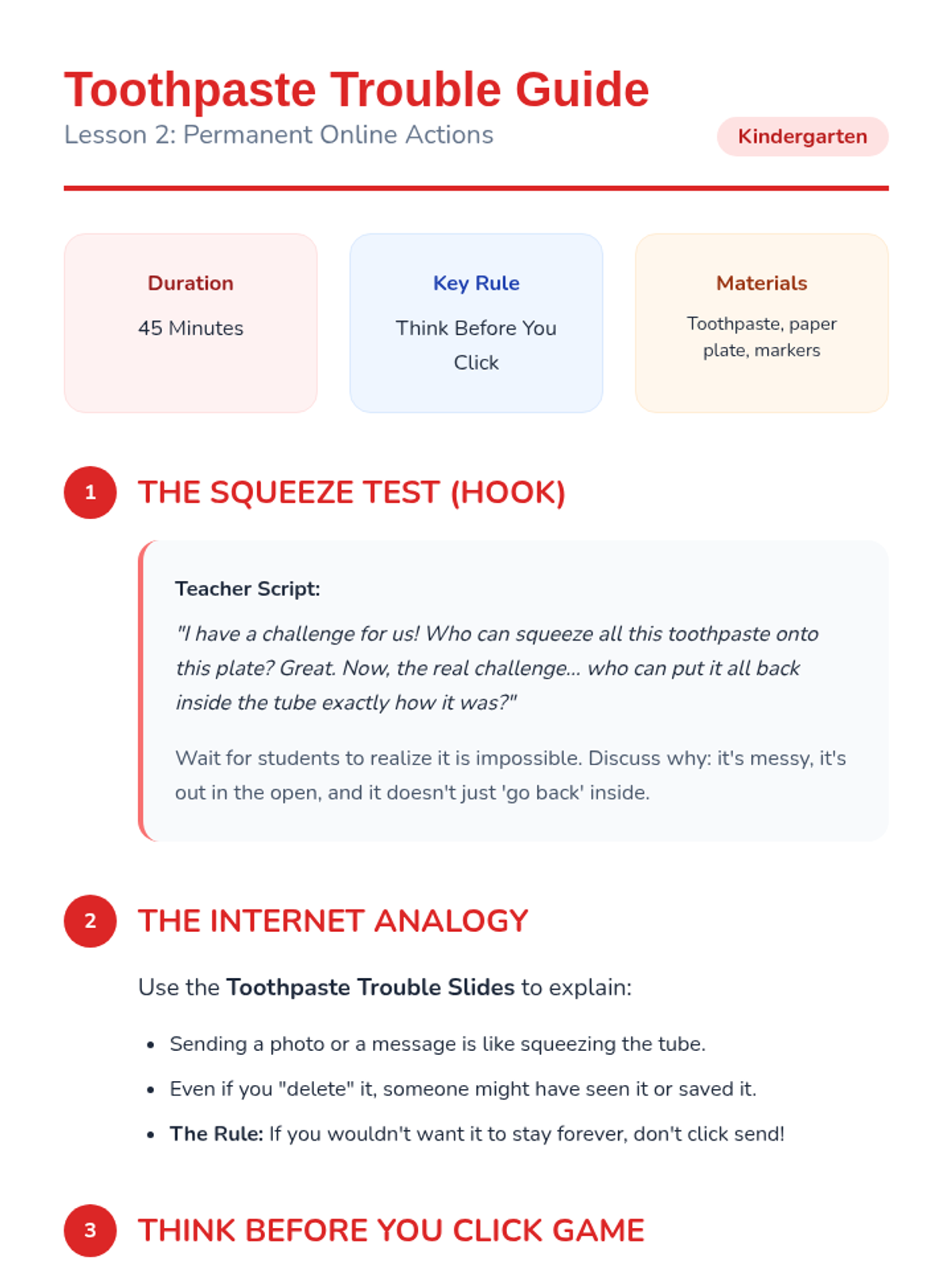
Using the toothpaste analogy, students learn that online actions are permanent and practice the "Think Before You Click" strategy to manage their digital presence.
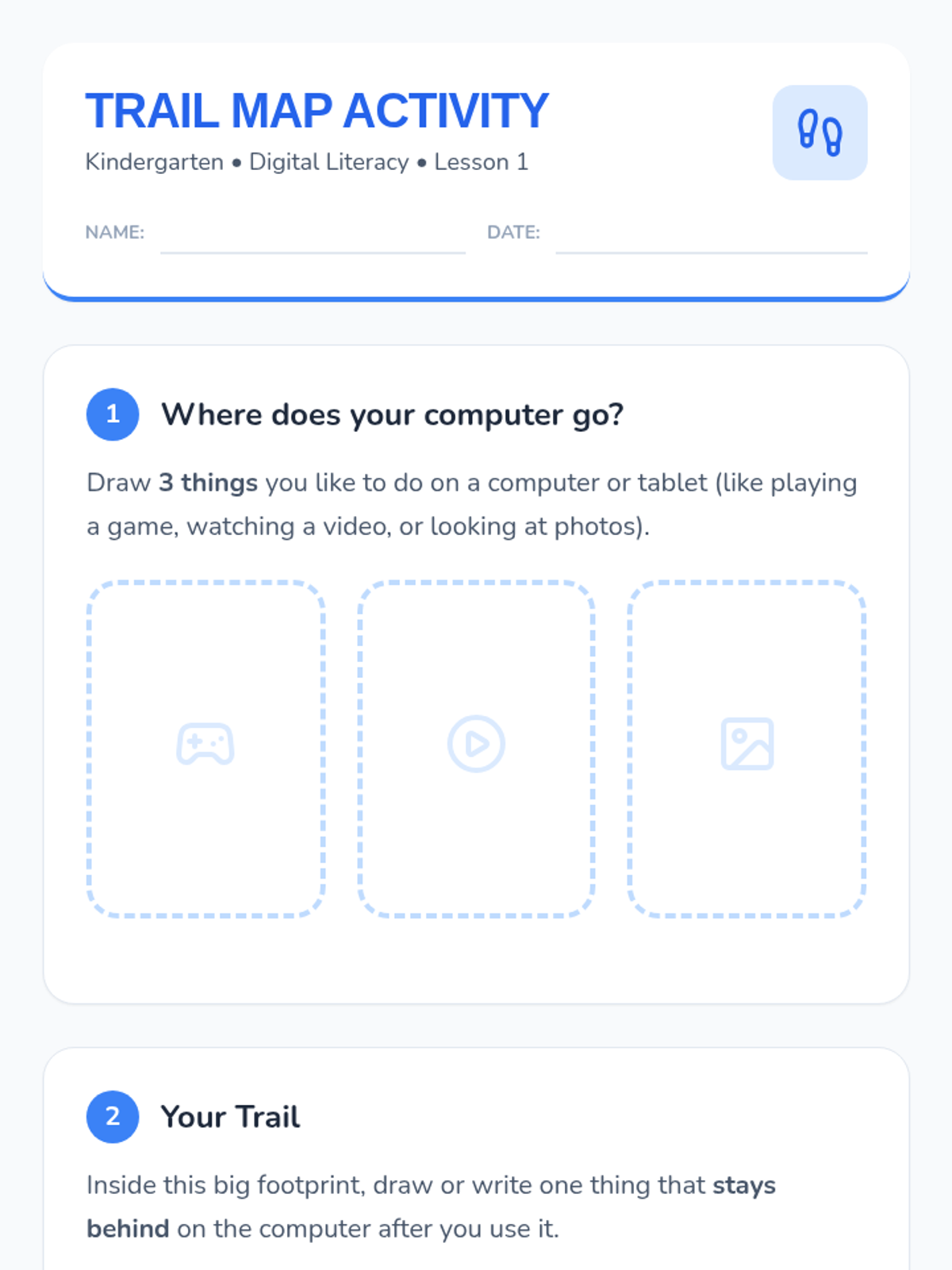
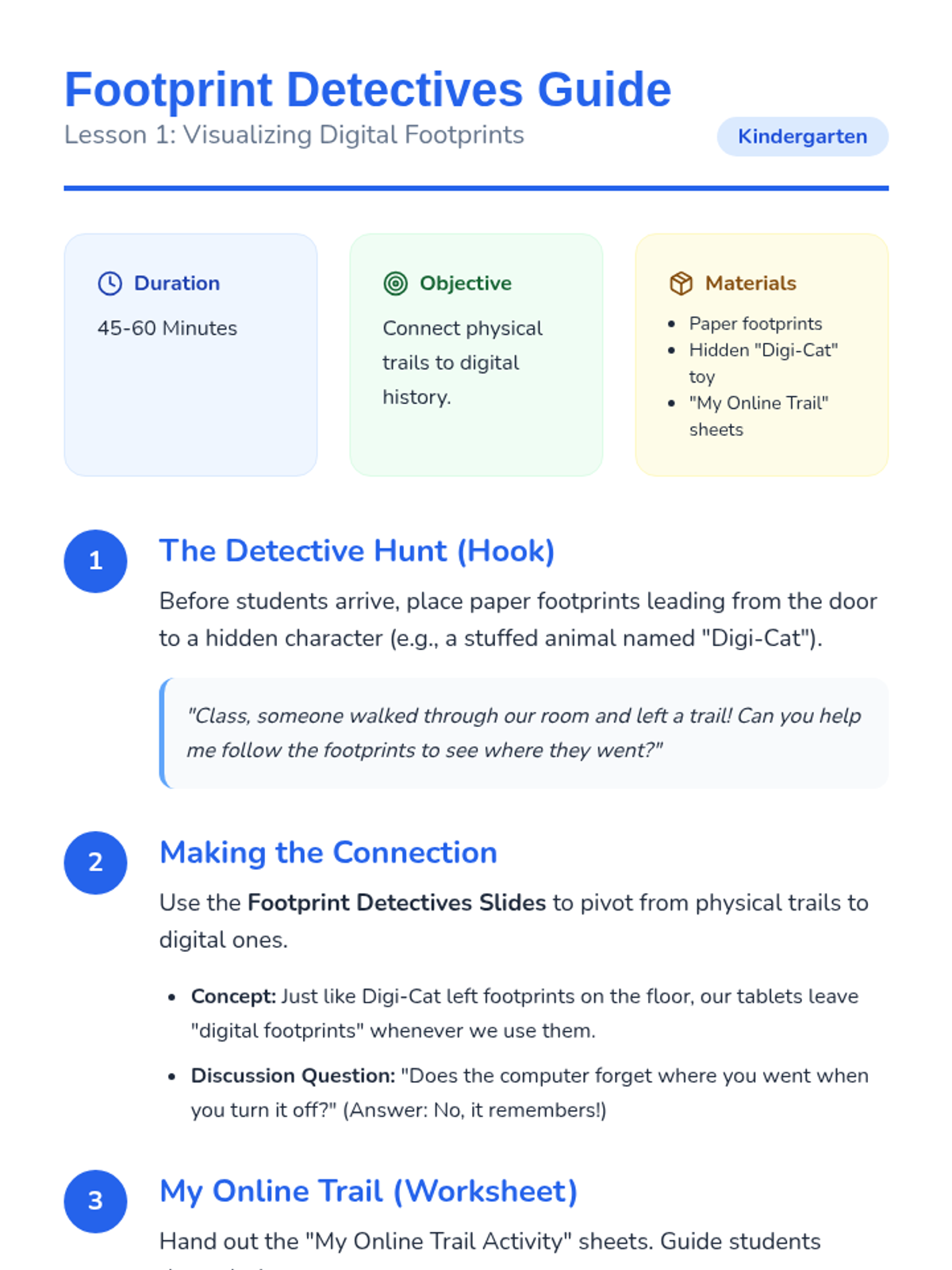
Students explore how digital actions leave trails by connecting physical footprints to their digital history, emphasizing that computers remember our paths.
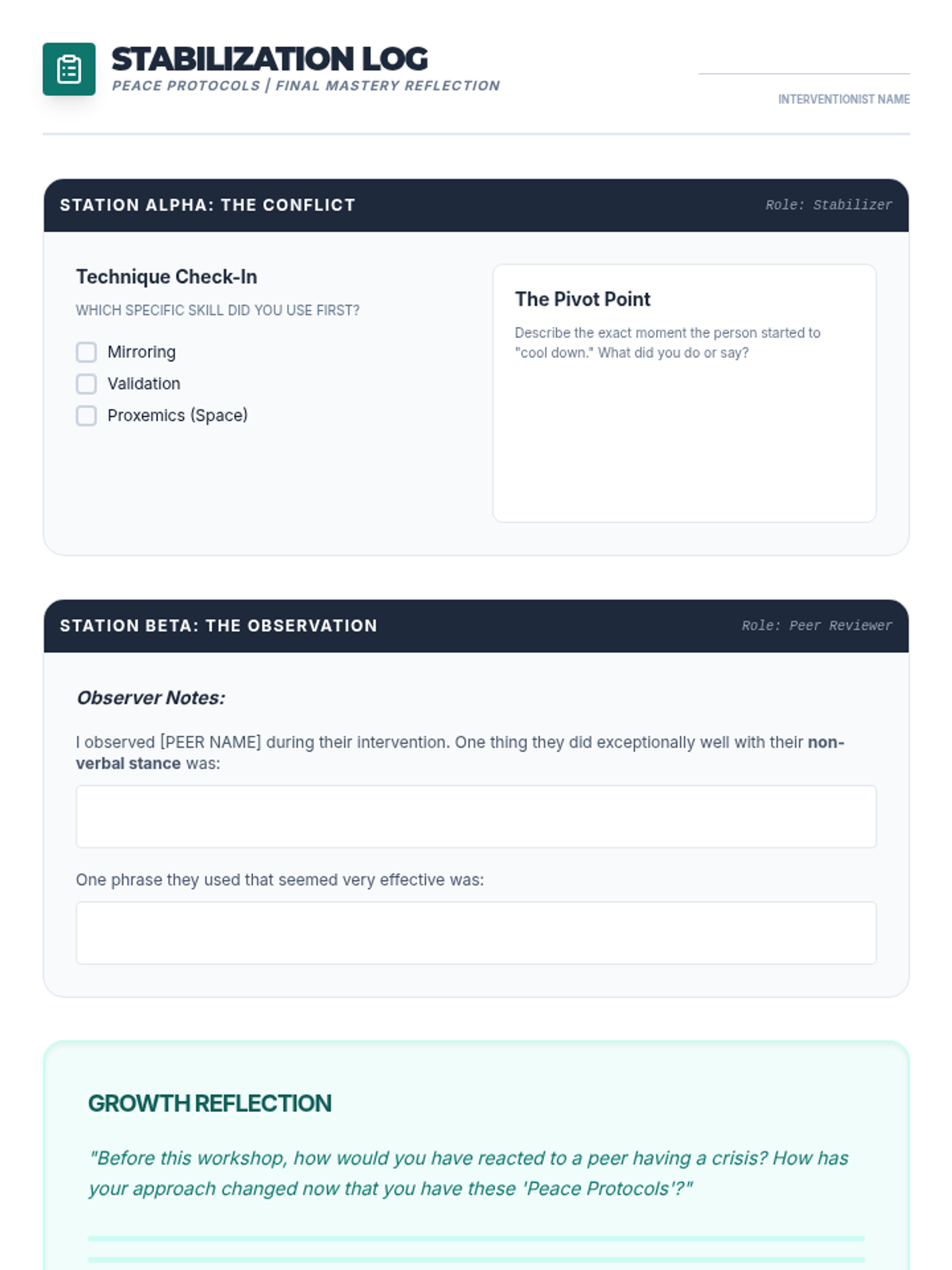
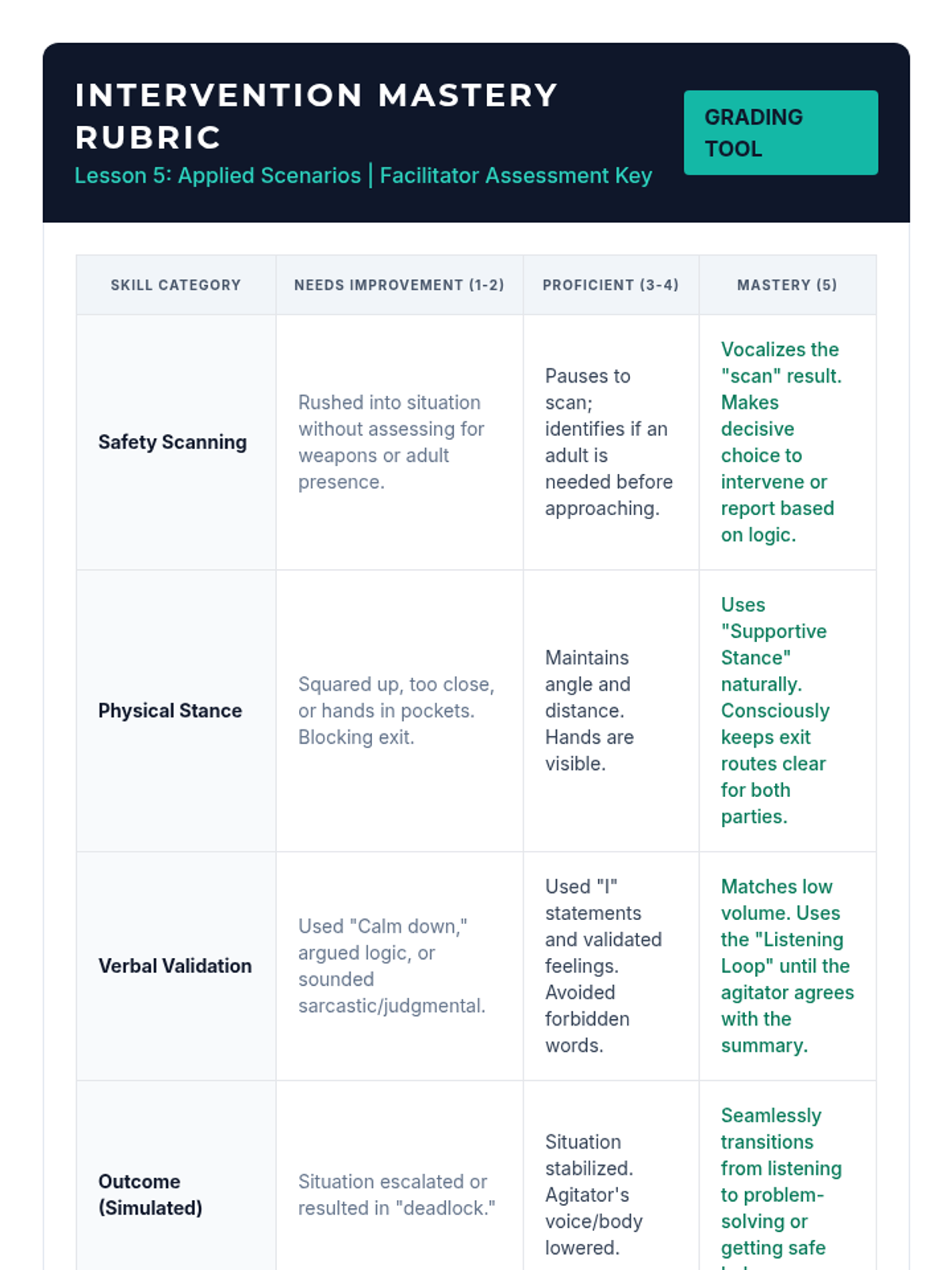
A mastery session where students apply all learned strategies in live role-play stations representing common school-based conflicts.
Focus on empathy and active listening techniques, teaching students to mirror emotions and summarize statements to help agitated peers feel heard.
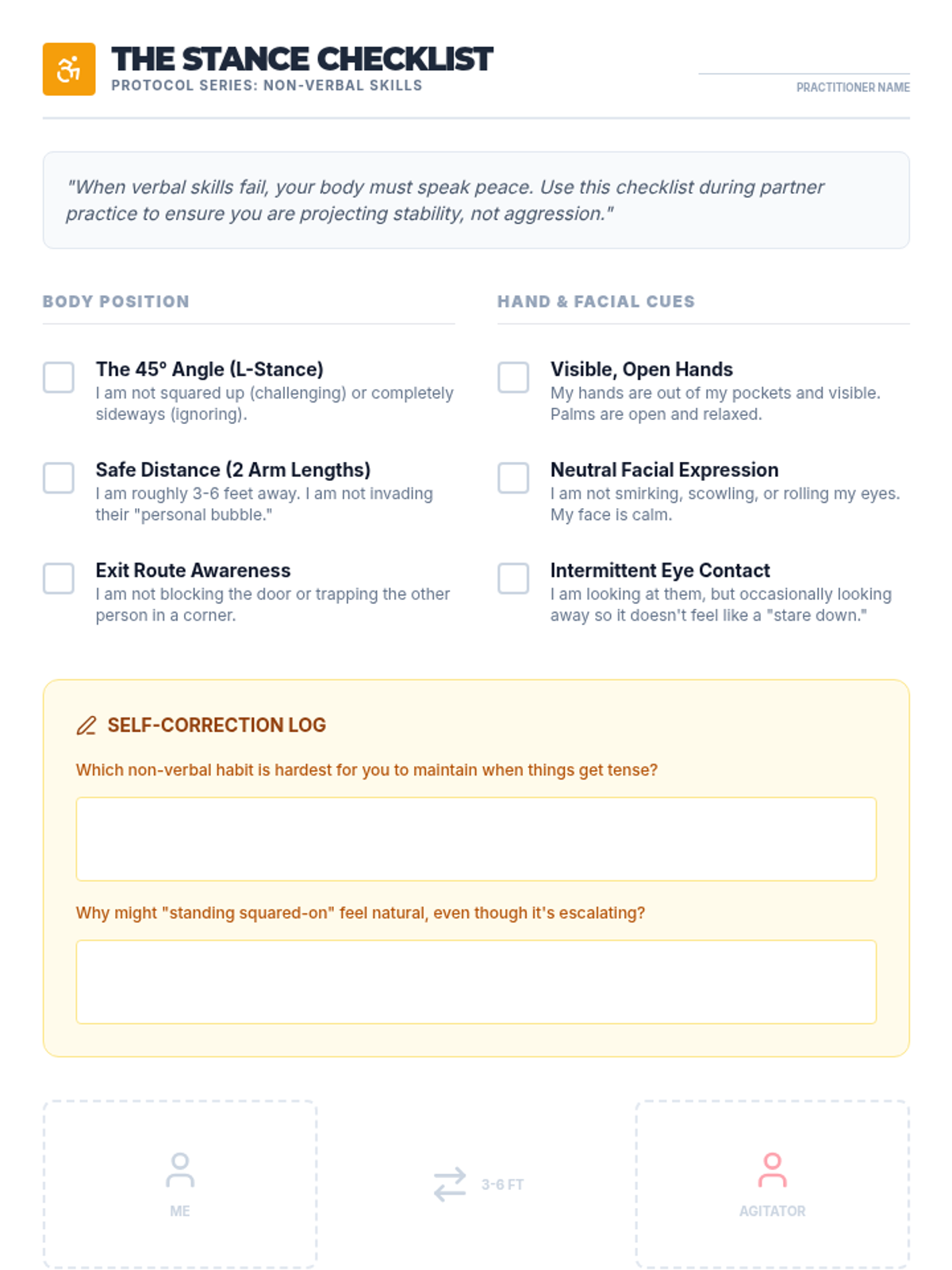
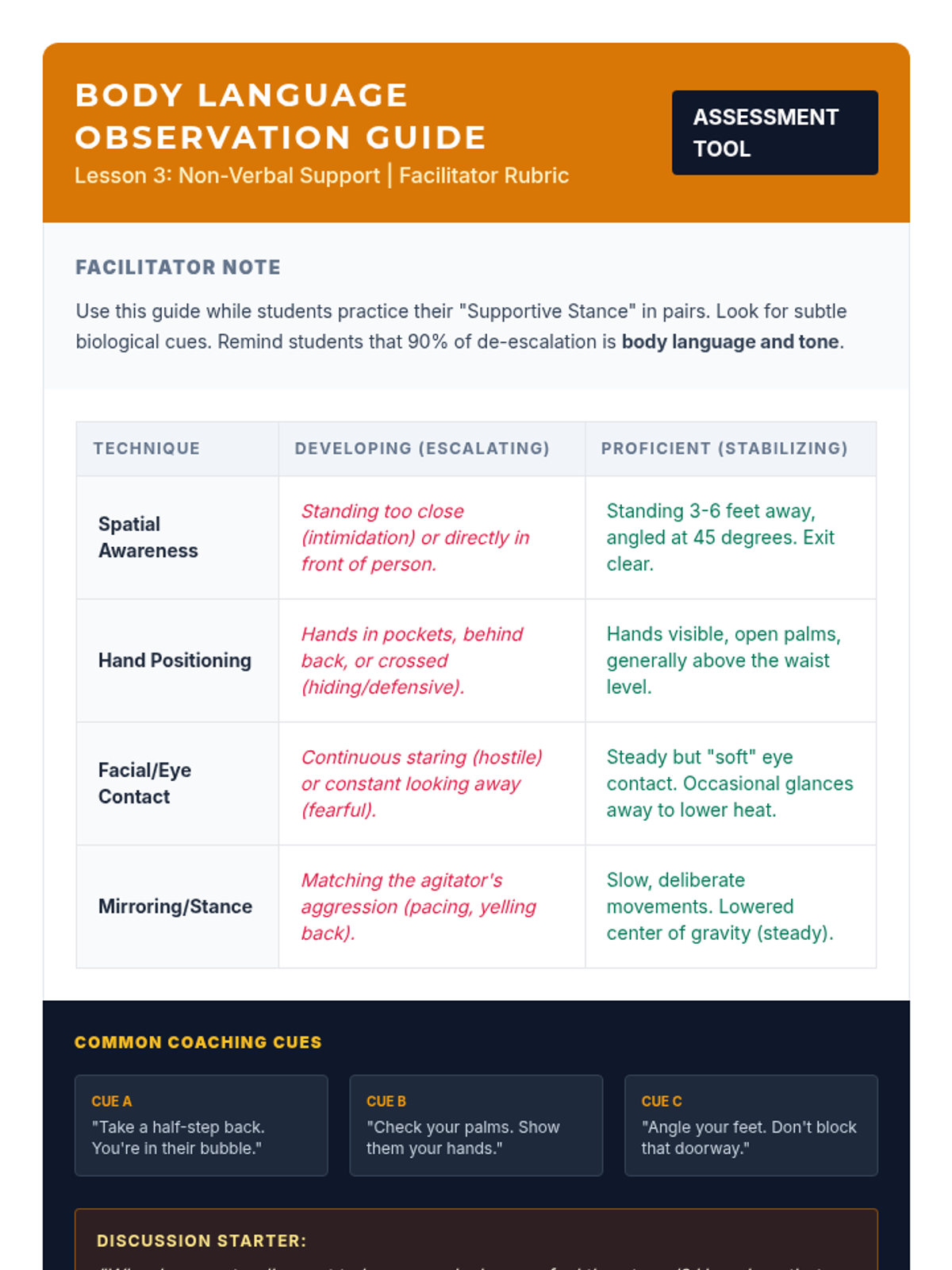
Exploration of personal space (proxemics) and body stance to understand how non-verbal cues impact an agitated person and how to maintain a supportive stance.
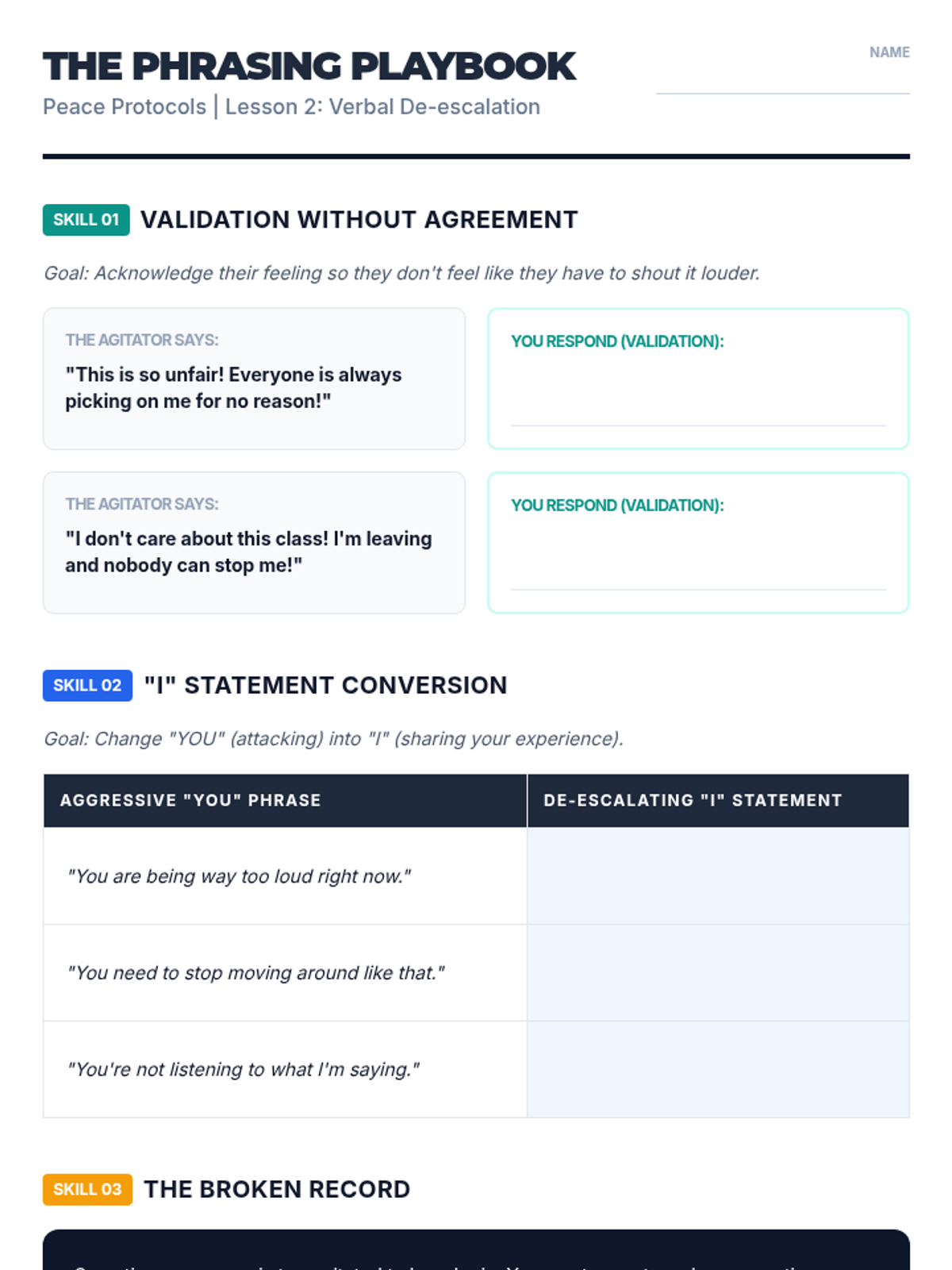
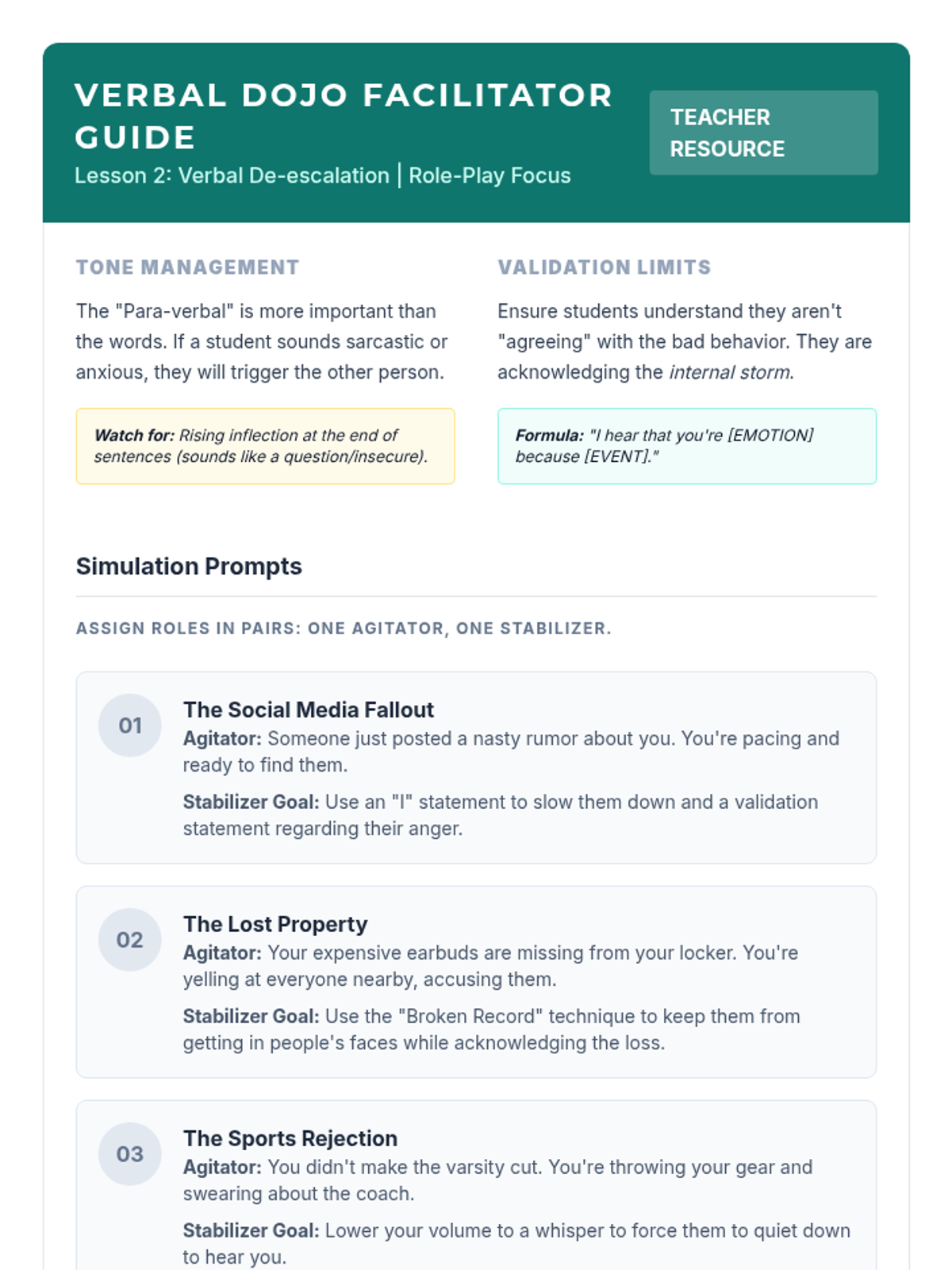
Students practice verbal de-escalation techniques, focusing on tone, volume, and phrasing (the 'Verbal Judo' approach) to lower the temperature of tense interactions.
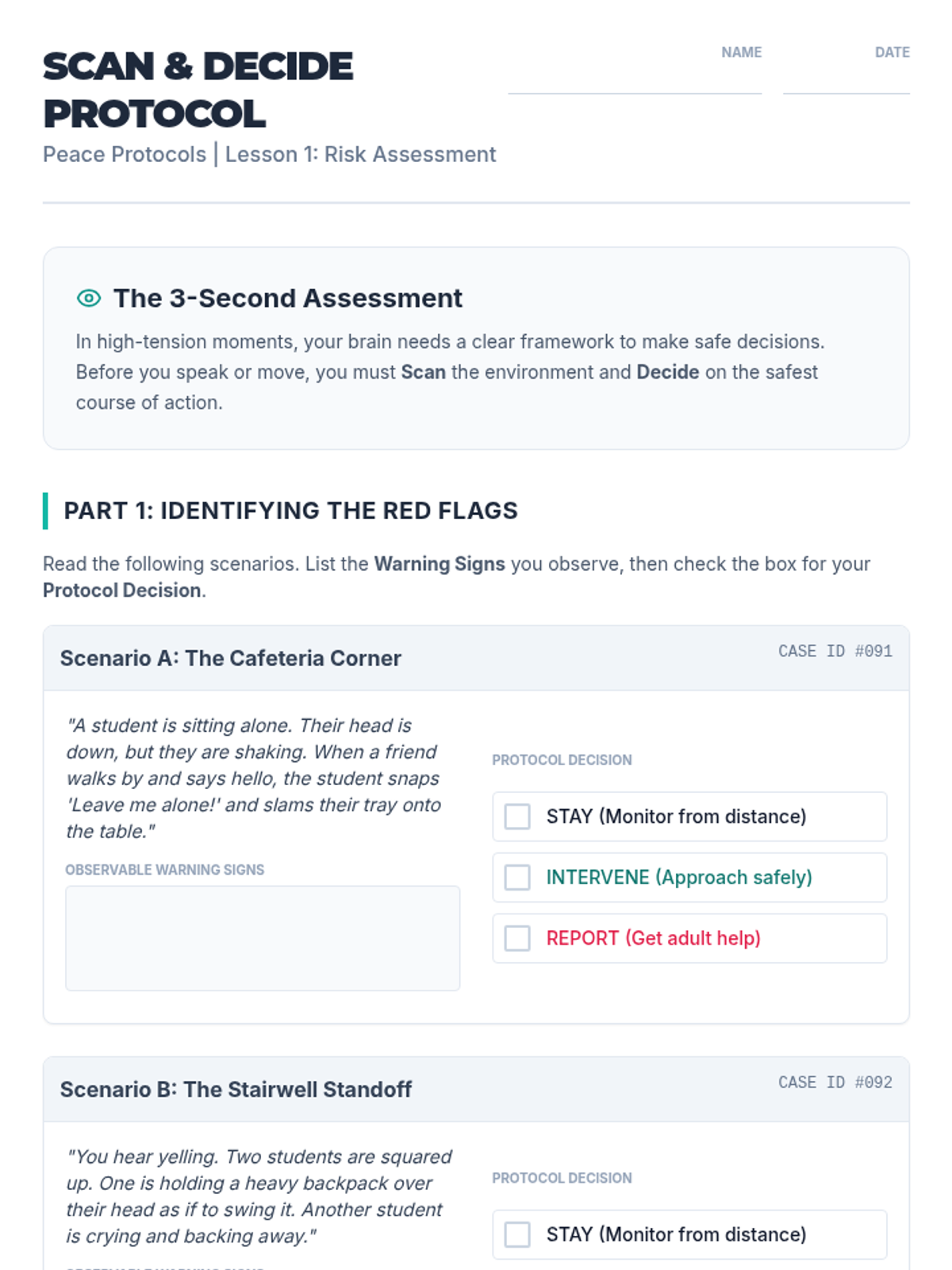
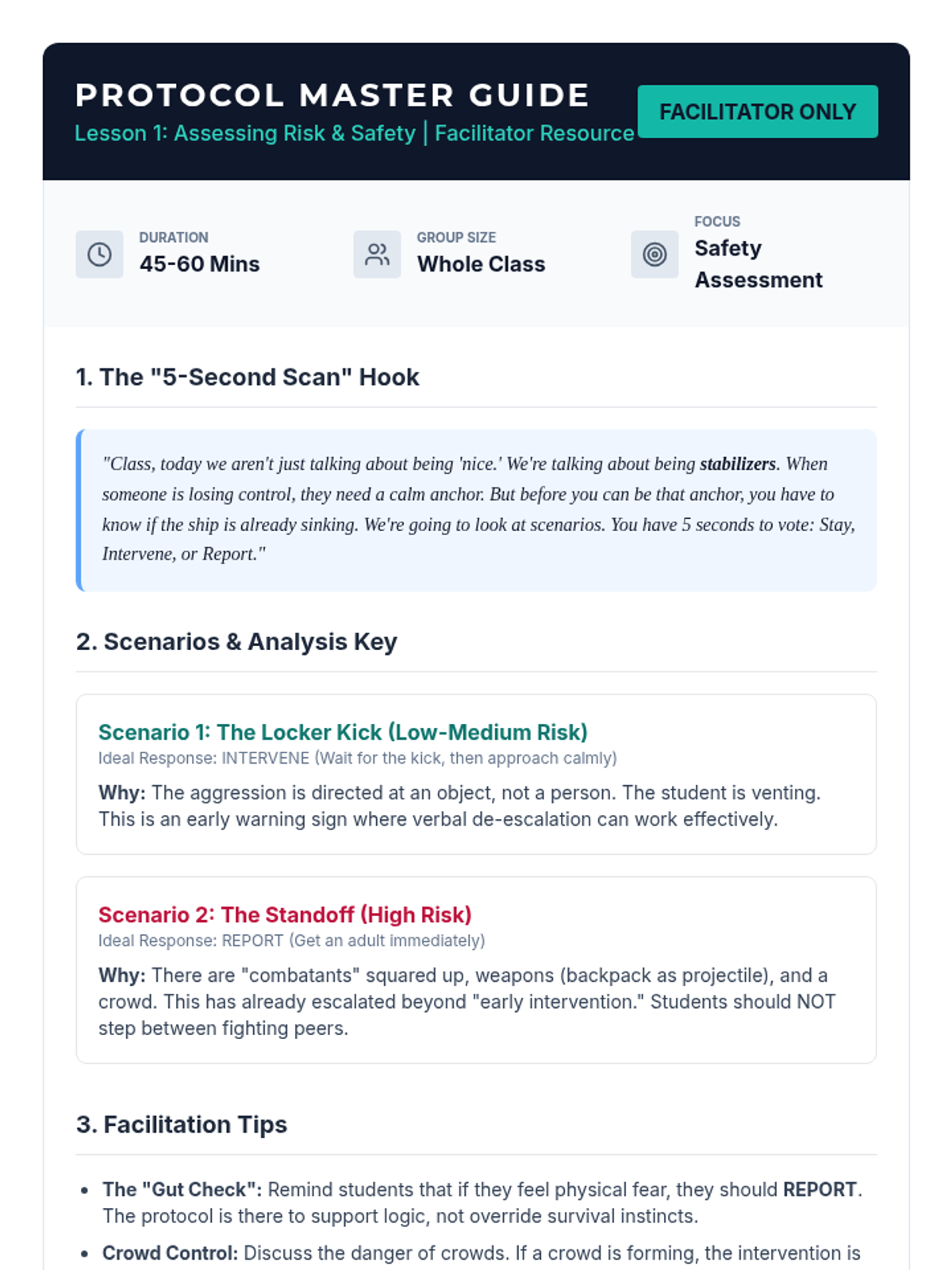
Students learn to assess the safety of a situation using a 'scan and decide' protocol to determine if they should approach a peer or seek adult help immediately.
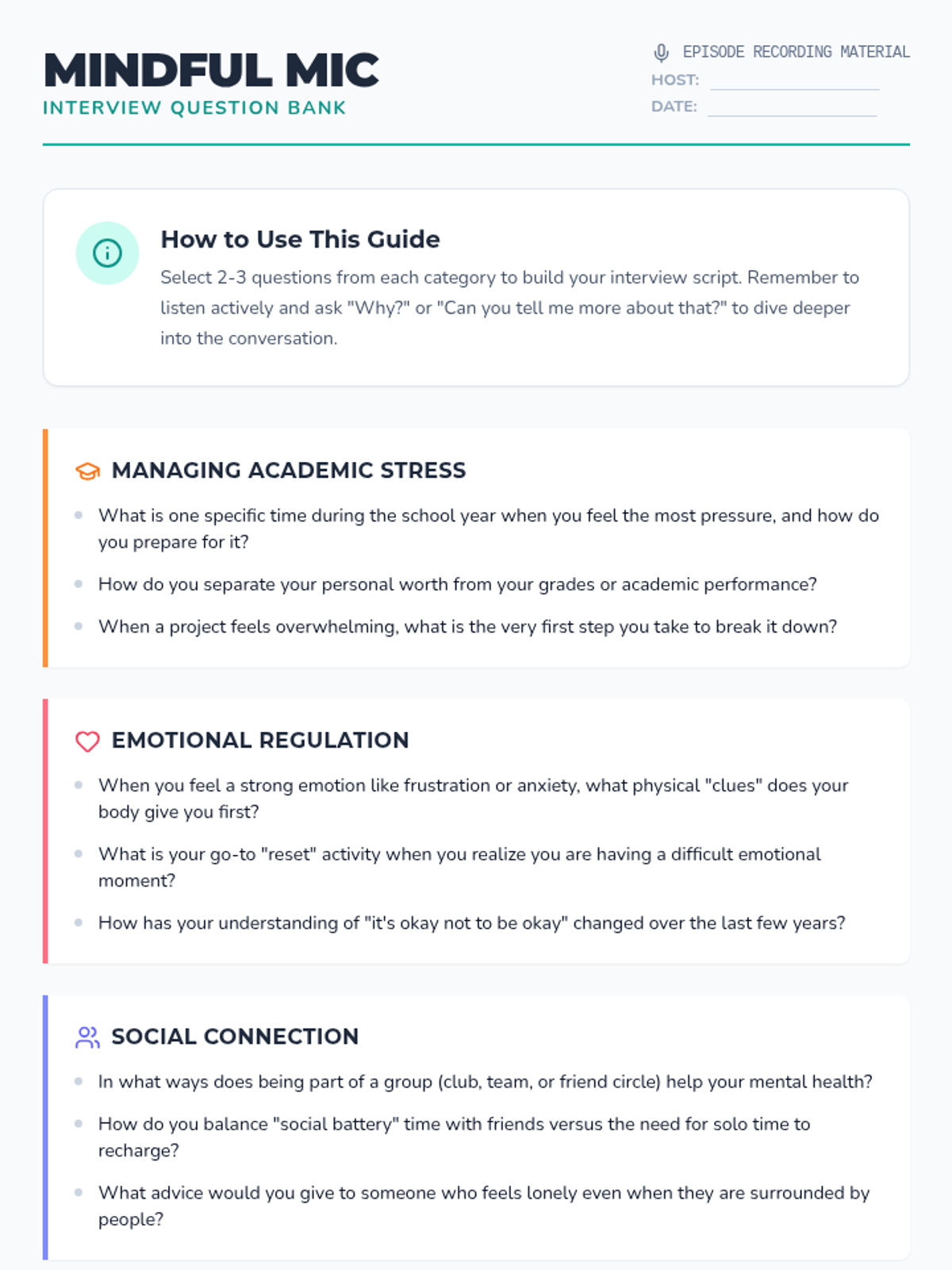
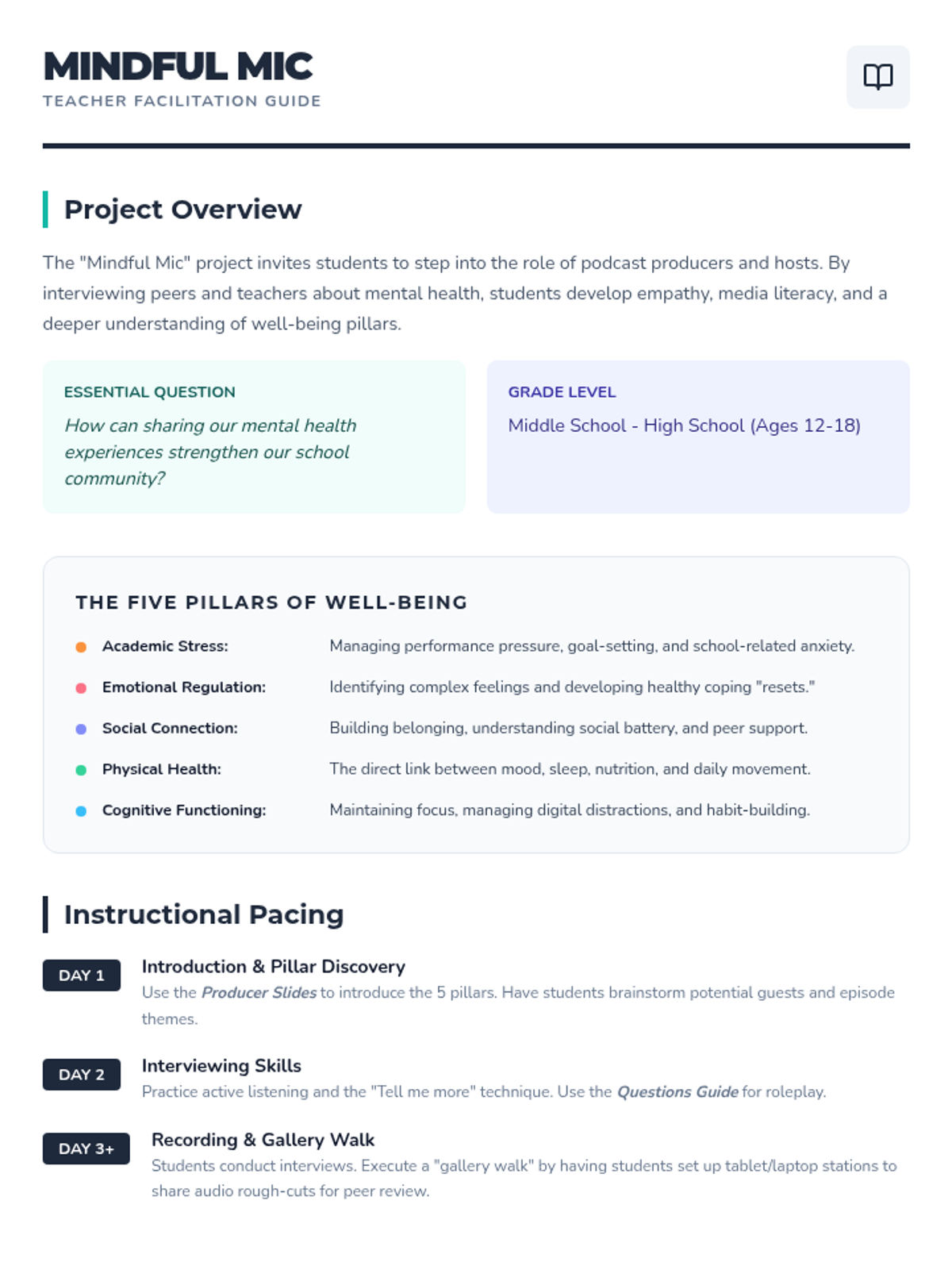
A comprehensive guide for students to produce a podcast exploring mental health through peer and teacher interviews. This lesson covers interview techniques and categorizes questions across five key pillars of well-being.
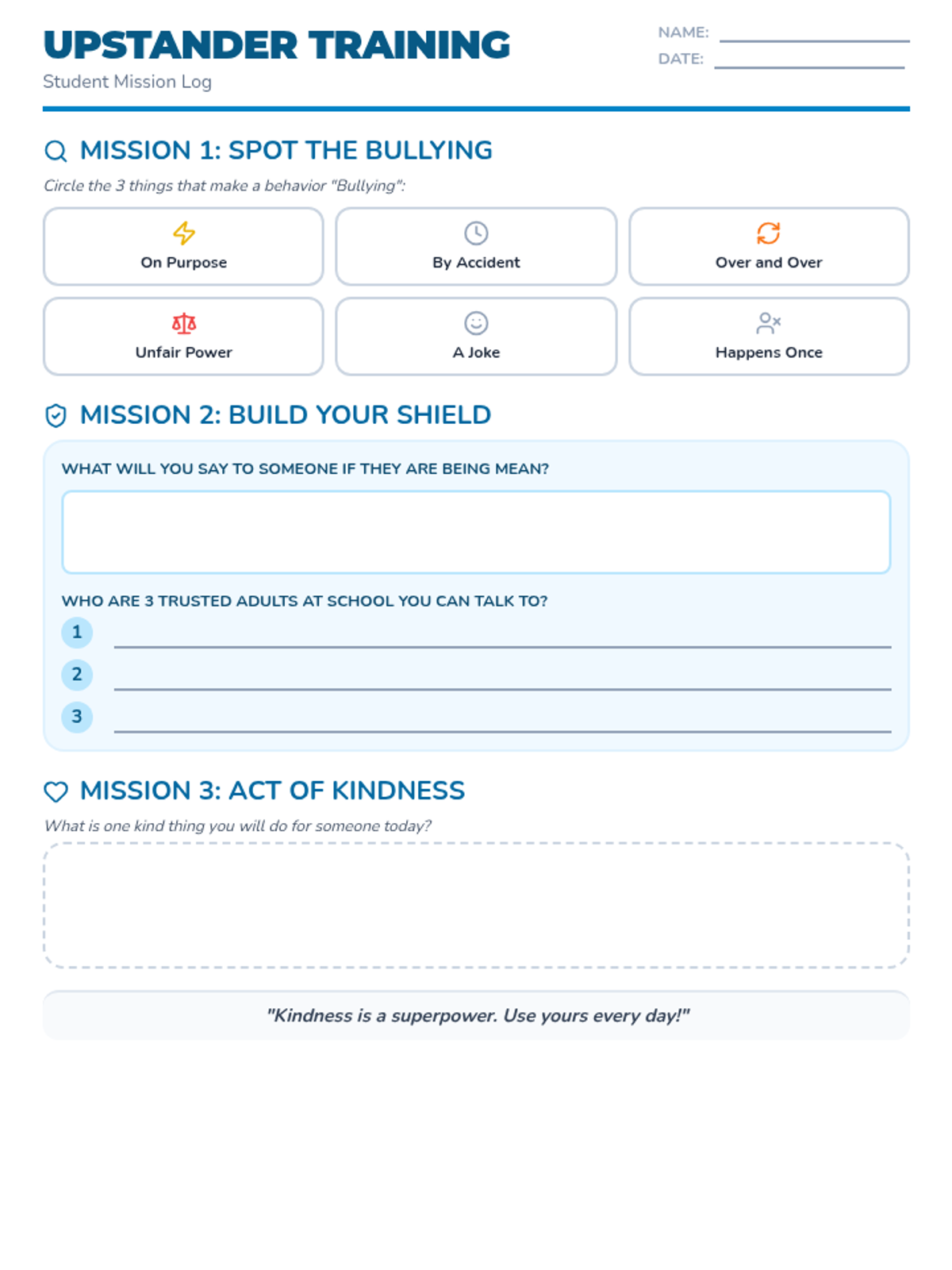
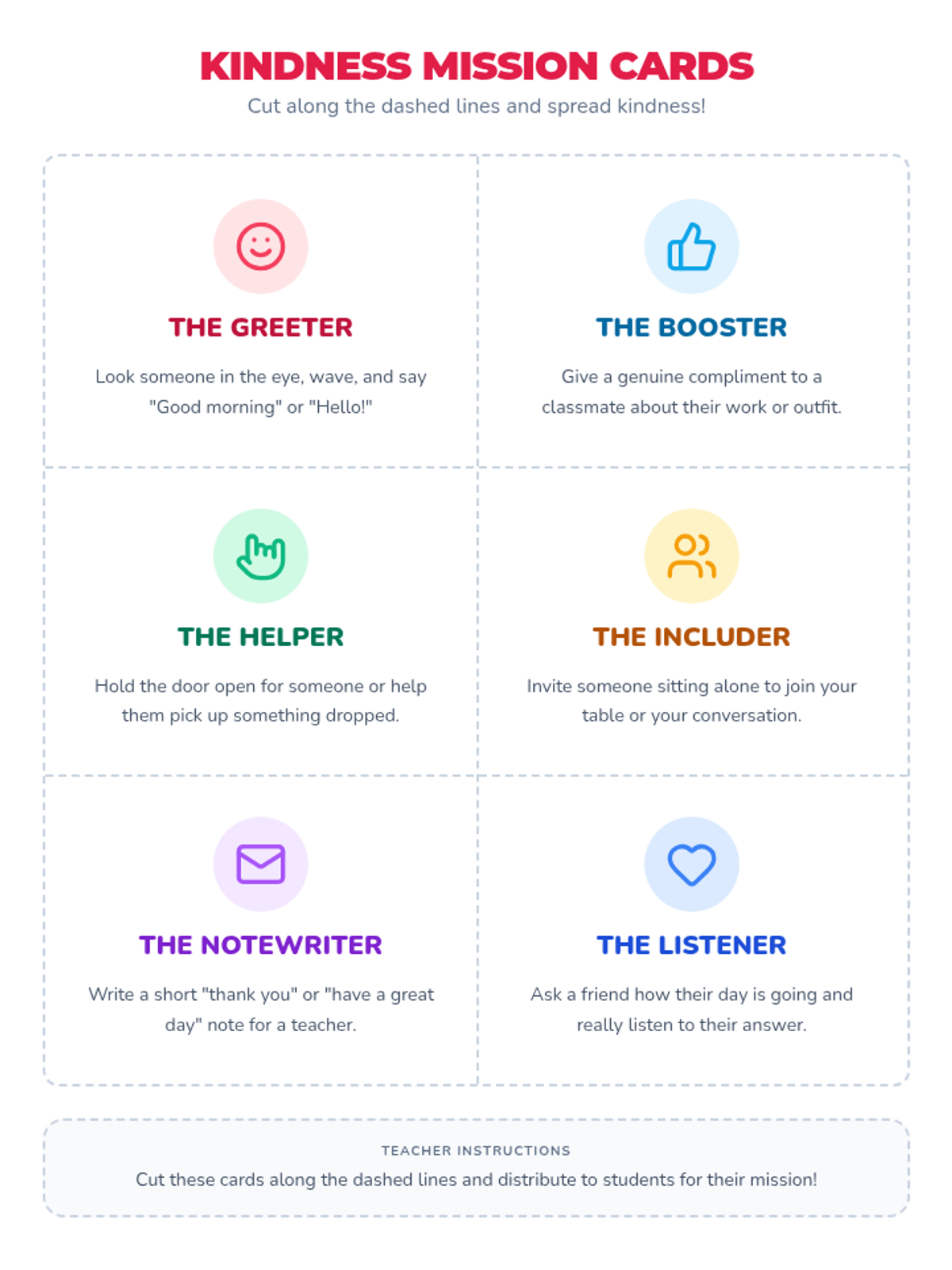
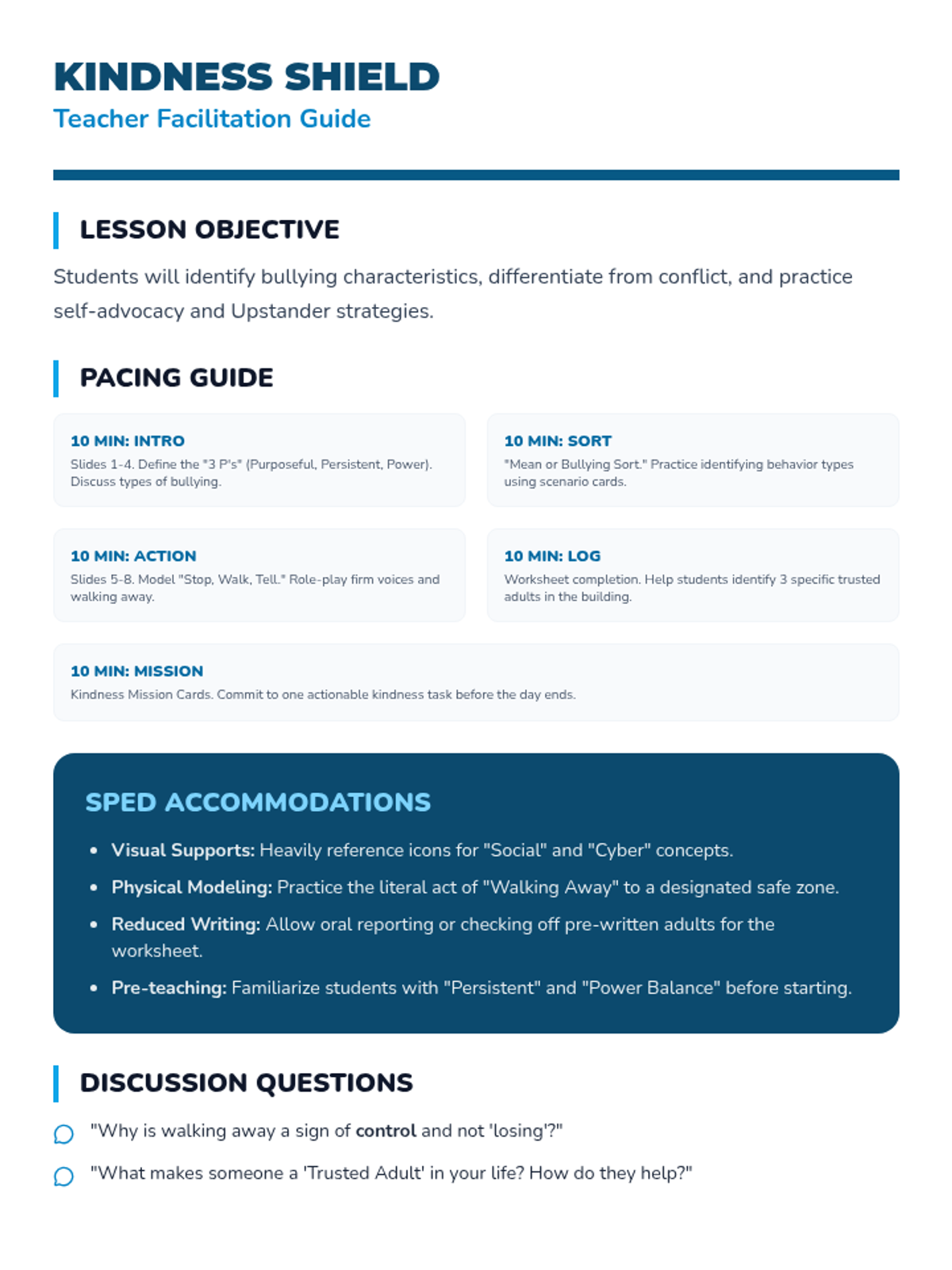
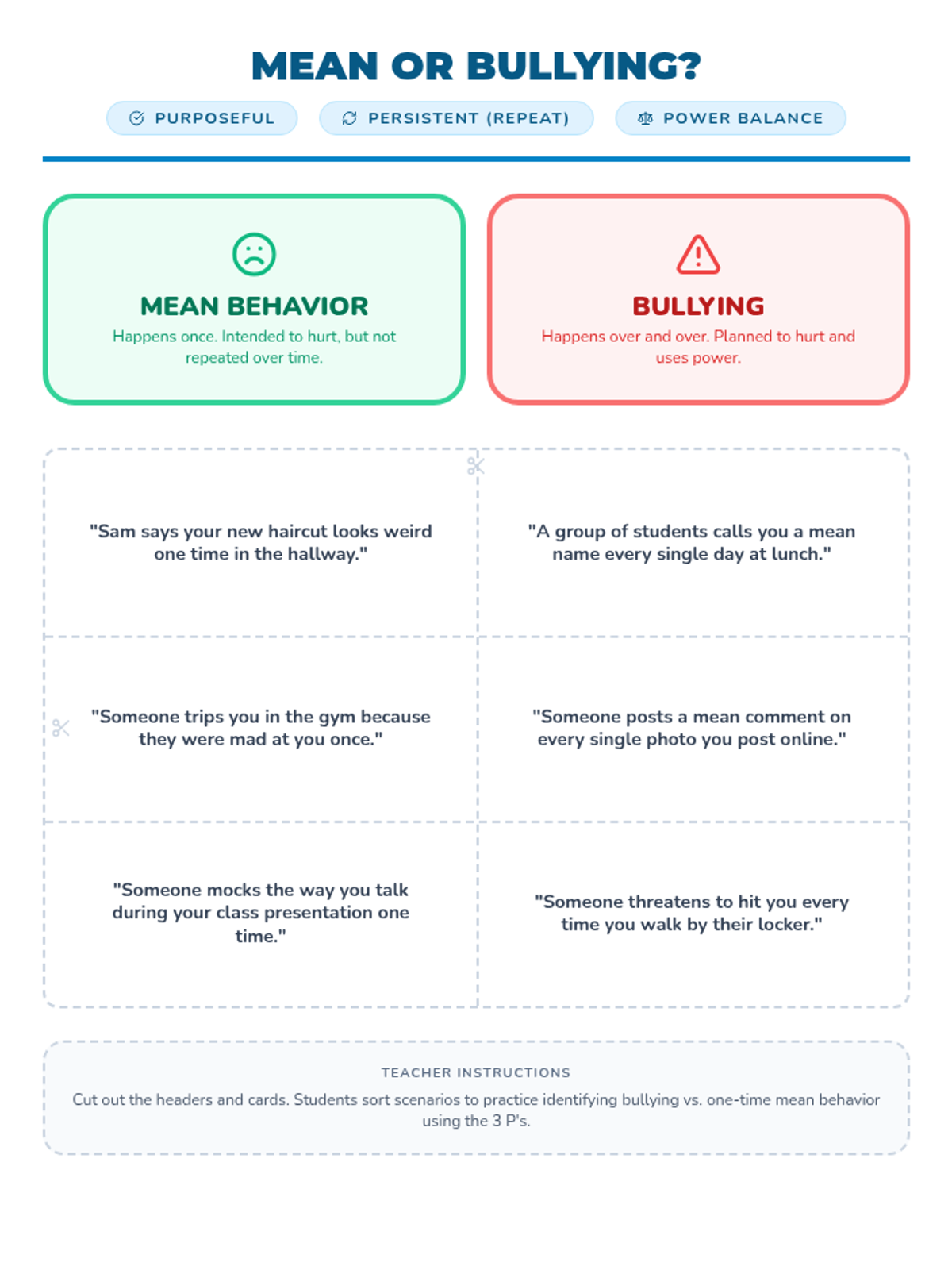
A supportive and practical lesson designed for high school special education students to identify bullying, learn intervention strategies, and practice active kindness through clear visuals and guided activities.
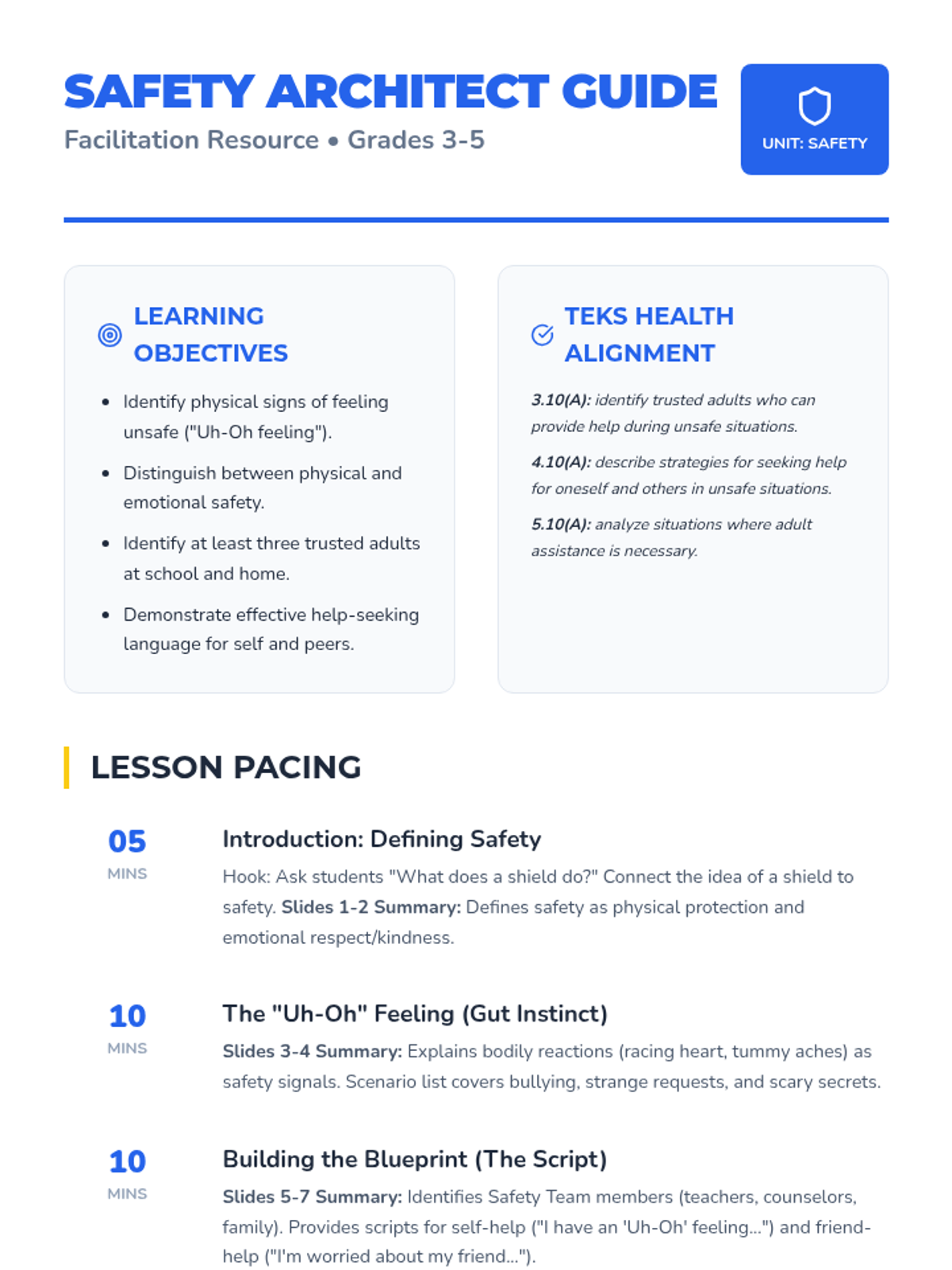
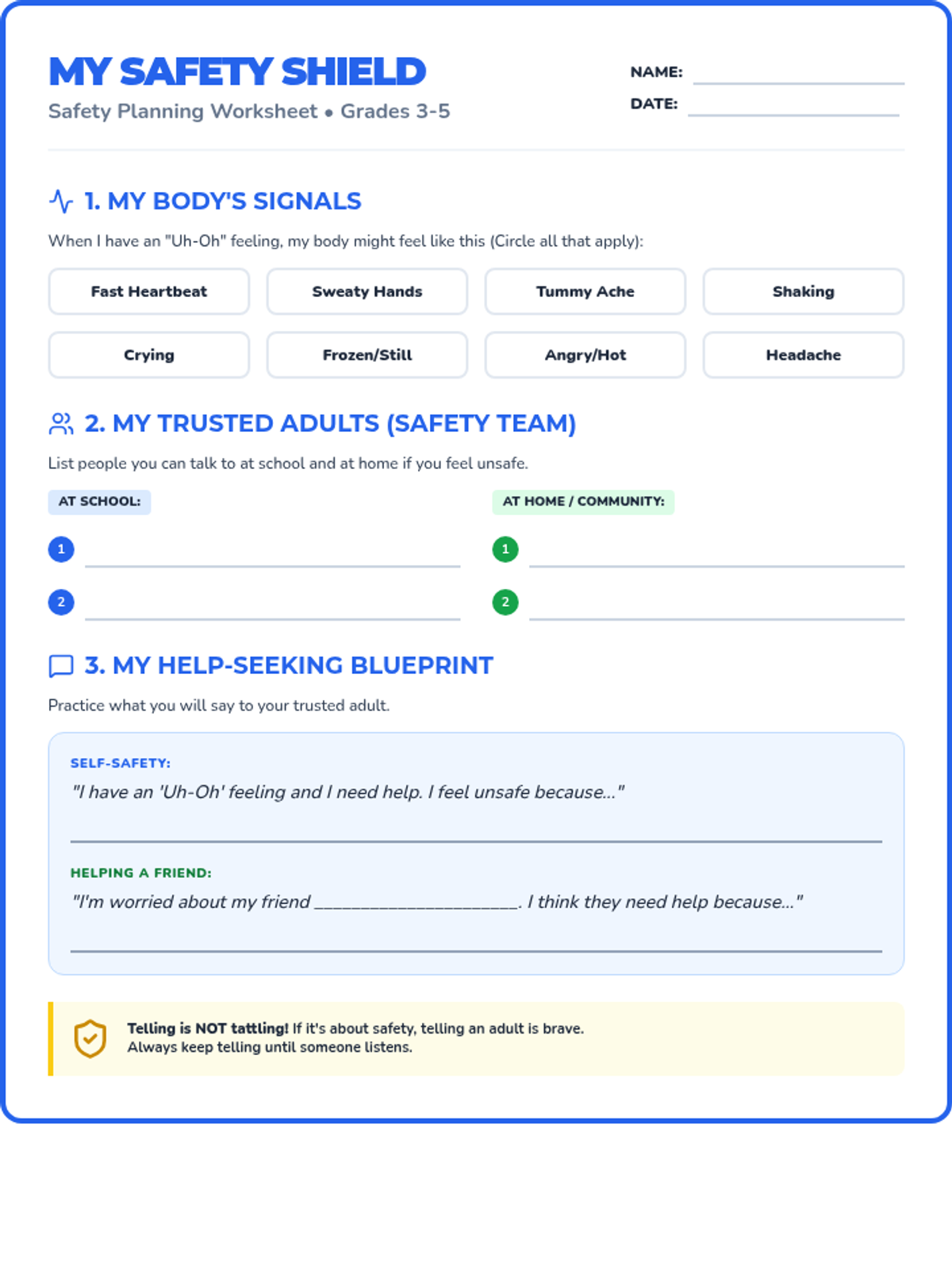
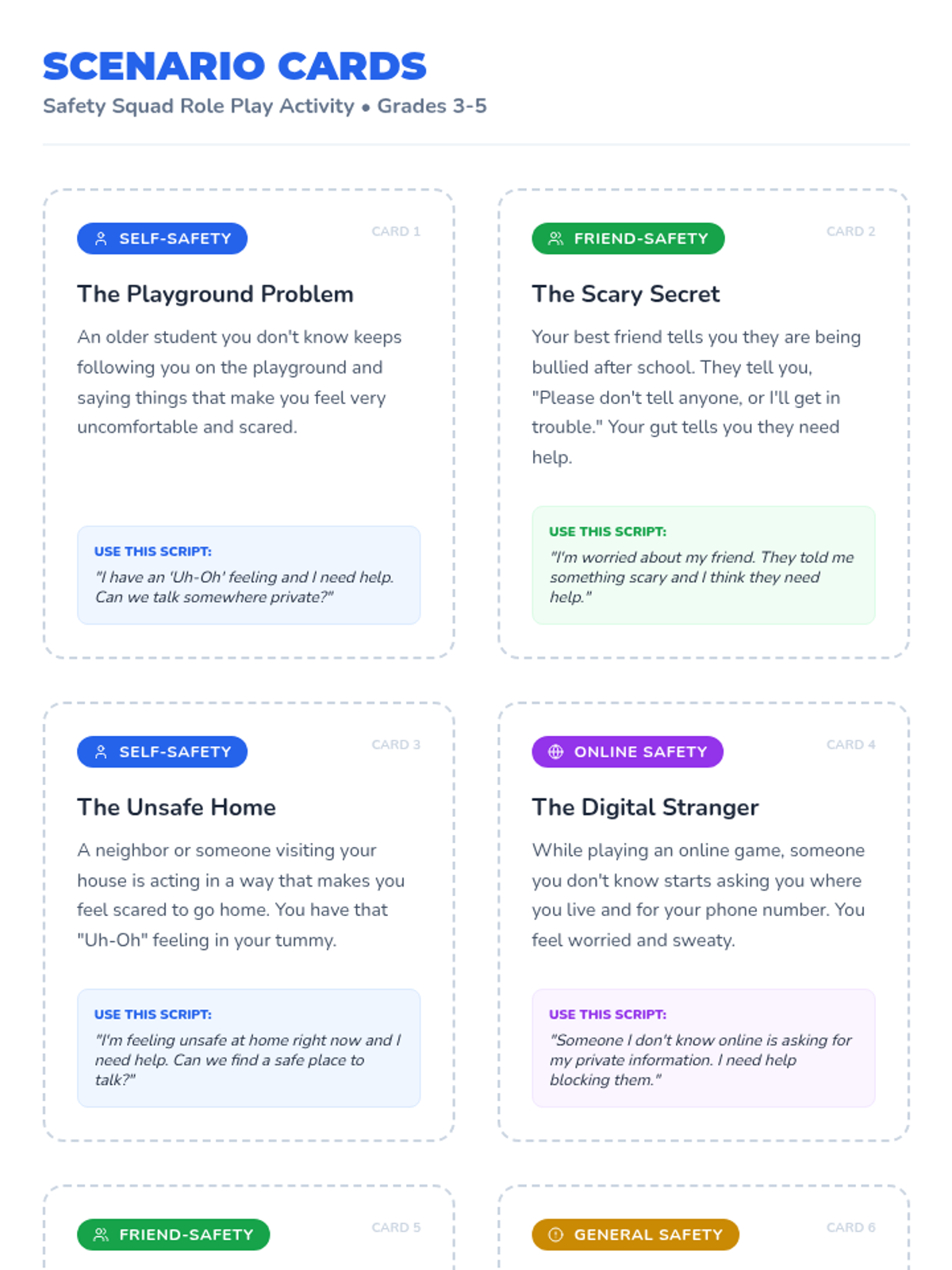
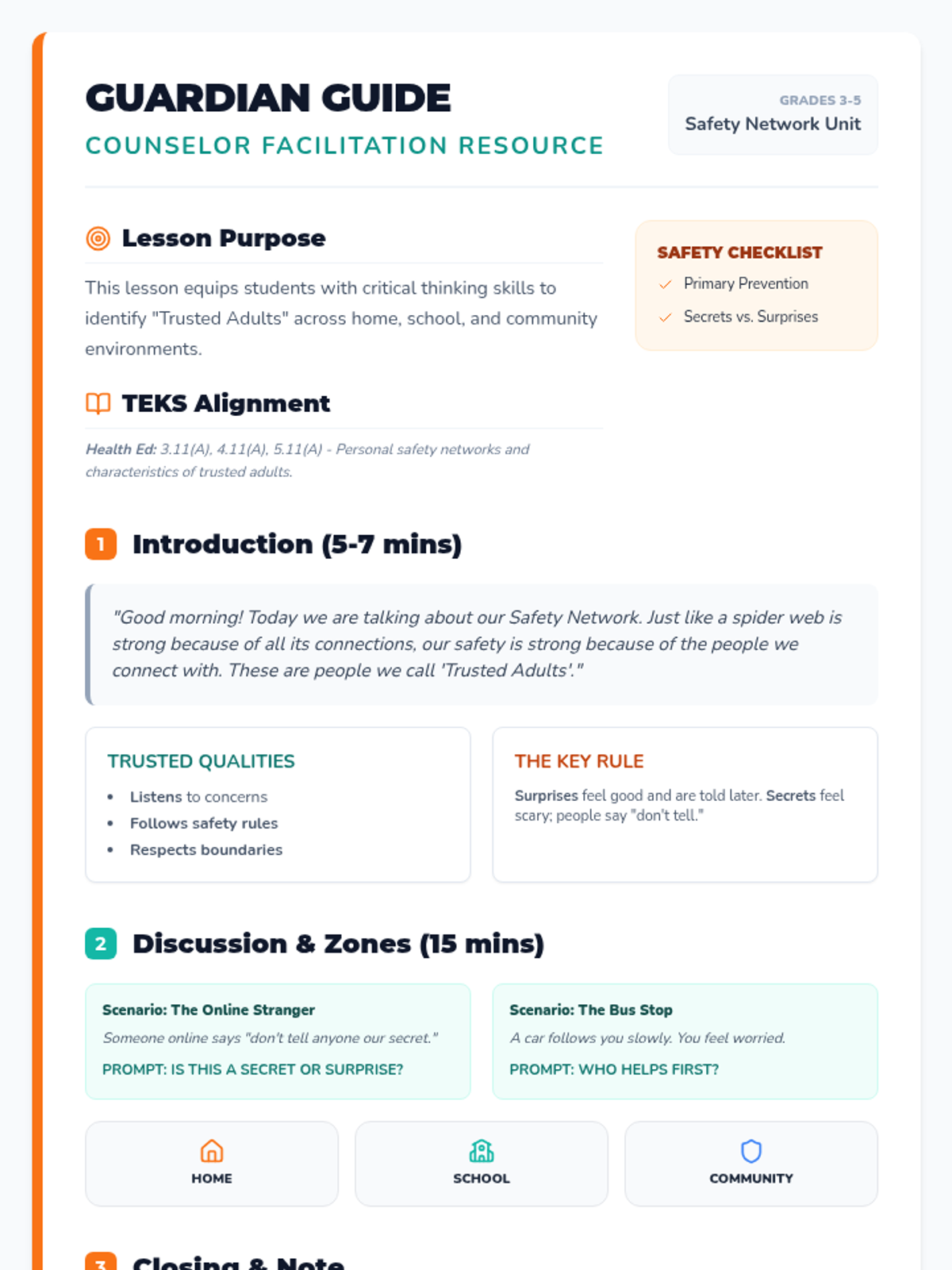
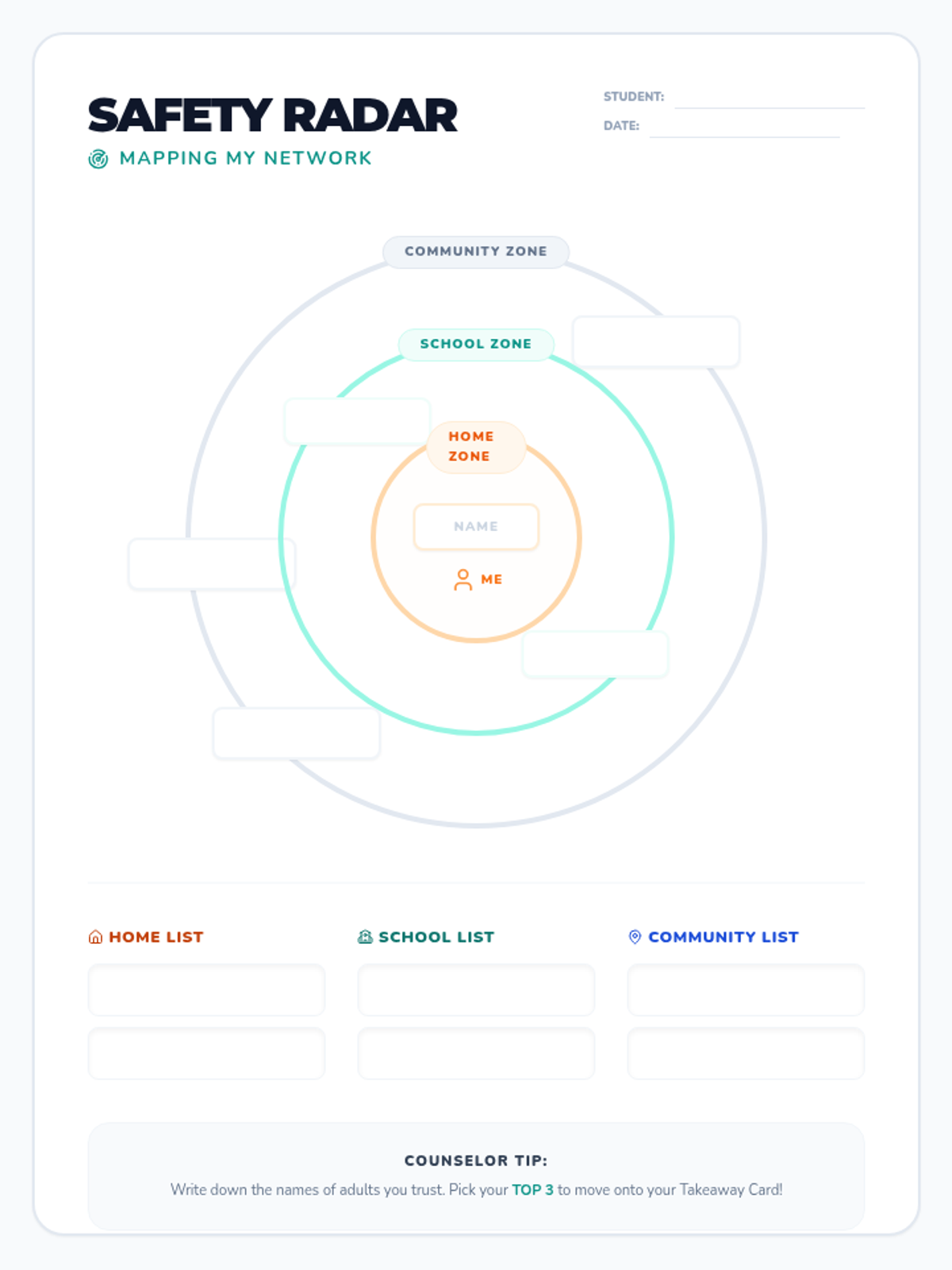
A comprehensive school counseling lesson for grades 3-5 focused on identifying unsafe situations, building a support network of trusted adults, and practicing the specific language needed to ask for help for oneself or a friend.
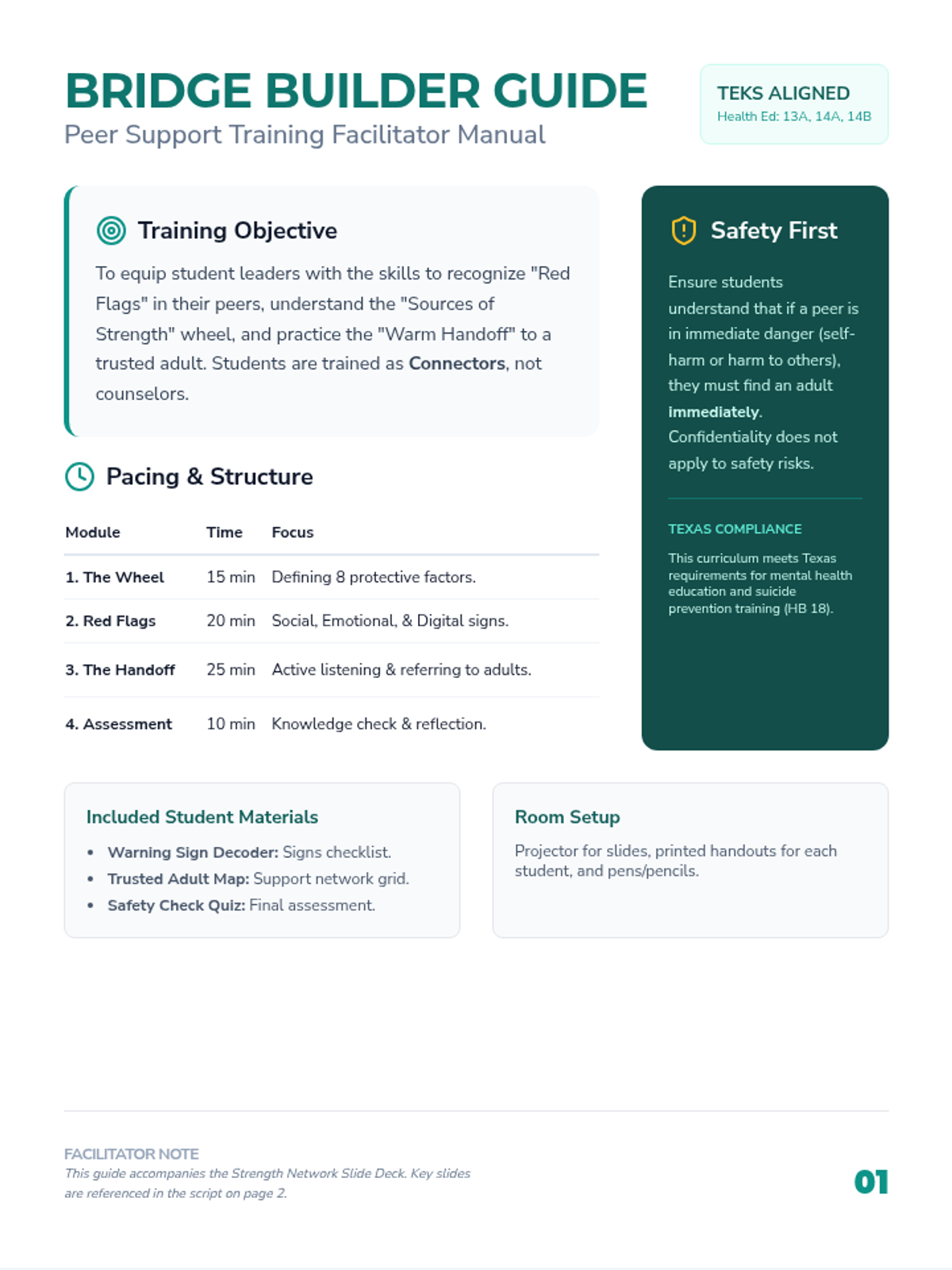
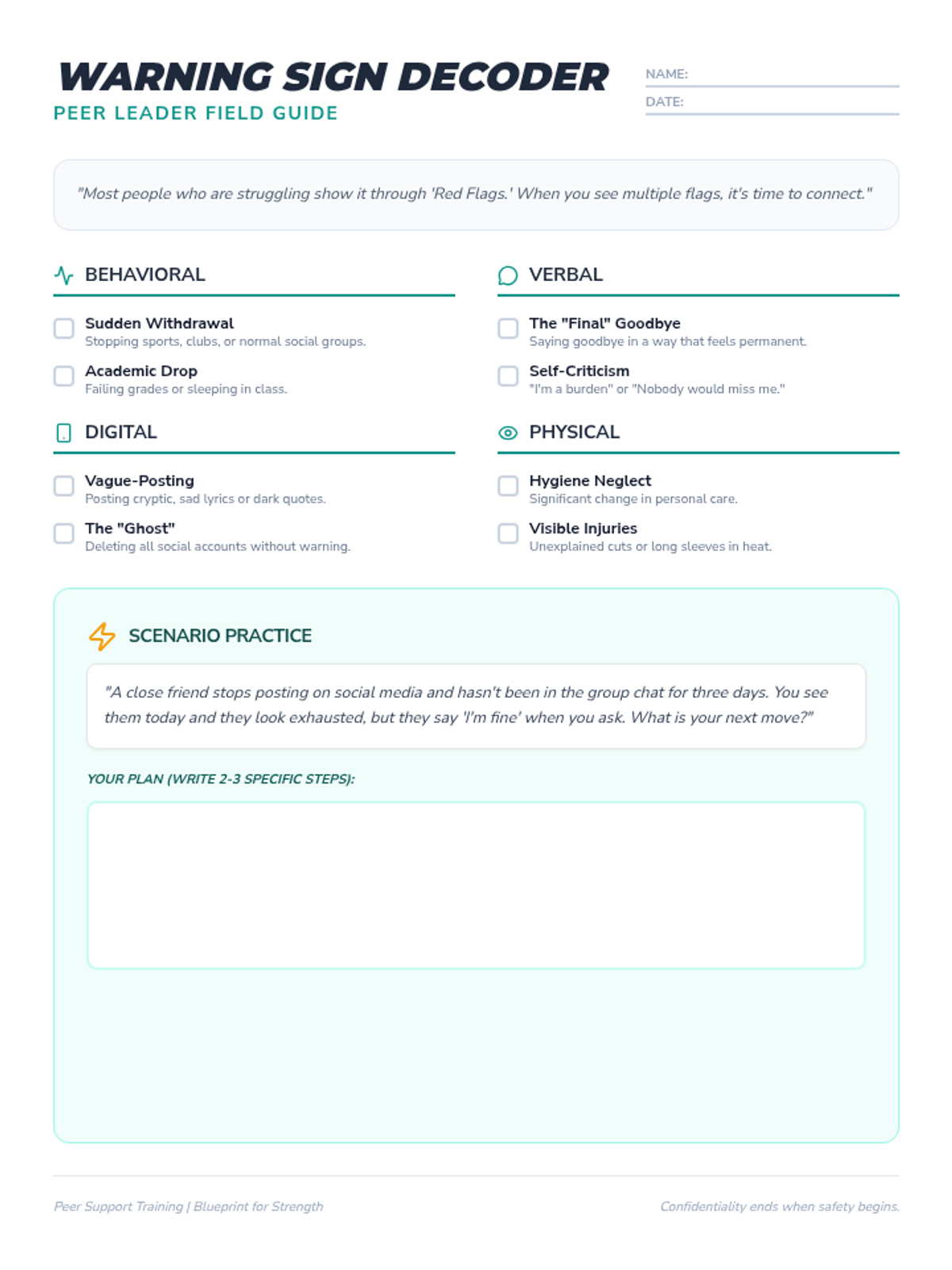
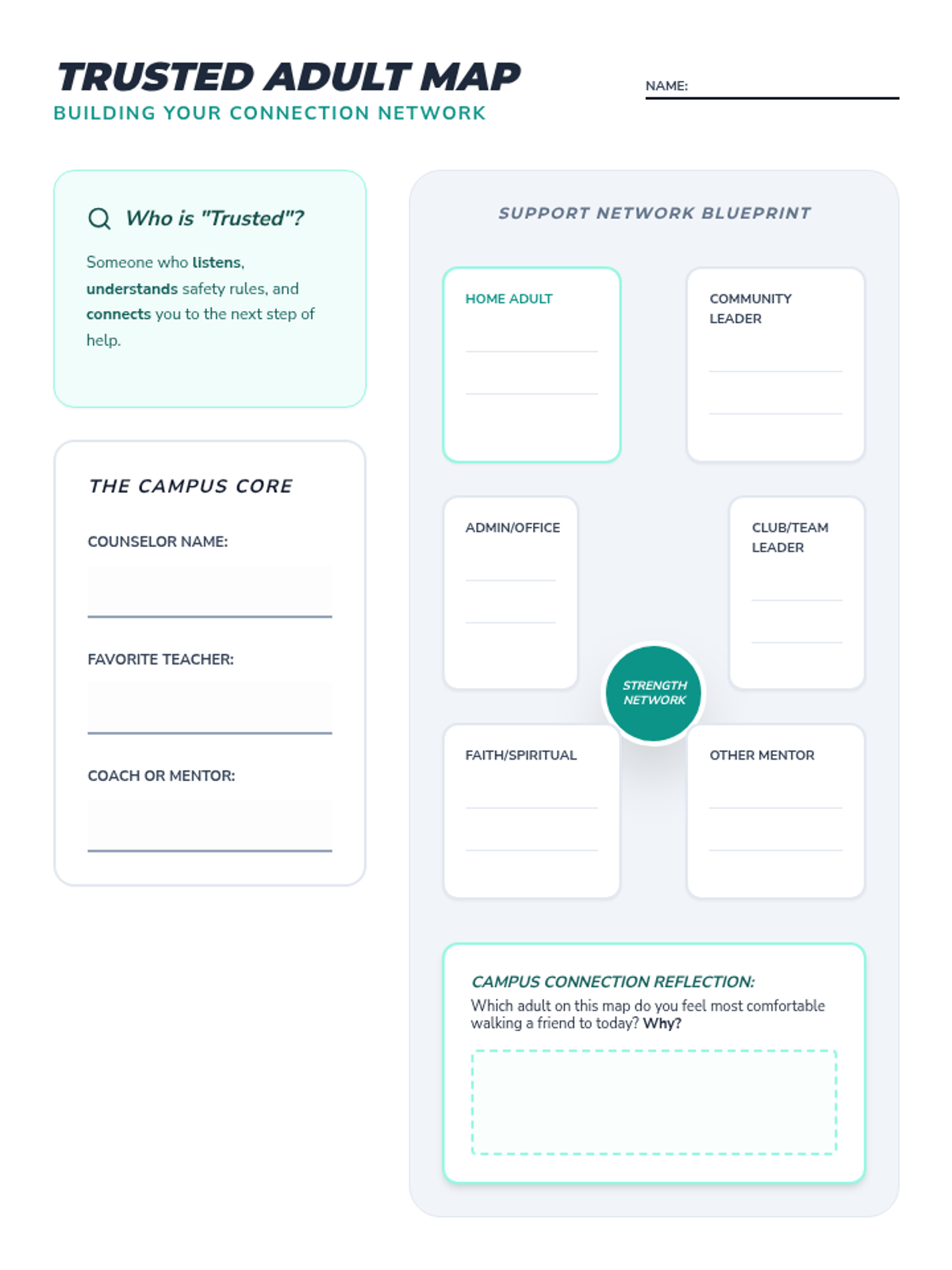
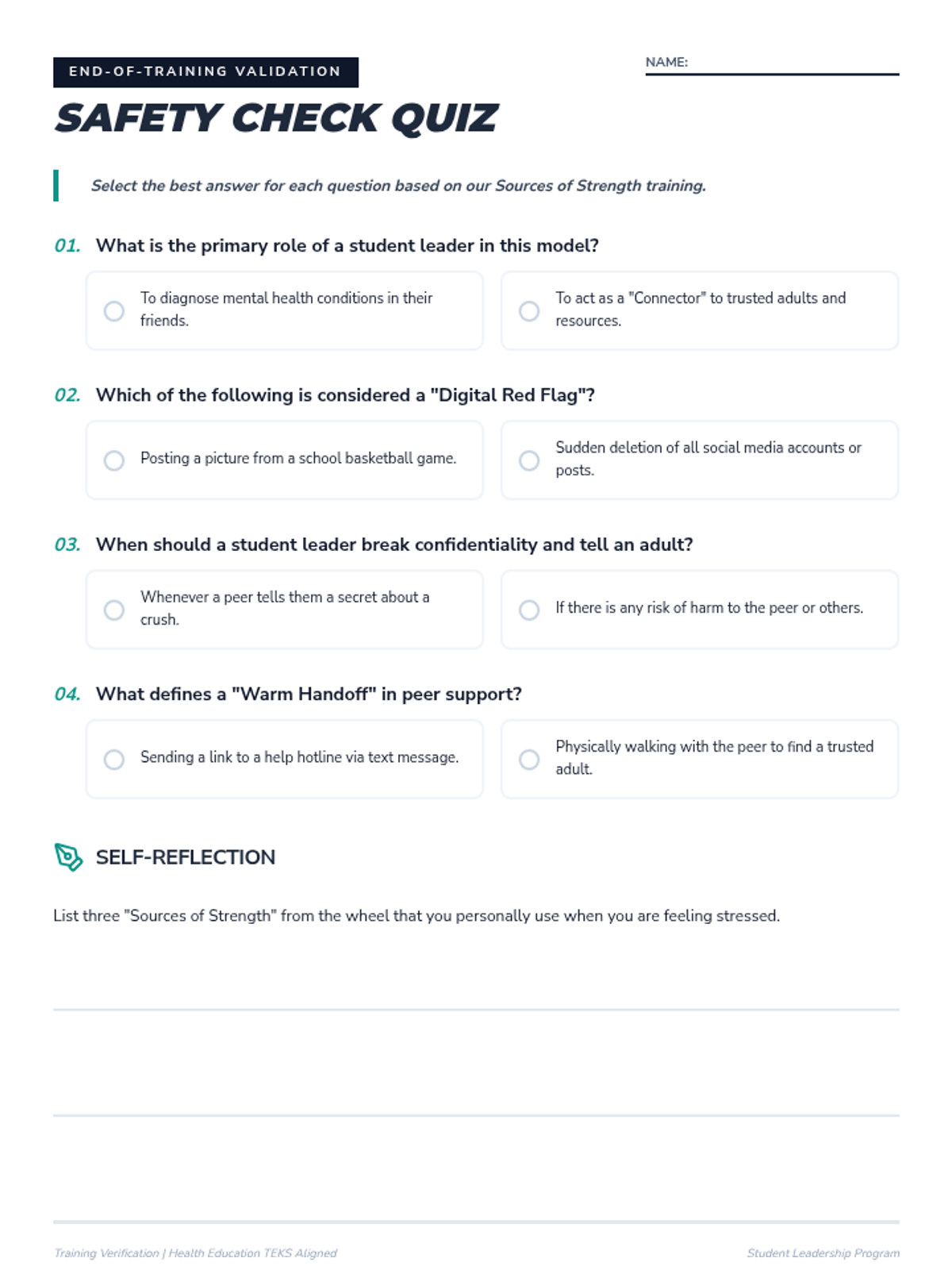
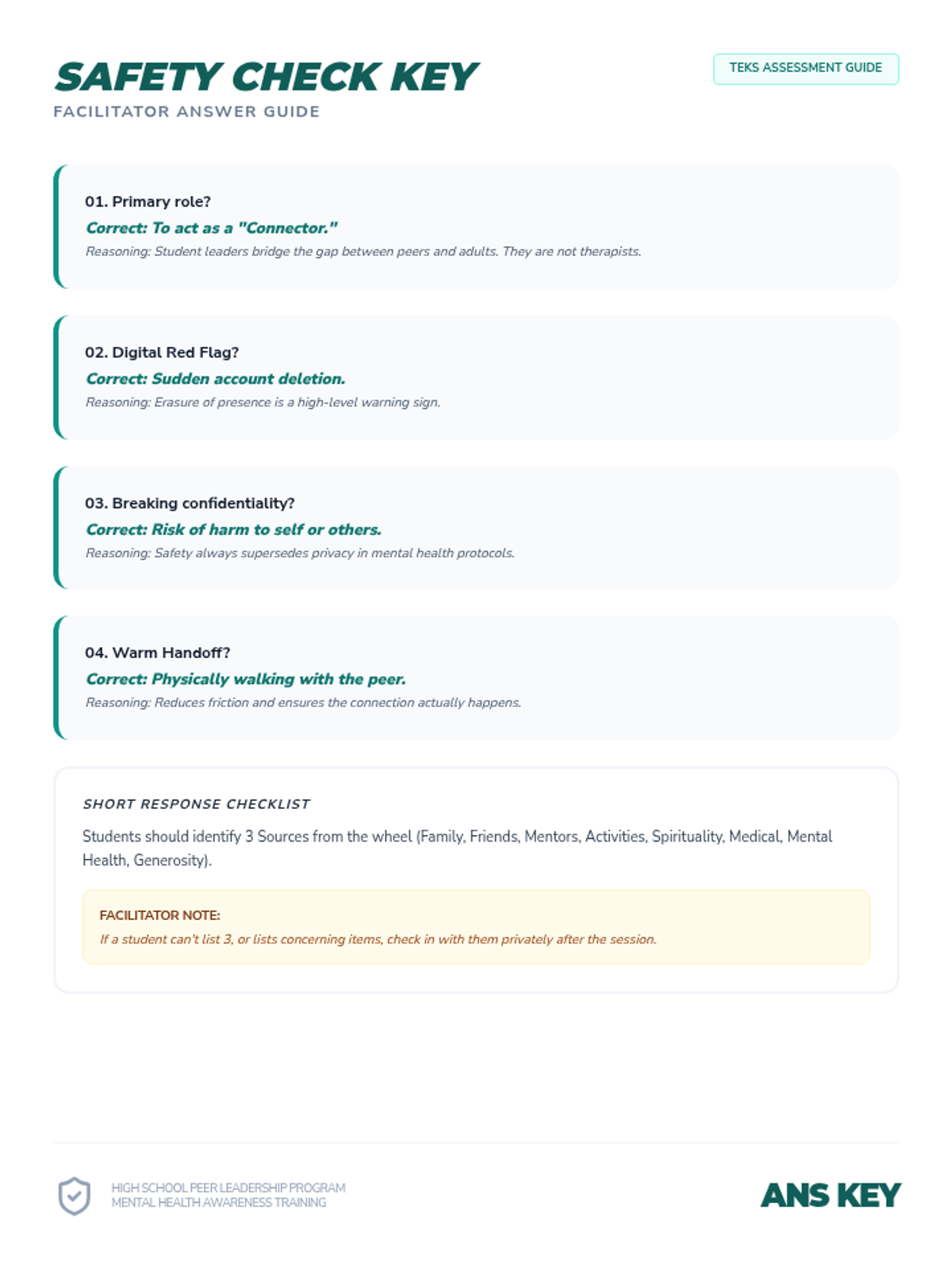
A comprehensive training program for high school student leaders to identify mental health warning signs in peers and facilitate connections to trusted adults using the Sources of Strength framework. Aligned with Texas TEKS for Health Education.
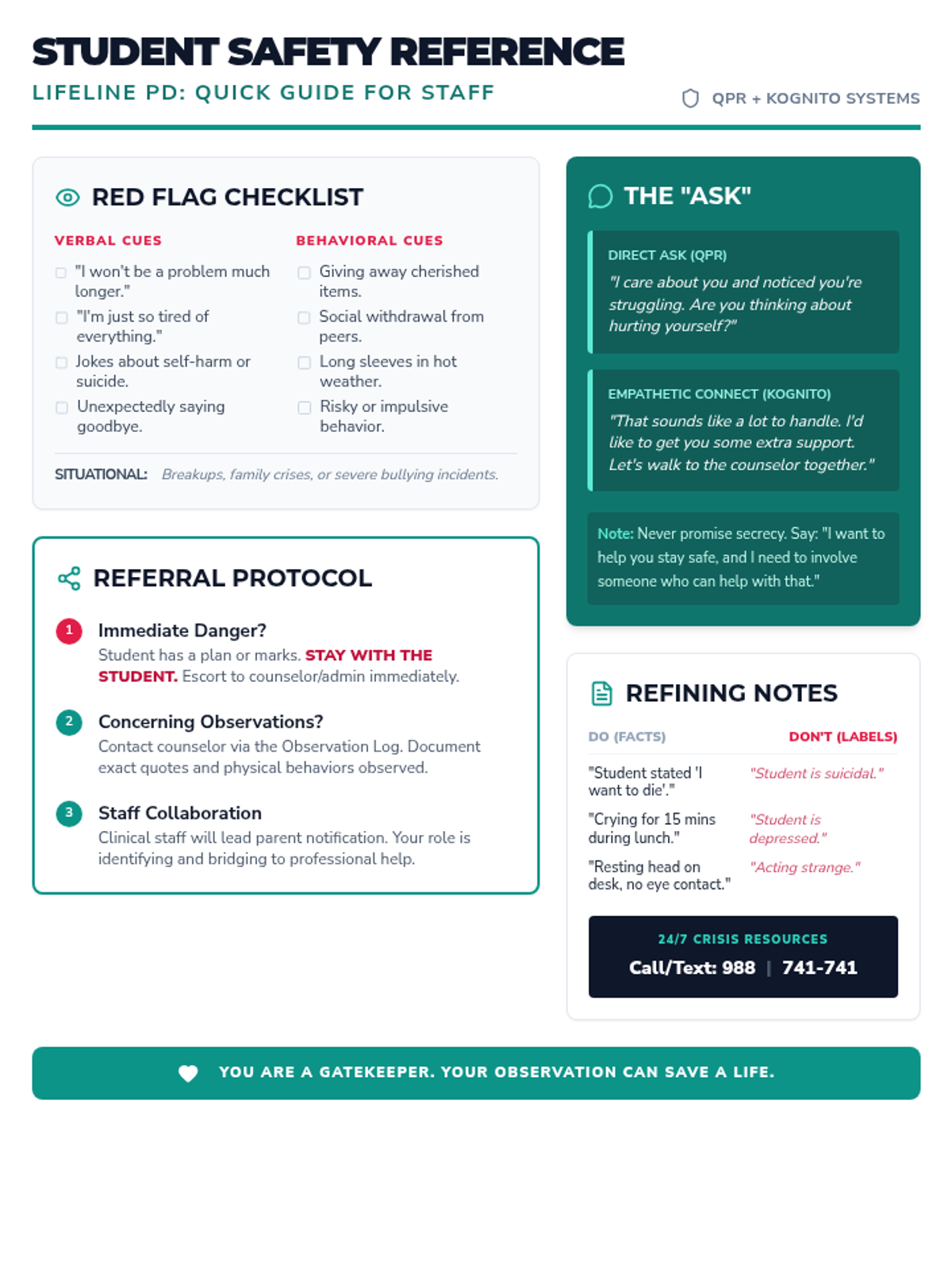
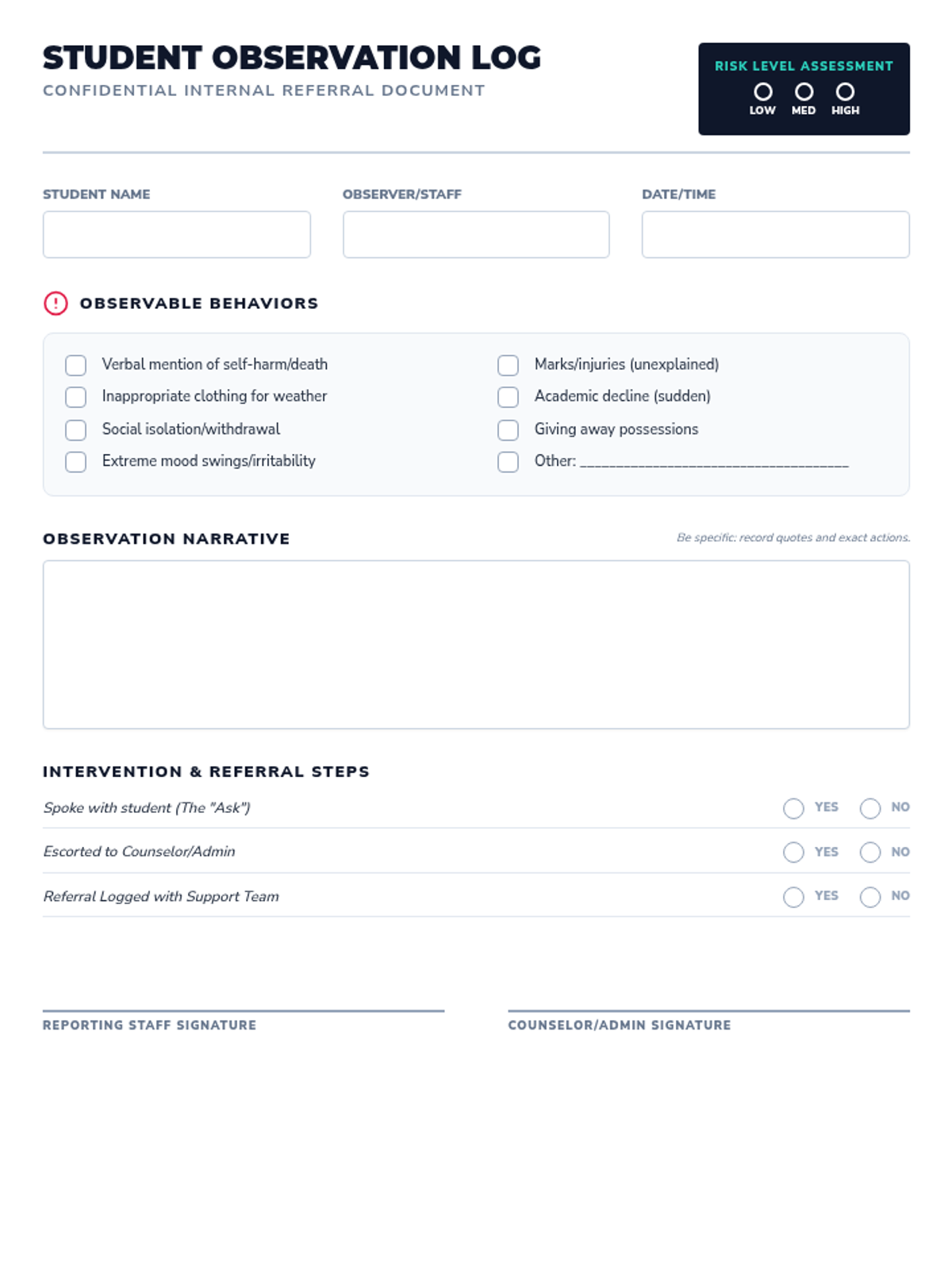
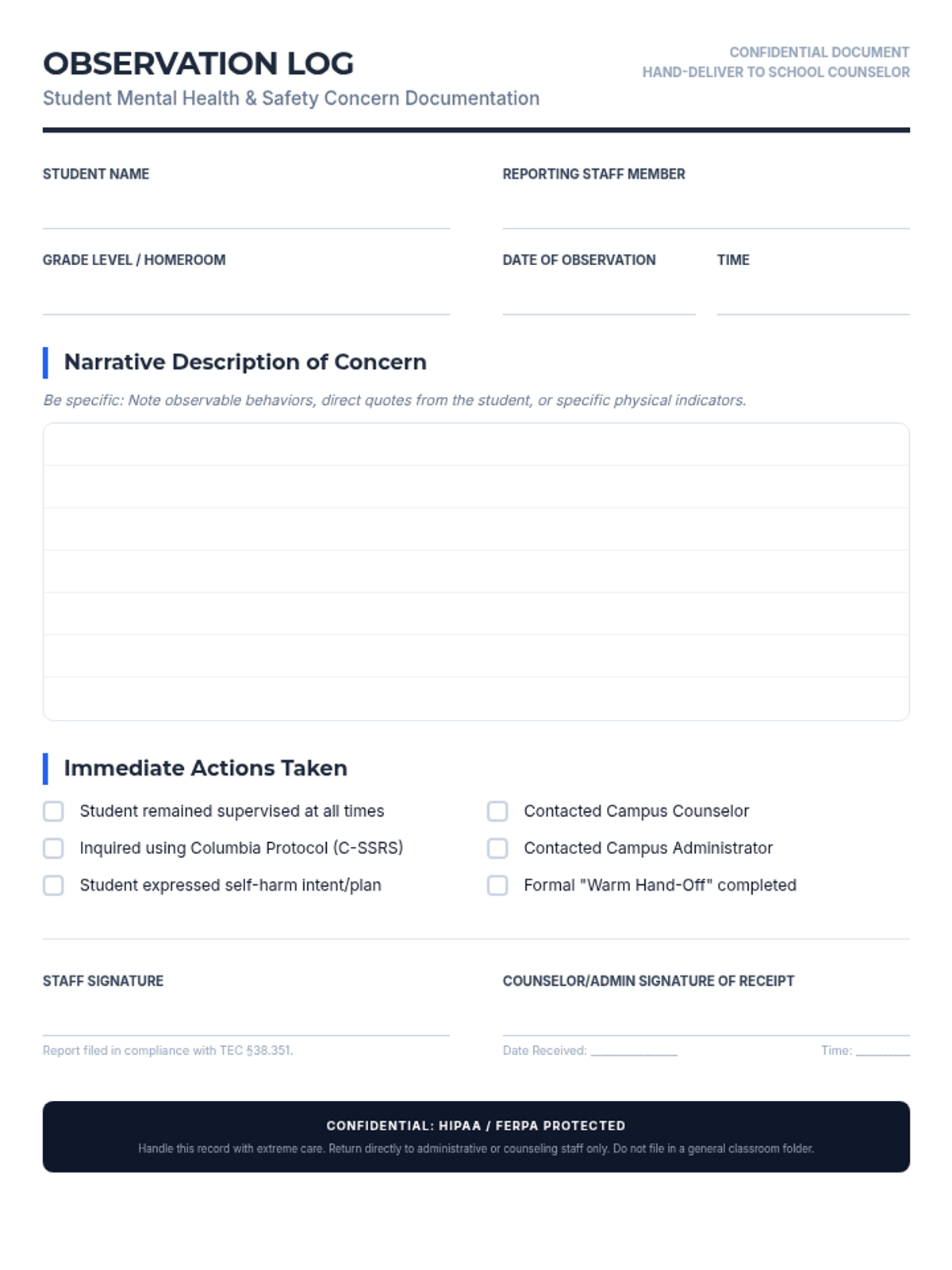
A comprehensive professional development module for middle school staff on identifying and supporting students at risk of self-harm or suicidal ideation. Based on the Kognito and QPR frameworks, it focuses on observable red flags, empathetic communication, and clear referral protocols.
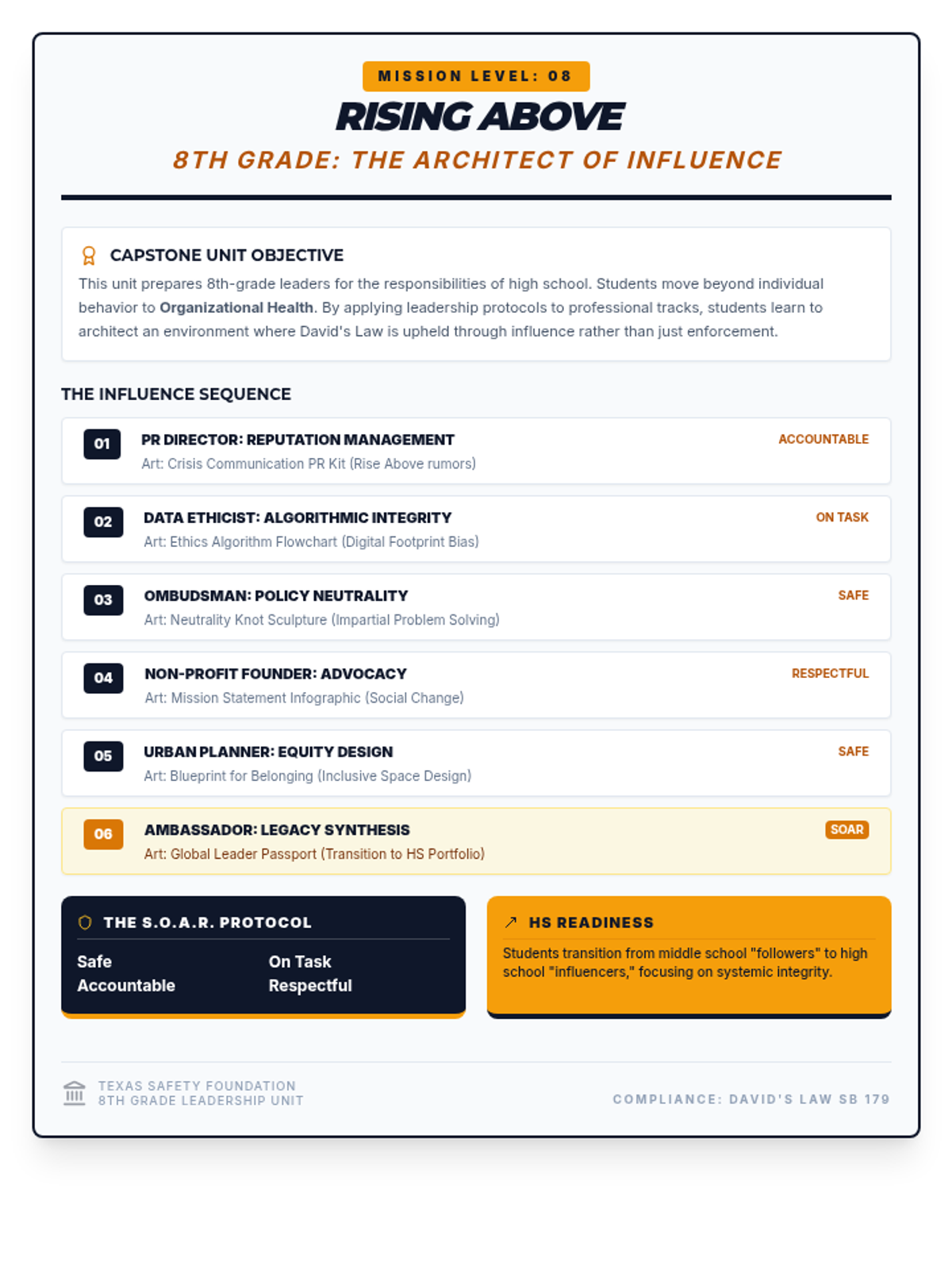
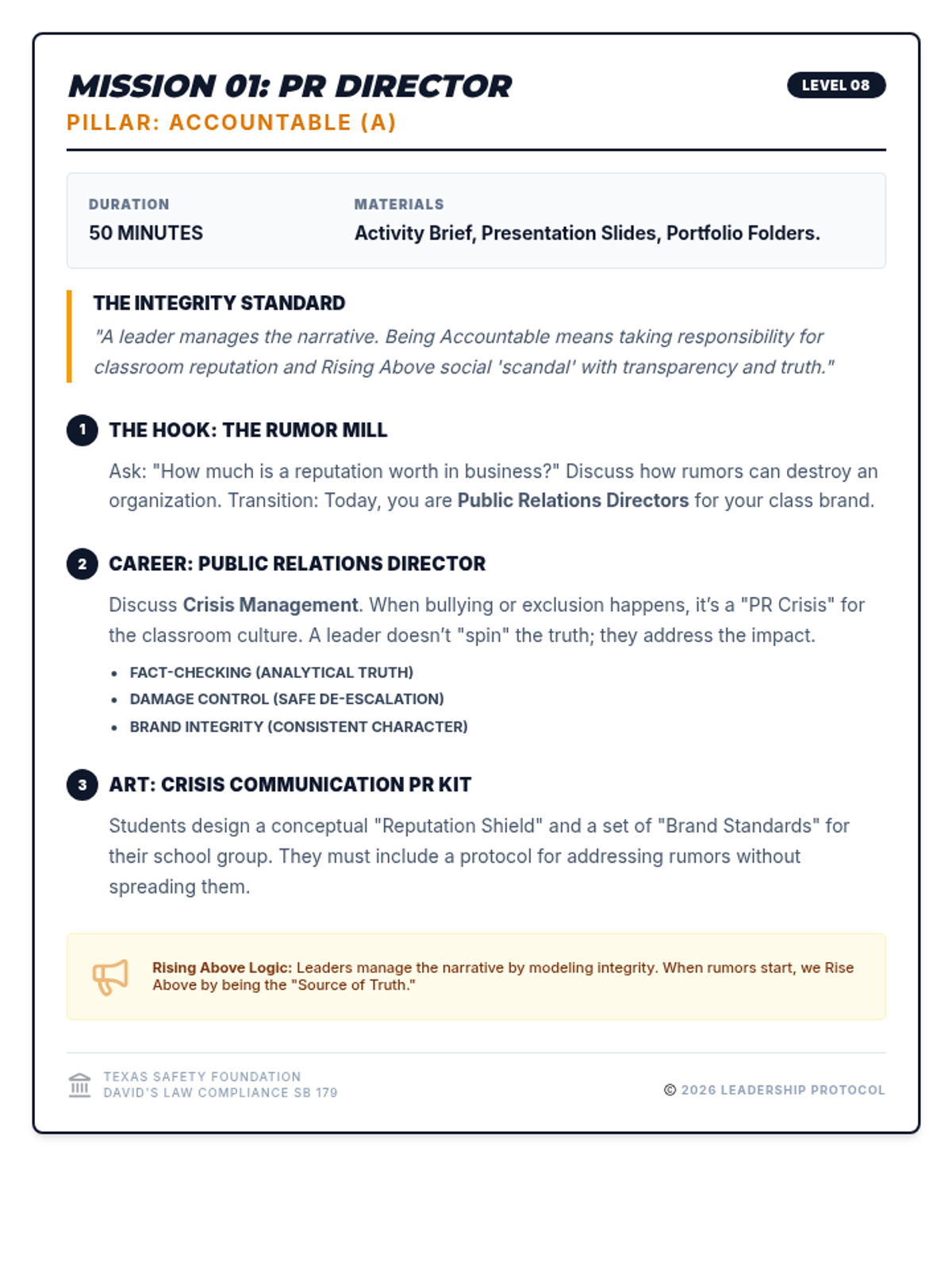
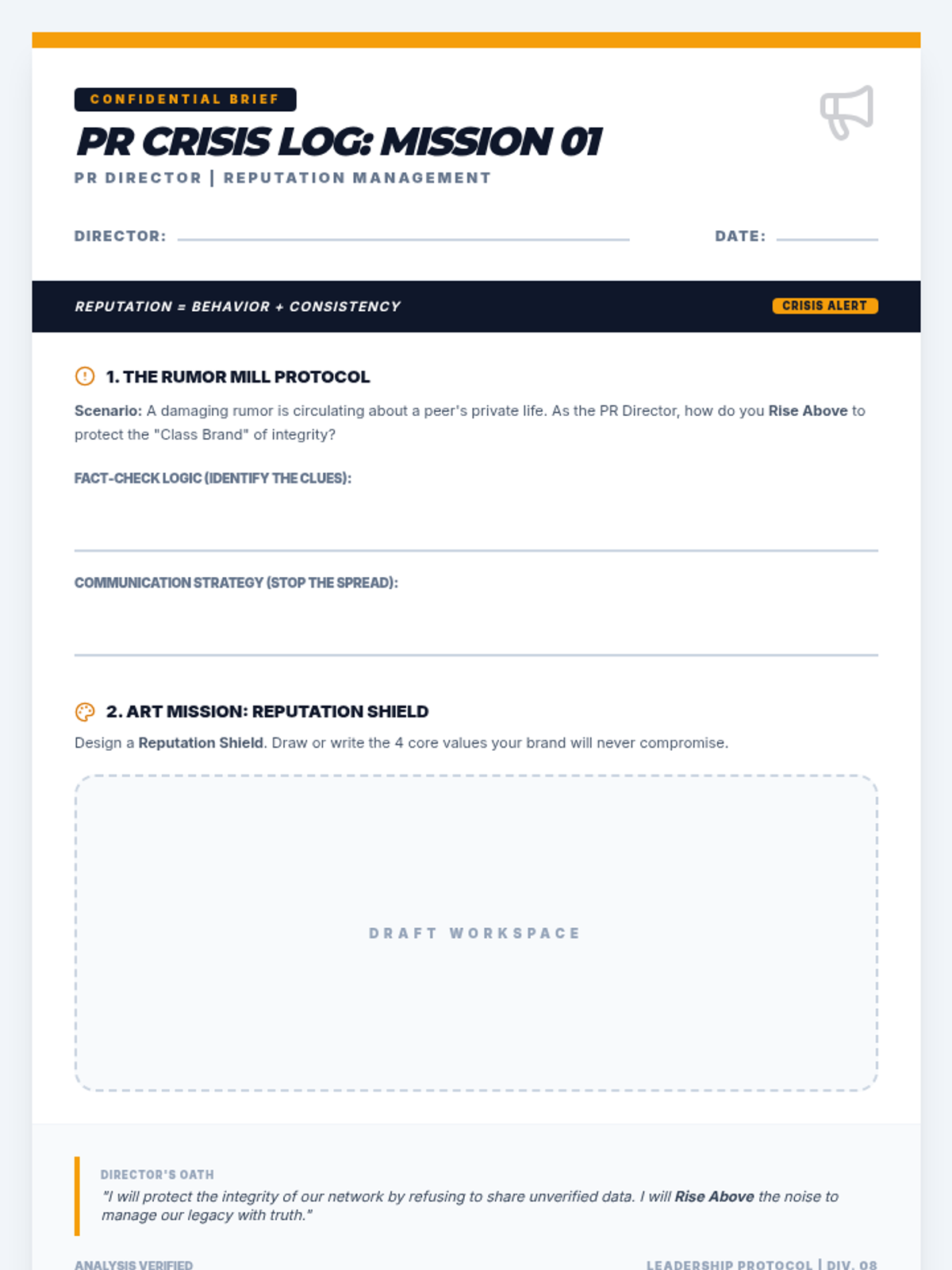
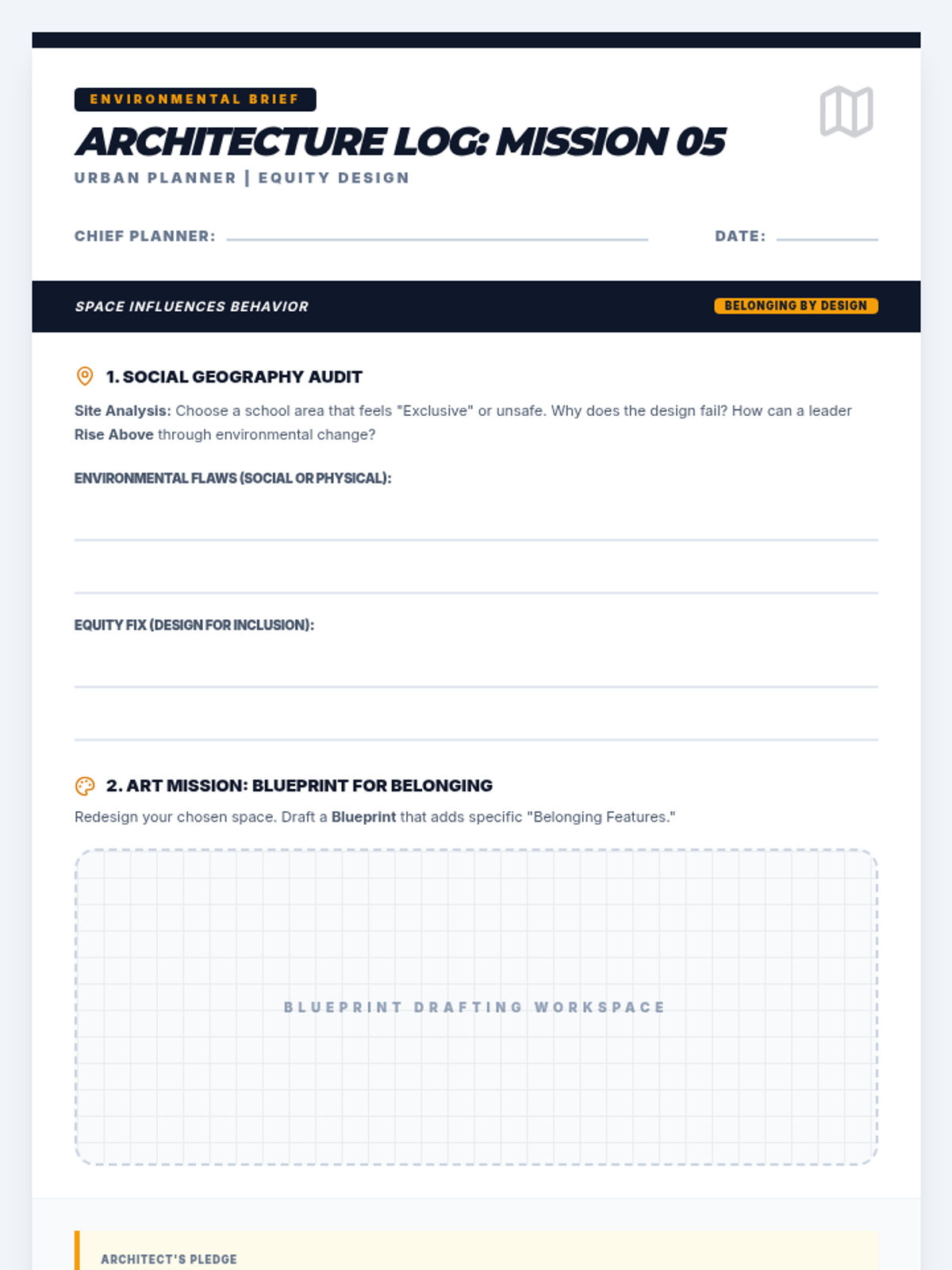
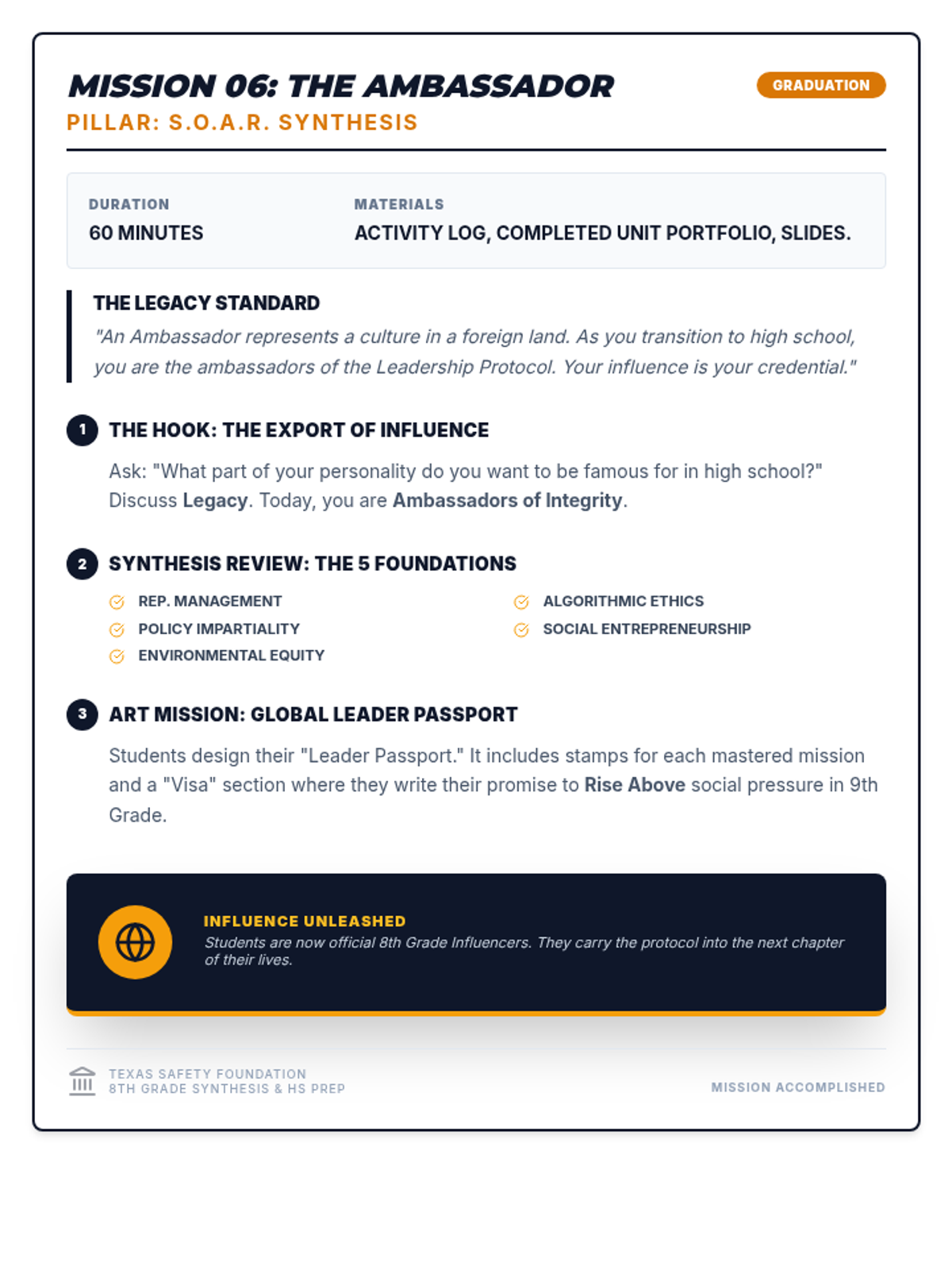
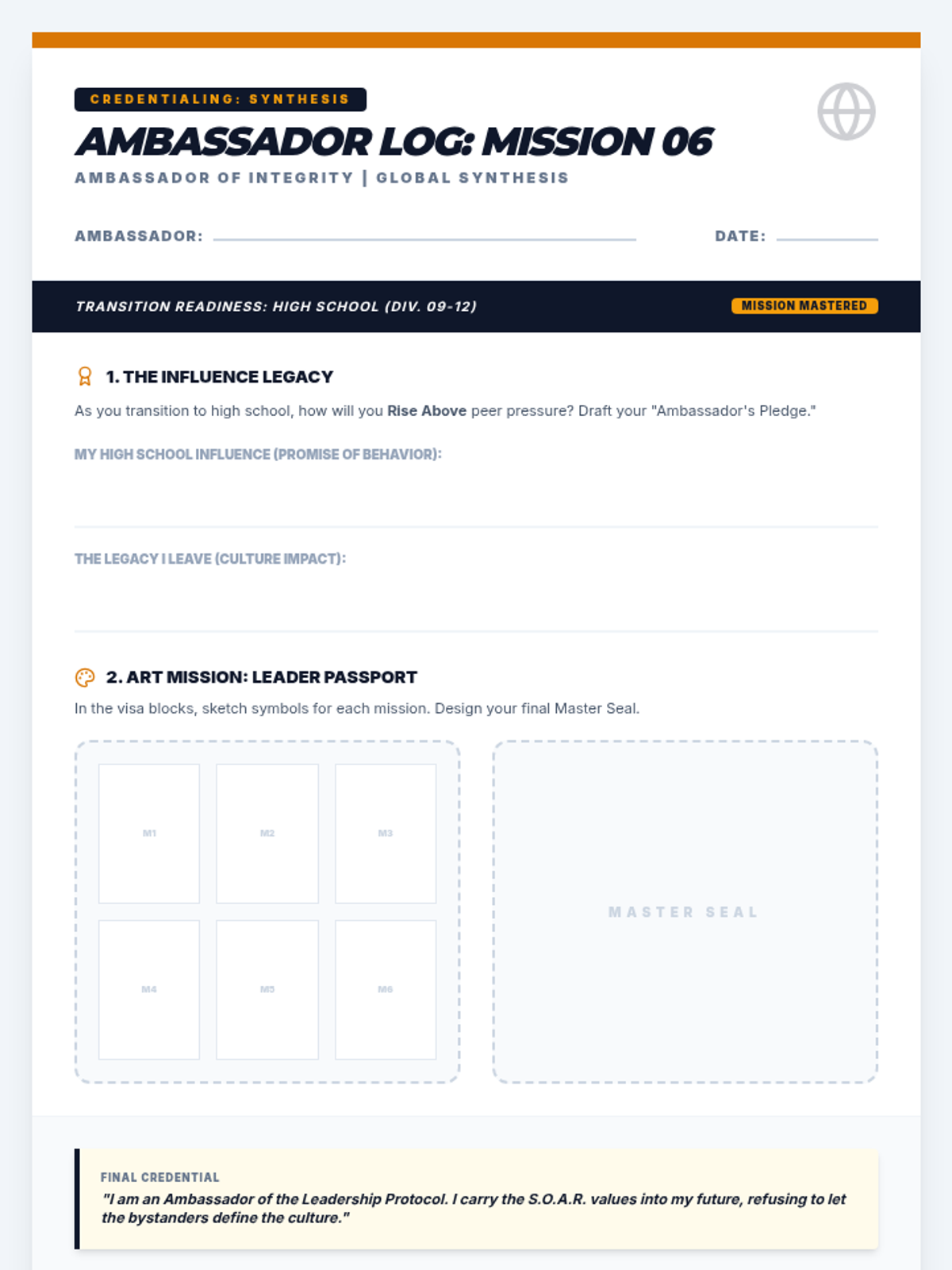
8th Grade focus on reputation management and accountability through a PR Director lens. Art: Crisis Communication PR Kit.
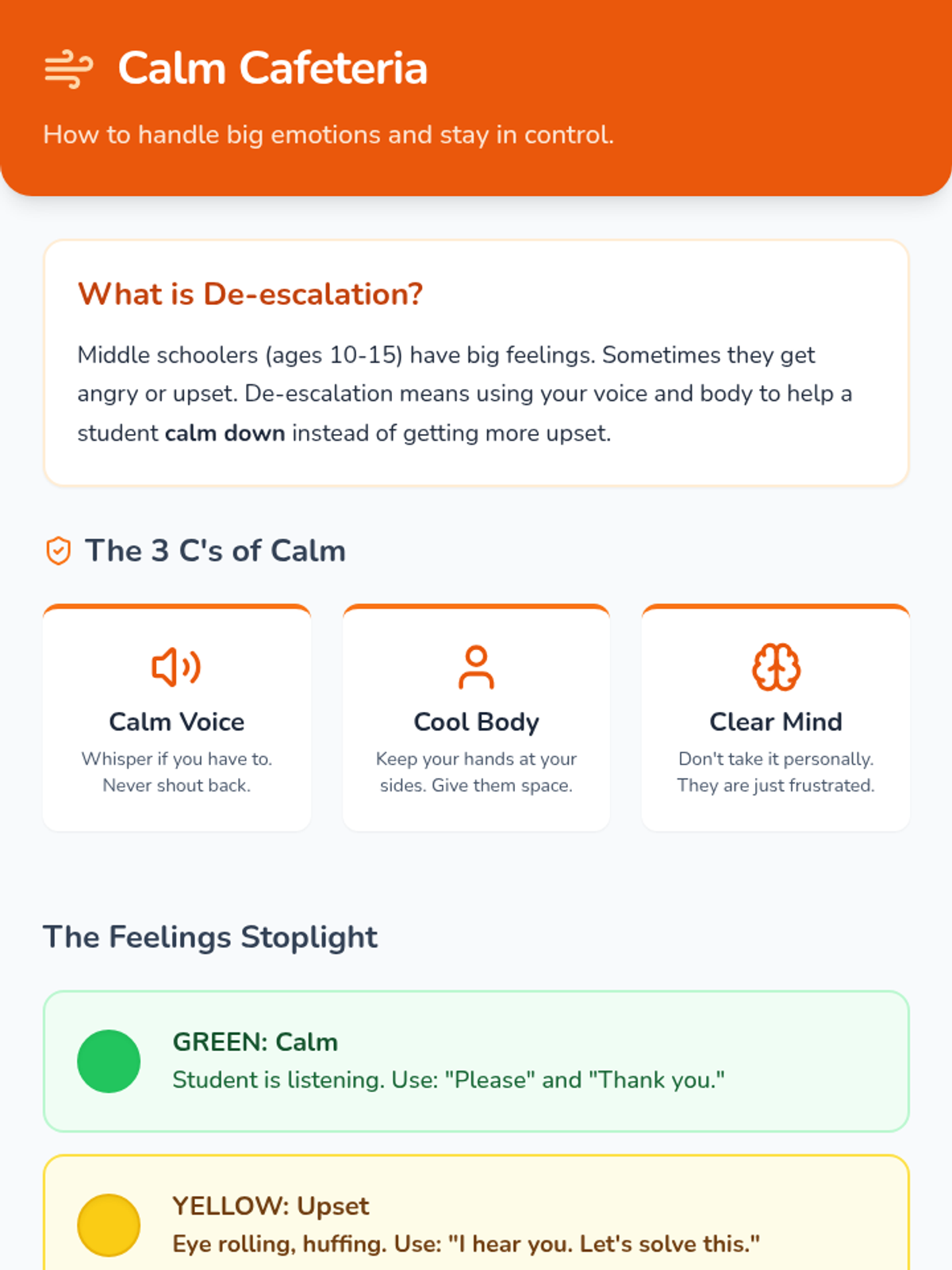
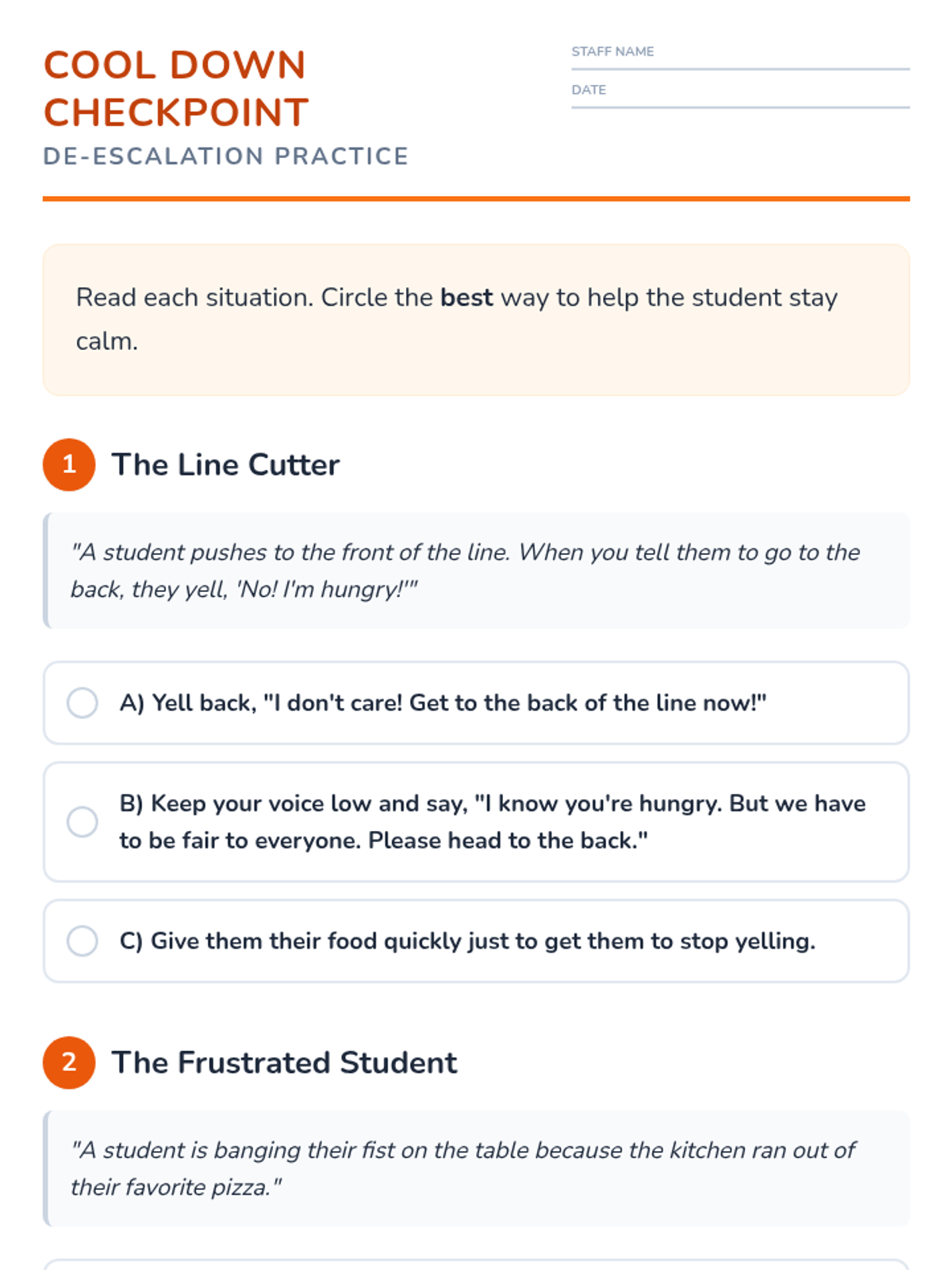
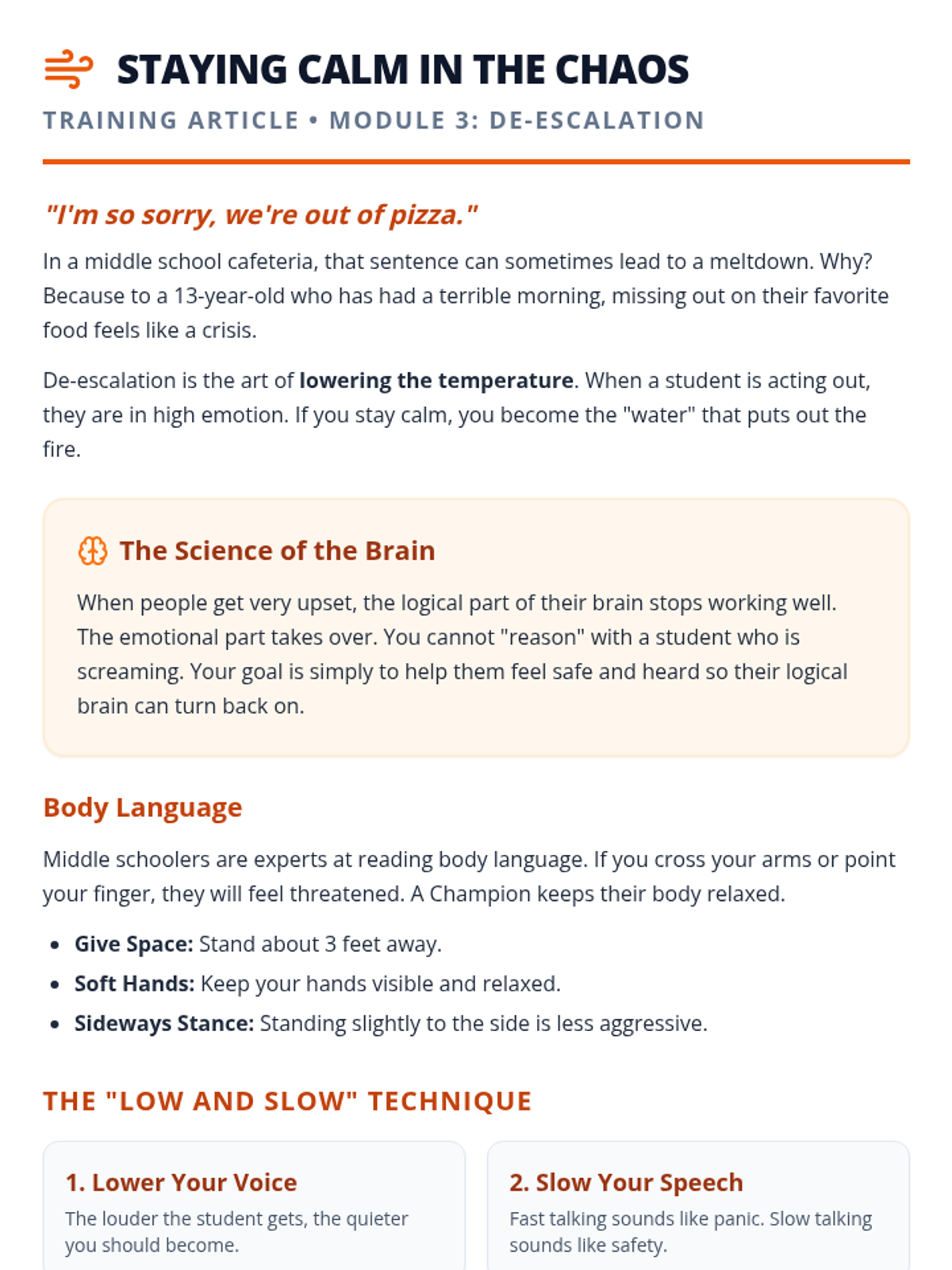
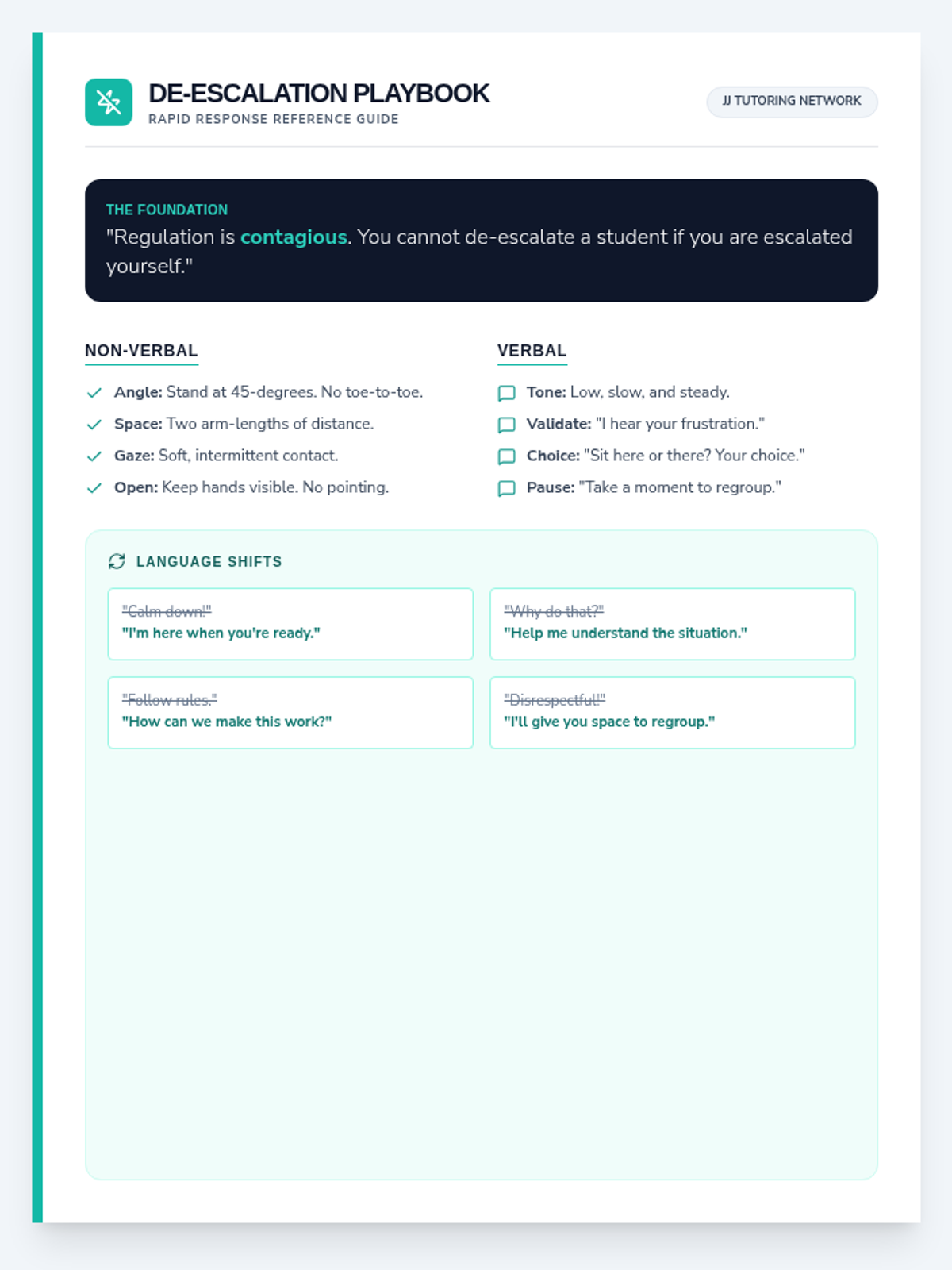
Teaches staff how to stay calm and de-escalate tense situations with middle school students. Focuses on verbal techniques, body language, and knowing when to call for support.
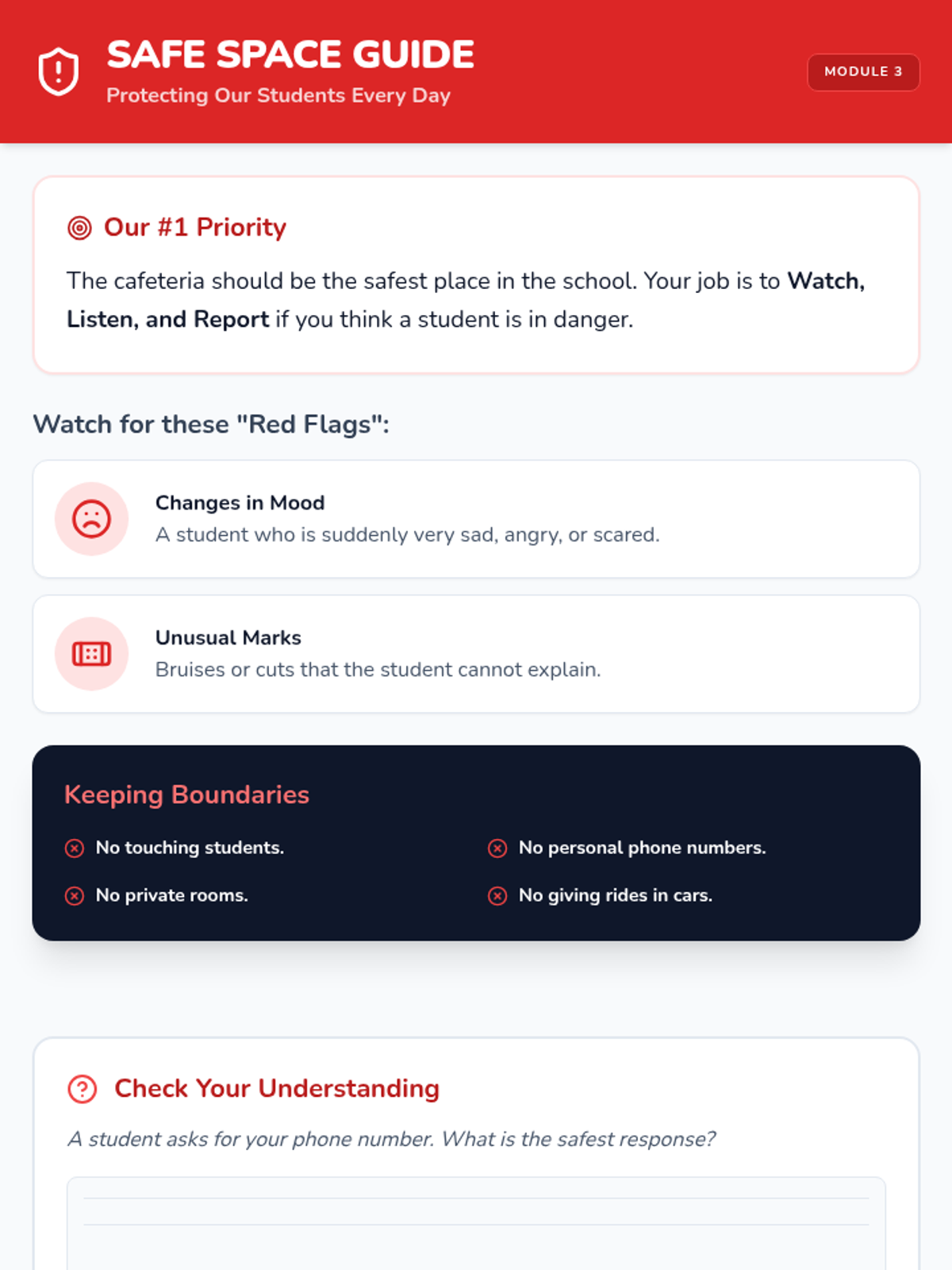
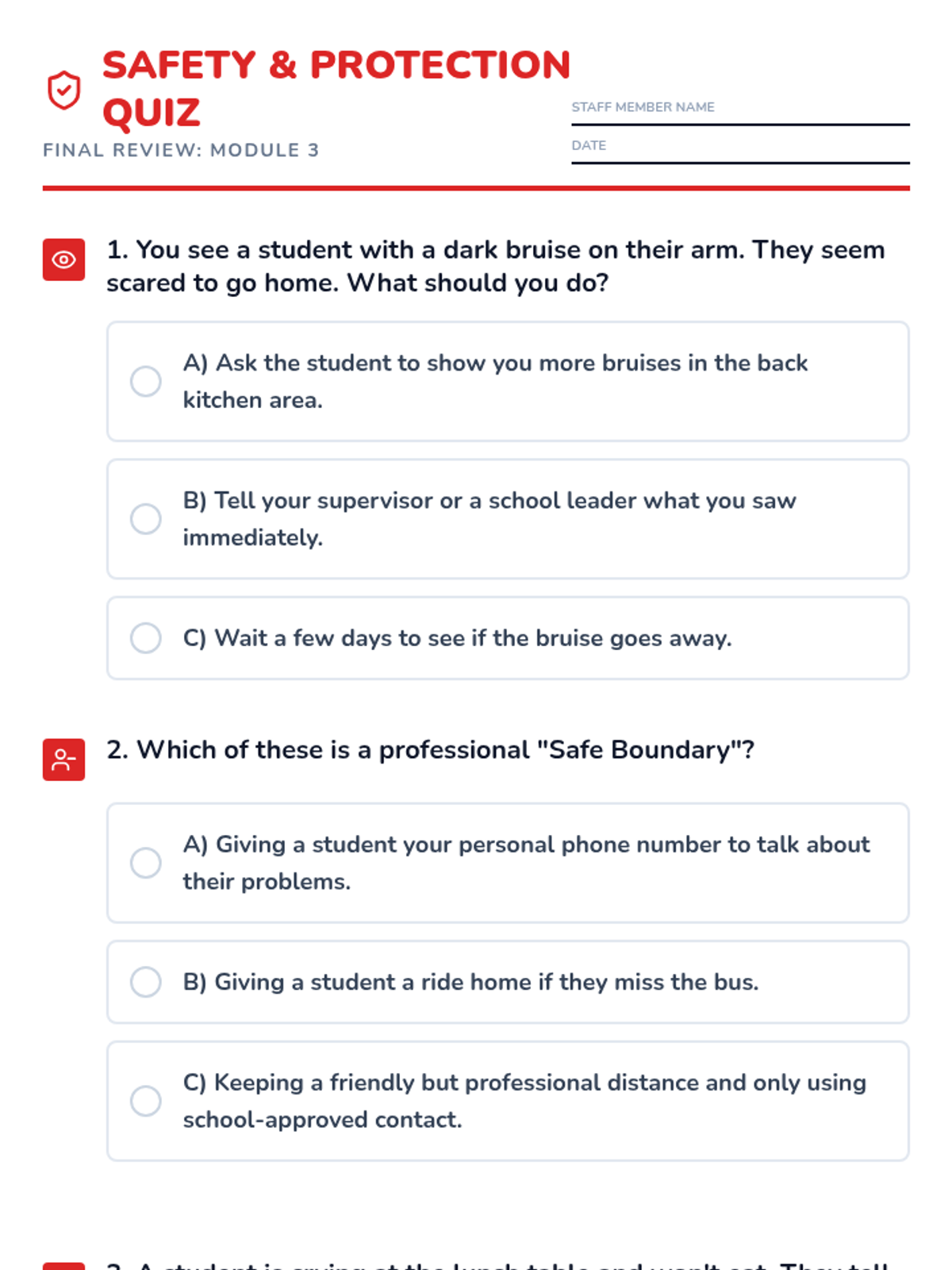
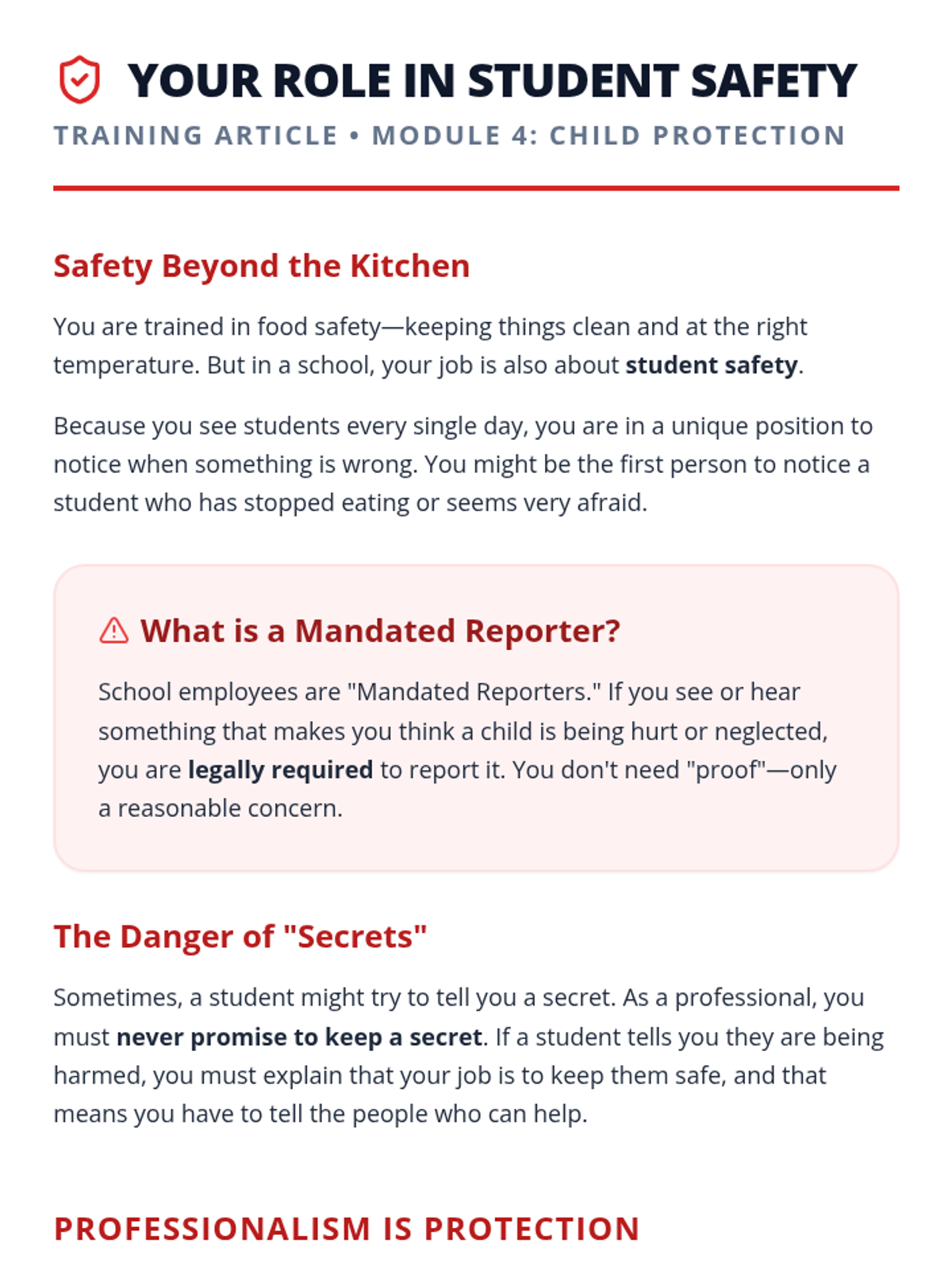
Covers child protection, professional boundaries, and how to spot and report signs of distress or harm in students.
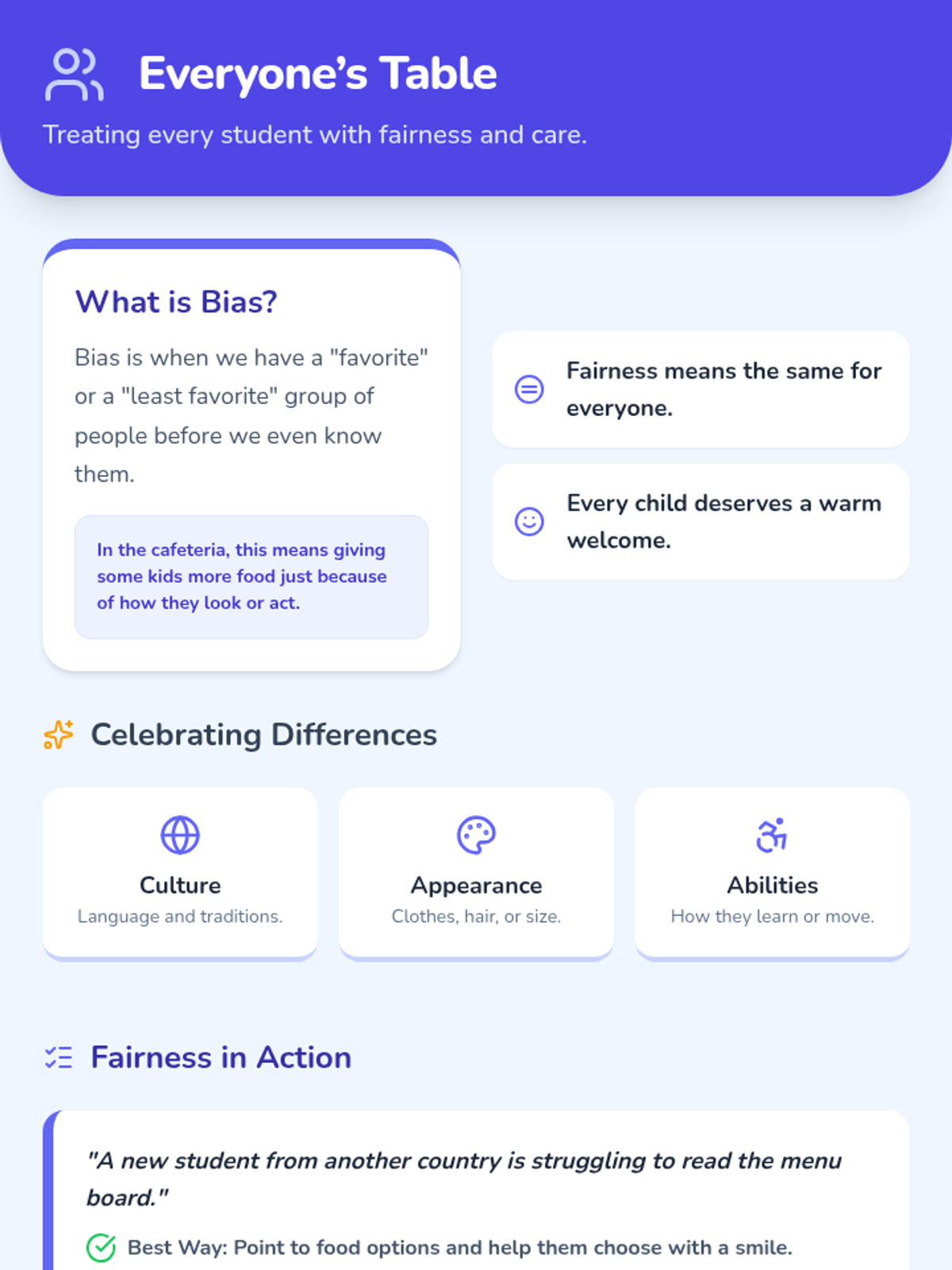
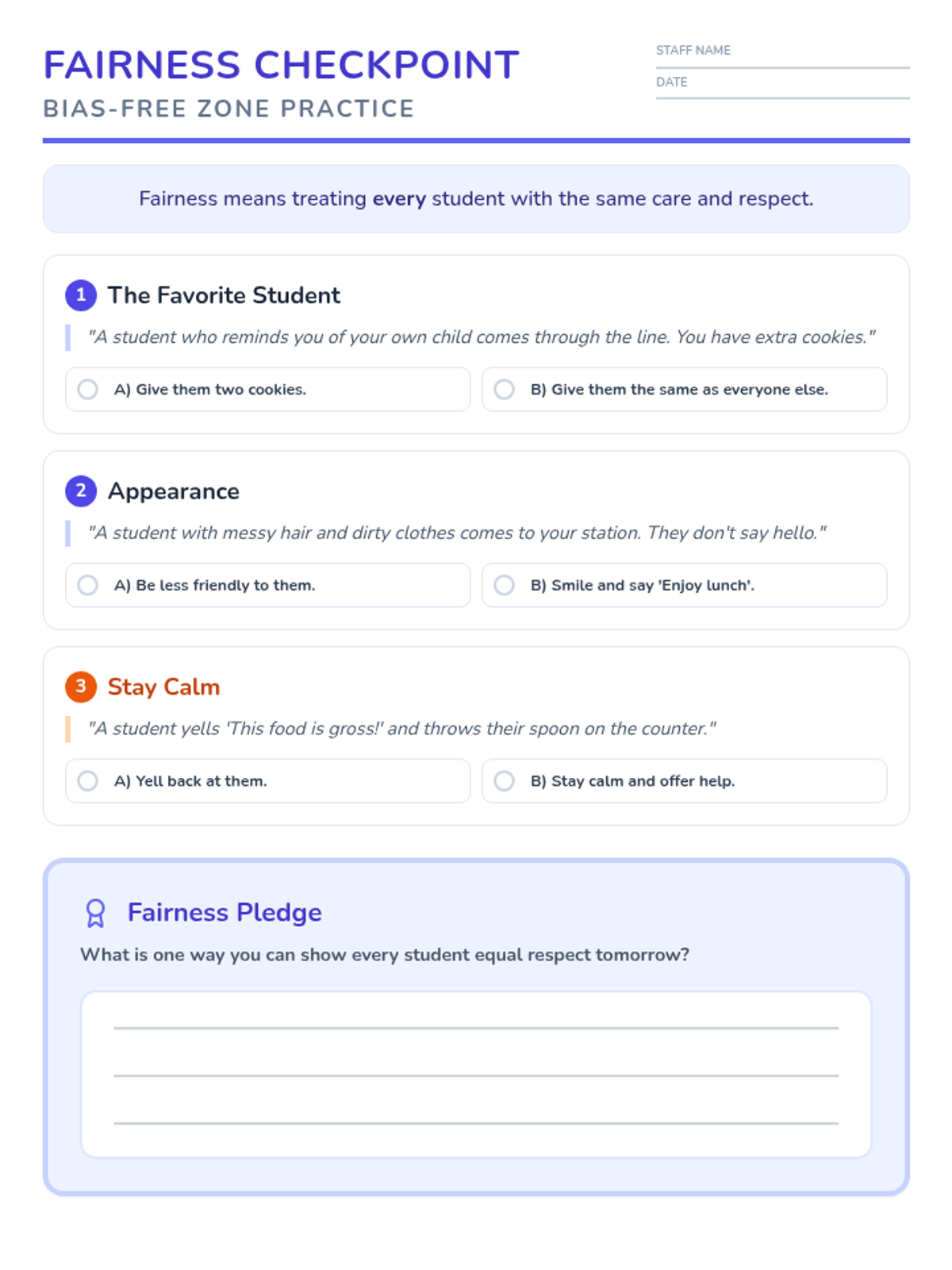
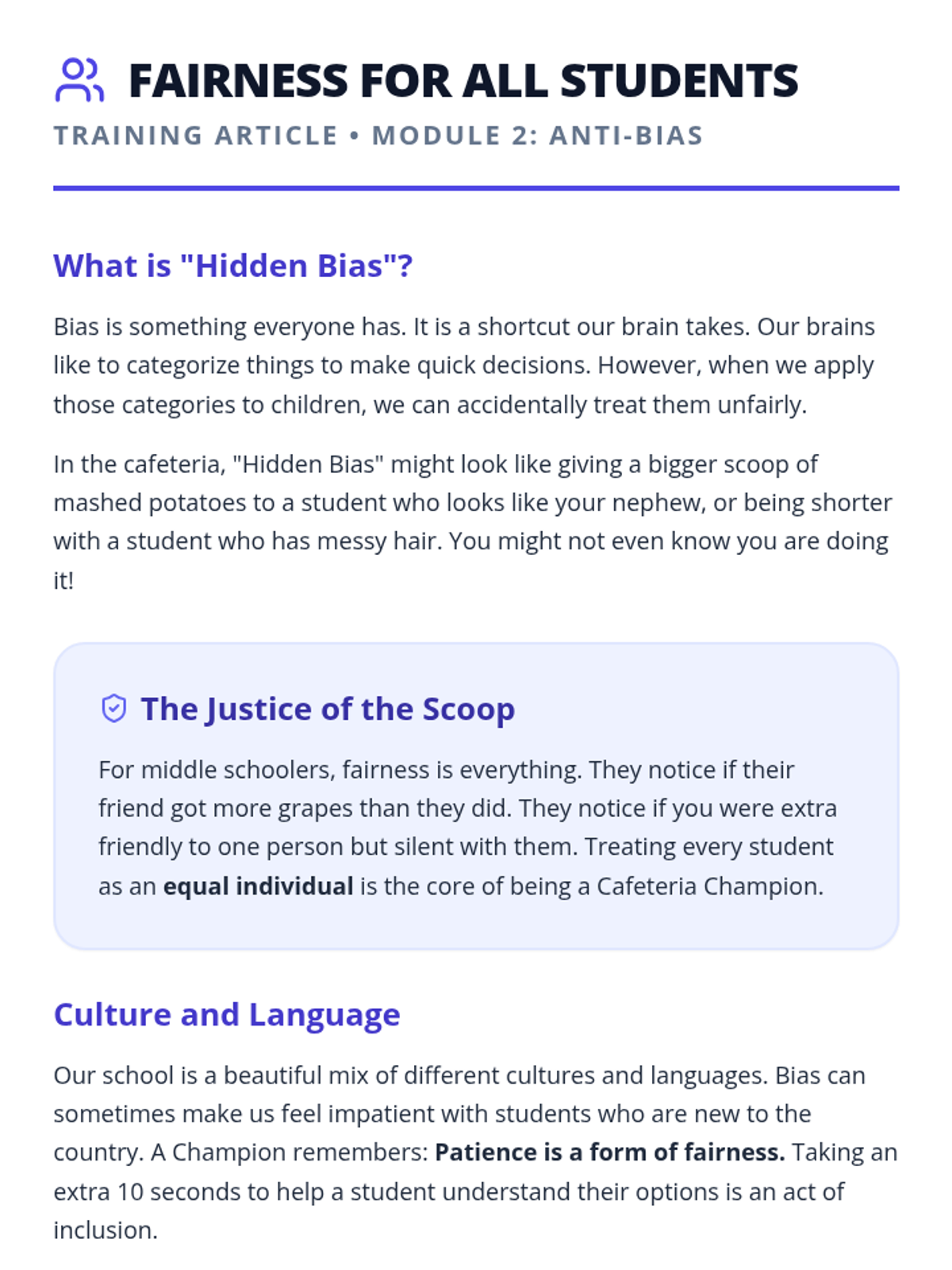
Explores bias, fairness, and inclusion in the cafeteria. Teaches staff how to treat every student equally regardless of their background or appearance.
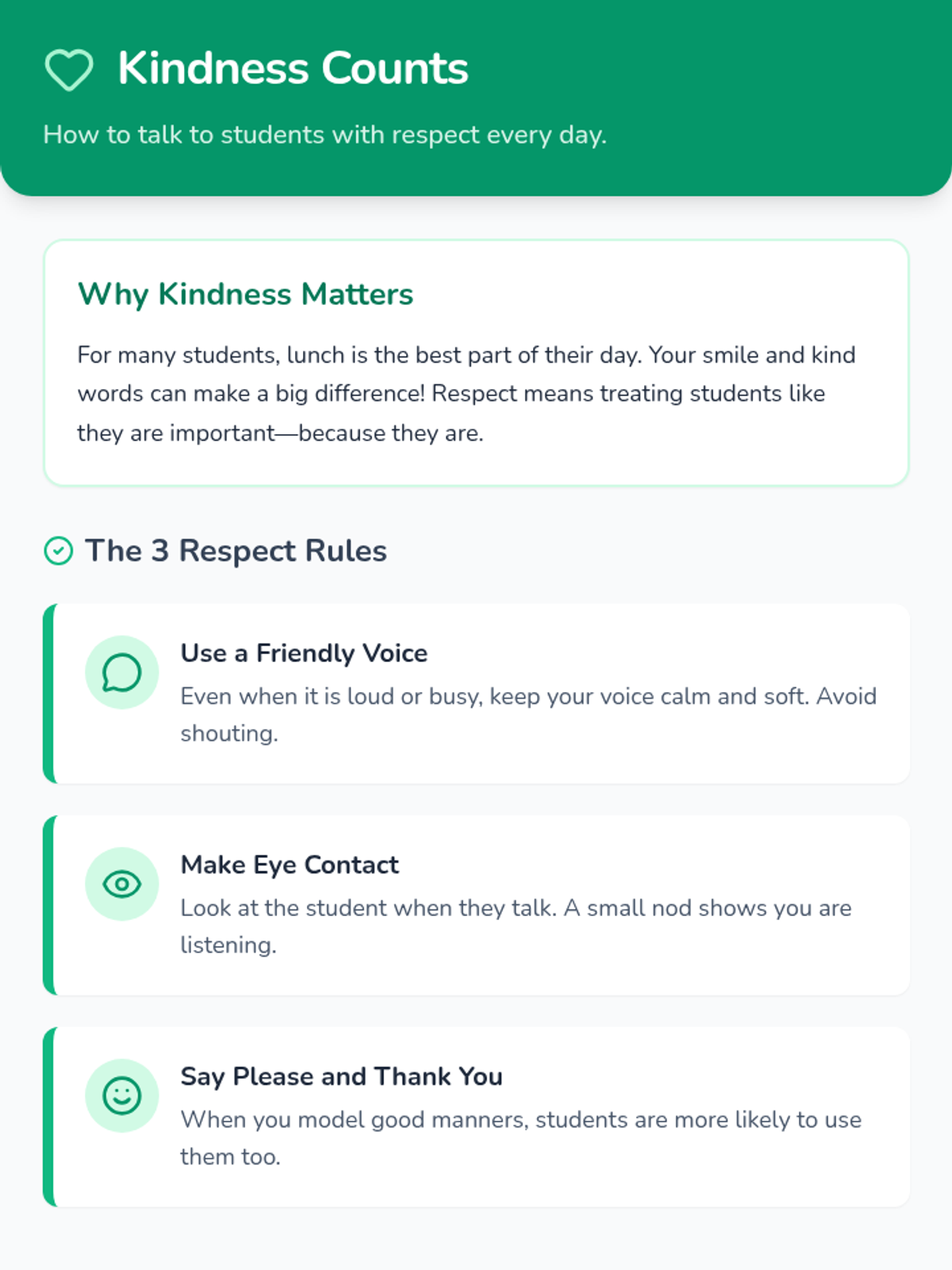
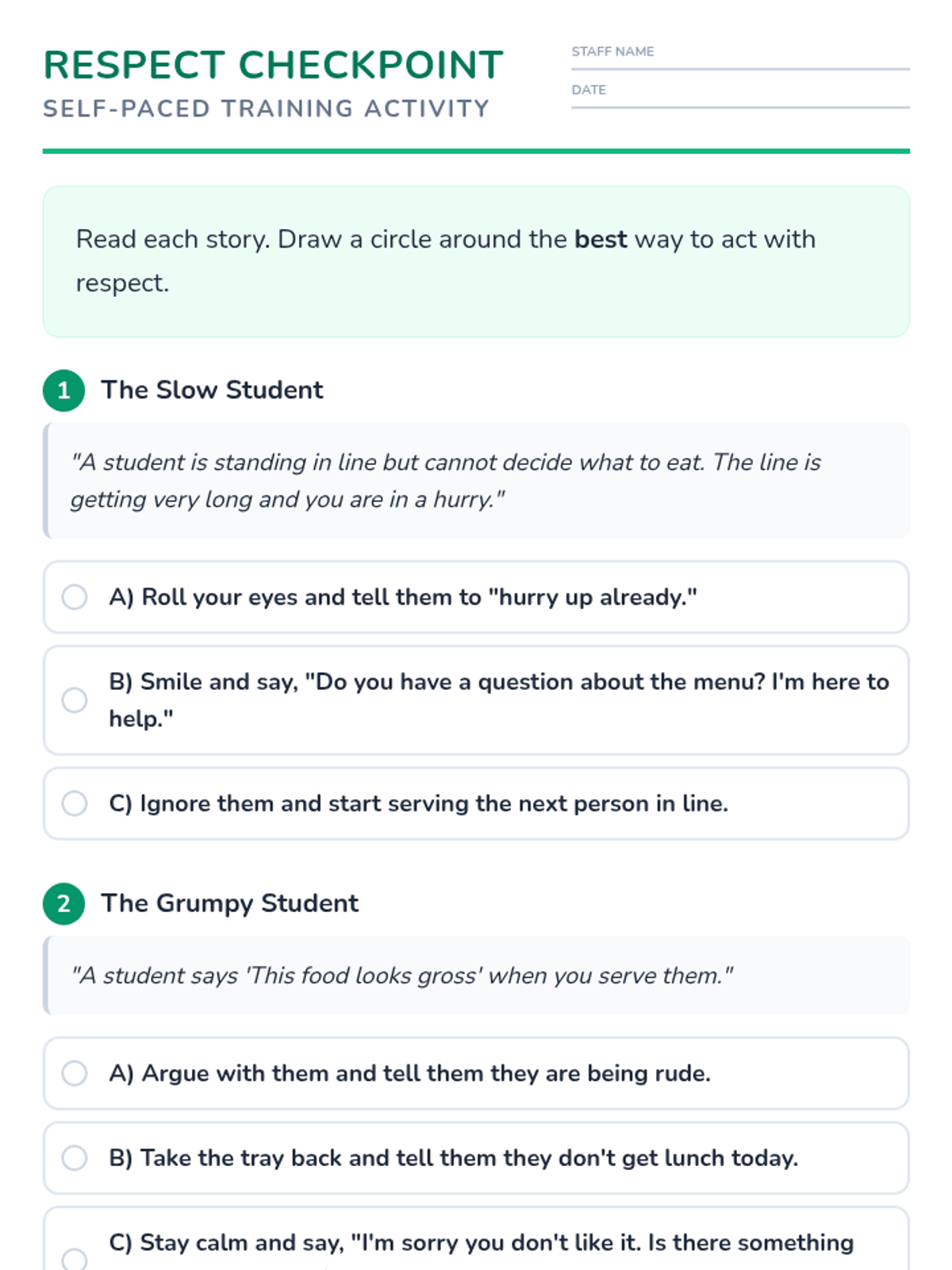
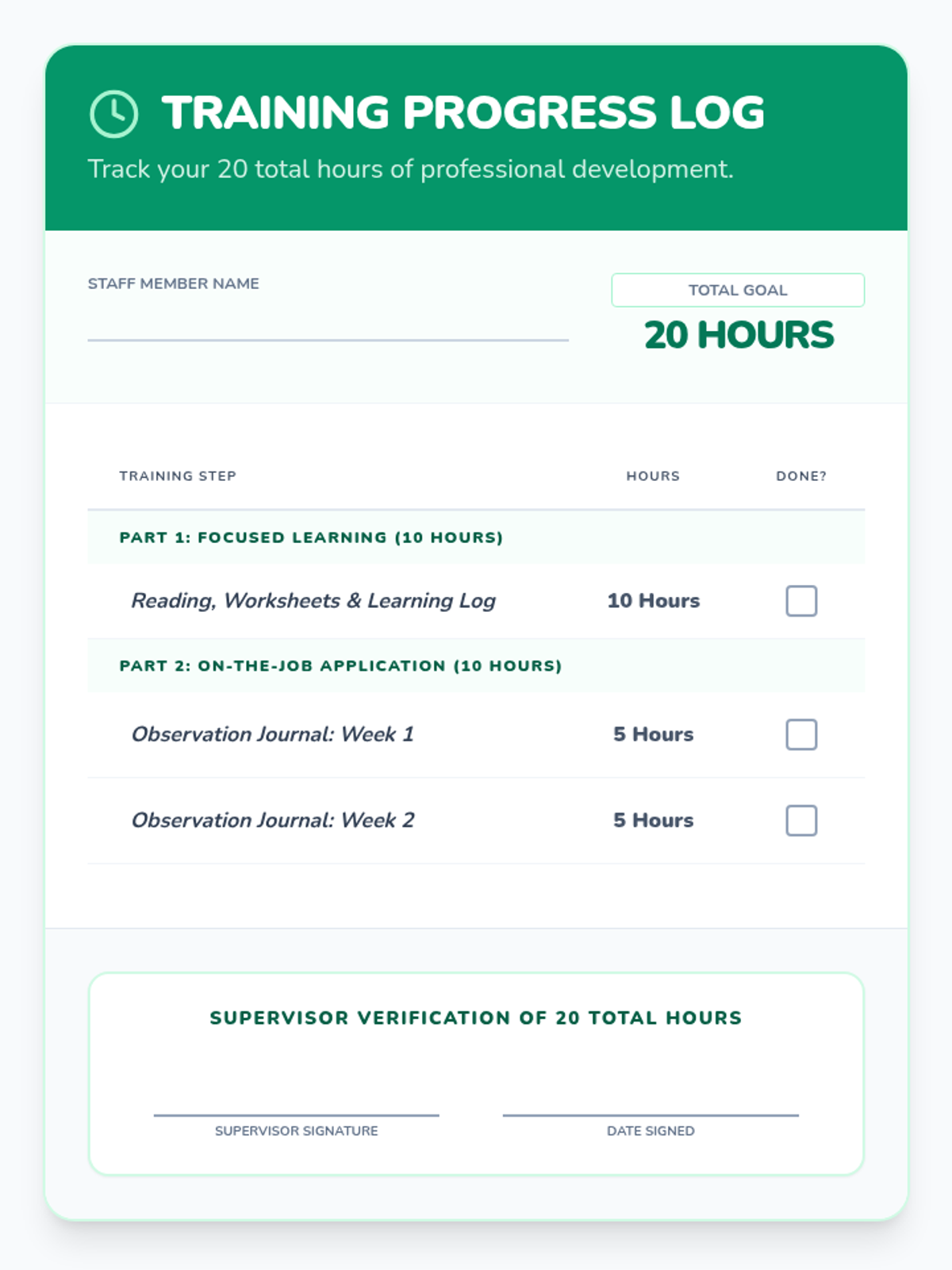
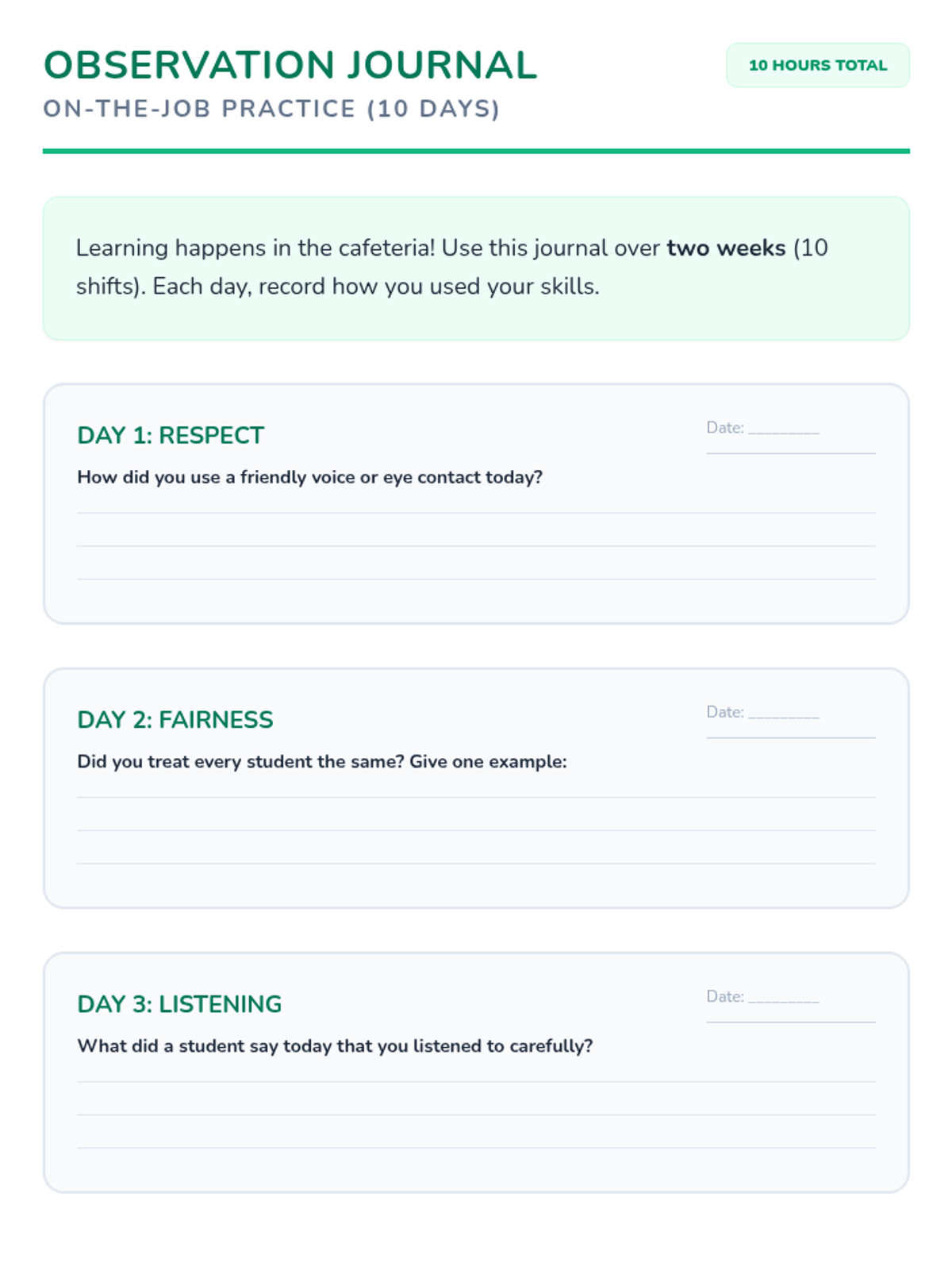
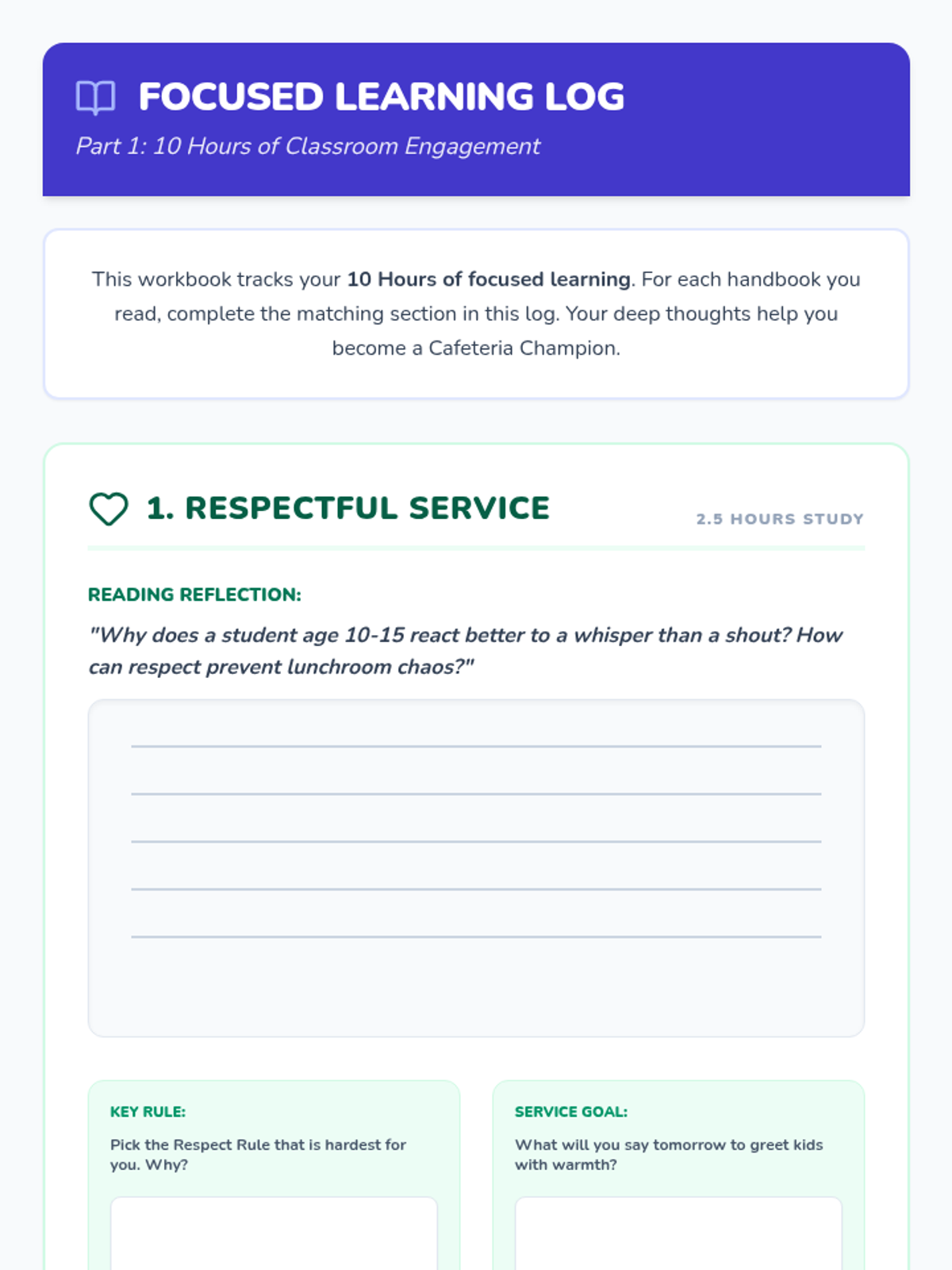
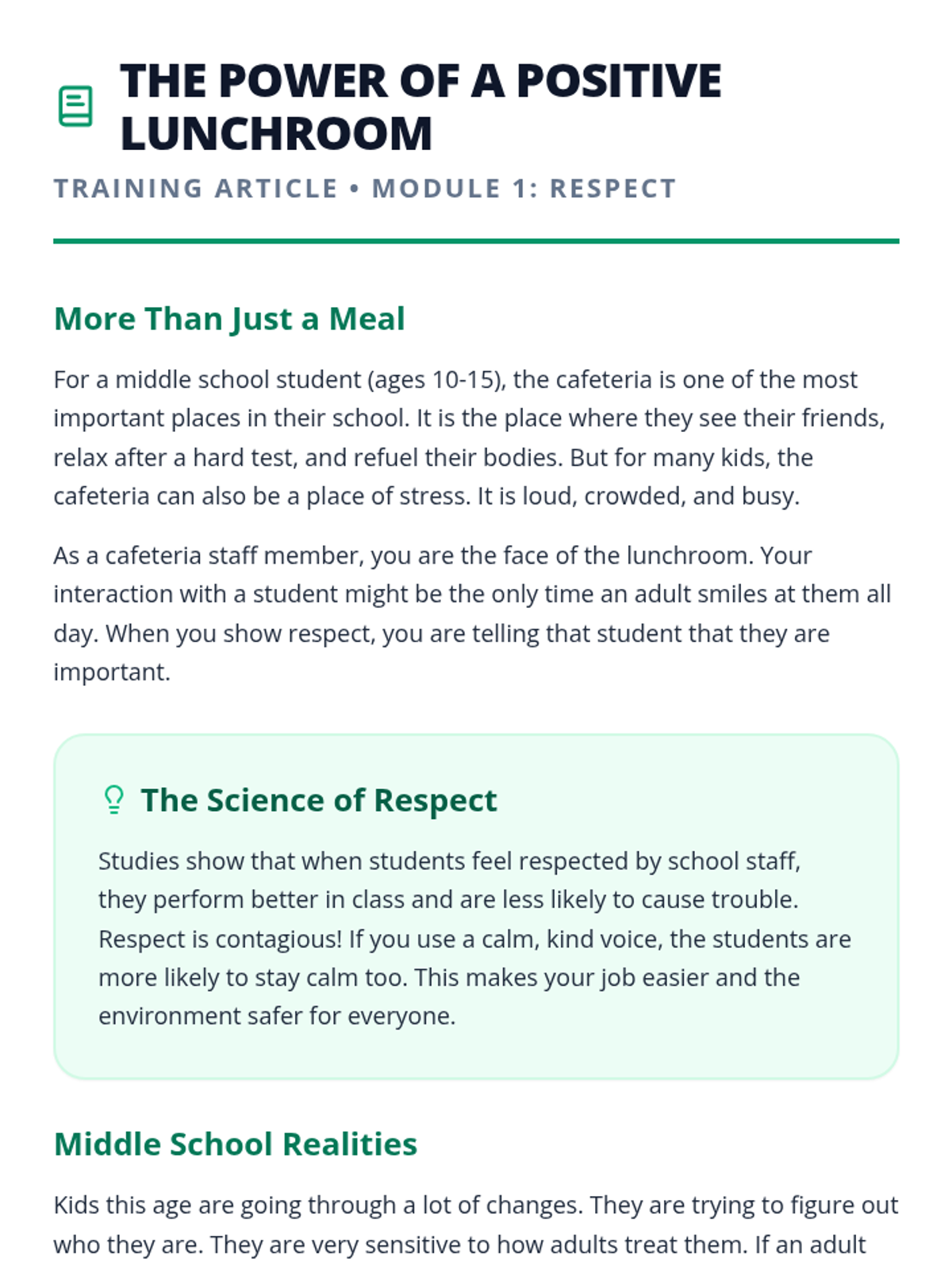
Focuses on building positive, respectful relationships with middle schoolers during meal service. Includes techniques for communication and managing busy lunch rushes with kindness.
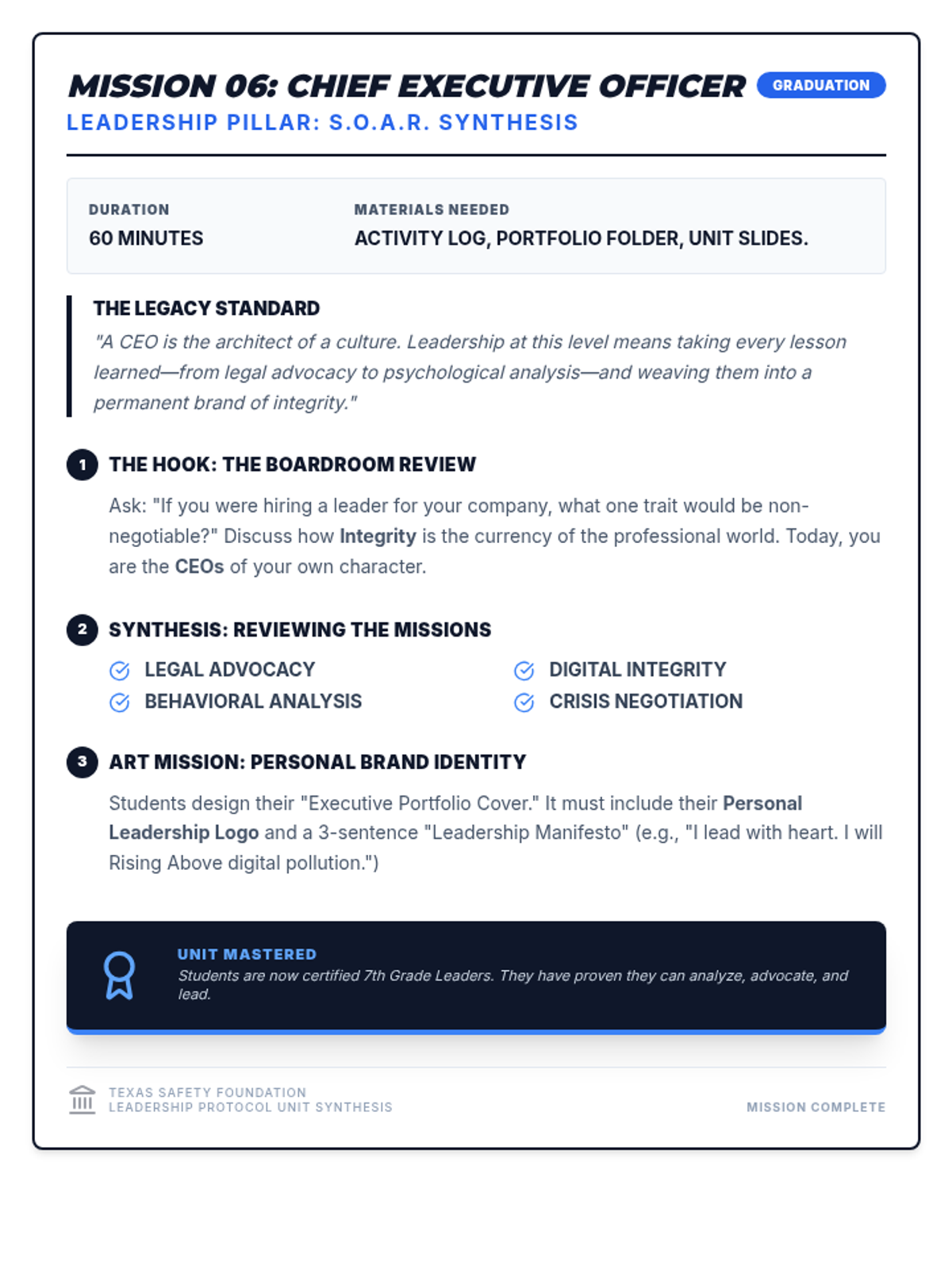
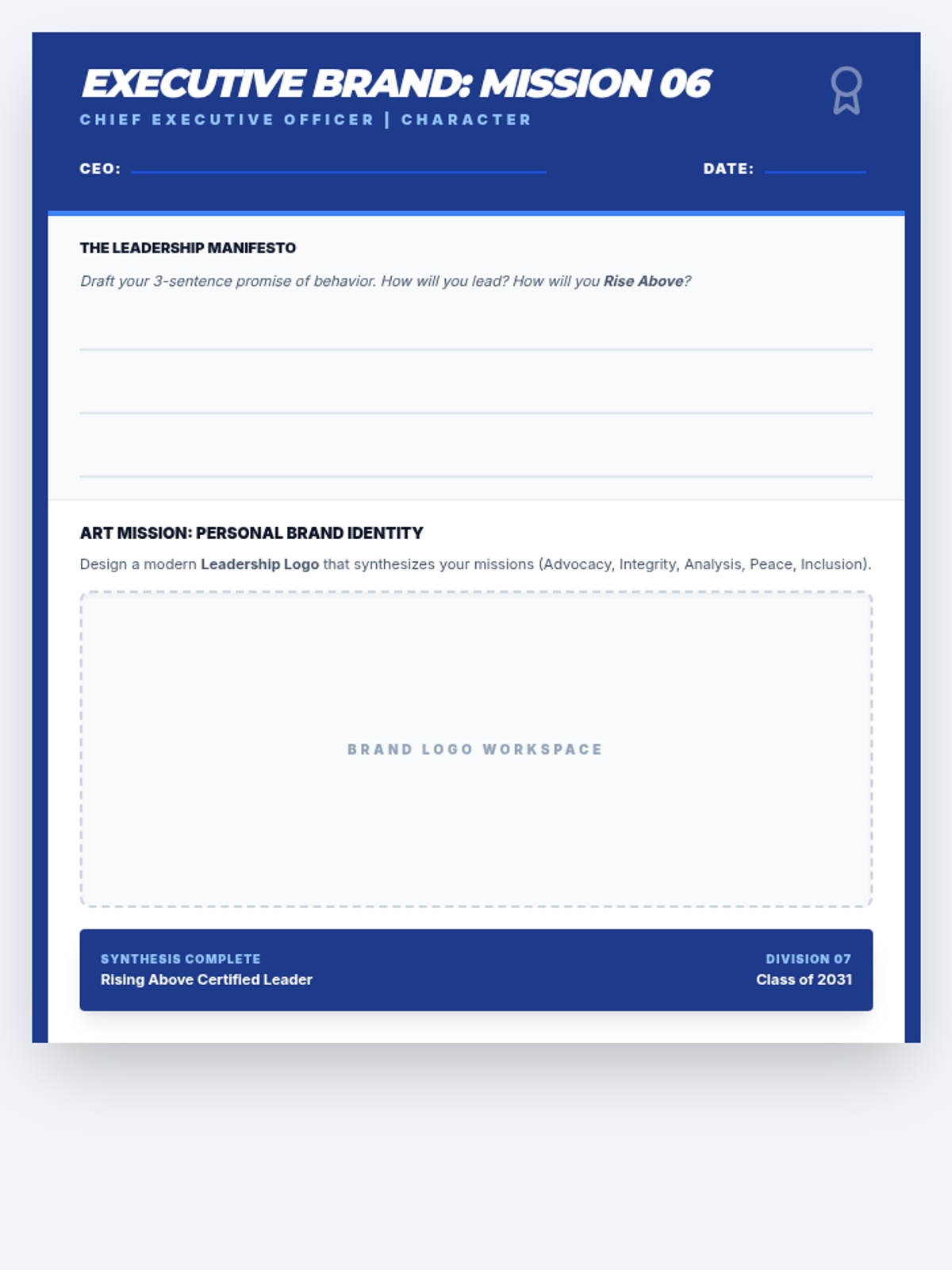
7th Grade unit synthesis focusing on personal leadership branding and the S.O.A.R. framework. Art: Personal Brand Identity.
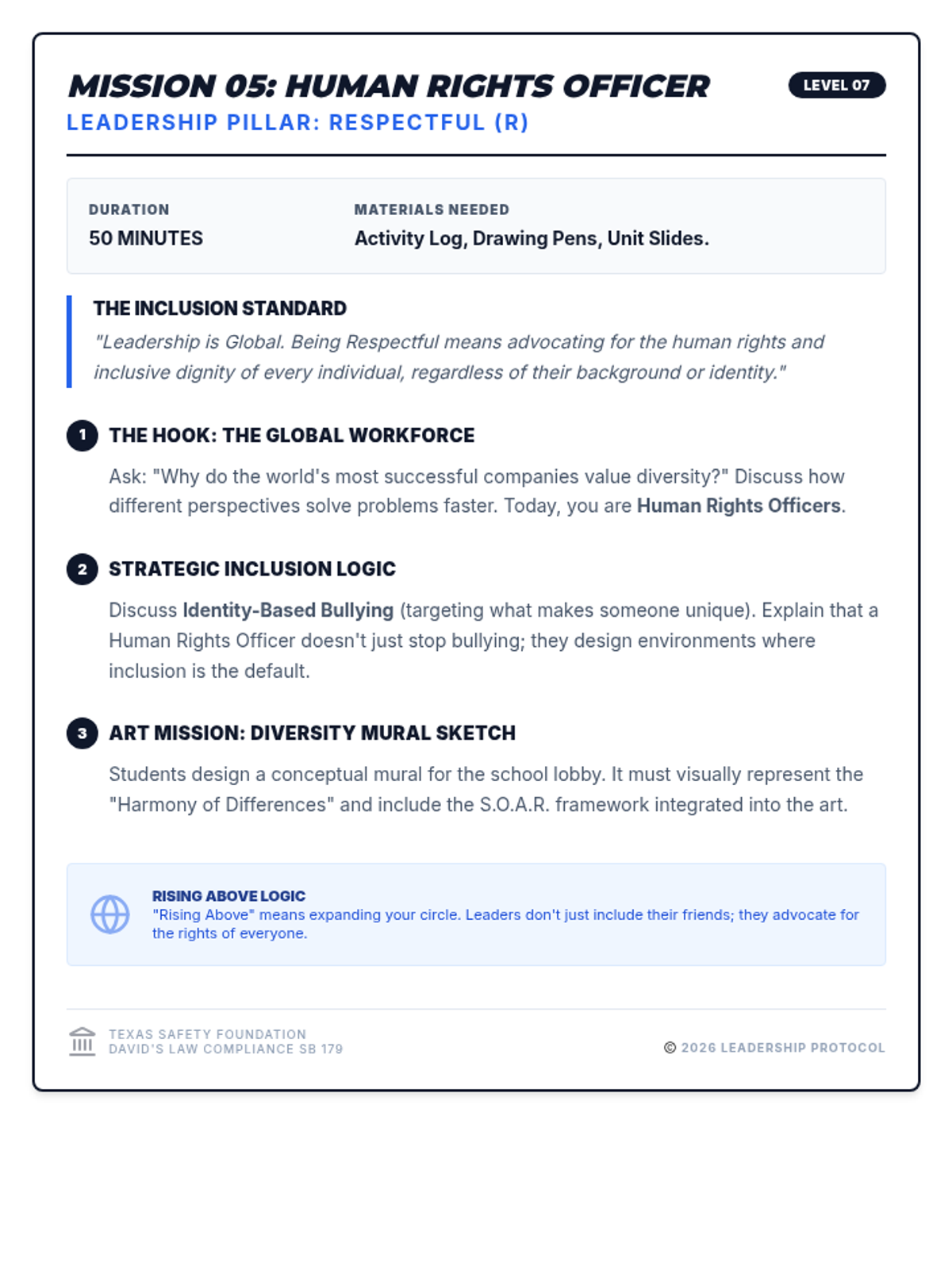
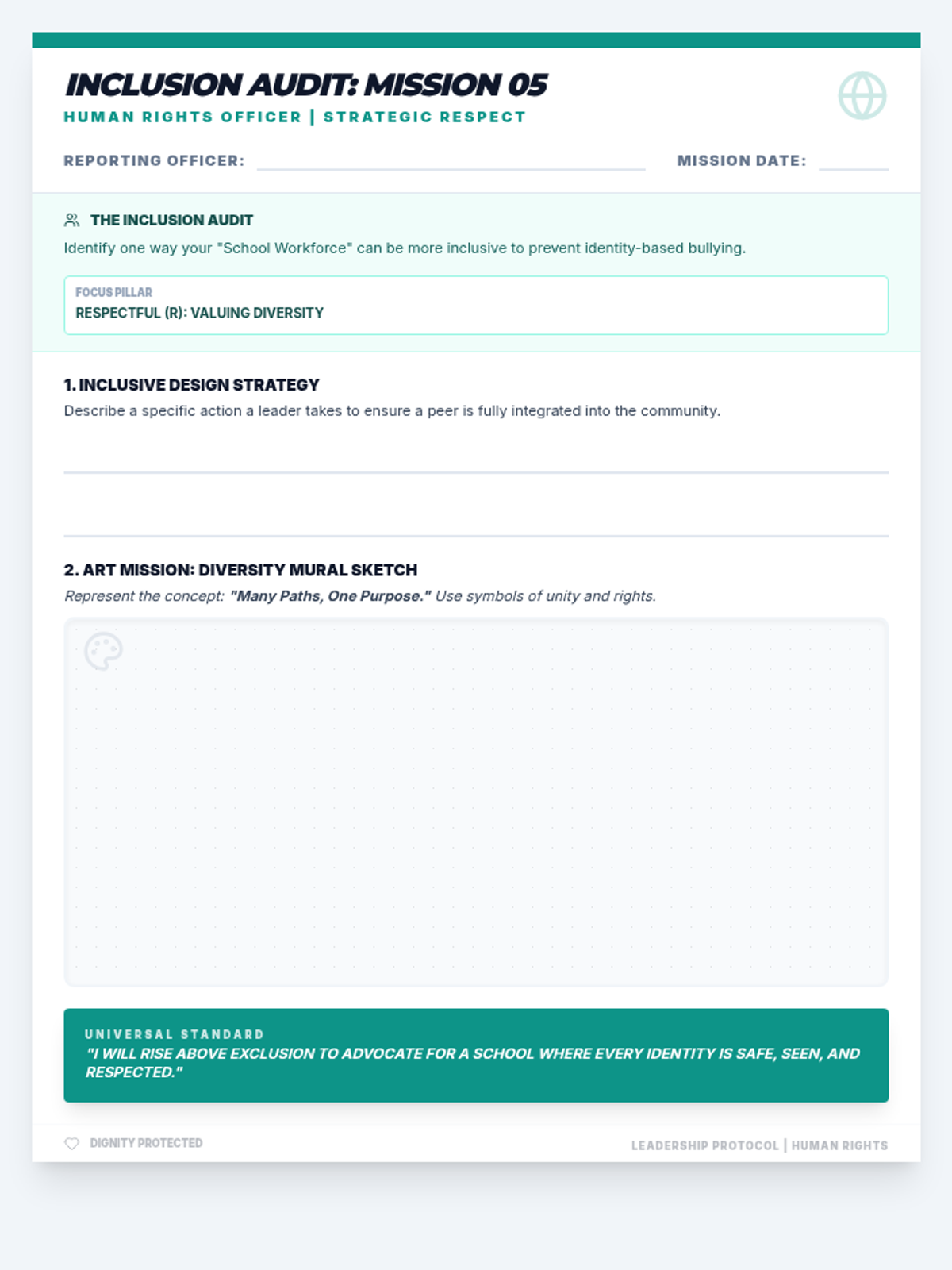
7th Grade focus on diversity, equity, and inclusive leadership through the lens of a Human Rights Officer. Art: Diversity Mural Sketch.
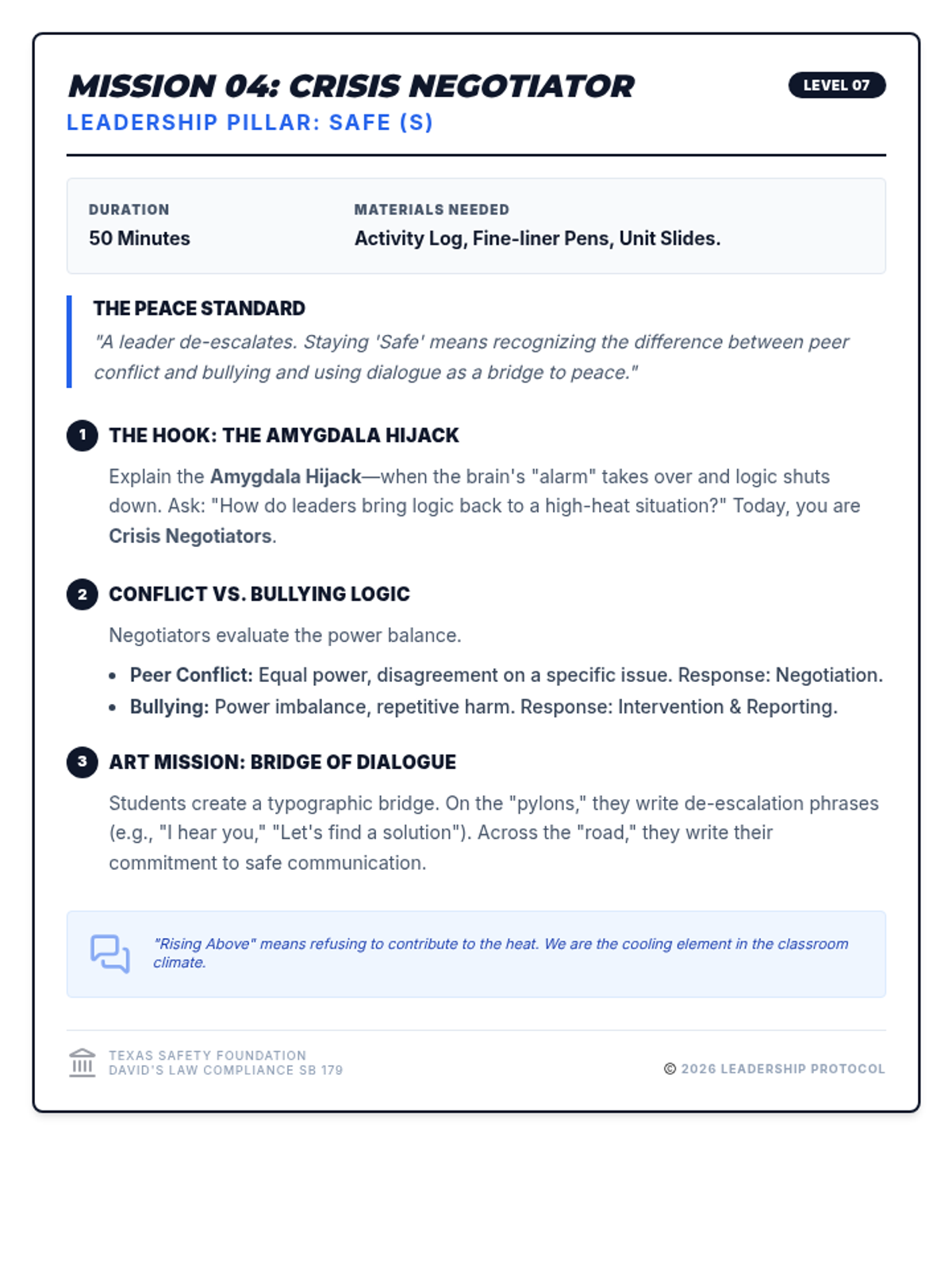
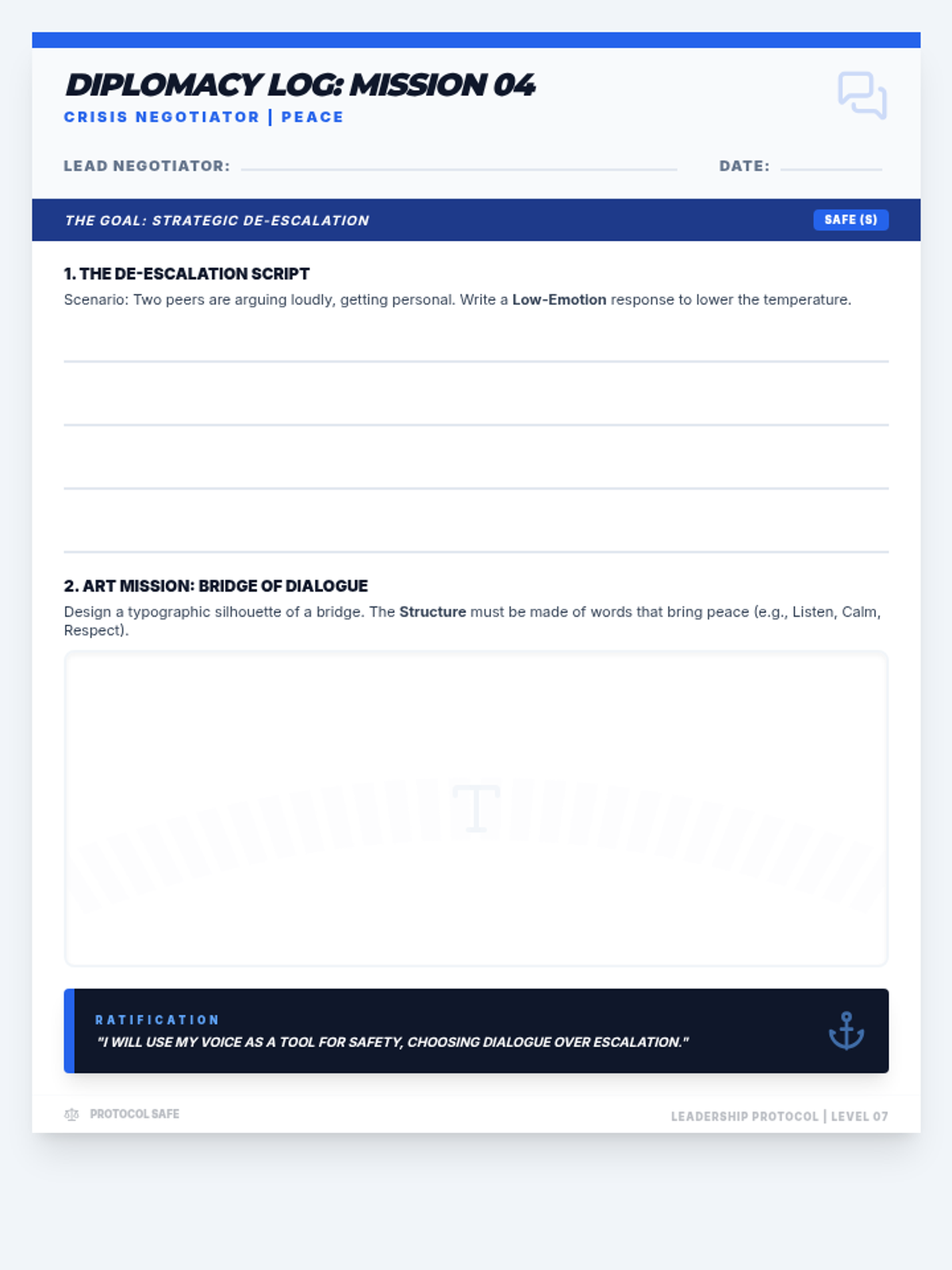
7th Grade focus on de-escalation, conflict vs. bullying, and maintaining a safe environment through the lens of a Crisis Negotiator. Art: Bridge of Dialogue.
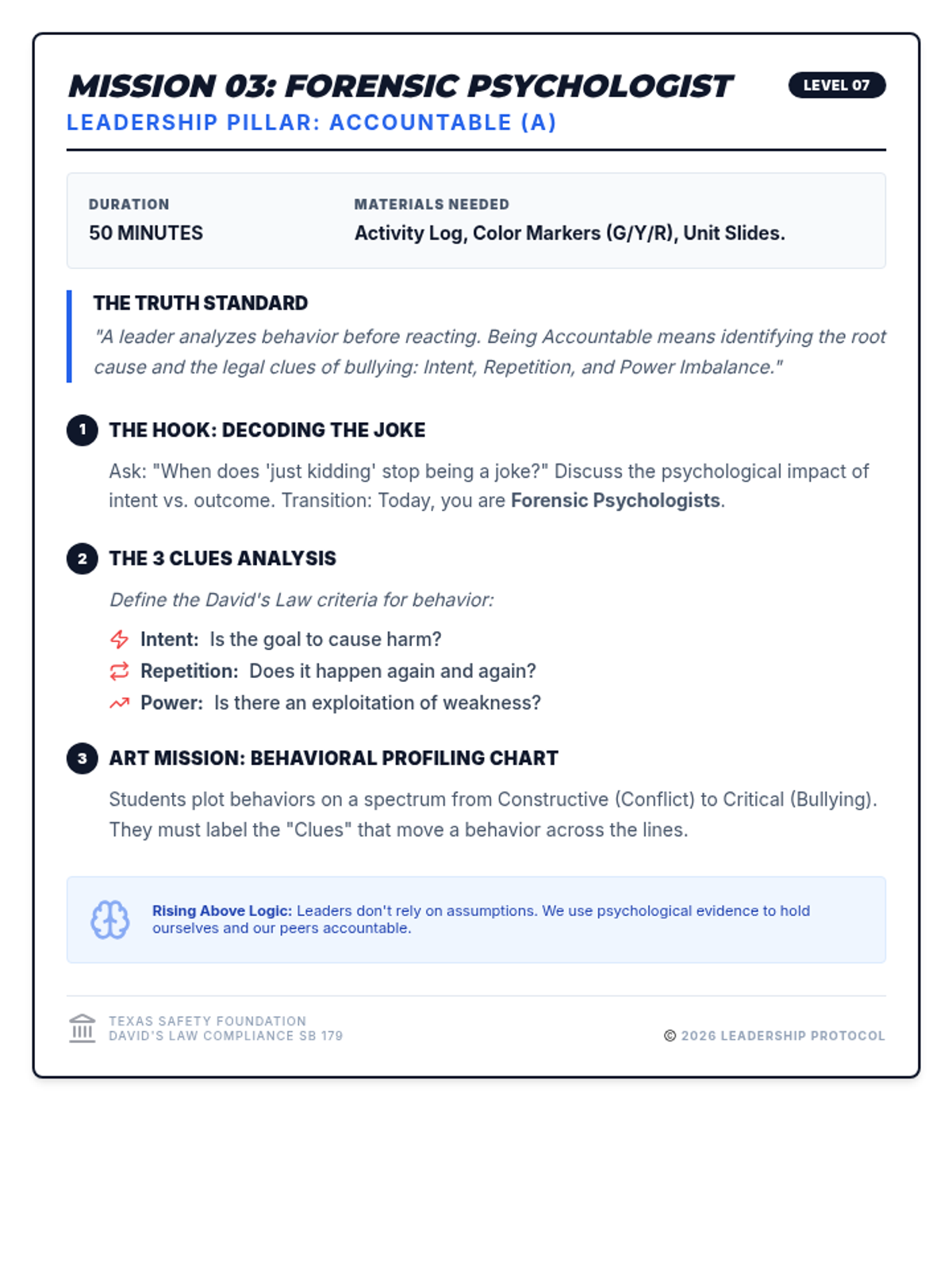
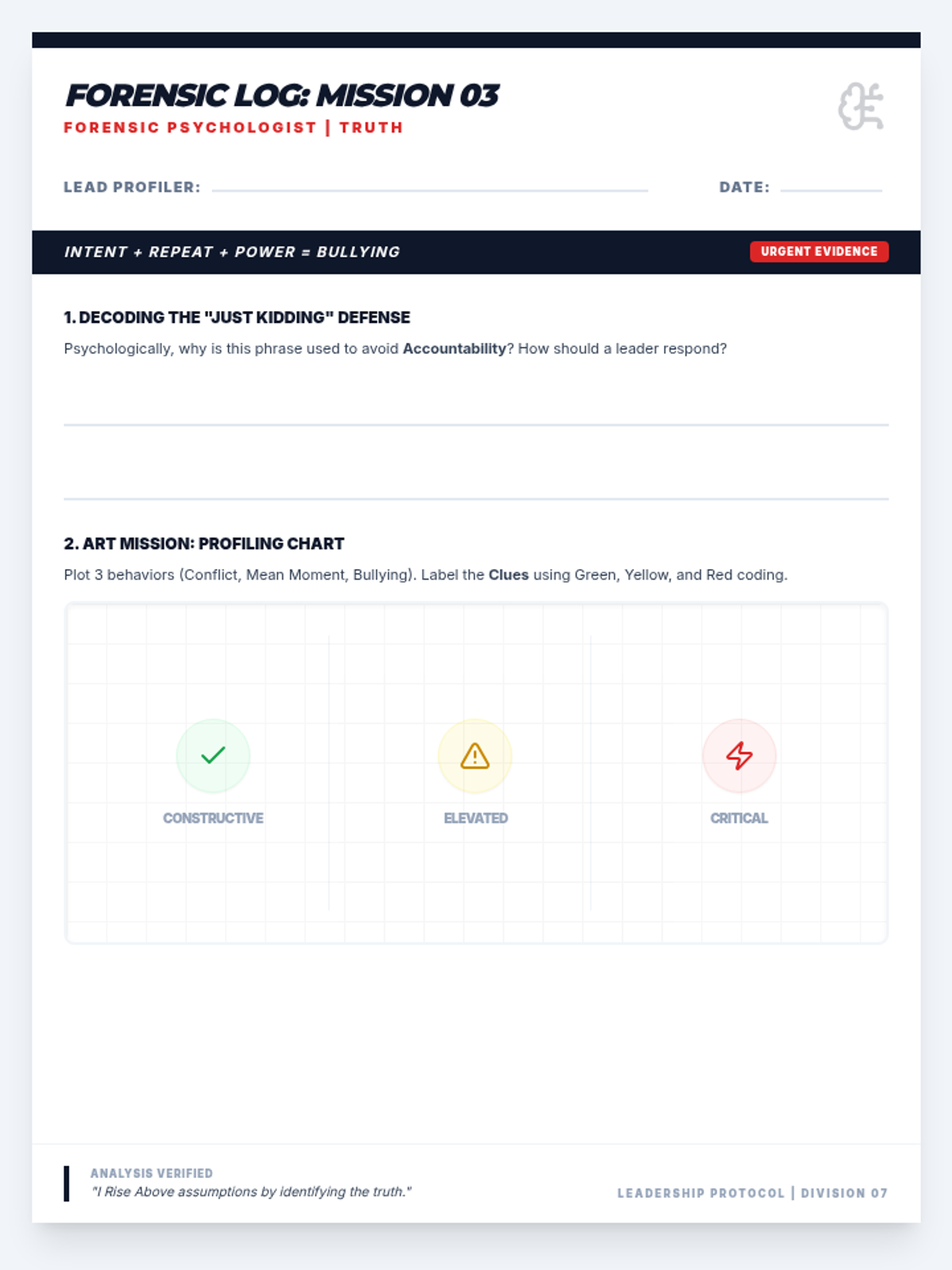
7th Grade focus on identifying intent, repetition, and power imbalances through the lens of a Forensic Psychologist. Art: Behavioral Profiling Chart.
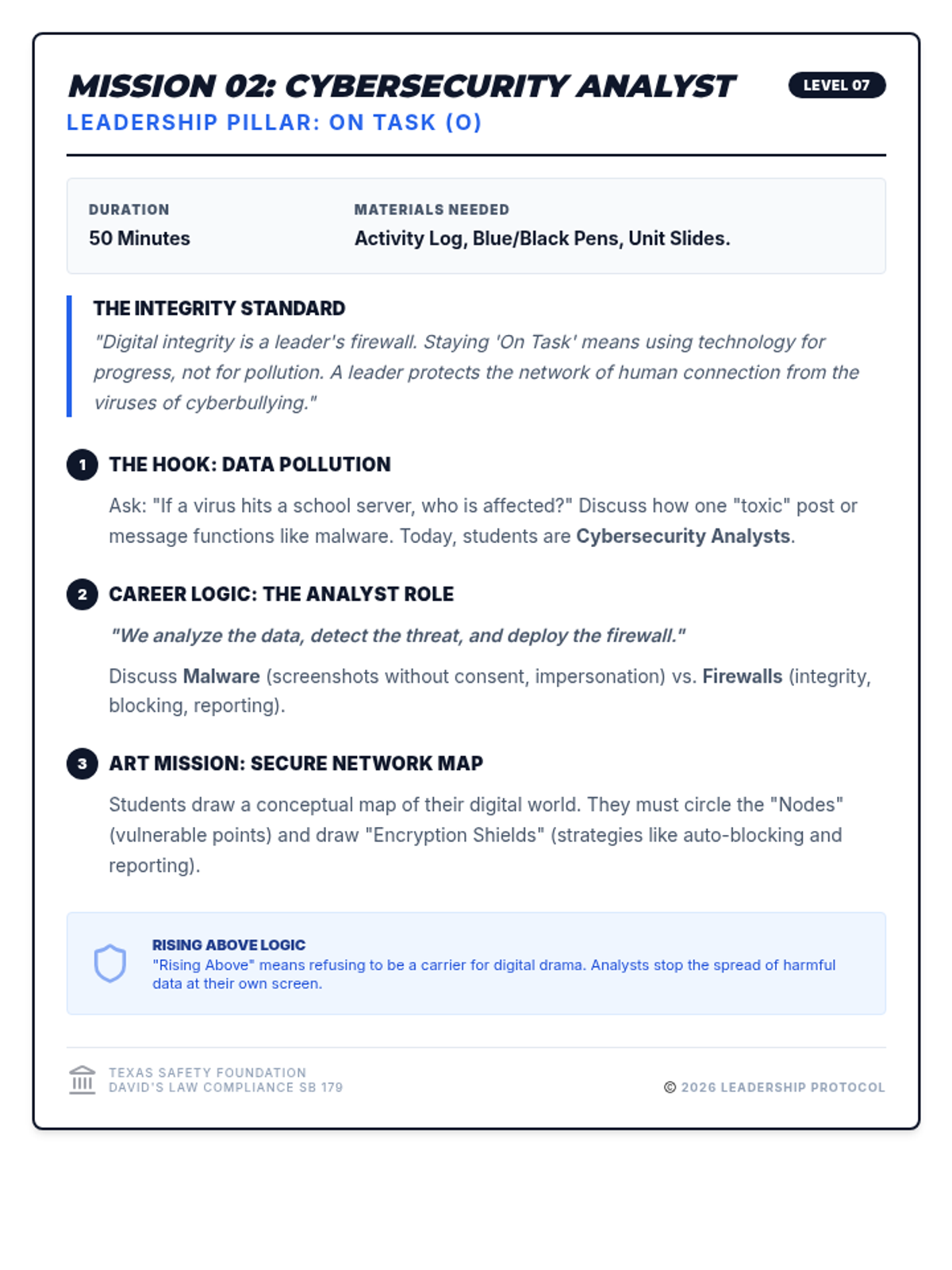
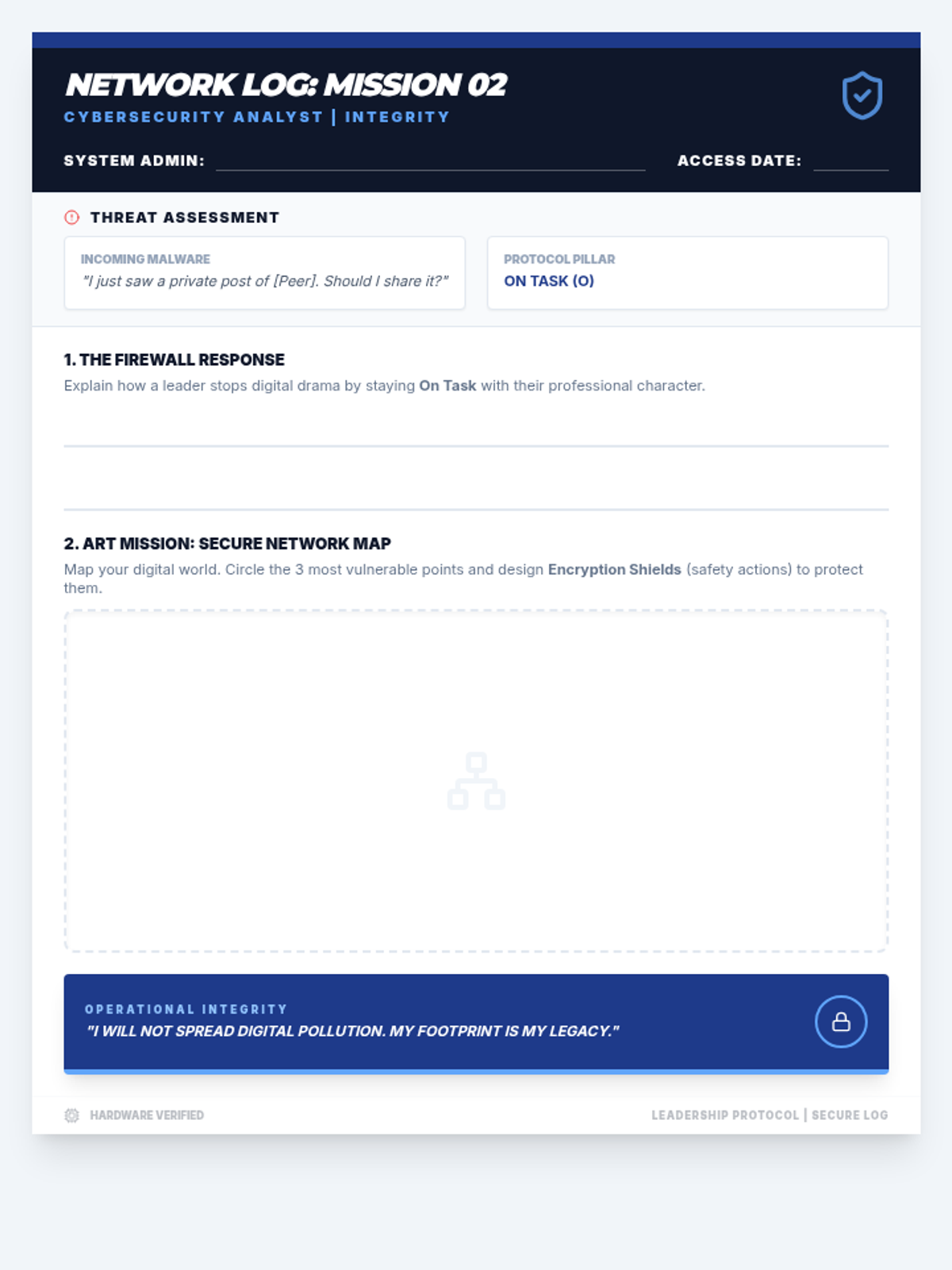
7th Grade focus on digital safety, data protection, and rising above cyber-pollution through the lens of a Cybersecurity Analyst. Art: Secure Network Map.
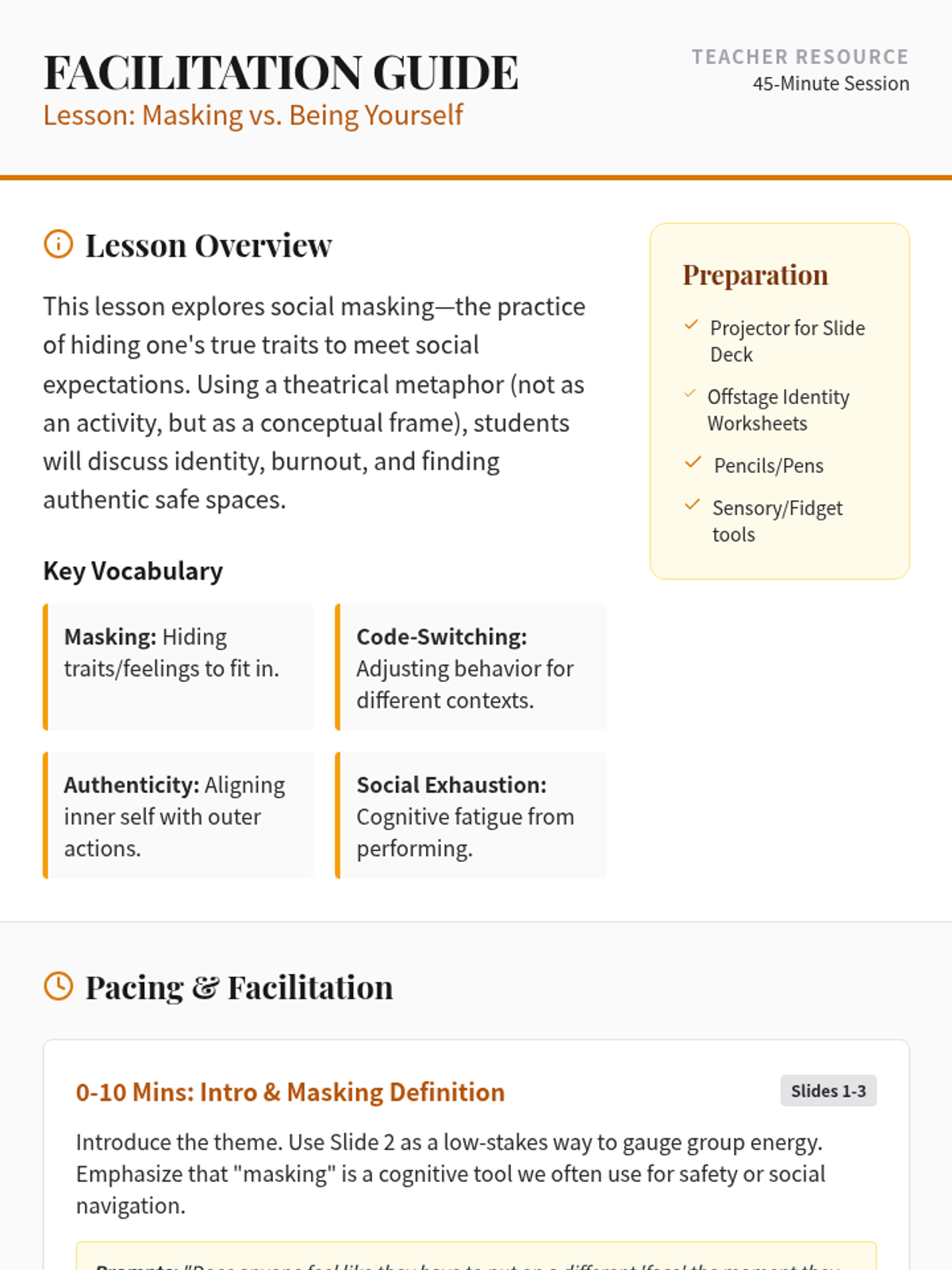
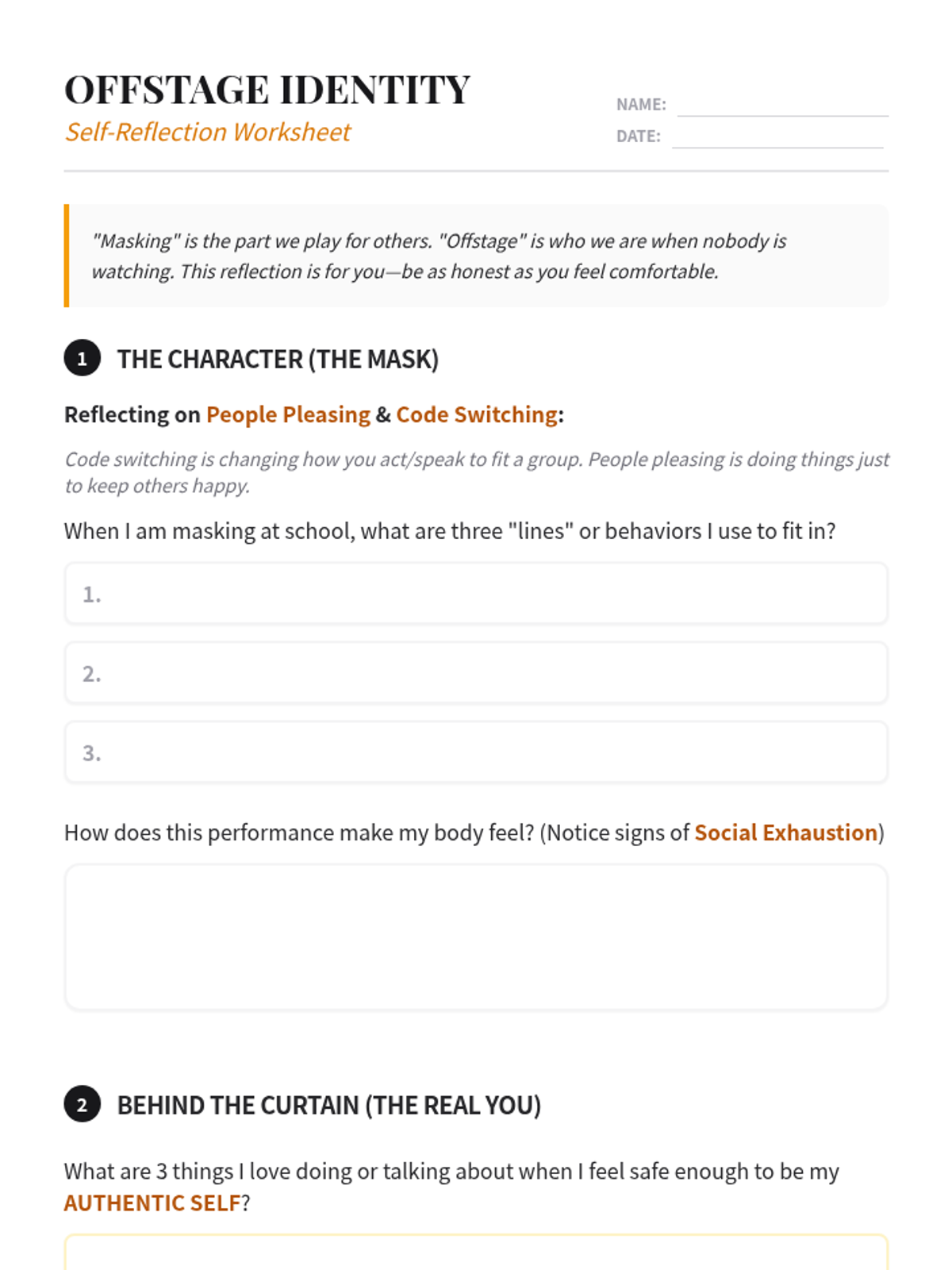
A social-emotional intervention lesson for high school students exploring the concepts of masking, authenticity, and identity development using a theater metaphor. Students will discuss code-switching, people-pleasing, and the emotional costs of social performance.
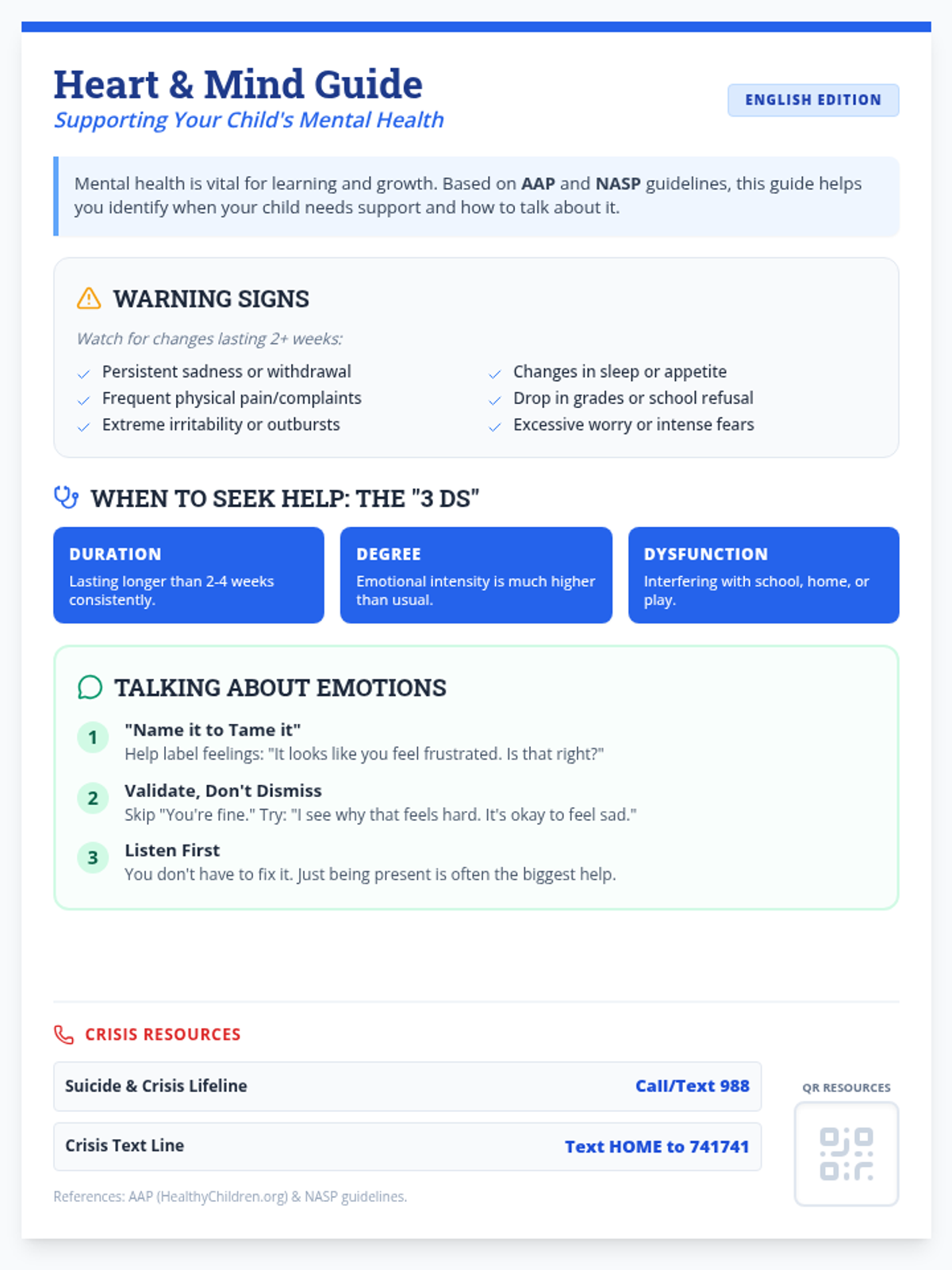
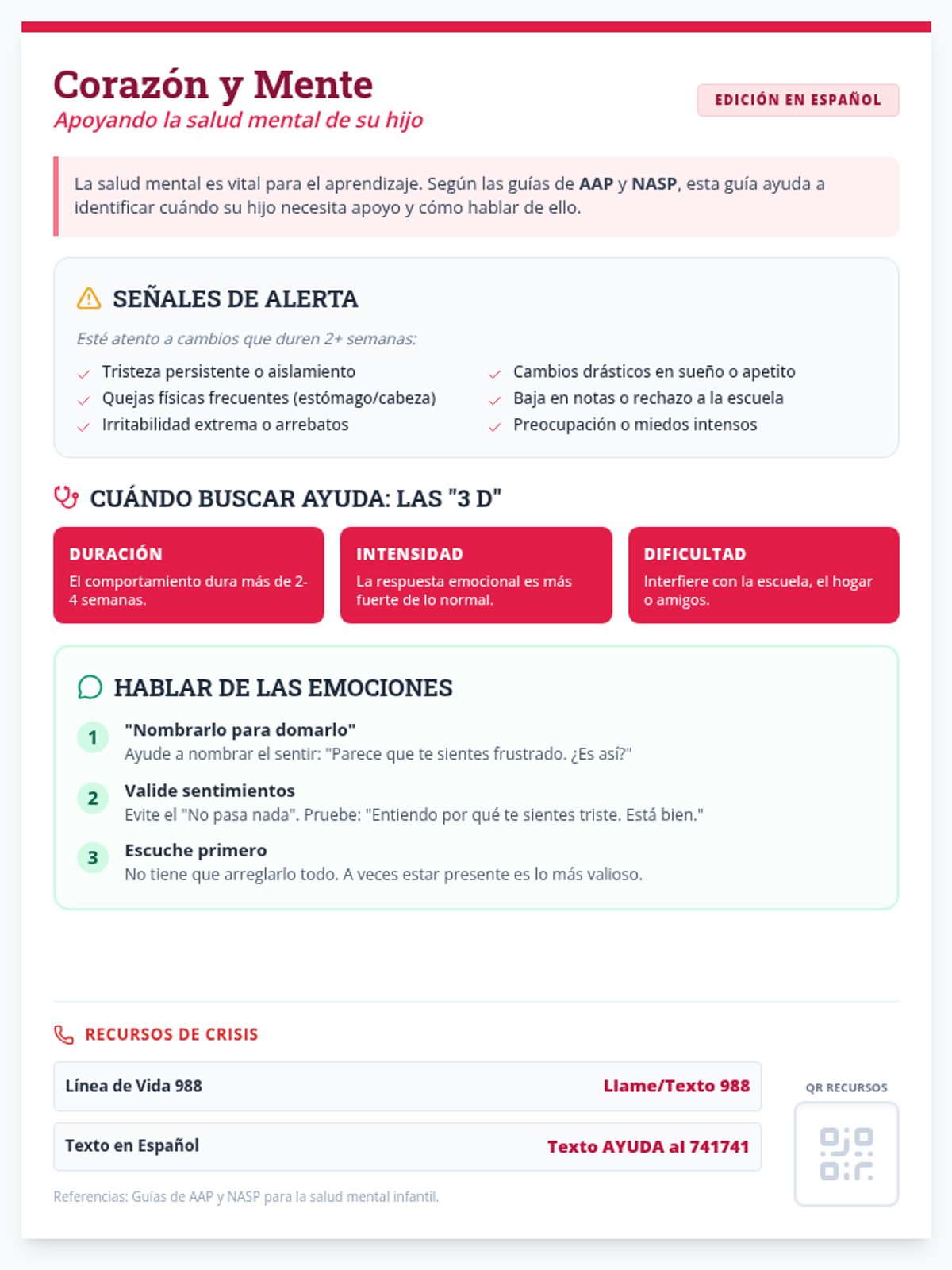
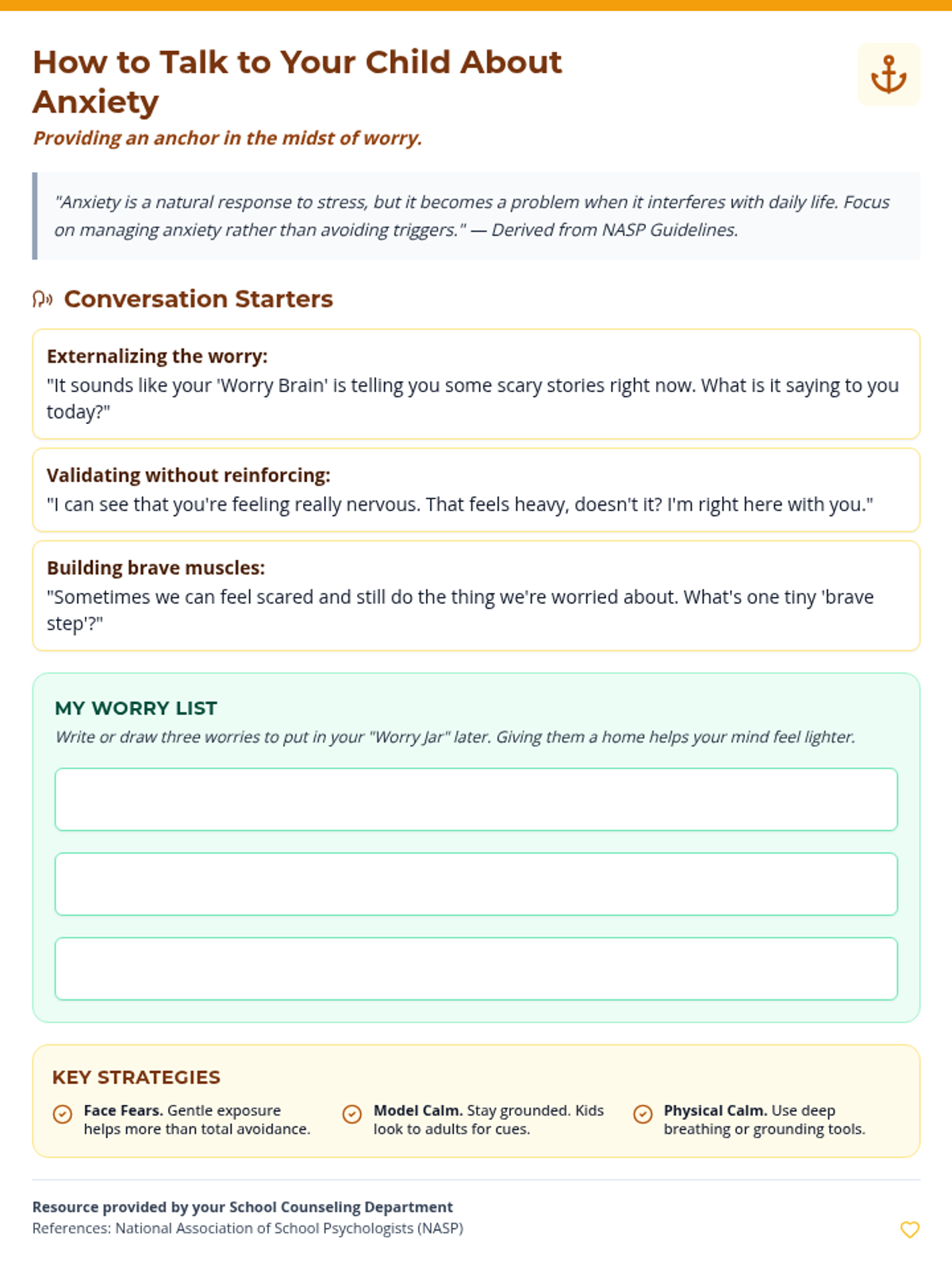
A parent education resource set providing evidence-based guidance on identifying childhood mental health warning signs and fostering open communication about emotions. Includes English and Spanish versions.
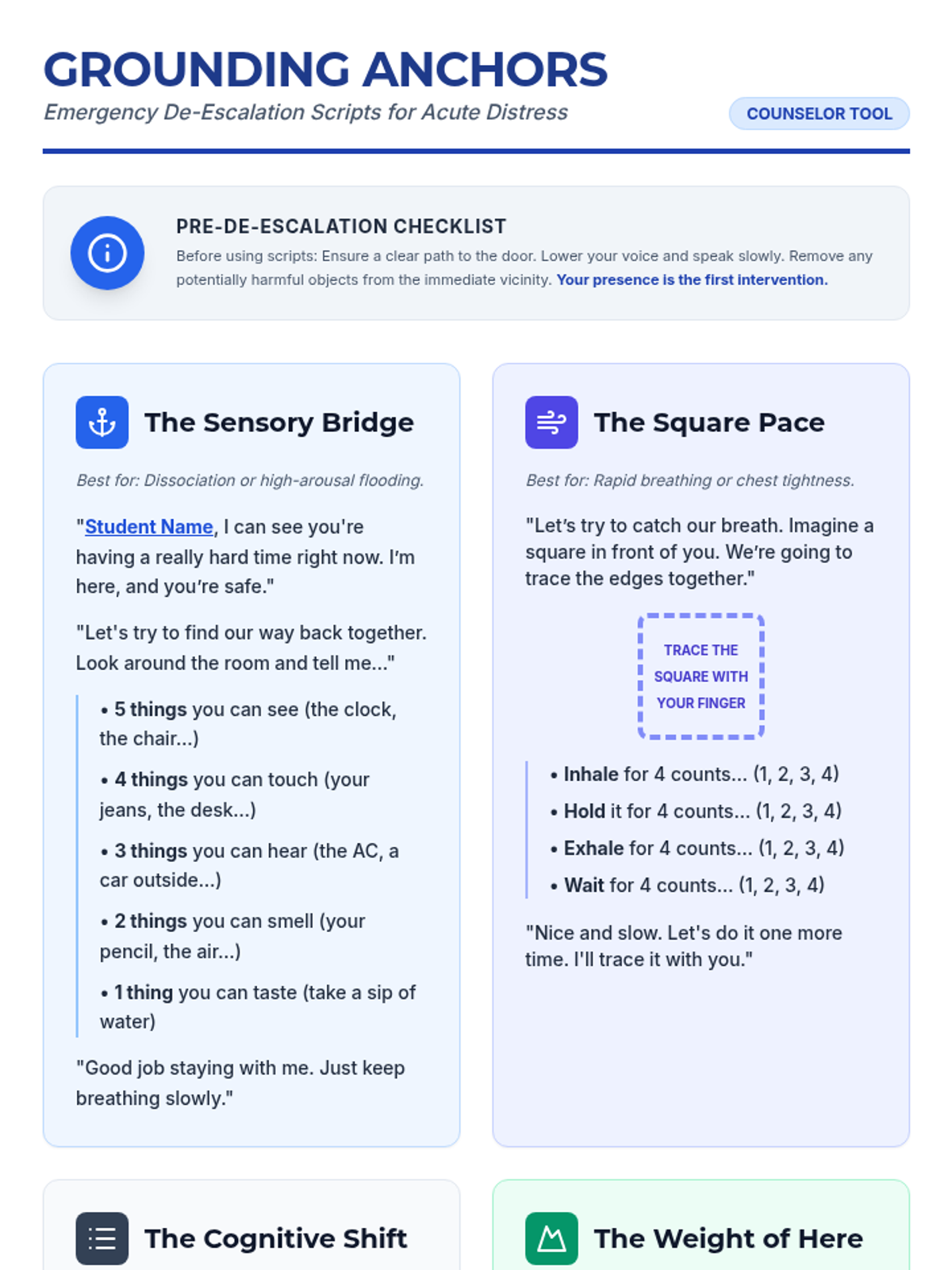
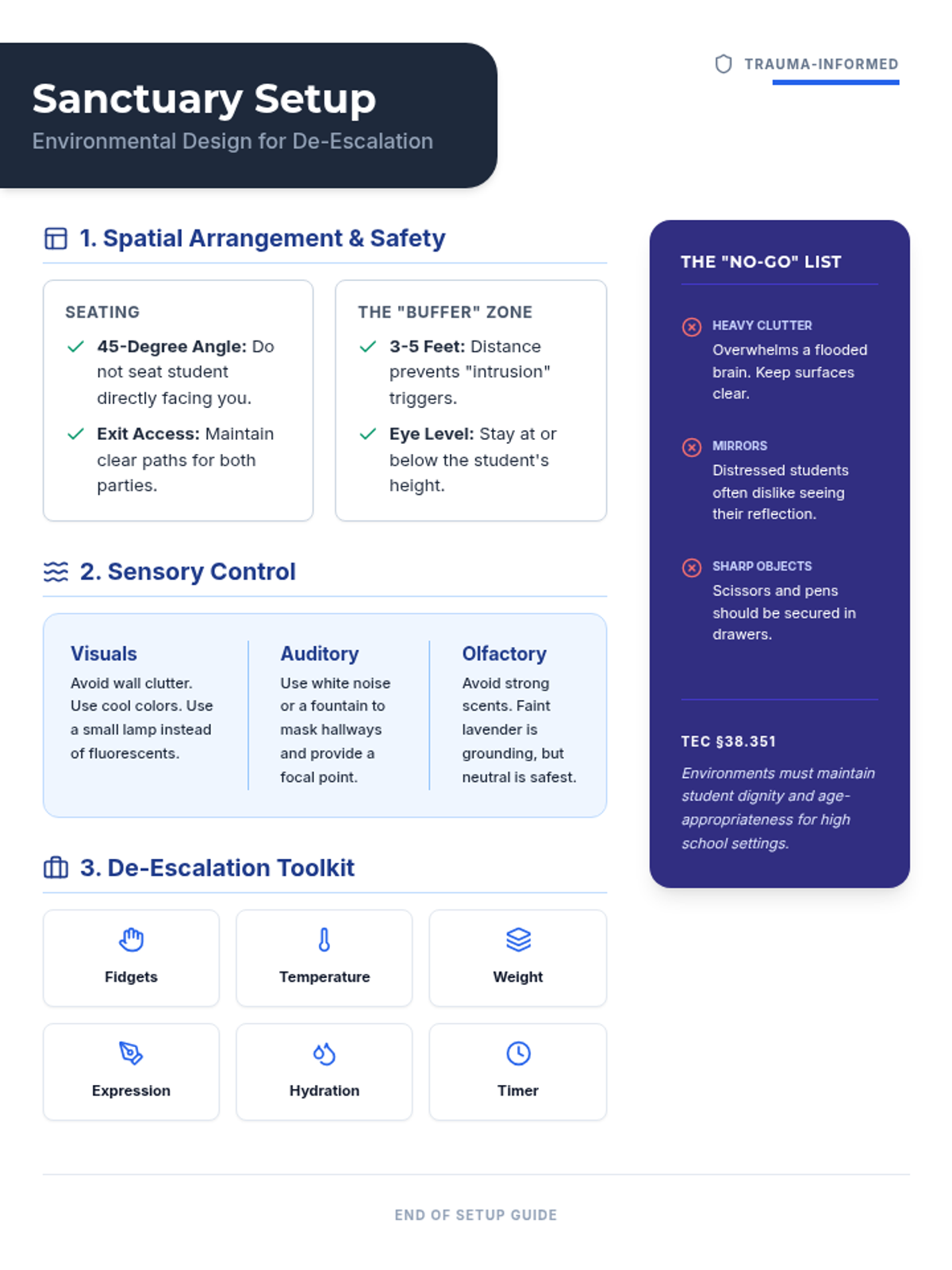
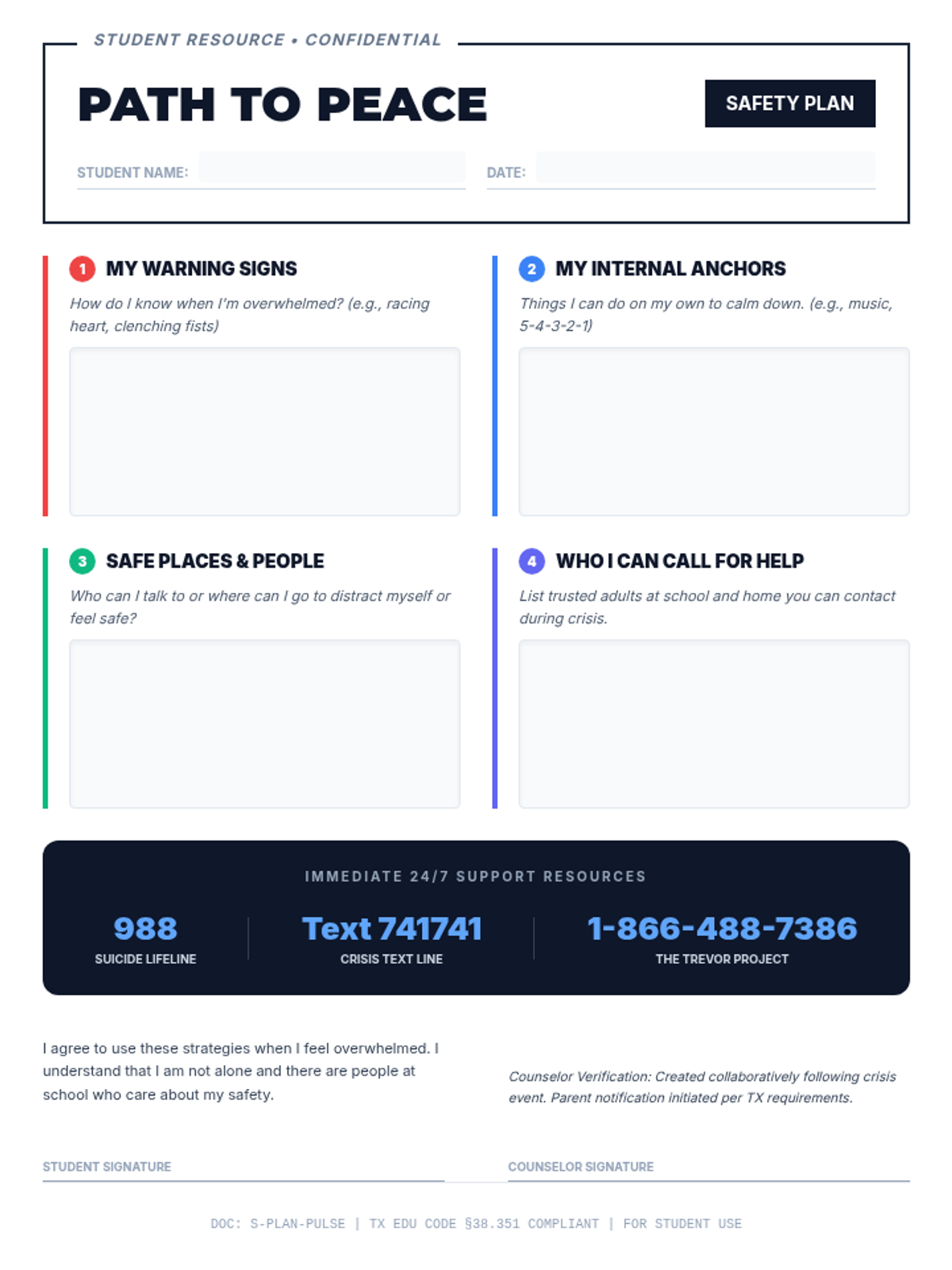
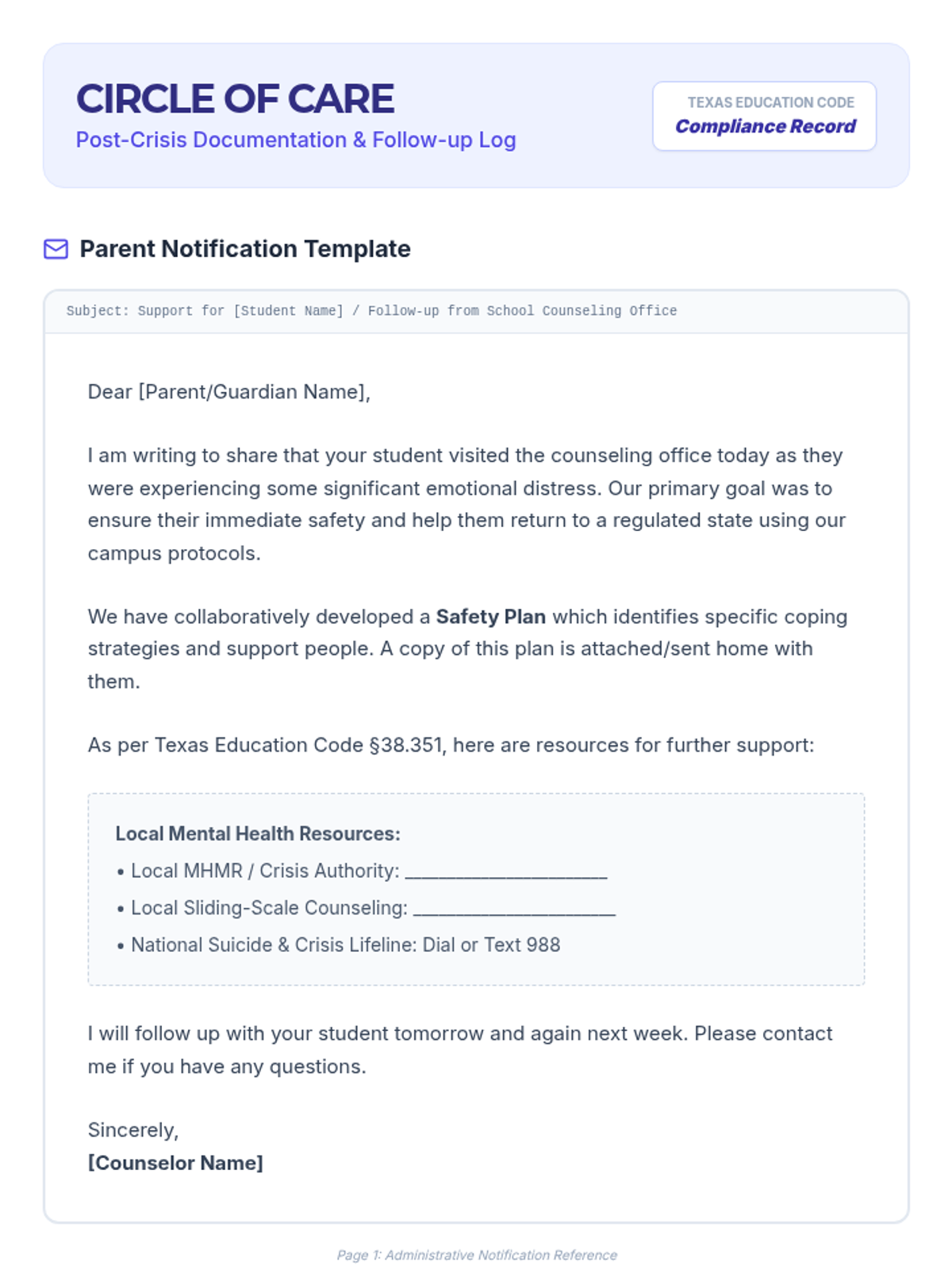
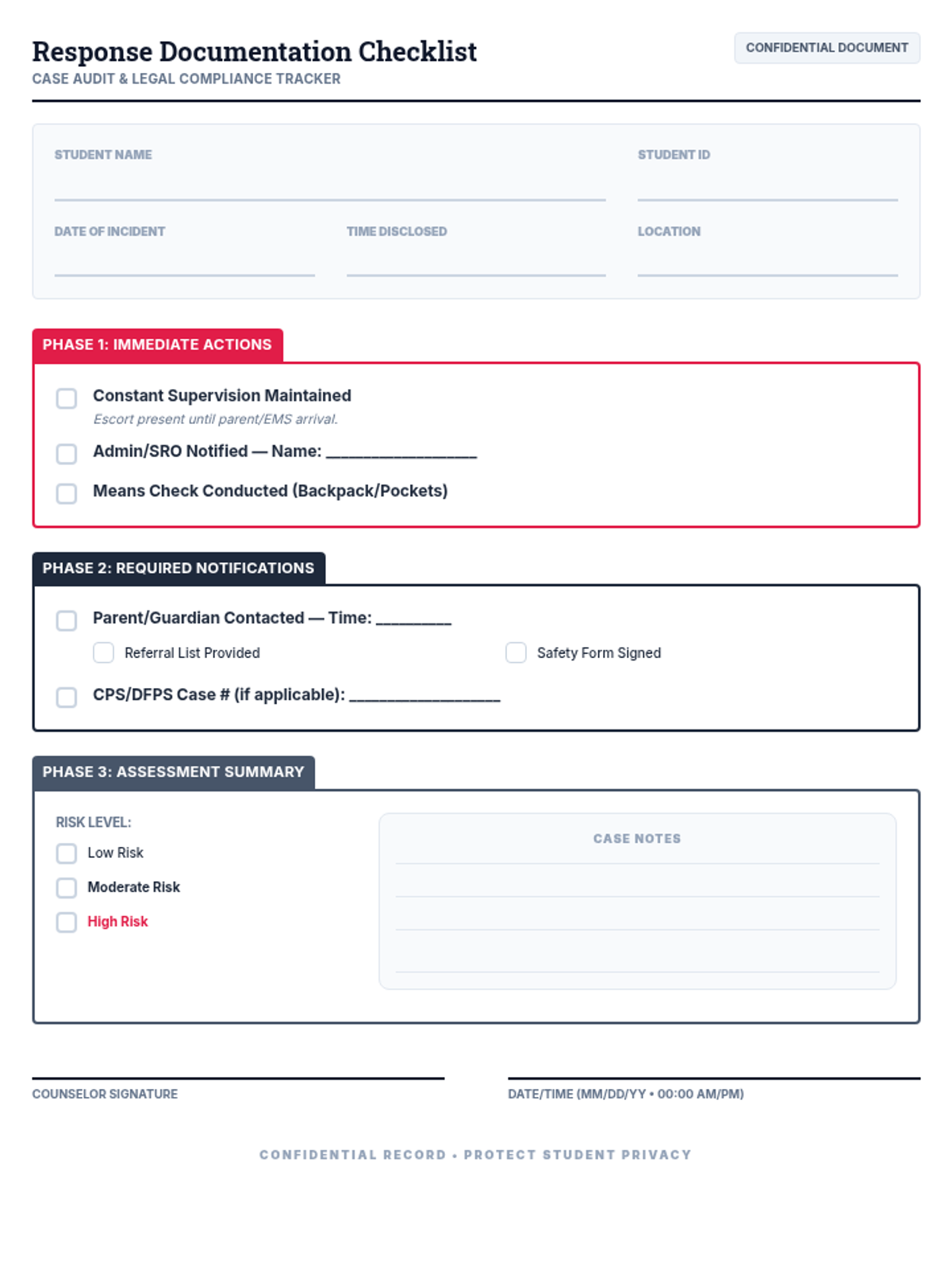
A comprehensive toolkit for high school counselors to manage acute emotional distress in students. This resource includes de-escalation protocols, grounding scripts, environmental setup, safety planning, and administrative tracking, all aligned with trauma-informed care and Texas Education Code standards.
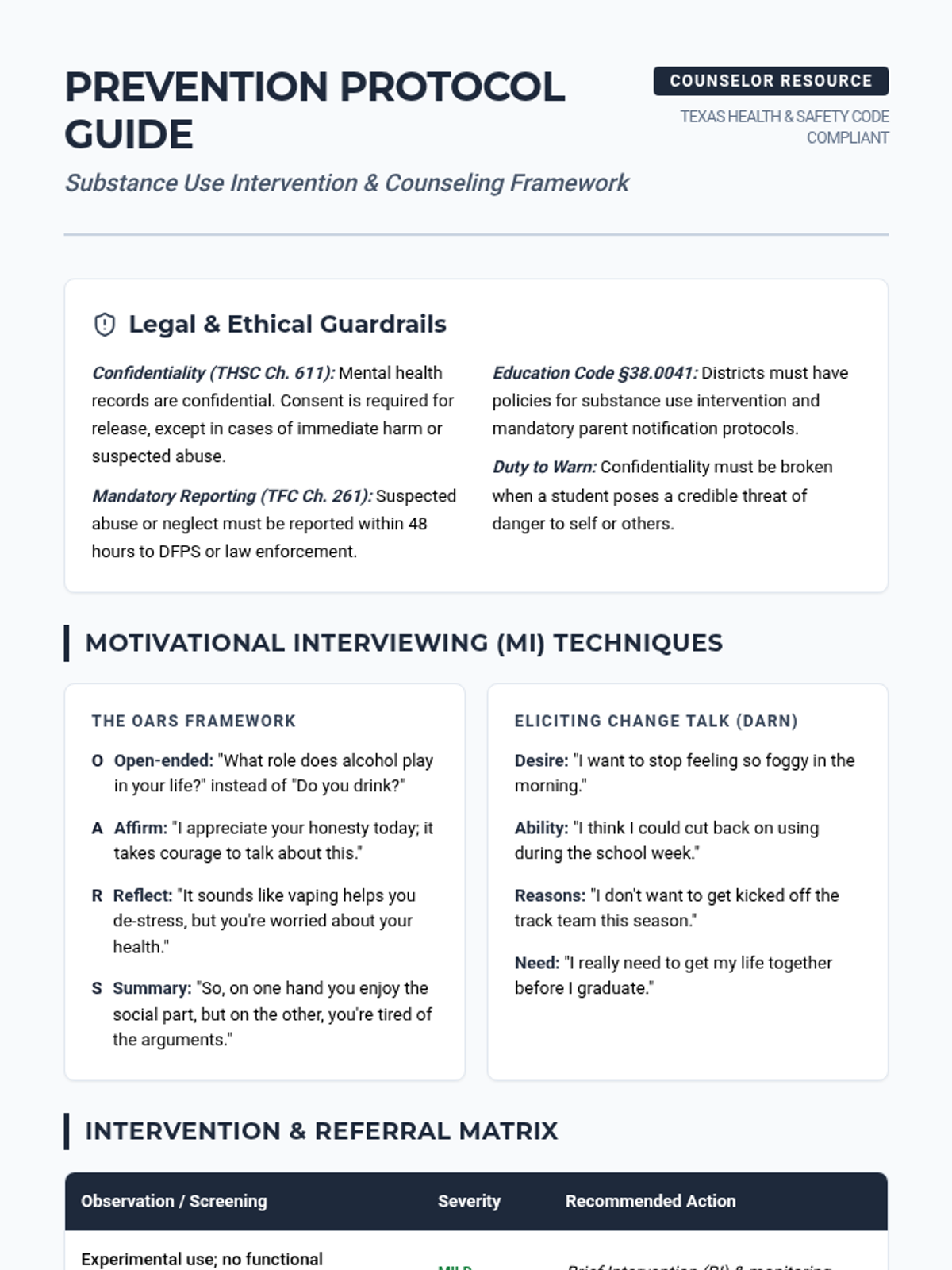
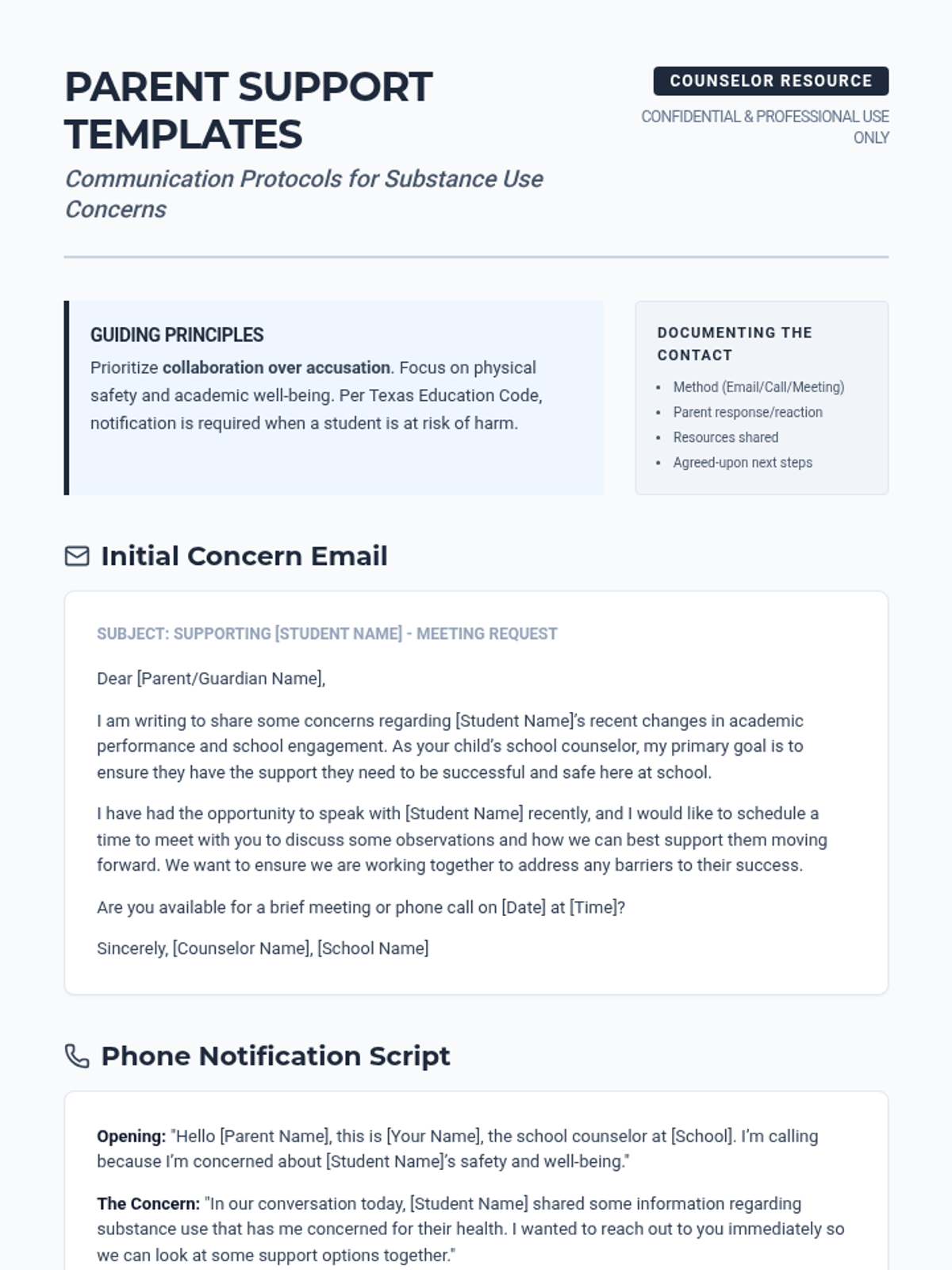
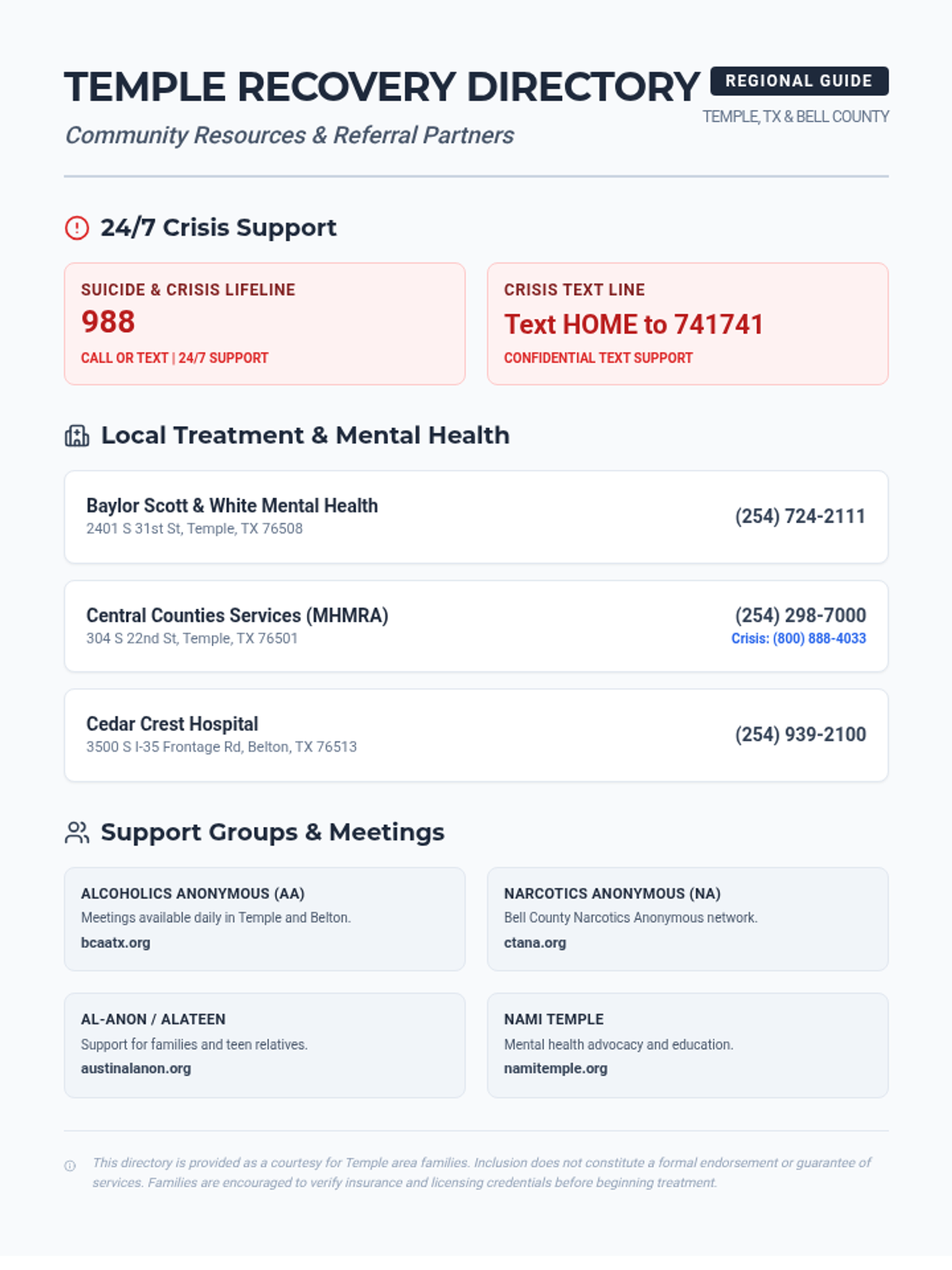
A comprehensive set of evidence-based resources for high school counselors to navigate substance use prevention and intervention, featuring motivational interviewing techniques, legal compliance guides, and local referral pathways.
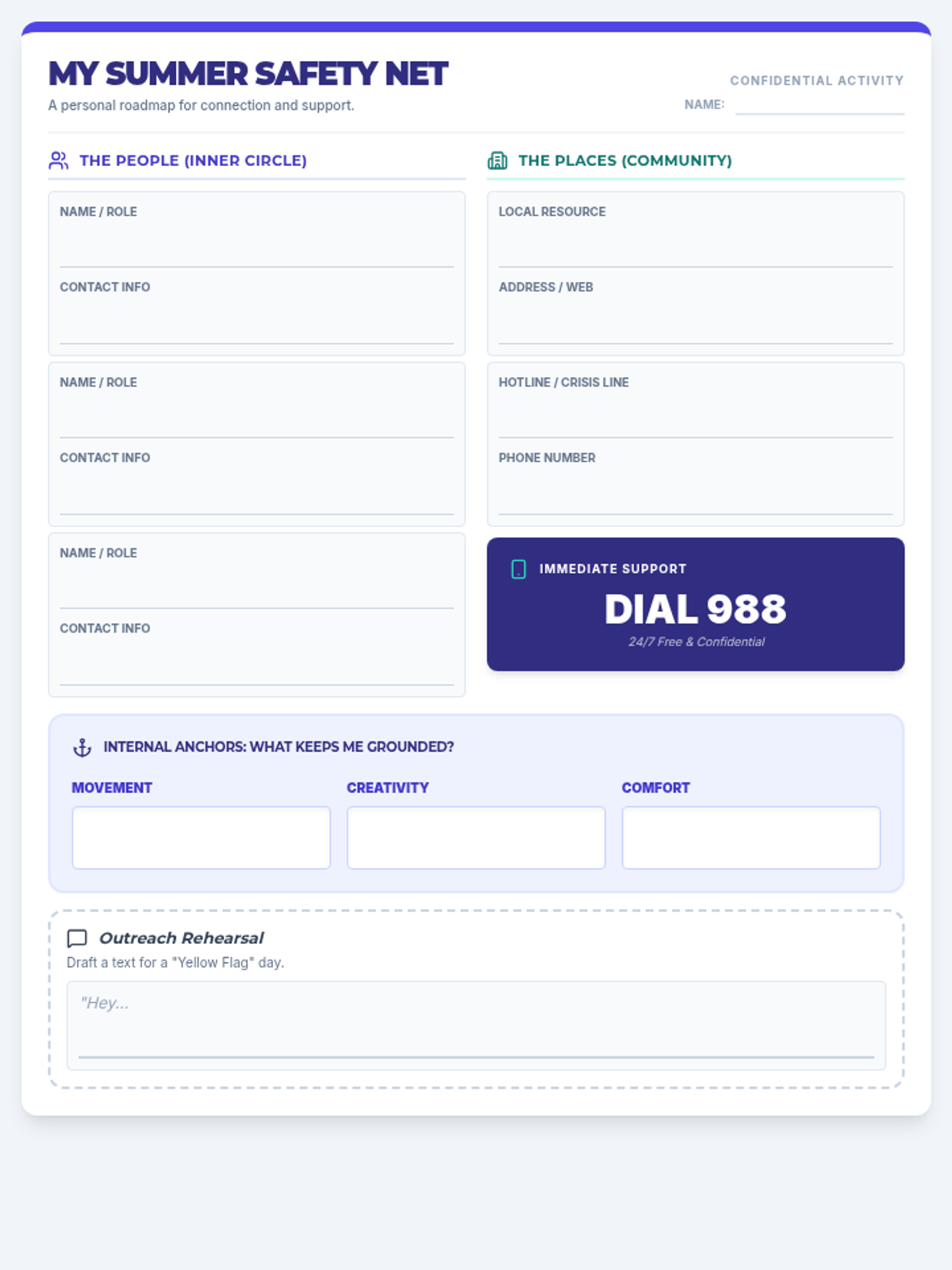
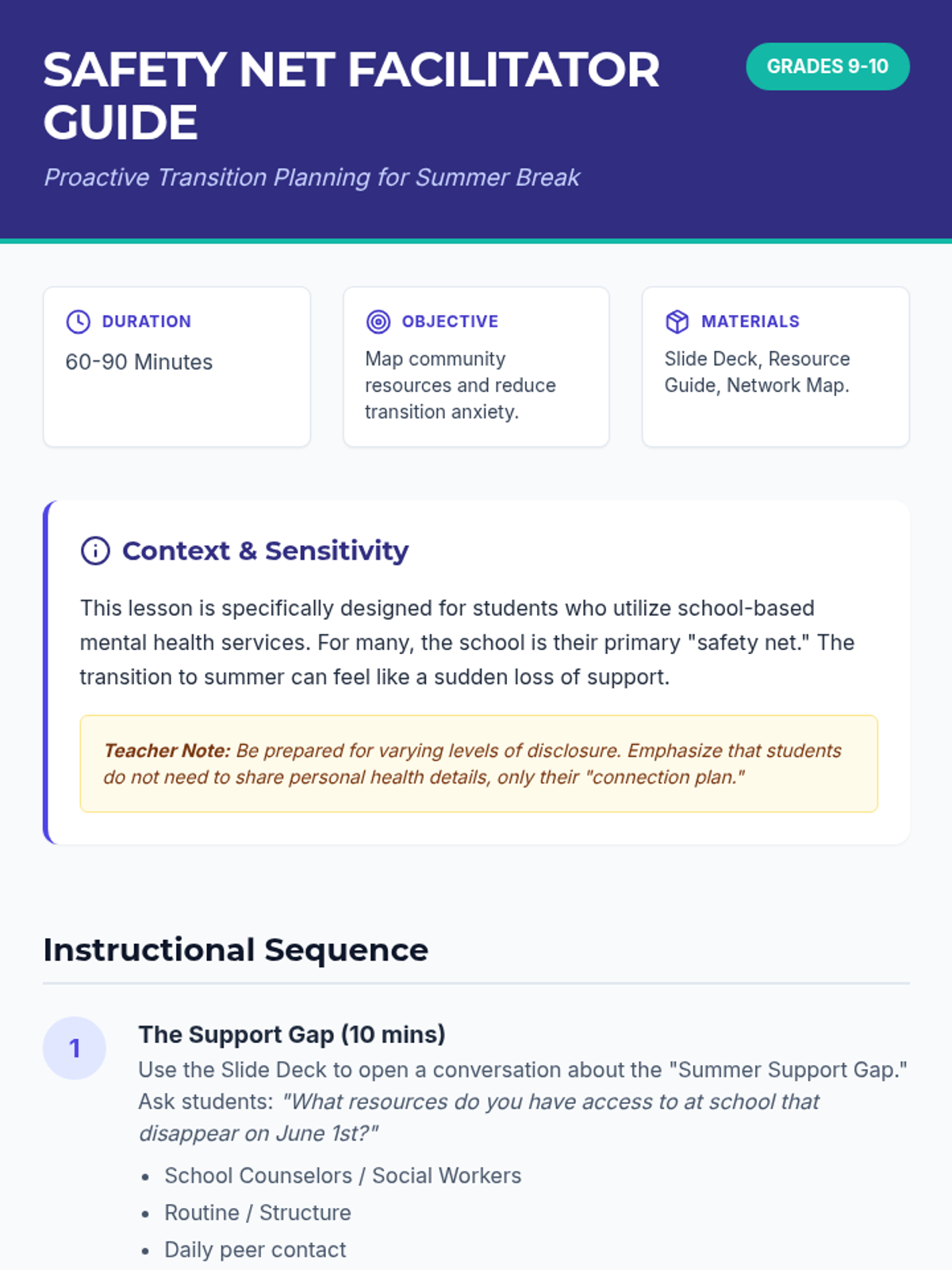
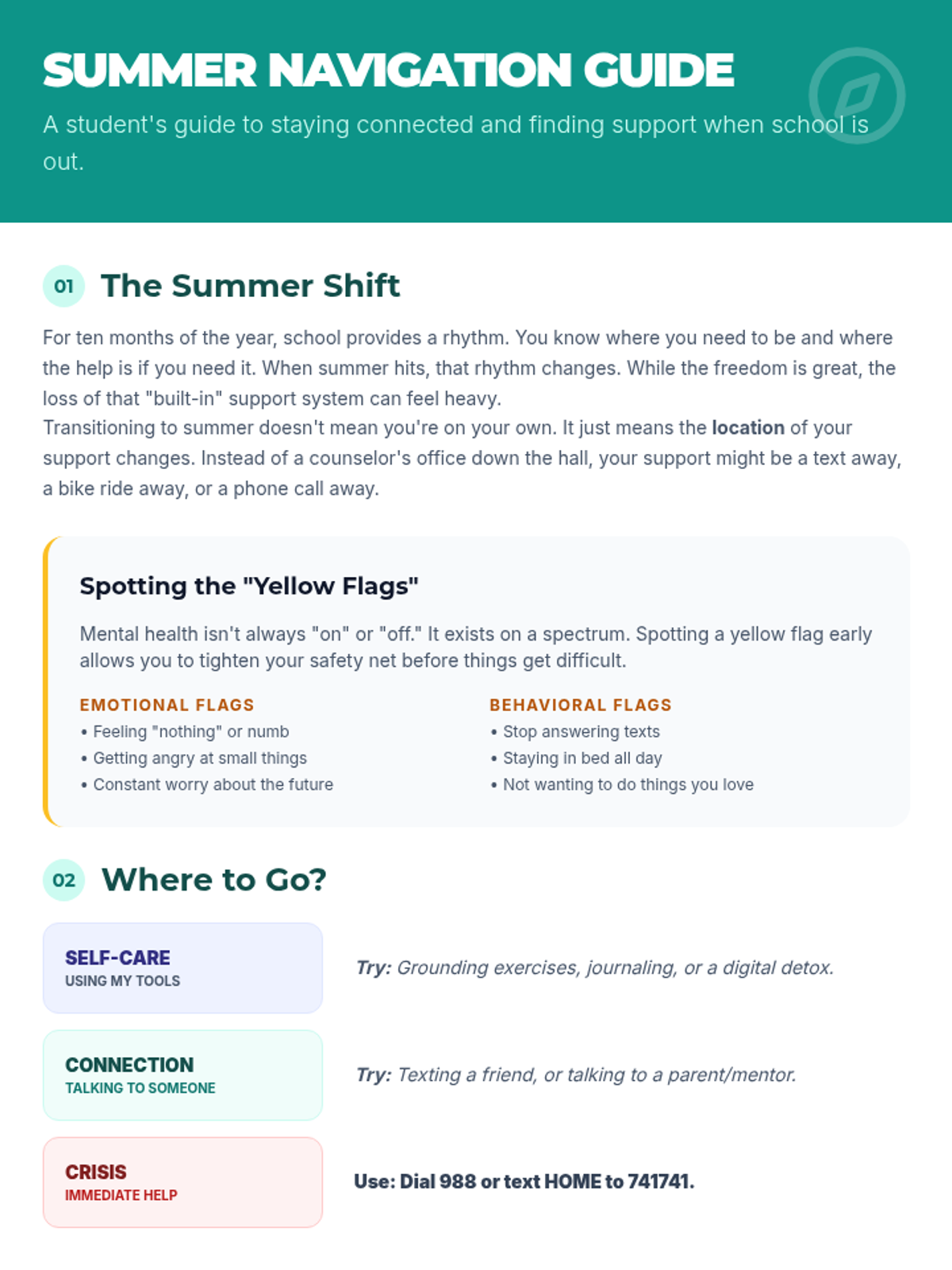
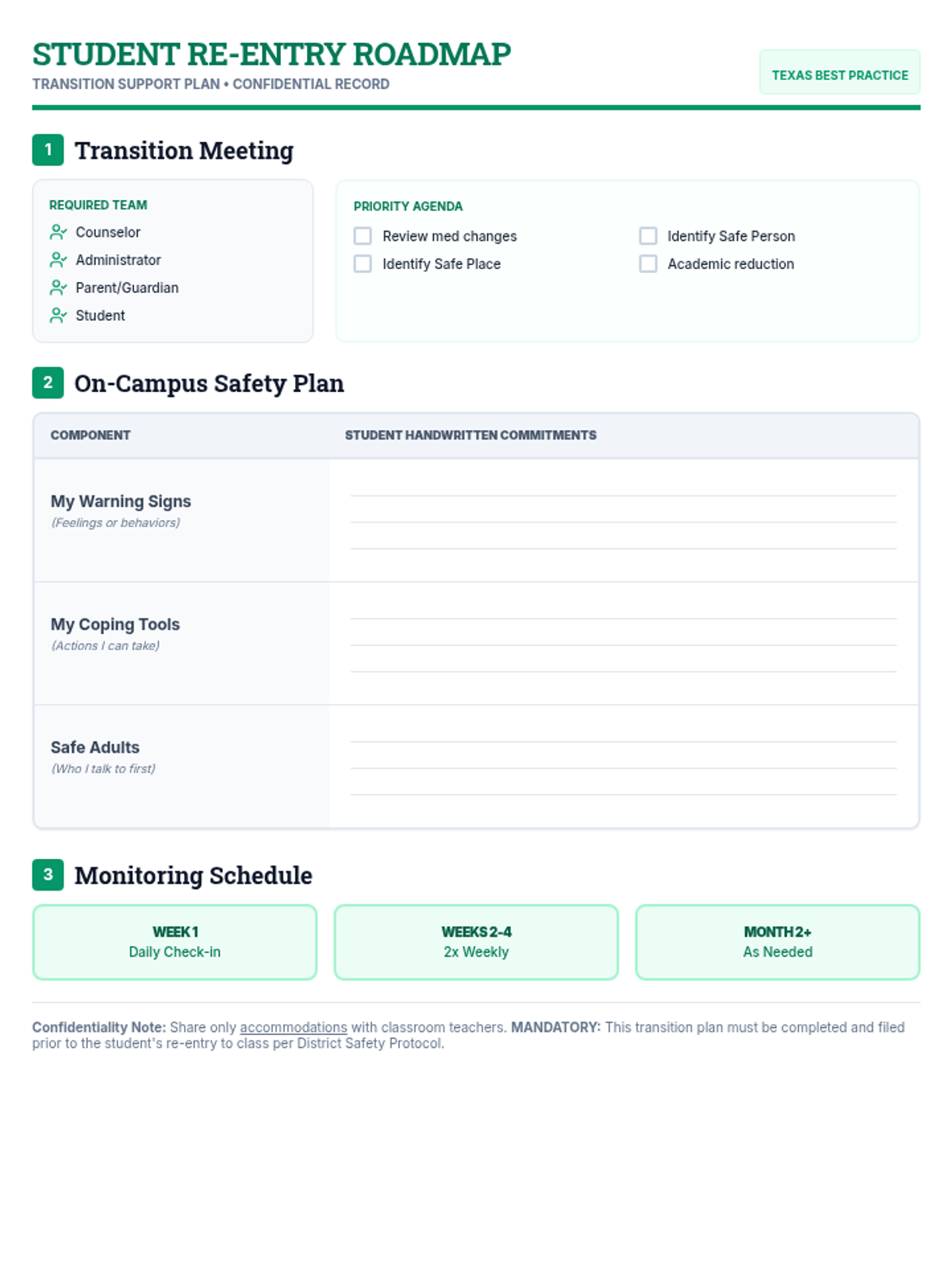
A proactive transition planning lesson designed for 9th and 10th graders to bridge the gap between school-based mental health support and community resources during the summer break. Students will identify personal support networks, learn to navigate local resources, and create a concrete safety plan.
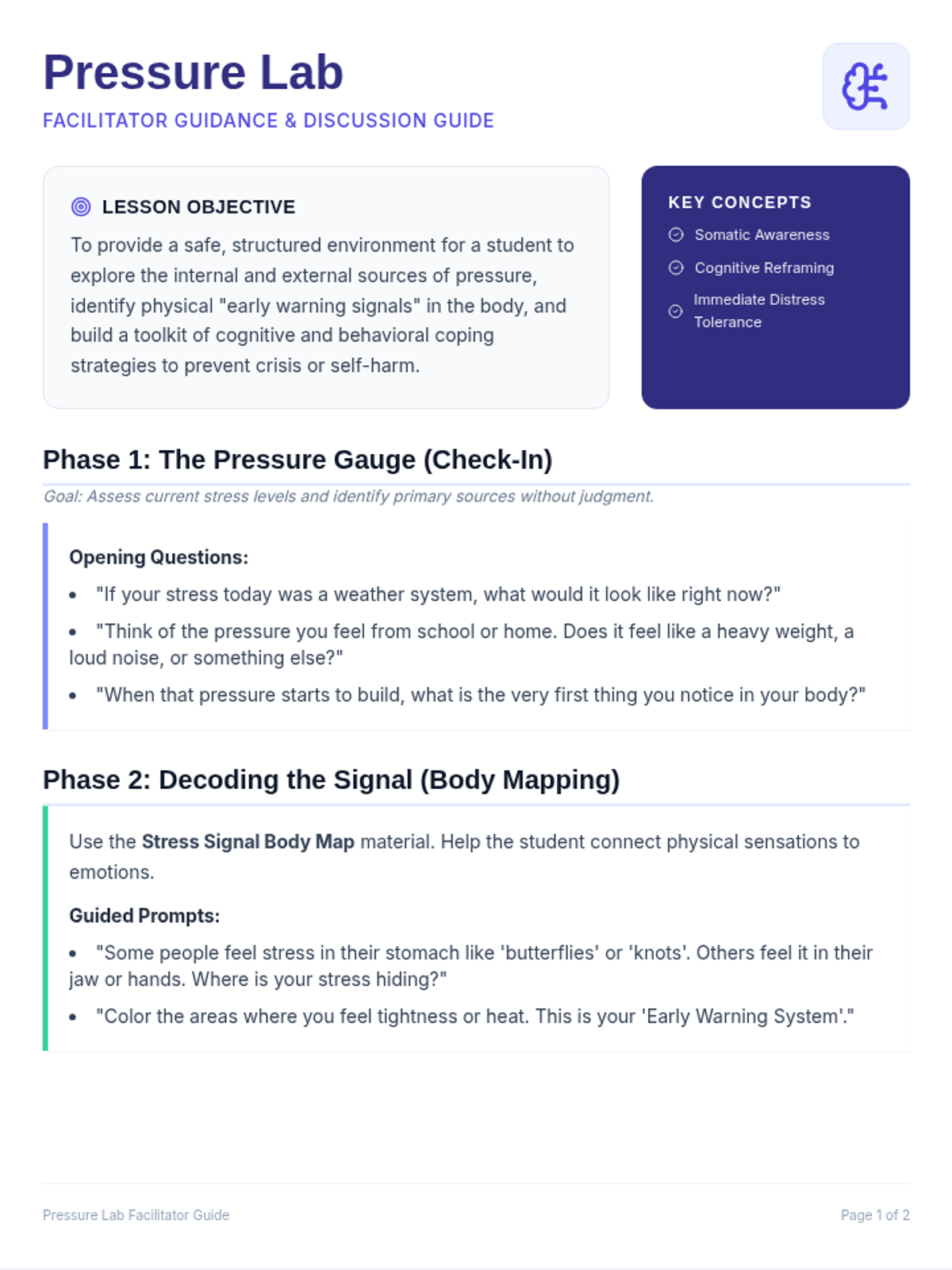
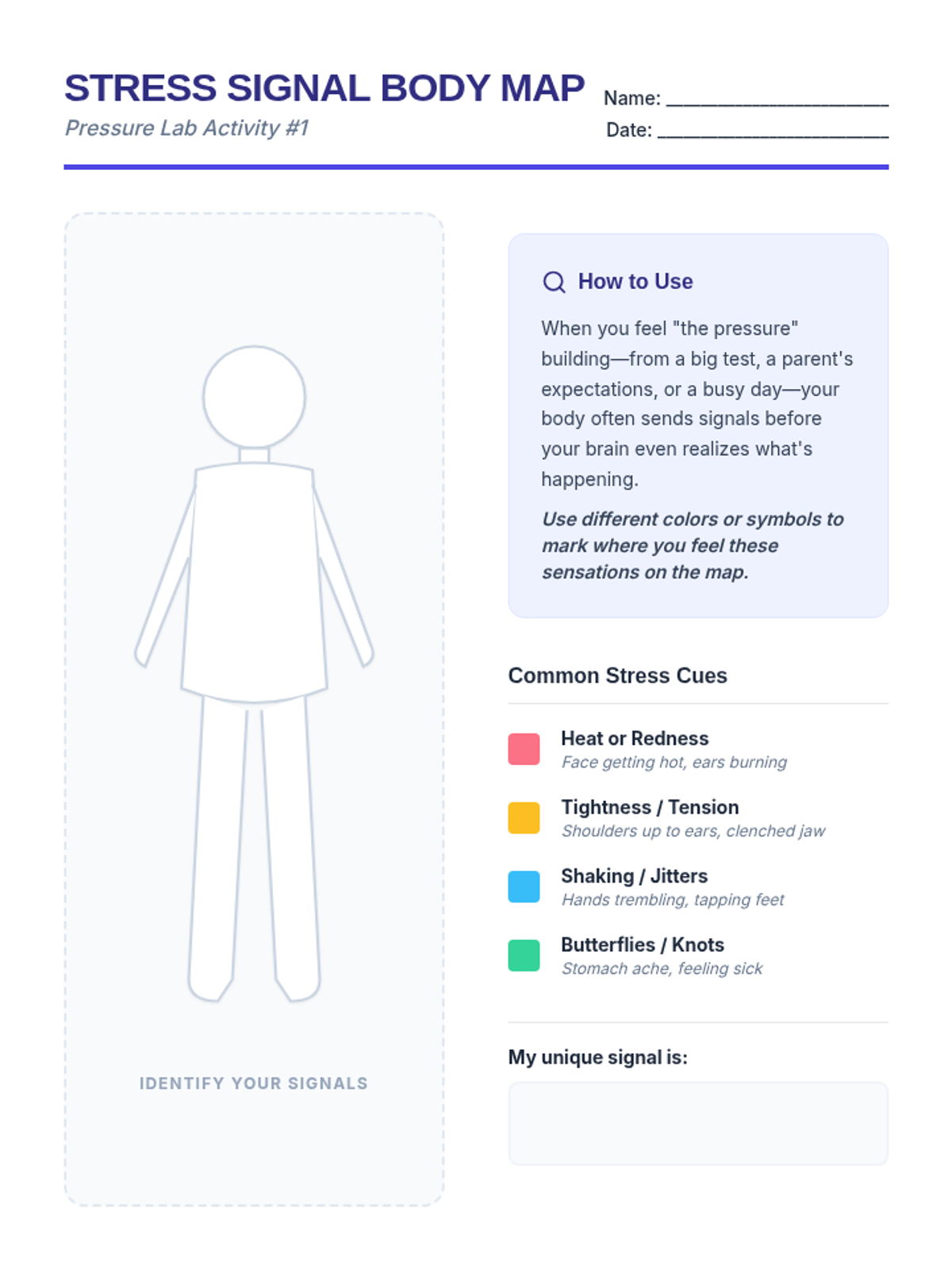
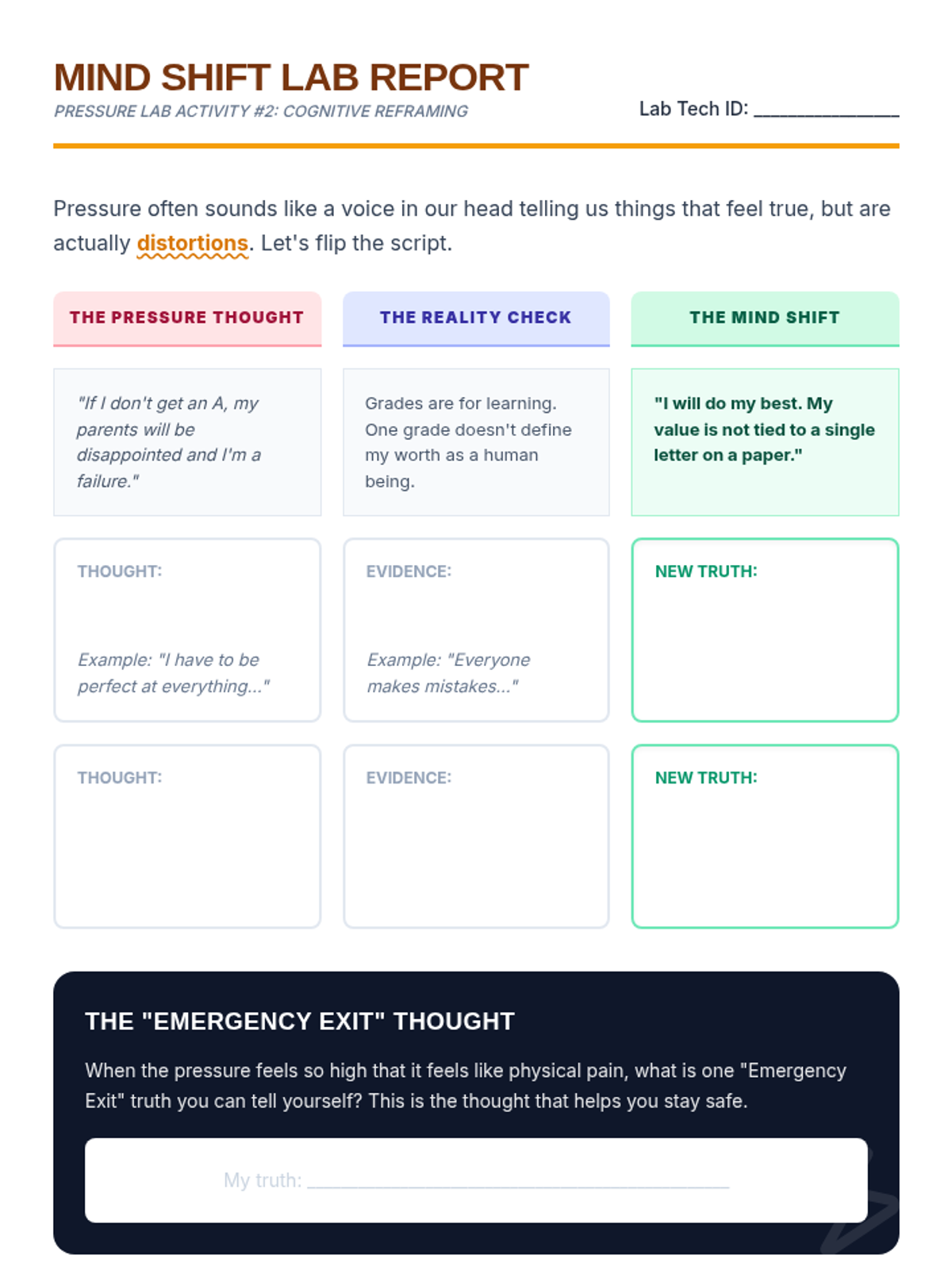
An individual counseling lesson for 6th-grade students to manage classroom and parental pressure, focusing on physical awareness, cognitive reframing, and immediate coping strategies.
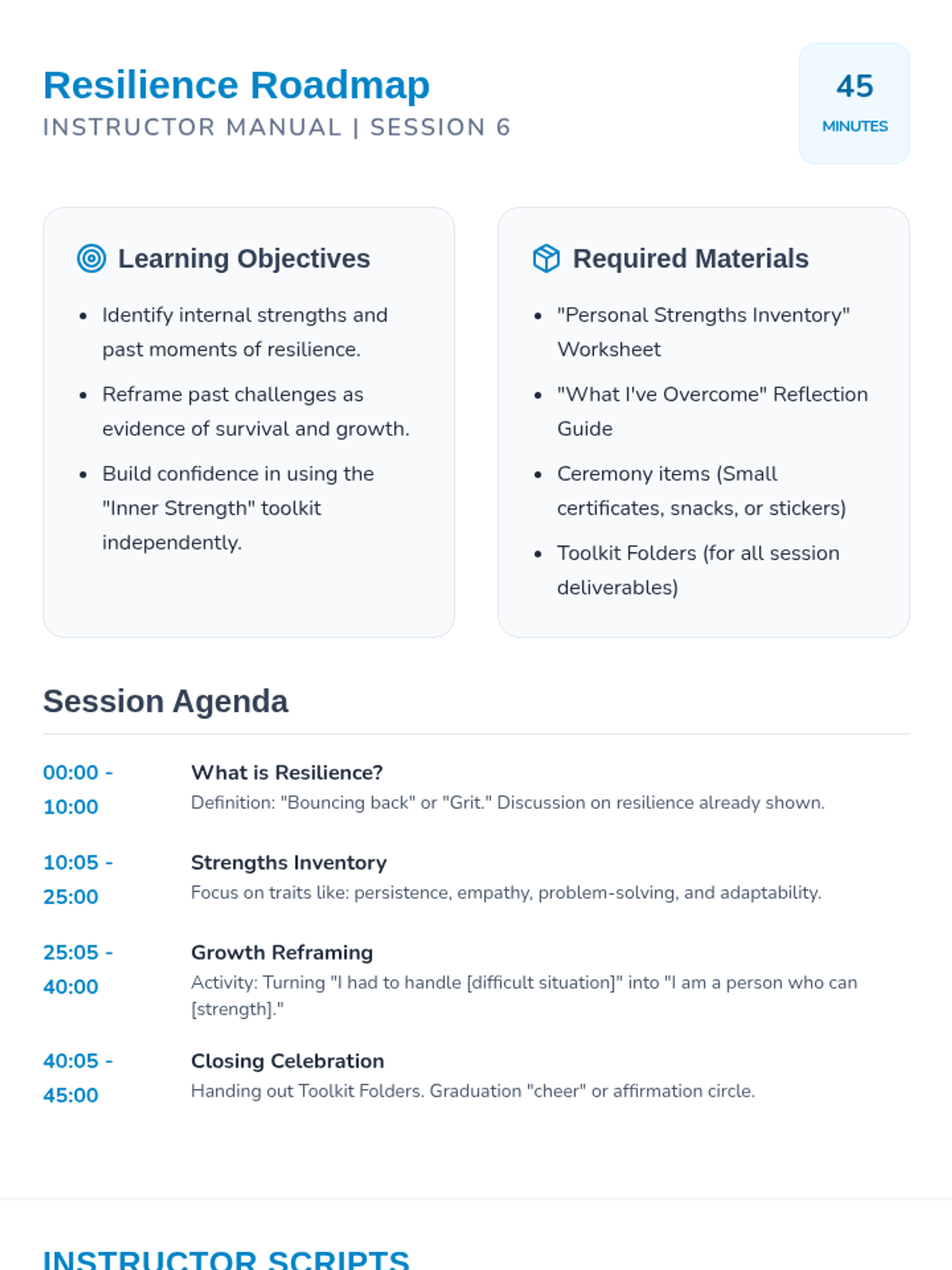
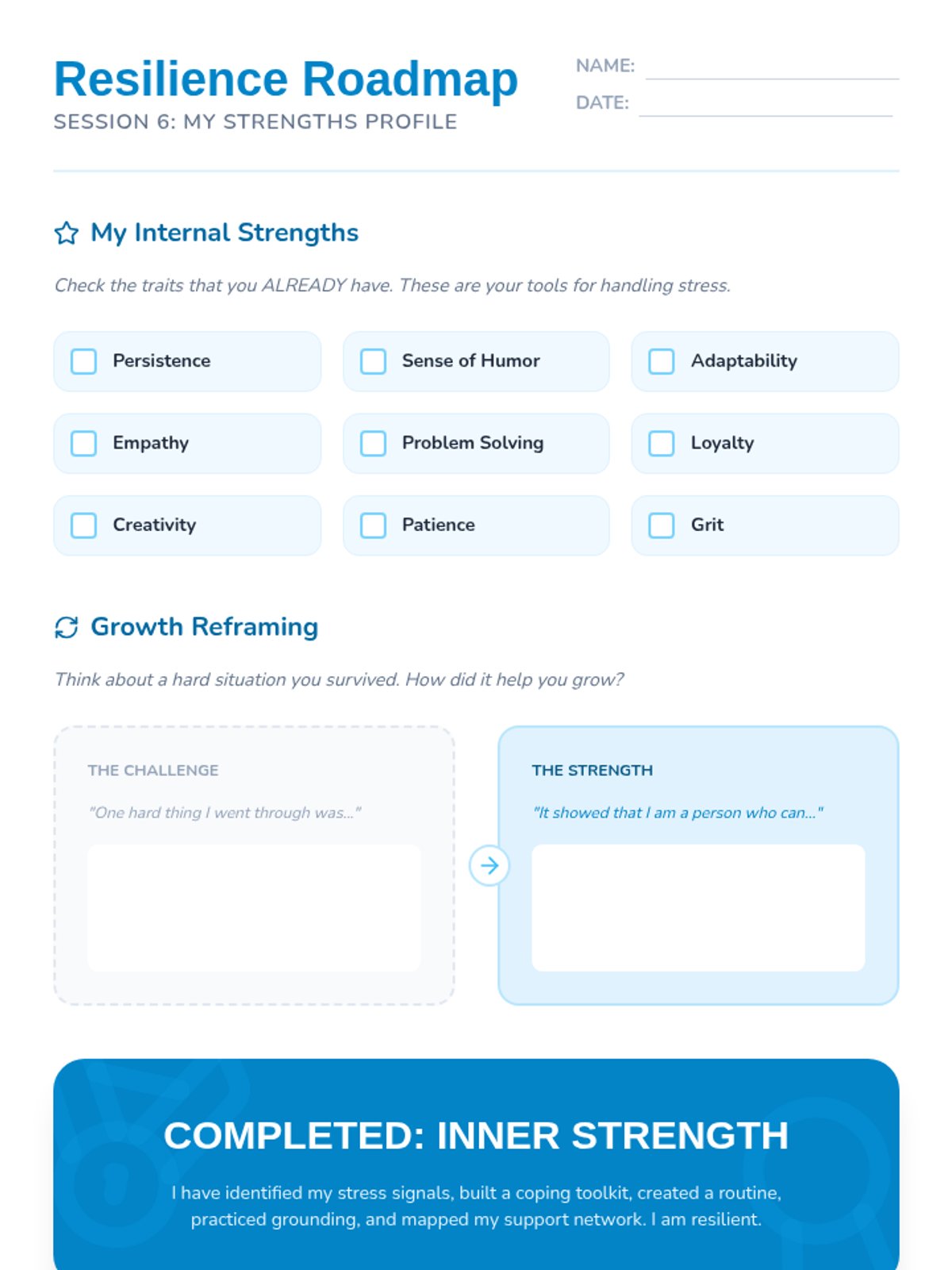
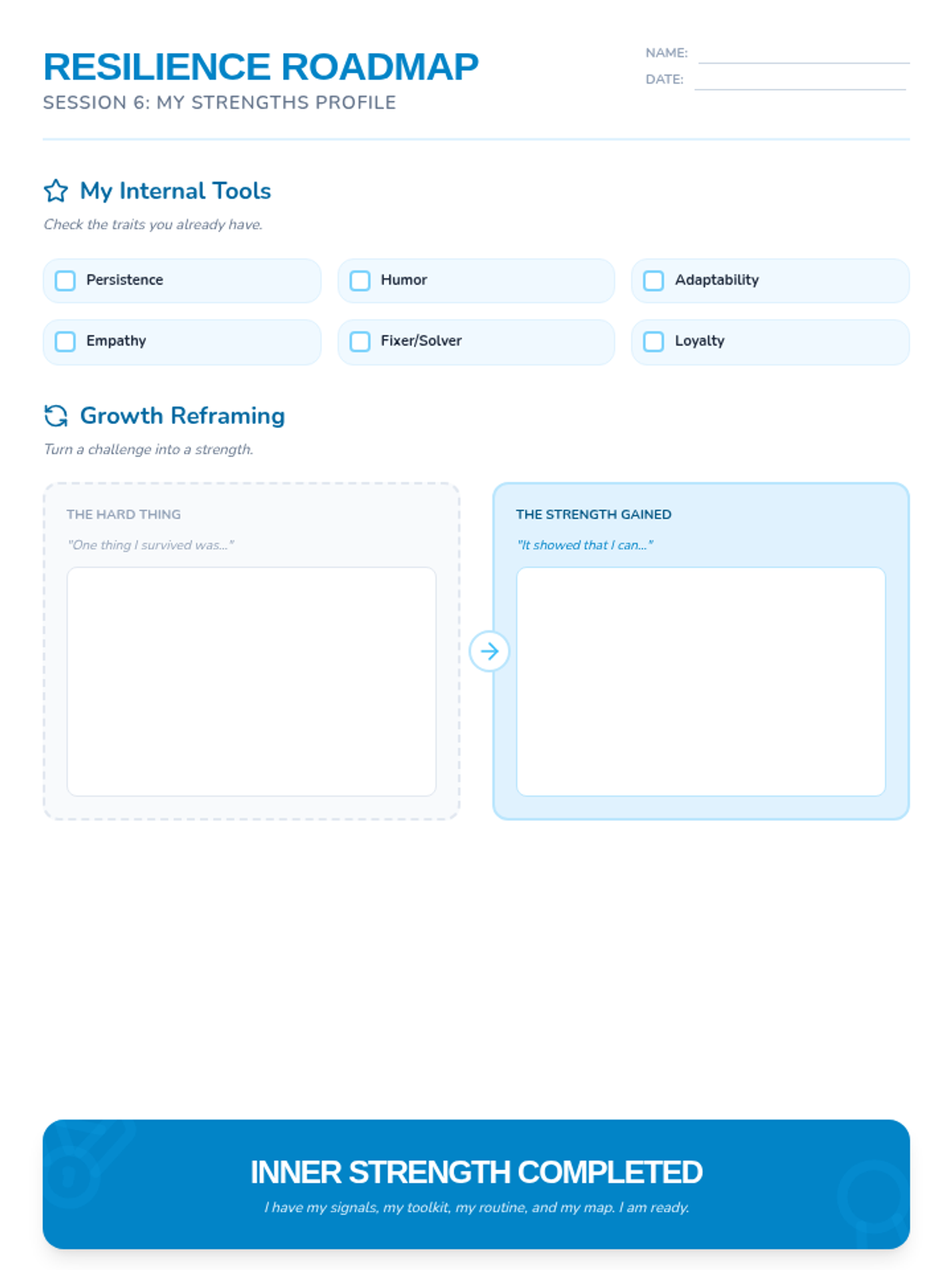
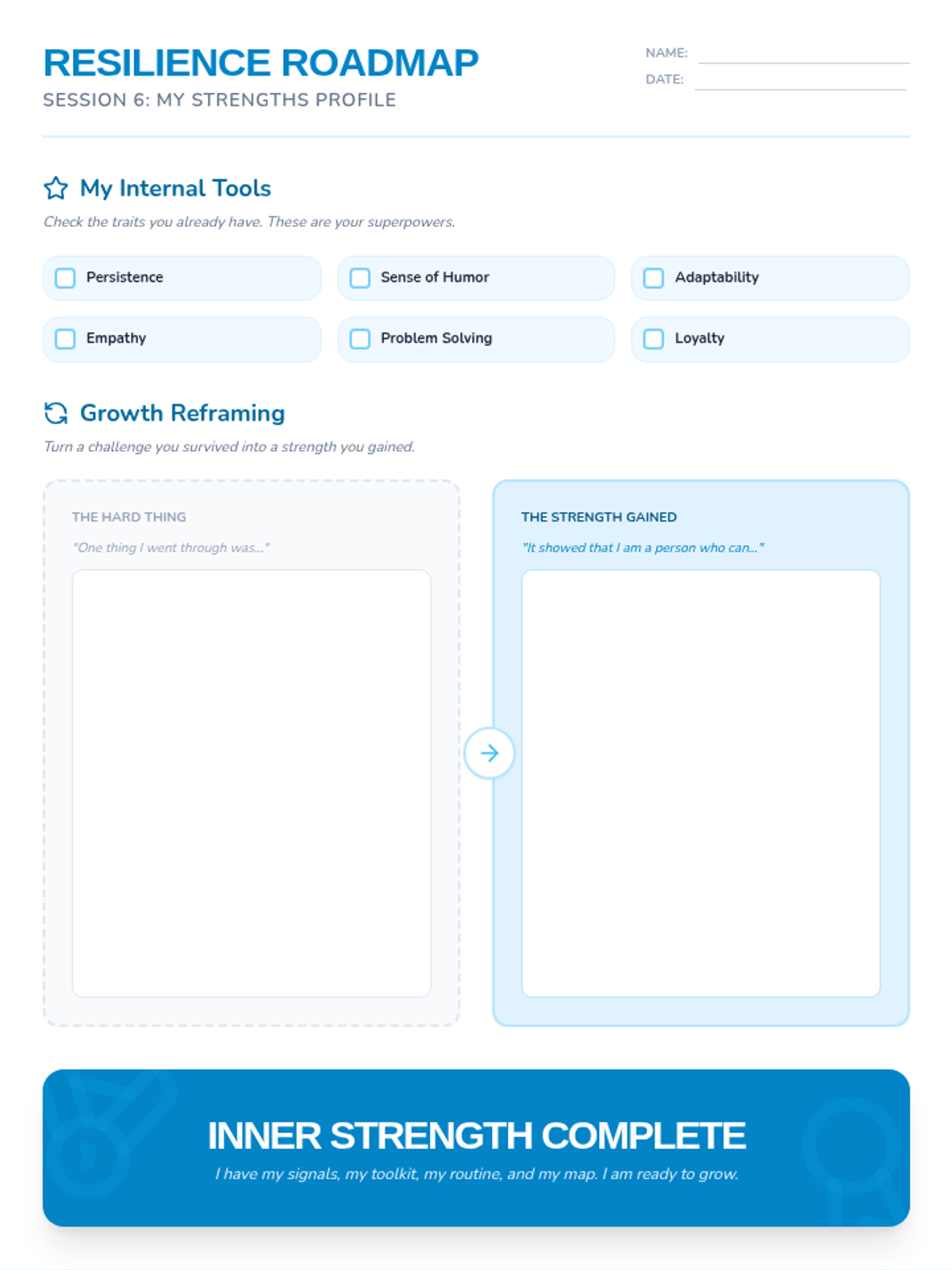
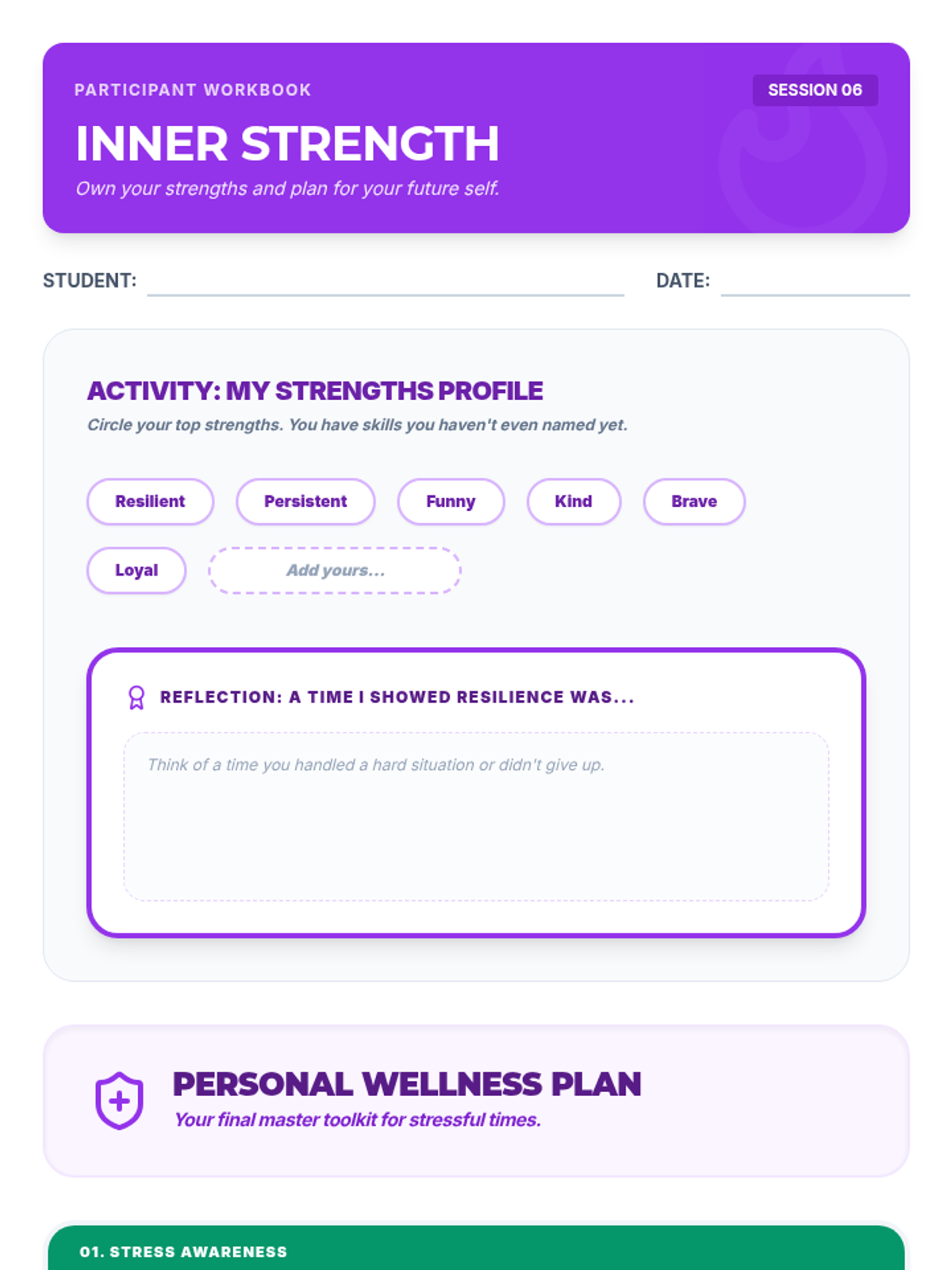
A final session focused on identifying personal strengths and reframing challenges as opportunities for growth.
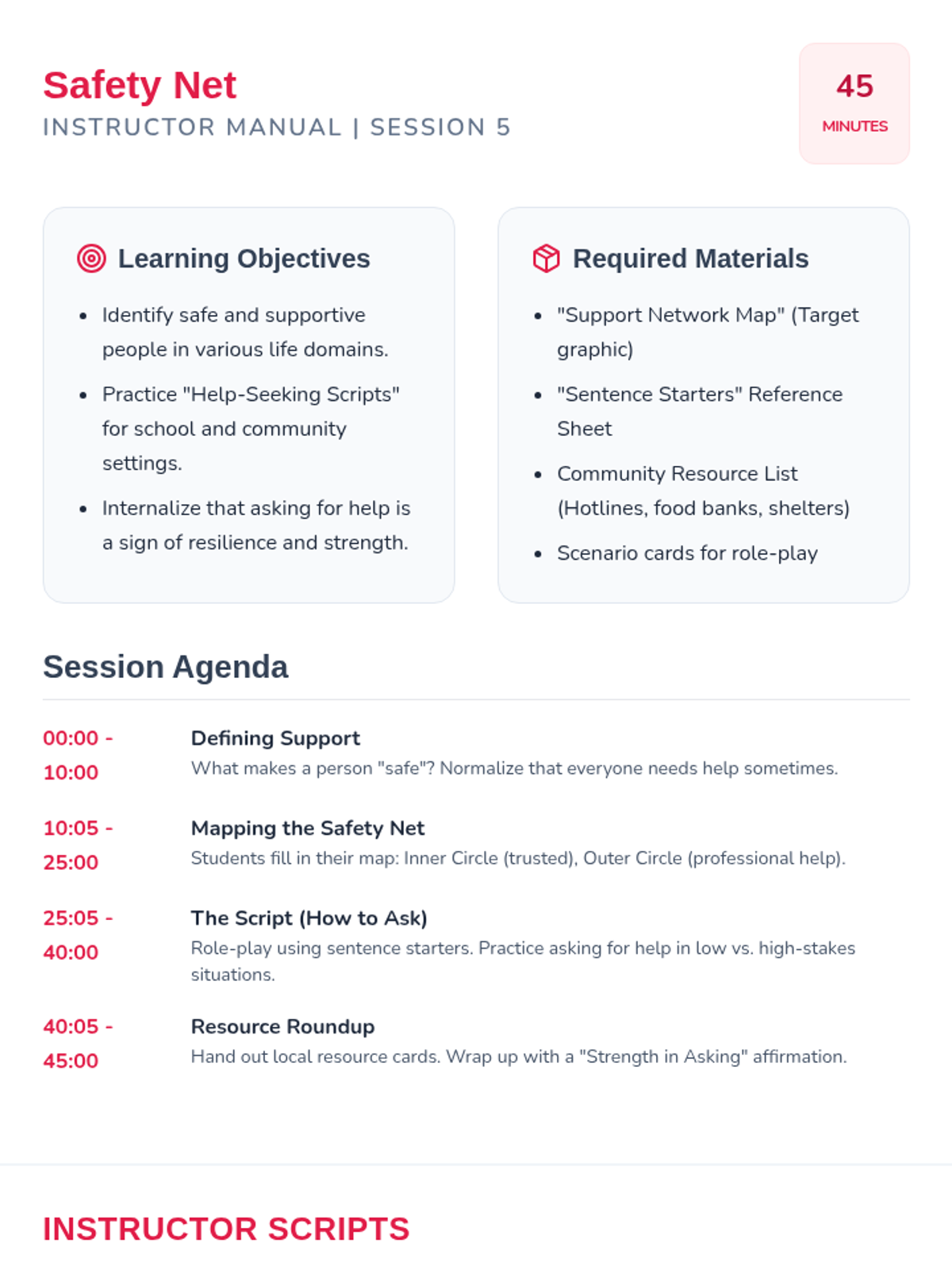
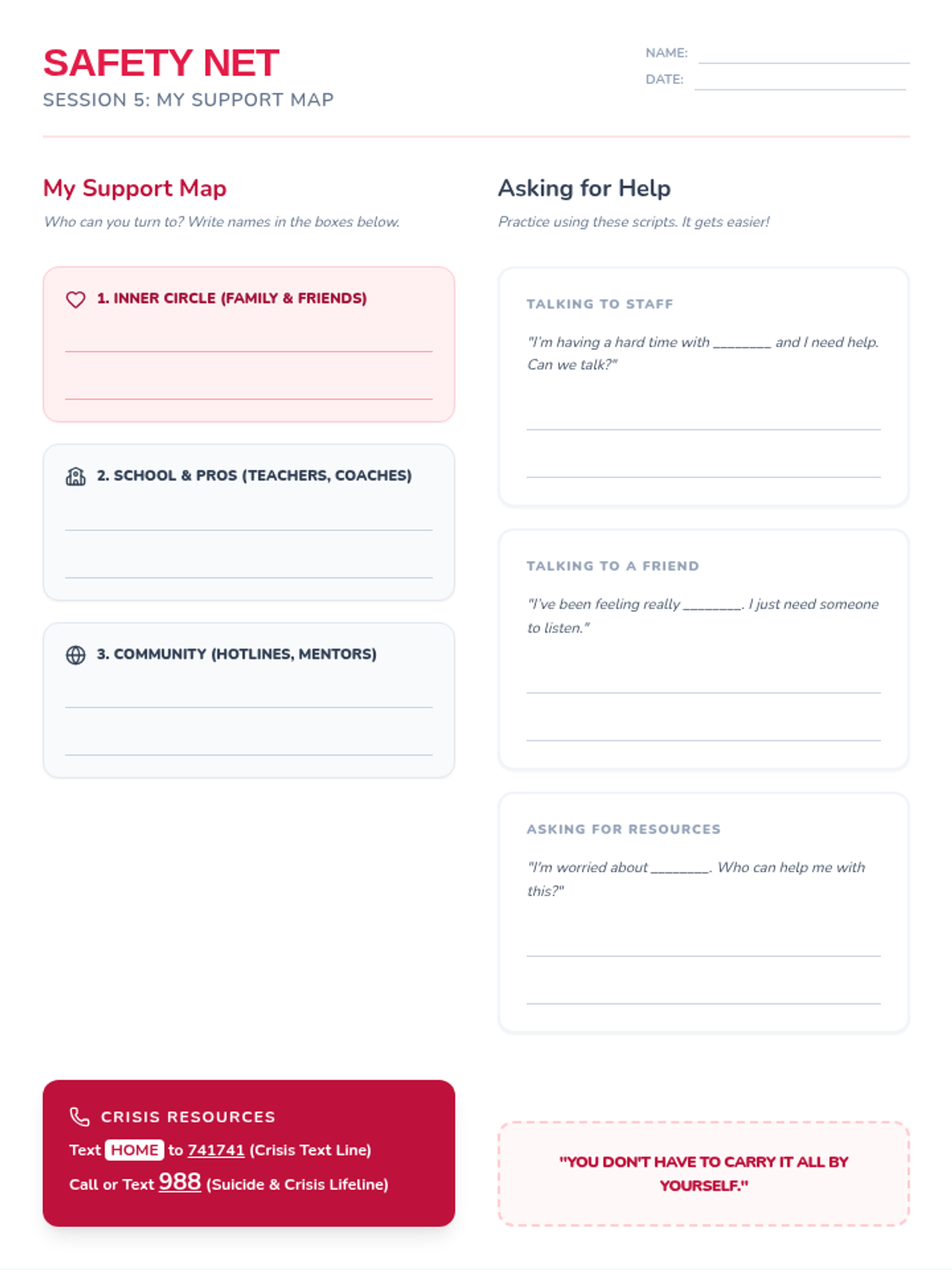
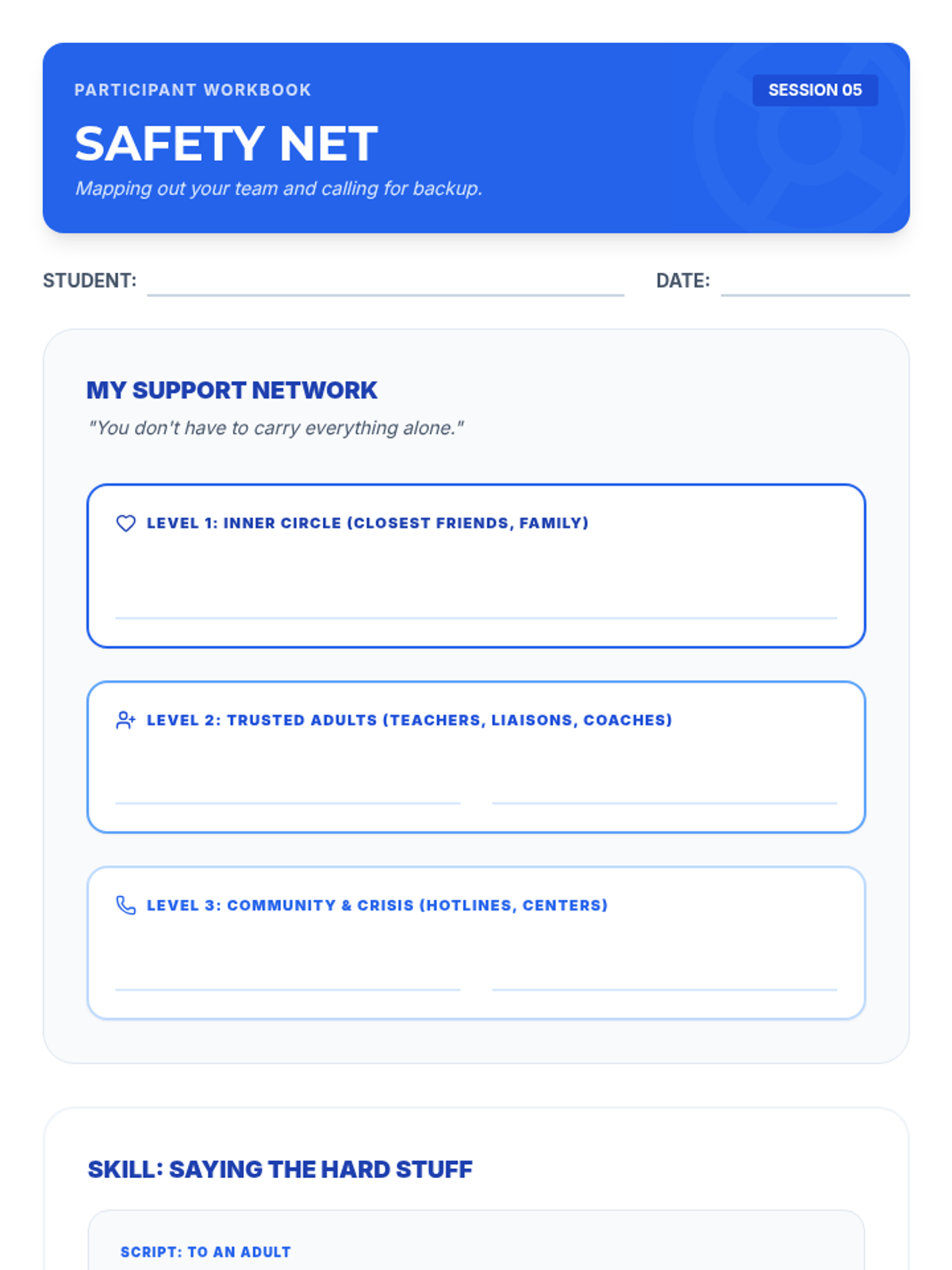
Students will map out their support networks and practice assertive communication for seeking help.
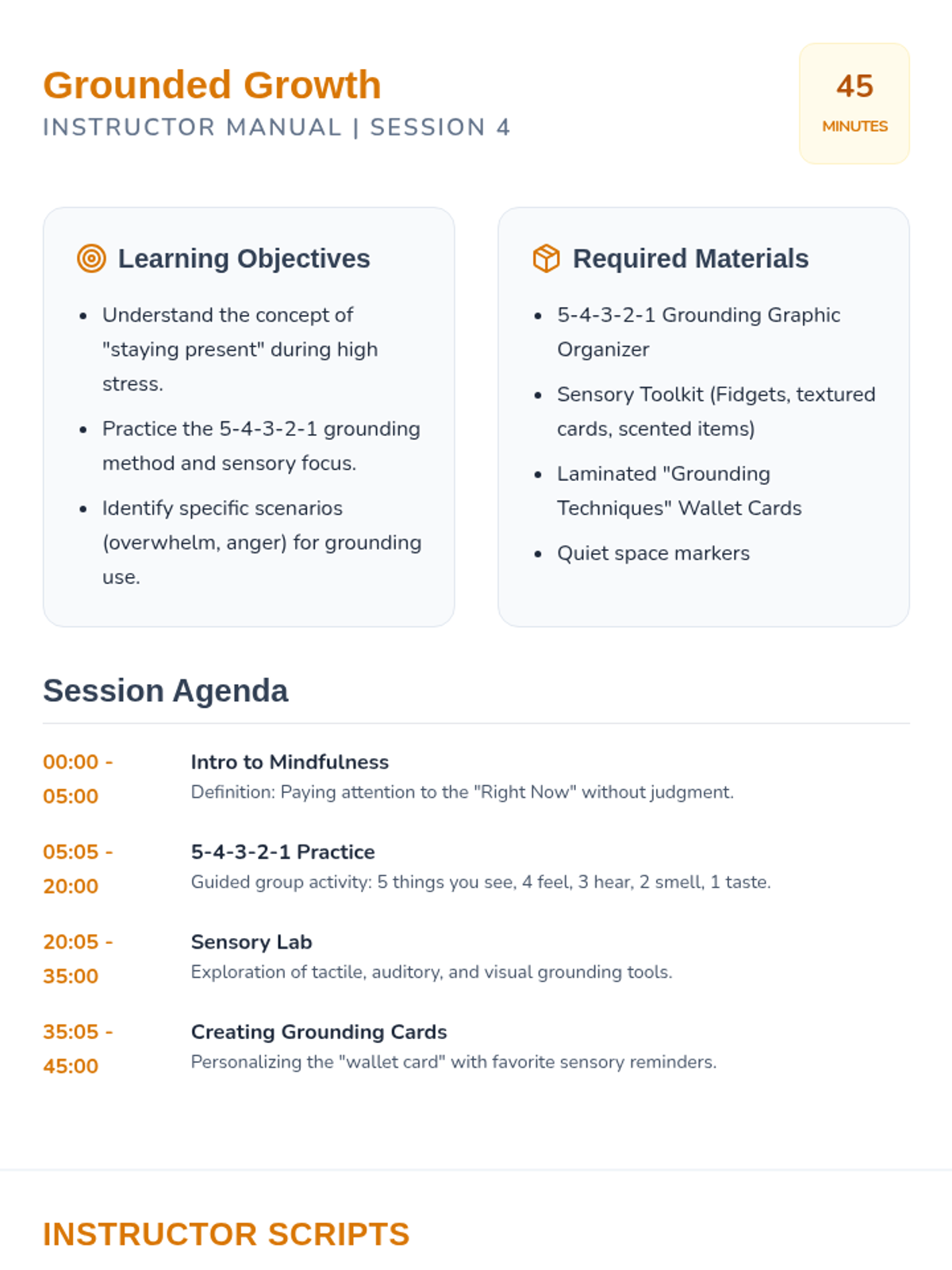
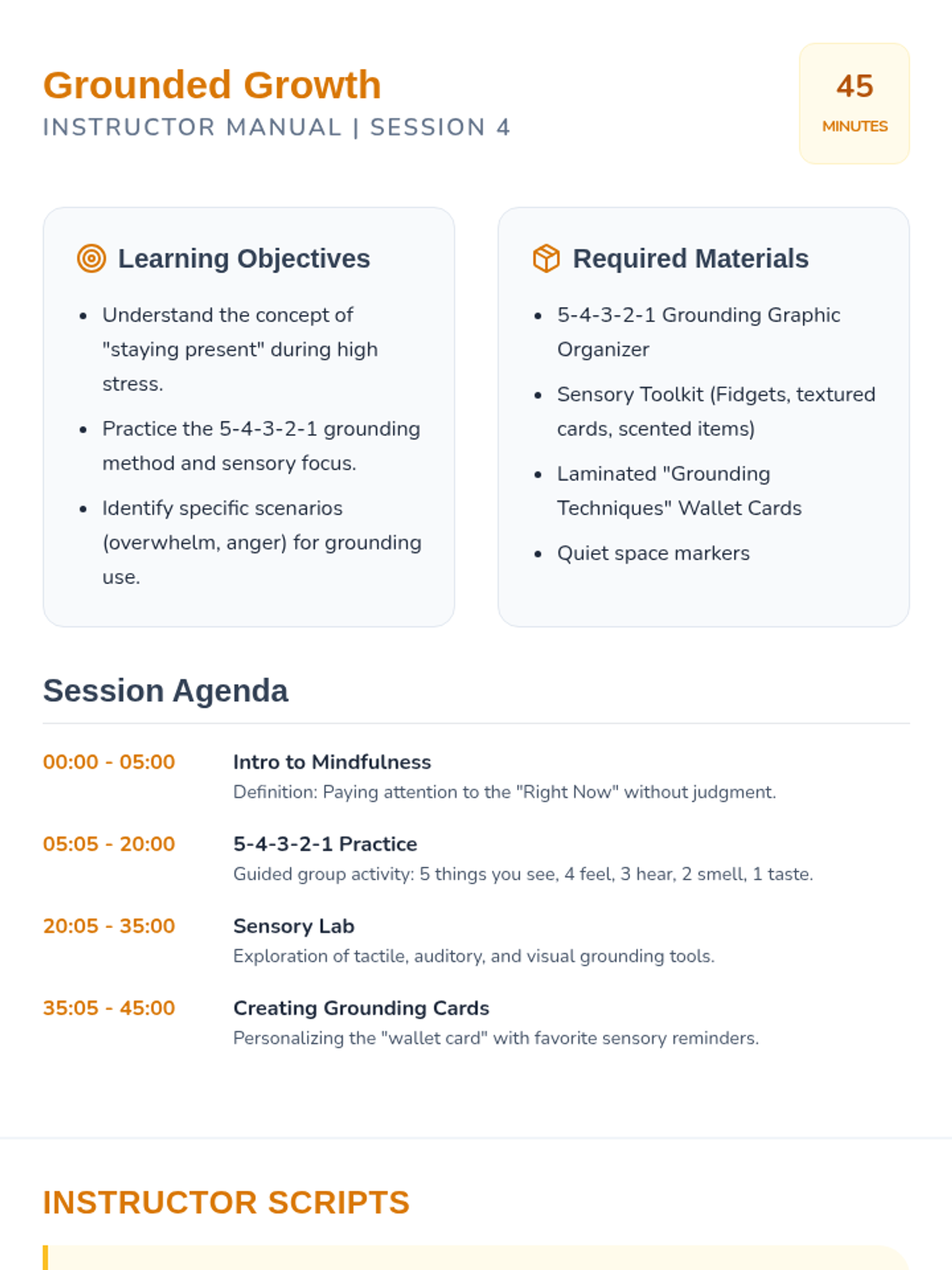
Practical application of grounding techniques and mindfulness to manage overwhelming emotions.
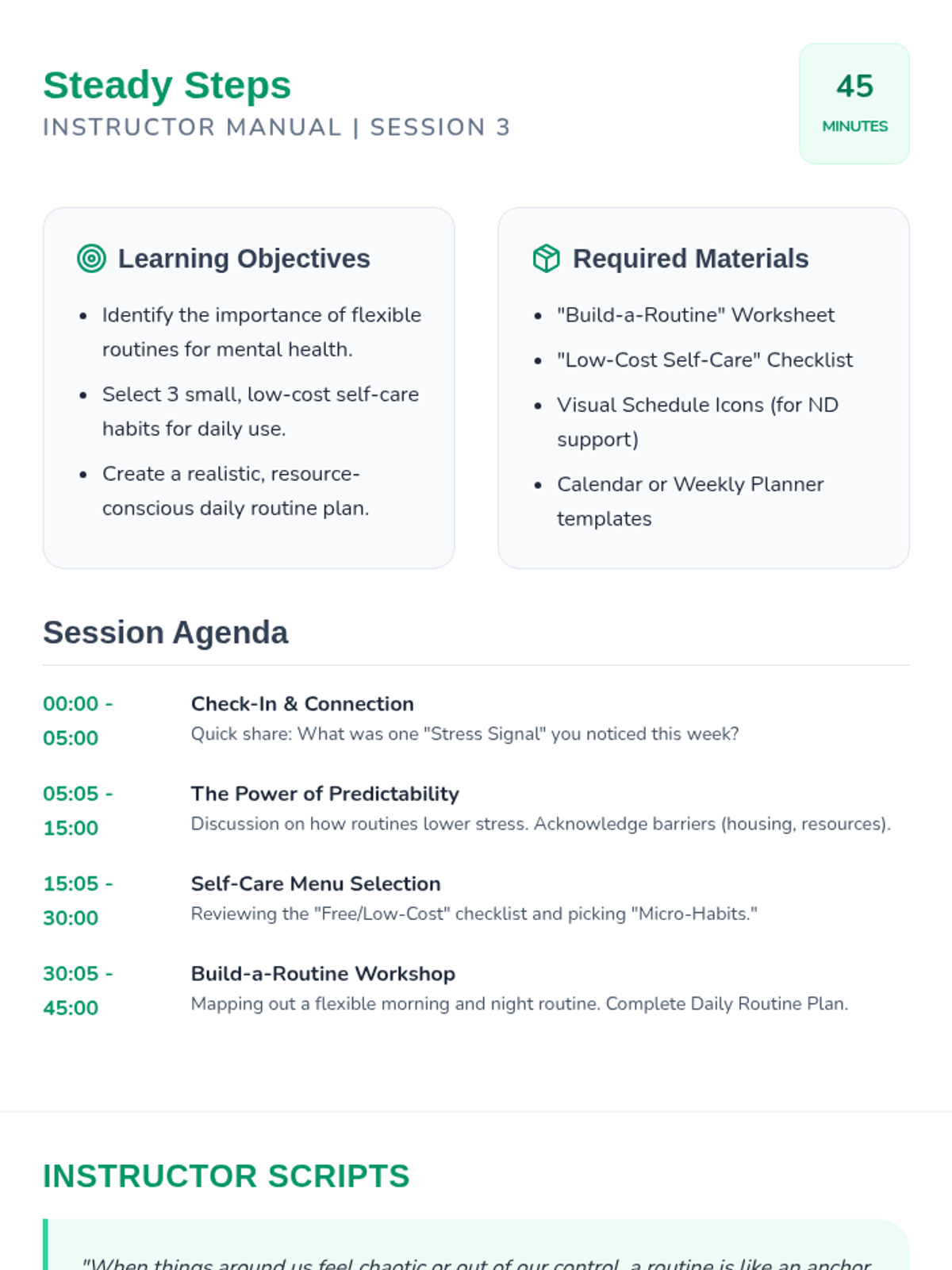
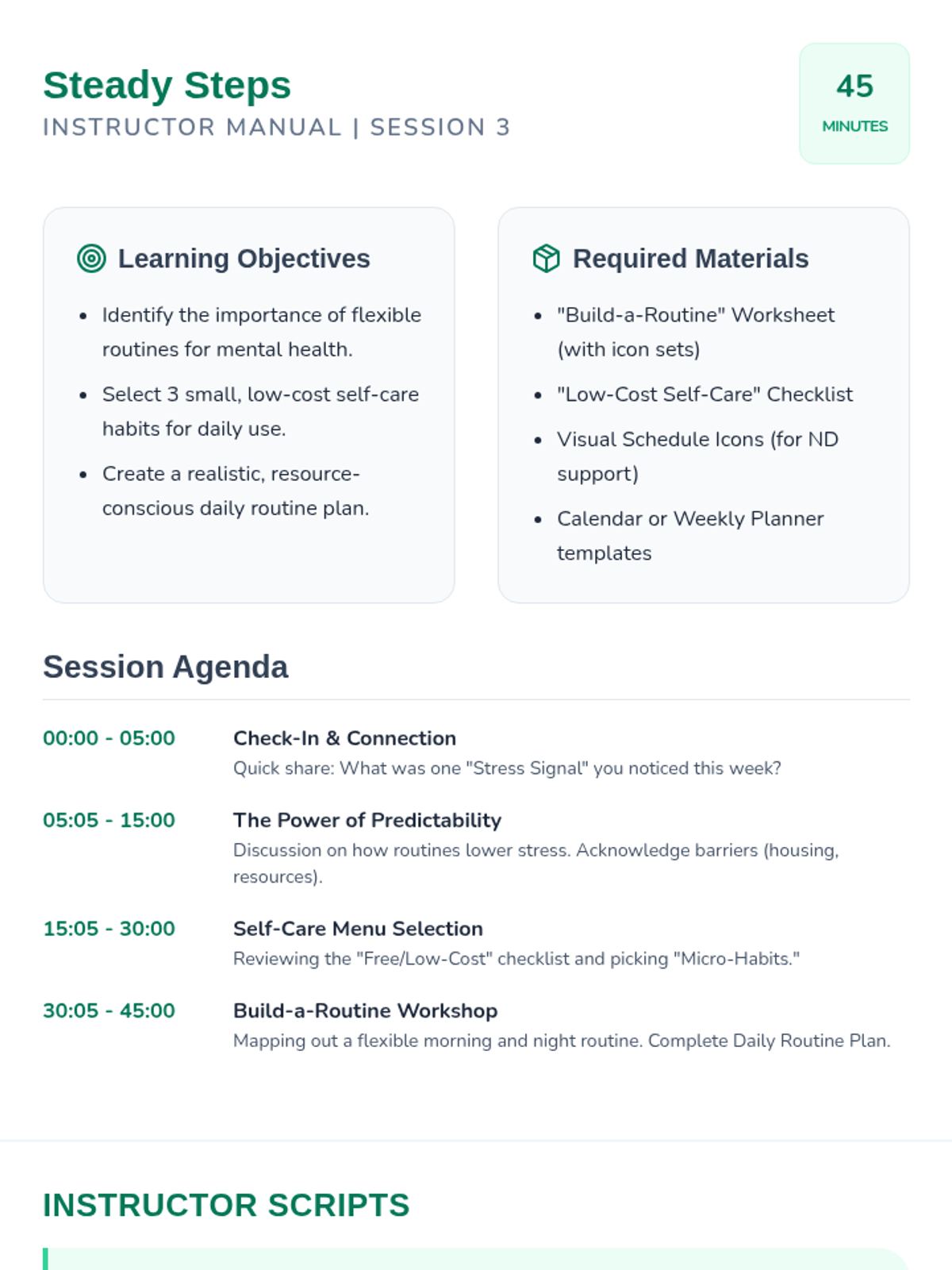
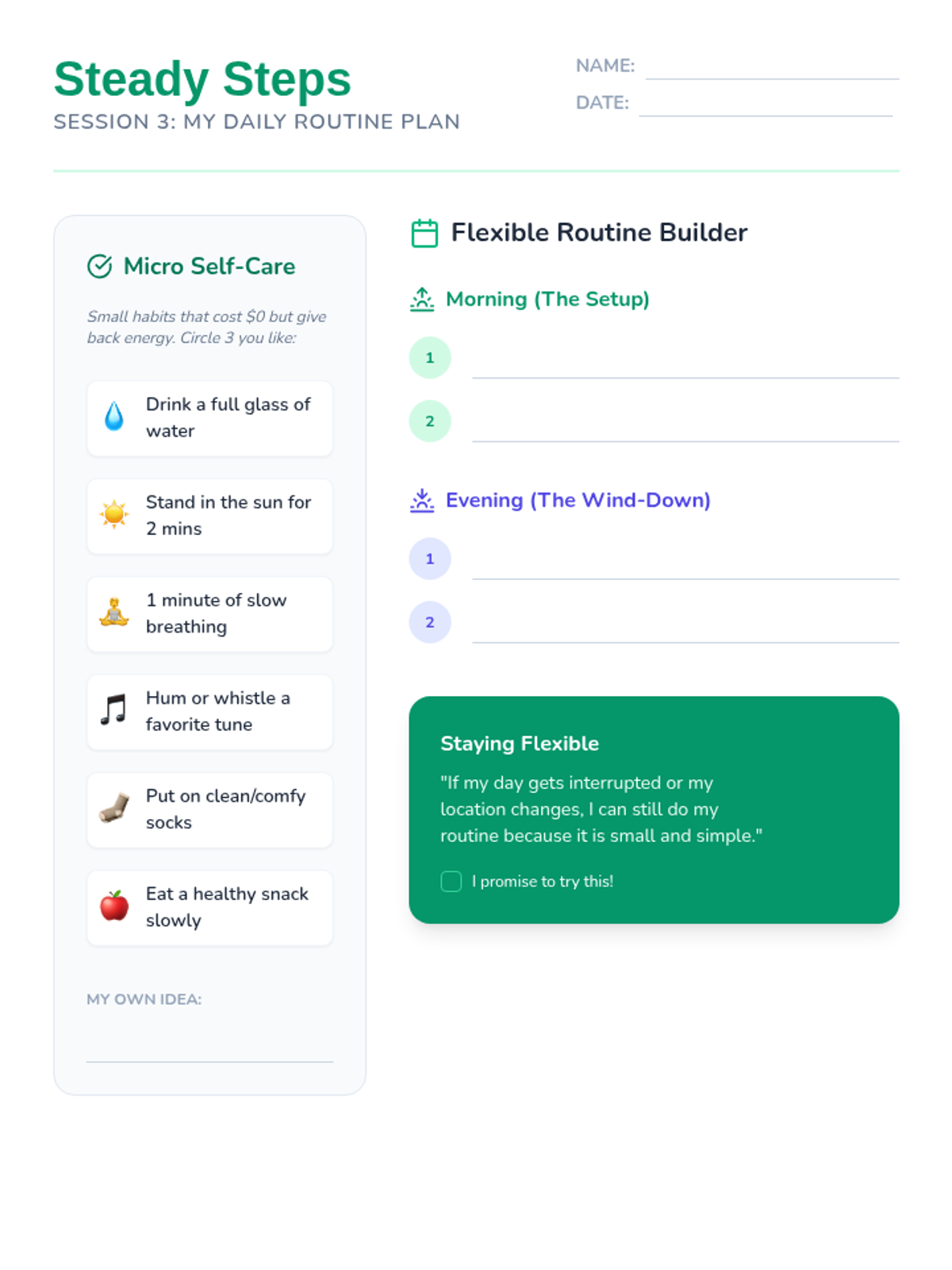
Students will explore the importance of flexible routines and identify low-cost self-care habits.
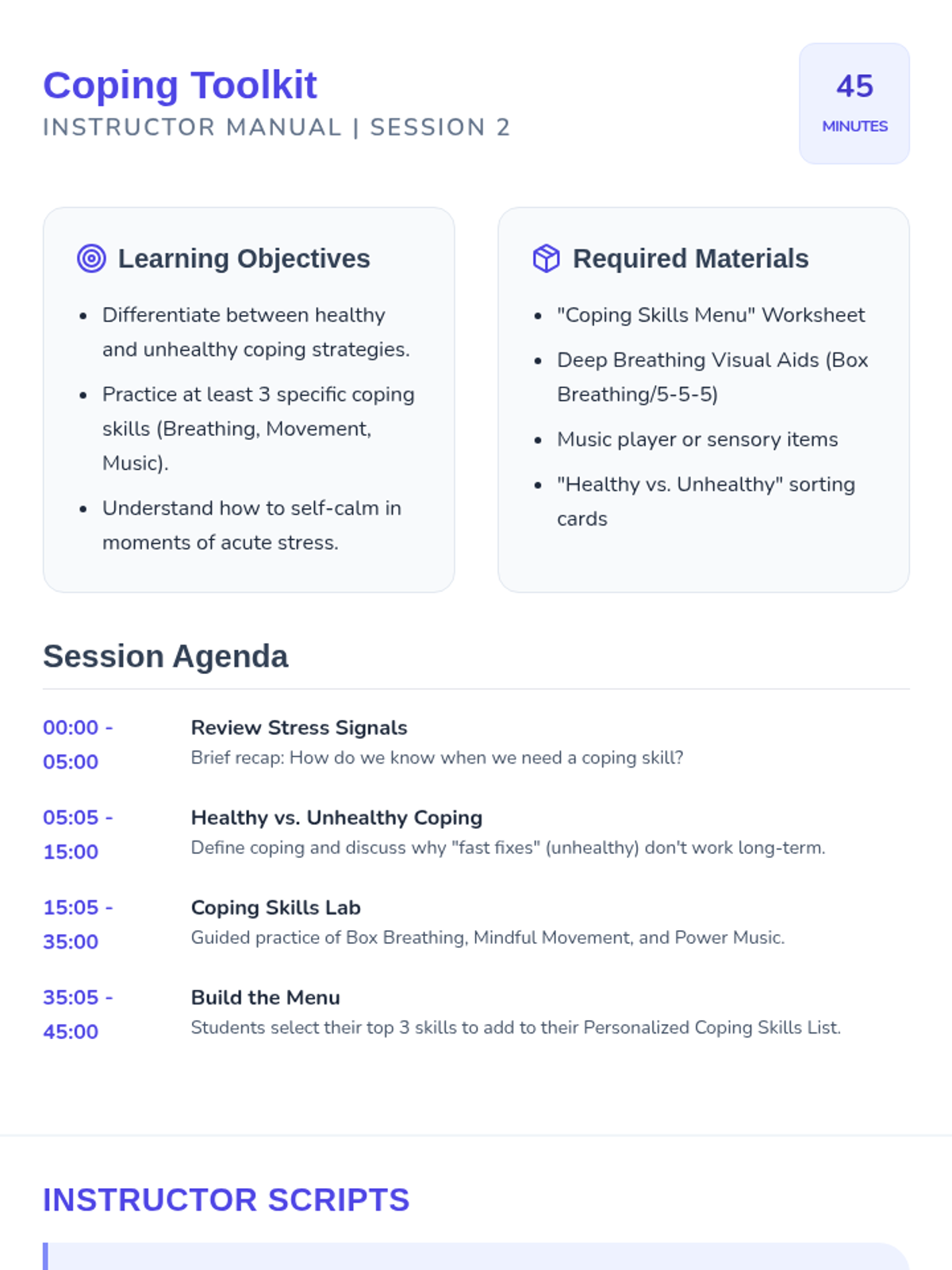
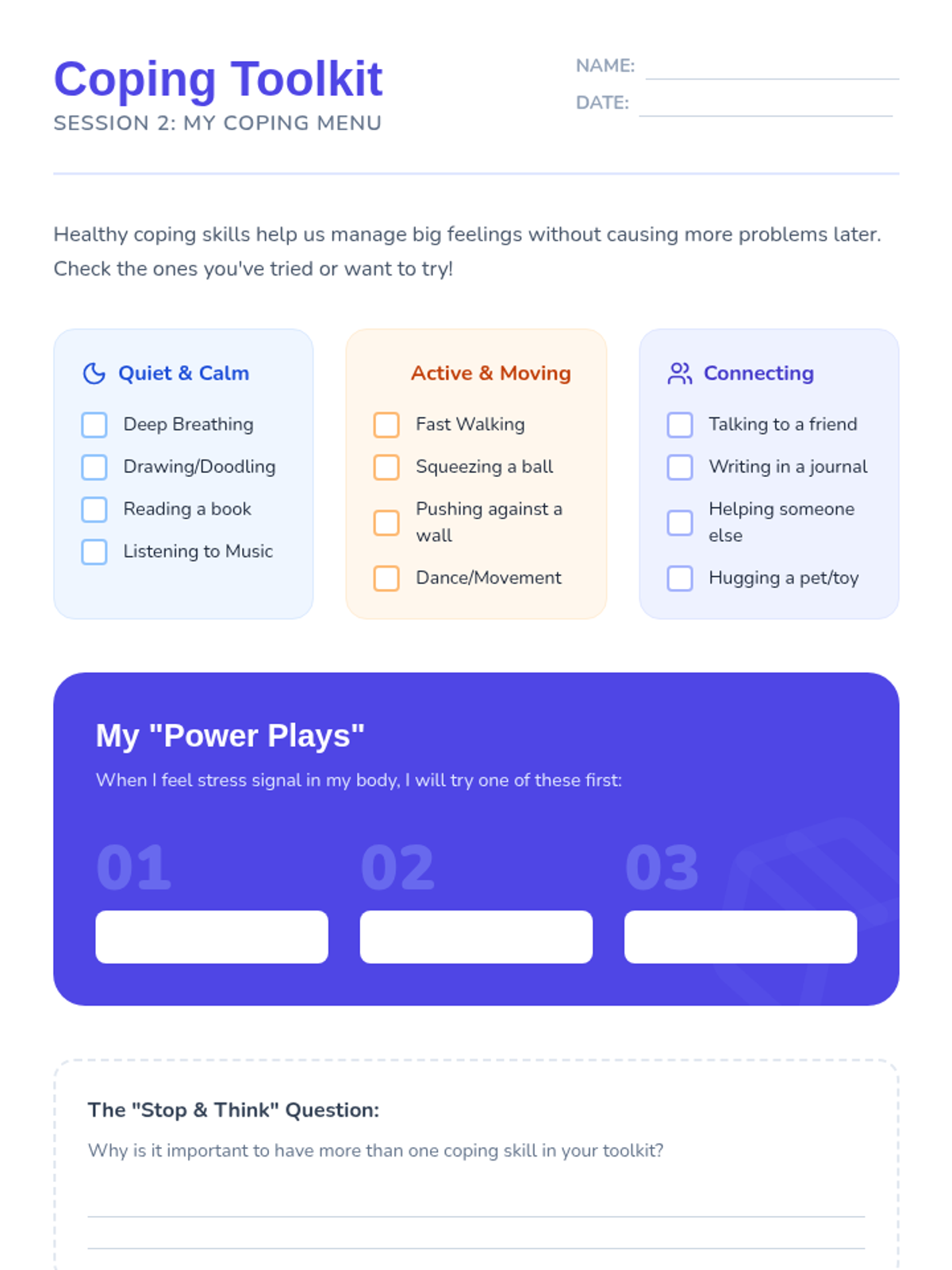
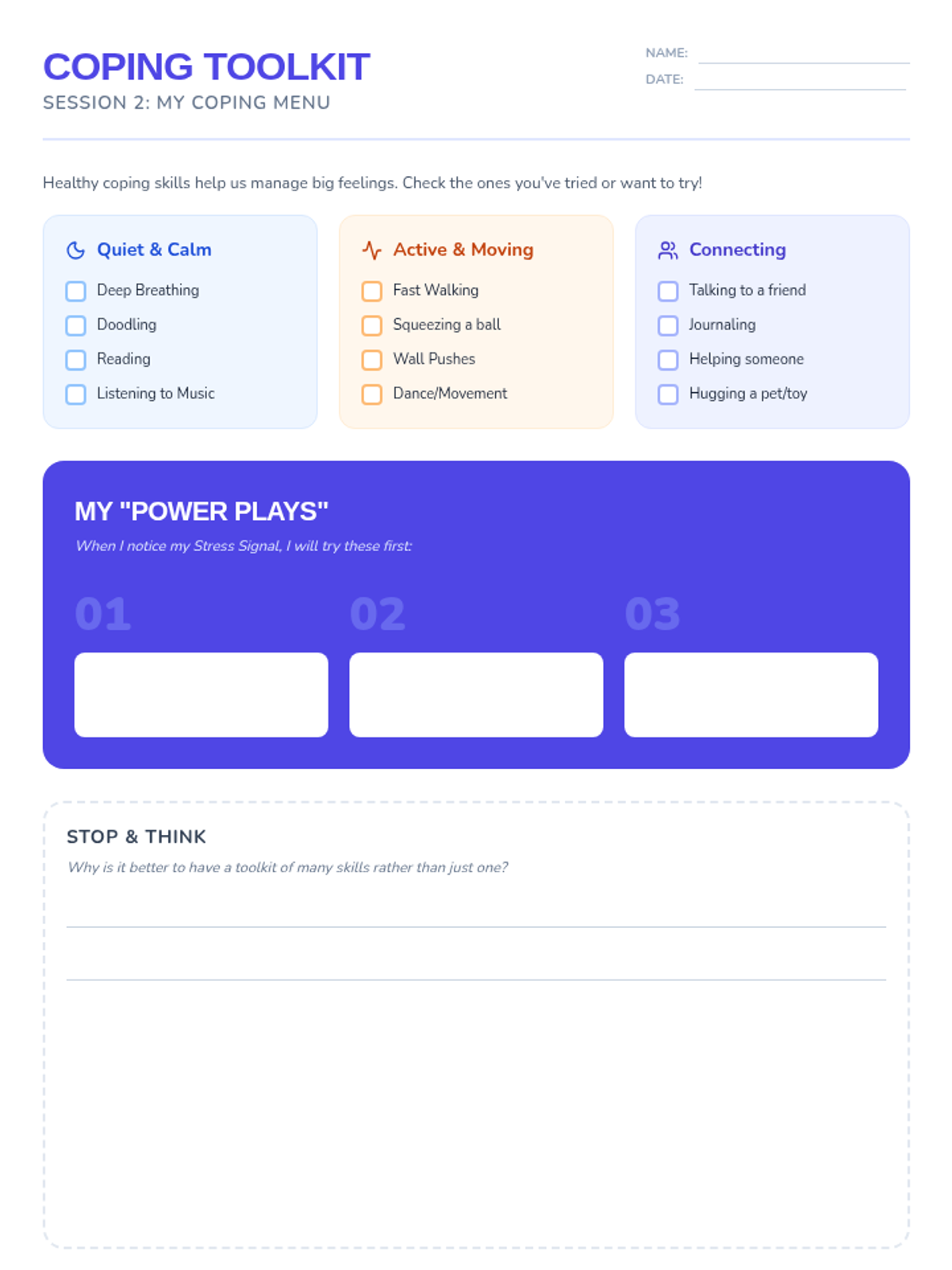
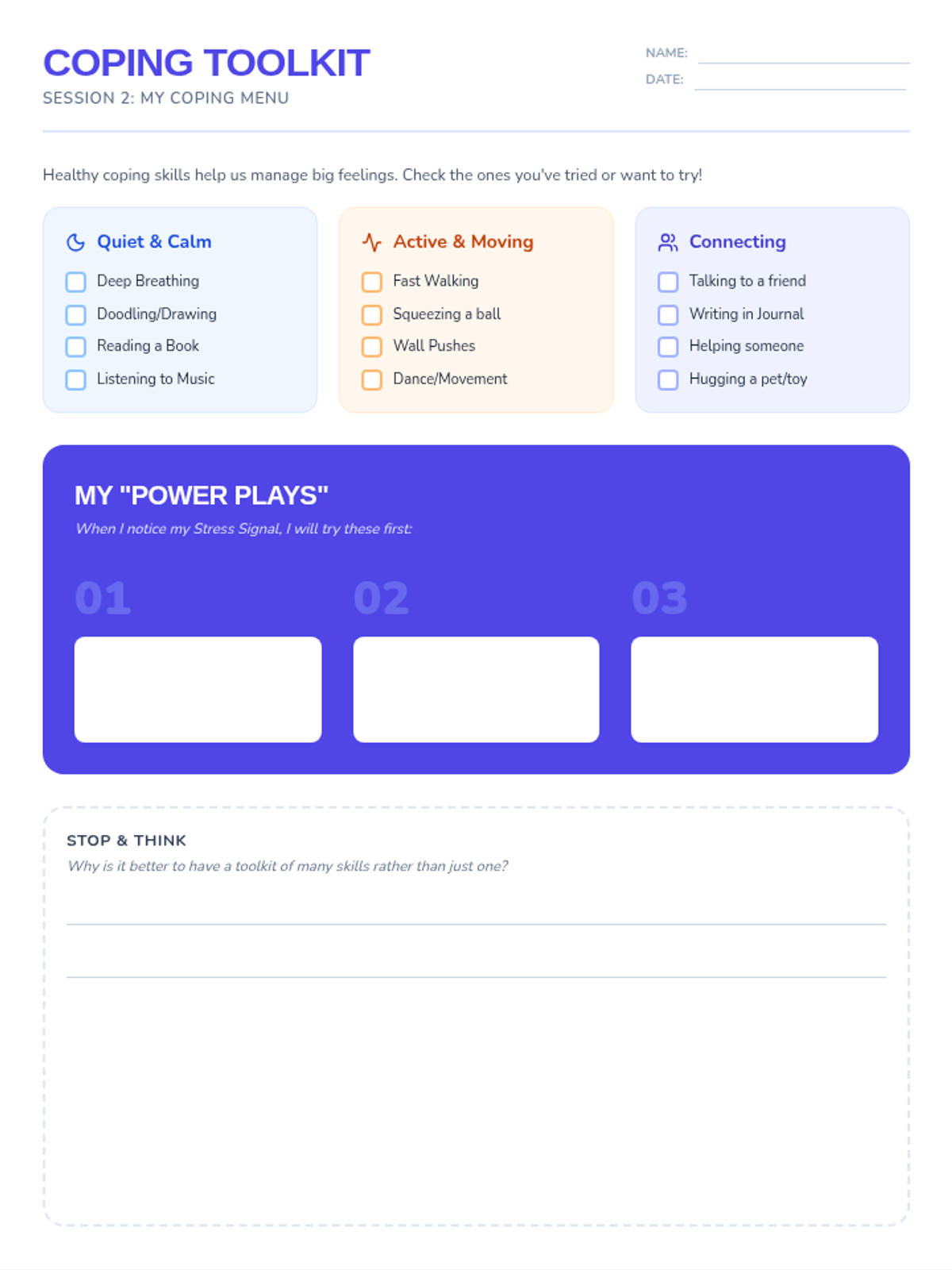
Introduction to healthy coping strategies and the development of a personalized coping skills menu.
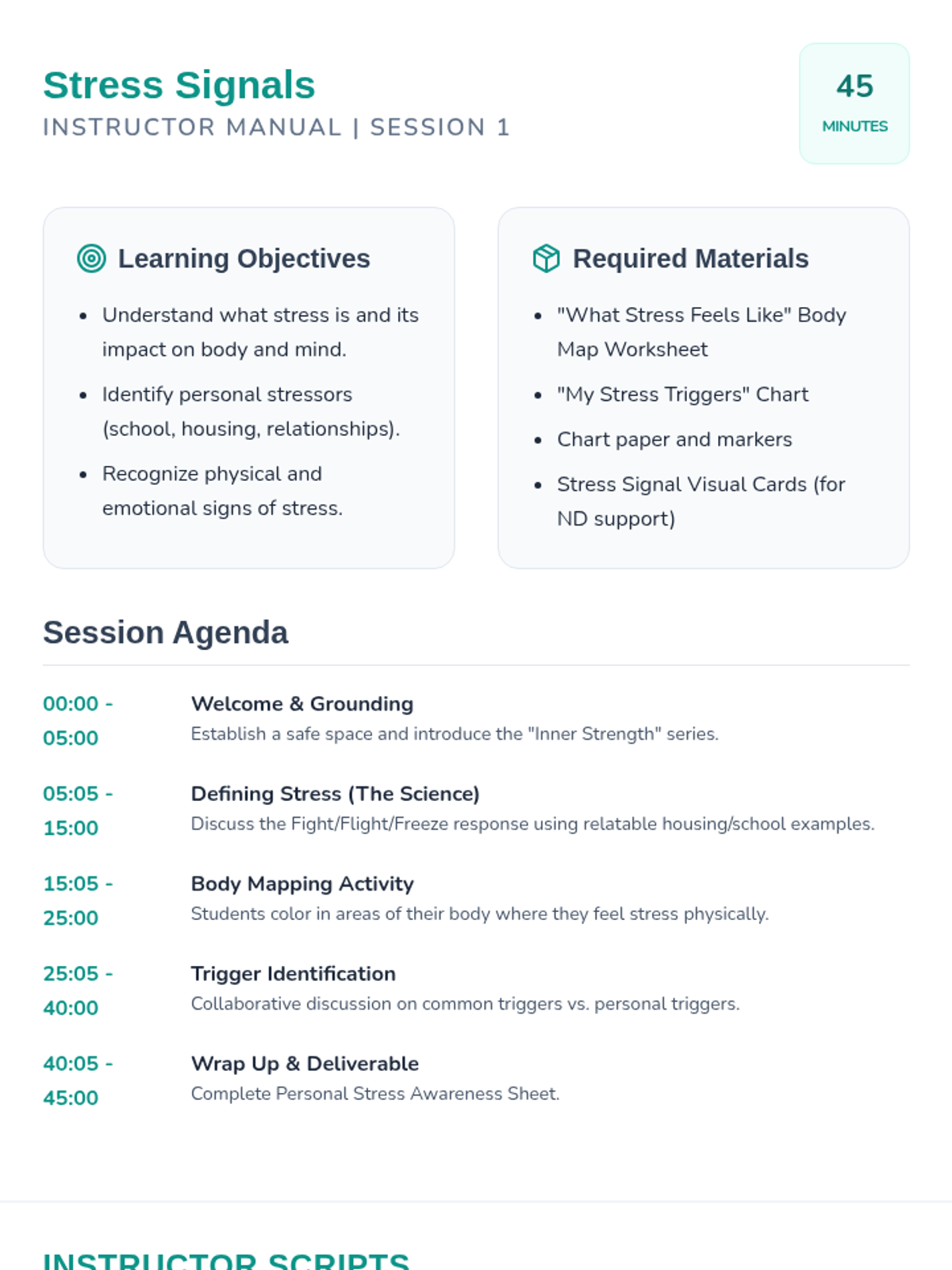
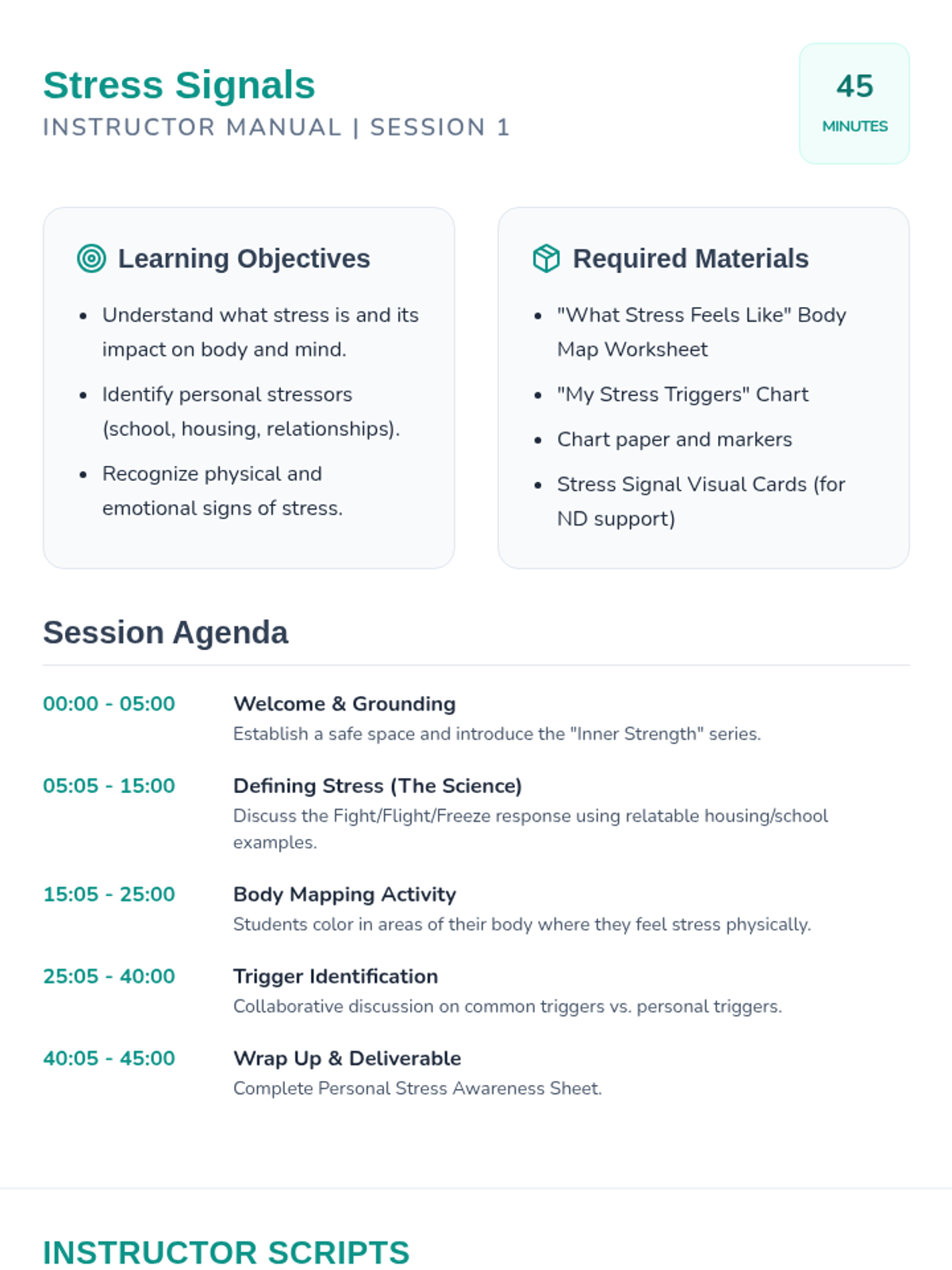
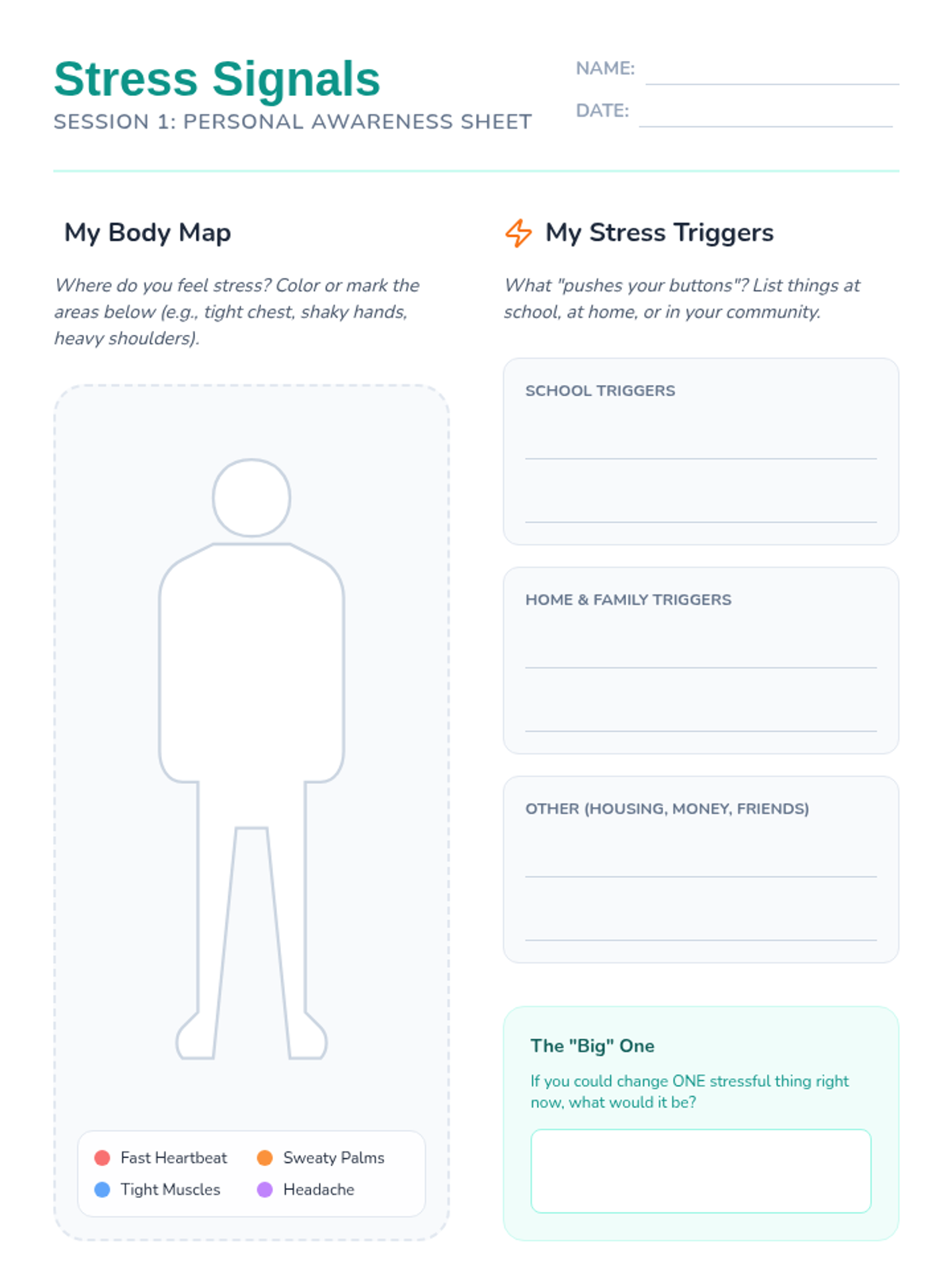
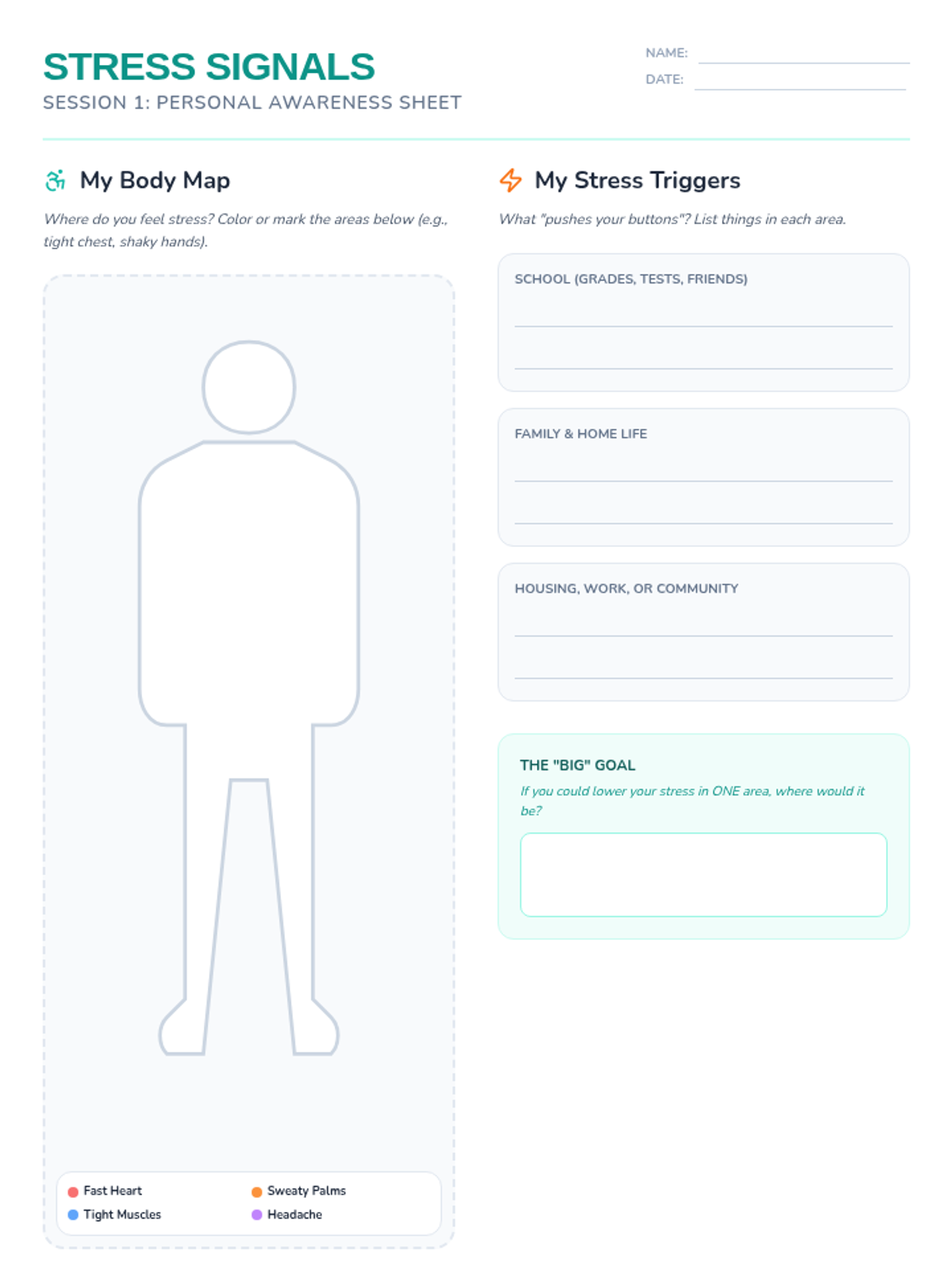
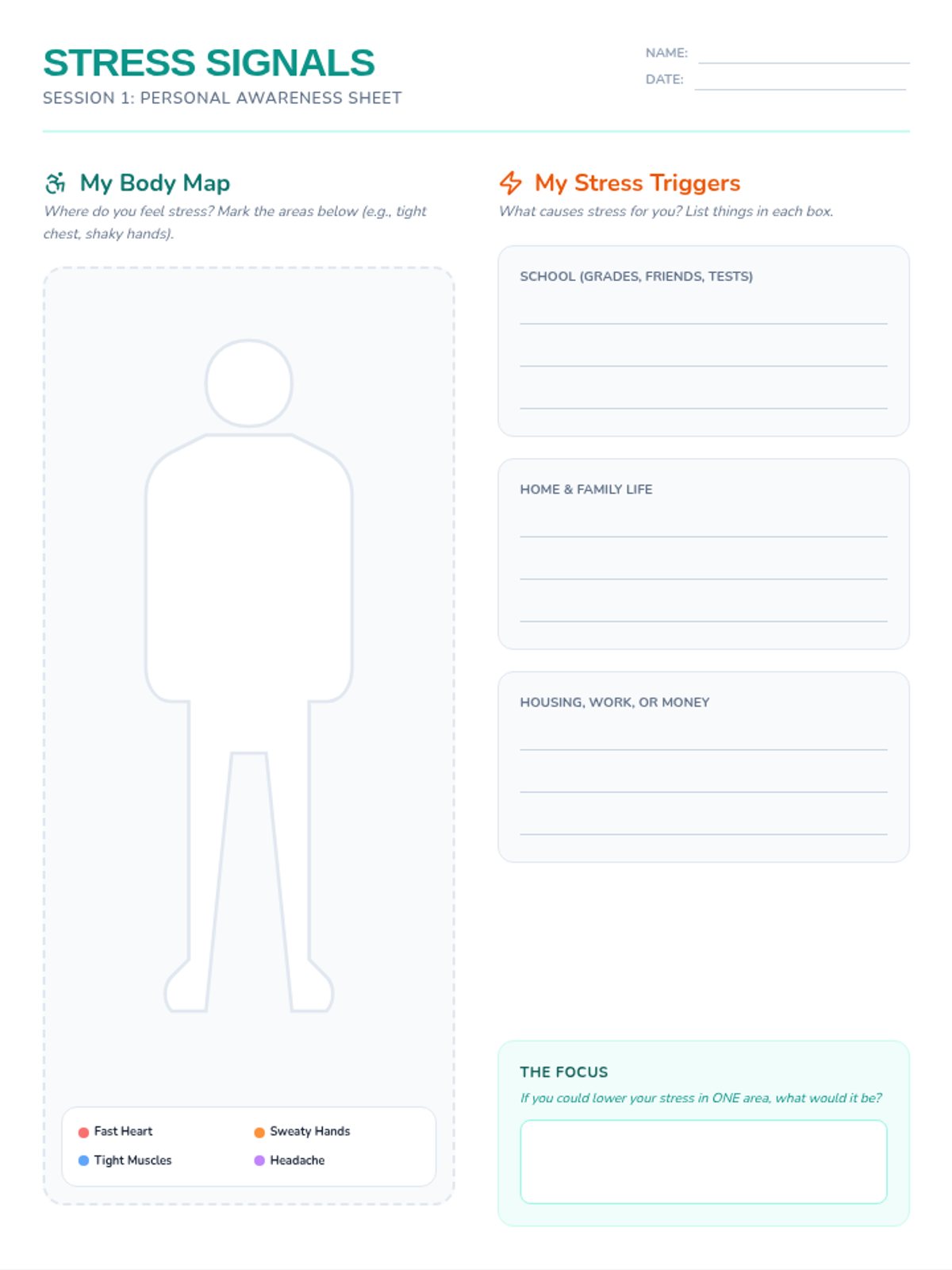
Students will learn to identify the physical and emotional signs of stress and recognize their personal triggers.
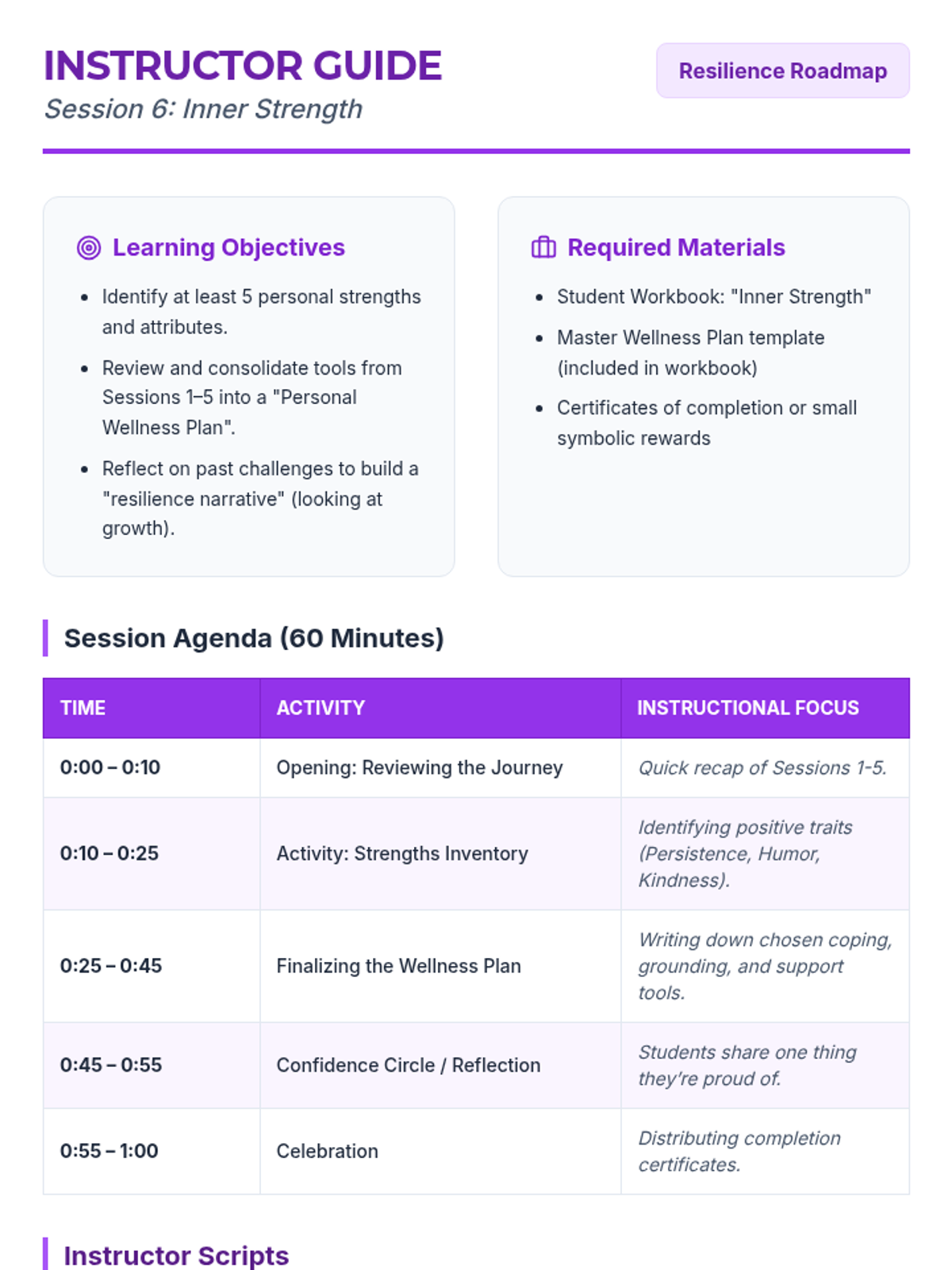
The final session celebrates personal growth, helps students identify their inherent strengths, and concludes with the completion of their personal wellness plans.
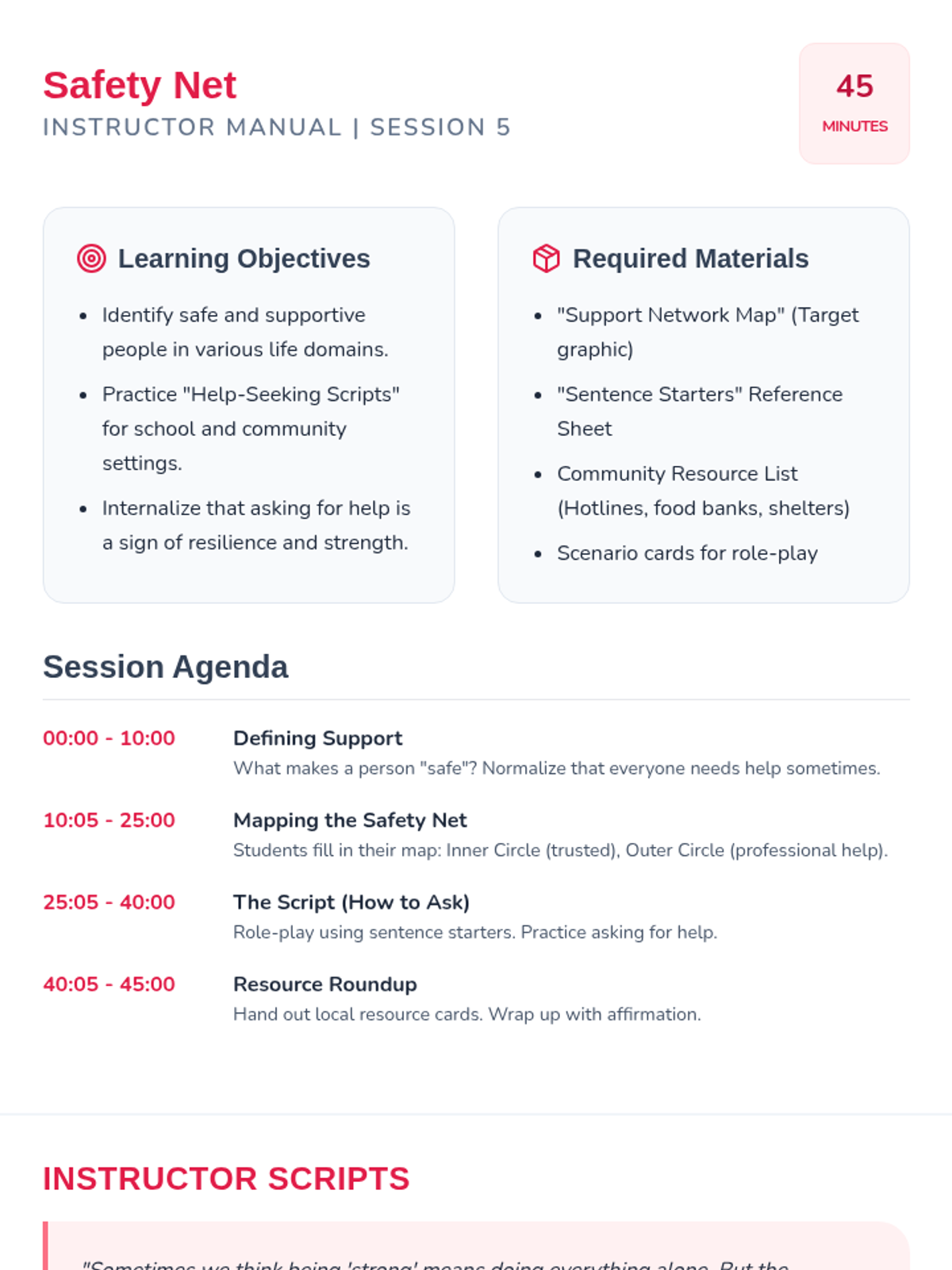
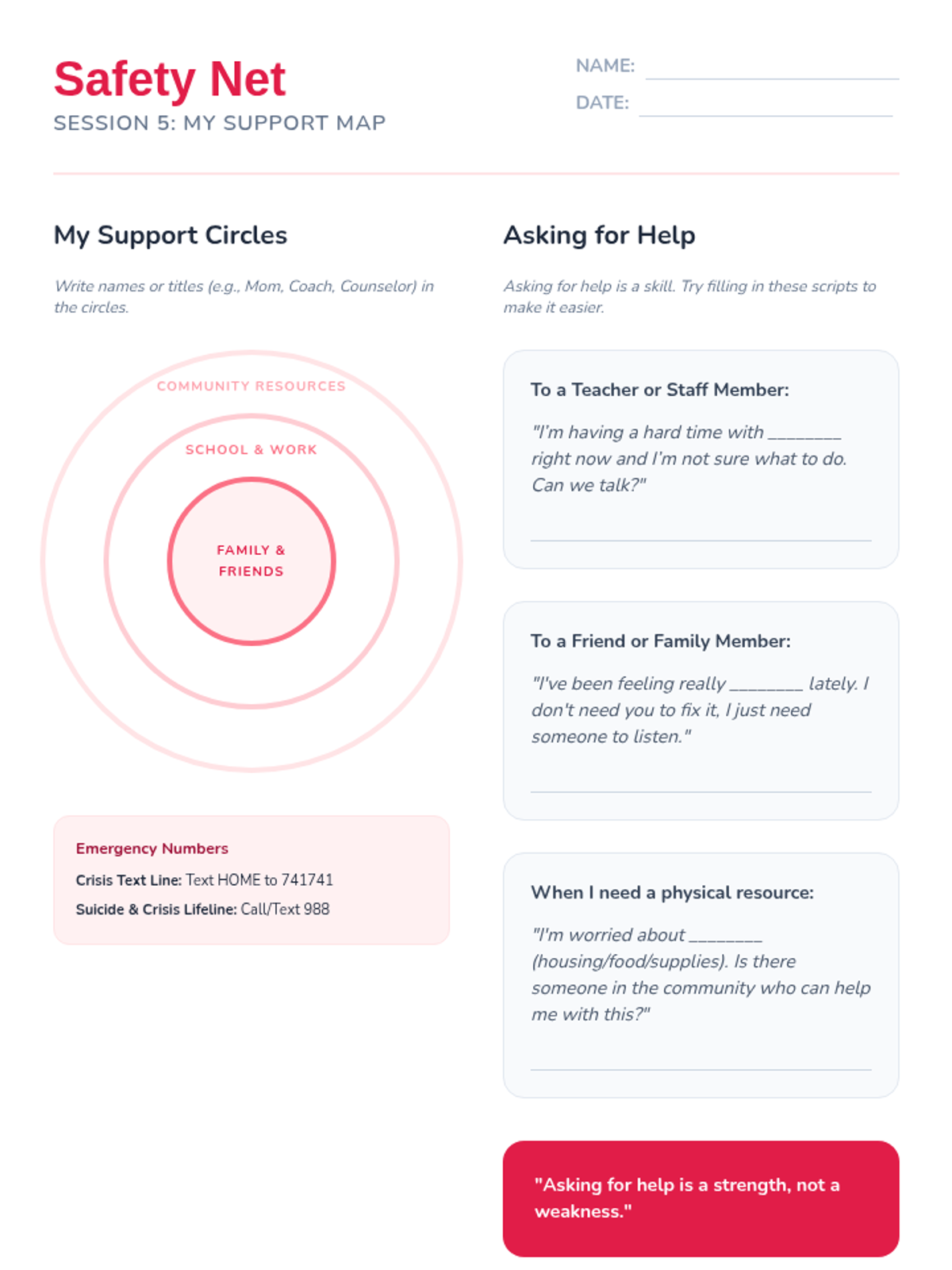
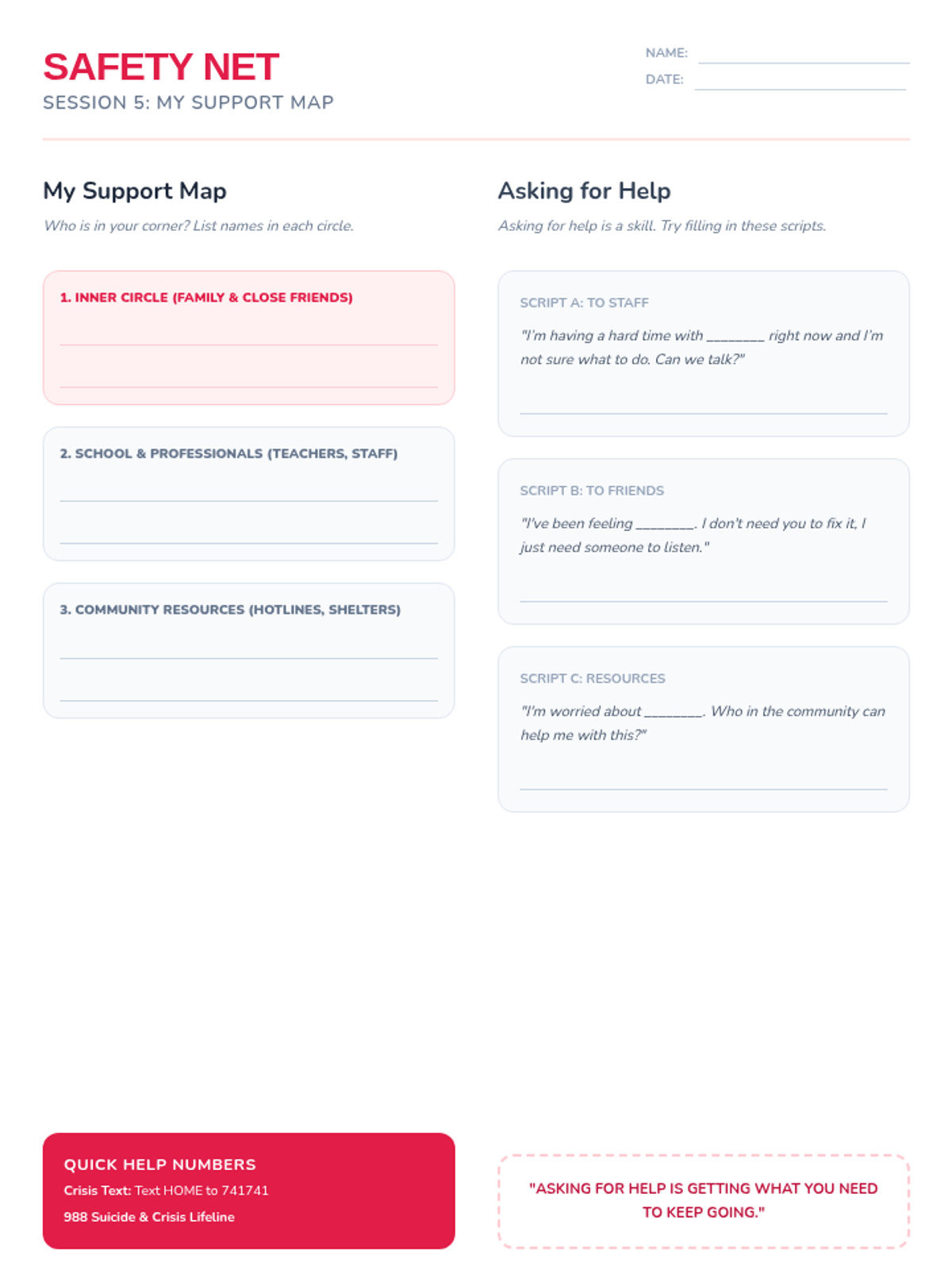
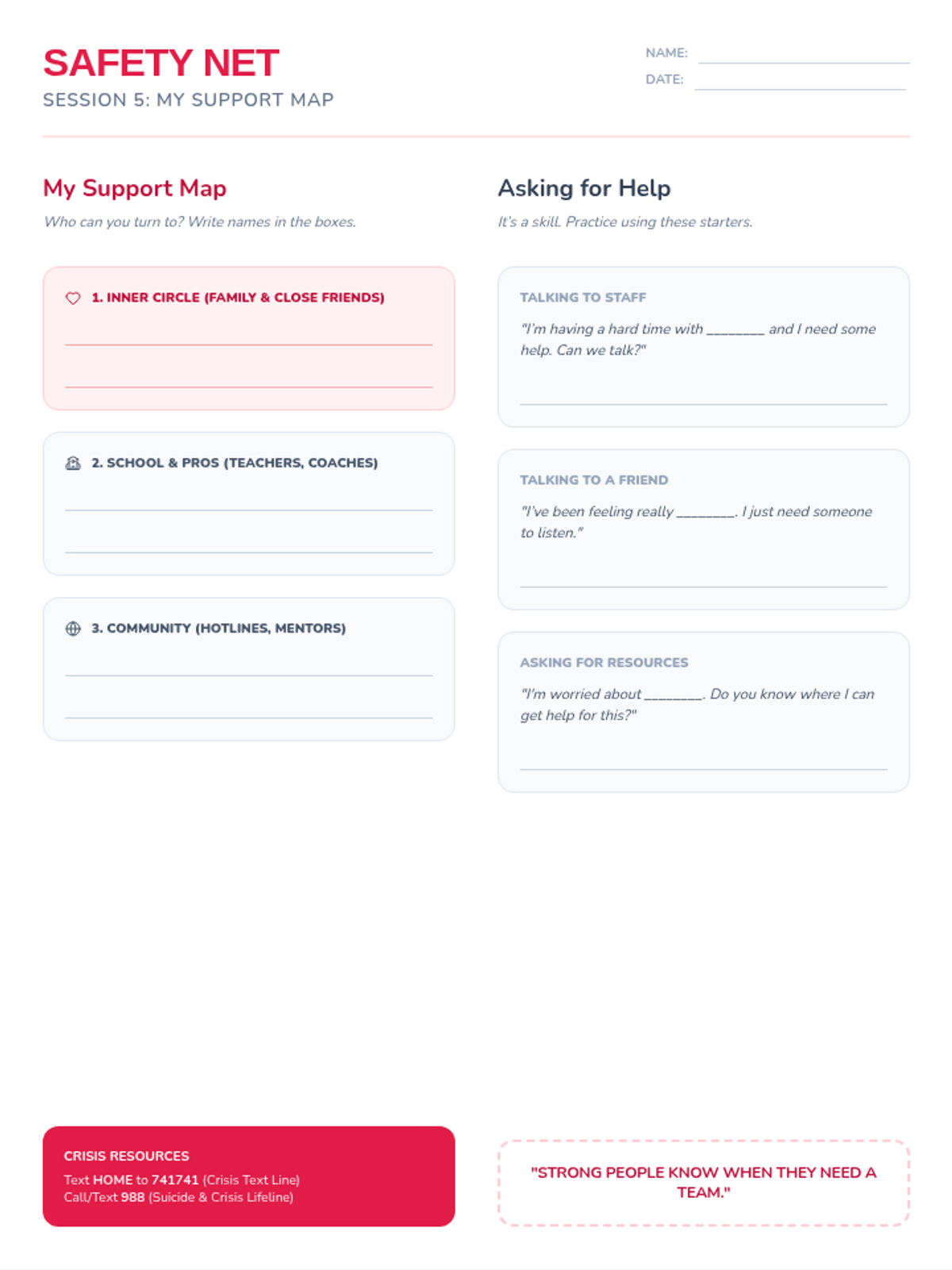
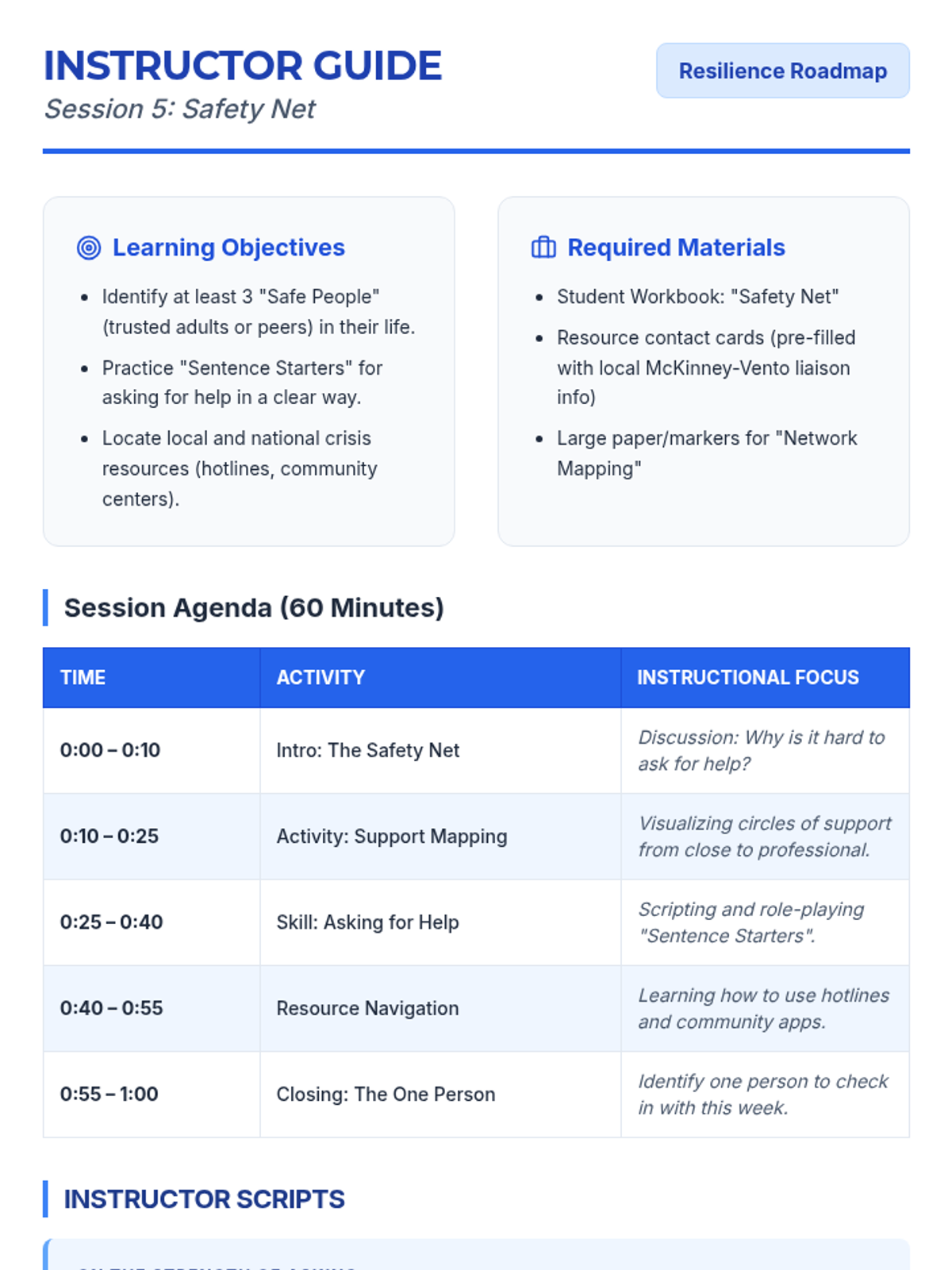
Participants map out their support networks and practice the social skills needed to ask for help from trusted adults and community resources.
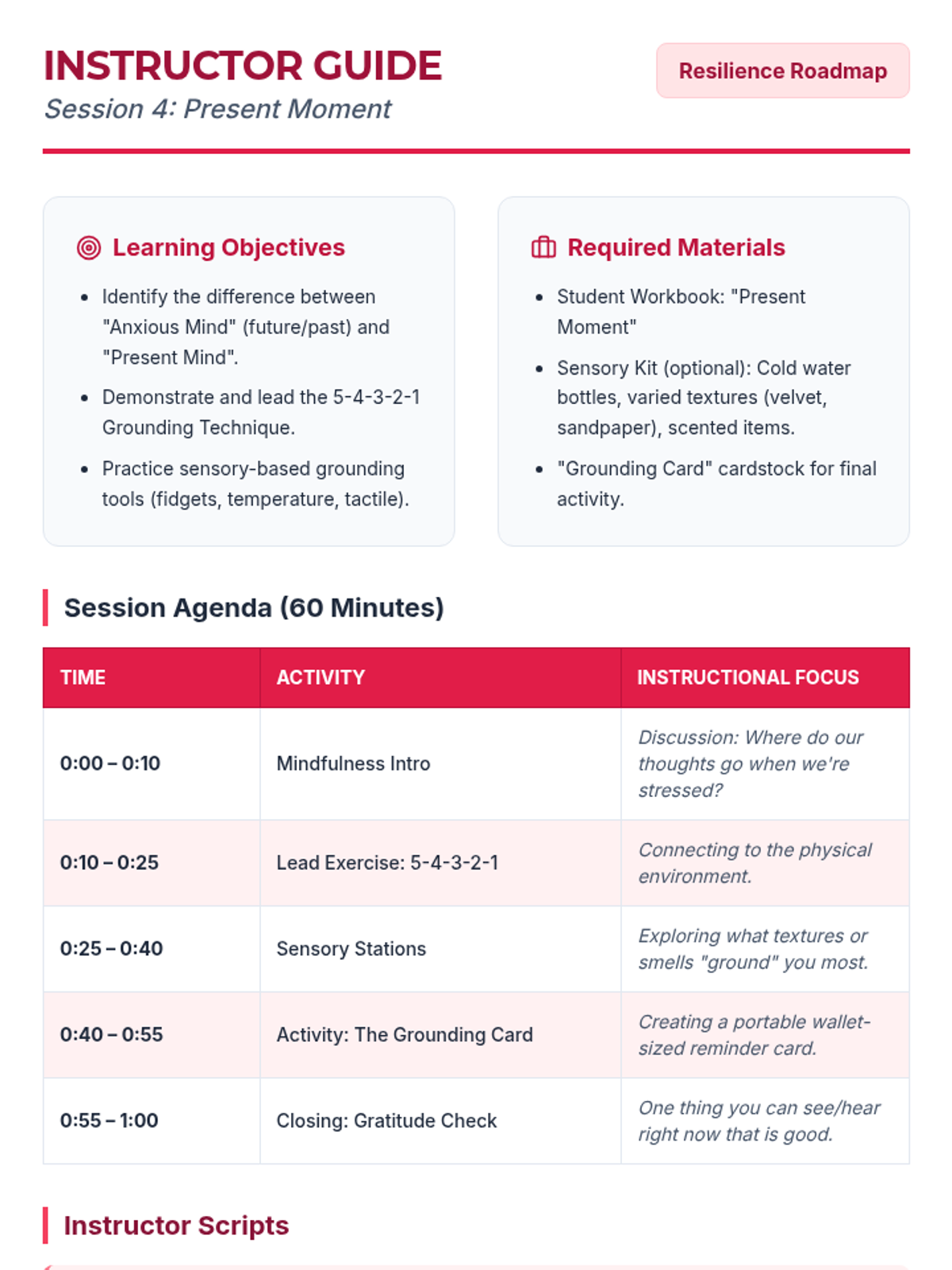
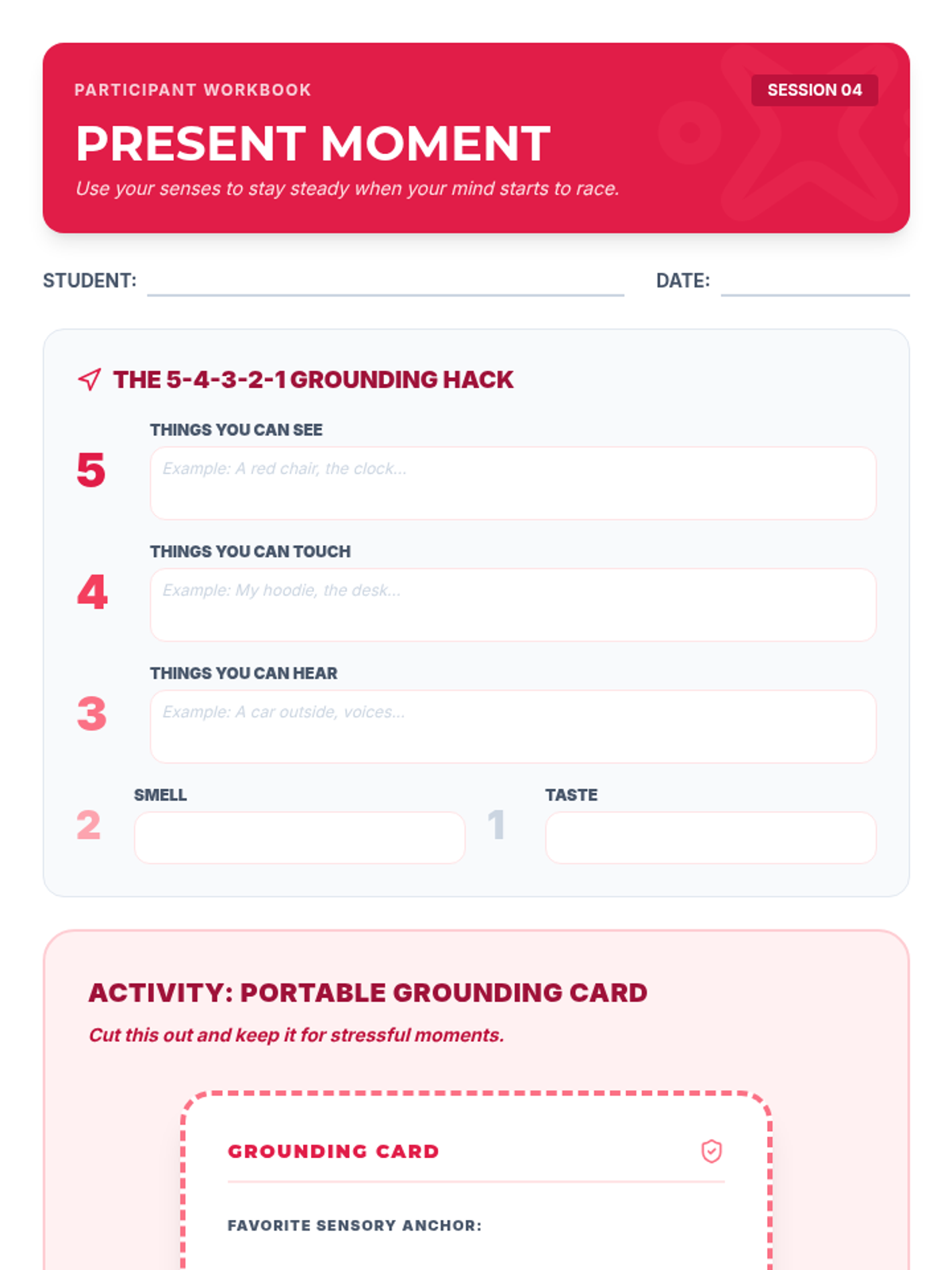
Students practice immediate grounding techniques to manage overwhelm and learn how to stay present during periods of high anxiety.
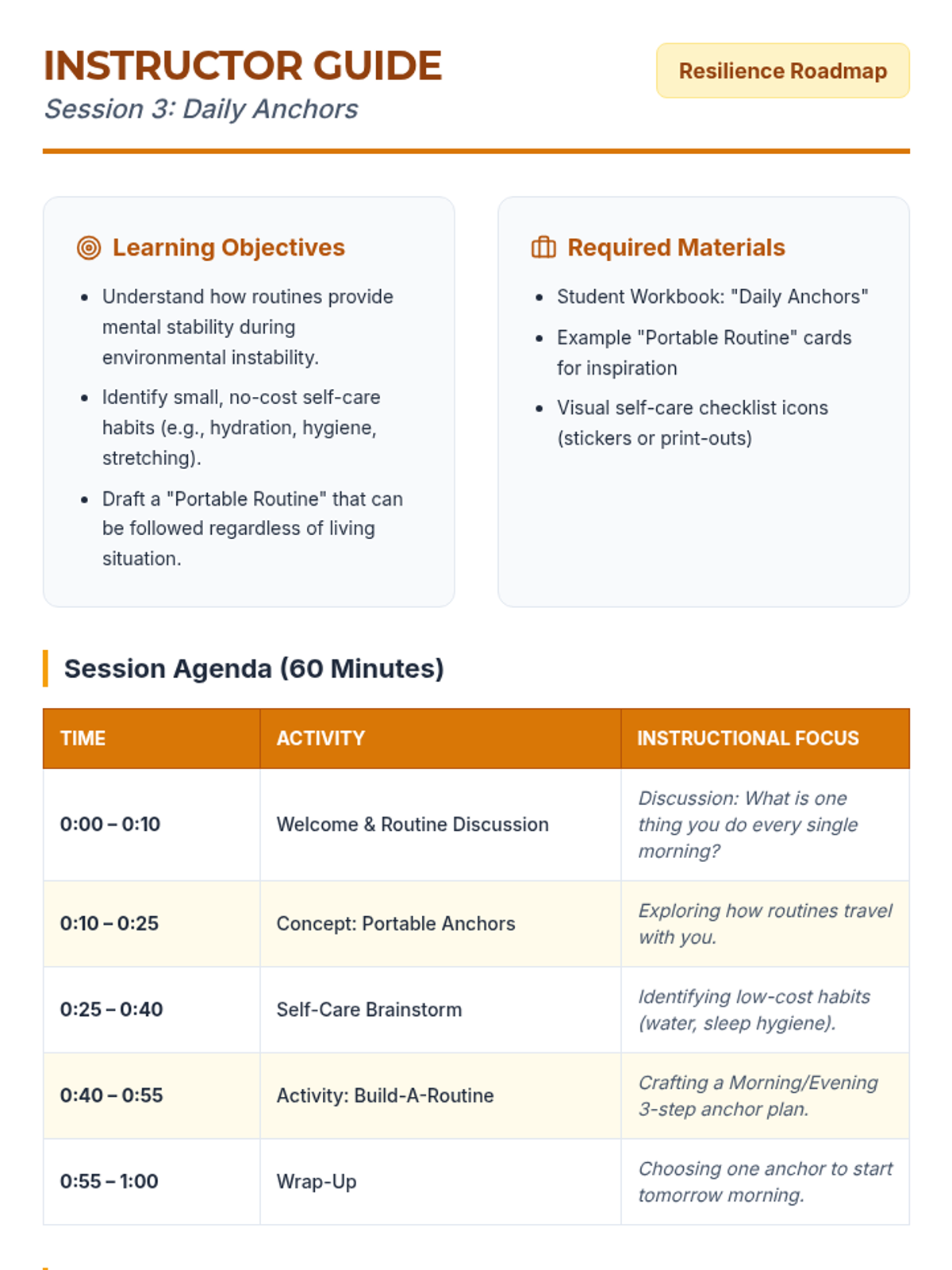
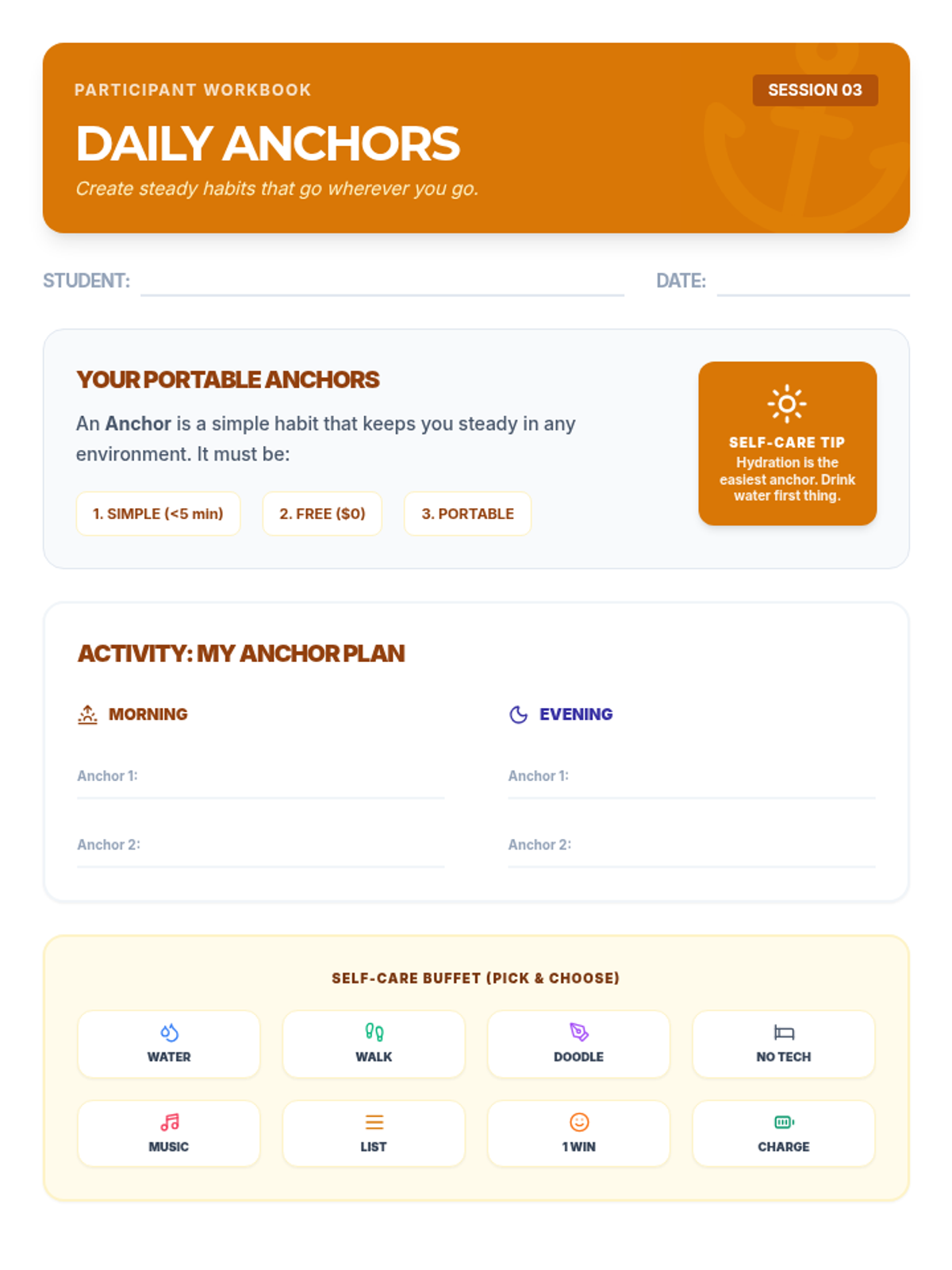
This session focuses on creating flexible, portable routines that provide stability even in unstable living environments, emphasizing low-cost self-care habits.
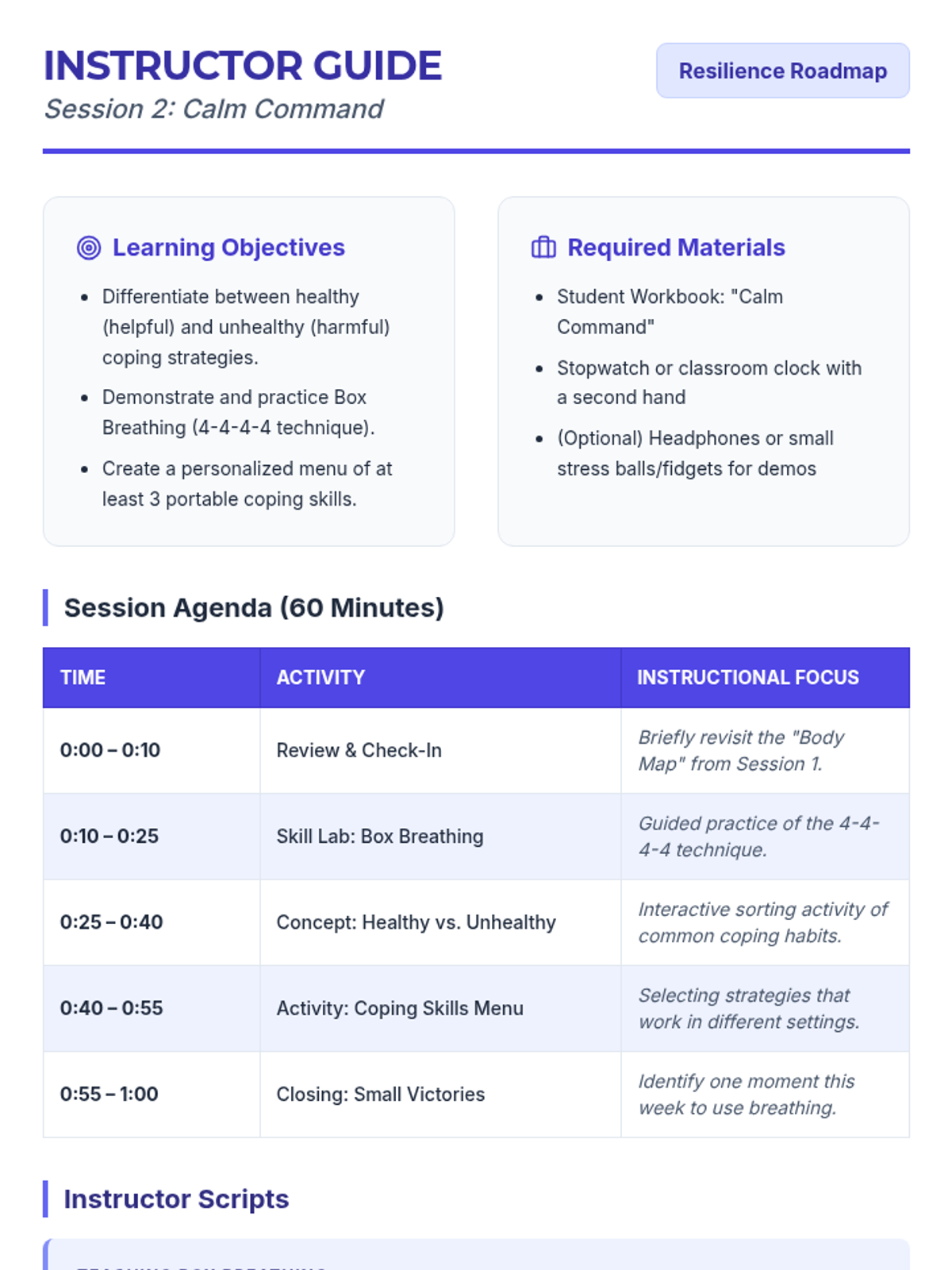
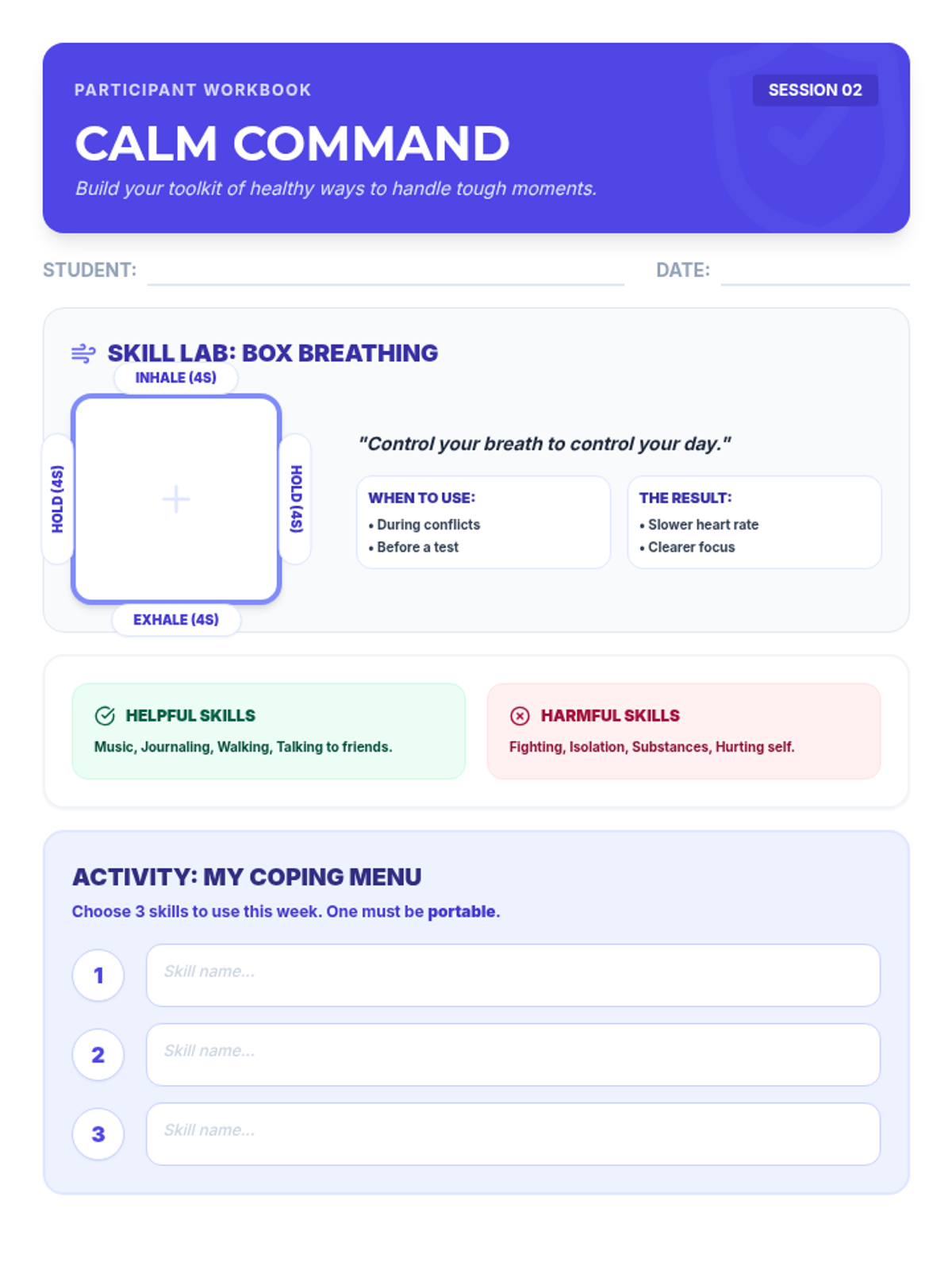
Students learn to differentiate between healthy and unhealthy coping mechanisms while practicing physical regulation techniques like box breathing.
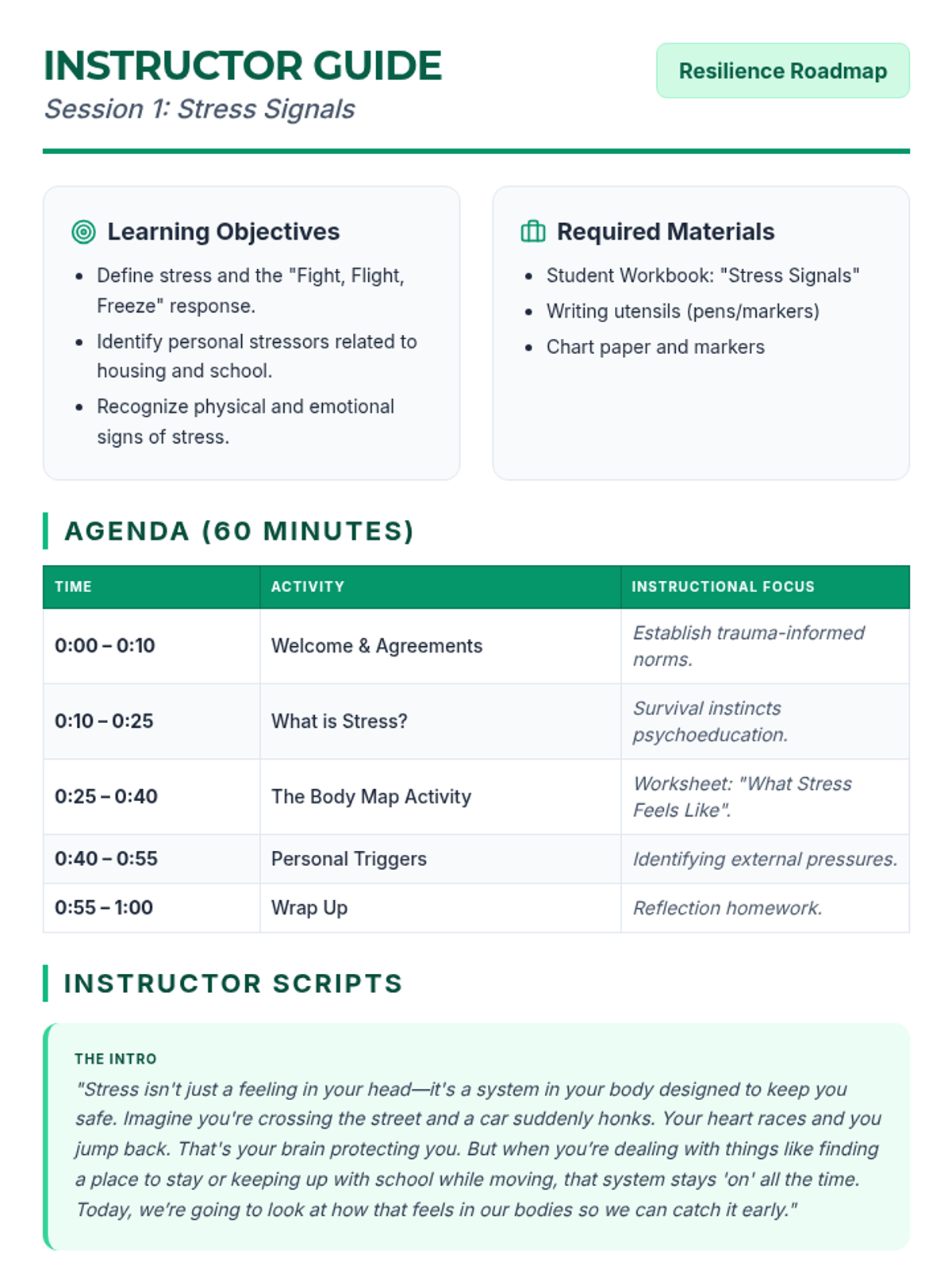
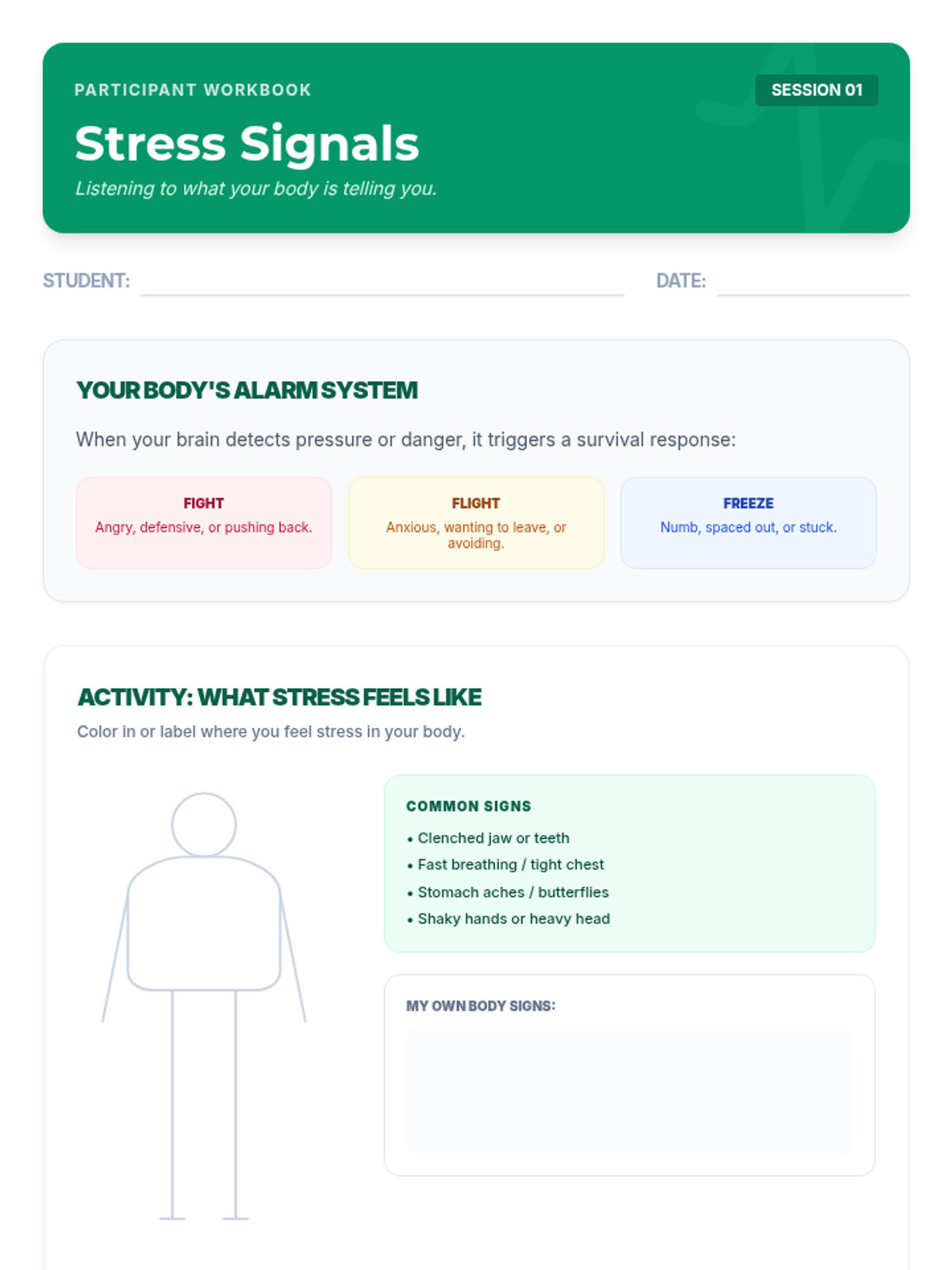
In this opening session, students explore the biological and emotional nature of stress, specifically identifying how housing instability and school pressures manifest in their bodies and minds.
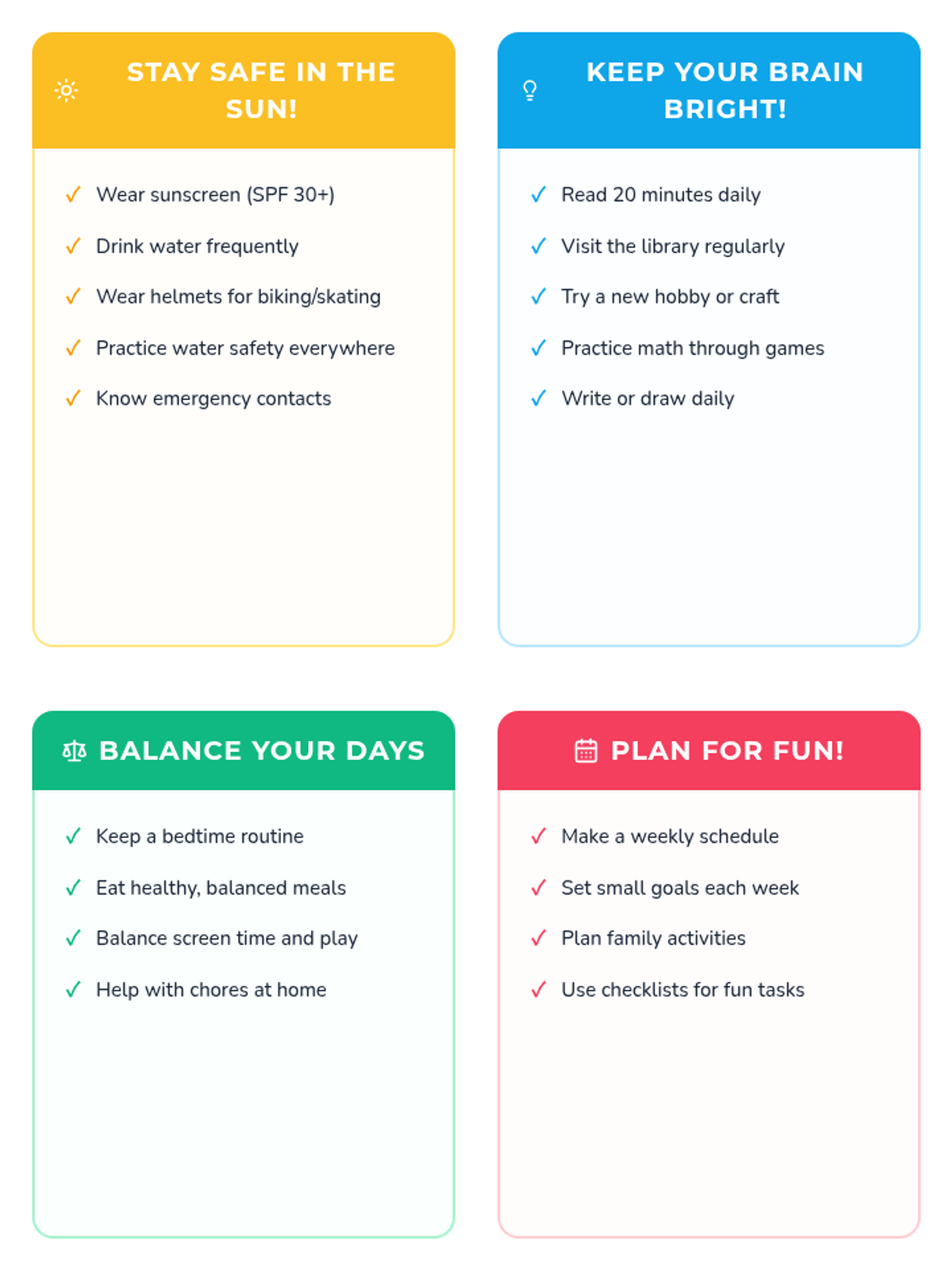
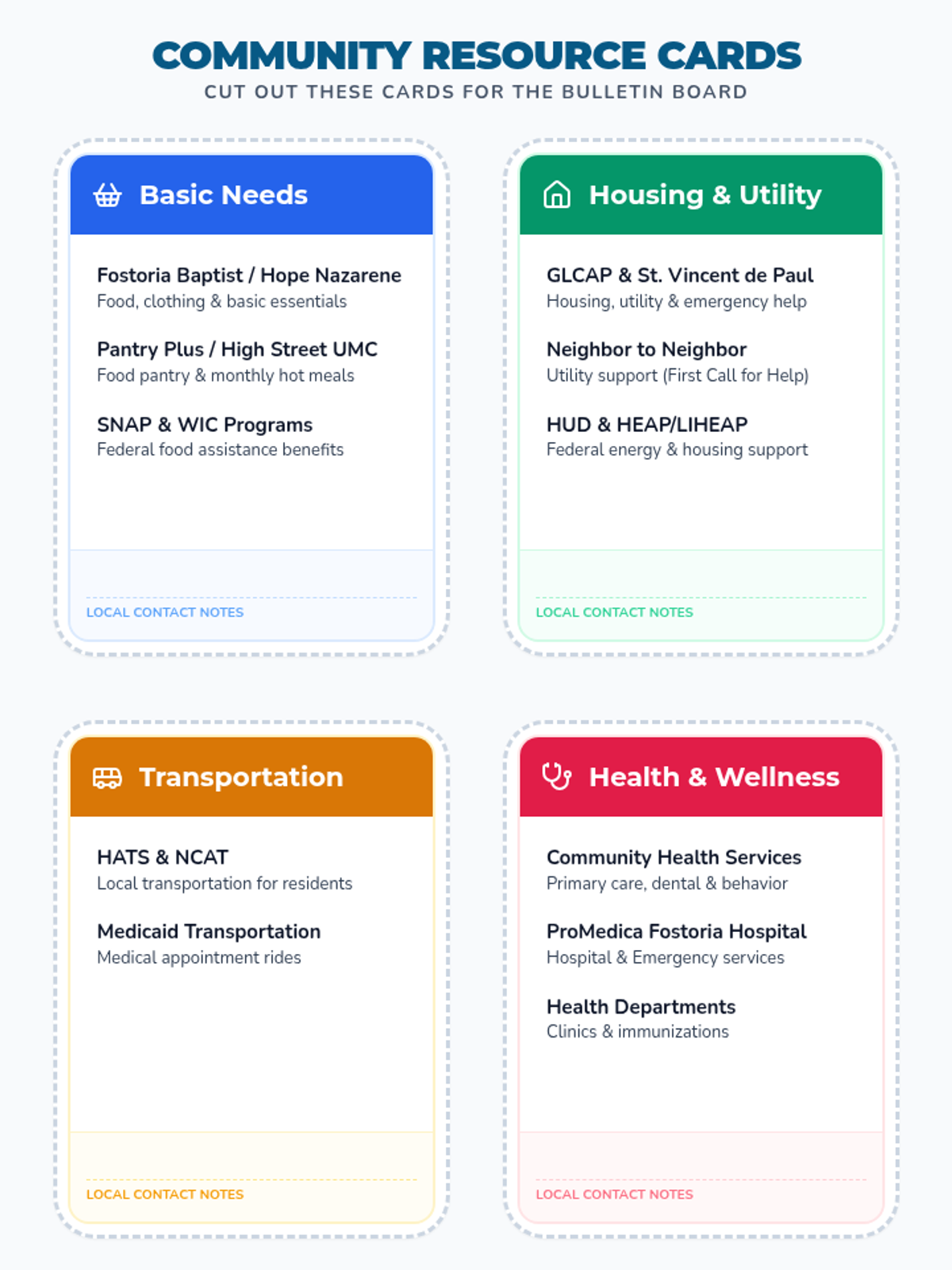
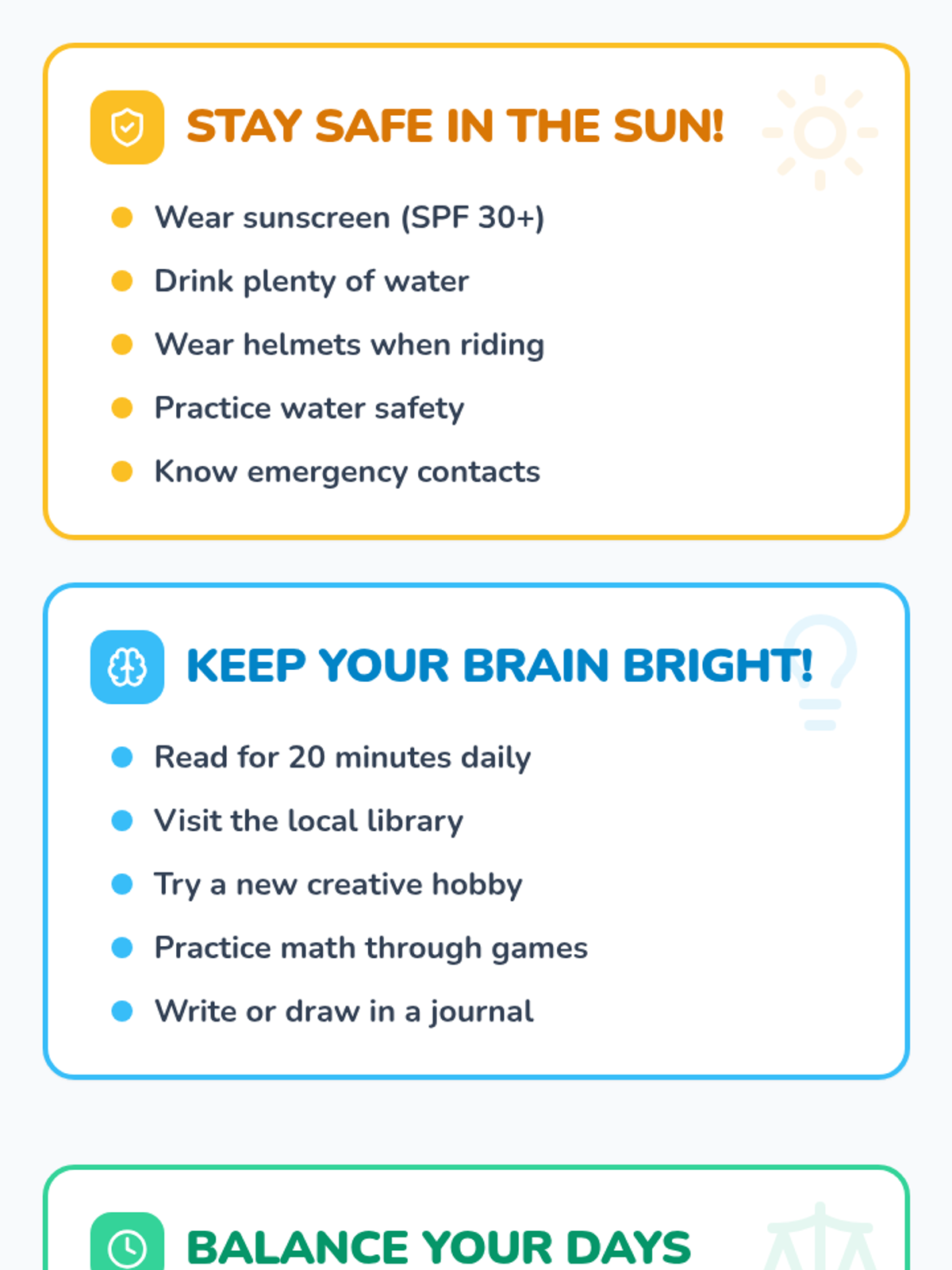
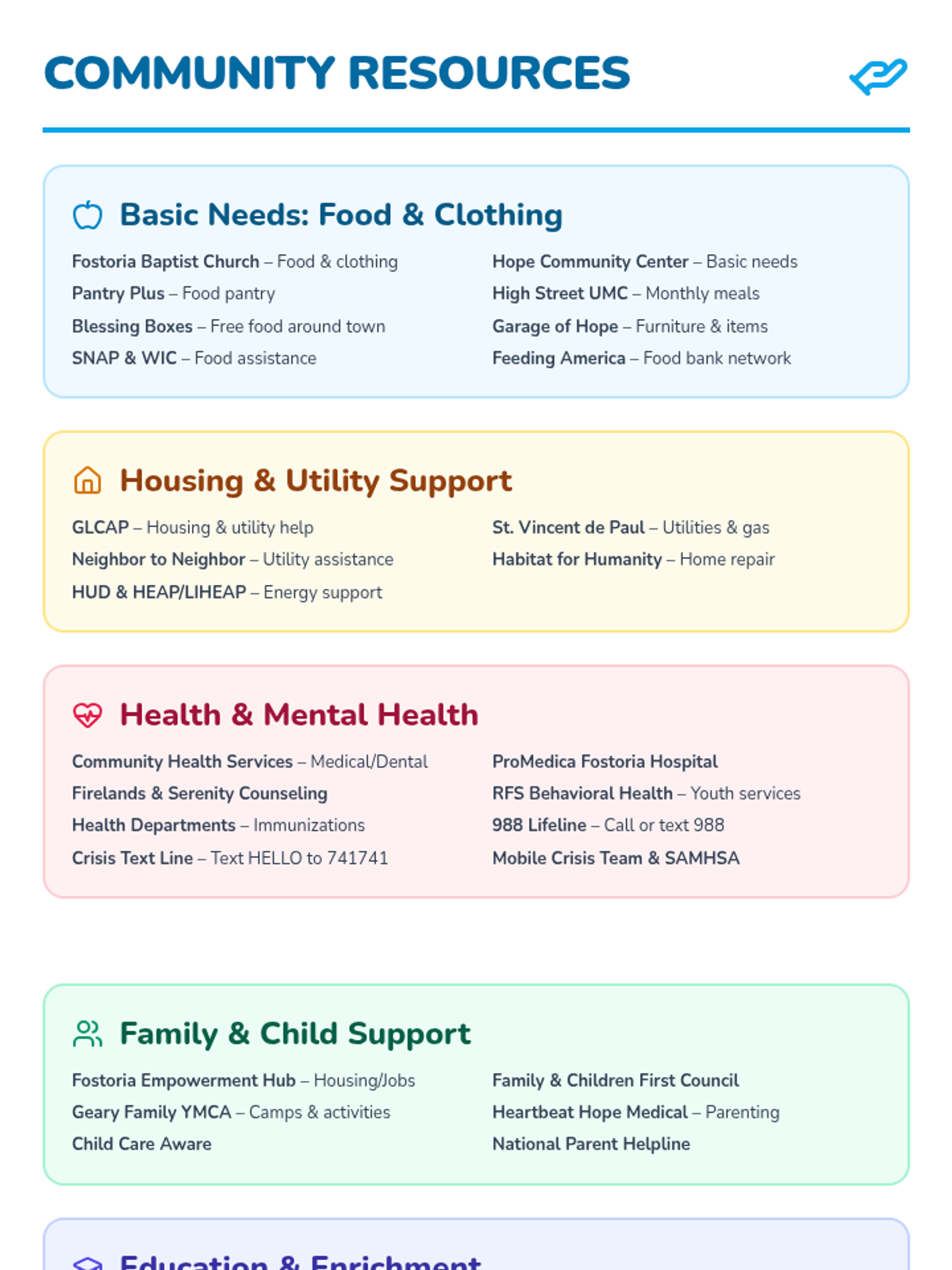
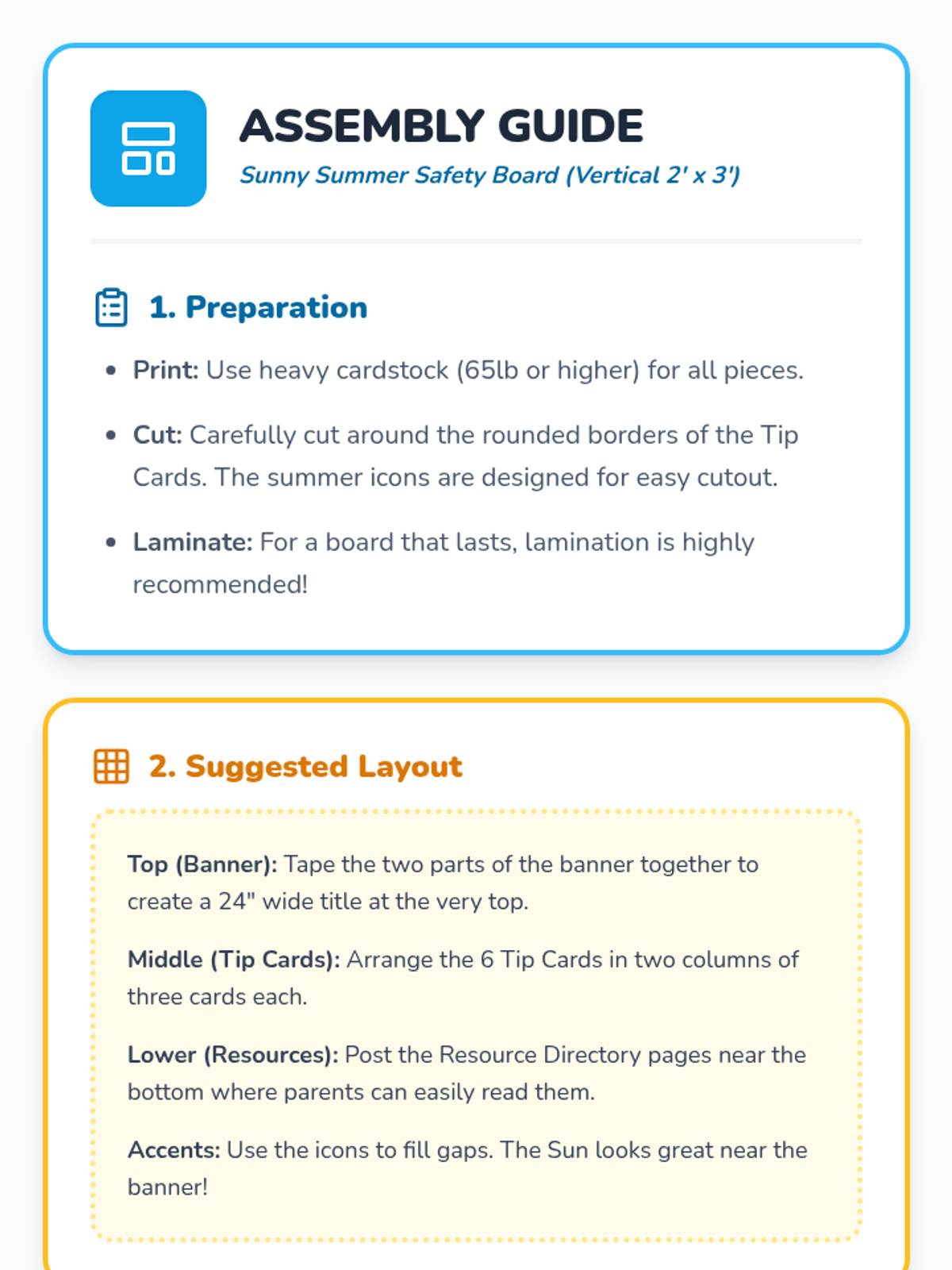
A collection of printable banners, headers, advice cards, and community resource listings to create an engaging summer-themed bulletin board.
A comprehensive collection of printable components to create a vibrant, summer-themed bulletin board focused on safety, learning, and community resources for elementary students and parents.
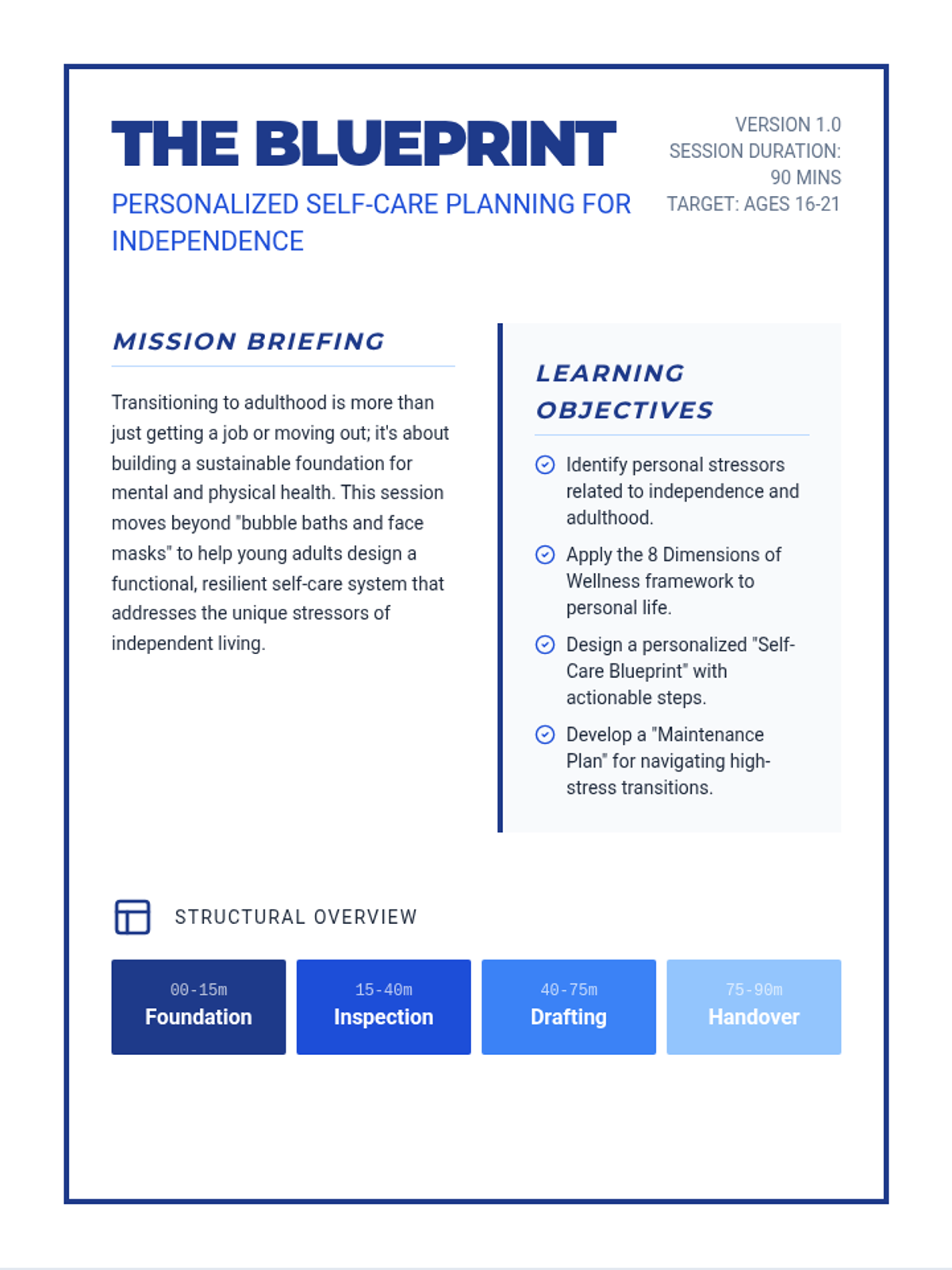
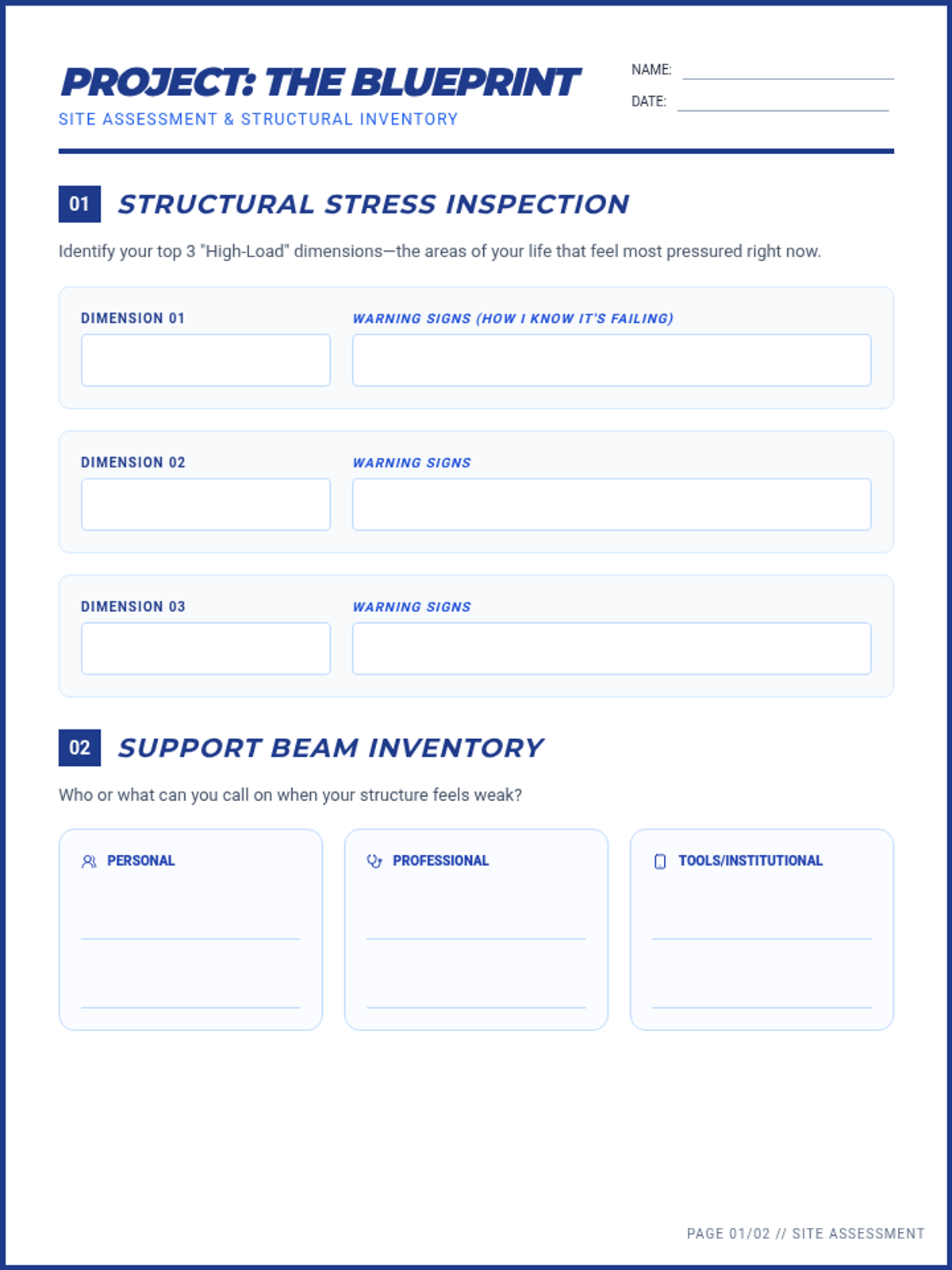
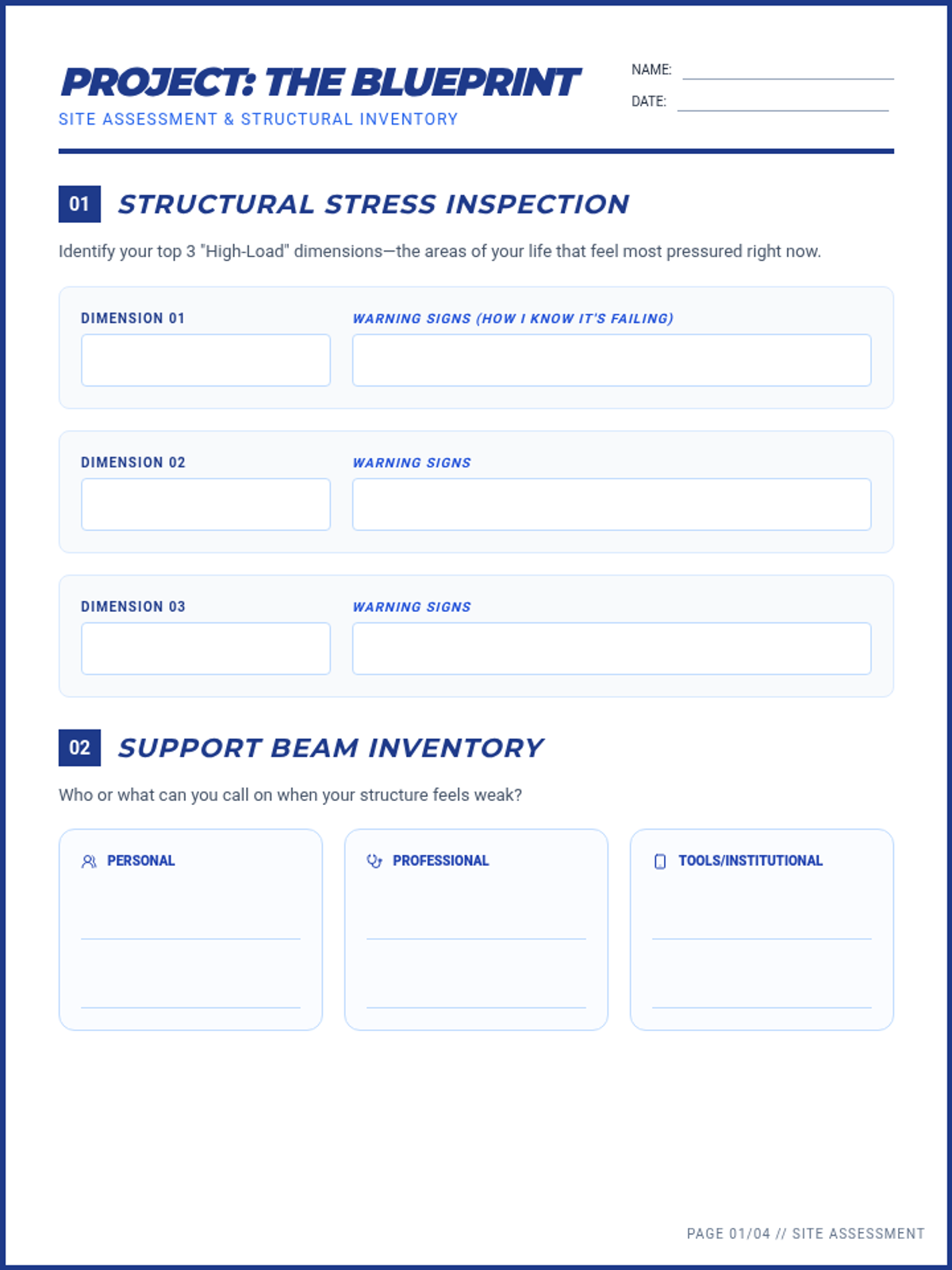
A 90-minute workshop designed for transition-age youth (16-21) to develop a personalized self-care blueprint. The session focuses on the 8 dimensions of wellness as a foundation for independent living and stress management.
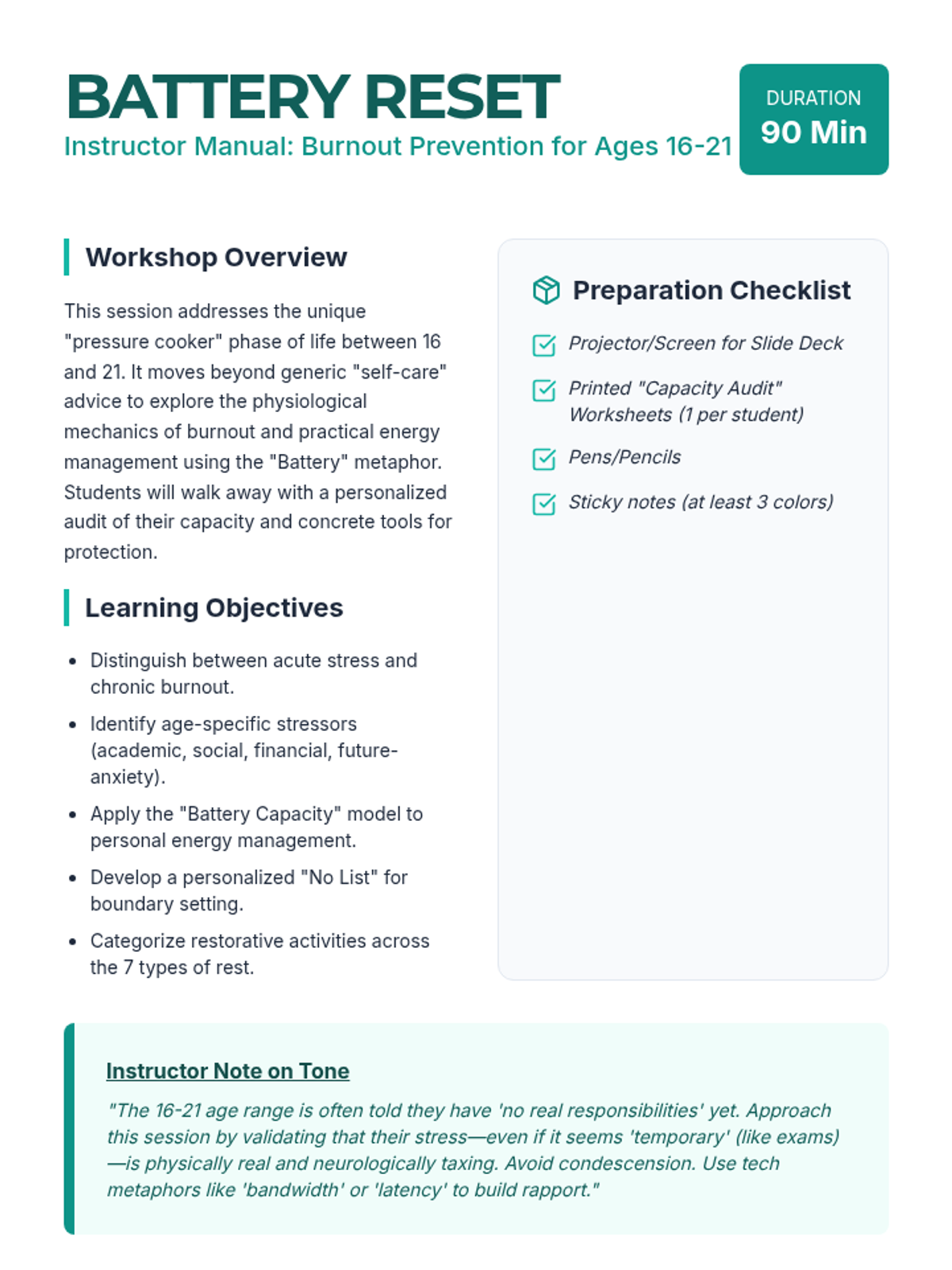
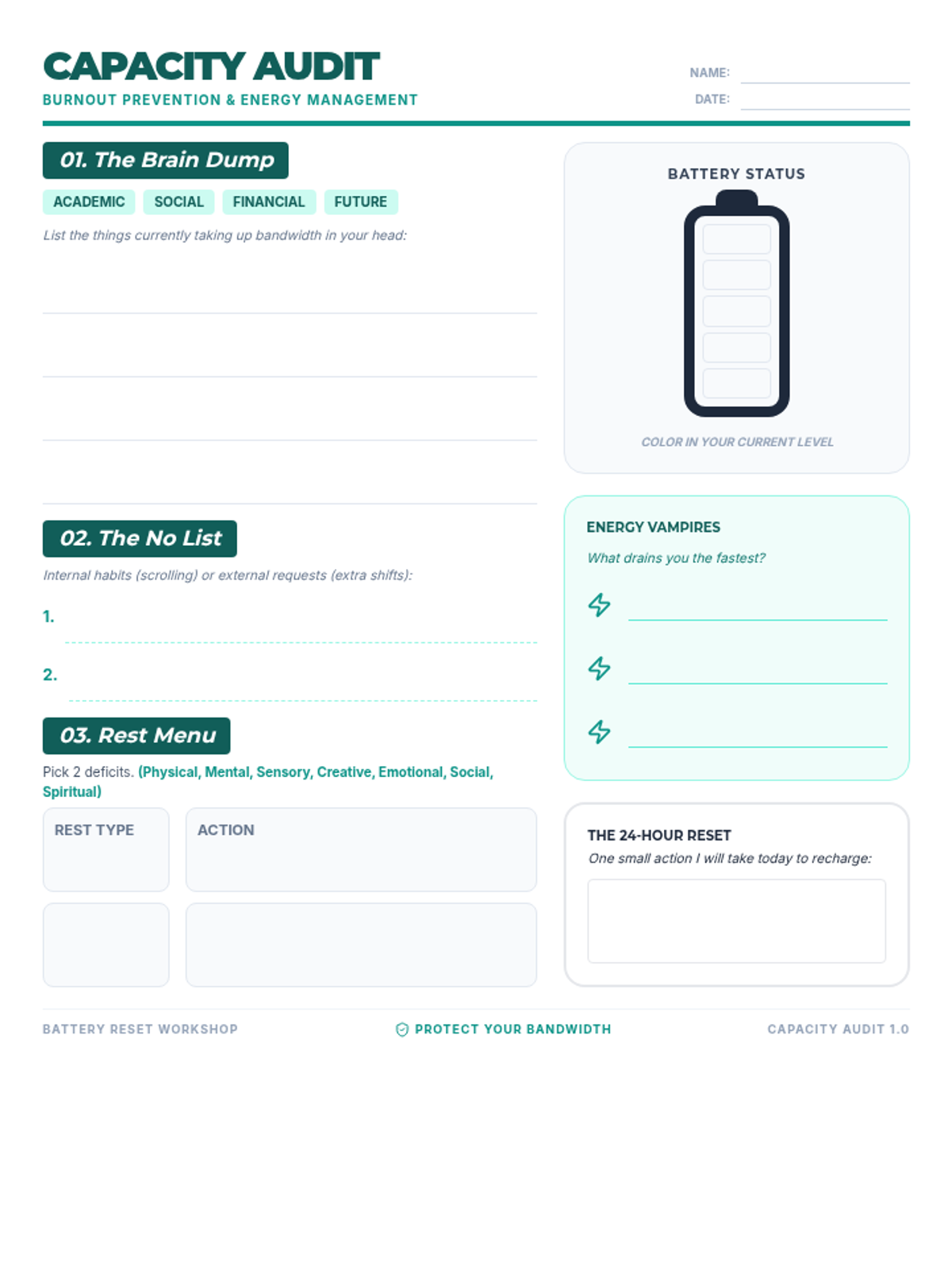
A comprehensive 90-minute workshop designed for transitional age youth (16-21) to identify stressors, understand the mechanics of burnout, and develop personalized energy management strategies.
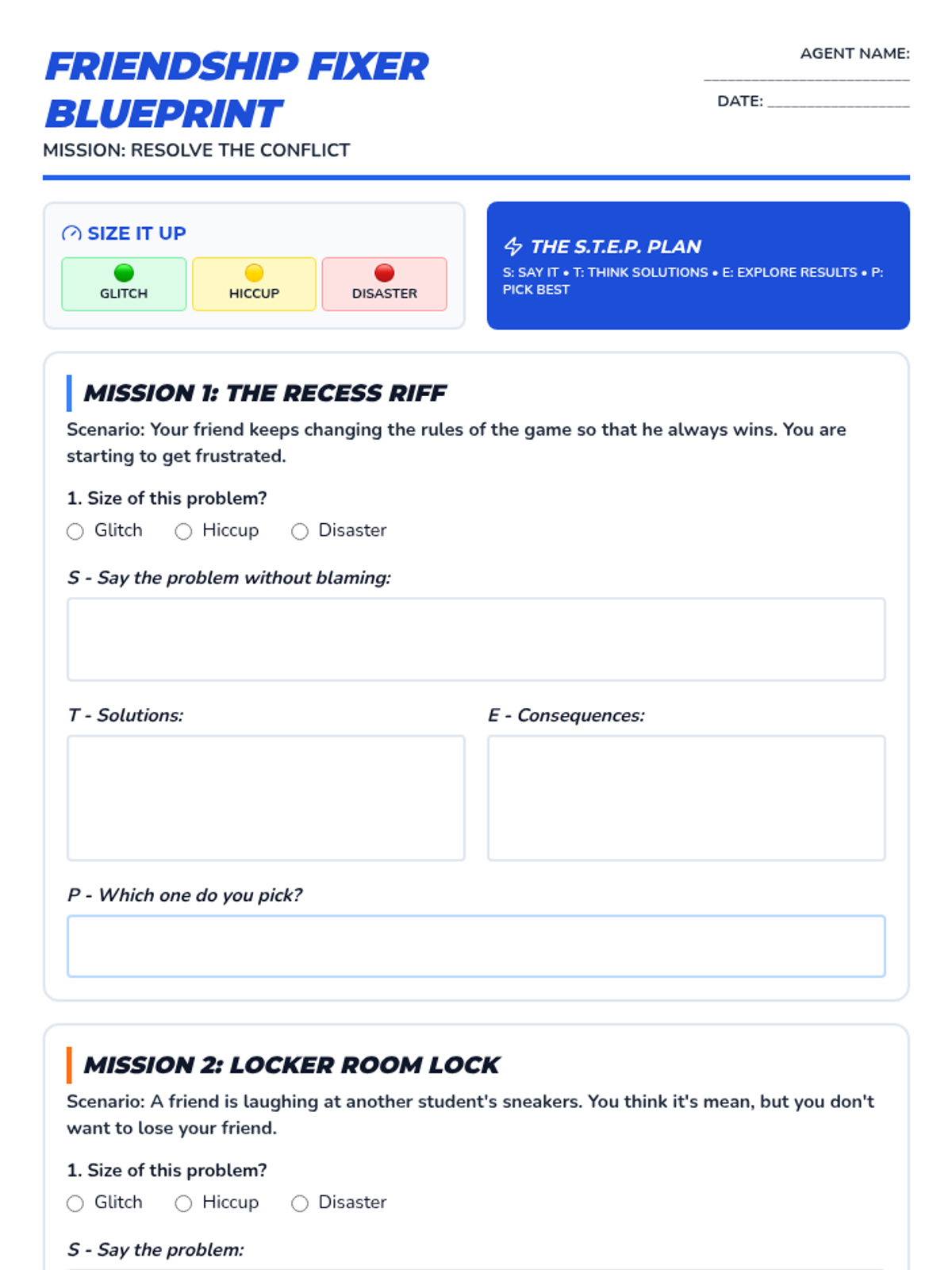
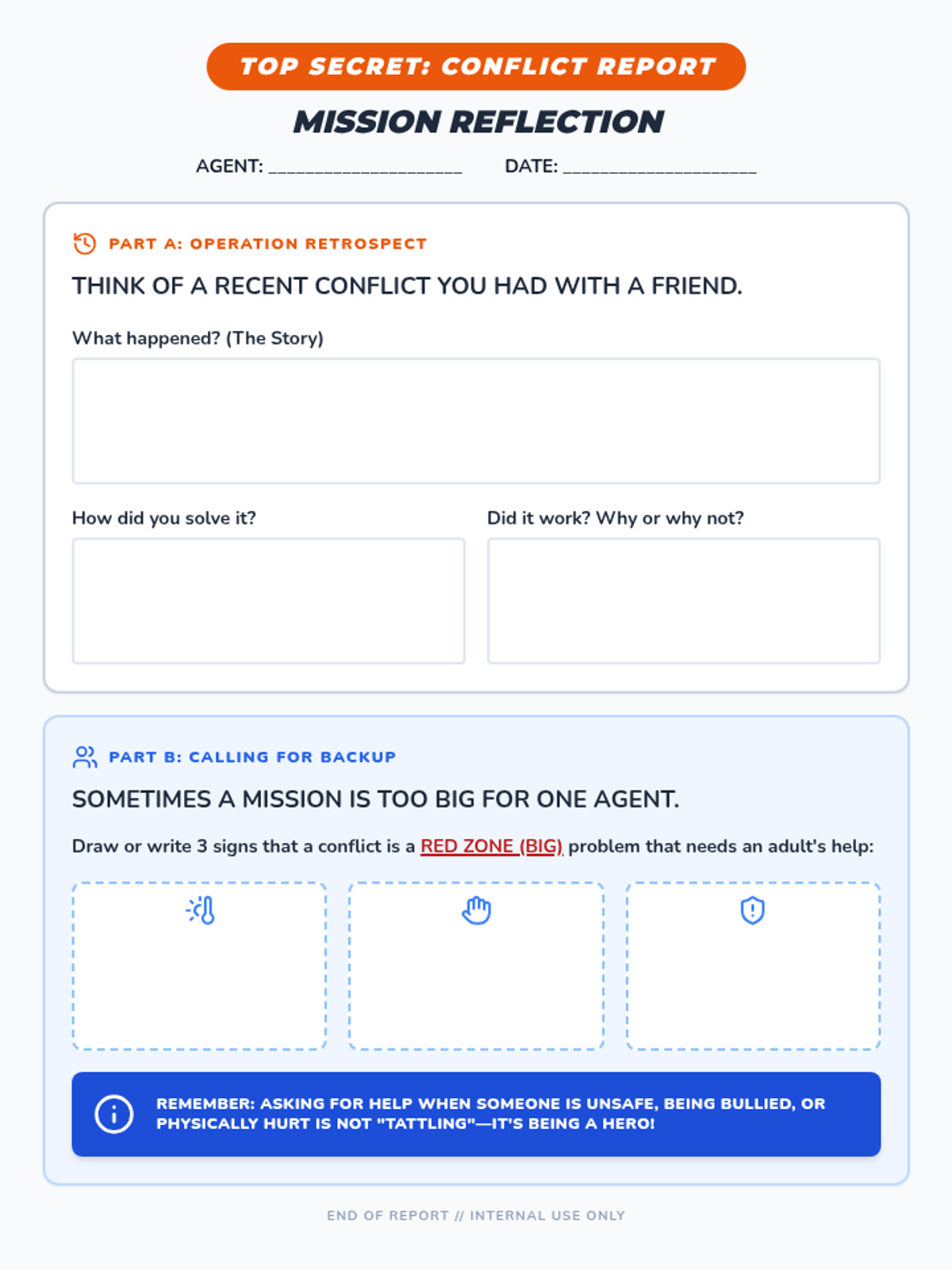
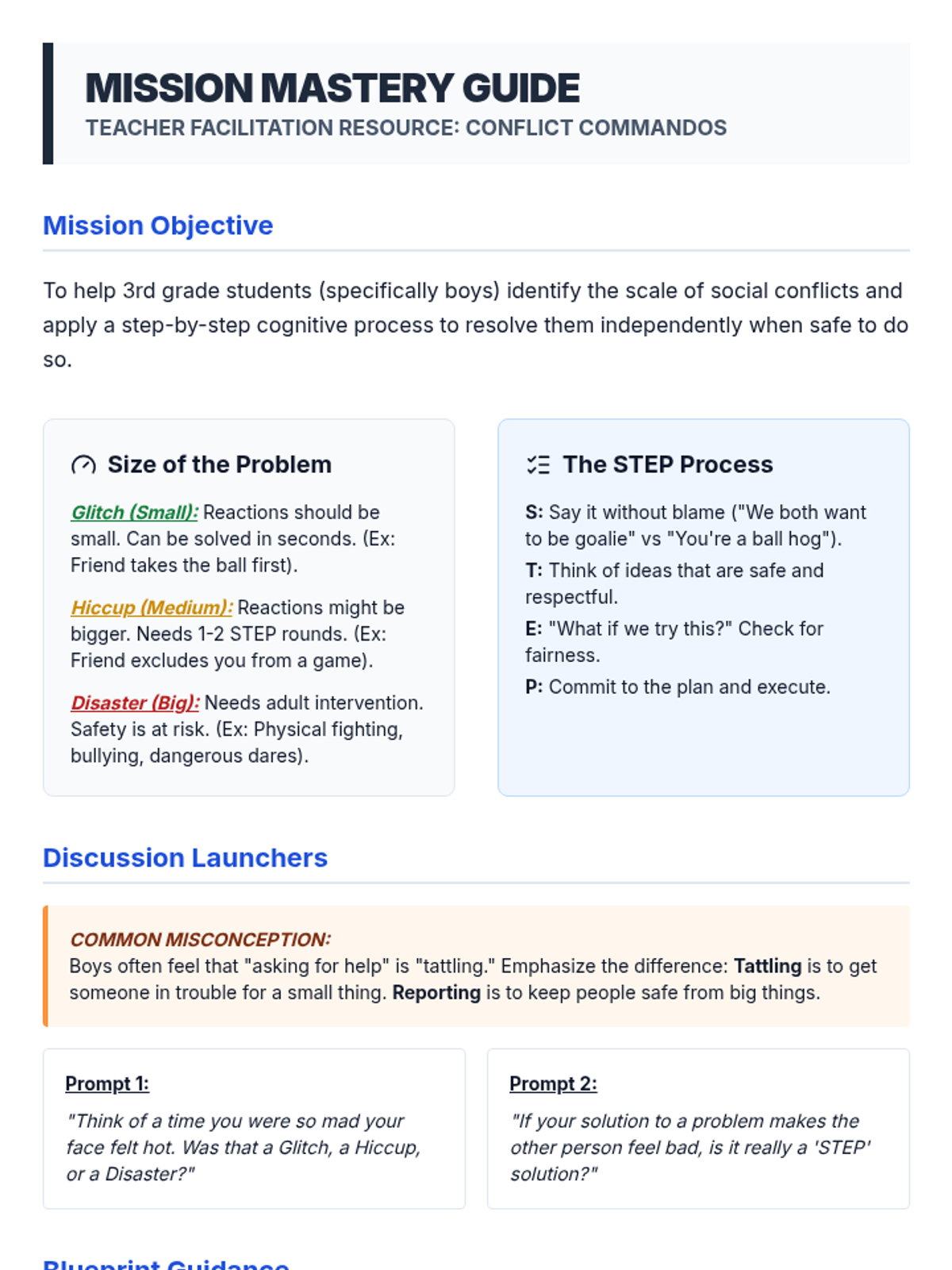
A lesson focused on equipping 3rd grade boys with the STEP framework and 'Size of the Problem' concept to navigate friendship conflicts effectively.
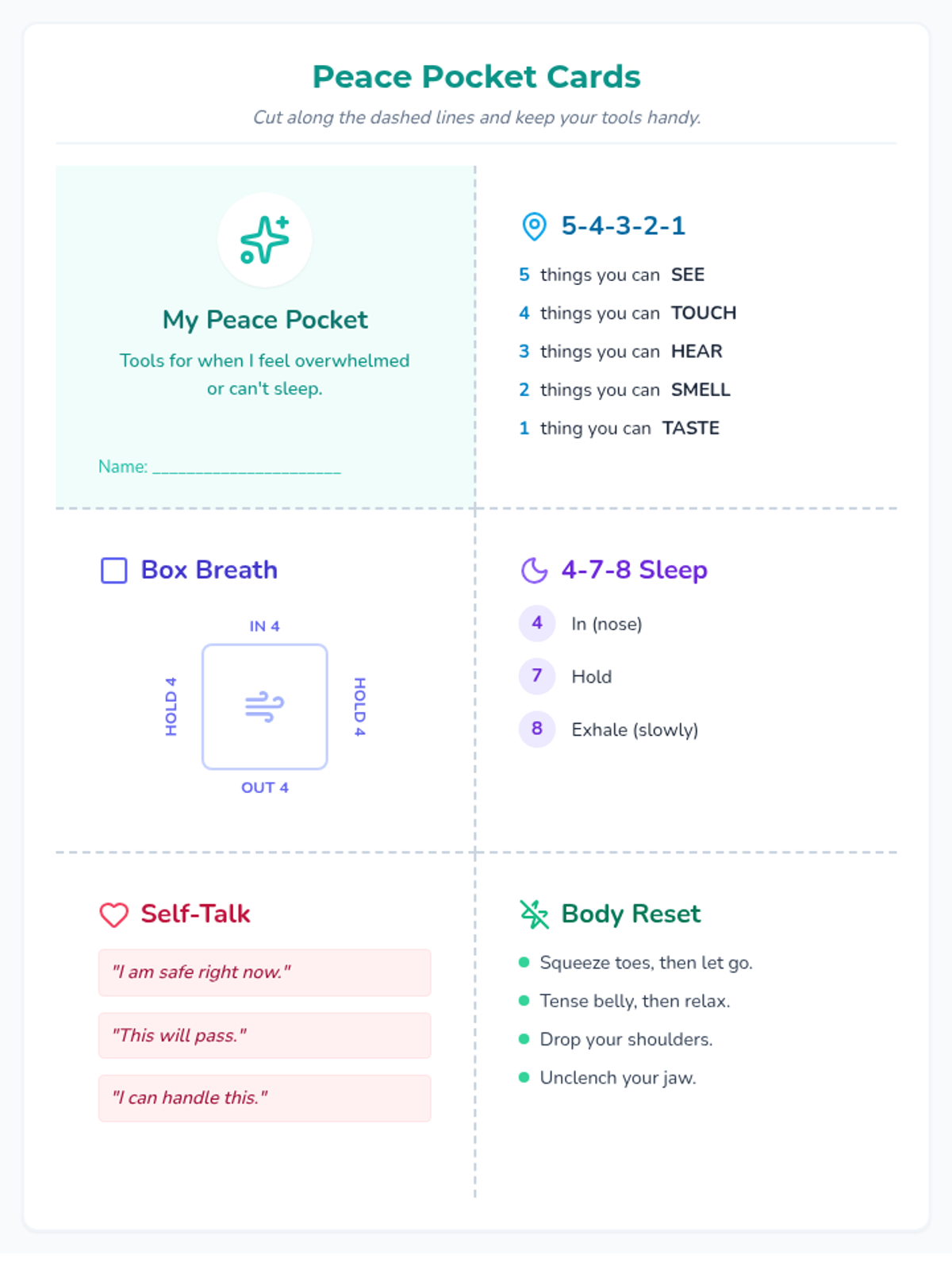
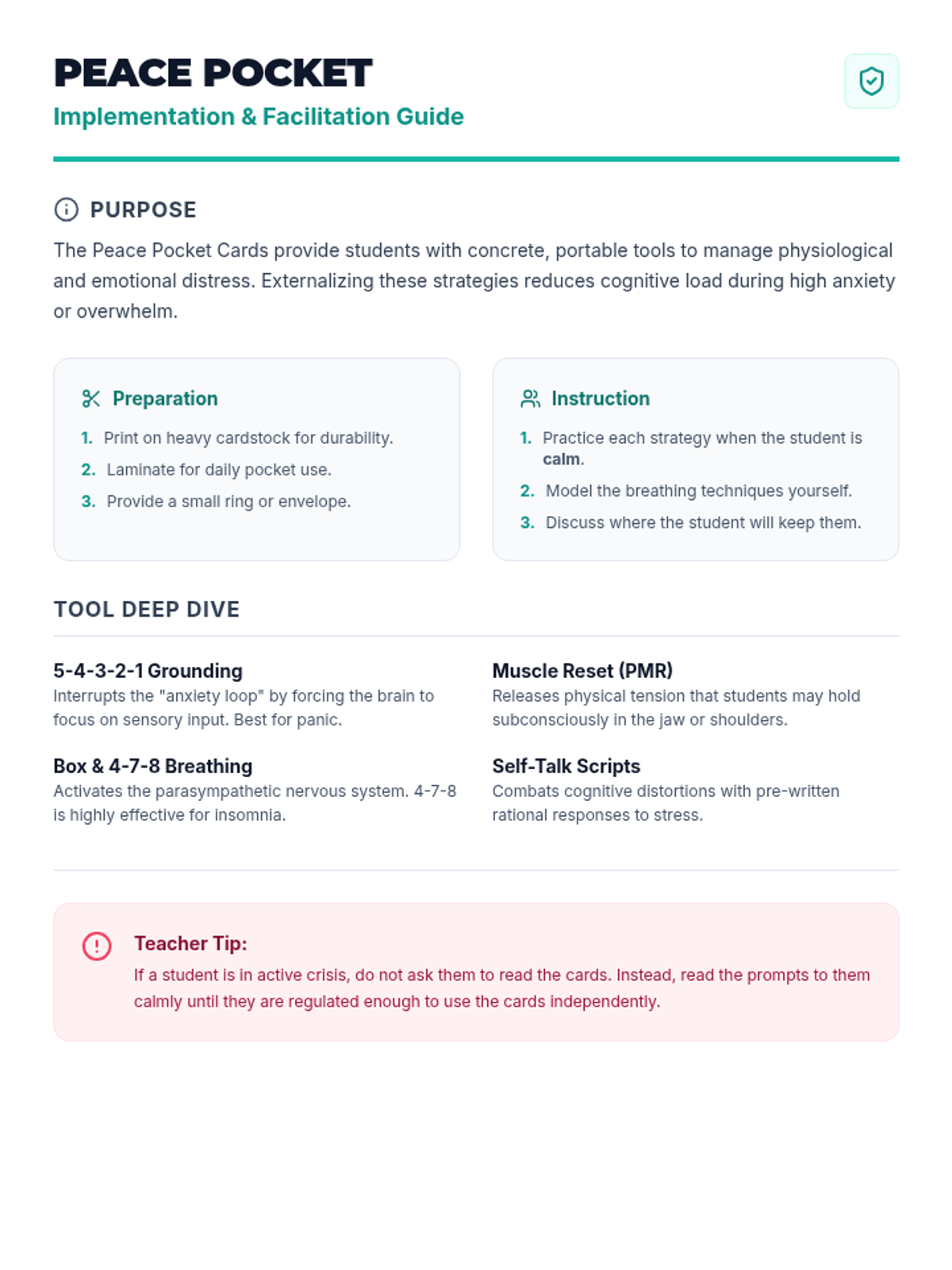
A collection of portable coping strategies designed to help students manage anxiety, sleep difficulties, and sensory overwhelm in the moment.
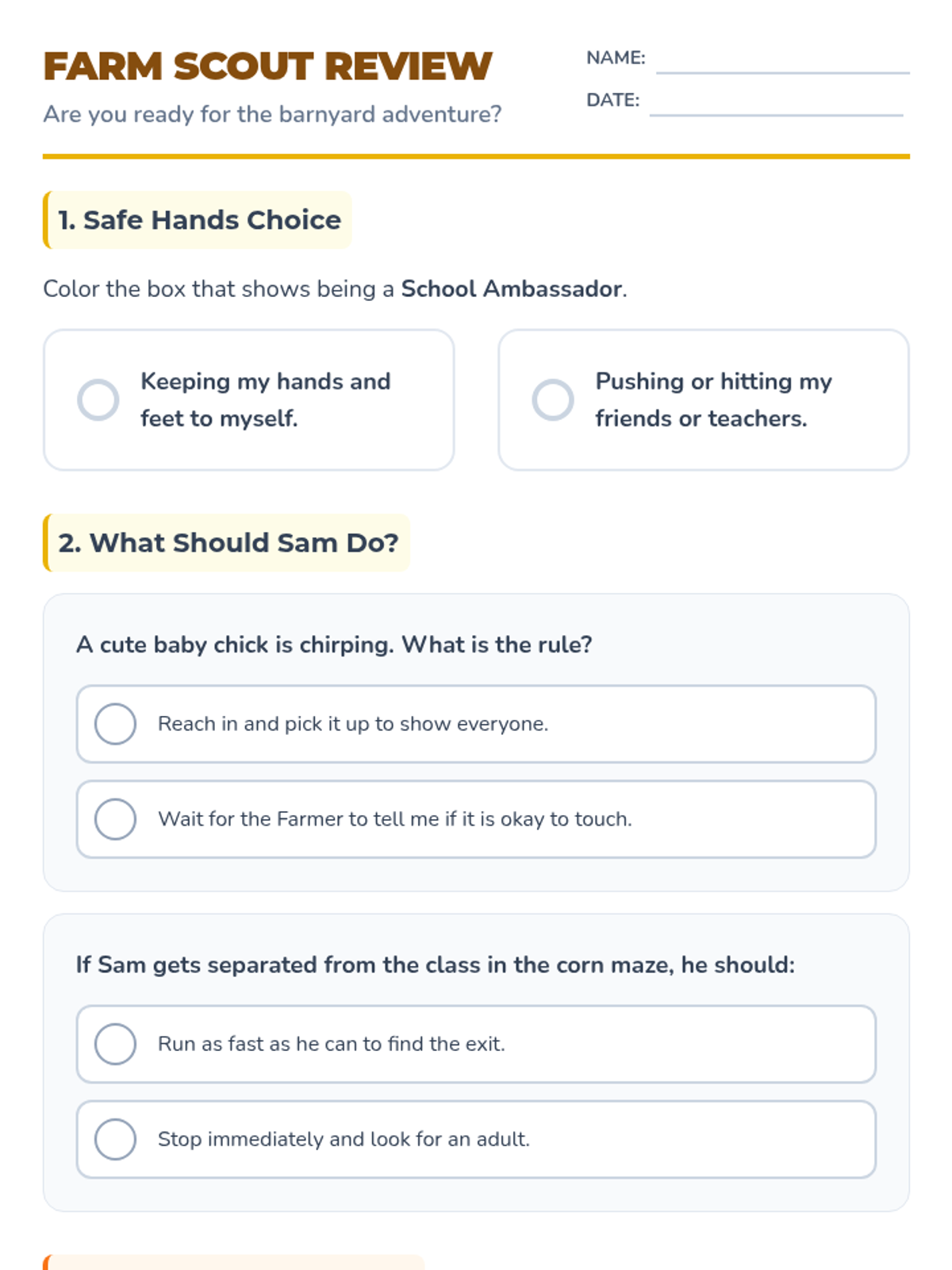
Students join Sam on a bus trip to a working farm, learning about animal safety, venue respect, and the importance of keeping hands to oneself (no hitting) while being a School Ambassador.
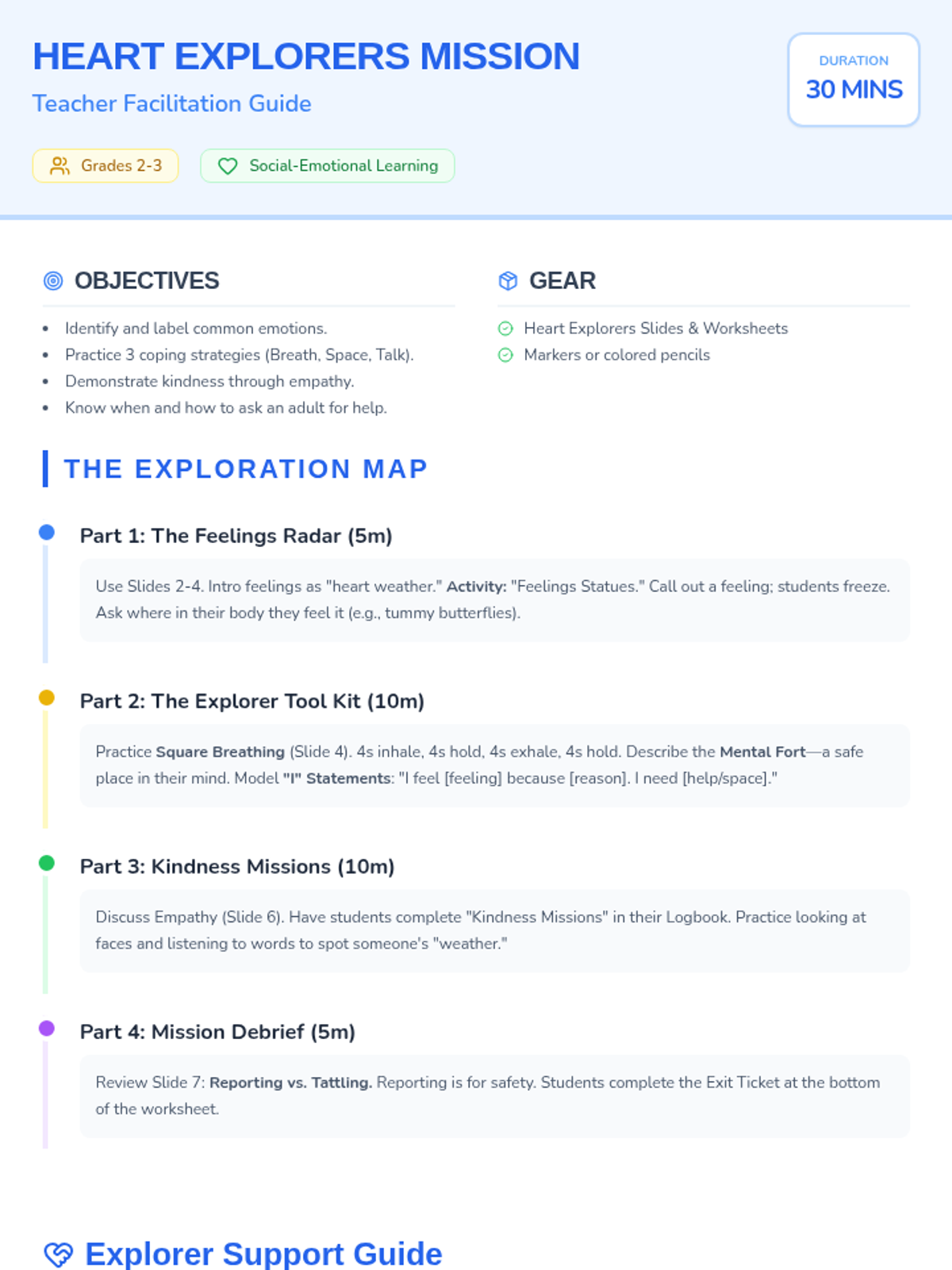
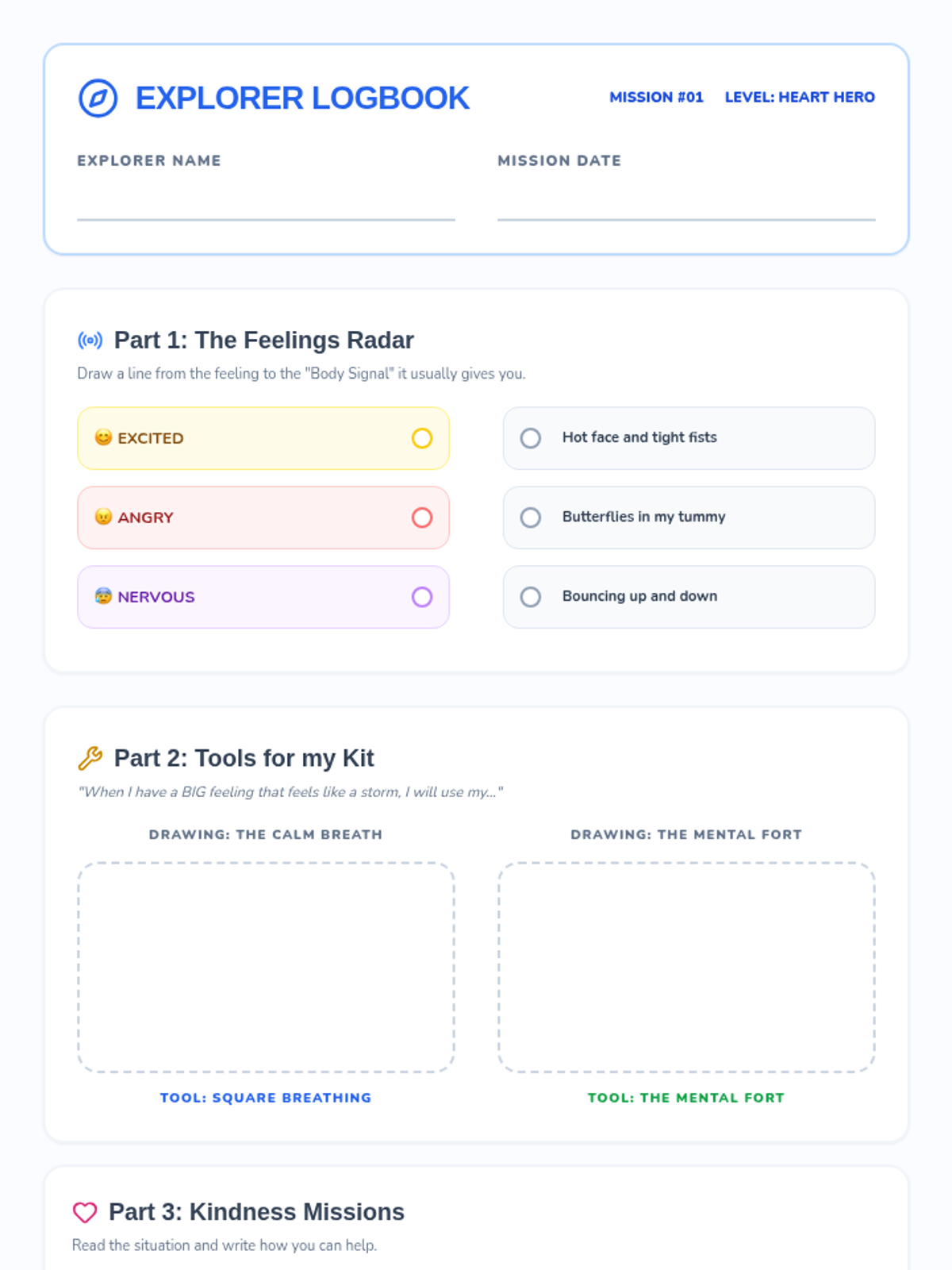
A 30-minute introductory lesson for 2nd and 3rd graders to identify feelings, practice coping strategies, and understand the importance of kindness and asking for help.
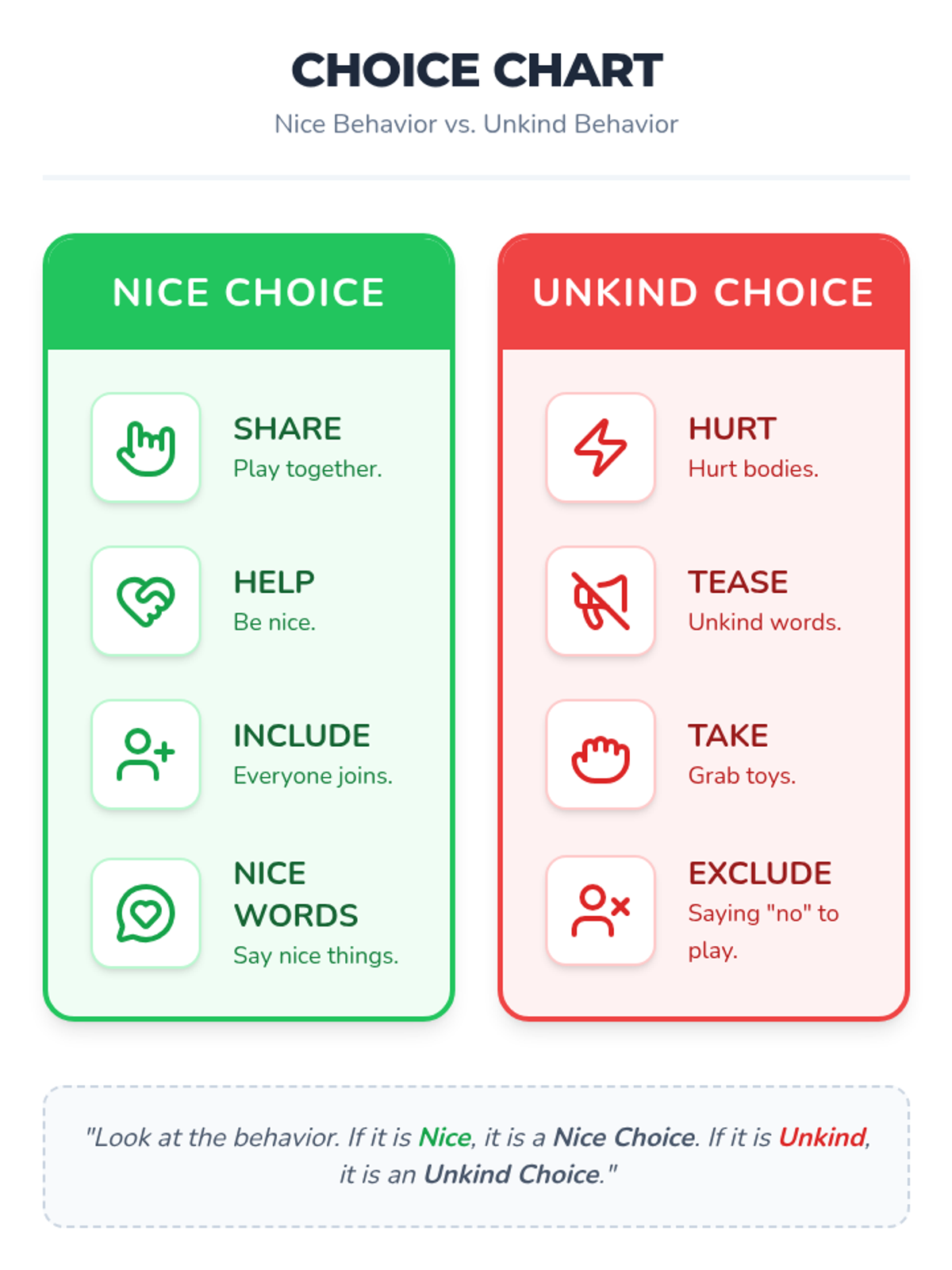
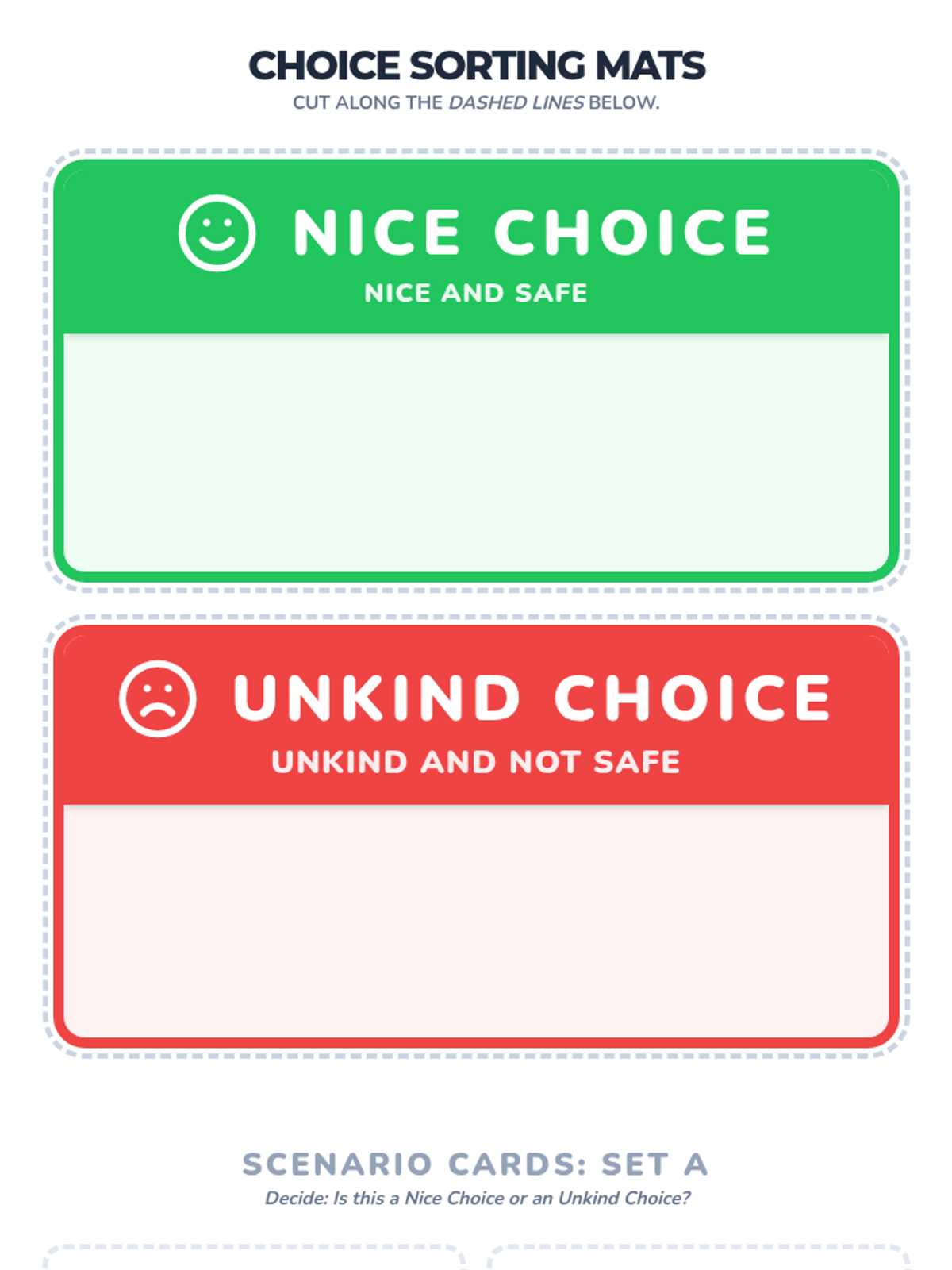
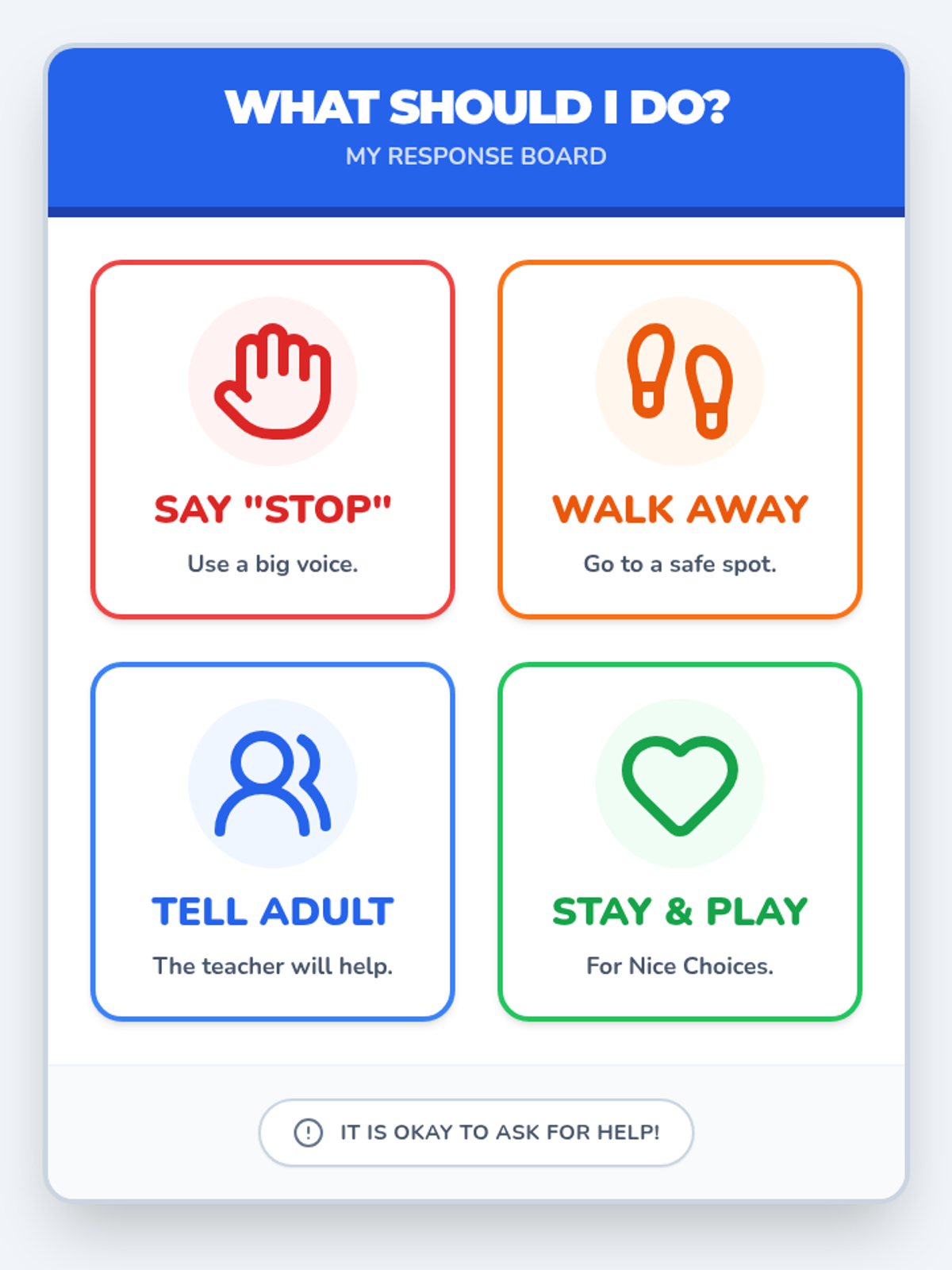
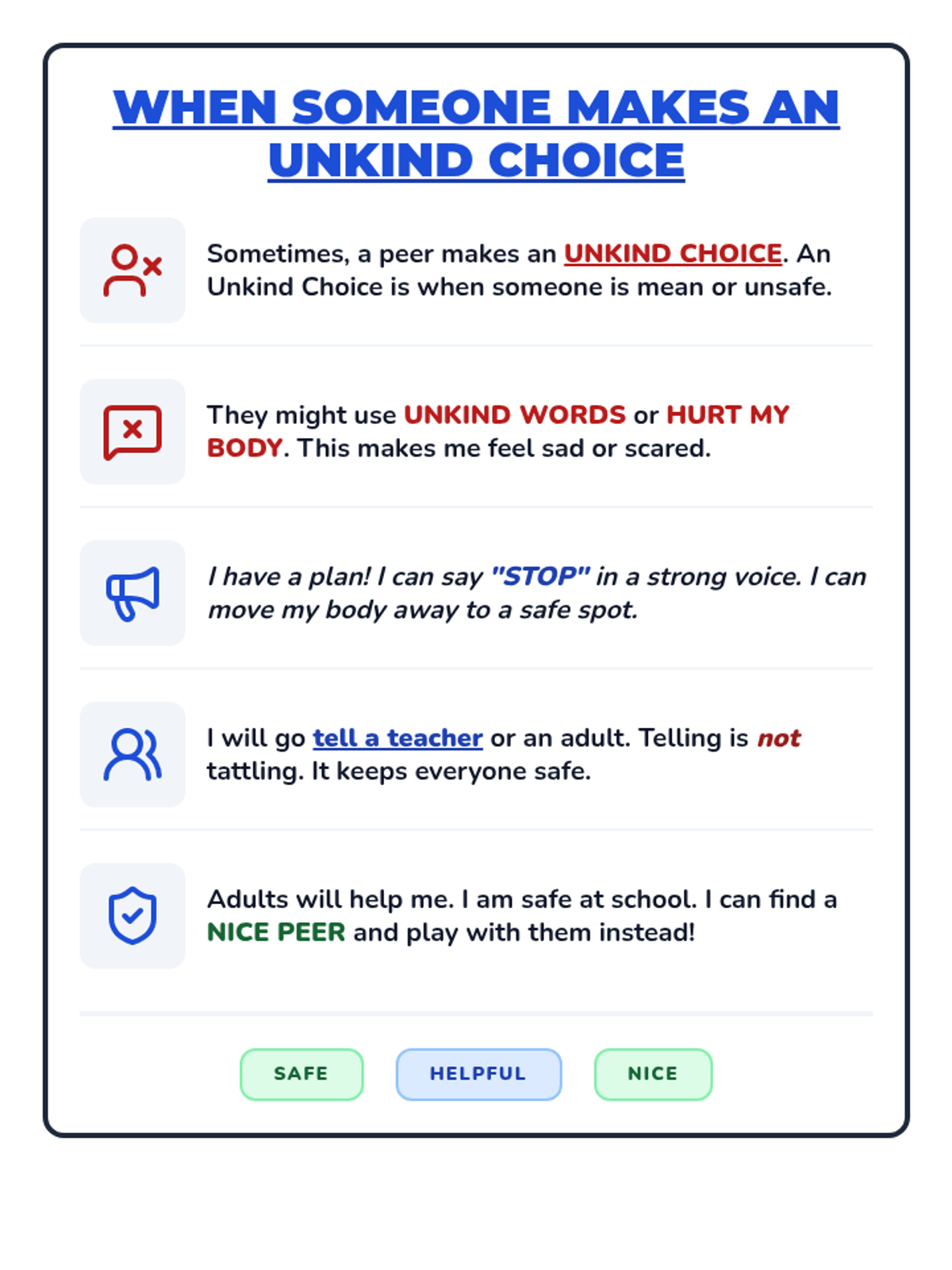
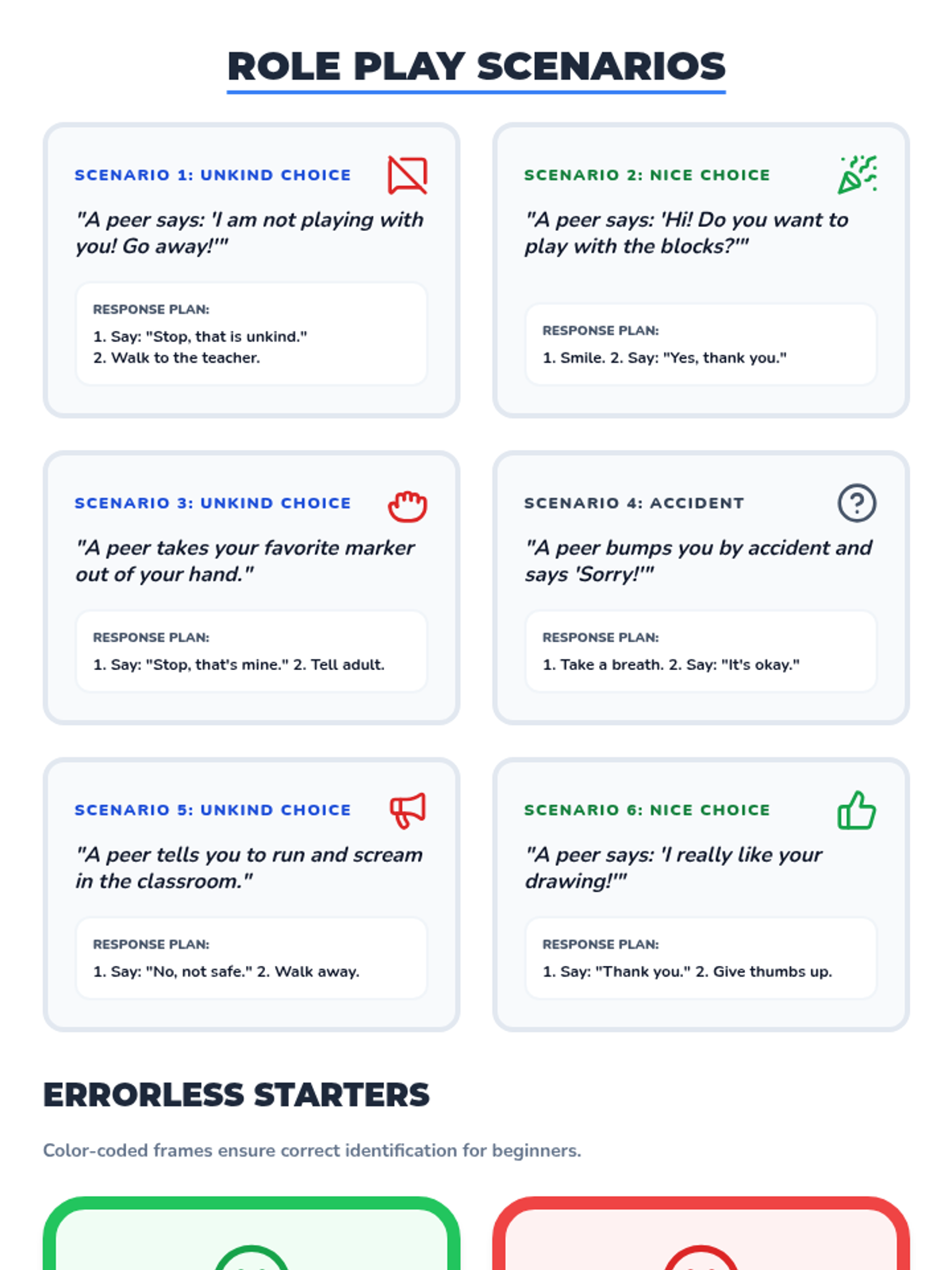
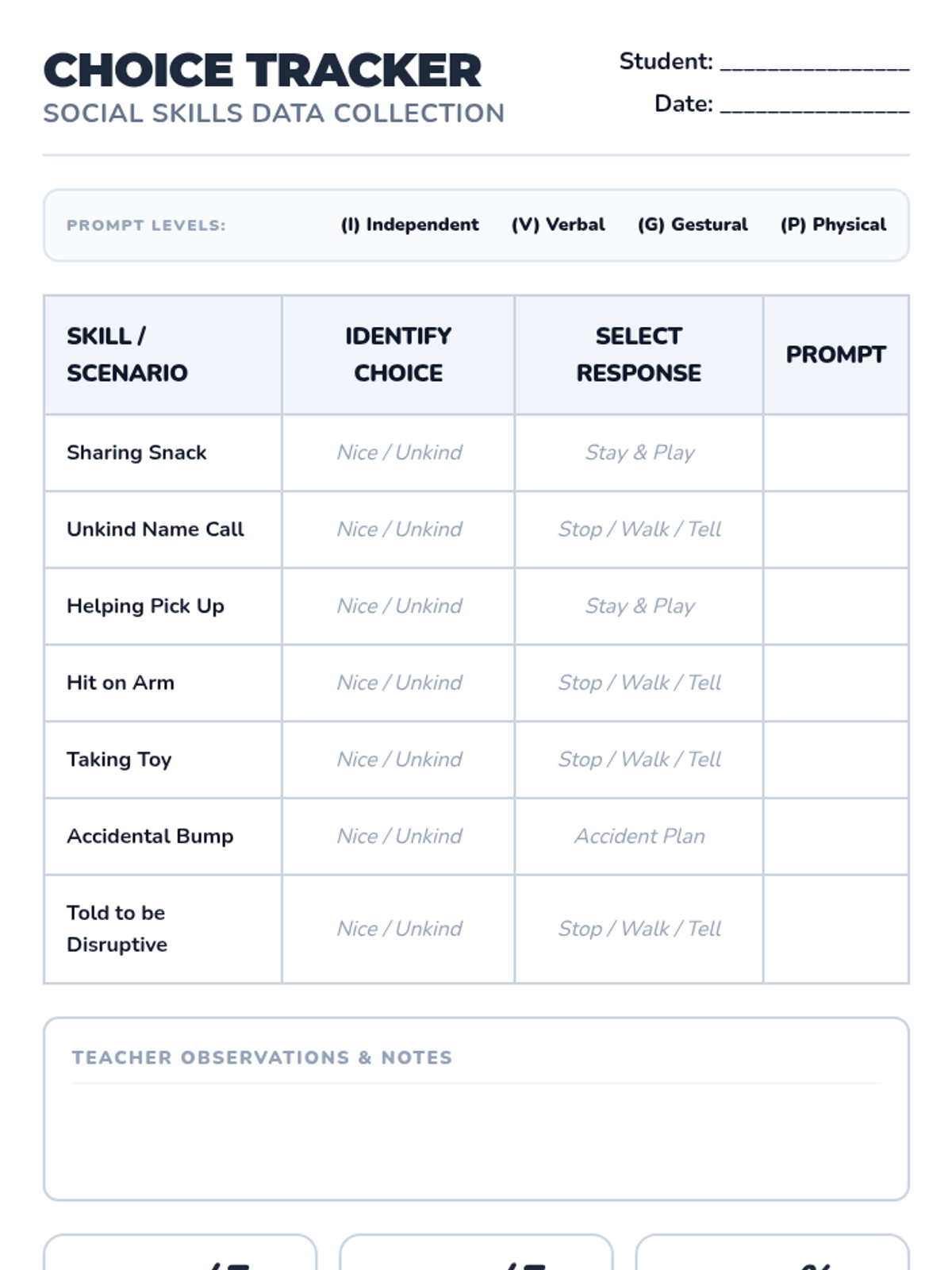
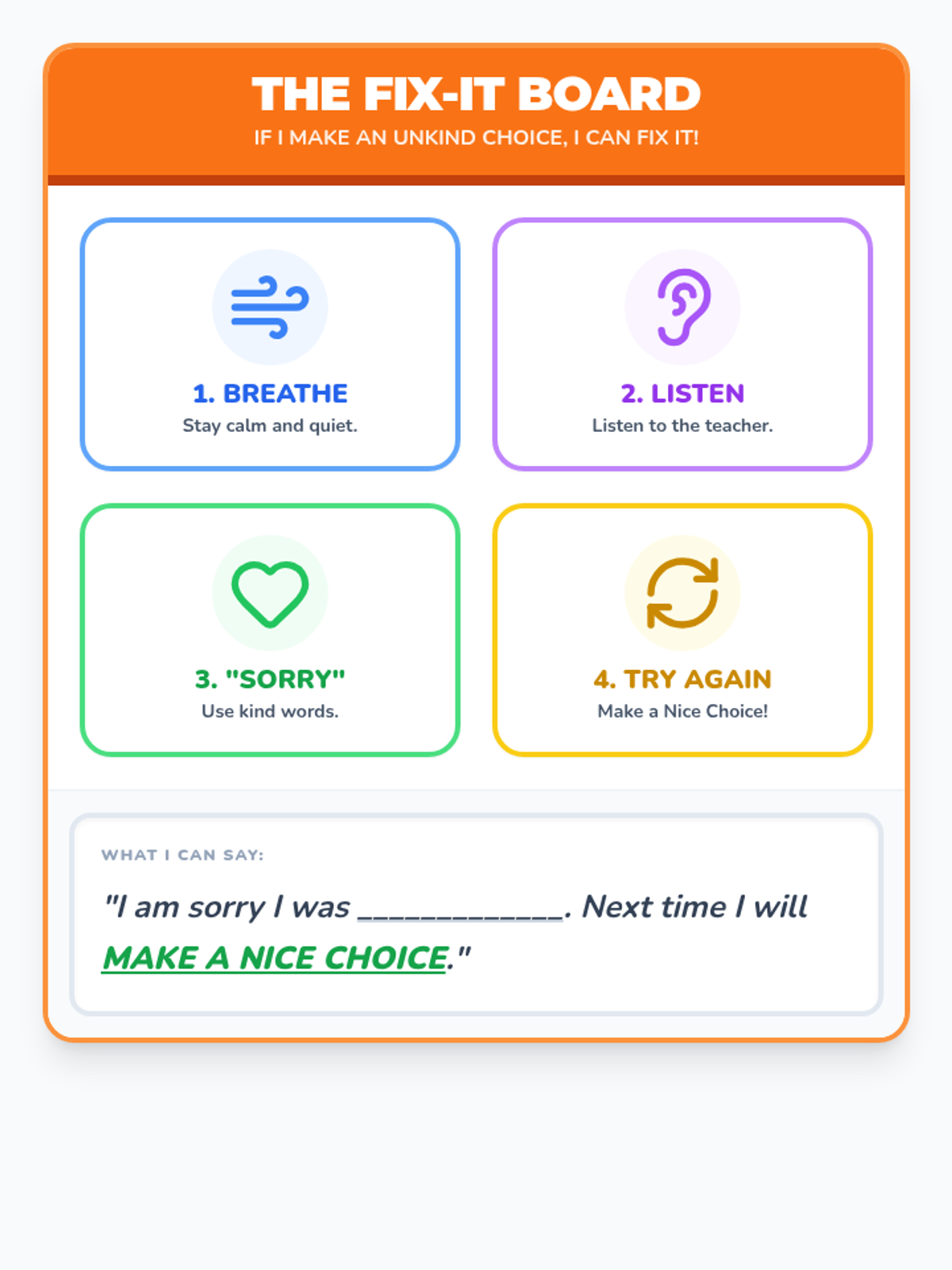
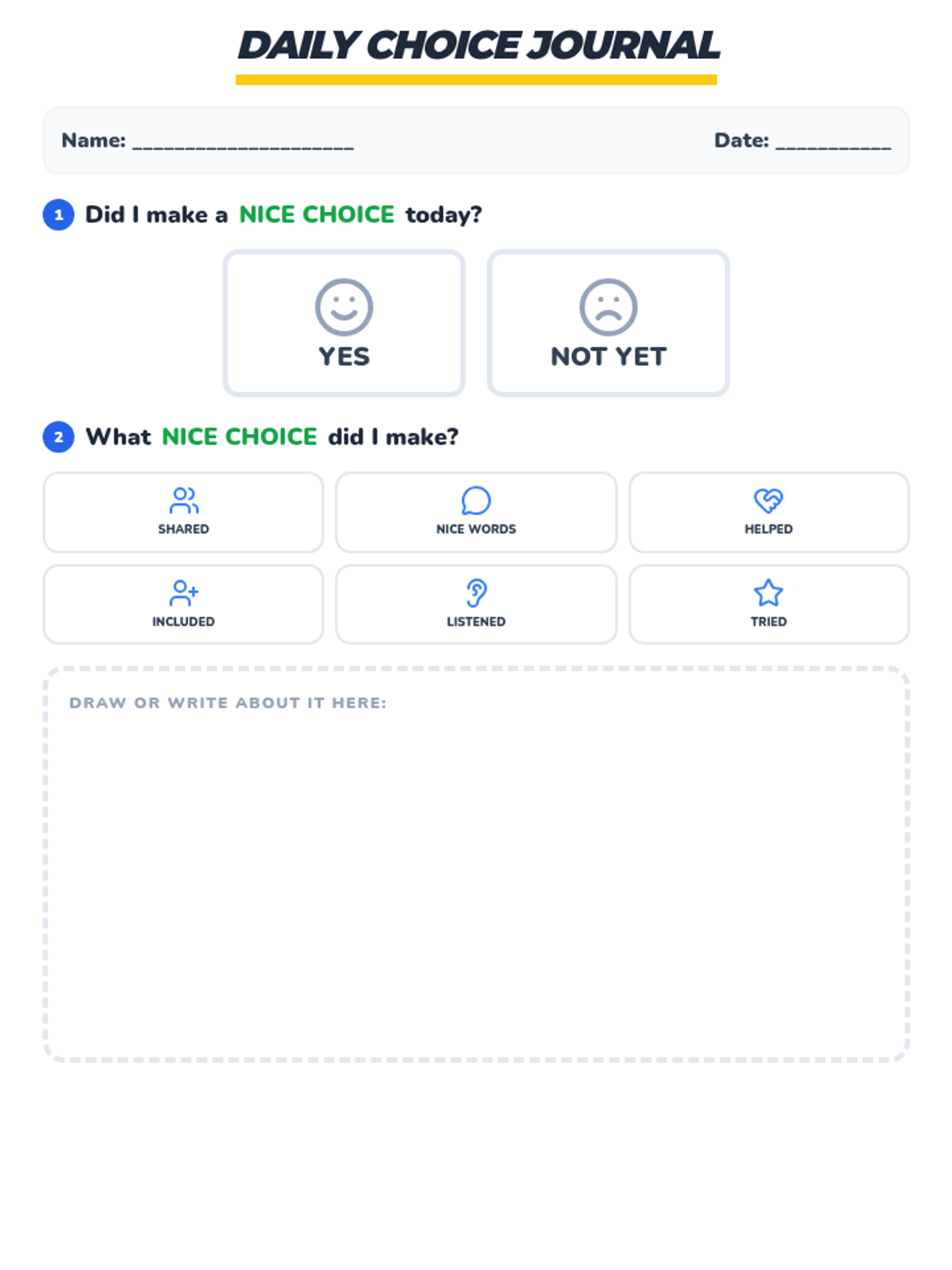
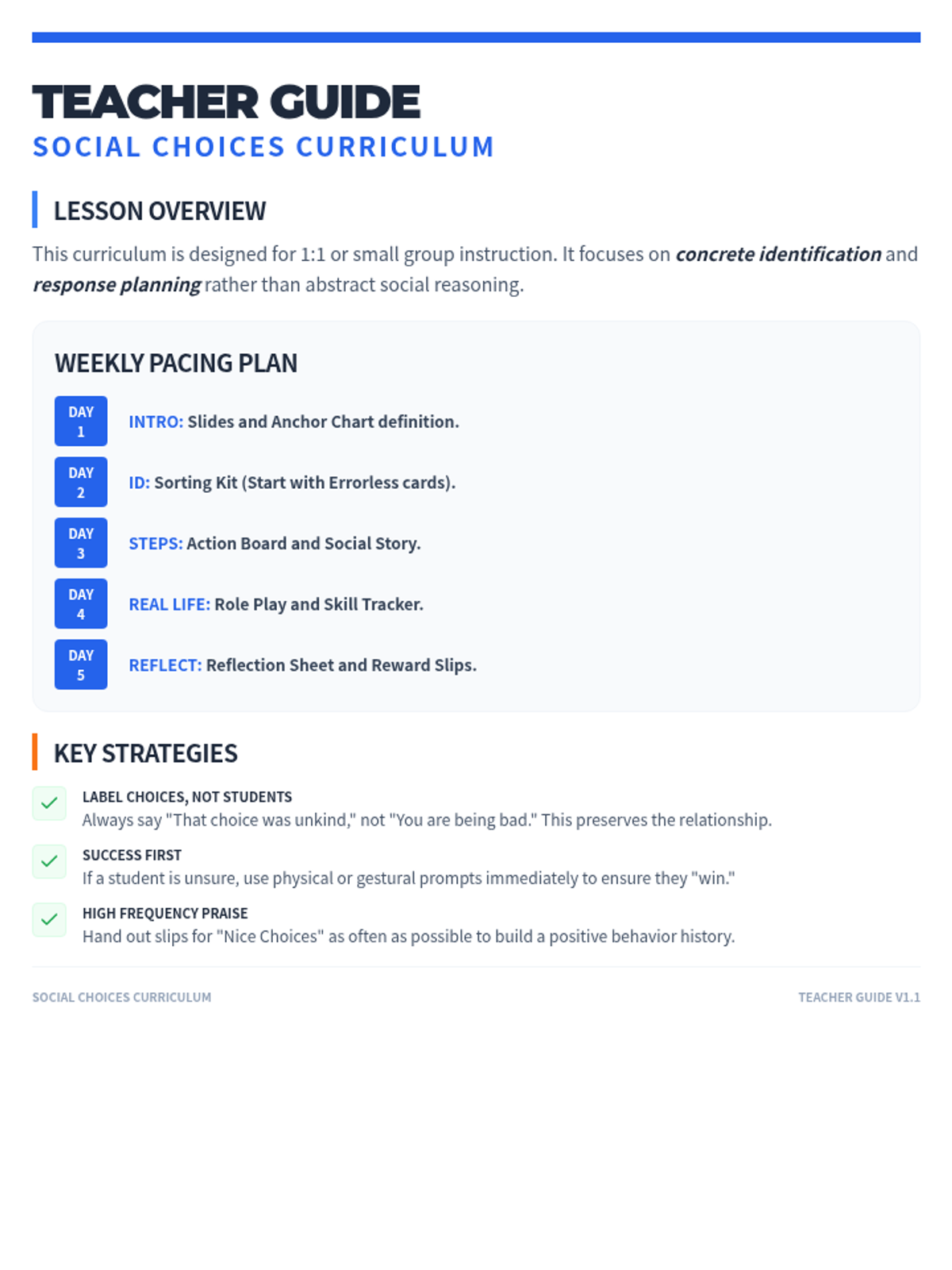
A comprehensive social skills lesson for middle school life skills students to distinguish between kind peer behaviors (Nice Choices) and unkind behaviors (Unkind Choices), including response strategies for bullying.
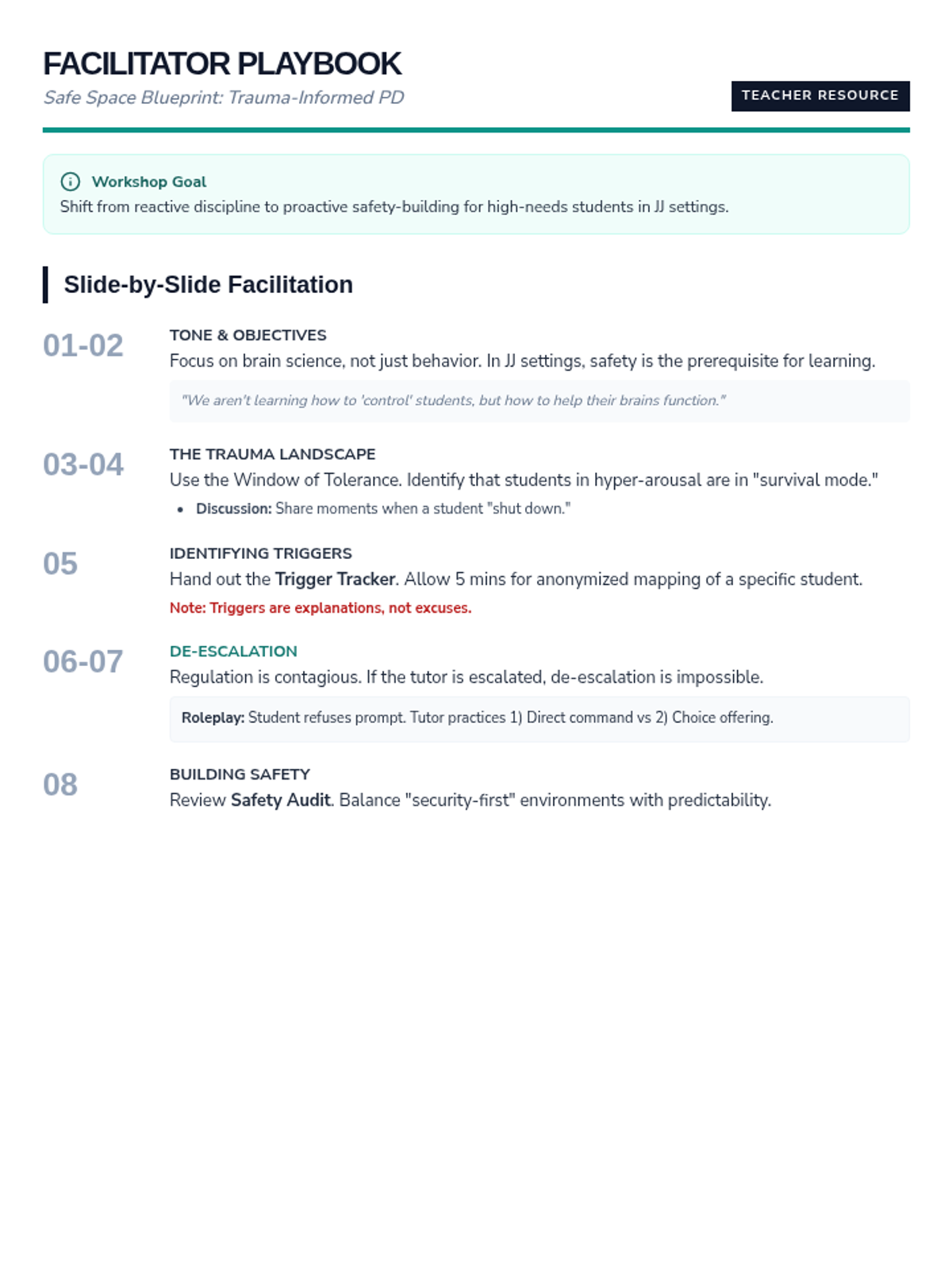
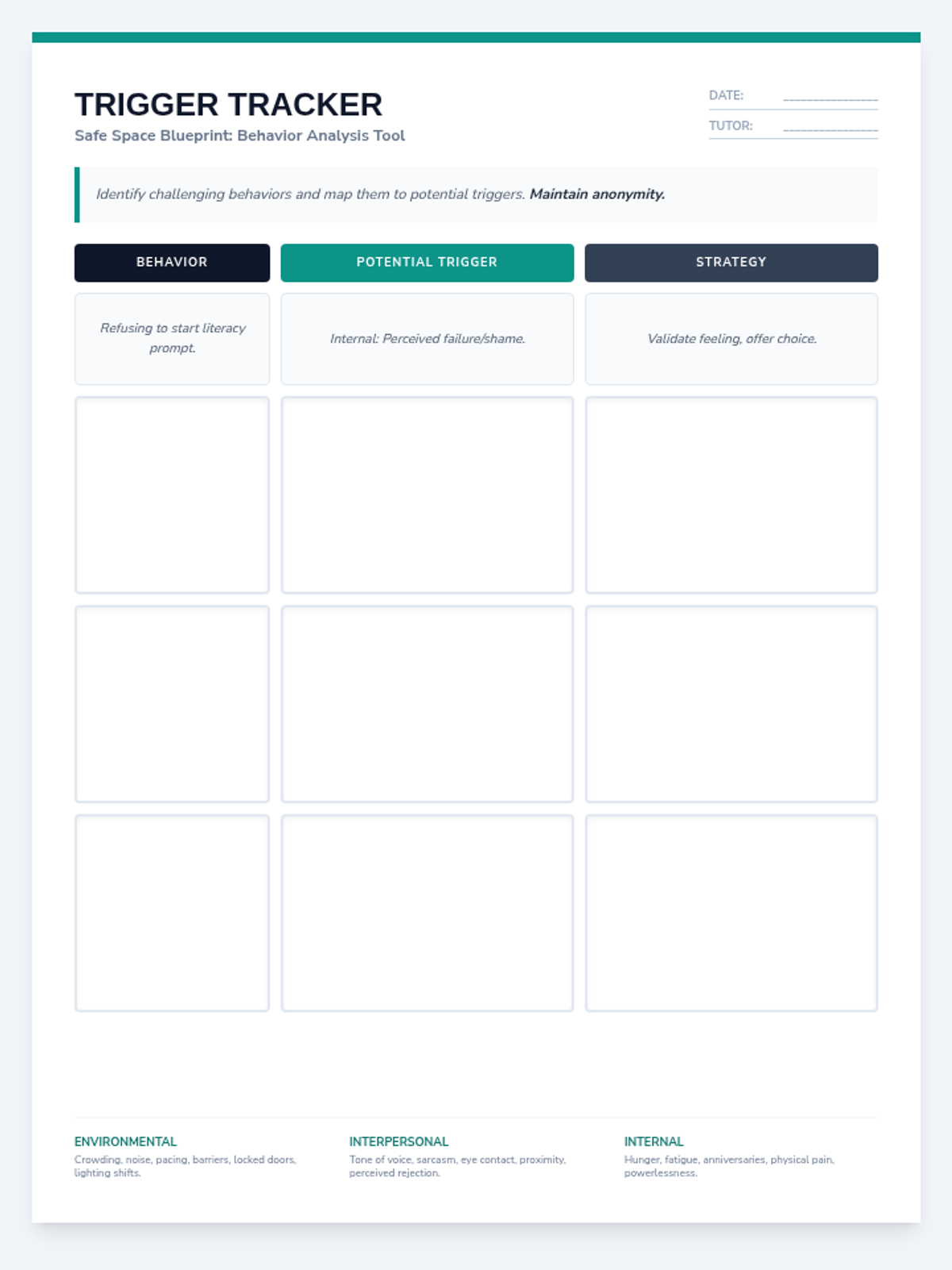
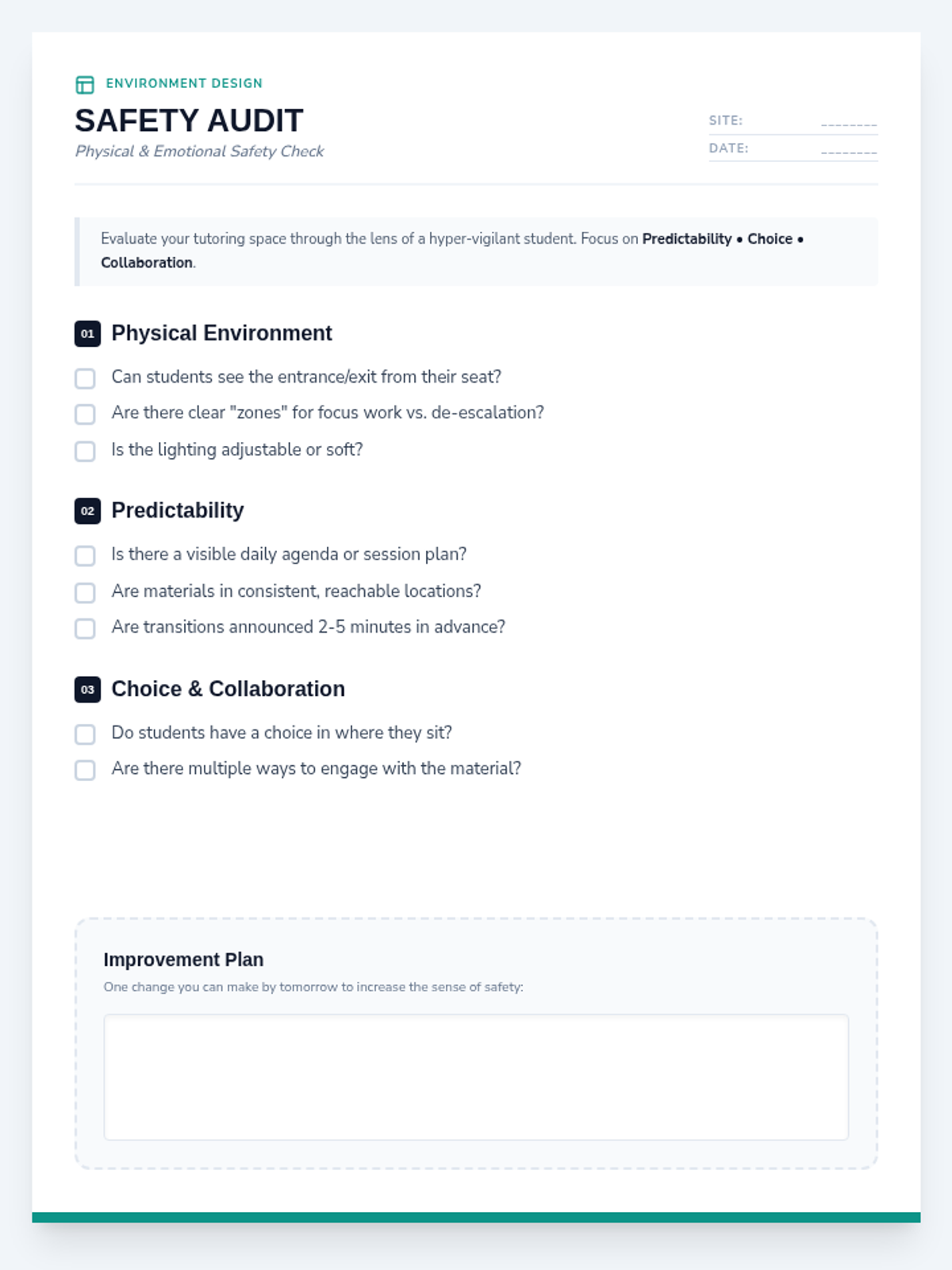
A professional development workshop designed for tutors in juvenile justice settings. It focuses on identifying trauma triggers, mastering de-escalation techniques, and intentionally building a physically and emotionally safe classroom environment.
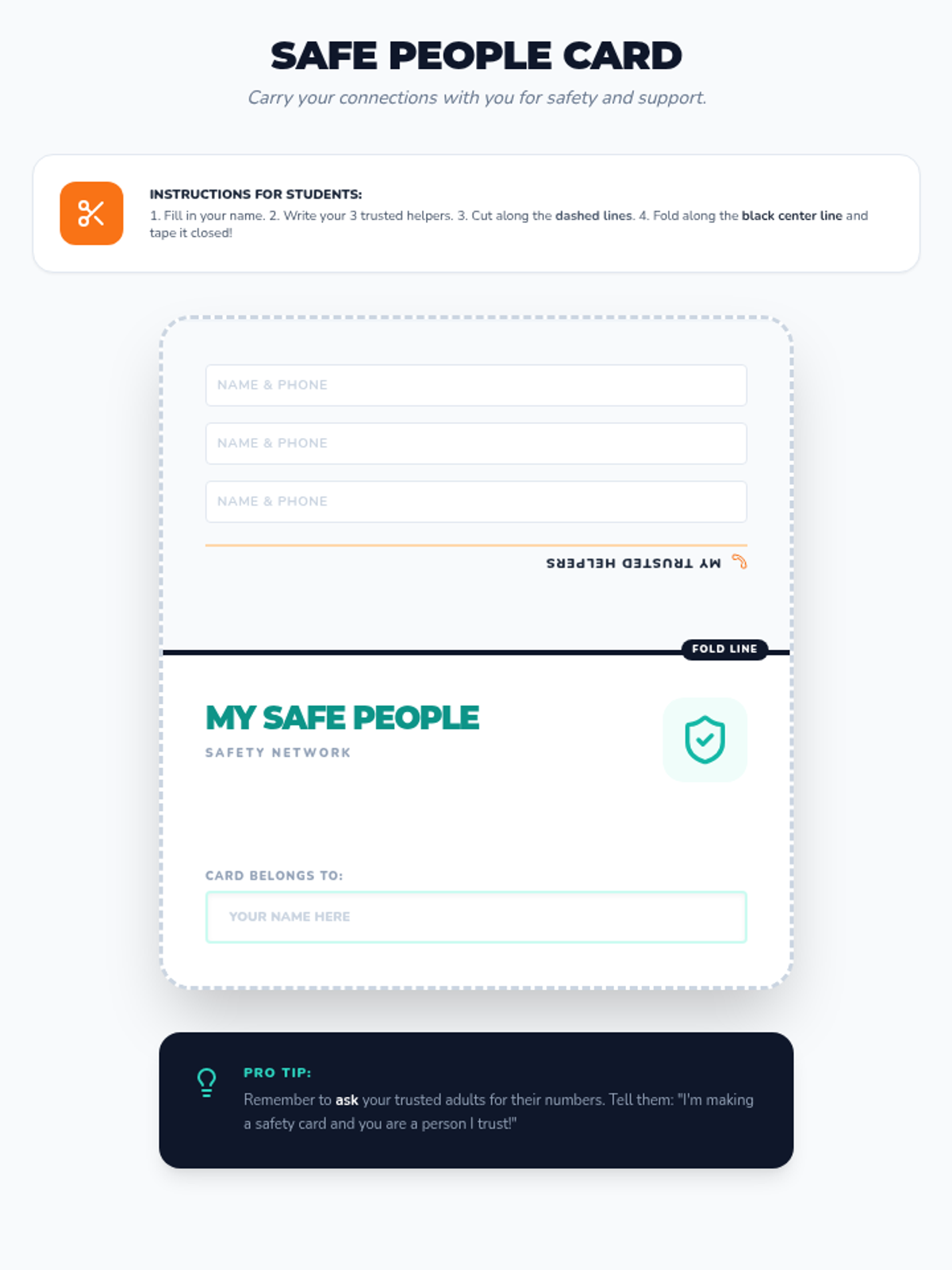
A lesson for grades 3-5 focusing on the criteria for trusted adults and the creation of a personal safety network card.
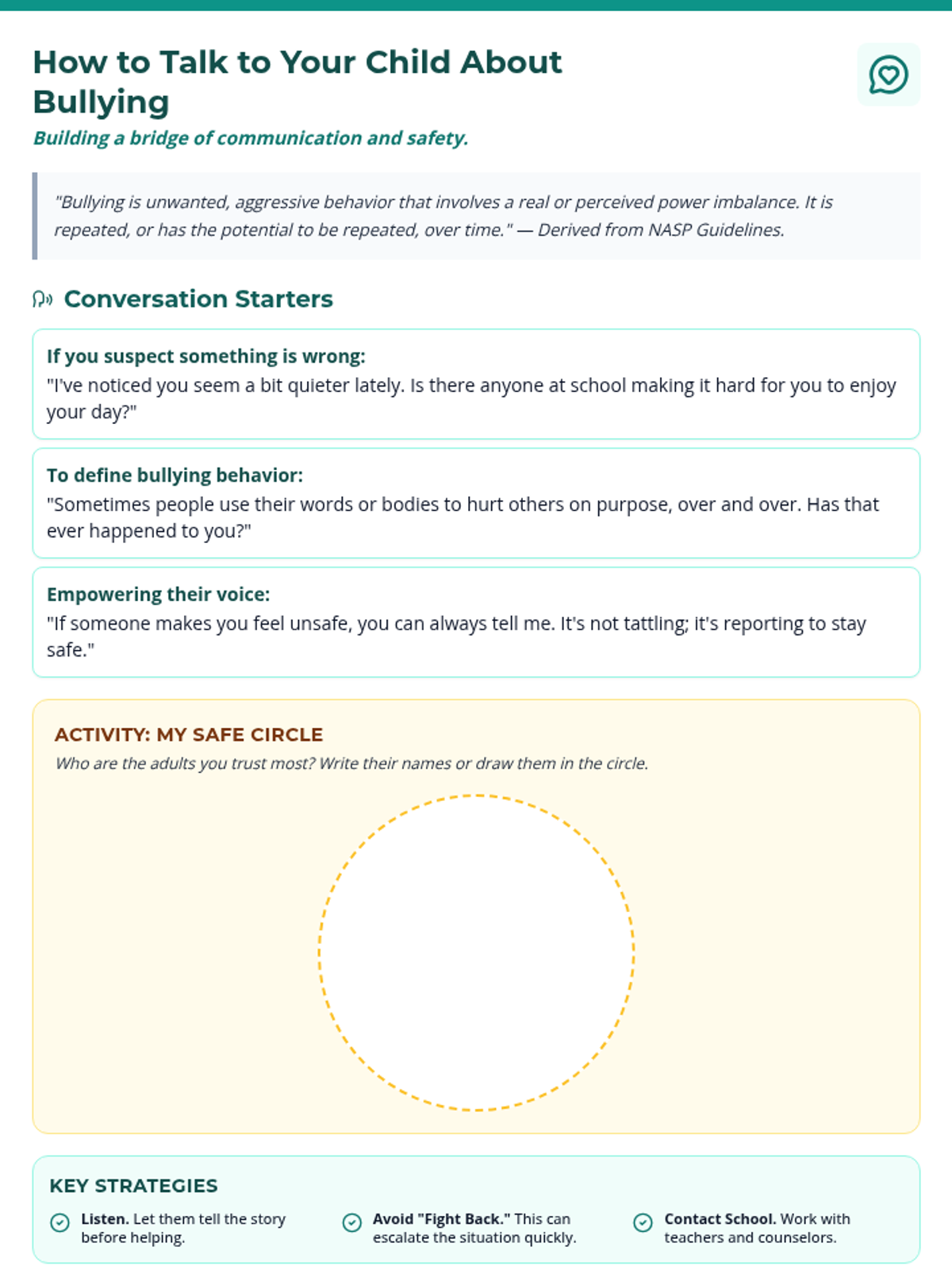
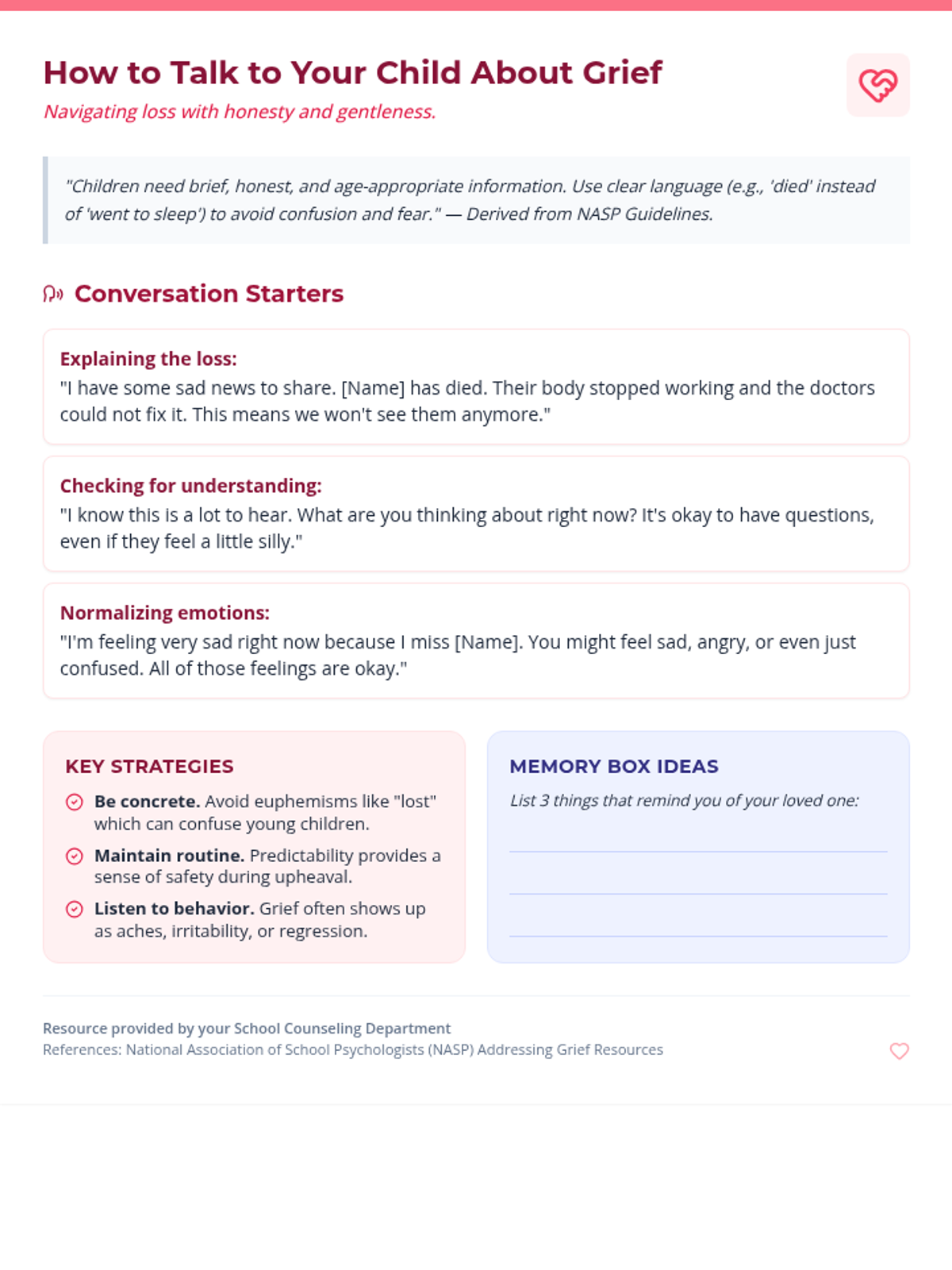
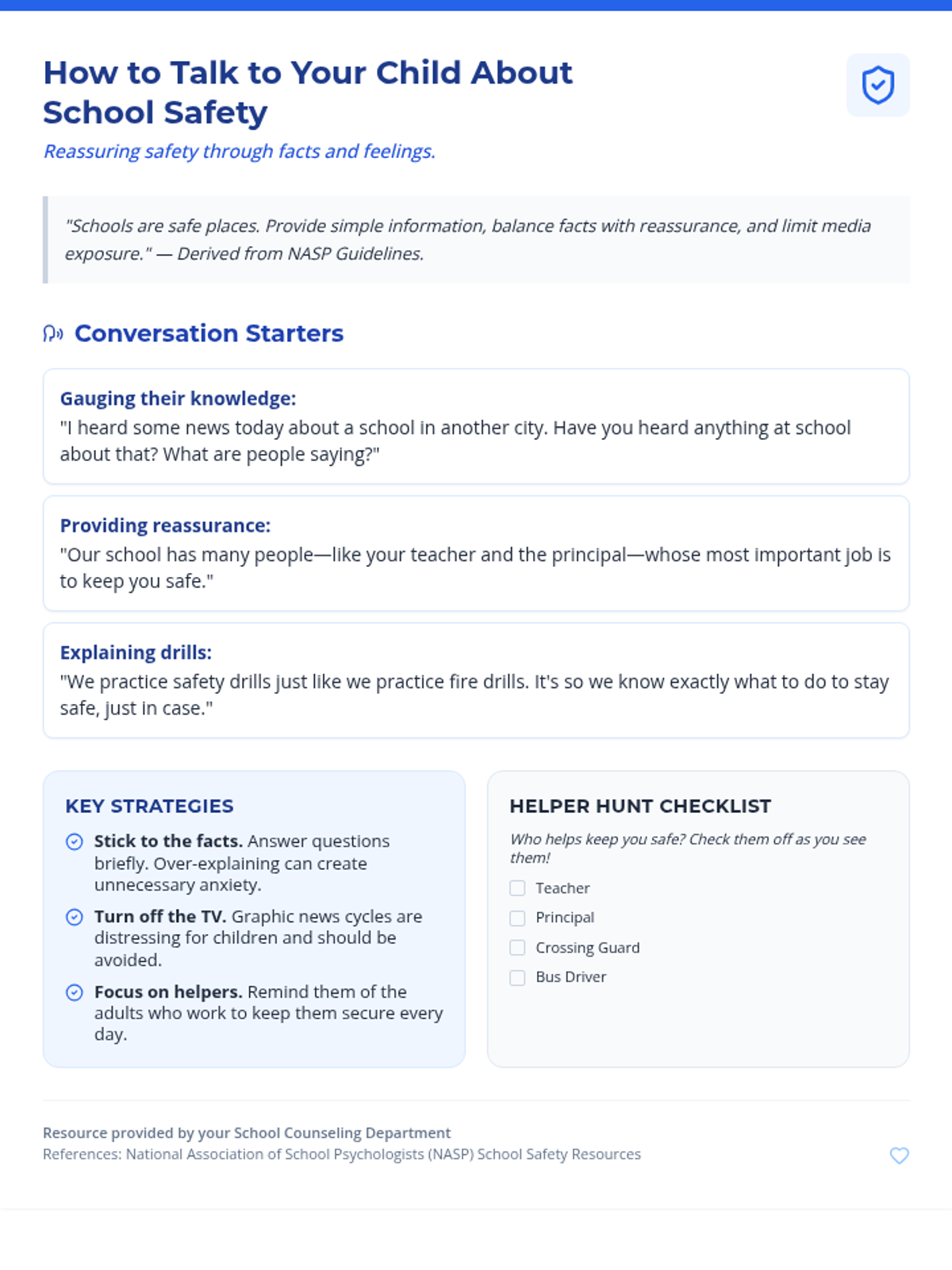
A collection of one-page guides for parents on navigating sensitive topics with elementary-aged children, featuring conversation starters and supportive activities.
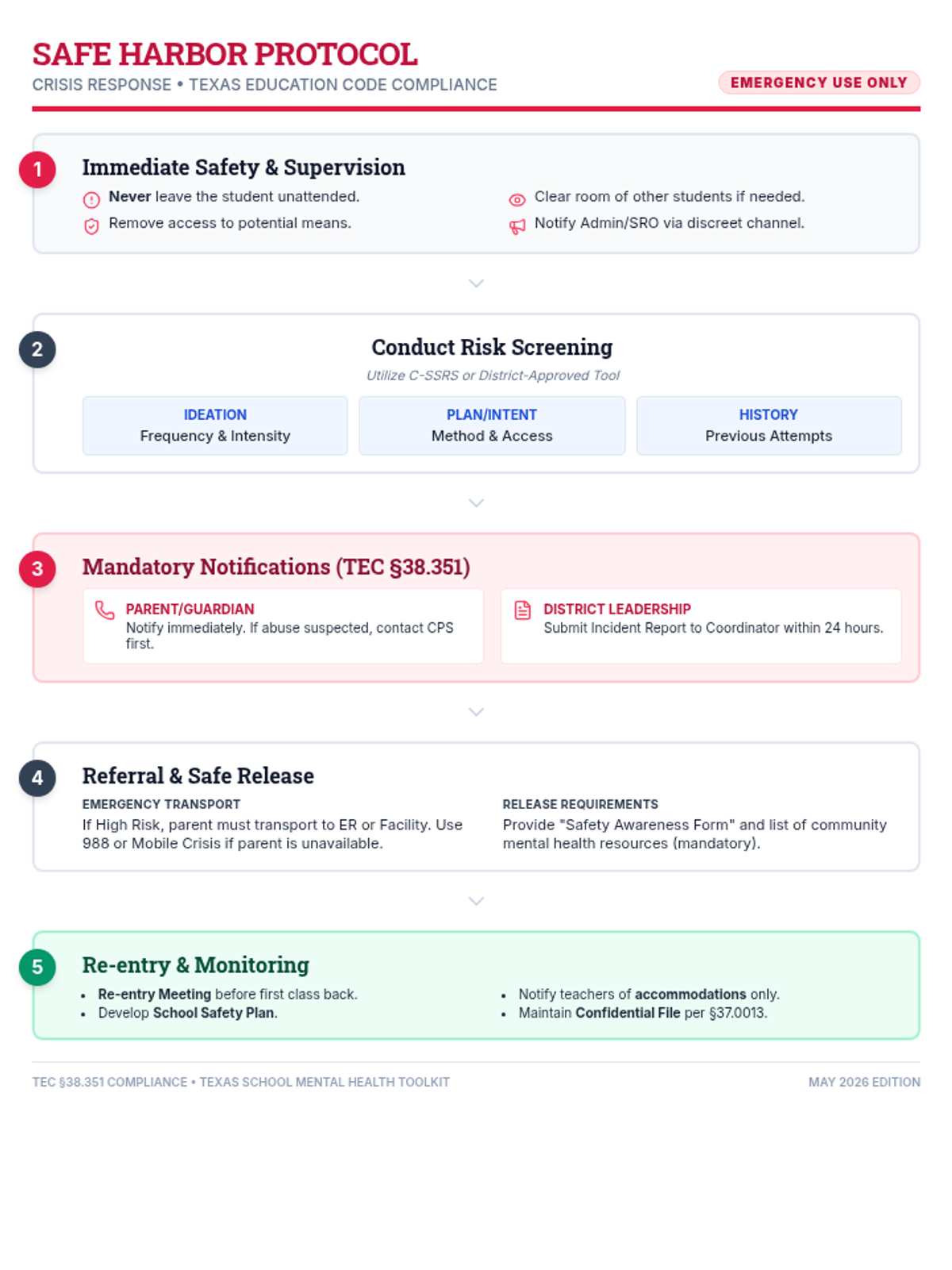
A comprehensive suite of materials for Texas middle school counselors to manage student mental health crises, ensuring compliance with state education codes while prioritizing student safety.
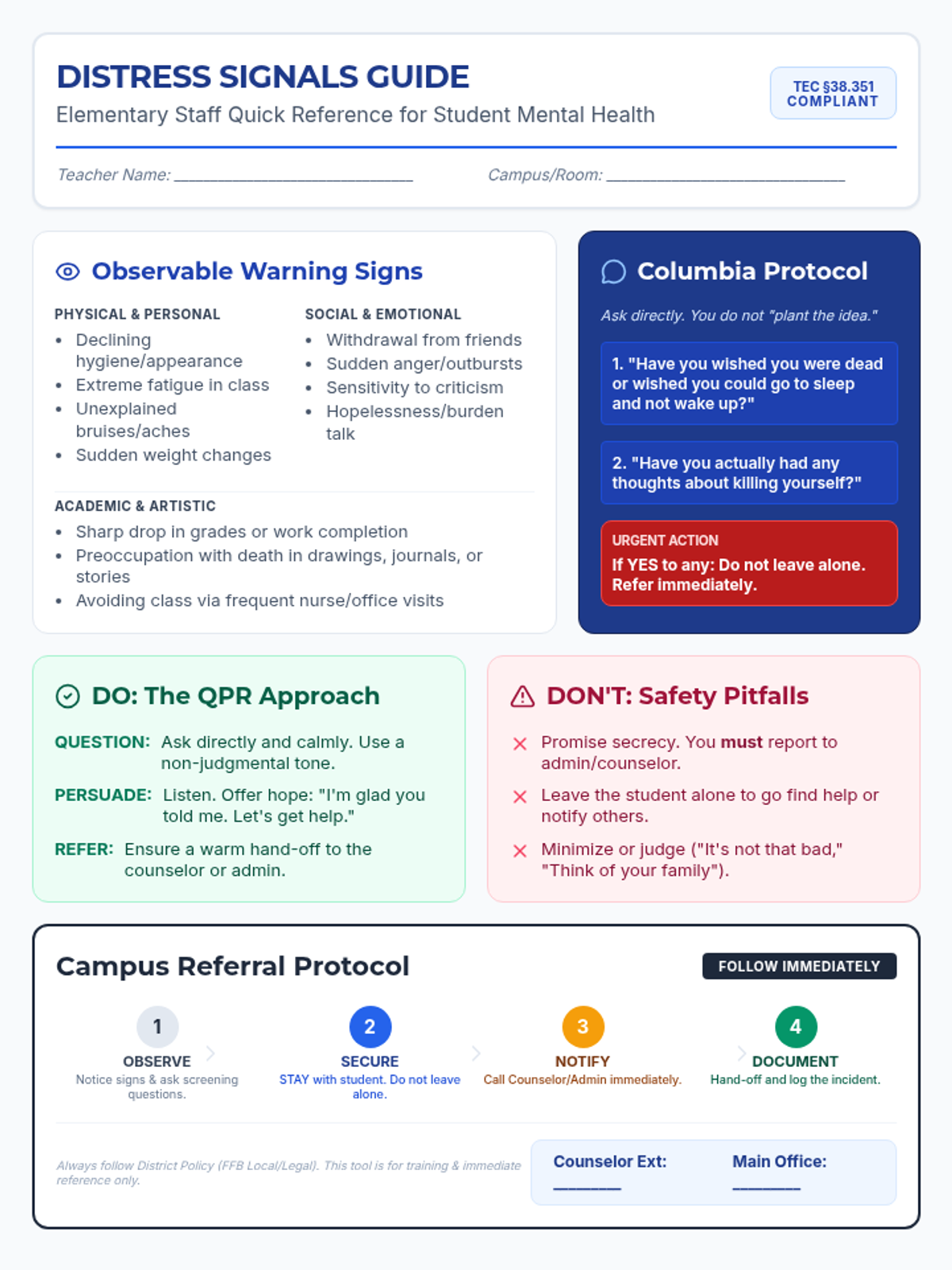
A professional development resource for elementary staff focused on identifying and responding to students in emotional distress, ensuring compliance with state safety protocols and the Texas Education Code.
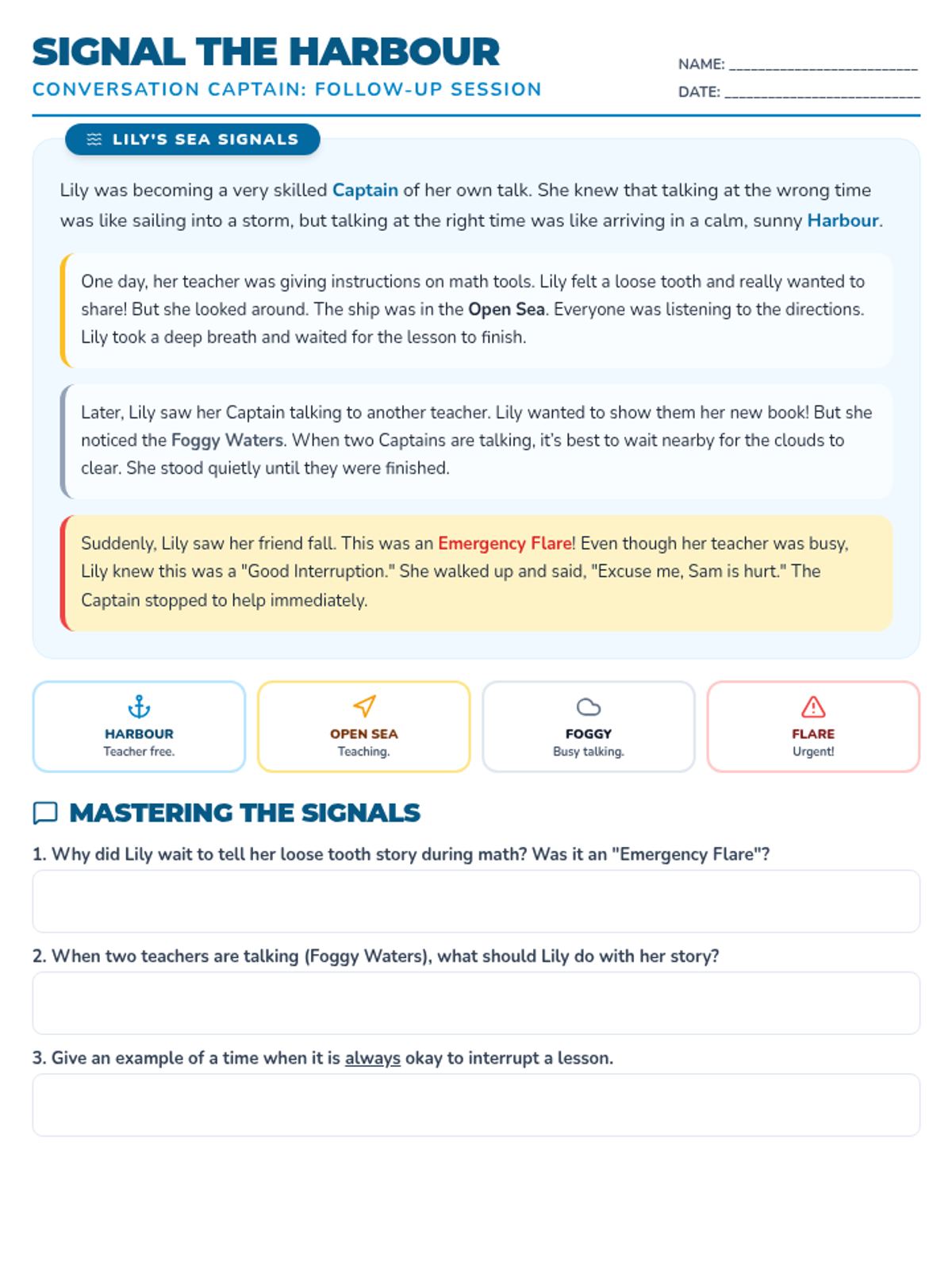
A follow-up session on conversation timing, focusing on identifying 'Good Waters' for talking and 'Emergency Flares' versus interruptions during instructions.
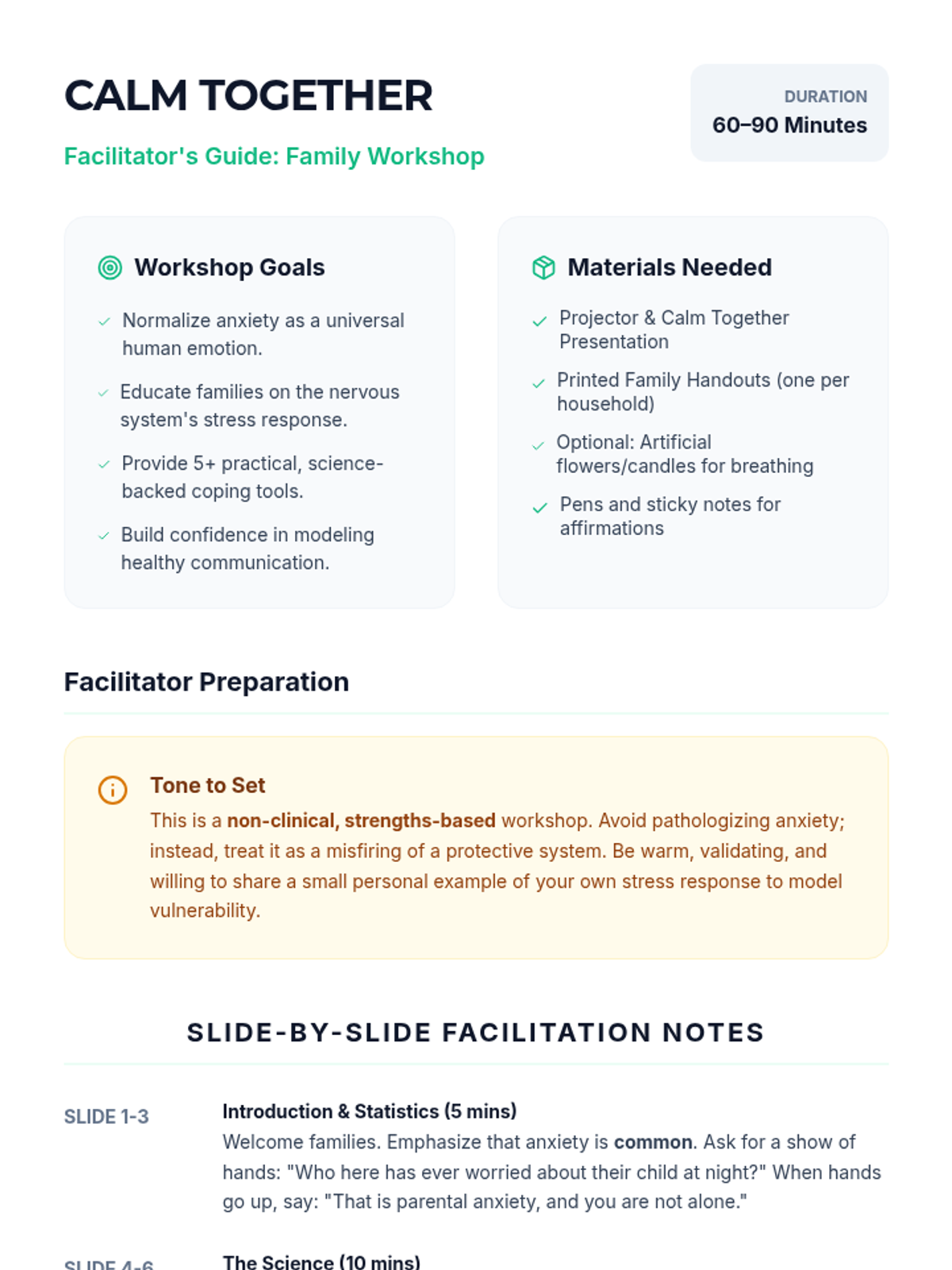
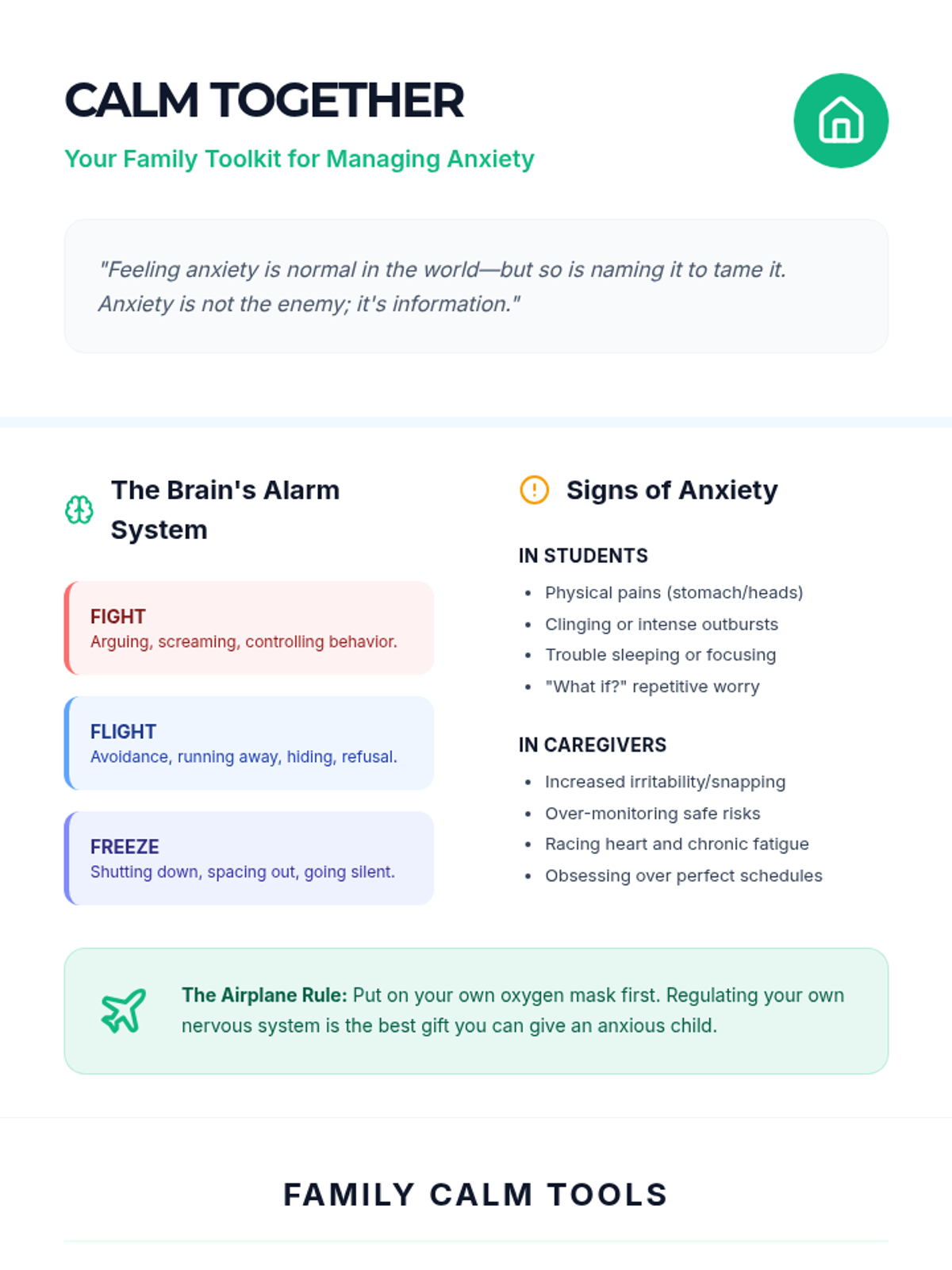
A comprehensive workshop for families and caregivers to understand the nervous system's response to stress and learn practical, science-backed coping skills for themselves and their students.
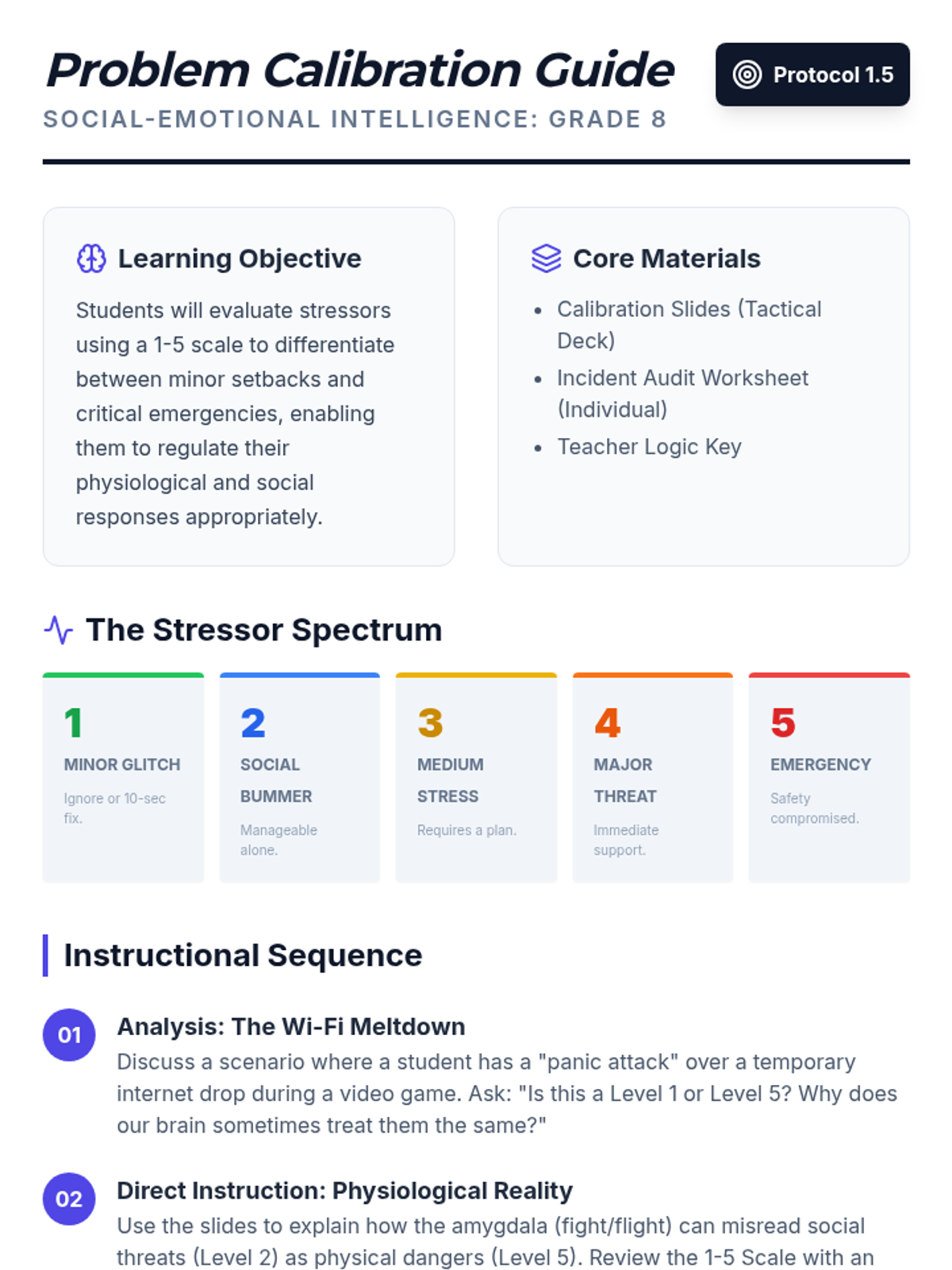
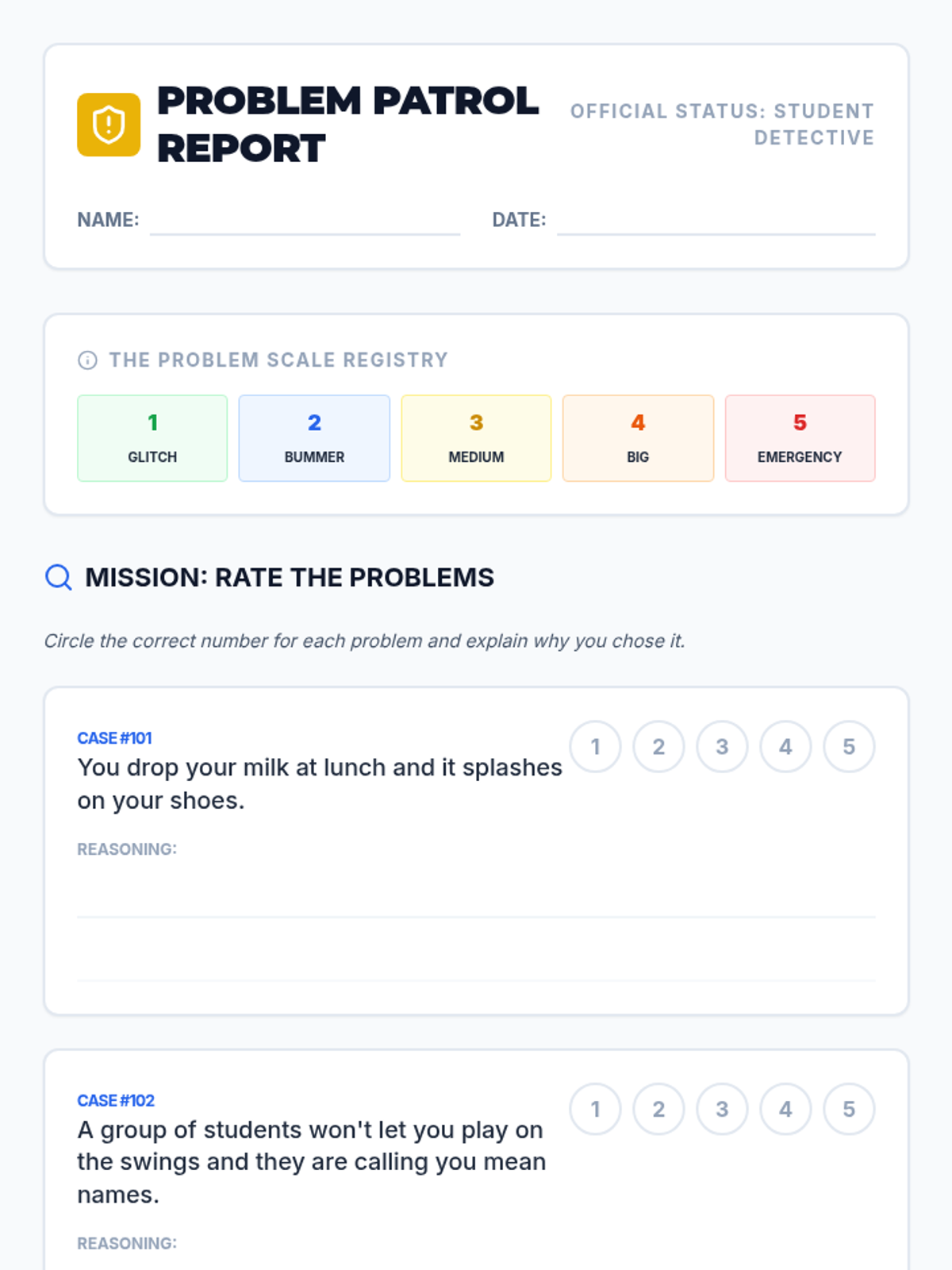
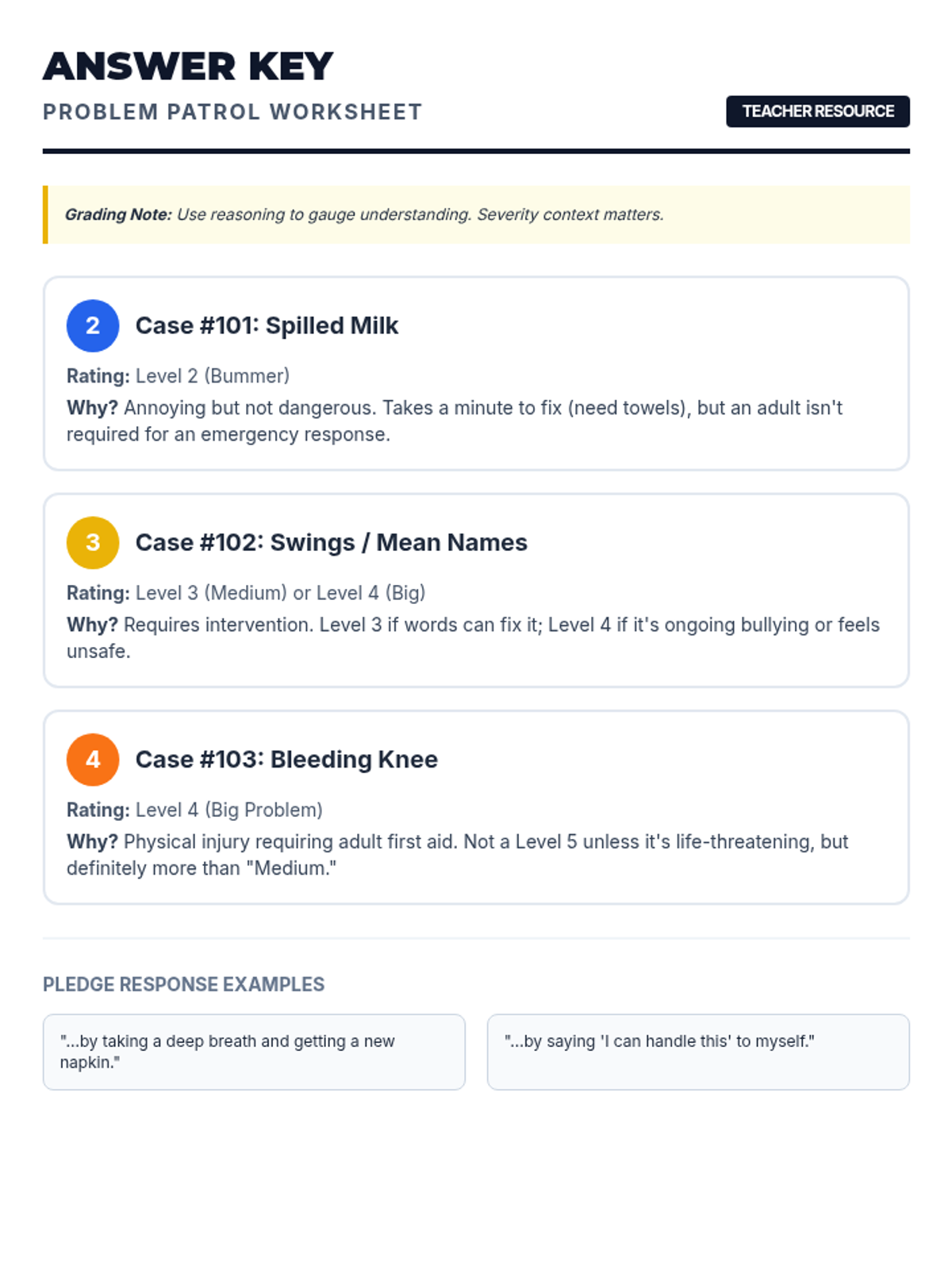
A lesson teaching students how to categorize challenges using a 1-5 scale, from tiny glitches to major emergencies, helping them match their reactions to the problem size.
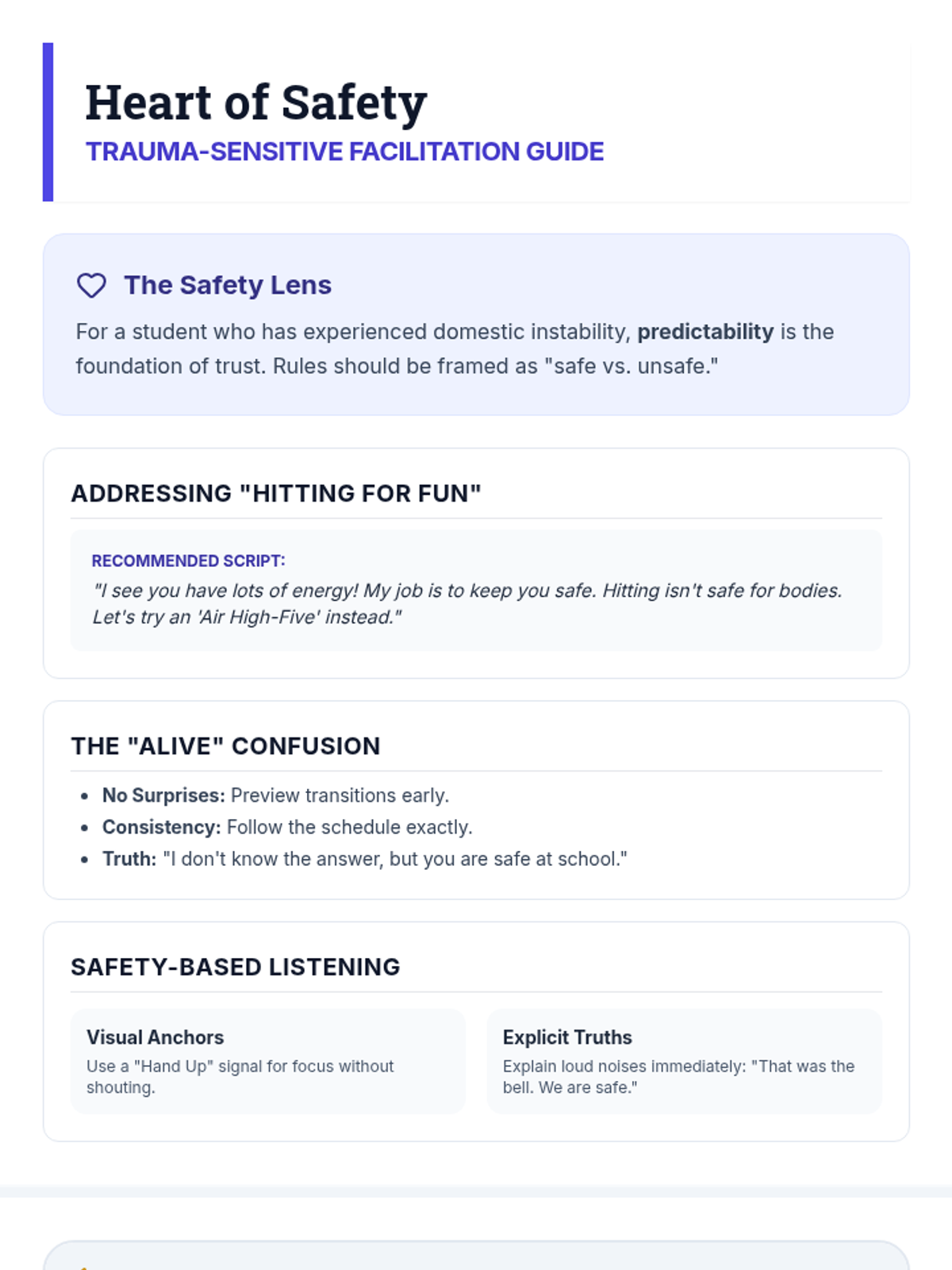
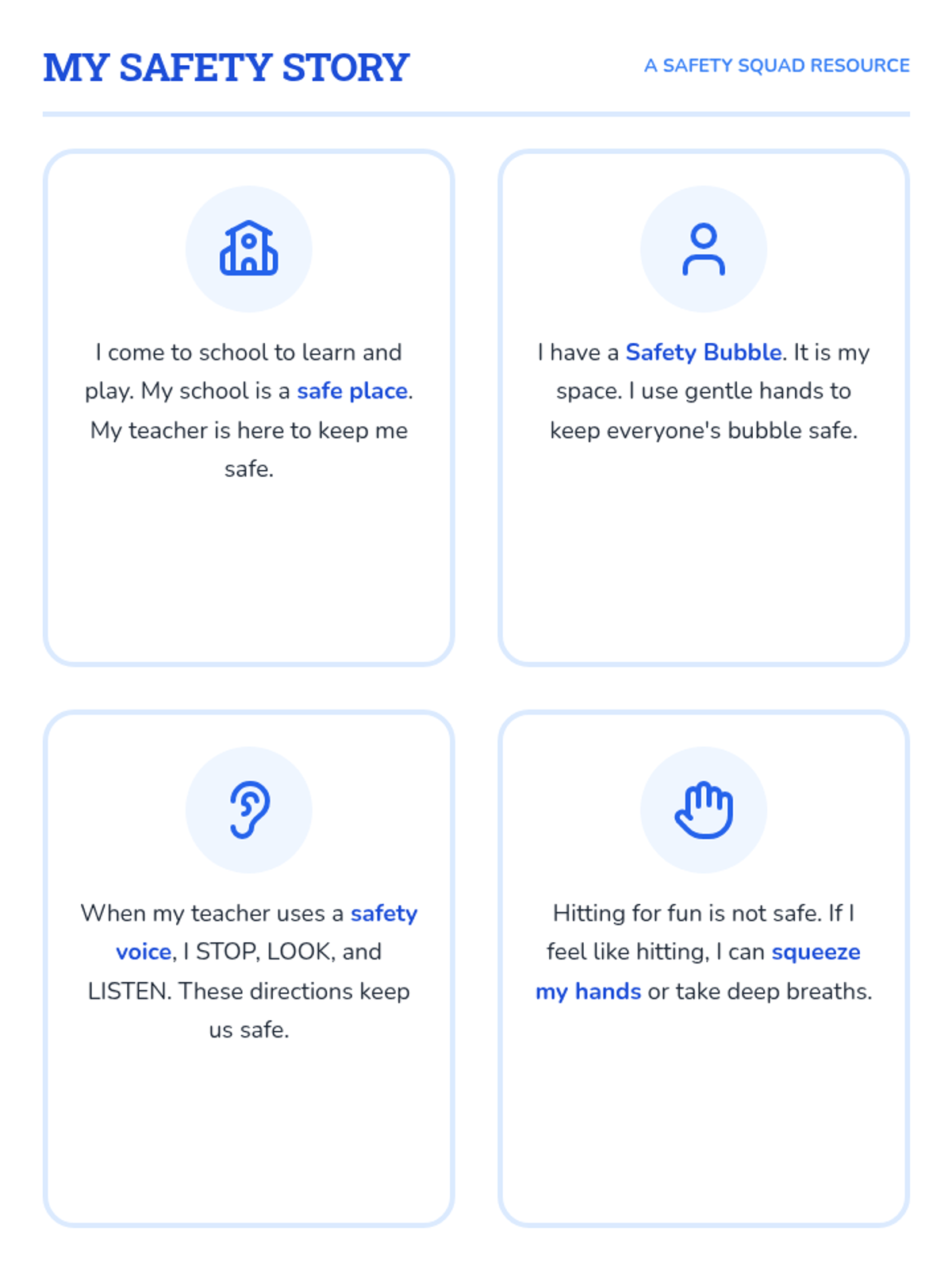
A trauma-informed lesson for kindergarten students focusing on personal boundaries, physical safety, and safety-based listening. This lesson uses a 'Safety Squad' theme to teach students how to keep their bodies safe and follow classroom rules to maintain a secure environment.
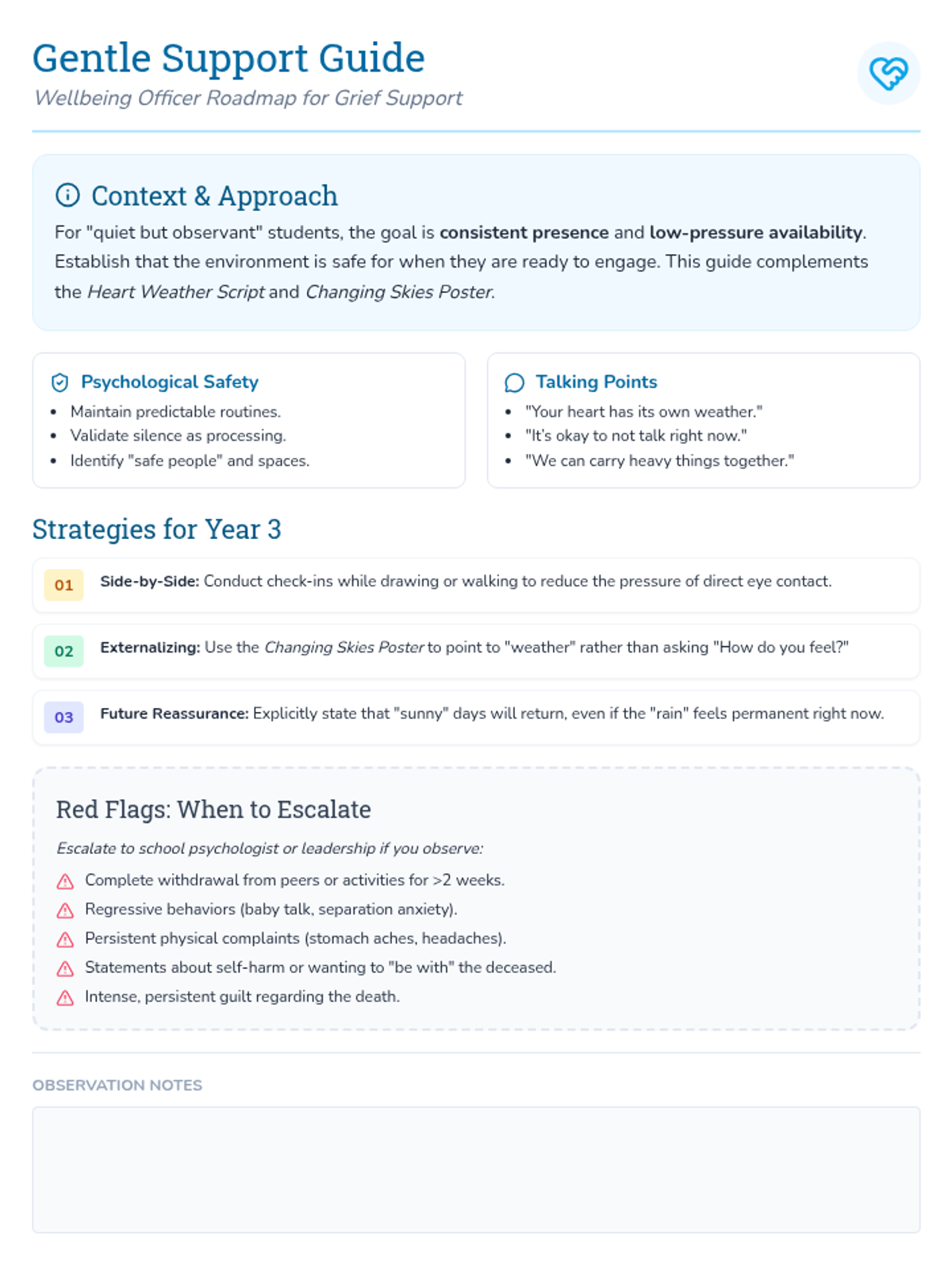
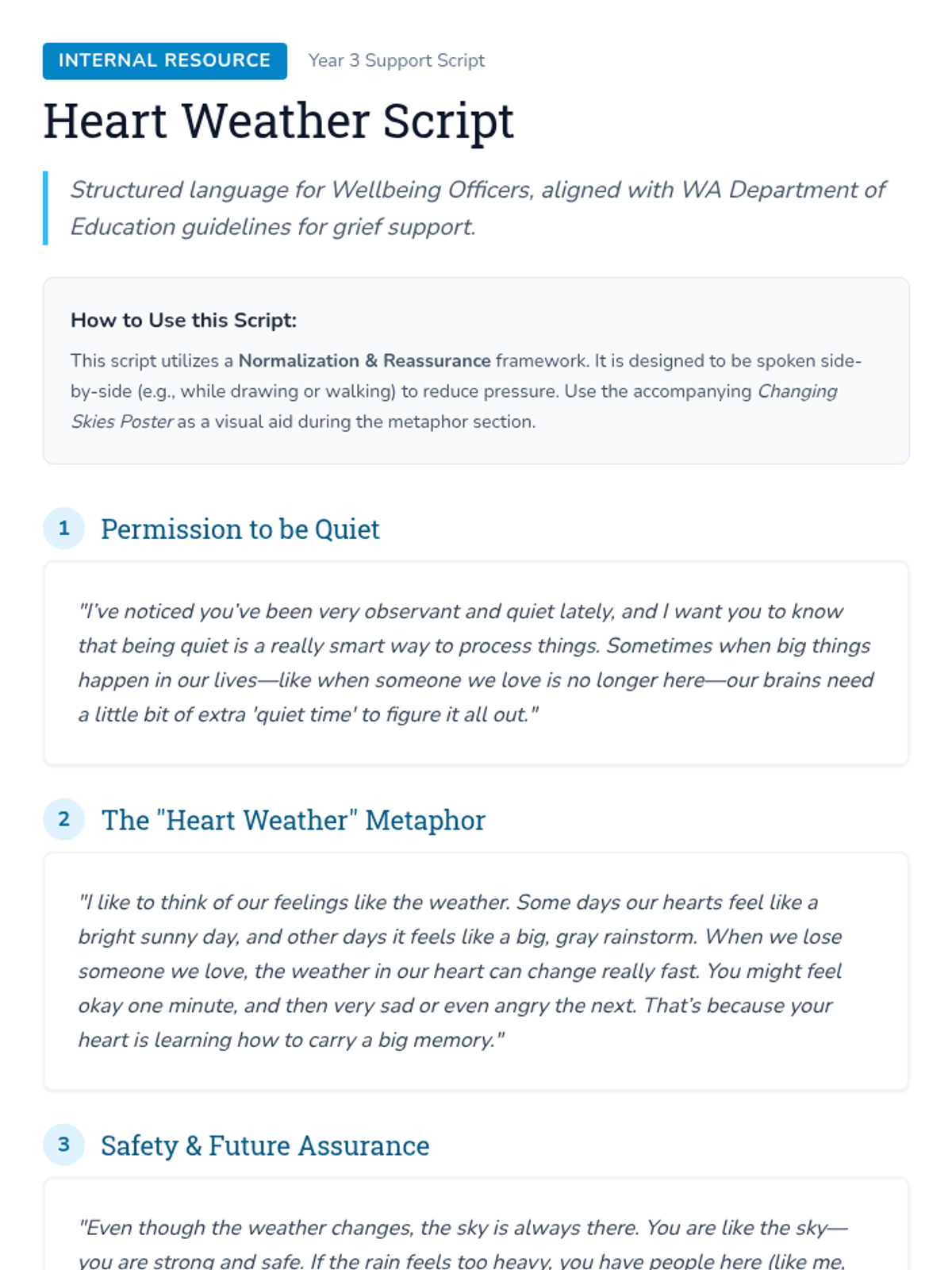
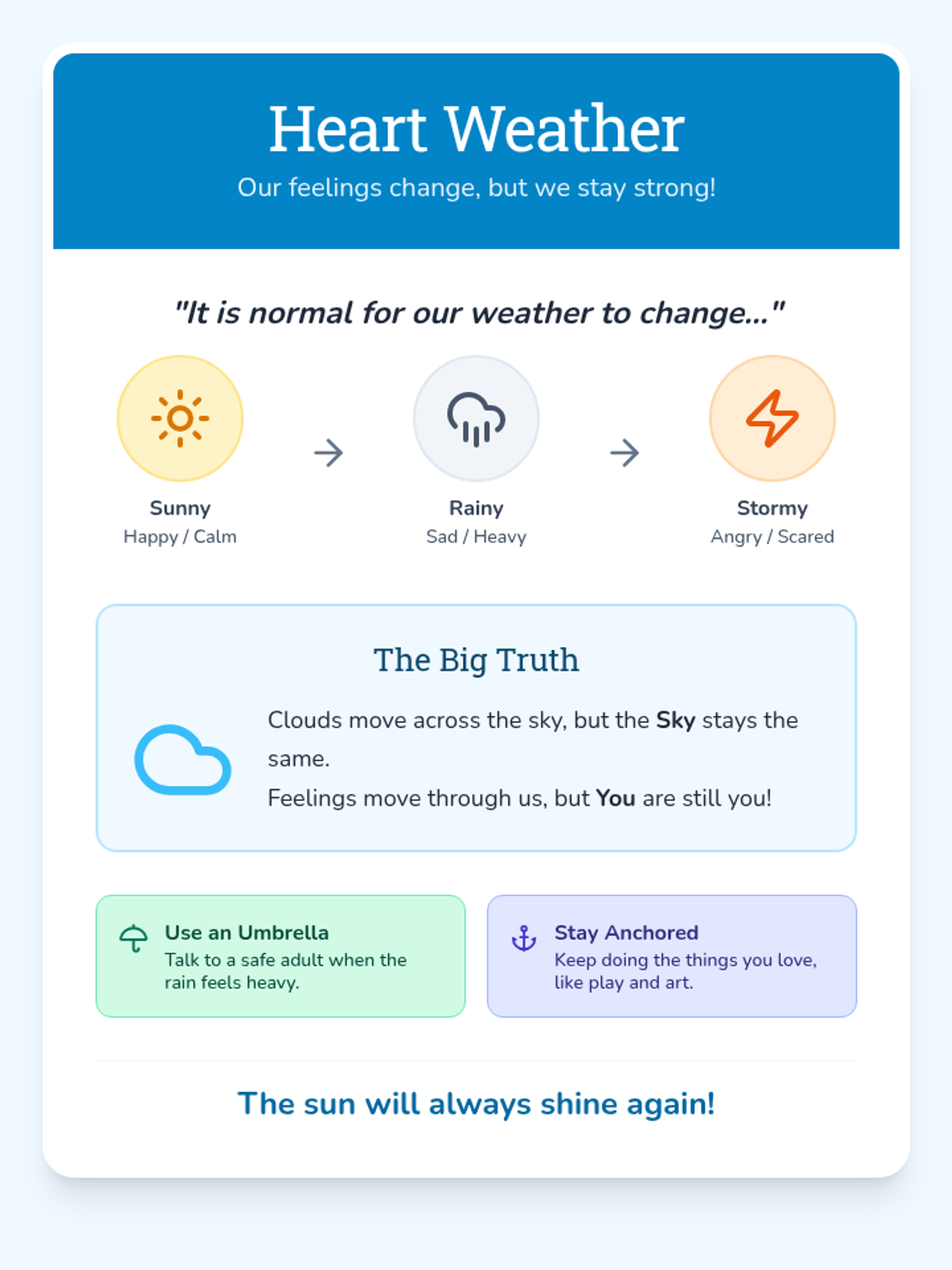
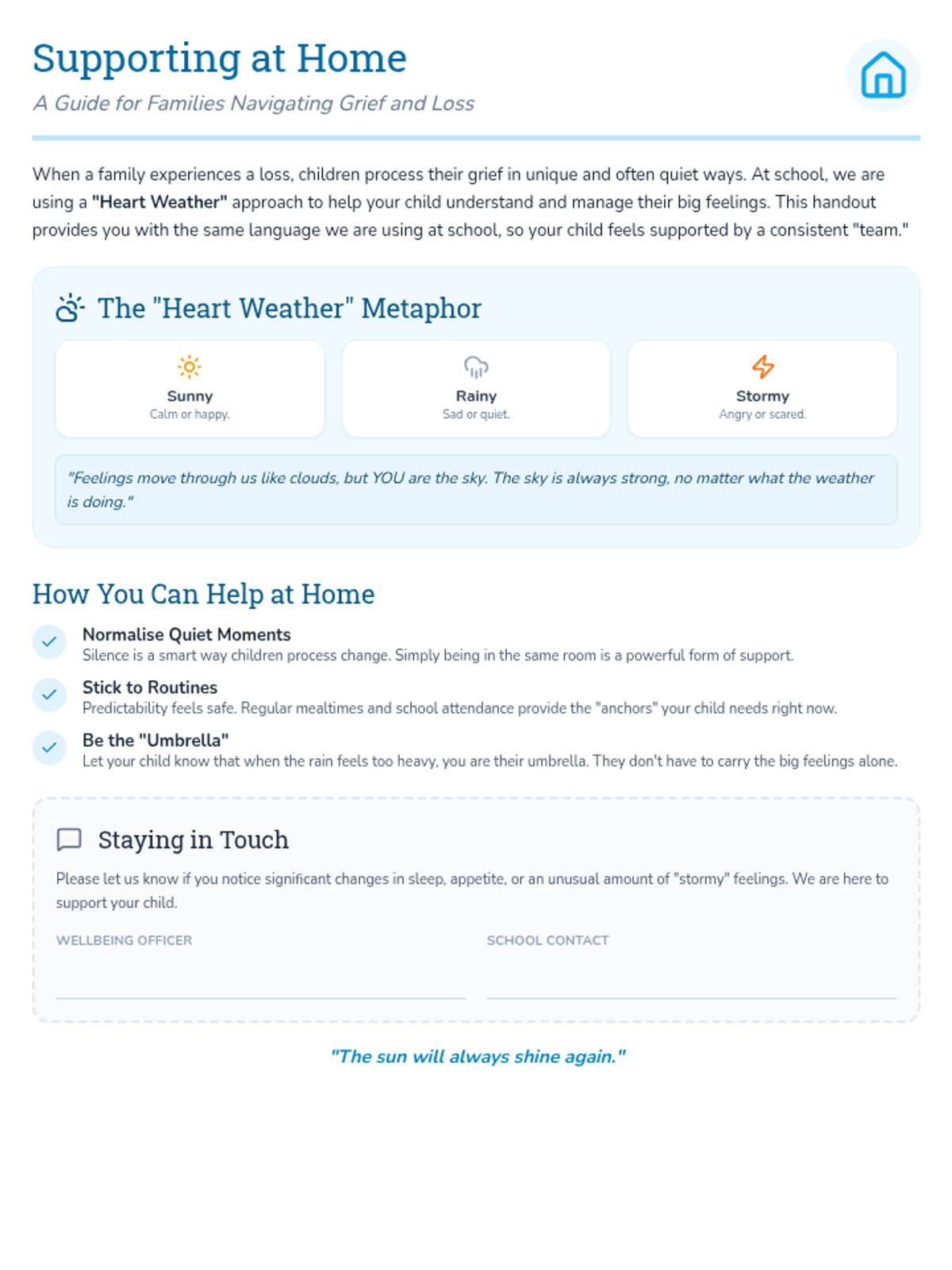
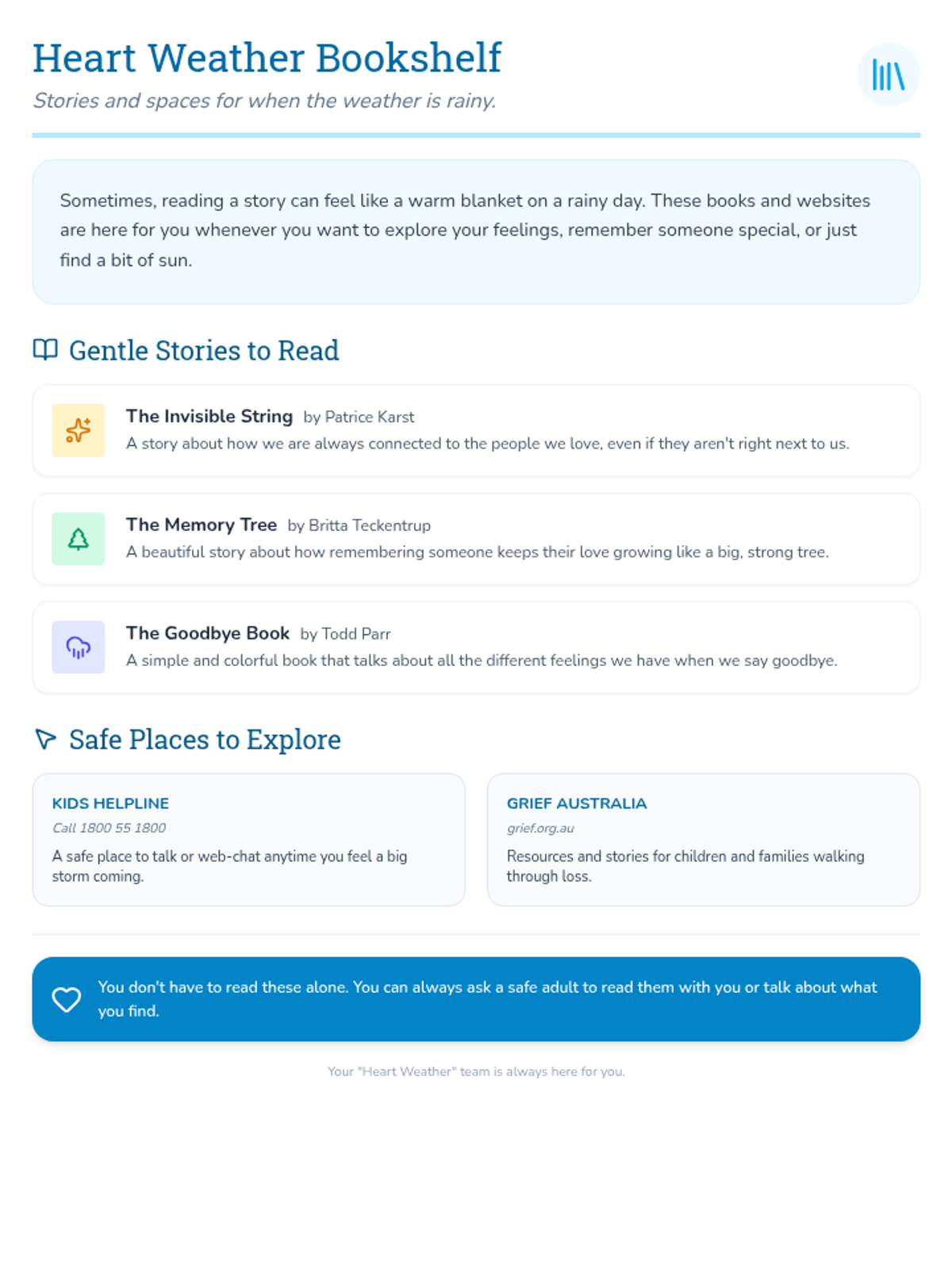
A collection of resources for a Wellbeing Officer to support a Year 3 student experiencing grief, focusing on emotional normalization and creating a safe space for communication.
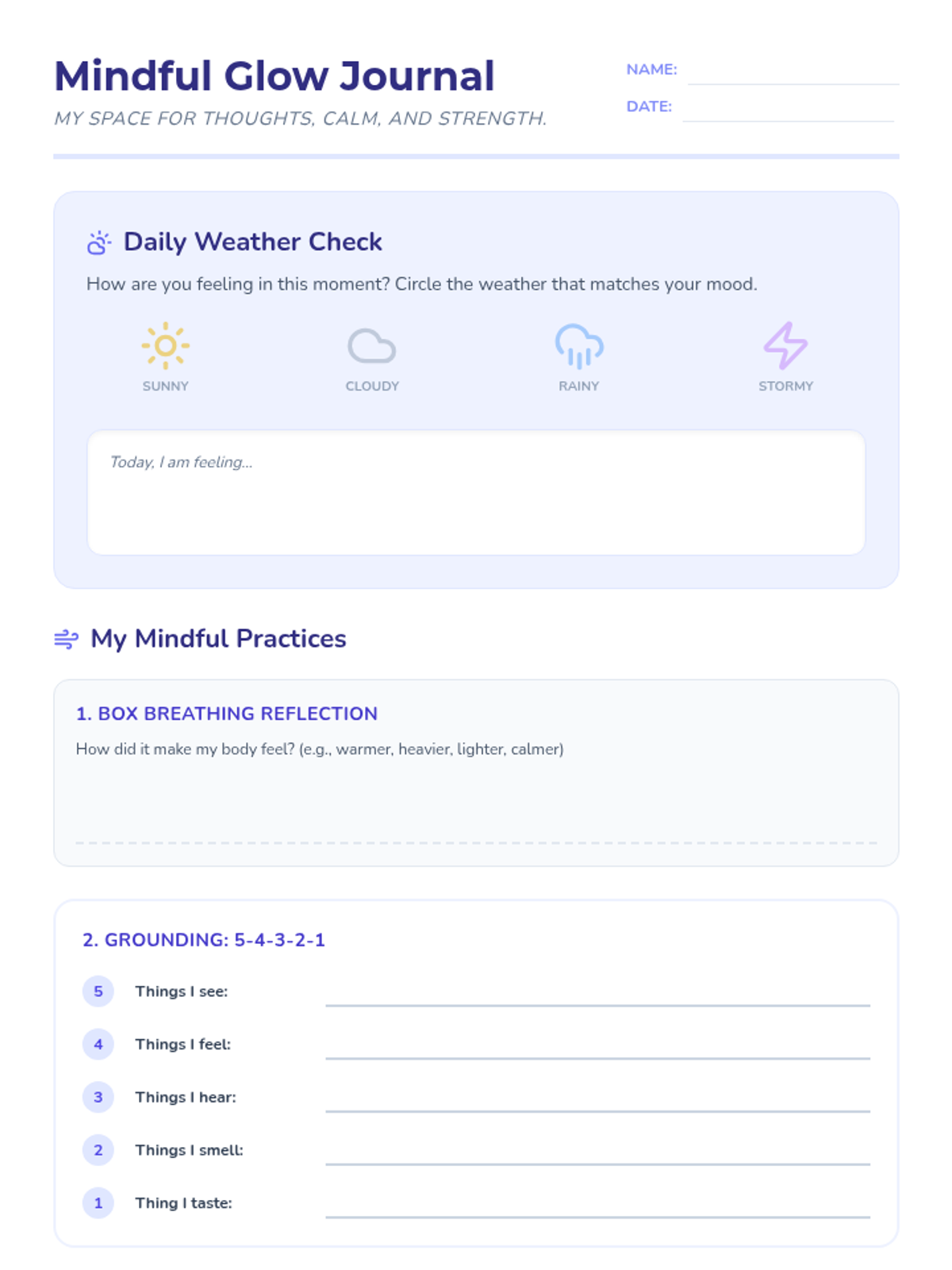
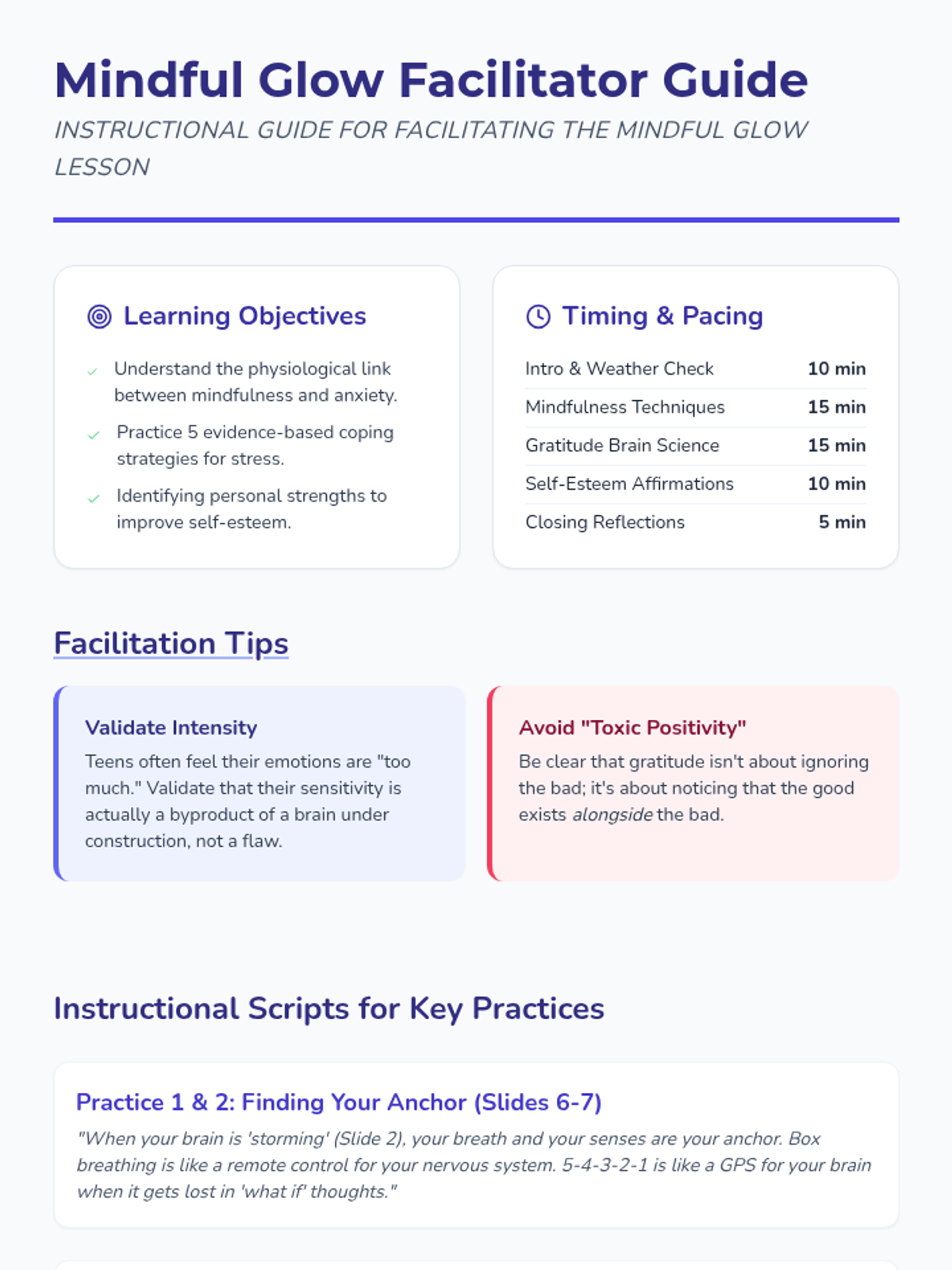
A comprehensive psychoeducation lesson designed for teenage girls to explore mindfulness and gratitude as tools for managing anxiety and building self-esteem. Includes a 20+ slide presentation, a personal reflection journal, and a facilitator's guide.
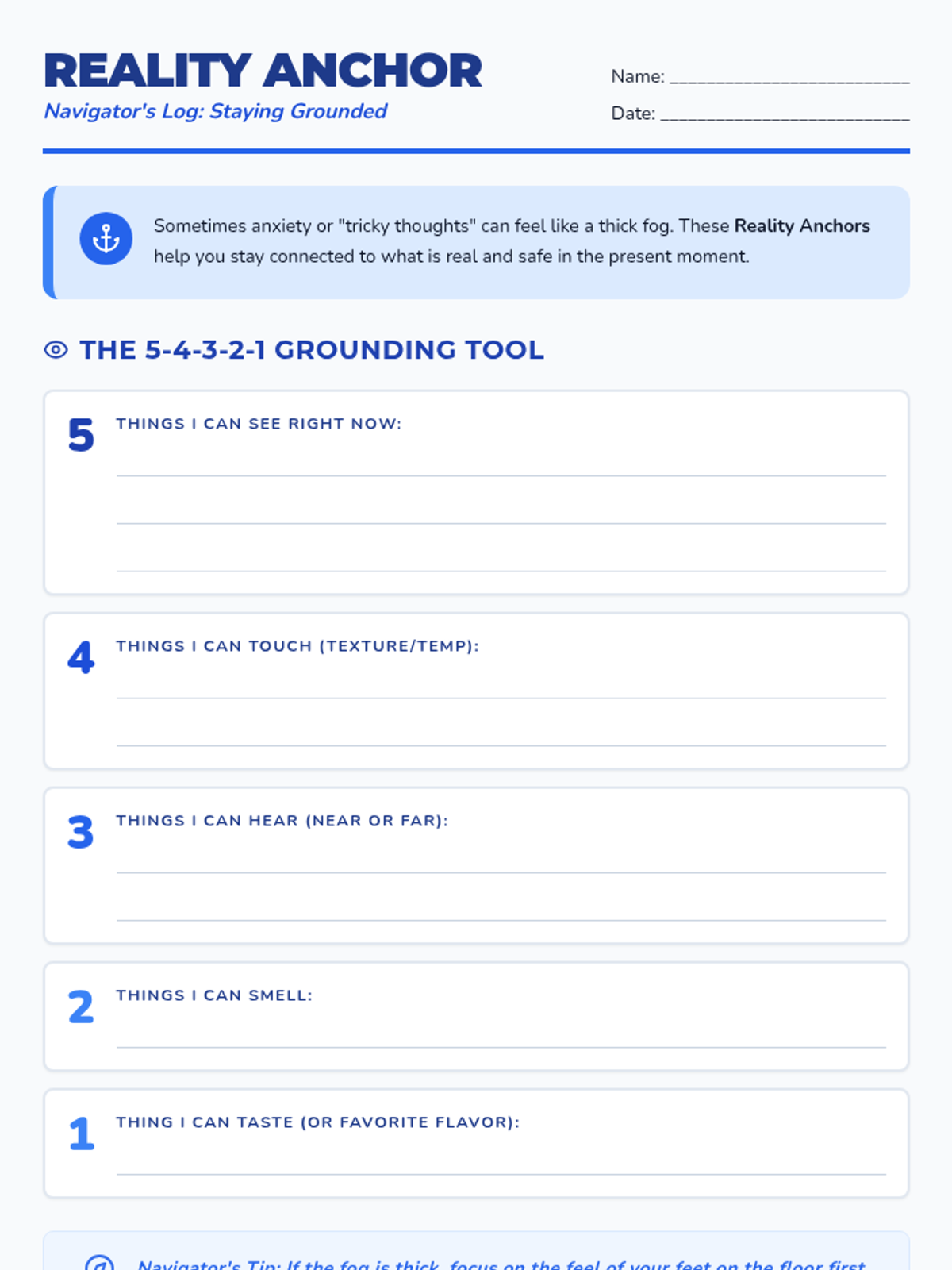
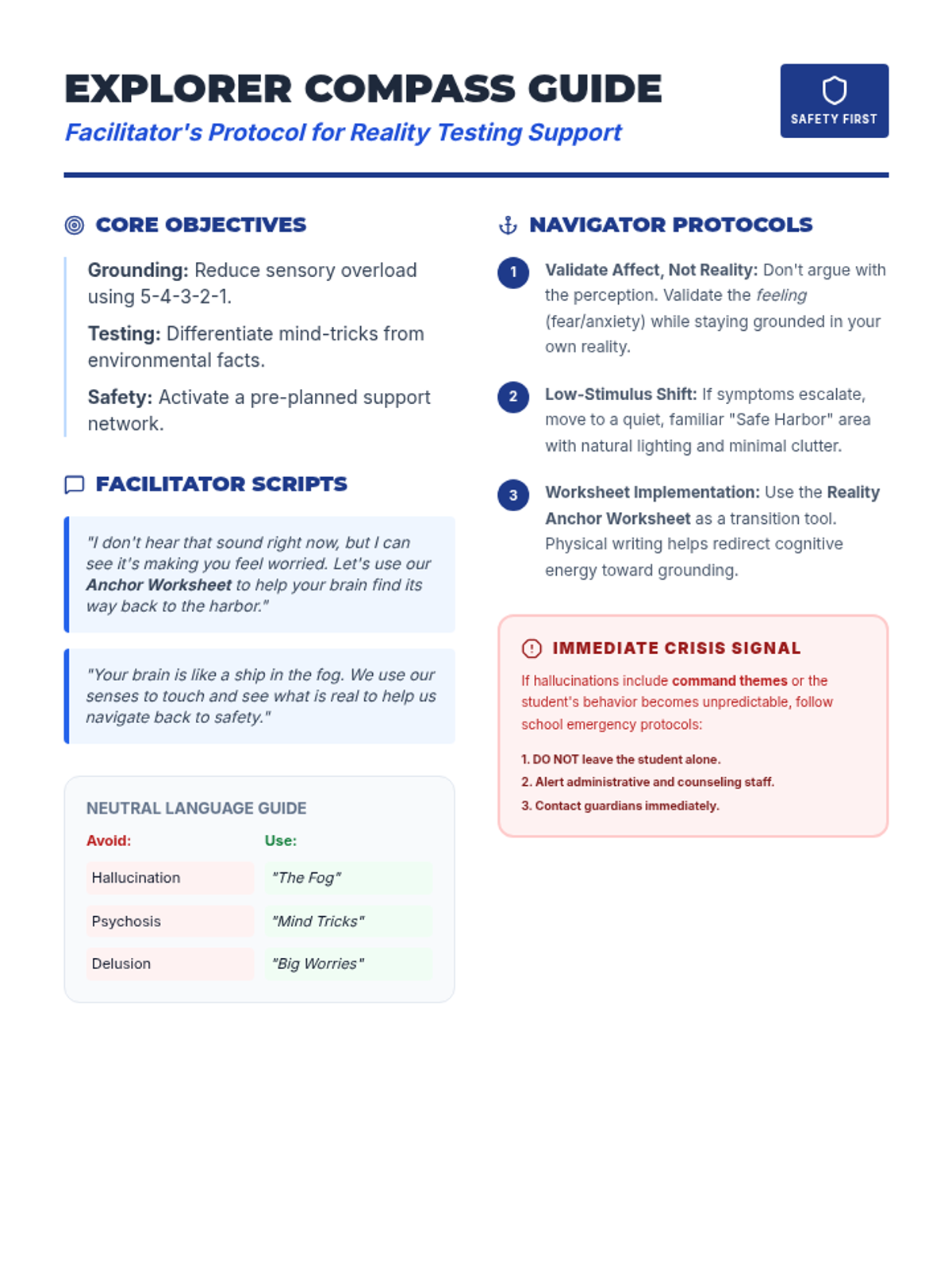
A supportive lesson focused on grounding techniques and reality testing for students experiencing anxiety and sensory hallucinations. Using a nautical navigation theme, it provides practical tools to manage overwhelming emotions and perceptual distortions.
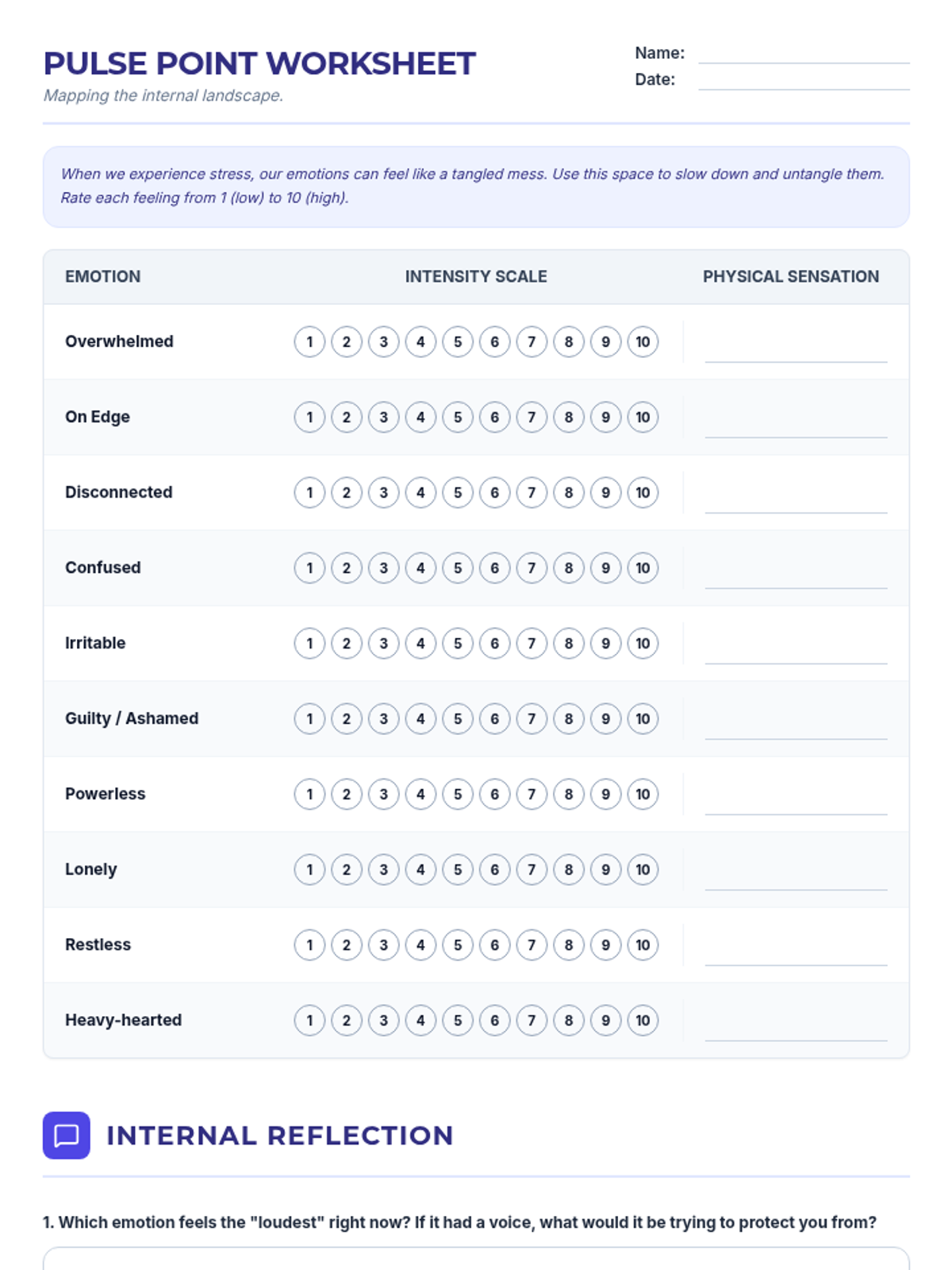
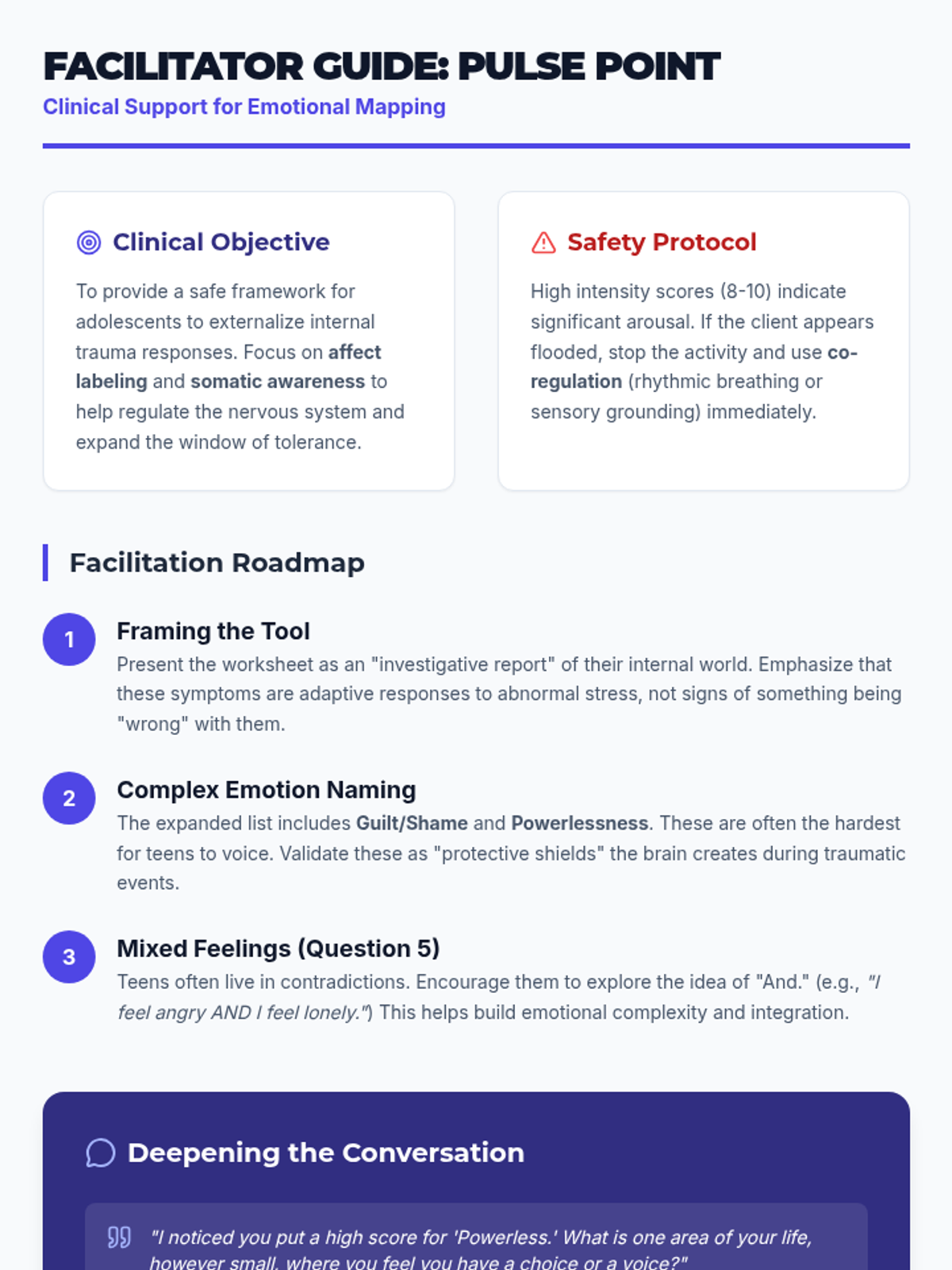
A supportive toolkit designed for teenagers to identify and scale complex emotions following stressful or traumatic events, focusing on the mind-body connection and emotional literacy.
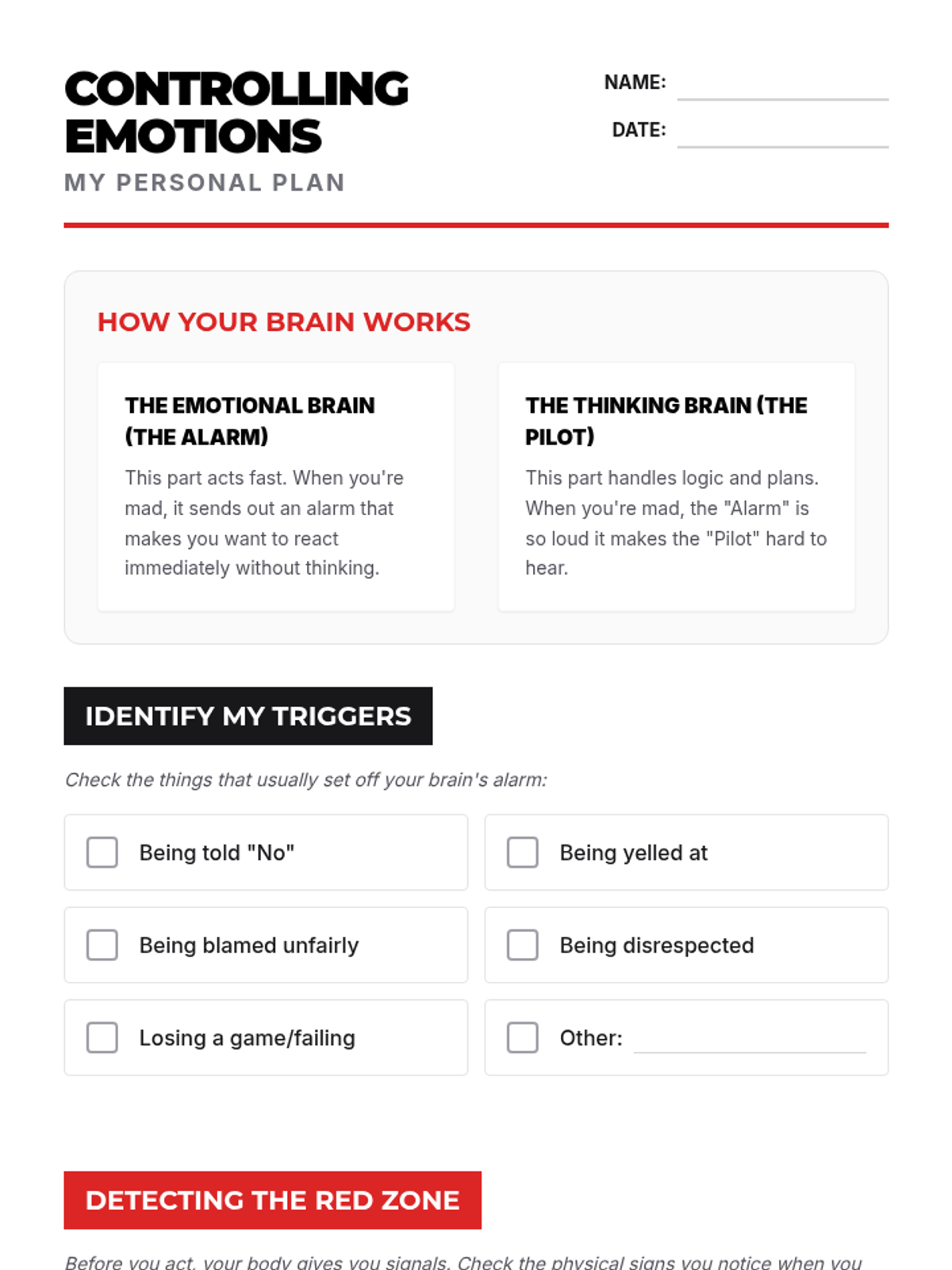
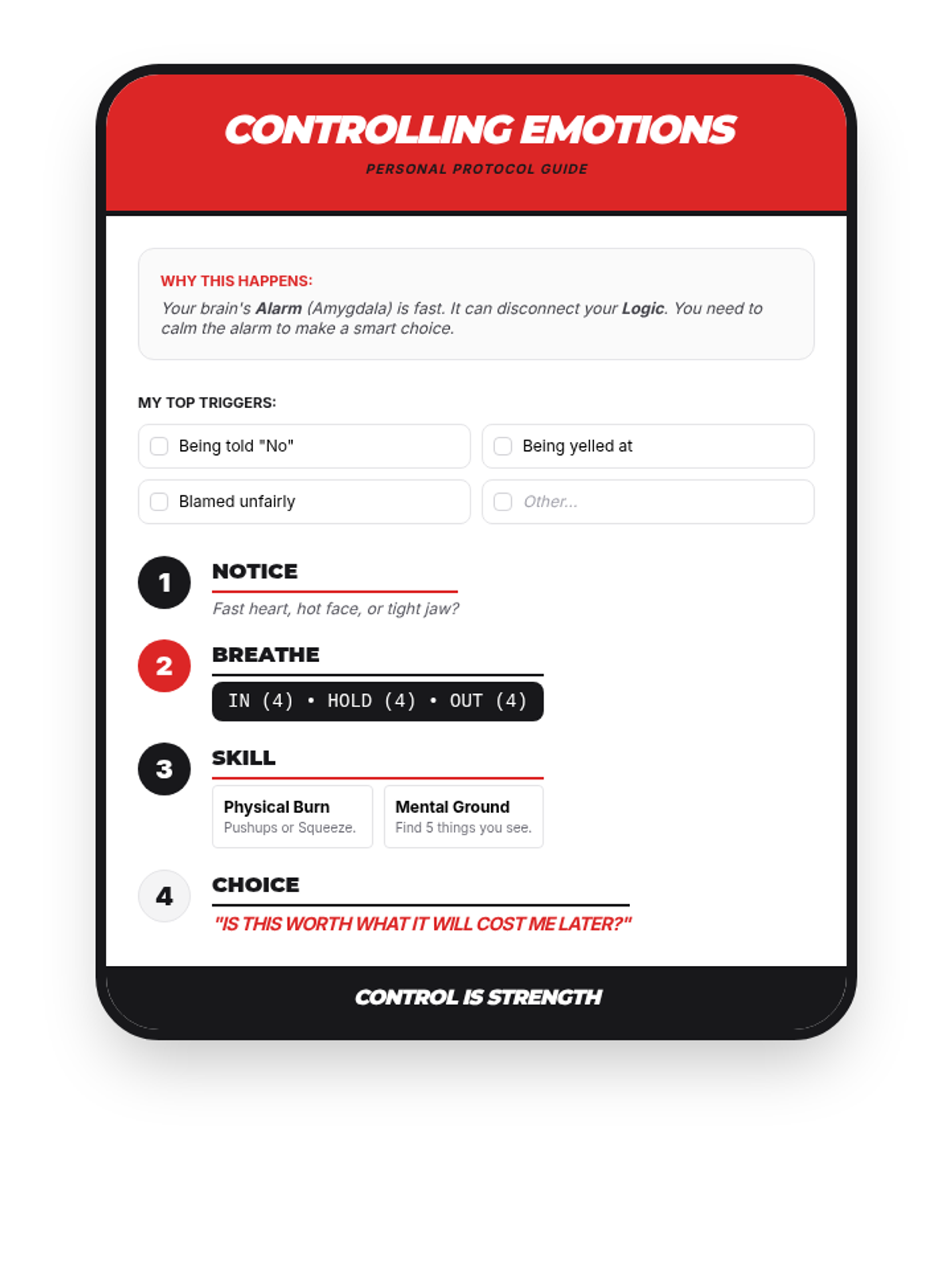
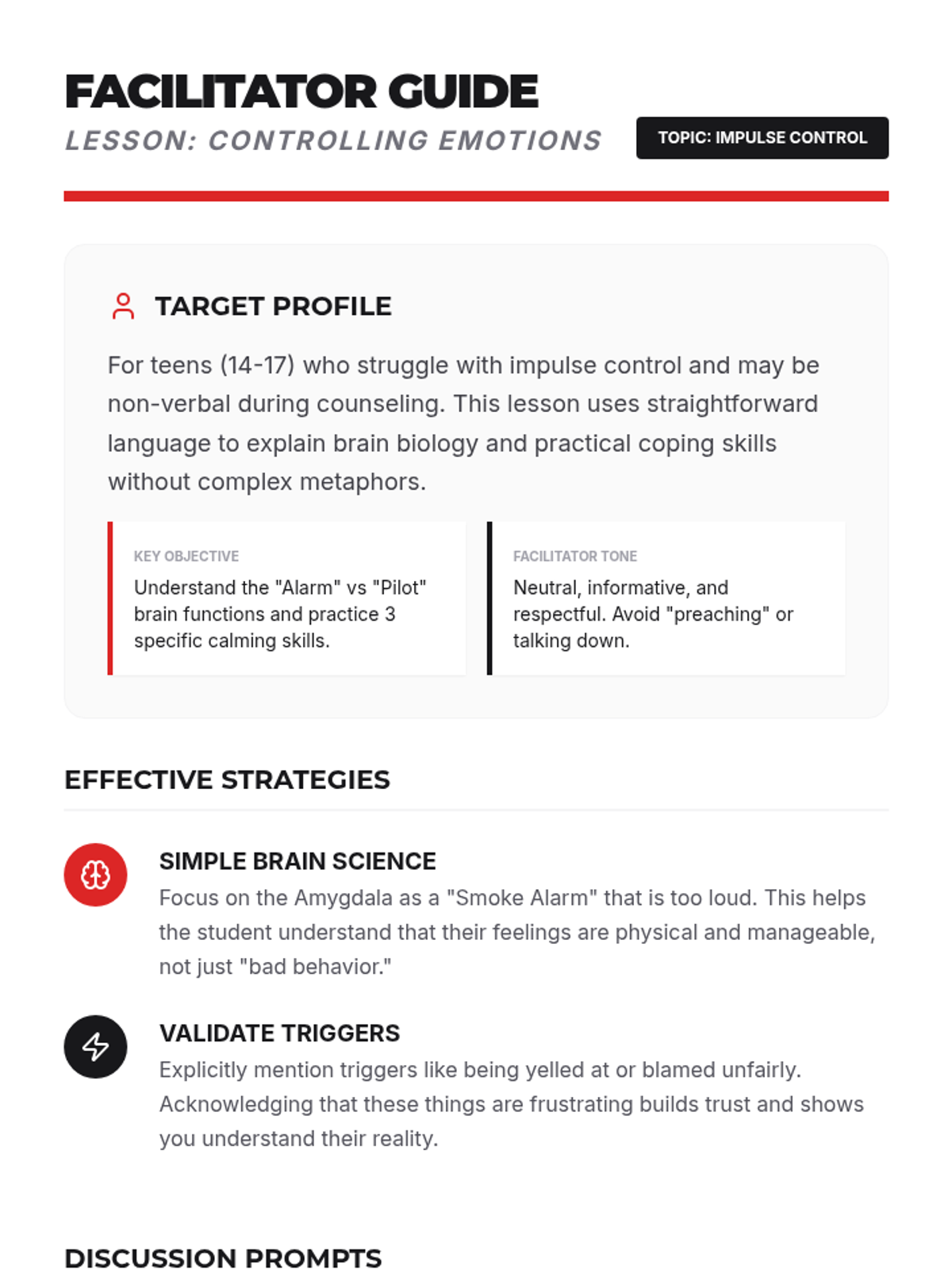
A science-based approach to anger management and impulse control for teens, focusing on the biological 'amygdala hijack' and practical 'manual override' strategies.
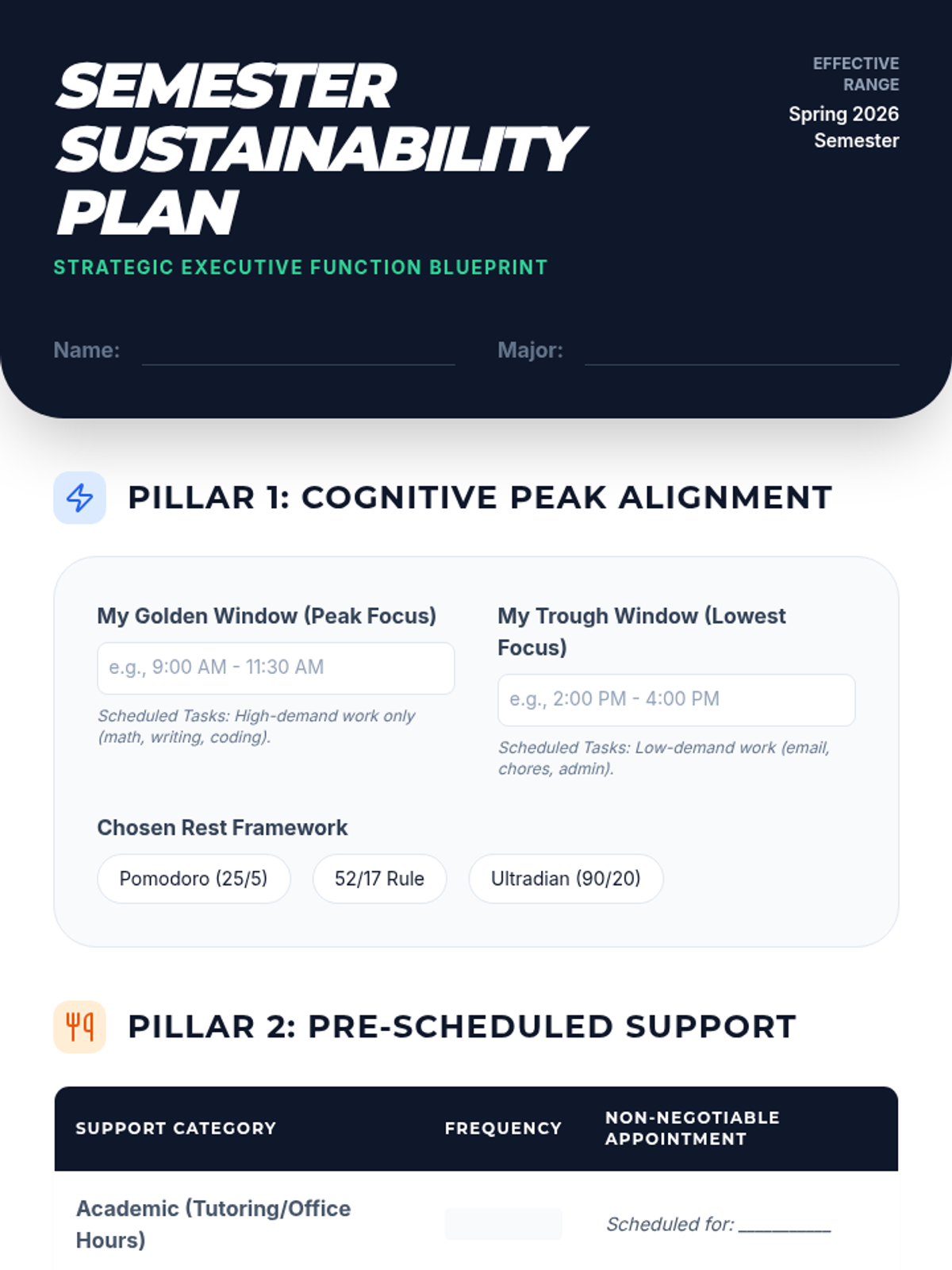
Synthesizing all concepts, students build a semester-long calendar that proactively schedules mental health days, tutoring sessions, and social support check-ins, treating them as non-negotiable appointments.
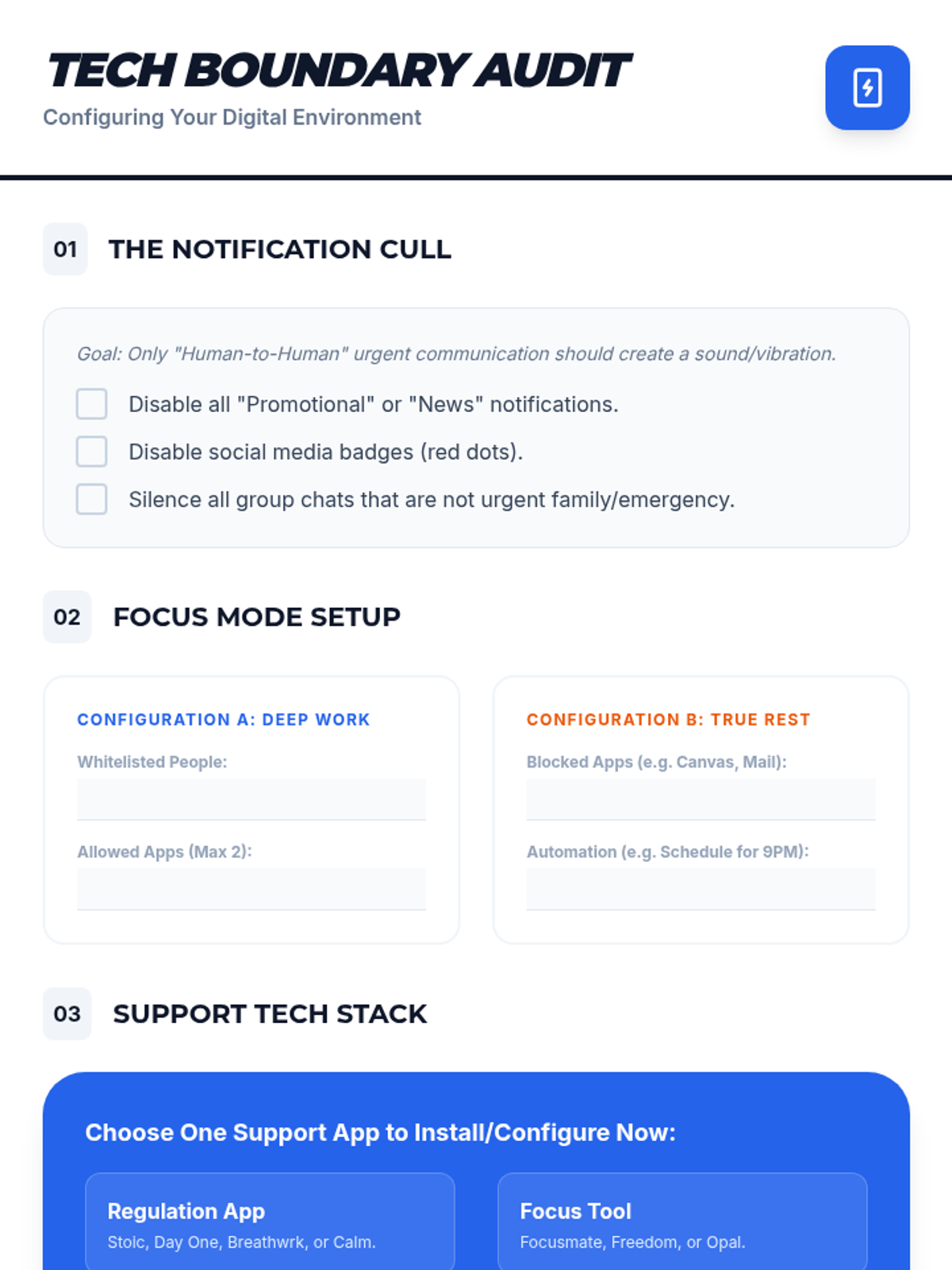
Students explore how technology can both hinder and help regulation. They set up digital wellbeing controls and identify apps that facilitate requesting support or managing anxiety.
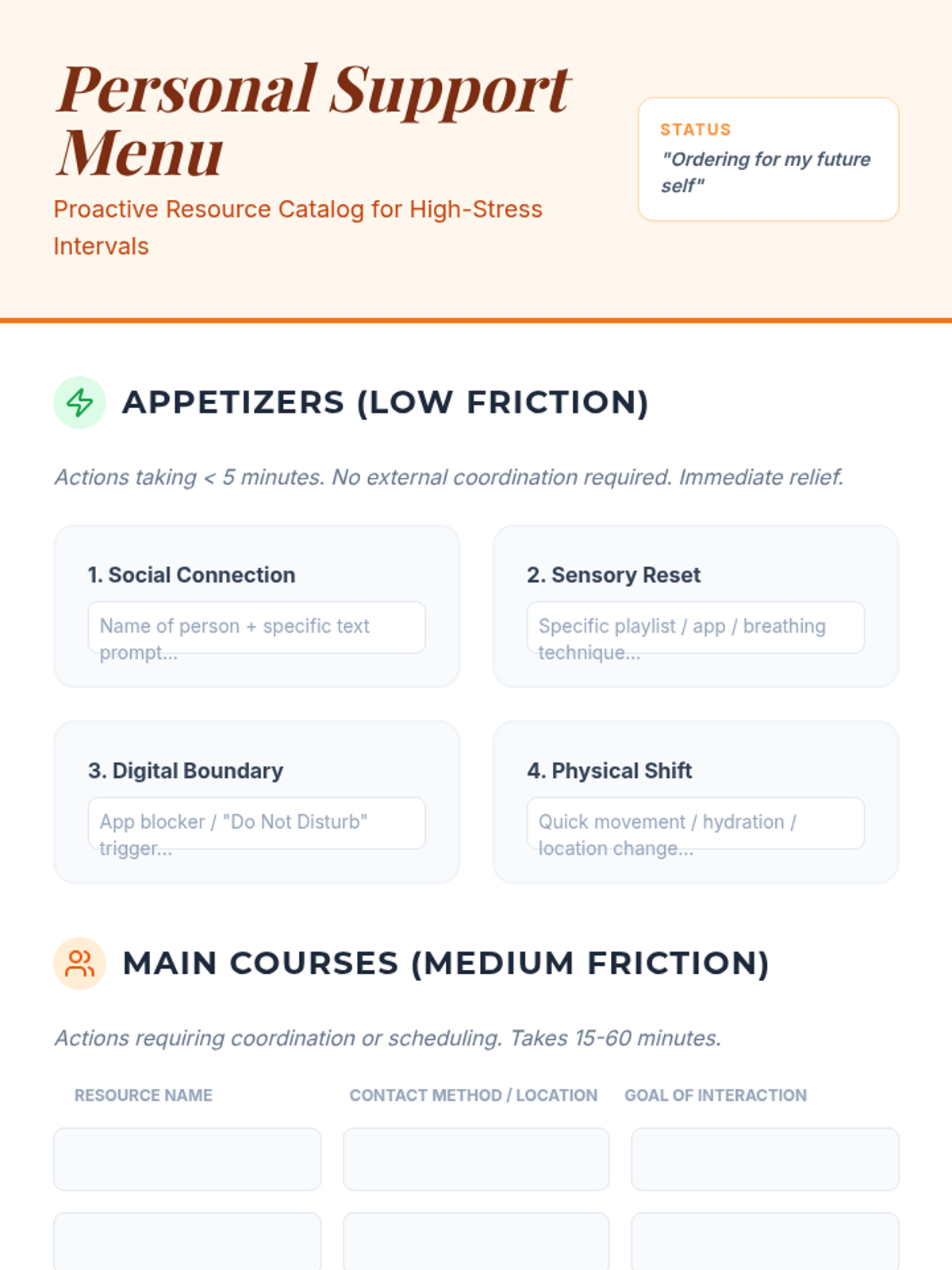
Students develop a categorized list of support options ranging from low-friction (texting a friend, using an app) to high-friction (therapy appointment, professor meeting). This reduces decision fatigue when help is actually needed.
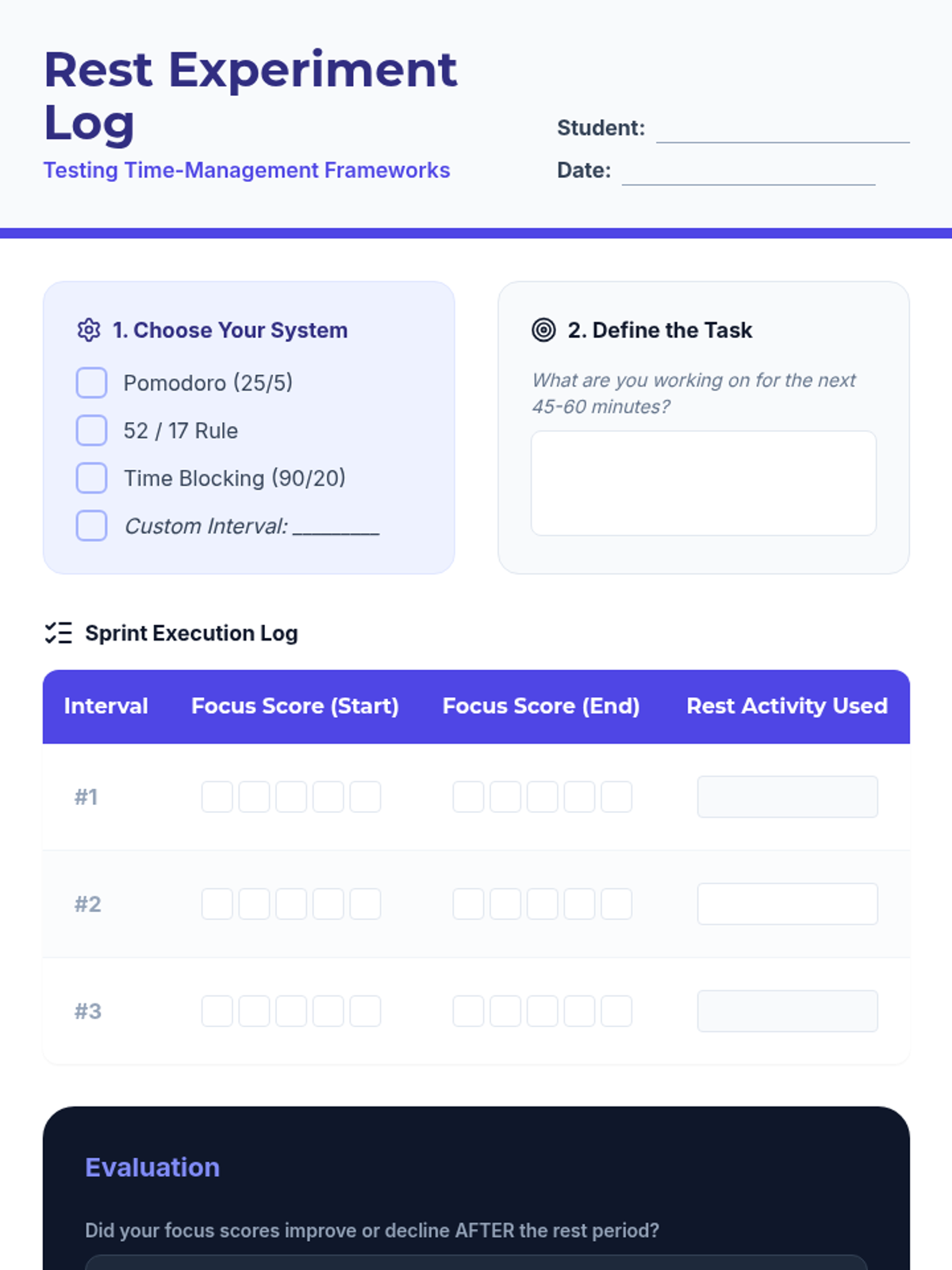
This lesson compares various time-management frameworks (Pomodoro, 52/17 rule, Time Blocking) that mandate breaks. Students experiment with one system during a study hall session to evaluate its efficacy.
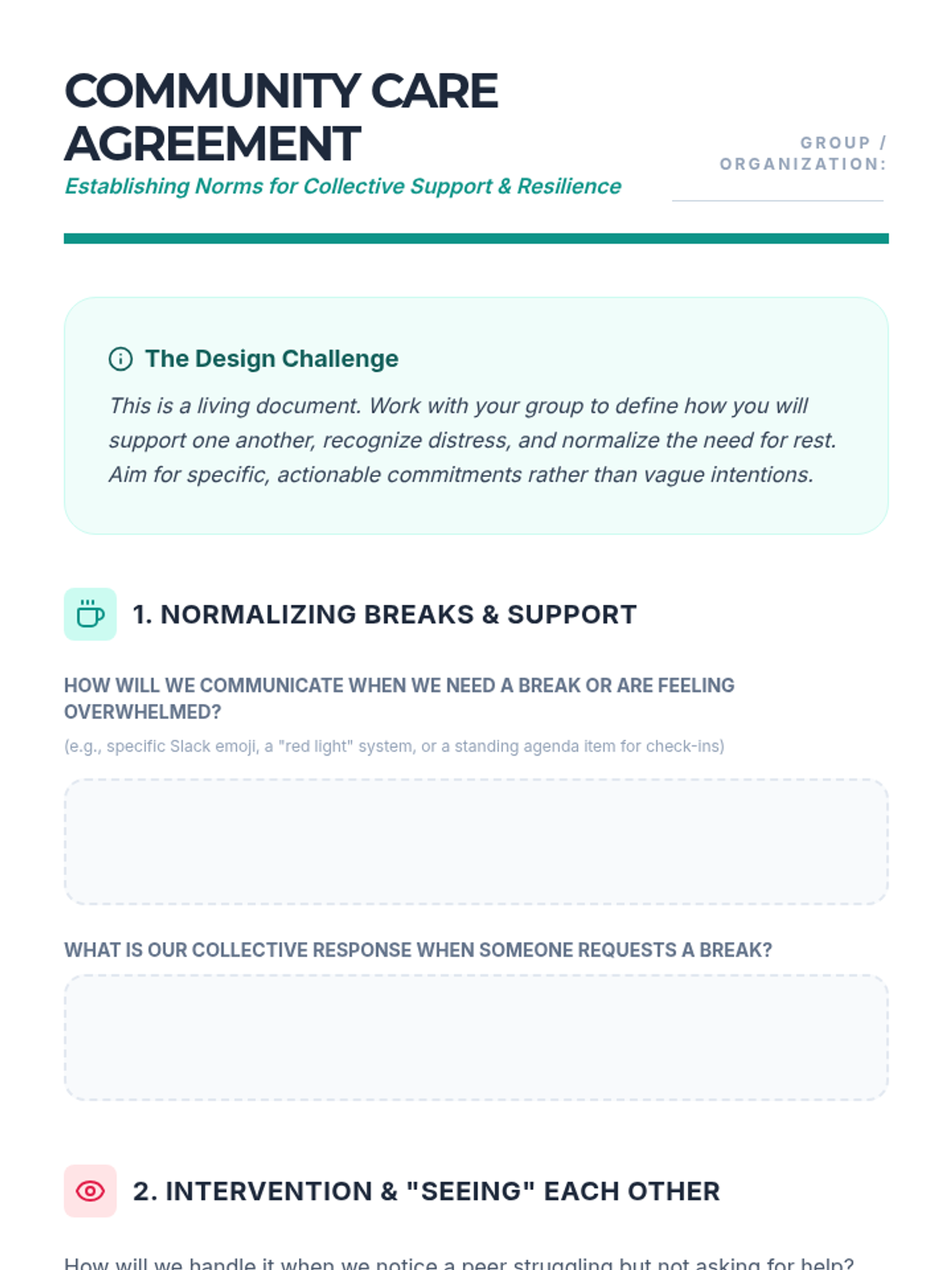
The sequence concludes with students designing a 'Community Care Agreement' to establish norms for mutual support and collective rest in their own communities.