Mindful breathing and body scan meditation techniques integrated with daily self-care routines. Develops strategies for balancing life demands and advocating for personal wellness needs.
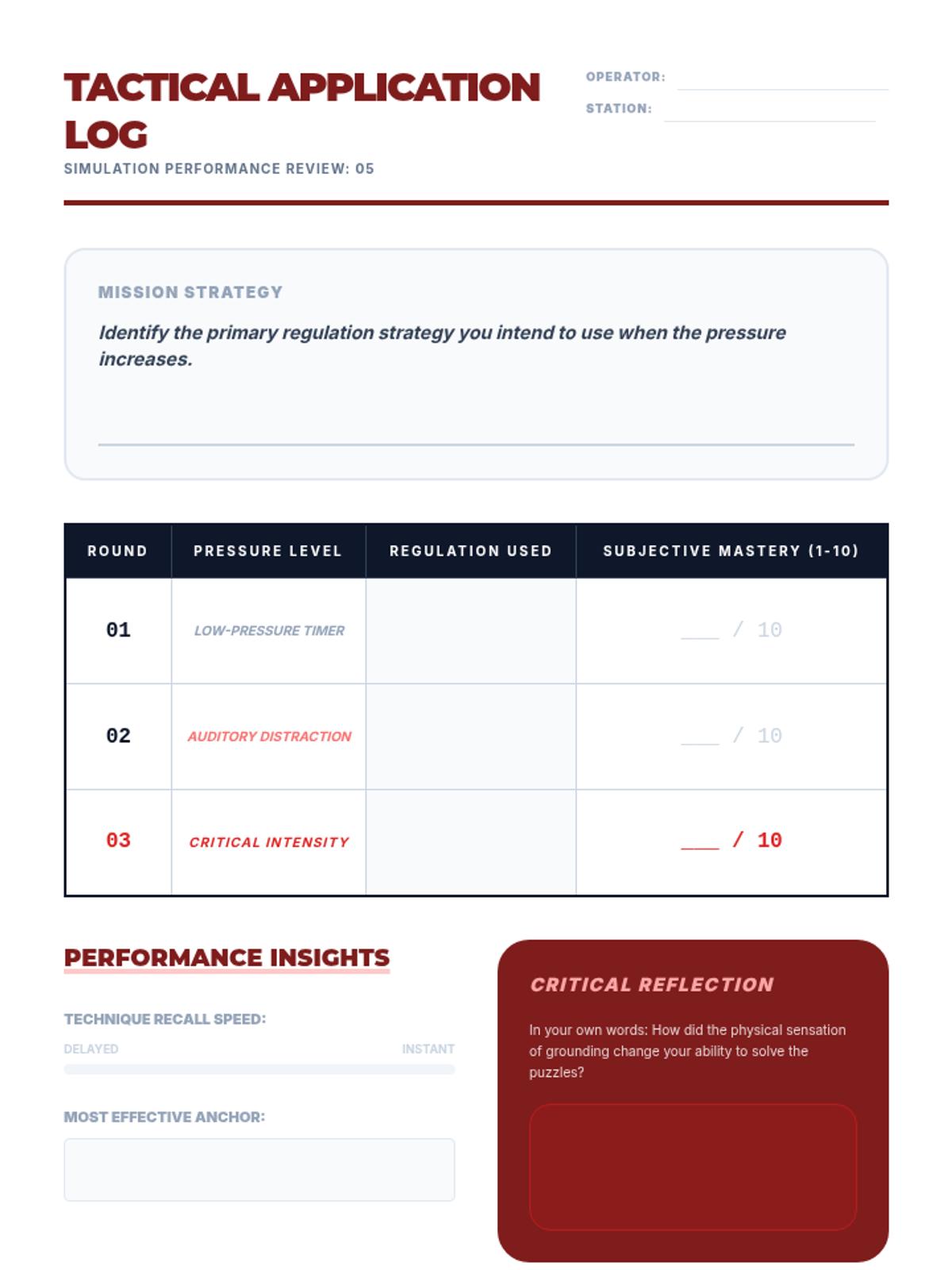
A culminating simulation where students face timed cognitive challenges while practicing their chosen regulation techniques. This bridges the gap between knowing a technique and using it under pressure.
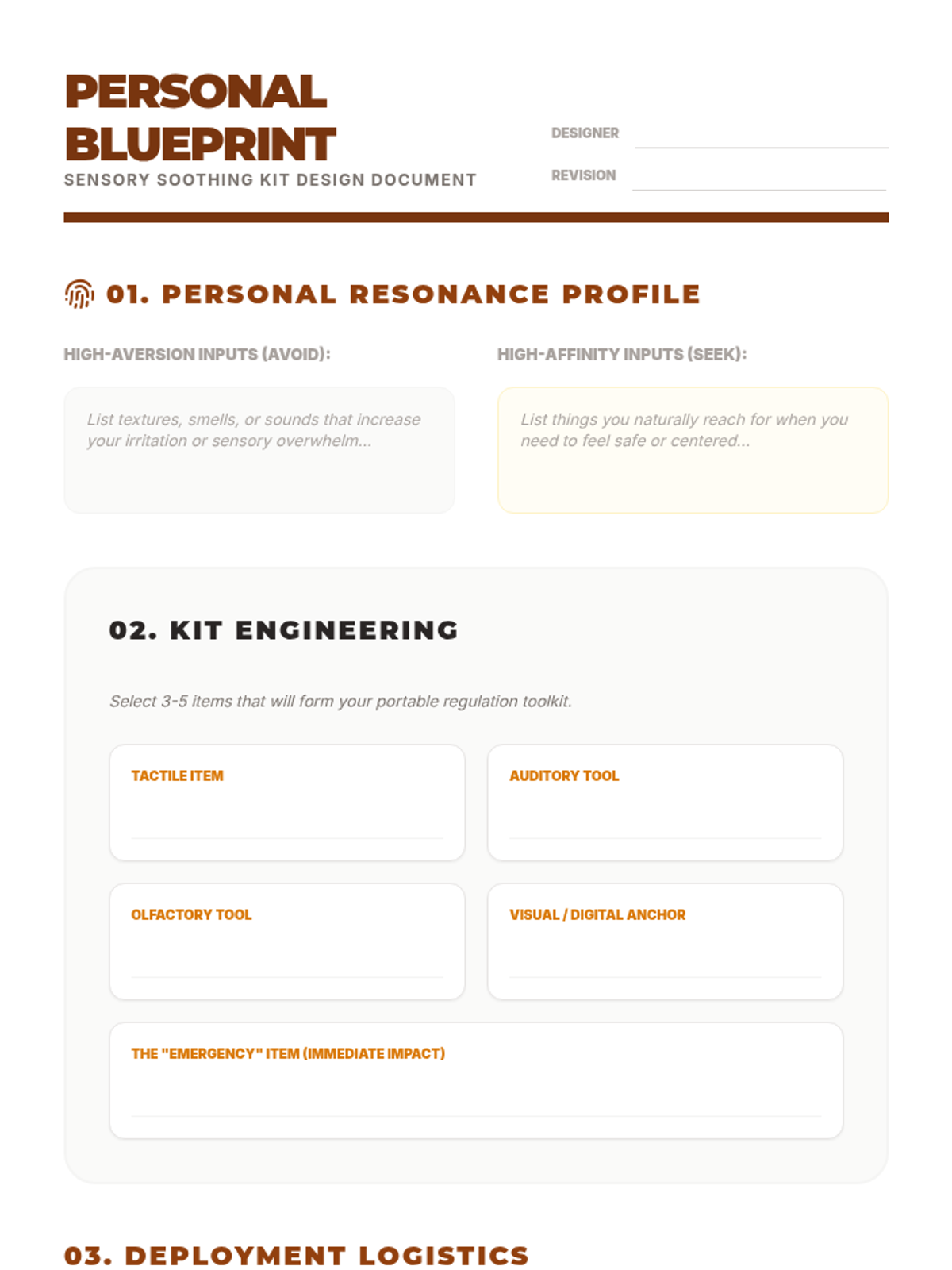
Learners identify personal sensory preferences that induce calm. They design and assemble a portable or digital 'kit' of resources to use during high-stress periods.
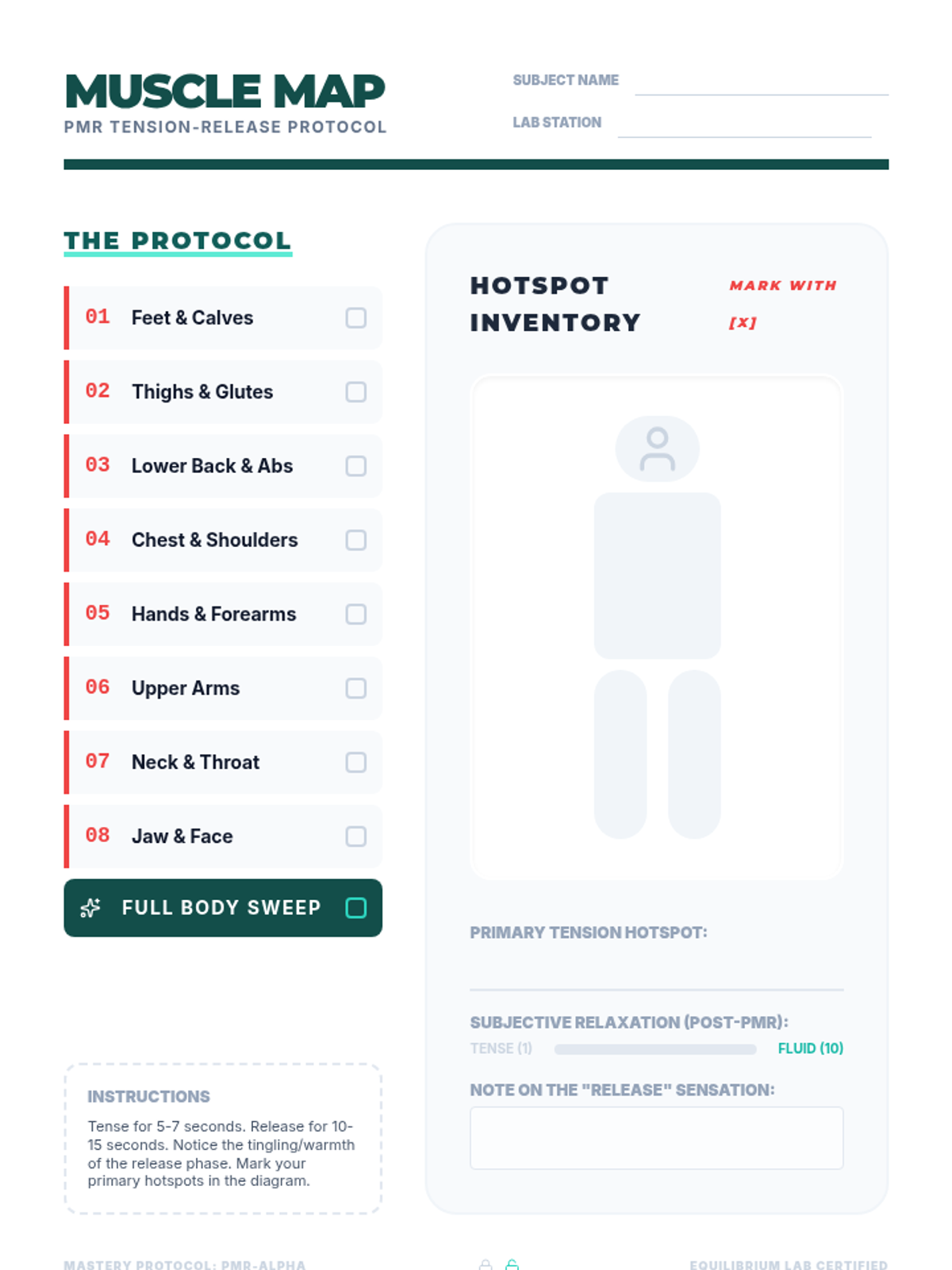
Students learn the sequence of tensing and releasing muscle groups to identify and release held physical tension. The lesson emphasizes the connection between physical relaxation and mental clarity.
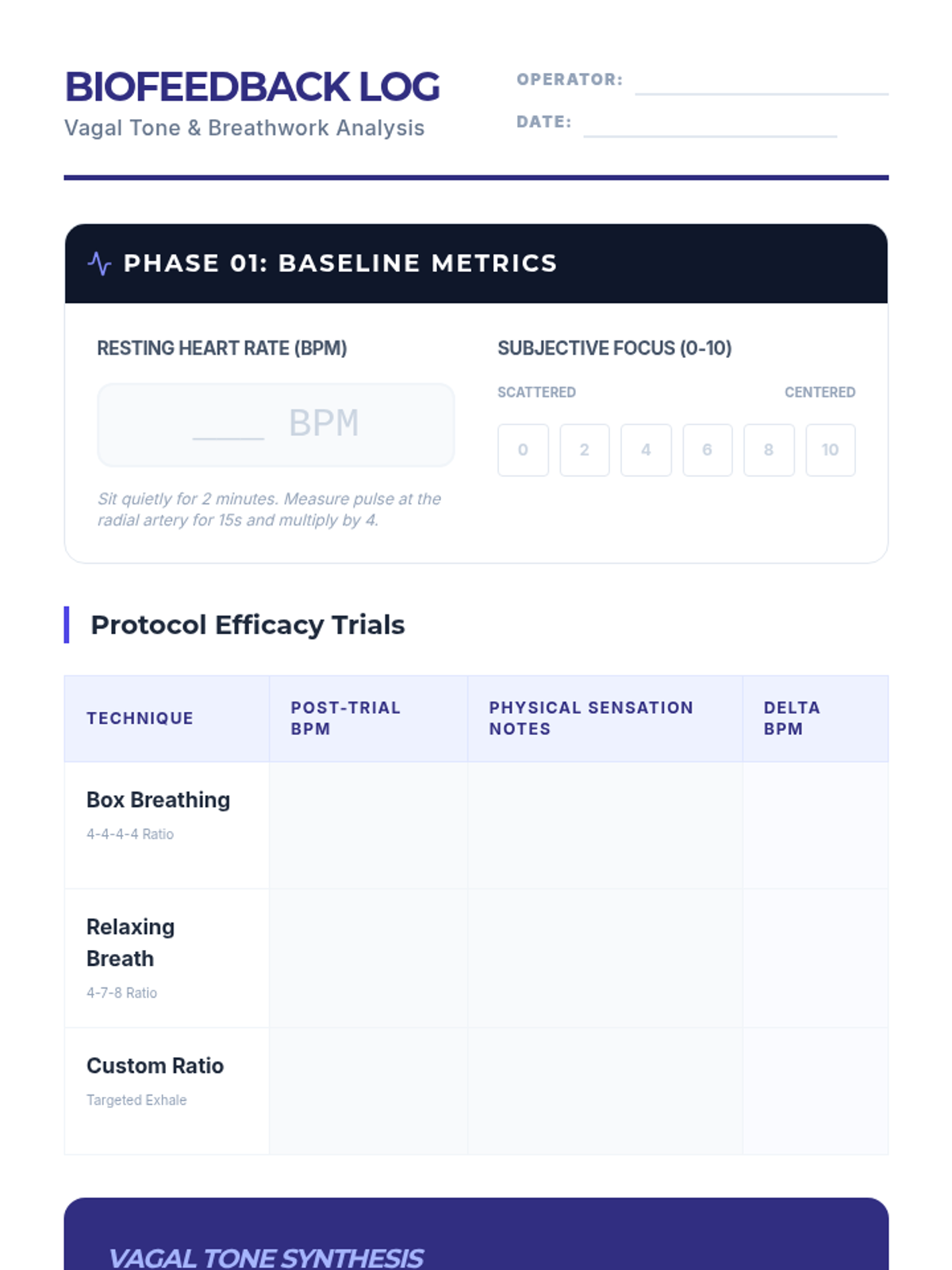
A technical workshop on breathwork, focusing on Box Breathing and 4-7-8 breathing to stimulate the parasympathetic nervous system. Students use biofeedback tools to measure the efficacy of different ratios.
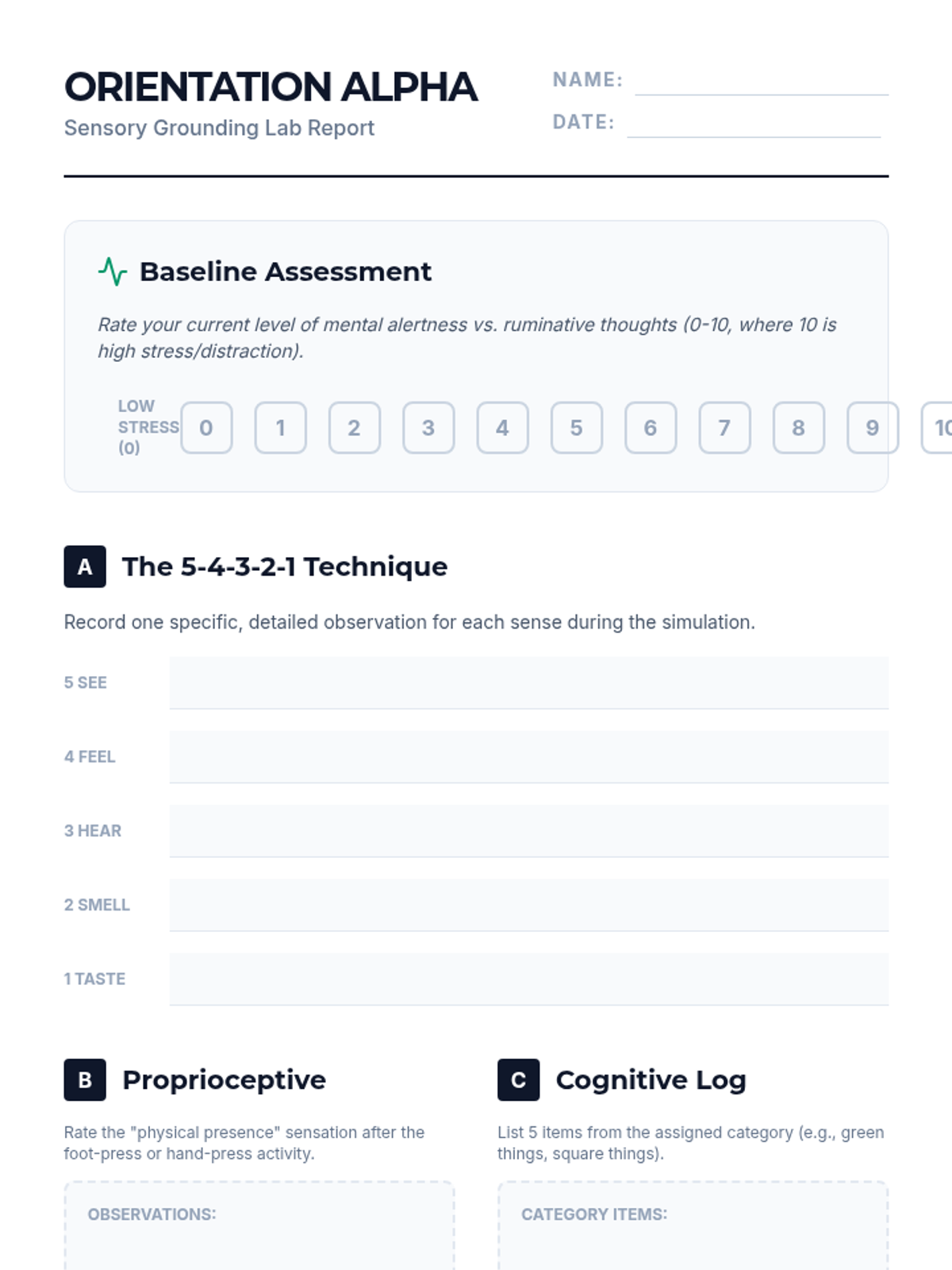
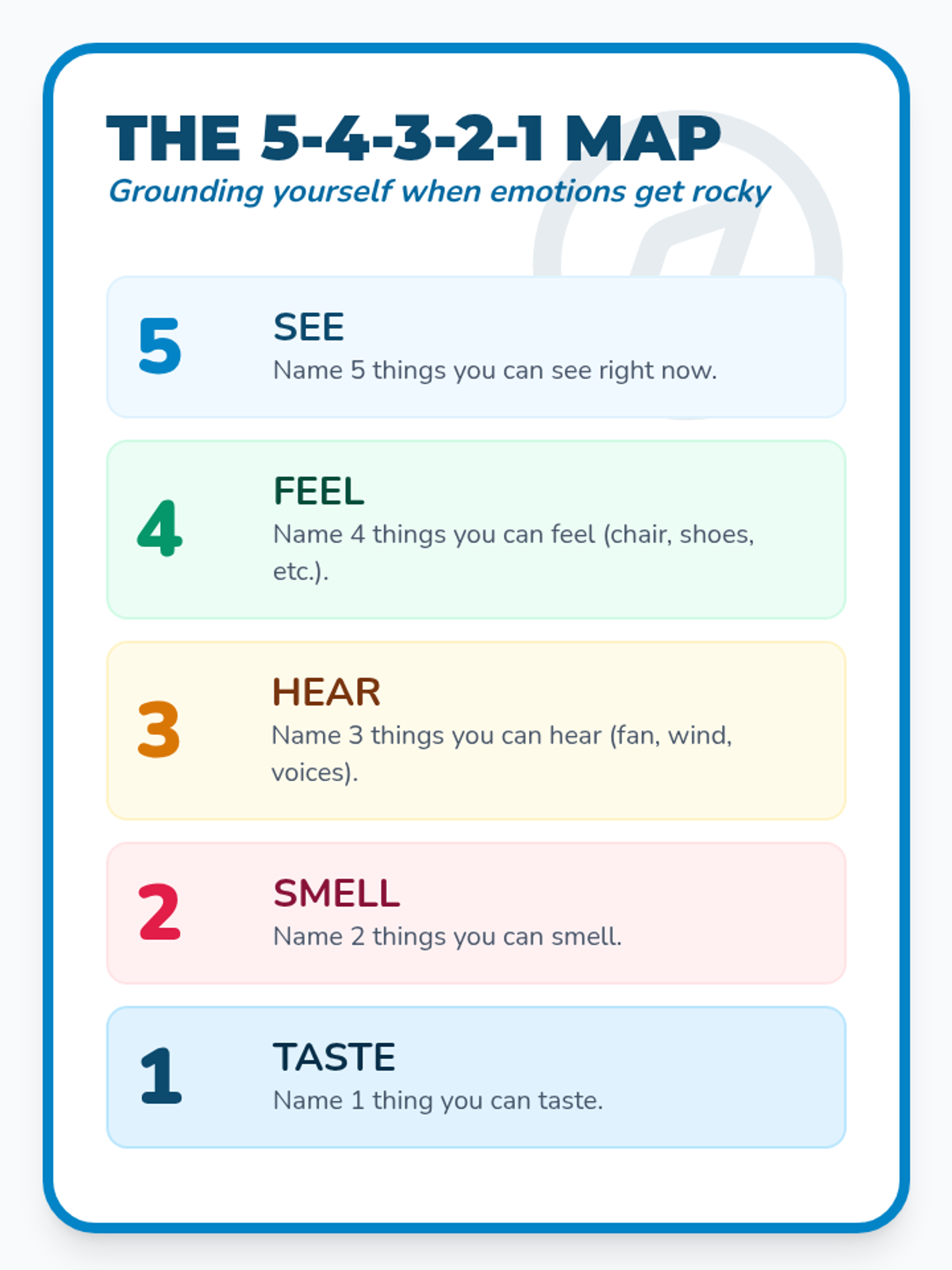
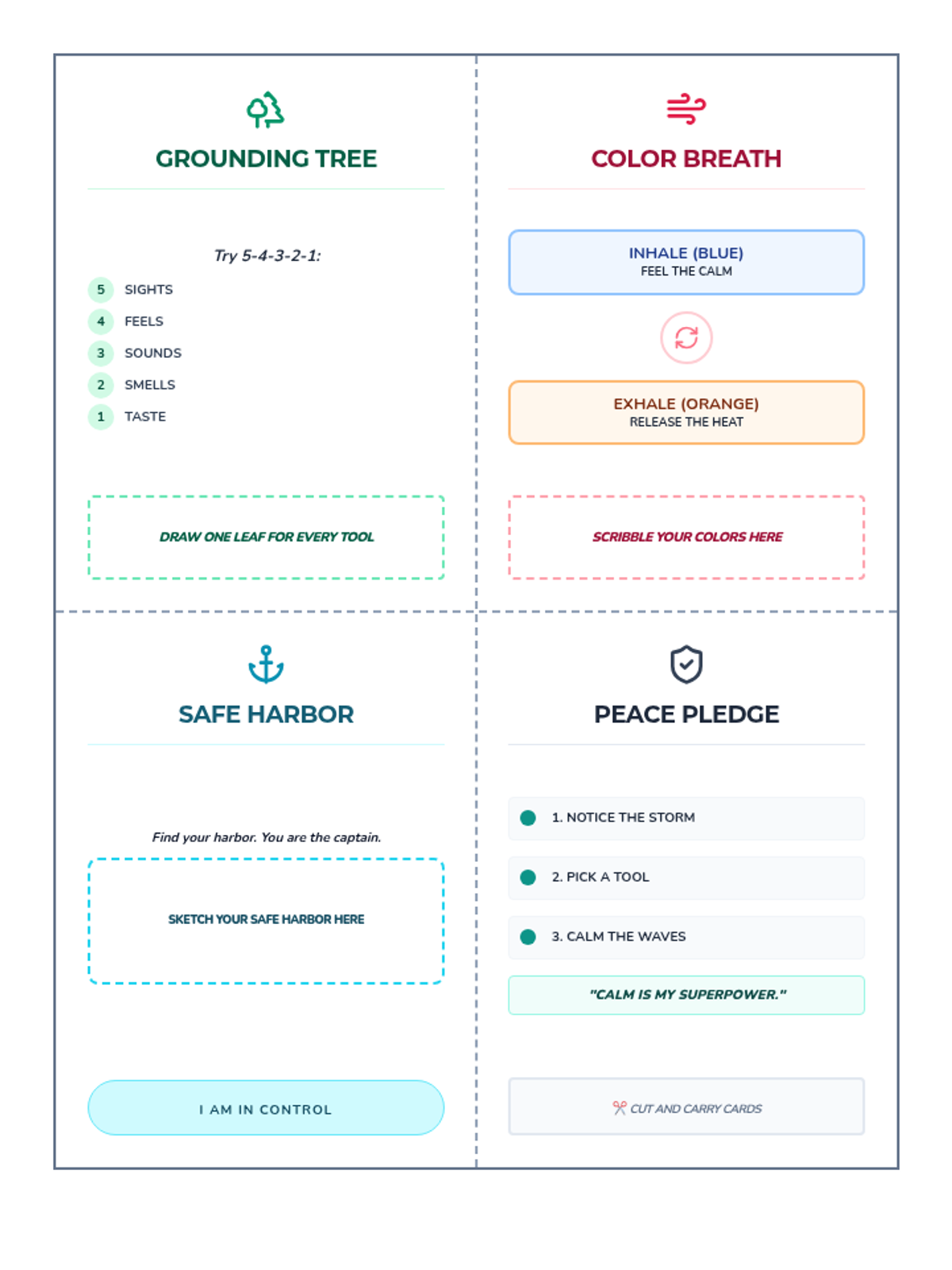
Students practice the 5-4-3-2-1 technique and other sensory-based orientation strategies to reconnect with the present moment. The lesson explains the science of how sensory input overrides ruminative thought loops.
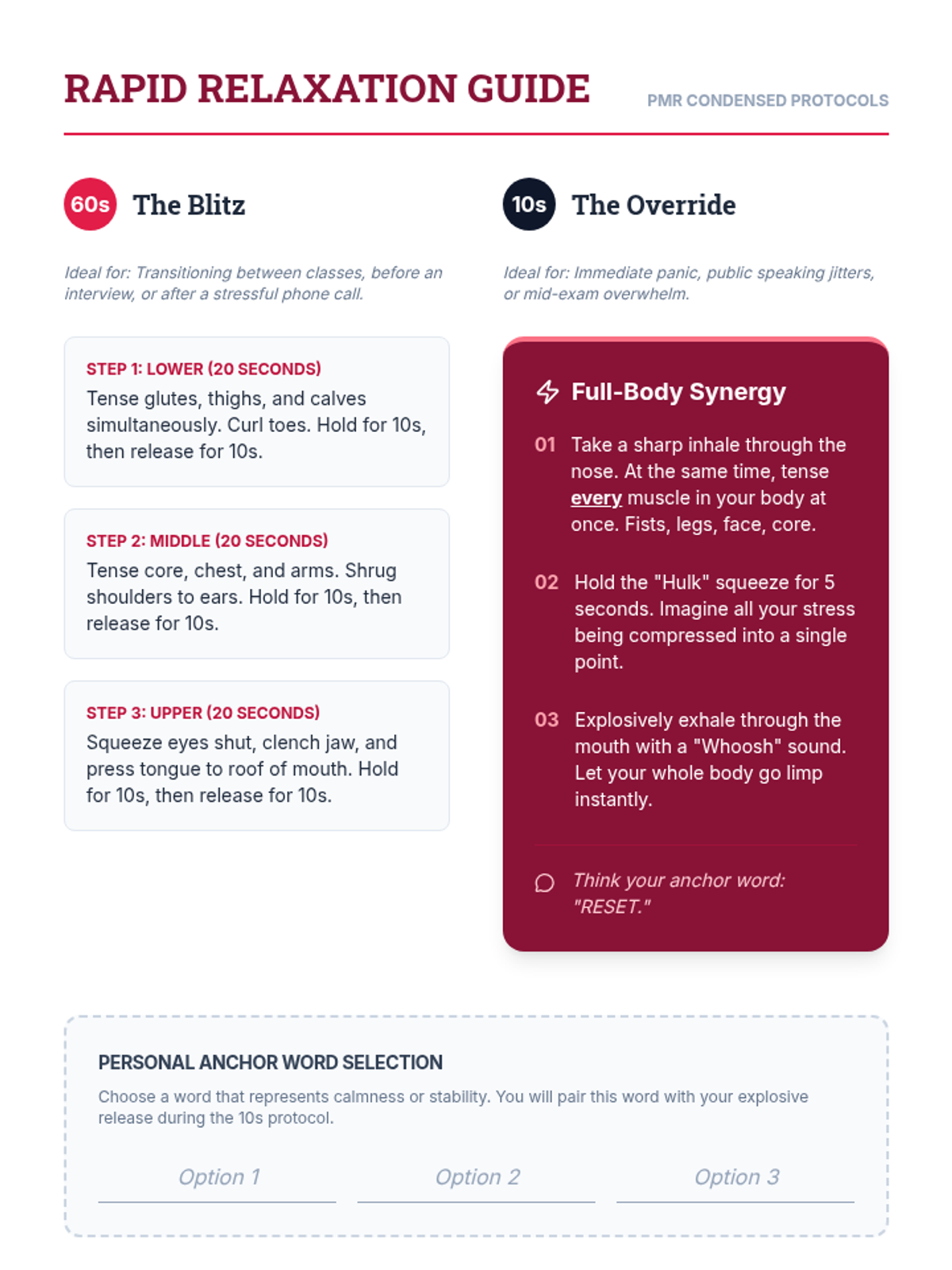
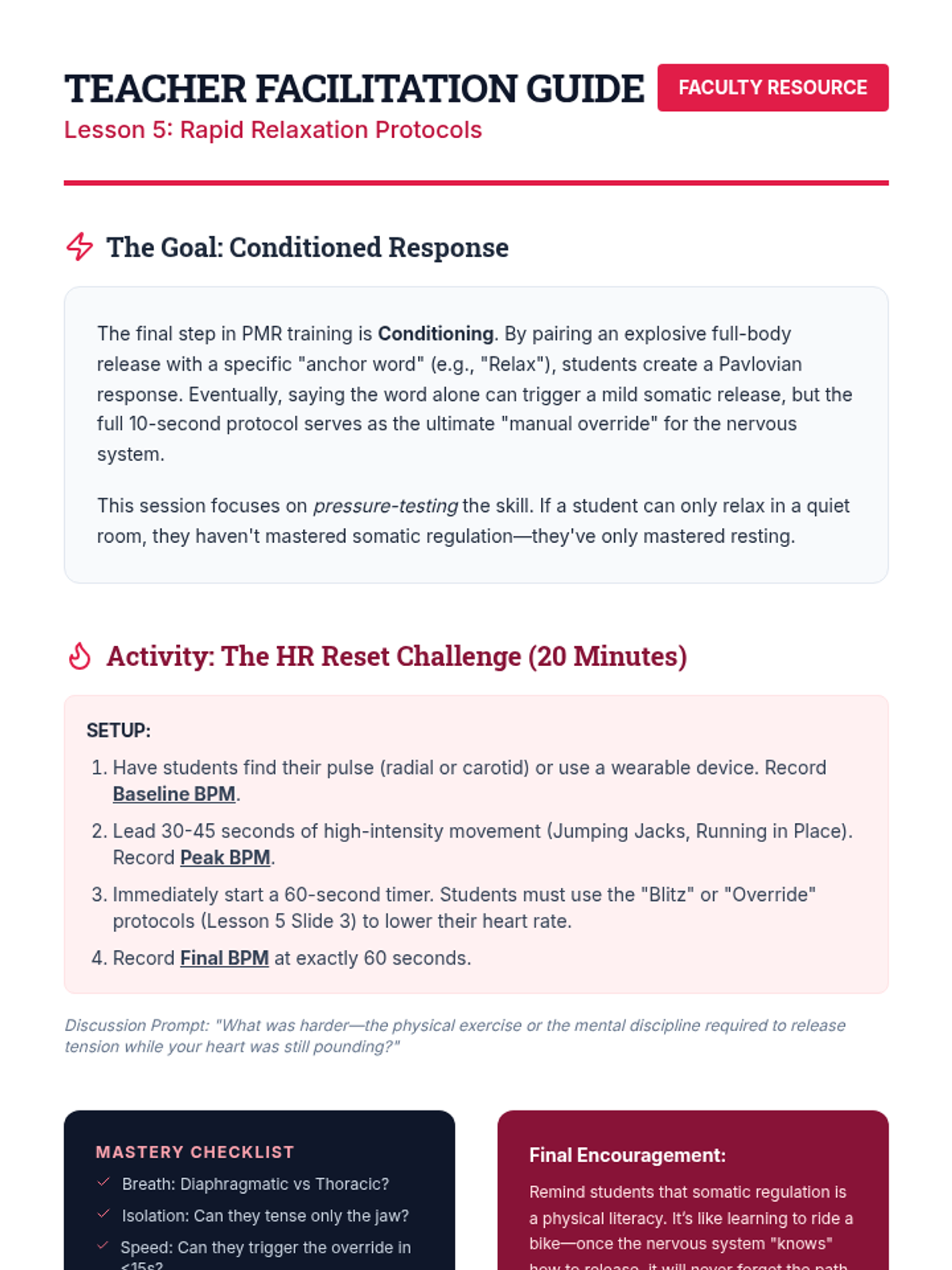
Students condense the full PMR session into 60-second and 10-second versions. They simulate high-stress environments to practice deploying these rapid techniques effectively.
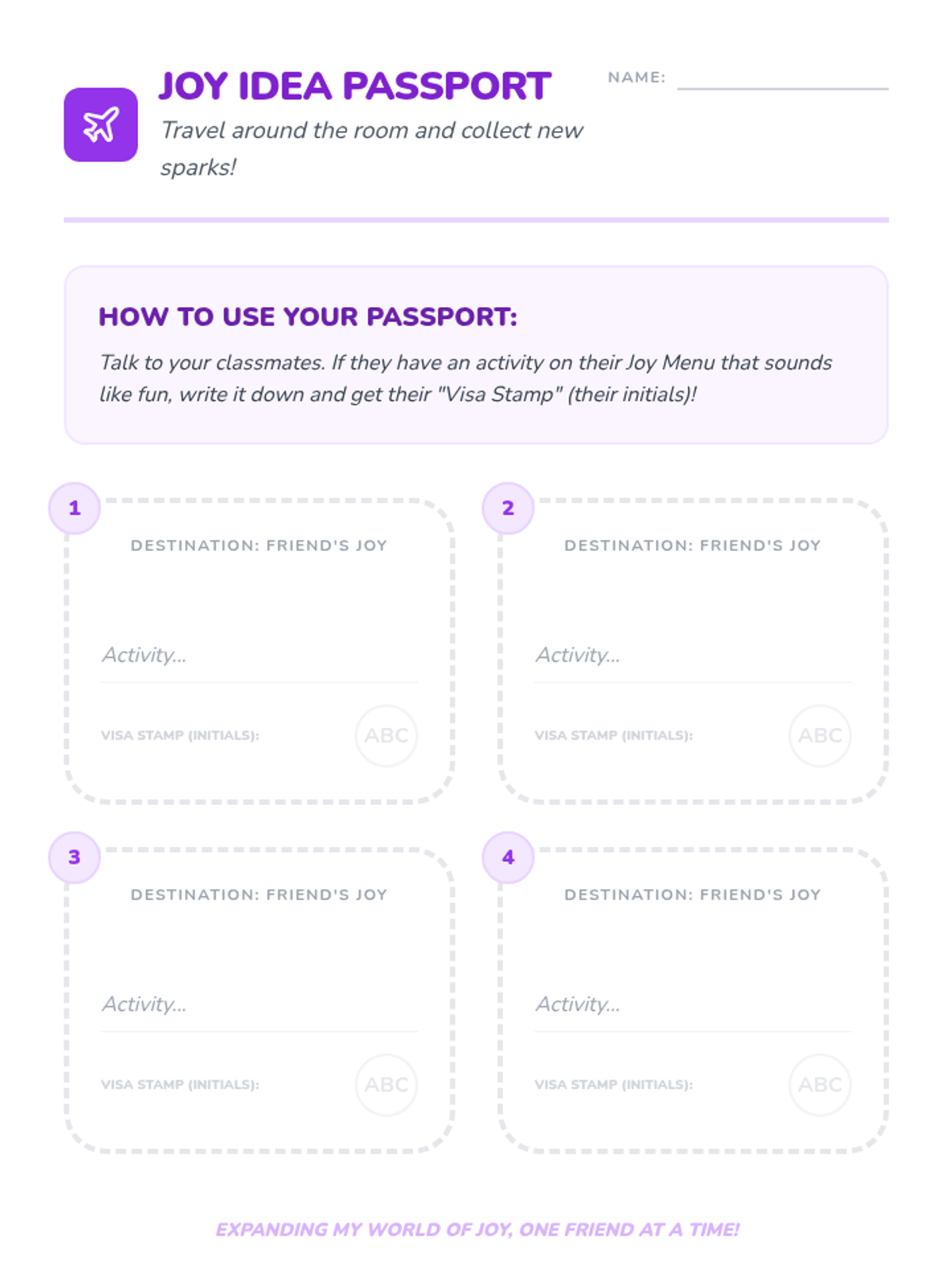
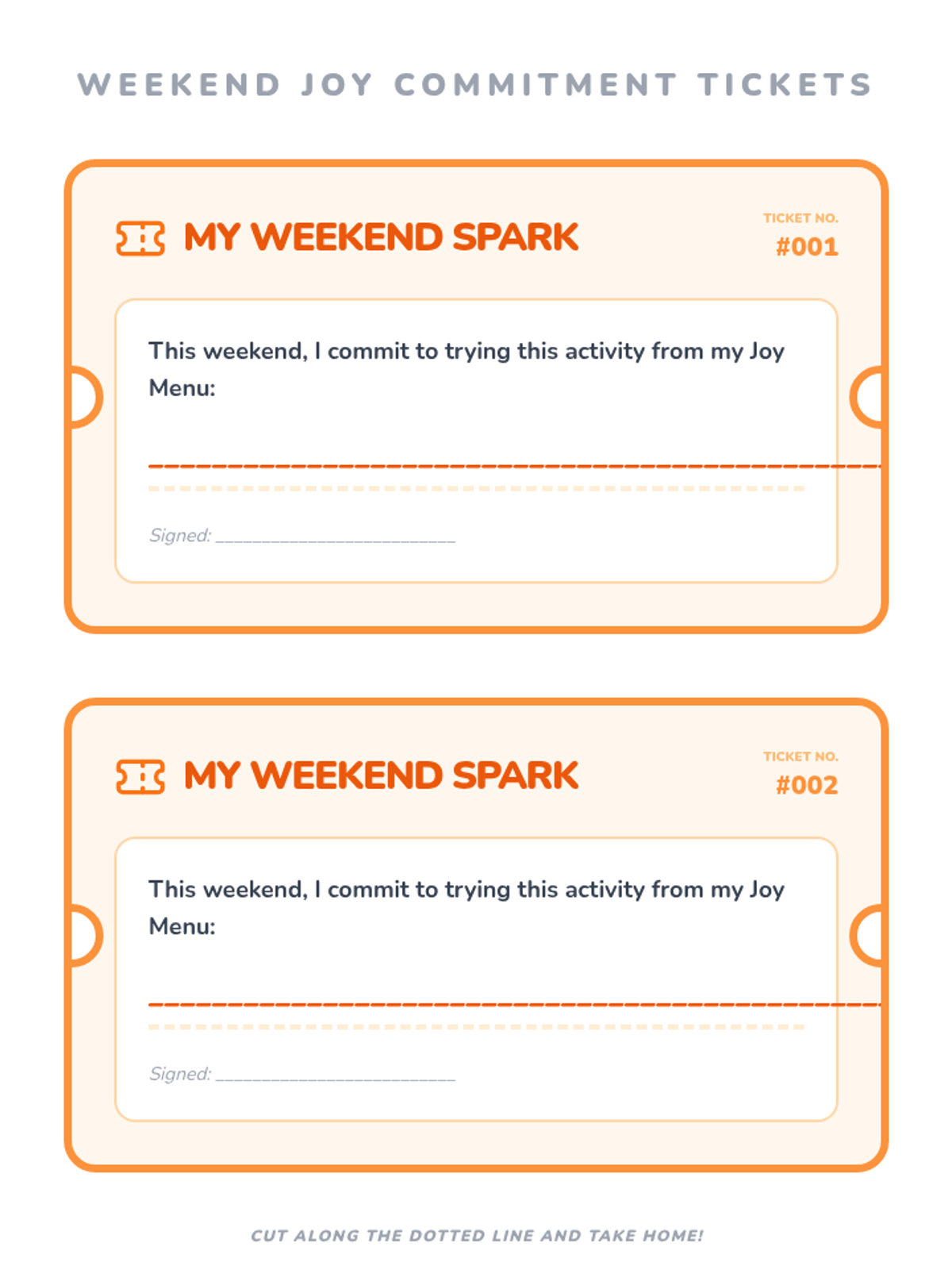
Students present their Joy Menus to small groups, allowing peers to borrow ideas to add to their own lists. The lesson concludes with a commitment to try one menu item over the weekend.
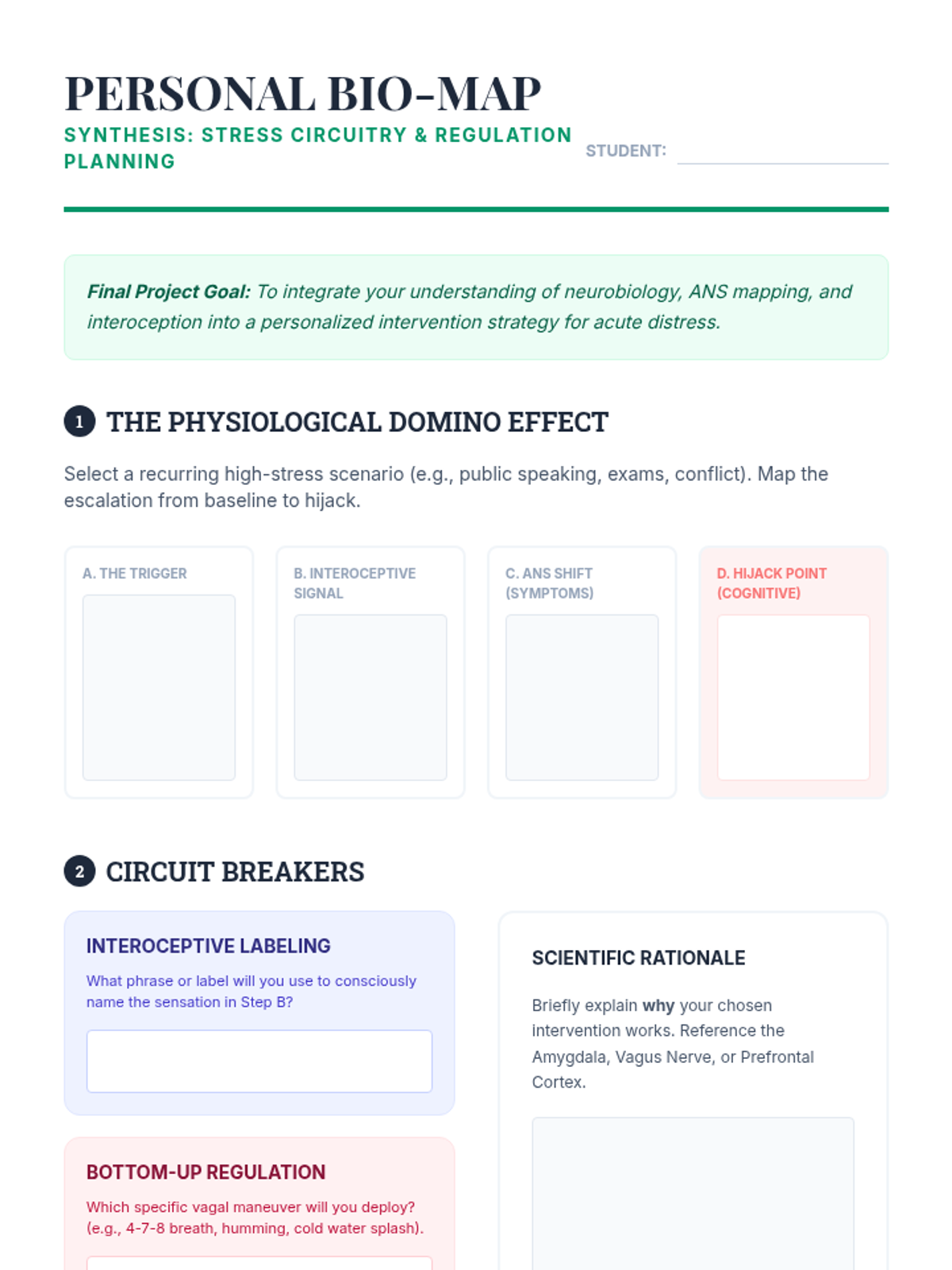
Students integrate their knowledge to create a personal 'bio-map' of their stress escalation cycle. They present how specific physiological interventions can interrupt this cycle at various stages.
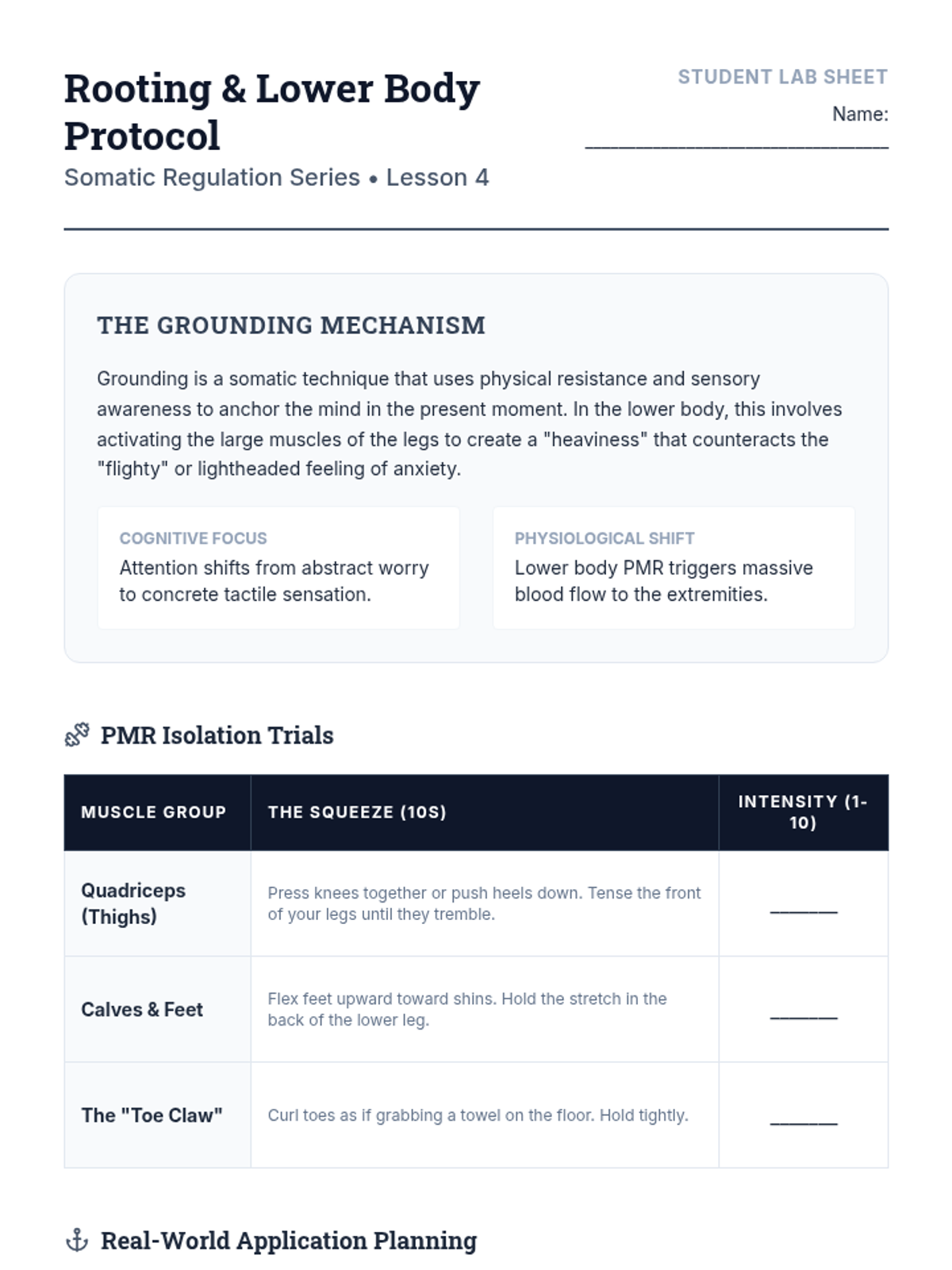
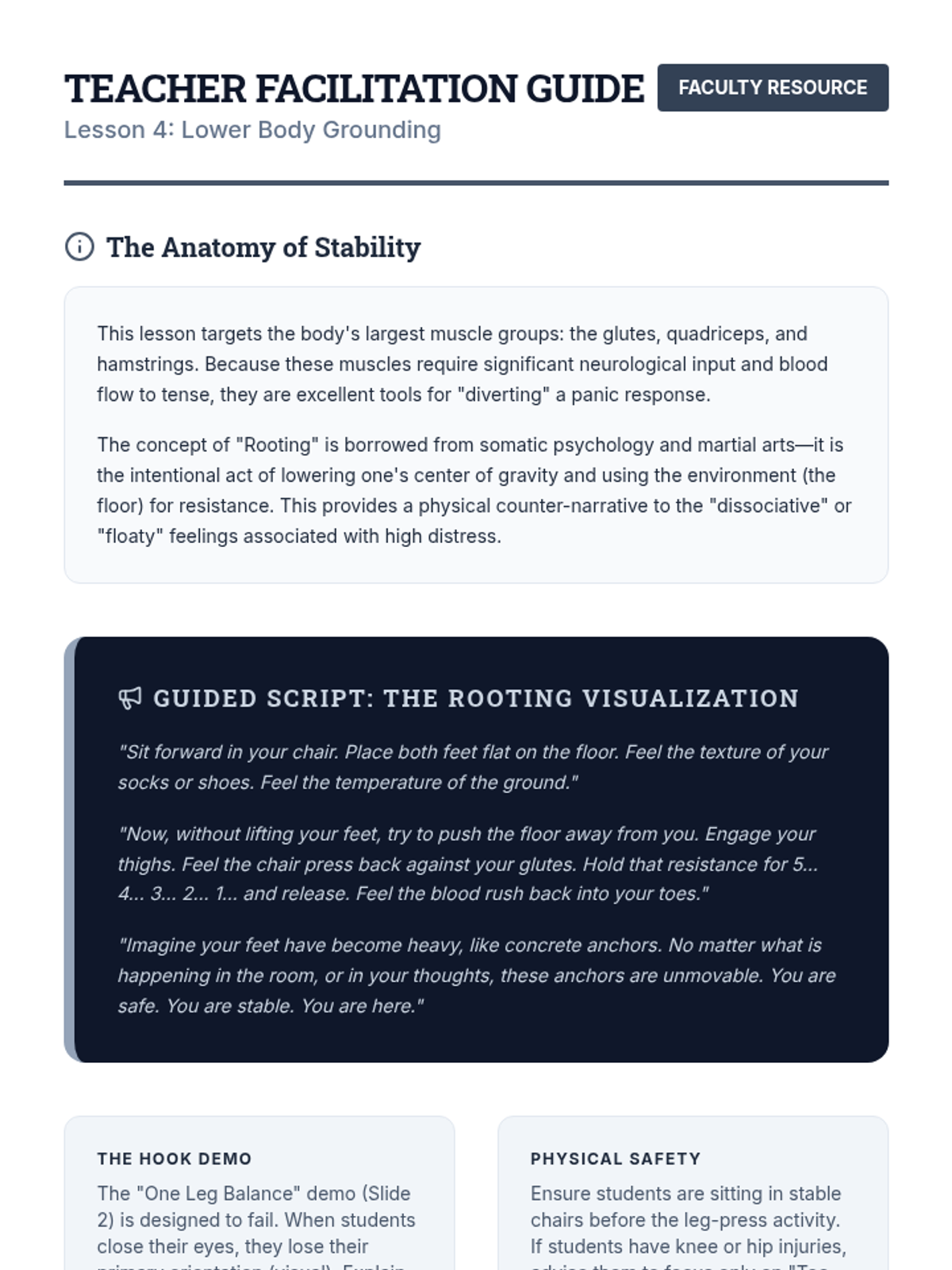
The focus shifts to the legs and feet to establish a physical sense of stability. Students learn to use the floor for resistance and grounding during seated lectures or exams.
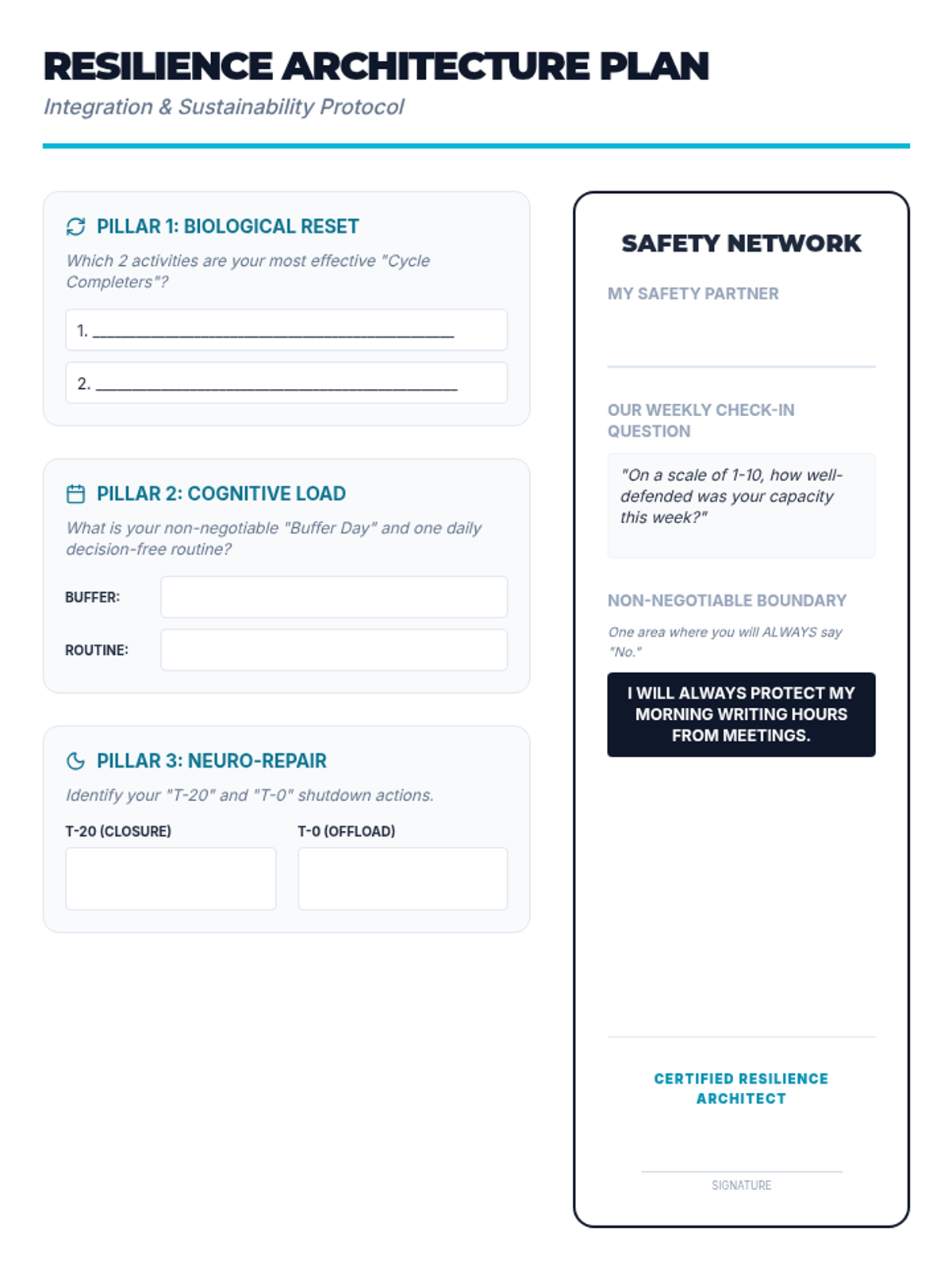
Final synthesis where students integrate all learned modules into a personalized Resilience Architecture plan and a portable Crisis Card for emergency restoration.
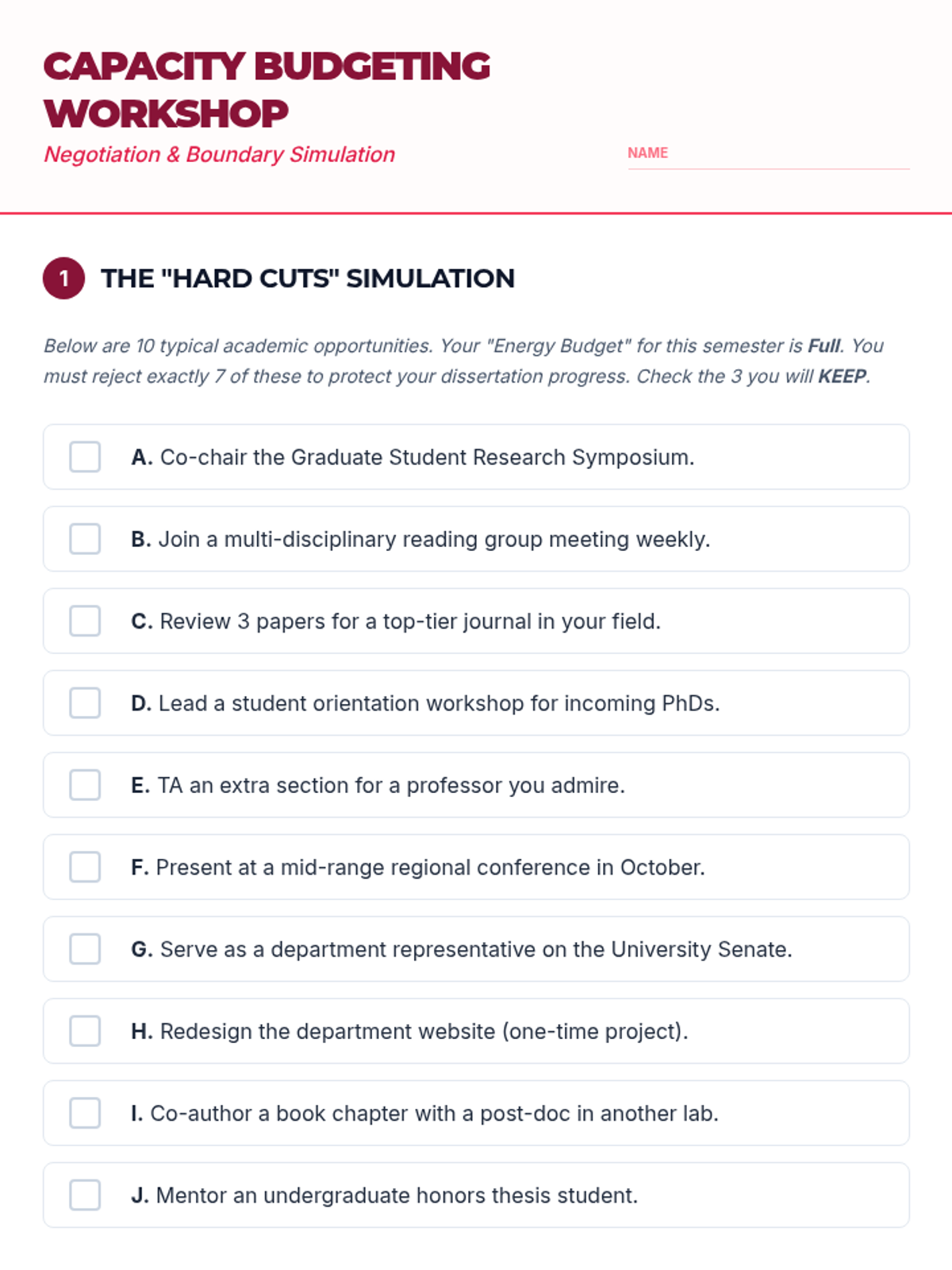
Addresses the pressure to overcommit in academia by teaching the 'Strategic No' as a tool for protecting capacity and ensuring career longevity.
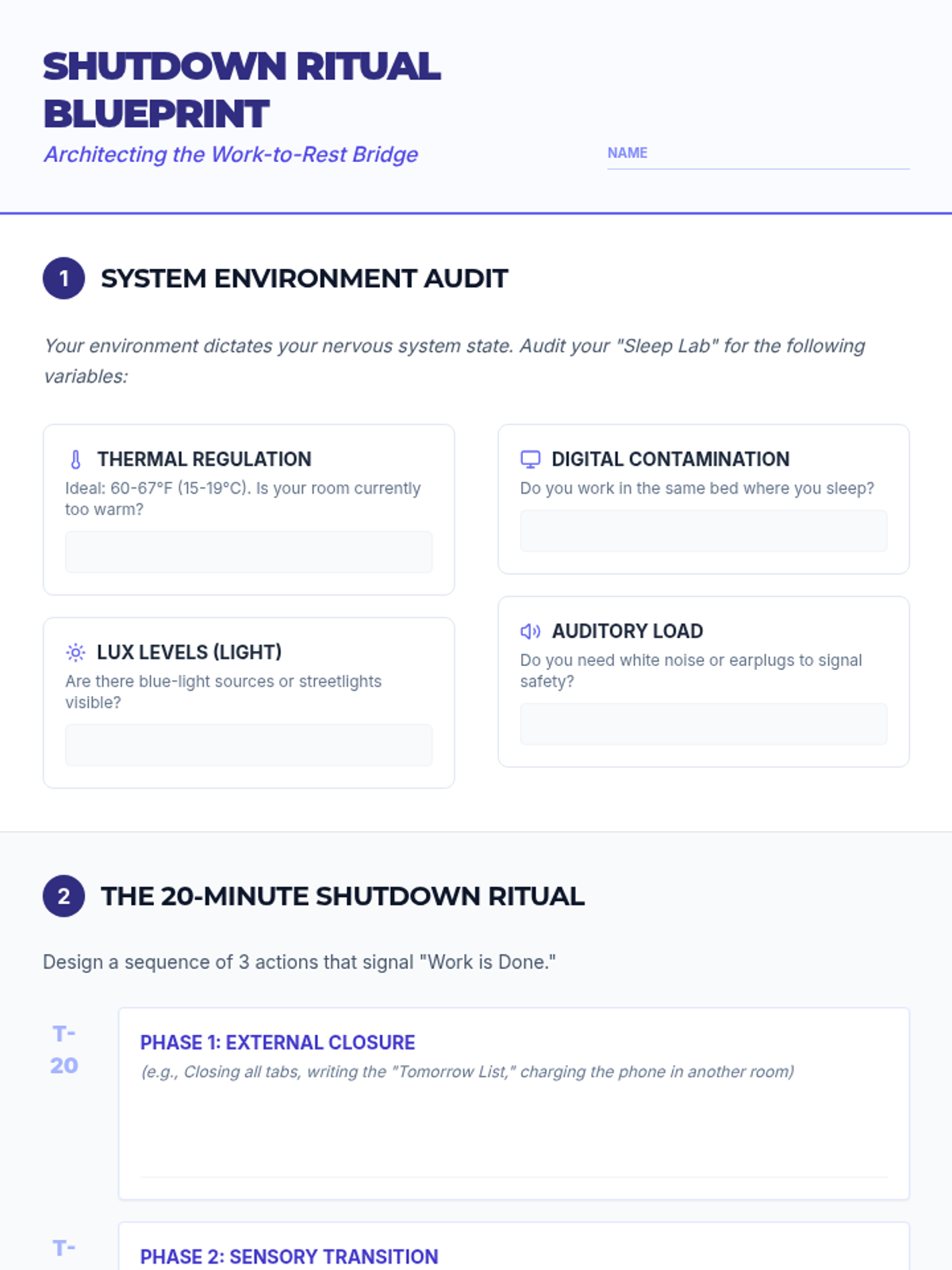
Explores the neurobiology of sleep and its role in emotional regulation, culminating in the design of a 'shutdown ritual' to combat revenge bedtime procrastination.
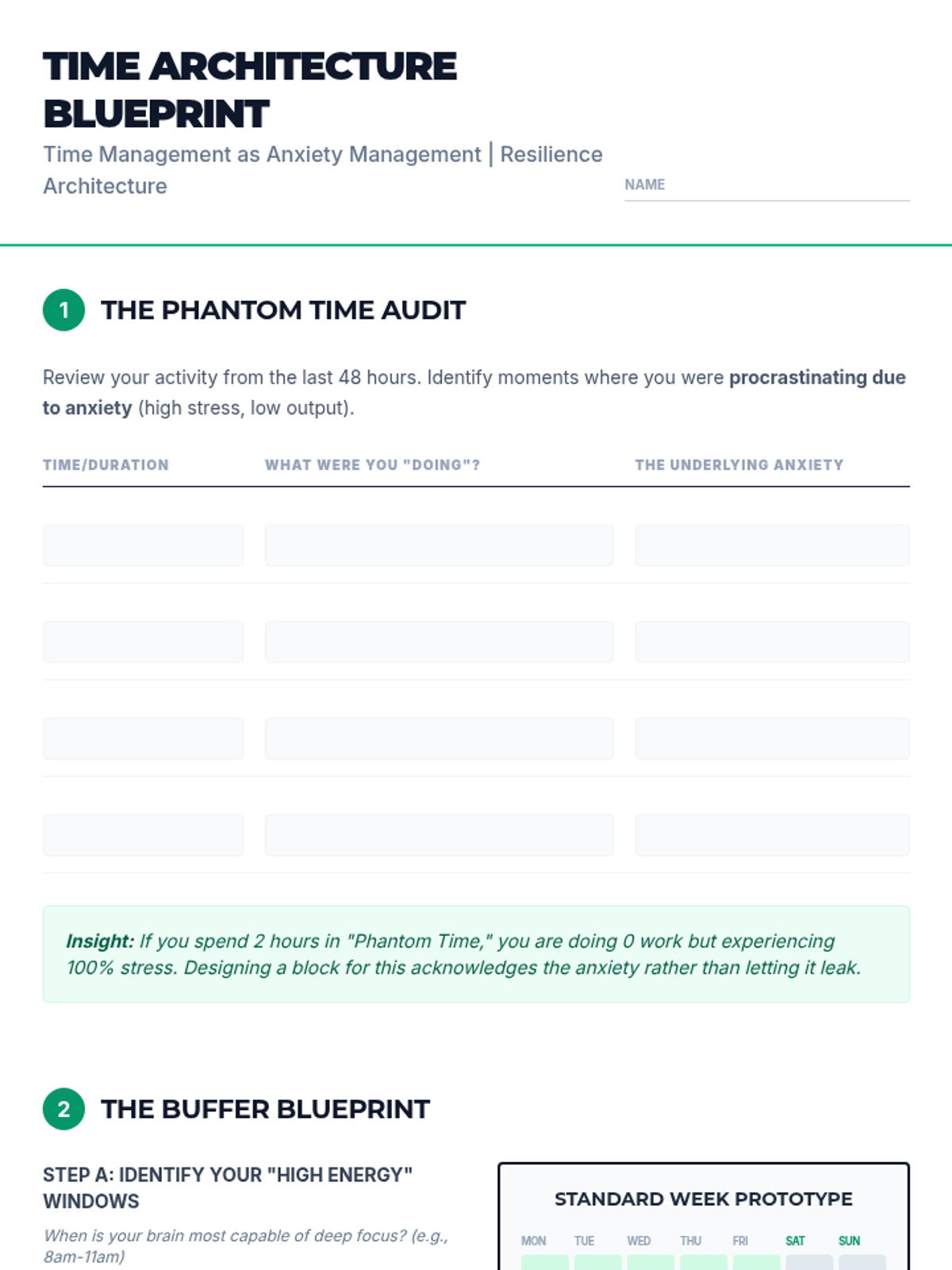
Reframes time management as a tool for reducing cognitive load and anxiety, teaching graduate students to design schedules based on energy levels and buffer capacity.
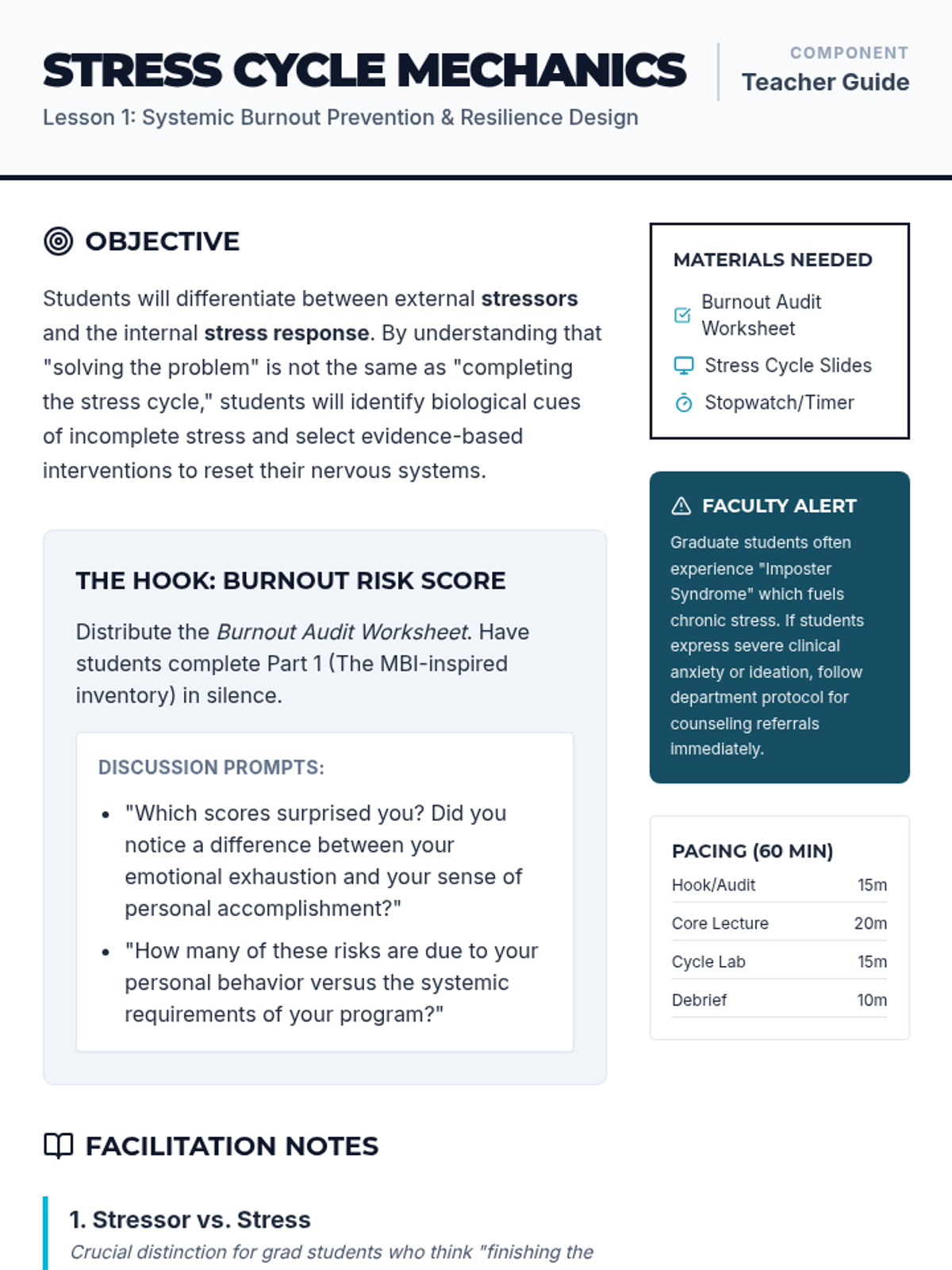
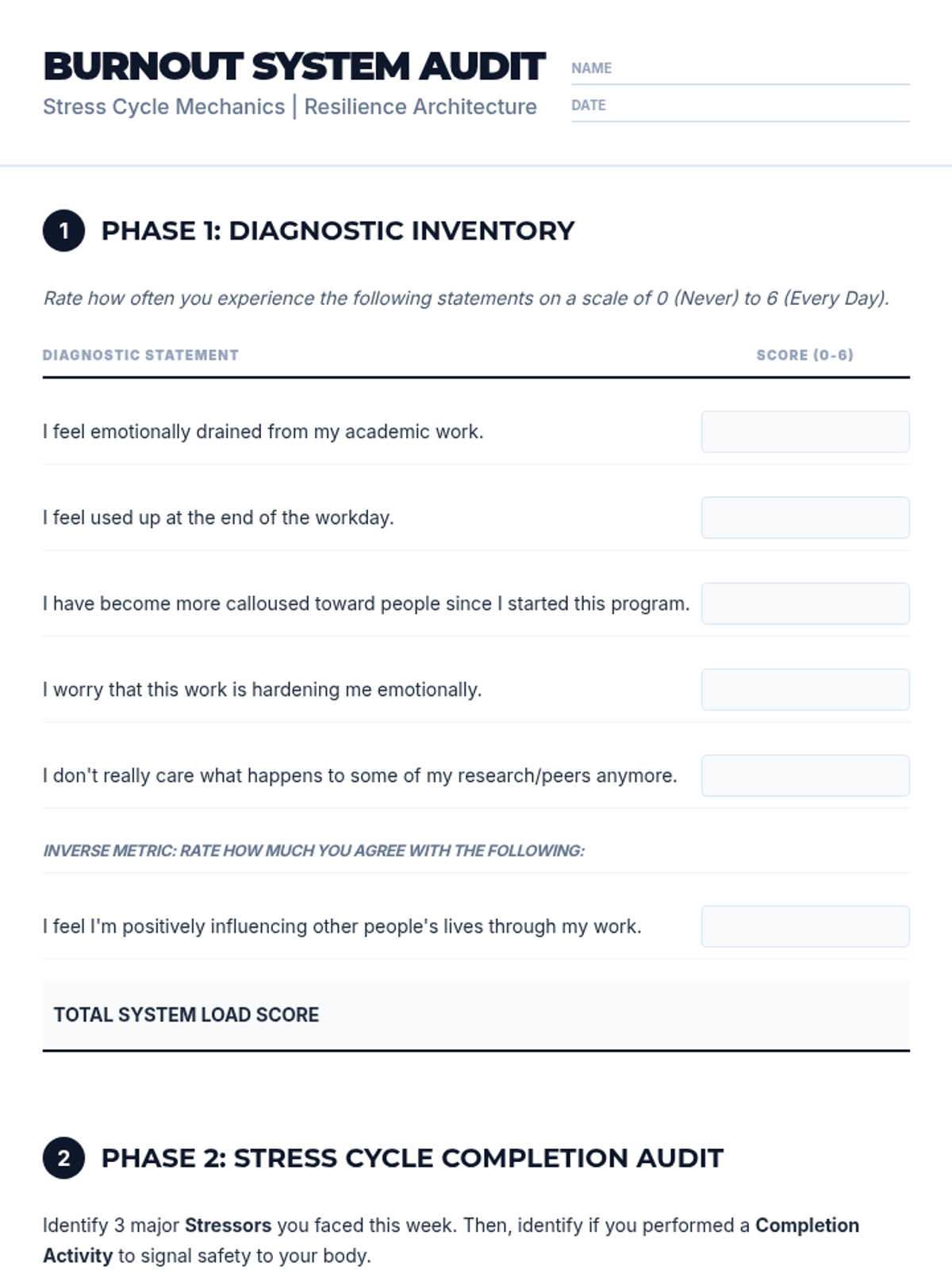
Students distinguish between stressors and the physiological stress response, auditing their current routines to ensure they are completing the stress cycle to prevent chronic burnout.
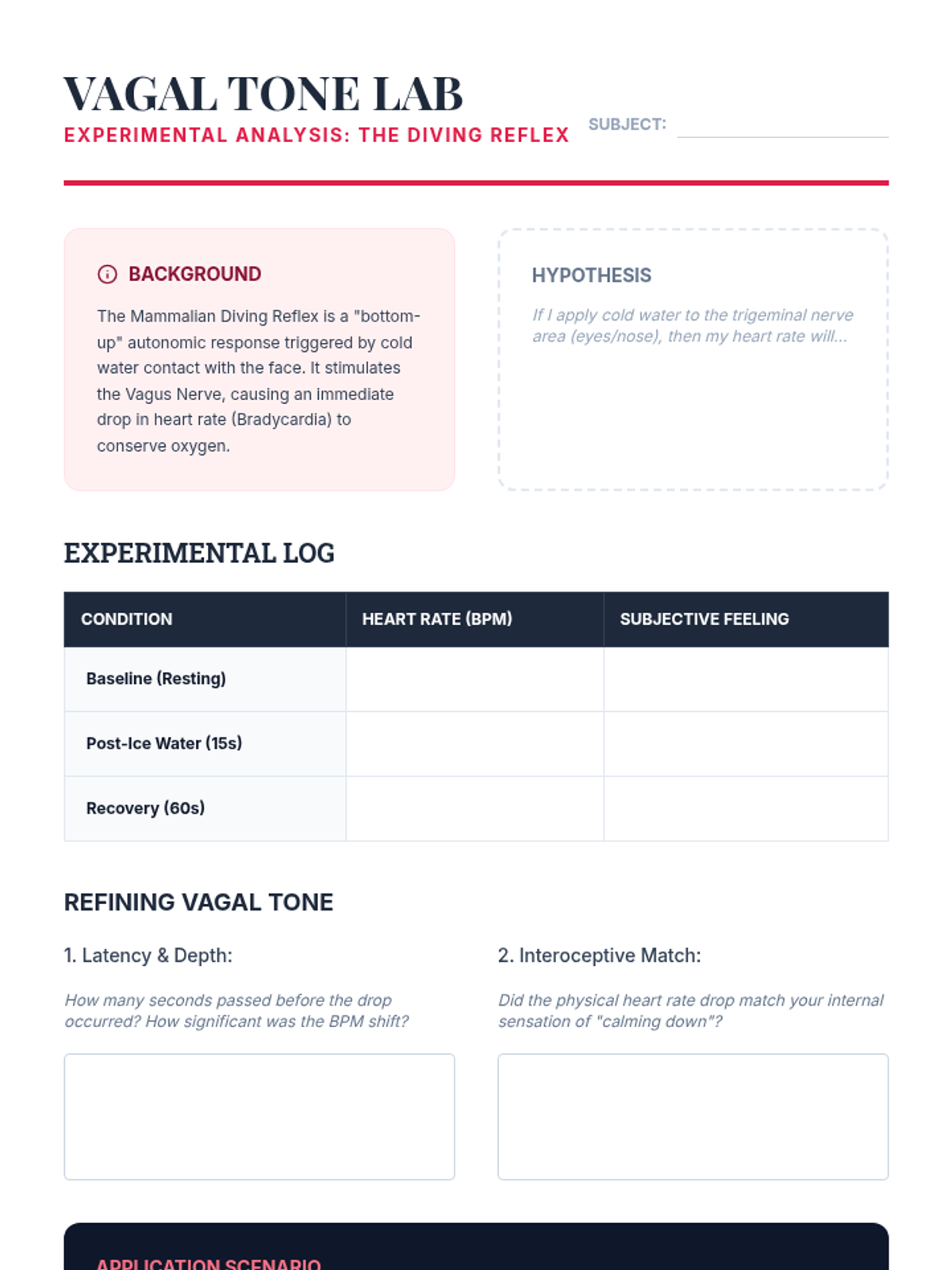
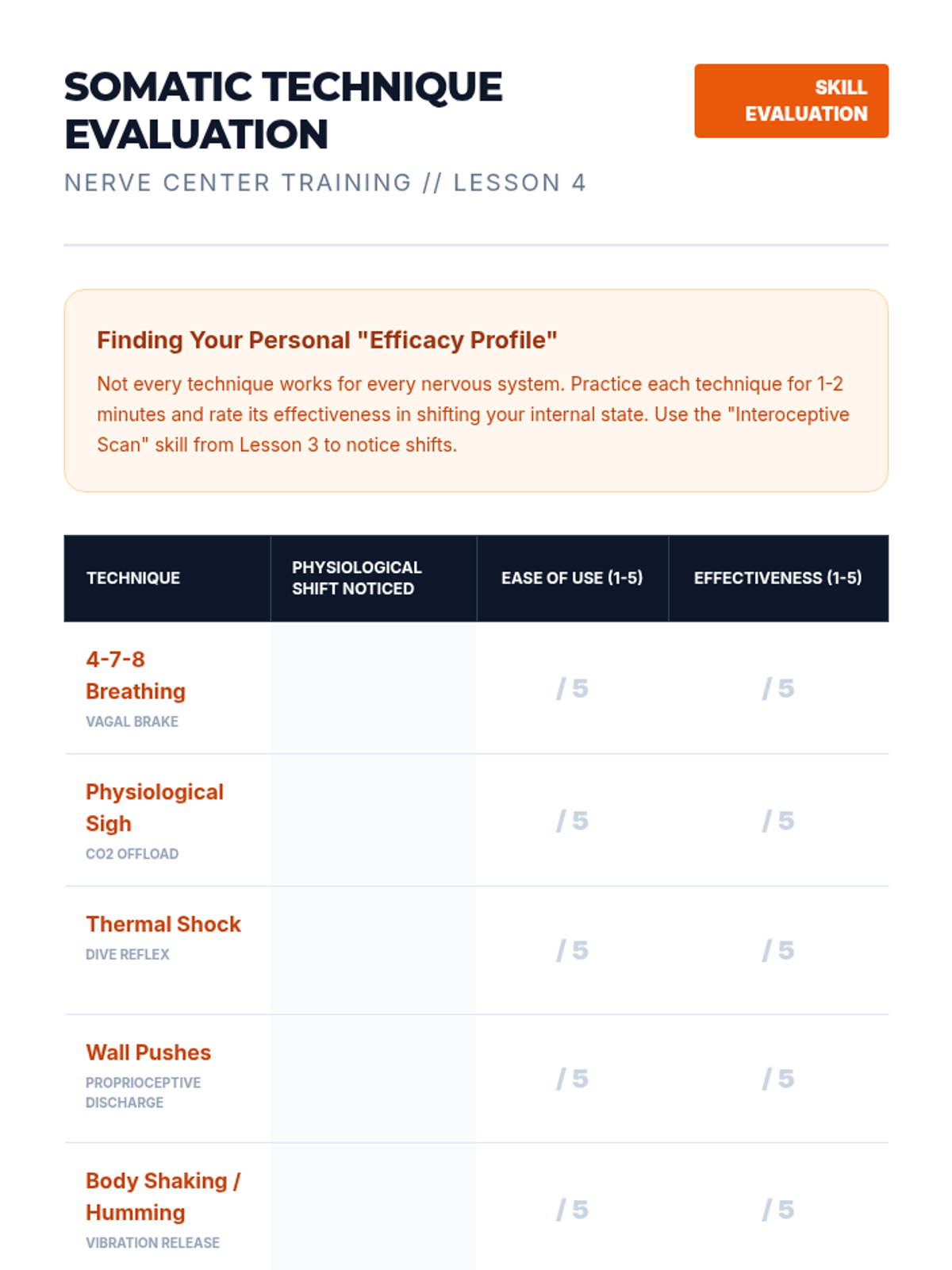
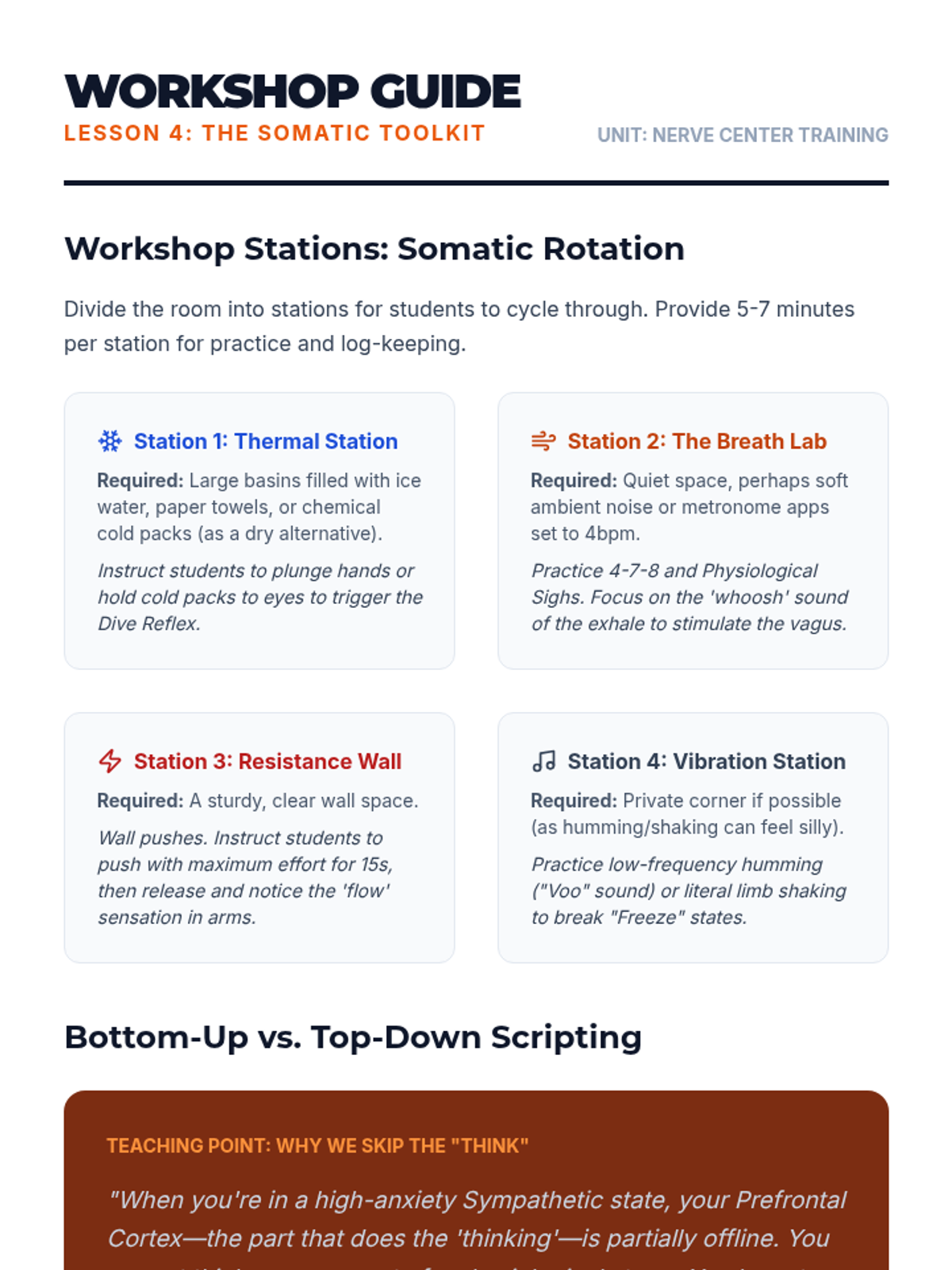
Participants investigate the role of the vagus nerve in regulating heart rate and calming the nervous system. They experiment with specific physical maneuvers (like cold exposure or humming) that stimulate vagal tone.
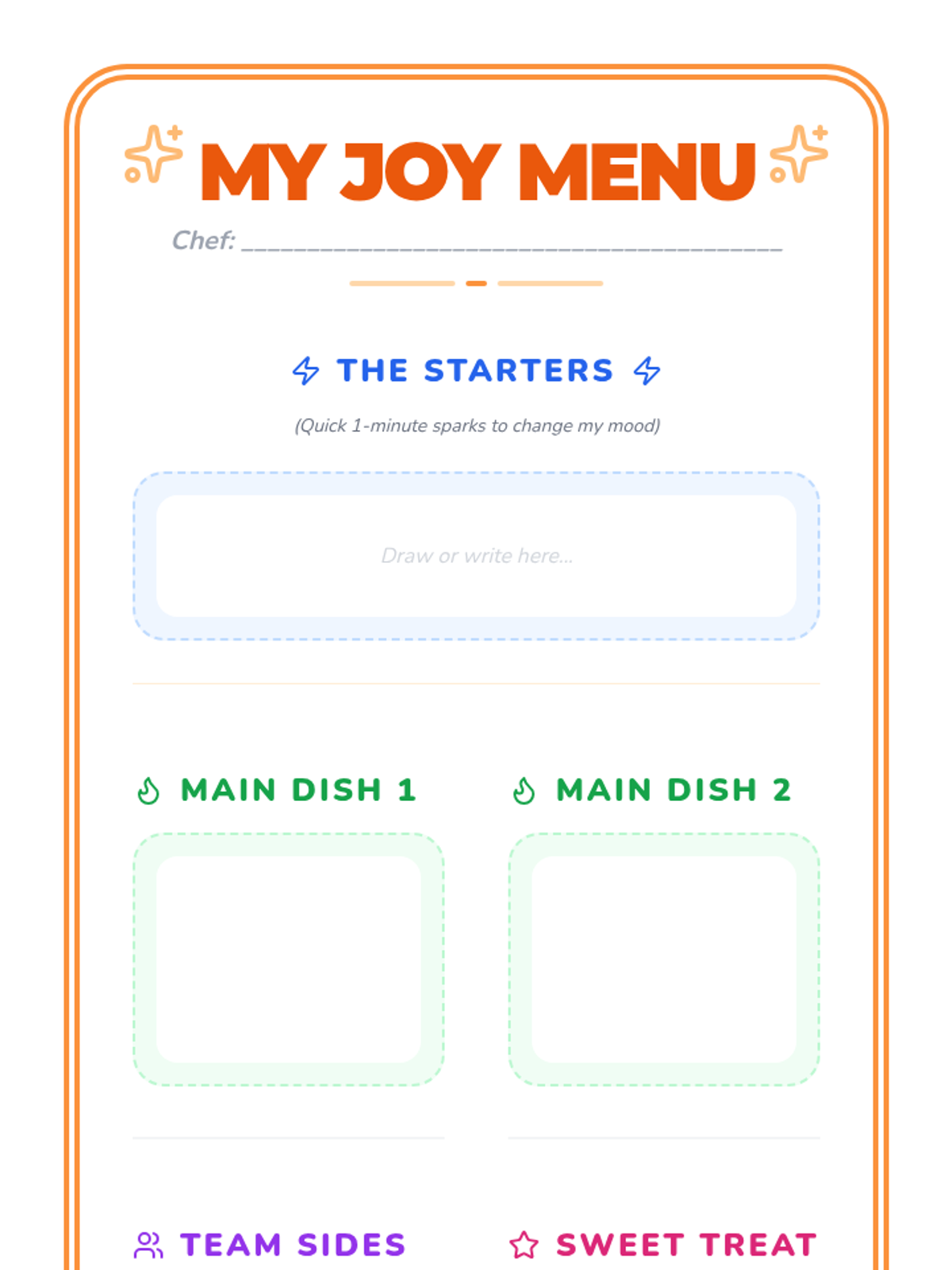
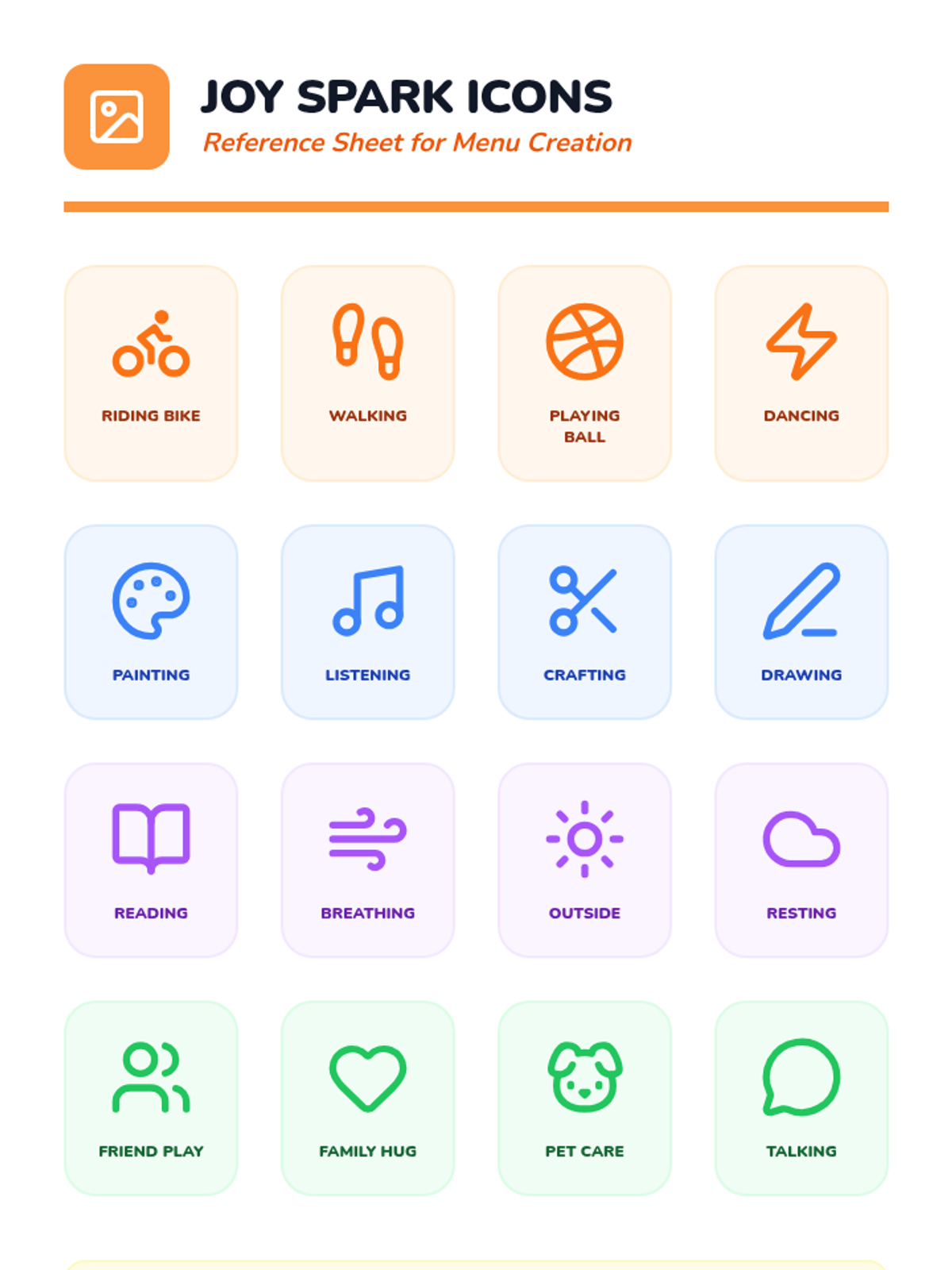
Using their investigations, students create a visual 'menu' or choice board of their top 5 reliable mood-boosting activities. They illustrate these options to serve as a reference tool.
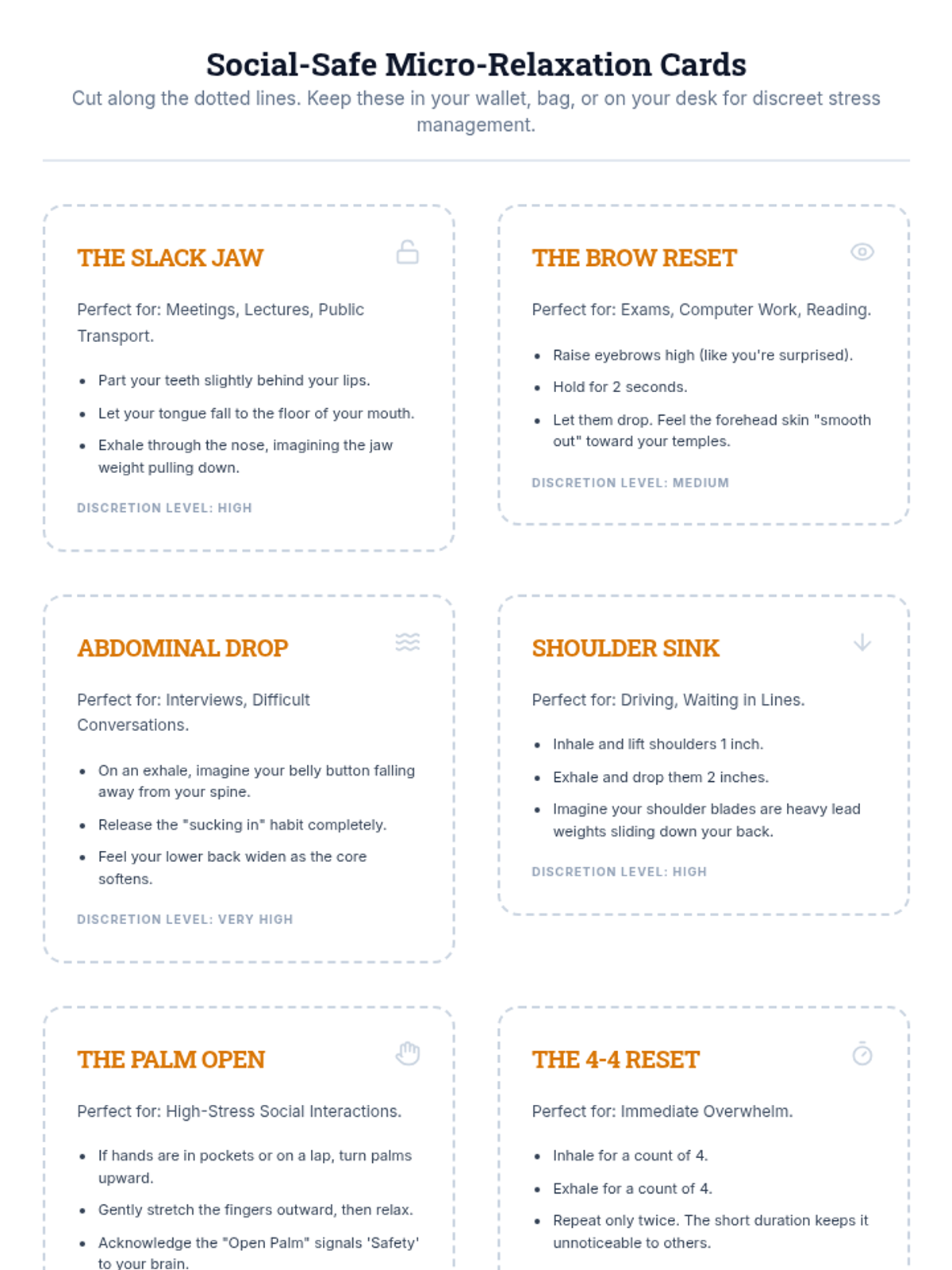
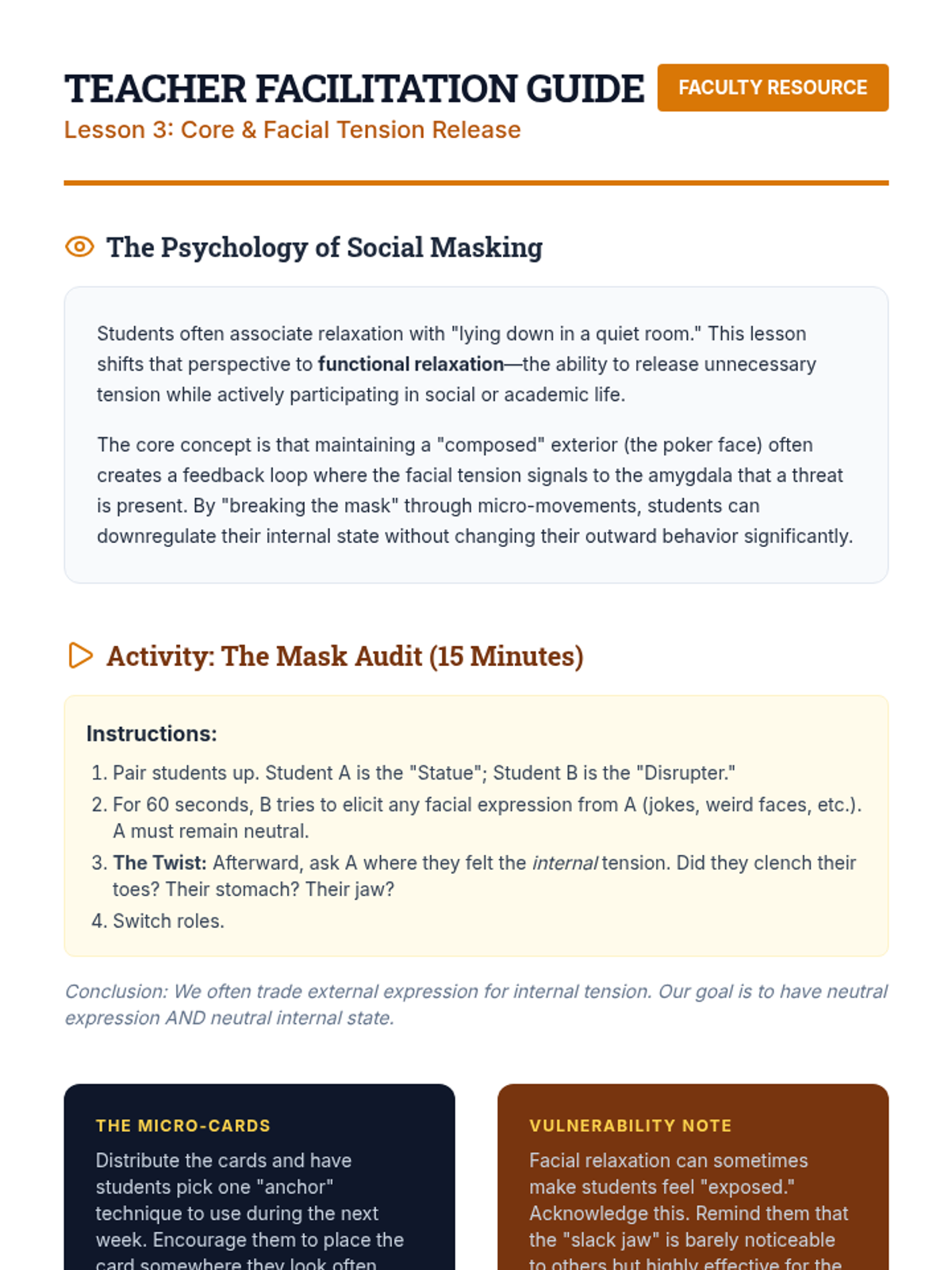
Students focus on the often-ignored areas of the jaw, forehead, and abdomen where stress accumulates. The lesson emphasizes micro-movements to release tension in social settings.
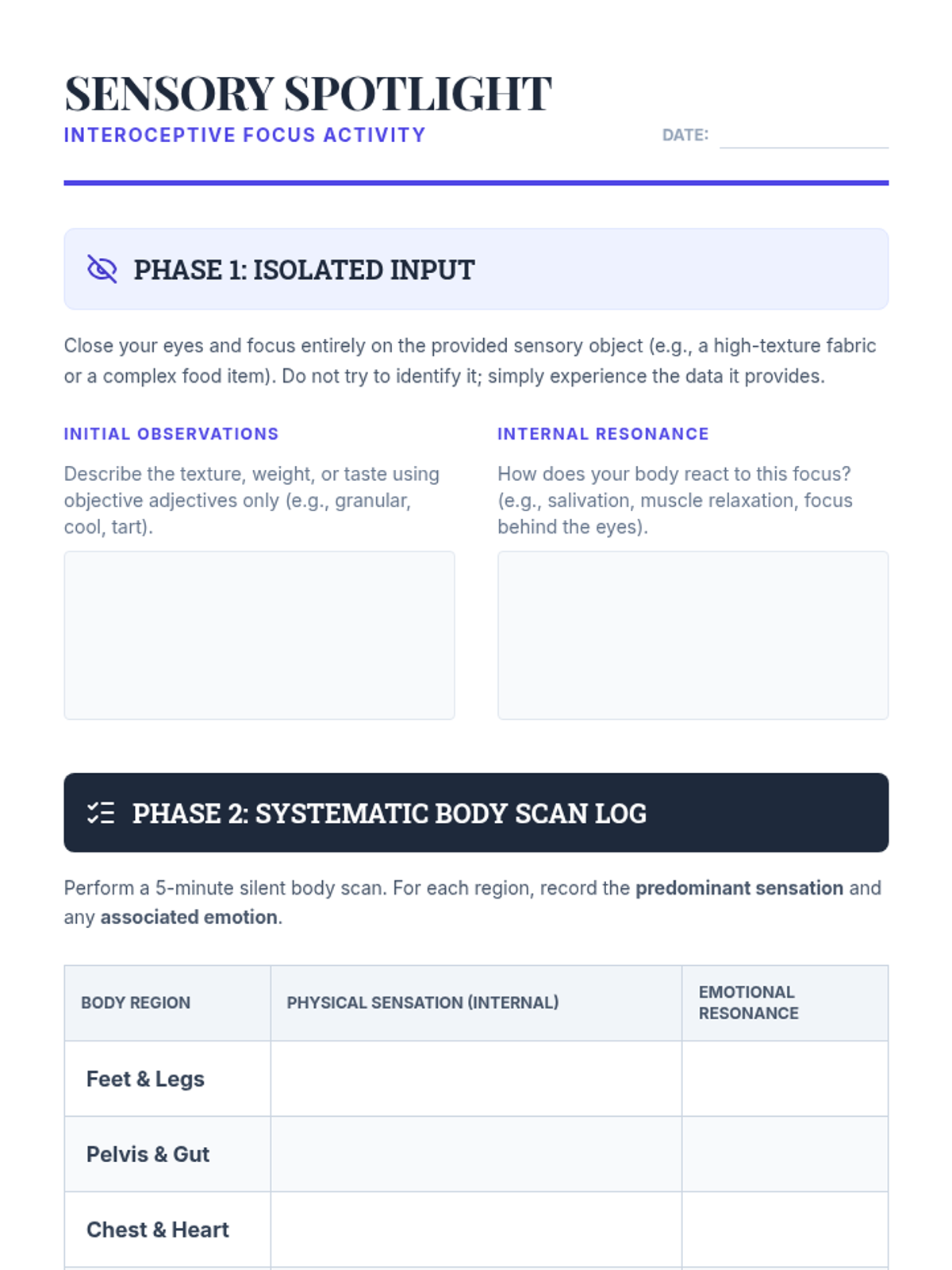
Students practice focused attention on internal bodily sensations to detect early warning signs of distress. The lesson moves from guided body scans to independent practice in identifying subtle tension.
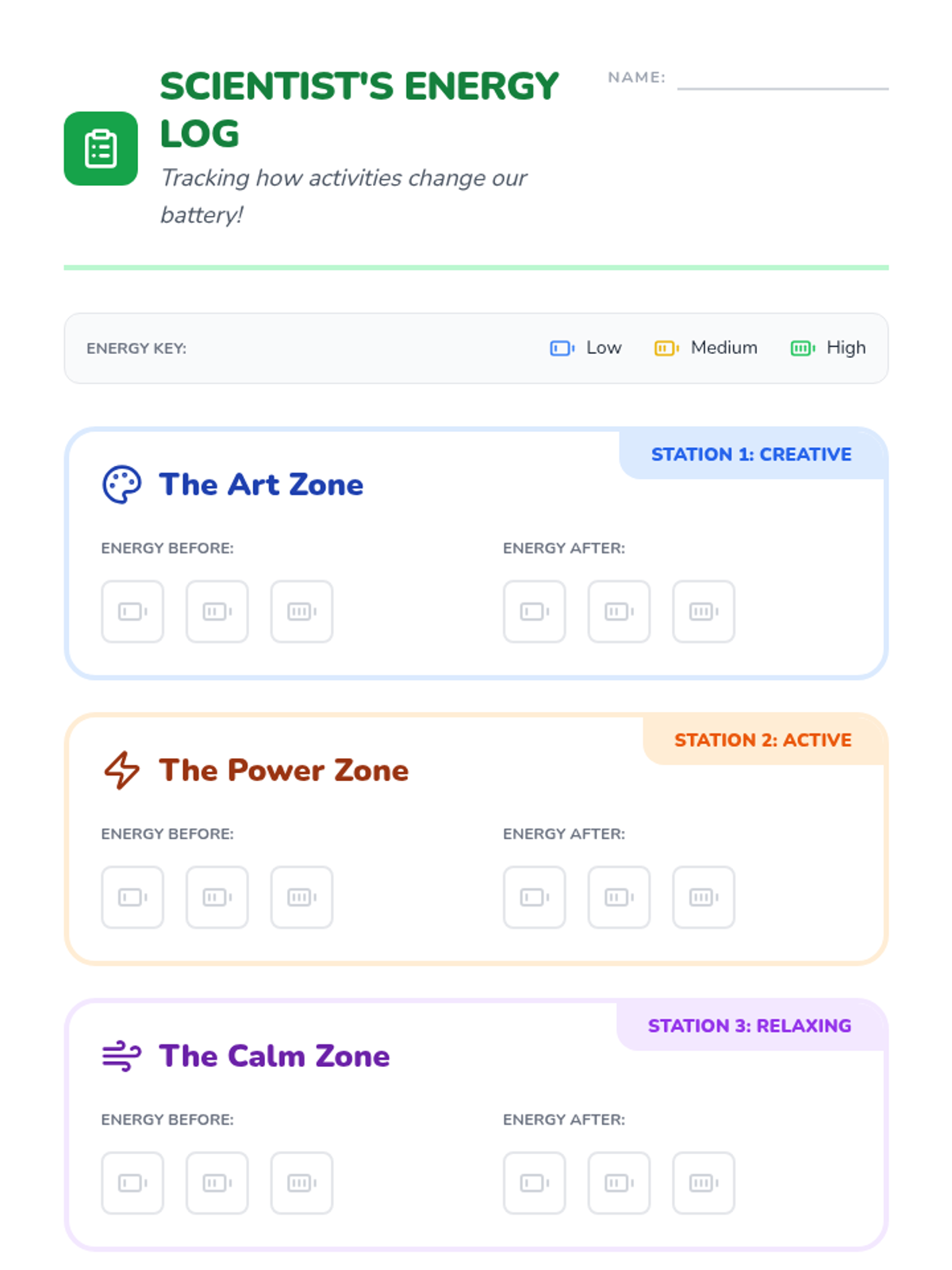
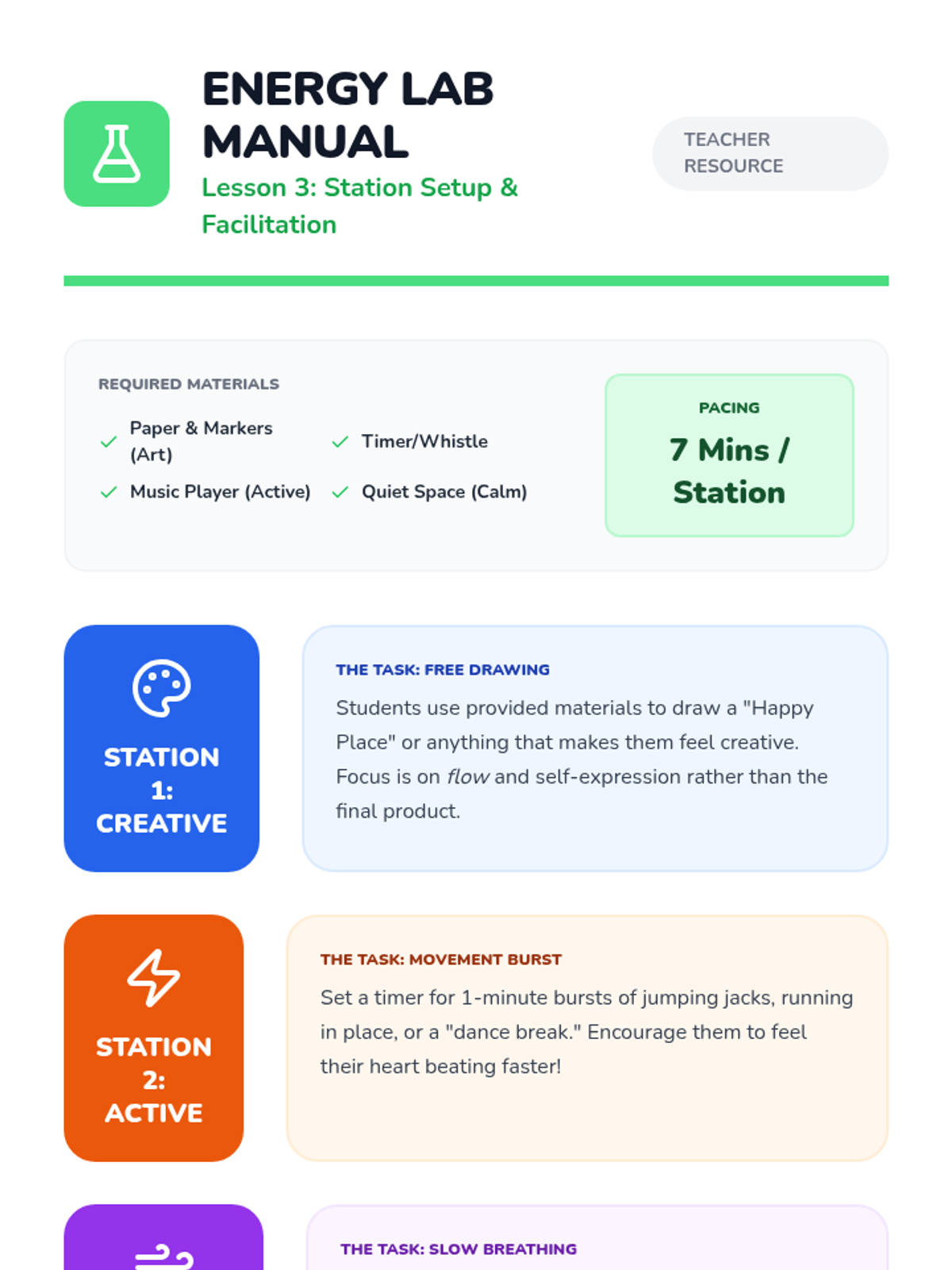
Students rotate through stations testing different types of positive engagement: creative (drawing), active (jumping jacks), and relaxing (deep breathing). They record how each station changes their energy level.
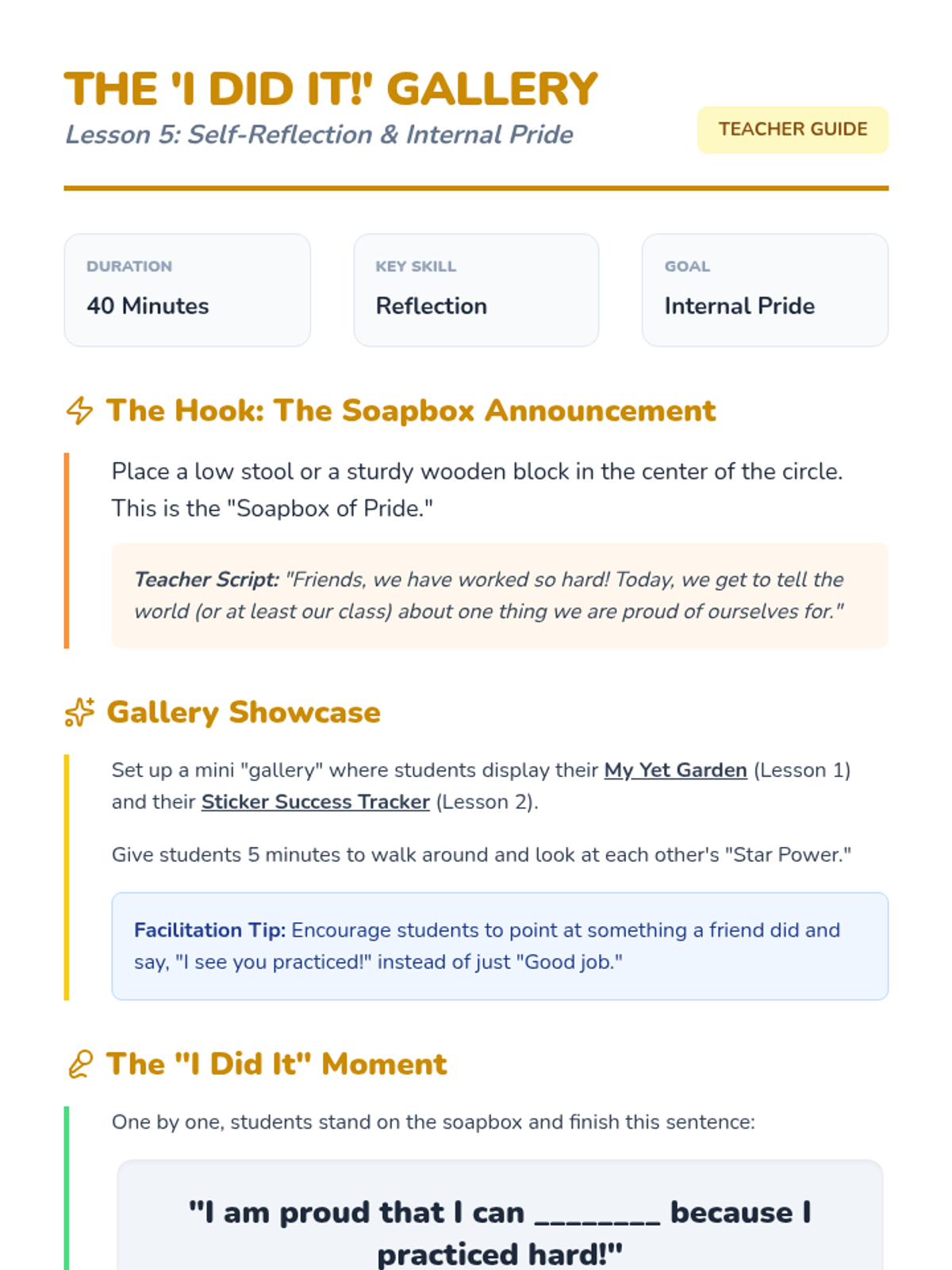
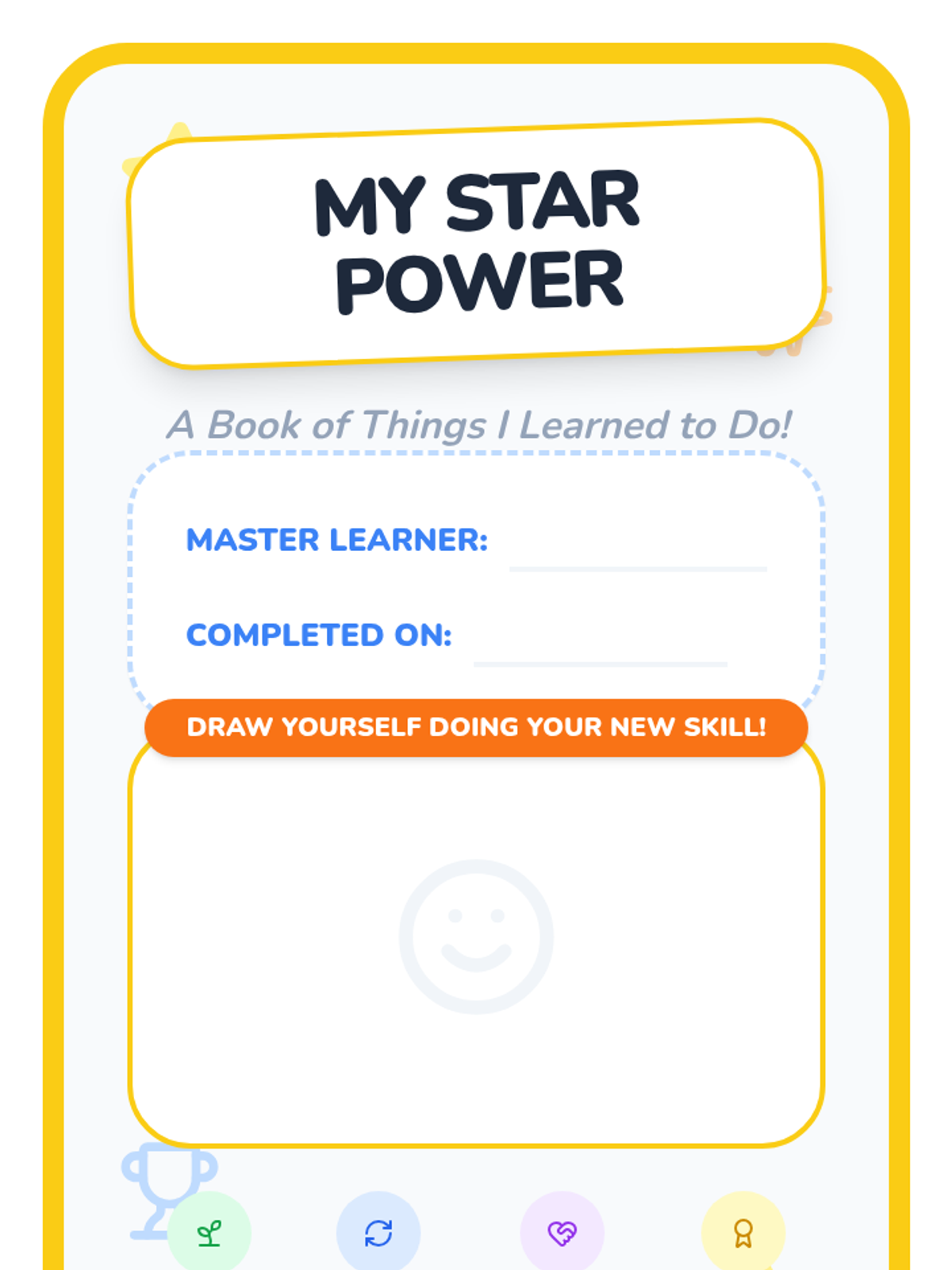
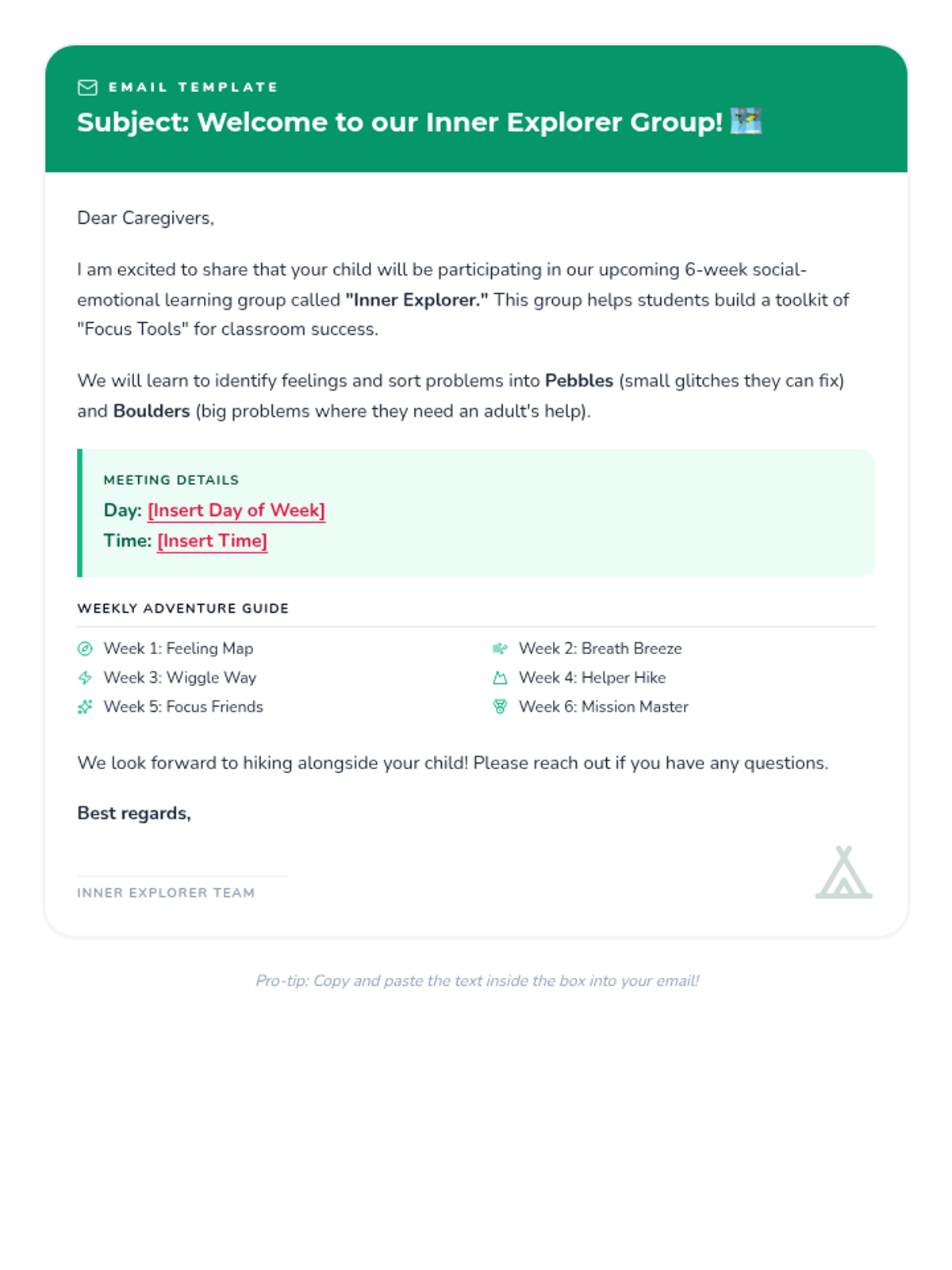
Reflecting on achievements and celebrating the internal feeling of pride through a classroom showcase.
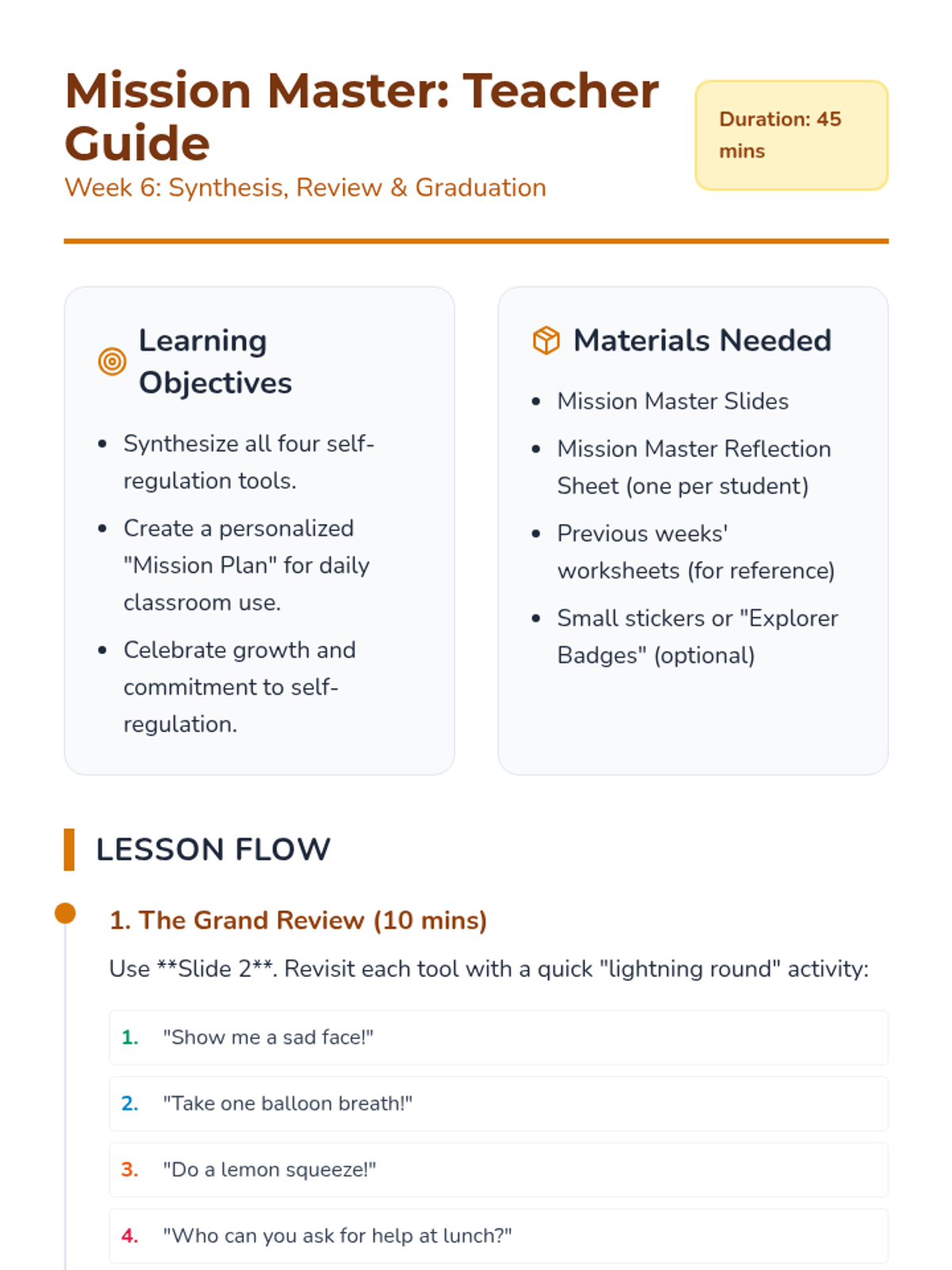
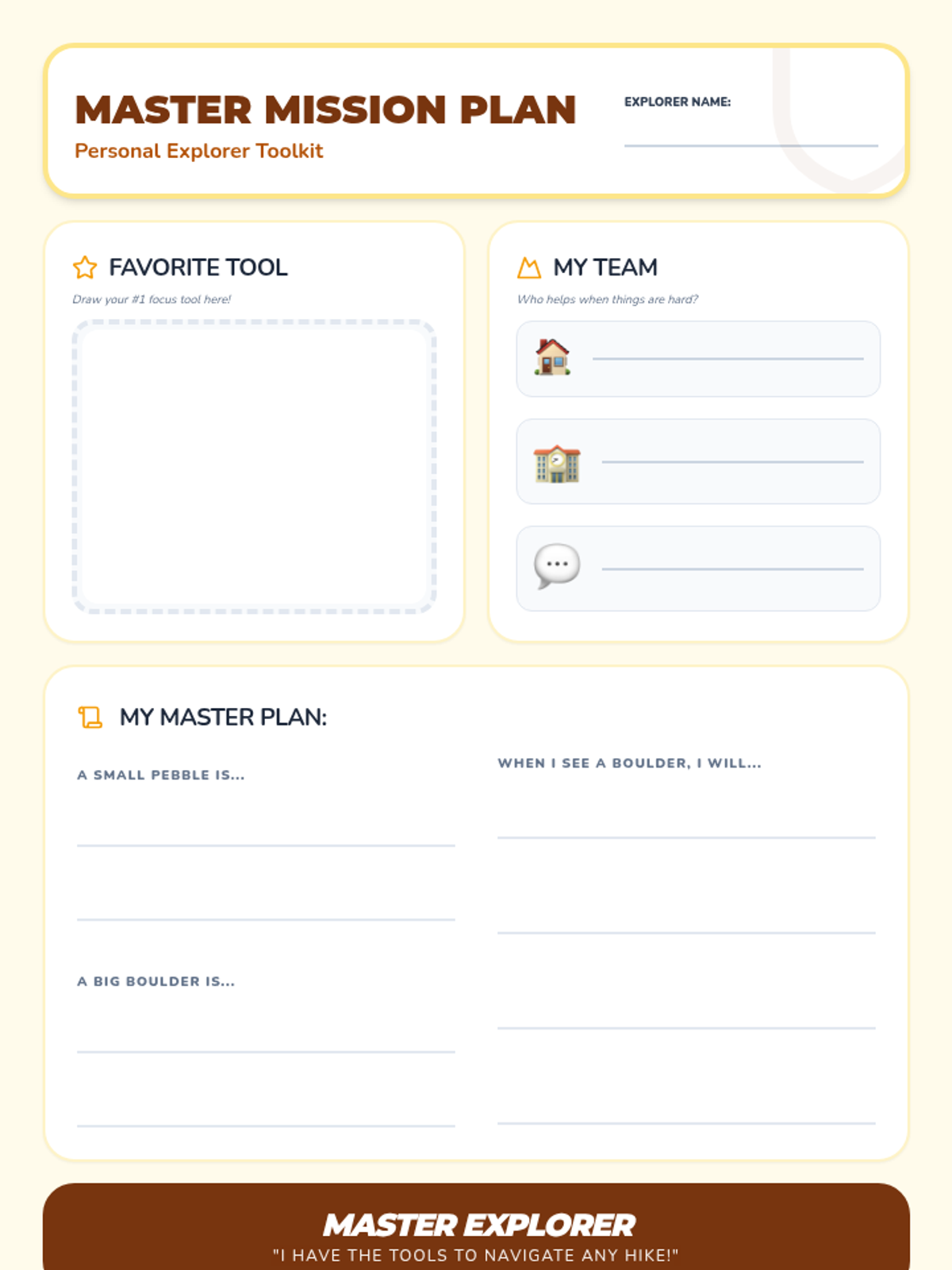
Reviewing all tools and creating a personalized 'Mission Plan' for classroom success.
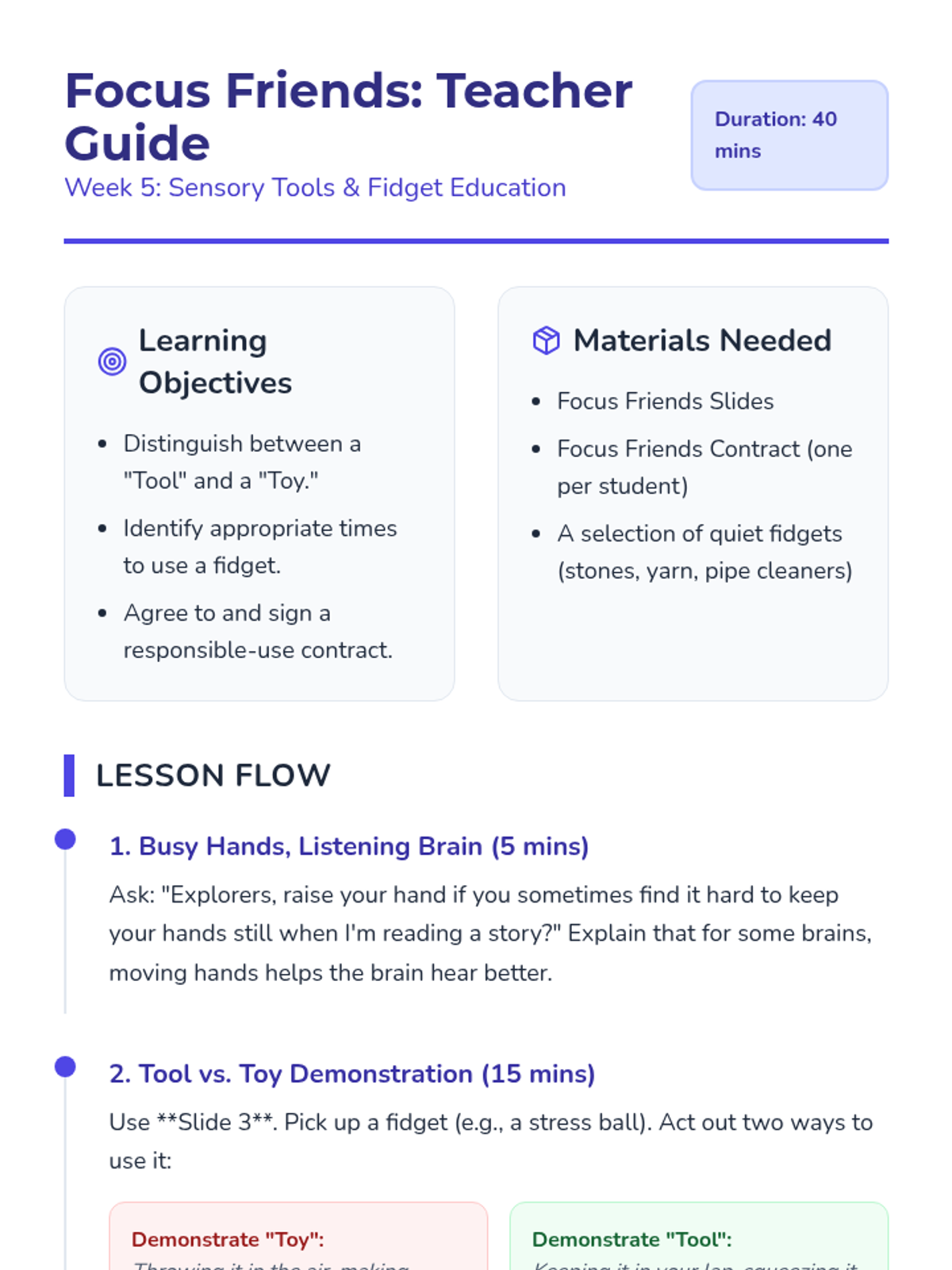
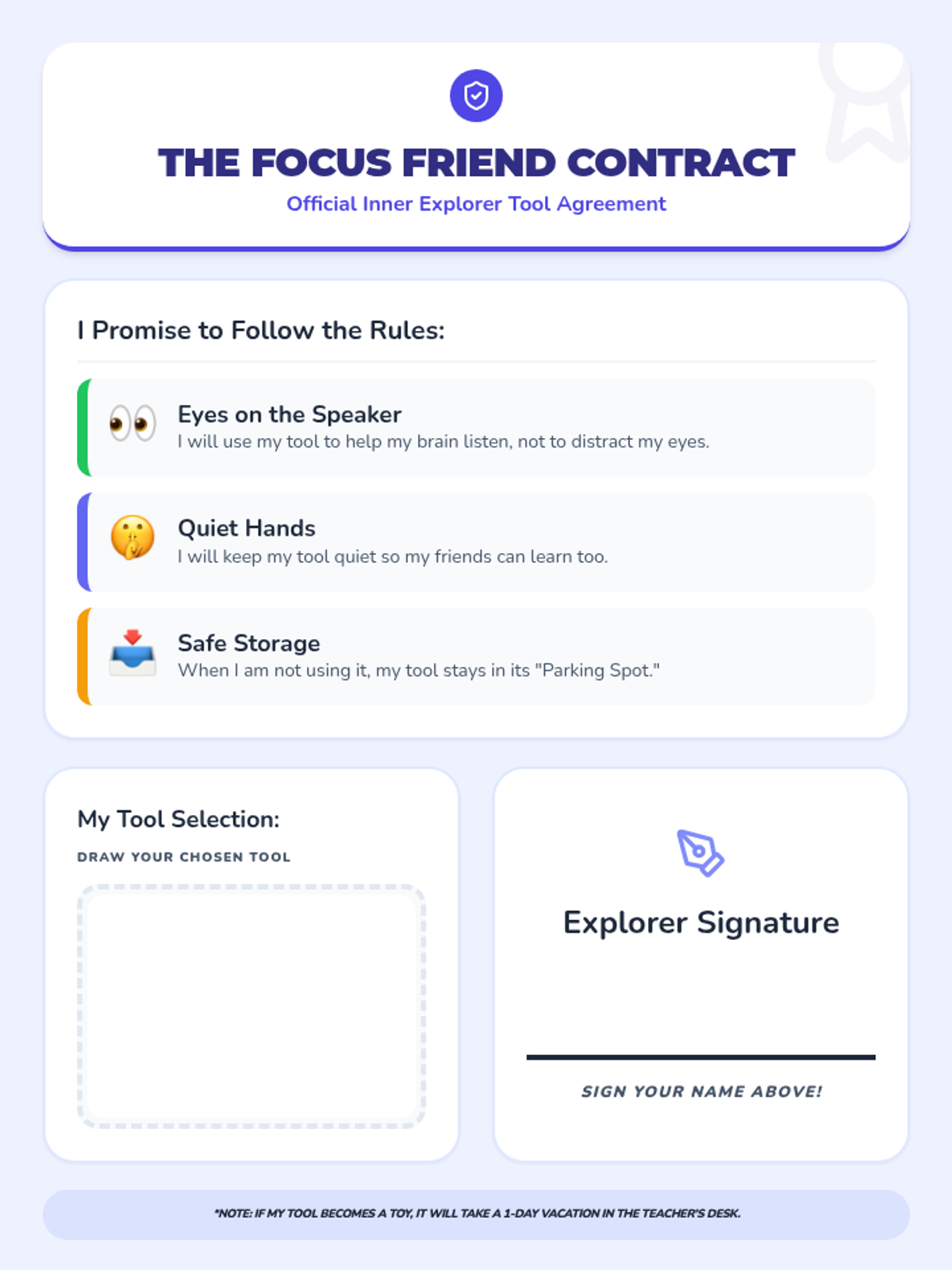
Learning how to use fidgets and sensory tools appropriately for focus.
Developing the skill of asking for help and talking through emotions with a trusted adult.
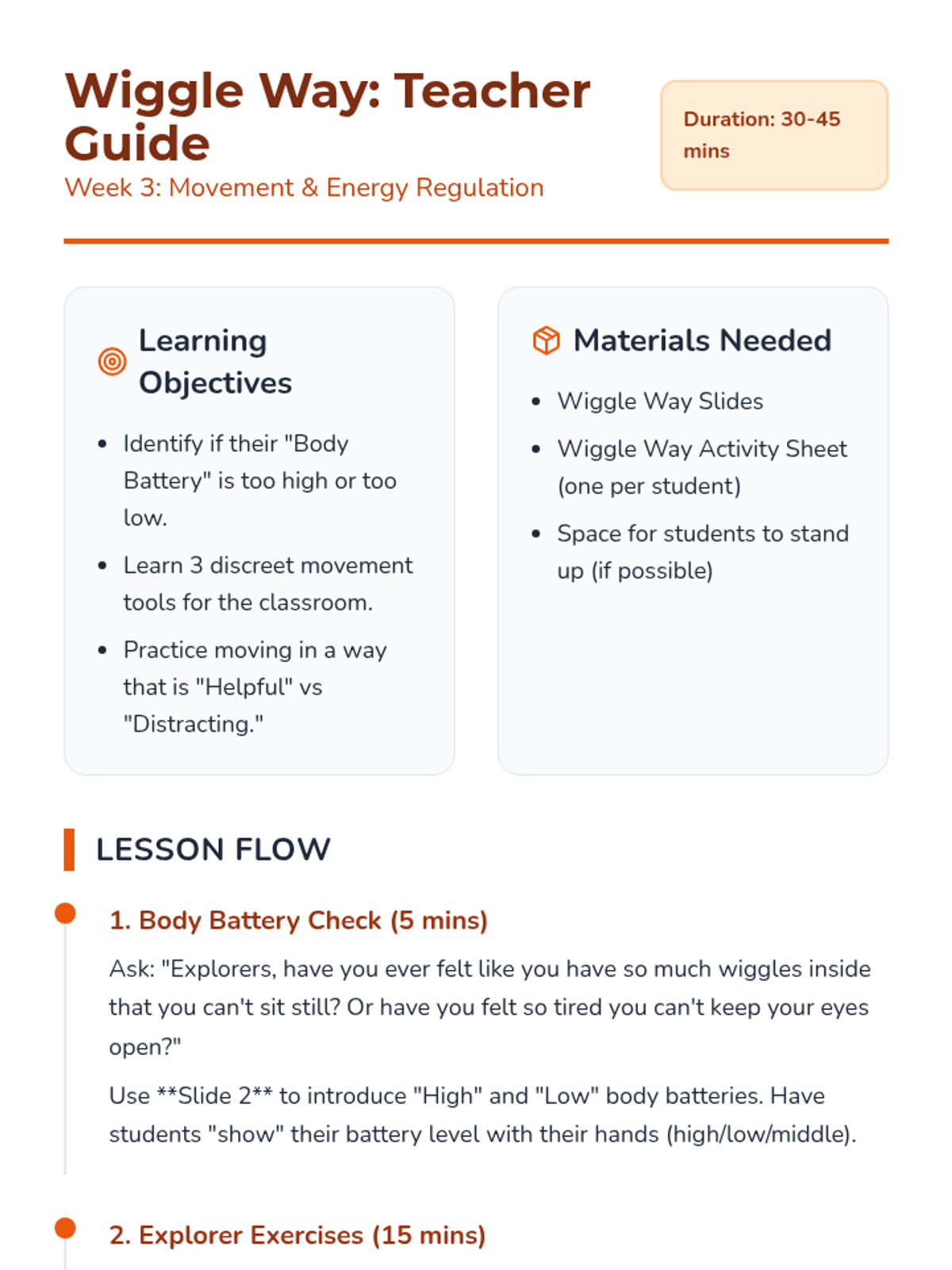
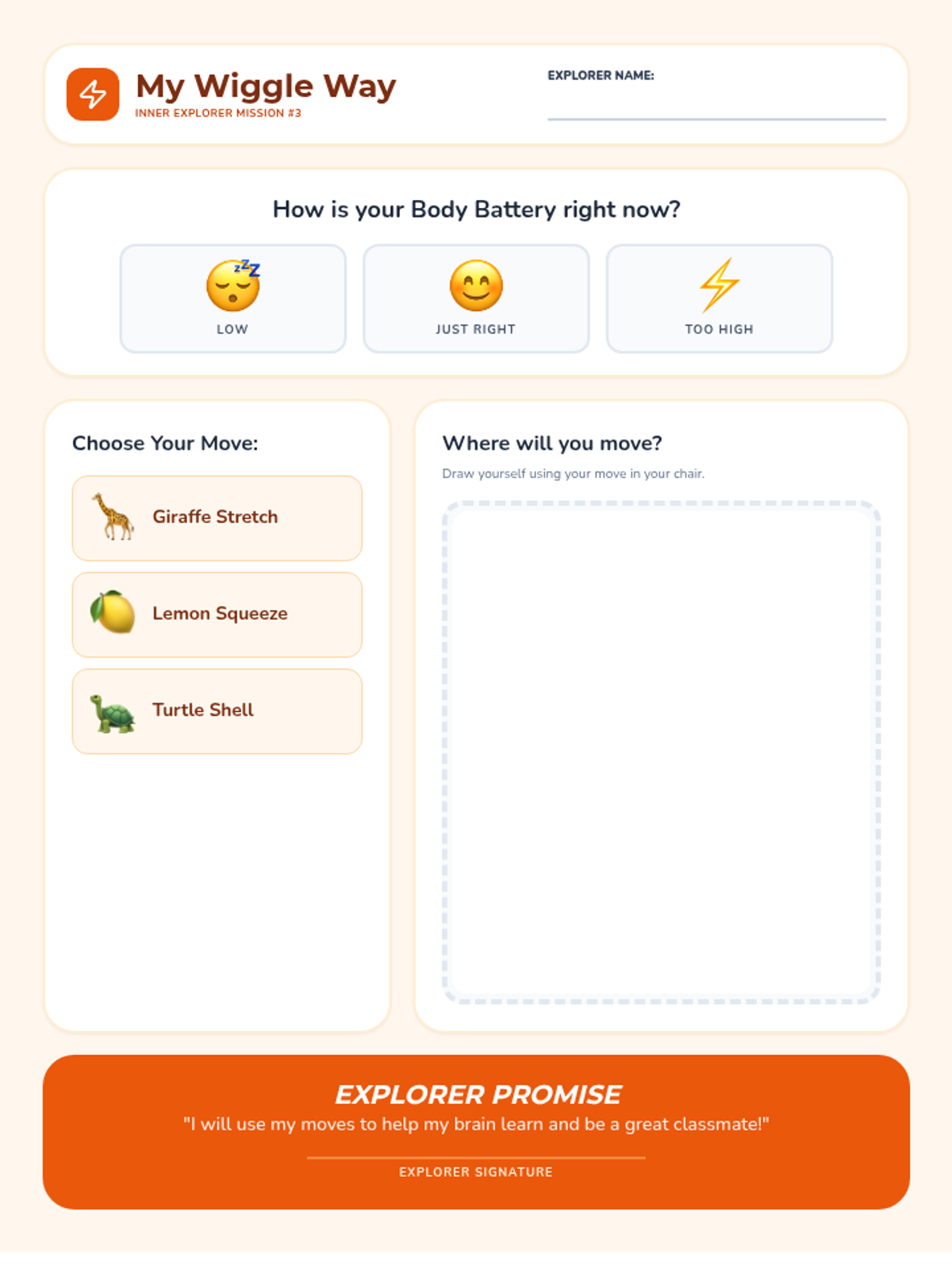
Understanding how movement can help refocus energy and stay on task.
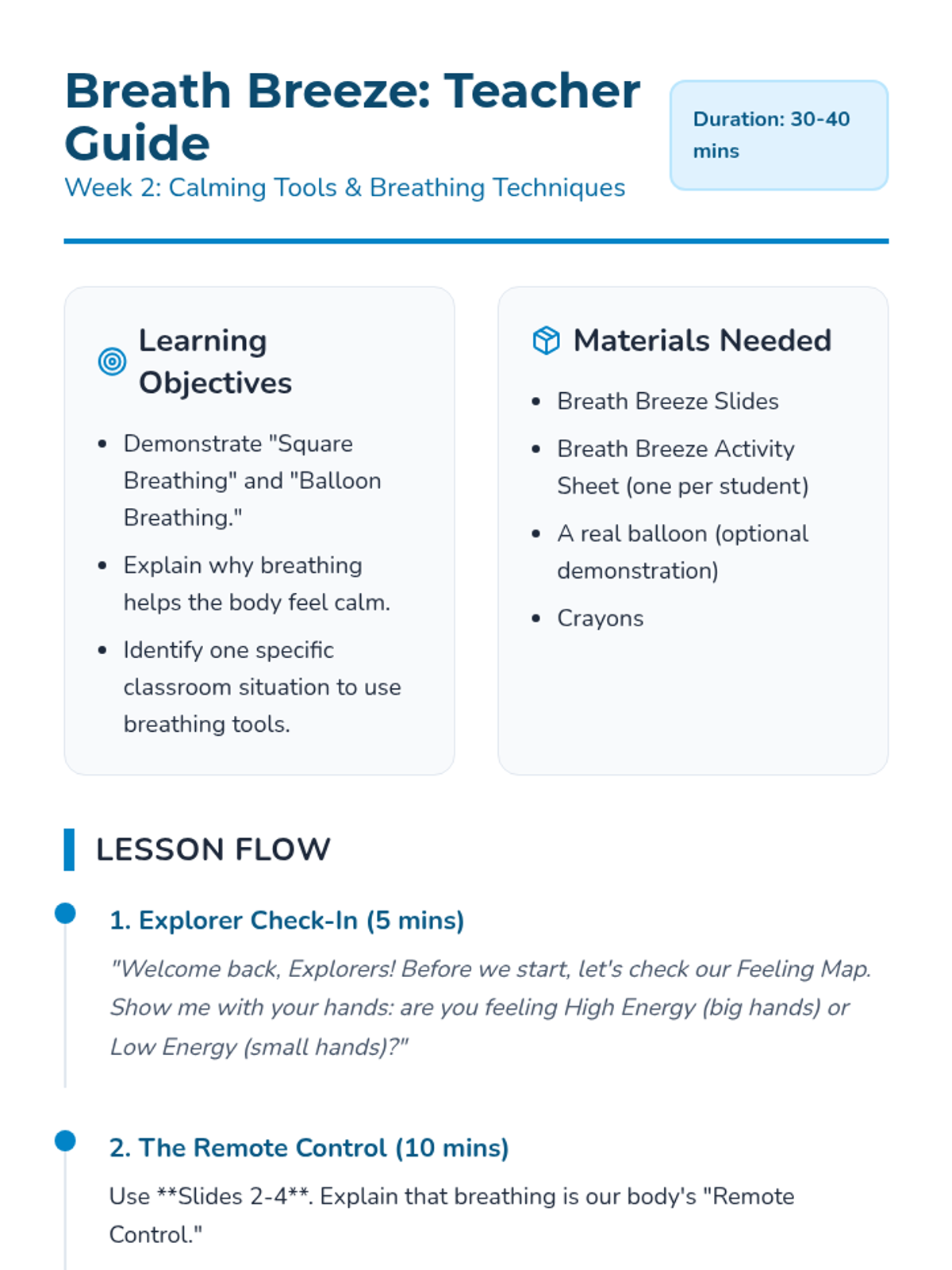
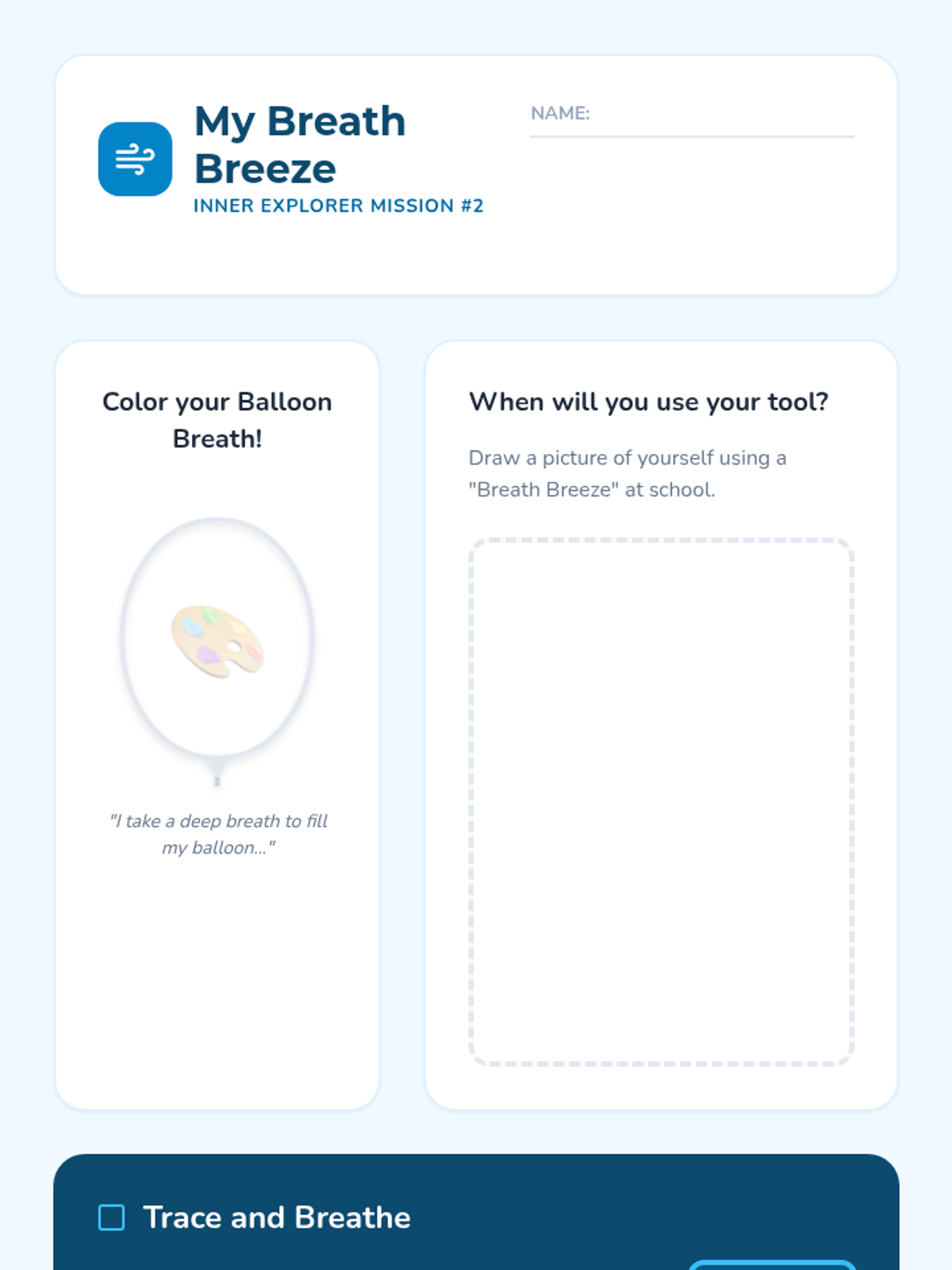
Learning different breathing techniques to calm the mind and body.
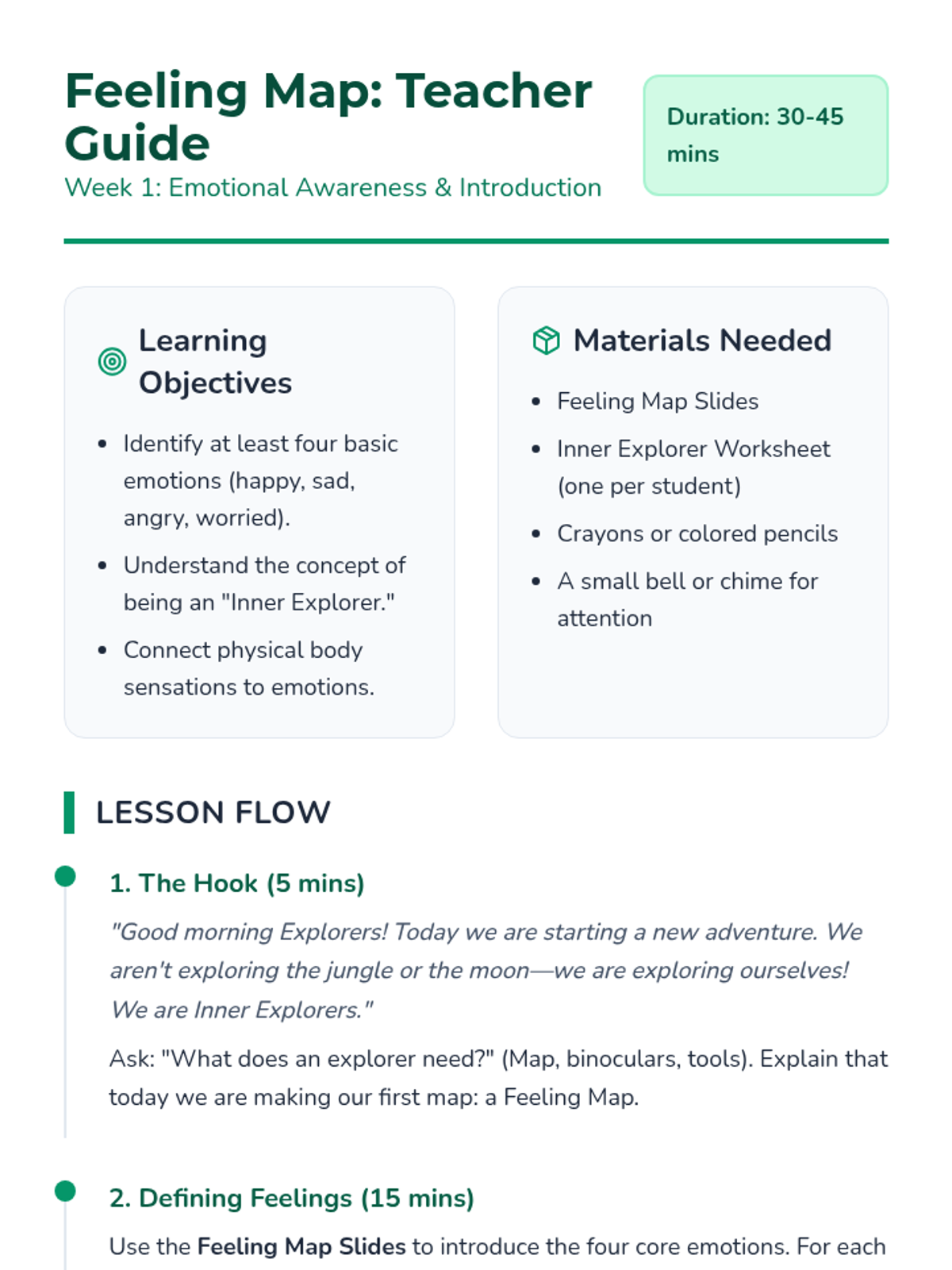
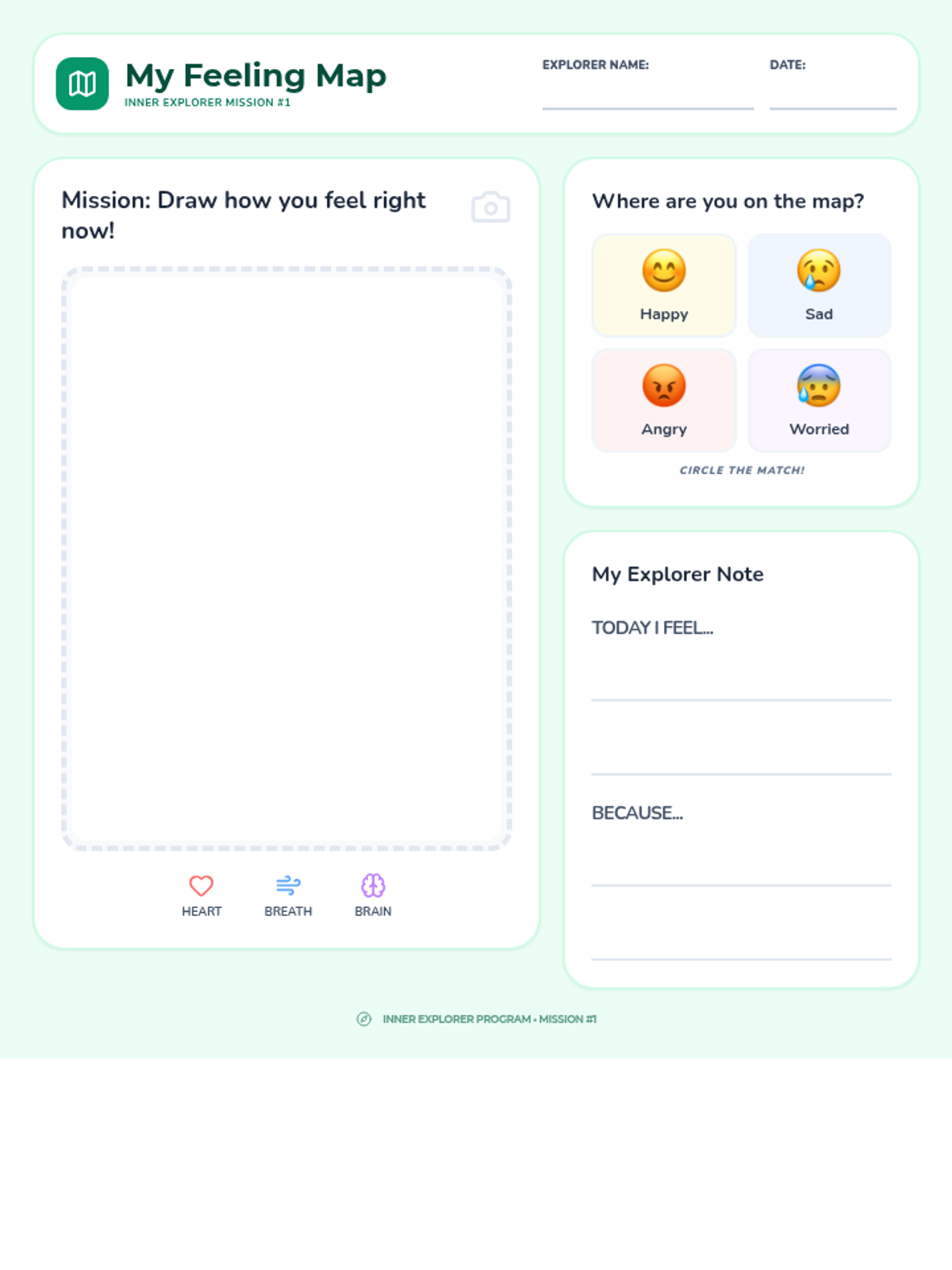
Introduction to the concept of feelings as a 'map' and identifying common emotions.
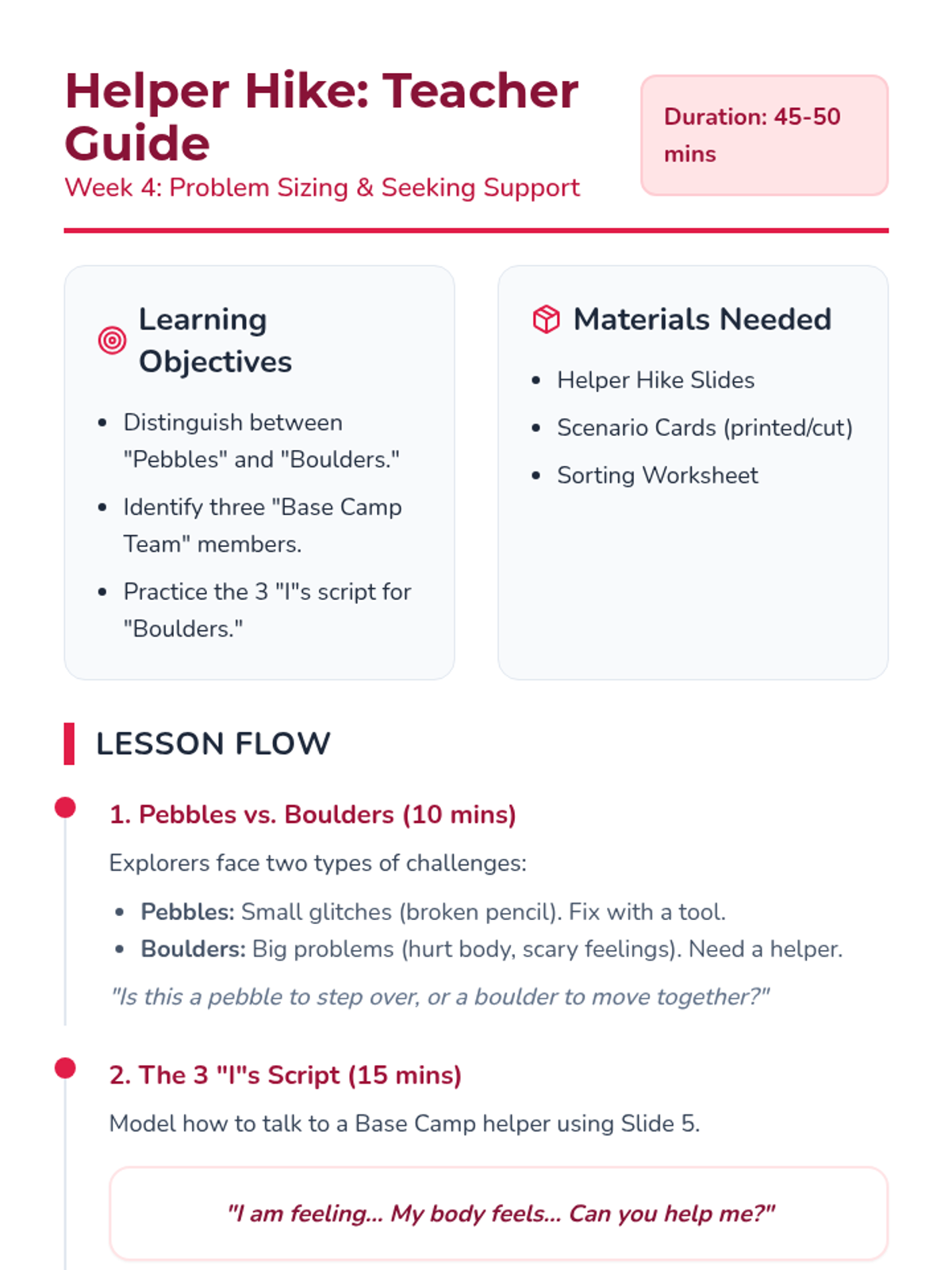
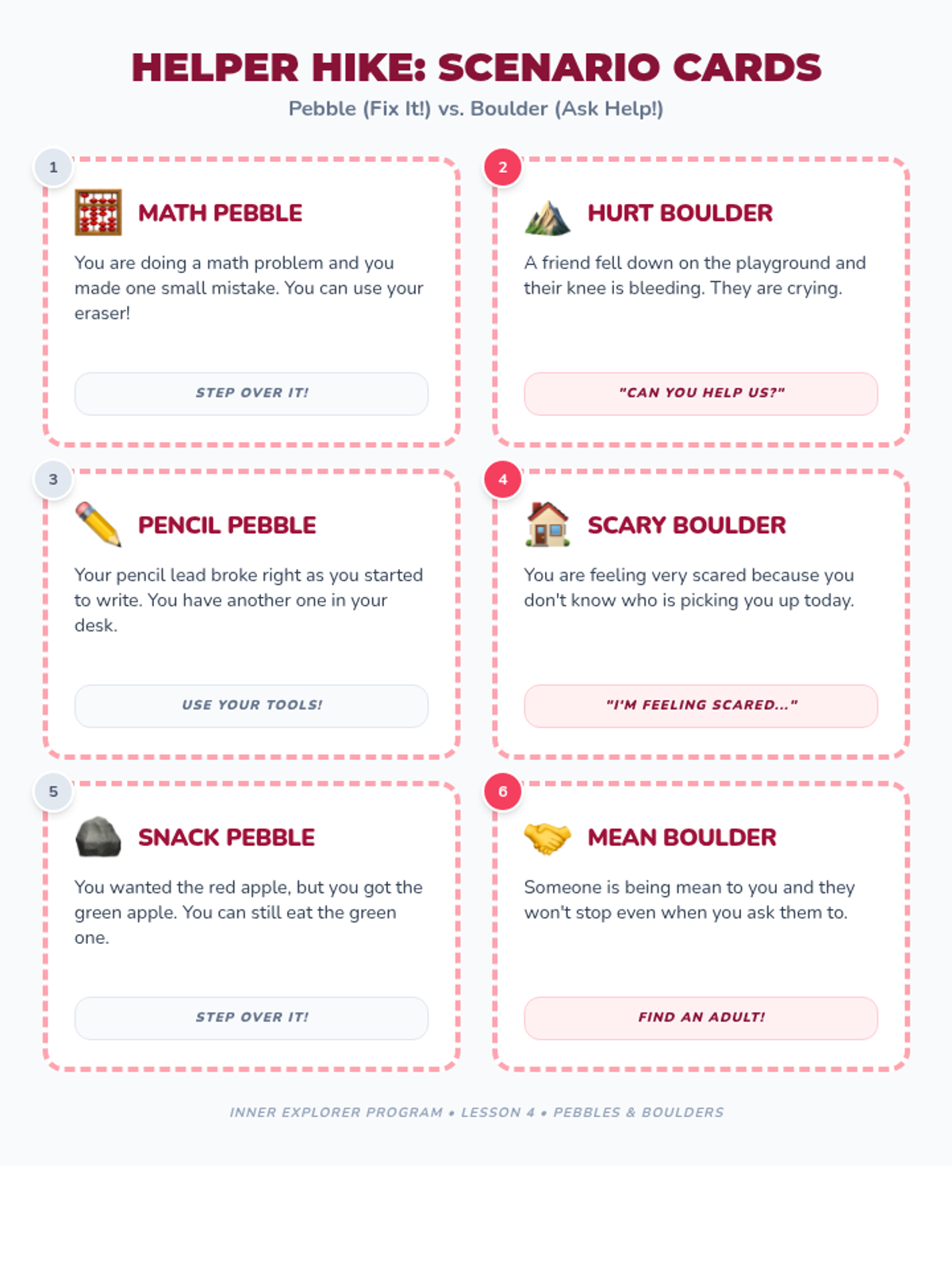
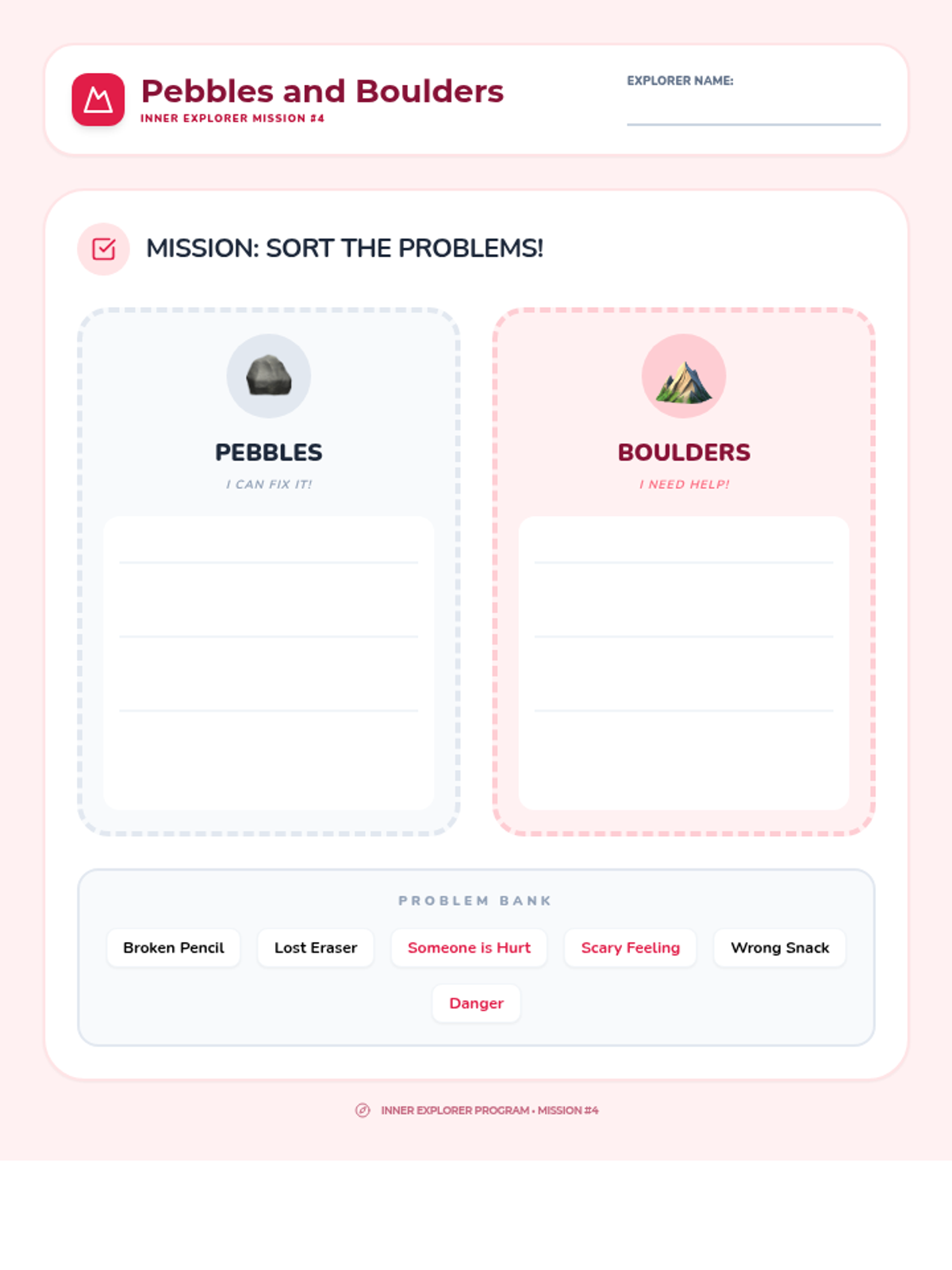
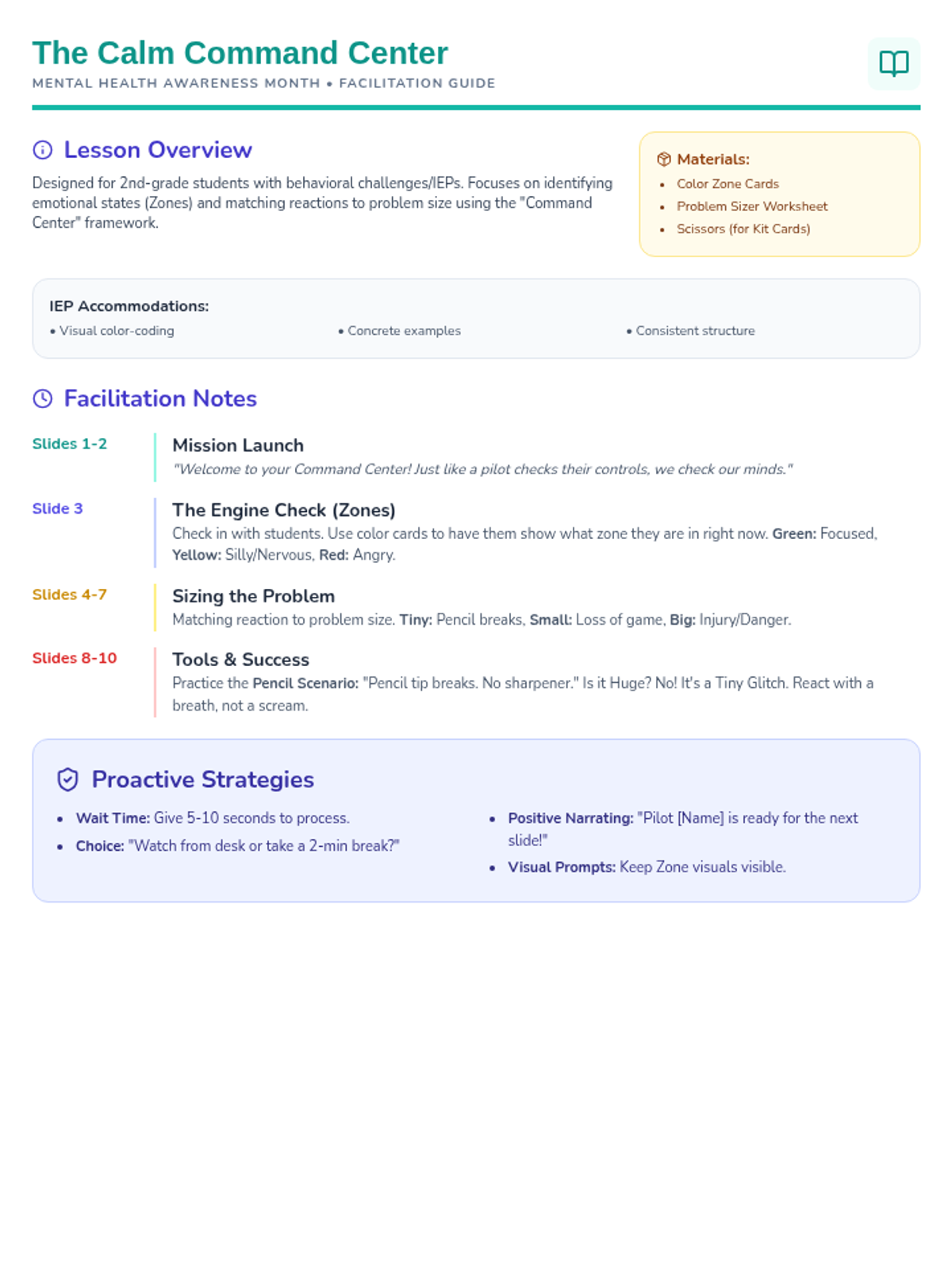
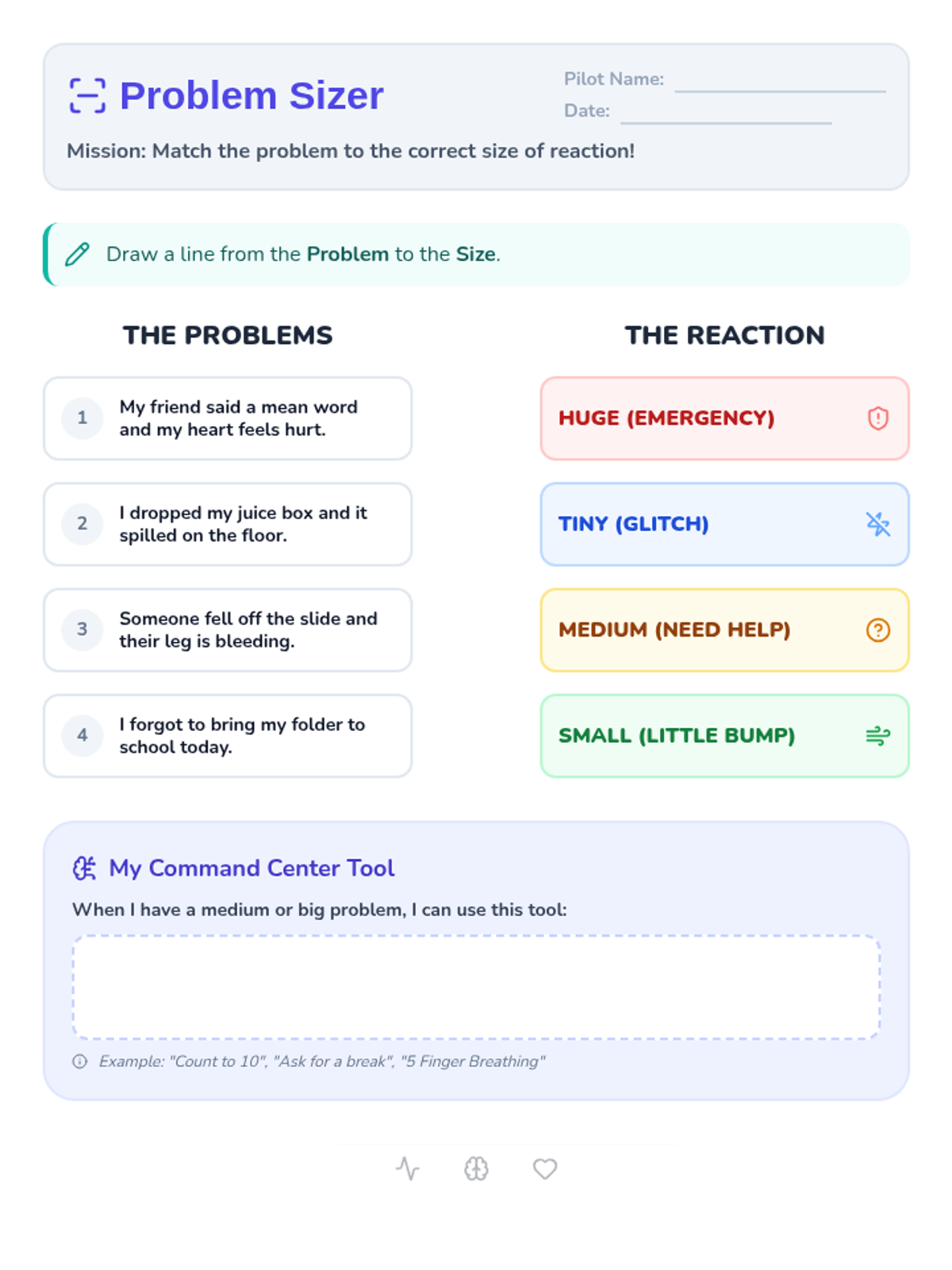
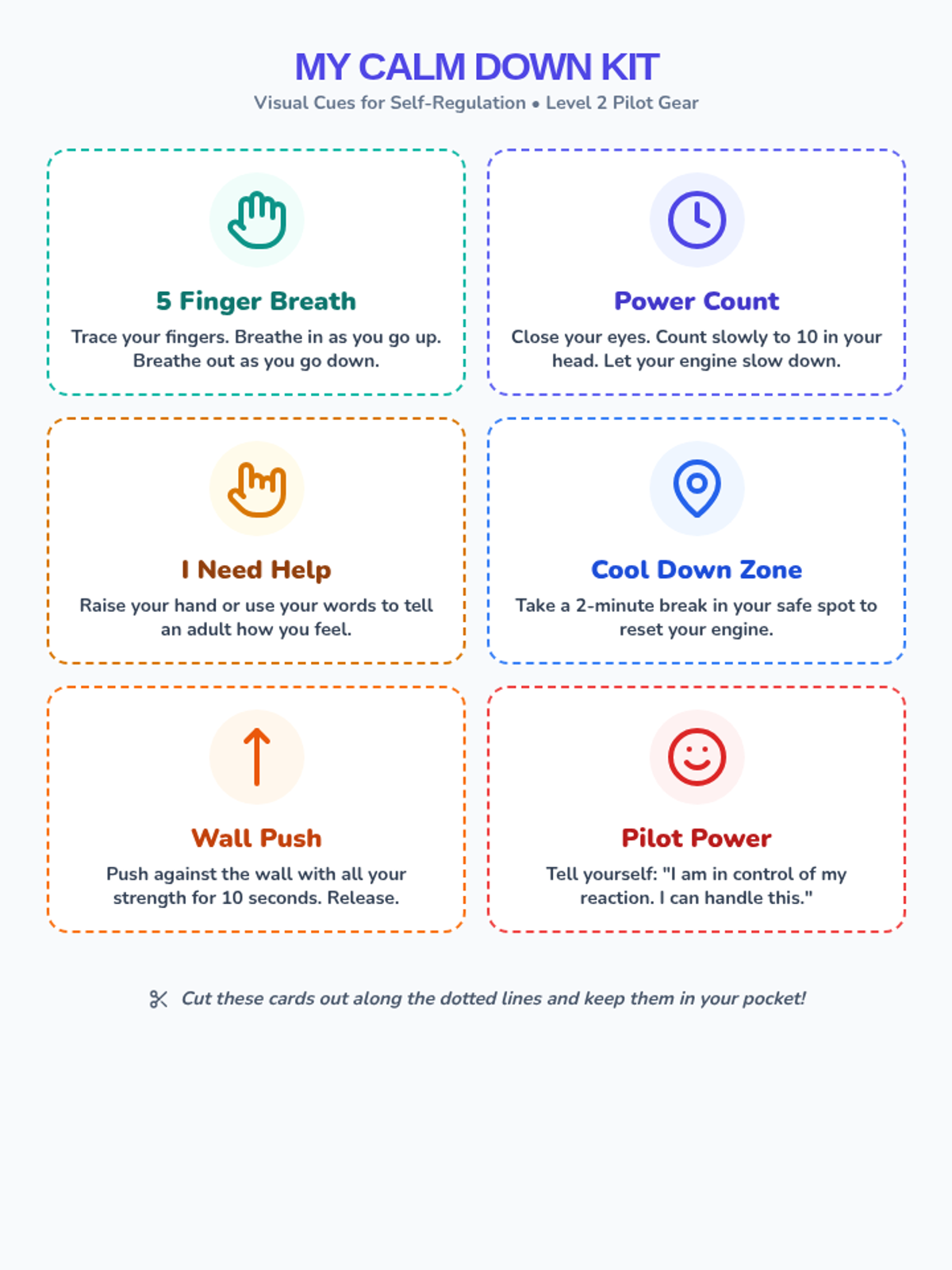
An introductory lesson focusing on identifying the size of problems and selecting appropriate self-regulation tools to manage emotions effectively in a virtual or classroom setting.
Consolidates learning from the previous weeks and sets goals for continued social-emotional success.
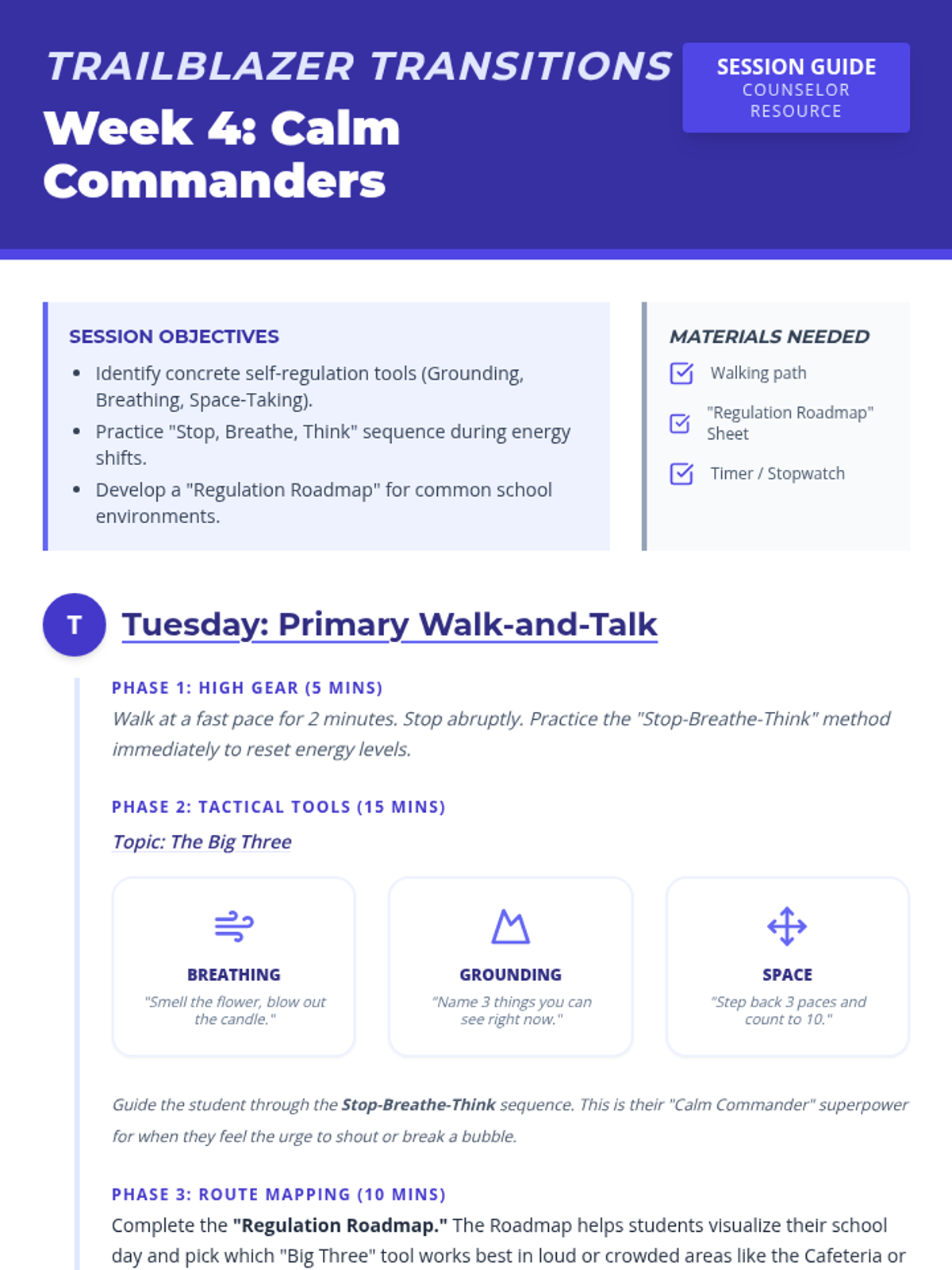
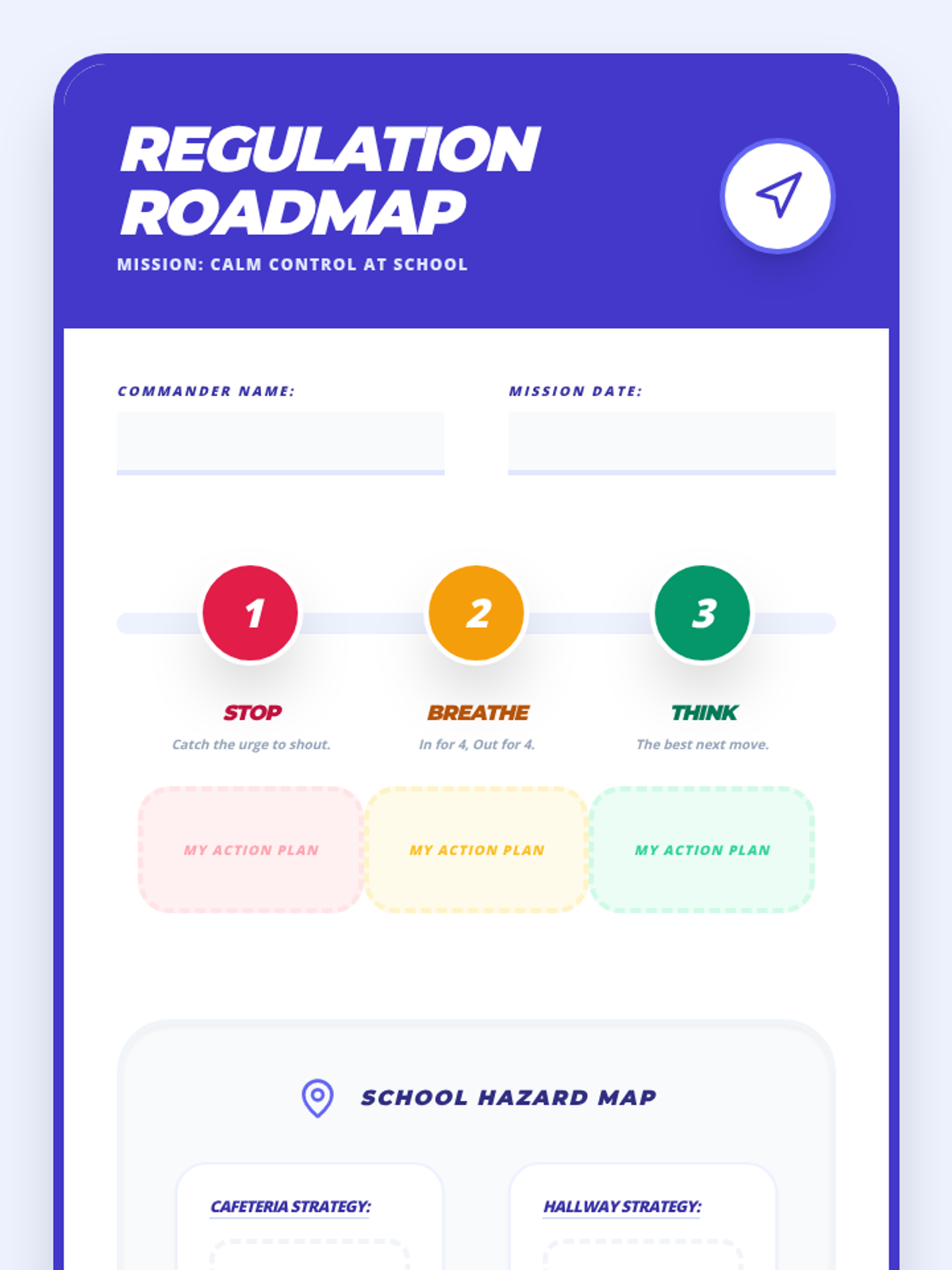
Teaches concrete self-regulation strategies and provides tools for emotional regulation.
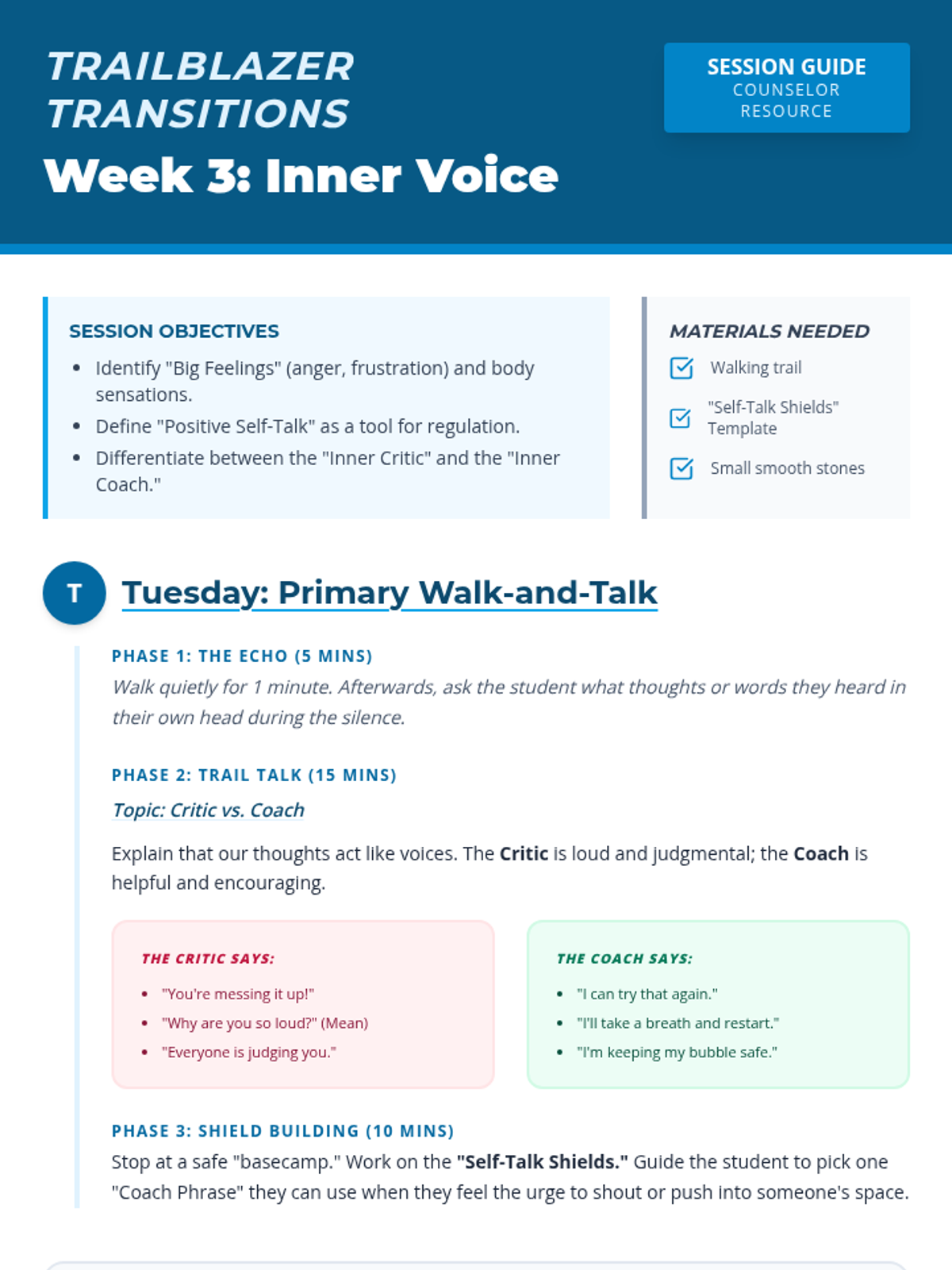
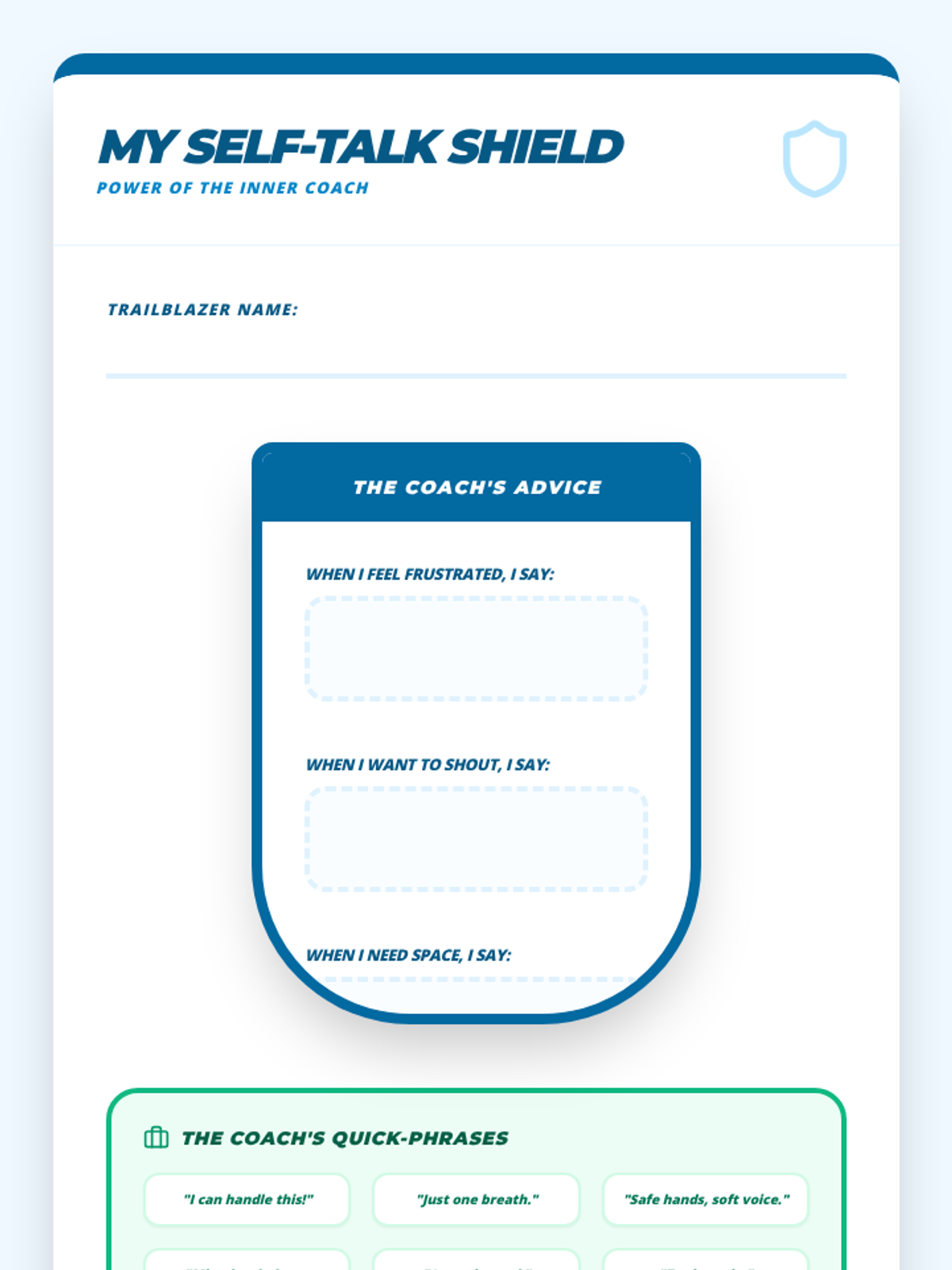
Explores emotional awareness and the power of positive self-talk to manage frustration.
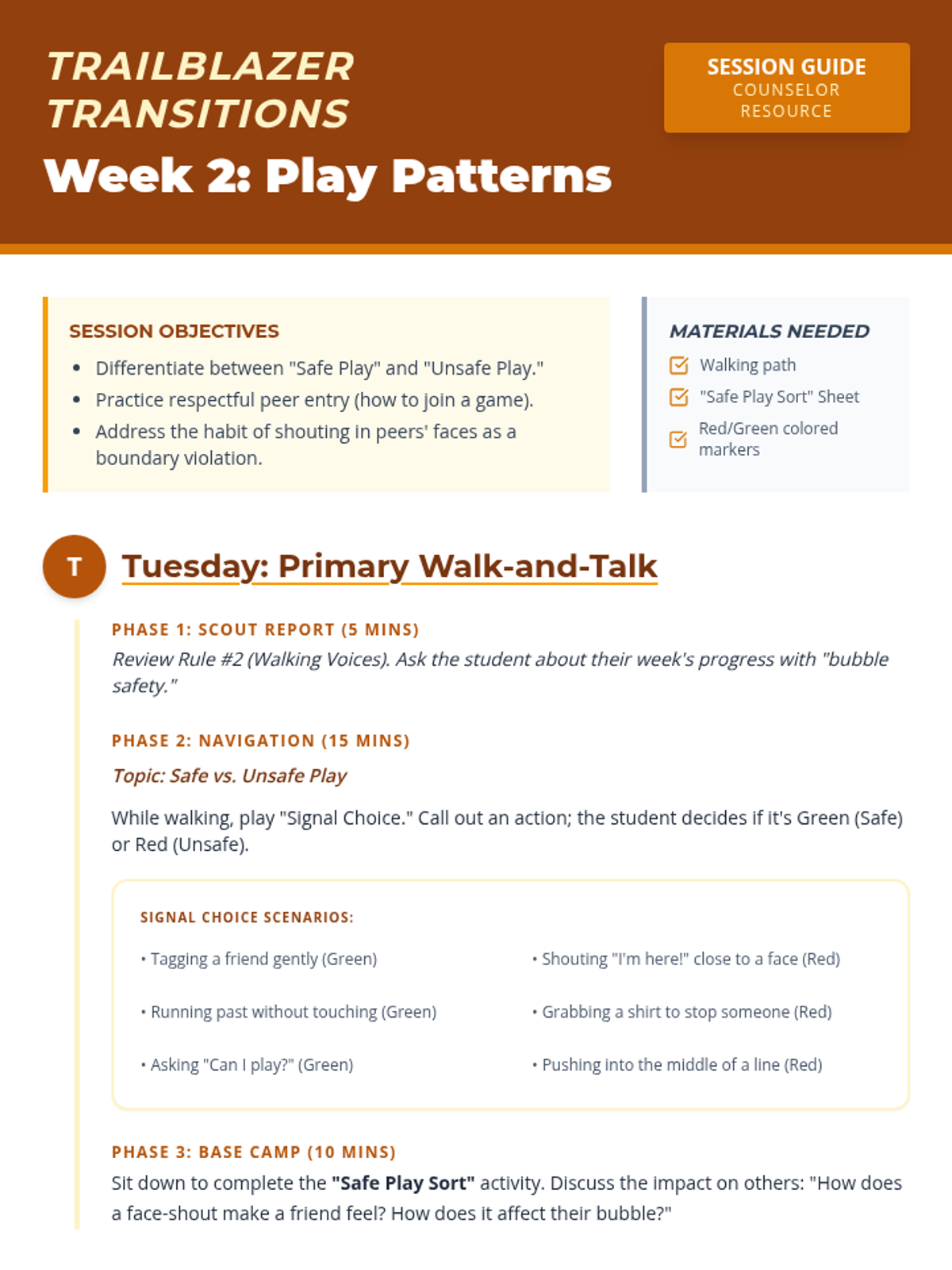
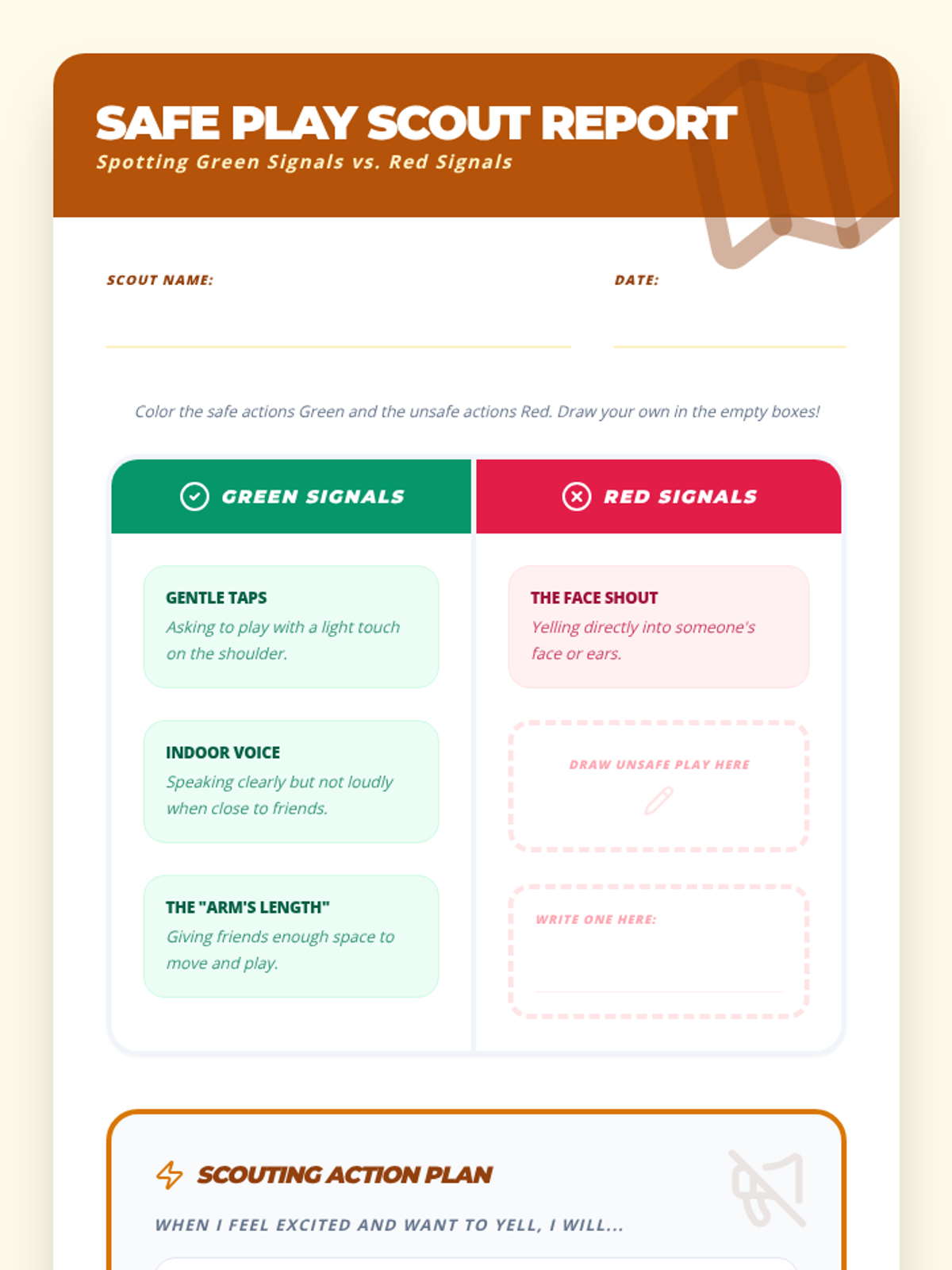
Focuses on distinguishing between safe and unsafe play, specifically addressing peer interactions like shouting and physical contact.
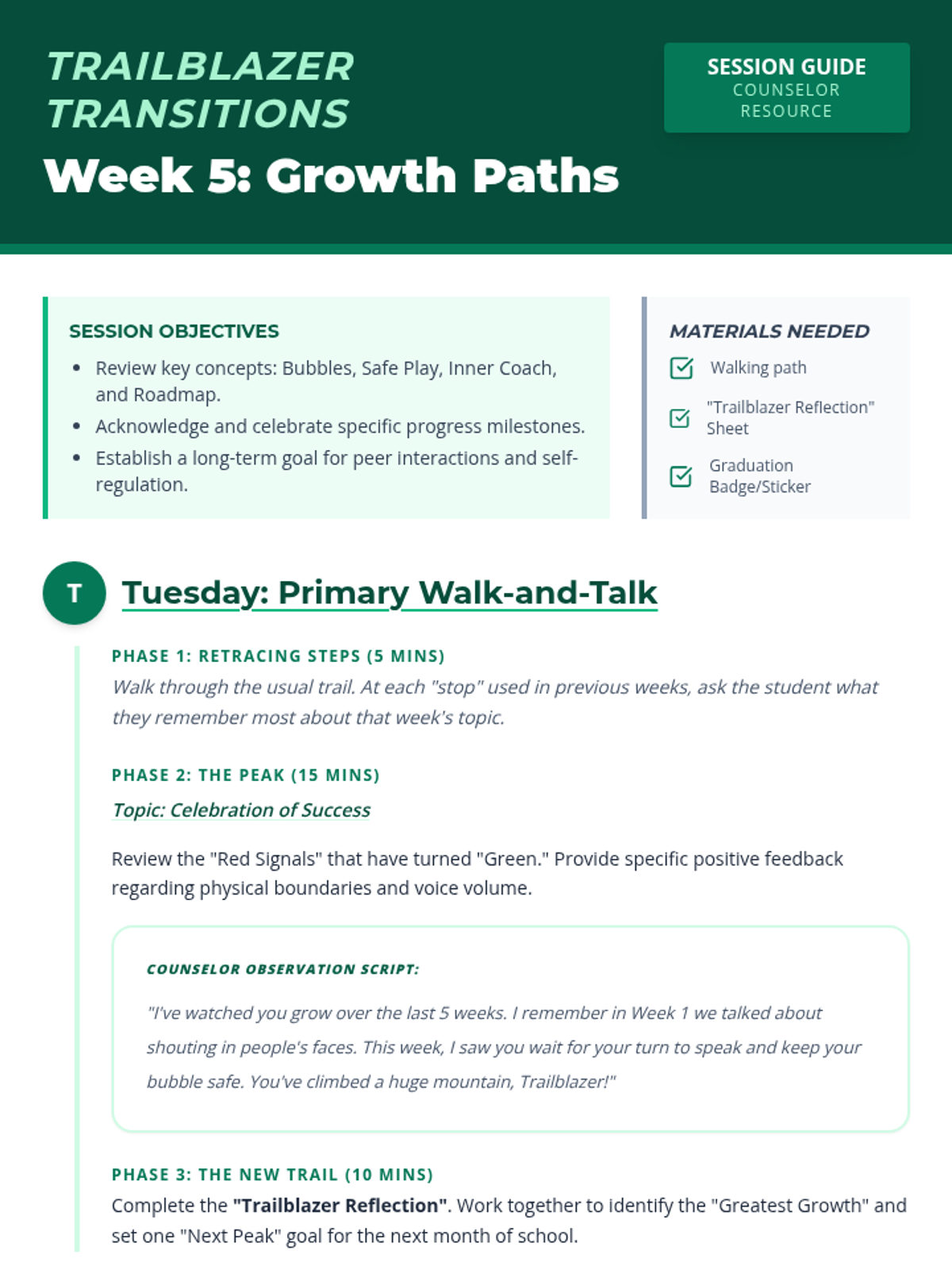
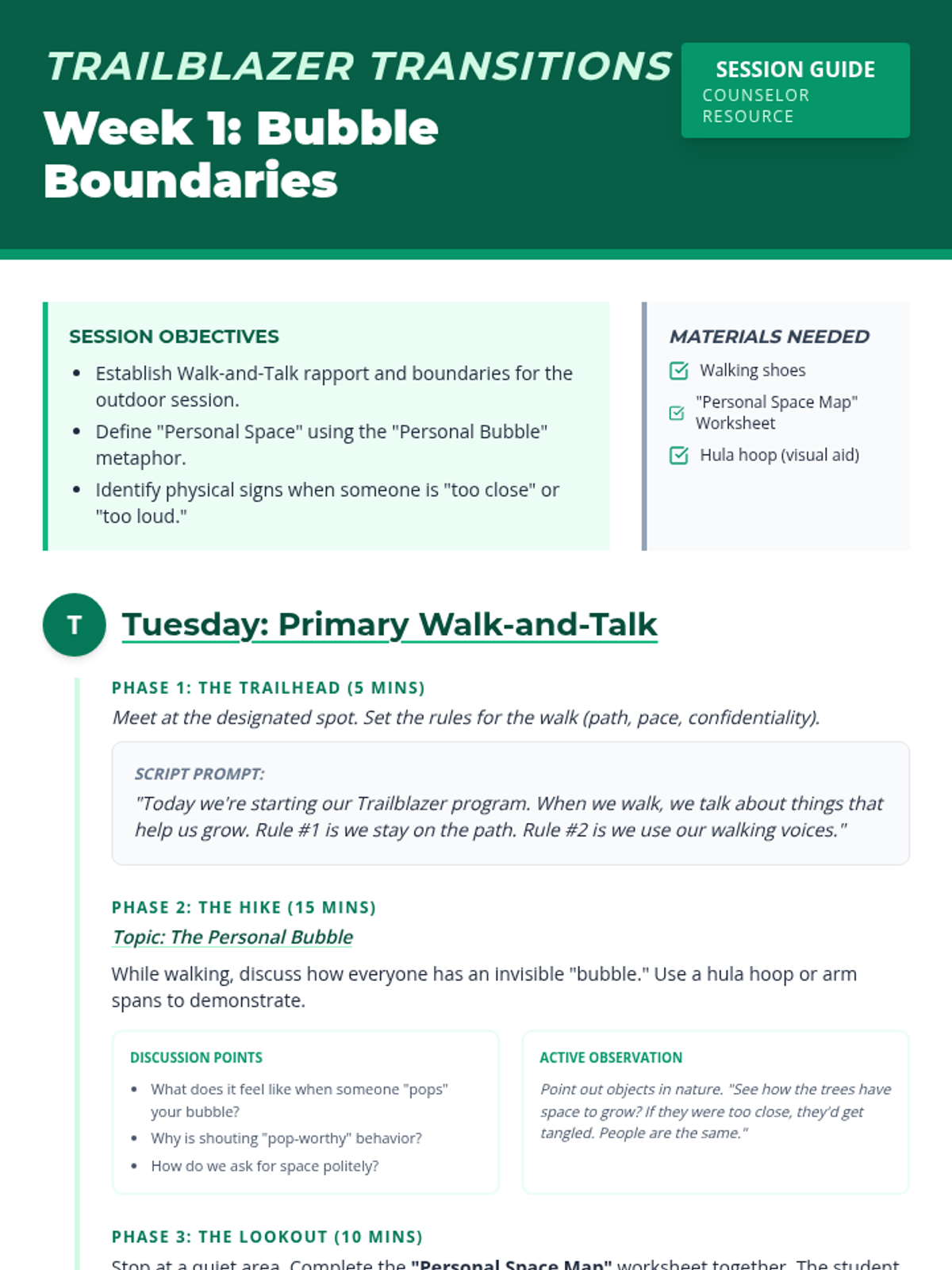
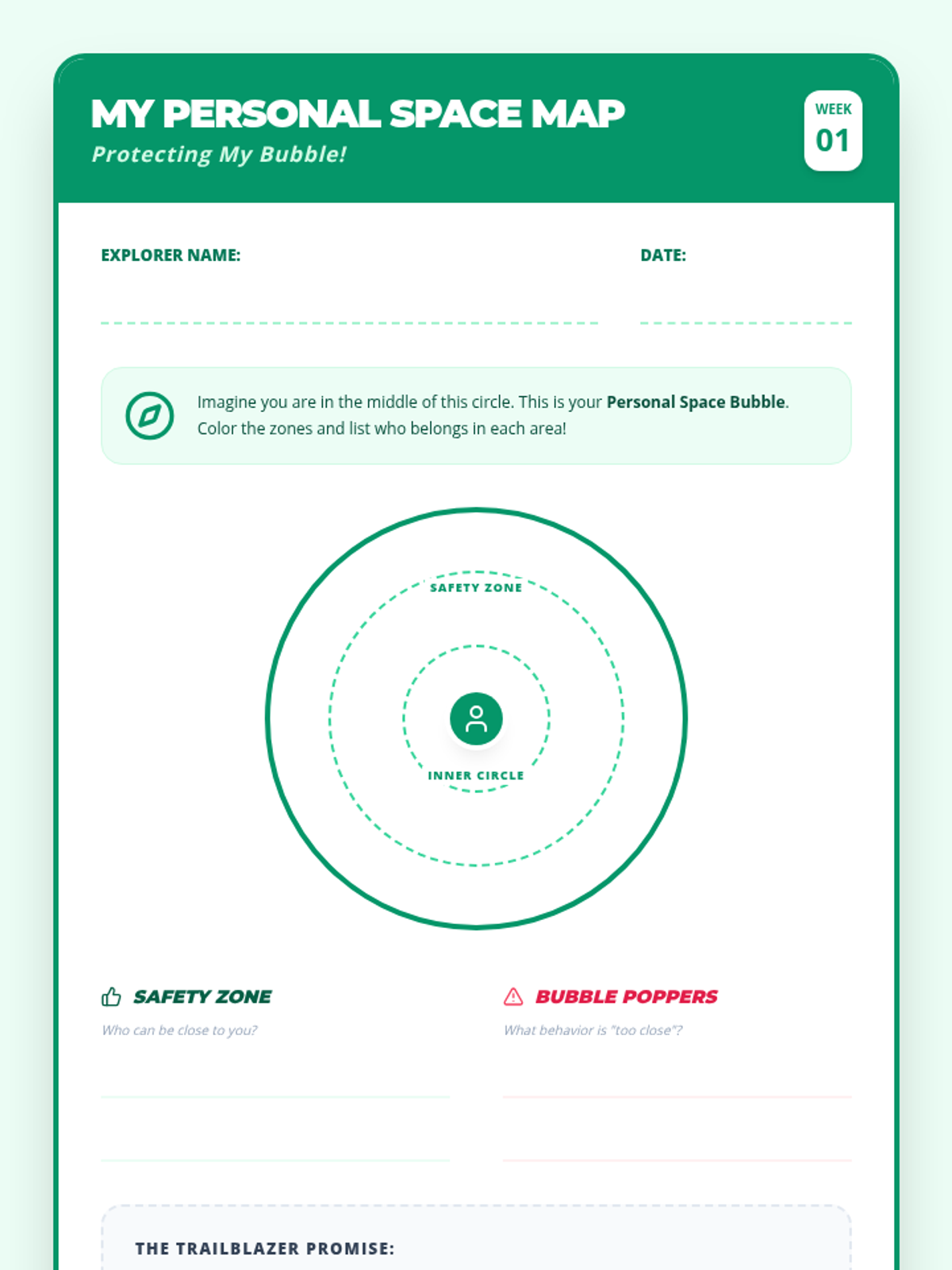
Introduces the concept of personal space and 'bubbles' while establishing the walk-and-talk routine.
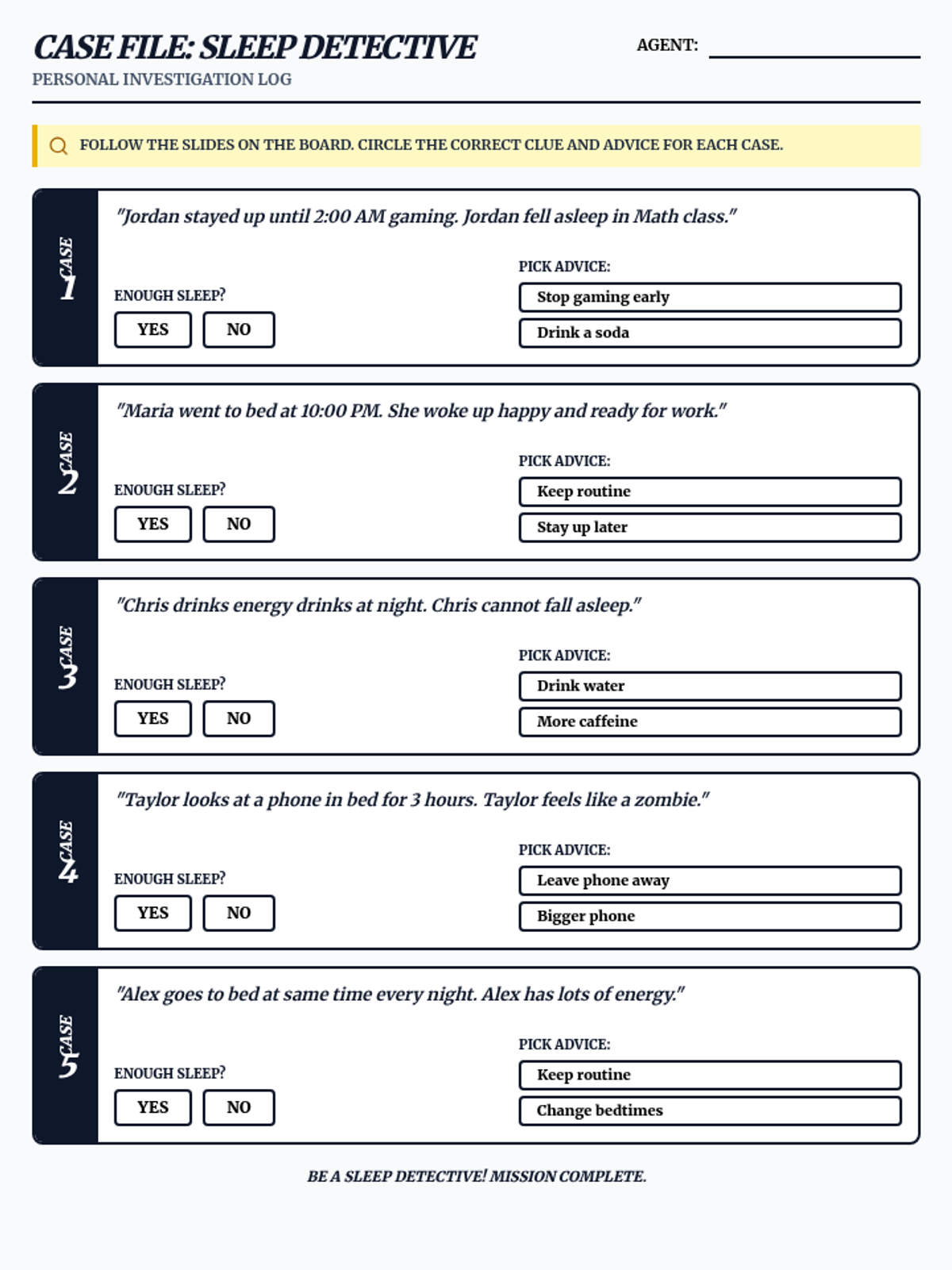
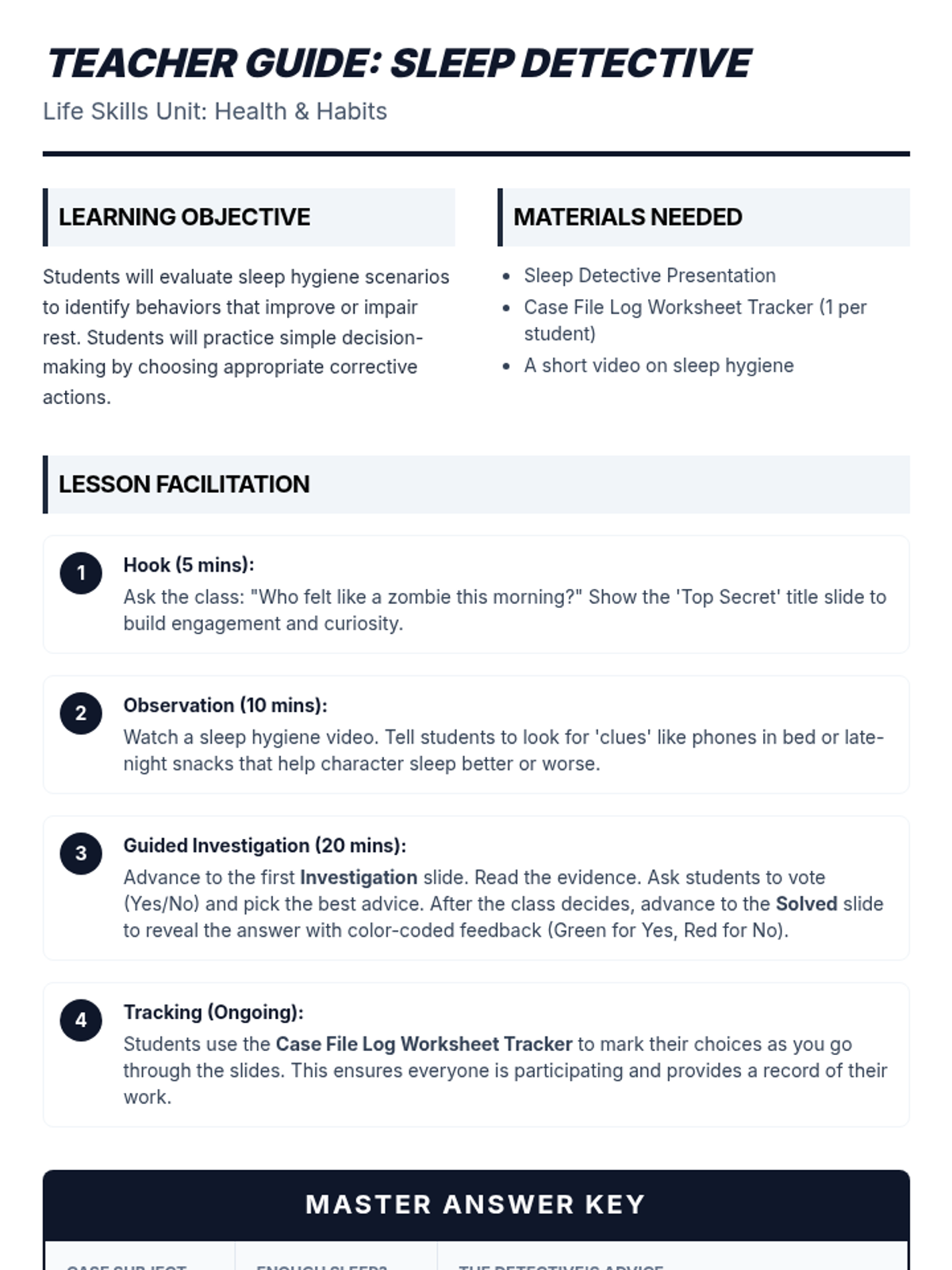
A life skills lesson where students become 'Sleep Detectives' to analyze habits and identify healthy sleep patterns using visual scenarios and simple decision-making.
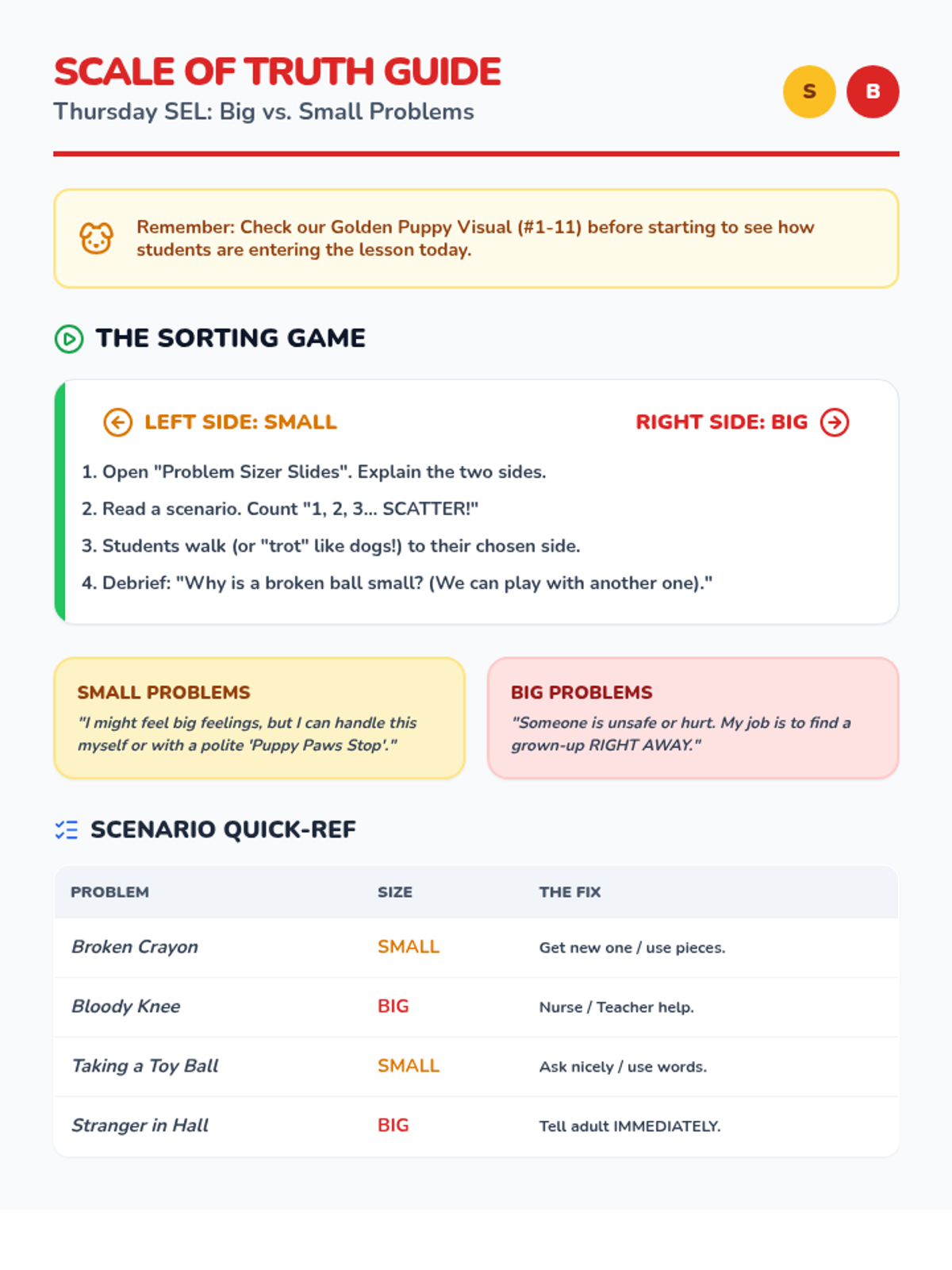
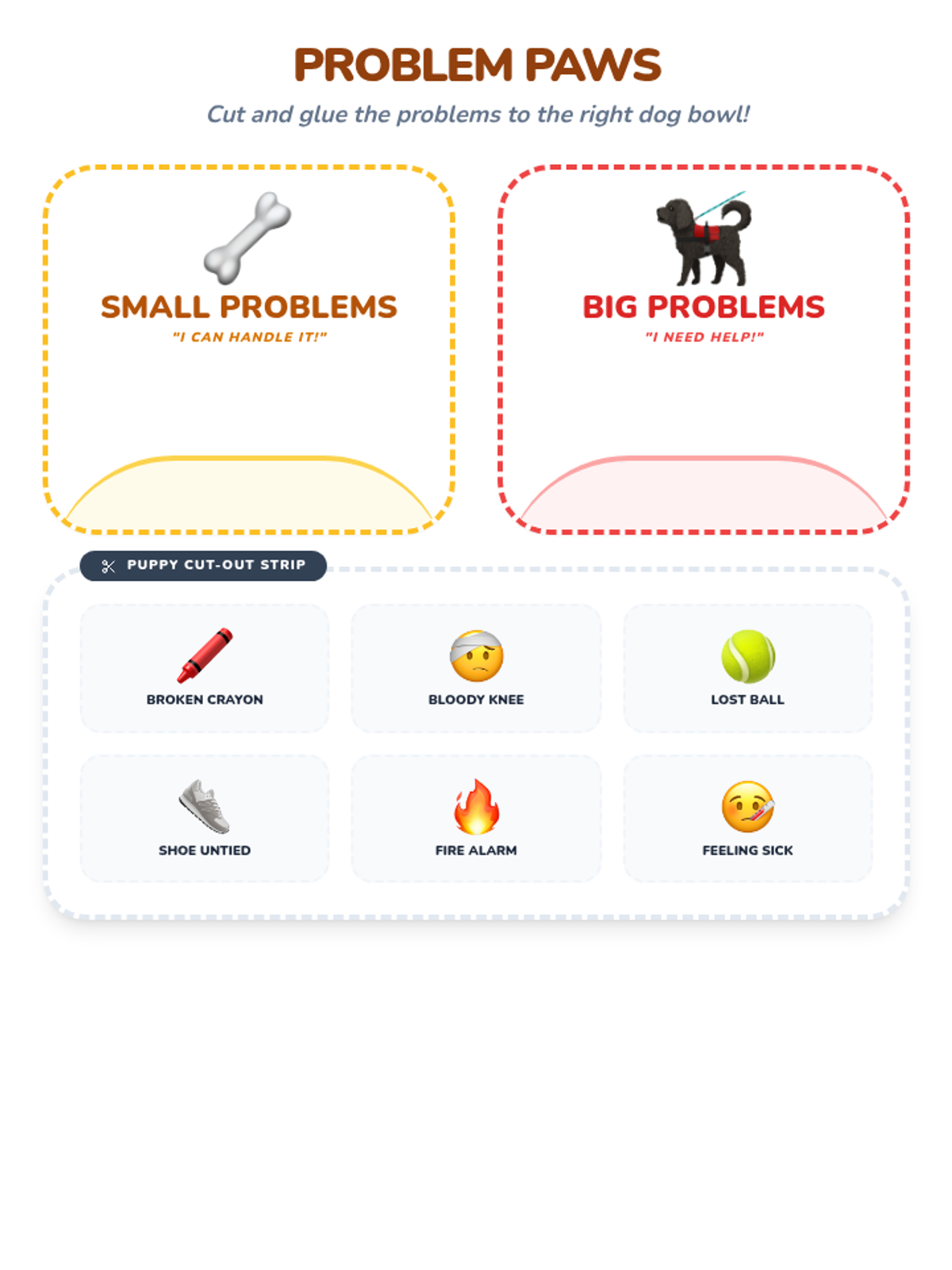
A Thursday lesson focused on categorizing problems as Big or Small, featuring a 'stand on this side' sorting game to help Kindergarteners understand when to solve things independently versus seeking adult help.
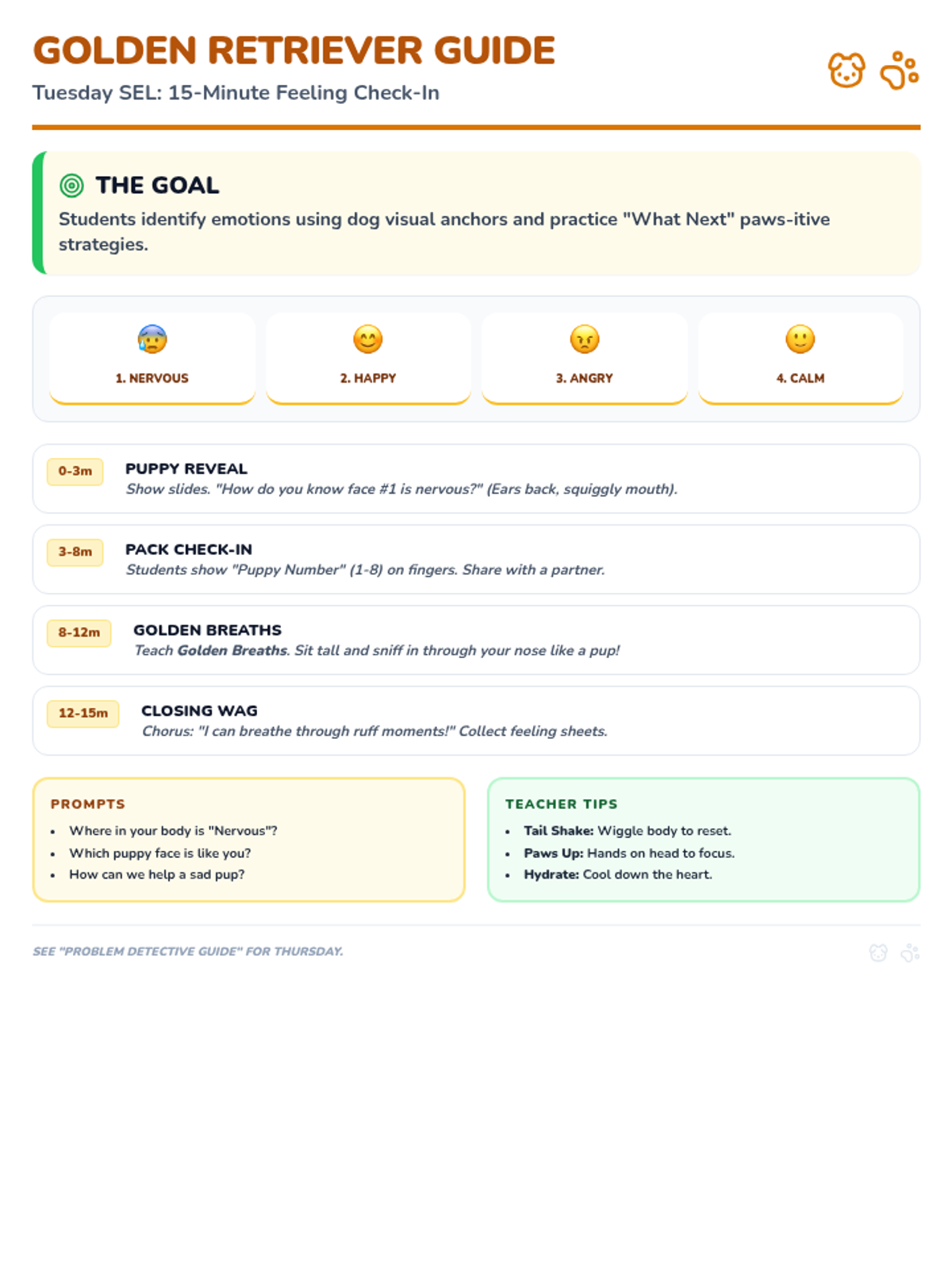
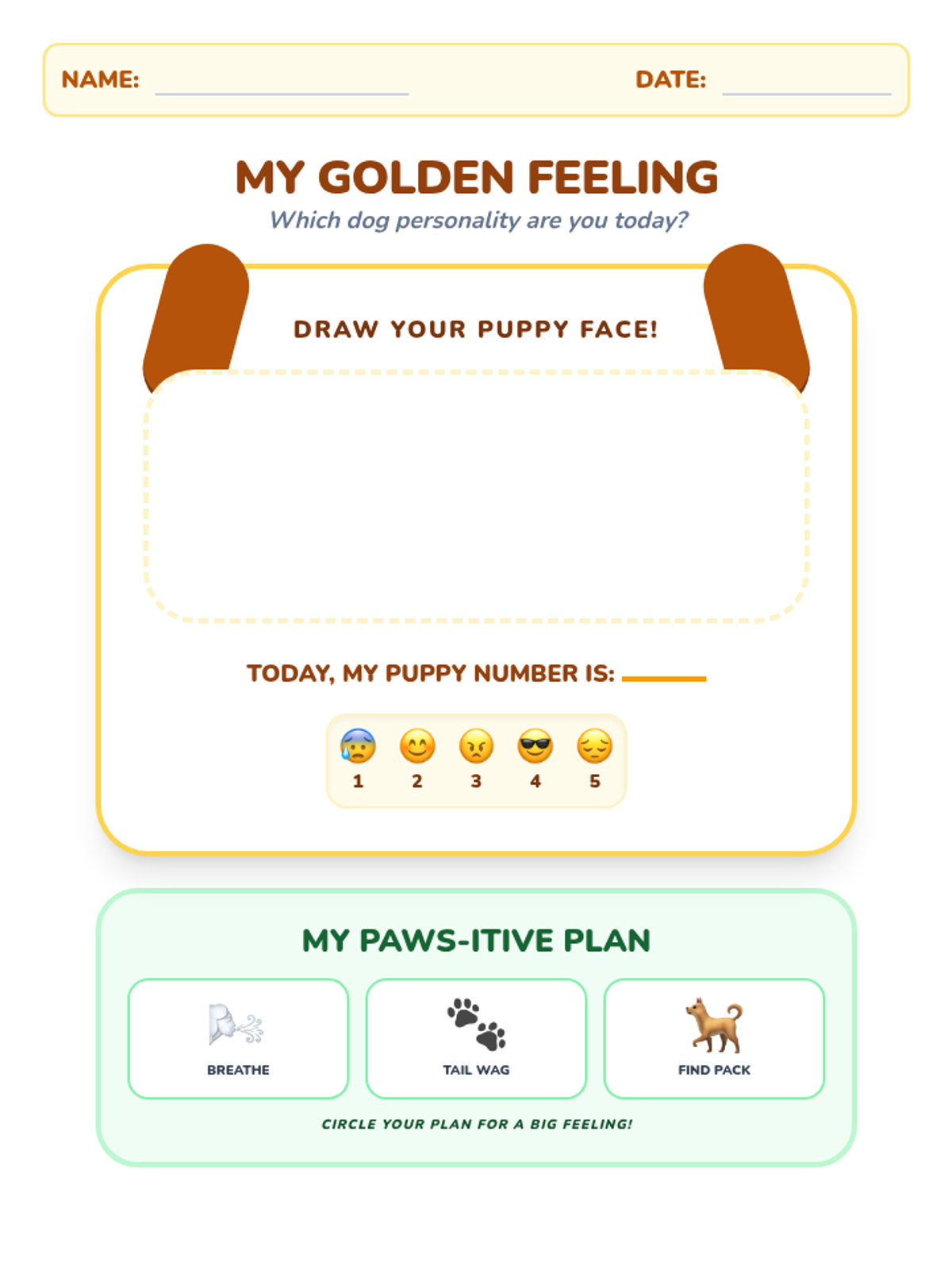
A recurring 15-minute Tuesday lesson where students use Golden Retriever expressions to identify their feelings and learn practical 'What Next' strategies for emotional regulation.
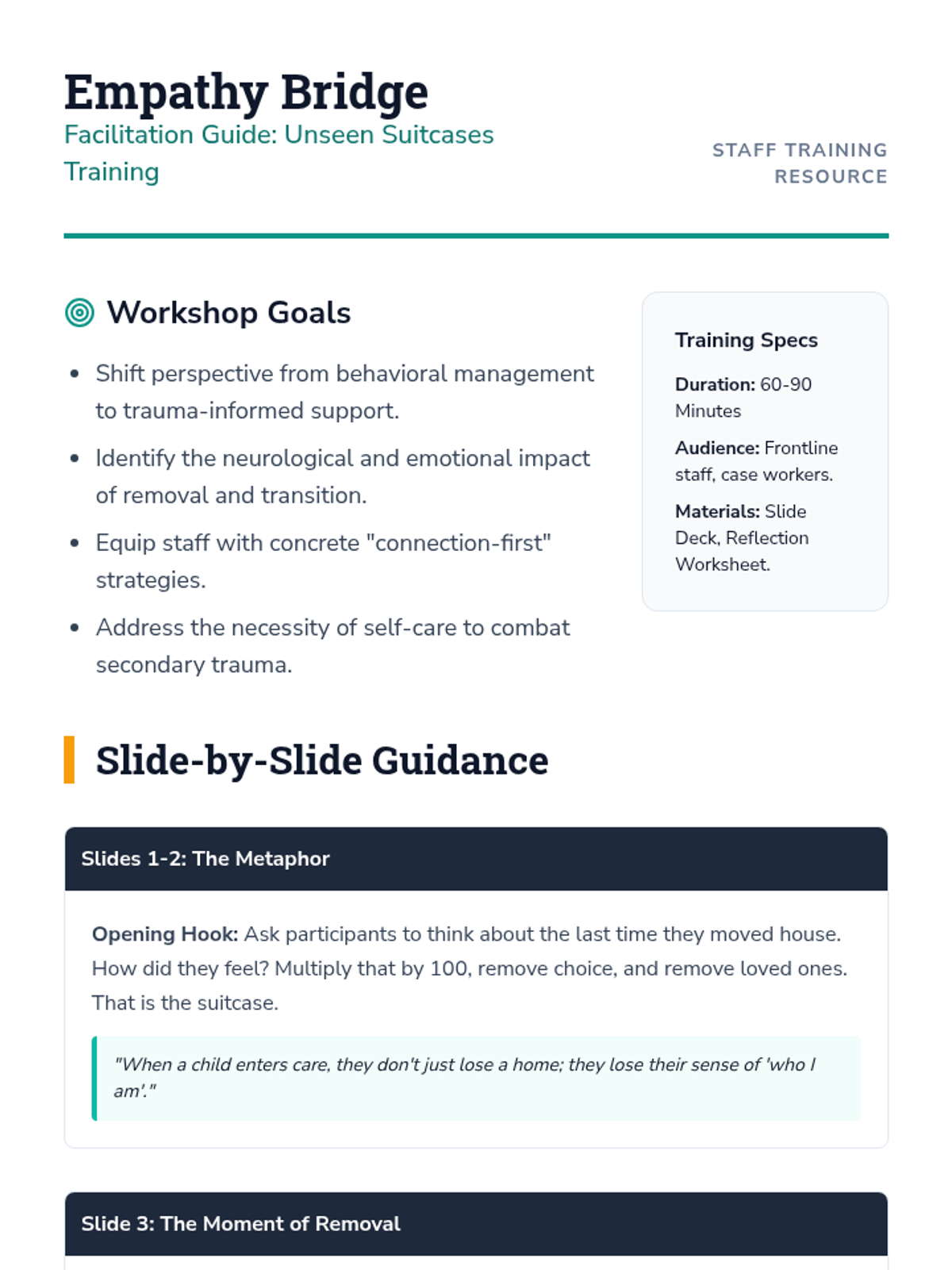
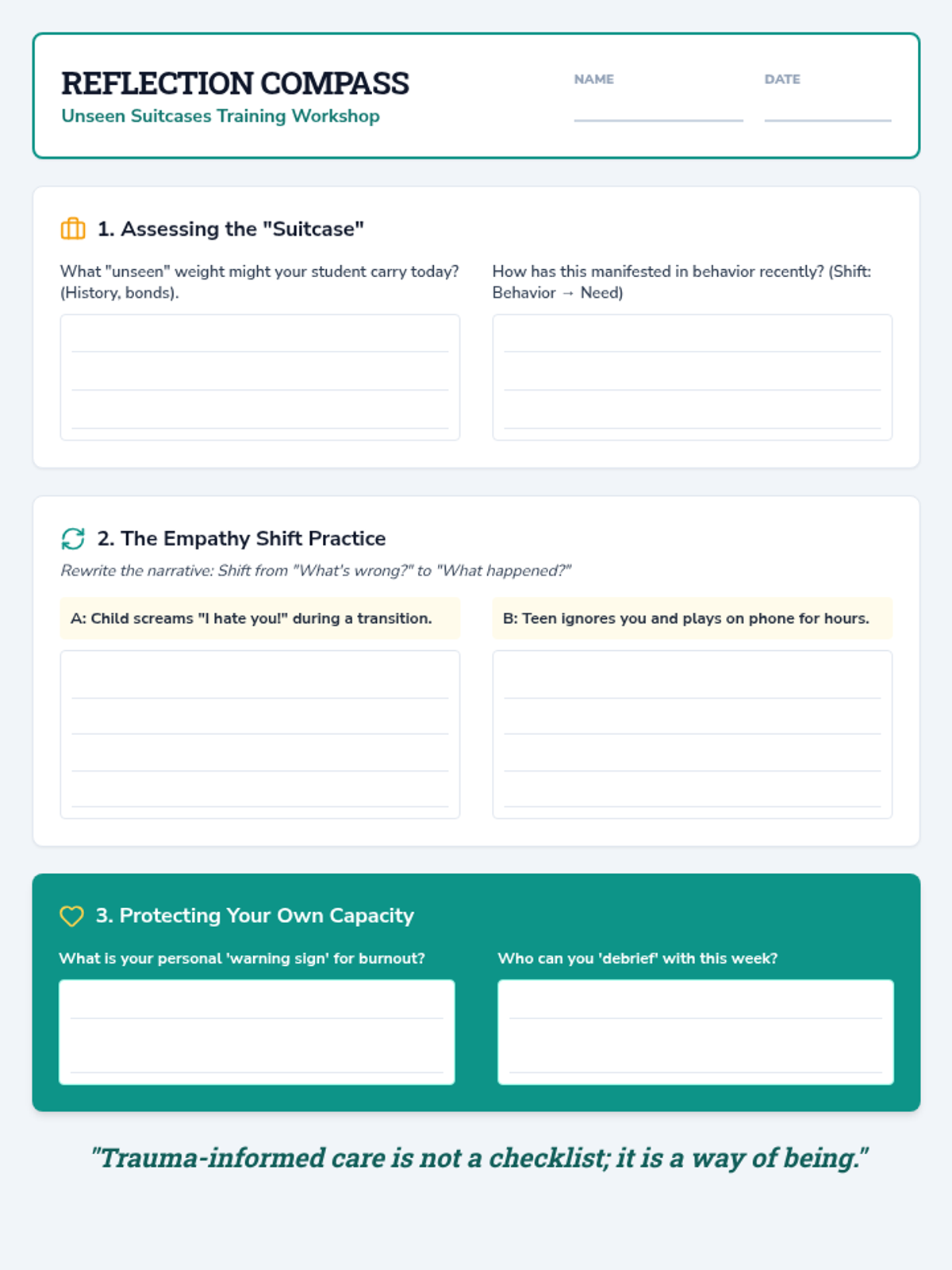
A trauma-informed training module for staff to build deep empathy for children in the foster care system by understanding the neurological and emotional impact of removal and placement.
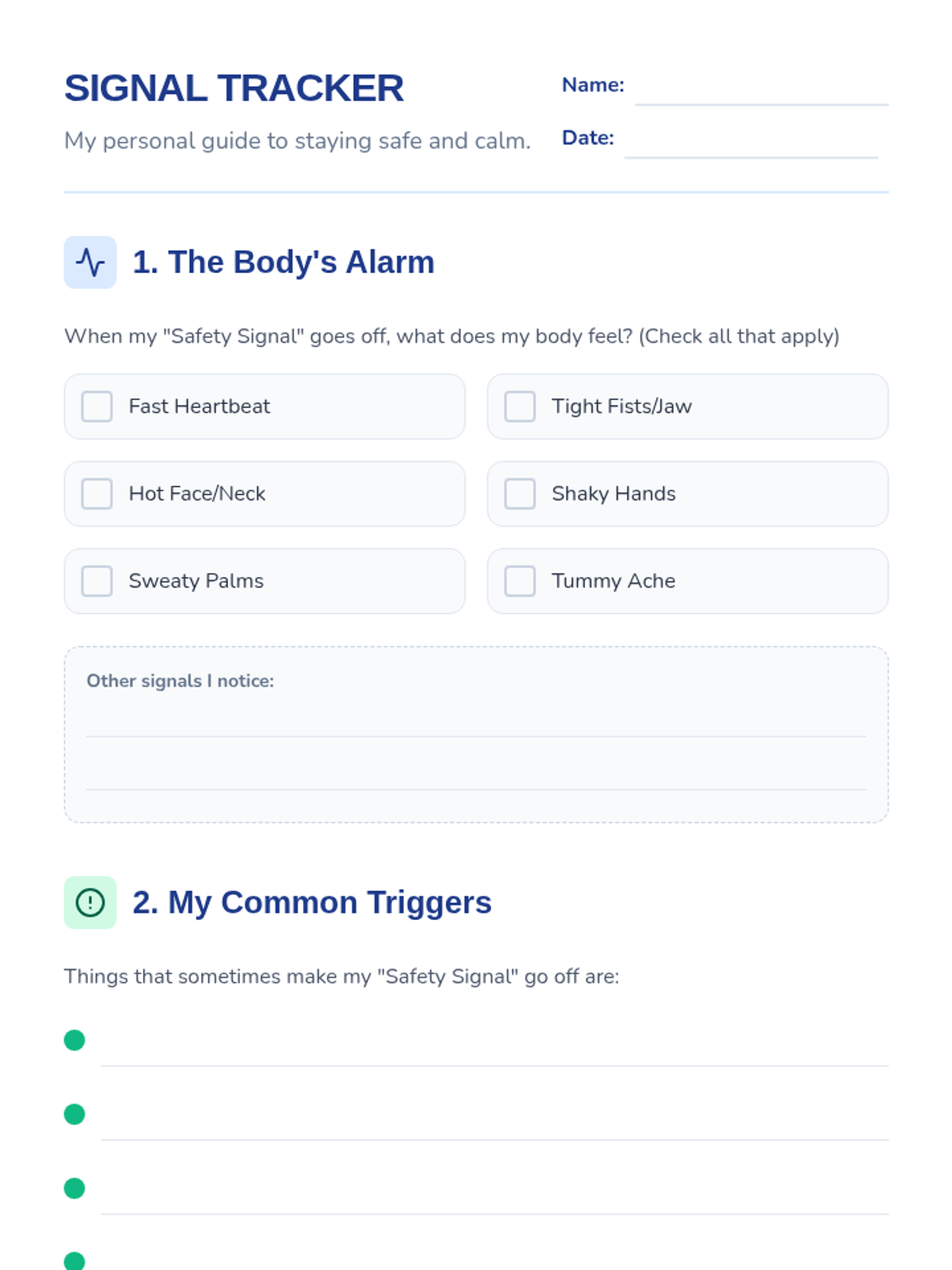
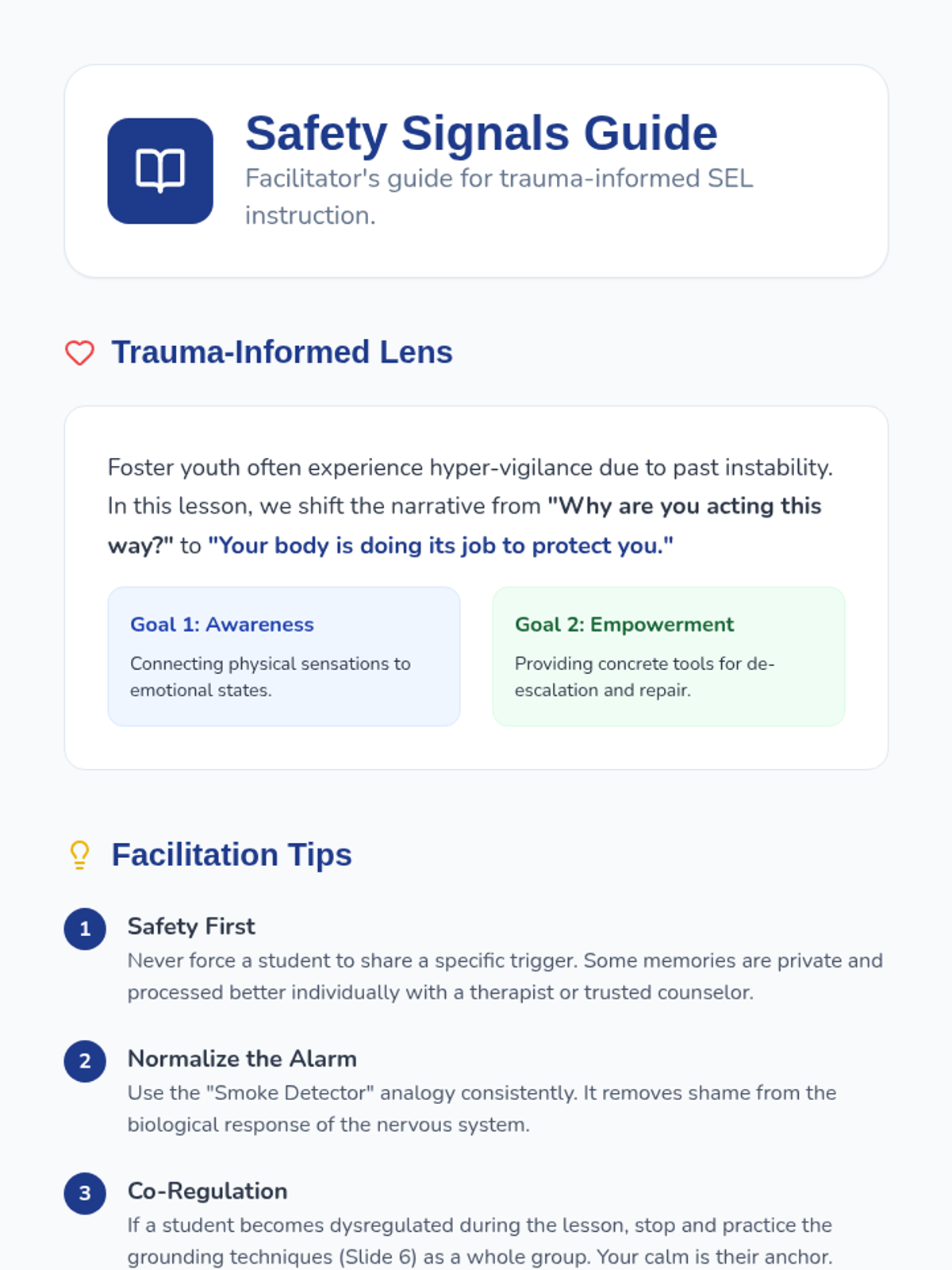
A trauma-informed lesson designed to help students identify their emotional triggers and develop healthy conflict resolution strategies in a safe, supportive environment.
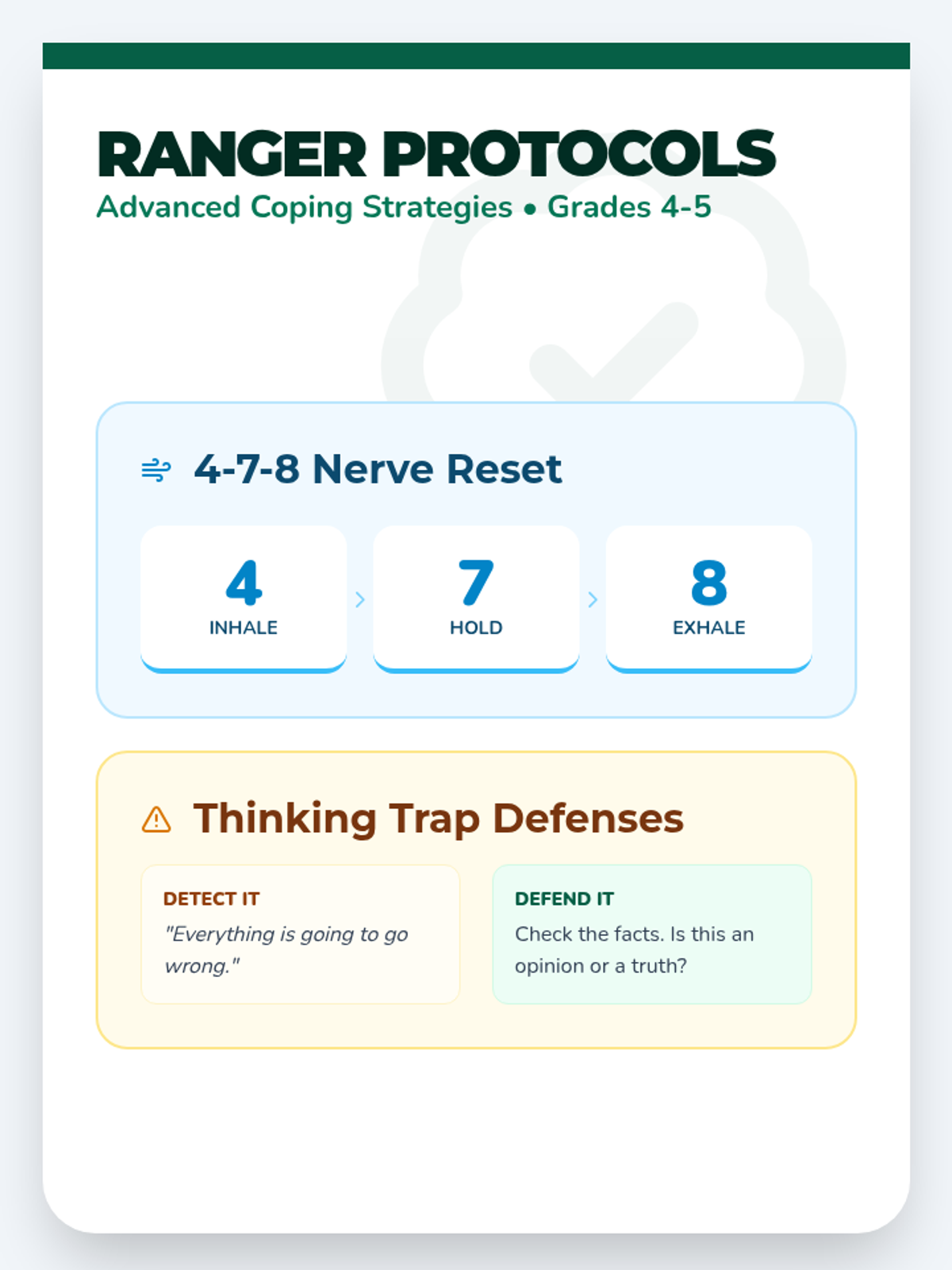
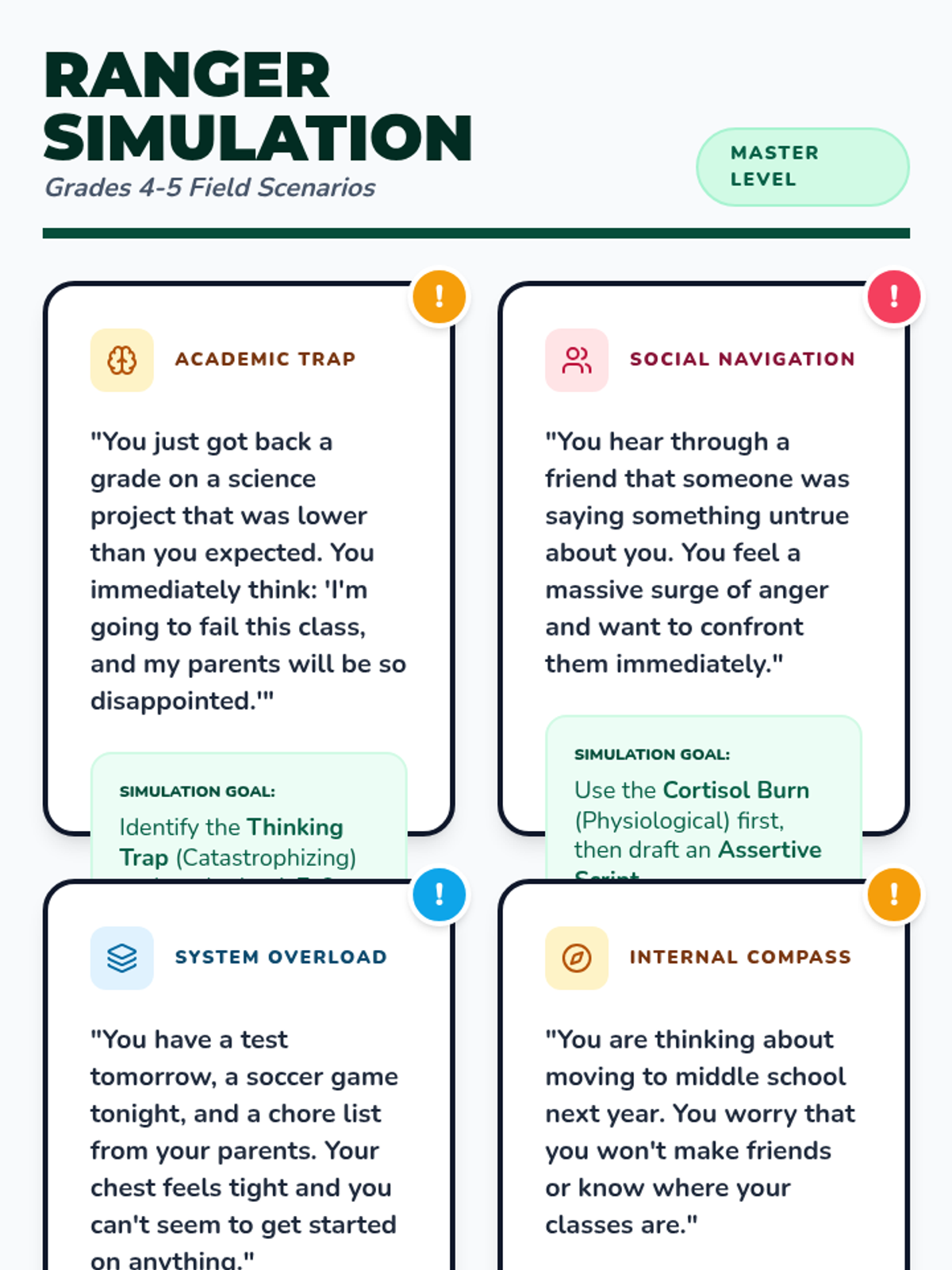
Advanced coping skills for 4-5 students exploring complex grounding methods, assertive communication strategies, cognitive reframing of self-talk, and understanding the physiological benefits of movement for stress management.
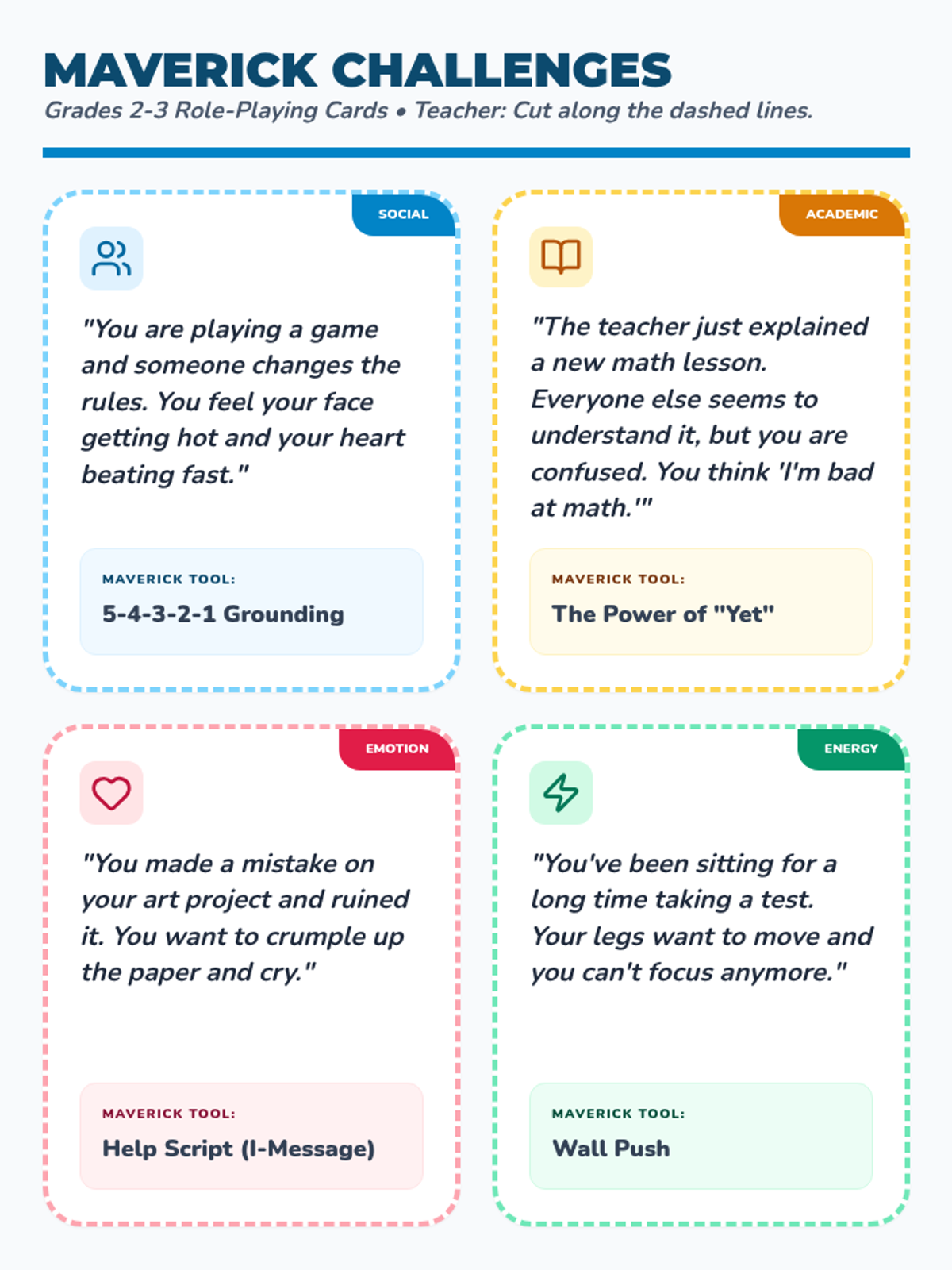
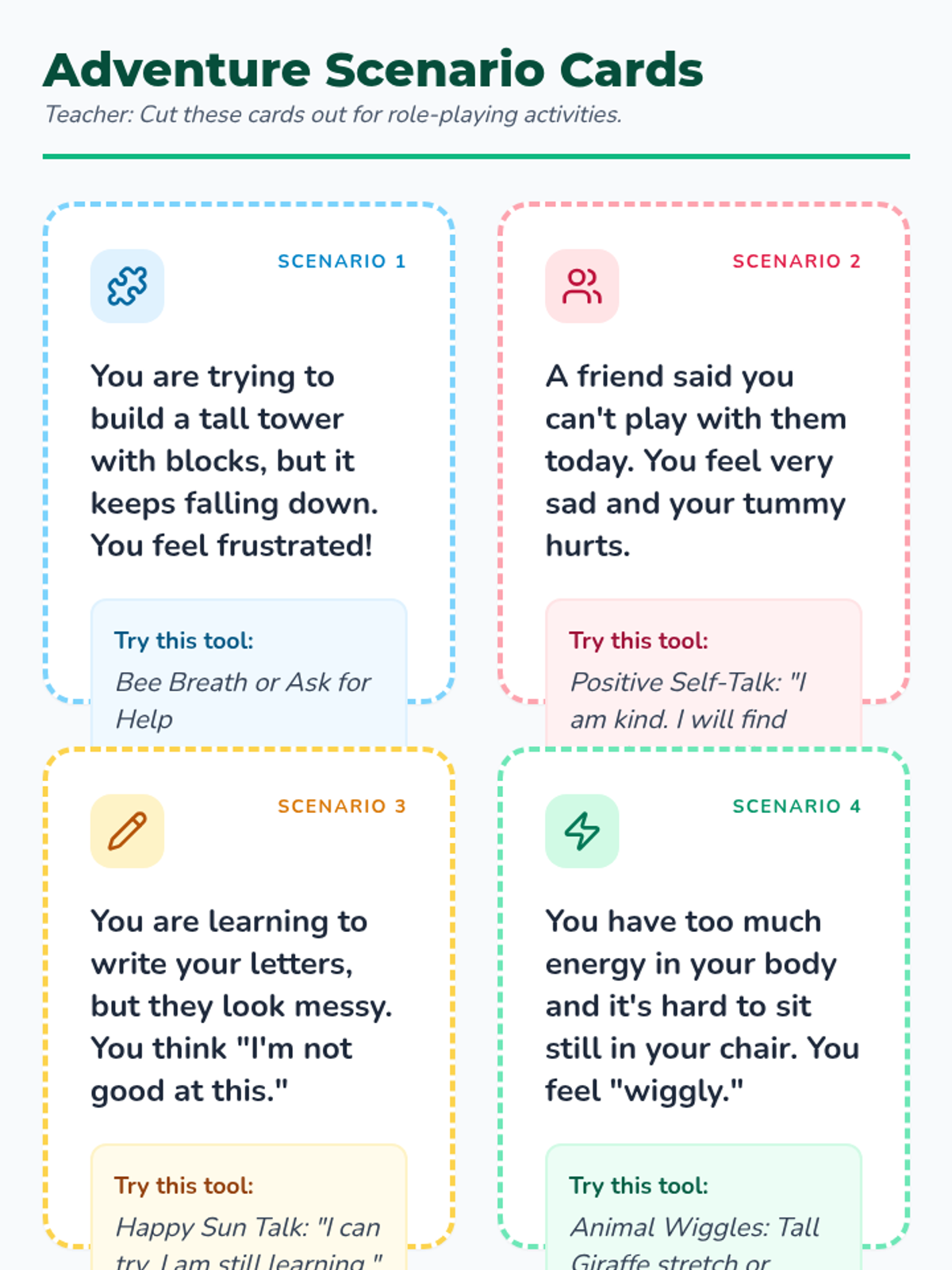
Intermediate coping skills for 2-3 students introducing the 5-4-3-2-1 grounding technique, specific communication scripts for asking for help, reframing negative thoughts, and purposeful physical activities to release energy.
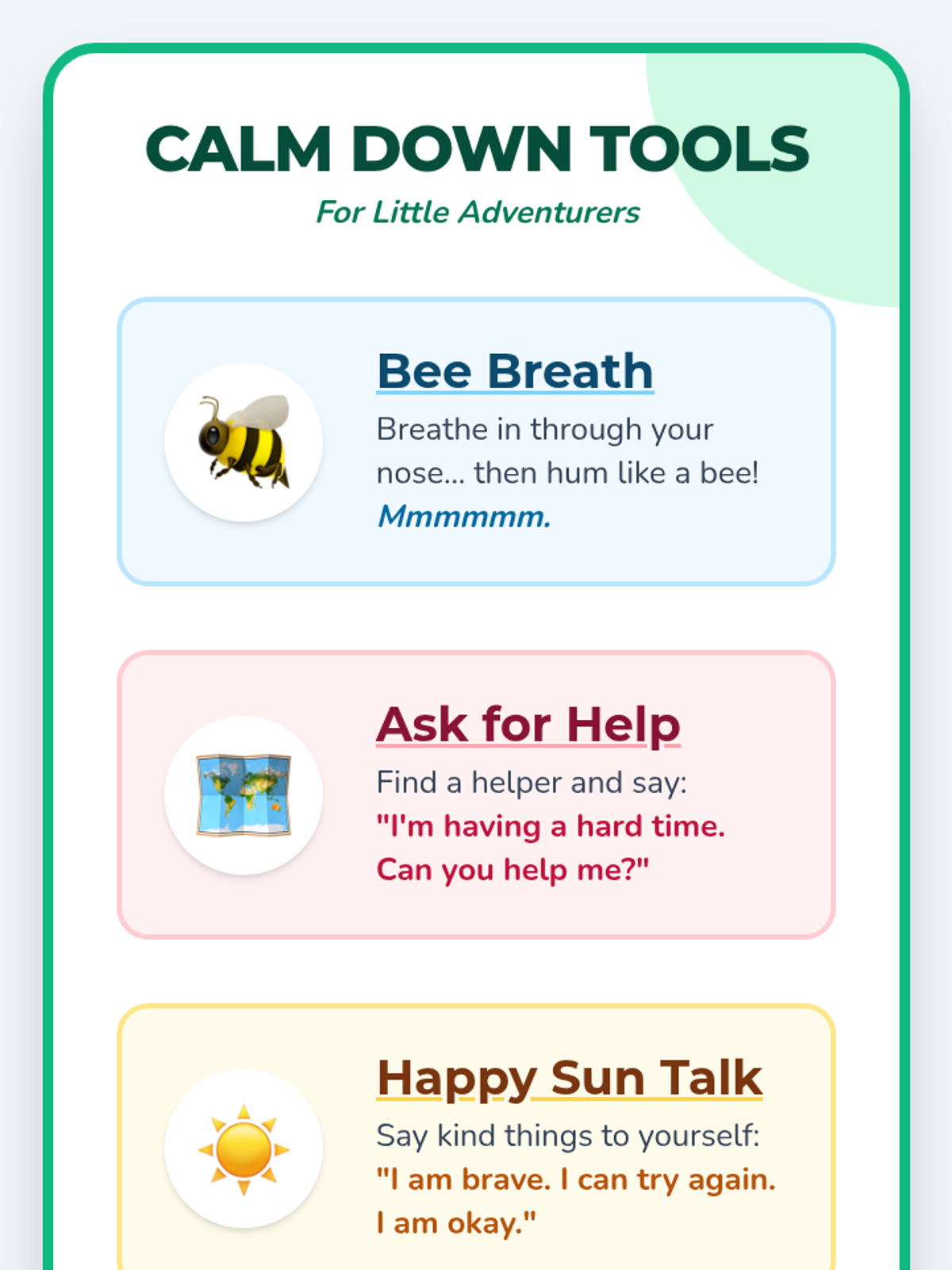
Foundational coping skills for K-1 students focusing on simple breathing techniques (like 'Bee Breath'), identifying helpers, basic 'I can' self-talk, and fun animal-themed movements.
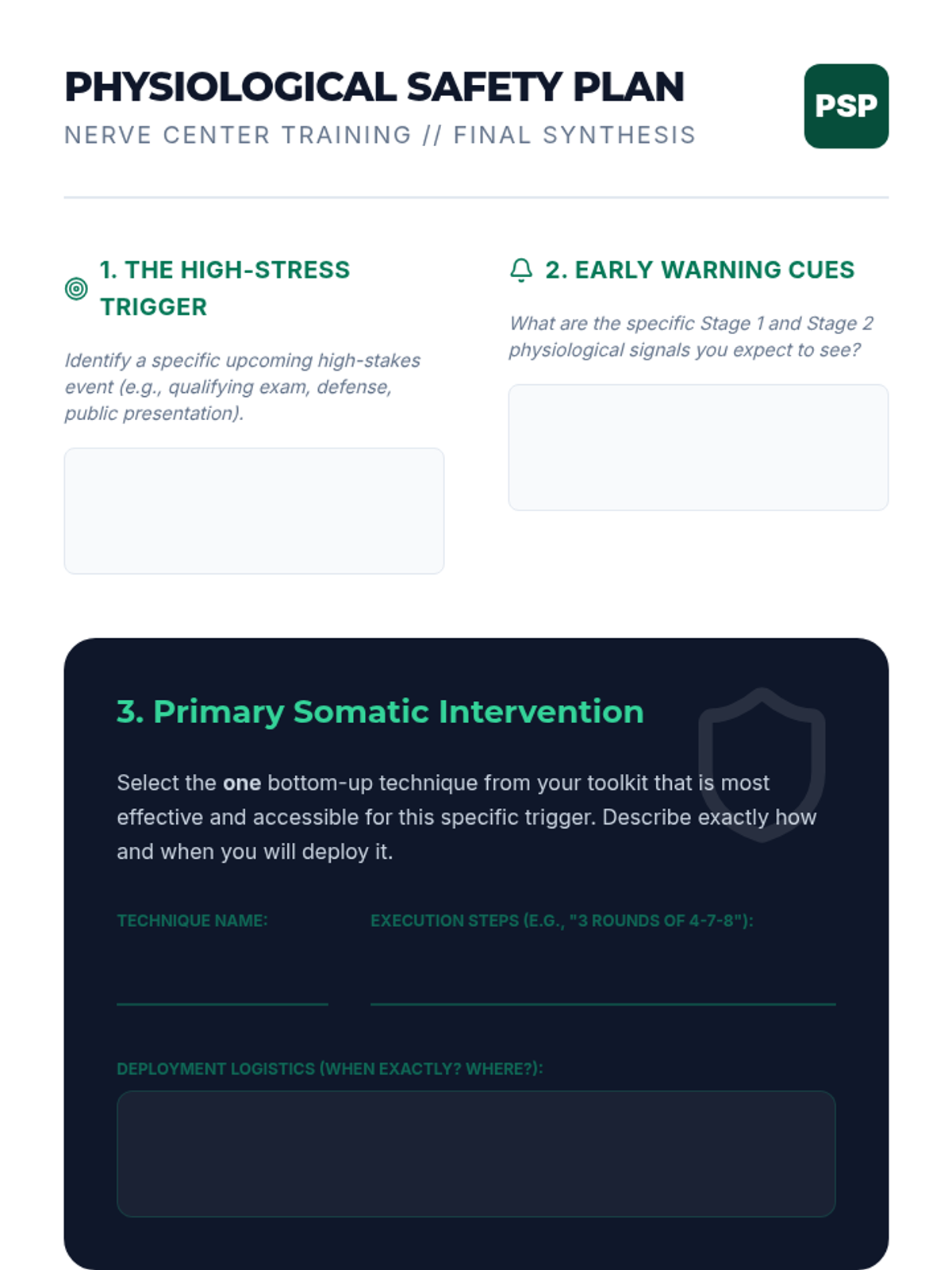
Students synthesize their knowledge to create a personalized physiological safety plan for high-stress periods. They identify triggers, early warning signs, and pre-planned somatic interventions.
Students evaluate somatic bottom-up processing techniques like diaphragmatic breathing and thermal regulation. They learn to choose the right physical strategy for their specific physiological profile.
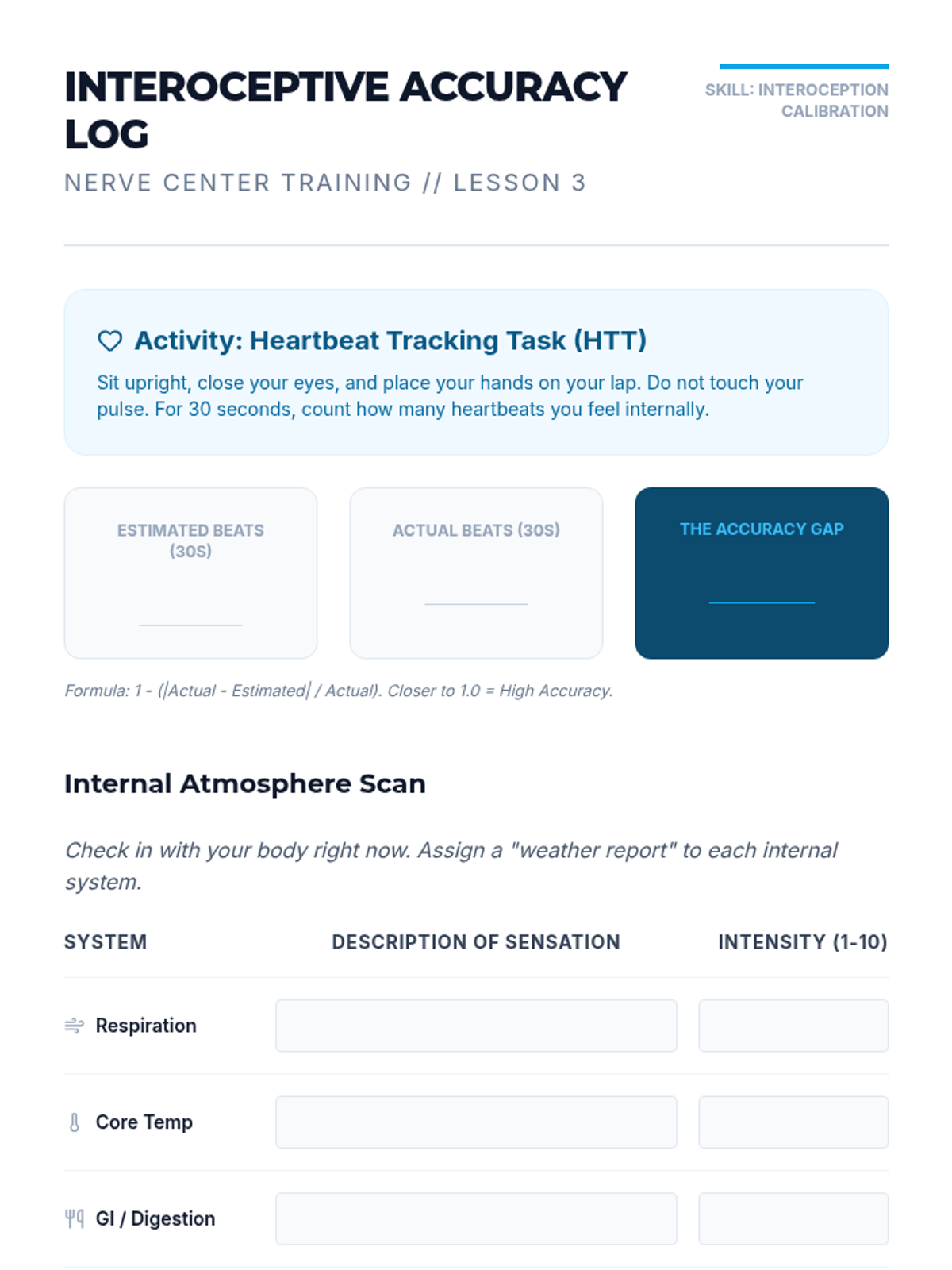
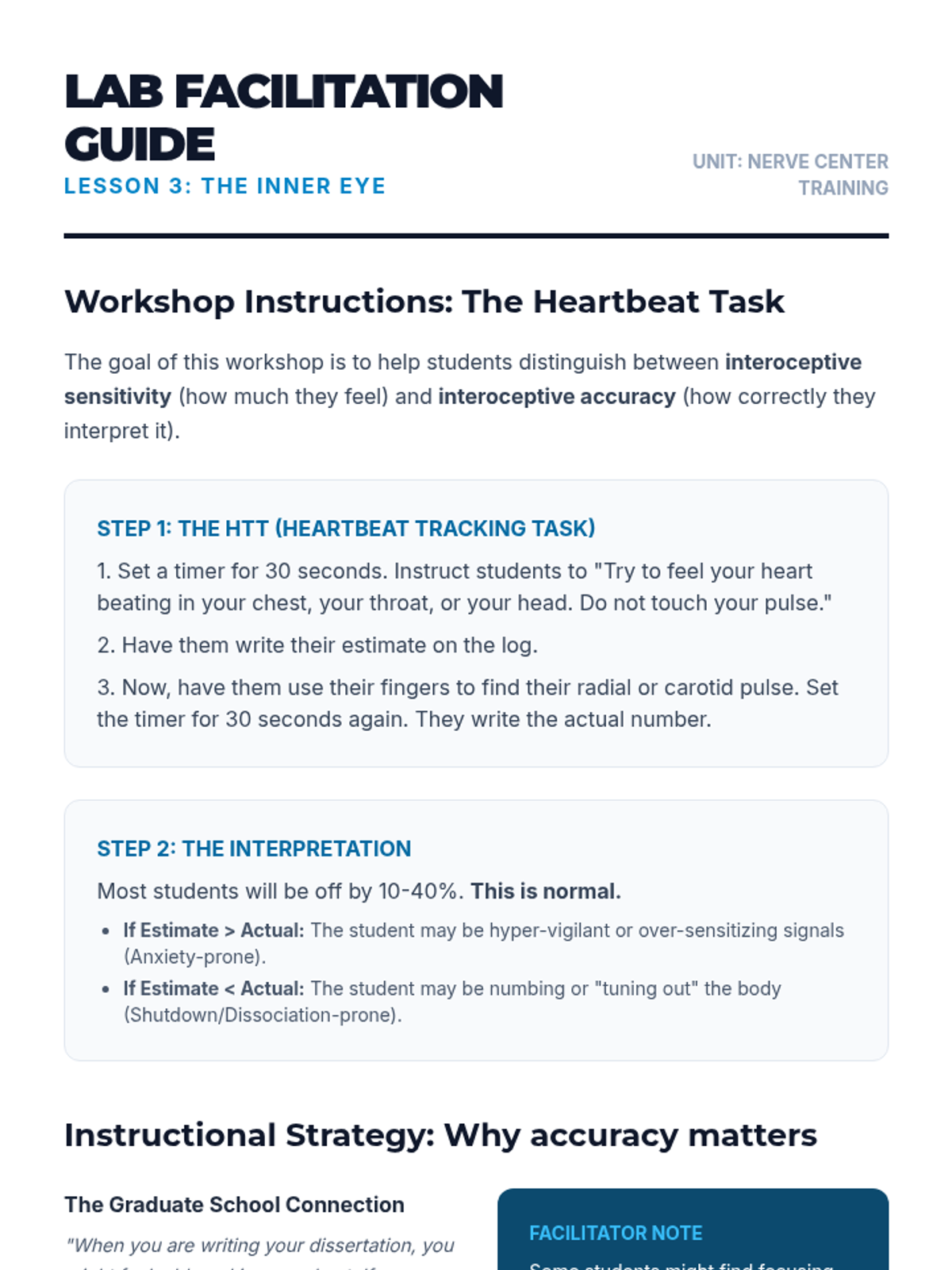
Learners practice interoception—the sense of the internal state of the body. They test their accuracy in detecting heart rate and tension, connecting poor awareness with high anxiety.
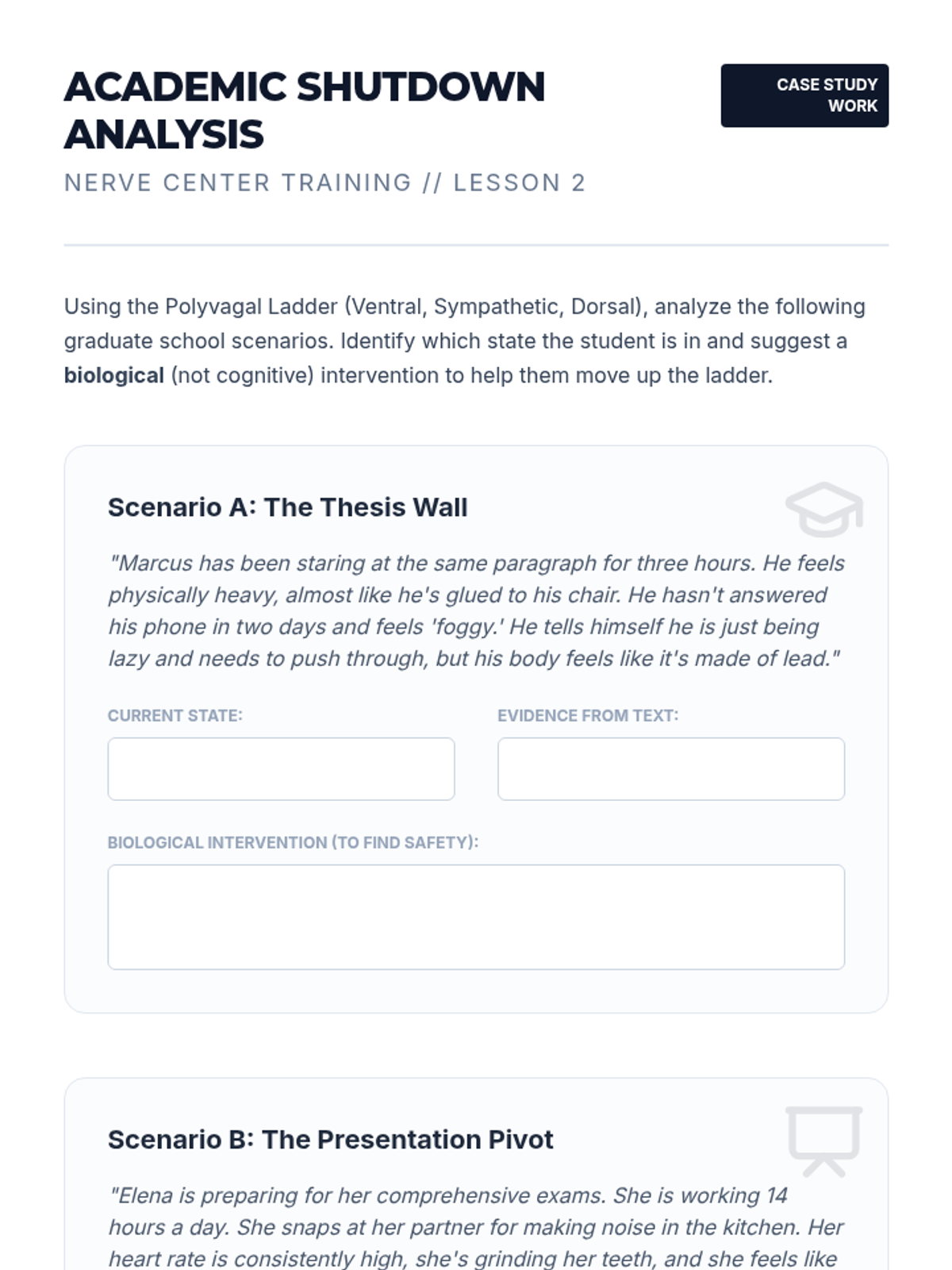
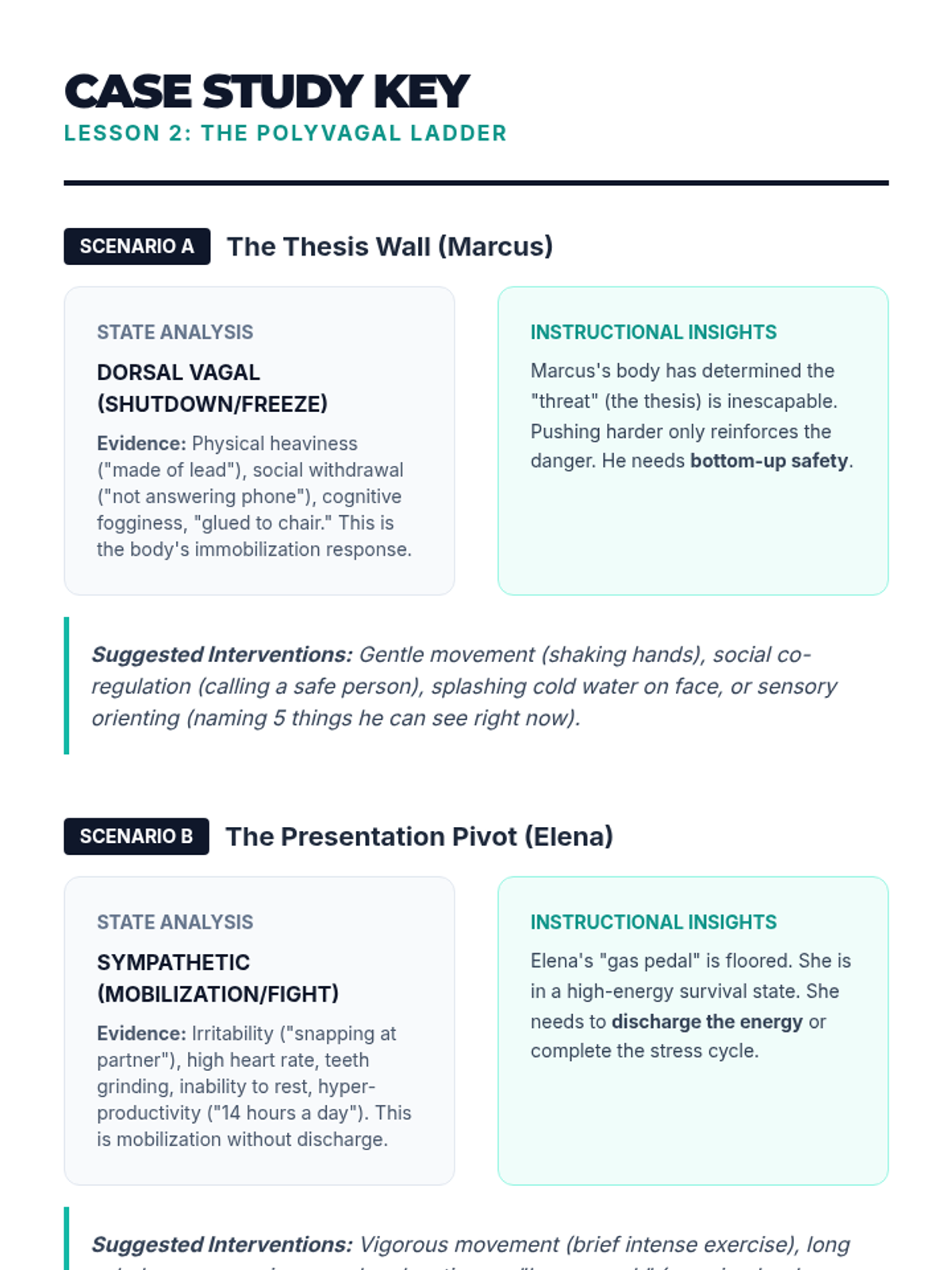
Dives into Polyvagal Theory to distinguish between fight/flight mobilization and dorsal vagal shutdown. Students analyze behaviors like procrastination and isolation as biological responses.
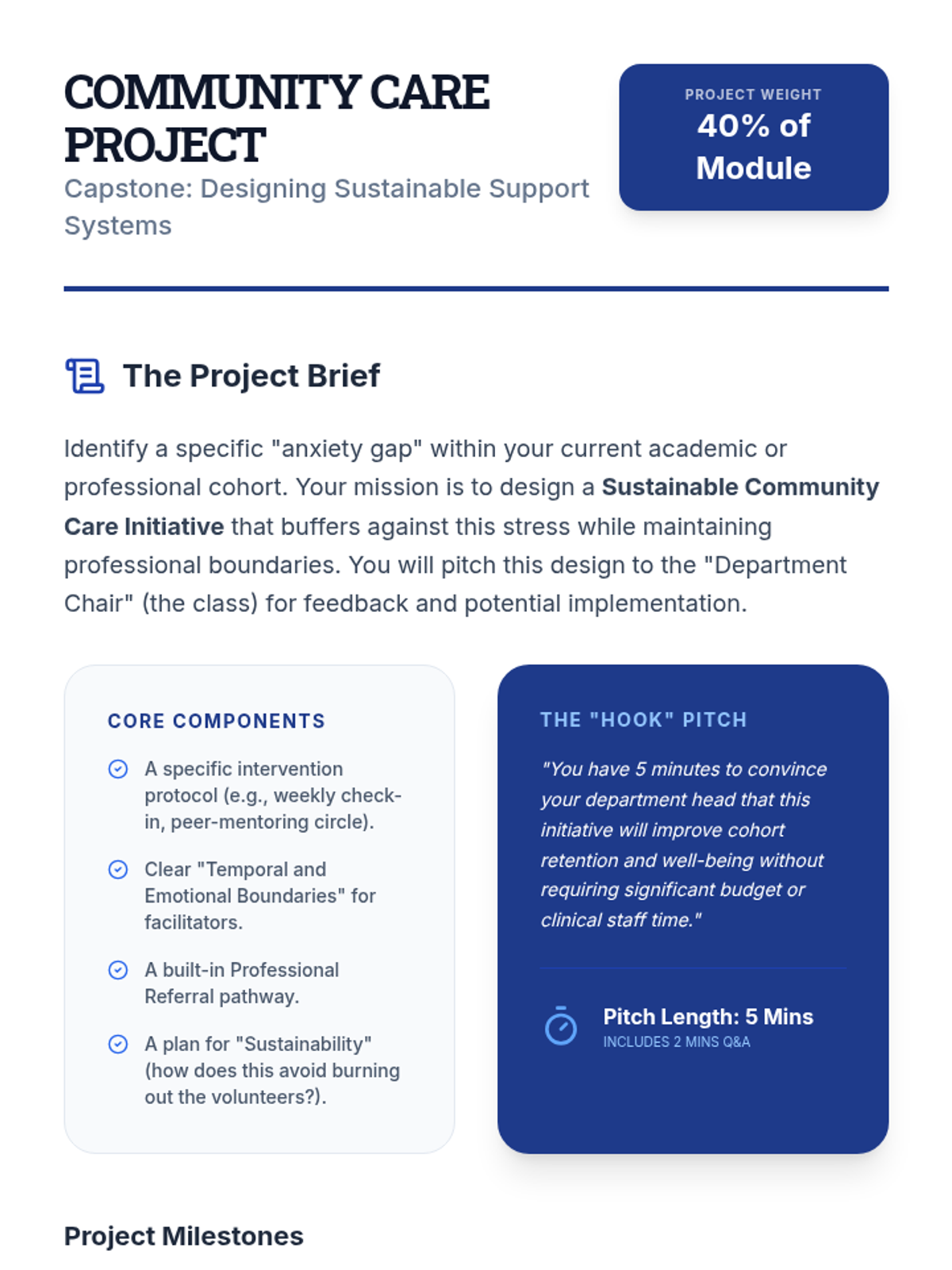
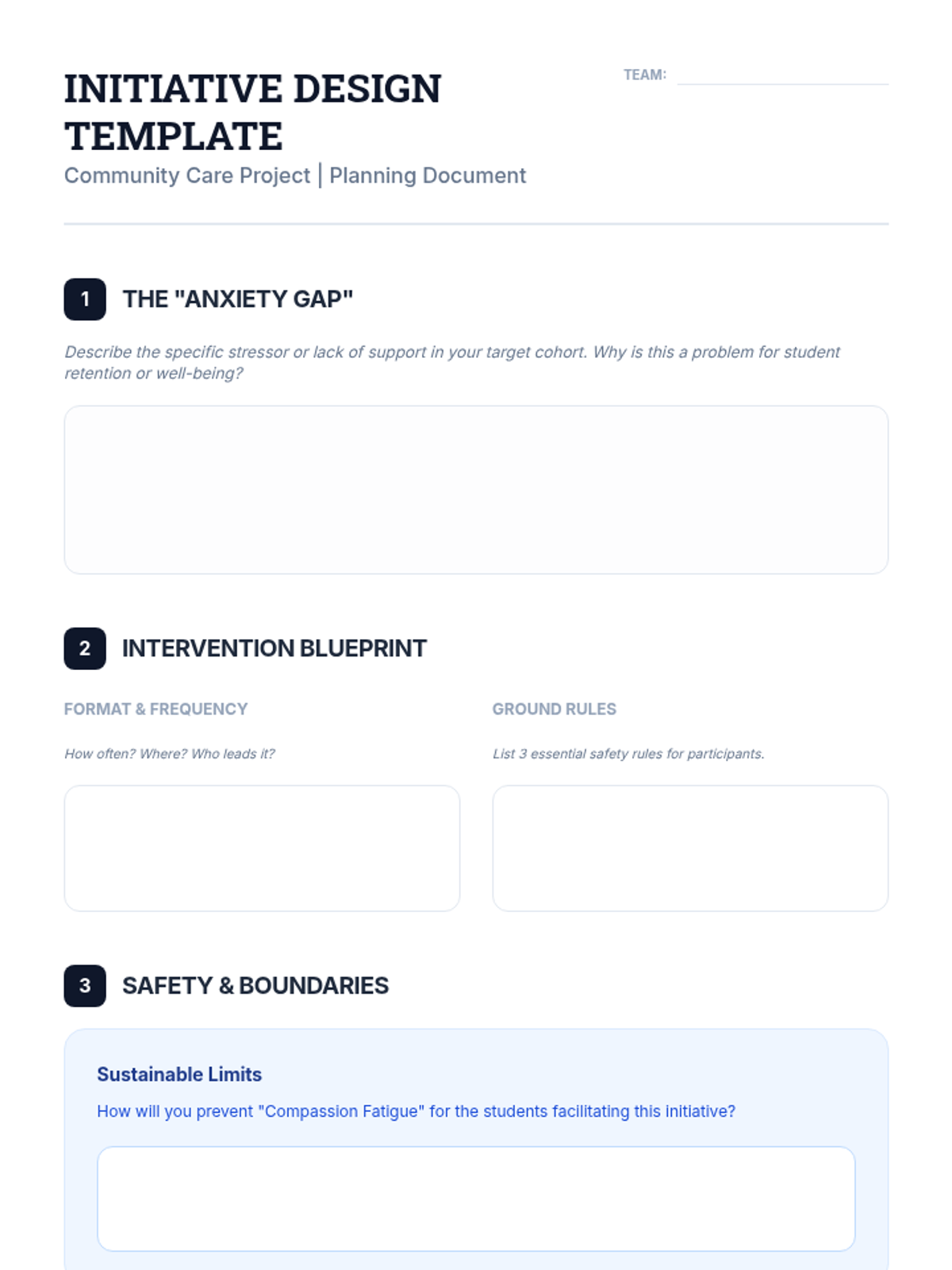
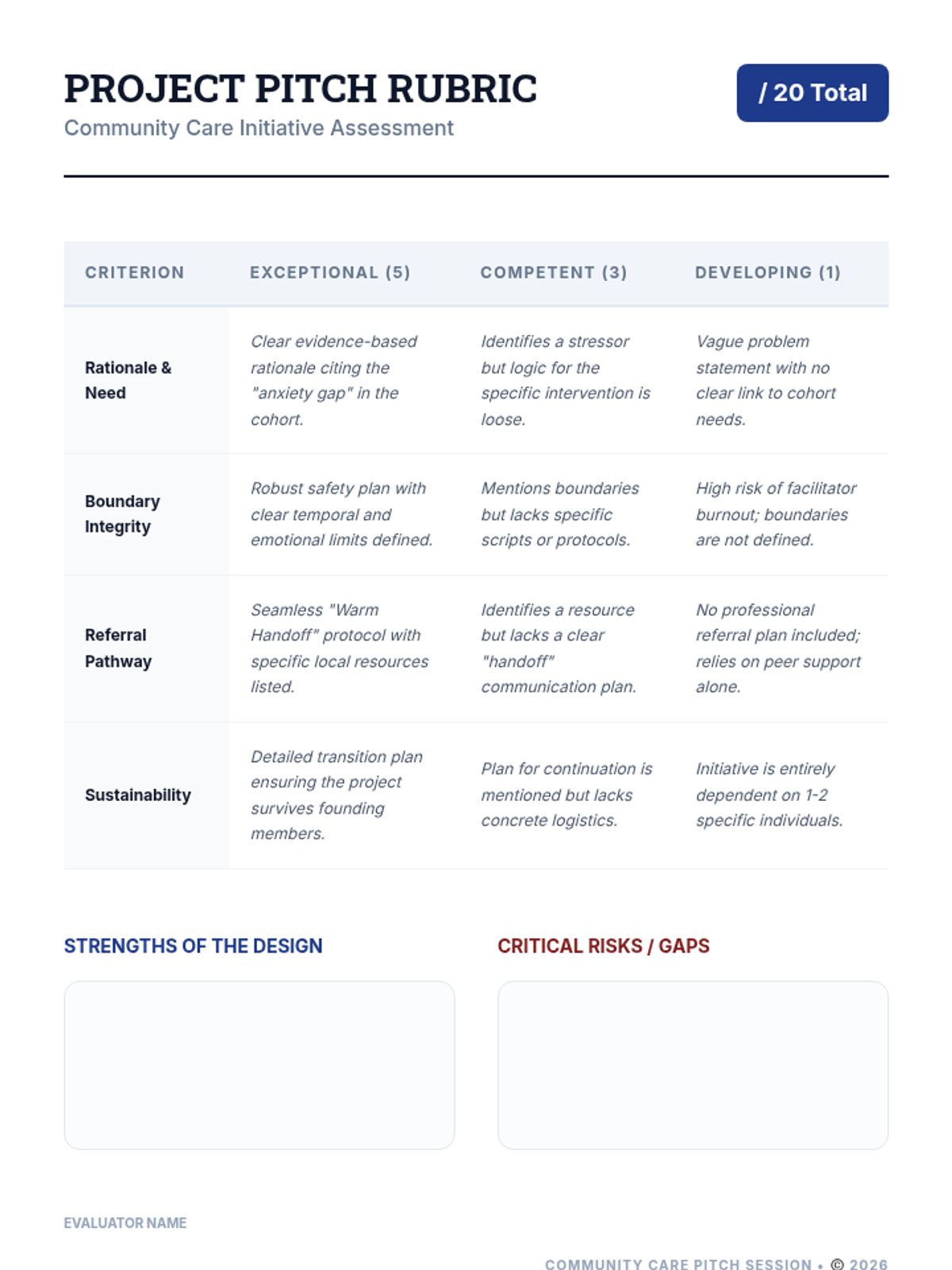
Students design and pitch a sustainable community care initiative tailored to their specific academic or professional cohort.
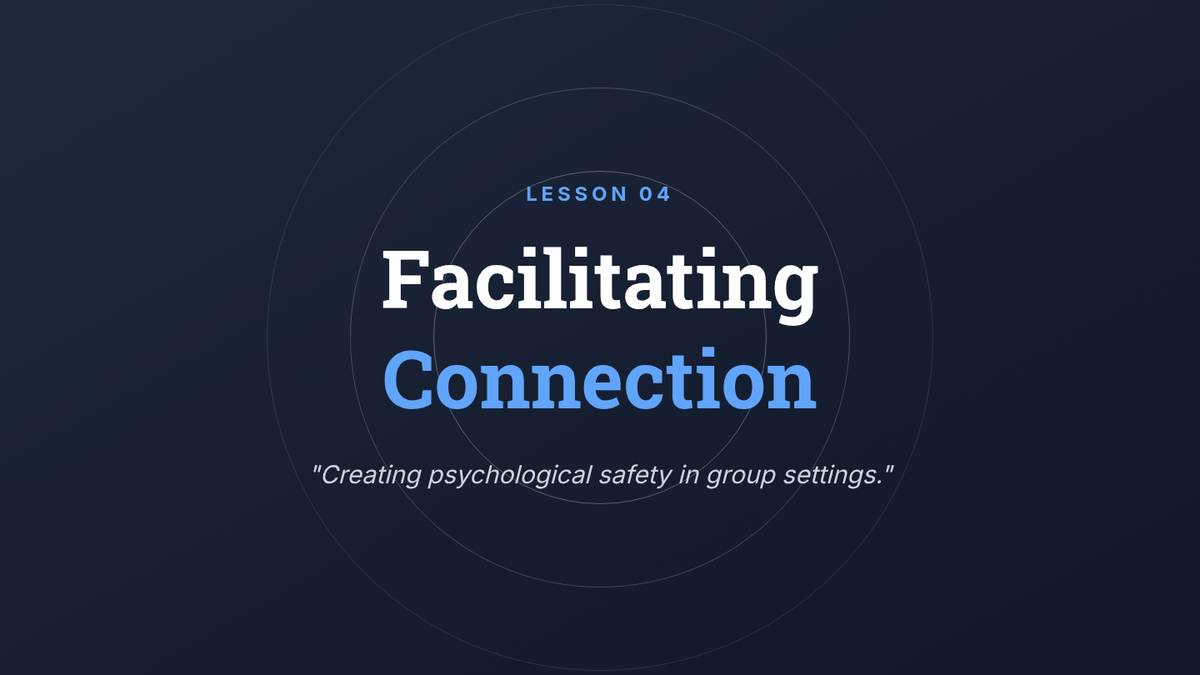
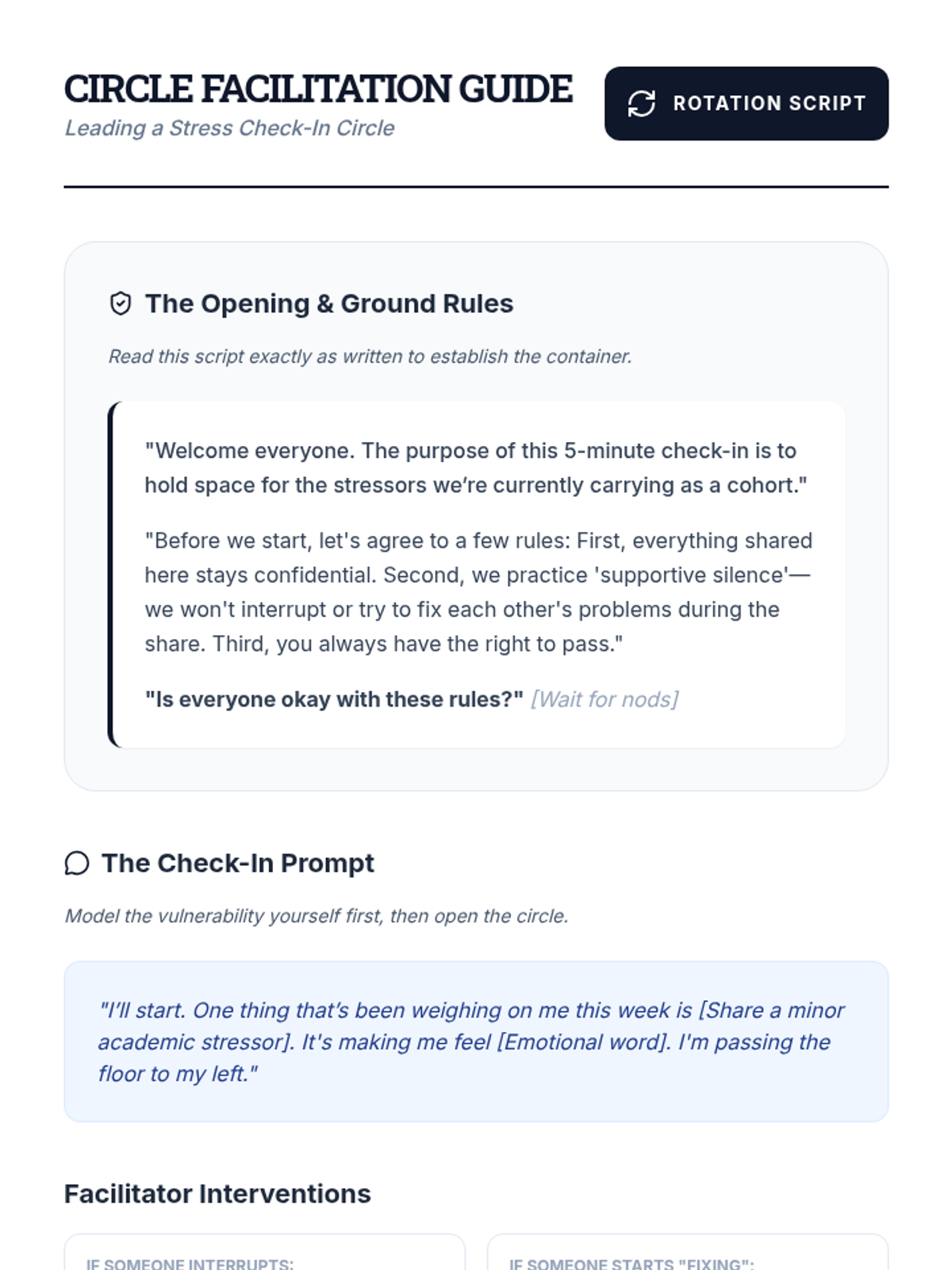
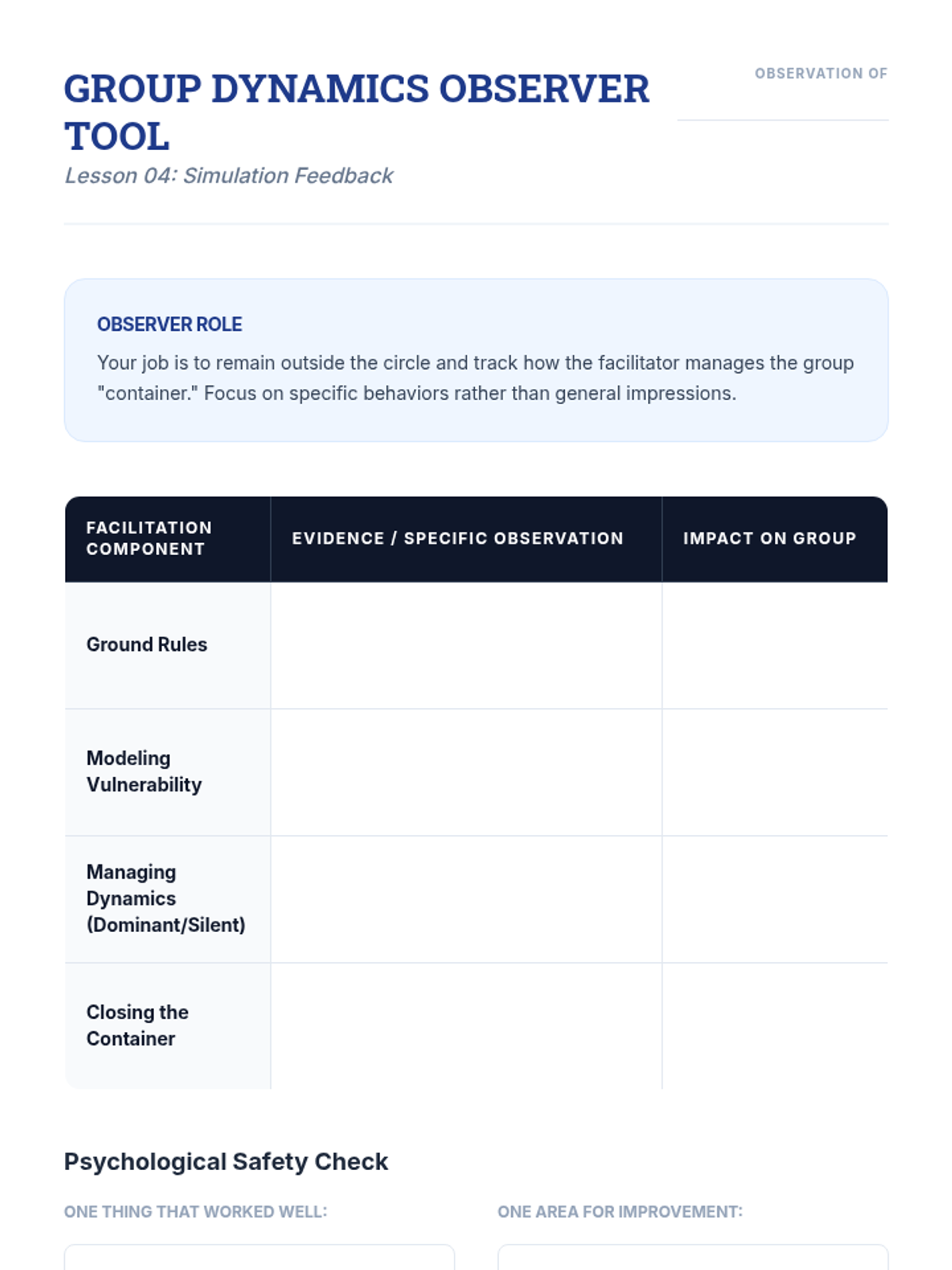
Develops skills for leading group stress check-ins, managing dynamics, and ensuring psychological safety in group settings.
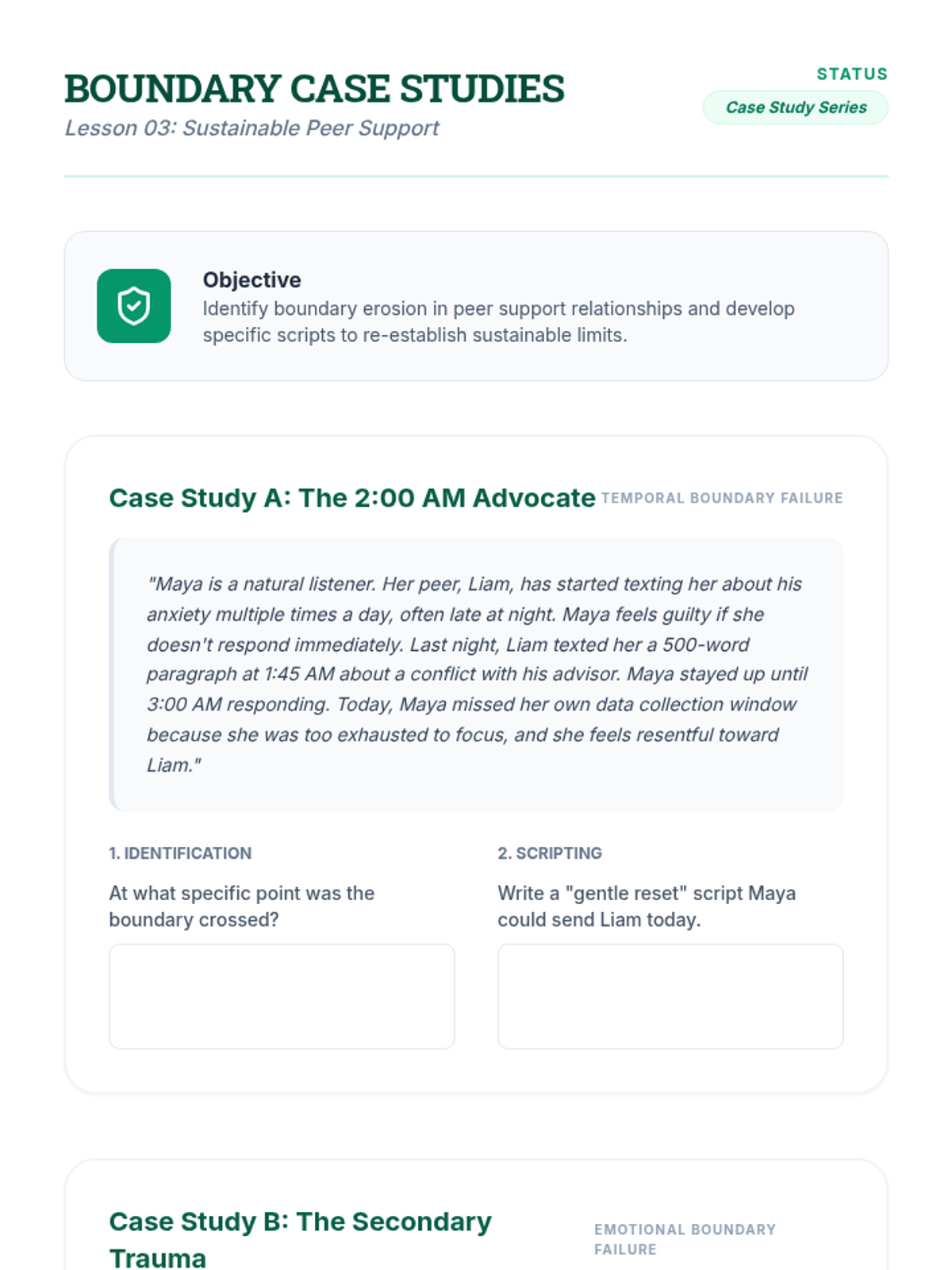
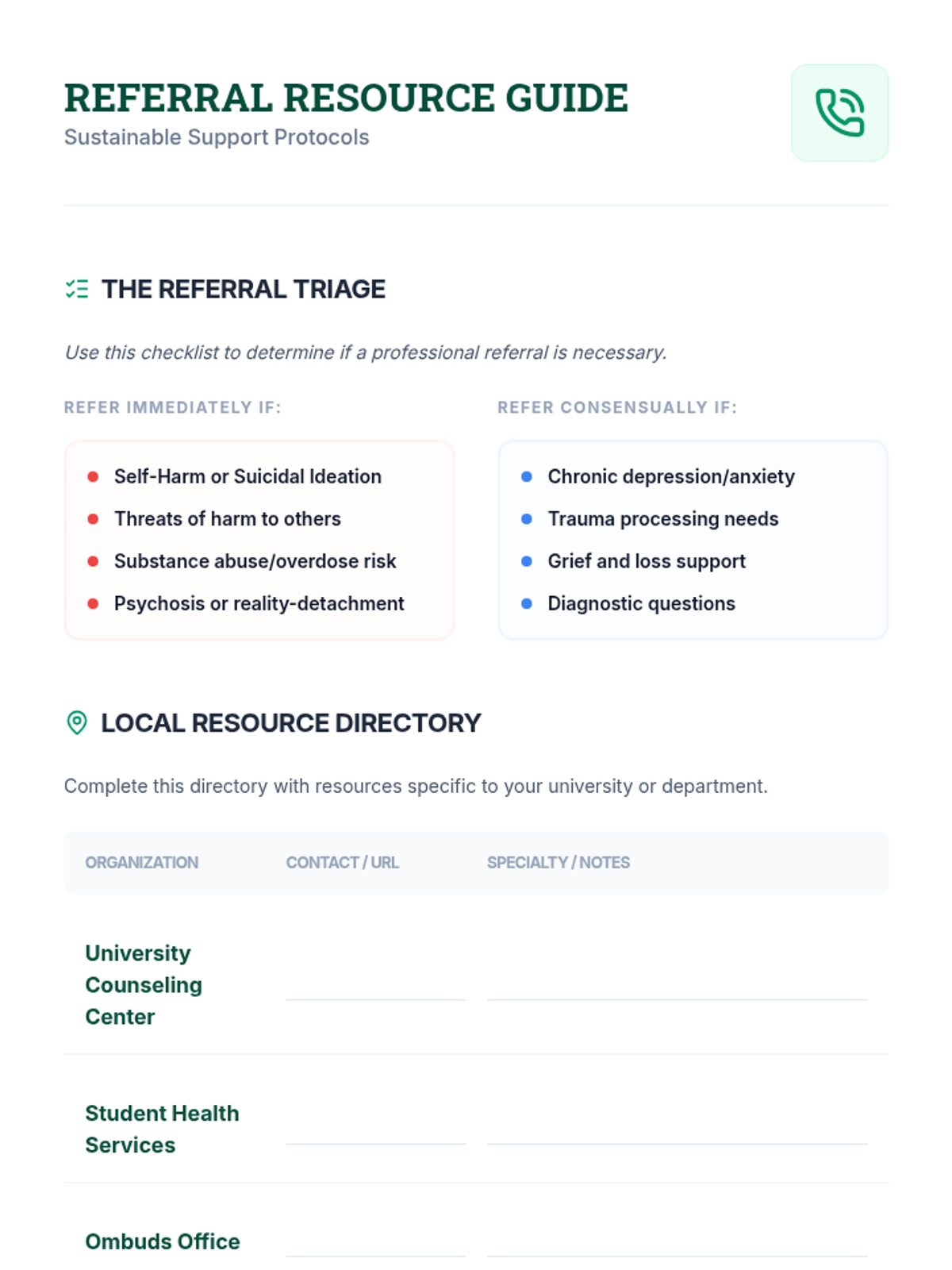
Focuses on preventing compassion fatigue through emotional and temporal boundaries and professional referral protocols.
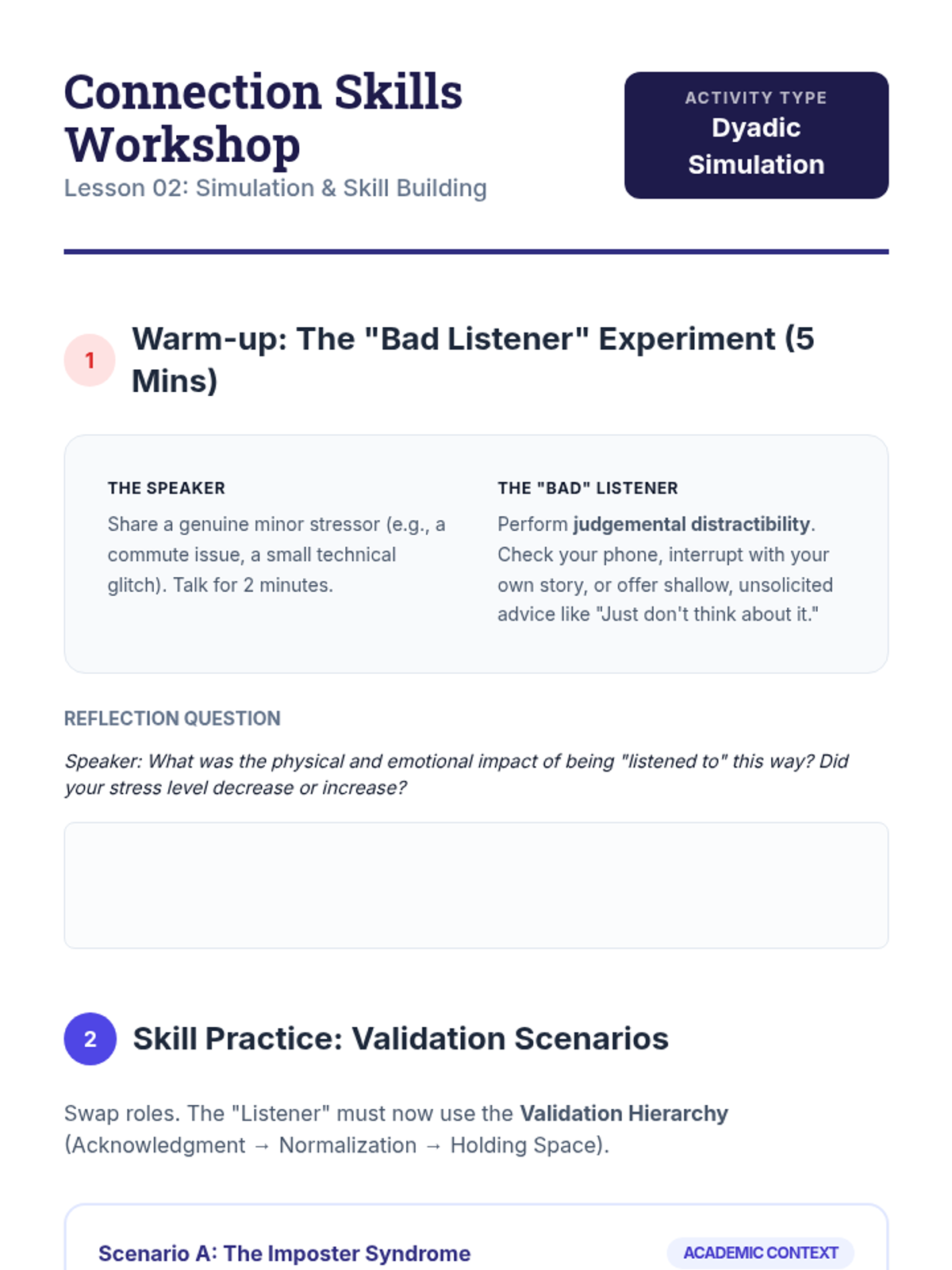
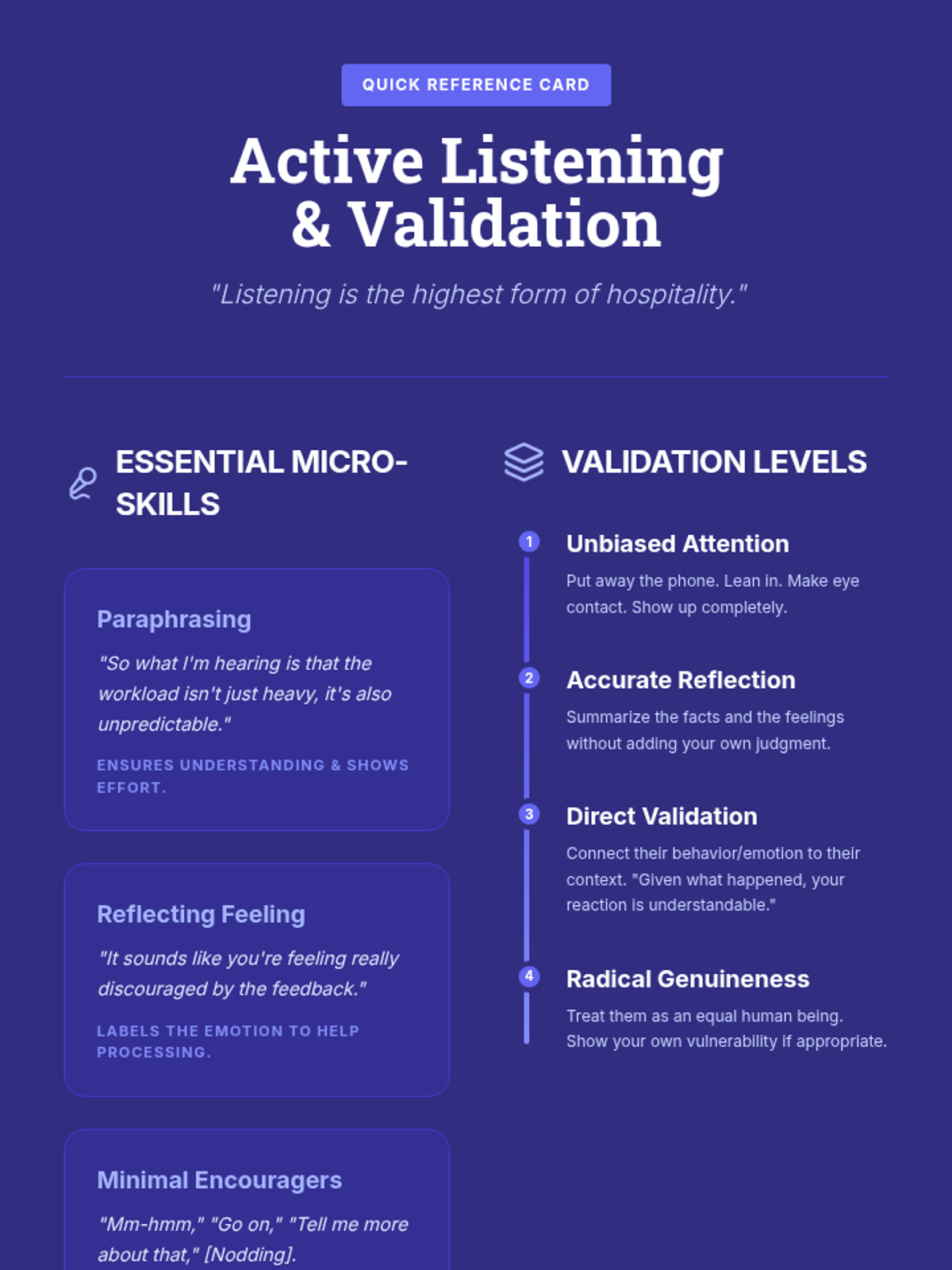
Practical workshop on active listening, validation, and holding space for peers without the pressure to provide immediate solutions.
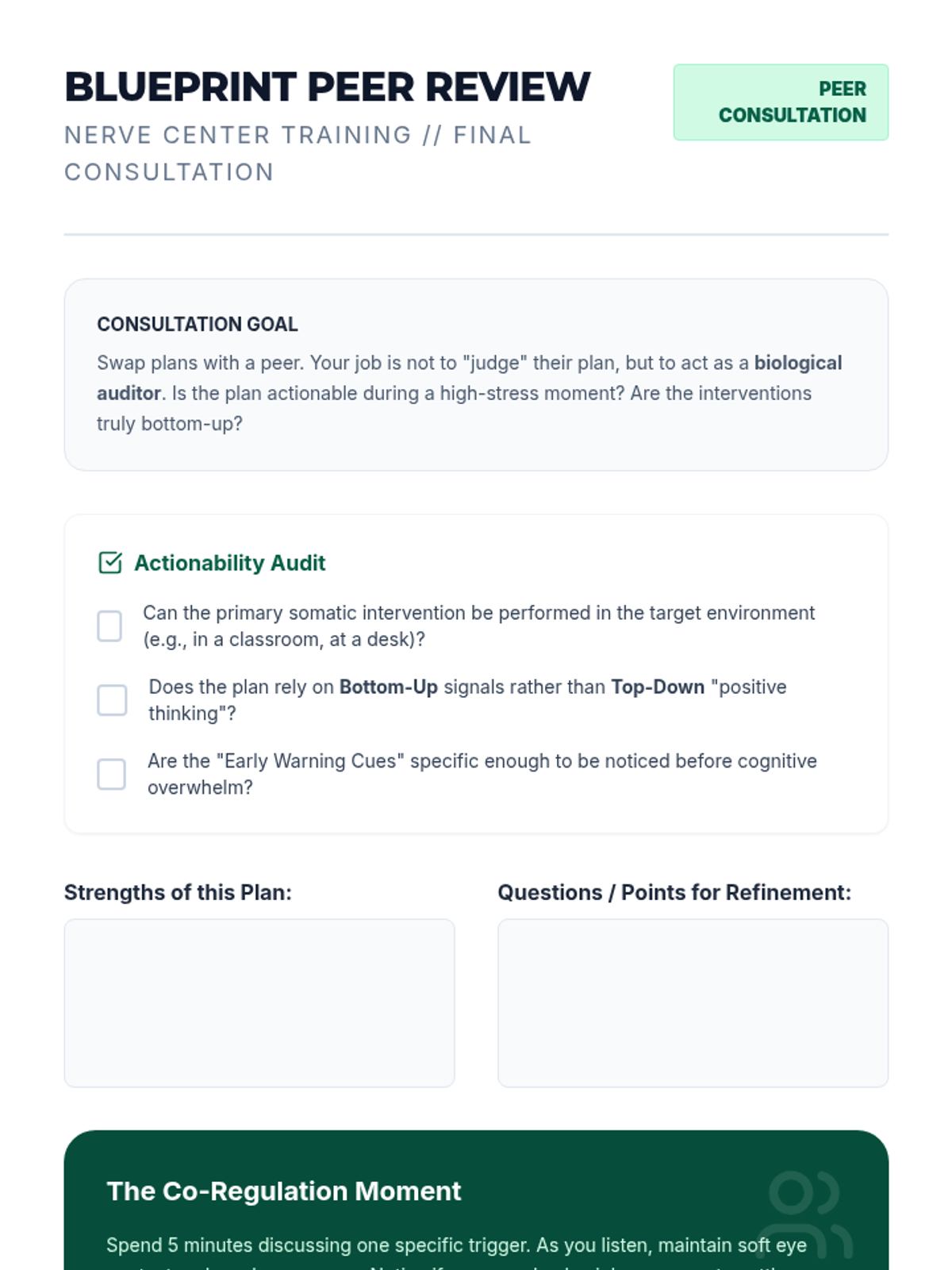
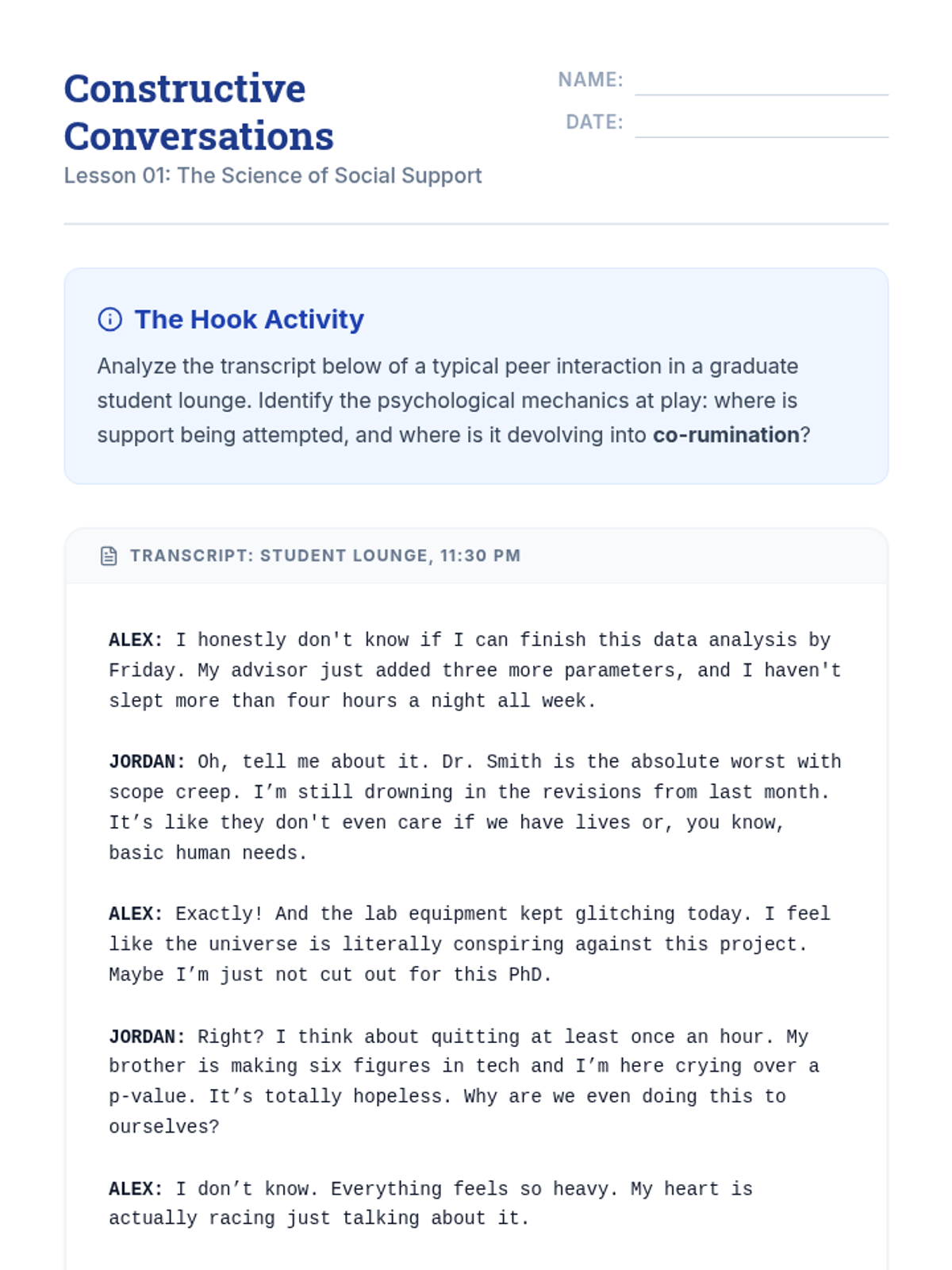
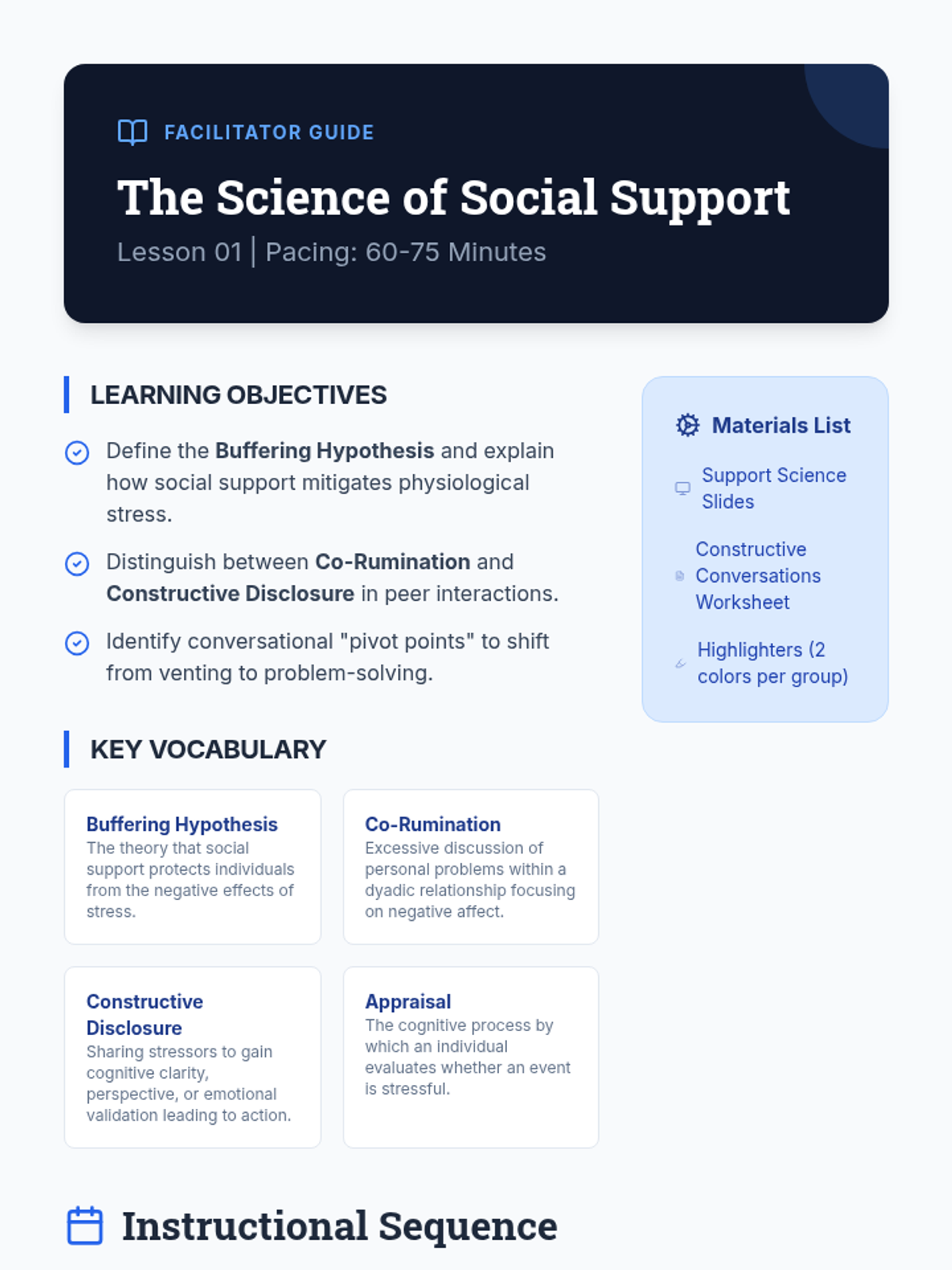
Examines the buffering hypothesis and the psychological mechanics of how social connection mitigates stress, contrasting co-rumination with constructive disclosure.
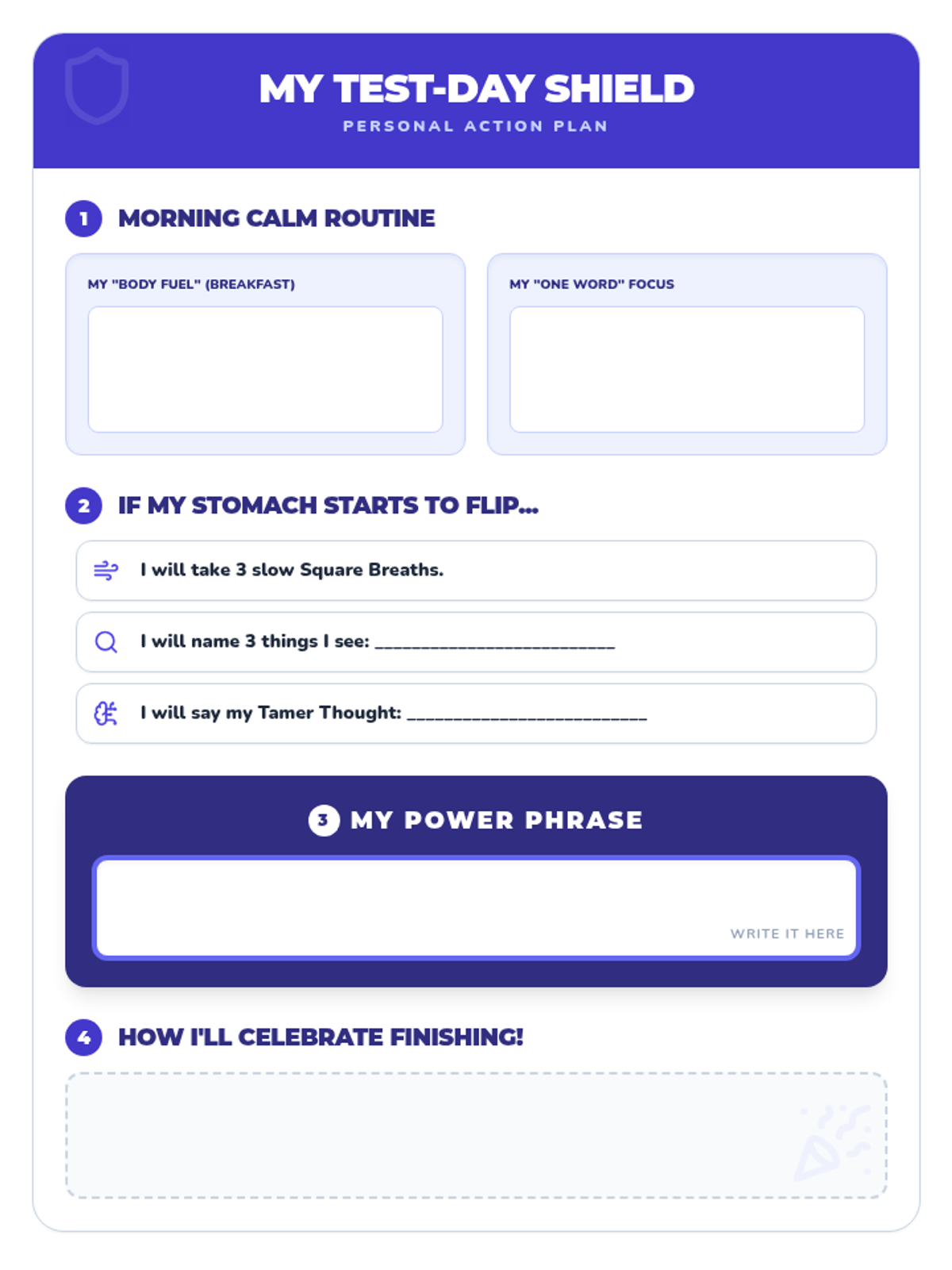
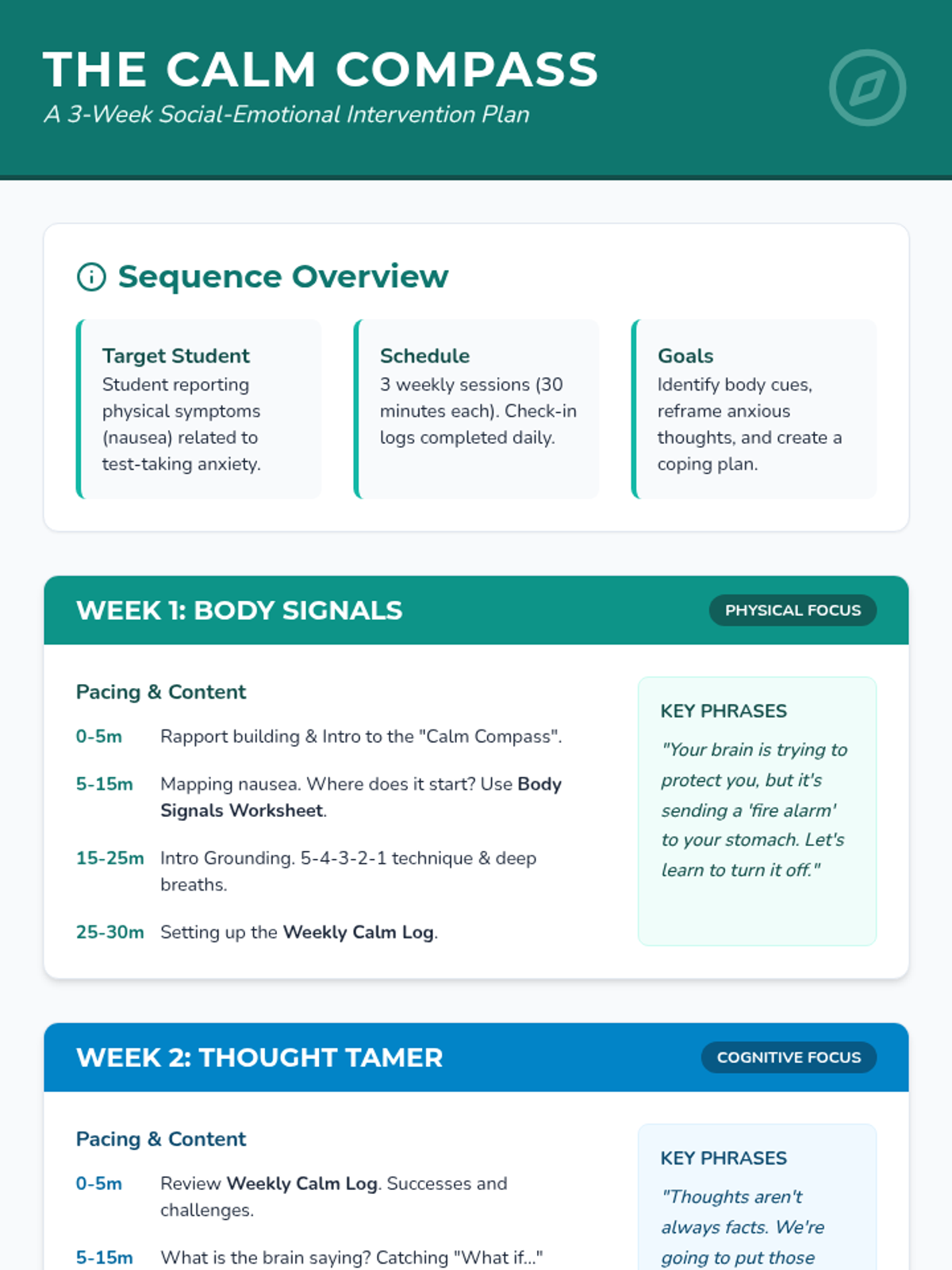
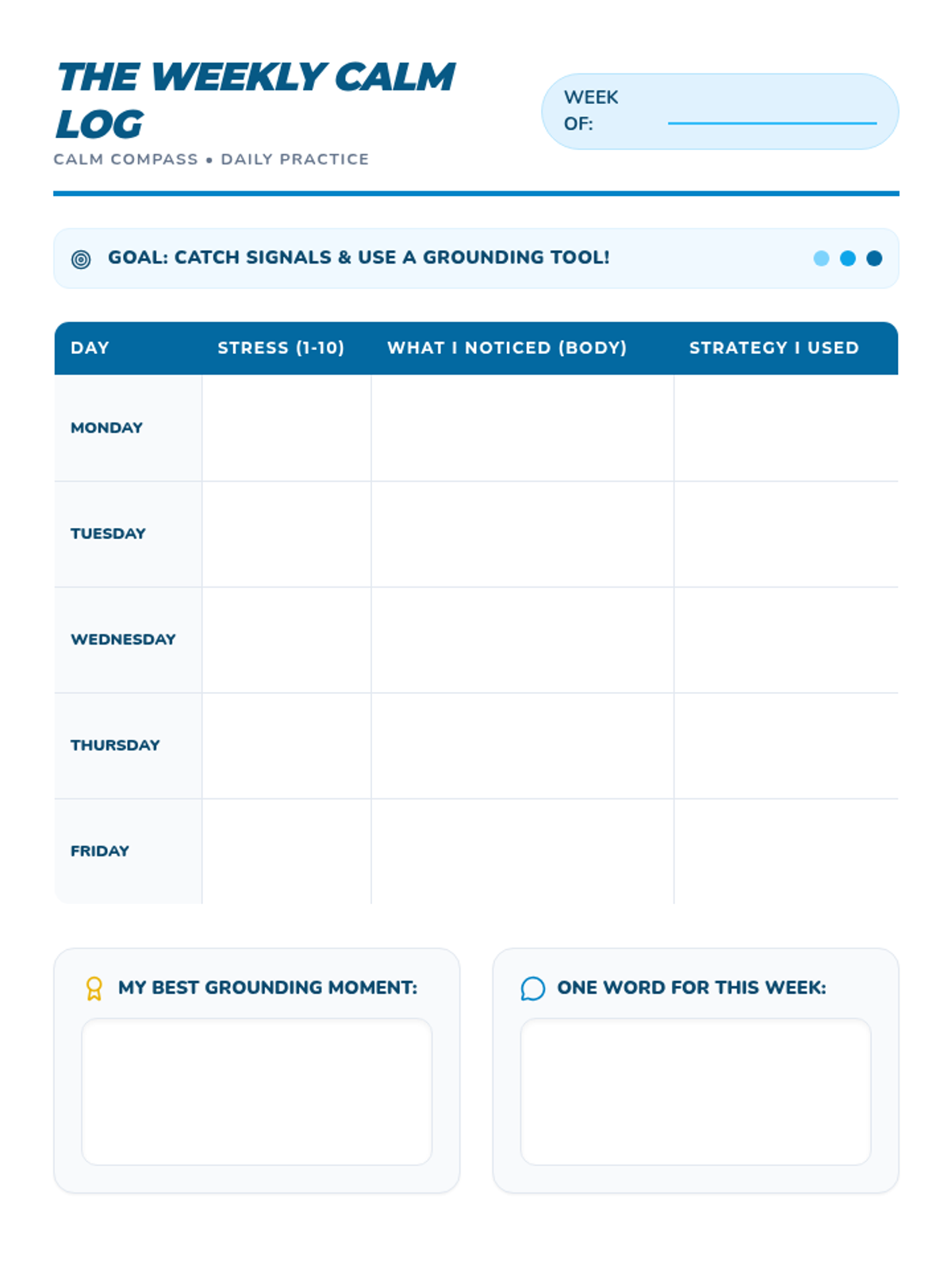
Integrates physical and cognitive strategies into a concrete, visual game plan for upcoming tests.
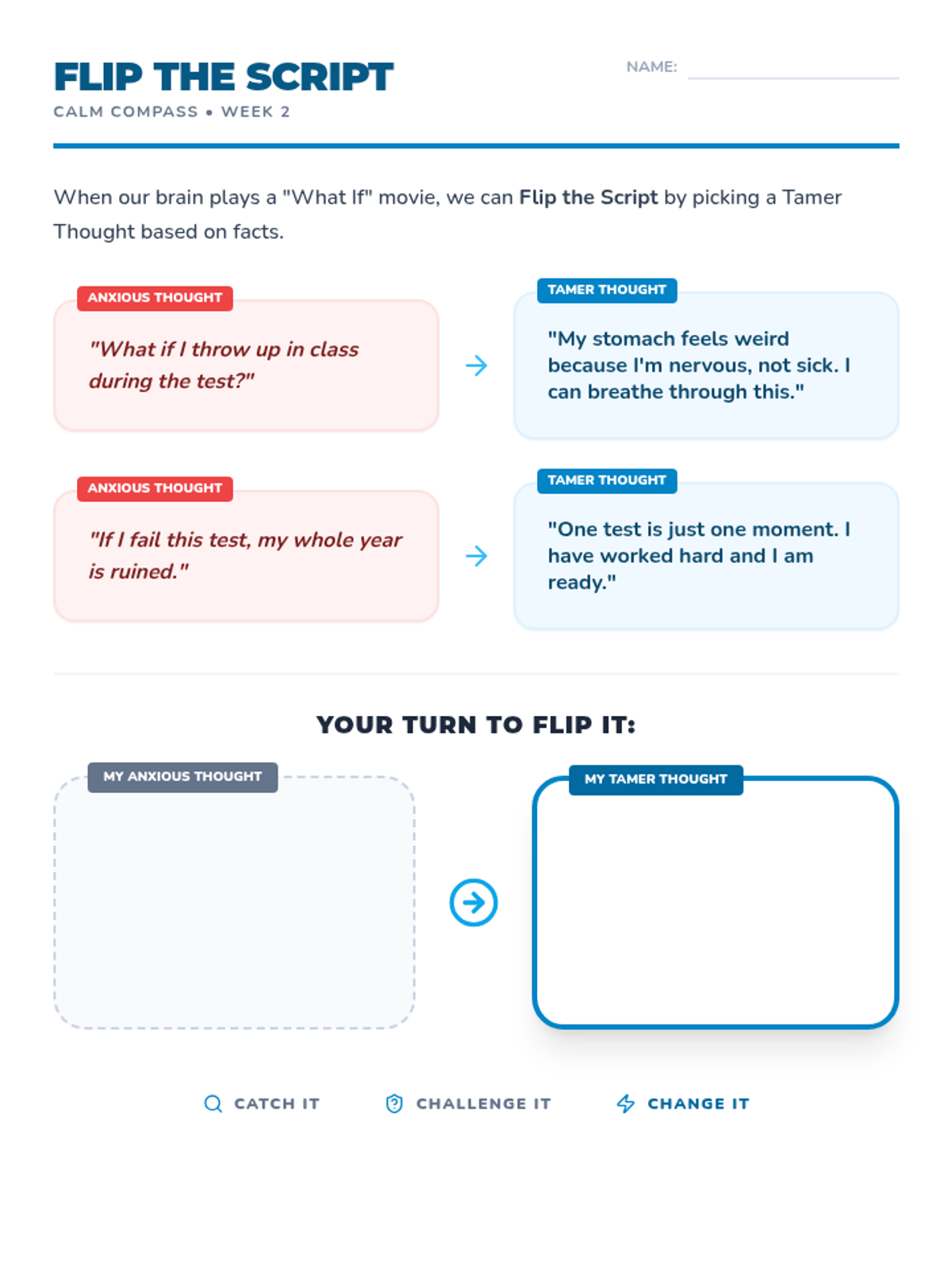
Explores the thoughts behind the physical feelings, teaching the student how to catch and reframe anxious 'what if' thinking.
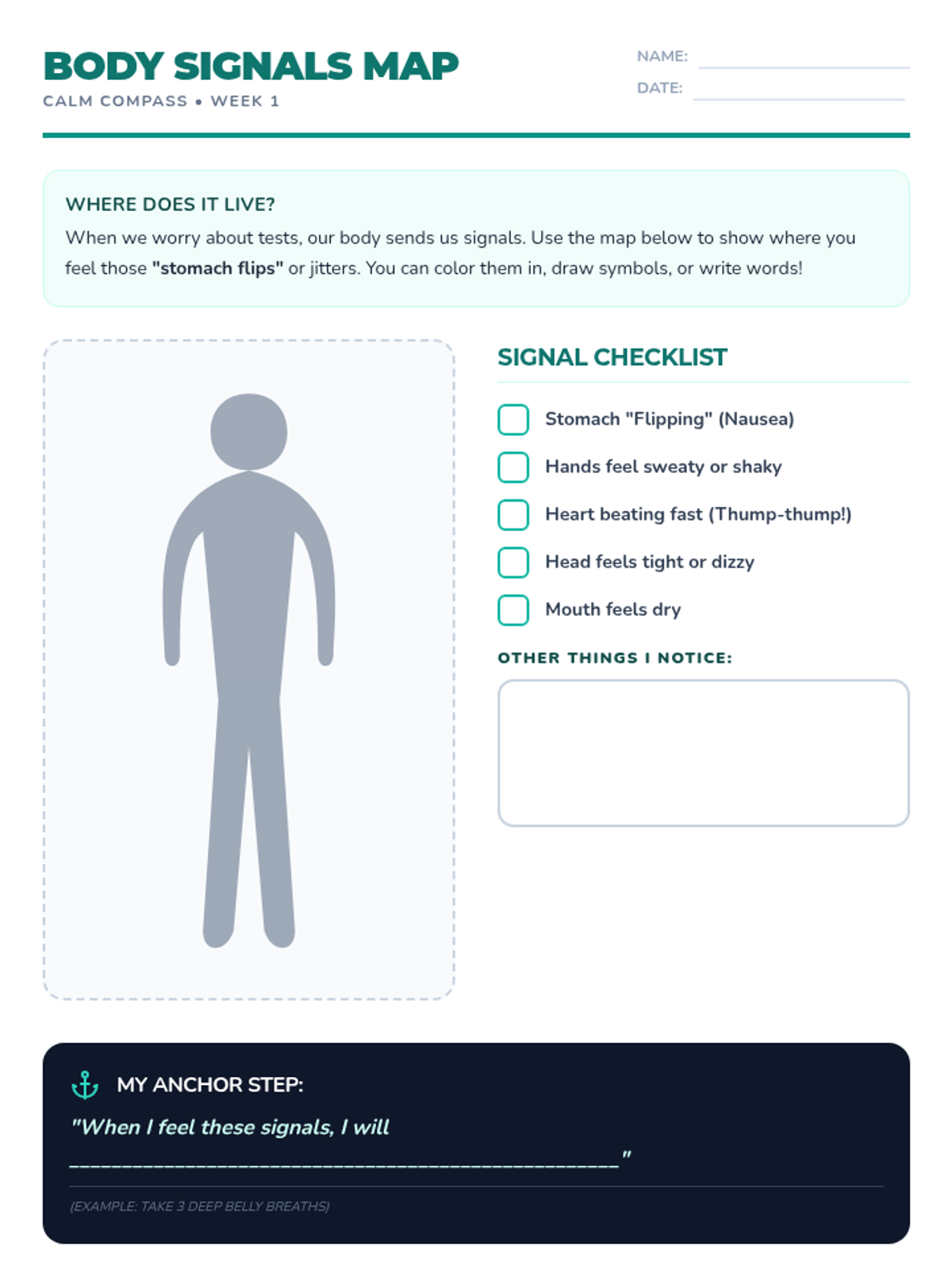
Focuses on identifying the physical manifestations of anxiety, particularly the 'stomach flip' sensation, and introduces grounding techniques.
A psychoeducational lesson exploring the CBT 3-component model of emotions (Thoughts, Feelings, Behaviors) designed for 12-year-old girls. Features interactive slides, social scenarios covering friendship and family, and a companion journal for personal reflection.
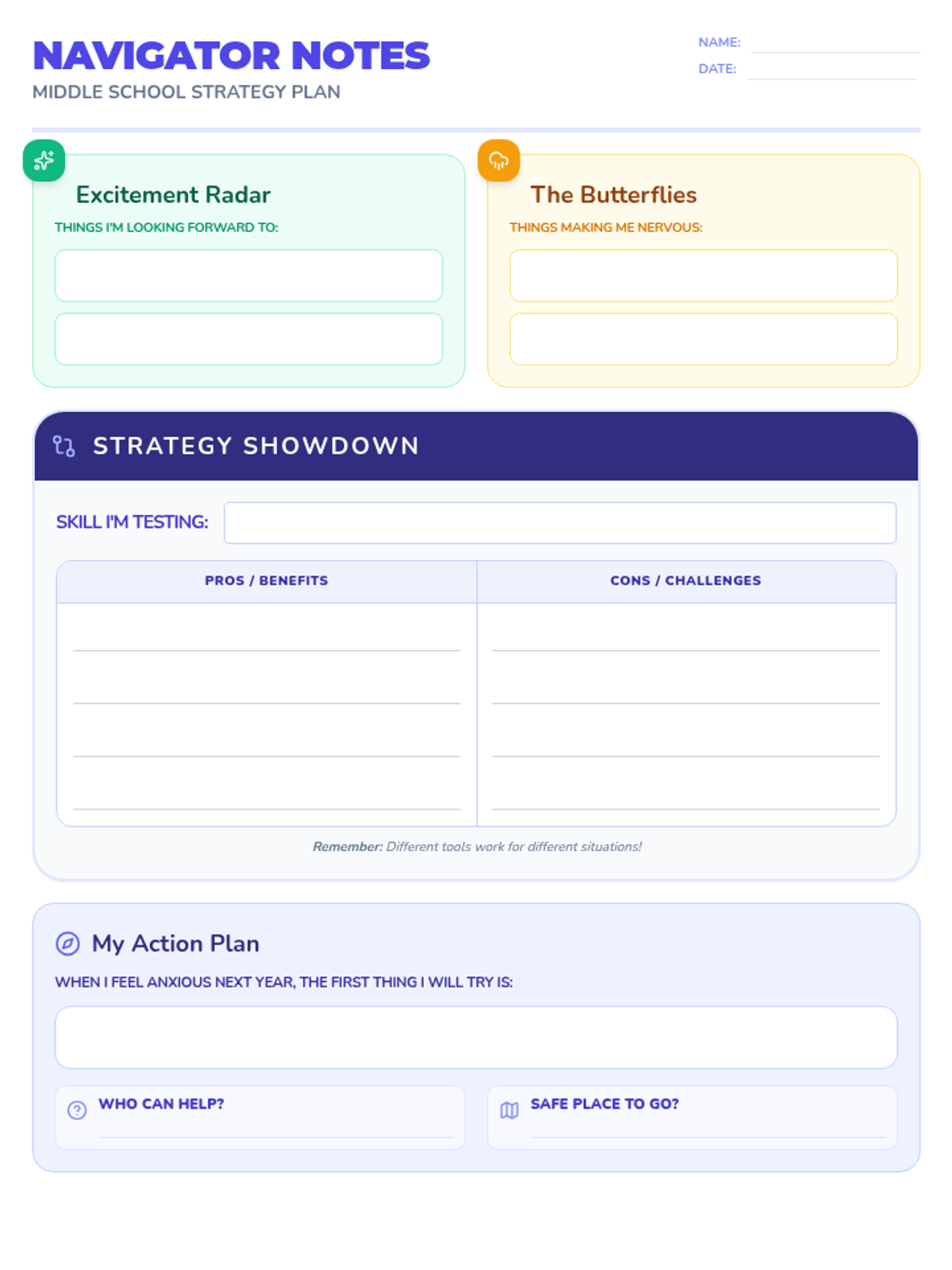
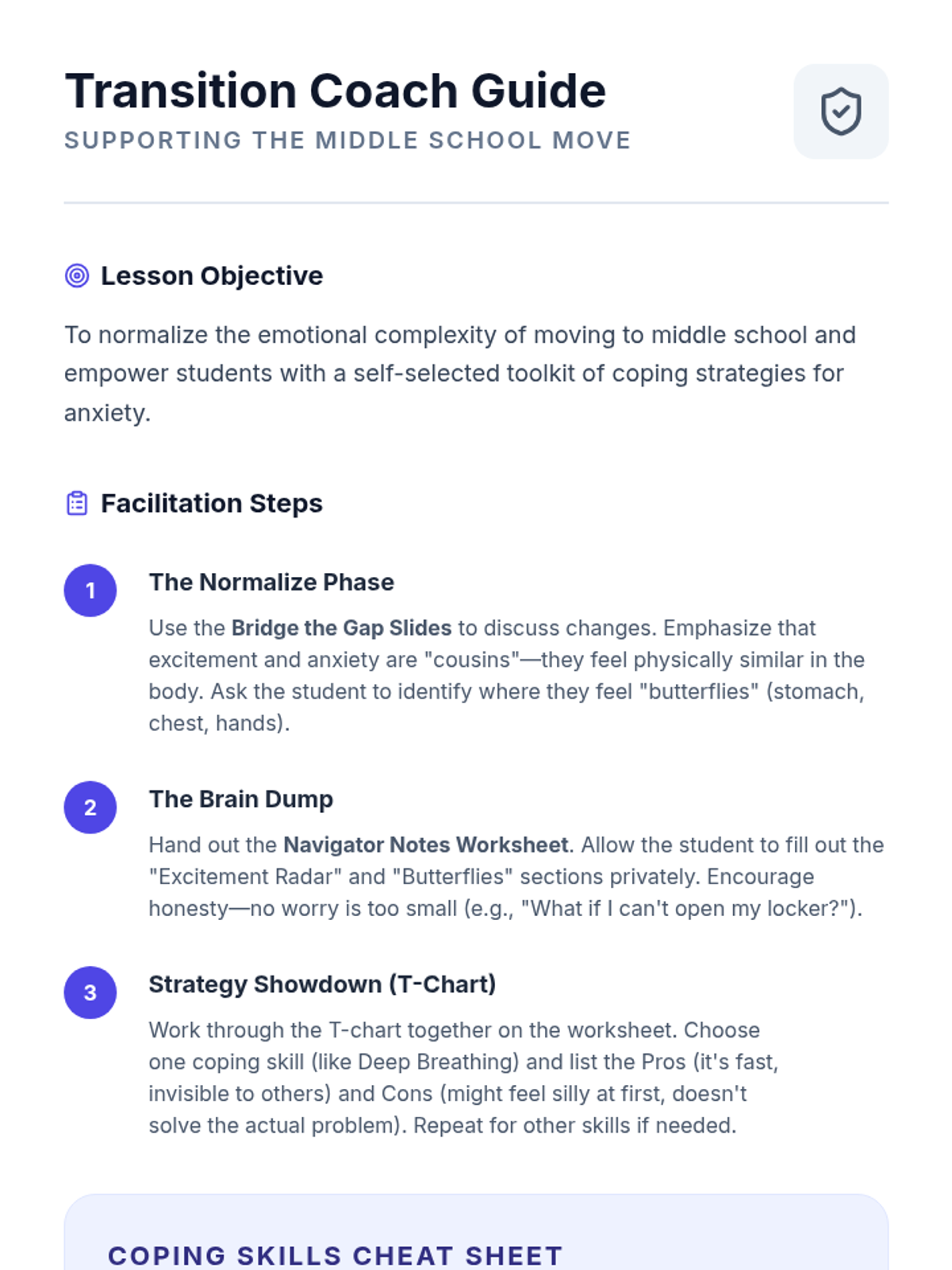
A lesson designed to help 6th-grade students navigate the transition to middle school by identifying feelings of excitement and anxiety while developing practical coping strategies.
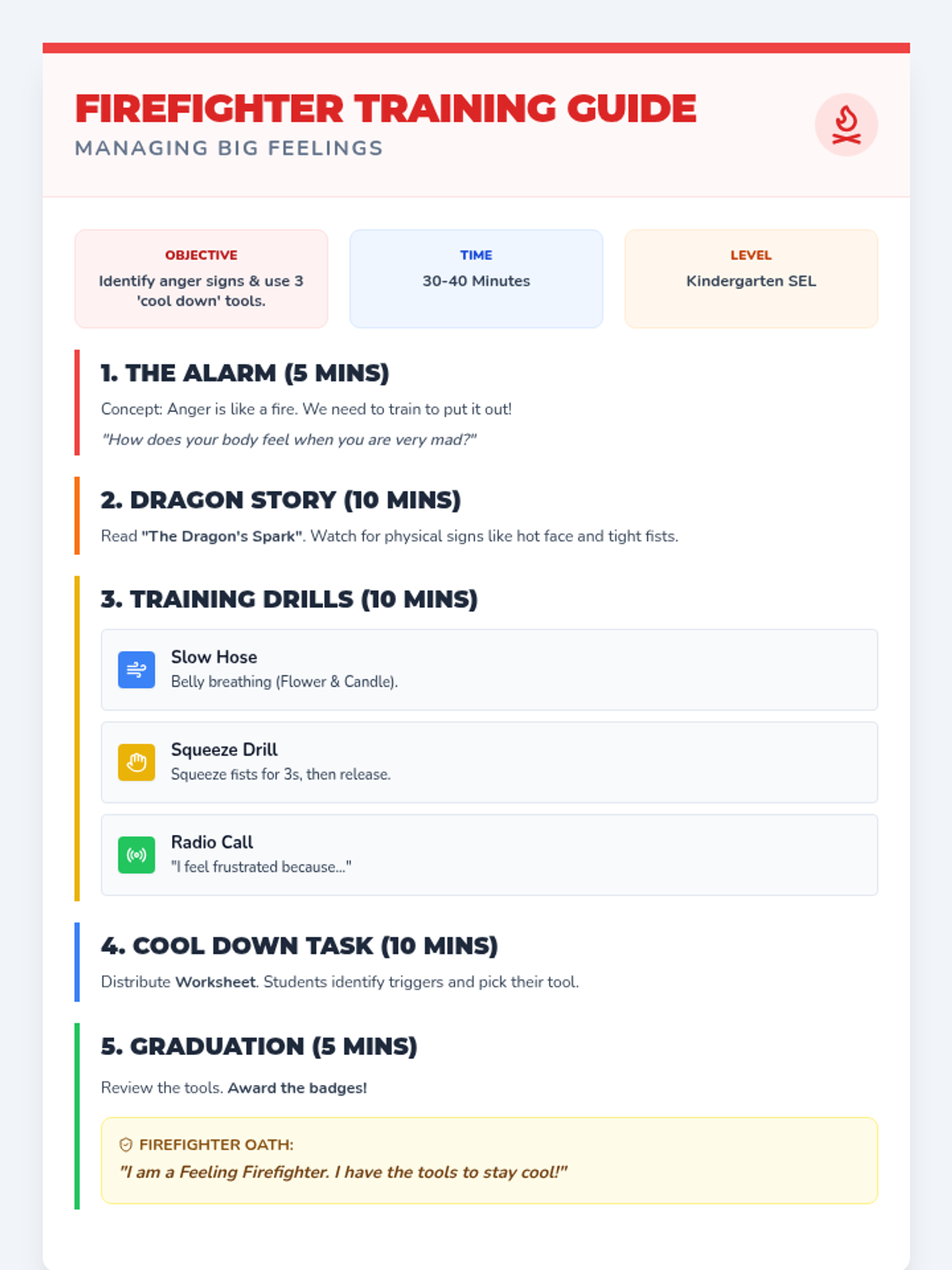
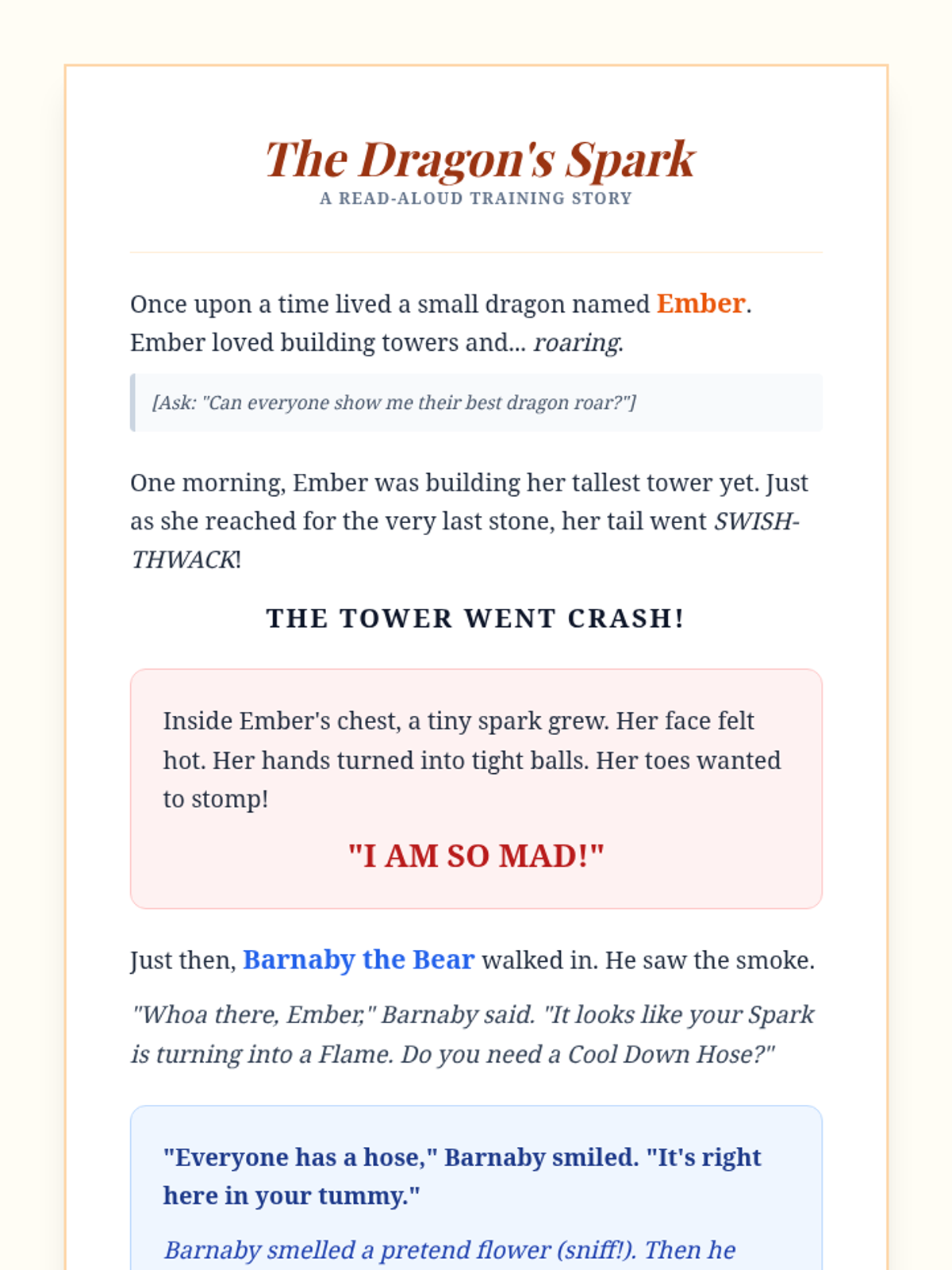
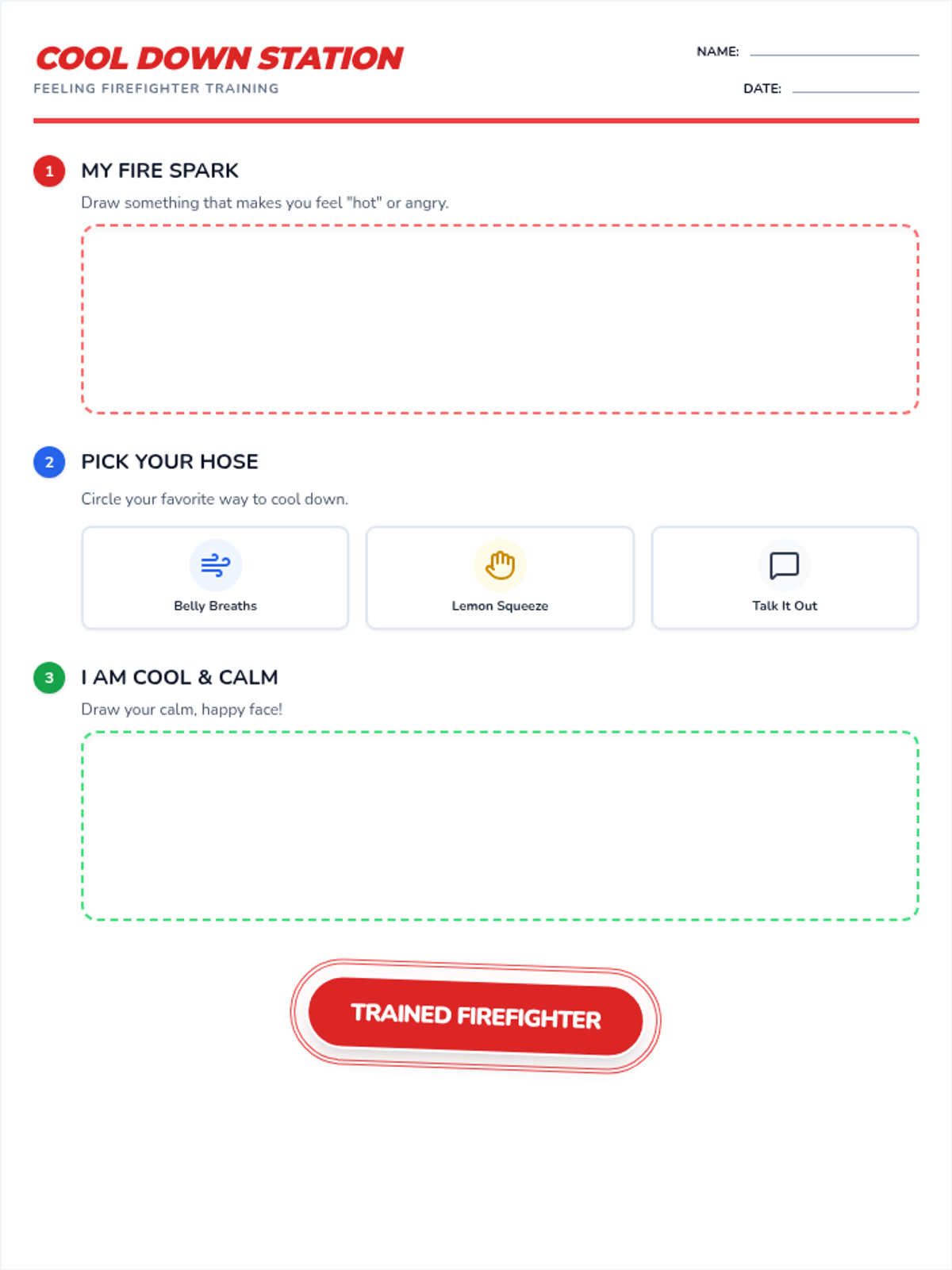
A kindergarten lesson focused on identifying and managing anger and frustration through the metaphor of 'putting out the fire' using calming strategies.
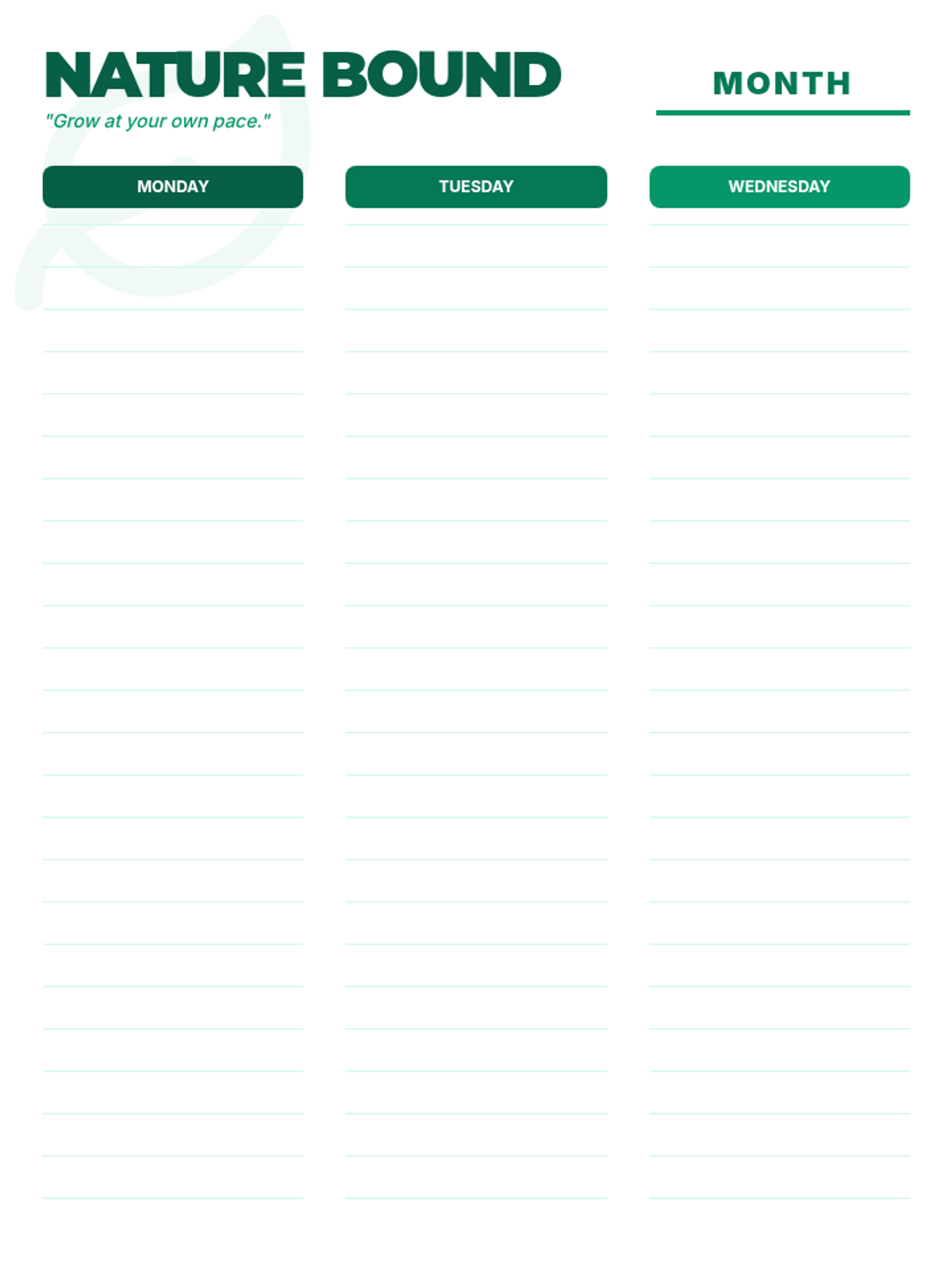
A complete, nature-inspired academic planner for high school students featuring botanical illustrations, earthy tones, and growth-focused goal setting.
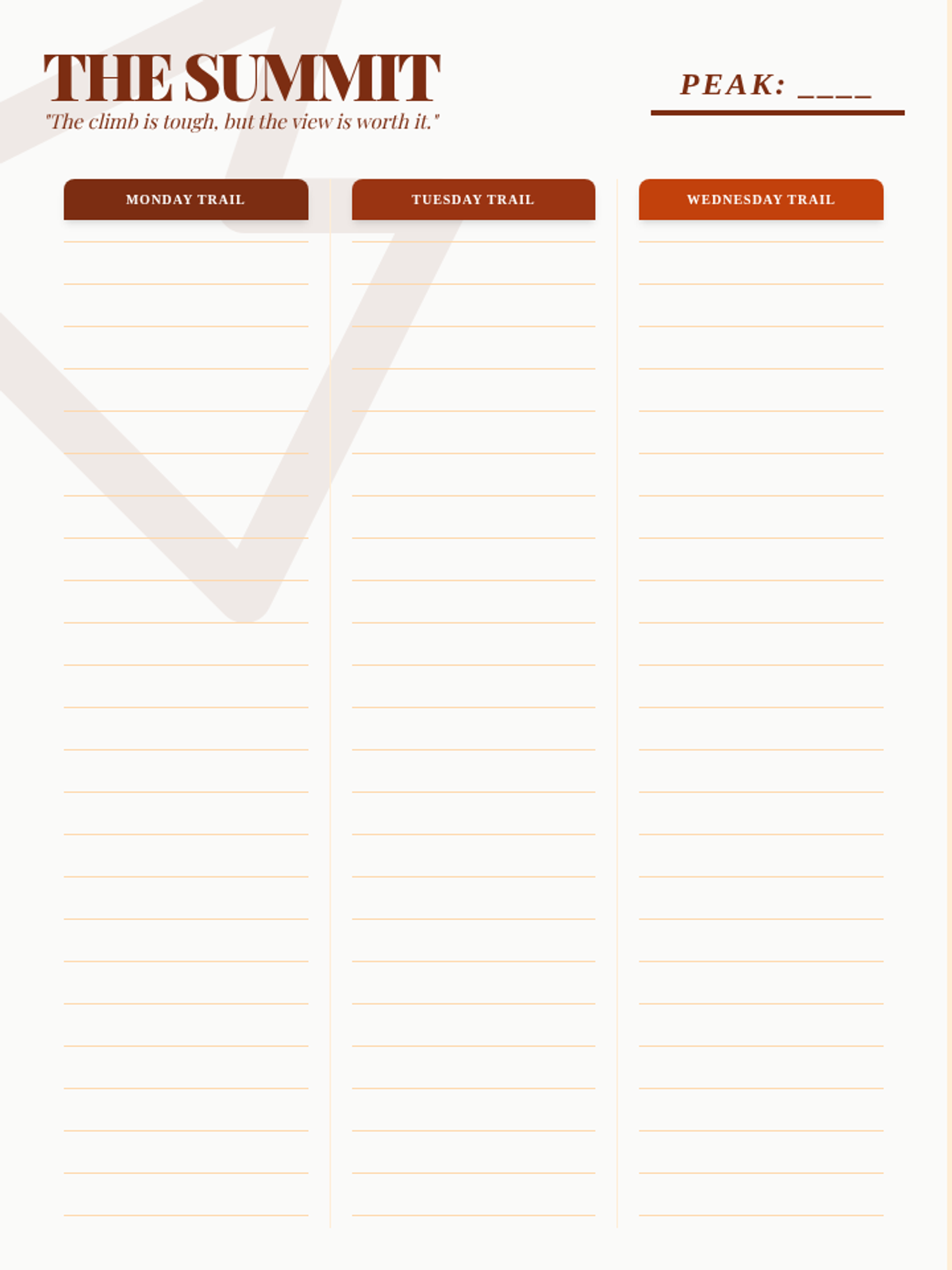
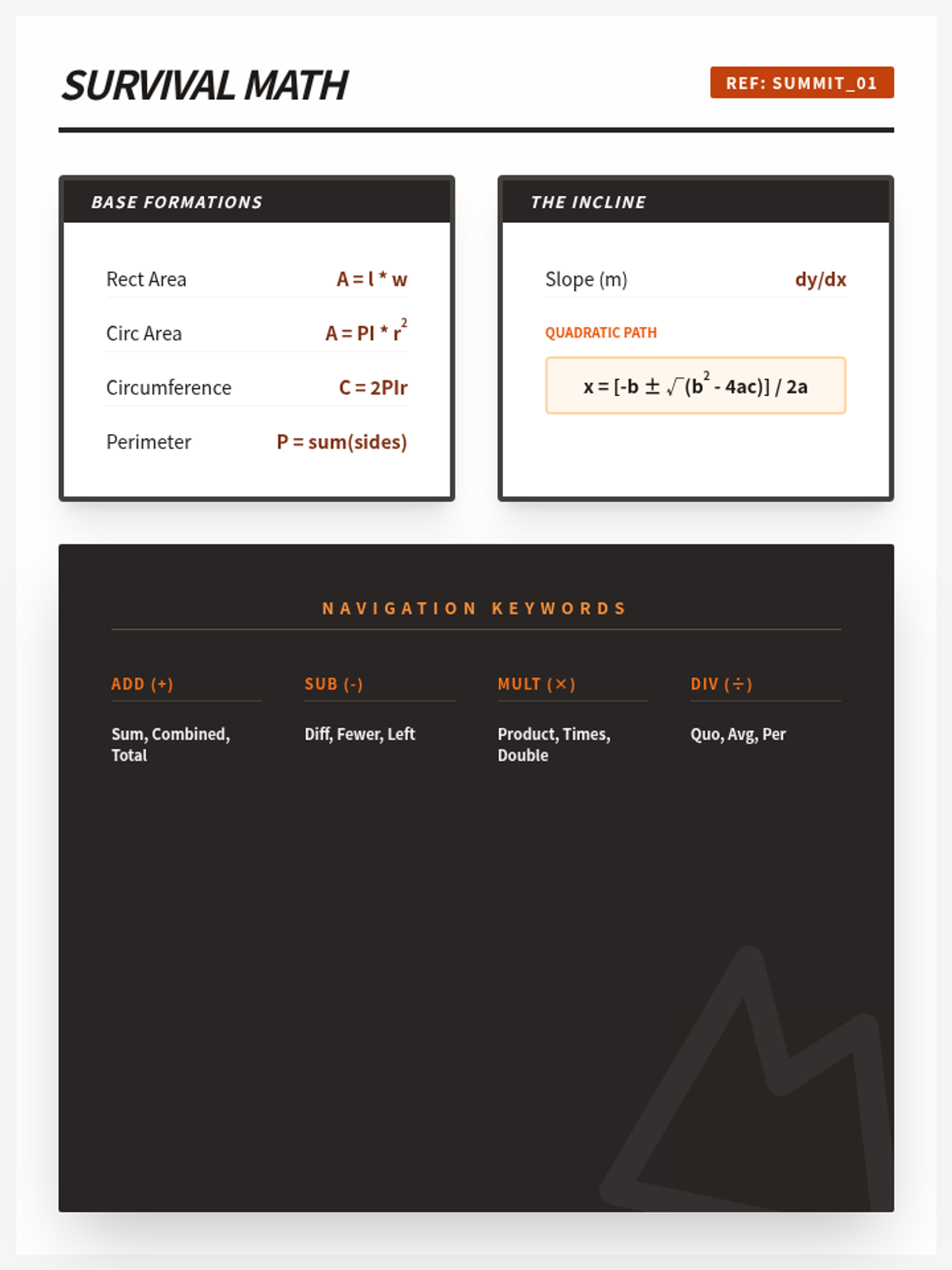
A rugged, wilderness-themed academic planner for high school students with mountain motifs, navigational cues, and a focus on overcoming academic challenges and reaching new heights.
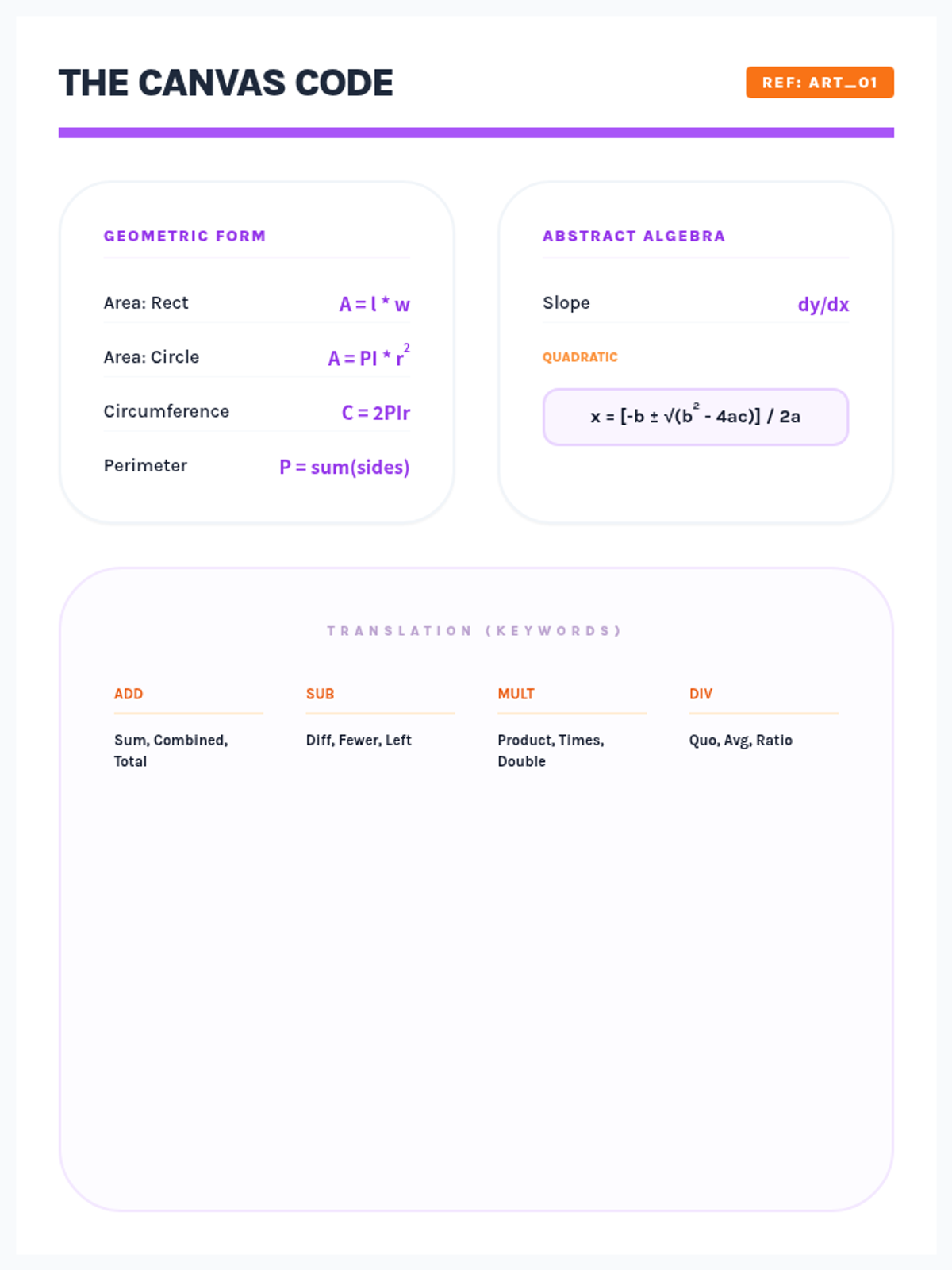
A creative, artistic academic planner for high school students featuring watercolor splashes, brushstroke motifs, and a gallery-style layout for visual thinkers.
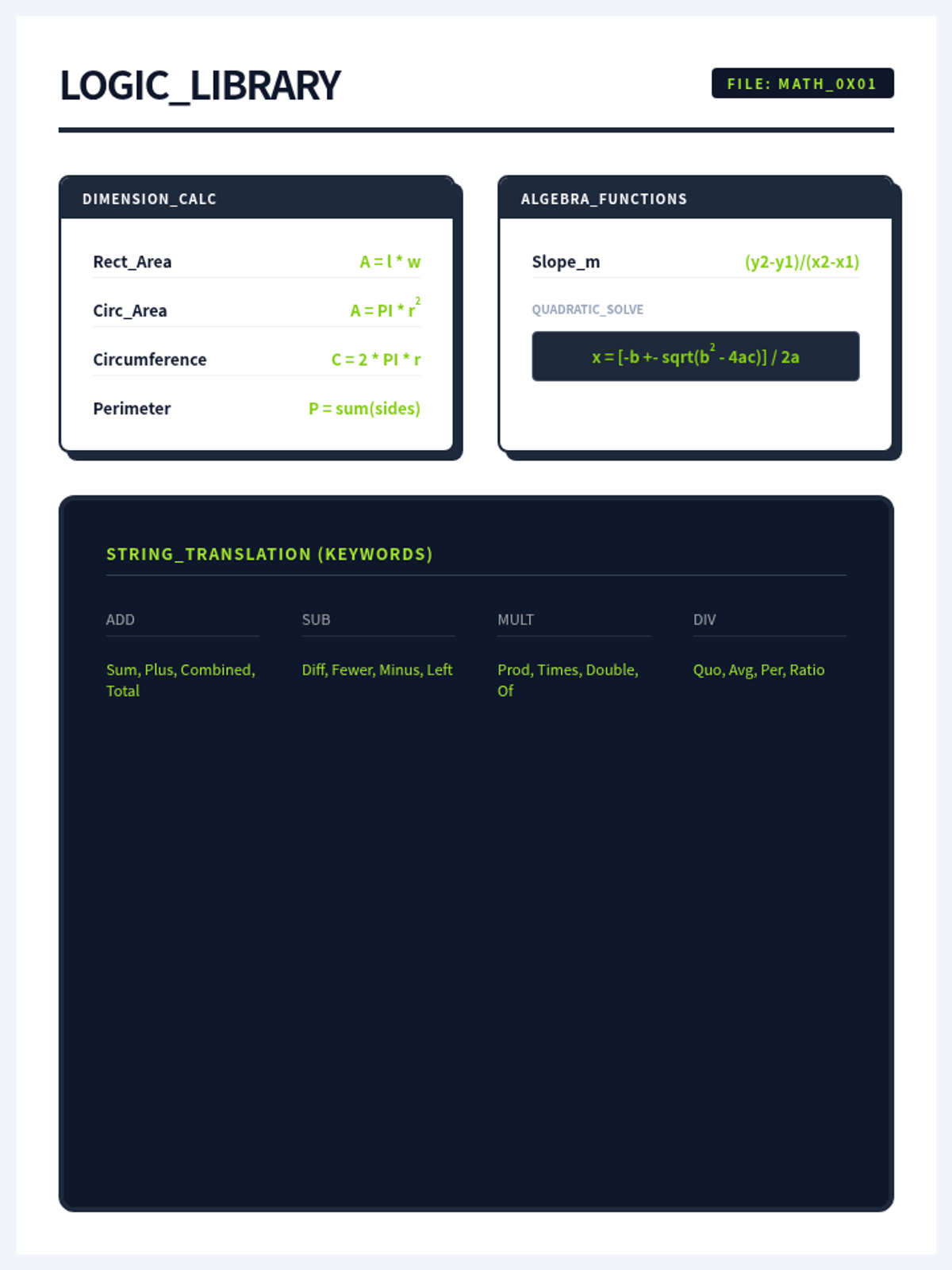
A tech and coding-themed academic planner for high school students featuring terminal-style fonts, circuit motifs, and organized logic-driven project management.
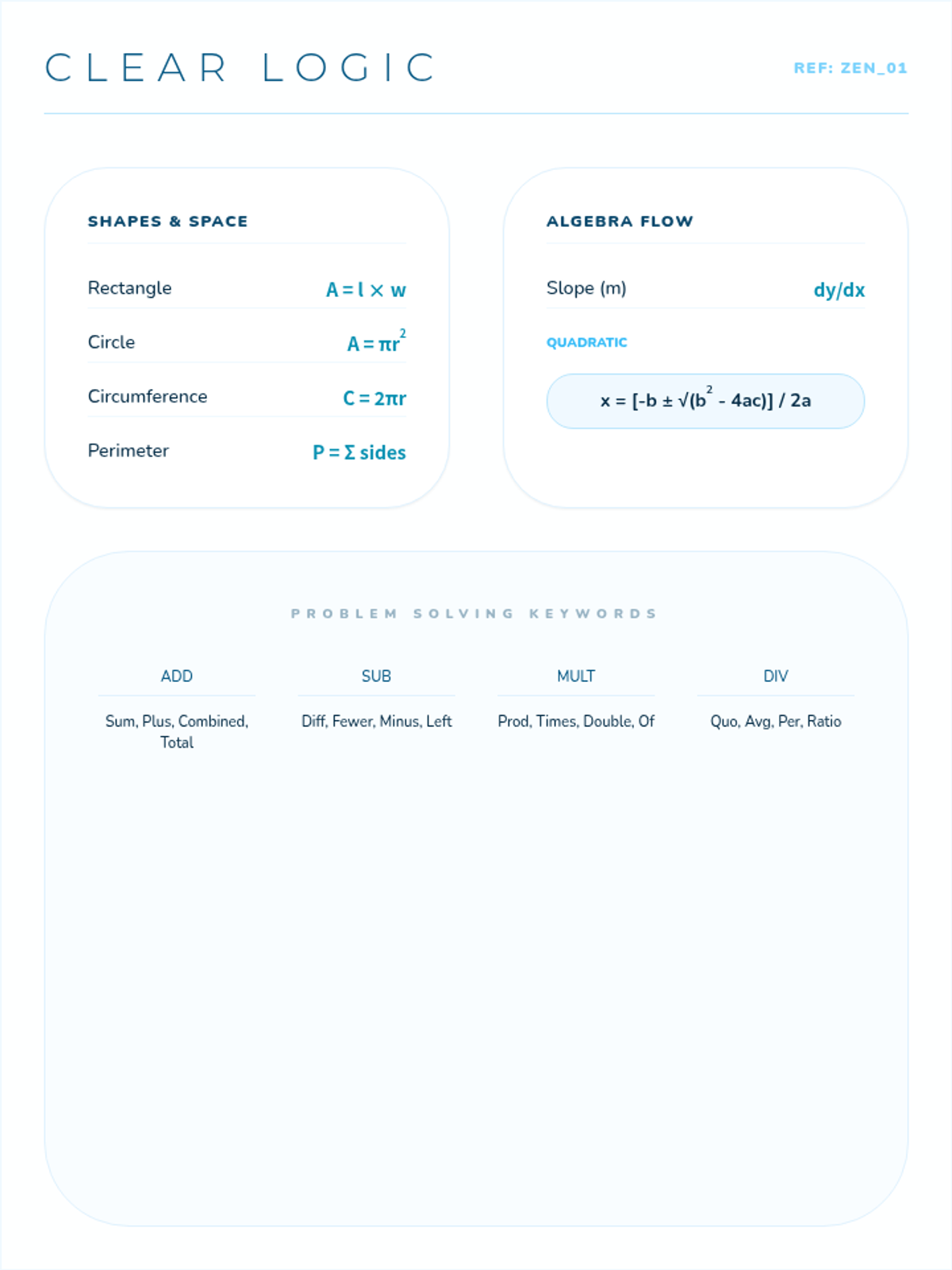
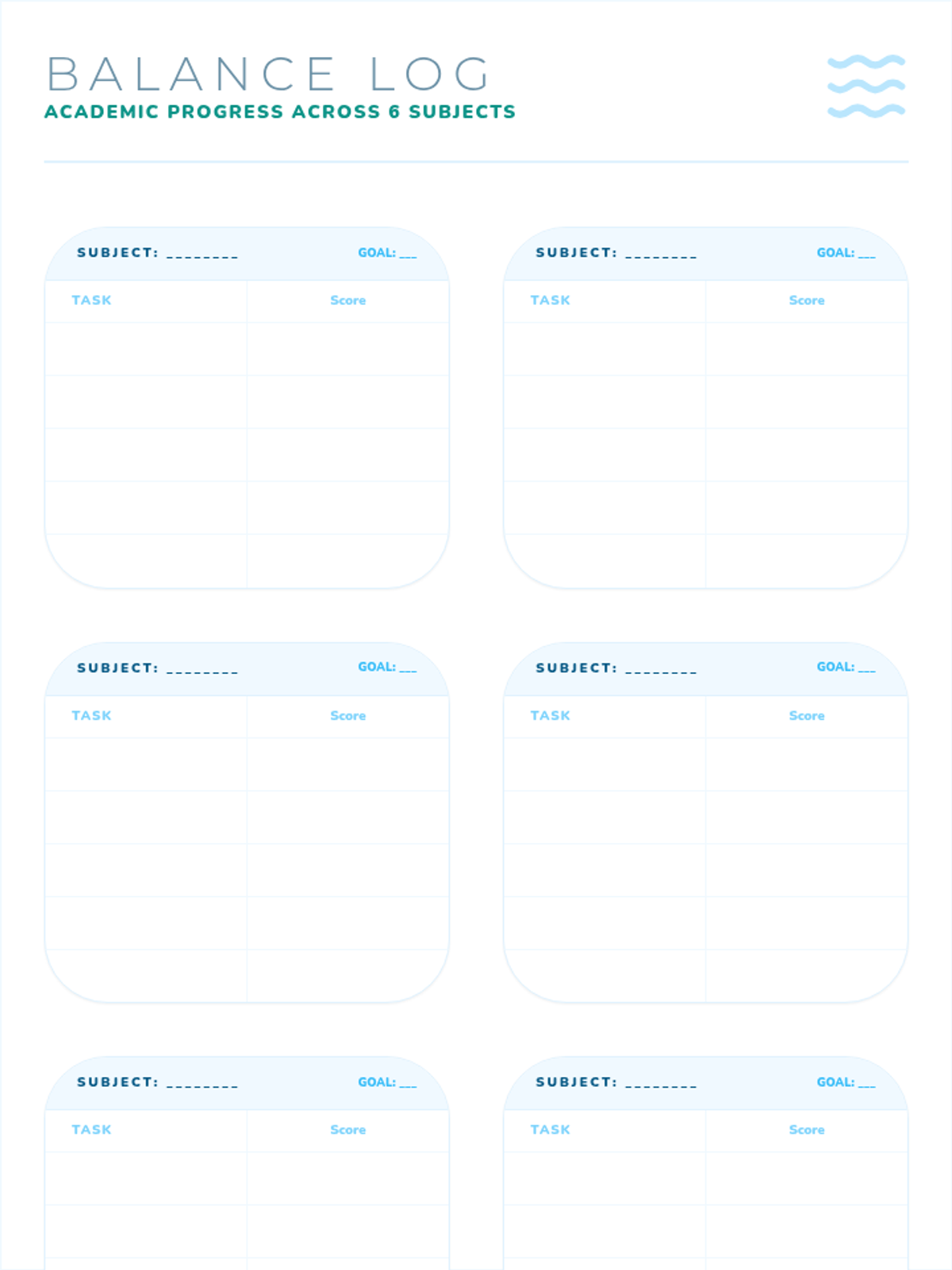
A minimalist, zen-themed academic planner for high school students designed to reduce stress with soft colors, airy layouts, and mindfulness-focused reflection areas.
A vibrant, retro-themed academic planner for high school students with bold neon accents, geometric shapes, and a 90s aesthetic to keep planning fun and expressive.
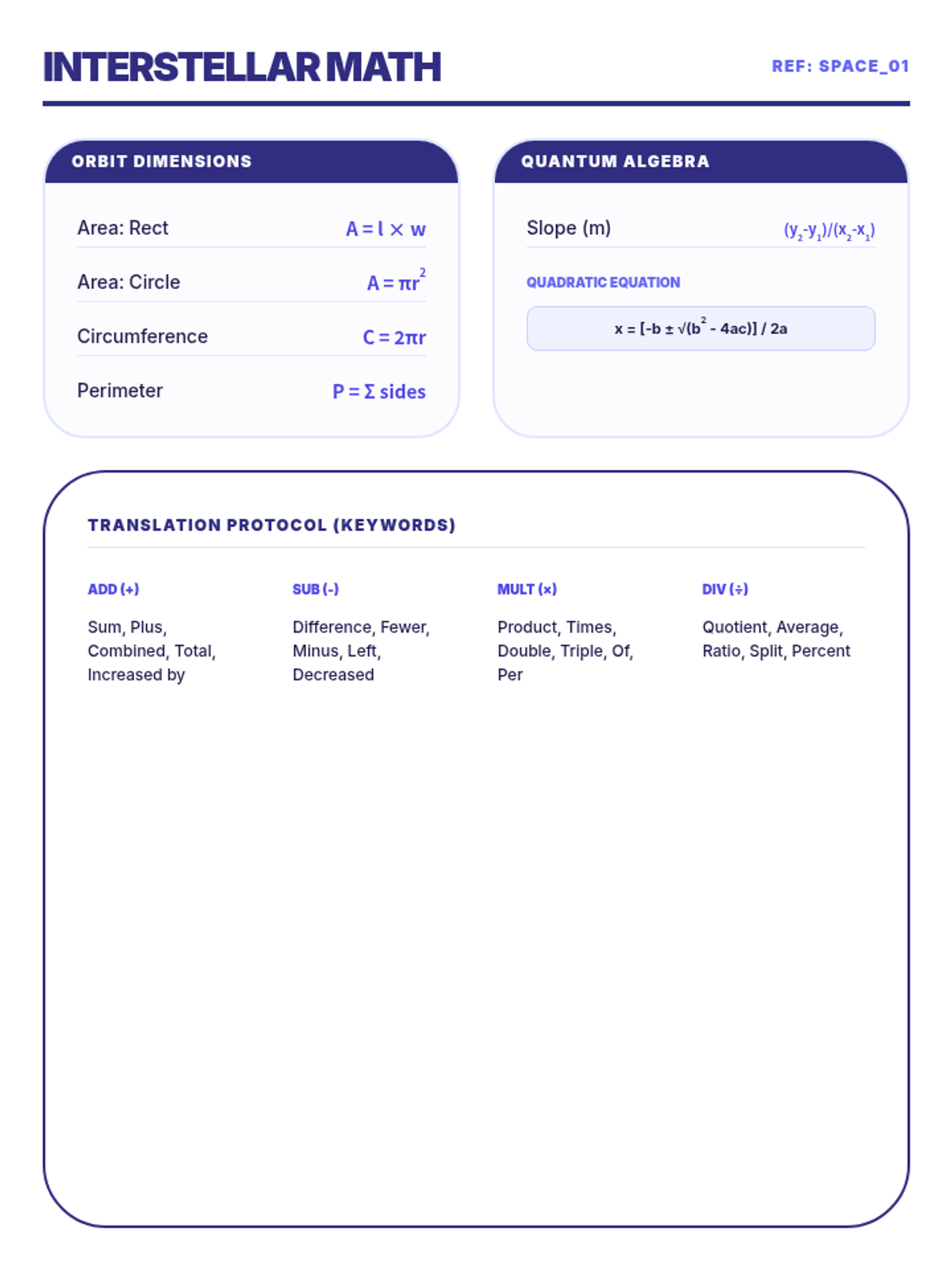
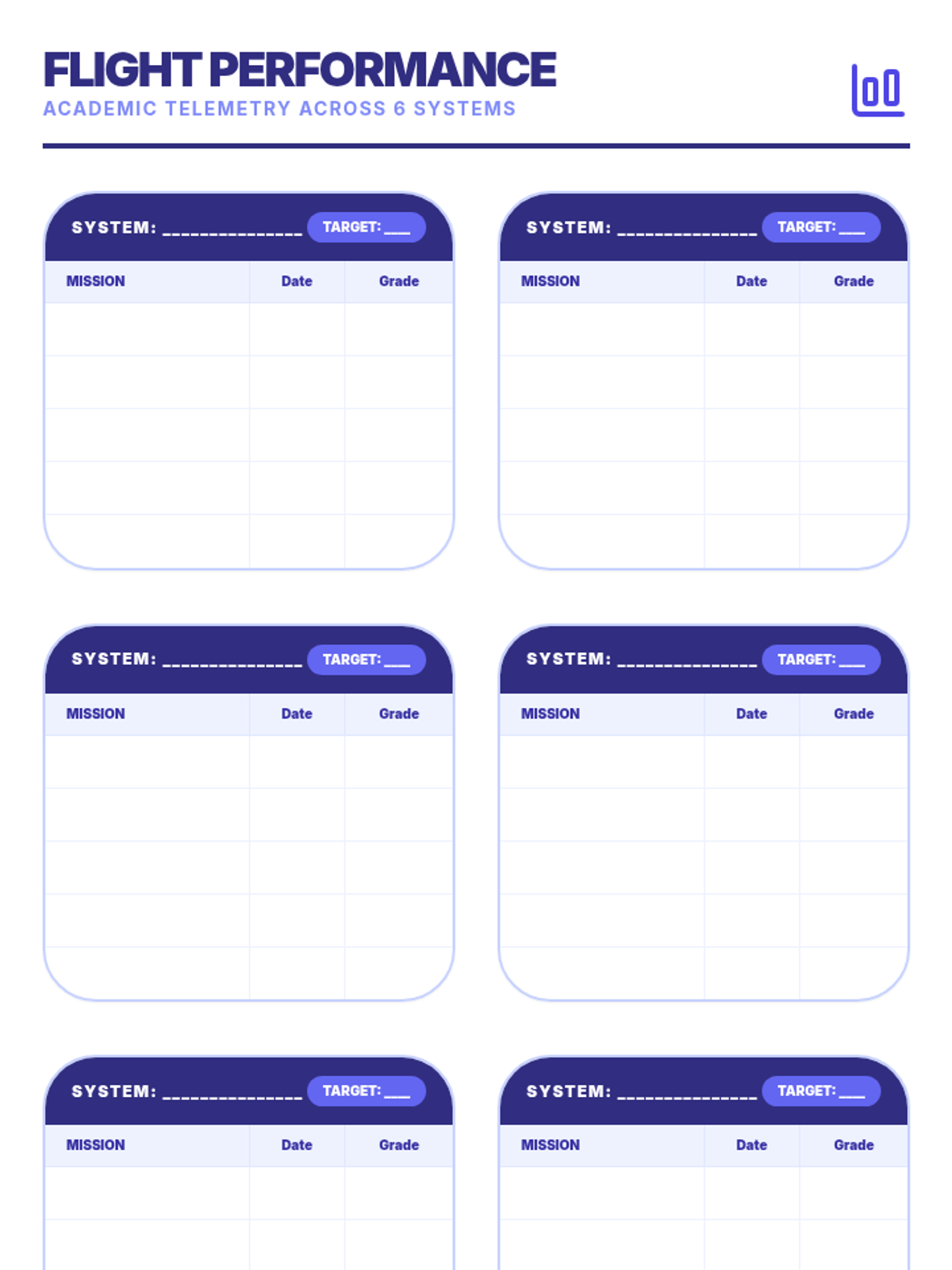
A space-themed academic planner for high school students featuring interstellar motifs, futuristic layouts, and cosmic goal tracking for those reaching for the stars.
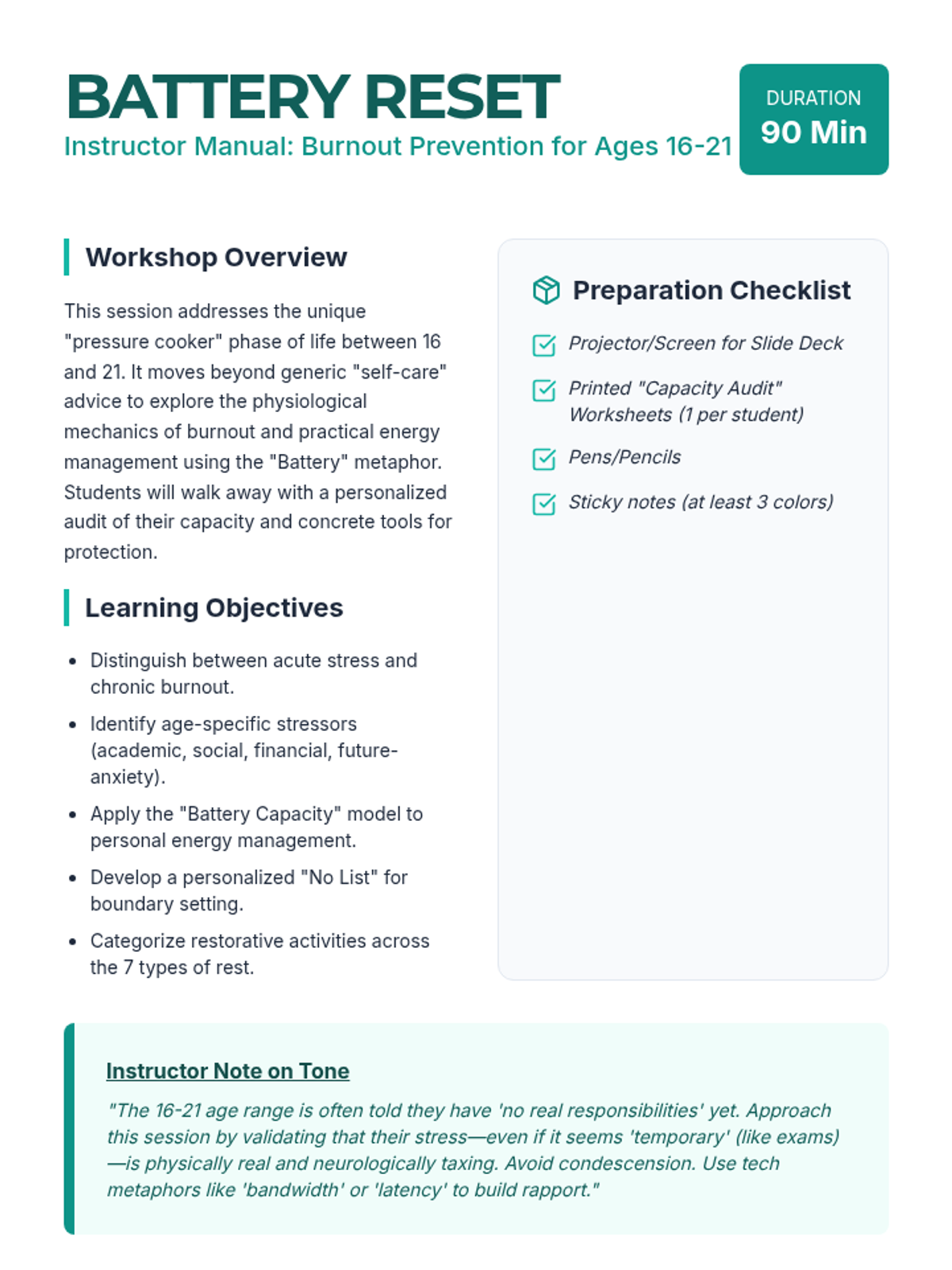
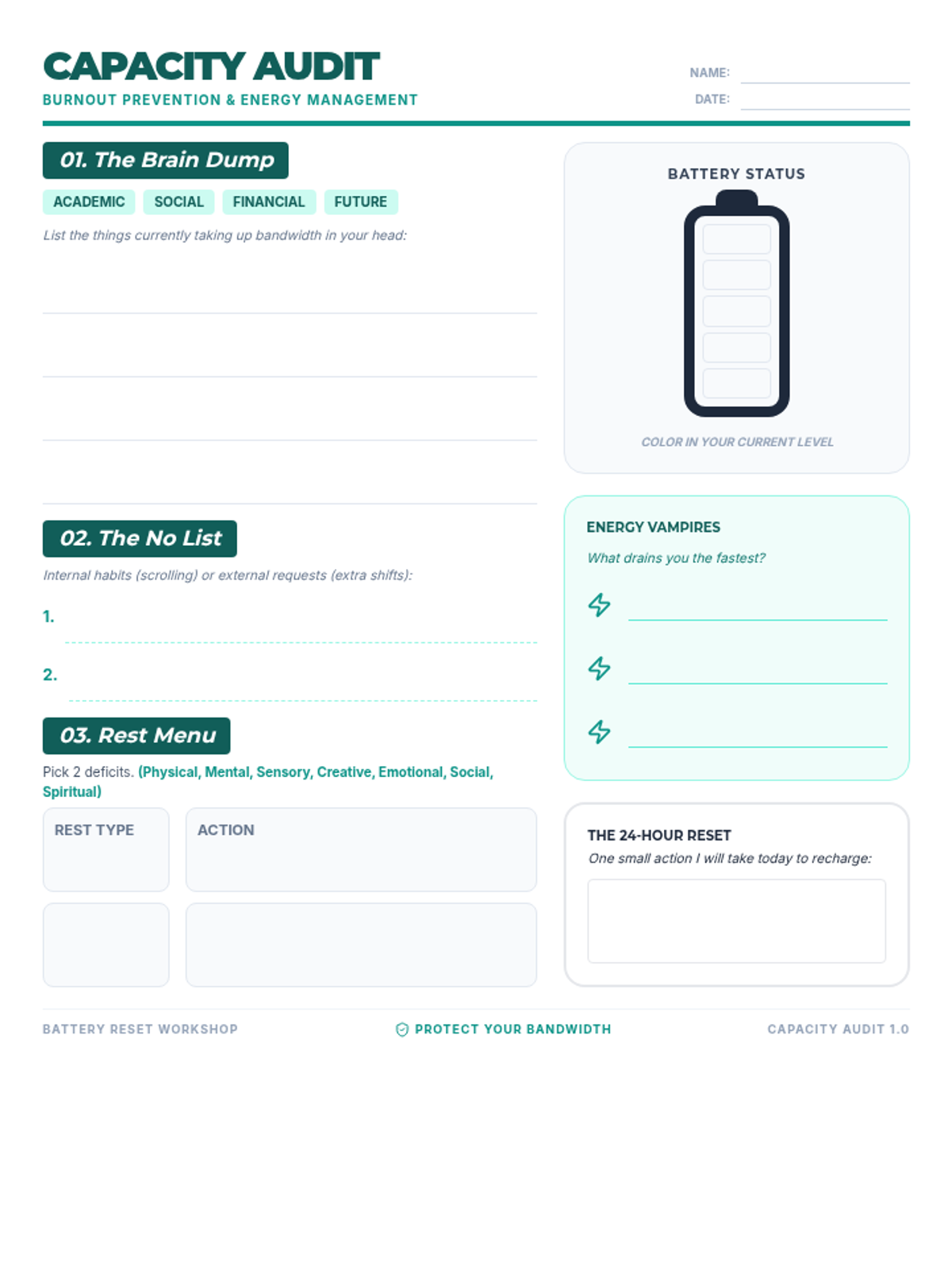
A comprehensive 90-minute workshop designed for transitional age youth (16-21) to identify stressors, understand the mechanics of burnout, and develop personalized energy management strategies.
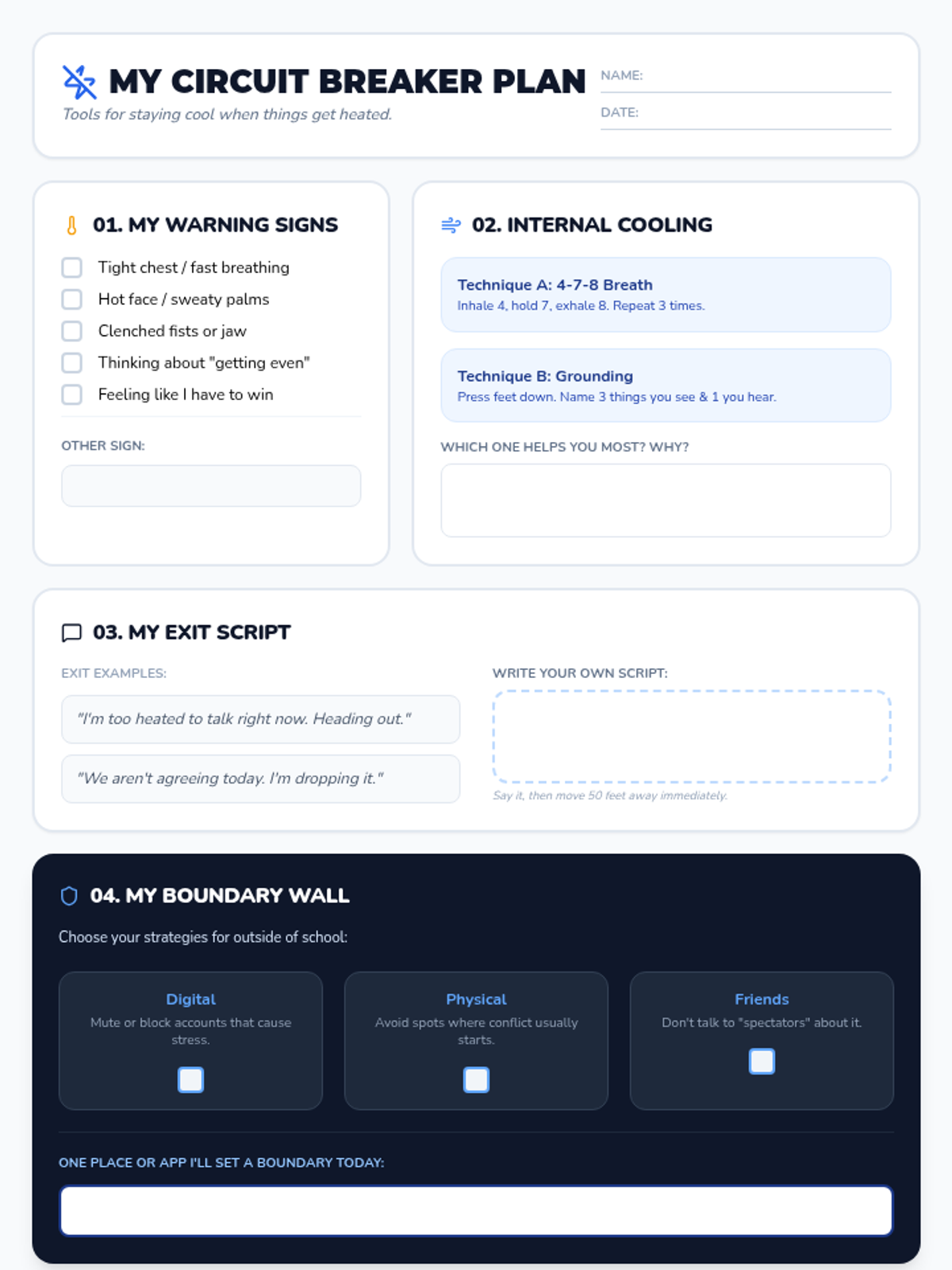
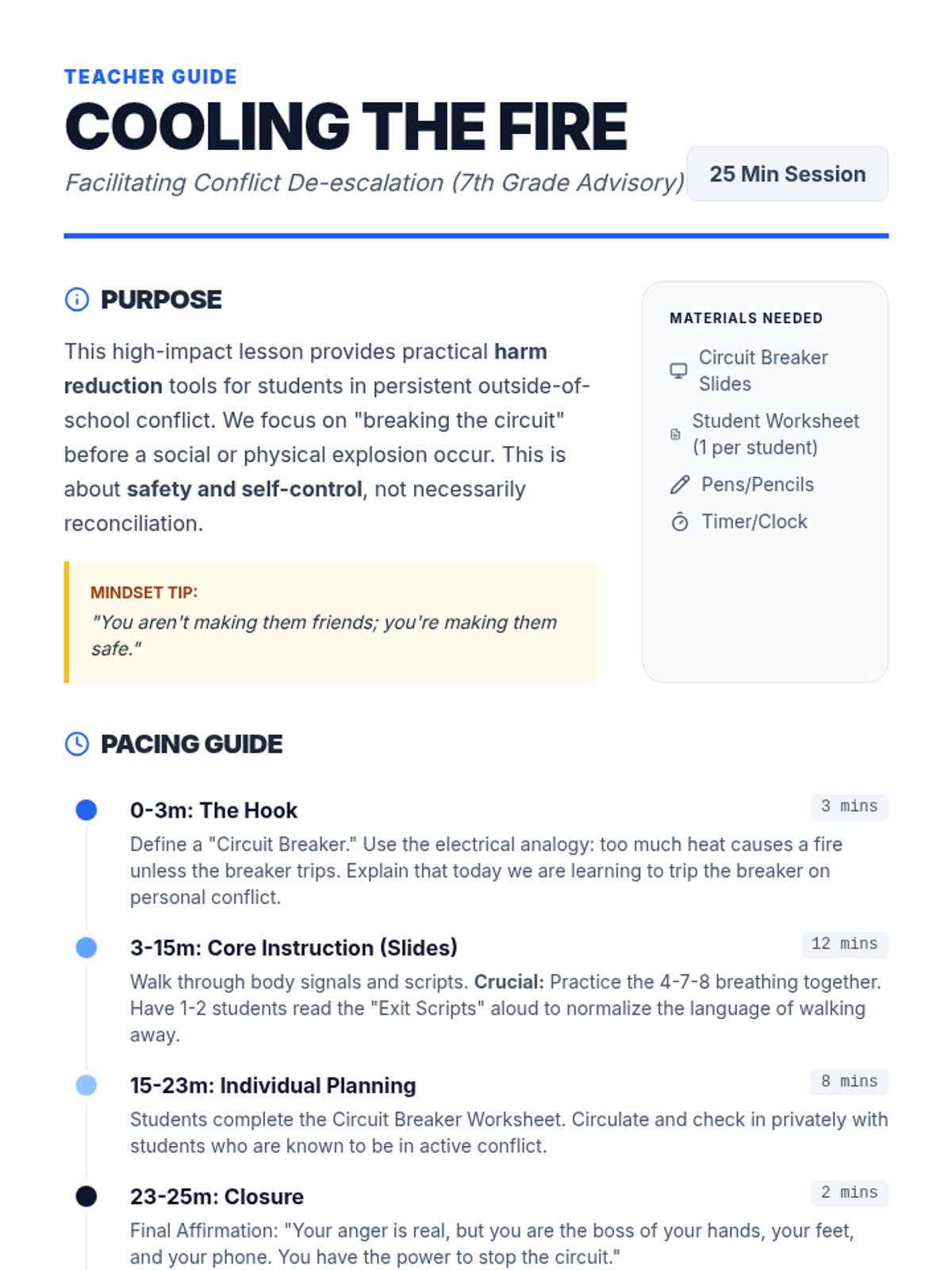
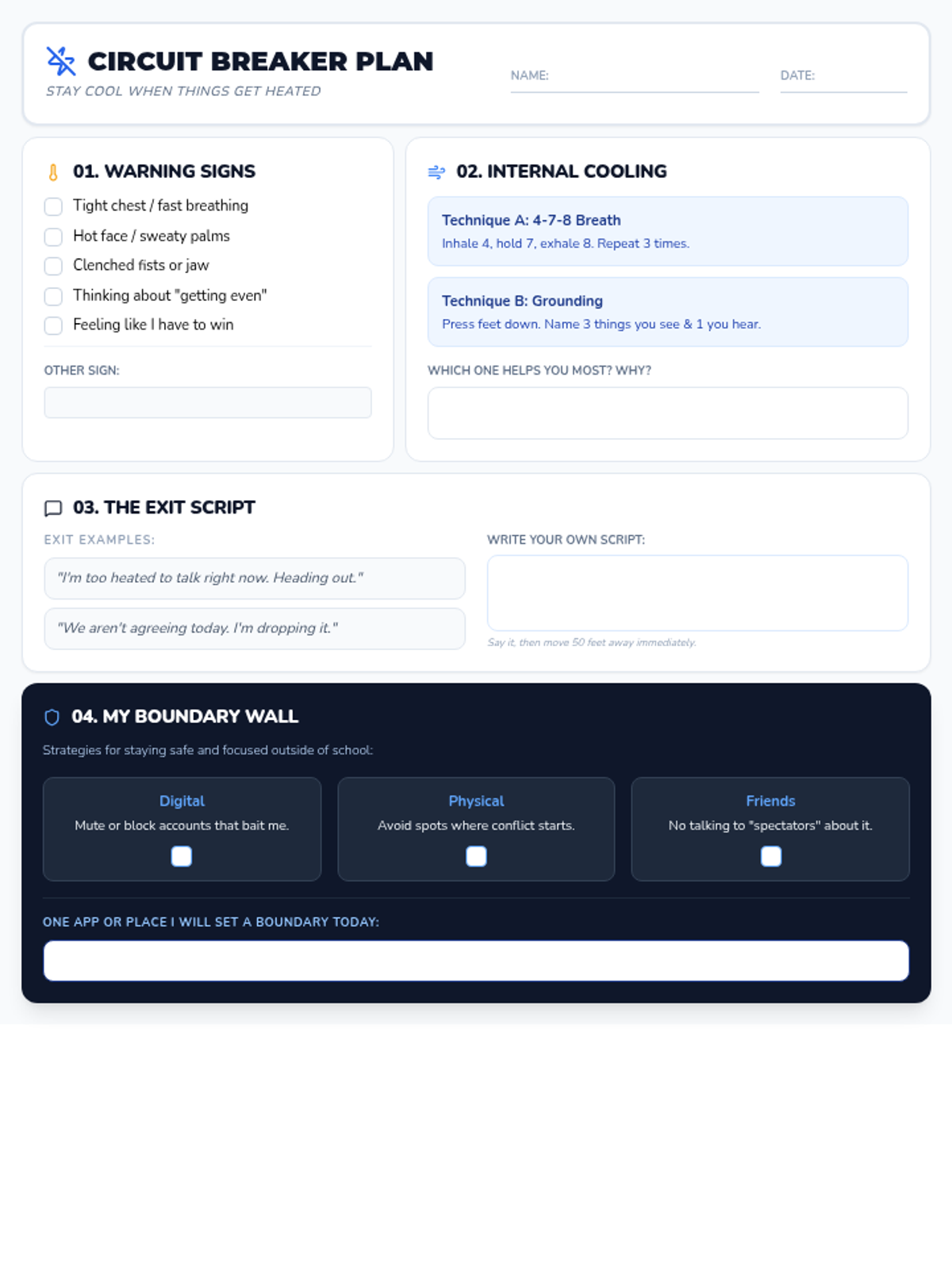
A high-impact 25-minute advisory lesson designed to provide 7th graders with immediate, practical tools for emotional regulation and de-escalation when dealing with persistent outside-of-school conflicts.
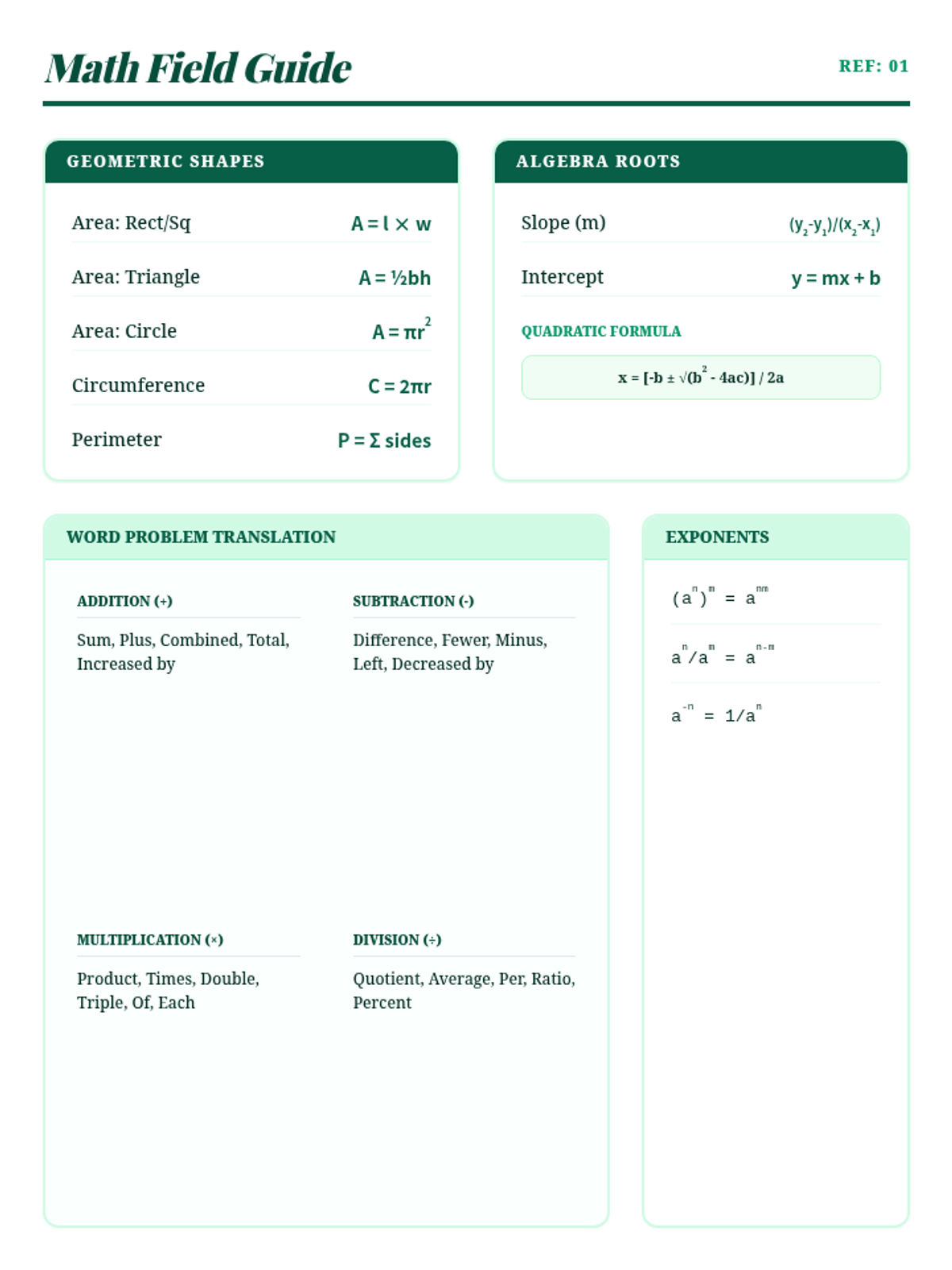
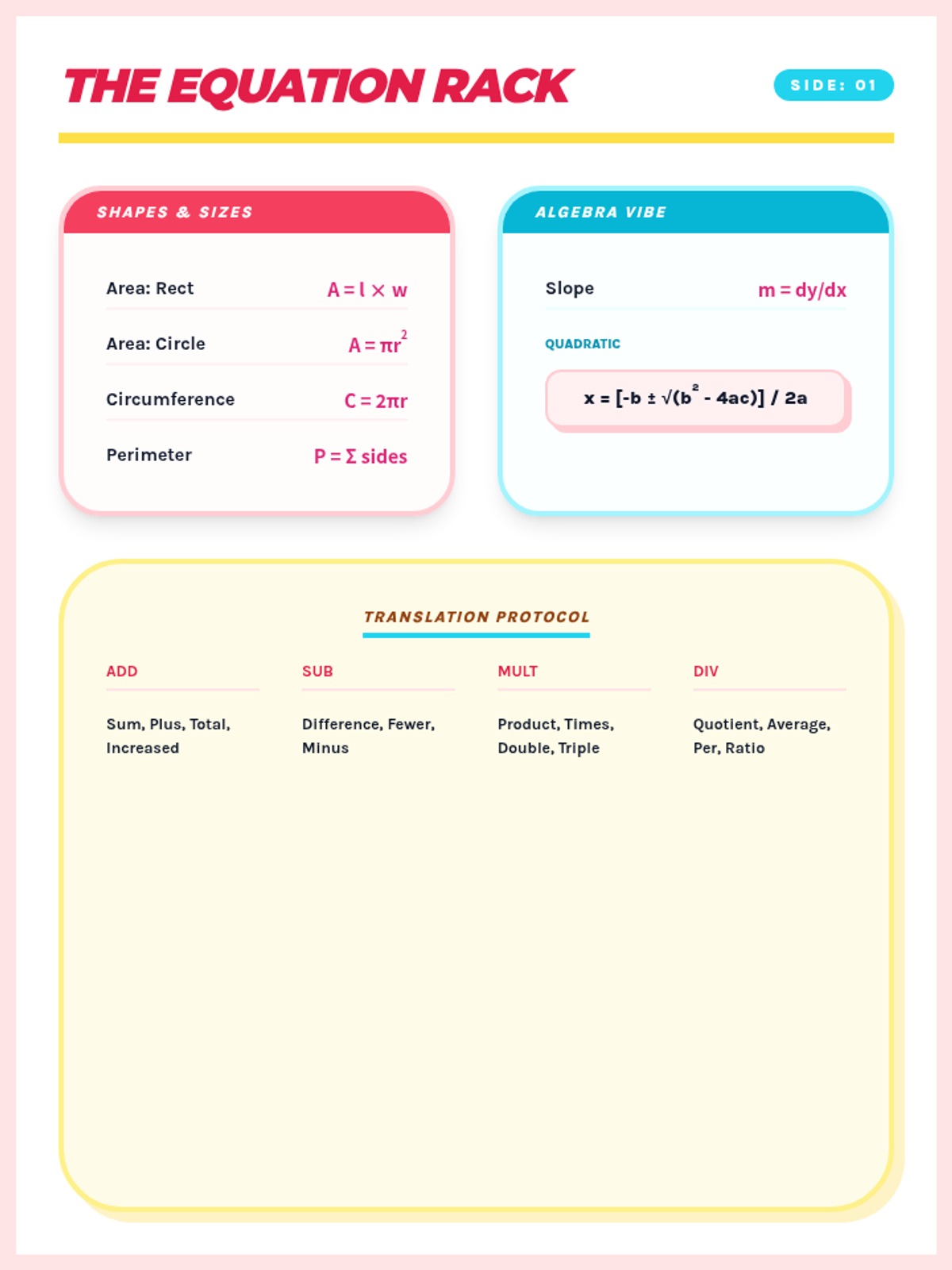
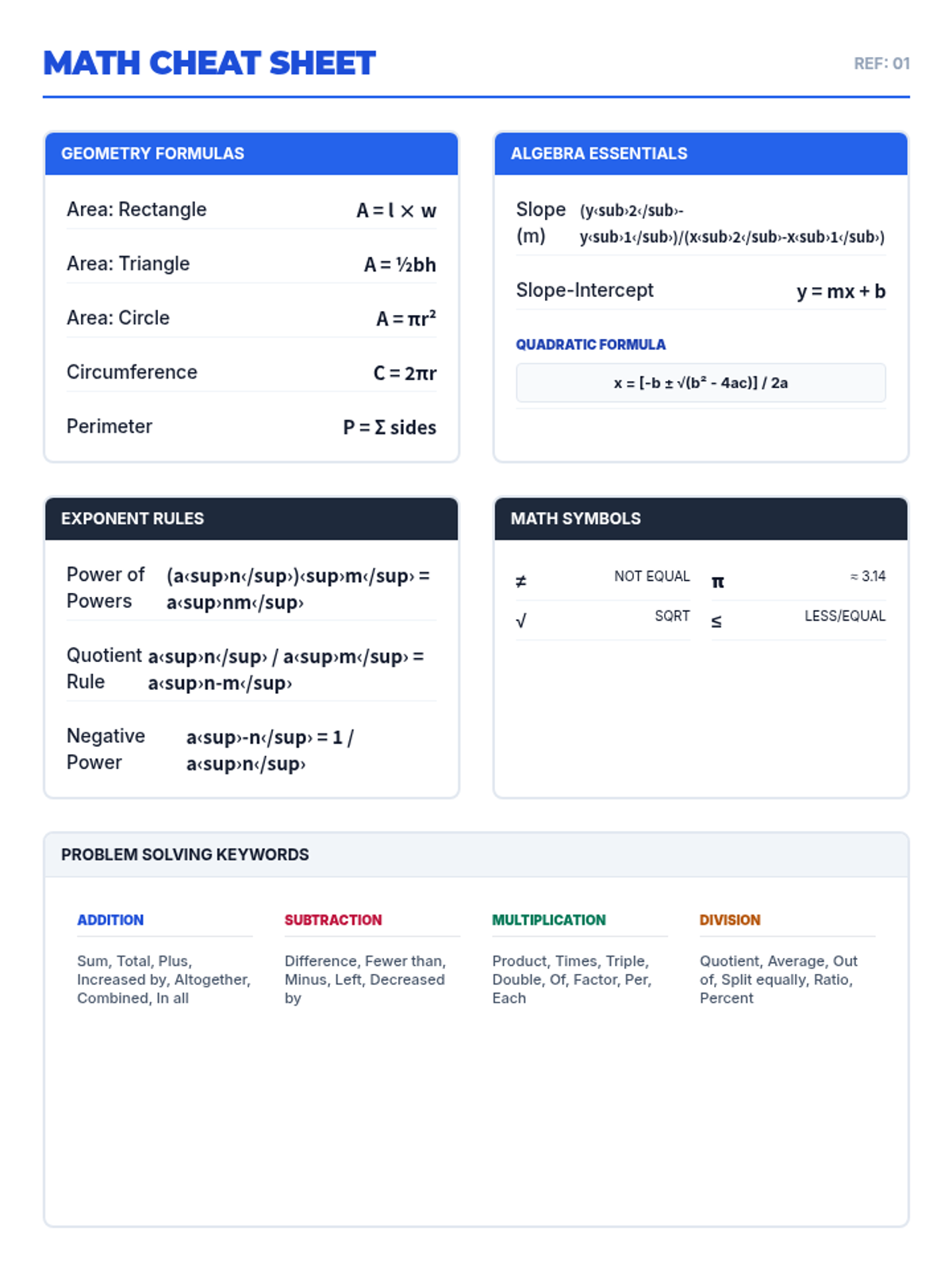
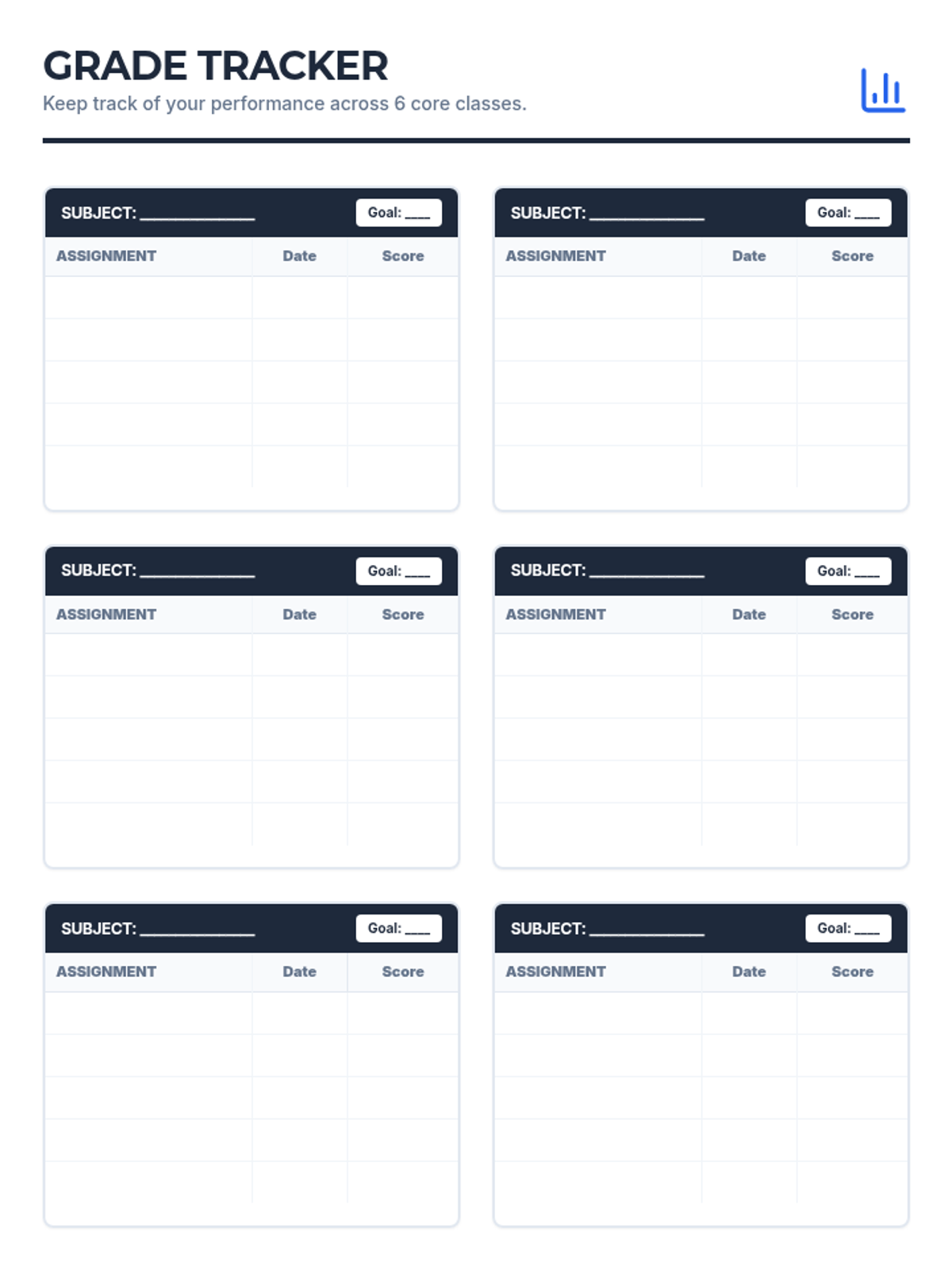
A comprehensive, non-date-specific academic planner for high school students featuring core subject reference sheets, grade tracking, project planning, and weekly layouts.
A clinical intervention lesson focusing on introspection, body awareness, and self-advocacy skills for students in specialized settings. Students learn to identify physical sensations to better communicate their emotional and physiological needs.
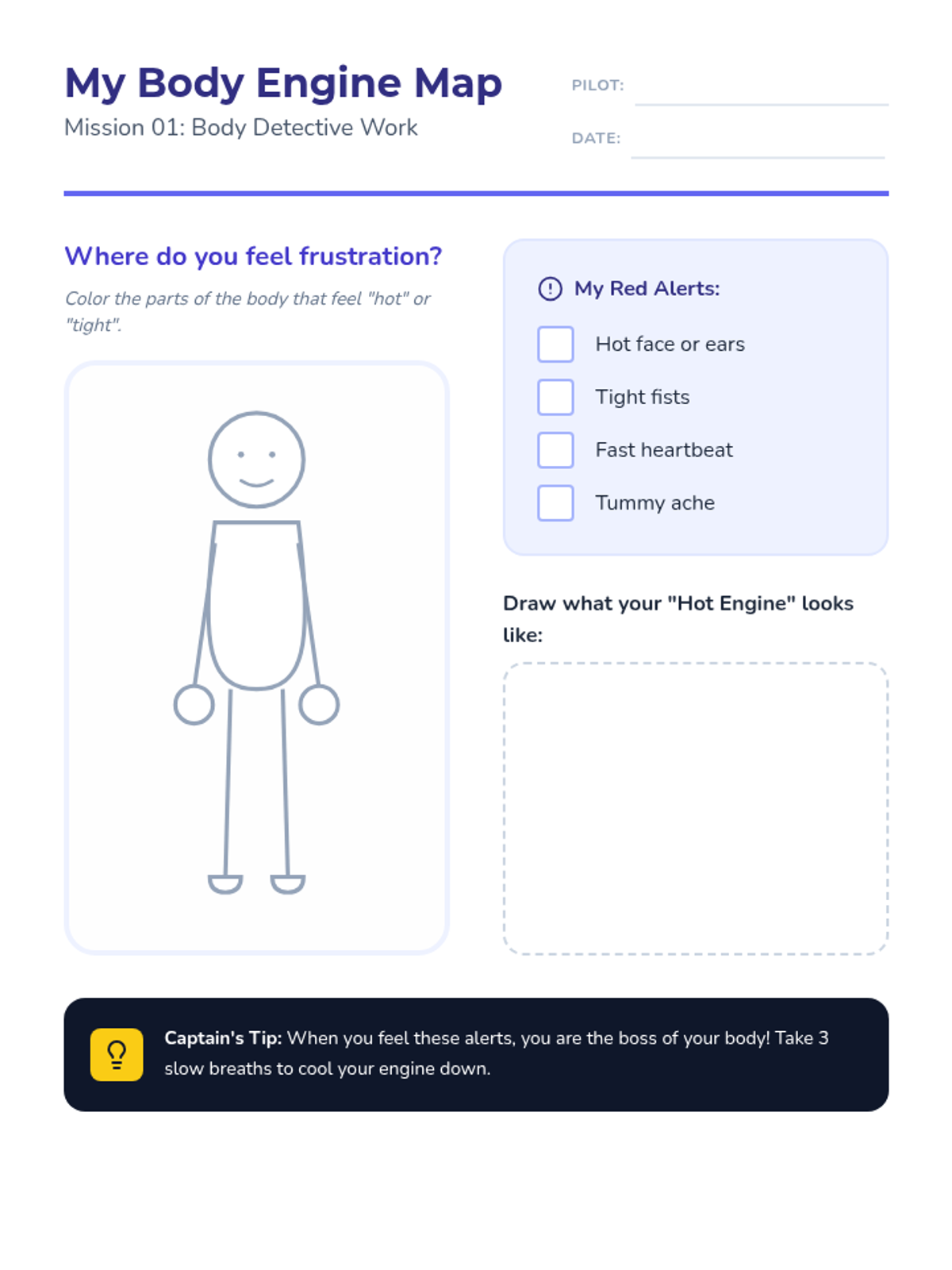
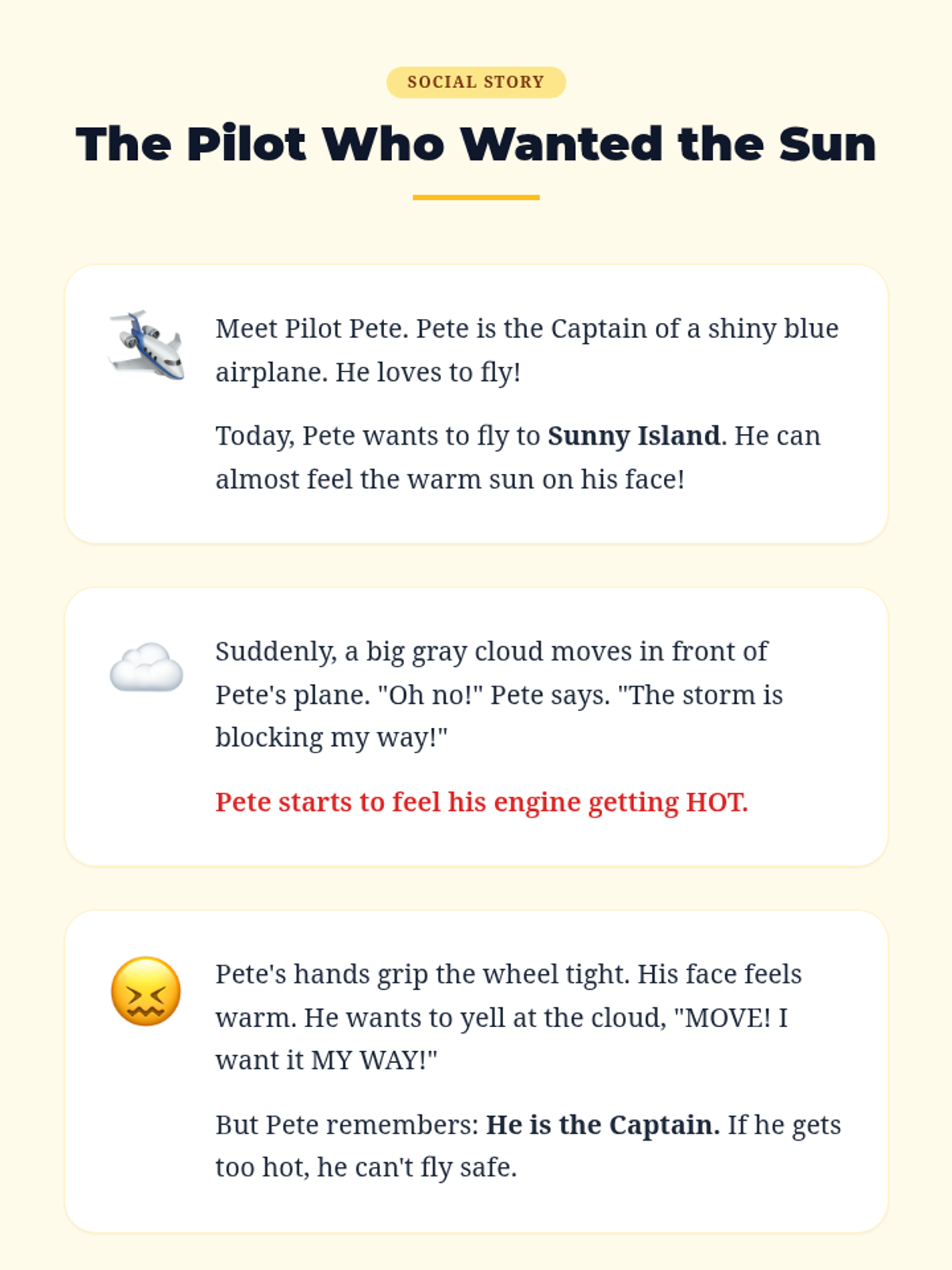
The introductory week focuses on 'Engine Checks'—helping students identify the physical warning signs in their body when they start to feel frustrated or lose control. Students learn that their body is like a ship and they are the captain who needs to monitor the engine.
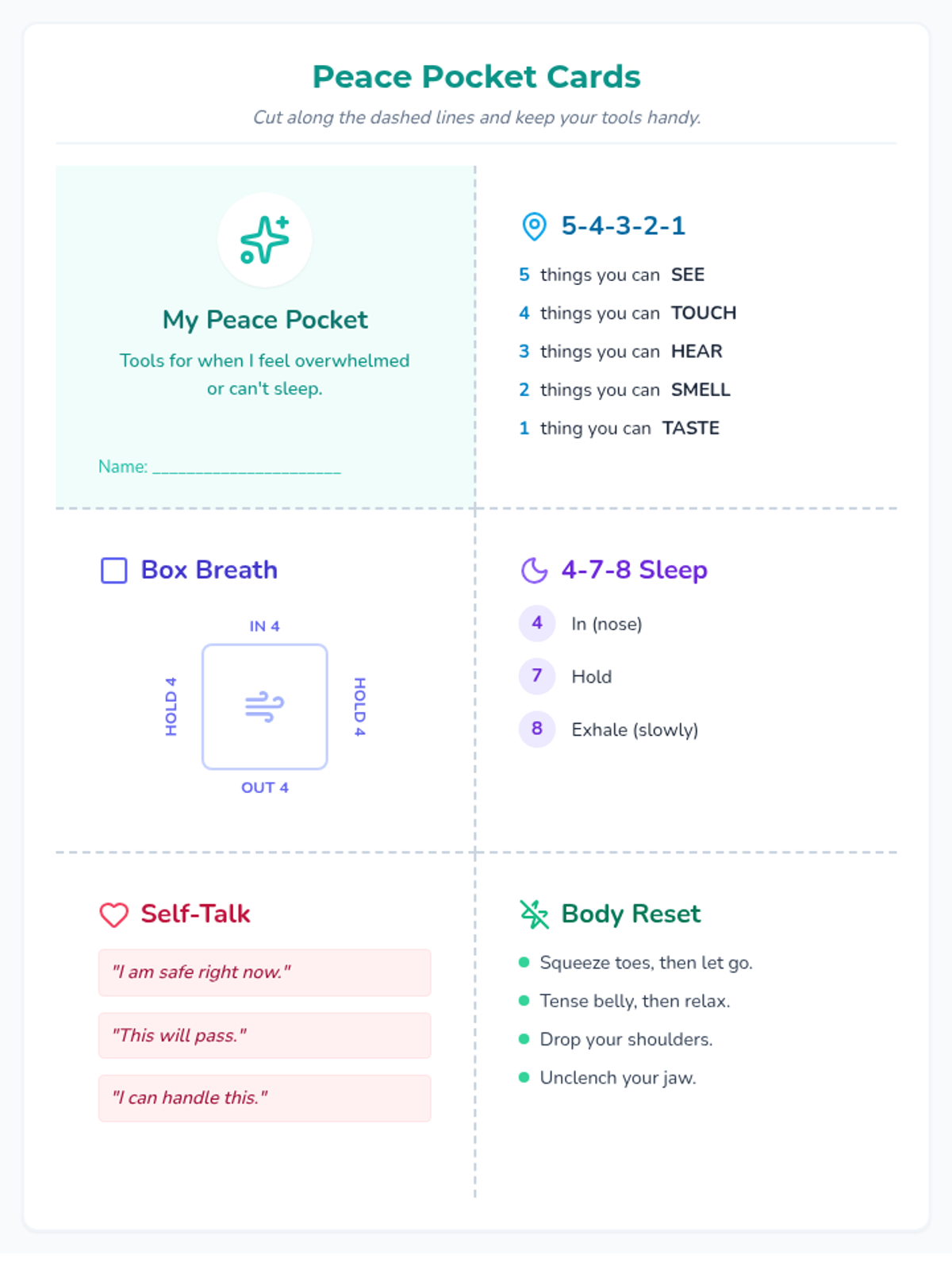
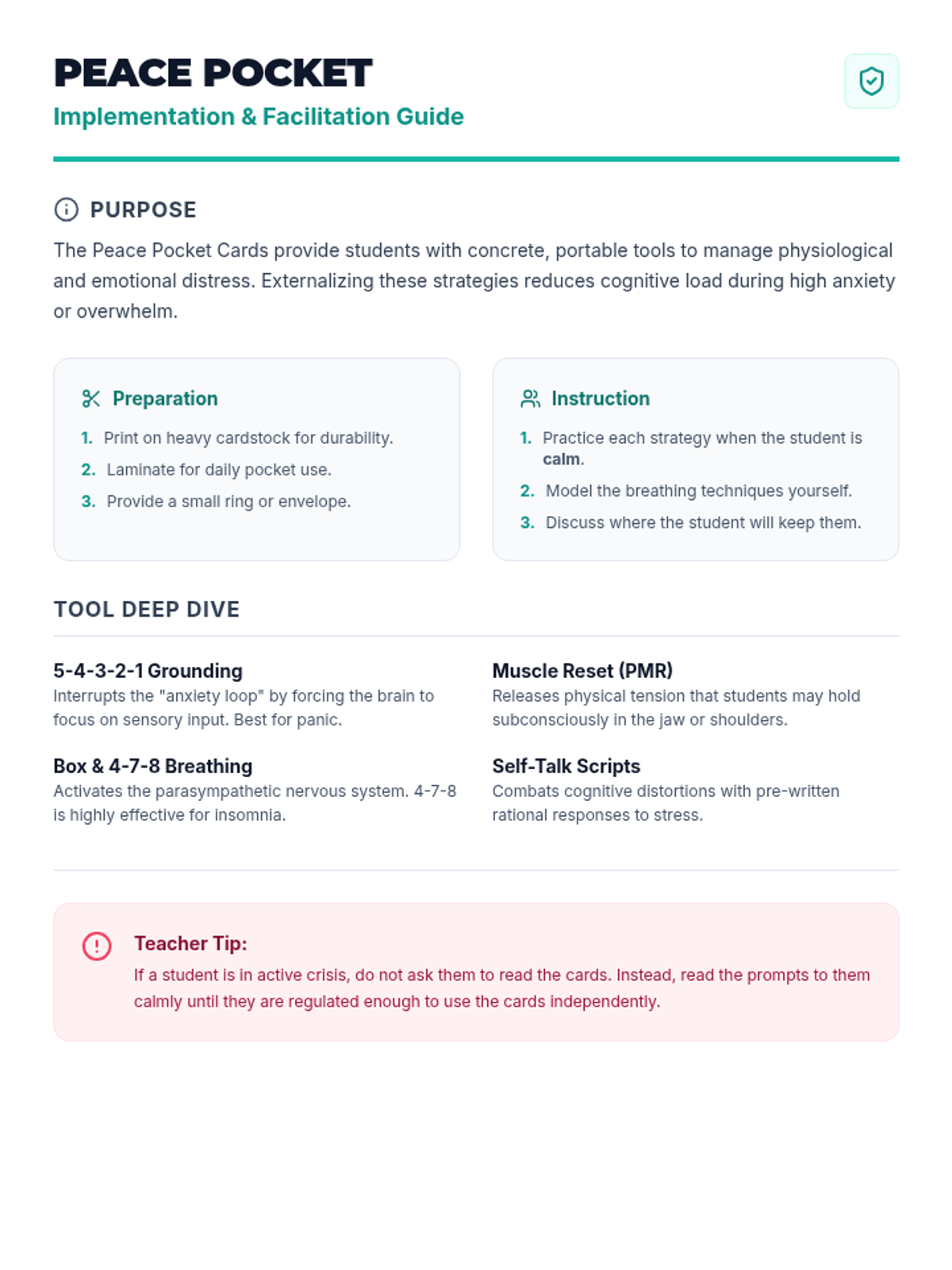
A collection of portable coping strategies designed to help students manage anxiety, sleep difficulties, and sensory overwhelm in the moment.
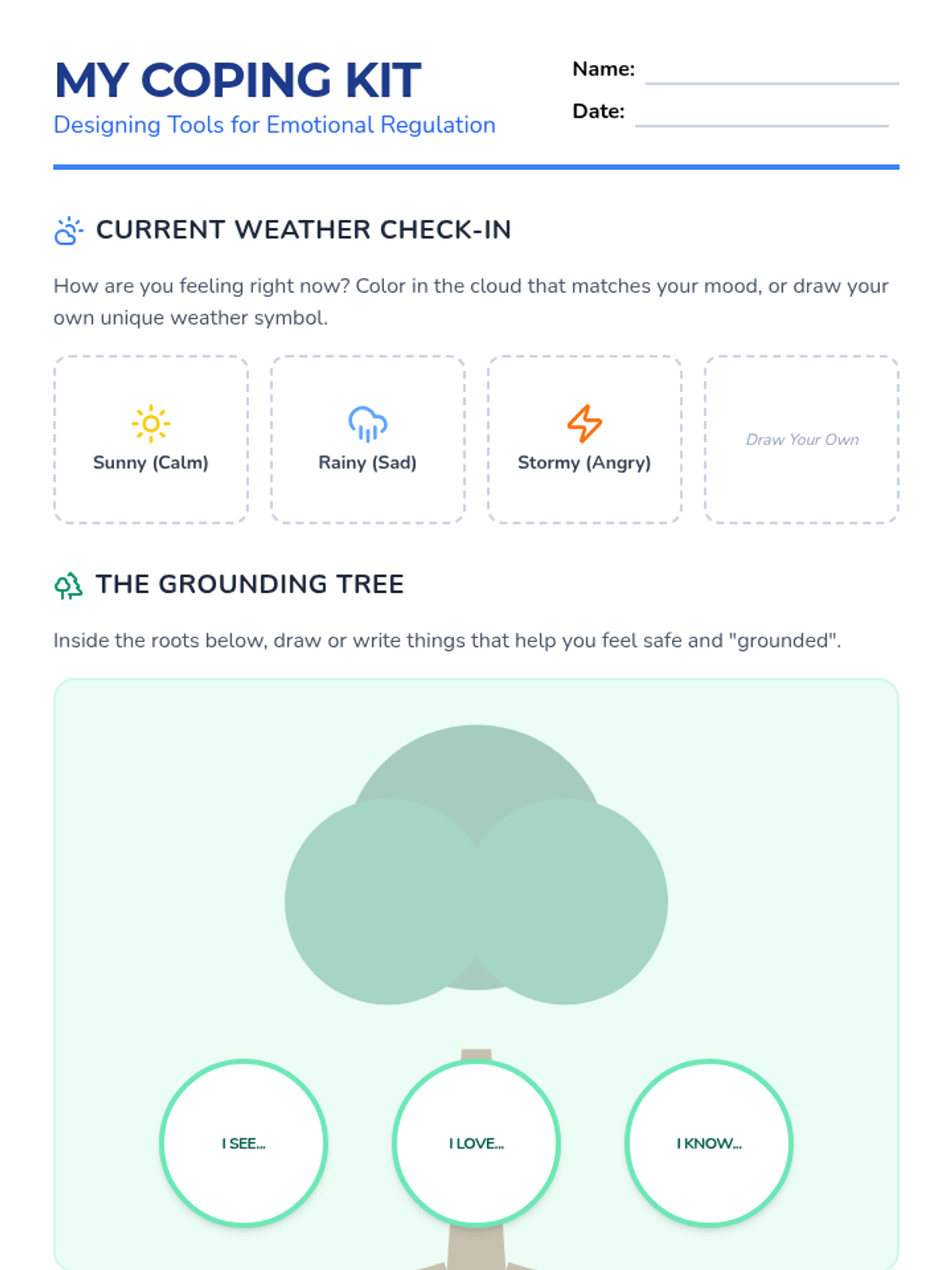
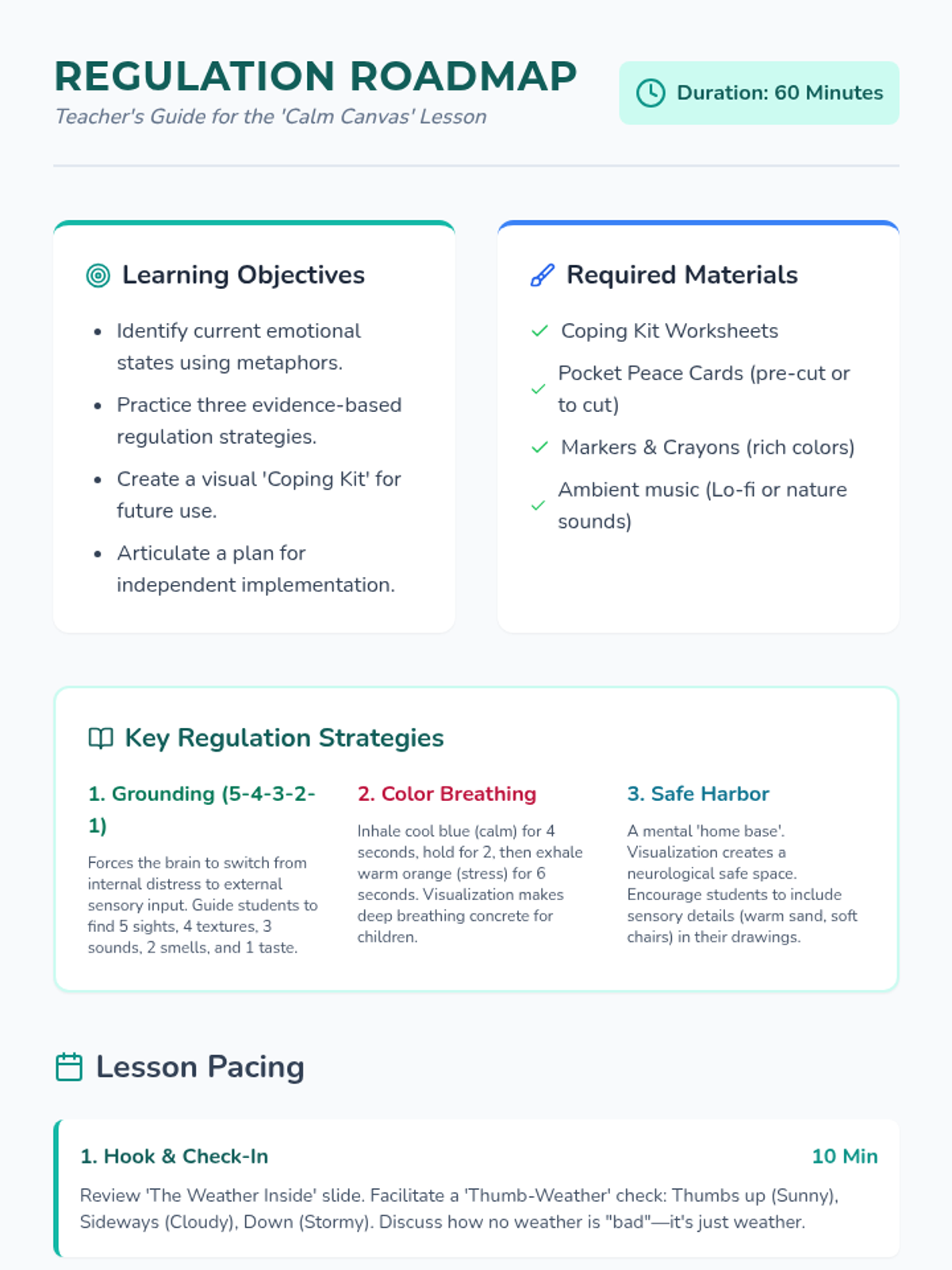
A creative art-based lesson where students learn to identify their emotional states and build a personalized 'coping kit' of regulation strategies using markers and crayons.