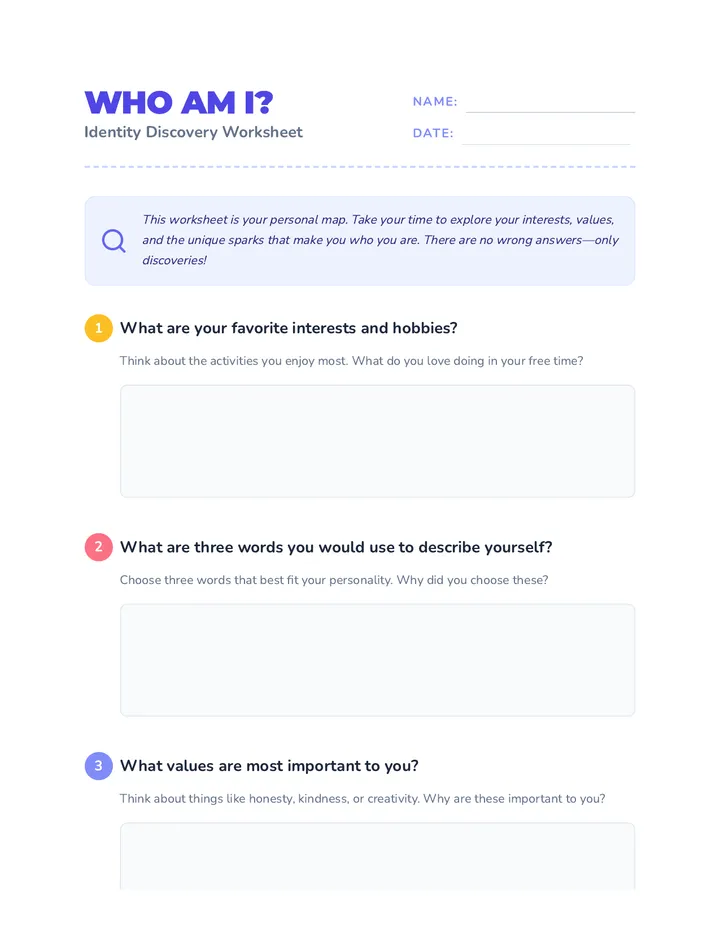
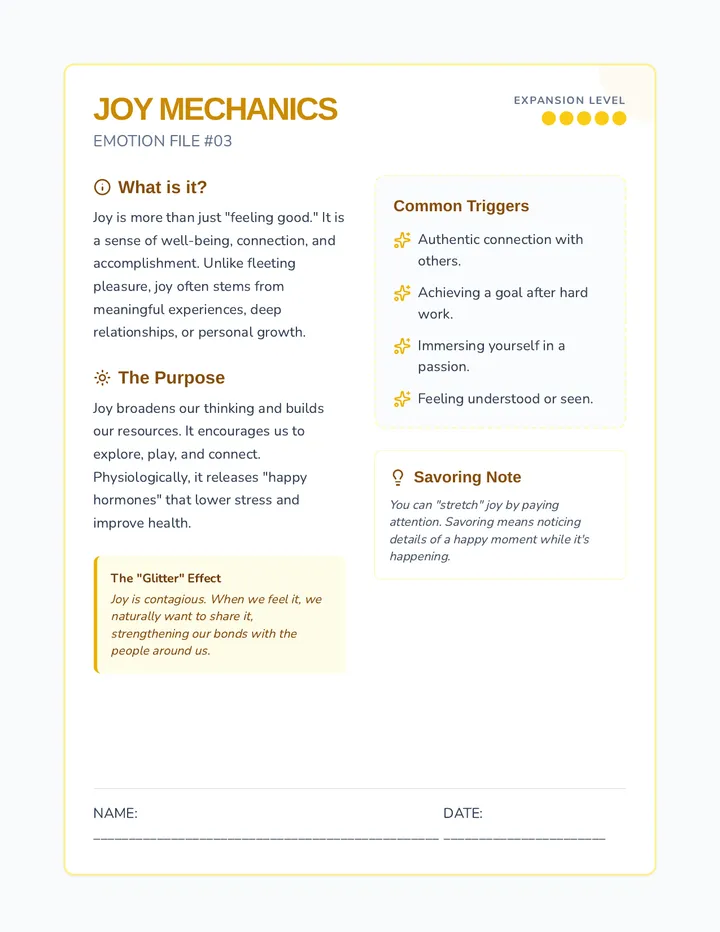
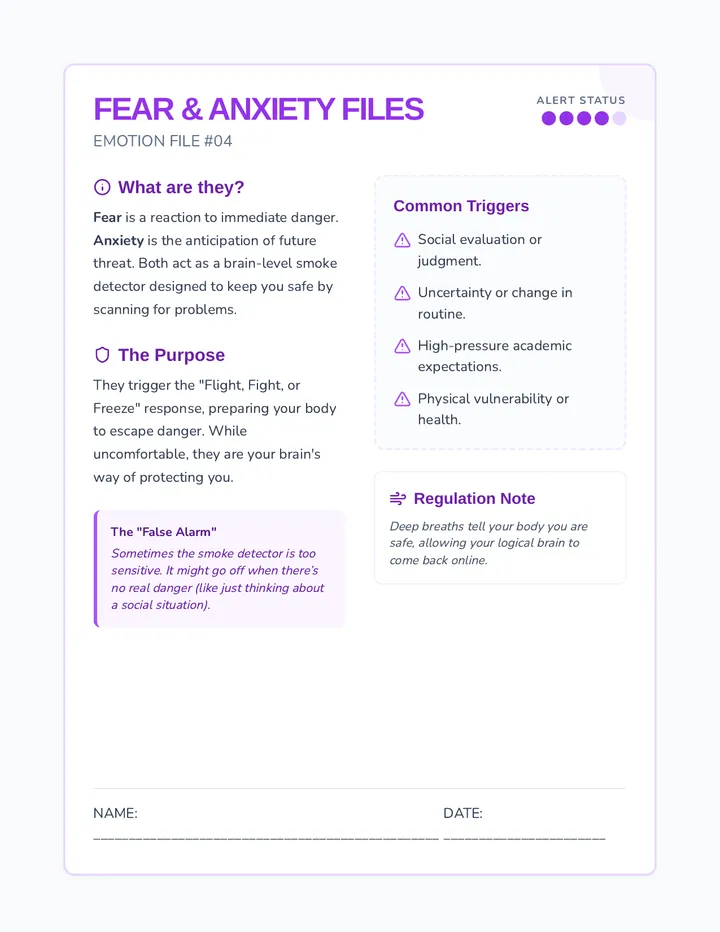
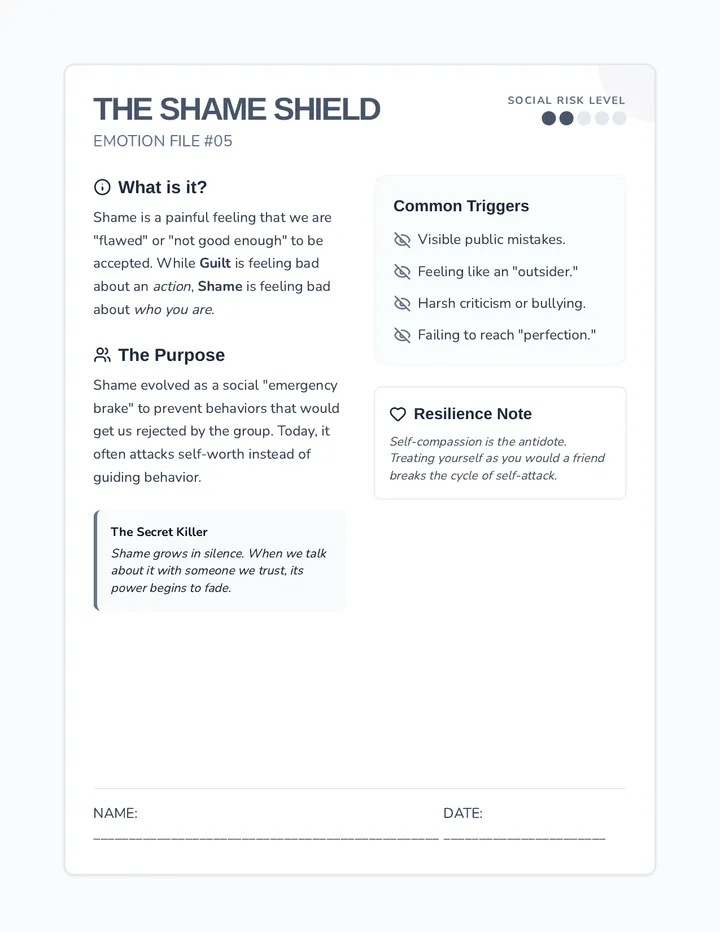
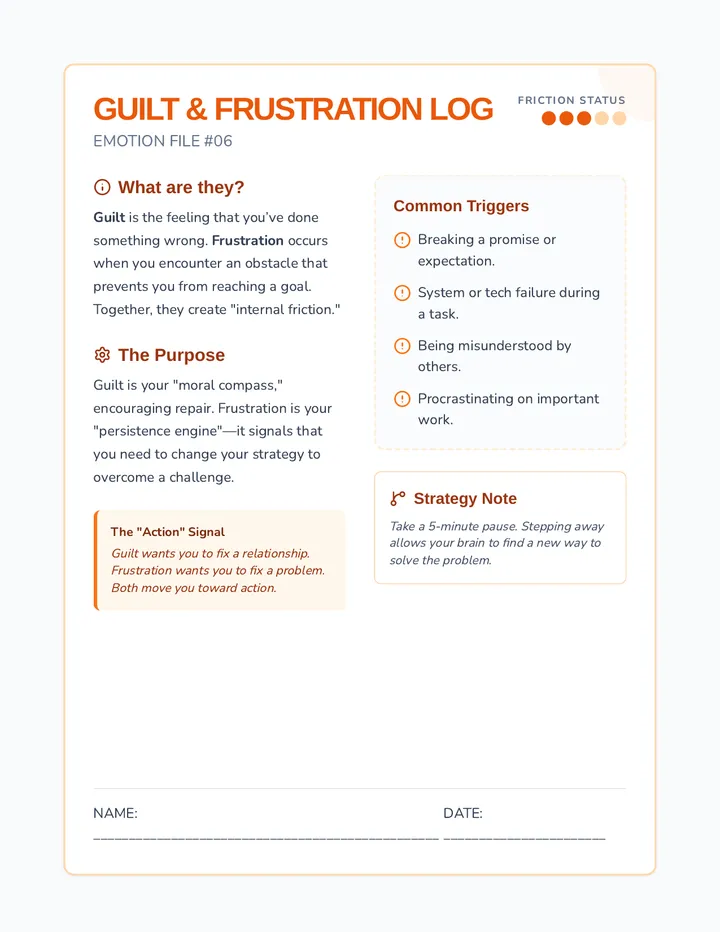
Emotion recognition ranging from basic feelings to complex nuances and mixed states. Strengthens accurate self-assessment through identity exploration, strength identification, and values-based decision making.
A supportive set of resources to help students navigate the transition between school counselors, focusing on emotional regulation and building new connections.
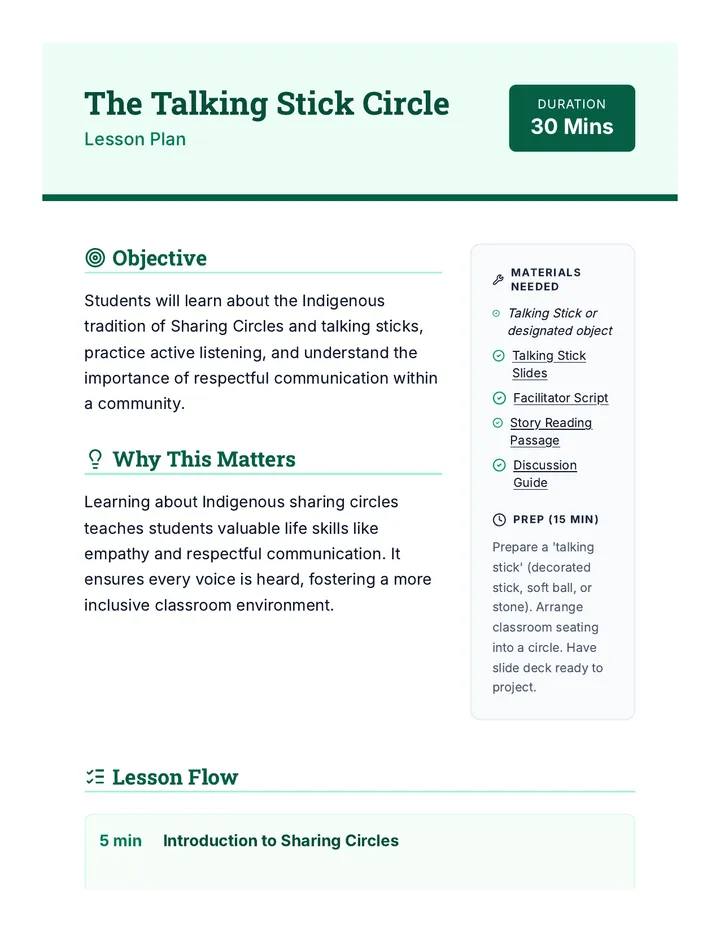
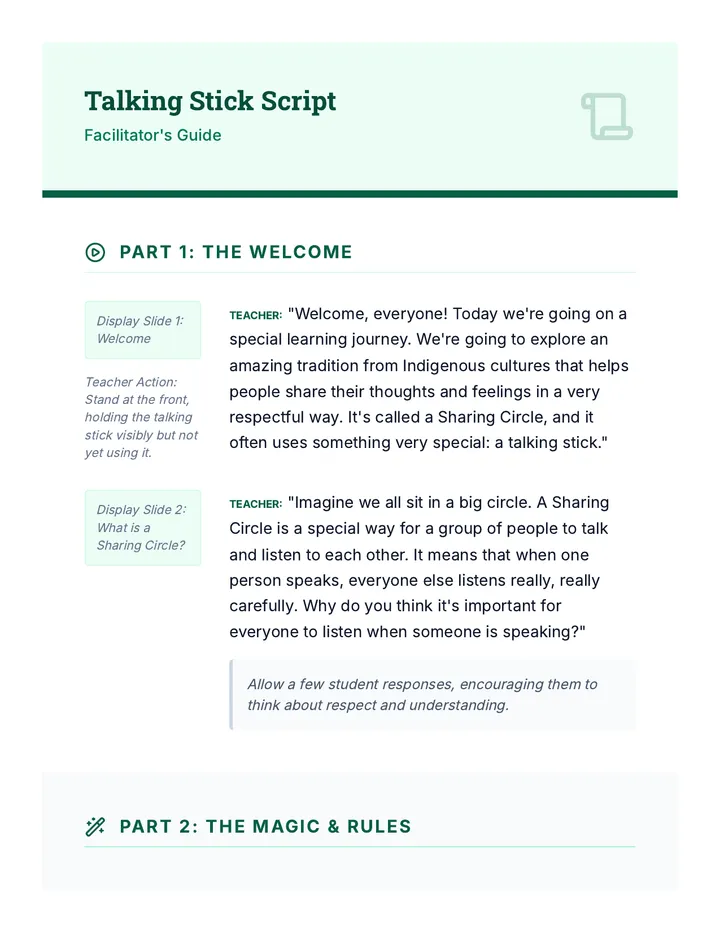
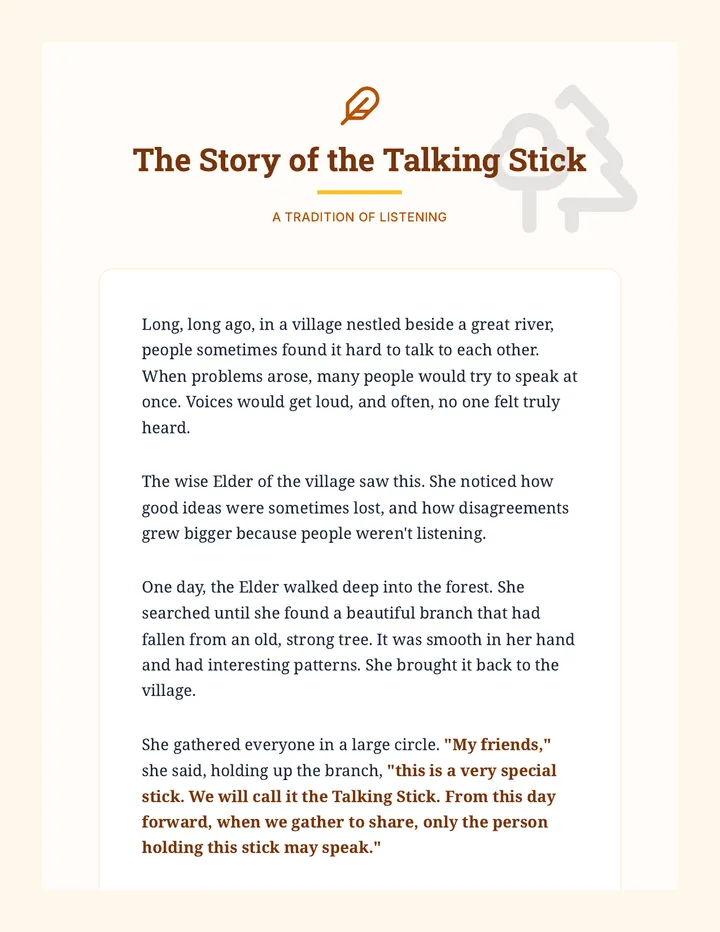
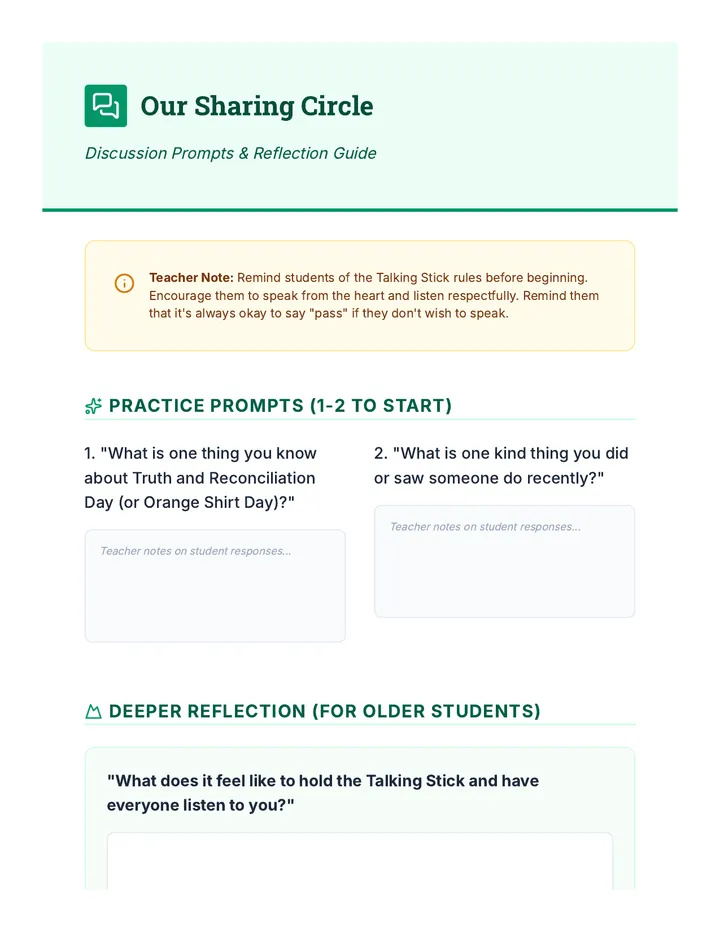
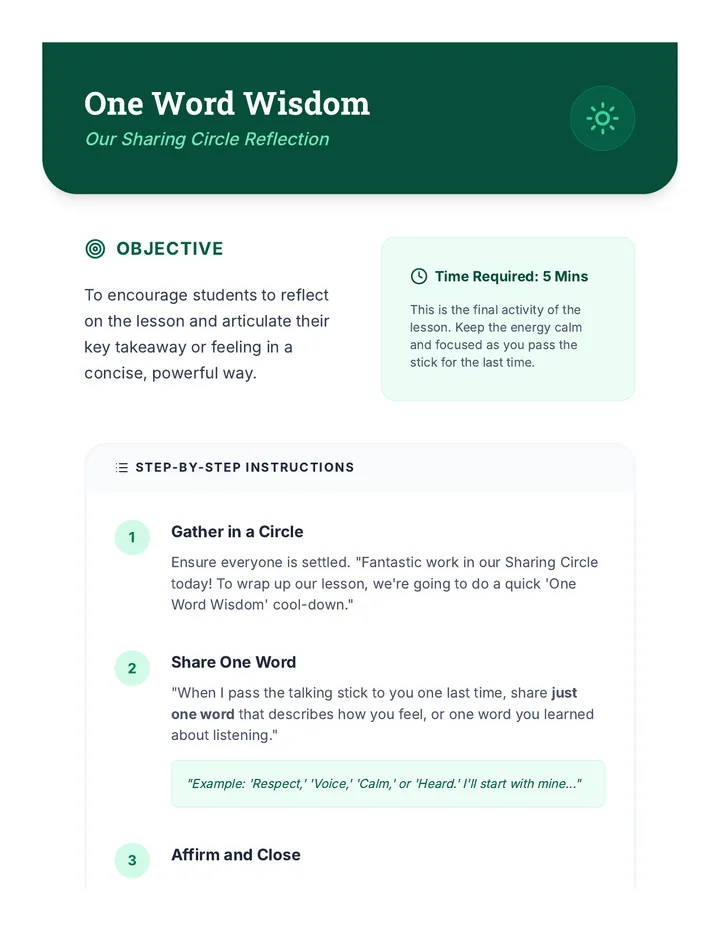
This lesson introduces K-6 students to the Indigenous tradition of Sharing Circles and talking sticks, fostering respectful communication and active listening skills. Students will learn the significance of everyone's voice through storytelling and guided practice.
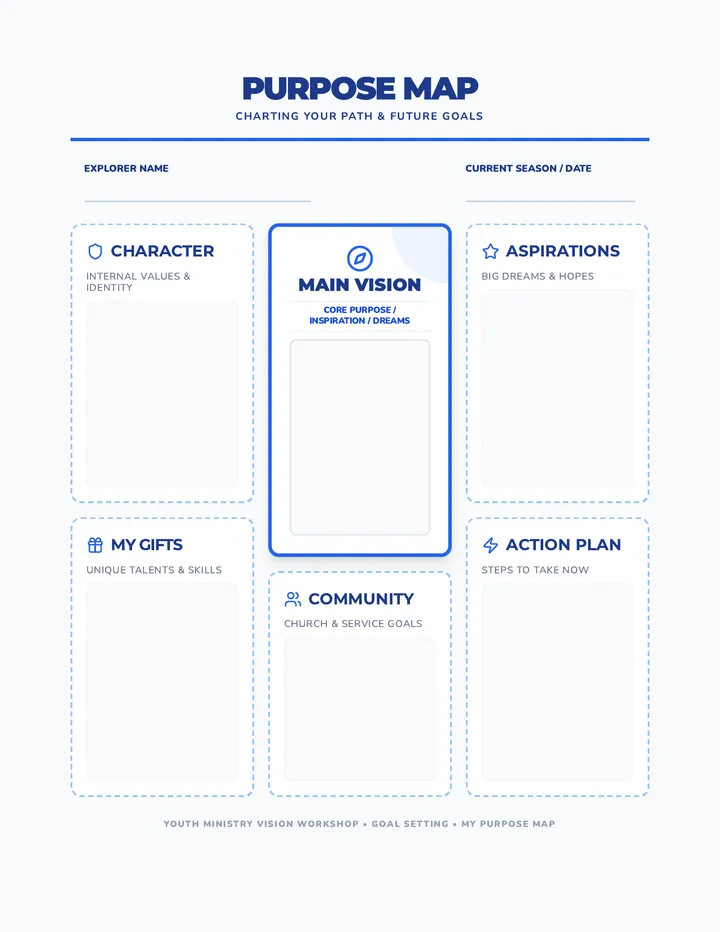
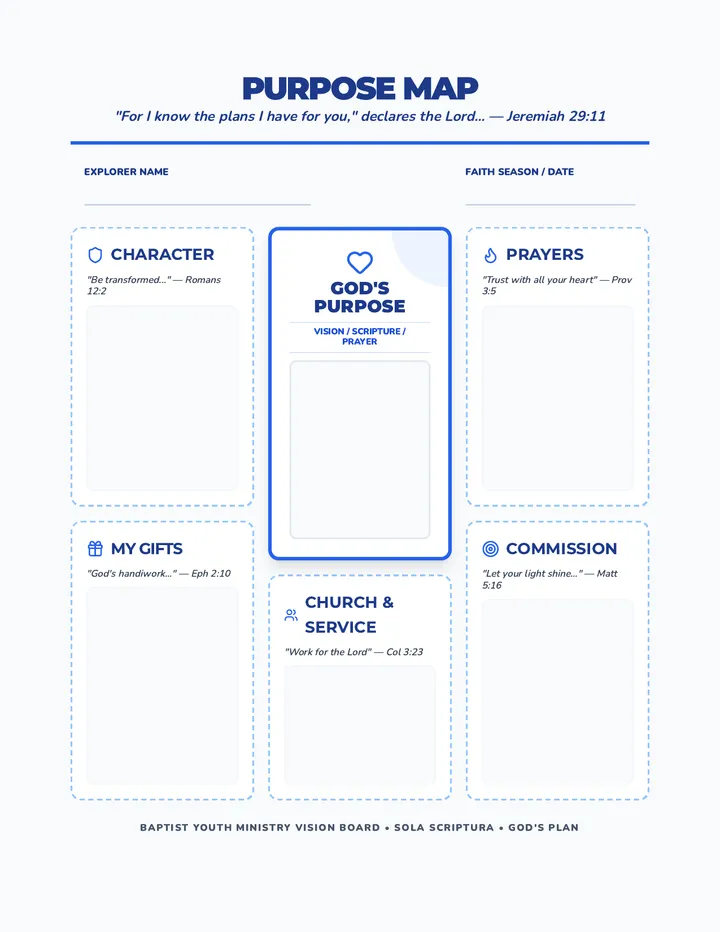
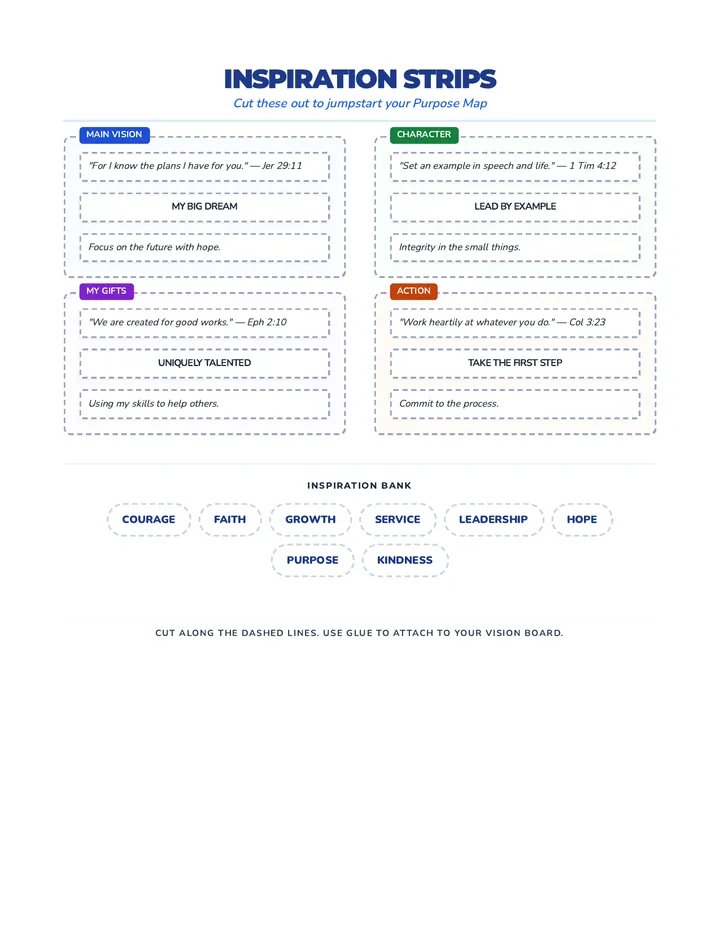
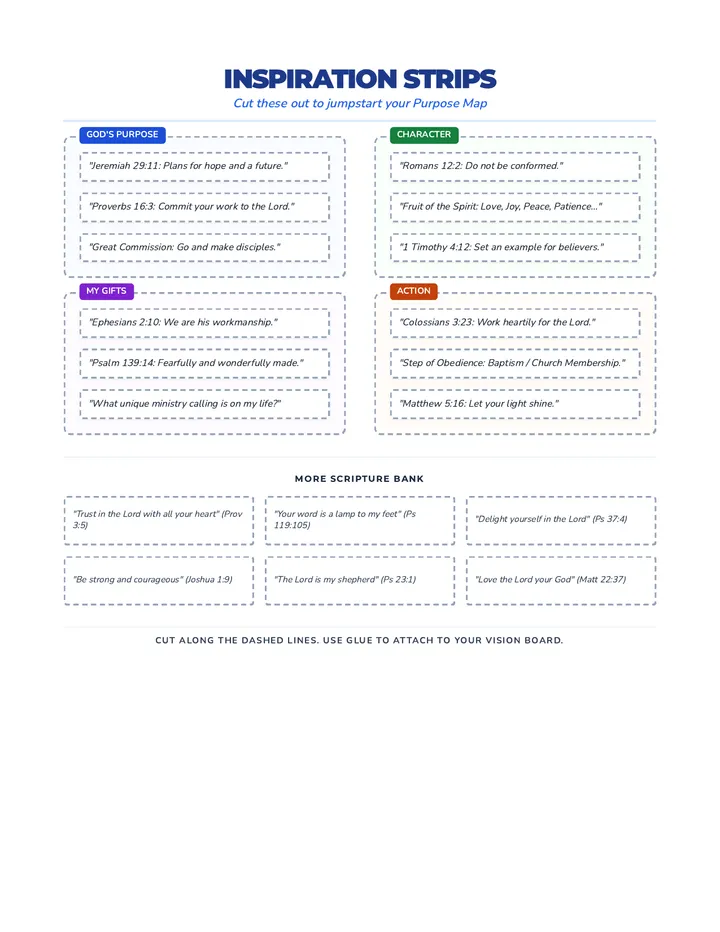
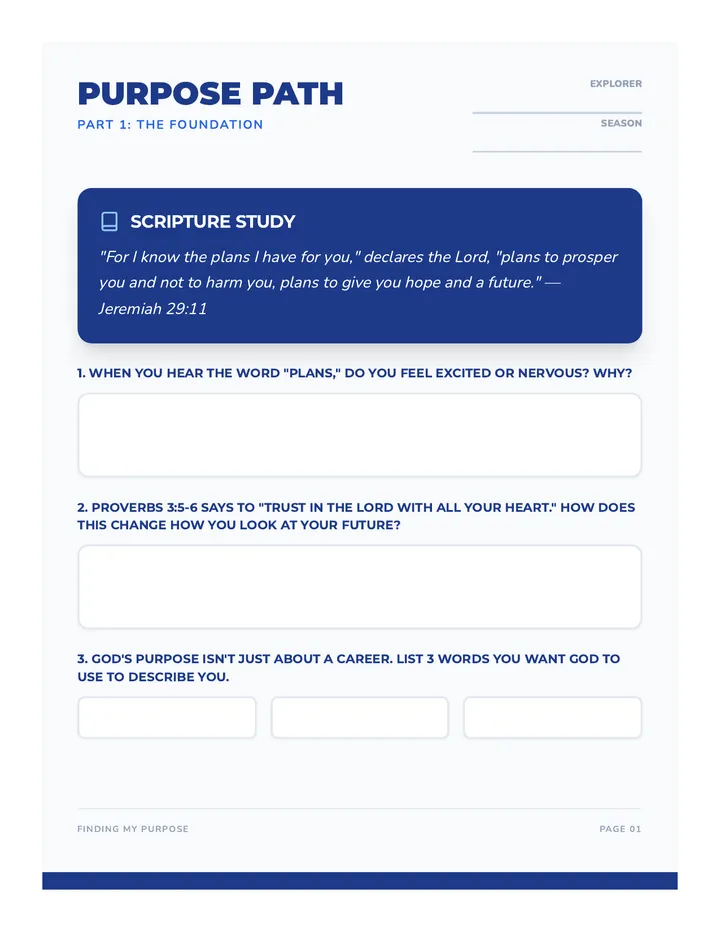
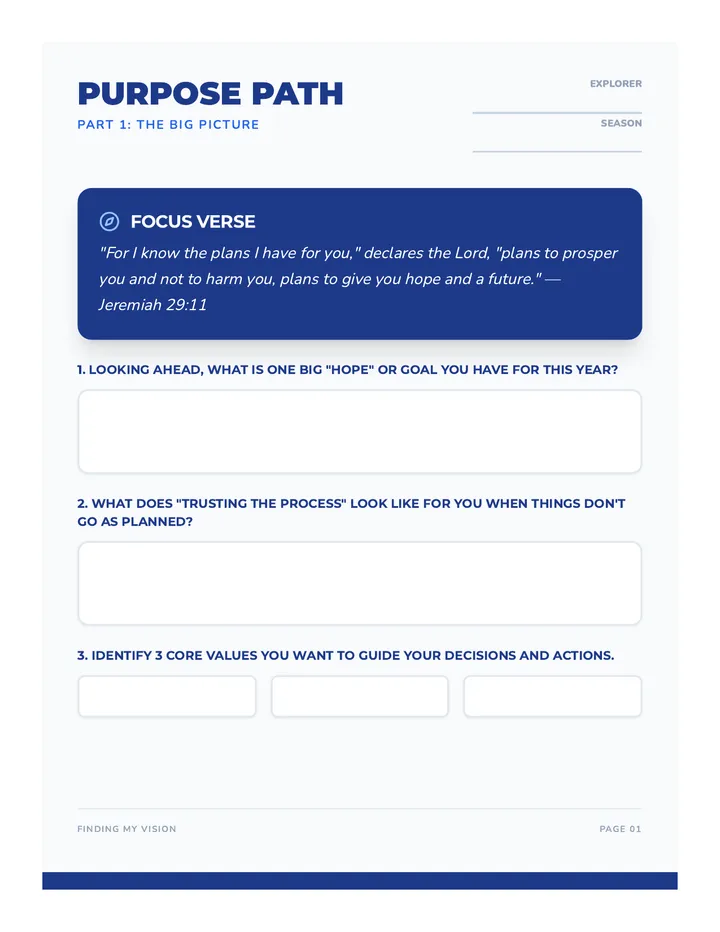
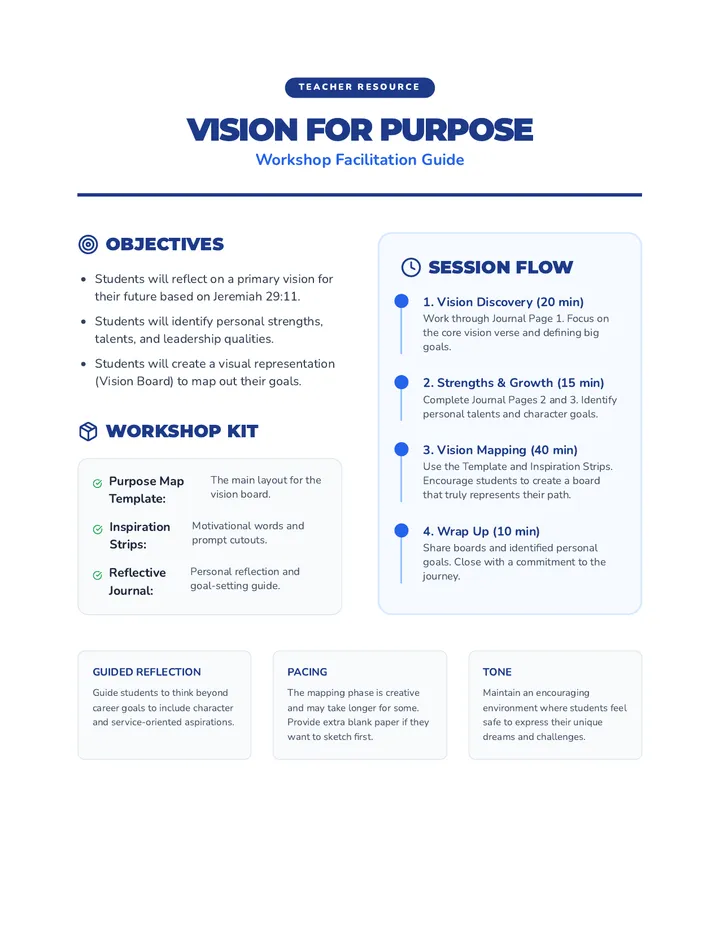
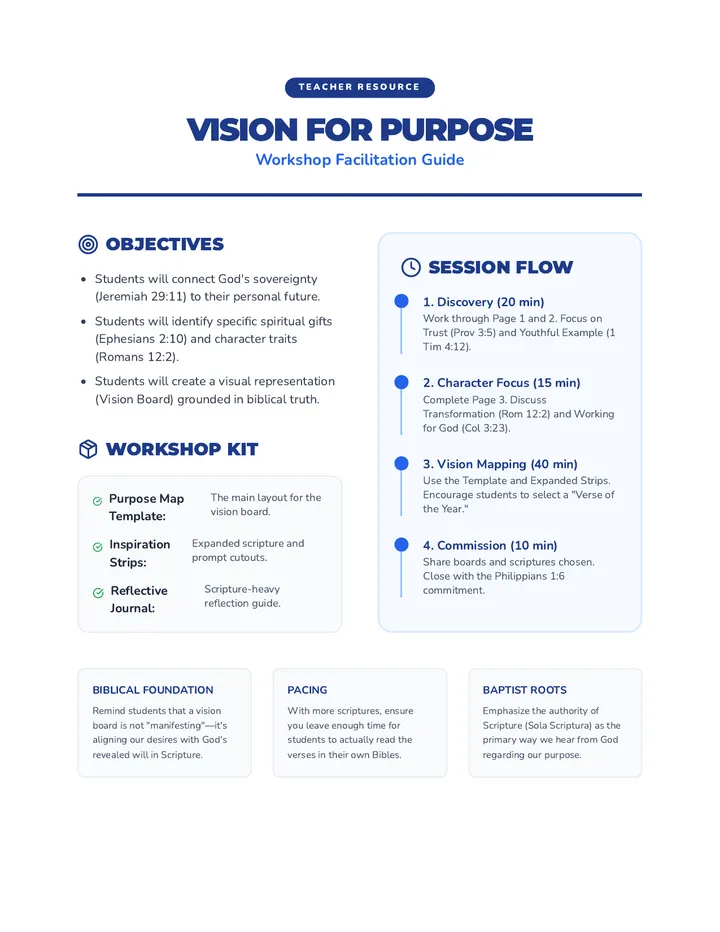
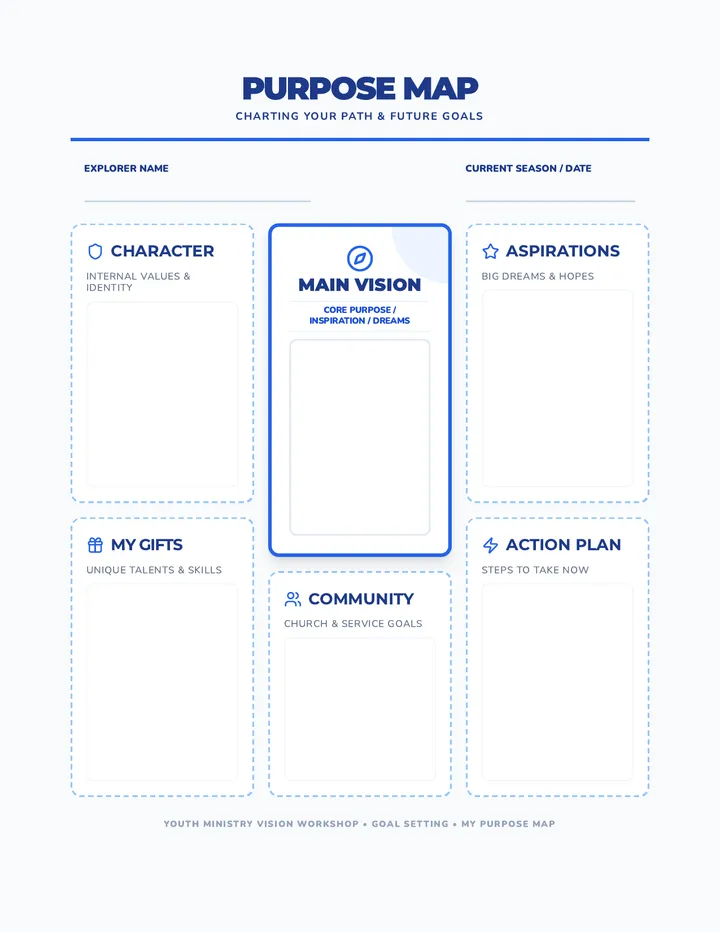
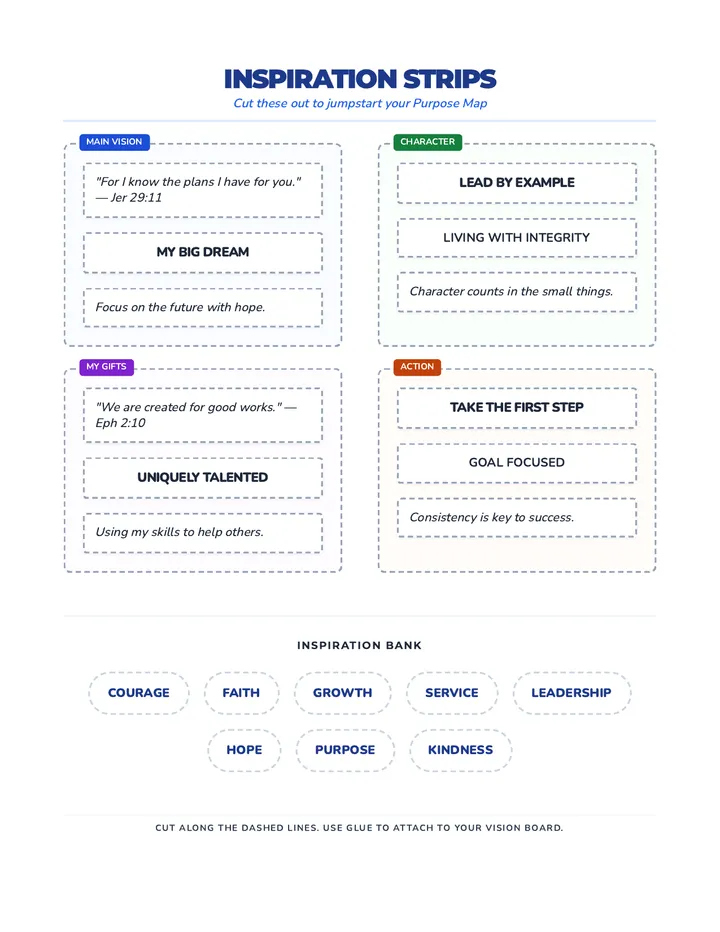
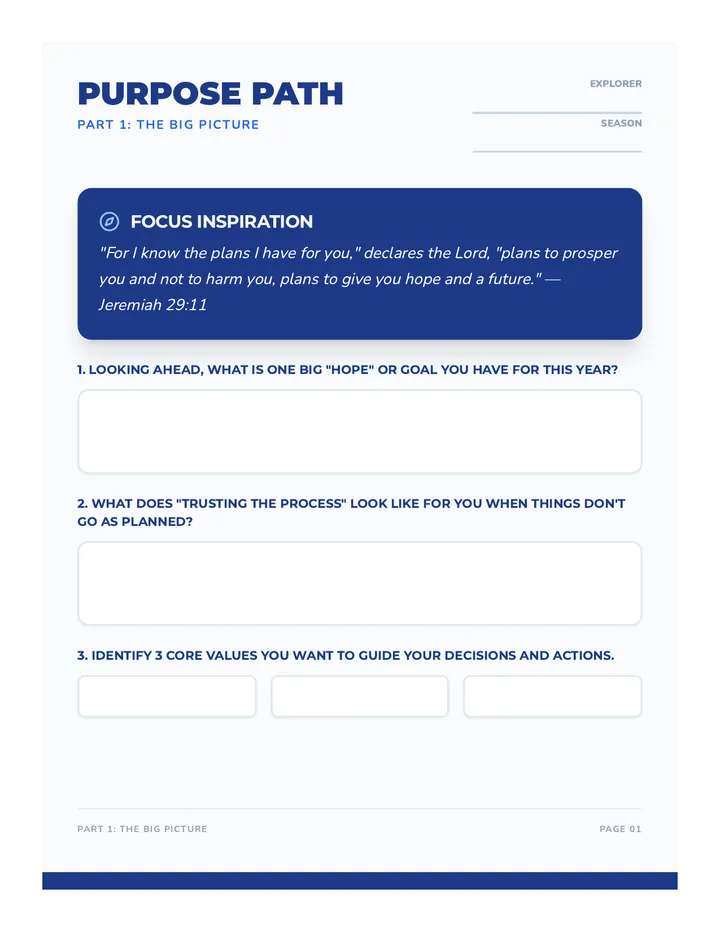
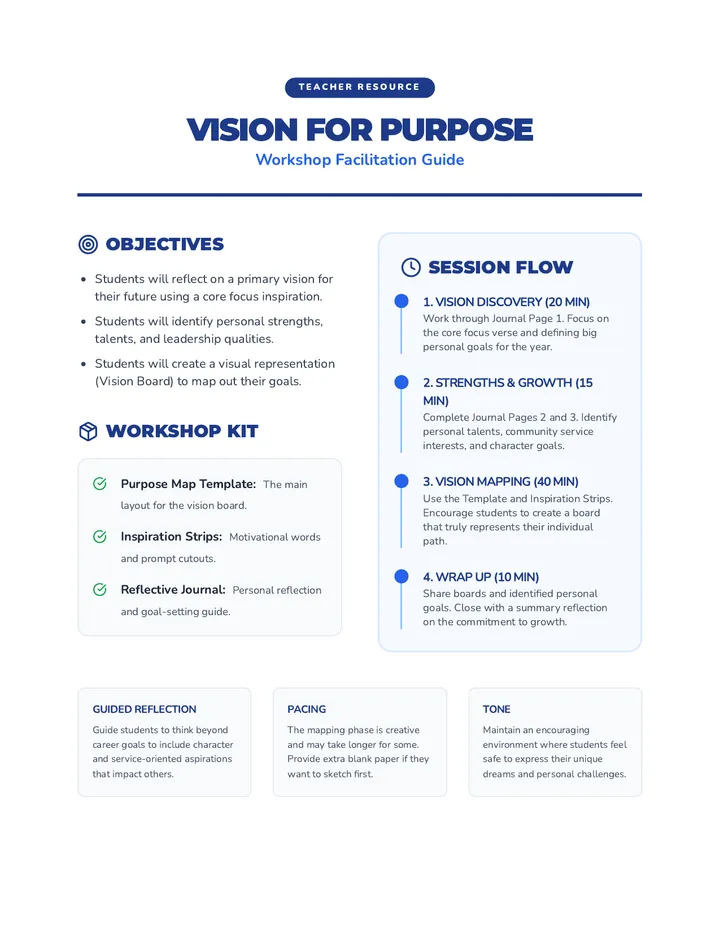
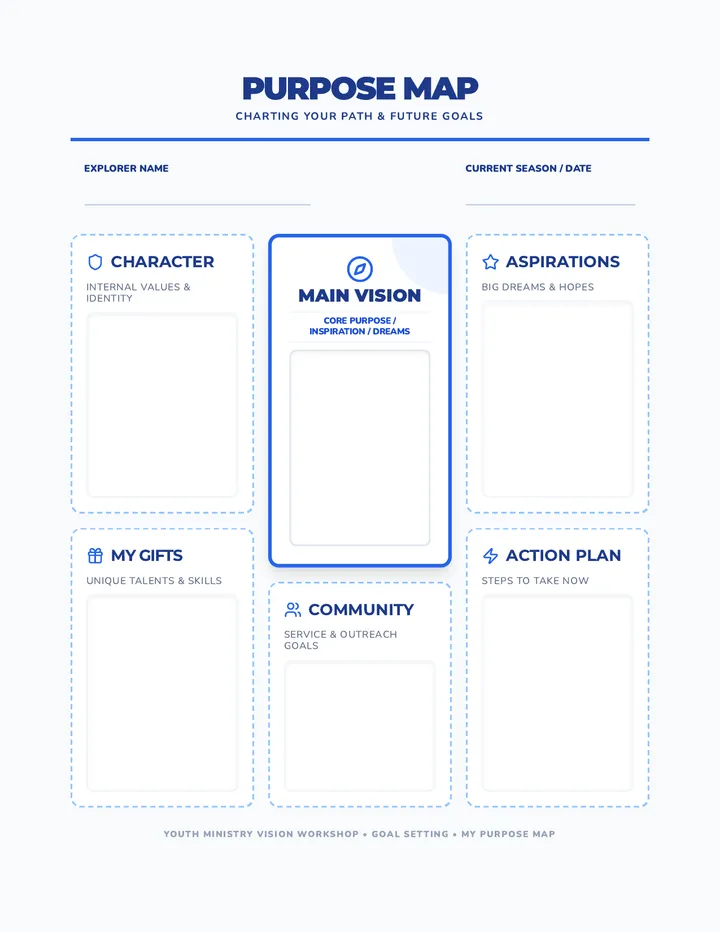
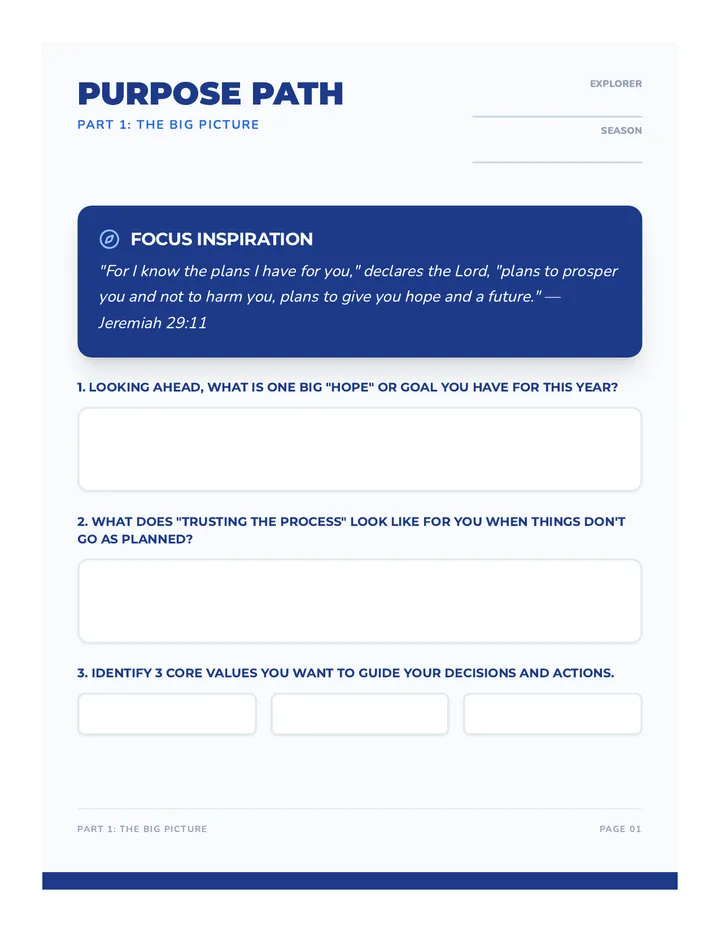
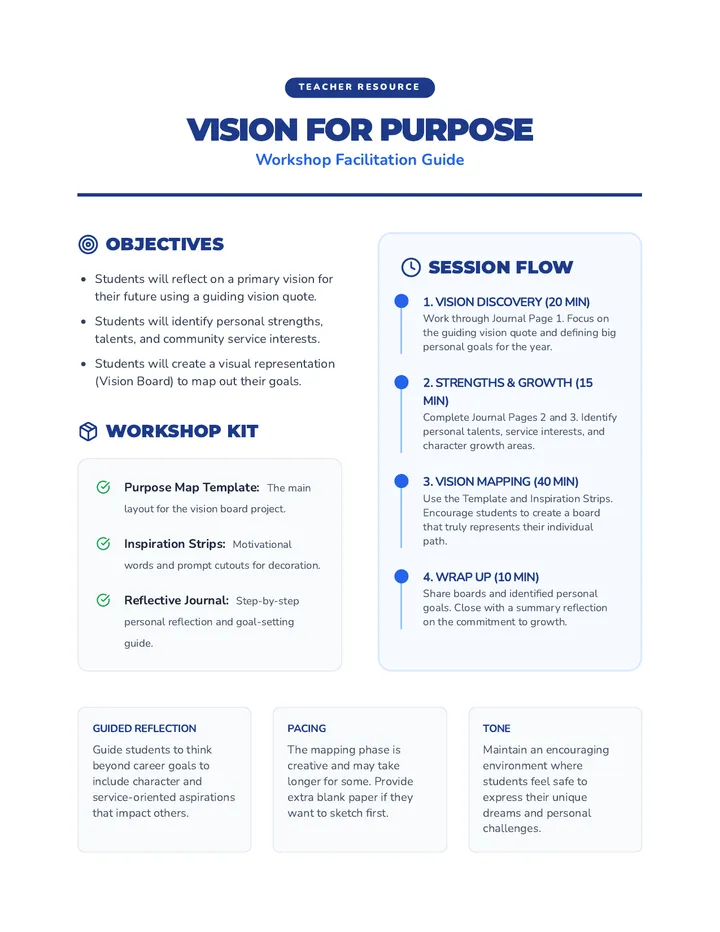
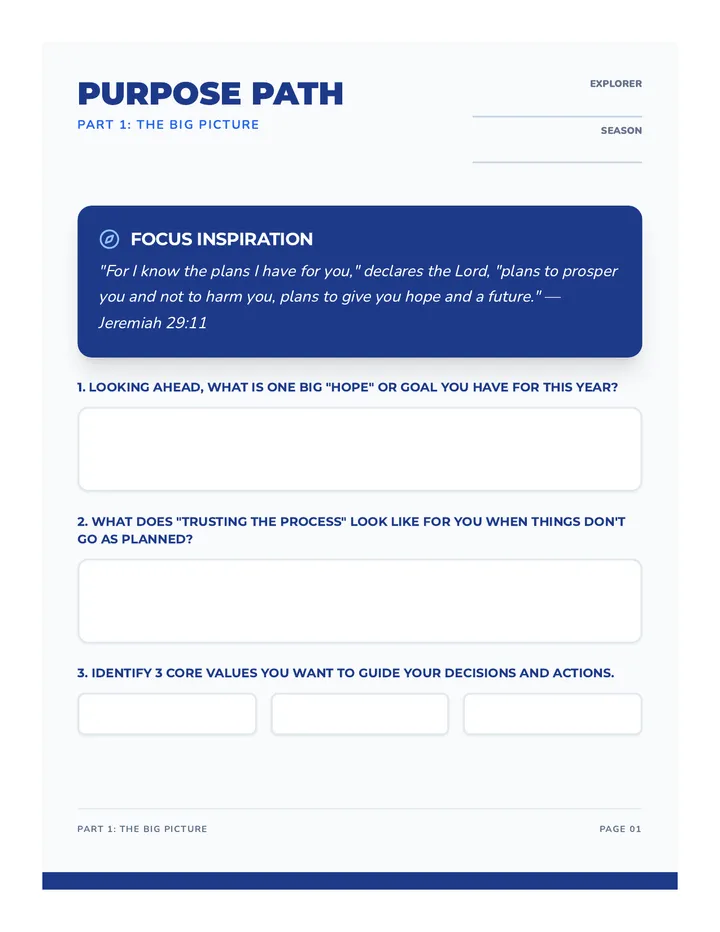
A creative workshop for youth to explore God's plan for their lives through vision boarding, scripture, and guided reflection. Students will identify their spiritual gifts and set faith-focused goals.
A 60-minute lesson for 5th and 6th-grade students designed to foster an inclusive classroom environment by celebrating individual uniqueness and understanding the broad dimensions of diversity.
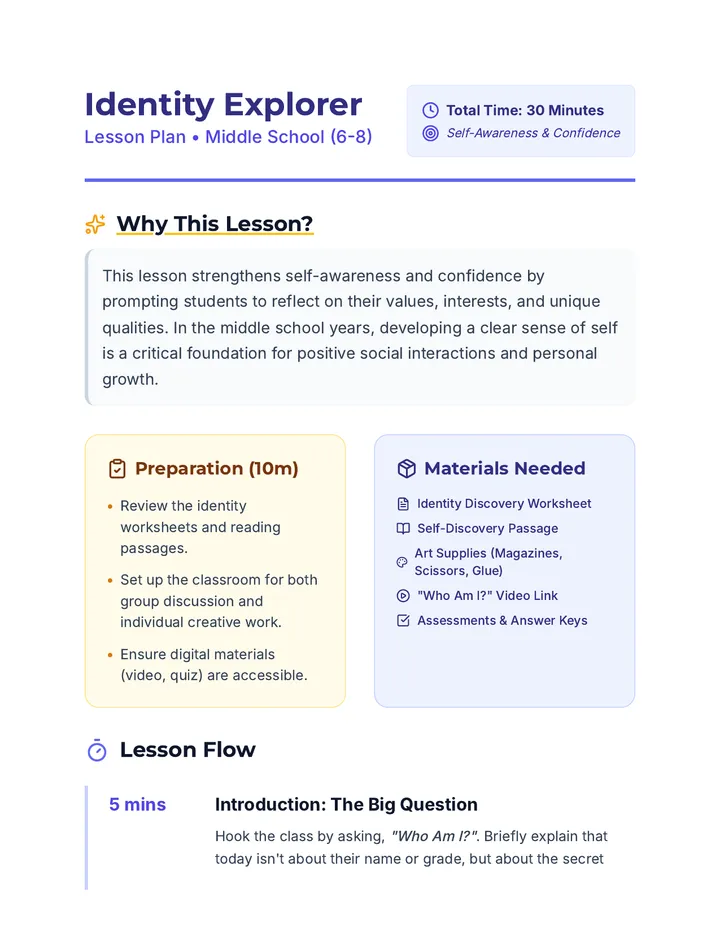
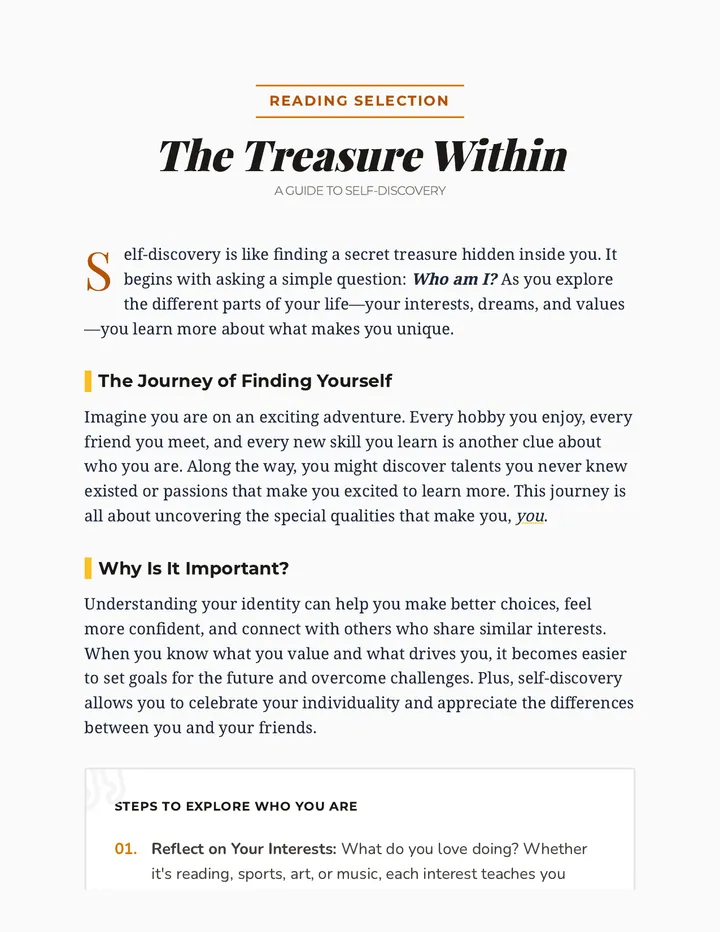
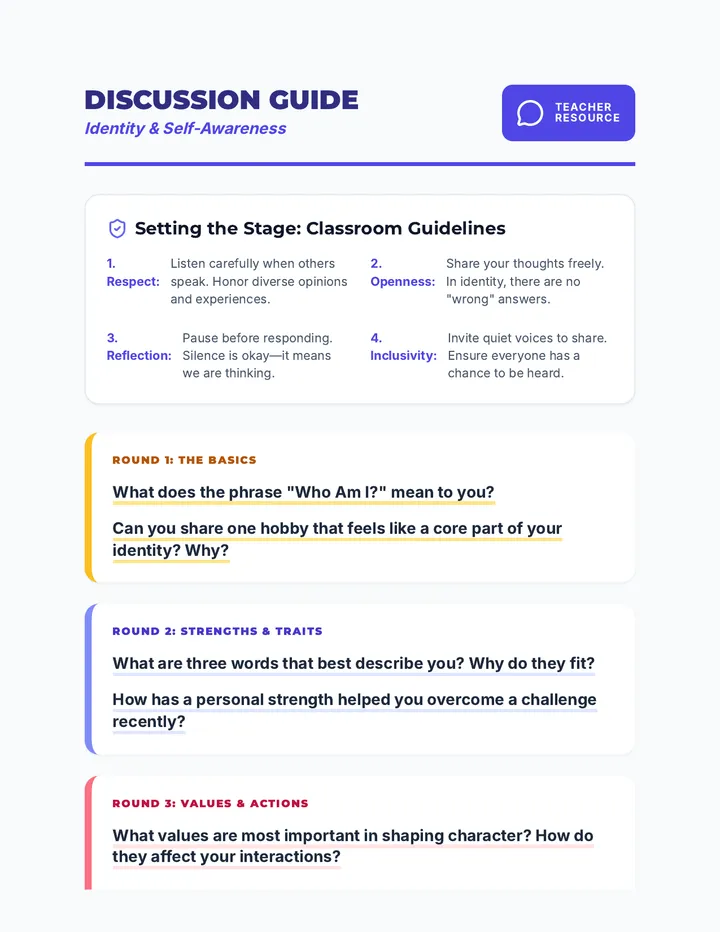
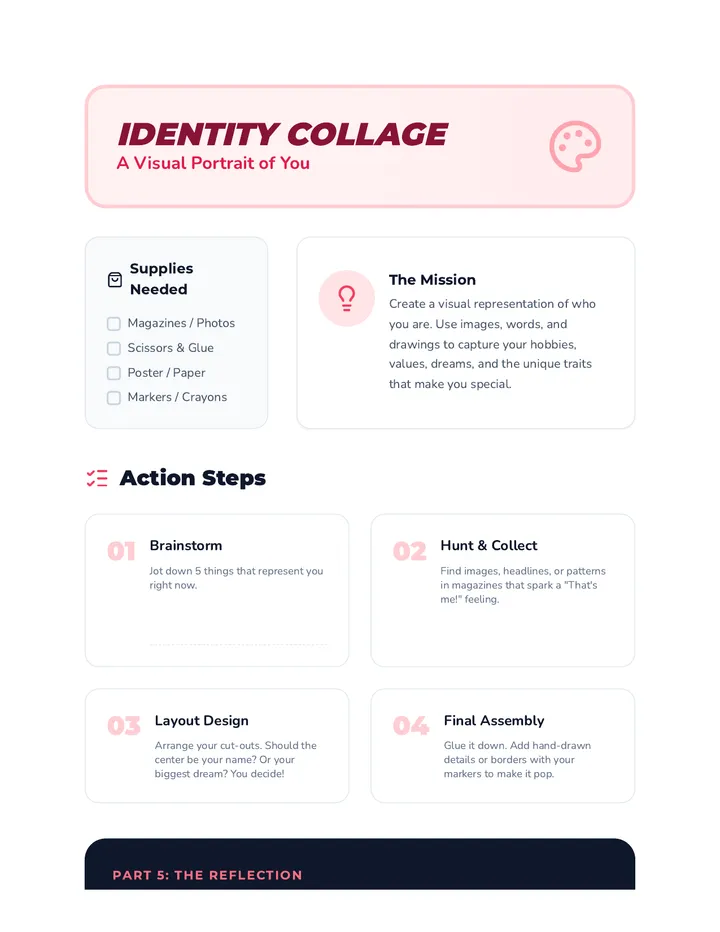
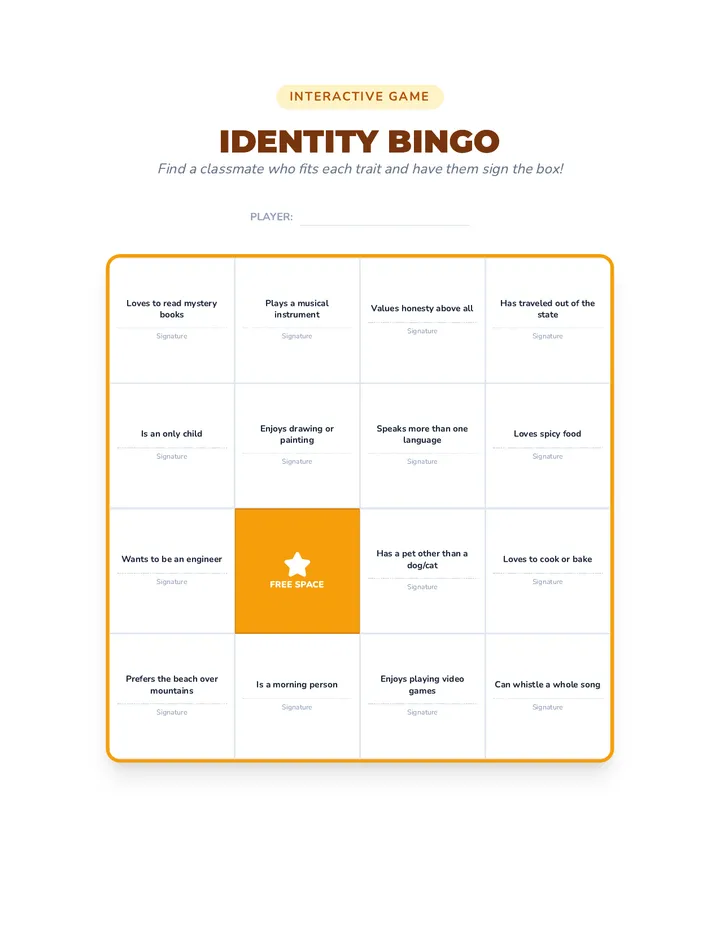
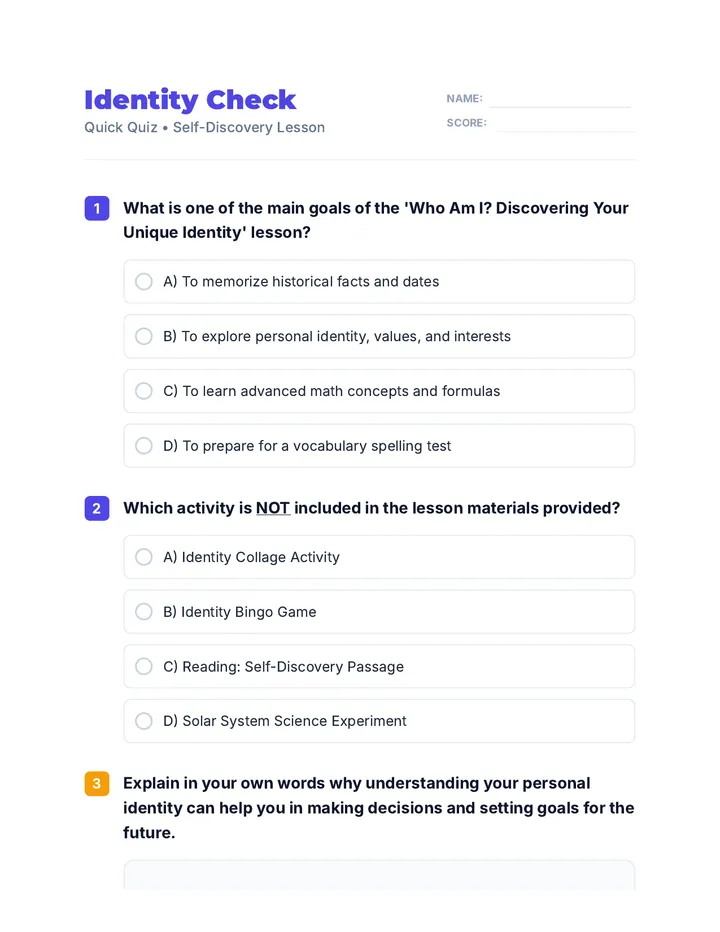
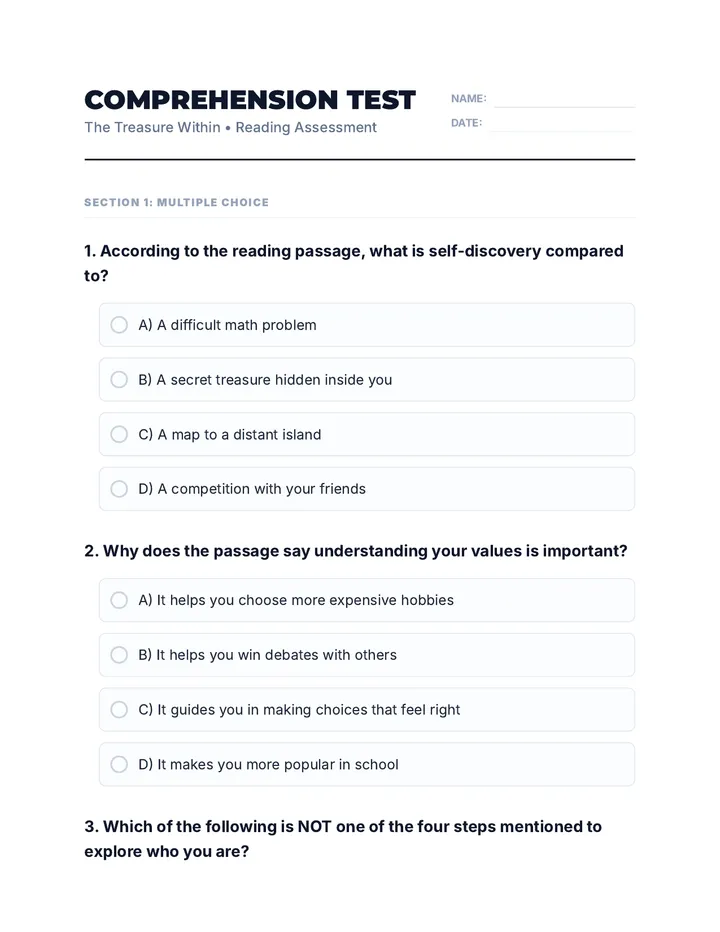
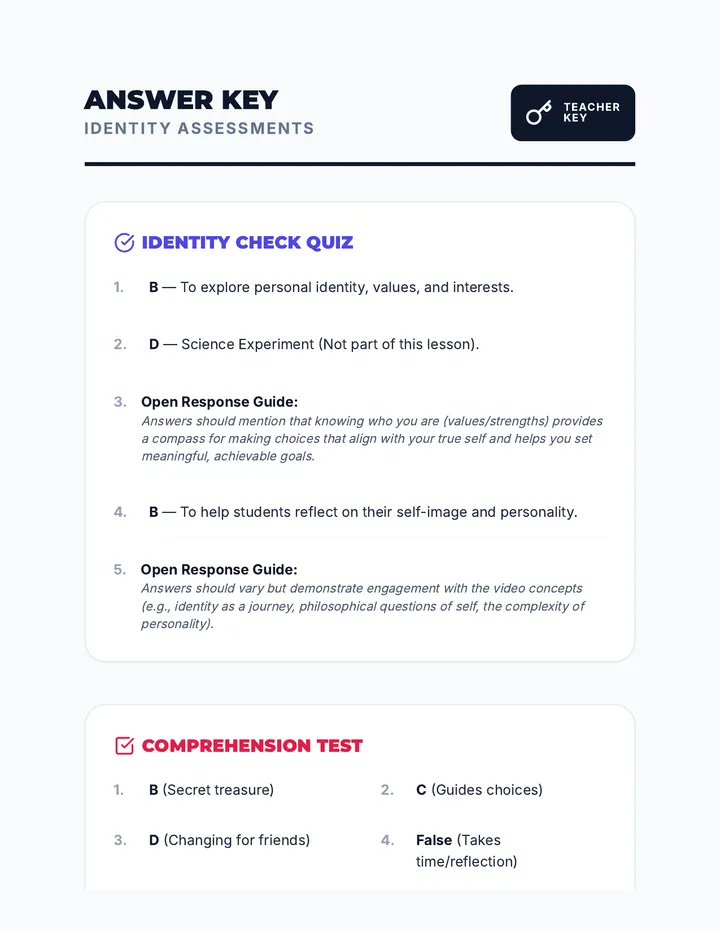
A middle school lesson designed to build self-awareness and confidence by exploring personal identity, values, and strengths through interactive activities and reflection.
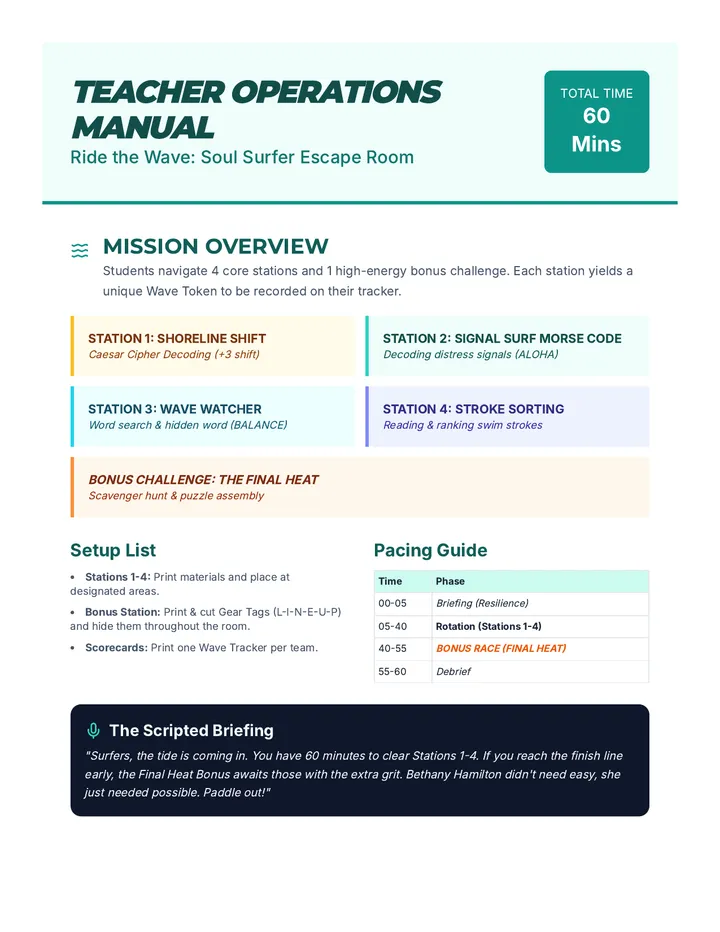
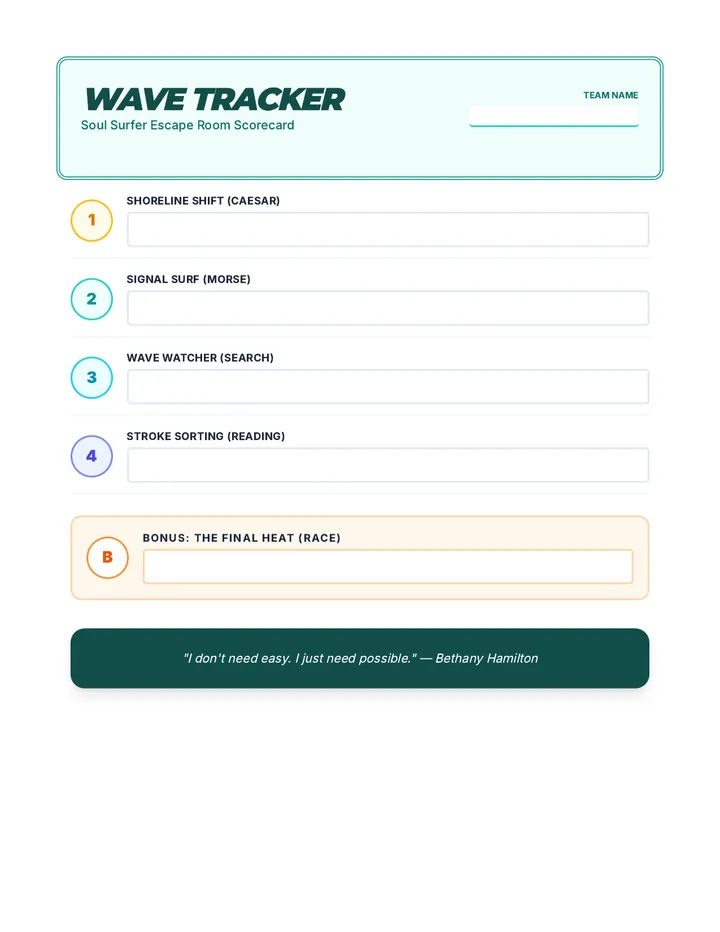
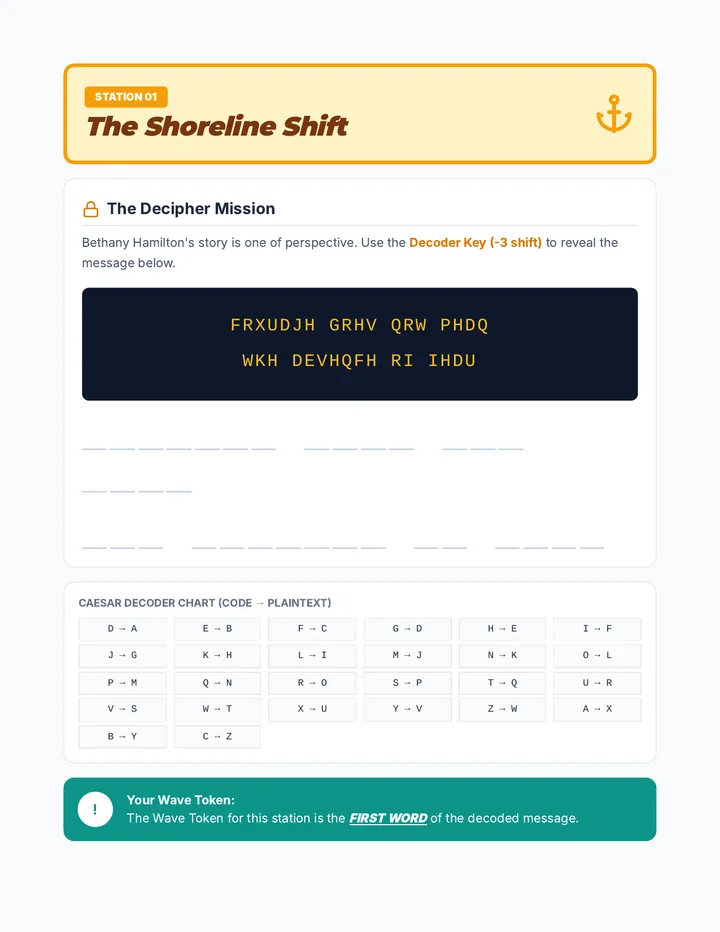
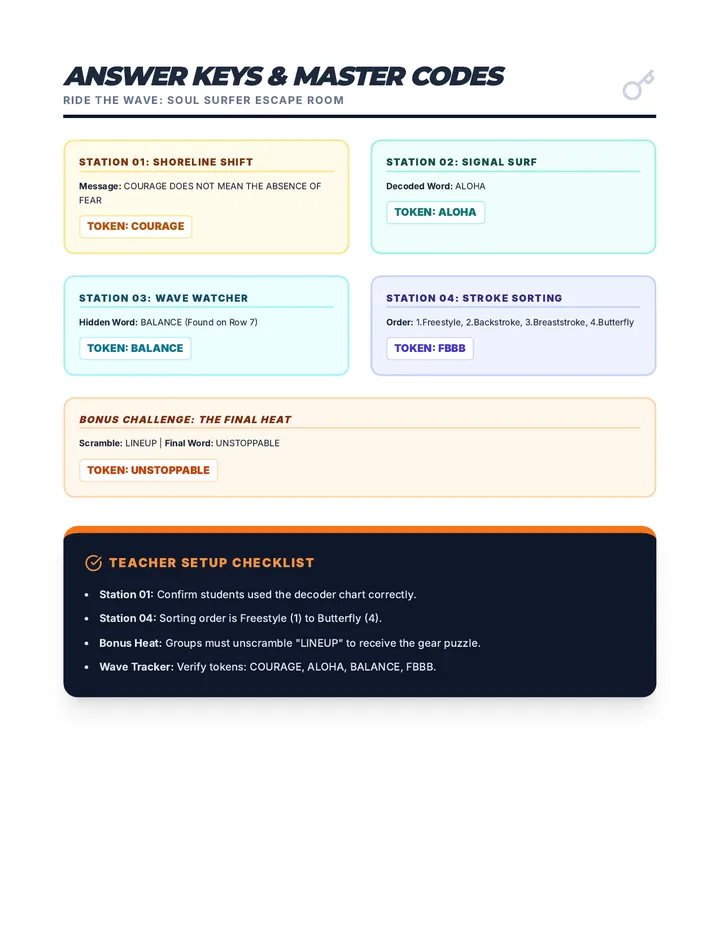
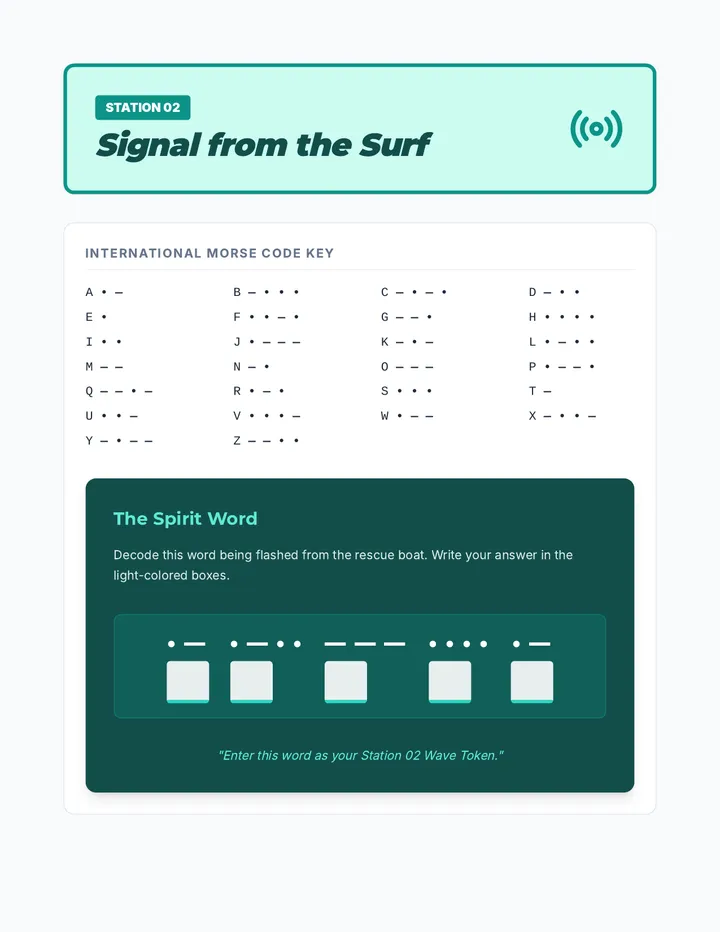
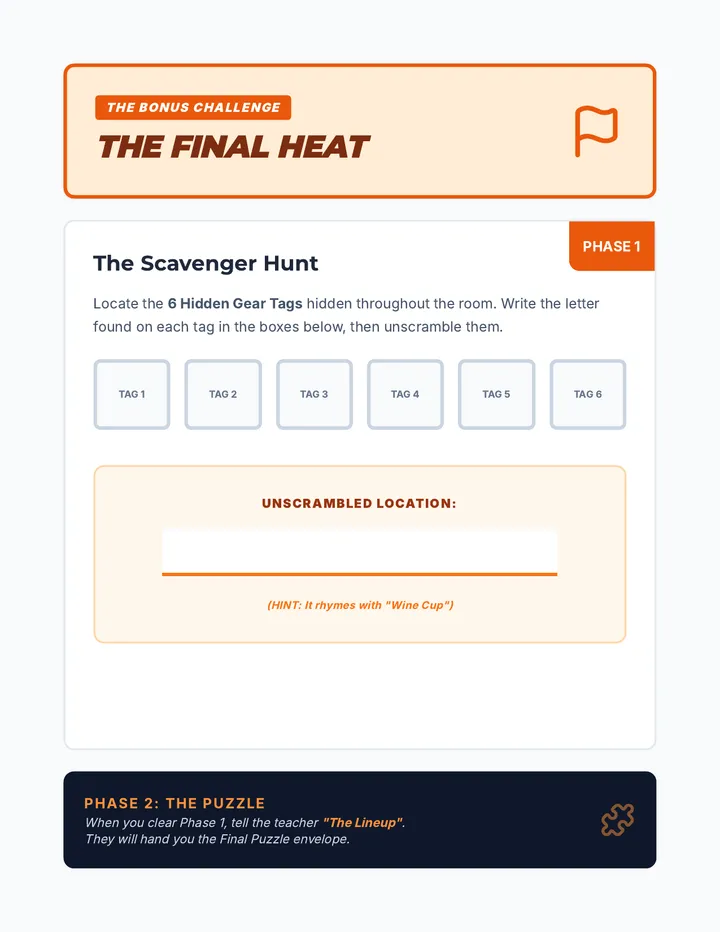
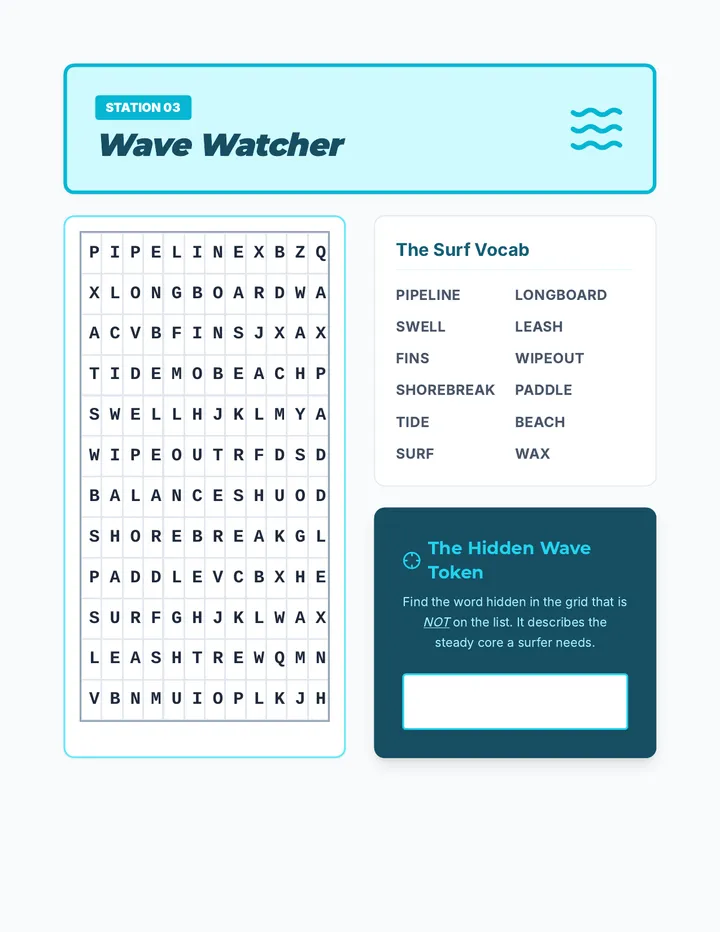
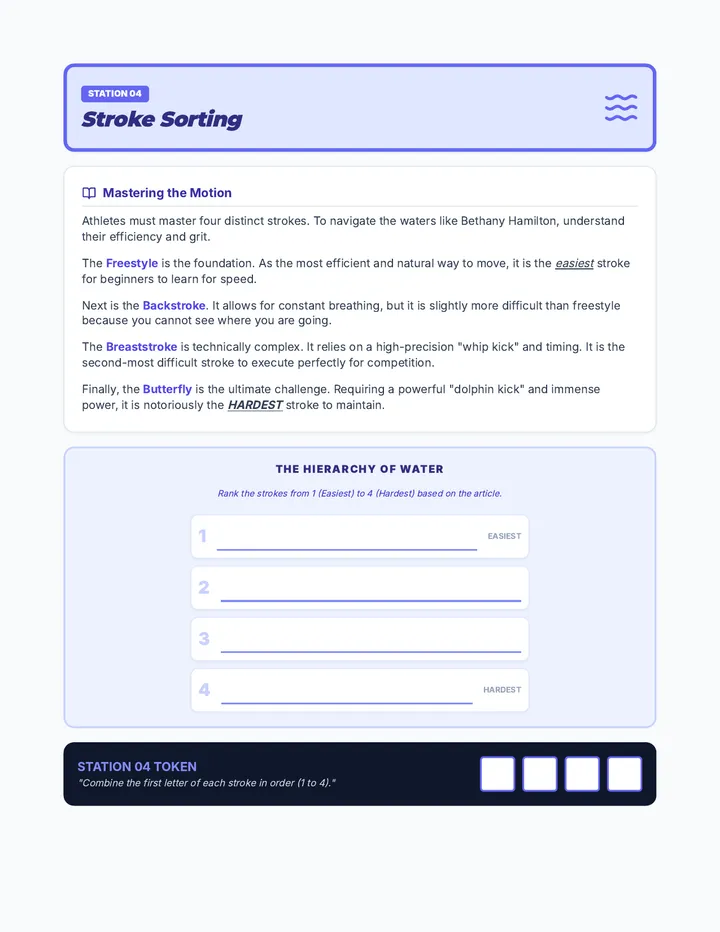
A 60-minute immersive escape room experience where students navigate five themed stations based on the movie Soul Surfer, exploring Bethany Hamilton's resilience and Hawaiian surfing history through ciphers, research, and a physical race.
A comprehensive self-advocacy curriculum designed for young adults to navigate school, home, community, and the workplace with confidence. Focuses on personal identity (pronouns), legal rights (ADA/IDEA), and practical communication strategies.
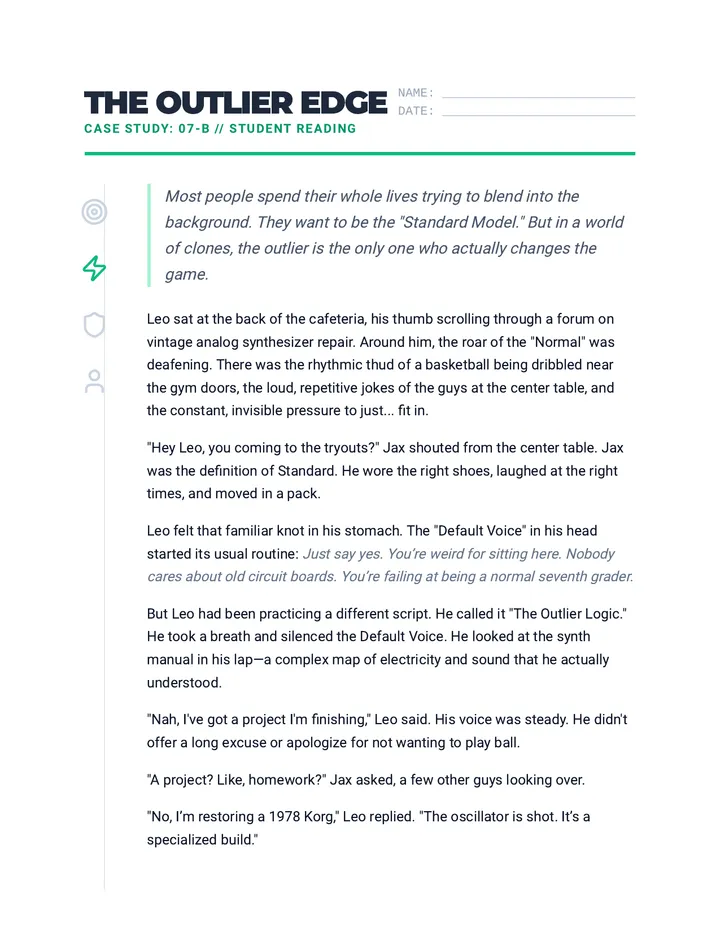
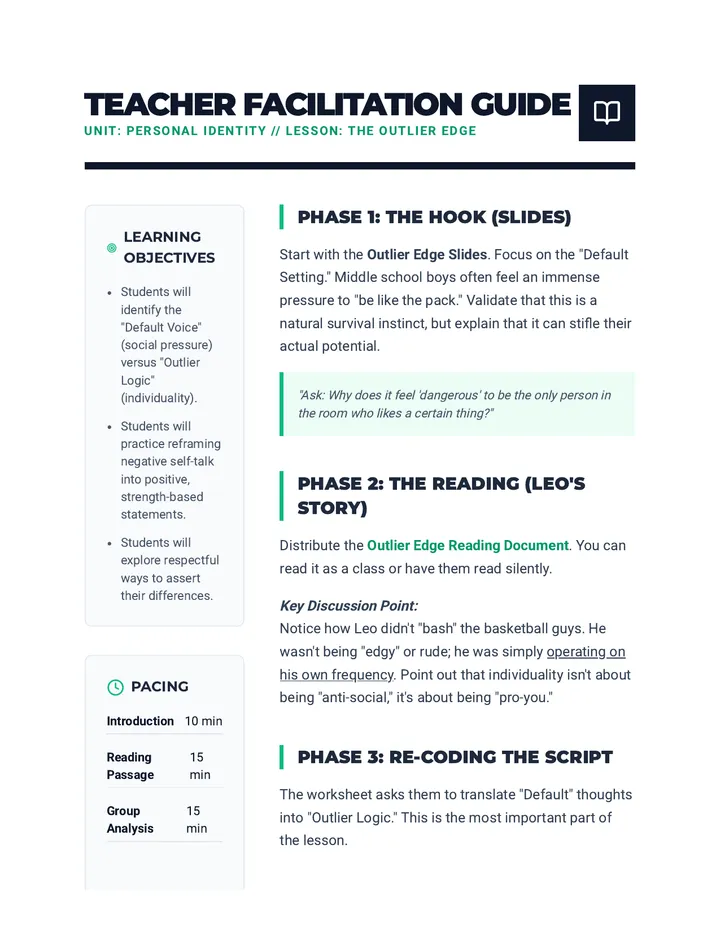
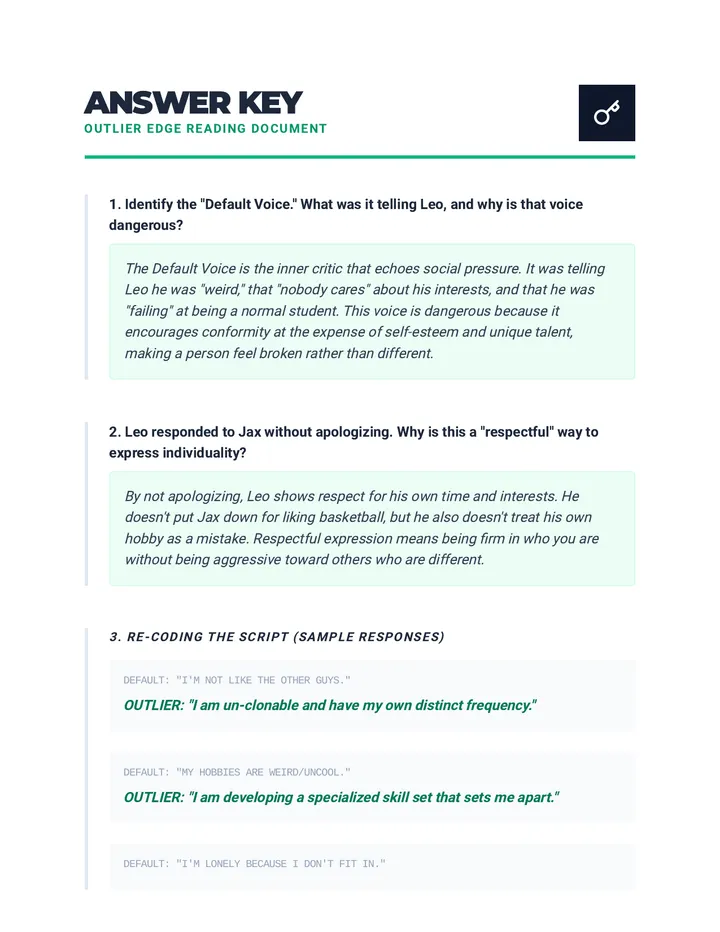
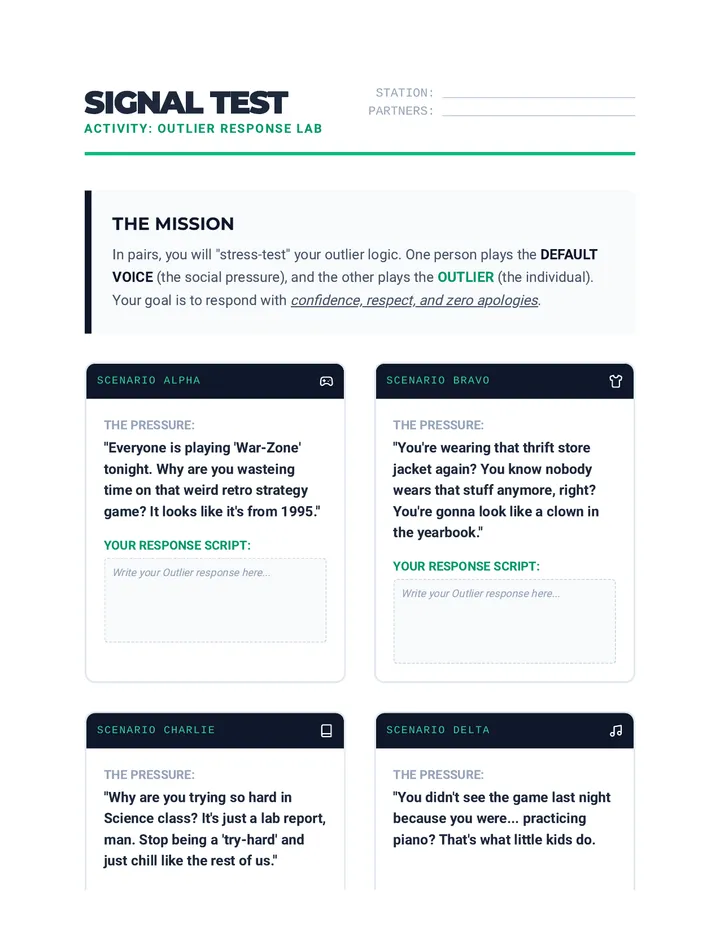
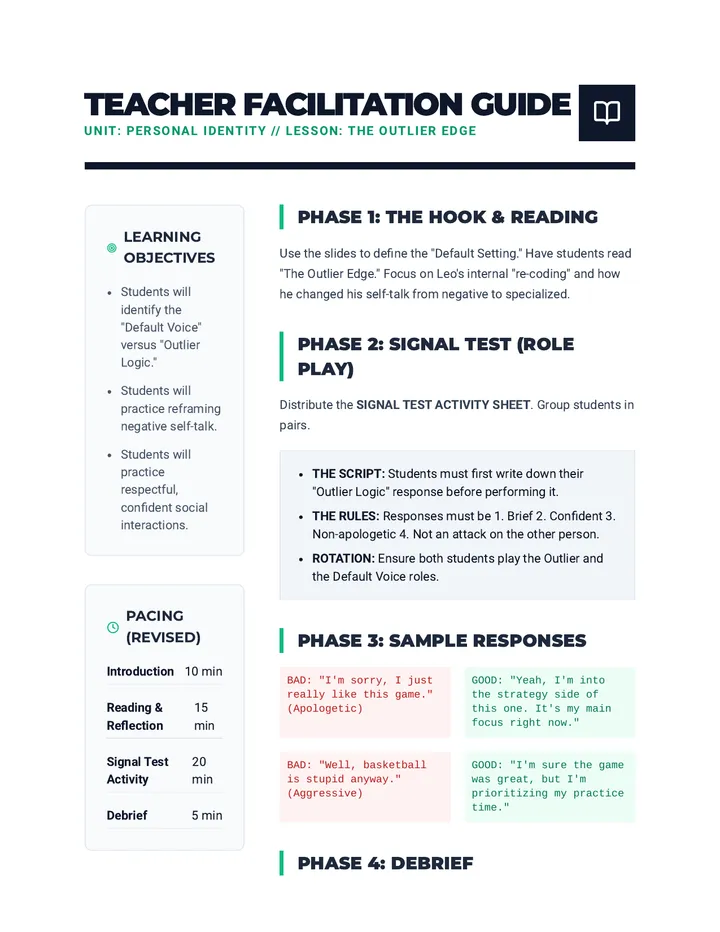
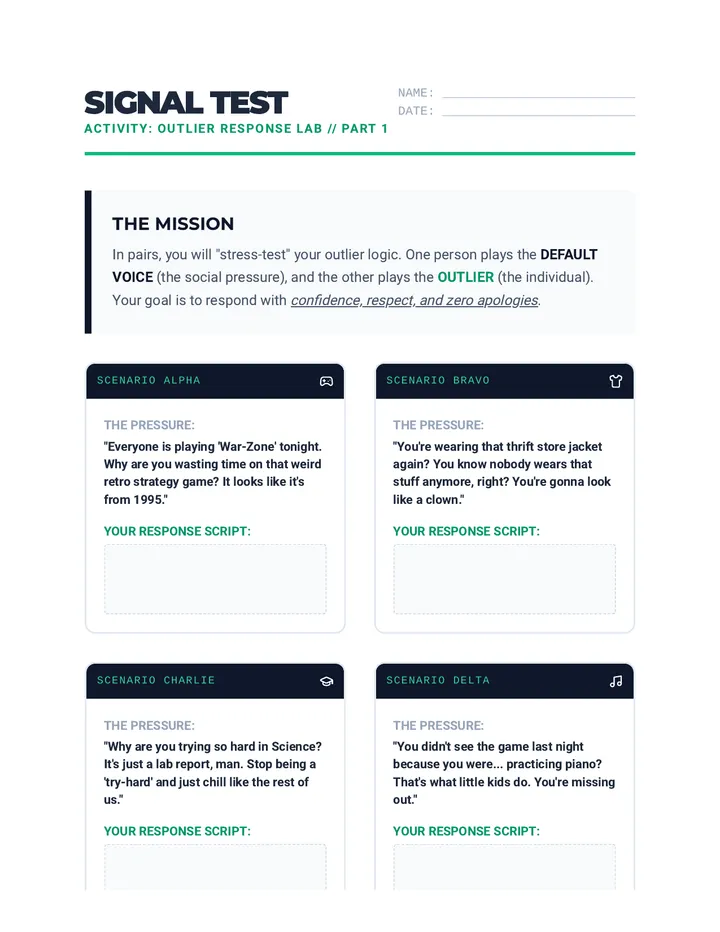
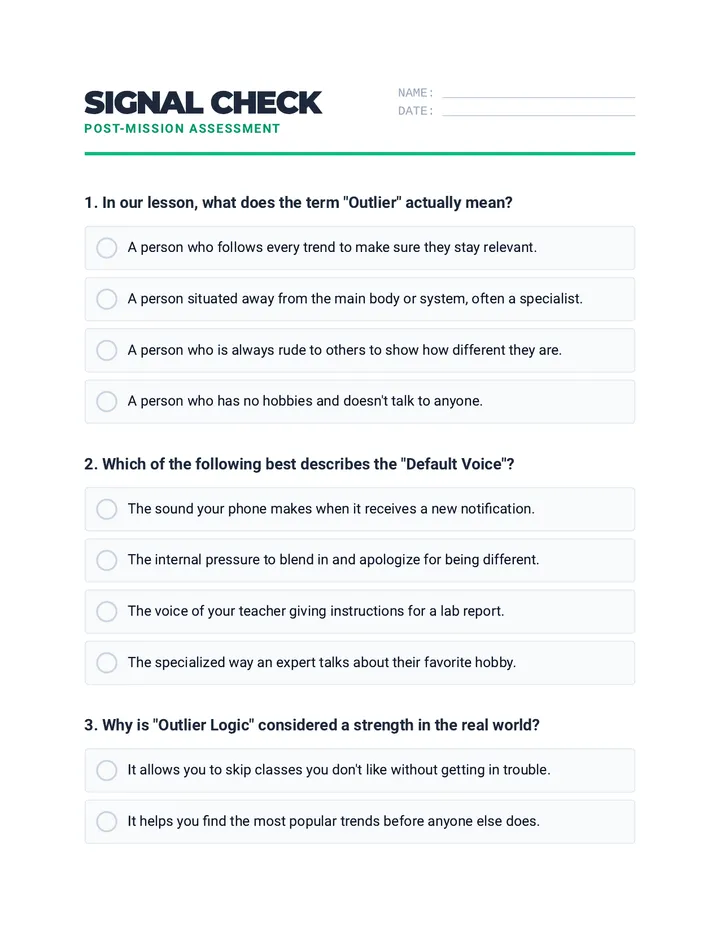
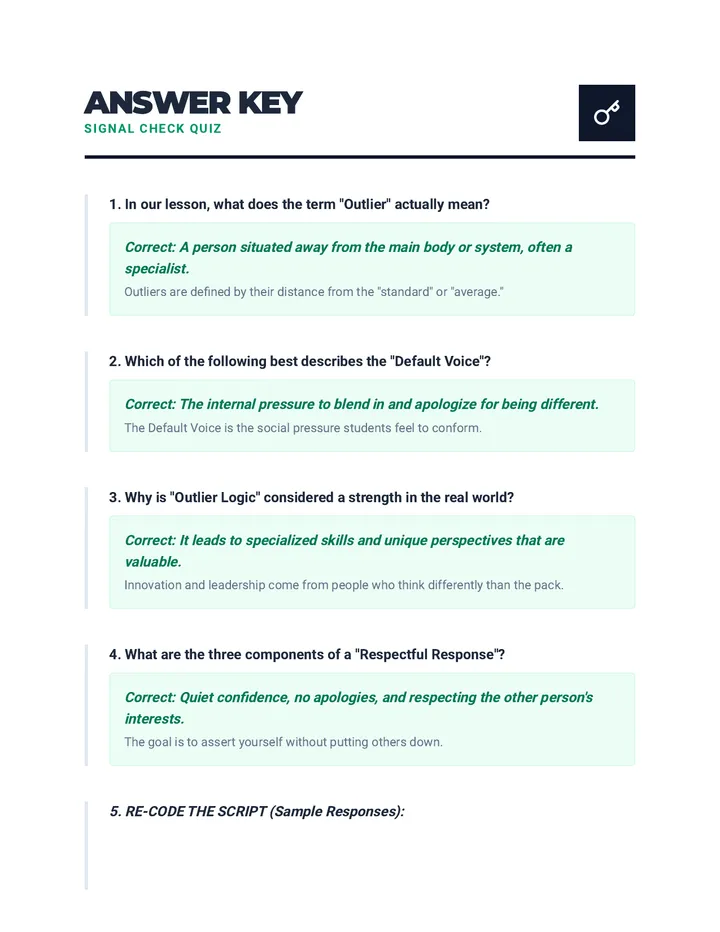
A lesson designed for middle school boys to explore the value of individuality, the power of positive self-talk, and how to embrace being an 'outlier' as a personal strength.
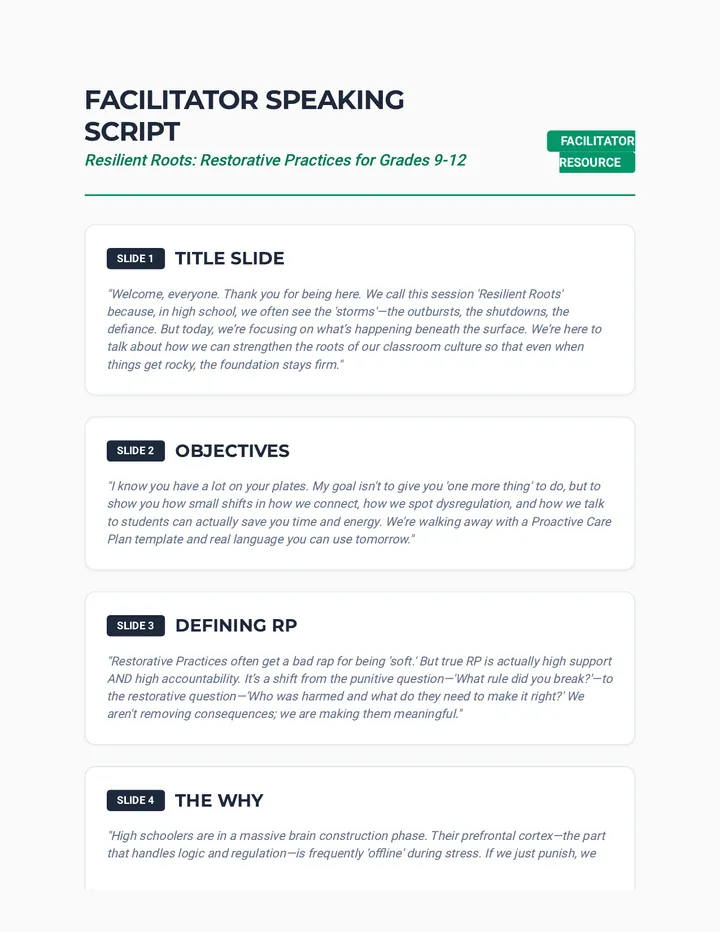
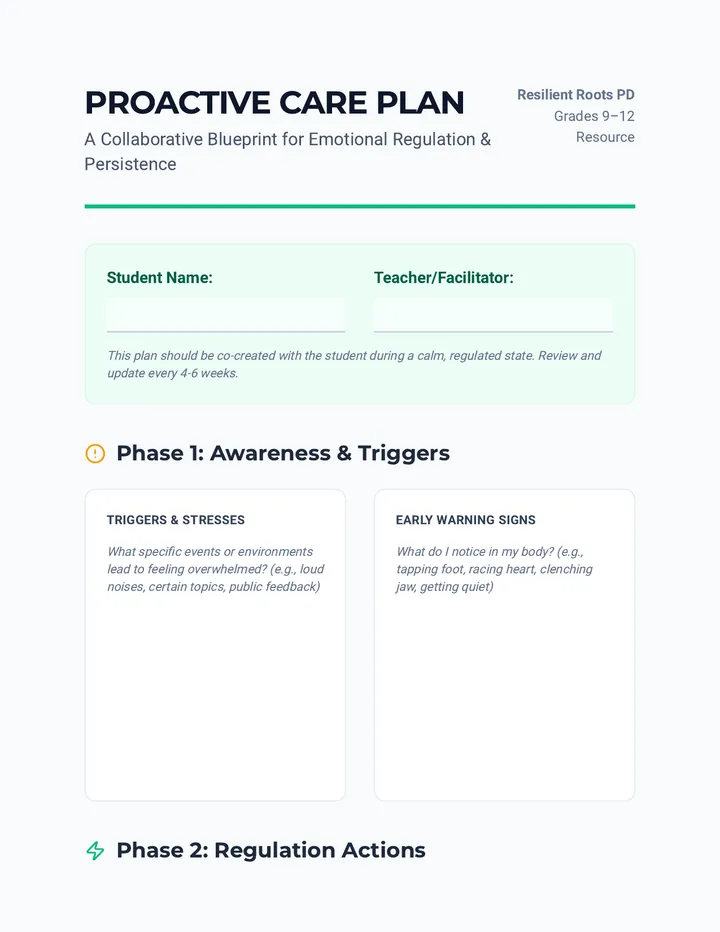
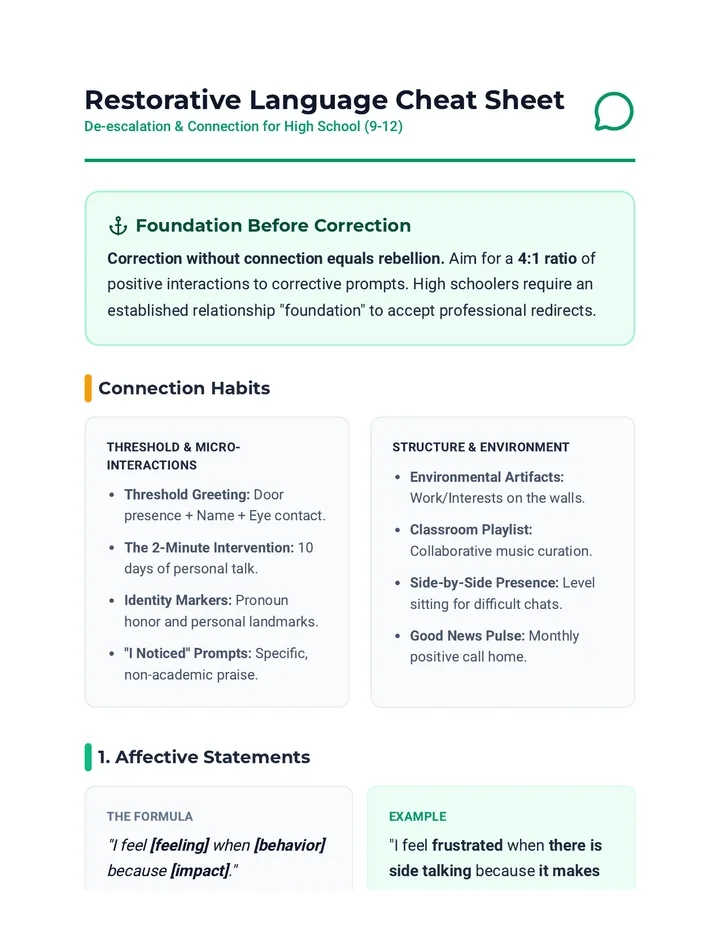
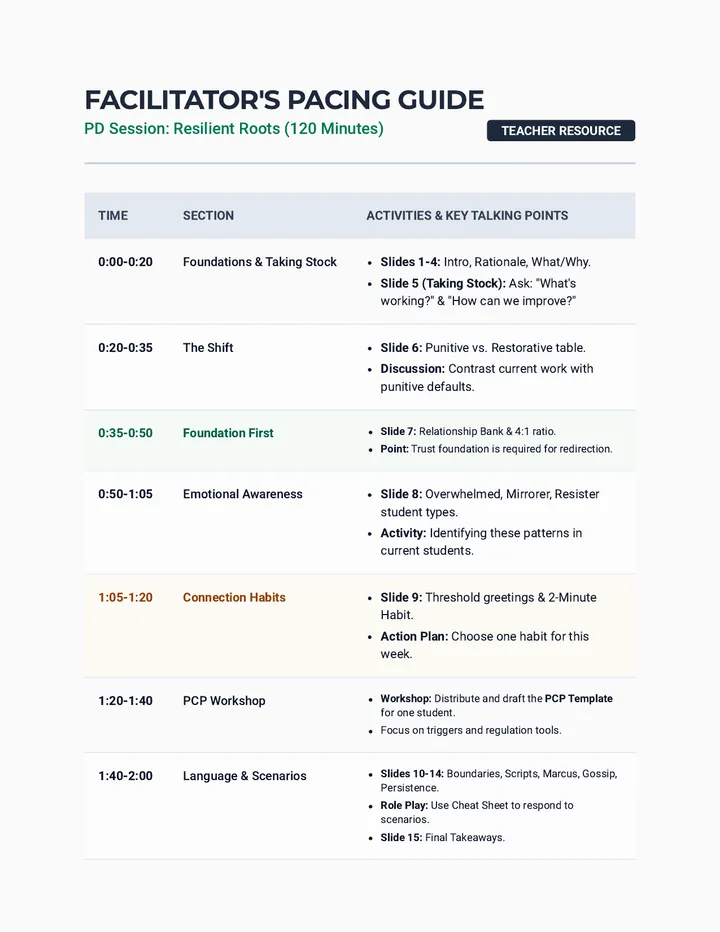
A professional development session for high school teachers focusing on restorative practices, emotional regulation, and the implementation of proactive care plans. This lesson equips educators with the tools to handle chronic emotional challenges and foster deep connection with students in grades 9-12.
This lesson helps students understand and appreciate the diverse backgrounds, cultures, and perspectives within their classroom and the wider world. By exploring various aspects of diversity, students will learn the importance of respect, empathy, and inclusion.
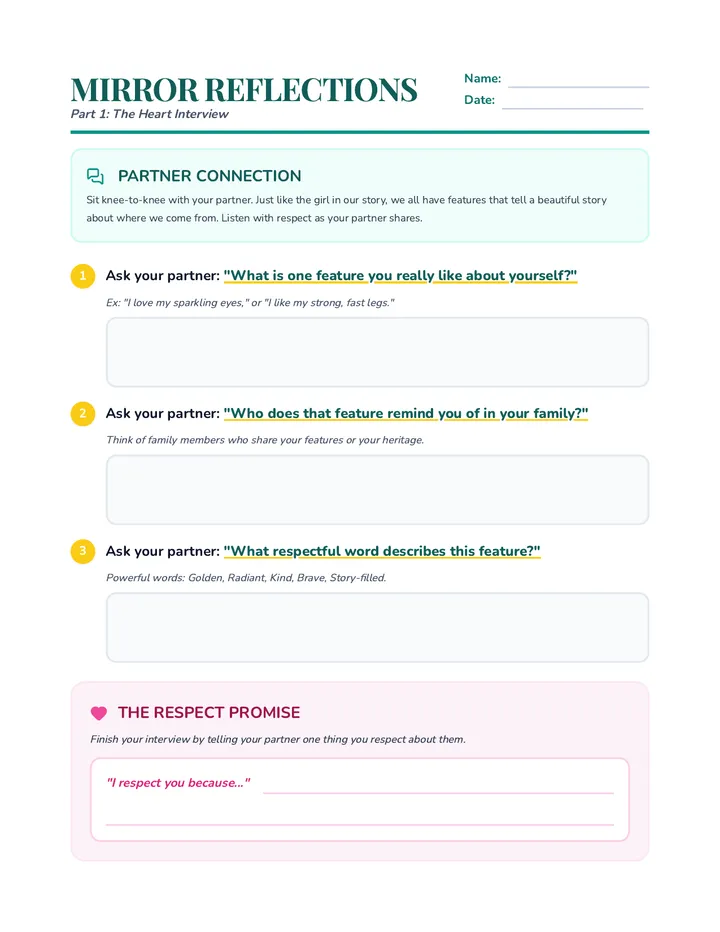
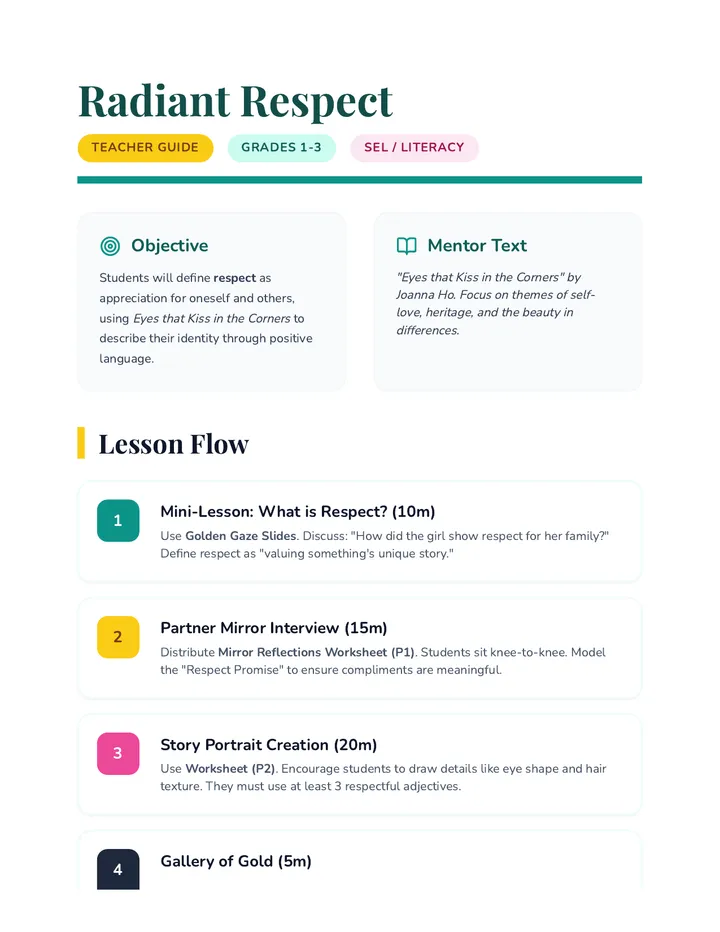
A mini-lesson exploring self-respect and heritage inspired by the book 'Eyes that Kiss in the Corners'. Students engage in partner interviews and create self-portraits that celebrate their unique features.
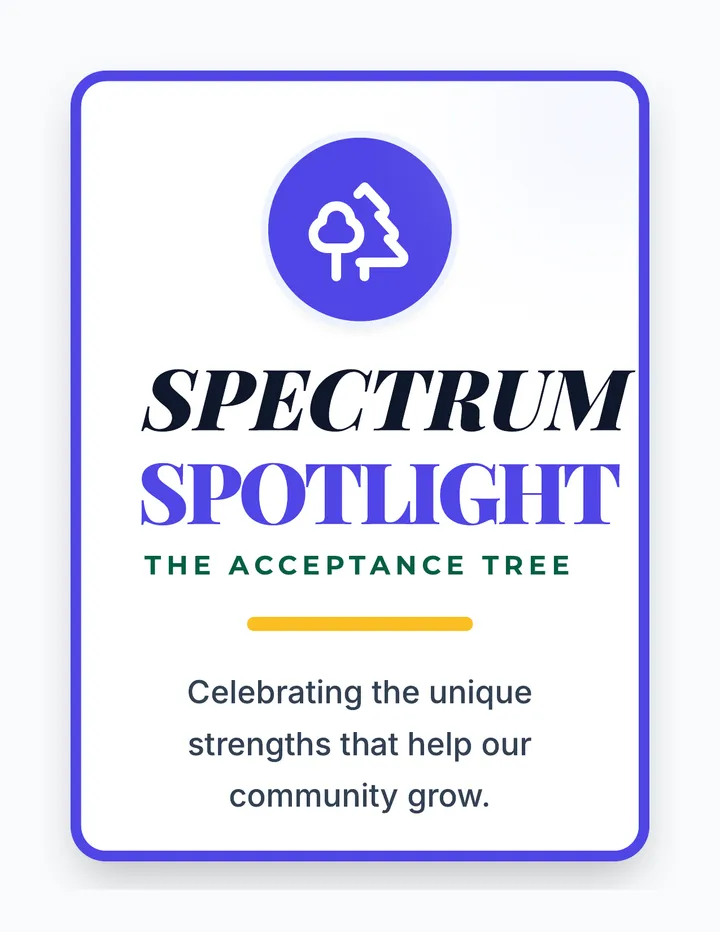
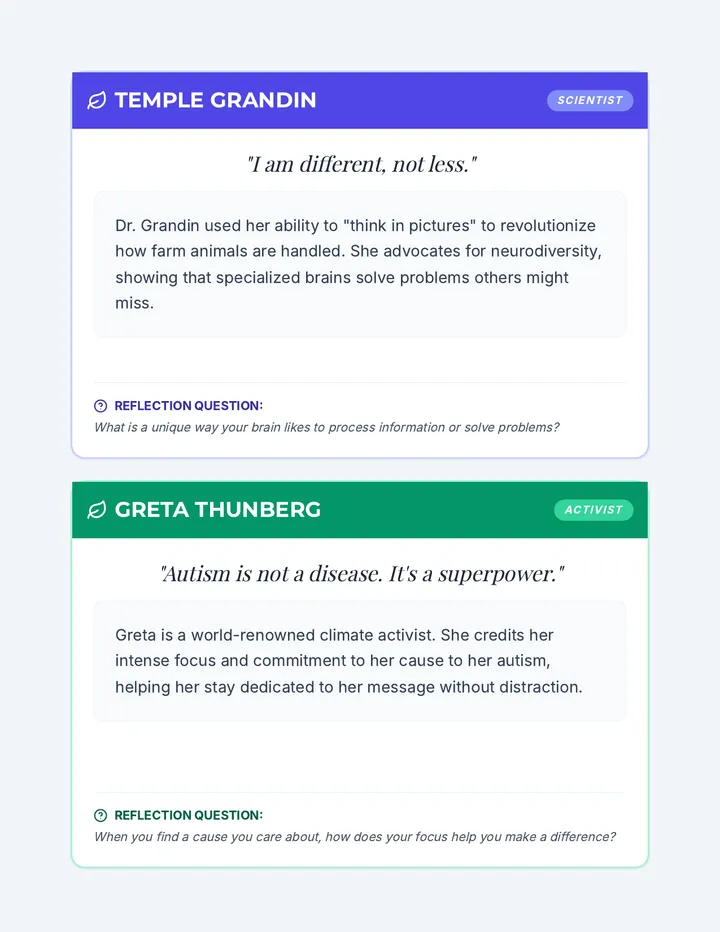
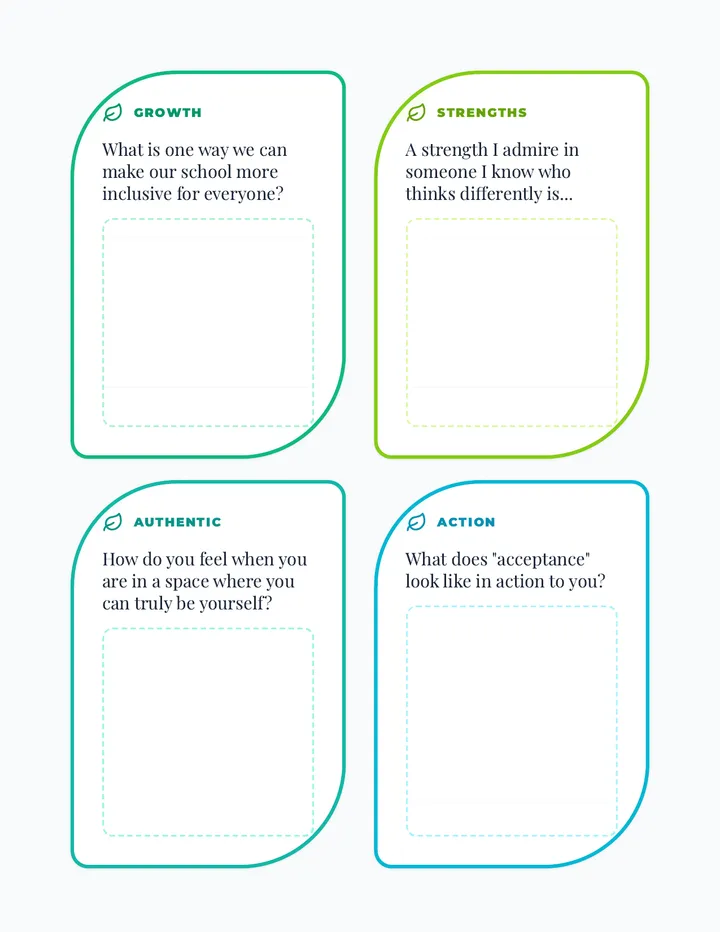
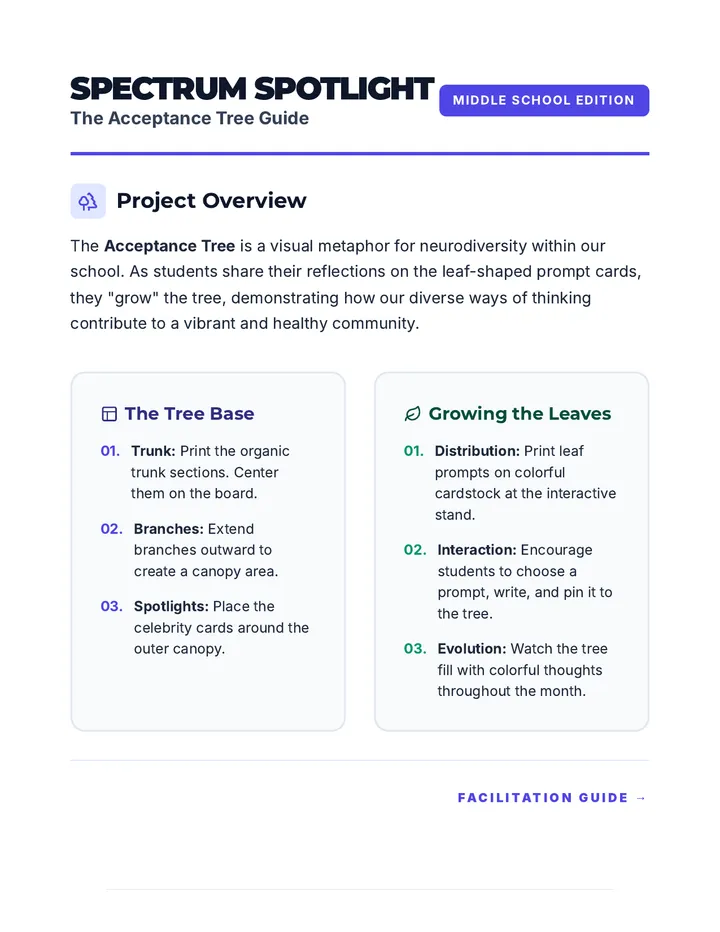
A comprehensive set of materials for a middle school bulletin board and interactive stand focused on autism acceptance, featuring celebrity profiles and student reflection prompts.
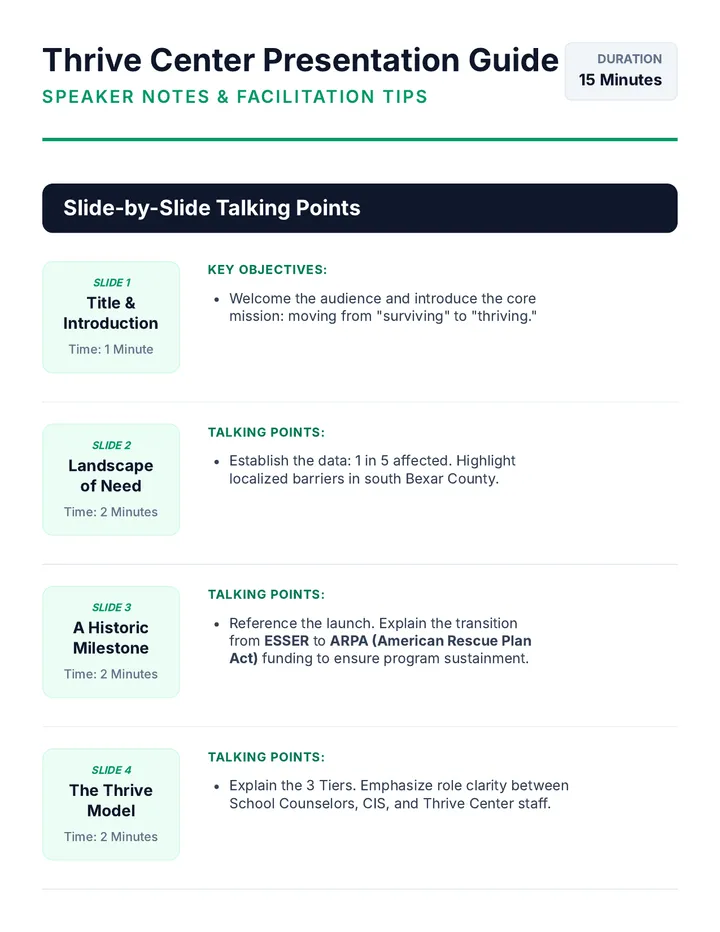
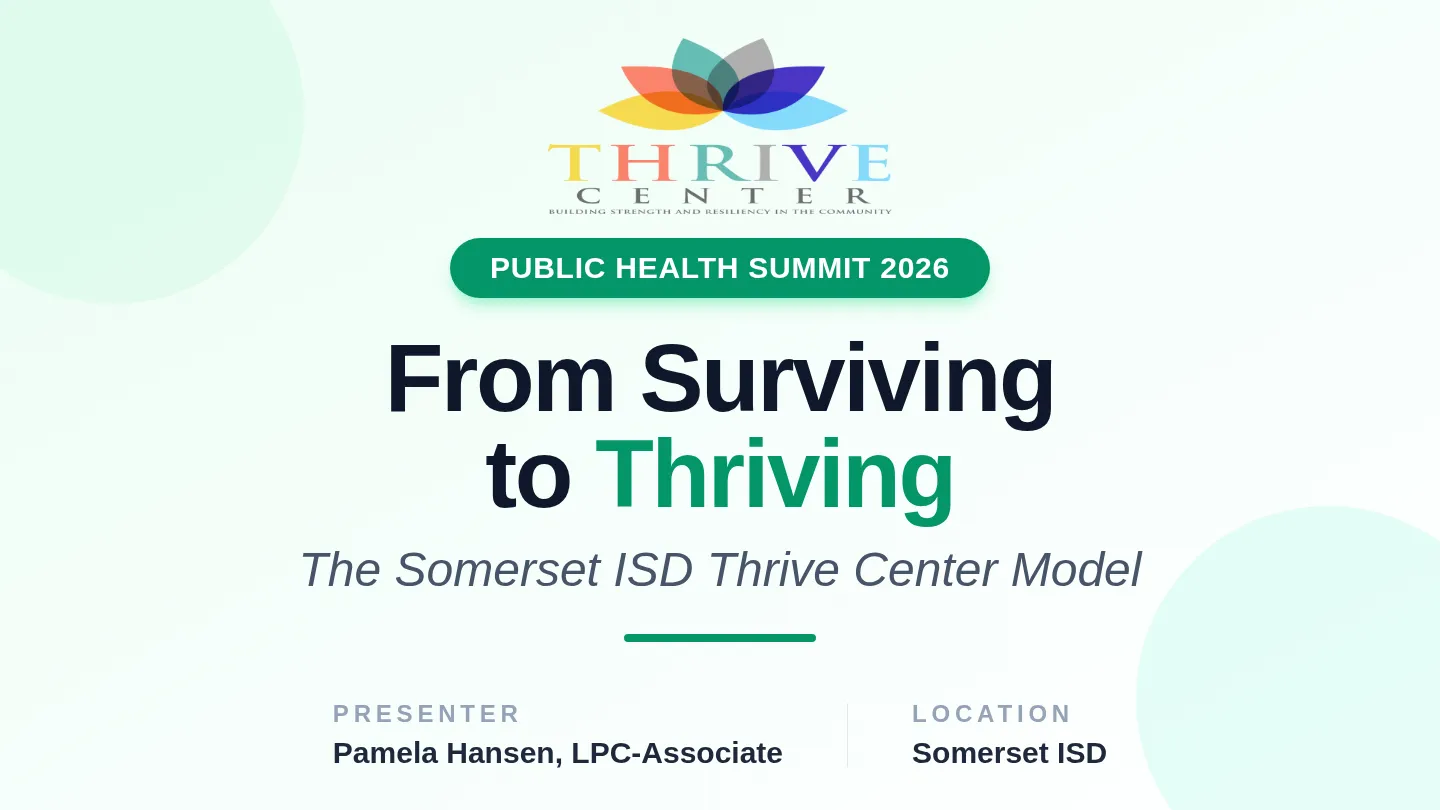
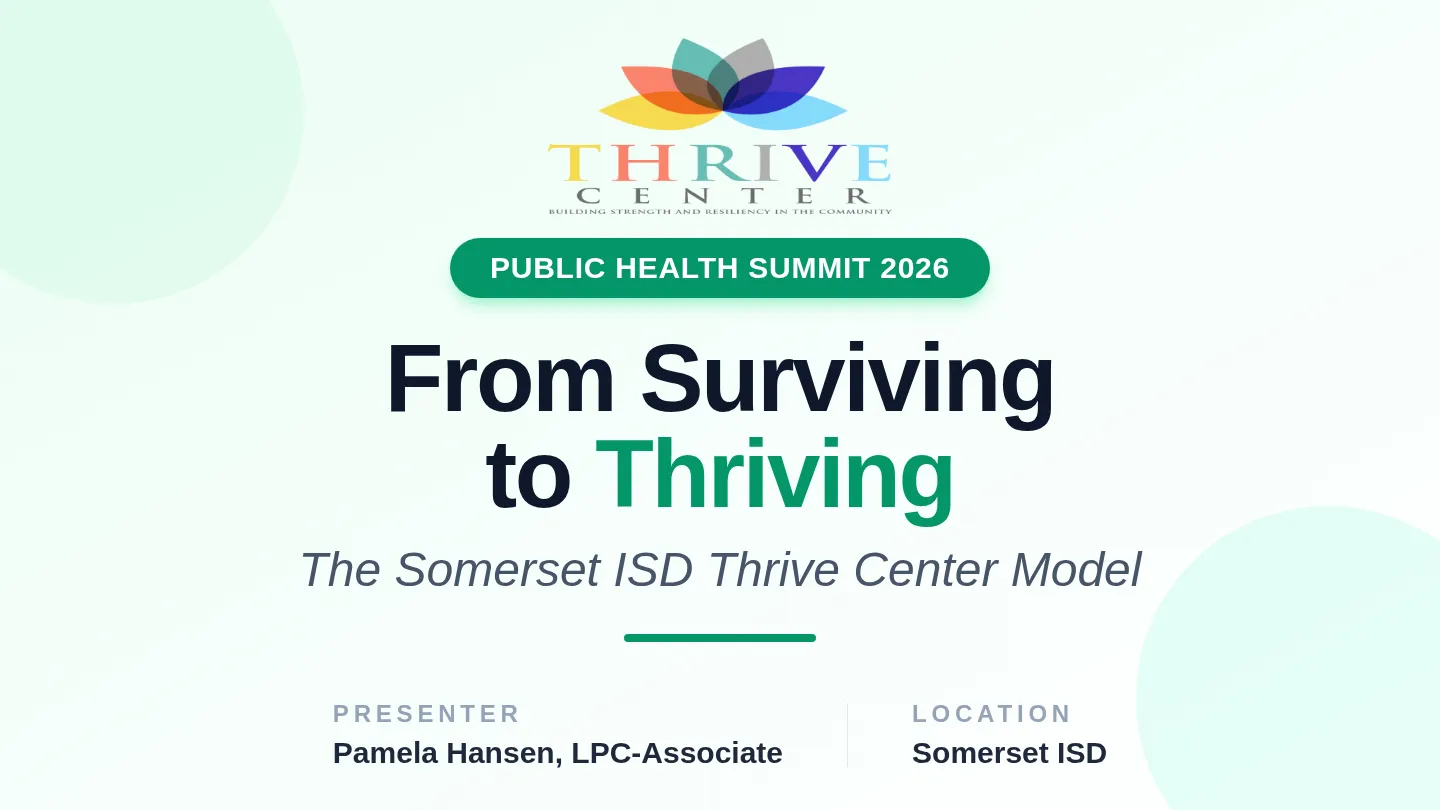
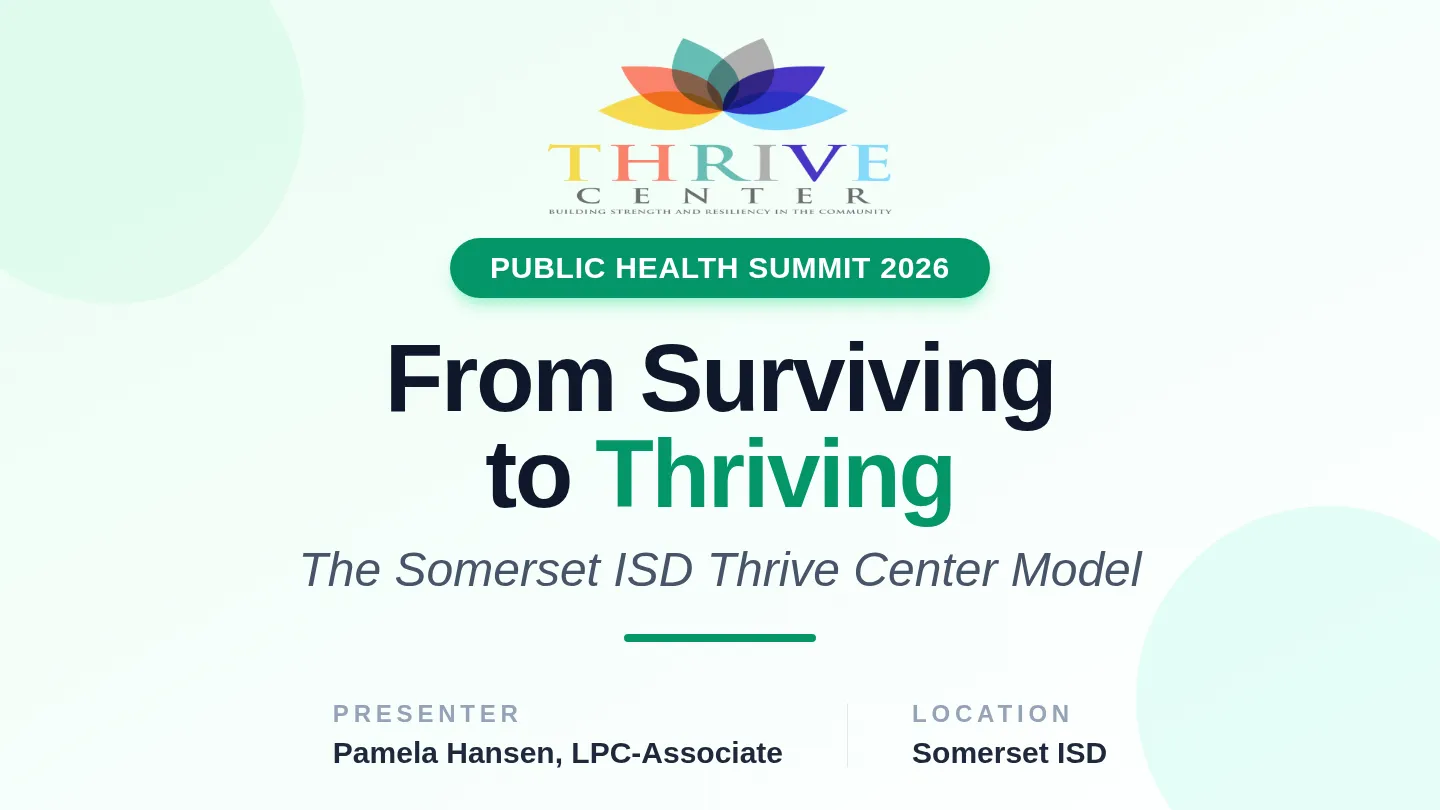
A comprehensive overview of Somerset ISD's Thrive Center model, transitioning from traditional barriers to a school-embedded mental health support system.
Students explore the intensity of their emotions using visual scales and "Feel-o-Meters." This lesson helps students move beyond simple labels to understand that emotions come in different sizes and intensities.
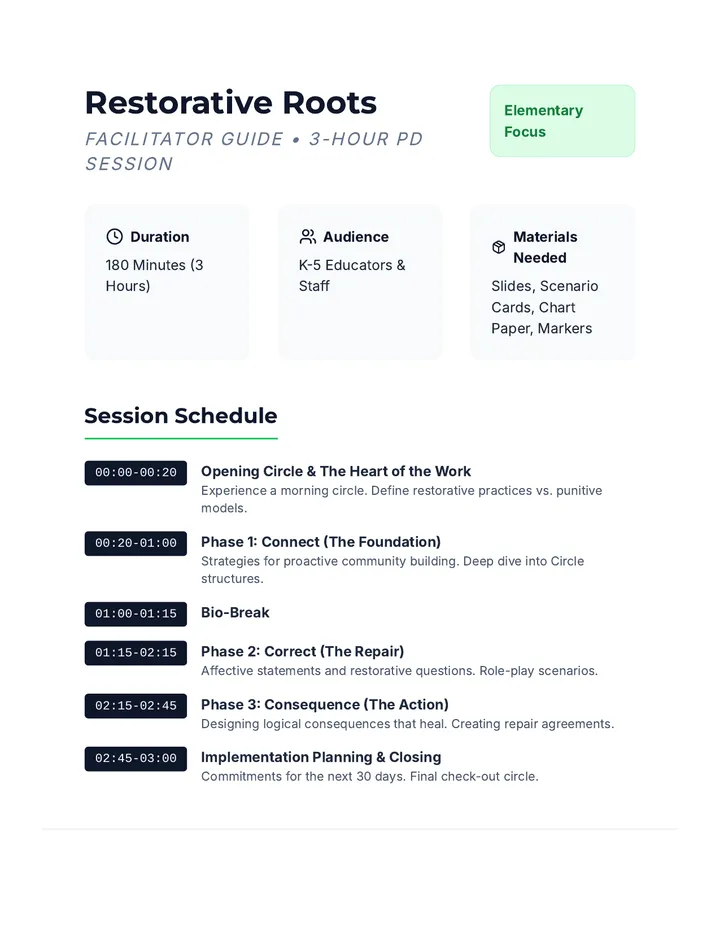
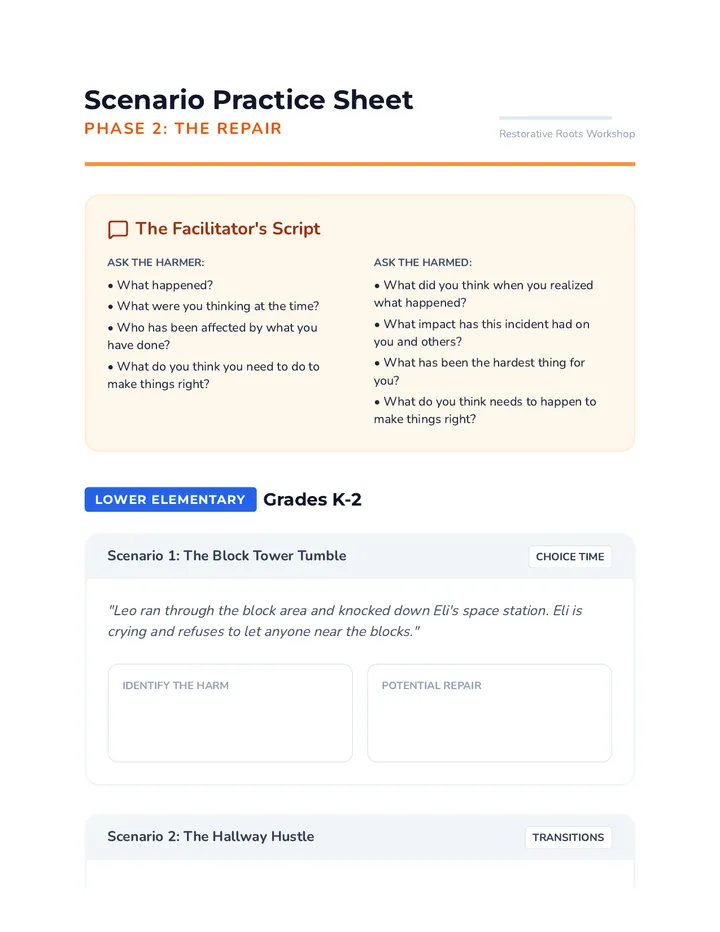
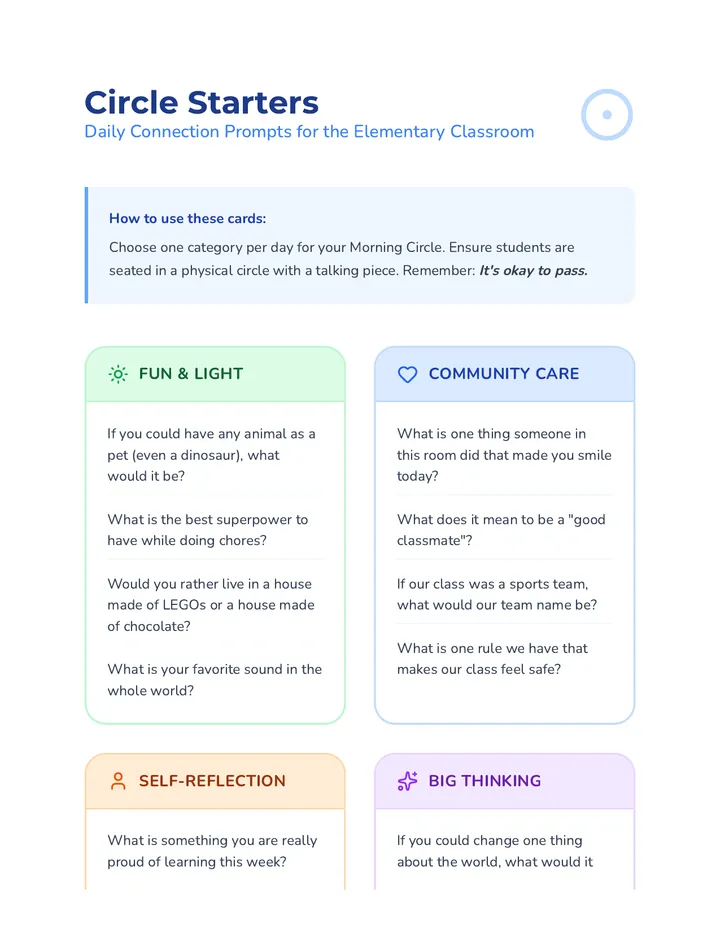
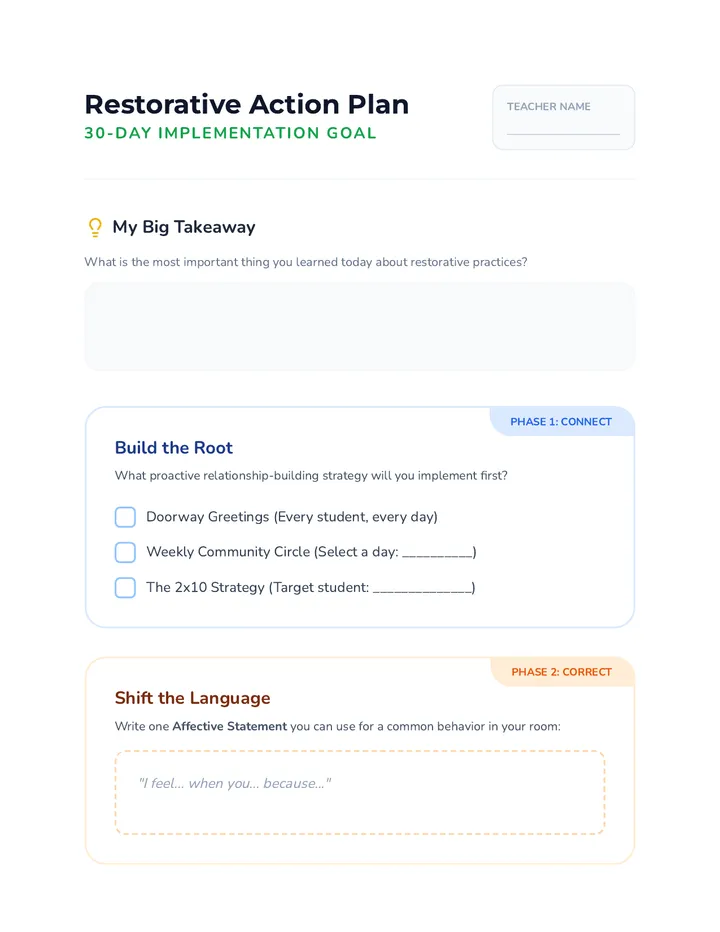
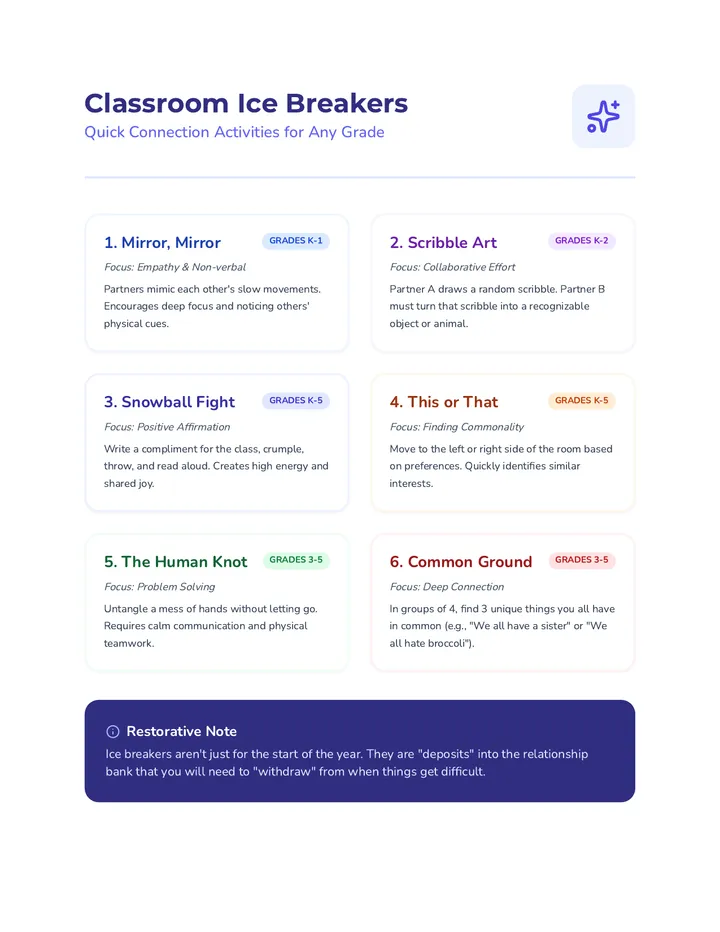
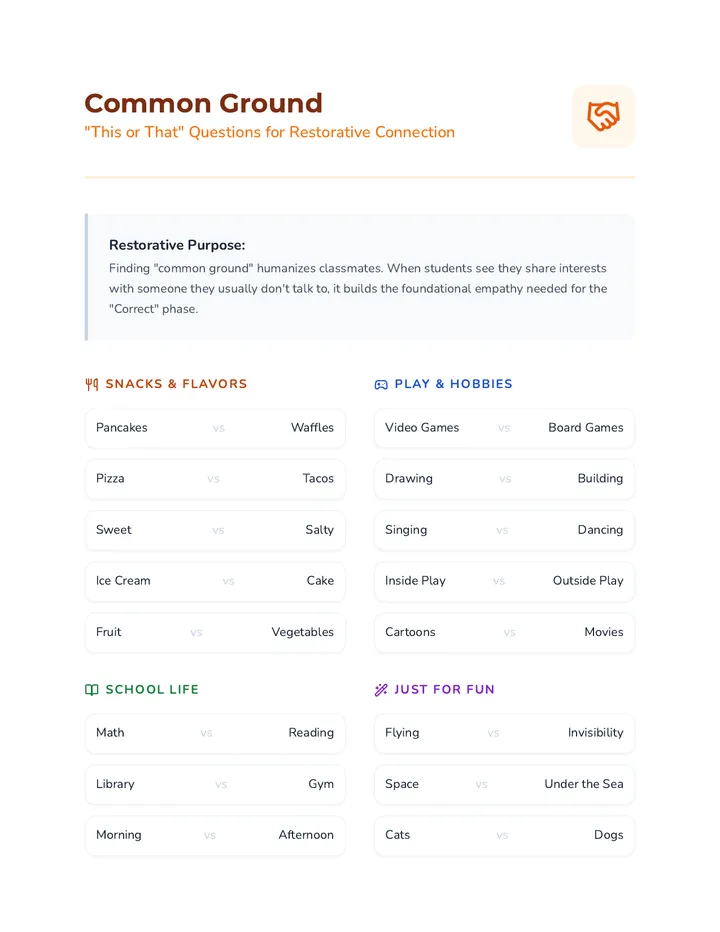
A comprehensive professional development session for elementary teachers on implementing restorative practices, focusing on building community through the Connect, Correct, and Consequence phases.
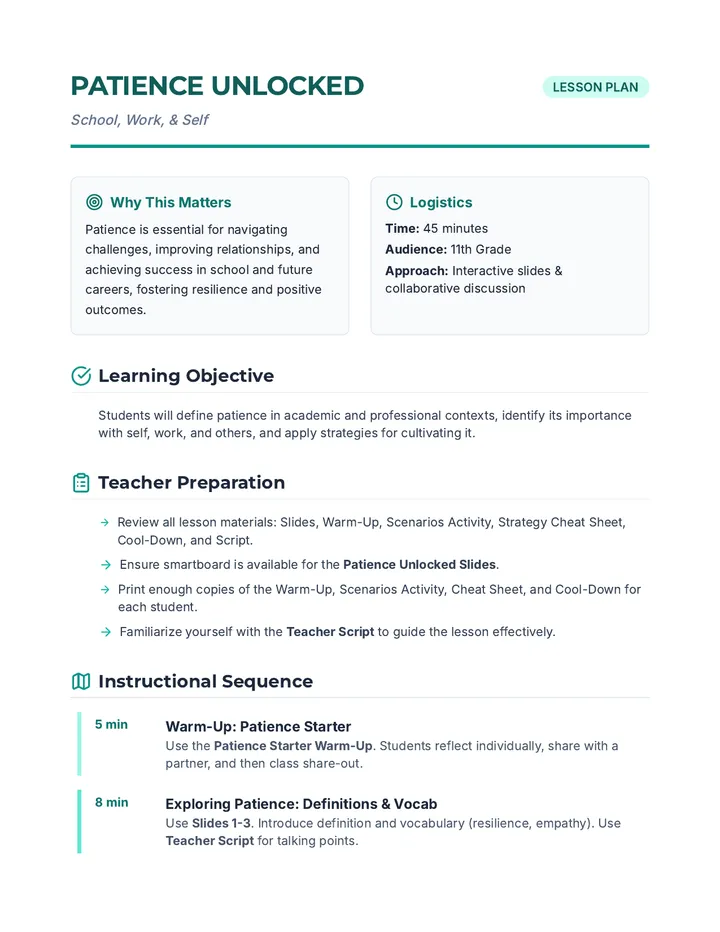
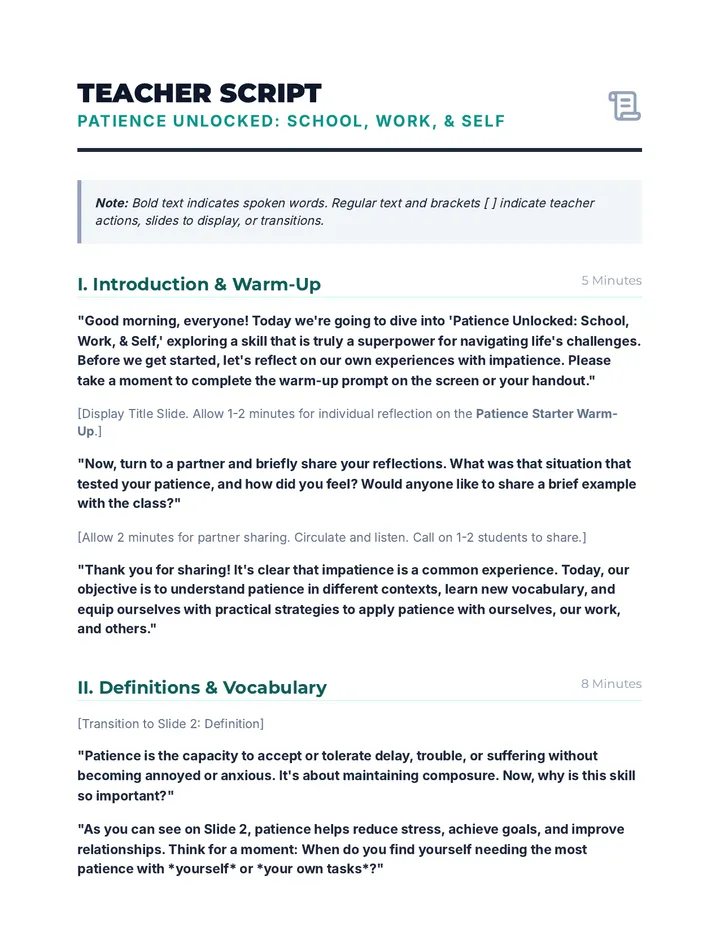
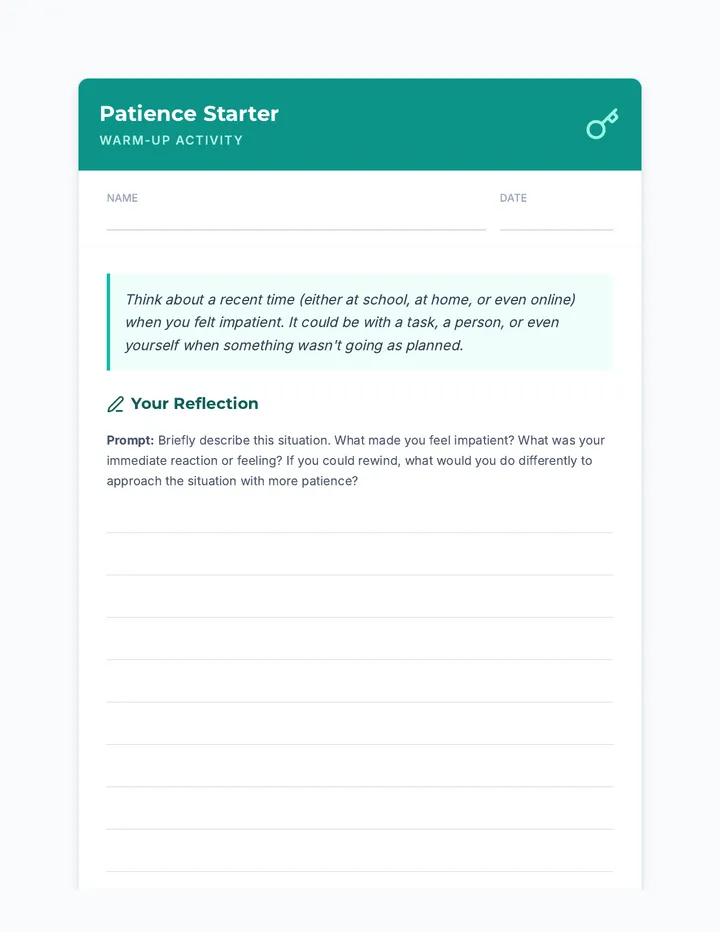
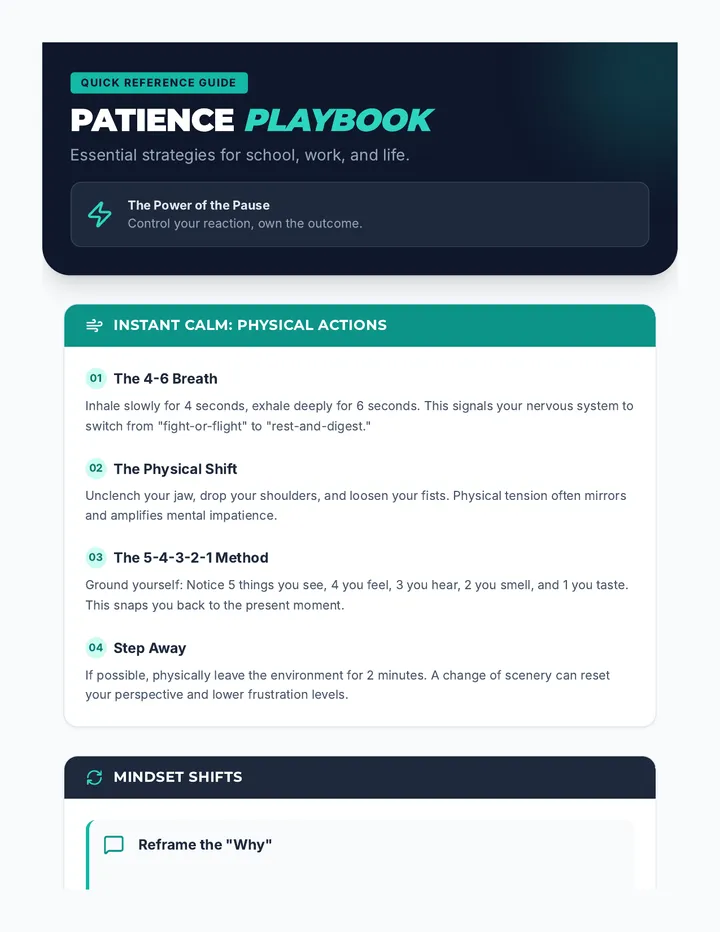
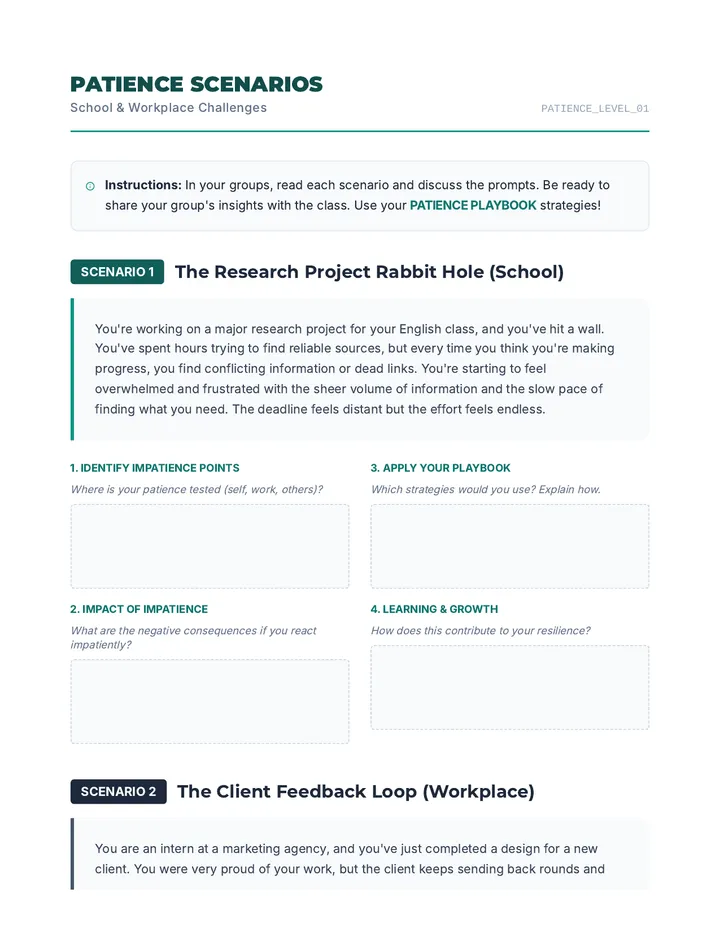
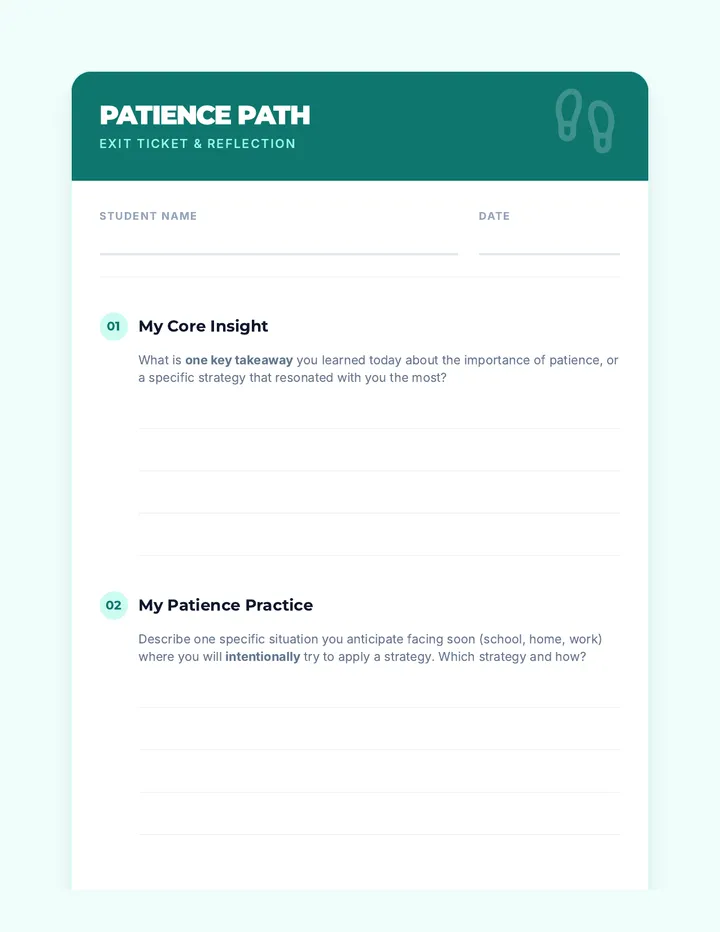
This lesson empowers 11th-grade students to cultivate patience as a critical skill in academic and professional settings. Students will explore strategies for managing impatience with themselves, their work, and others, fostering resilience and positive relationships.
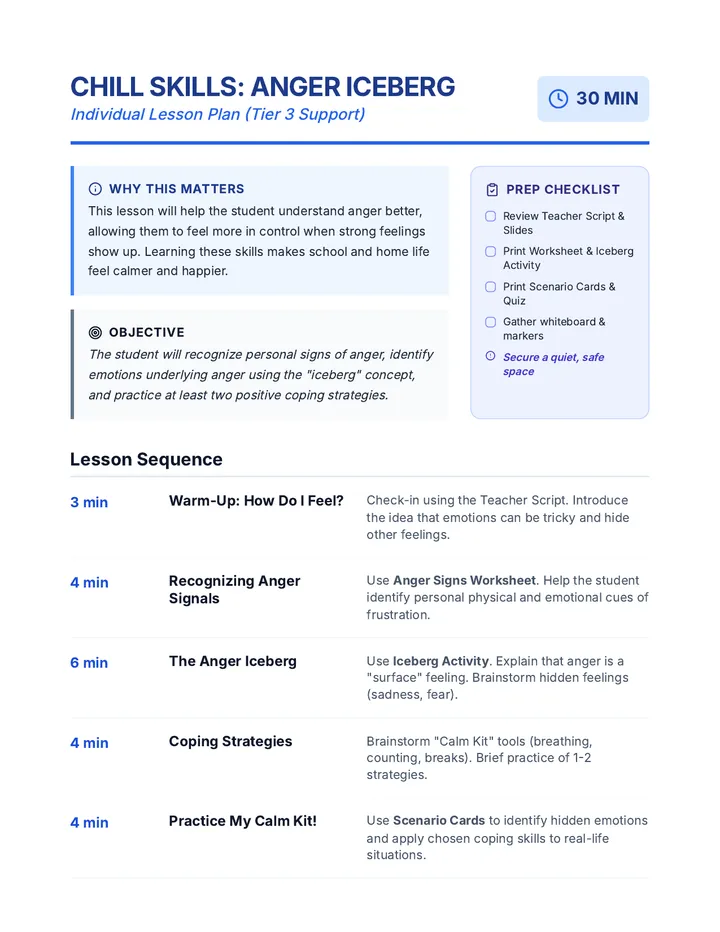
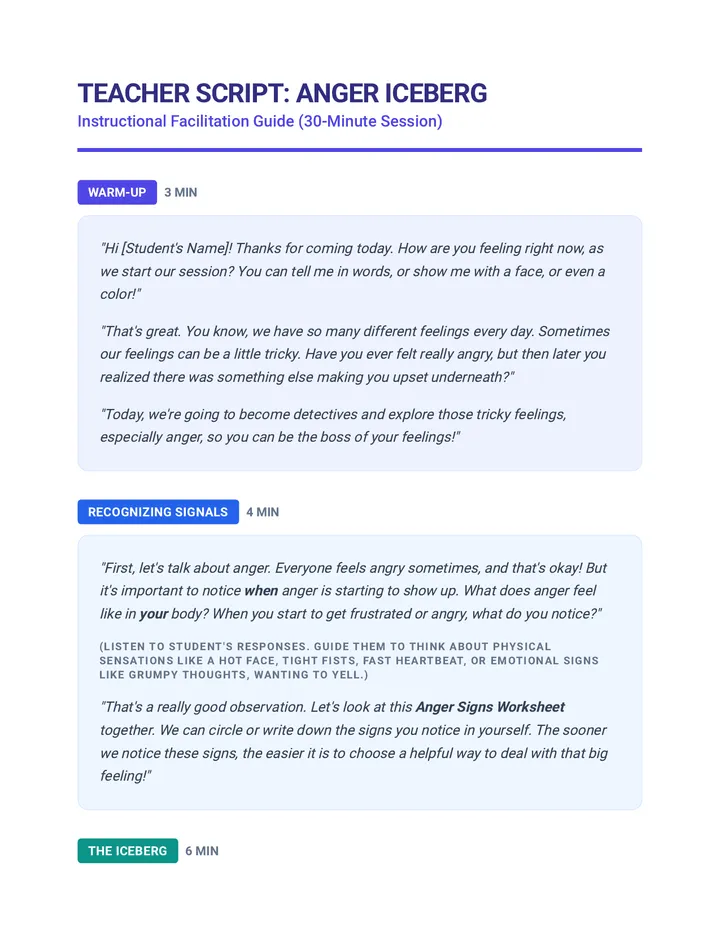
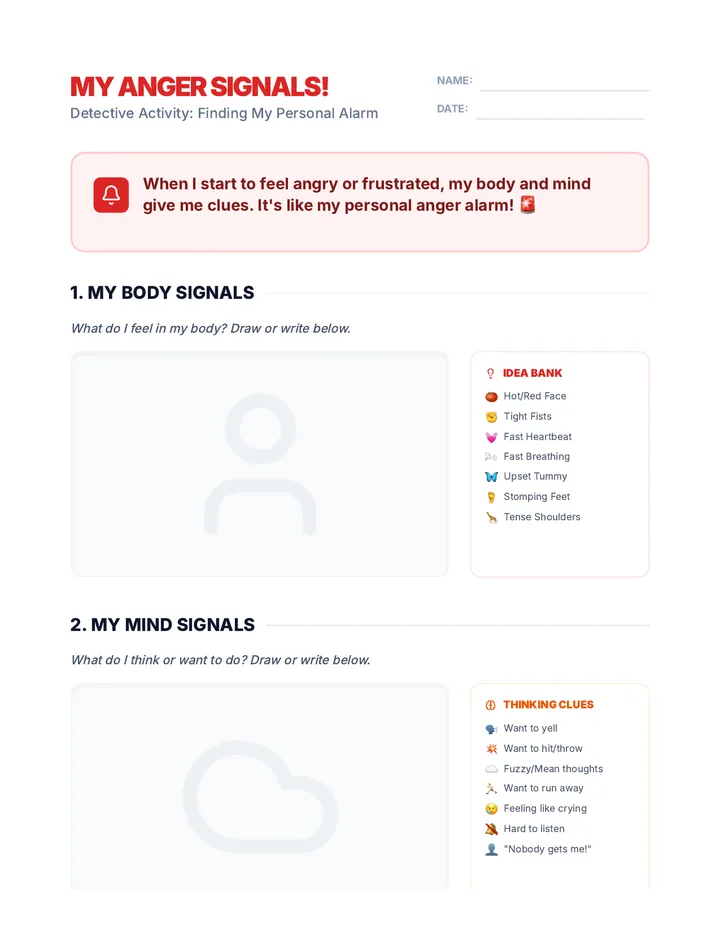
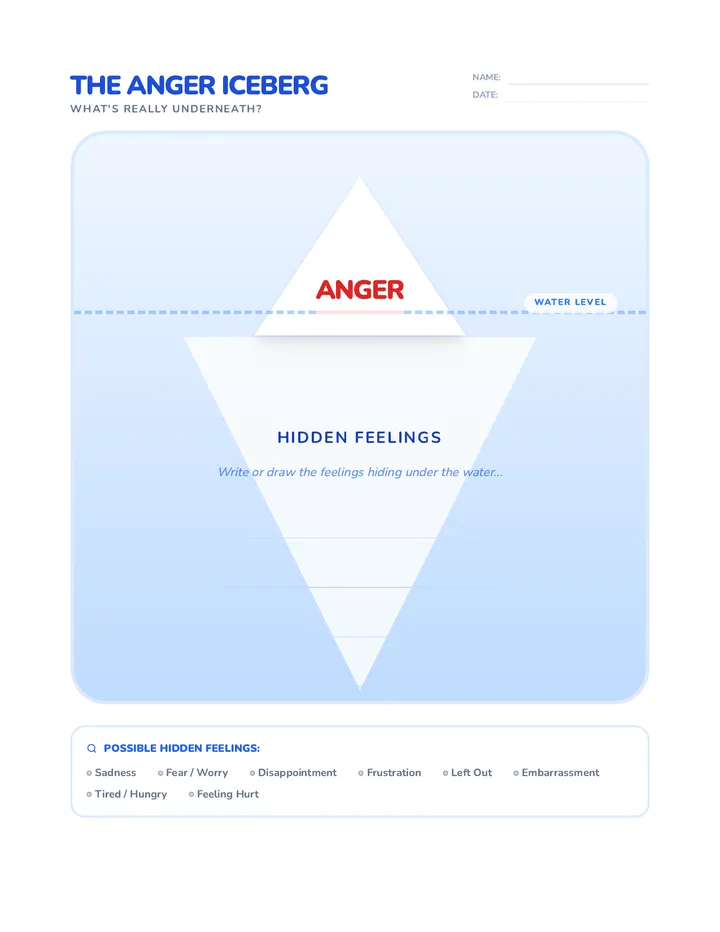
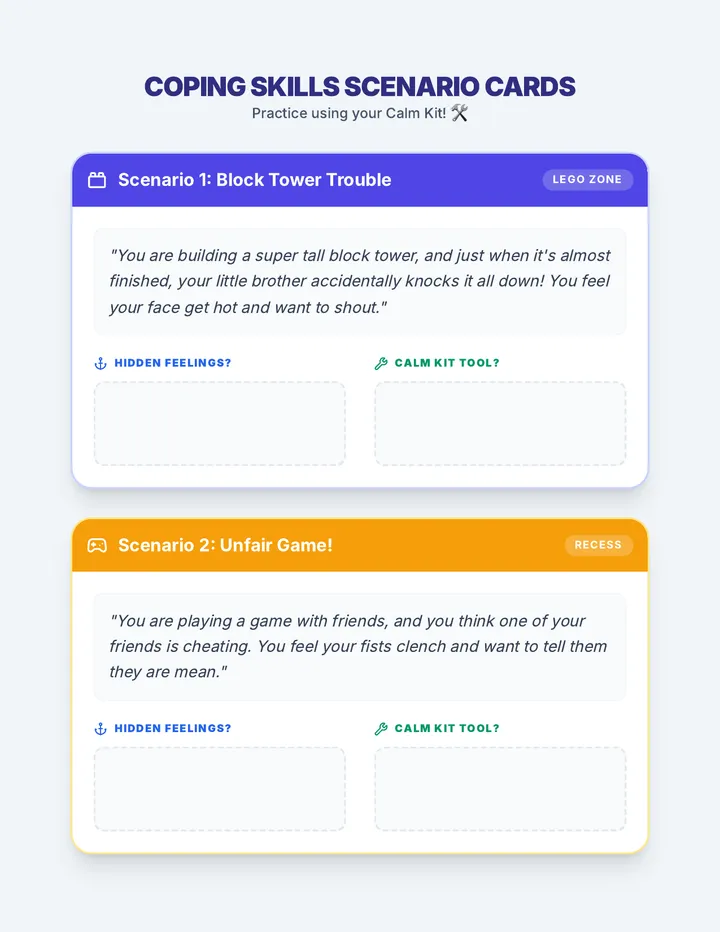
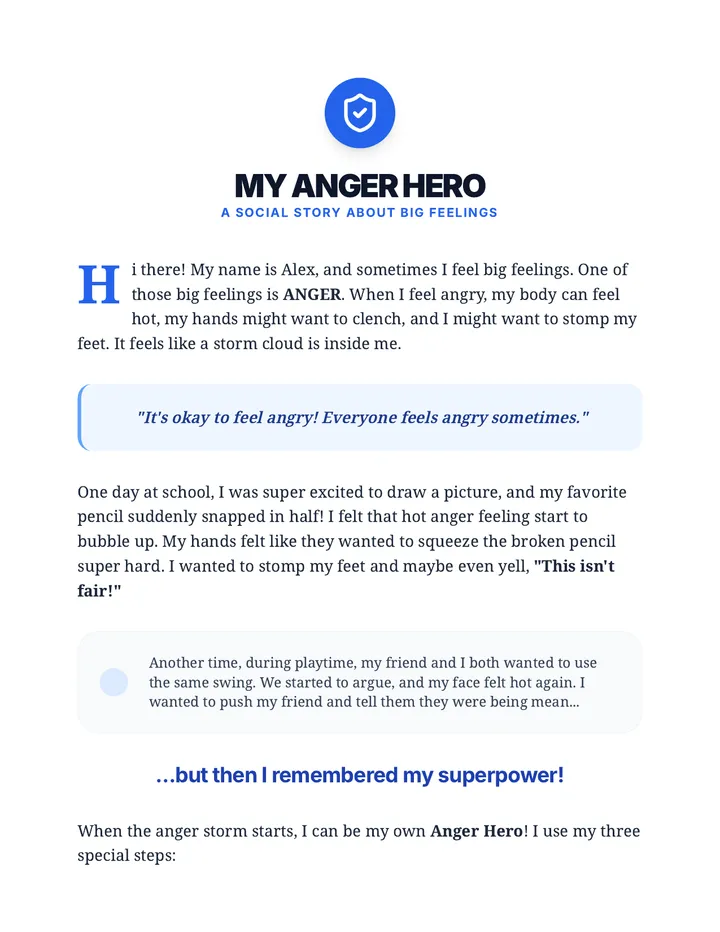
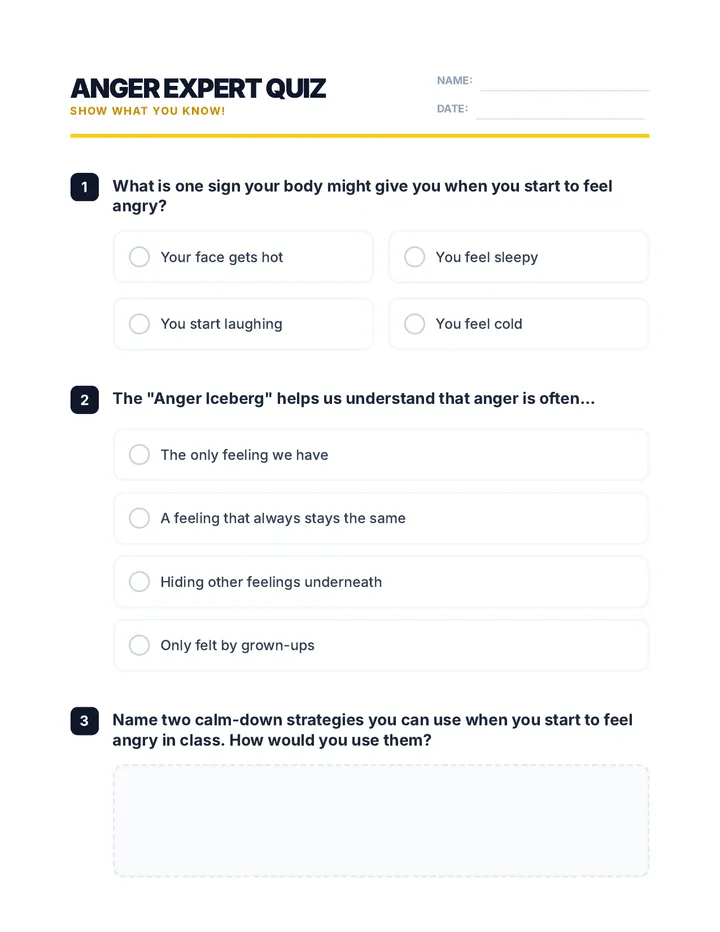
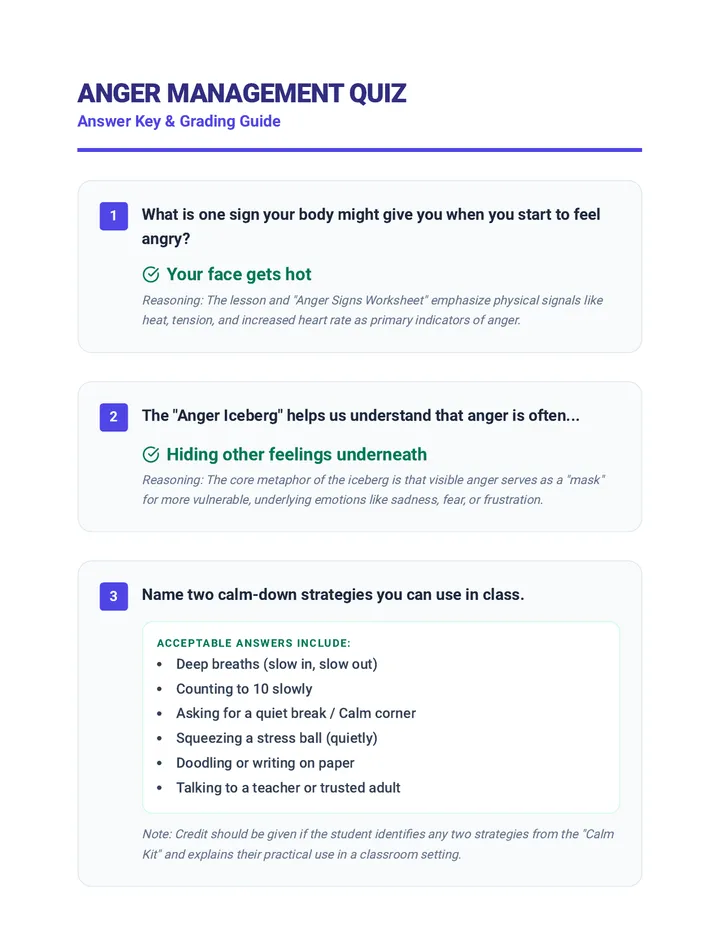
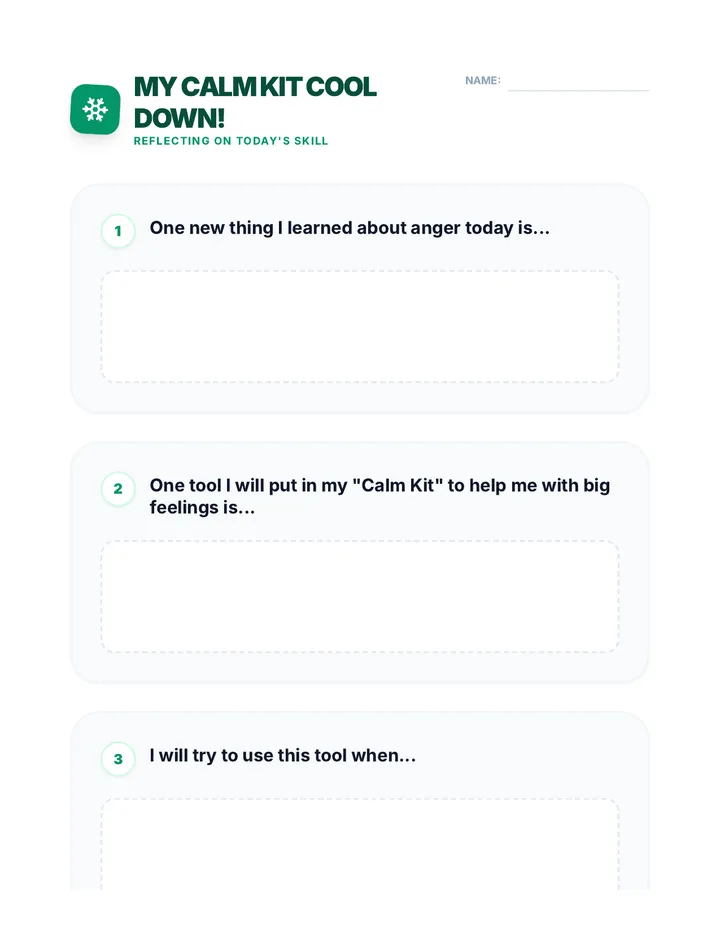
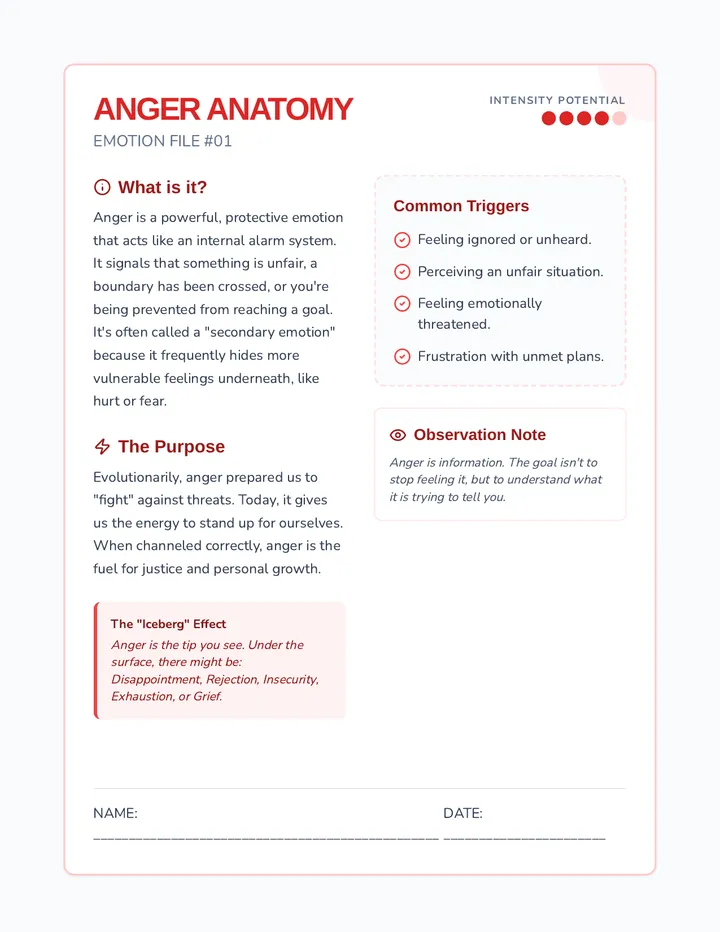
A 30-minute individual Tier 3 lesson for 3rd-grade students focused on identifying anger signals, understanding underlying emotions through the anger iceberg concept, and practicing coping strategies.
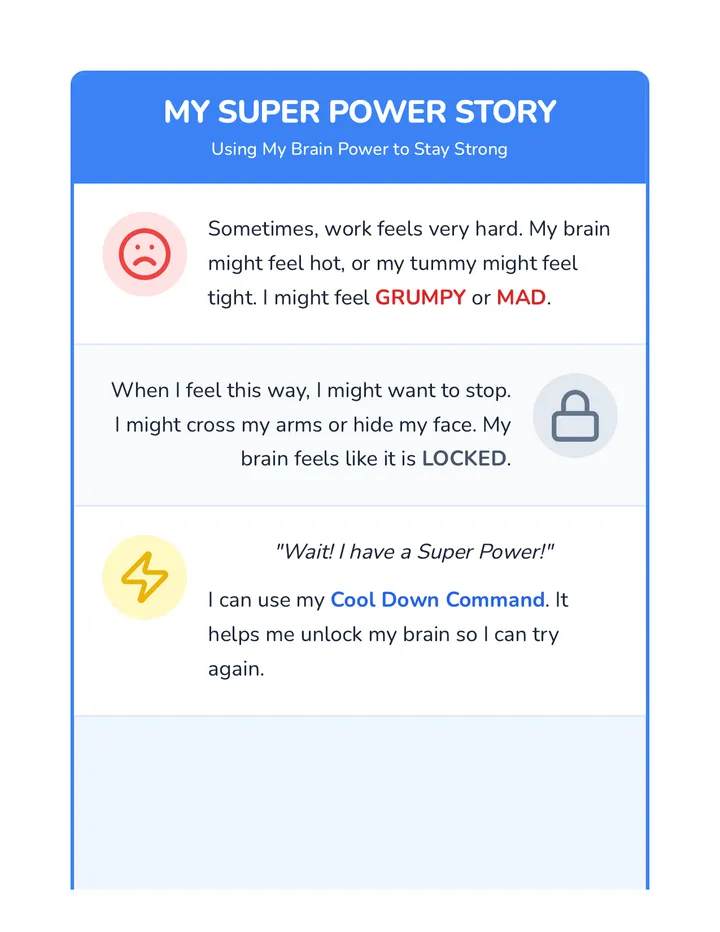
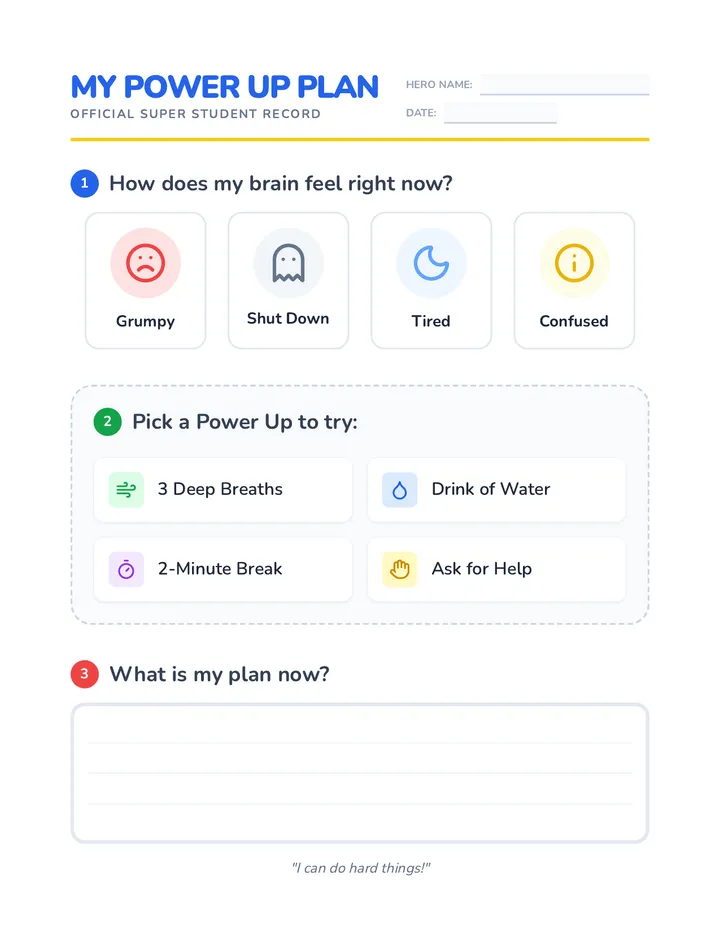
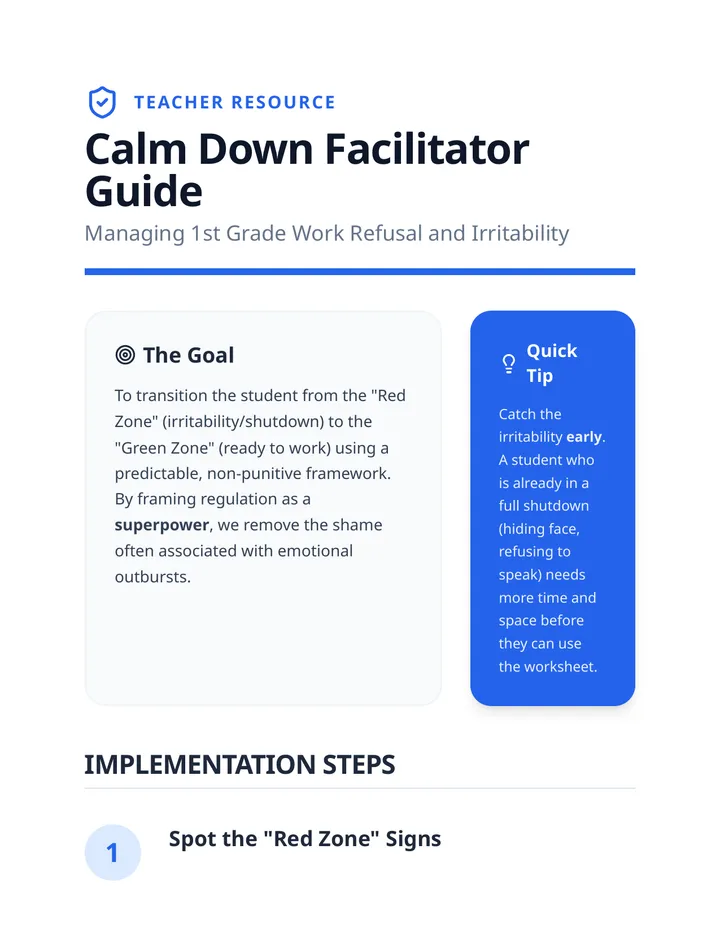
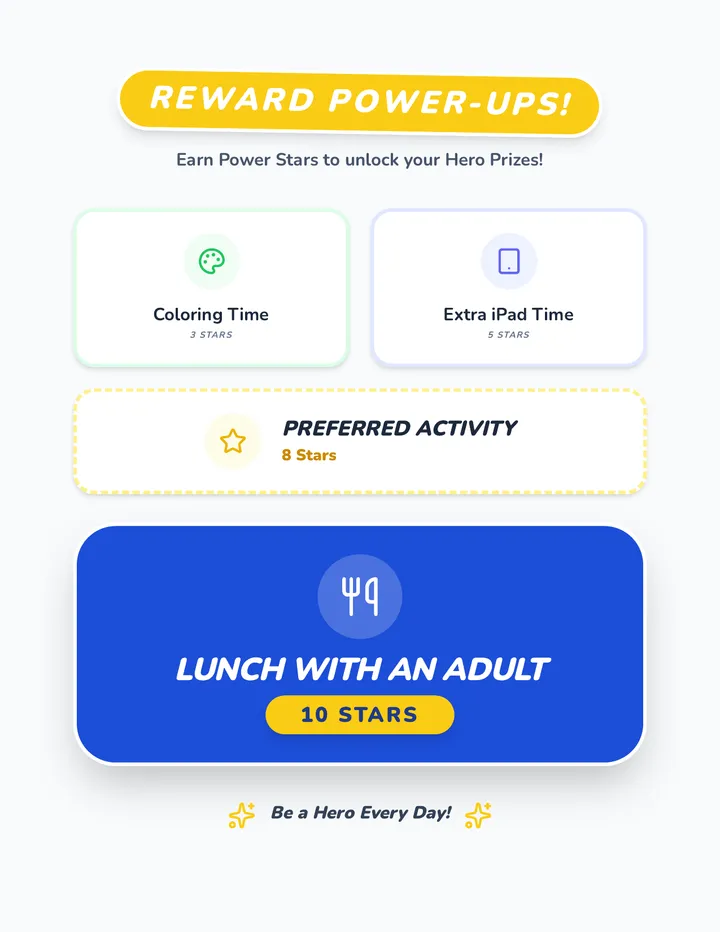
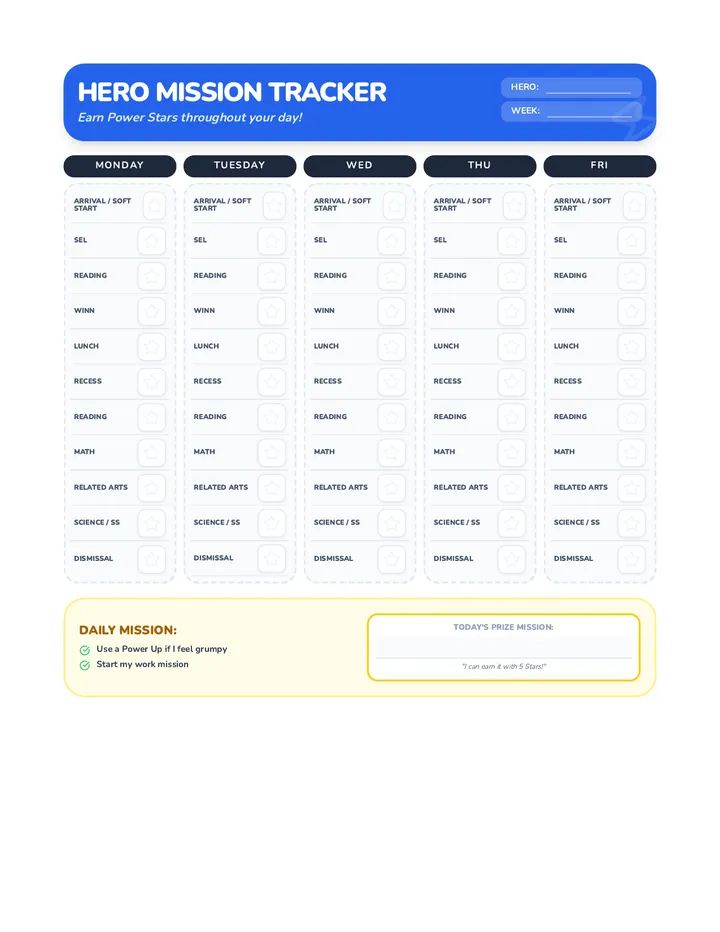
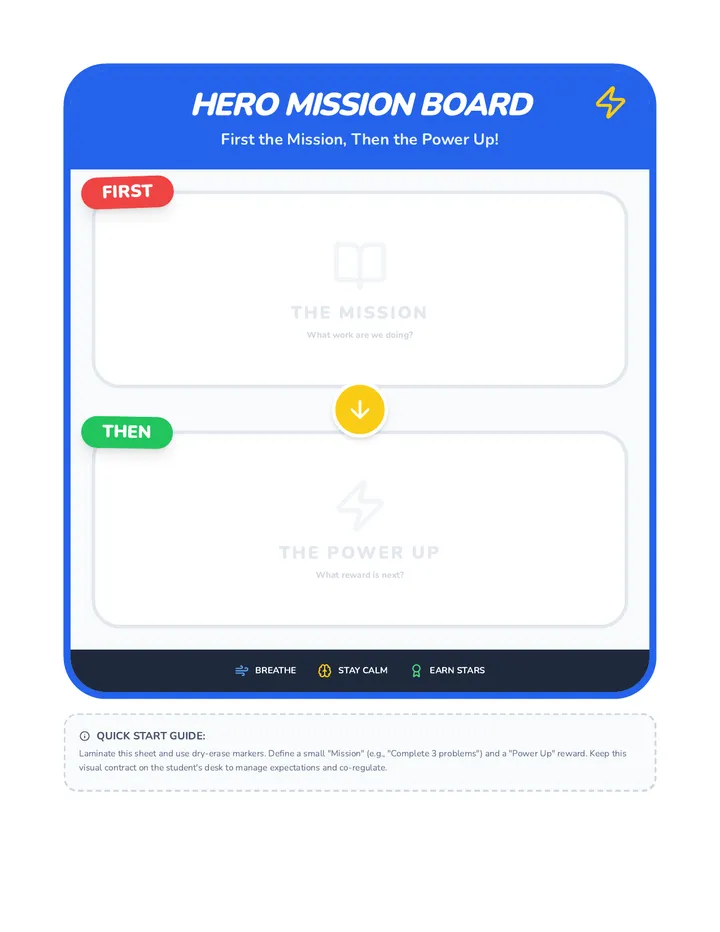
A collection of resources designed to help 1st-grade students navigate feelings of frustration and work refusal. These materials use a 'Superpower' theme to frame emotional regulation as a skill they can practice and master.
A resource pack for parents explaining the importance of productive struggle and stepping outside the comfort zone to foster student growth and resilience.
An interactive lesson for 11th-grade students focused on developing empathy and perspective-taking skills to foster ethical relationships and resolve conflicts. Students engage in discussions, scenario analysis, and personal reflection to understand the impact of empathy on social interactions.
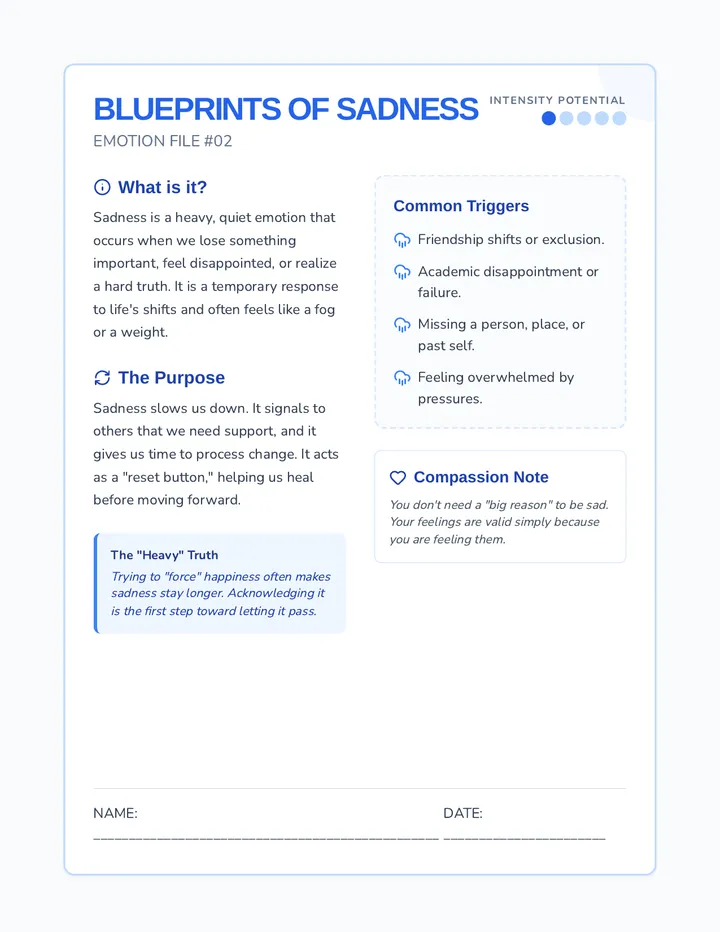
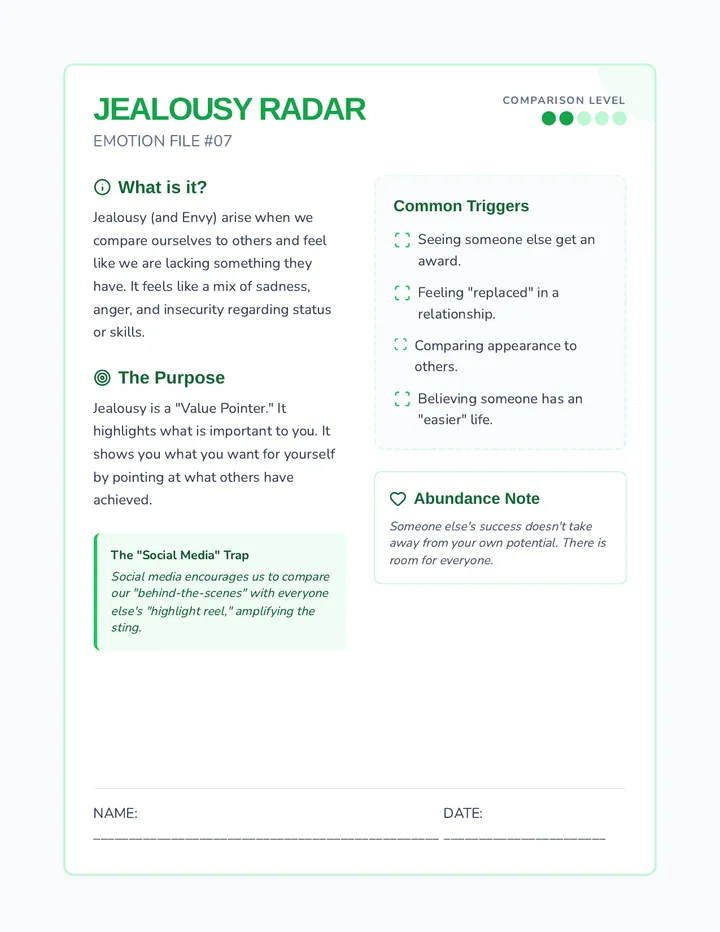
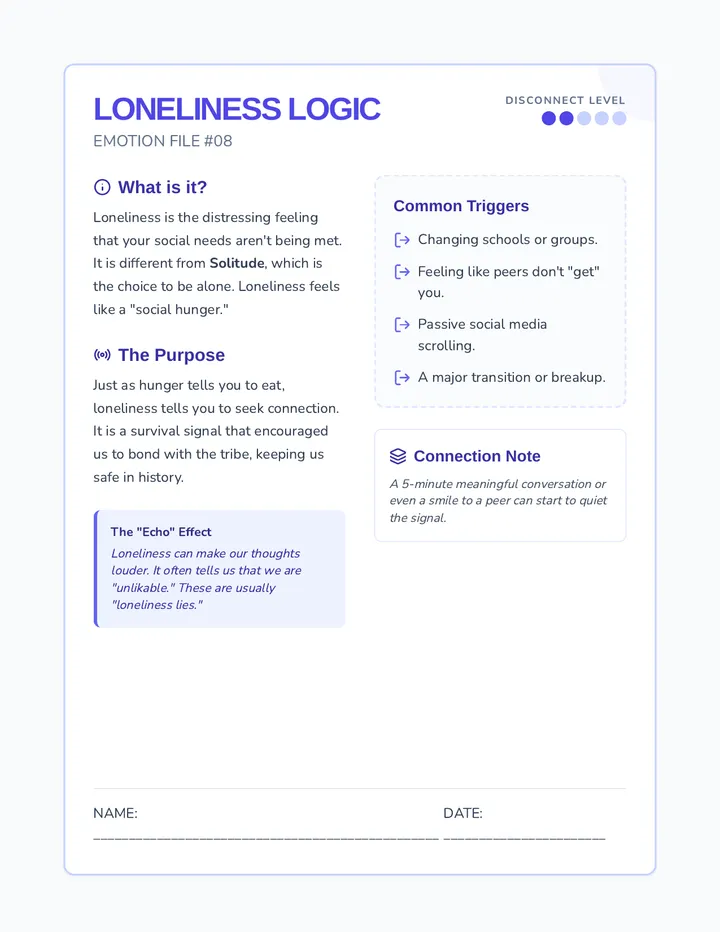
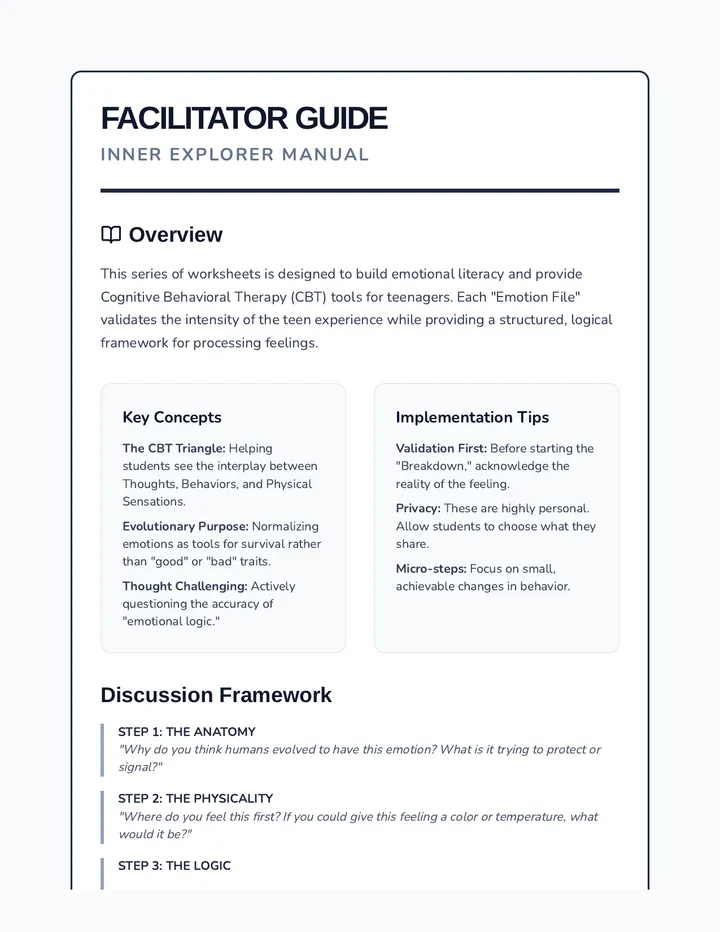
A comprehensive set of emotional literacy and CBT-based worksheets designed for teenagers to explore, understand, and manage complex emotions. Each module includes descriptive content and structured reflection areas for thoughts, behaviors, and physical sensations.
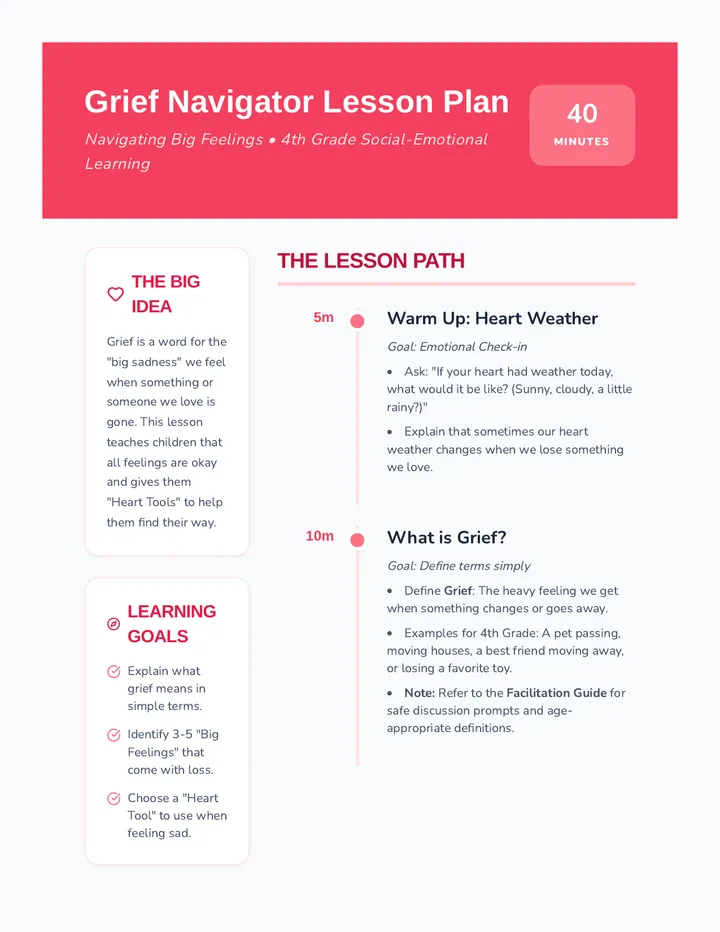
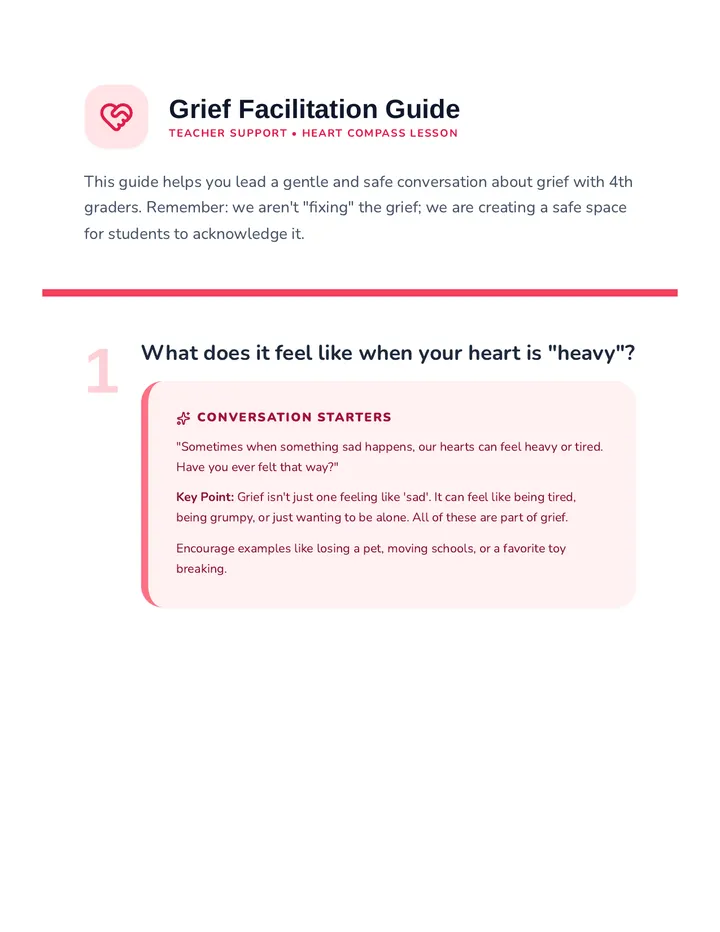
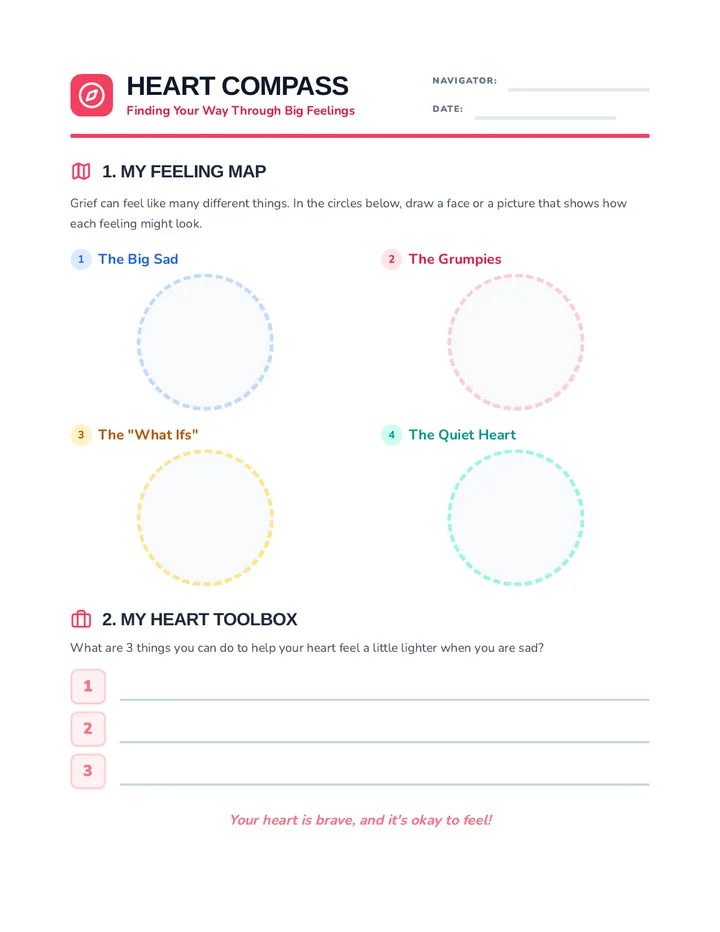
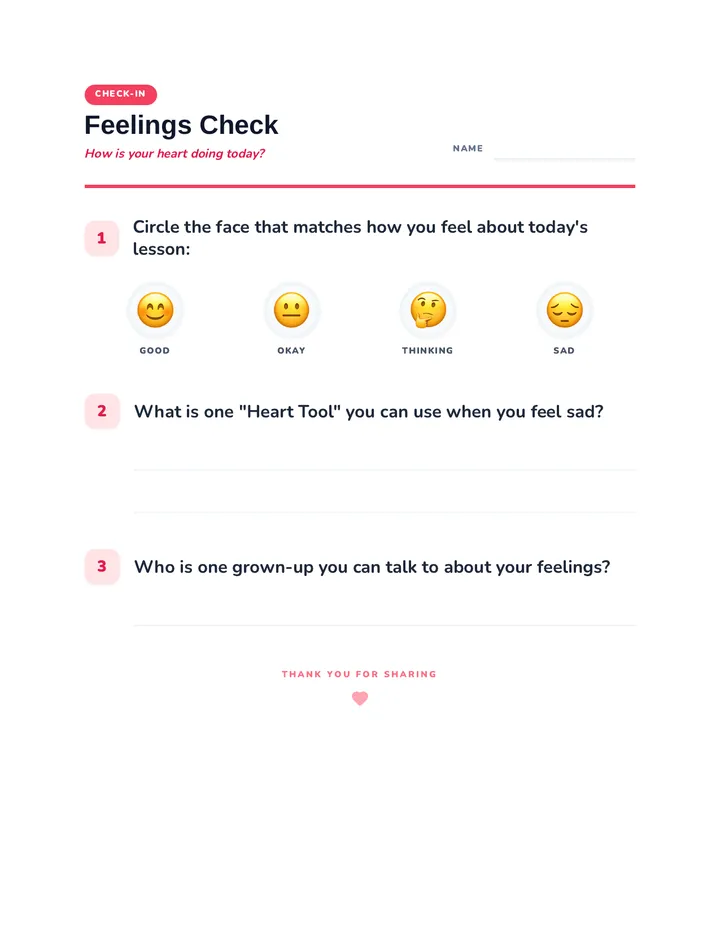
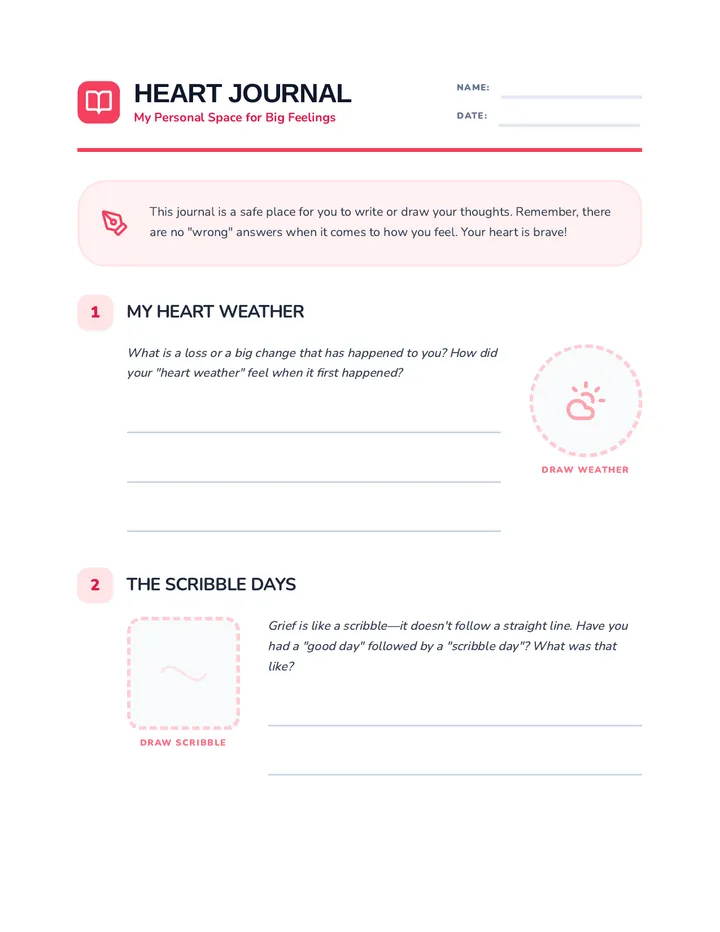
This lesson helps 4th-grade students understand the concept of grief and loss using the 'Heart Compass' framework. Students will learn to identify big feelings, understand that everyone grieves differently, and discover 'Heart Tools' for healthy coping.
A fun fair station for 4th-5th graders to explore and celebrate their unique strengths through interactive activities, games, and art.
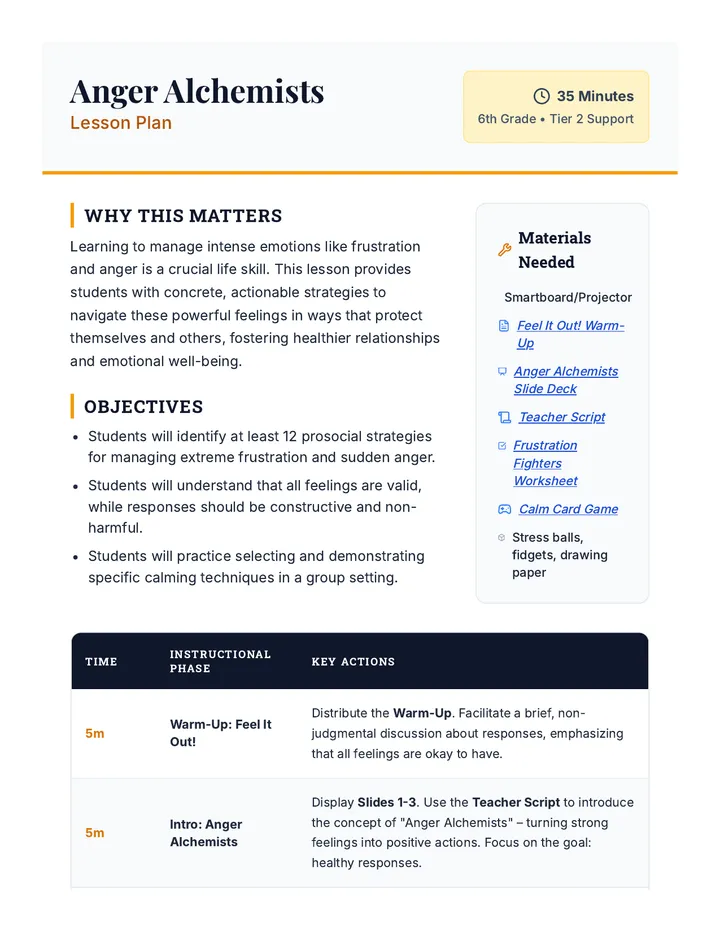
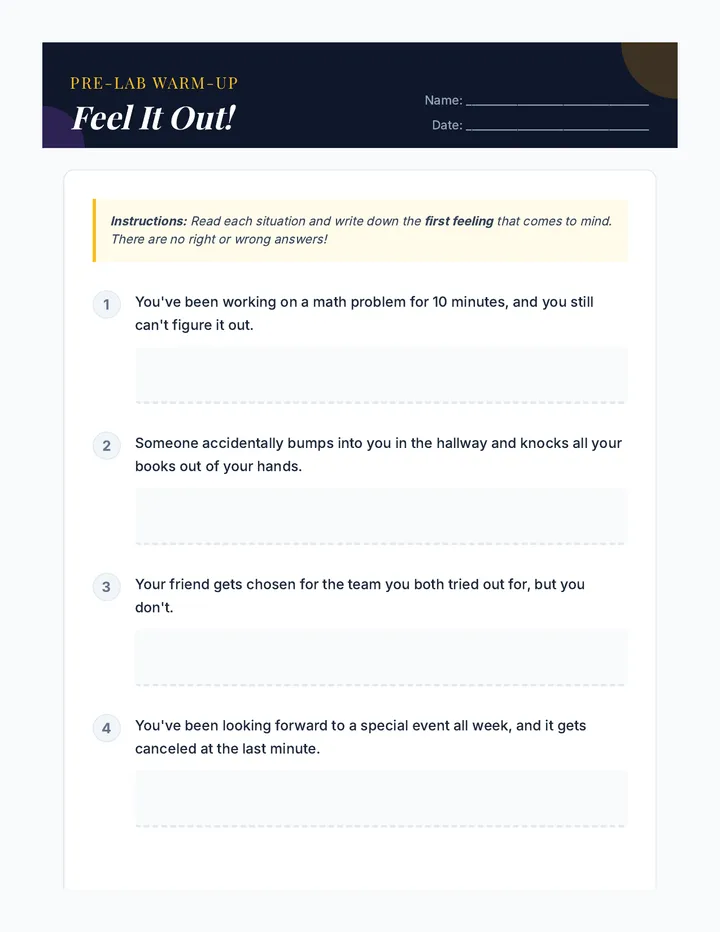
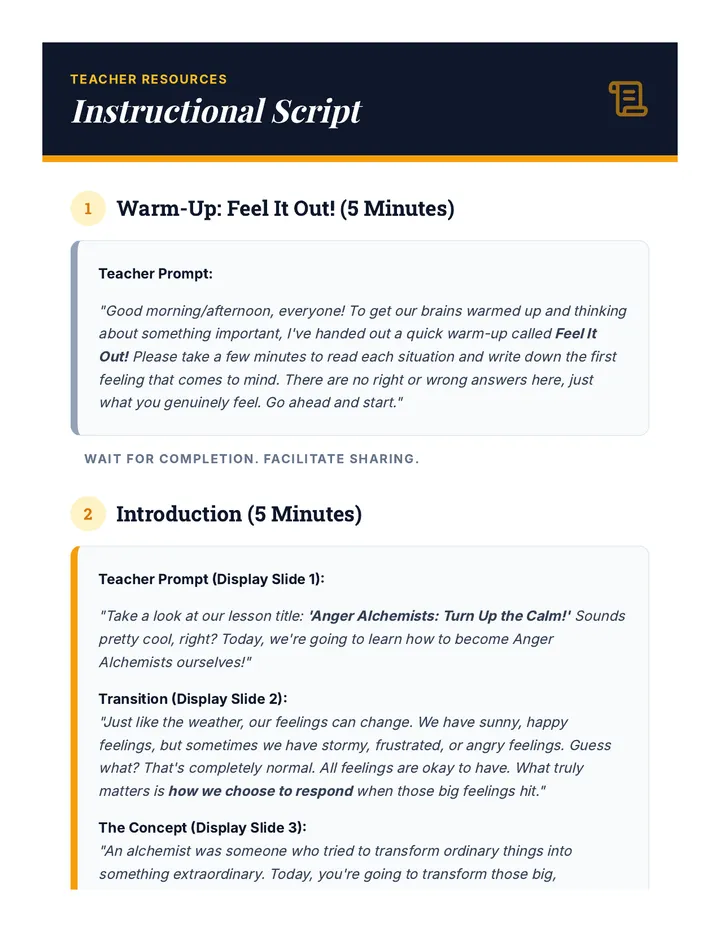
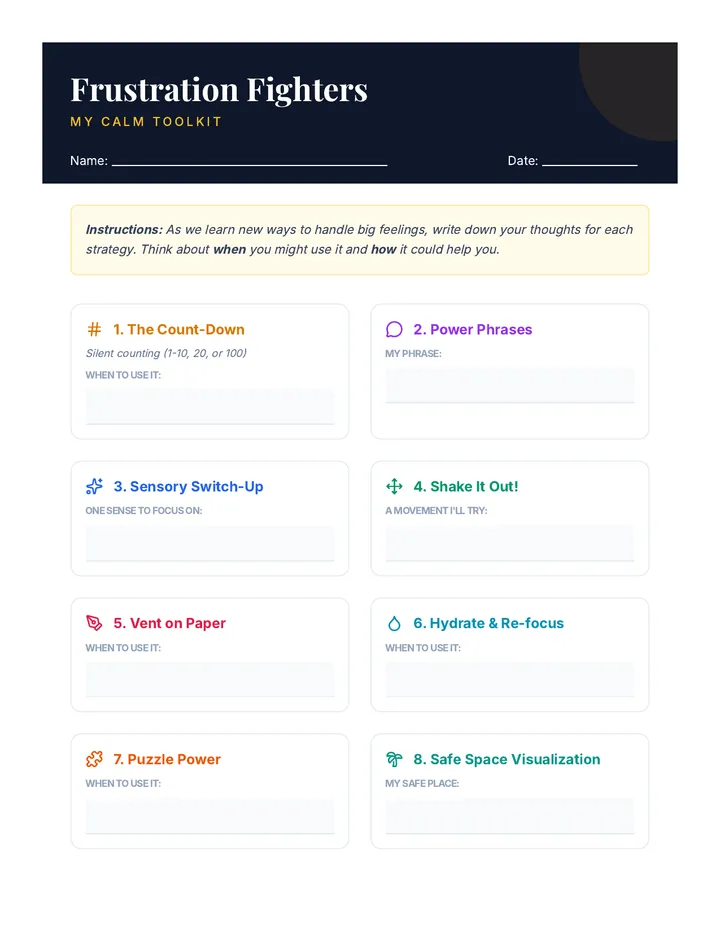
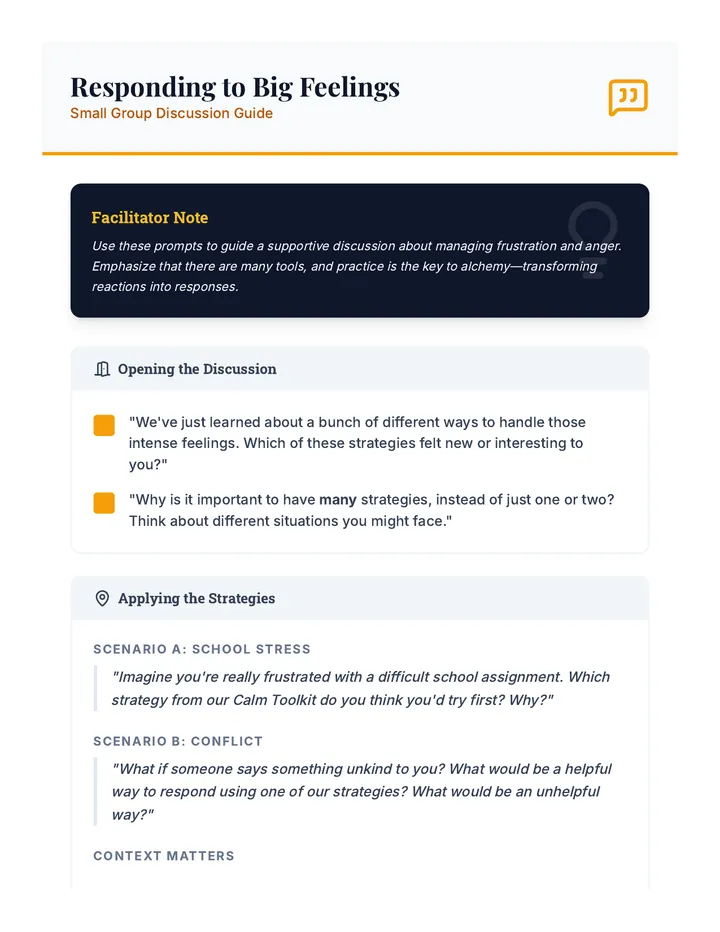
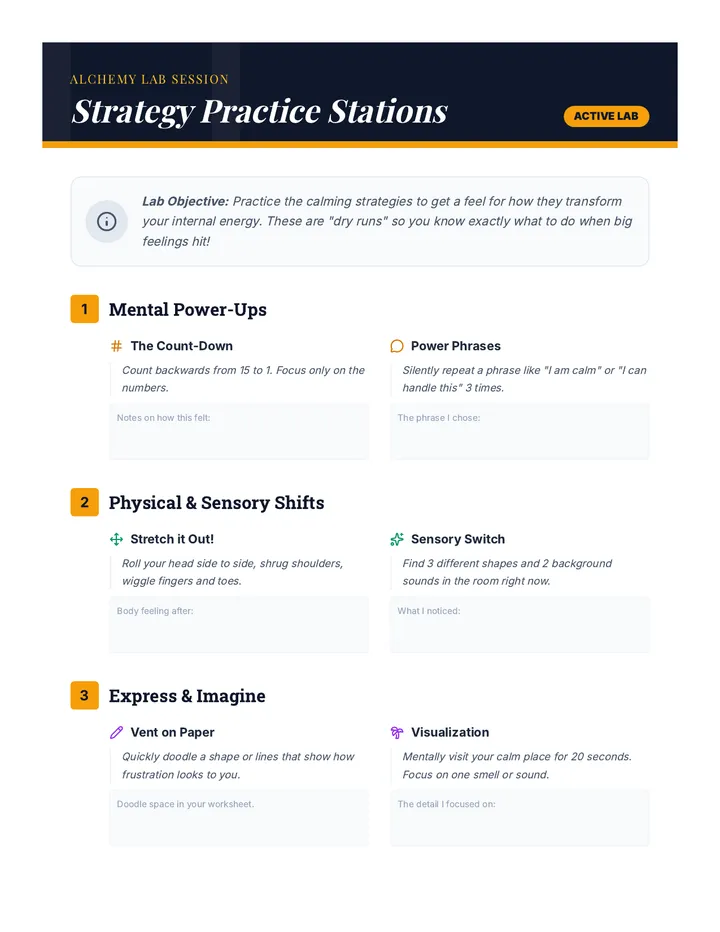
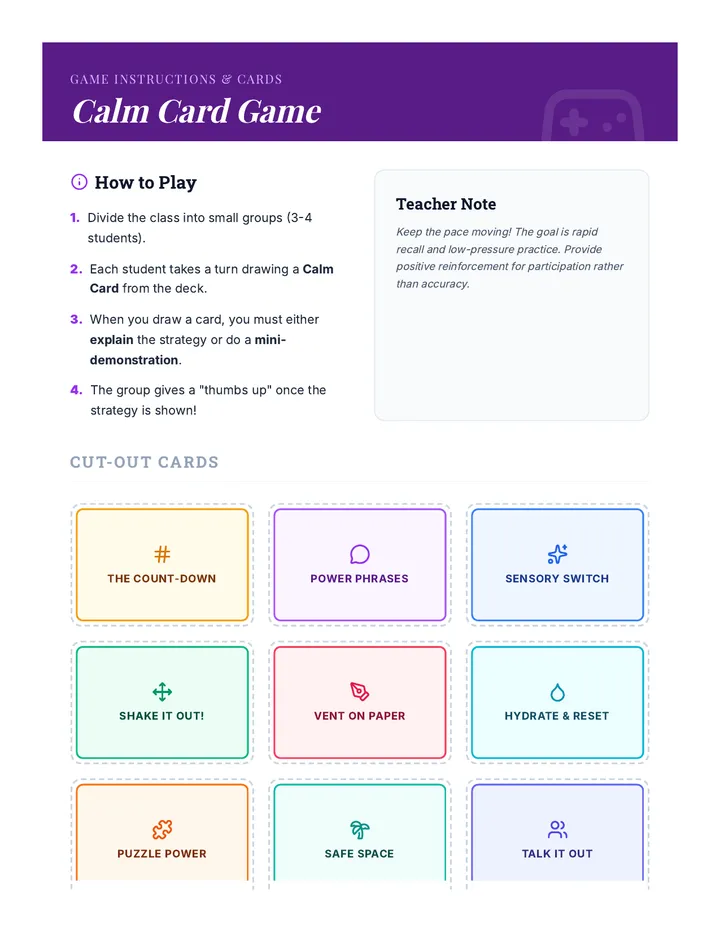
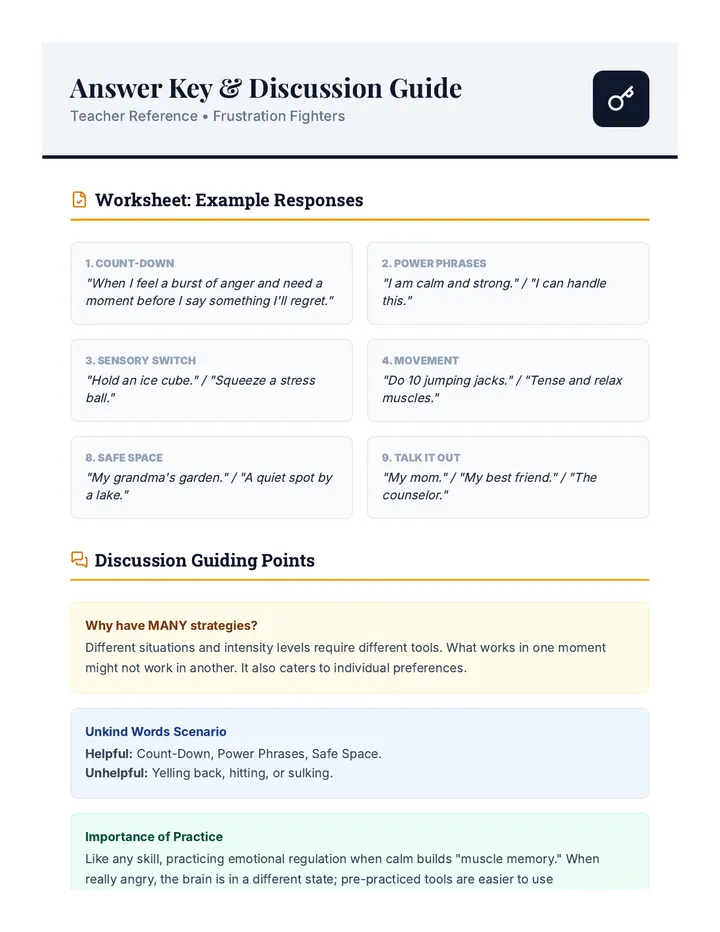
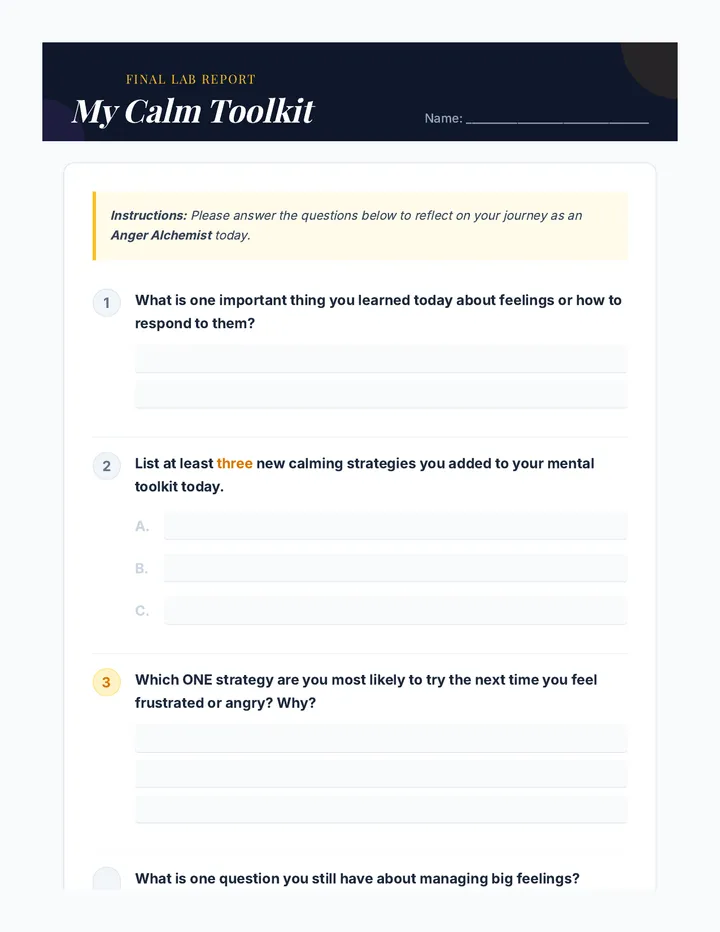
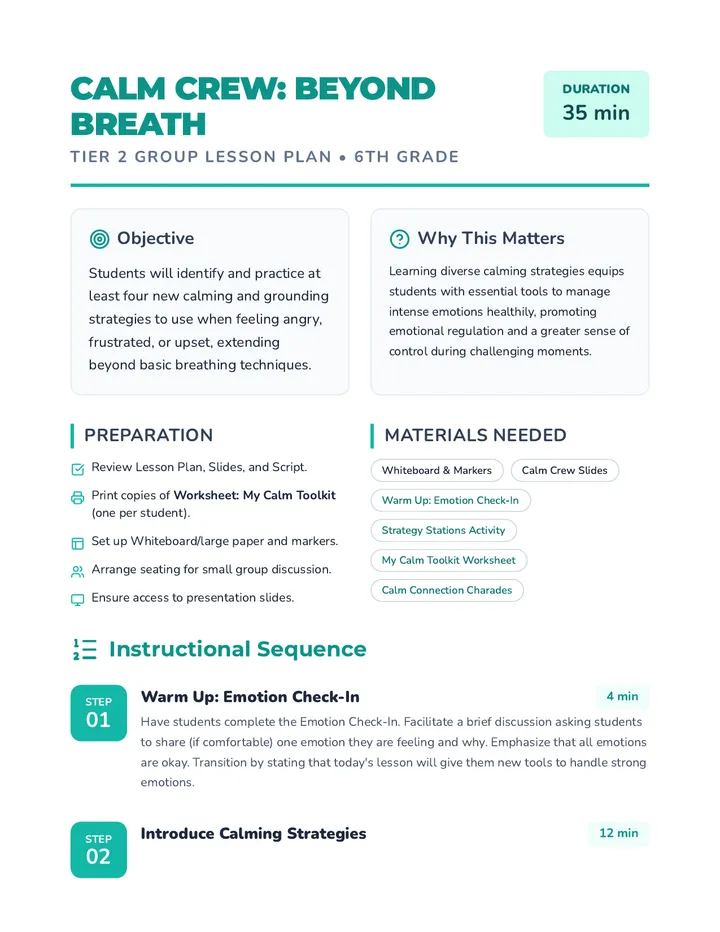
A 35-minute Tier 2 lesson for 6th-grade students to learn over 12 prosocial strategies for transforming intense frustration and anger into constructive responses.
A comprehensive lesson focused on mindfulness and anxiety reduction strategies for students preparing for the ACAP assessment, featuring classroom activities and home support guides.
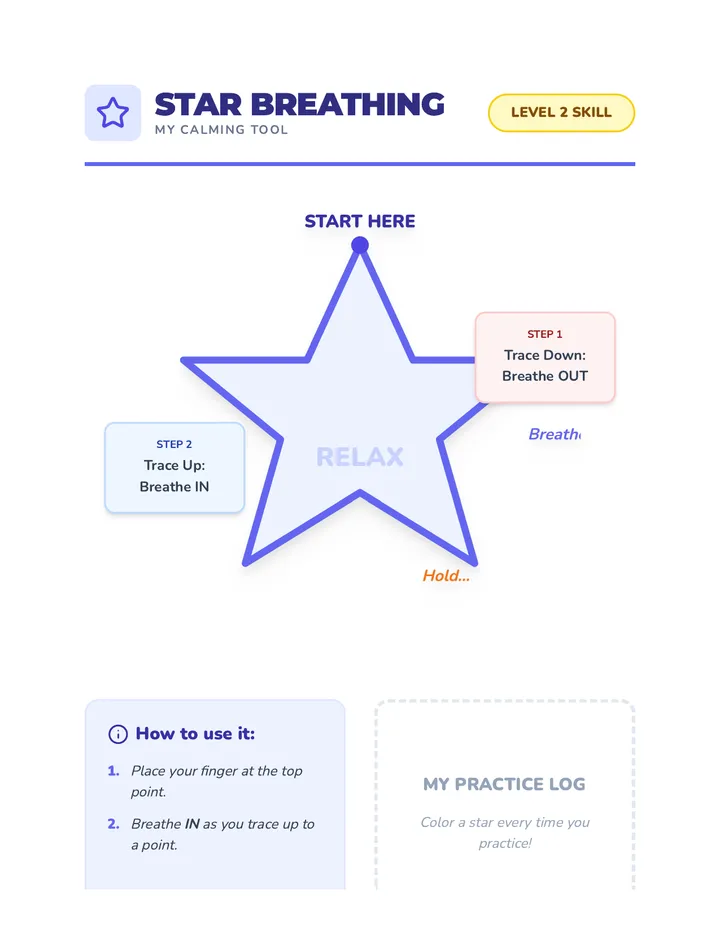
Students will identify physical signs of stress and learn three concrete 'superpower' coping strategies: deep breathing, positive self-talk, and movement. The lesson concludes with a collaborative activity to build a classroom 'Calm Corner'.
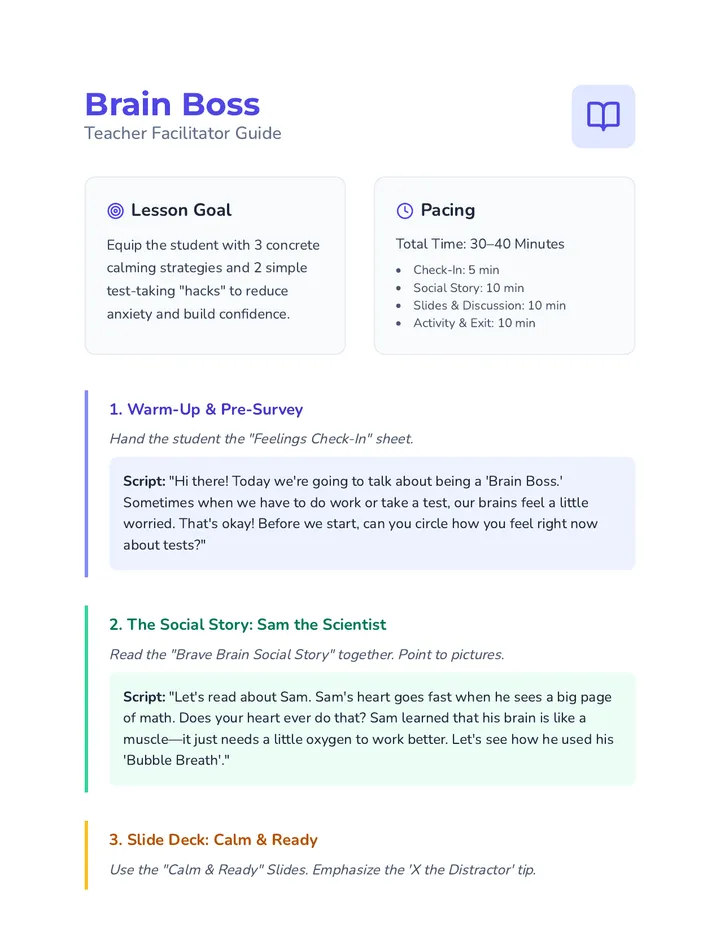
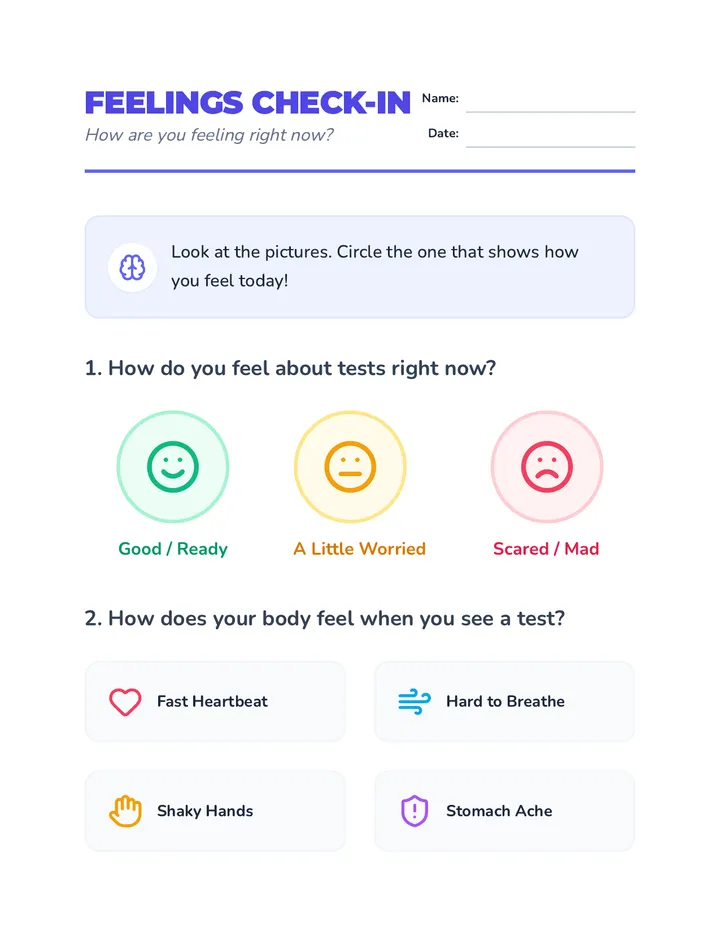
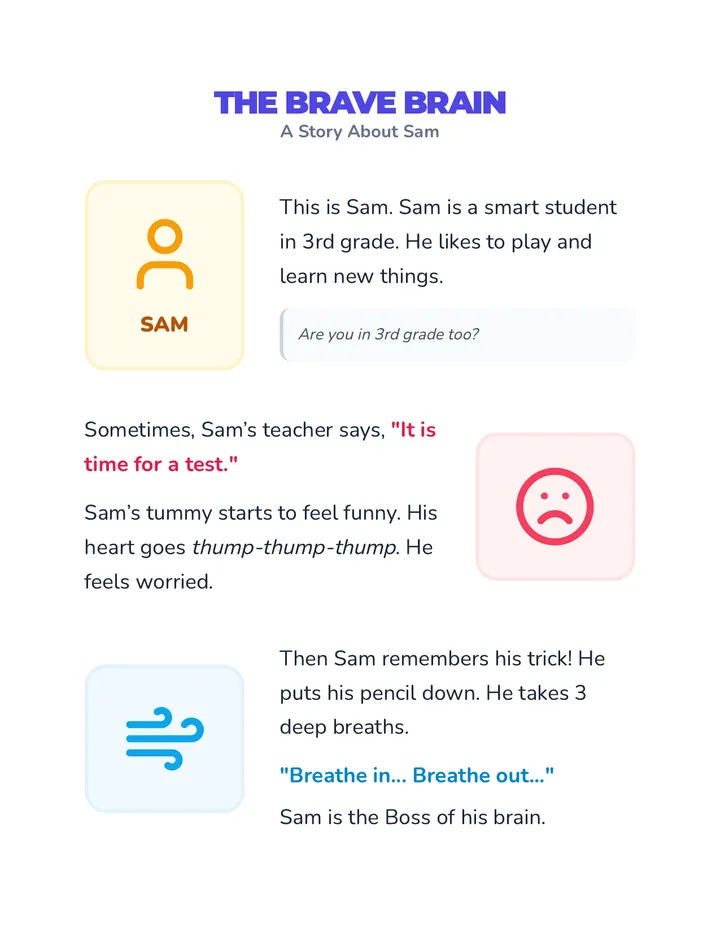
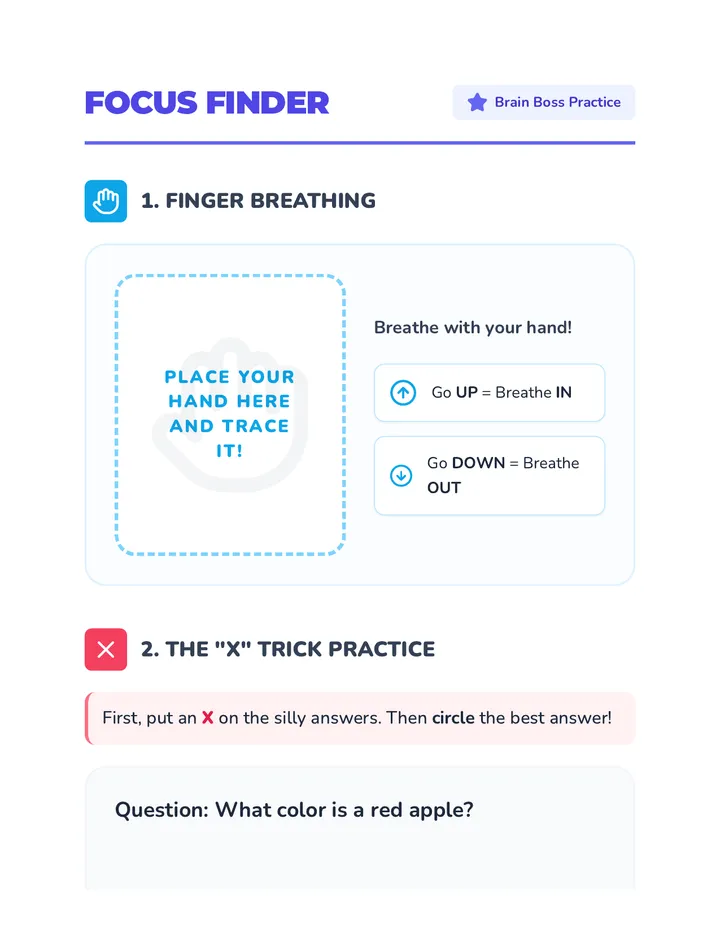
An individual lesson designed for a 3rd-grade student to manage test anxiety through calming strategies, simple test-taking tips, and confidence-building activities. The lesson is tailored for students with low reading and math foundational skills, emphasizing visual support and manageable steps.
A comprehensive 3-hour one-on-one session designed for adults with disabilities, covering pre-interview routines, professional presentation, and effective communication strategies during a job interview.
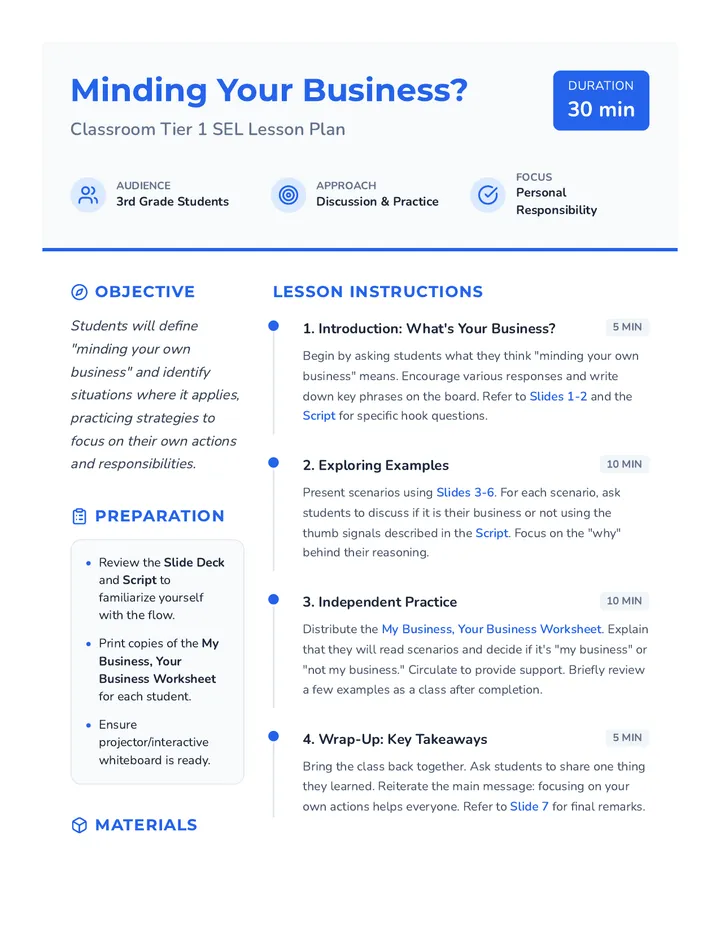
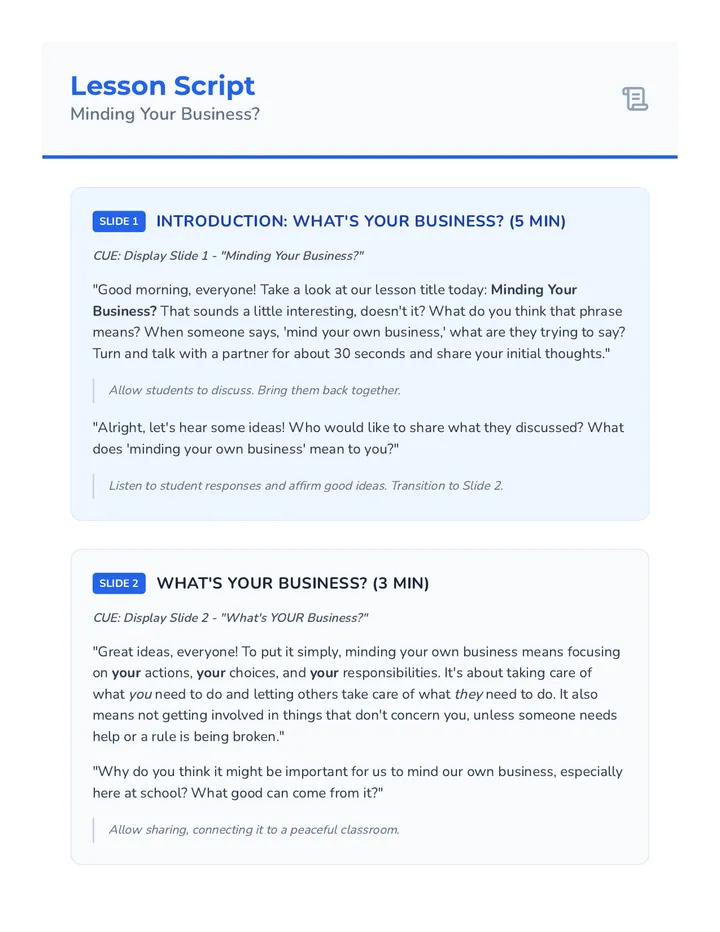
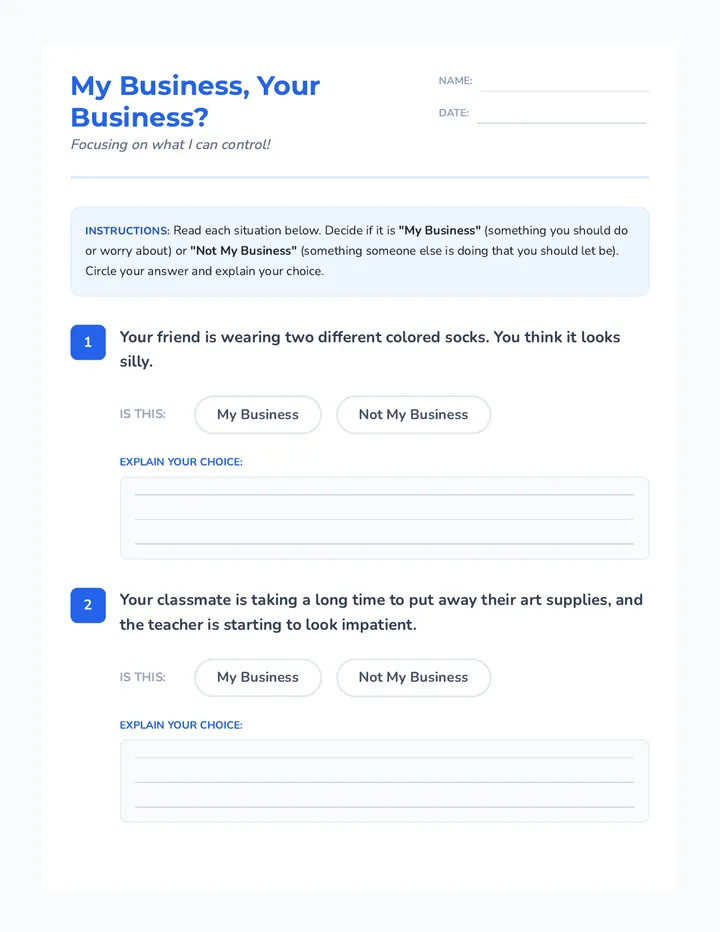
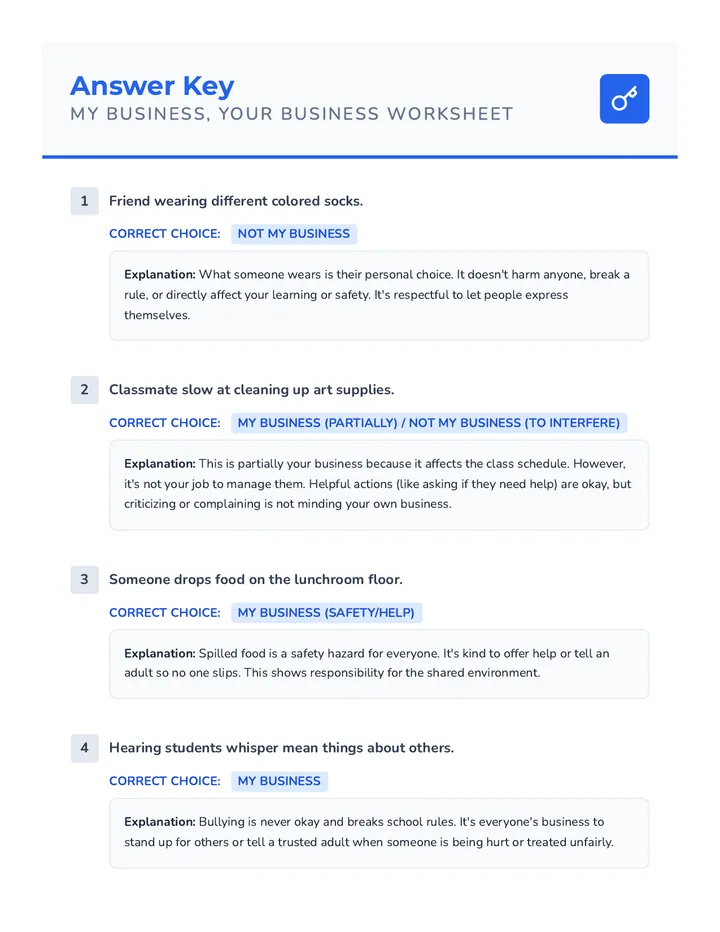
A 30-minute social-emotional learning lesson for 3rd graders that teaches the difference between personal responsibility and interfering in others' affairs through scenarios and discussion.
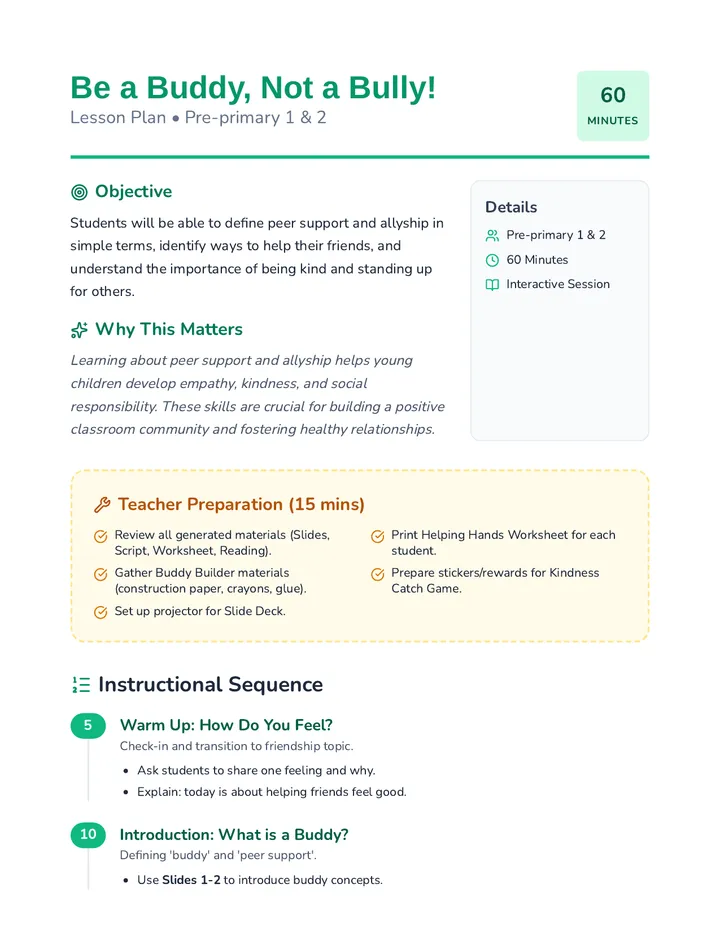
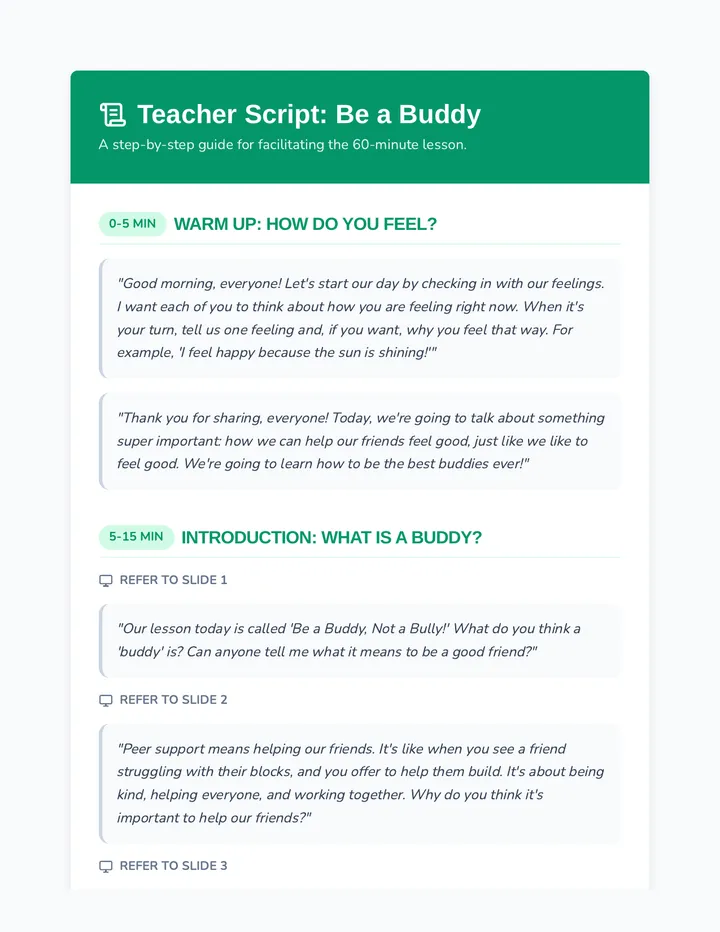
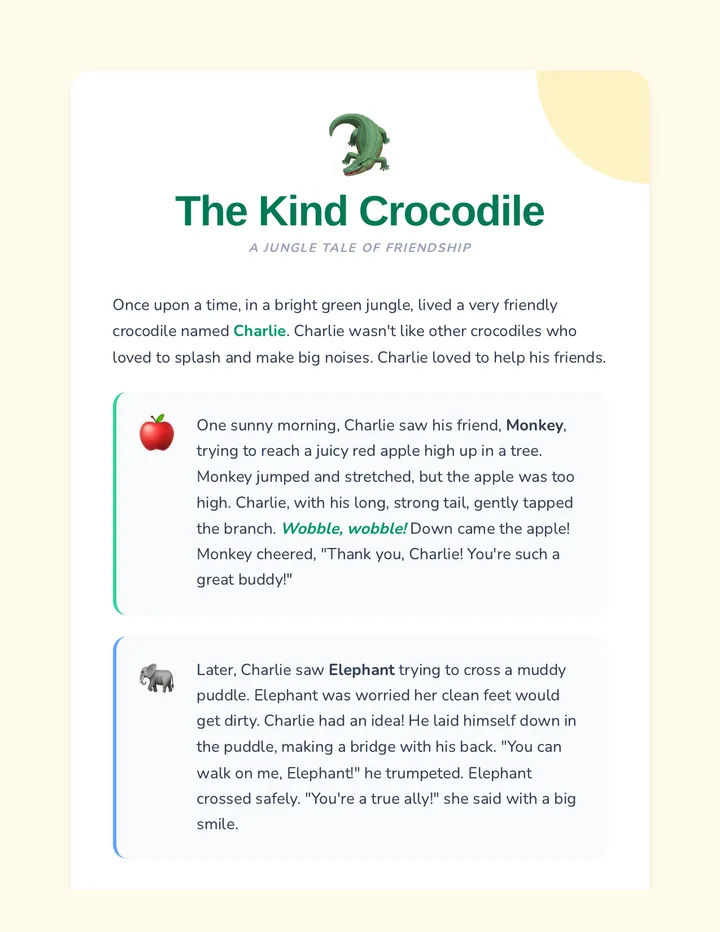
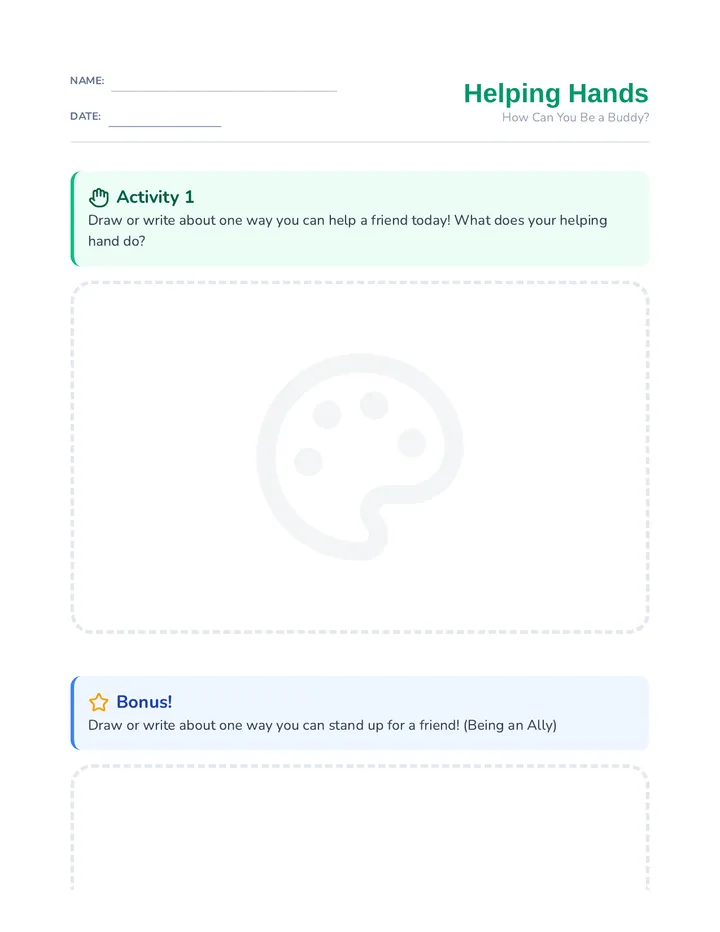
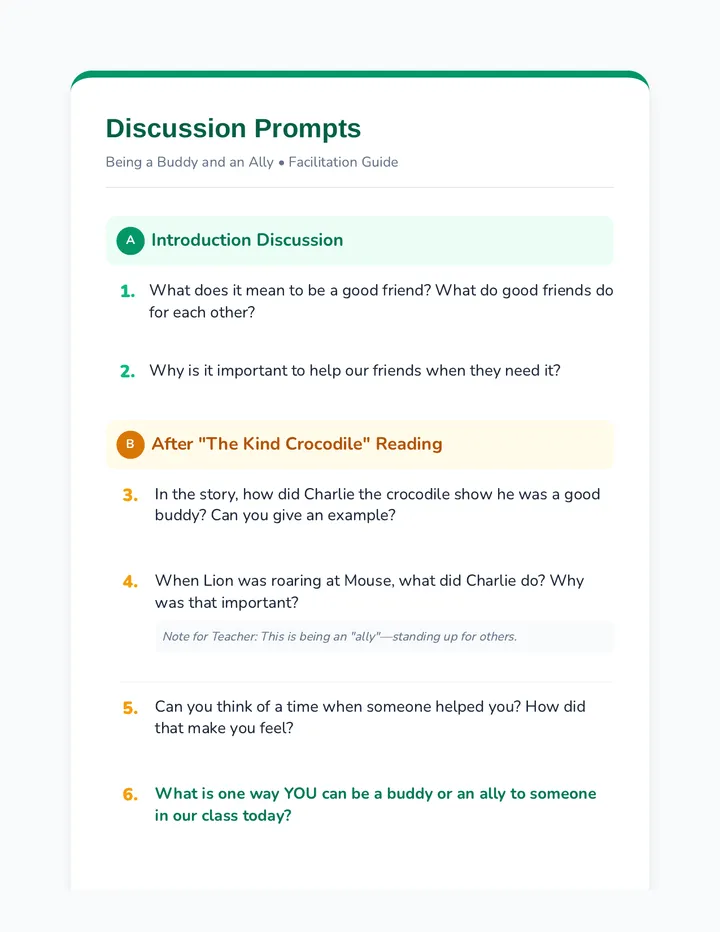
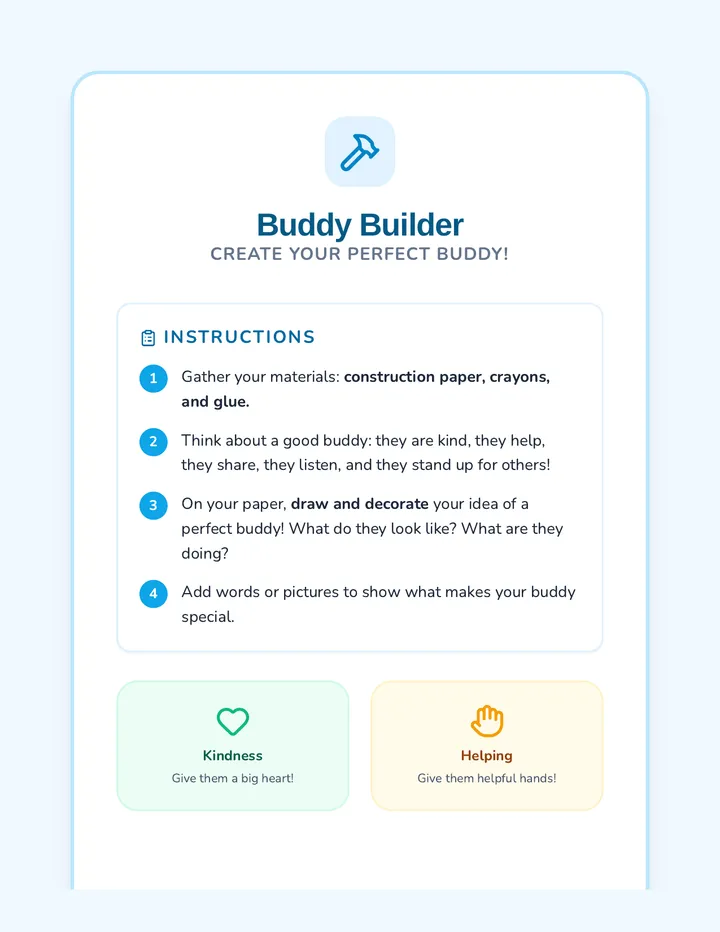
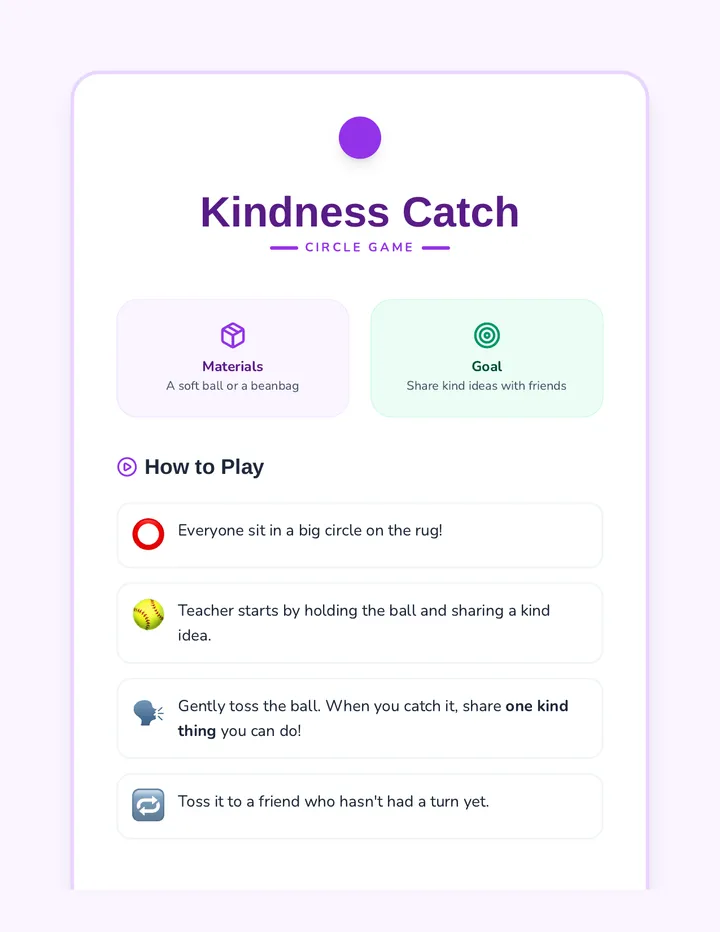
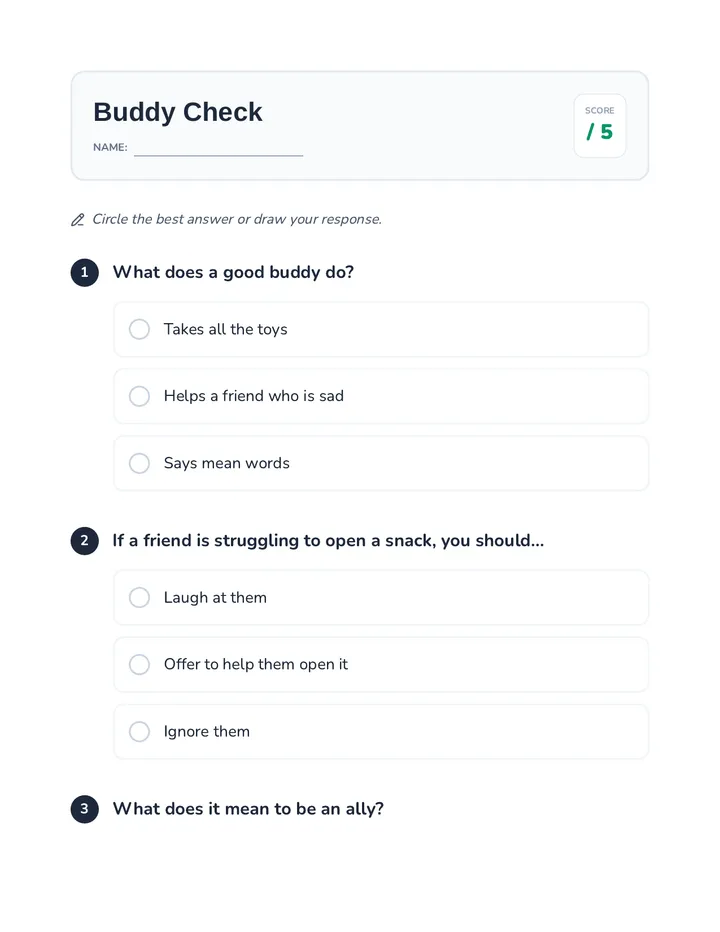
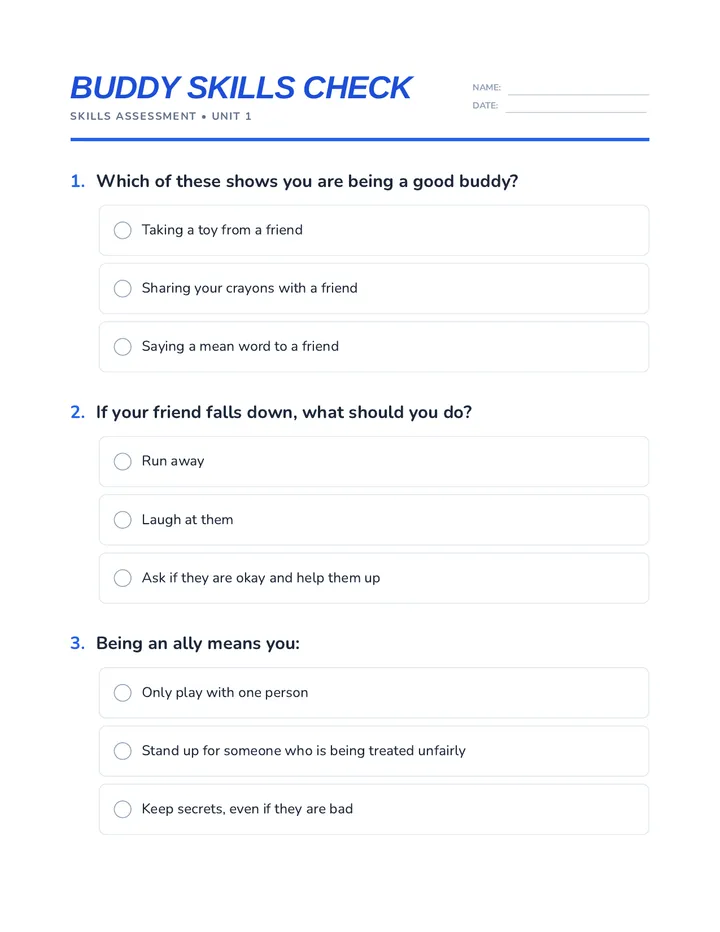
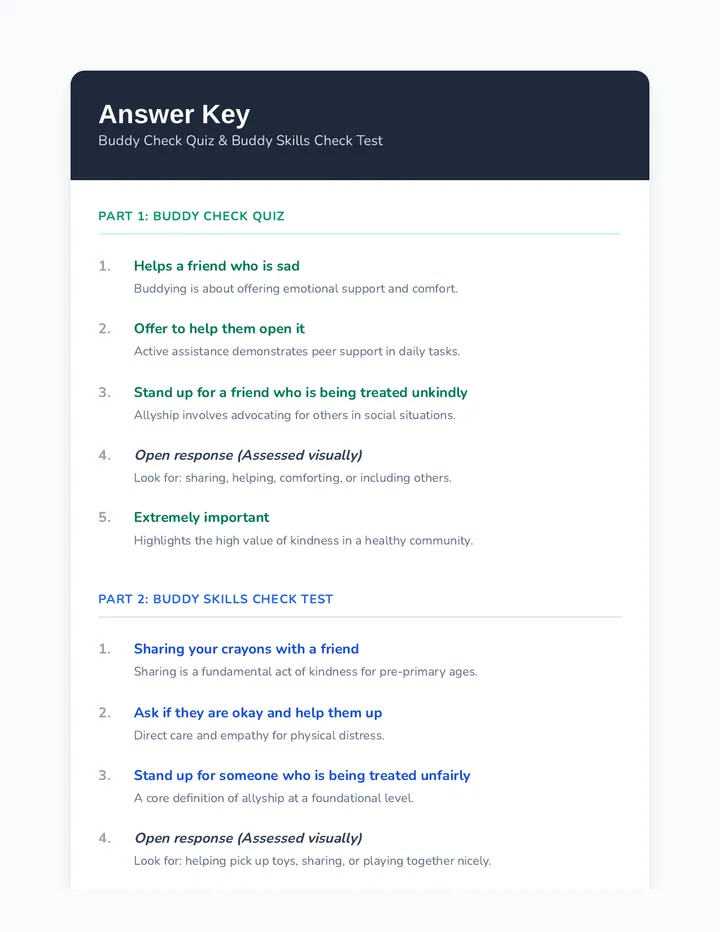
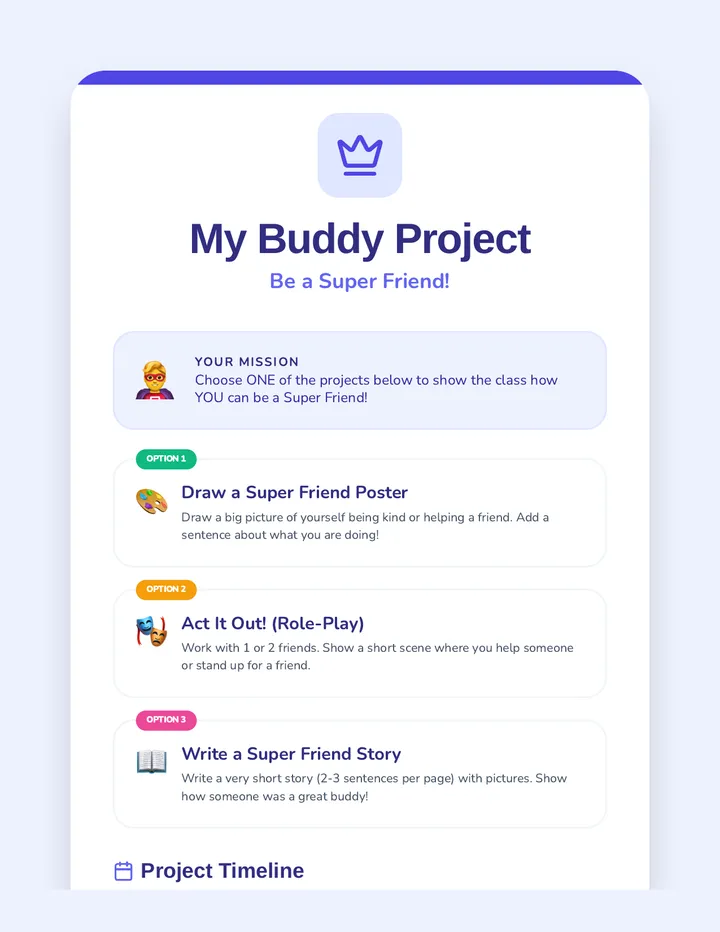
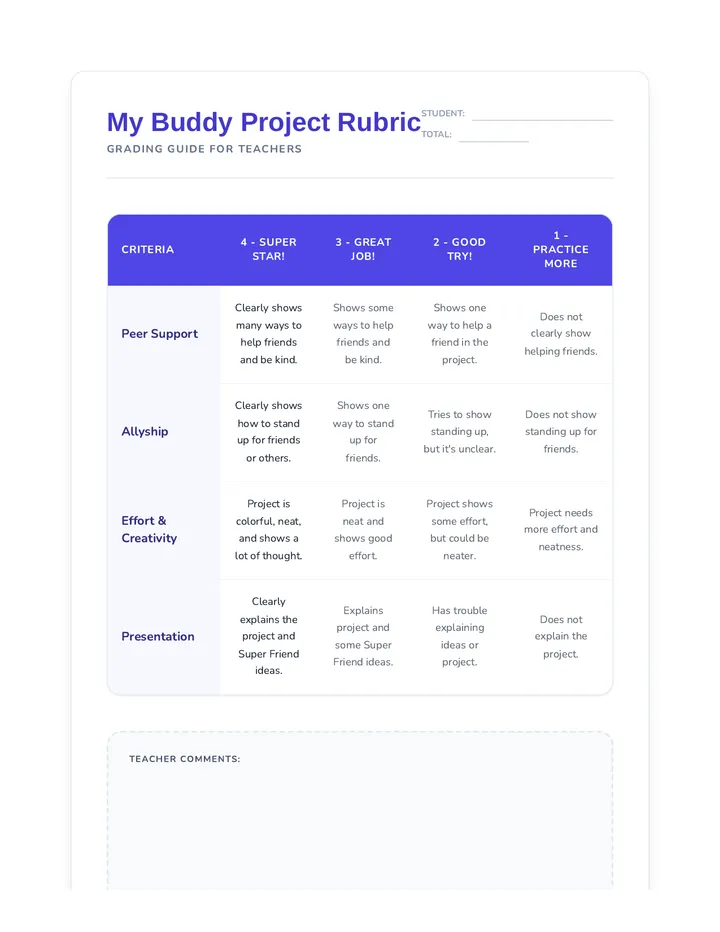
This lesson introduces Pre-primary 1 and 2 students to the concepts of peer support and allyship. Students will learn how to be kind, helpful friends and stand up for others through stories, activities, and games.
A 45-minute lesson for 9th-grade students to master the Eisenhower Matrix, learning to distinguish between urgent and important tasks to boost efficiency and reduce stress.
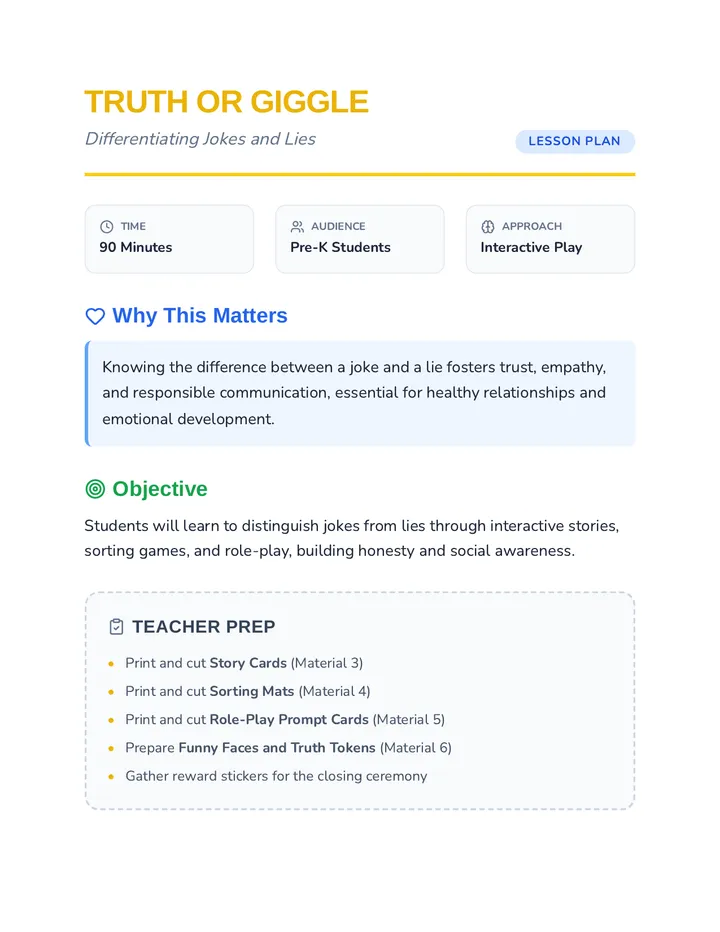
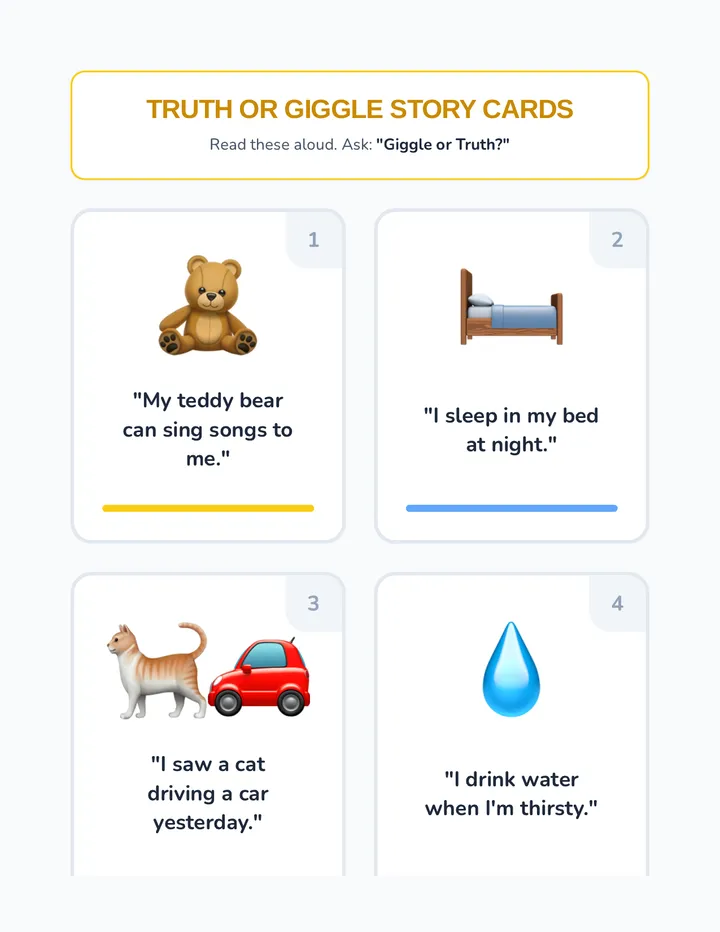
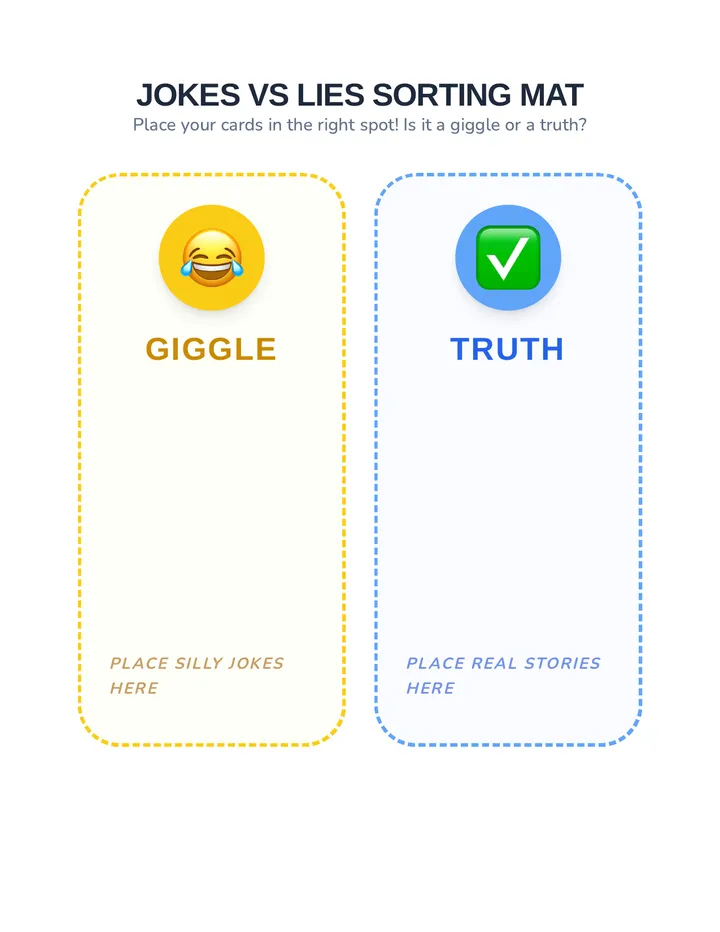
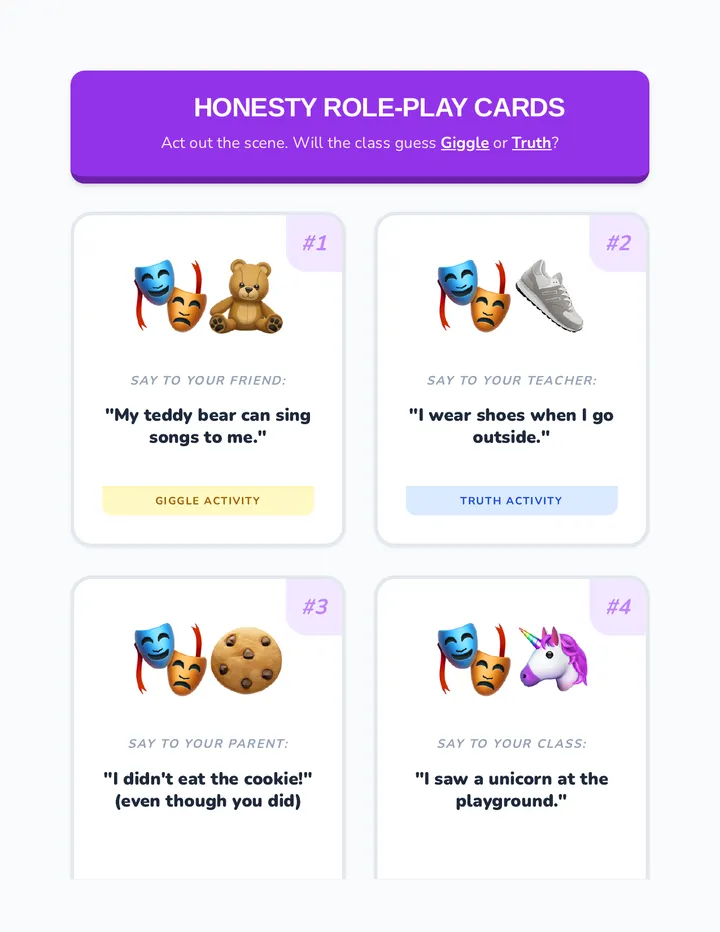
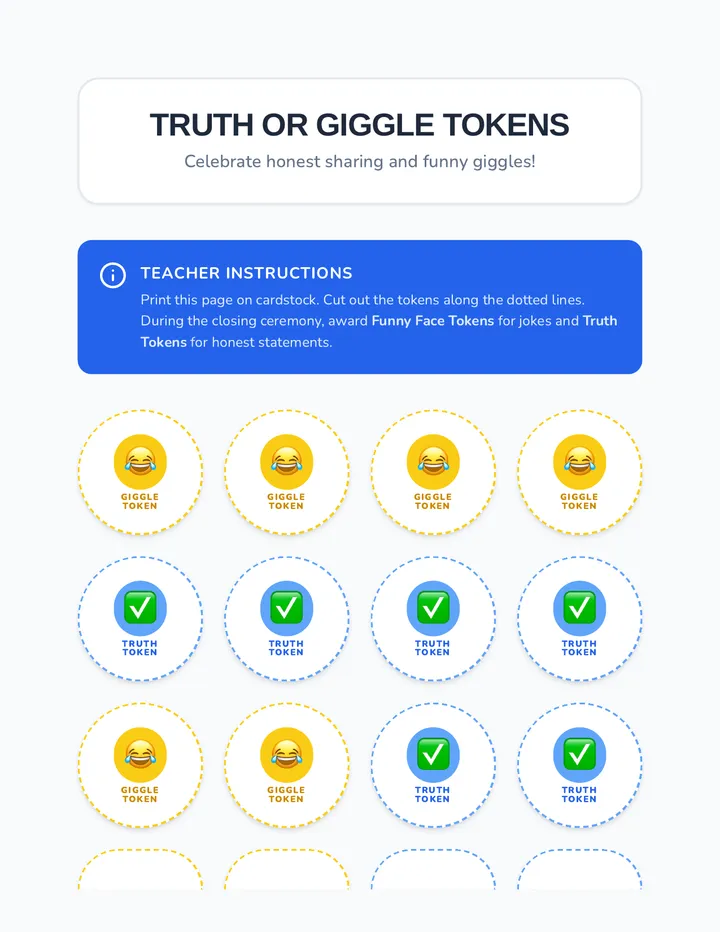
In this fun 90-minute pre-K lesson, students will explore the difference between jokes and lies through storytelling, role-play, and interactive games. Learning this skill helps children develop honesty and social understanding essential for healthy relationships.
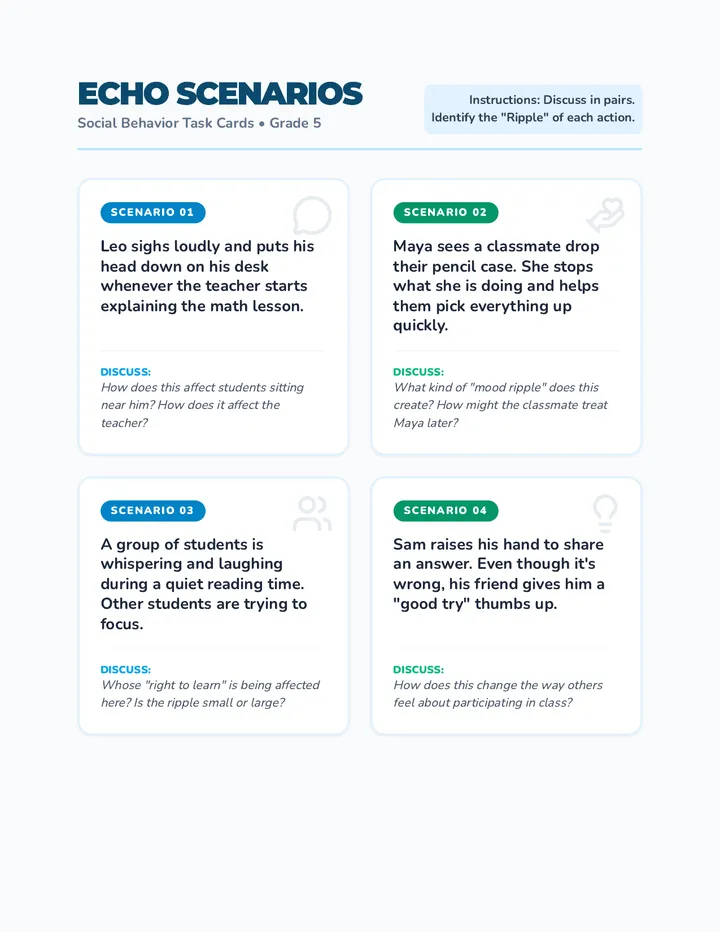
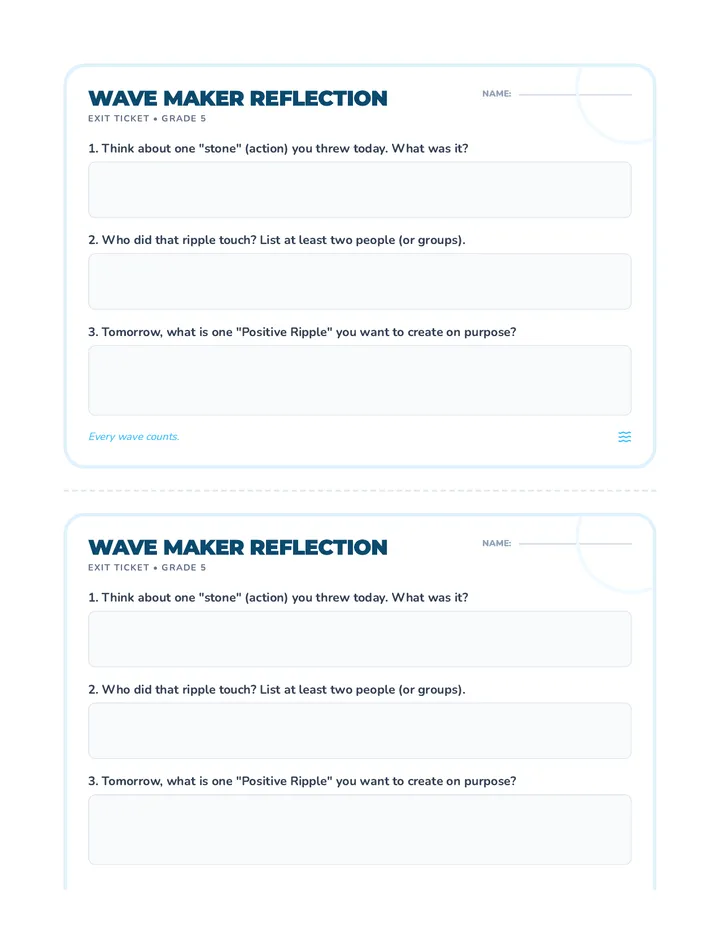
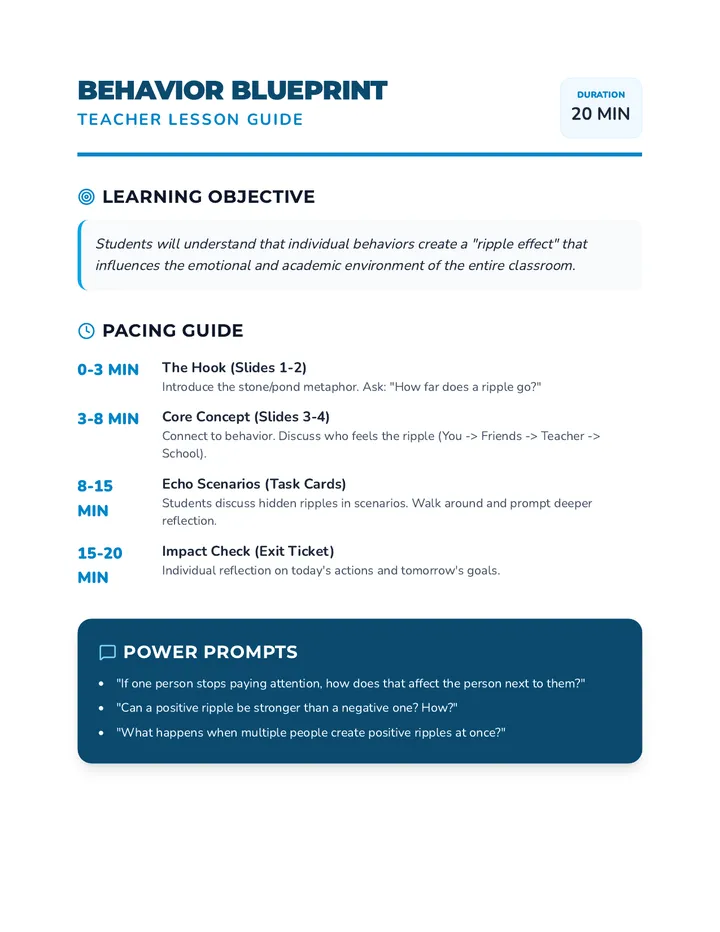
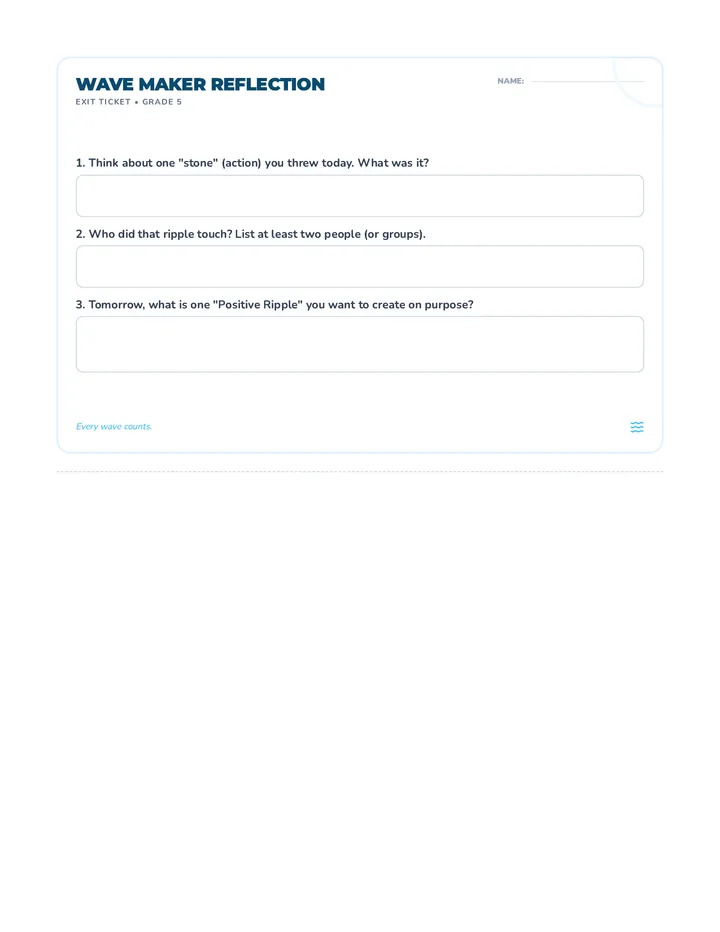
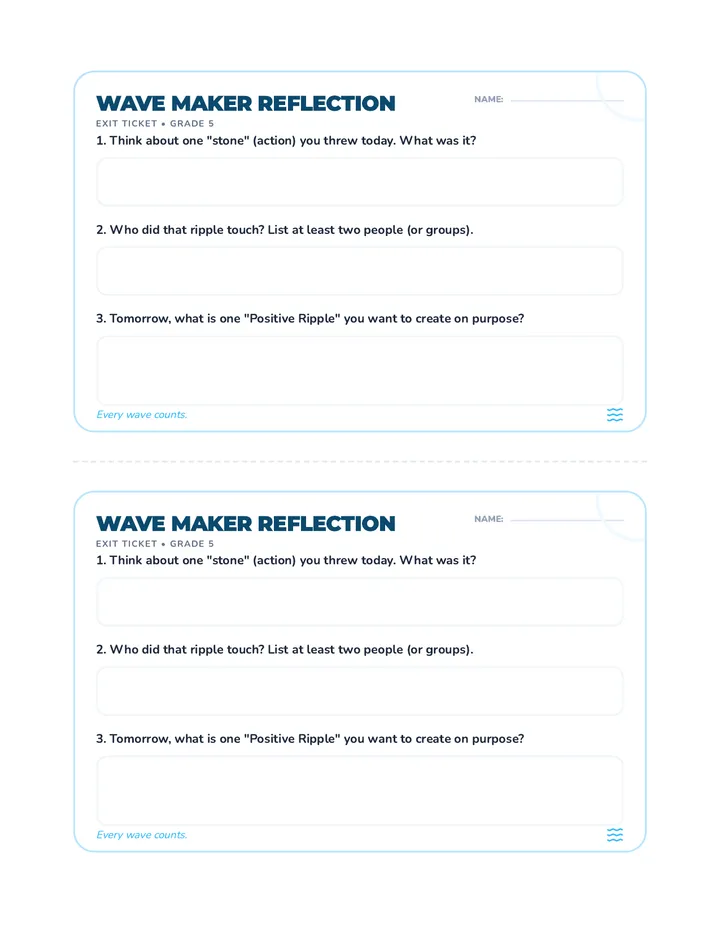
A social-emotional learning lesson for 5th graders exploring how individual actions create a 'ripple effect' that impacts the entire classroom environment, focusing on empathy and community responsibility.
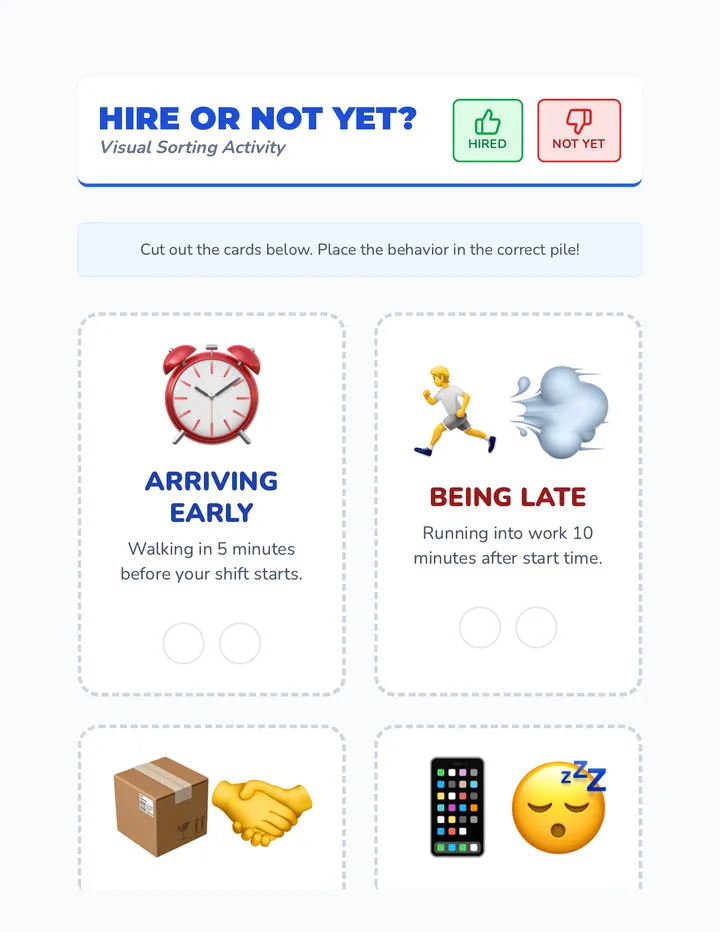
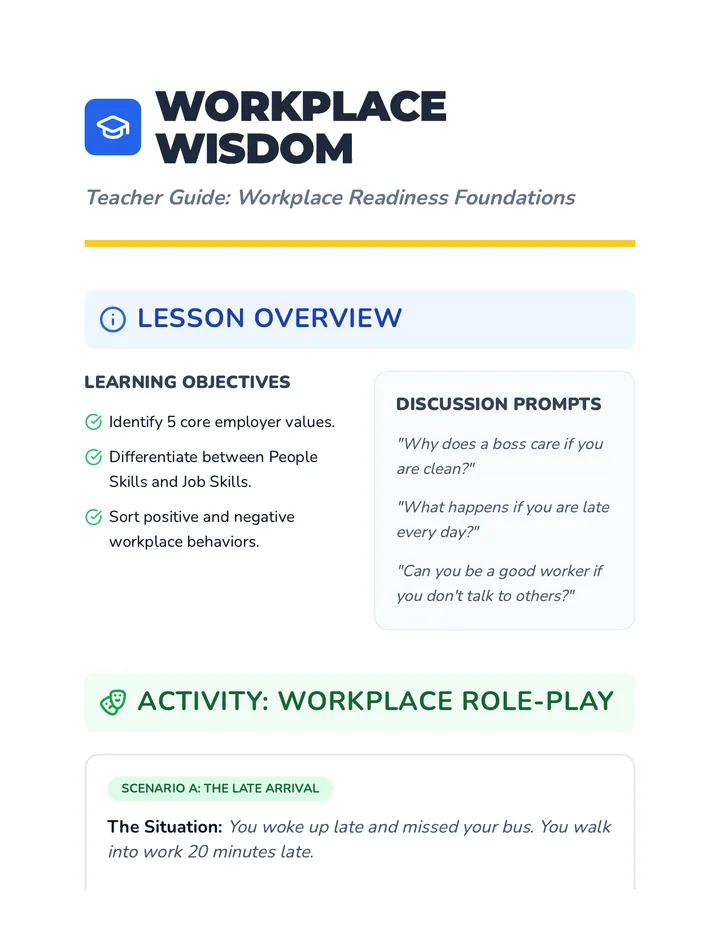
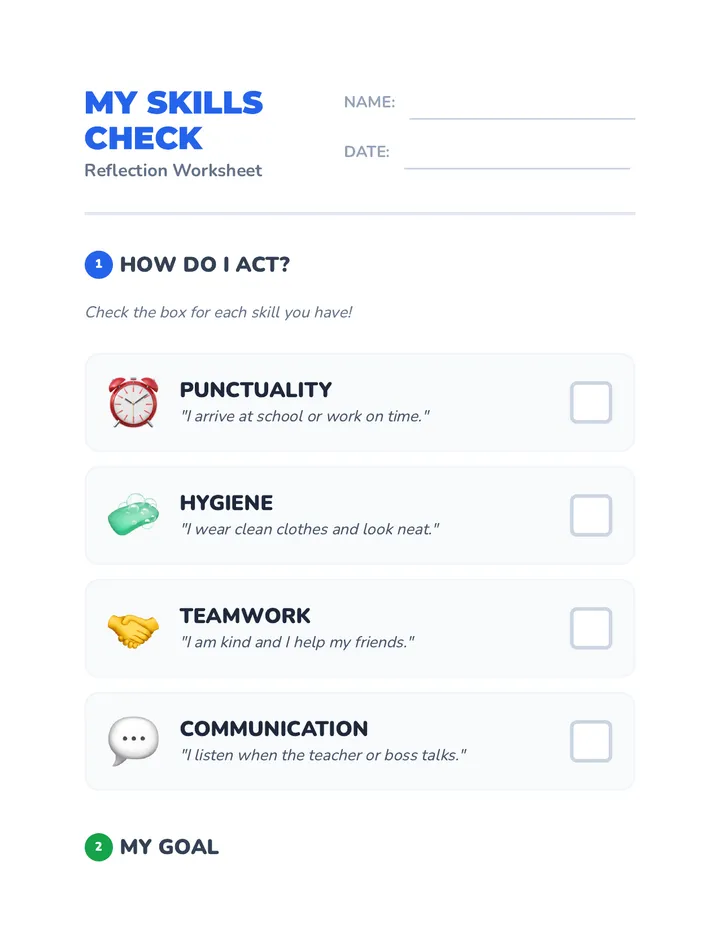
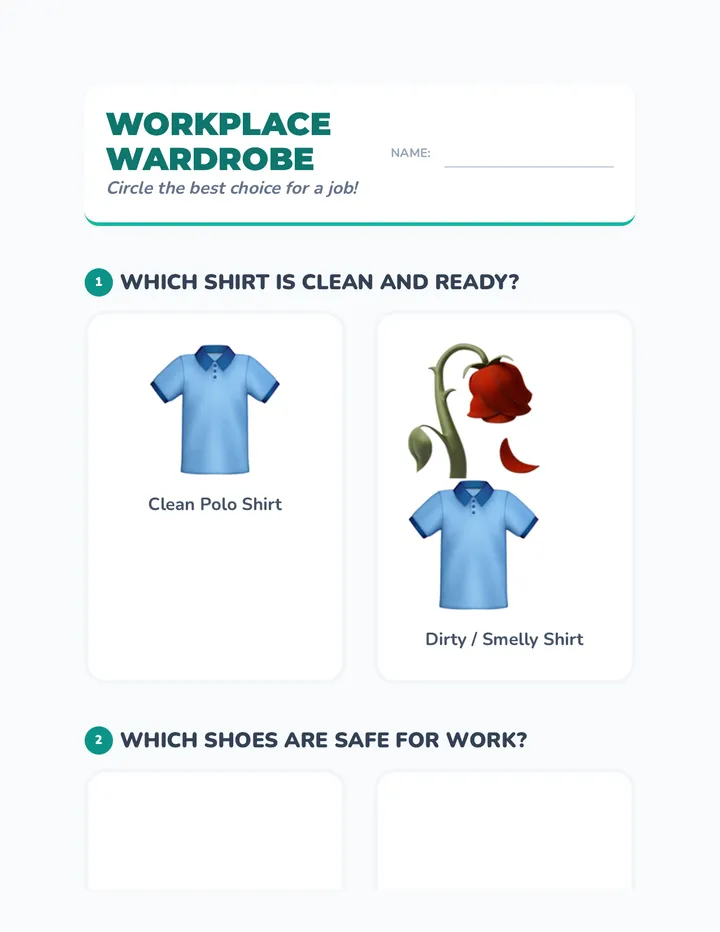
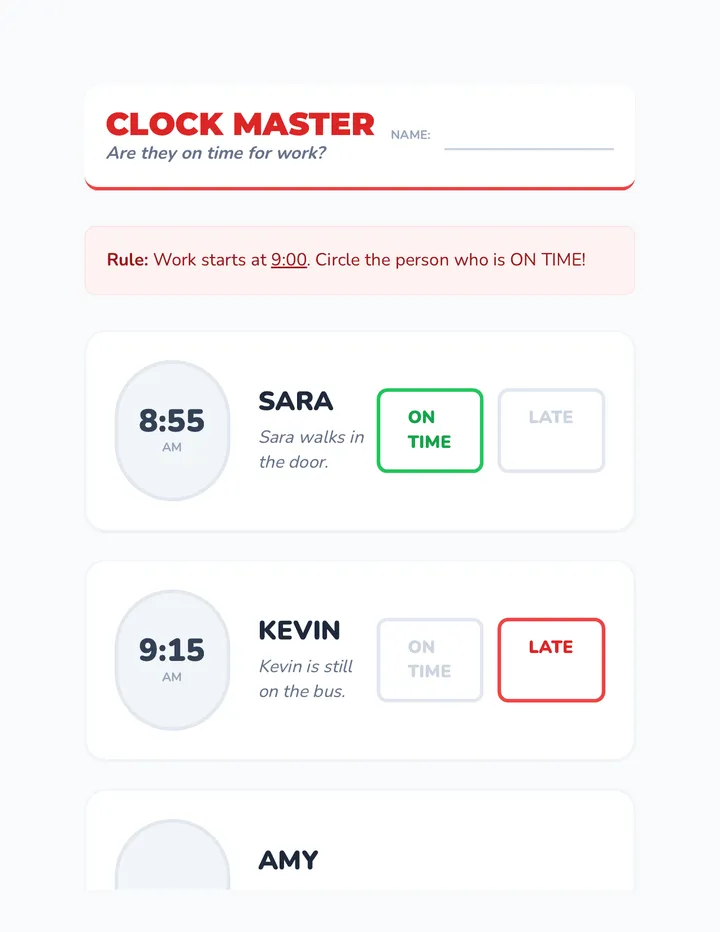
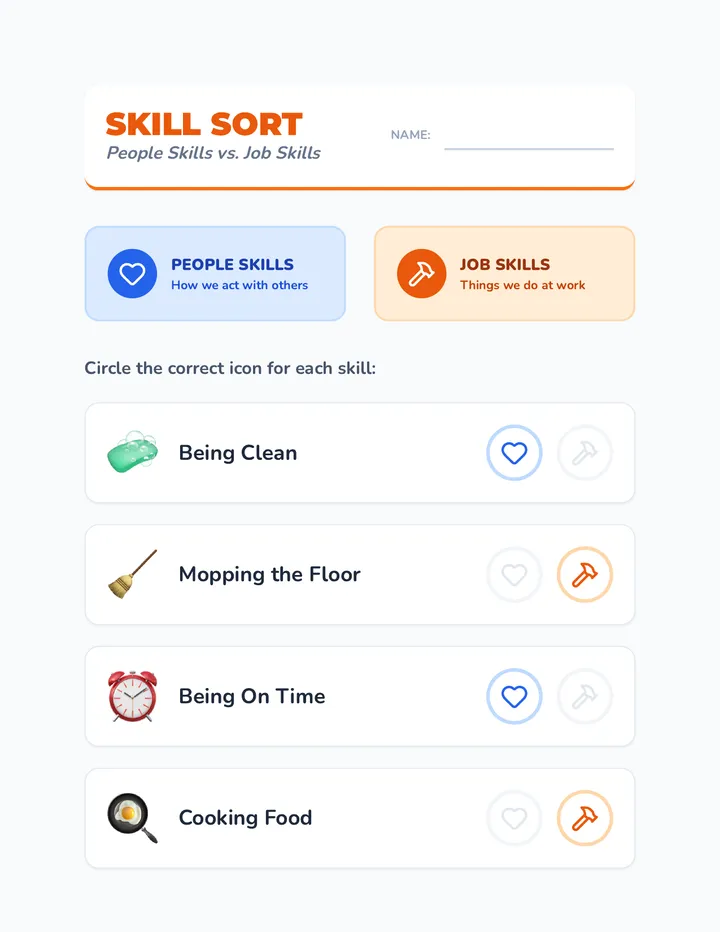
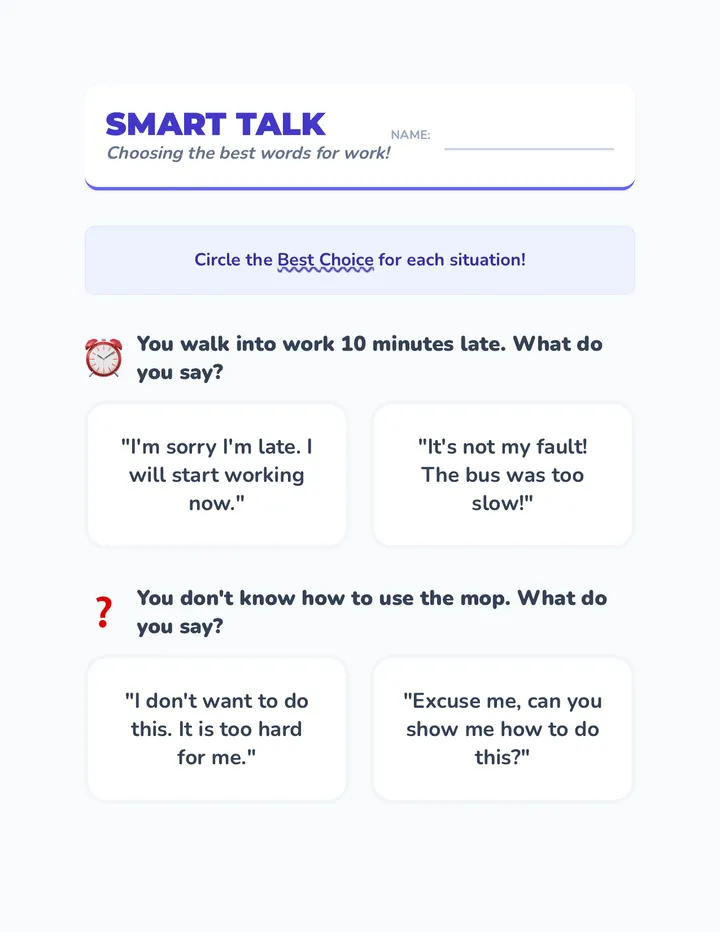
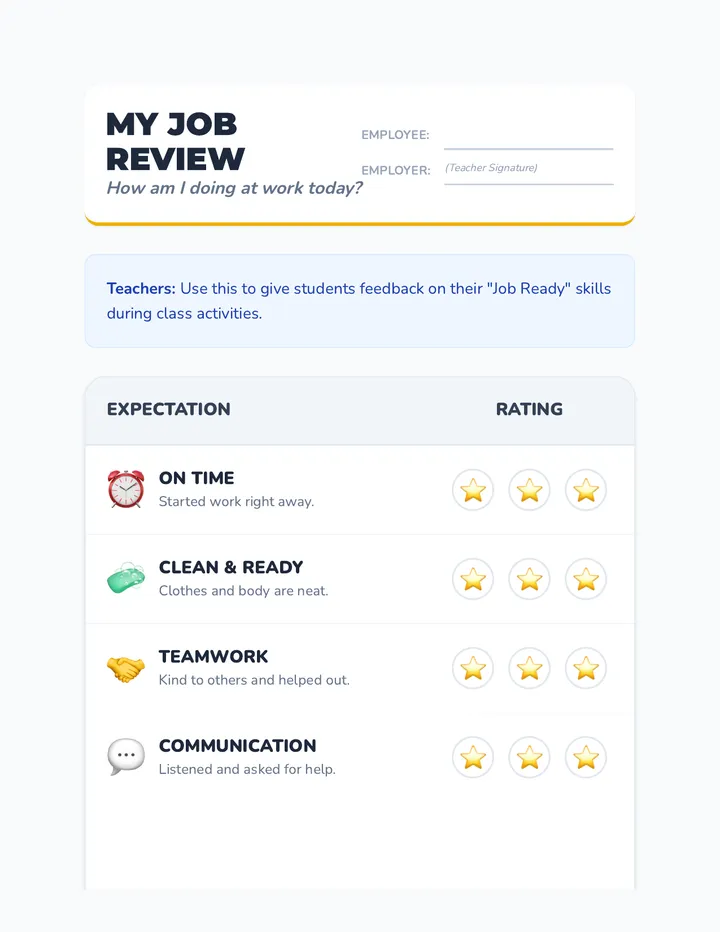
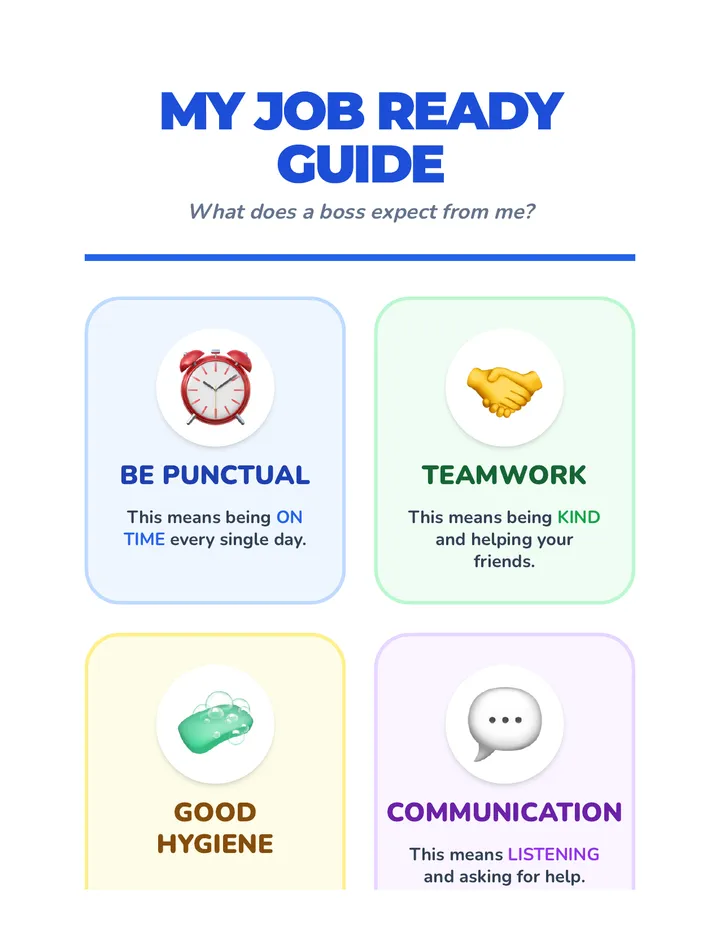
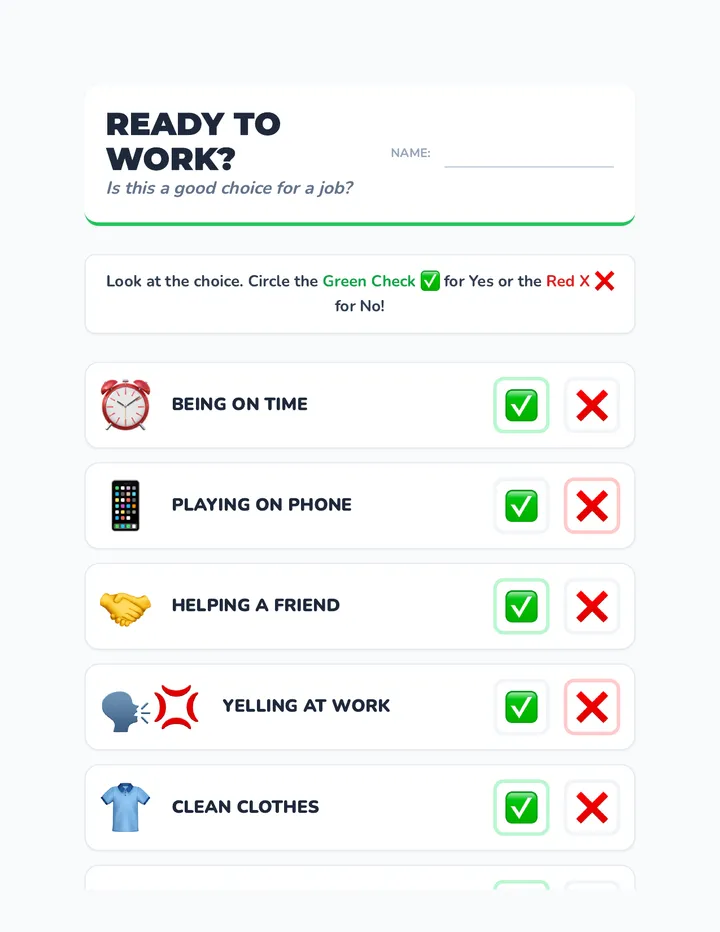
A comprehensive lesson designed for life skills students to understand what employers look for, focusing on core values like punctuality, teamwork, and hygiene through visual aids and interactive activities.
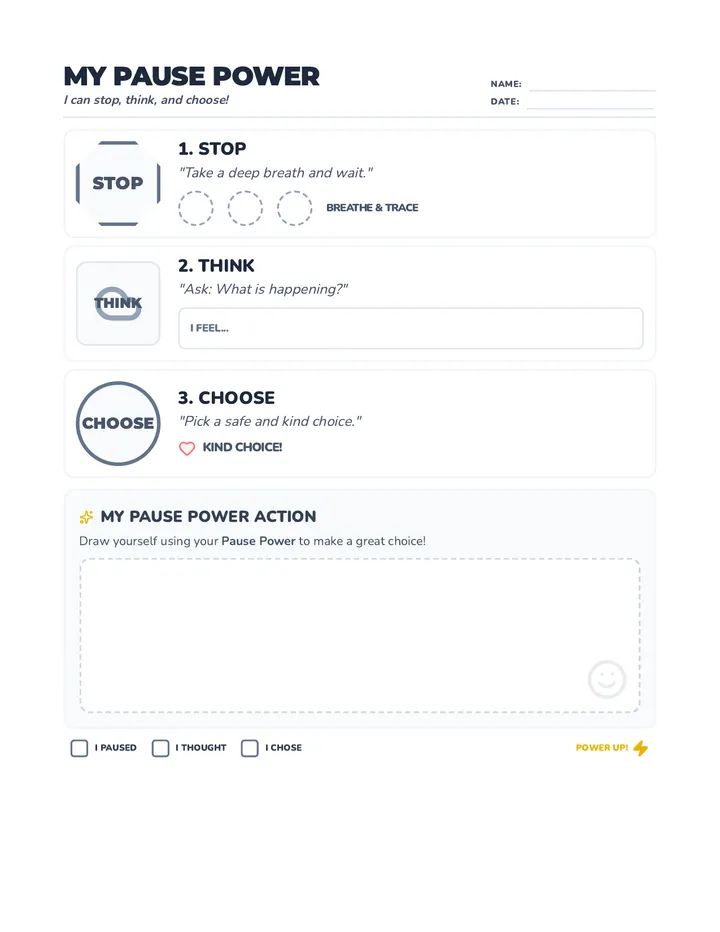
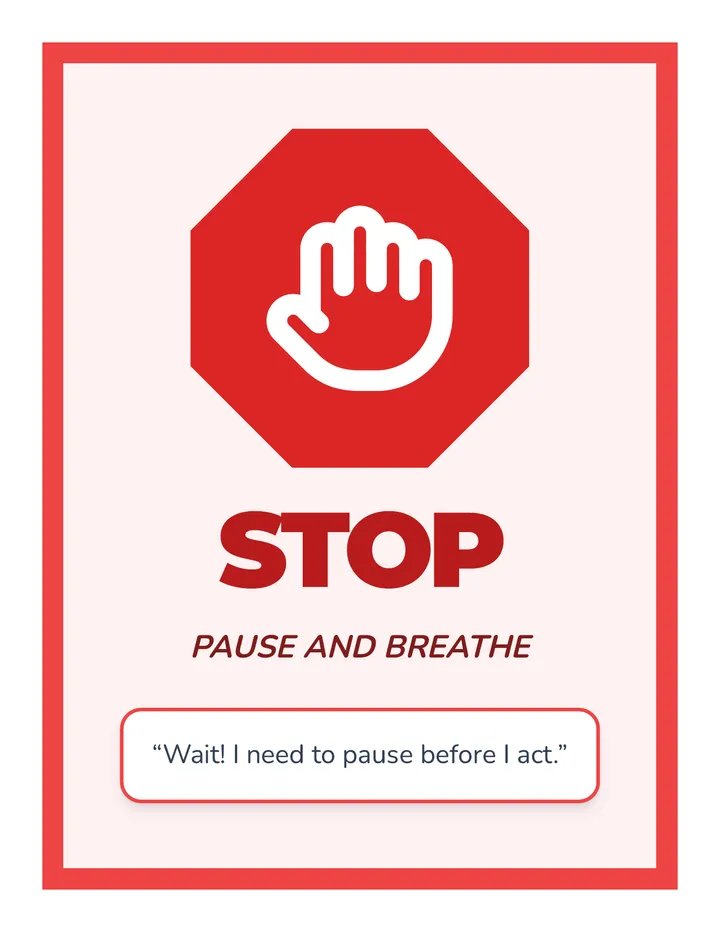
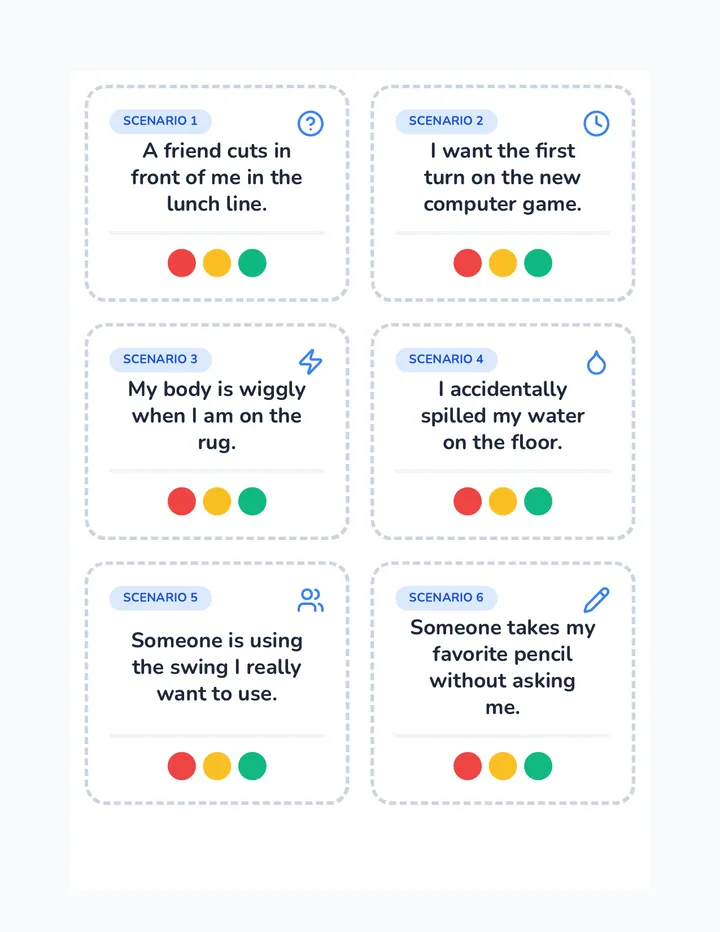
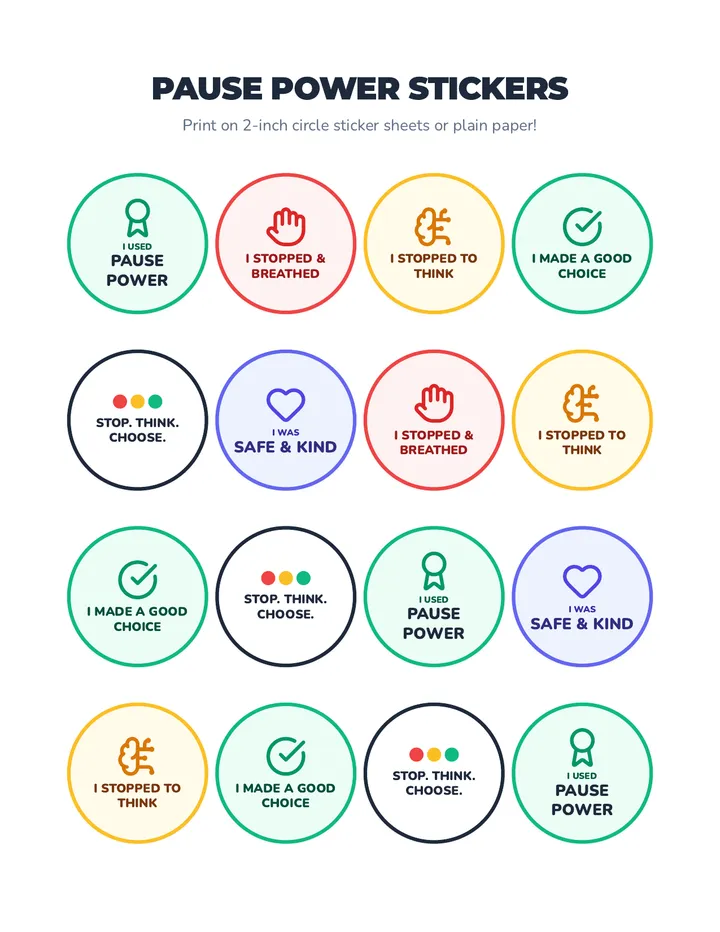
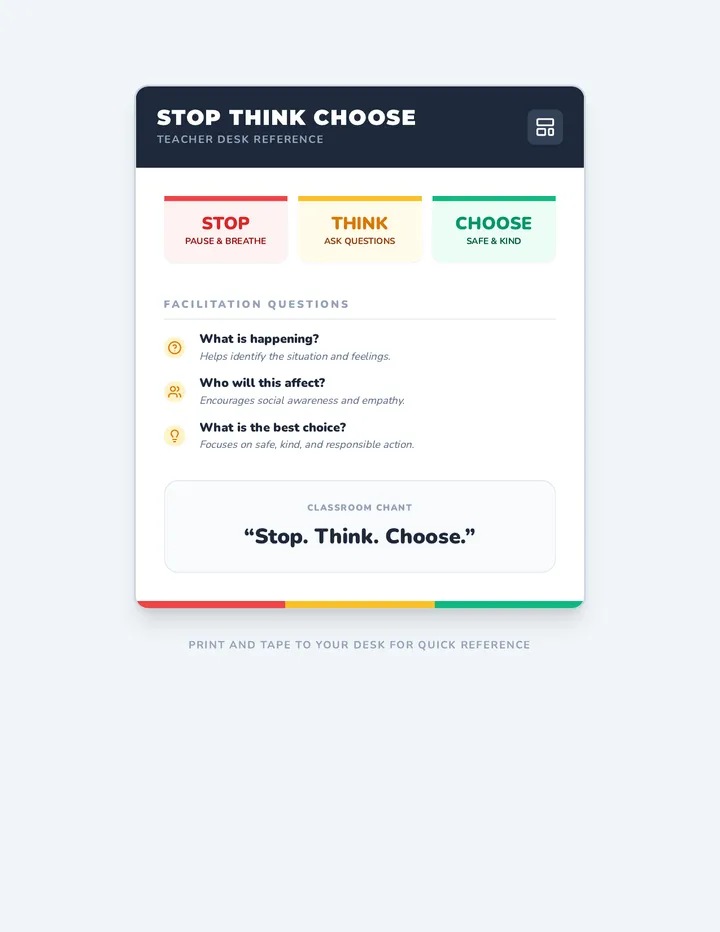
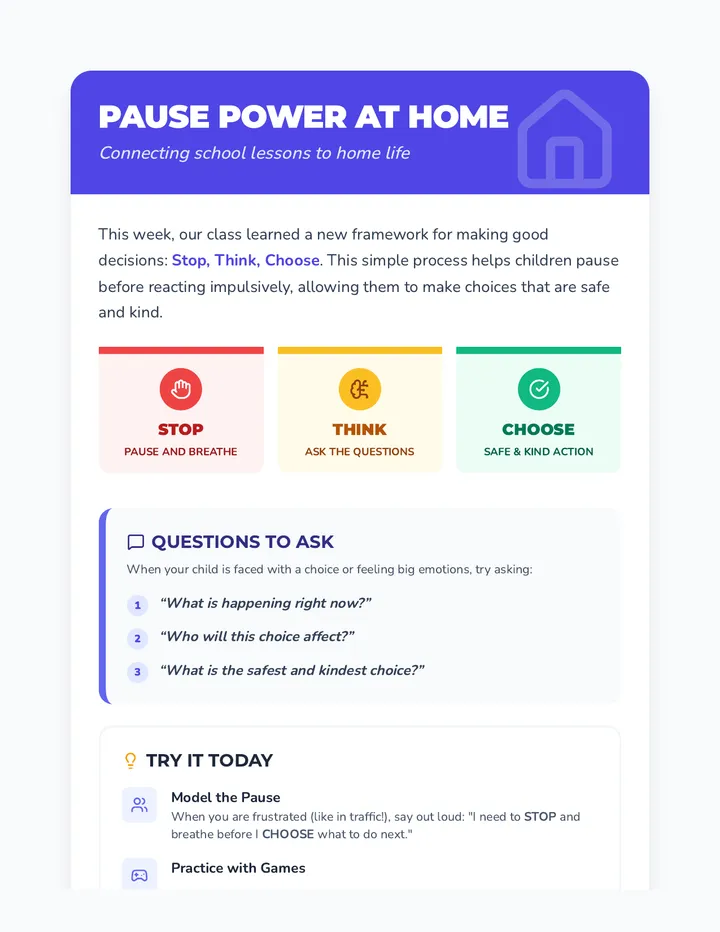
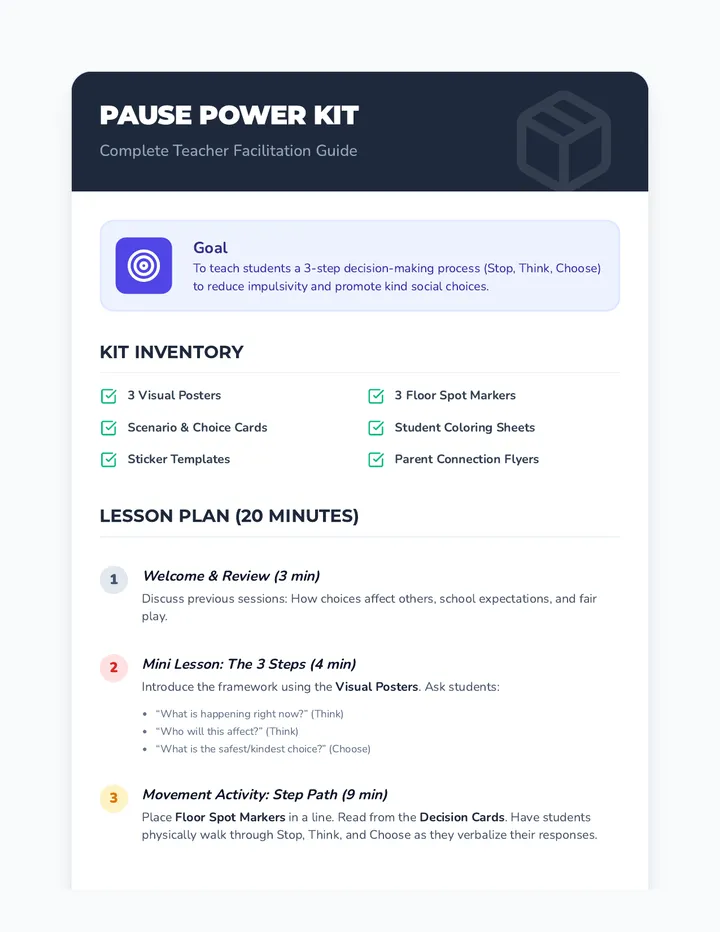
A social-emotional learning lesson focused on the 'Stop, Think, Choose' framework for decision-making. Students practice pausing before acting through movement activities, scenarios, and visual reinforcements.
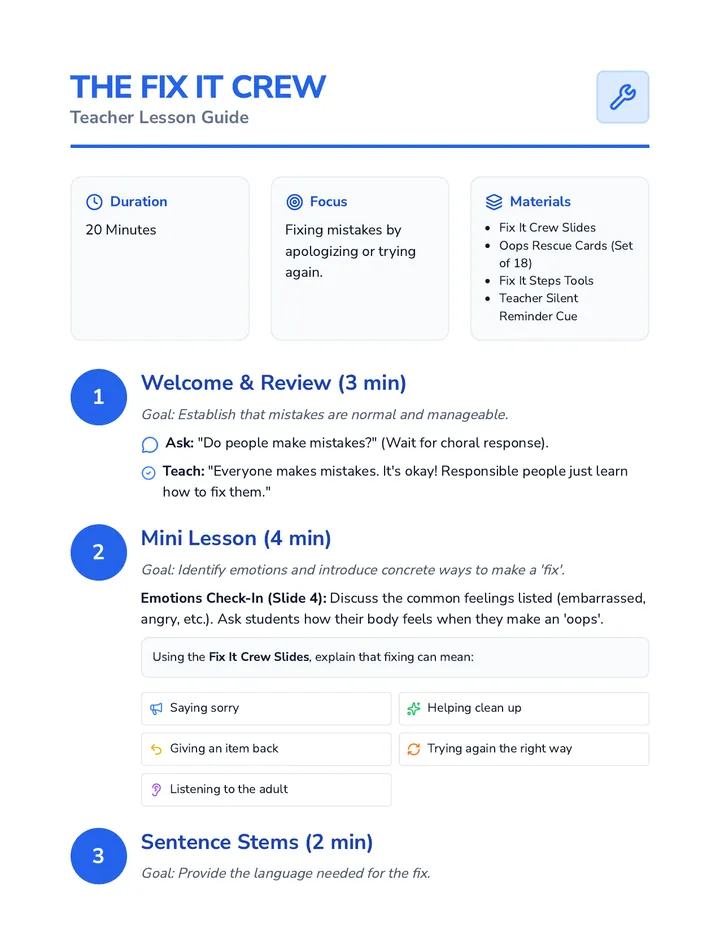
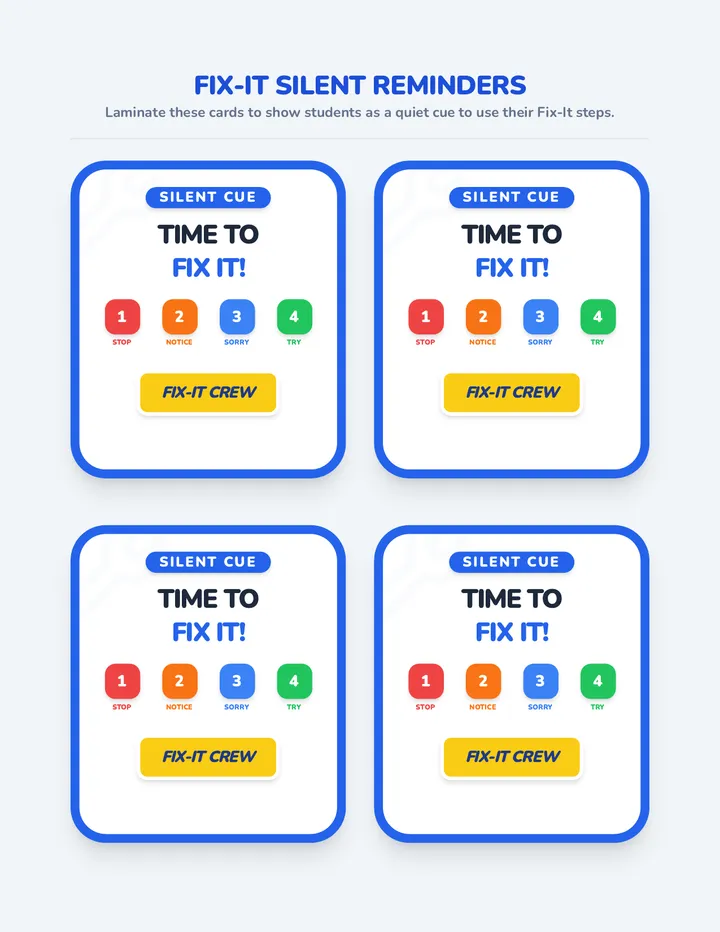
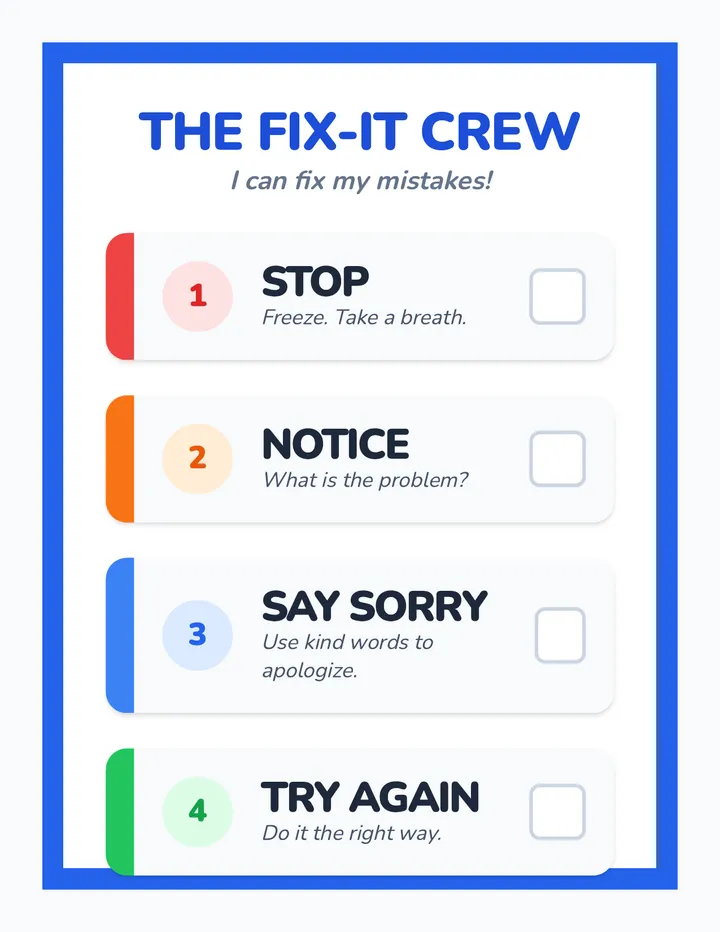
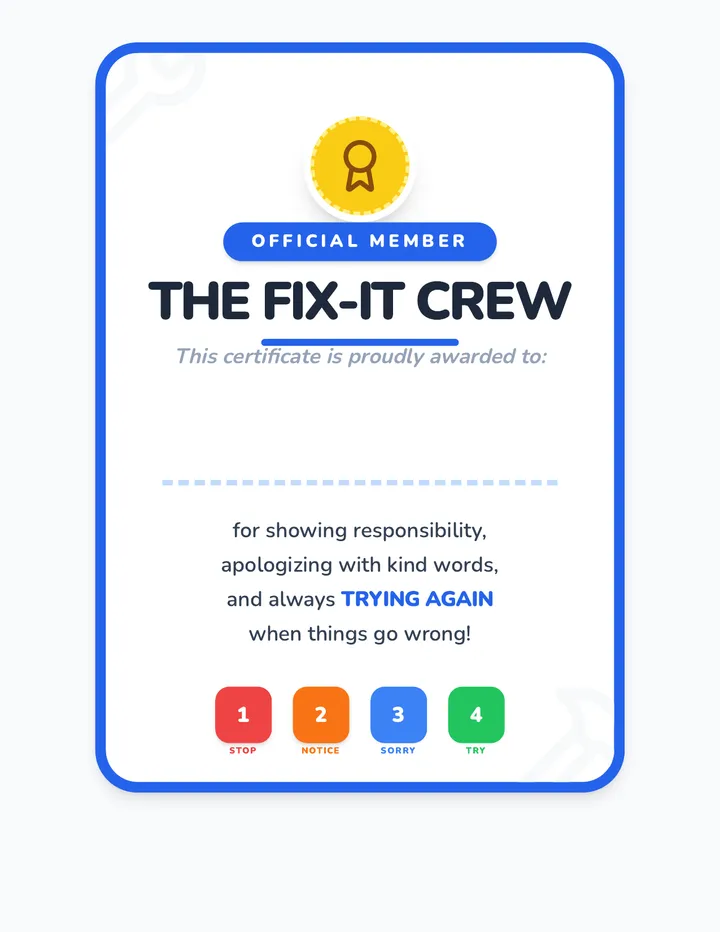
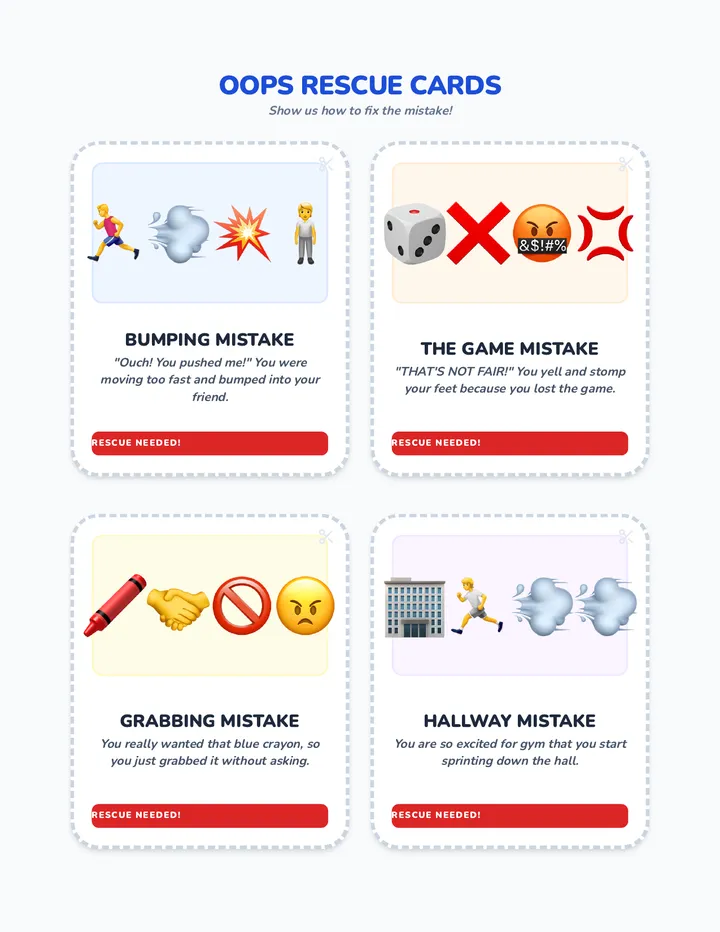
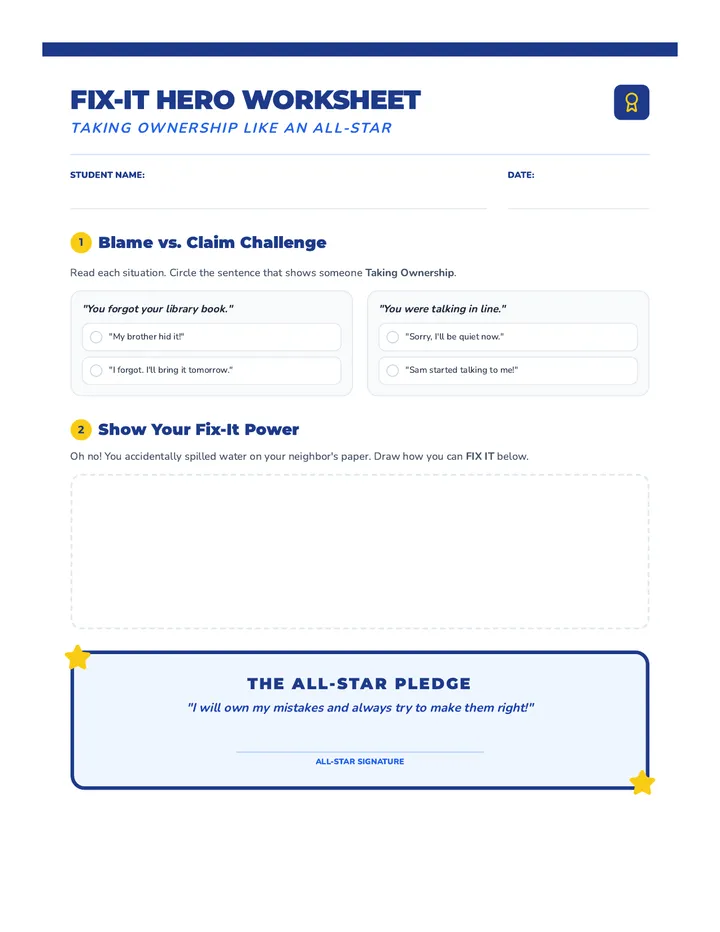
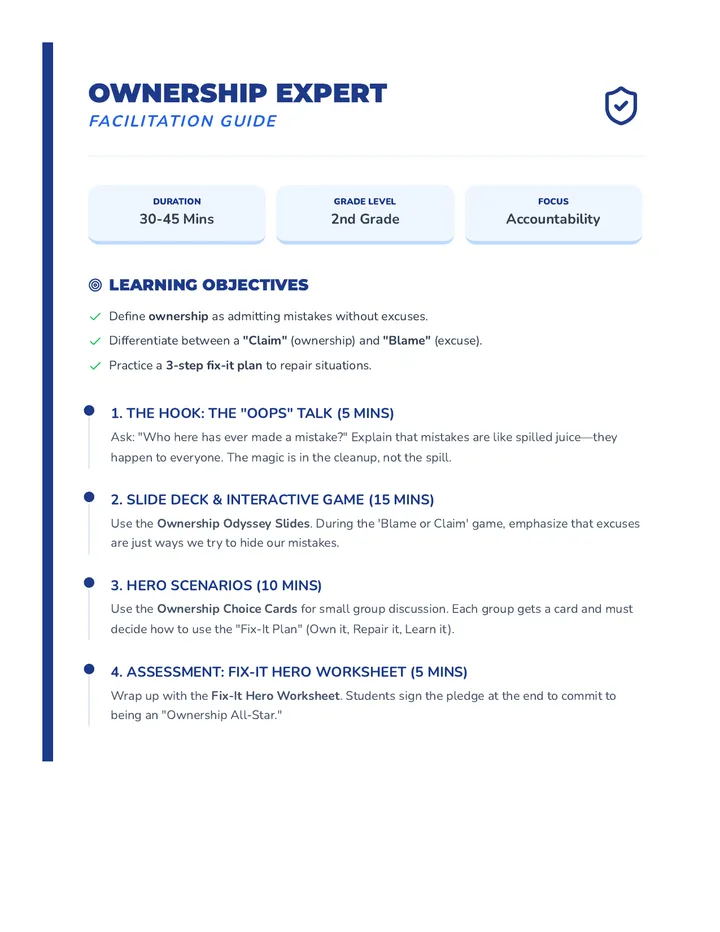
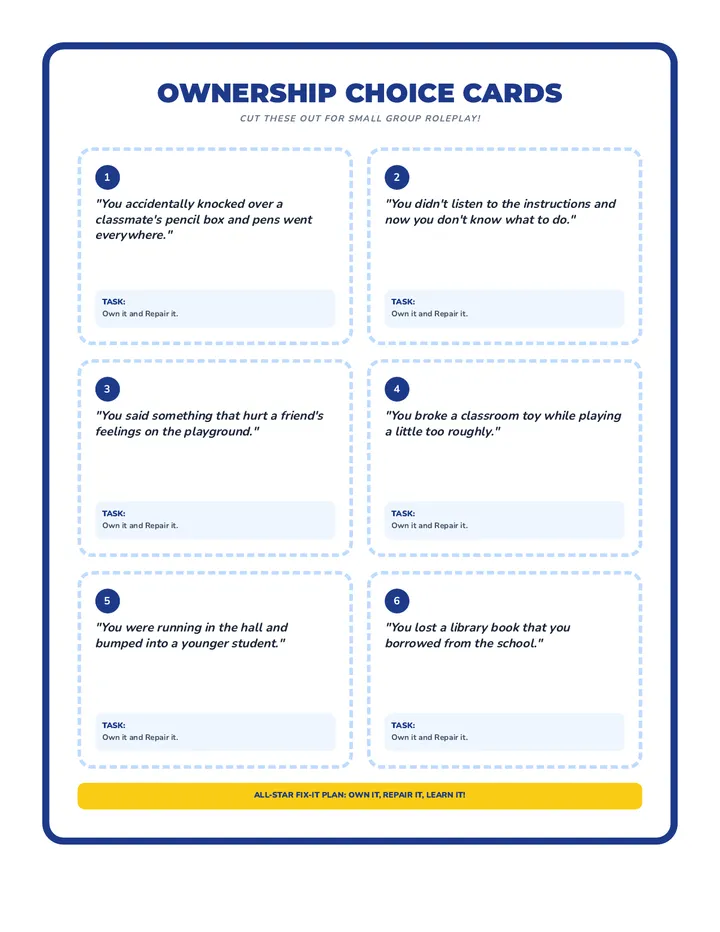
A social-emotional learning lesson focused on taking responsibility for mistakes by following clear 'Fix-It' steps. Students practice apologizing, making amends, and trying again through role-play and visual reminders.
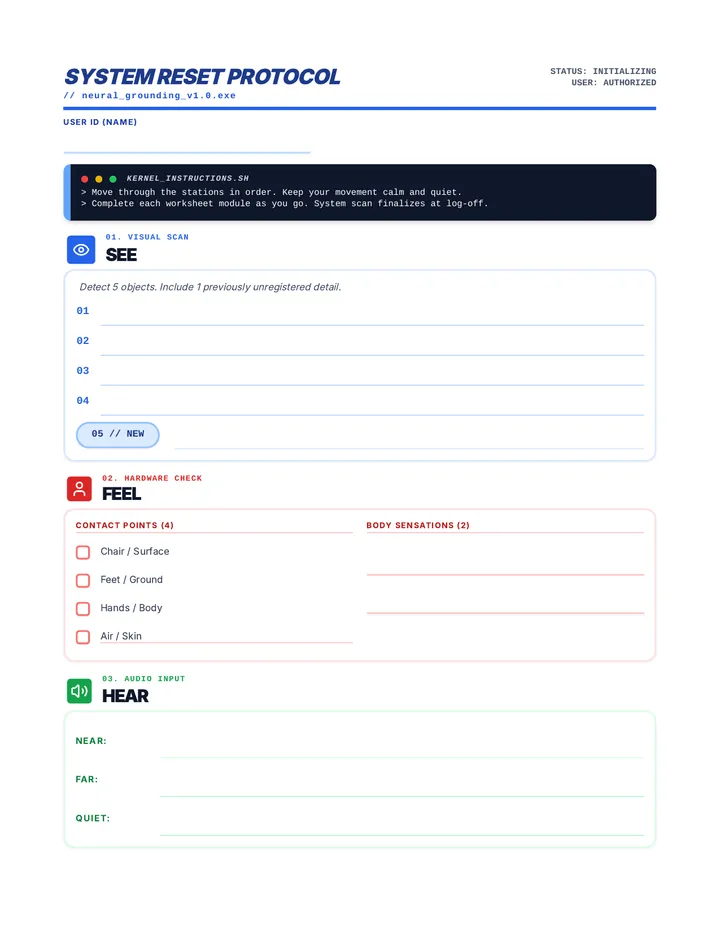
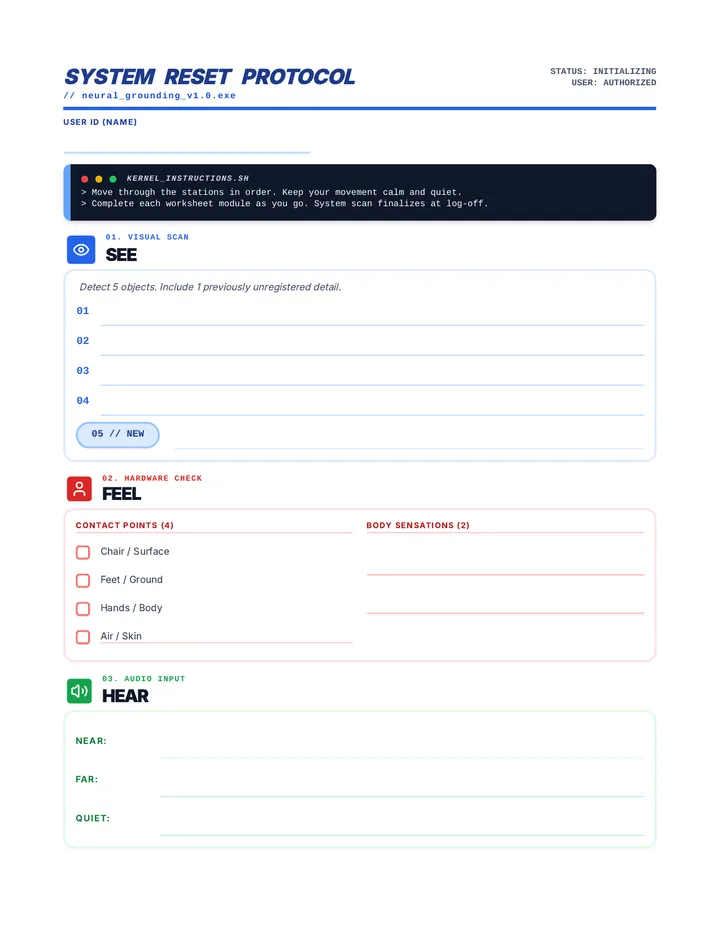
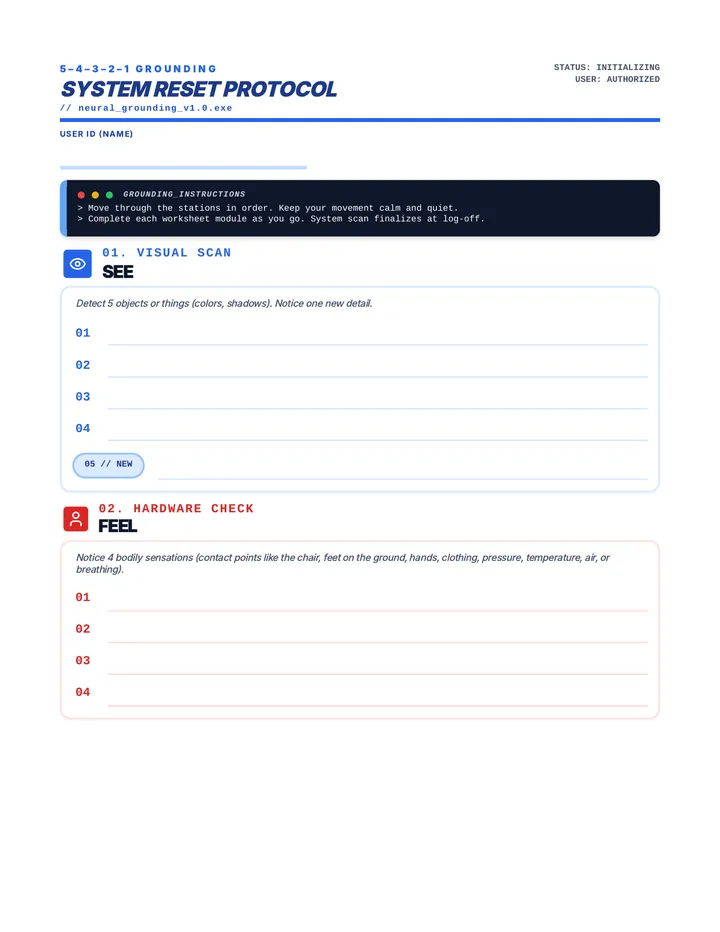
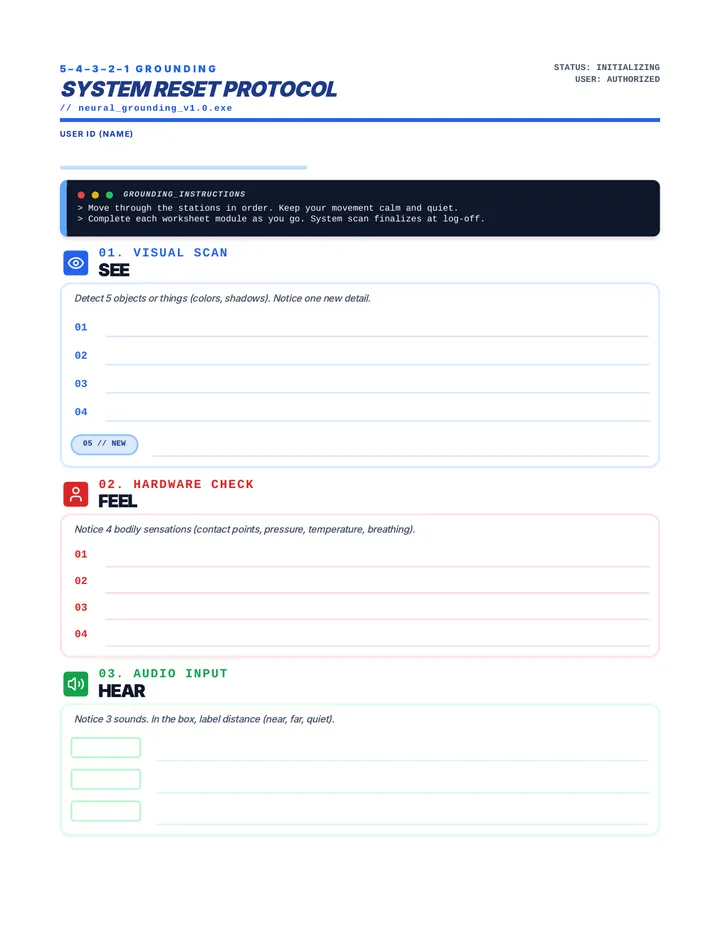
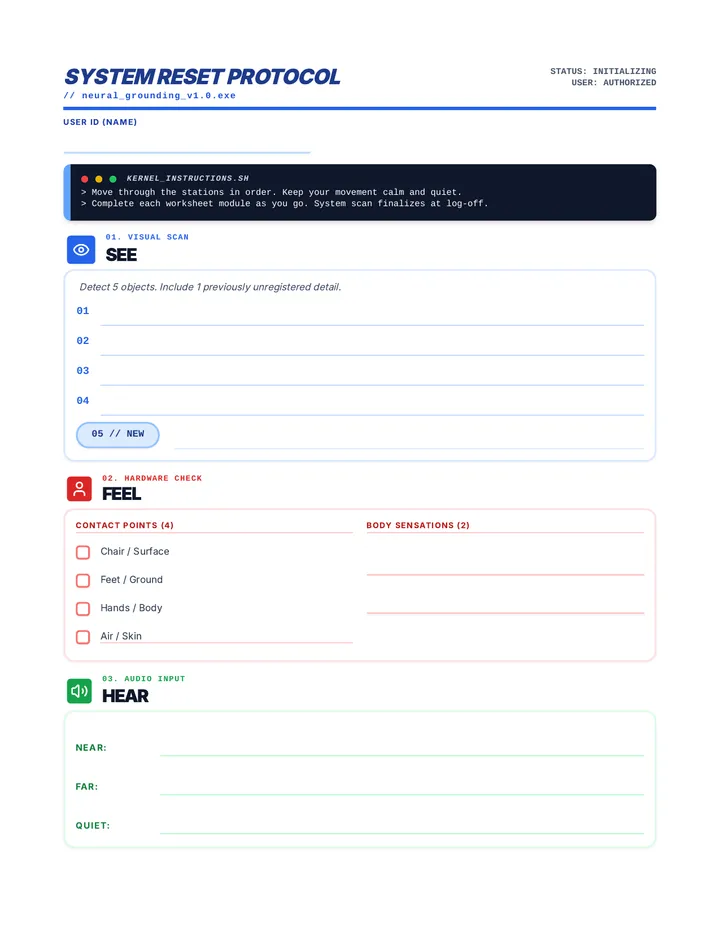
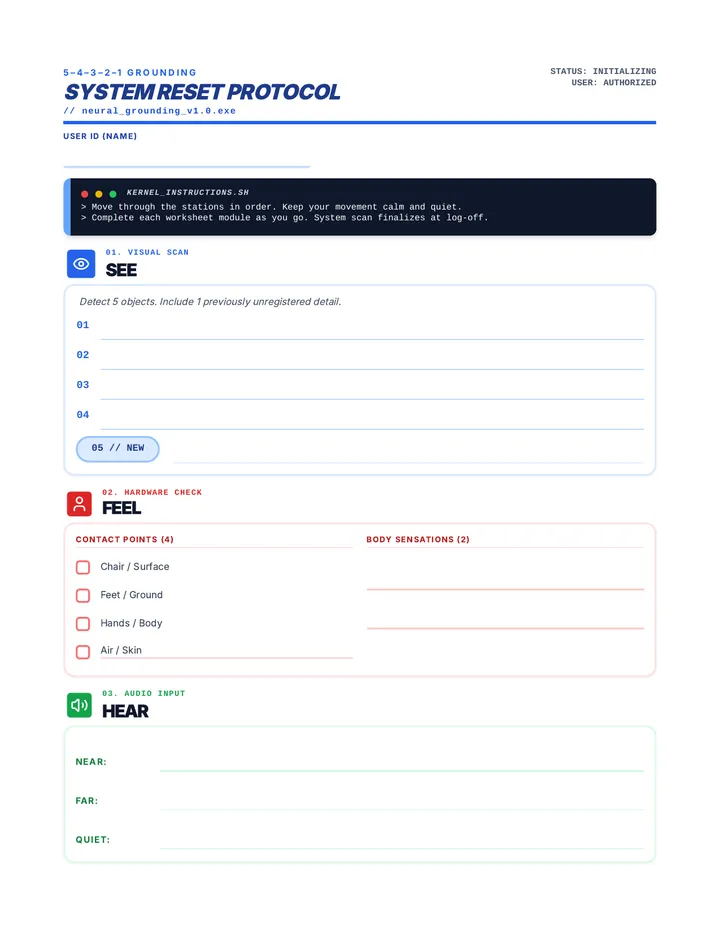
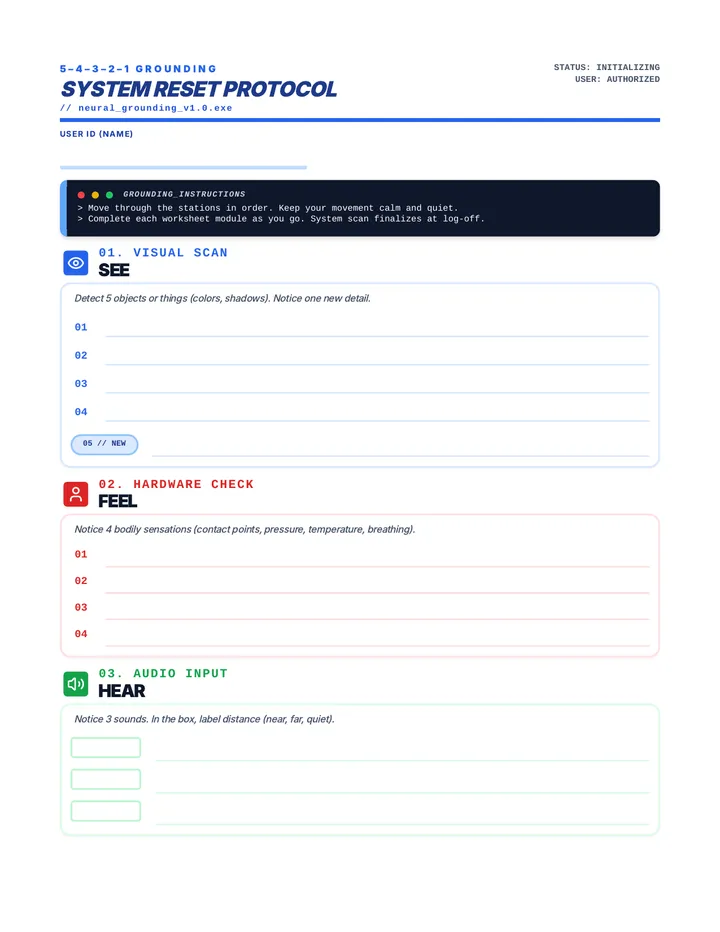
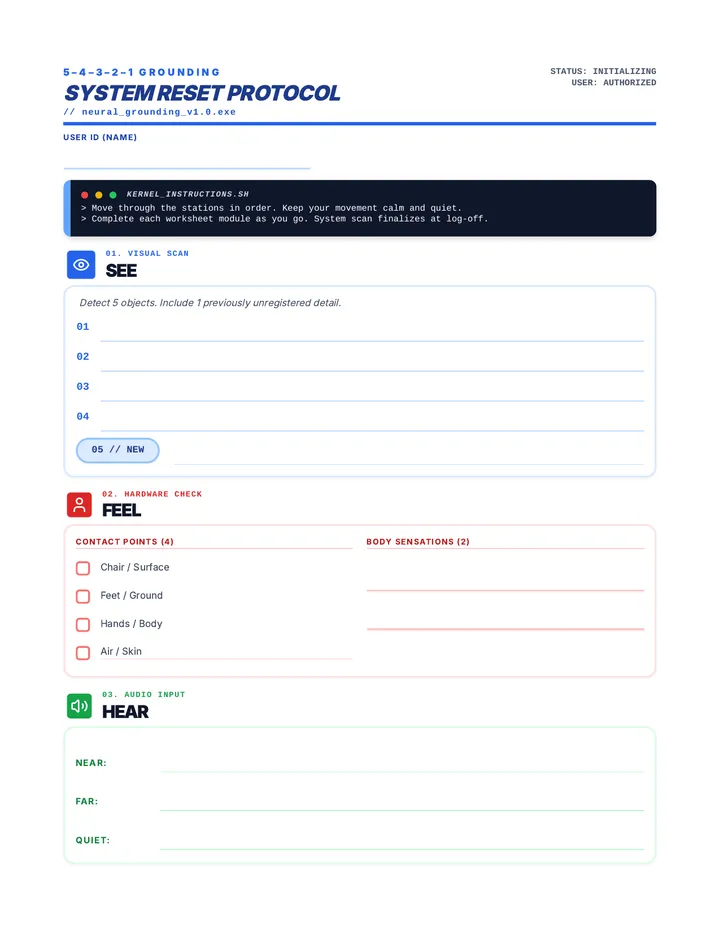
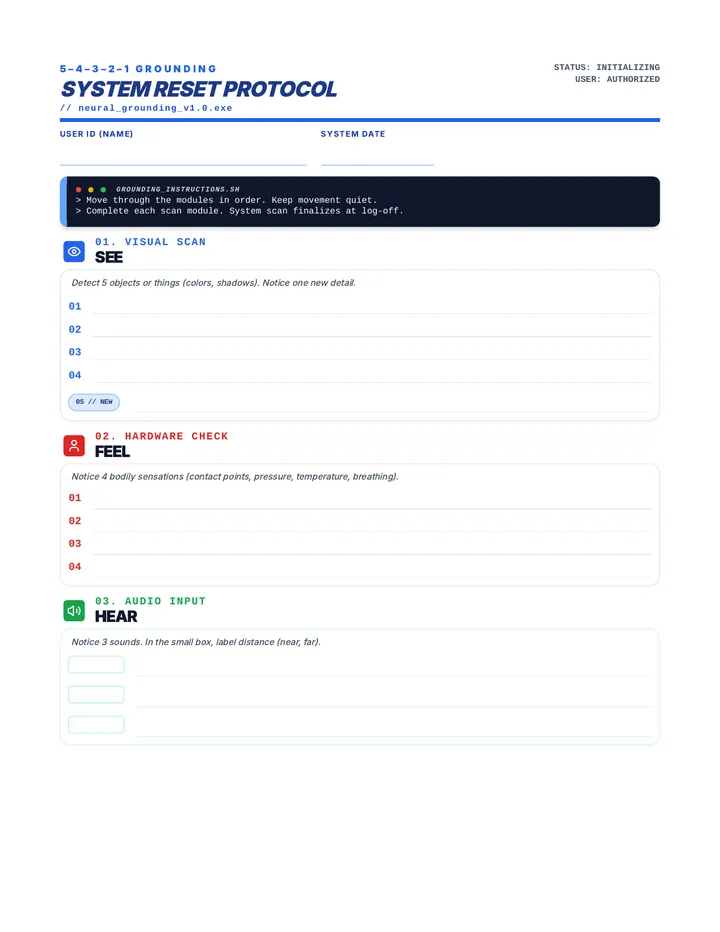
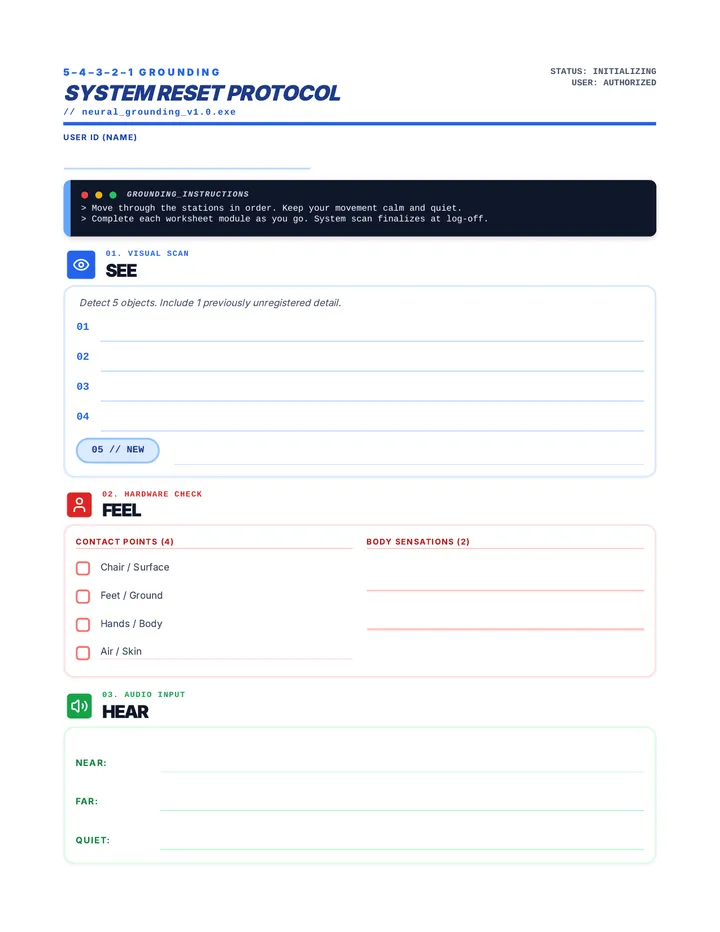
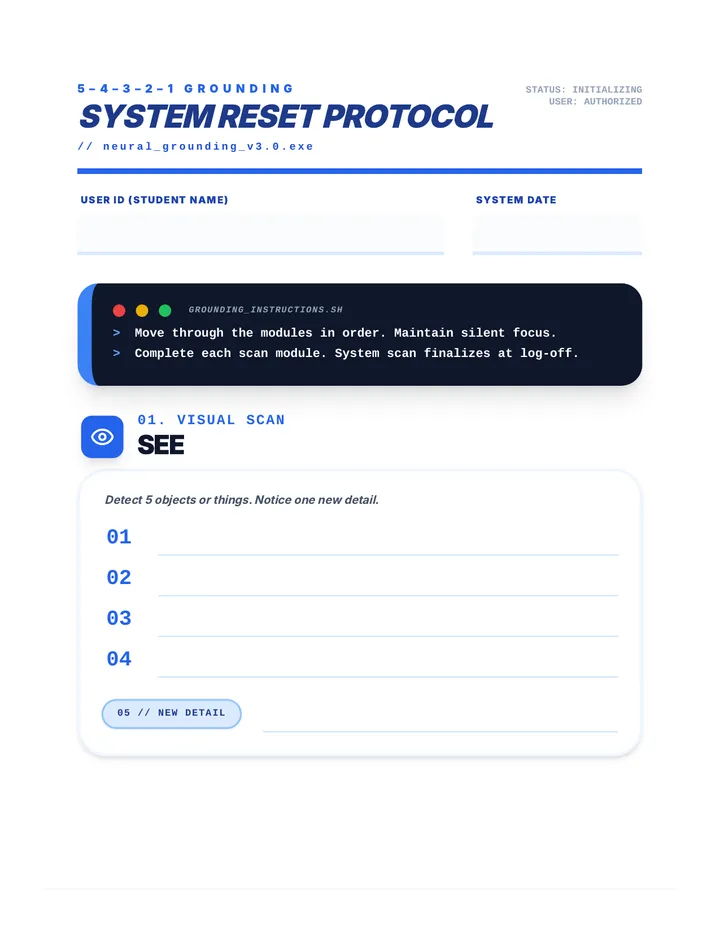
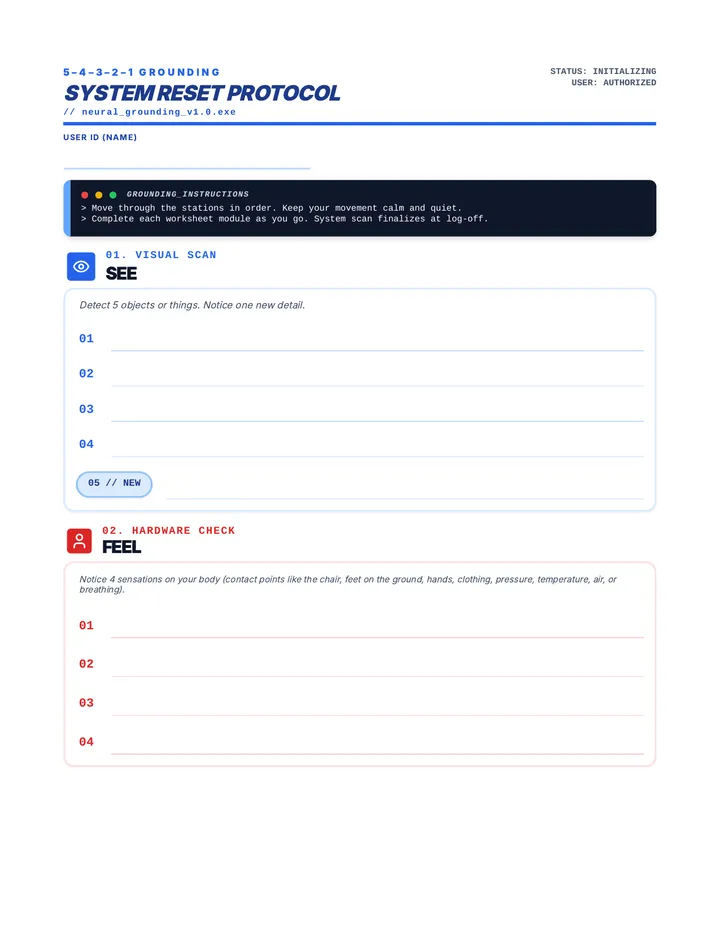
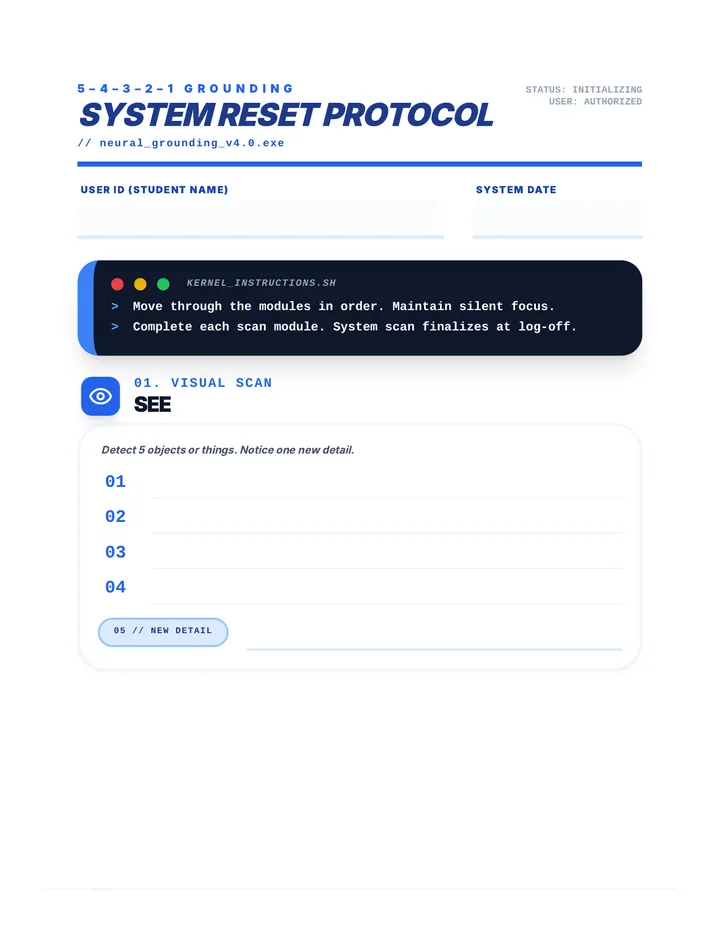
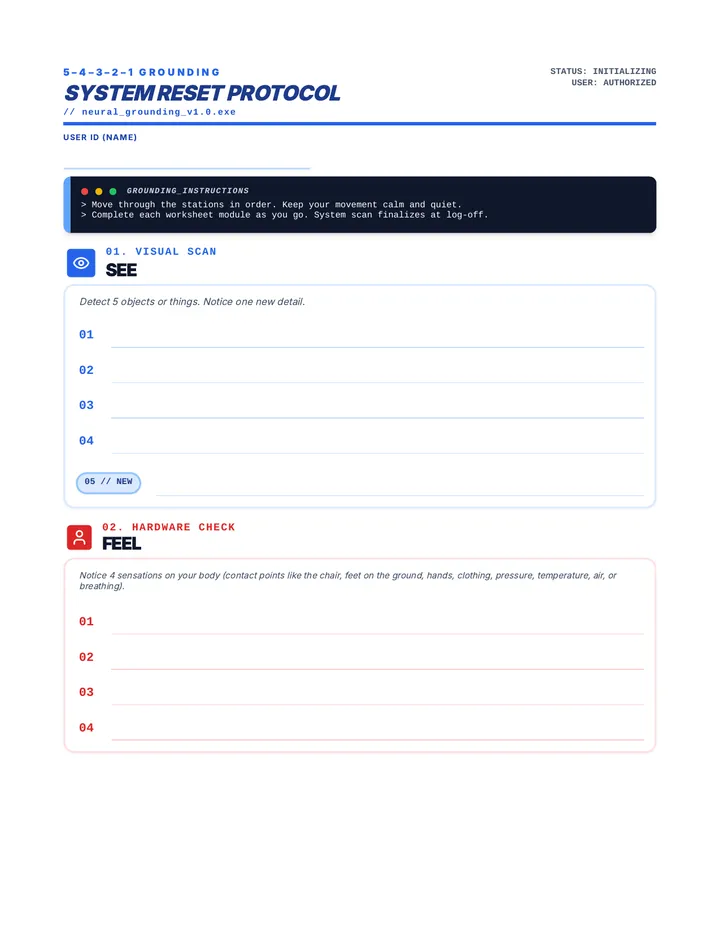
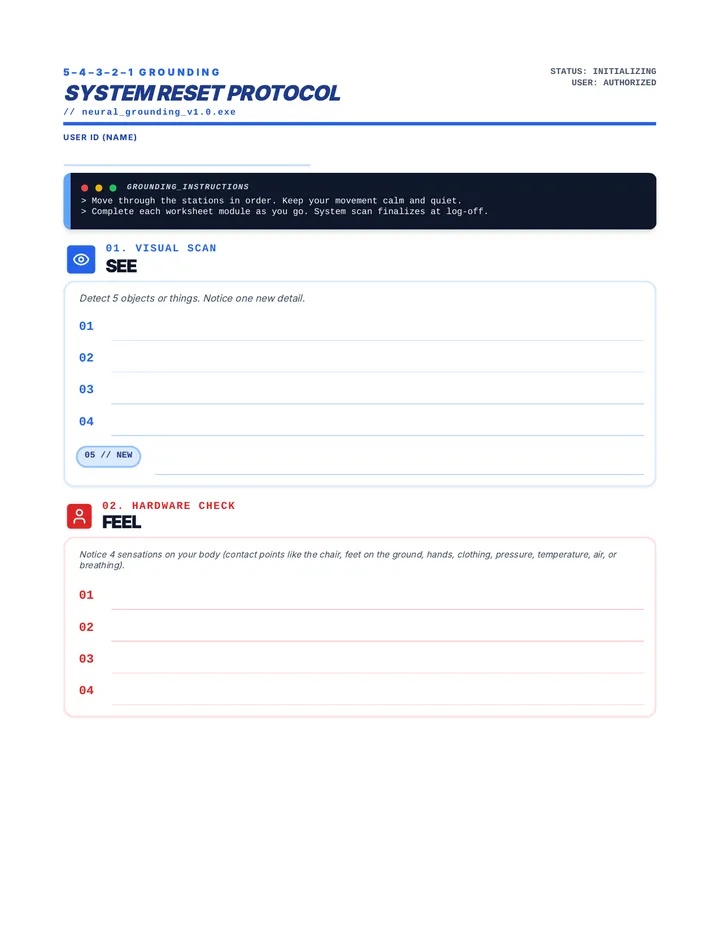
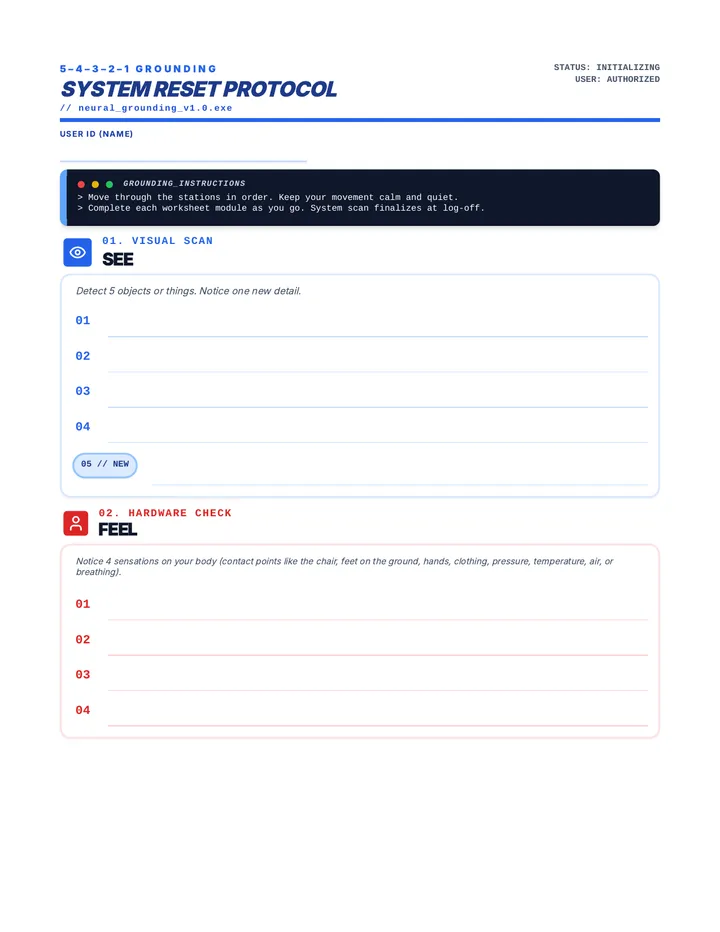
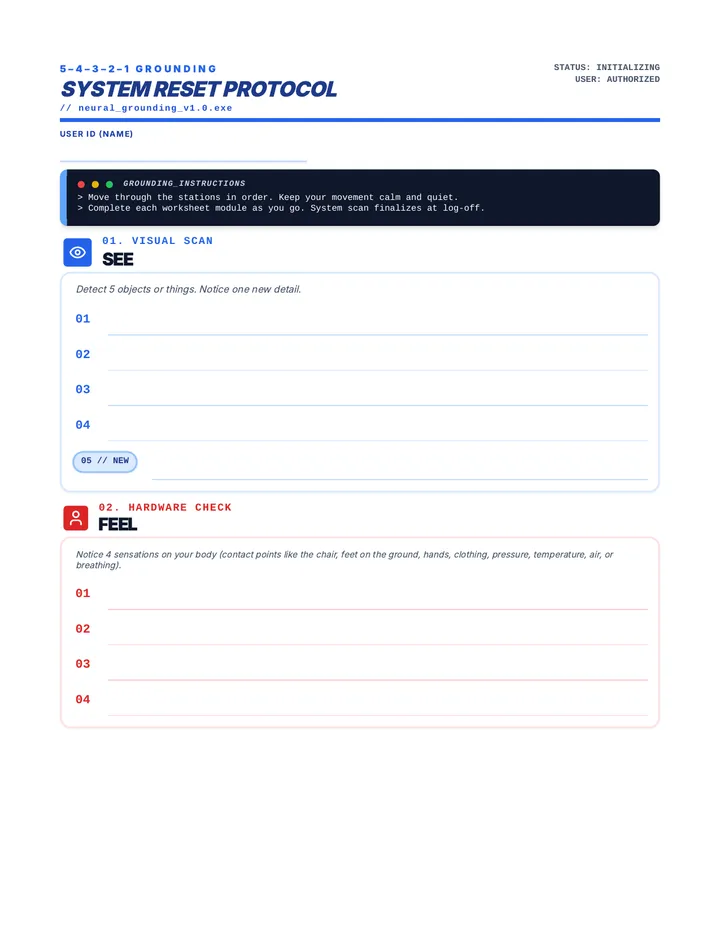
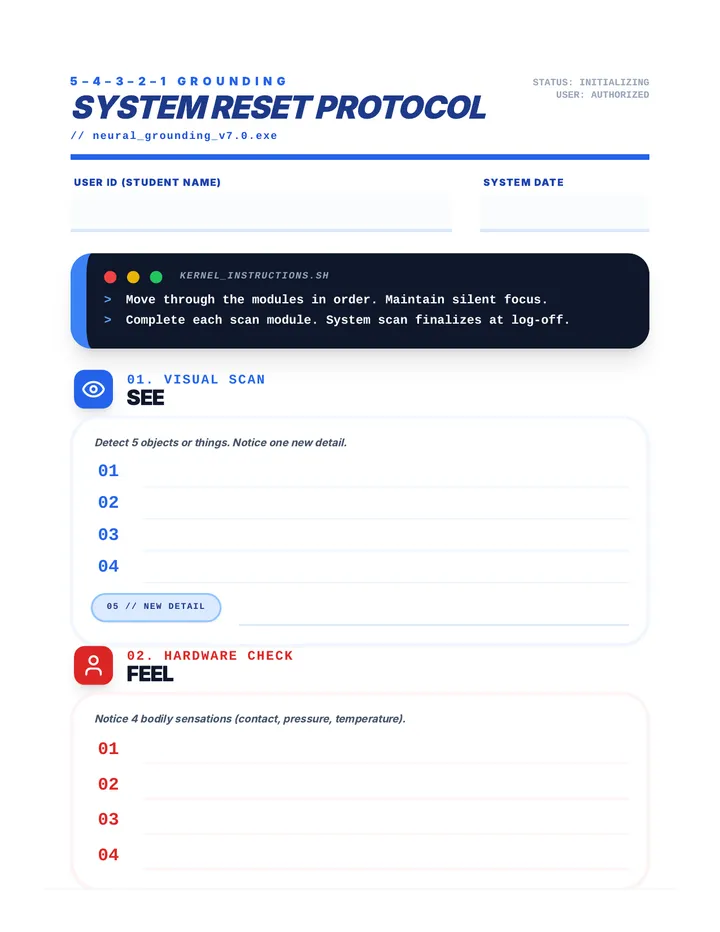
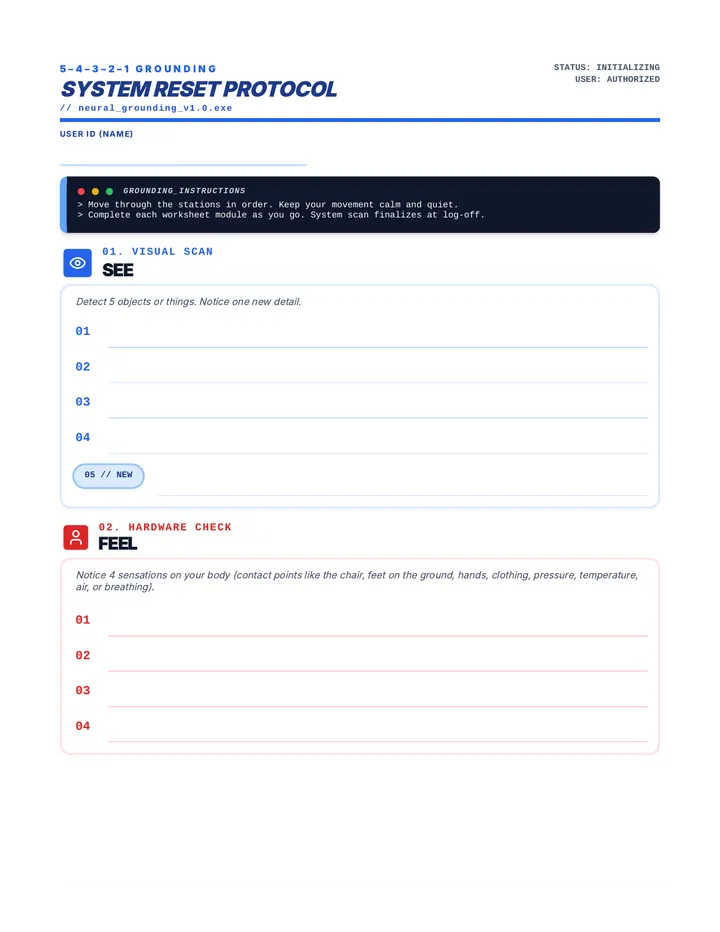
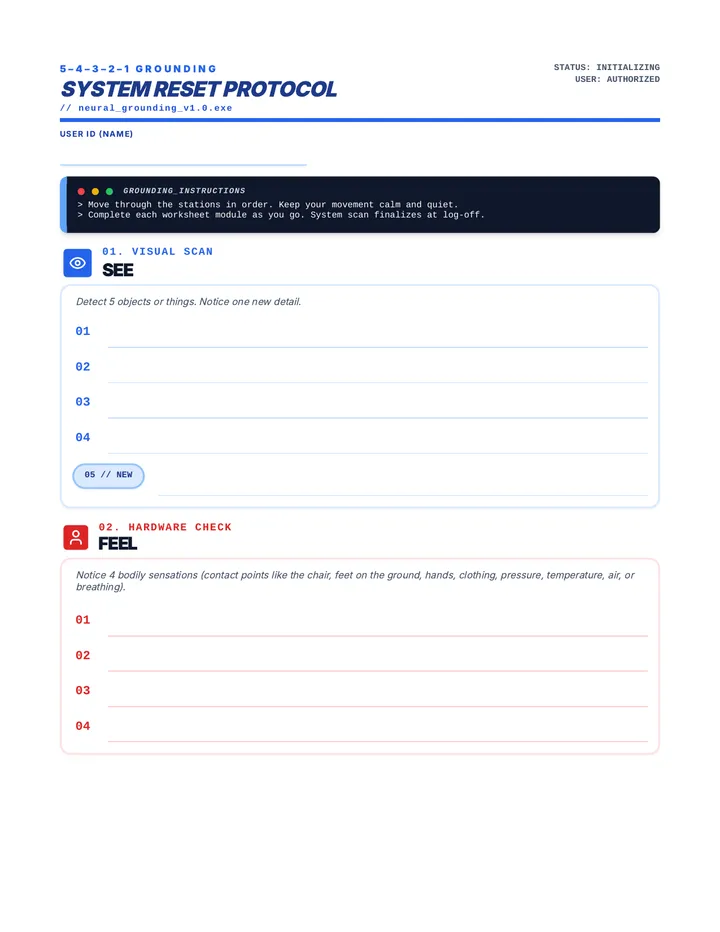
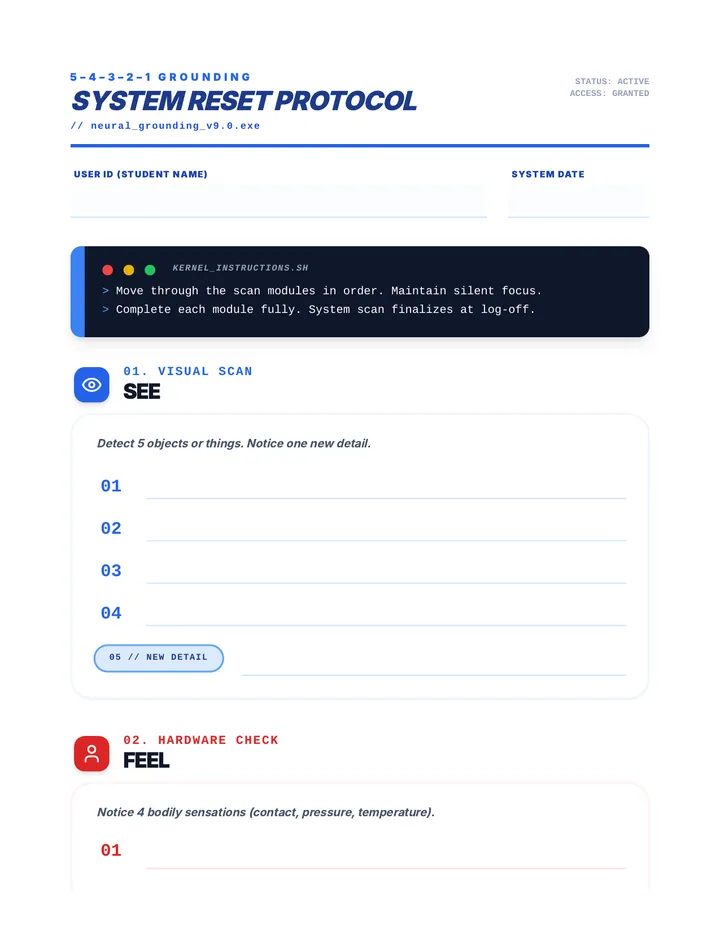
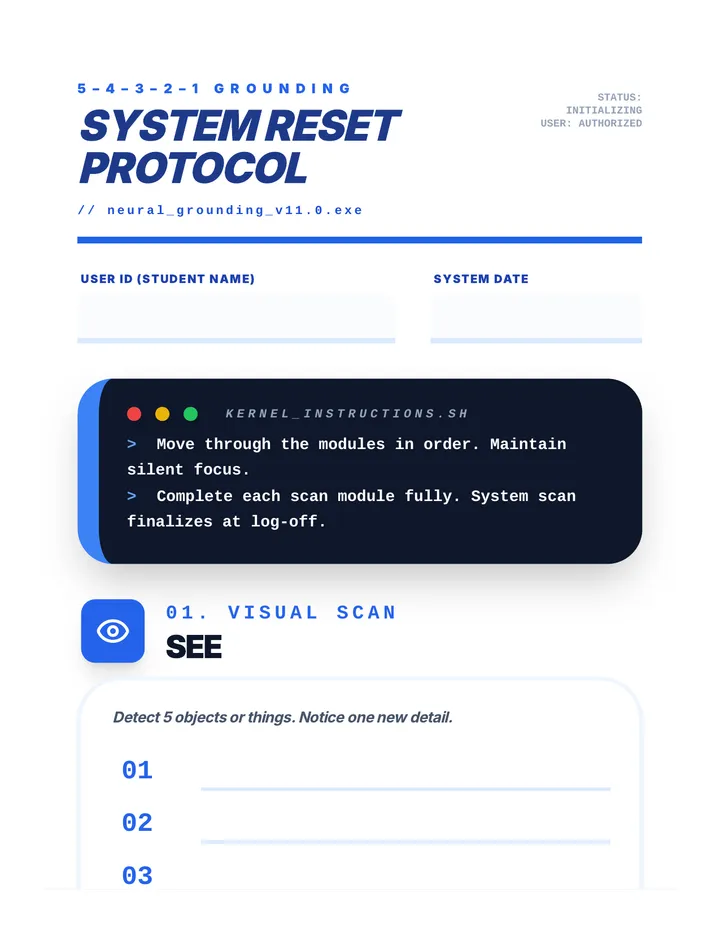
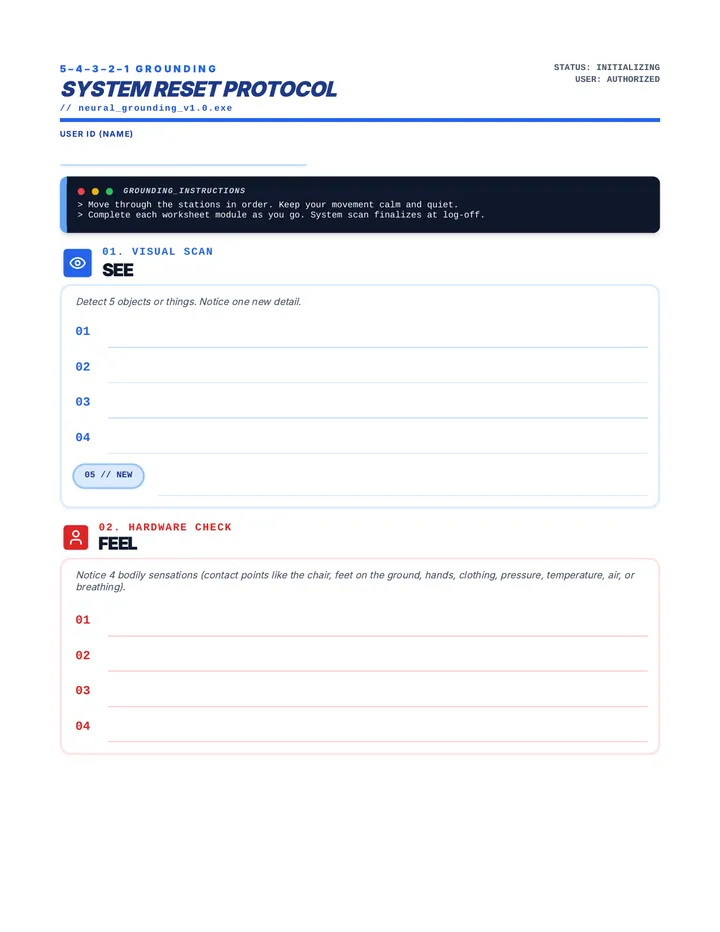
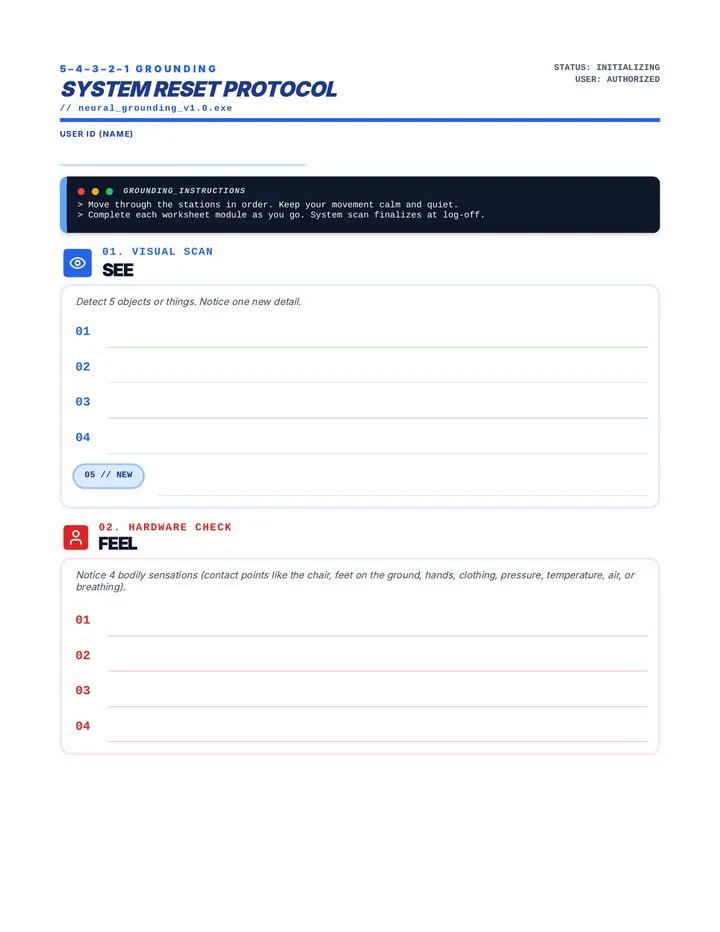
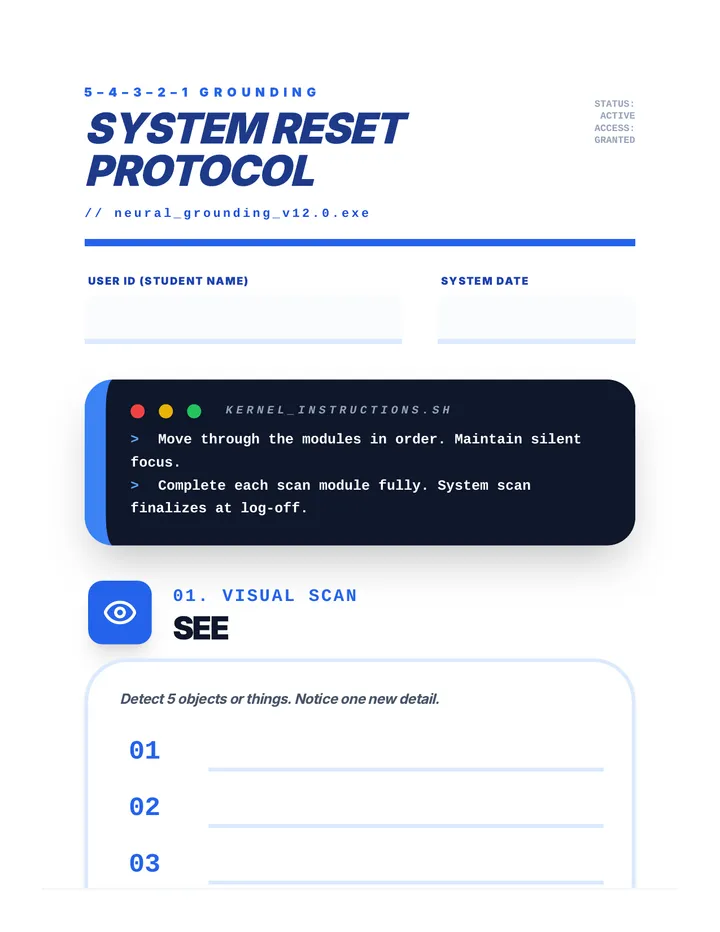
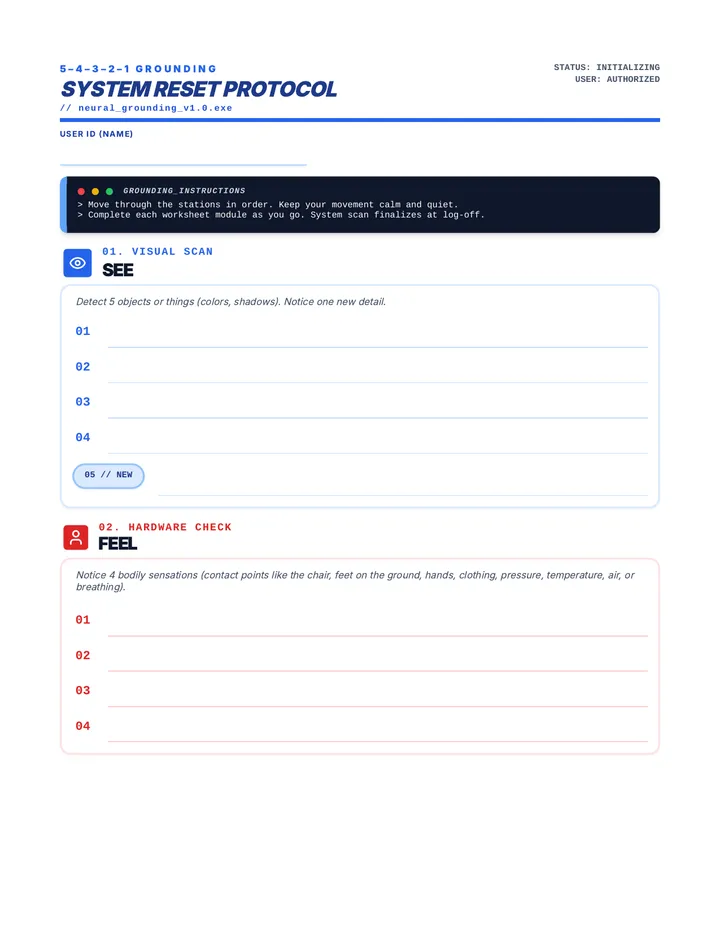
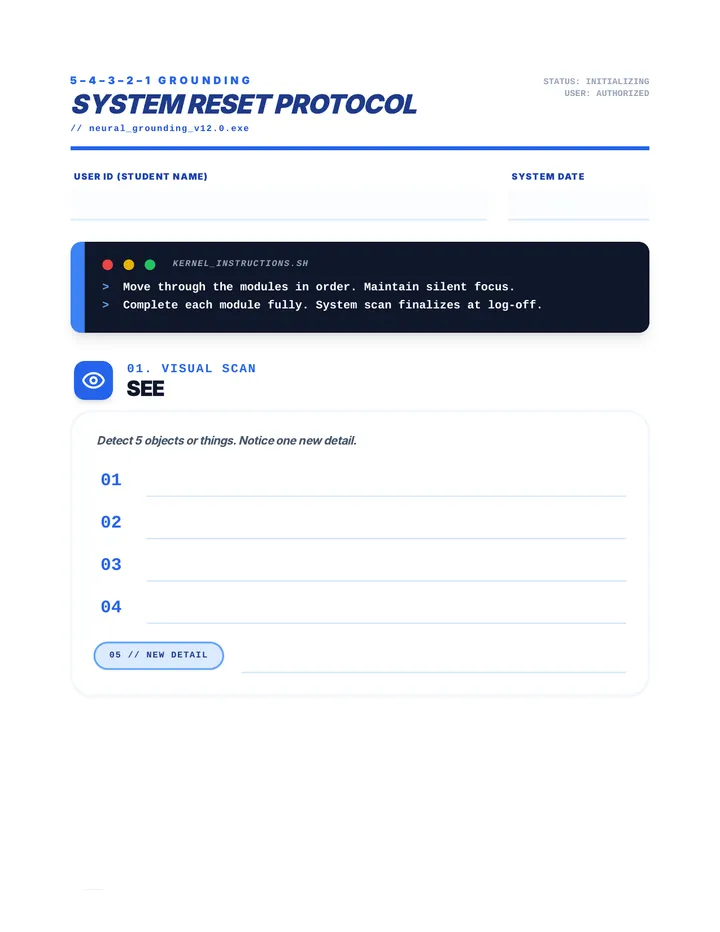
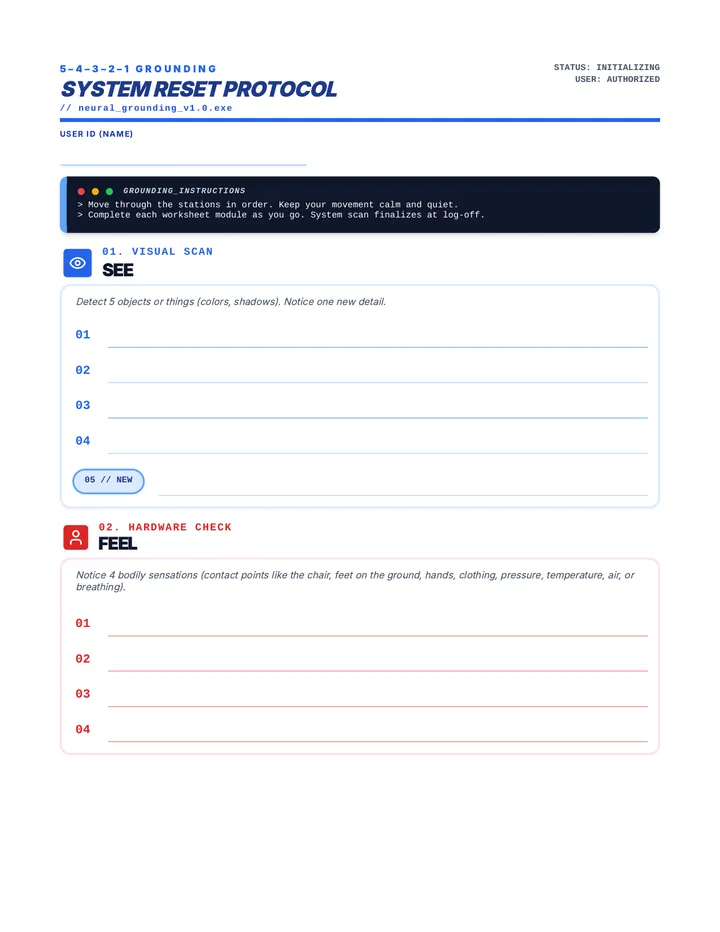
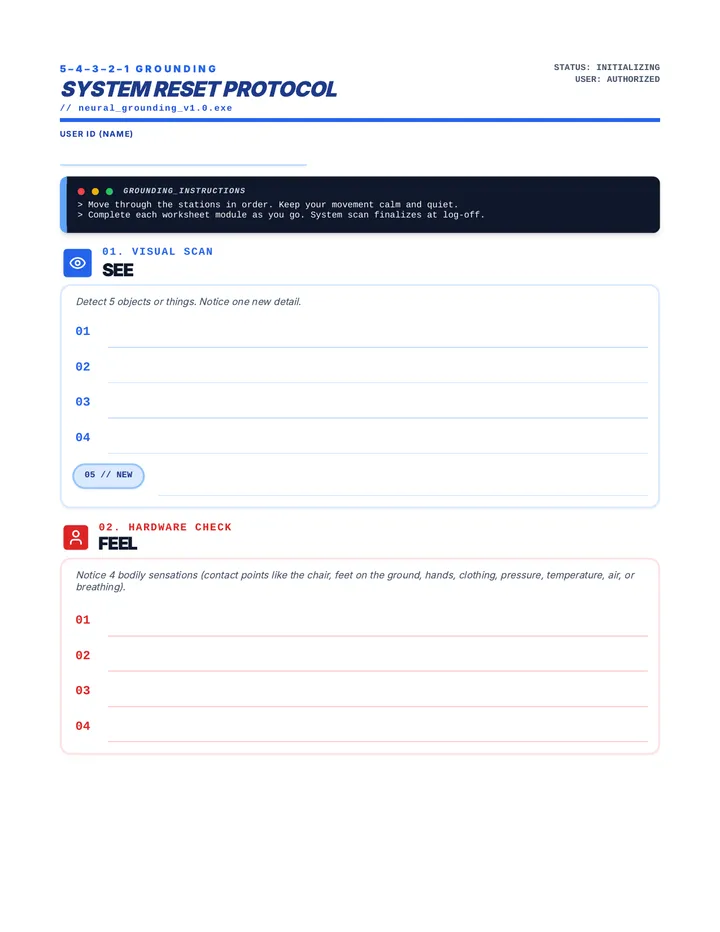
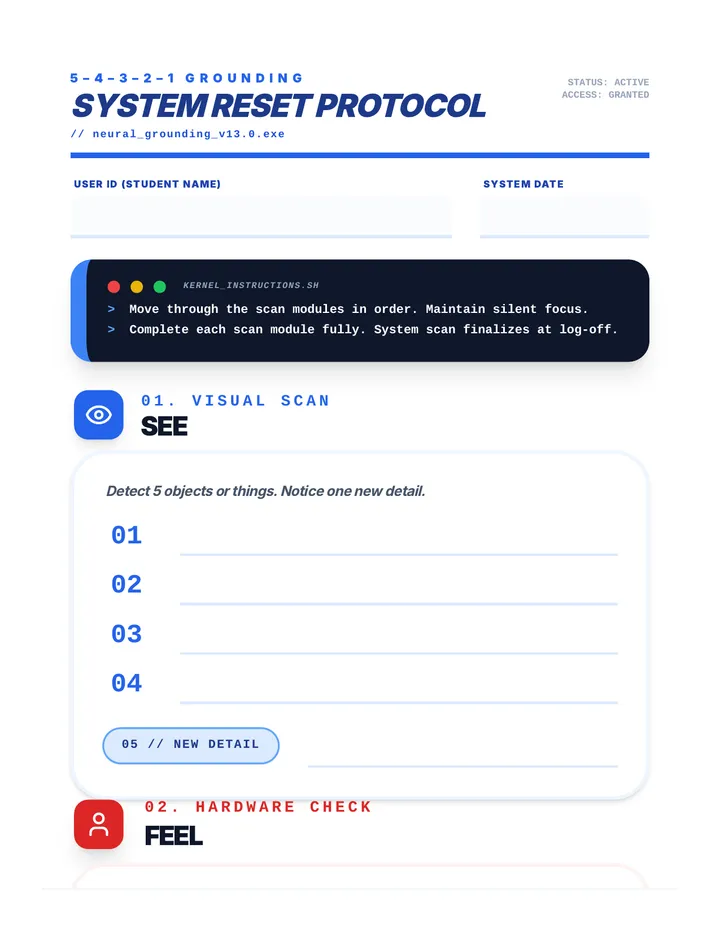
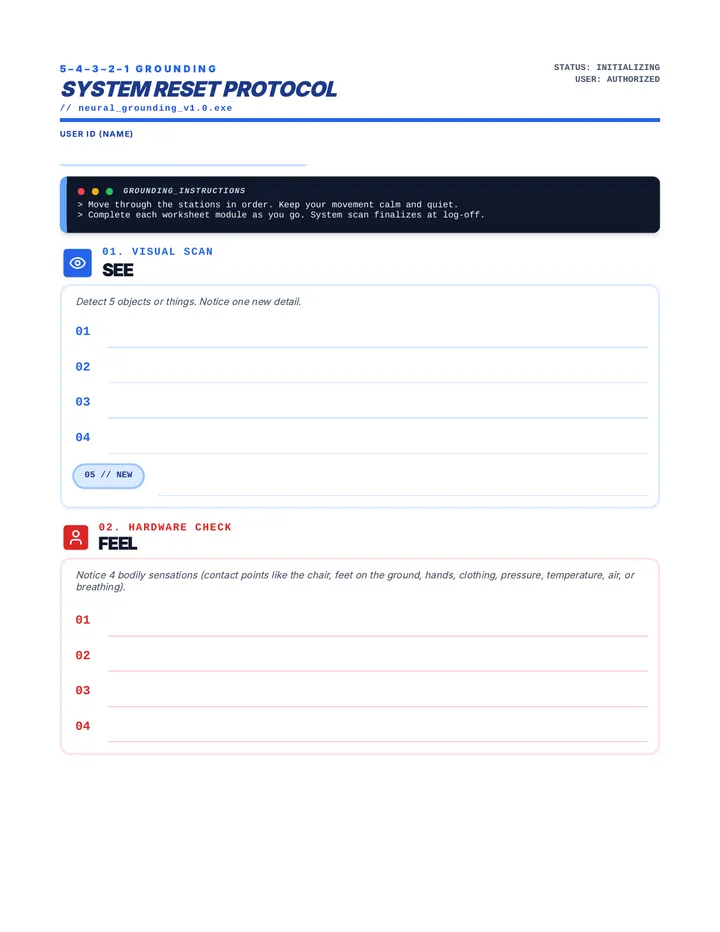
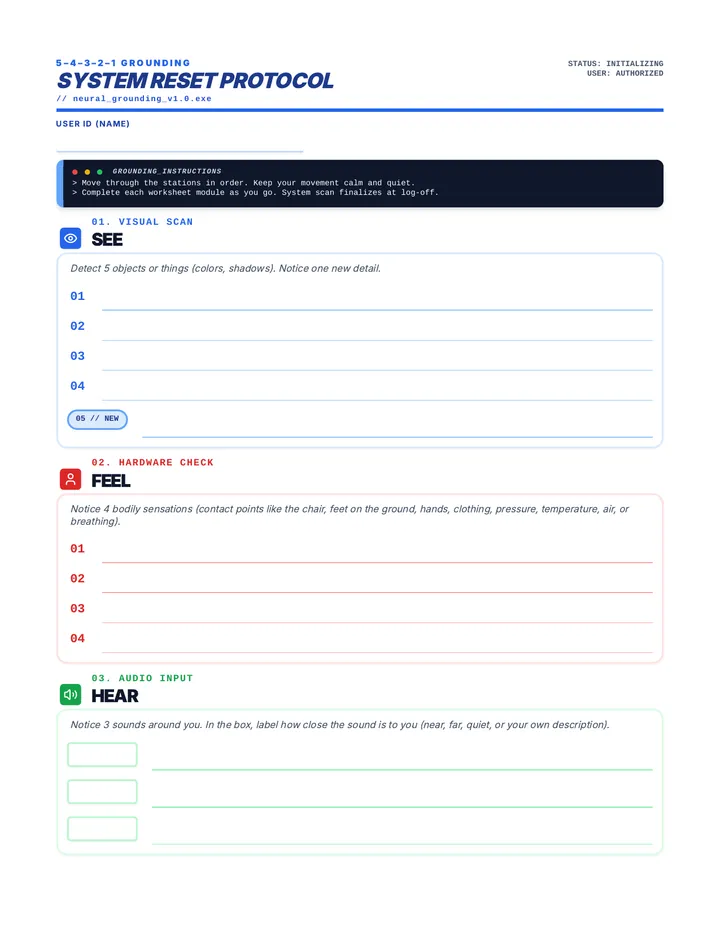
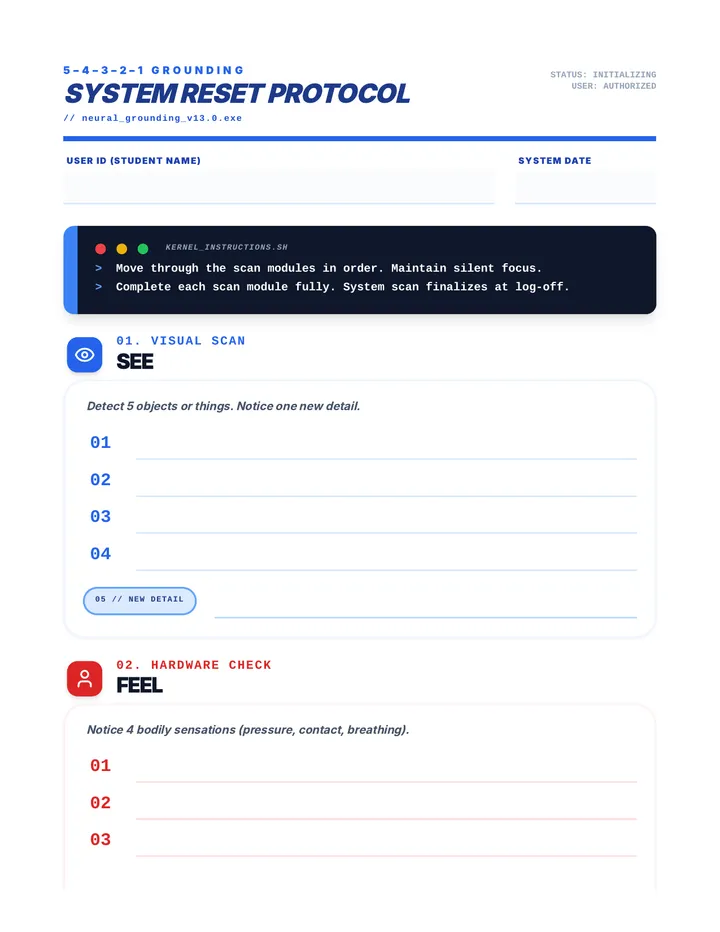
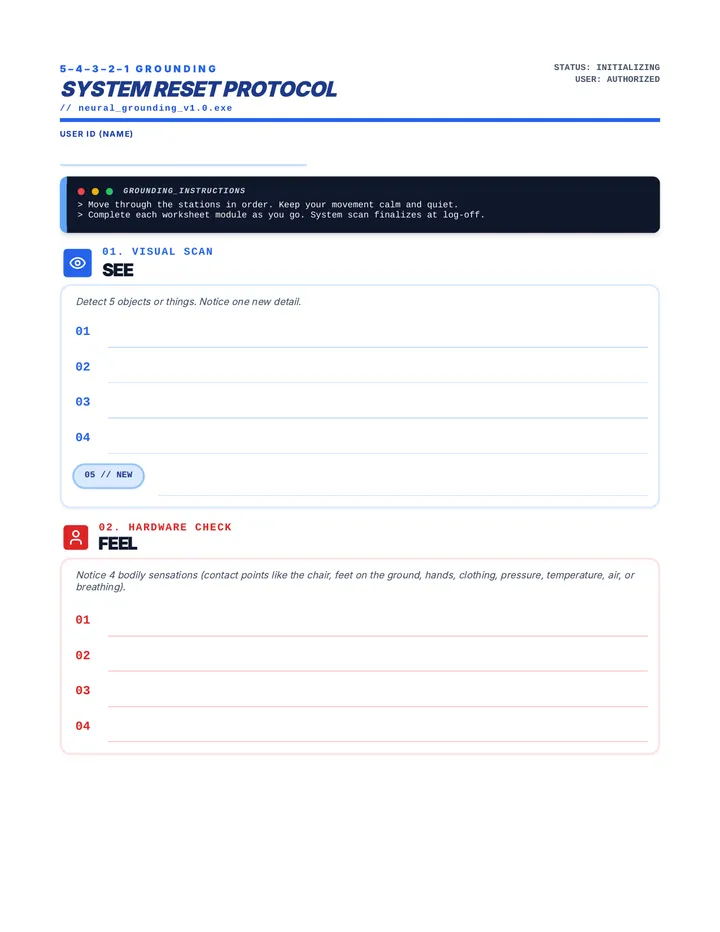
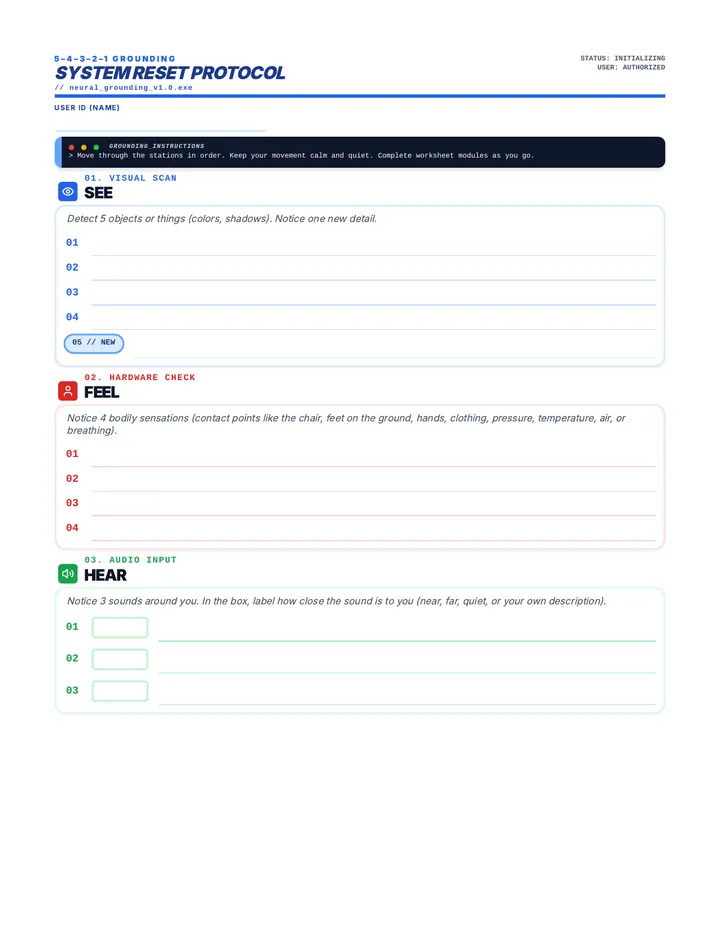
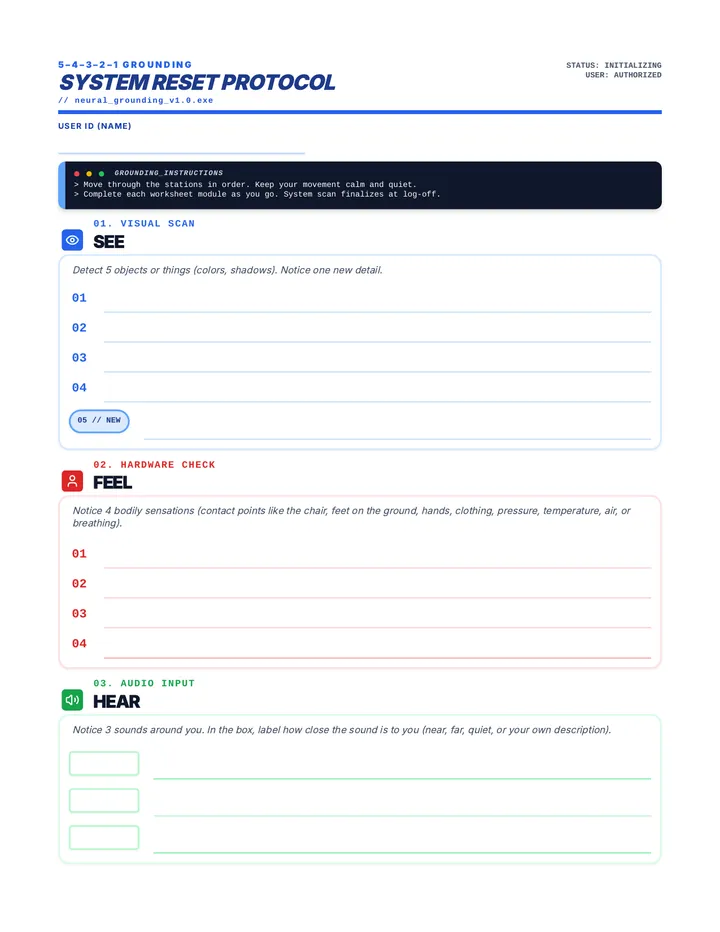
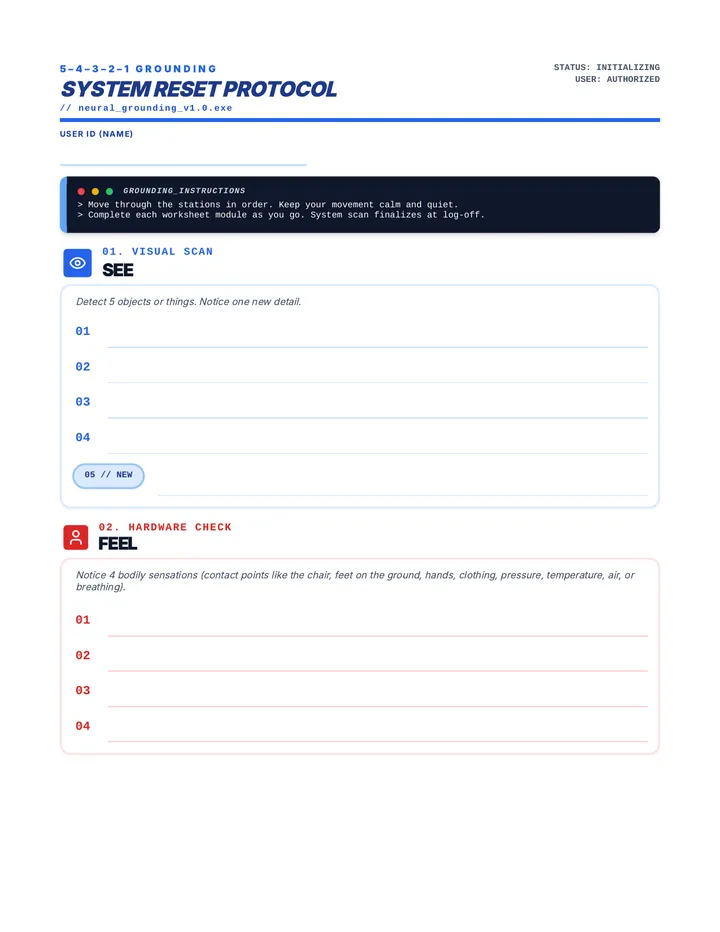
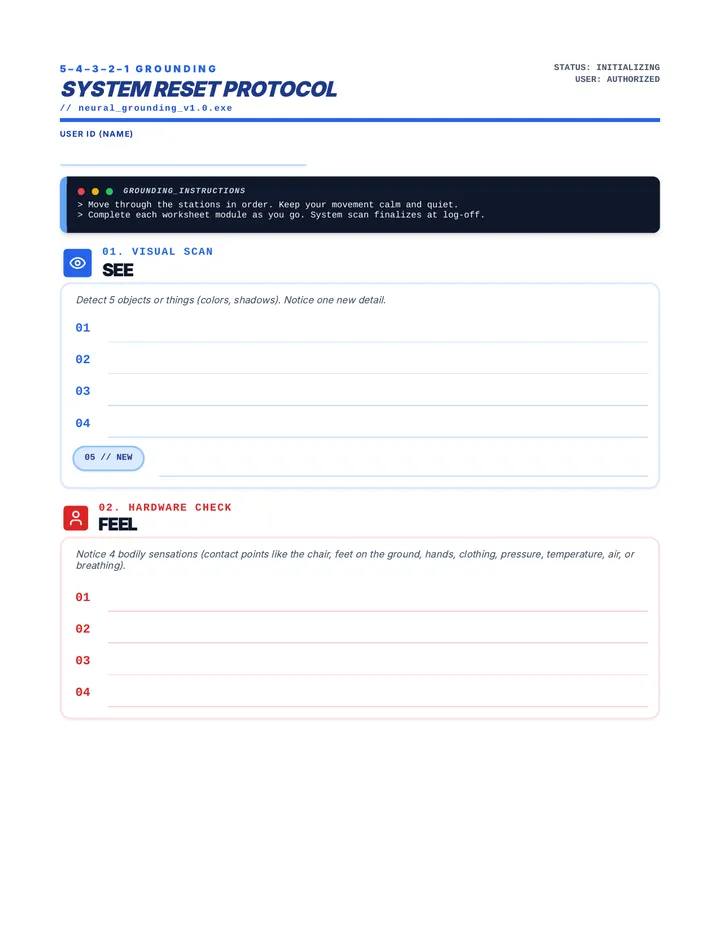
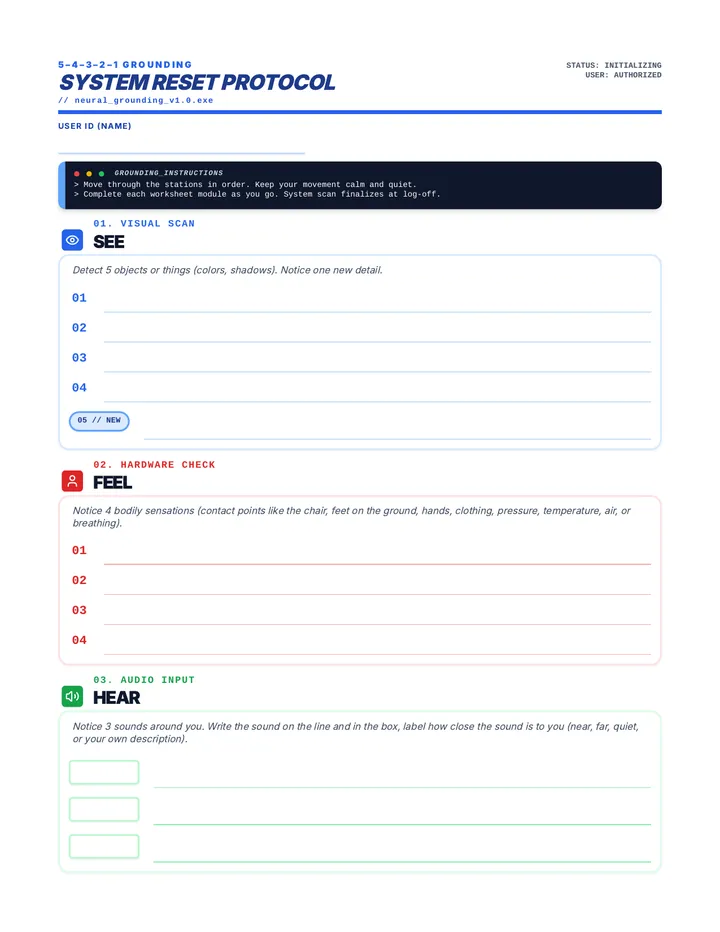
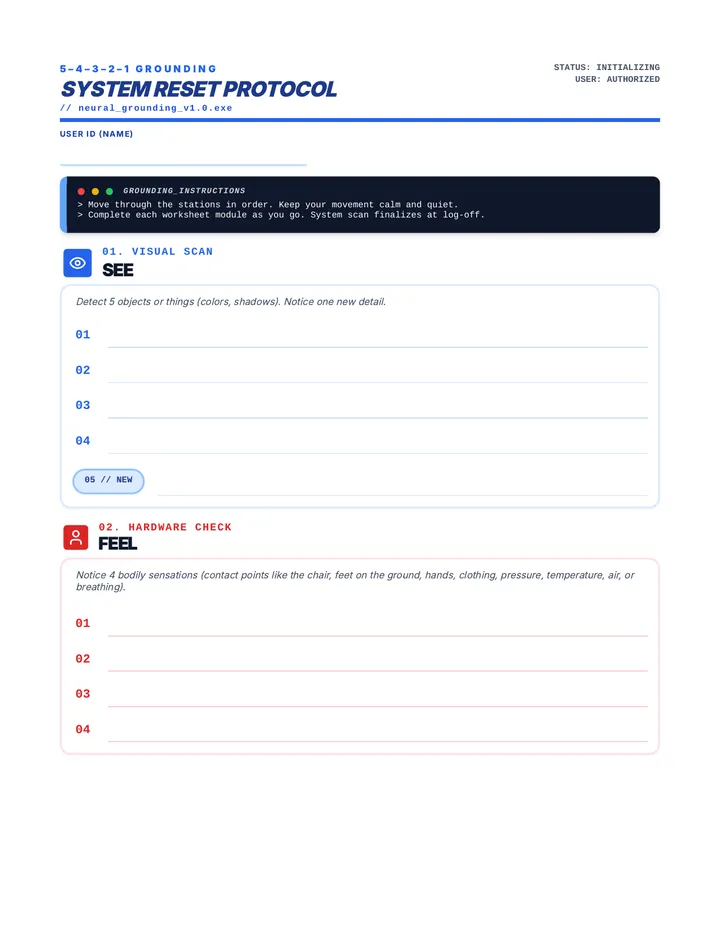
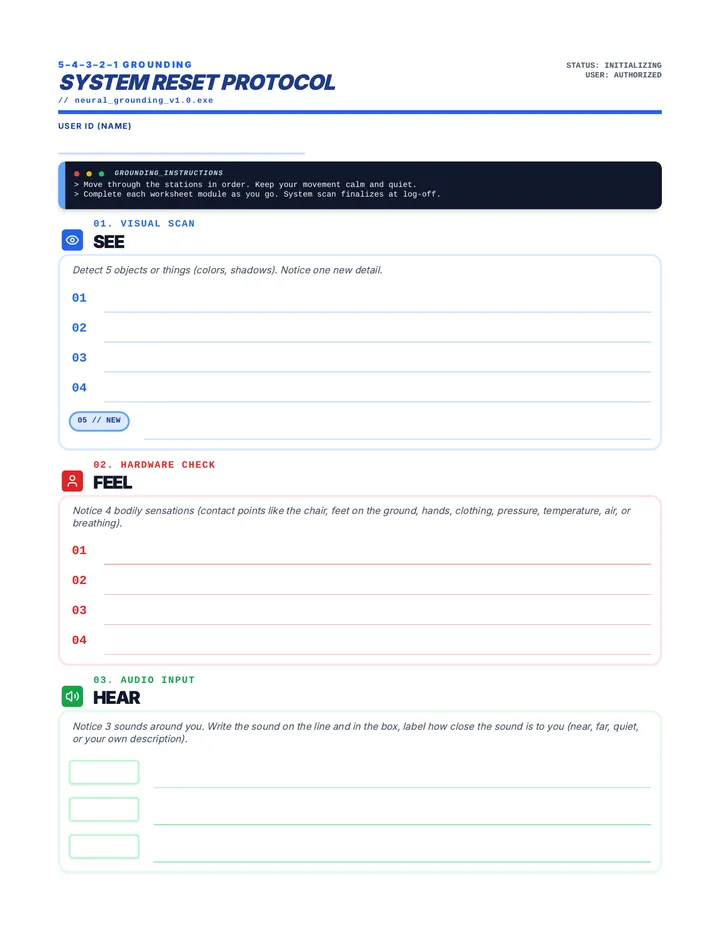
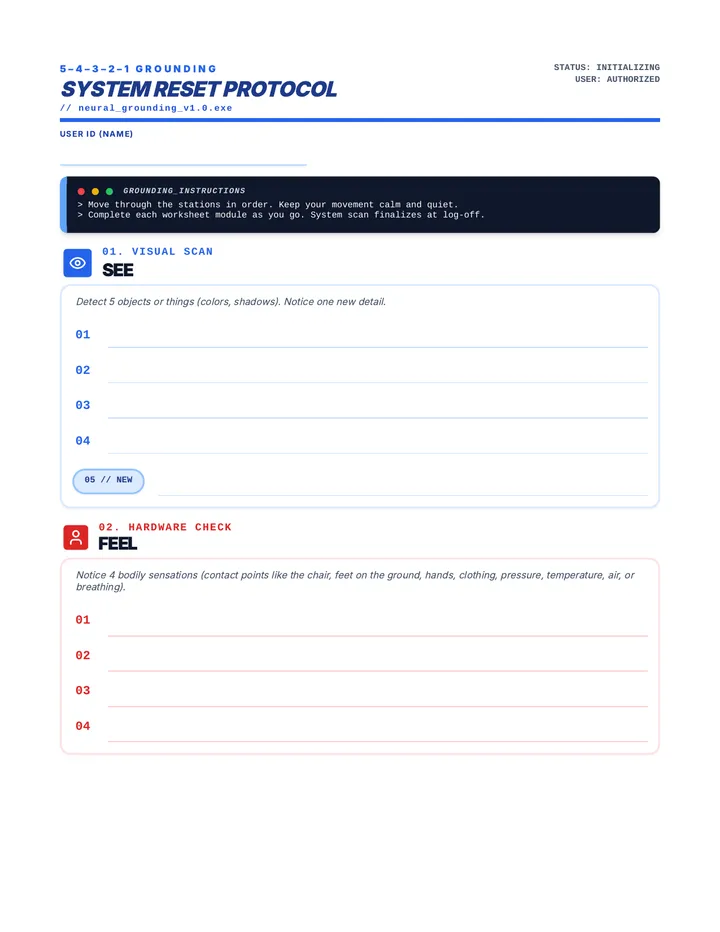
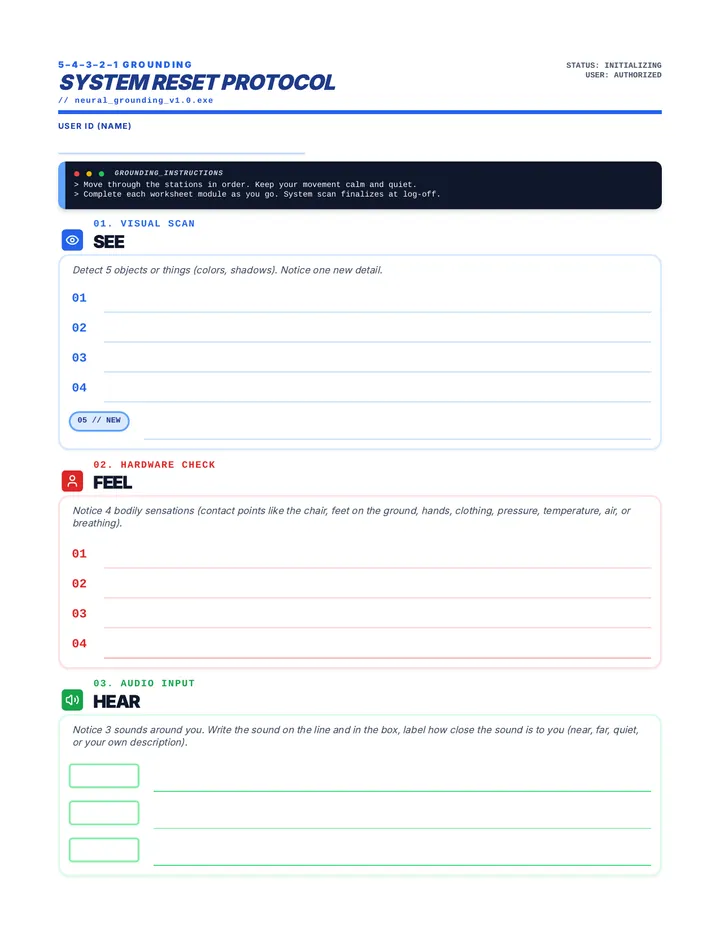
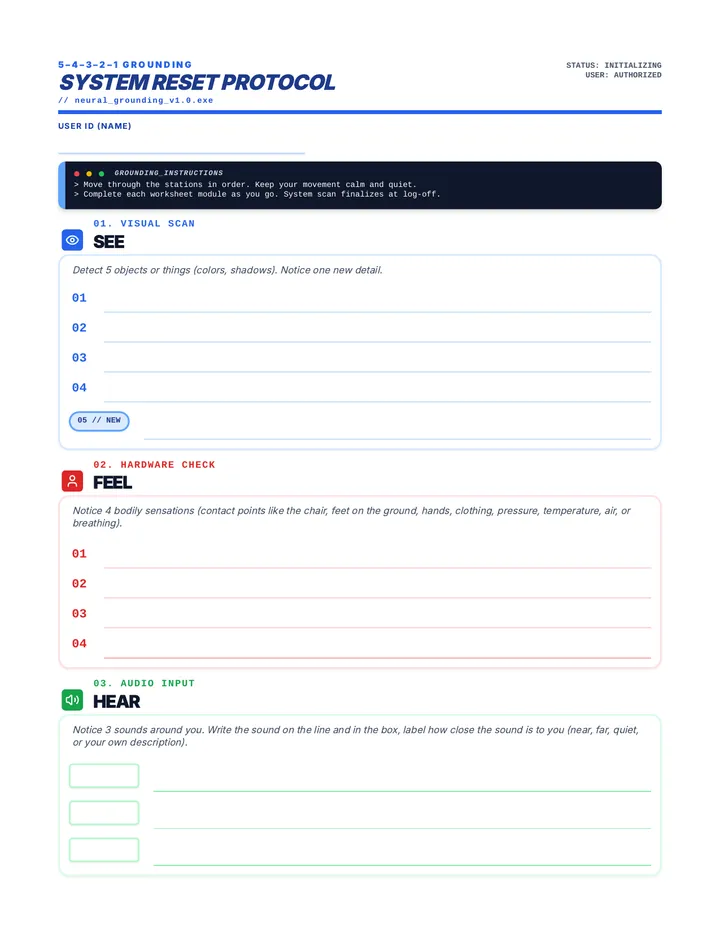
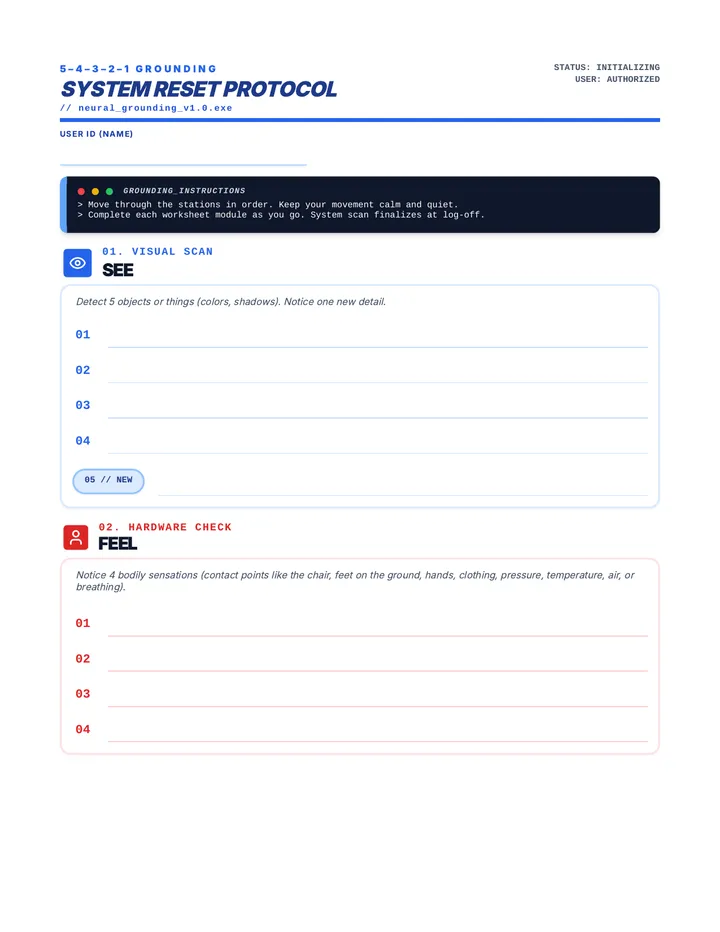
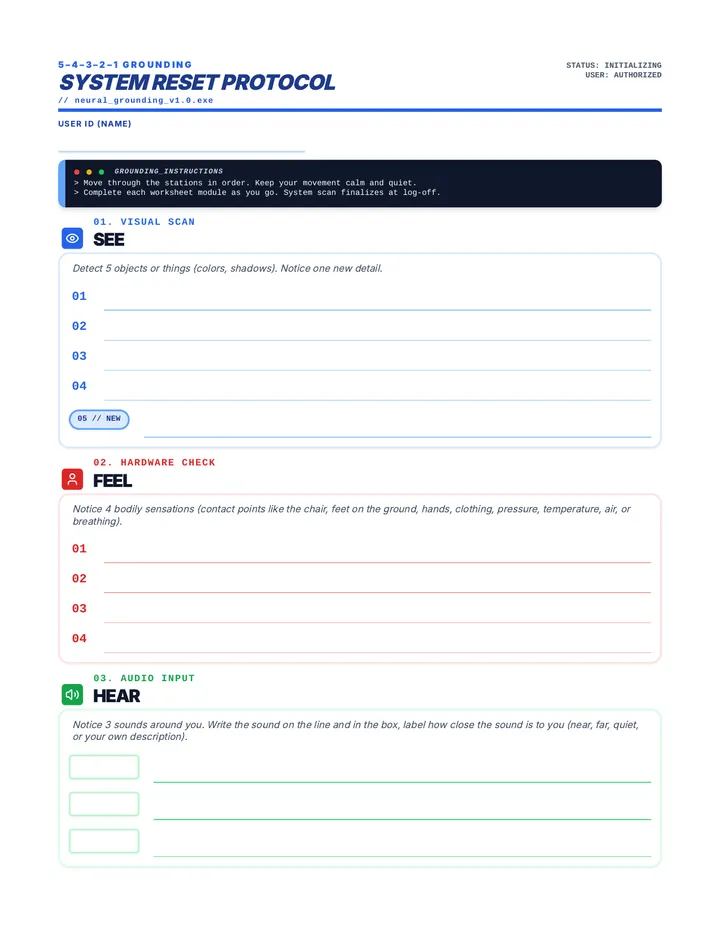
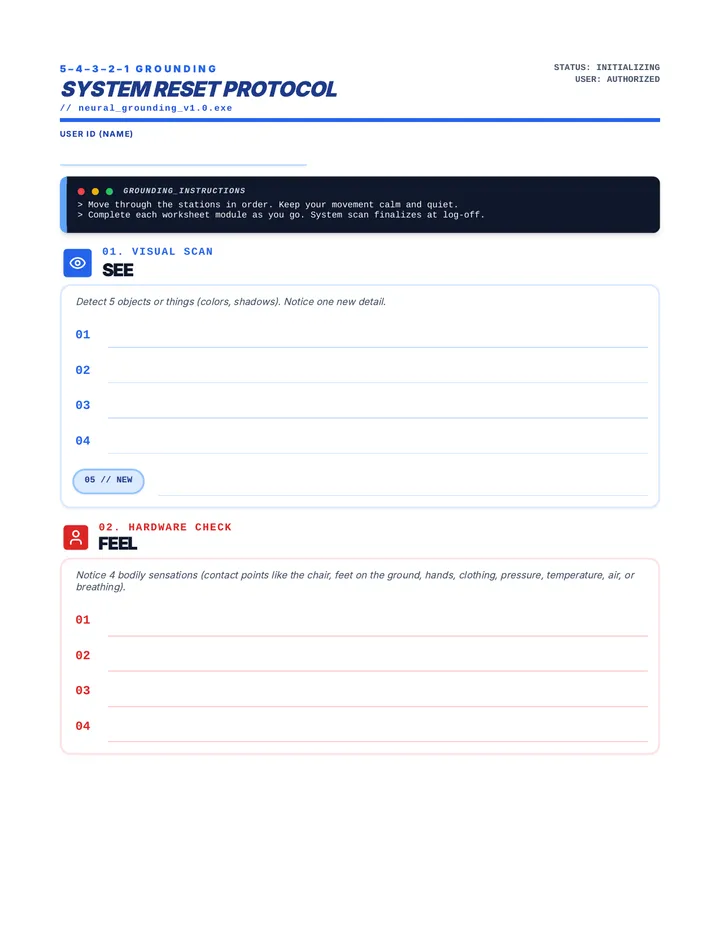
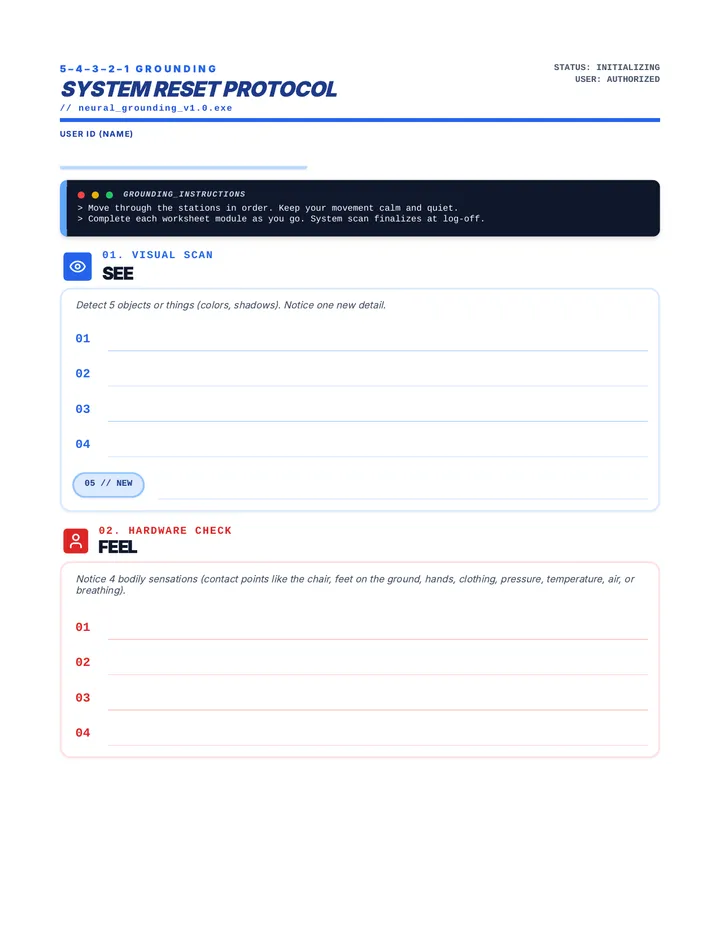
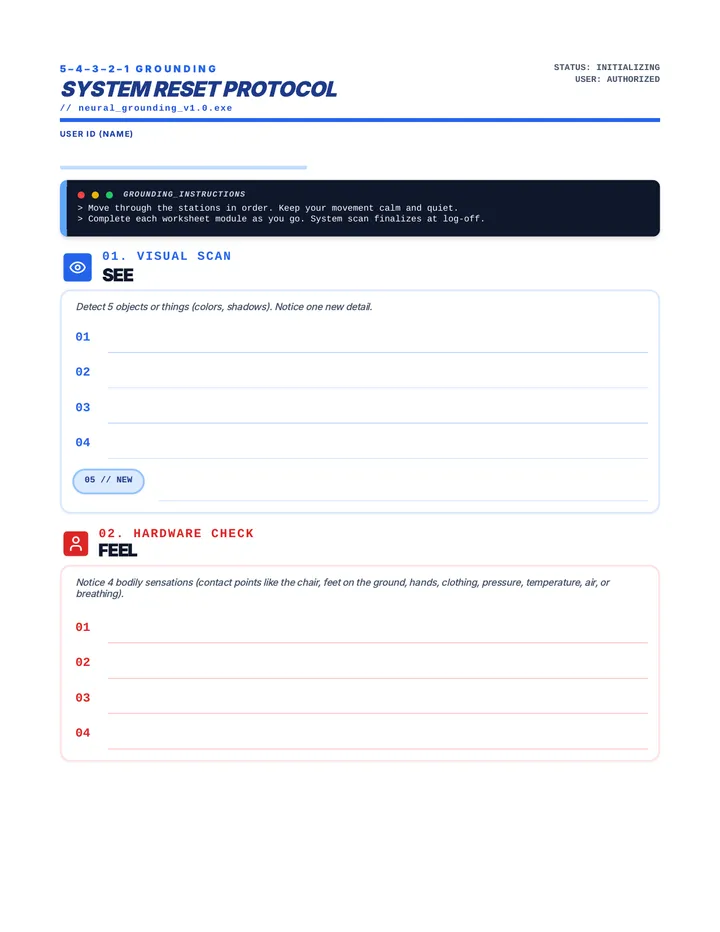
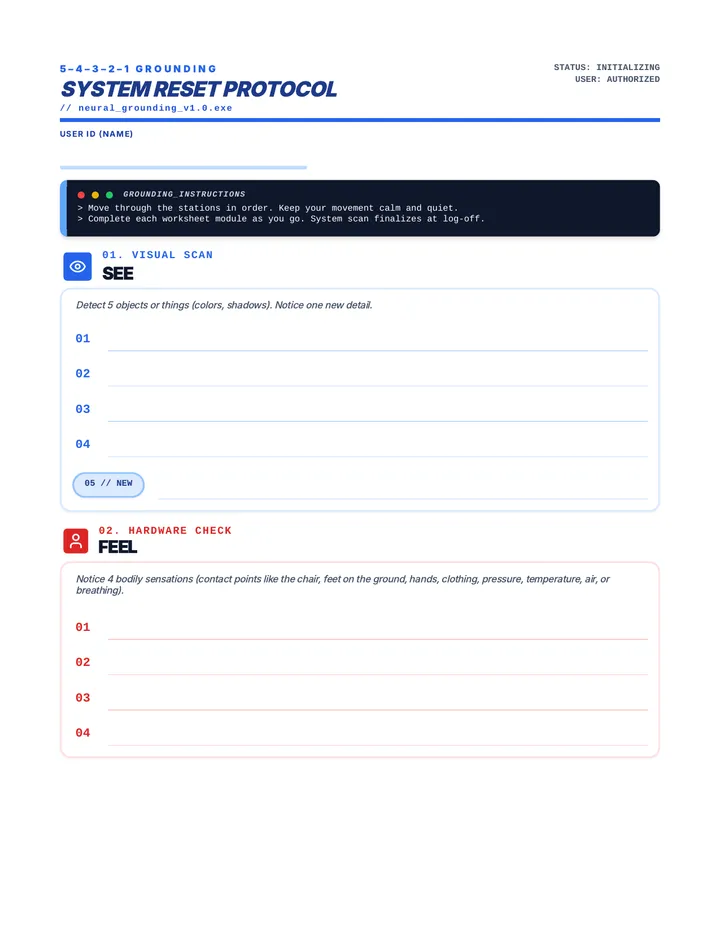
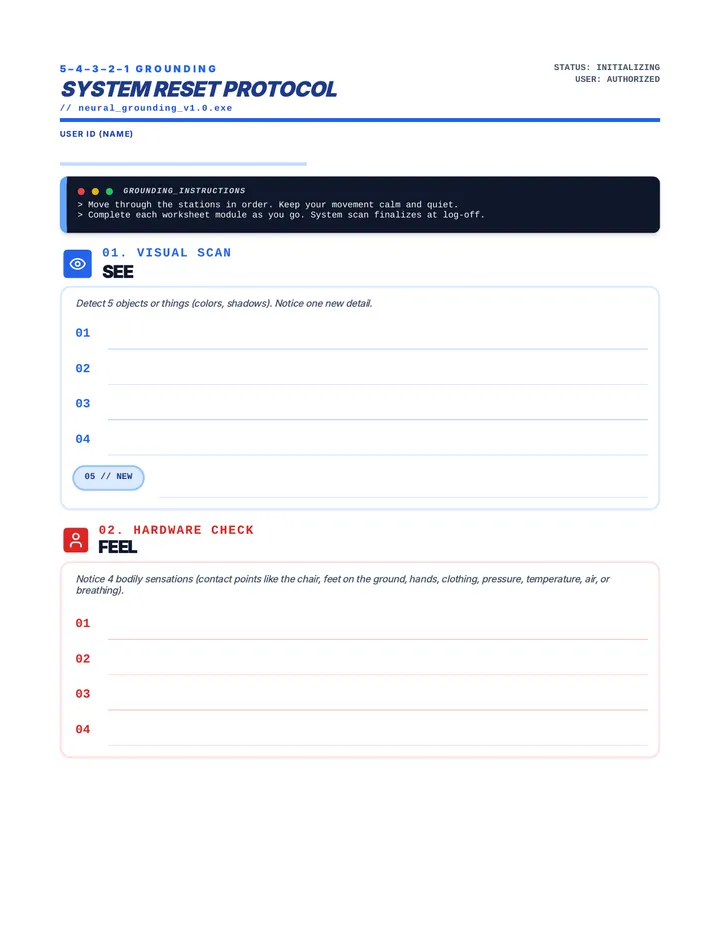
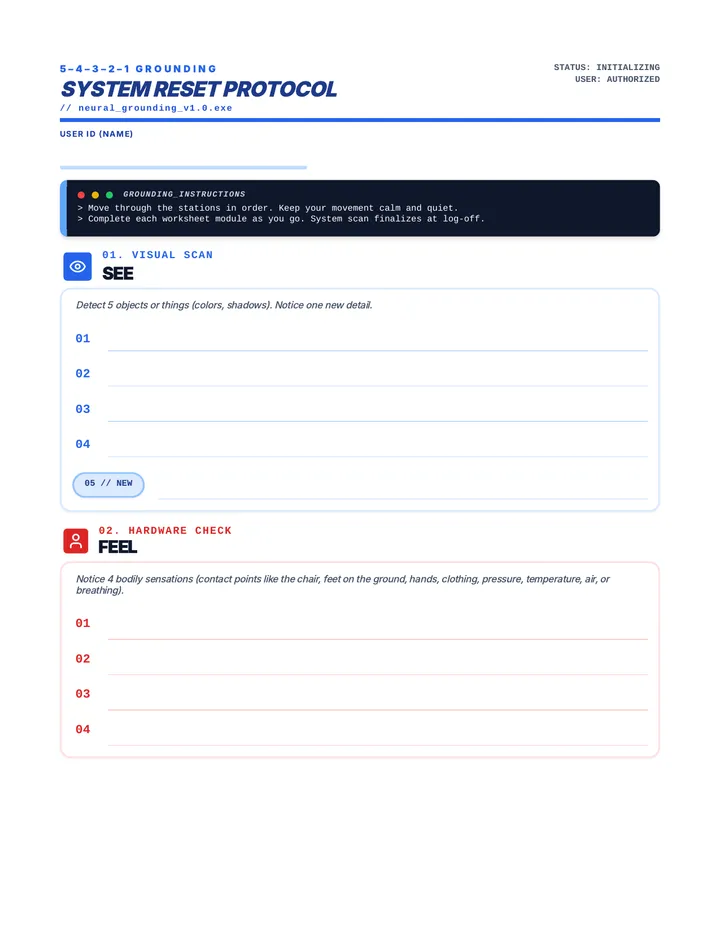
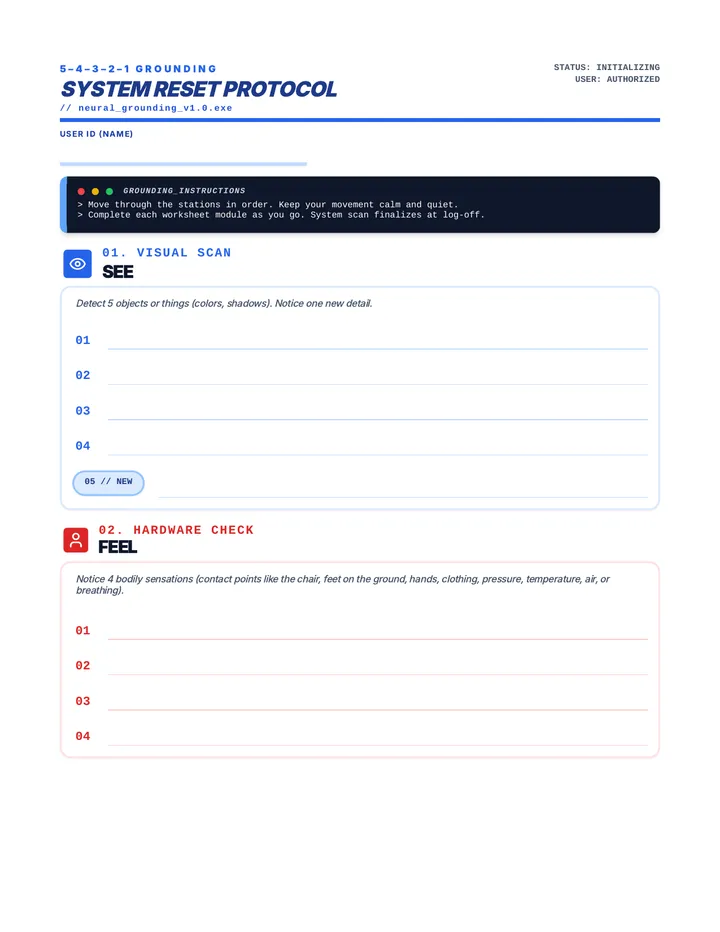
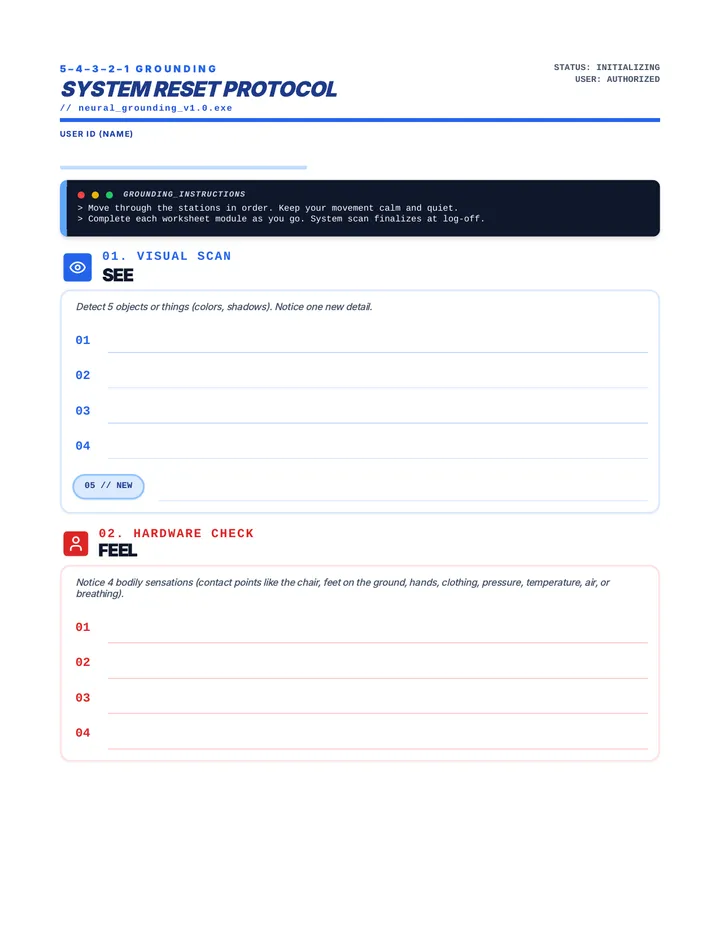
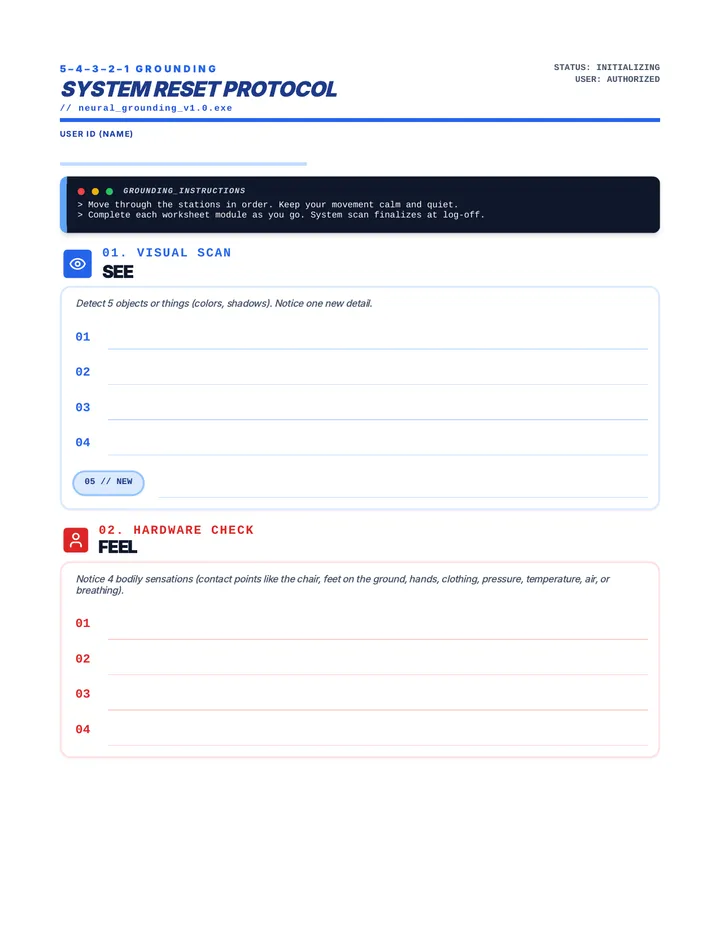
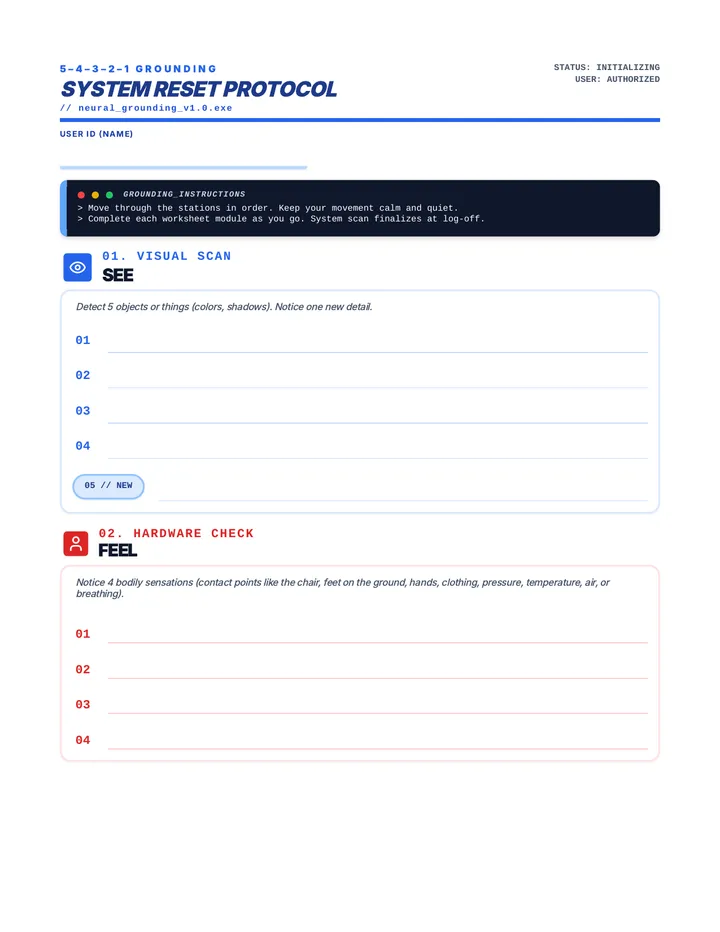
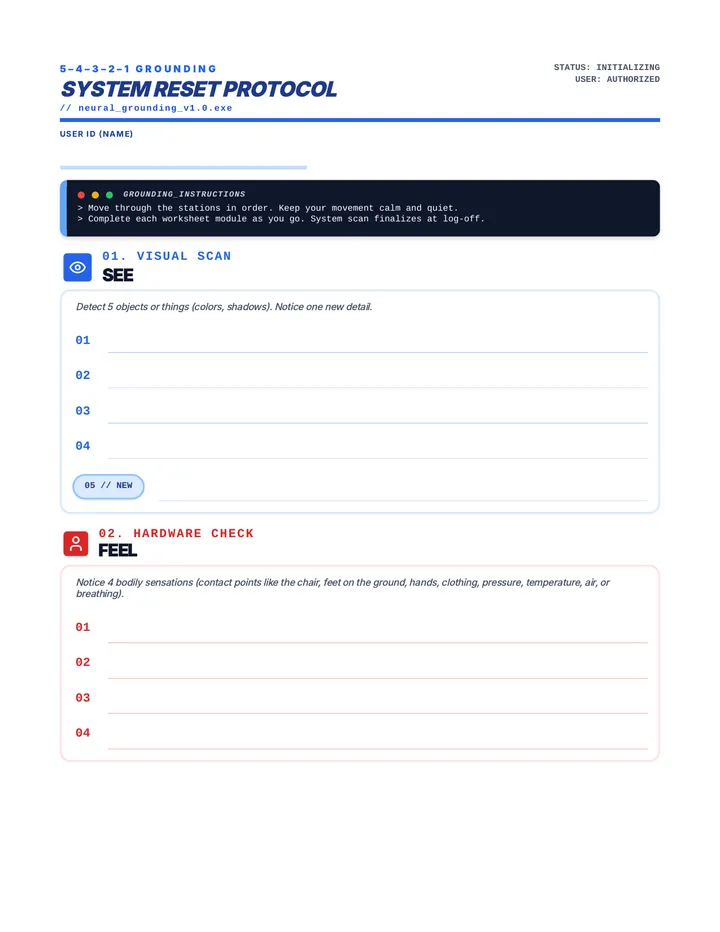
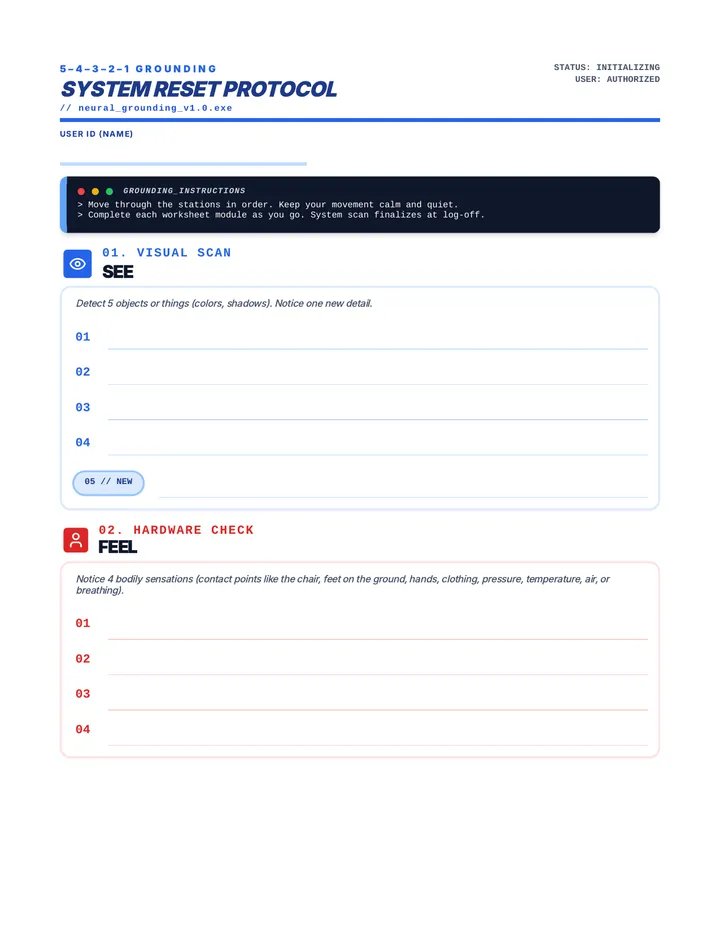
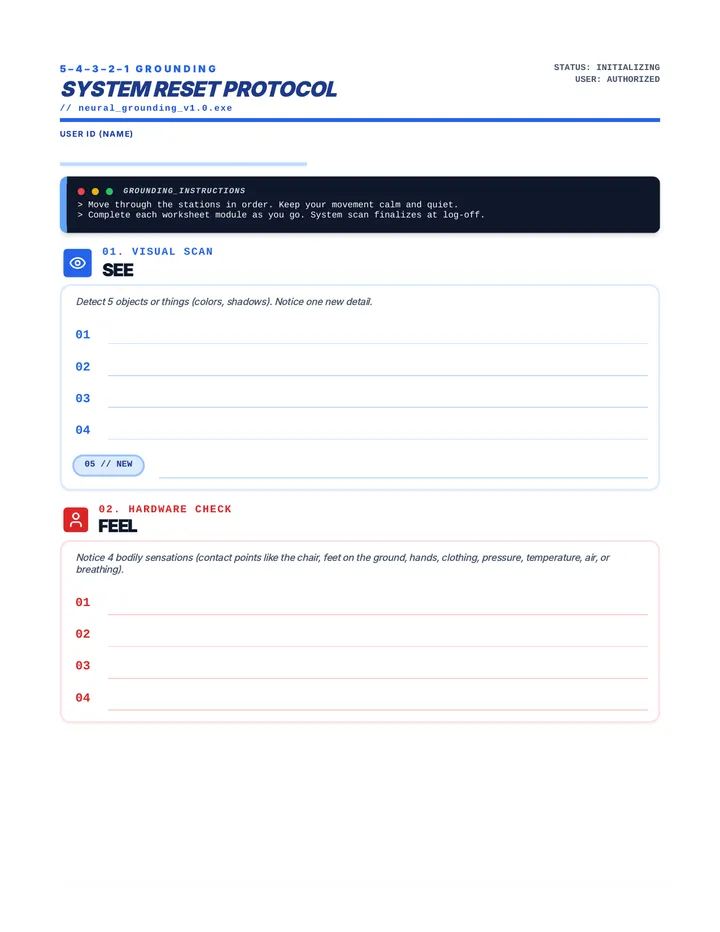
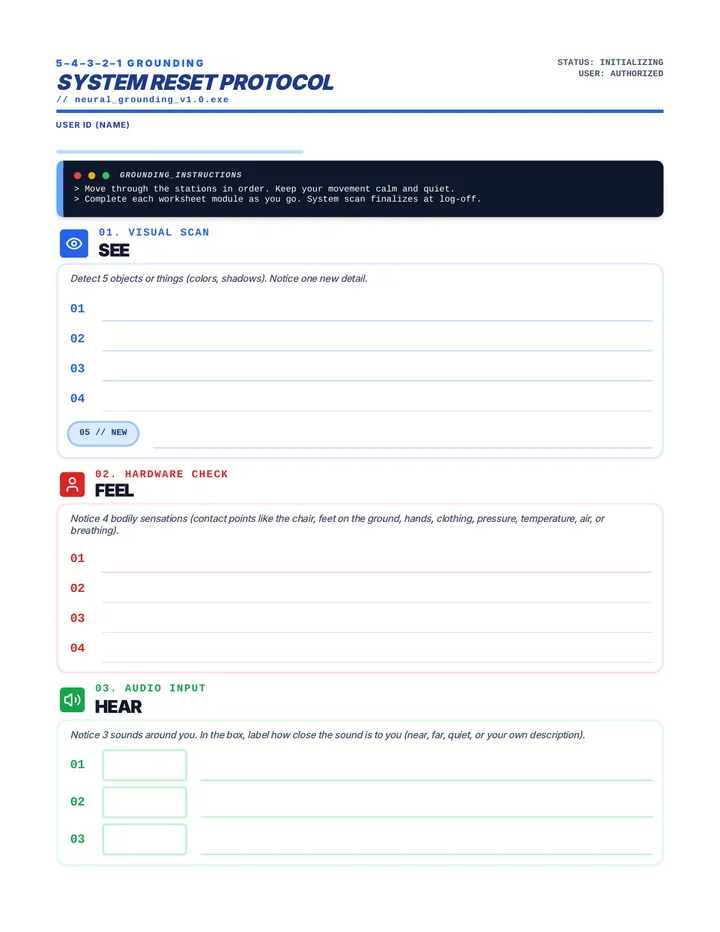
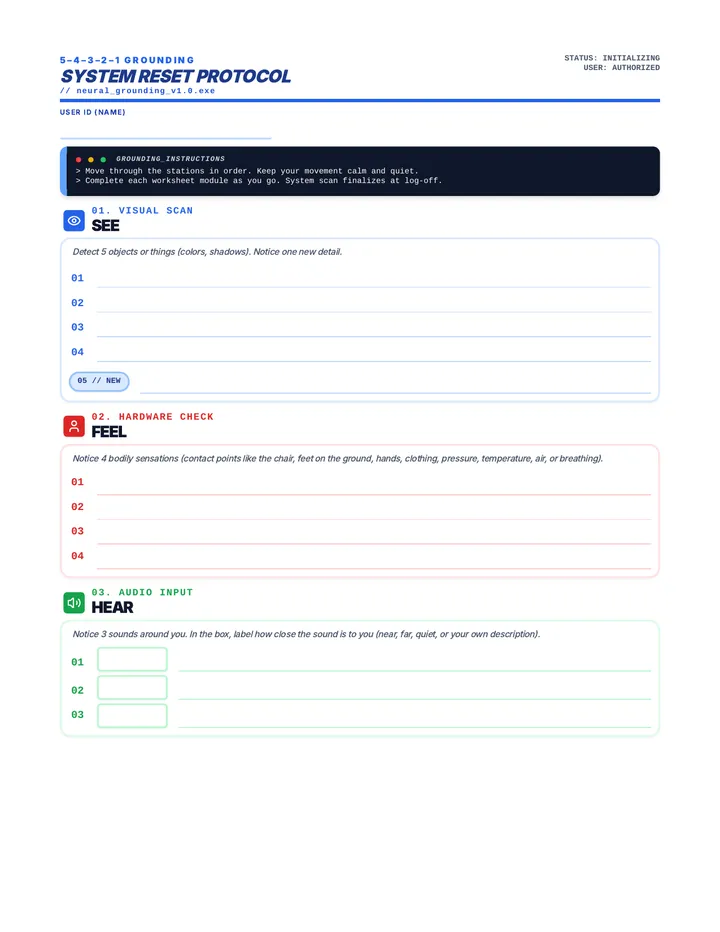
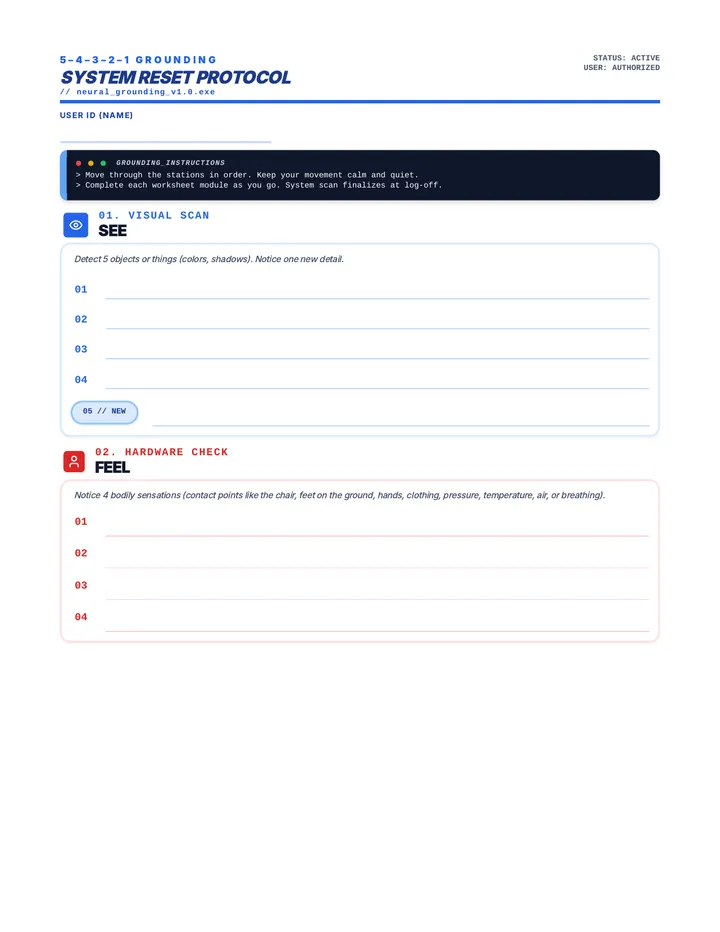
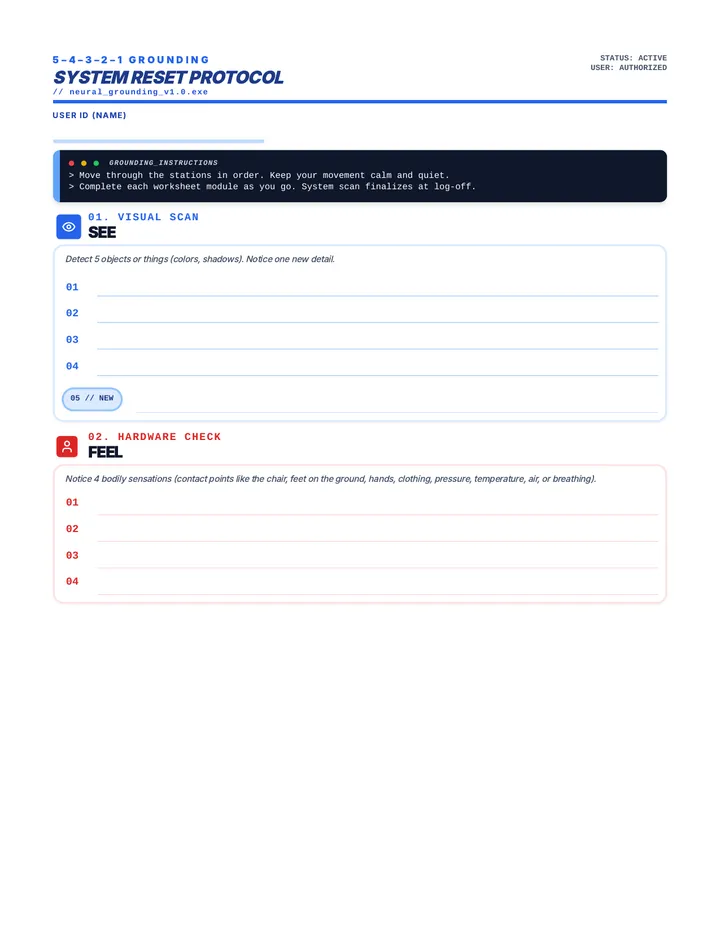
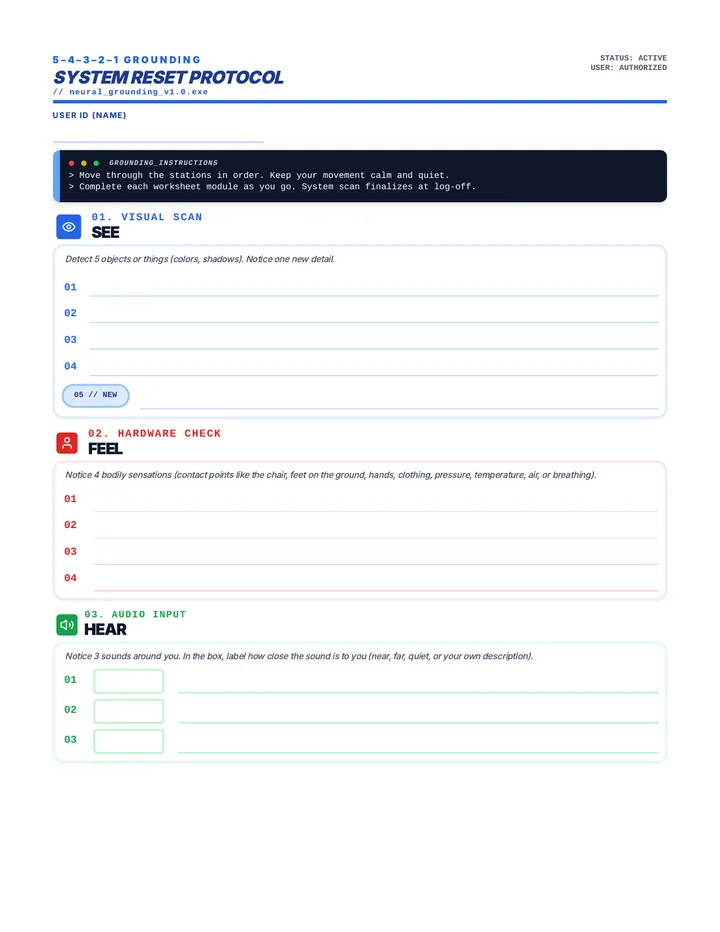
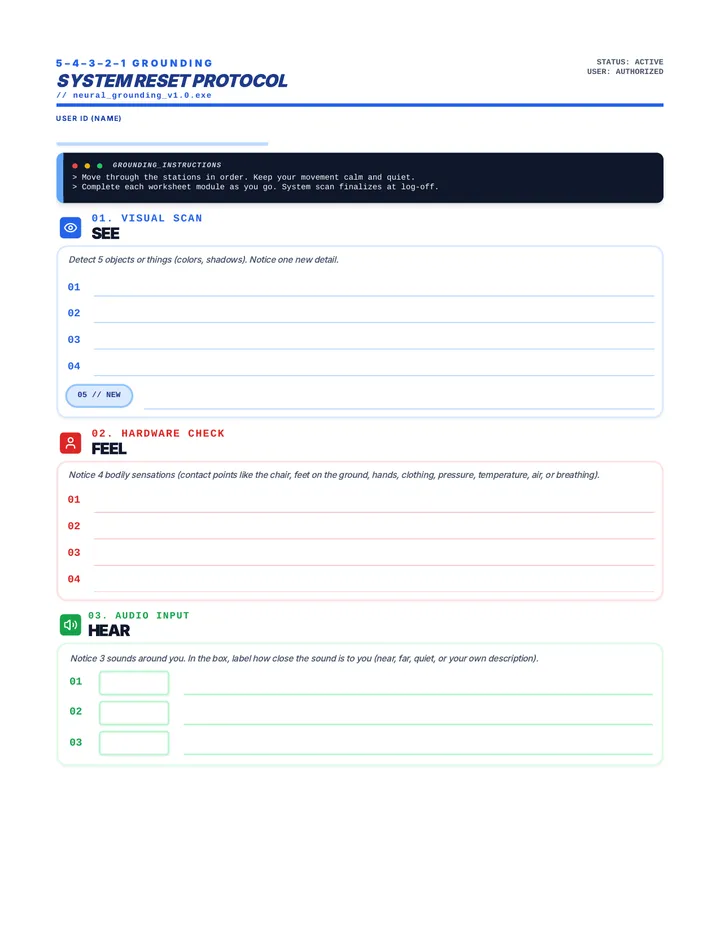
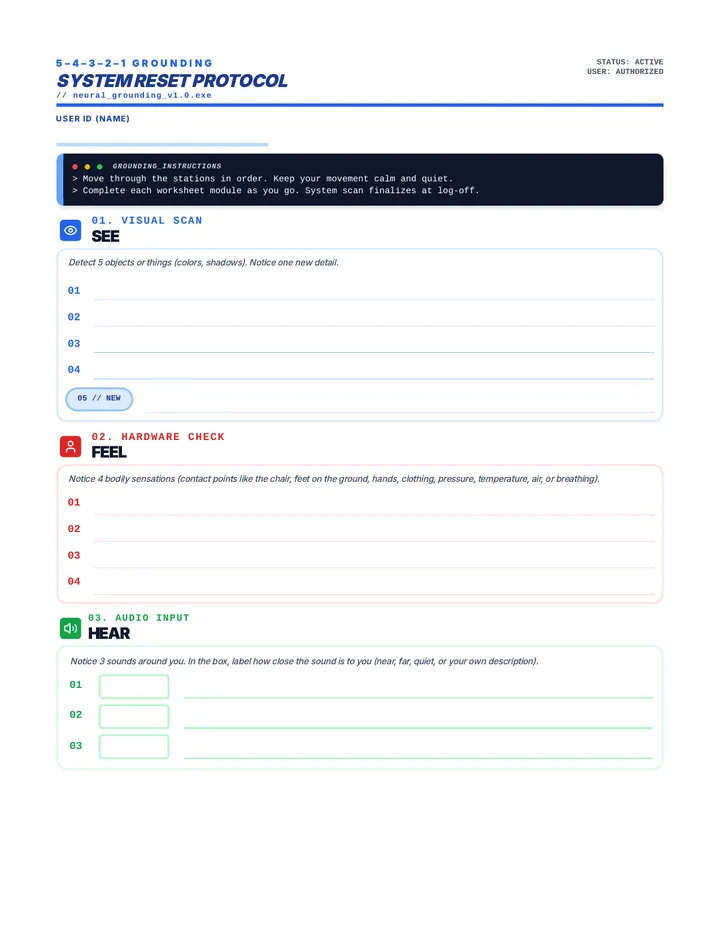
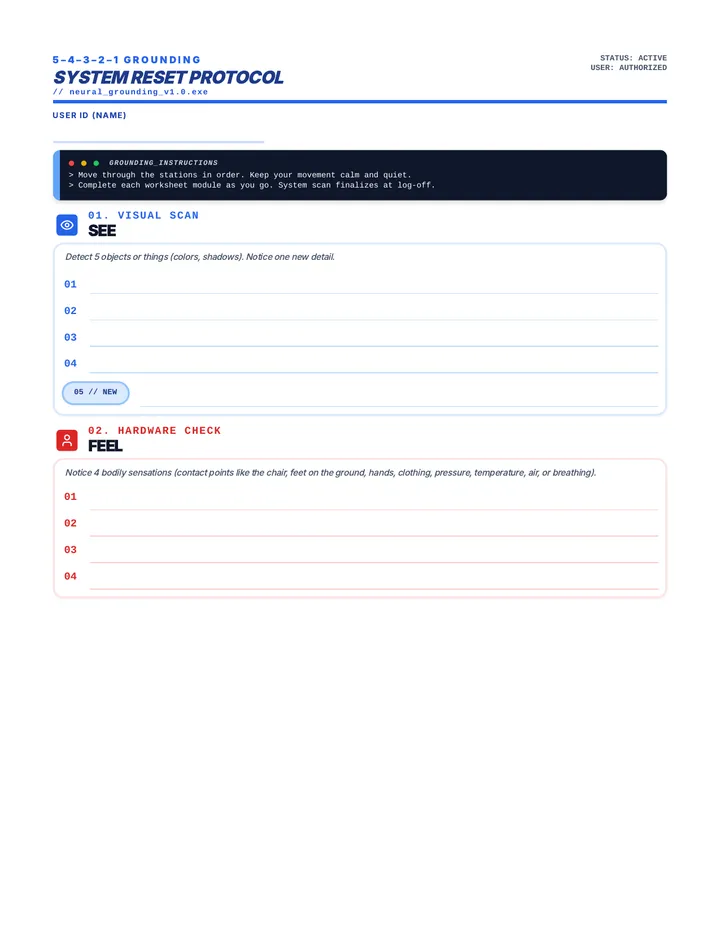
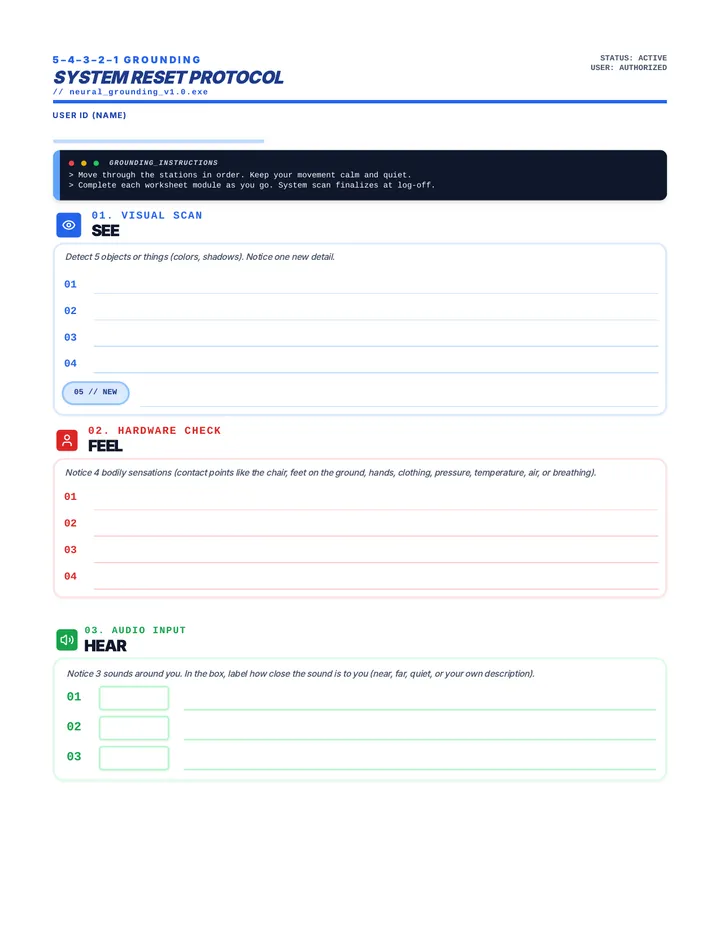
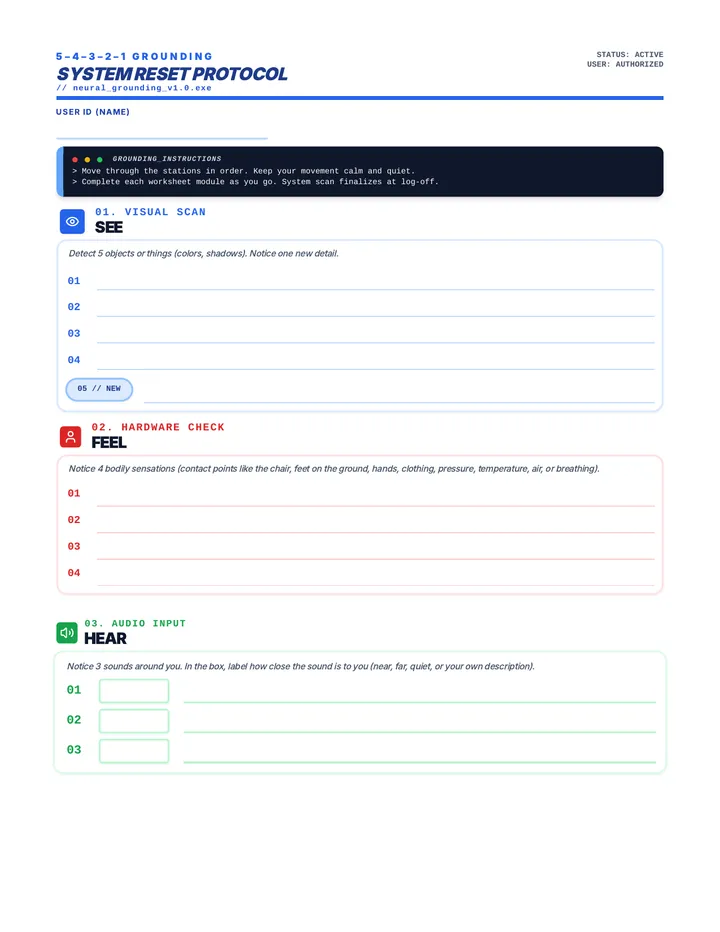
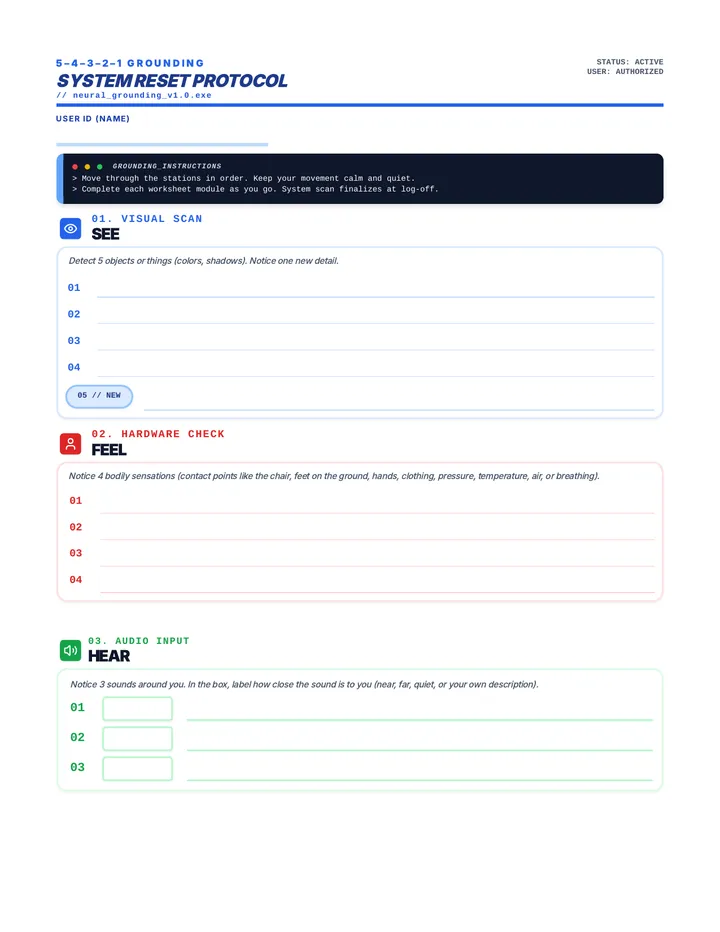
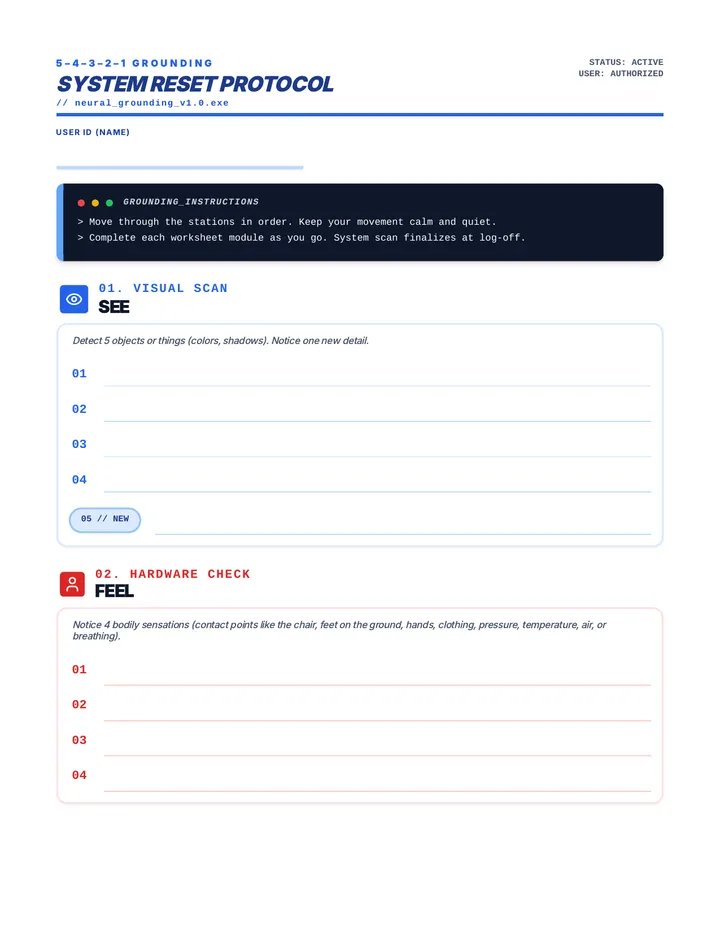
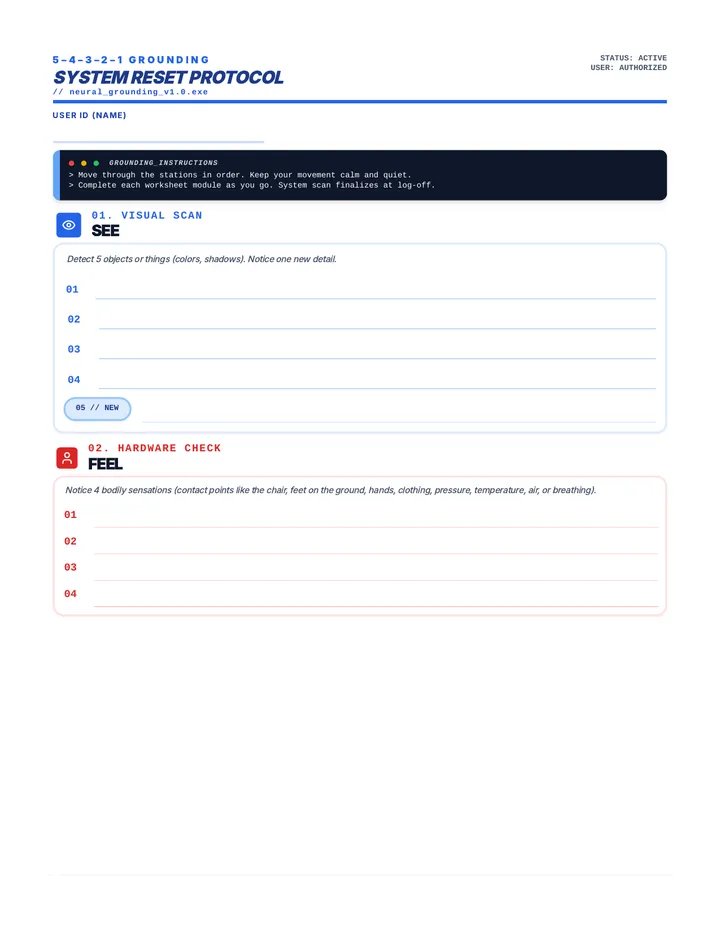
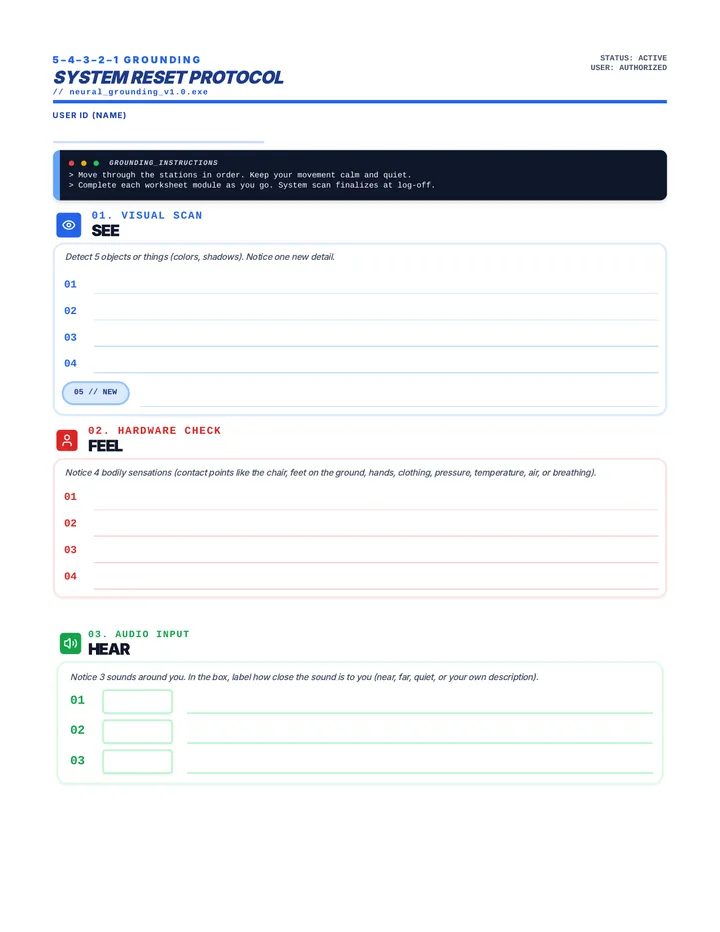
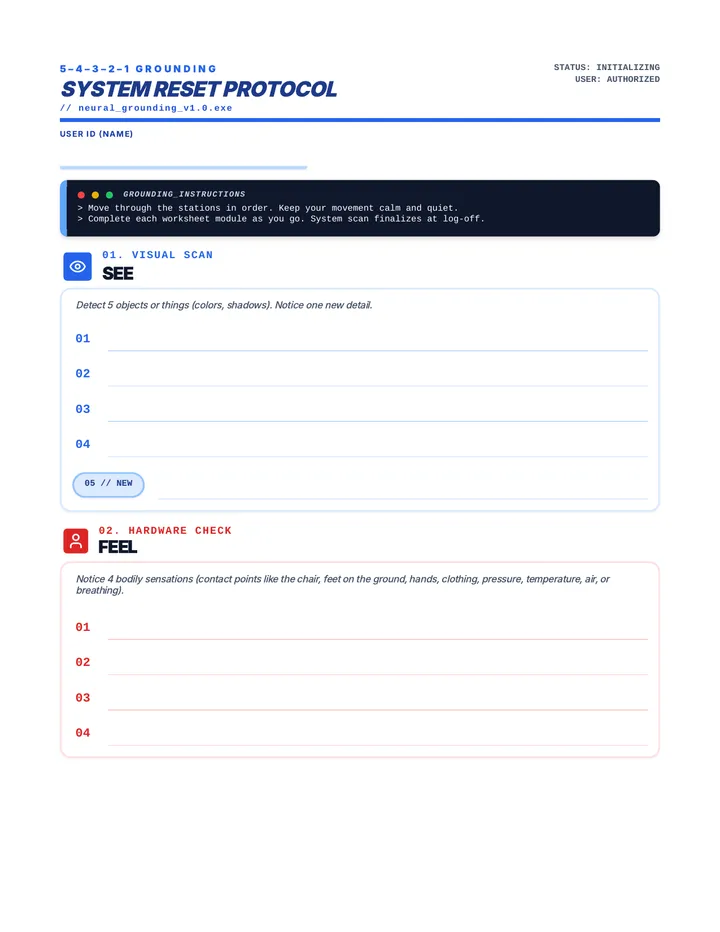
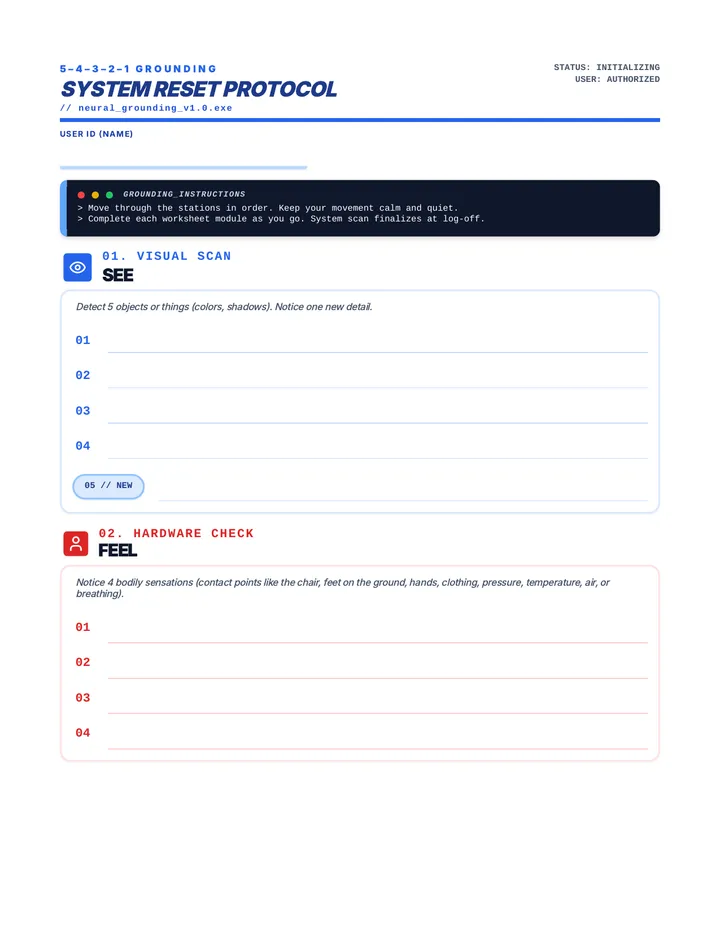
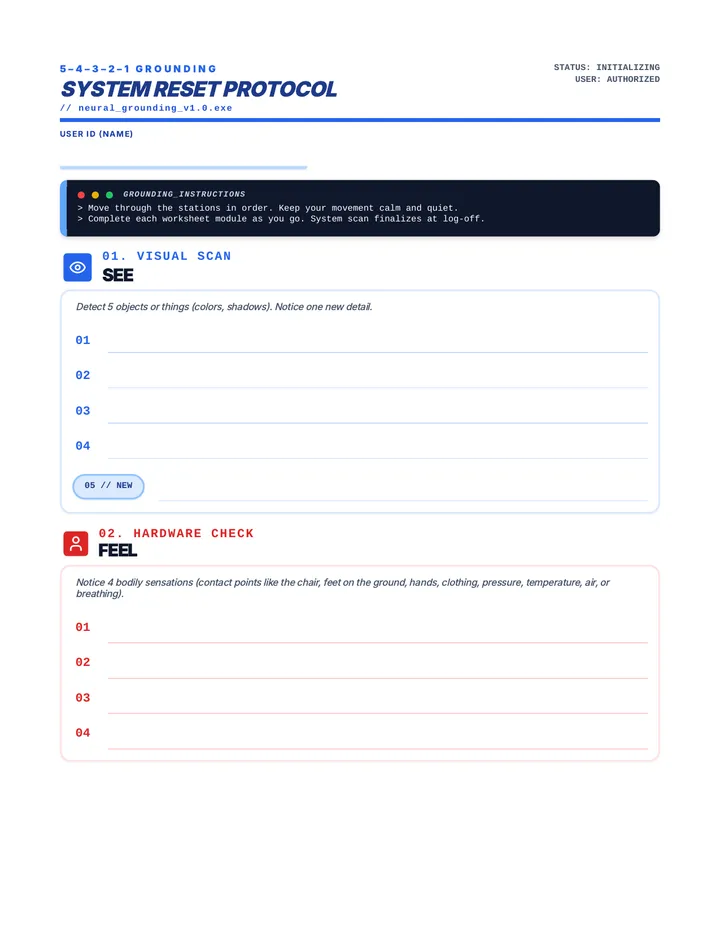
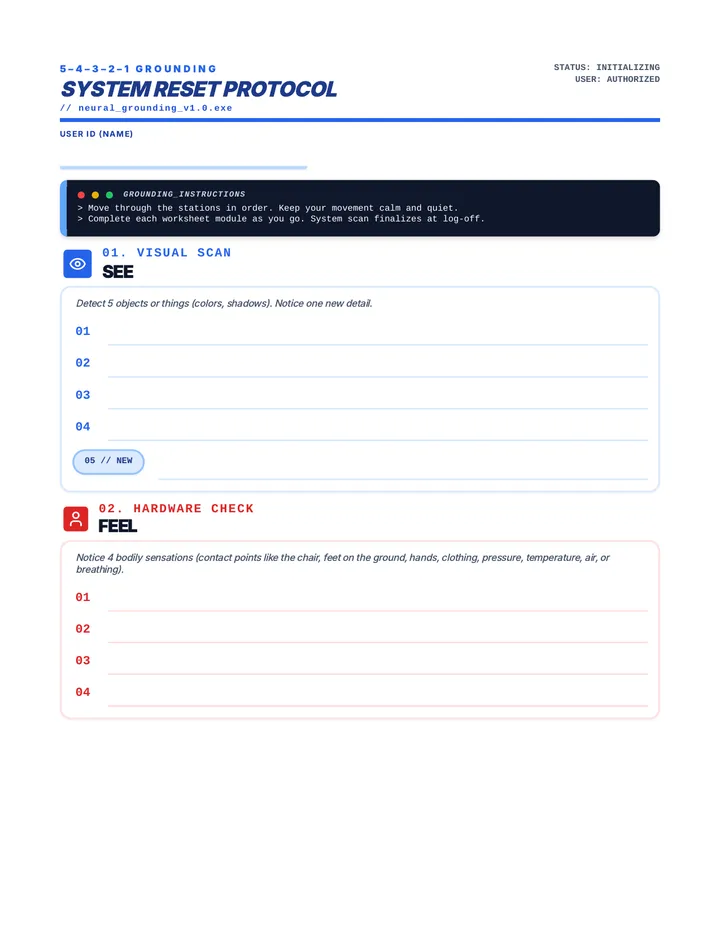
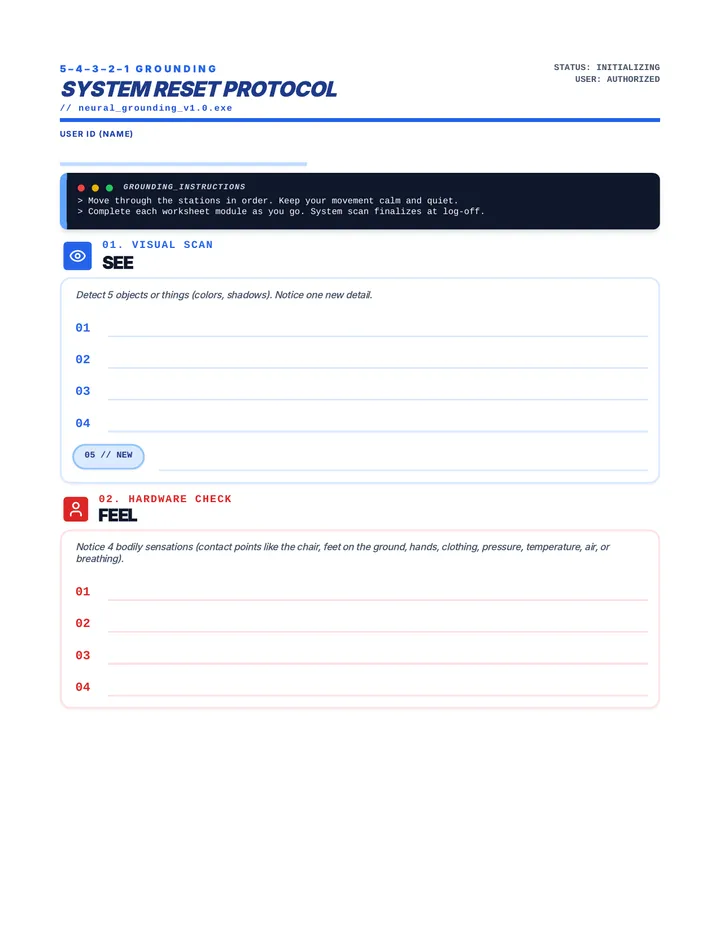
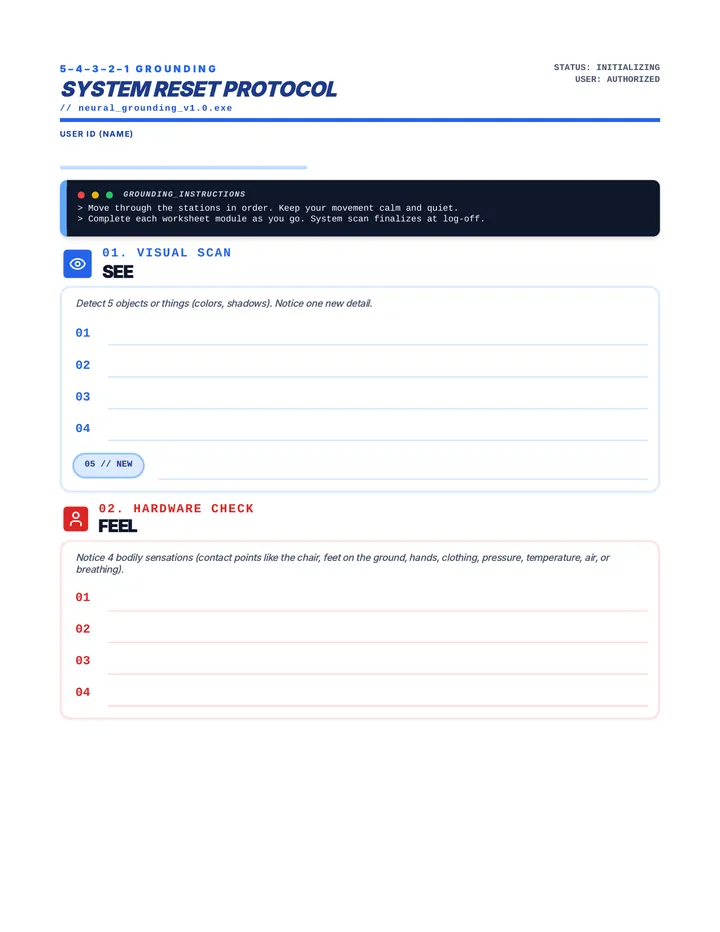
A grounding and mindfulness lesson using a coding-themed 'System Reset' protocol to help students focus and regulate their attention.
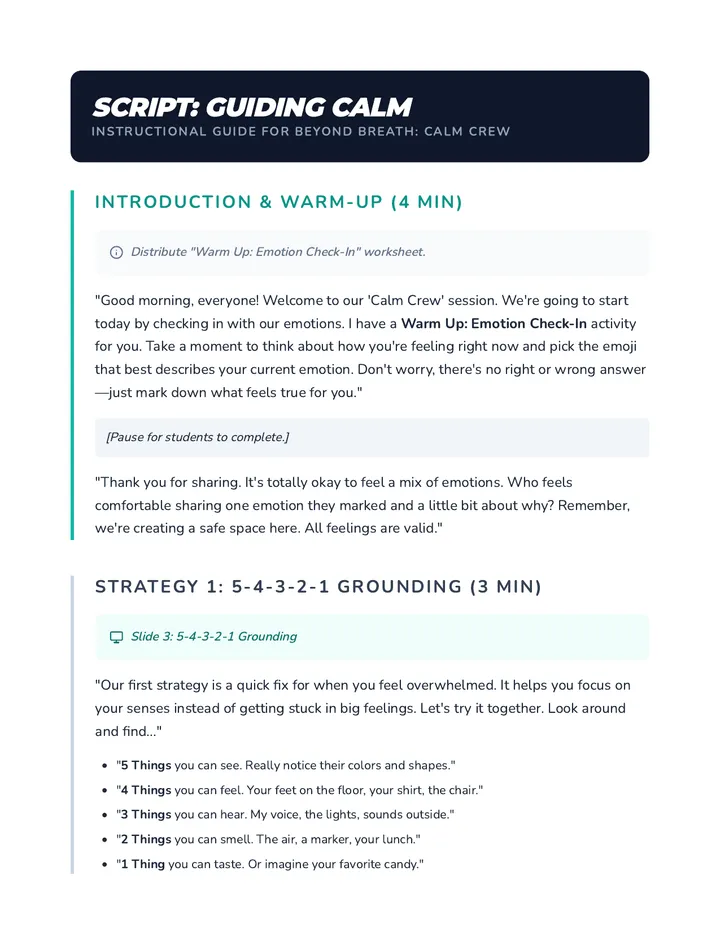
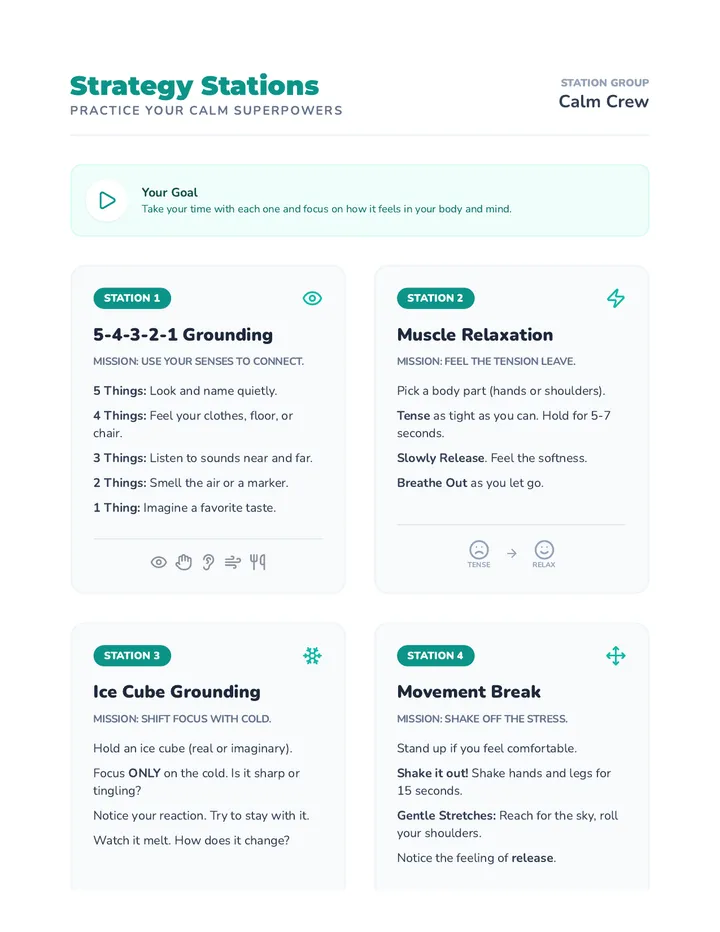
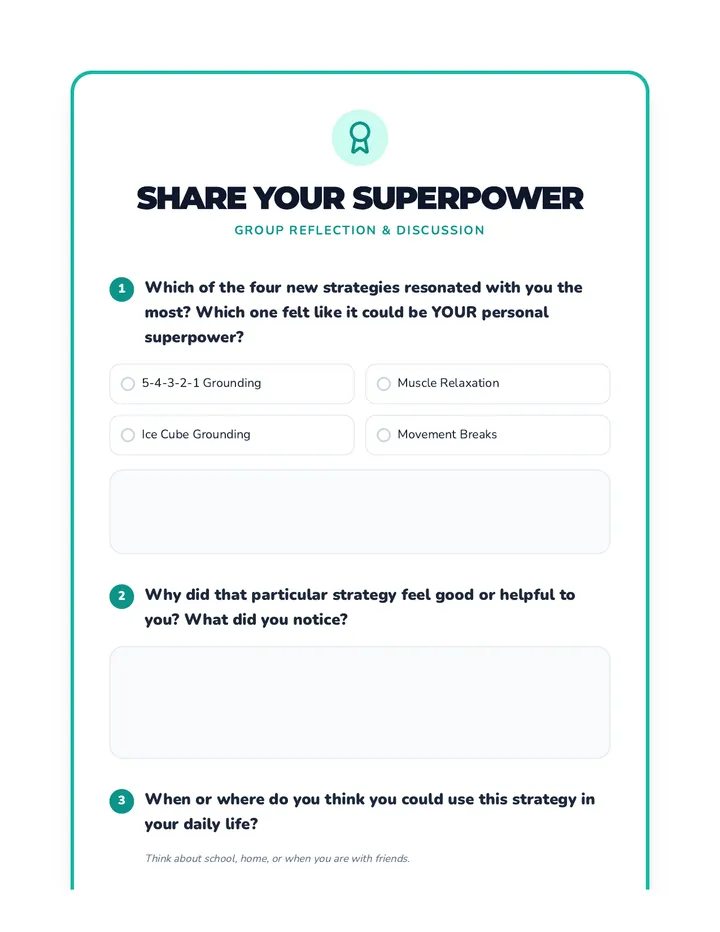
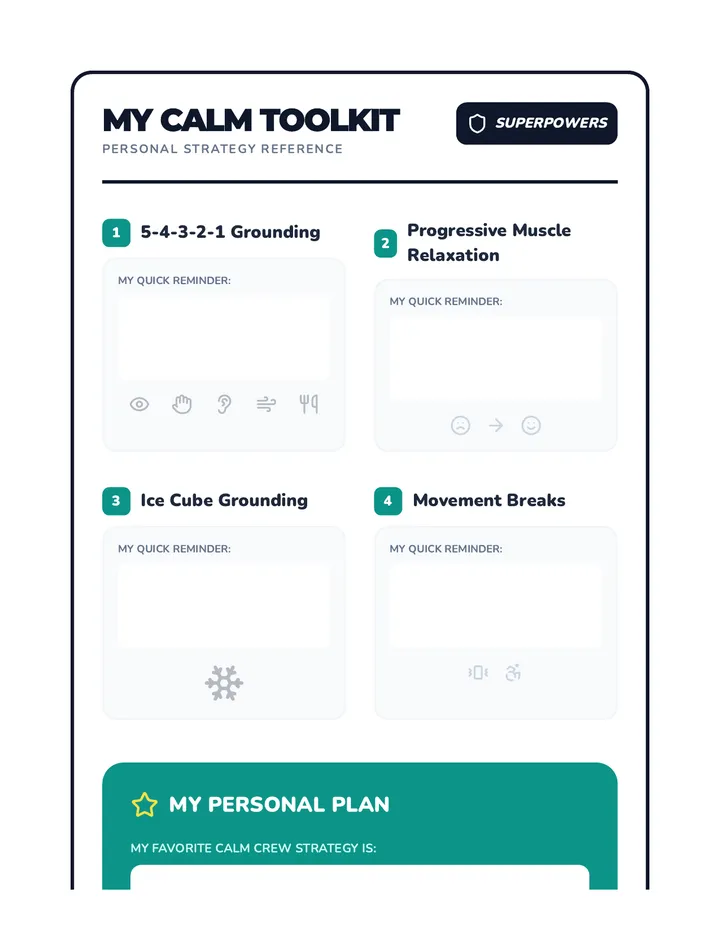
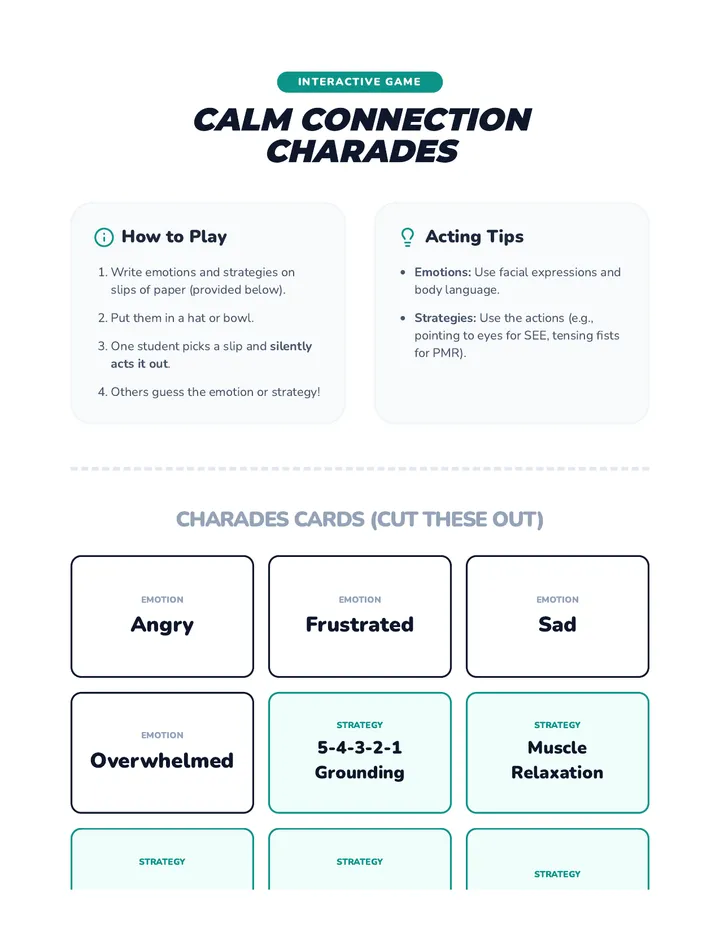
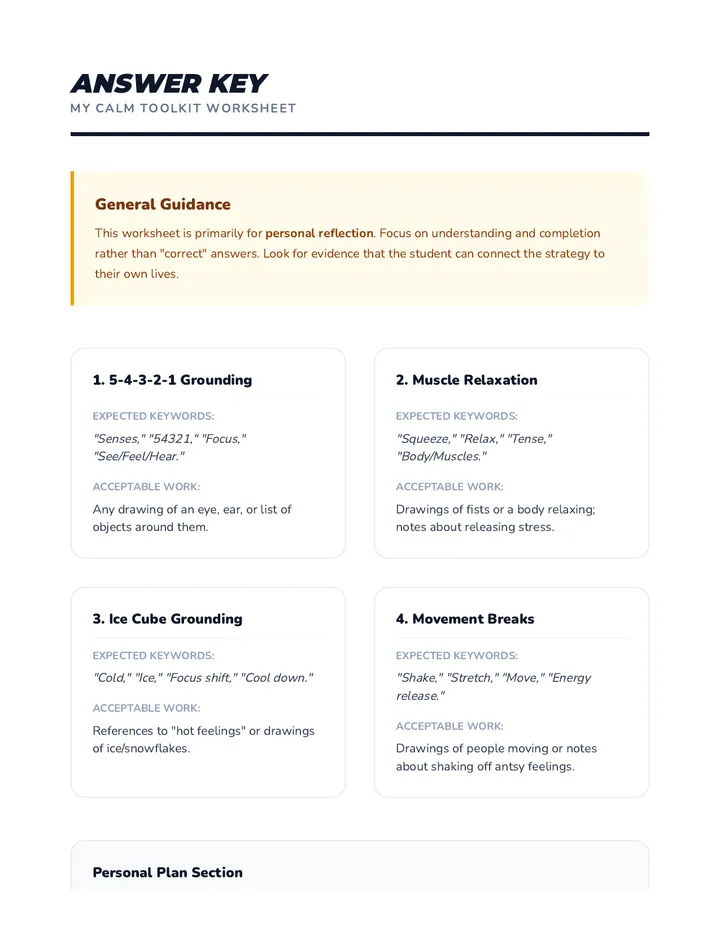
A 35-minute Tier 2 group lesson for 6th graders that introduces and practices various calming and grounding strategies beyond basic breathing, providing students with a toolkit to manage anger, frustration, and upset feelings.
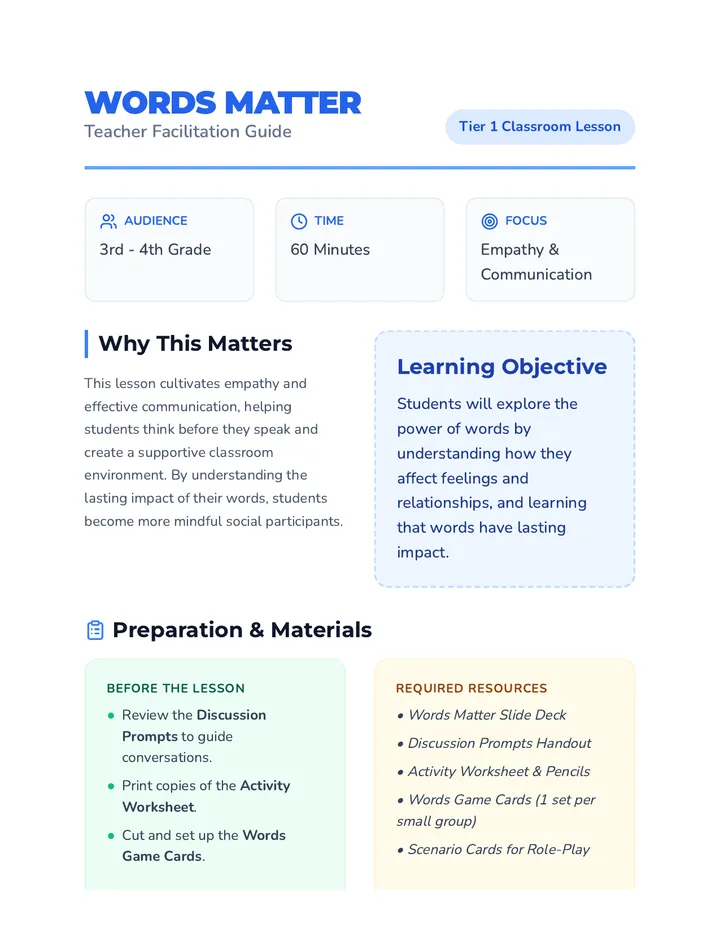
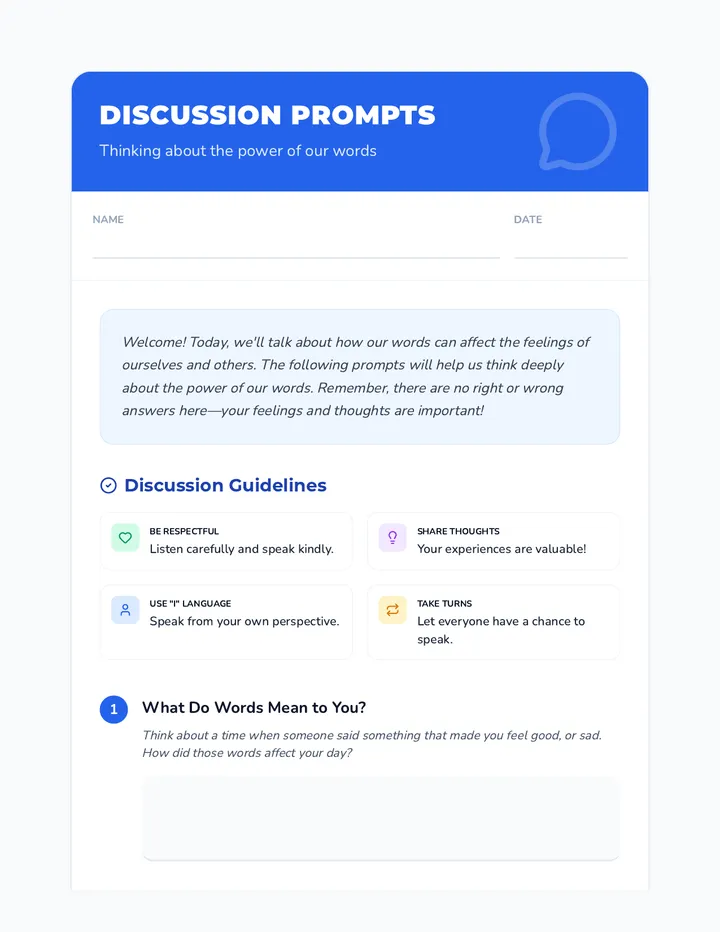
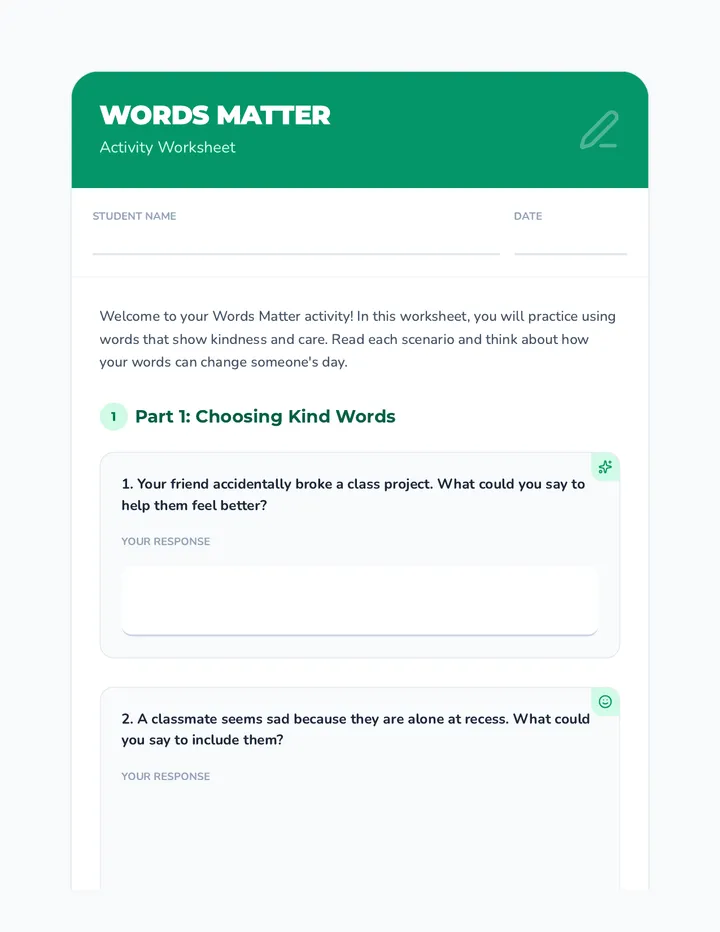
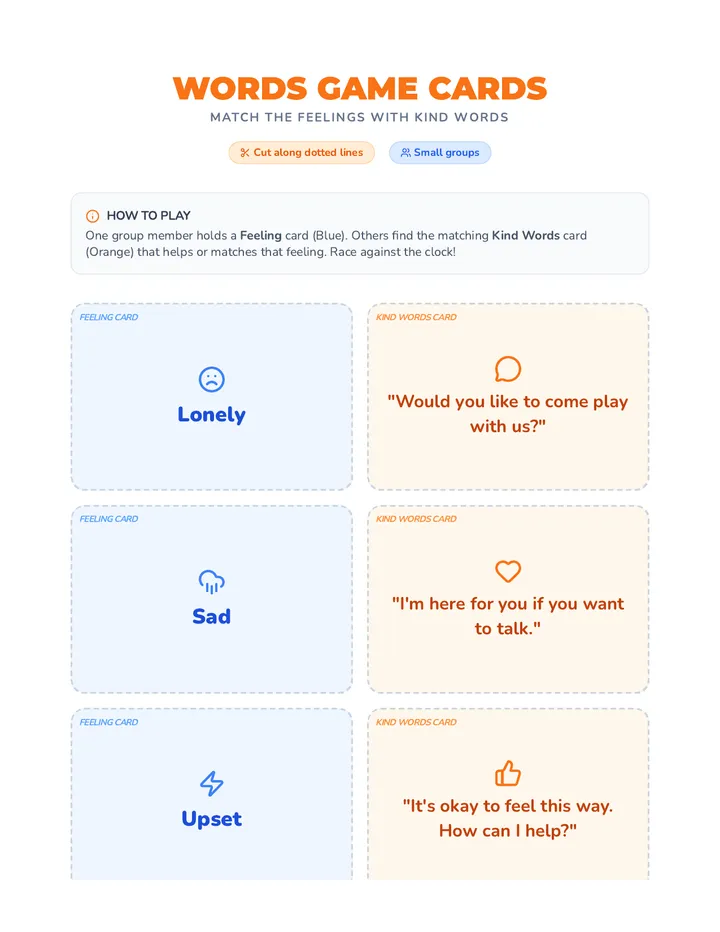
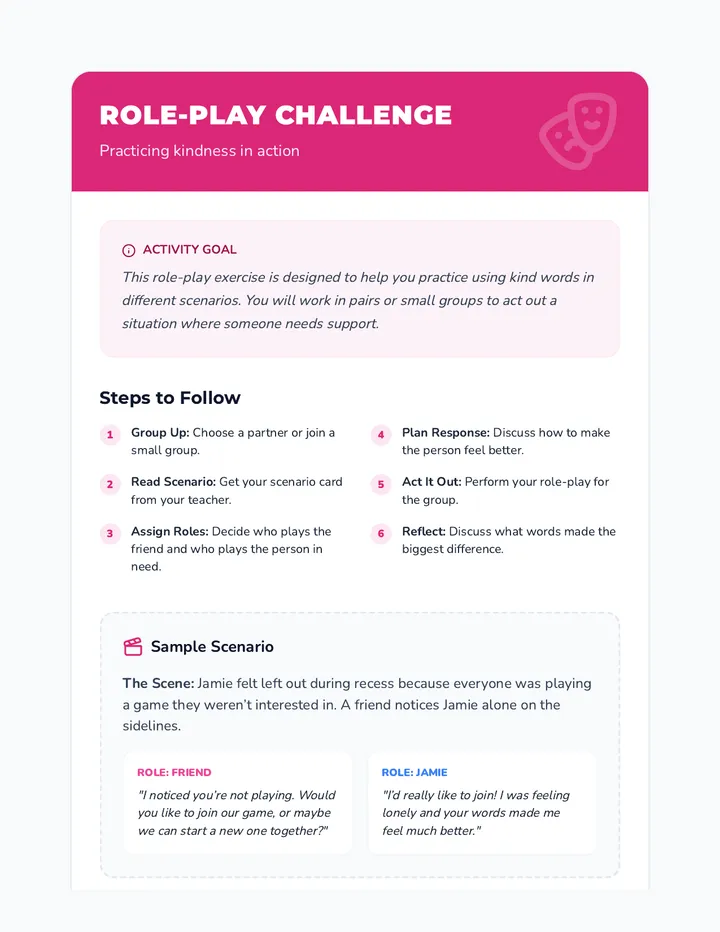
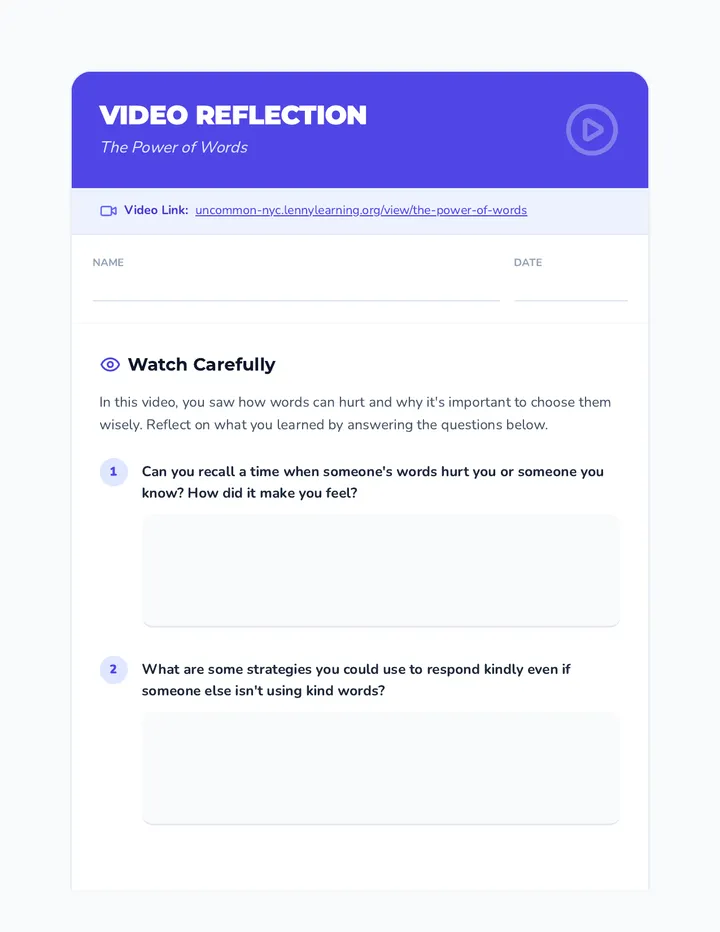
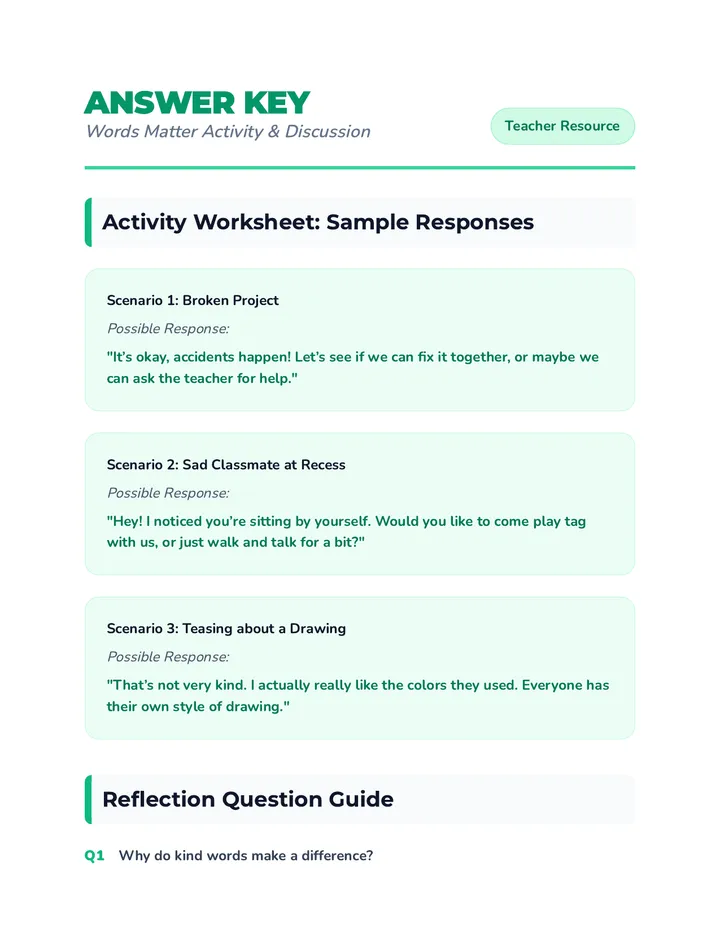
An interactive lesson for 3rd and 4th graders exploring how words impact emotions and relationships. Students learn that words have a lasting effect through discussion, role-play, and hands-on activities.
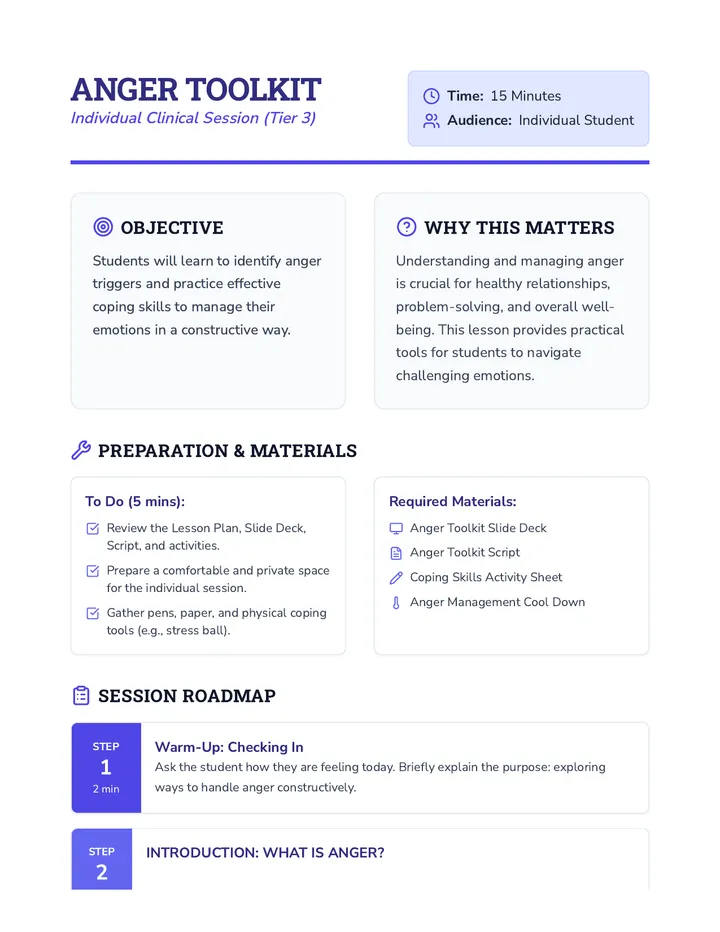
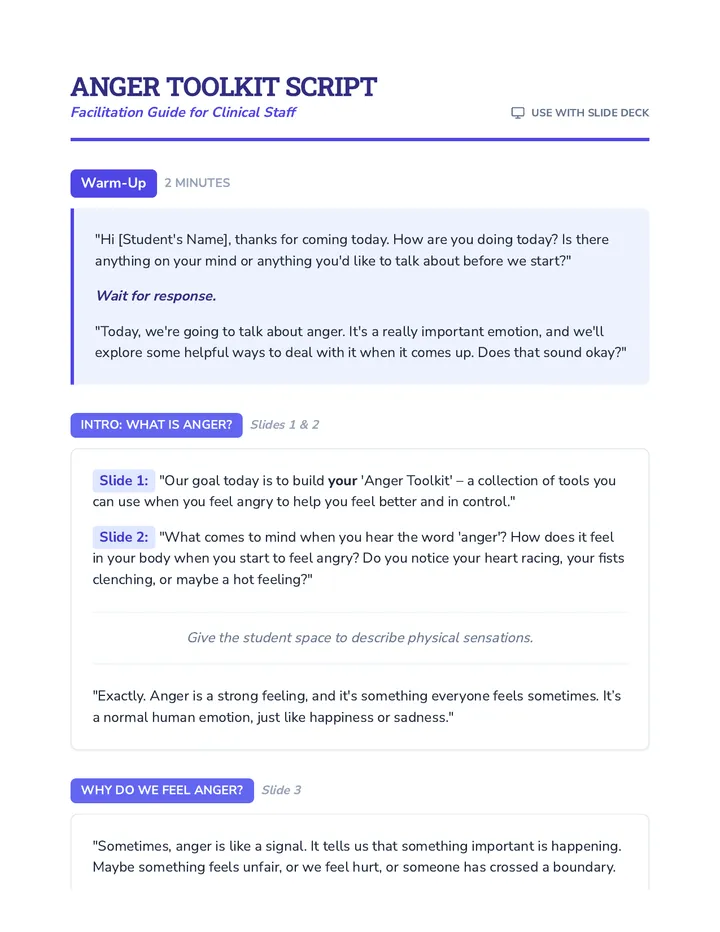
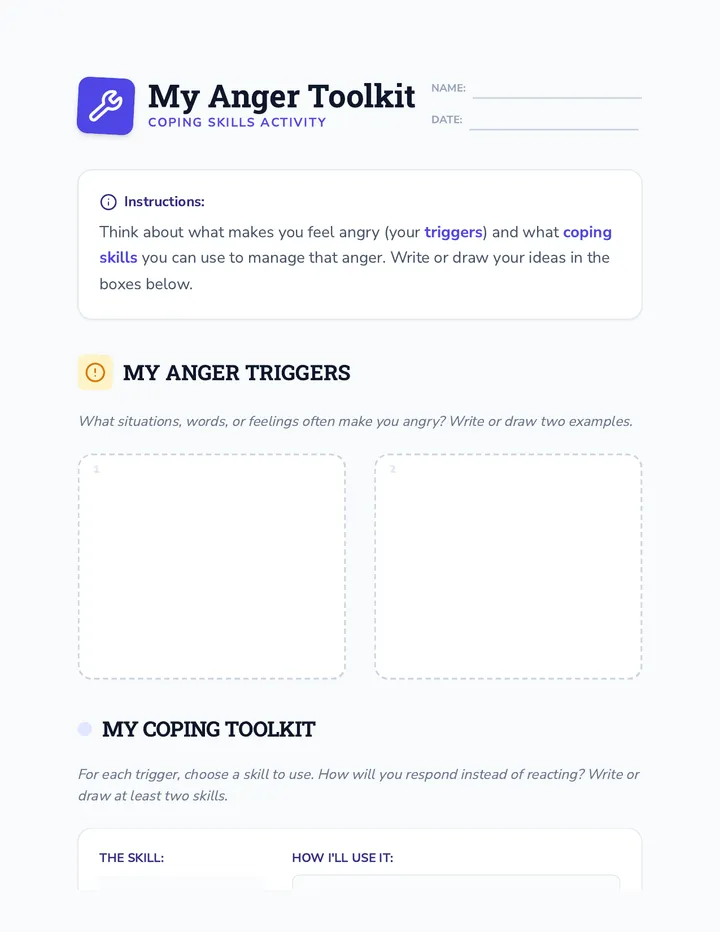
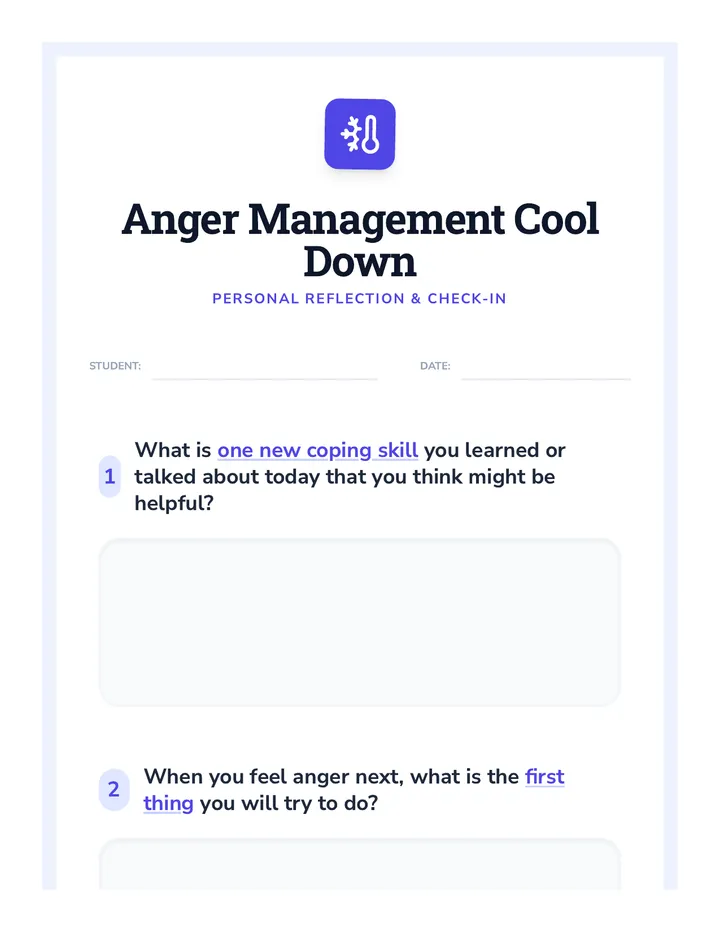
A 15-minute Tier 3 clinical lesson designed to equip individual students with practical anger coping strategies, trigger identification, and emotional regulation tools.
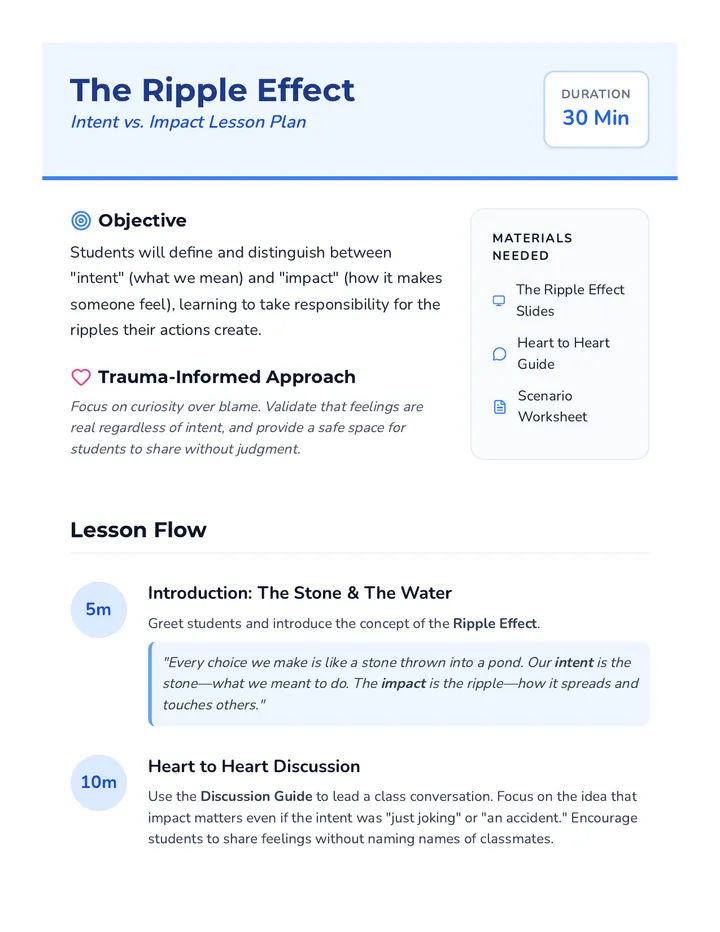
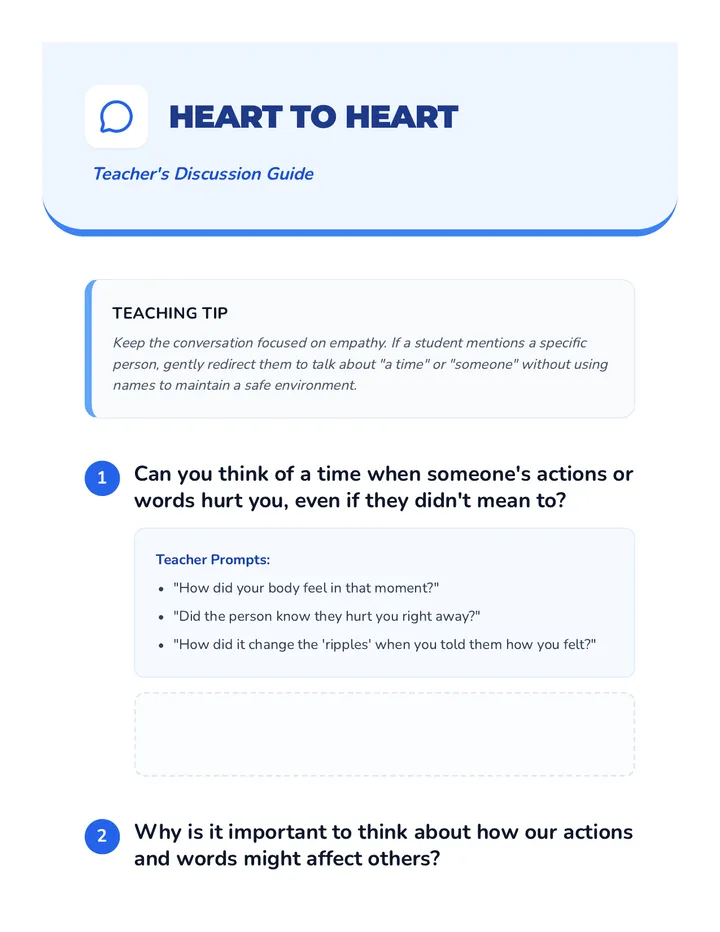
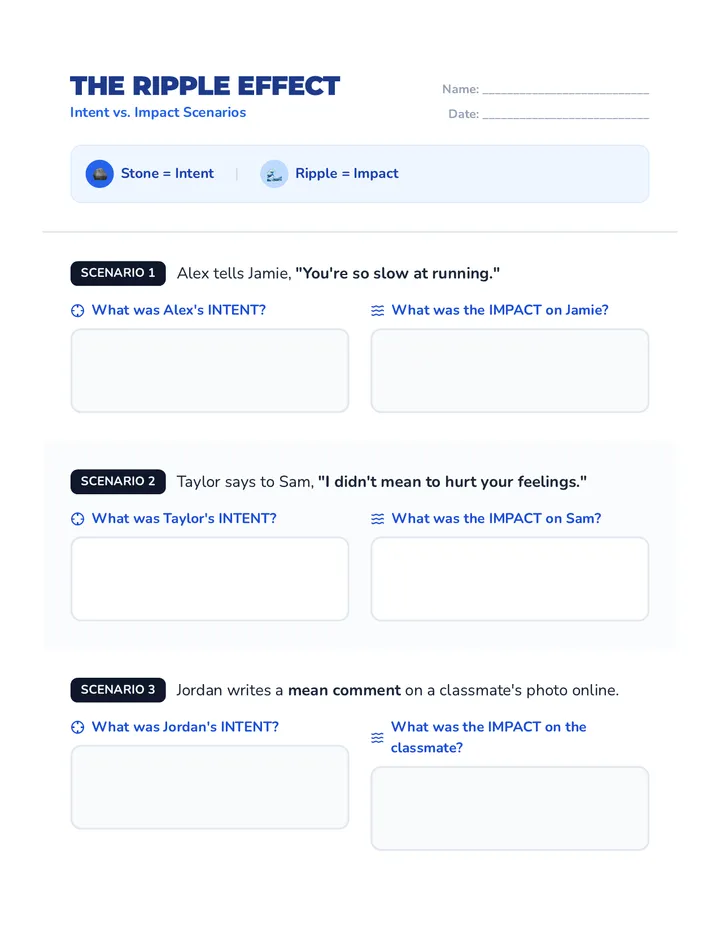
Students explore the difference between what we mean (intent) and how others feel (impact) through the 'Ripple Effect' metaphor, developing empathy and social awareness.
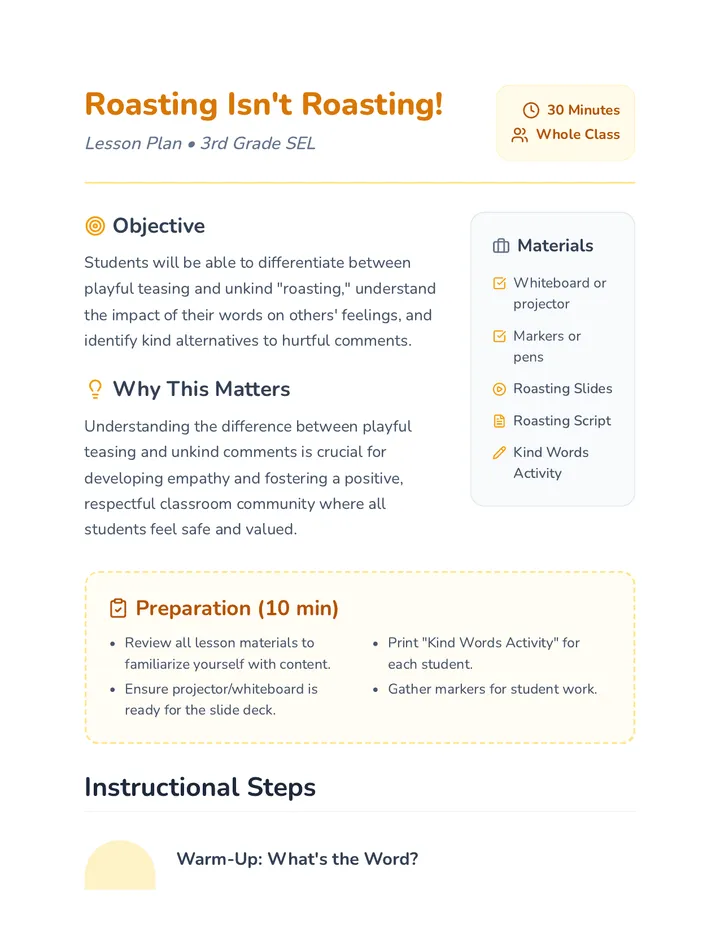
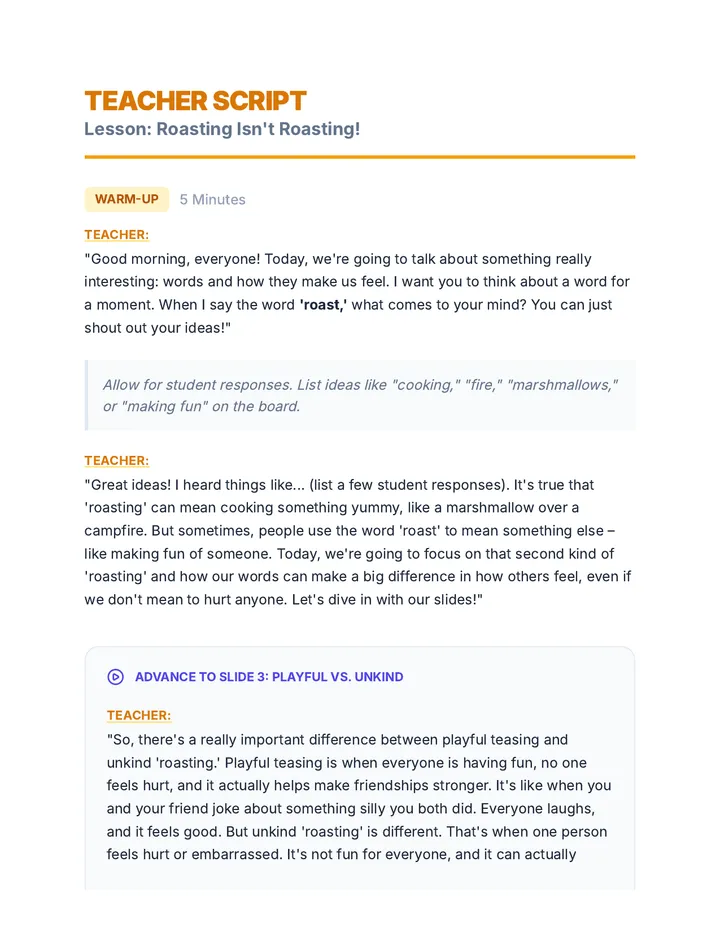
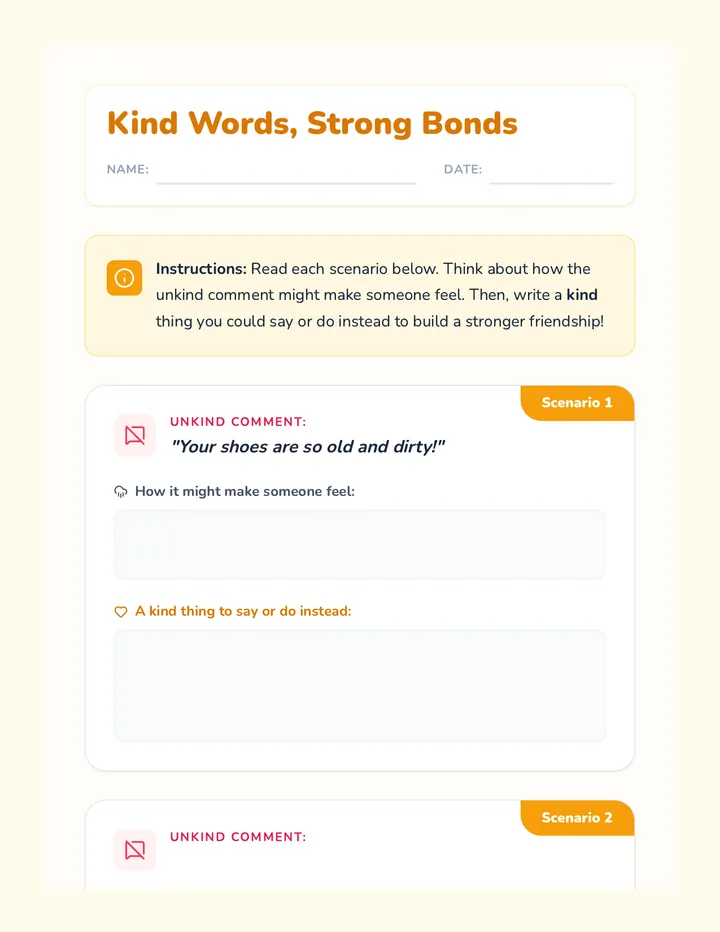
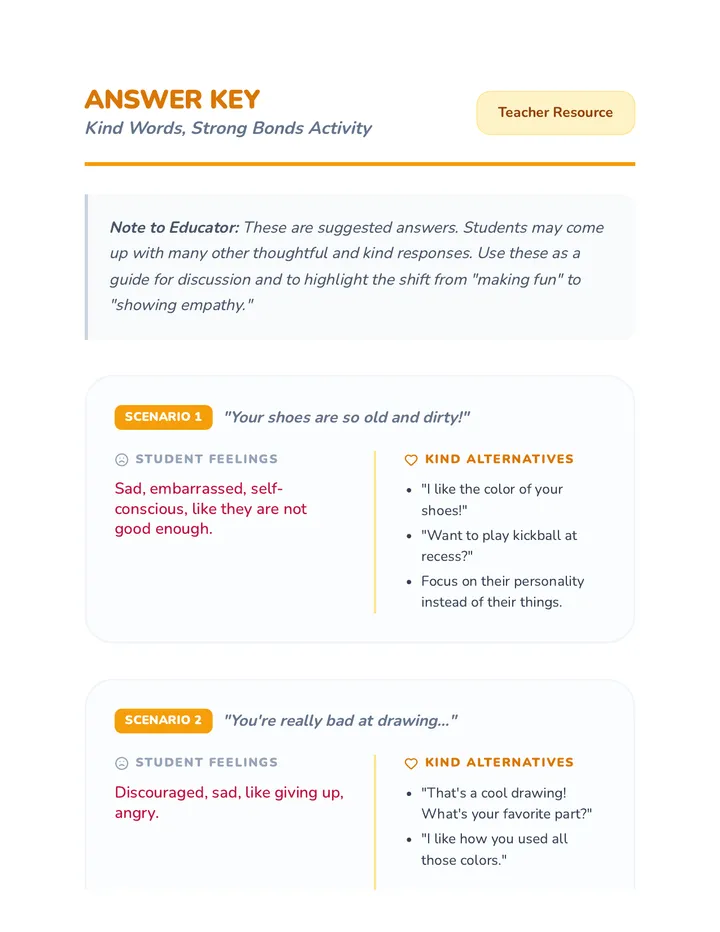
A 30-minute SEL lesson for 3rd graders focusing on the impact of words, differentiating between playful teasing and unkind roasting, and practicing empathy through kind alternatives.
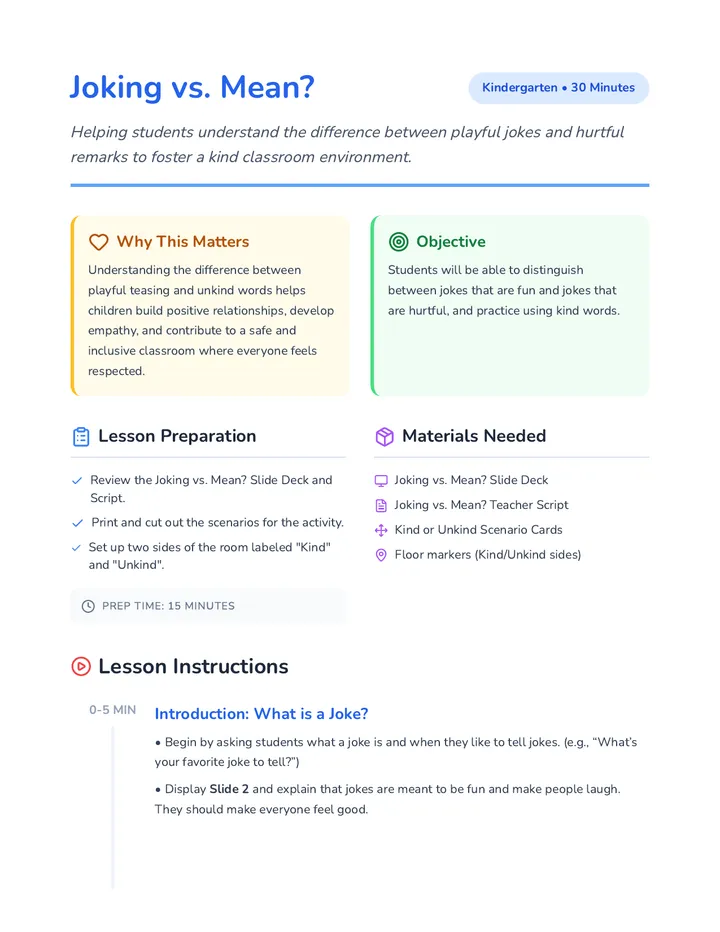
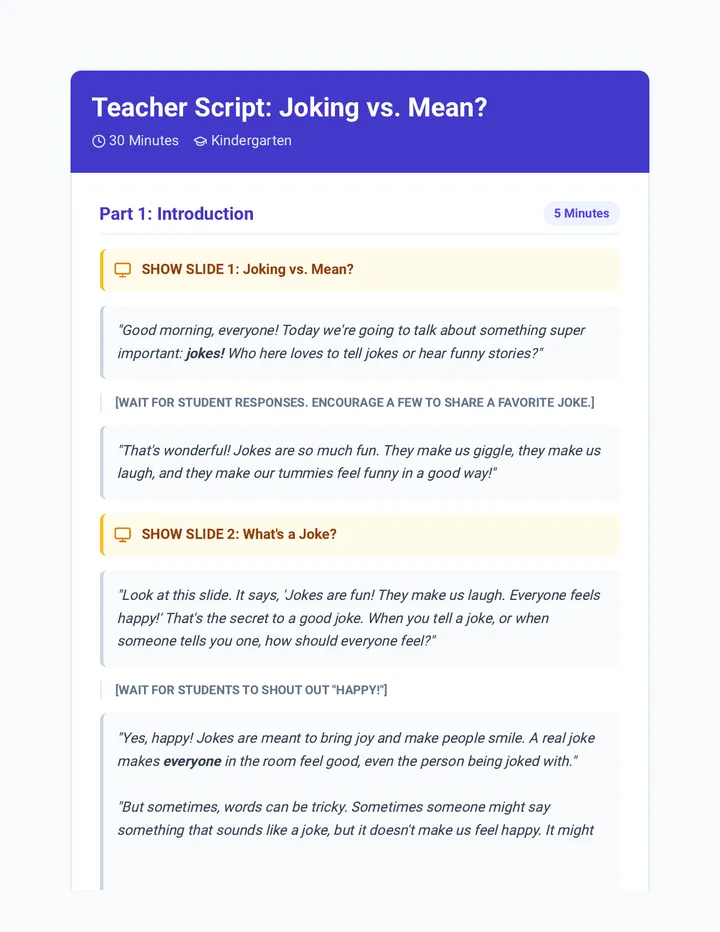
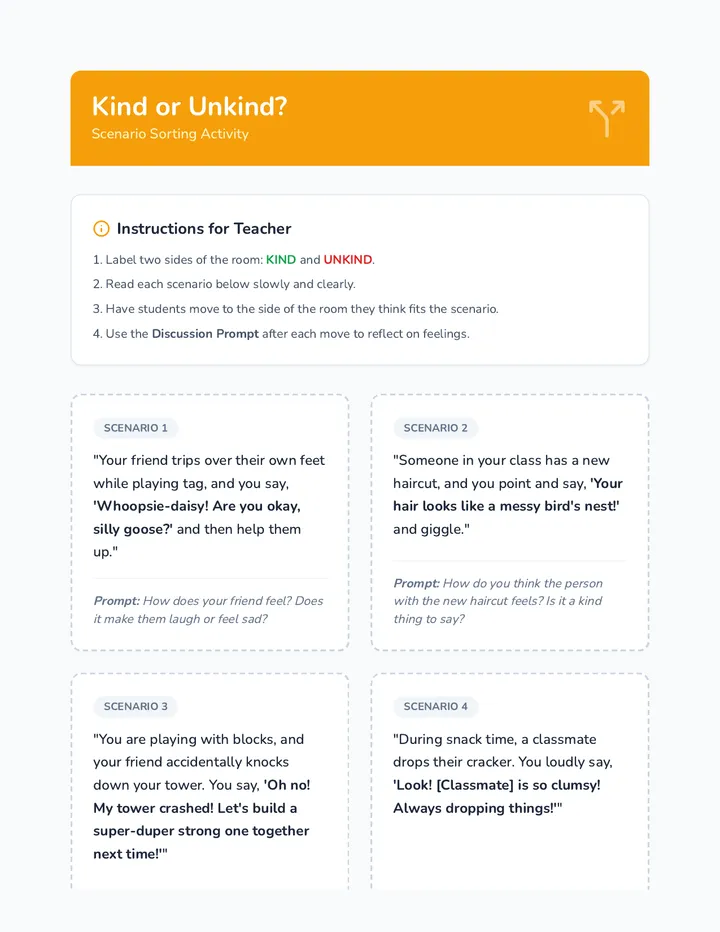
A 30-minute Kindergarten lesson that helps students distinguish between playful jokes and hurtful remarks using discussion, visual slides, and interactive scenario practice.
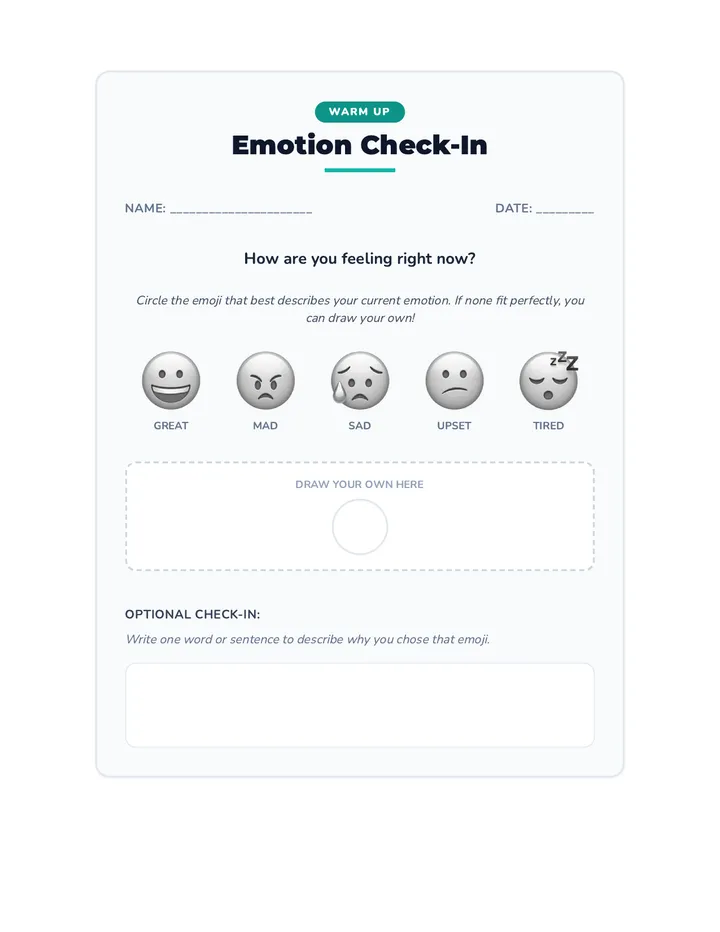
An introductory lesson on emotional awareness using the Mood Meter framework. Students learn to identify, categorize, and regulate their emotions through four color-coded quadrants: Red, Blue, Green, and Yellow.
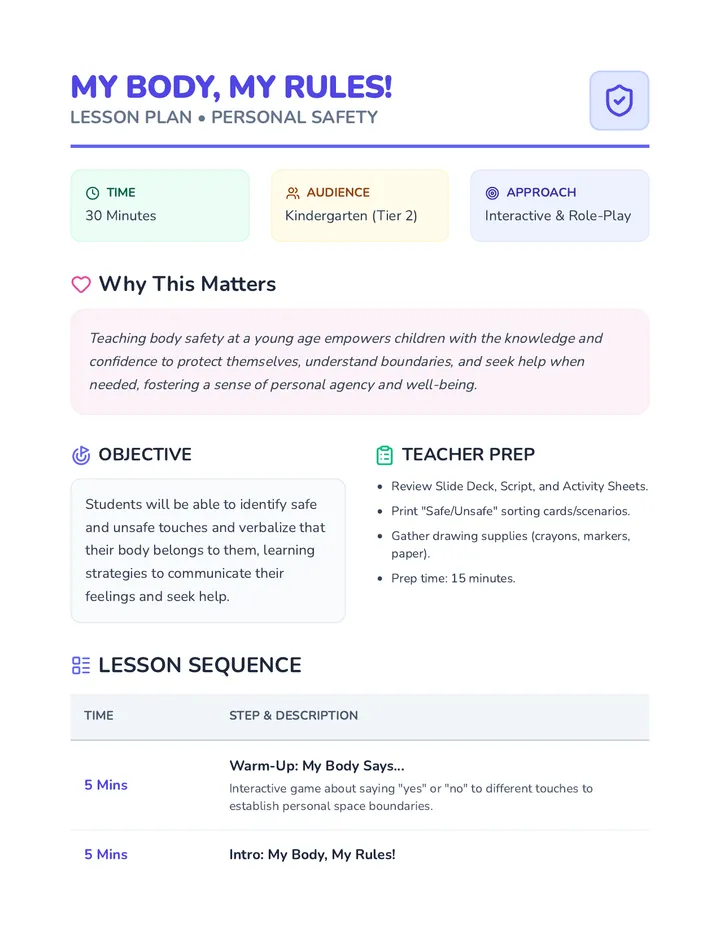
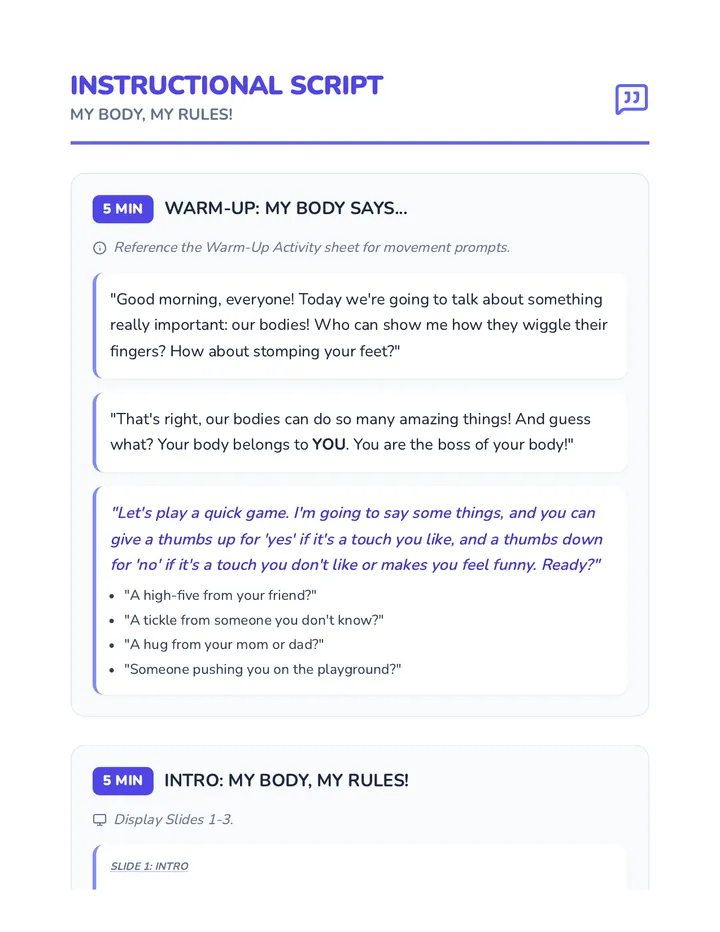
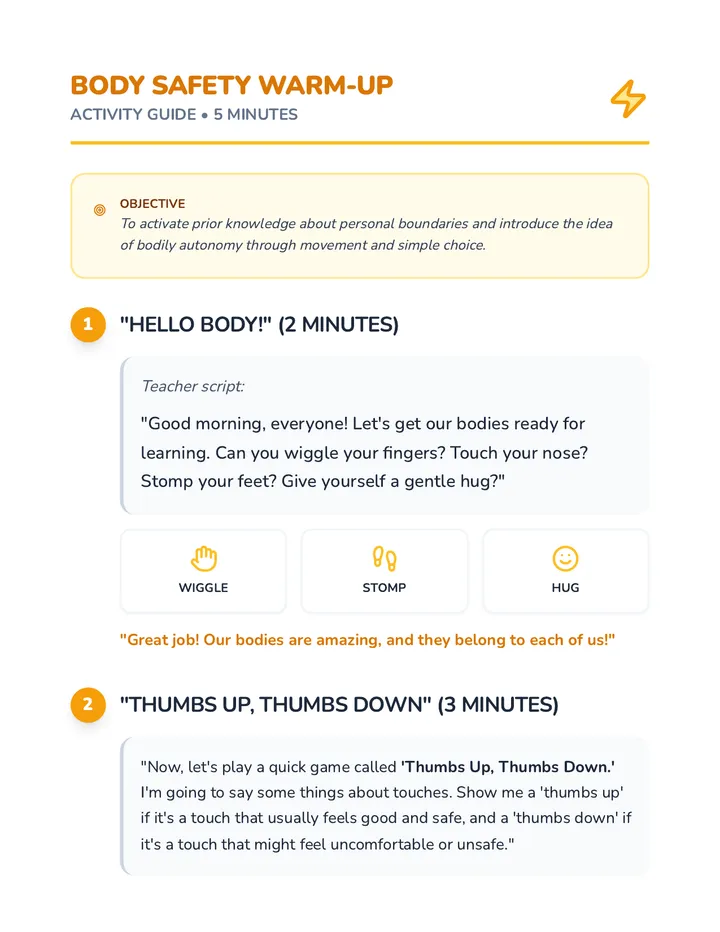
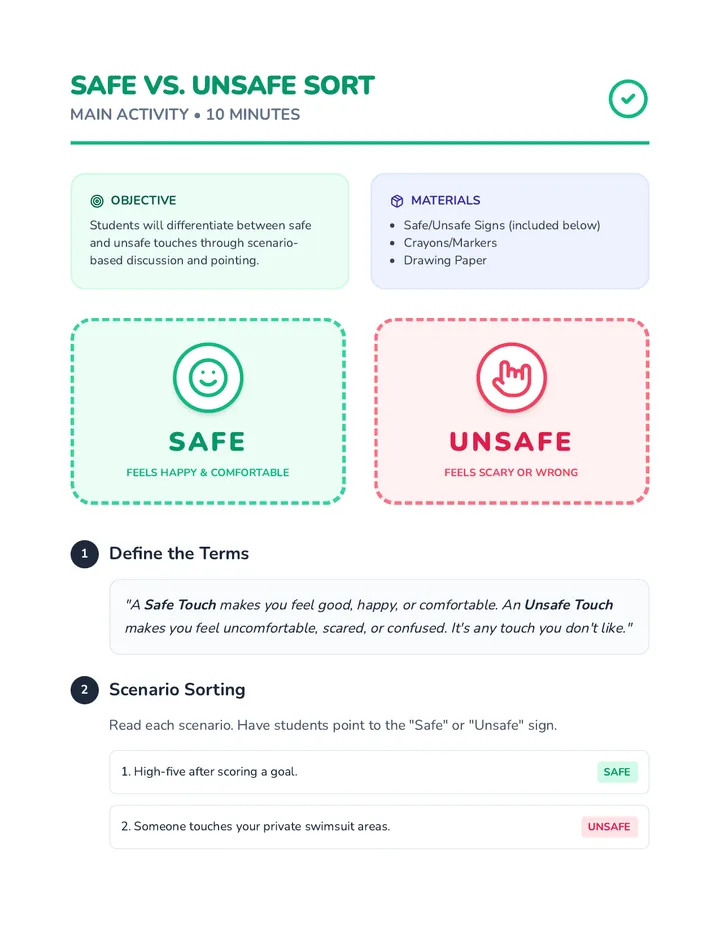
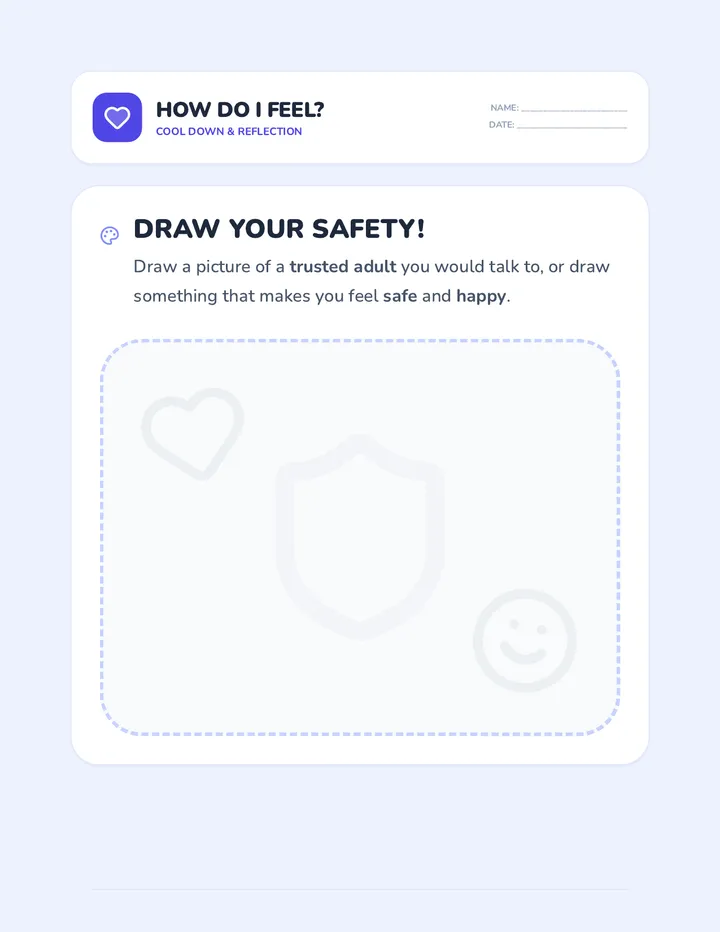
This Tier 2 small group lesson empowers Kindergarten students to understand personal boundaries, identify safe and unsafe touches, and practice using their voices to seek help from trusted adults.
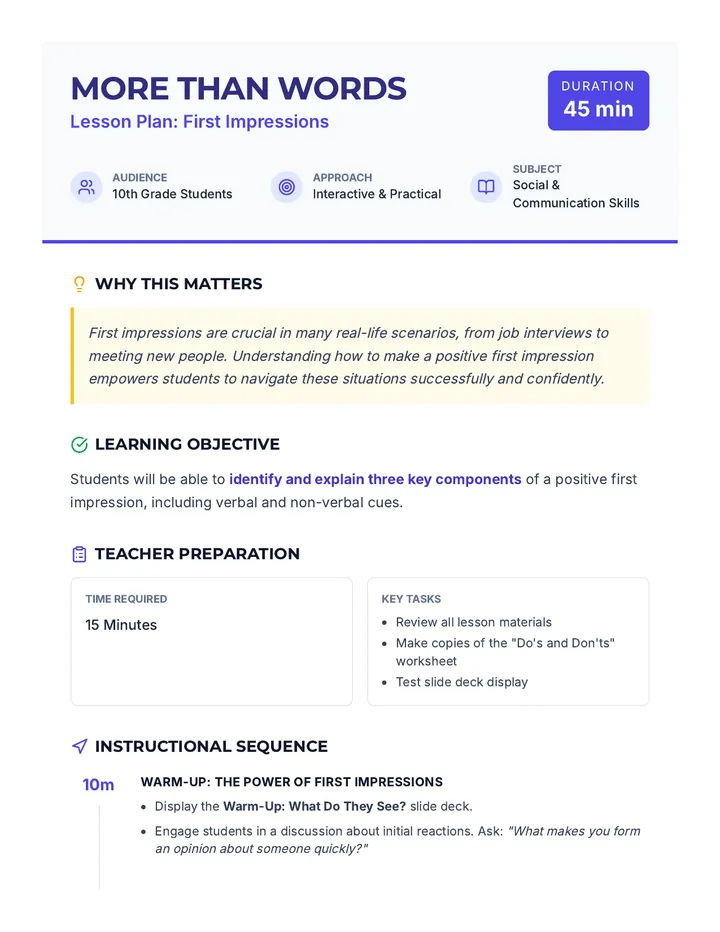
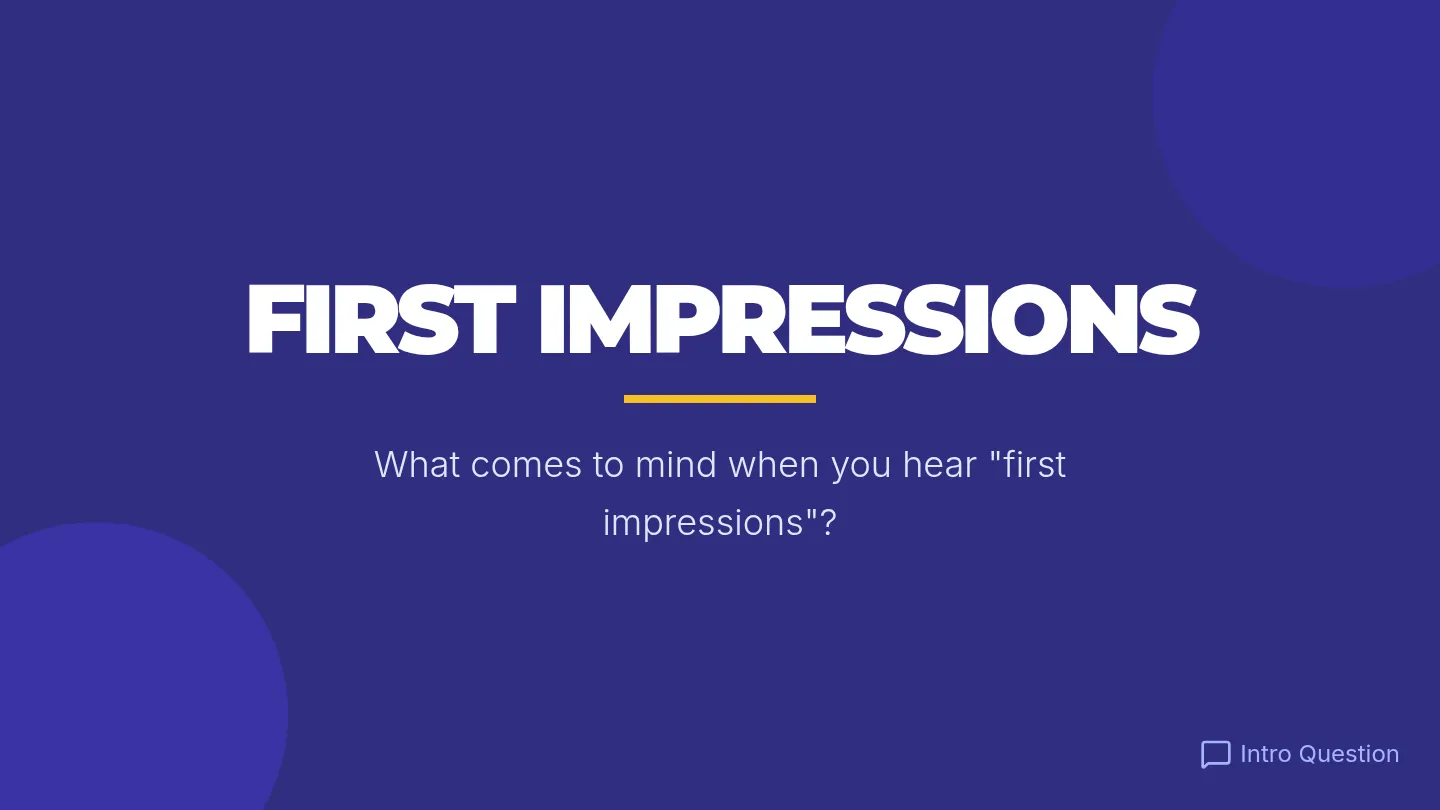
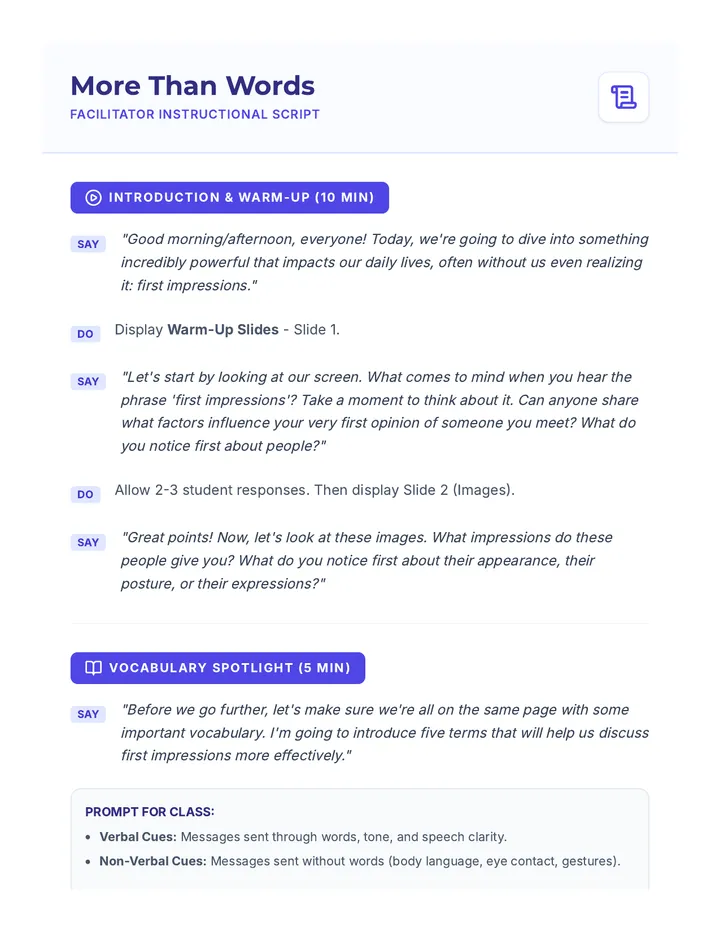
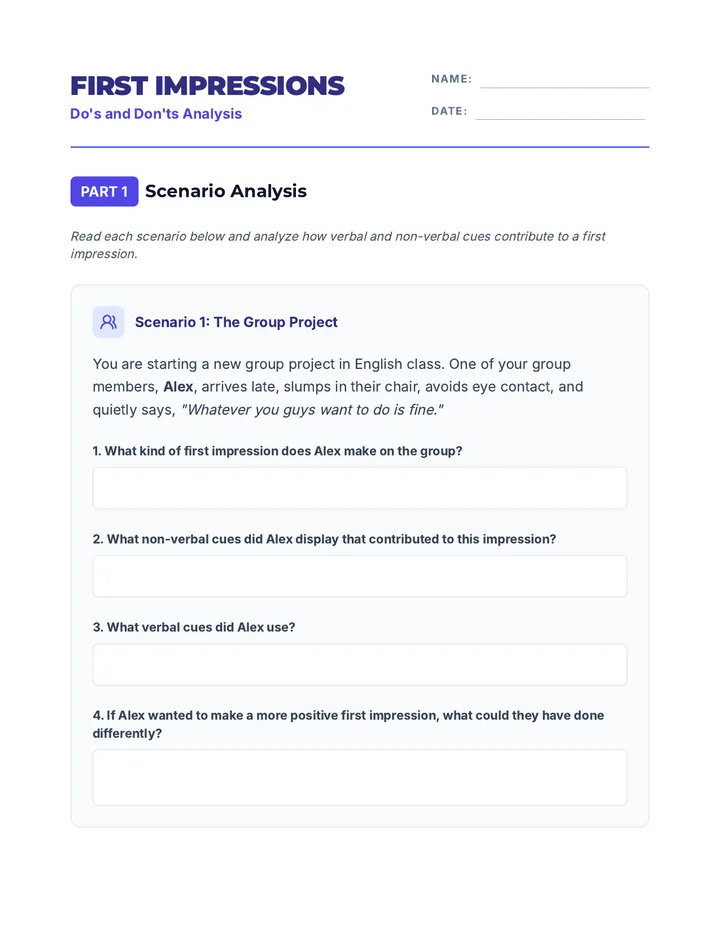
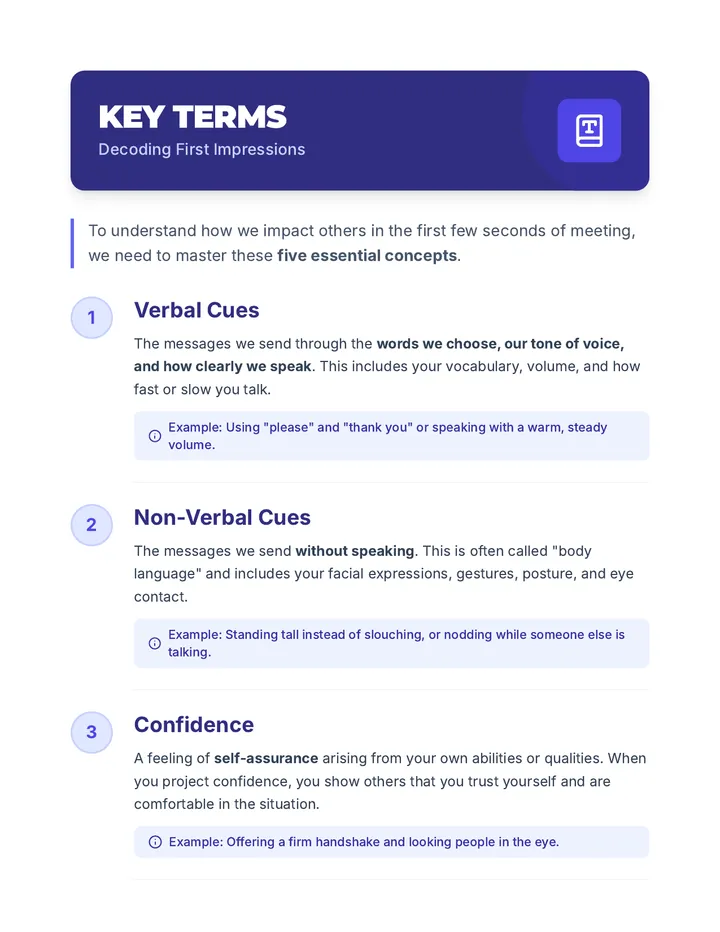
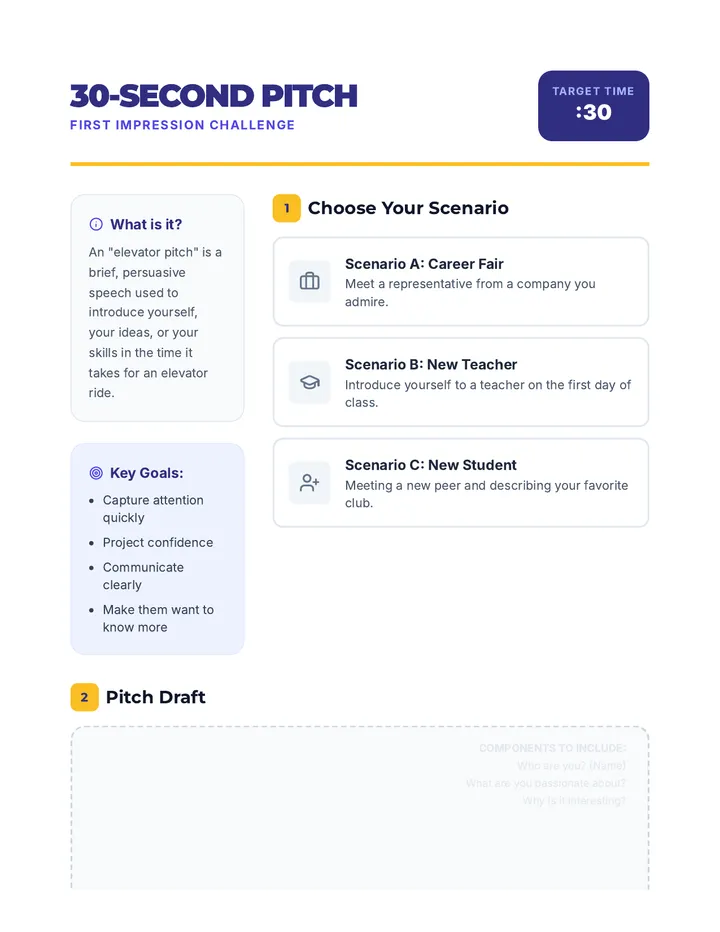
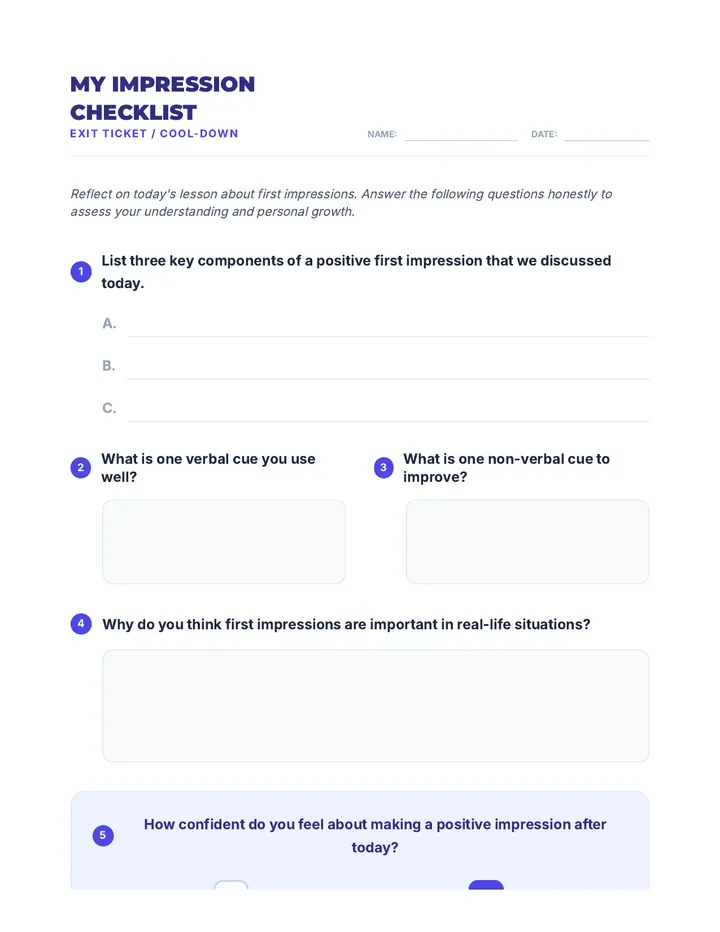
This lesson helps 10th-grade students understand the critical role of first impressions in various situations. It covers identifying key verbal and non-verbal cues to make a positive impact.
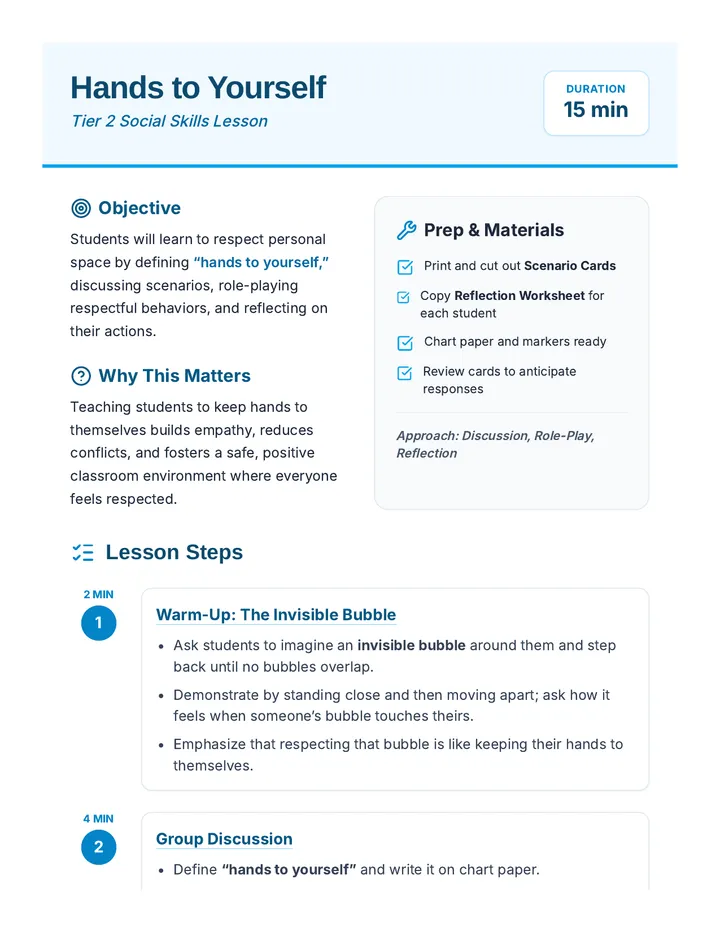
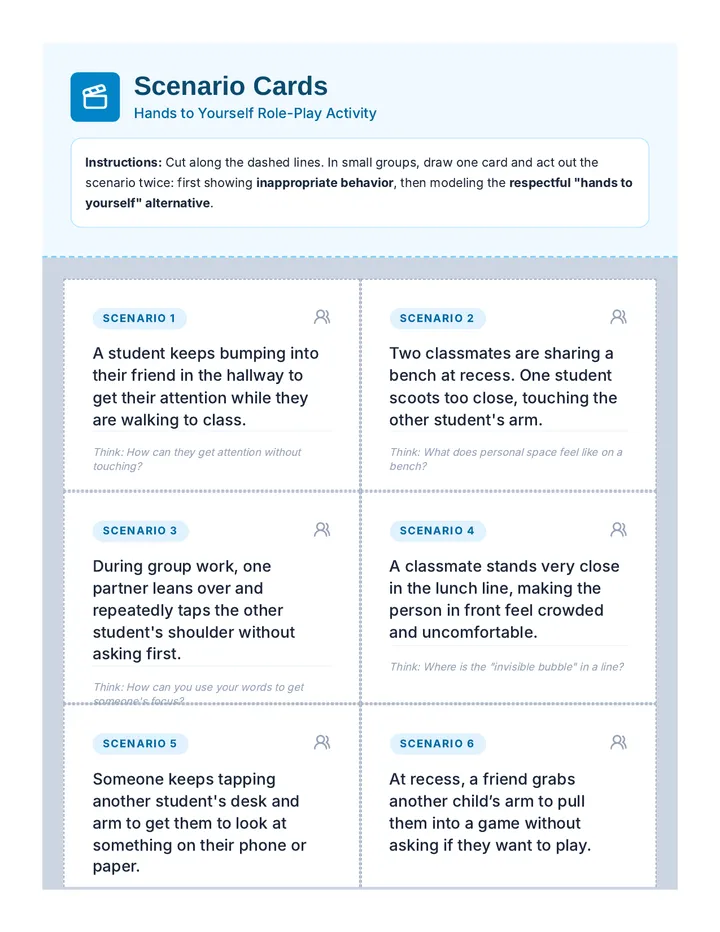
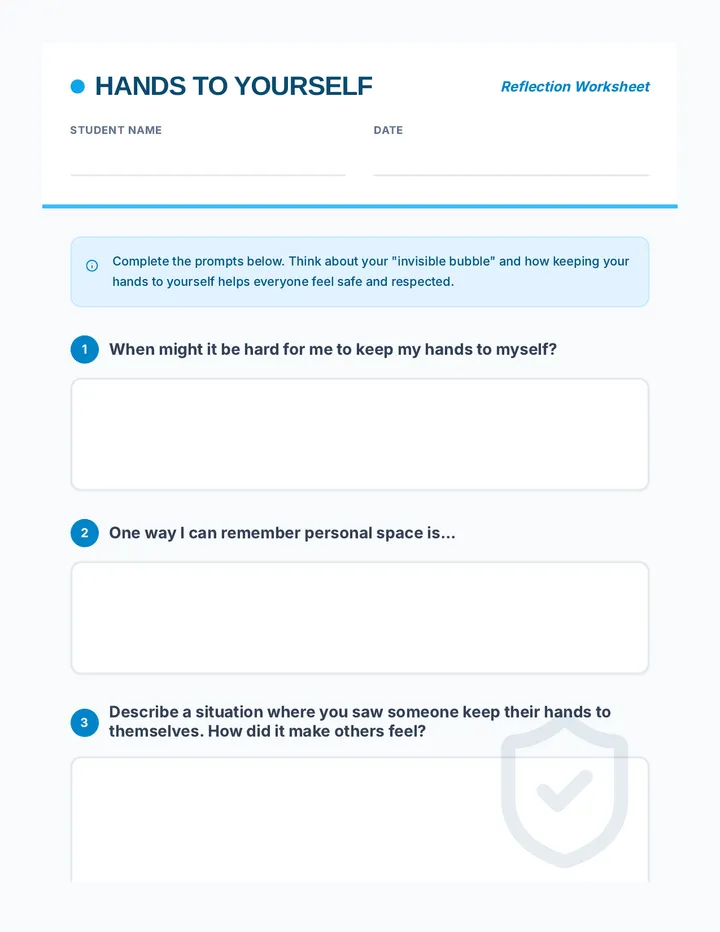
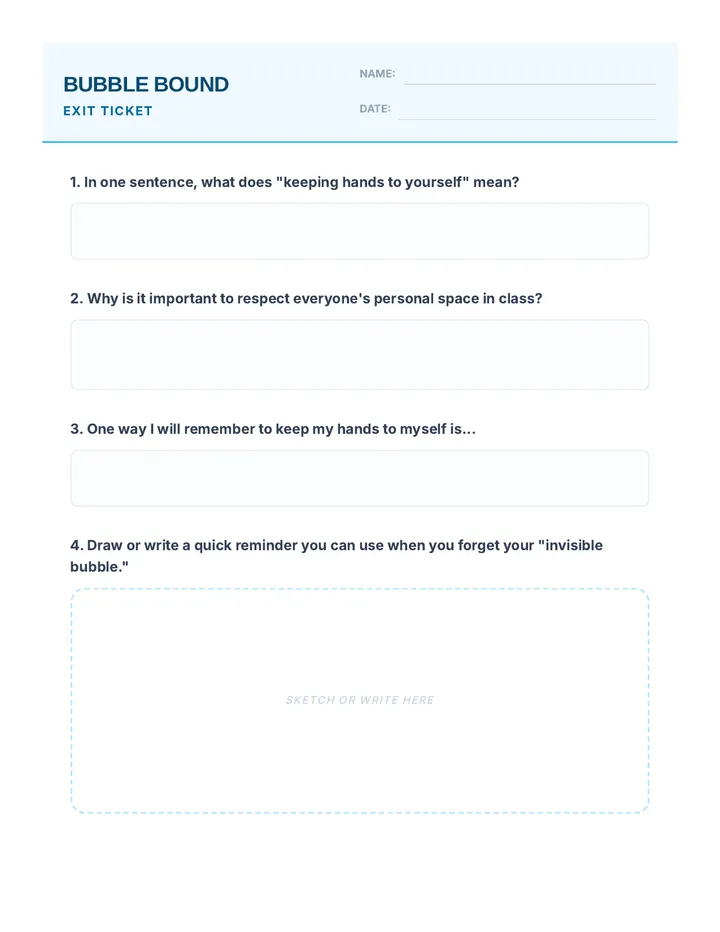
A 15-minute Tier 2 lesson for 5th graders focused on respecting personal space and physical boundaries through the concept of 'invisible bubbles'. Students engage in discussion, role-play, and personal reflection to strengthen social skills and empathy.
In this 30-minute Tier 1 lesson for 8th graders, students will explore what maturity means, why it matters, and how to demonstrate mature behavior in everyday situations. This lesson builds social-emotional skills and helps students reflect on their personal growth using a gaming-inspired 'Level Up' theme.
A 2nd-grade counseling lesson focused on the power of taking ownership for one's actions. Students learn to recognize the difference between making excuses and taking responsibility through interactive scenarios and 'Fix-it' strategies.