Employment laws, safety protocols, and legal protections against workplace harassment and discrimination. Connects regulatory requirements to practical understandings of pay stubs, insurance benefits, and employee advocacy.
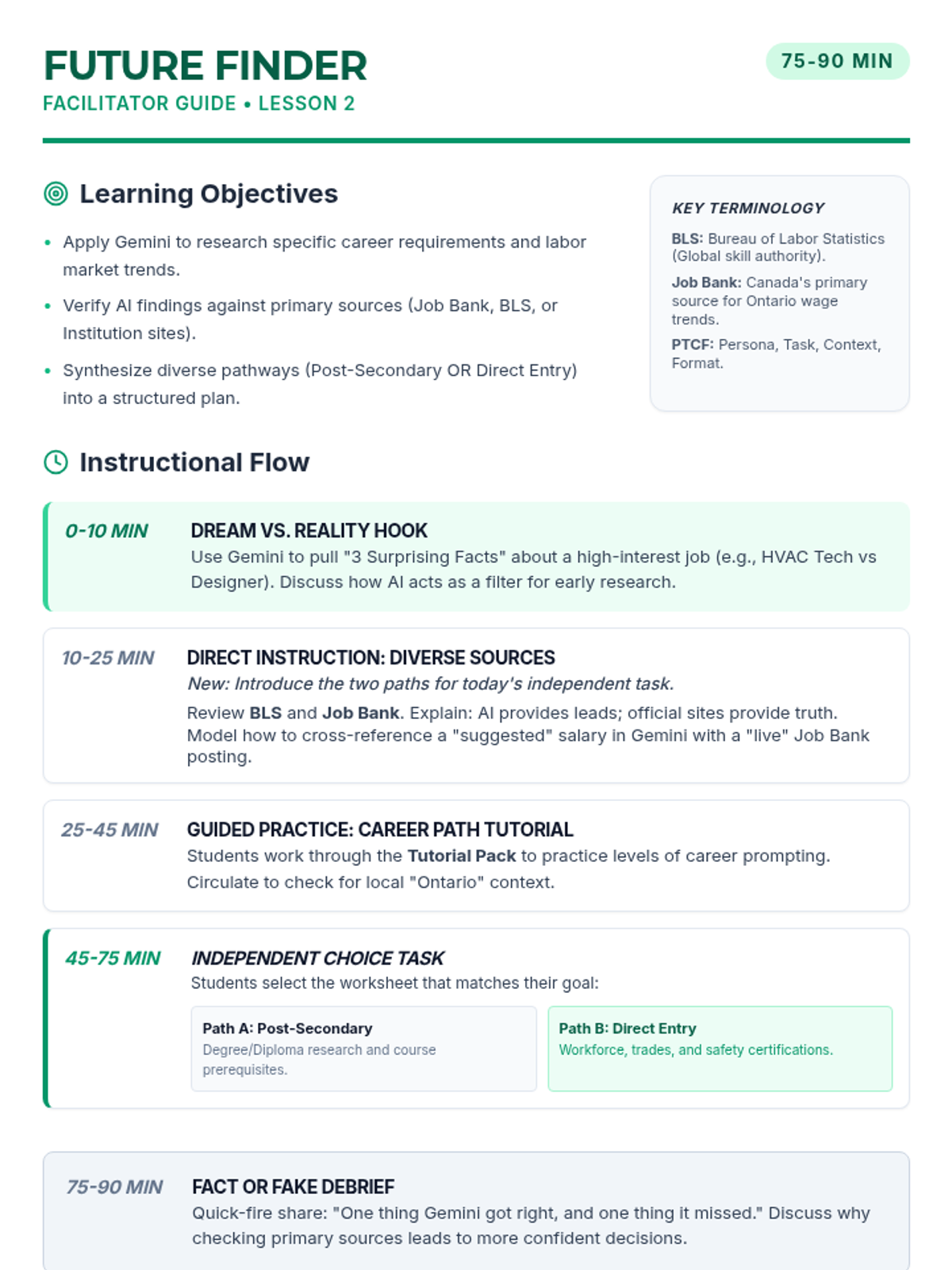
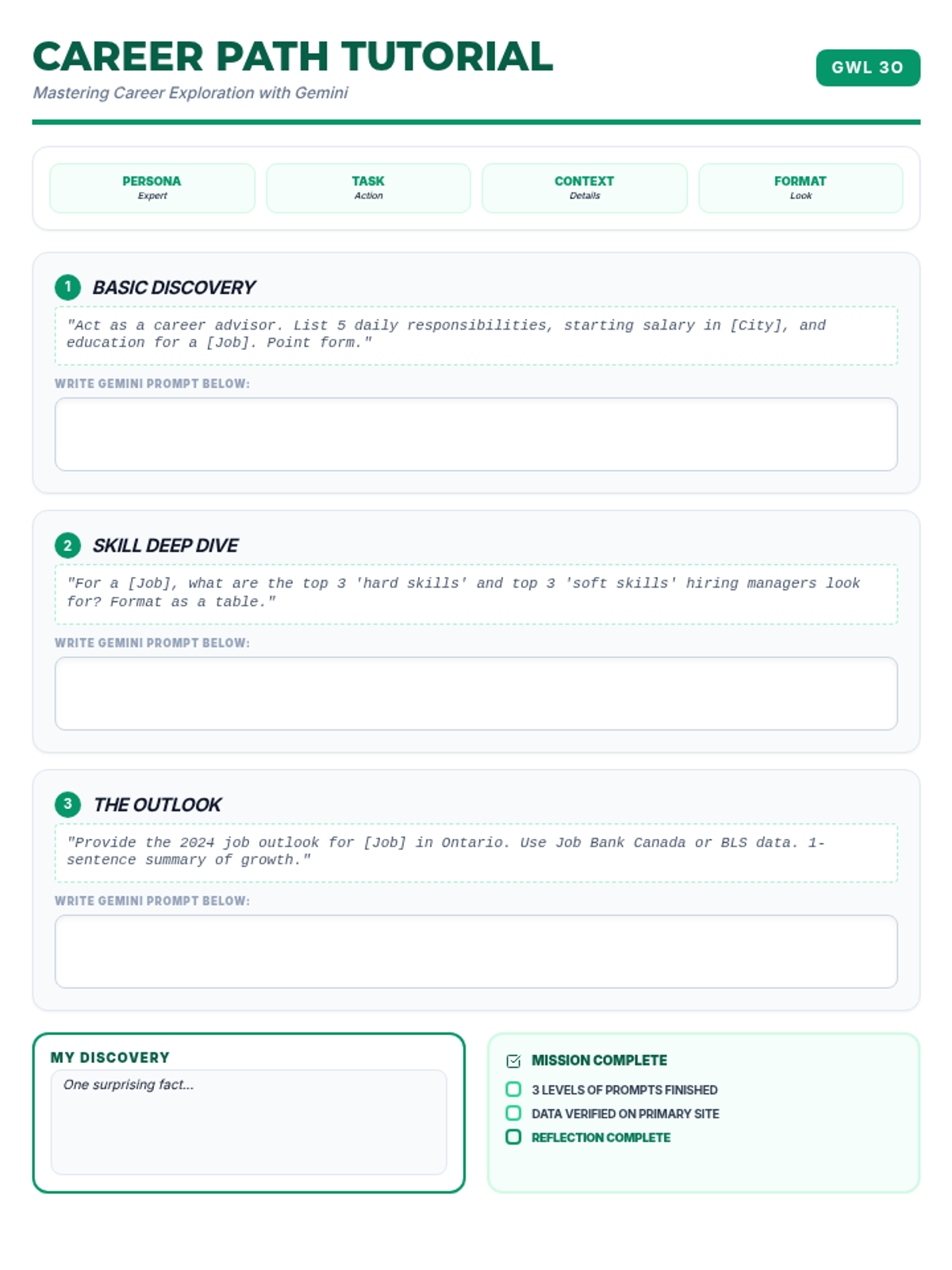
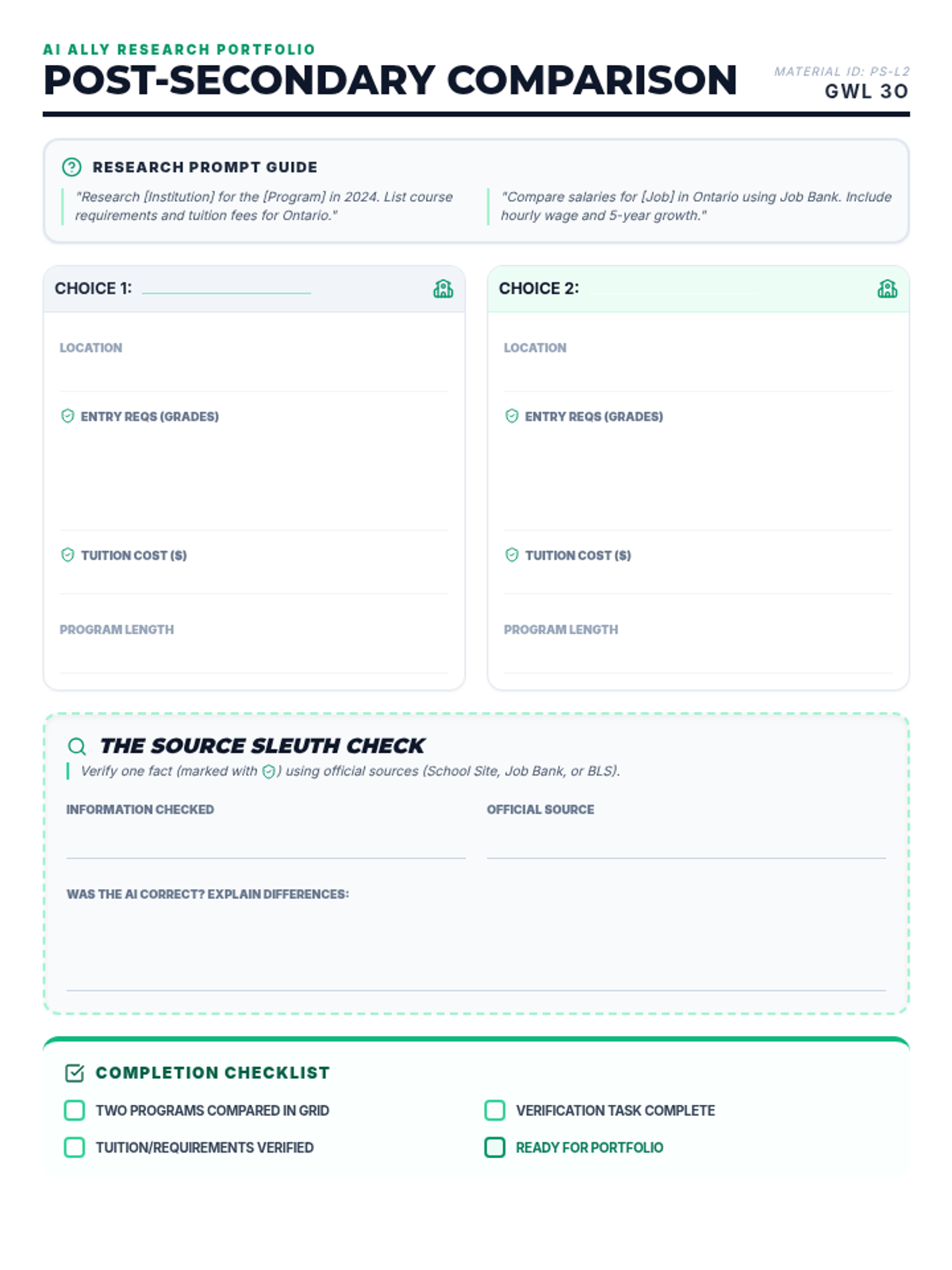
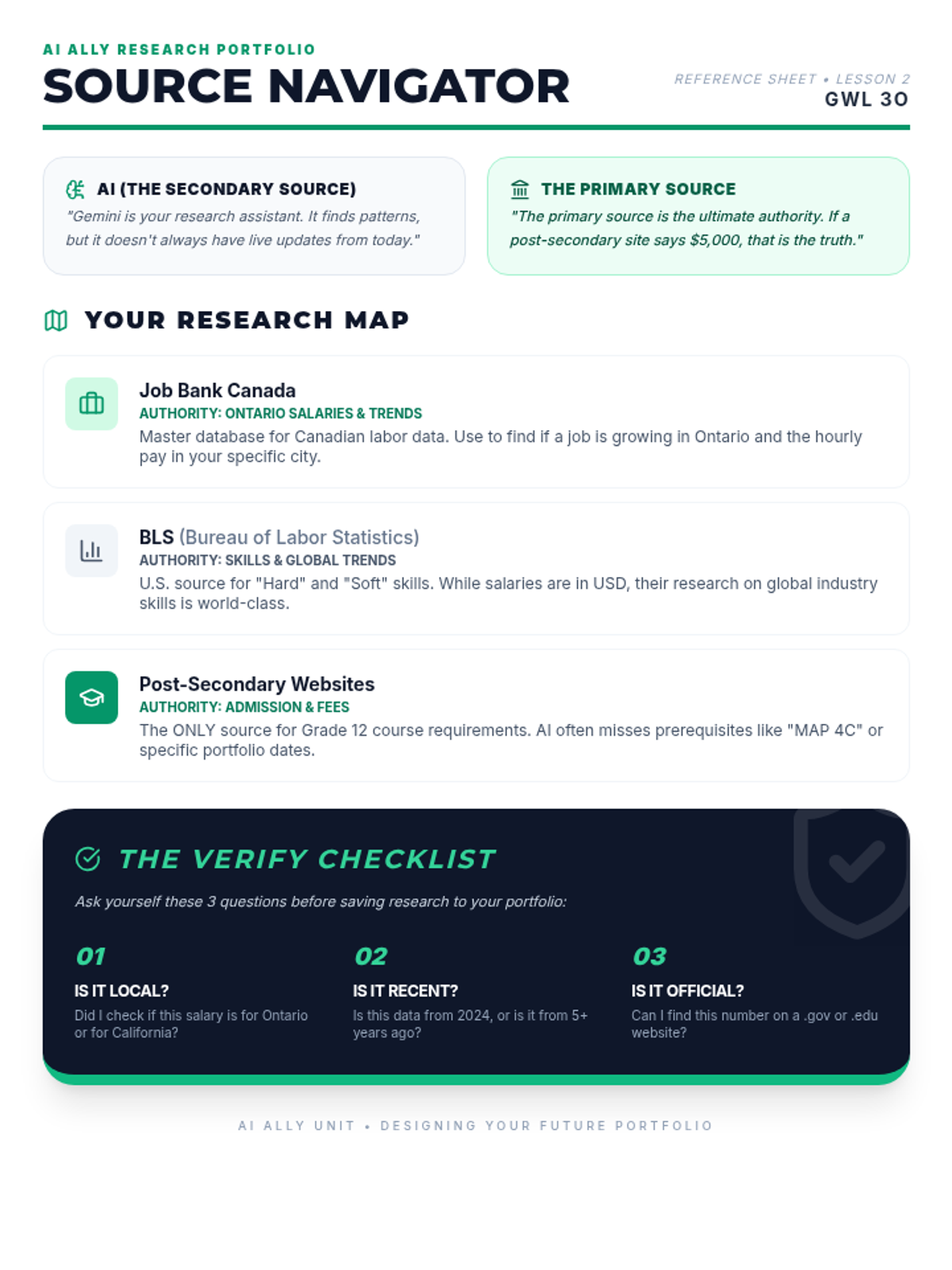
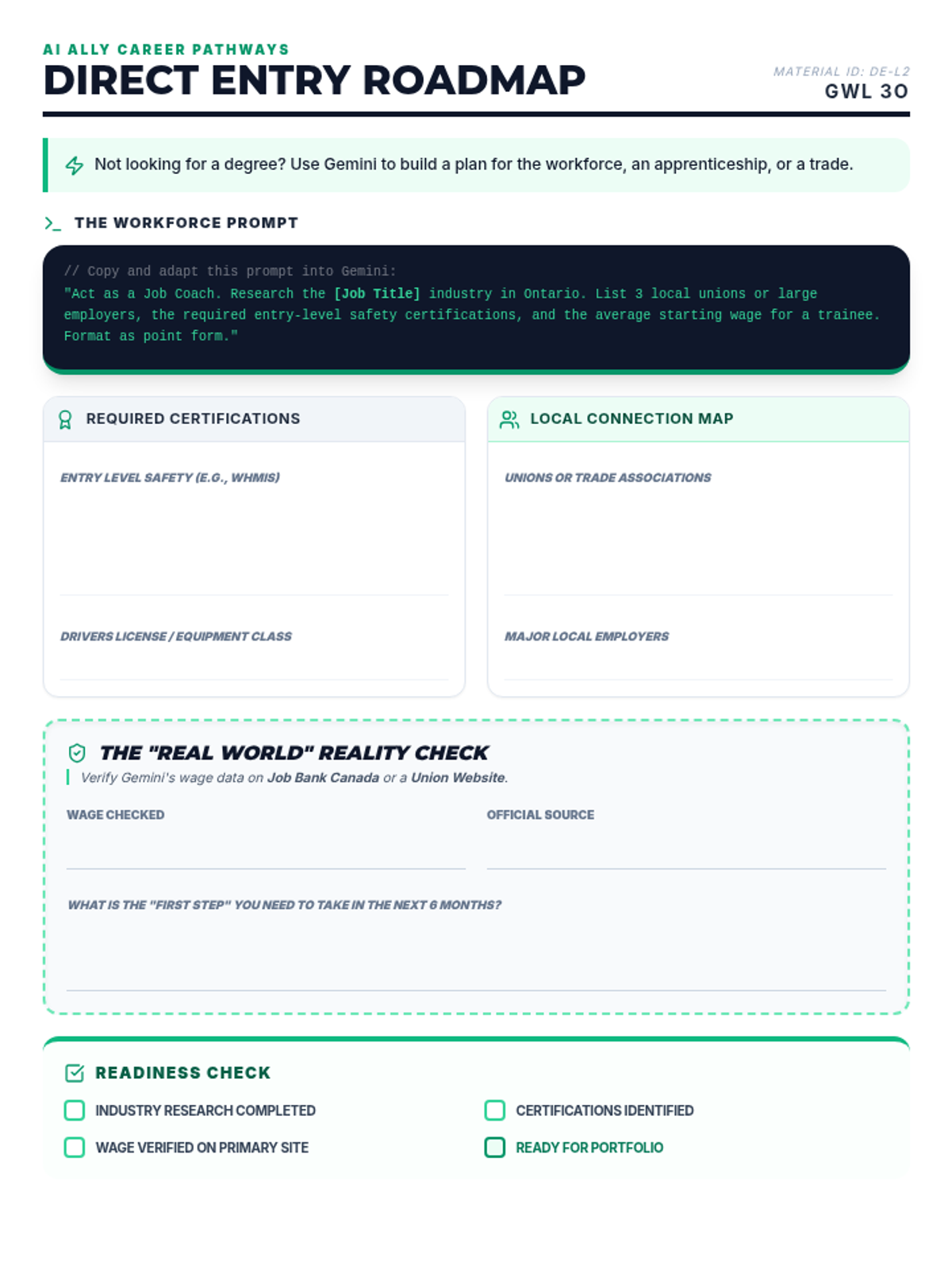
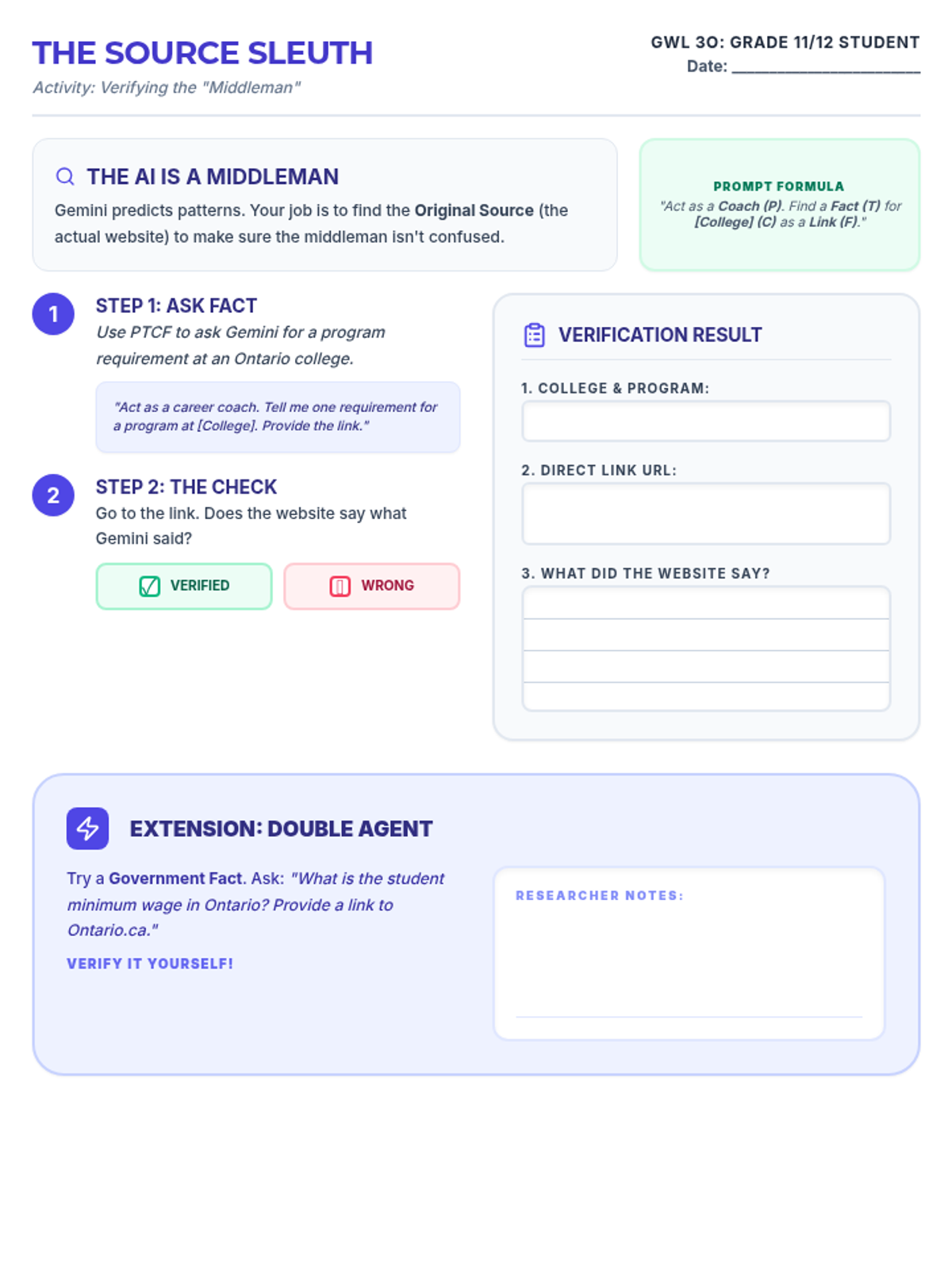
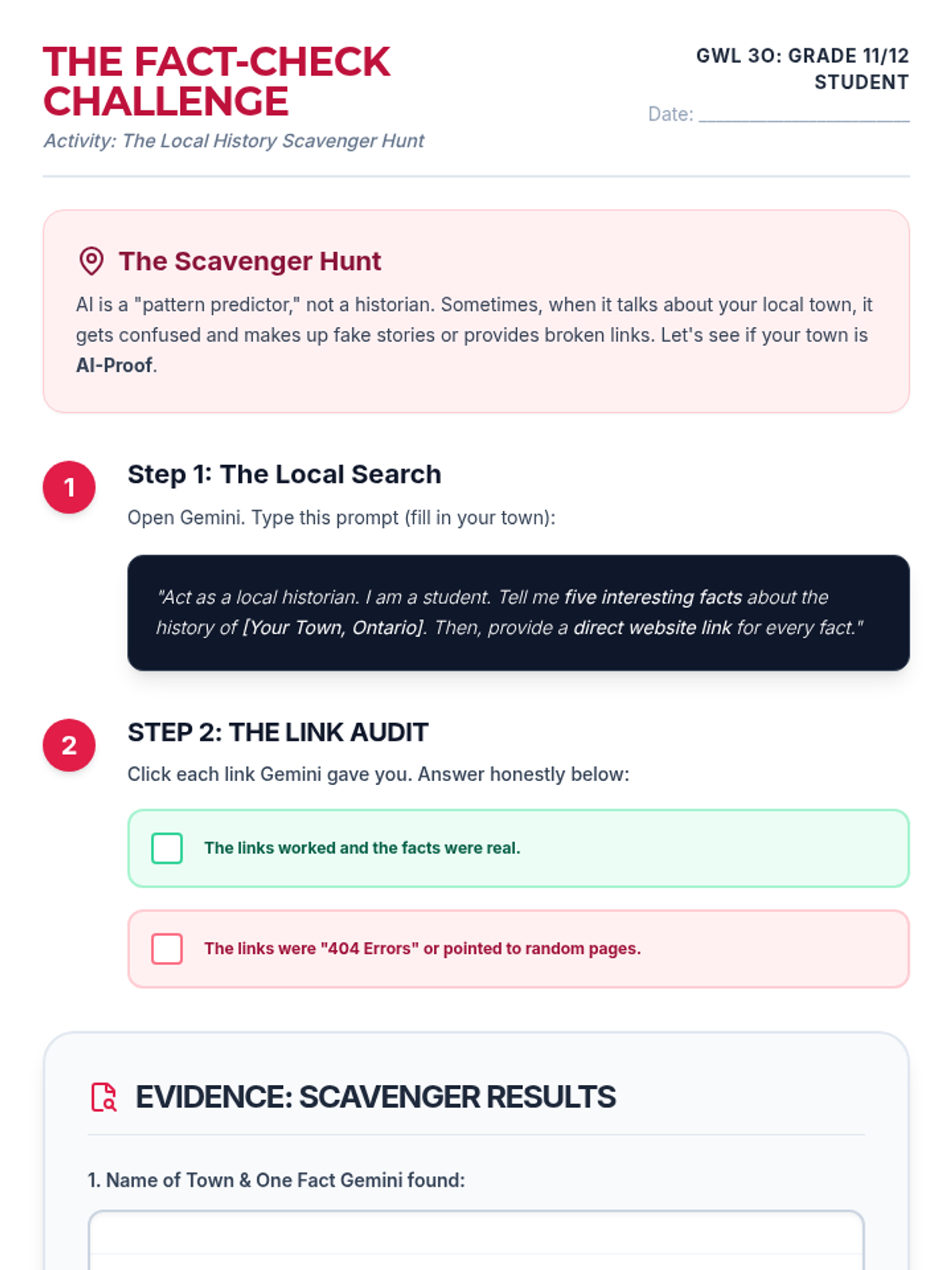
Students use Gemini to explore diverse career pathways, post-secondary requirements, and labor market trends, learning how to cross-reference AI findings with primary sources like government databases and institution websites.
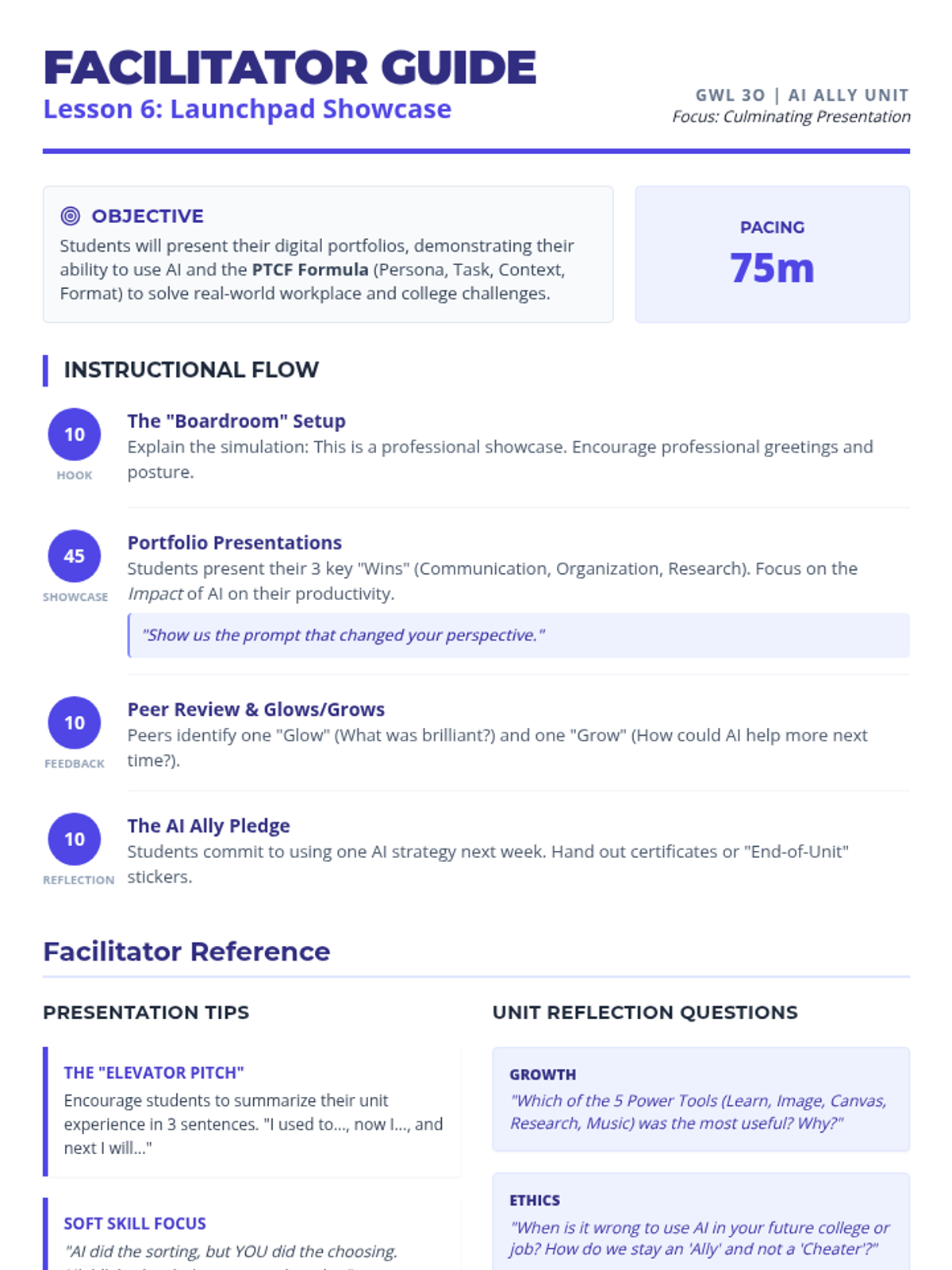
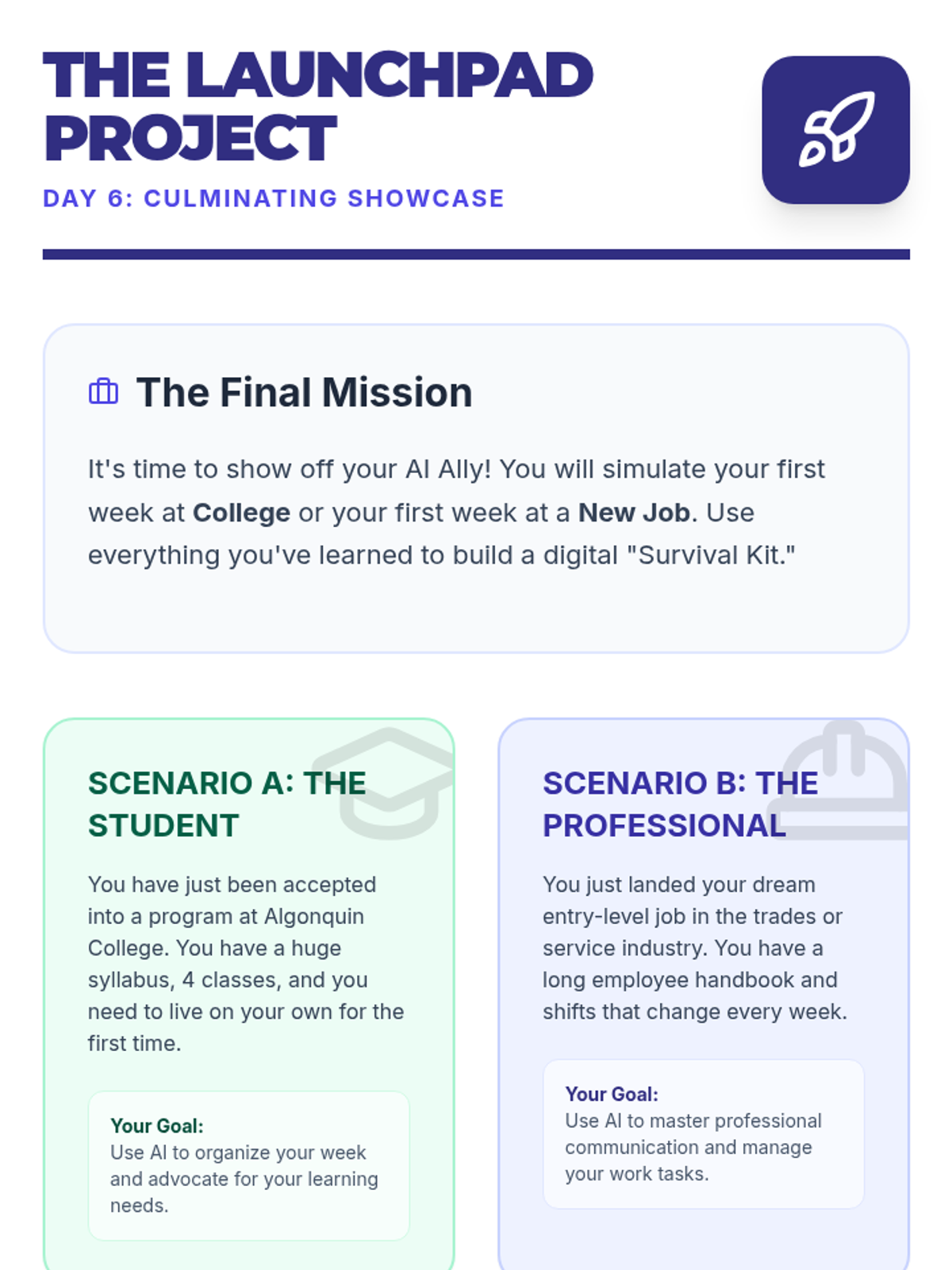
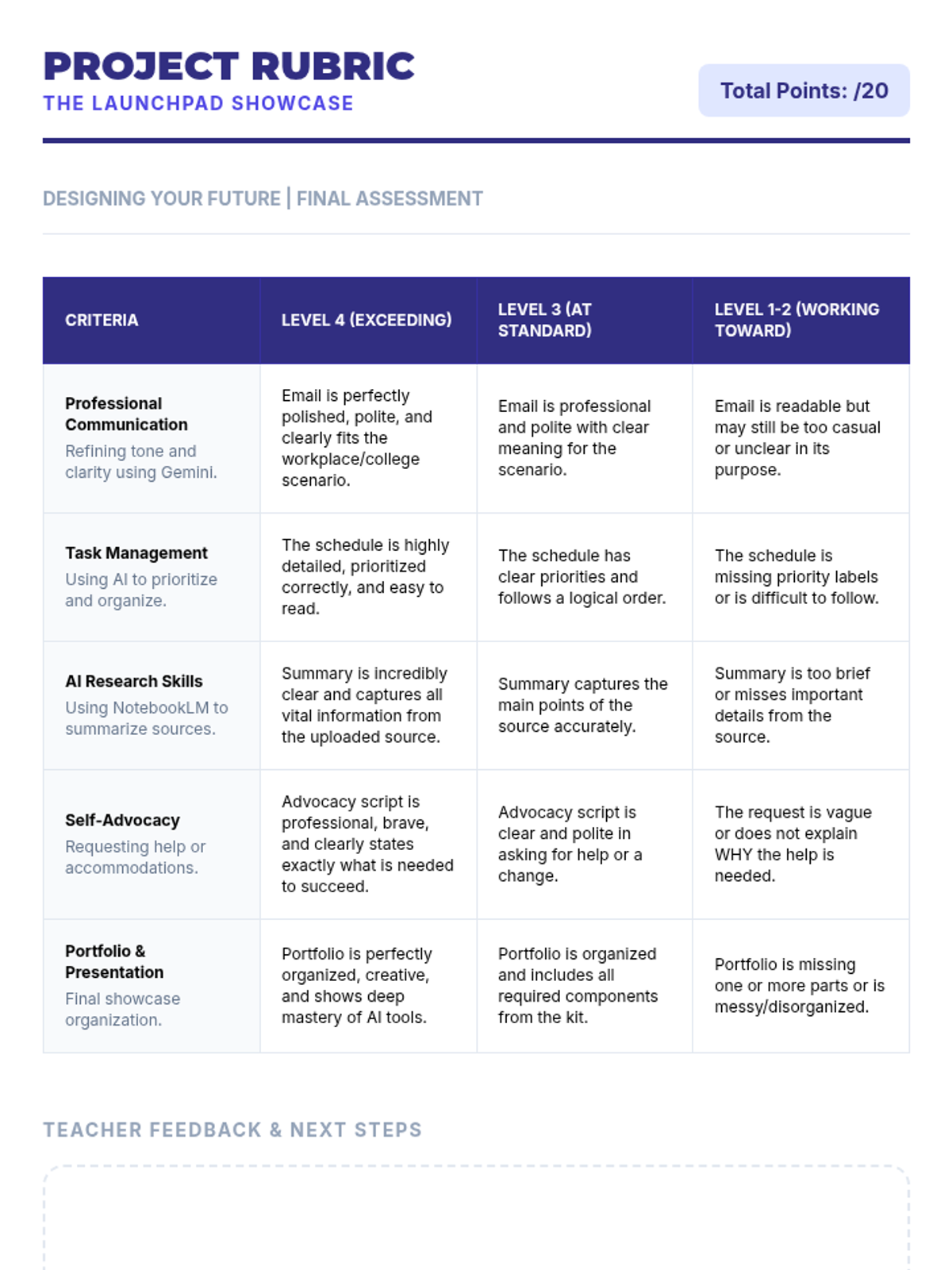
A culminating activity where students apply their AI skills to a real-world college or workplace simulation, presenting their findings in a digital portfolio.
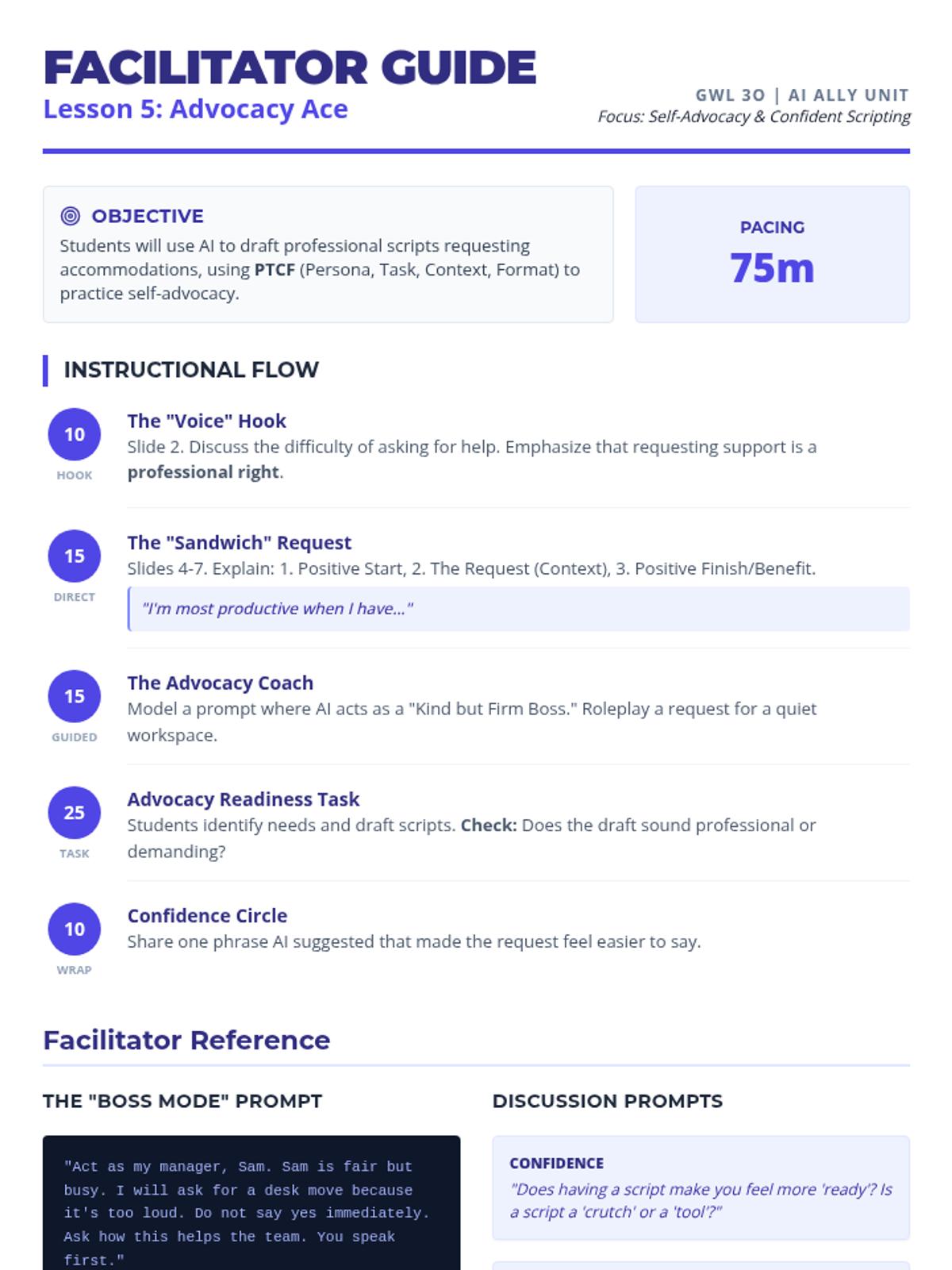
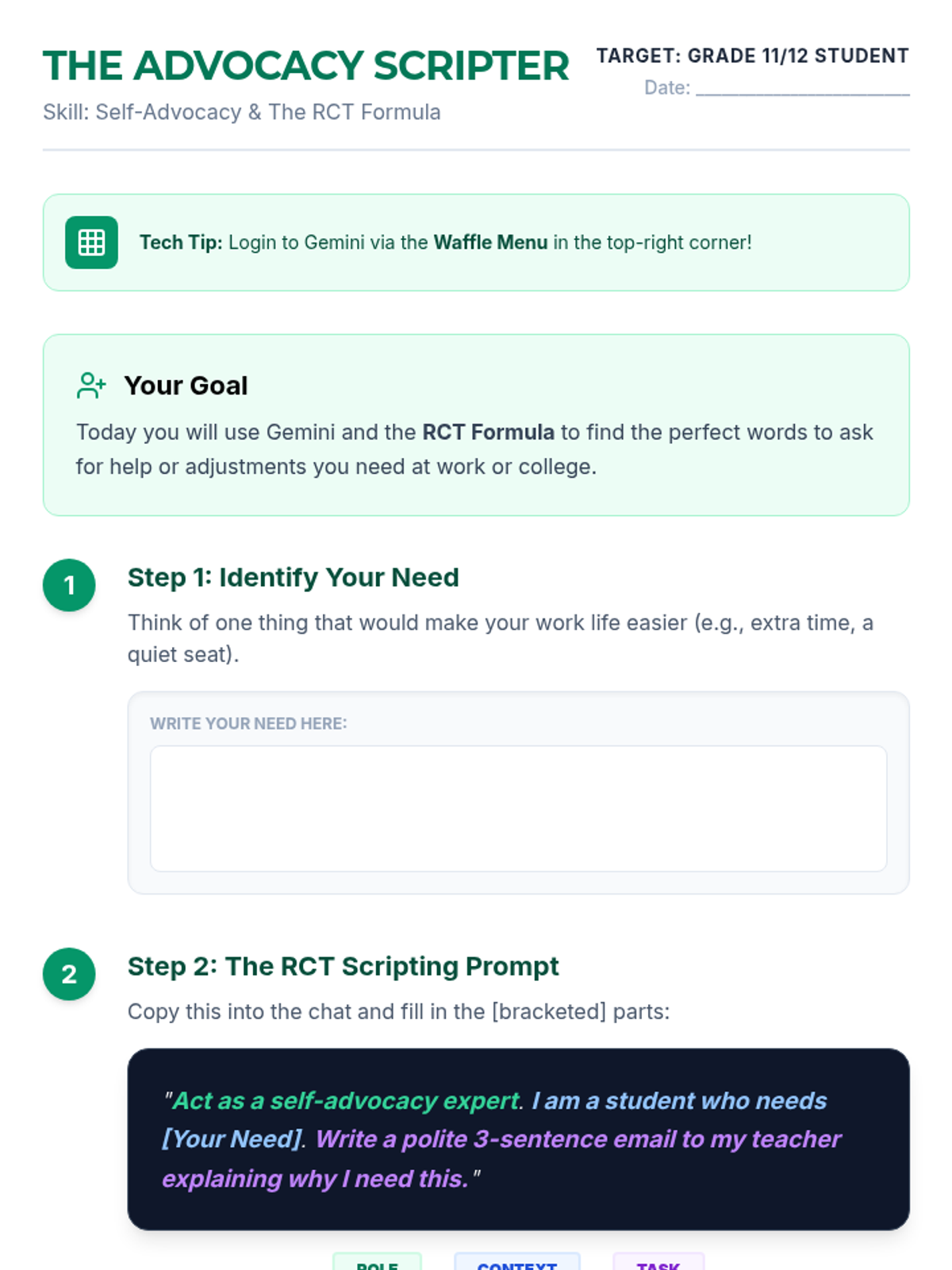
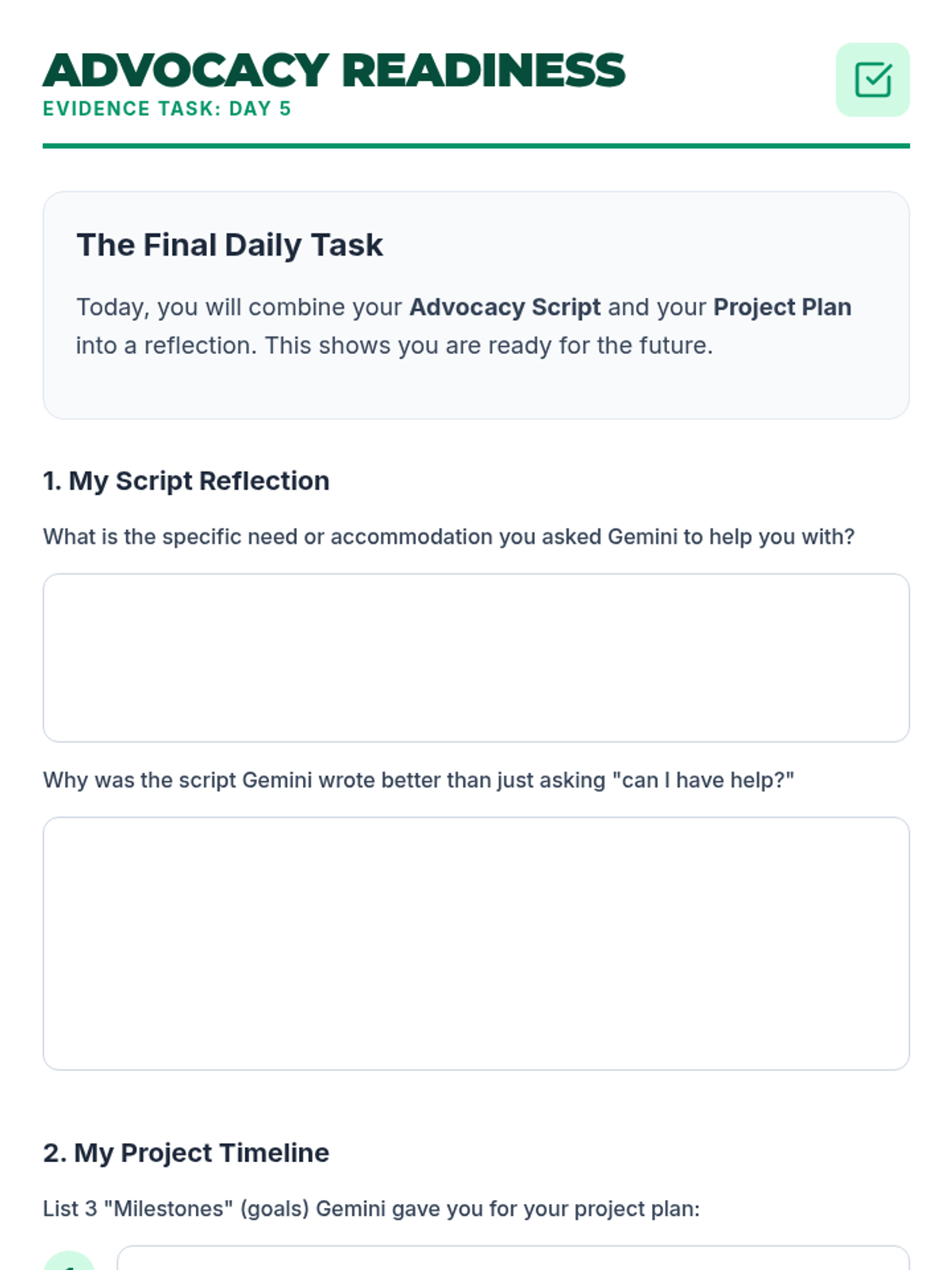
Focuses on self-advocacy and project planning, using AI to draft scripts for accommodation requests and breakdown long-term goals.
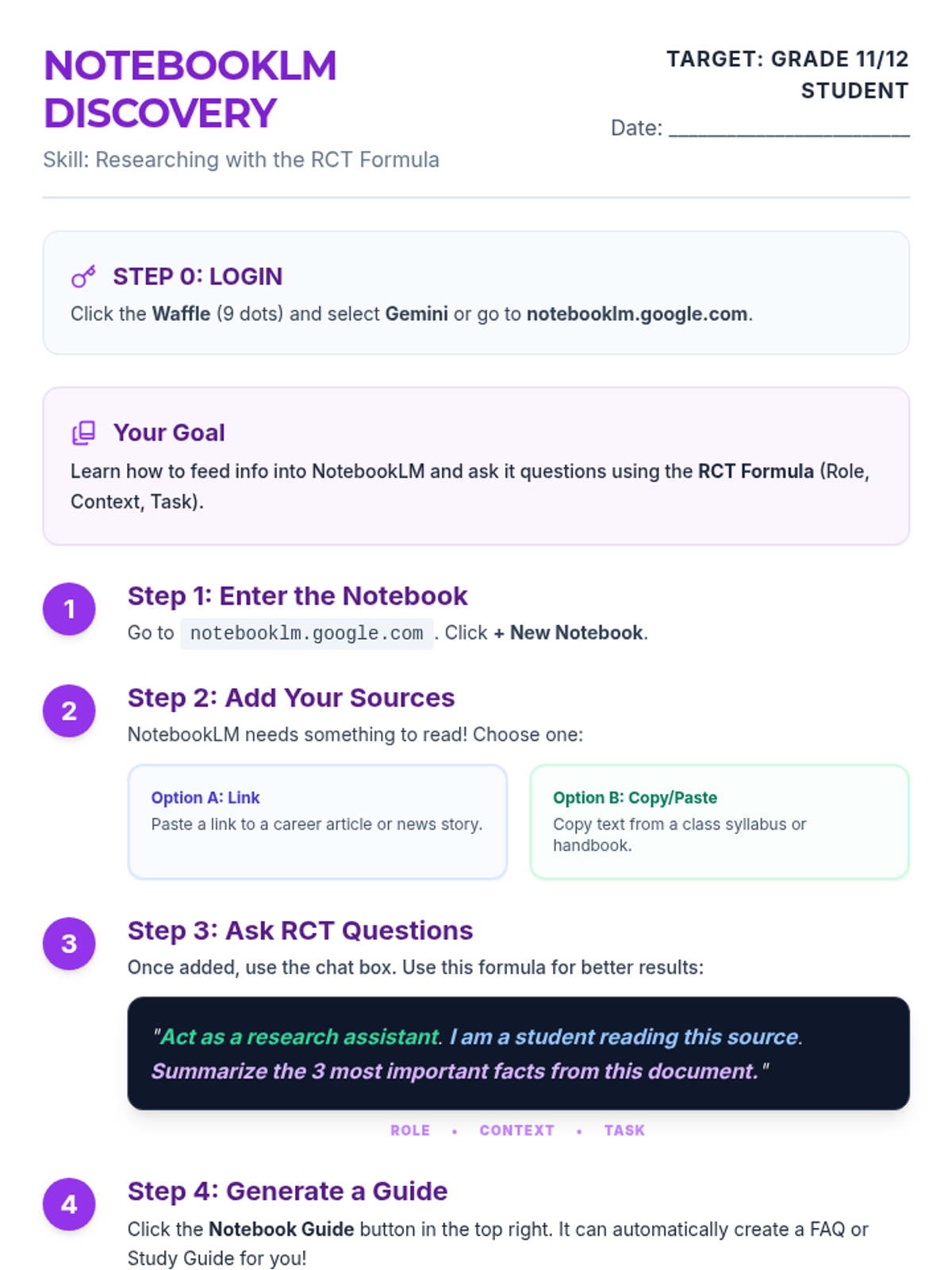
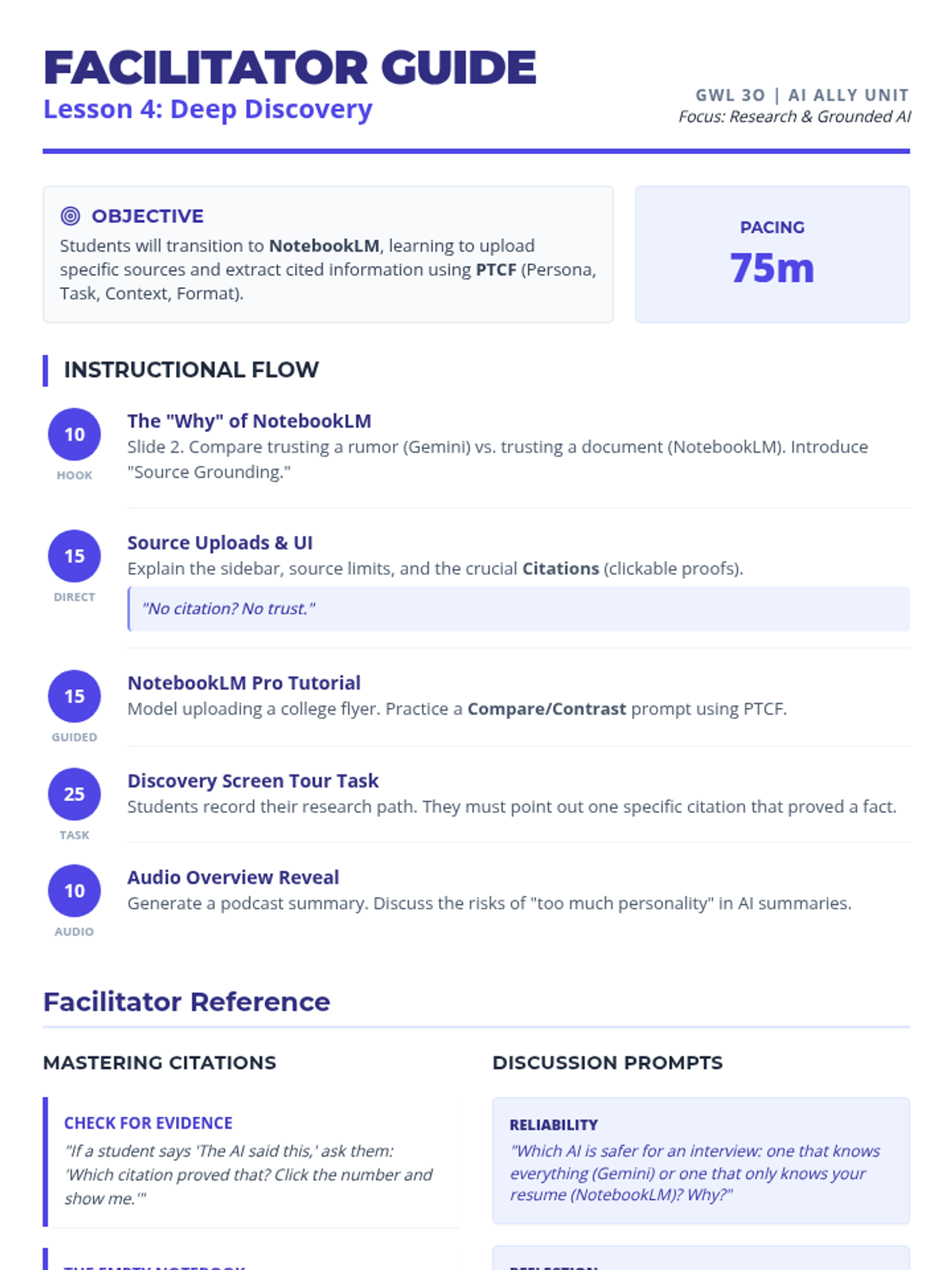
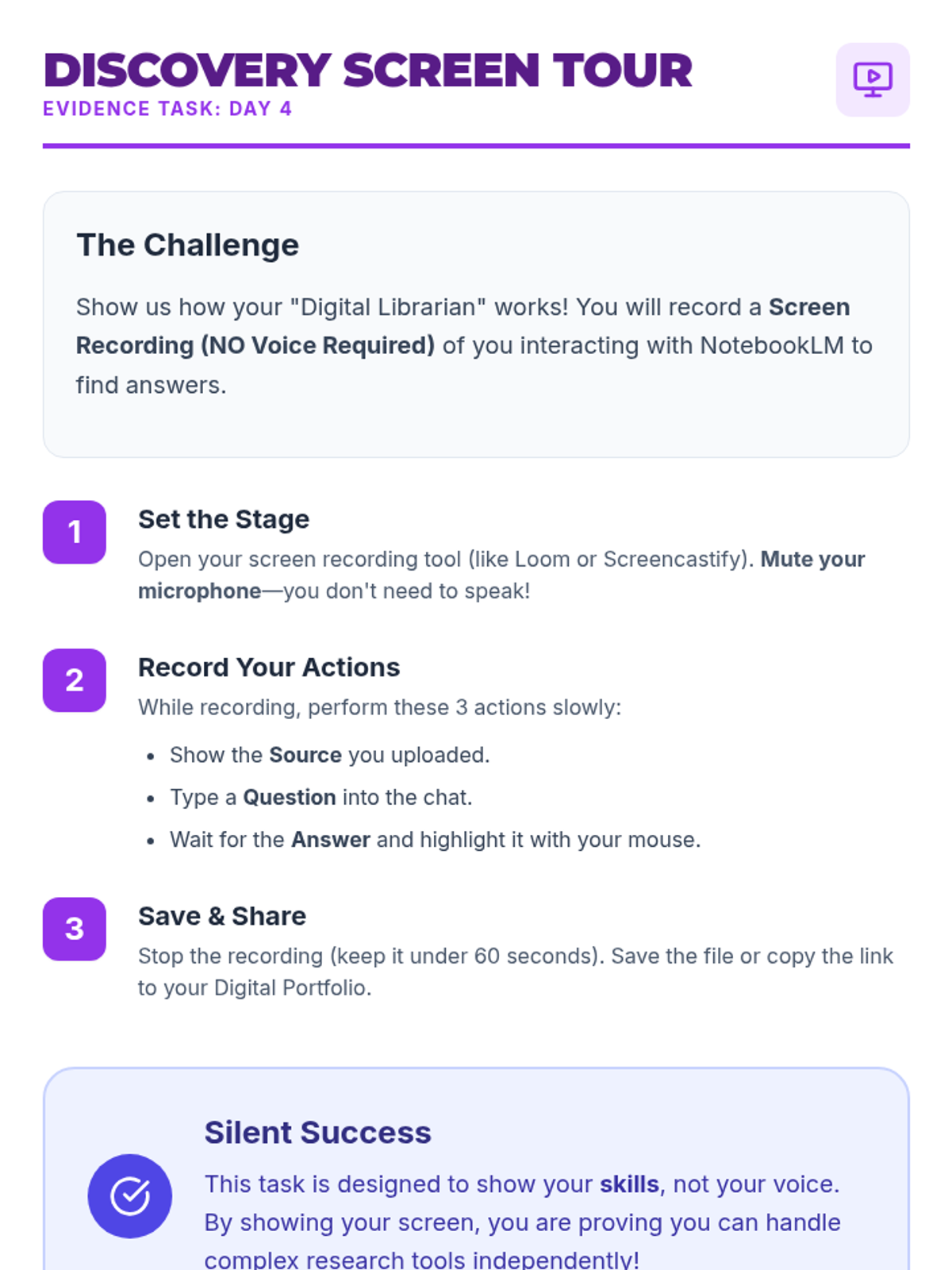
Explores the power of NotebookLM for academic and workplace research, teaching students how to synthesize large amounts of information efficiently.
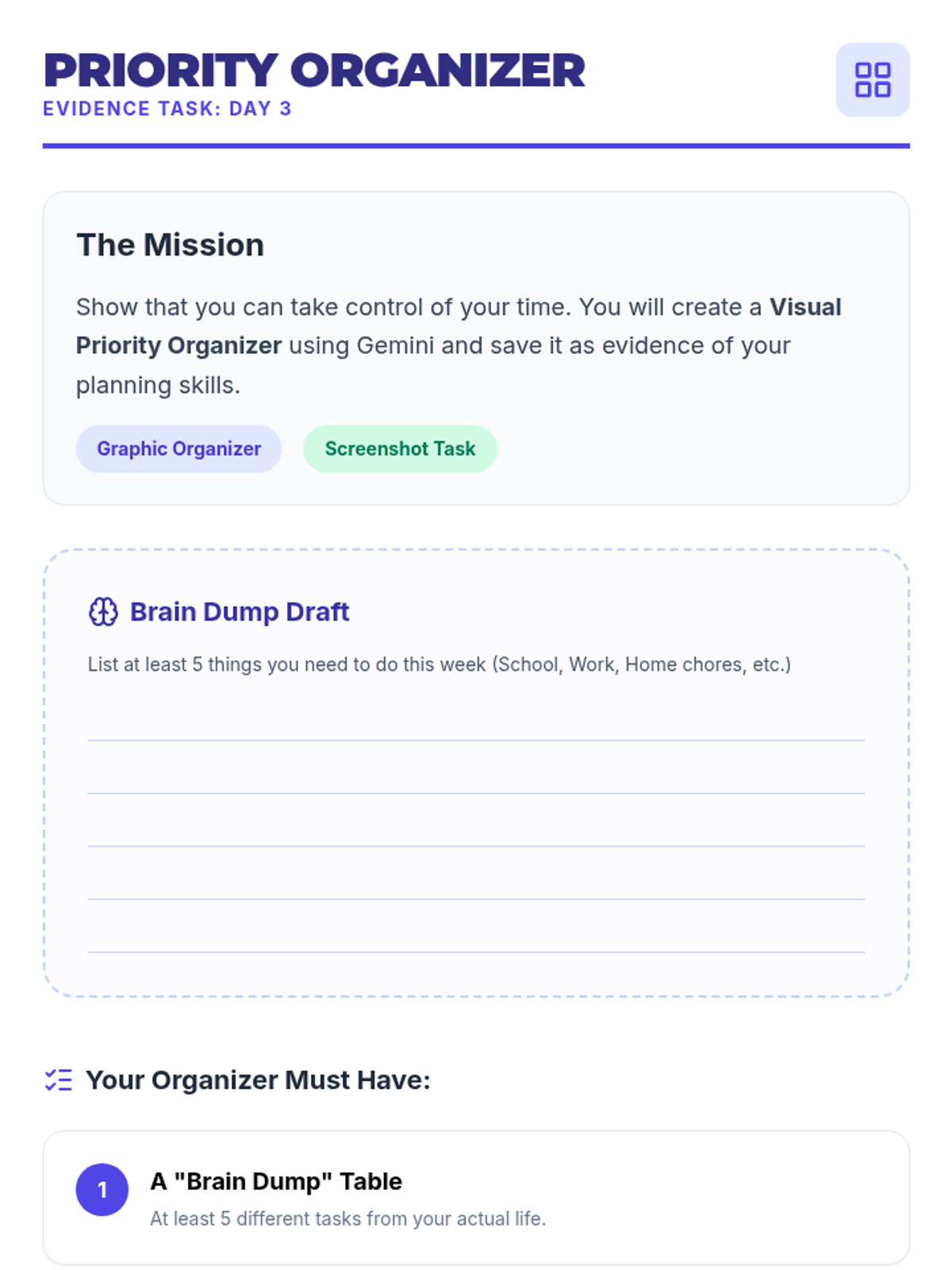
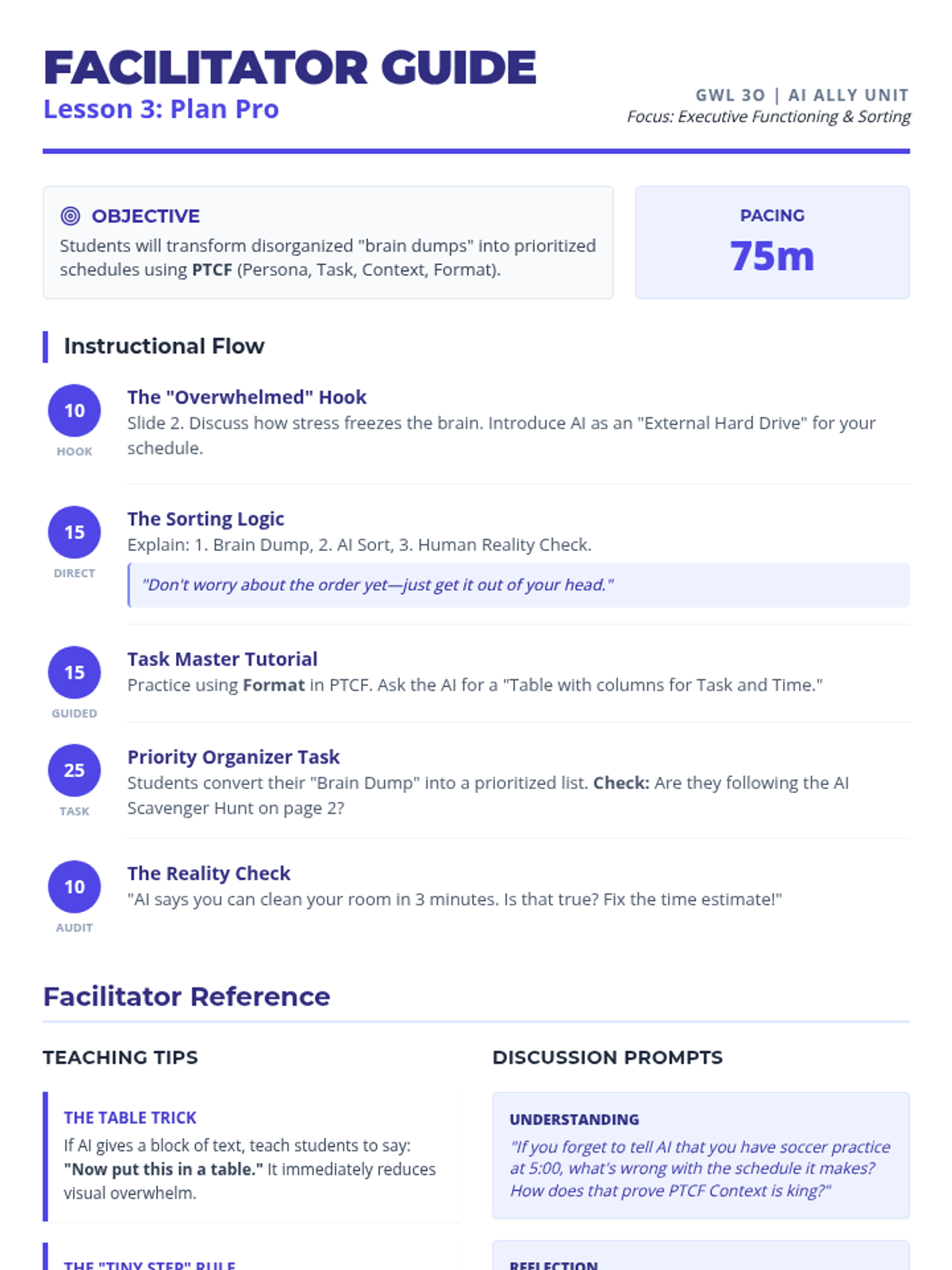
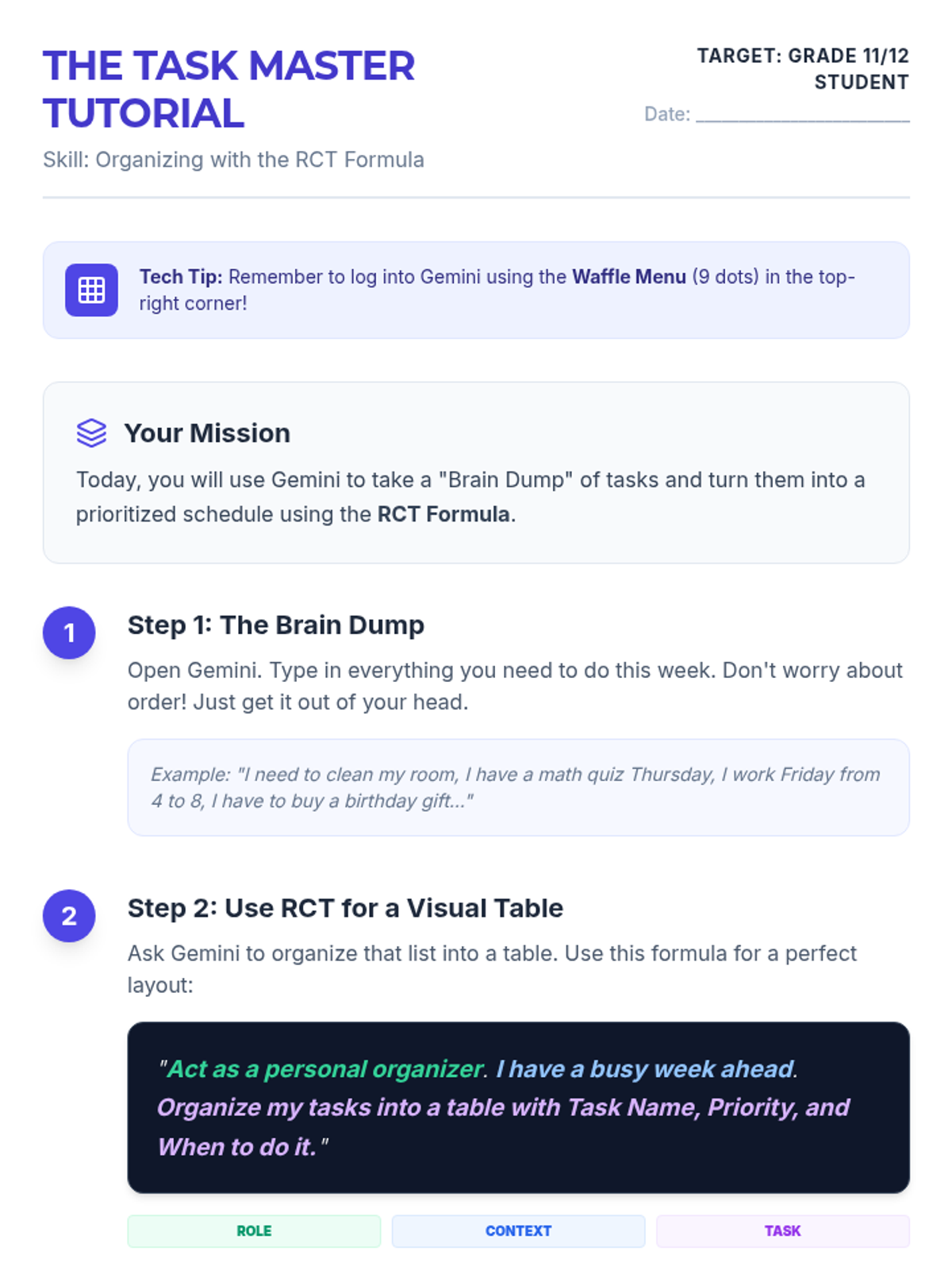
Focuses on organizational skills by using AI to transform messy lists into prioritized schedules and graphic organizers for improved task management.
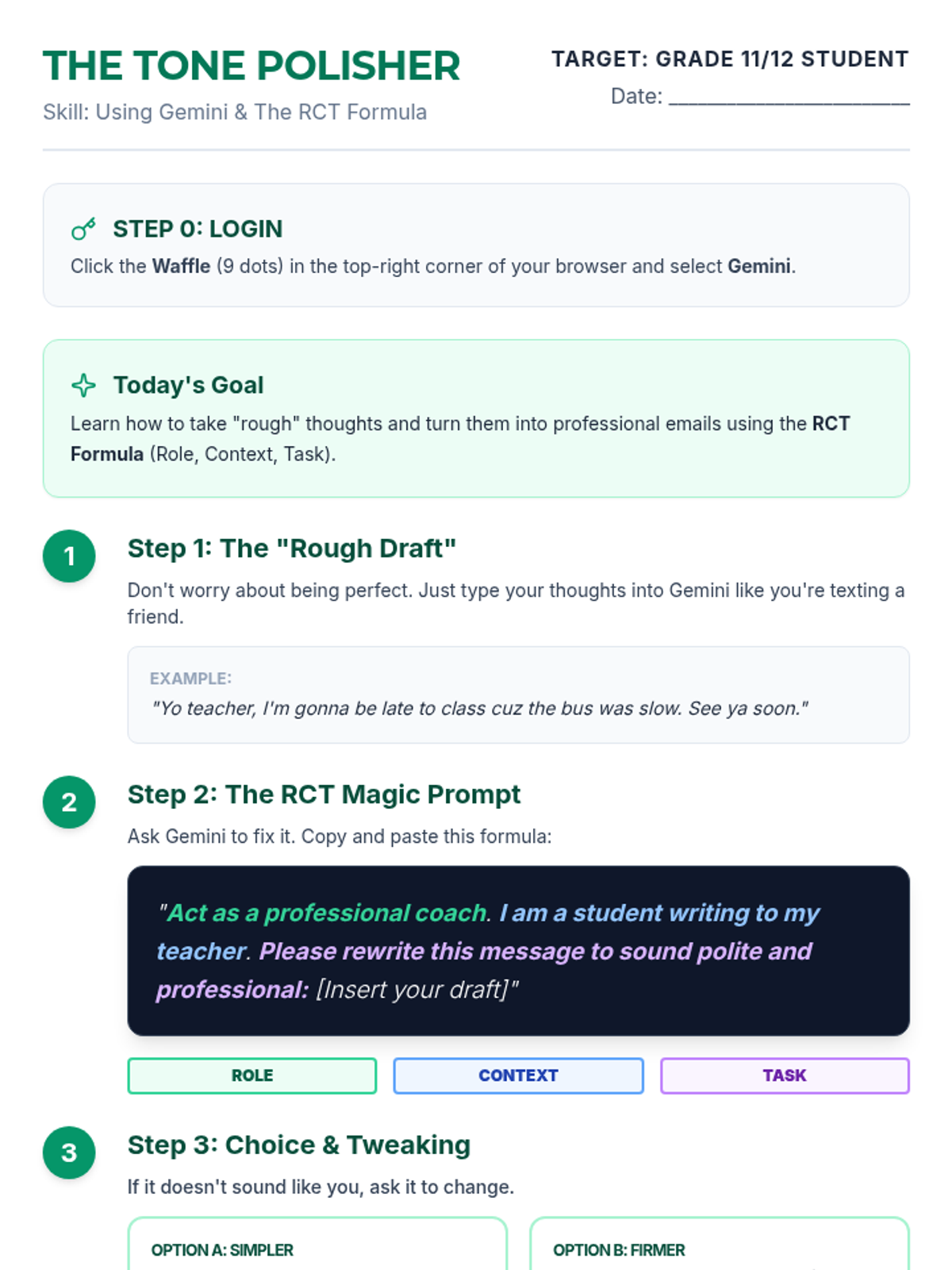
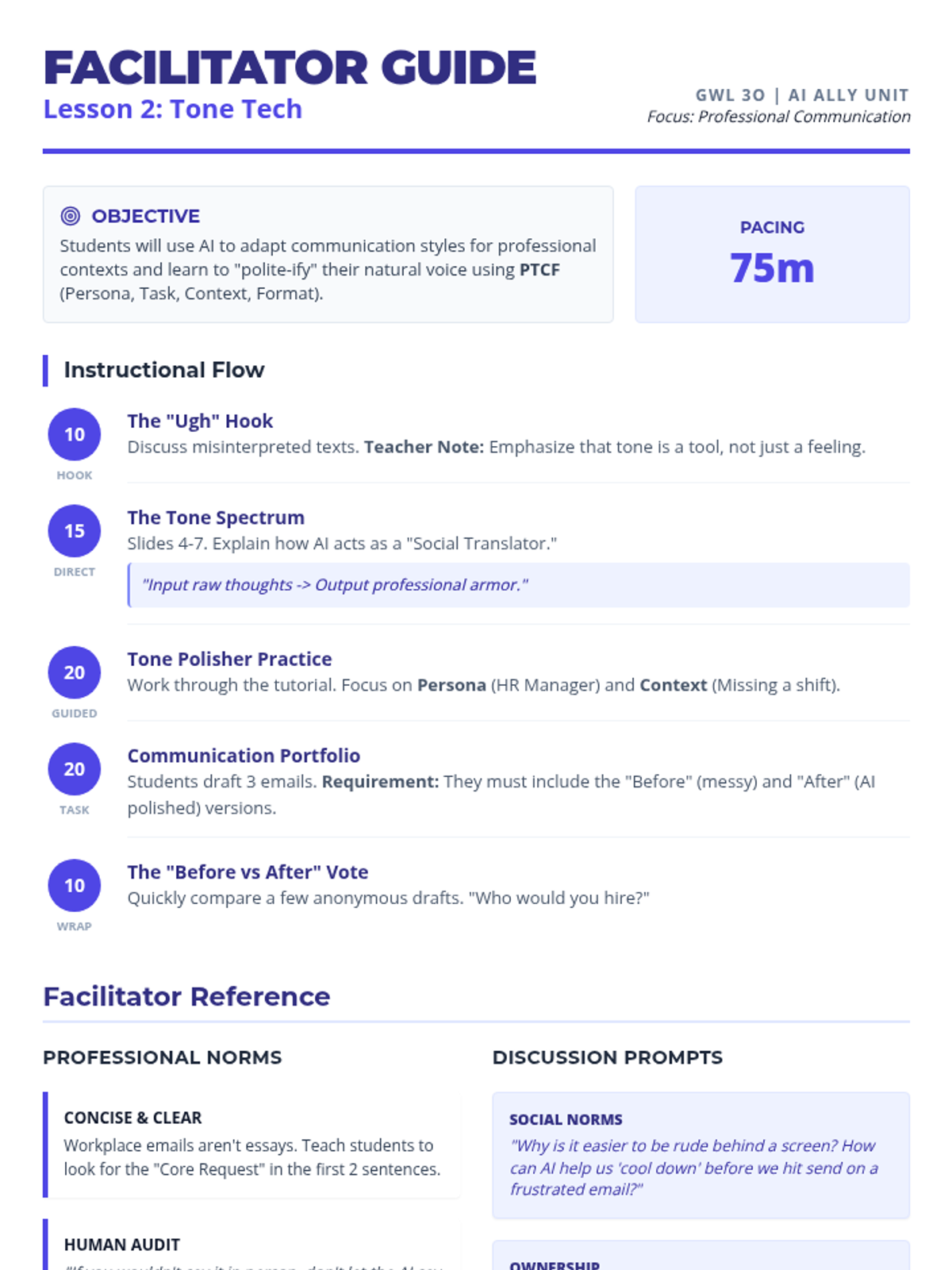
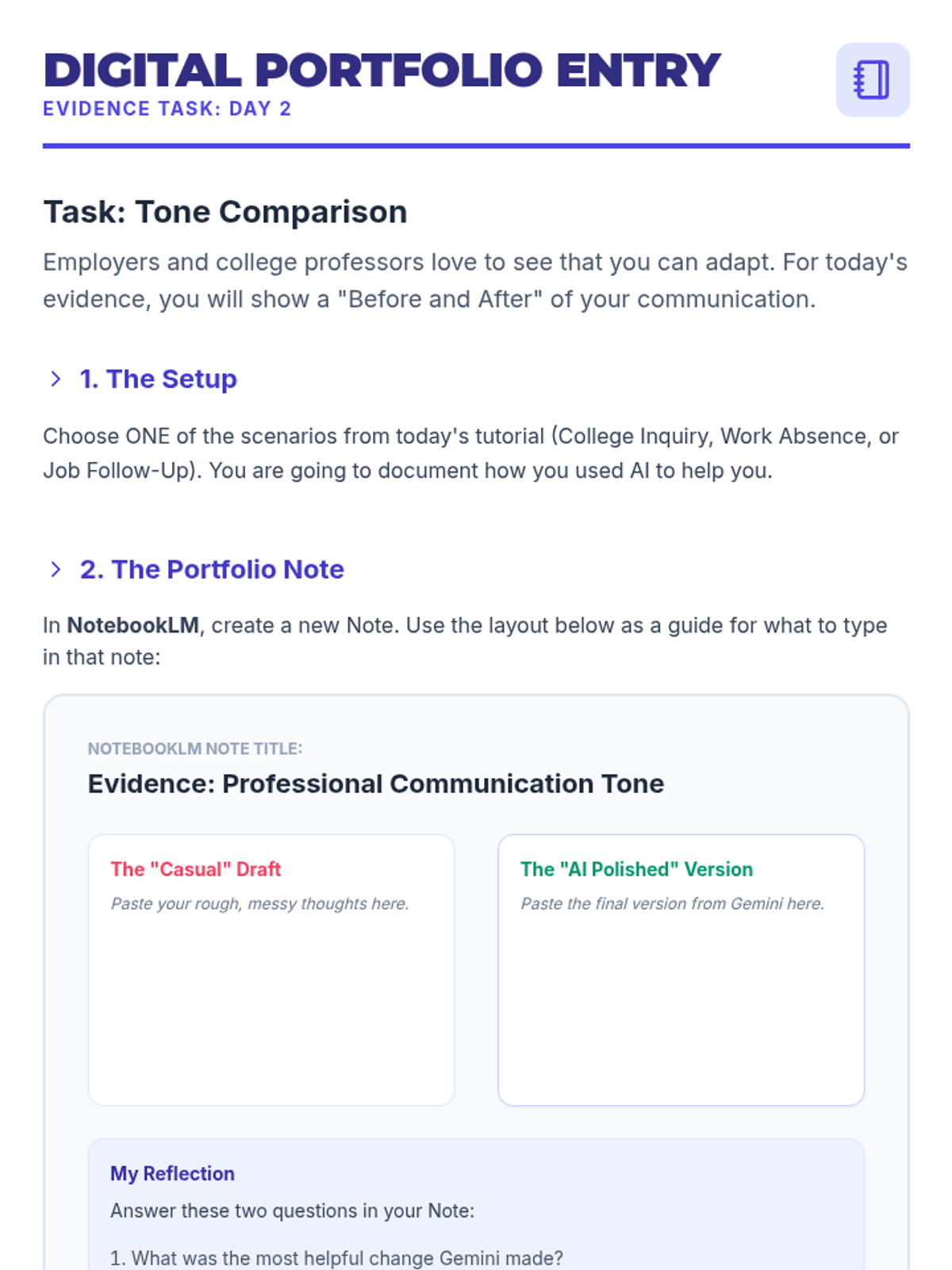
Students learn to use Gemini to refine professional tone and clarity in digital communications, creating a portfolio of email templates for workplace and college scenarios.
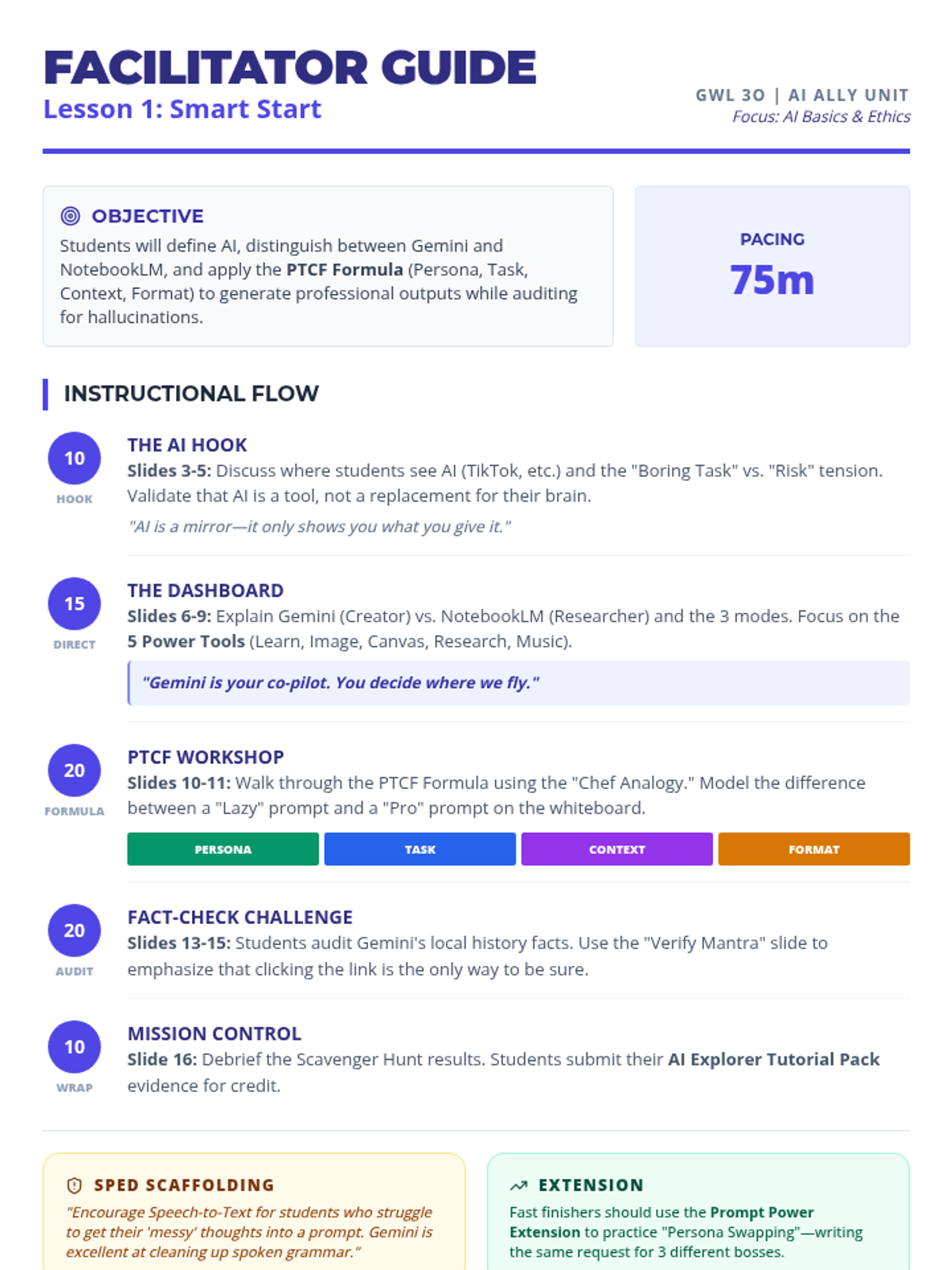
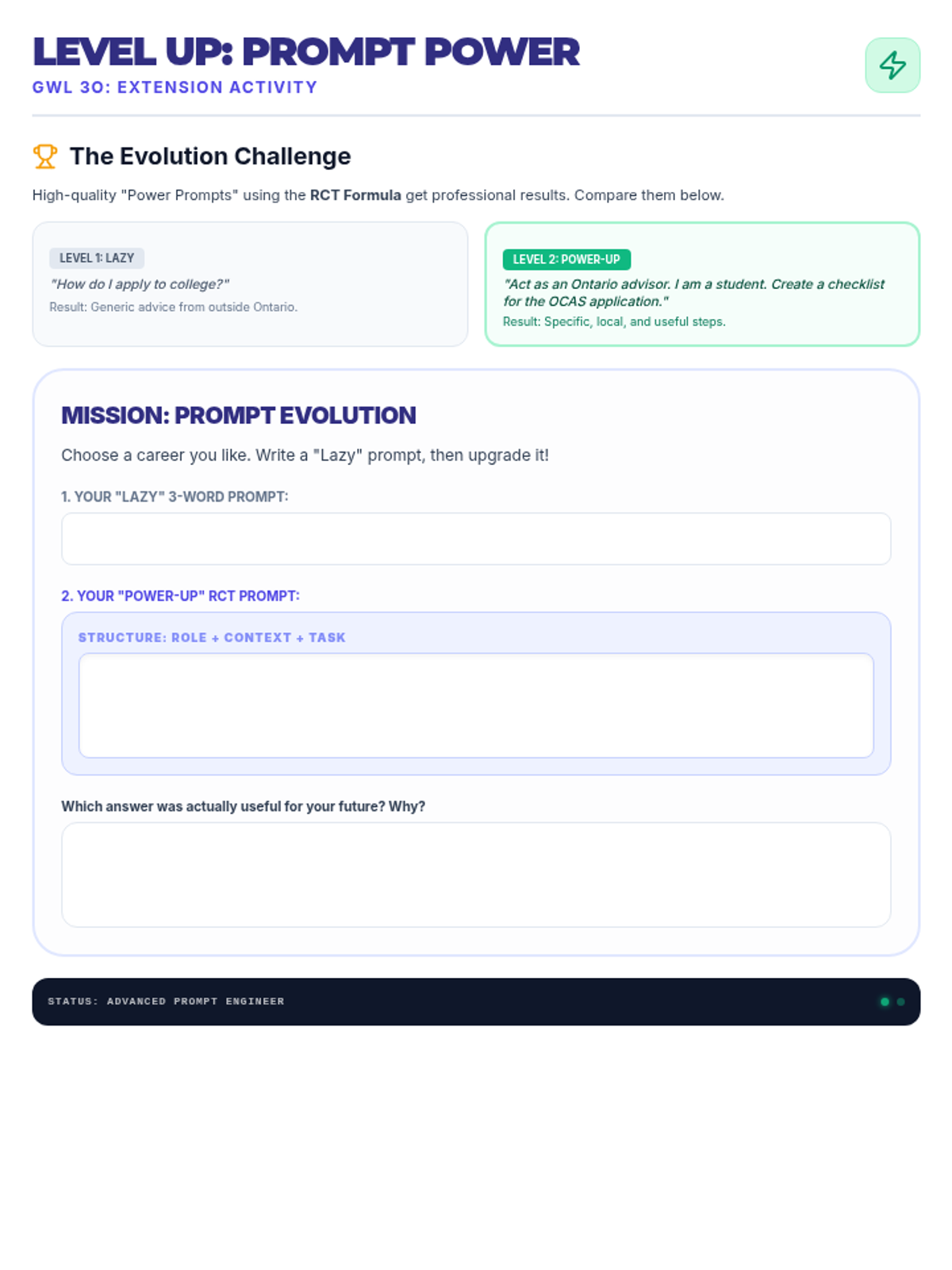
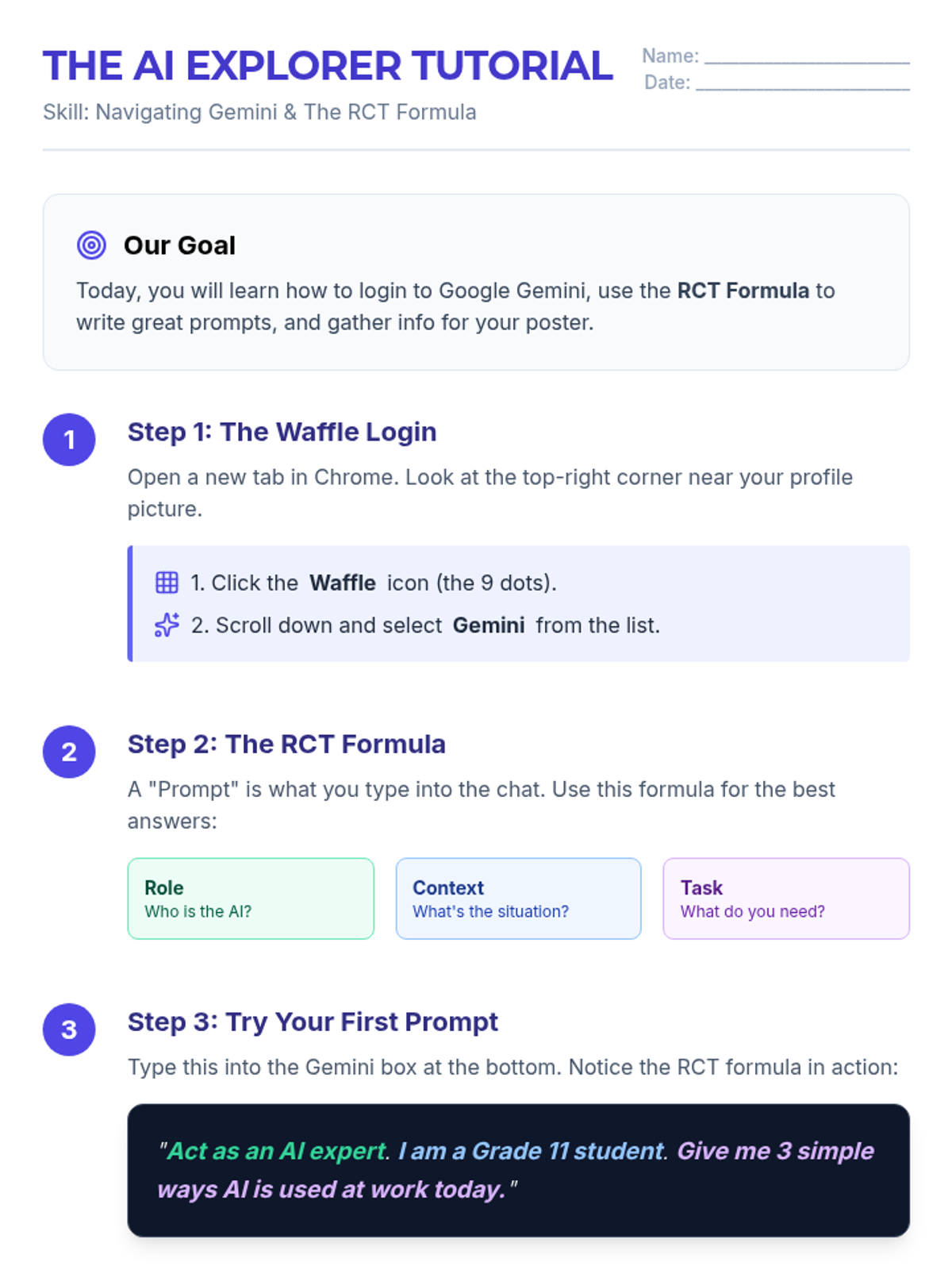
An introduction to AI basics, ethics, and the comparison between Gemini and NotebookLM, culminating in a visual exploration of AI's impact on the future.
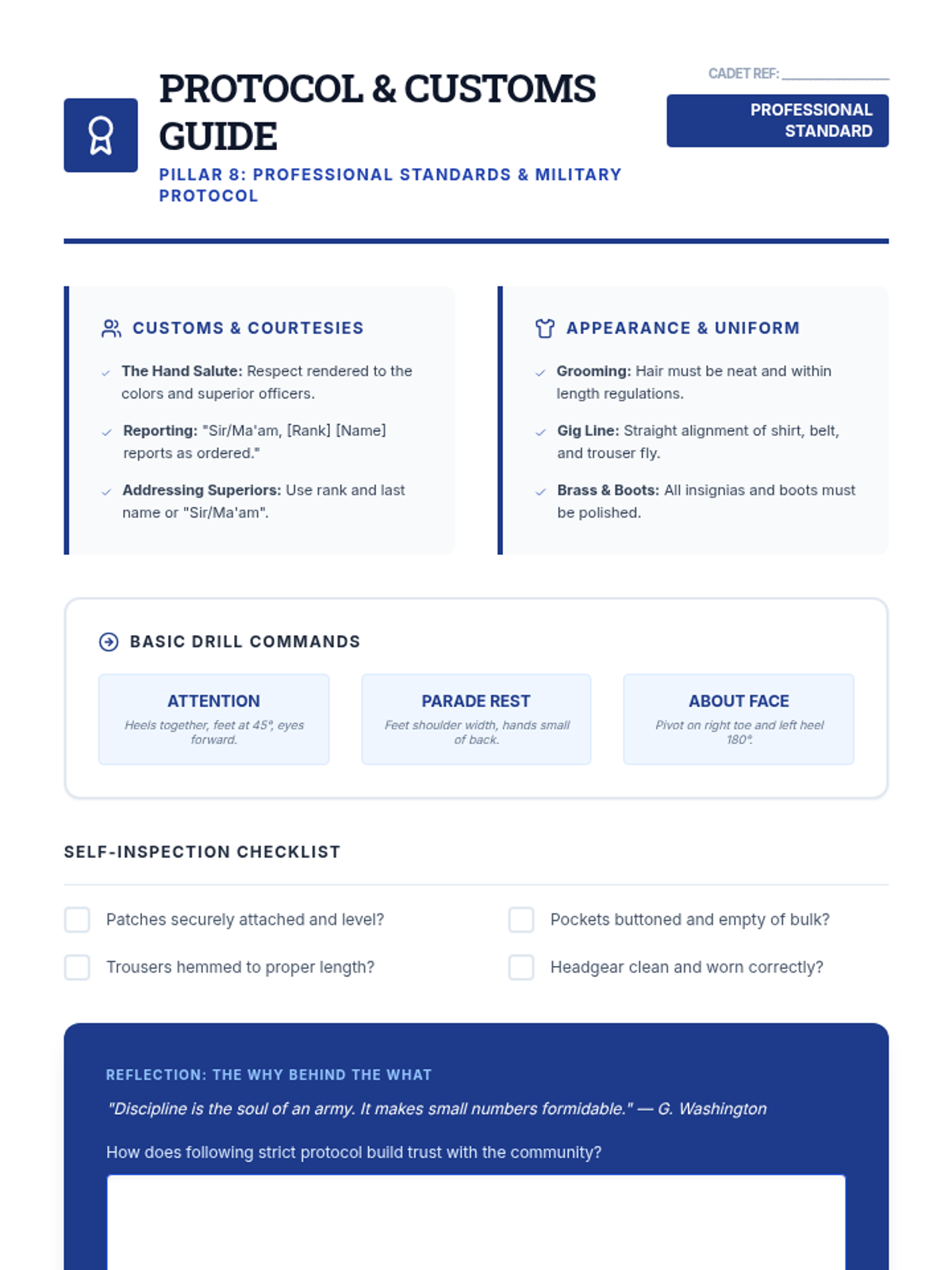
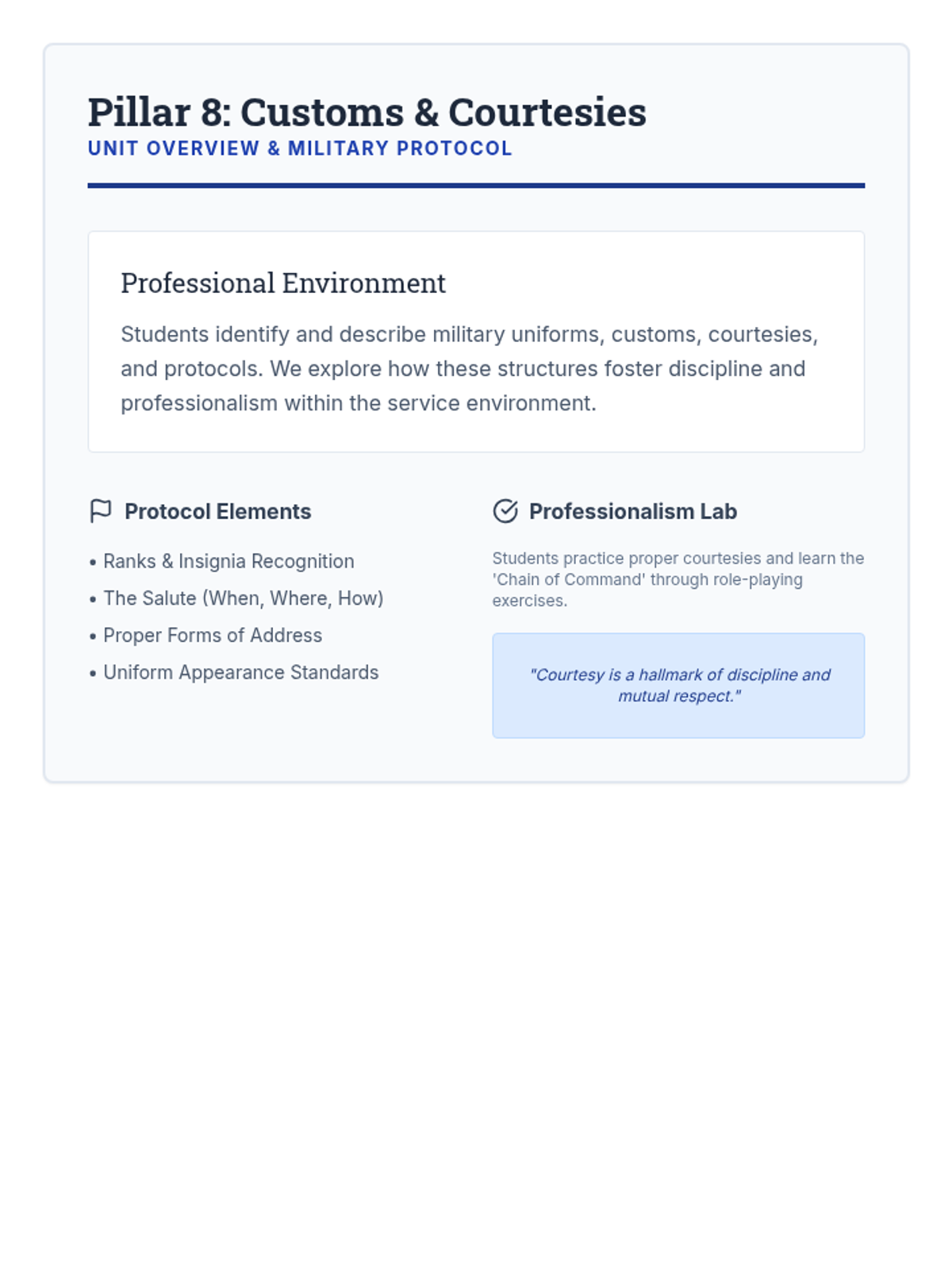
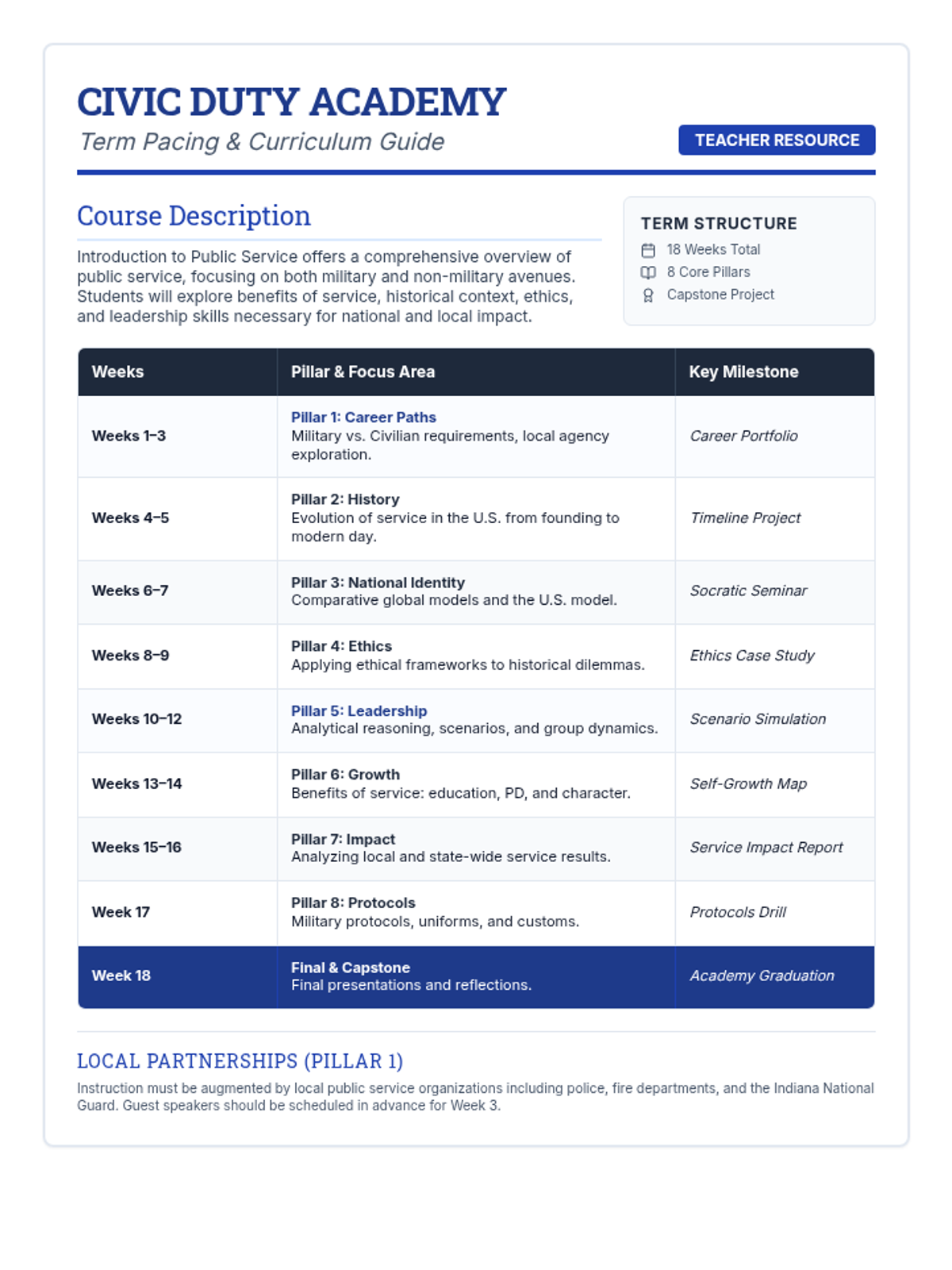
Master military customs, courtesies, protocols, and uniform standards essential for professional military environments.
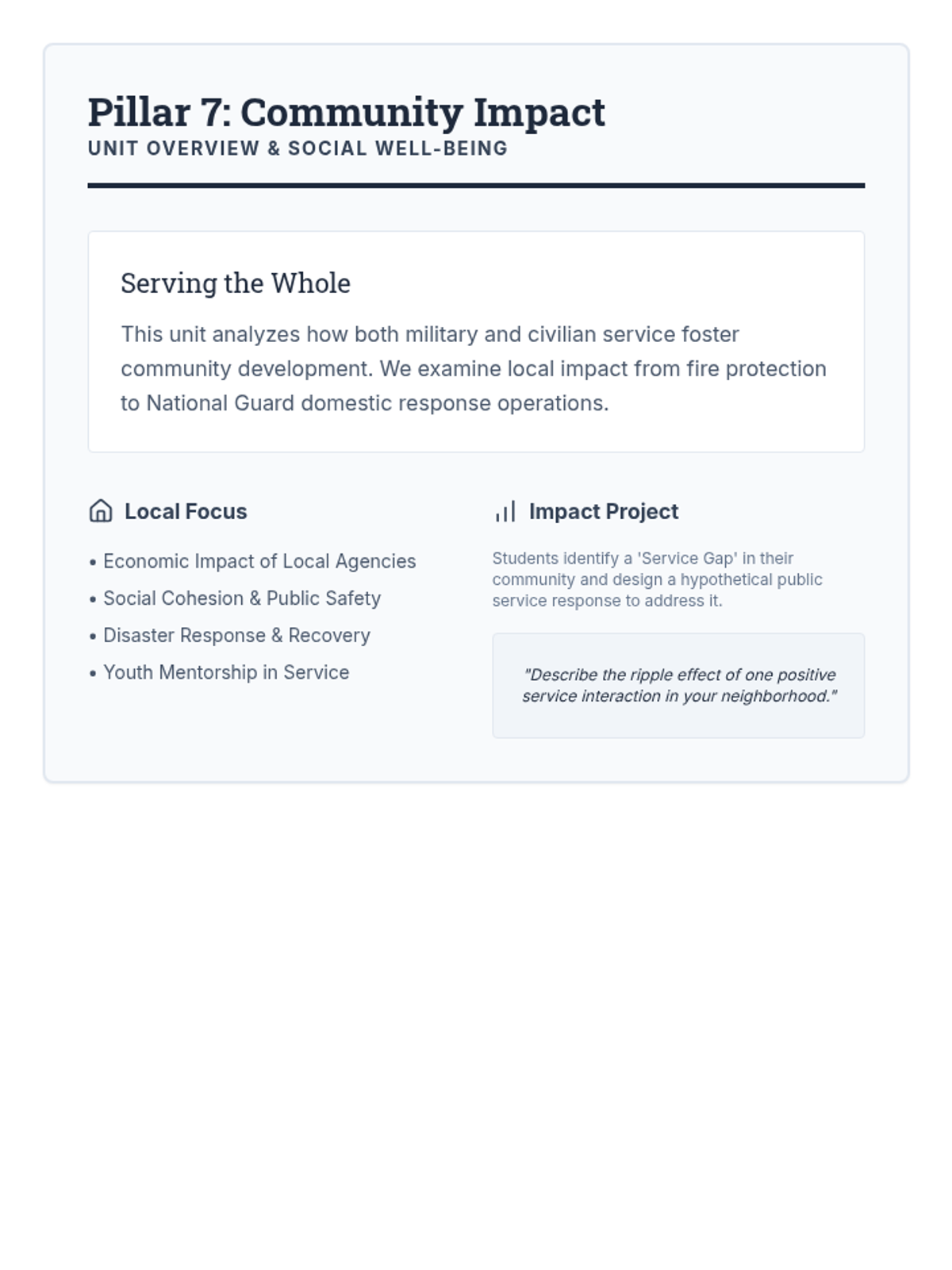
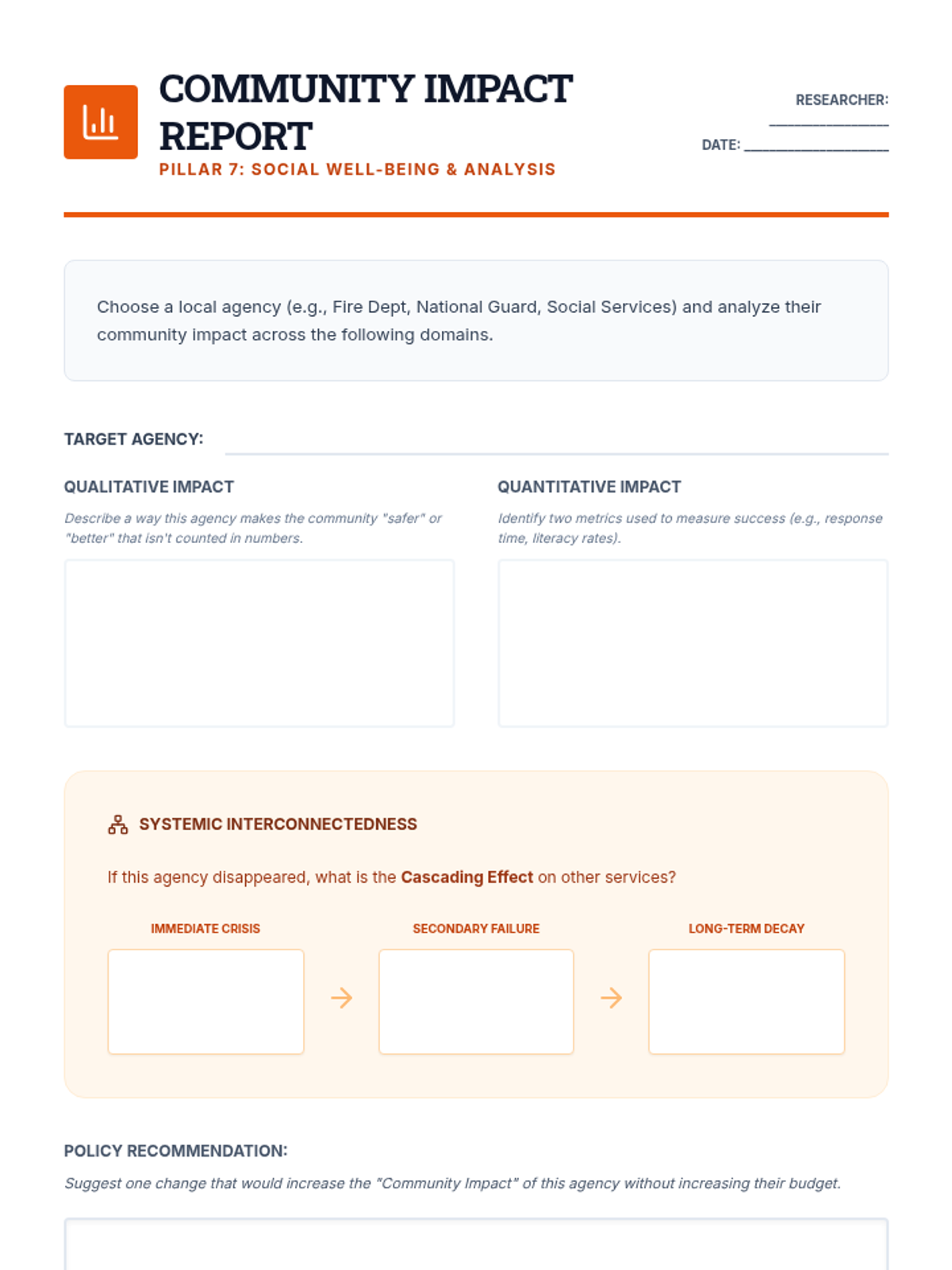
Assess the positive impact of public service on local and national communities, focusing on development and societal well-being.
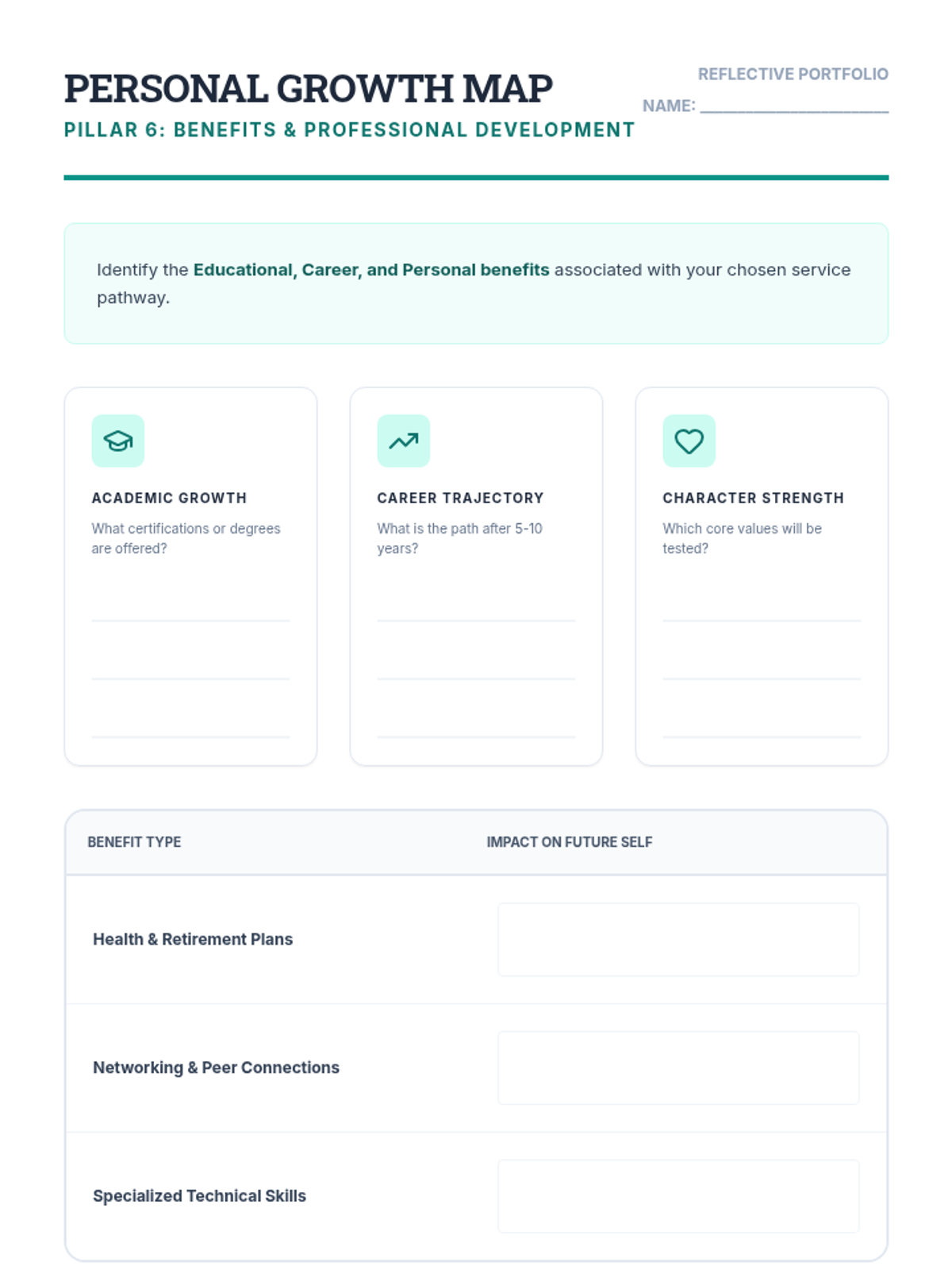
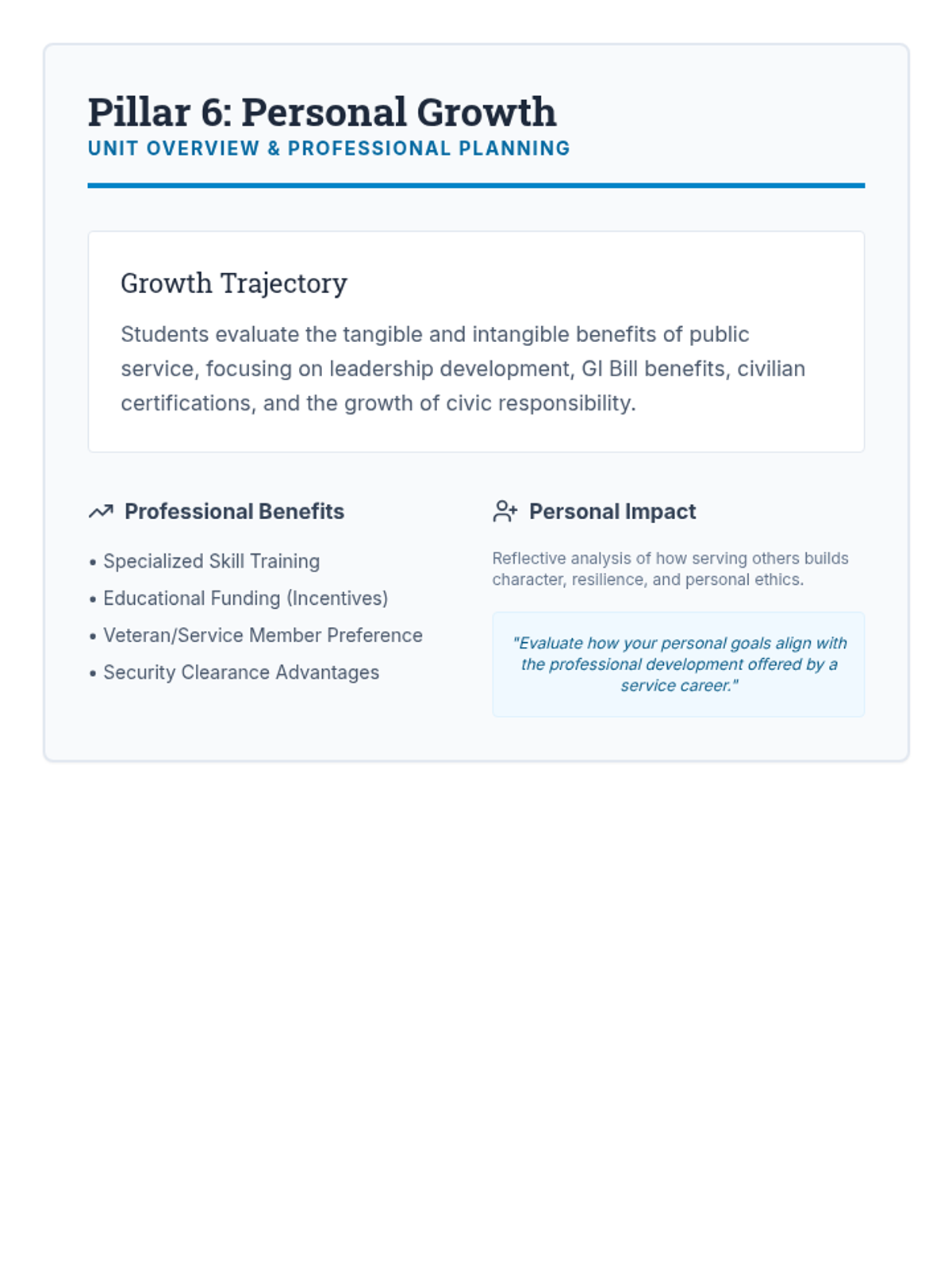
Examine the personal and professional growth resulting from service careers, including civic responsibility and professional advancement.
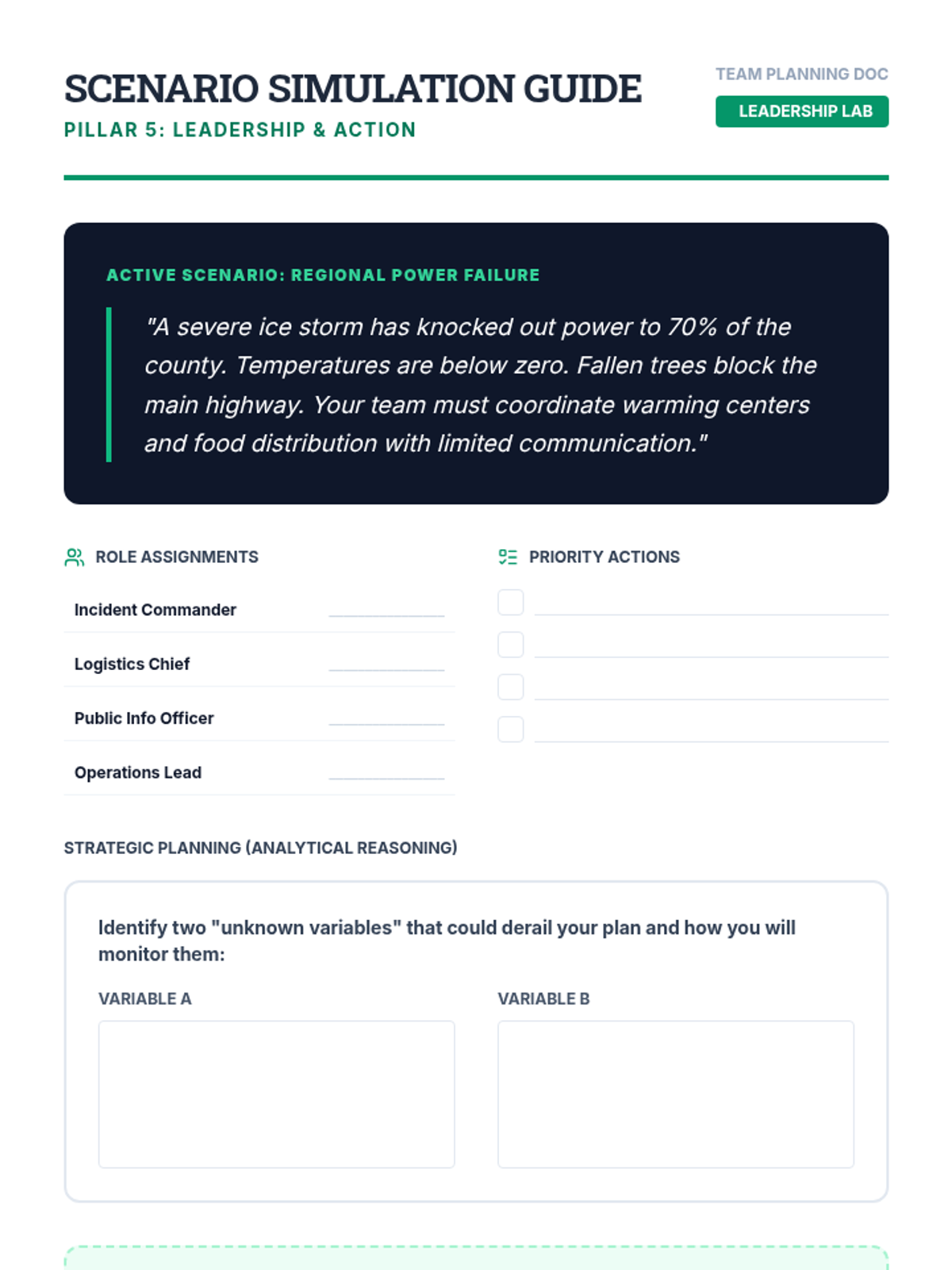
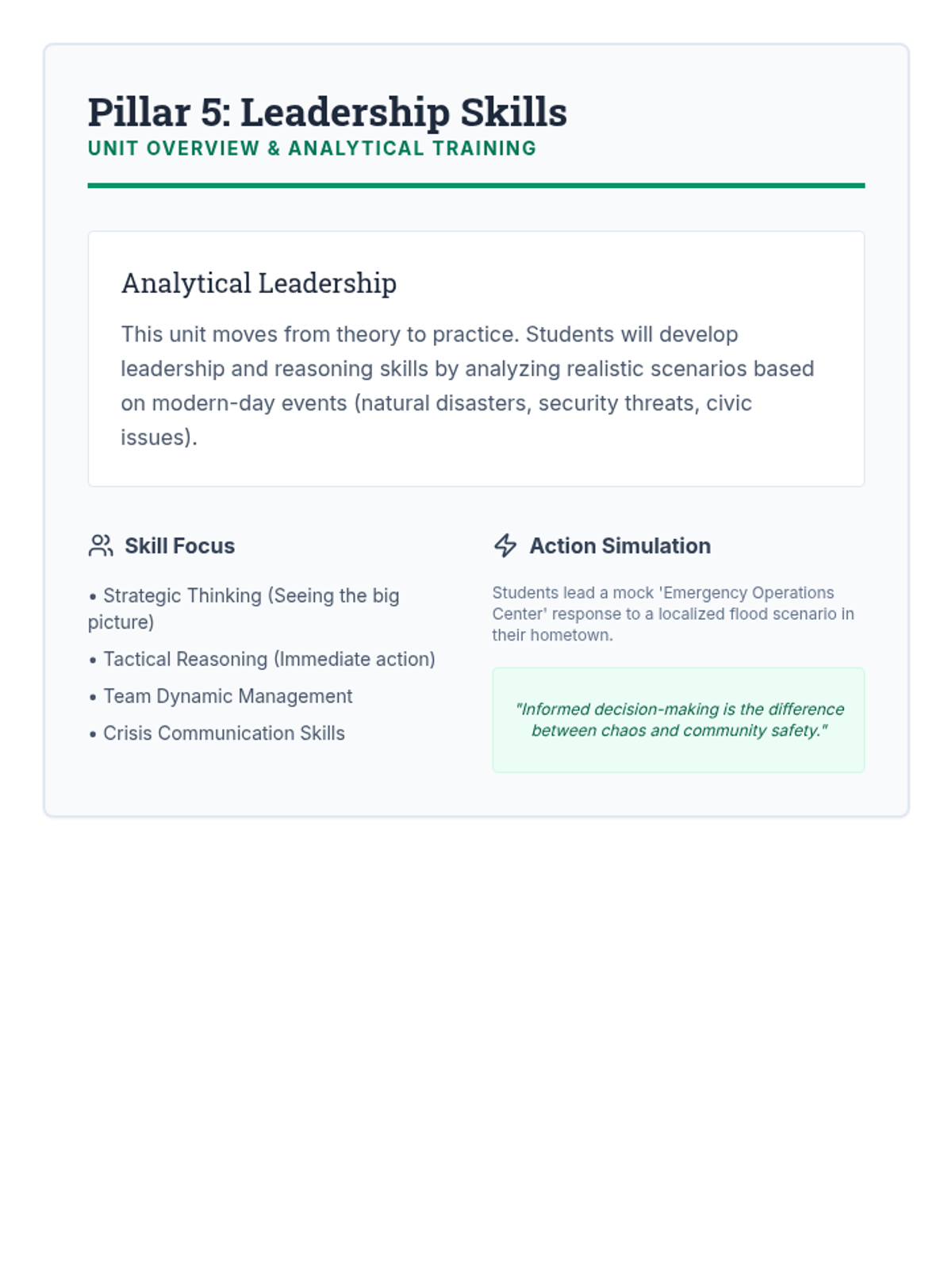
Develop leadership, critical thinking, and analytical reasoning skills through realistic public service simulations and current event analysis.
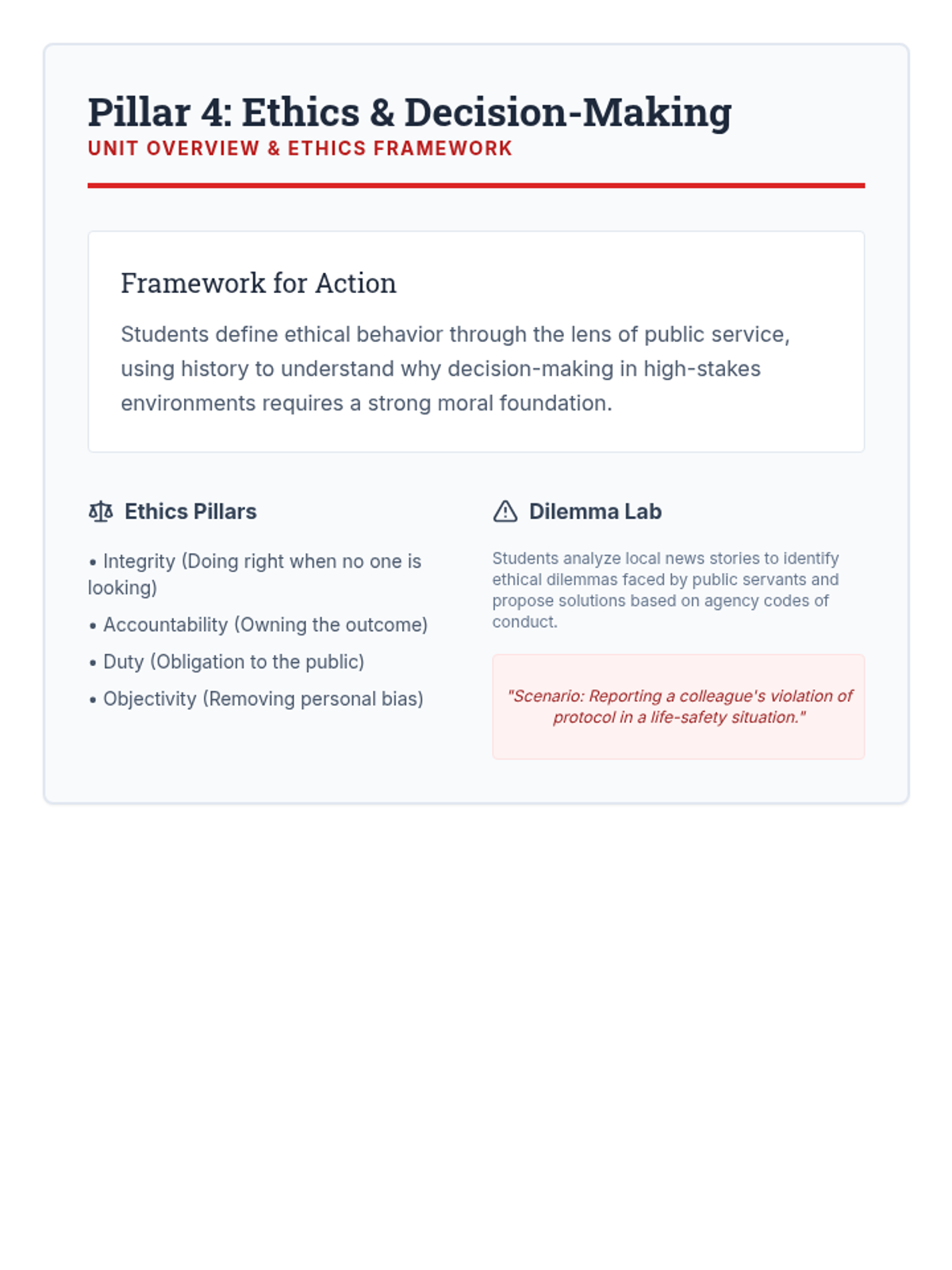
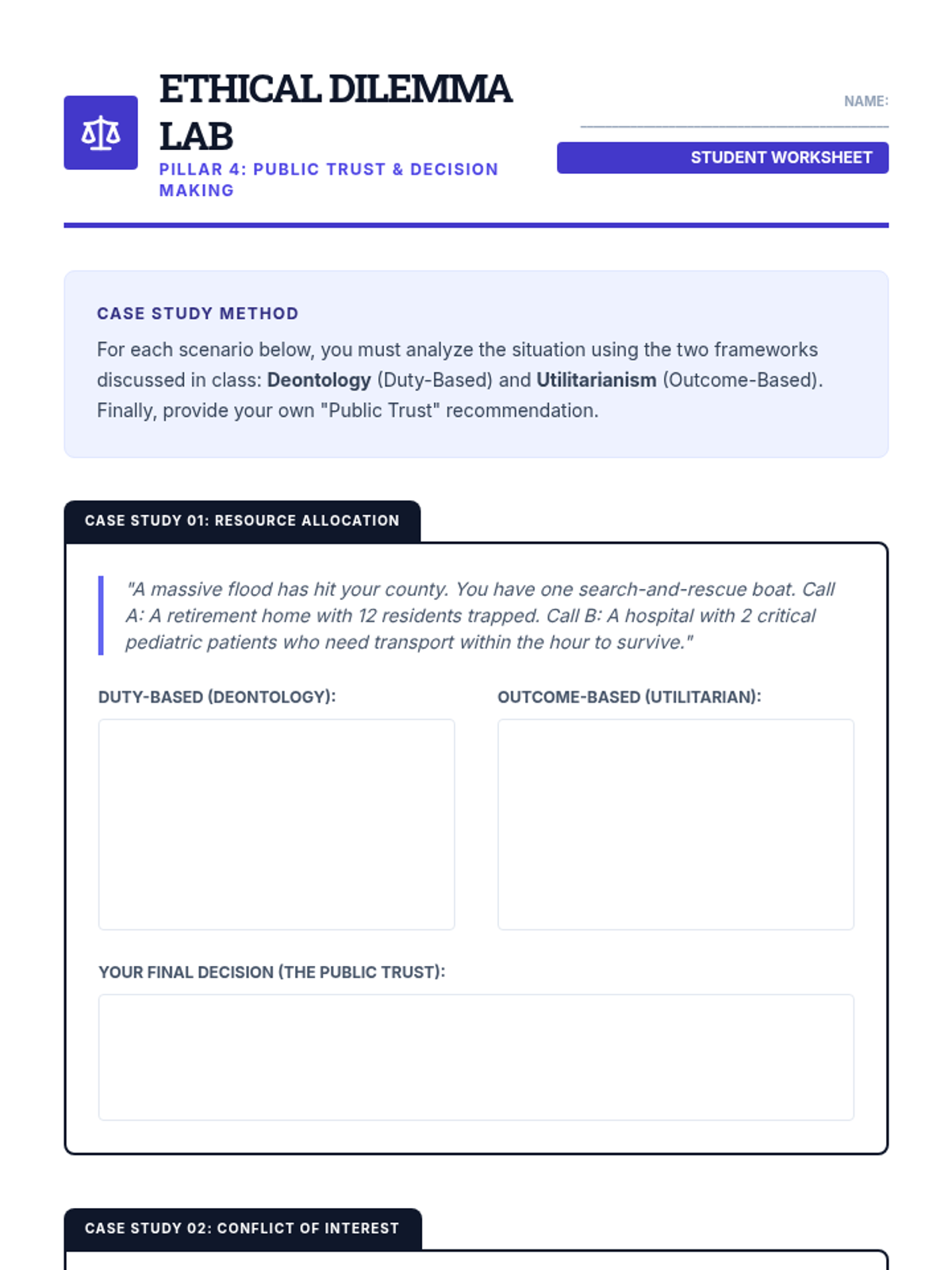
Define and apply ethical frameworks to public service scenarios, analyzing complex challenges and the role of ethics in leadership.
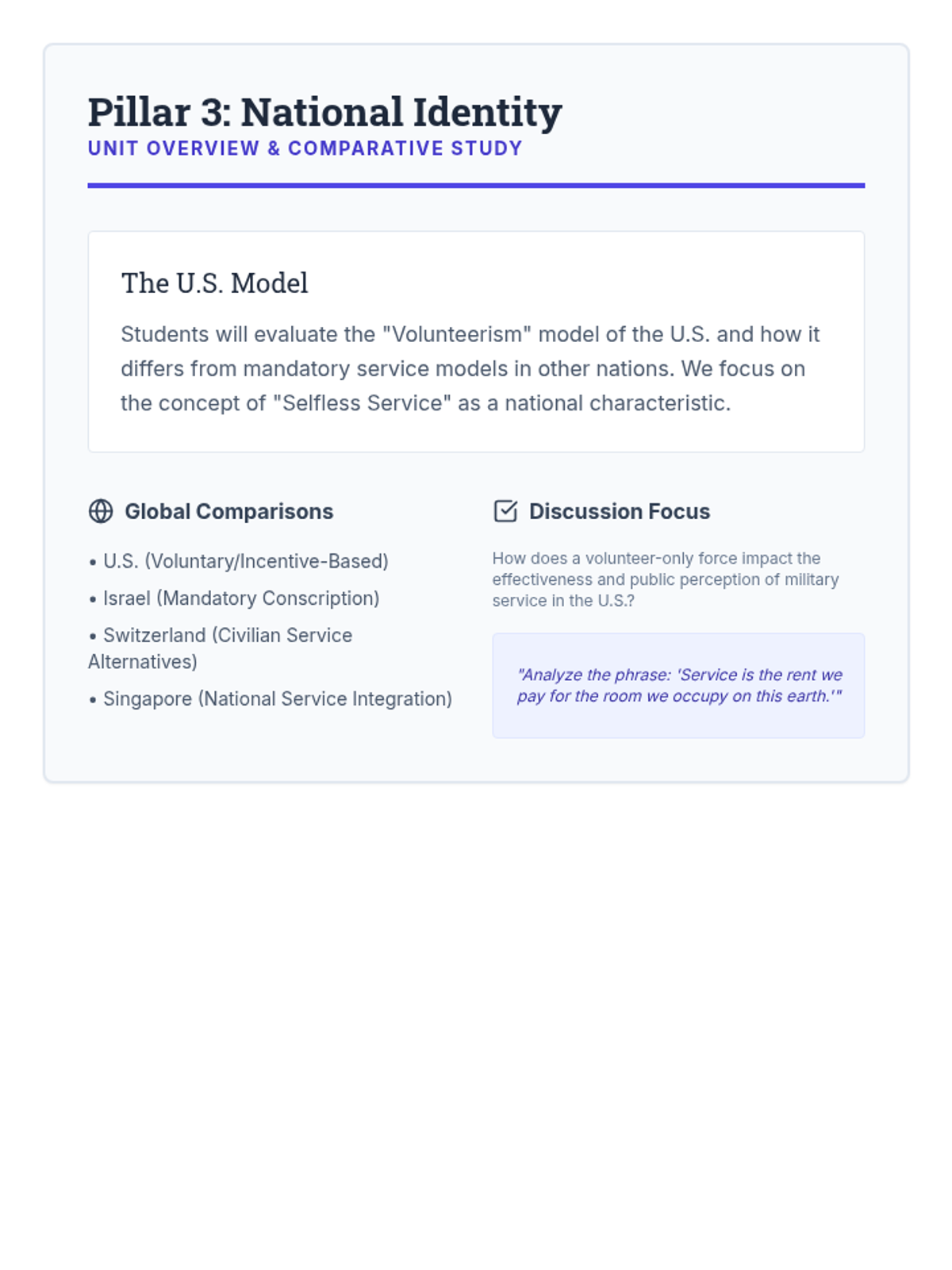
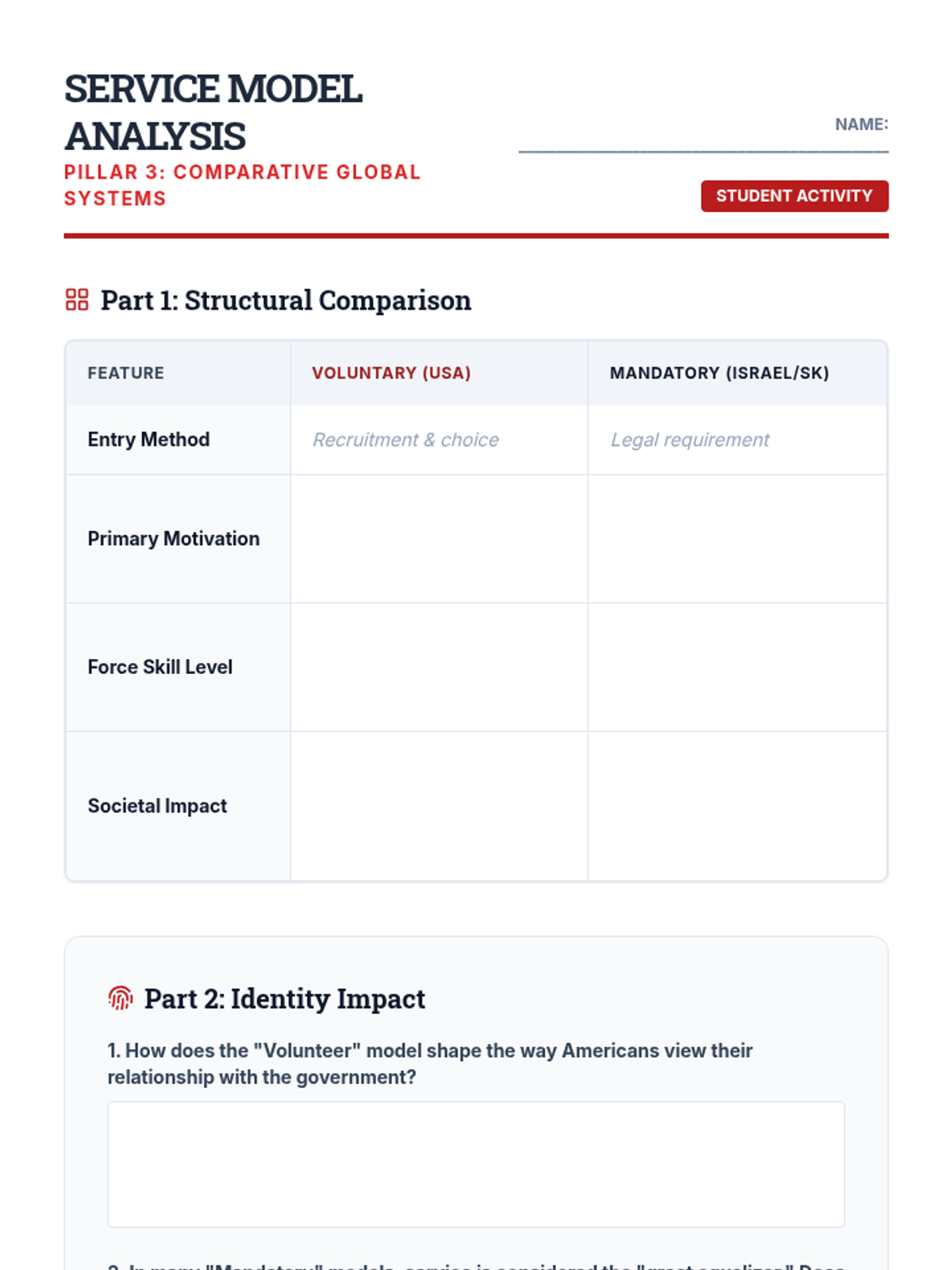
Evaluate how public service shapes U.S. national identity and compare the U.S. volunteerism model with international public service structures.
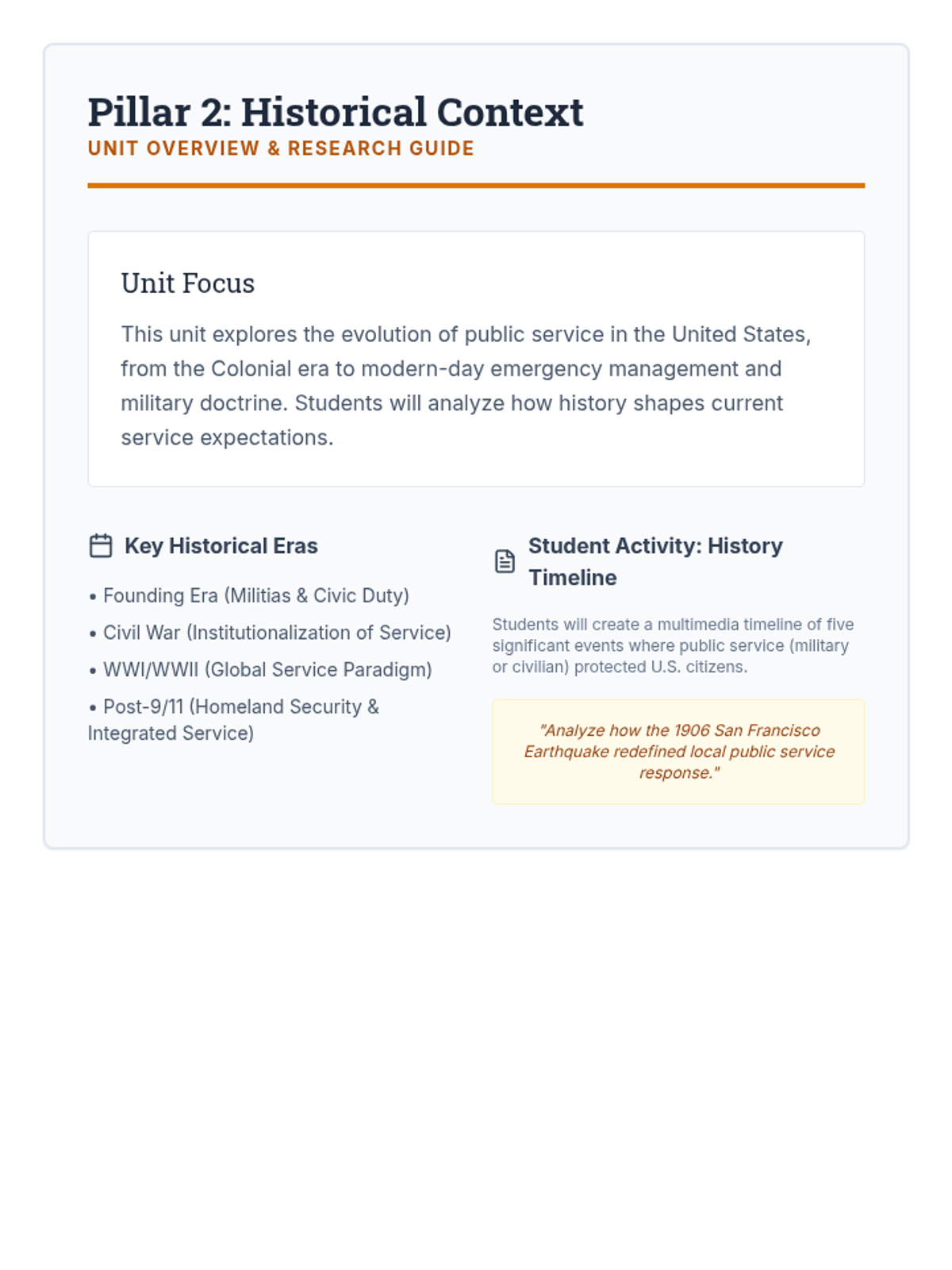
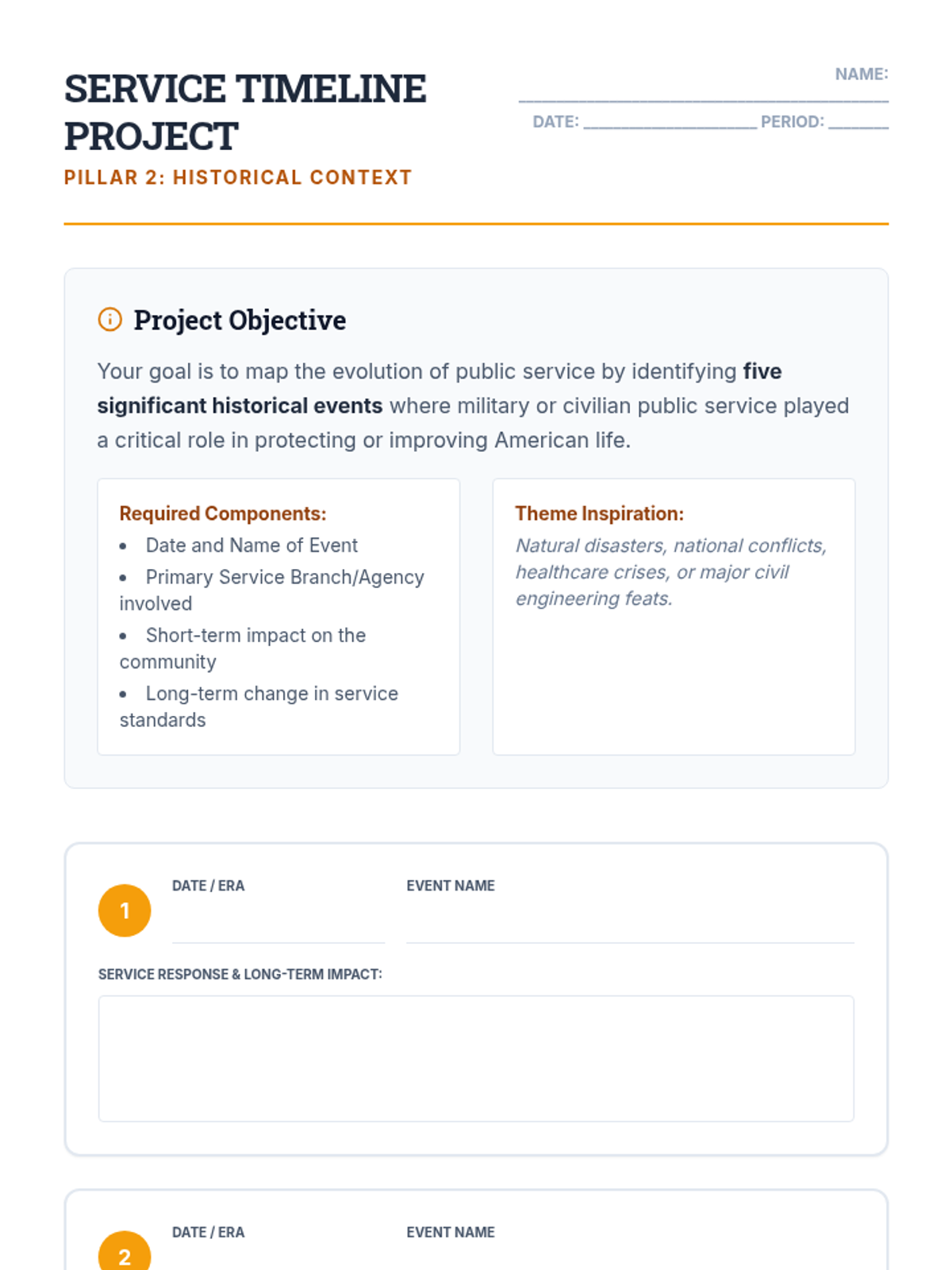
Analyze the historical evolution of public service in the U.S., researching significant events and their impact on national safety and service.
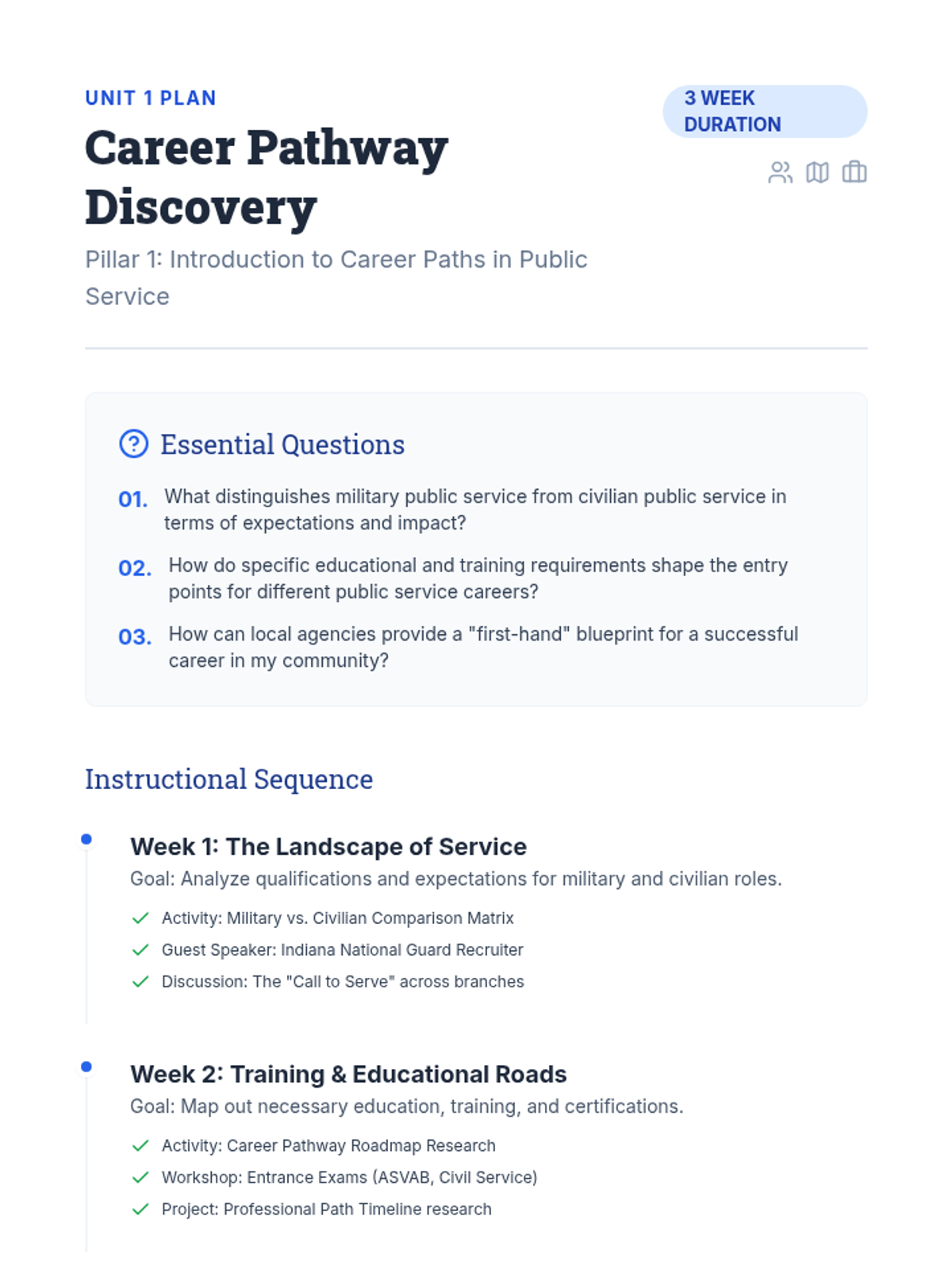
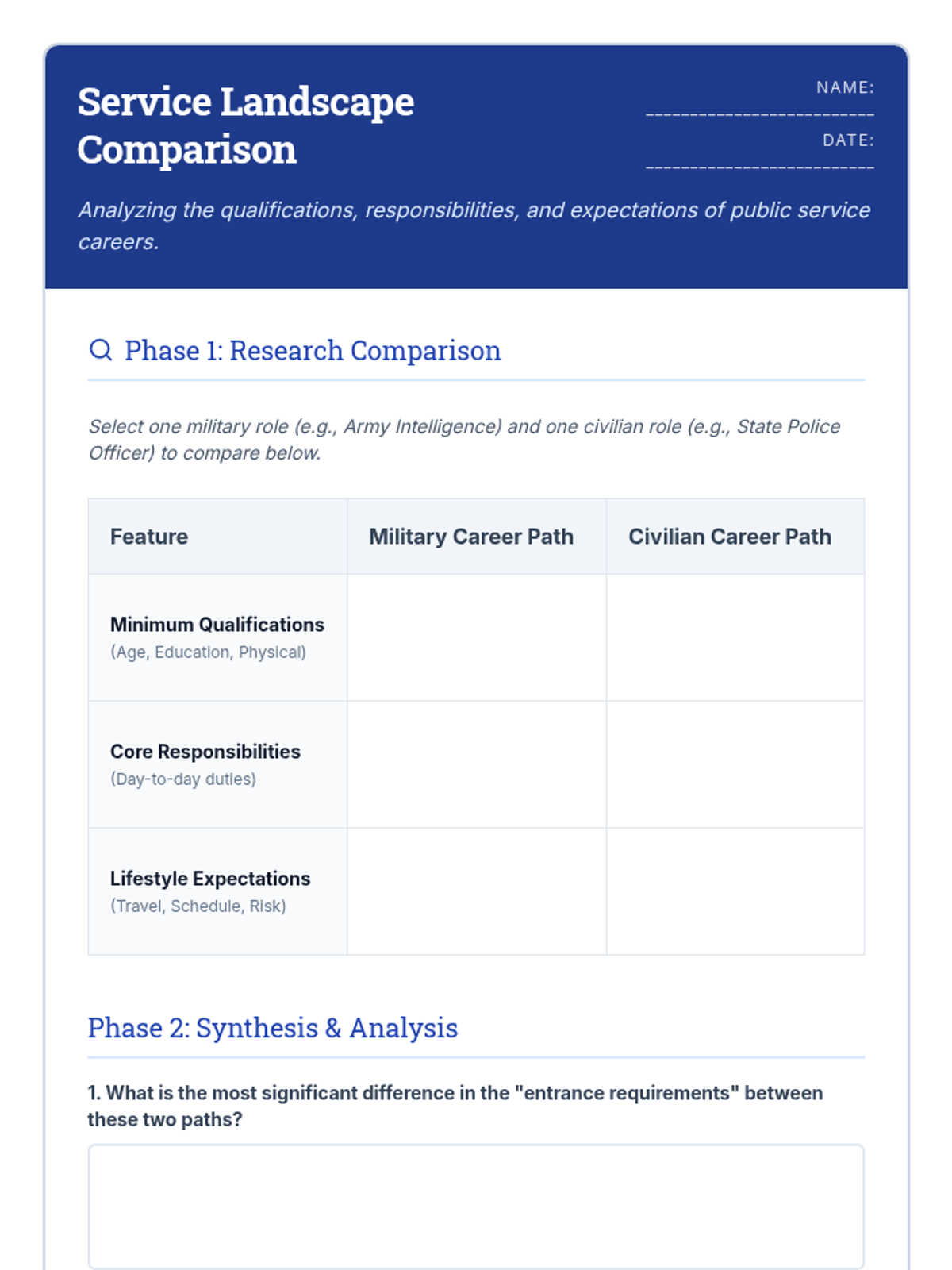
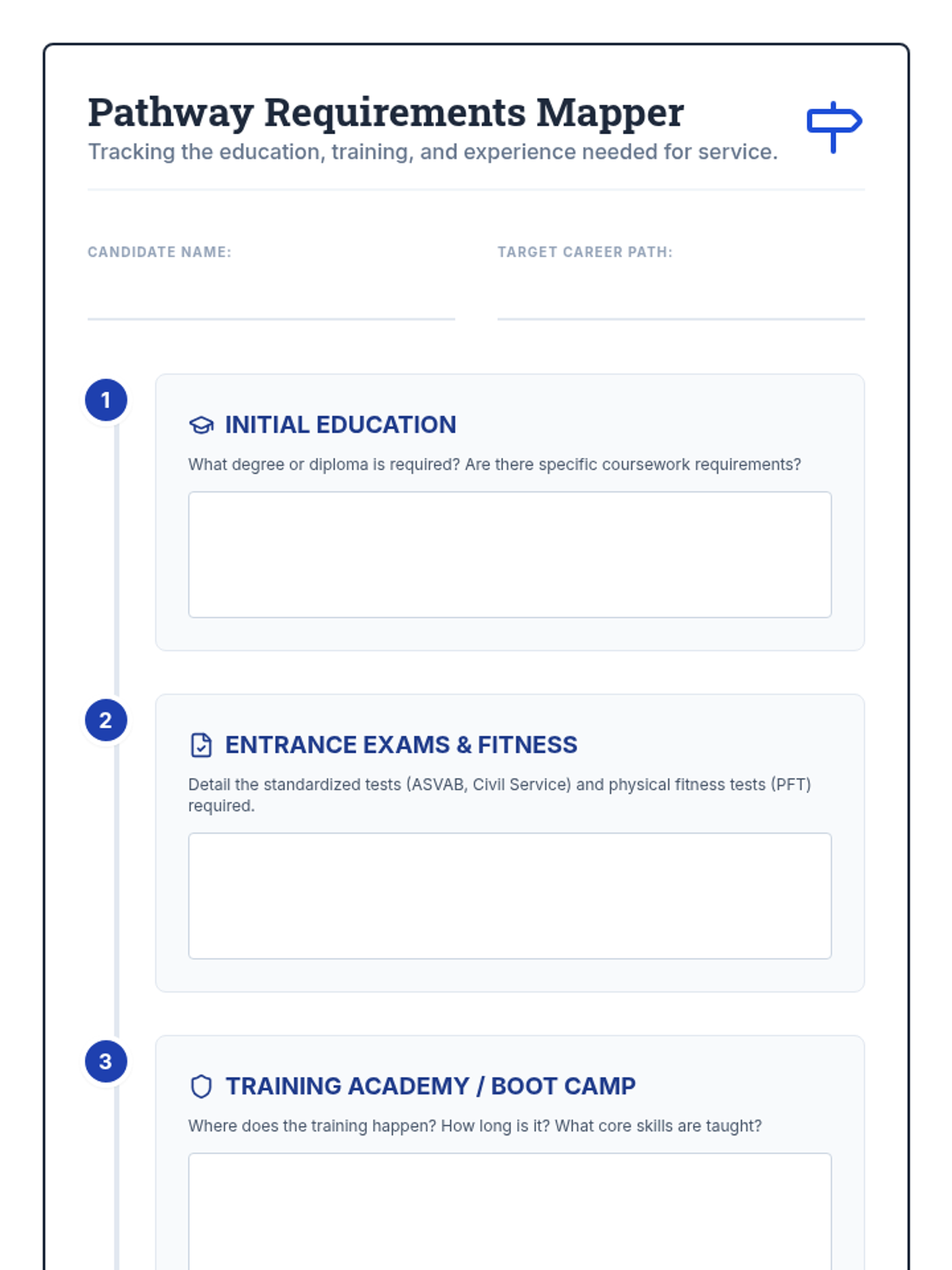
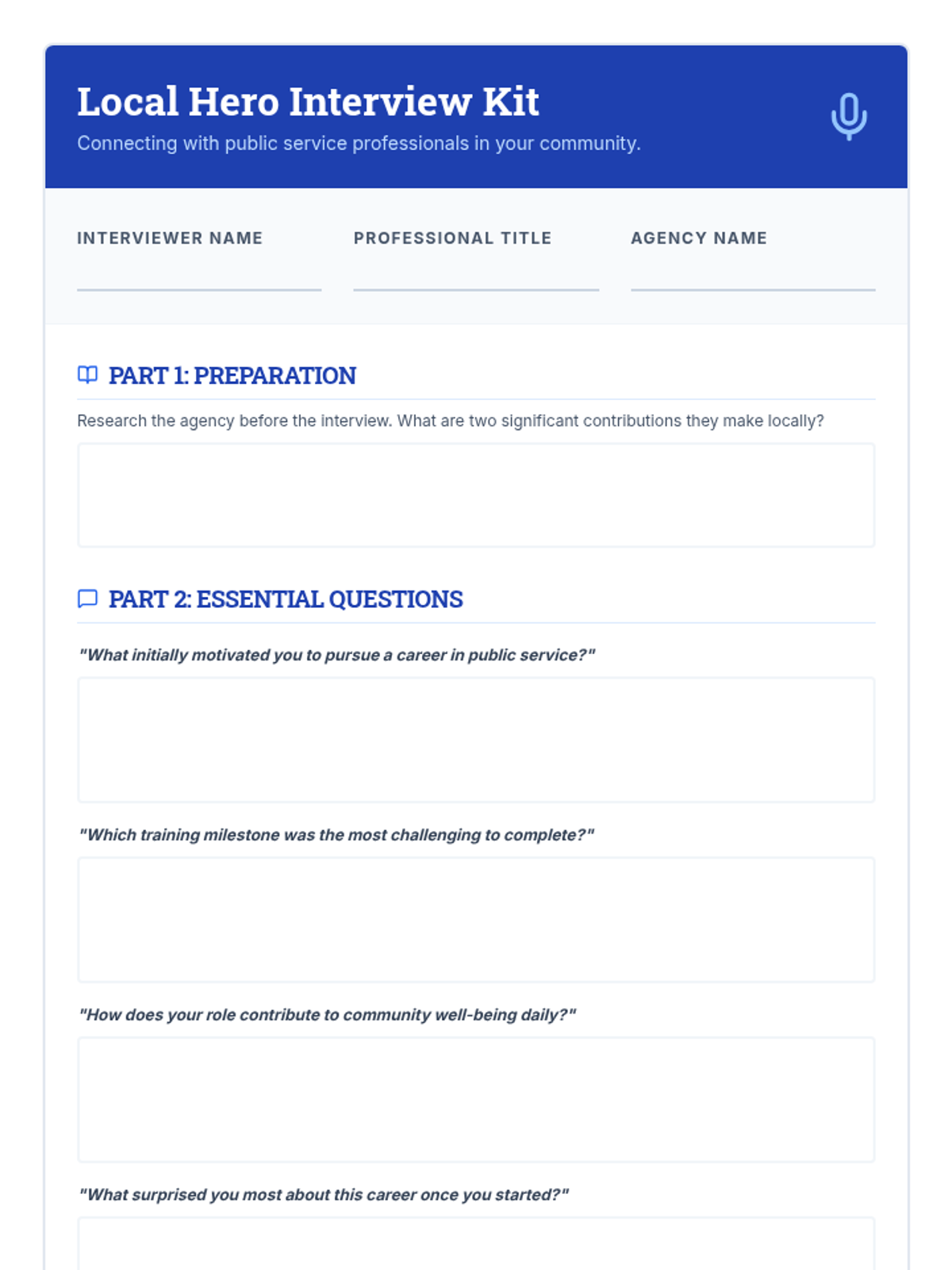
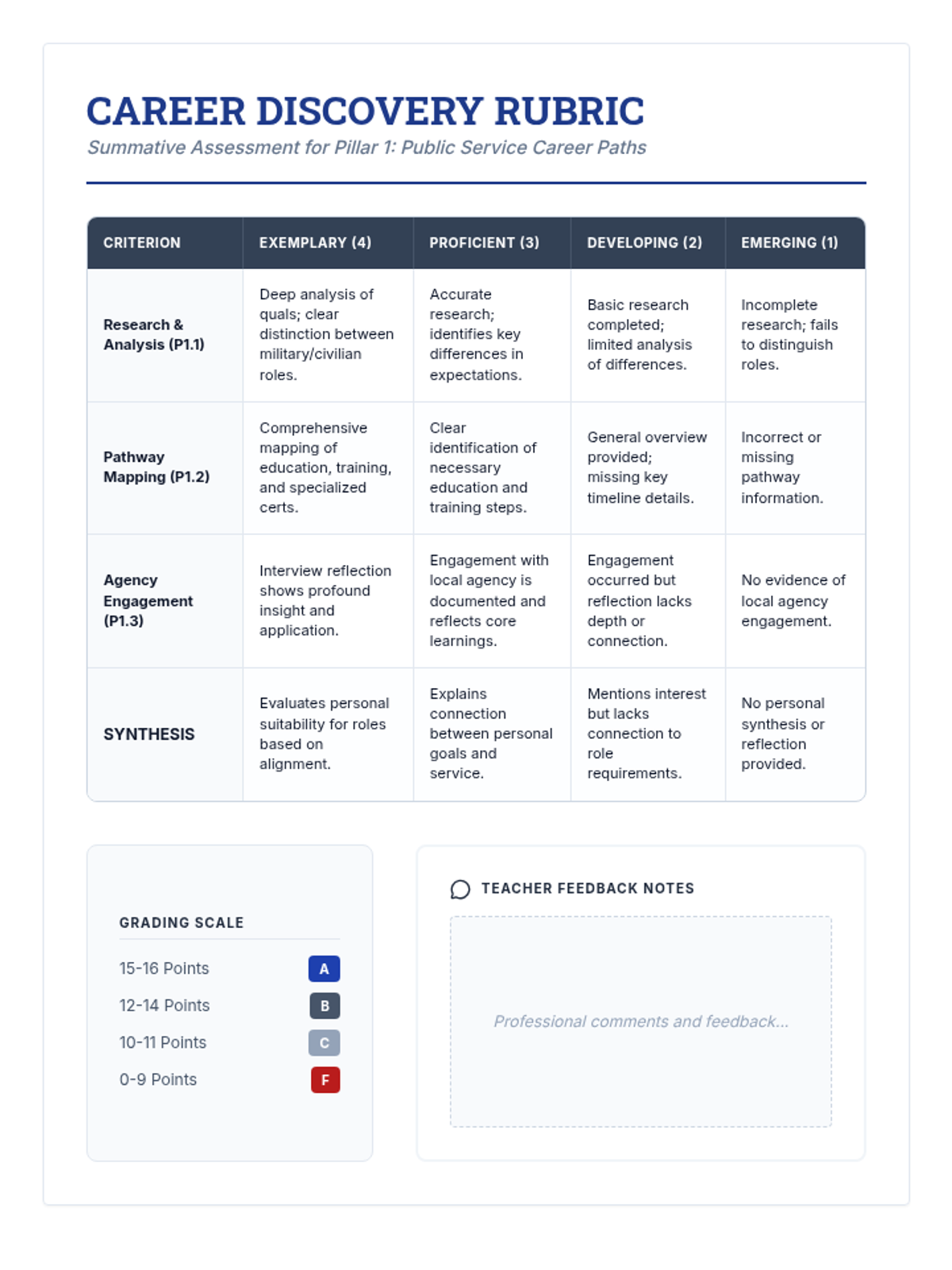
Explore the landscape of public service careers, analyzing qualifications and requirements for military and civilian roles while connecting with local agencies.
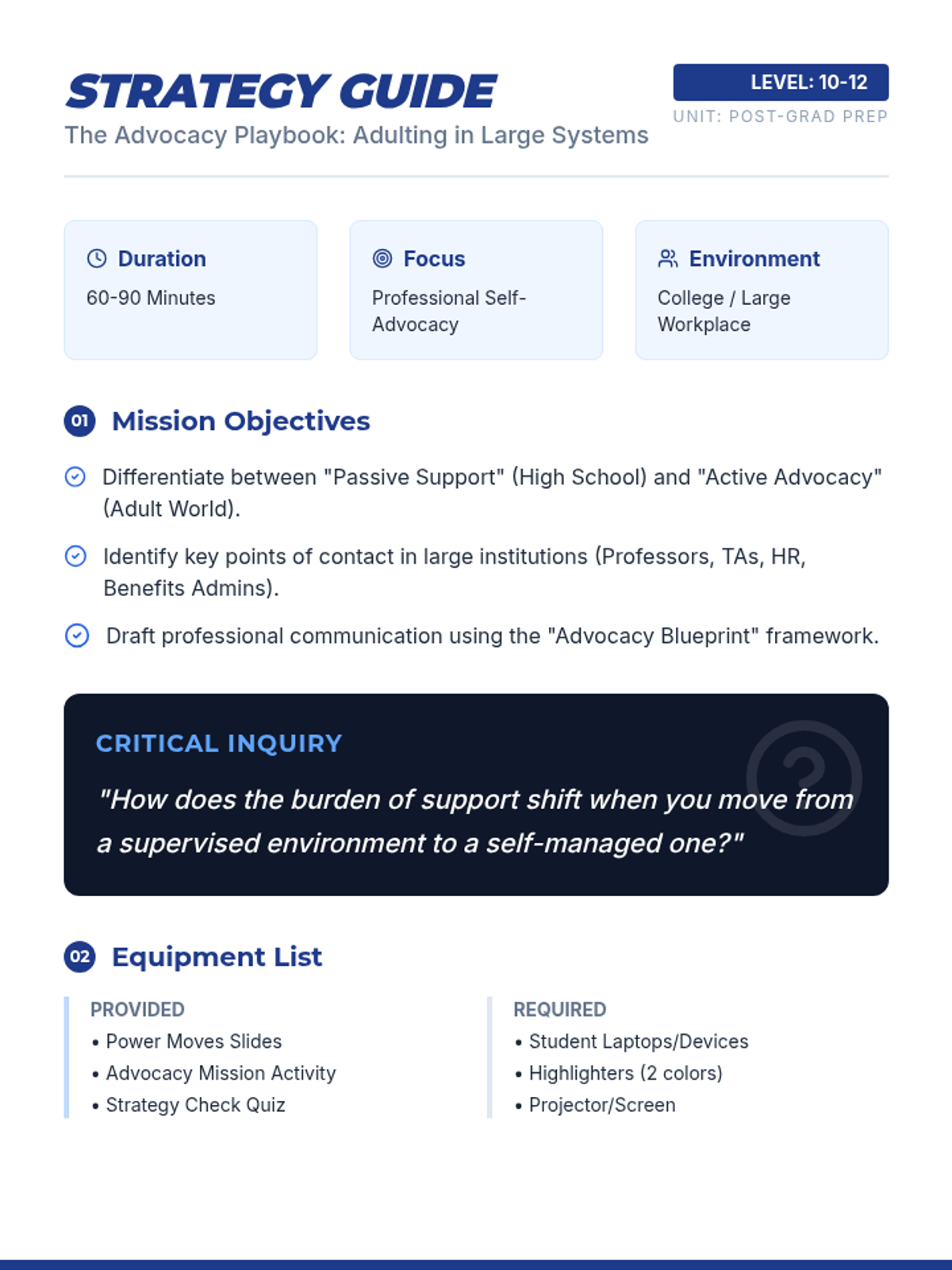
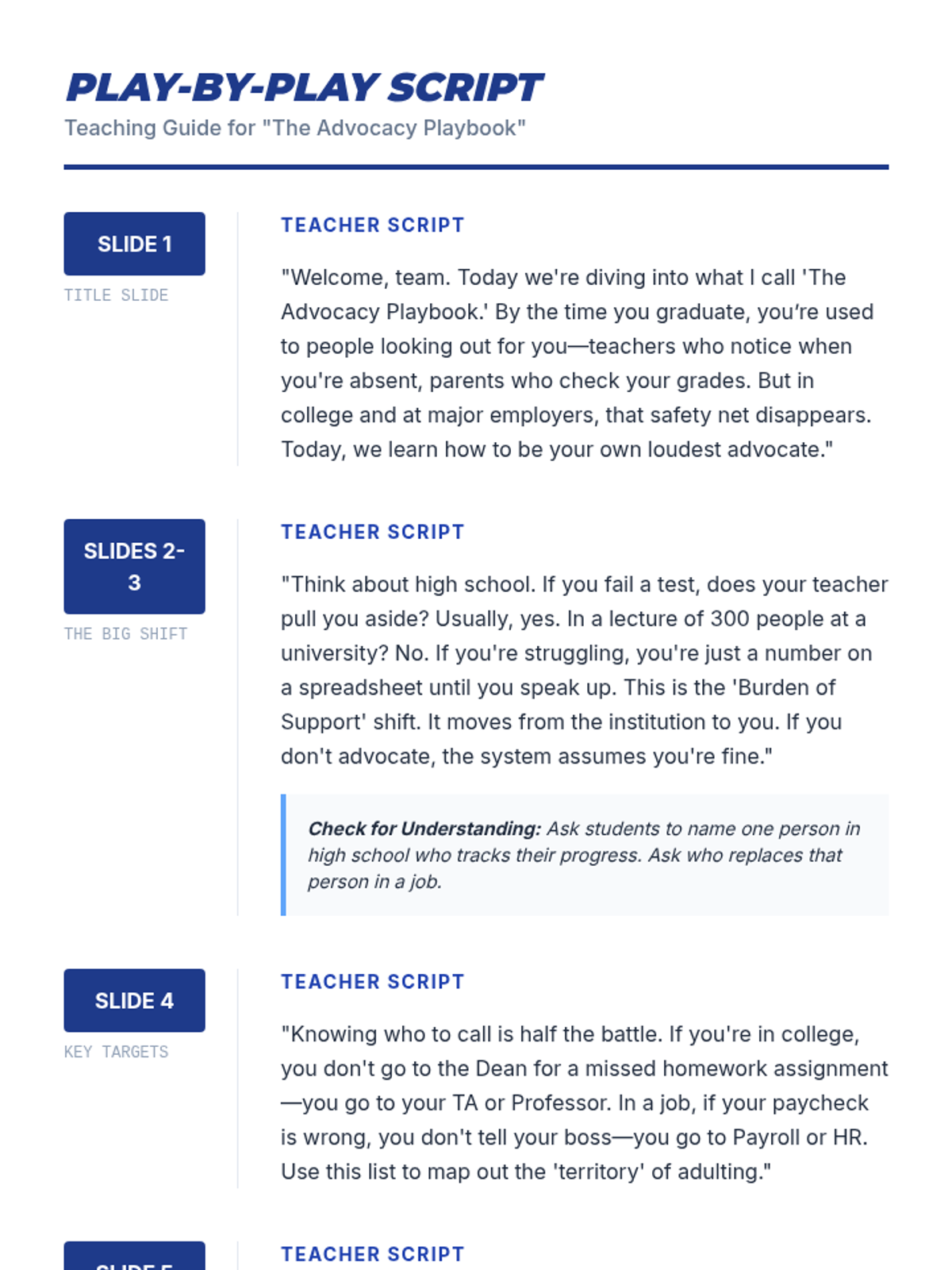
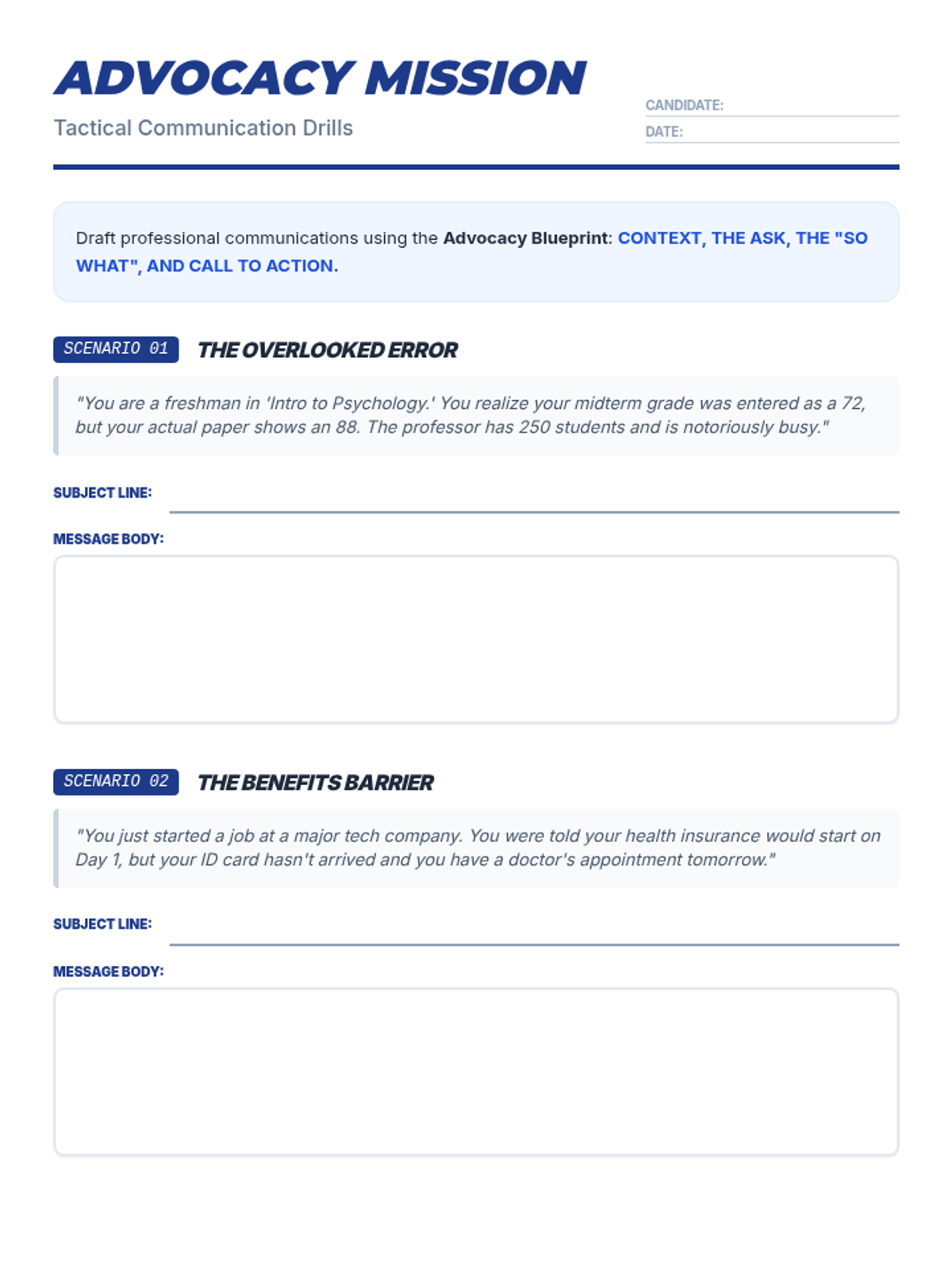
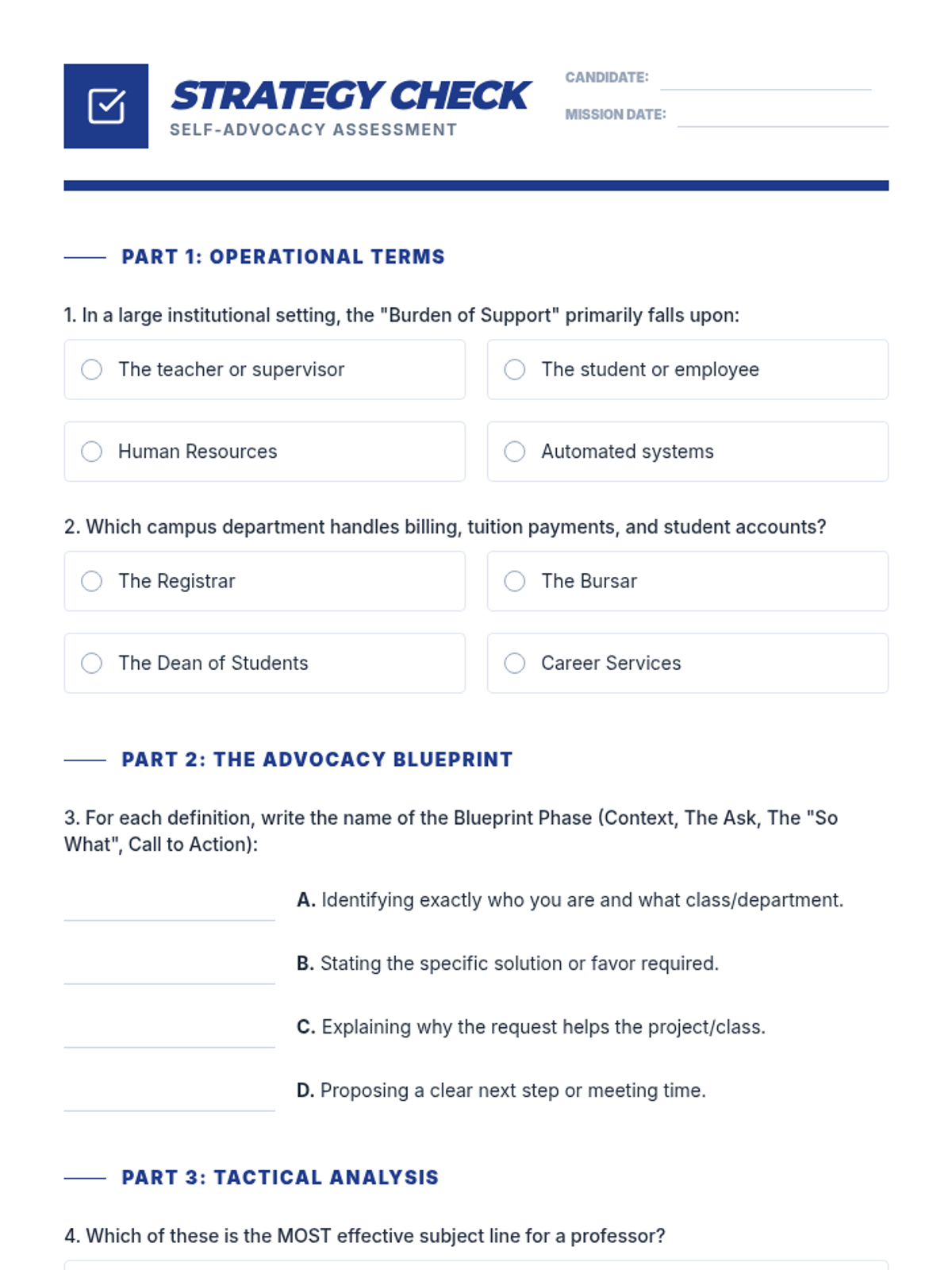
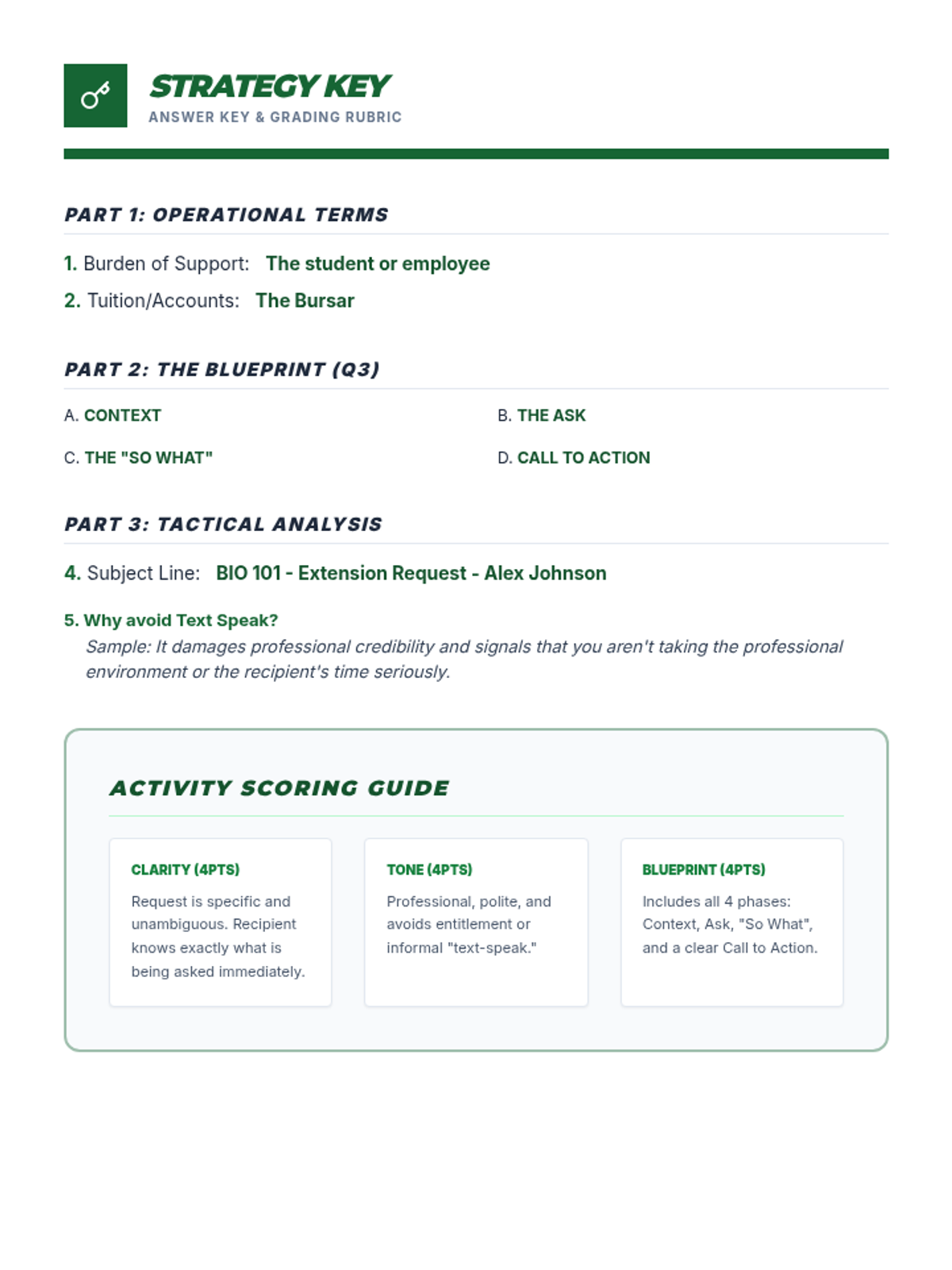
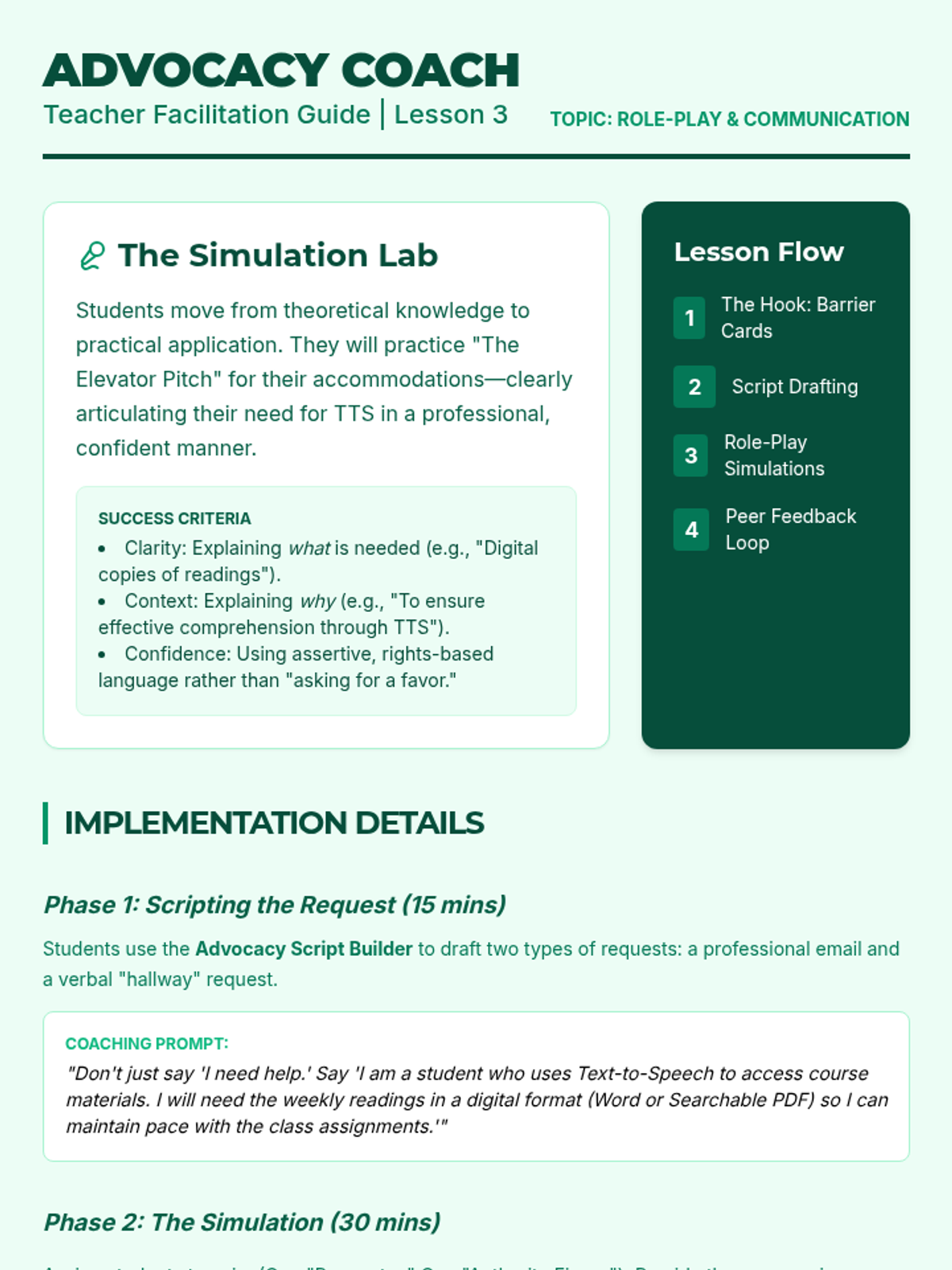
This lesson teaches 10th-12th grade students the essential shift from high school support systems to adult self-advocacy. Students will develop professional communication strategies for navigating large-scale academic and professional environments.
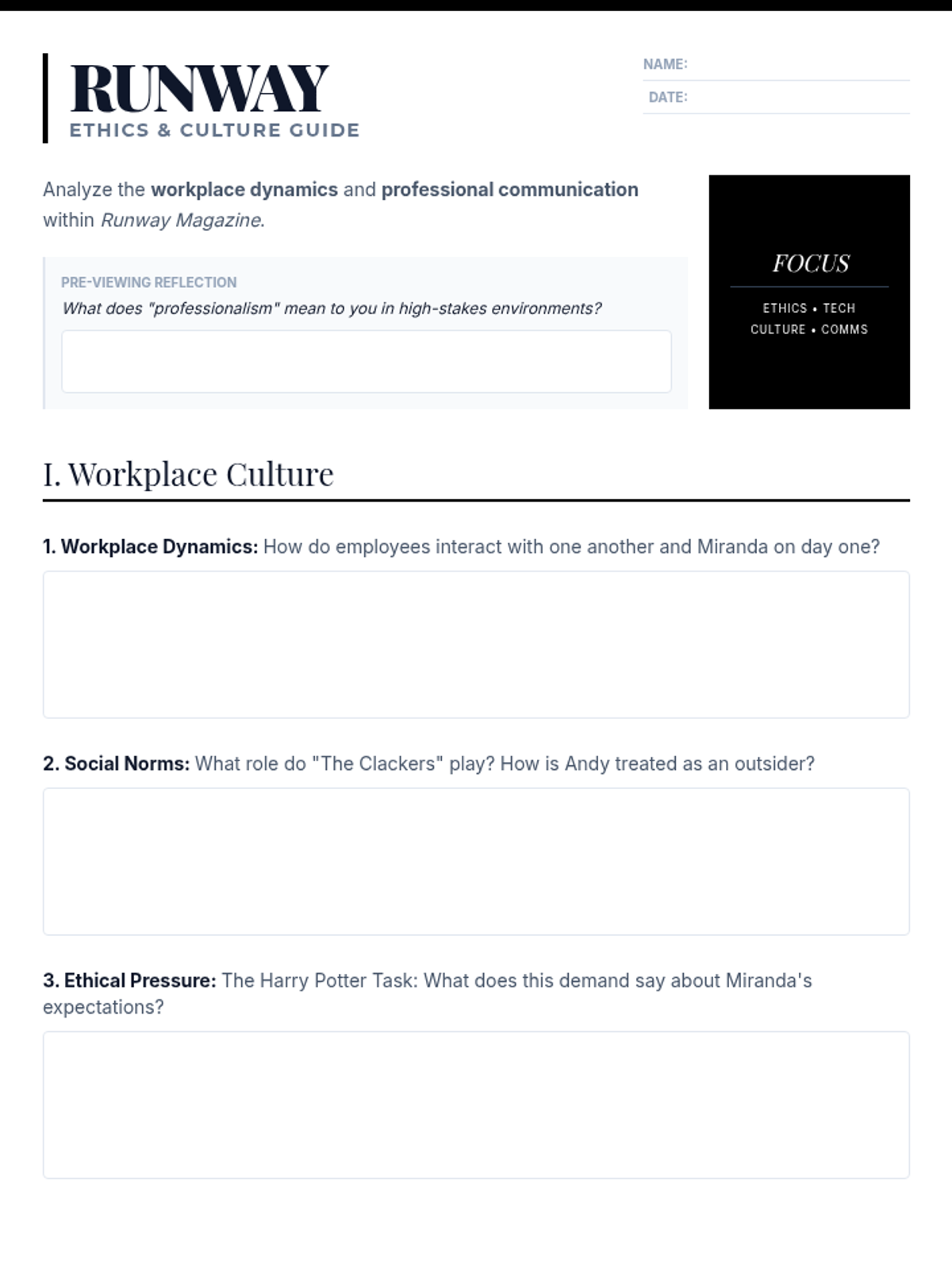
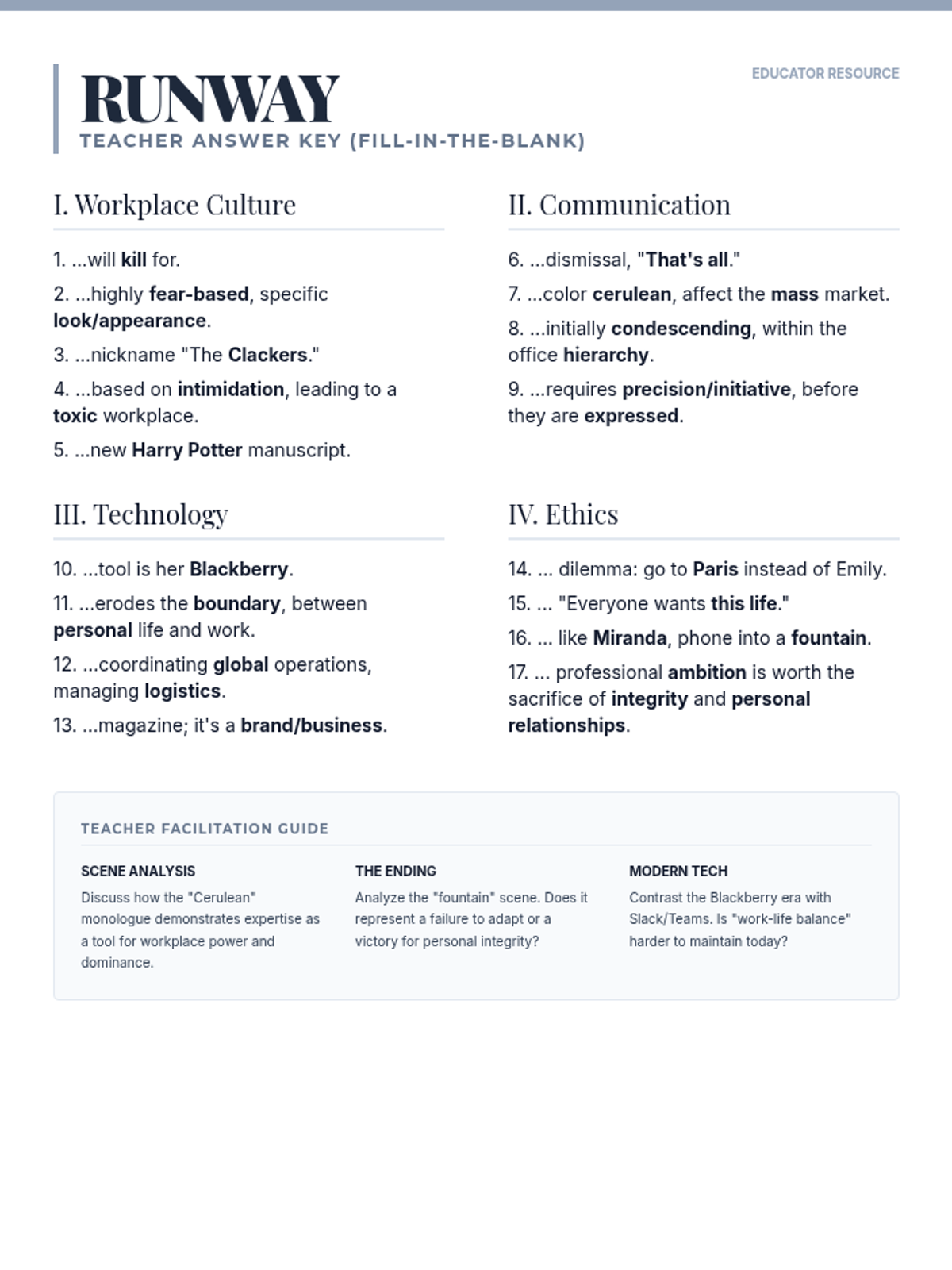
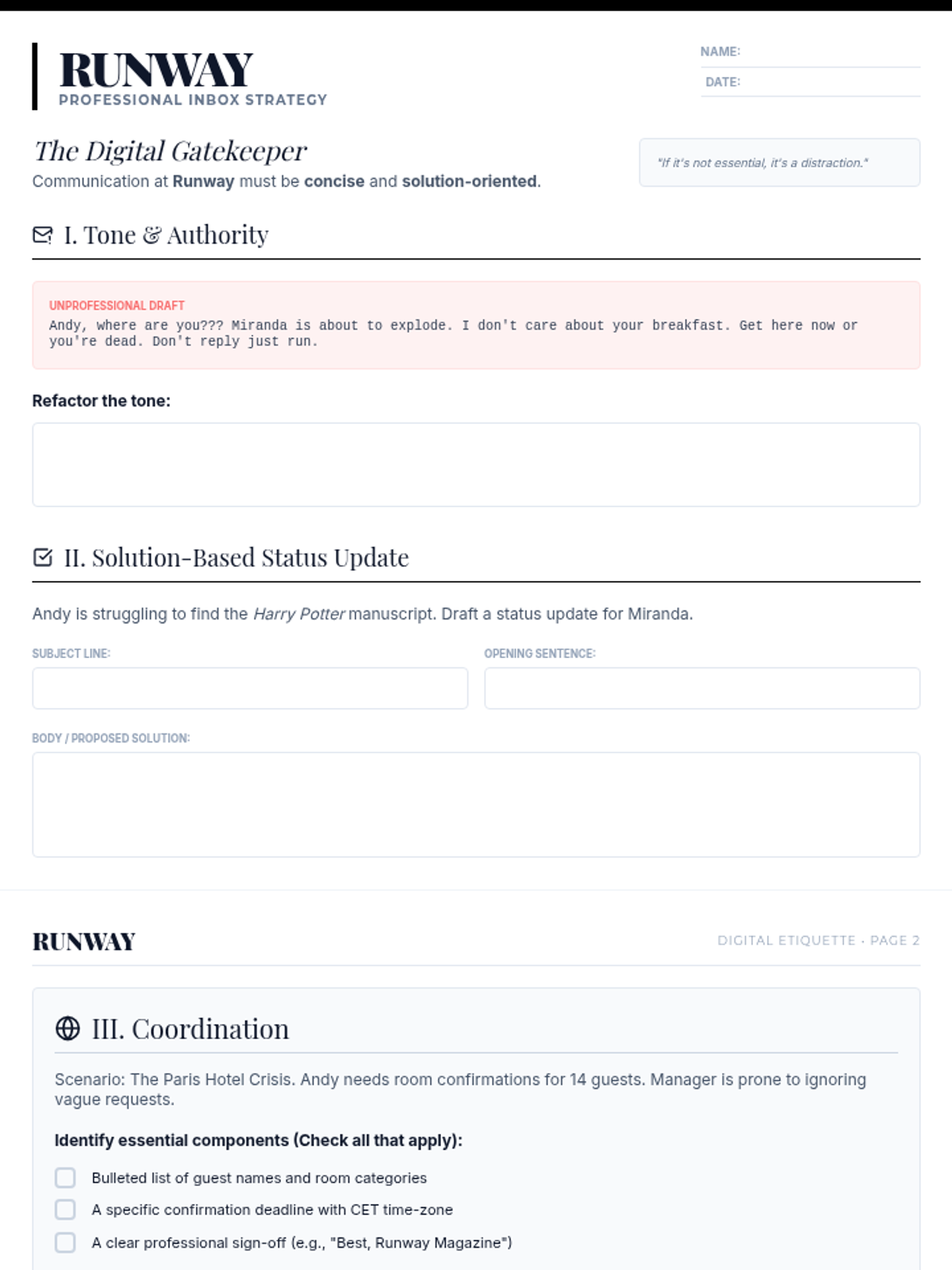
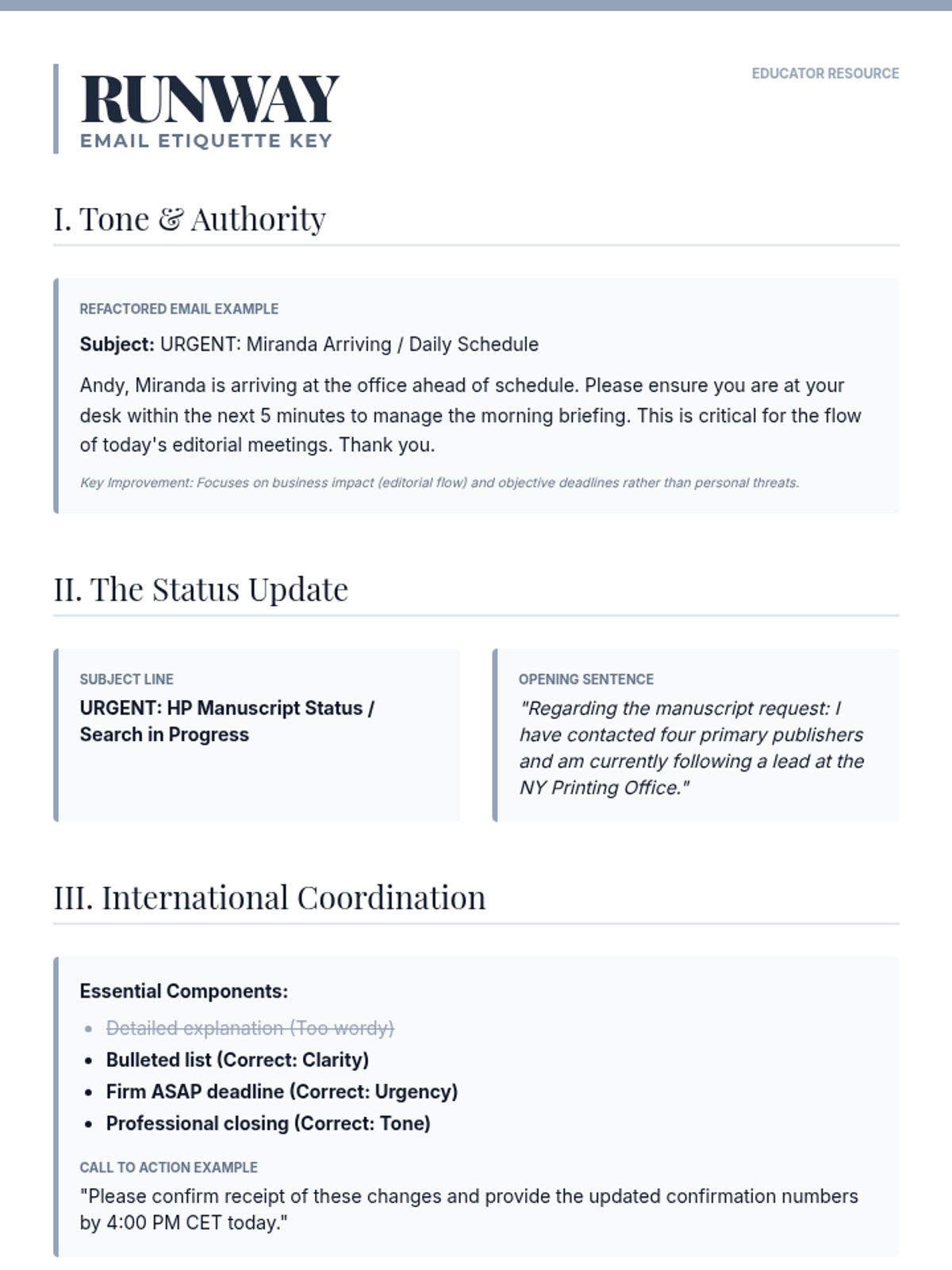
Analyze workplace culture, professional communication, and business ethics through the lens of the high-stakes fashion industry in 'The Devil Wears Prada'. Students will explore how technology facilitates modern business and the ethical dilemmas of rapid-fire corporate environments.
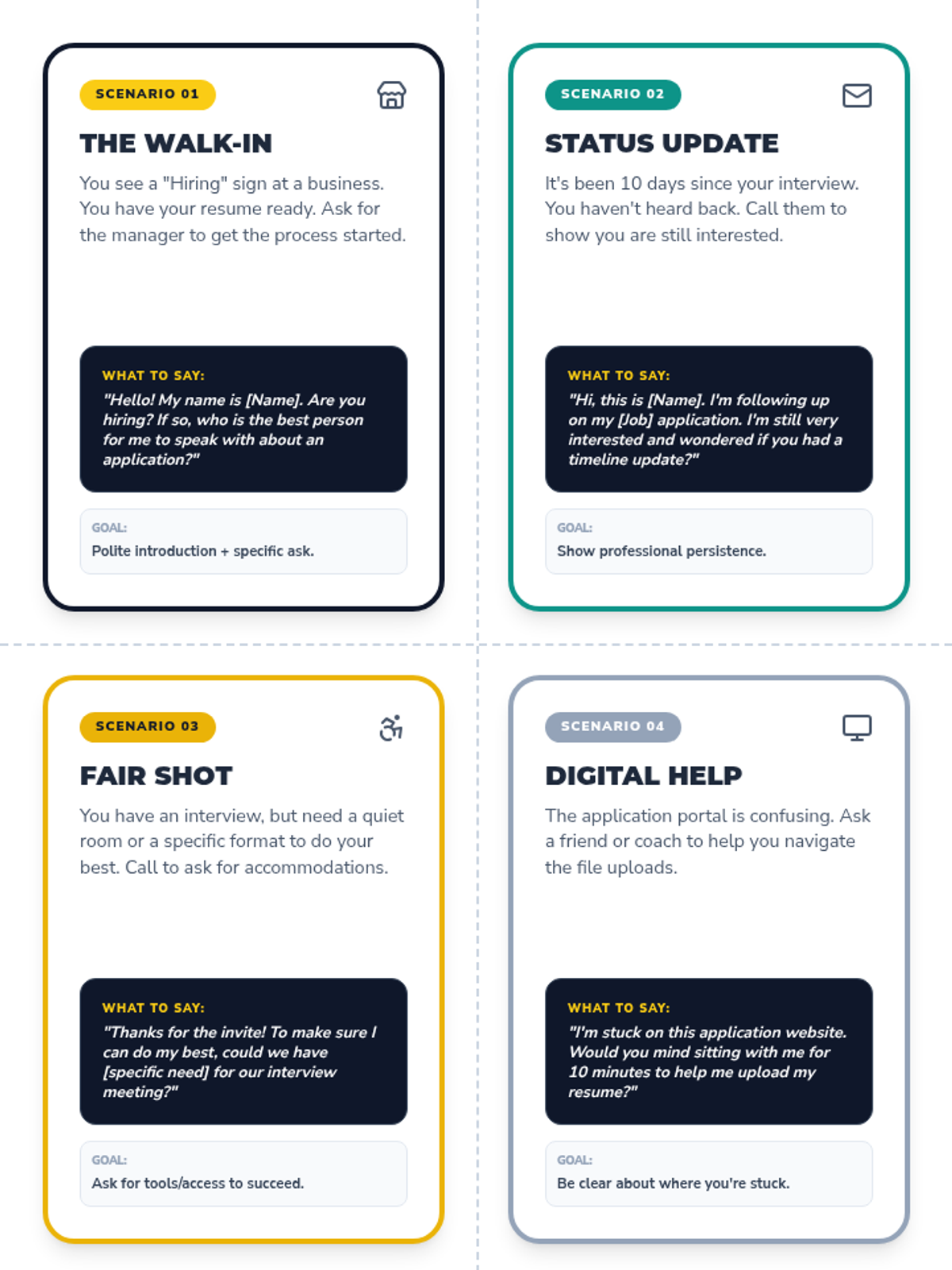
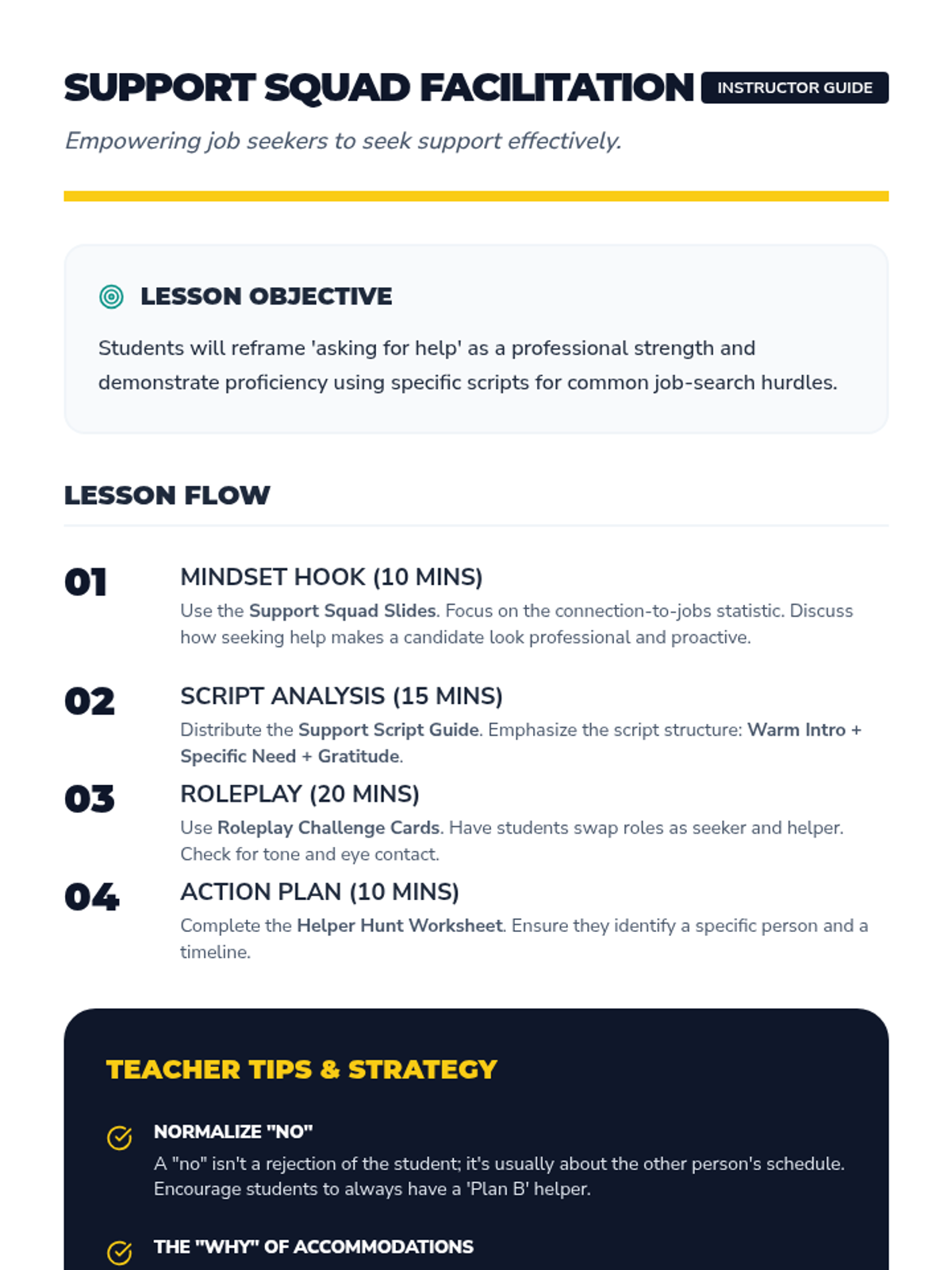
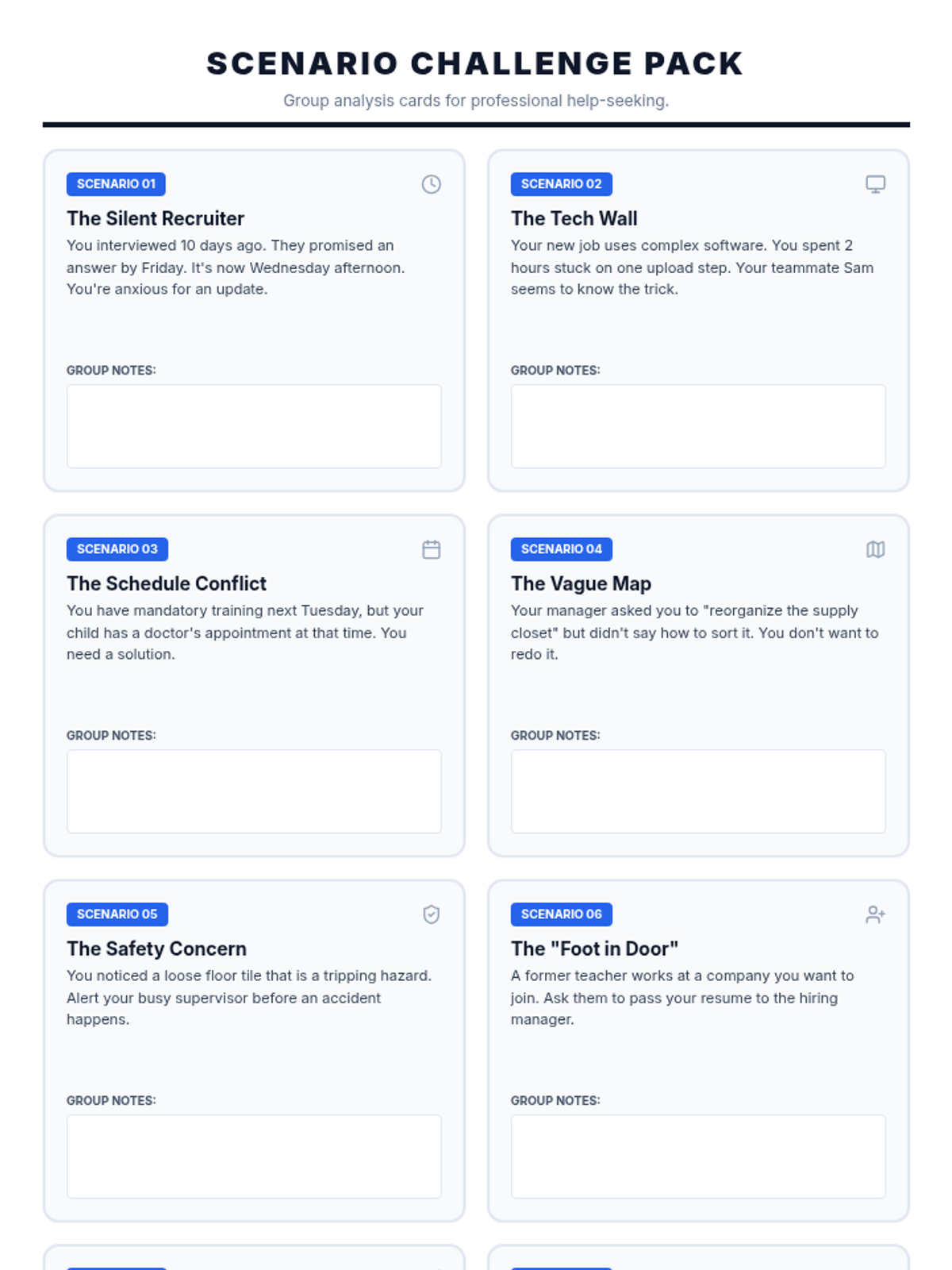
A professional development lesson that reframes asking for help as a vital workplace skill. Students learn to identify their support network, use clear and direct communication scripts, and practice advocating for themselves in common job search and employment scenarios.
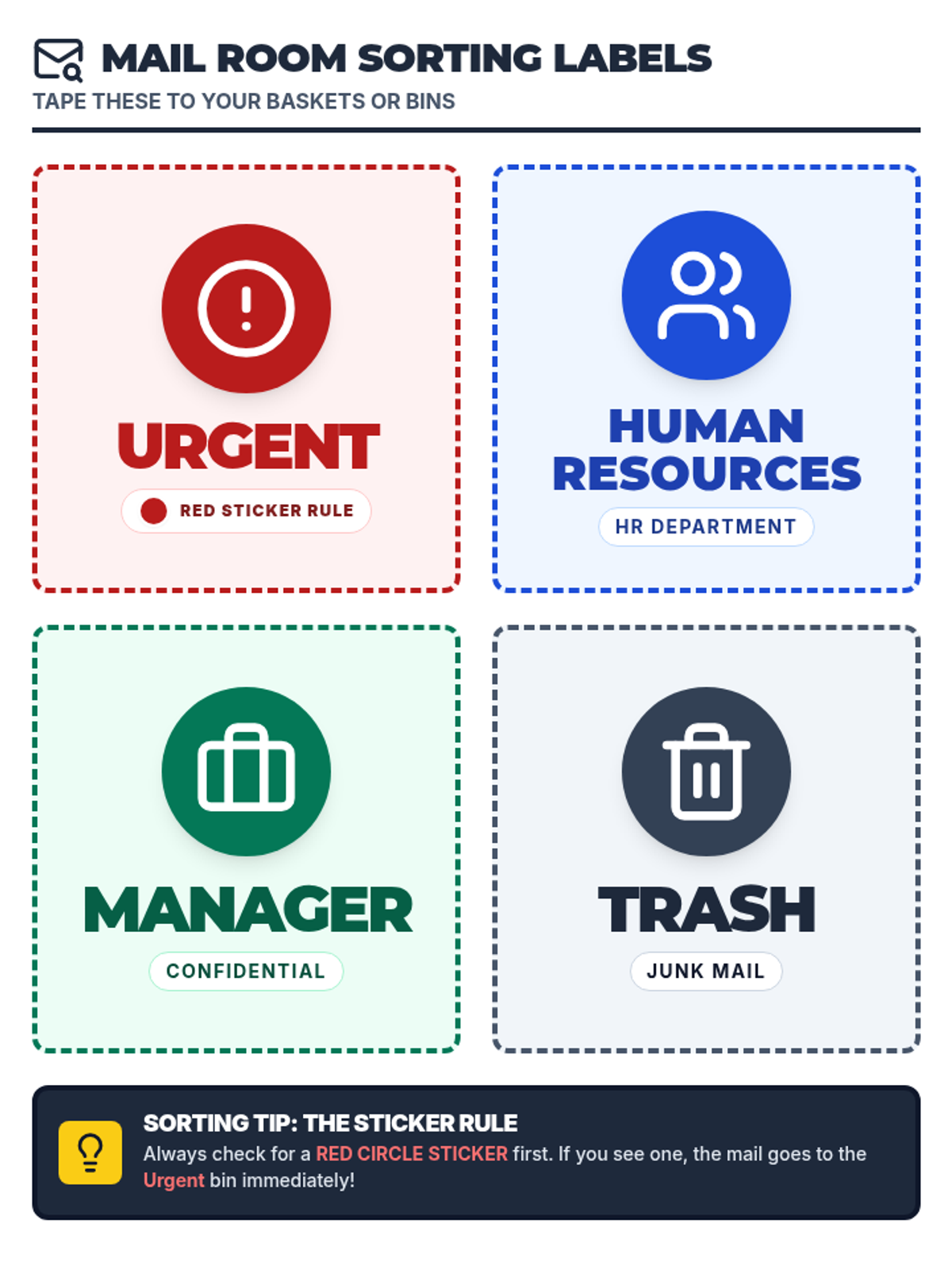
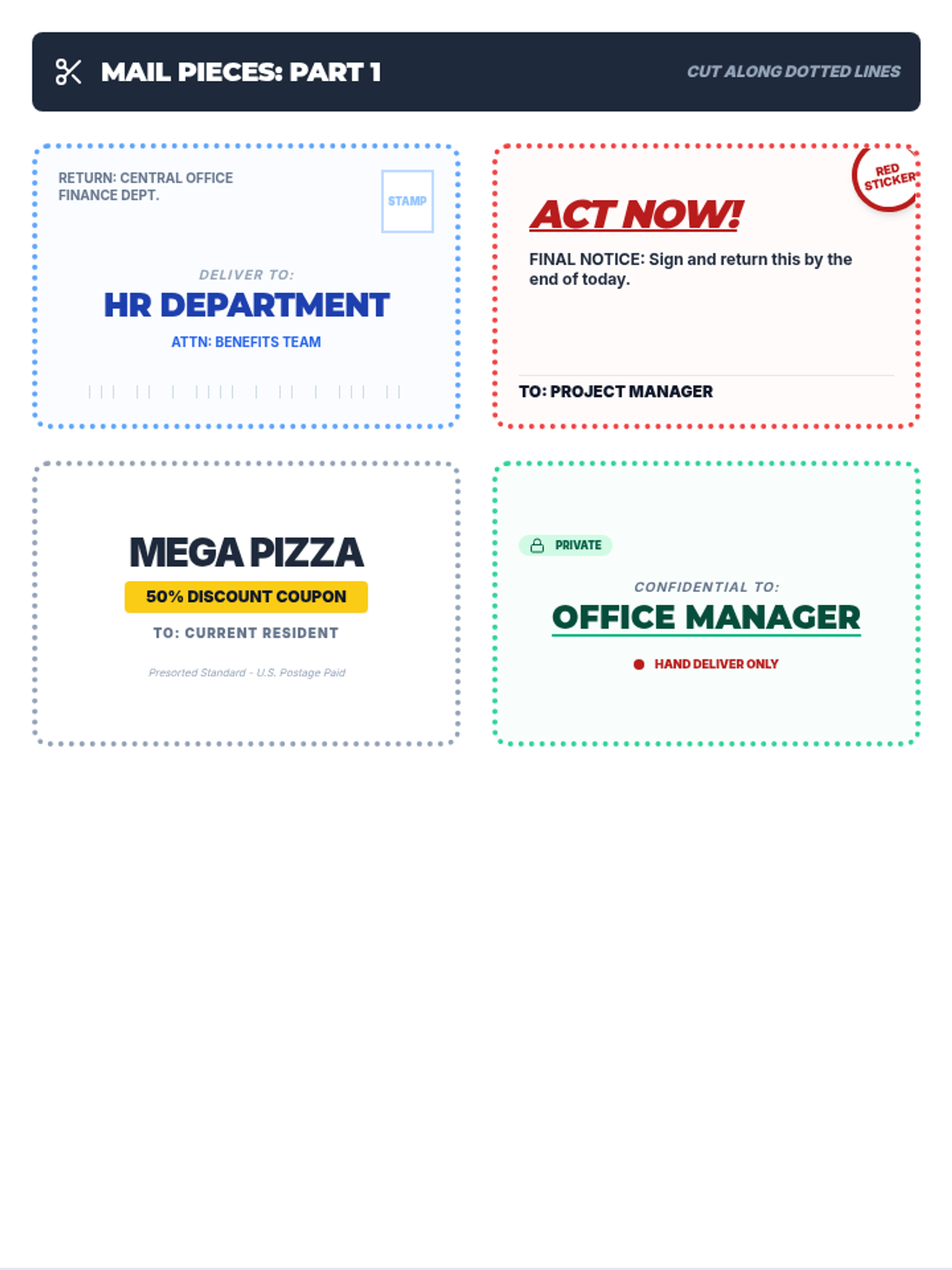
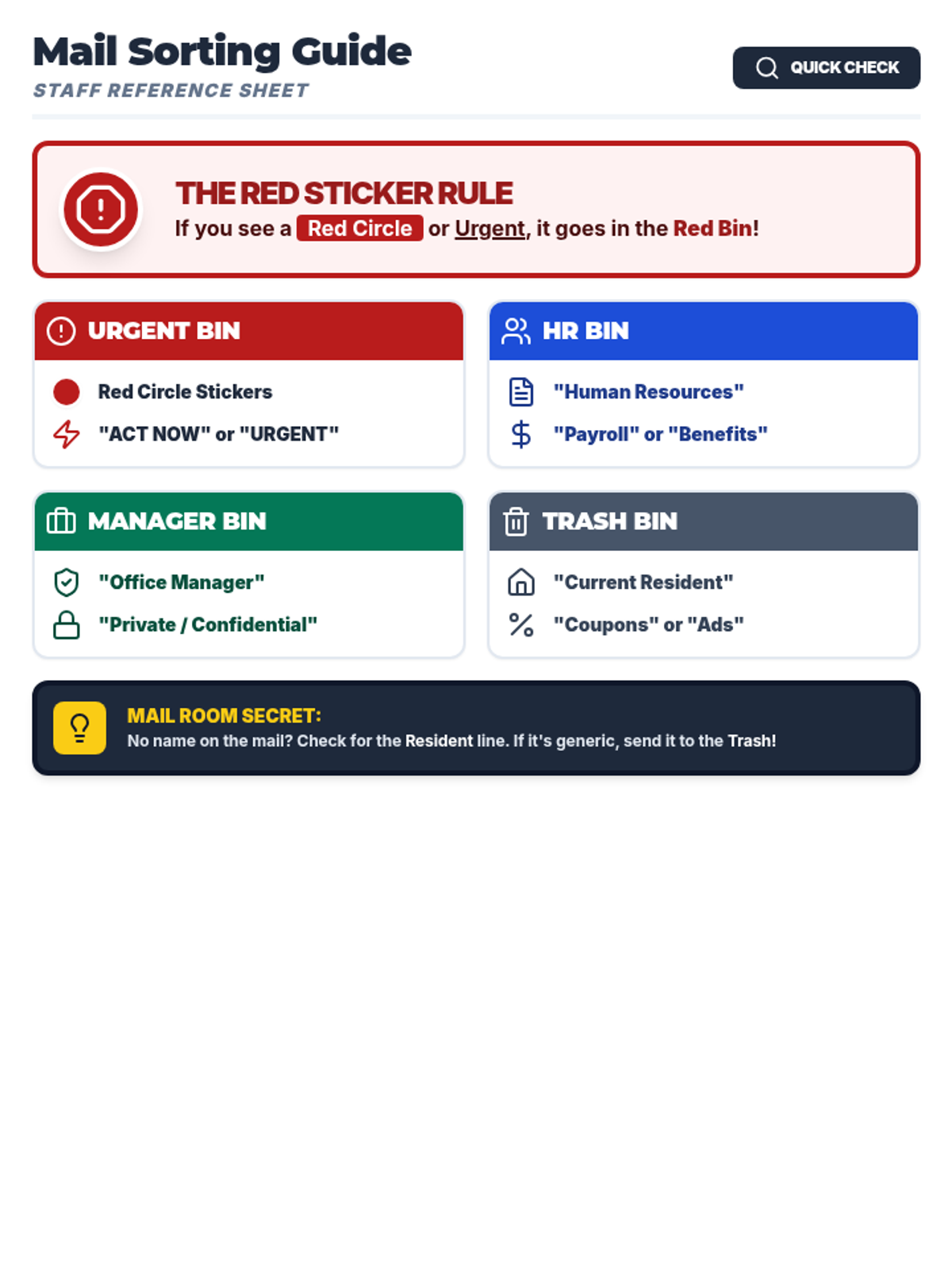
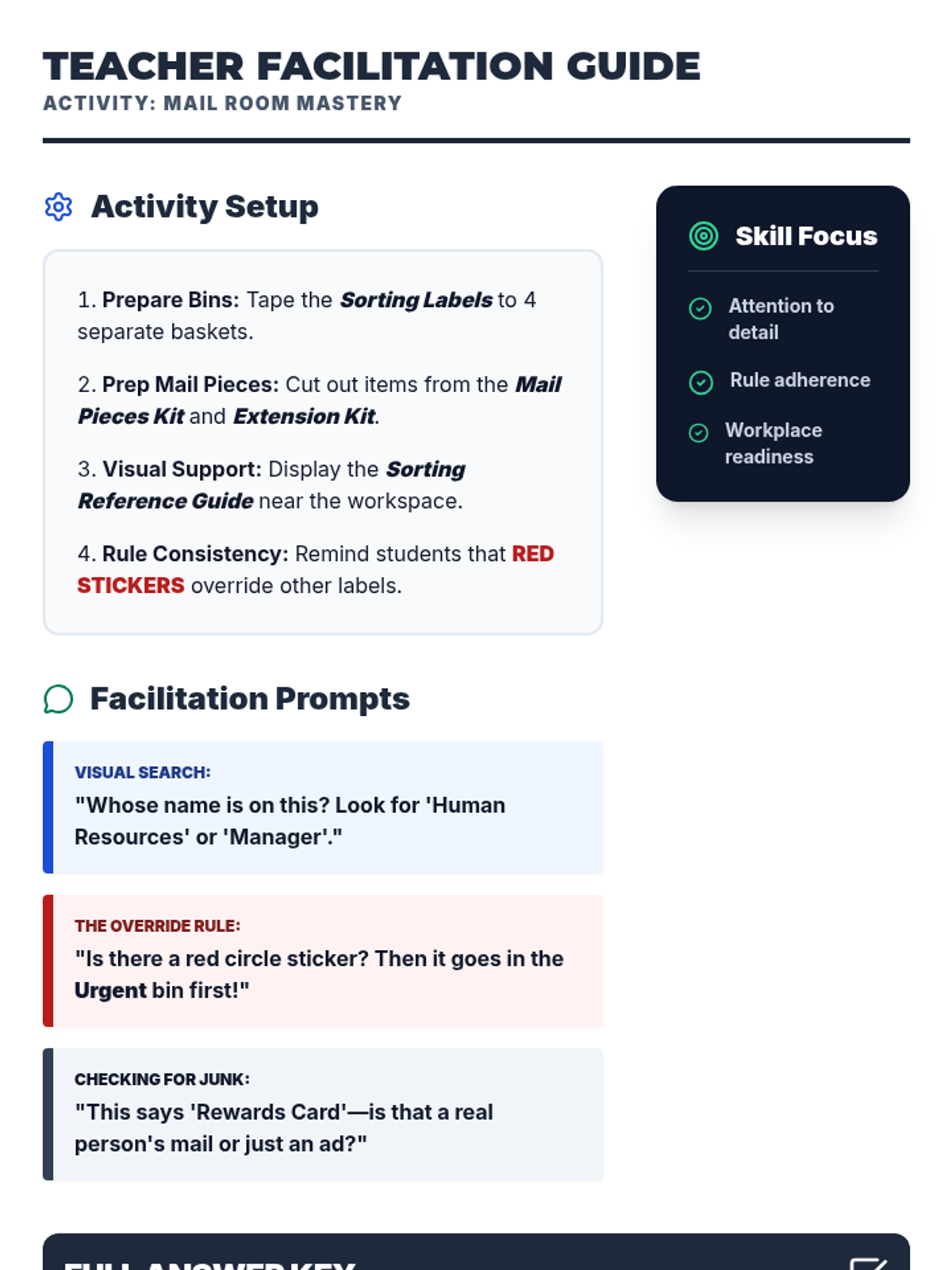
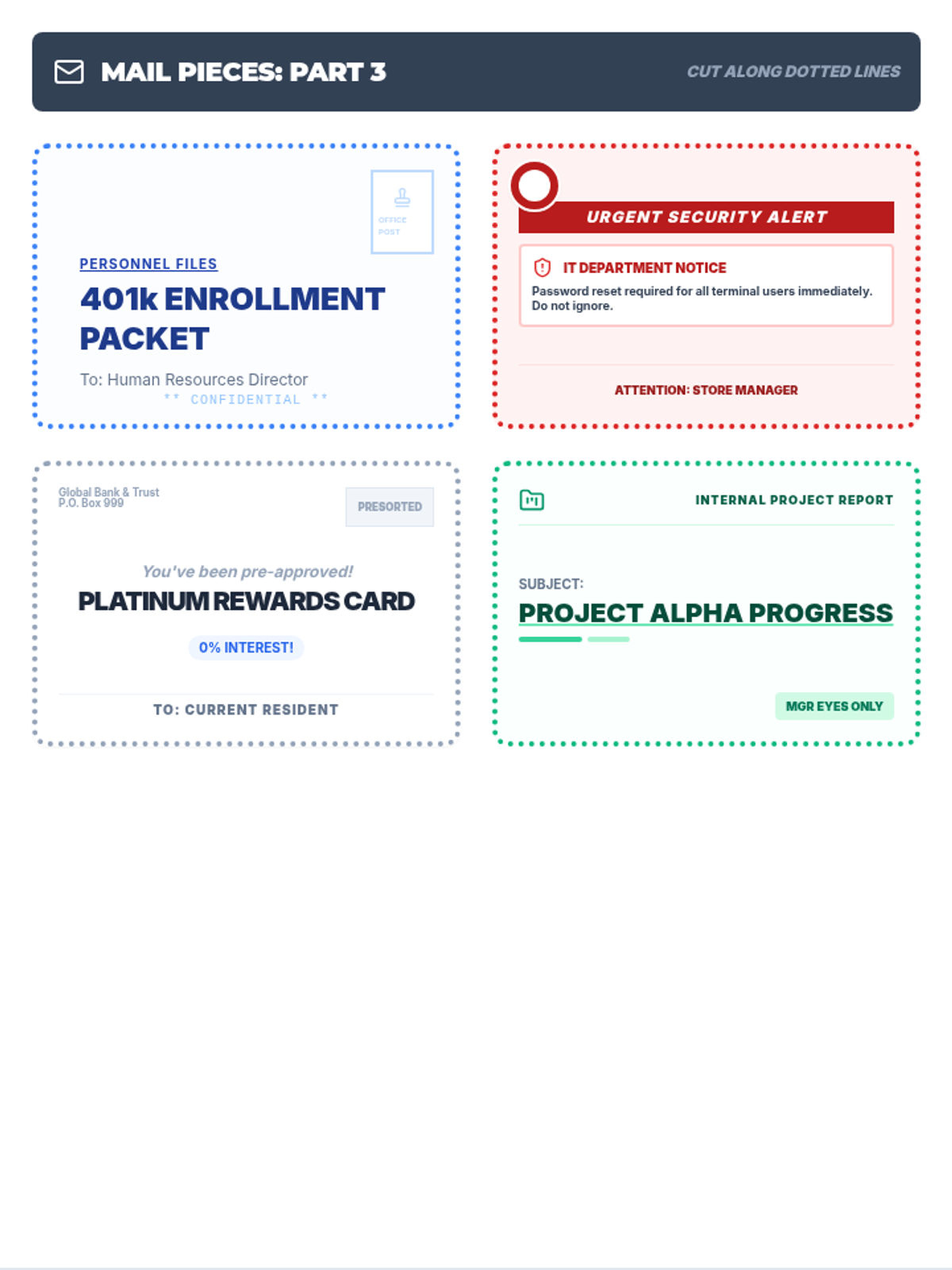
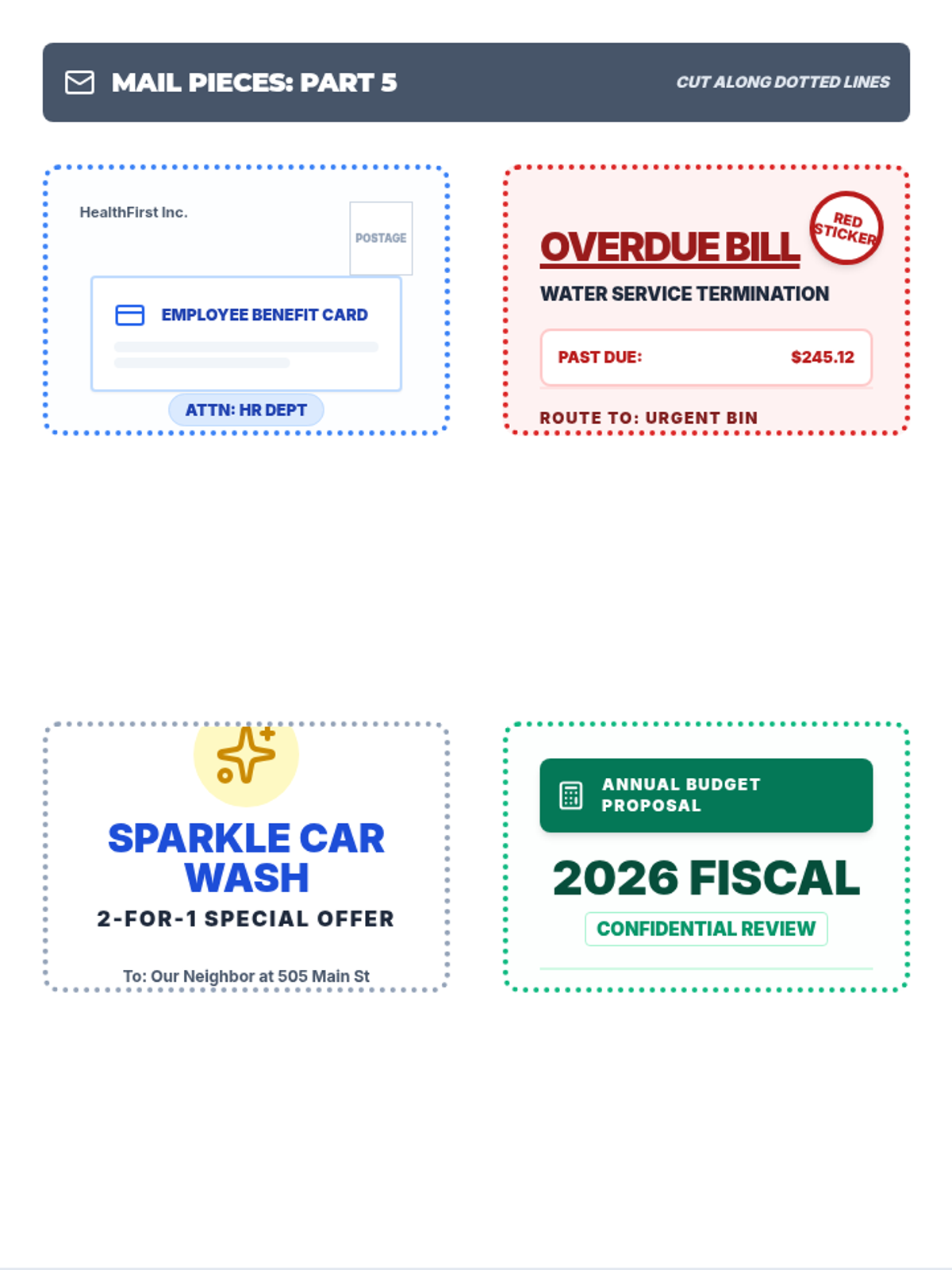
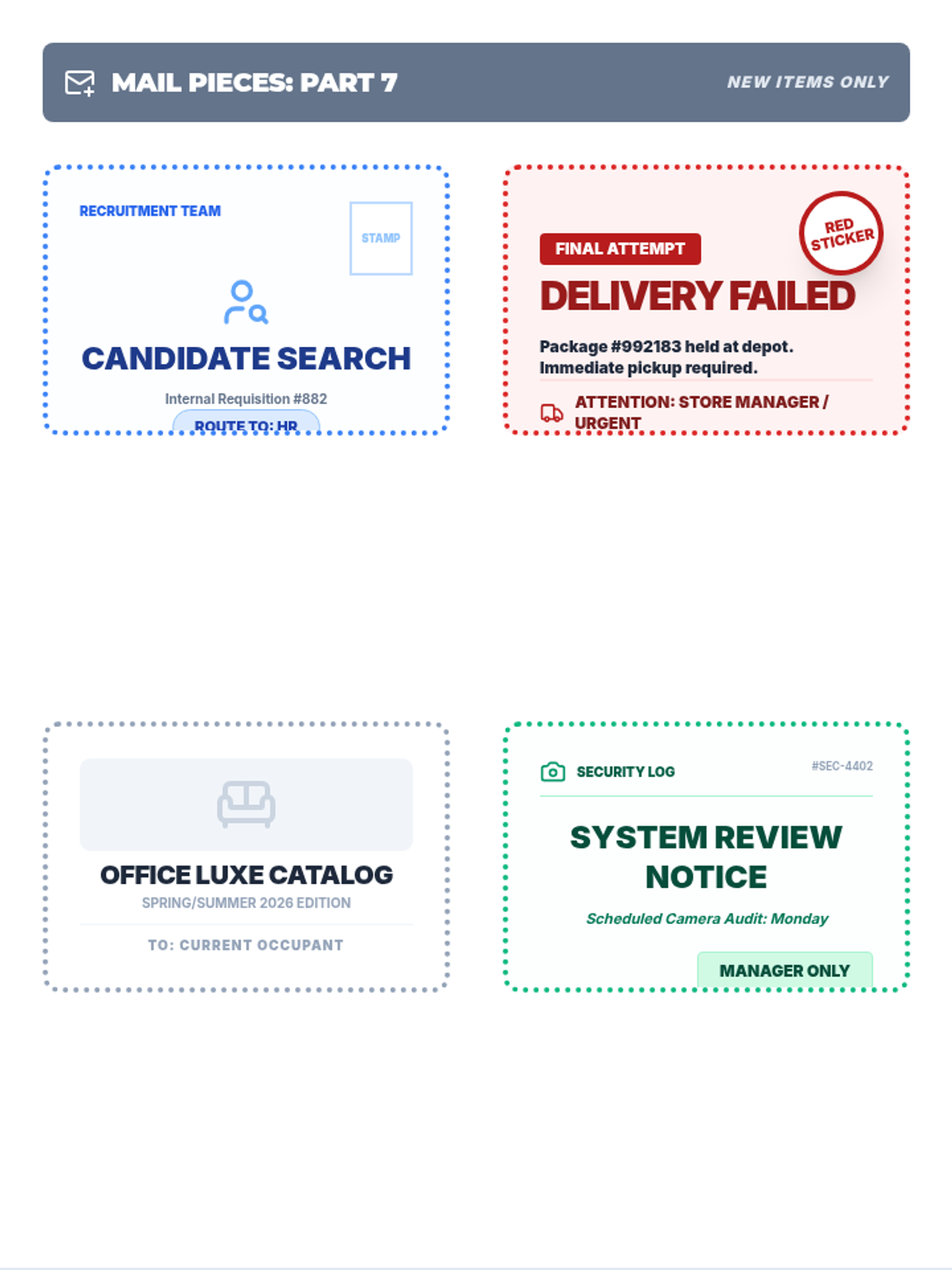
A hands-on vocational activity focused on sorting mail into categories like HR, Urgent, Manager, and Trash to build organizational and attention-to-detail skills.
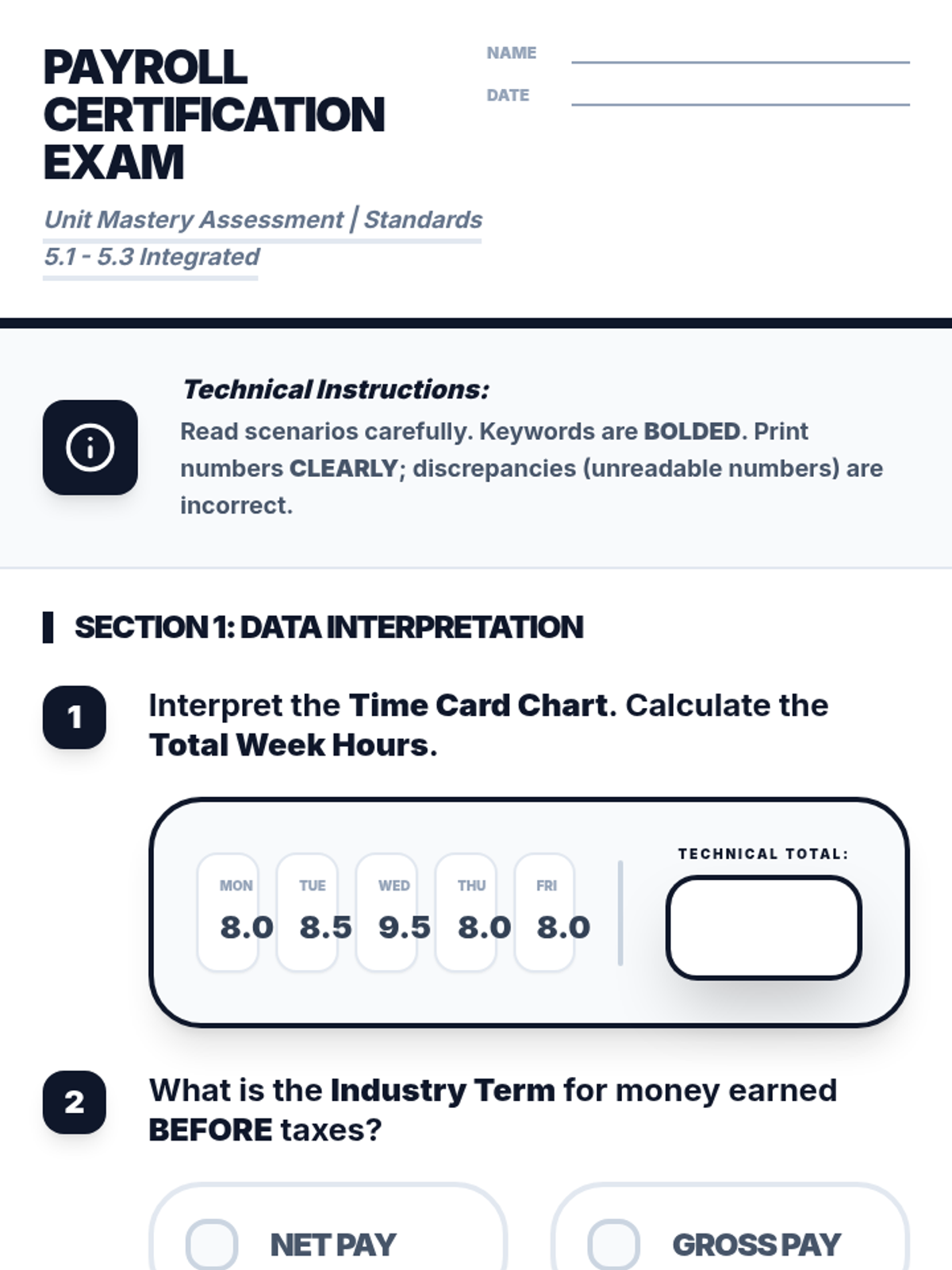
A formal summative assessment designed with accessibility in mind for students who struggle with reading, focusing on payroll calculations and concepts.
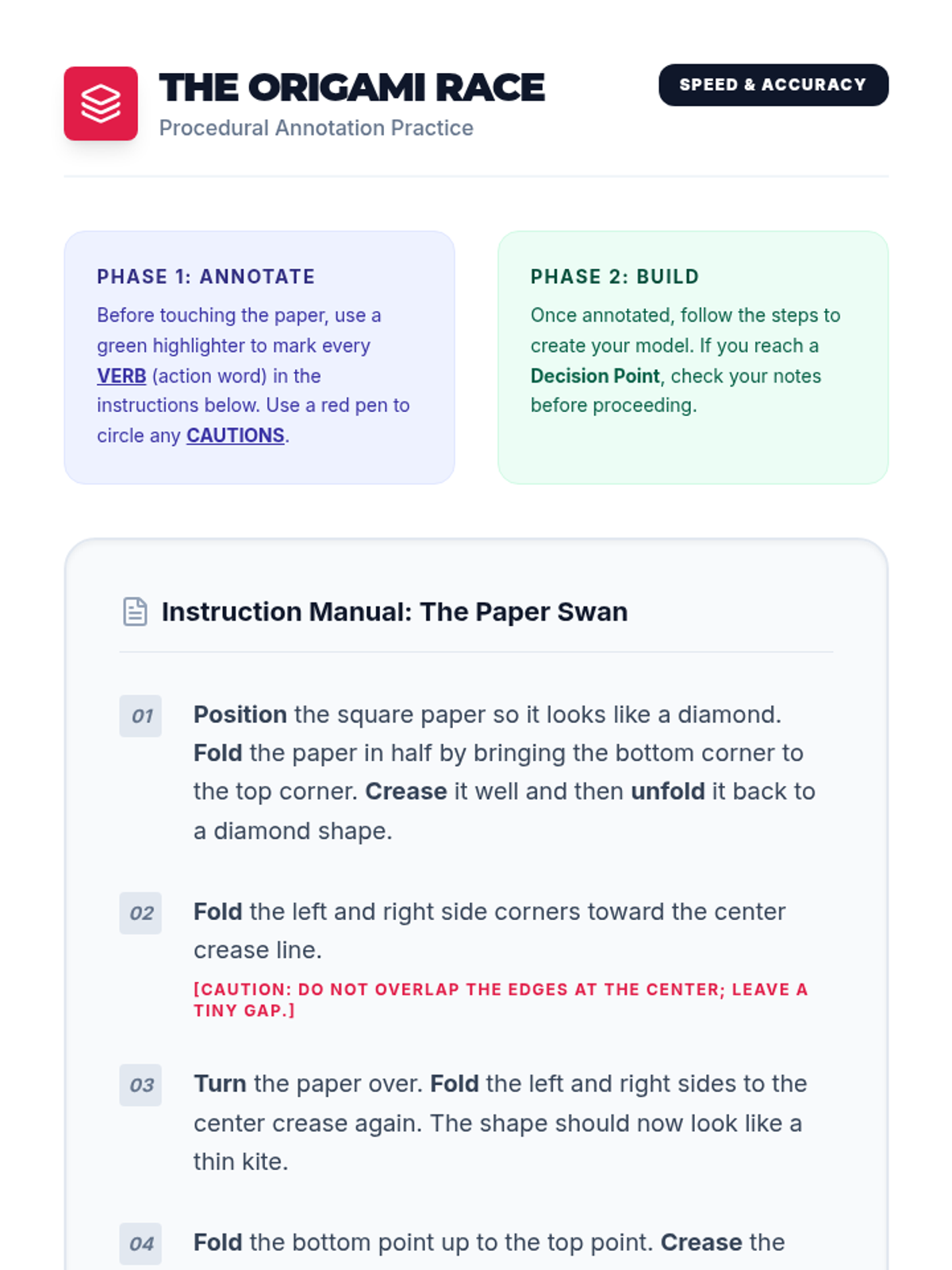
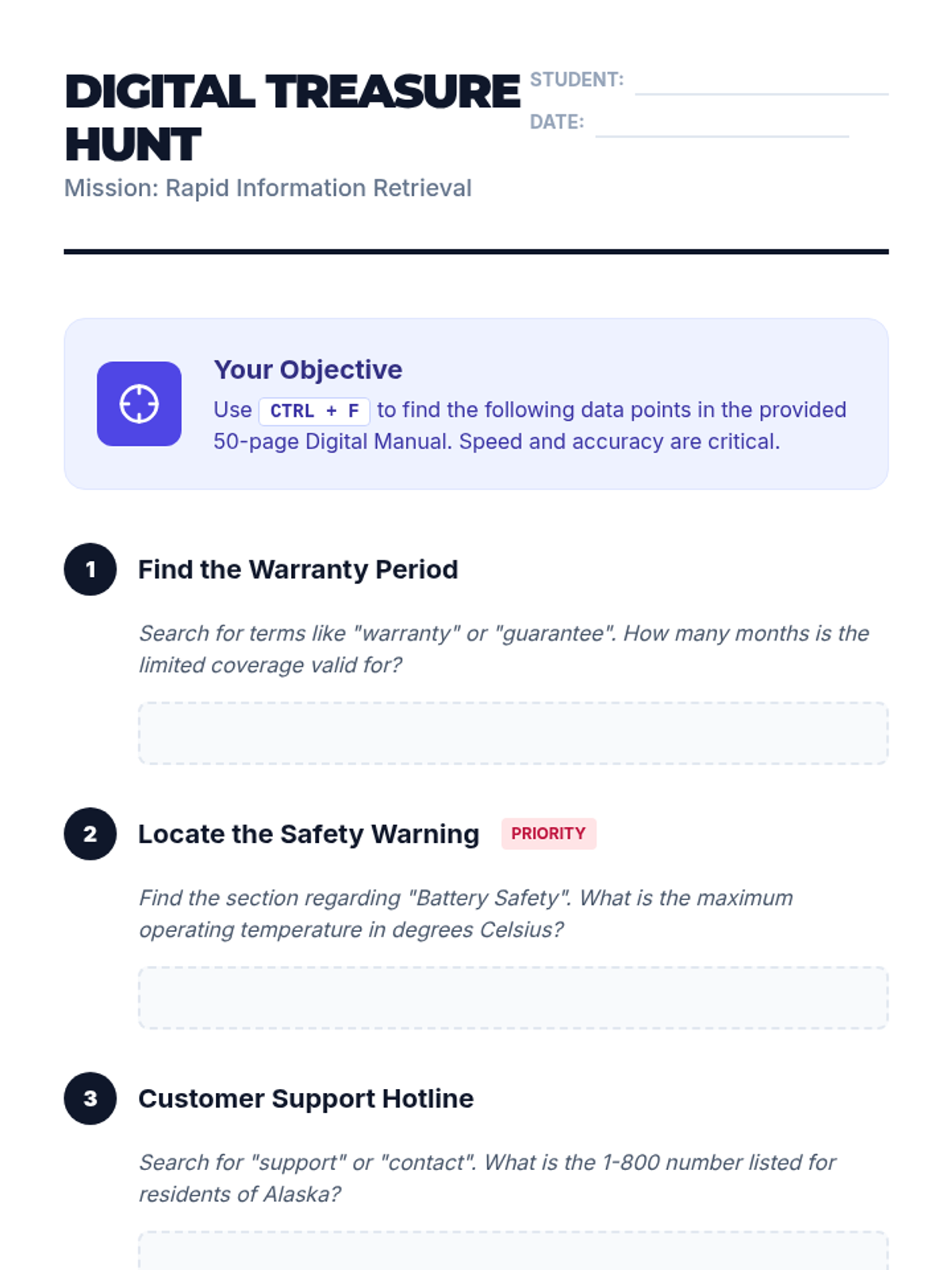
Annotation of technical manuals and 'how-to' guides, focusing on identifying sequence, warnings, and decision trees to follow complex procedures.
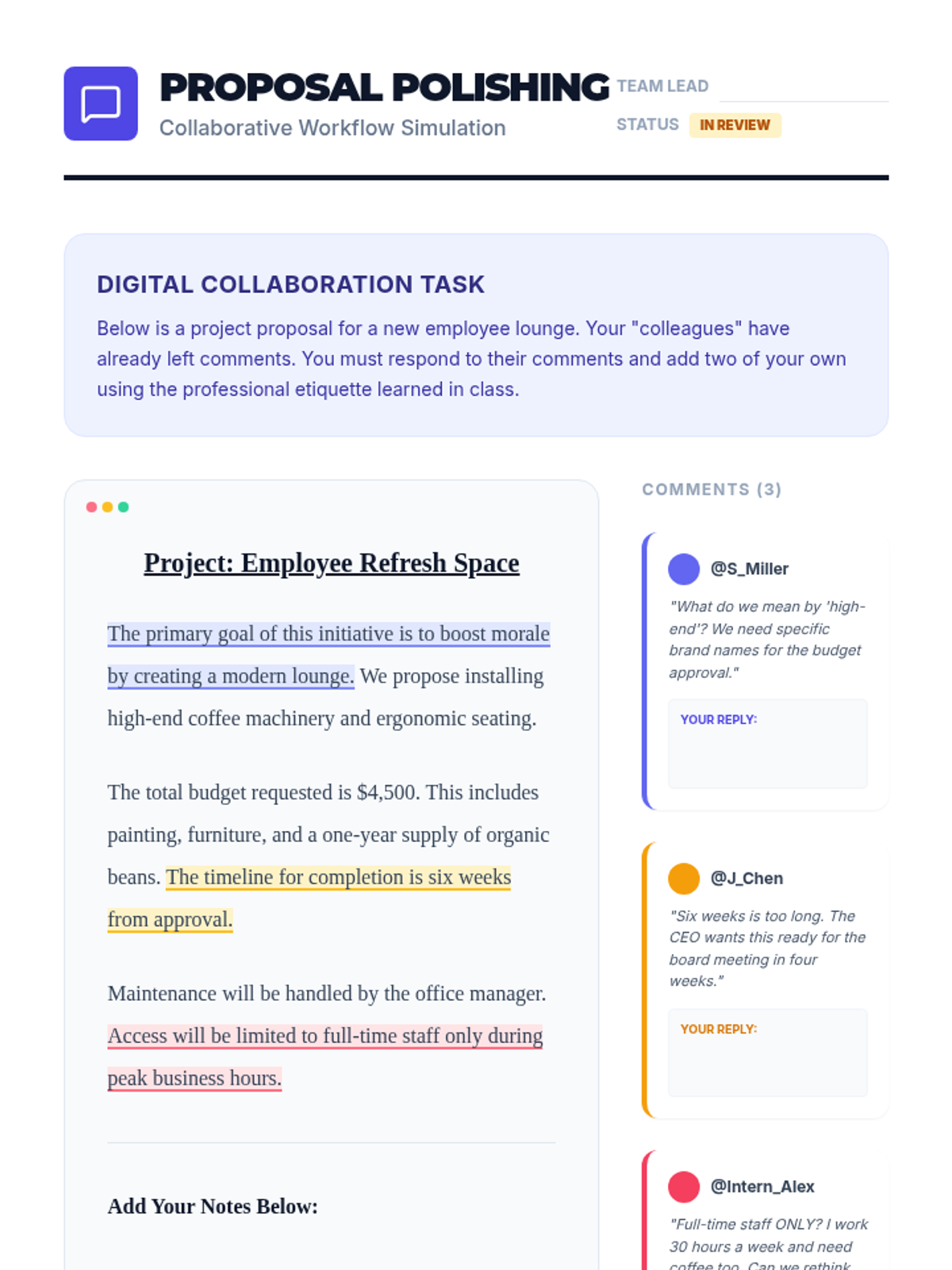
Developing professional communication skills through collaborative digital annotation, focusing on commenting etiquette and consensus-building in shared documents.
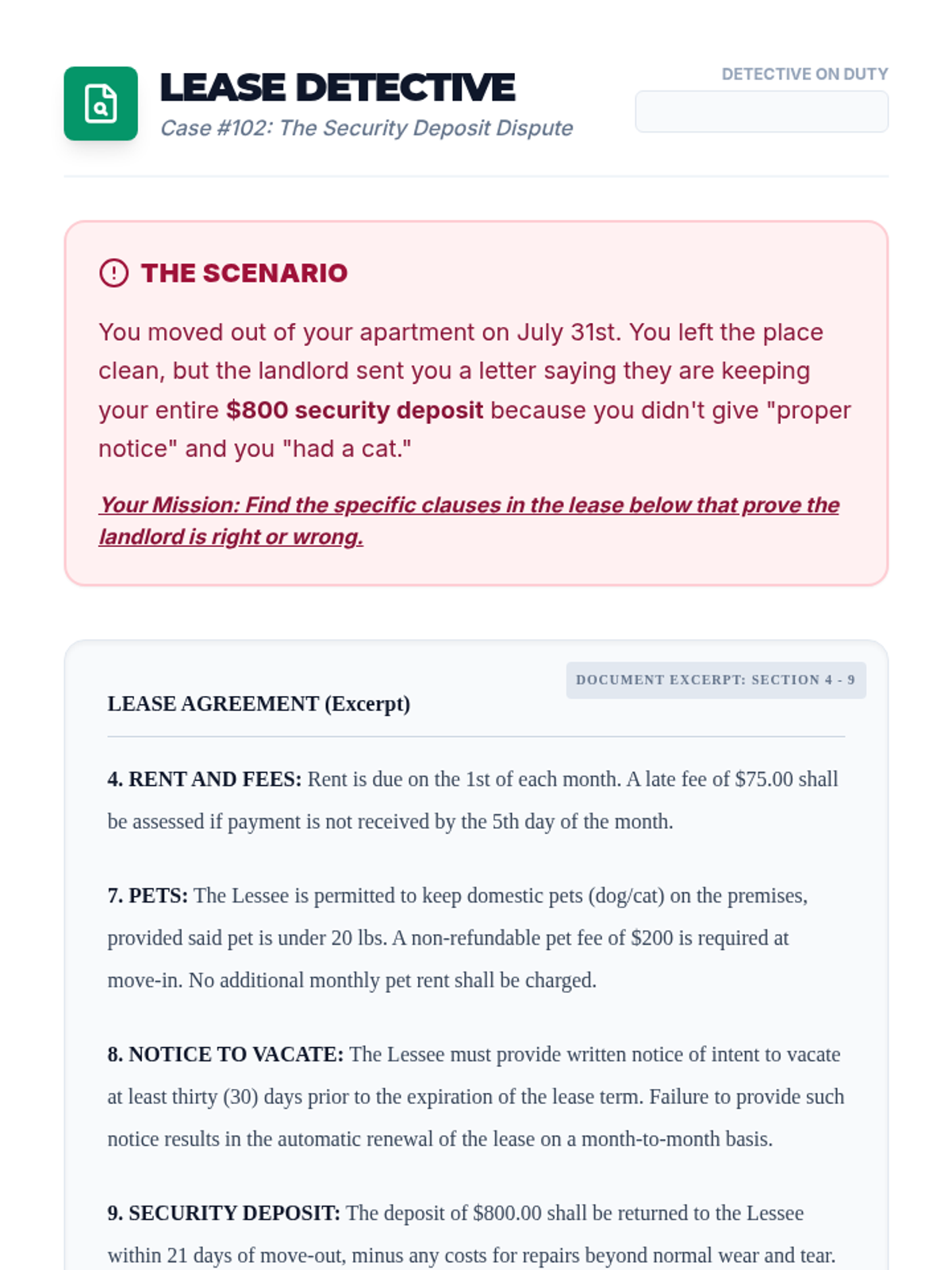
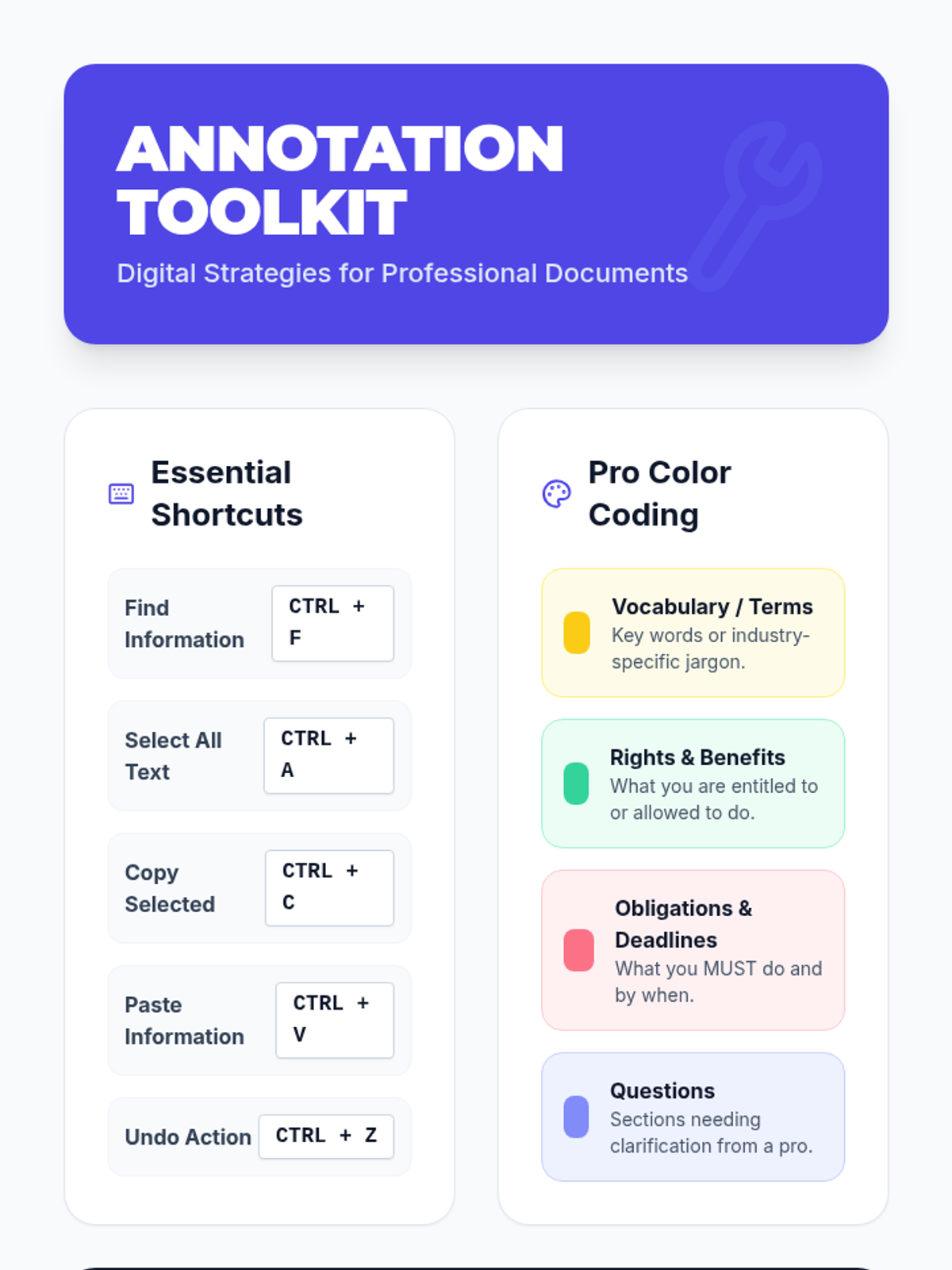
Application of color-coded annotation to identify legal rights and obligations within a rental lease agreement, translating boilerplate text into actionable information.
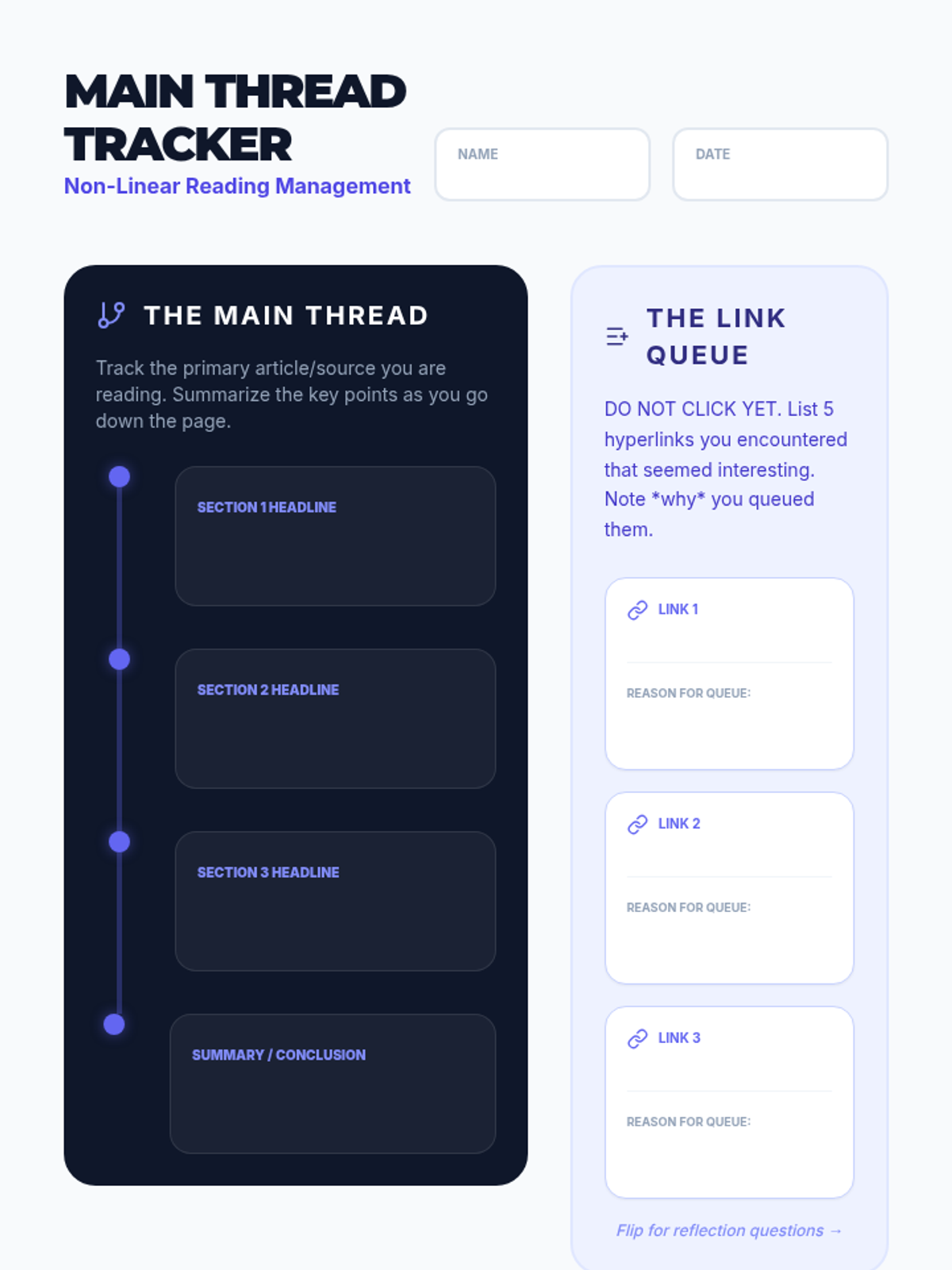
Strategies for maintaining focus and comprehension when reading hyperlinked or non-linear digital texts, including managing sidebars and multimedia distractions.
Introduction to digital annotation tools, focusing on managing layers of notes, exporting summaries, and using digital search/tagging functions effectively.
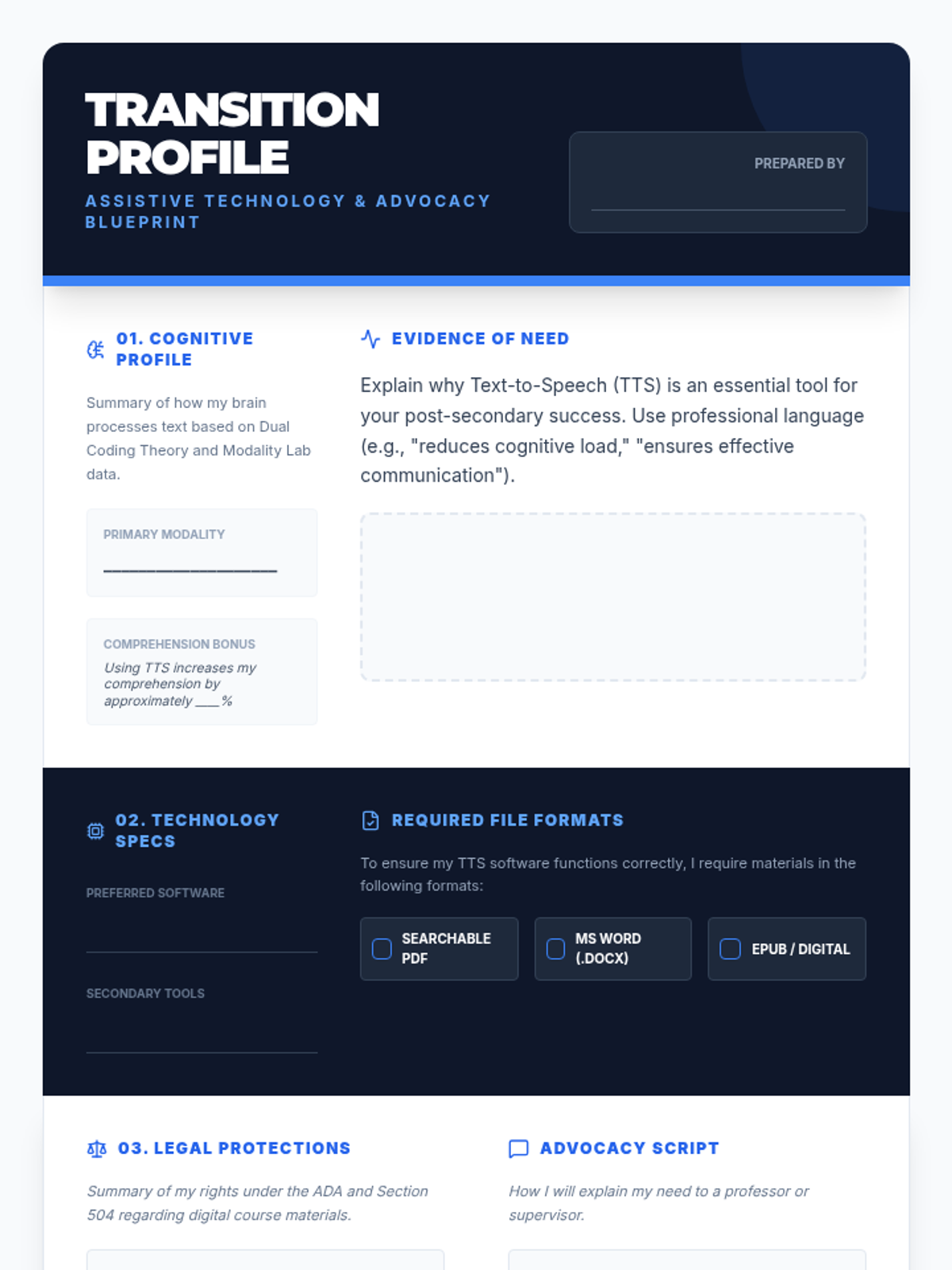
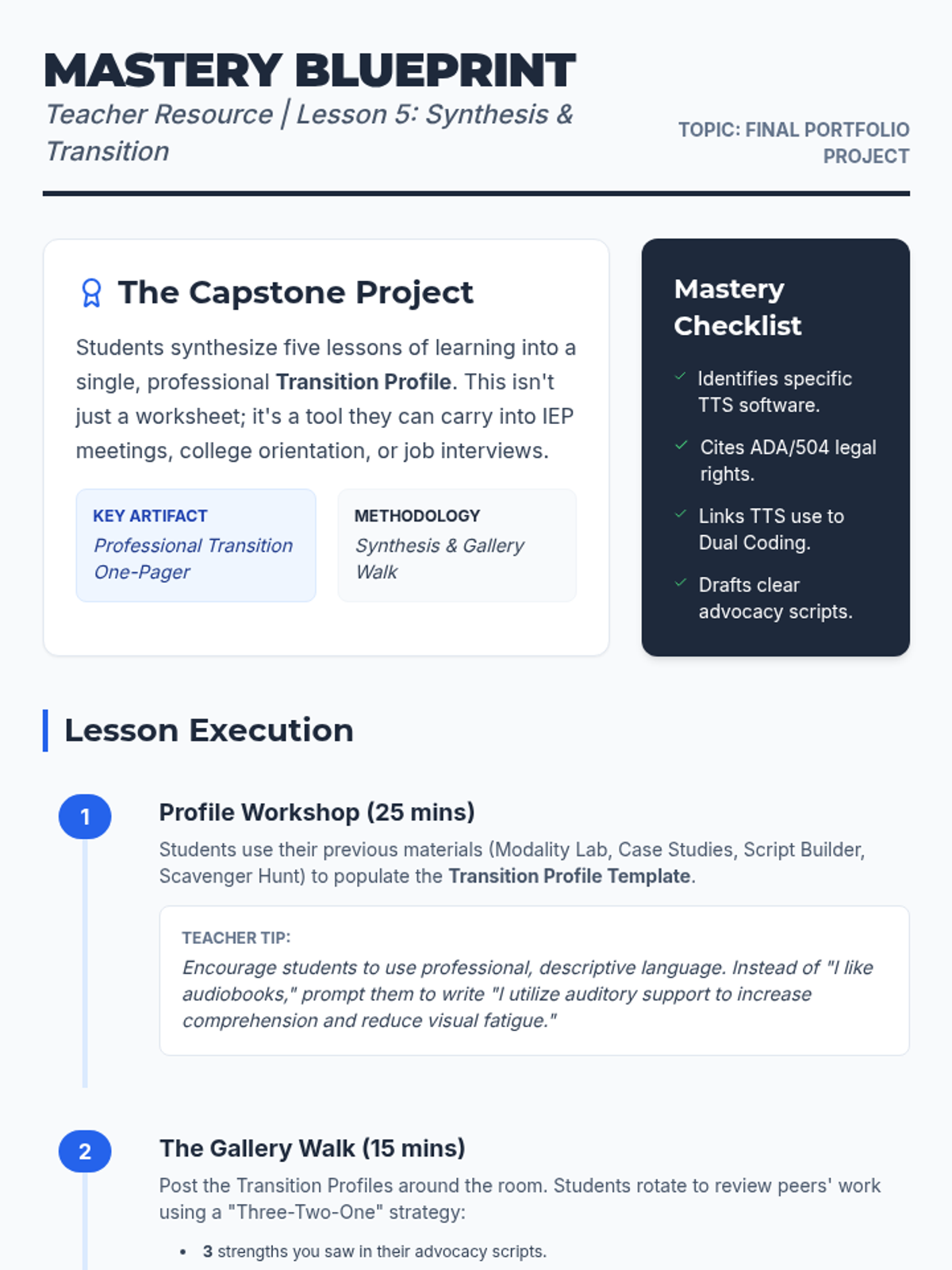
Students synthesize their learning into a professional transition one-pager that summarizes their specific assistive technology needs and legal rights.
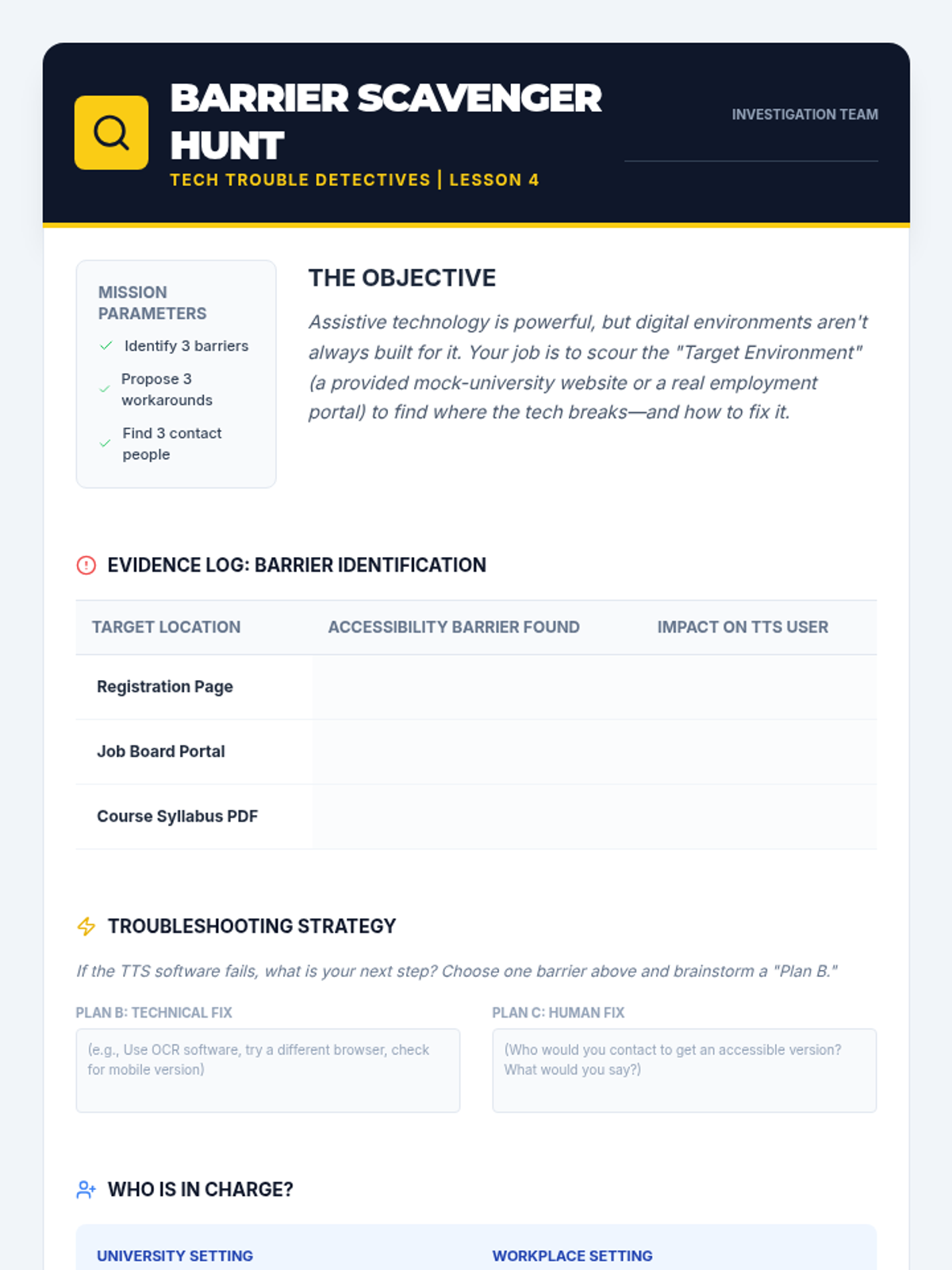
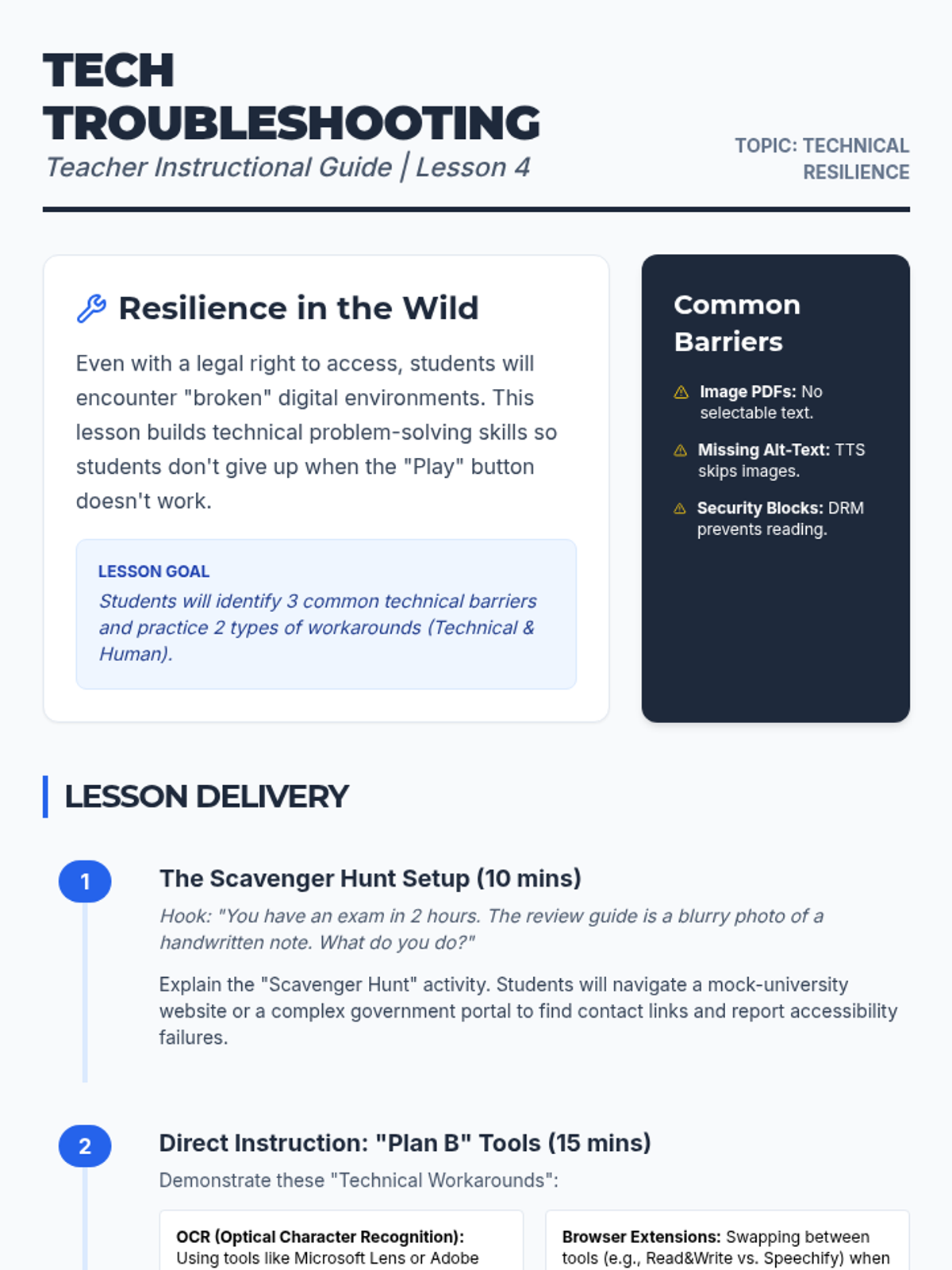
Practical troubleshooting for digital barriers, including identifying inaccessible files and finding technical workarounds or contact persons.
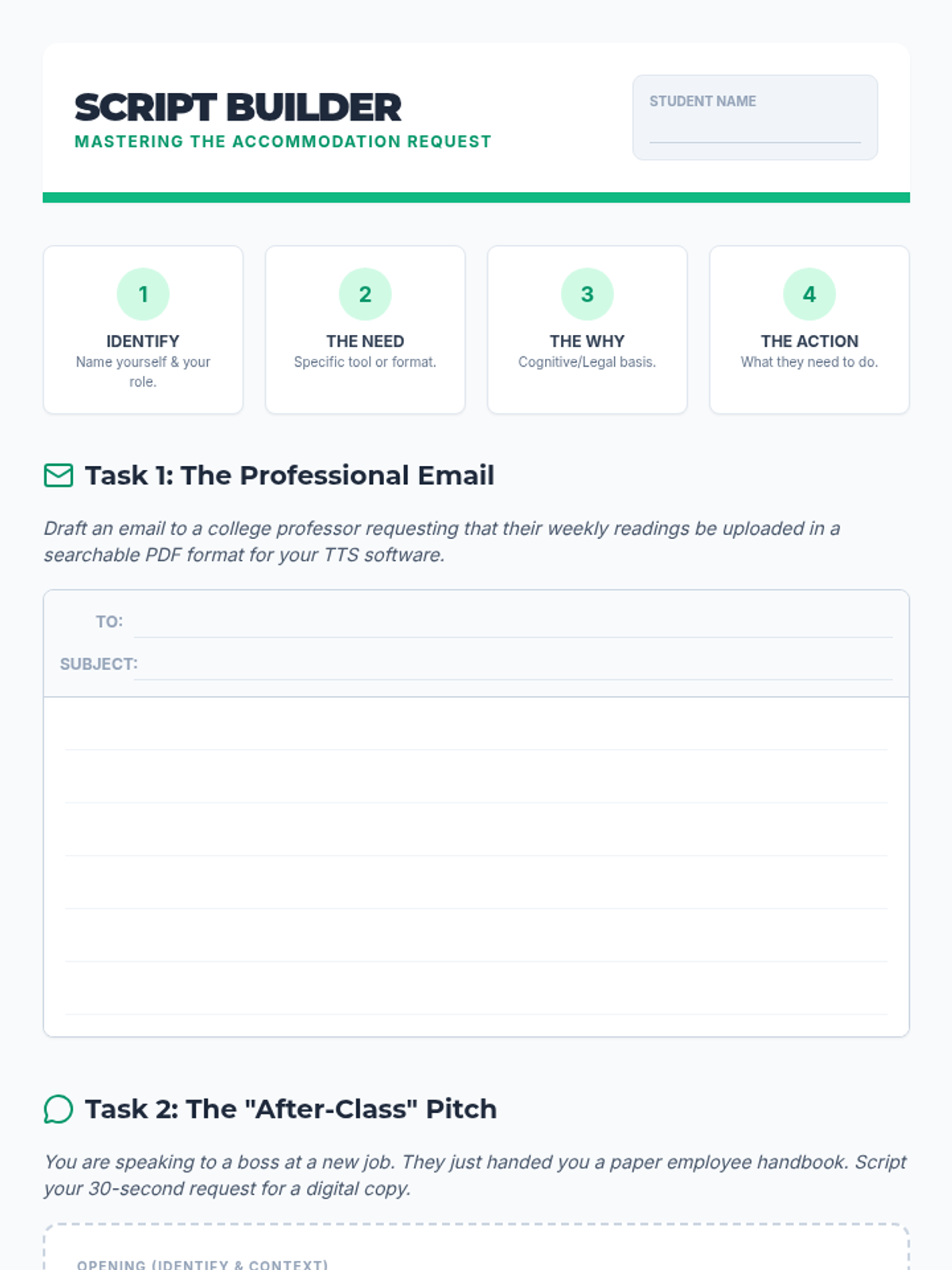
Students practice professional communication and self-advocacy by simulating requests for accommodations in college and workplace settings.
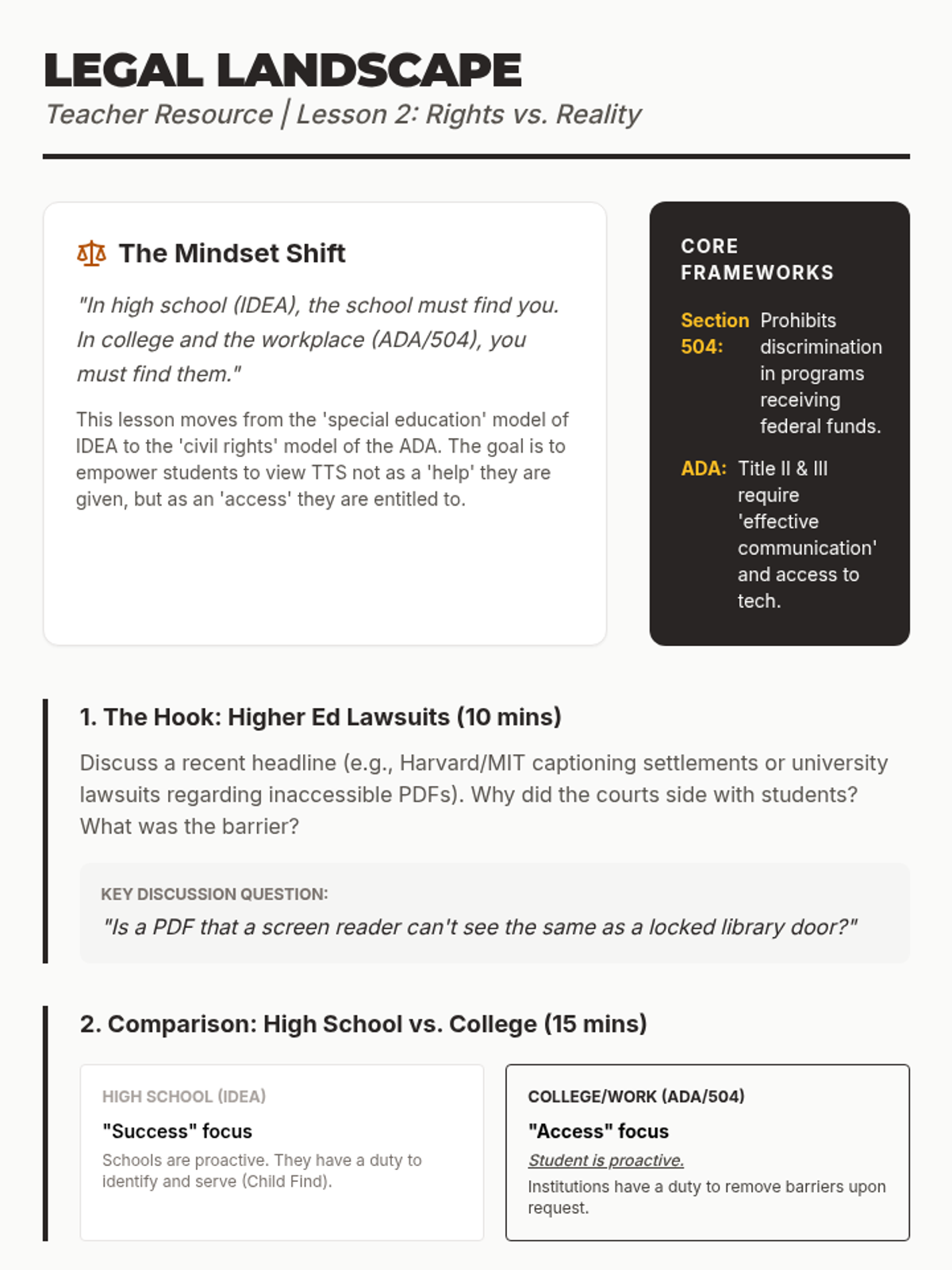
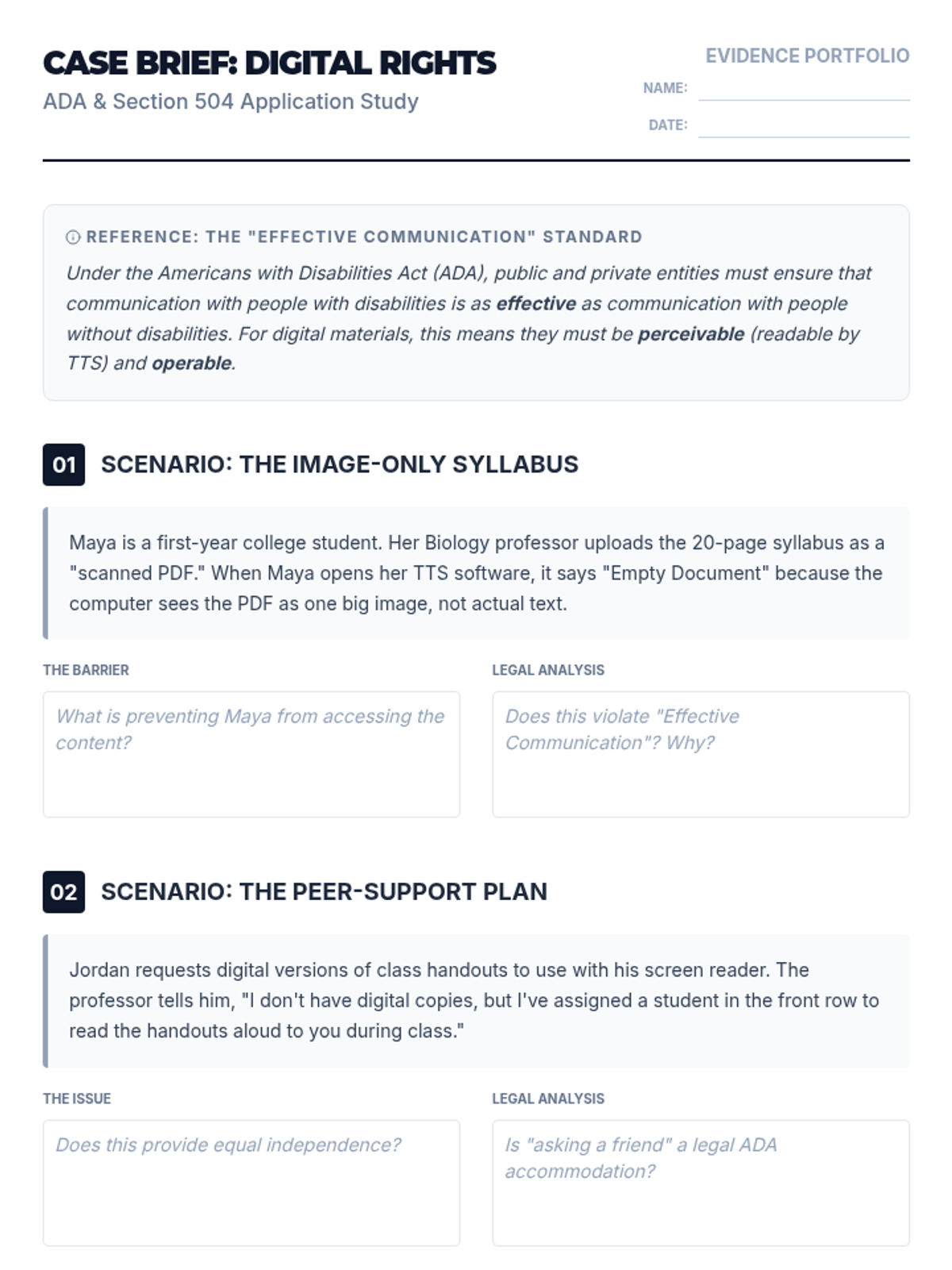
A deep dive into the legal frameworks of the ADA and Section 504 as they apply to digital accessibility in higher education and the workplace.
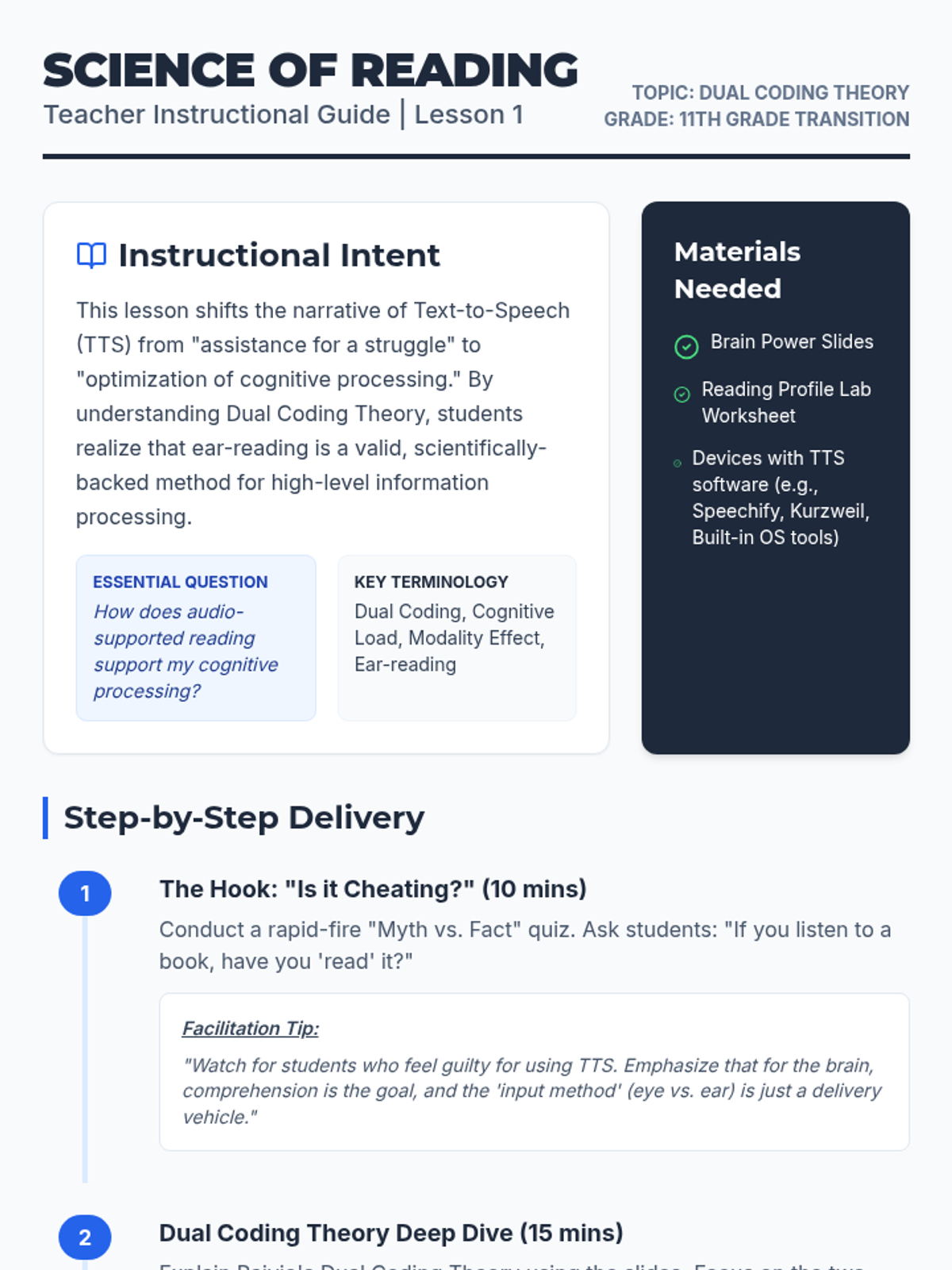
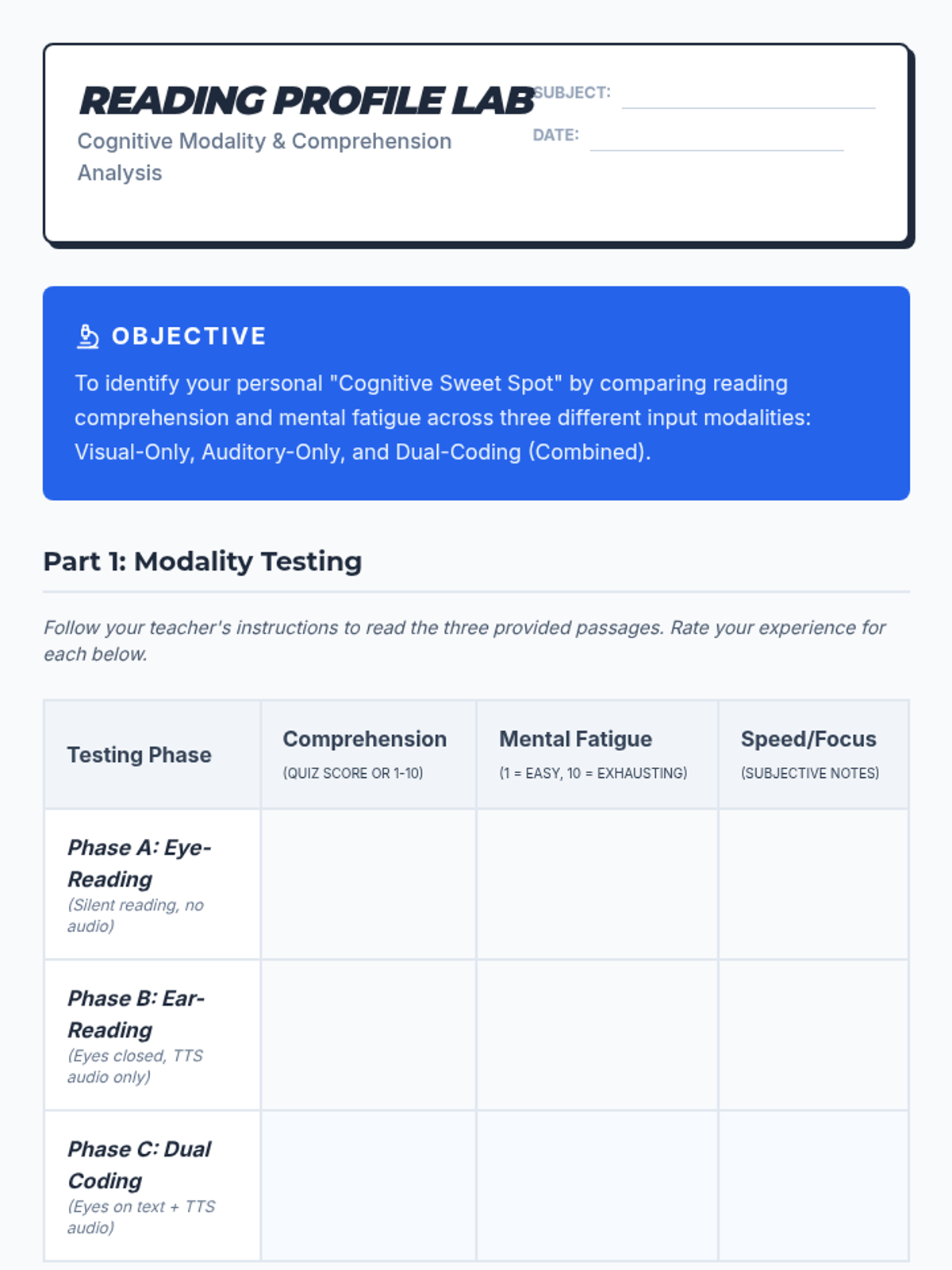
Students explore Dual Coding Theory and analyze their personal reading data to understand how eye-reading and ear-reading interact to improve comprehension and reduce fatigue.
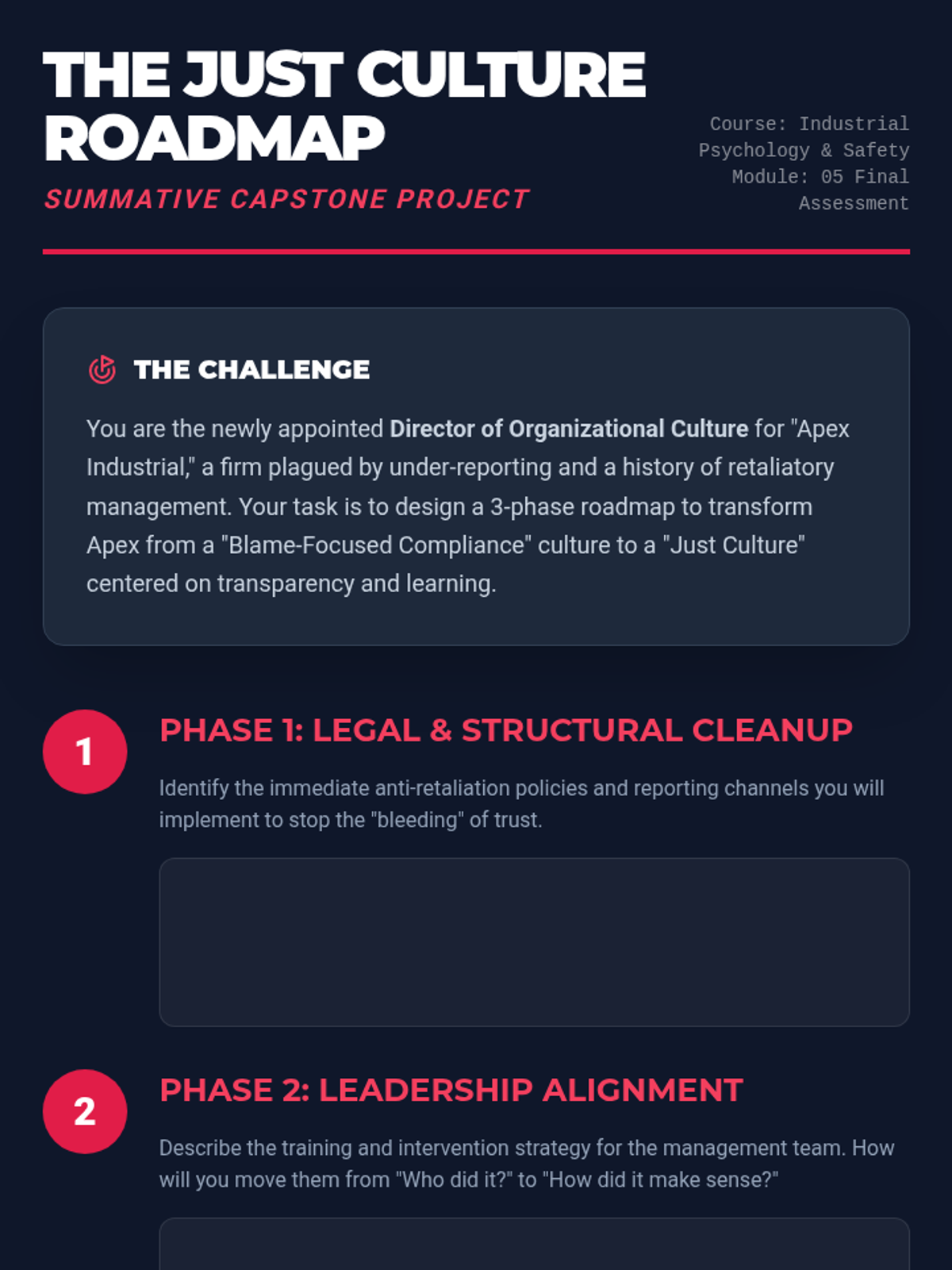
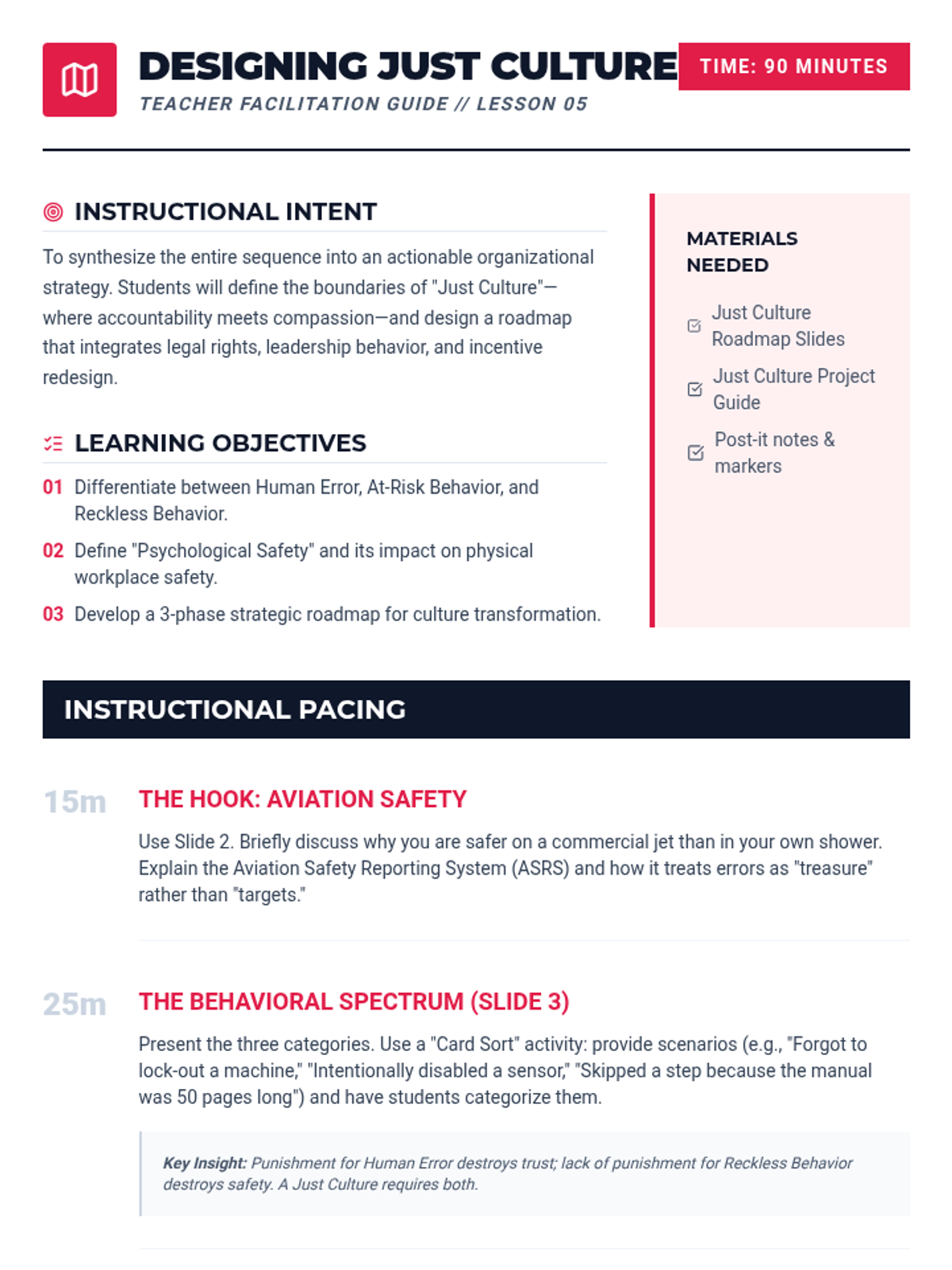
Synthesize learning to create a roadmap for 'Just Culture,' integrating physical and psychological safety as core organizational values.
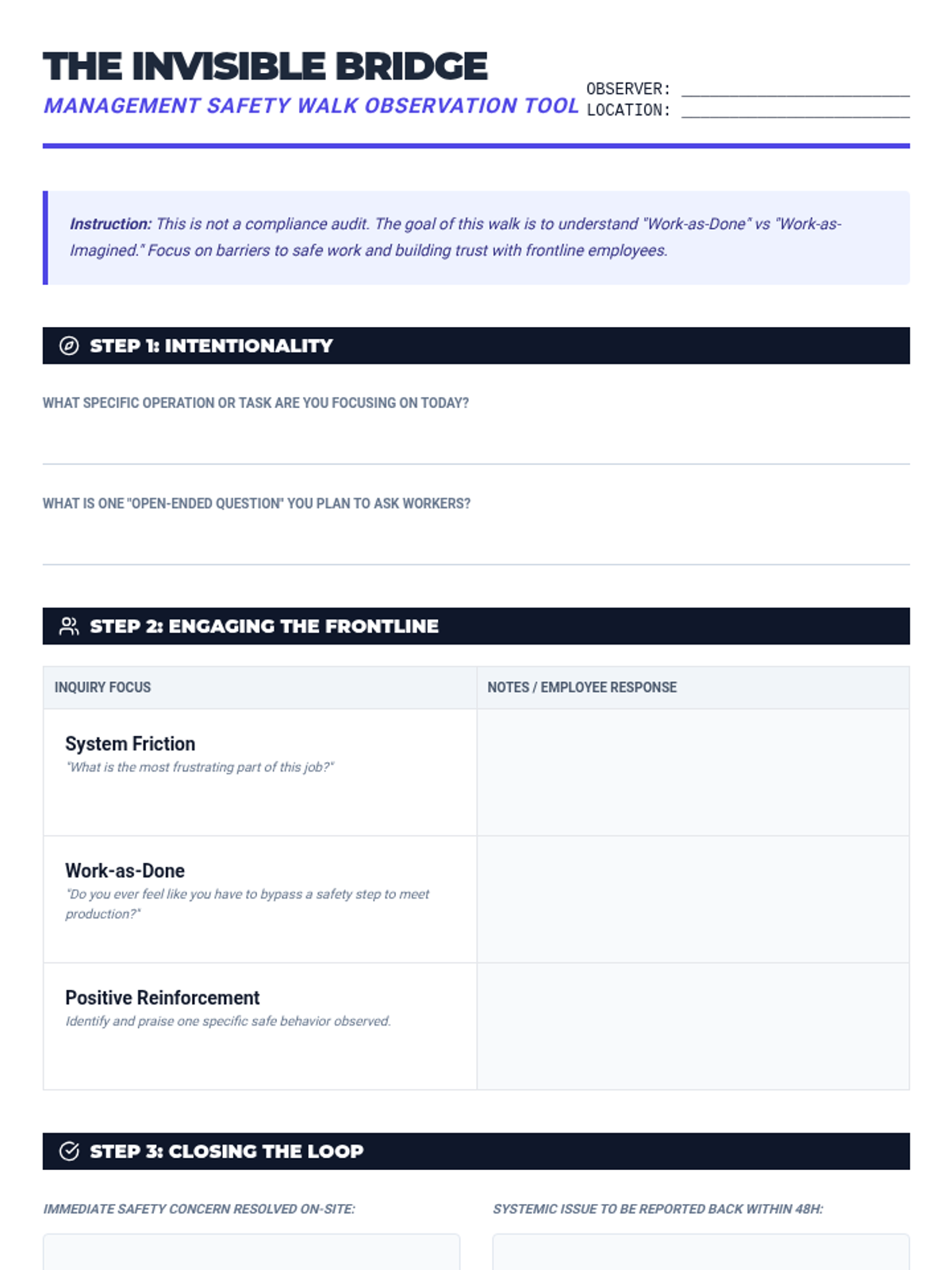
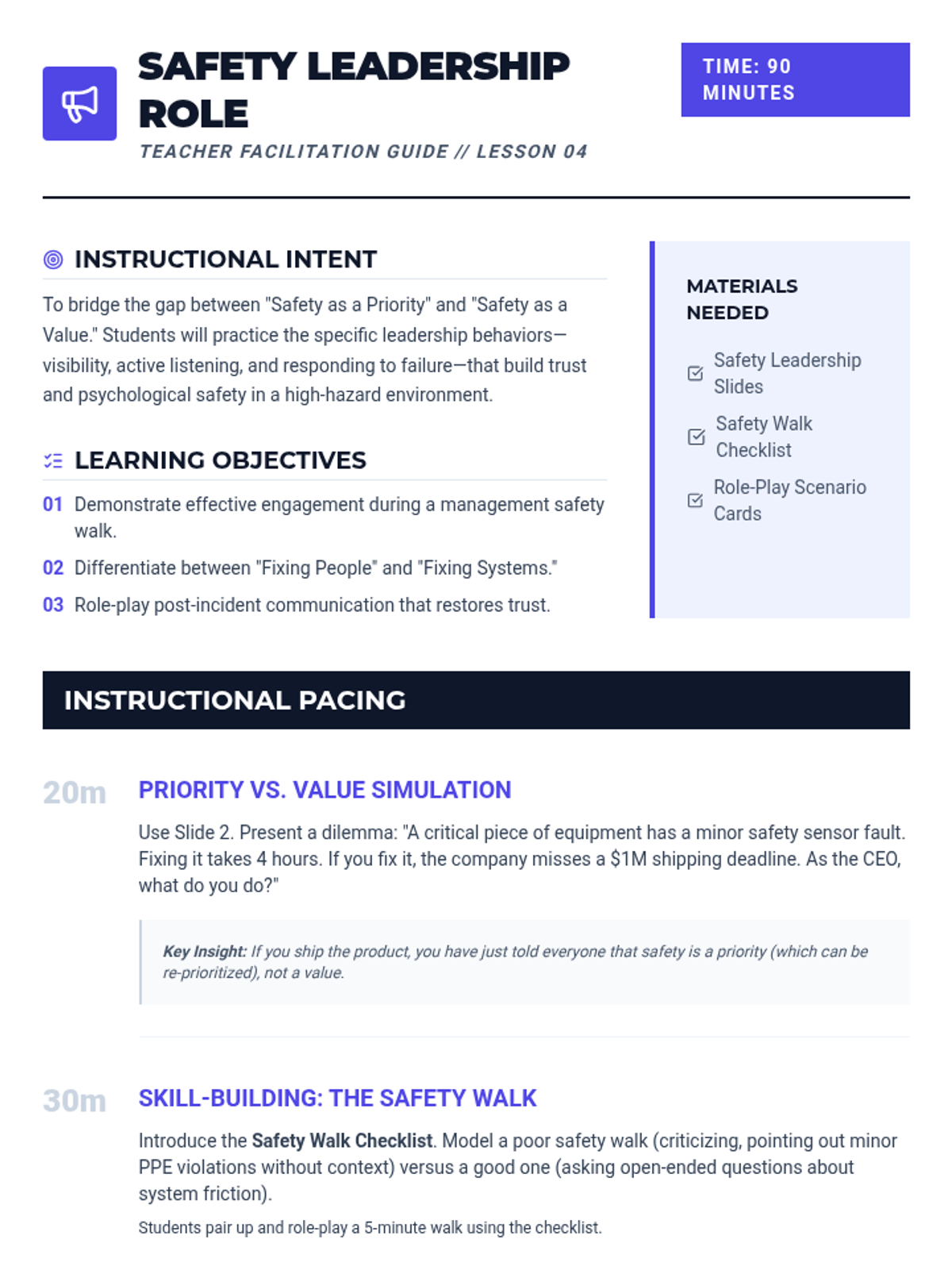
Explore the impact of leadership communication and behavior on safety culture, including practical techniques for management-led safety walks and trust-building.
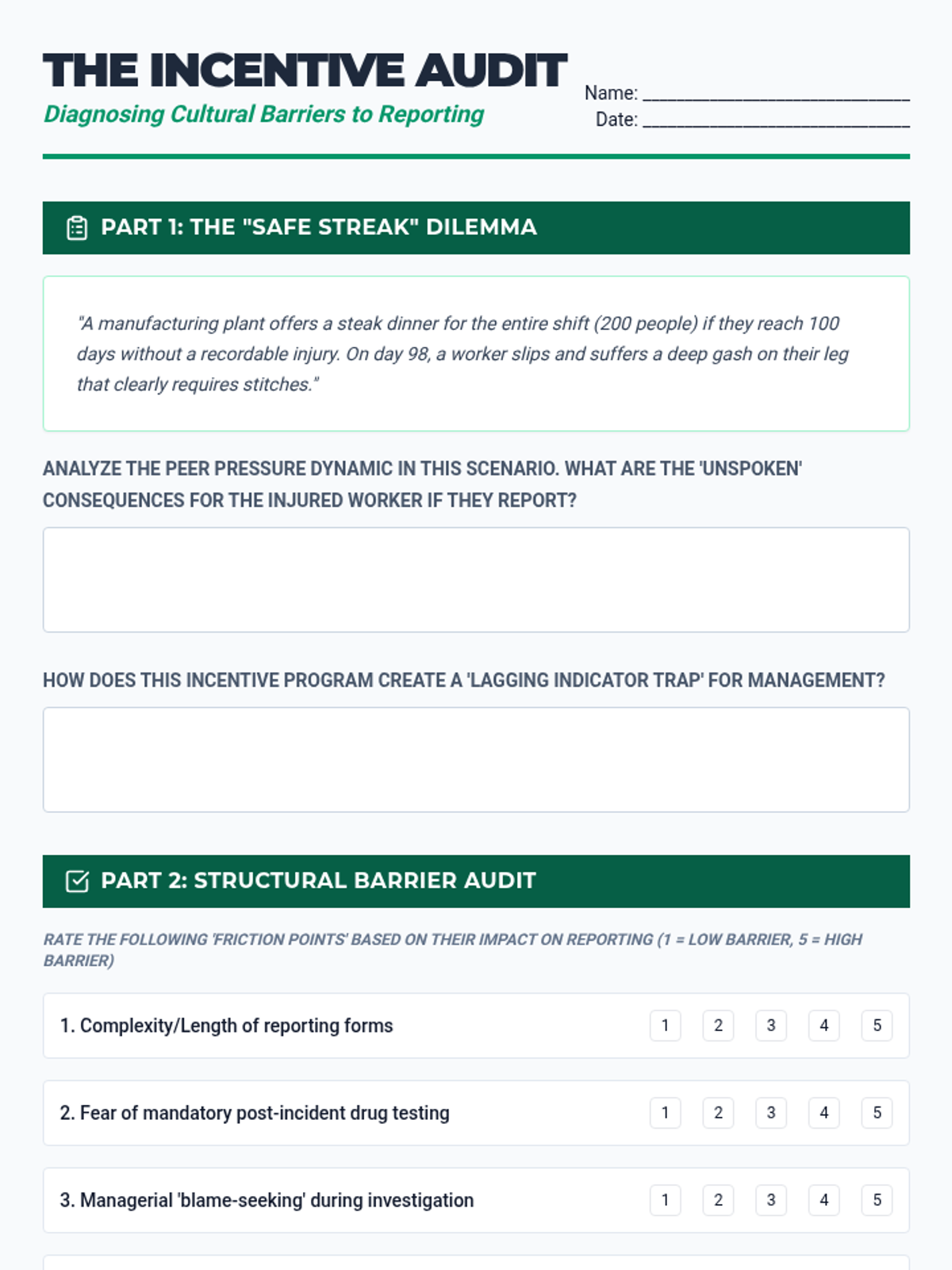
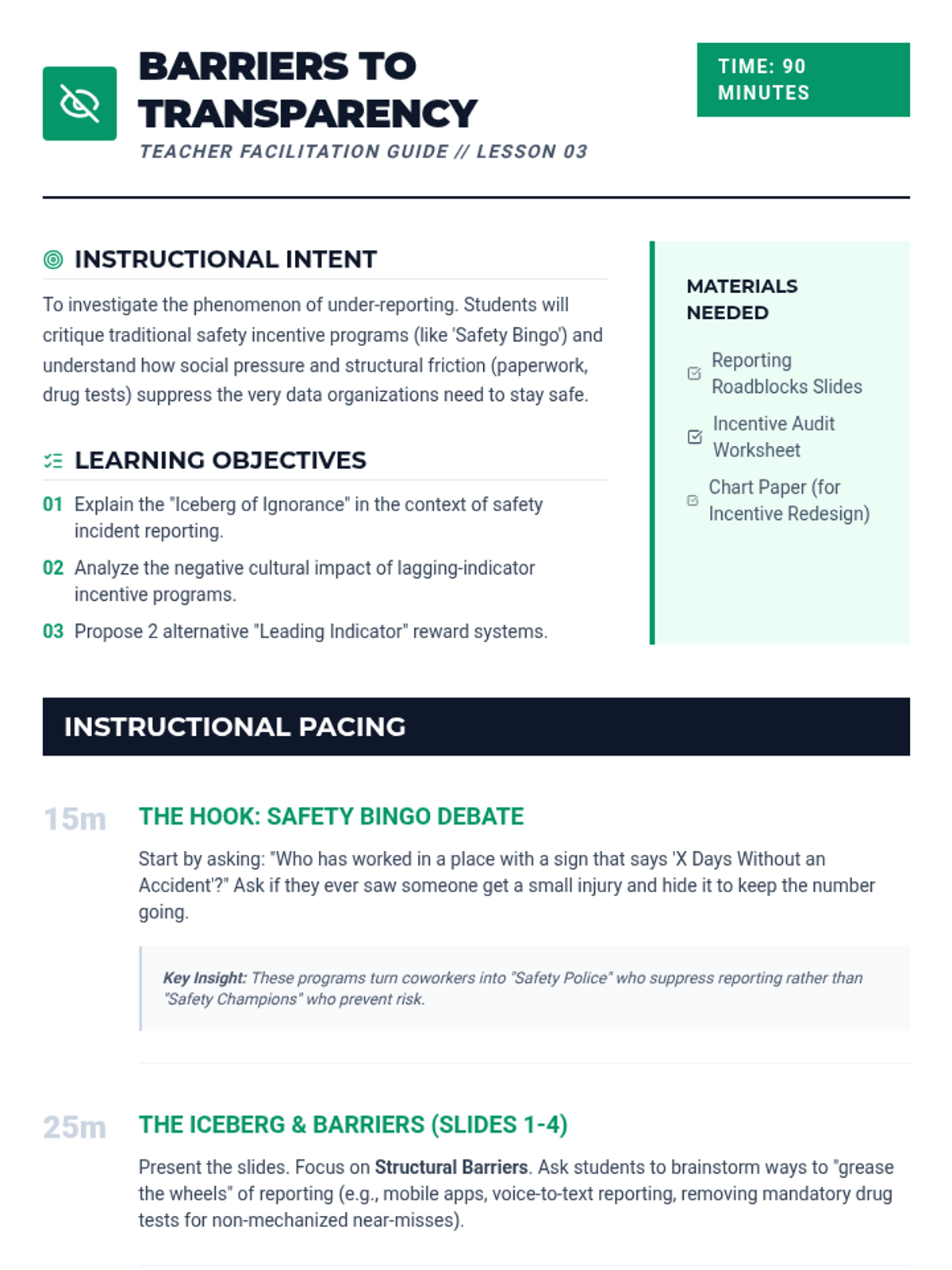
Investigate the systemic and cultural factors that lead to under-reporting of incidents and design alternative incentive structures to promote transparency.
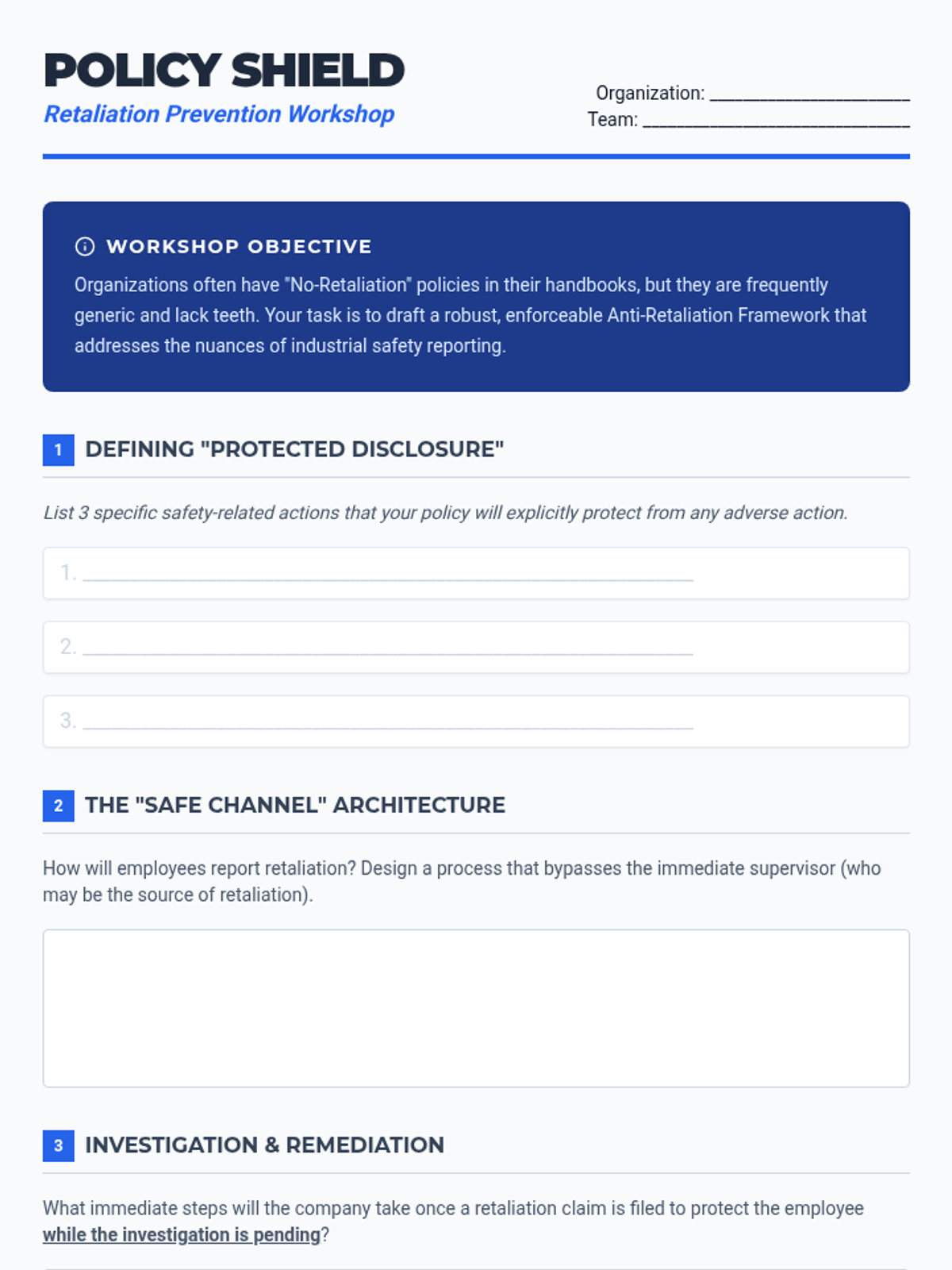
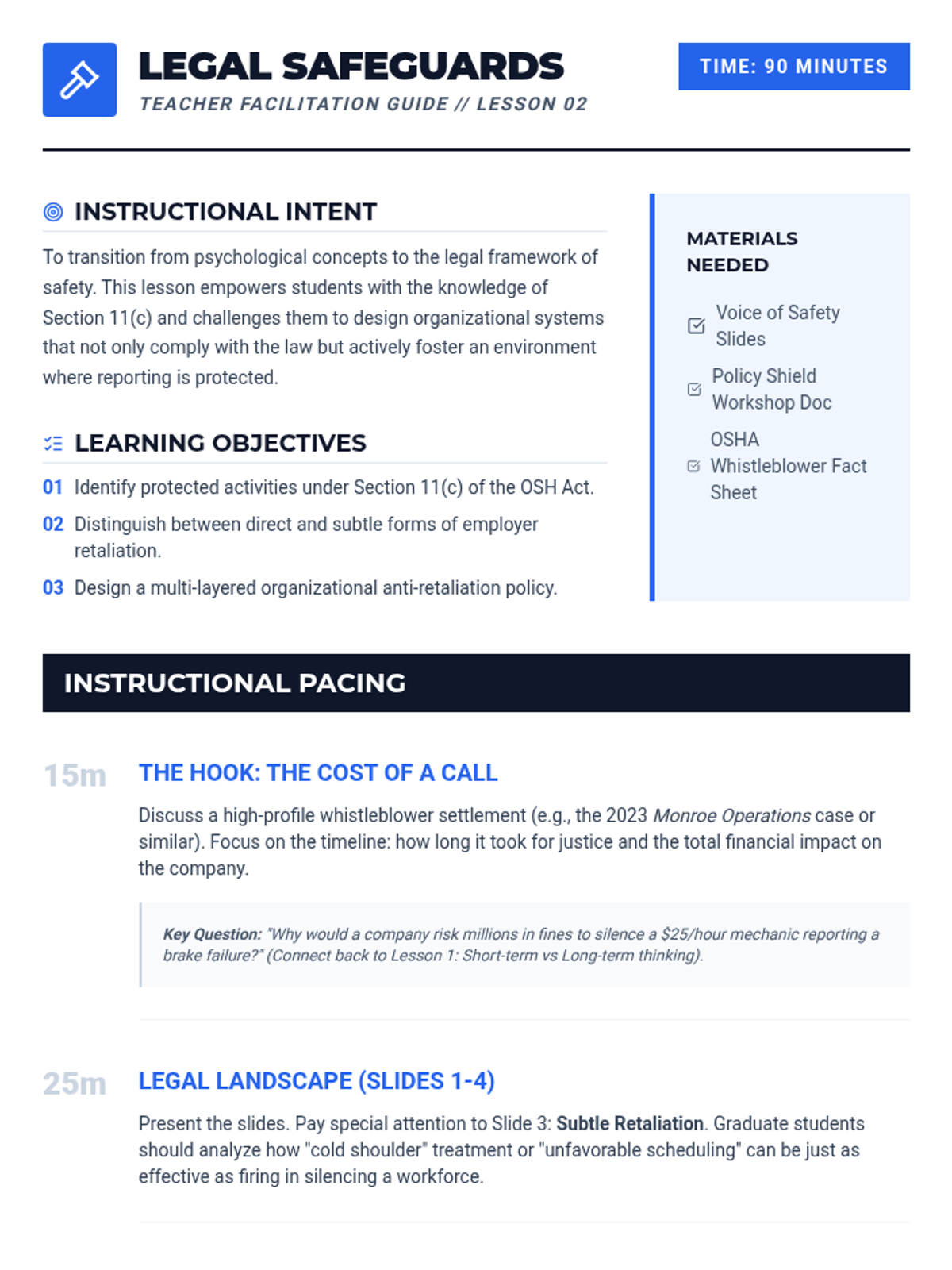
Analyze the legal protections afforded to whistleblowers under the OSH Act and develop organizational policies that prevent retaliation and encourage ethical reporting.
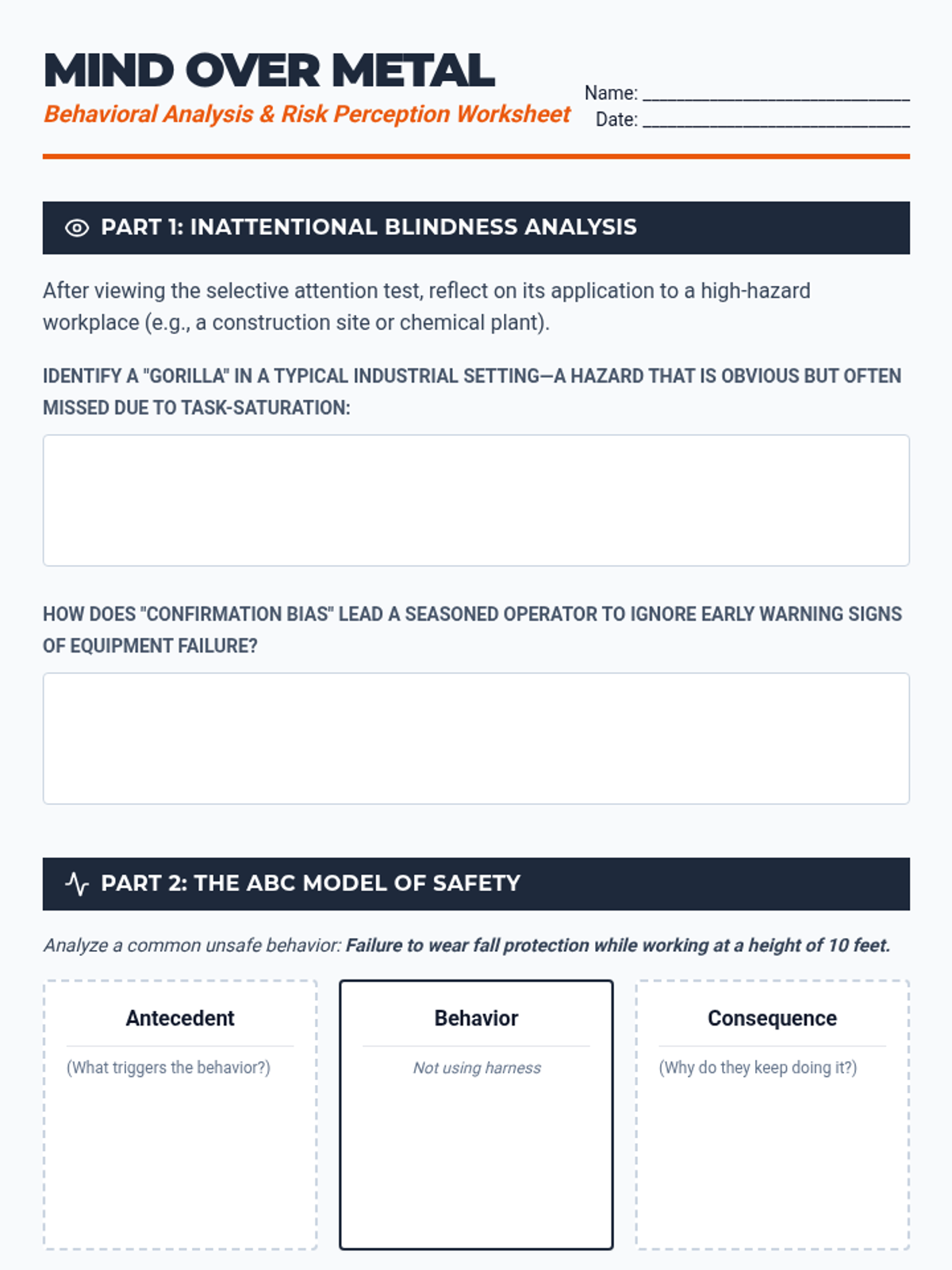
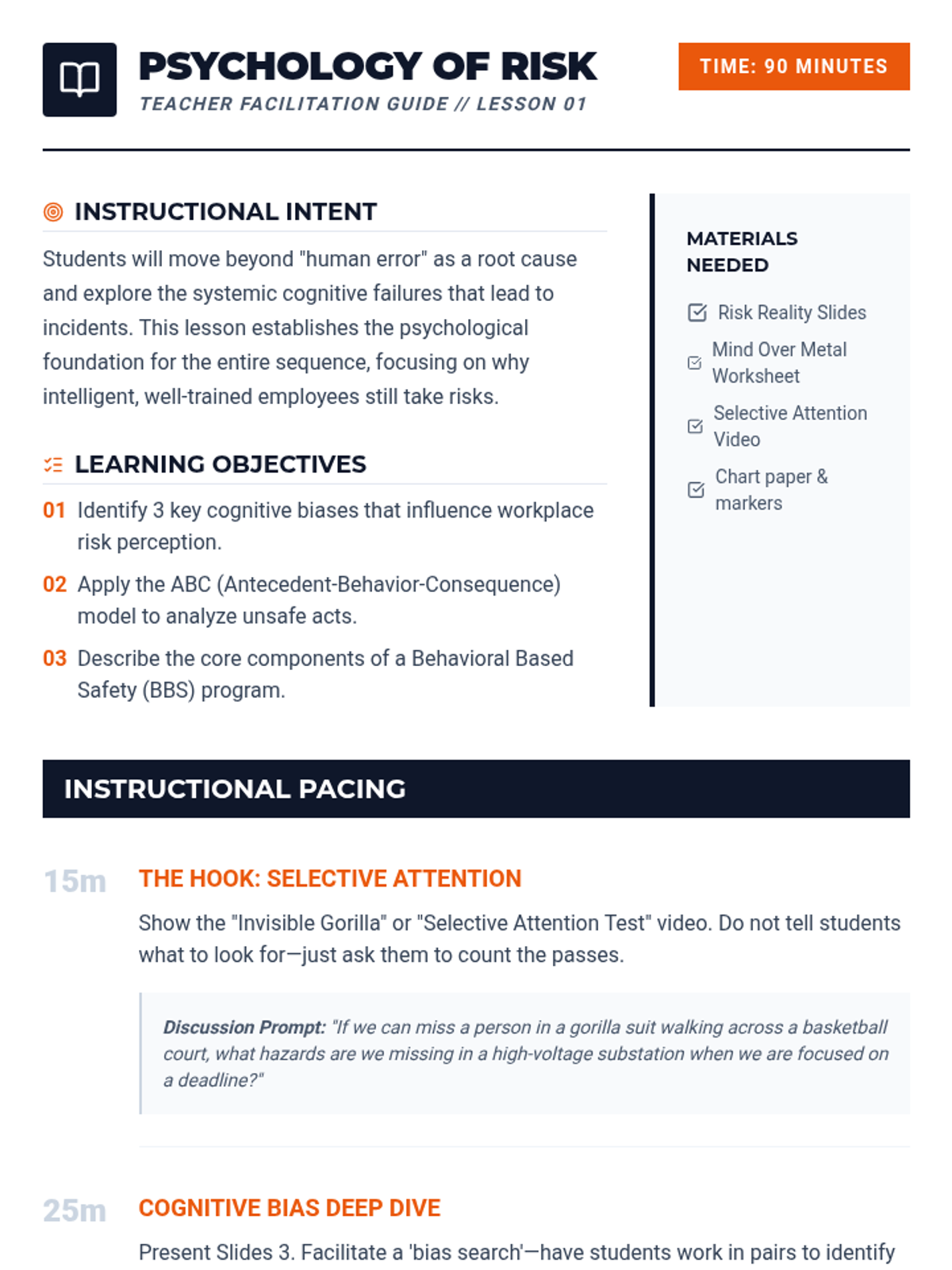
Examine the cognitive biases and psychological factors that influence risk perception and safety-related behavior in industrial and corporate environments.
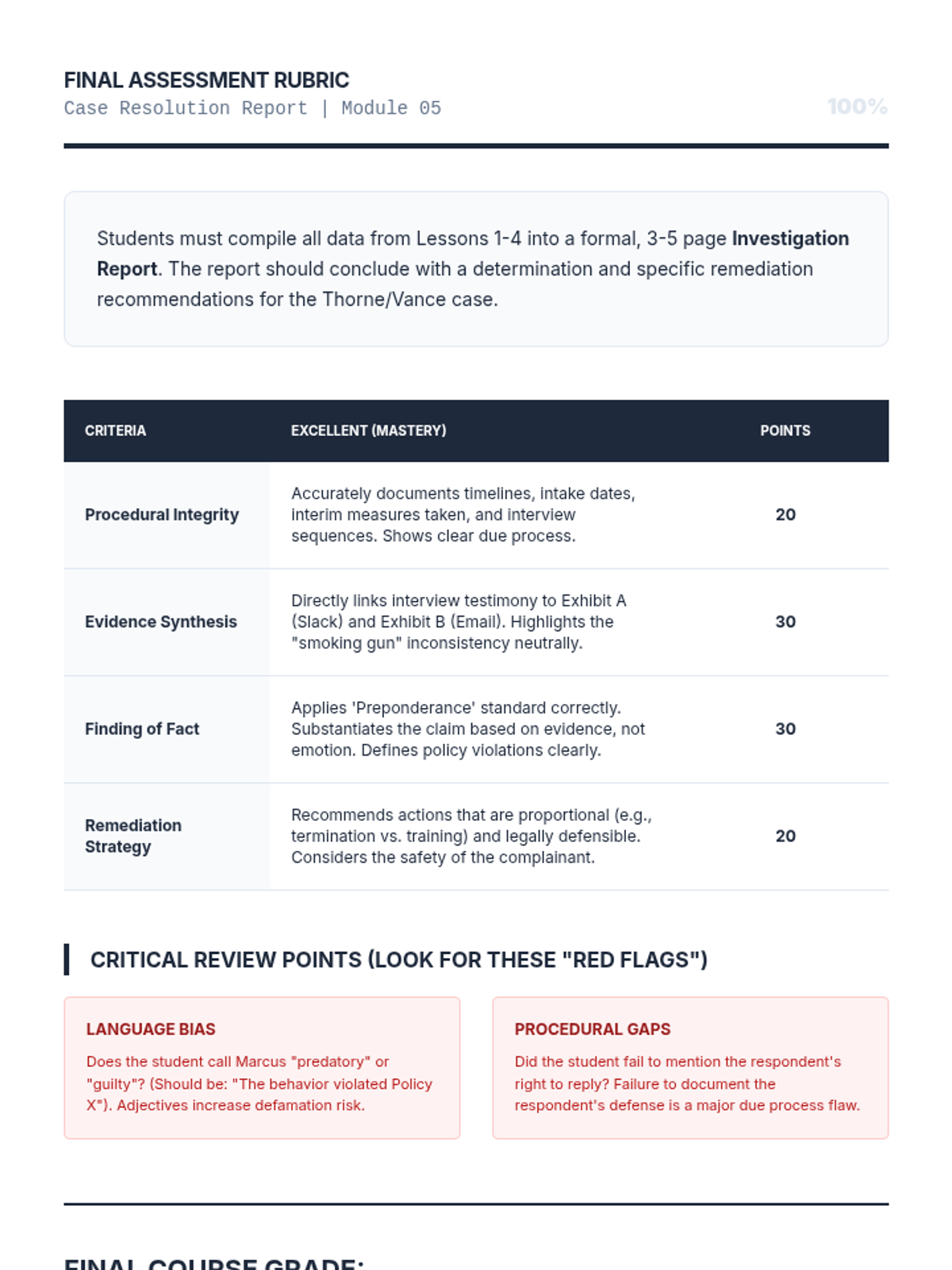
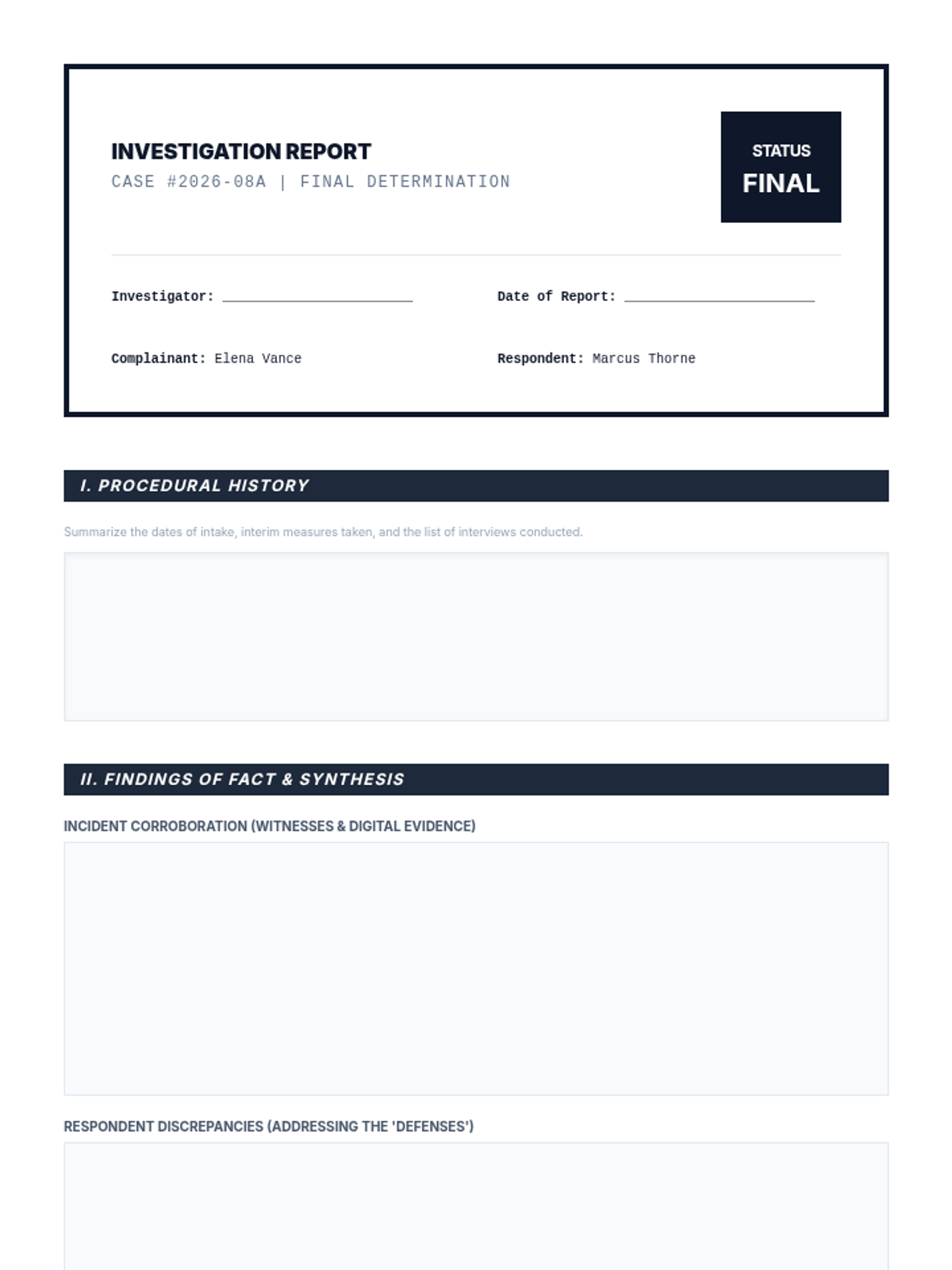
Concludes with the technical skills needed to draft a defensible investigation report and recommend appropriate remediation.
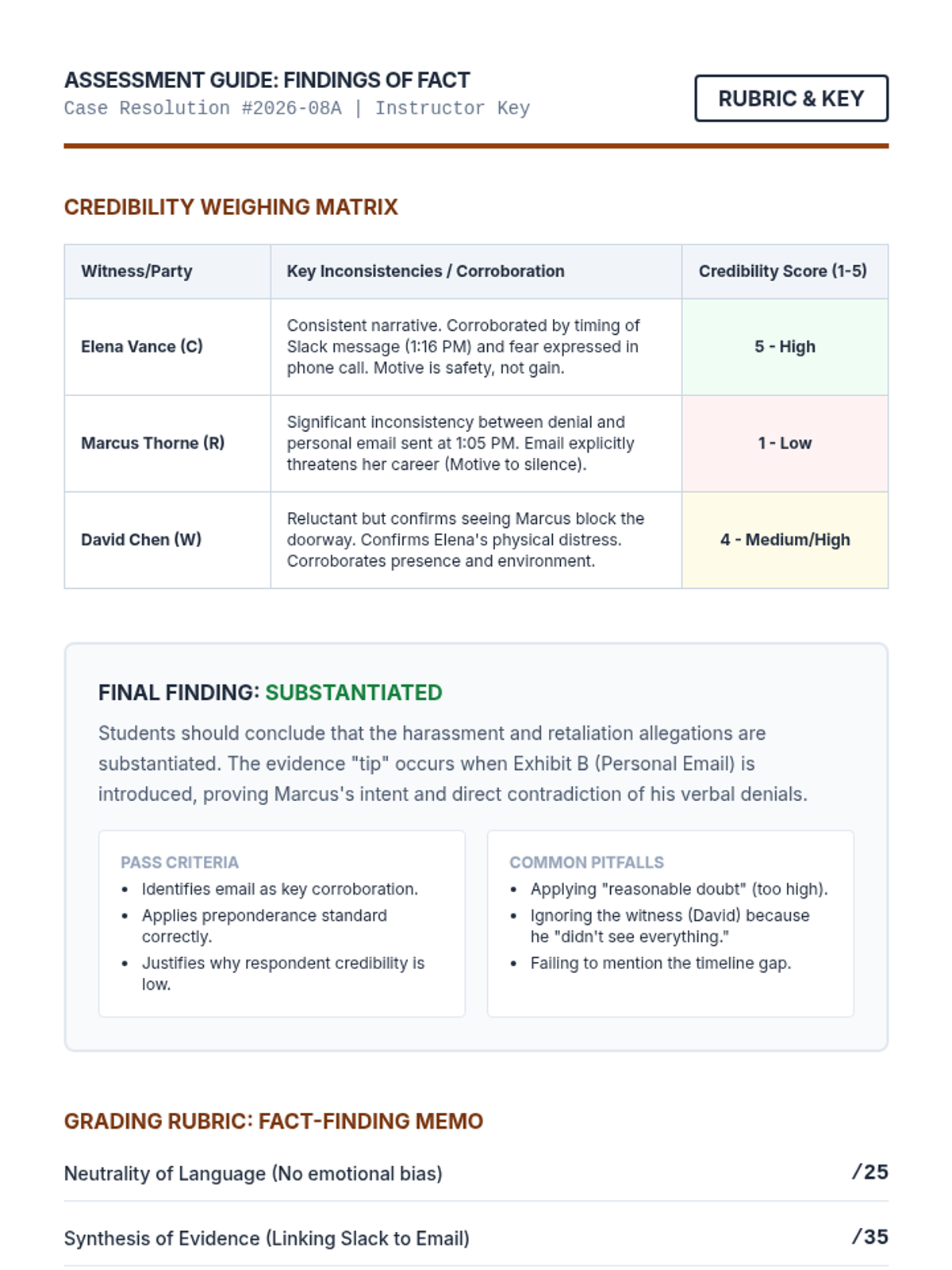
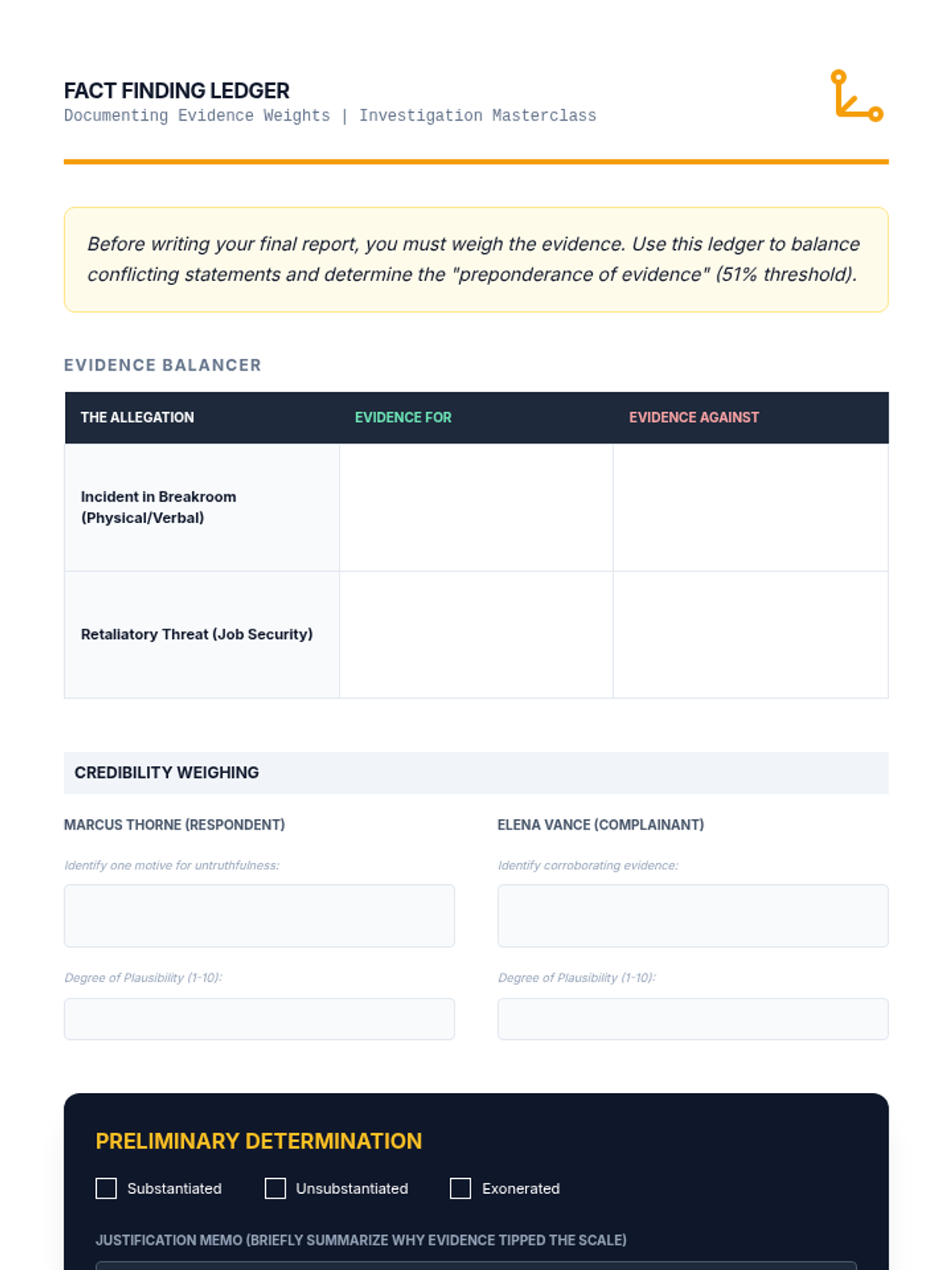
Teaches students how to weigh conflicting testimony and apply the preponderance of evidence standard to make formal findings of fact.
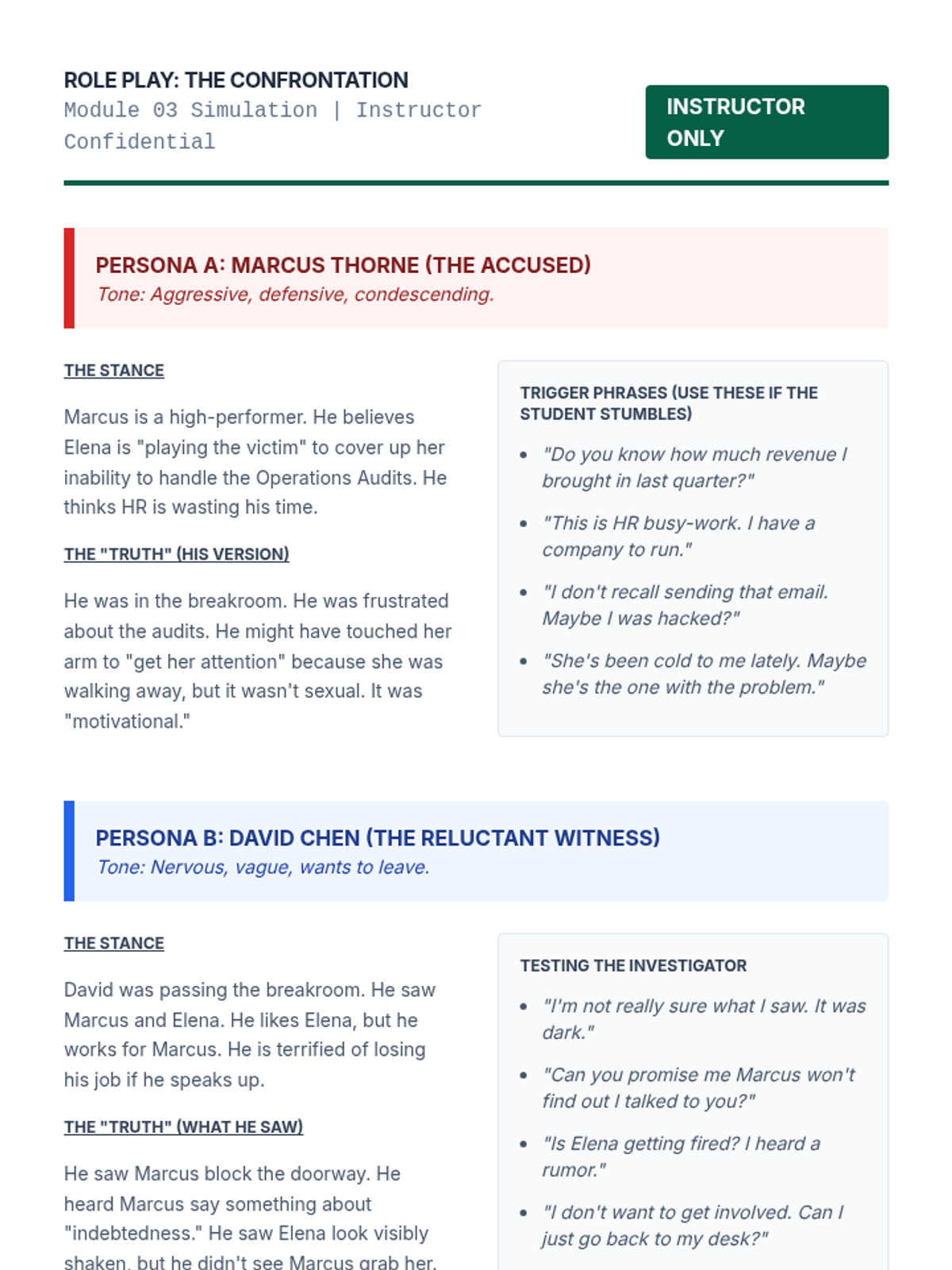
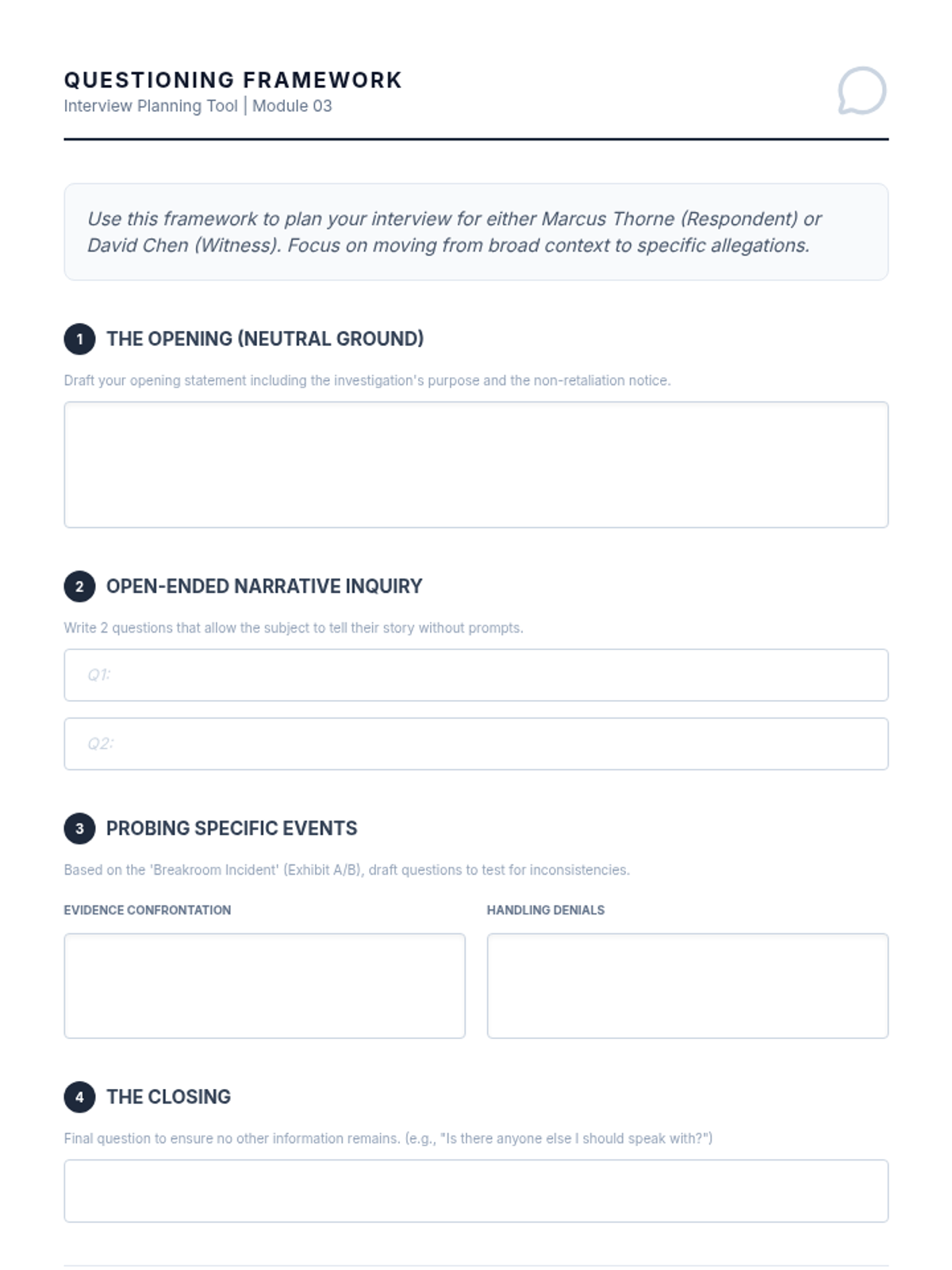
Develops skills for interviewing the accused and witnesses, focusing on non-leading questions and managing high-conflict interactions.
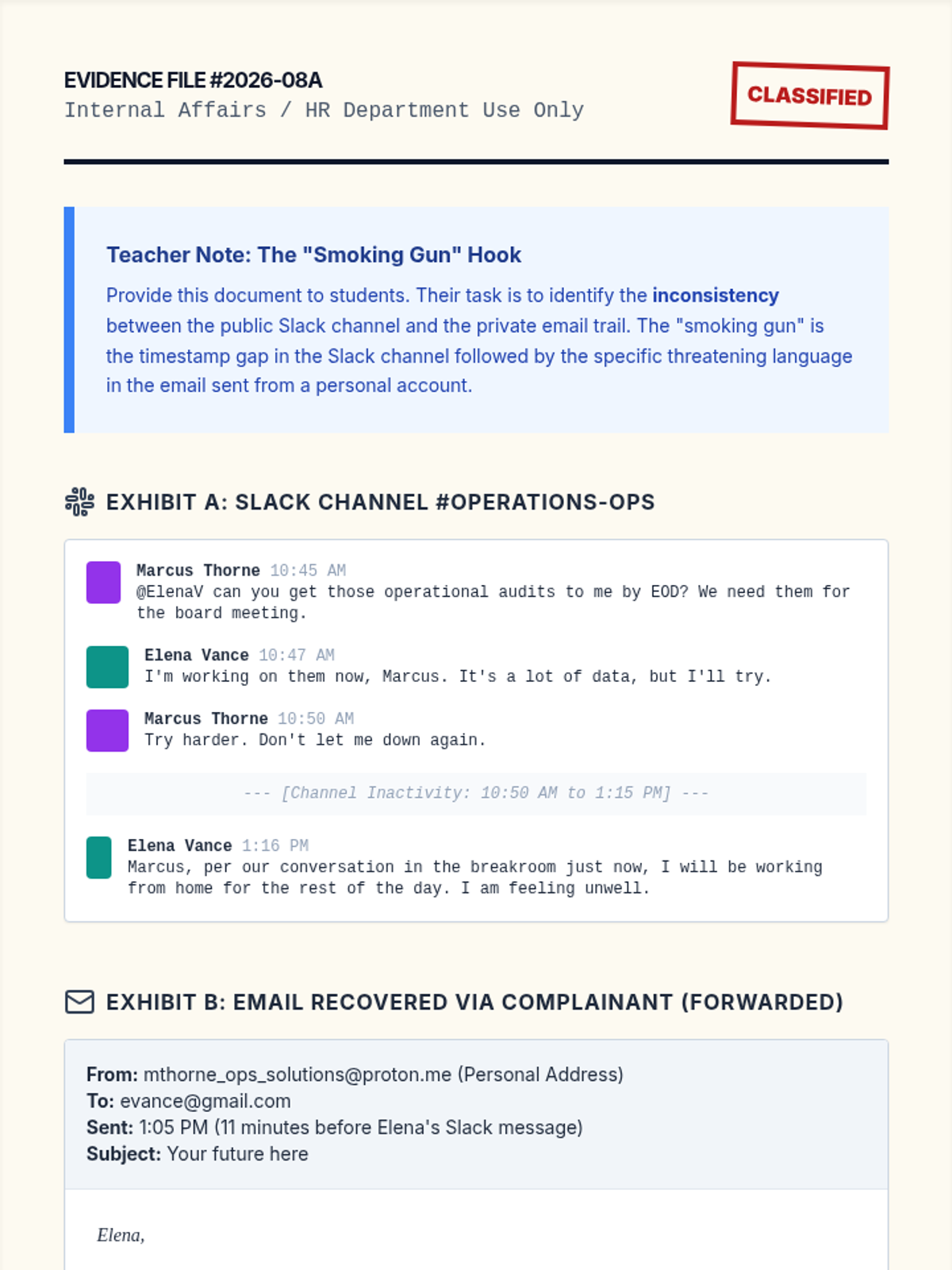
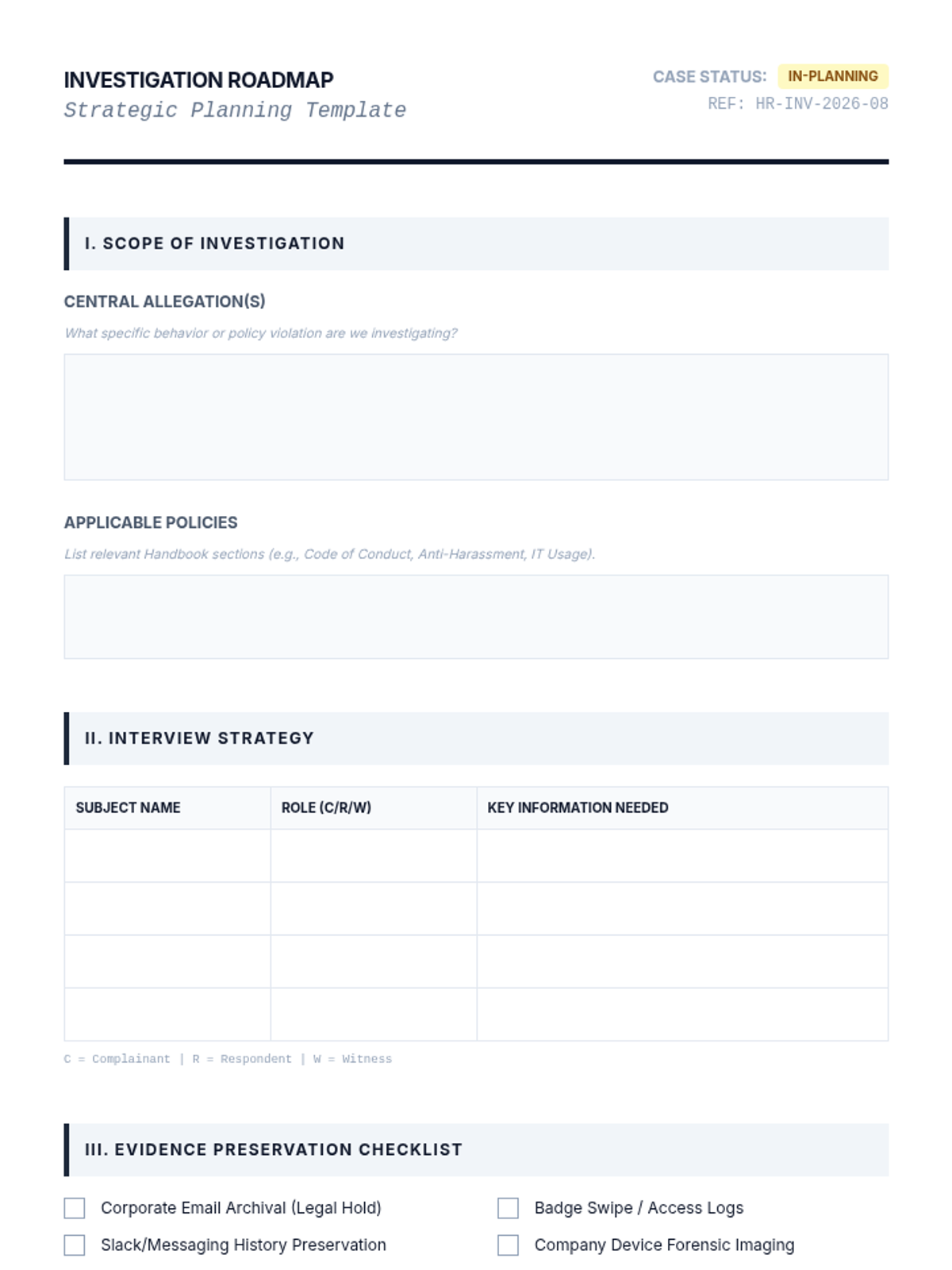
Covers strategic planning for an investigation, identifying witnesses, and managing digital and physical evidence.
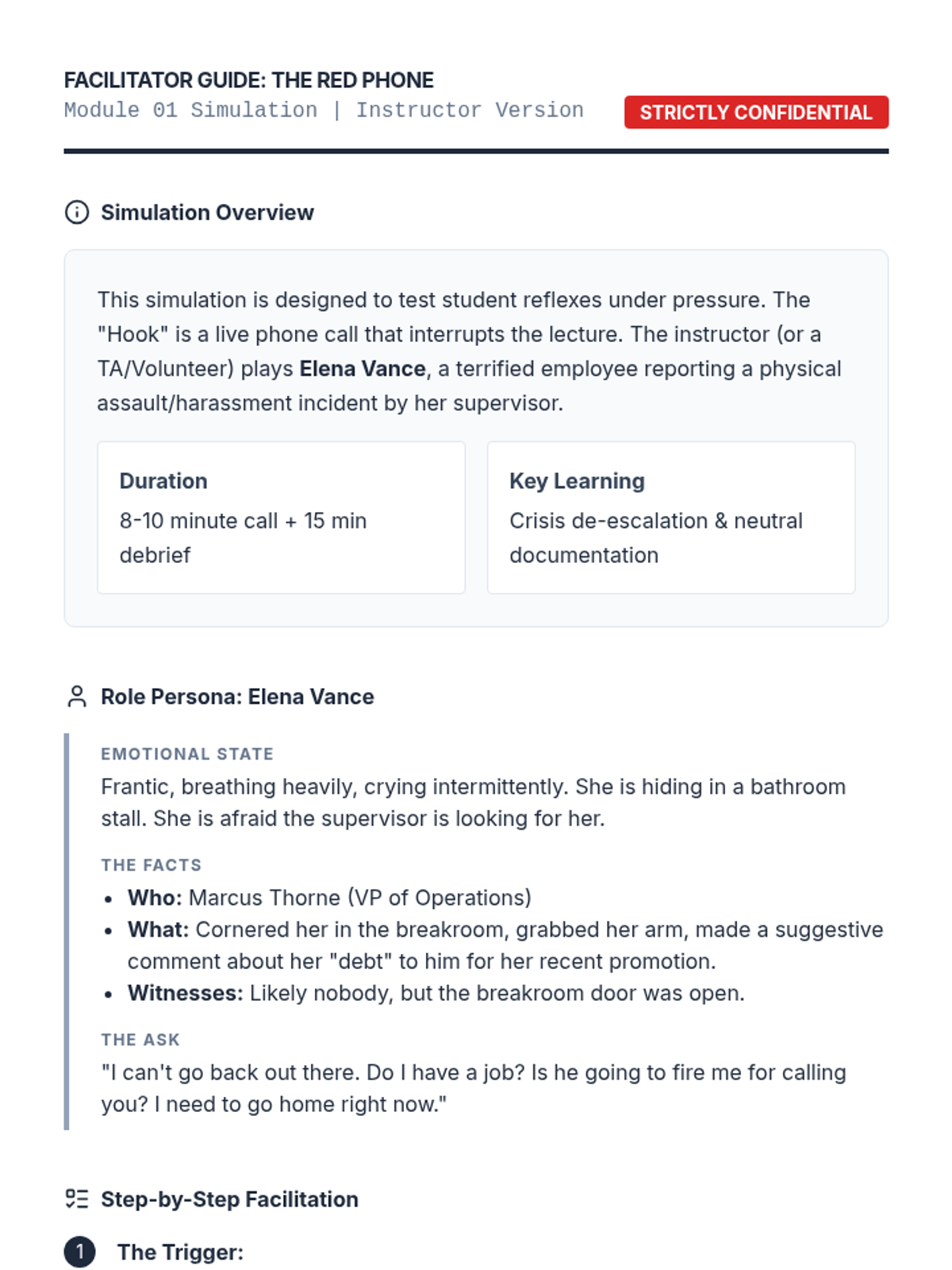
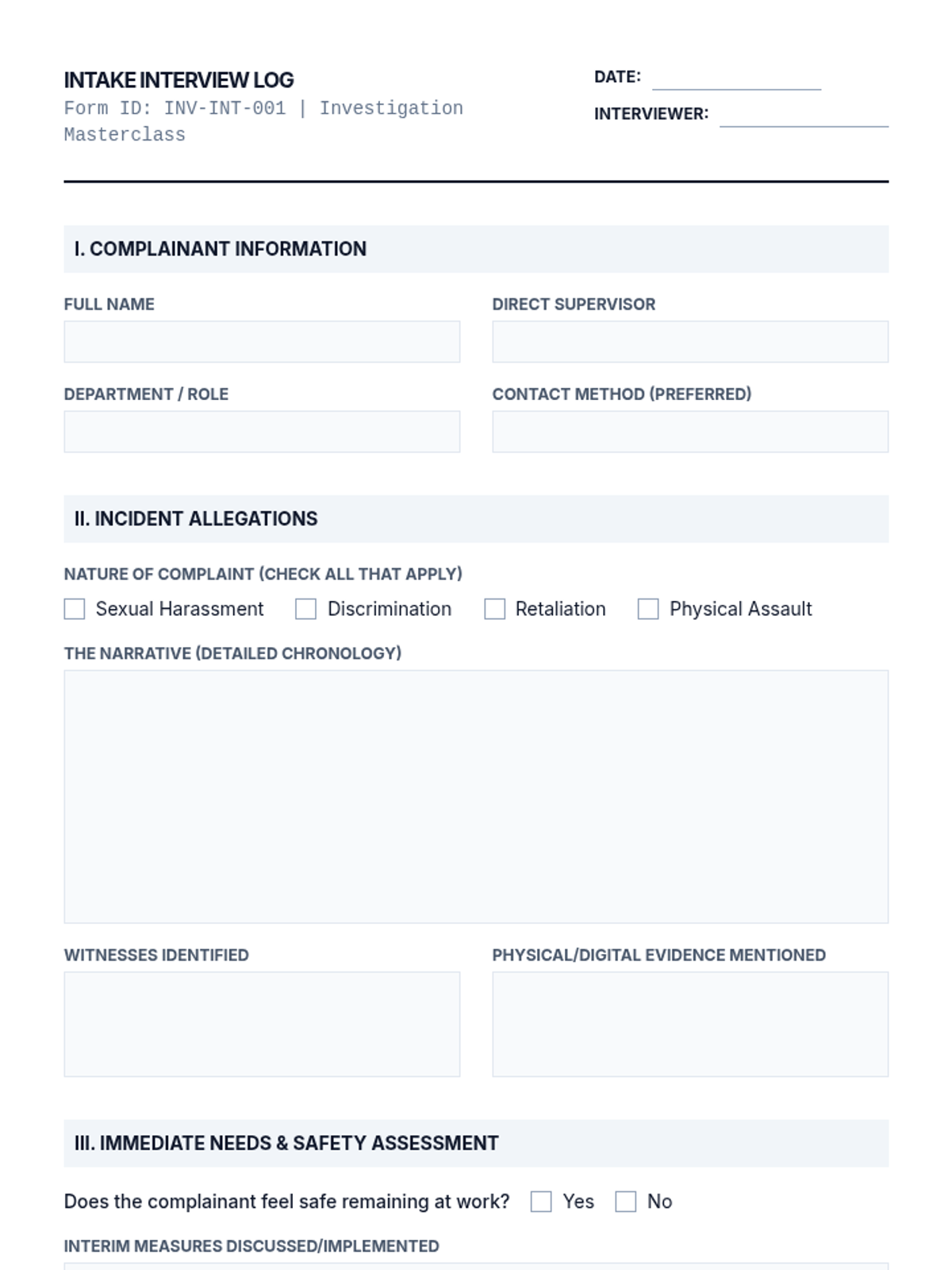
Focuses on the immediate response to a complaint, including conducting the intake interview and determining if interim measures like administrative leave are necessary.
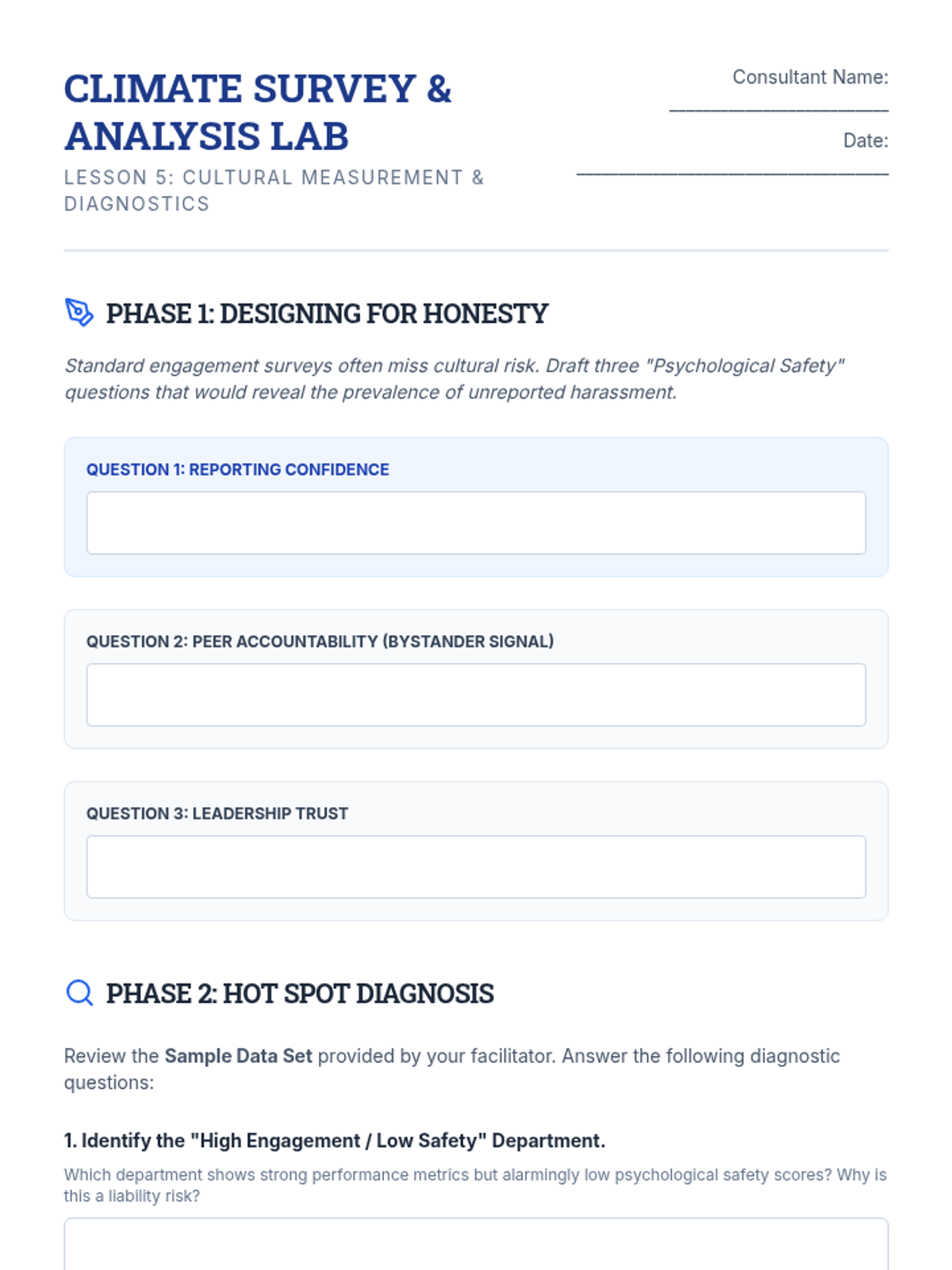
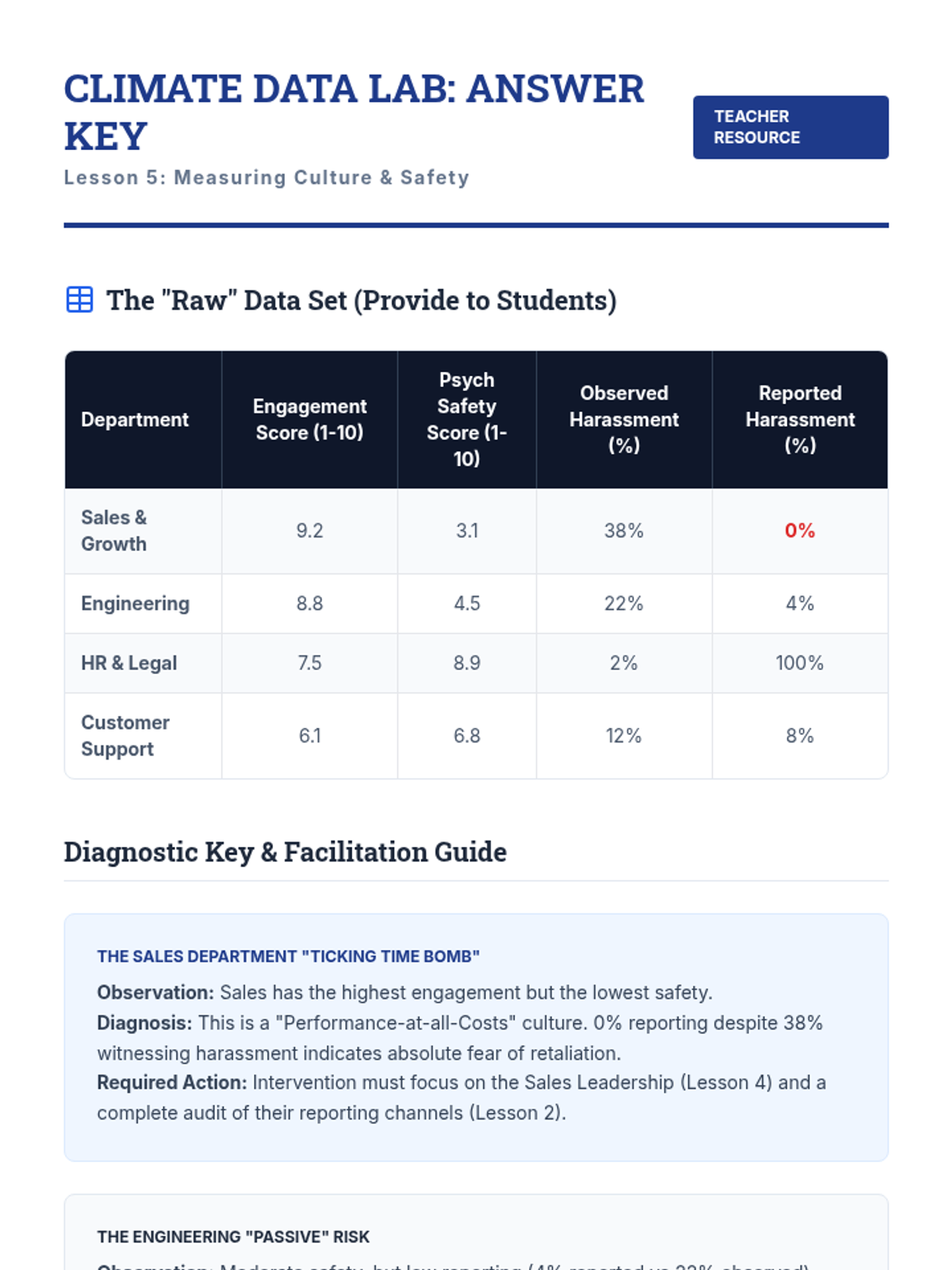
How do you know if prevention is working? Students learn to design climate surveys and interpret data to assess the prevalence of unreported harassment and the general level of psychological safety in an organization.
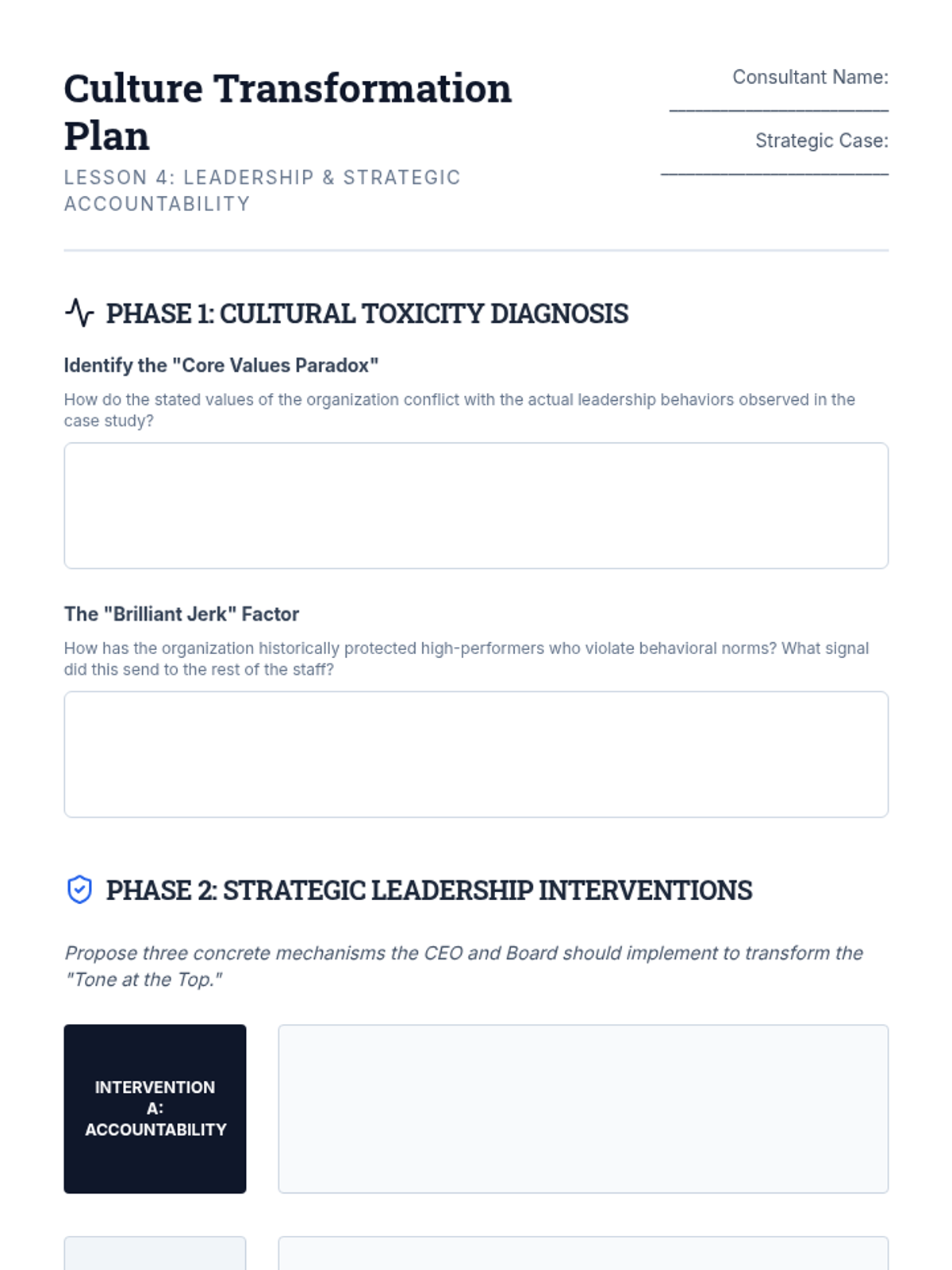
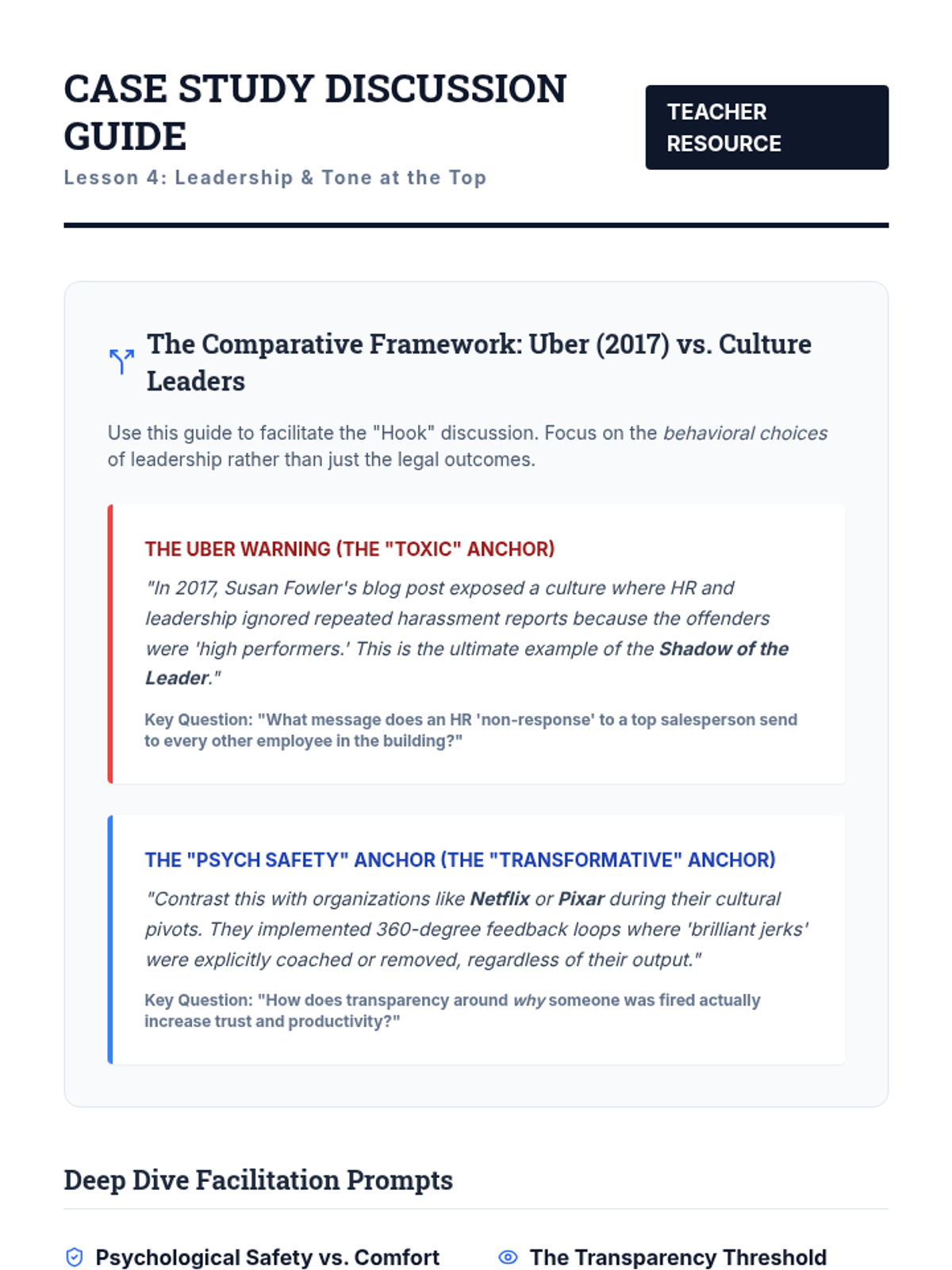
This lesson examines the concept of 'tone at the top.' Students analyze case studies of organizations that successfully transformed toxic cultures through leadership transparency and accountability mechanisms.
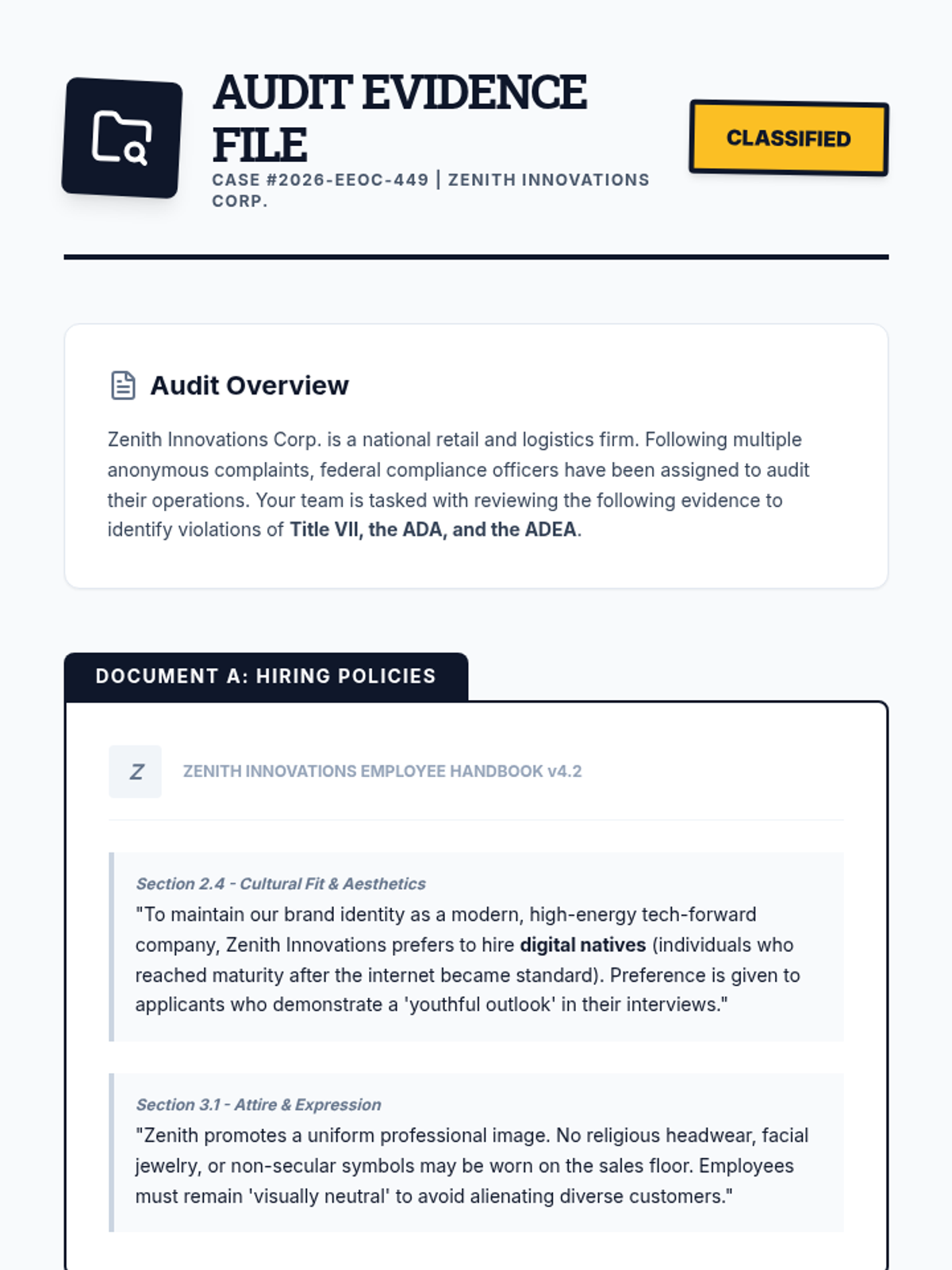
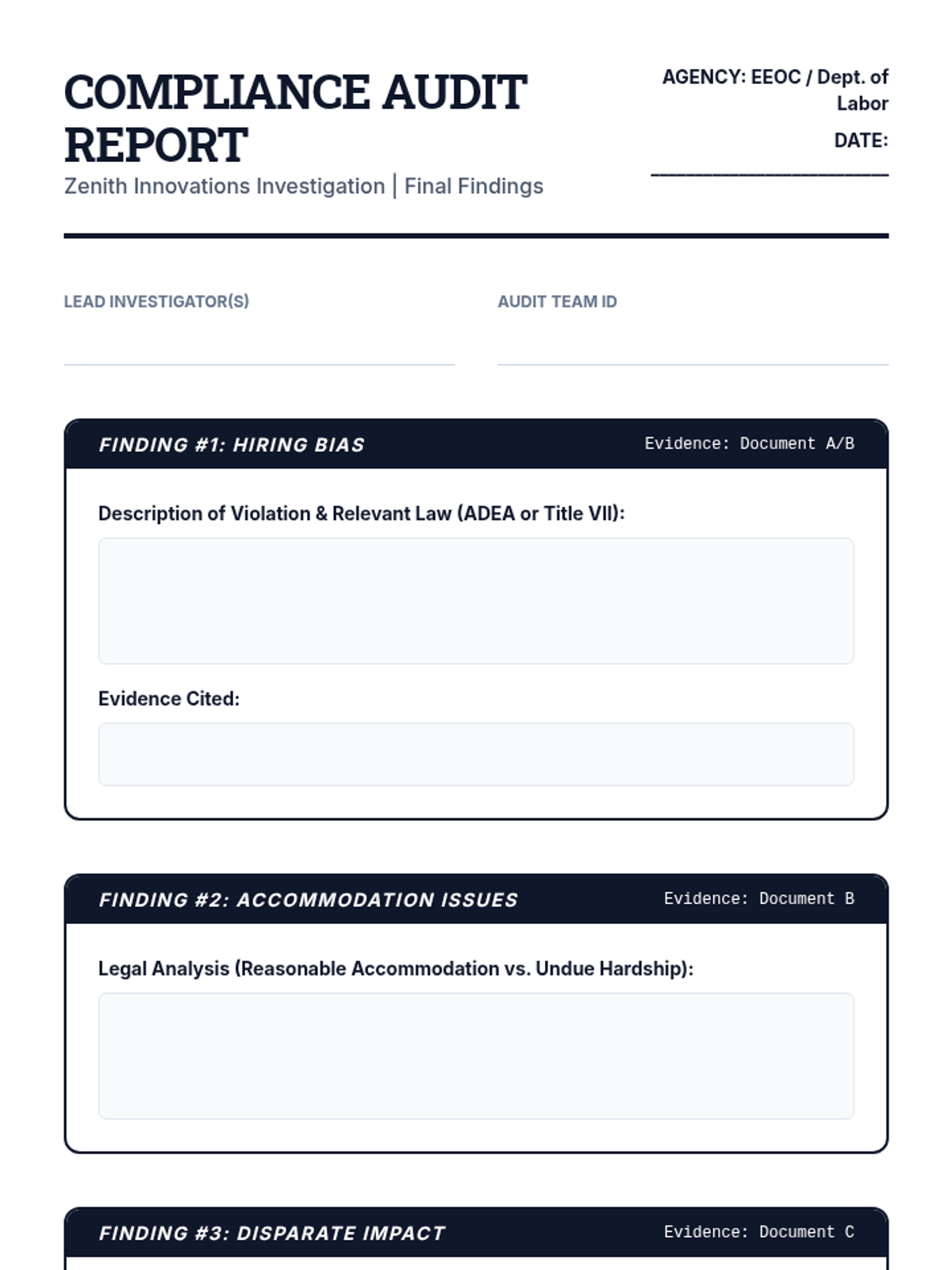
In this culminating lesson, students act as compliance officers auditing a fictional company's hiring and management practices. They review employee handbooks and interview transcripts to identify violations of federal anti-discrimination laws. The final output is a written report recommending changes to bring the company into compliance.
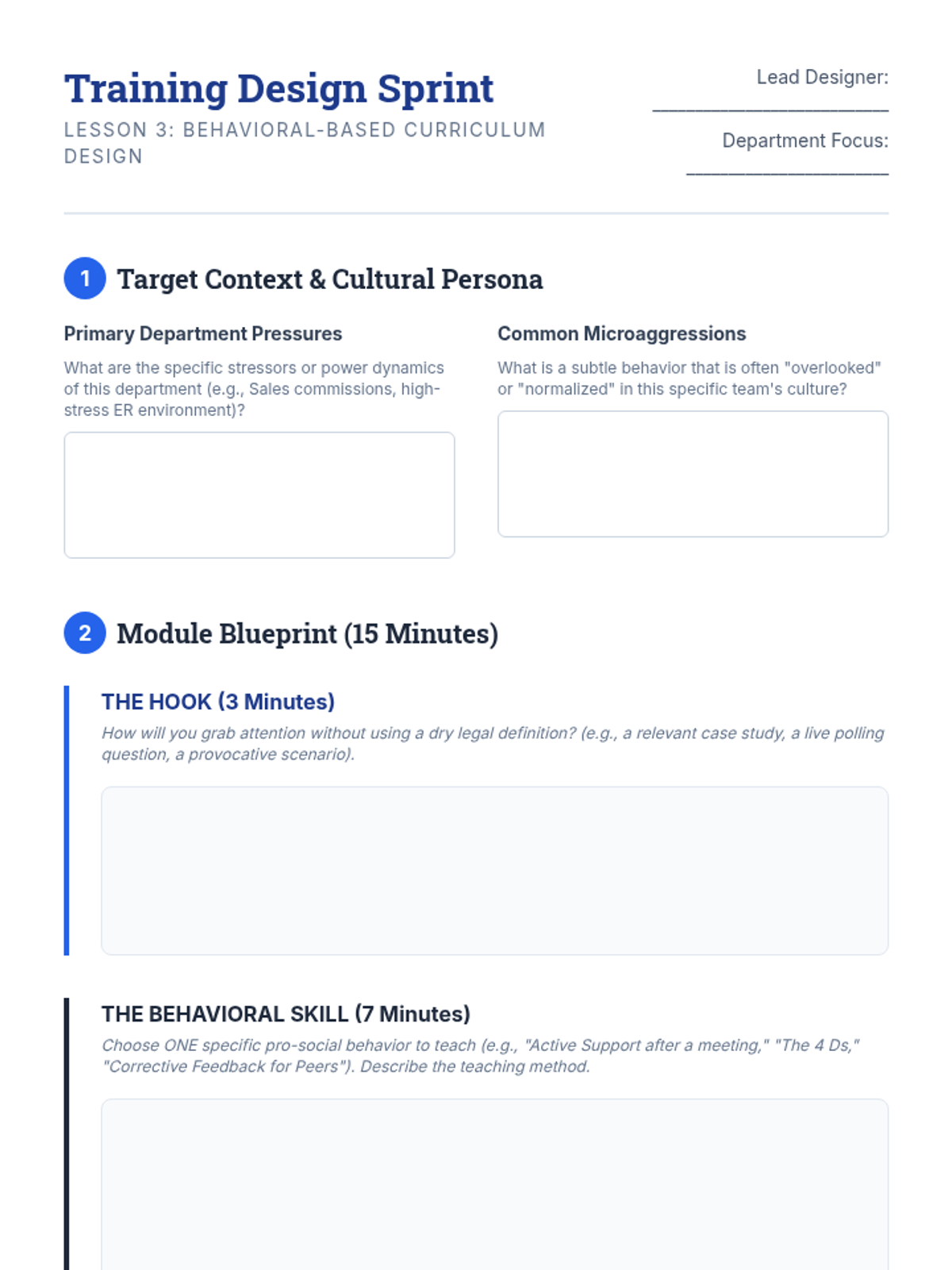
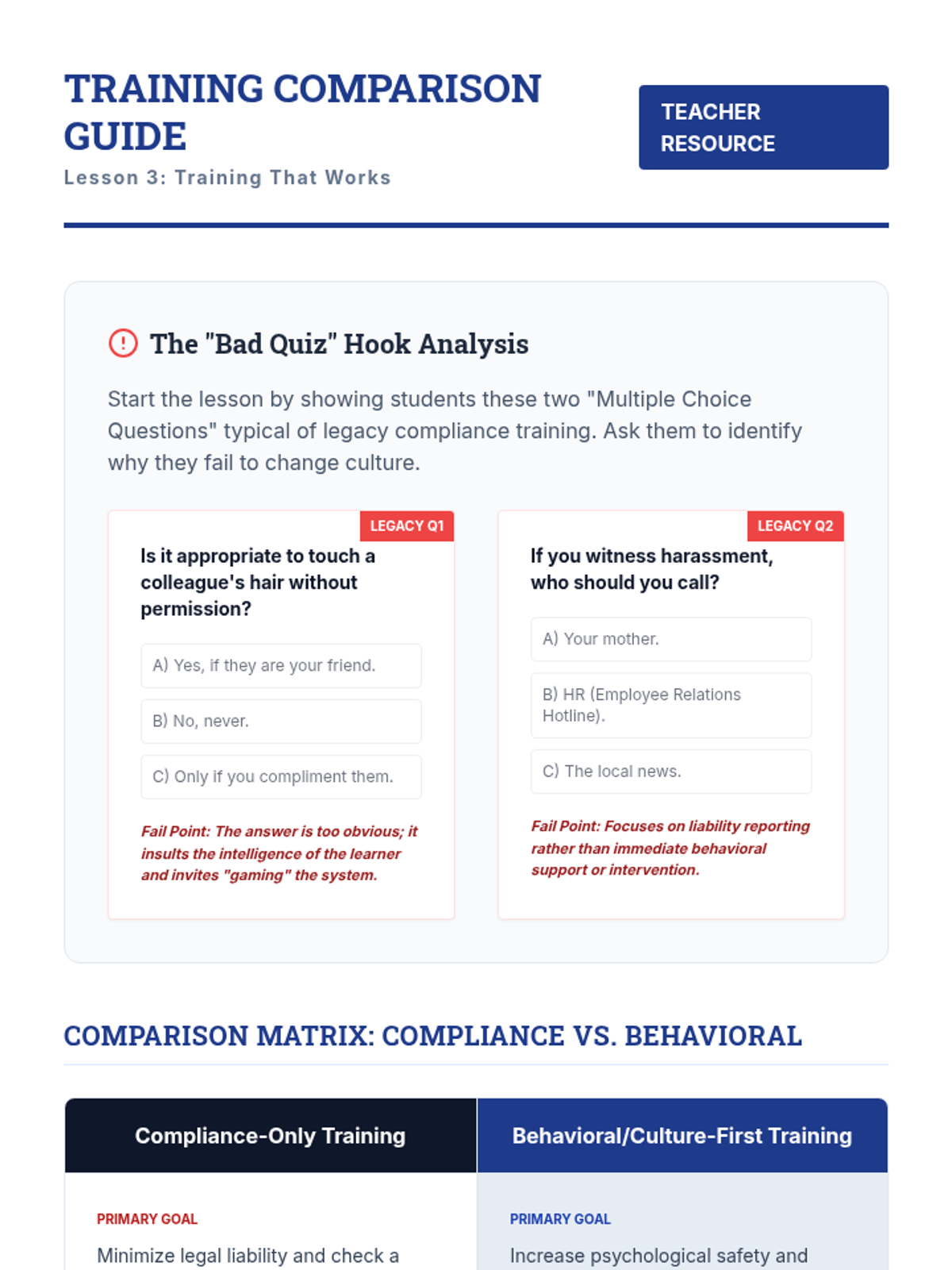
Analyzing why traditional sexual harassment training often fails, this lesson explores interactive and behavioral-based training models. Students design a training module that focuses on civility and respect rather than just liability avoidance.
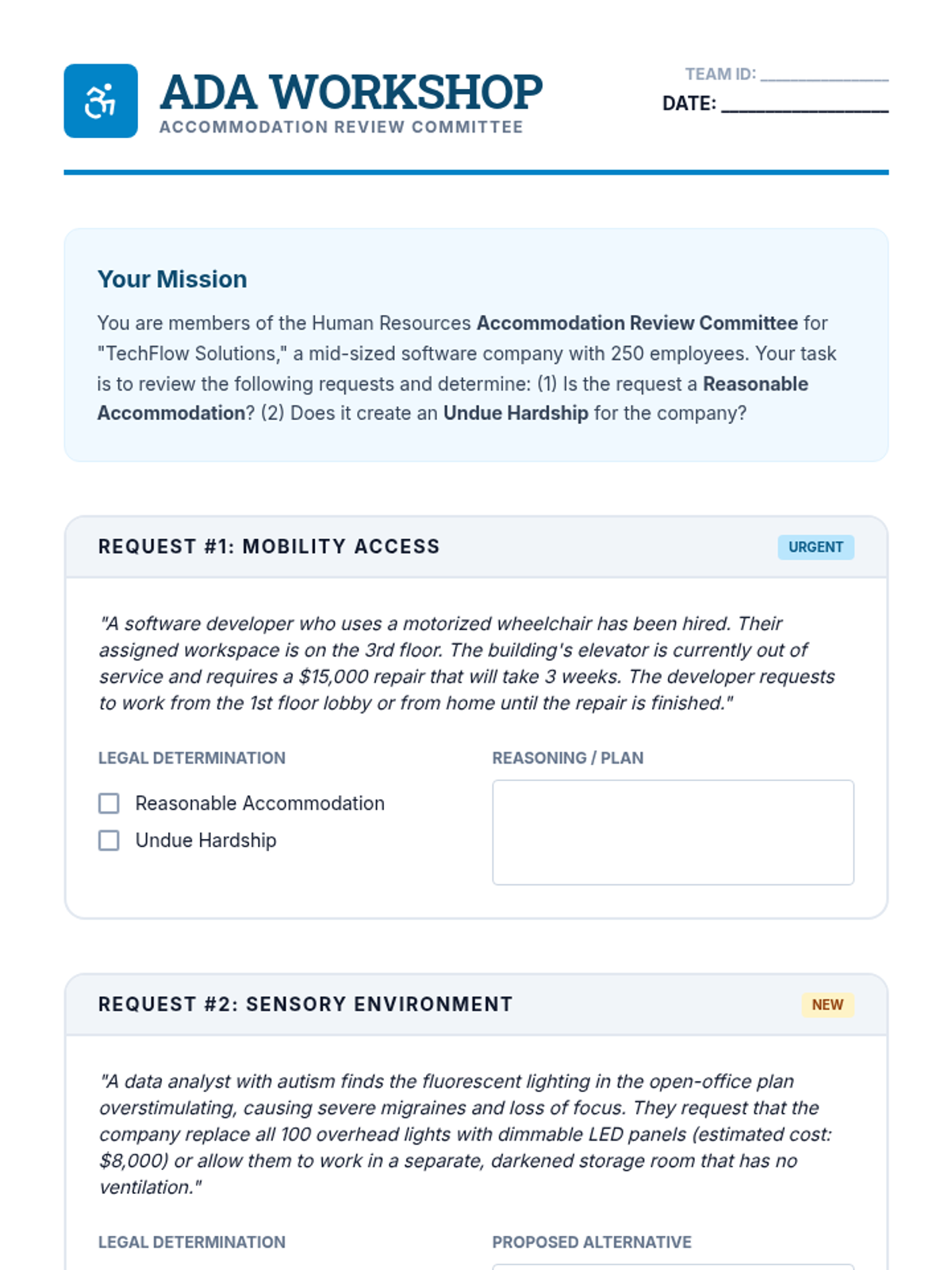
Focusing specifically on the ADA, students examine the concept of 'reasonable accommodation' versus 'undue hardship.' They work in small groups to review requests for accommodations in a fictional workplace and determine if the requests must be granted under the law.
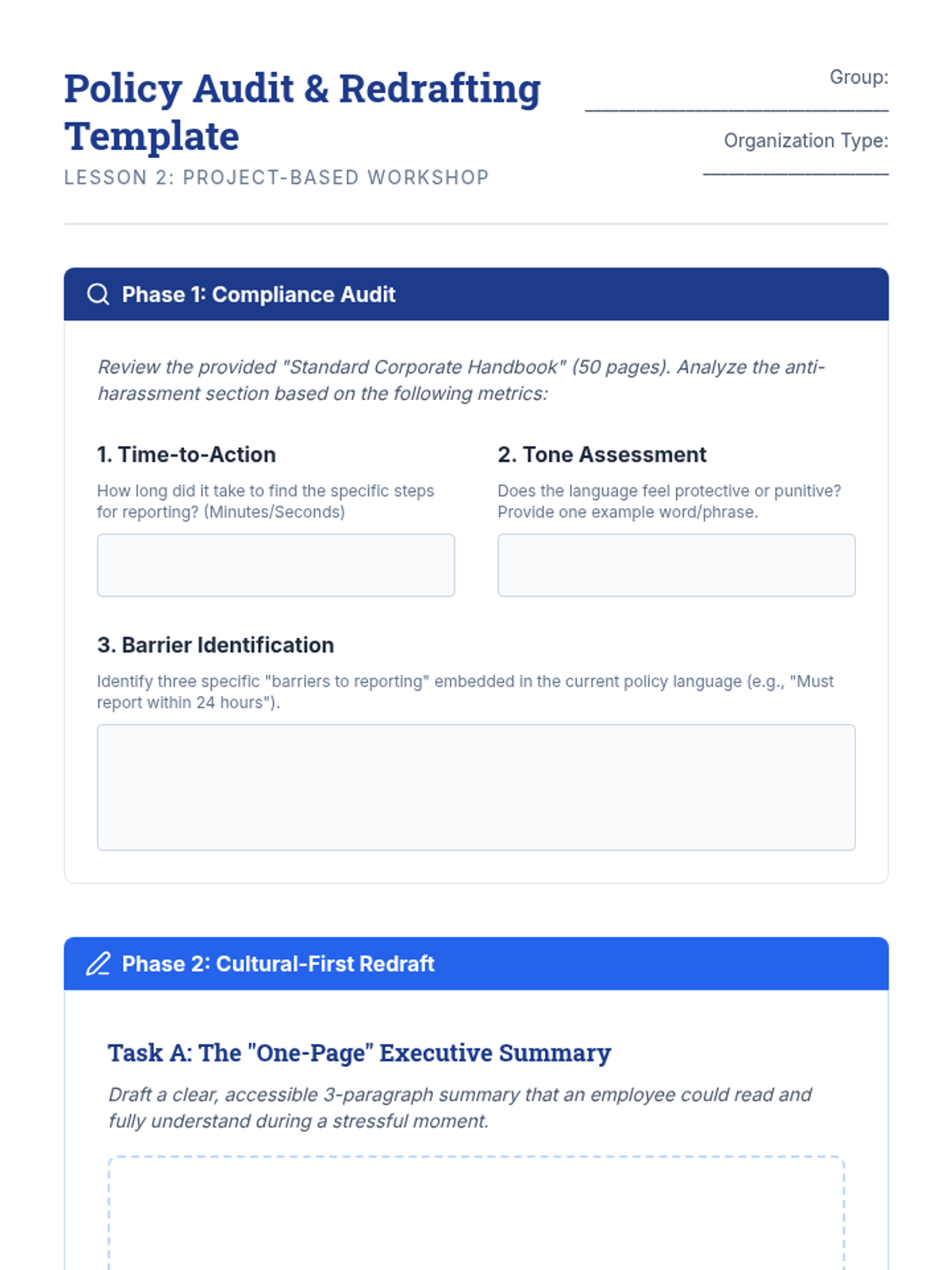
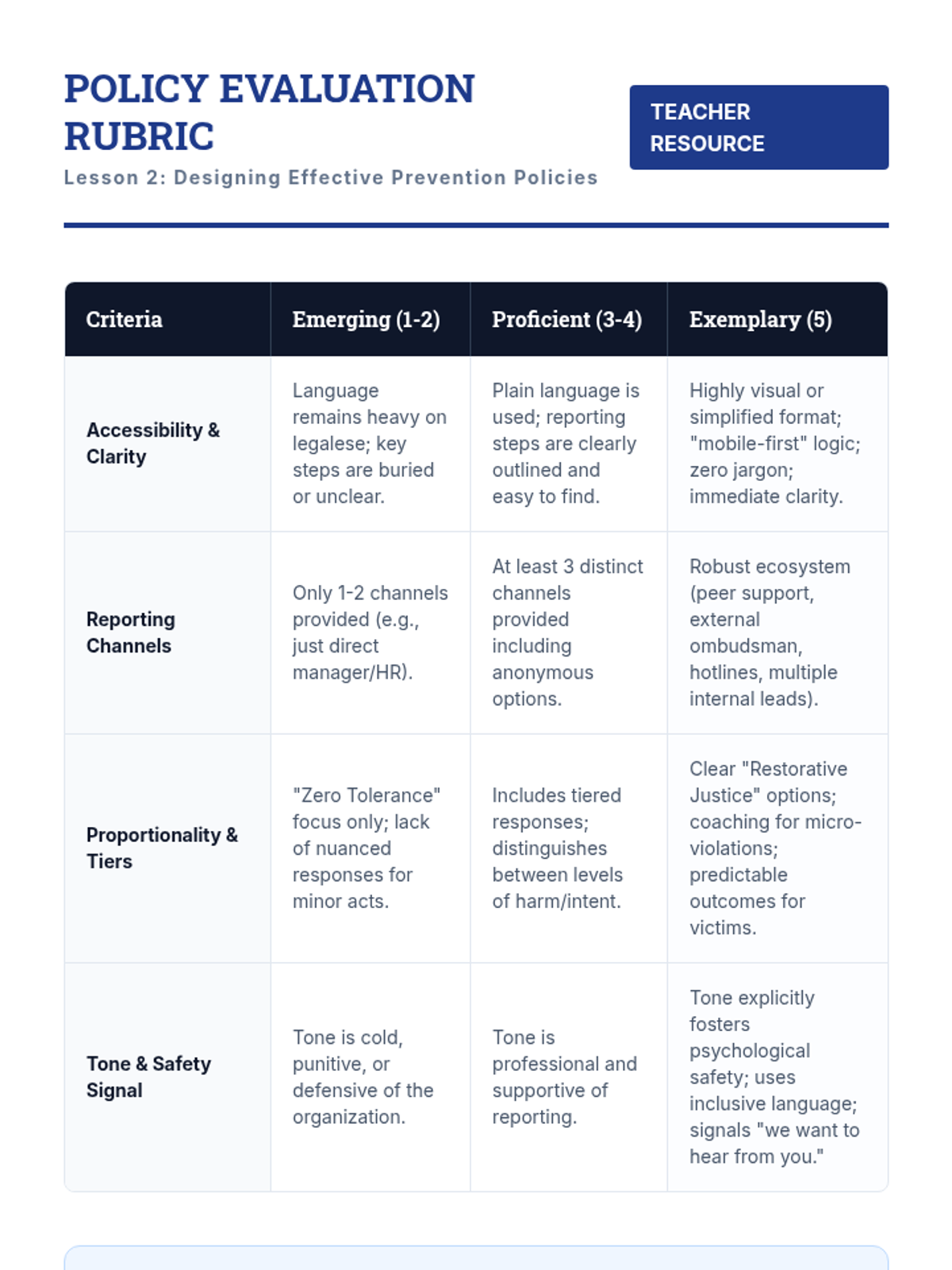
Critique standard zero-tolerance policies and explore nuanced approaches that encourage reporting and cultural health through effective policy design.
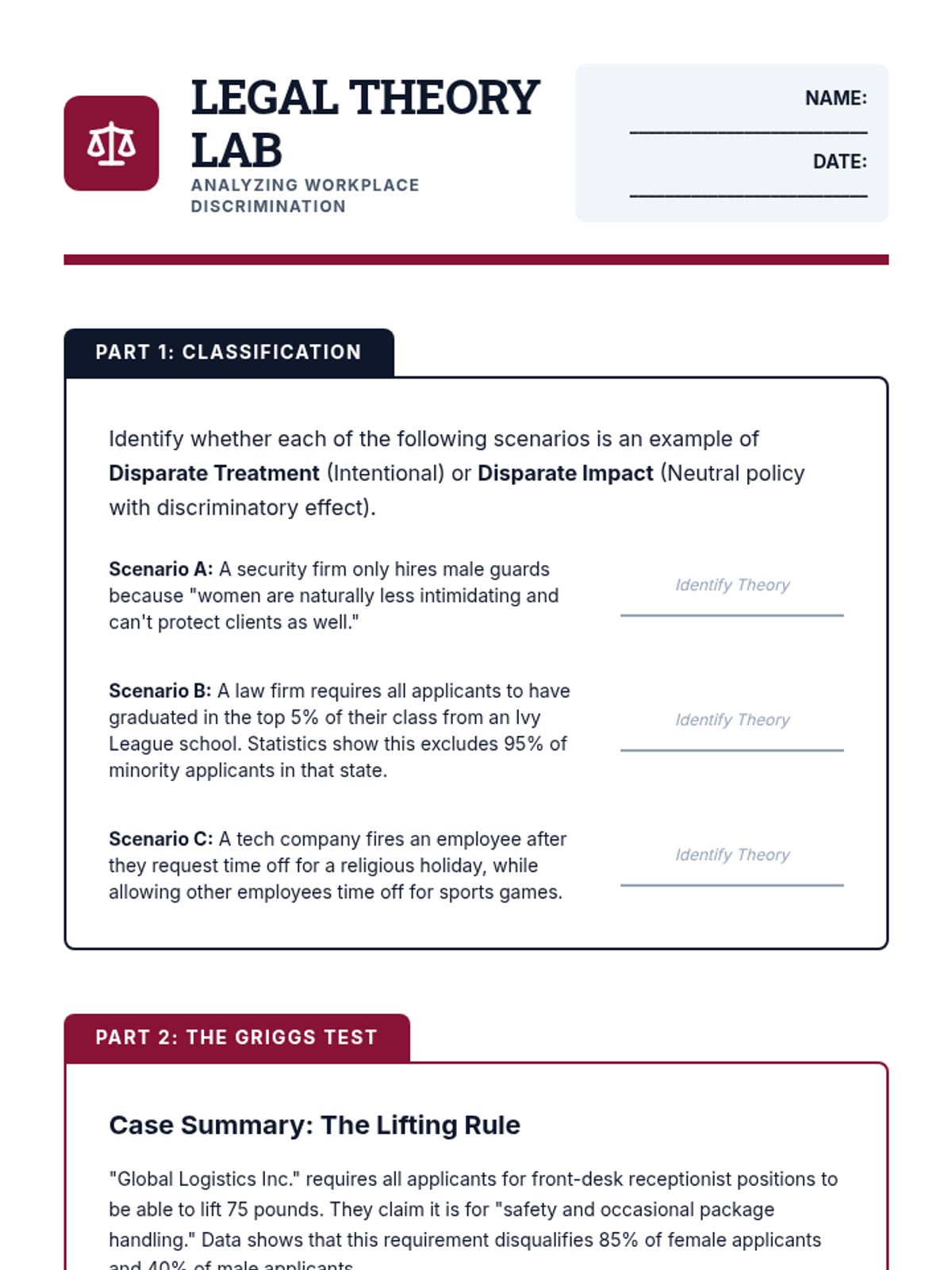
Students learn the legal distinction between intentional discrimination (disparate treatment) and neutral policies that have negative effects on protected groups (disparate impact). Using real-world case summaries, students analyze company policies to identify potential unintended liabilities.
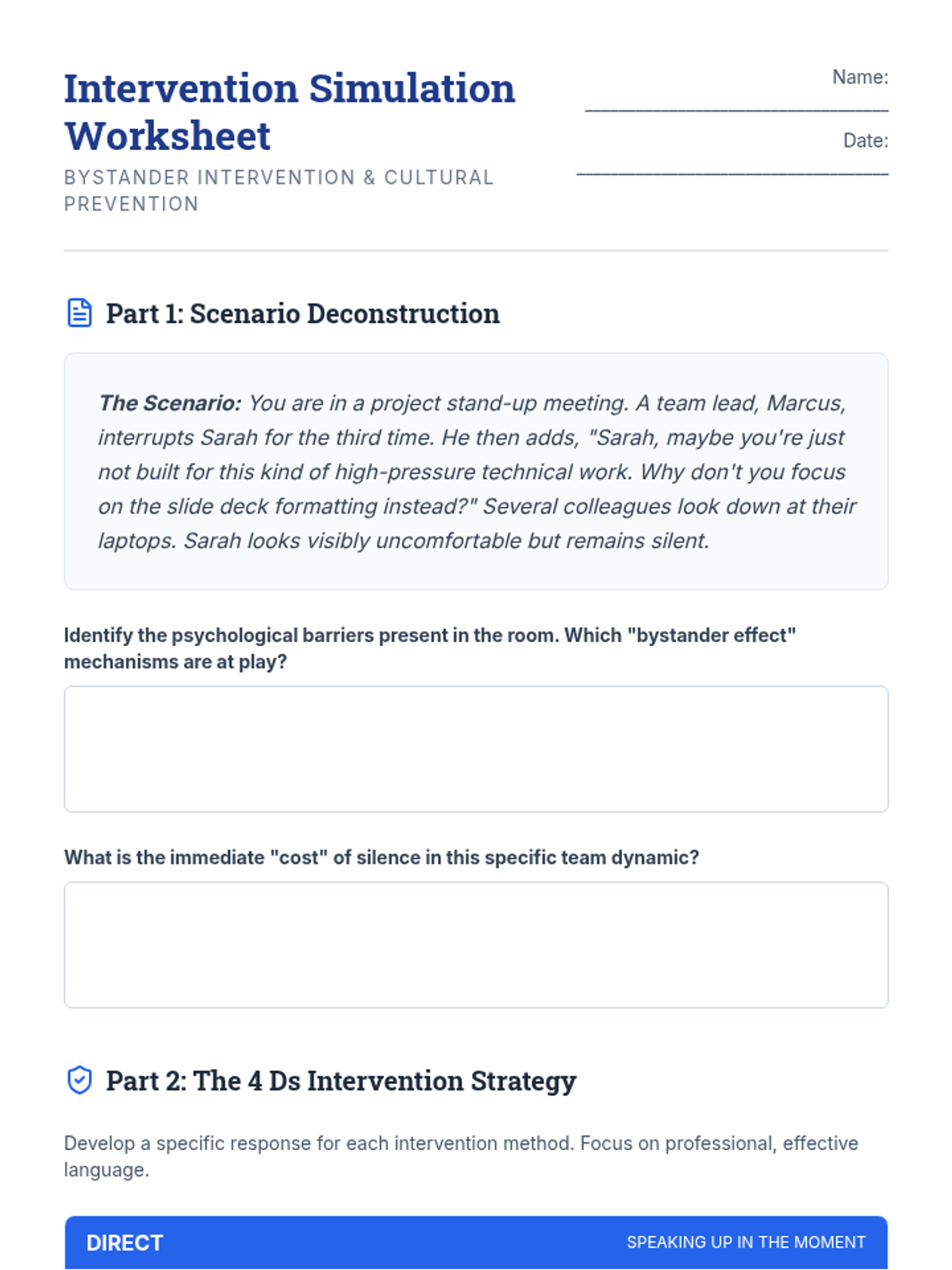
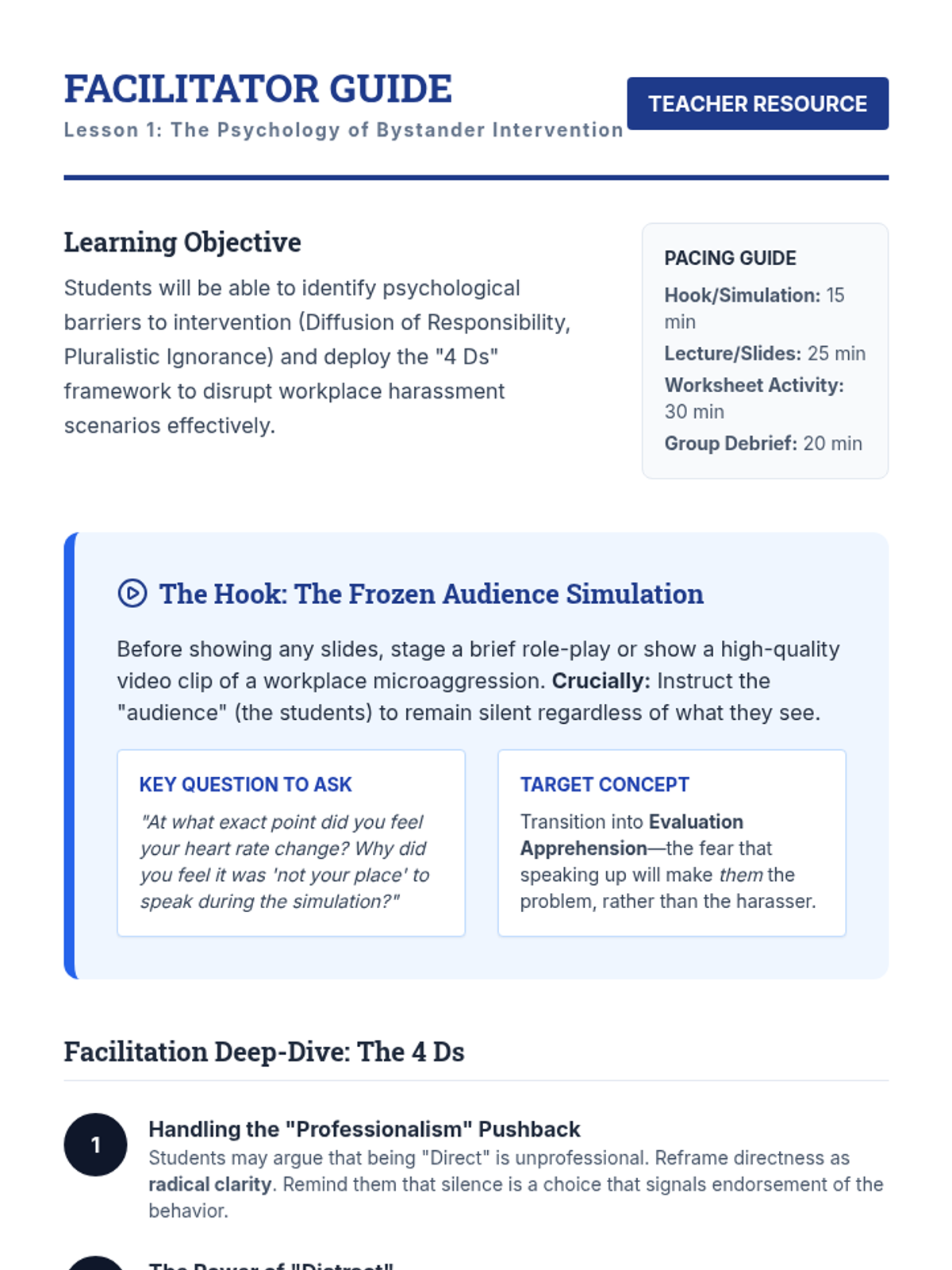
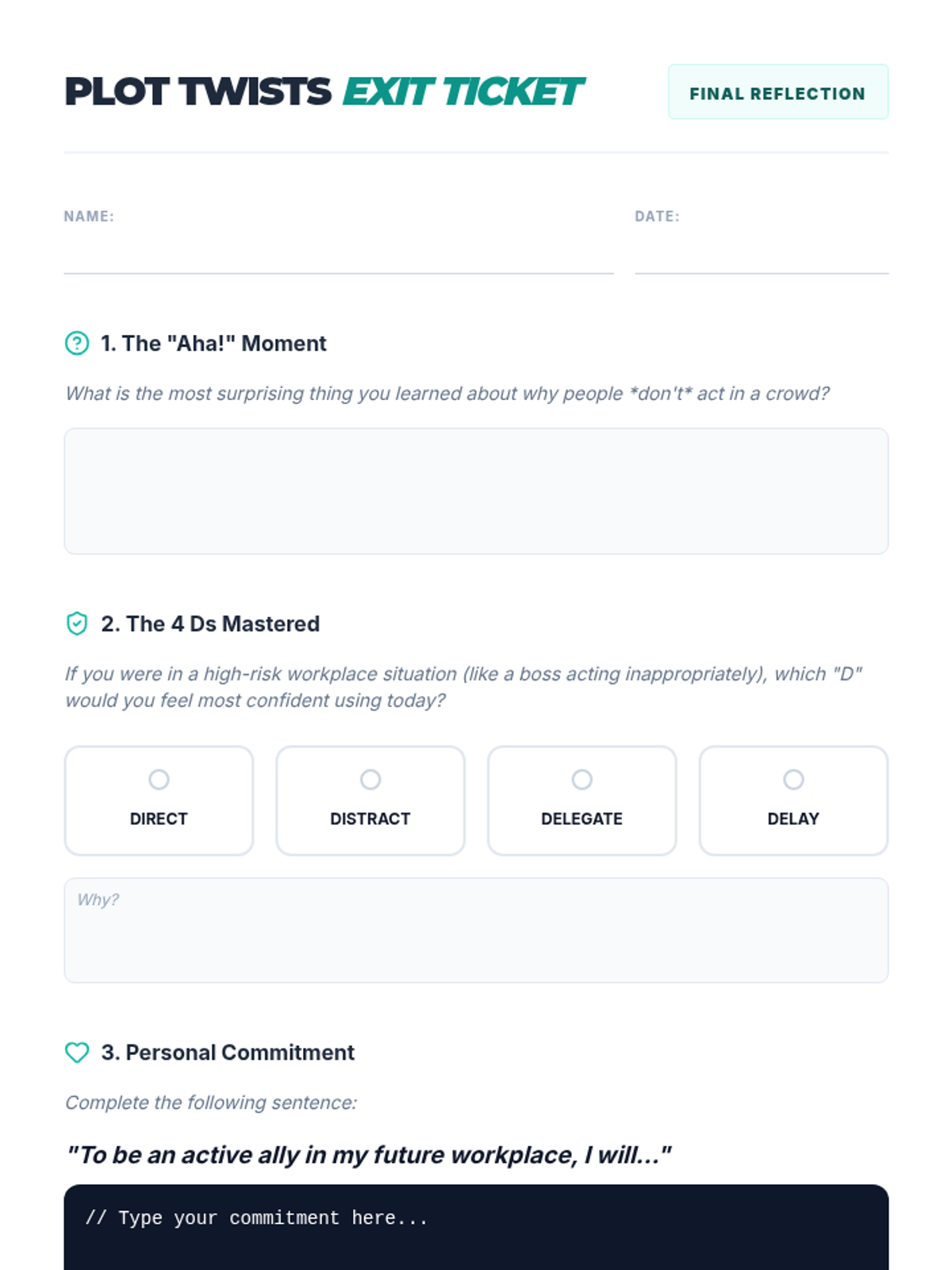
Explore the psychological barriers to intervening in workplace harassment and master the 4 Ds of bystander intervention through simulation and analysis.
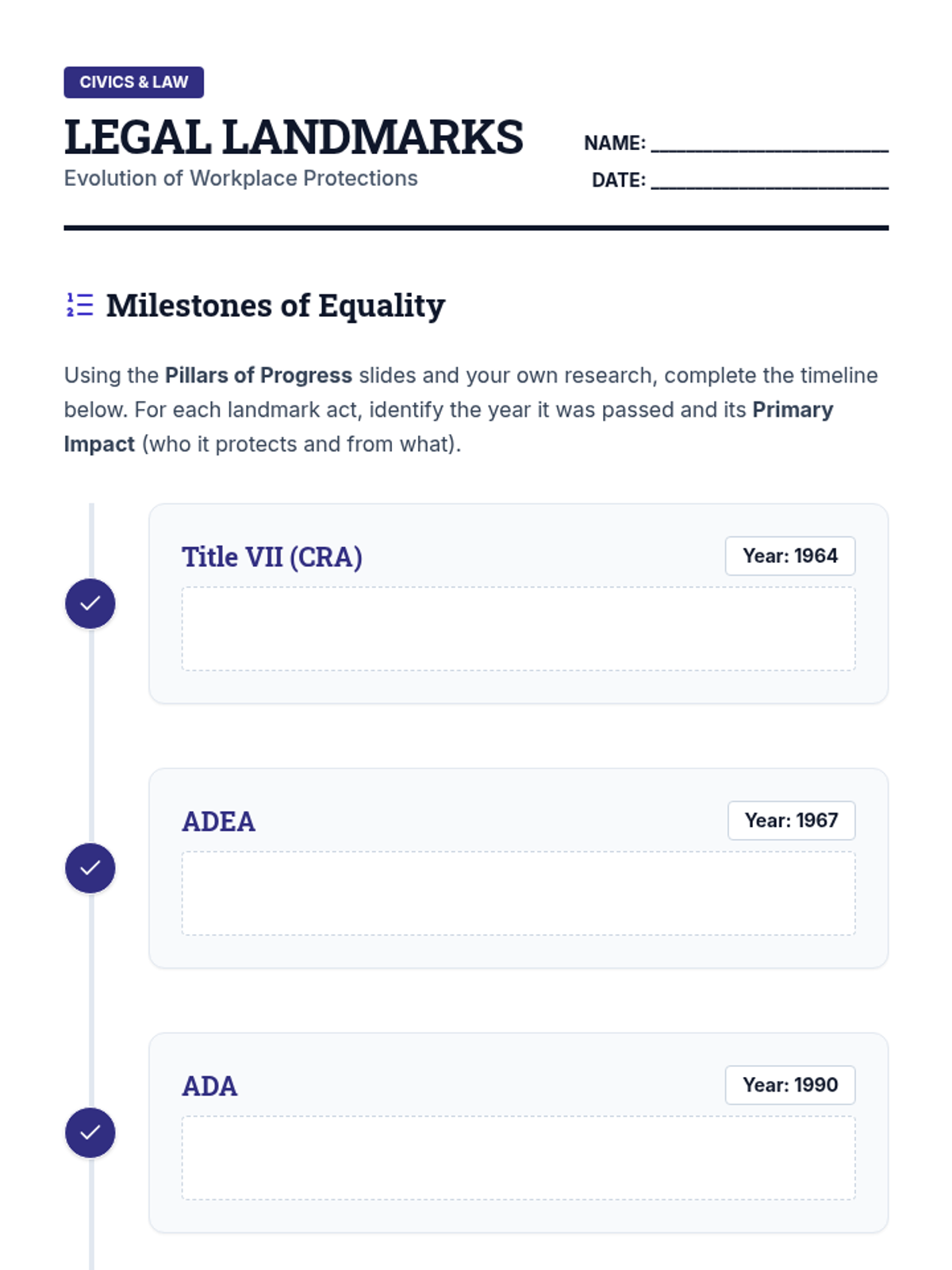
This lesson provides a deep dive into Title VII of the Civil Rights Act, the Americans with Disabilities Act (ADA), and the Age Discrimination in Employment Act (ADEA), focusing on the historical evolution of workplace rights.
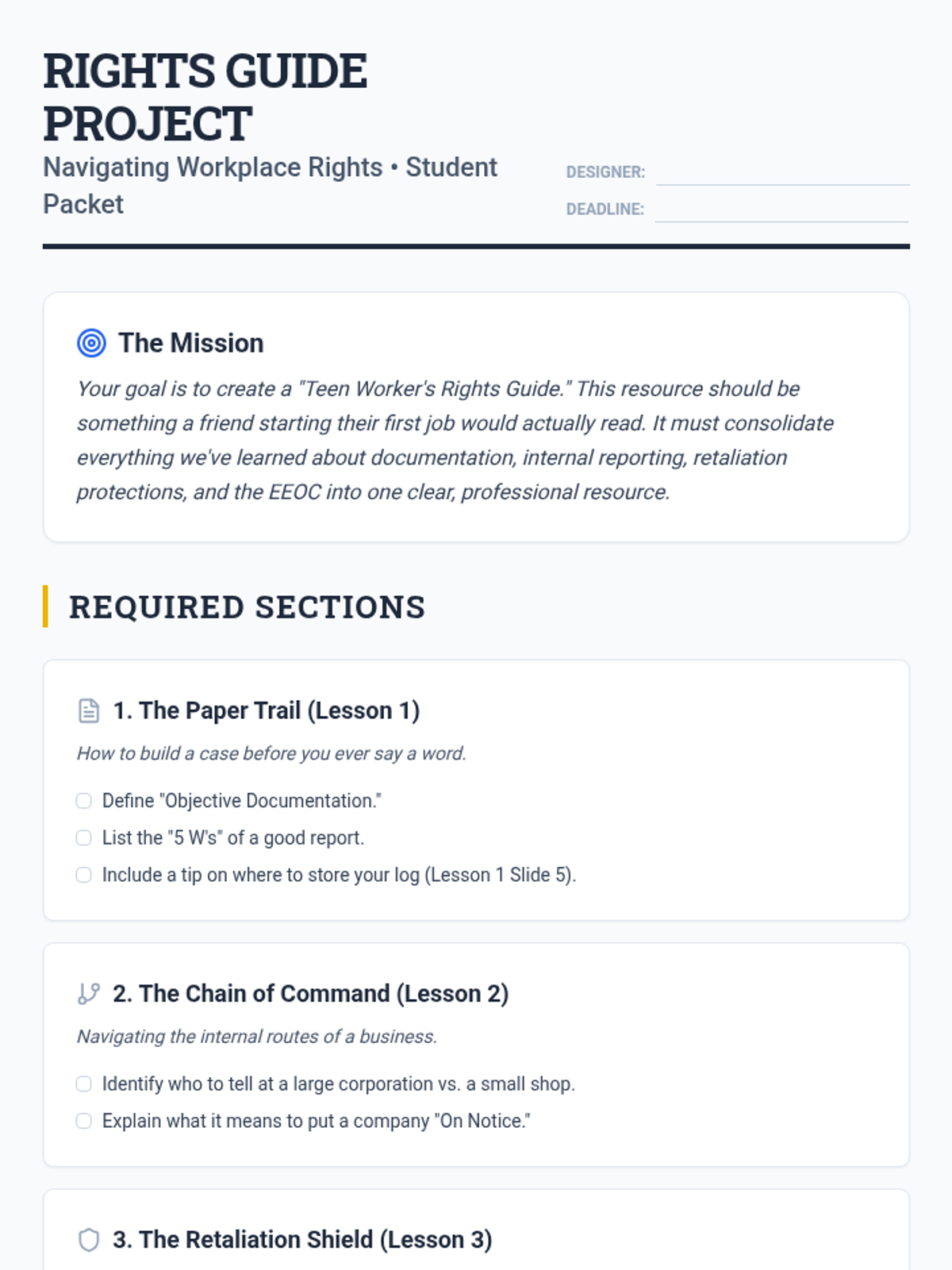
In this final project-based lesson, students synthesize their knowledge to create a comprehensive Workplace Rights Resource Guide for teen workers.
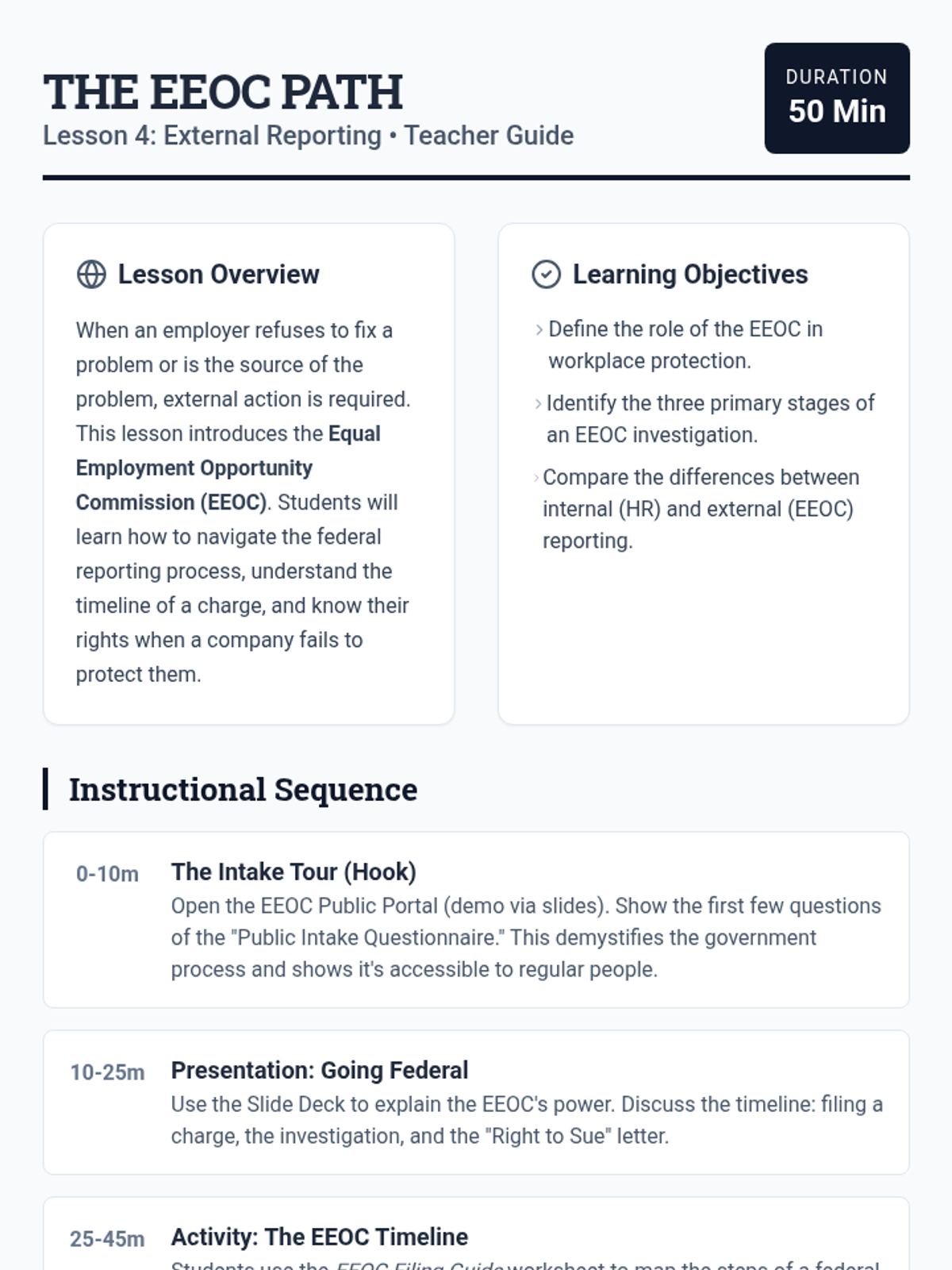
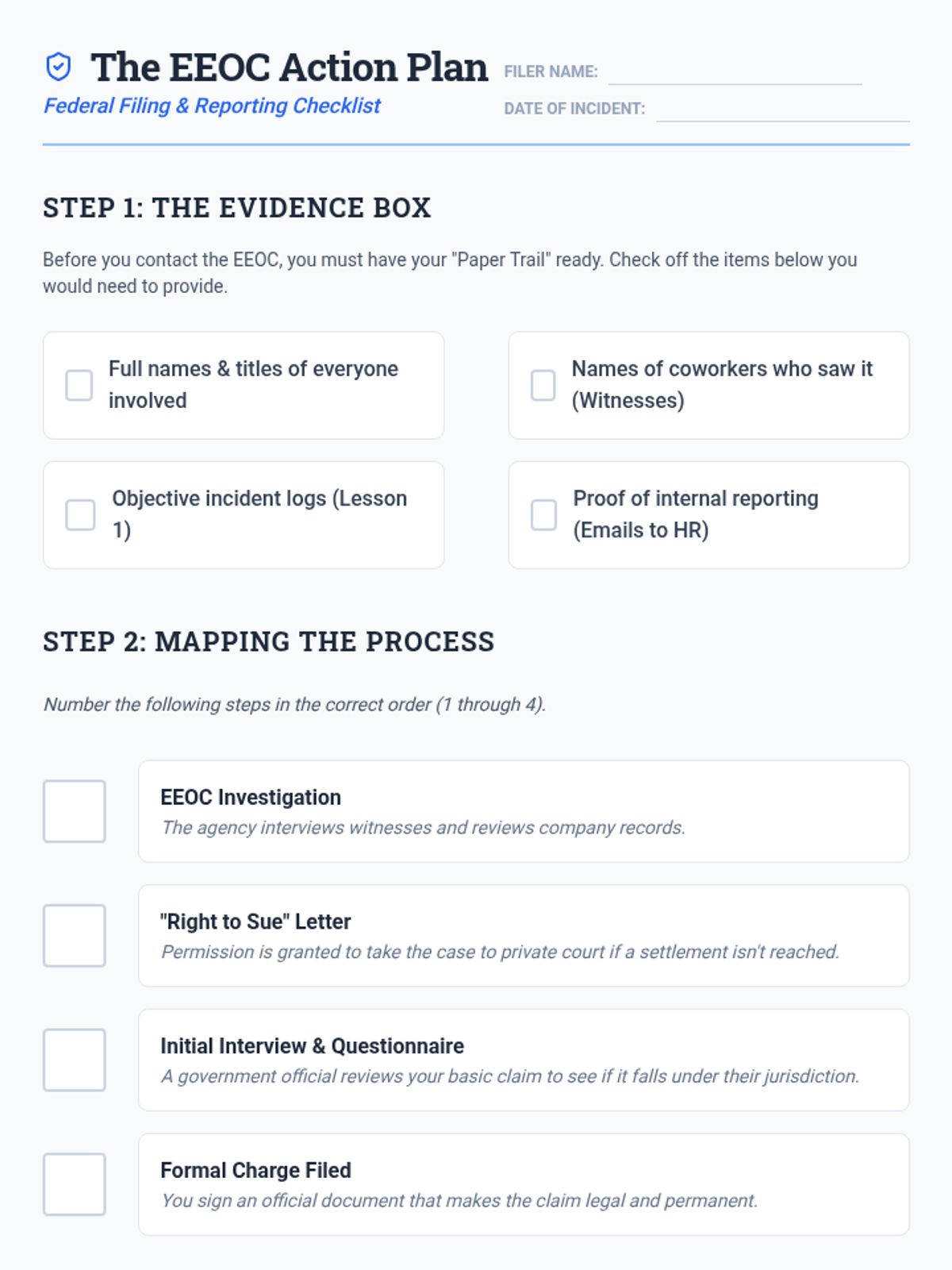
Students investigate the process of filing a formal charge with the Equal Employment Opportunity Commission (EEOC) when internal reporting fails to resolve an issue.
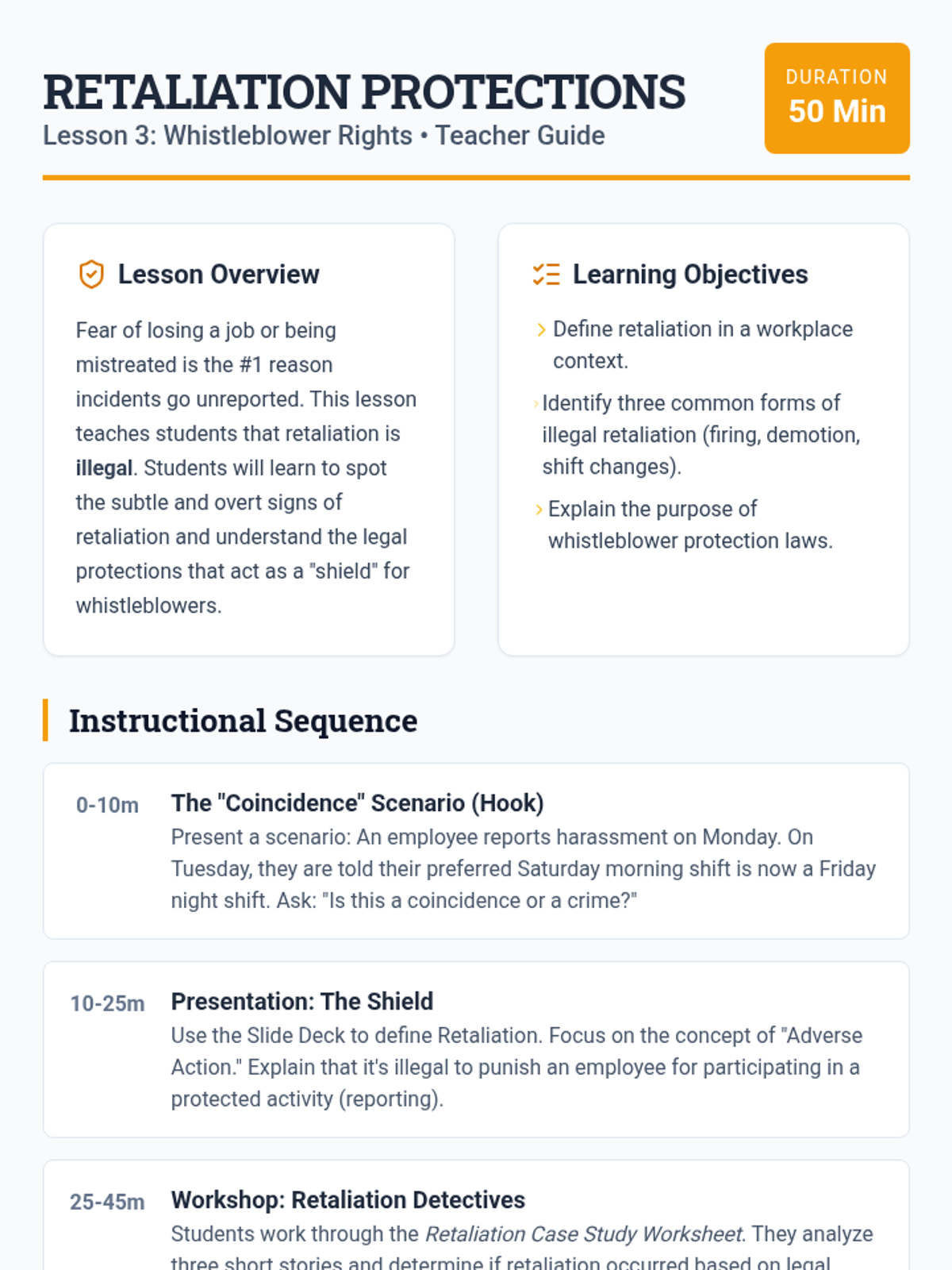
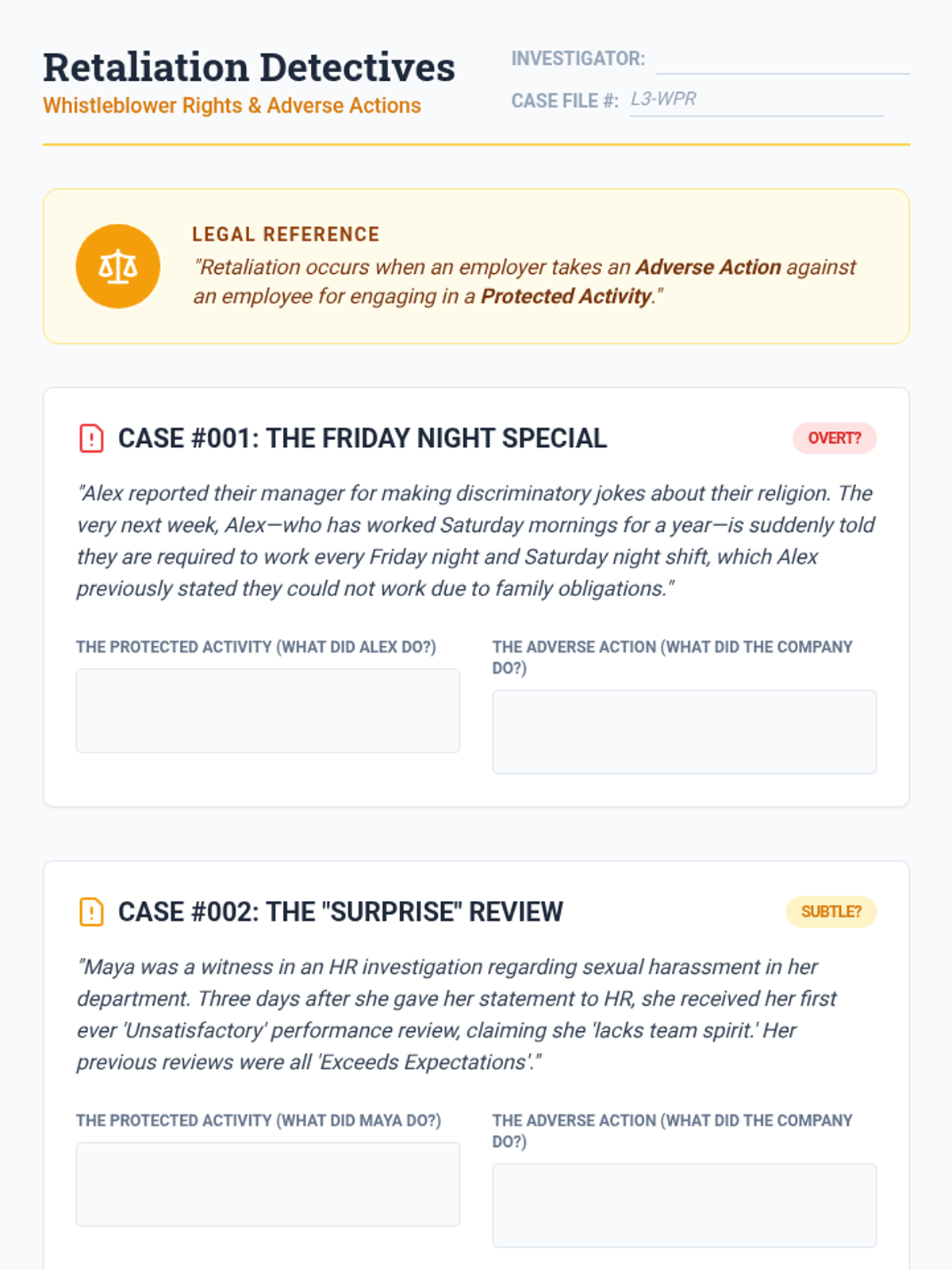
Students study whistleblower protection laws and analyze real-world case studies to understand what constitutes illegal retaliation in the workplace.
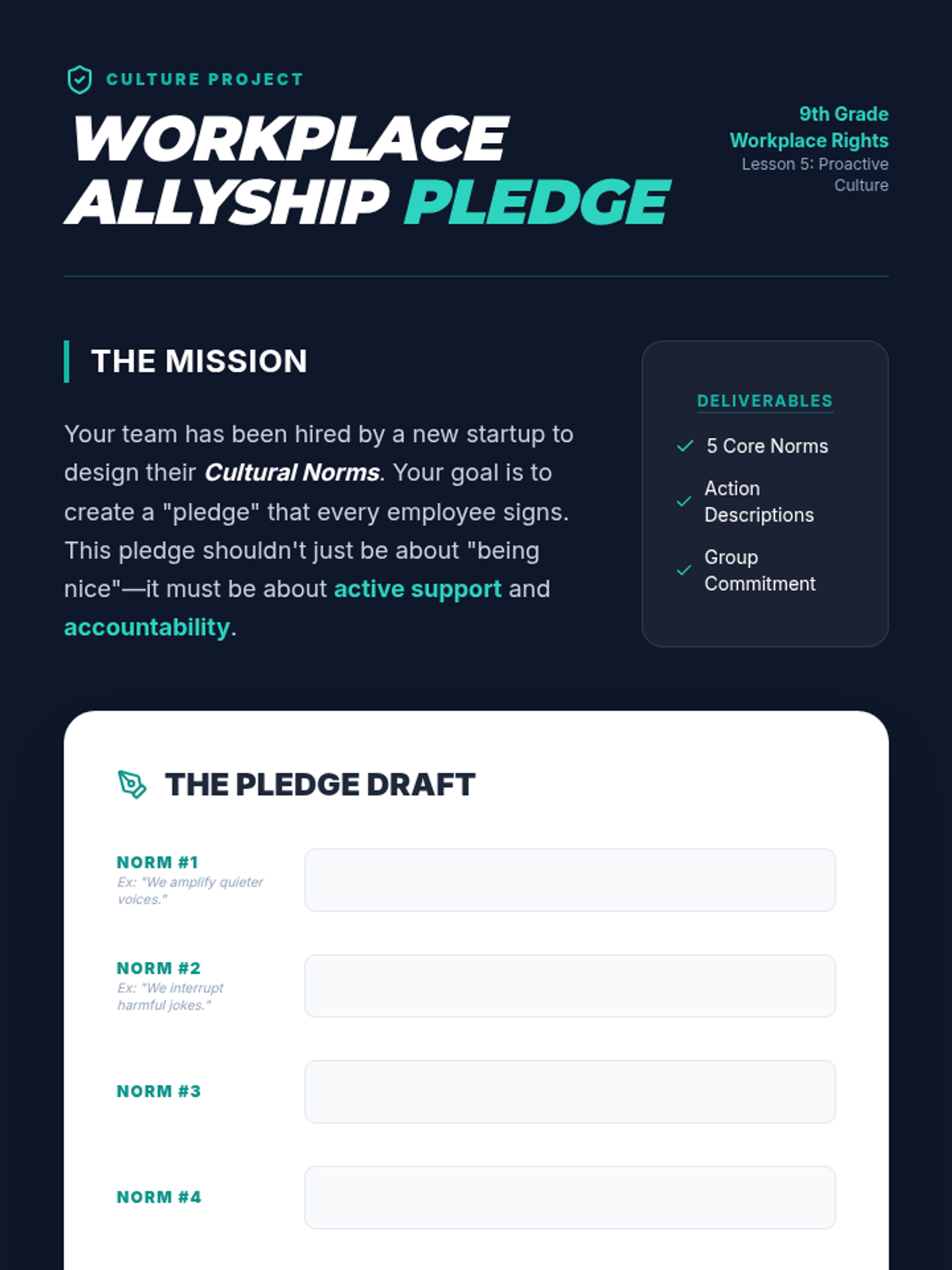
Moving from reactive to proactive, students design workplace norms and pledges that foster a culture of mutual support and accountability.
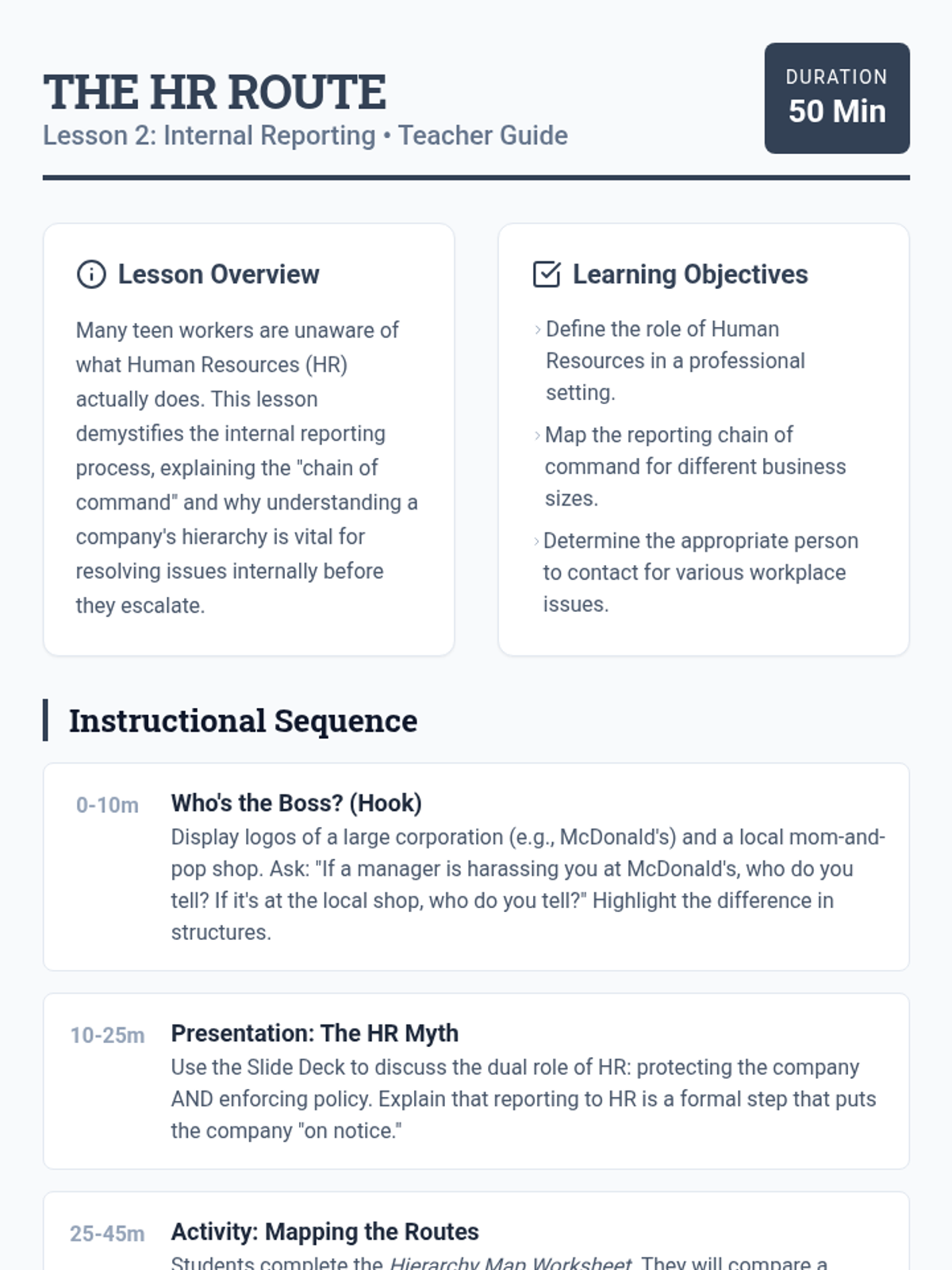
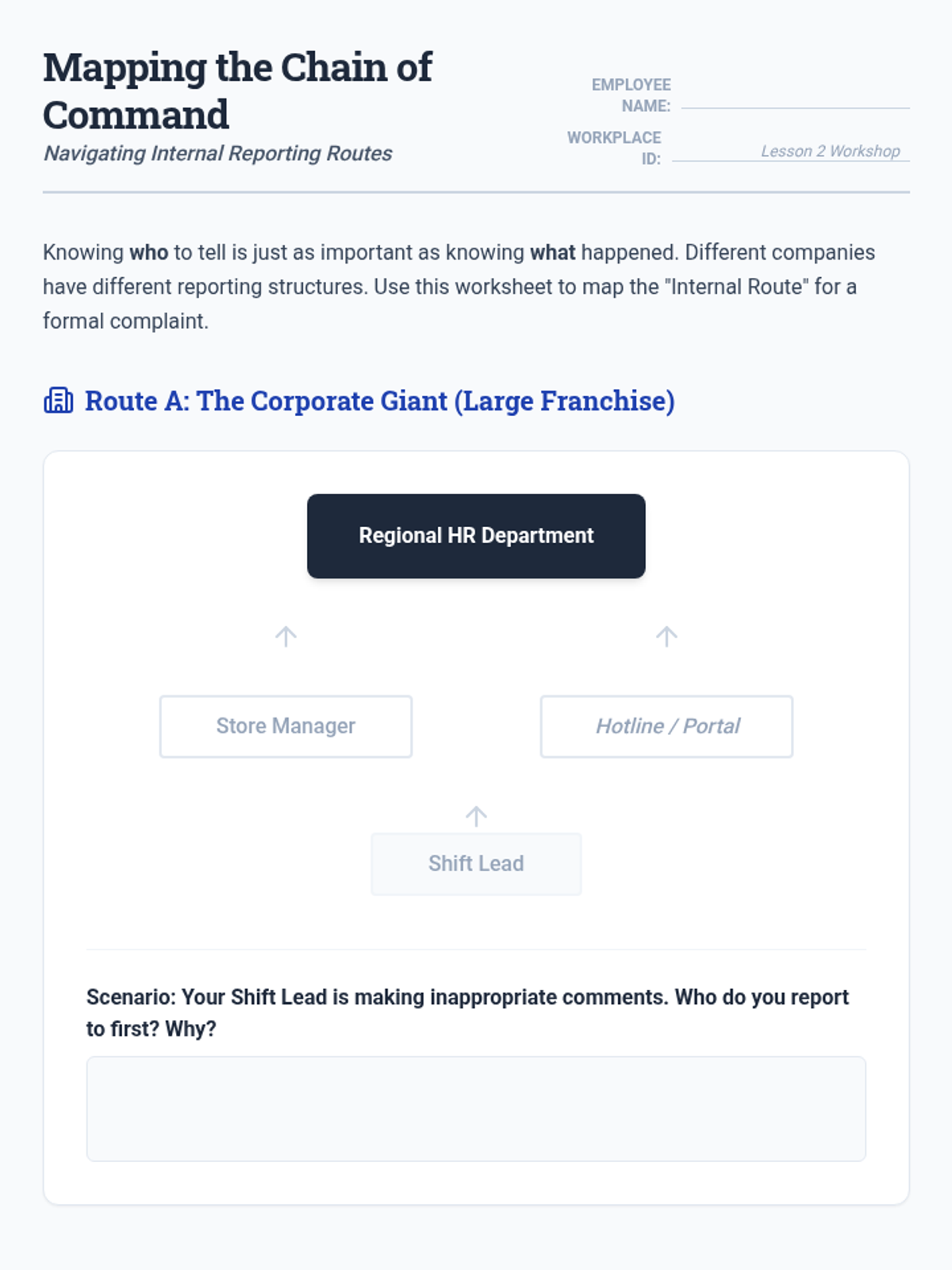
This lesson explores the standard chain of command for reporting workplace issues and the role of Human Resources in both large corporations and small businesses.
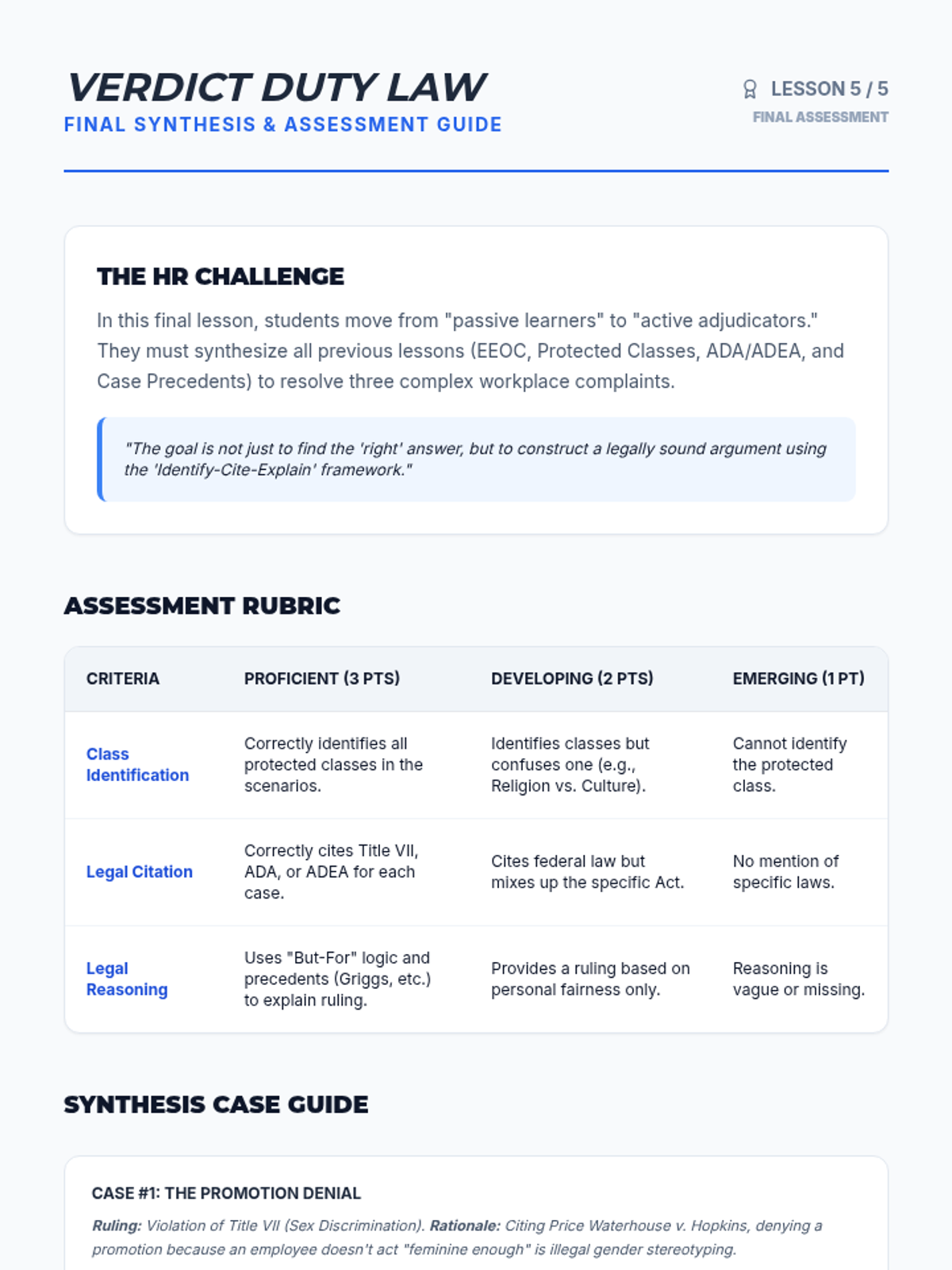
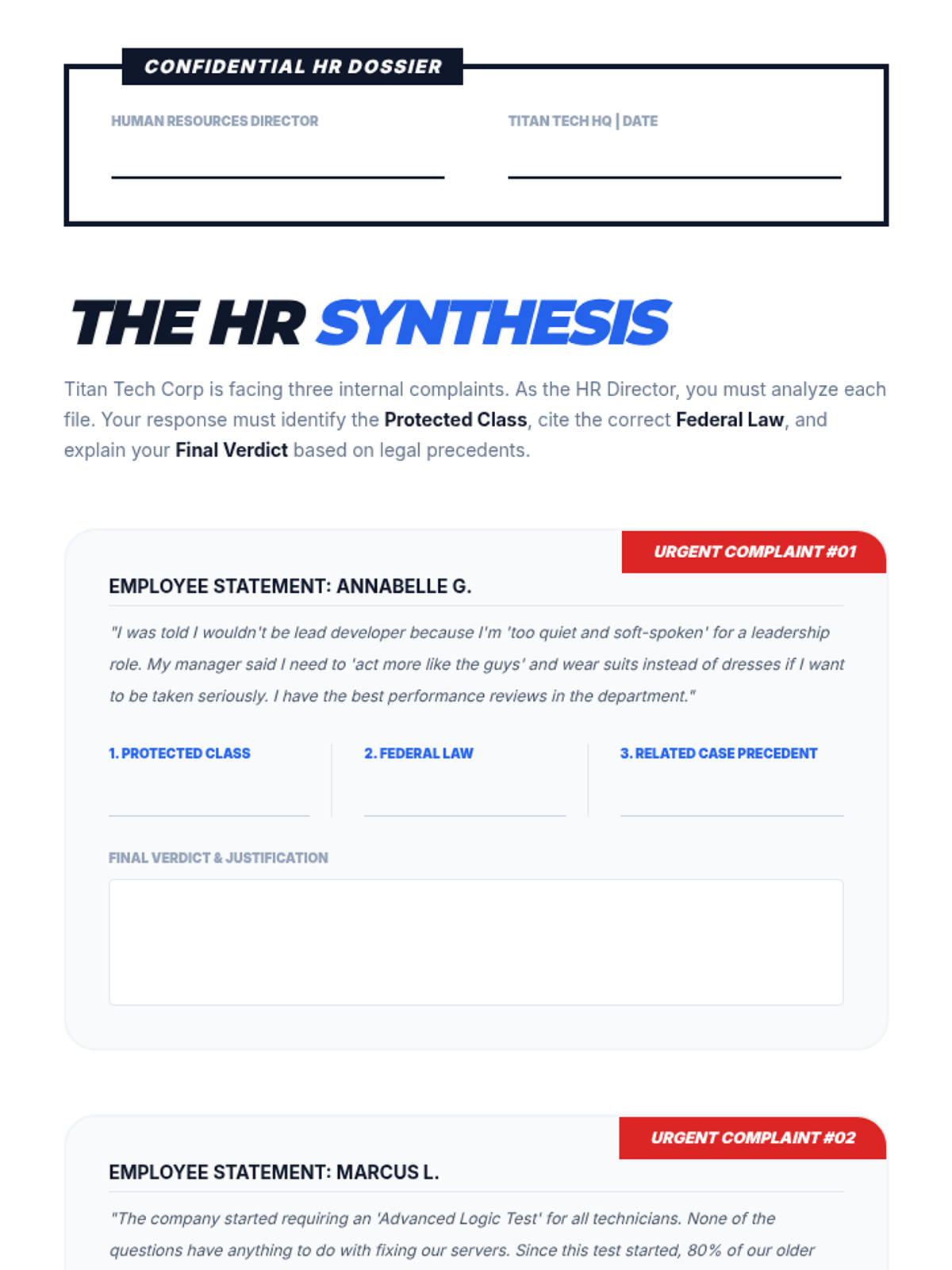
In this culminating lesson, students apply their knowledge to a complex, multi-faceted case study involving potential discrimination. They must draft a mock administrative response citing specific laws and protected classes.
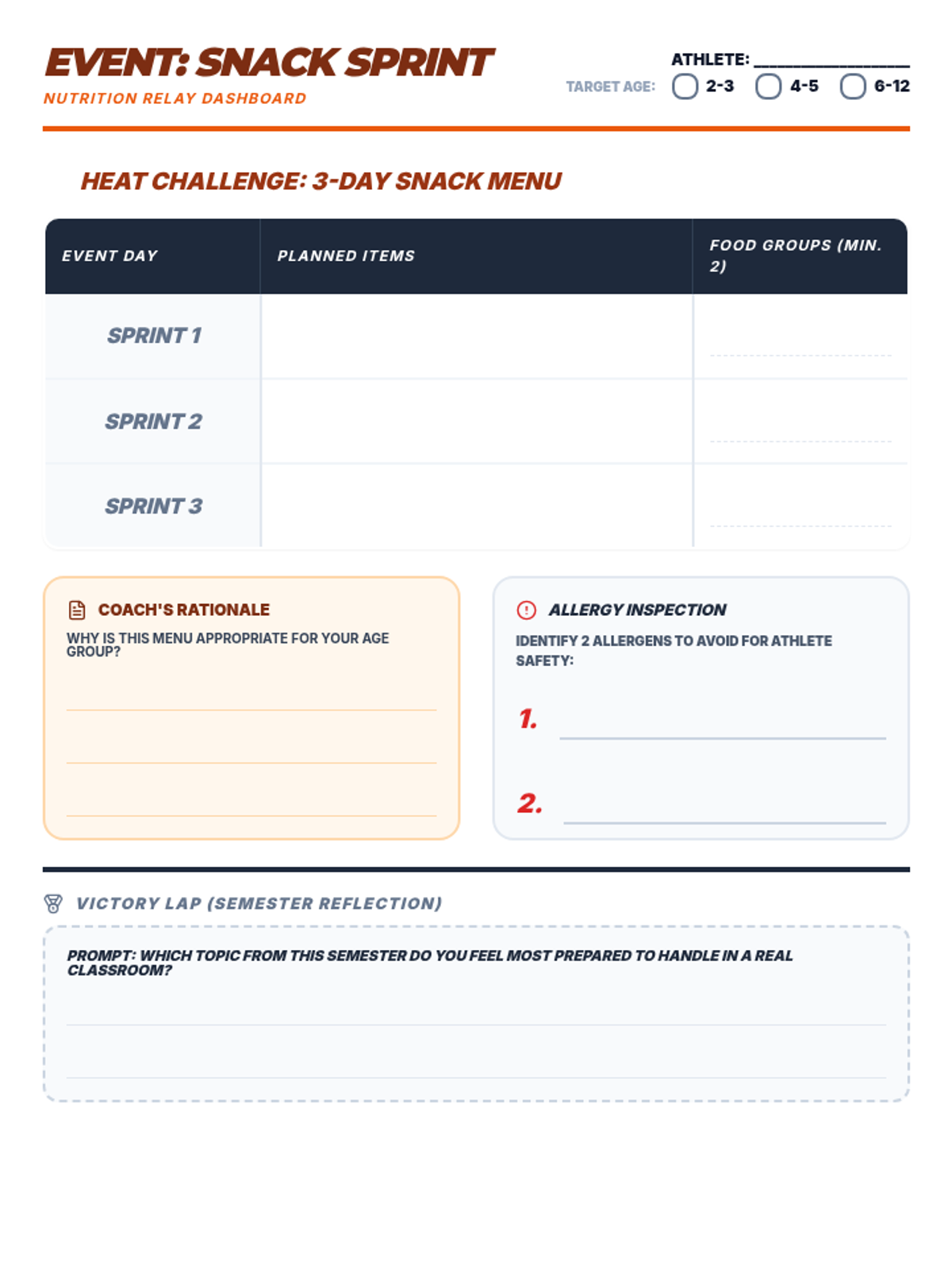
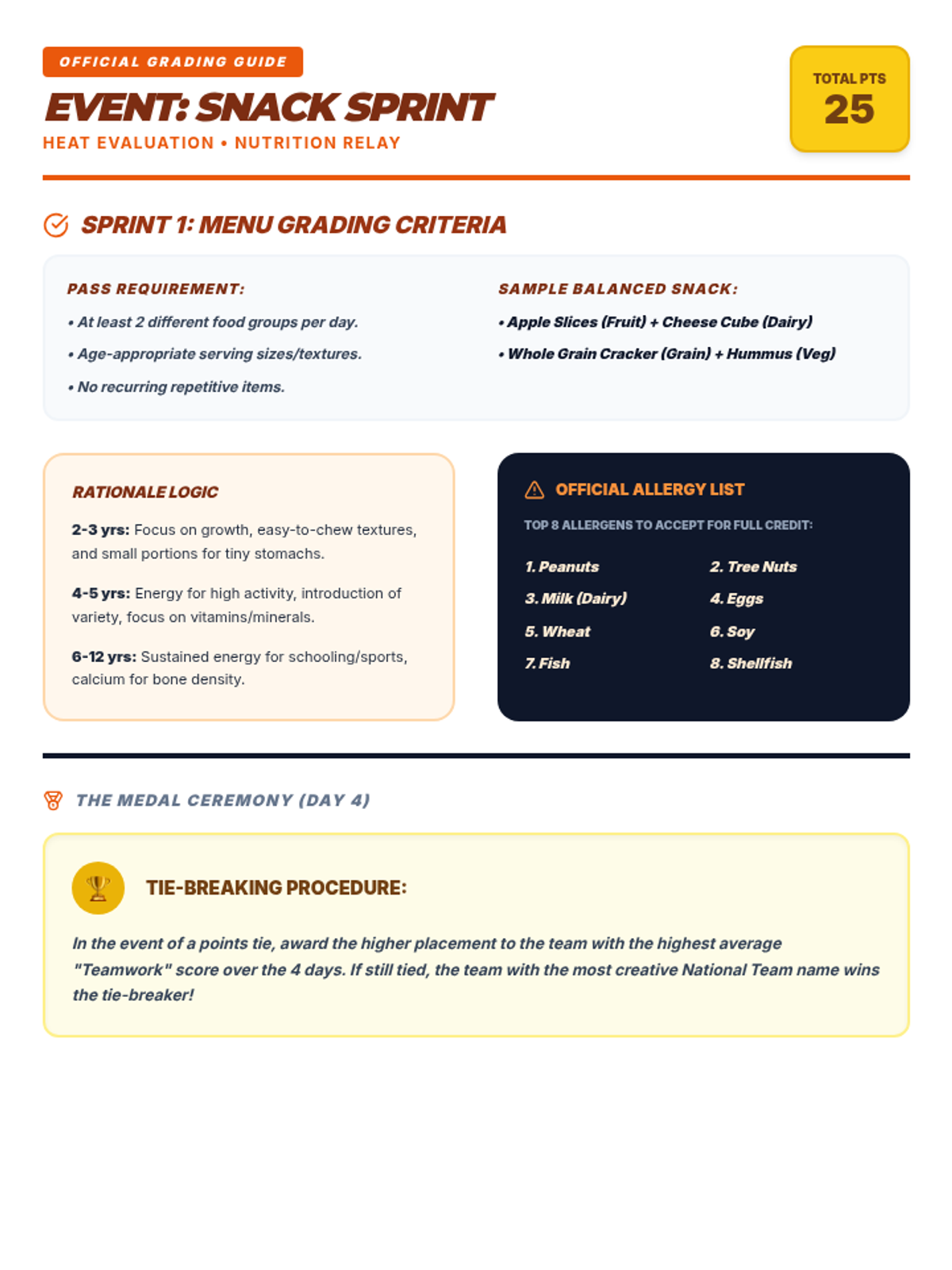
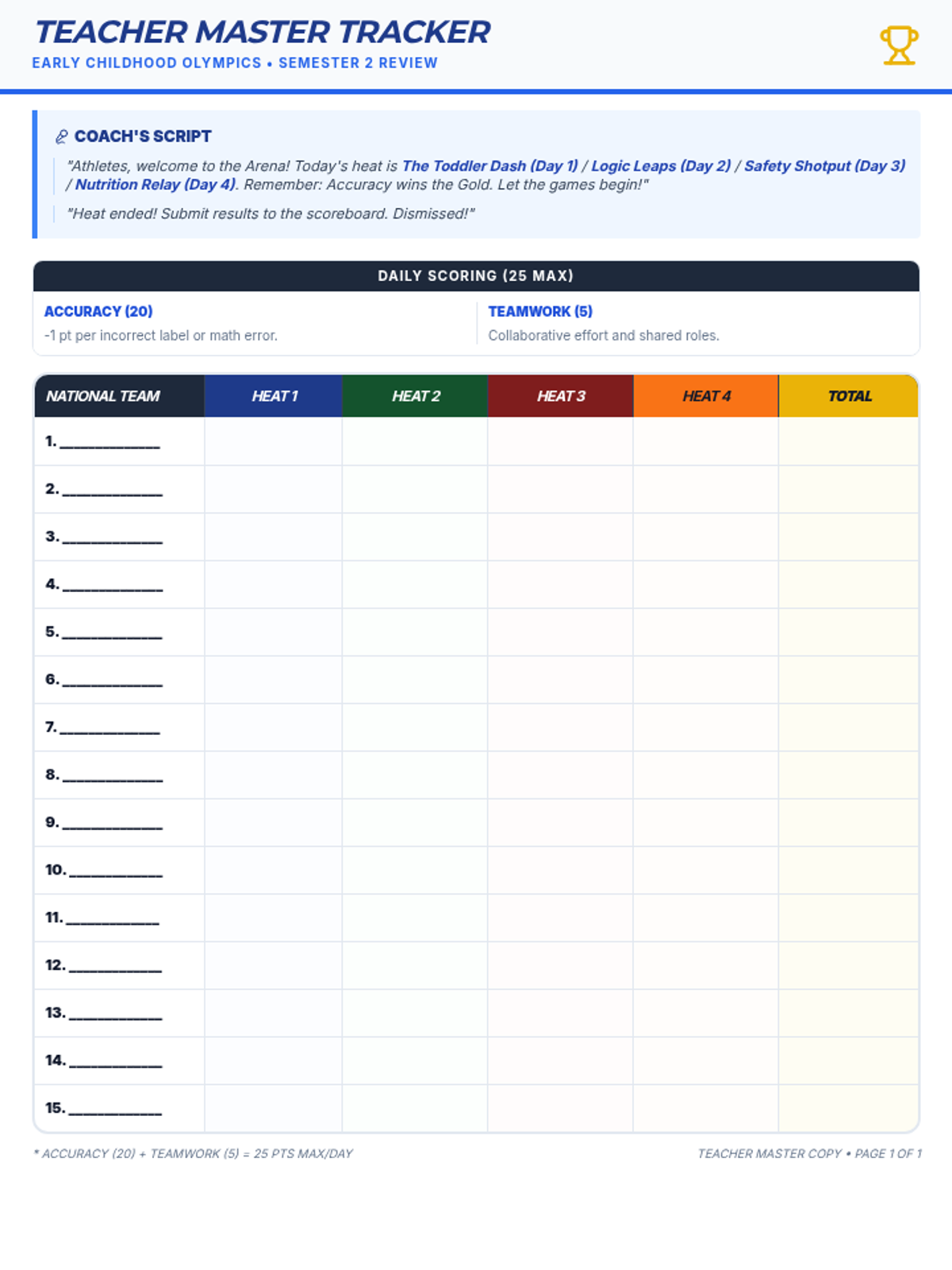
The final day covers nutrition and meal planning, followed by the grand tallying of points and the medal ceremony to conclude the semester.
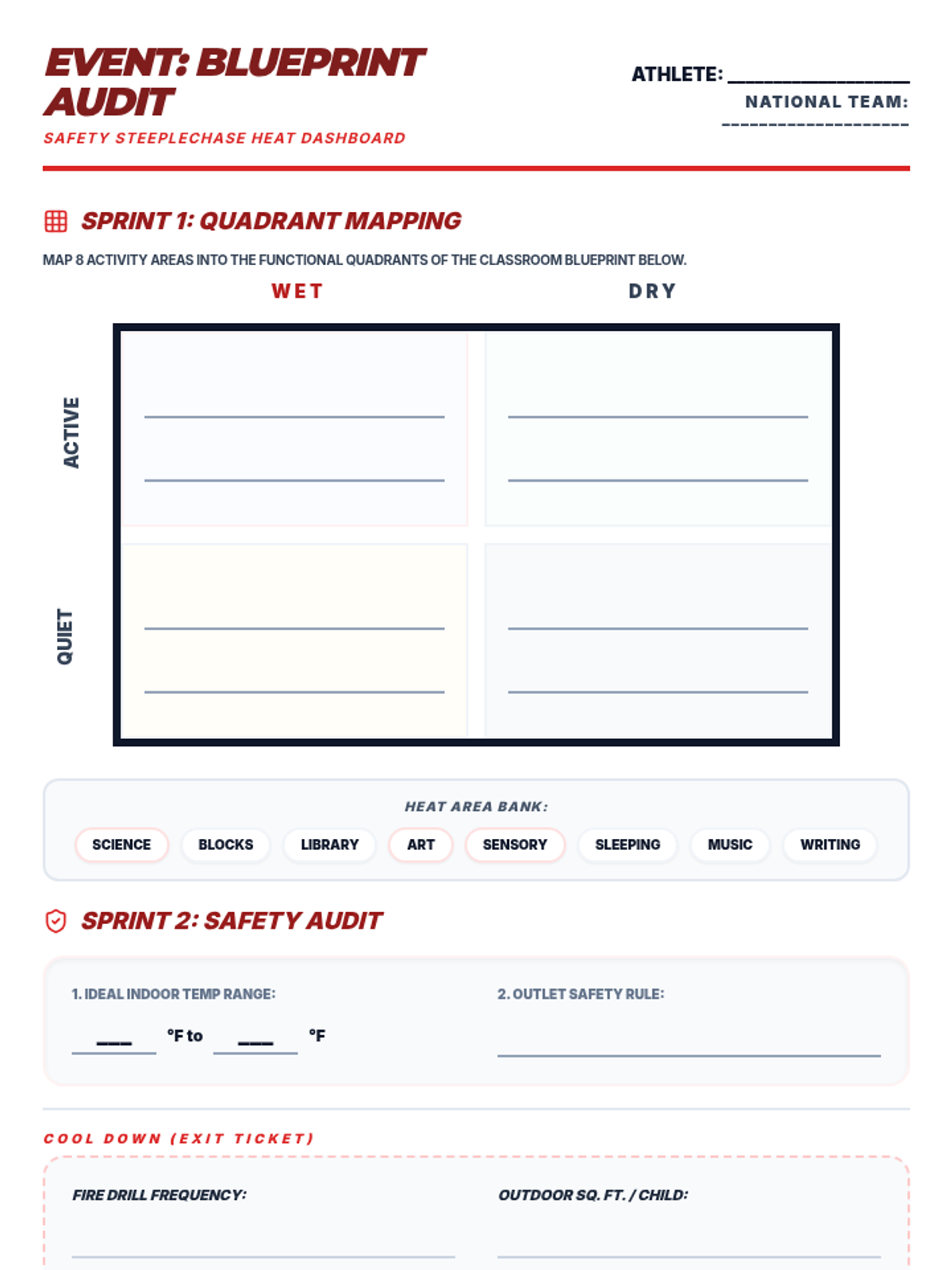
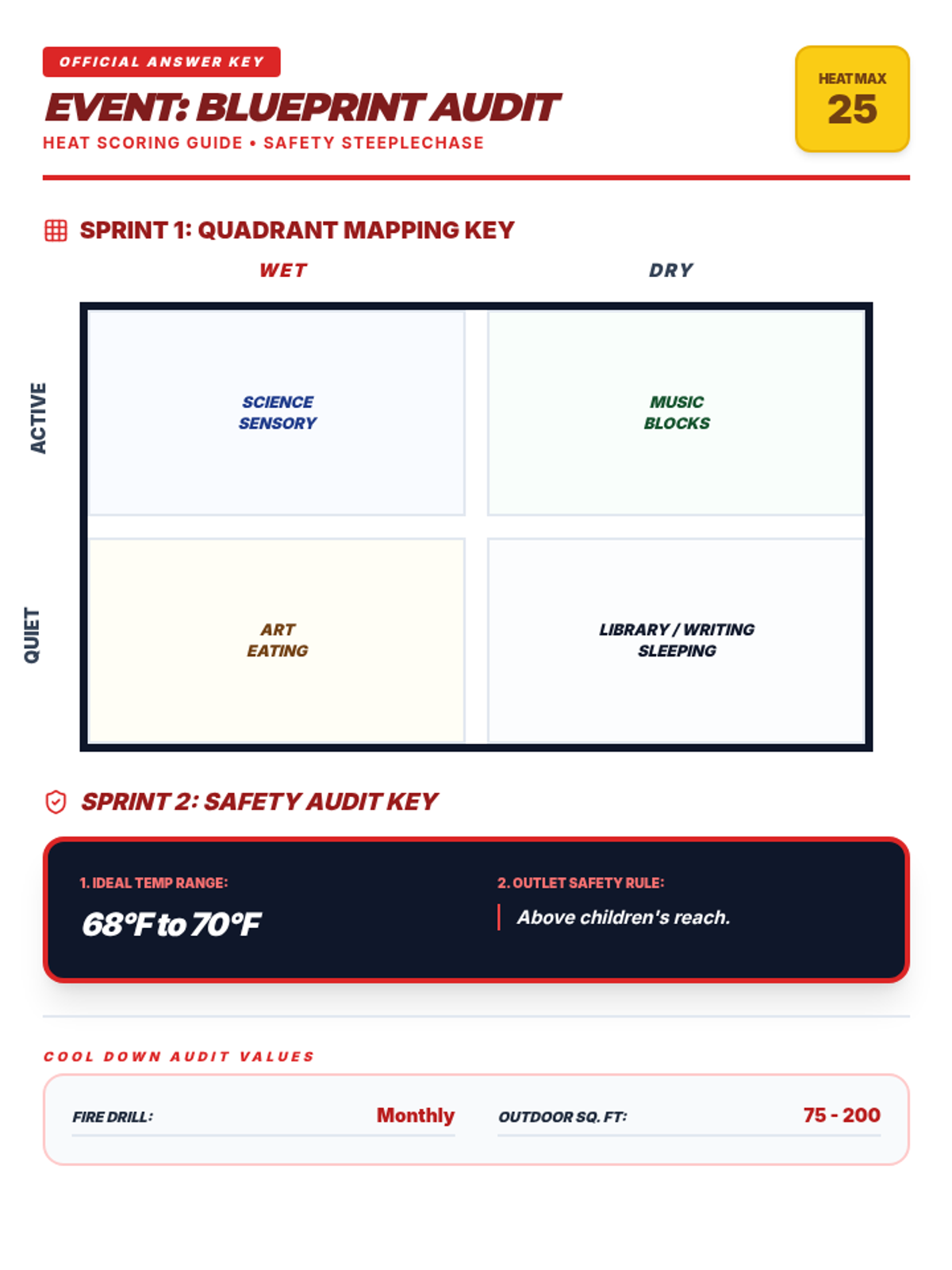
Day 3 focuses on environmental preparation and safety promotion, requiring students to apply knowledge of classroom layout and safety regulations to score points.
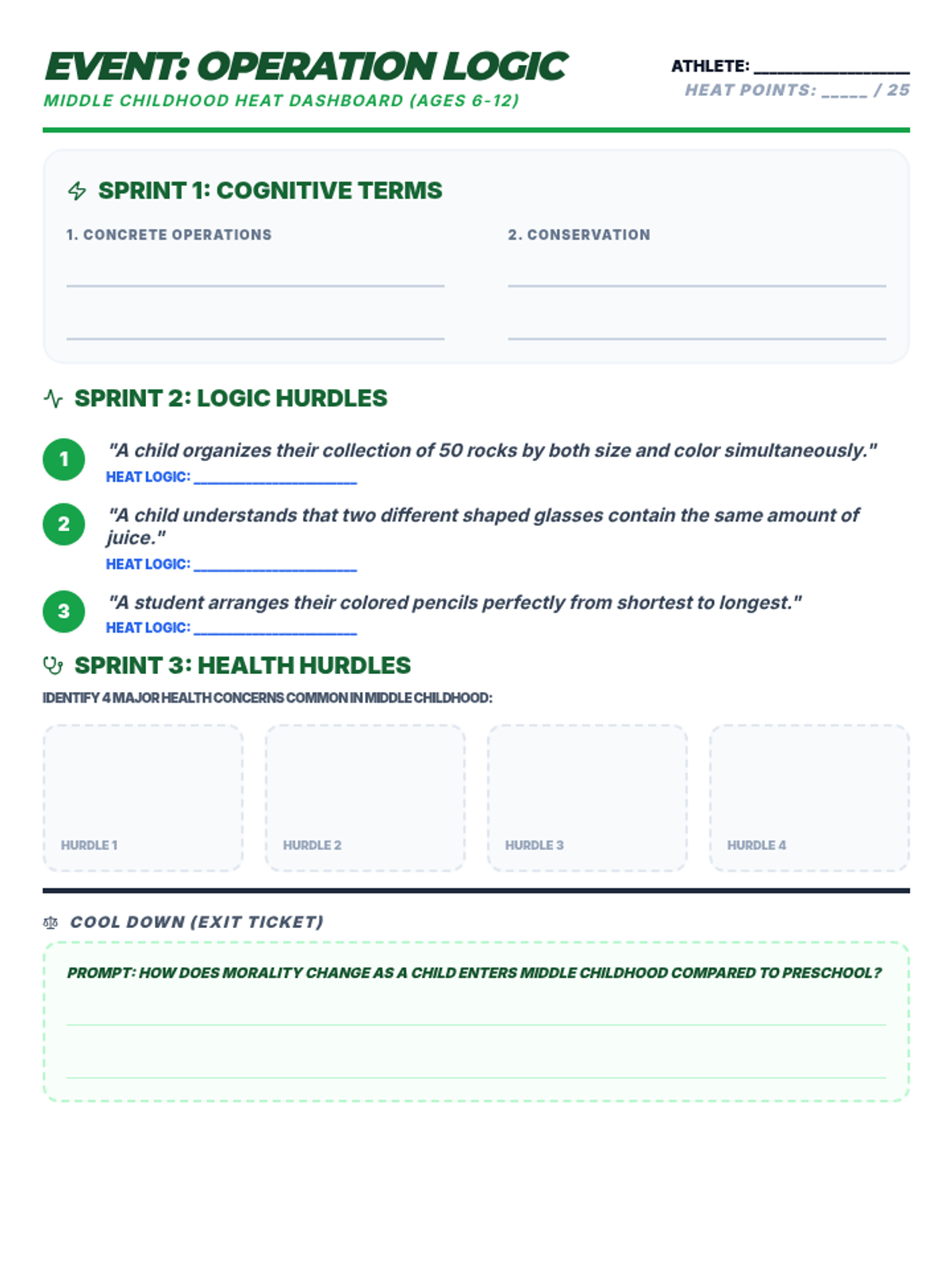
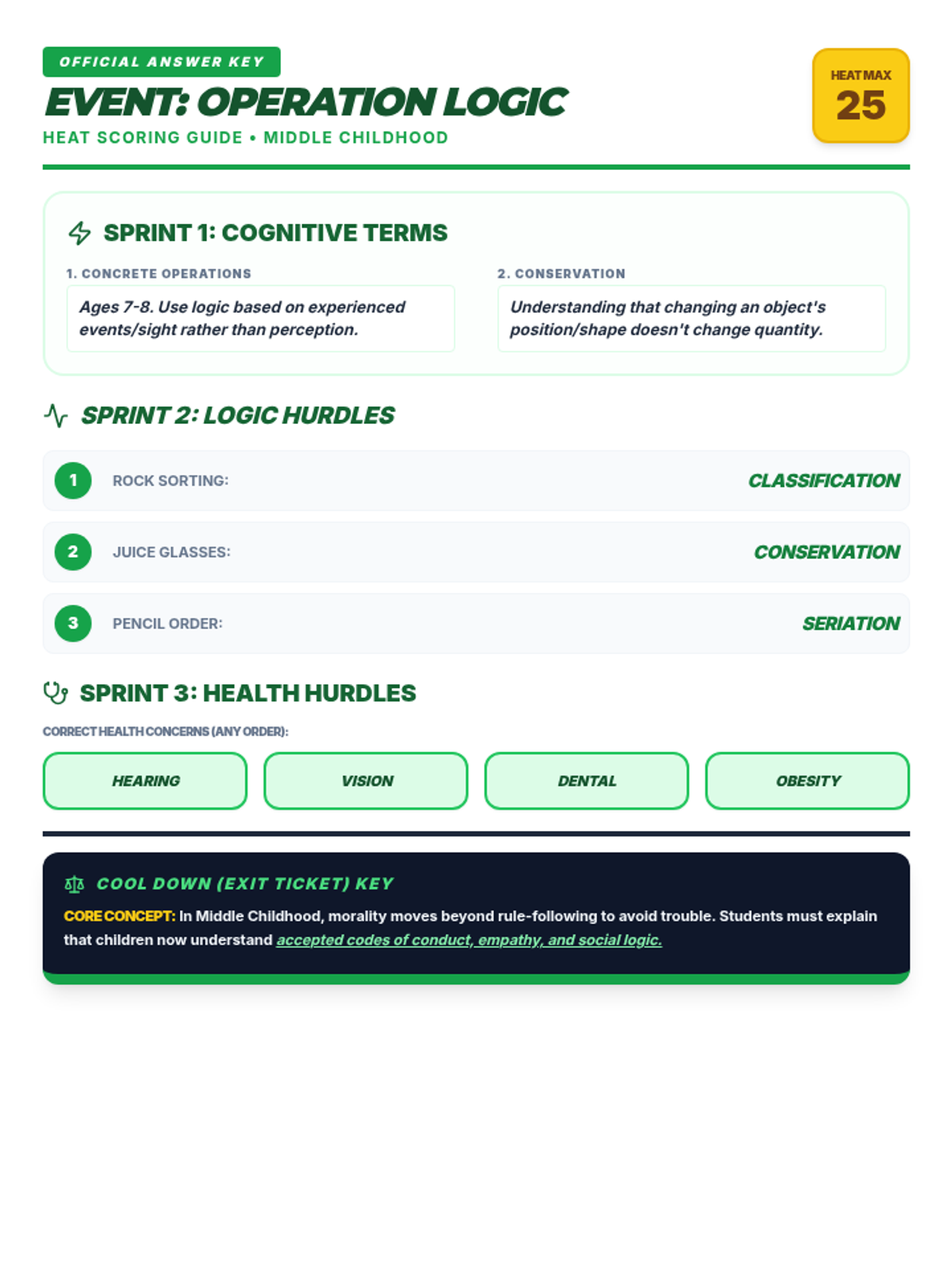
Day 2 explores middle childhood (ages 6-12), focusing on logical thinking, moral development, and the complexities of school-age social relationships.
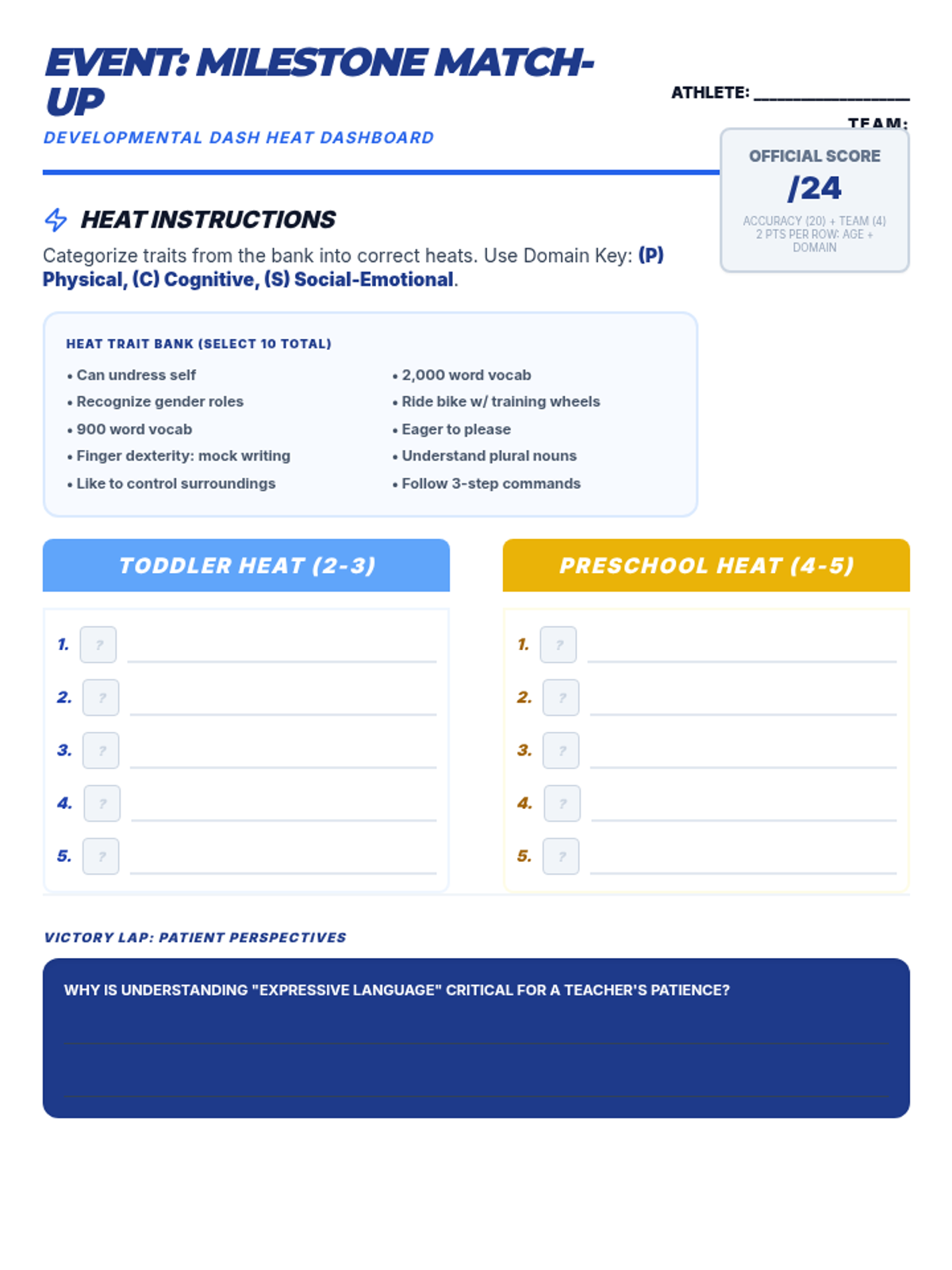
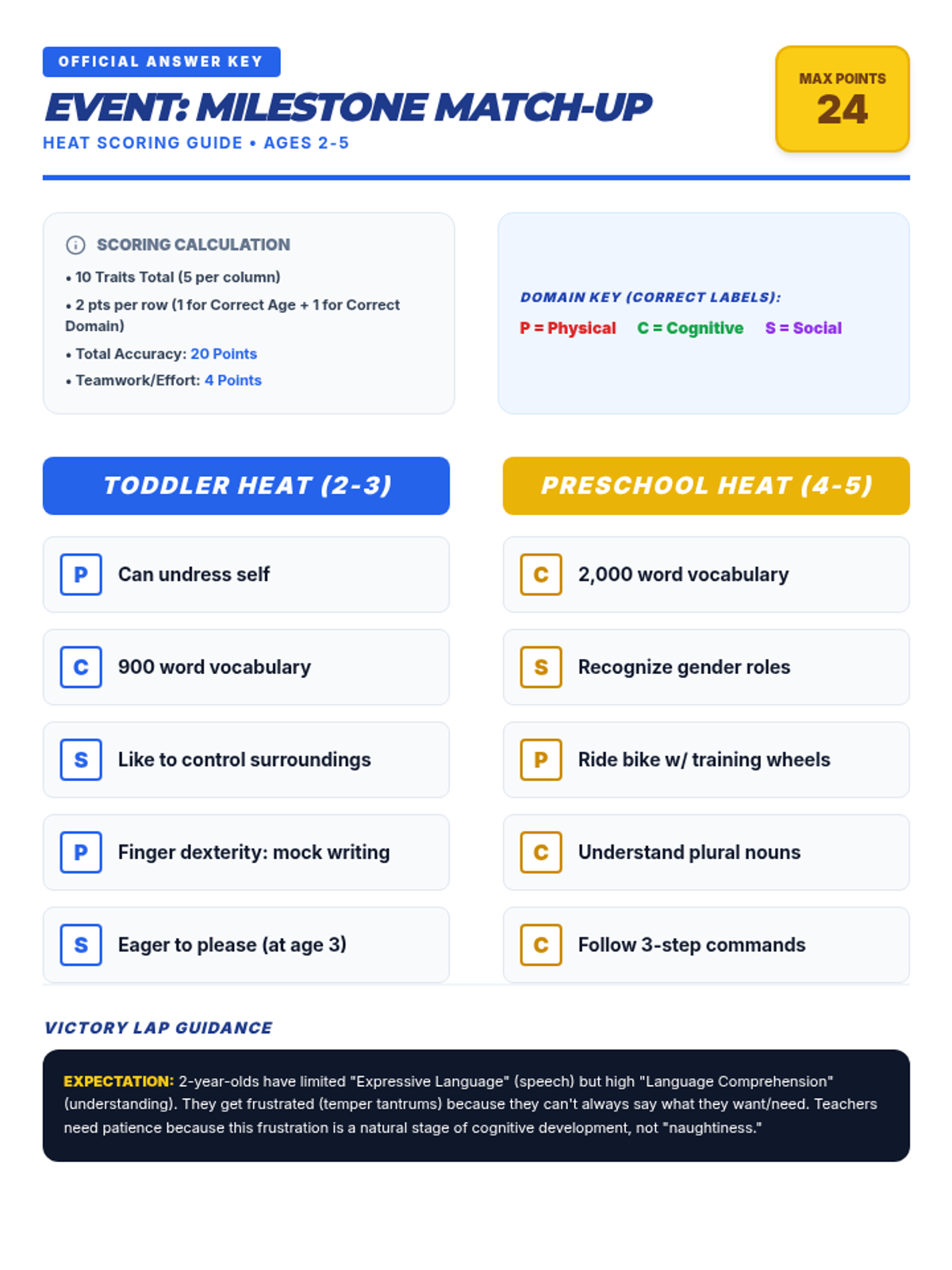
Day 1 of the Olympics focuses on the rapid development of children aged two through five, challenging students to accurately categorize physical, cognitive, and social milestones.
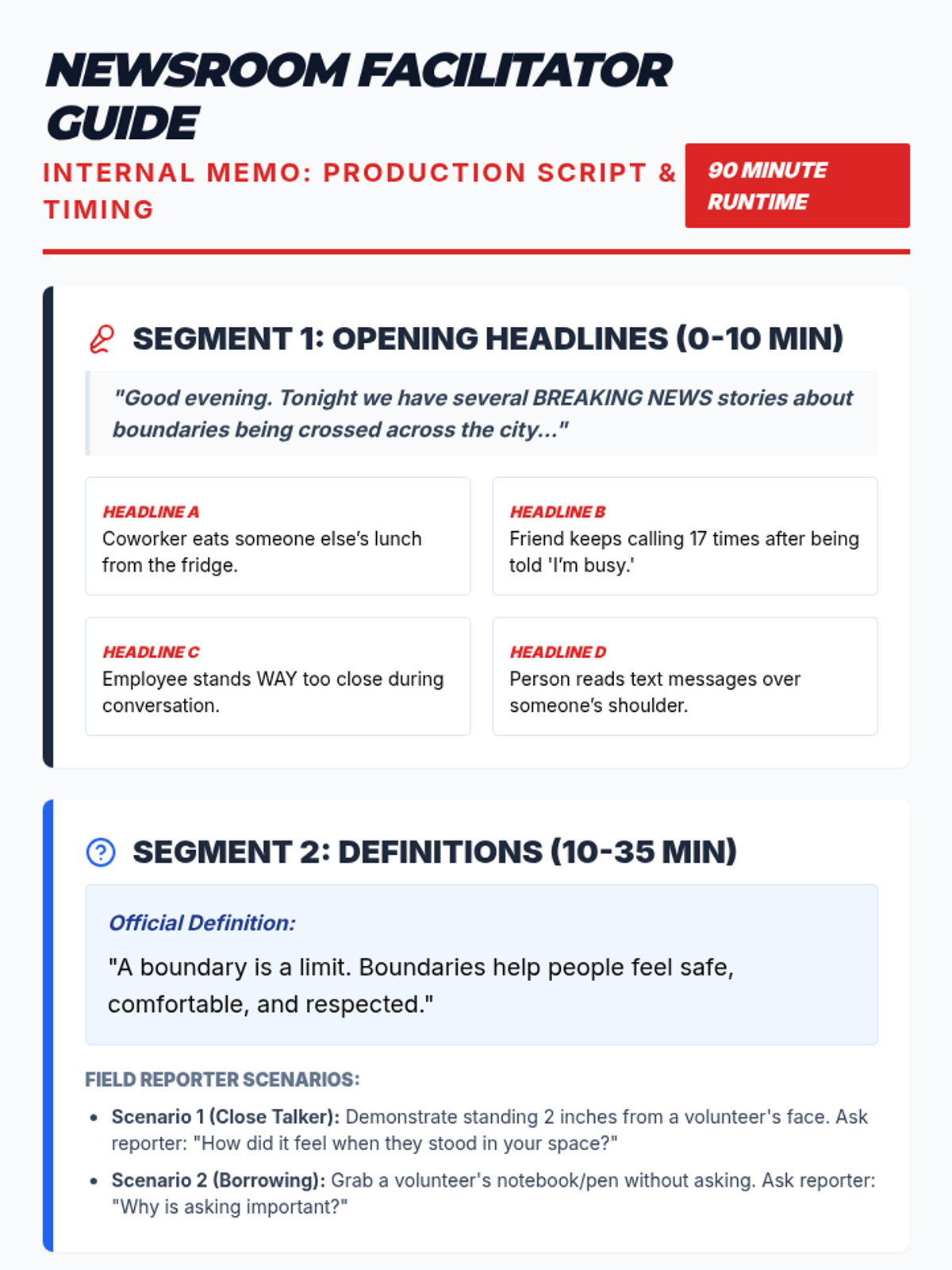
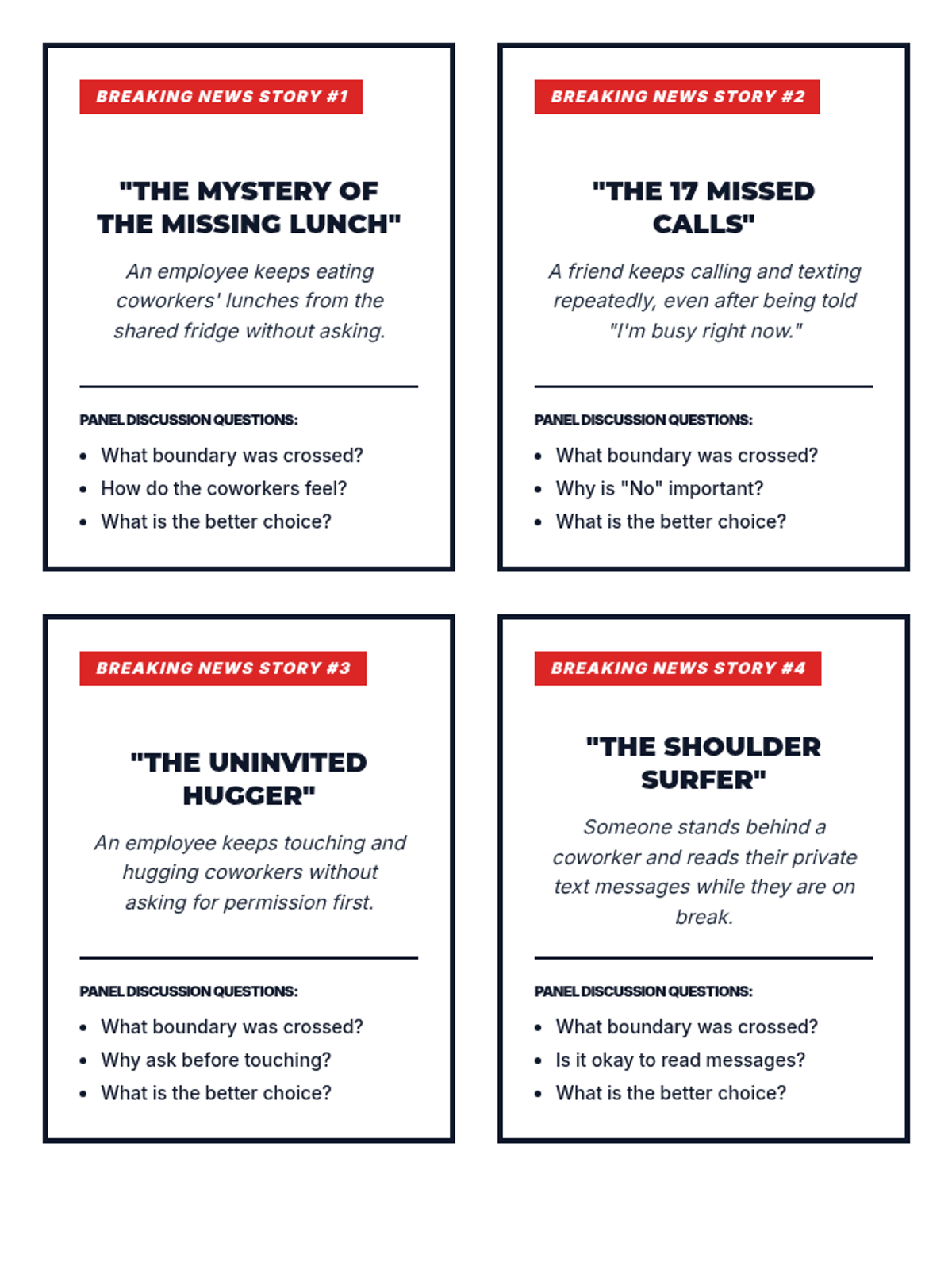
A high-energy, news-themed advocacy lesson for adults with IDD focusing on recognizing and respecting personal boundaries in work, friendship, and community settings.
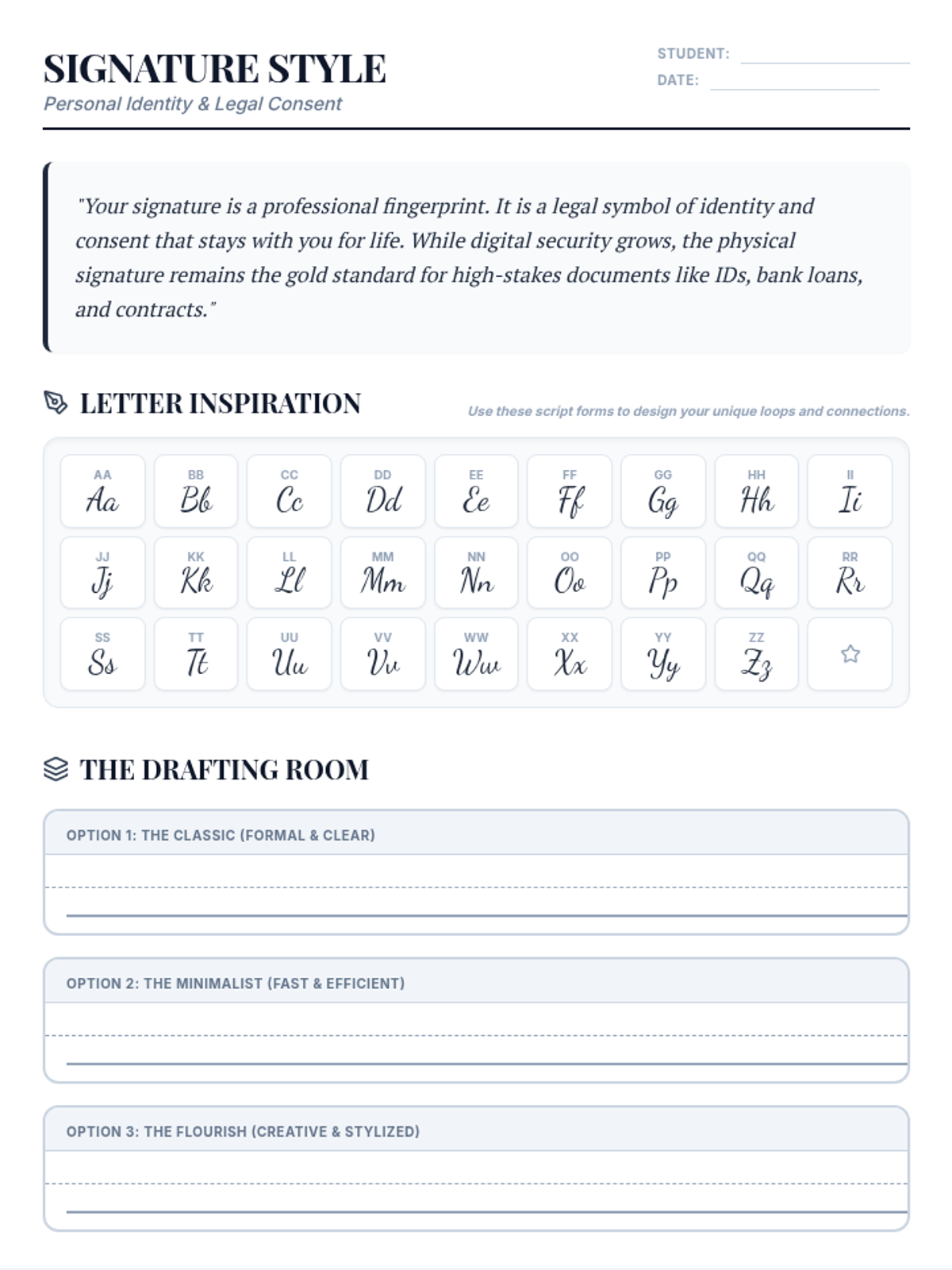
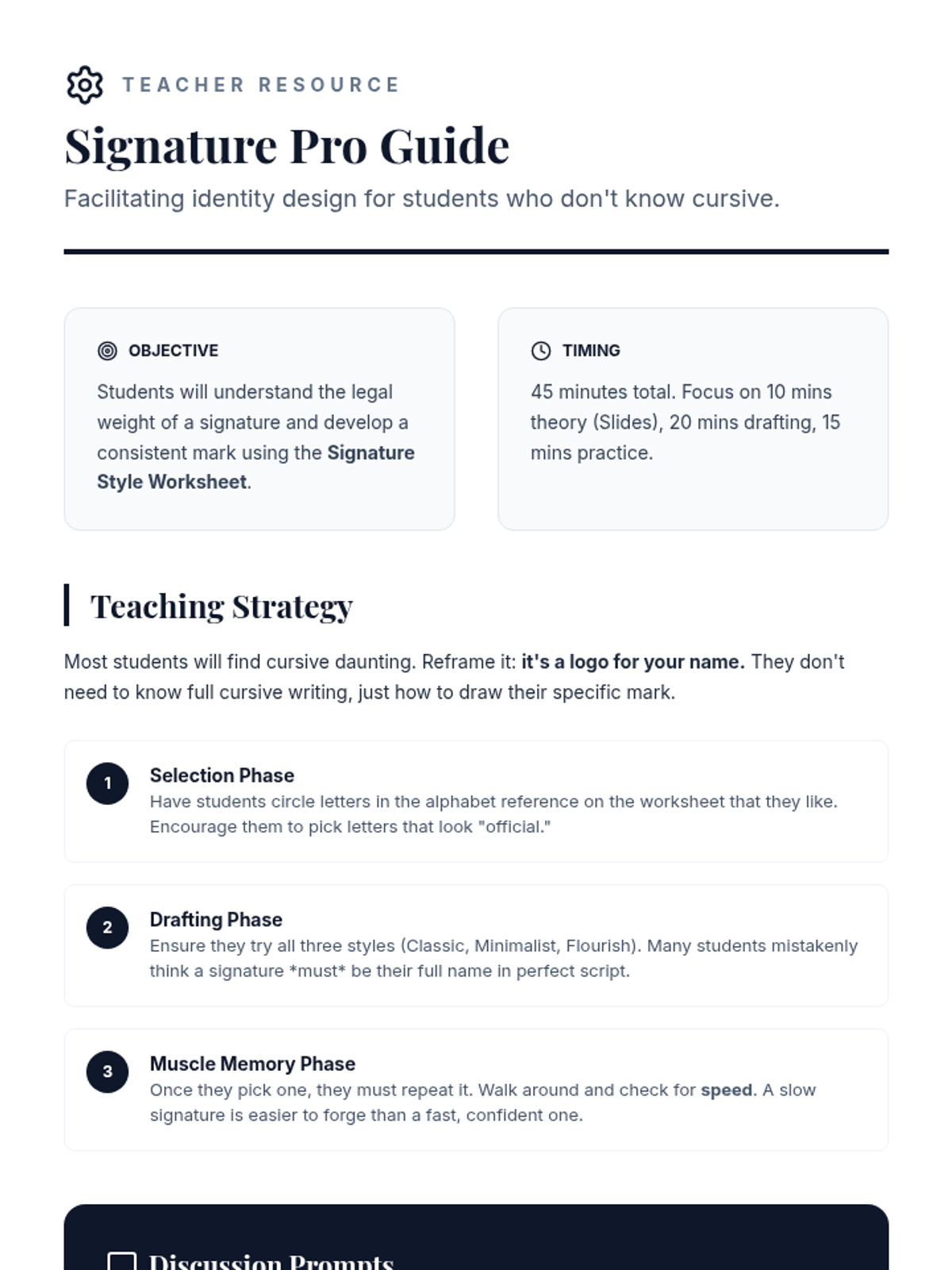
A practical lesson for high school students to develop a professional signature, covering its legal importance and the basics of cursive handwriting for personal identification.
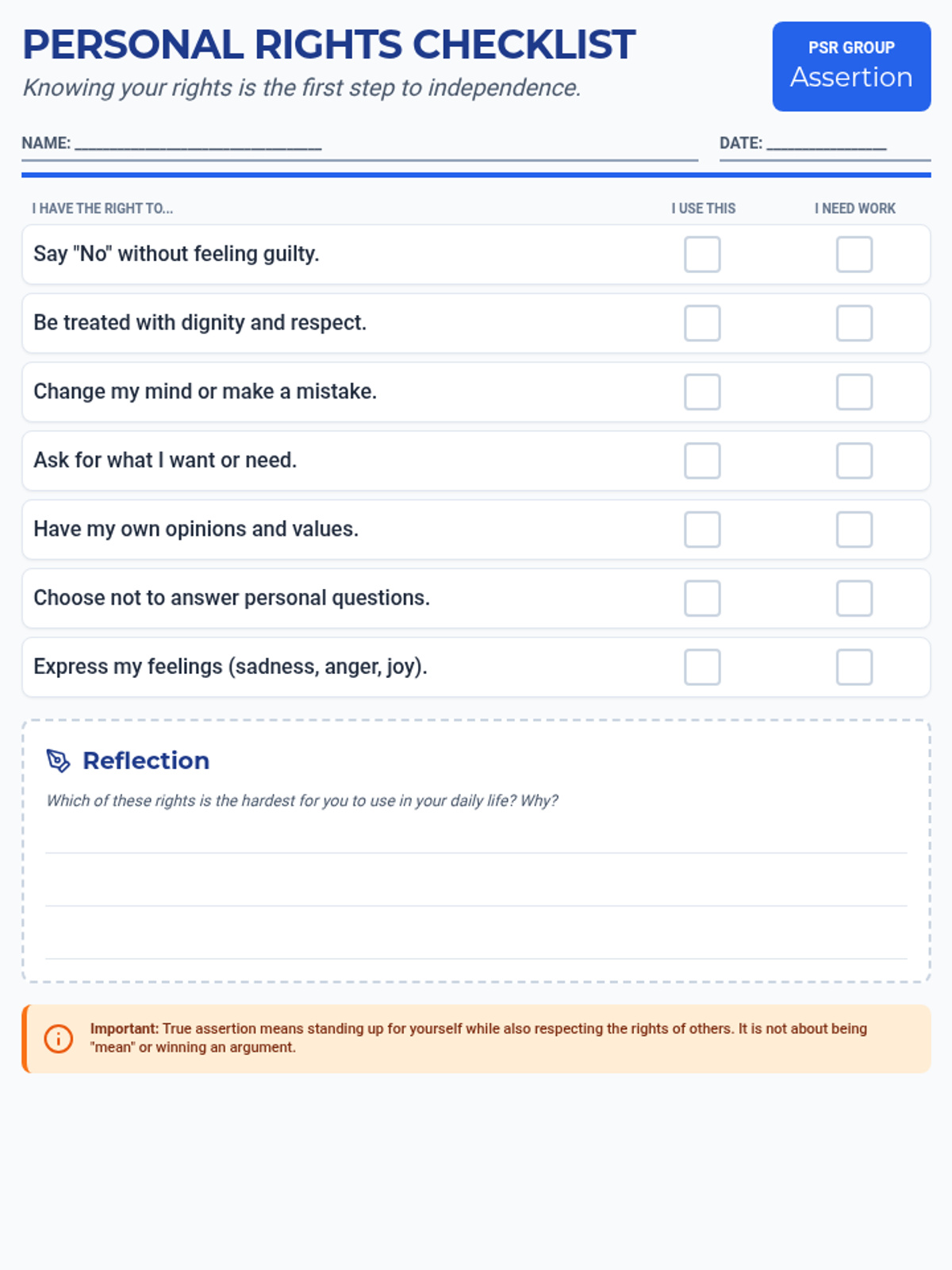
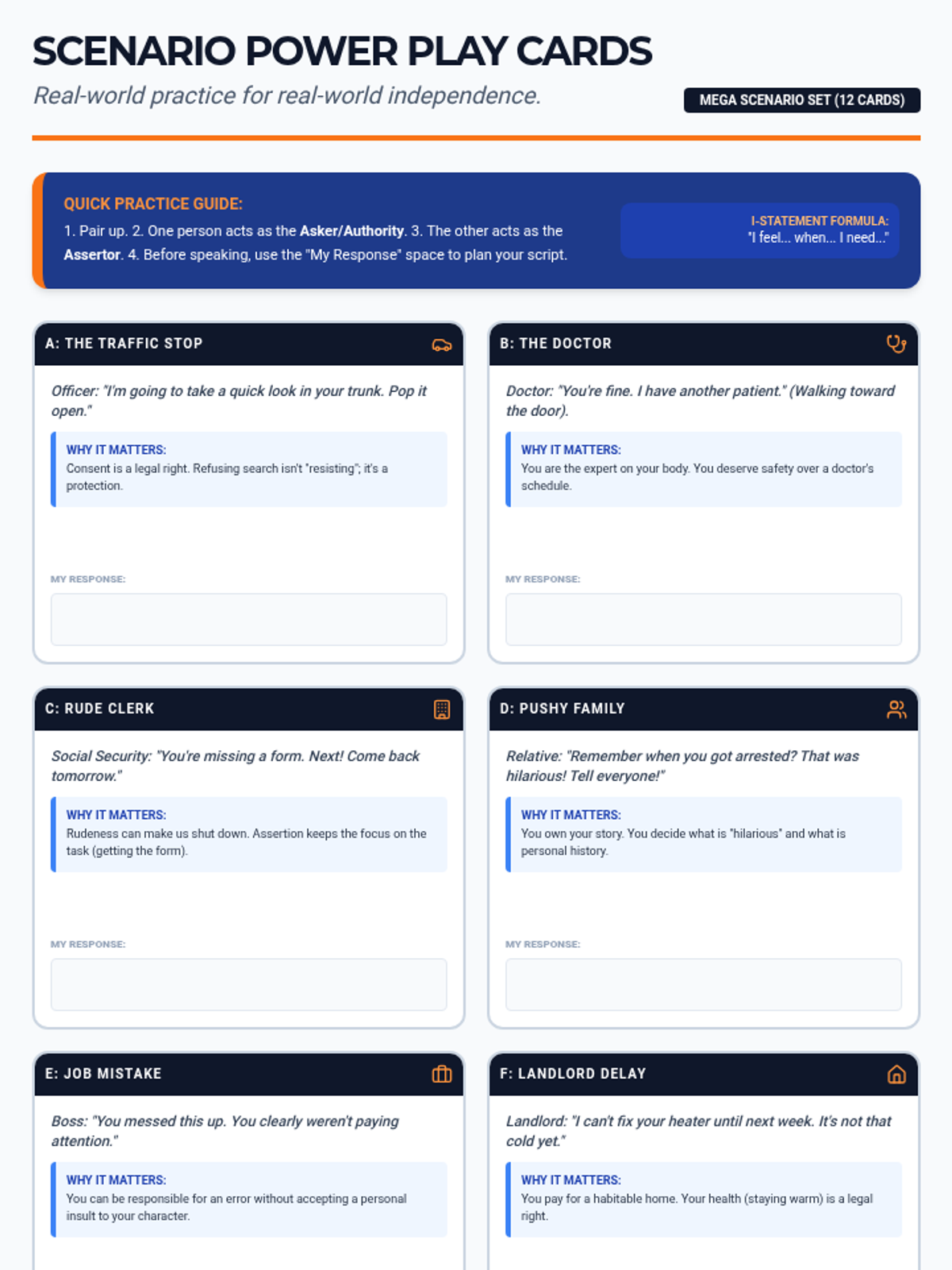
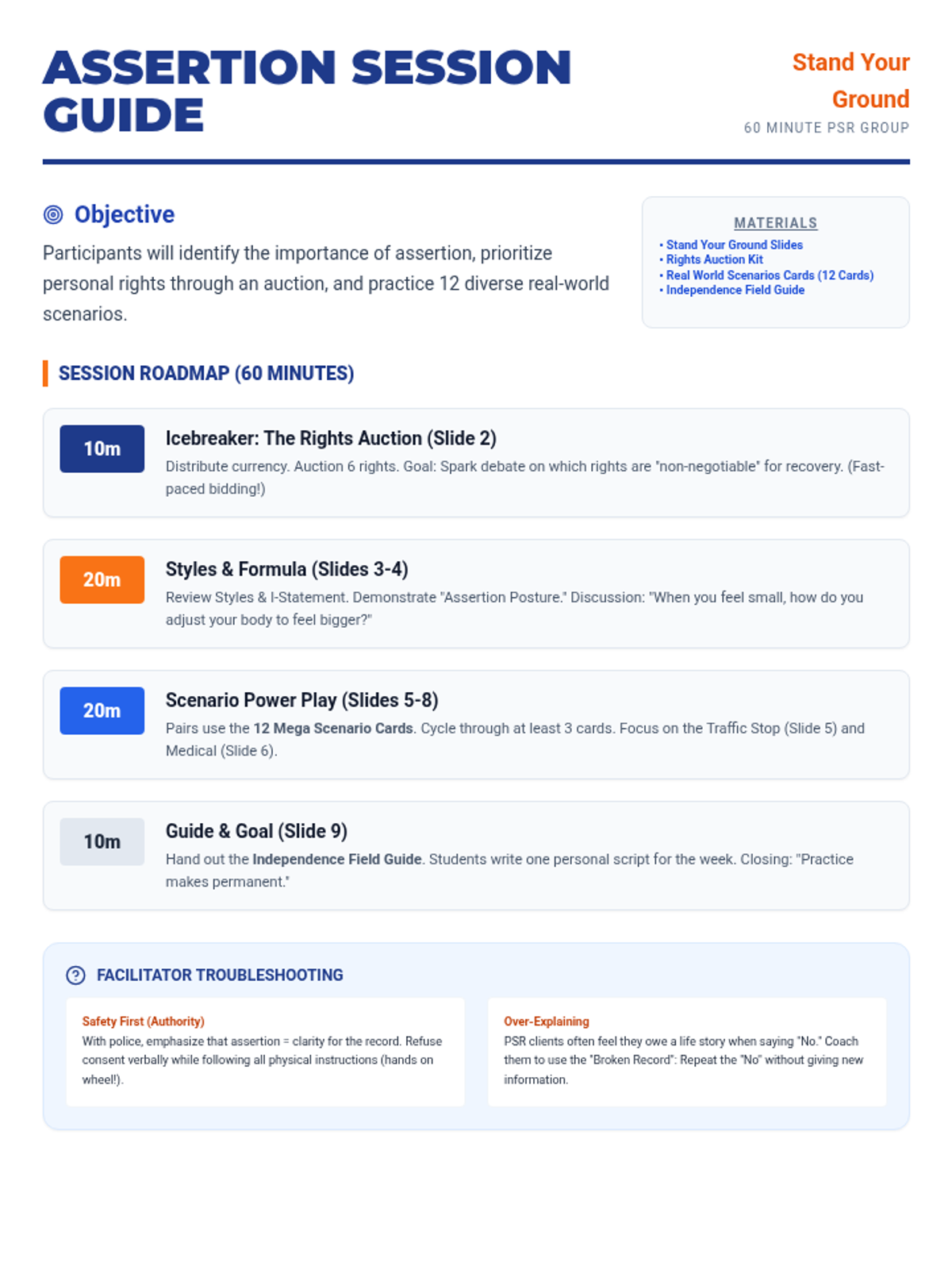
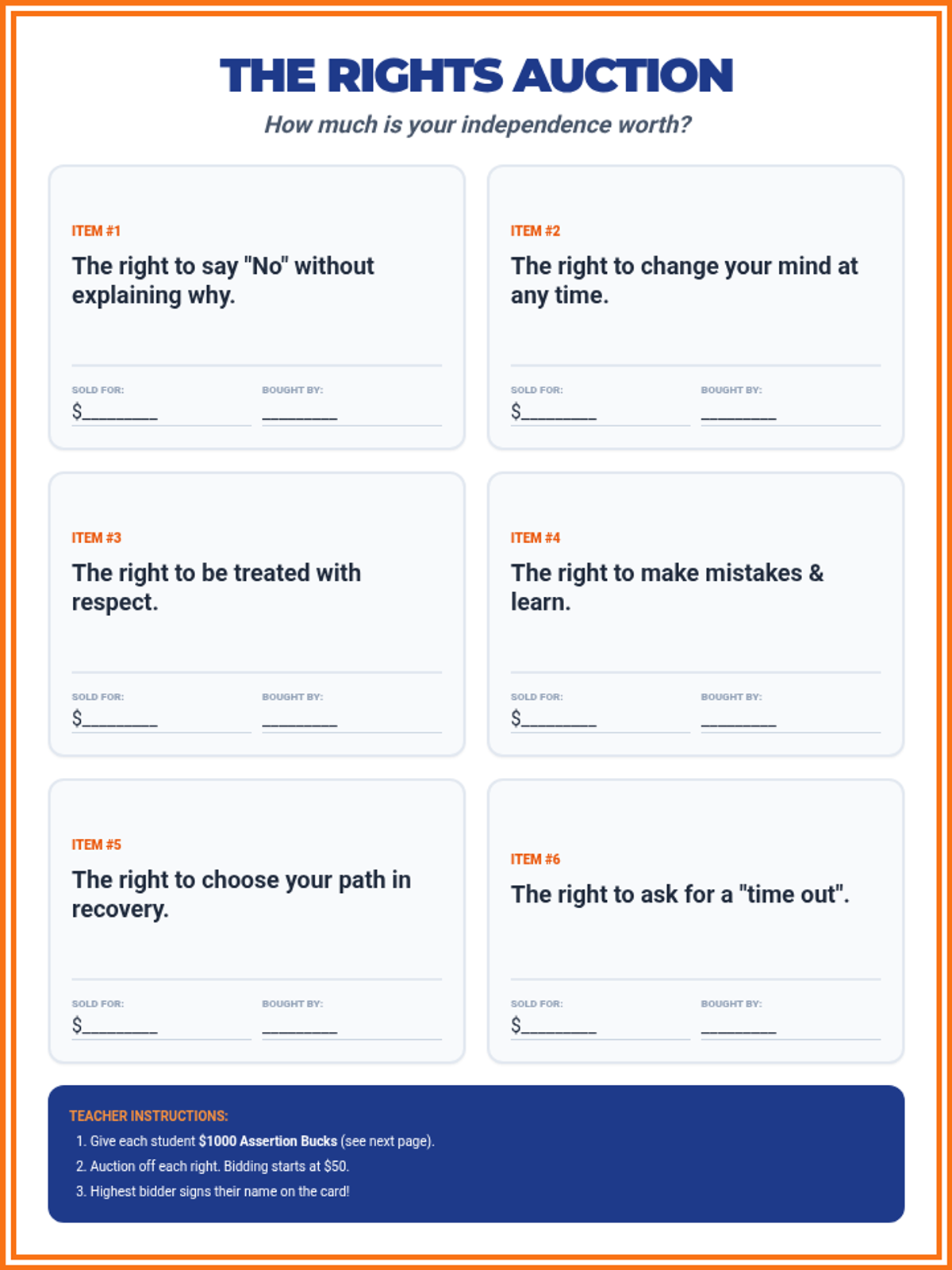
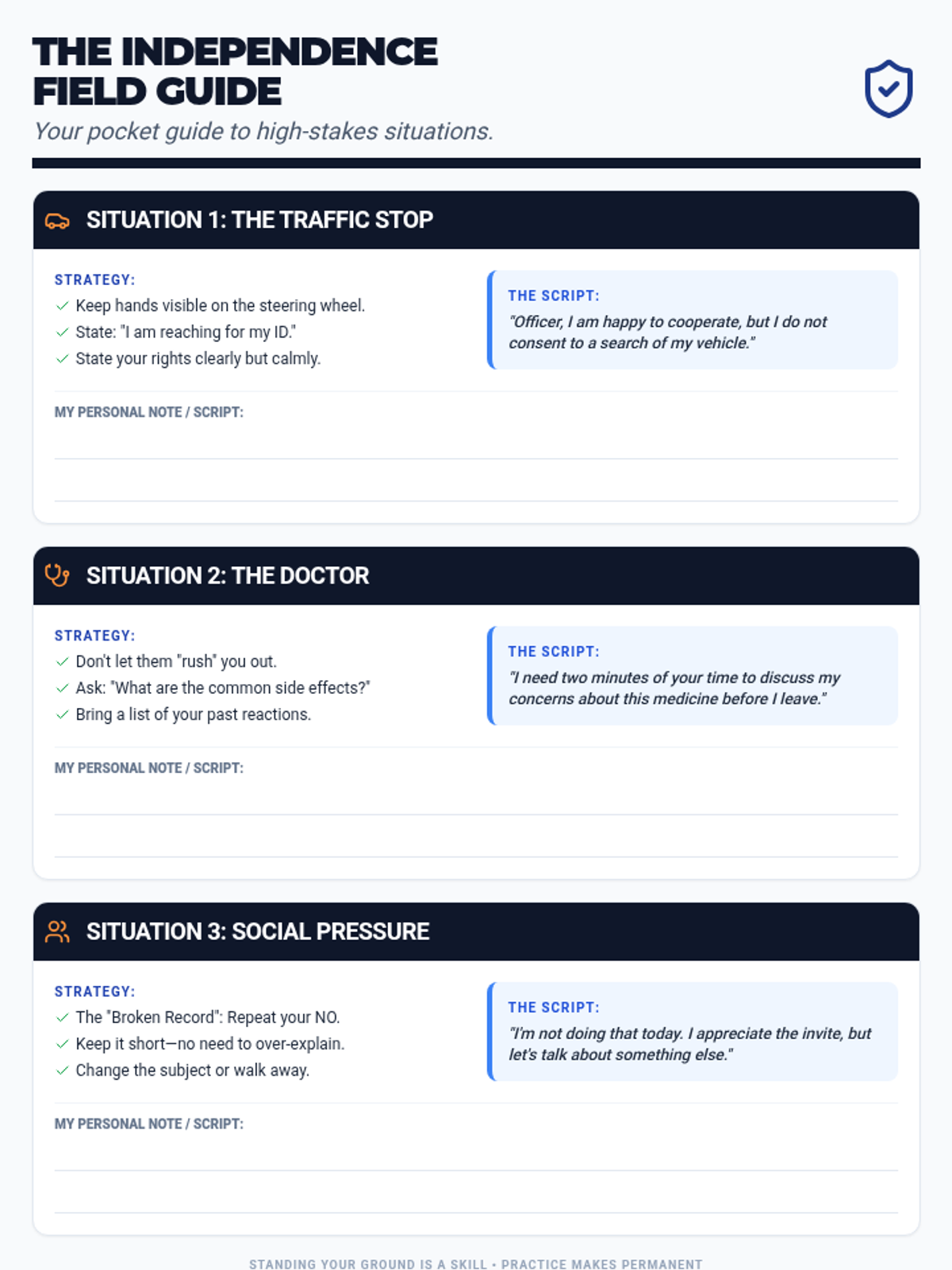
A 60-minute group session focused on empowering adults in PSR programs to understand their personal rights and practice assertive communication in real-world situations.
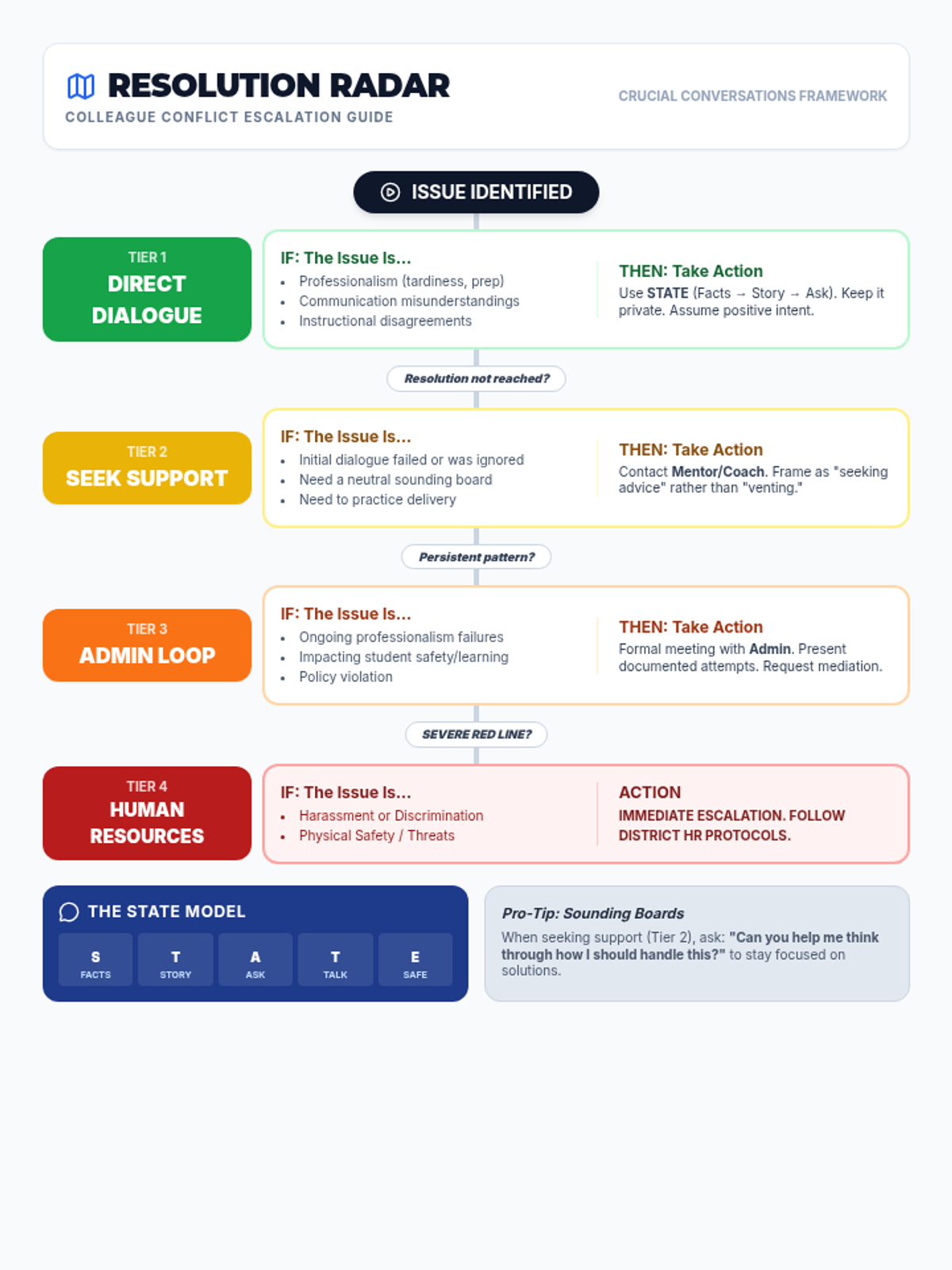
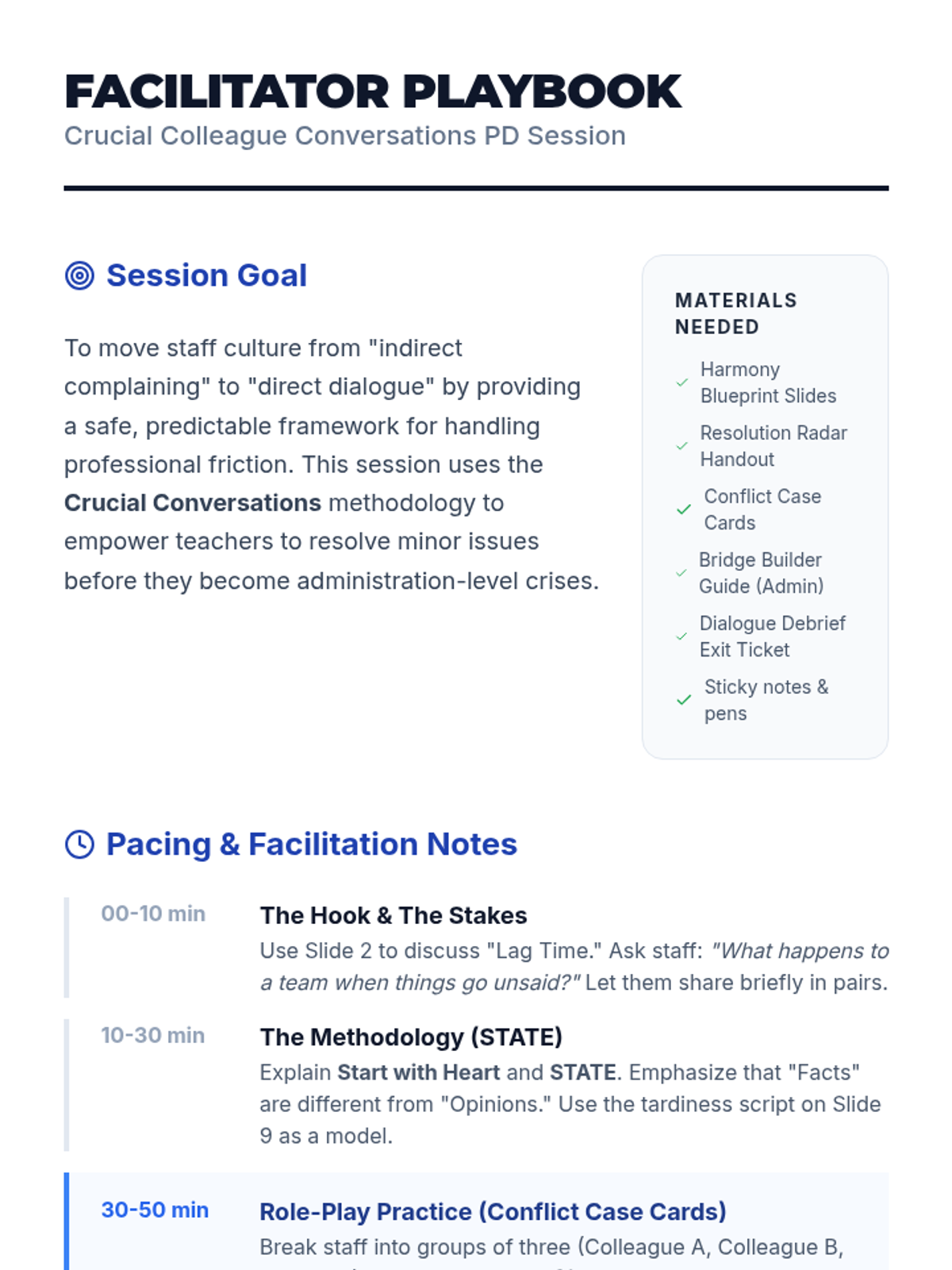
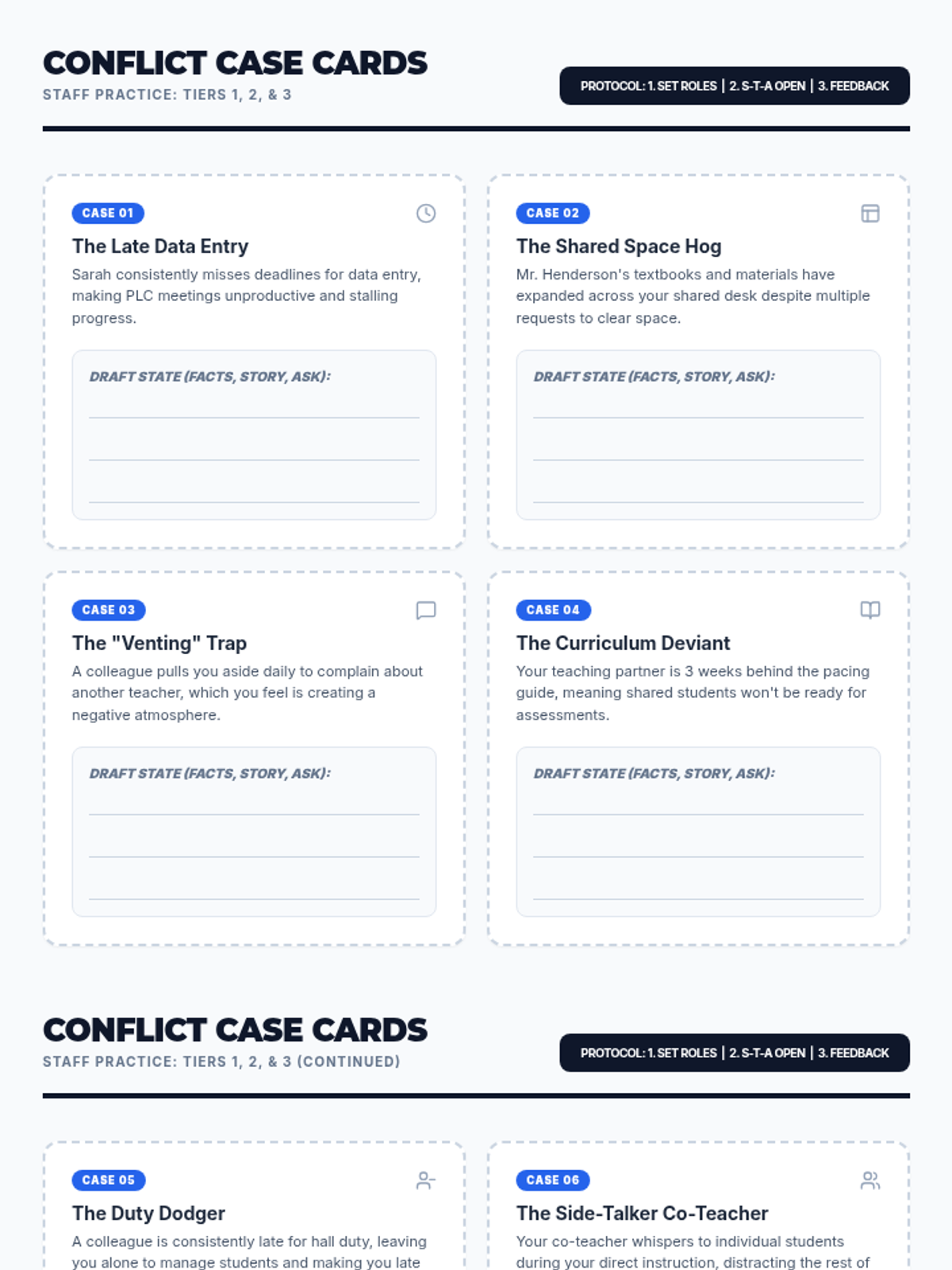
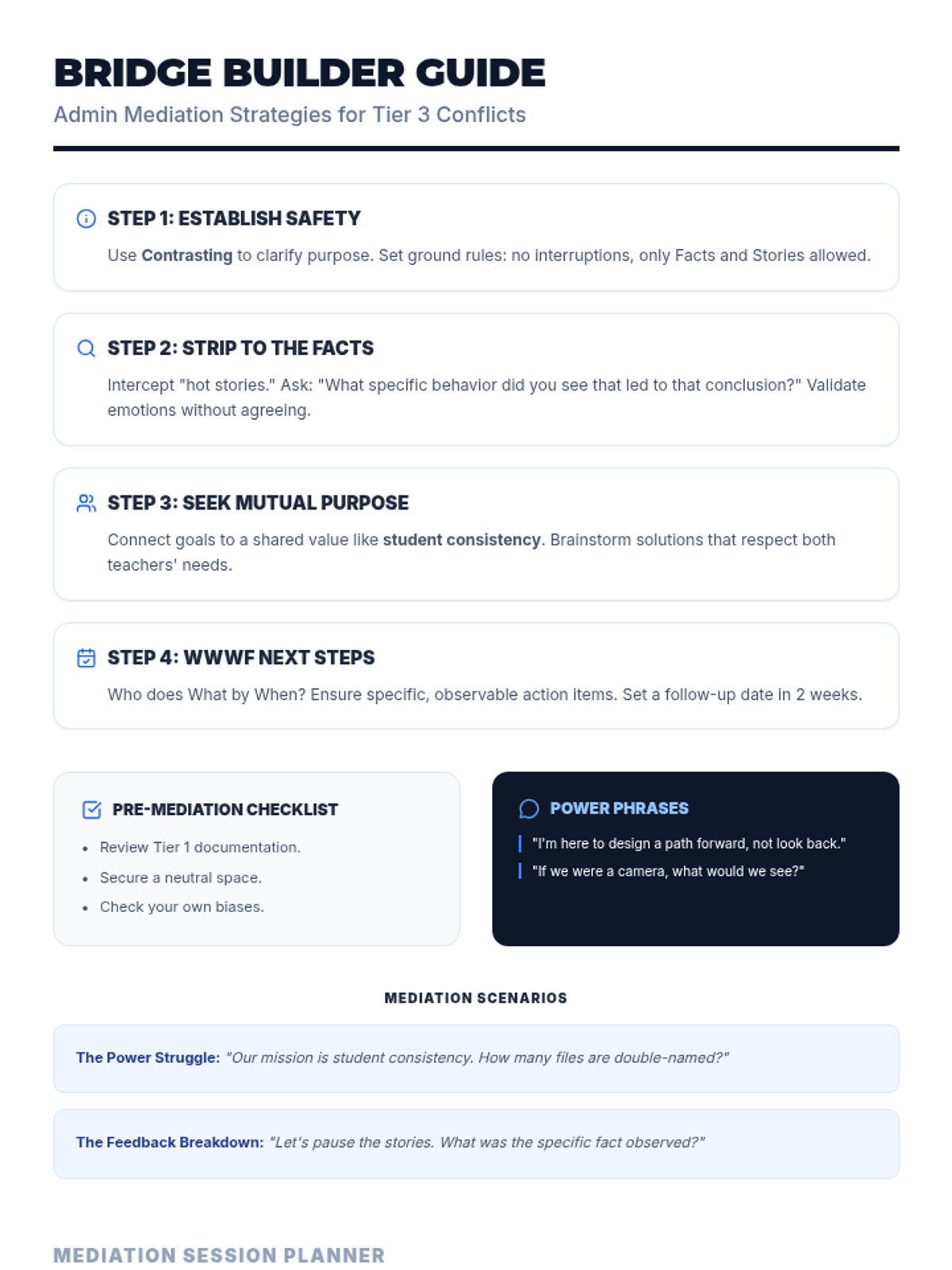
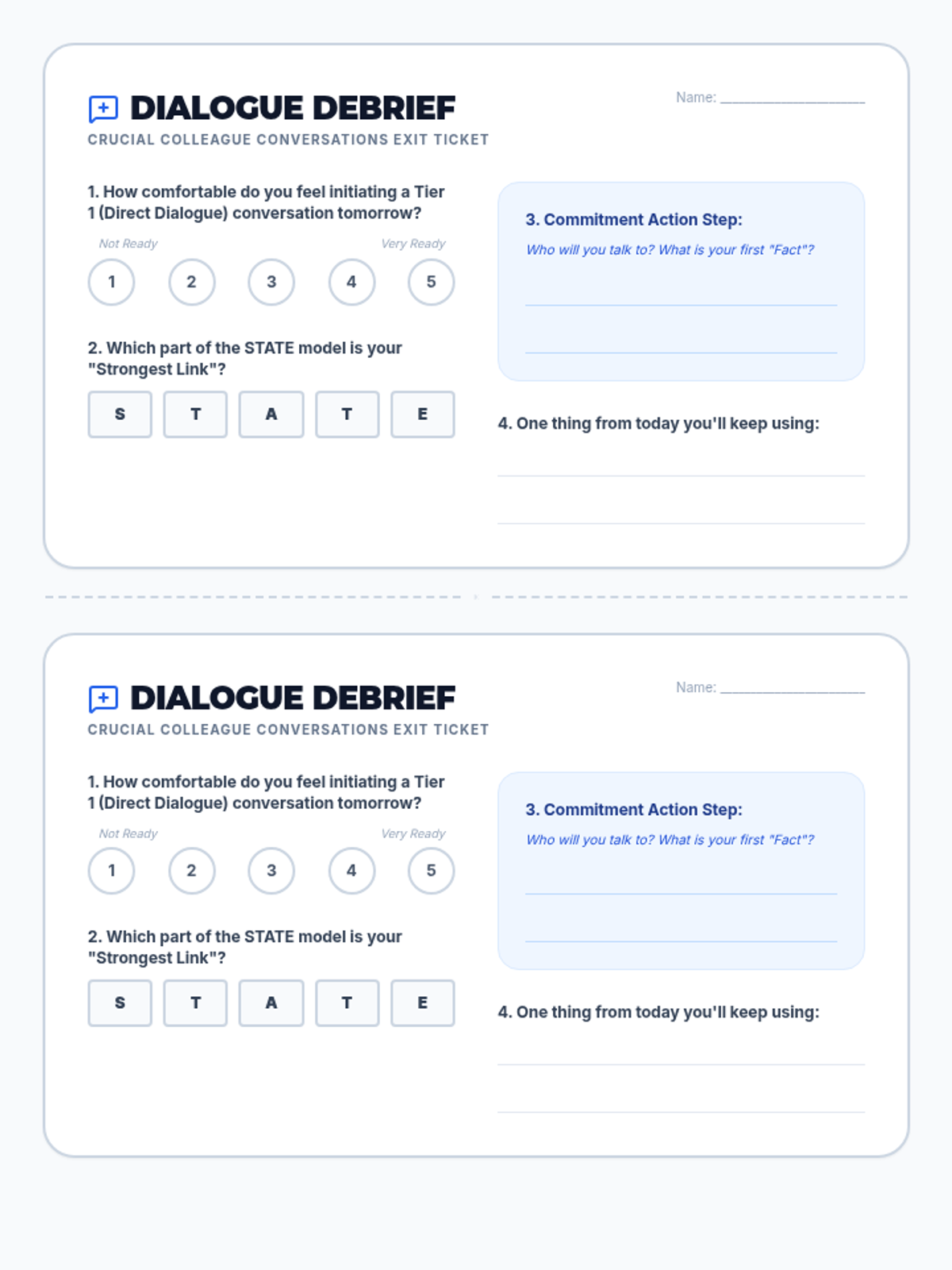
A professional development session designed to equip educators with the tools of Crucial Conversations to navigate colleague conflicts and professionalism issues through a clear, progressive escalation framework.
Students explore the differences between high school and post-secondary legal protections, preparing for self-disclosure in college and the workplace.
Through role-play and scenario analysis, students practice requesting accommodations in real-time and troubleshooting common obstacles.
Students learn professional communication techniques, including how to draft emails and initiate face-to-face conversations with teachers regarding their needs.
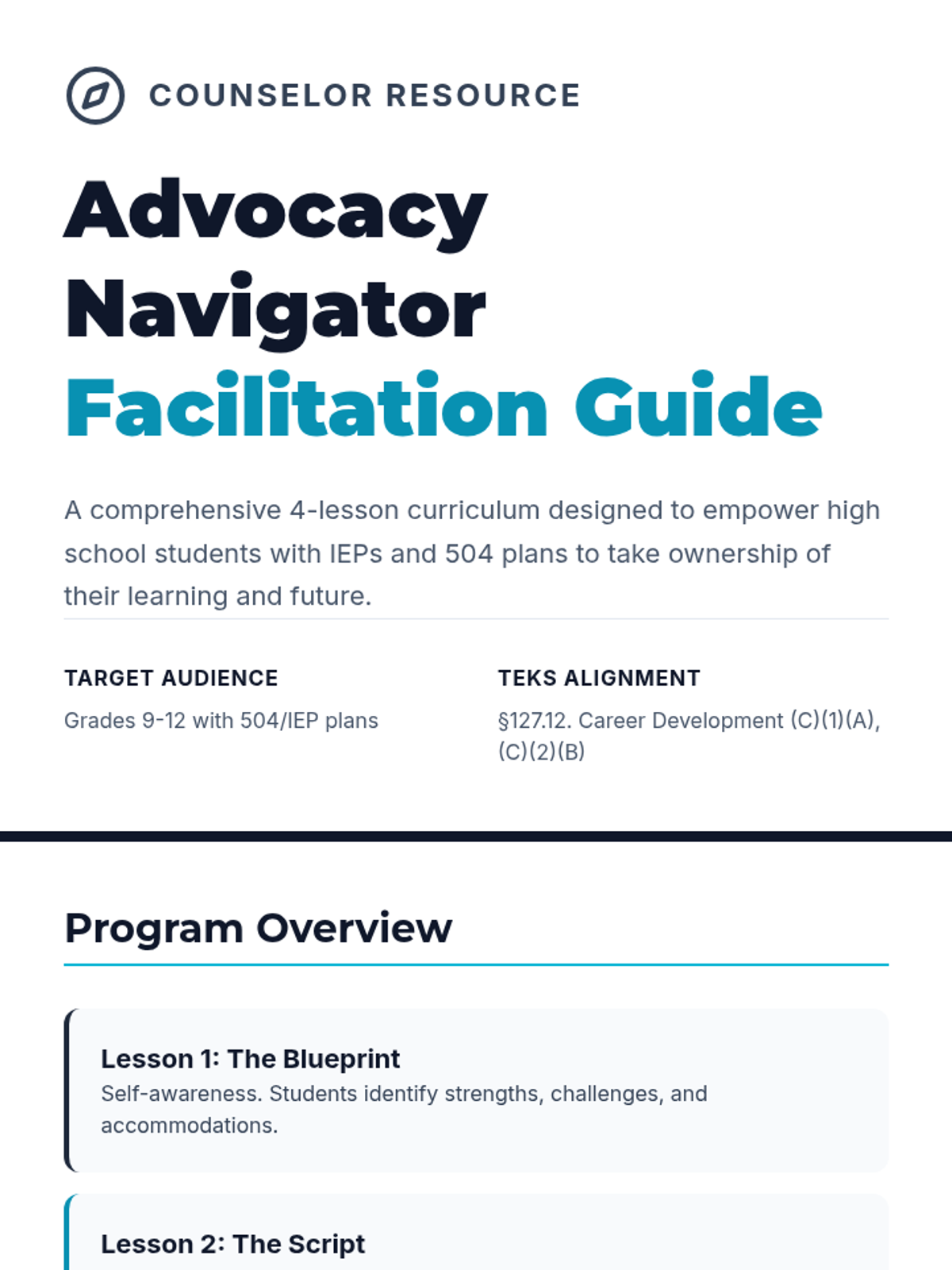
Students will identify their specific 504/IEP accommodations and understand how these supports bridge the gap between their learning profile and classroom demands.
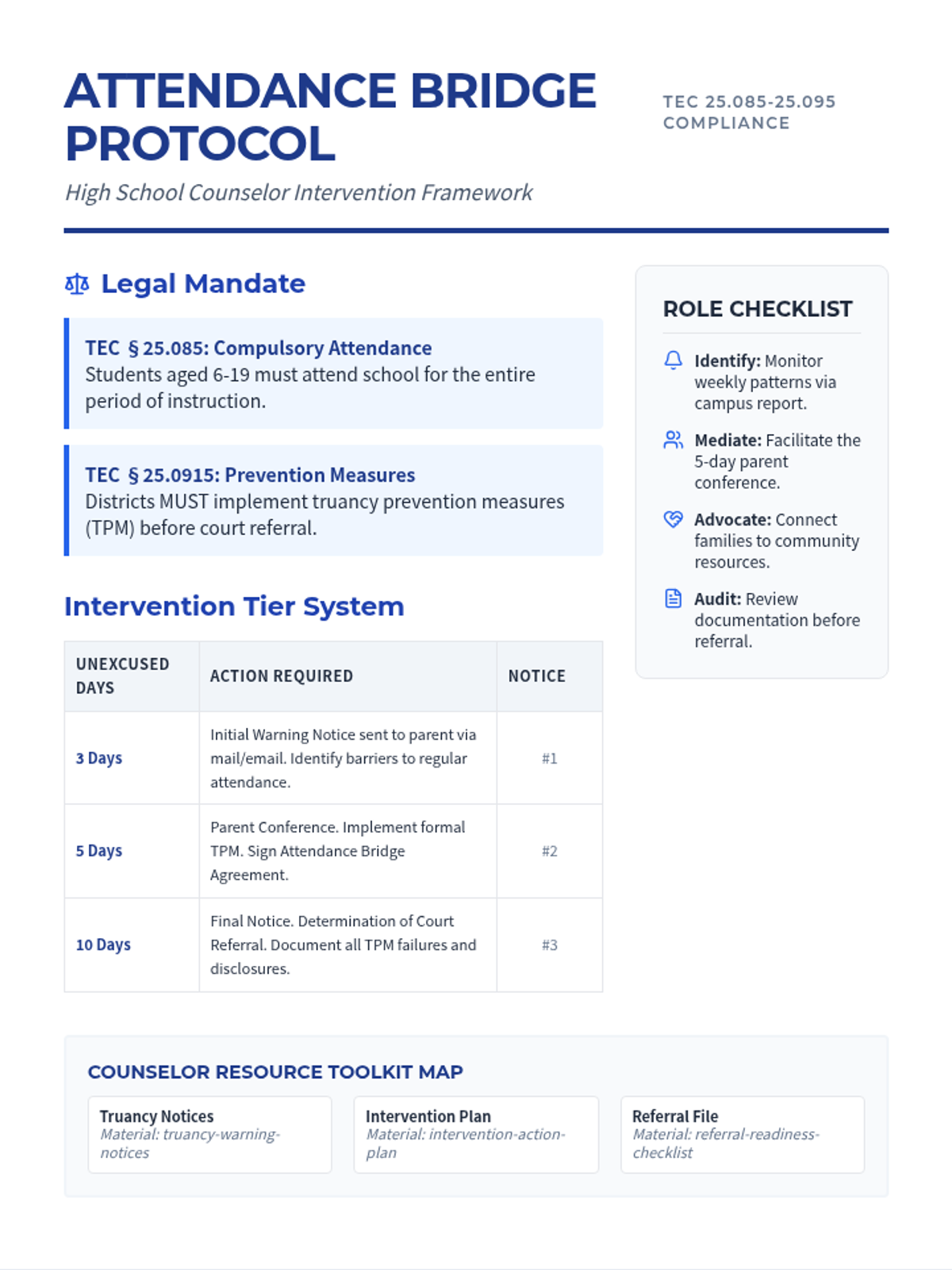
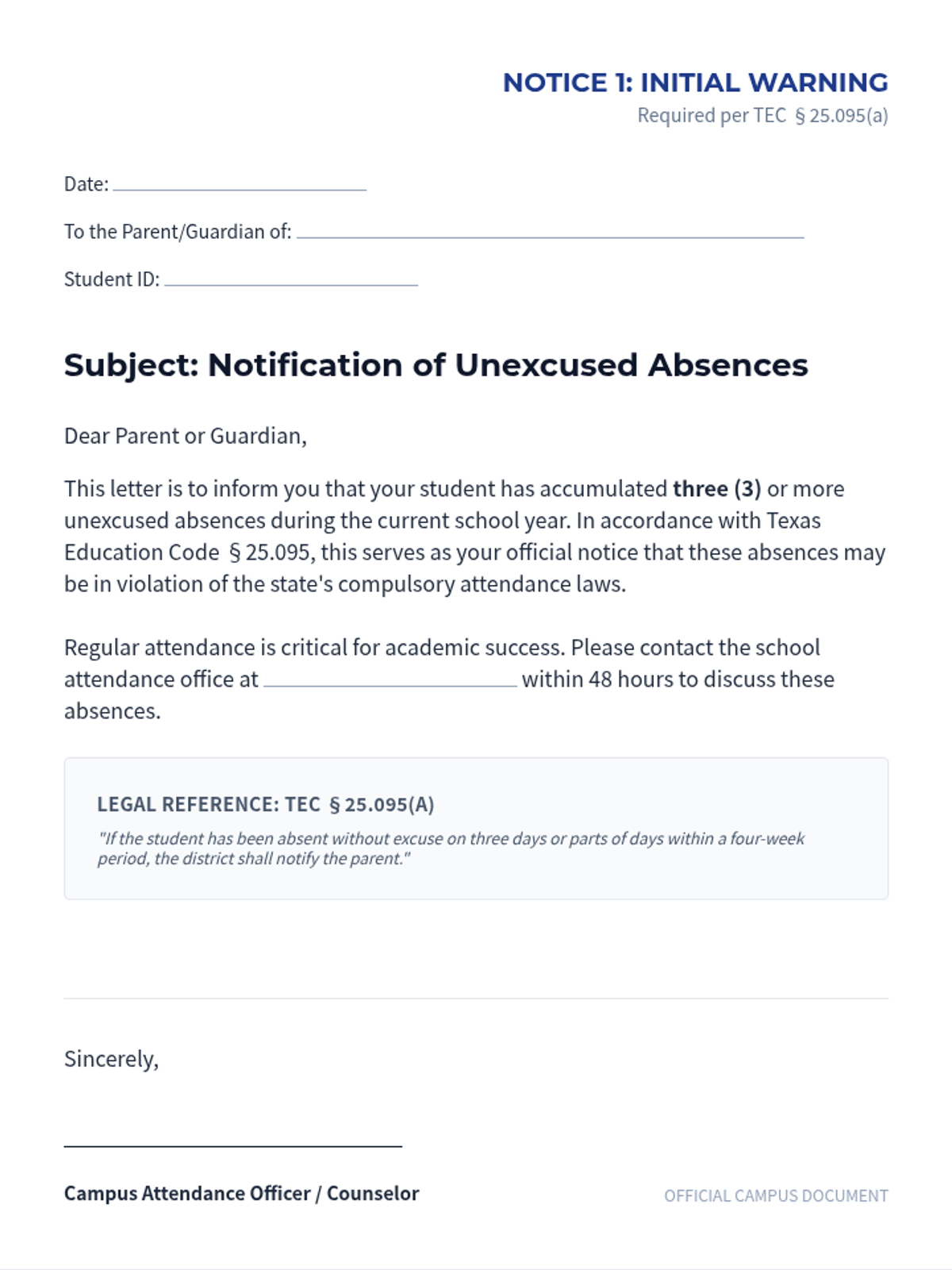
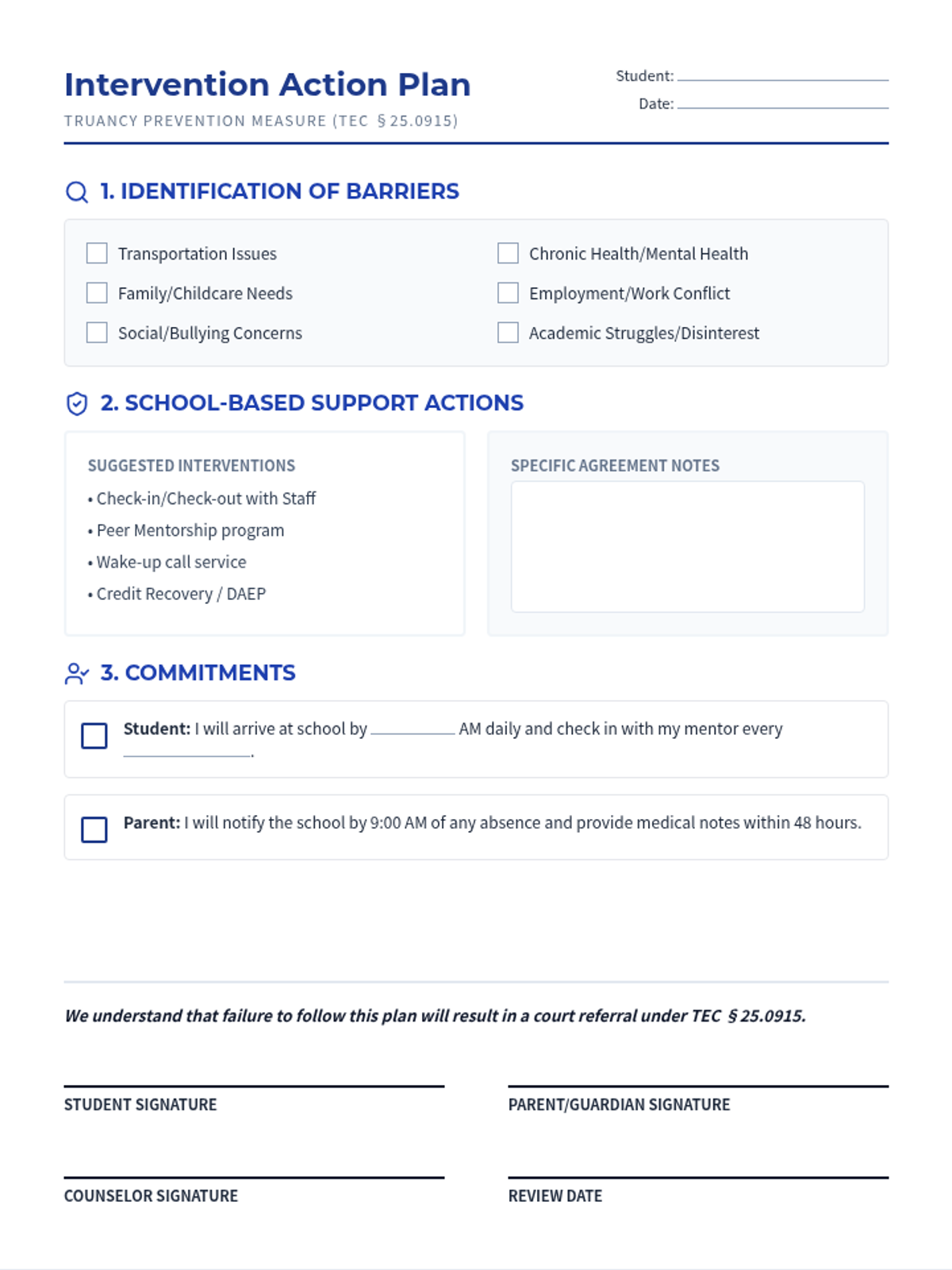
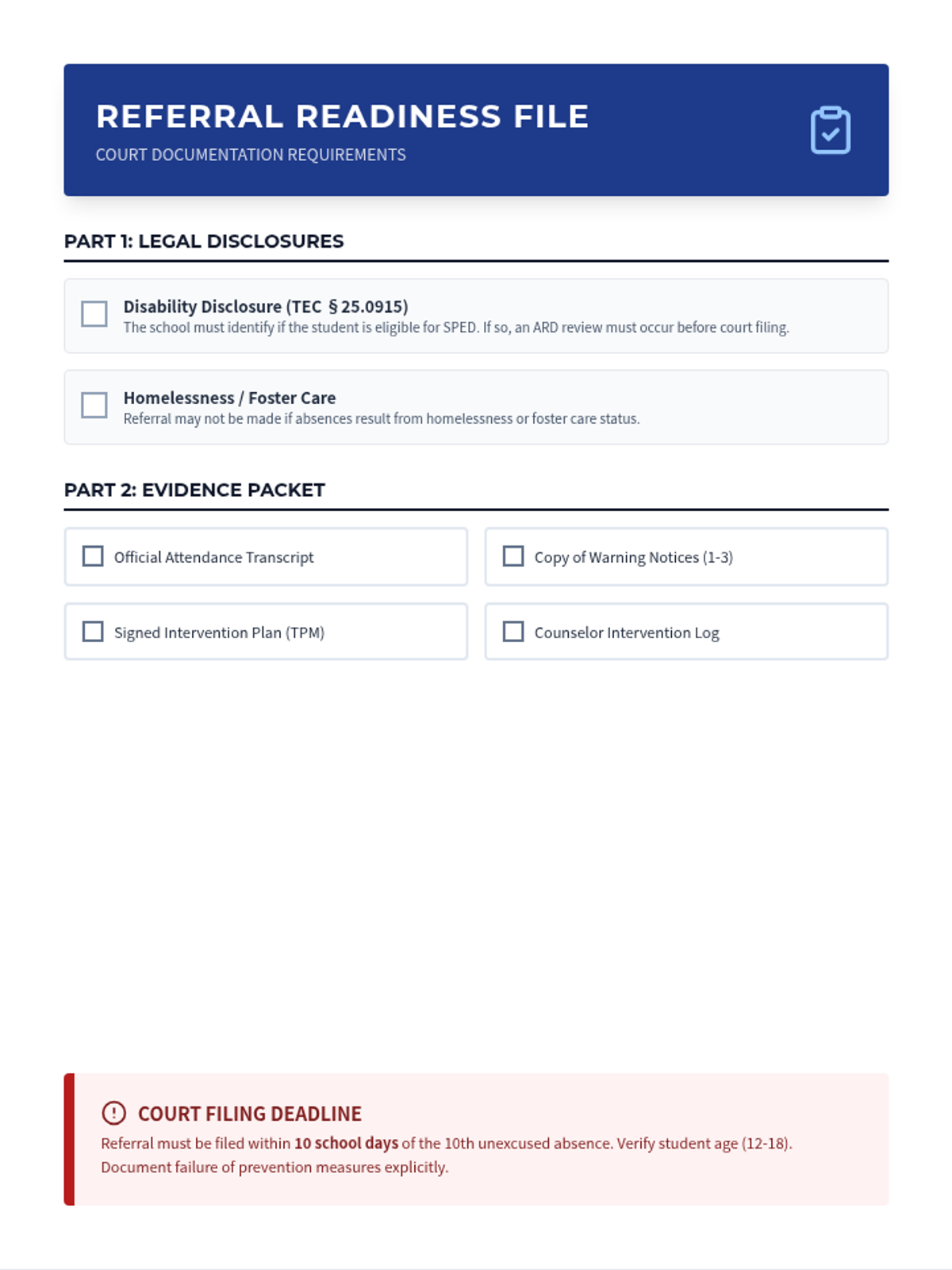
A comprehensive toolkit for high school counselors to manage truancy prevention and intervention in compliance with Texas Education Code. This resource includes legal protocols, warning templates, intervention plans, and court referral documentation.
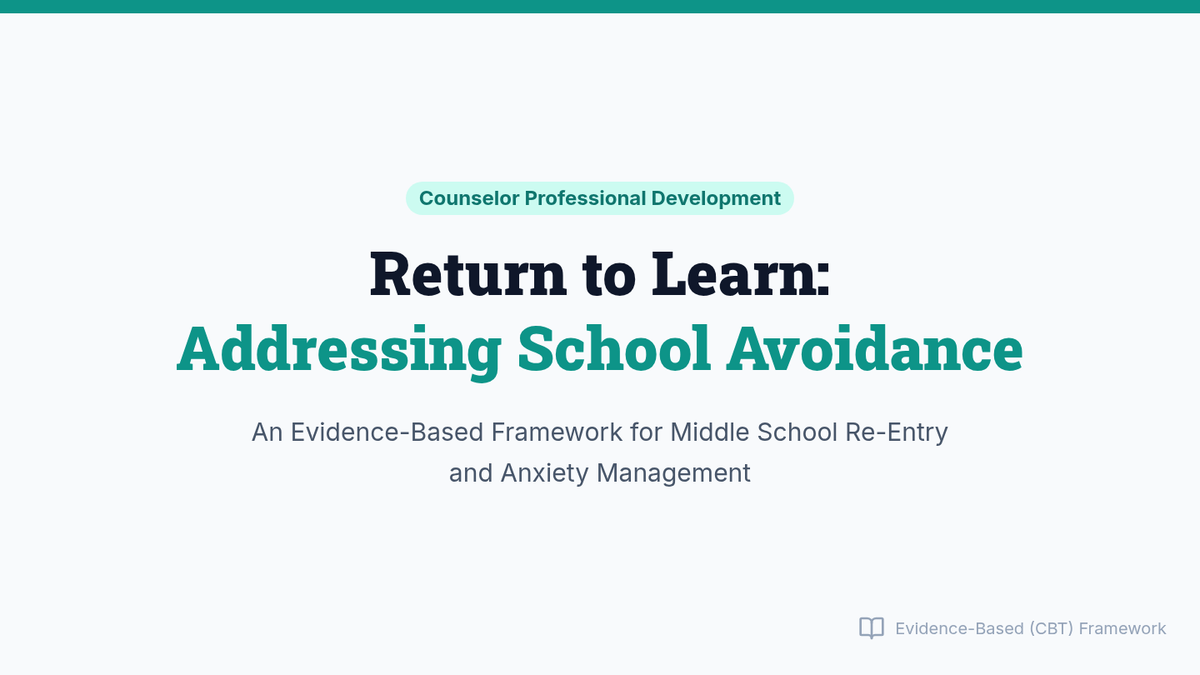
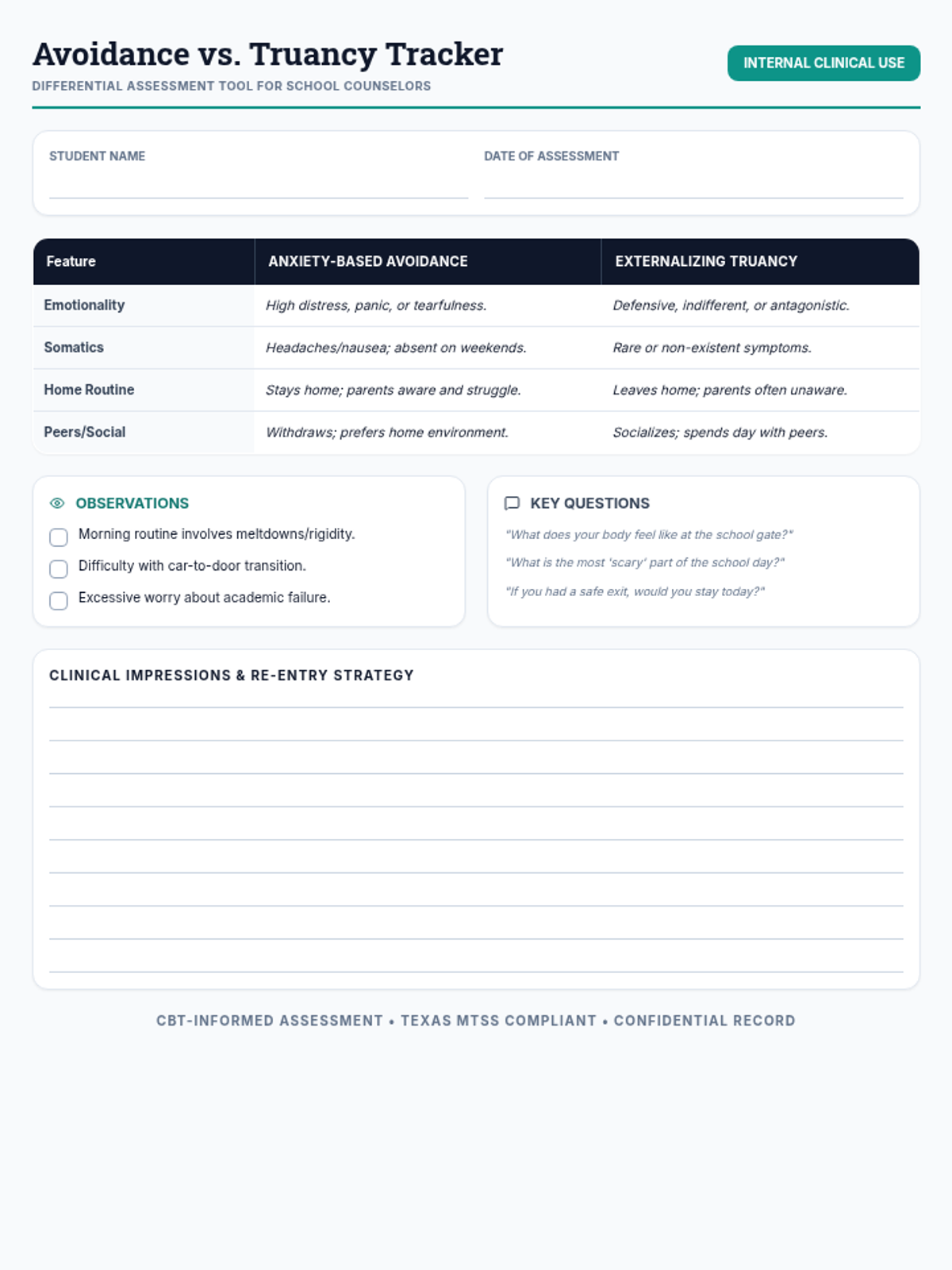
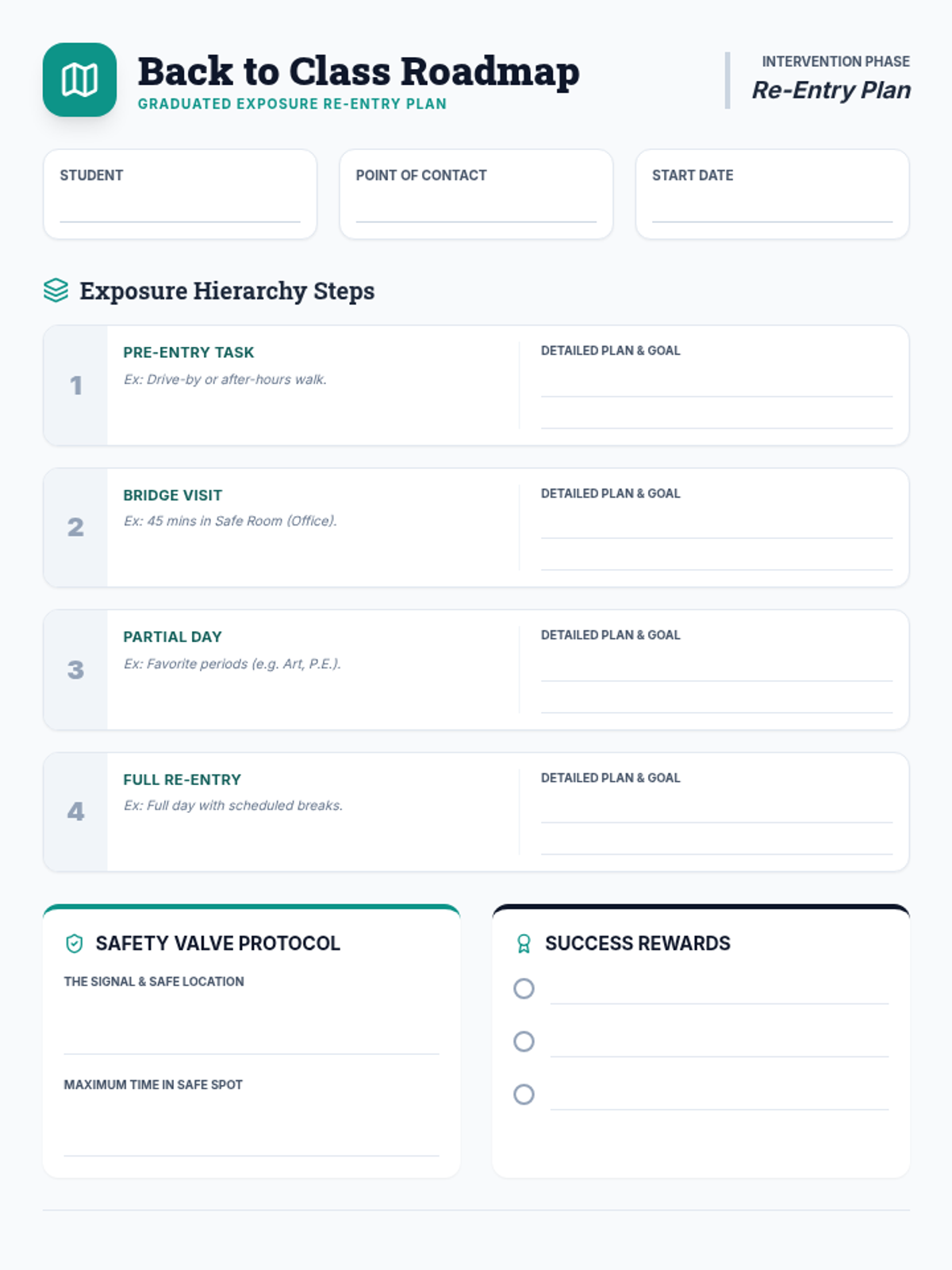
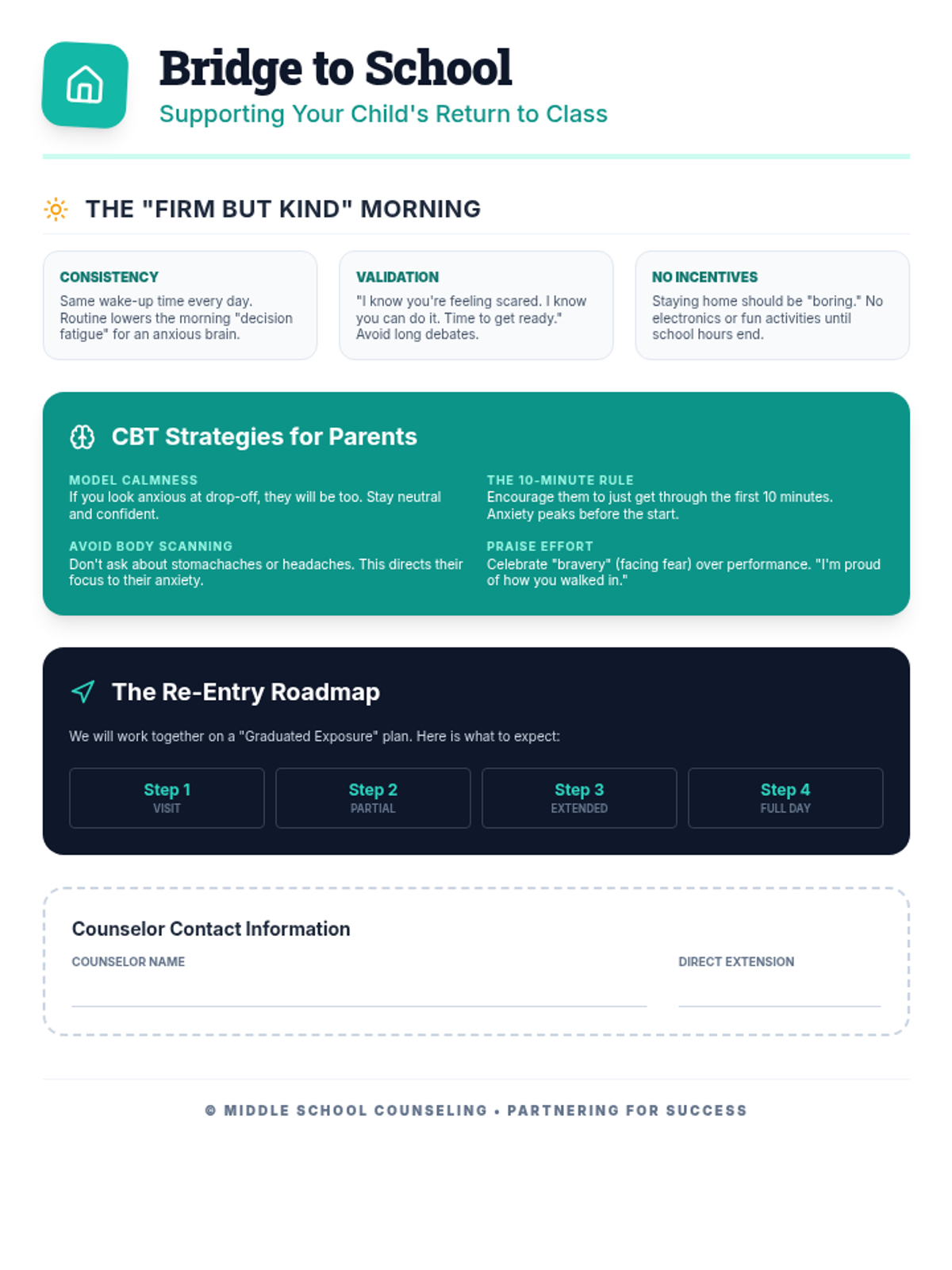
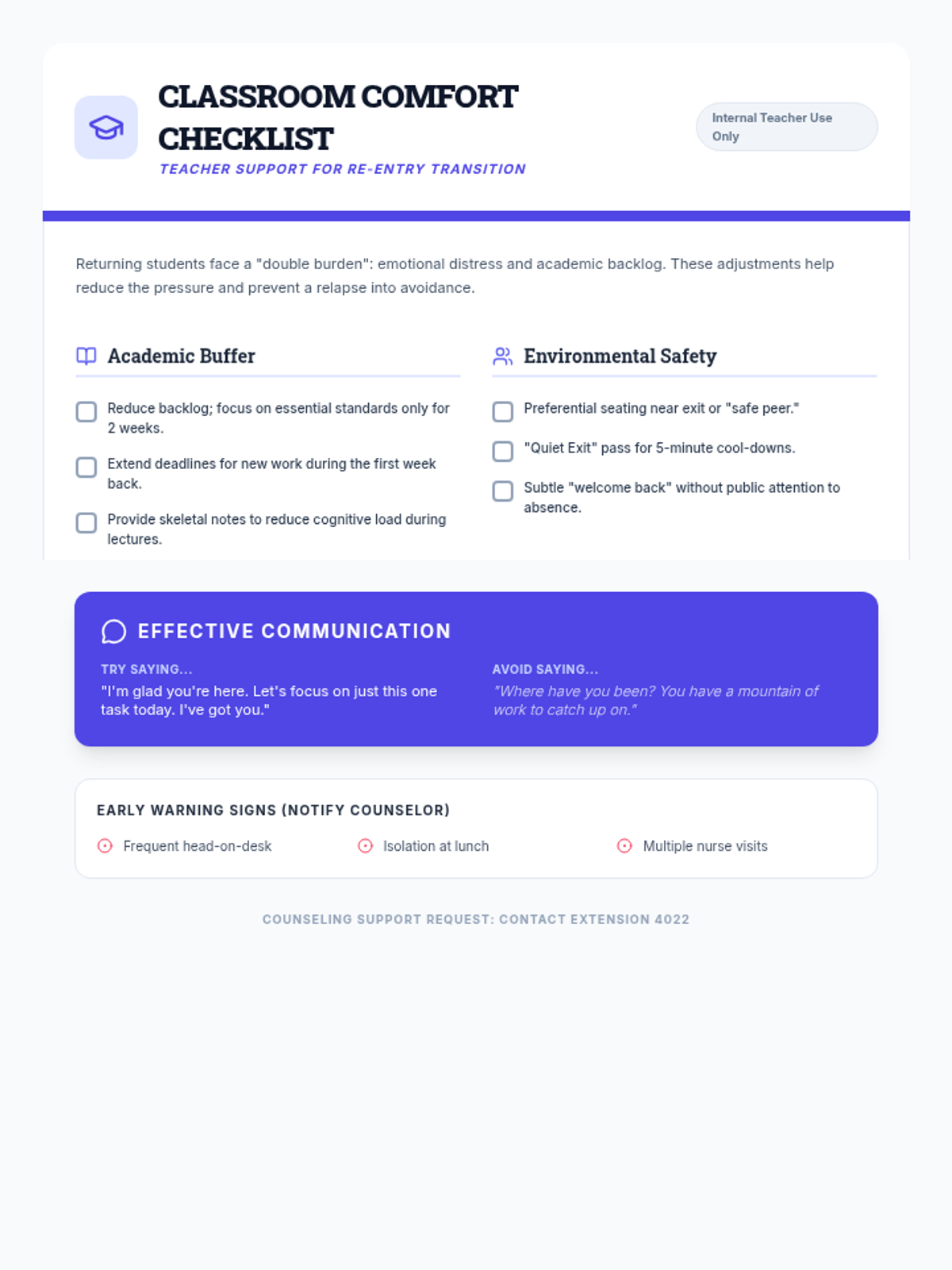
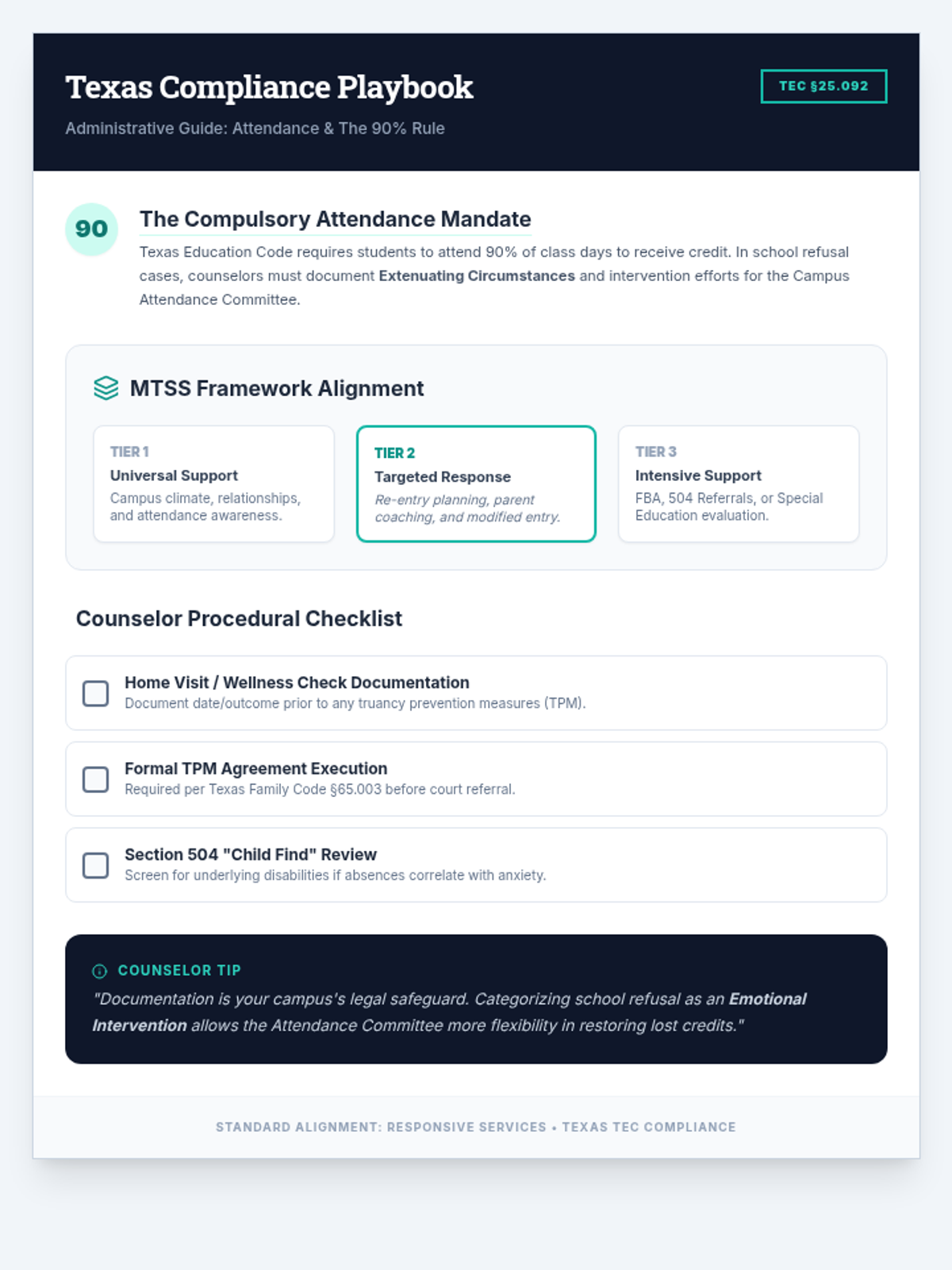
A comprehensive intervention framework for middle school counselors to address school refusal and avoidance using CBT-informed strategies, compliant with Texas educational standards.
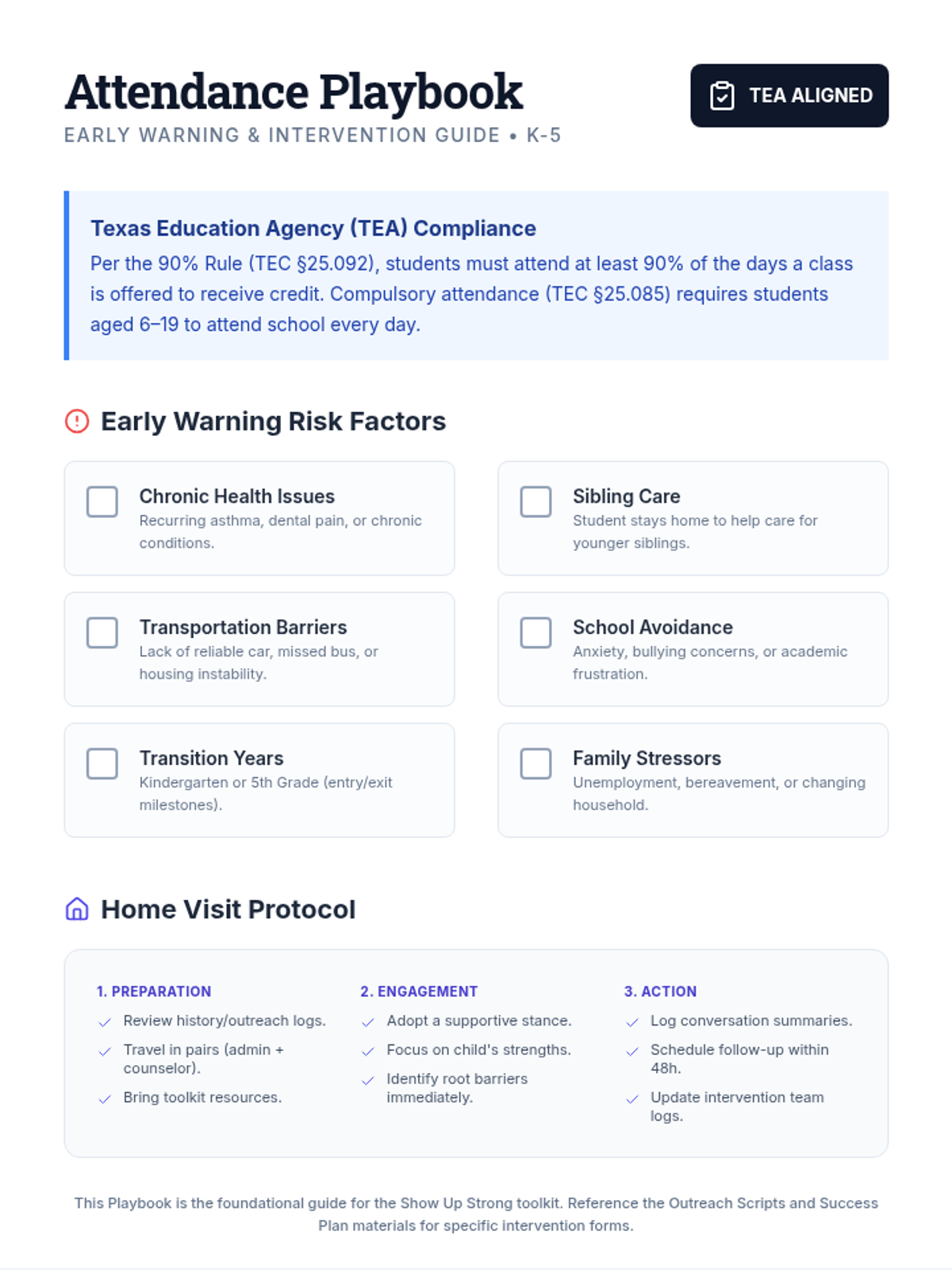
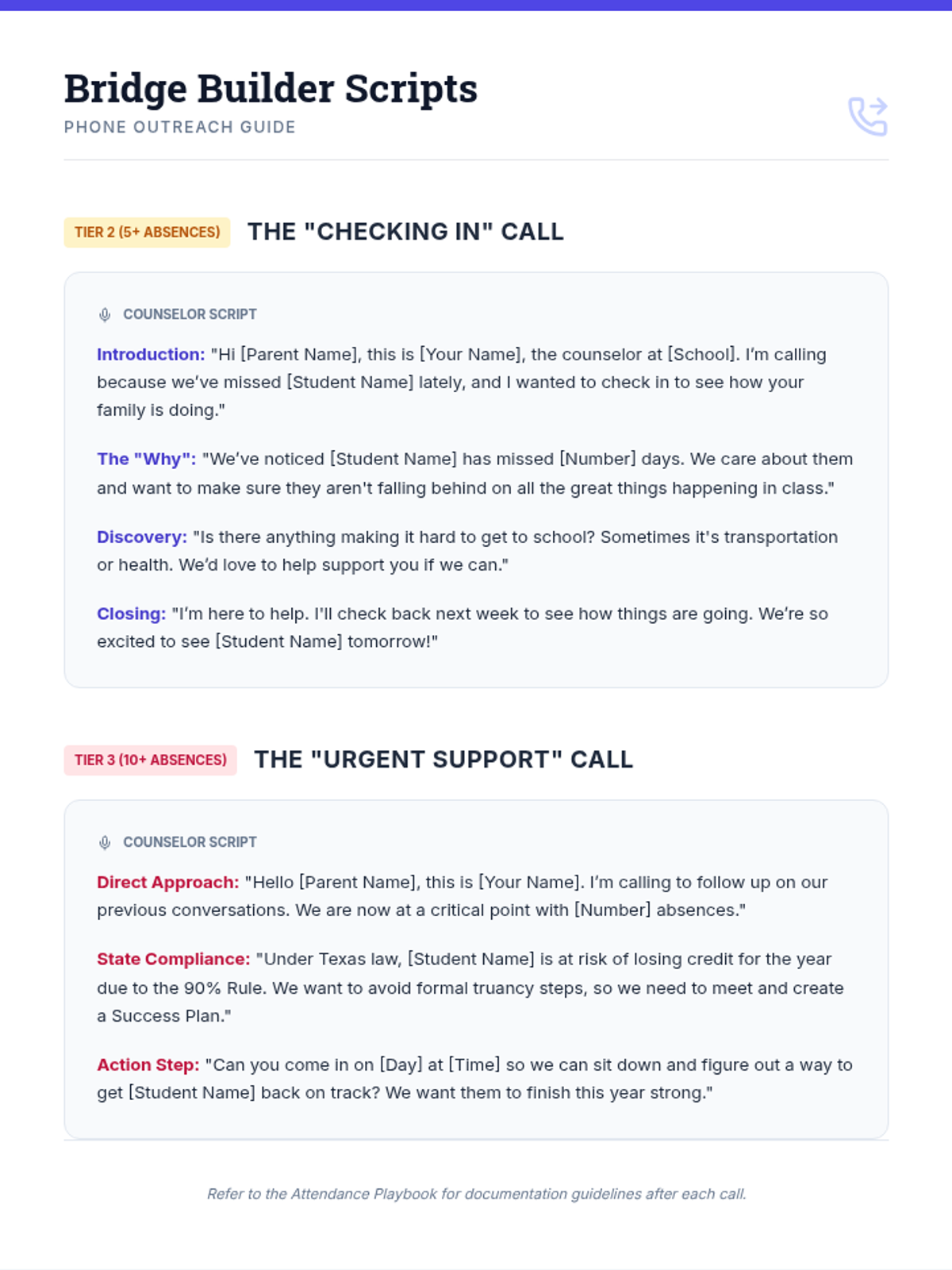
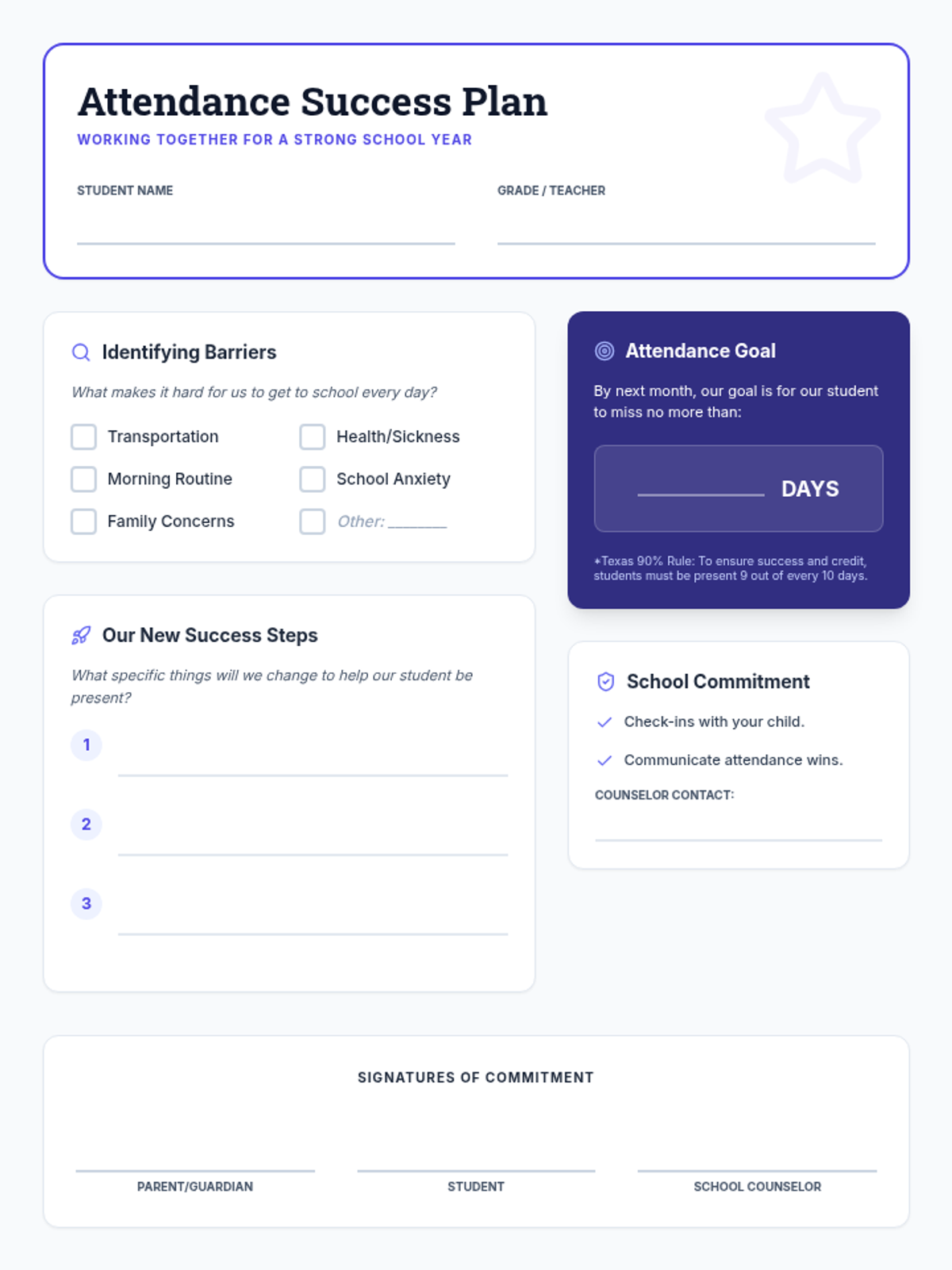
A comprehensive toolkit for elementary school counselors to identify, track, and intervene with student attendance concerns using TEA-aligned strategies and supportive family outreach.