Active listening, assertive expression, and boundary-setting strategies for interpersonal success. Develops proficiency in conflict mediation, cooperative teamwork, and the cultivation of healthy romantic and platonic connections.
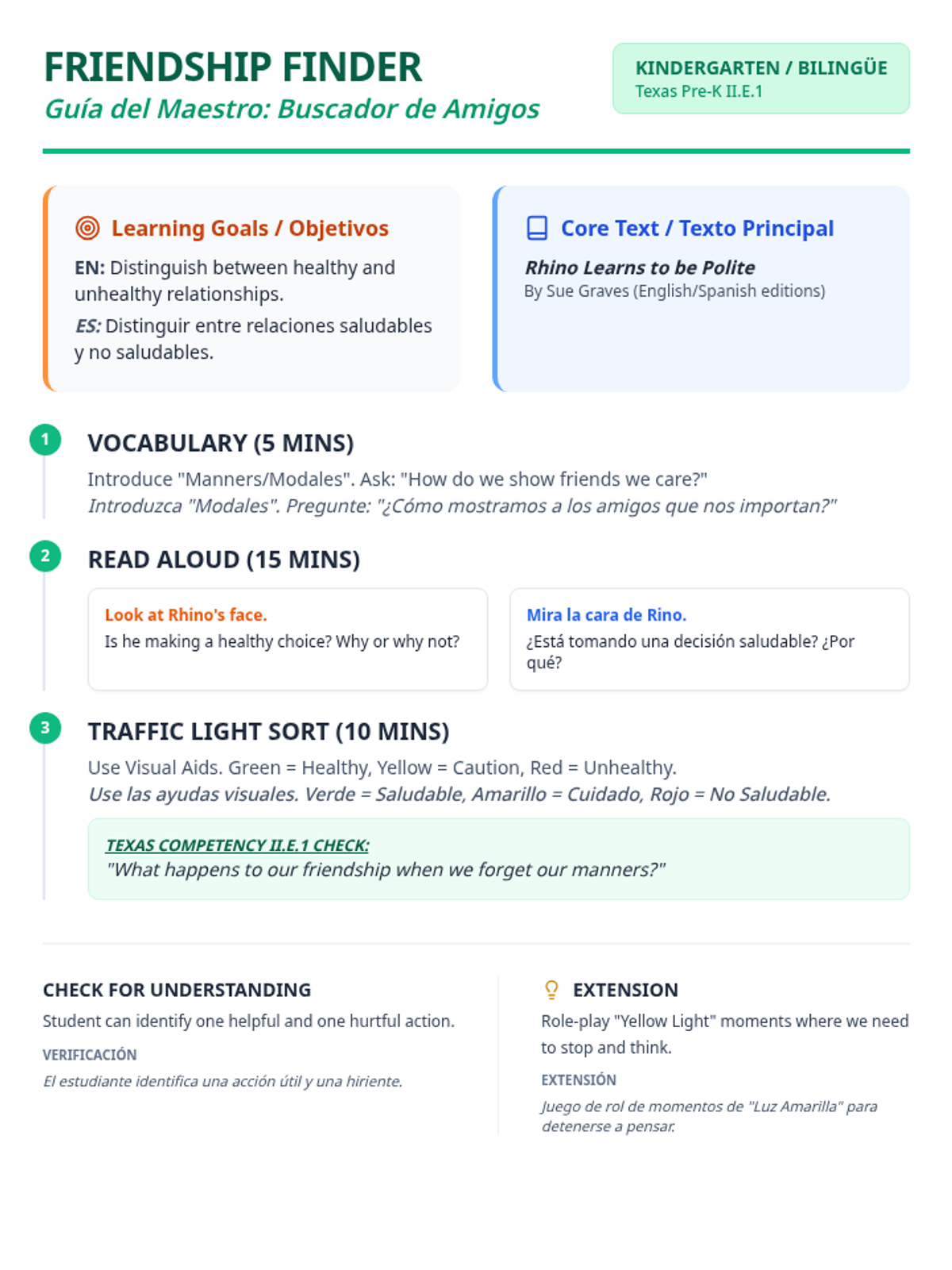
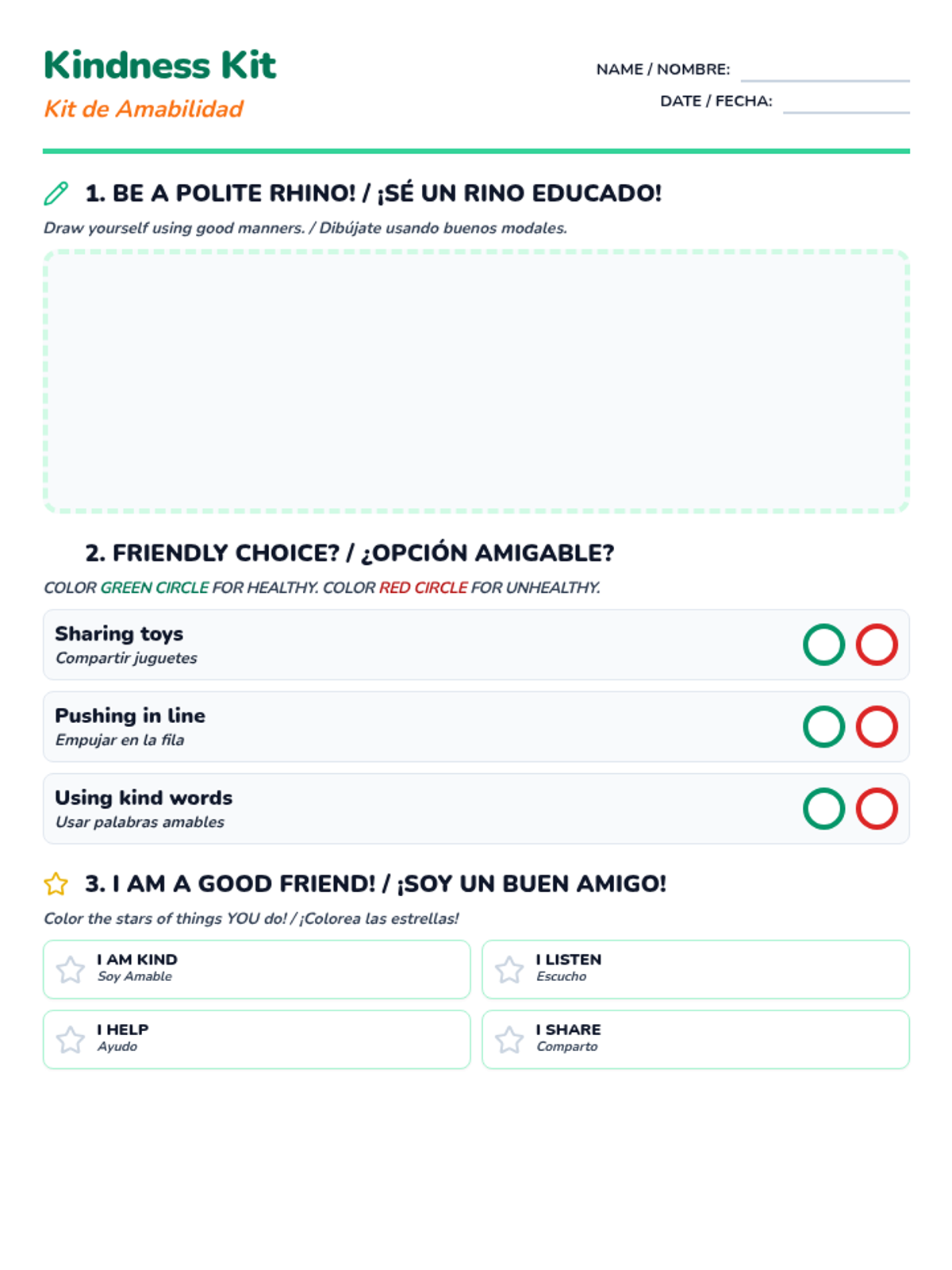
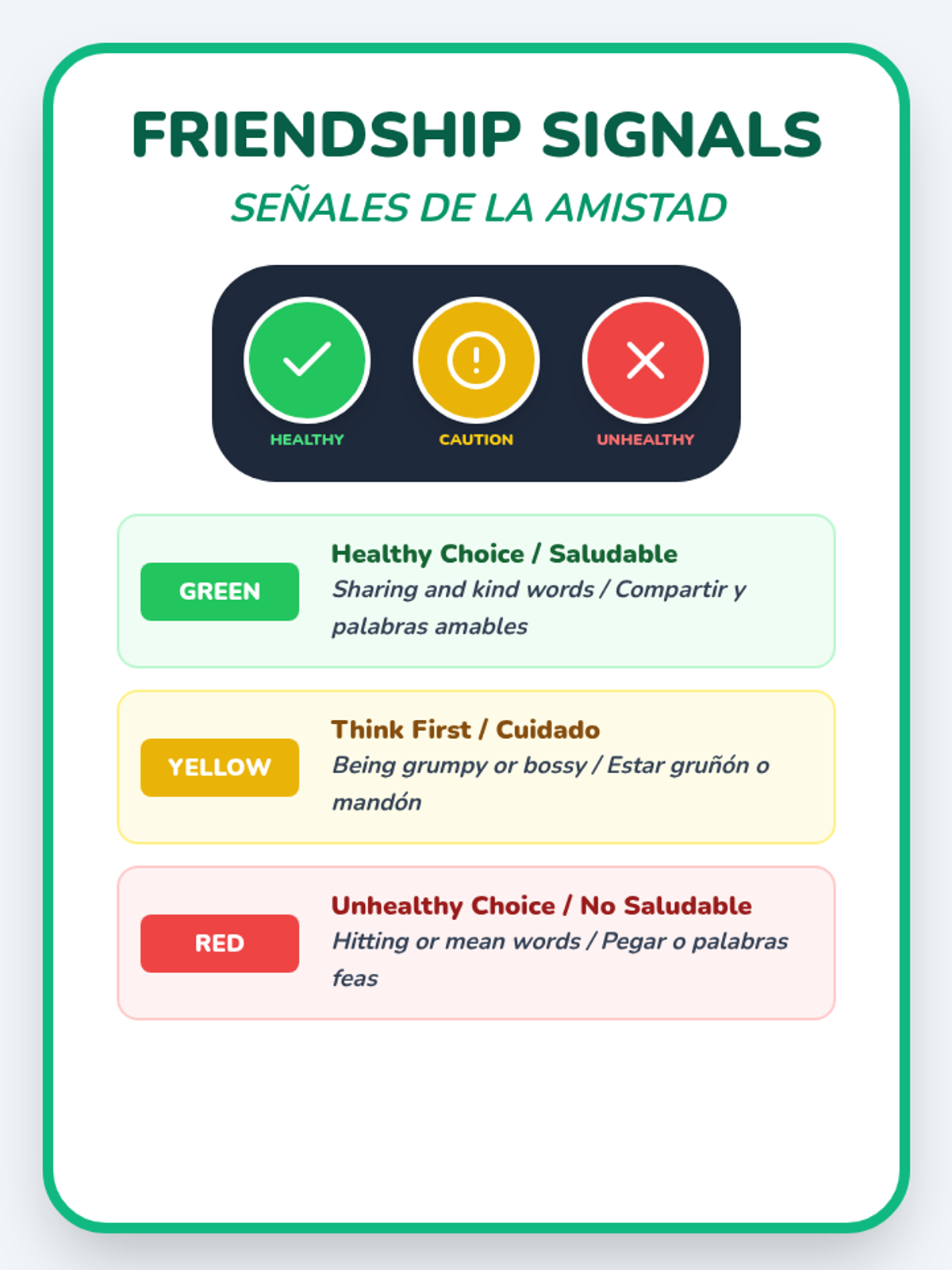
A bilingual Kindergarten lesson based on 'Rhino Learns to be Polite', focusing on distinguishing healthy and unhealthy relationships, practicing good manners, and identifying positive friendship traits.
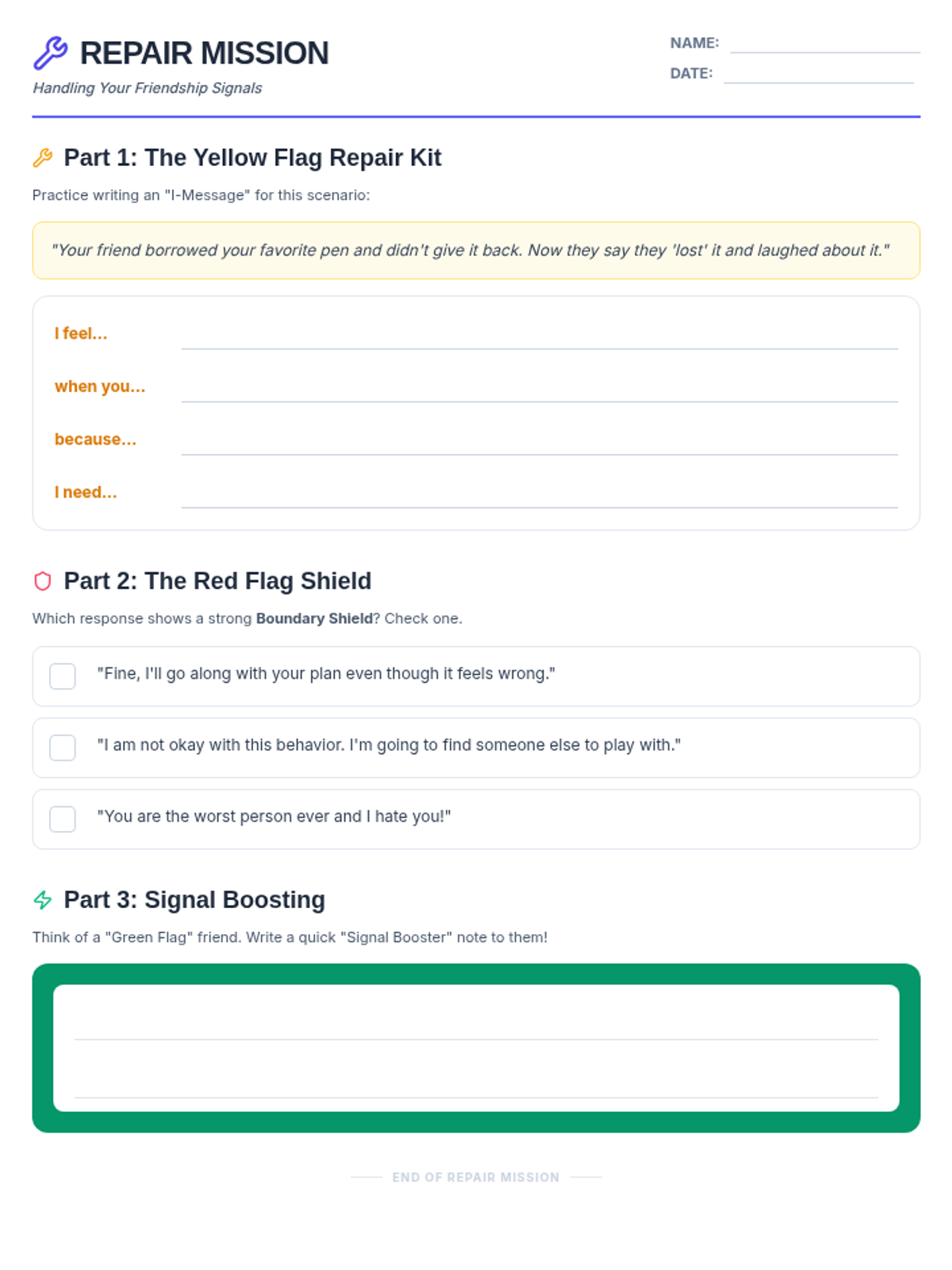
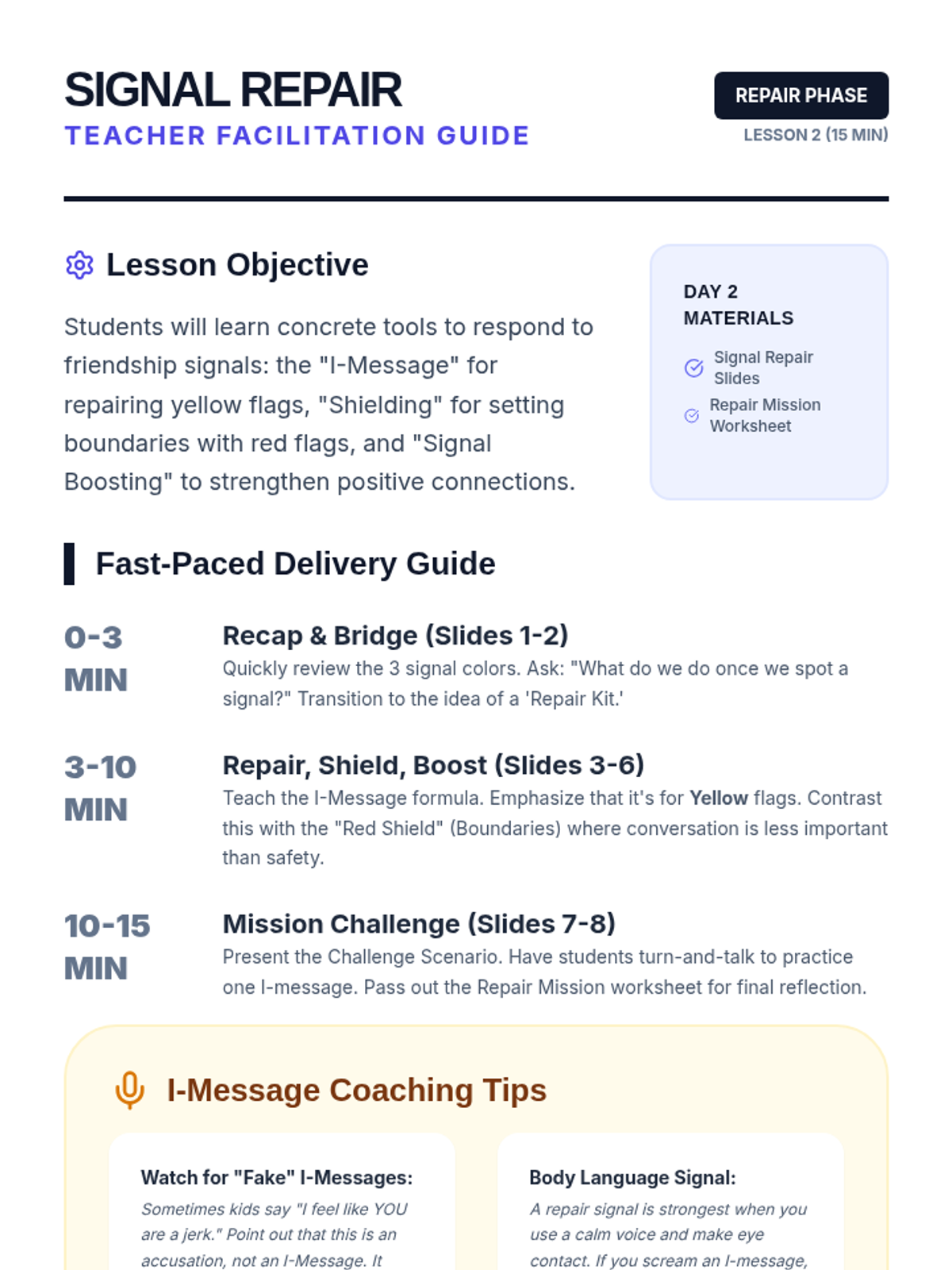
Day 2 focuses on what to do once a signal is identified. Students learn the 'I-Message' repair kit for yellow flags and 'Shield' phrases for setting boundaries with red flags.
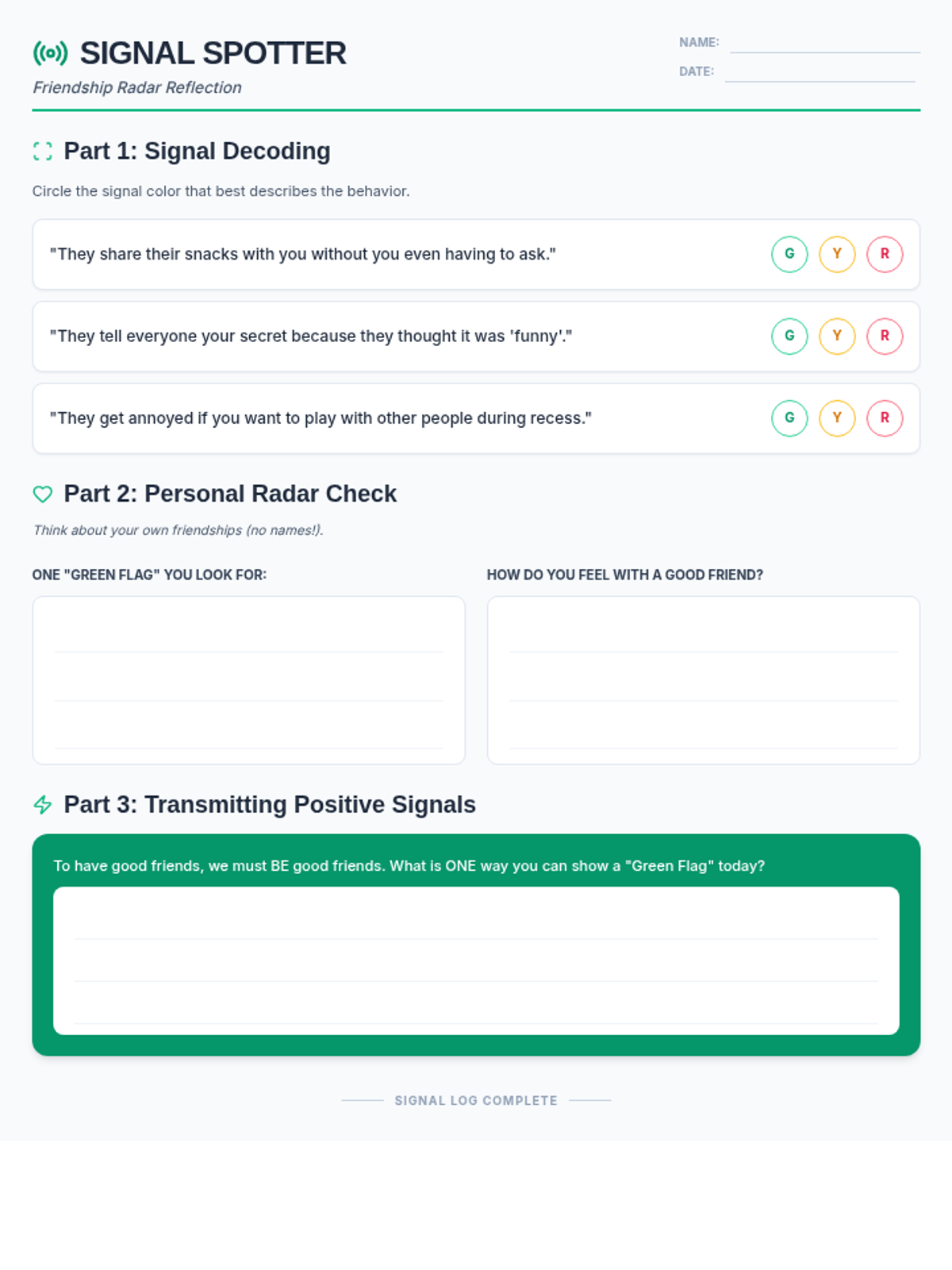
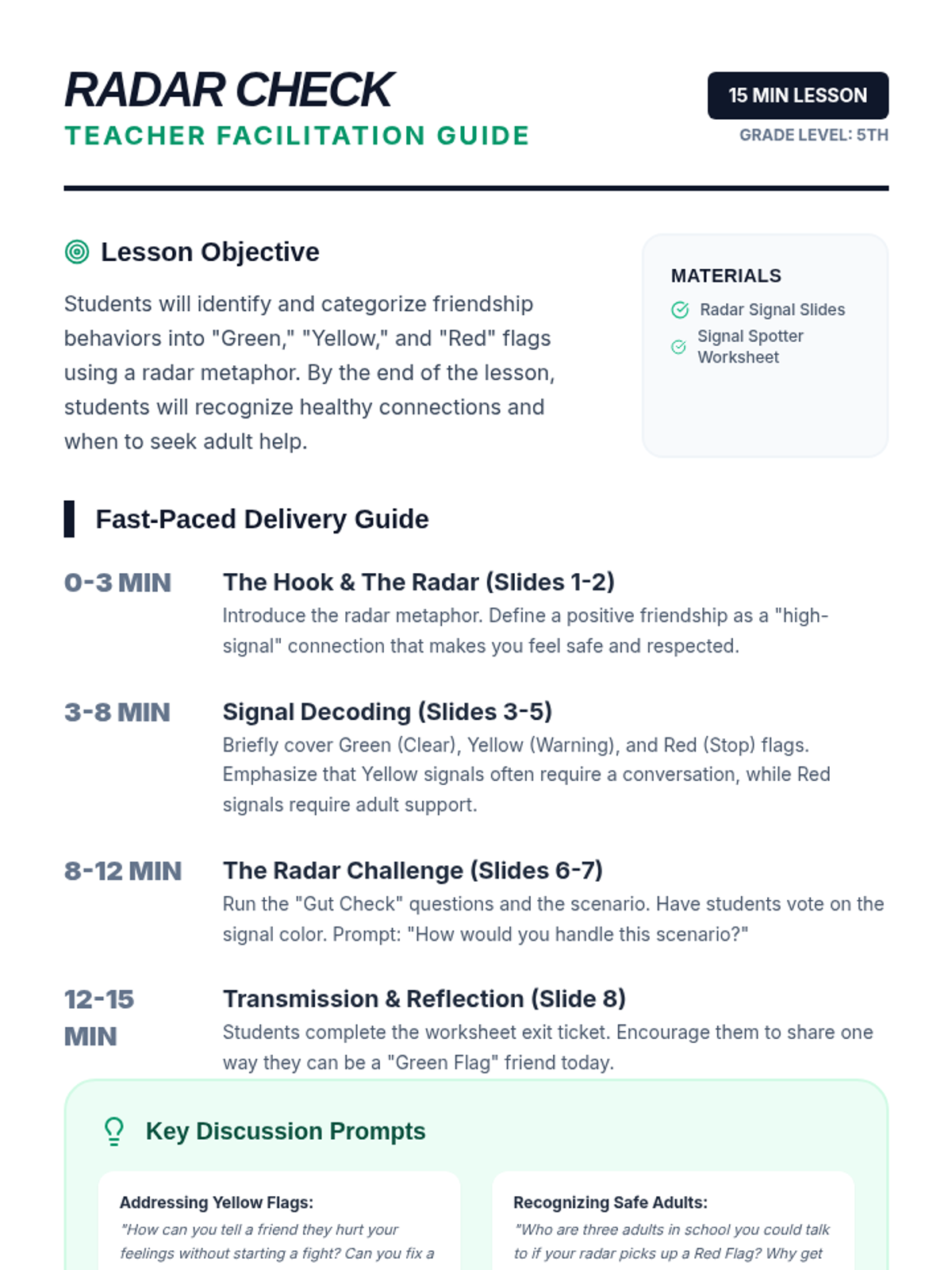
A quick, high-impact lesson for 5th graders focused on identifying the qualities of healthy versus unhealthy friendships using a 'radar signal' metaphor. Students learn to spot green, yellow, and red flags in their social circles.
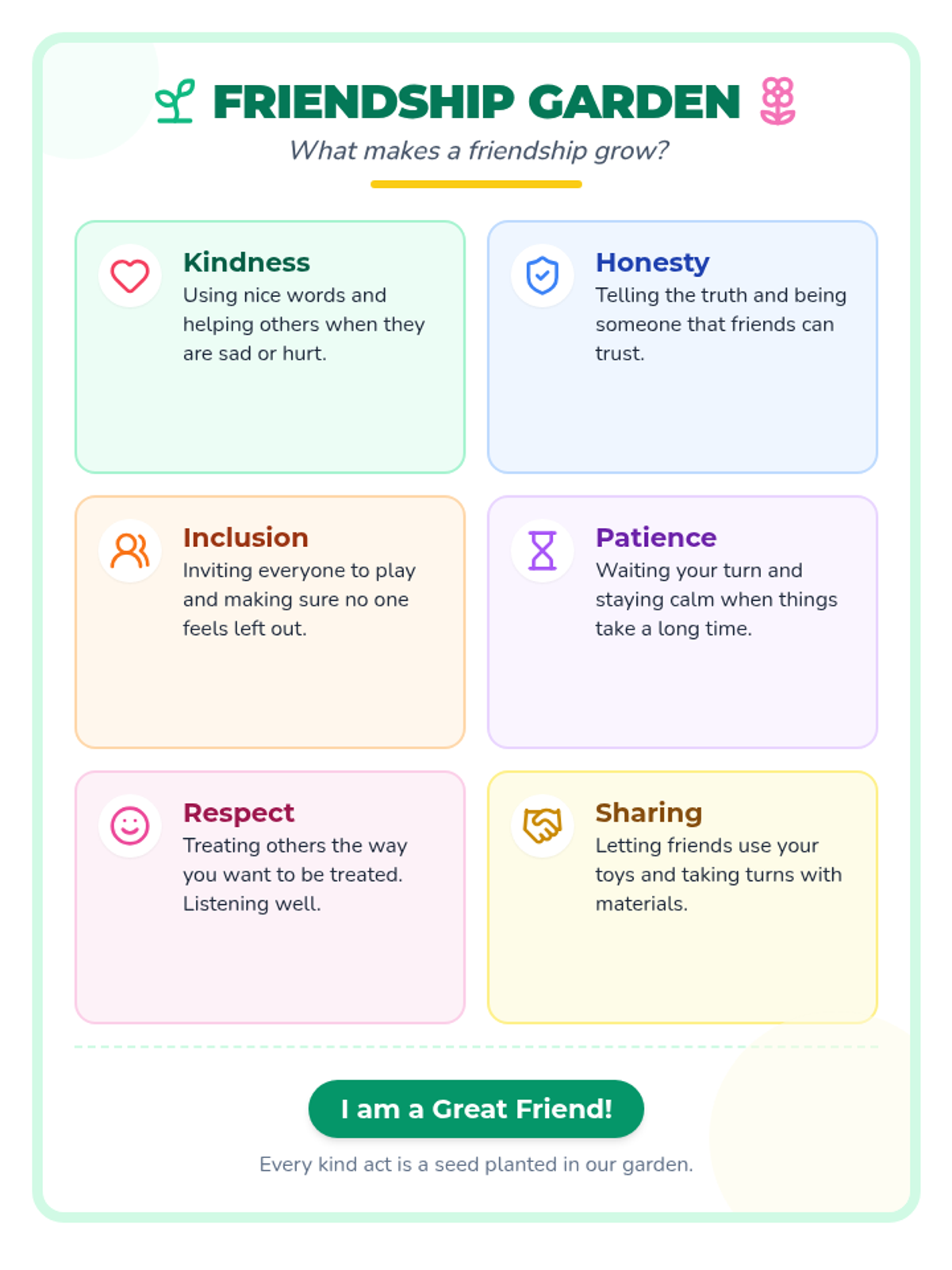
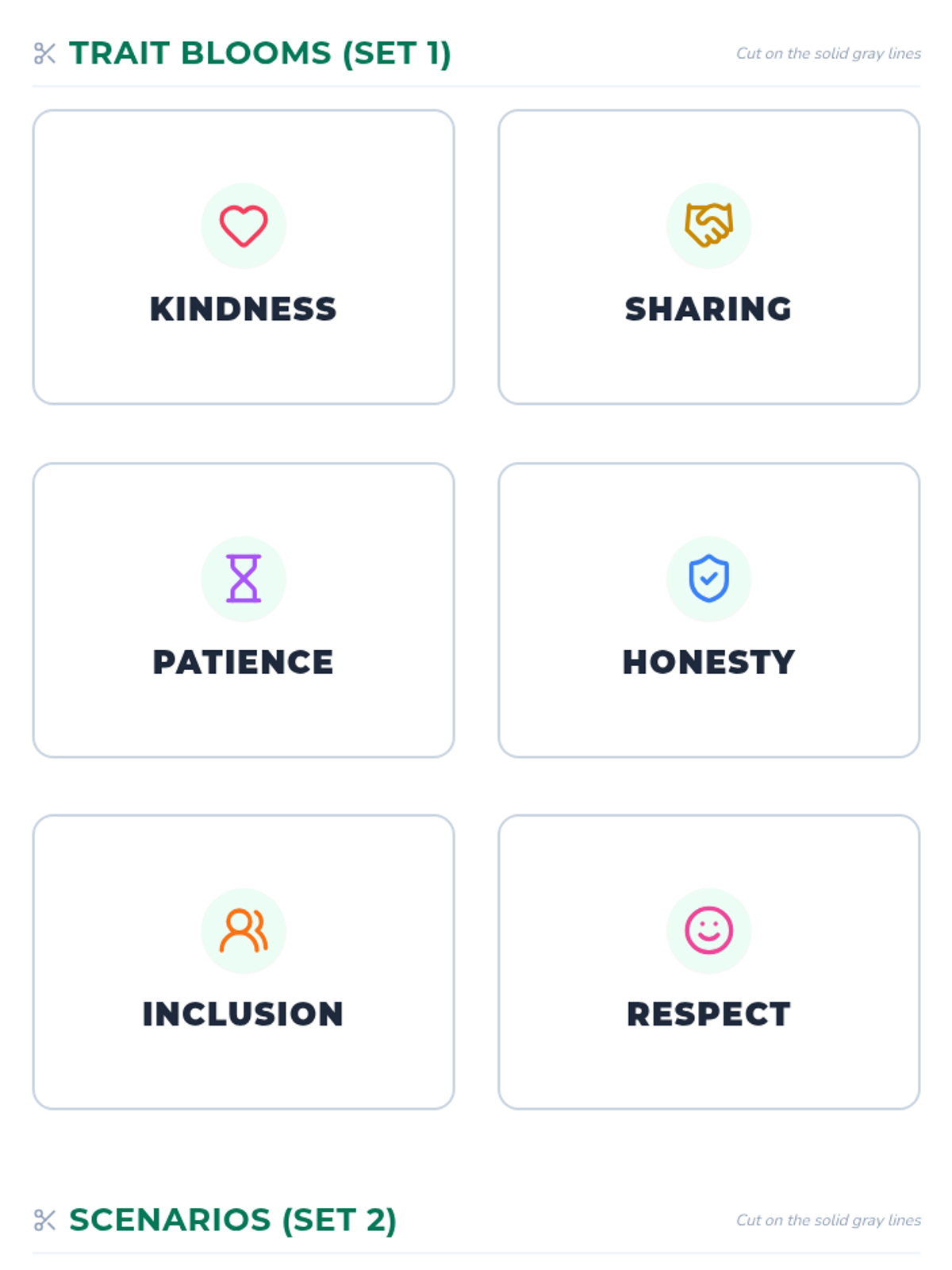
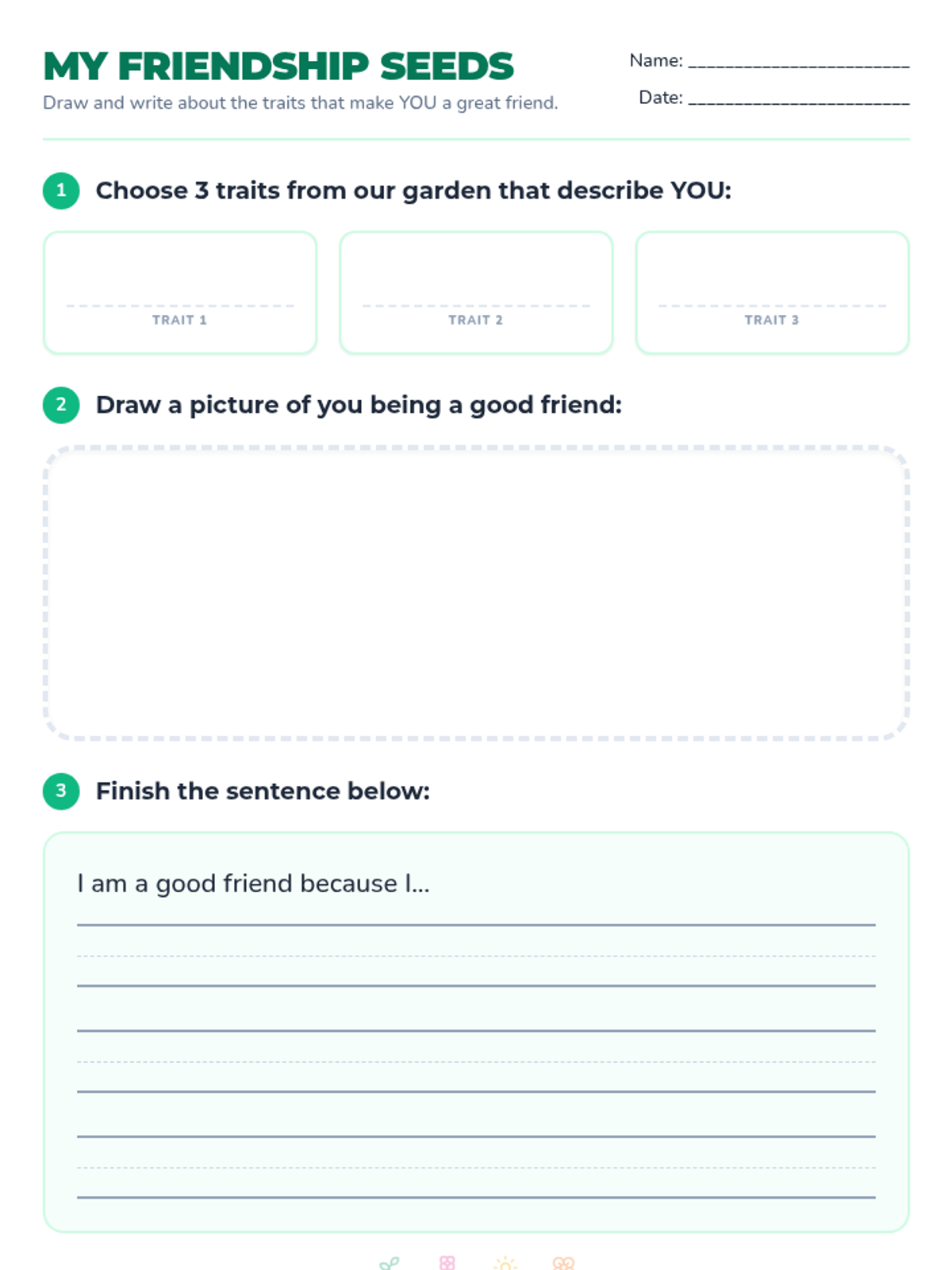
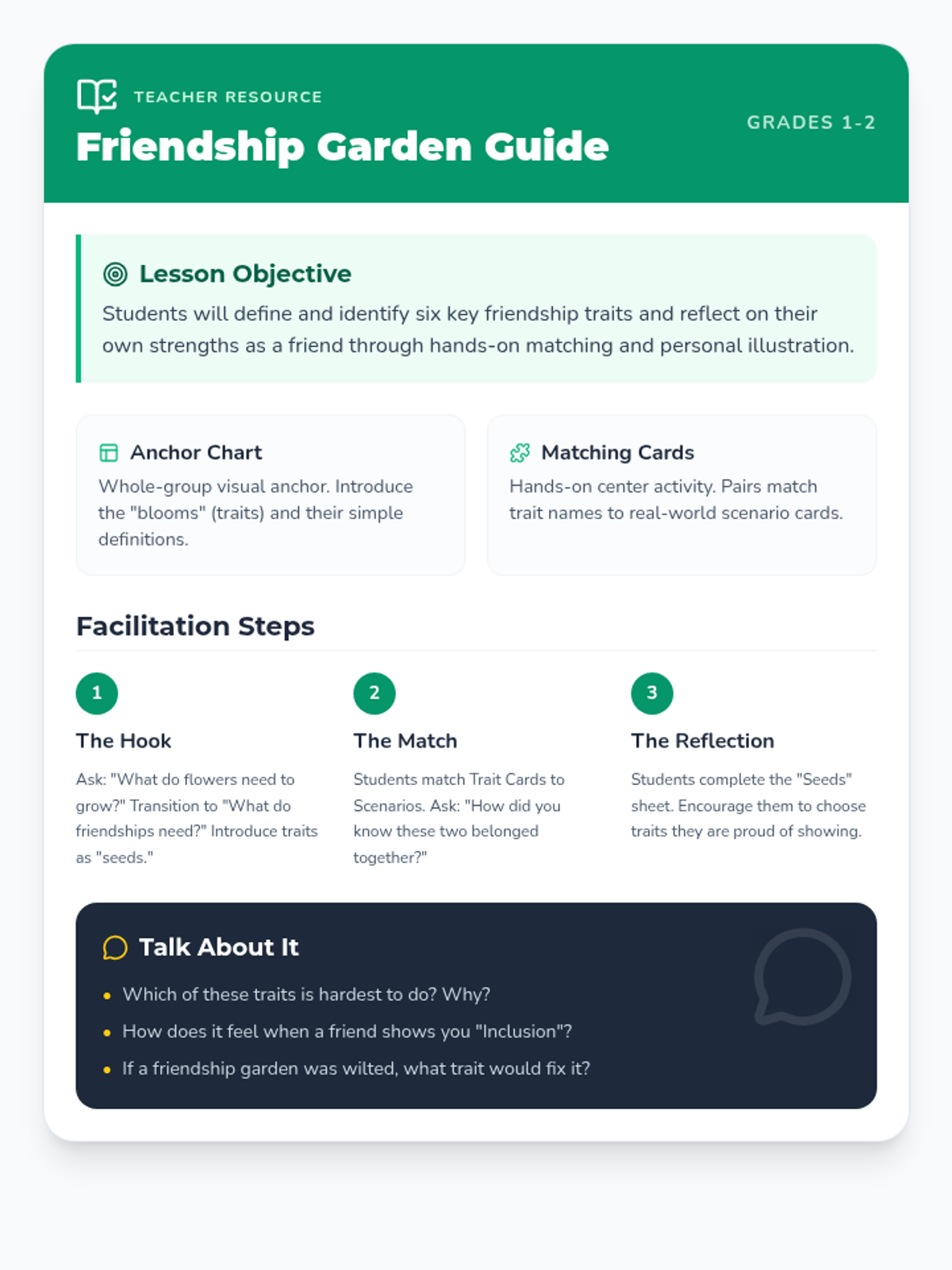
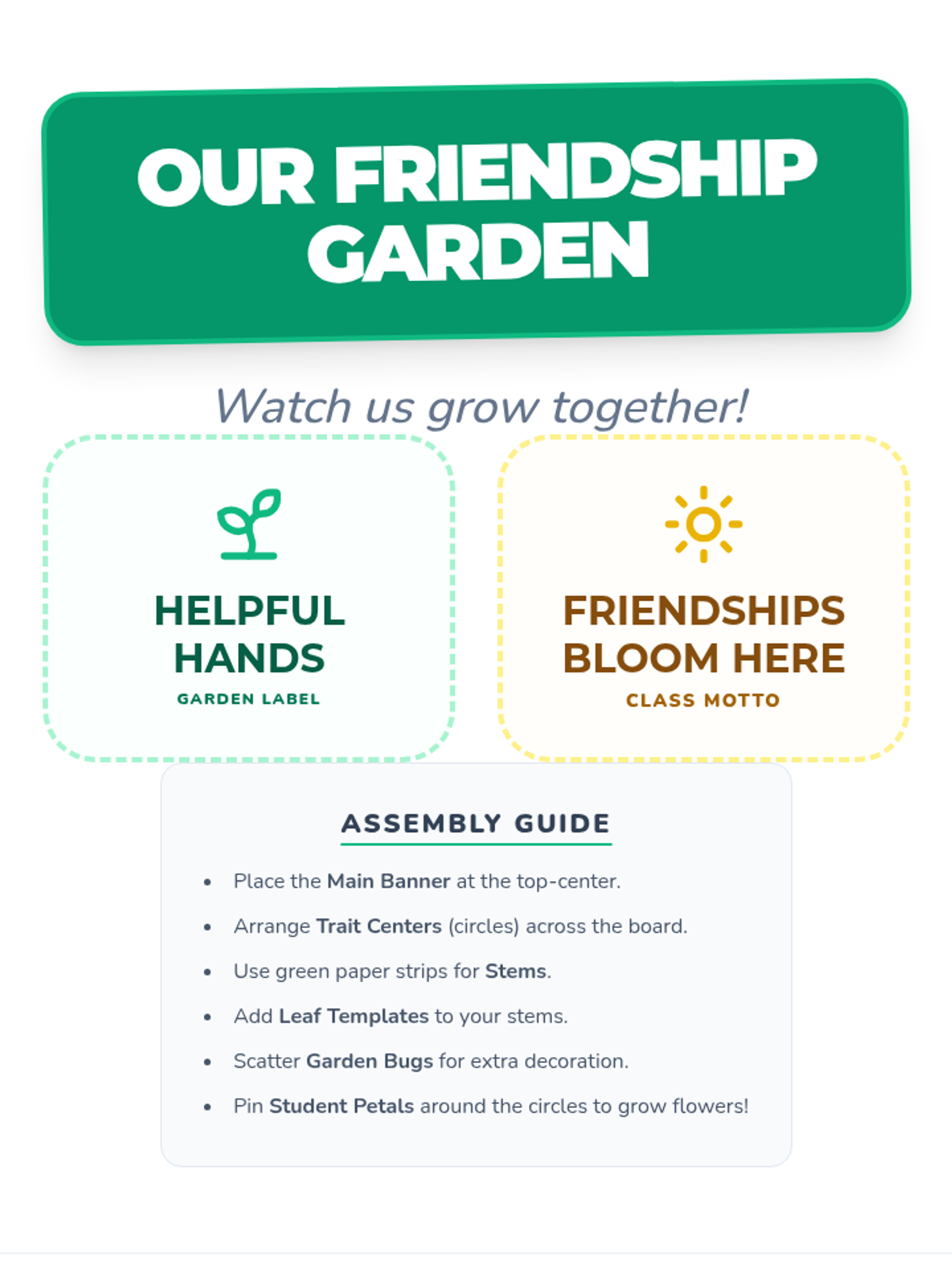
An engaging social-emotional learning lesson where students identify positive character traits that make them a good friend through a 'Friendship Garden' theme. Students interact with a visual anchor chart, participate in a hands-on matching activity, and reflect on their own friendship strengths.
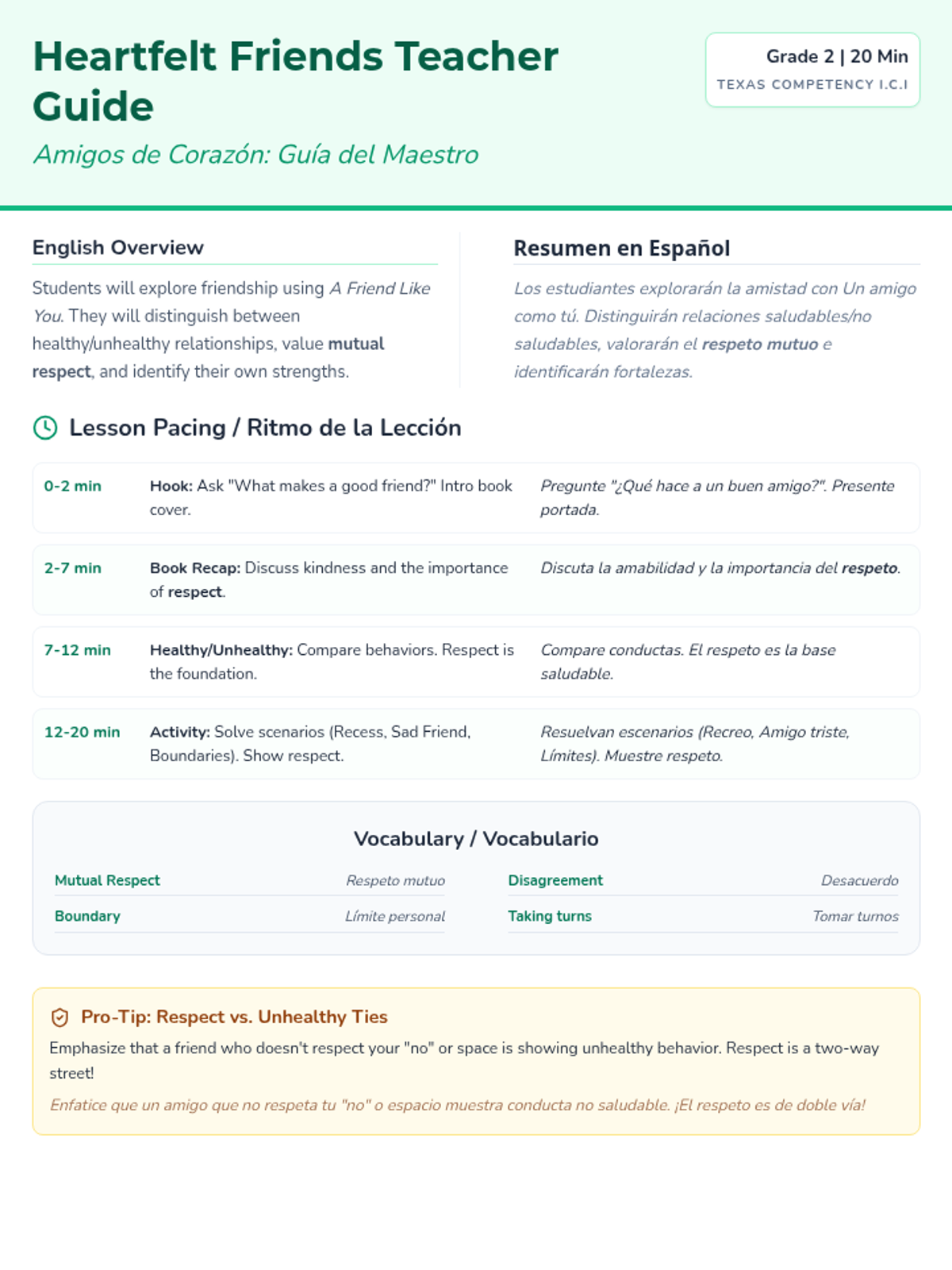
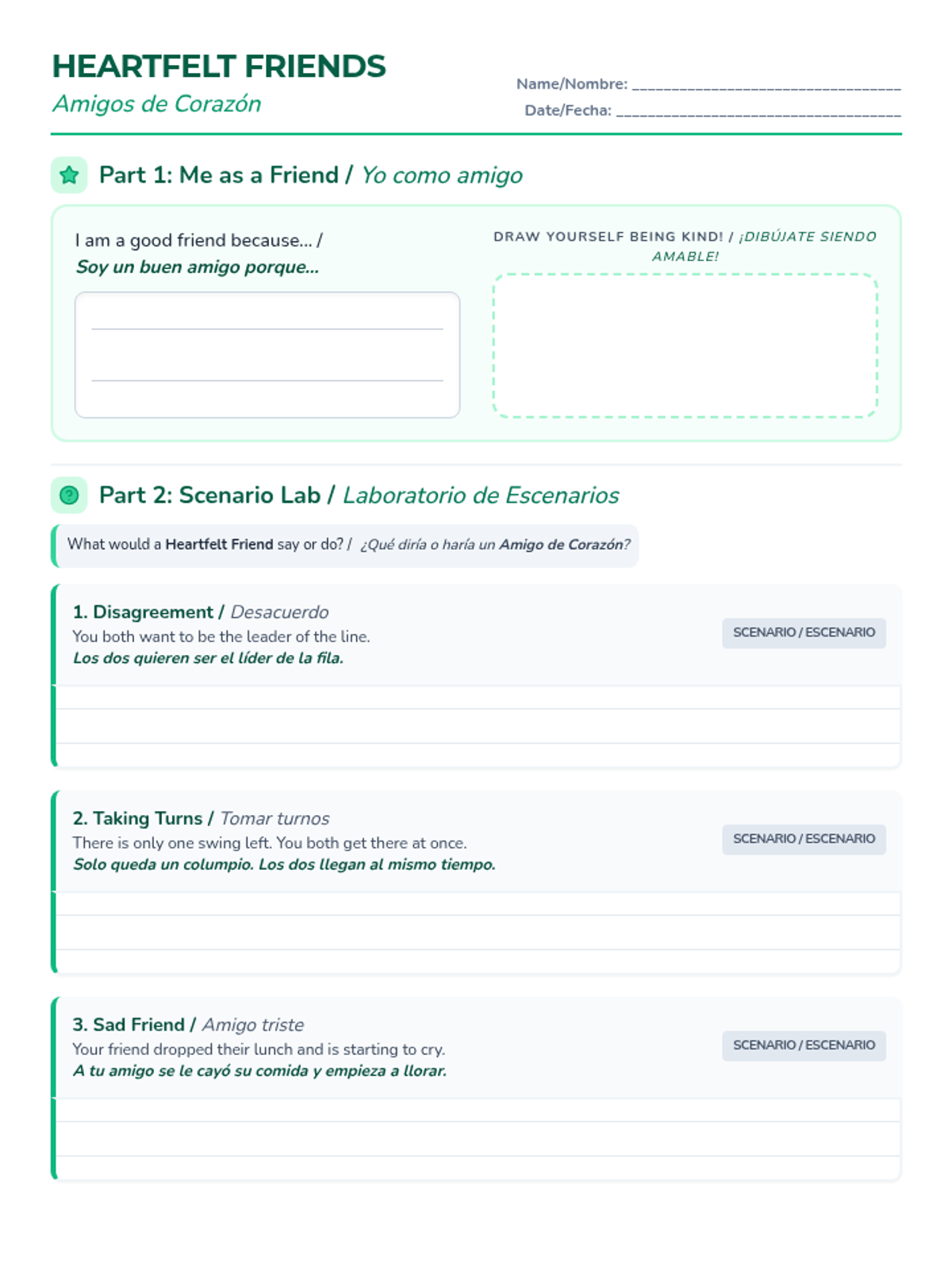
A 20-minute bilingual (English/Spanish) lesson for 2nd grade exploring healthy vs. unhealthy relationships and self-reflection on friendship traits, based on 'A Friend Like You' by Frank Murphy.
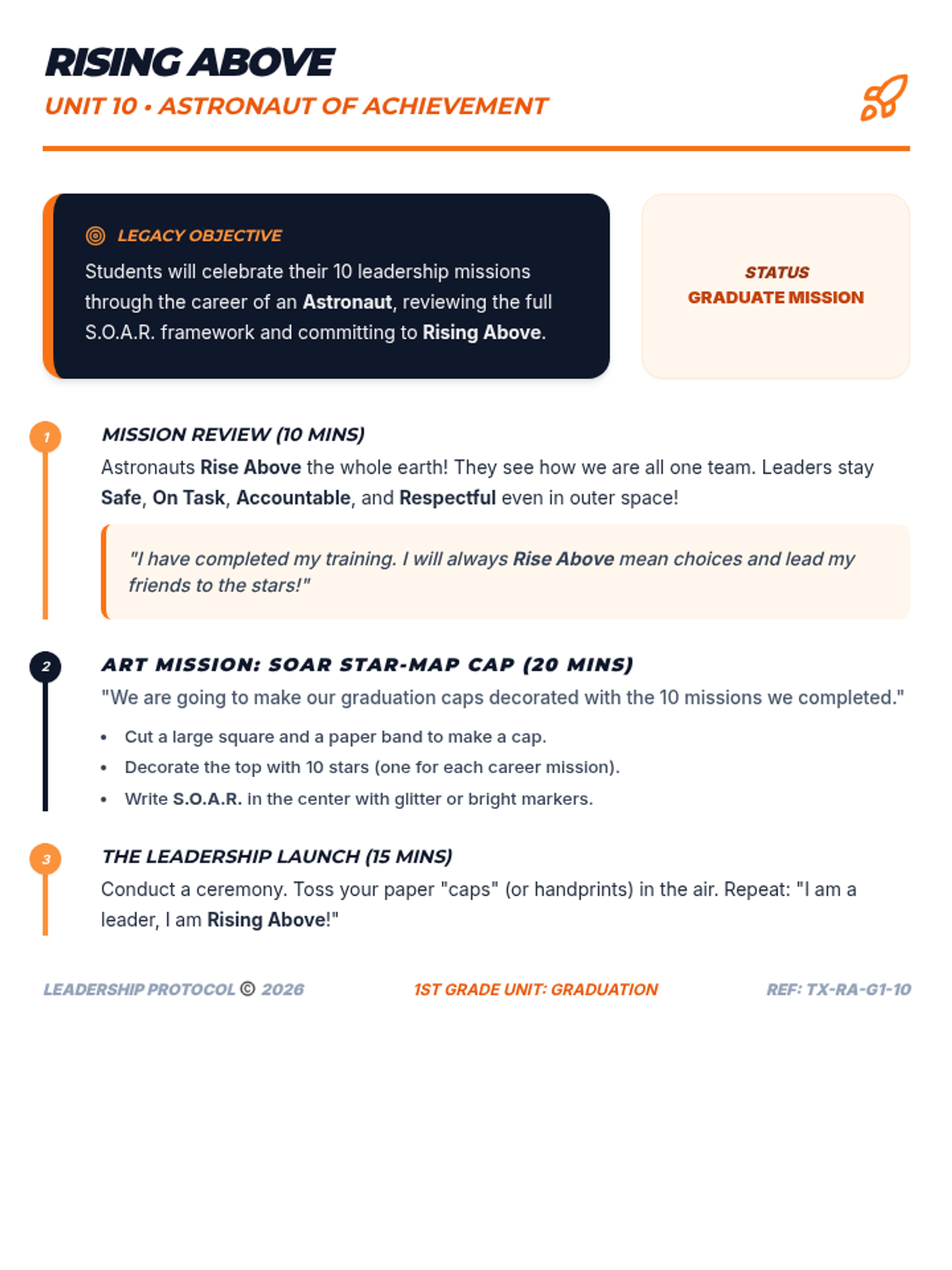
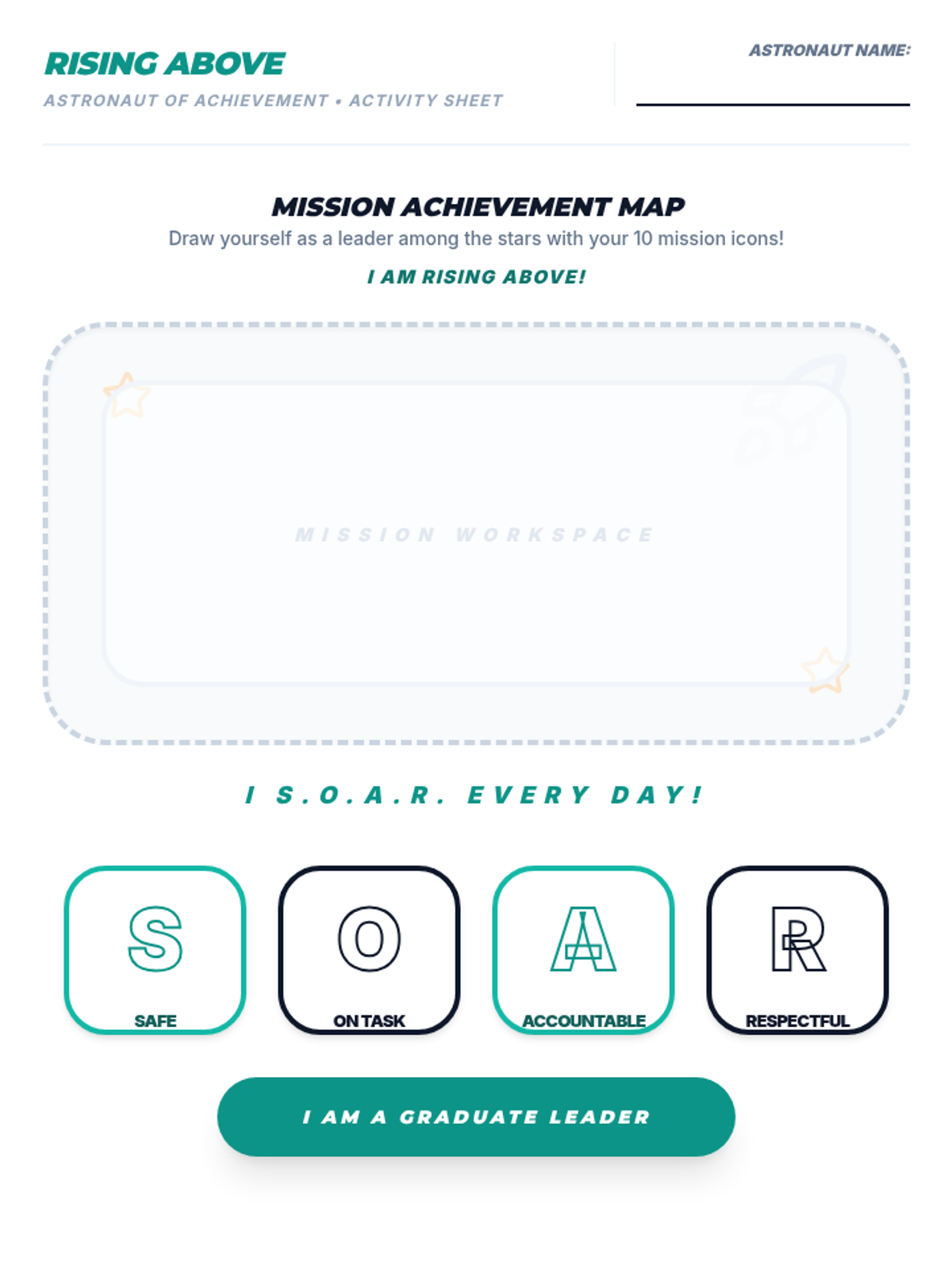
1st Grade graduation celebrating their journey to lead with character. Art: SOAR Star-Map Cap.
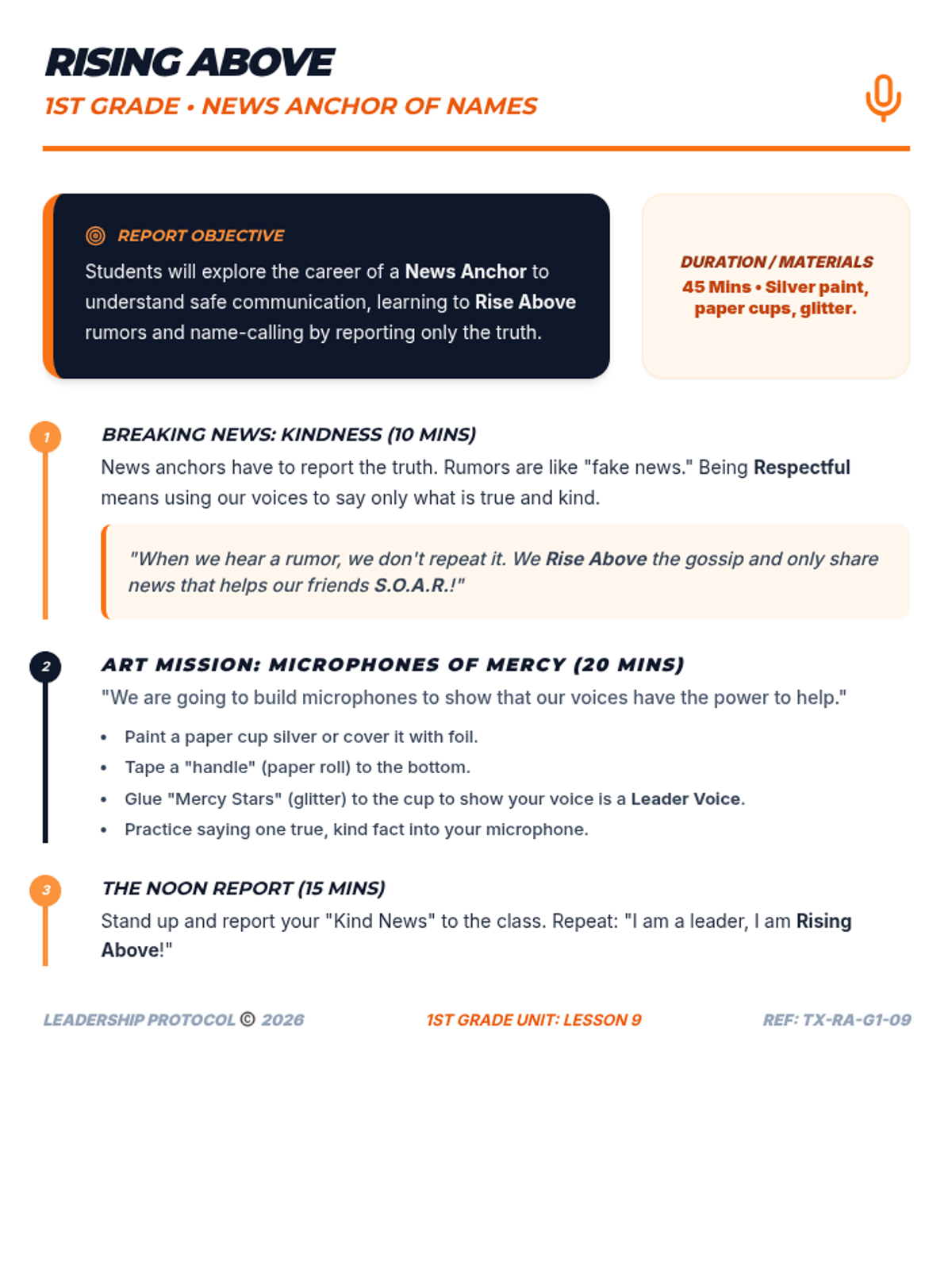
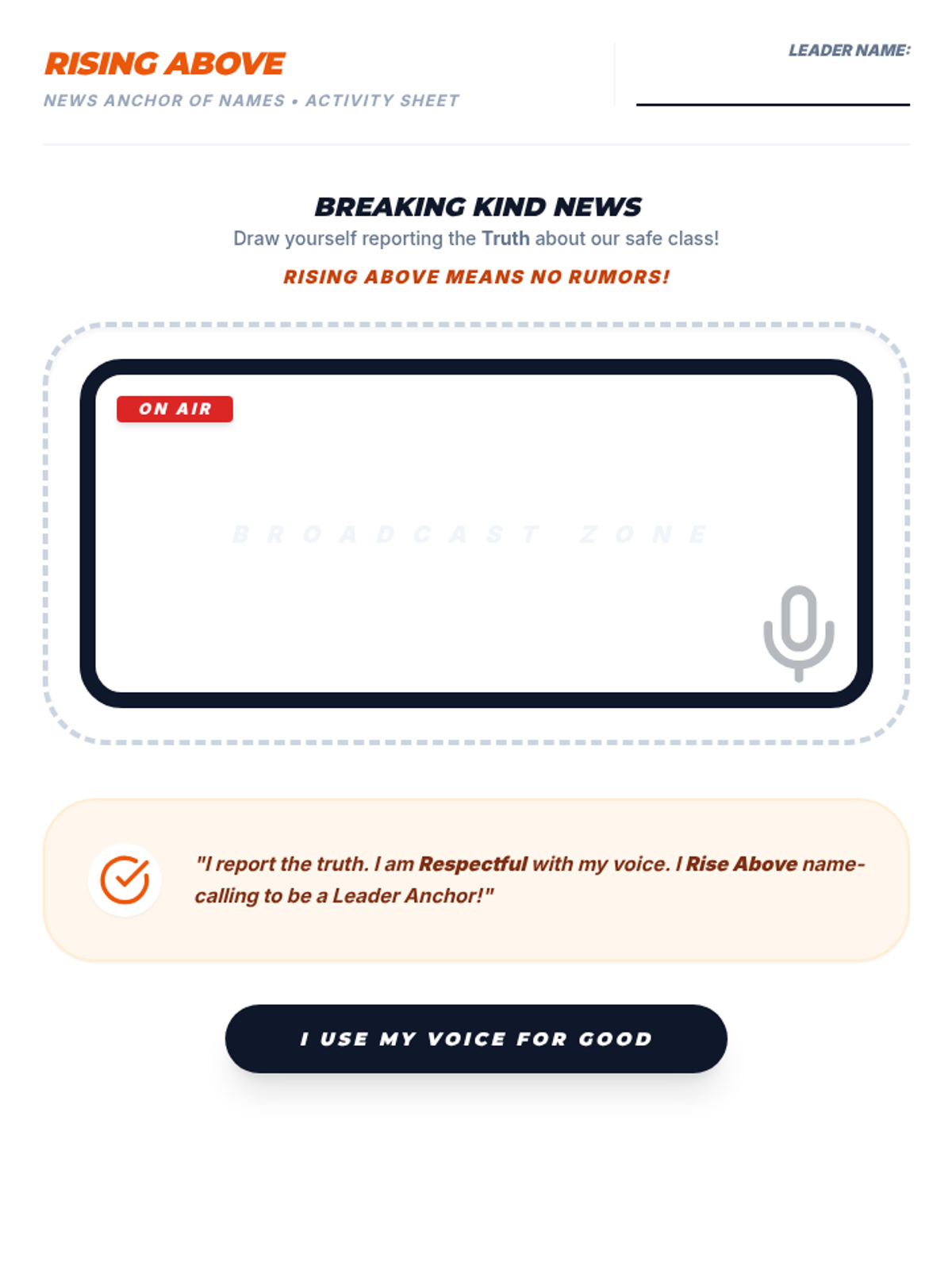
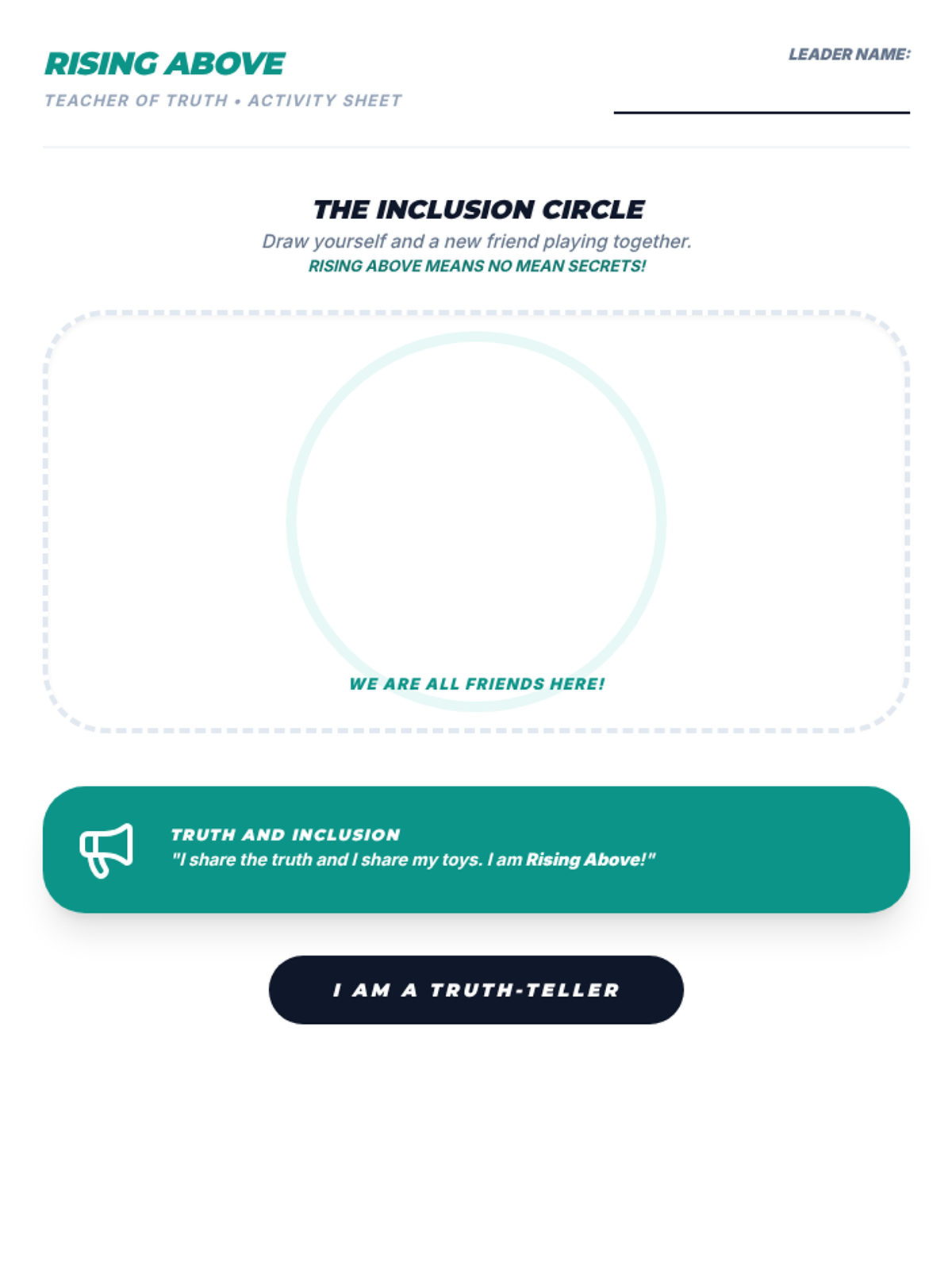
1st Grade focus on safe communication and reporting the 'truth' through the career of a News Anchor. Art: Microphones of Mercy.
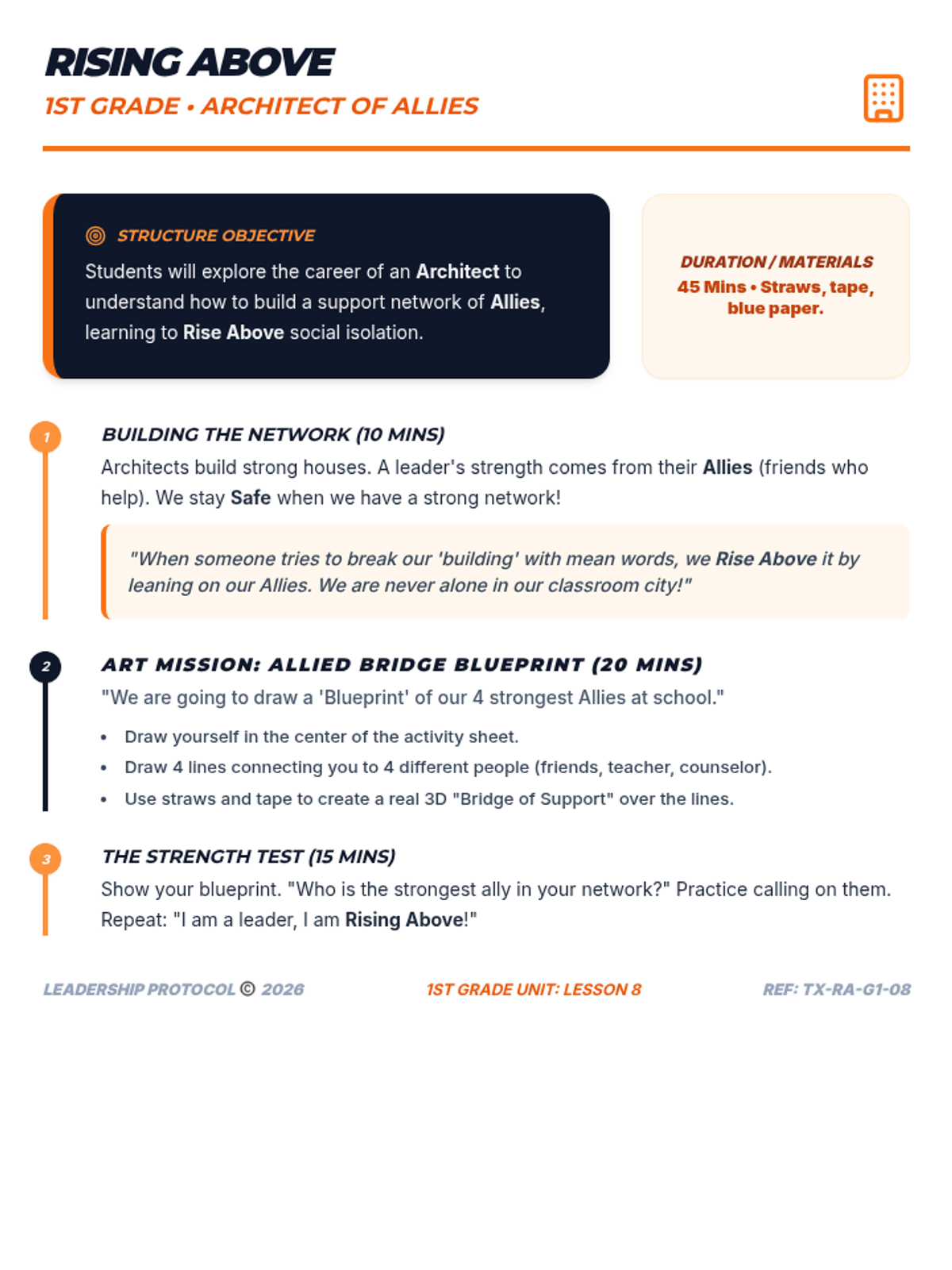
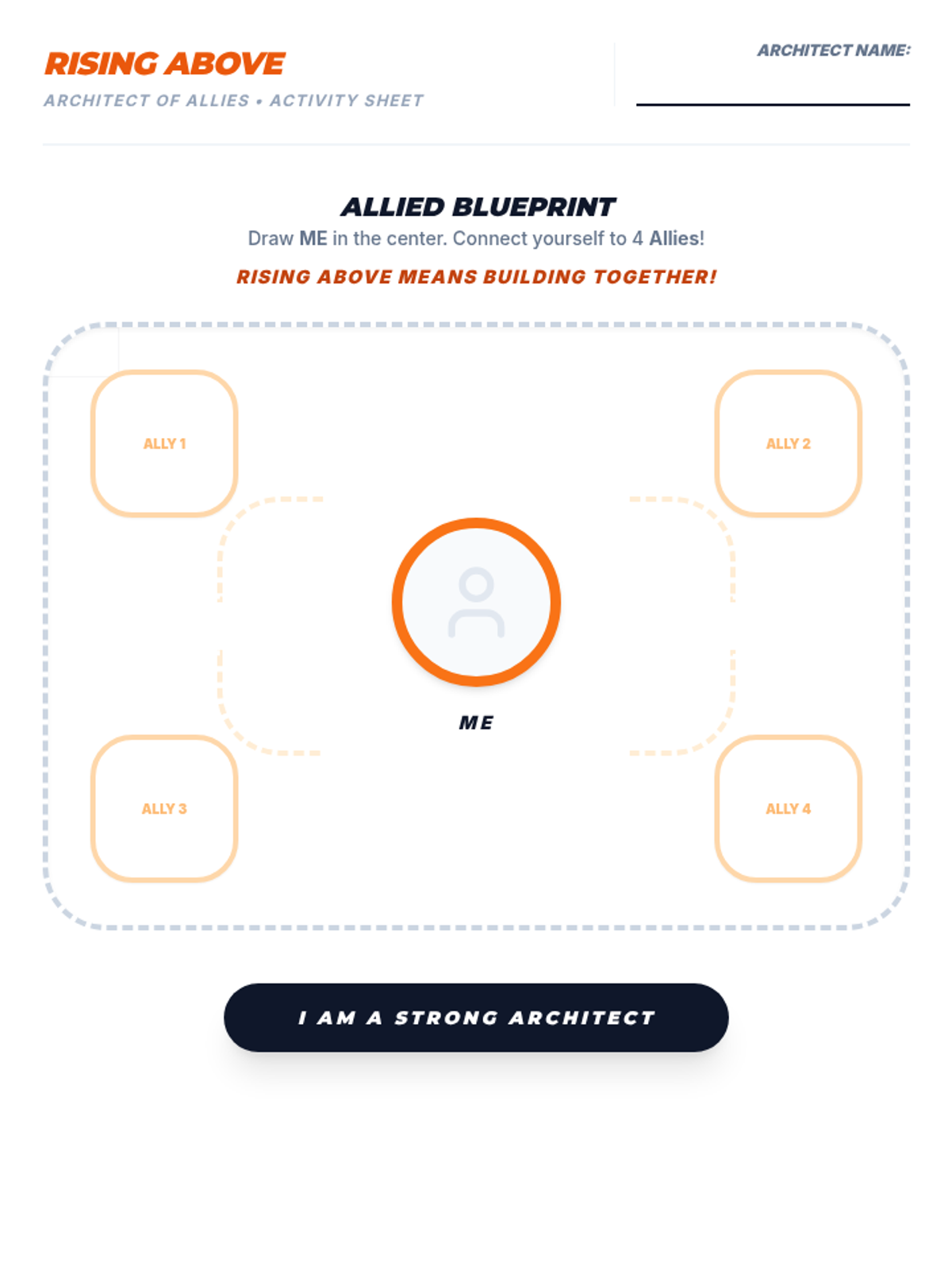
1st Grade focus on building a strong network of allies through the career of an Architect. Art: Allied Bridge Blueprint.
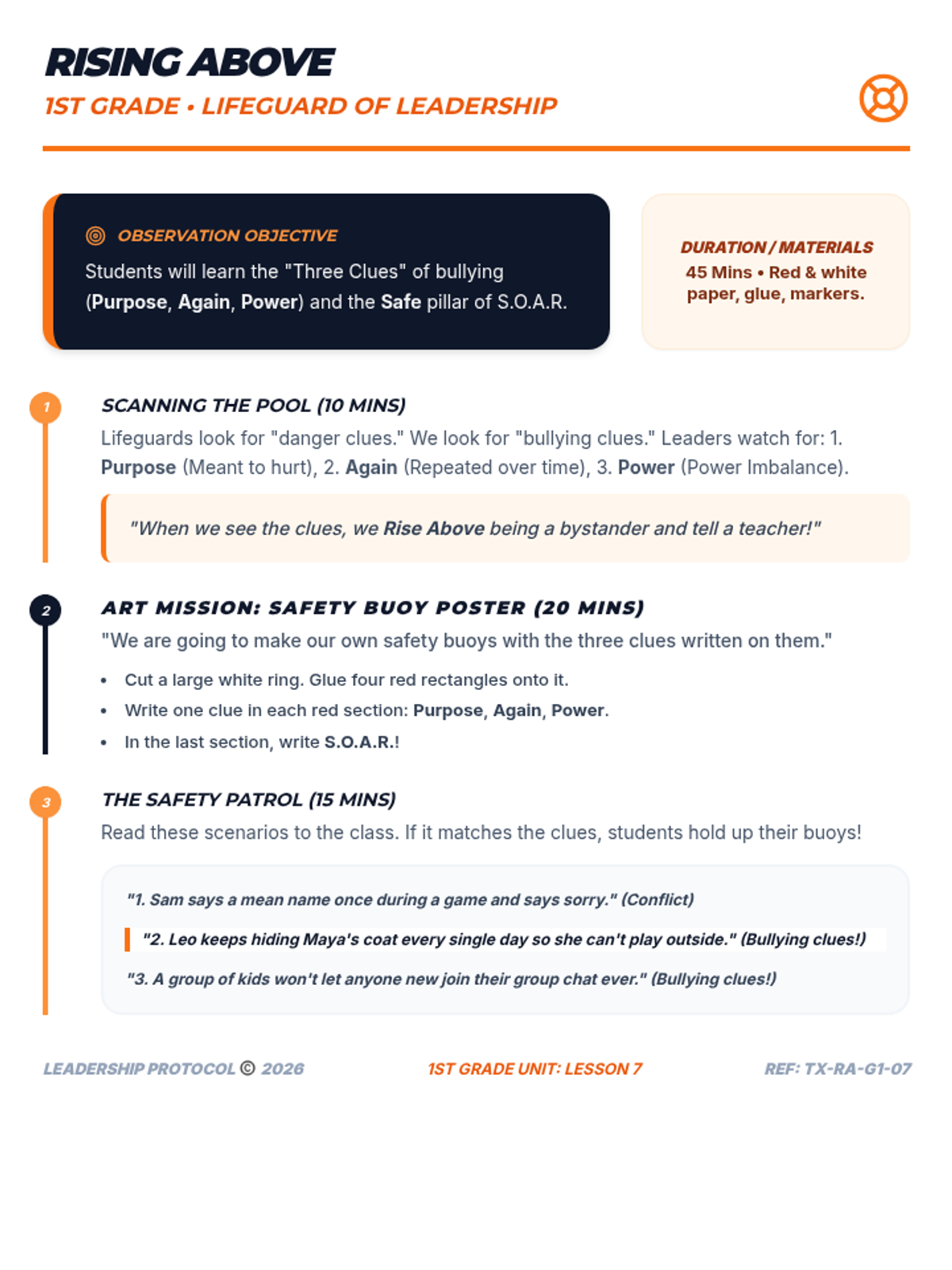
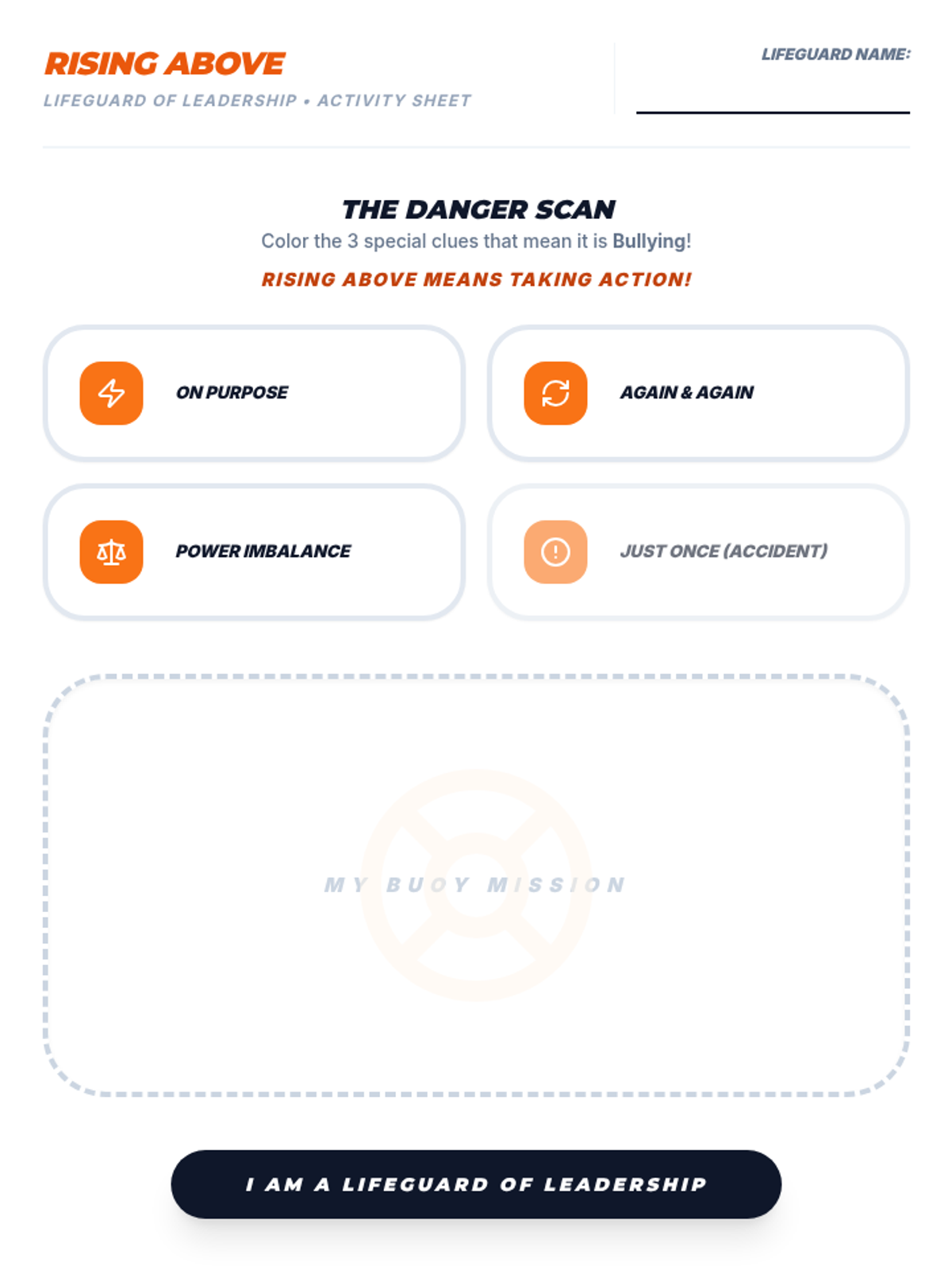
1st Grade focus on noticing the three clues of bullying (Power, Repeat, Intent) as a Lifeguard. Art: Safety Buoy Poster.
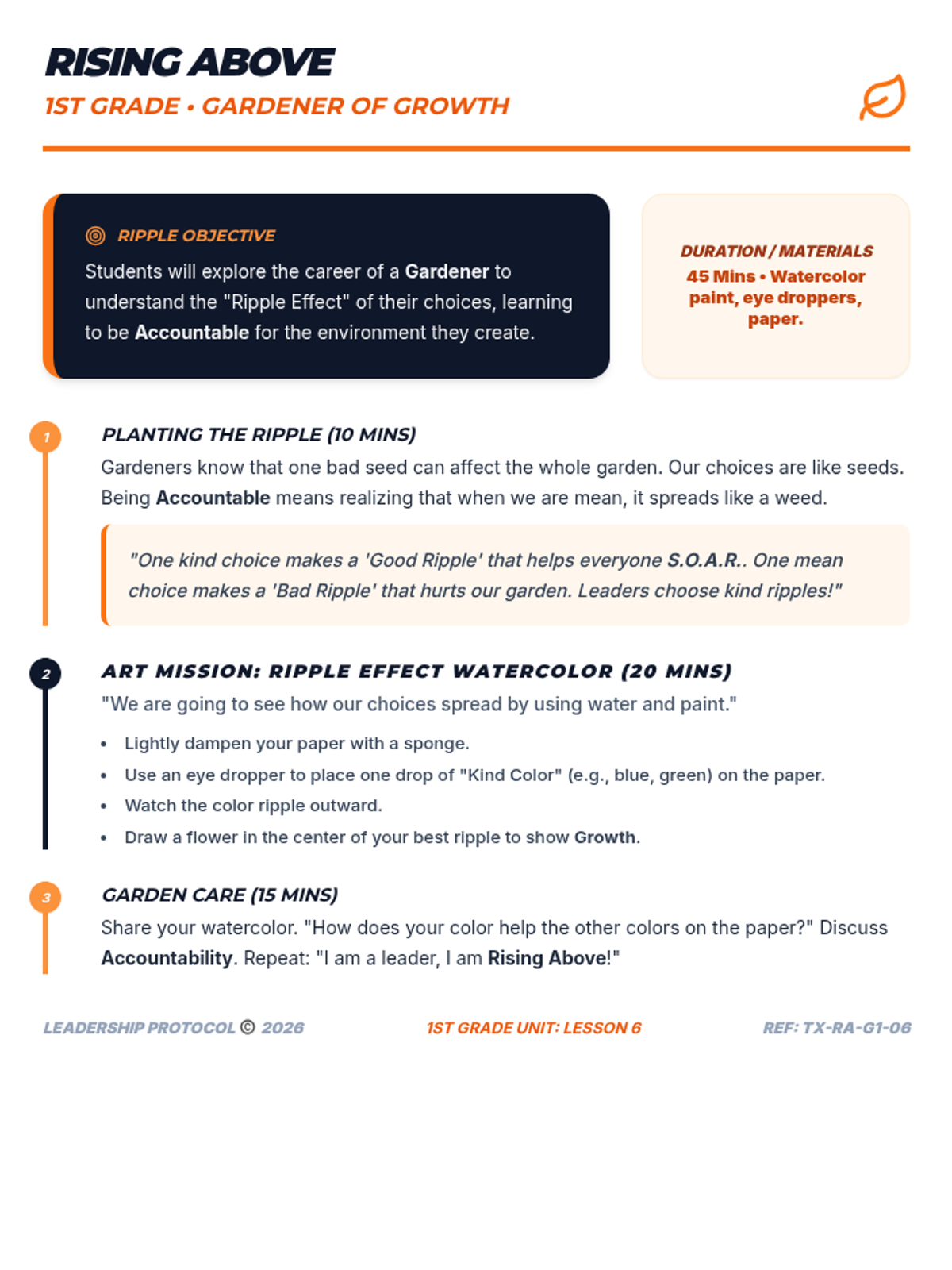
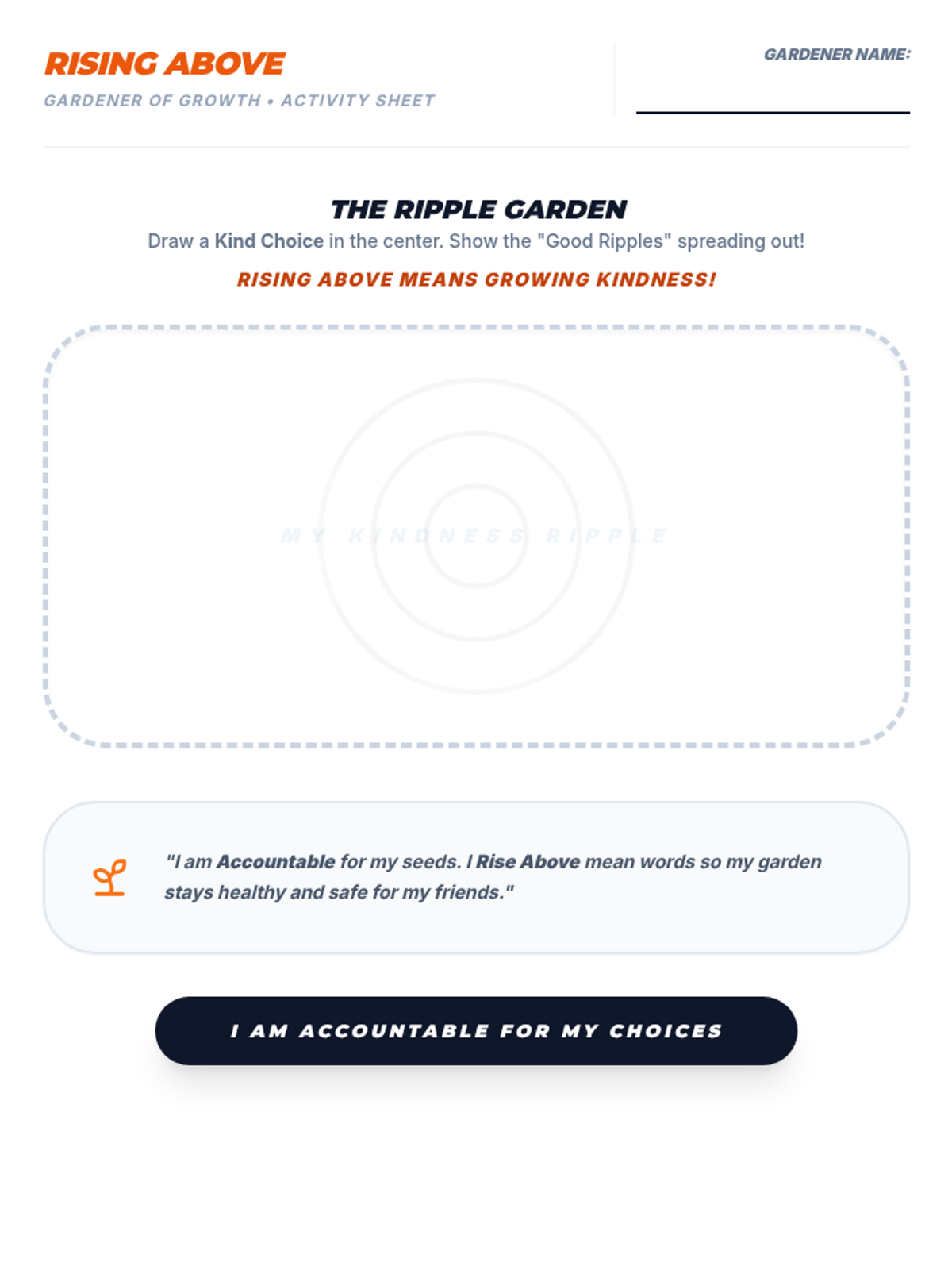
1st Grade focus on the ripple effect of our choices through the career of a Gardener. Art: Ripple Effect Watercolor.
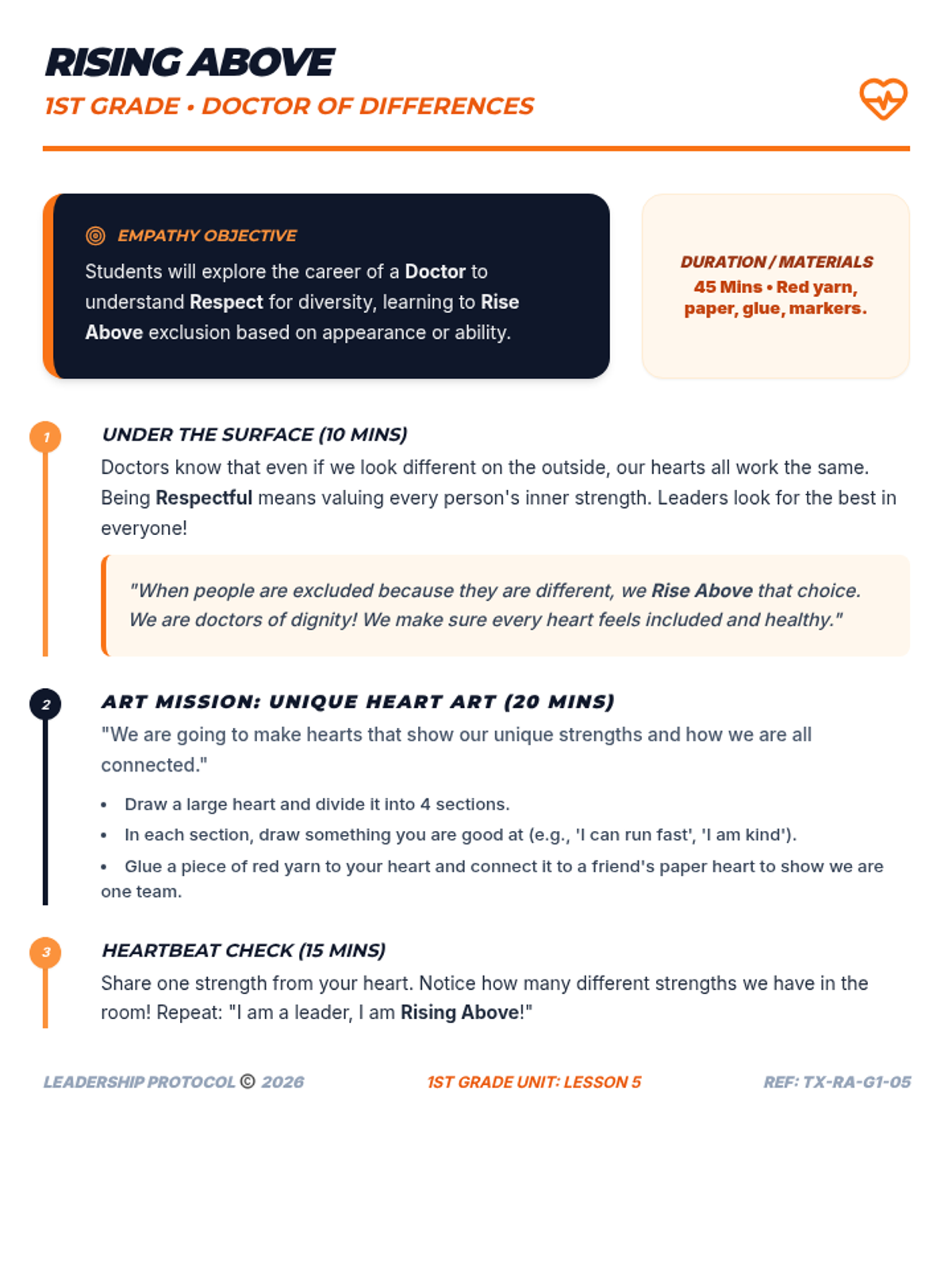
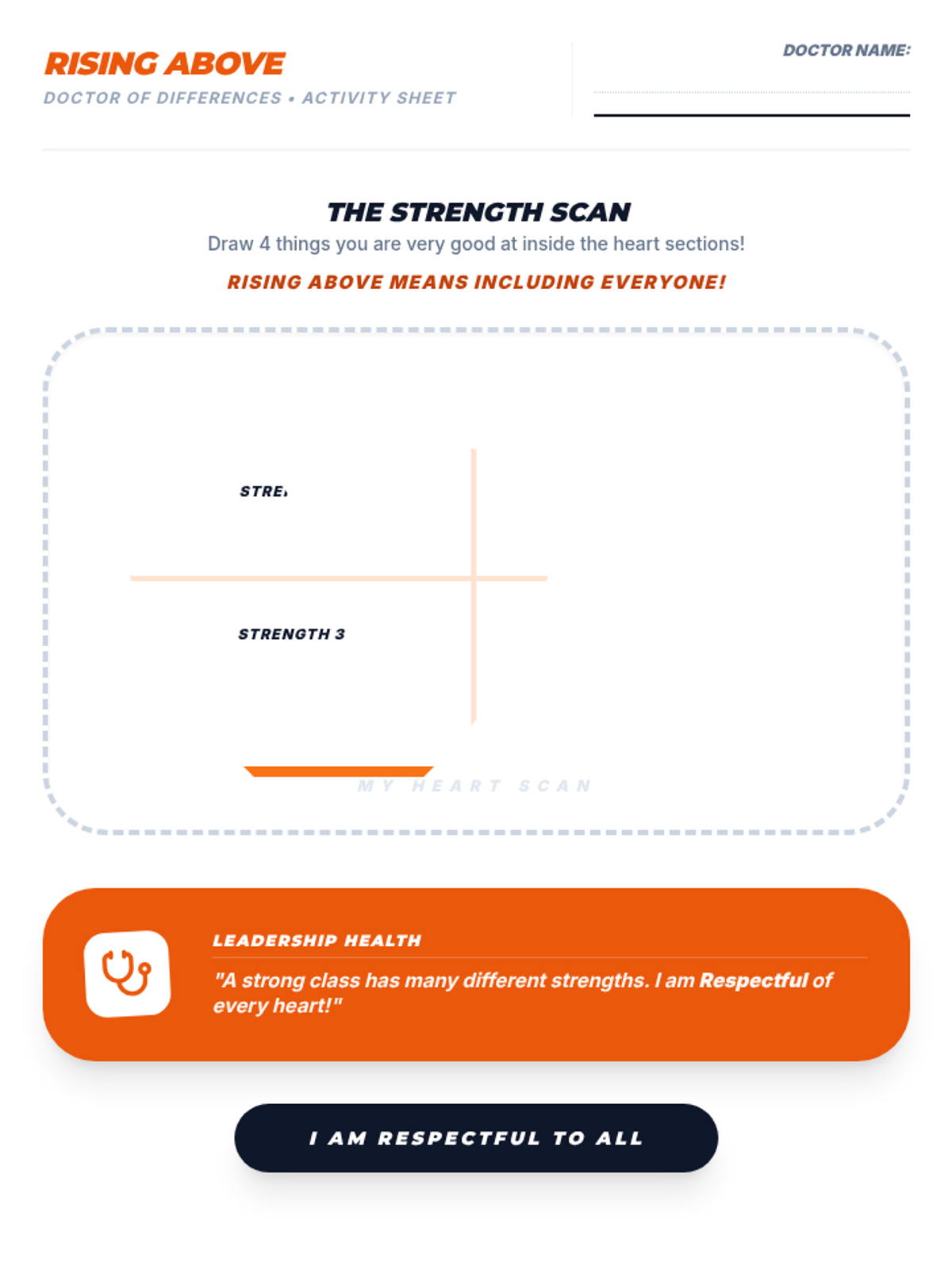
1st Grade focus on respecting differences and diverse strengths through the career of a Doctor. Art: Unique Heart Anatomy Art.
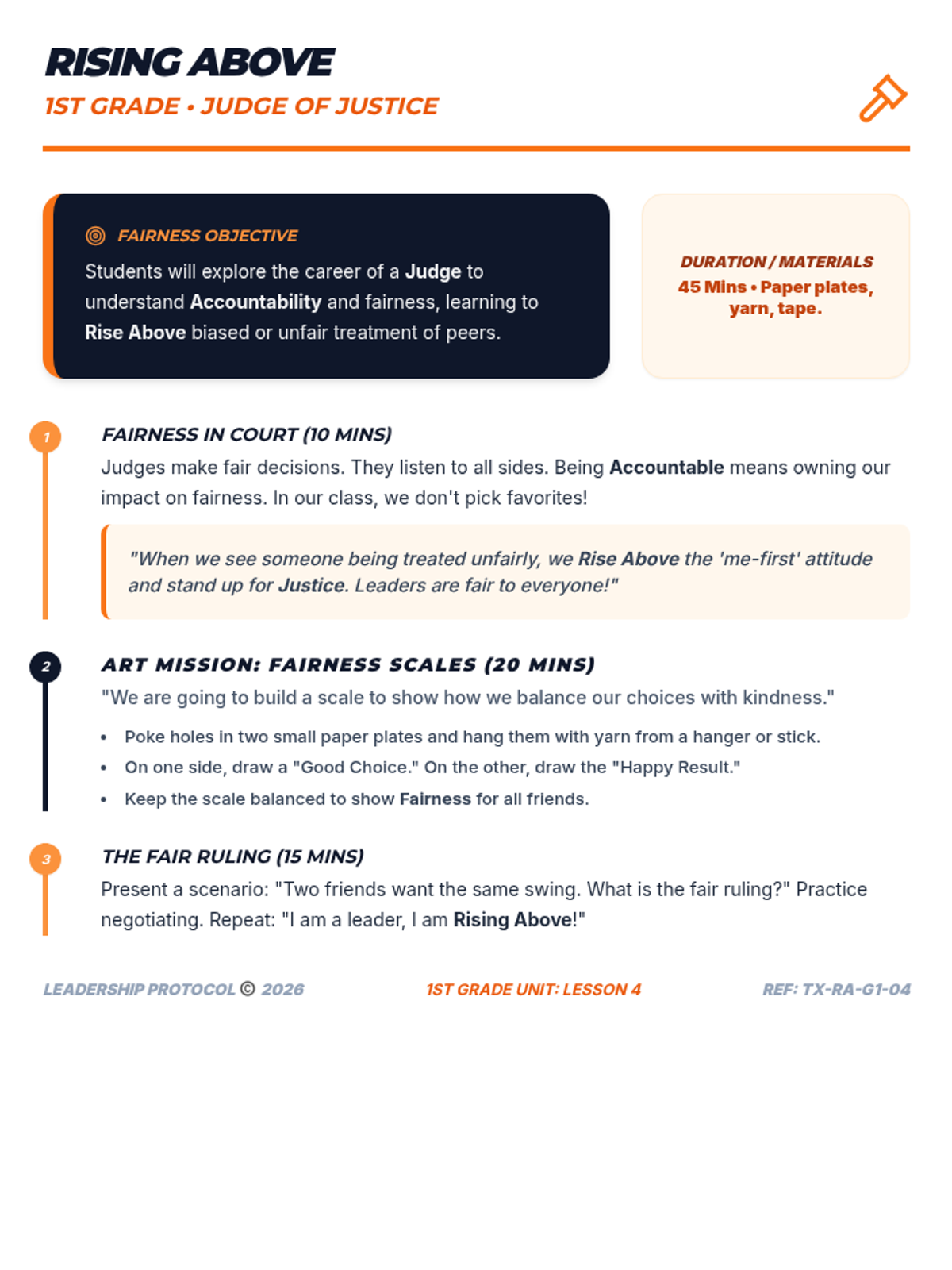
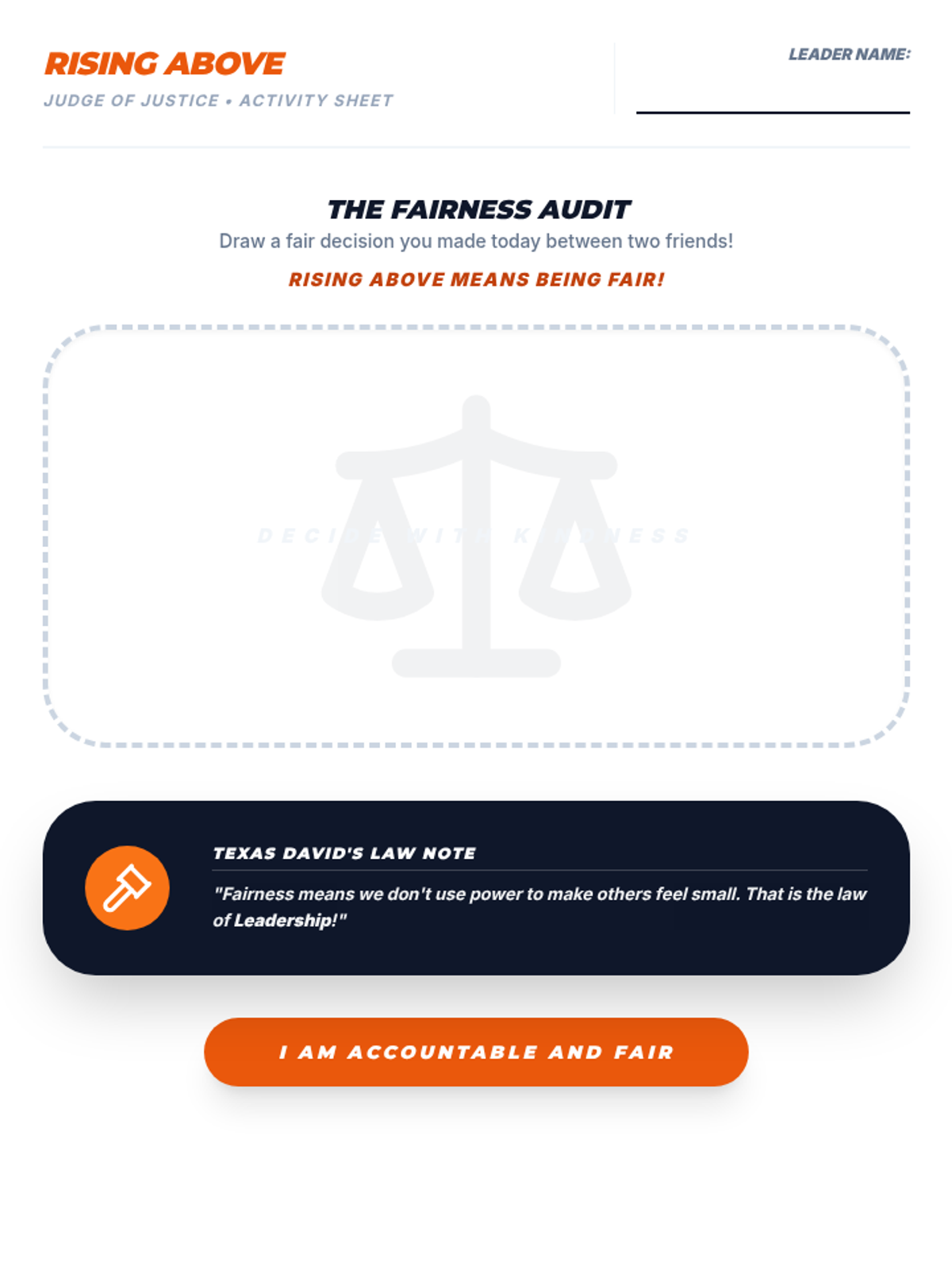
1st Grade focus on accountability and fairness through the career of a Judge. Art: Fairness Scales Craft.
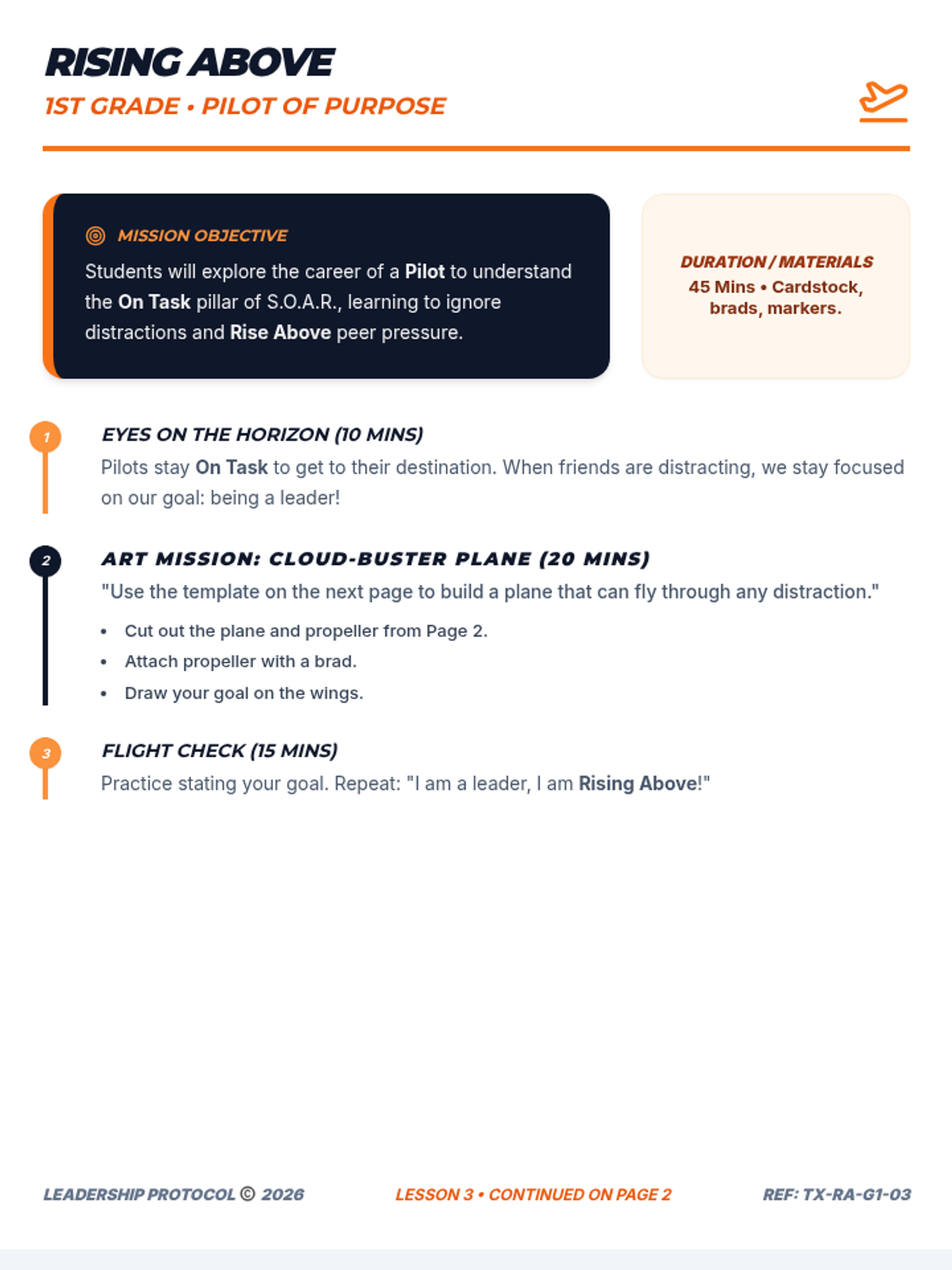
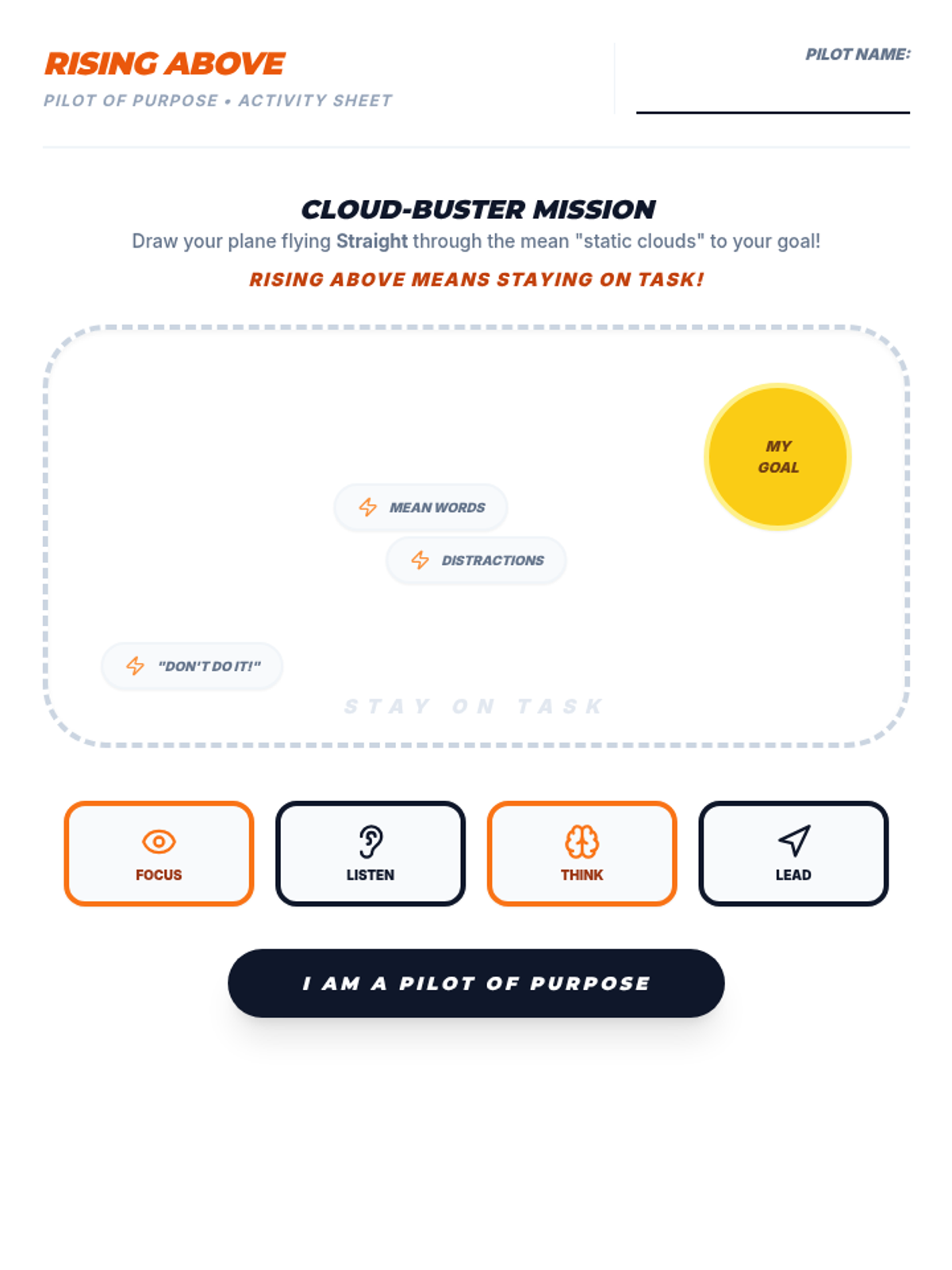
1st Grade focus on staying 'On Task' and focused on goals through the career of a Pilot. Art: Cloud-Buster Plane Drawing.
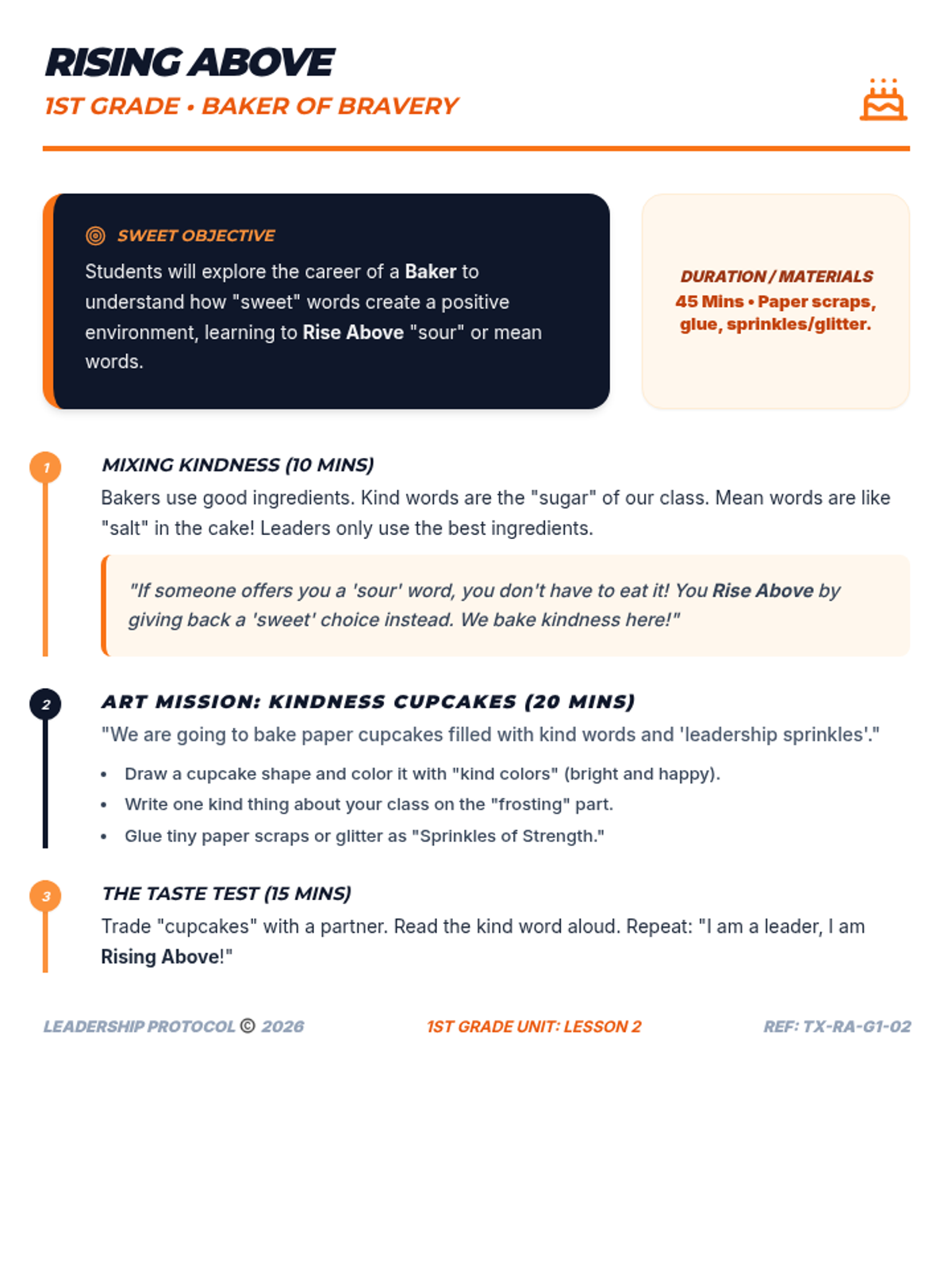
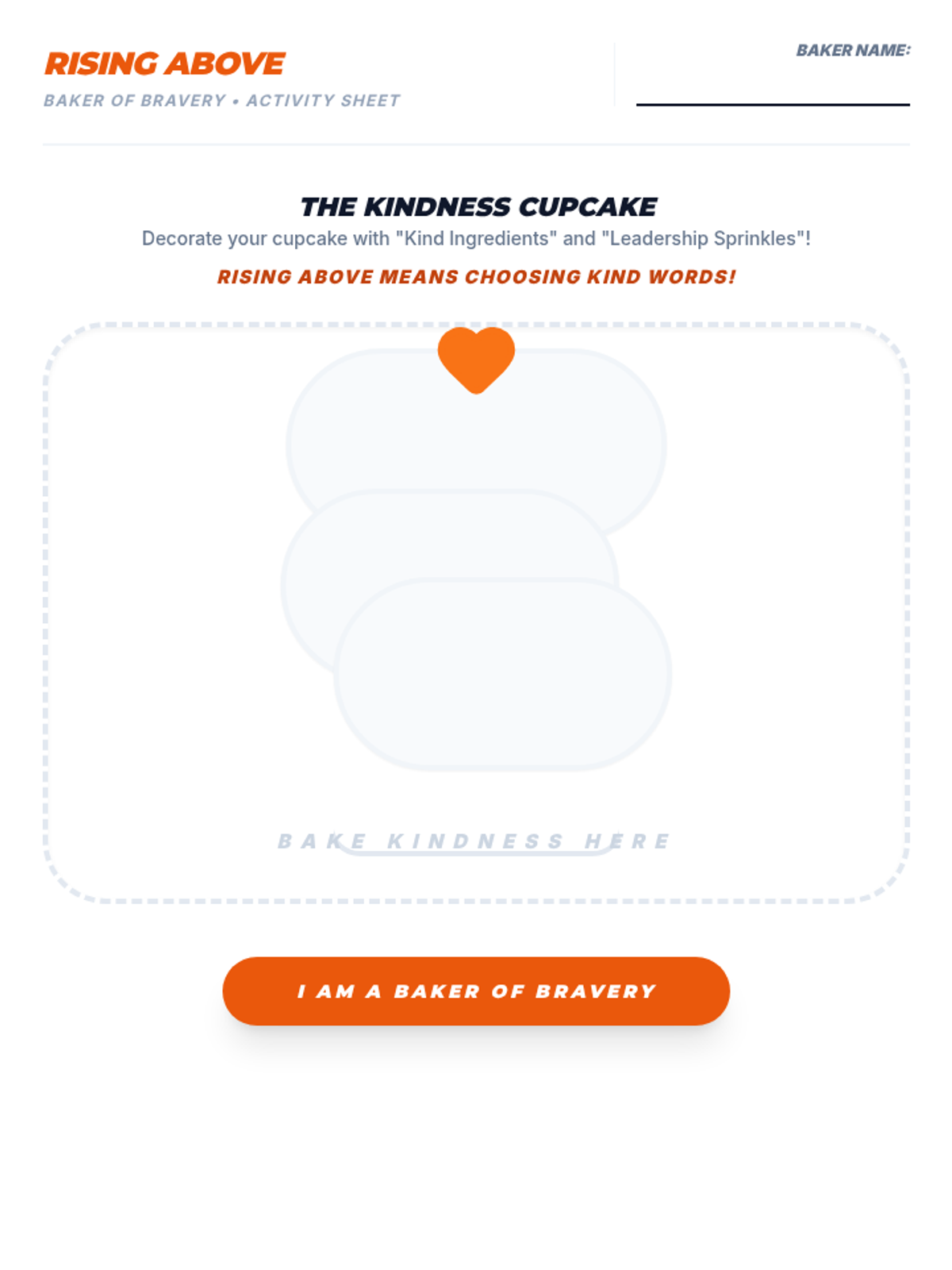
1st Grade focus on kind words and inclusive 'recipes' through the career of a Baker. Art: Kindness Cupcake Collage.
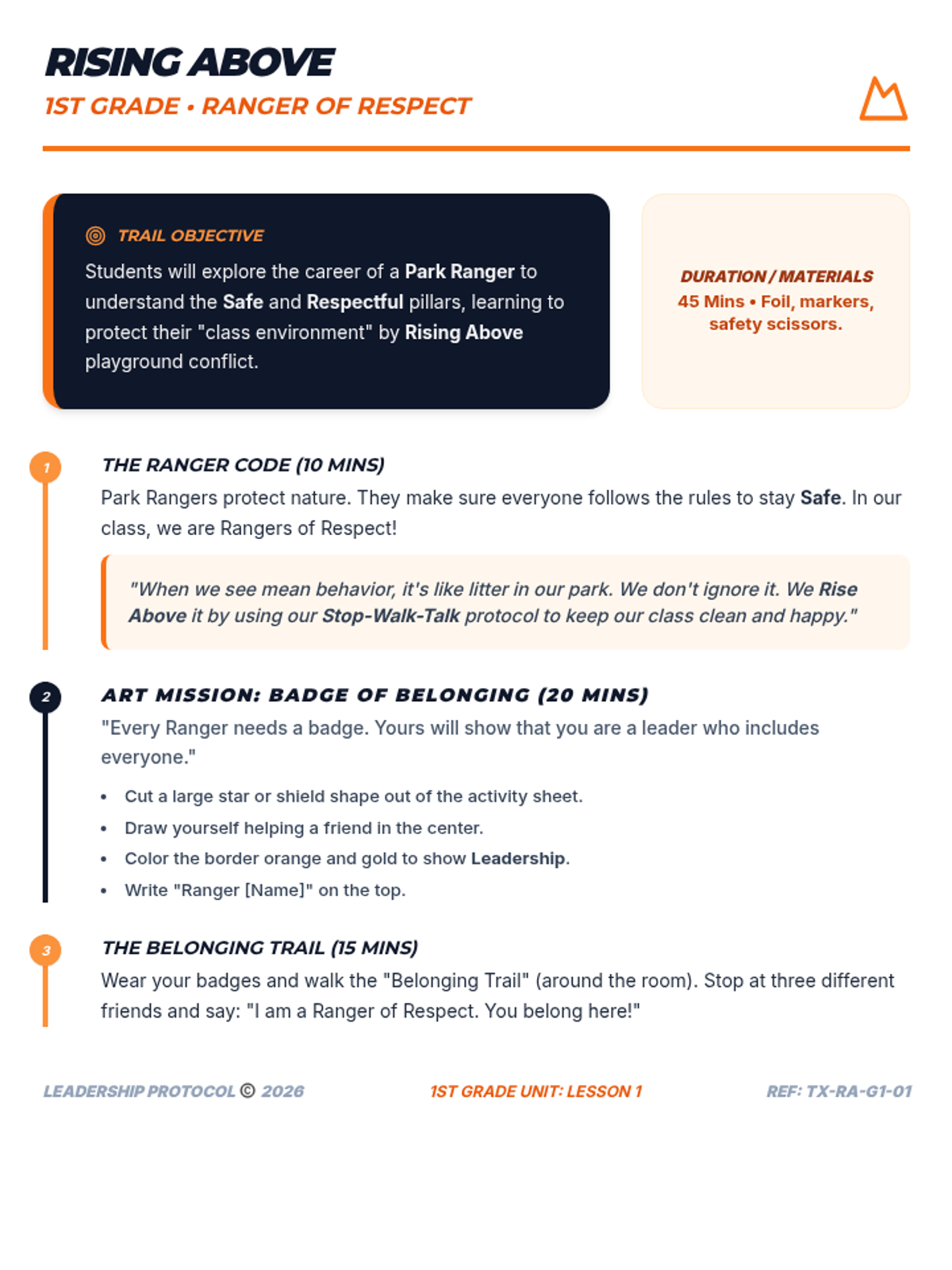
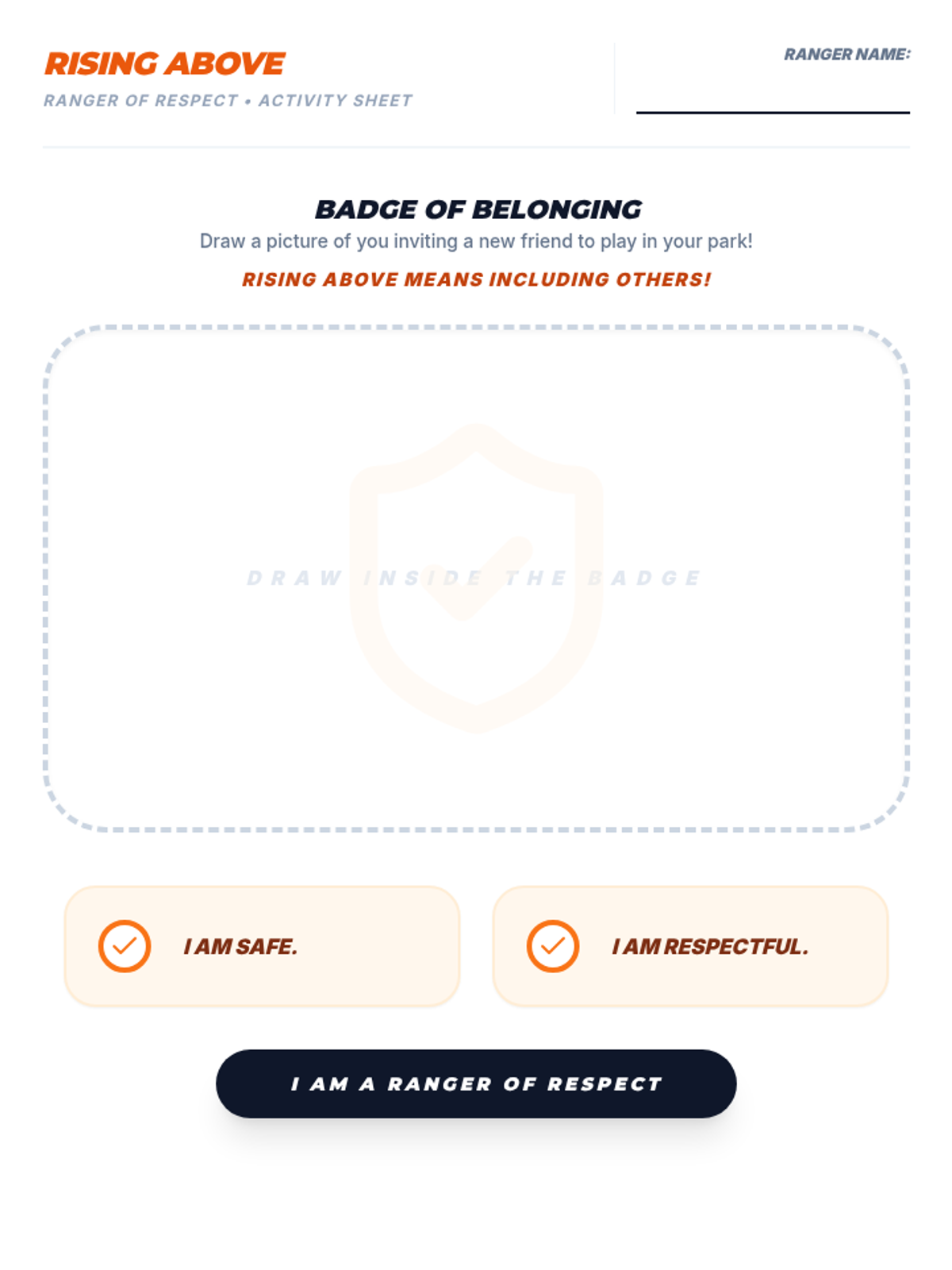
1st Grade focus on safety and respect in shared spaces through the career of a Park Ranger. Art: Ranger Badge of Belonging.
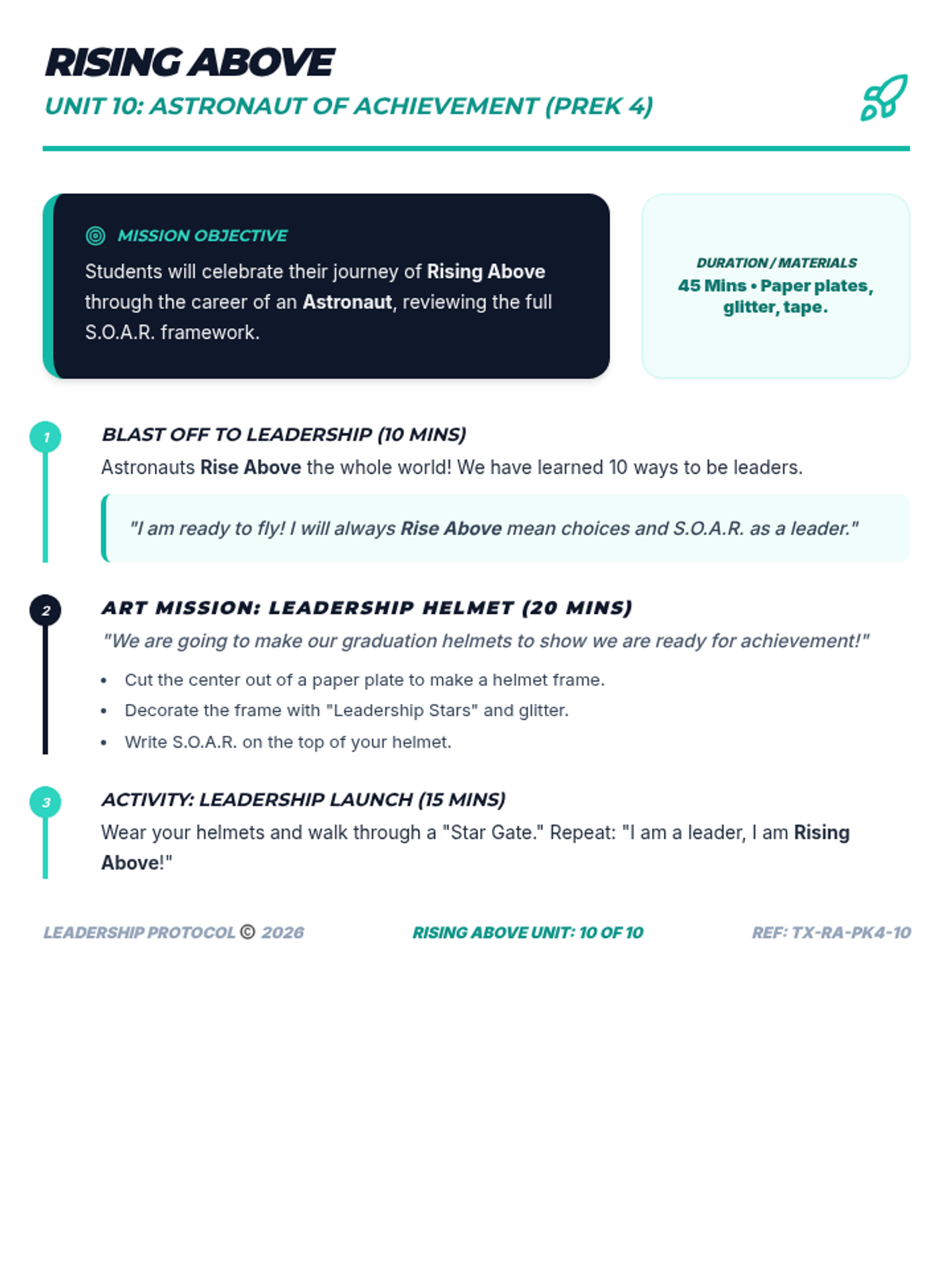
PreK 4 graduation celebrating their journey of 'Rising Above'. Art: Leadership Helmet.
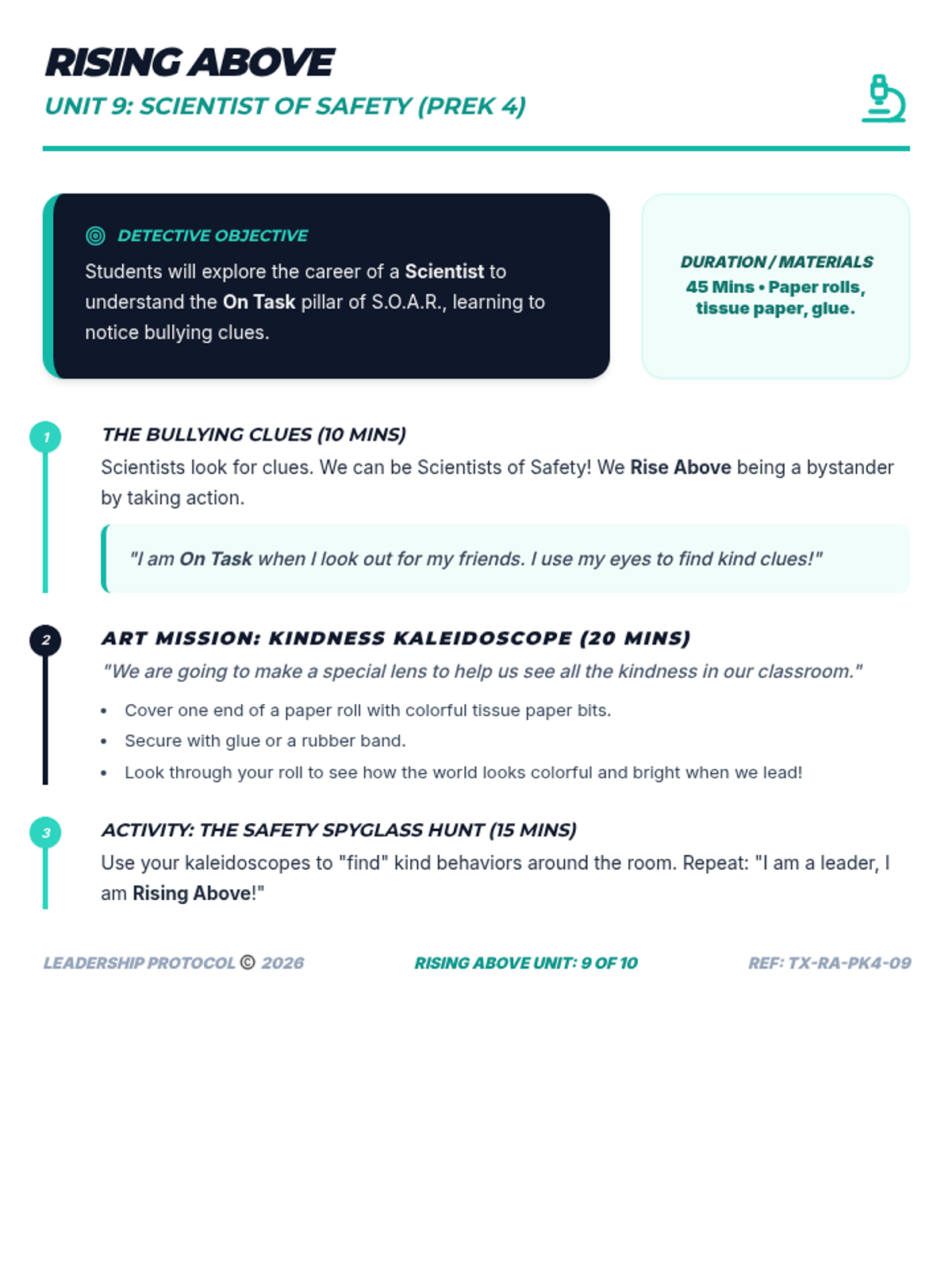
PreK 4 focus on identifying bullying clues through science. Art: Kindness Kaleidoscope.
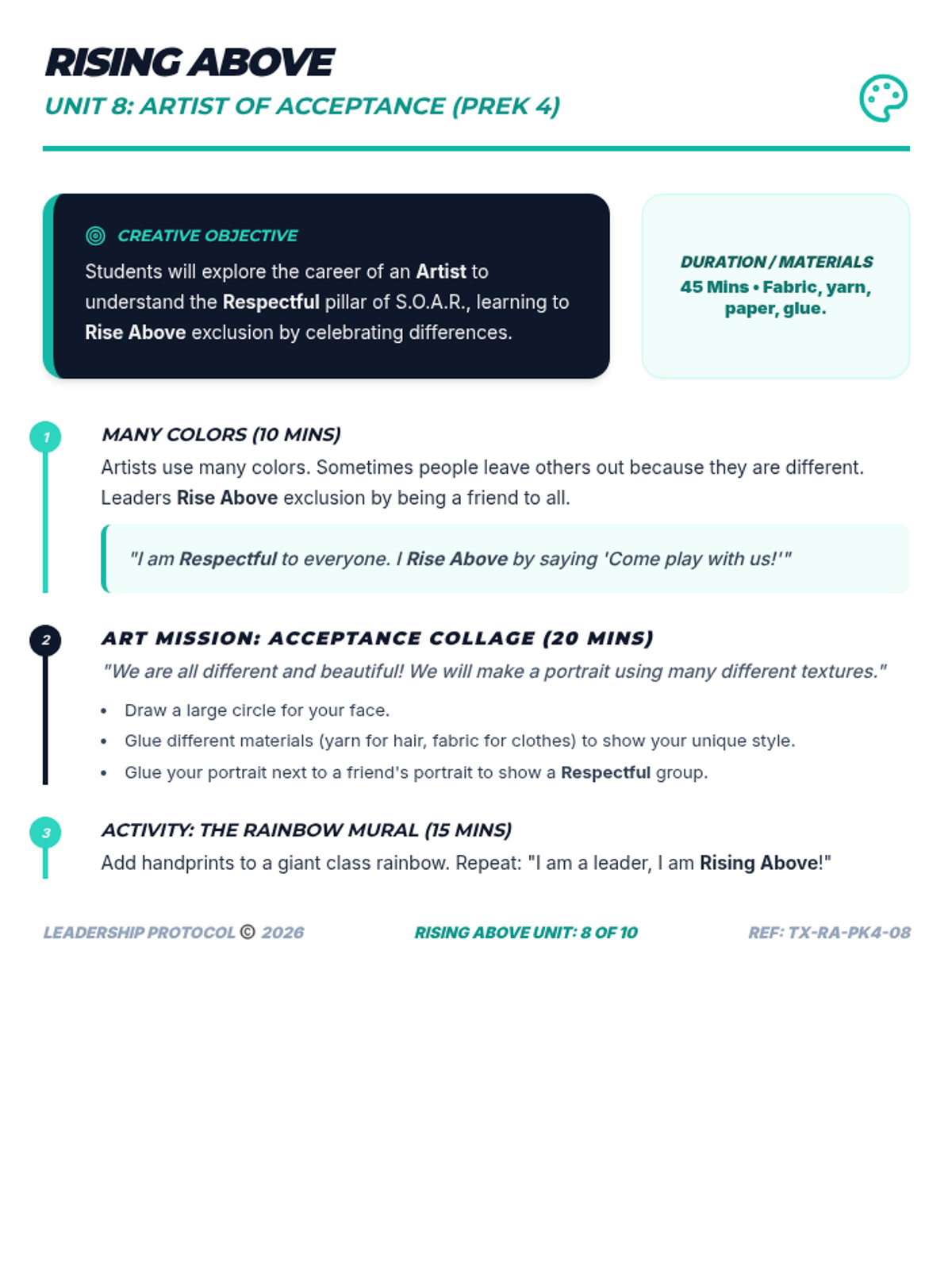
PreK 4 focus on celebrating differences through art. Art: Acceptance Collage.
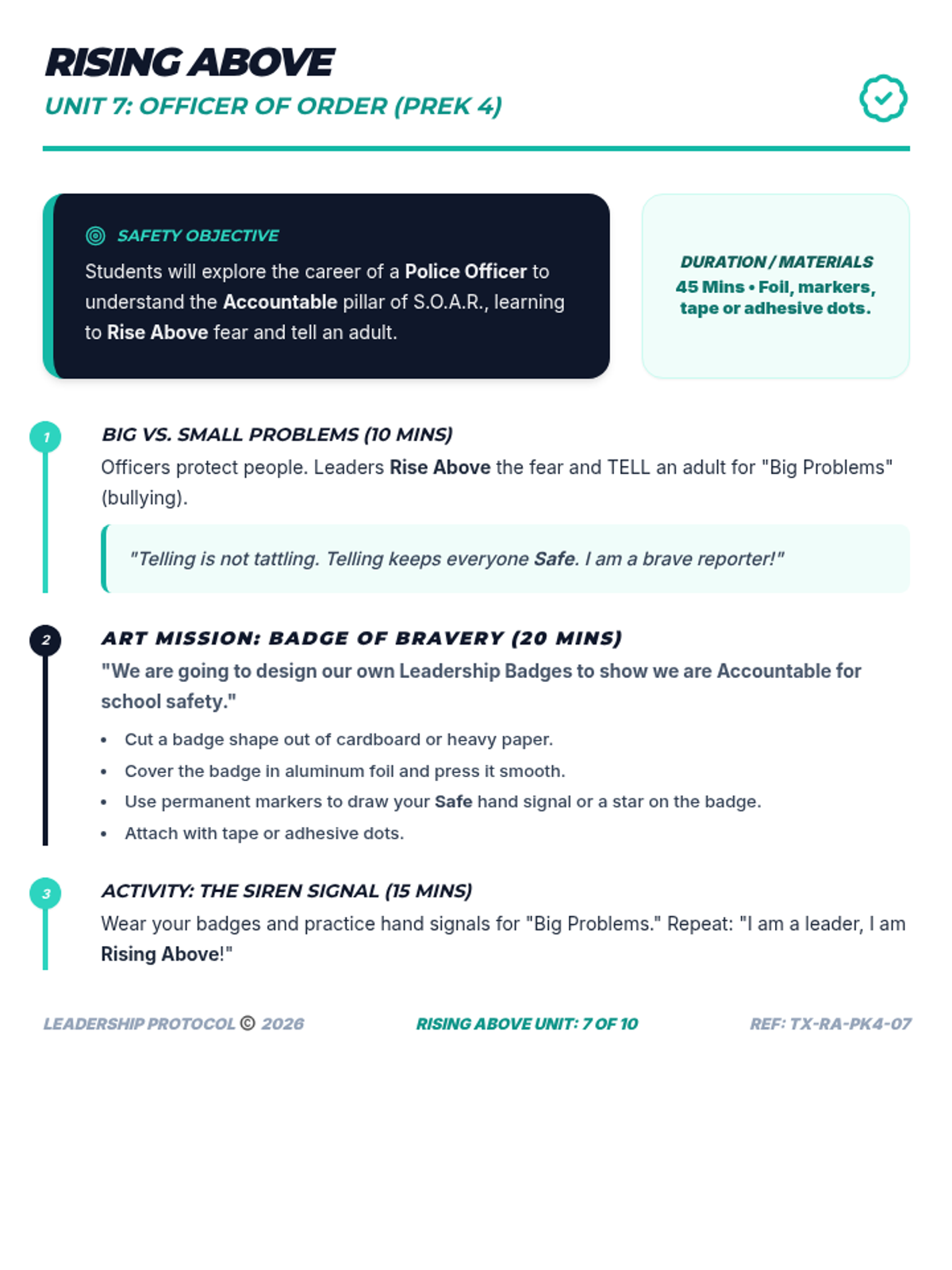
PreK 4 focus on rules and reporting 'big problems' through the career of a police officer. Art: Badge of Bravery.
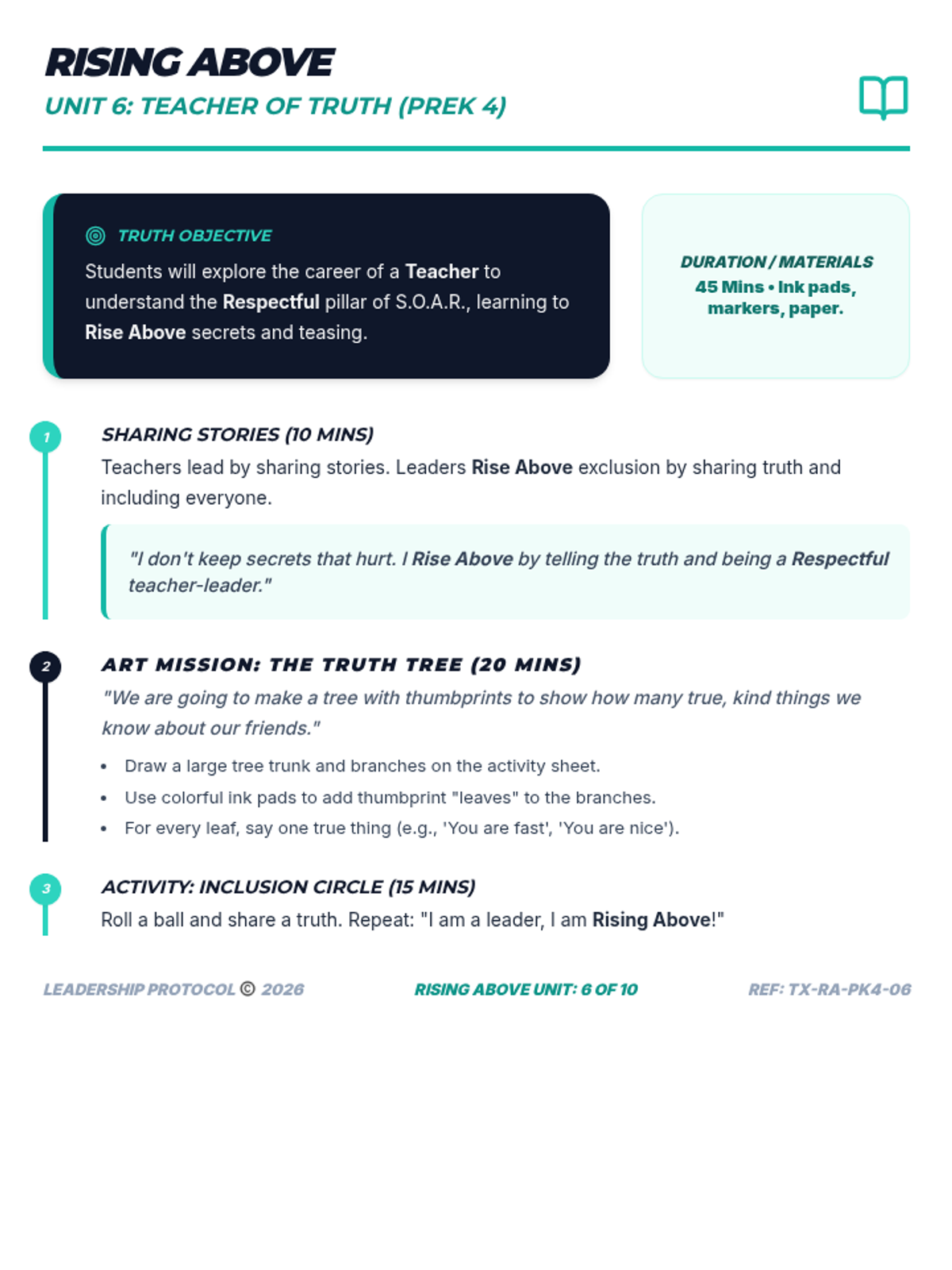
PreK 4 focus on truth and respectful communication through teaching. Art: Truth Tree.
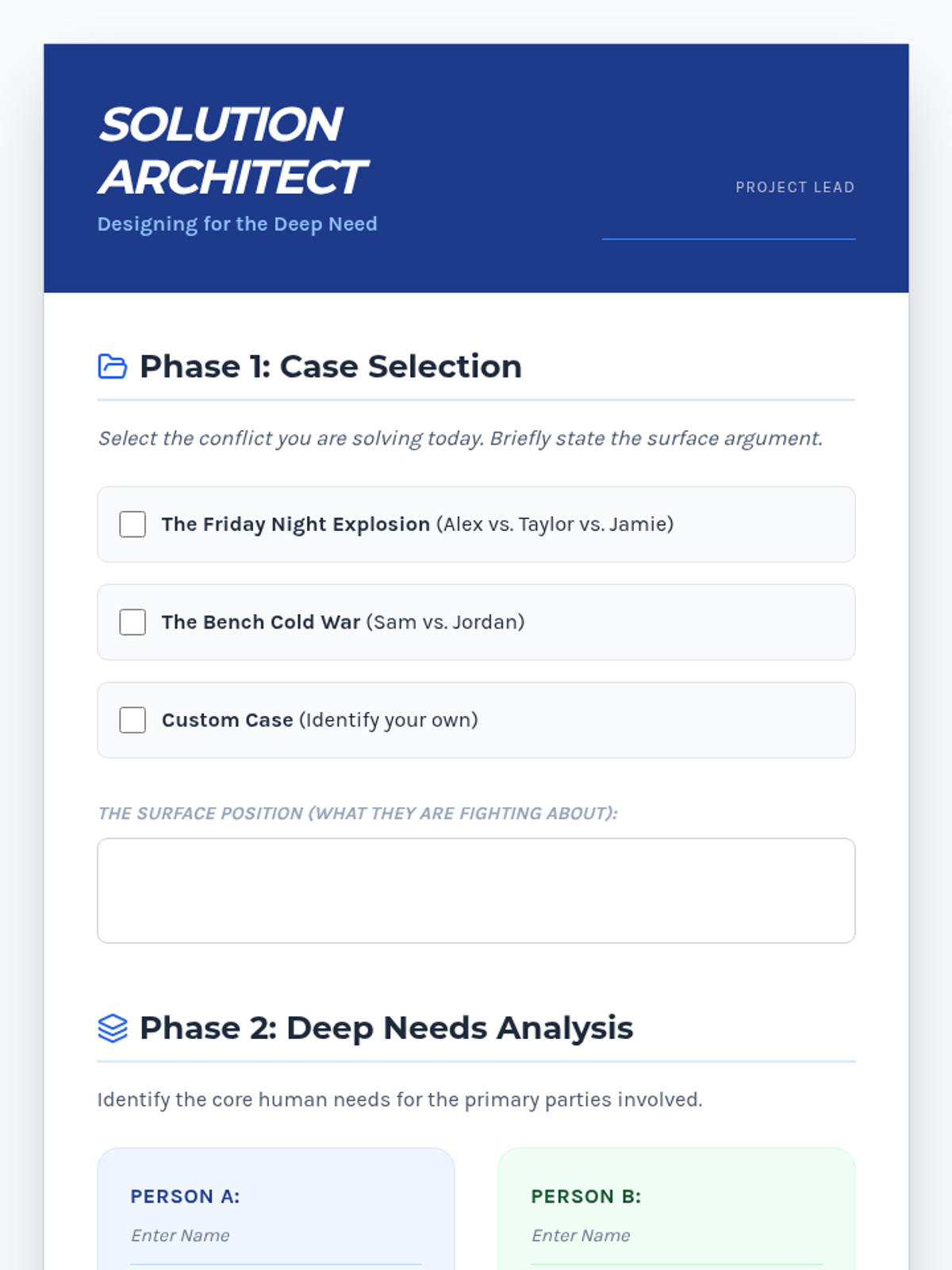
Students synthesize their learning to propose solutions that address underlying needs rather than surface-level compromises.
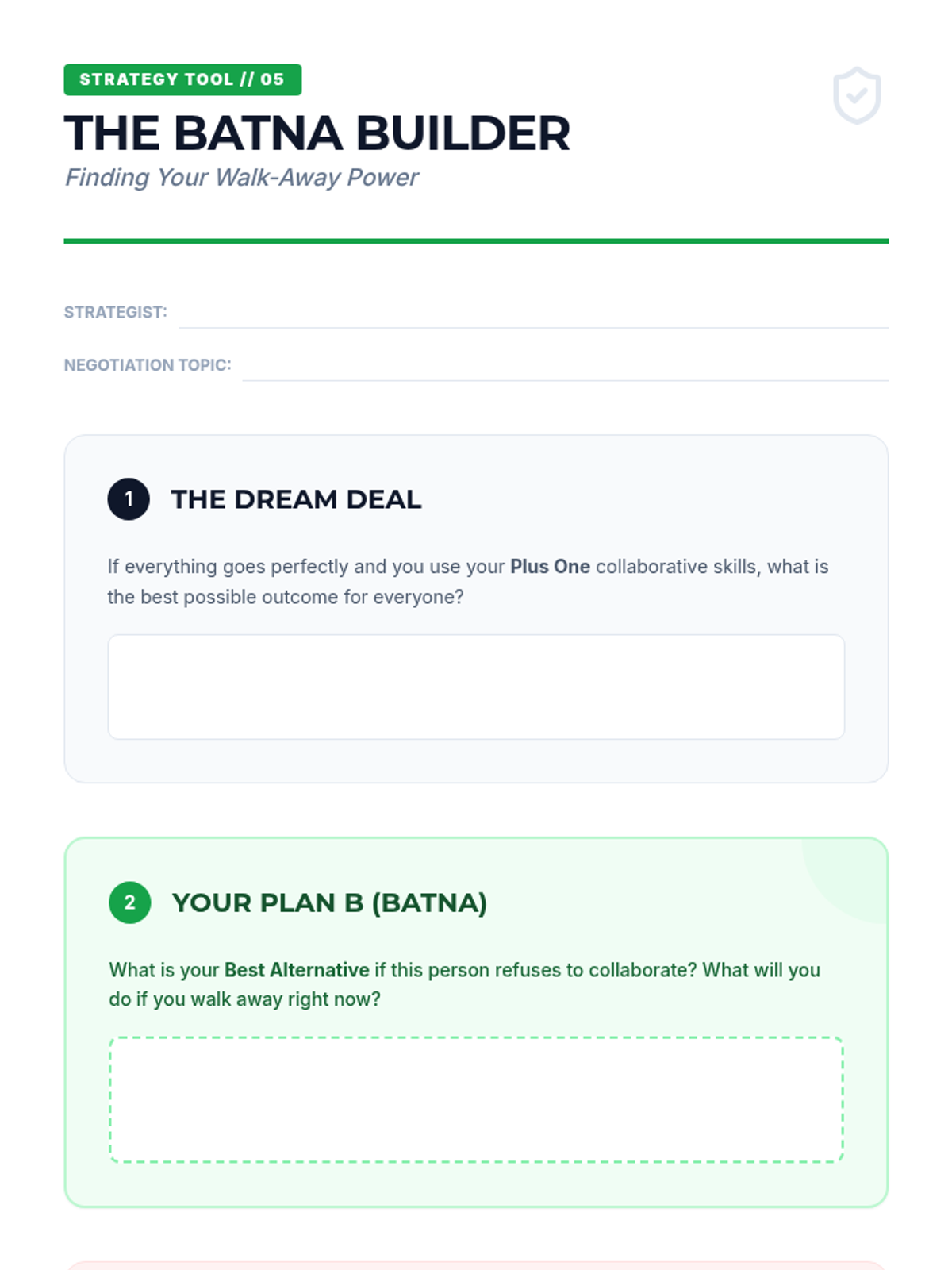
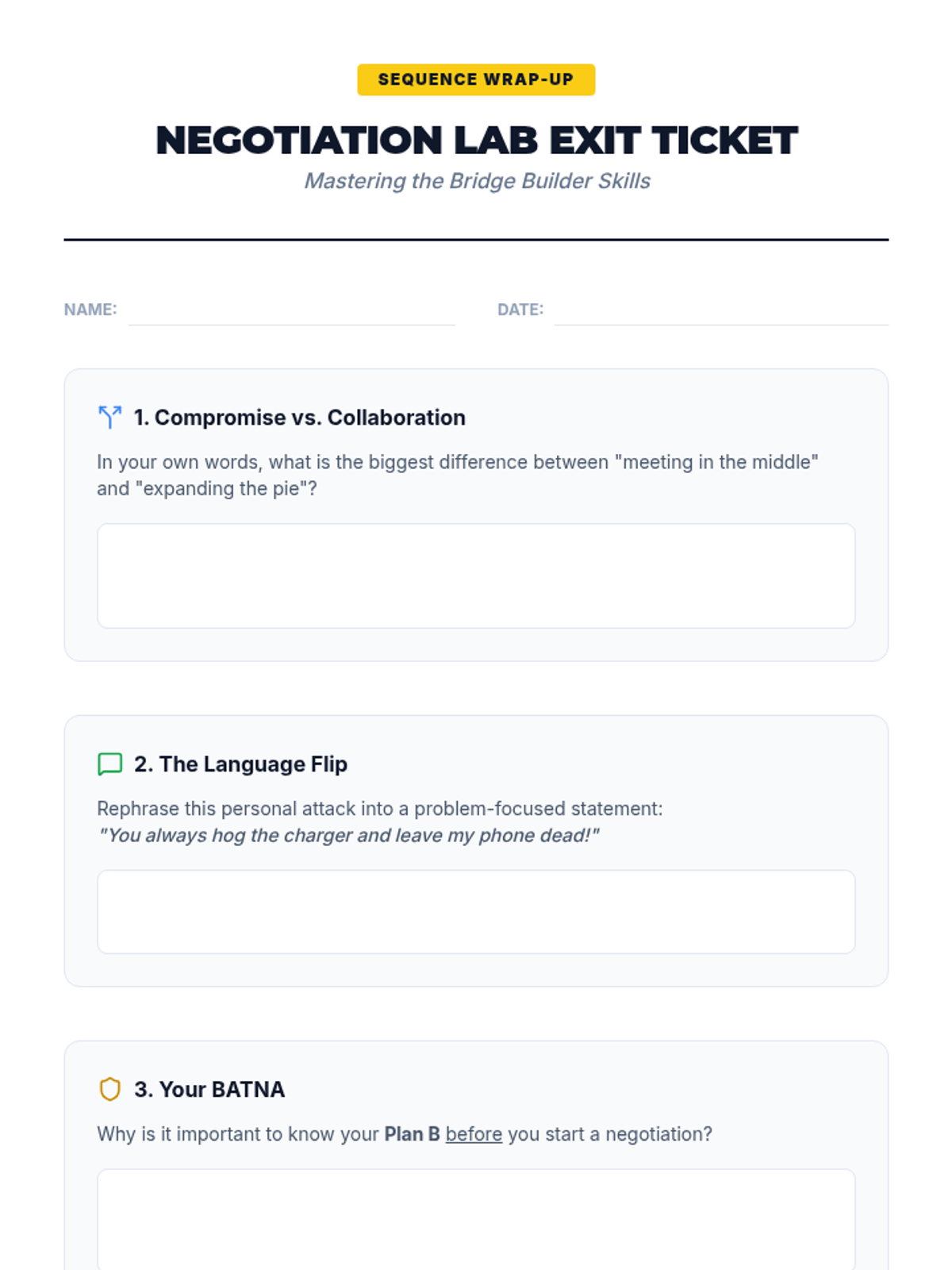
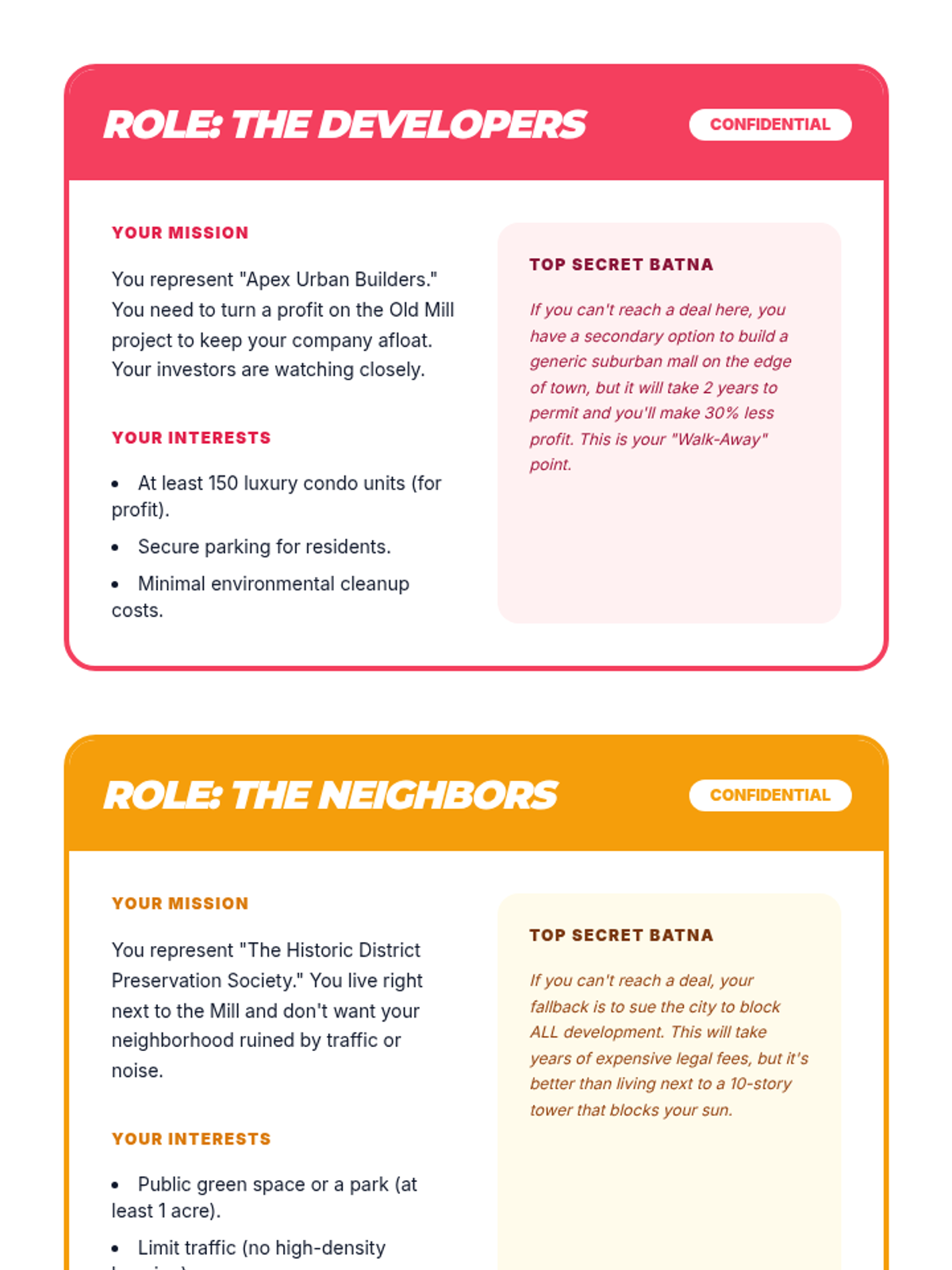
Students learn the concept of BATNA (Best Alternative to a Negotiated Agreement) to understand their 'walk-away' power.
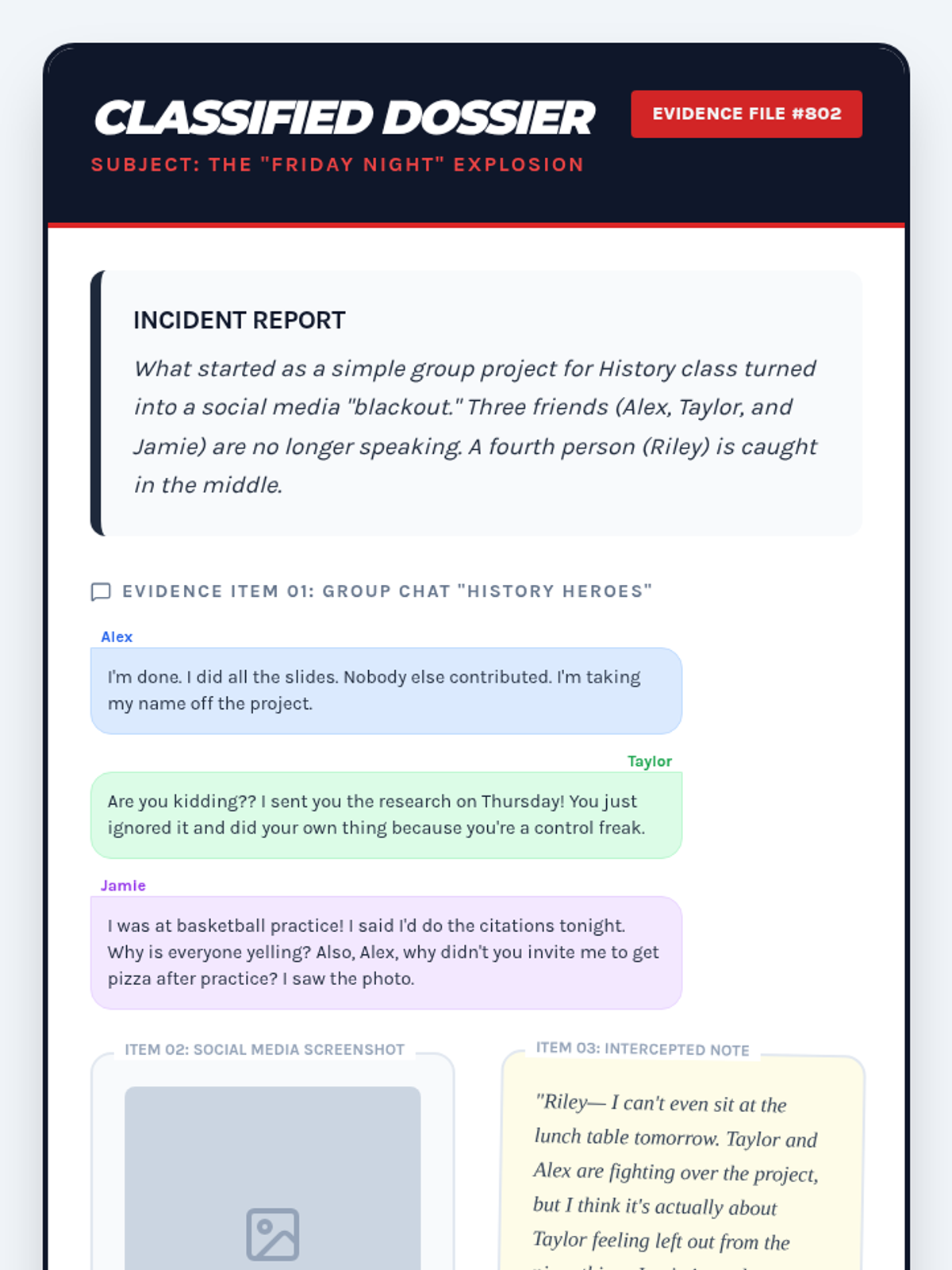
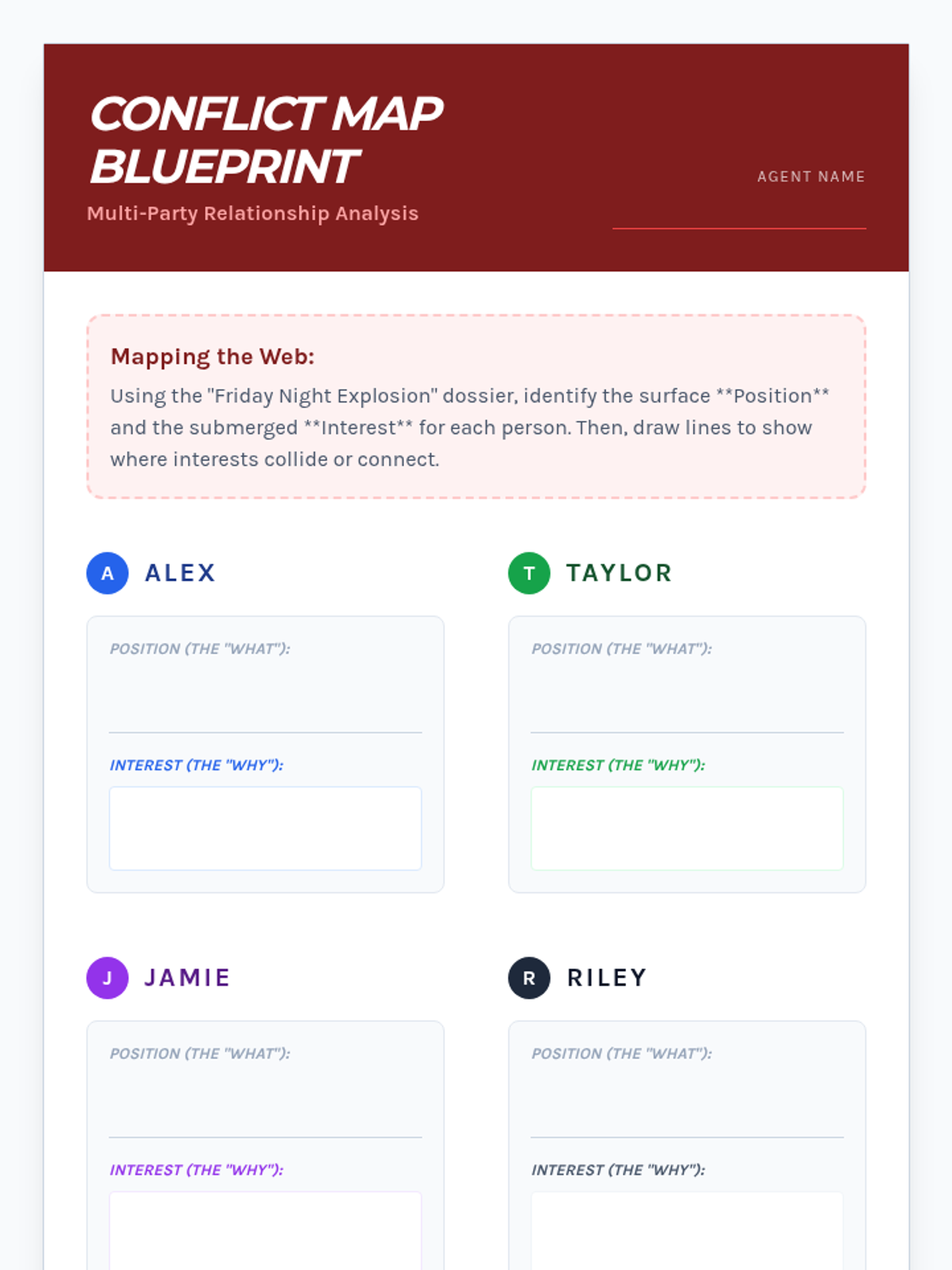
Students analyze and map complex, multi-party conflicts to visualize how different interests intersect and collide in social groups.
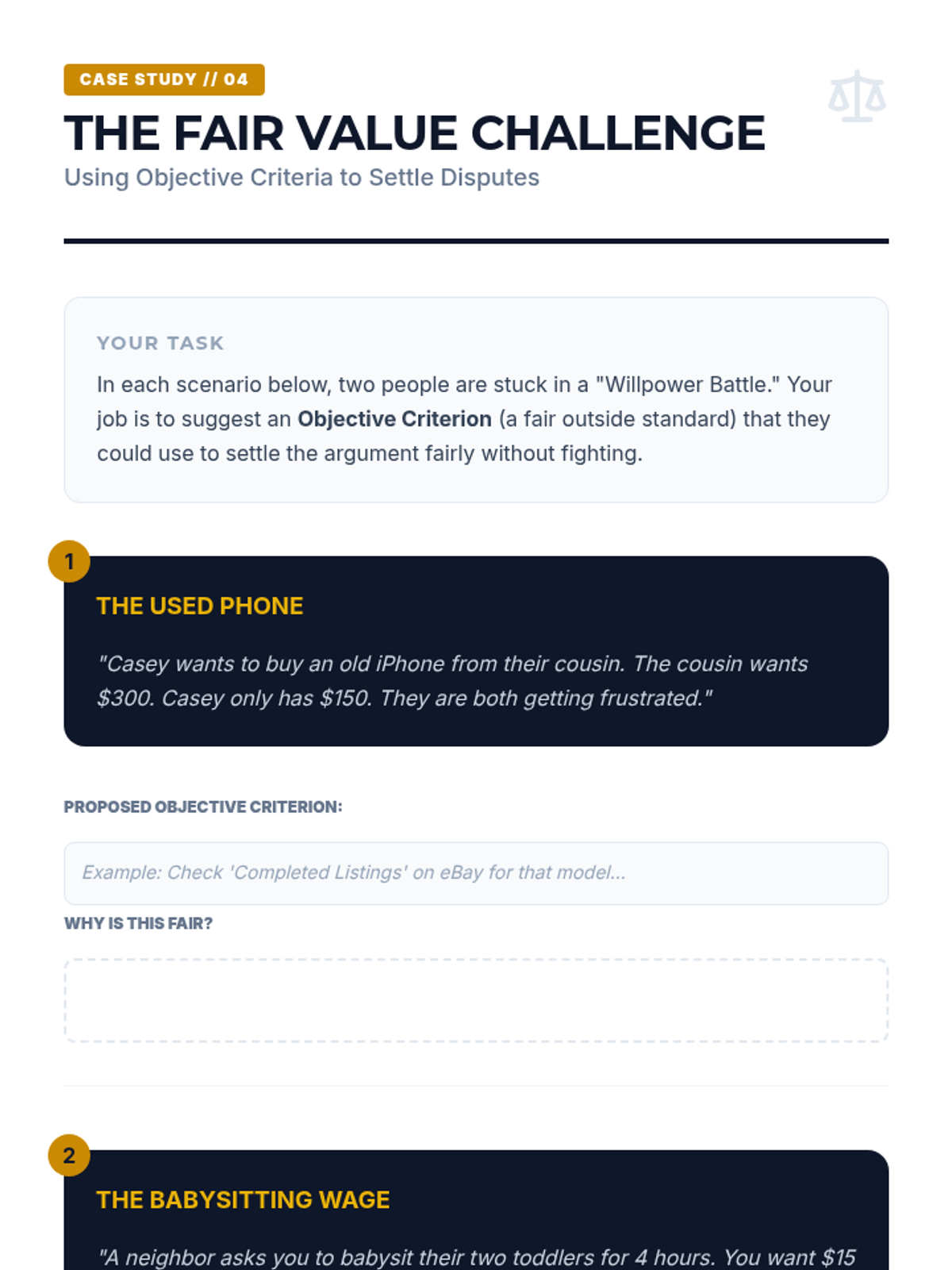
Students learn to use fair standards (rules, precedents, market value) to resolve impasses fairly.
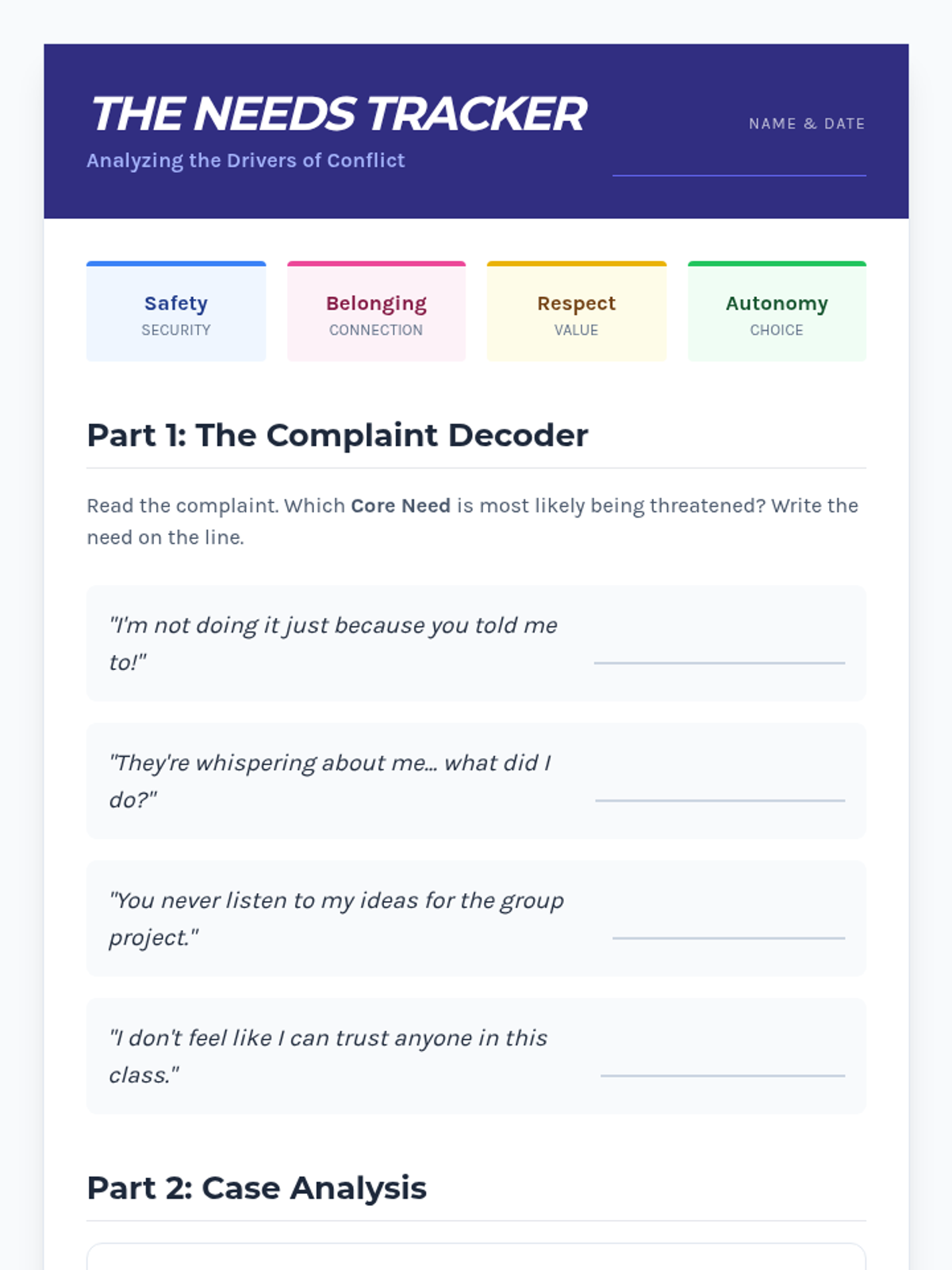
Students identify and categorize core human needs (safety, belonging, respect, autonomy) that drive behavior in conflicts.
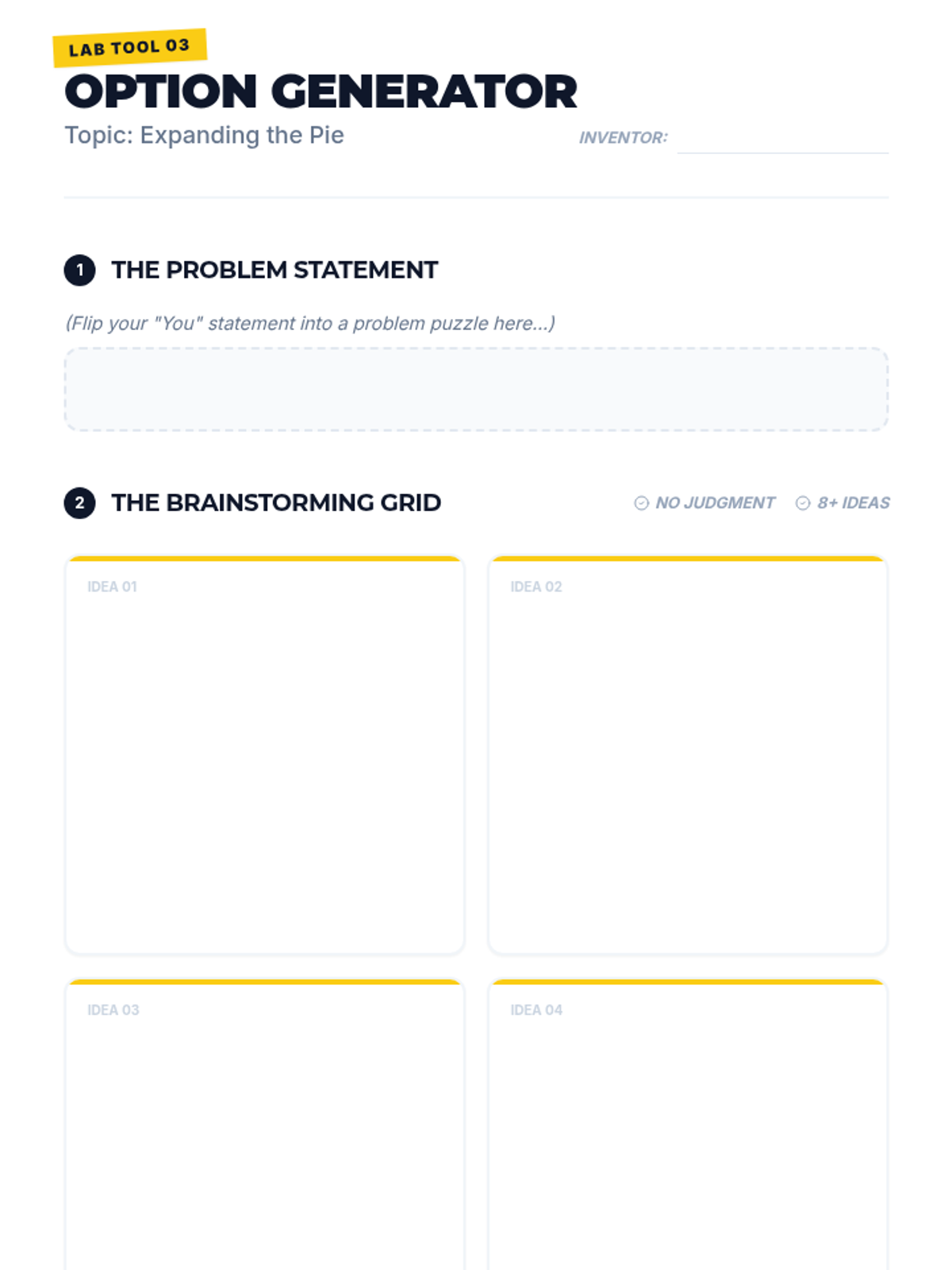
This lesson focuses on the 'invention' phase of negotiation. Students learn to suspend judgment and generate a wide array of potential solutions before deciding on one.
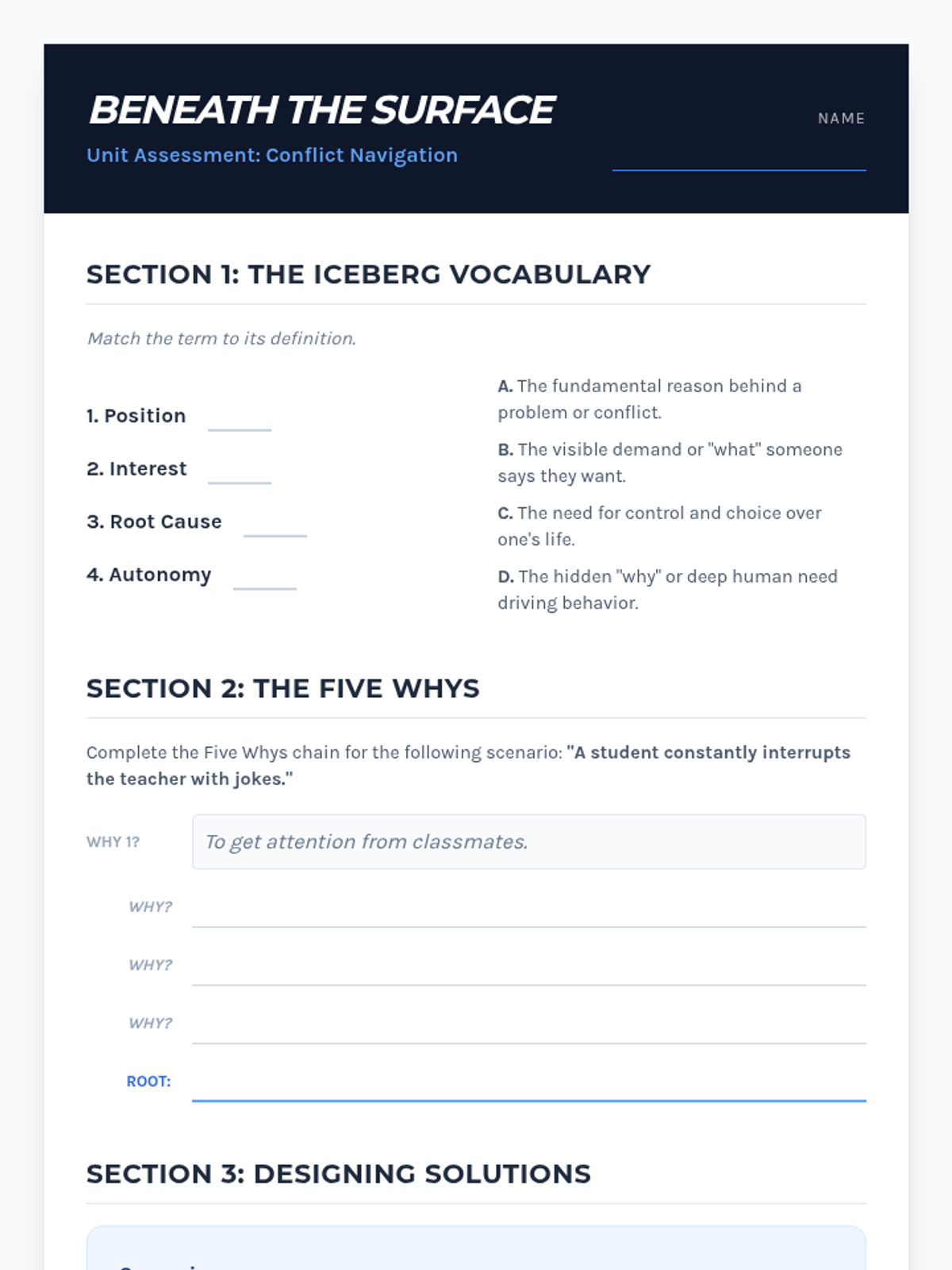
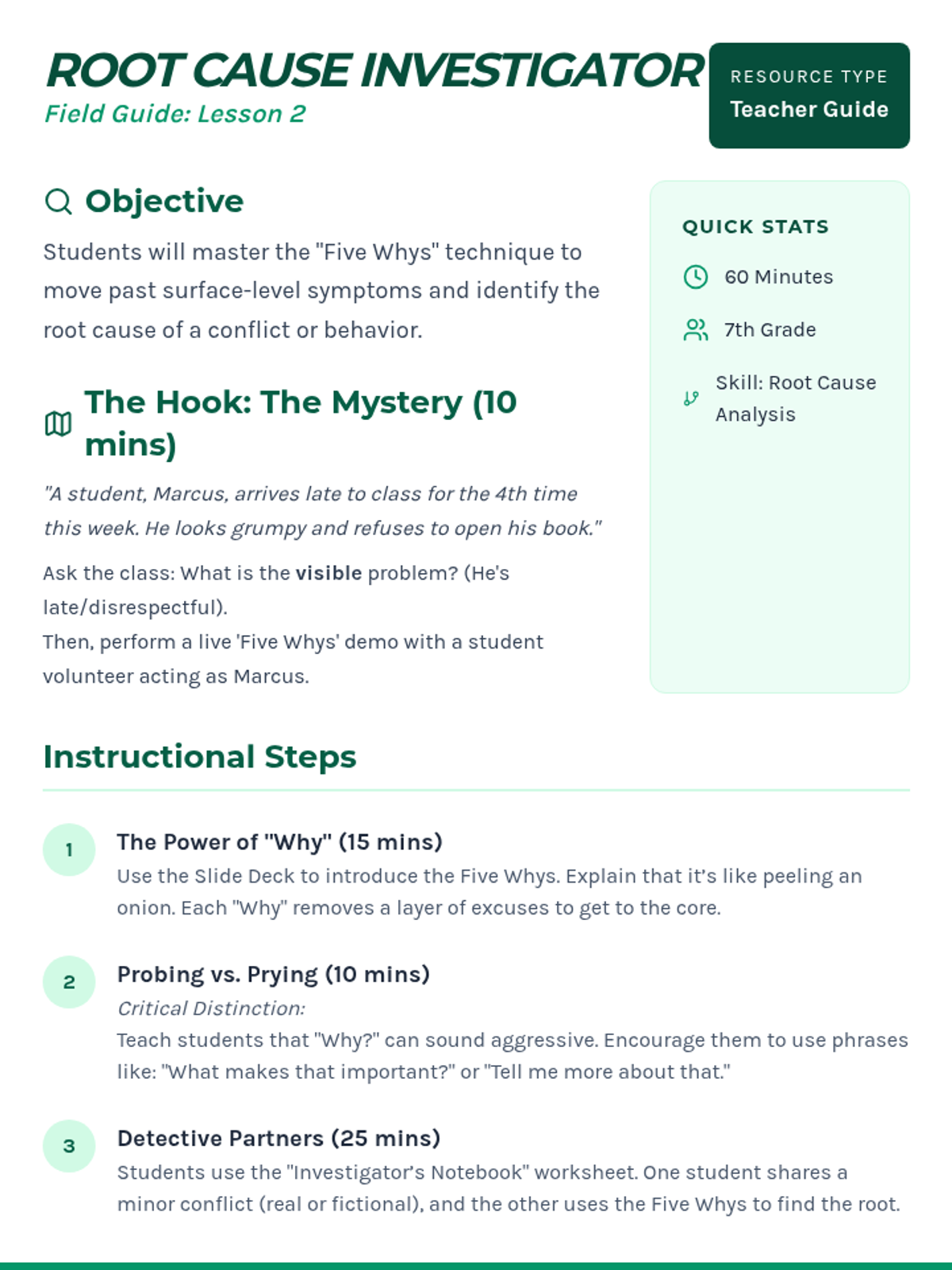
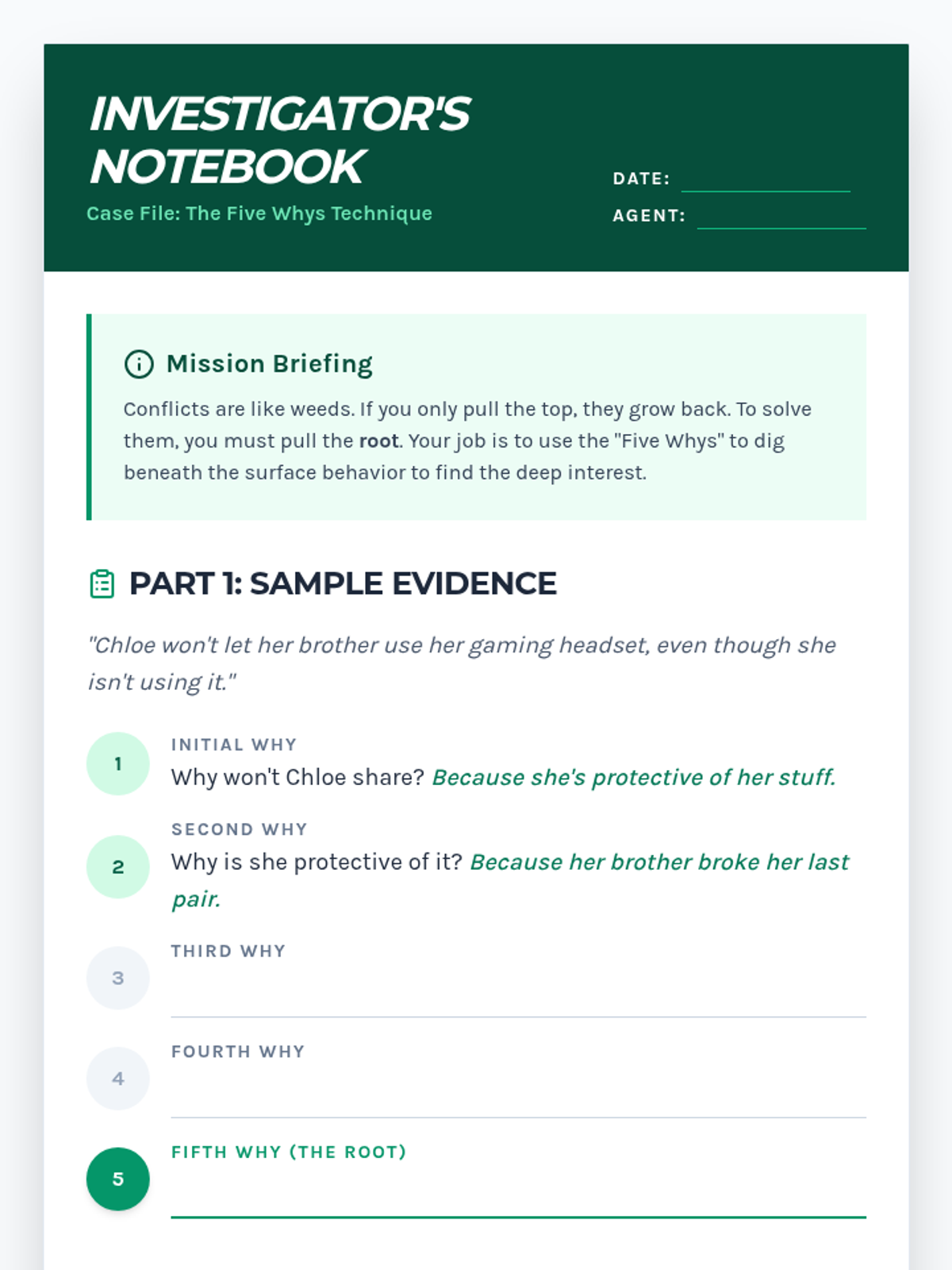
Students learn the 'Five Whys' technique to drill down from a surface-level conflict to its root cause, practicing through investigative interviews.
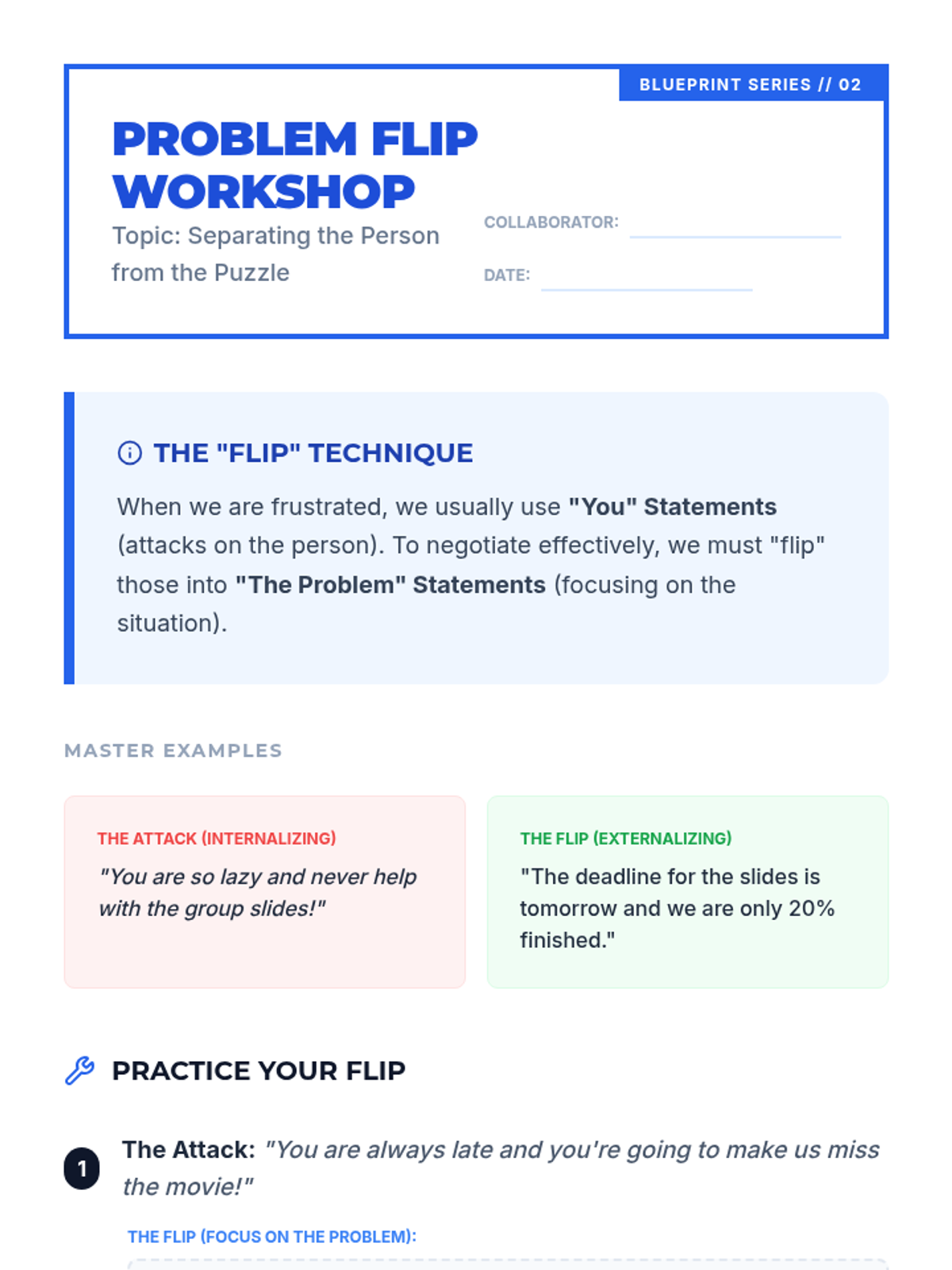
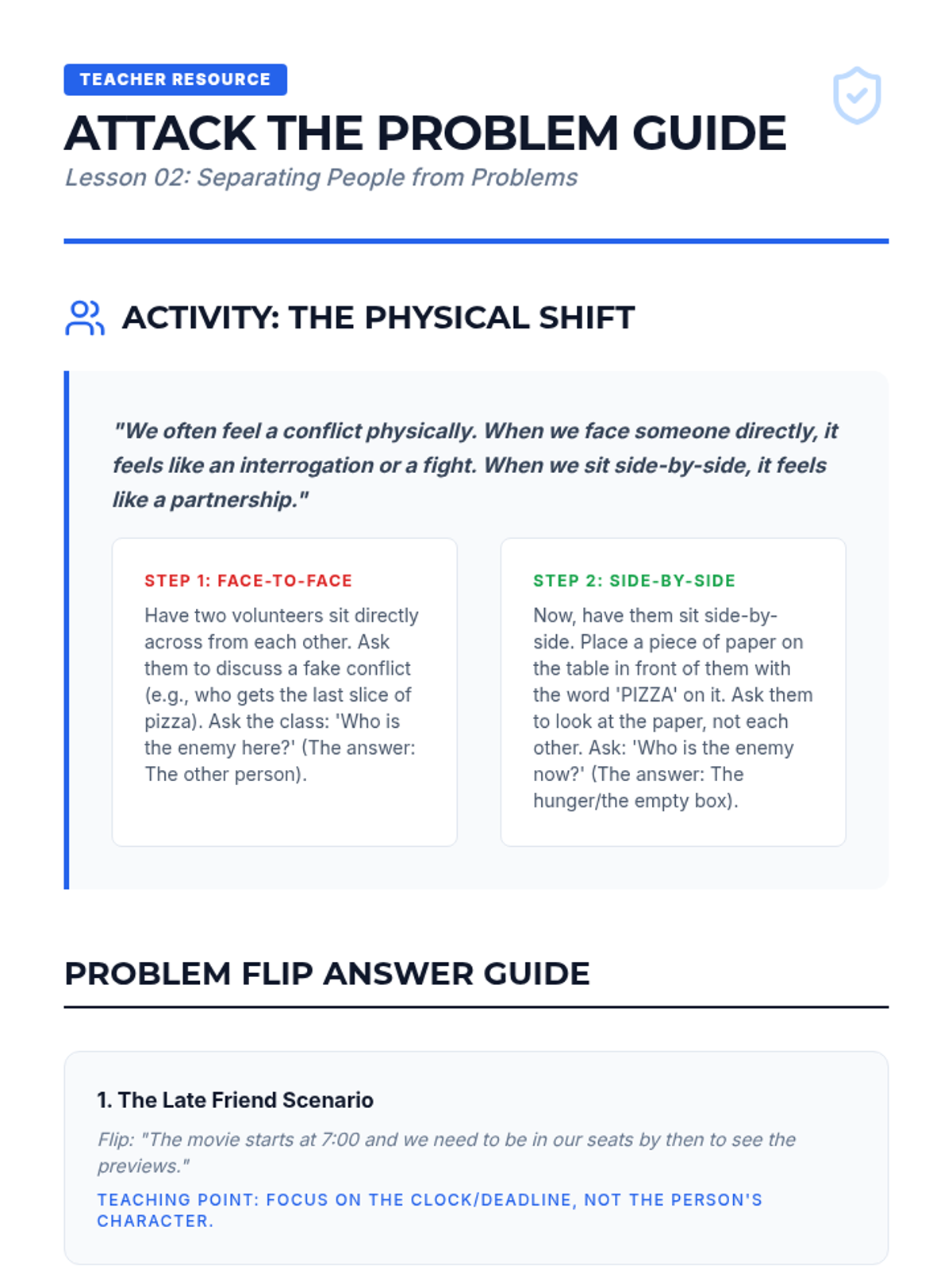
Students learn techniques to attack the problem, not the person. They practice rephrasing personal attacks into problem statements using externalizing language.
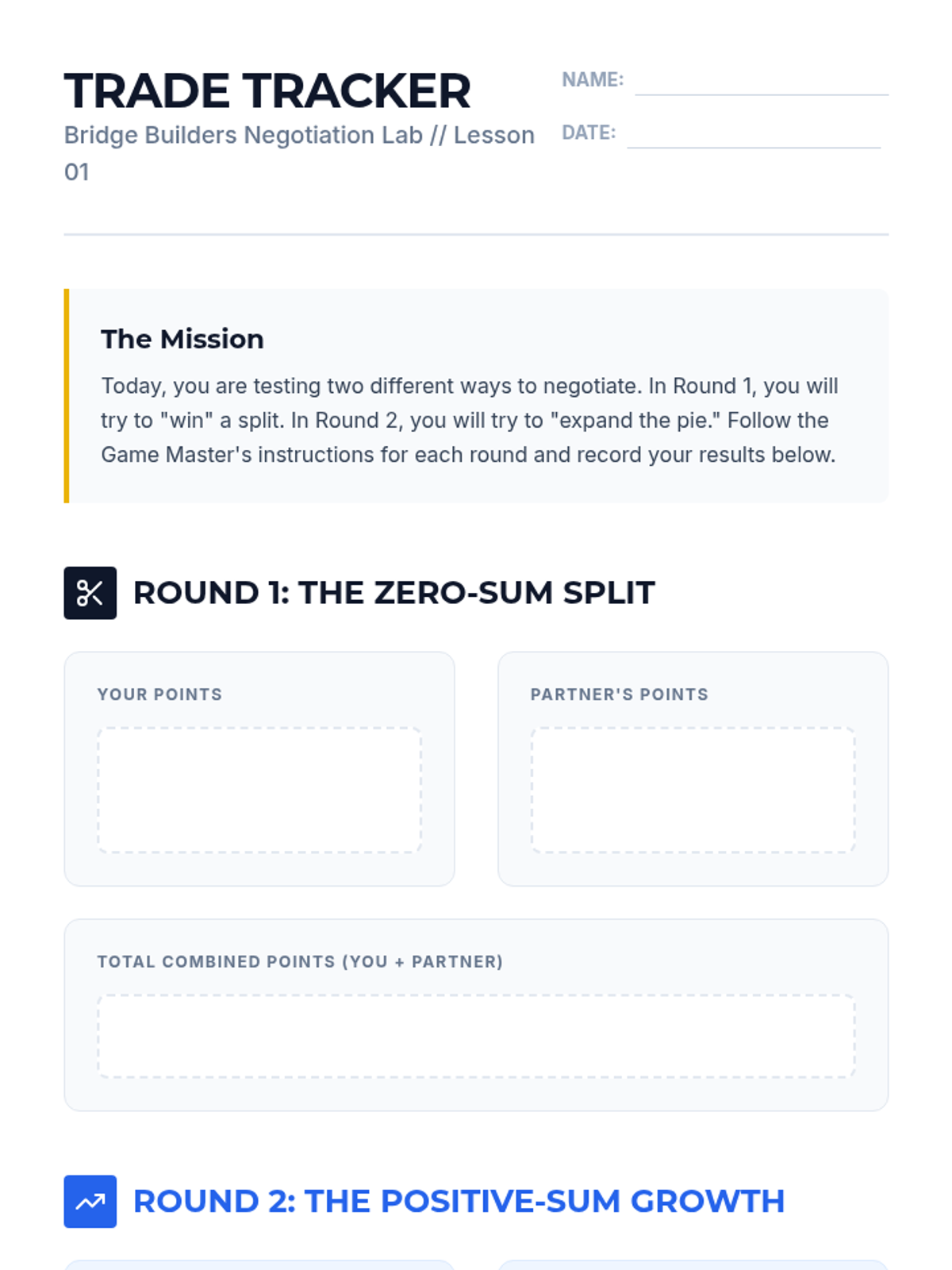
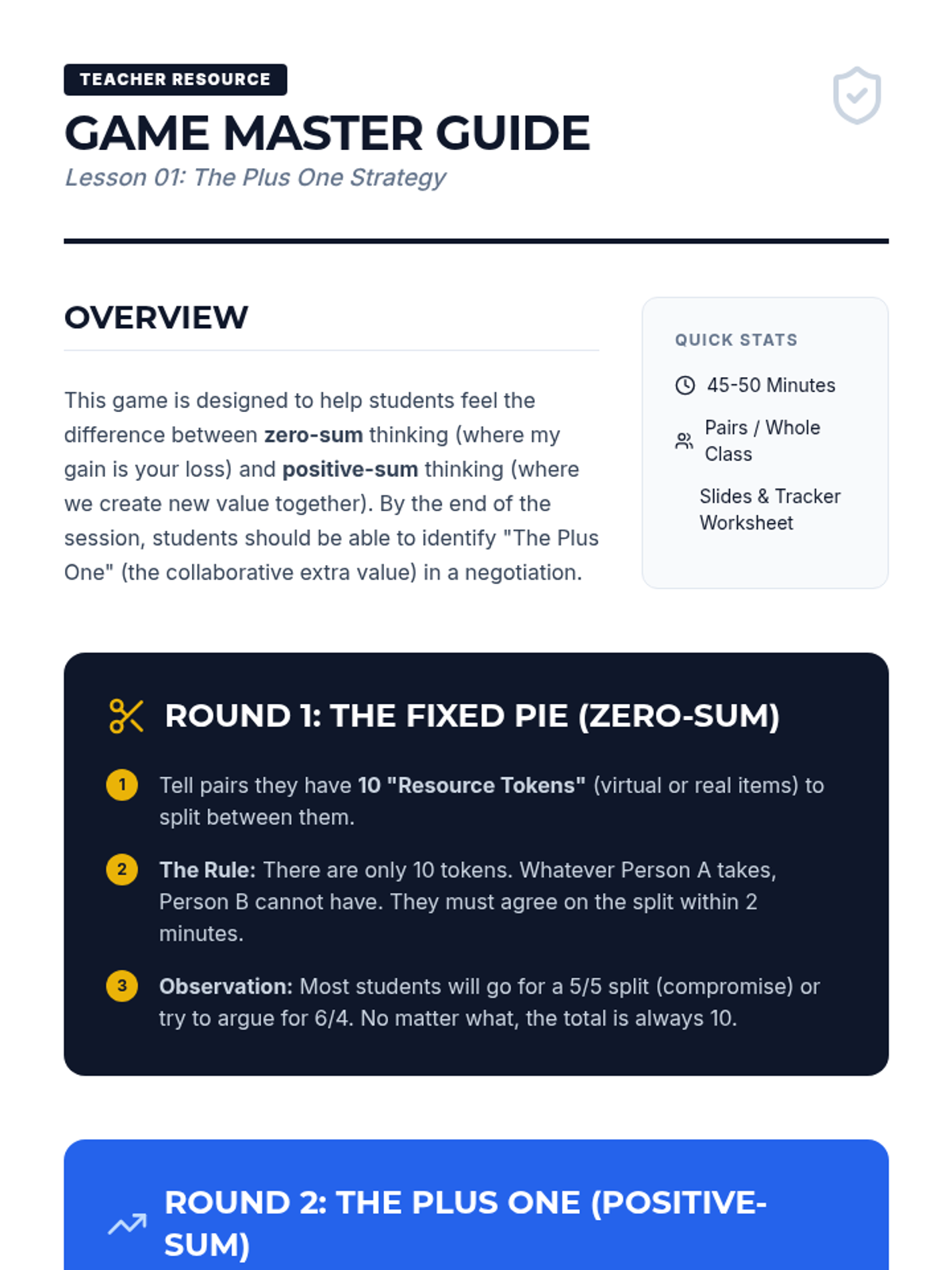
Students define and contrast compromise with collaboration. They engage in a trading game to experience the difference between zero-sum and positive-sum outcomes.
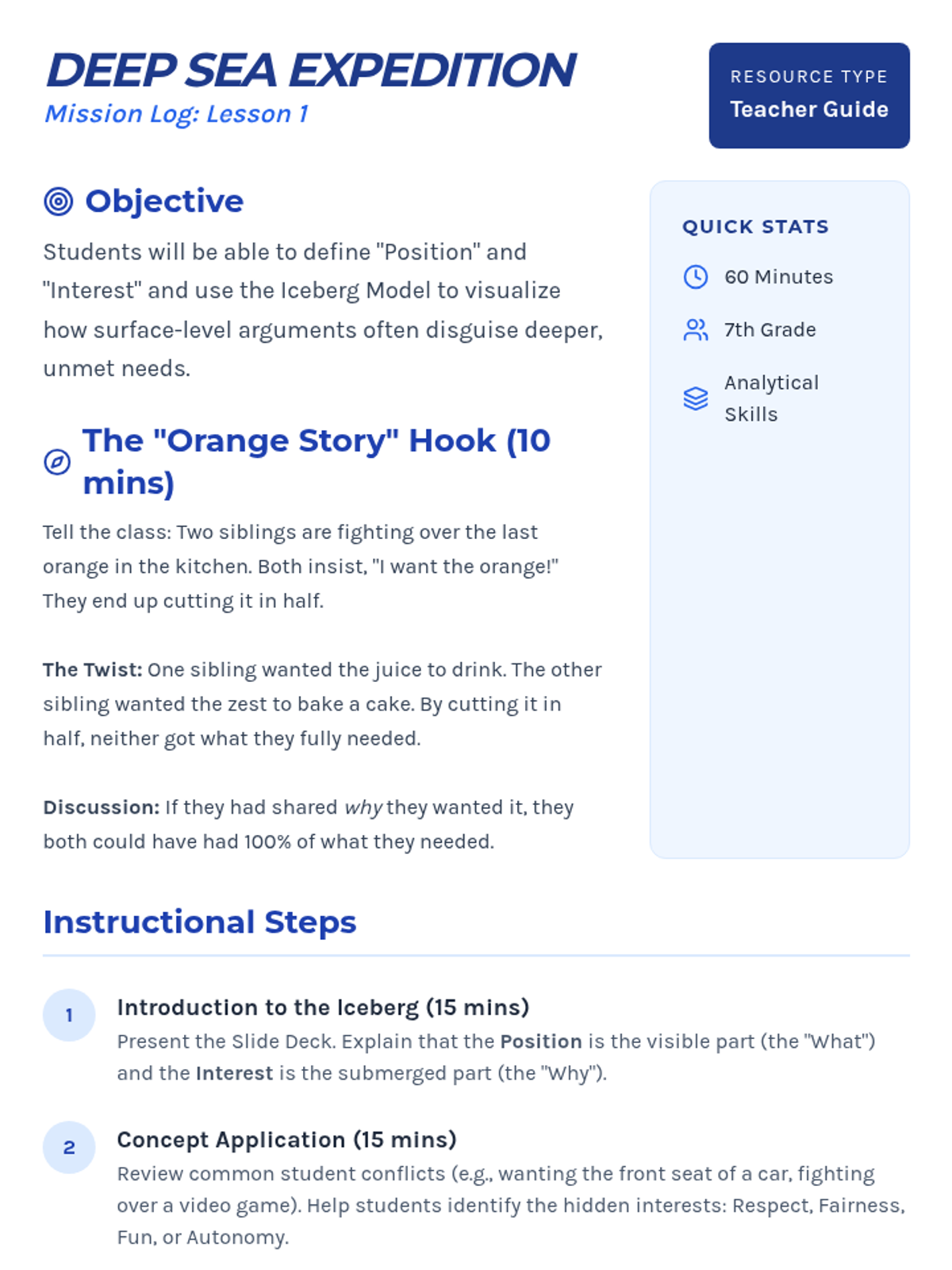
Students are introduced to the Iceberg Model of conflict, learning to distinguish between what people say they want (positions) and what they actually need (interests).
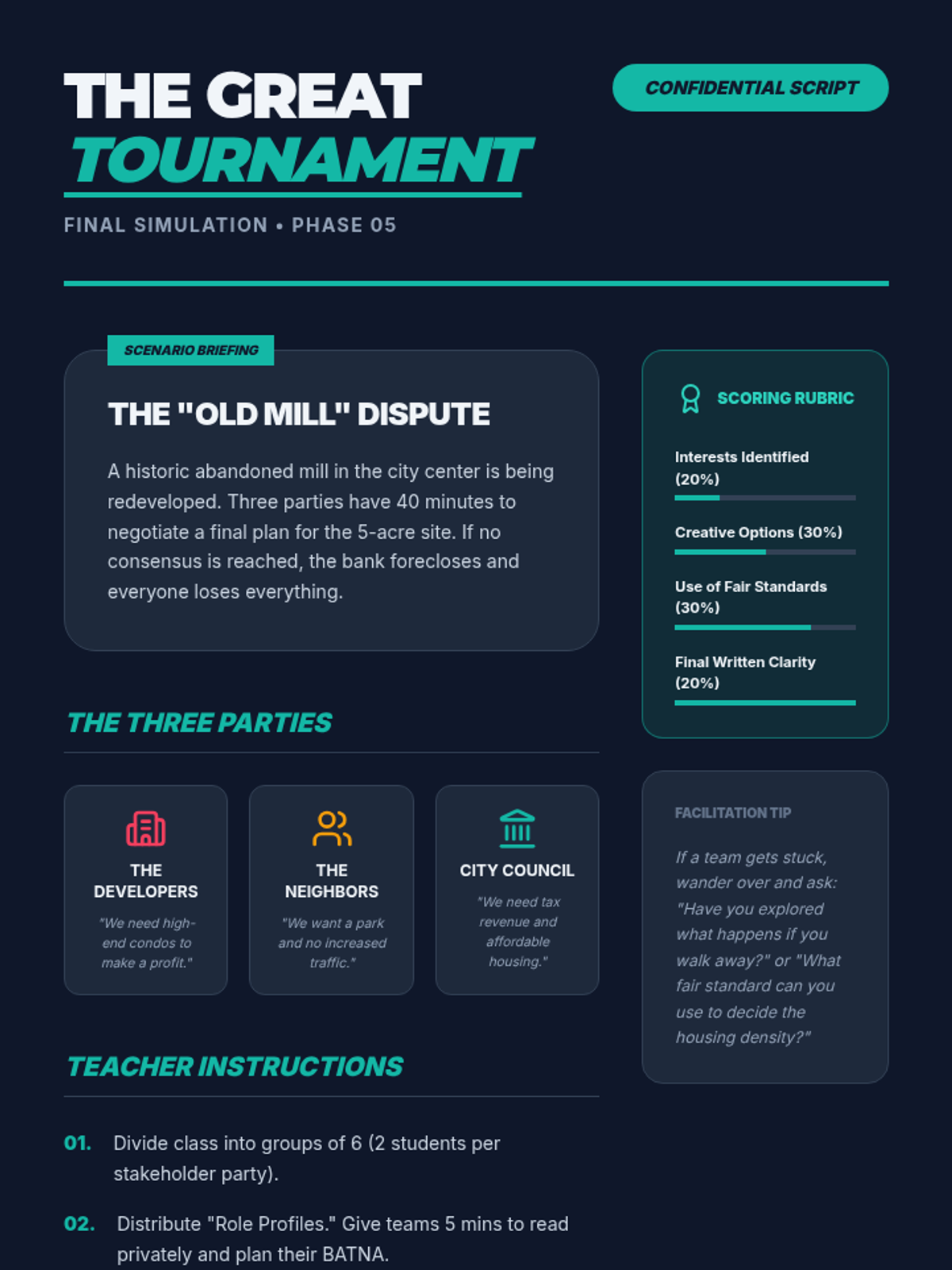
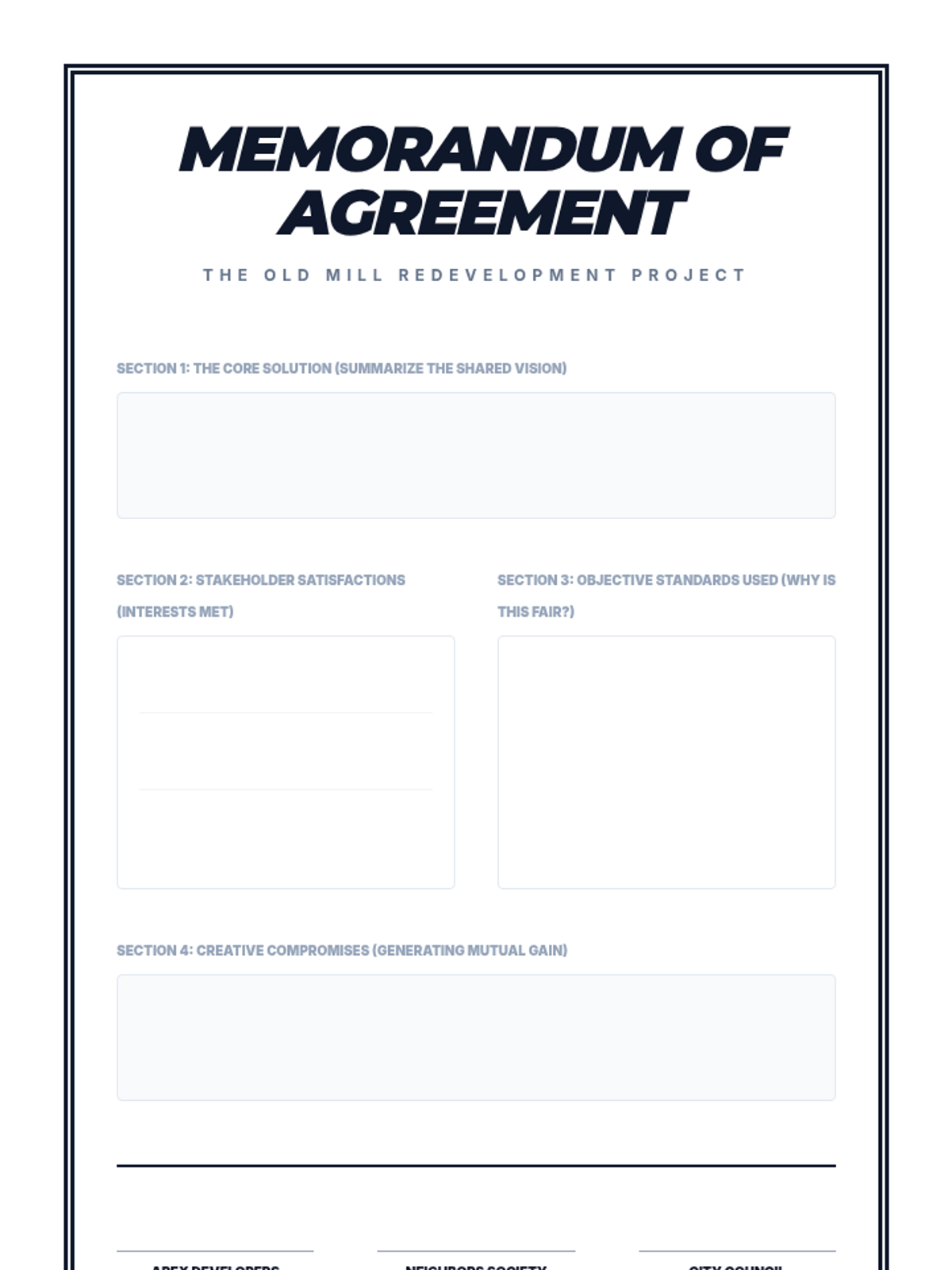
Teams represent different stakeholders in a complex, multi-party simulation. They must draft a written agreement that addresses the interests of all groups, applying all negotiation tools learned (interests, options, criteria, BATNA).
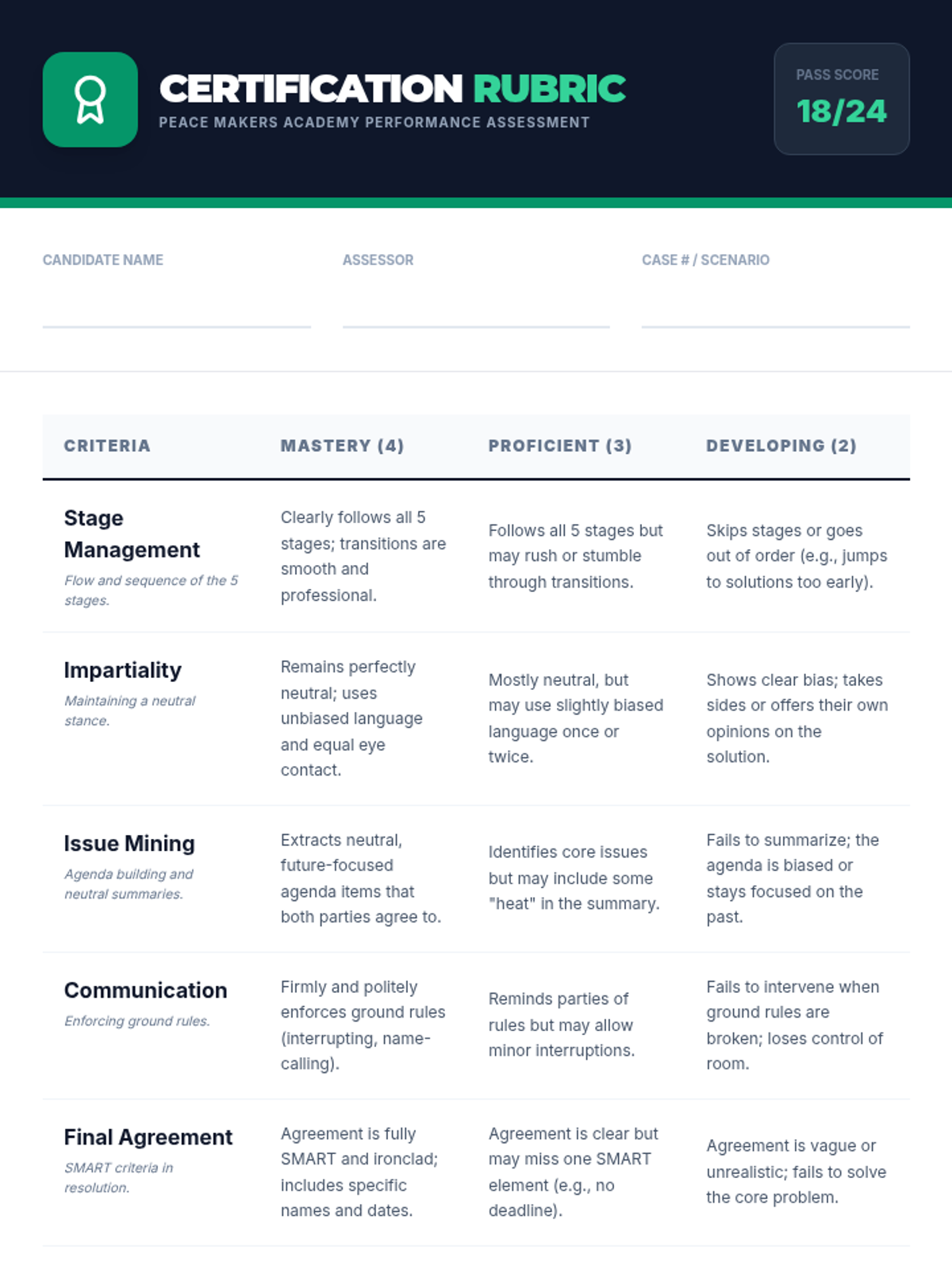
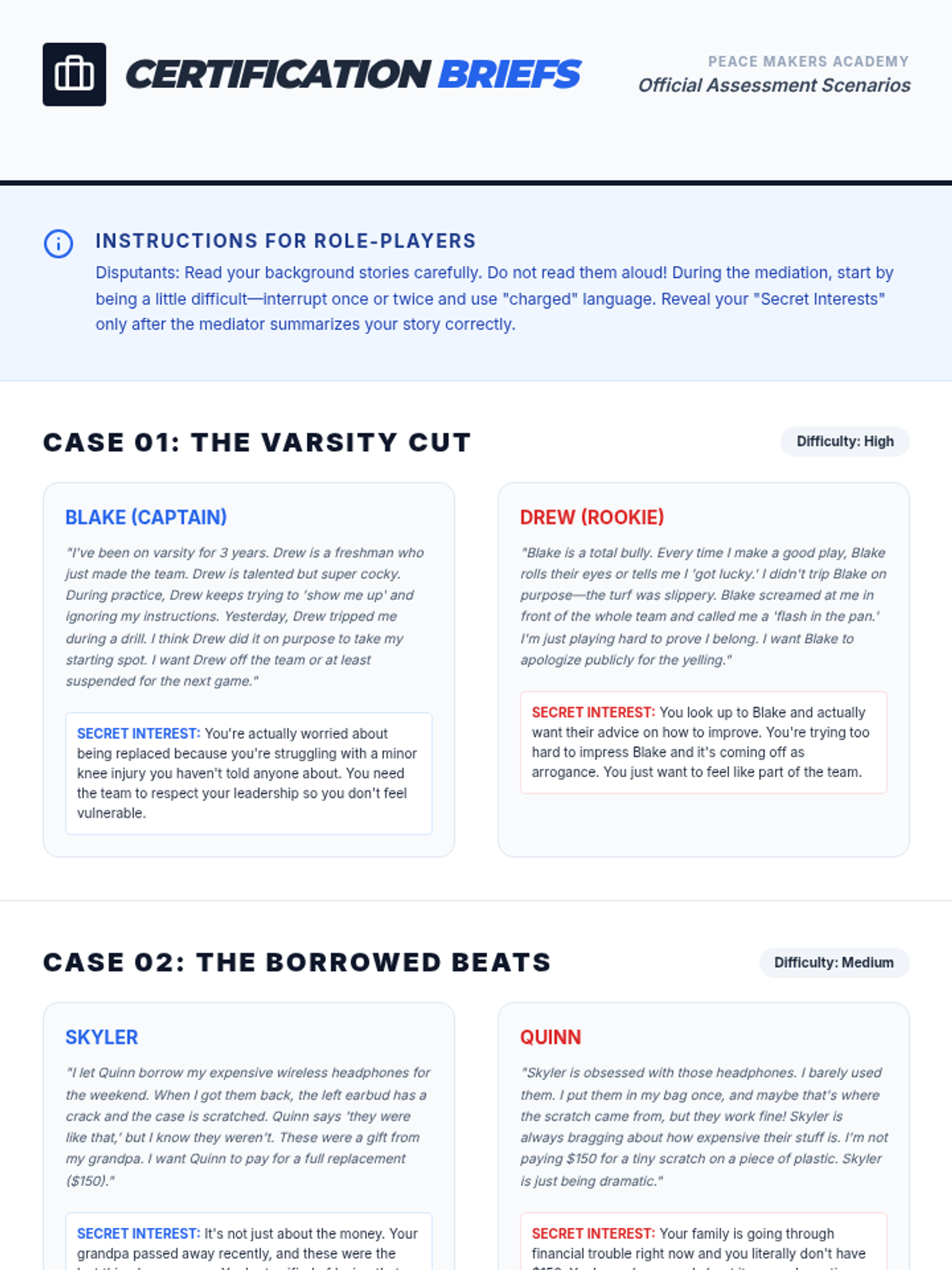
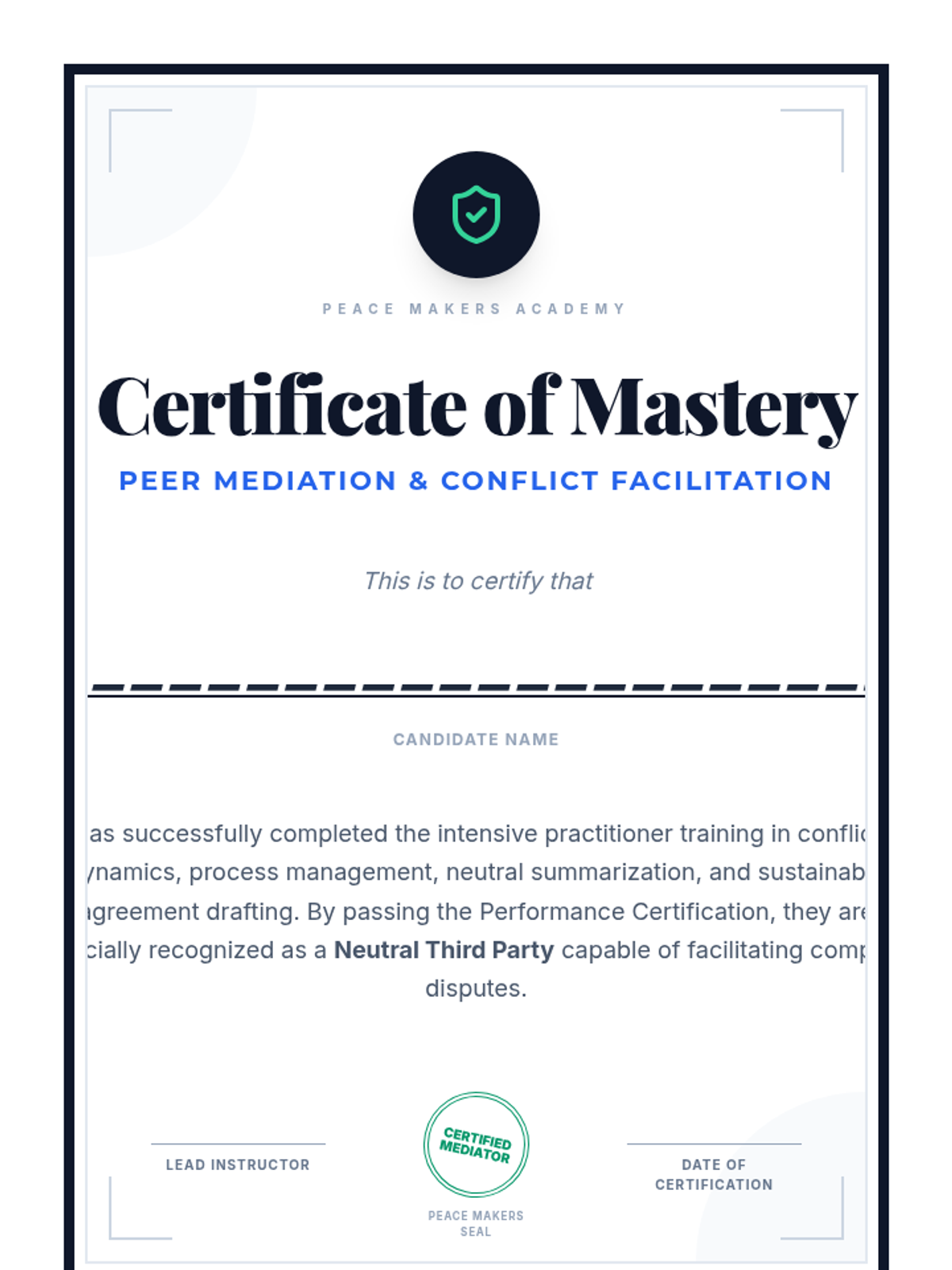
A performance-based assessment where students facilitate complex disputes to earn their peer mediation certification, evaluated on neutrality, process management, and resolution.
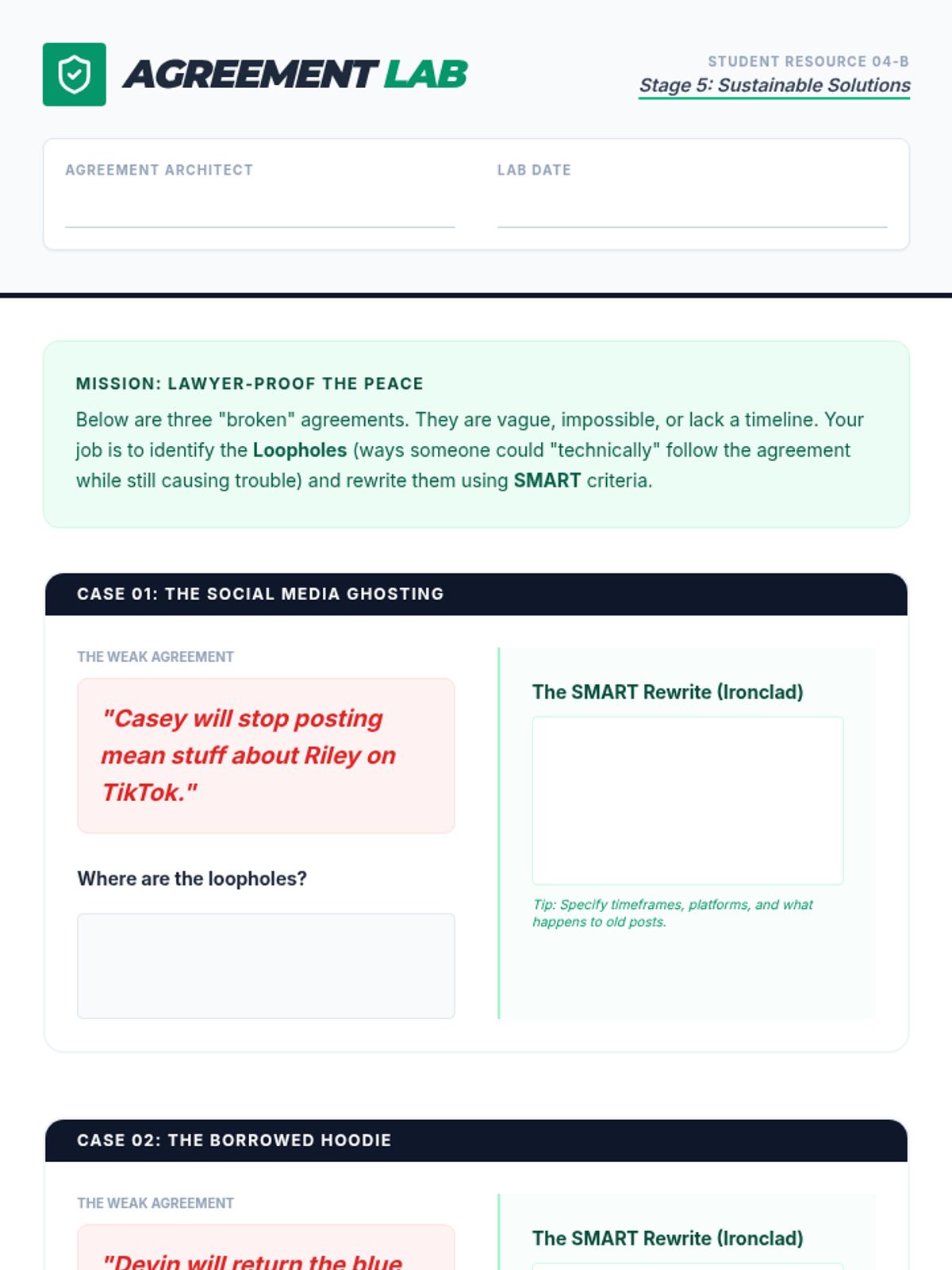
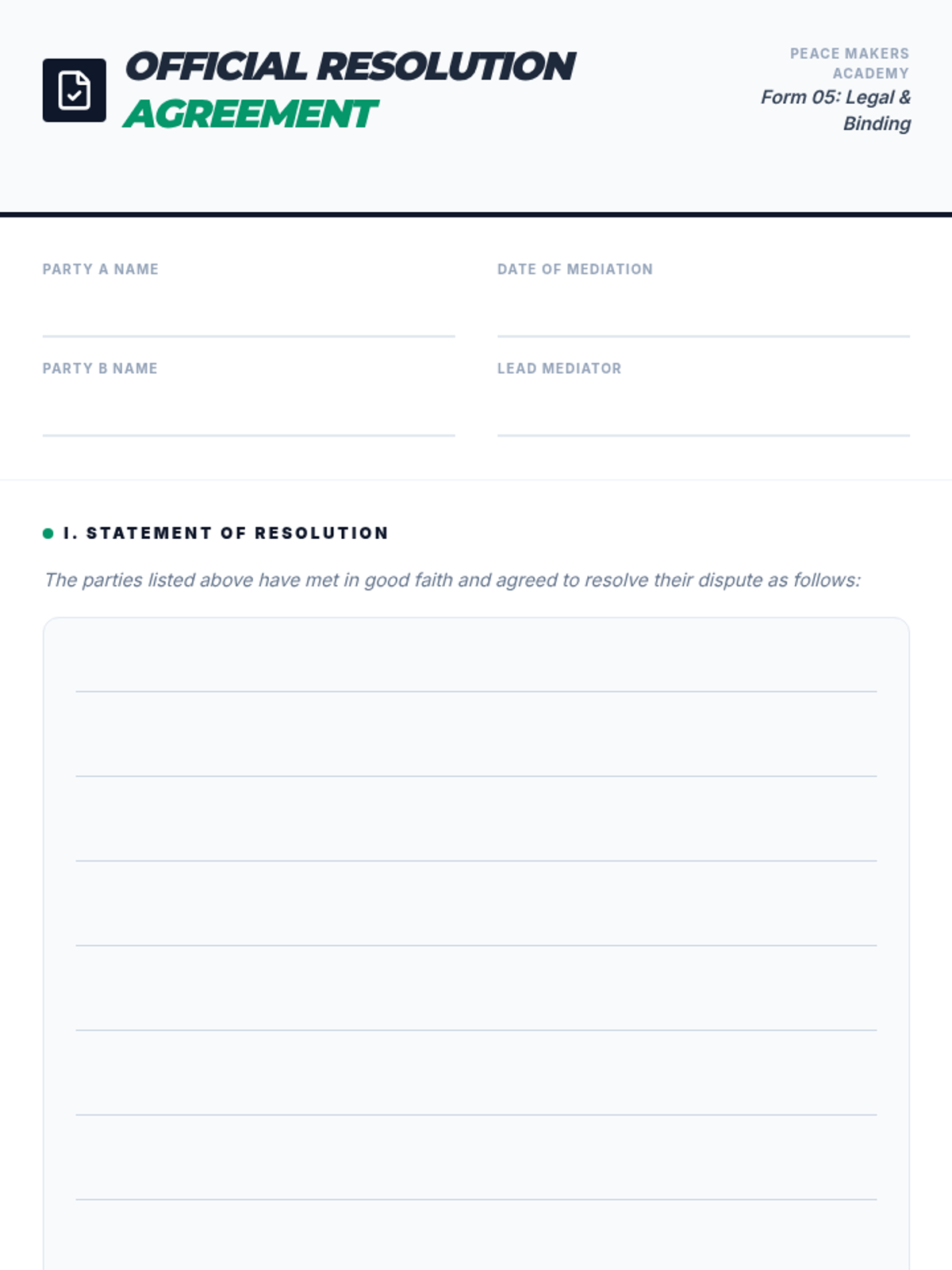
Students apply SMART criteria to craft durable conflict agreements, learning how to write clear, ironclad clauses that prevent future disputes.
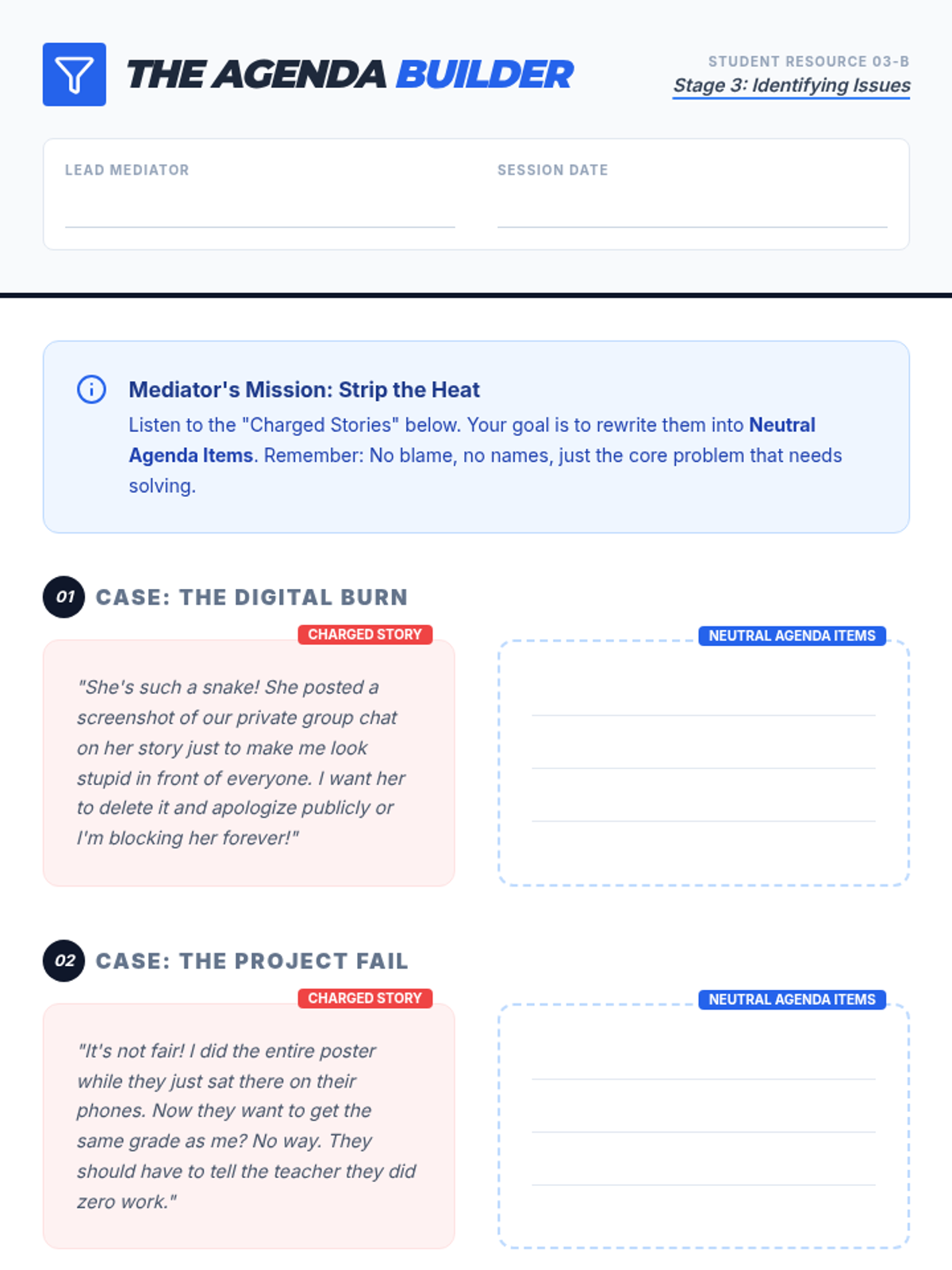
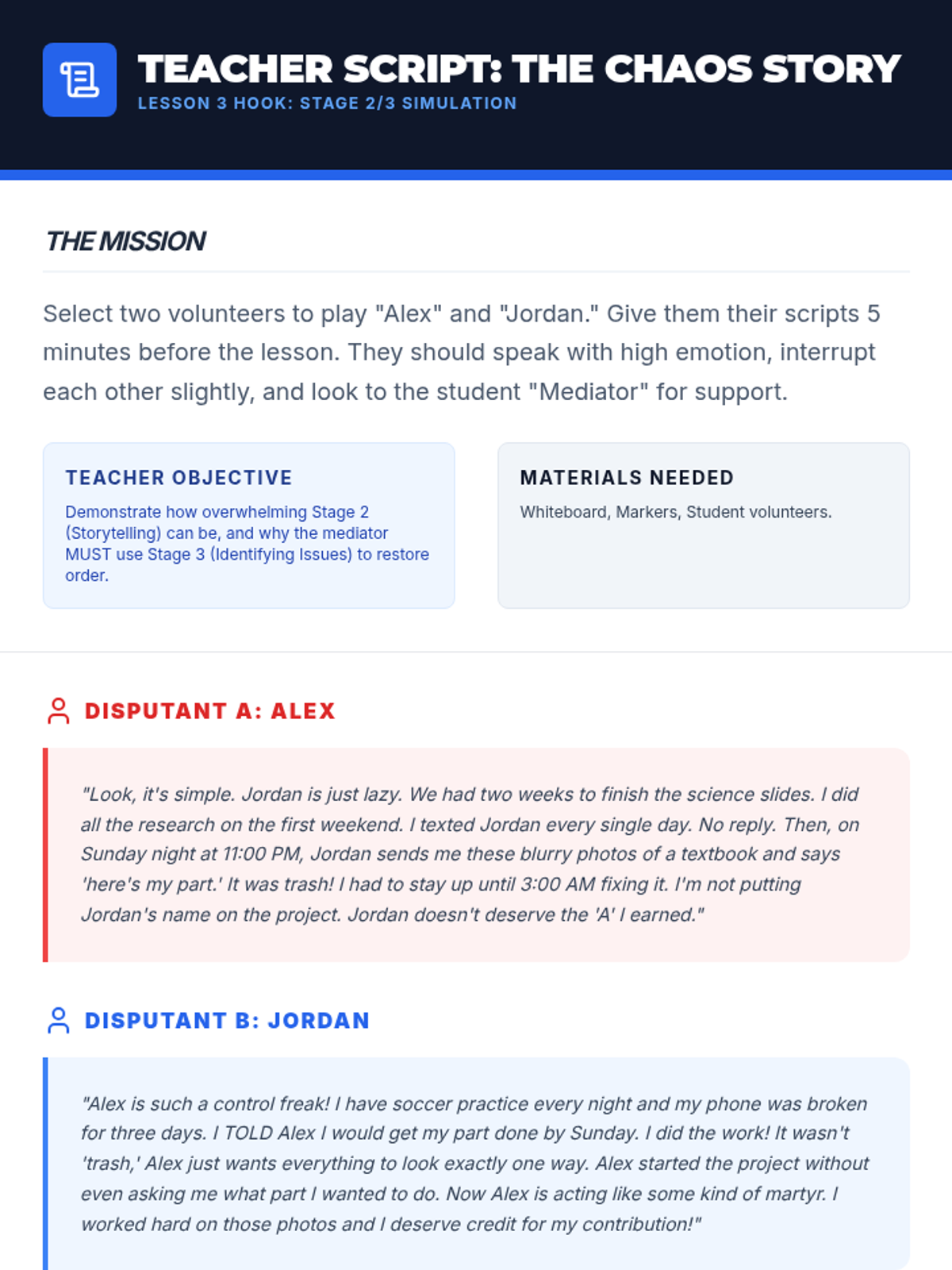
Mediators learn to 'mine' for underlying issues and interests within emotional narratives, transforming rambling stories into neutral, summarized agendas.
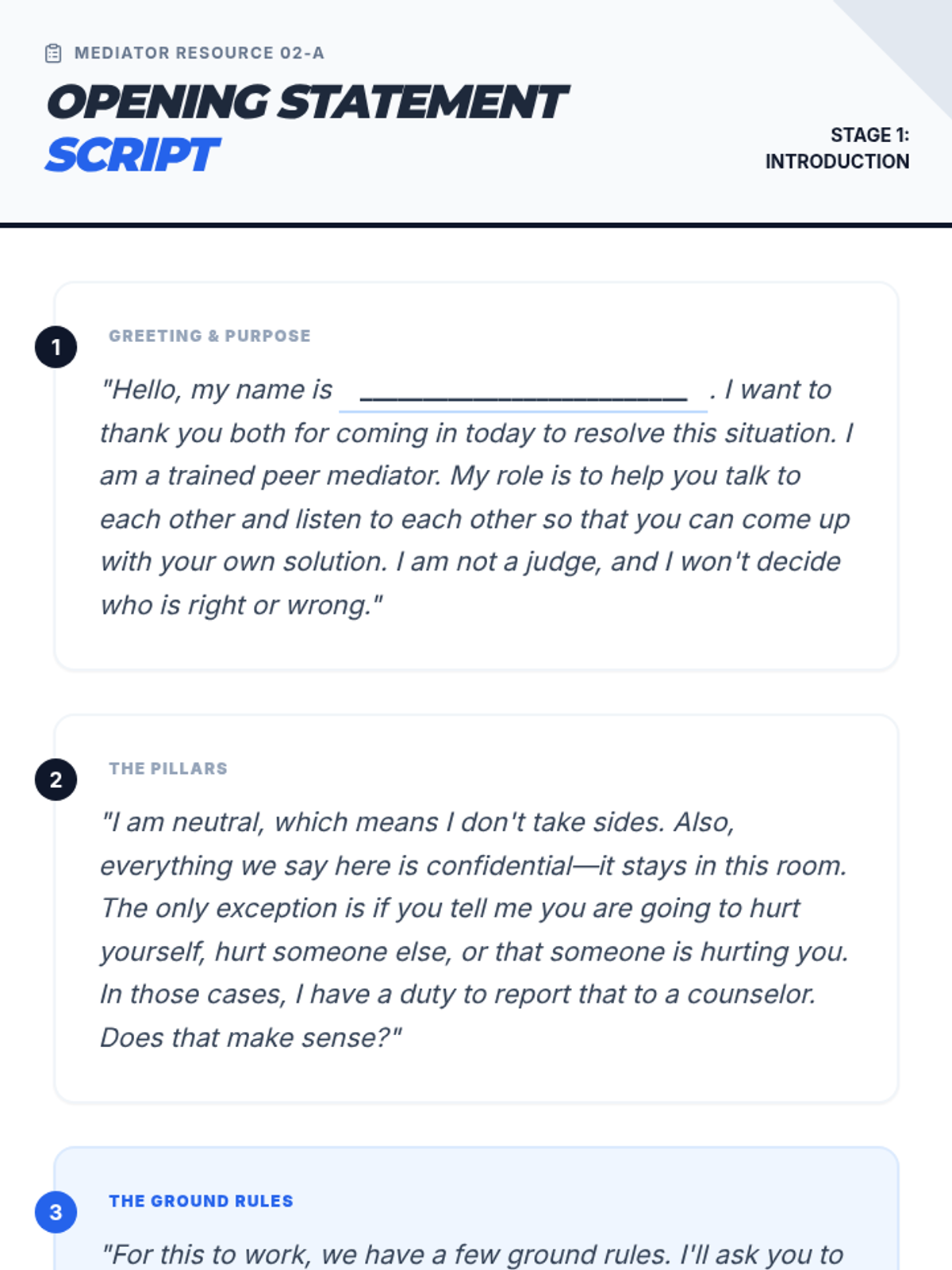
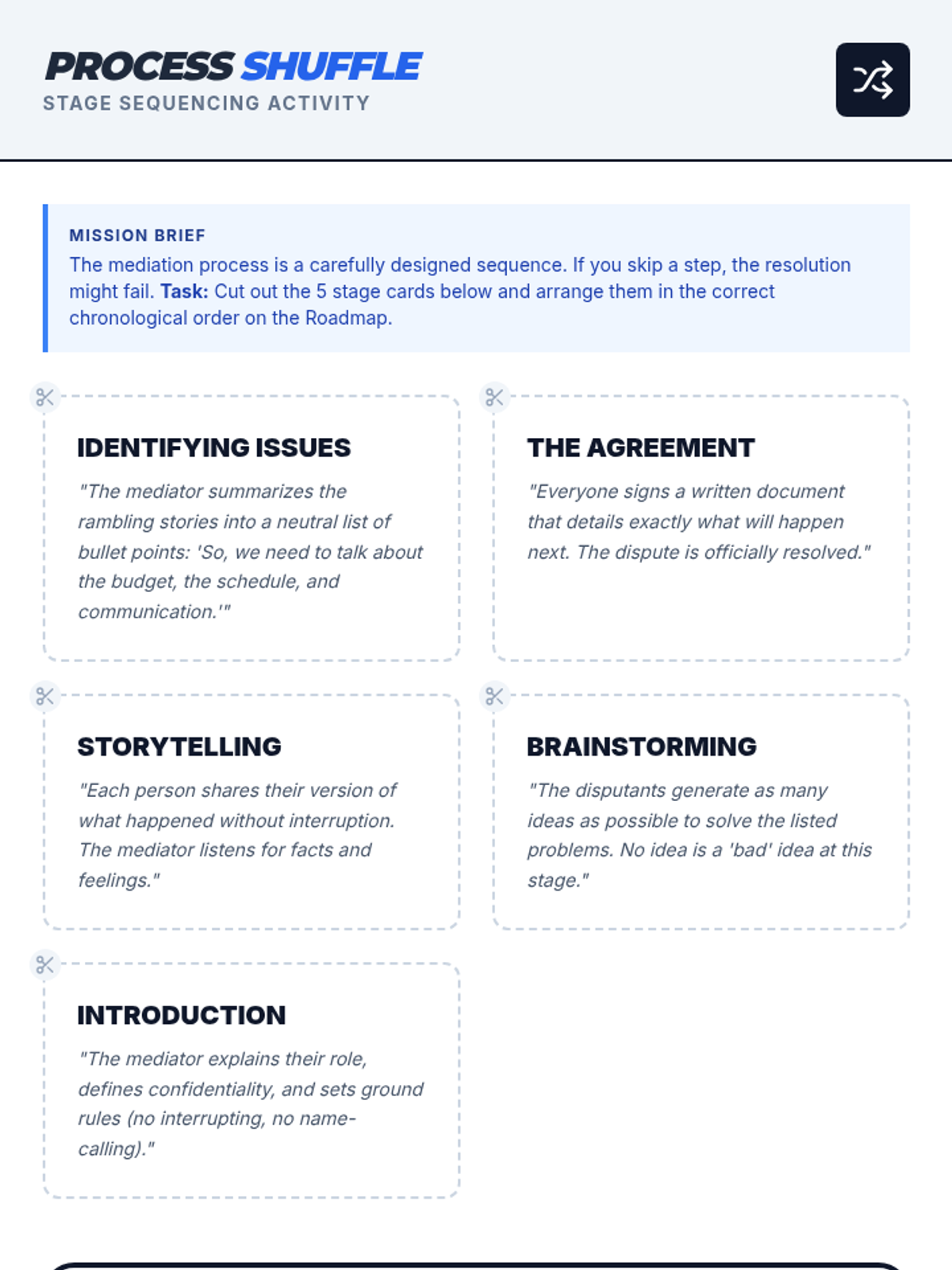
A deep dive into the five stages of a mediation session, including the memorization and practice of the mediator opening script to establish a safe environment.
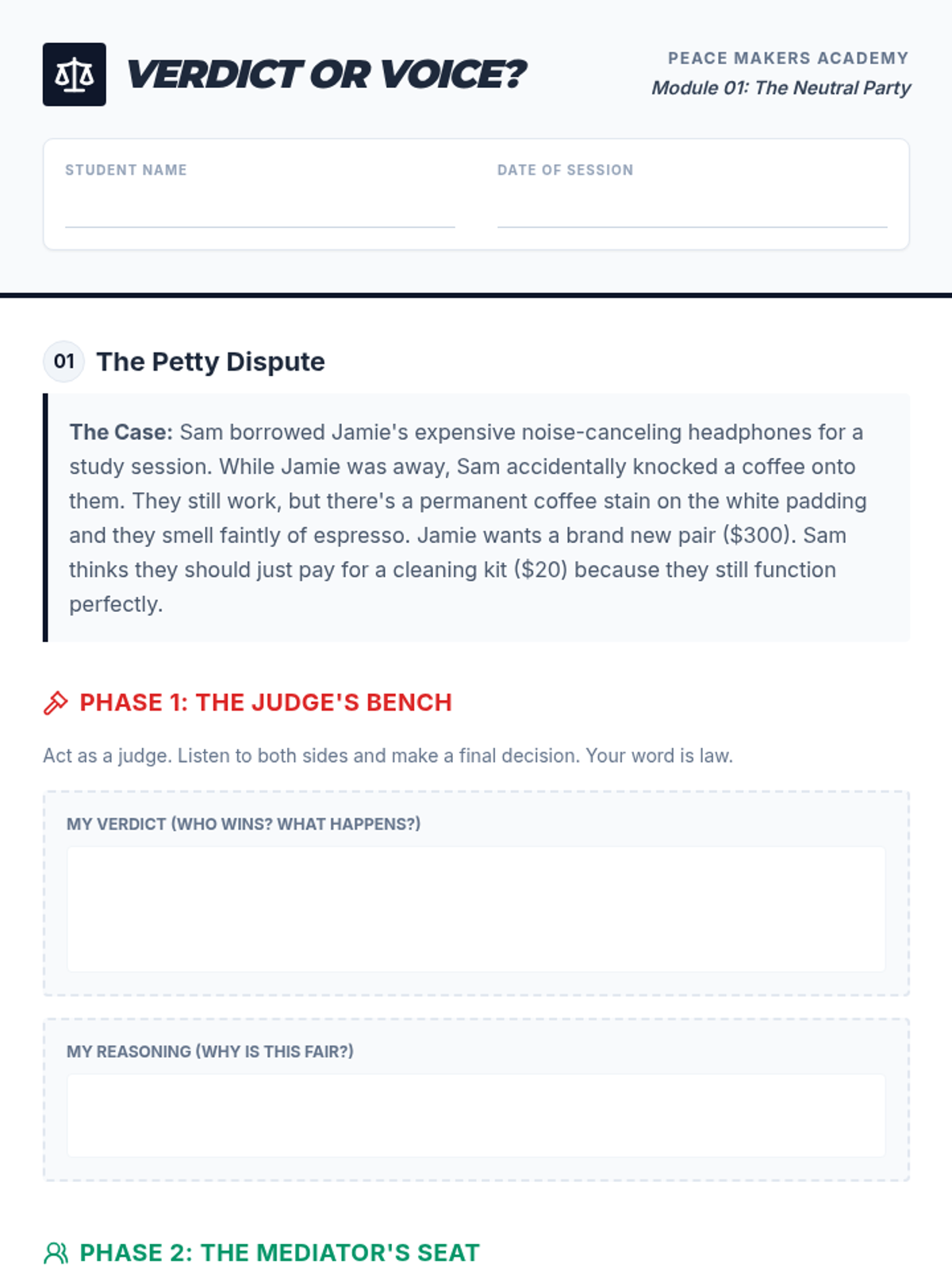
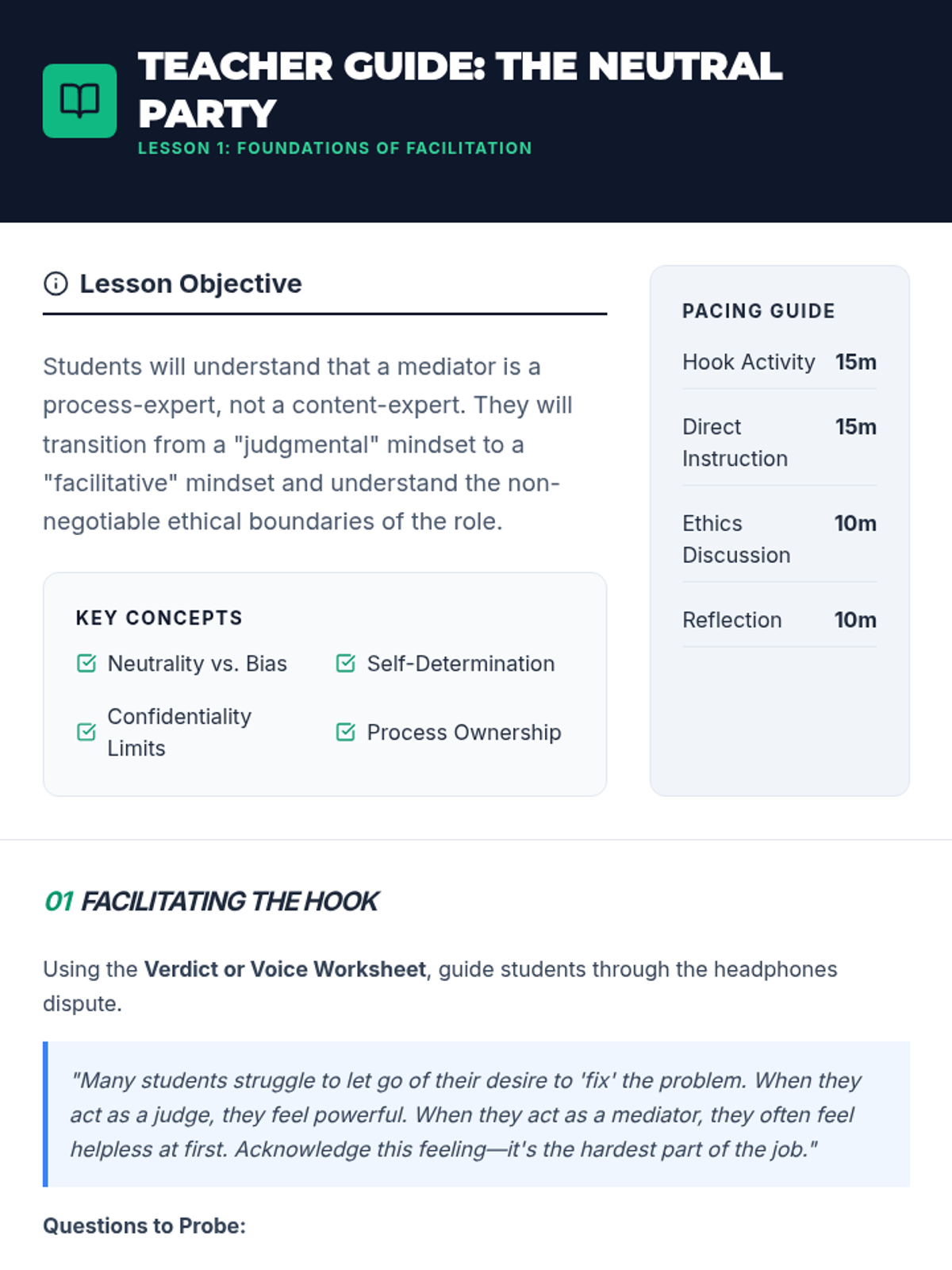
Students define the role of a mediator as a neutral facilitator, distinguish it from a judge or arbitrator, and explore the ethical foundations of confidentiality and impartiality.
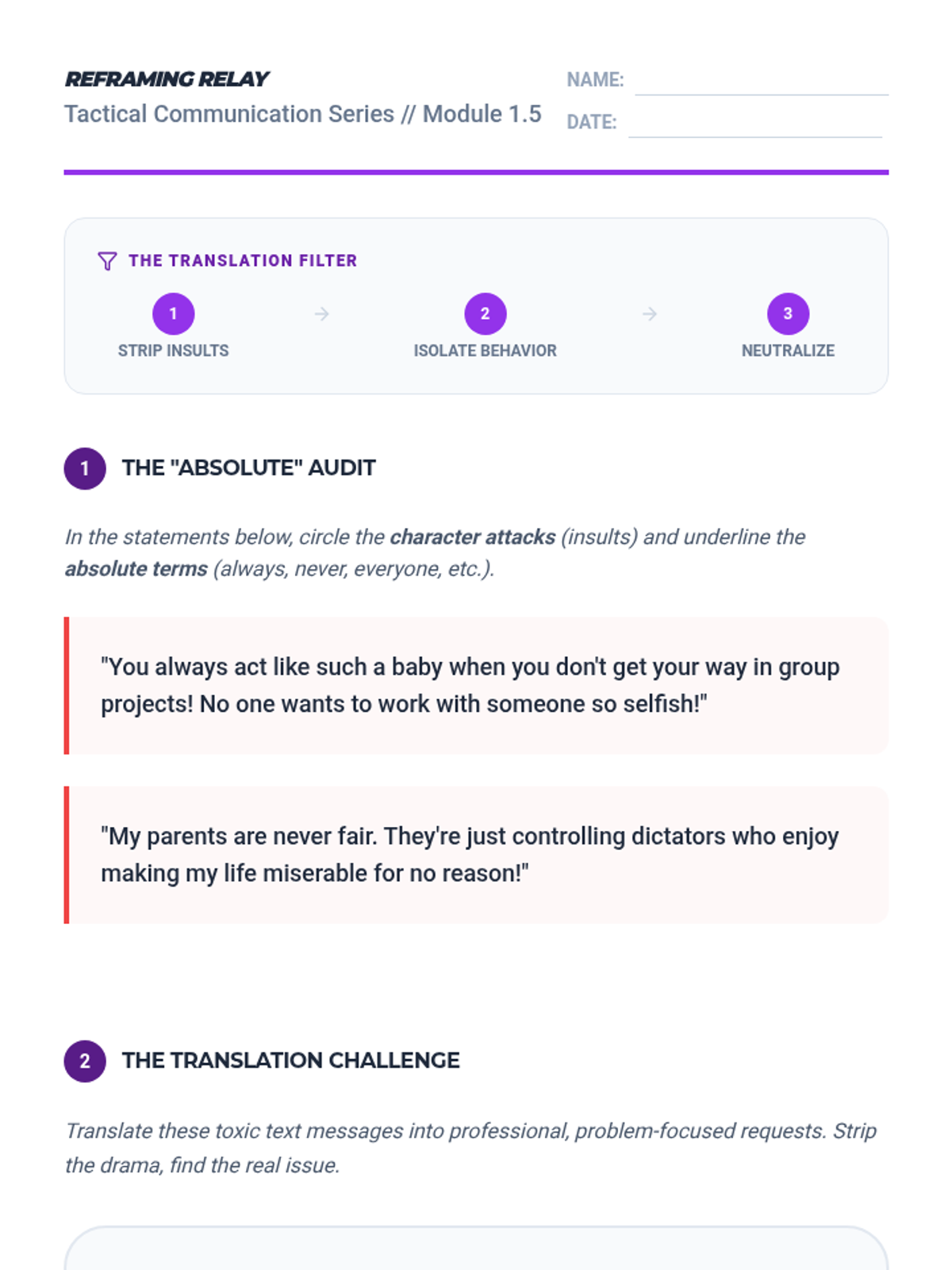
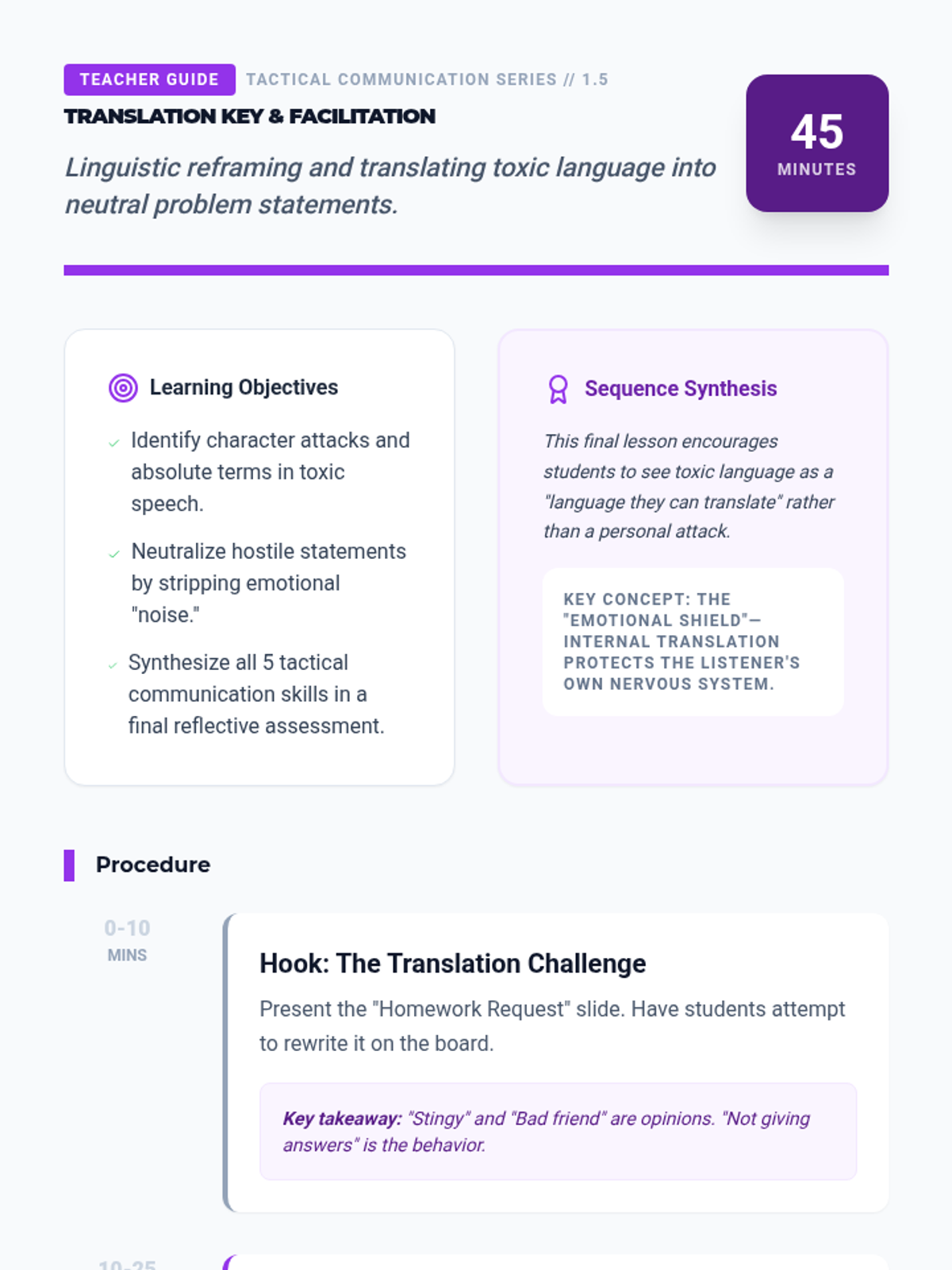
Translates 'toxic' language into neutral problem statements to keep conversations productive even with difficult parties.
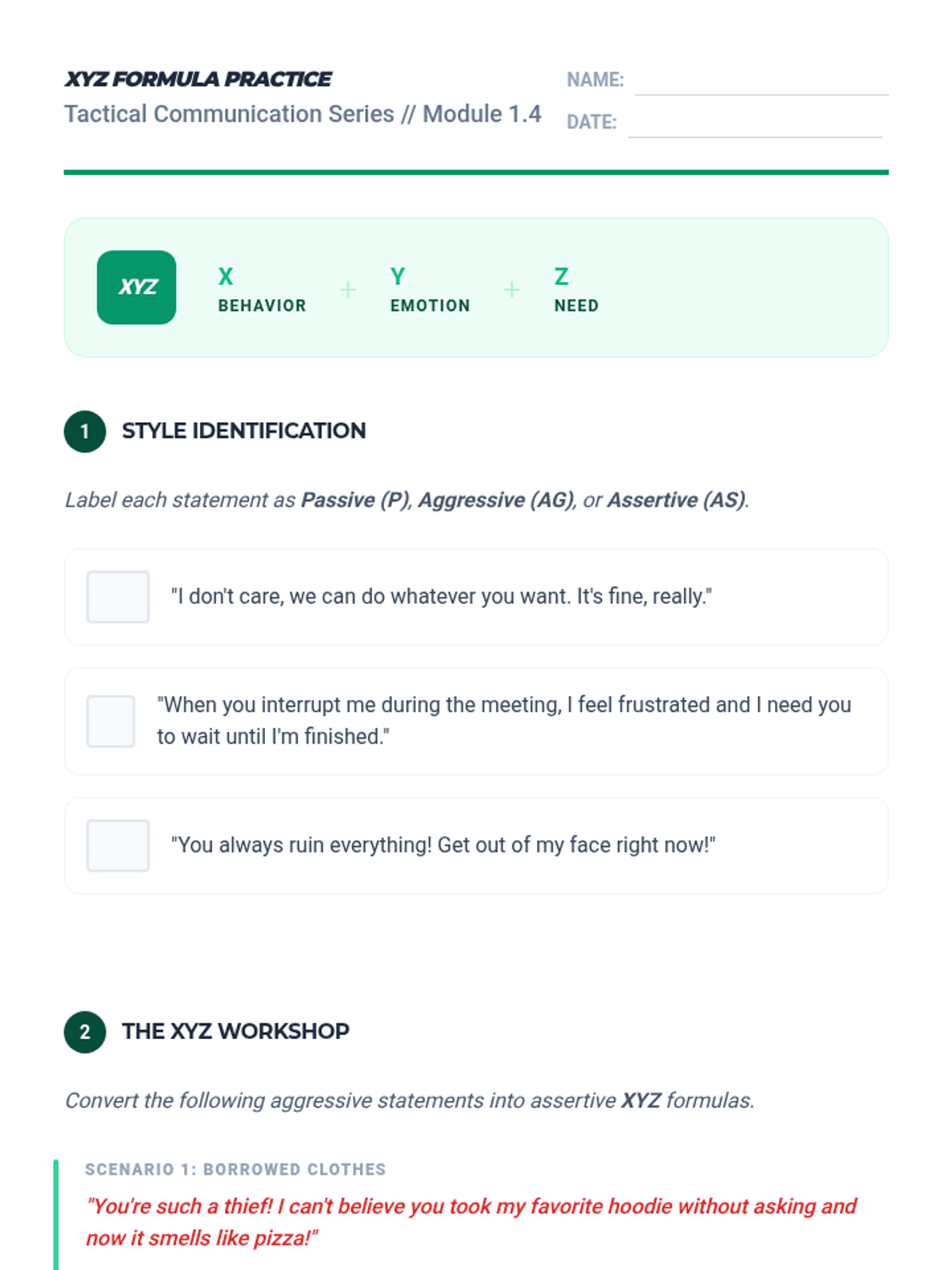
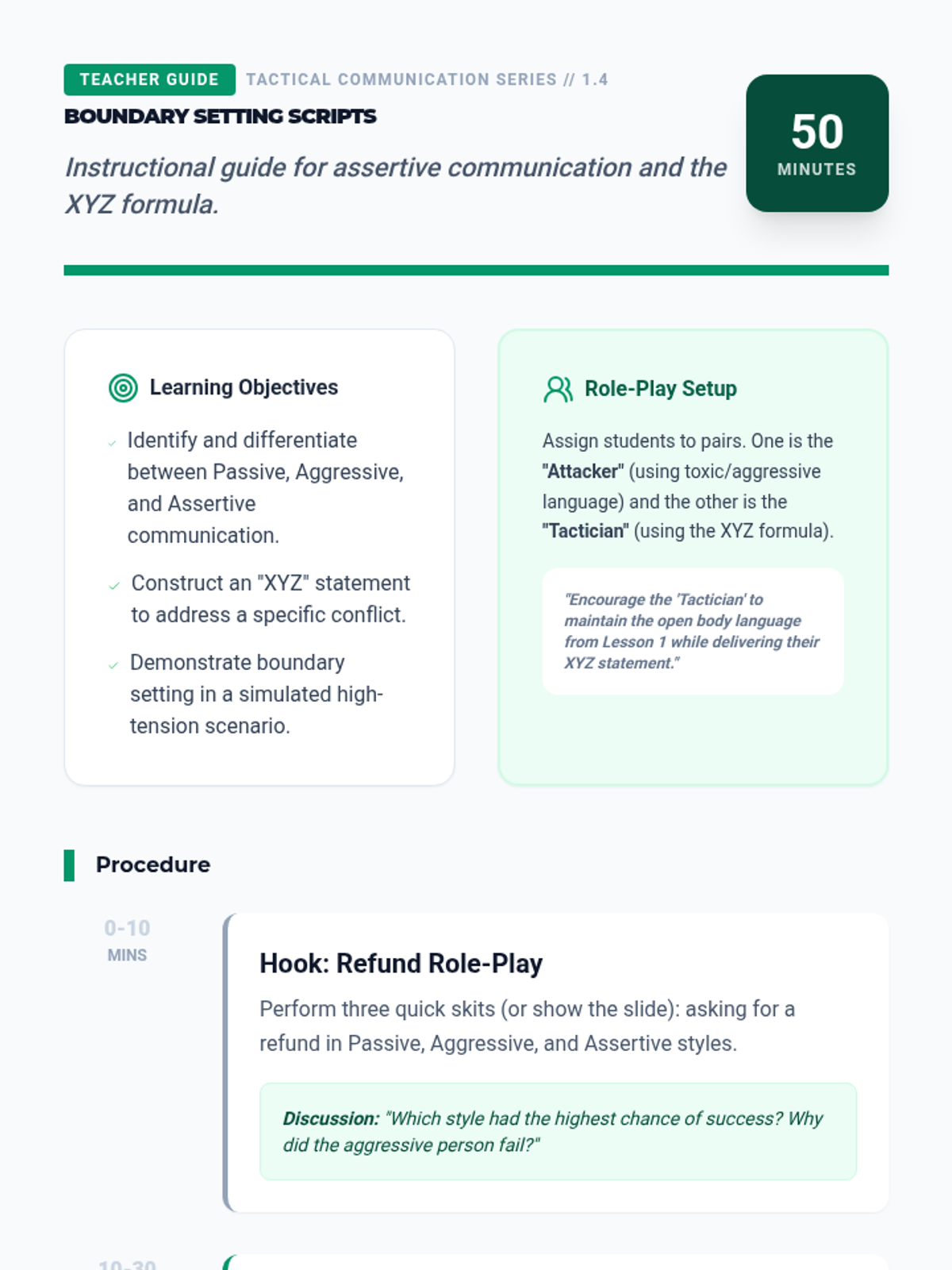
Introduces the 'XYZ' formula to state needs clearly and assertively without attacking character.
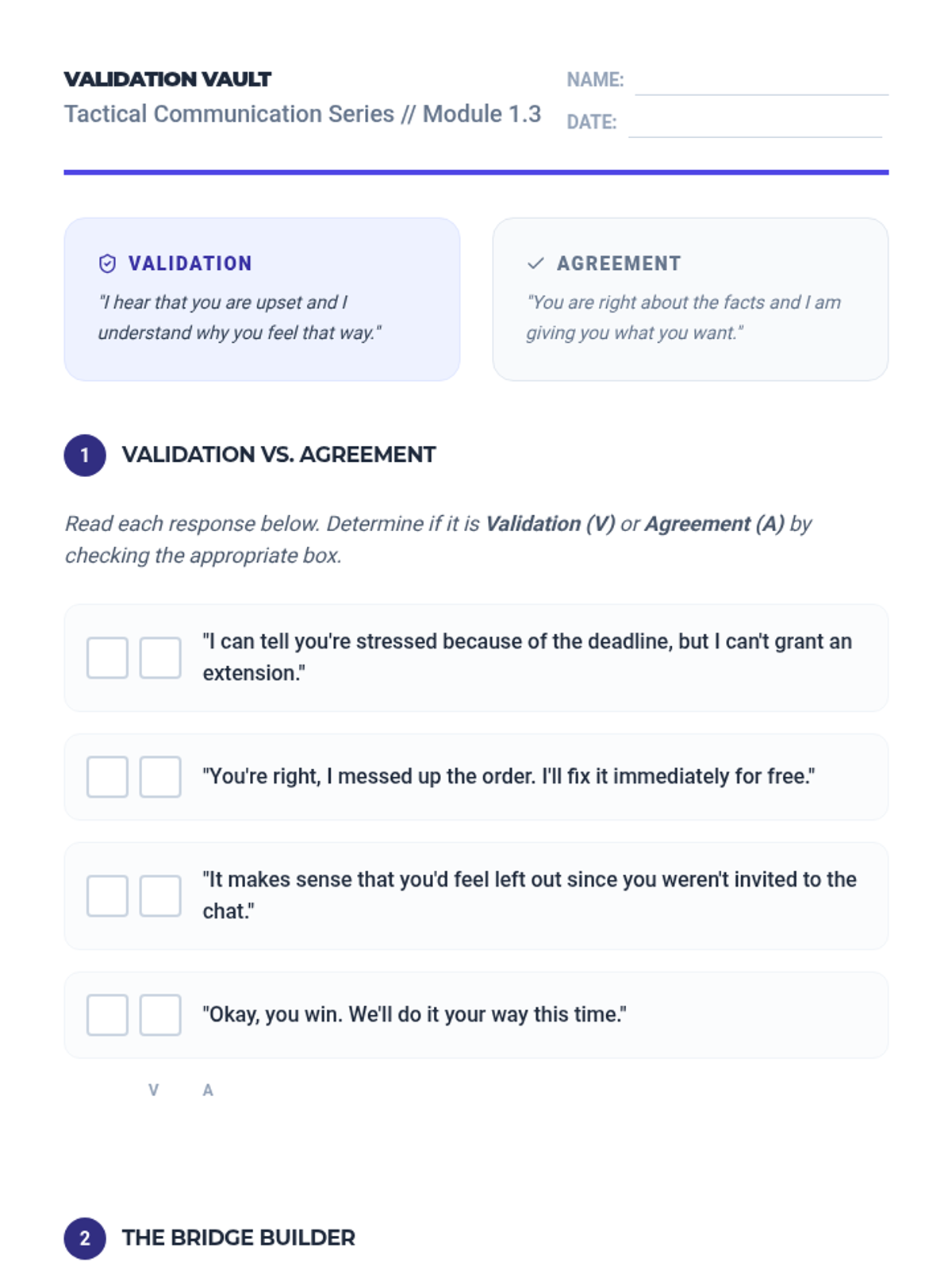
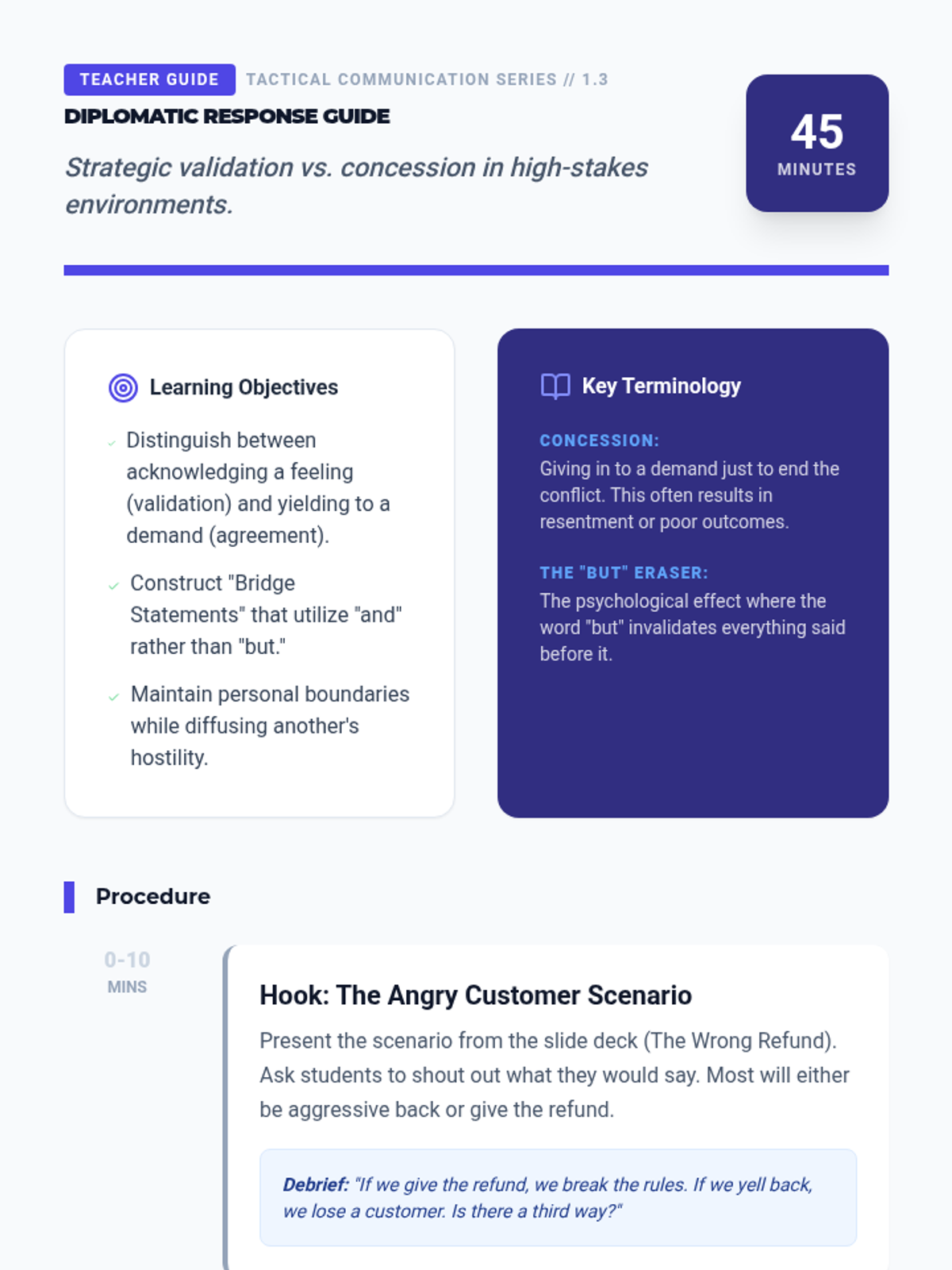
Teaches the distinction between validating feelings and agreeing with facts, essential for de-escalation without yielding ground.
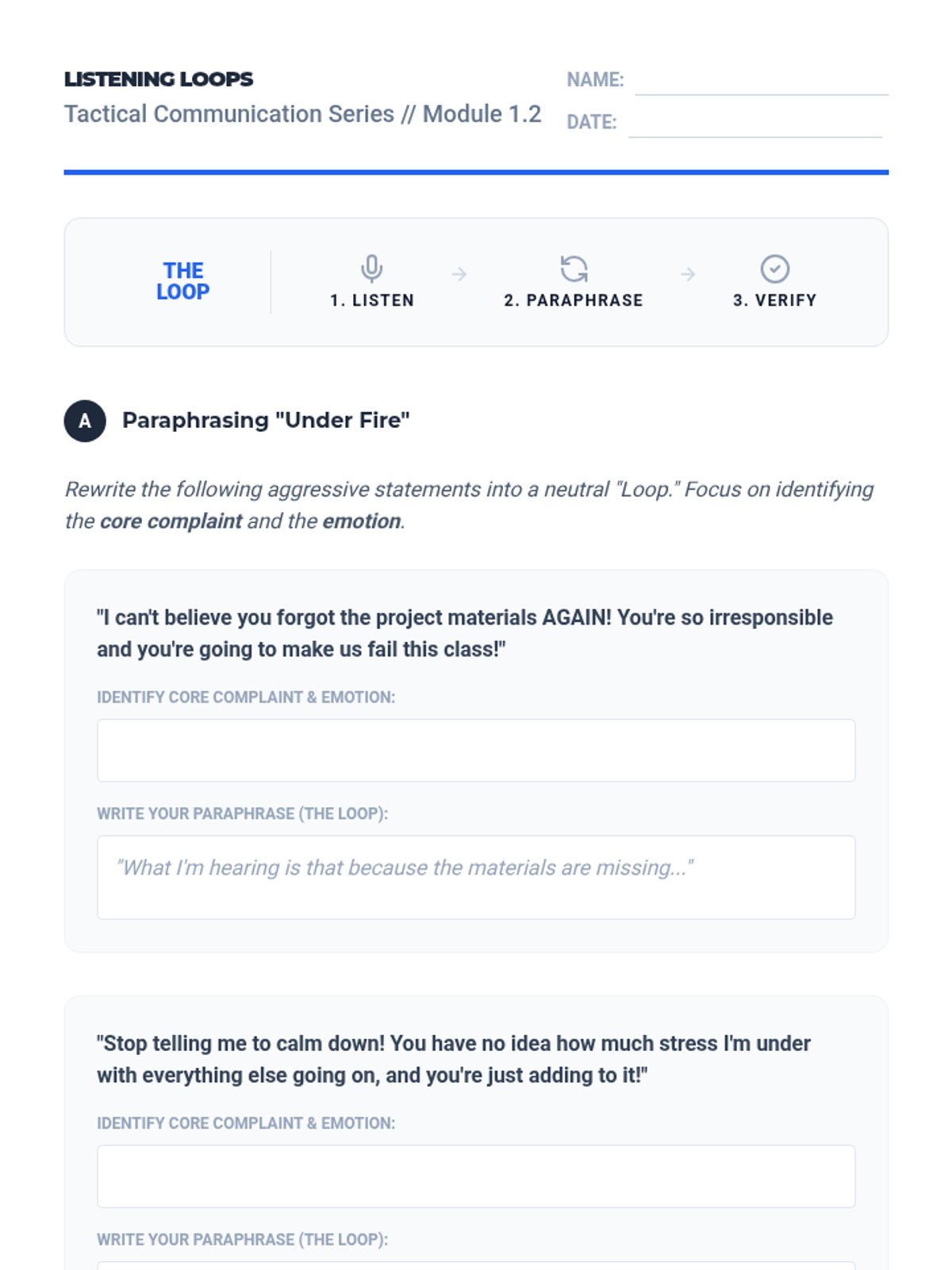
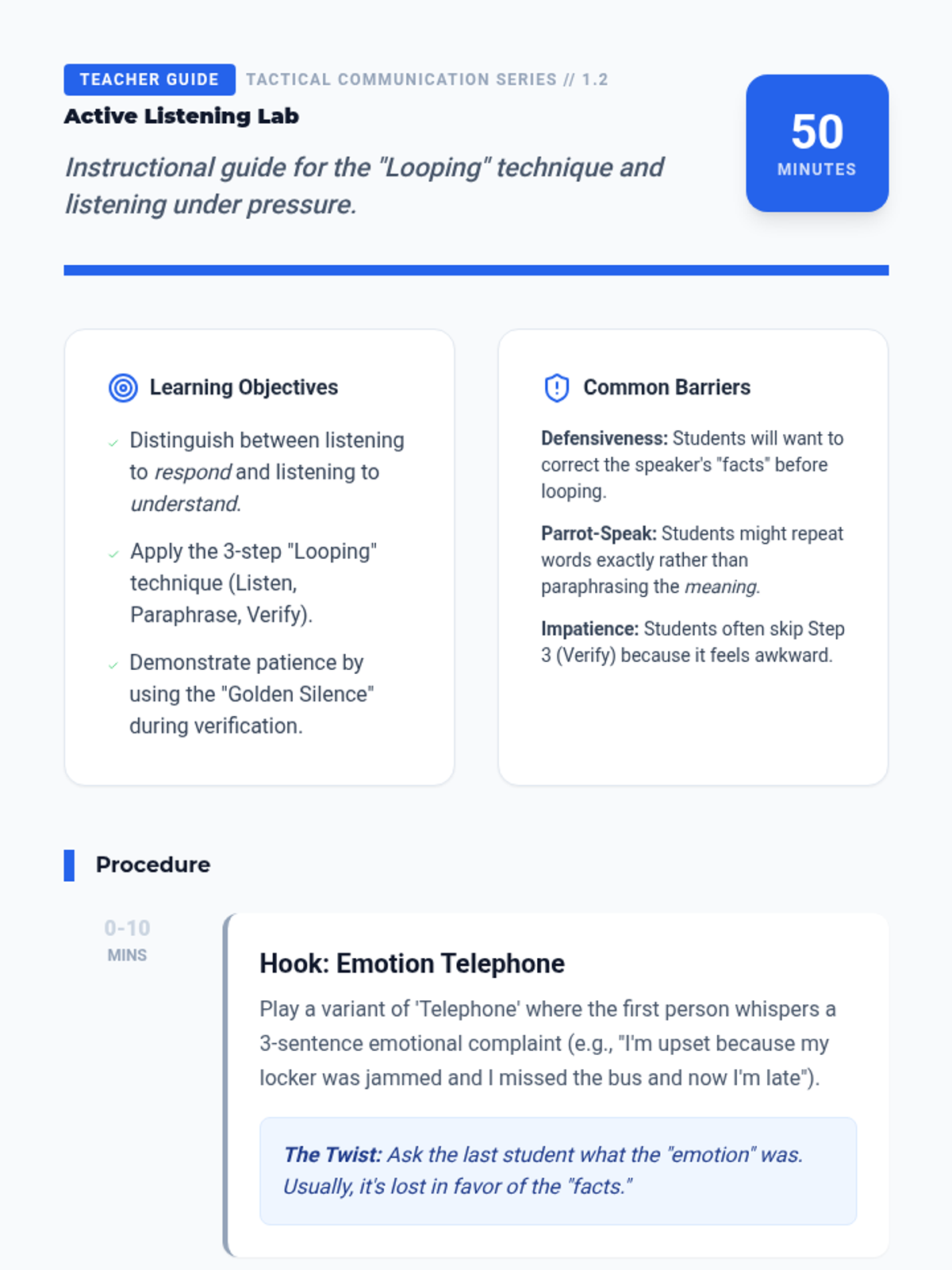
Focuses on 'looping'—repeating back what was heard to ensure accuracy and lower defenses in high-stakes disagreements.
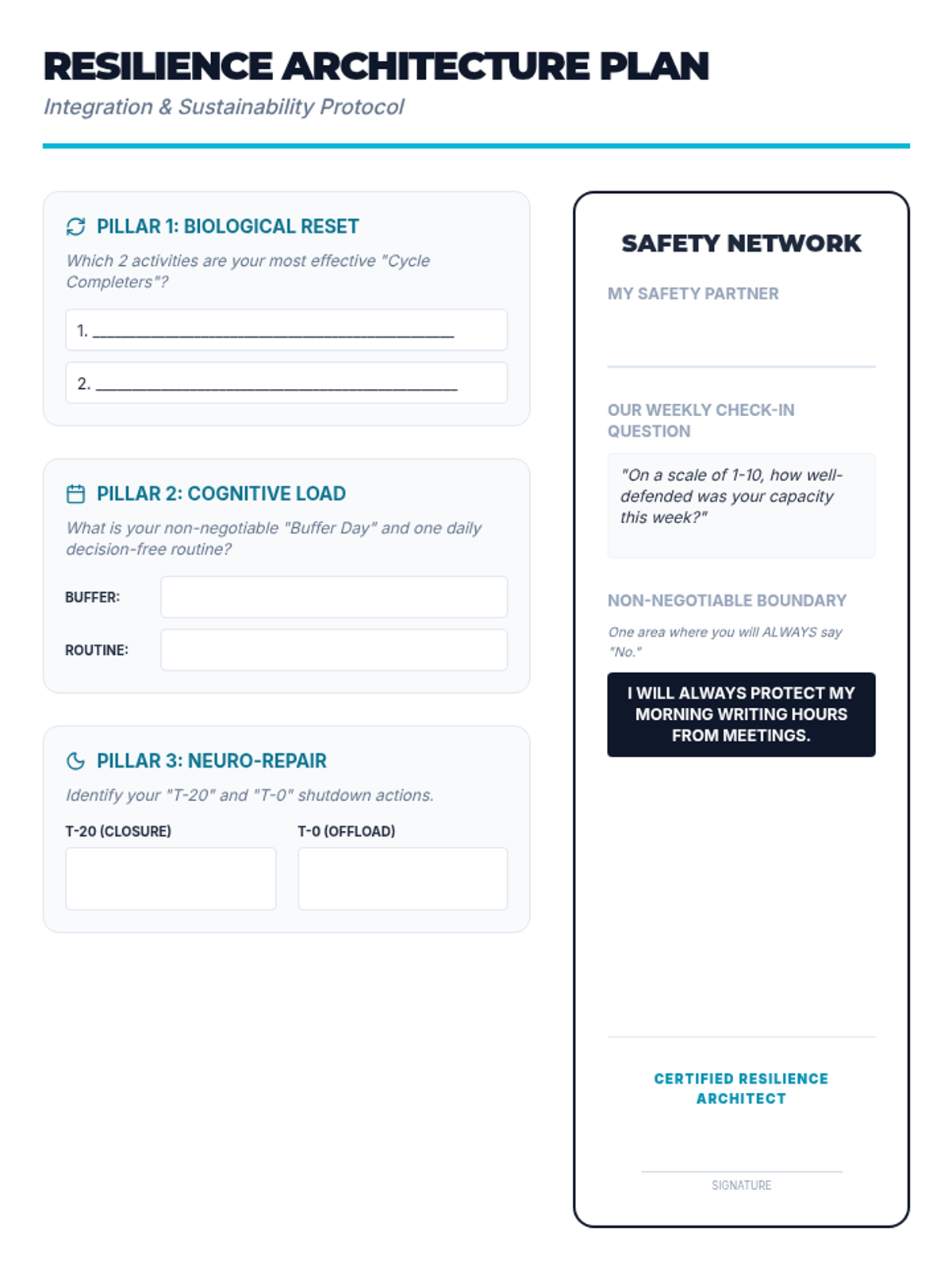
Final synthesis where students integrate all learned modules into a personalized Resilience Architecture plan and a portable Crisis Card for emergency restoration.
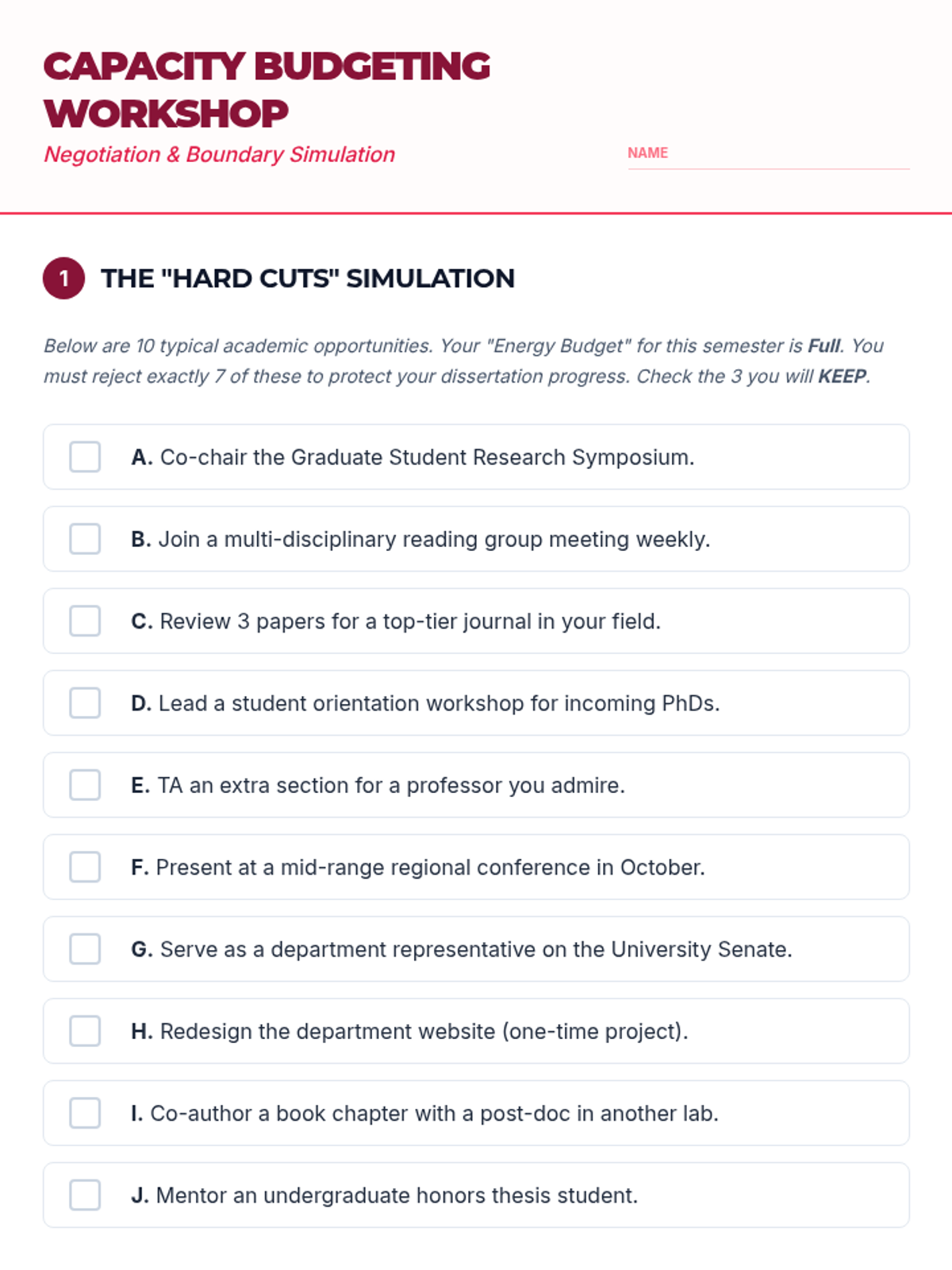
Addresses the pressure to overcommit in academia by teaching the 'Strategic No' as a tool for protecting capacity and ensuring career longevity.
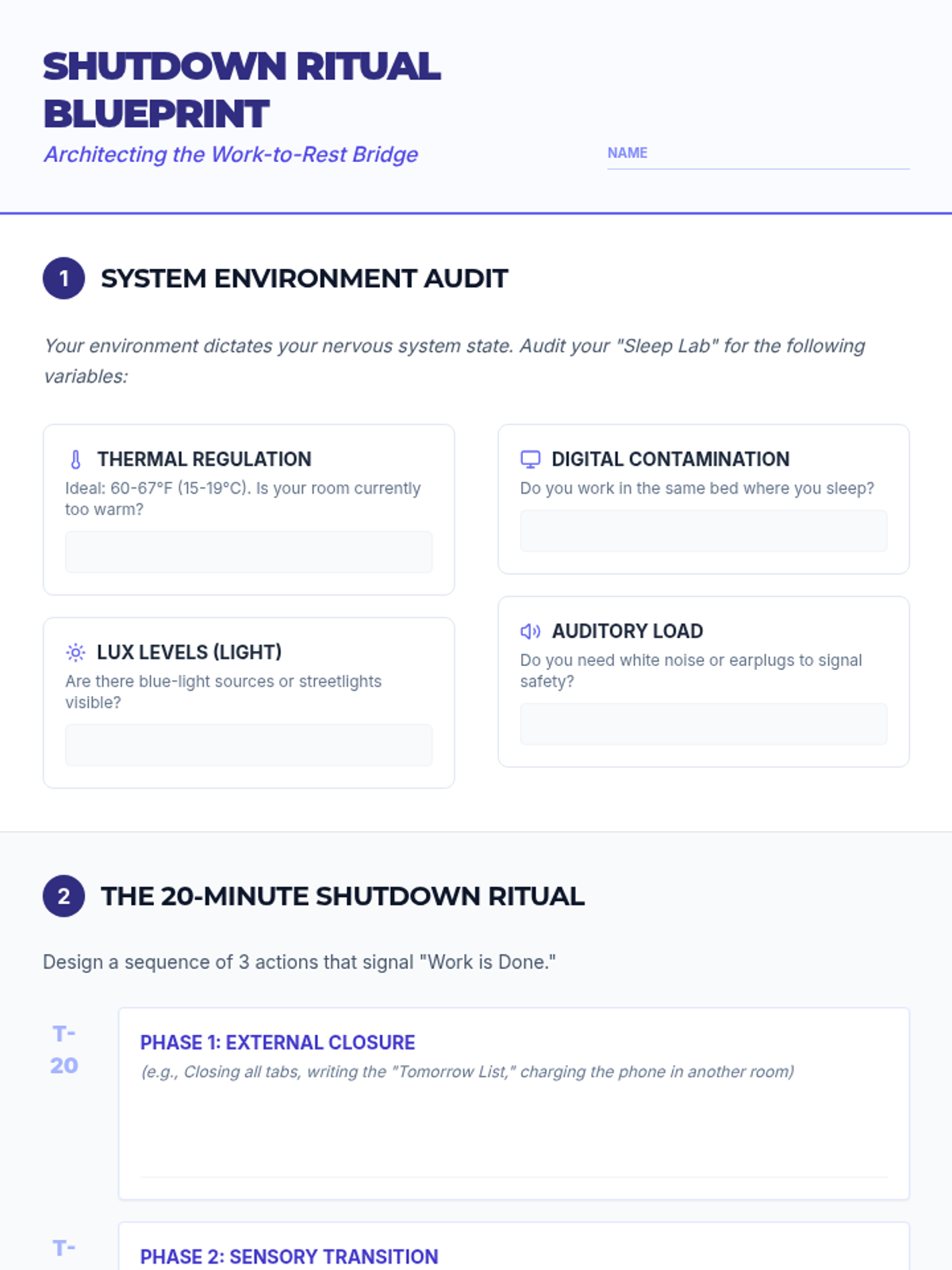
Explores the neurobiology of sleep and its role in emotional regulation, culminating in the design of a 'shutdown ritual' to combat revenge bedtime procrastination.
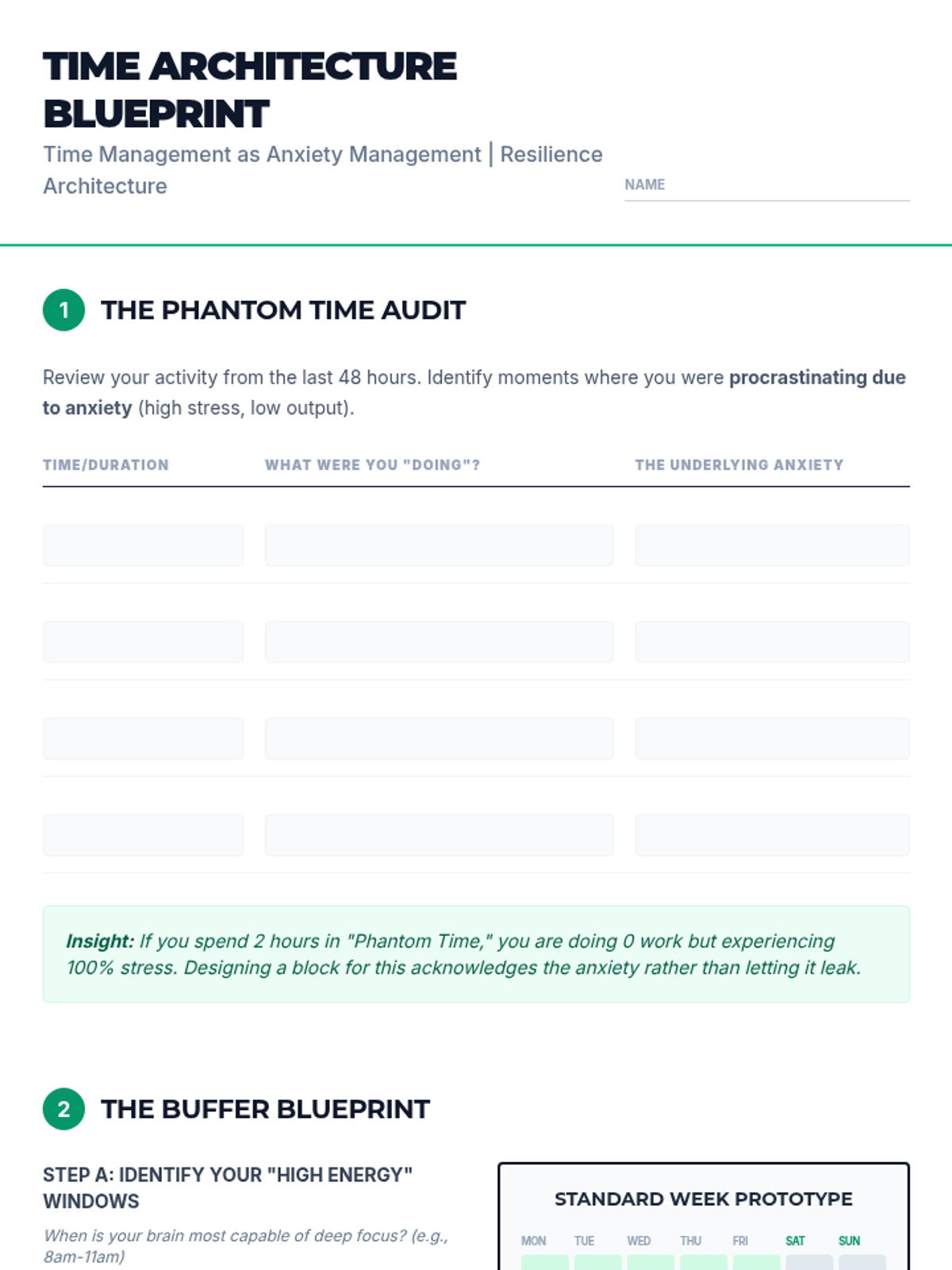
Reframes time management as a tool for reducing cognitive load and anxiety, teaching graduate students to design schedules based on energy levels and buffer capacity.
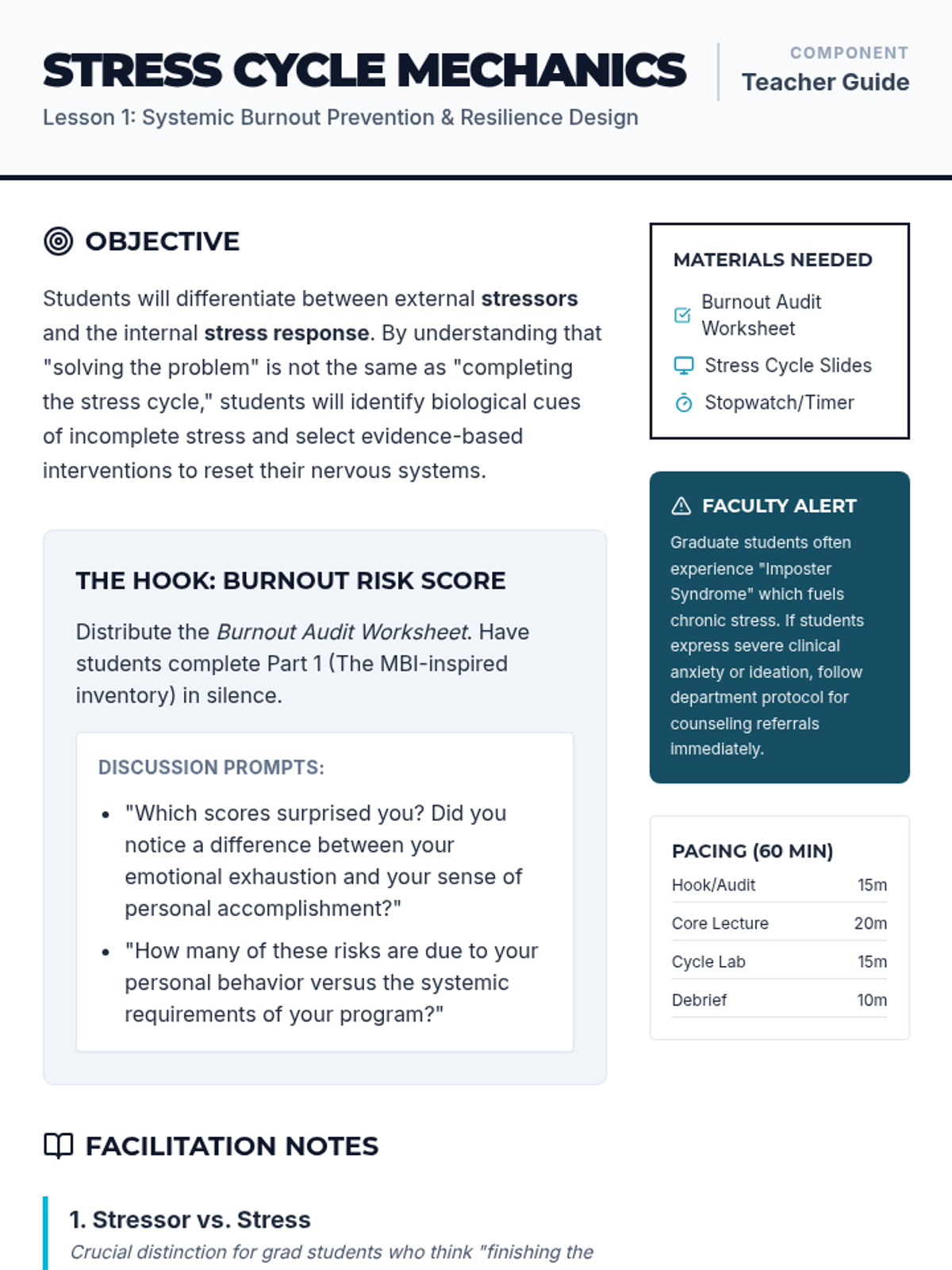
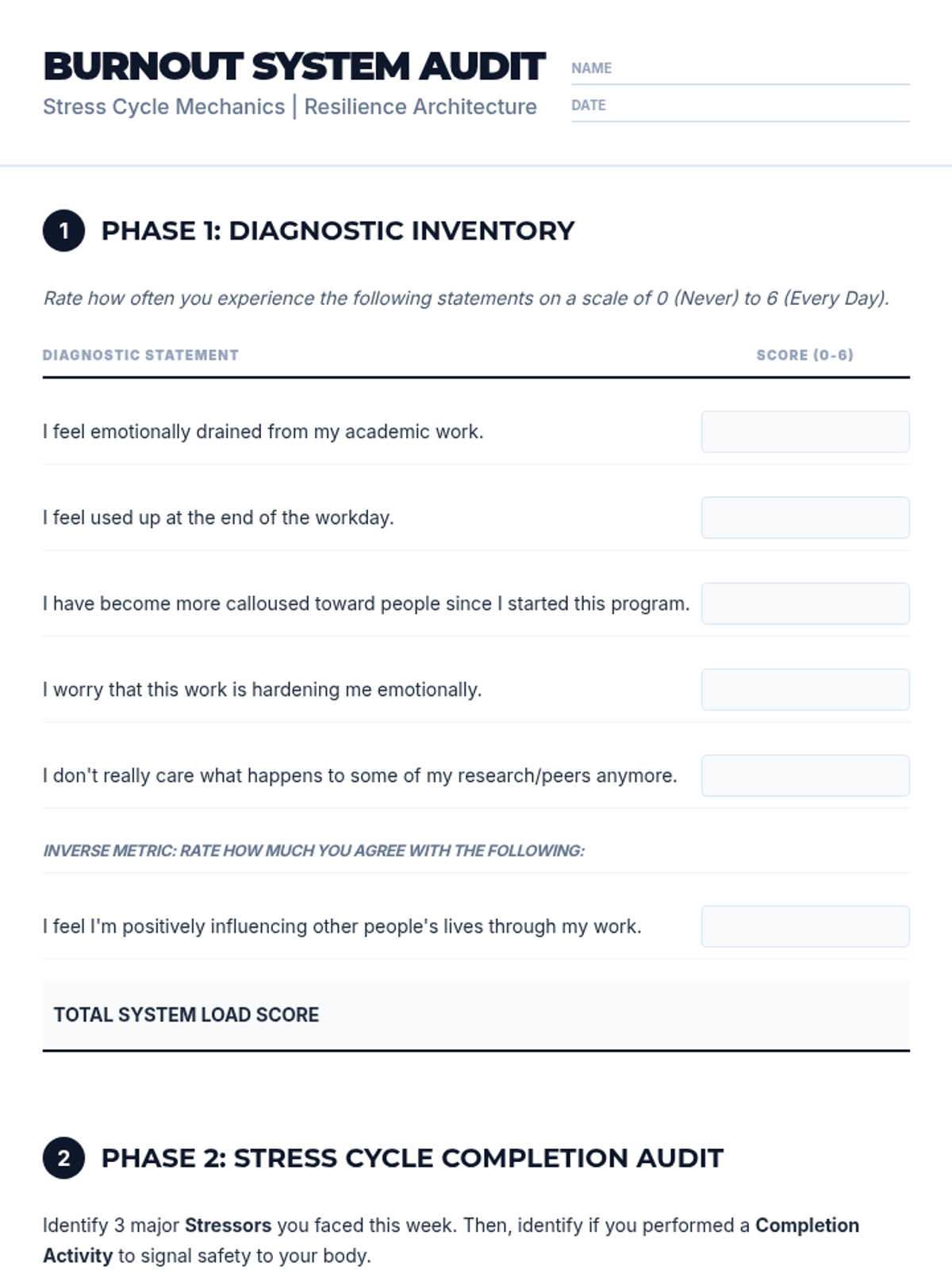
Students distinguish between stressors and the physiological stress response, auditing their current routines to ensure they are completing the stress cycle to prevent chronic burnout.
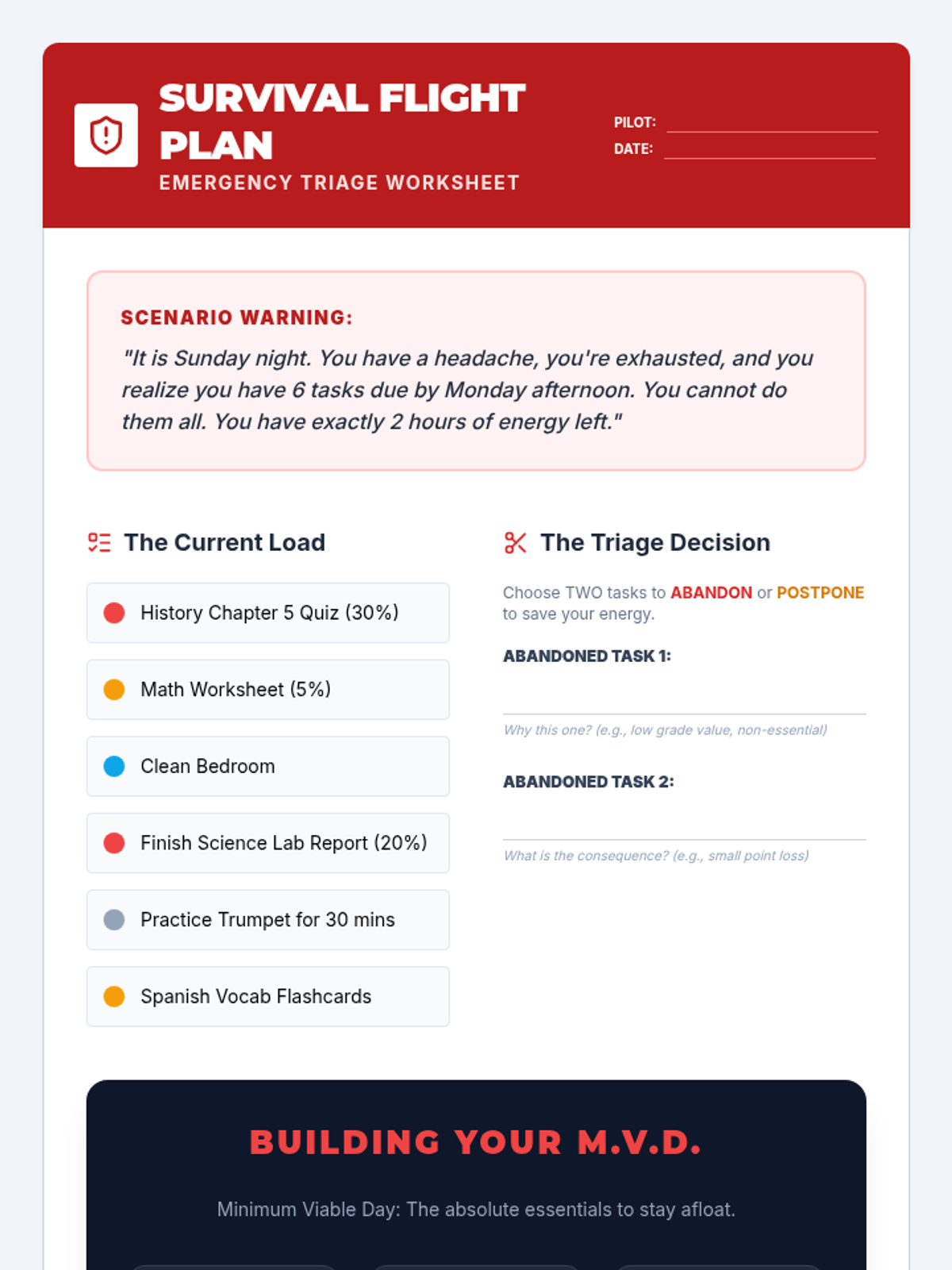
Students develop emergency 'triage' strategies and create a 'Minimum Viable Day' plan for maintaining performance during periods of high stress or illness.
Students explore the concept of opportunity cost and practice strategies for politely but firmly declining optional commitments.
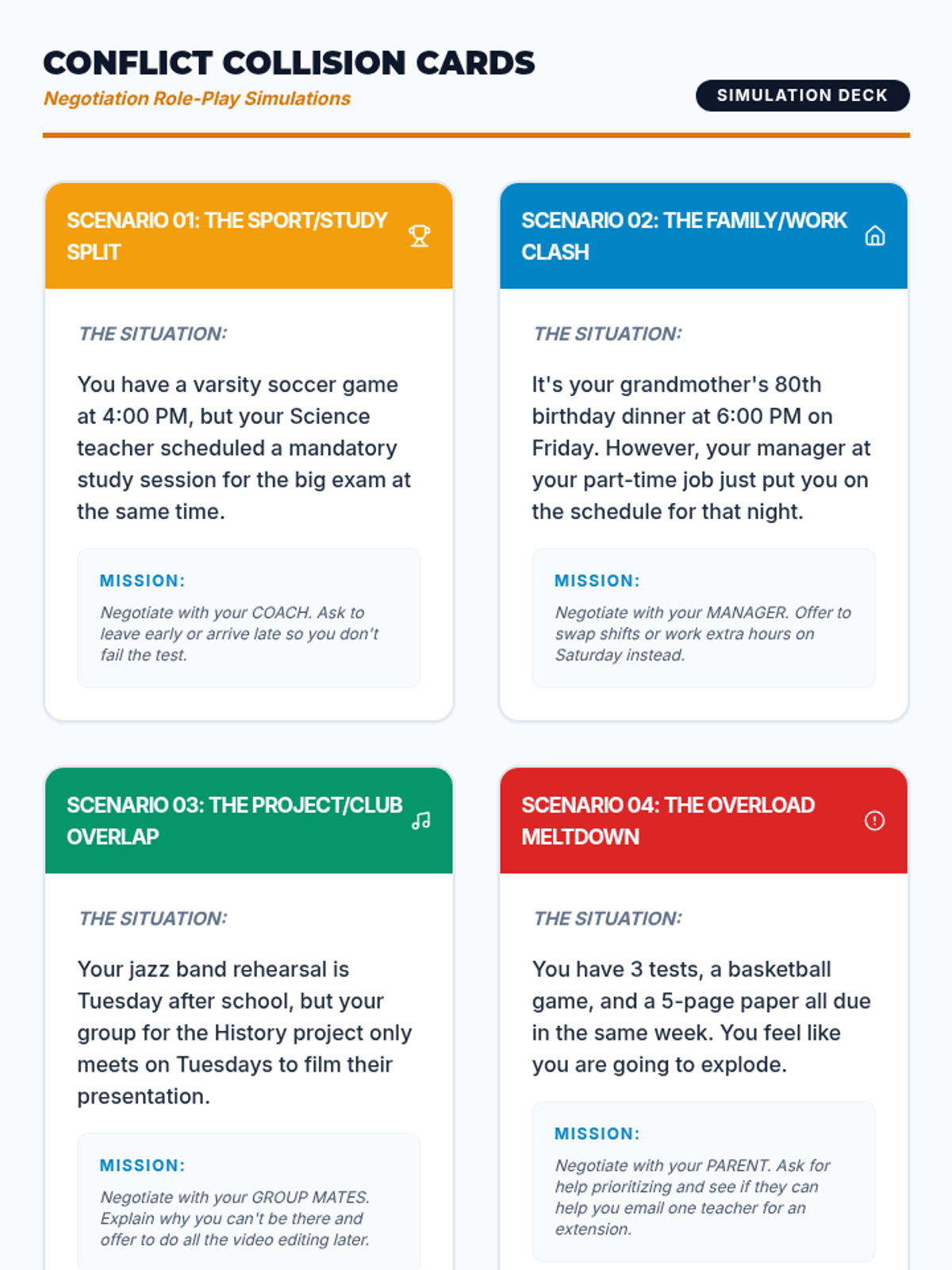
Through role-play and simulation, students practice face-to-face negotiations to resolve scheduling conflicts between multiple commitments.
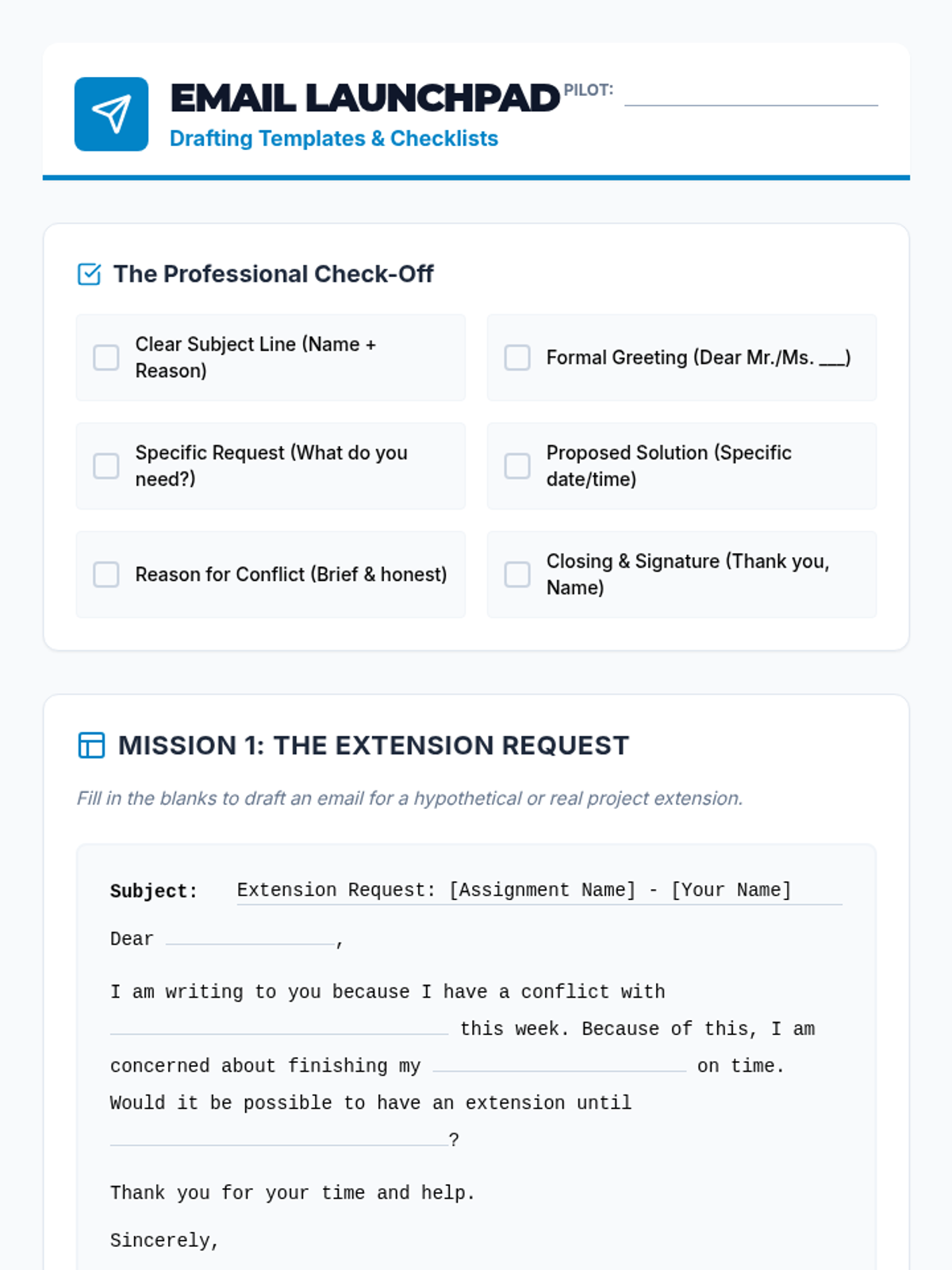
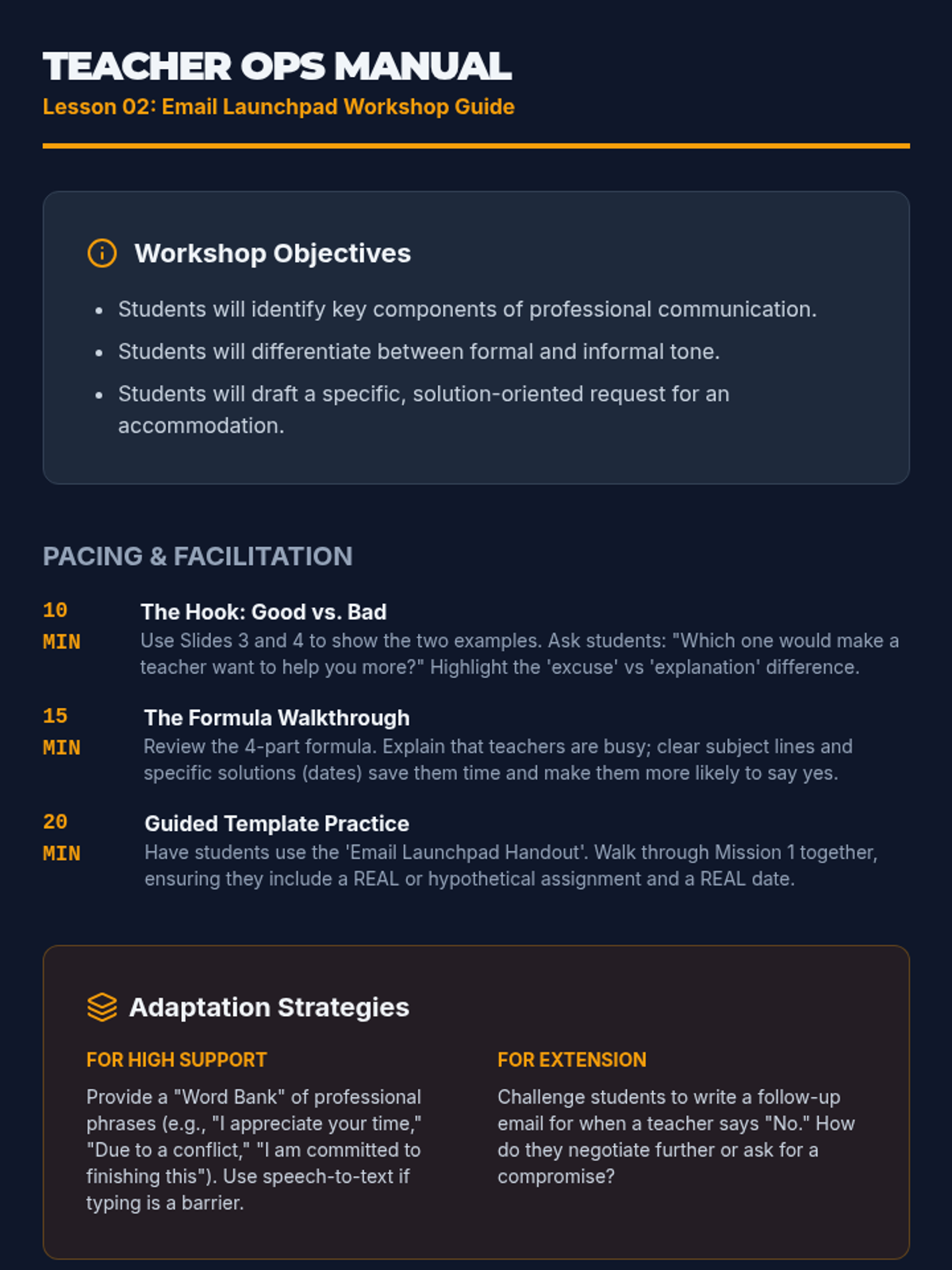
Students master the art of professional email communication, learning to draft responsible and clear requests for extensions or accommodations.
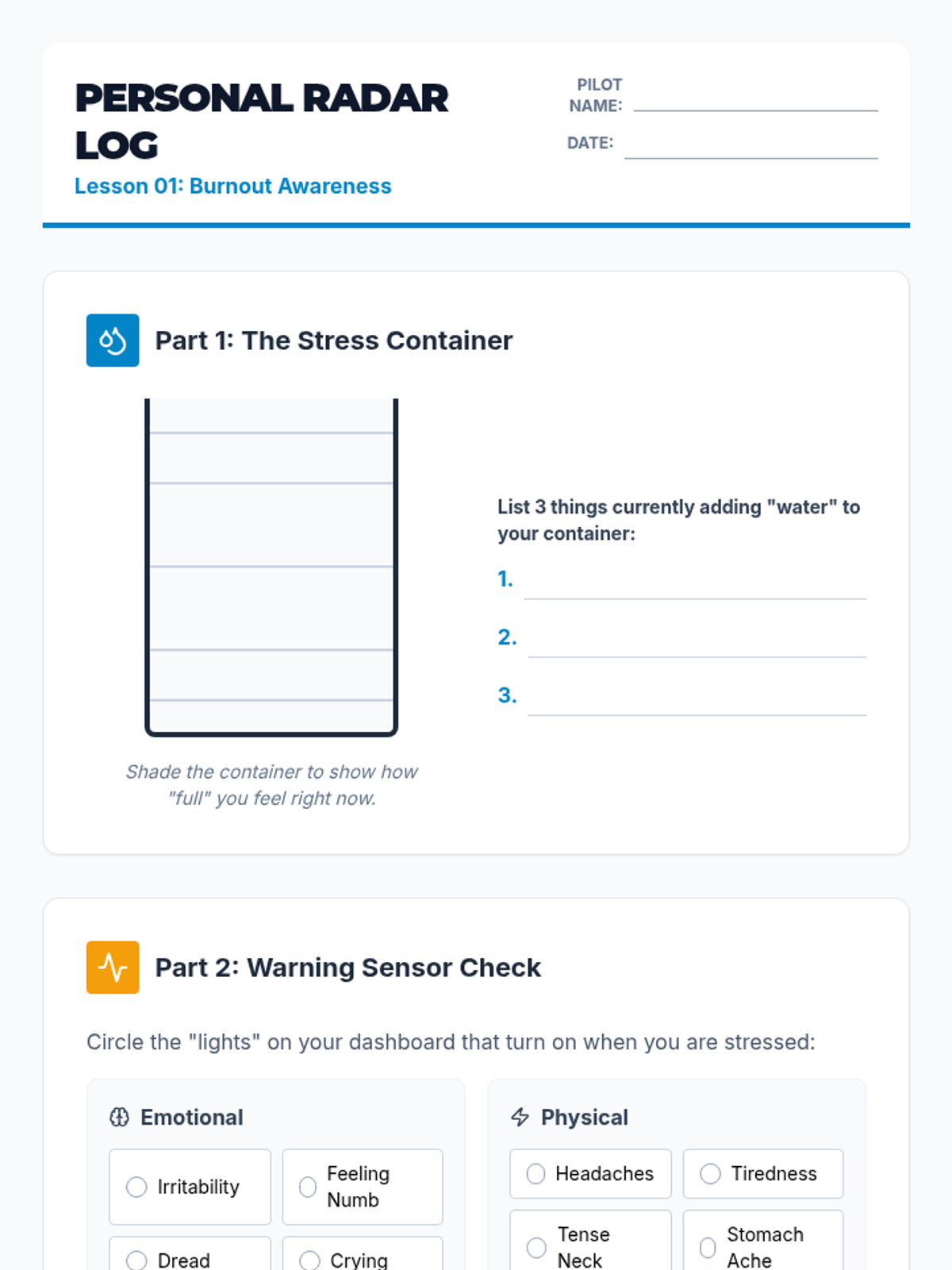
Students identify physical and emotional signs of burnout and use the 'Stress Container' visualization to understand their personal capacity and tipping points.
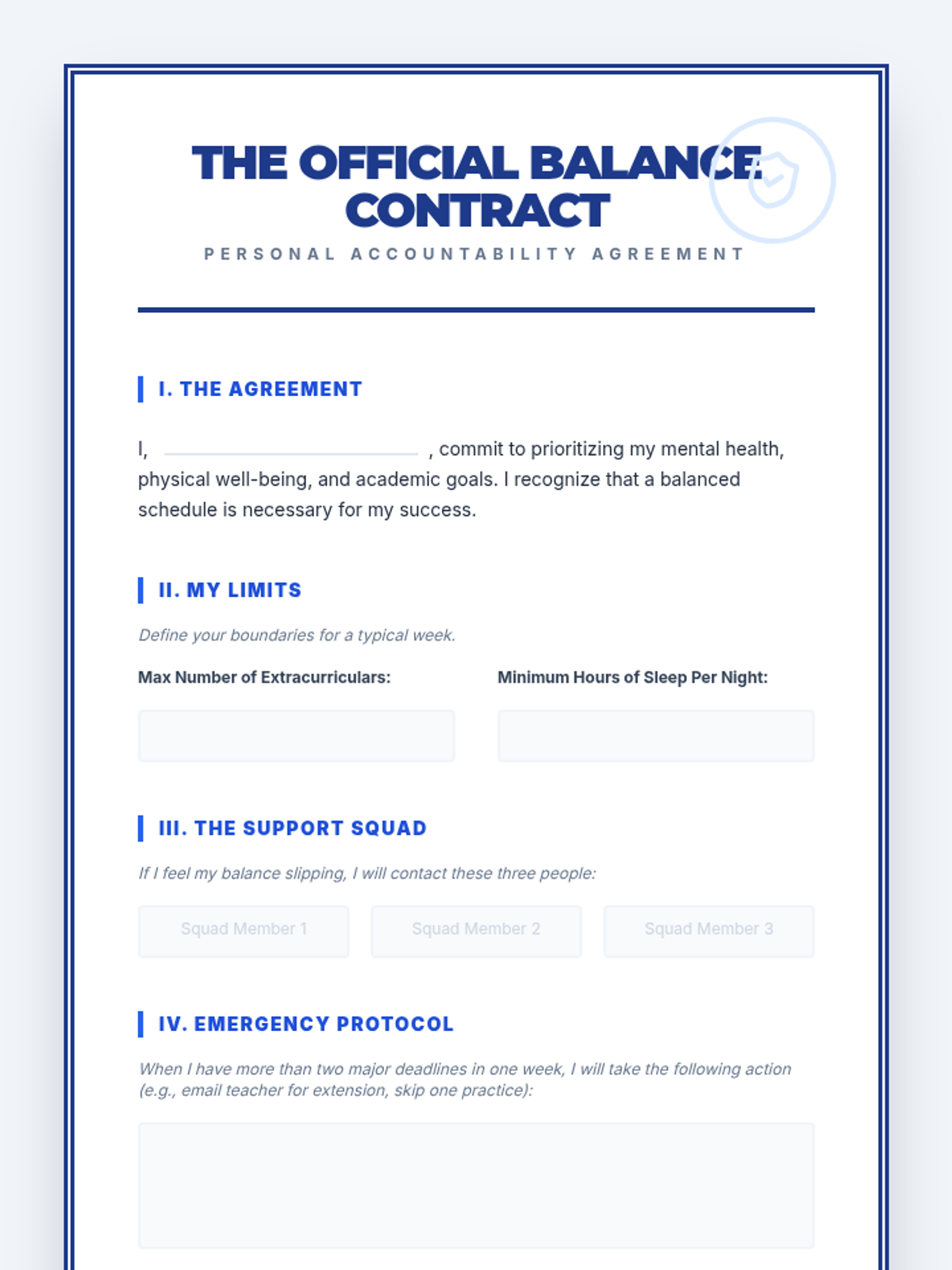
Students create a personal 'Balance Contract' to outline their limits and establish a protocol for managing future stress.
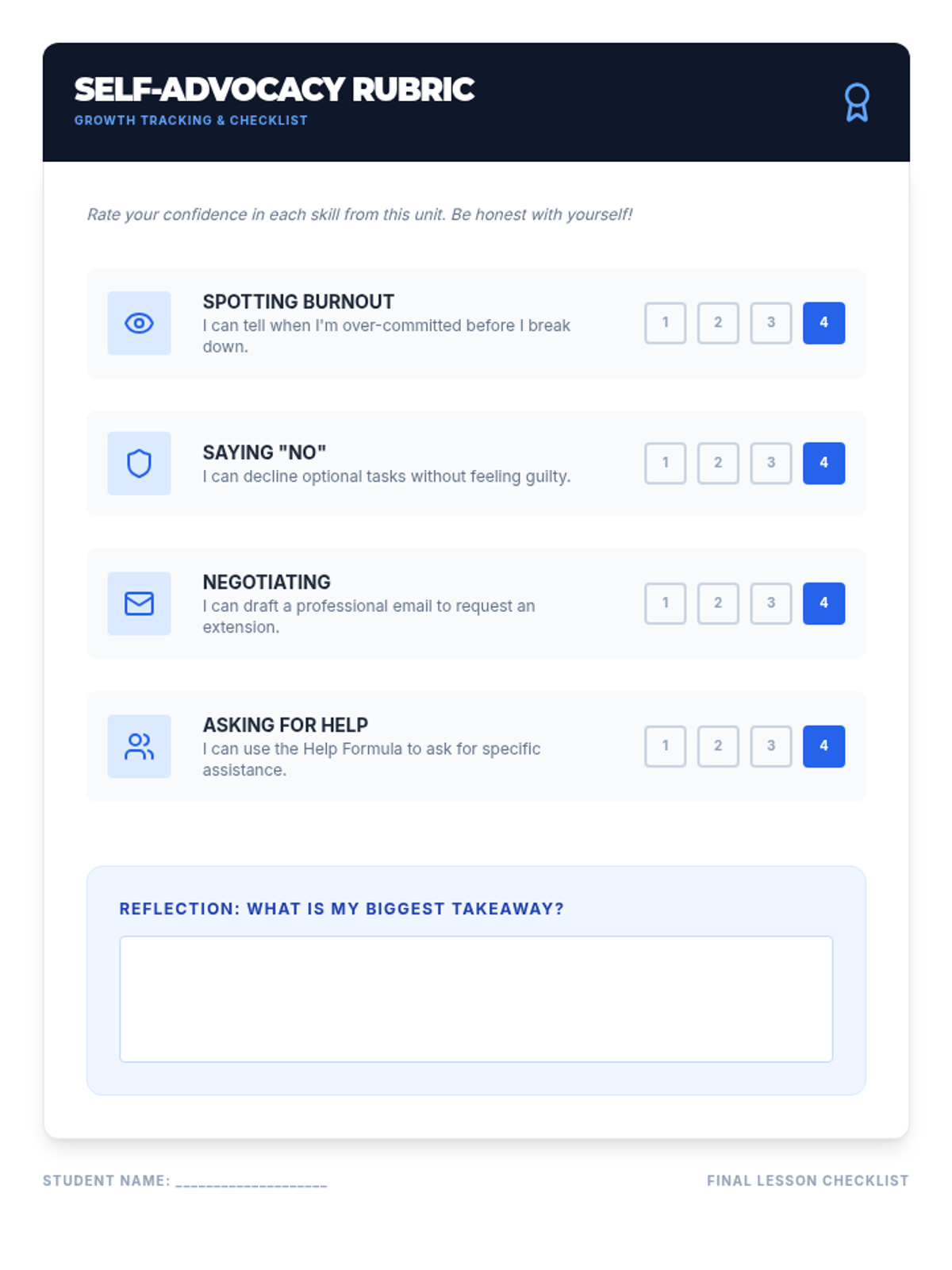
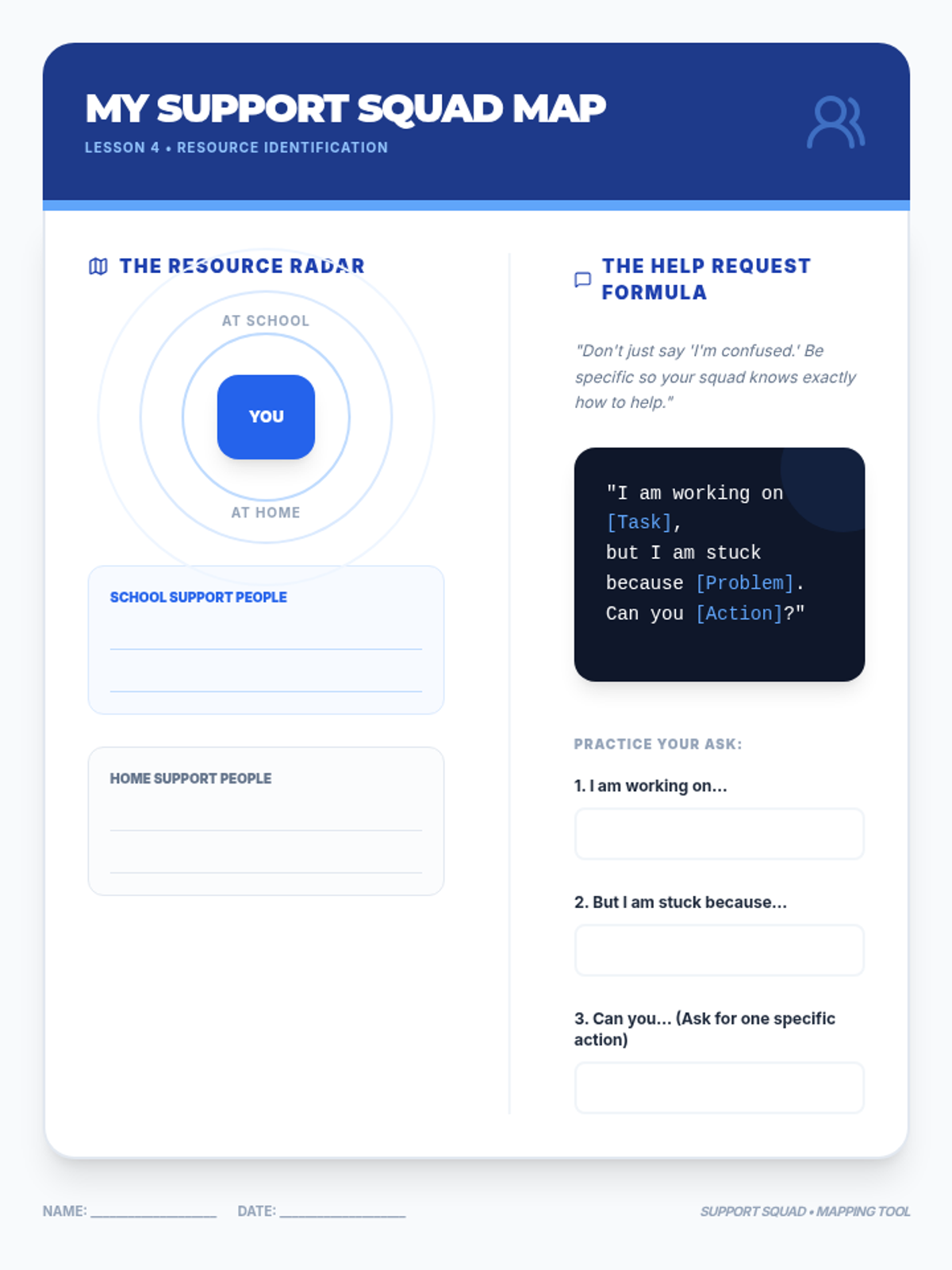
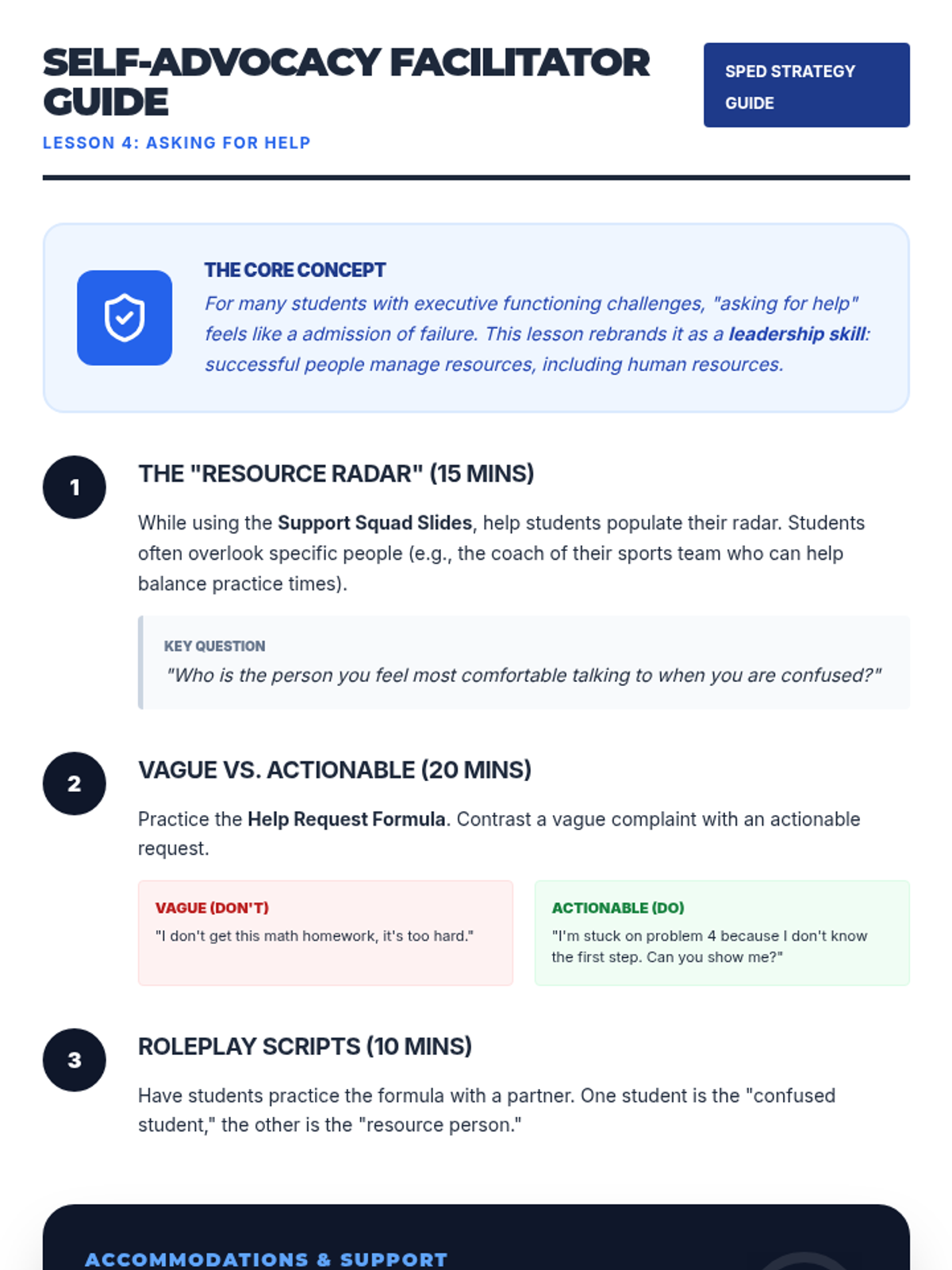
Students identify their support network and practice making specific, actionable requests for assistance.
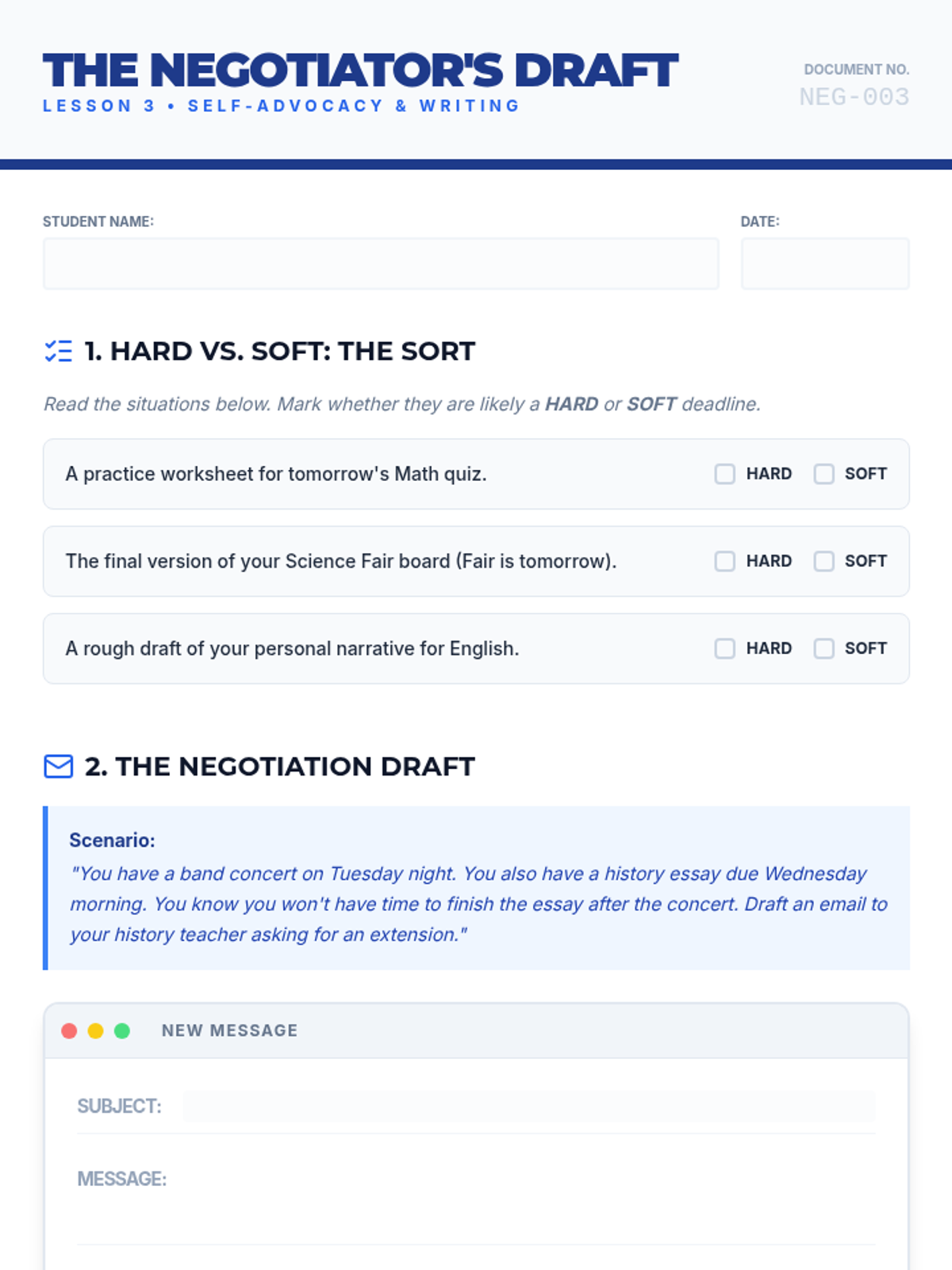
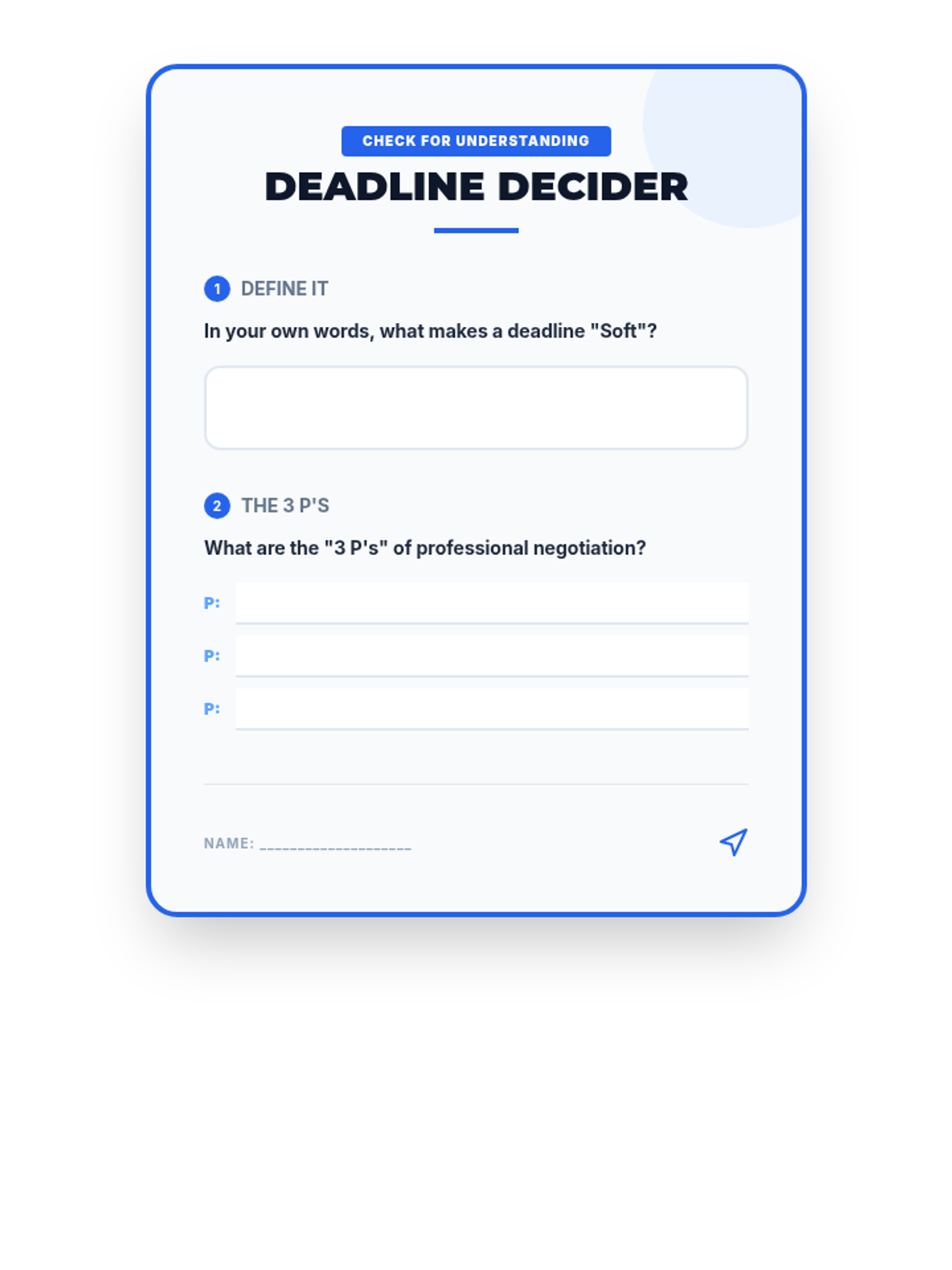
Students learn to differentiate between hard and soft deadlines and practice professional email communication to negotiate alternatives.
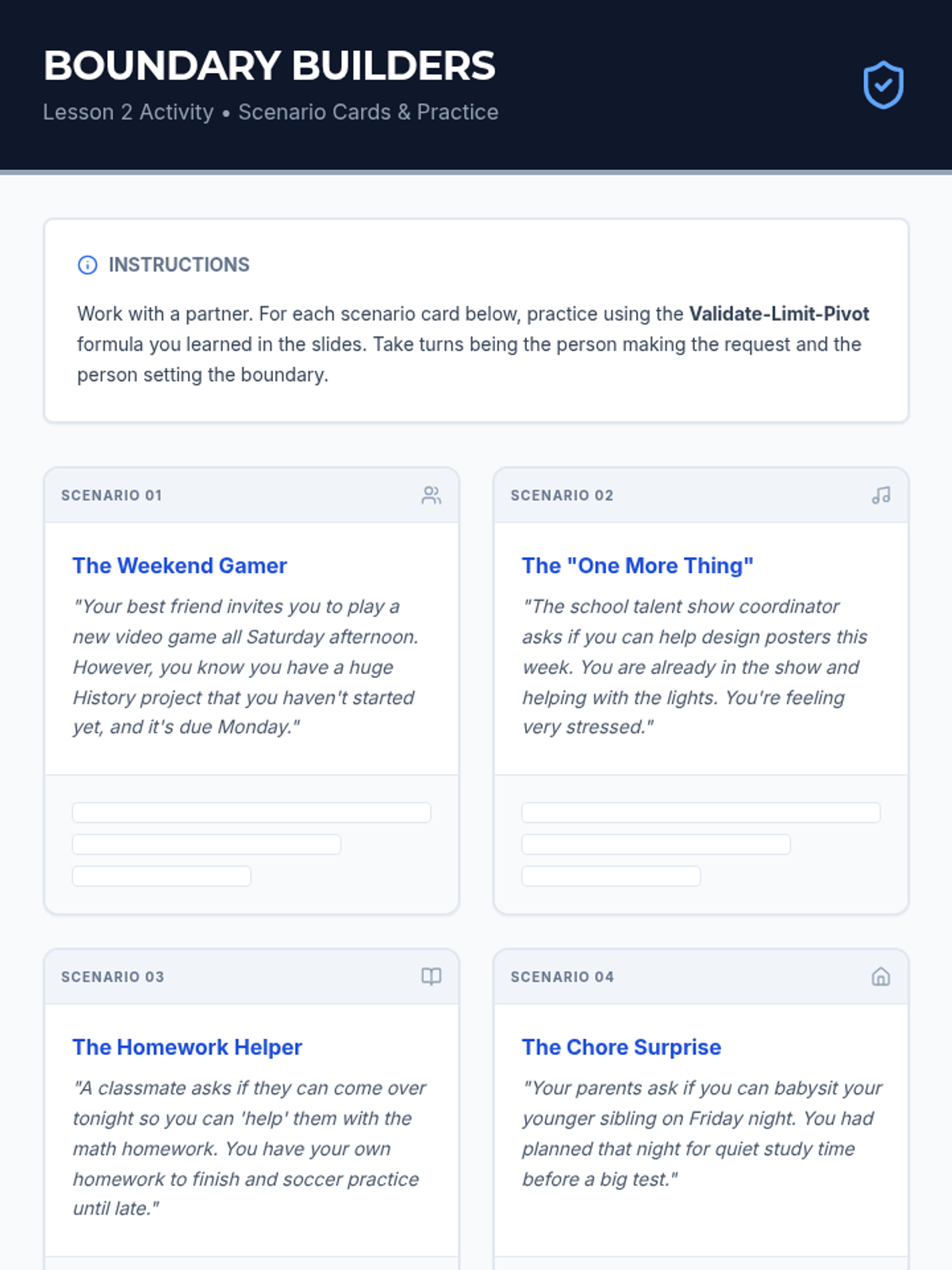
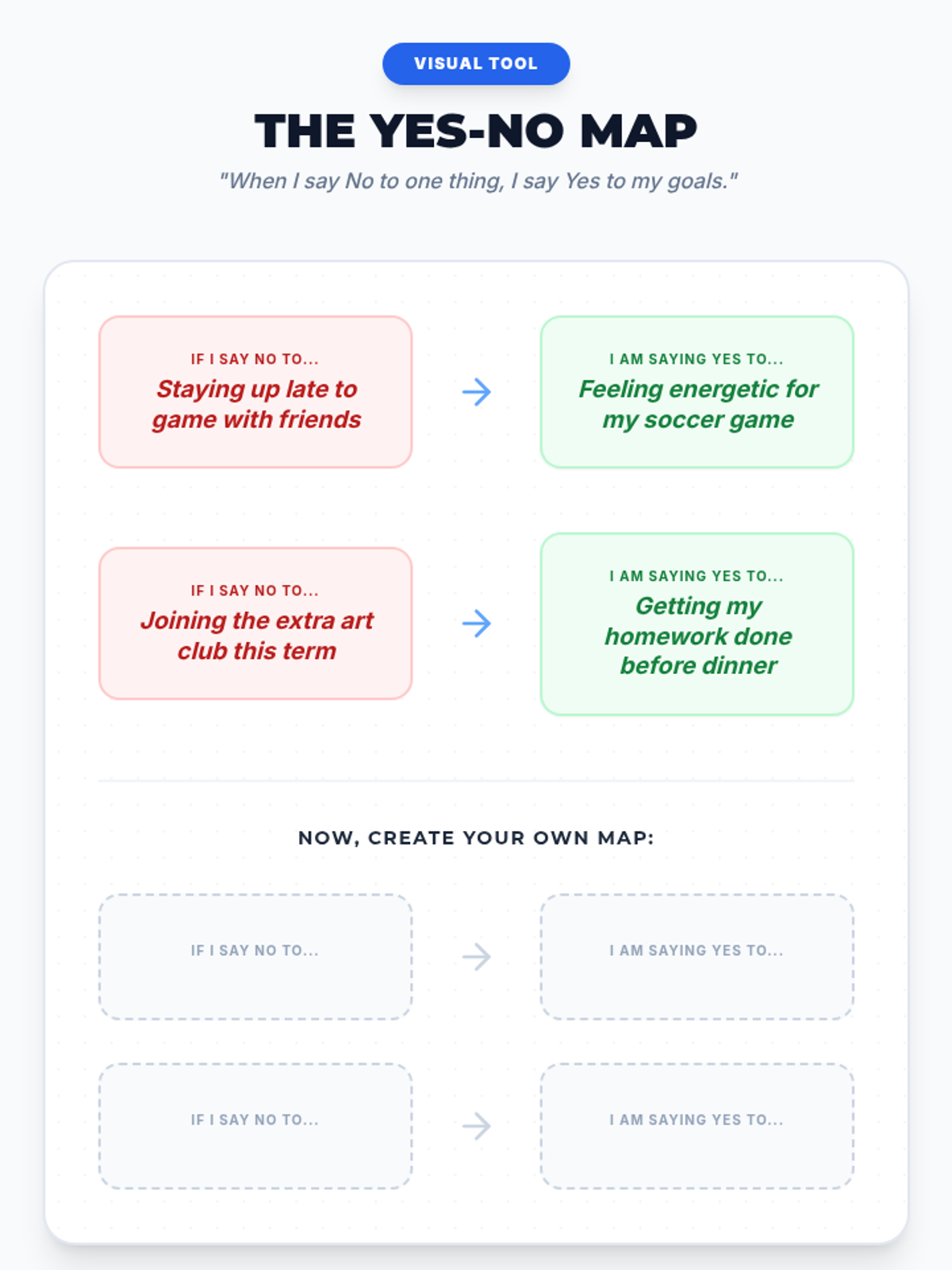
Students practice scripts for declining optional commitments politely but firmly, learning that every 'no' is a 'yes' to their own well-being.
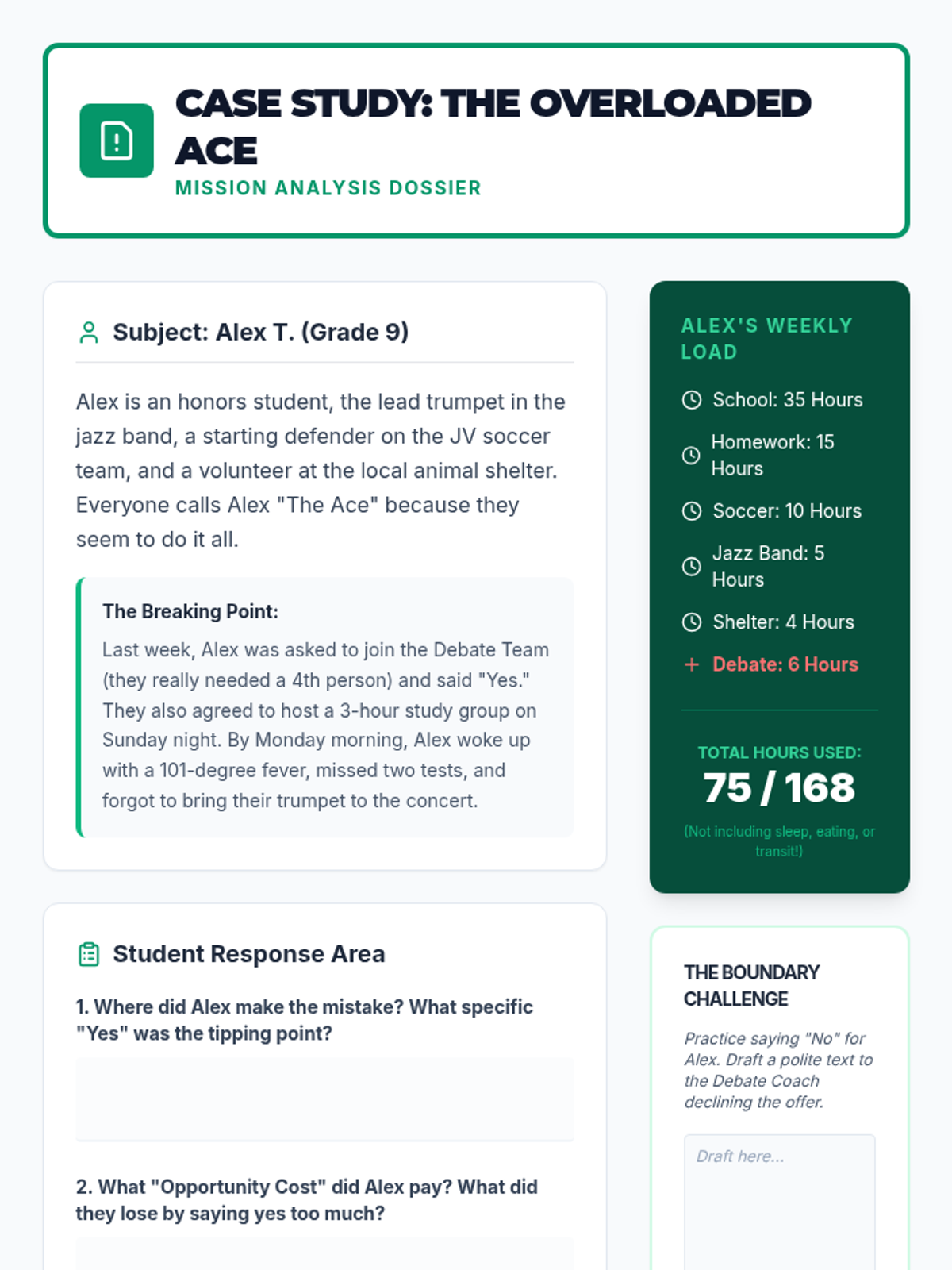
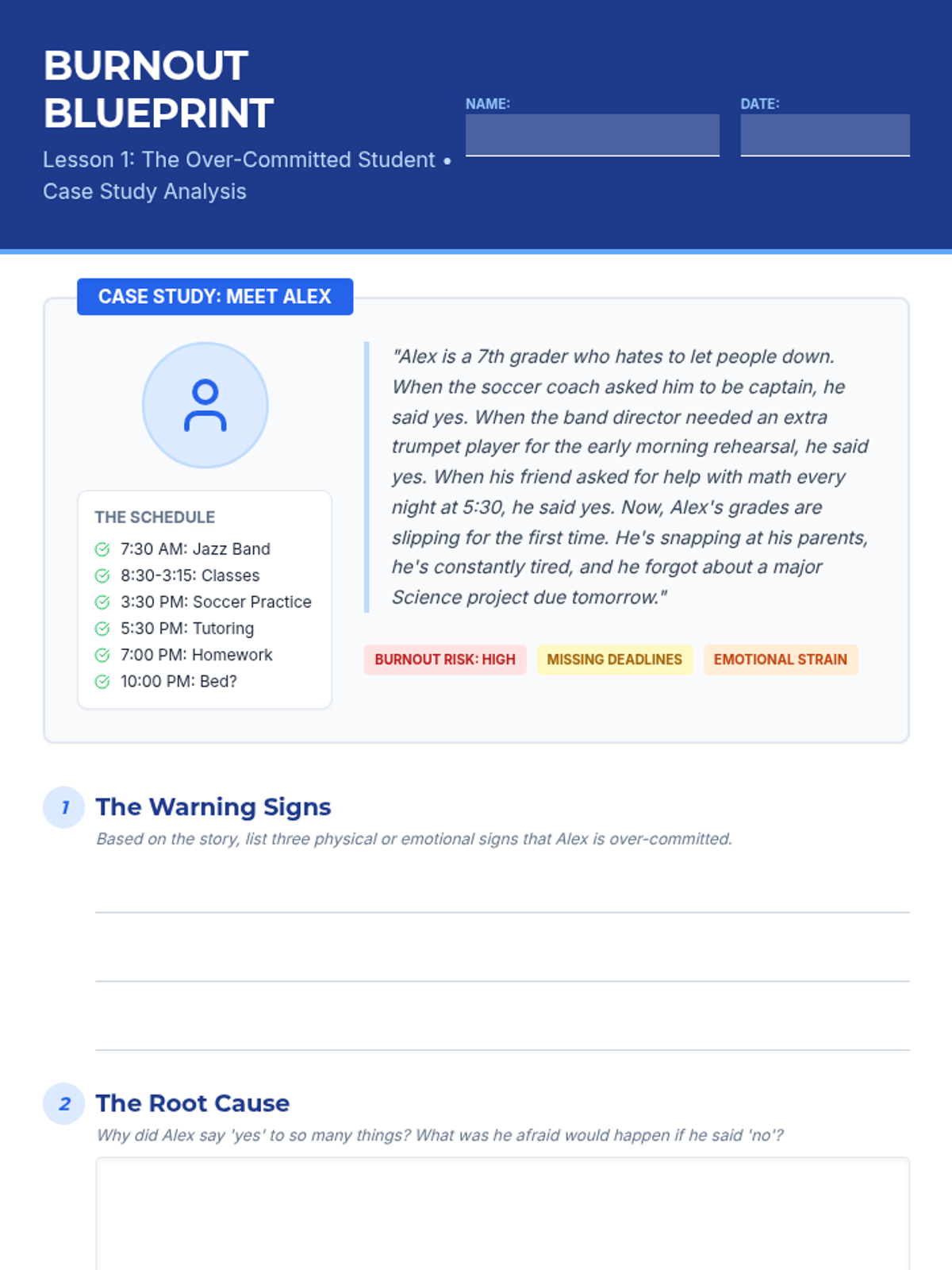
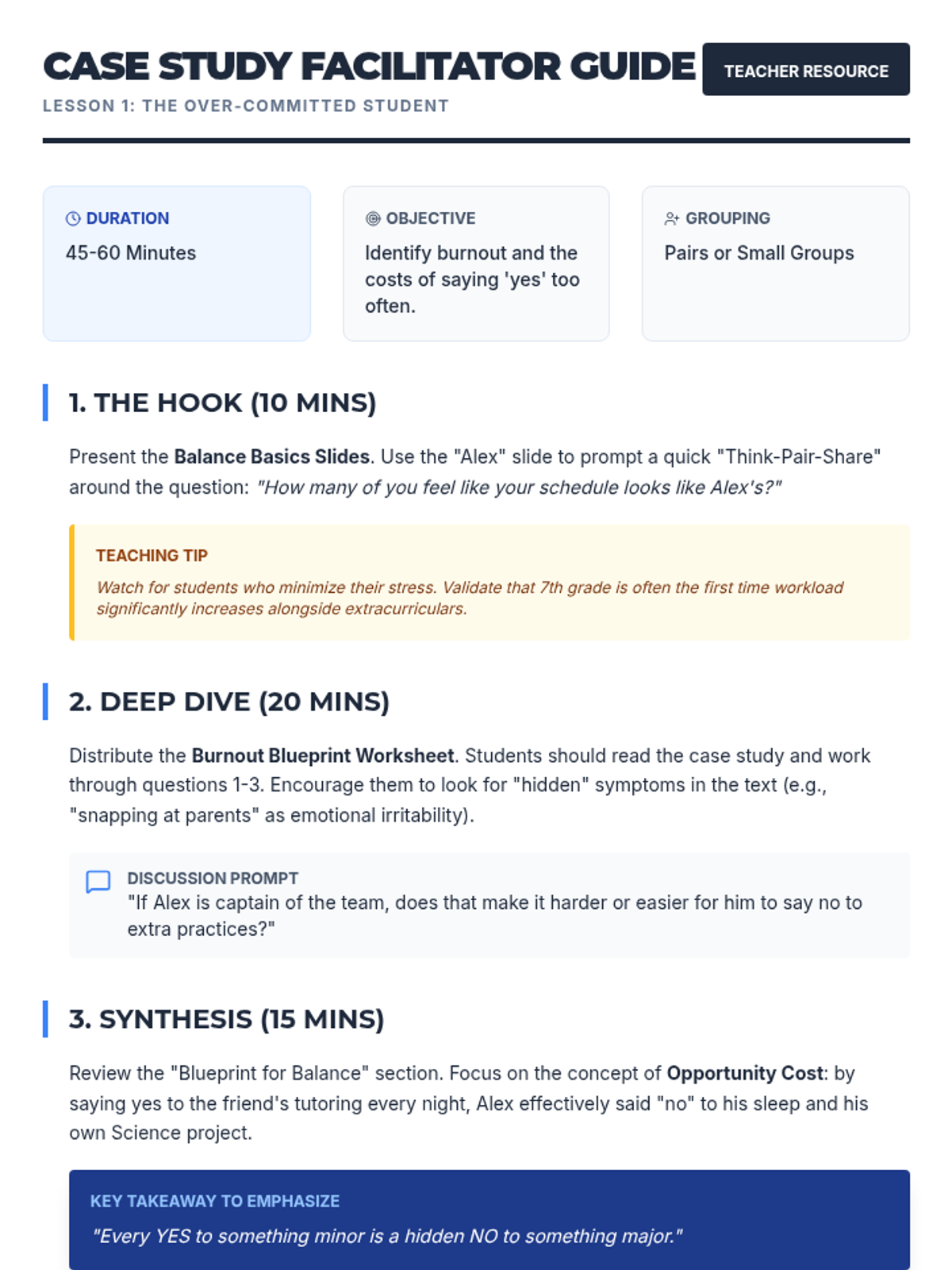
Students analyze case studies of 'over-committed' individuals to identify warning signs of burnout and the consequences of poor boundary setting.
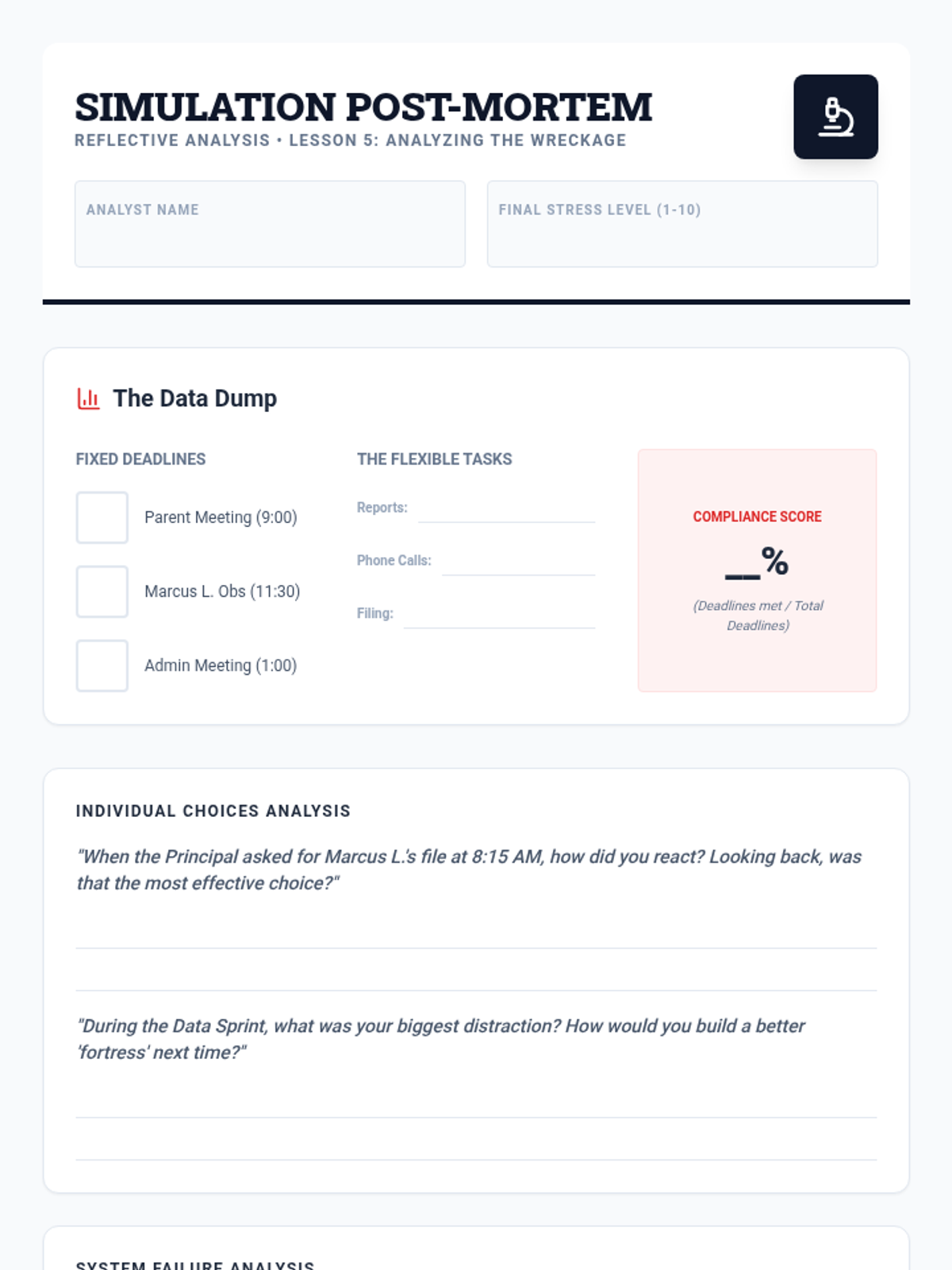
A final analysis of simulation performance, identifying system failures versus individual choices and reflecting on professional growth.
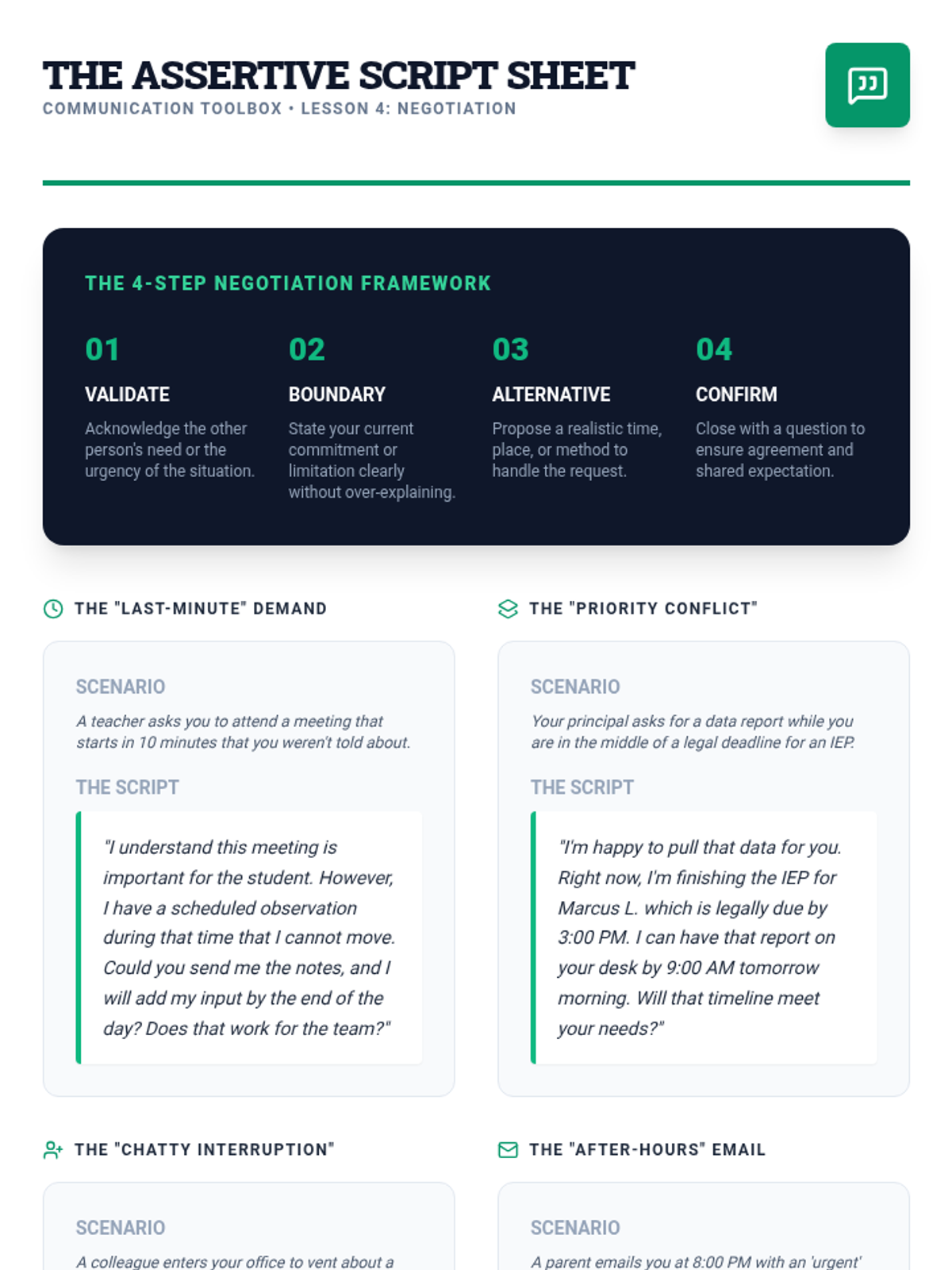
Navigating schedule overlaps and professional conflicts through negotiation and assertive communication.
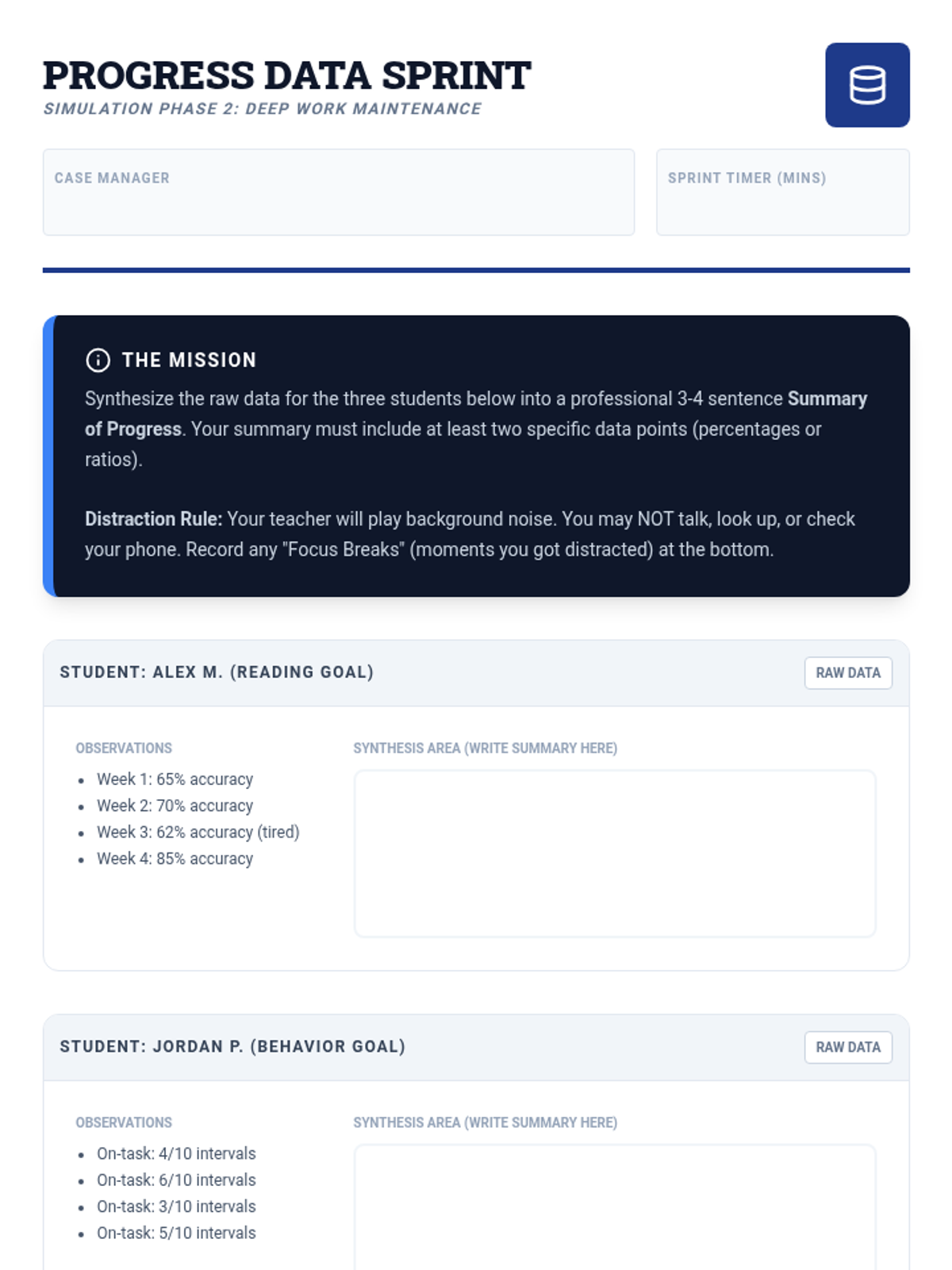
Focuses on maintaining deep work and focus while completing high-priority documentation under pressure.
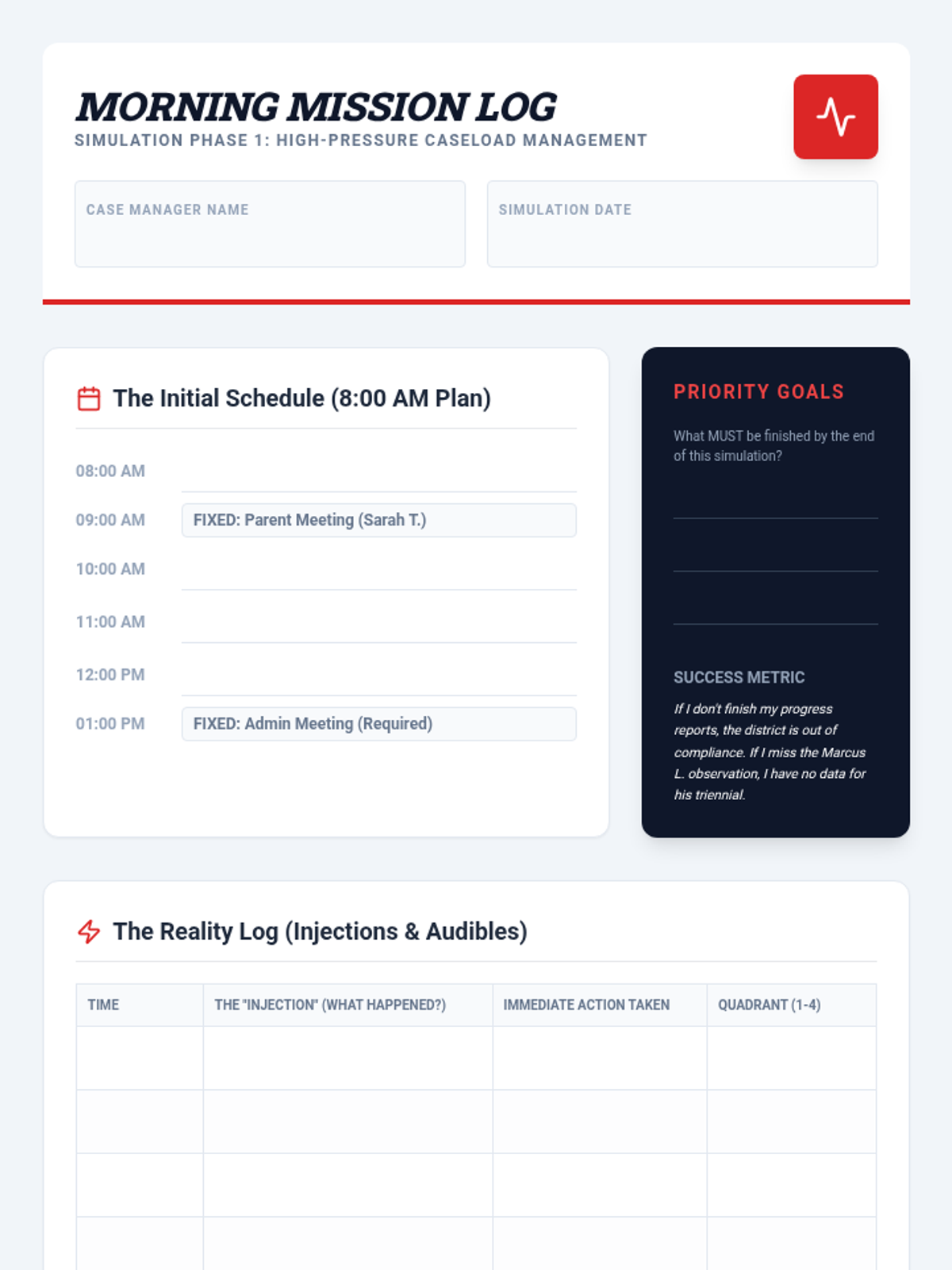
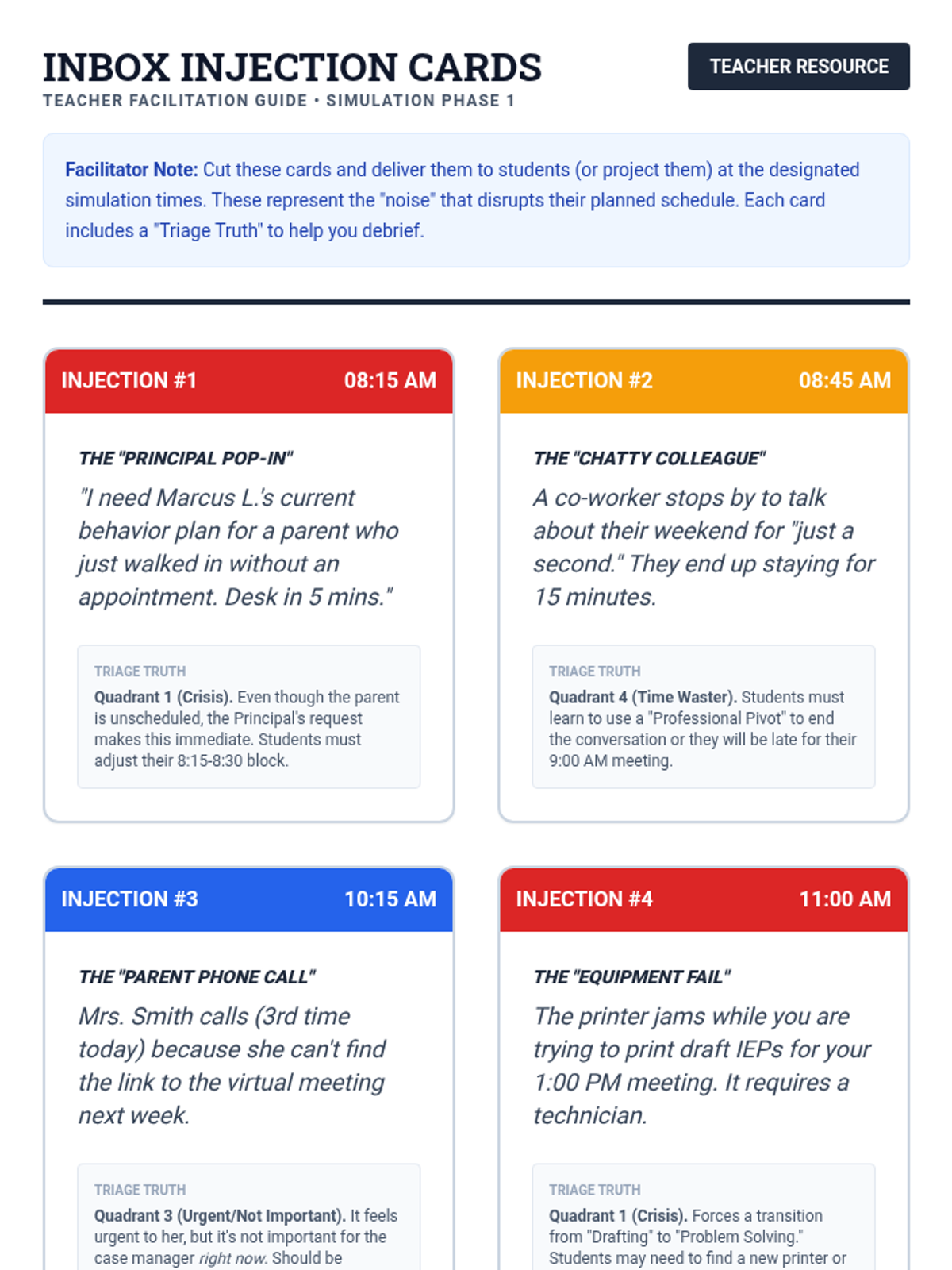
A real-time simulation where students must manage a schedule while facing unexpected 'inbox injections' and interruptions.
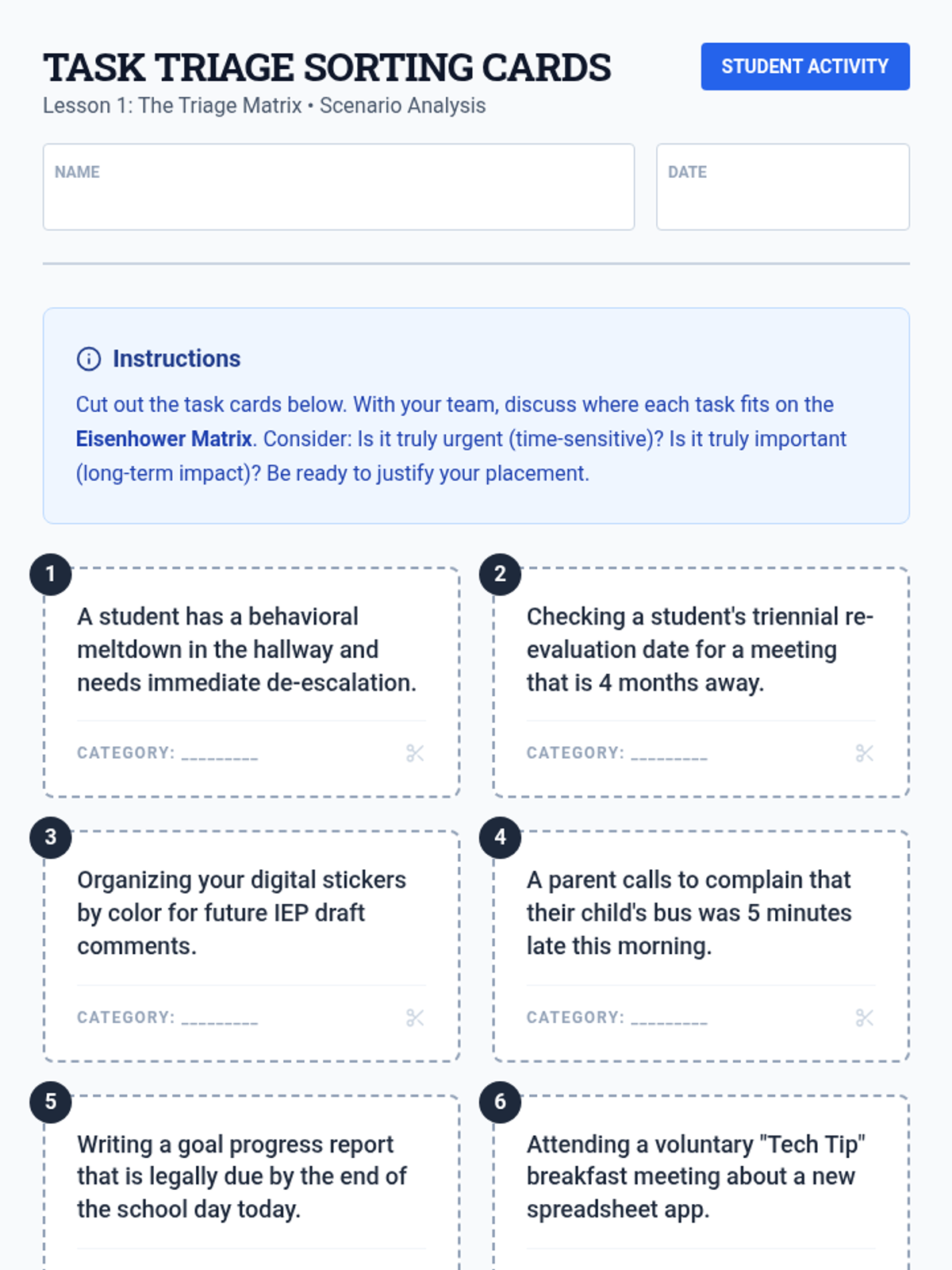
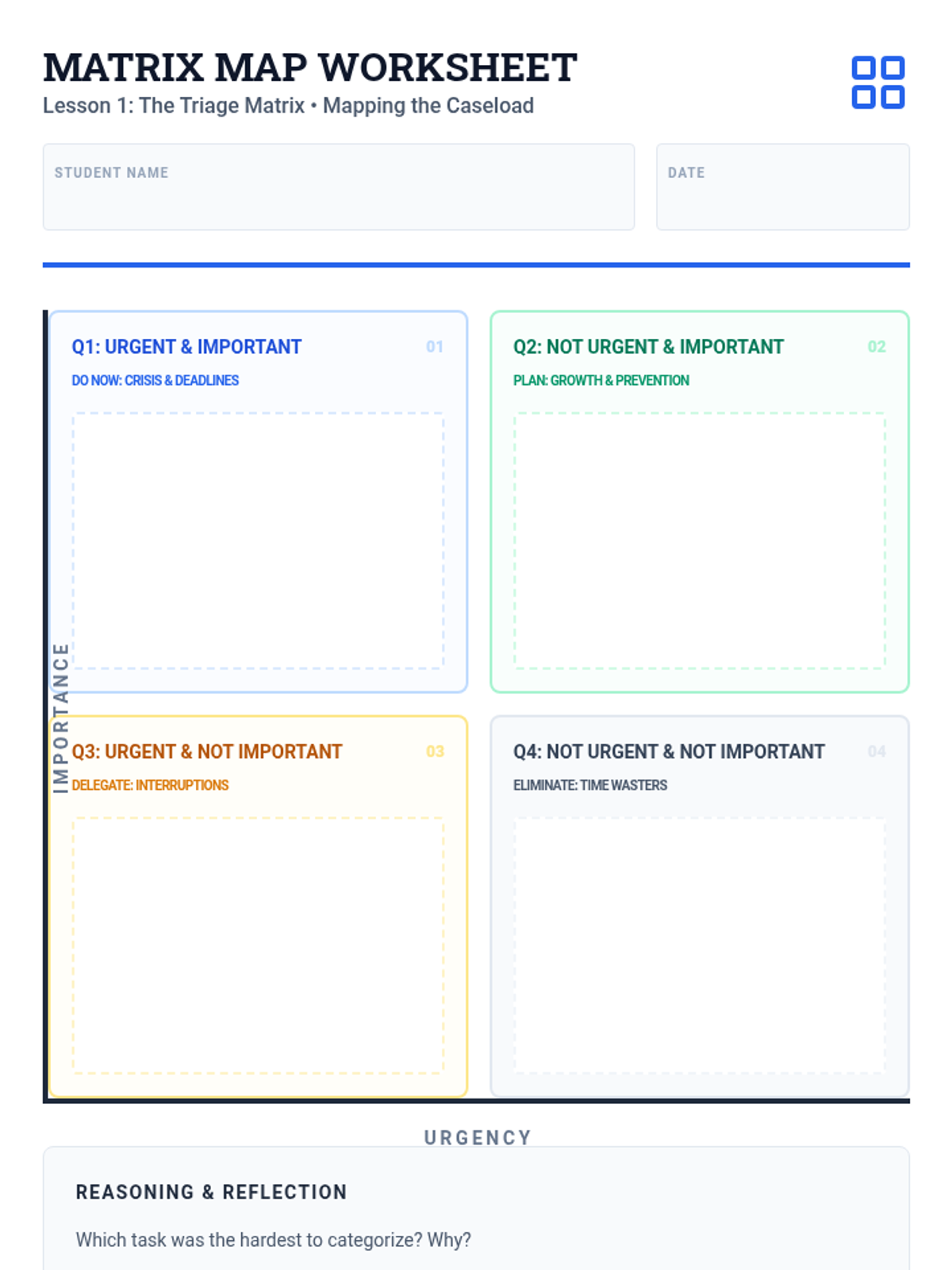
Introduction to the Eisenhower Matrix adapted for education, teaching students to differentiate between urgency and importance in a professional setting.
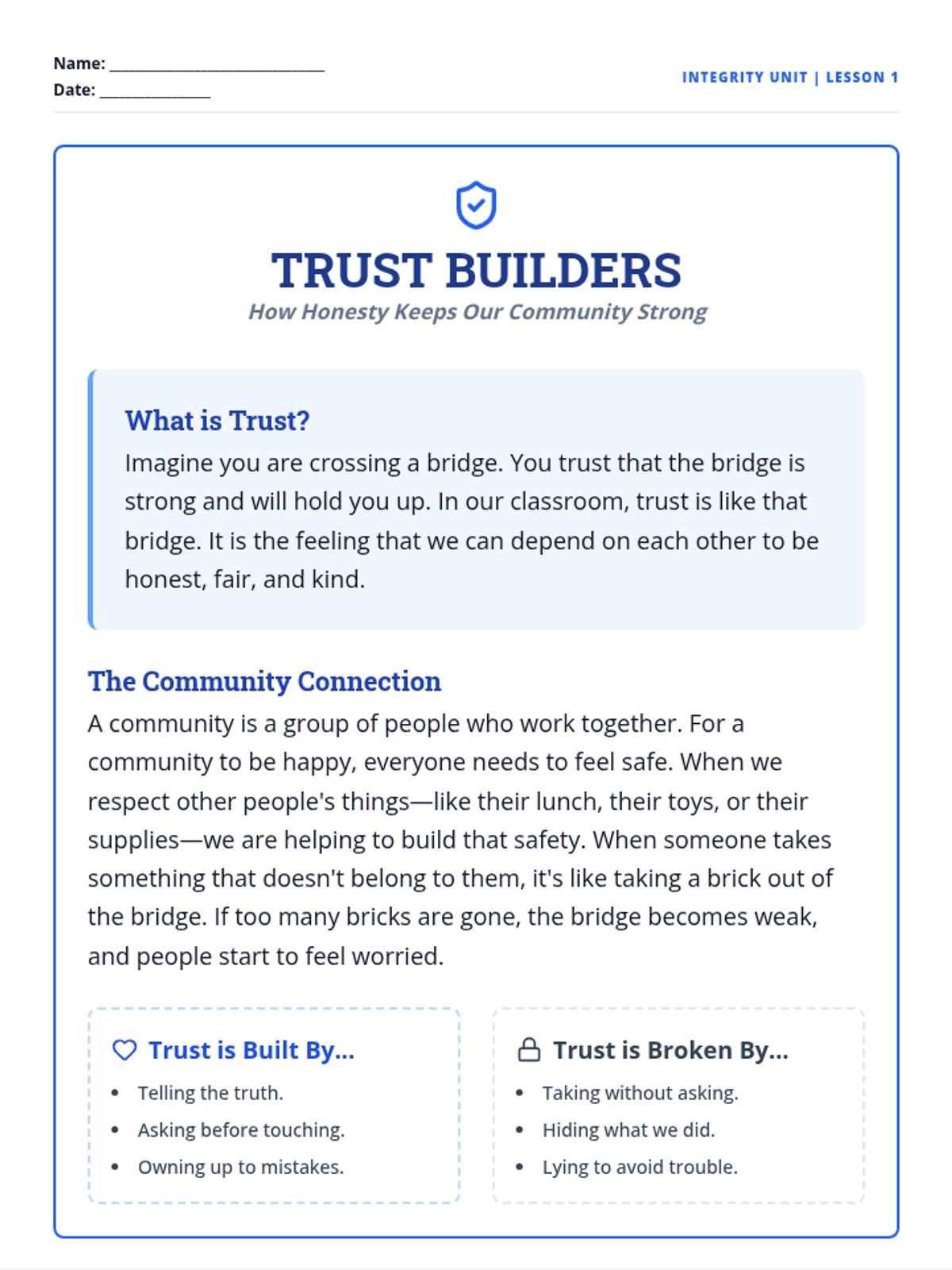
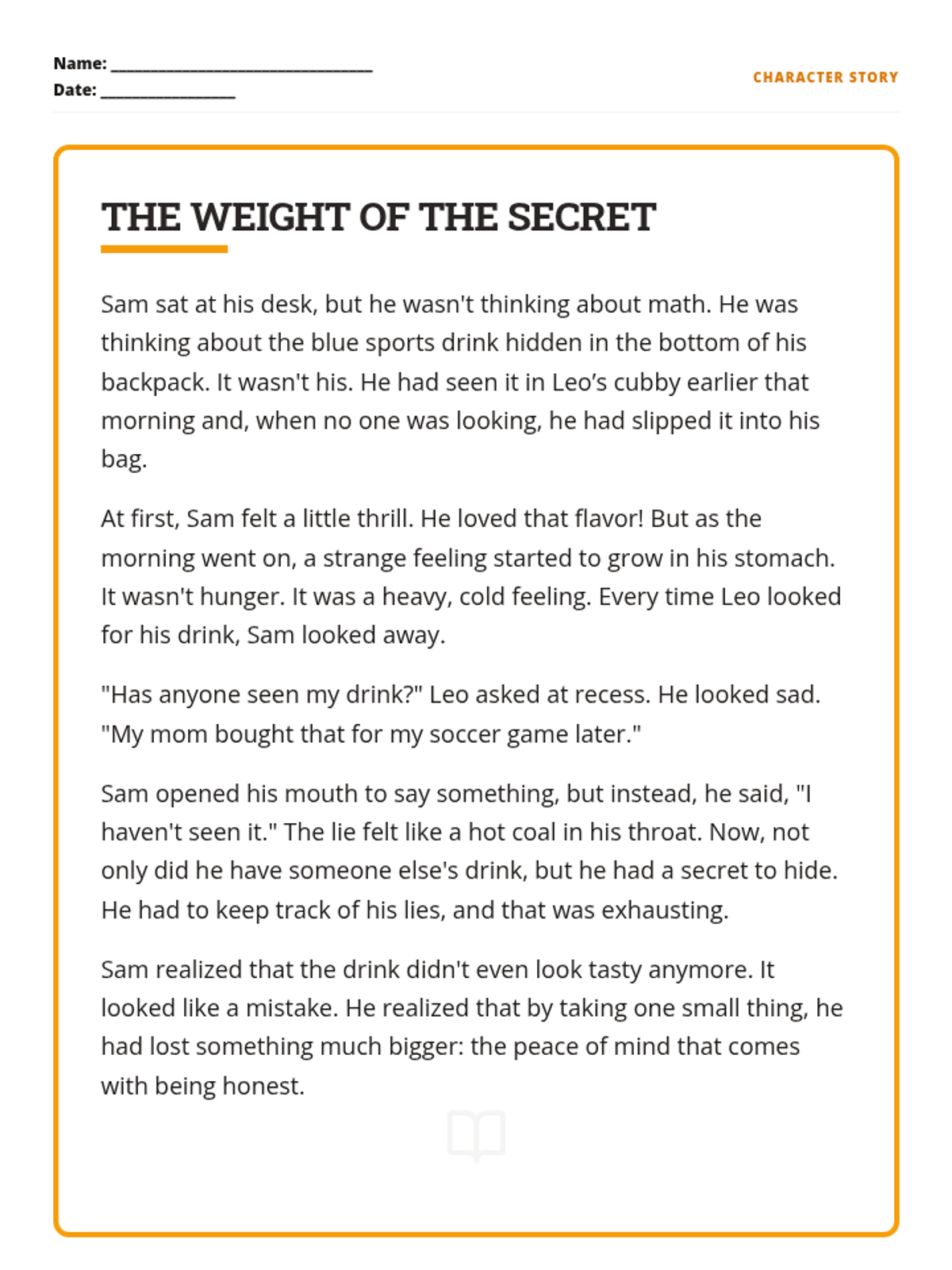
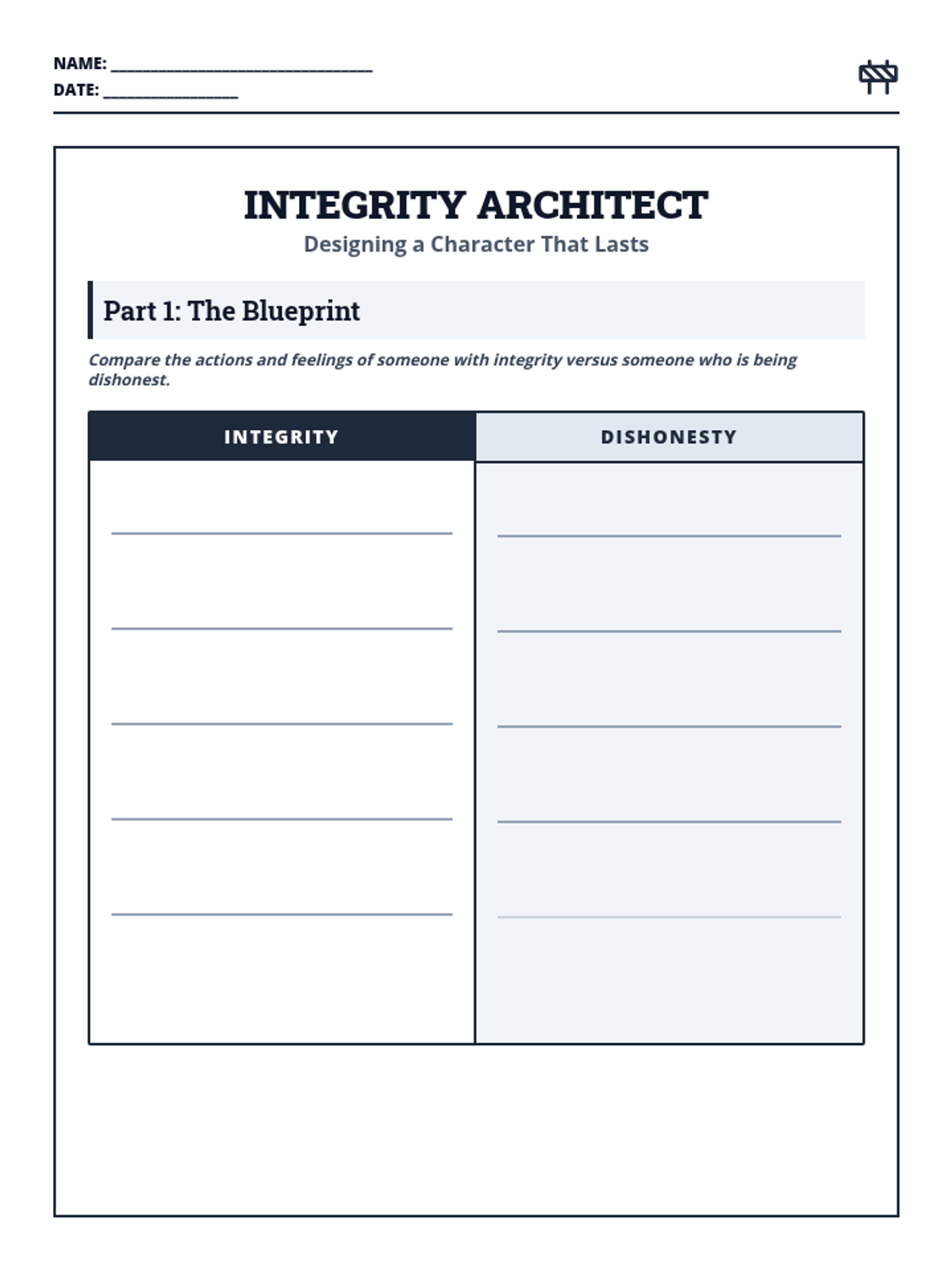
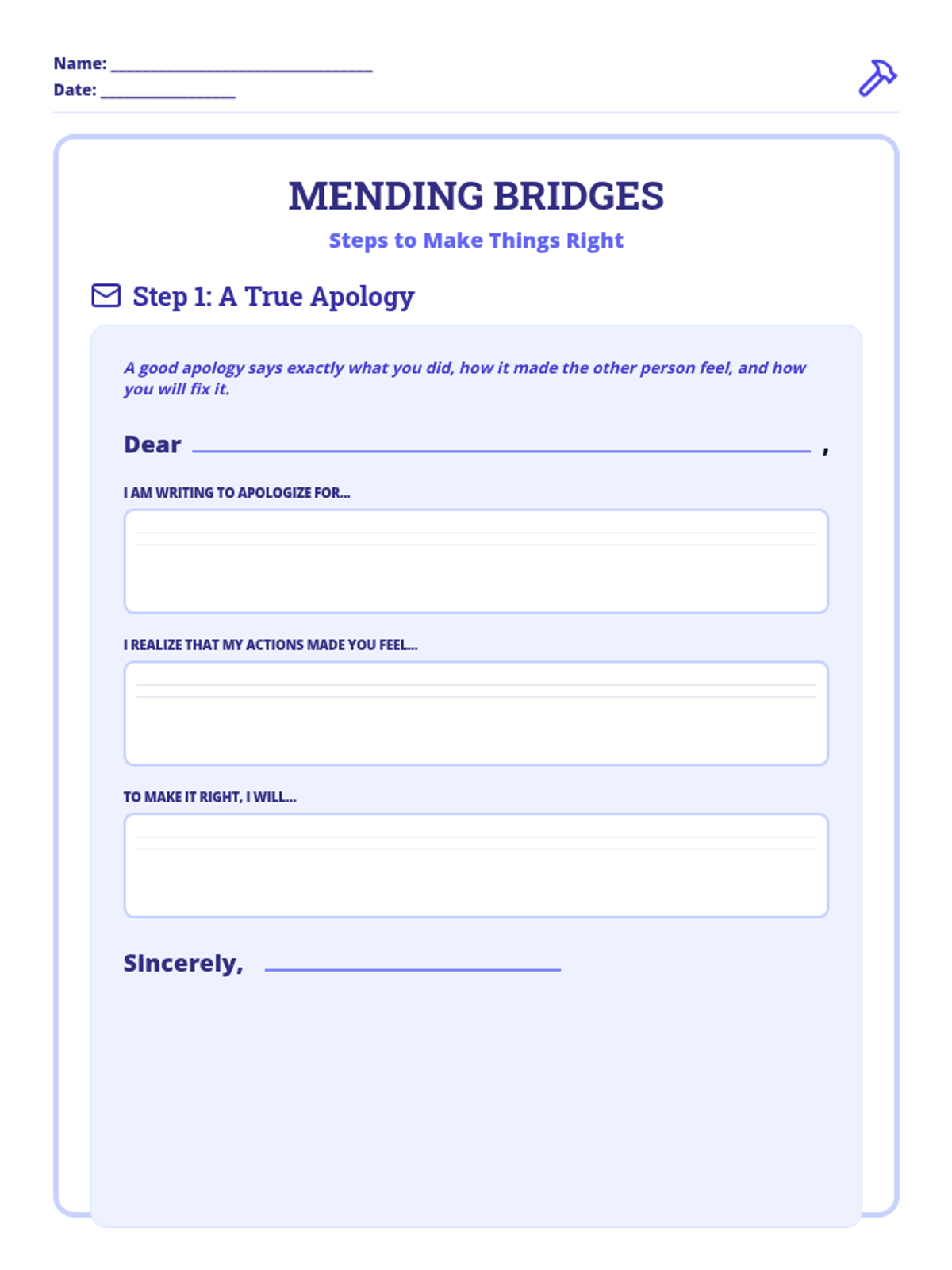
A restorative justice unit for elementary students focusing on the impact of theft and dishonesty on community trust, featuring informational text, a relatable narrative, and reflective writing projects.
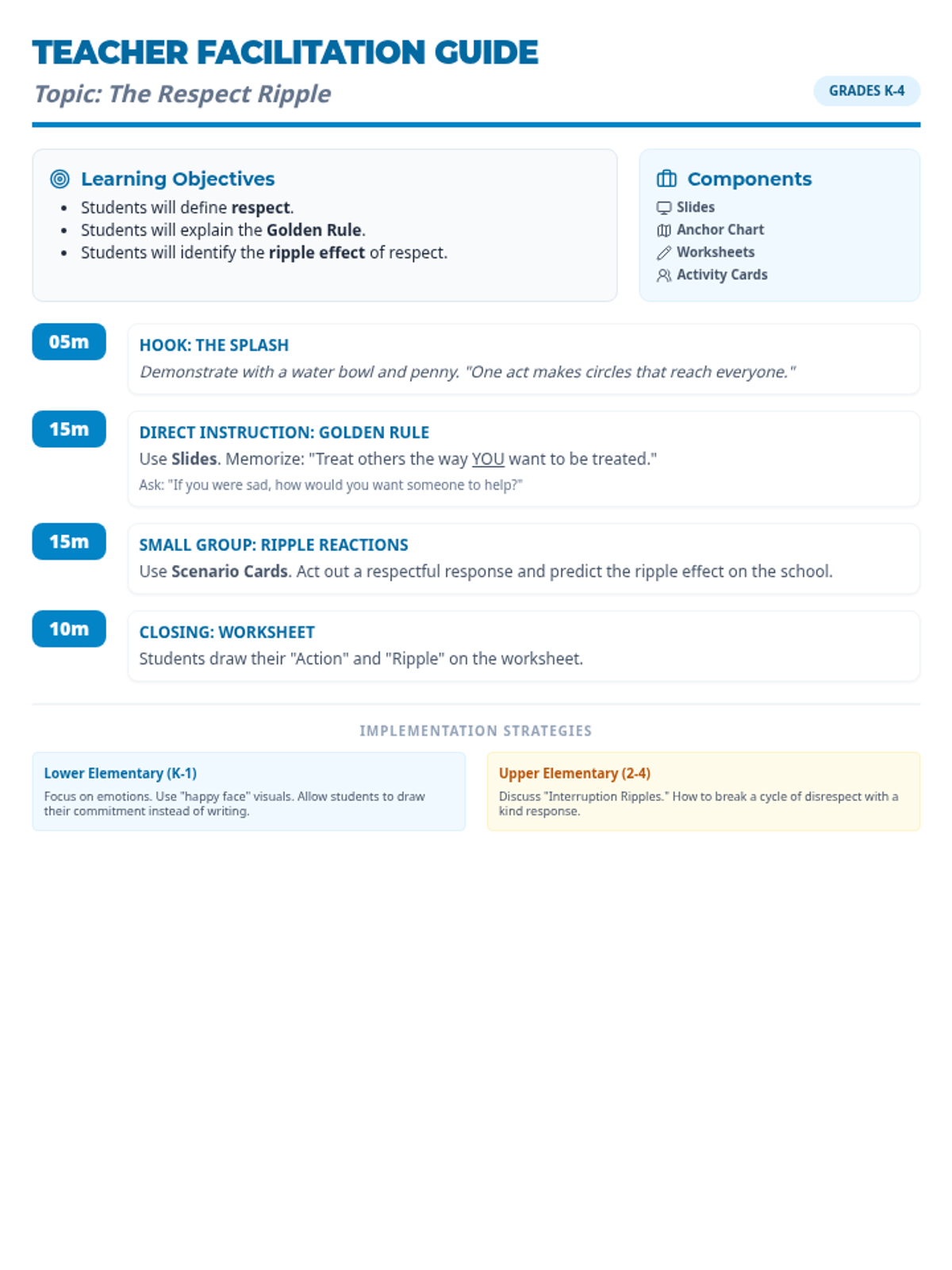
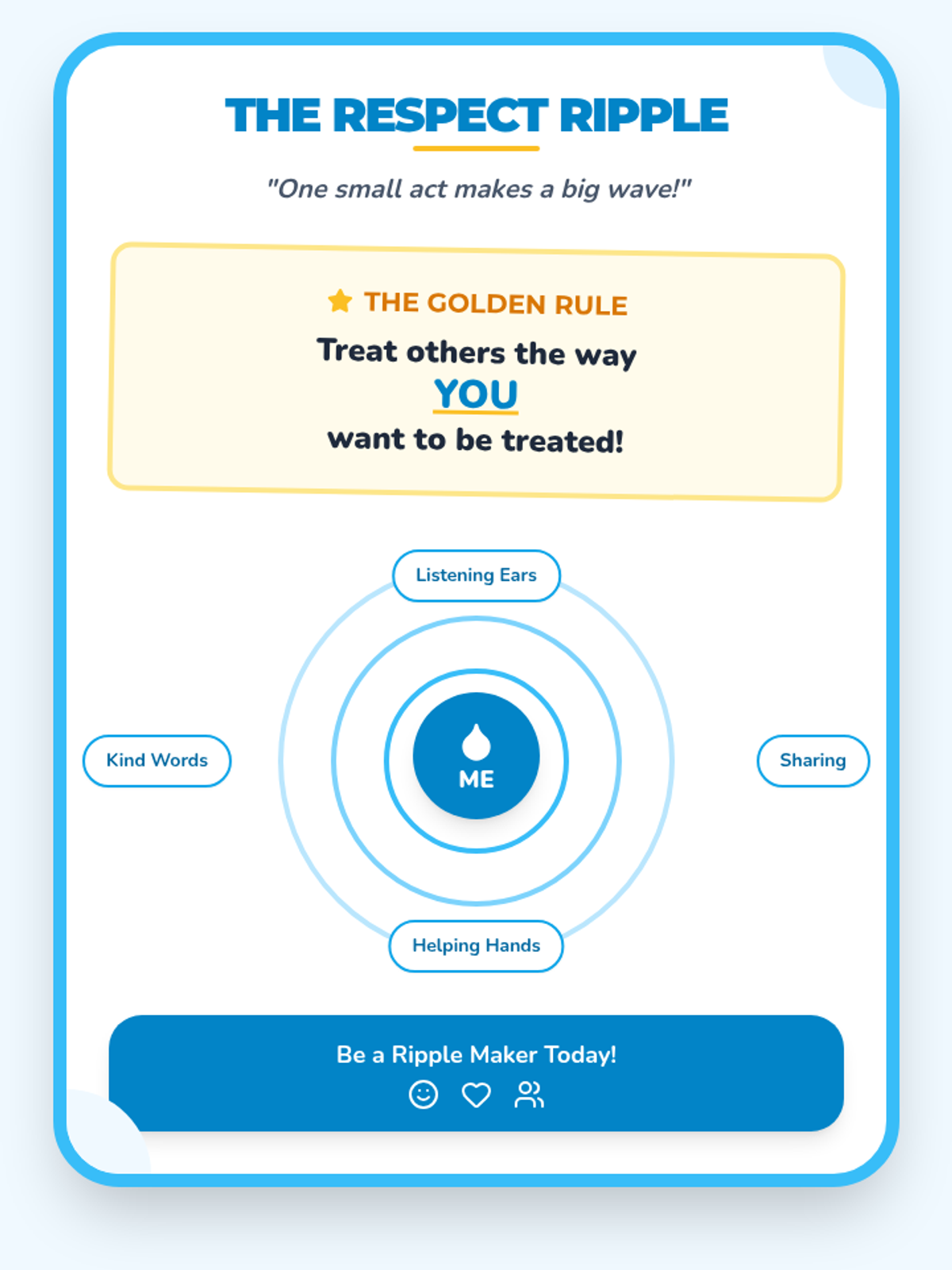
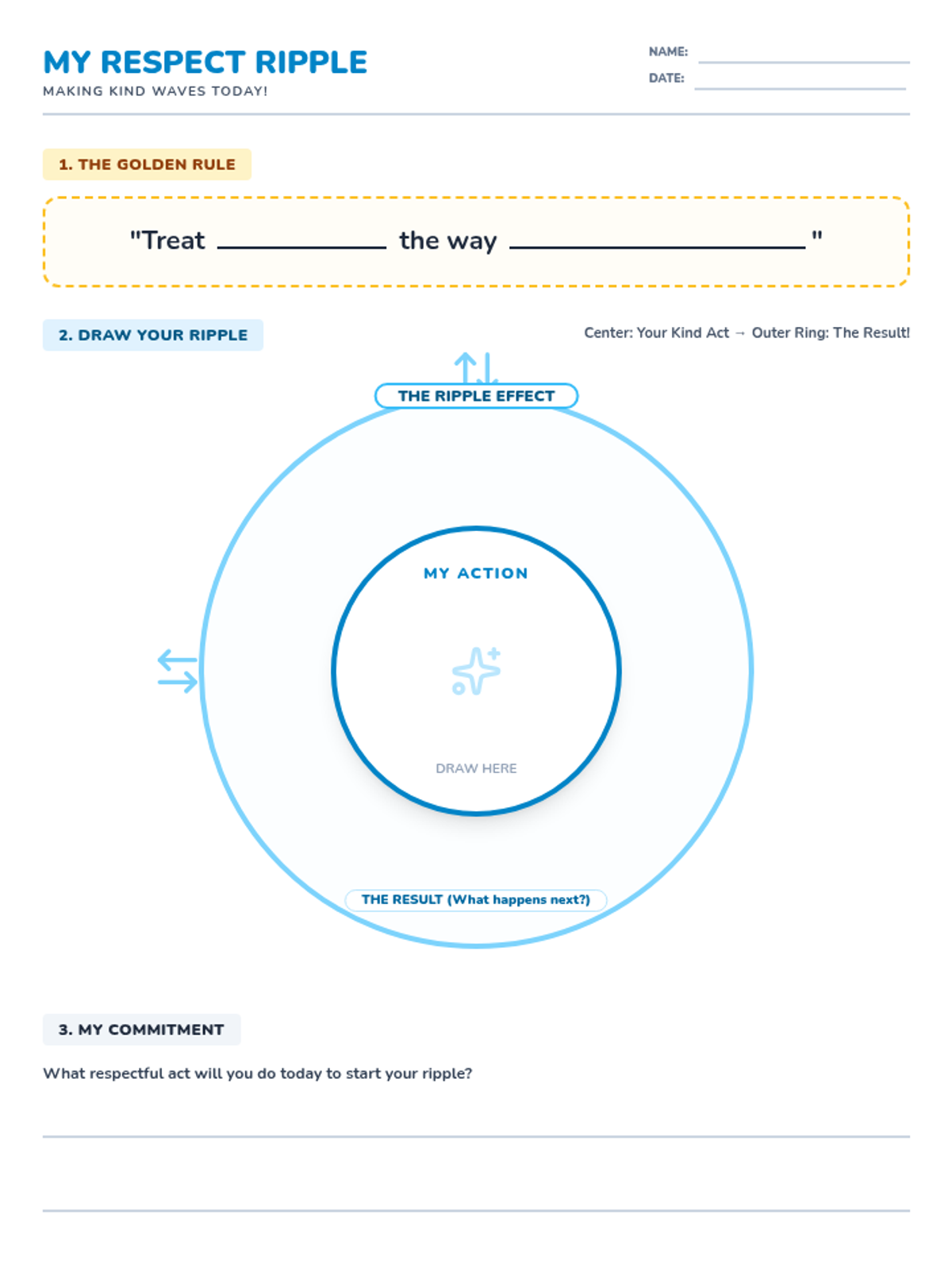
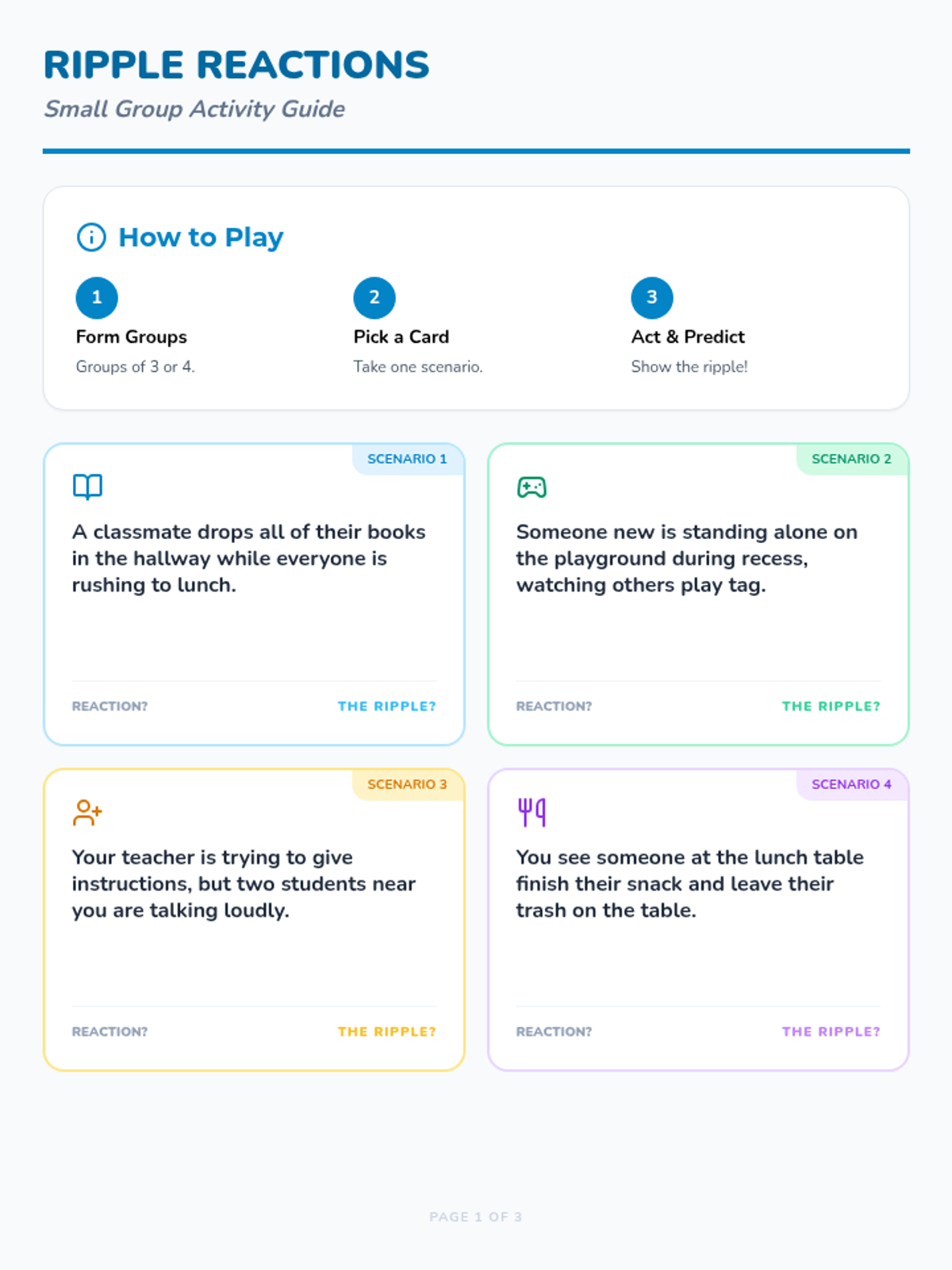
A comprehensive lesson on respect for K-4 students, focusing on the Golden Rule and the 'ripple effect' of kind actions. Includes a visual slide deck, teacher's guide, student worksheet, anchor chart, and small group activity cards.
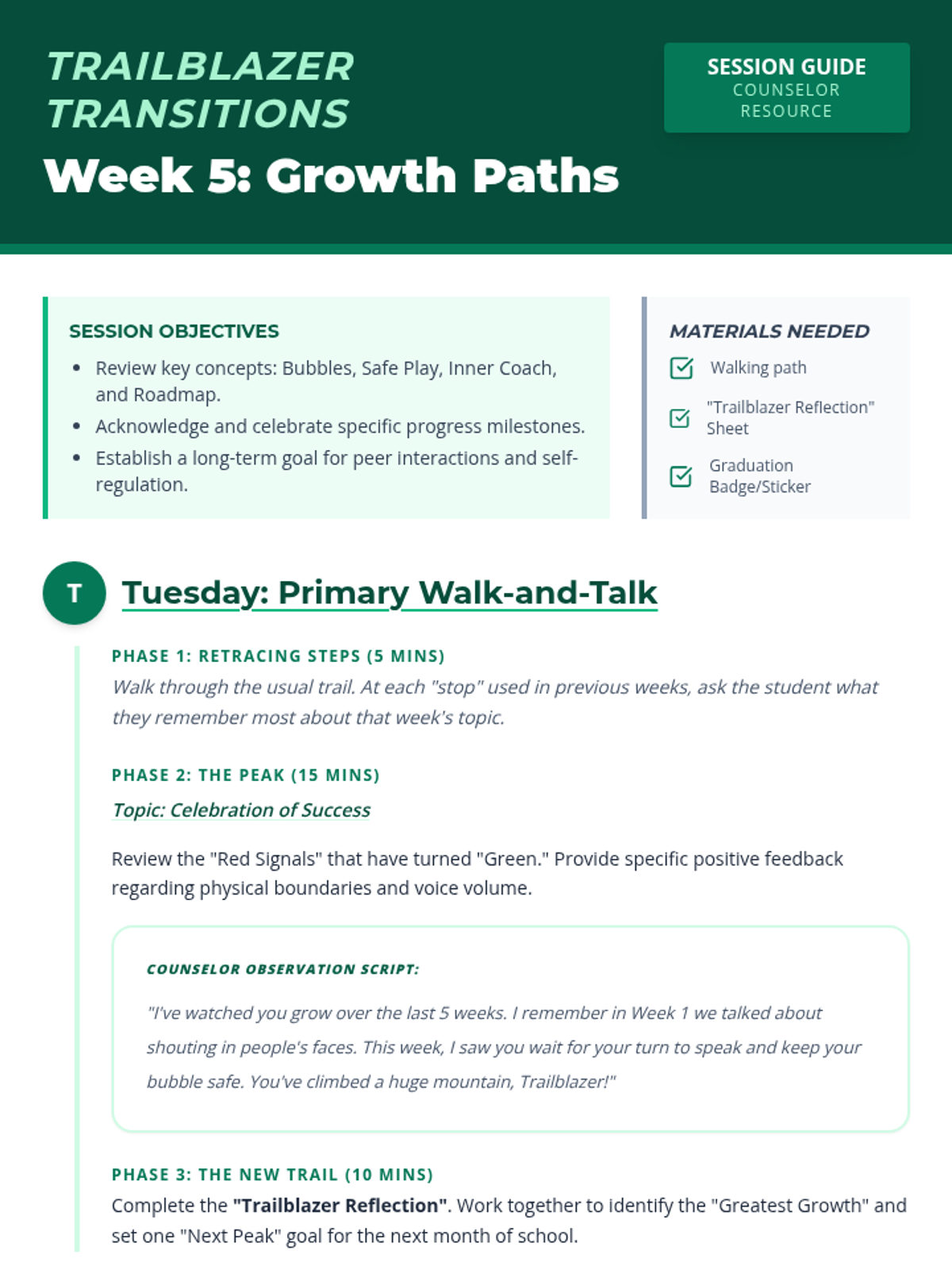
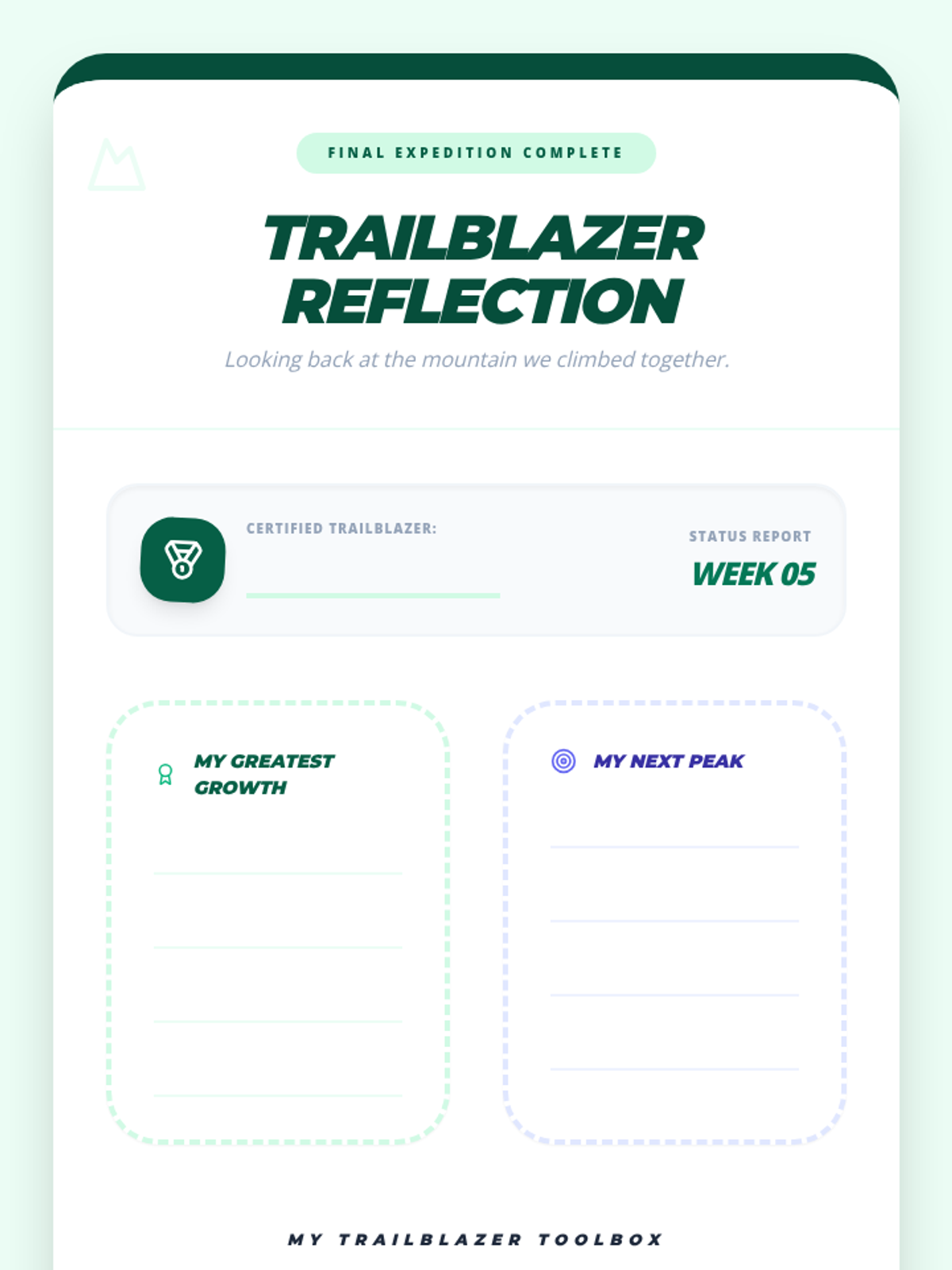
Consolidates learning from the previous weeks and sets goals for continued social-emotional success.
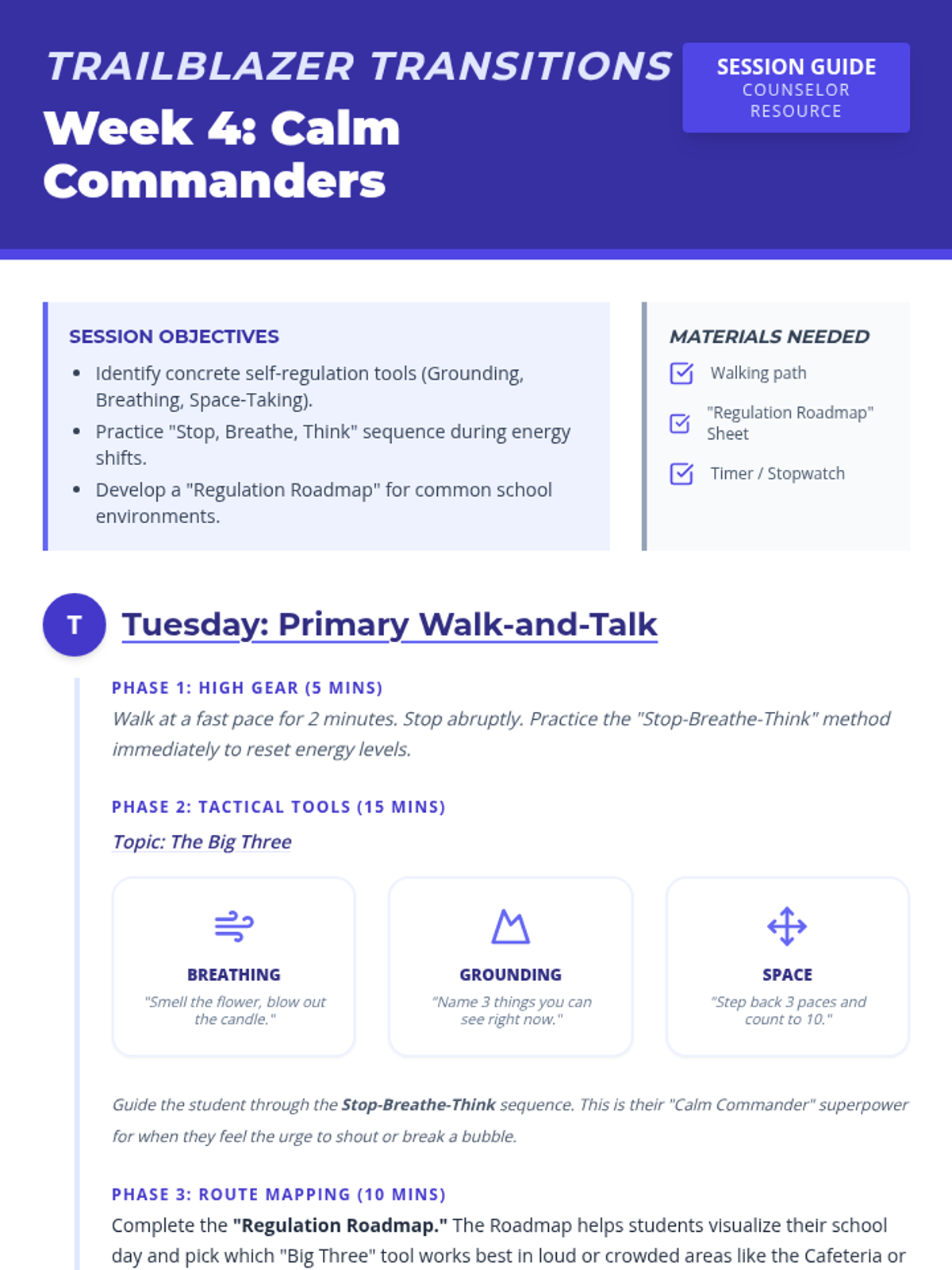
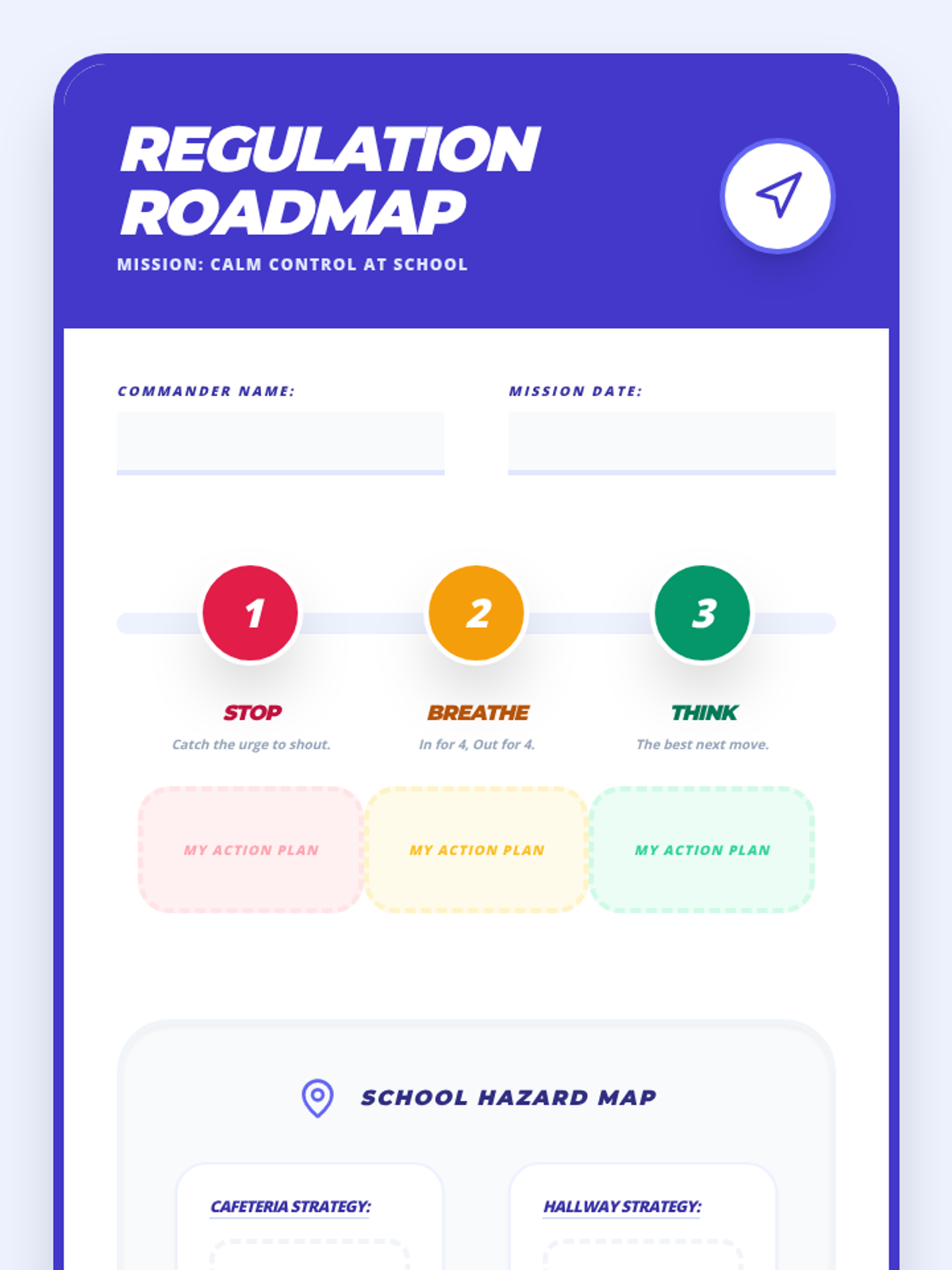
Teaches concrete self-regulation strategies and provides tools for emotional regulation.
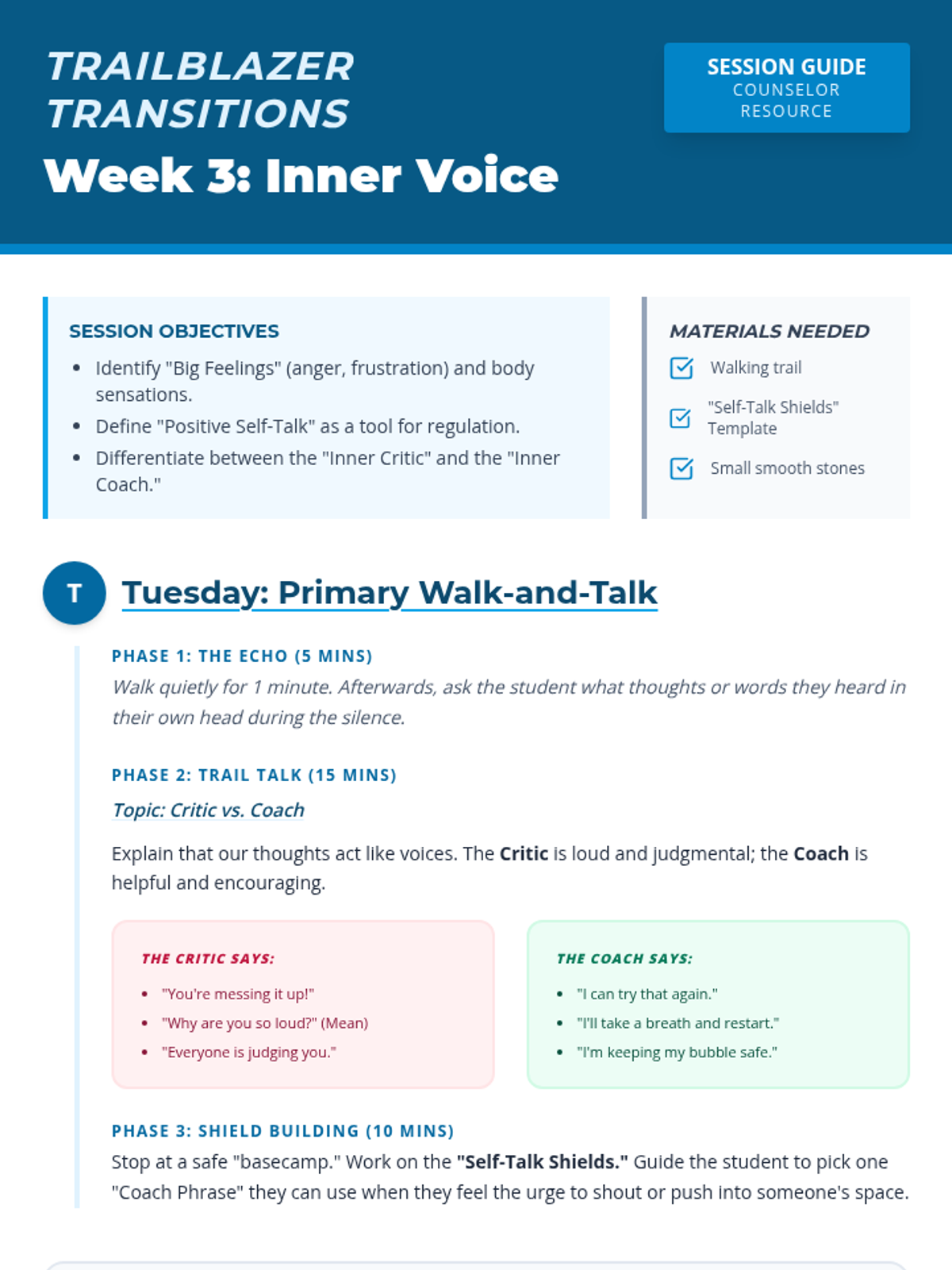
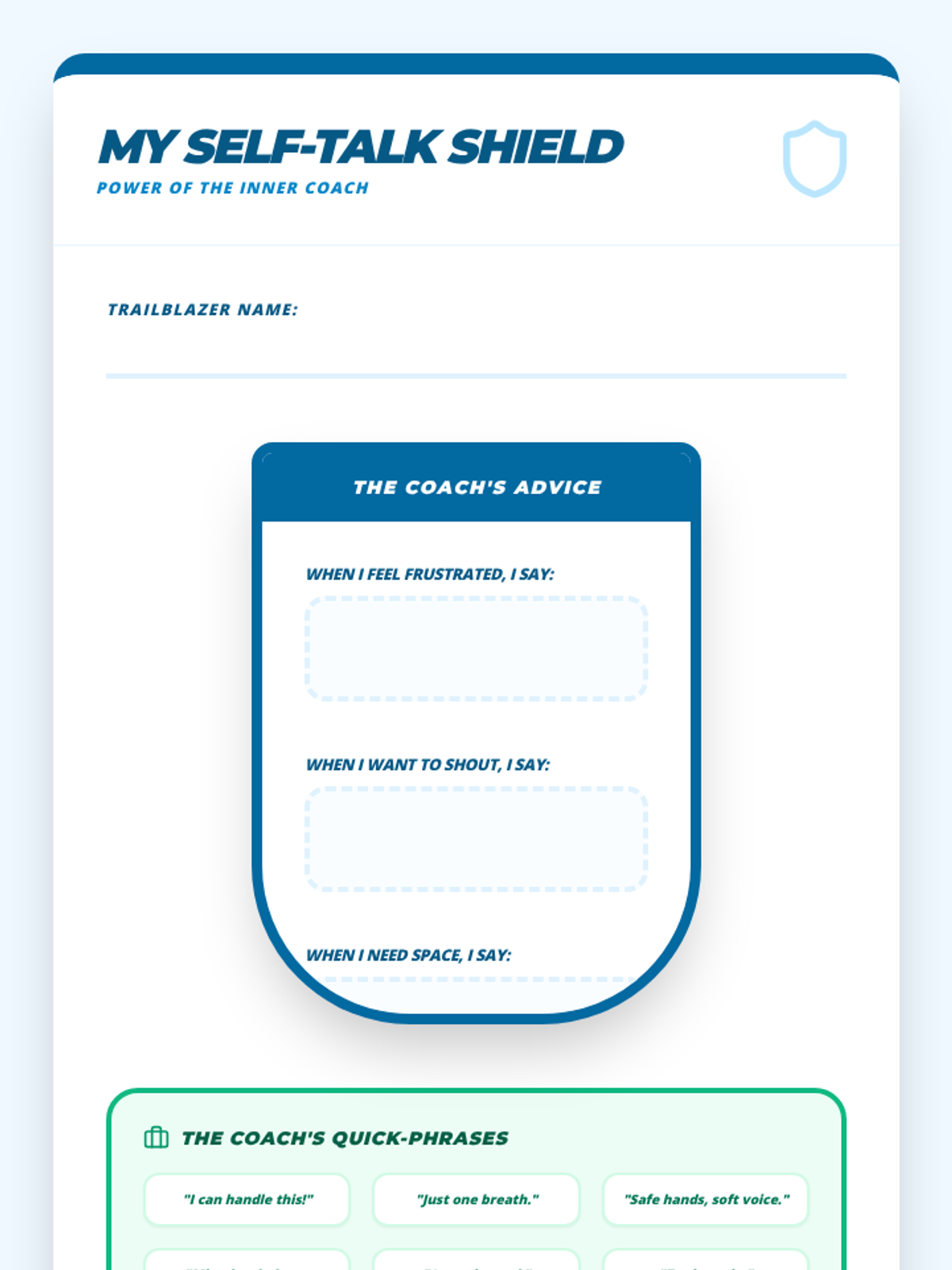
Explores emotional awareness and the power of positive self-talk to manage frustration.
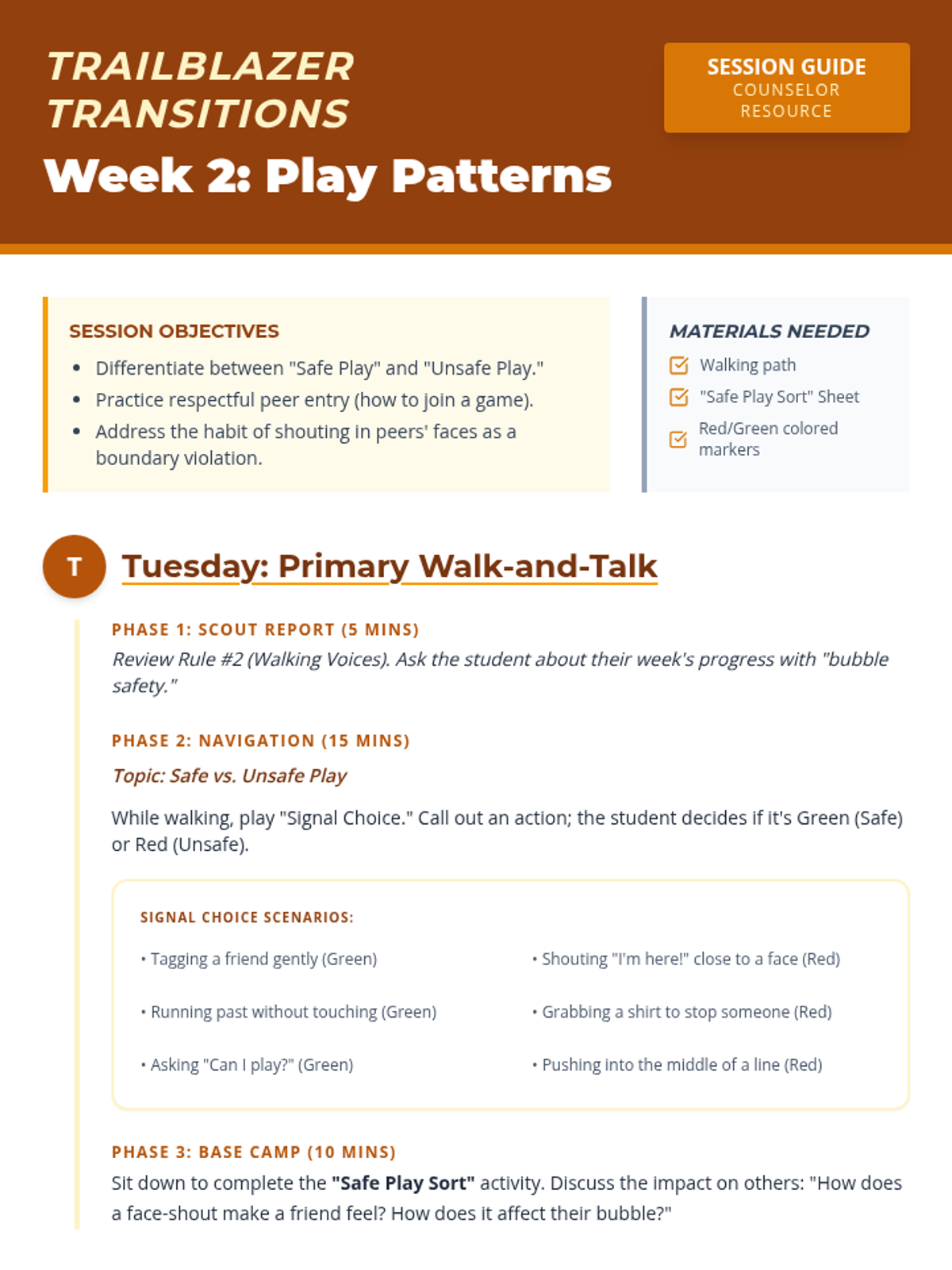
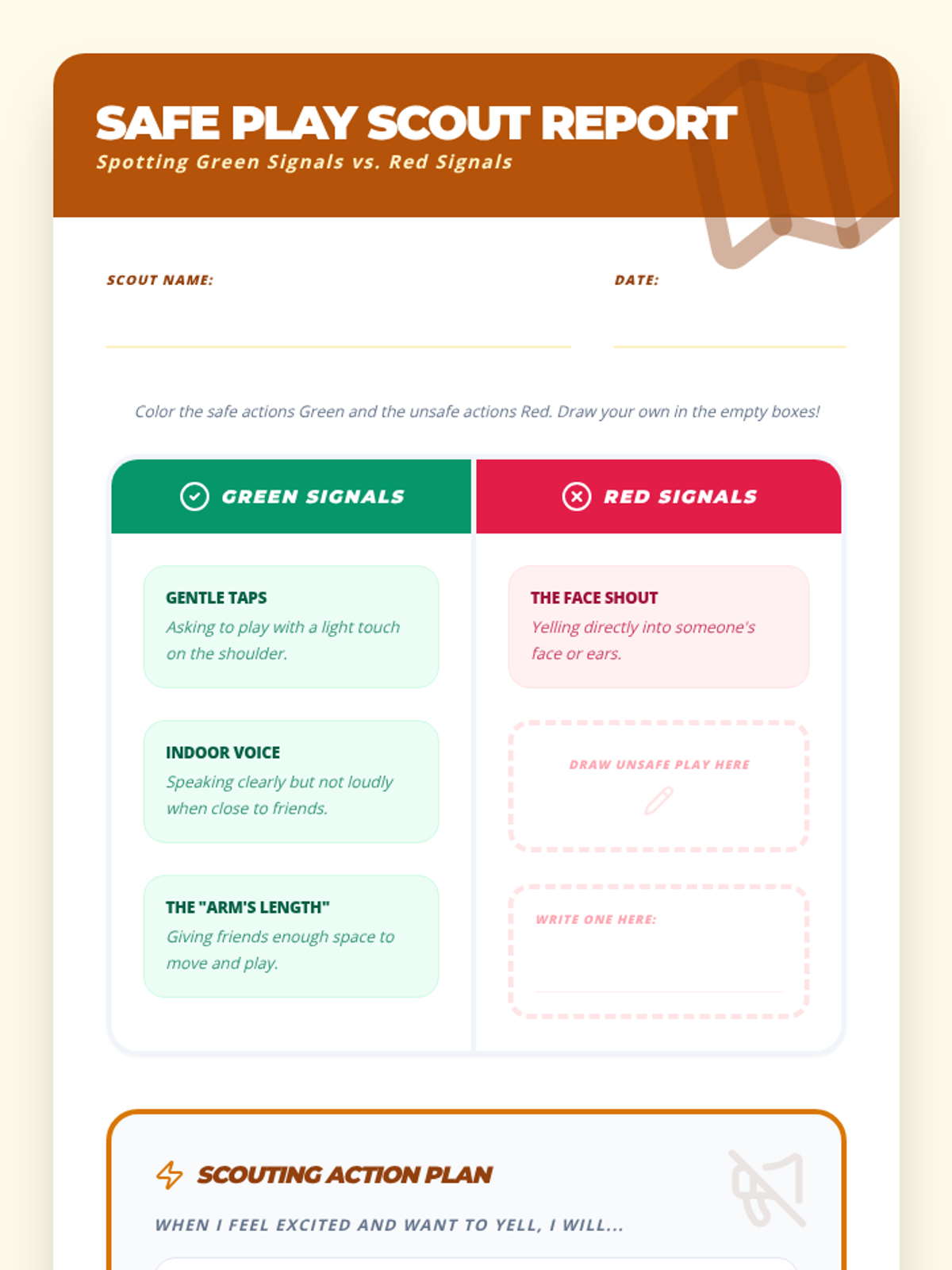
Focuses on distinguishing between safe and unsafe play, specifically addressing peer interactions like shouting and physical contact.
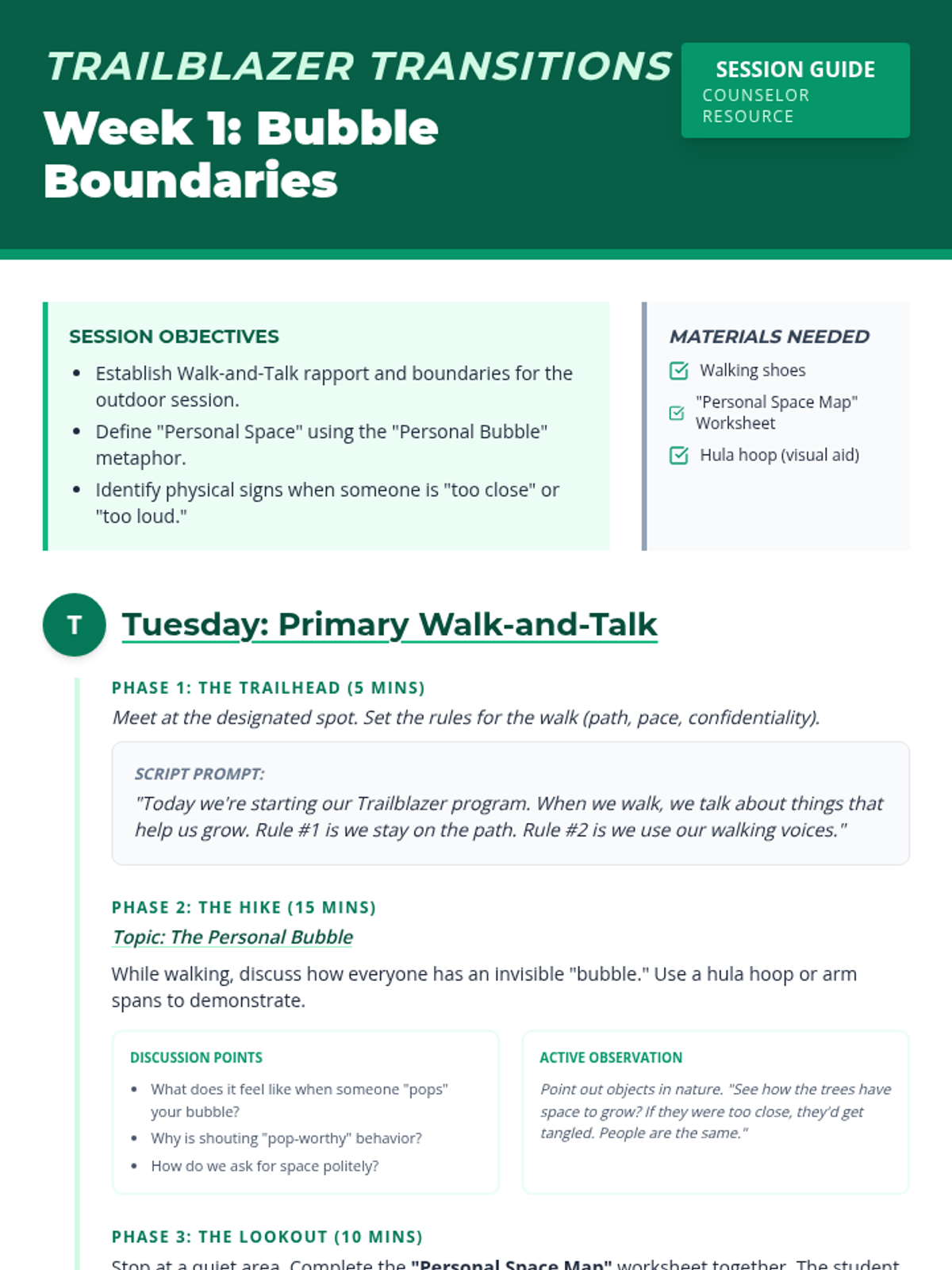
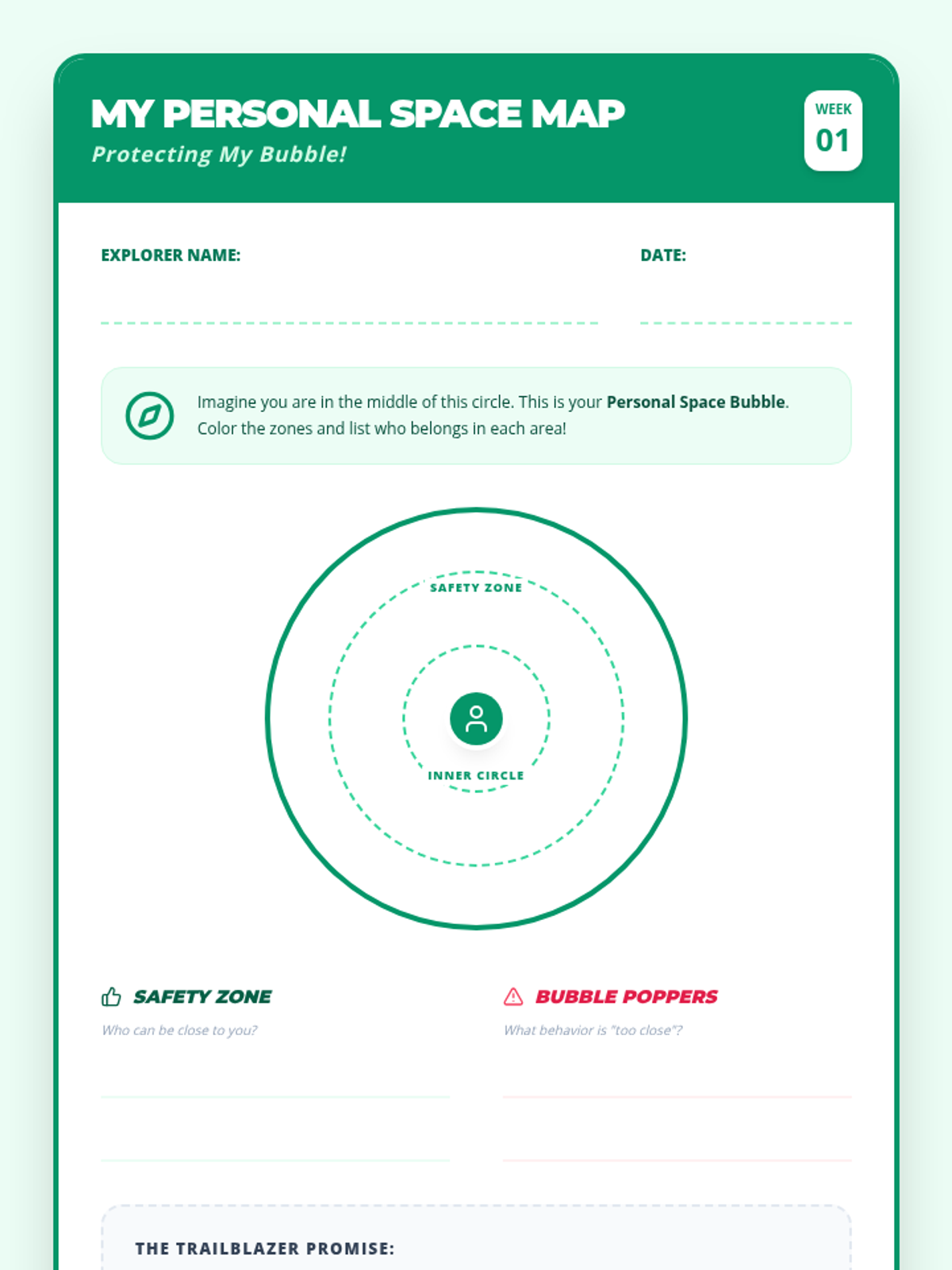
Introduces the concept of personal space and 'bubbles' while establishing the walk-and-talk routine.
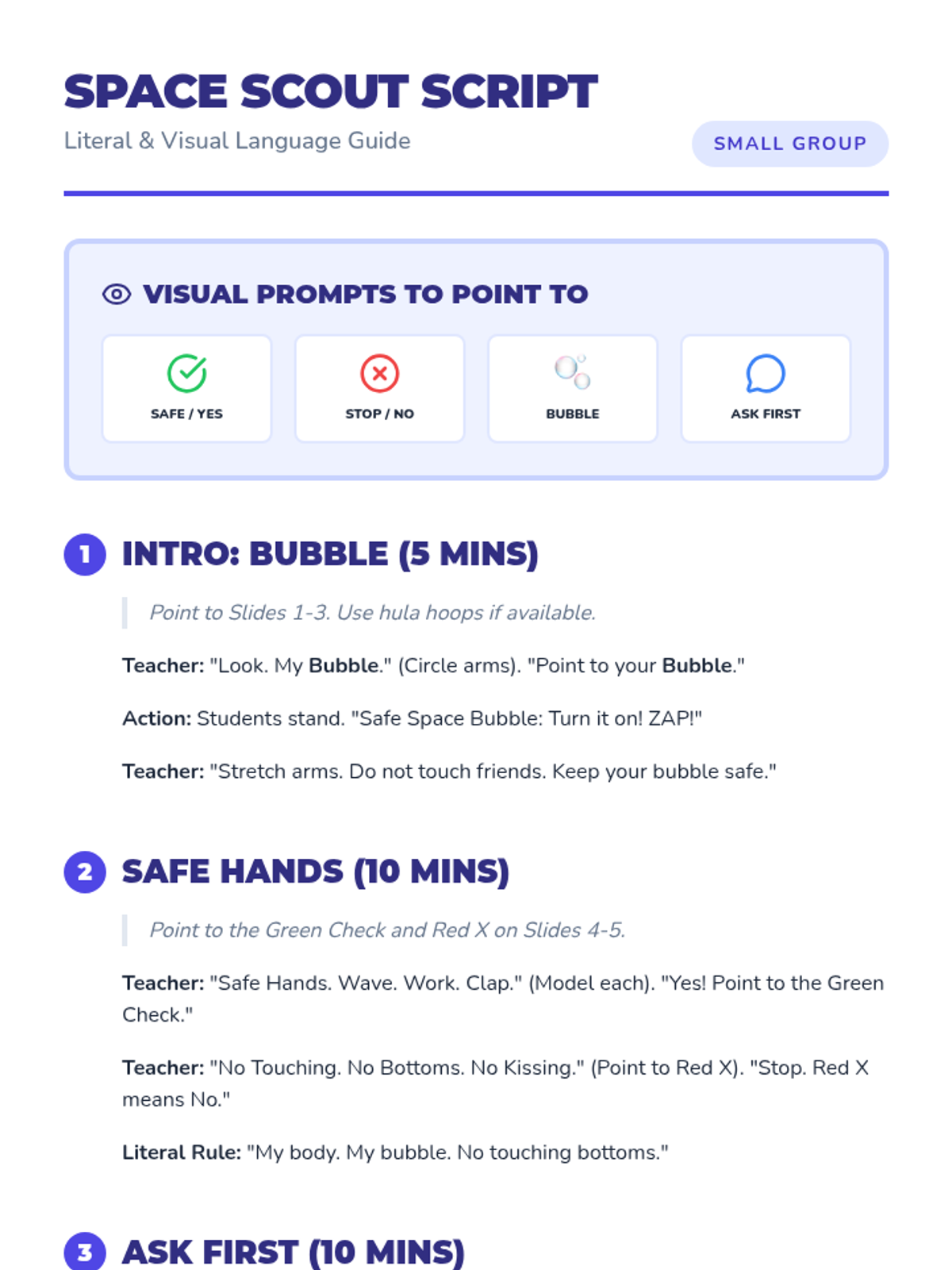
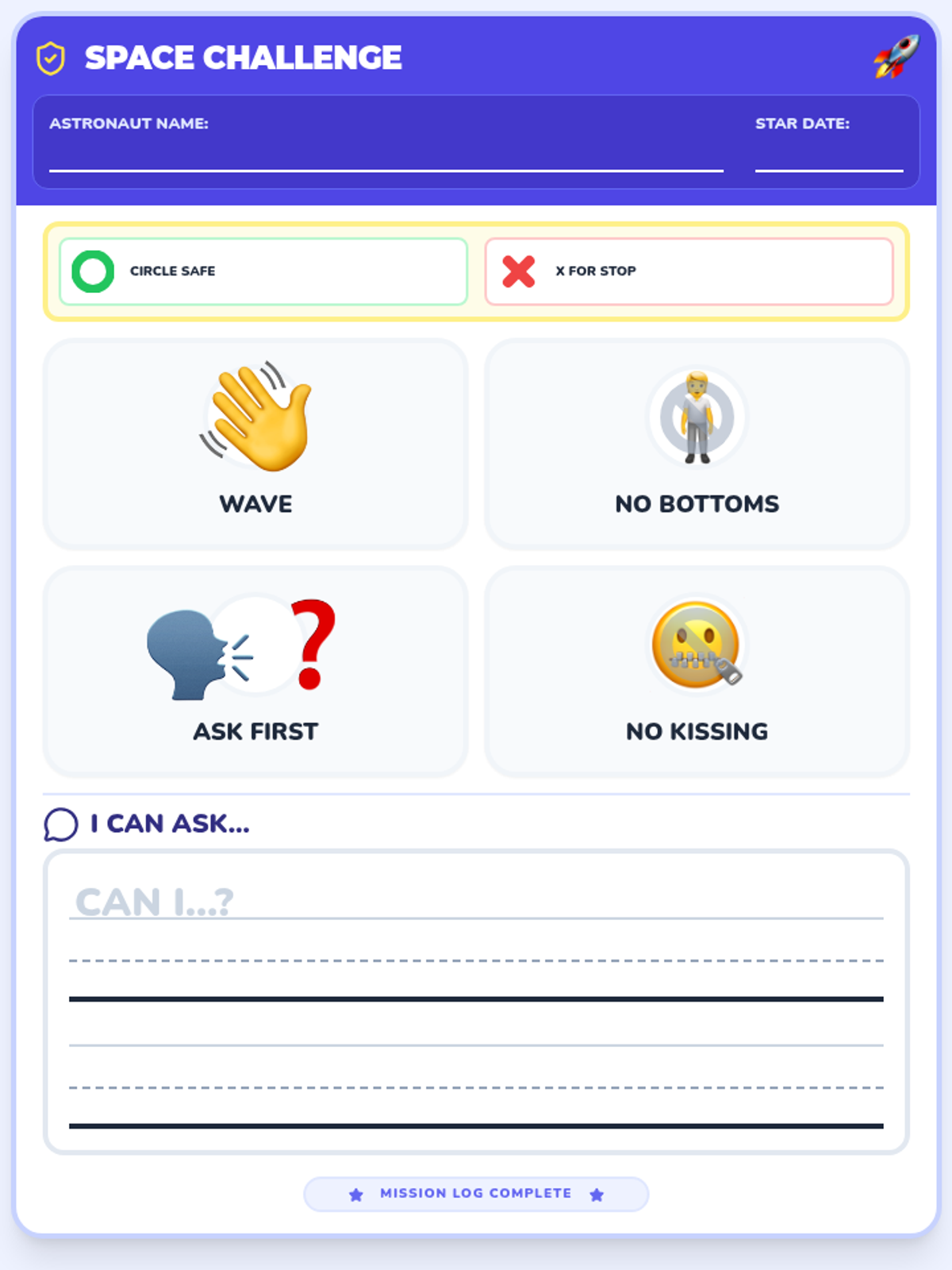
A 30-minute small group lesson for 1st graders focusing on personal space and bodily autonomy using a space-themed metaphor of 'personal force fields.' This lesson addresses appropriate touching and social boundaries.
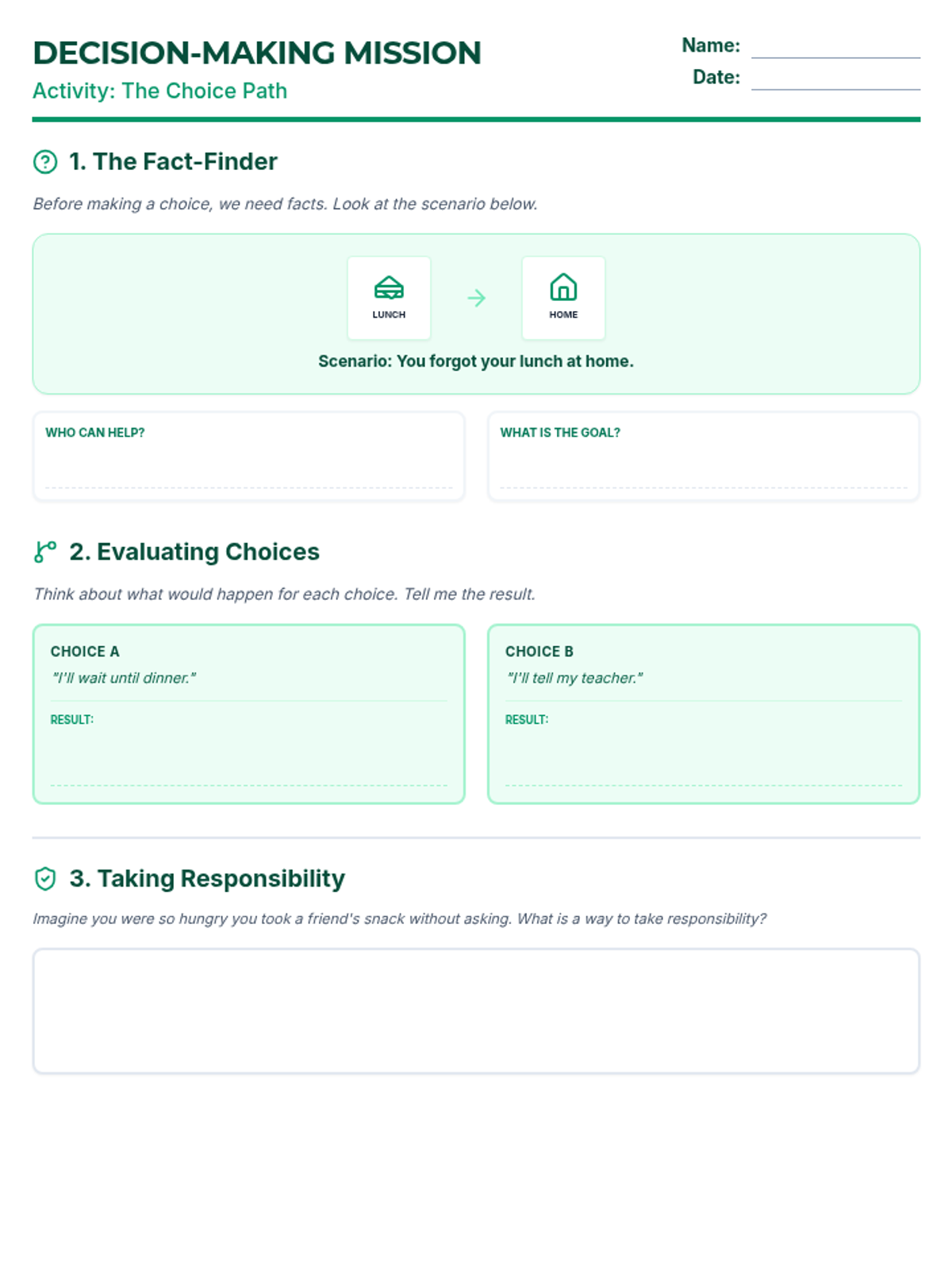
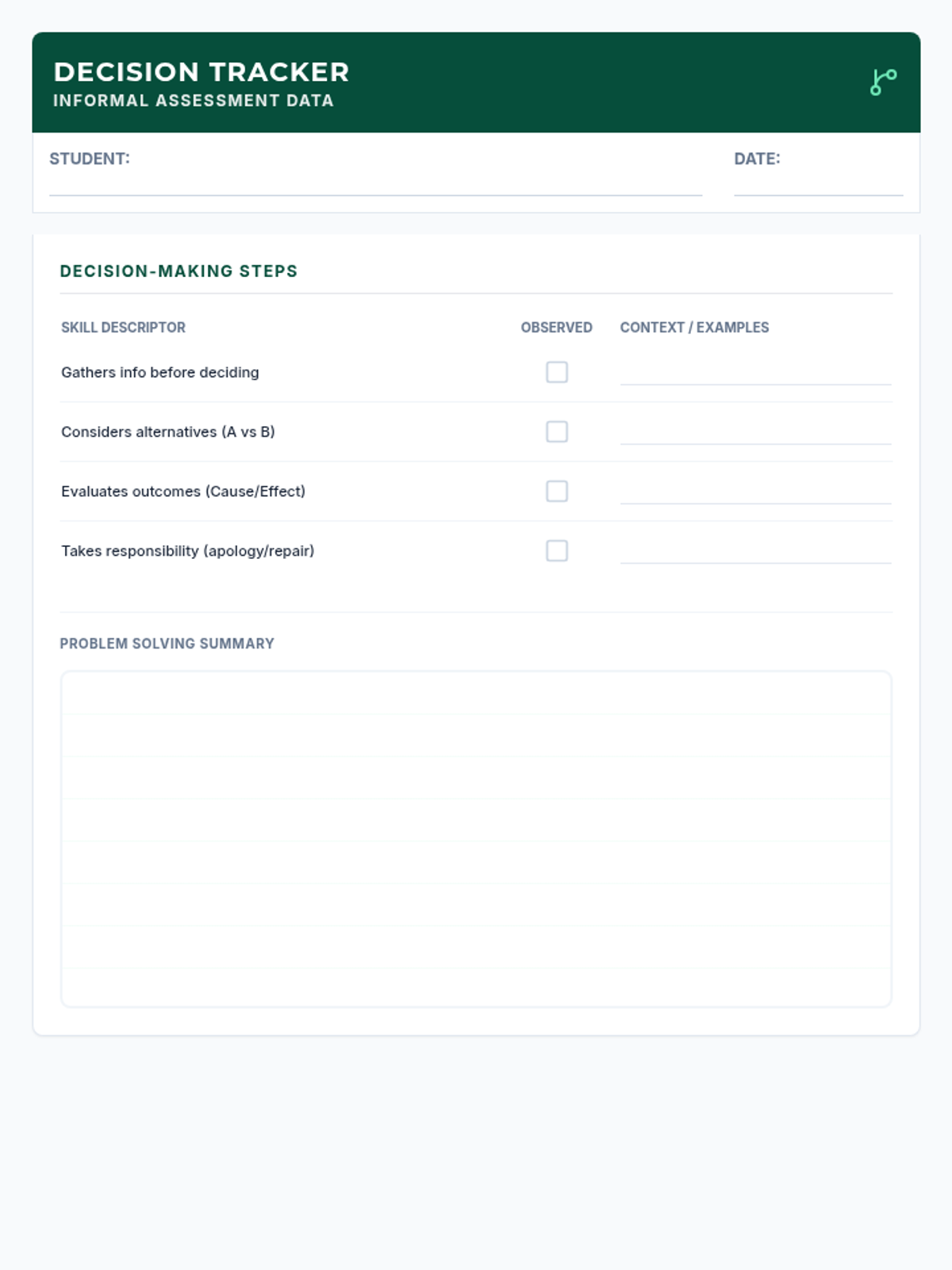
A 15-minute session assessing problem-solving steps and choice evaluation using simple scenario "Choice Path" cards.
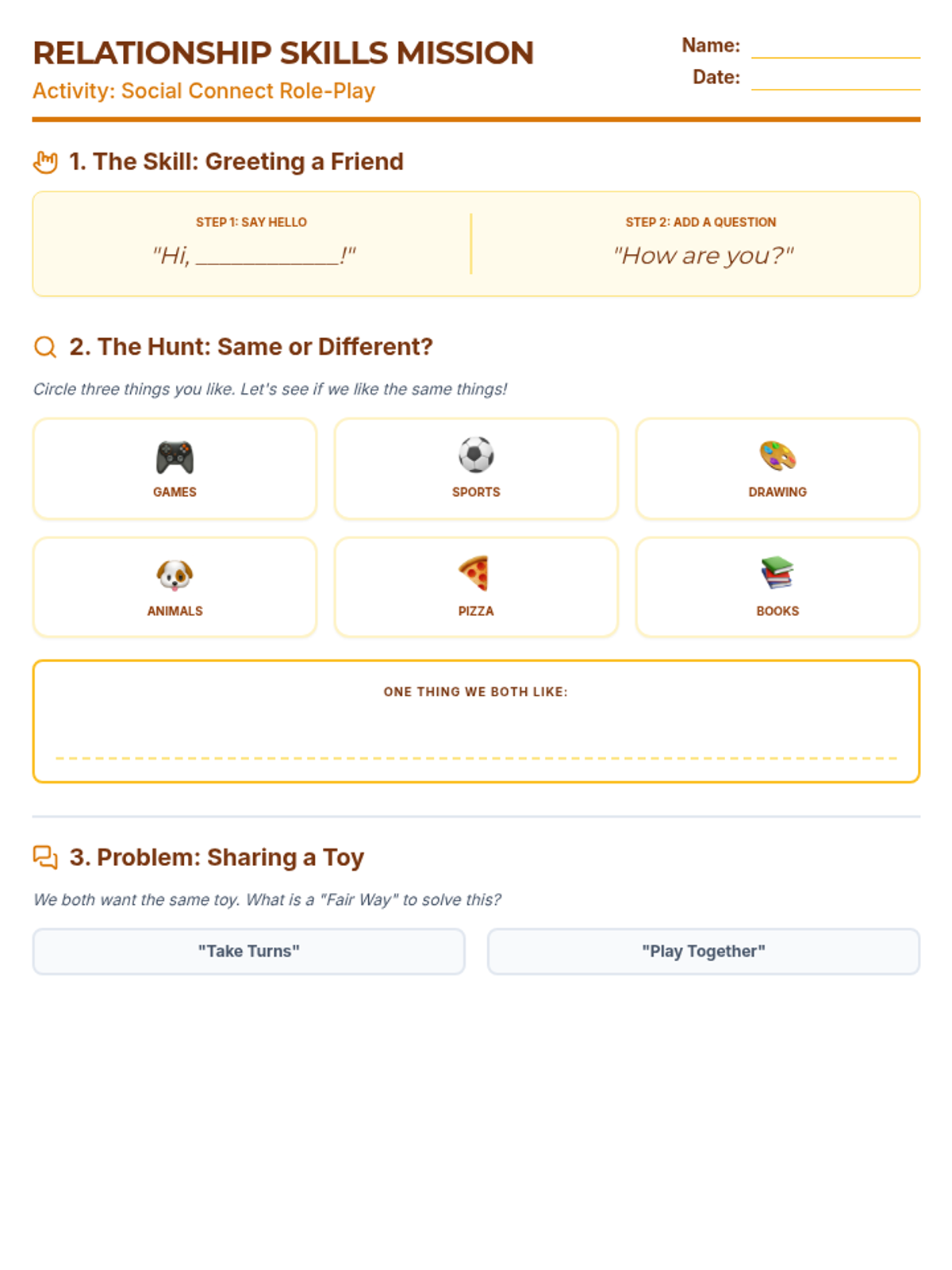
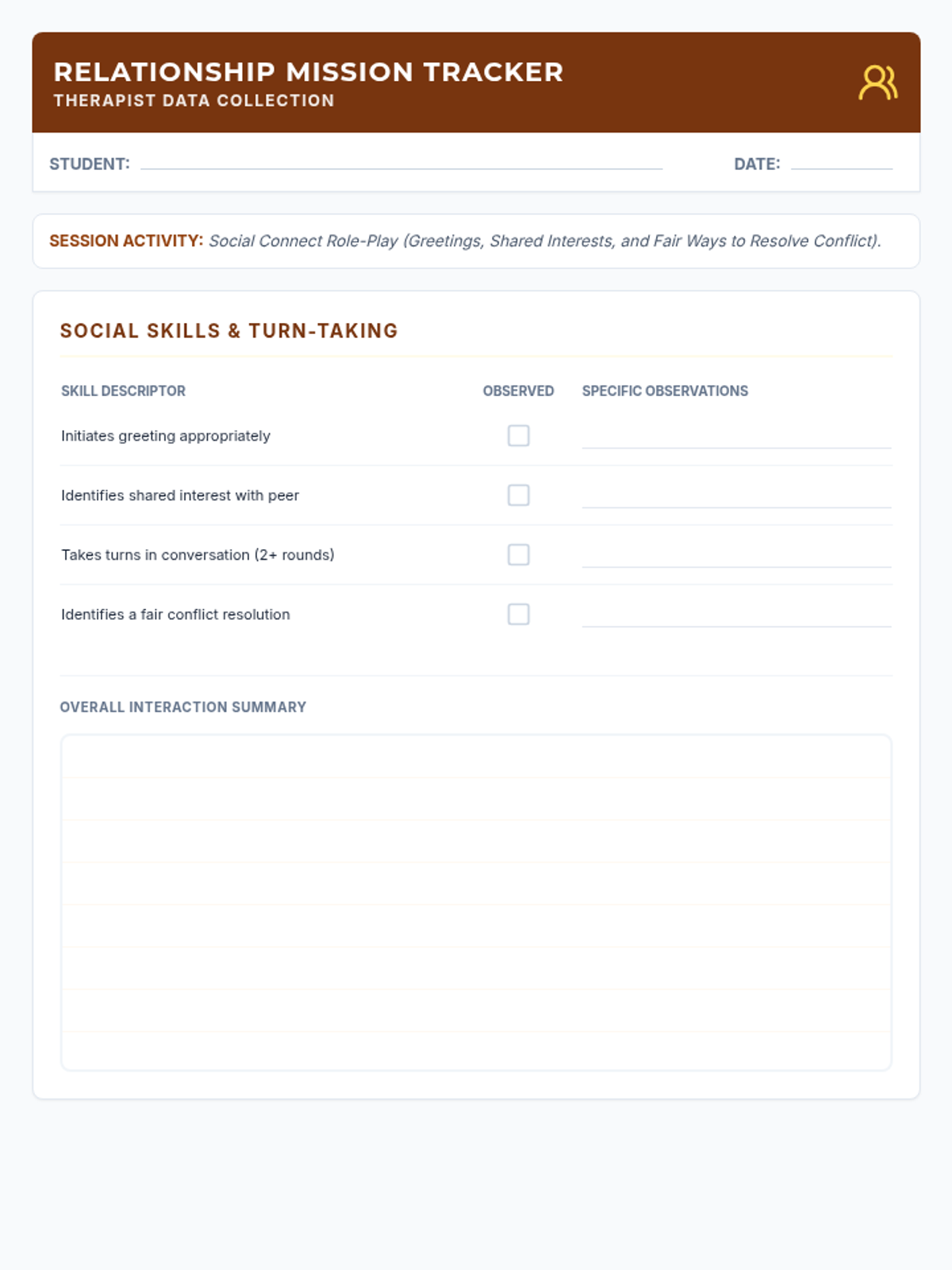
A 15-minute session focused on social greetings, reciprocal conversation, and identifying shared interests through a "Social Connect" role-play.
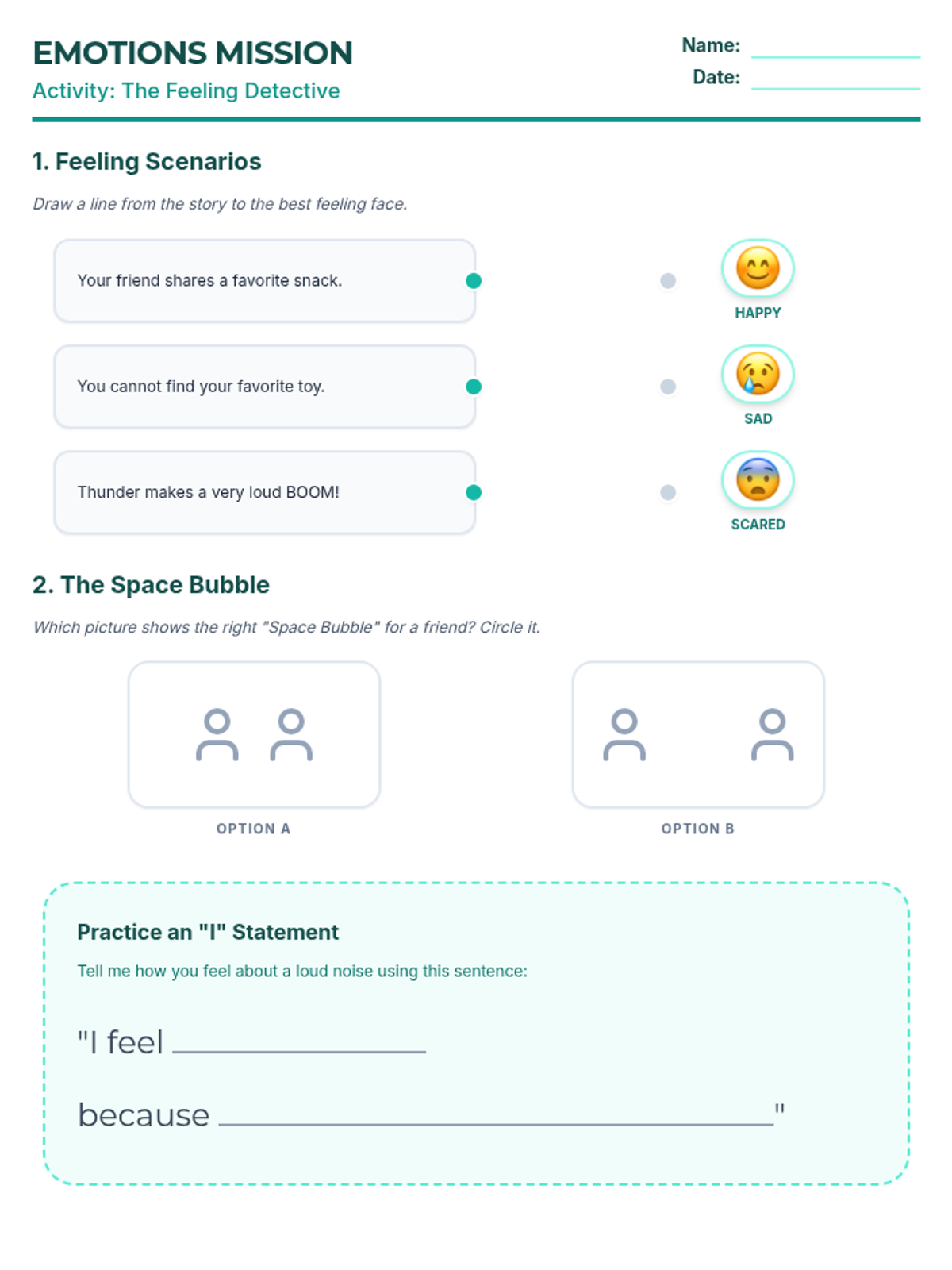
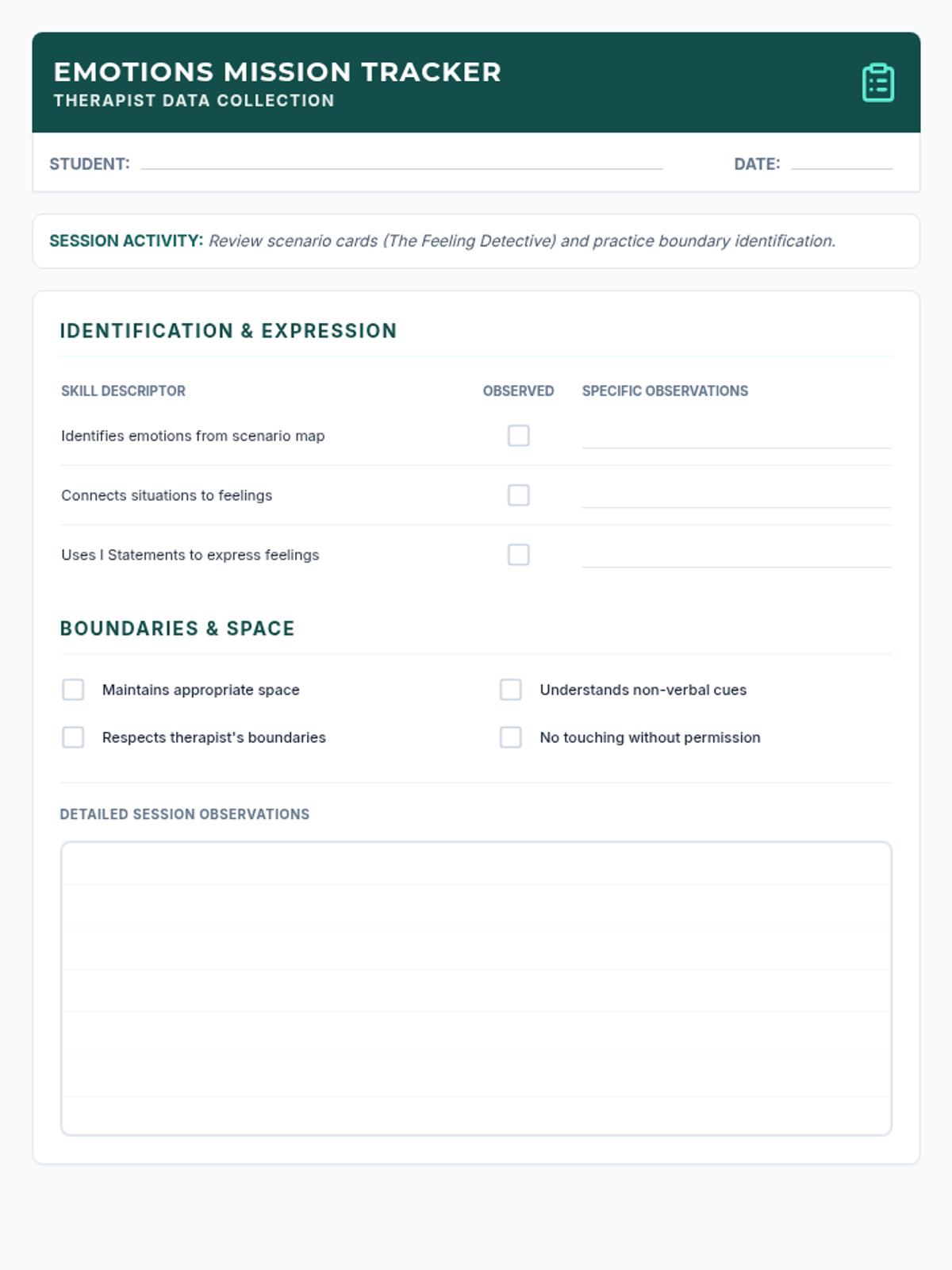
A 15-minute session to evaluate emotional identification, situational connection, and personal space boundaries using a "Feeling Detective" scenario map.
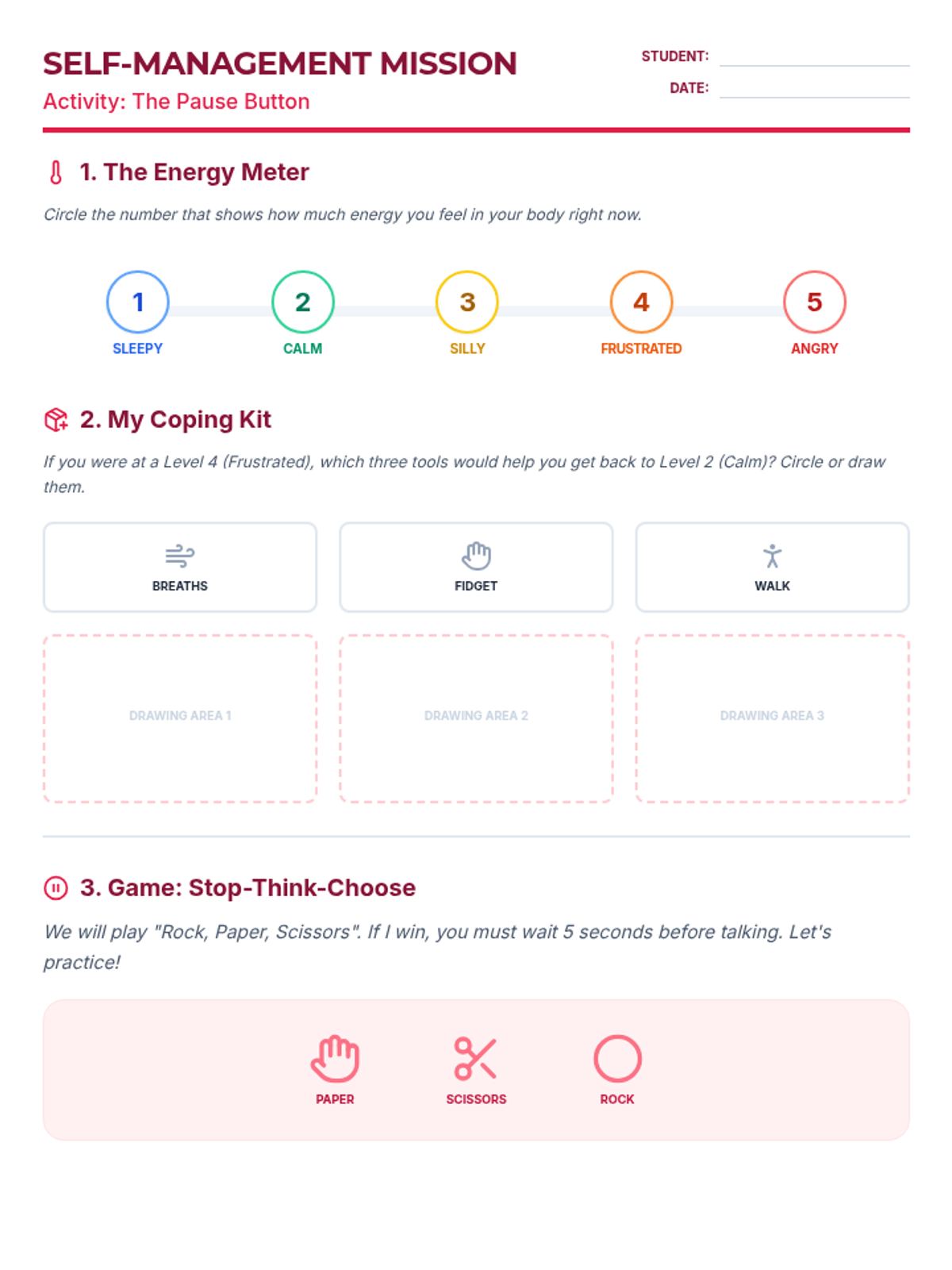
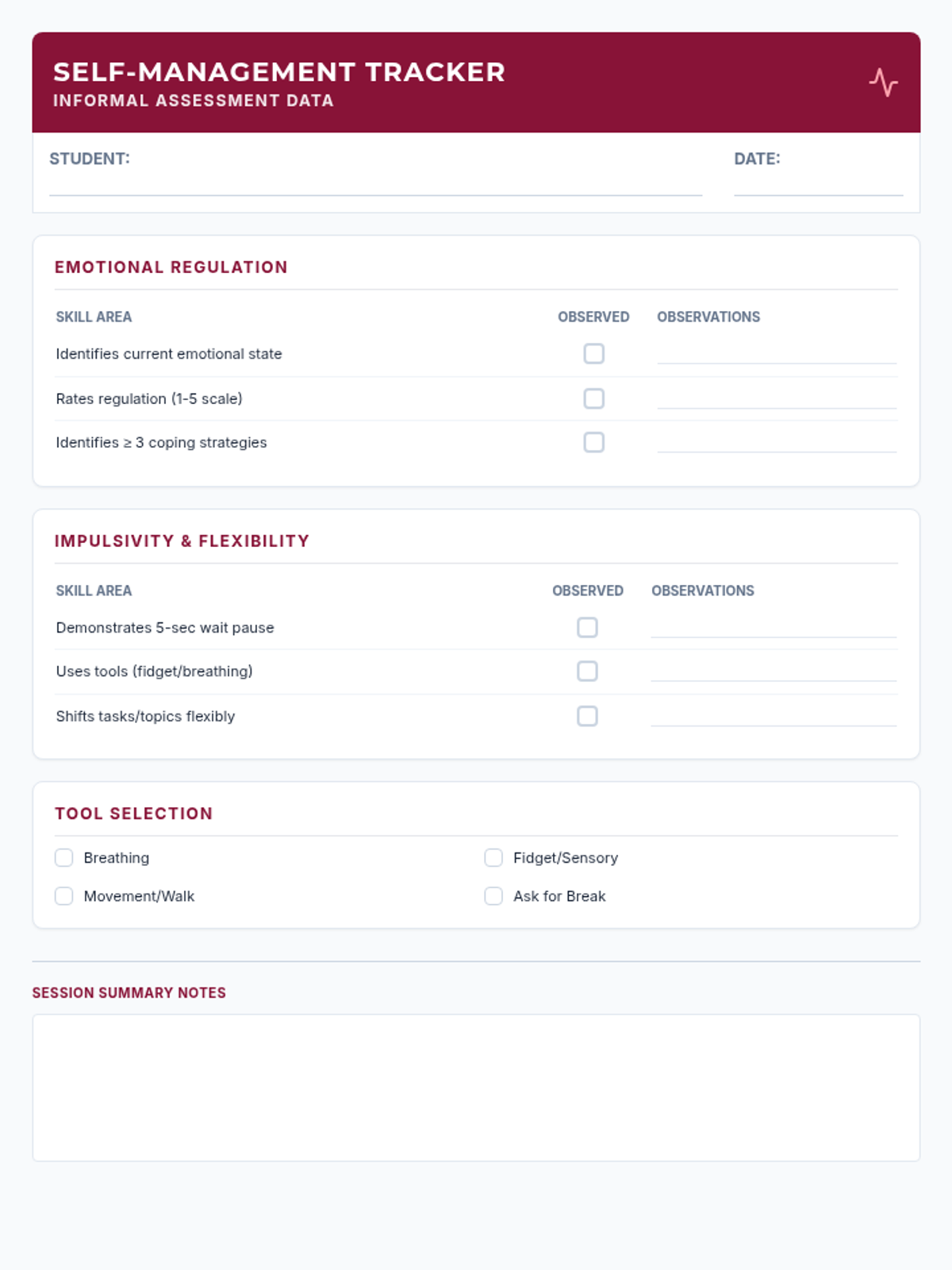
A 15-minute session assessing emotional regulation and impulsivity through the "Pause Button" game and coping strategy identification.
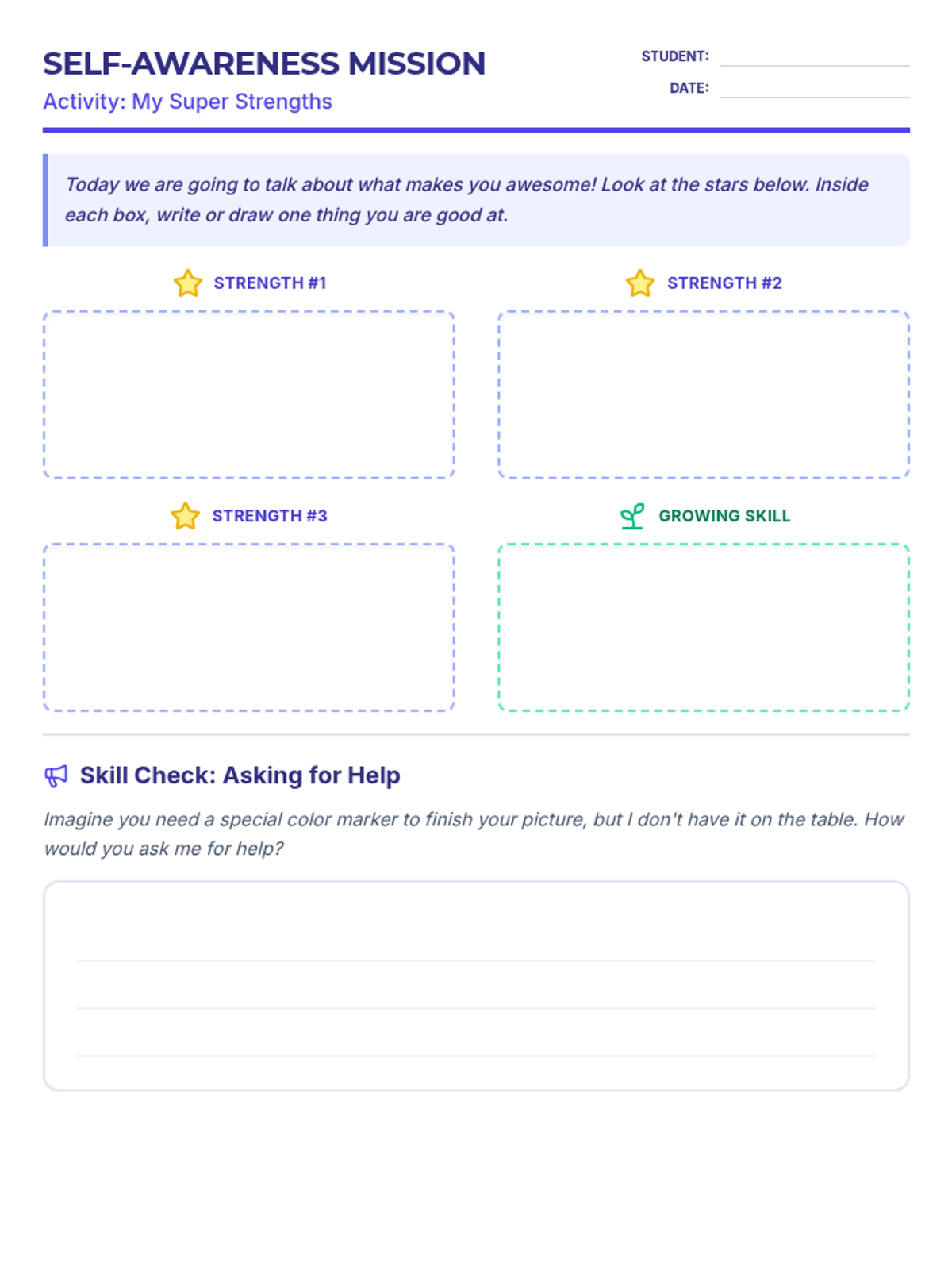
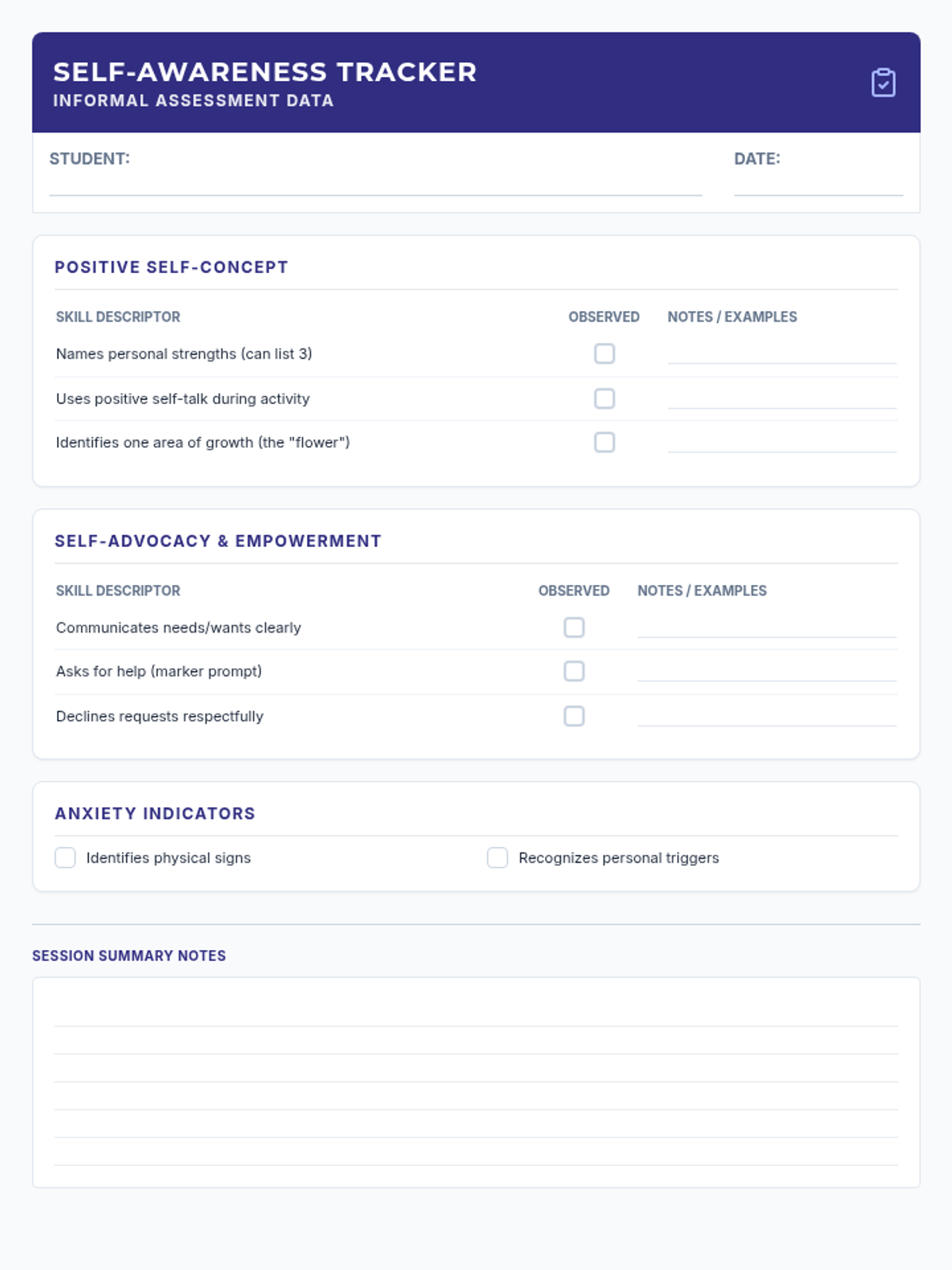
A 15-minute session focused on identifying personal strengths, areas of growth, and practicing self-advocacy through a "Super Strength" portrait activity.
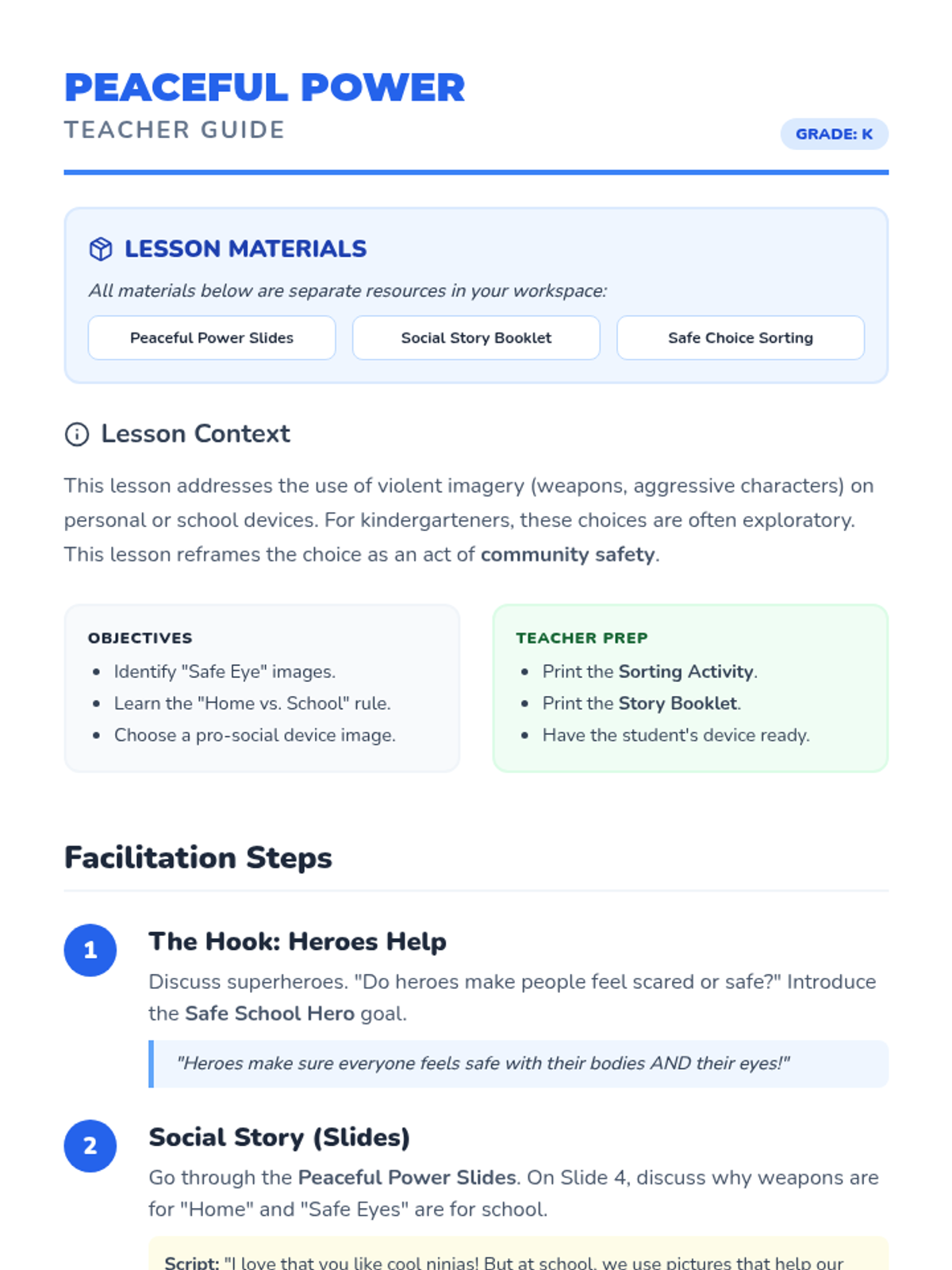
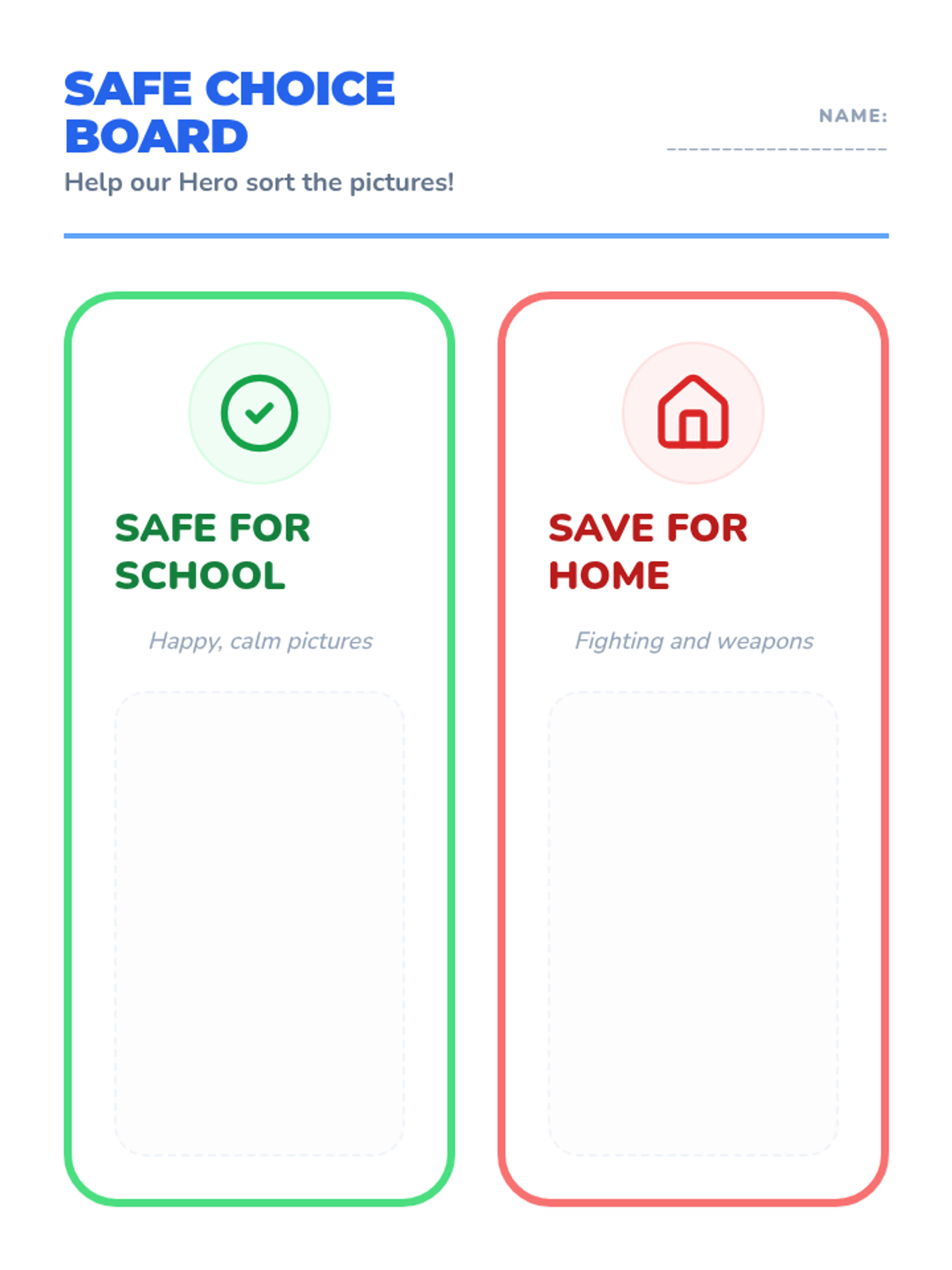
A gentle mini-lesson designed for kindergarten students to understand the importance of choosing non-violent imagery at school. Through a social story and interactive sorting, students learn how to keep school a safe and happy place for everyone's eyes and hearts.
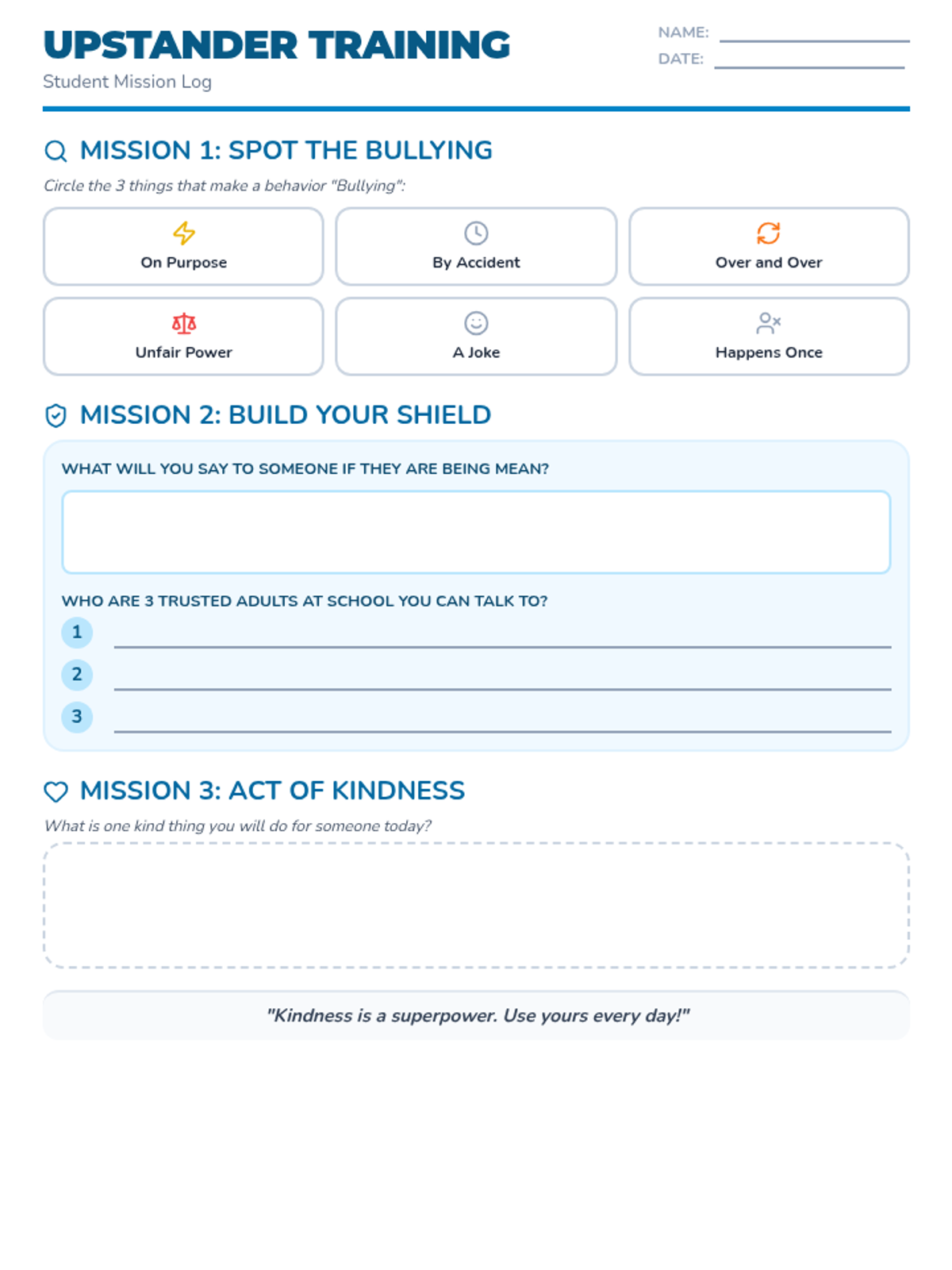
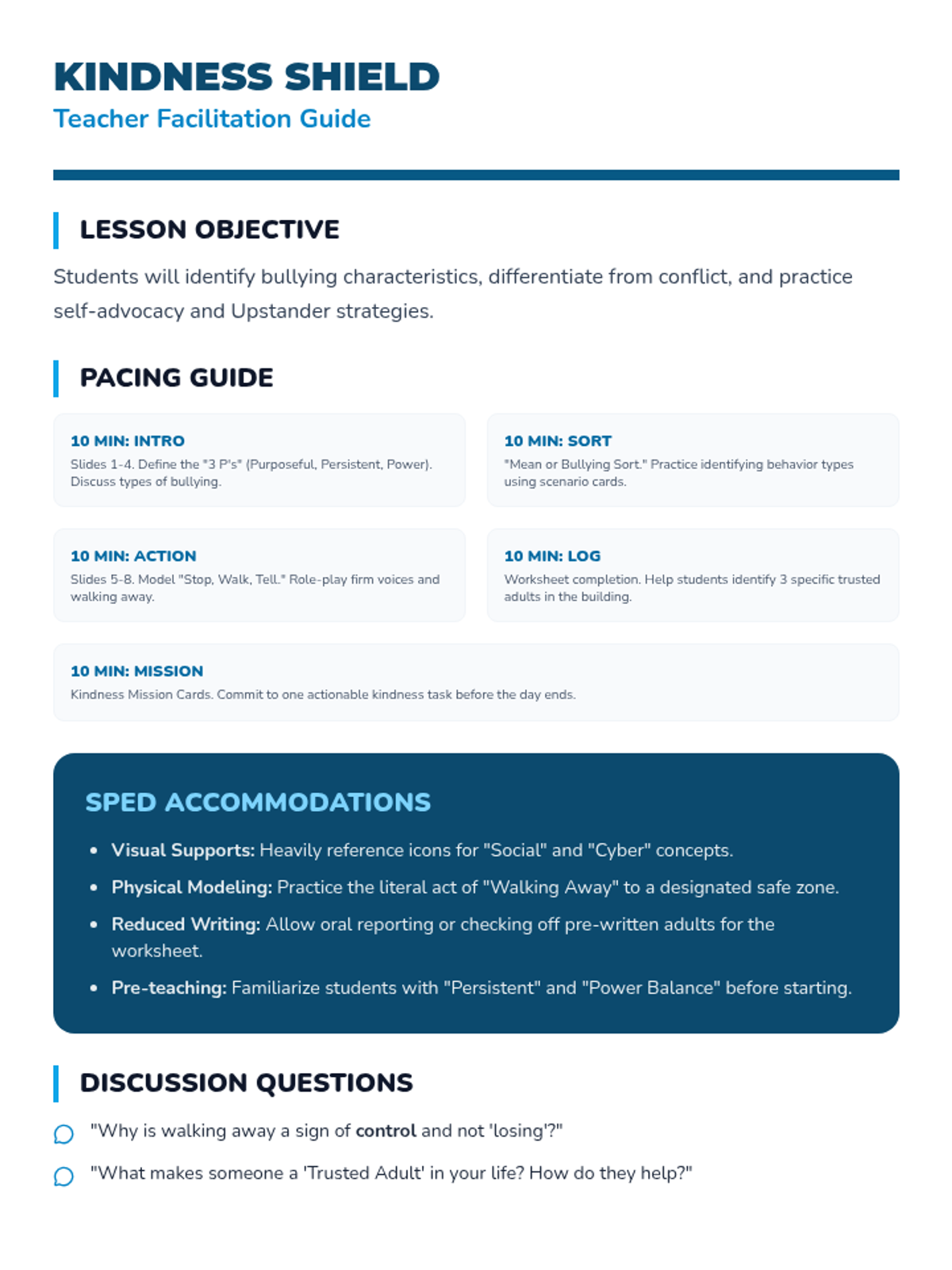
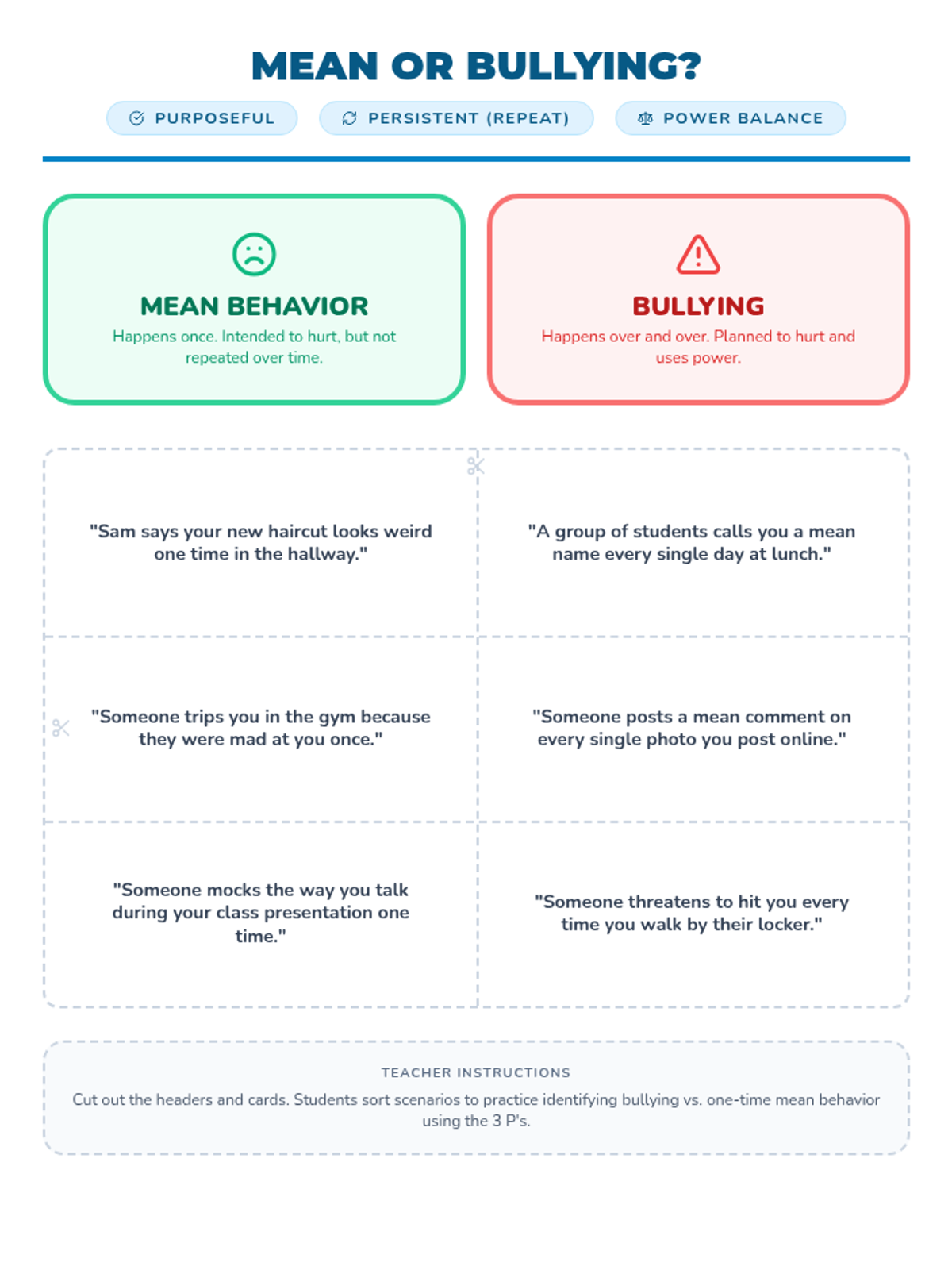
A supportive and practical lesson designed for high school special education students to identify bullying, learn intervention strategies, and practice active kindness through clear visuals and guided activities.
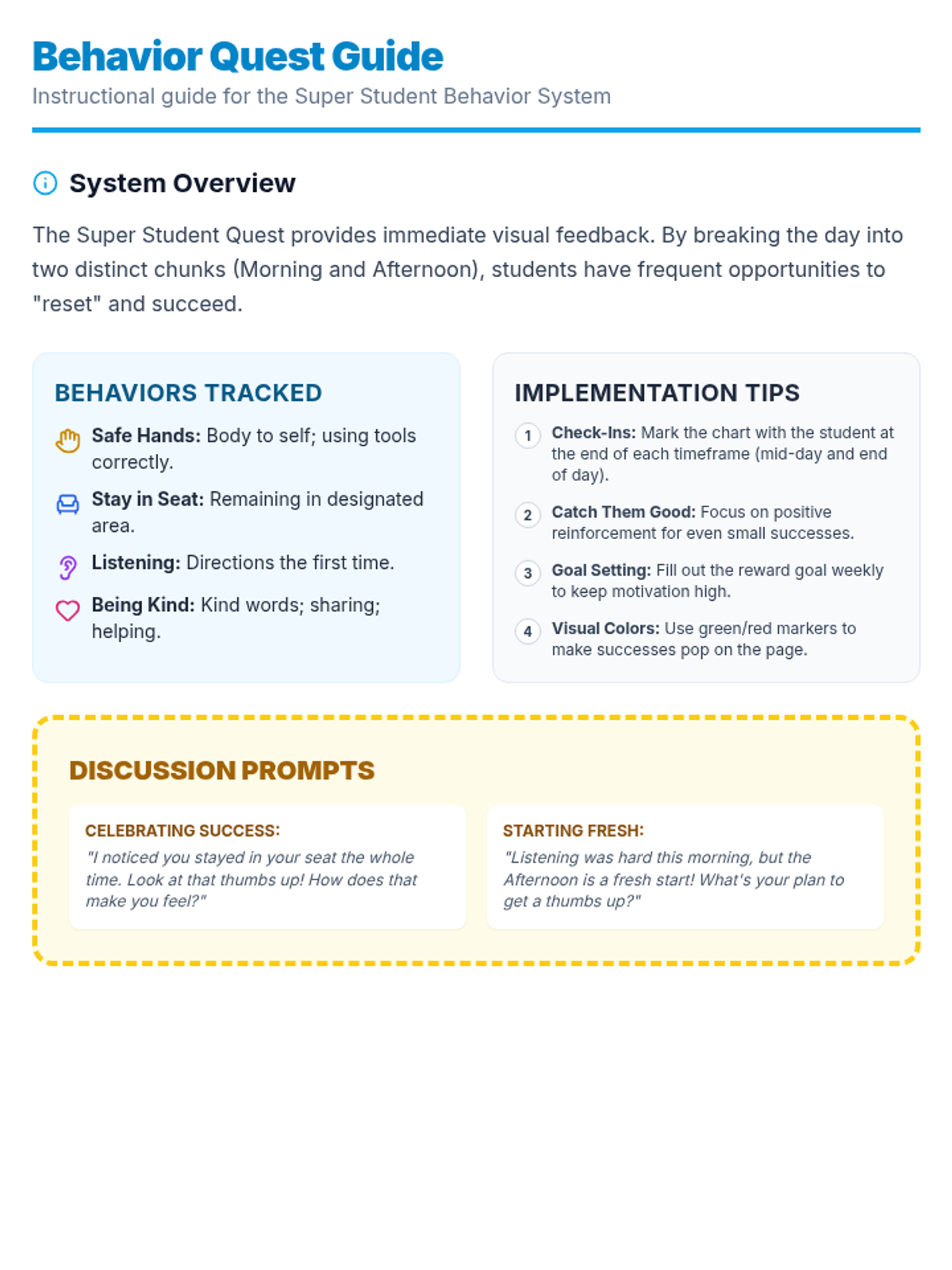
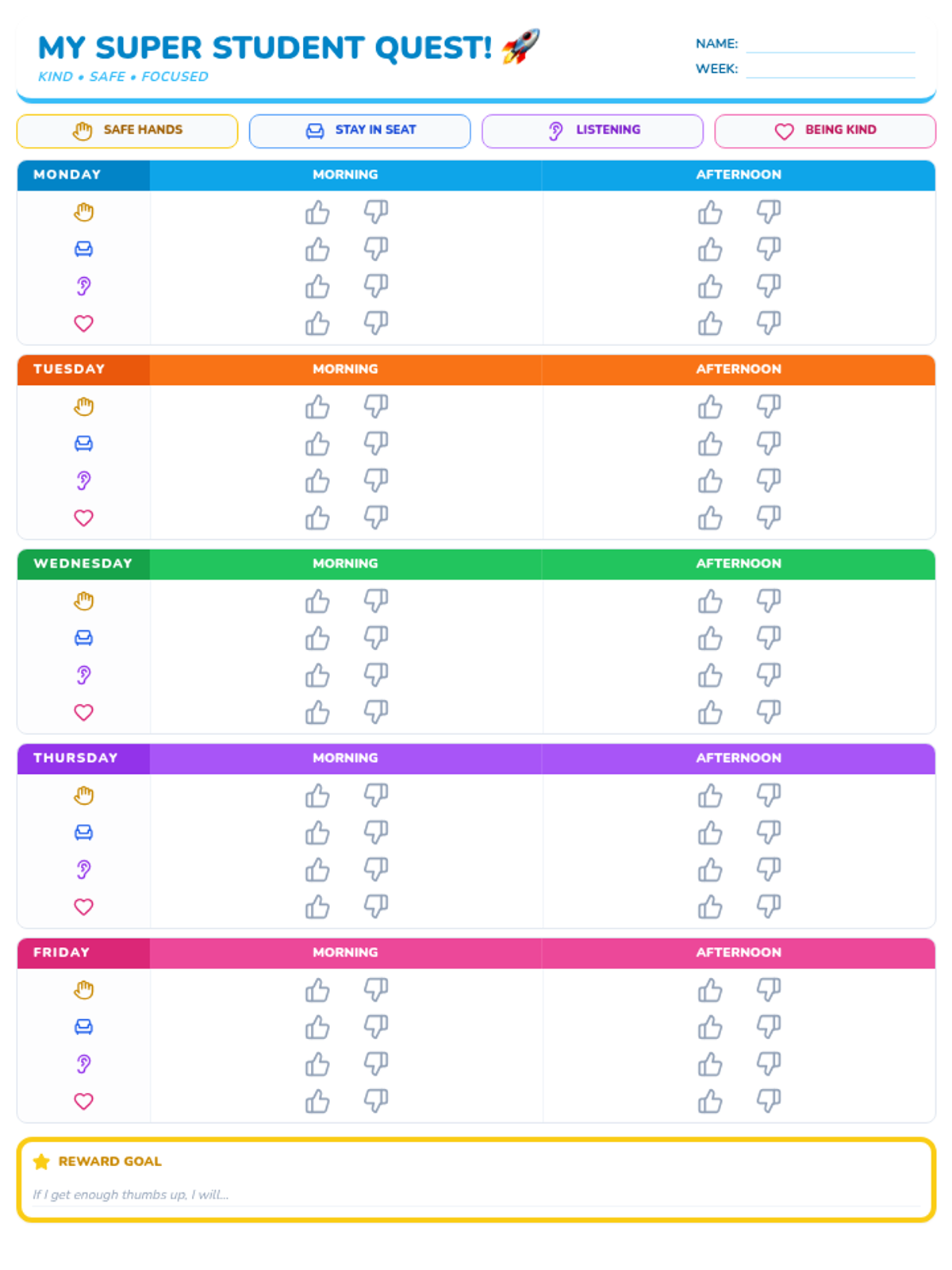
A comprehensive daily behavior tracking system designed for Kindergarteners, focusing on positive reinforcement and clear visual feedback across key school timeframes.
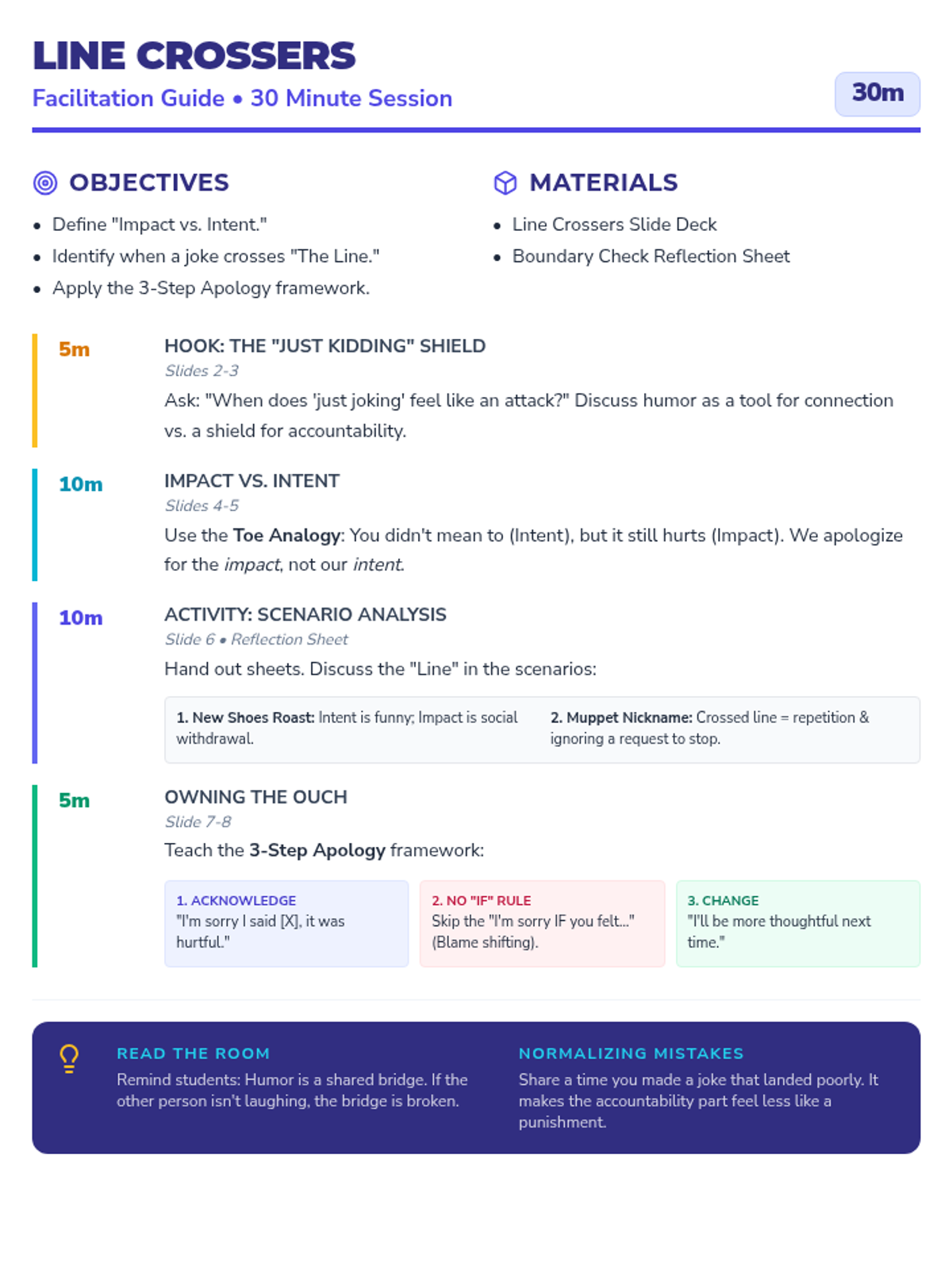
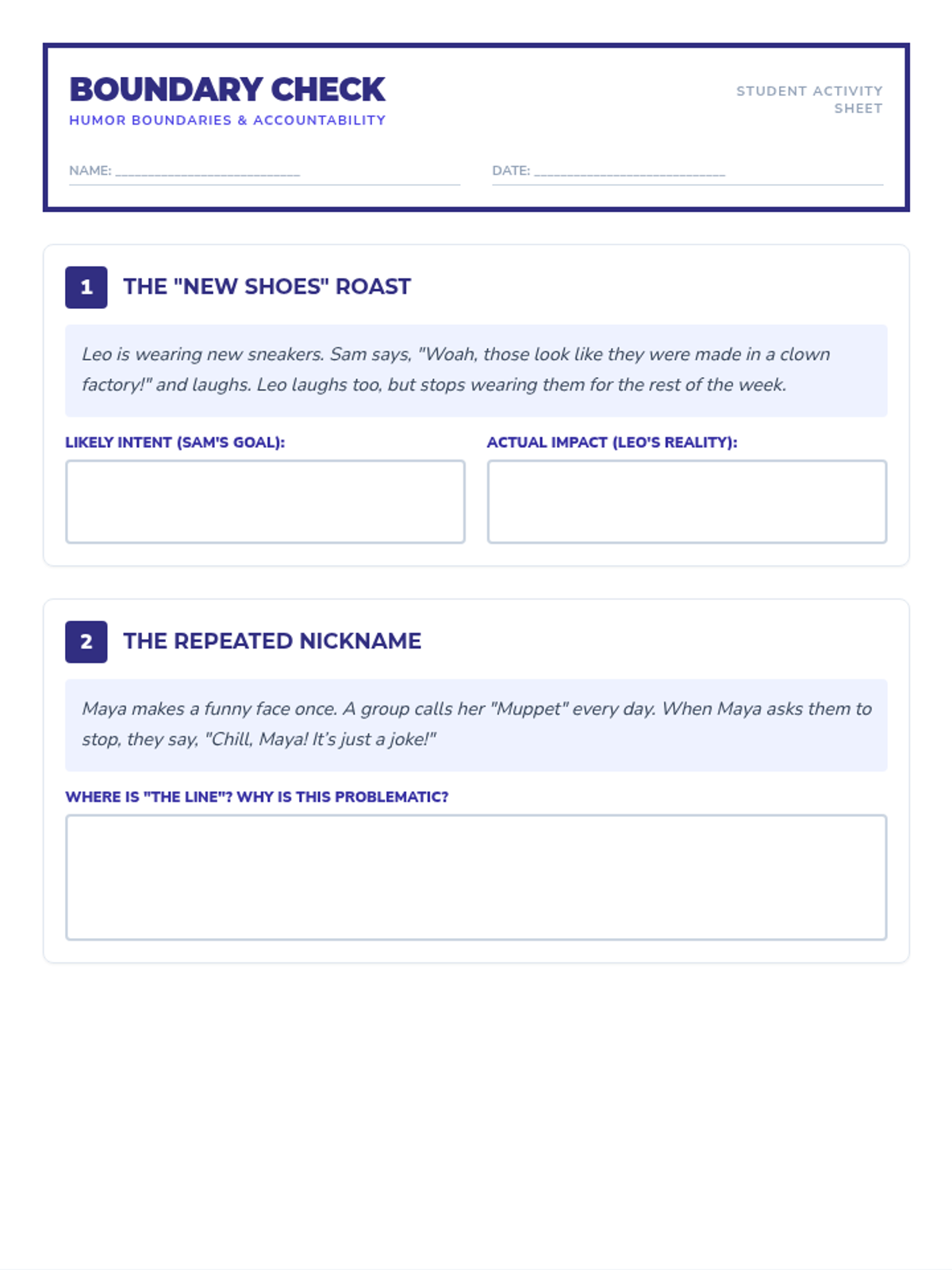
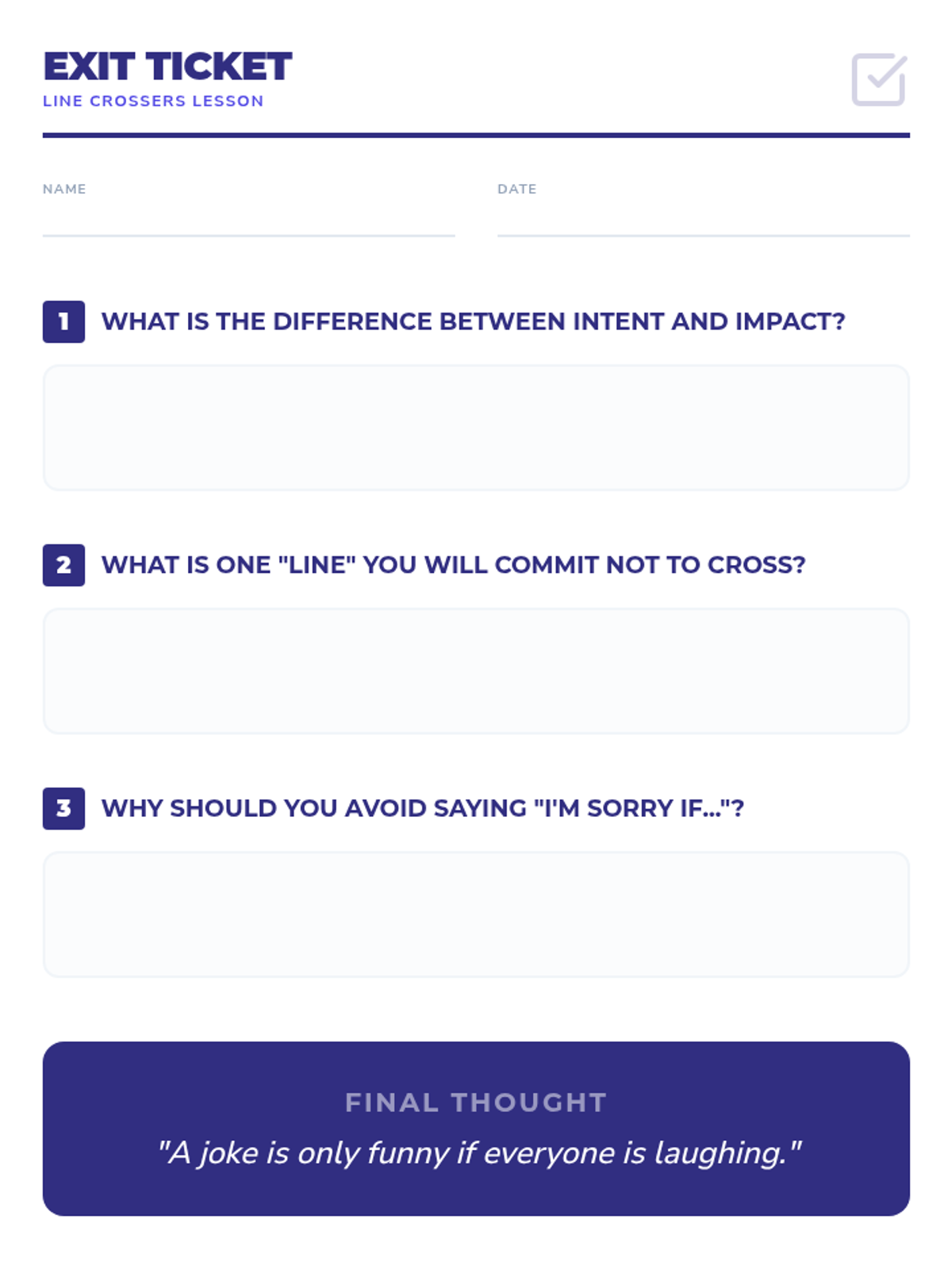
A 30-minute lesson designed for middle schoolers to distinguish between harmless humor and hurtful behavior, focusing on accountability and 'Impact vs. Intent.'
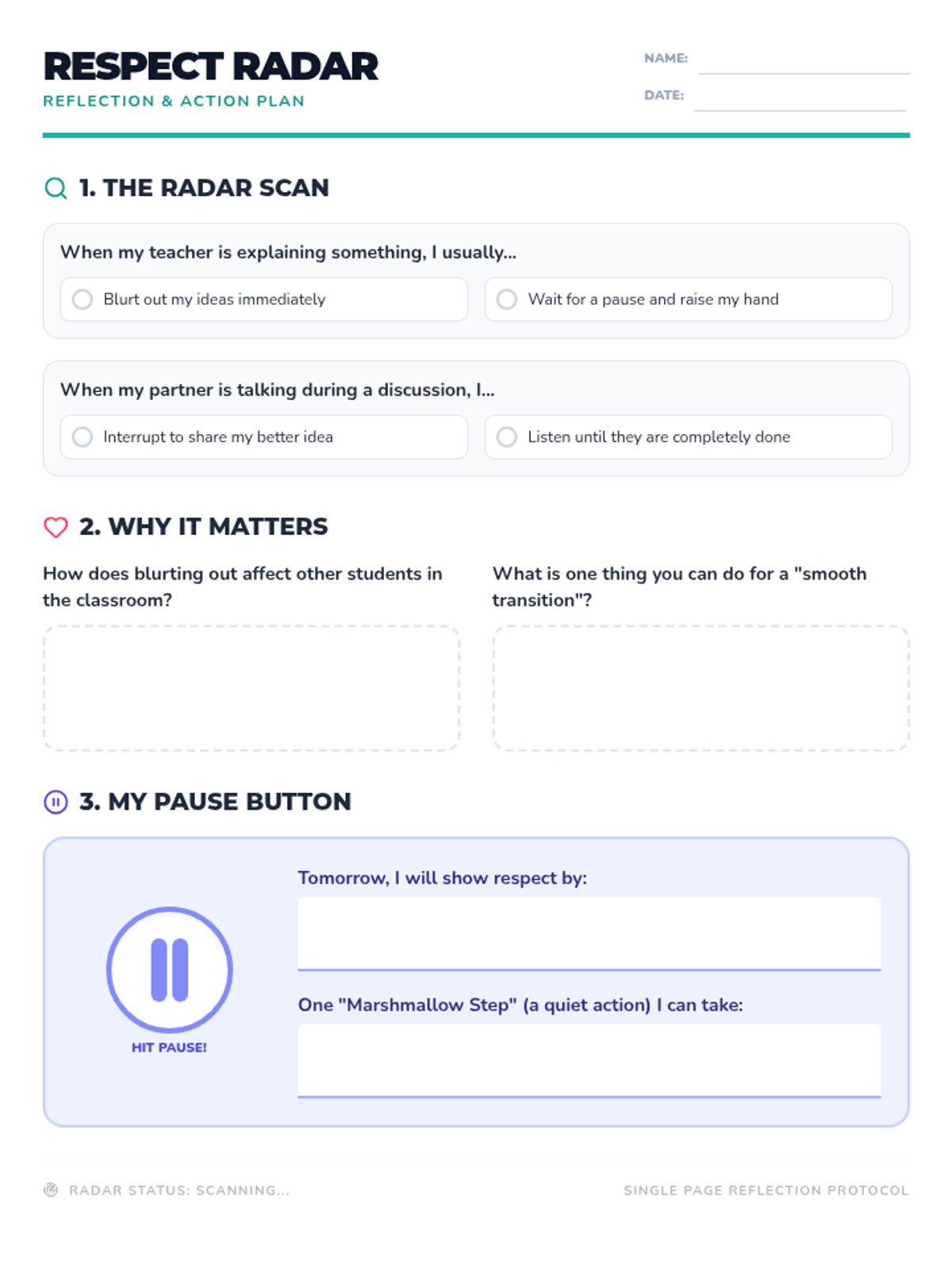
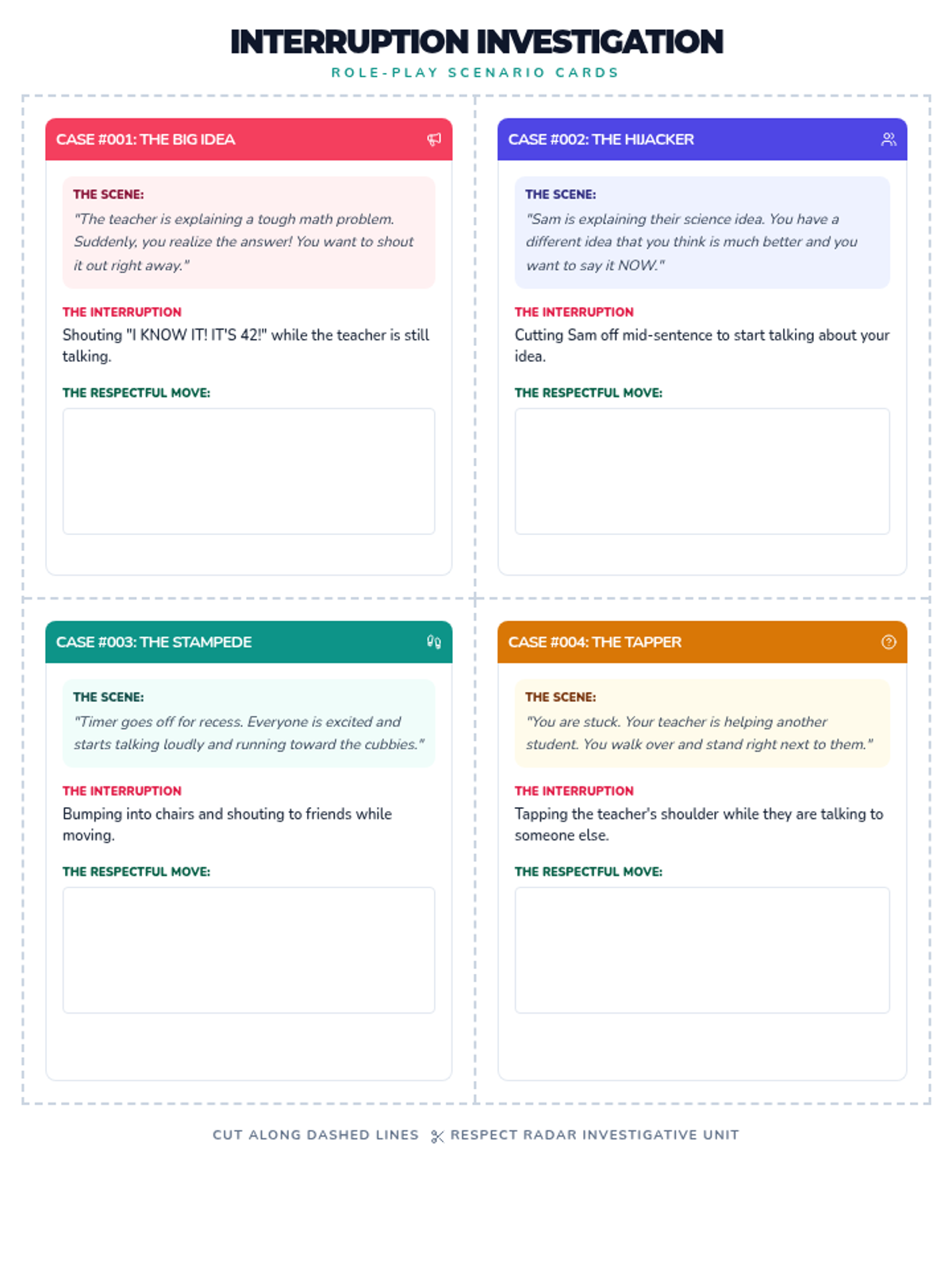
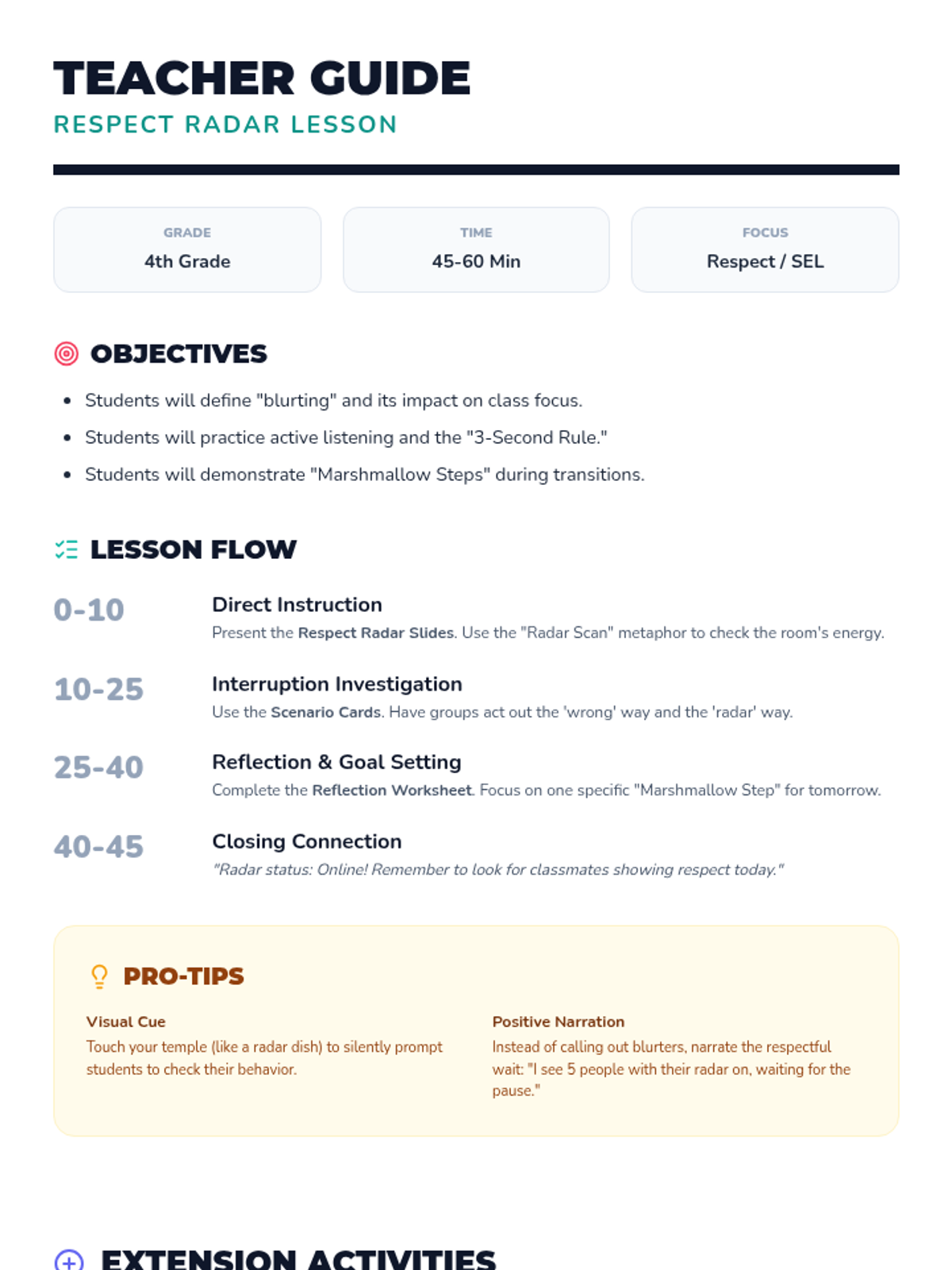
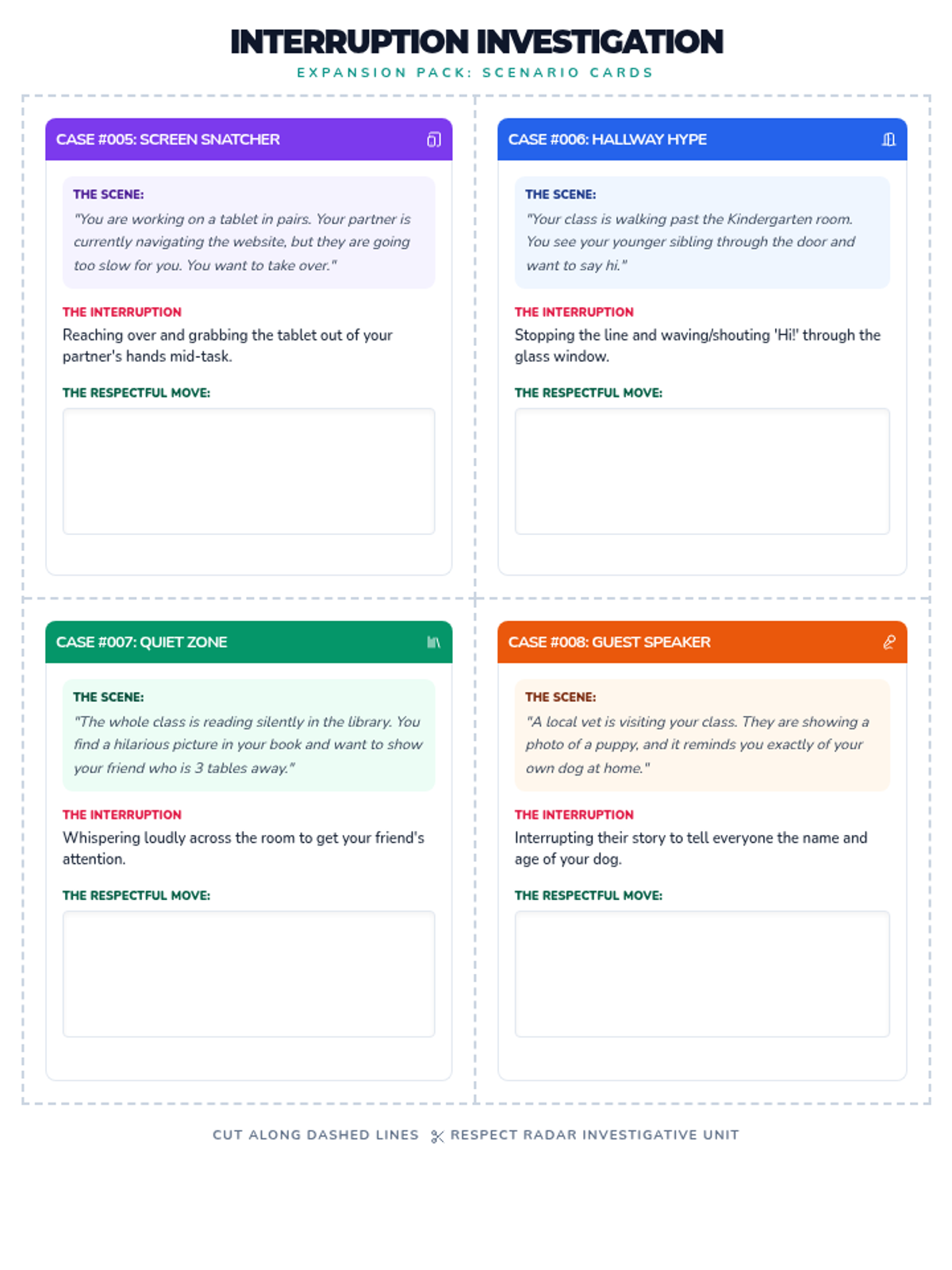
A lesson designed for 4th graders to improve classroom respect by focusing on blurting out, peer interruptions, and smooth transitions using the 'Respect Radar' framework.
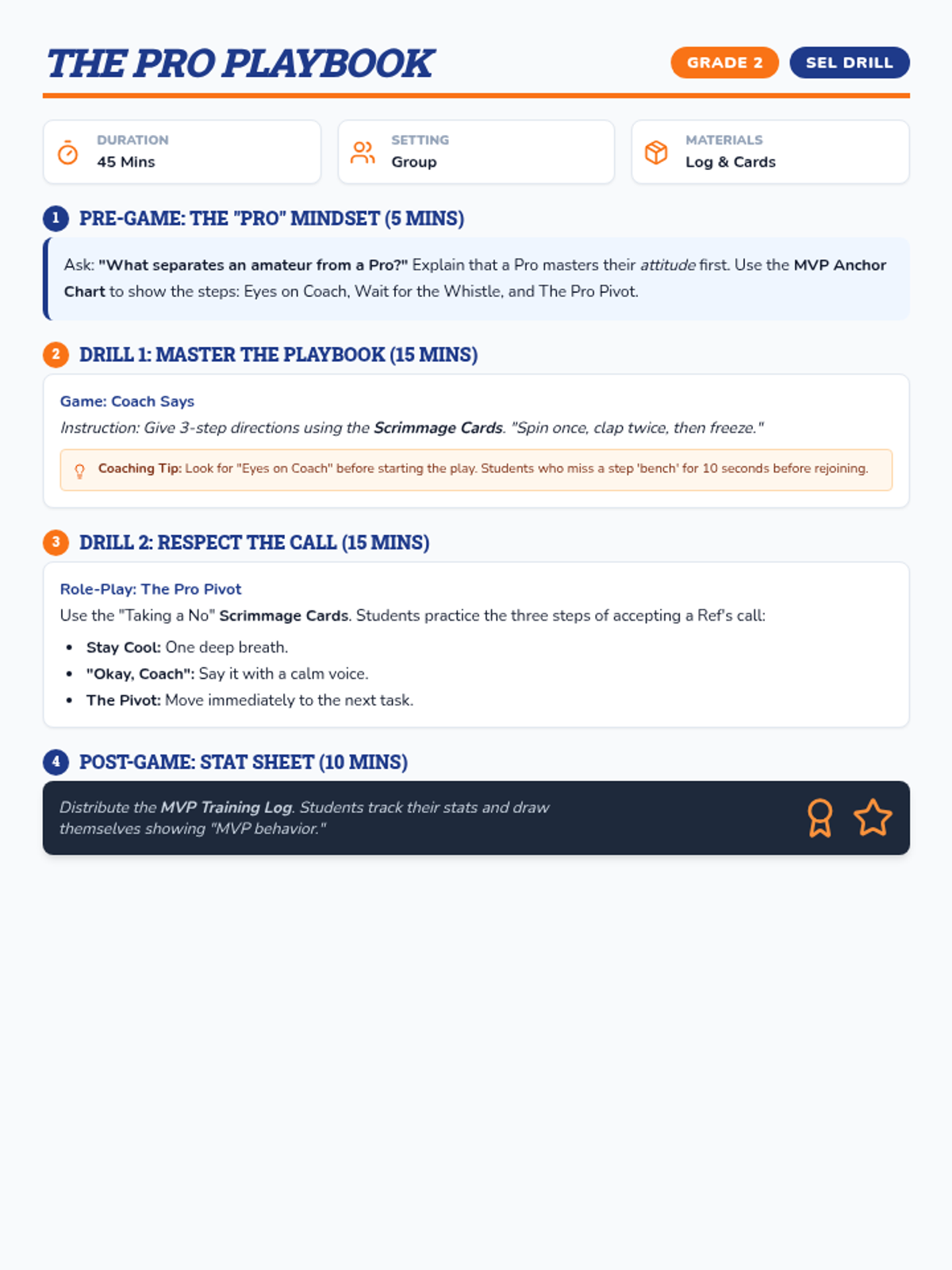
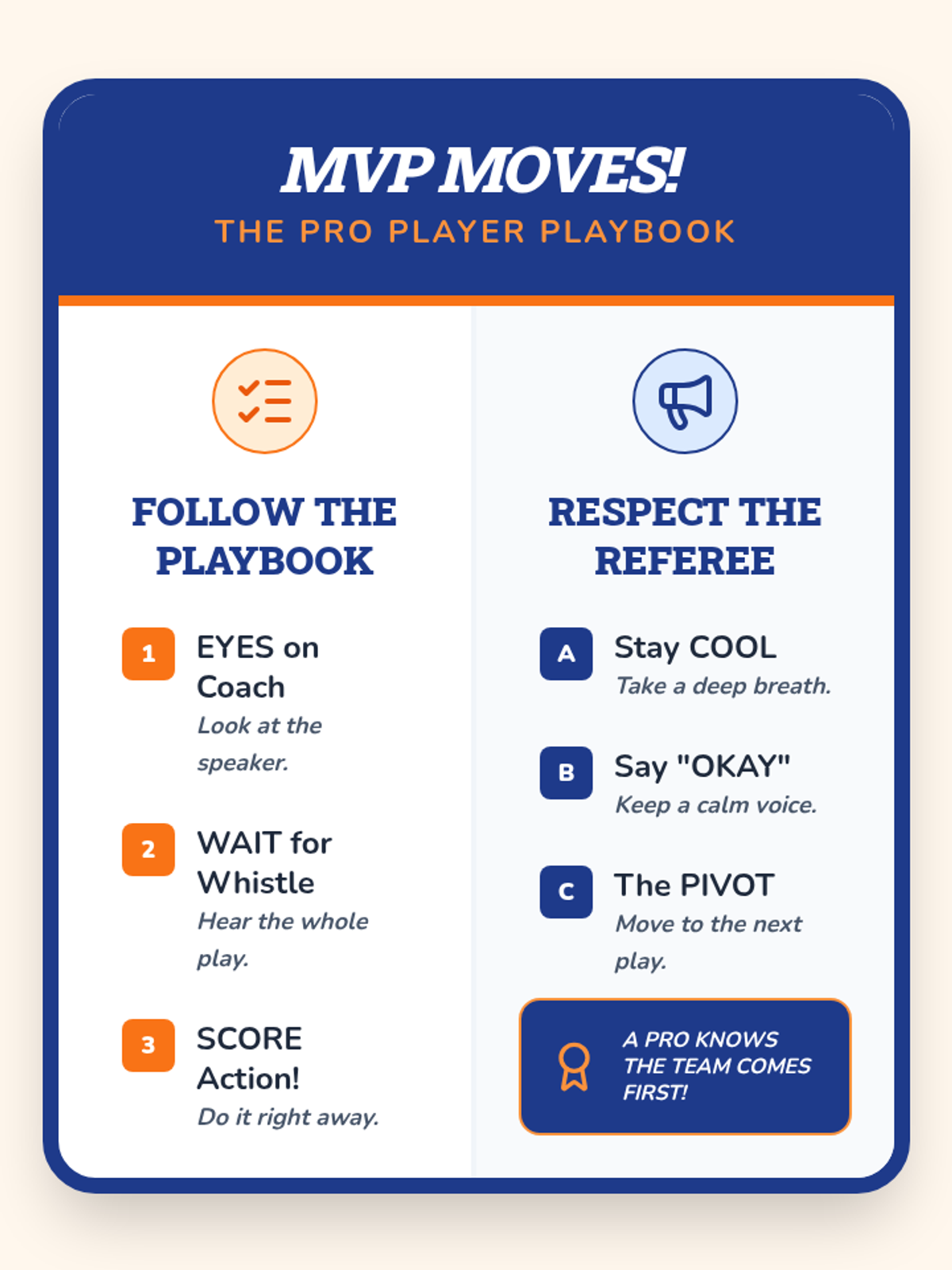
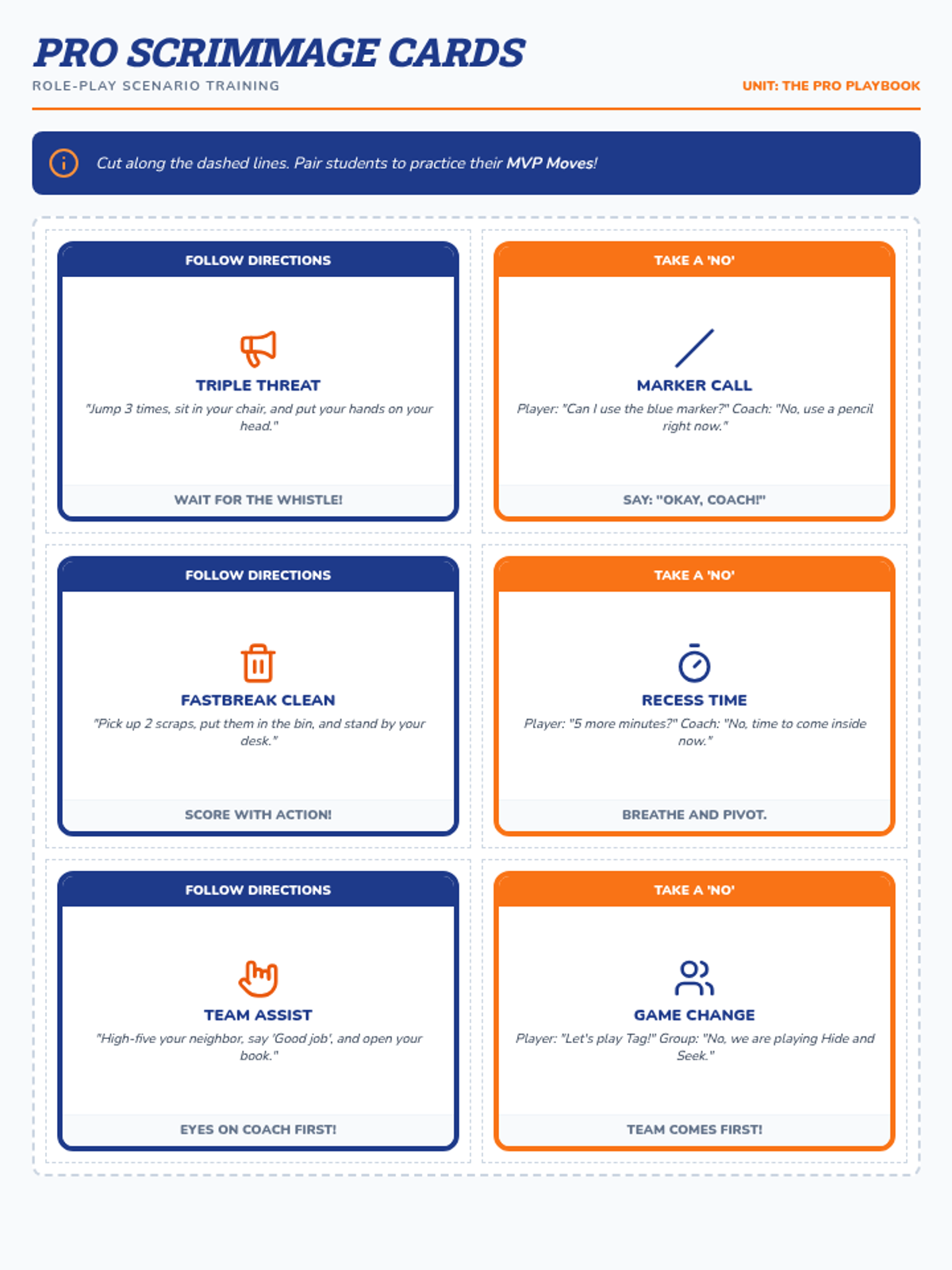
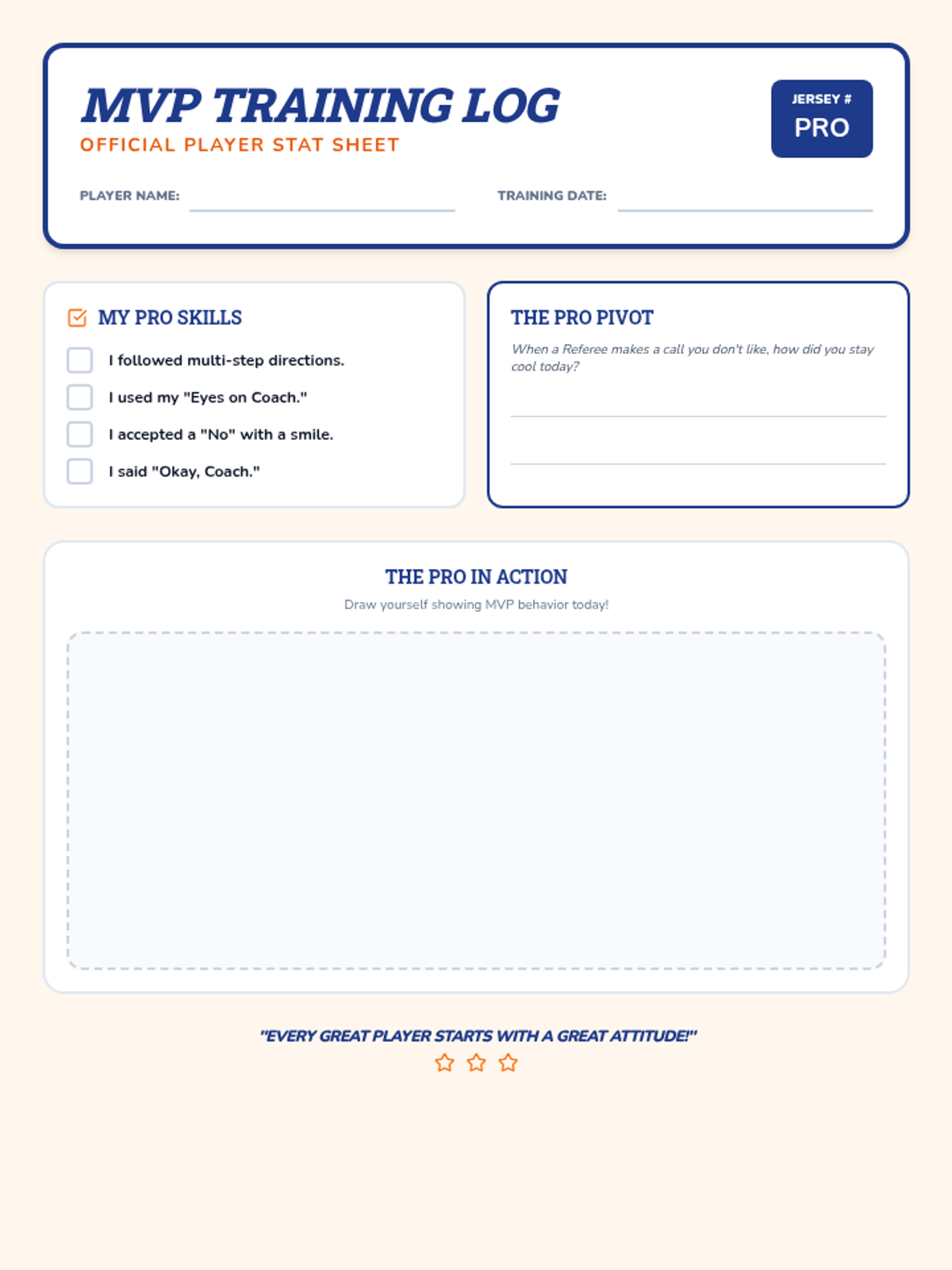
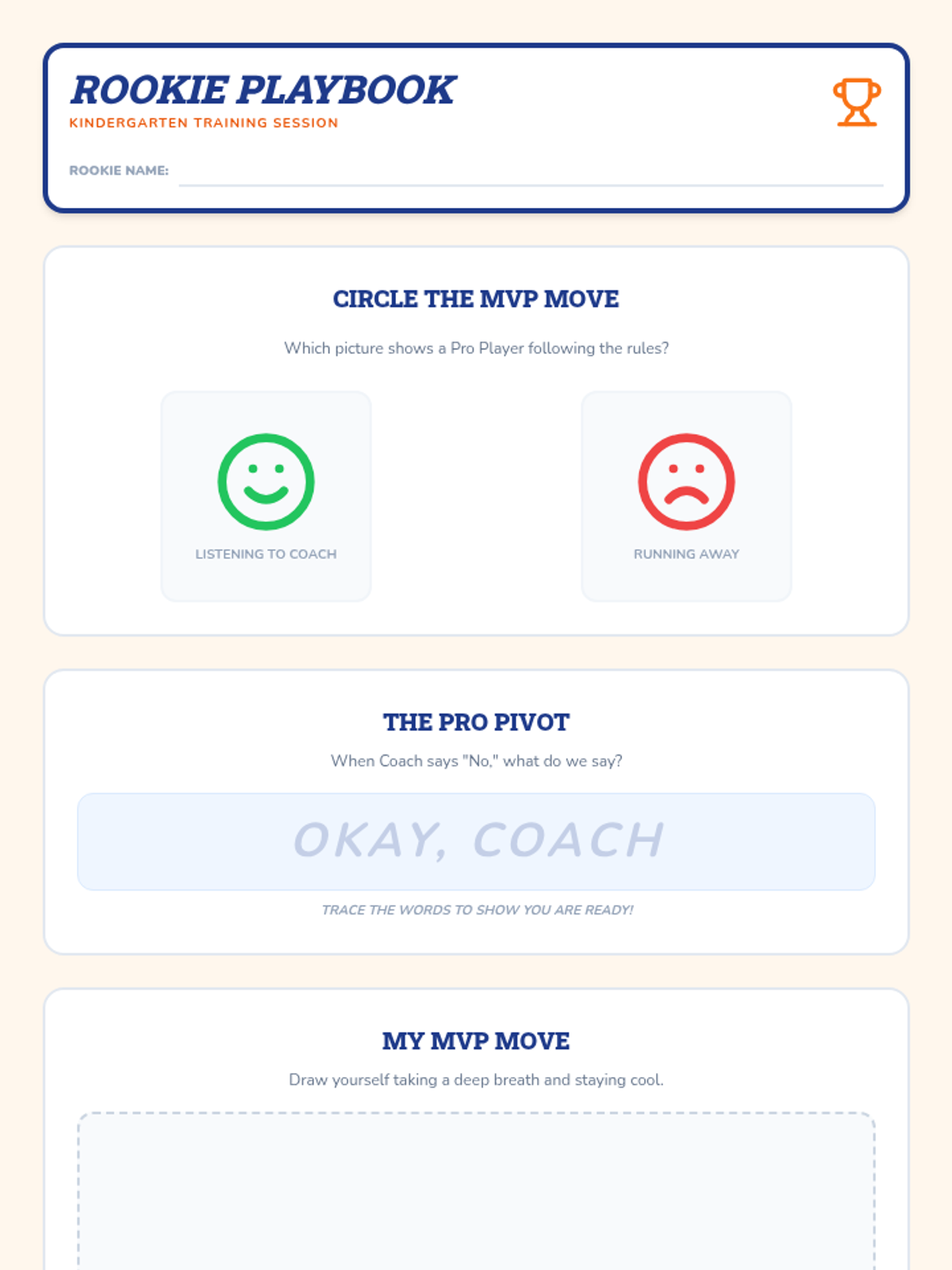
A high-energy lesson for 2nd graders that uses the excitement of professional basketball to teach essential social-emotional skills: following multi-step directions and accepting a 'no' with a positive attitude. Students learn that being a 'pro' means mastering the playbook of respect and discipline.
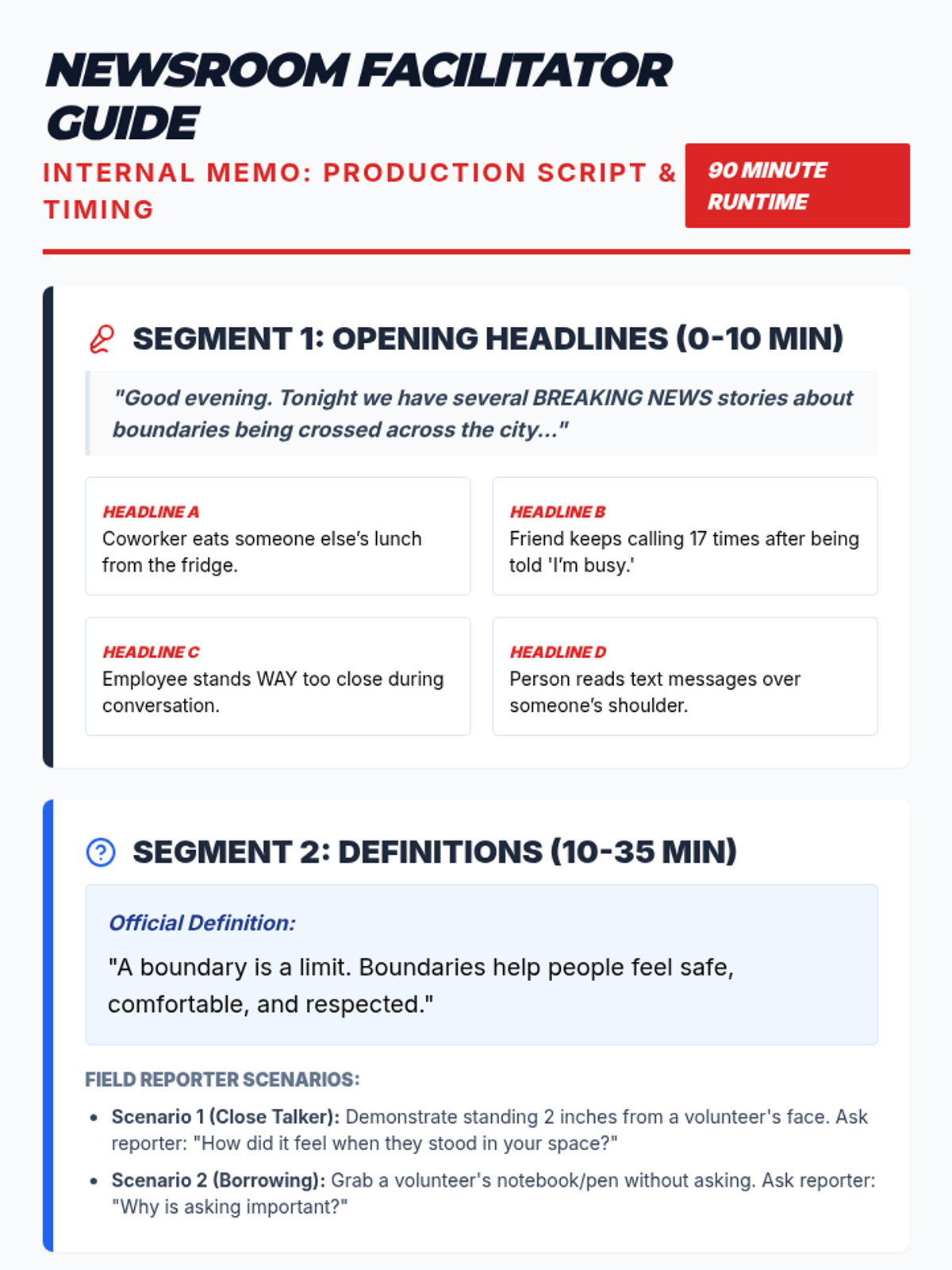
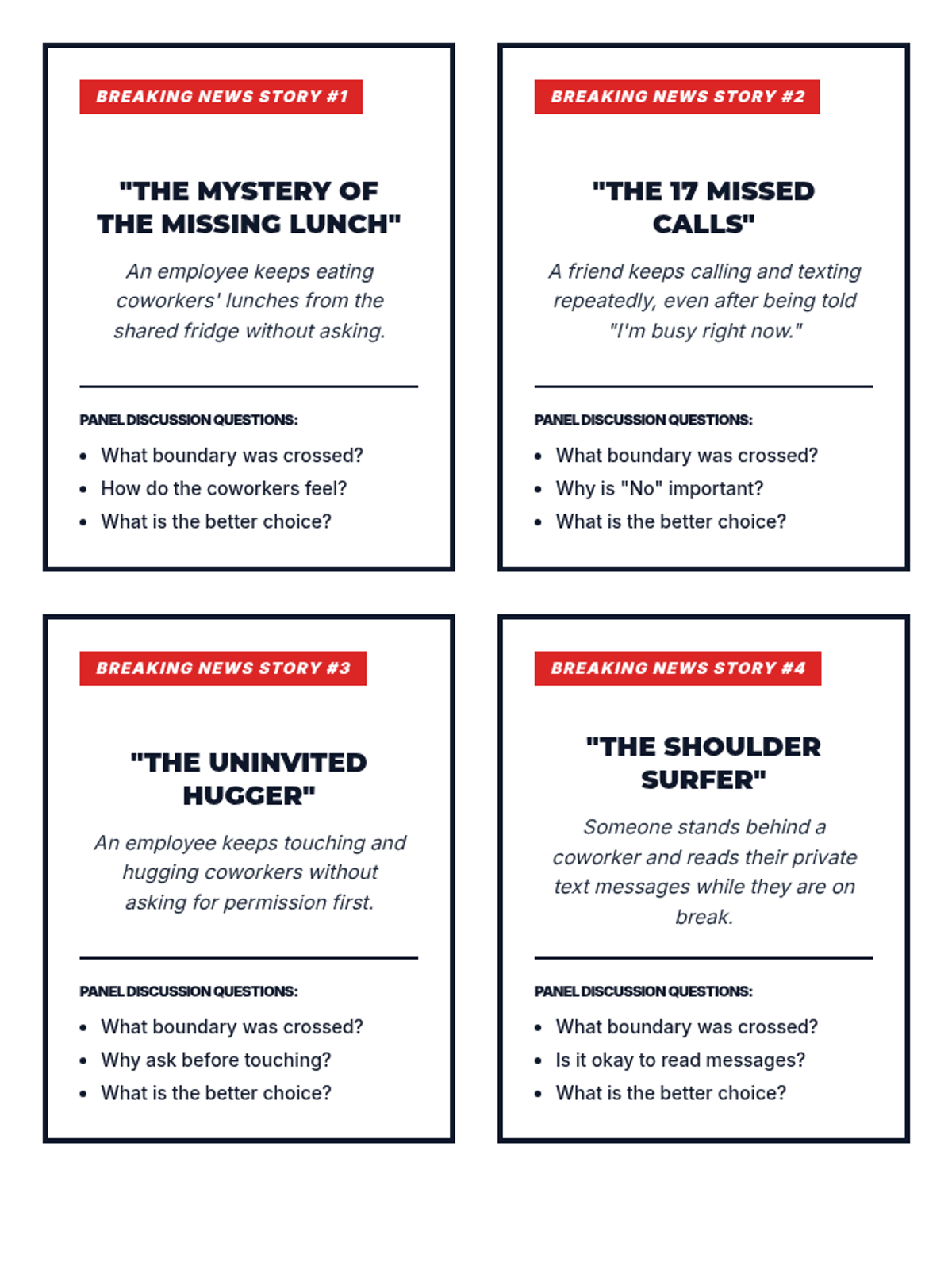
A high-energy, news-themed advocacy lesson for adults with IDD focusing on recognizing and respecting personal boundaries in work, friendship, and community settings.
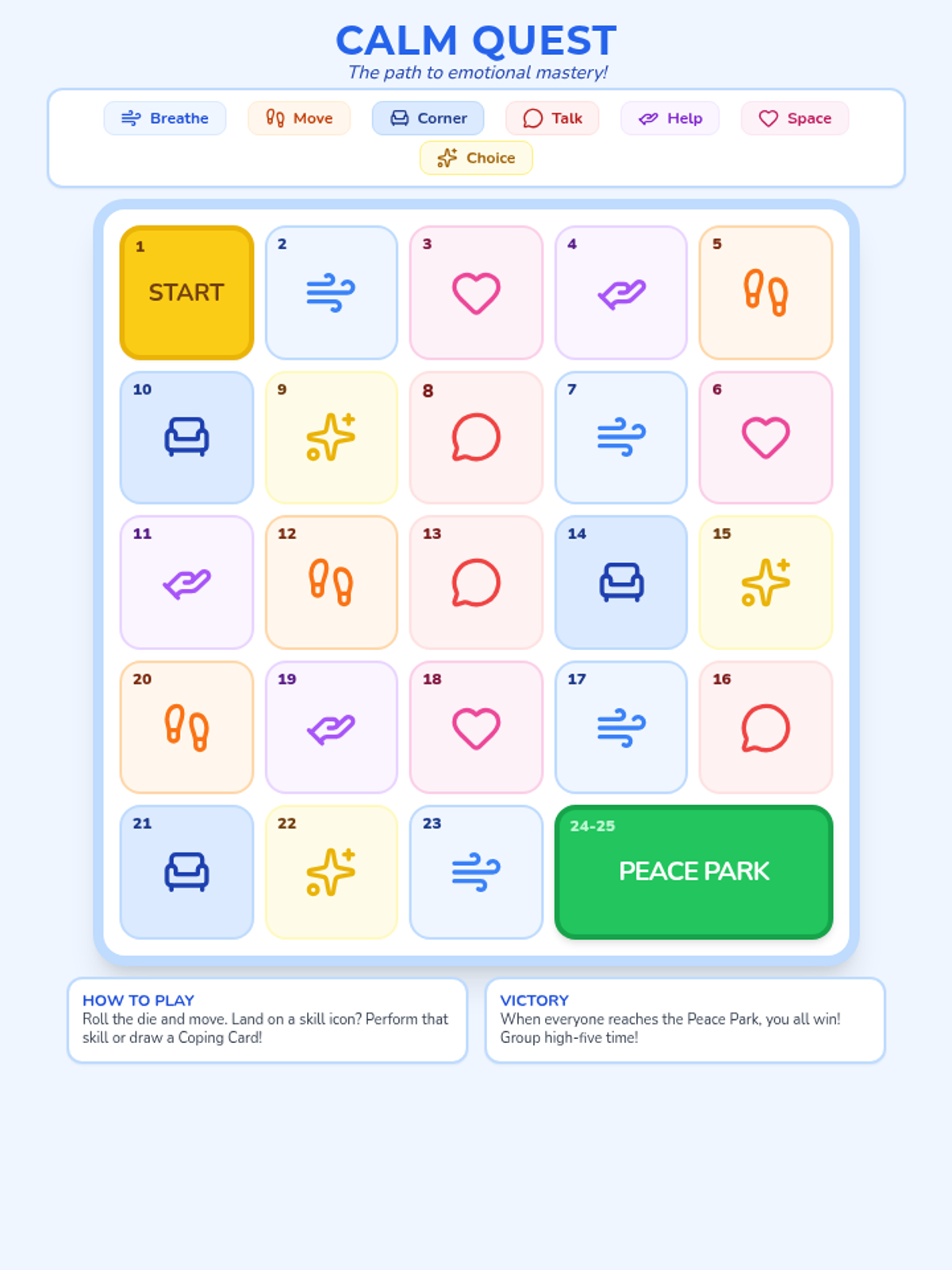
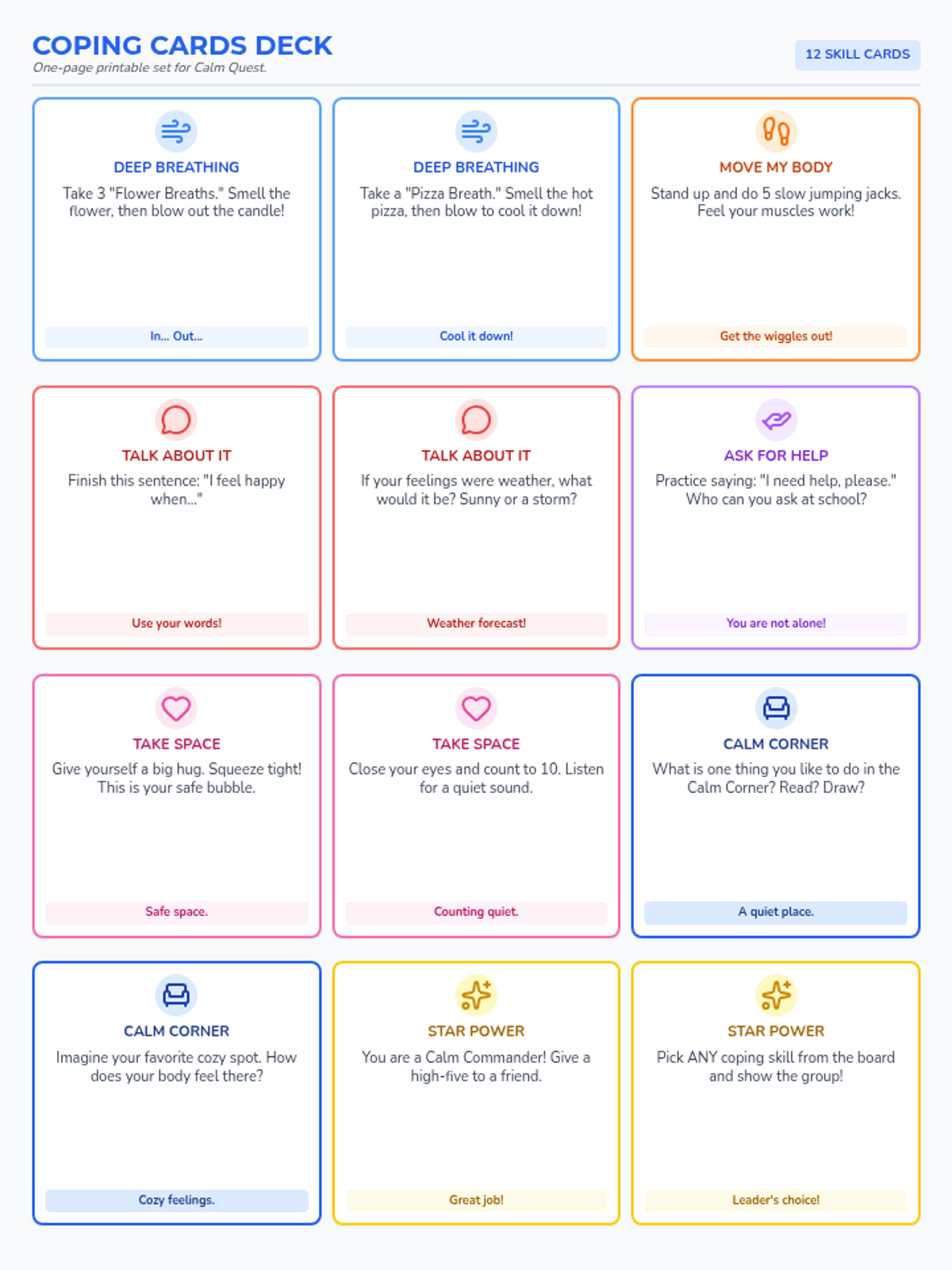
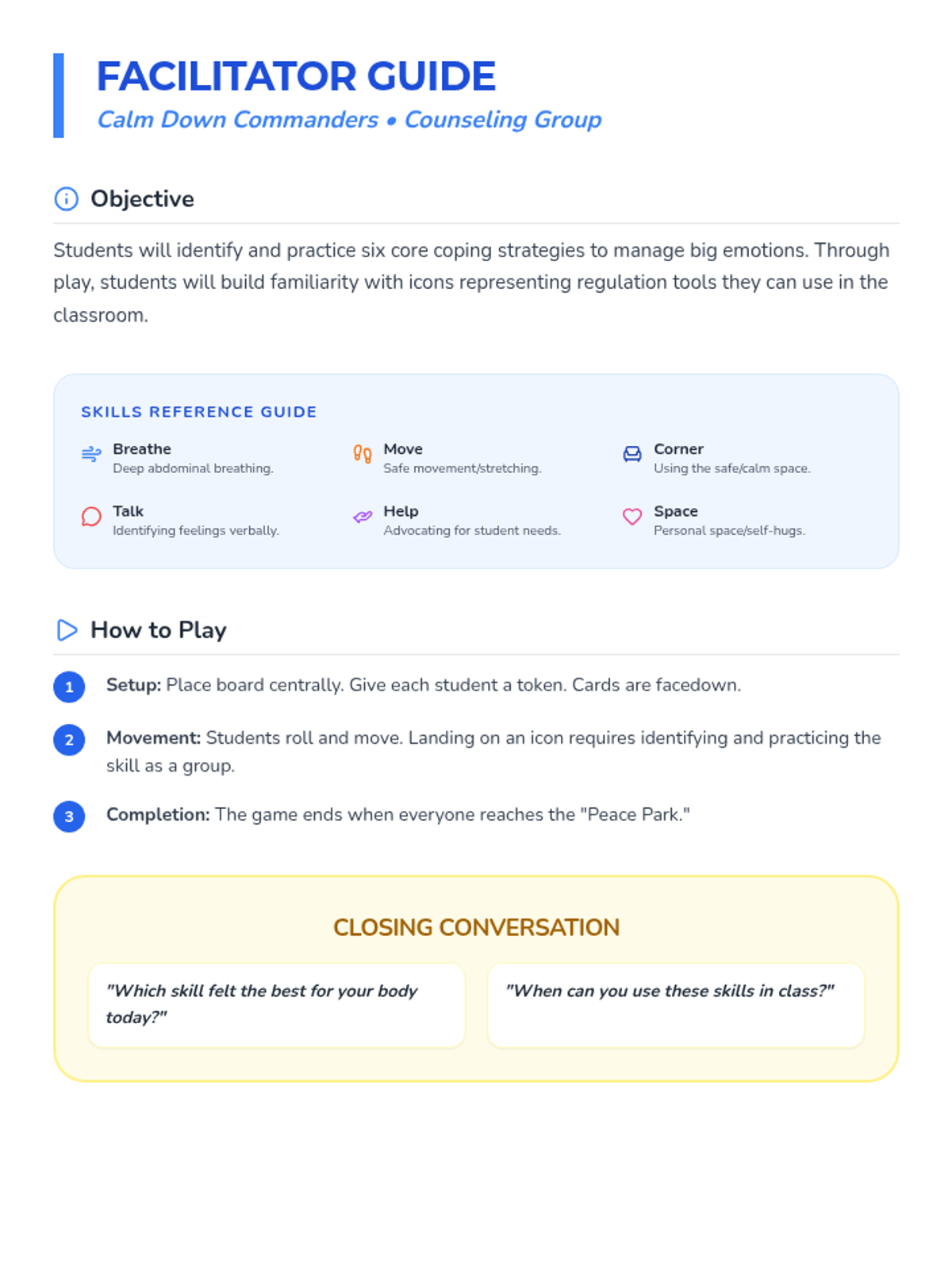
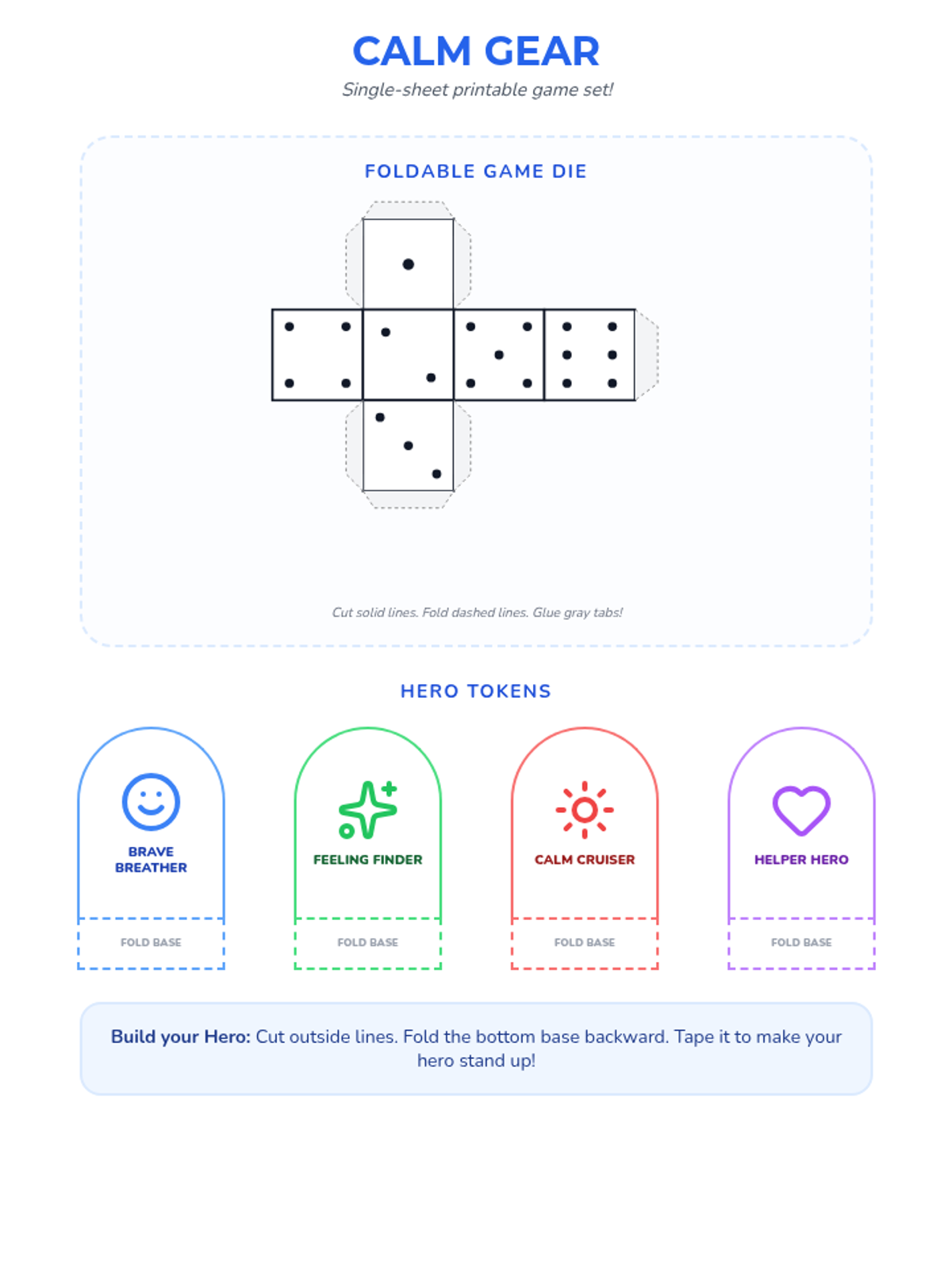
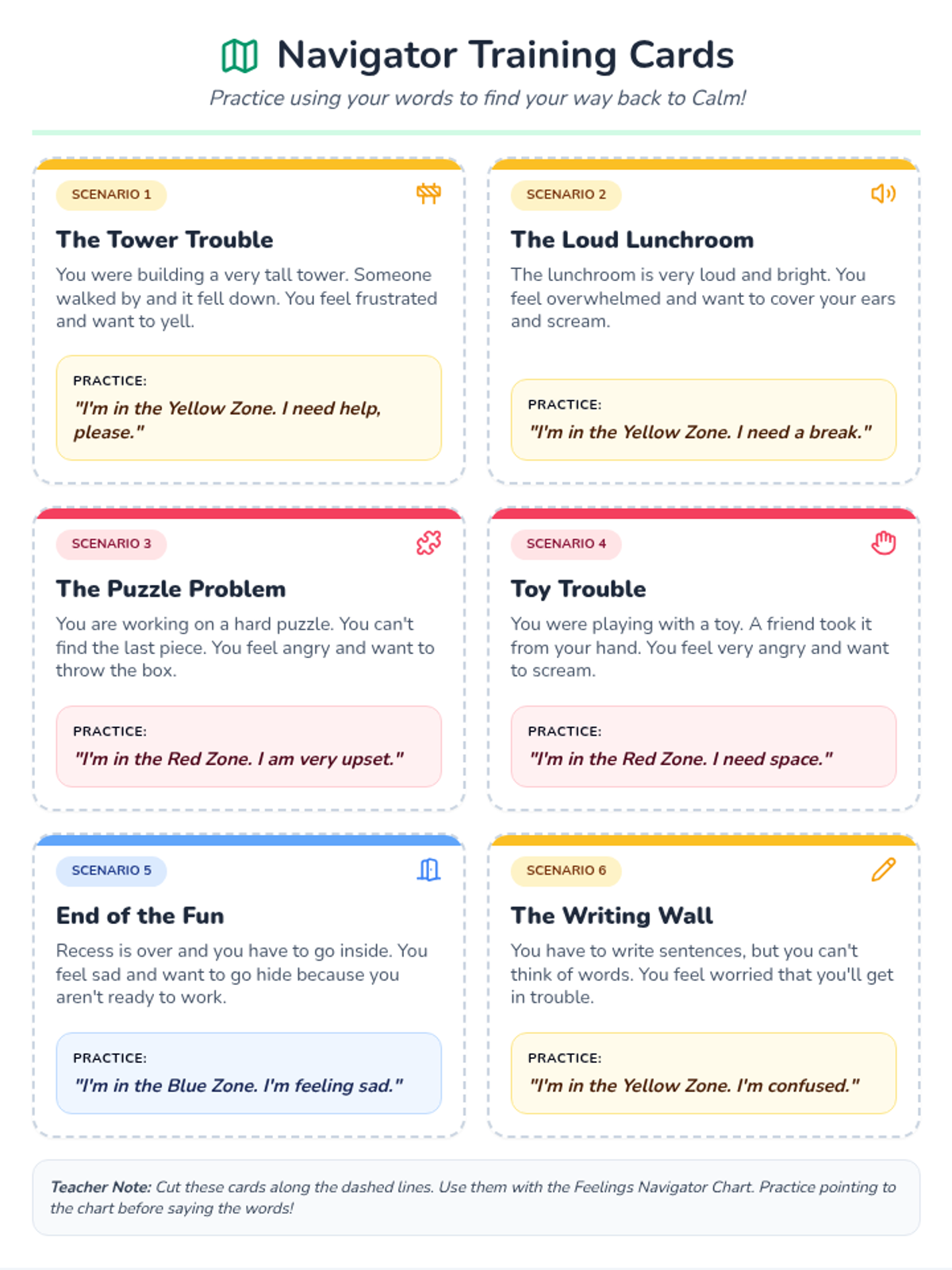
A small-group counseling lesson designed to teach Kindergarten and 1st-grade students proactive coping strategies through an interactive path board game. Students practice identifying and demonstrating various emotional regulation techniques in a supportive, play-based environment.
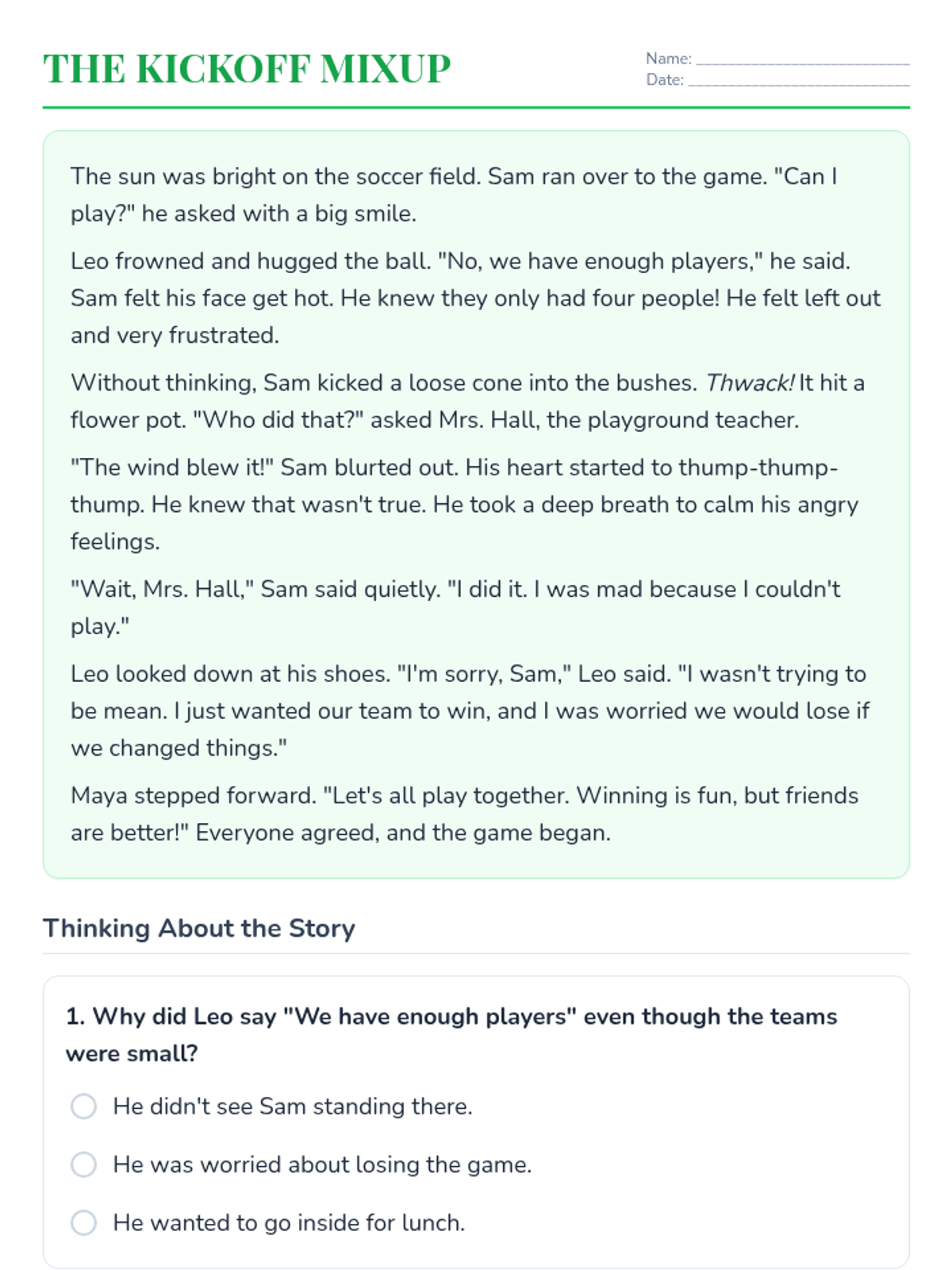
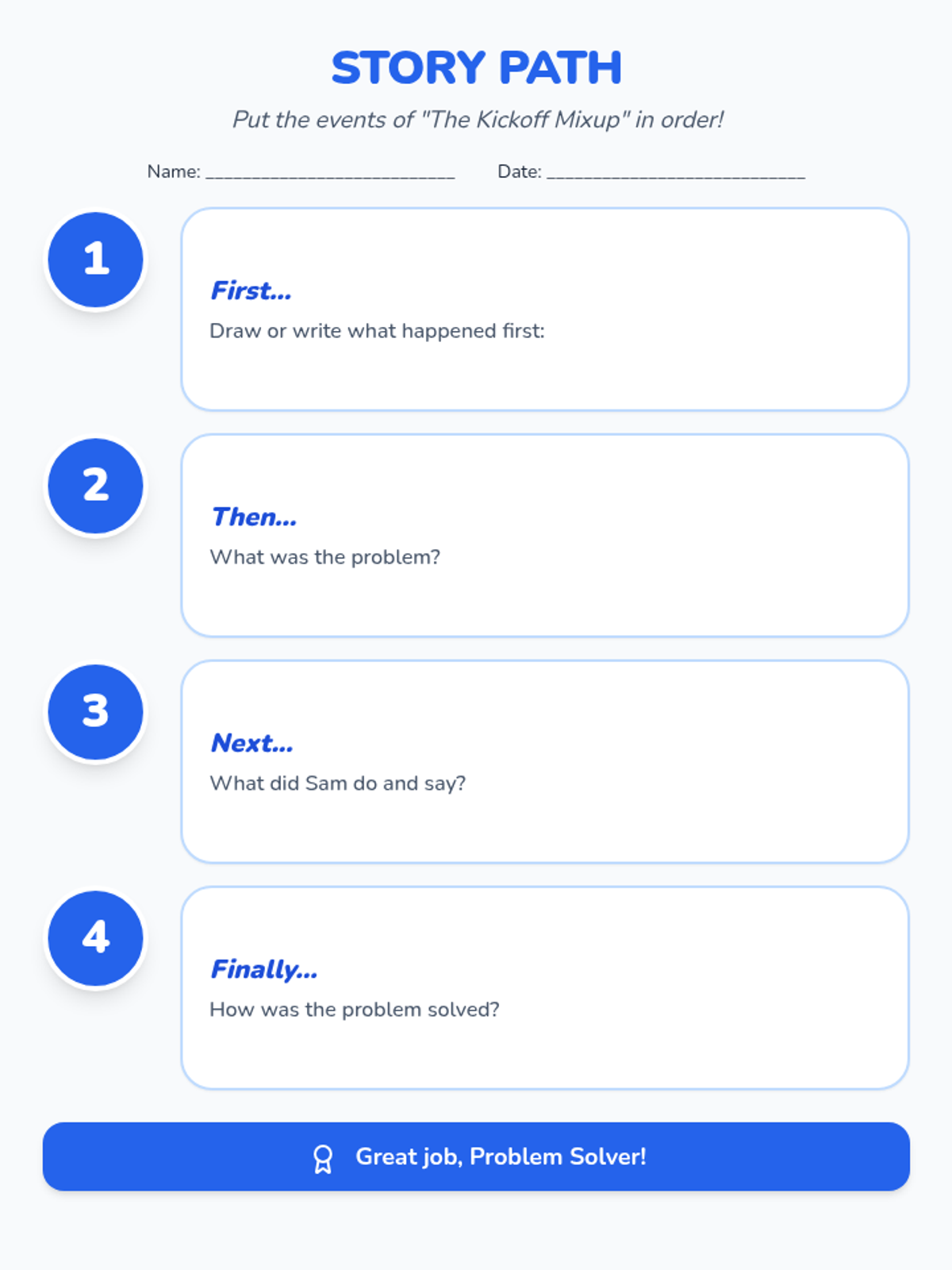
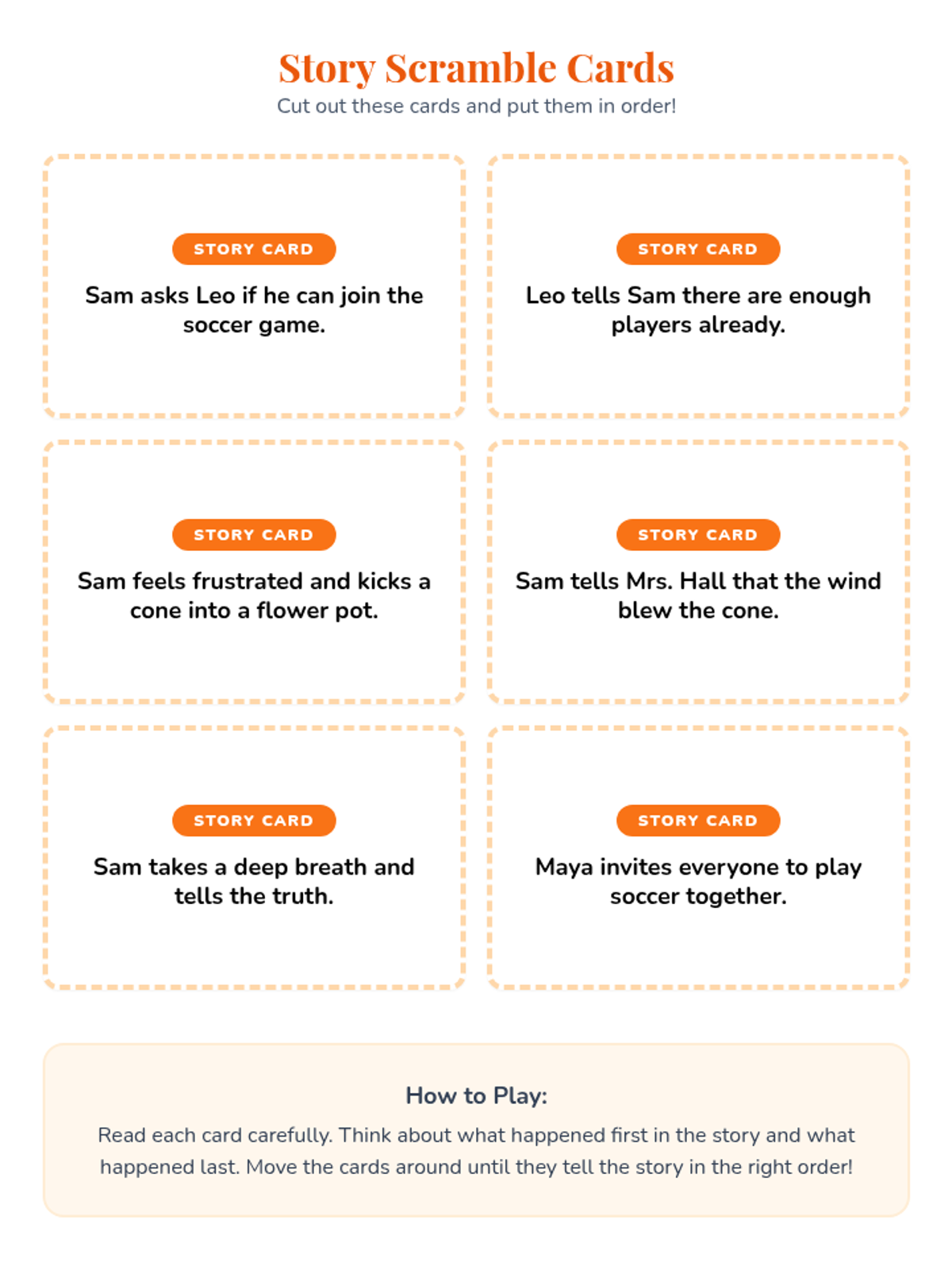
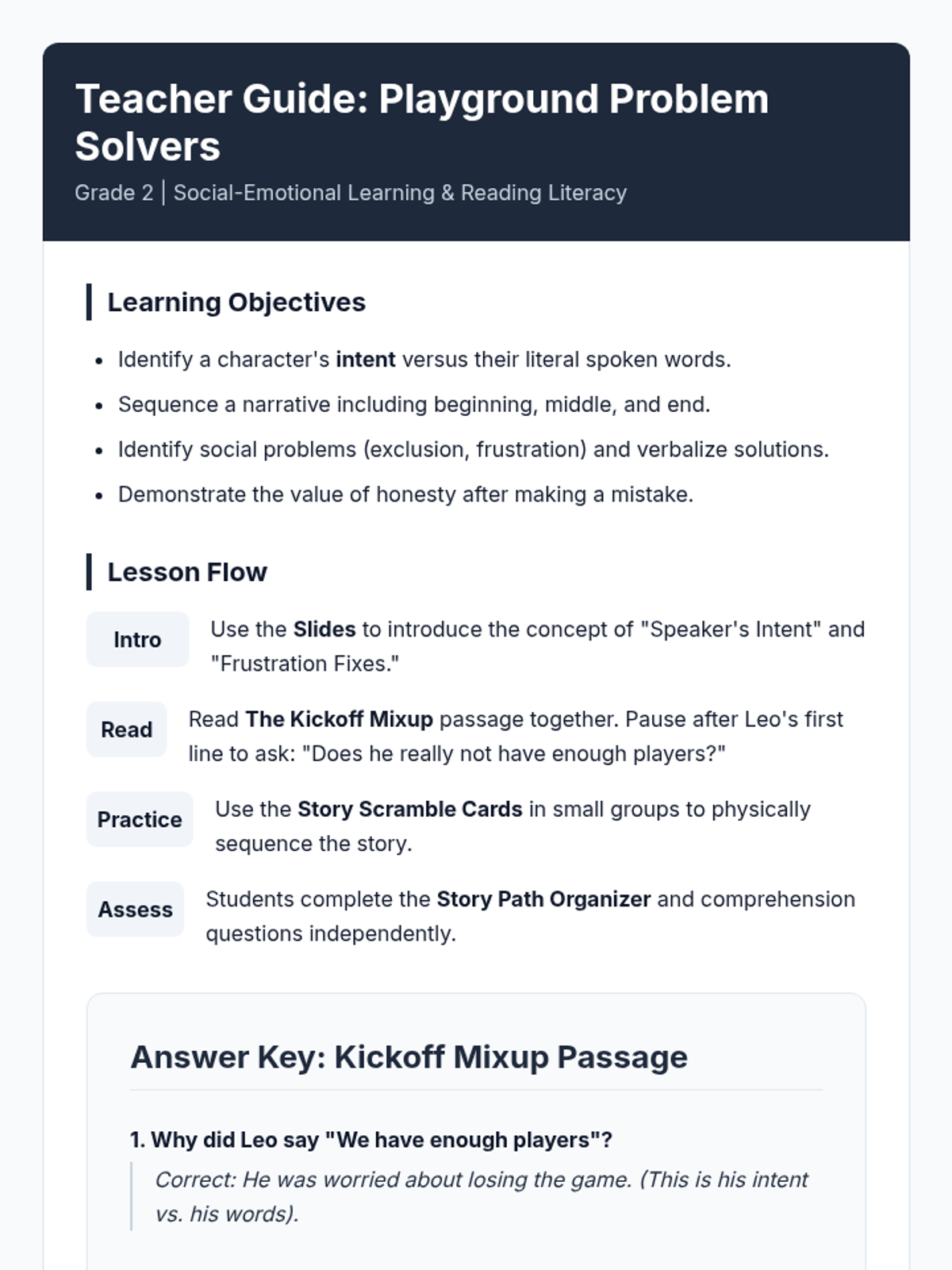
A comprehensive lesson for 2nd graders focusing on social-emotional learning through a story about recess inclusion, managing frustration, and honesty. Students explore speaker's intent and sequence events while solving playground conflicts.
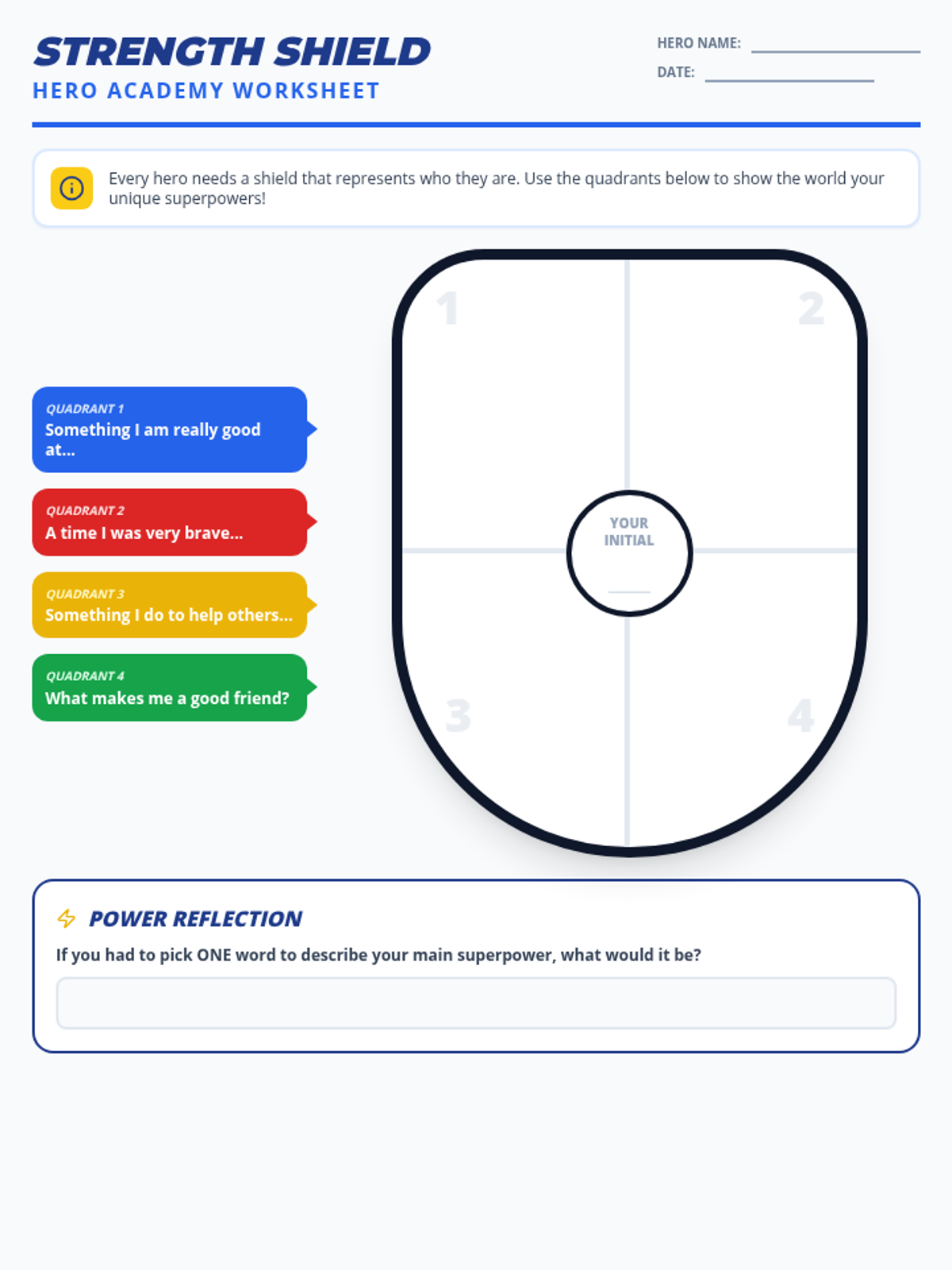
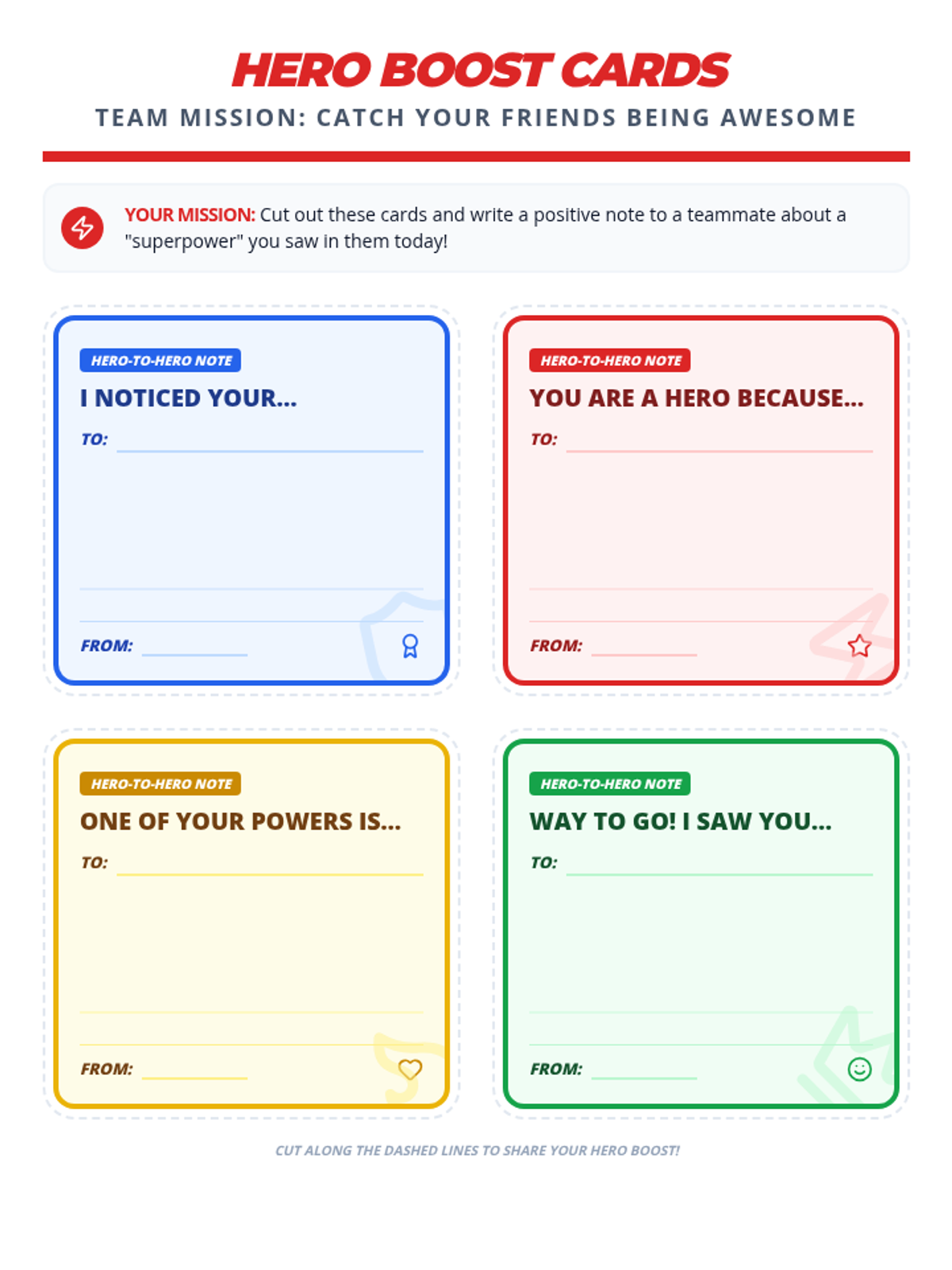
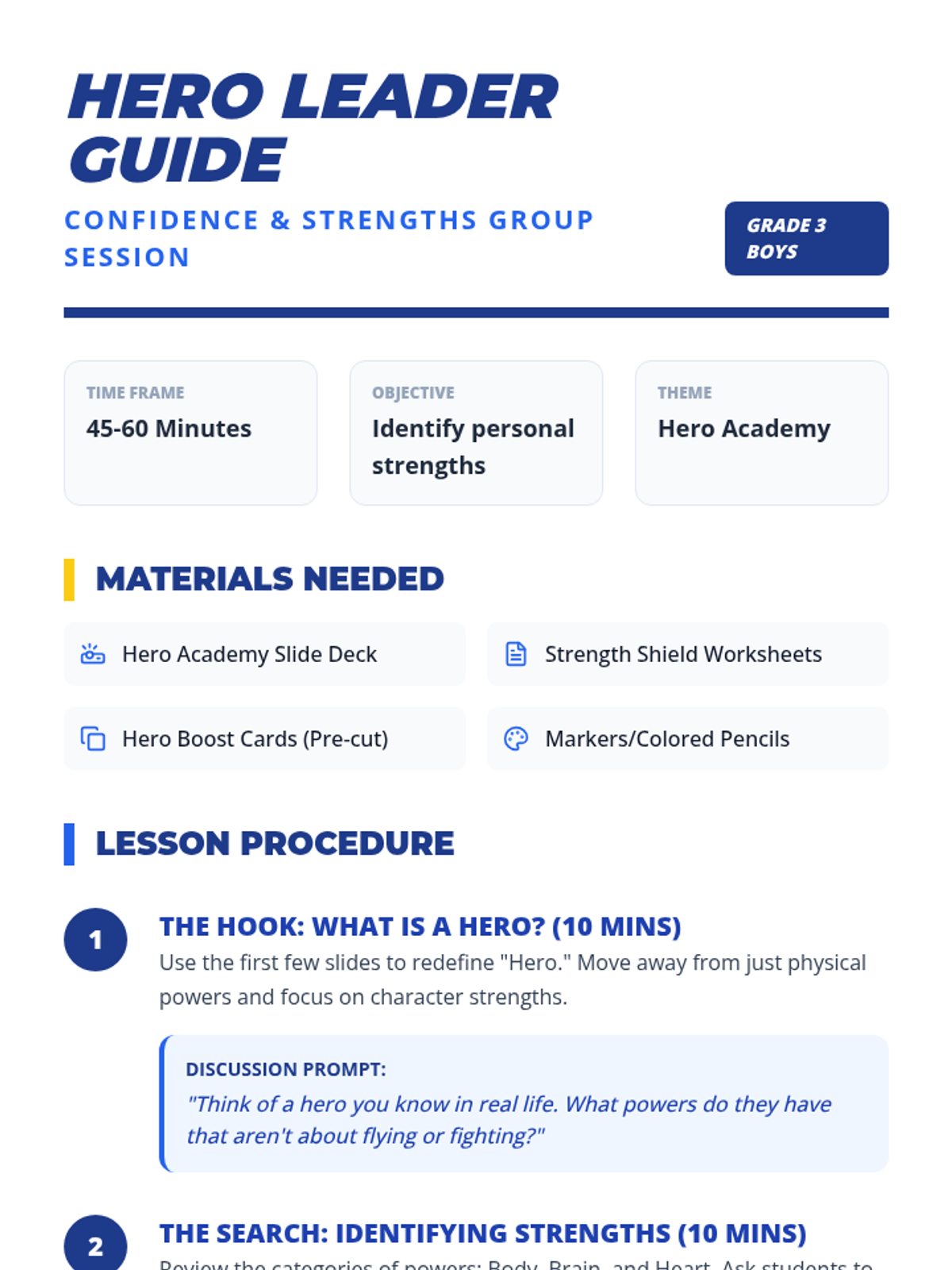
A confidence-building lesson for 3rd-grade boys that uses a superhero theme to explore self-esteem and identify personal strengths through interactive activities.
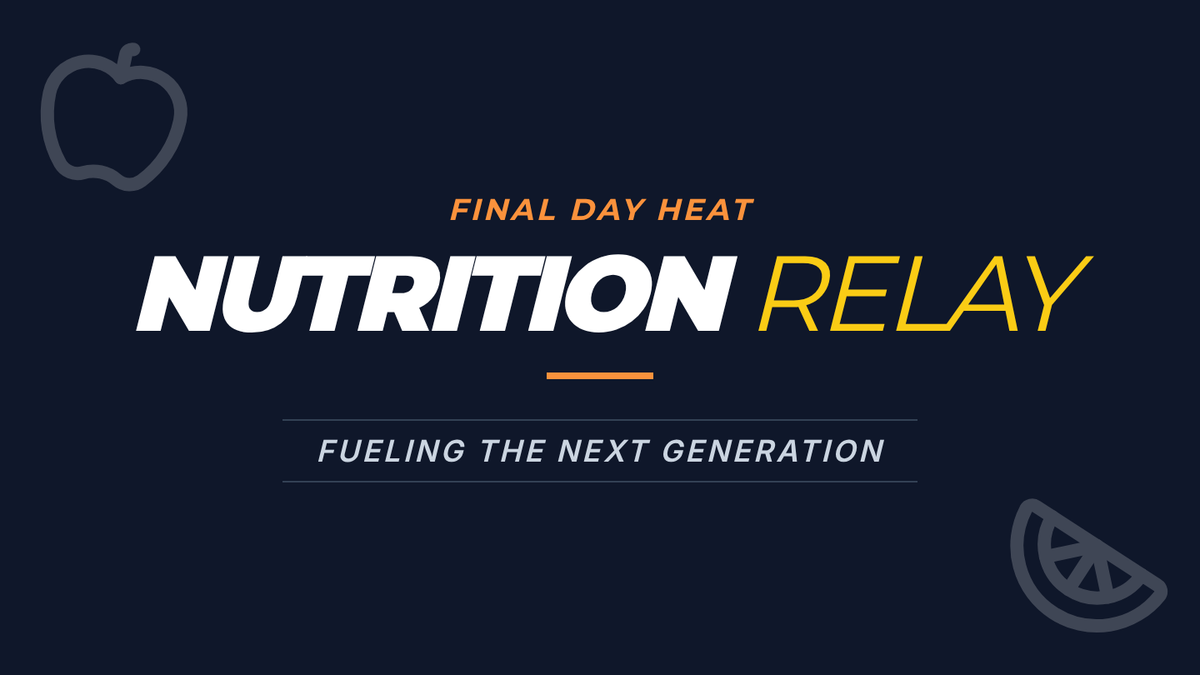
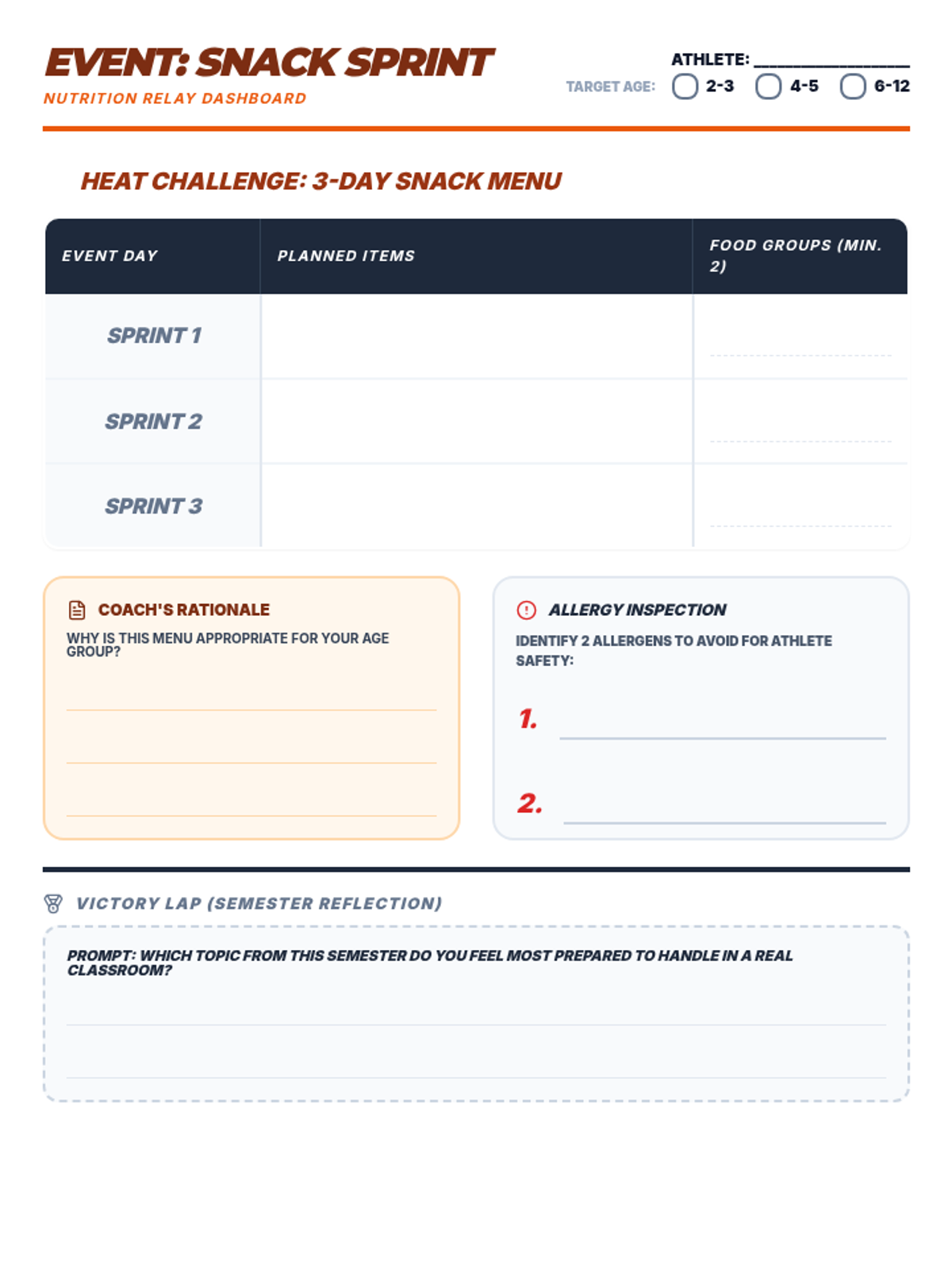
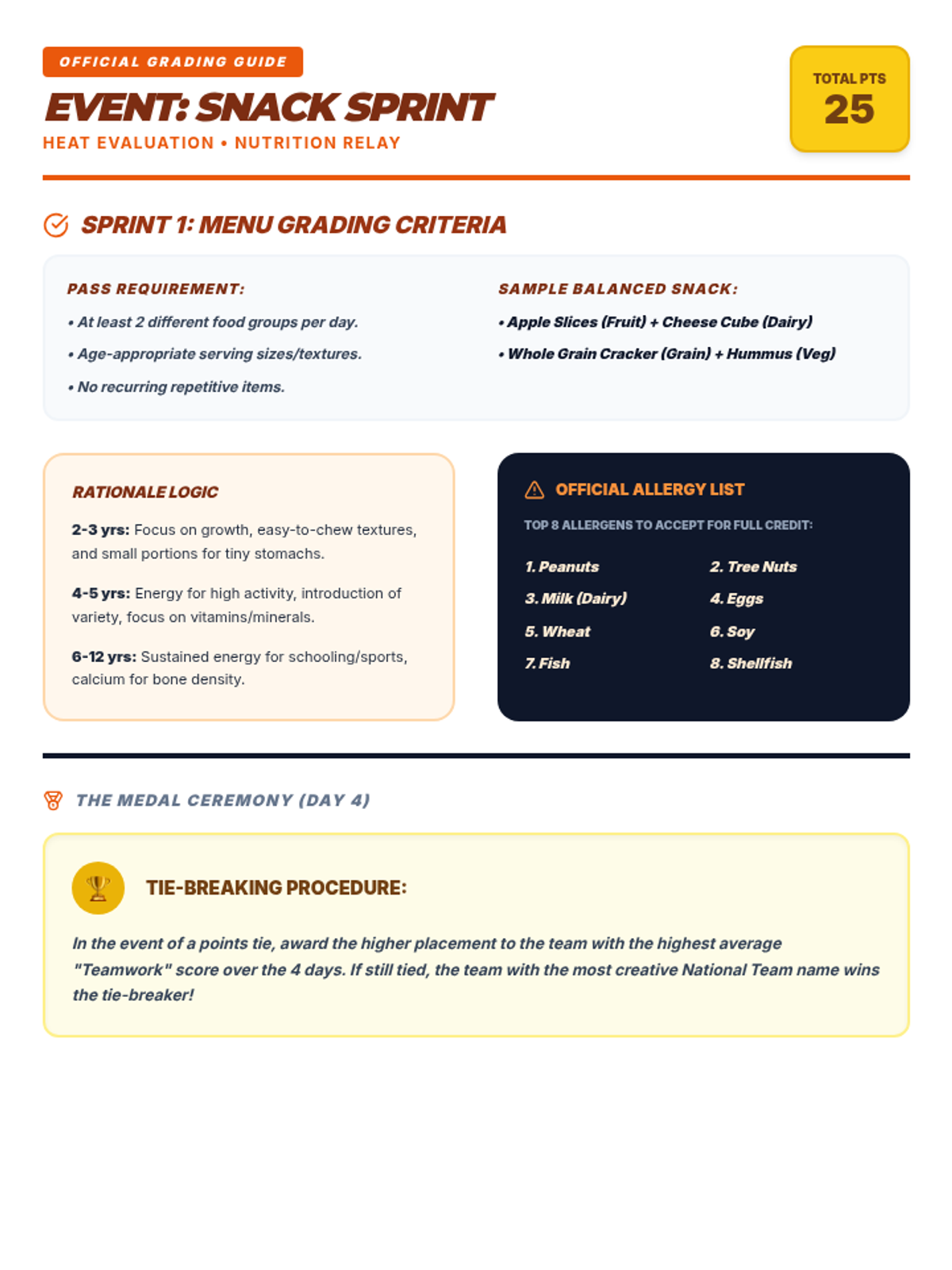
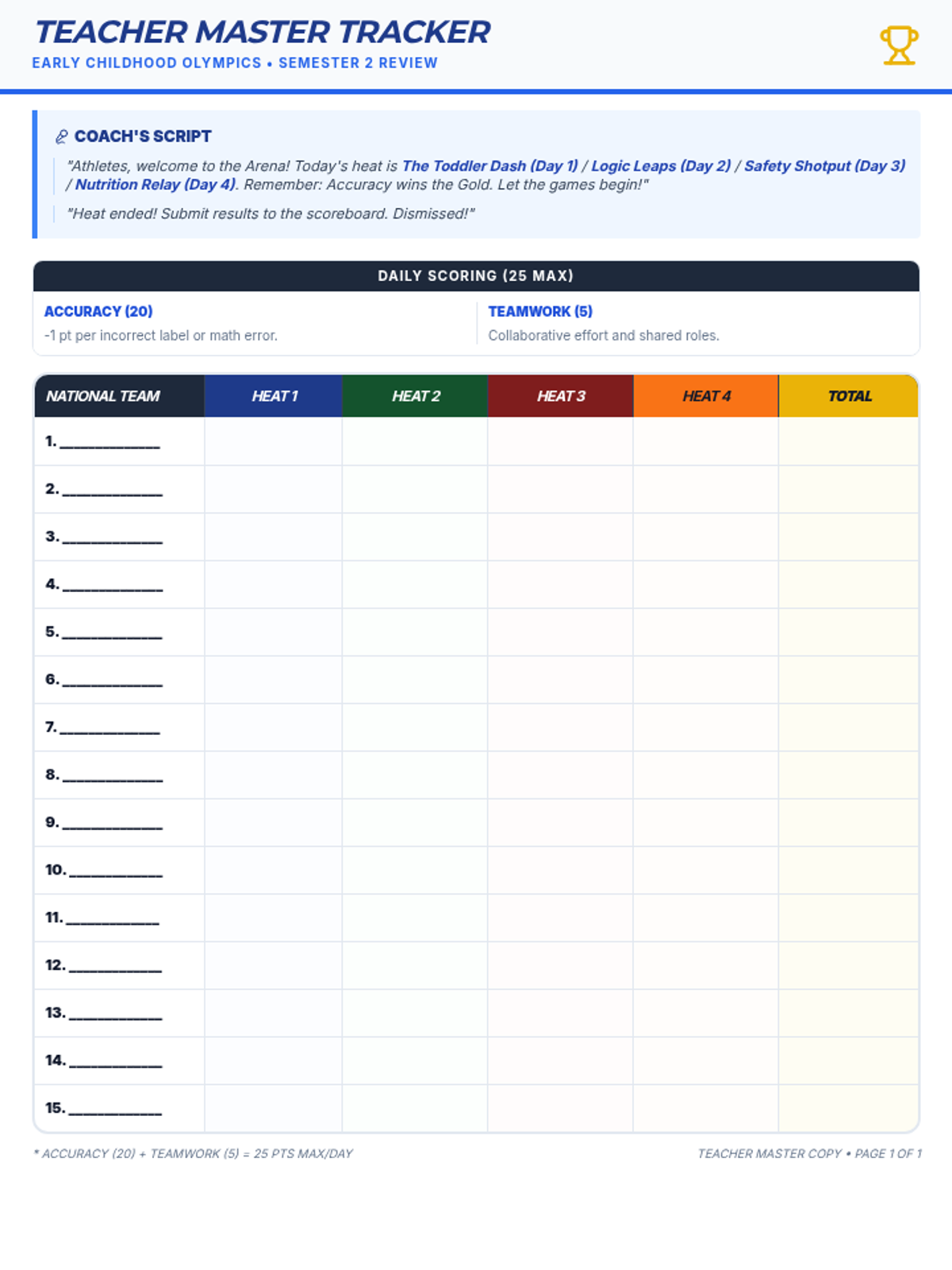
The final day covers nutrition and meal planning, followed by the grand tallying of points and the medal ceremony to conclude the semester.
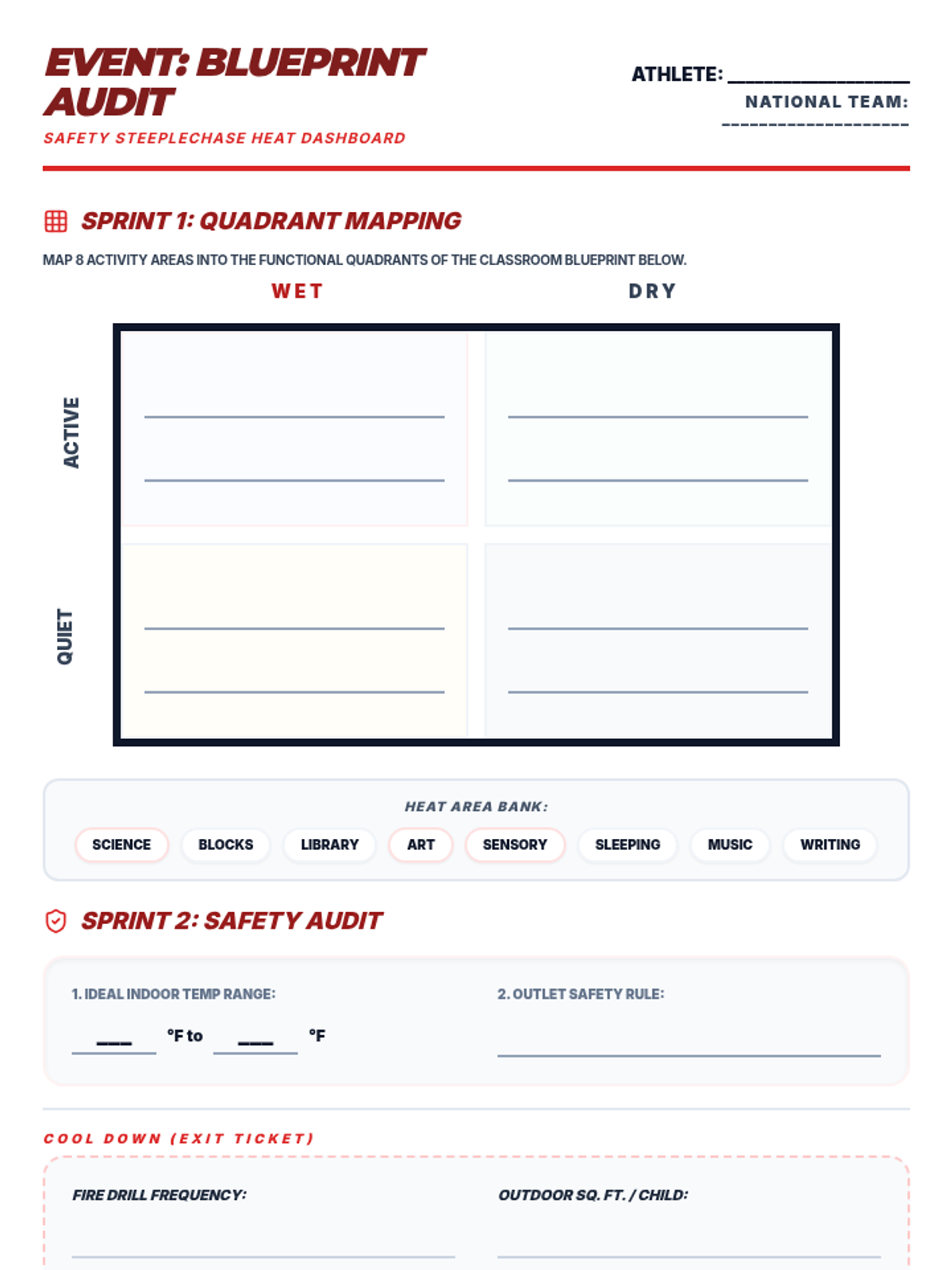
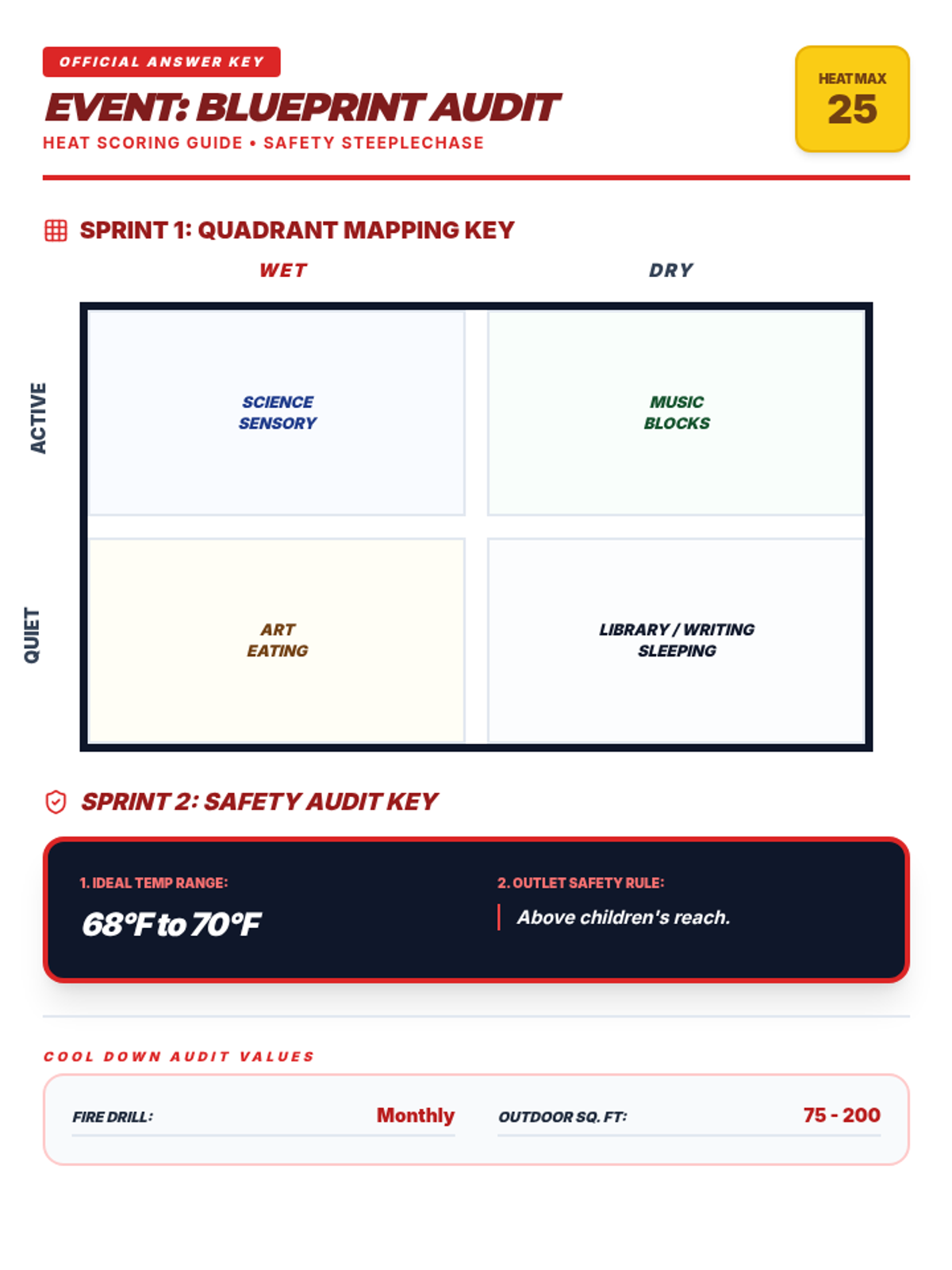
Day 3 focuses on environmental preparation and safety promotion, requiring students to apply knowledge of classroom layout and safety regulations to score points.
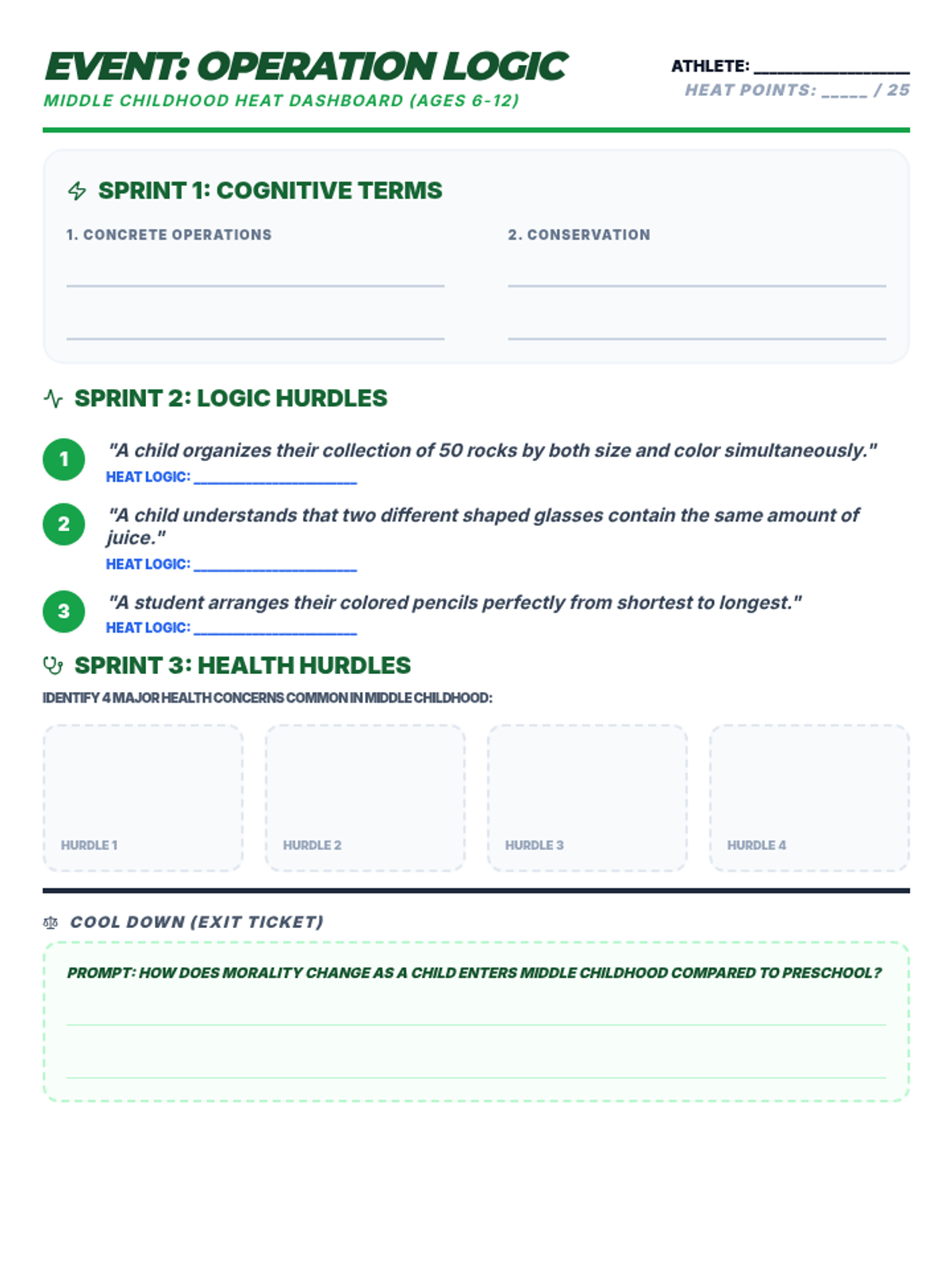
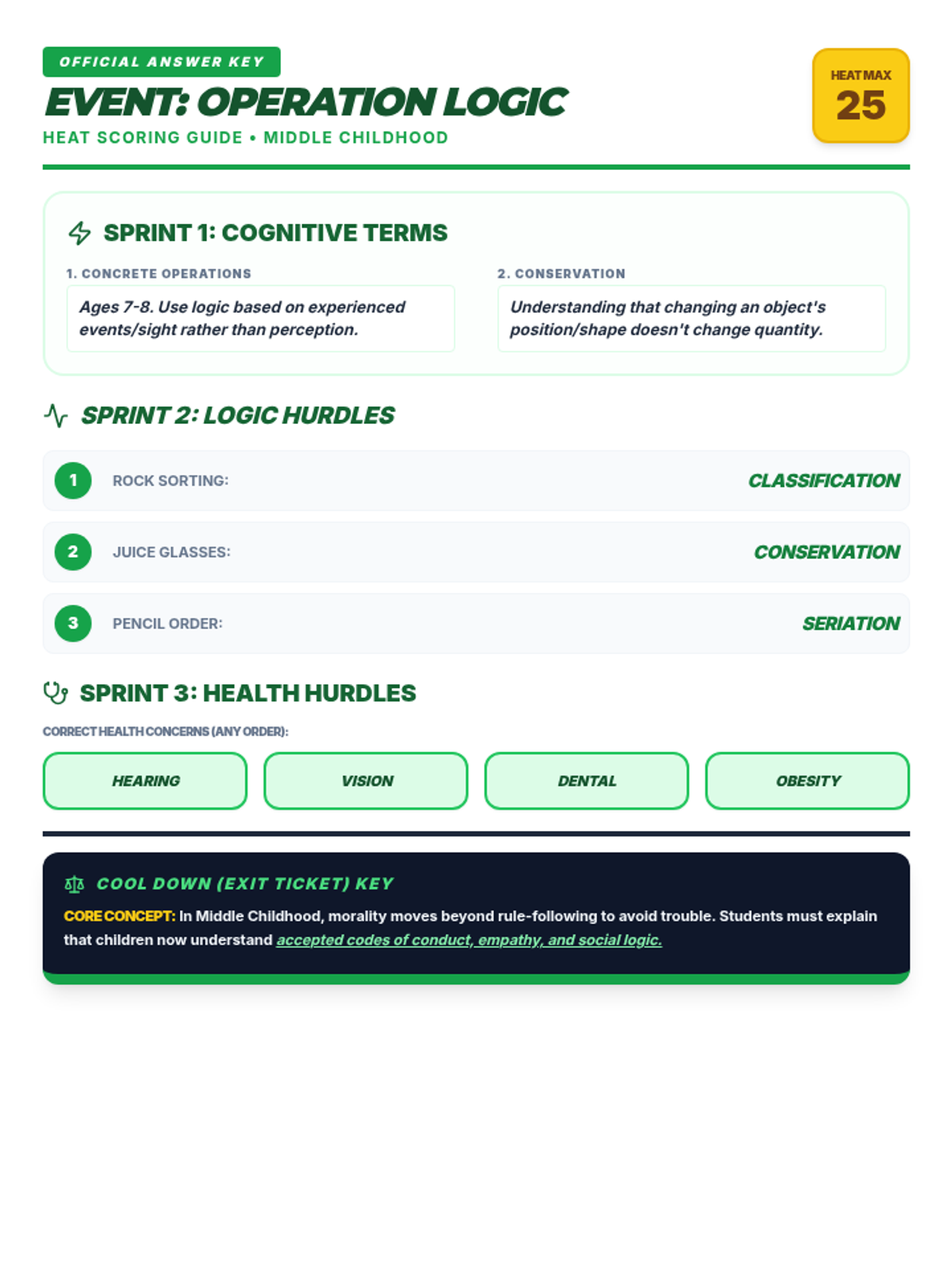
Day 2 explores middle childhood (ages 6-12), focusing on logical thinking, moral development, and the complexities of school-age social relationships.
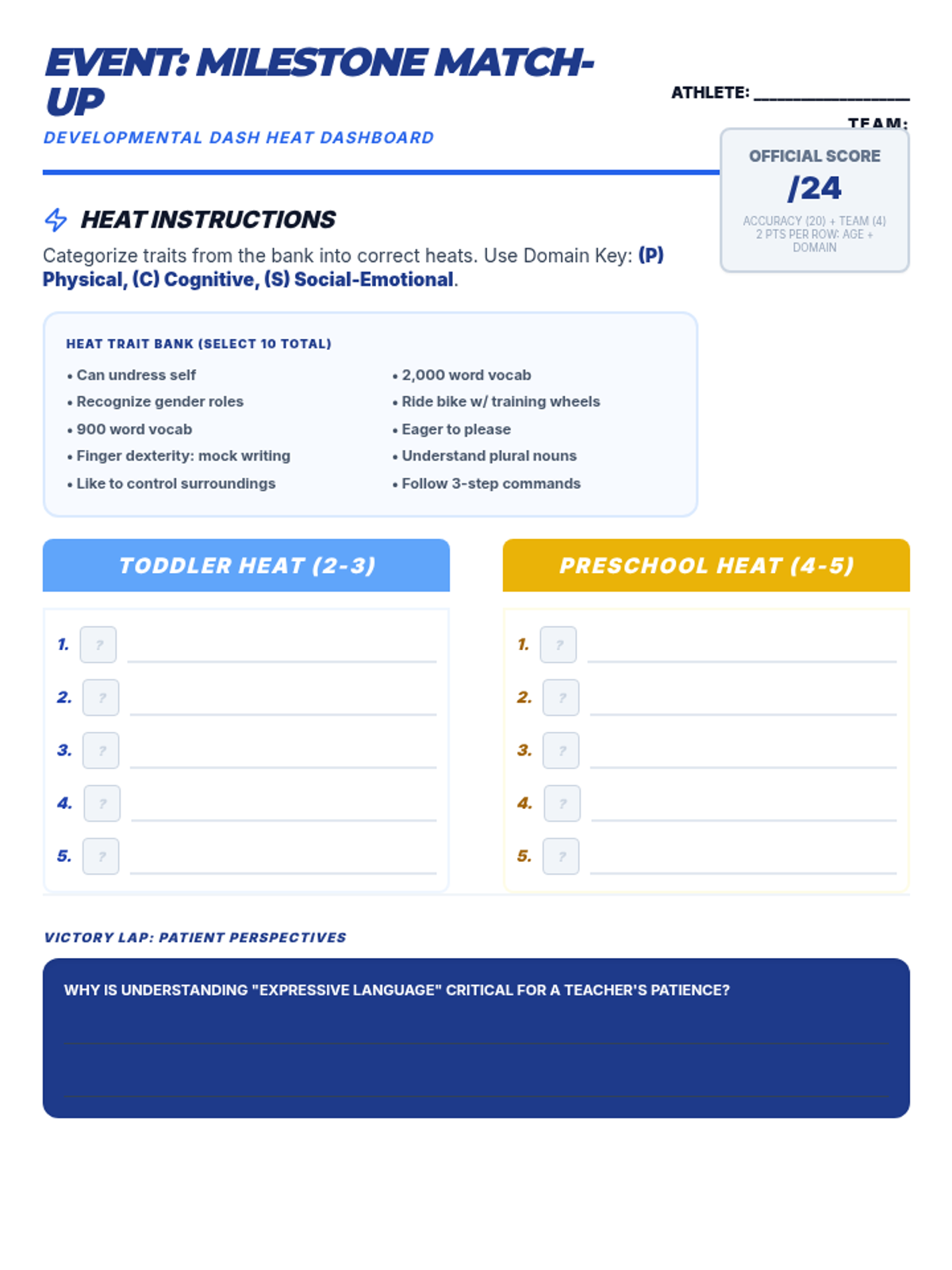
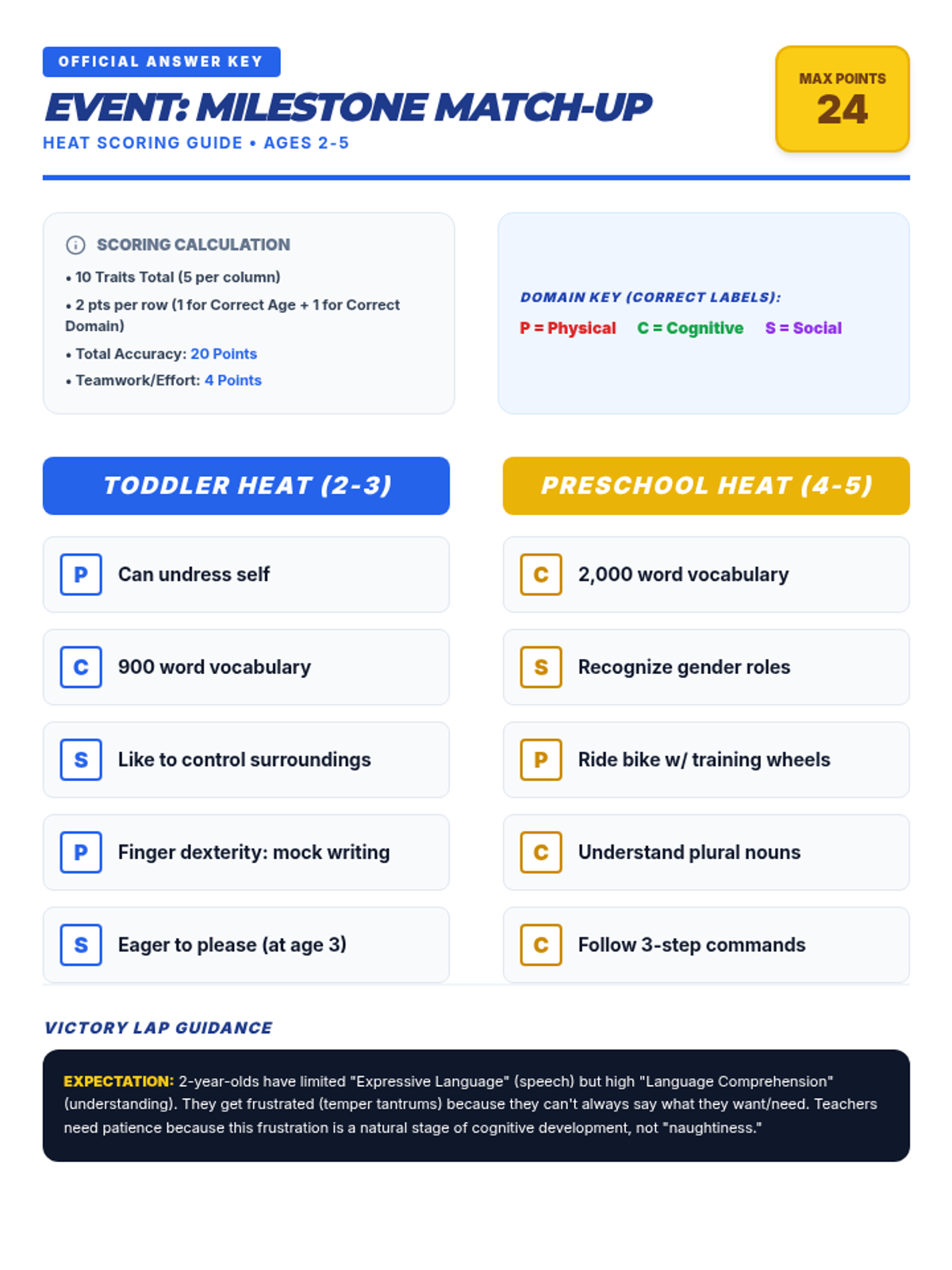
Day 1 of the Olympics focuses on the rapid development of children aged two through five, challenging students to accurately categorize physical, cognitive, and social milestones.
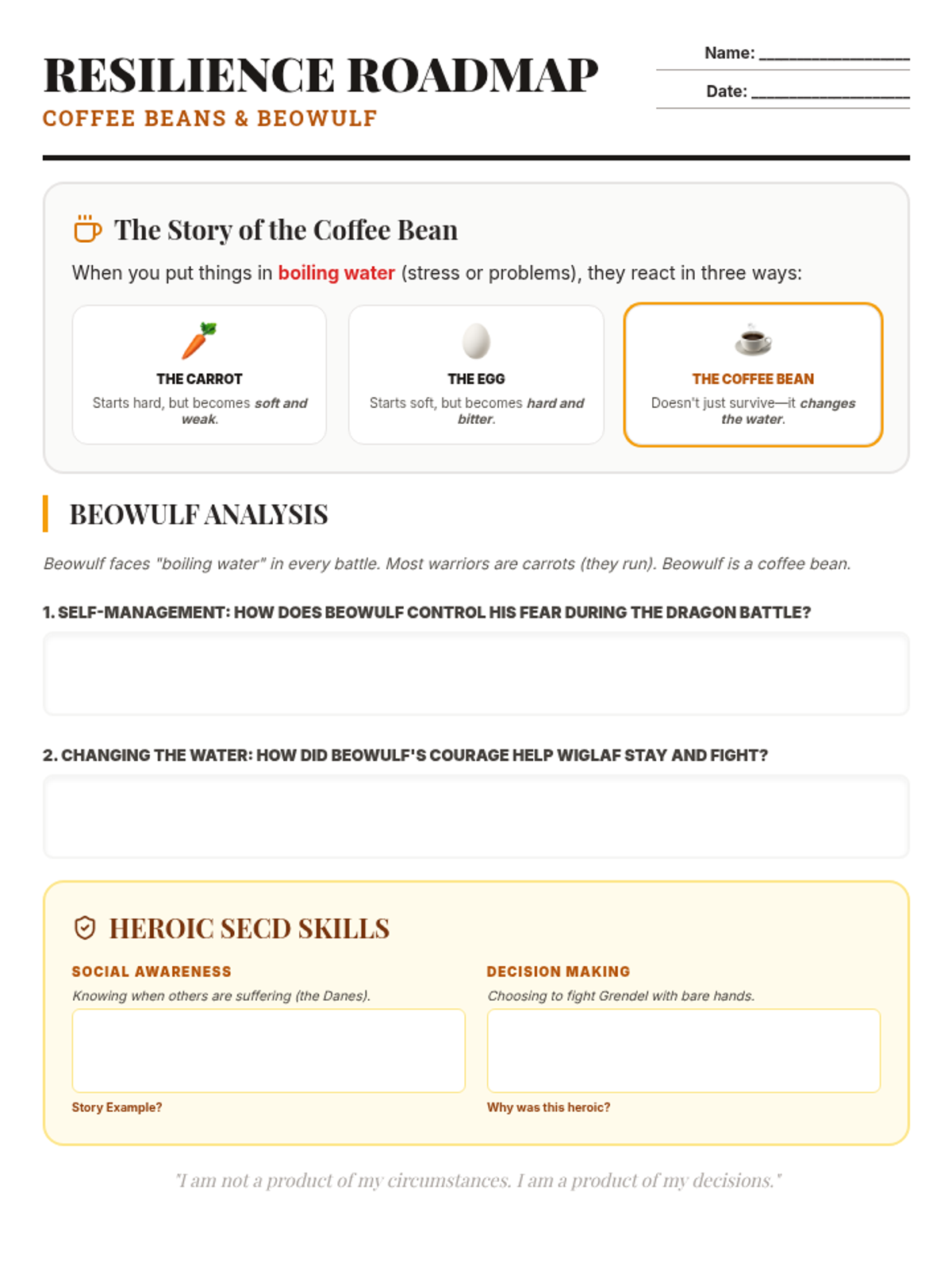
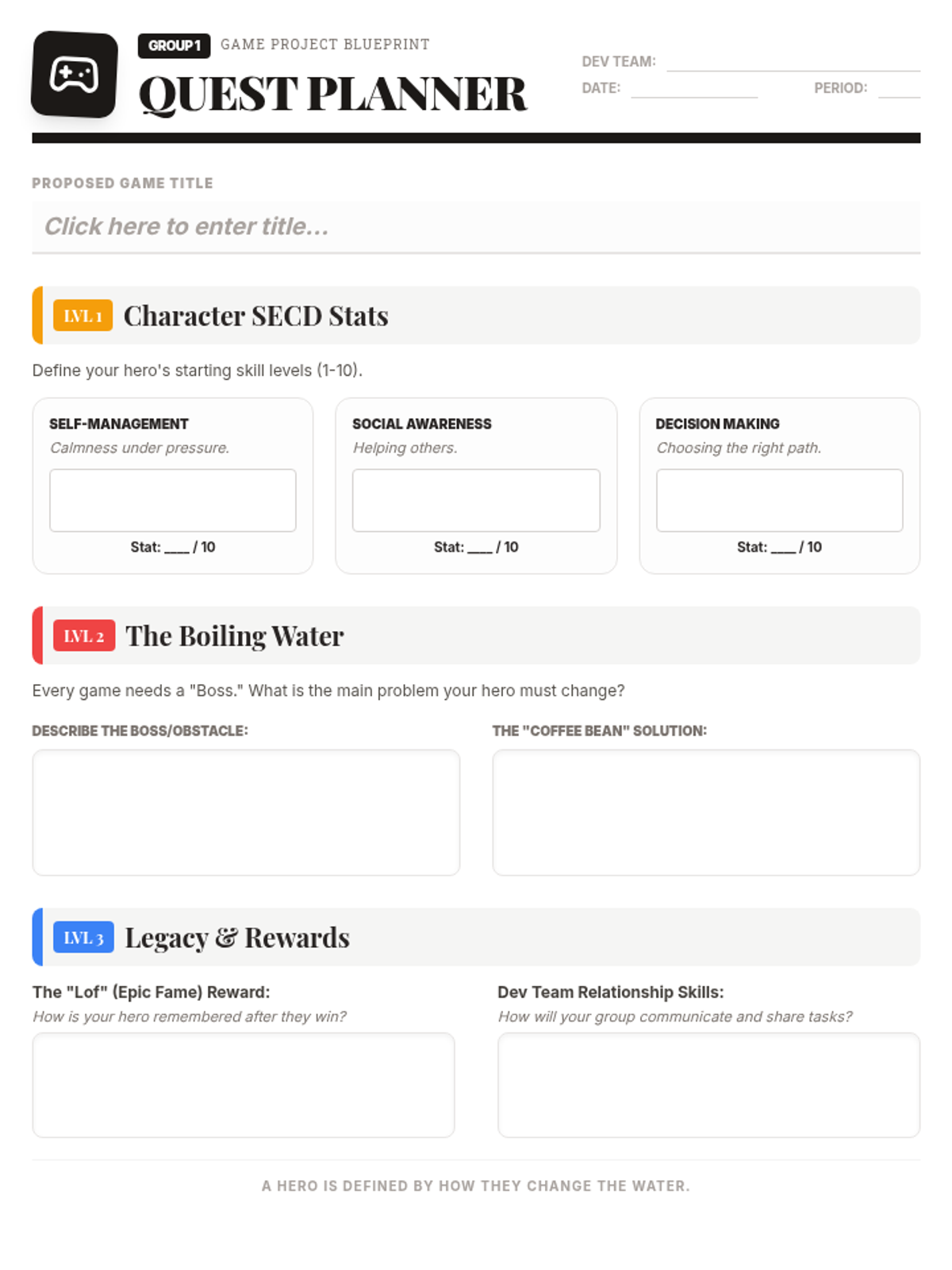
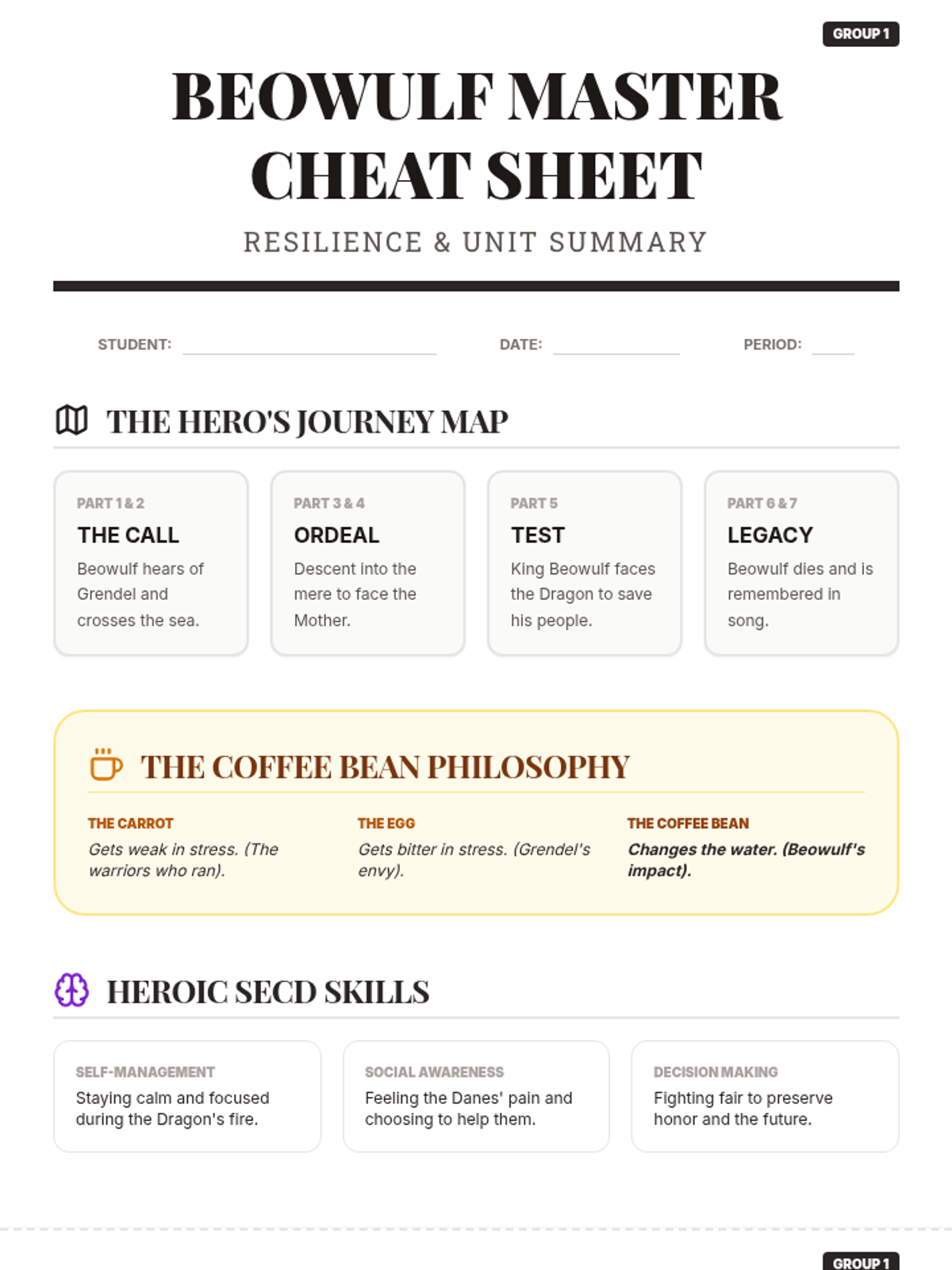
Connecting Beowulf's journey to personal resilience through the Coffee Bean metaphor and SECD frameworks, preparing students for the Hero's Journey game project.
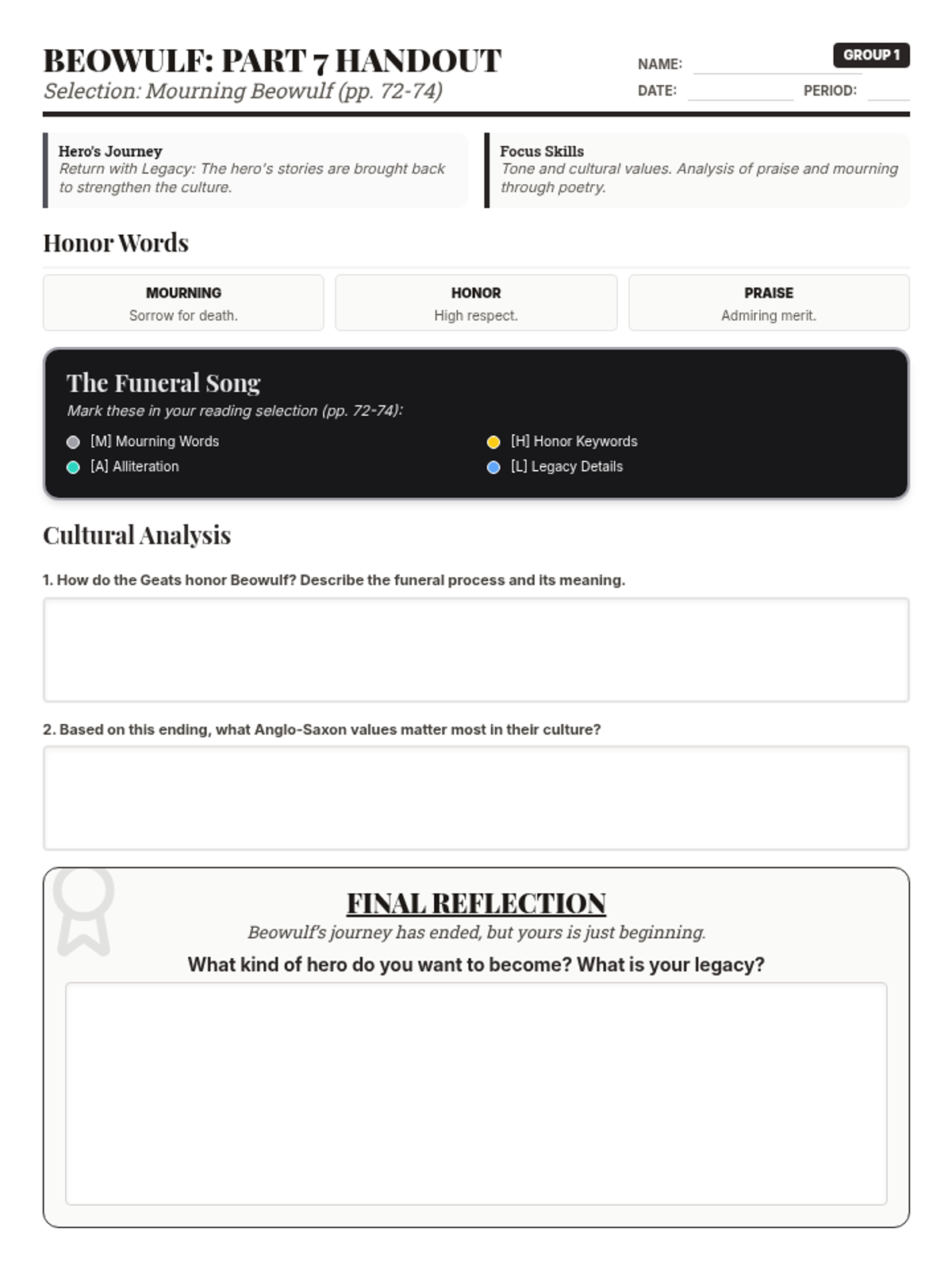
Cultural values of the Anglo-Saxons and how the hero is remembered through mourning and praise.
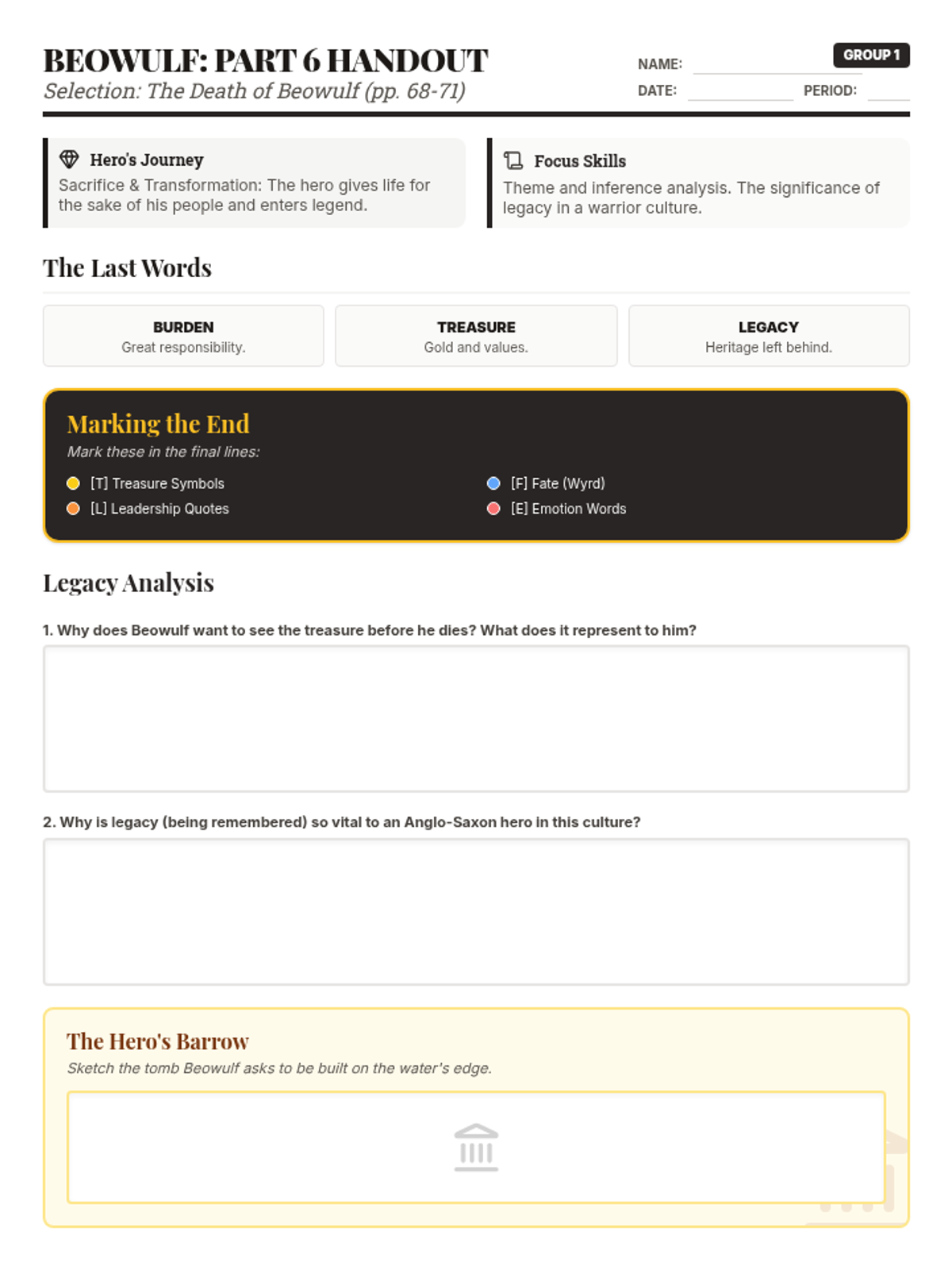
The death of Beowulf and the significance of treasure and legacy in the Hero's Journey.
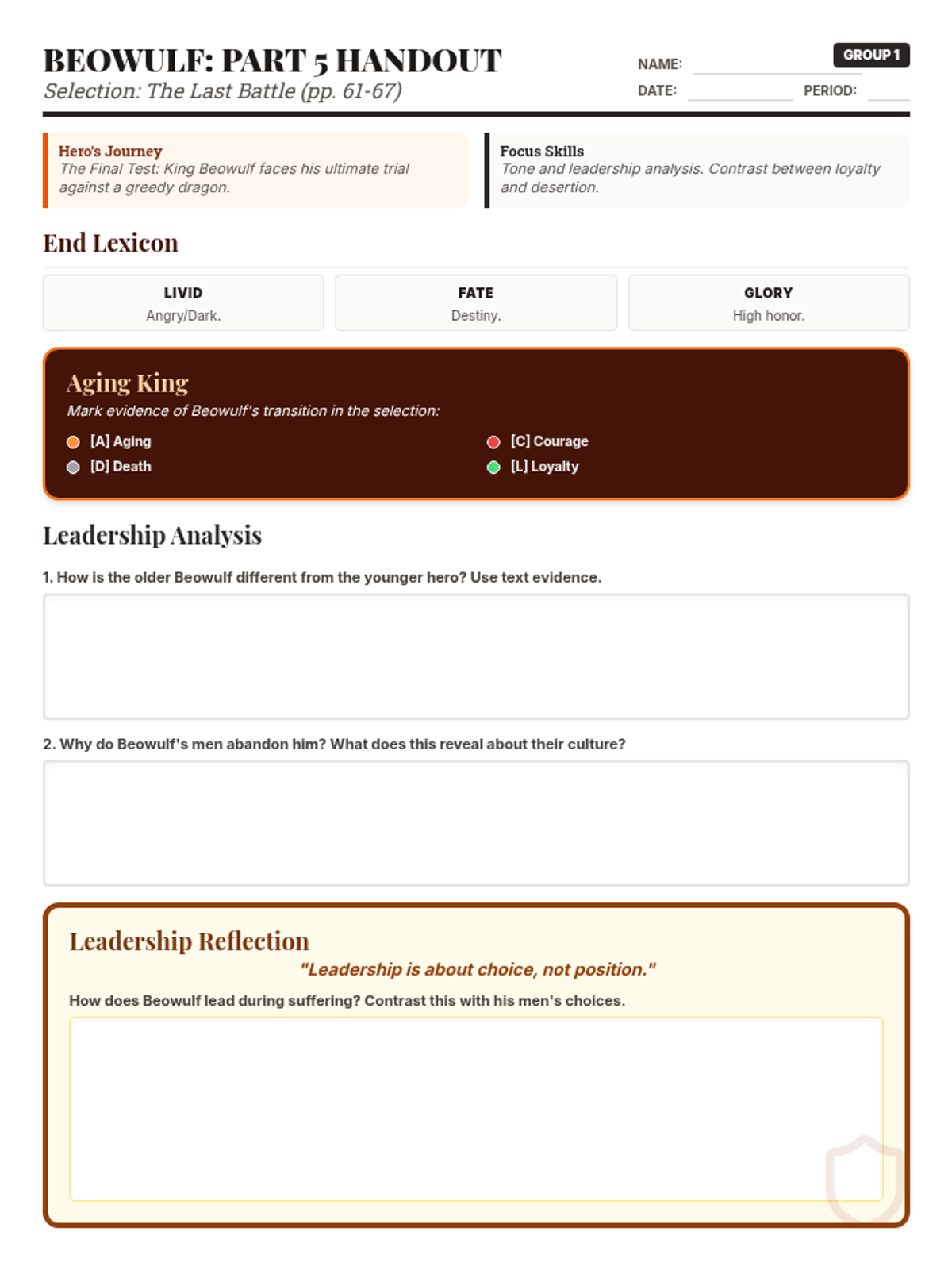
Beowulf's final battle against the dragon, focusing on themes of aging, leadership, and legacy.
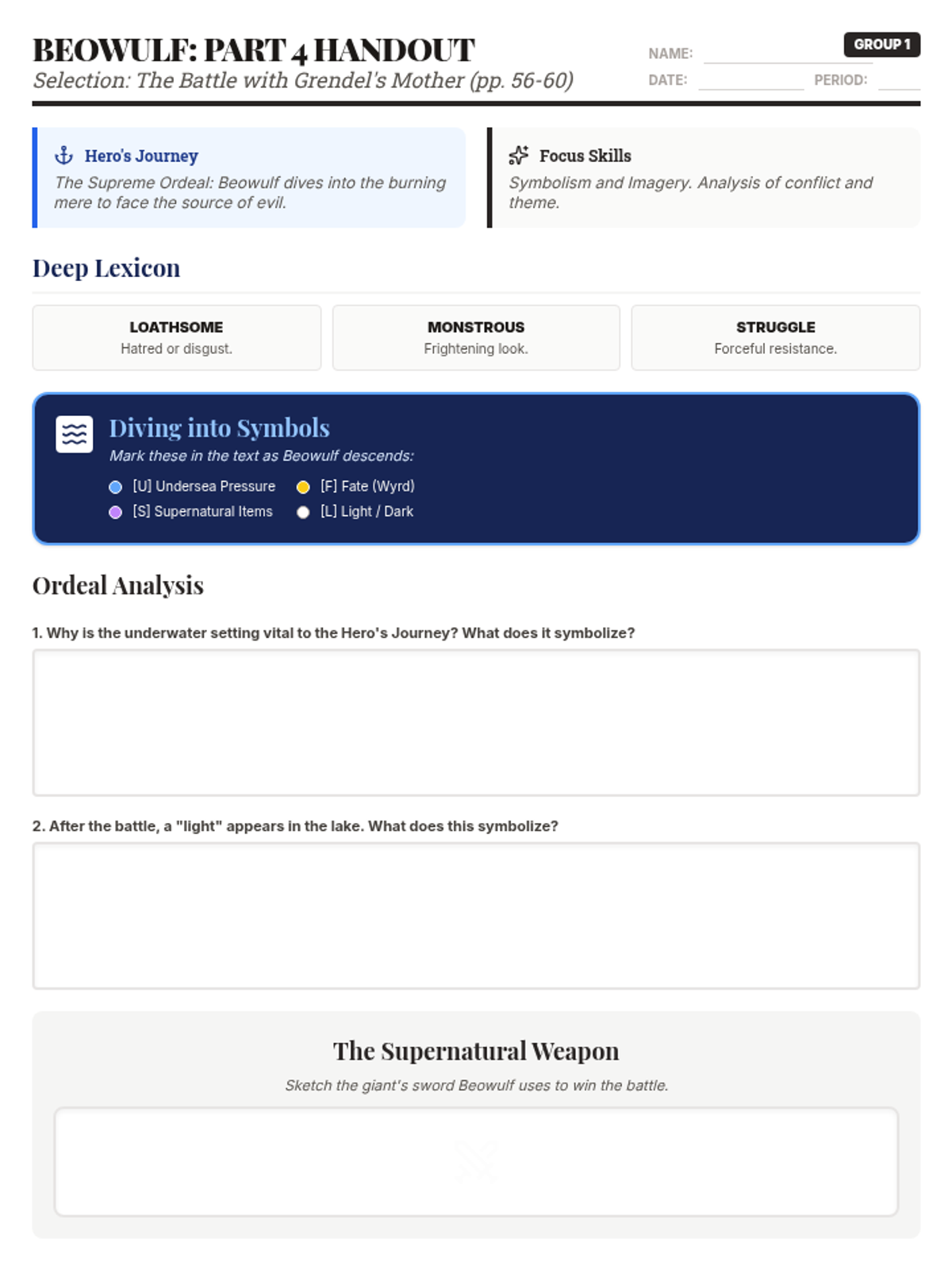
Beowulf's descent into the underwater lair, exploring symbolism and the Supreme Ordeal.
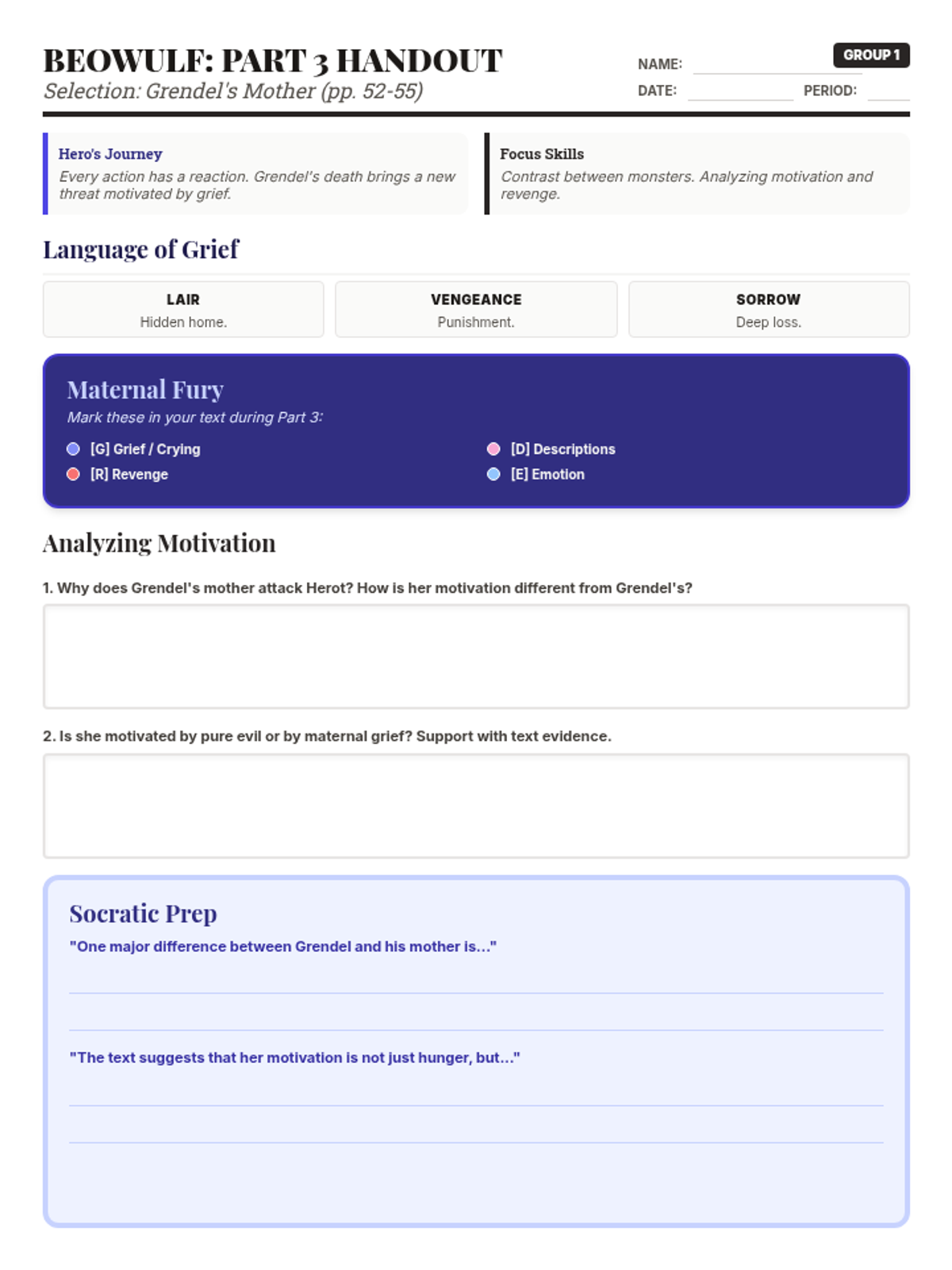
Analysis of Grendel's mother's motivation and the shift in threat, focusing on vengeance vs. evil.
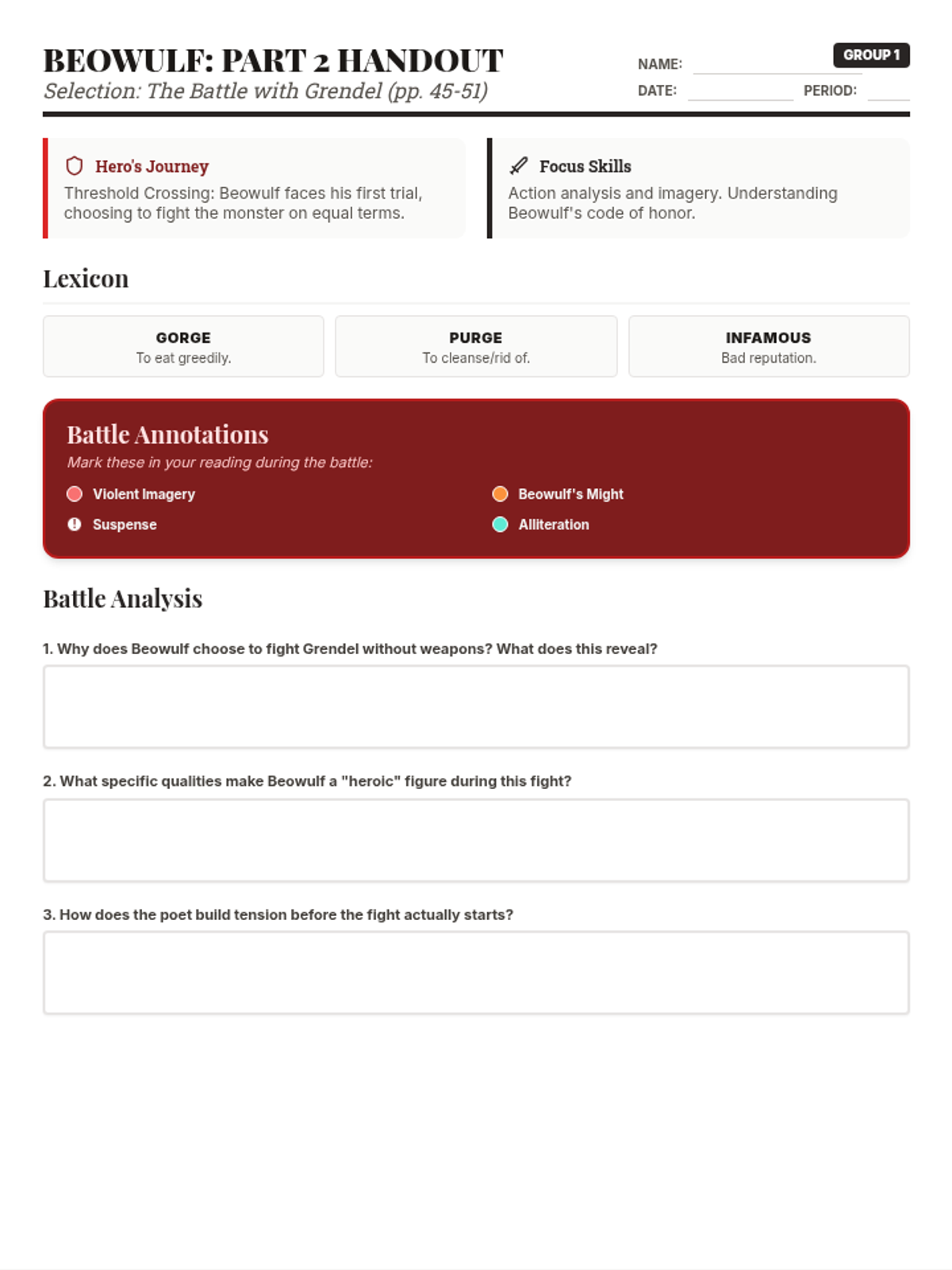
Beowulf's arrival and his first major trial against Grendel, emphasizing imagery, action analysis, and the Crossing of the Threshold.
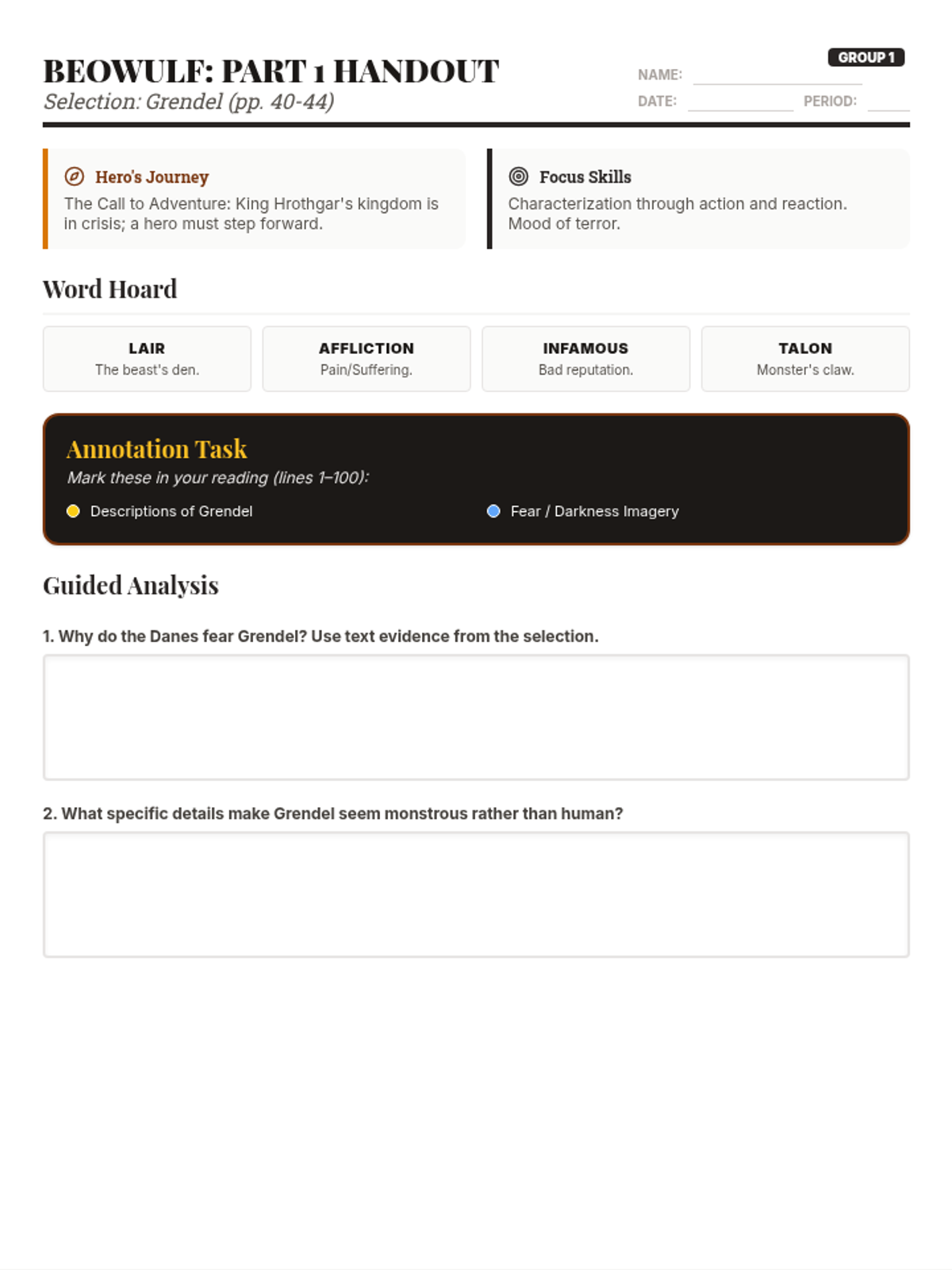
Introduction to Grendel, focusing on characterization, mood, and the initial Call to Adventure in the Hero's Journey.
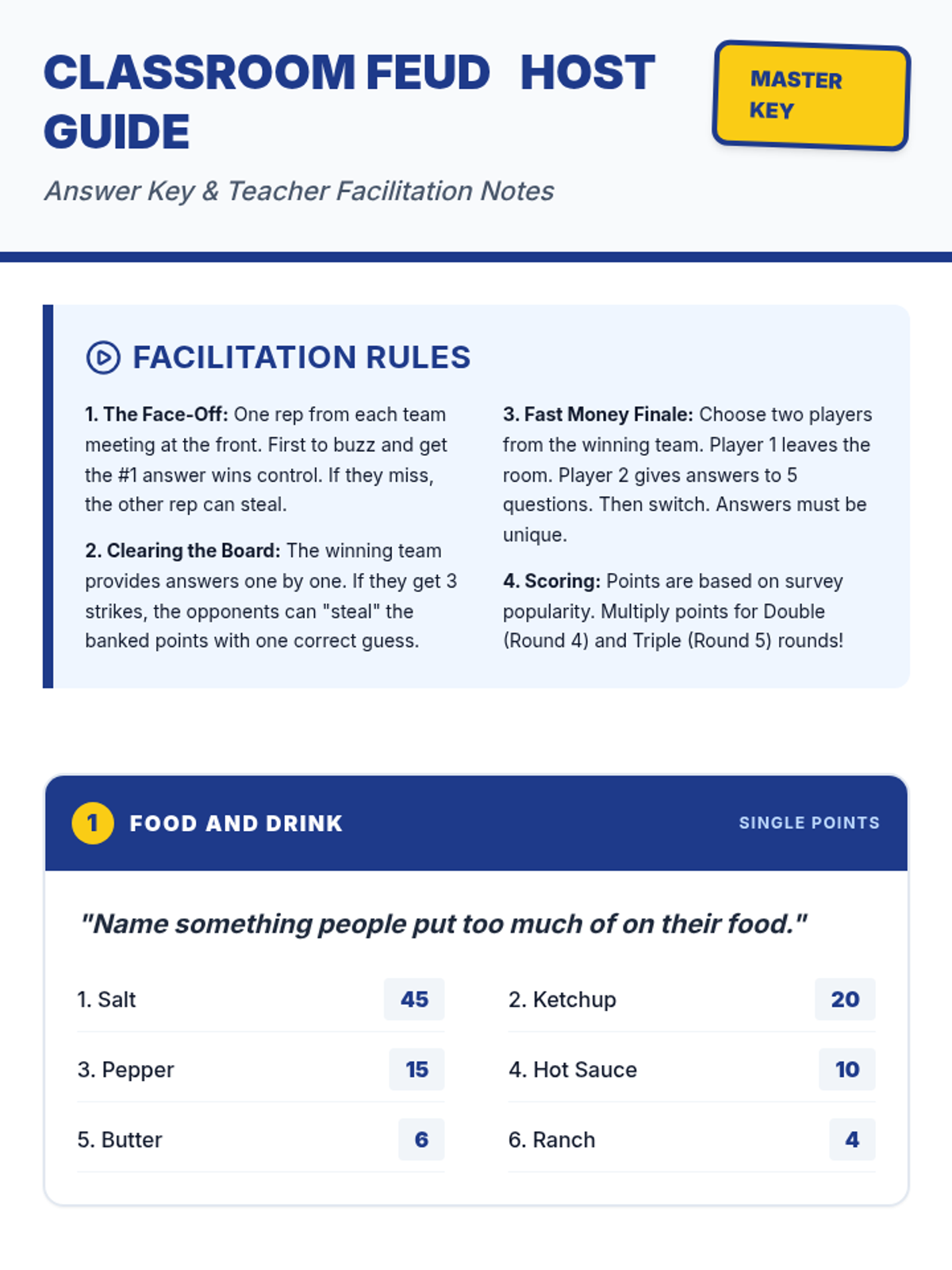
An interactive, game-show style lesson where students compete in teams to guess the most popular answers to various survey questions. This session promotes teamwork, quick thinking, and social engagement through diverse categories ranging from food to pop culture.
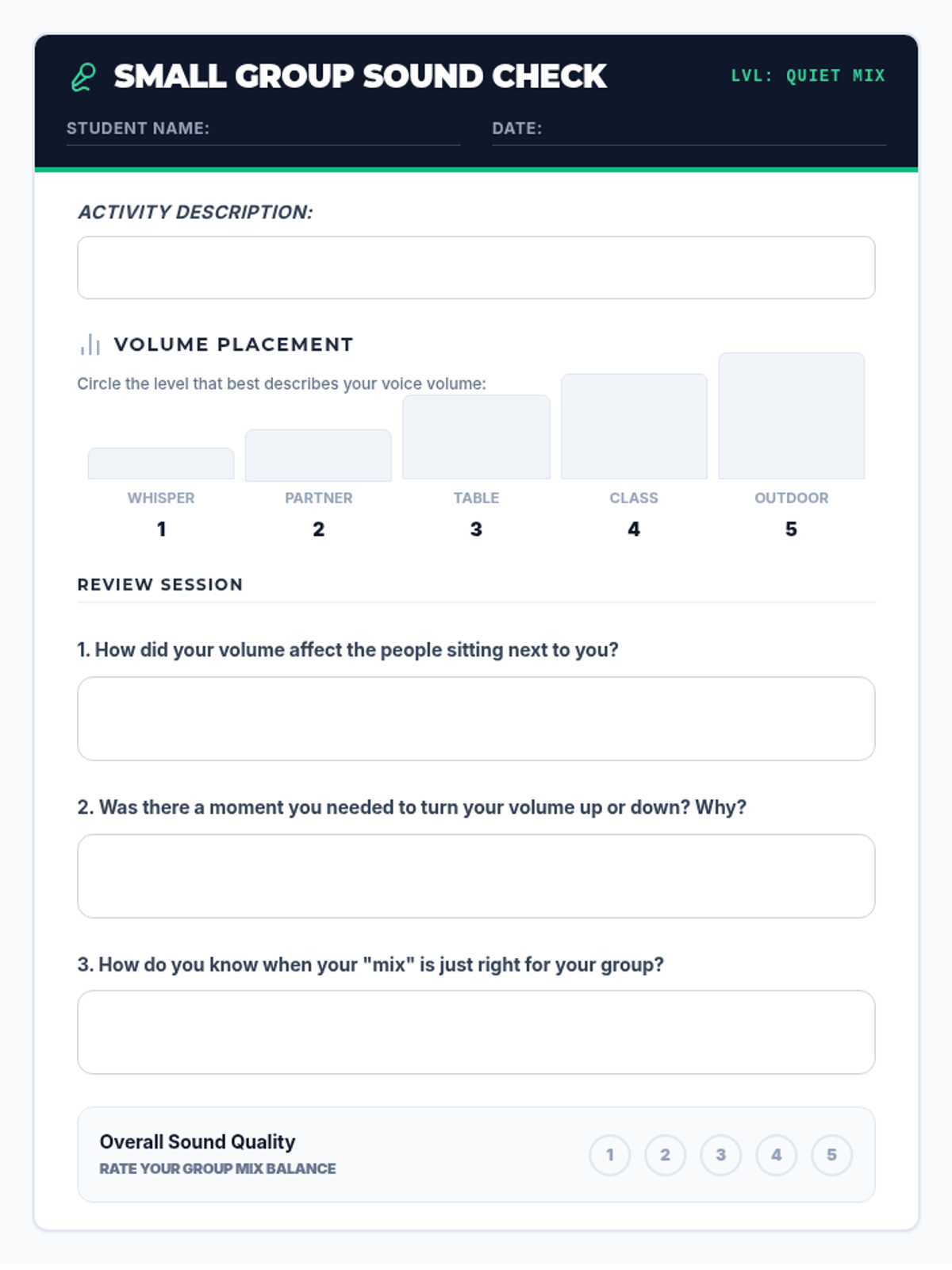
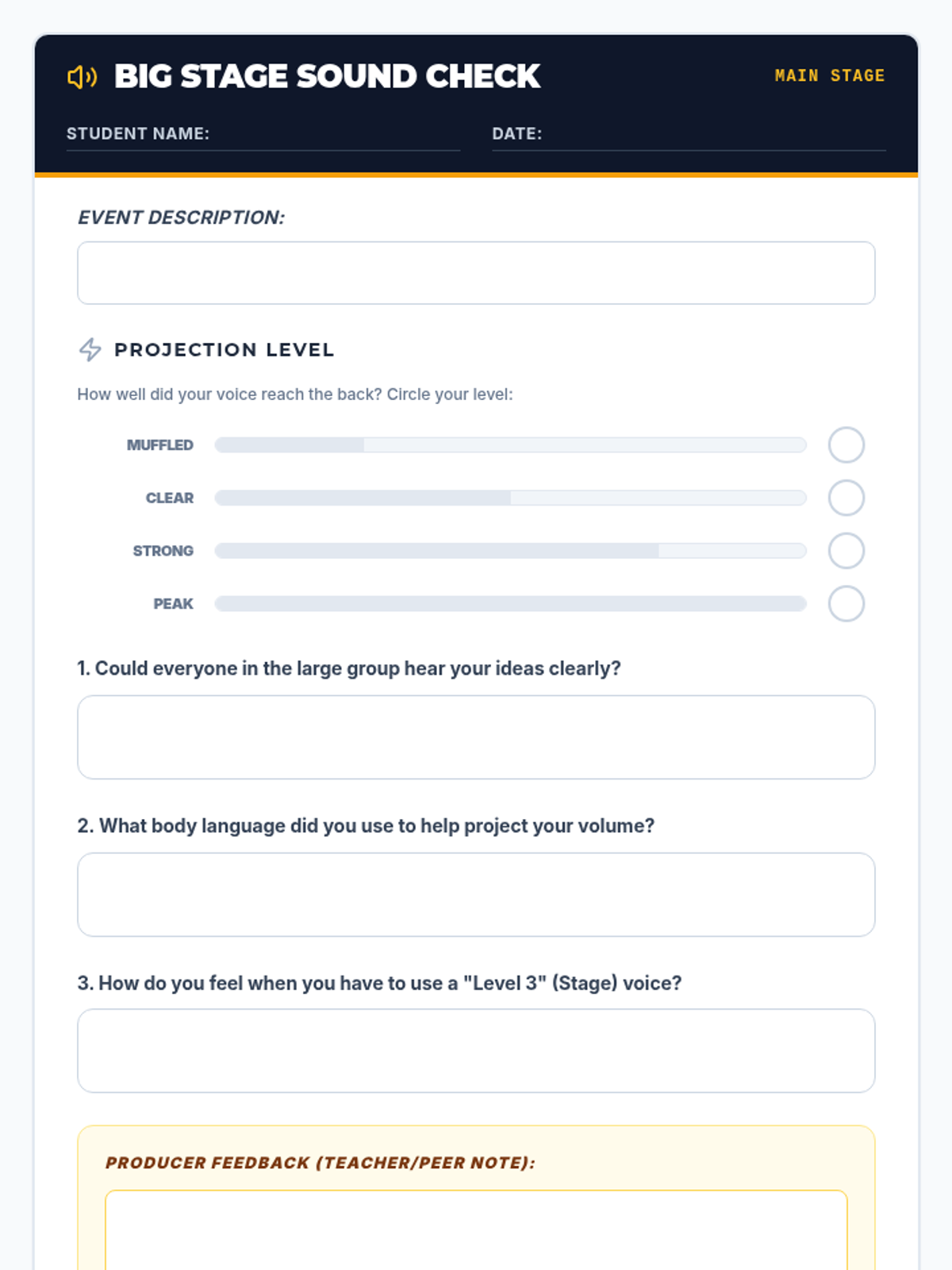
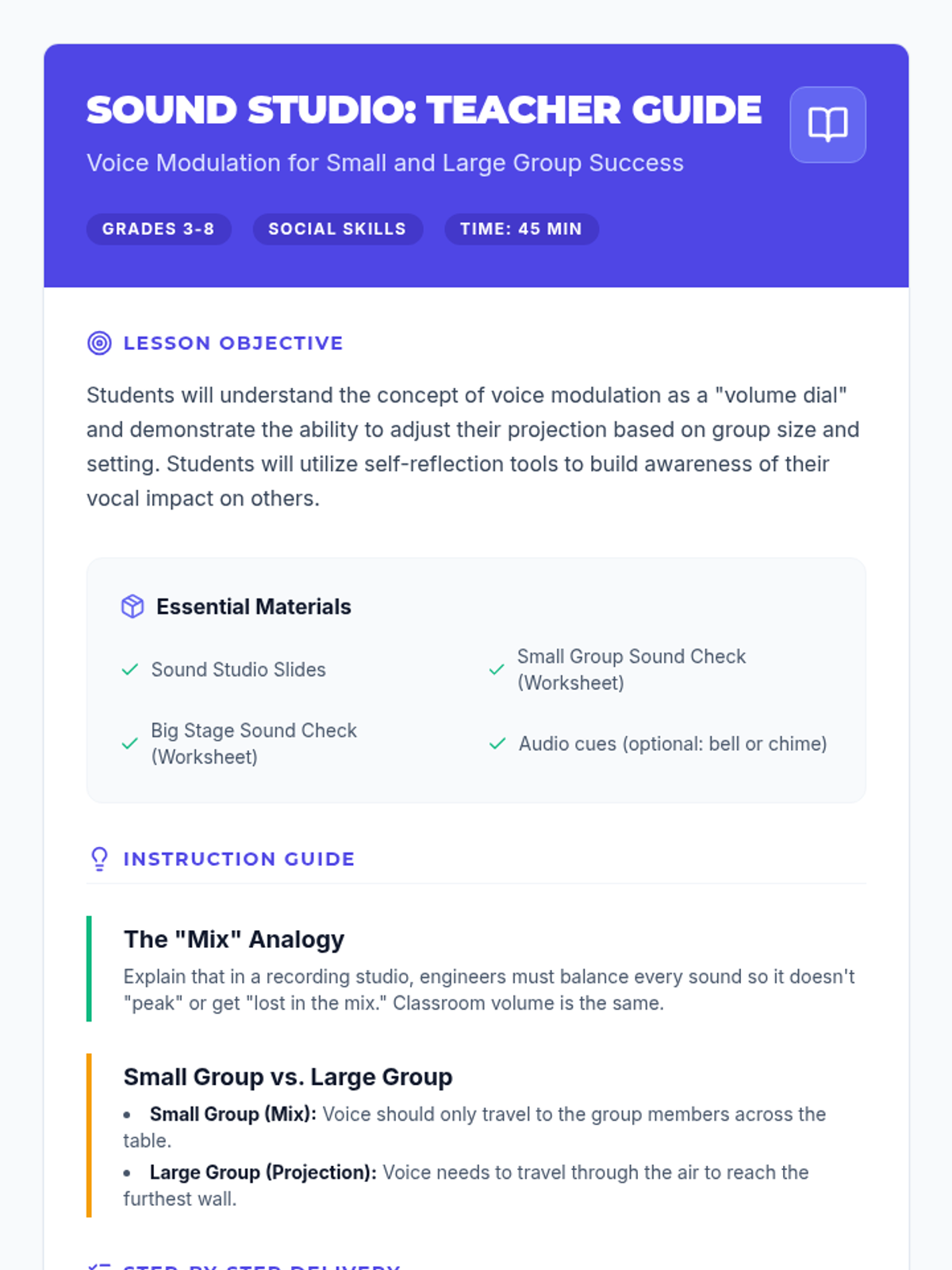
Students learn to adjust their voice volume like a sound engineer, mastering the 'volume dial' for small group collaboration and large group participation. Includes interactive slides and targeted self-reflection tools to build social-emotional awareness.
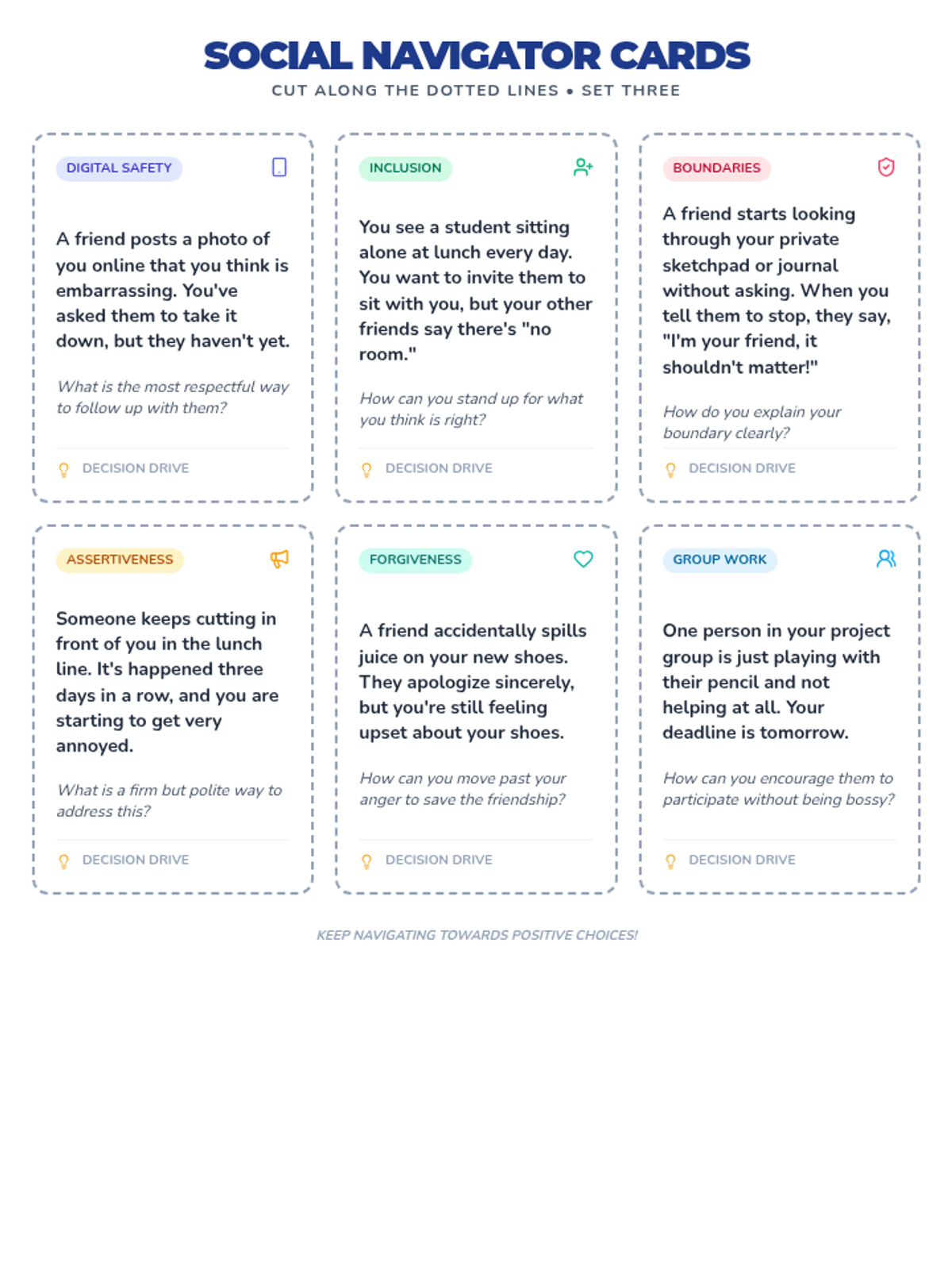
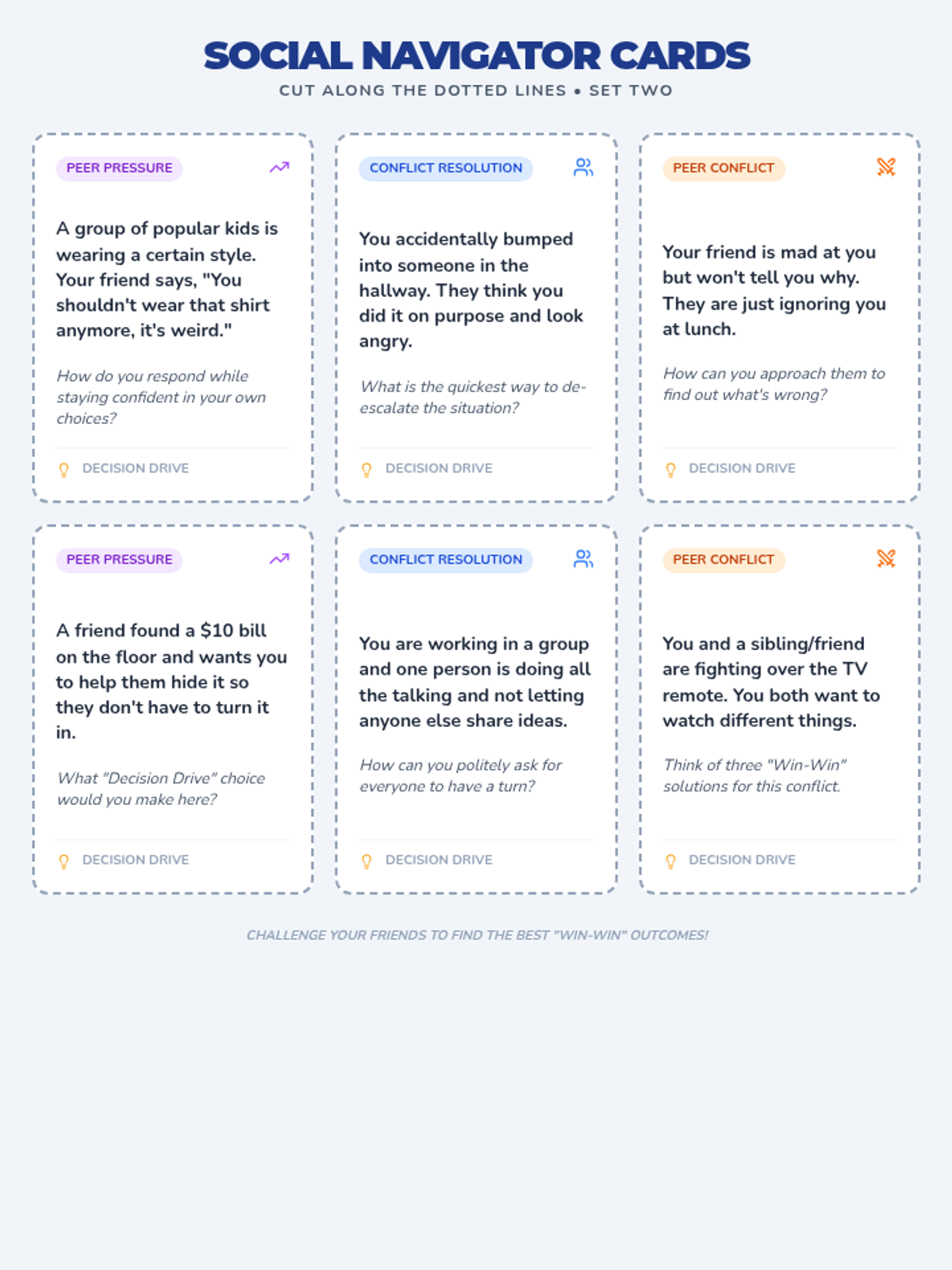
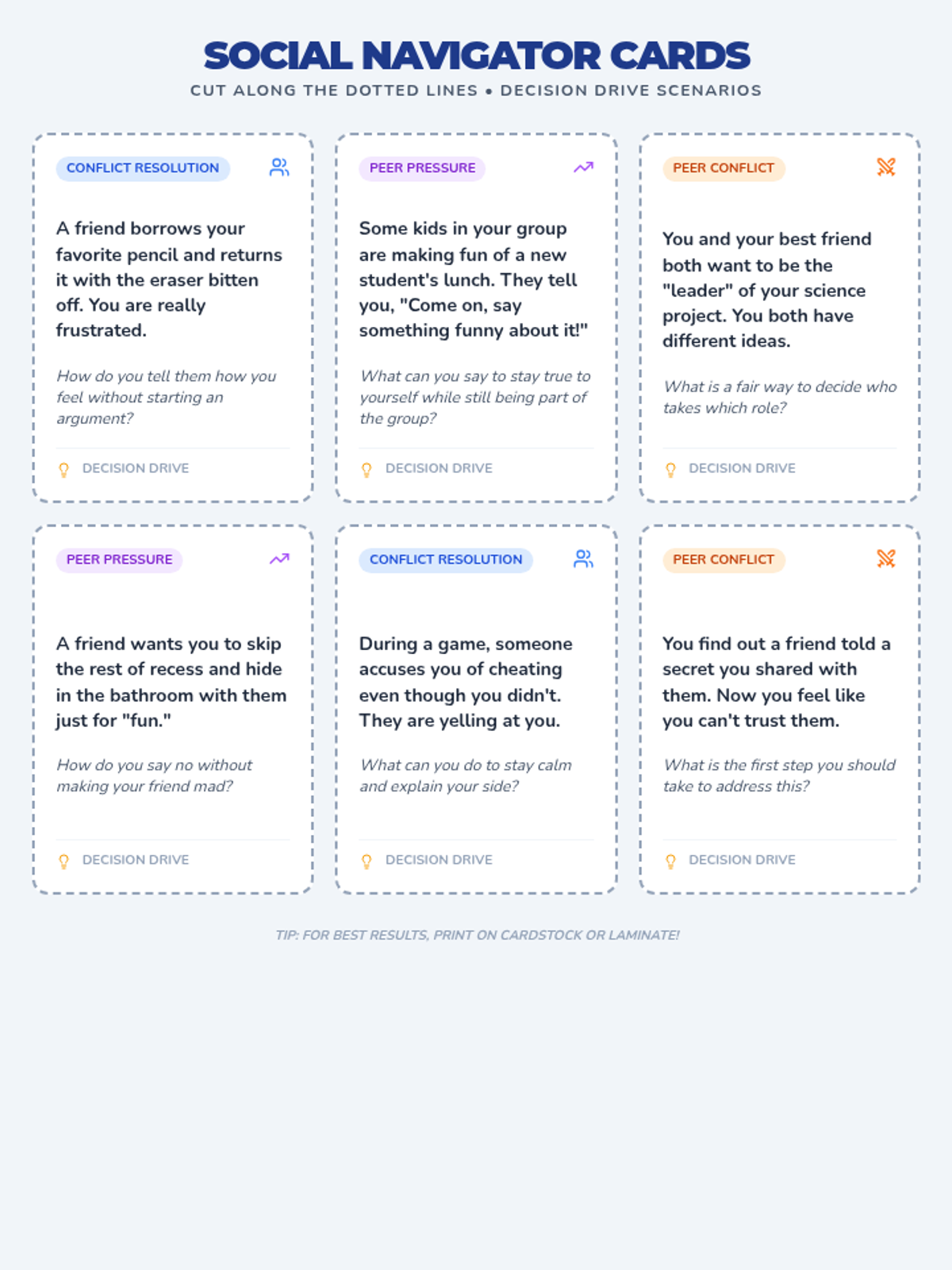
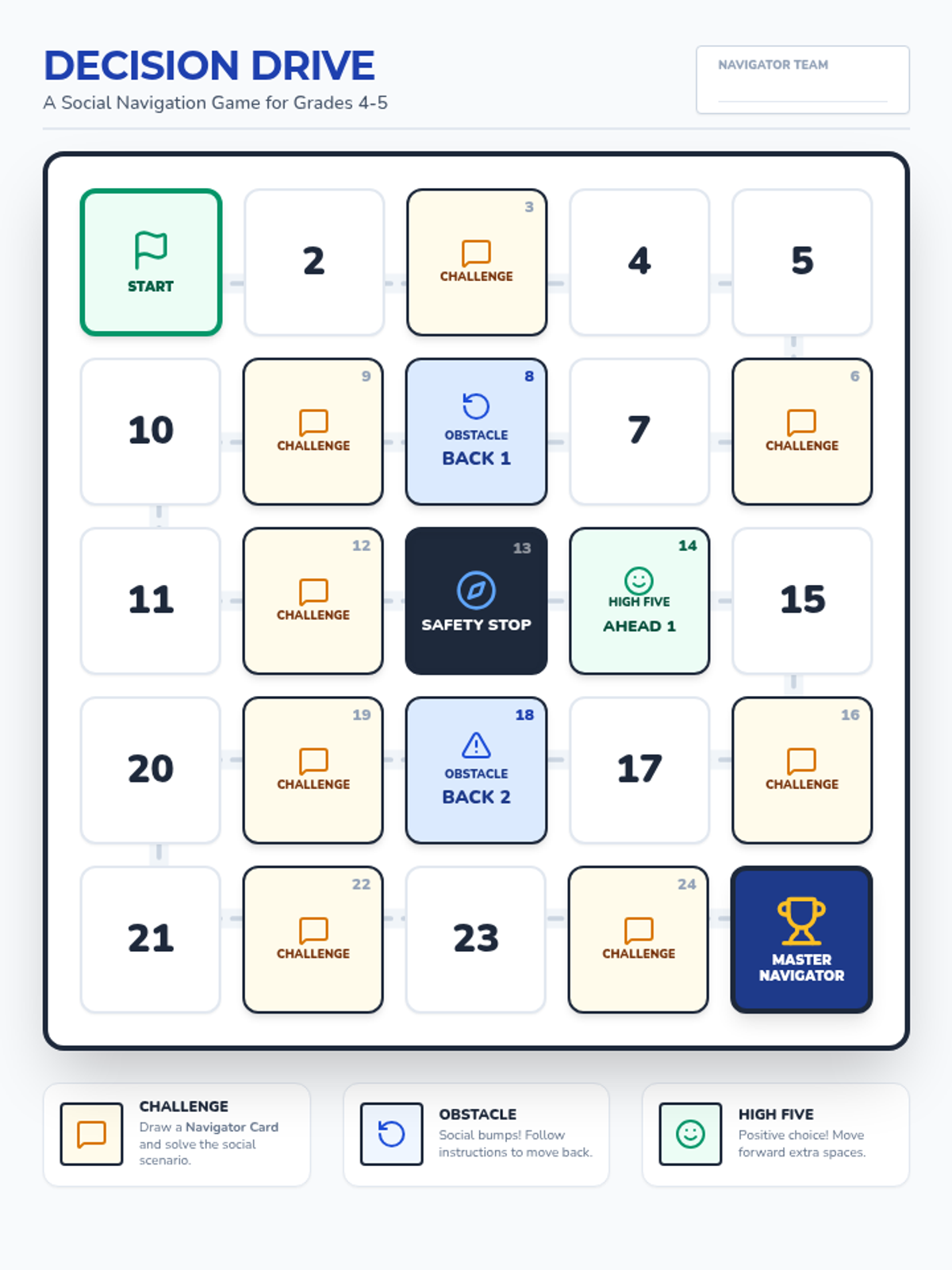
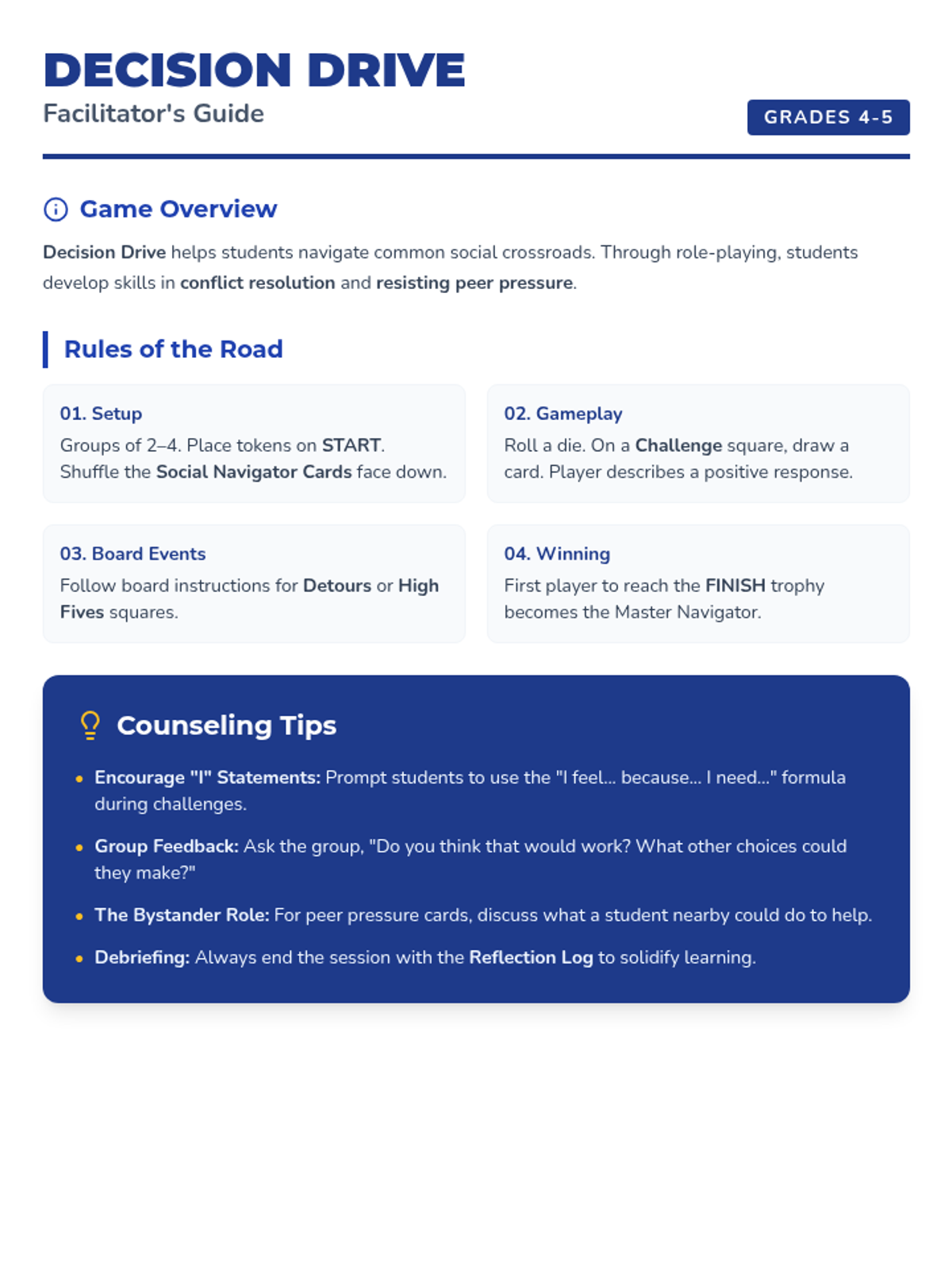
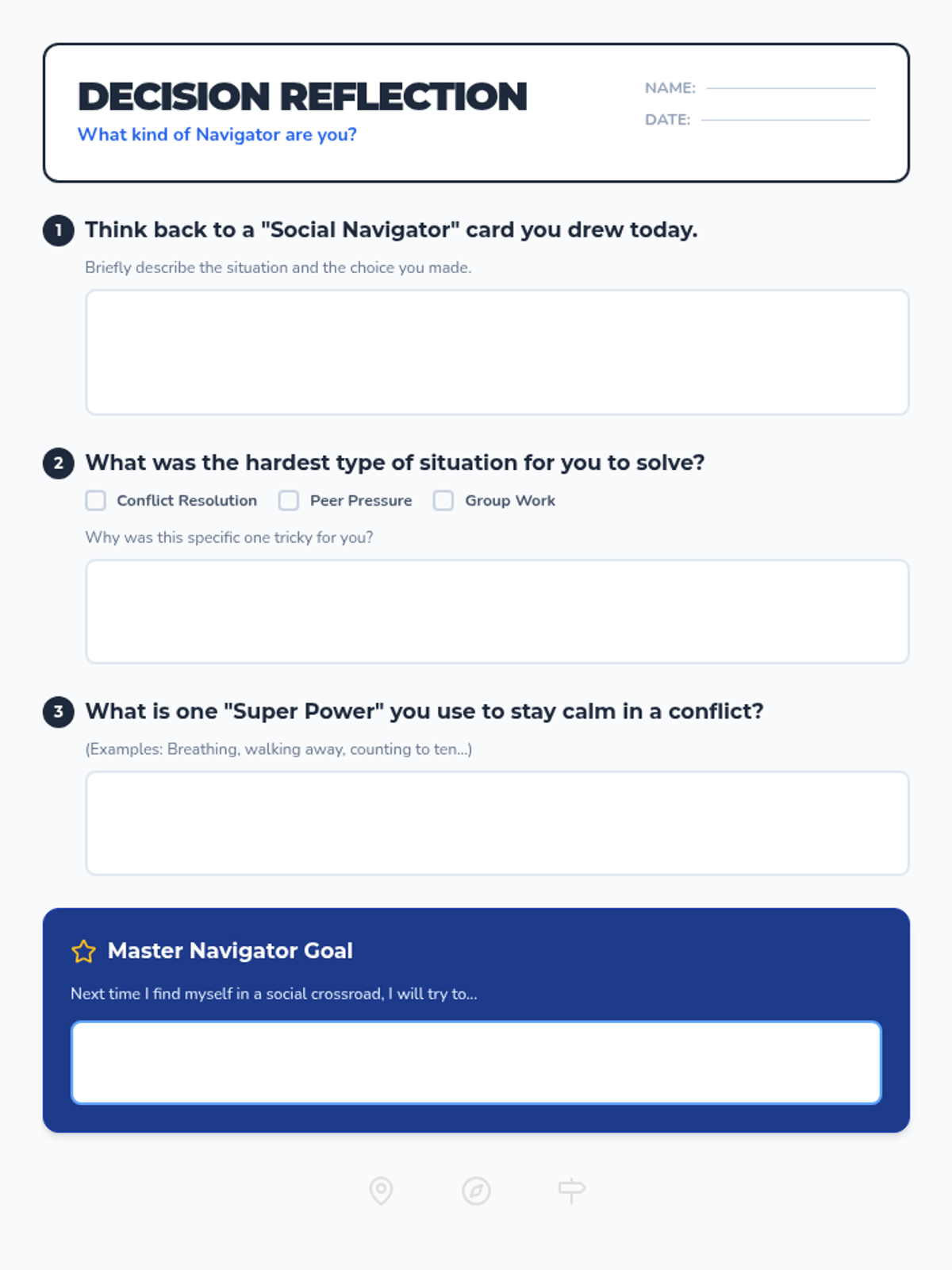
A board-game based counseling lesson where students practice navigating social challenges, conflict resolution, and peer pressure through interactive scenarios.
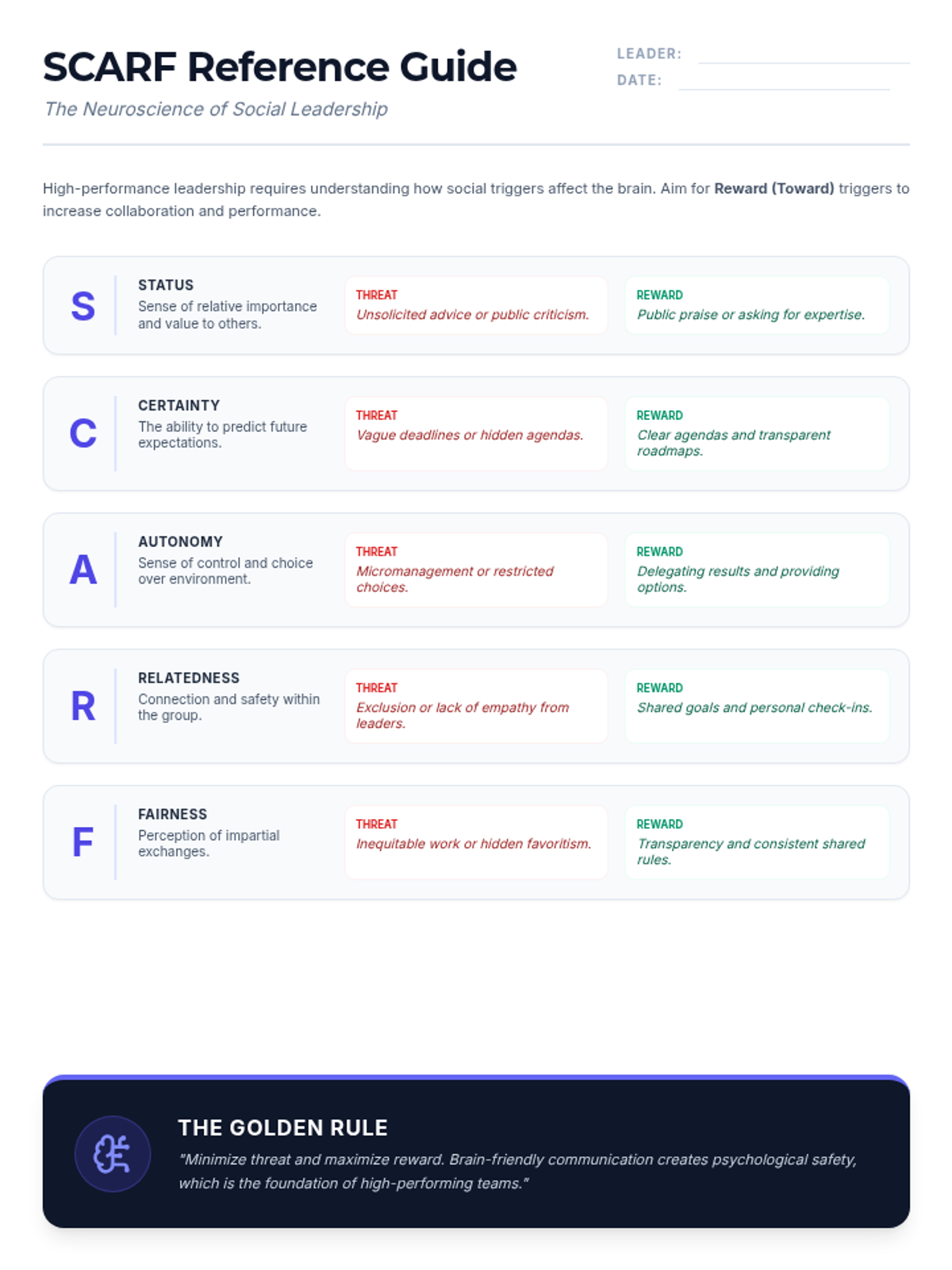
A toolkit for leaders to apply David Rock's SCARF model to communication, ensuring they trigger reward responses rather than threat responses in their teams.
A gamified 90-minute training session focused on job retention skills. Students master the behaviors and mindsets required to keep a job during the critical first 90 days, through hands-on escape room challenges and performance analysis.
A lesson designed for two first-graders to learn how to replace screaming and eloping with verbal communication using a feelings chart. Through role-play and visual aids, students practice identifying their emotions and stating their needs.
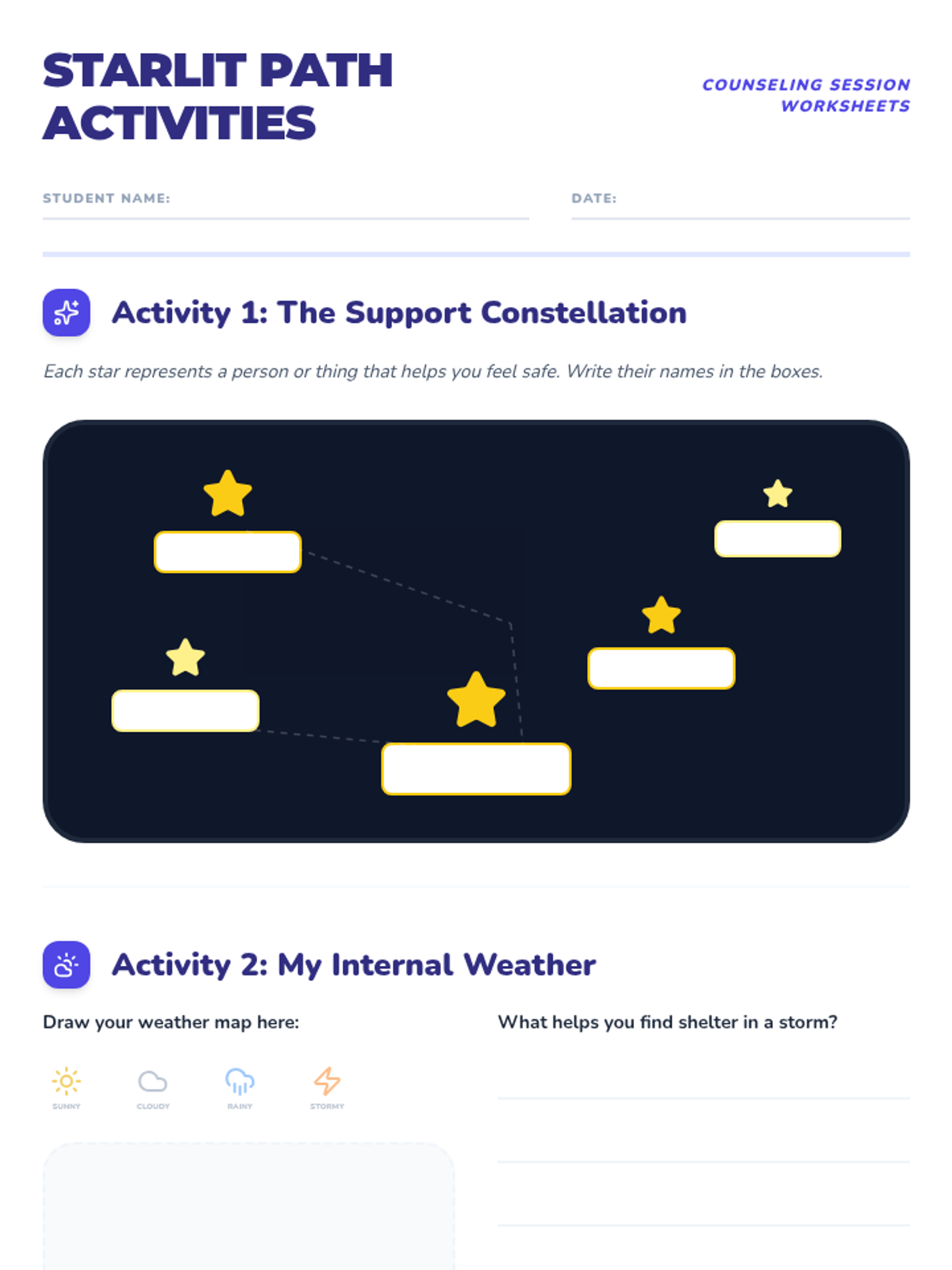
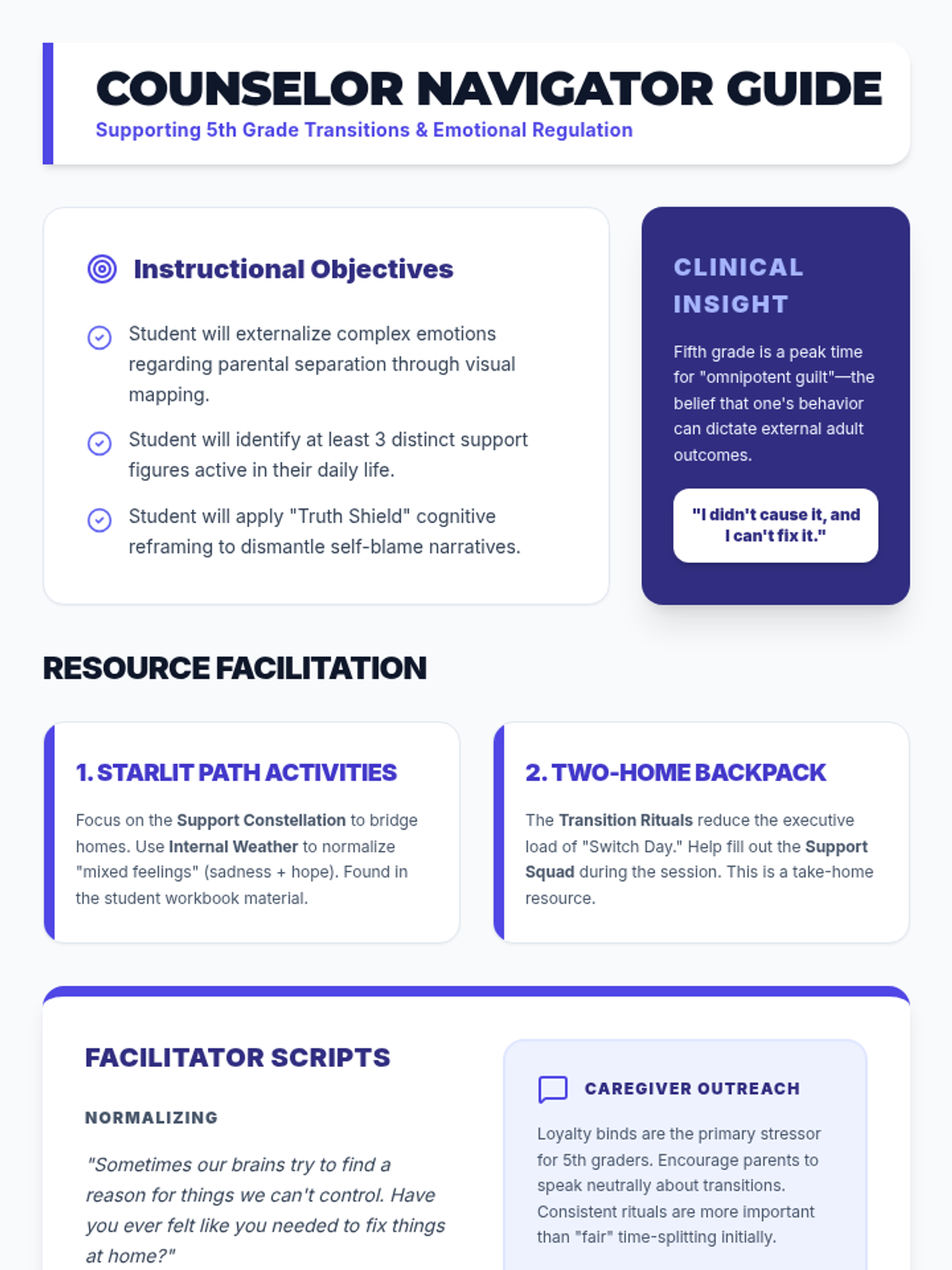
A comprehensive counseling framework designed for a 5th-grade student navigating parental separation. This lesson focuses on emotional regulation, identifying support networks, managing transitions between homes, and reinforcing that the separation is not the child's fault.
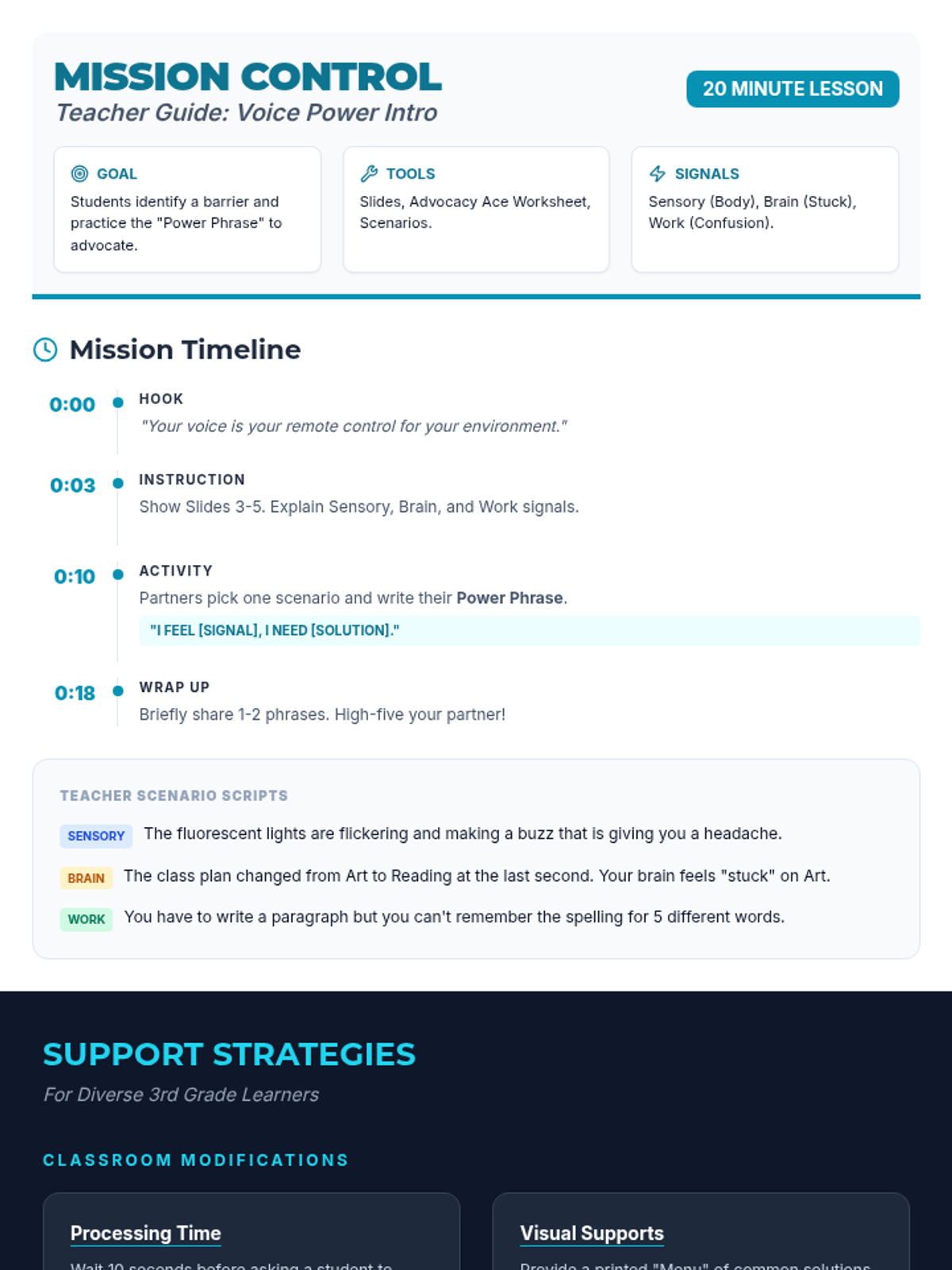
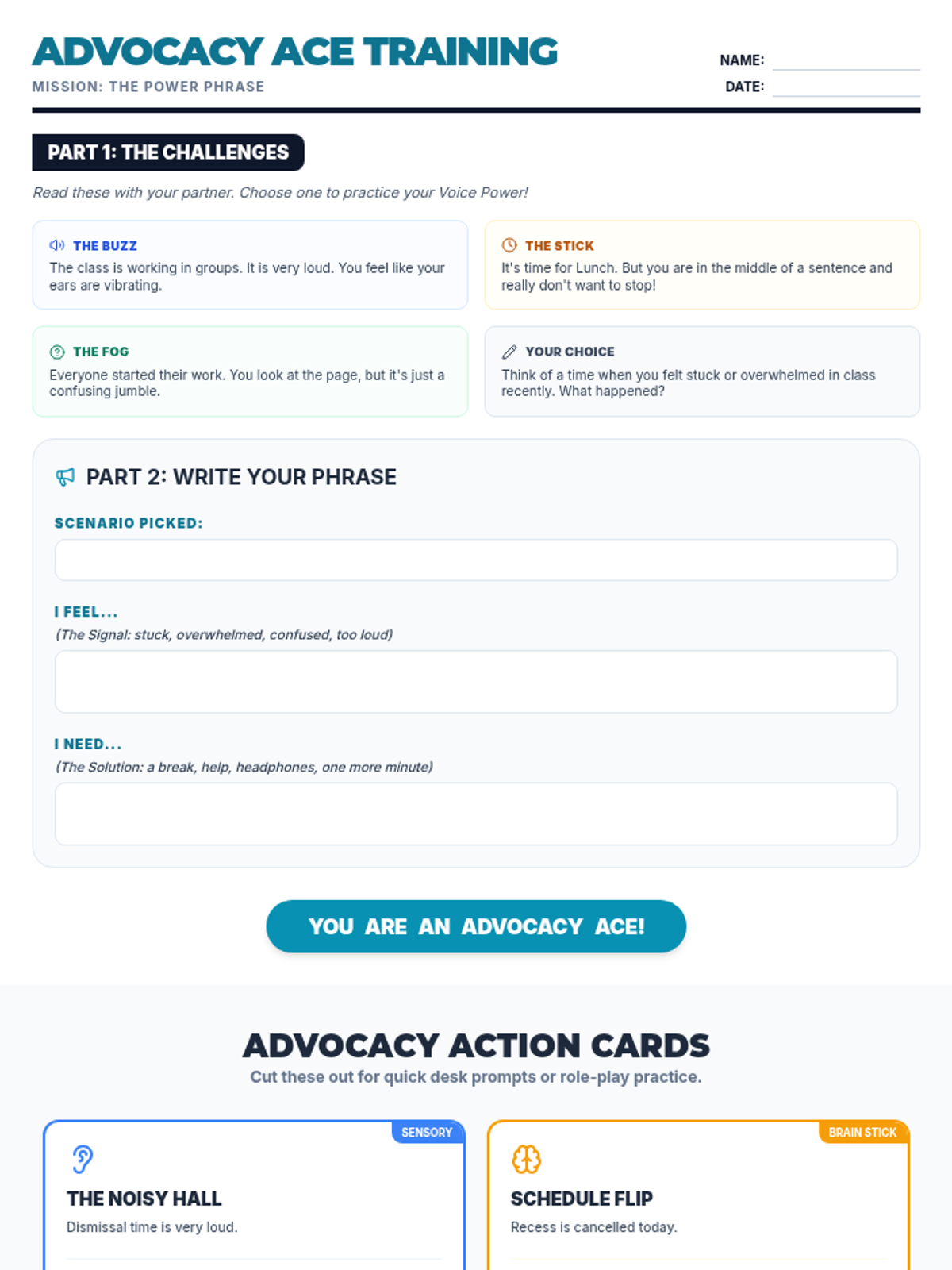
A high-energy, 20-minute introduction to self-advocacy focusing on sensory needs, inflexible thinking, and academic help-seeking for 3rd graders.
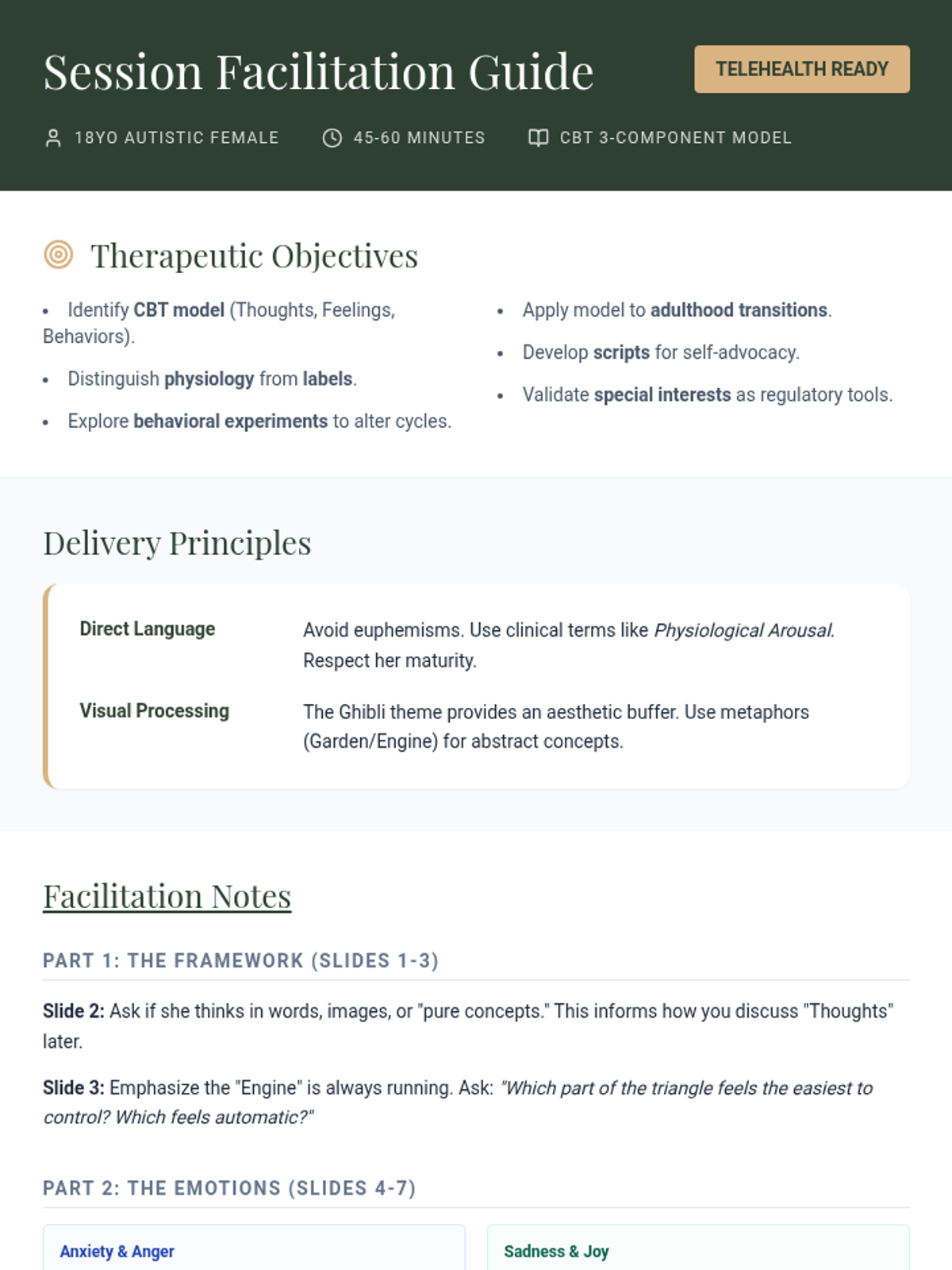
A psychoeducational exploration of the CBT triangle (thoughts, feelings, behaviors) tailored for an 18-year-old autistic girl, utilizing a mature Studio Ghibli-inspired aesthetic to navigate complex emotions and emerging adulthood.
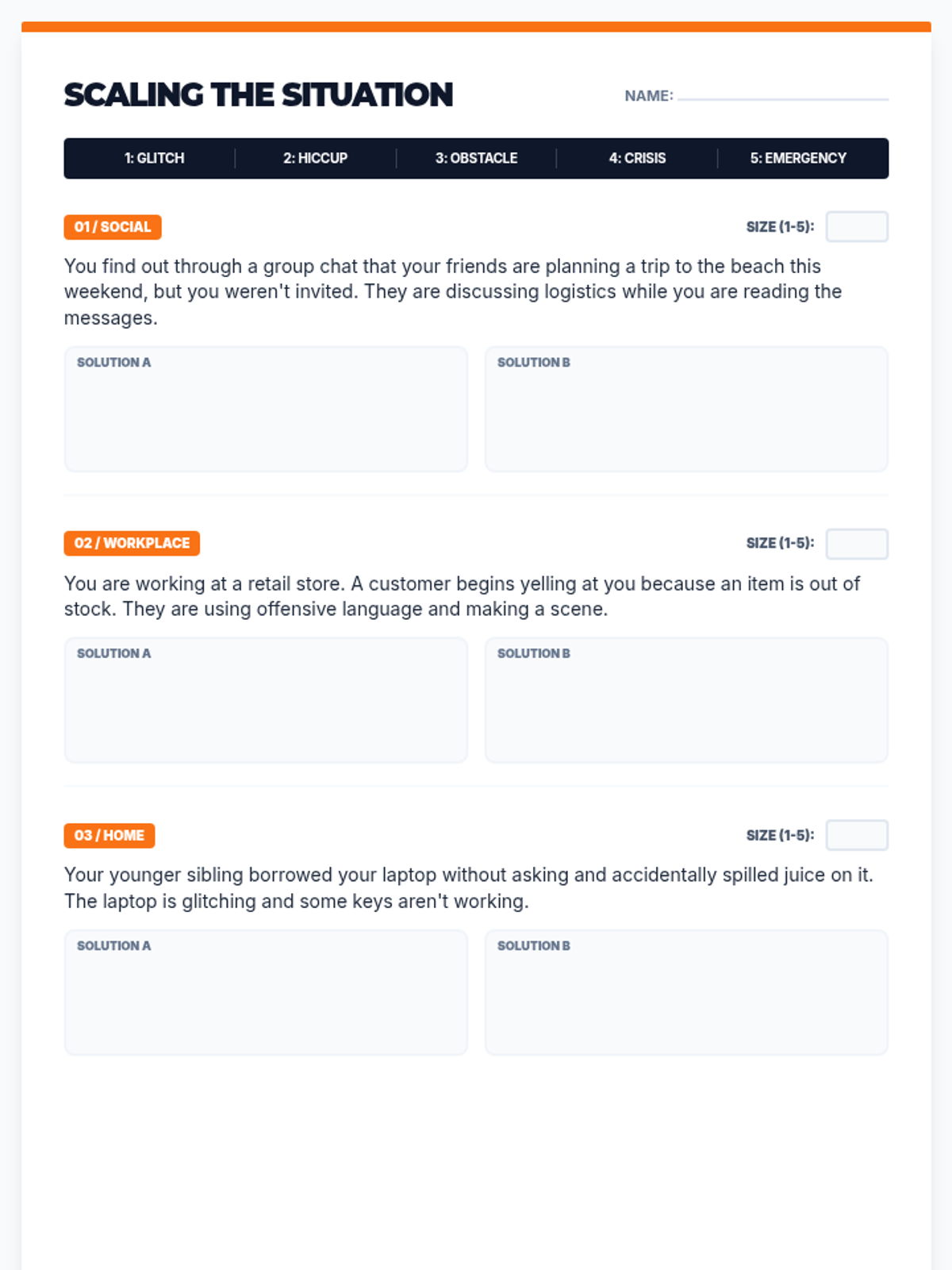
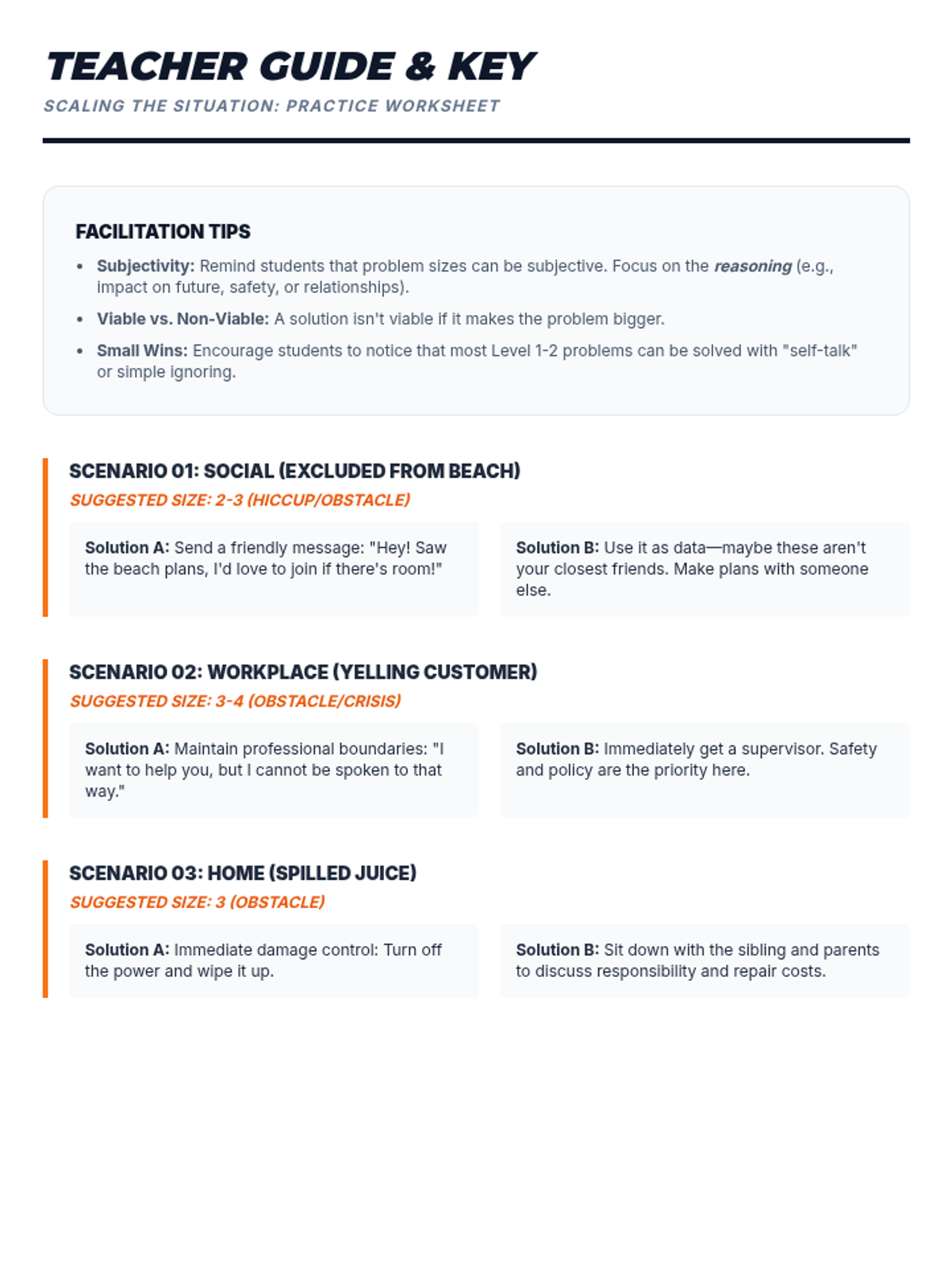
A lesson designed to help high school students categorize the 'size' of life's challenges and develop proportionate, effective solutions for social, workplace, and domestic conflicts.
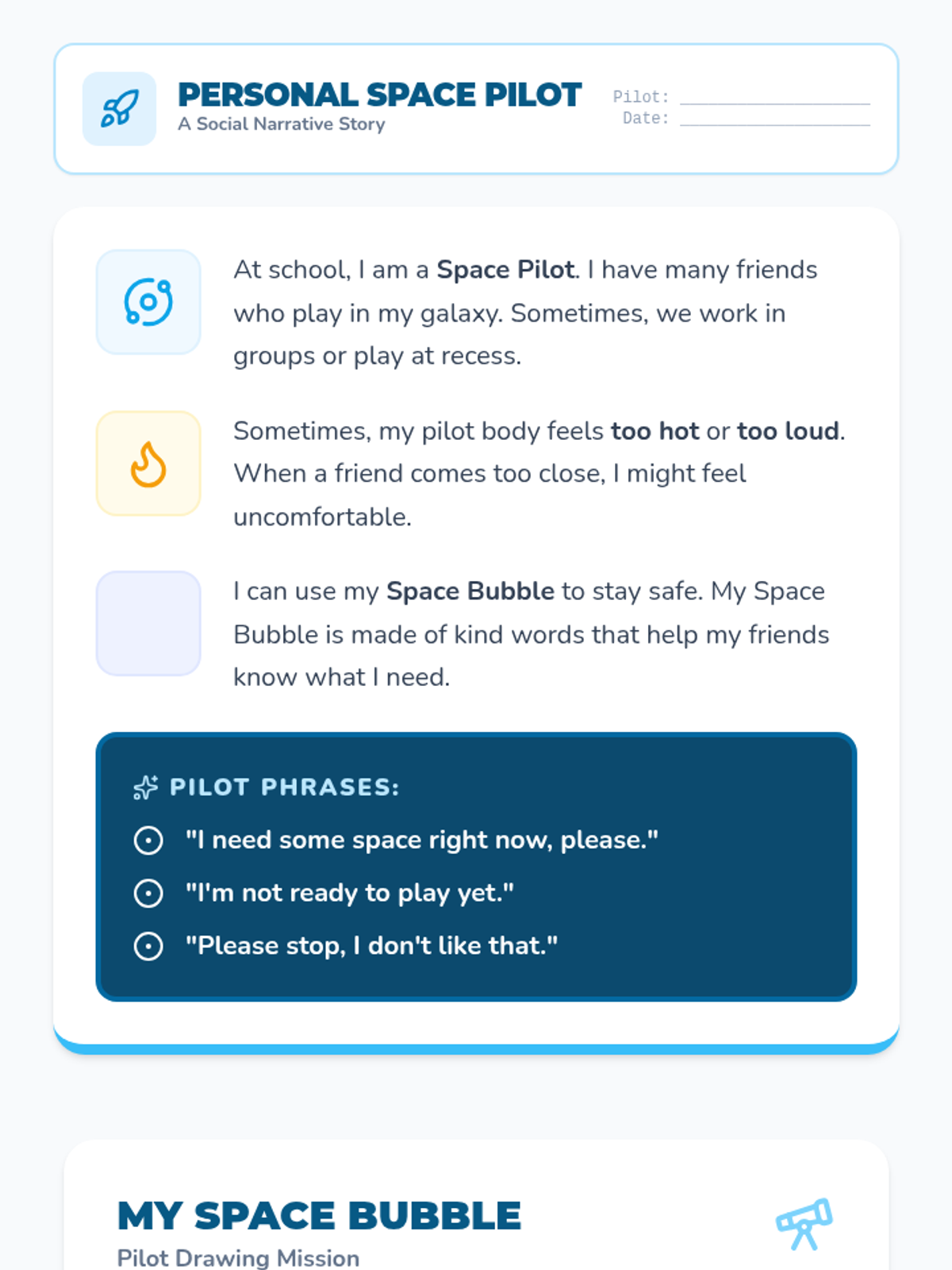
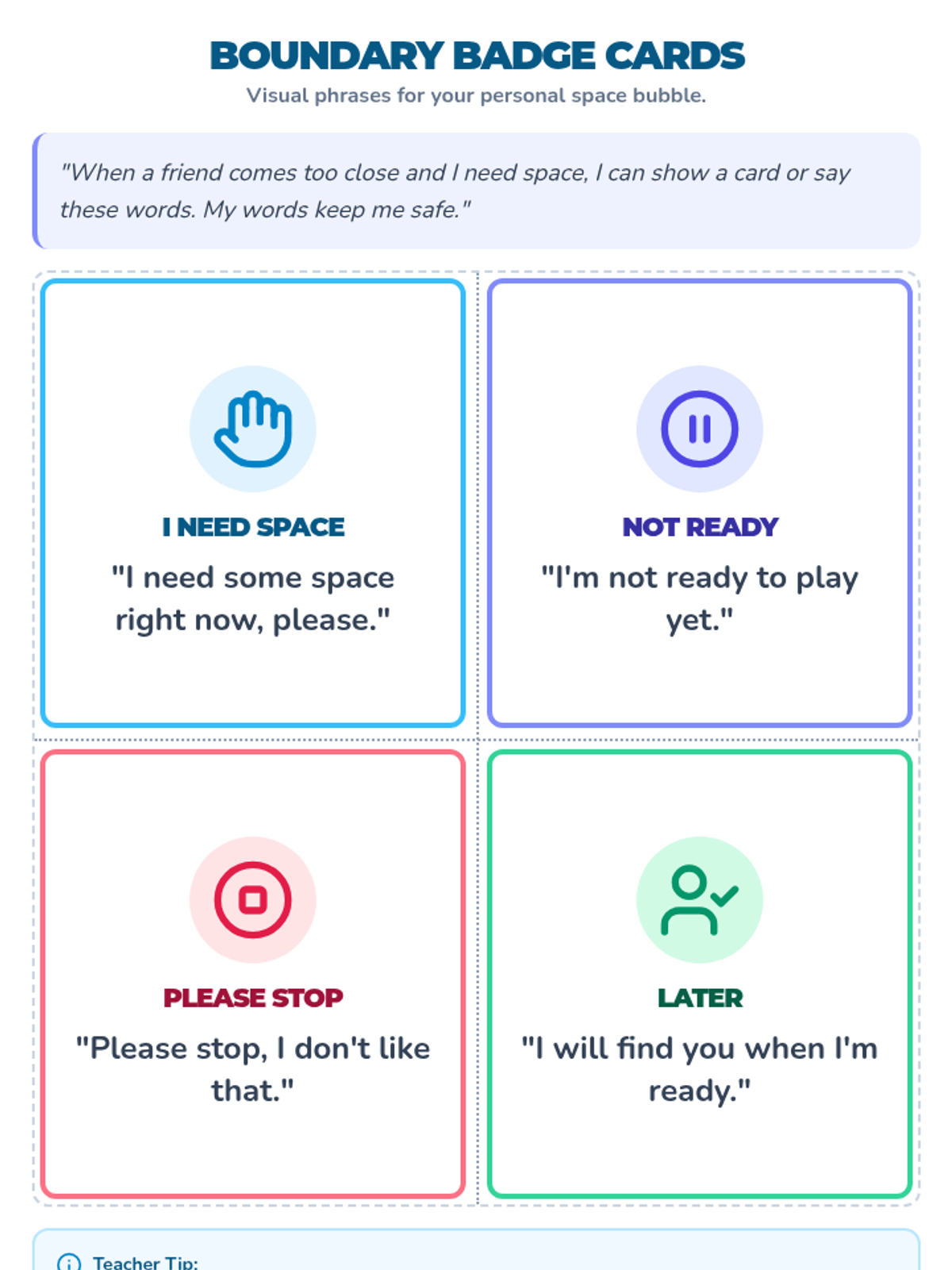
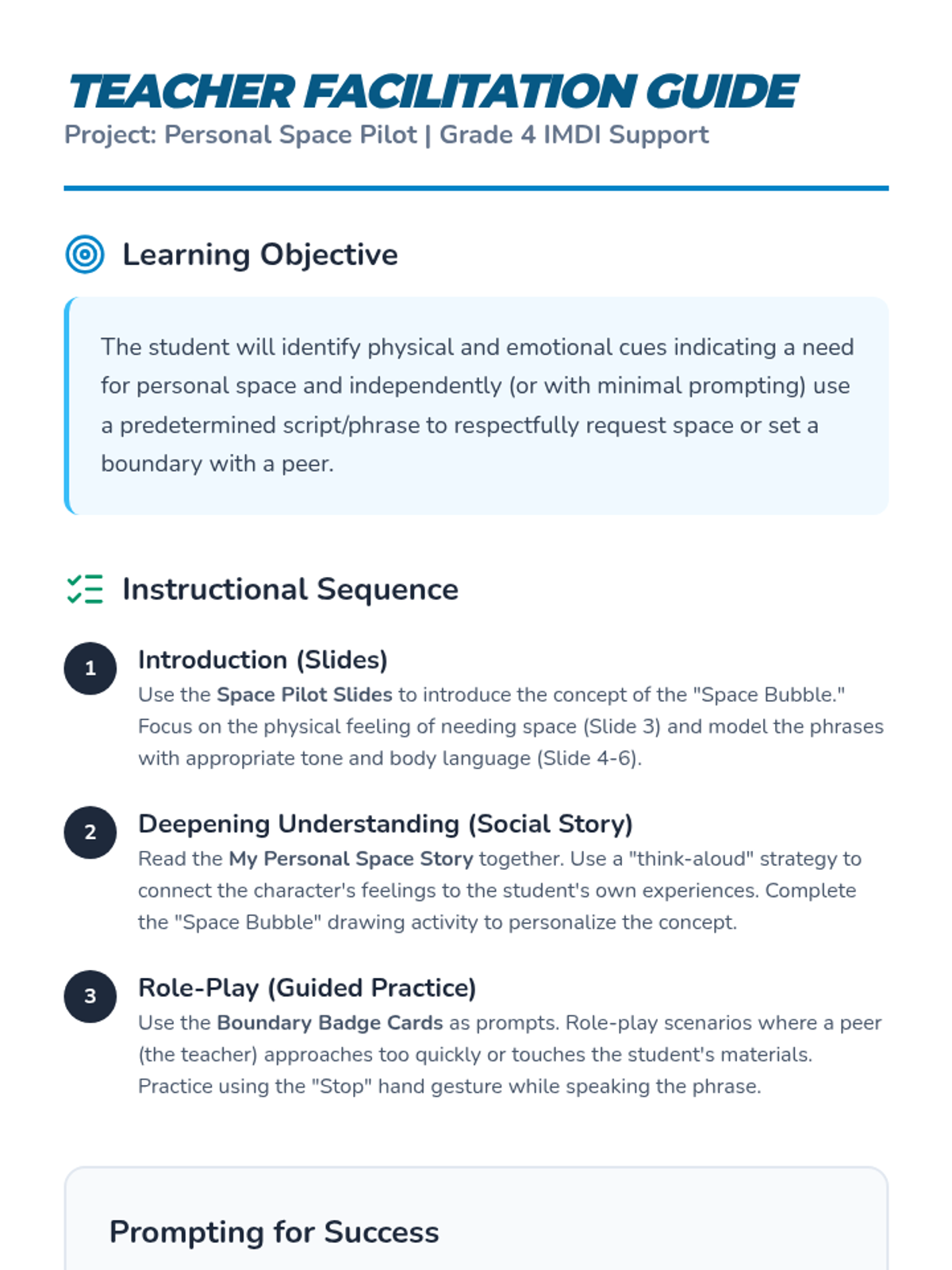
A lesson designed for 4th-grade students to learn respectful phrases and visual cues for setting boundaries and requesting personal space from peers. It includes a social narrative, visual aids, and a teacher facilitation guide.
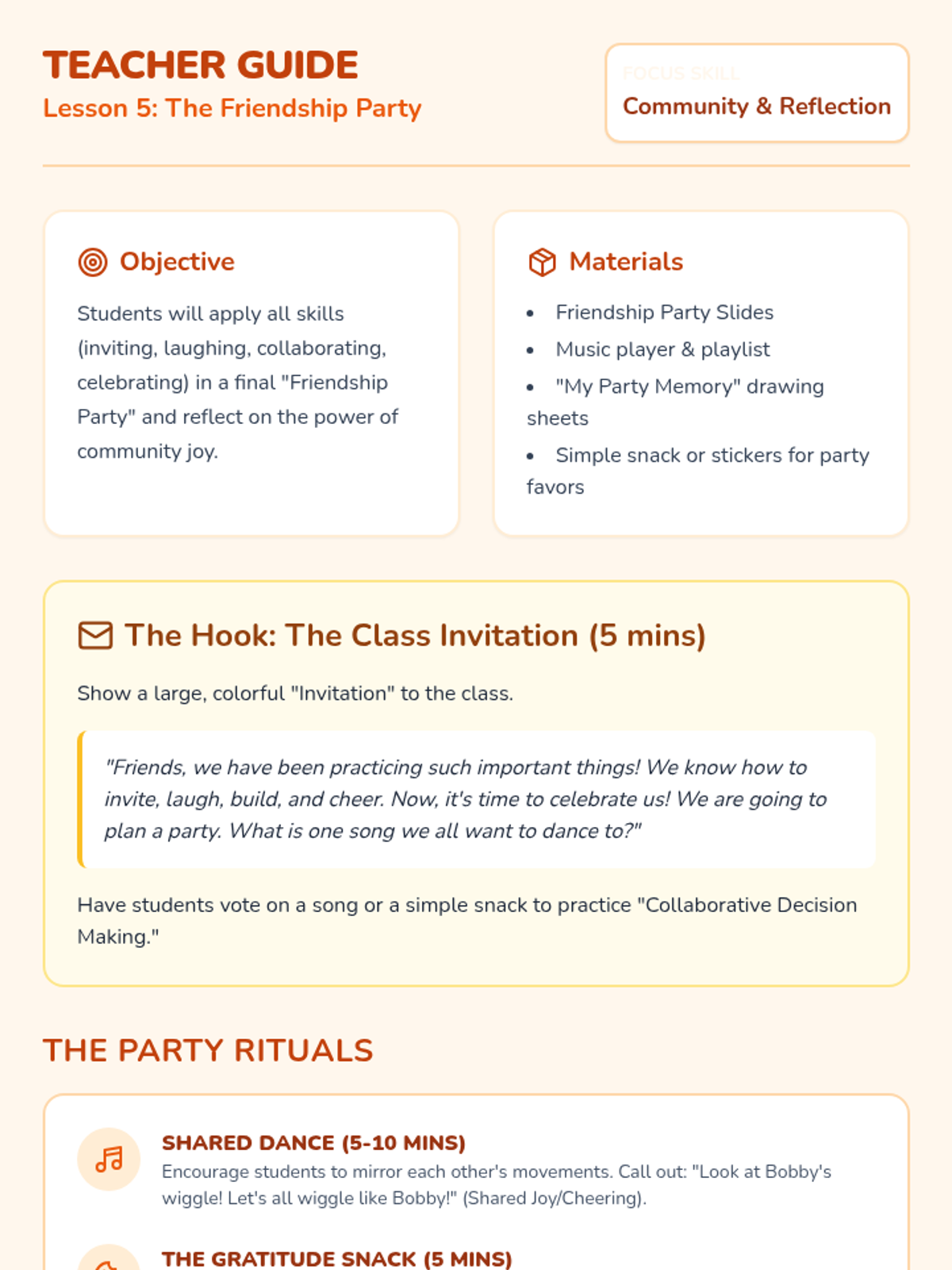
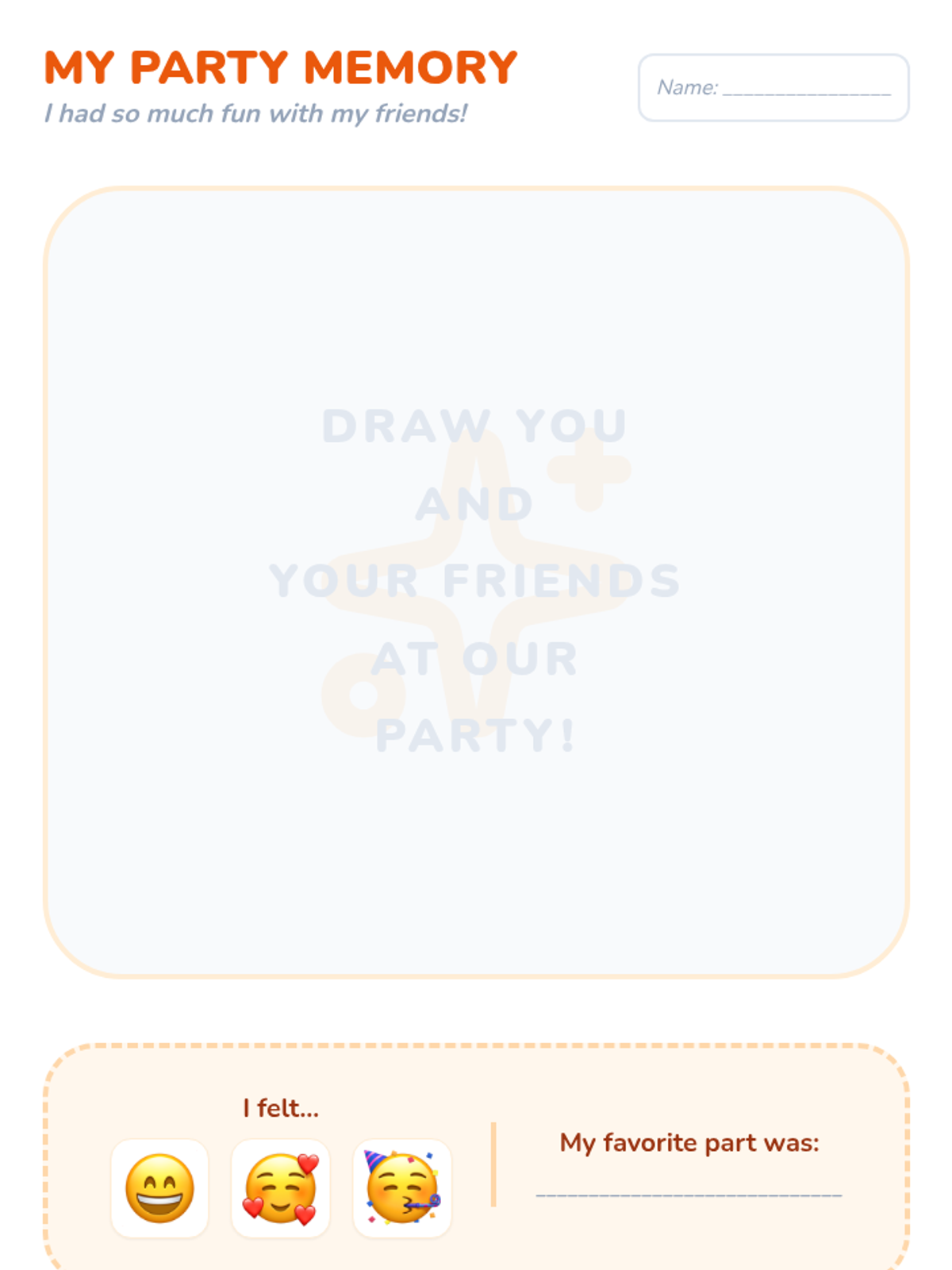
A culminating event where students plan and execute a simple shared activity (like a dance party or snack share). They reflect on how doing things together feels different than doing them alone.
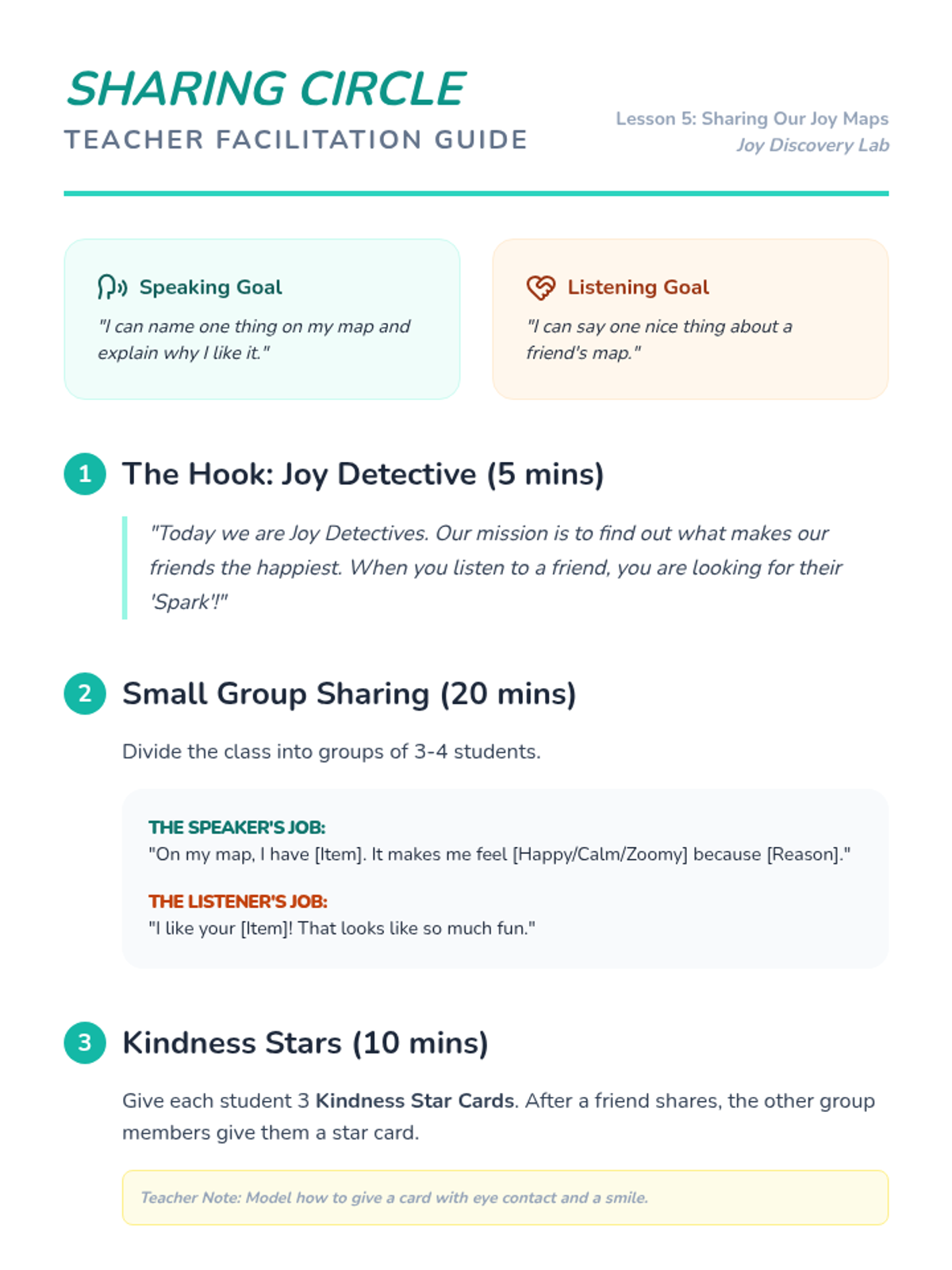
Students present their collages to small groups, articulating why they chose specific activities. Peer listeners practice affirming others' choices.
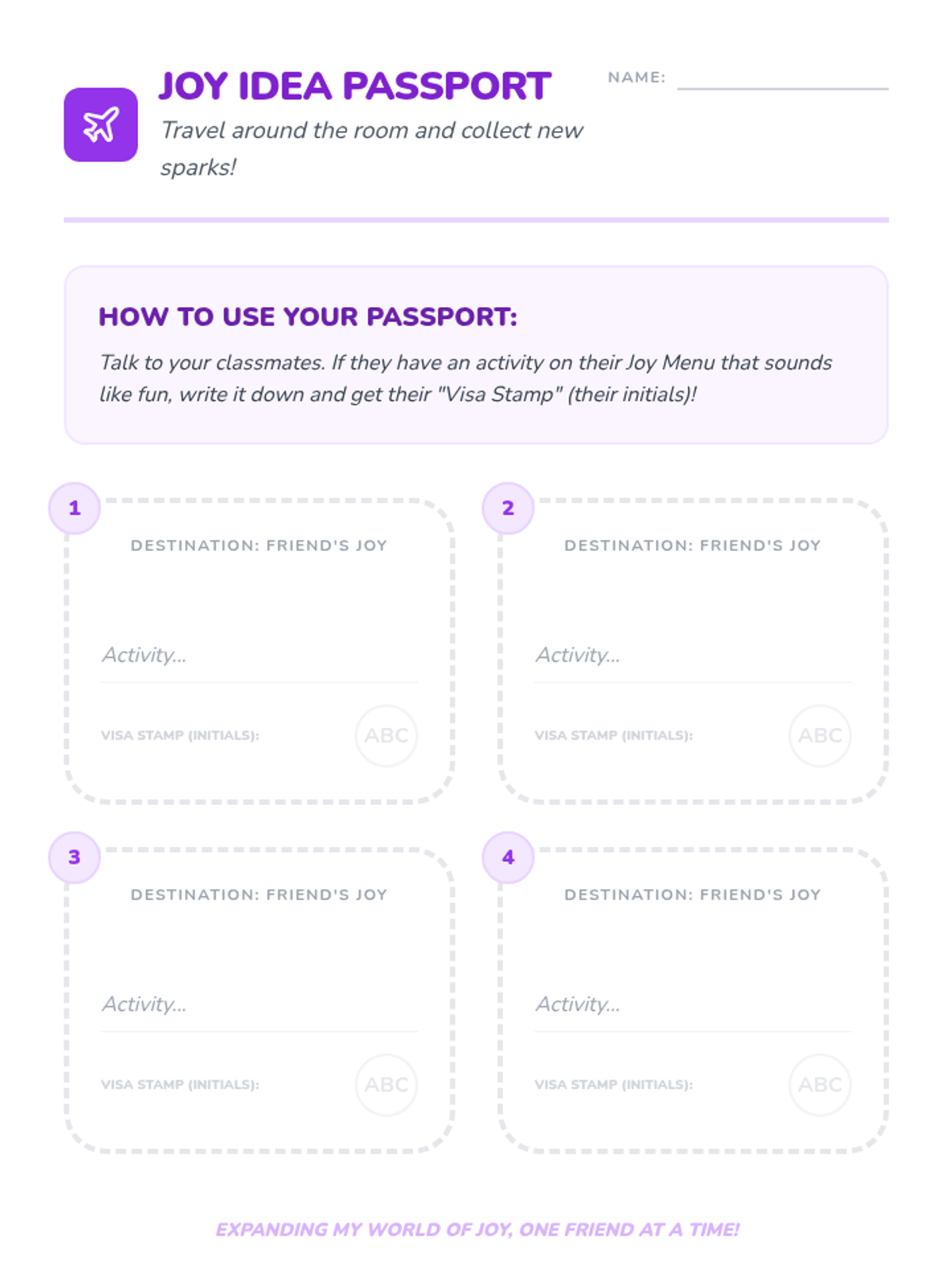
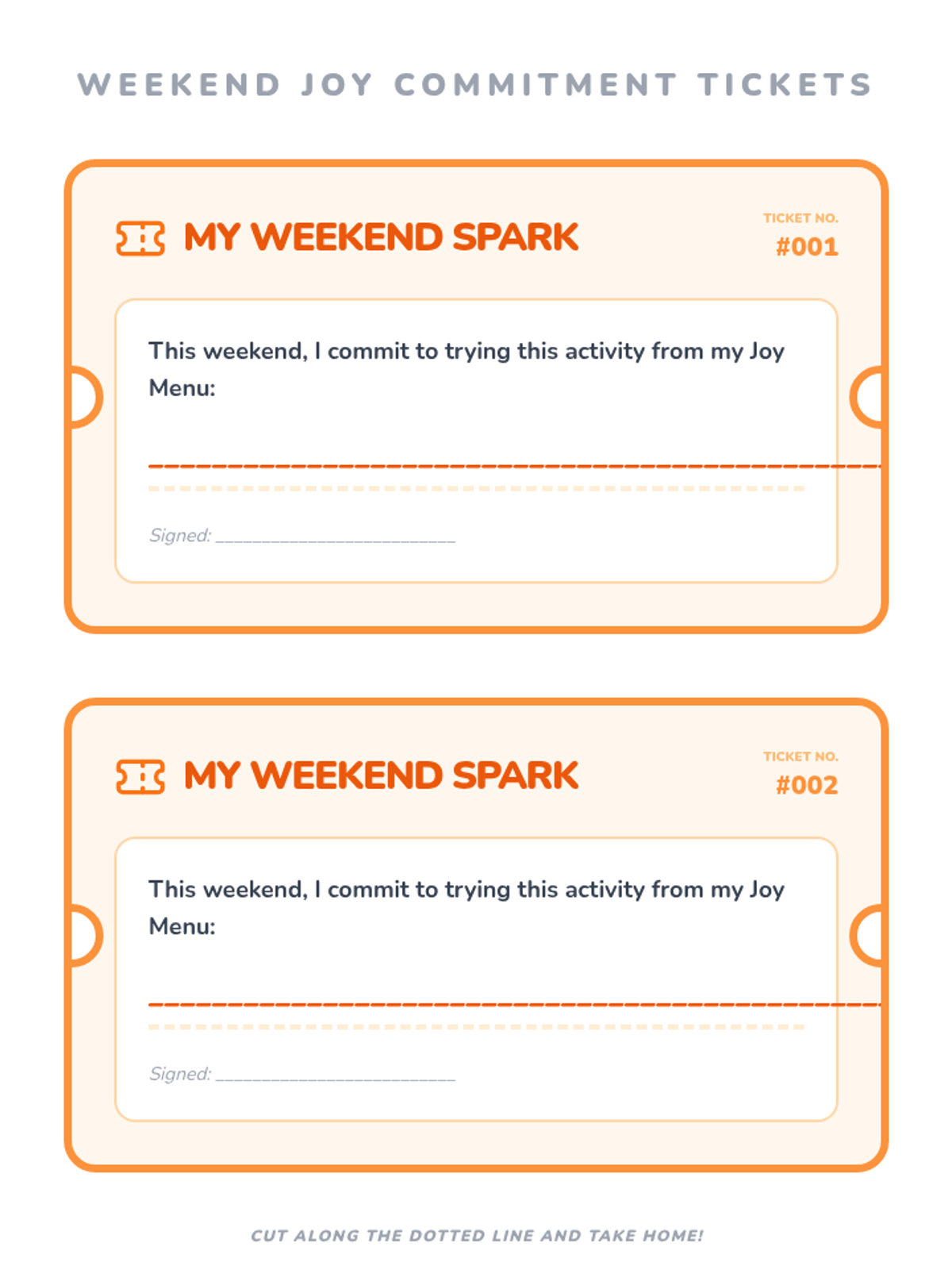
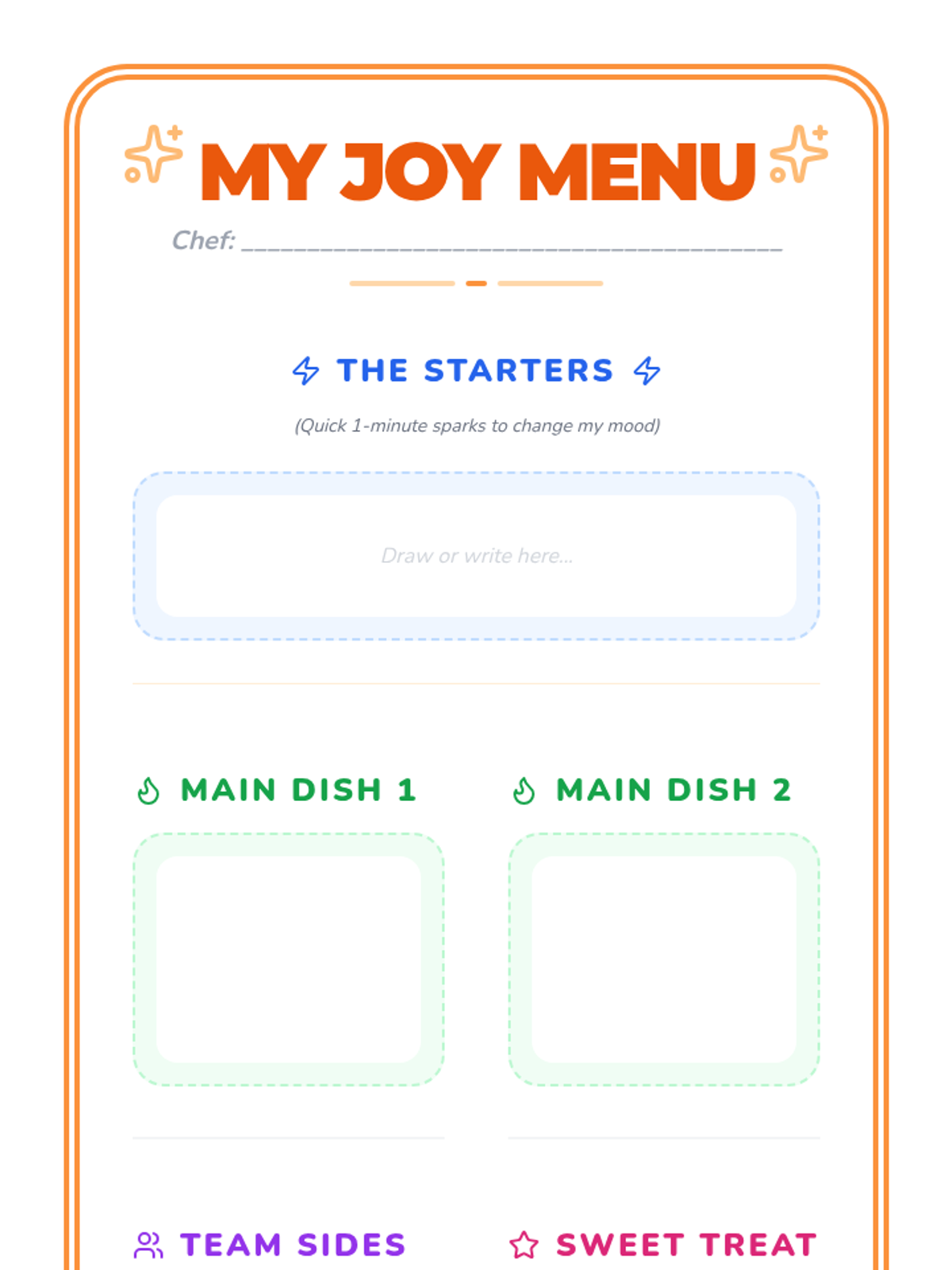
Students present their Joy Menus to small groups, allowing peers to borrow ideas to add to their own lists. The lesson concludes with a commitment to try one menu item over the weekend.
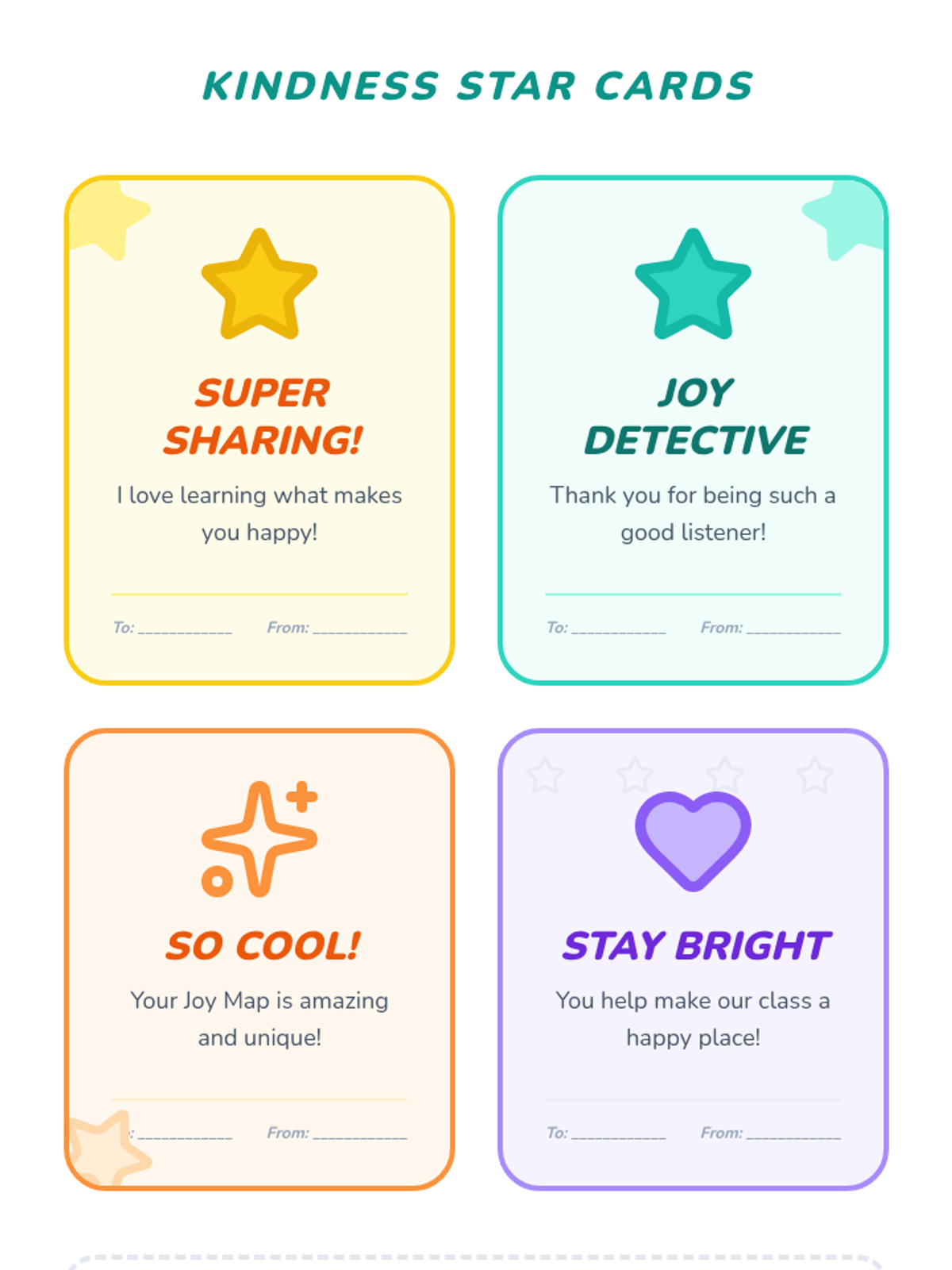
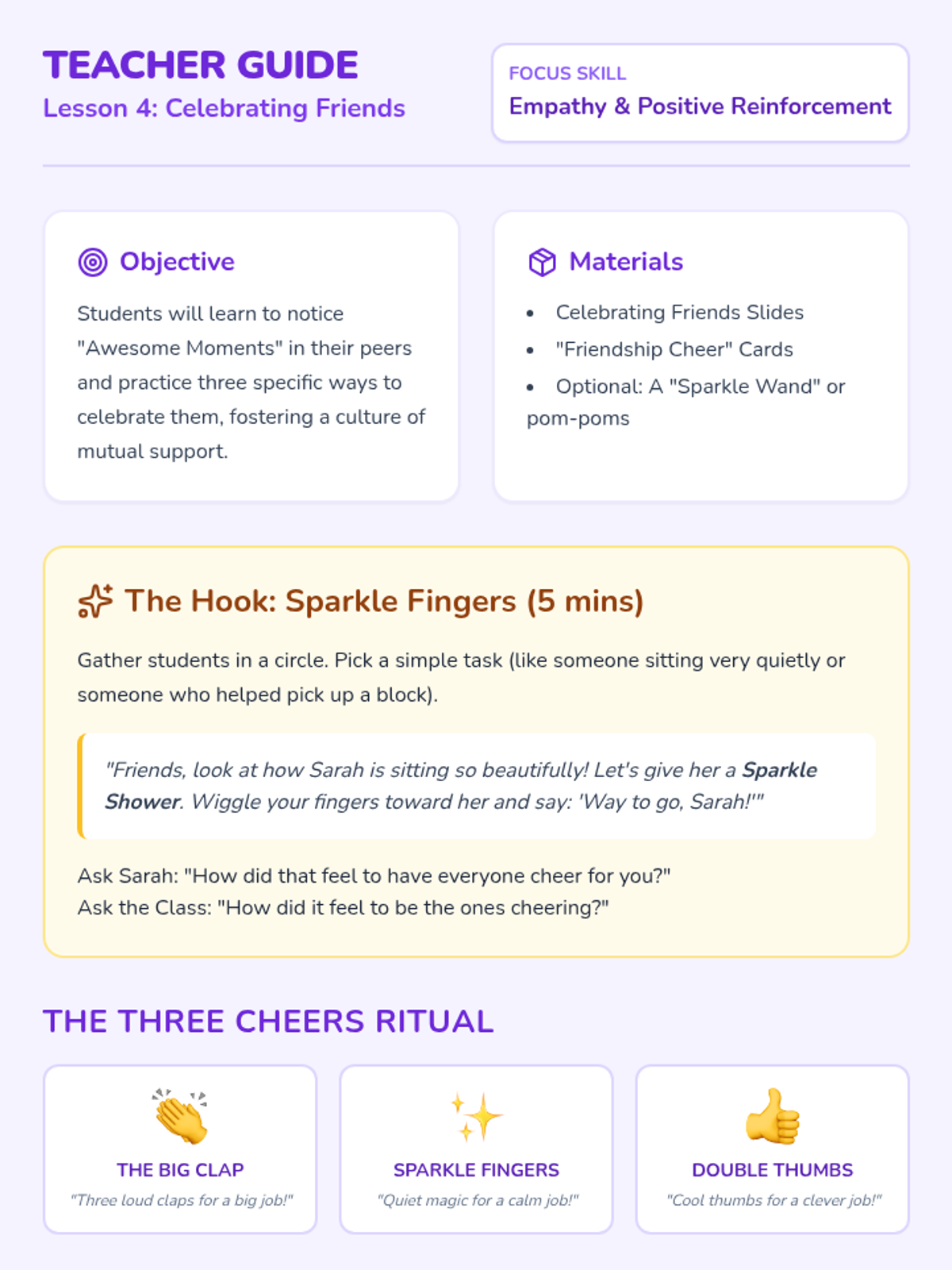
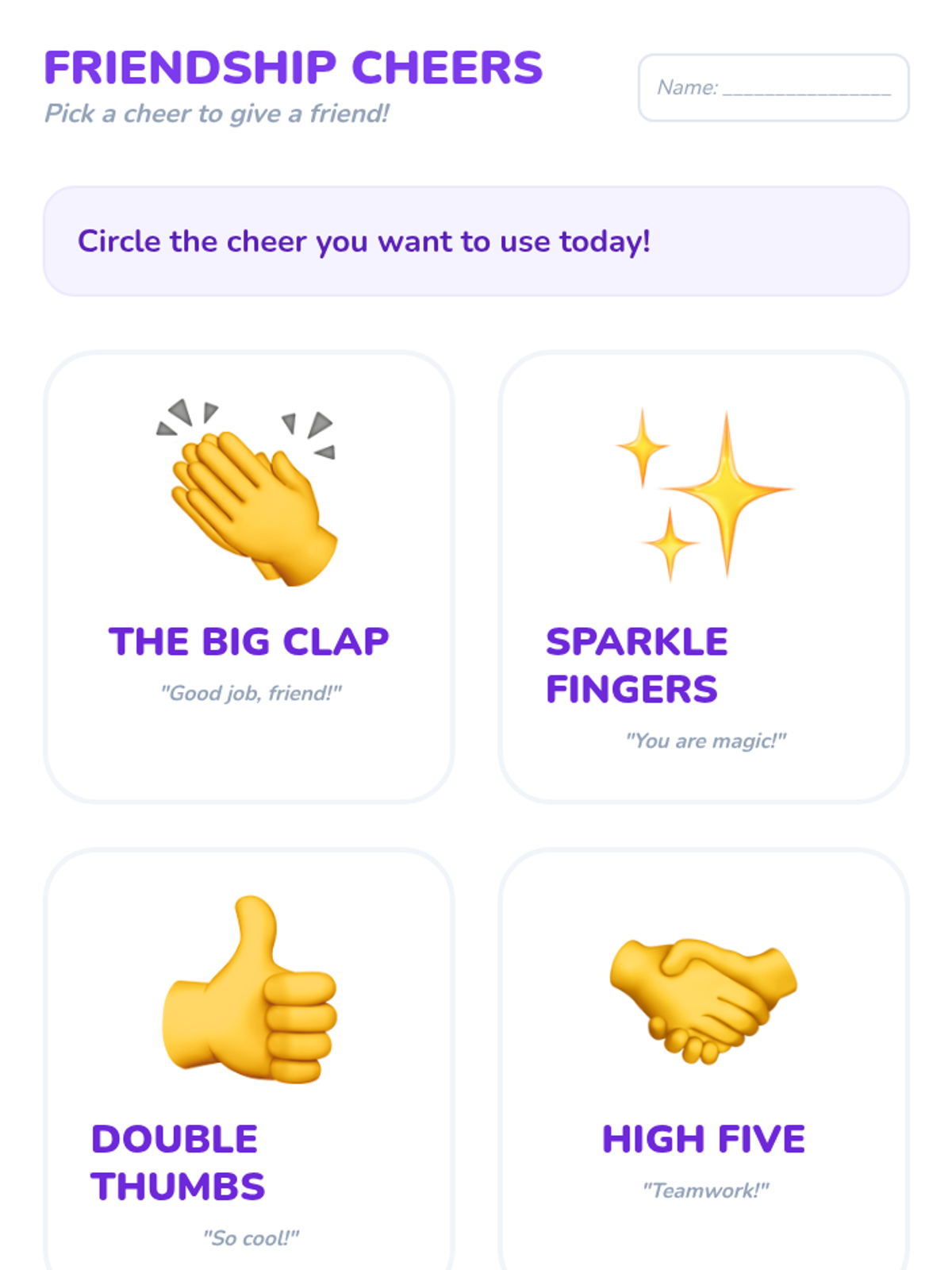
Students learn to identify when a friend does something good and how to celebrate them (clapping, cheering). This shifts focus from self-gratification to finding joy in others' success.
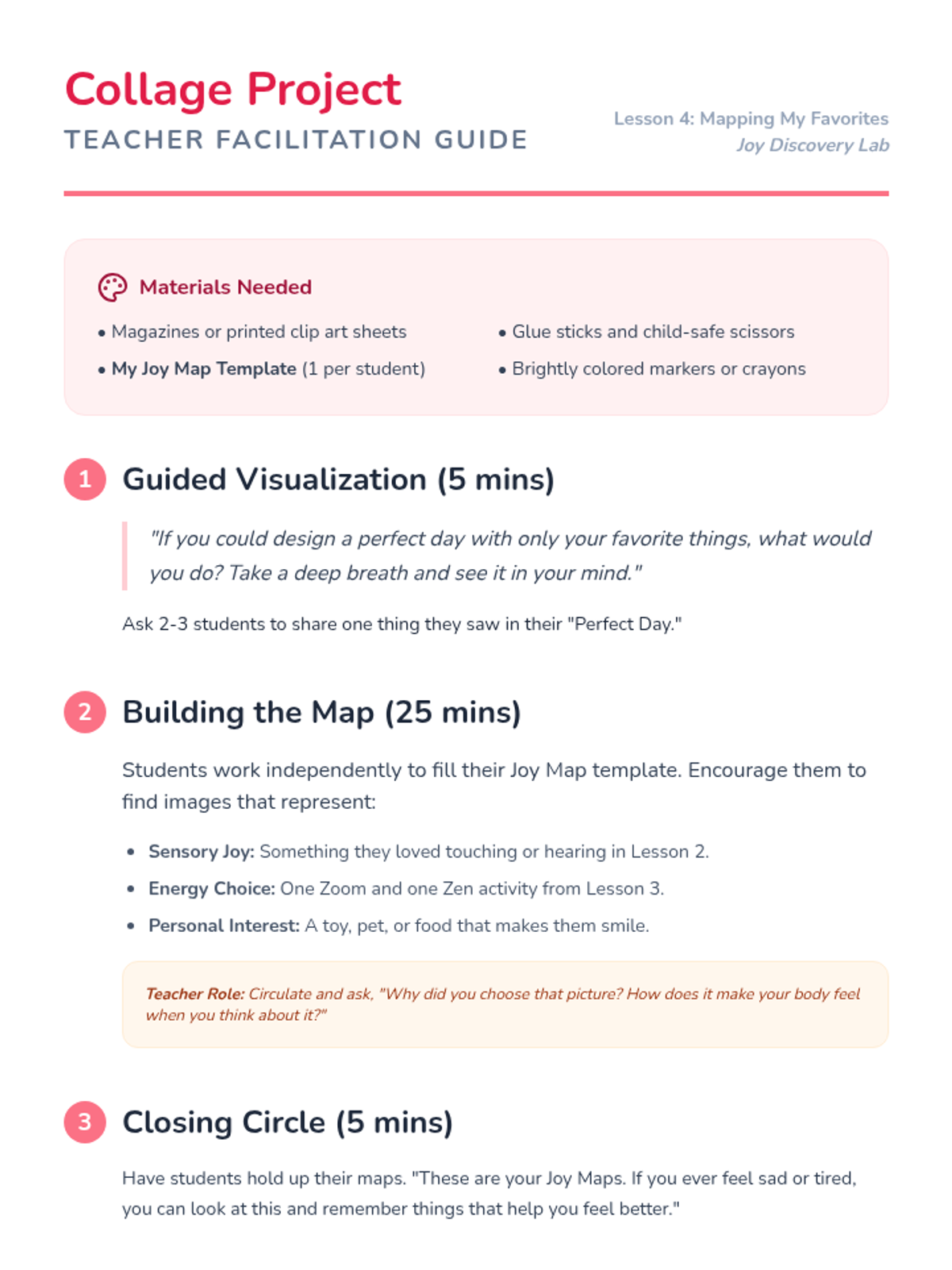
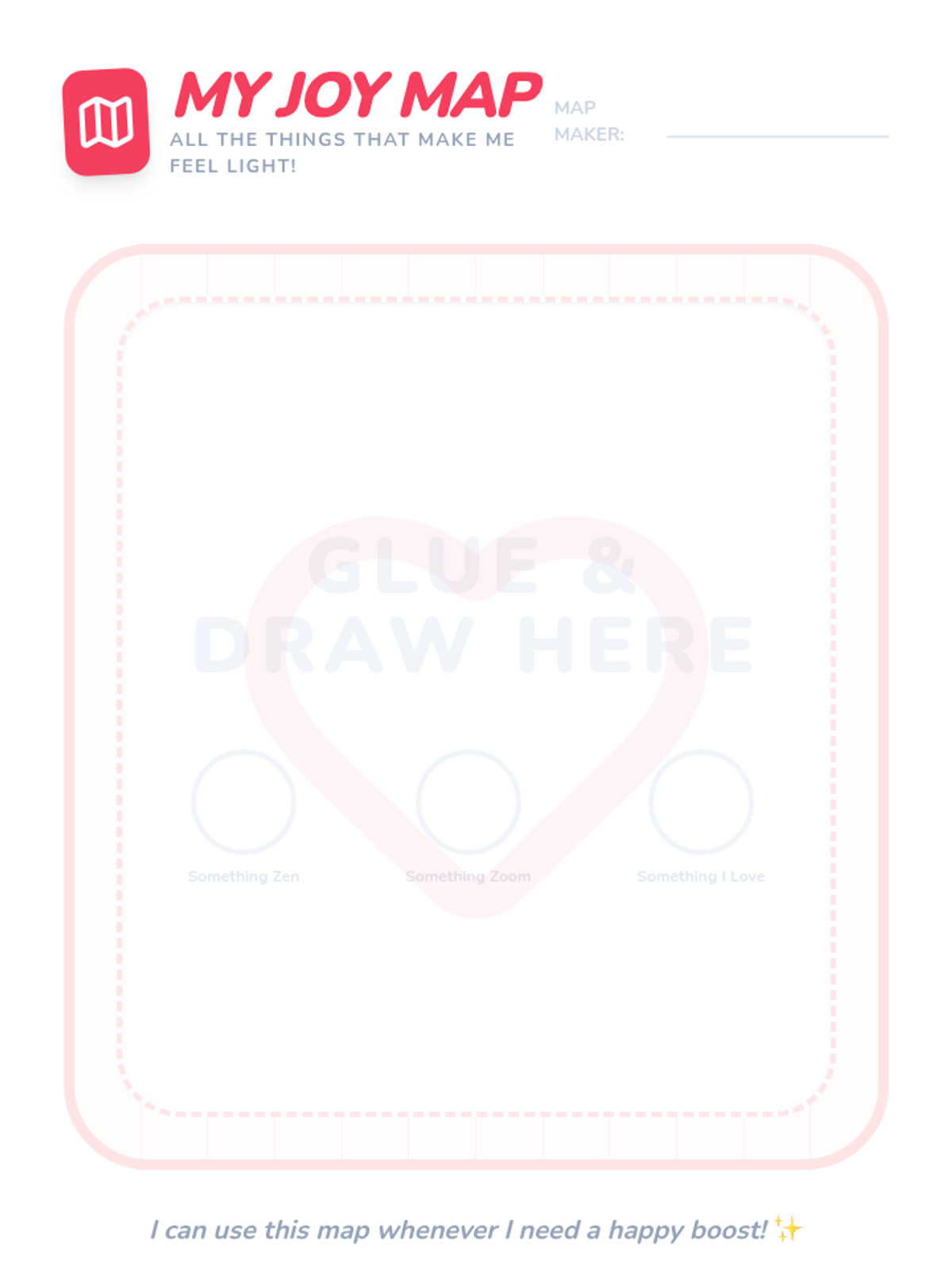
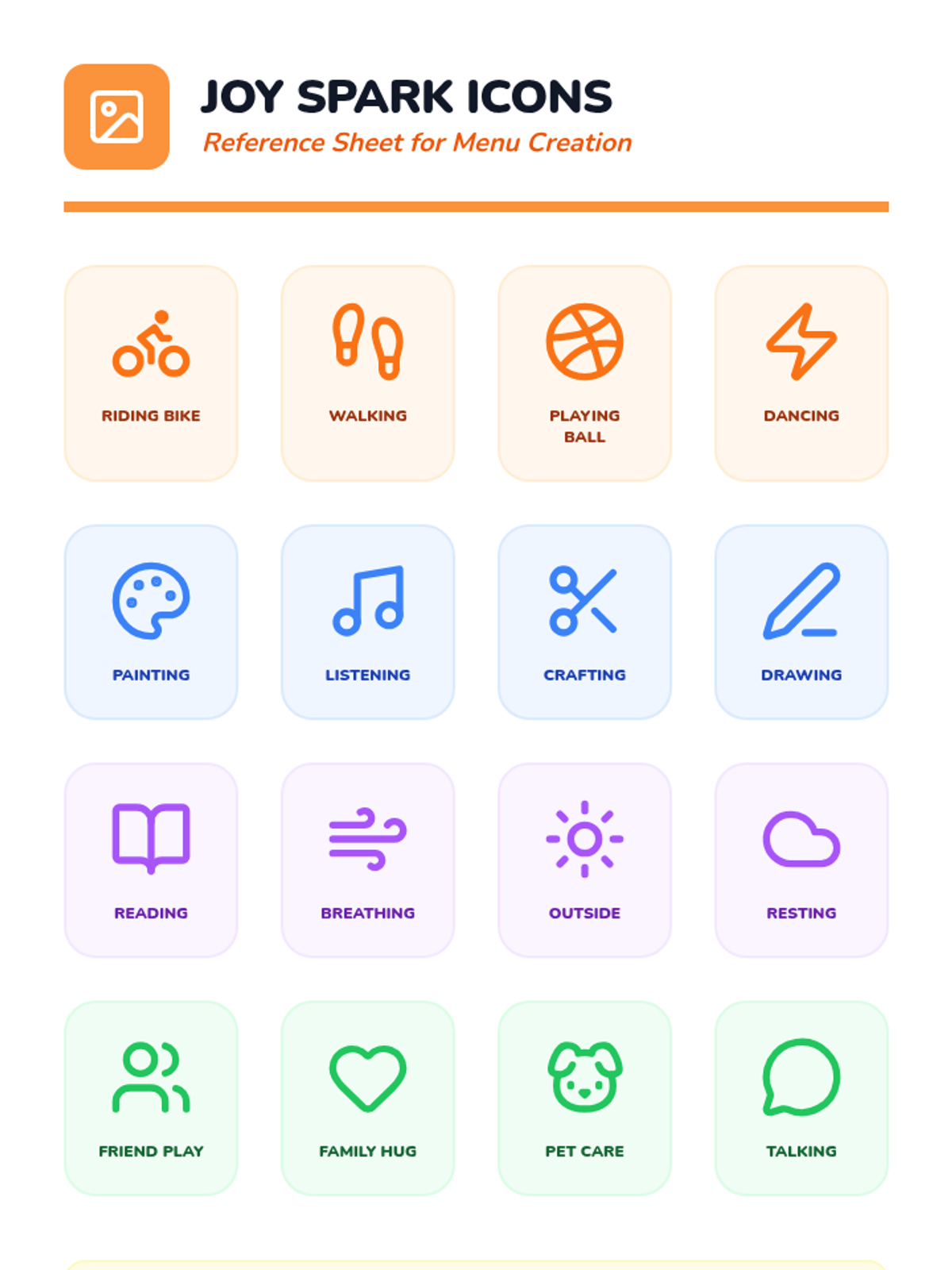
Using a collage format, students select and paste images of their favorite activities onto a personal poster. This visual aid serves as a concrete reference tool.
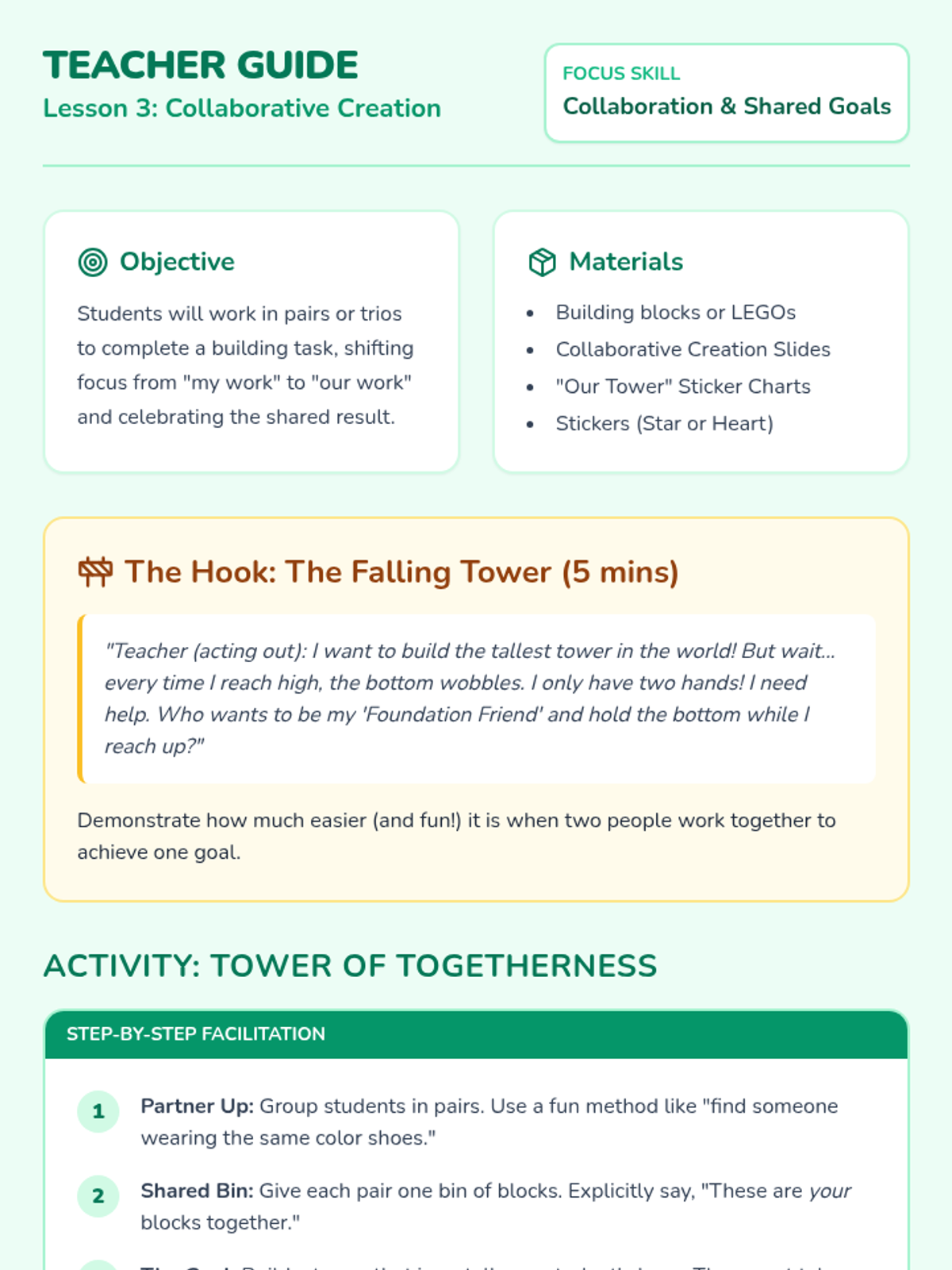
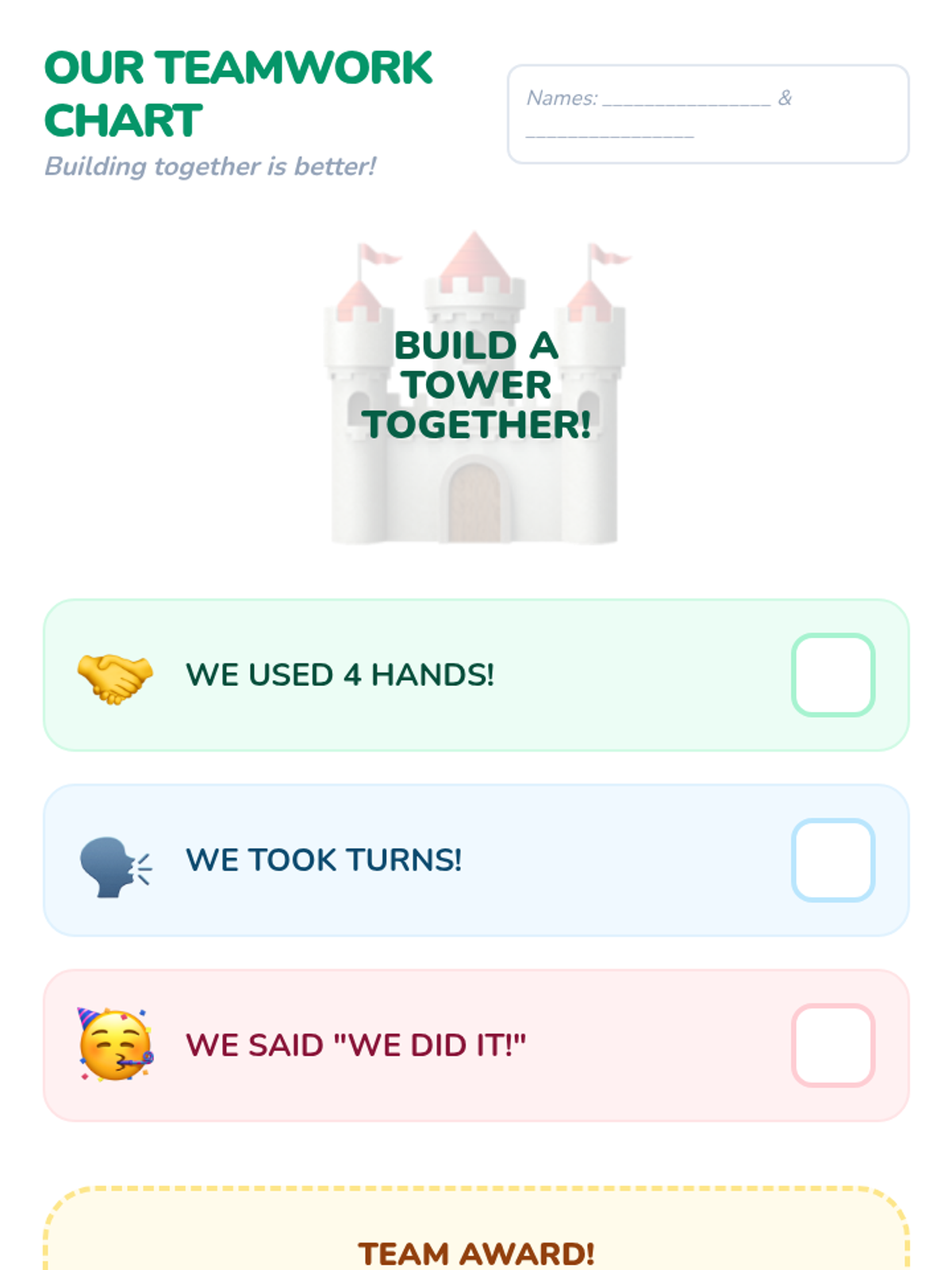
Small groups work together to build something (block tower, art piece). The focus is on the positive feeling of achieving a goal together rather than the final product.
Using their investigations, students create a visual 'menu' or choice board of their top 5 reliable mood-boosting activities. They illustrate these options to serve as a reference tool.
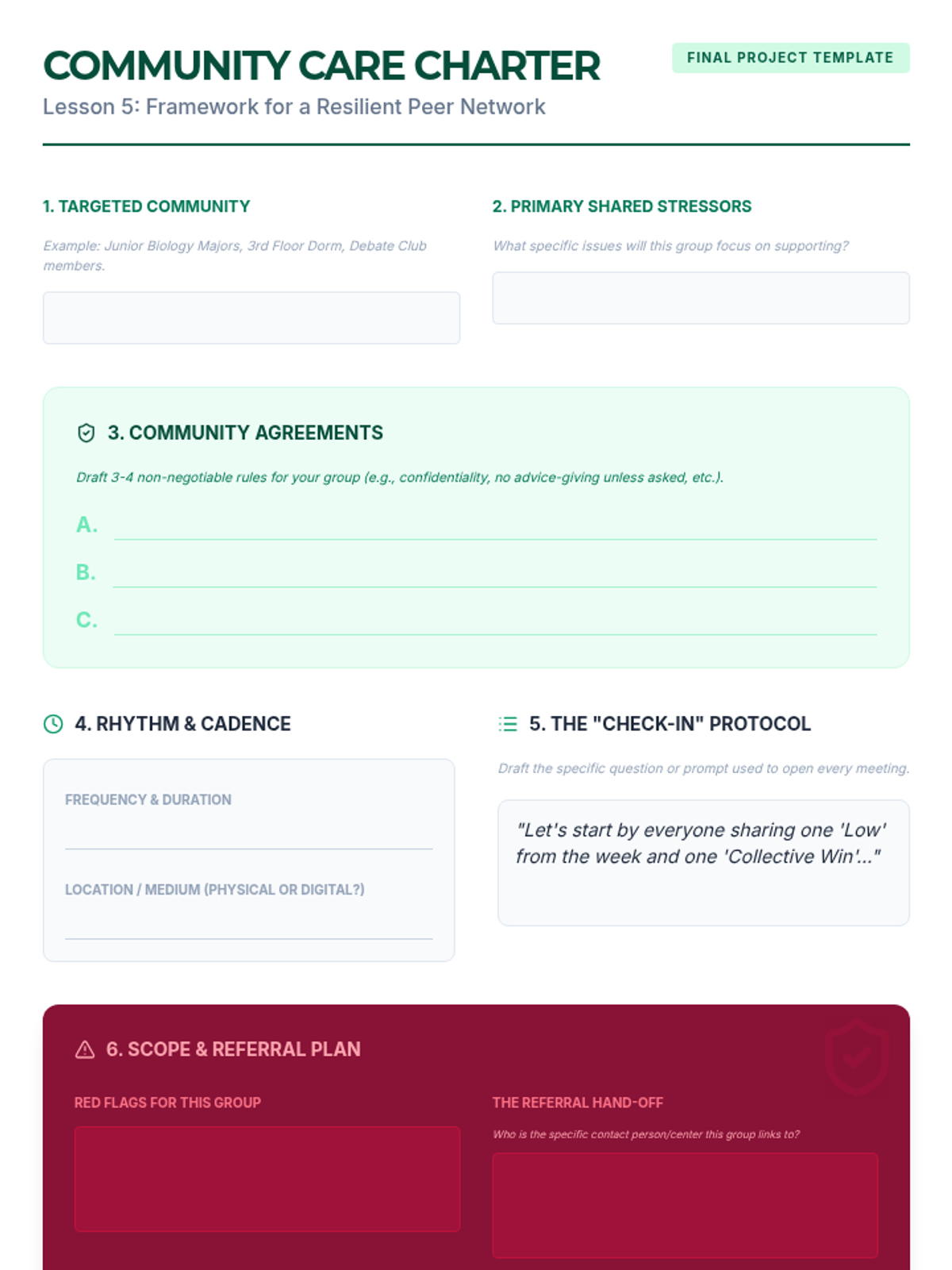
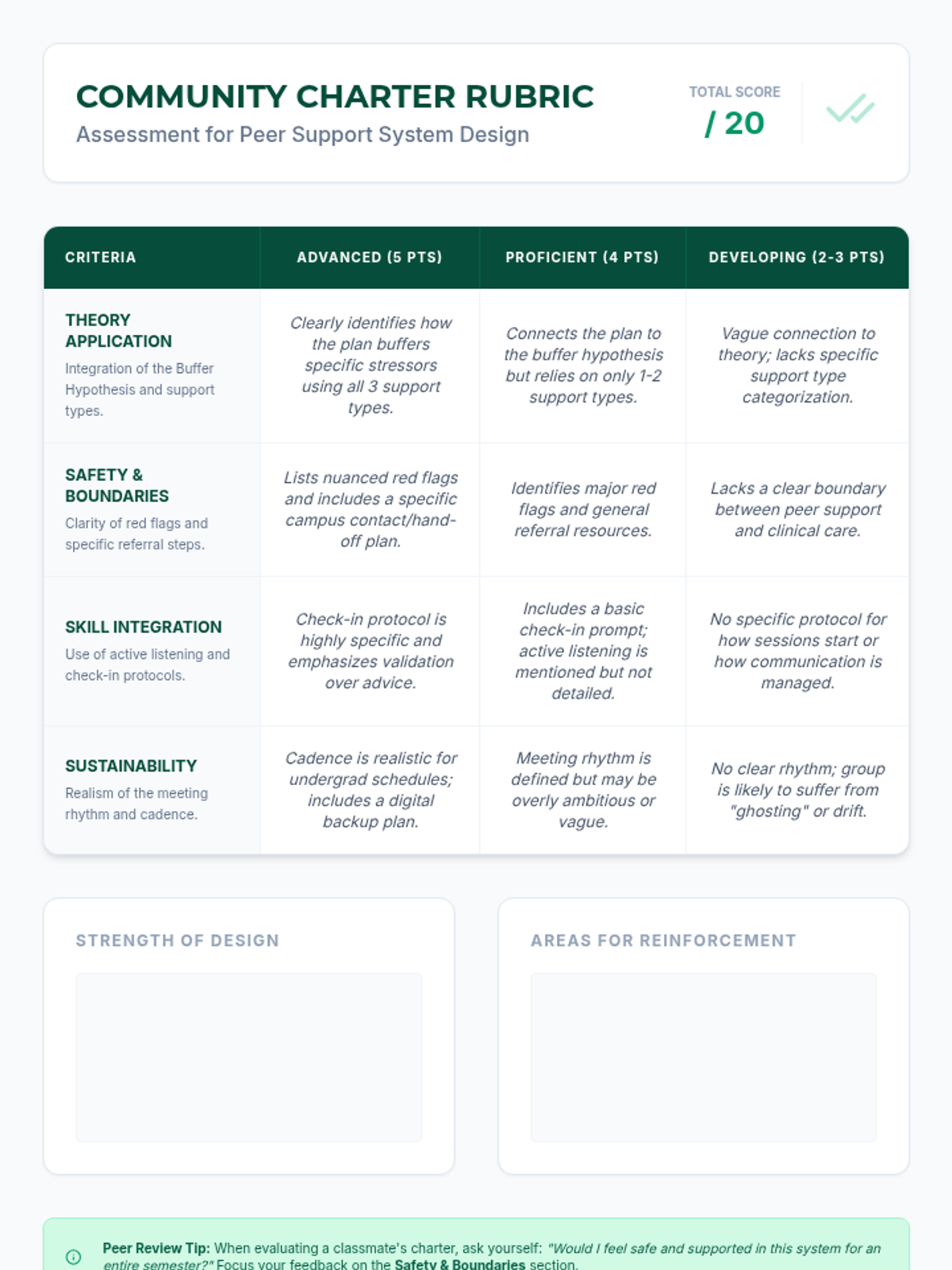
Students design a framework for a community care plan, producing a 'Community Charter' for peer support in a specific campus context.
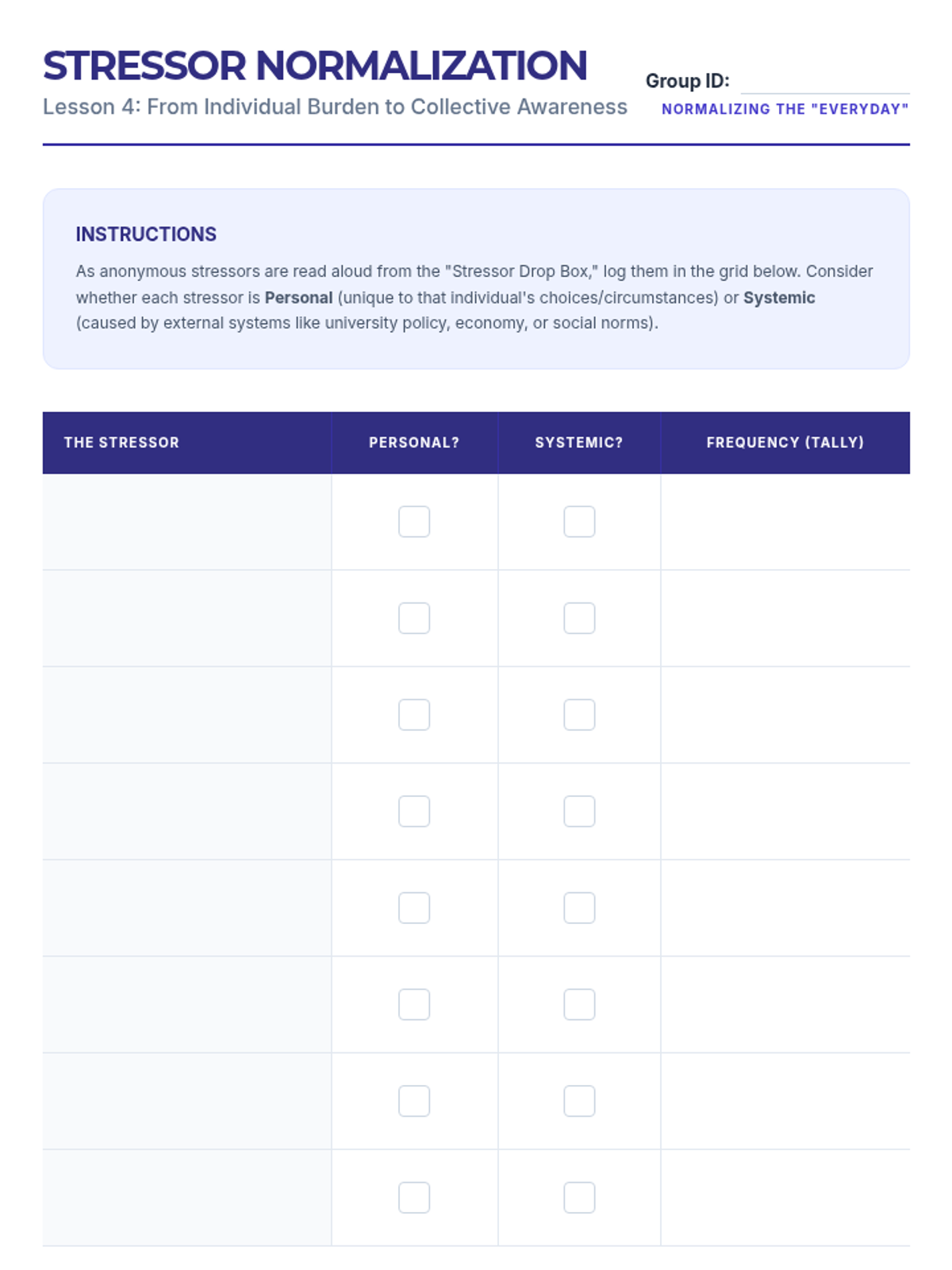
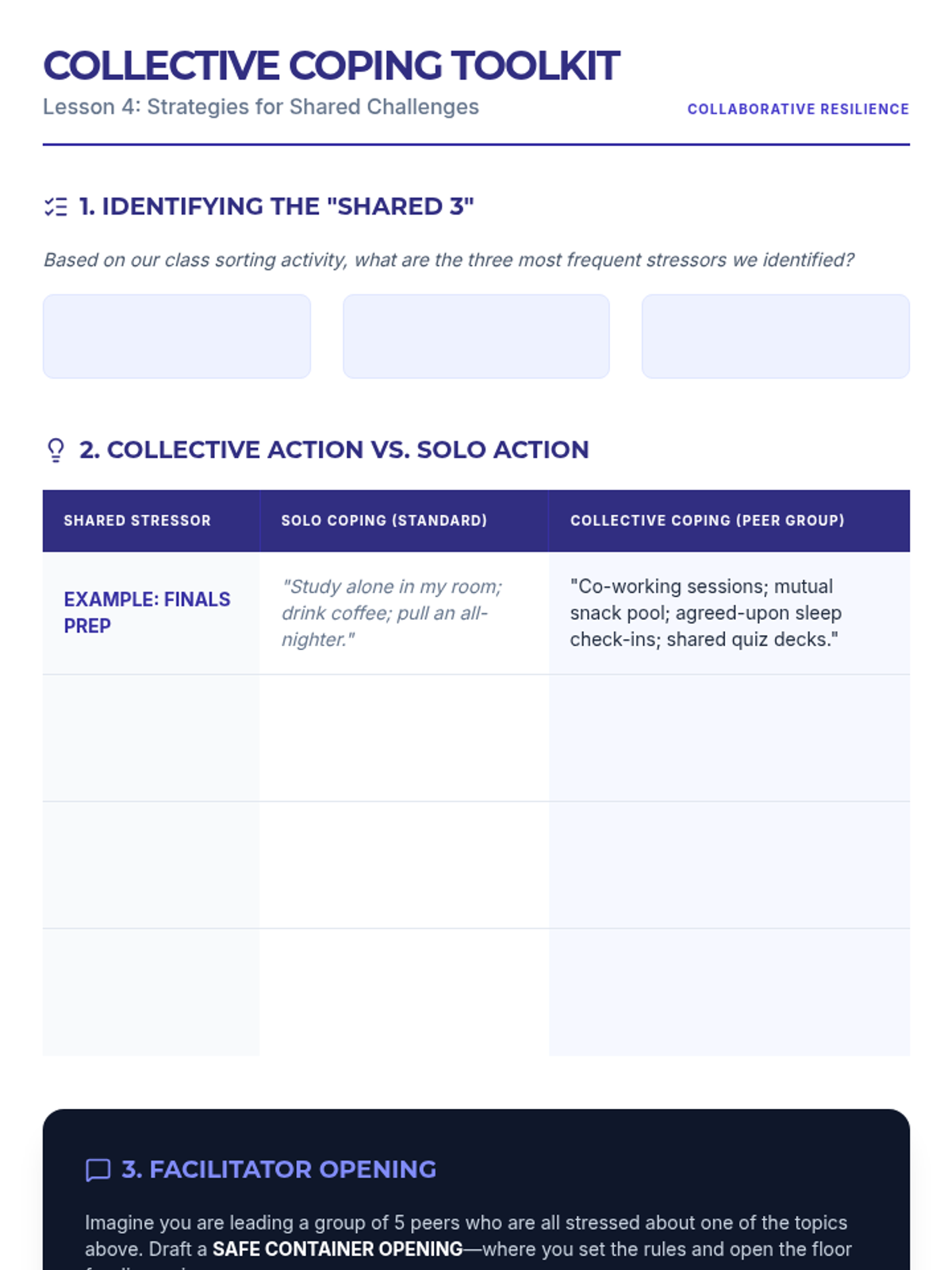
A facilitated dialogue session focusing on common undergraduate stressors, practicing normalization and collective coping strategies.
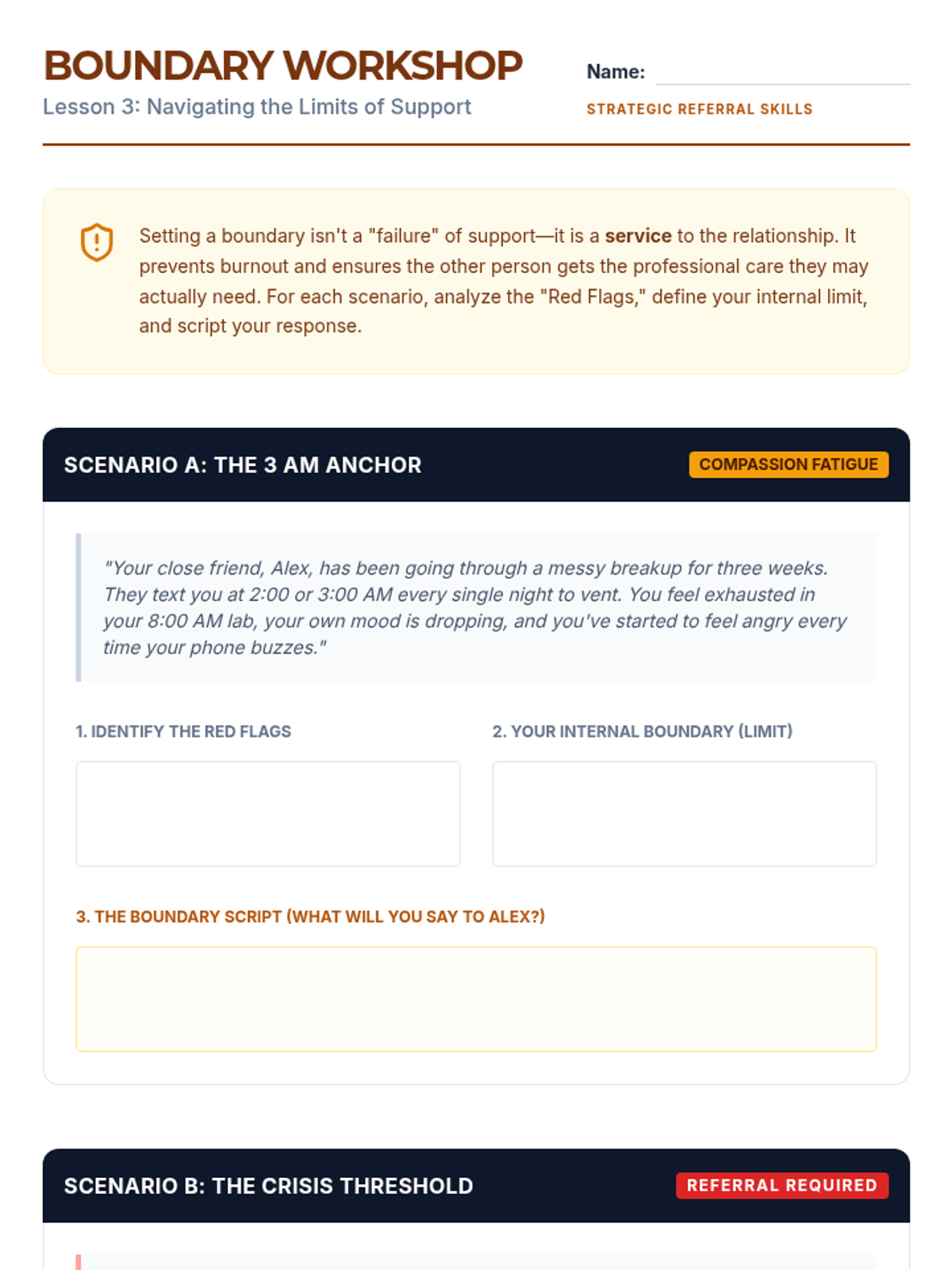
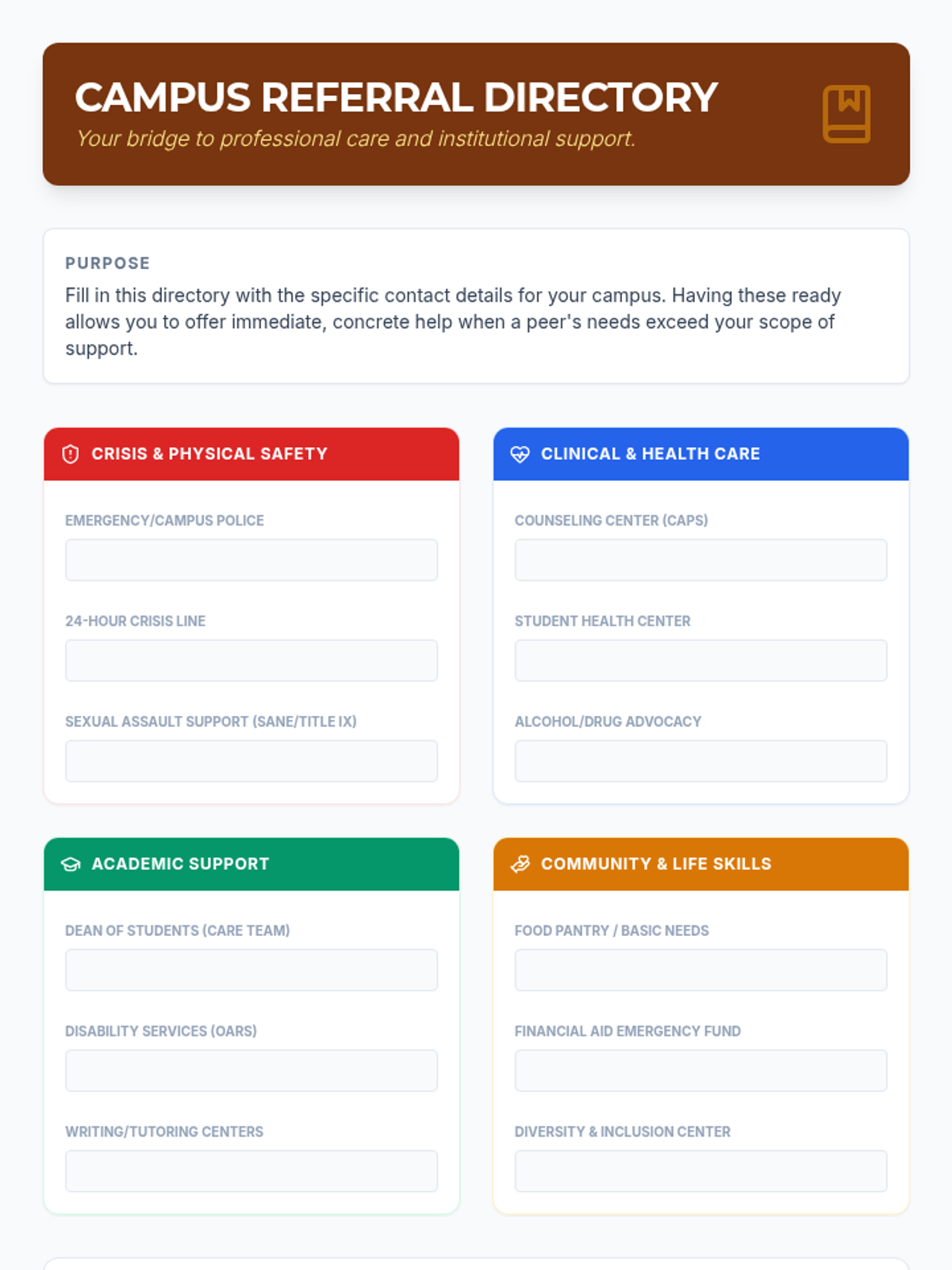
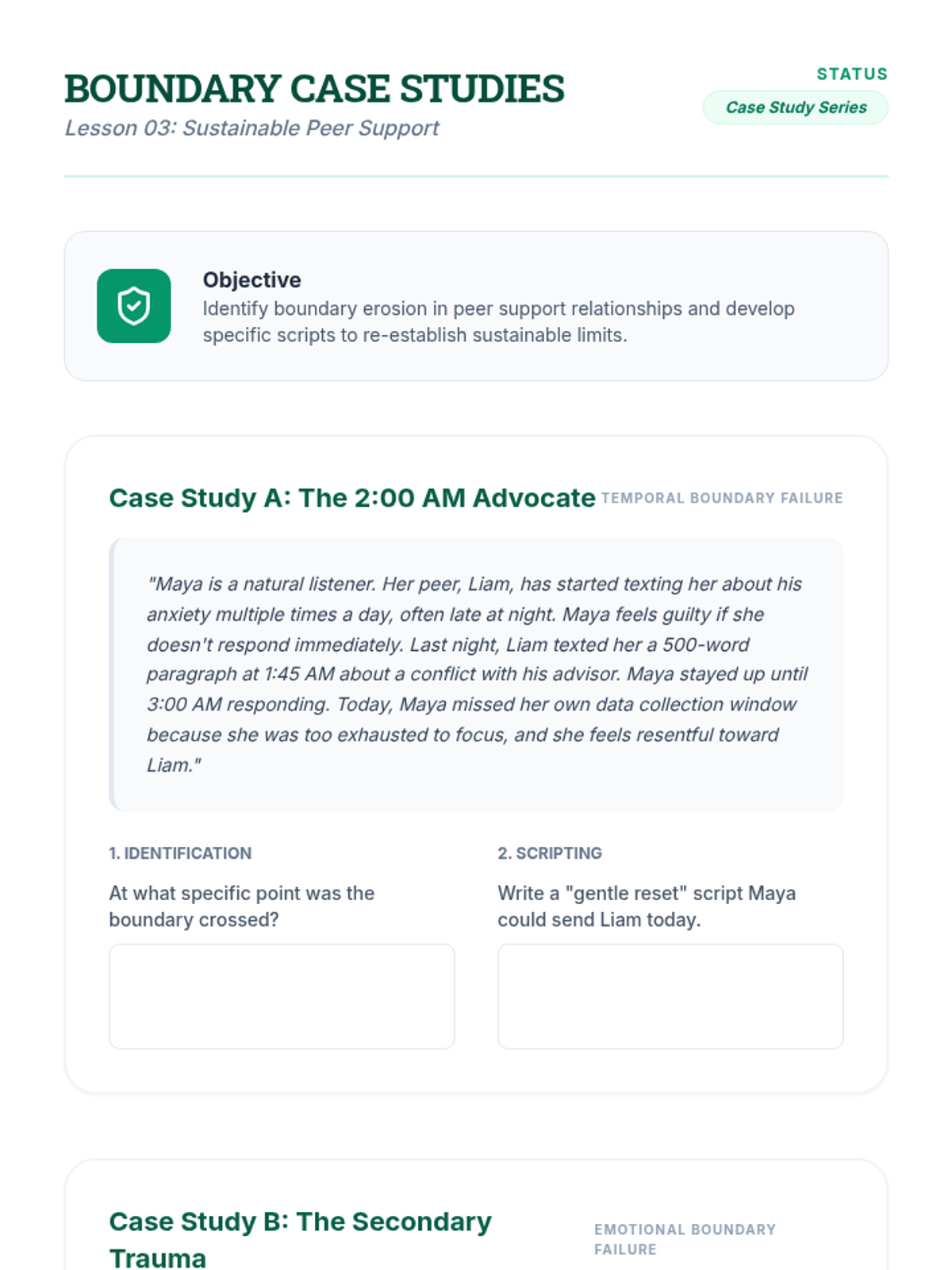
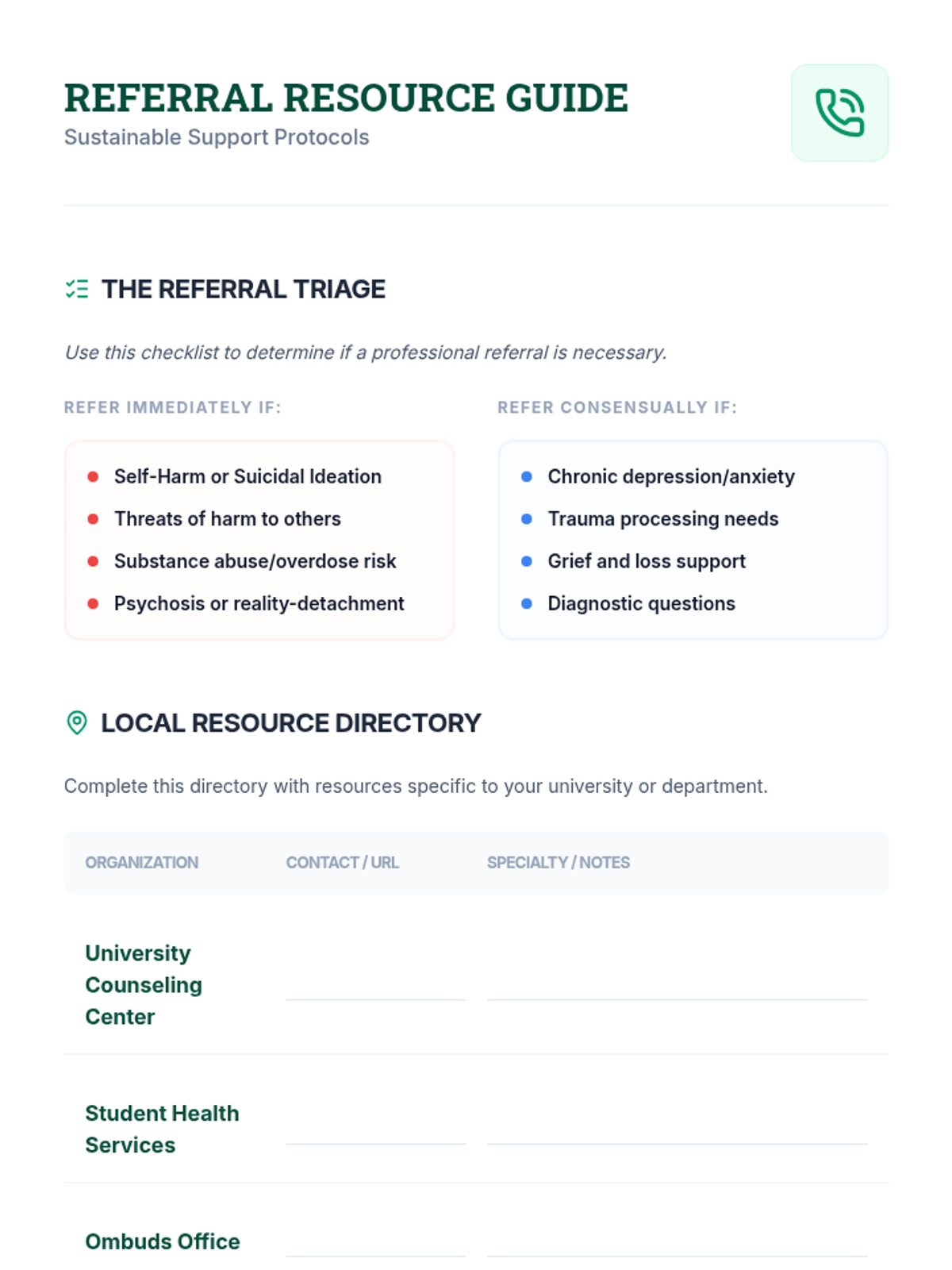
Training on recognizing the limits of peer support and when to refer to professionals, with a focus on setting emotional boundaries to prevent burnout.
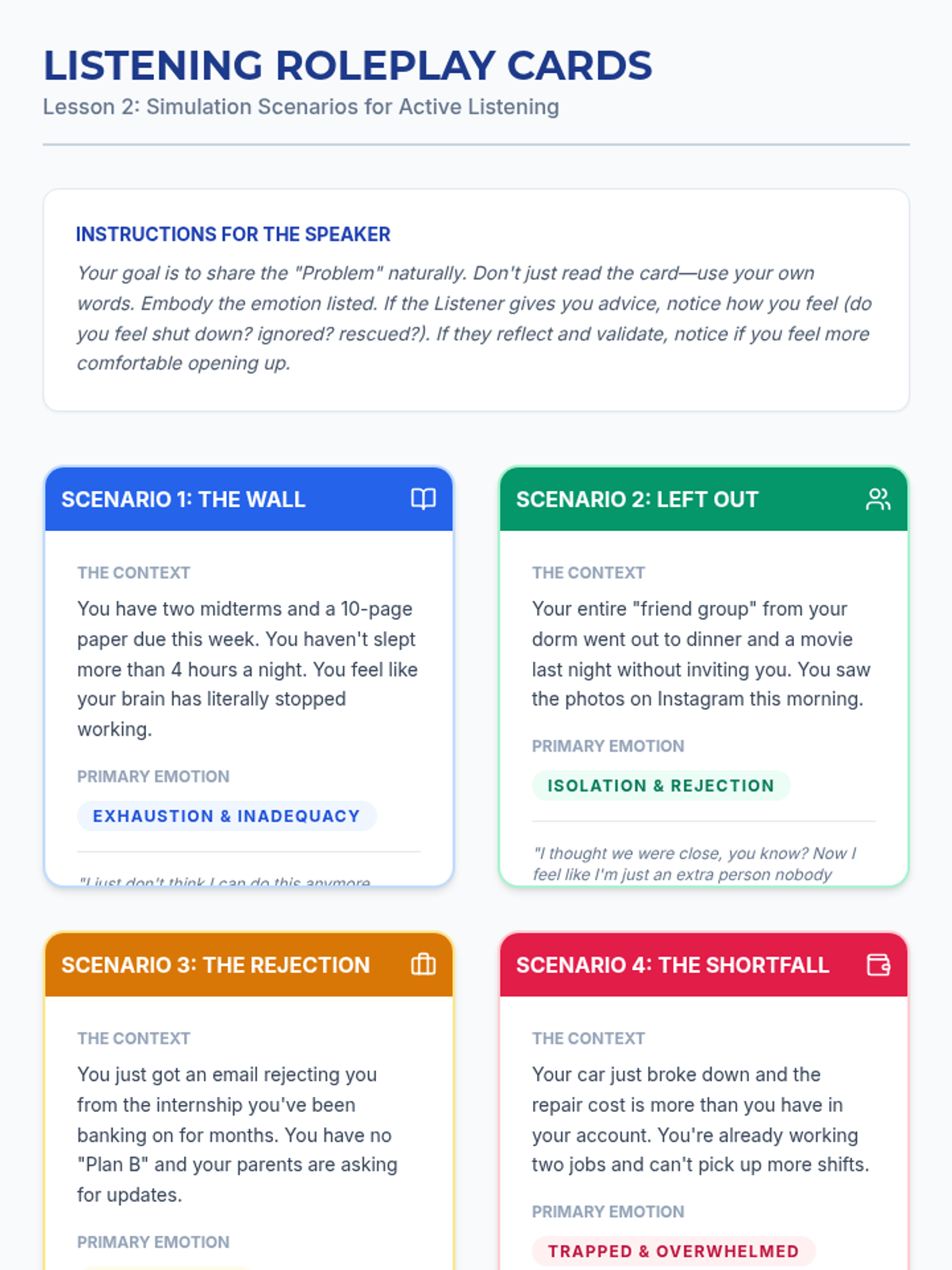
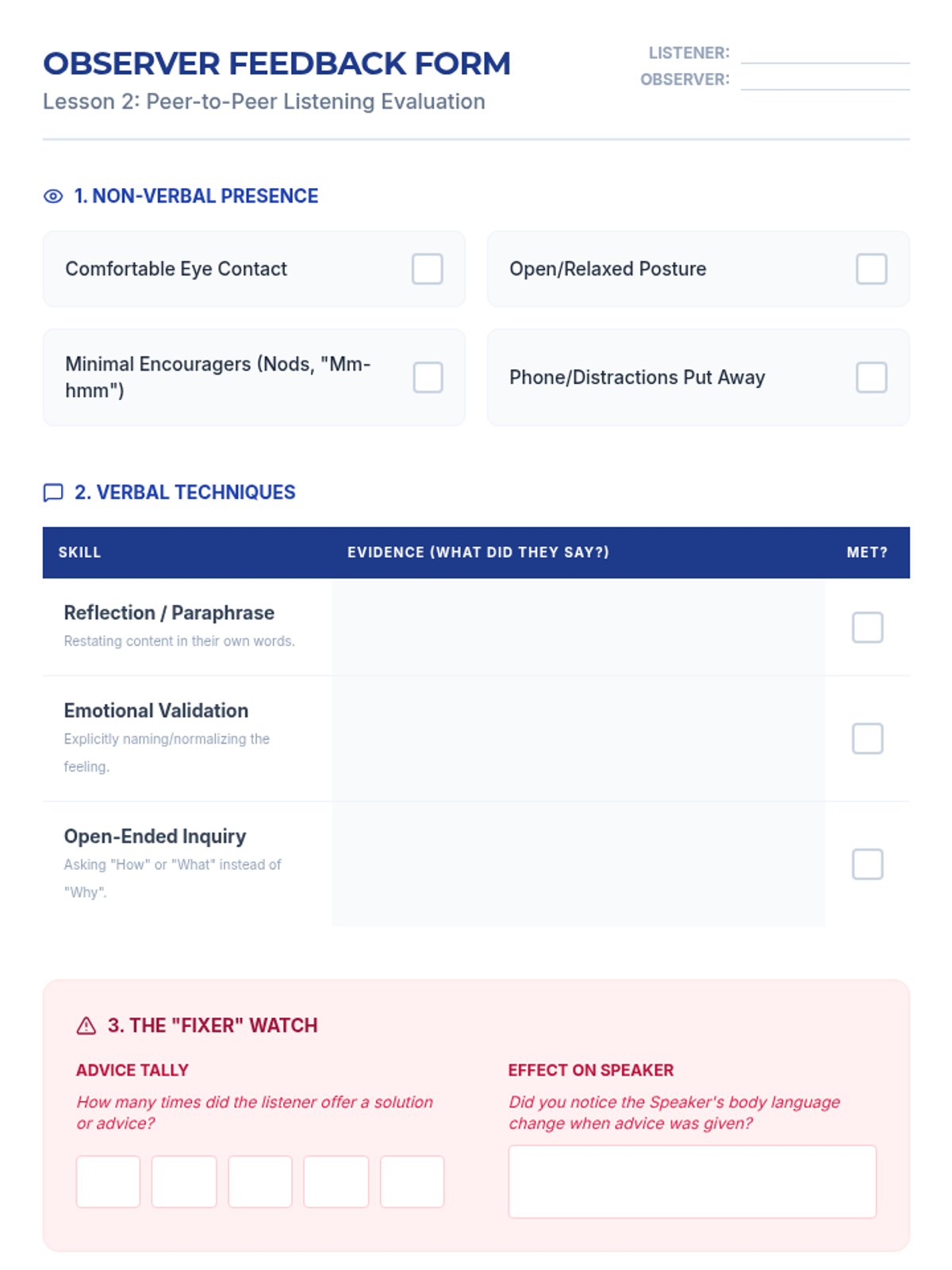
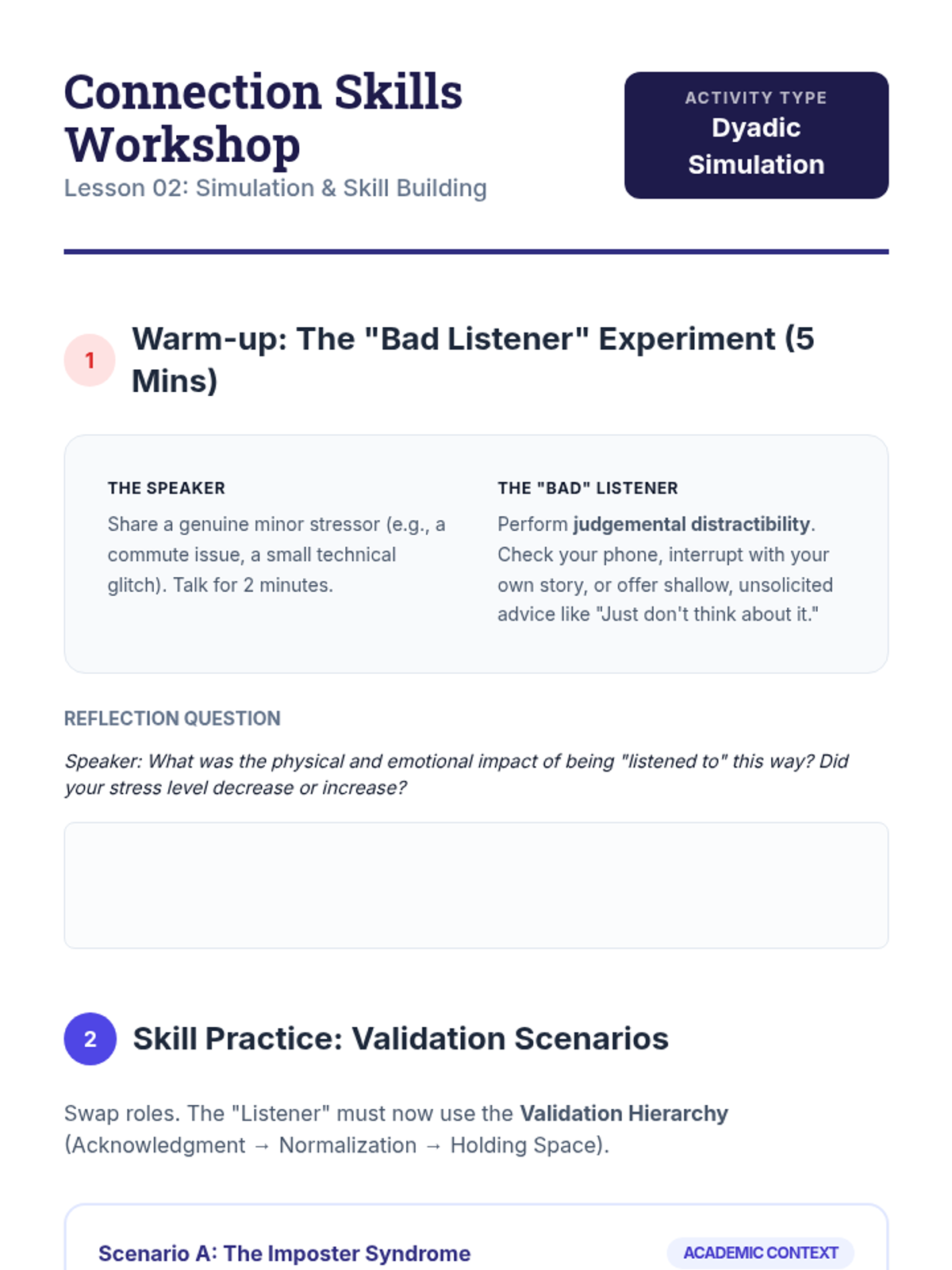
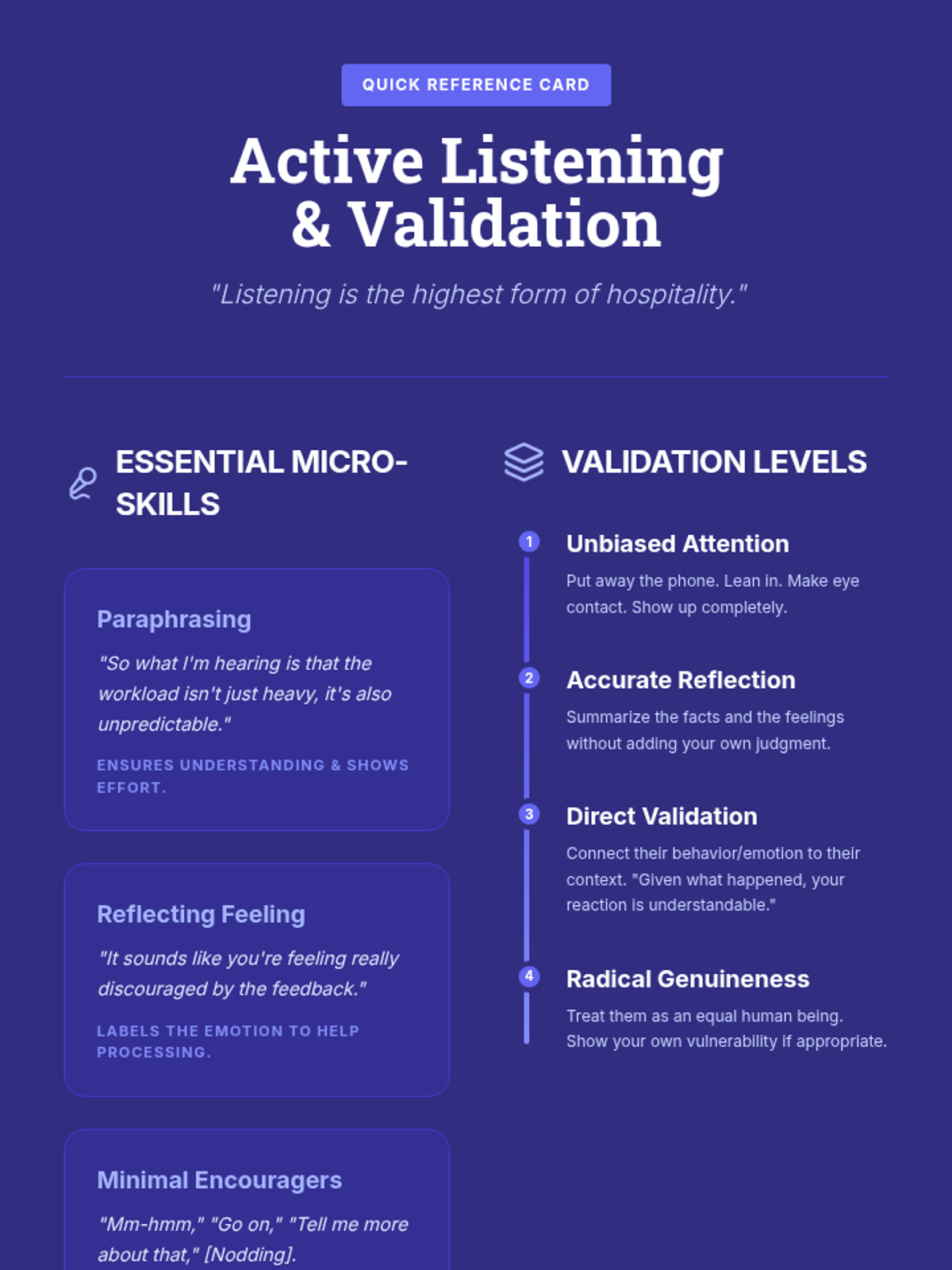
A skill-building session on non-judgmental listening, reflecting, and validating emotions, focusing on 'holding space' rather than problem-solving.
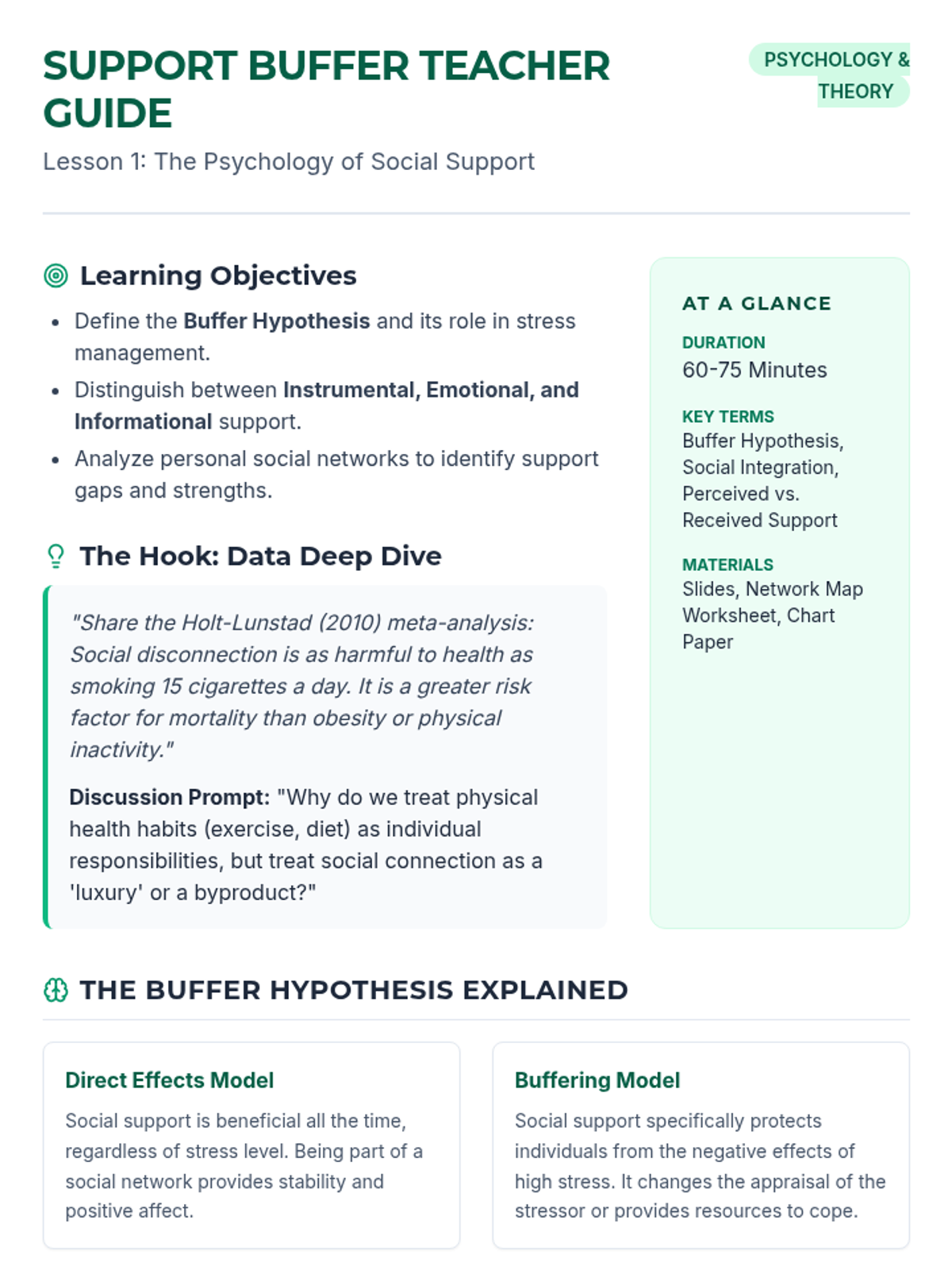
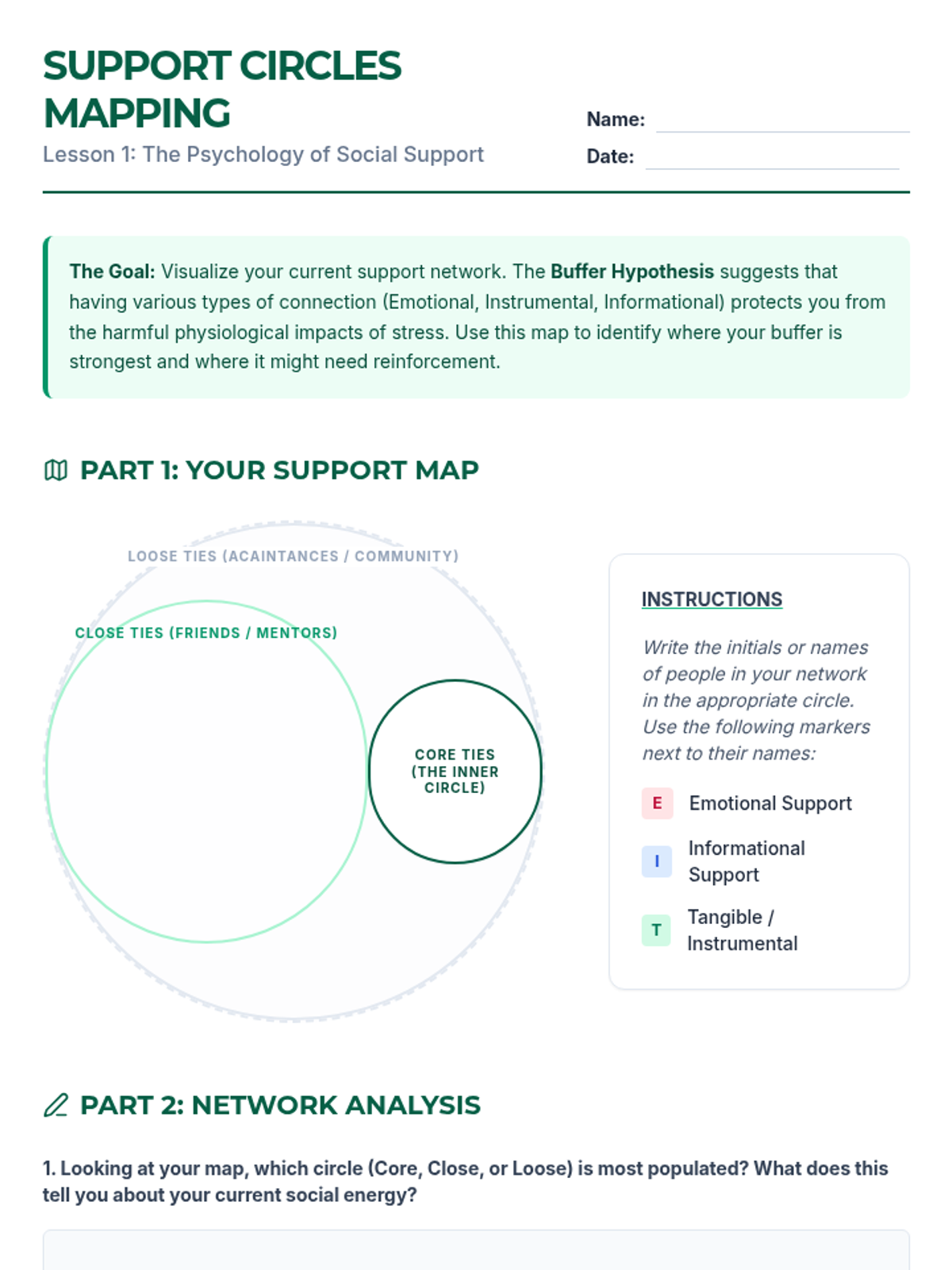
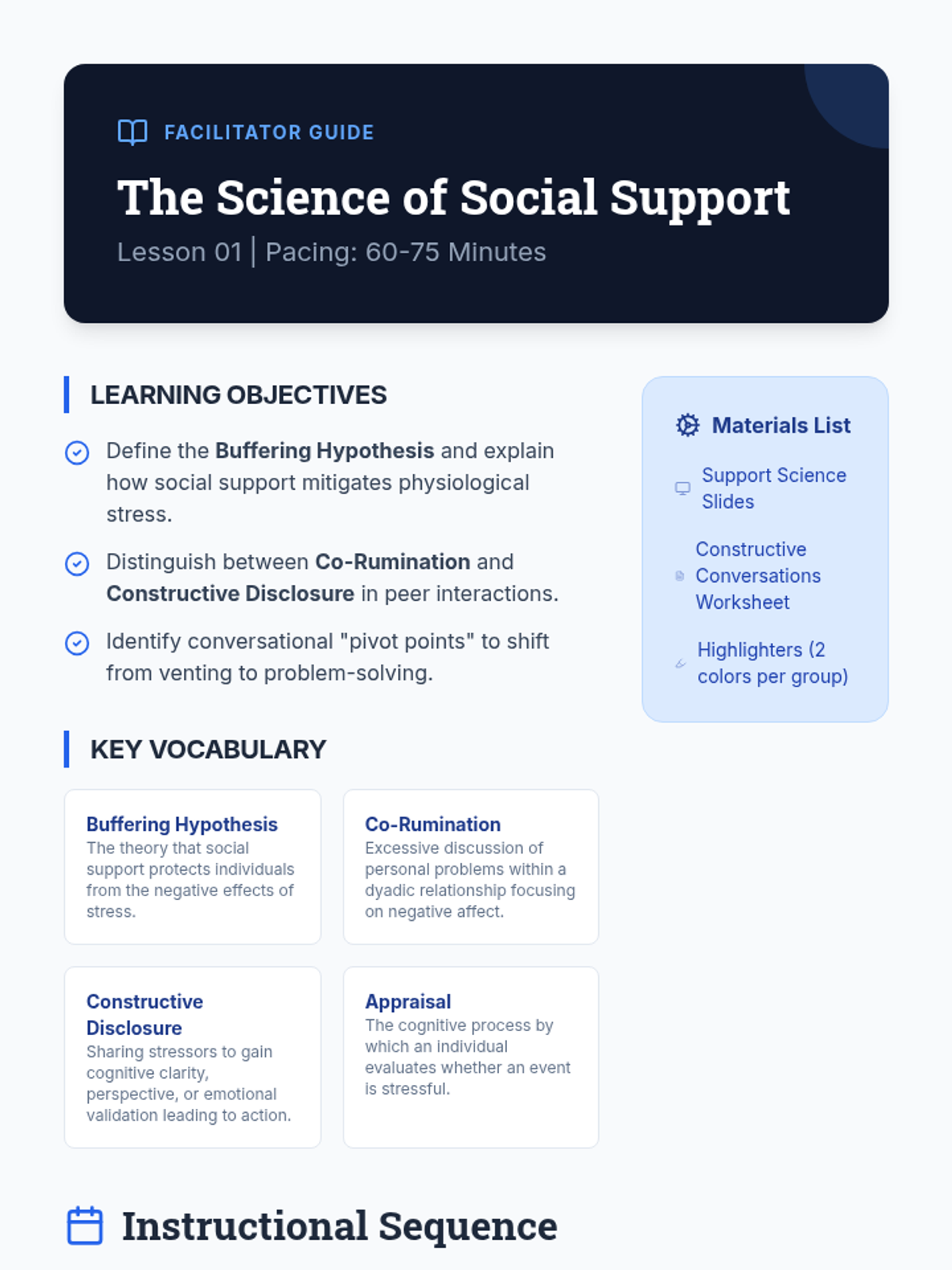
Students explore the 'Buffer Hypothesis' and how social connection mitigates the health impacts of stress, focusing on the difference between instrumental, emotional, and informational support.
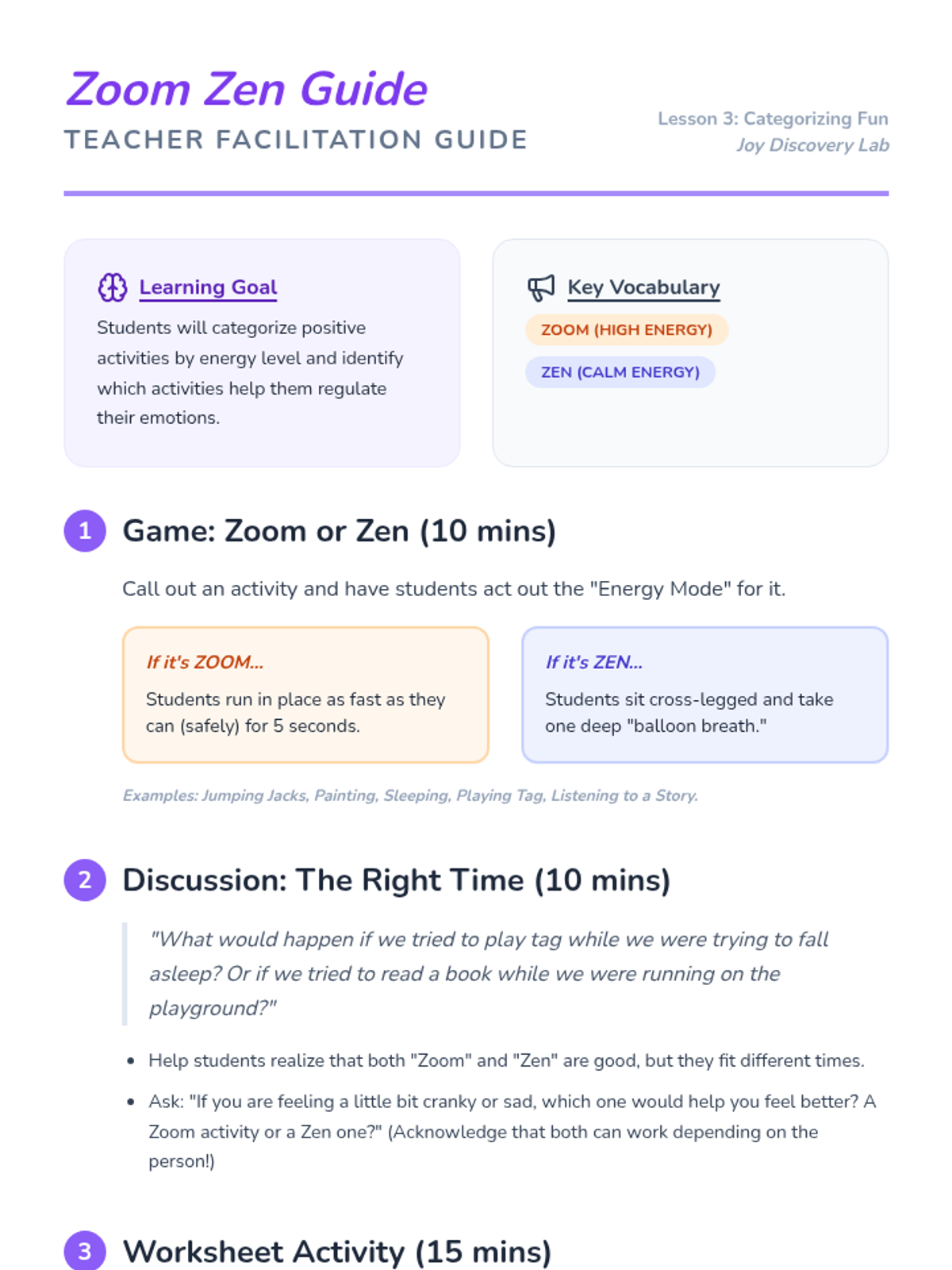
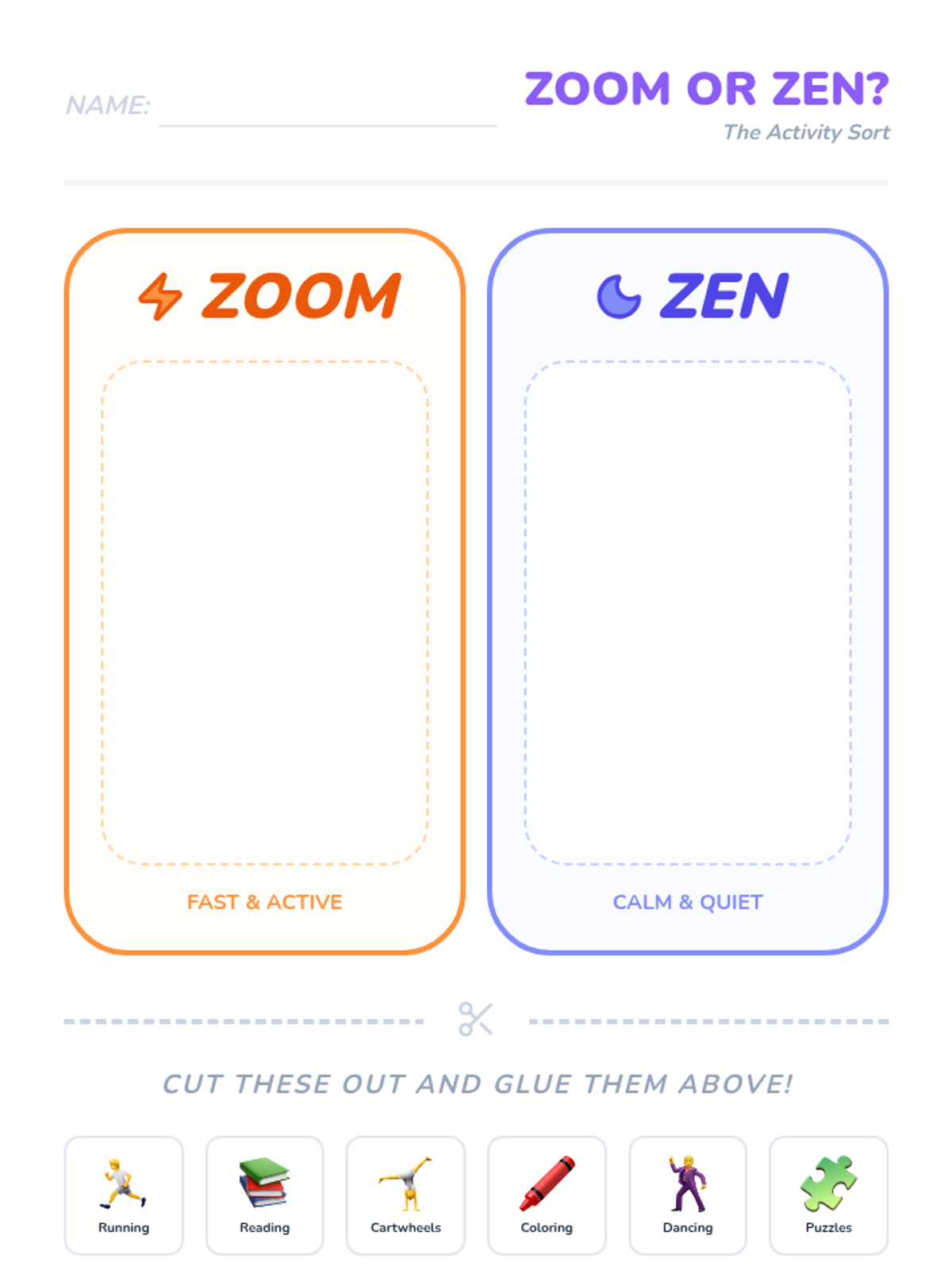
Students sort images of activities into 'high energy' fun (running, dancing) and 'calm' fun (reading, coloring). The class discusses how different times of day might need different types of positive activities.
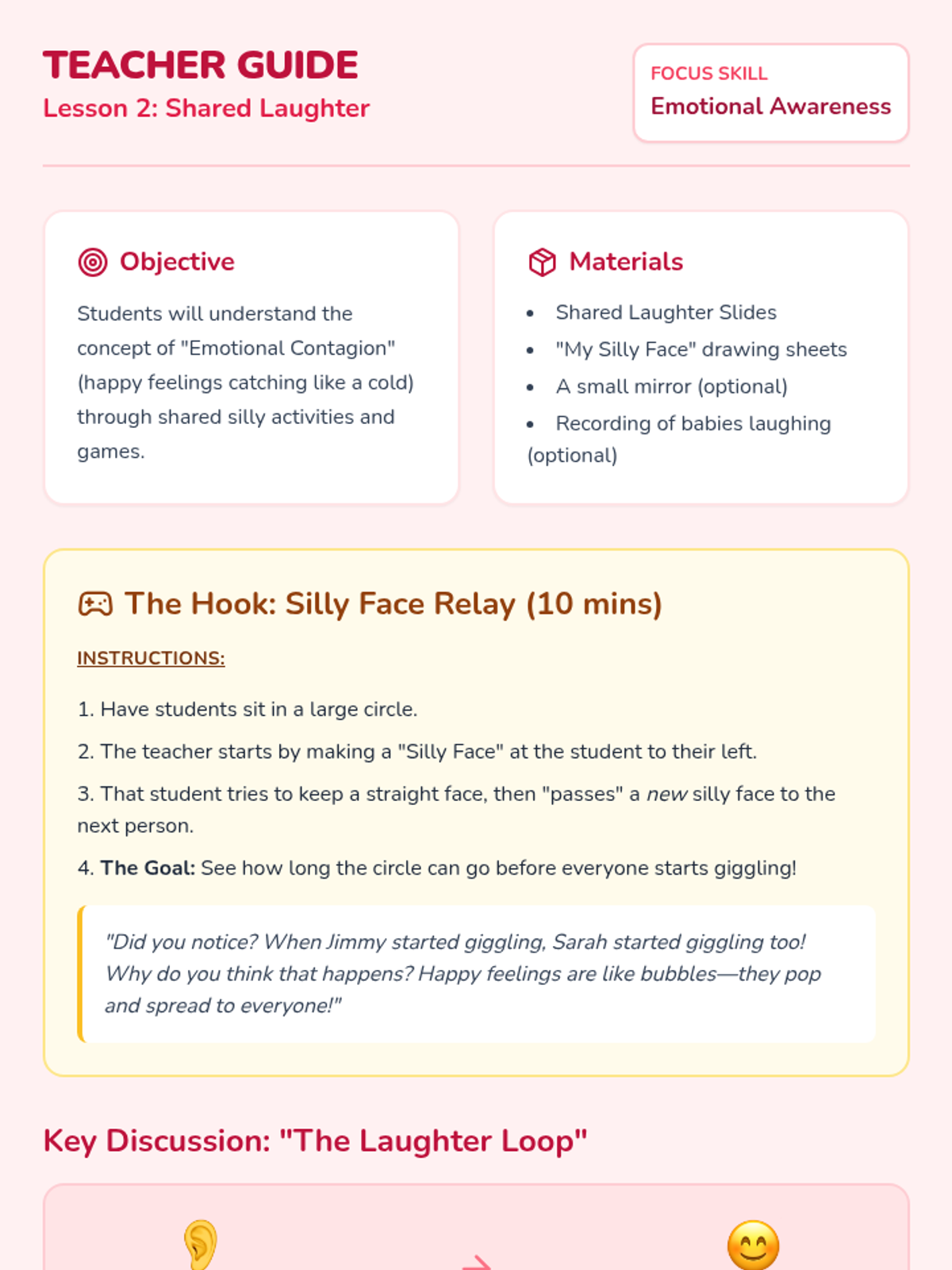
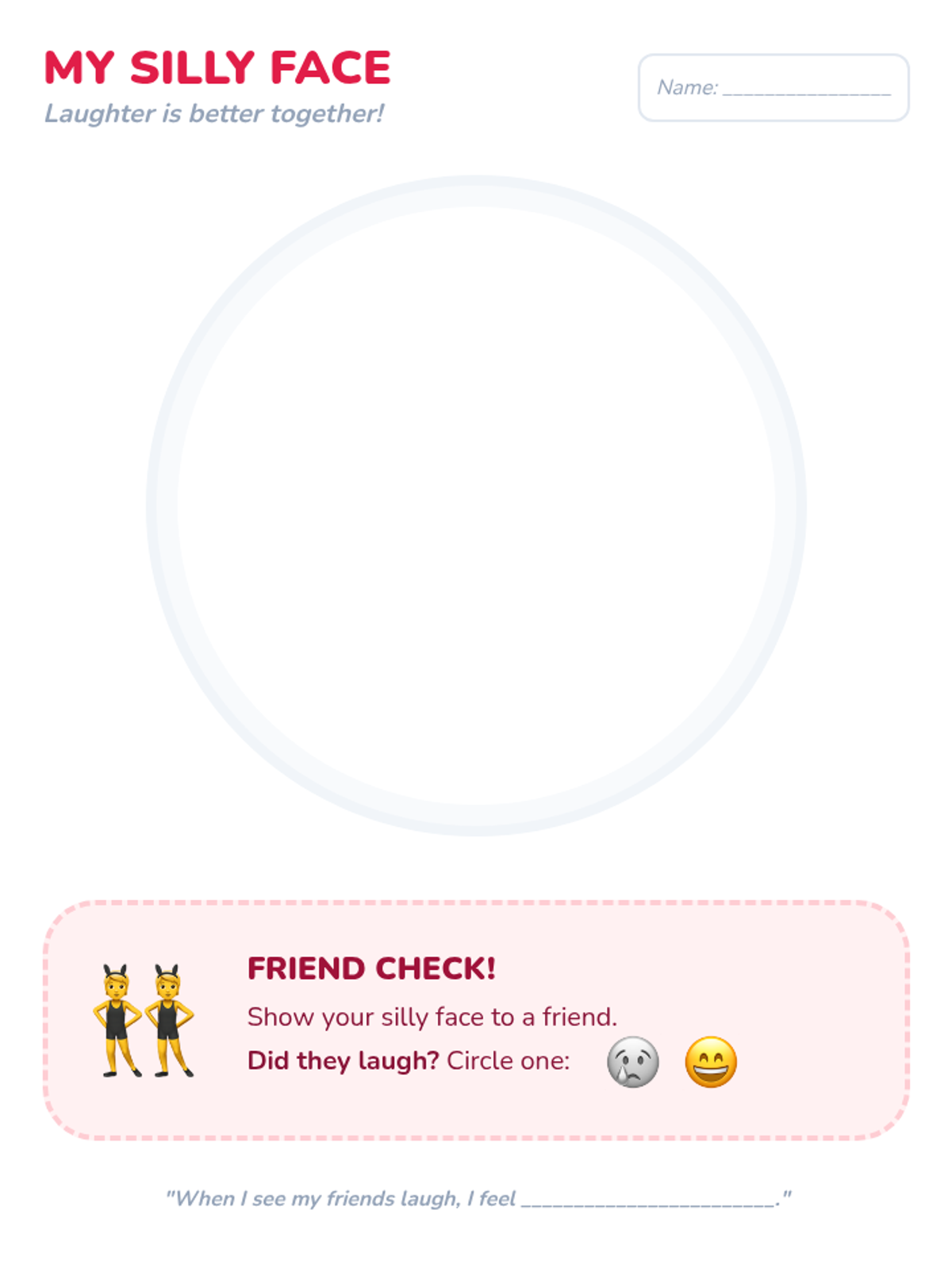
The class engages in silly activities designed solely to produce shared laughter. They discuss how hearing others laugh makes them want to laugh too, introducing the concept of emotional contagion.
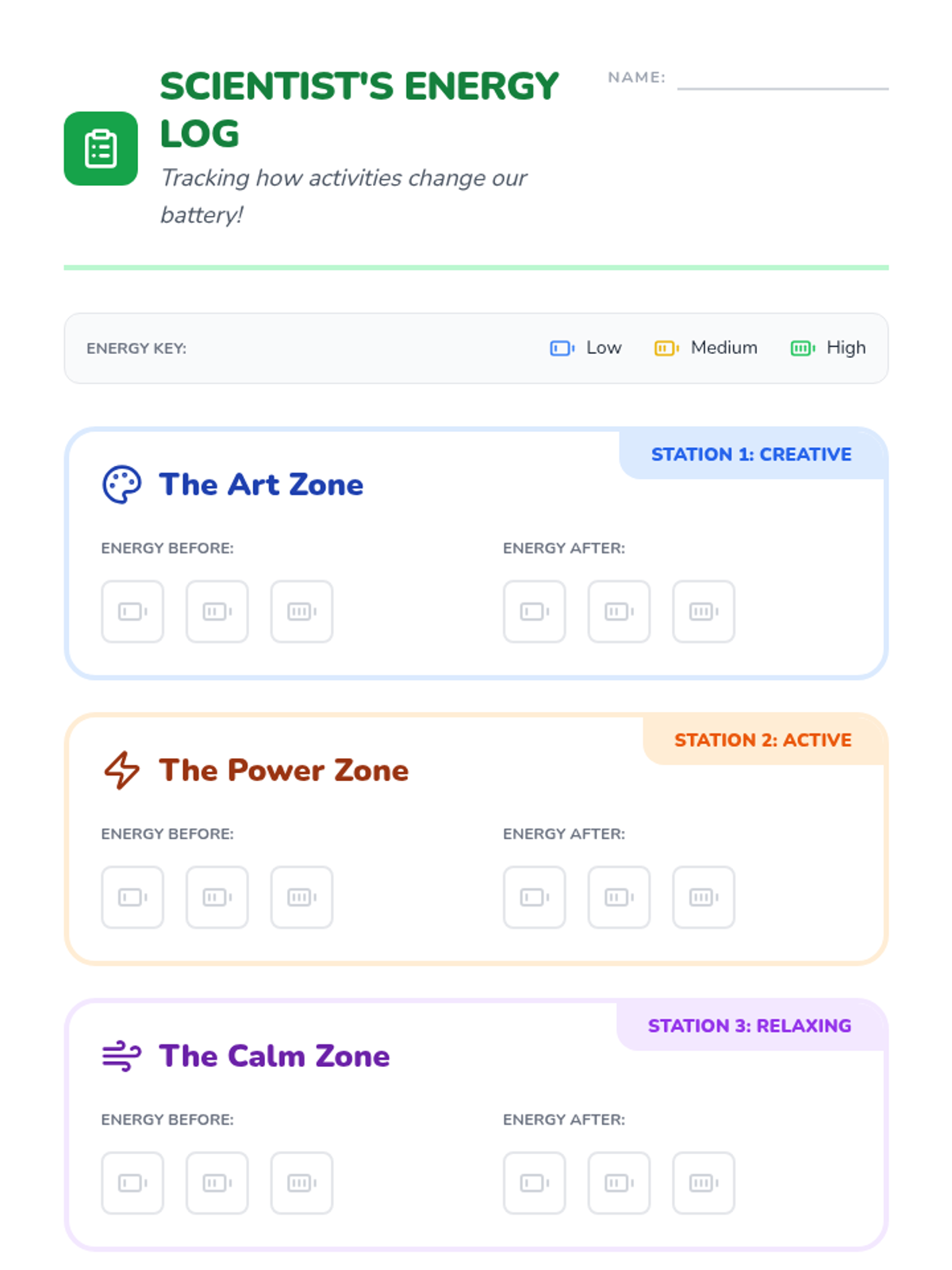
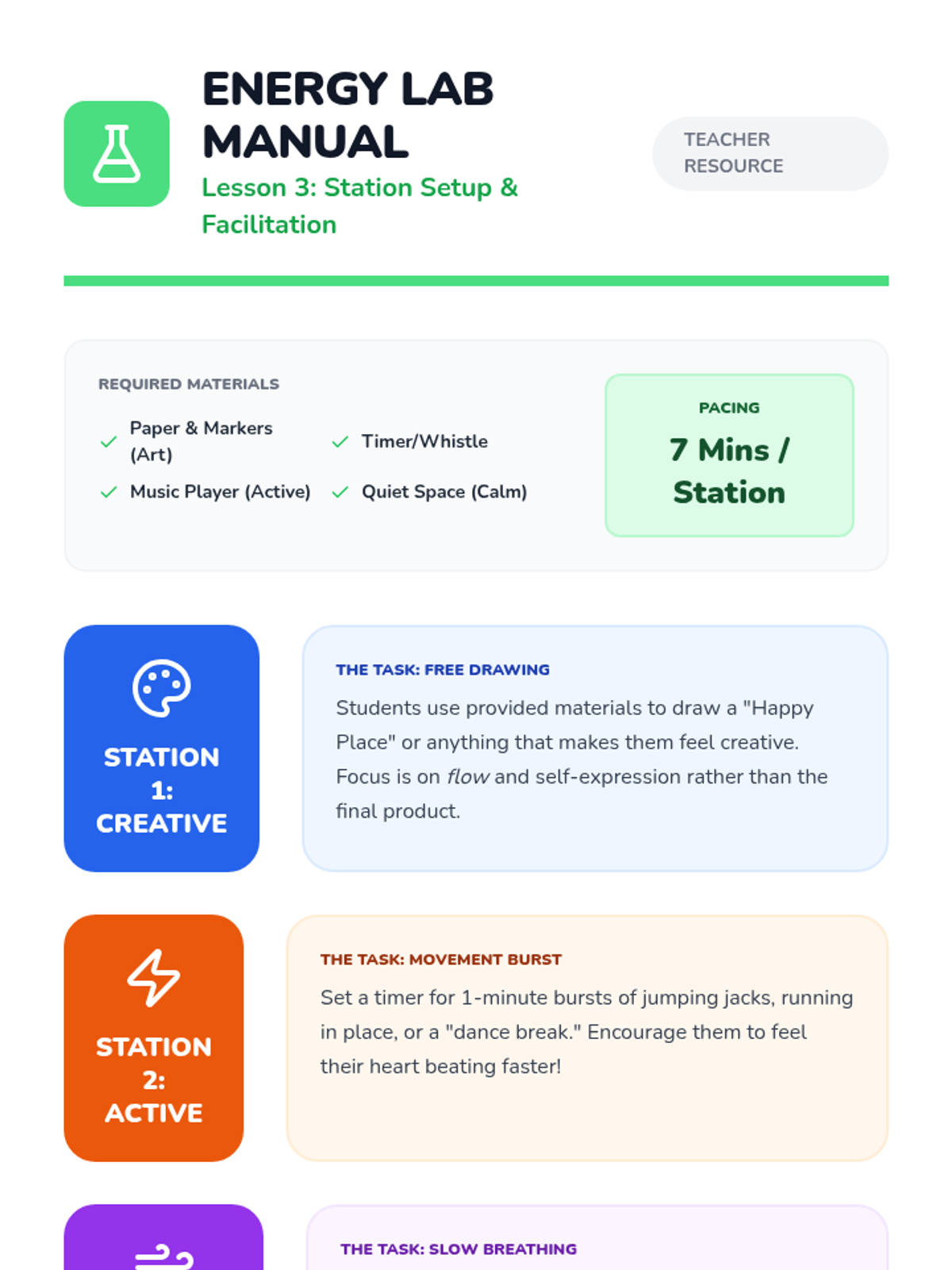
Students rotate through stations testing different types of positive engagement: creative (drawing), active (jumping jacks), and relaxing (deep breathing). They record how each station changes their energy level.
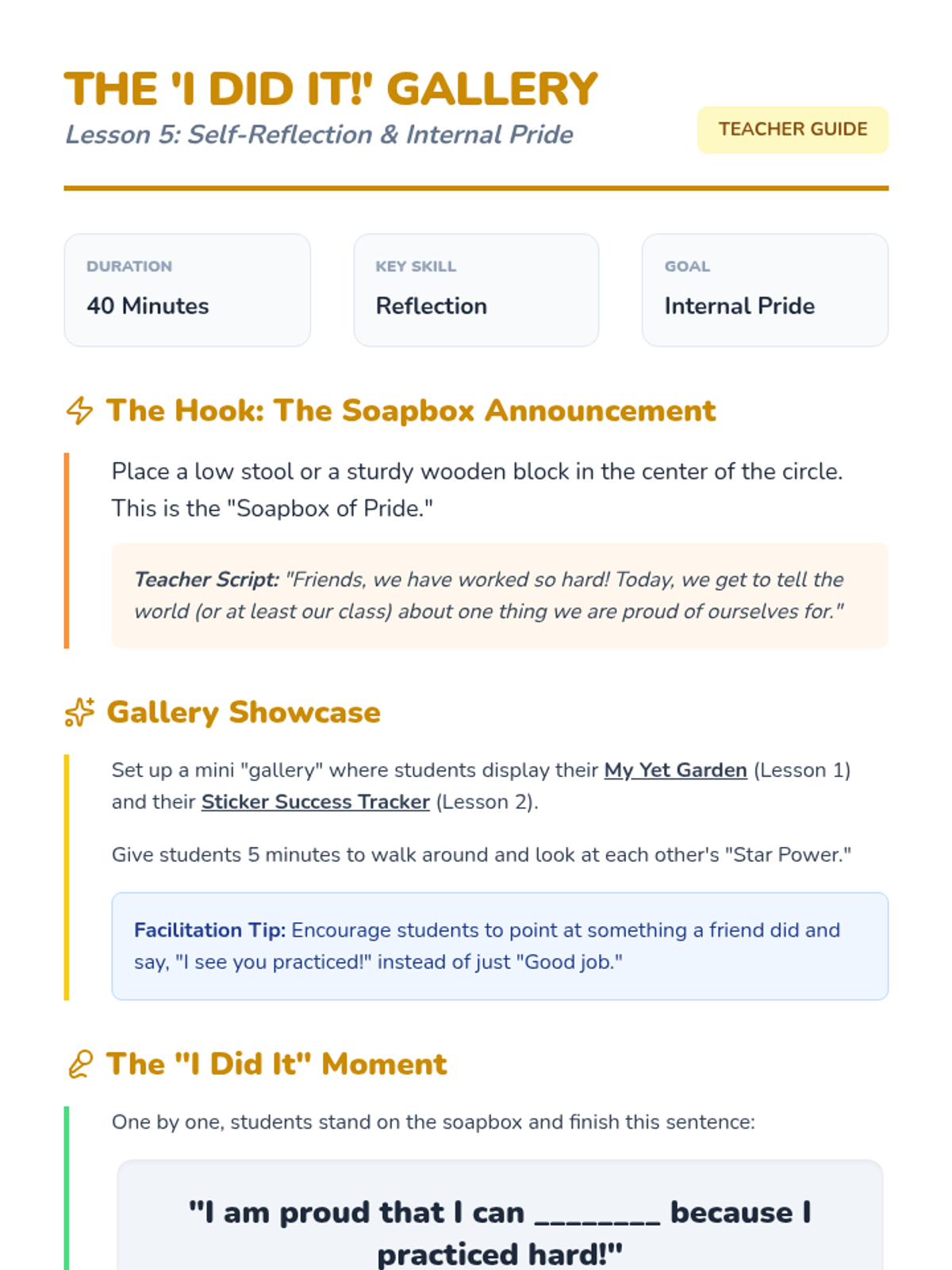
Reflecting on achievements and celebrating the internal feeling of pride through a classroom showcase.
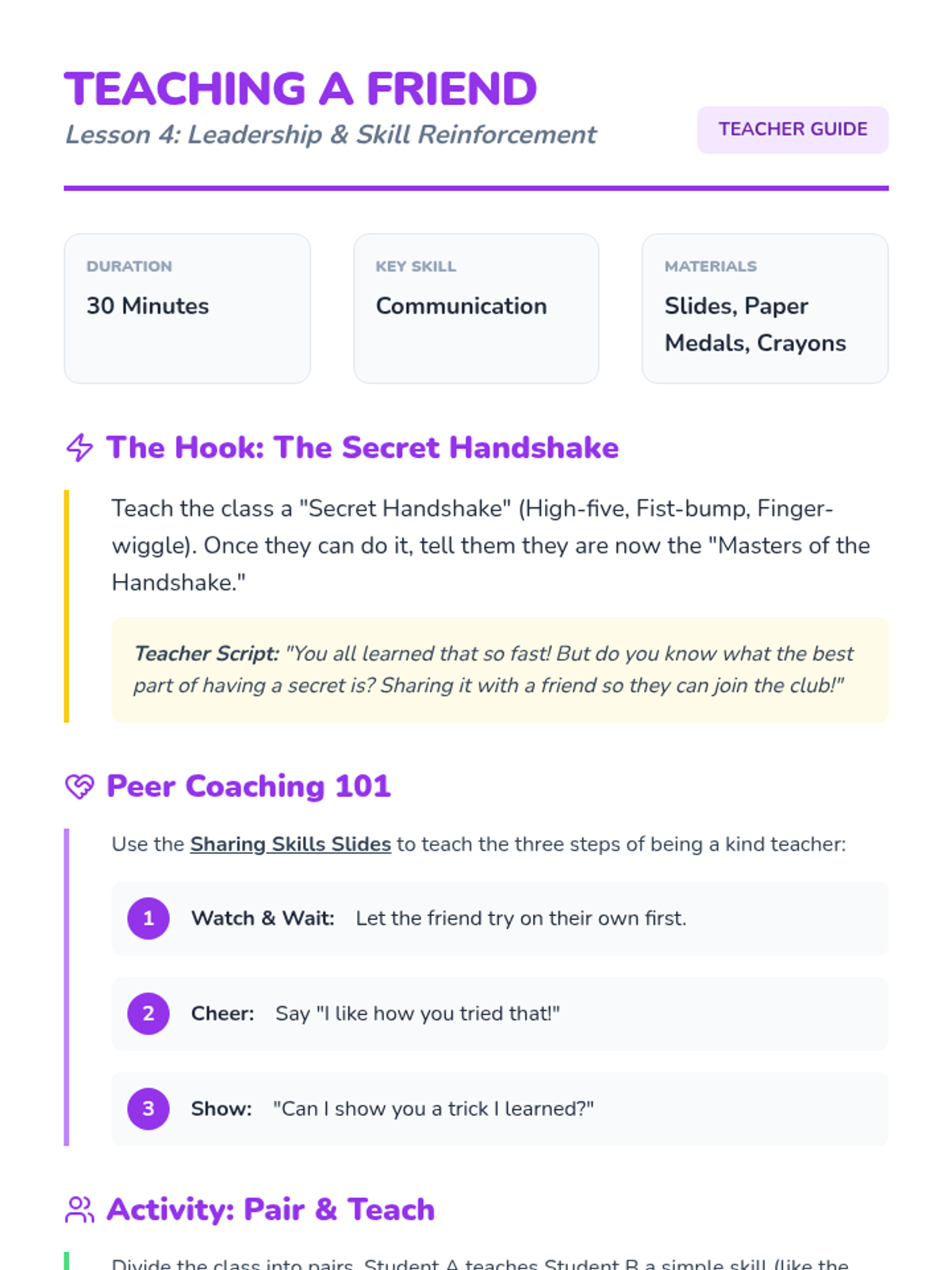
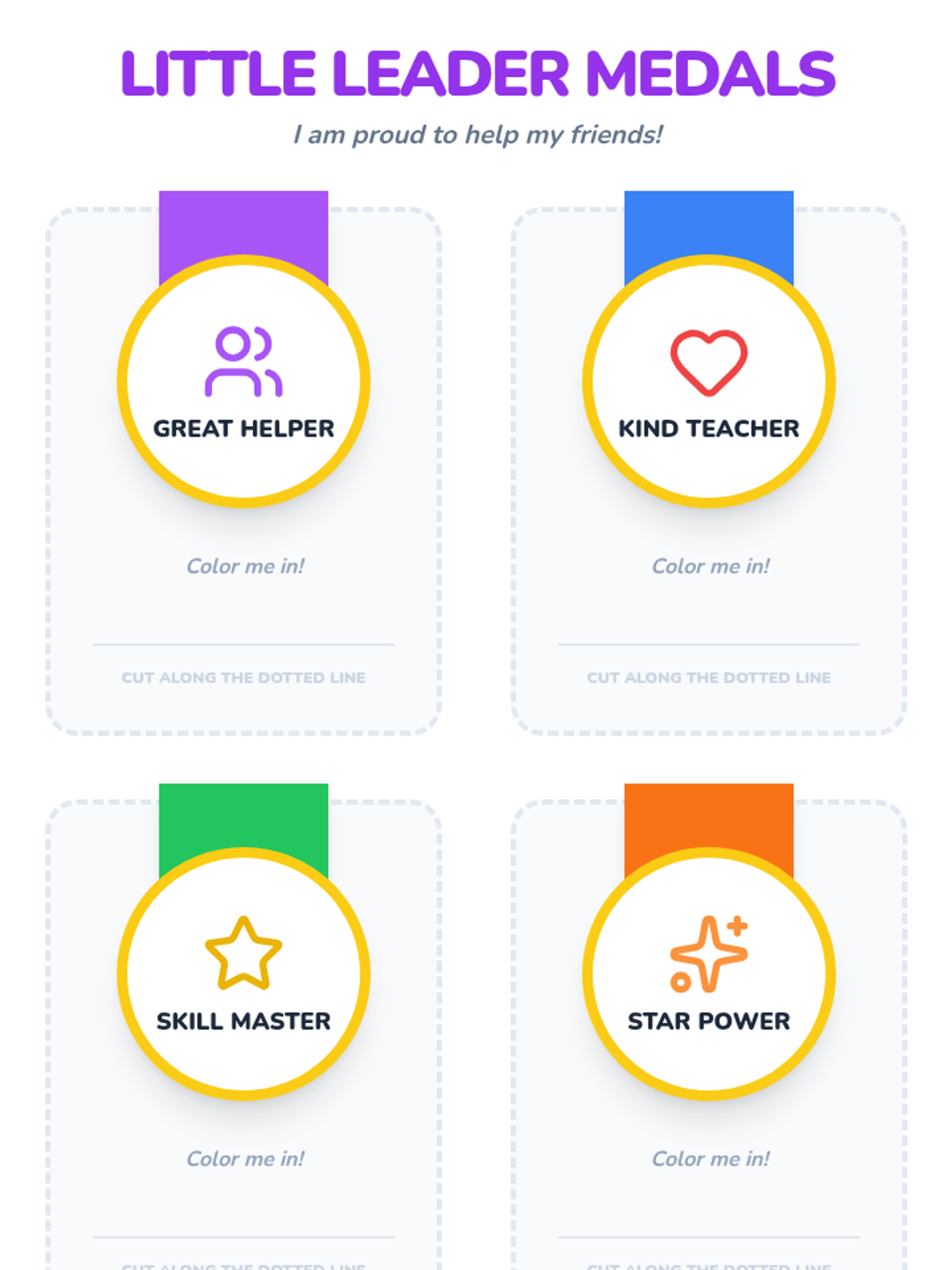
Empowering students to share their mastered skills with peers, building leadership and reinforcing their own learning.
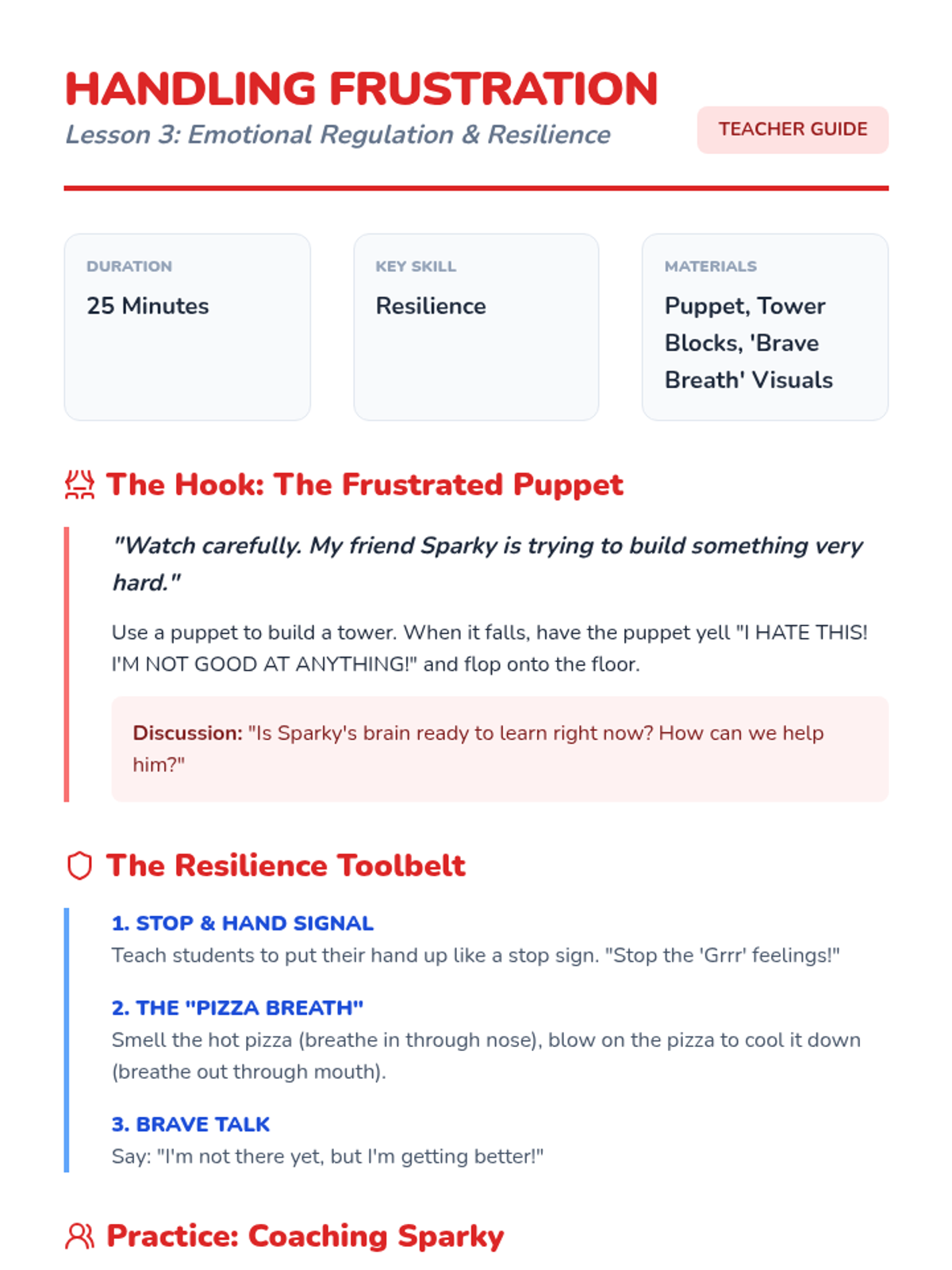
Learning emotional regulation tools and positive self-talk to manage frustration when learning something new.
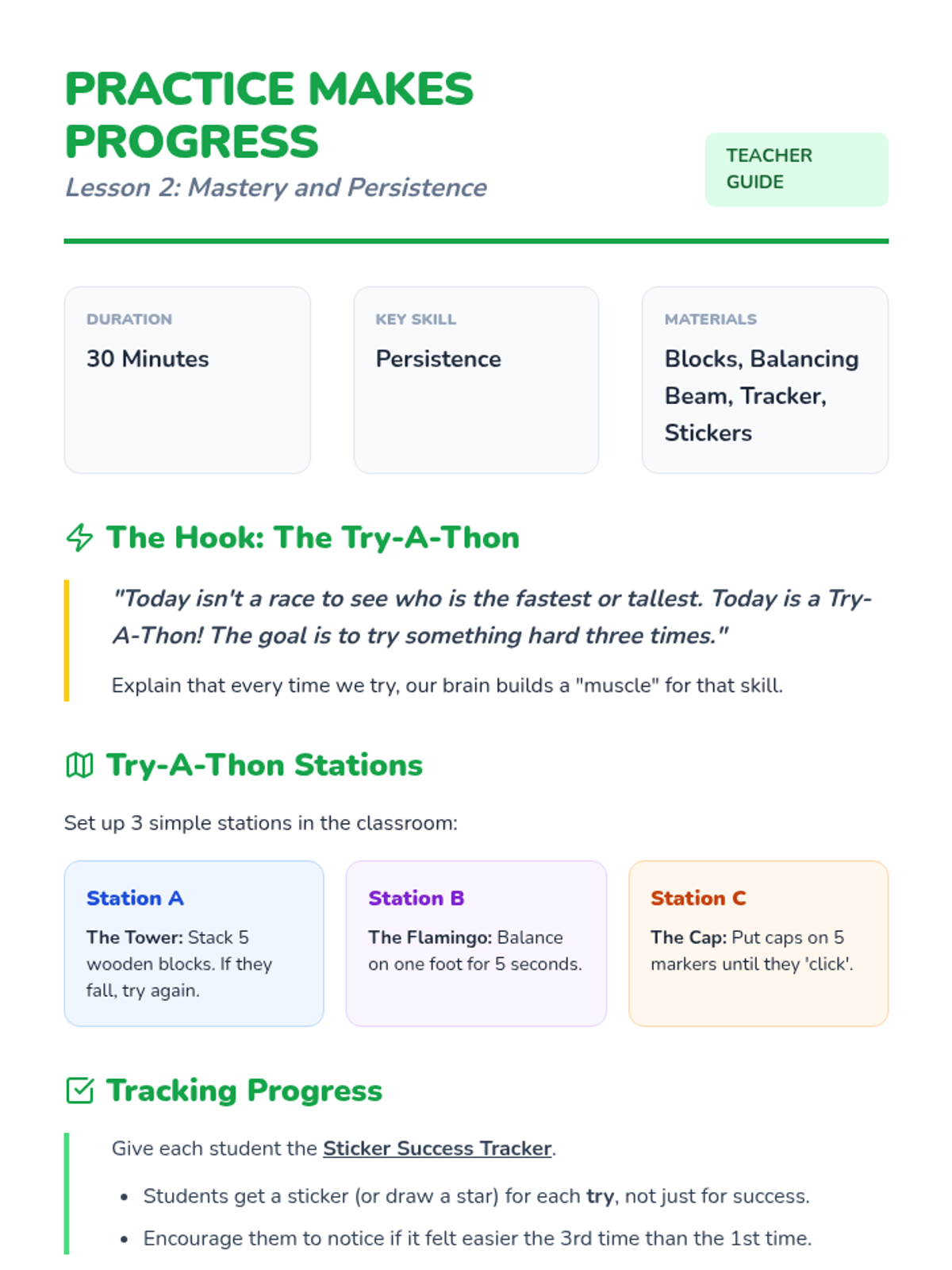
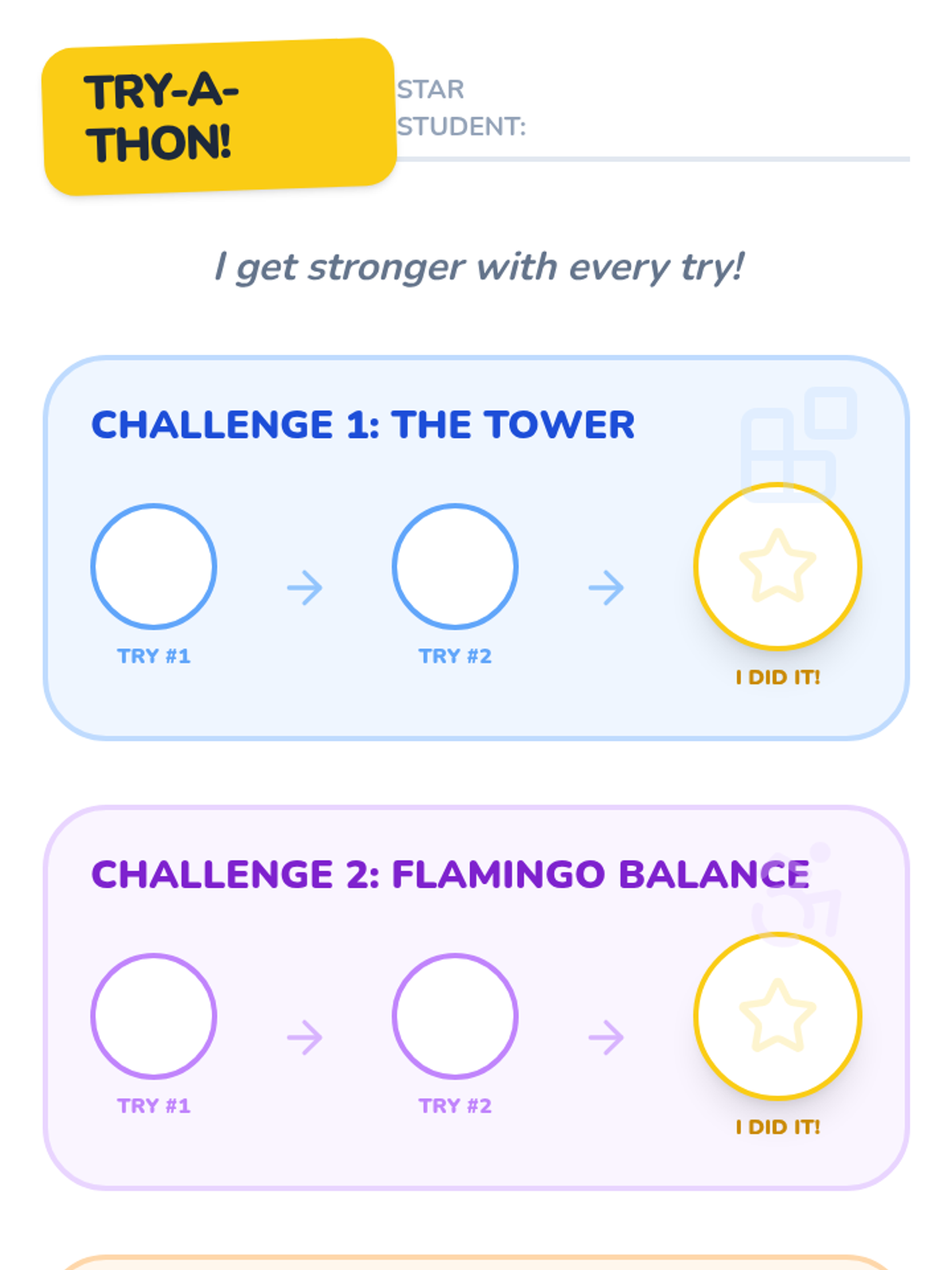
Focusing on persistence and tracking small improvements through repeated practice of simple skills.
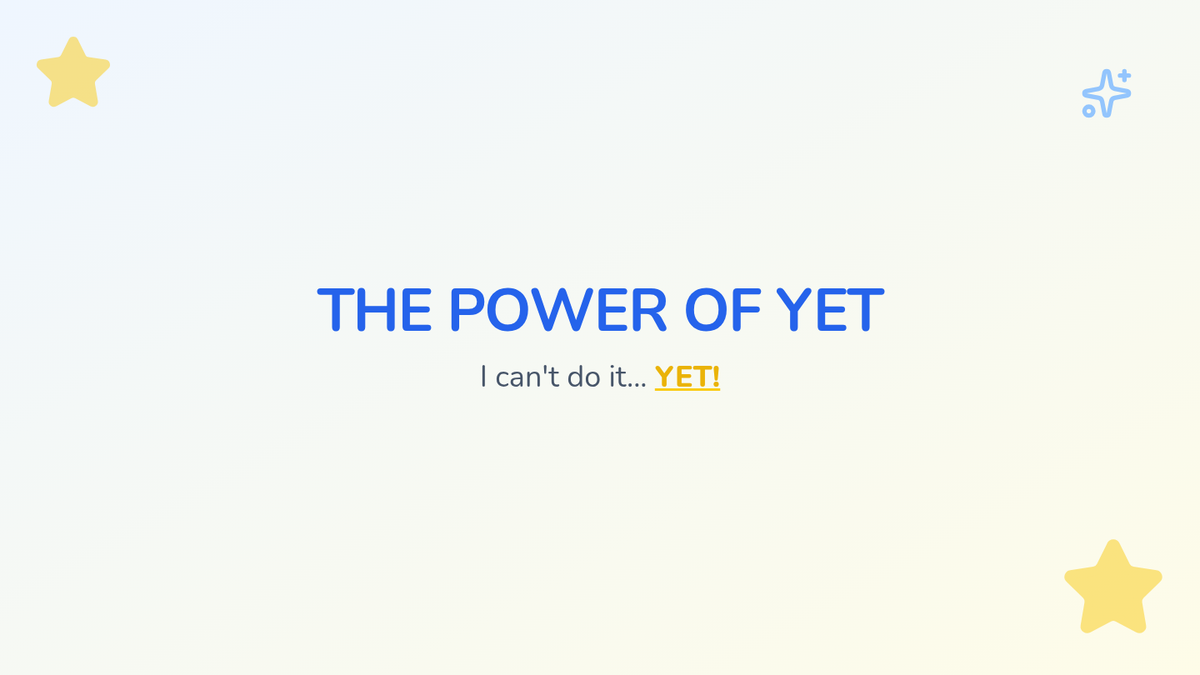
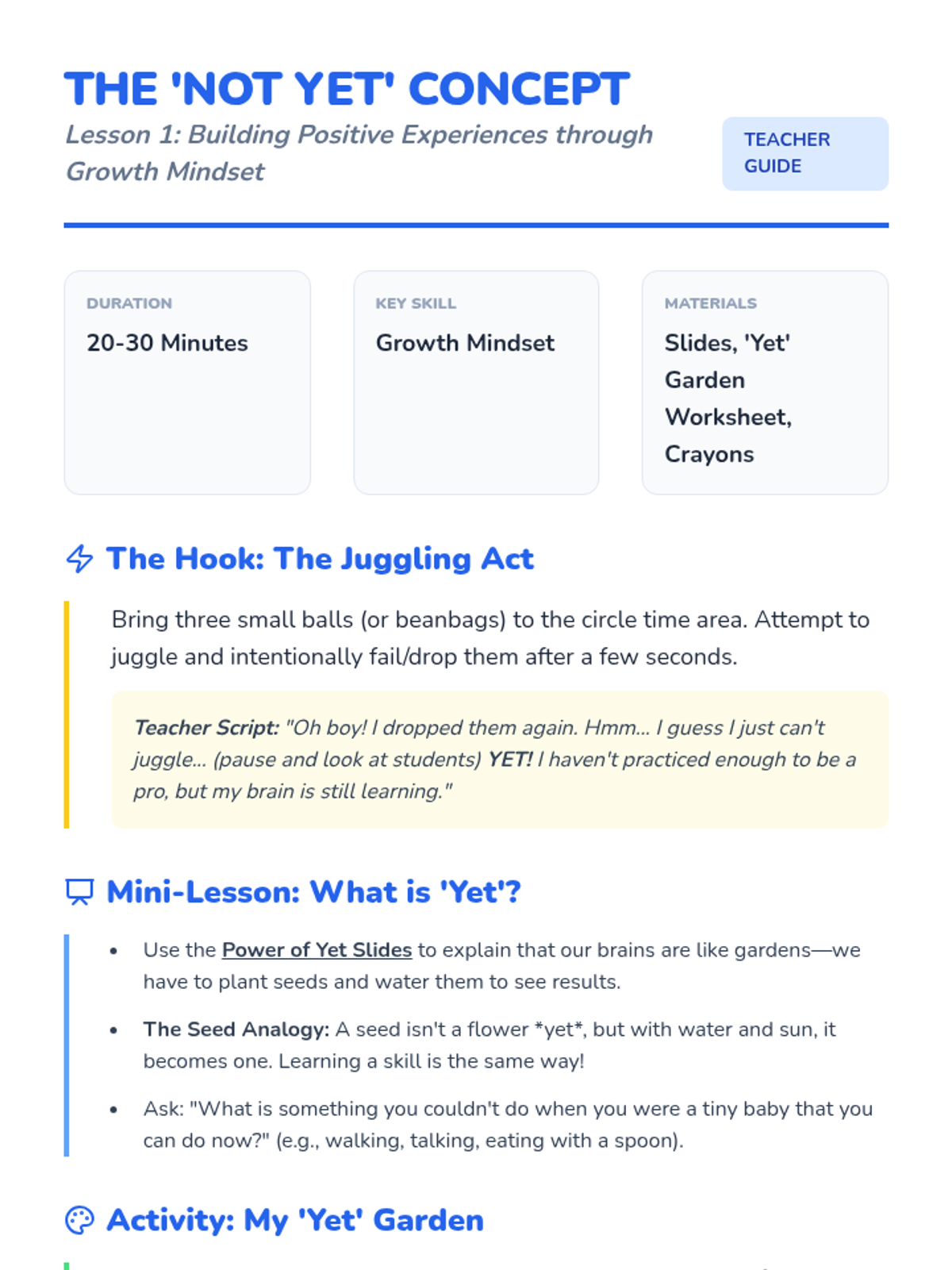
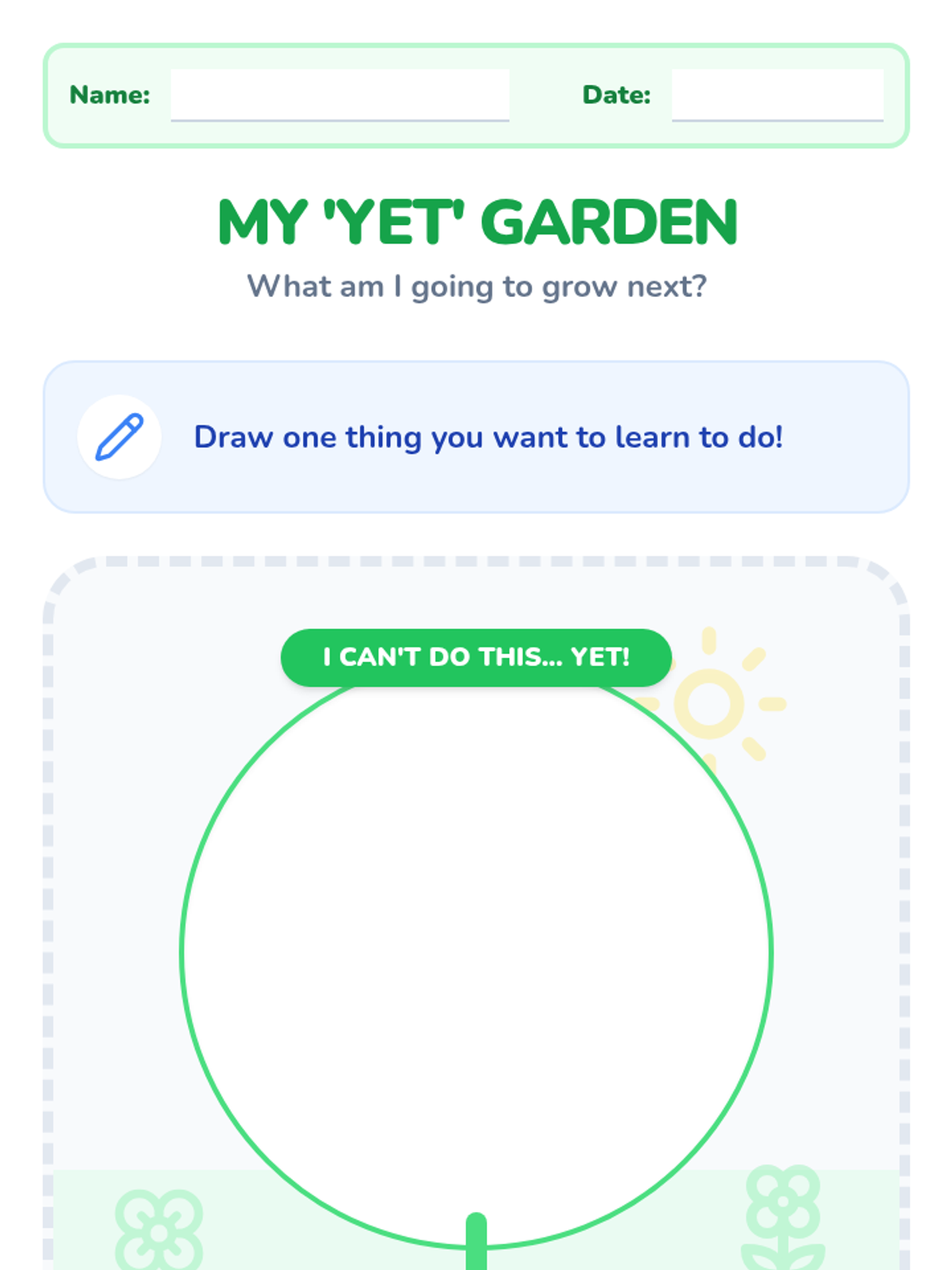
Introduction to the growth mindset using the word 'yet' to transform frustrations into future goals.
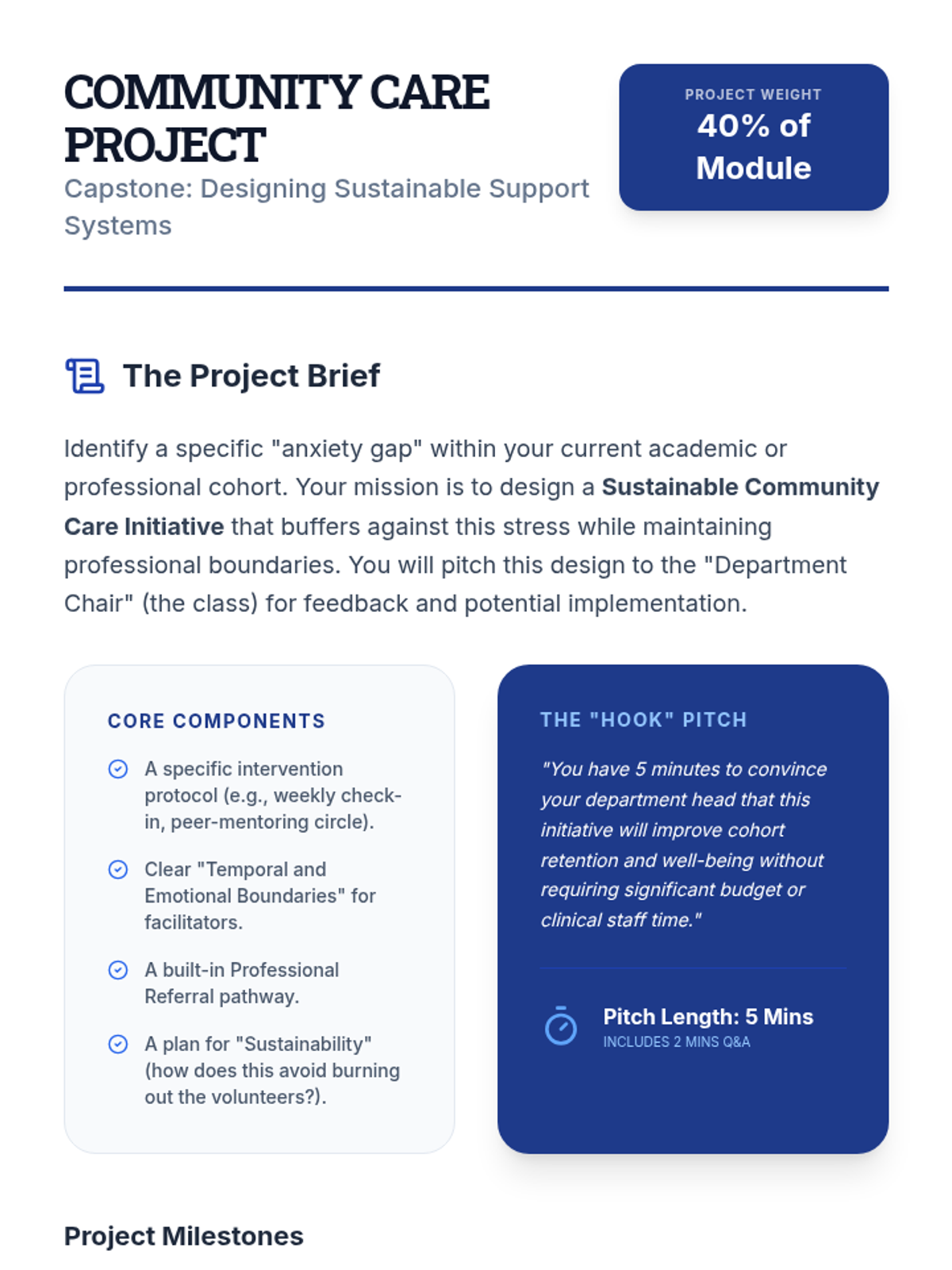
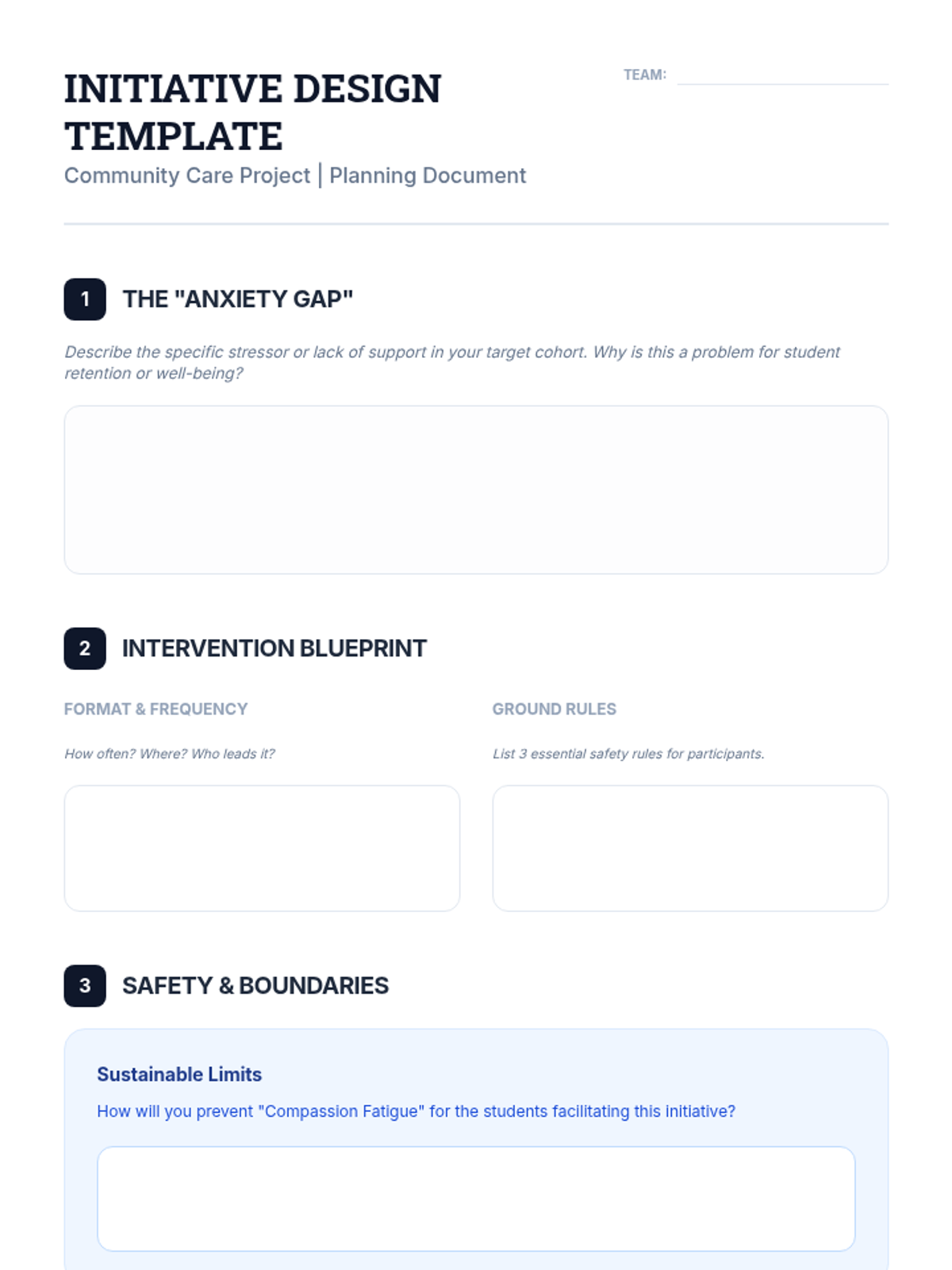
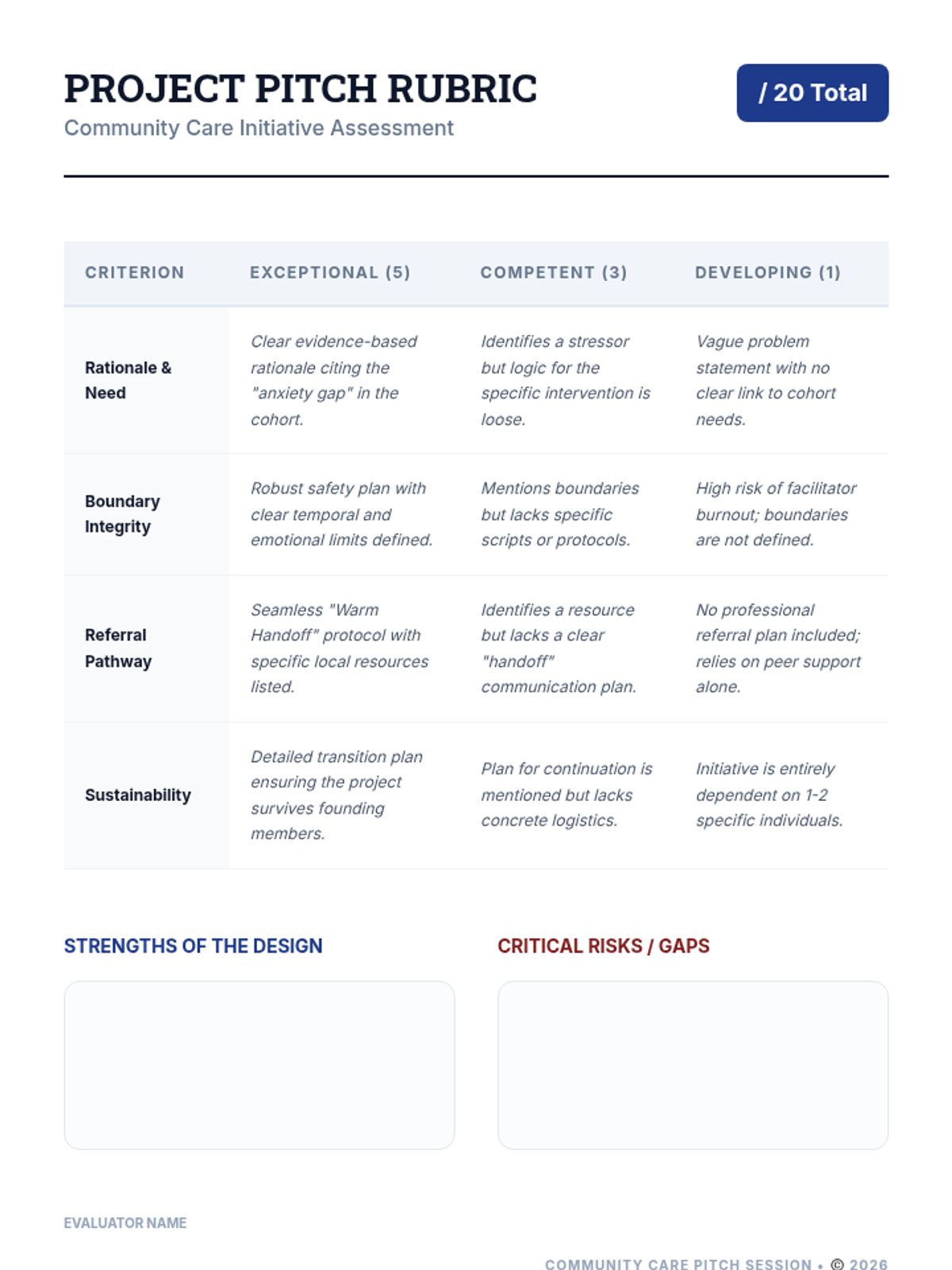
Students design and pitch a sustainable community care initiative tailored to their specific academic or professional cohort.
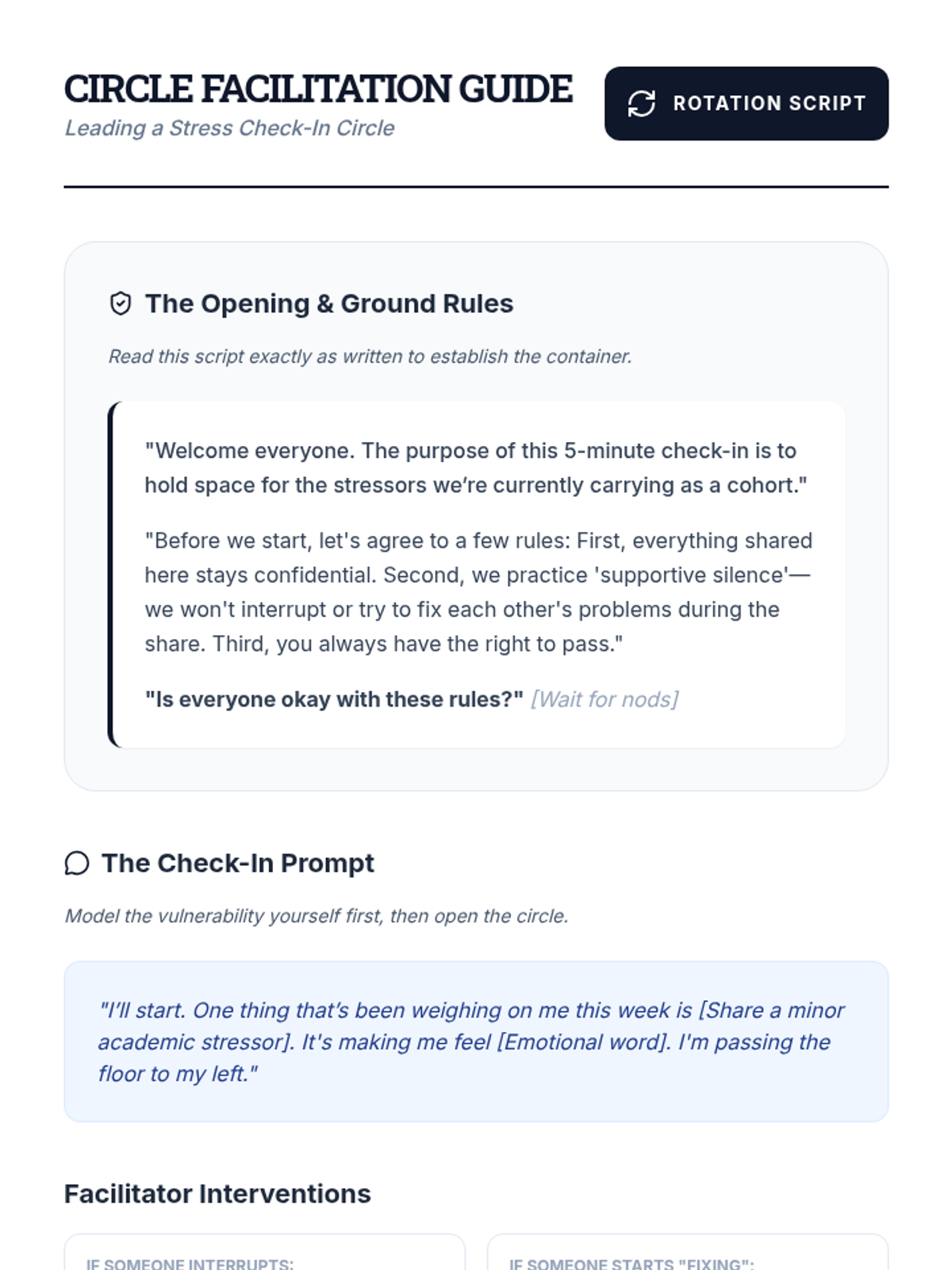
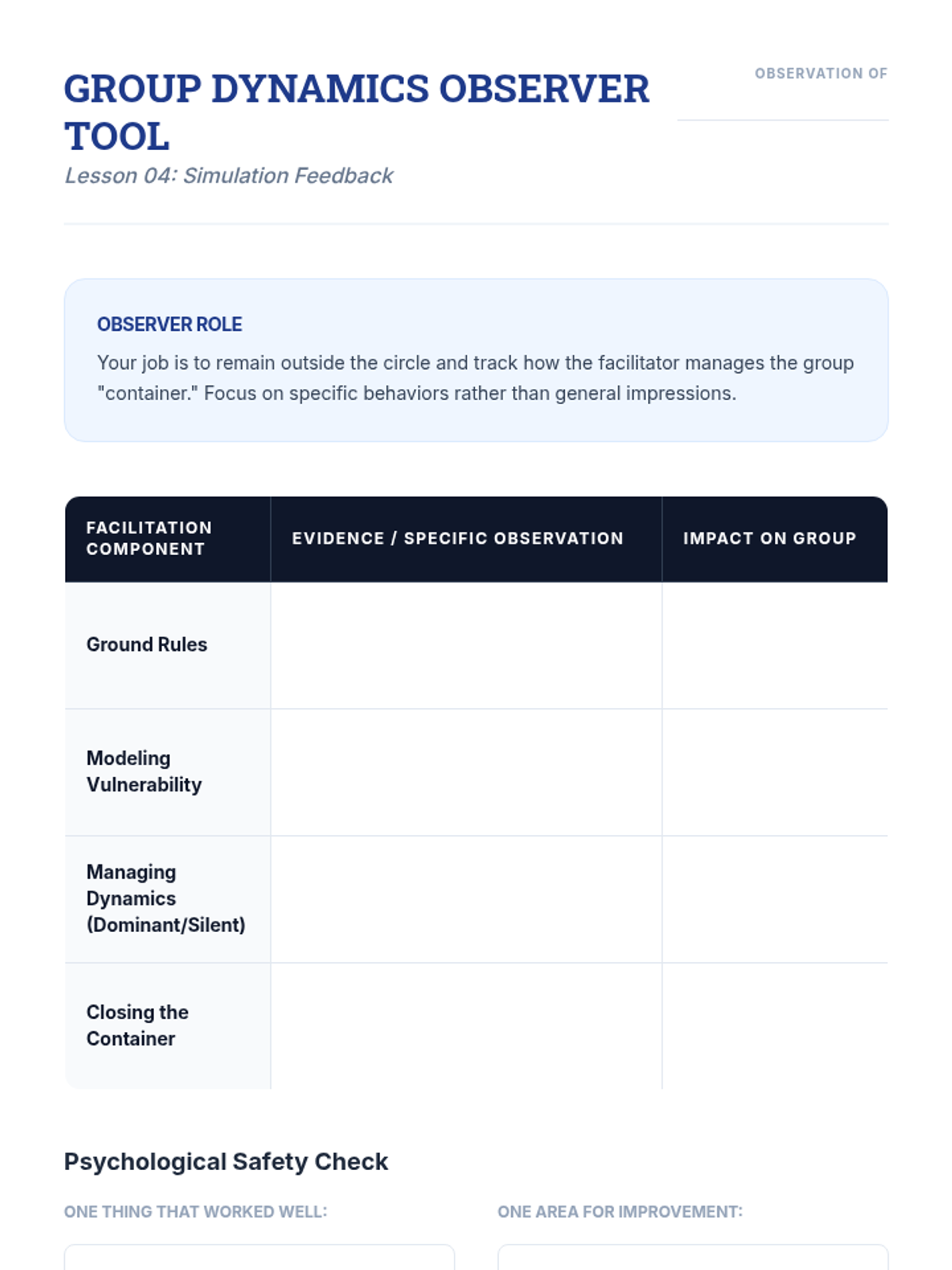
Develops skills for leading group stress check-ins, managing dynamics, and ensuring psychological safety in group settings.
Focuses on preventing compassion fatigue through emotional and temporal boundaries and professional referral protocols.
Practical workshop on active listening, validation, and holding space for peers without the pressure to provide immediate solutions.
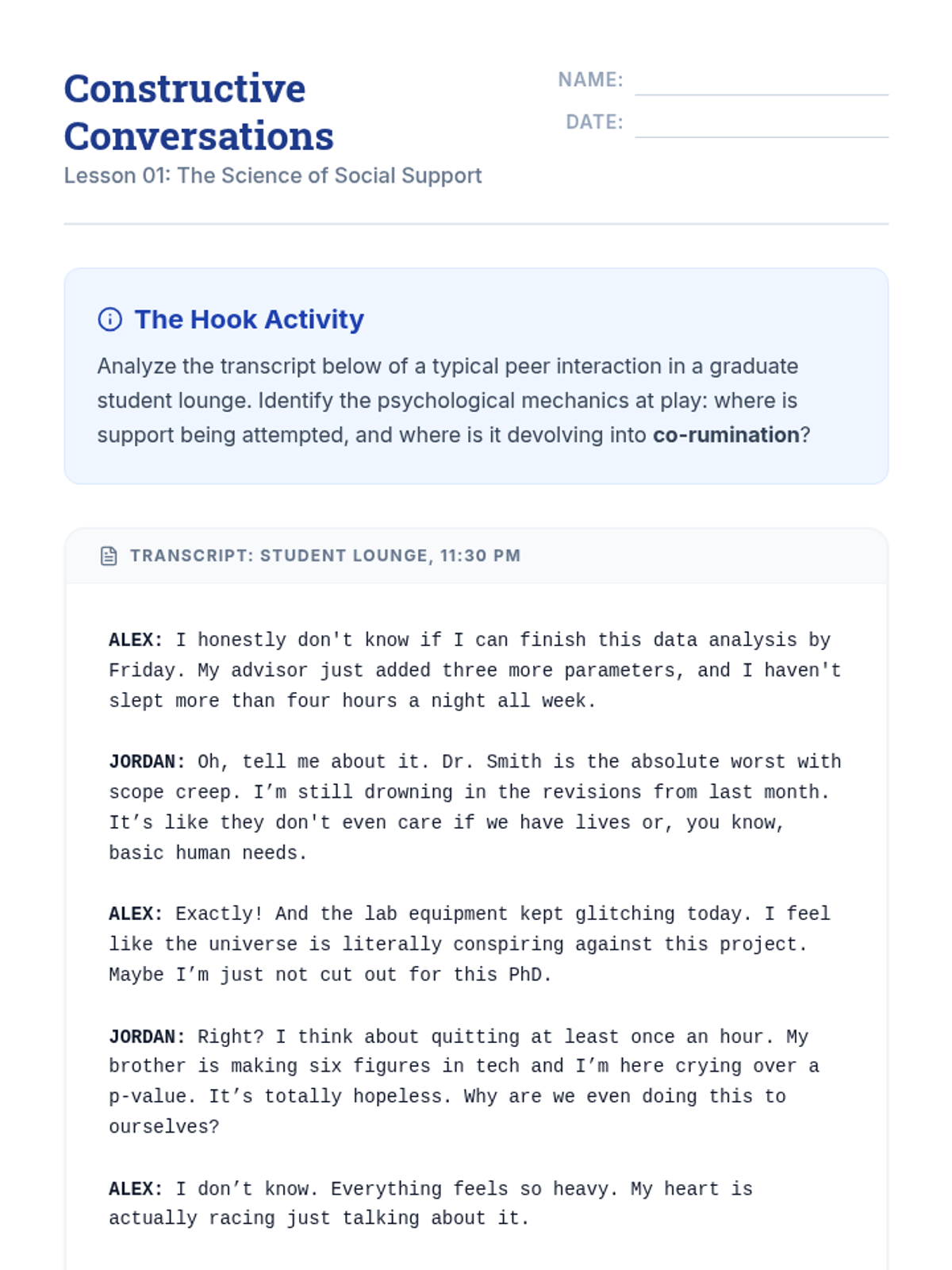
Examines the buffering hypothesis and the psychological mechanics of how social connection mitigates stress, contrasting co-rumination with constructive disclosure.
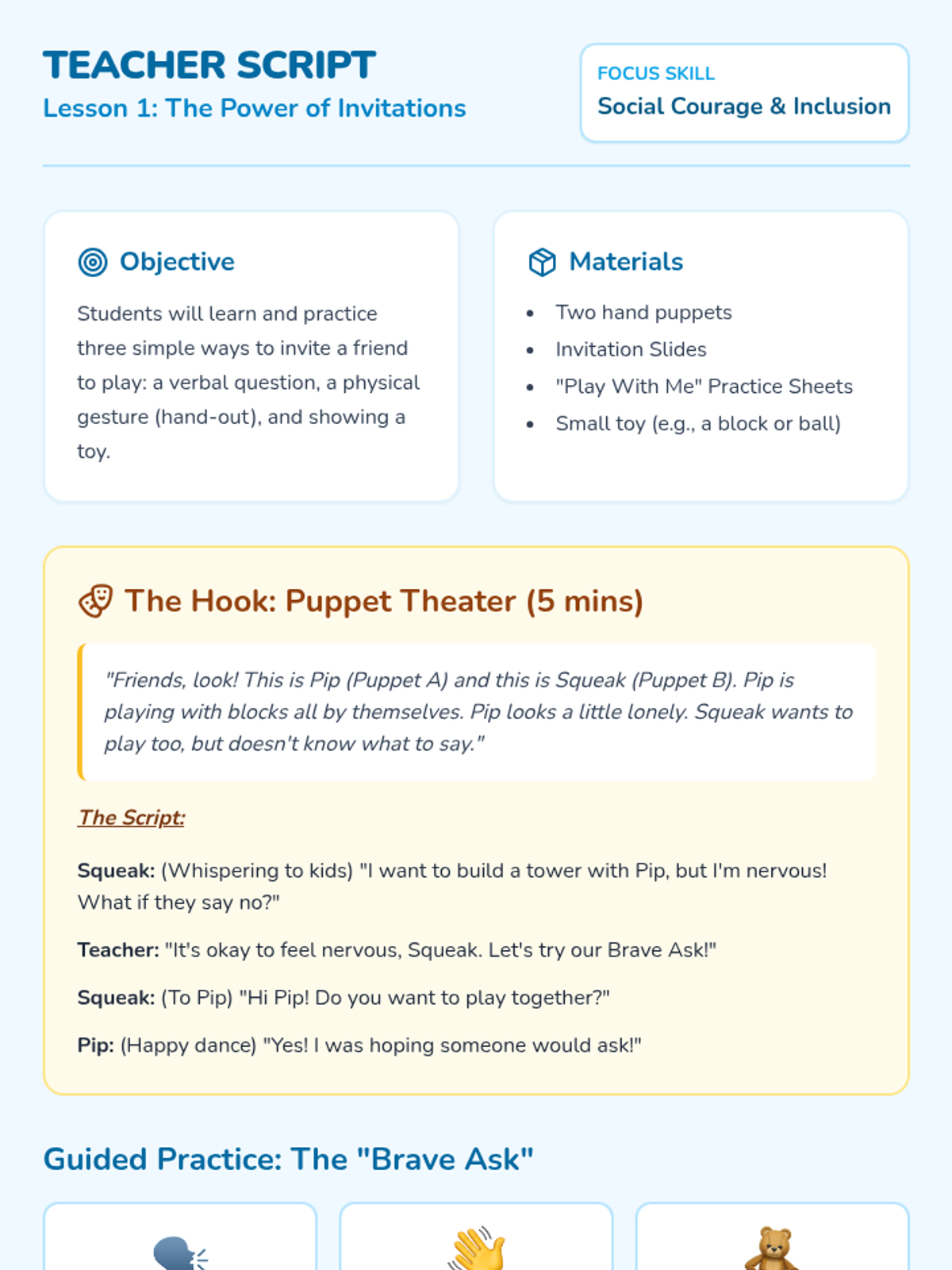
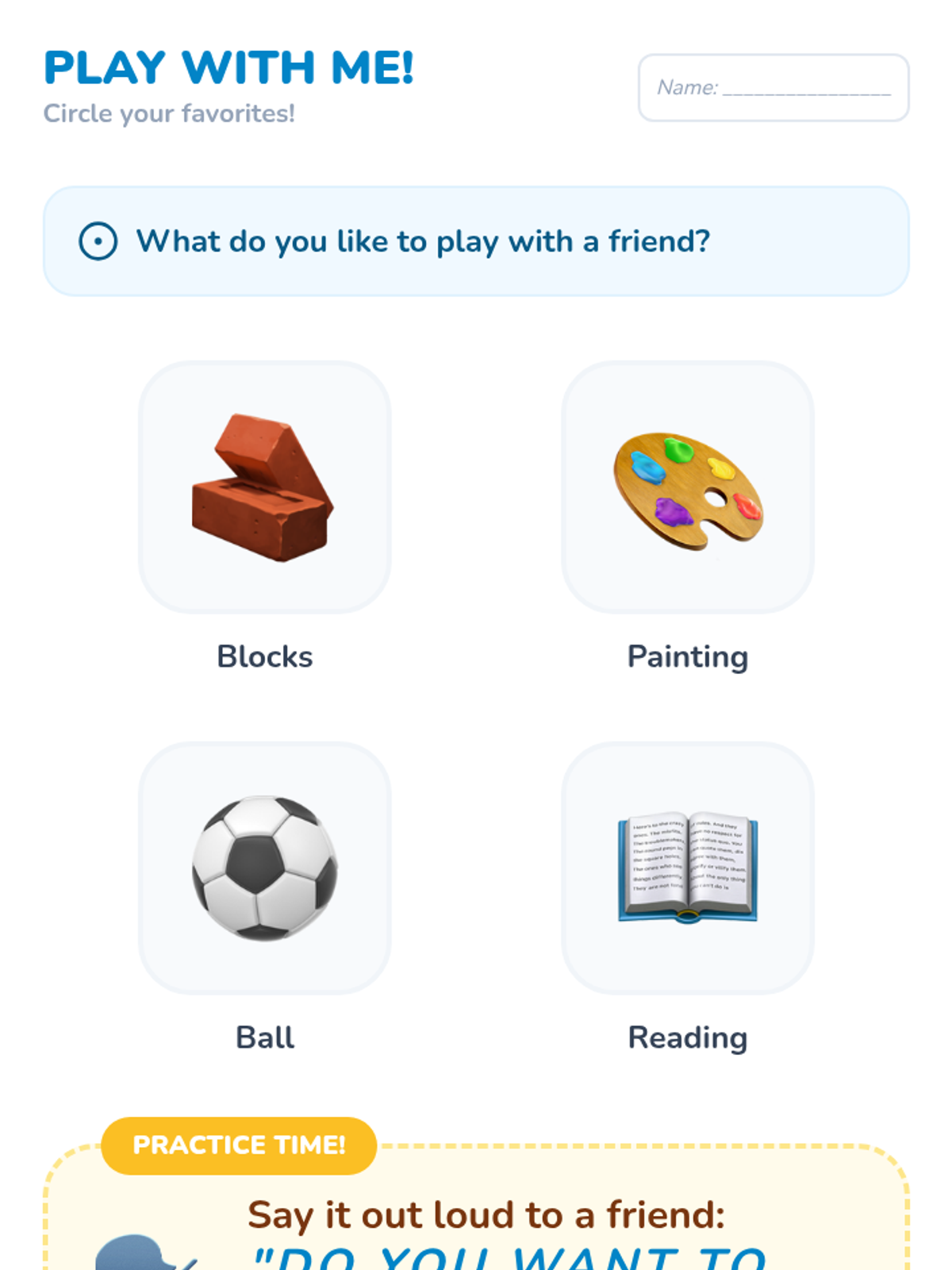
Students learn simple scripts and gestures to invite peers to join a positive activity, practicing inclusion and social courage.
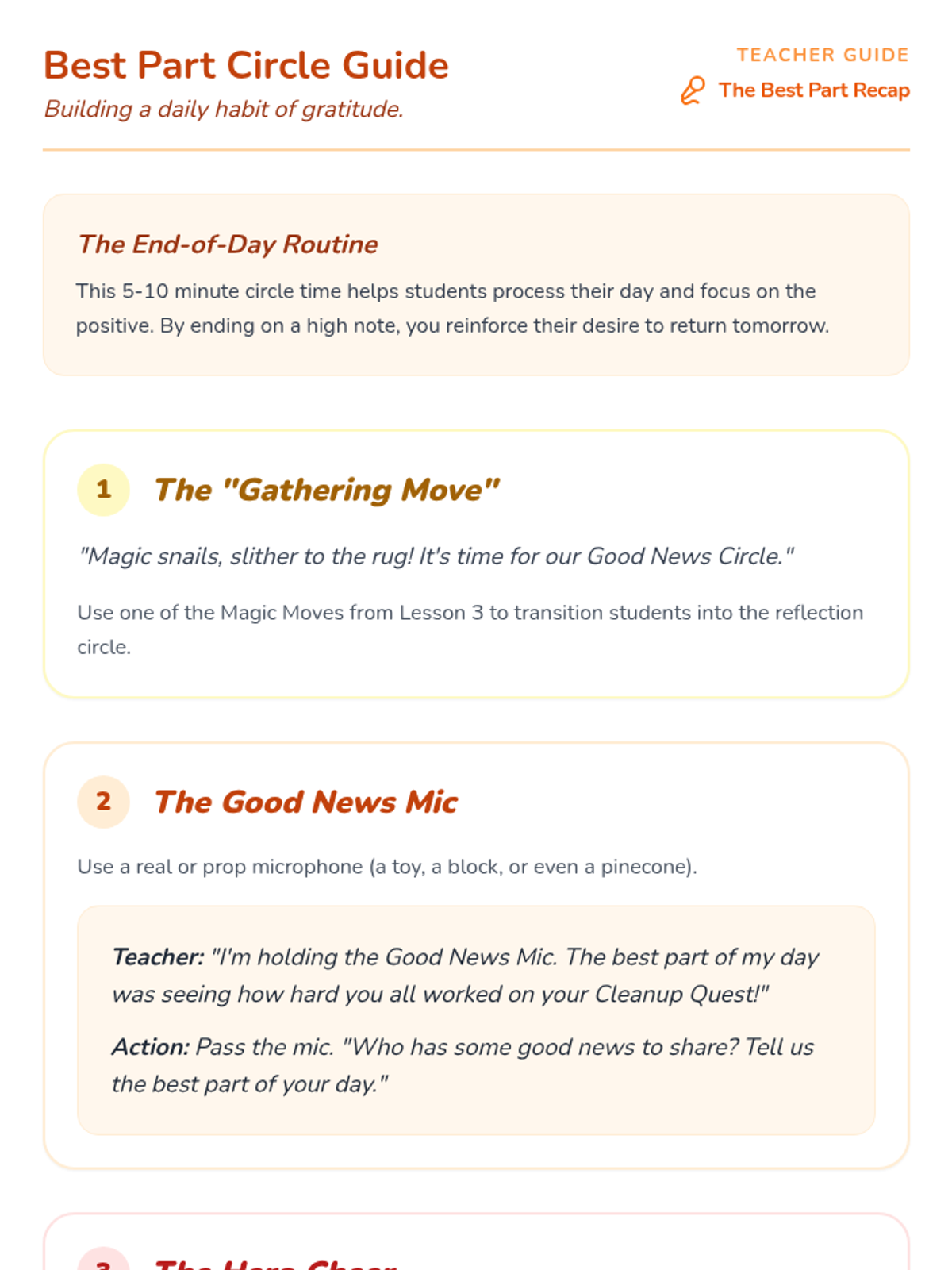
Students establish a gratitude habit by sharing the best parts of their day, reinforcing positive memories before going home.
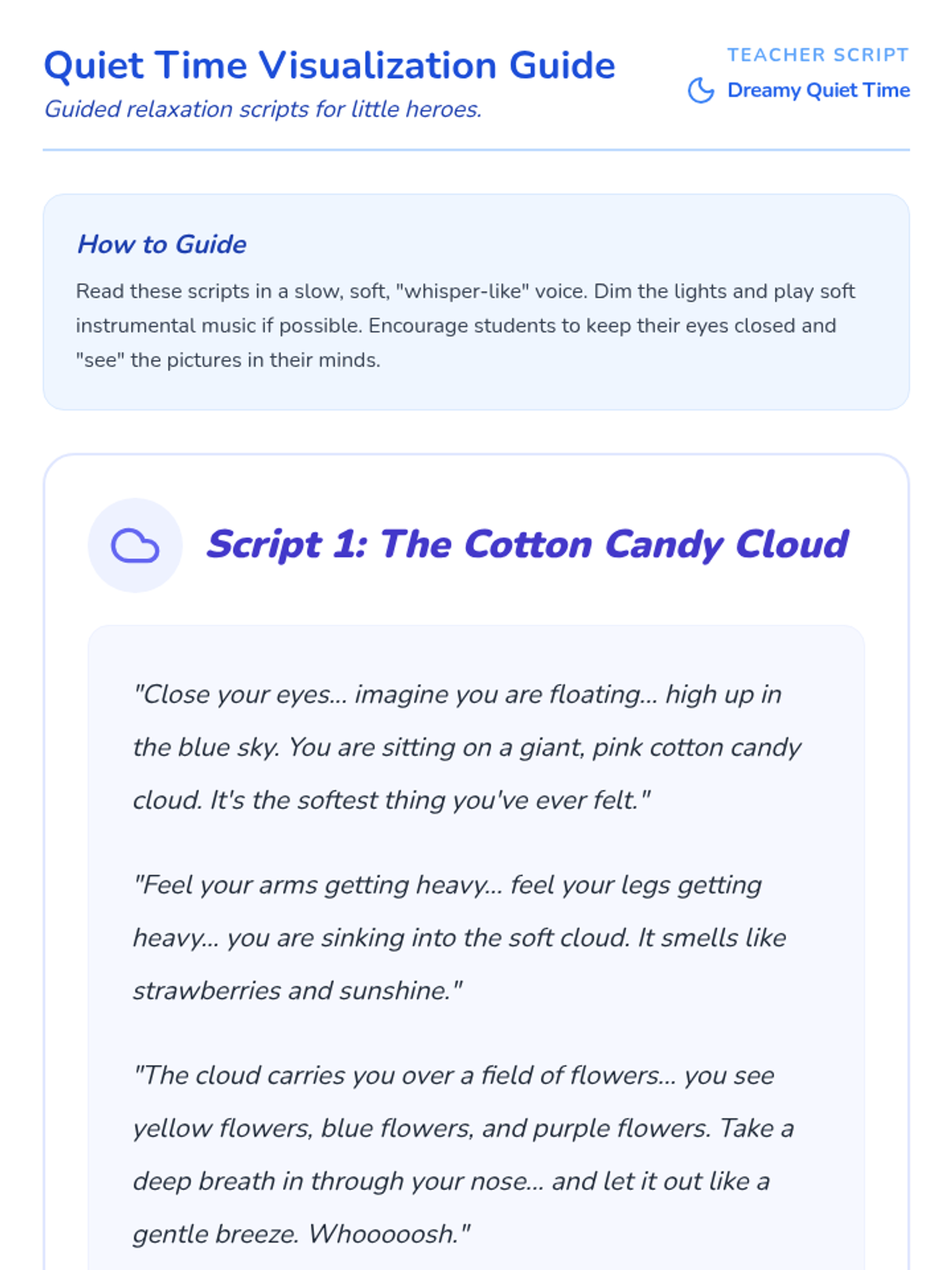
Students explore visualization and relaxation techniques to find joy and stillness during quiet or nap times.
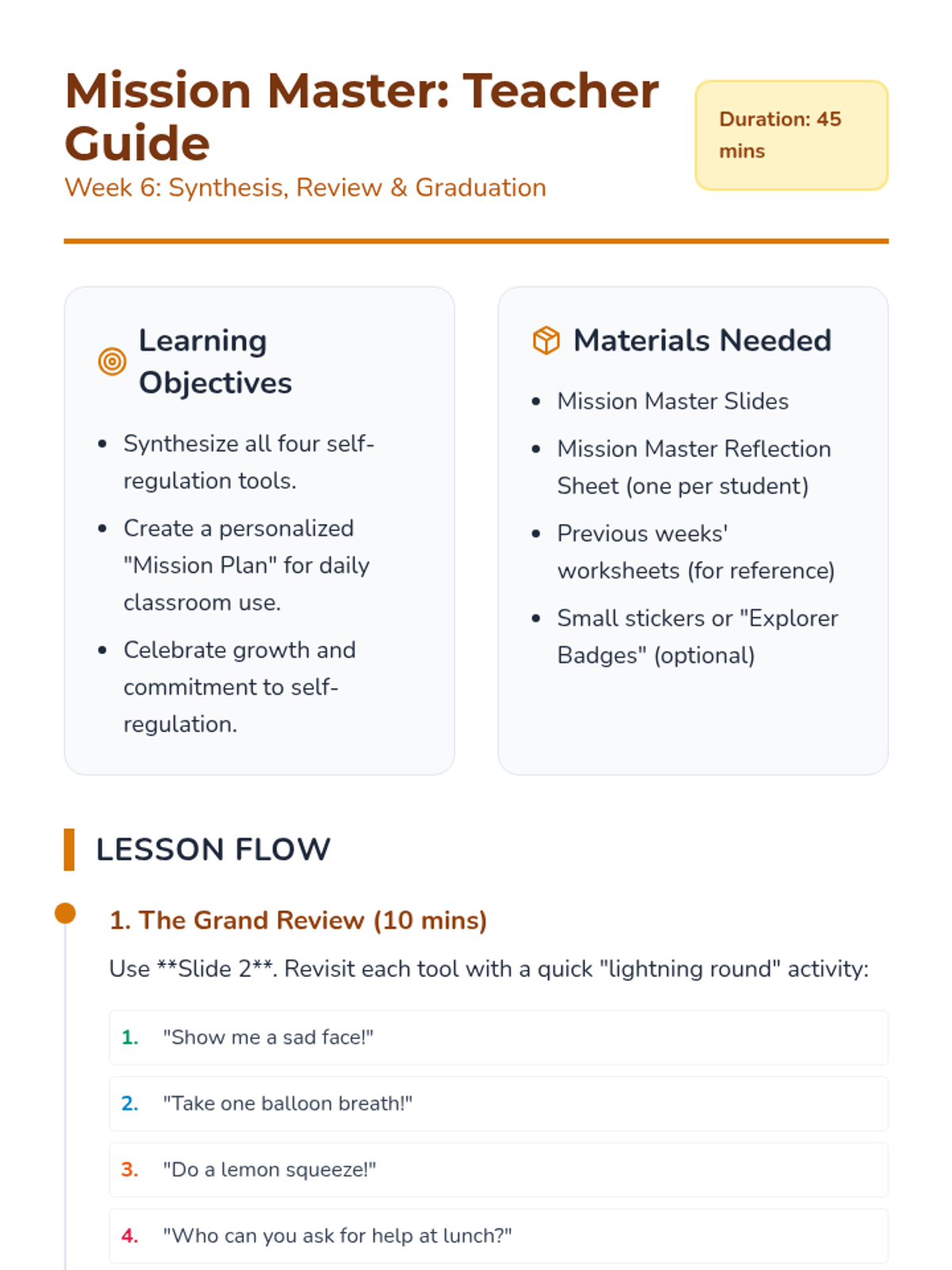
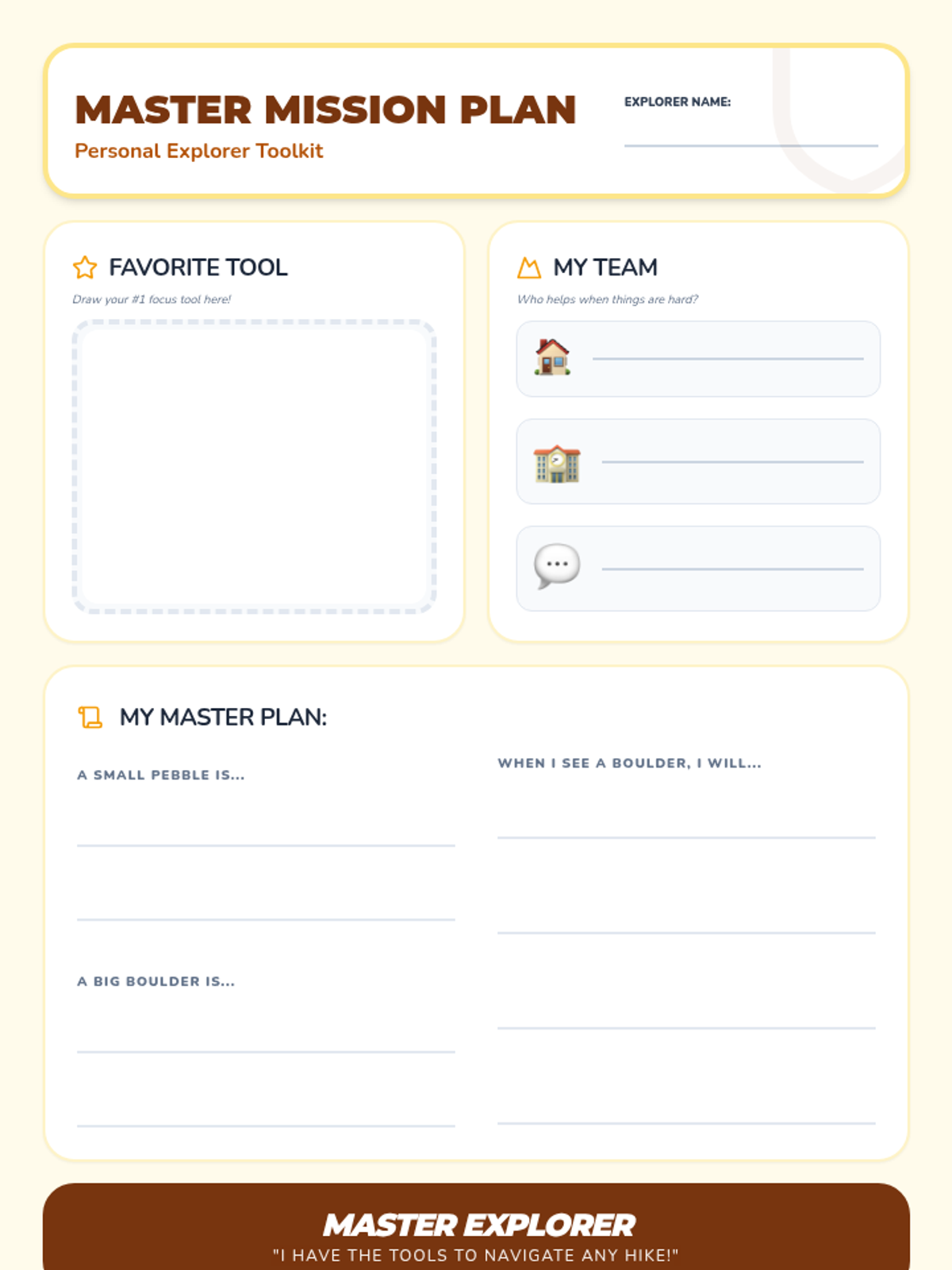
Reviewing all tools and creating a personalized 'Mission Plan' for classroom success.
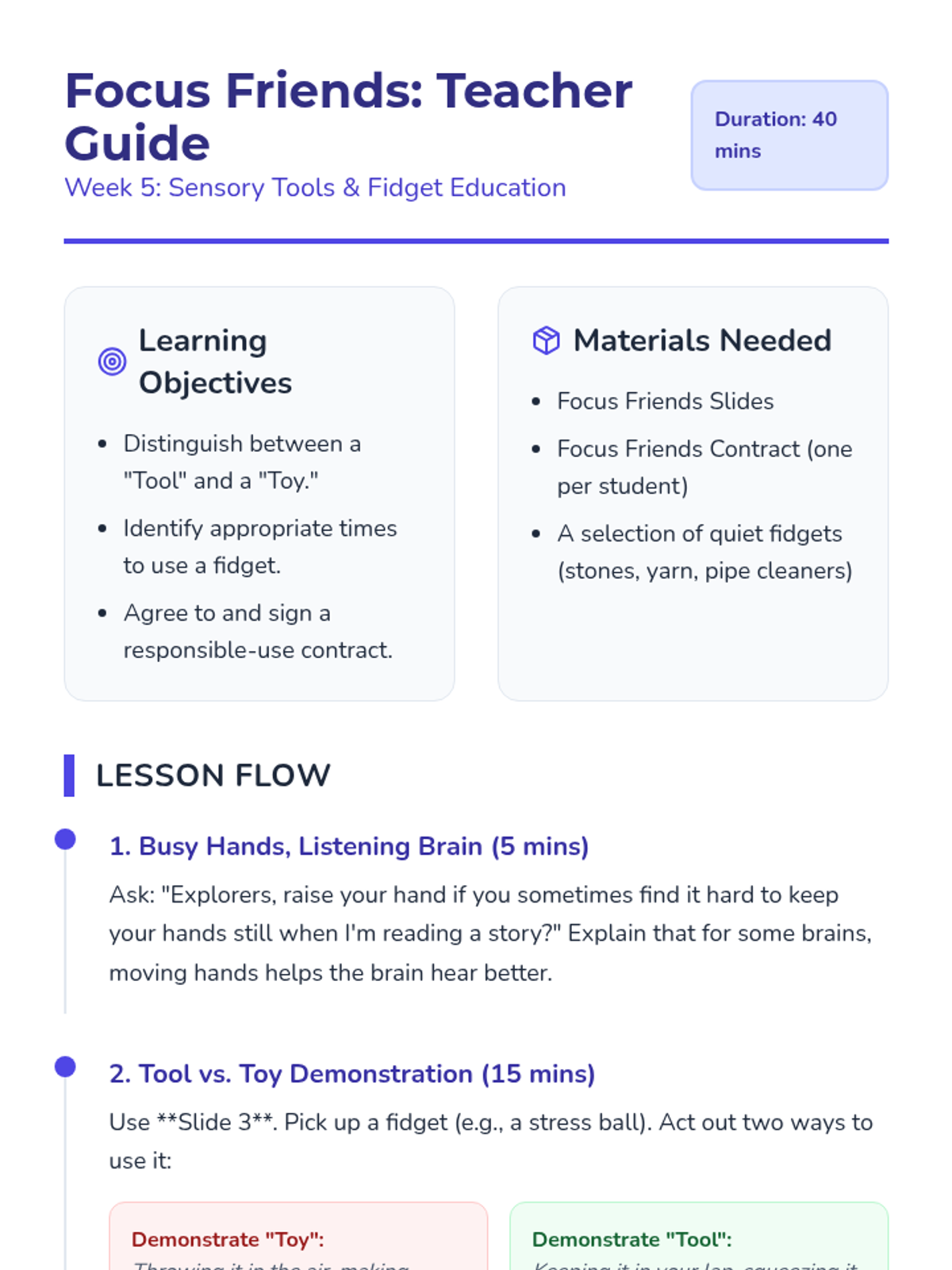
Learning how to use fidgets and sensory tools appropriately for focus.
Developing the skill of asking for help and talking through emotions with a trusted adult.
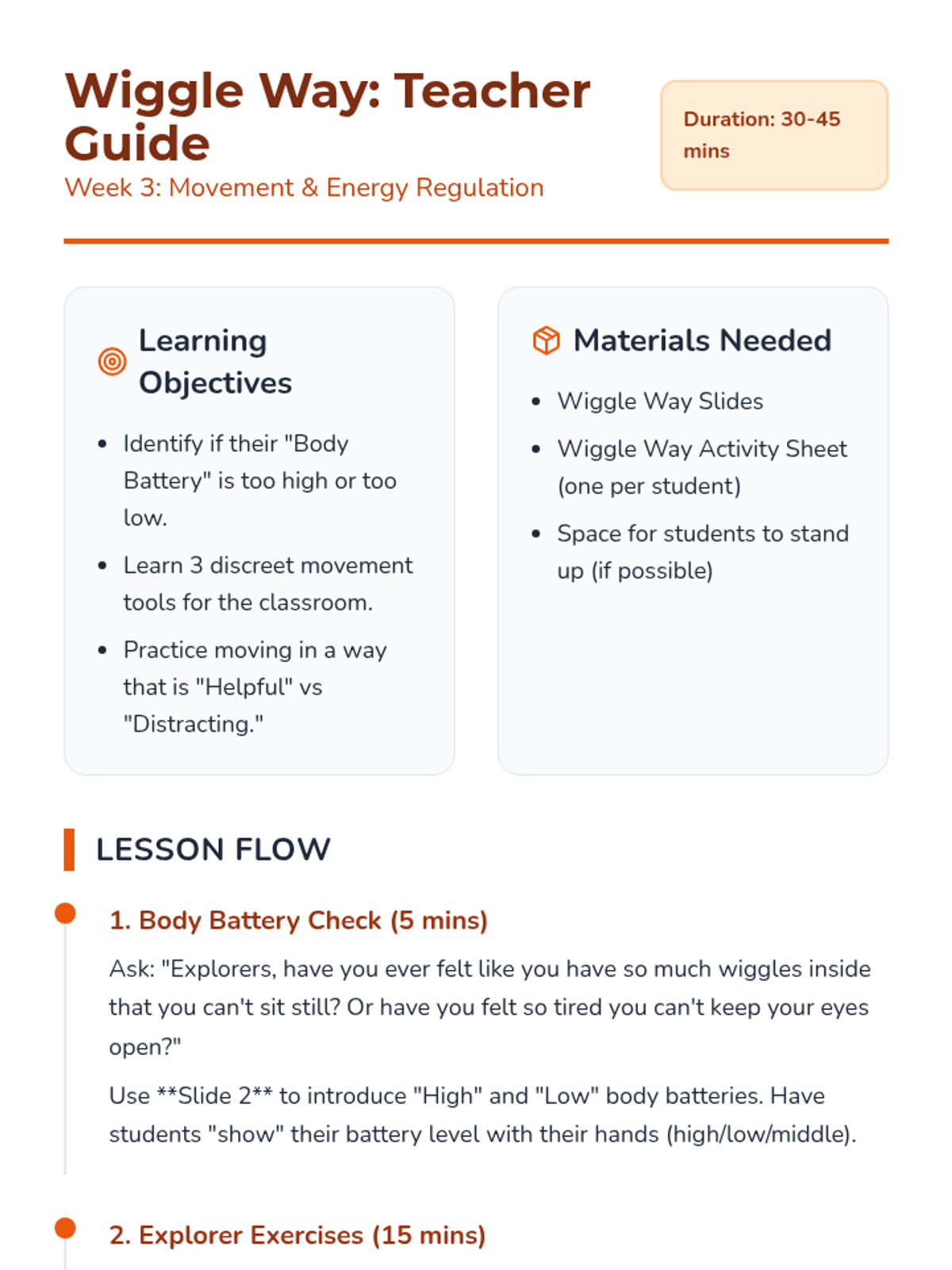
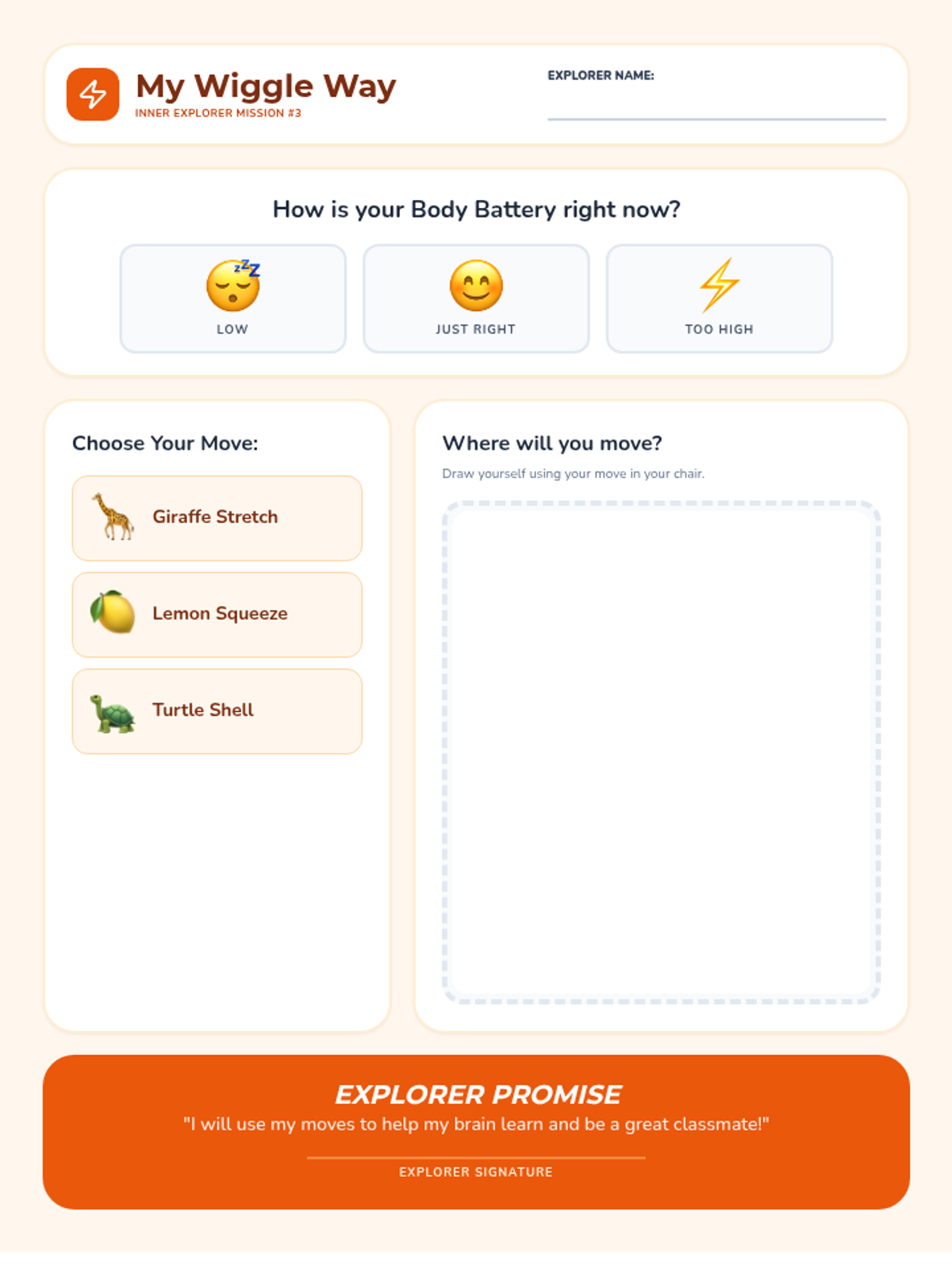
Understanding how movement can help refocus energy and stay on task.
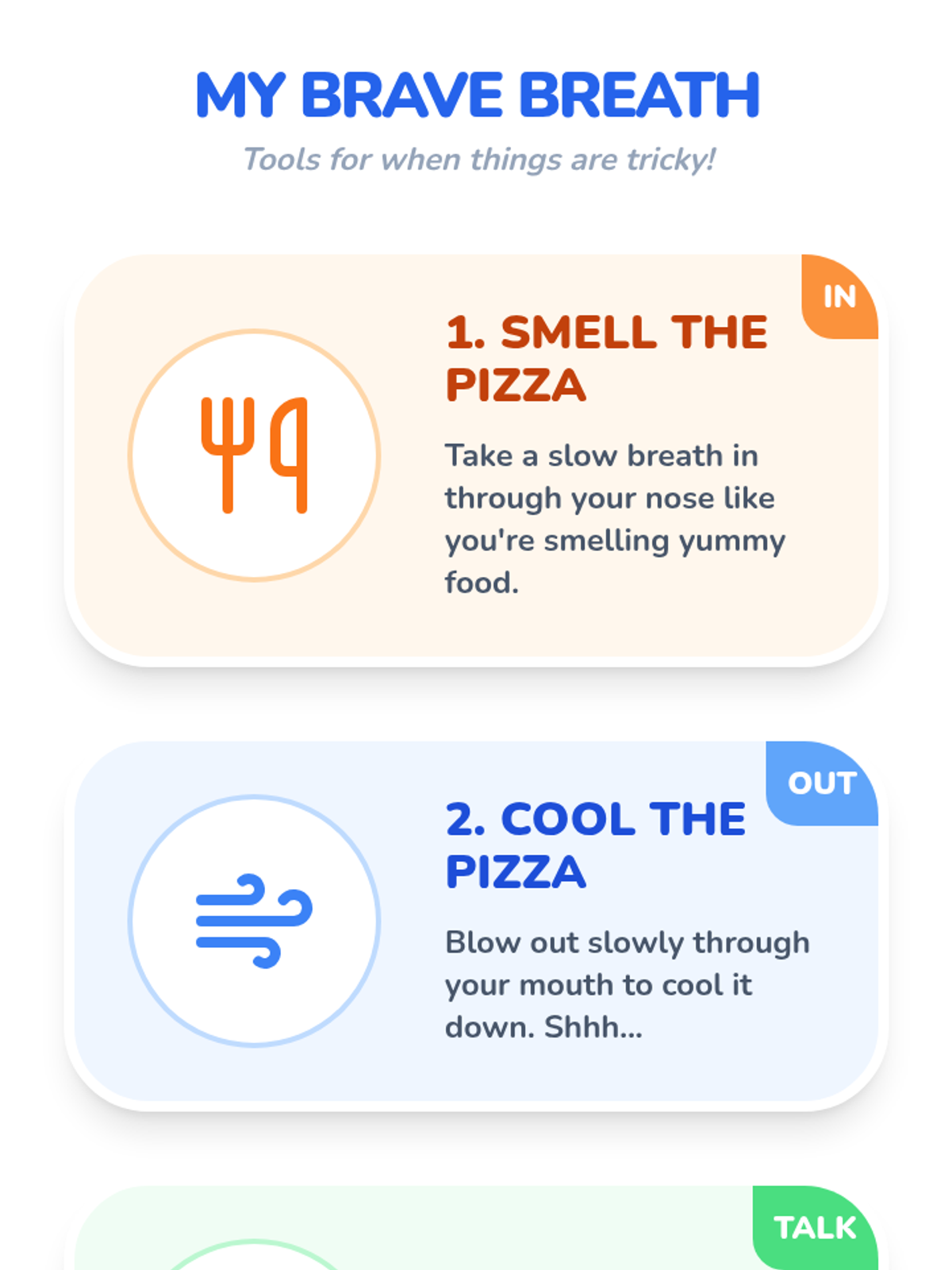
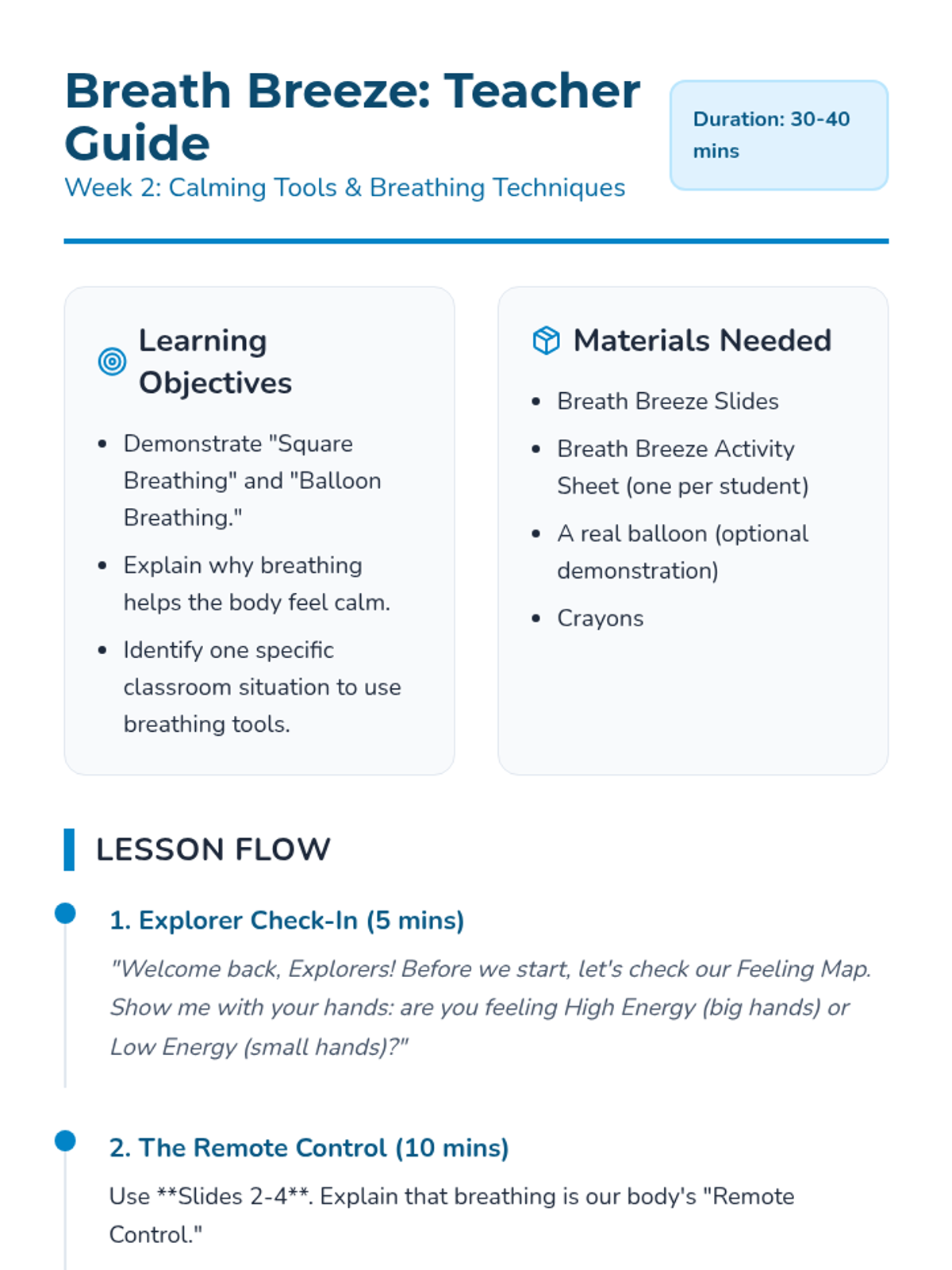
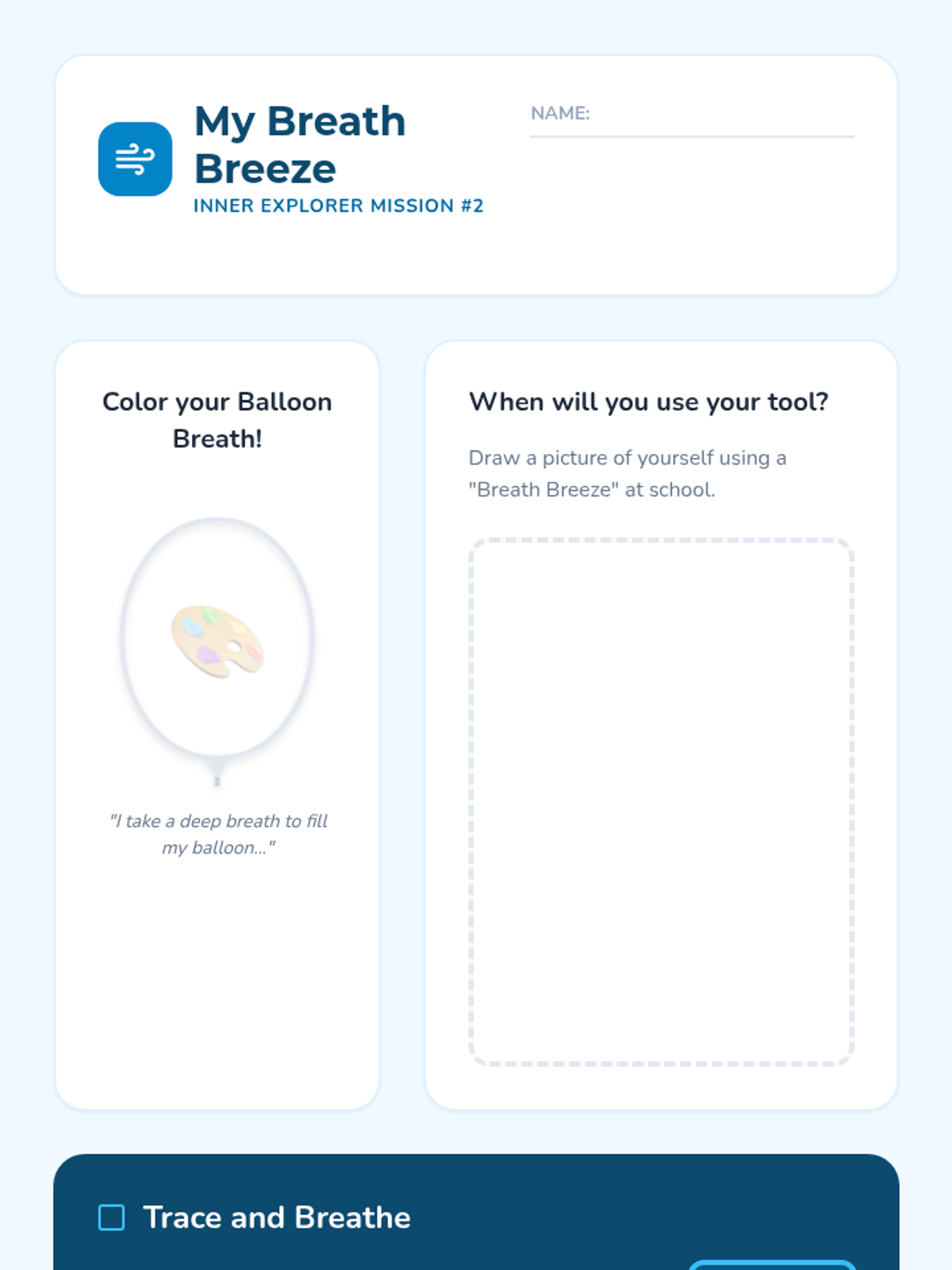
Learning different breathing techniques to calm the mind and body.
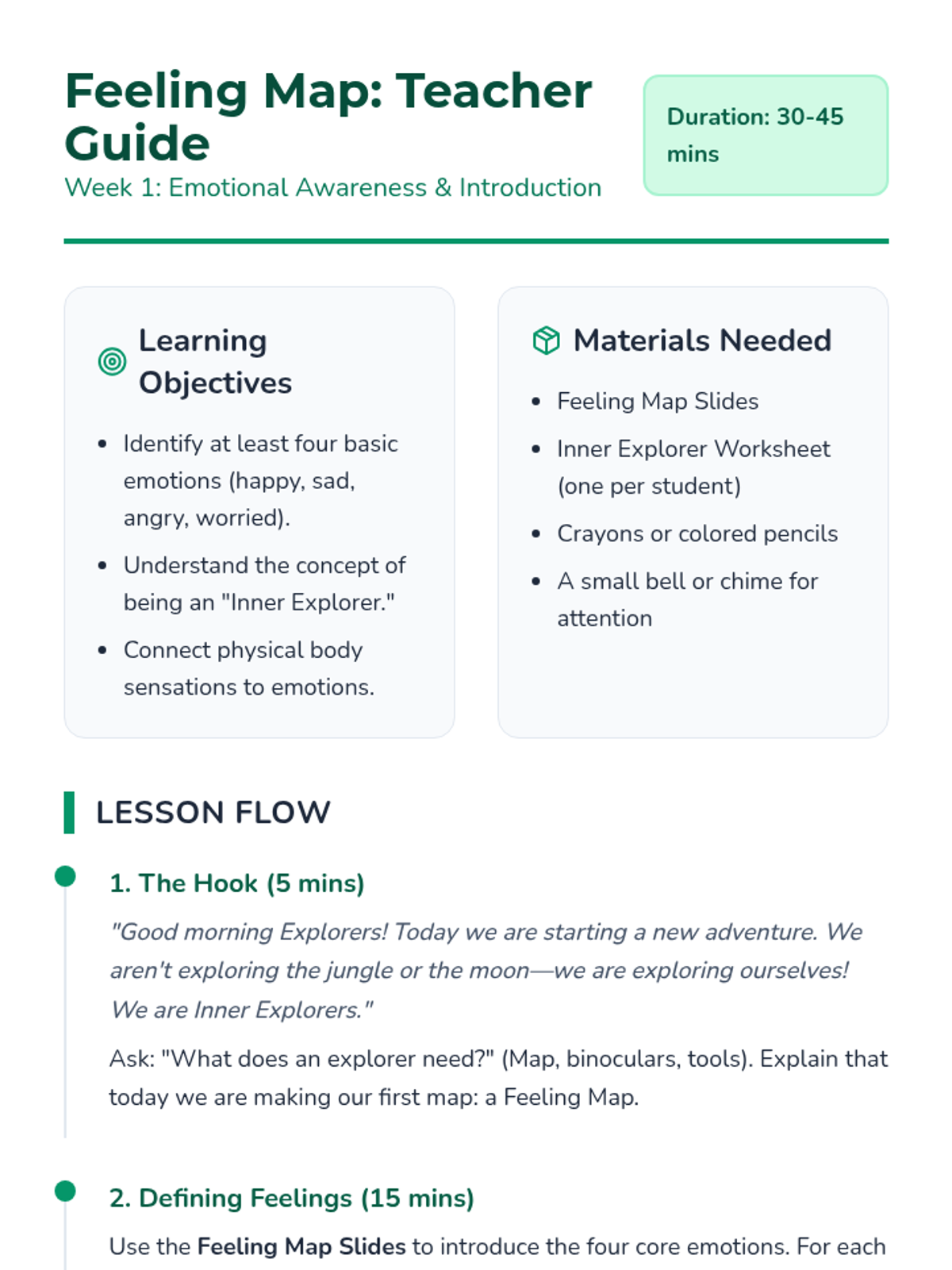
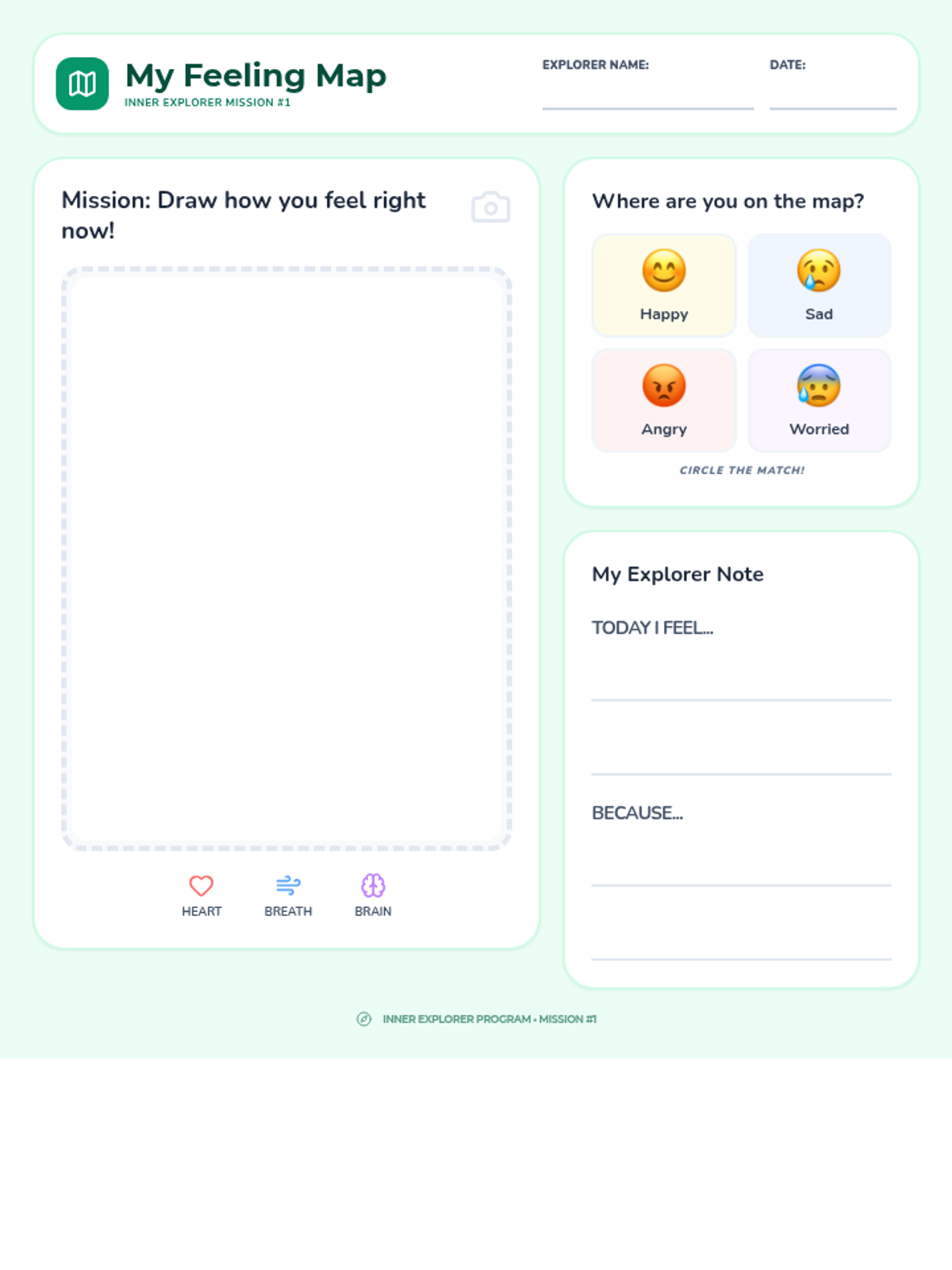
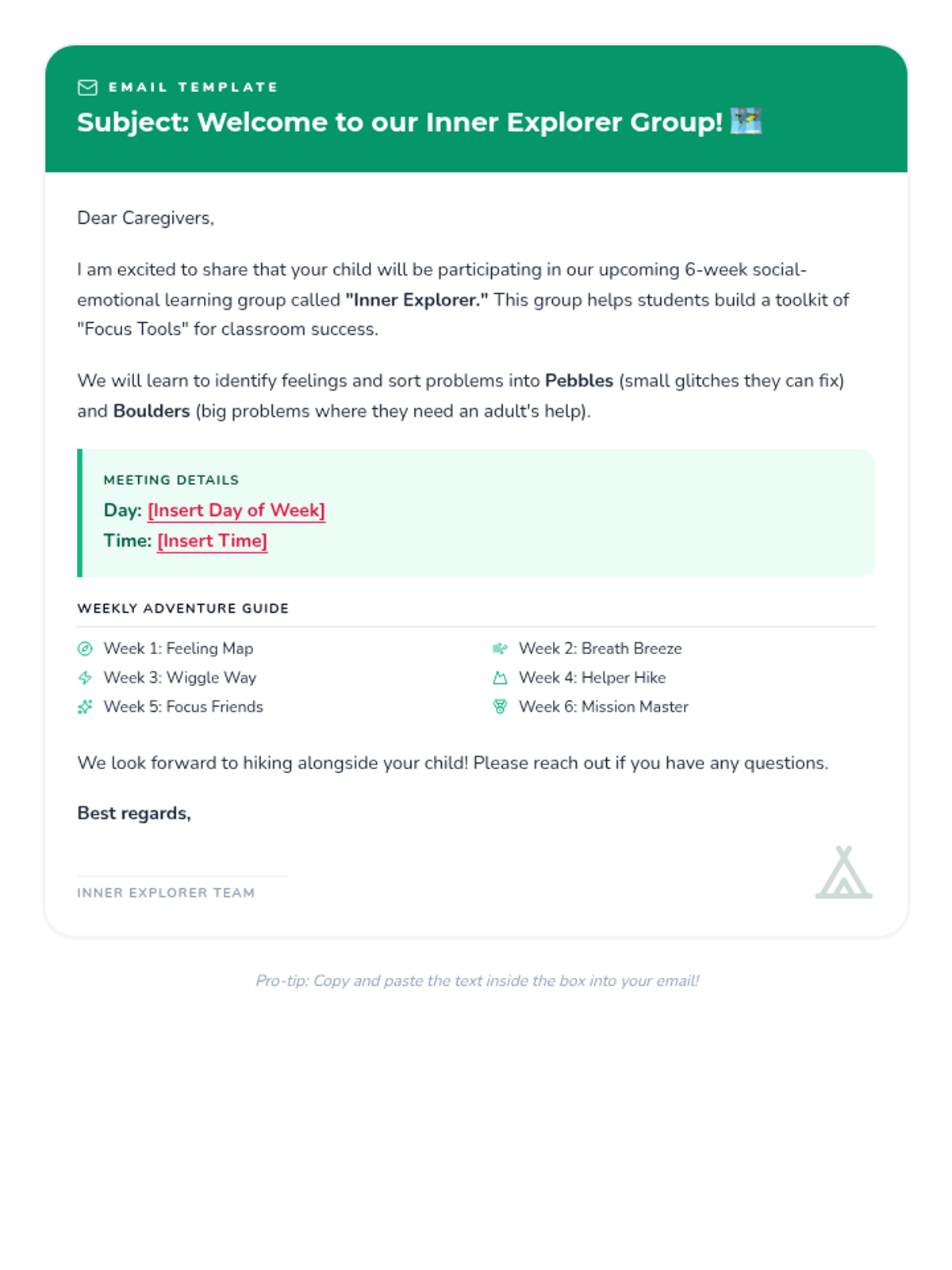
Introduction to the concept of feelings as a 'map' and identifying common emotions.
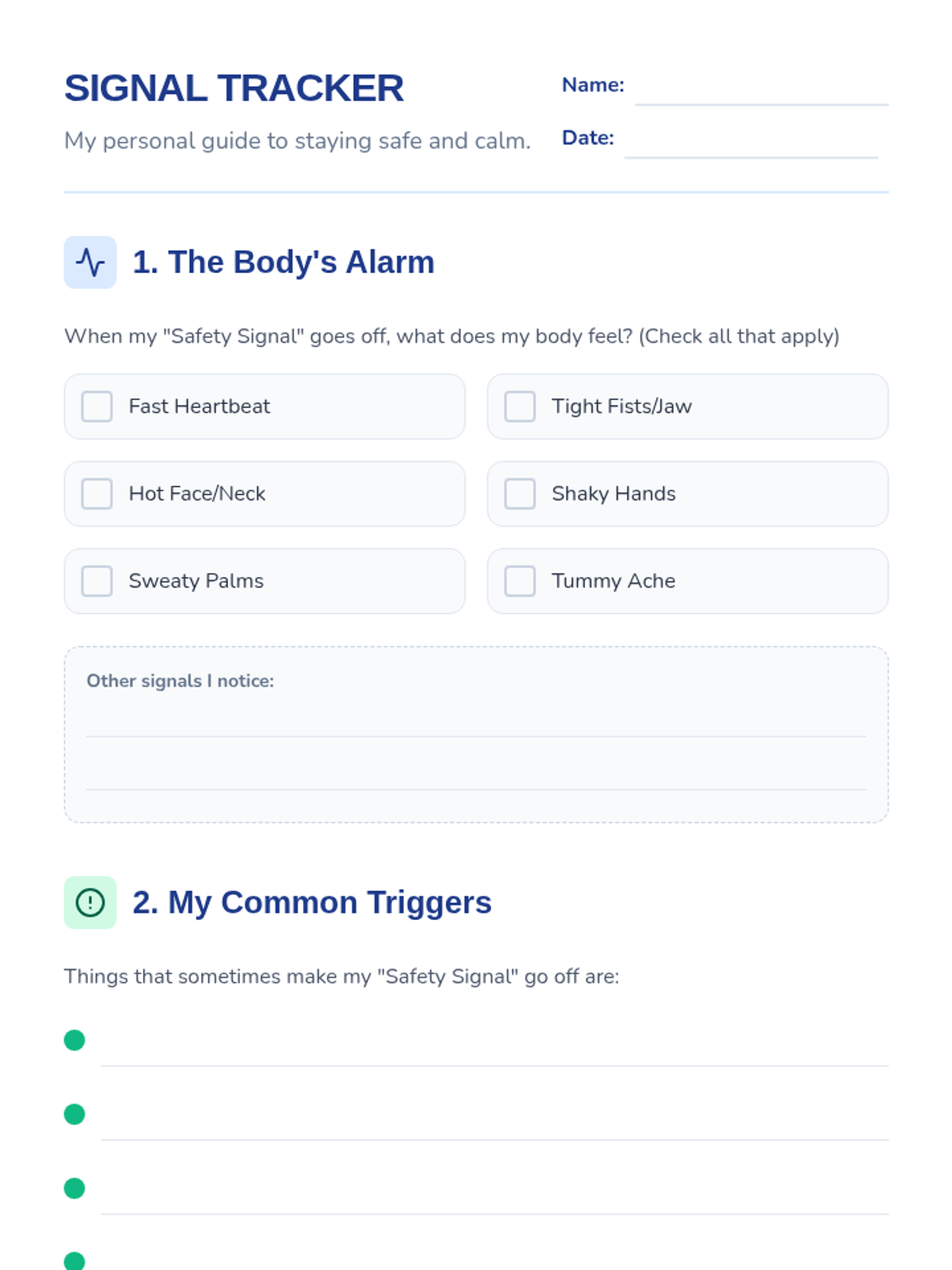
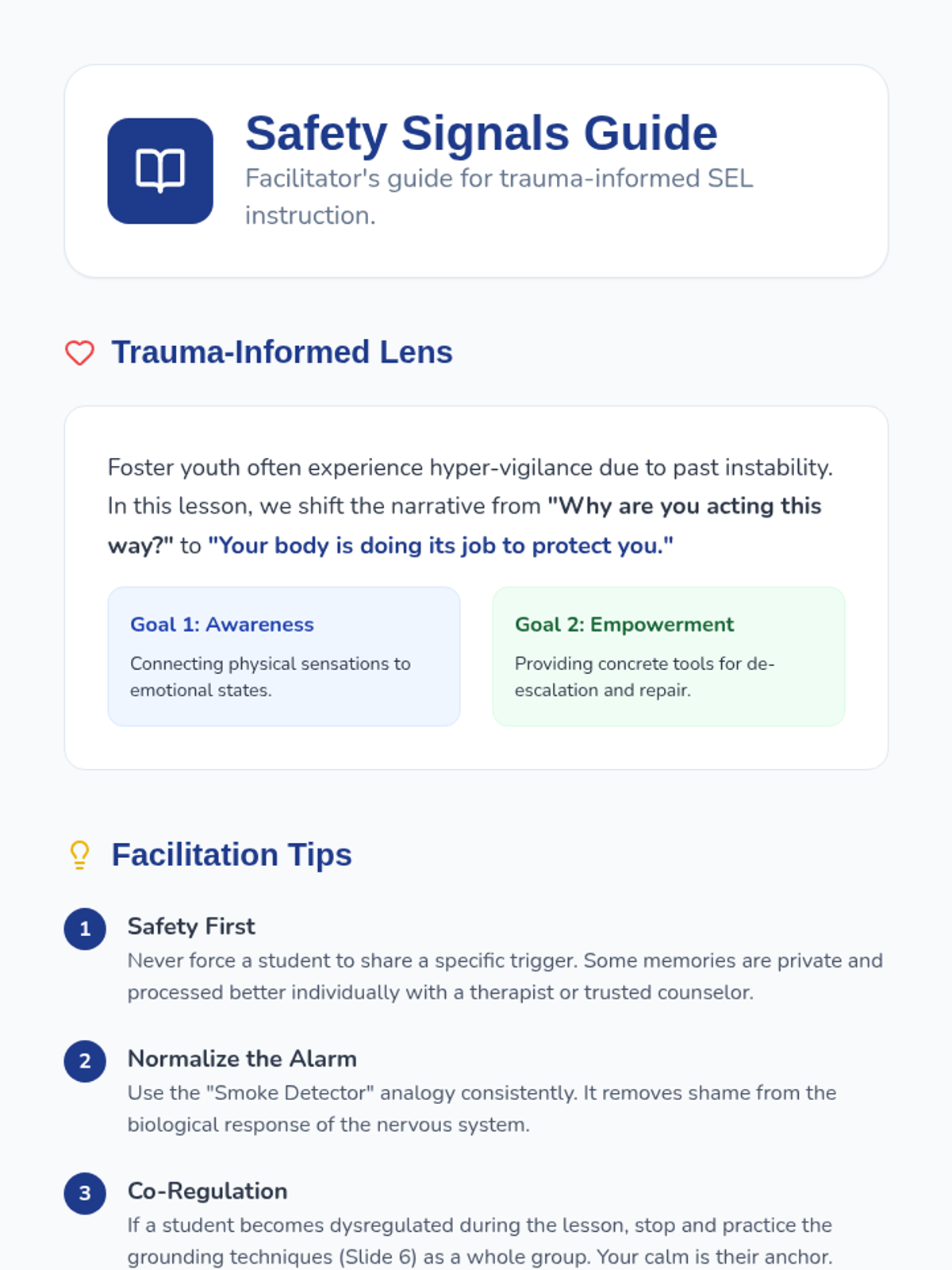
A trauma-informed lesson designed to help students identify their emotional triggers and develop healthy conflict resolution strategies in a safe, supportive environment.
A psychoeducational lesson exploring the CBT 3-component model of emotions (Thoughts, Feelings, Behaviors) designed for 12-year-old girls. Features interactive slides, social scenarios covering friendship and family, and a companion journal for personal reflection.
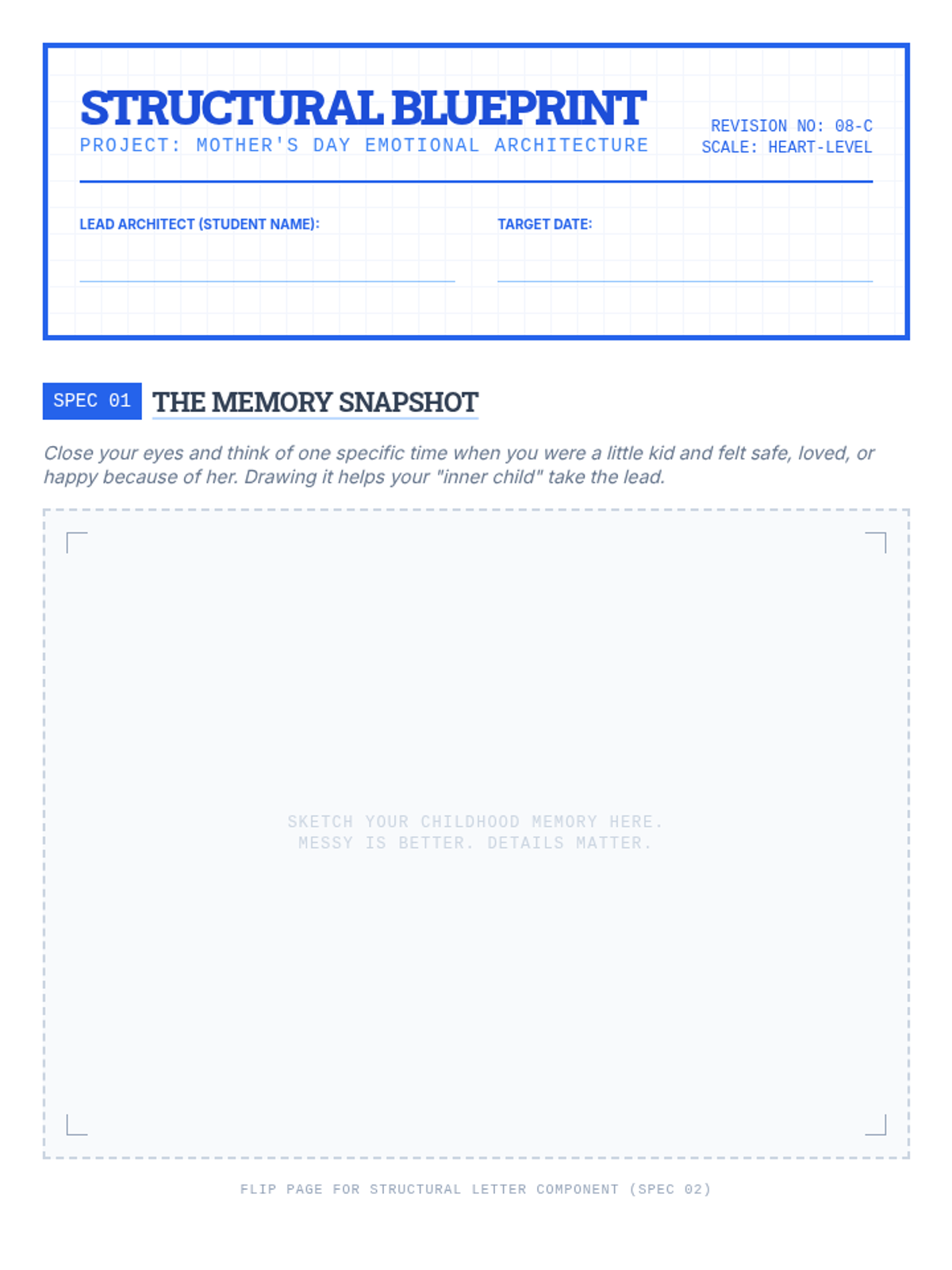
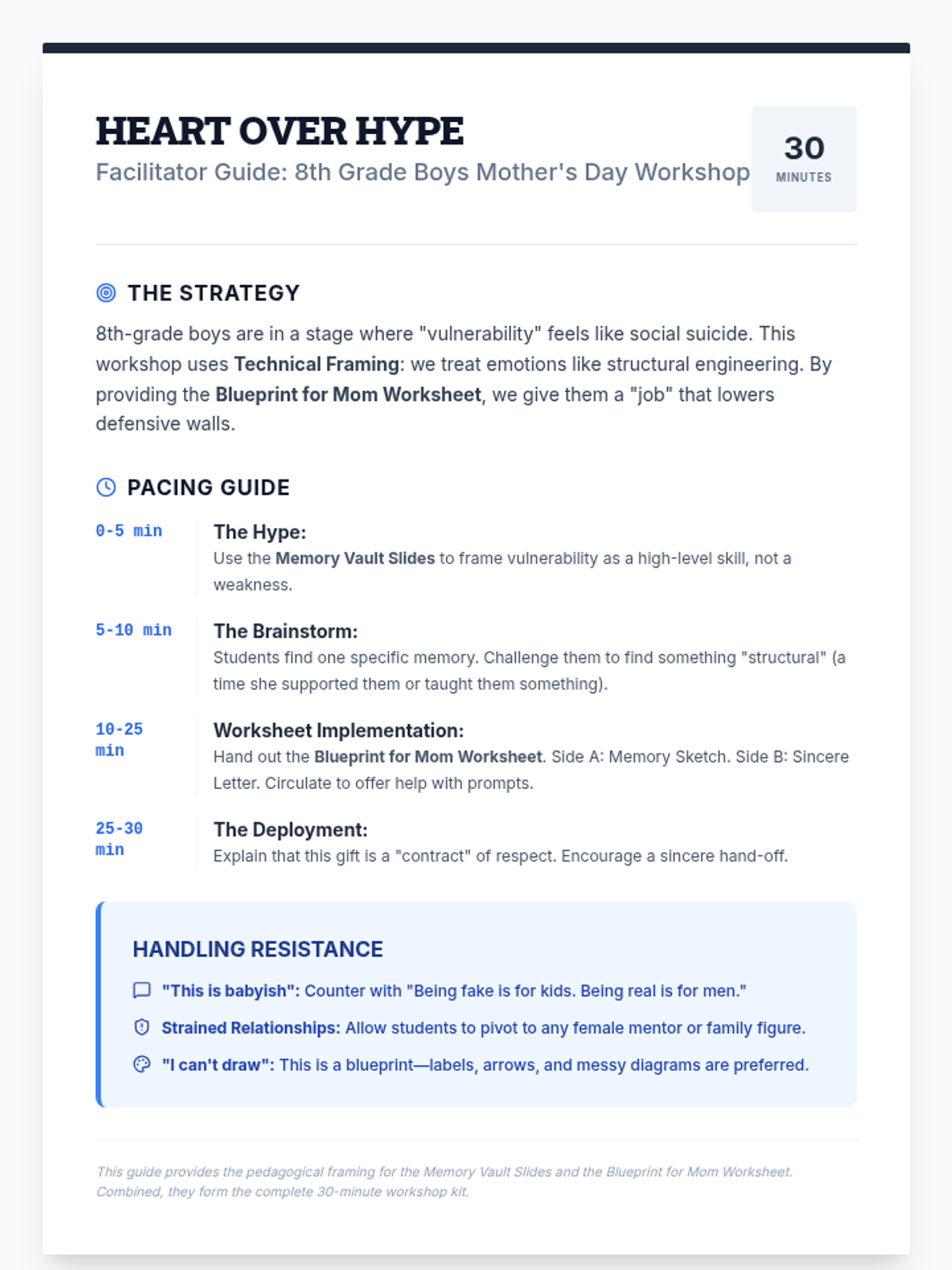
A 30-minute workshop for 8th-grade boys focused on Mother's Day, emphasizing vulnerability and emotional expression through the creation of a 'Memory Blueprint'. Students will reflect on childhood memories and practice expressing gratitude in a sincere, non-performative way.
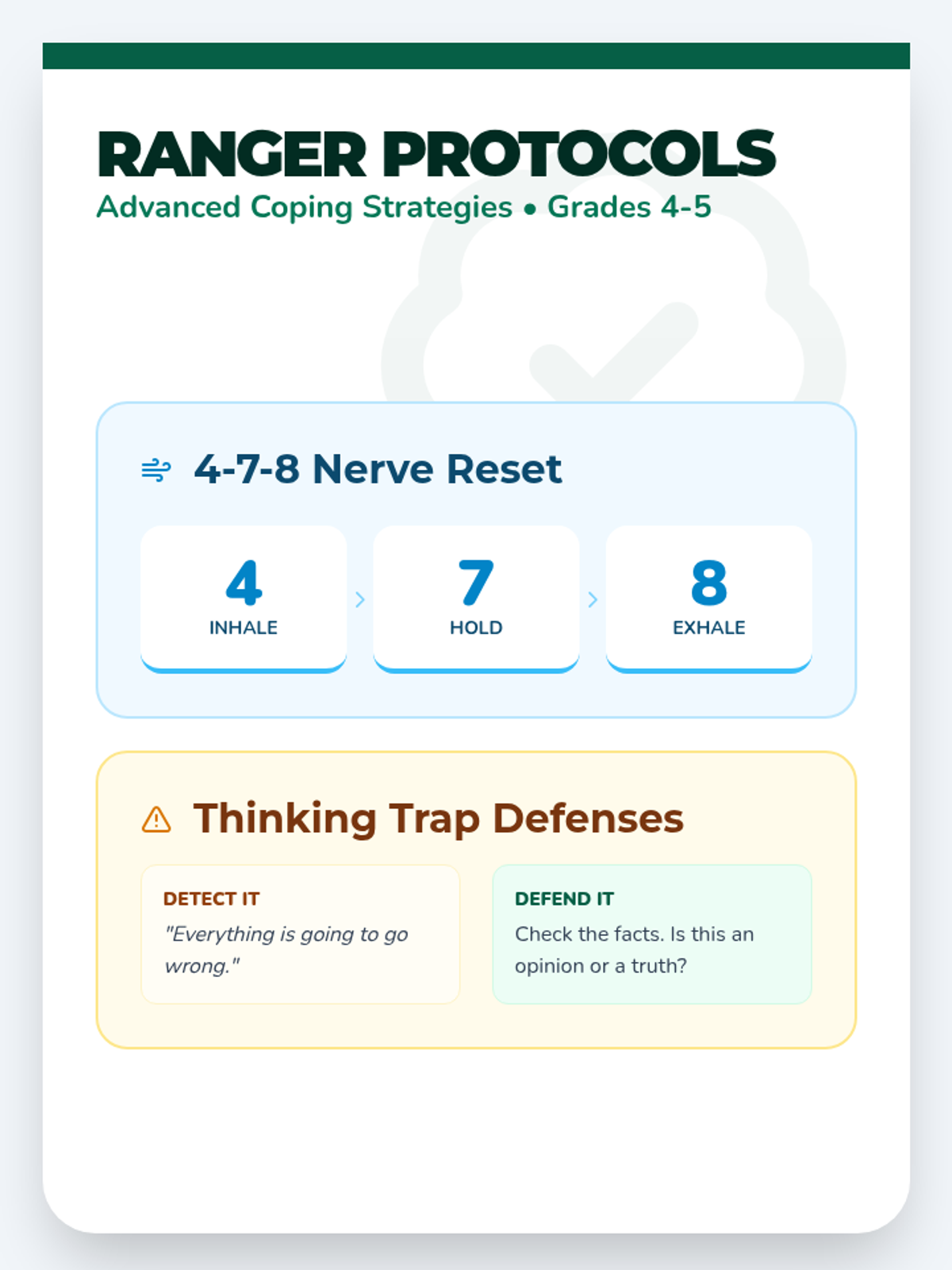
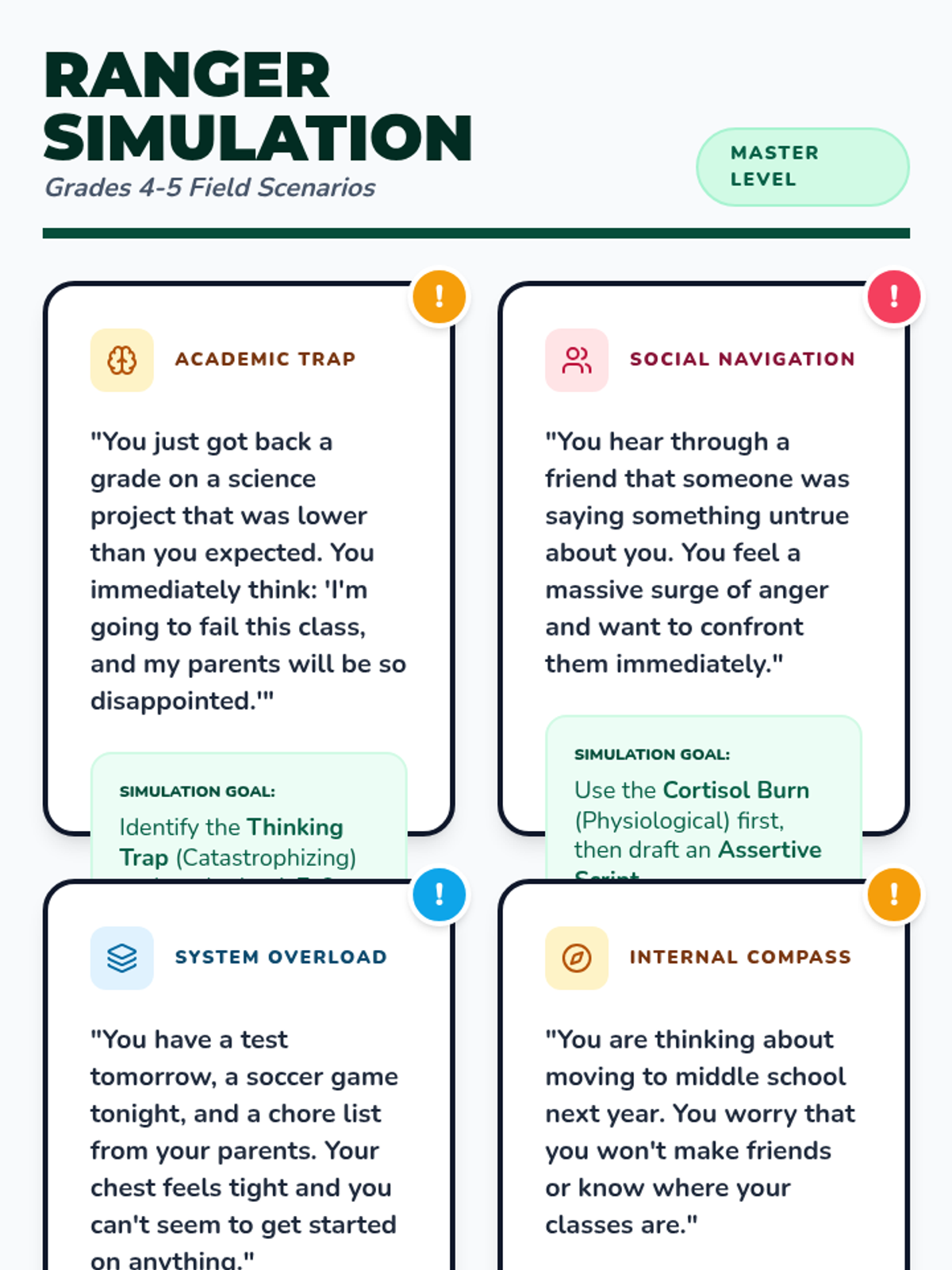
Advanced coping skills for 4-5 students exploring complex grounding methods, assertive communication strategies, cognitive reframing of self-talk, and understanding the physiological benefits of movement for stress management.
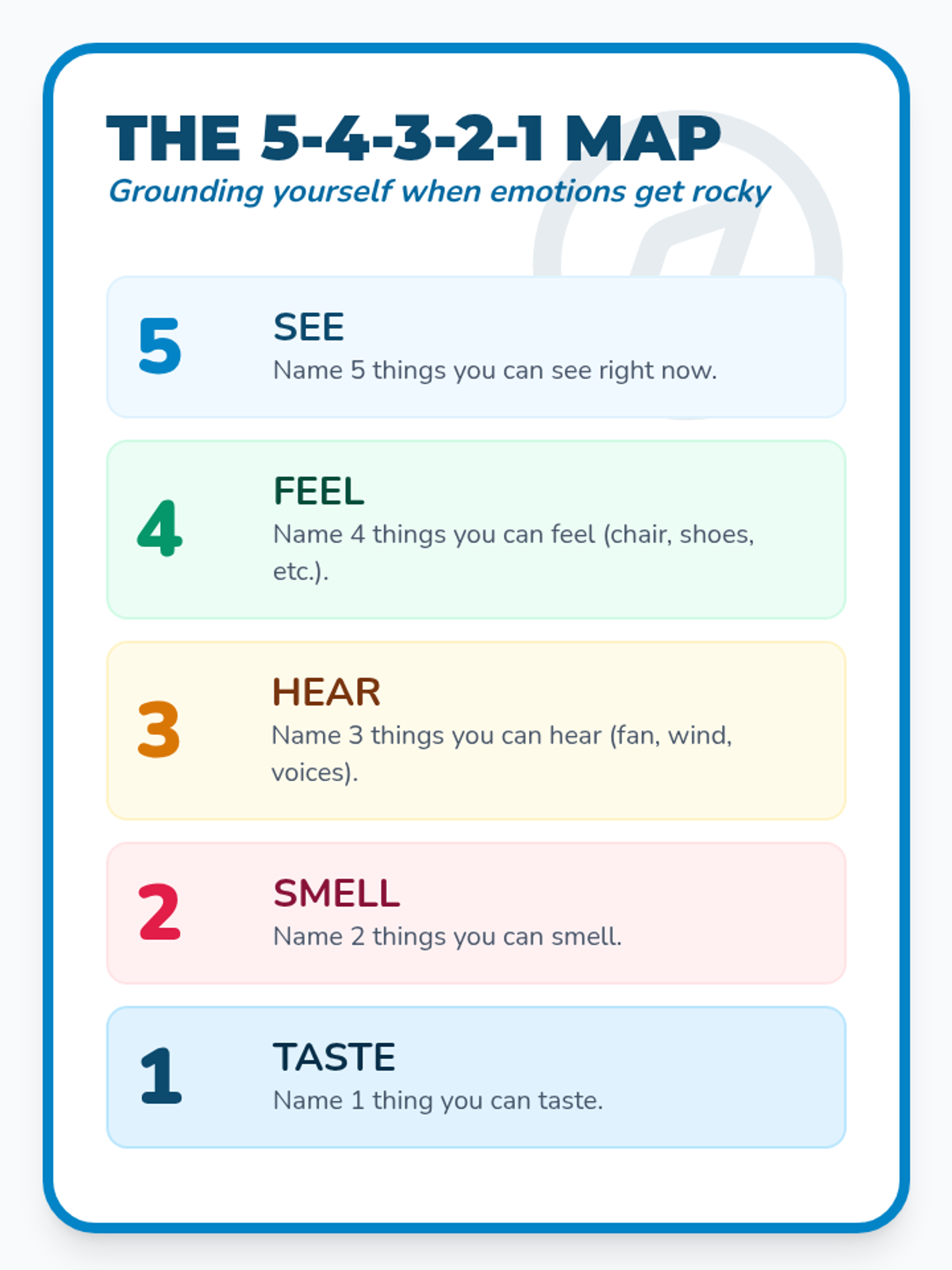
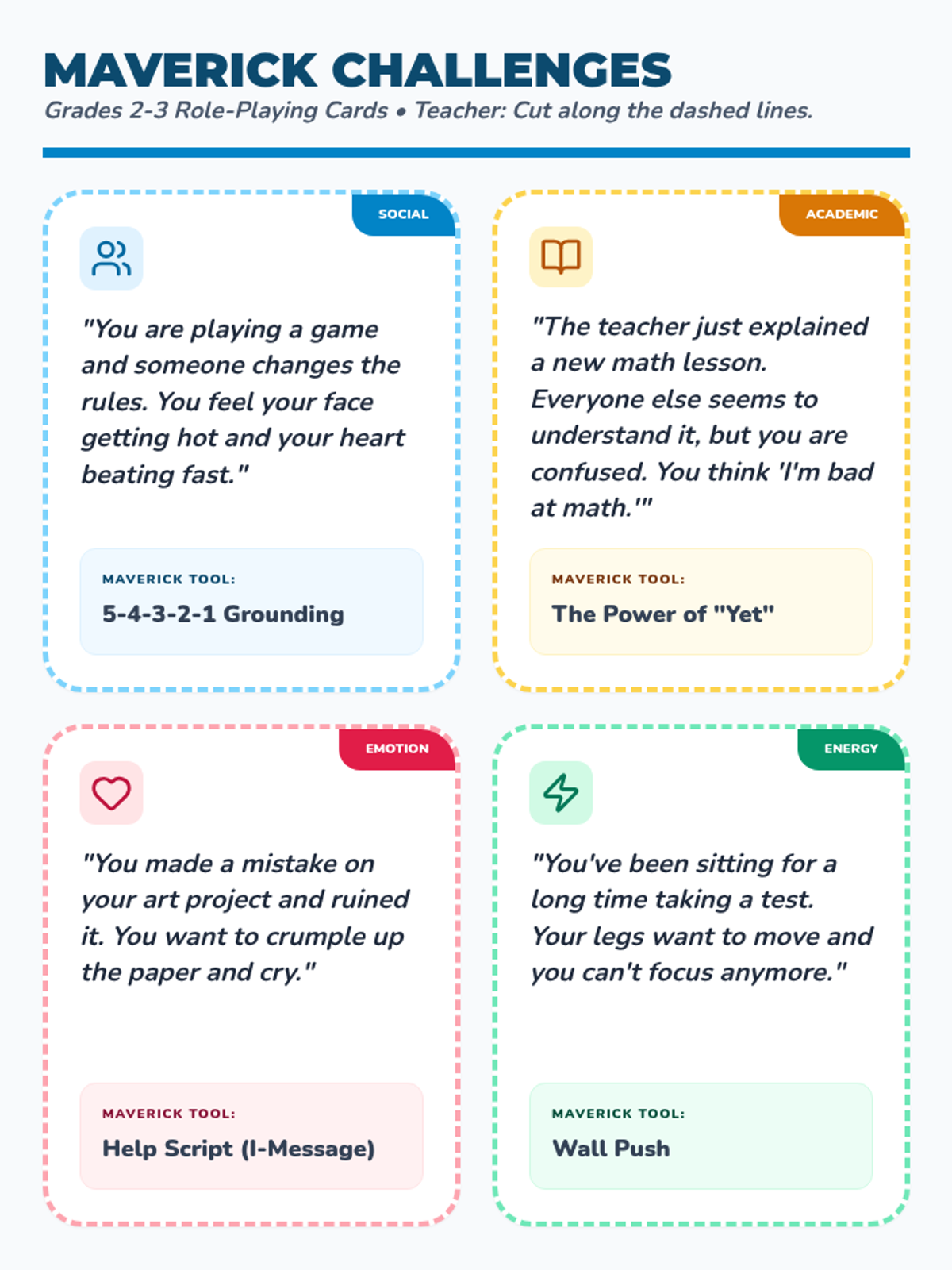
Intermediate coping skills for 2-3 students introducing the 5-4-3-2-1 grounding technique, specific communication scripts for asking for help, reframing negative thoughts, and purposeful physical activities to release energy.
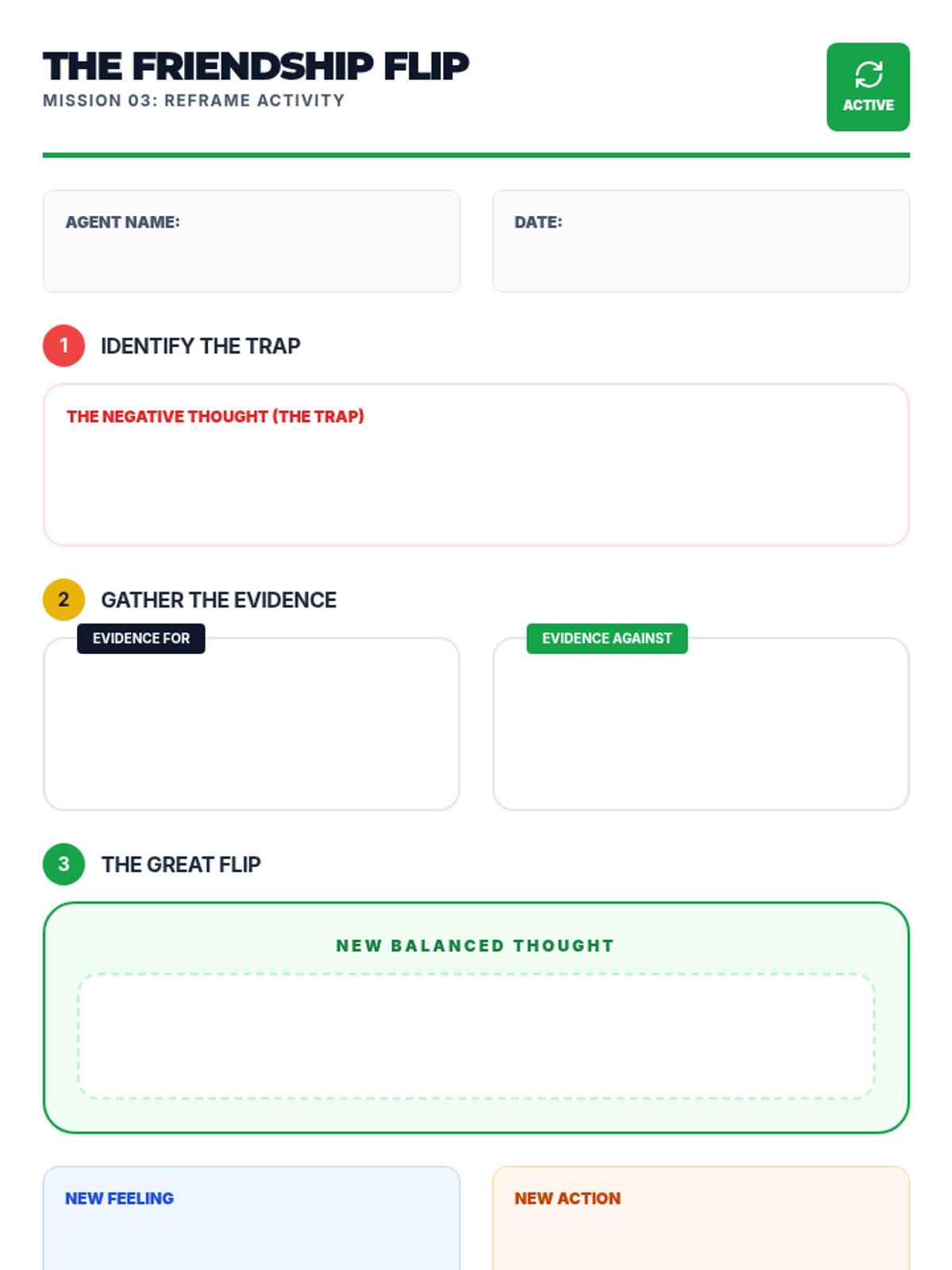
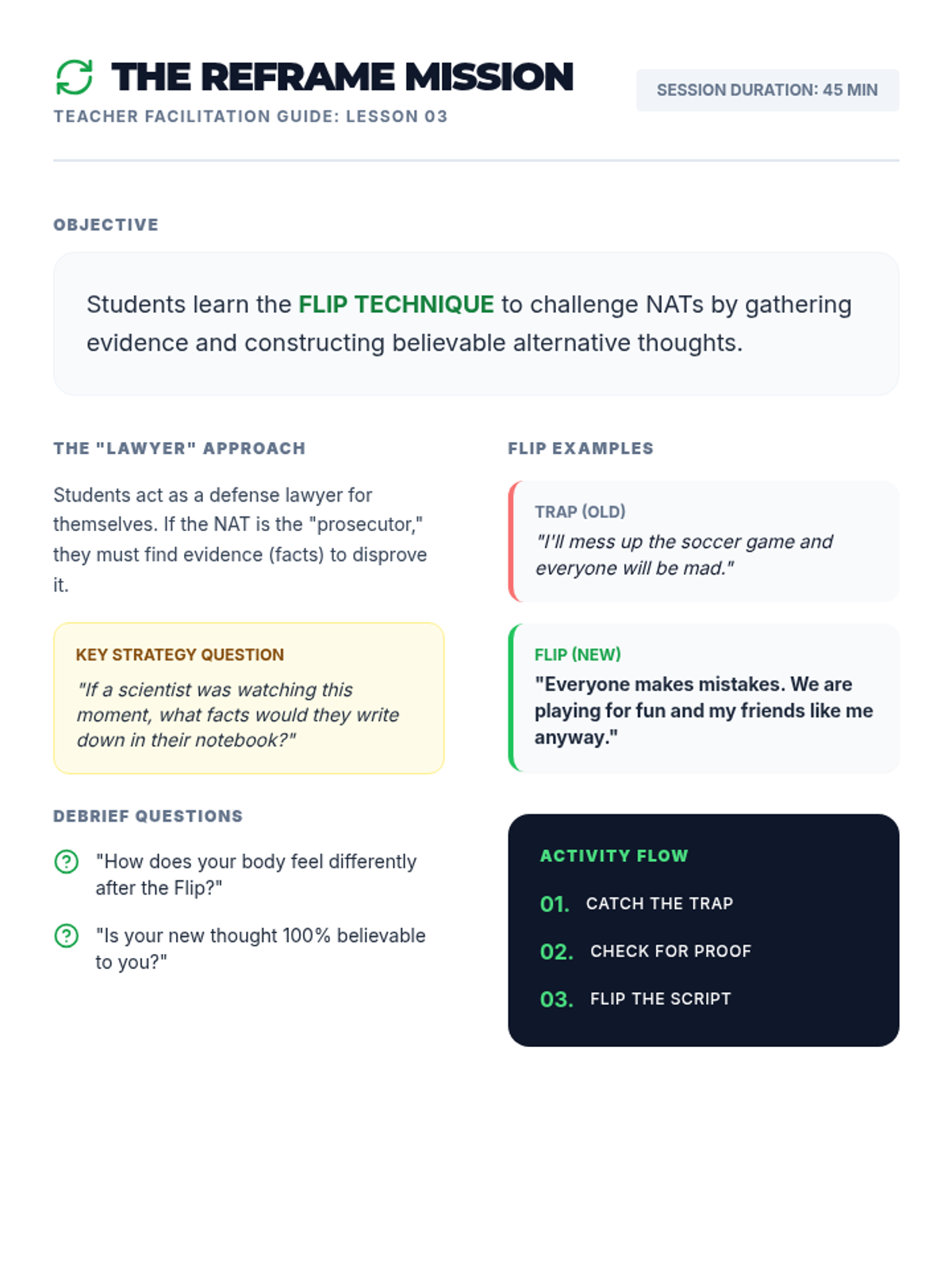
Provides strategies for gathering evidence and reframing negative thoughts into more balanced, helpful perspectives to improve social confidence.
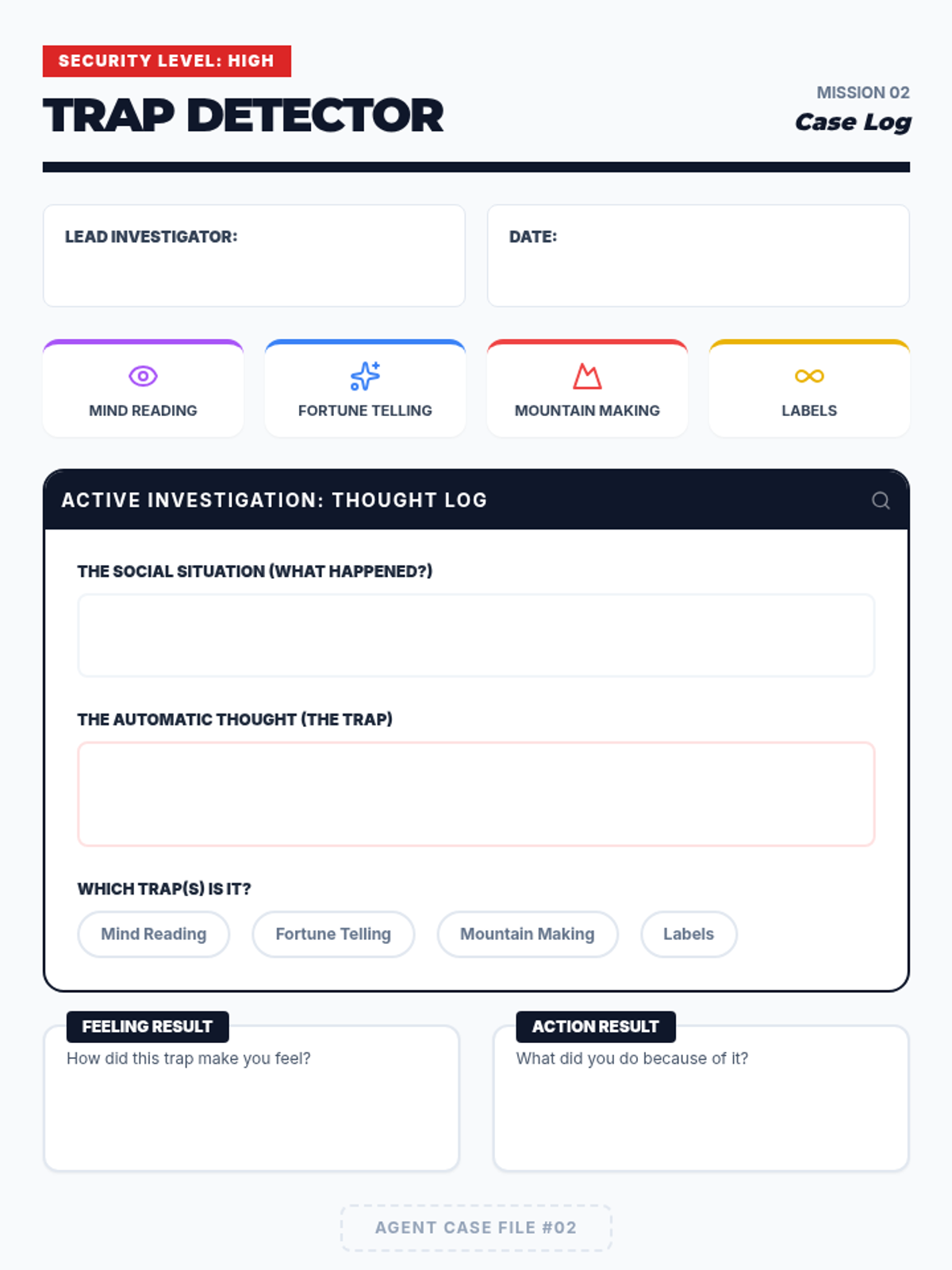
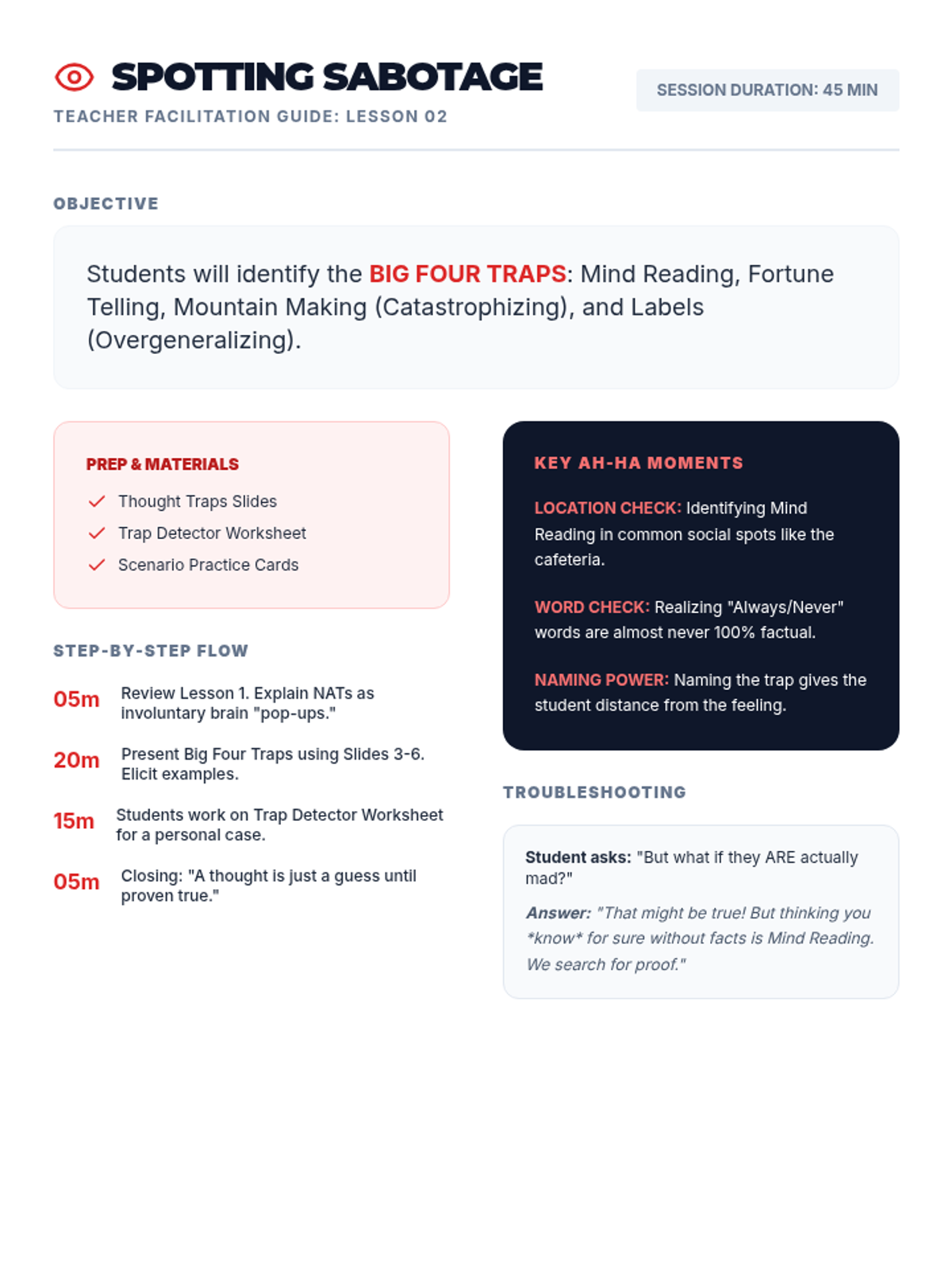
Teaches students how to identify 'Thought Traps' (Negative Automatic Thoughts) that occur during social misunderstandings or anxiety-inducing friendship moments.
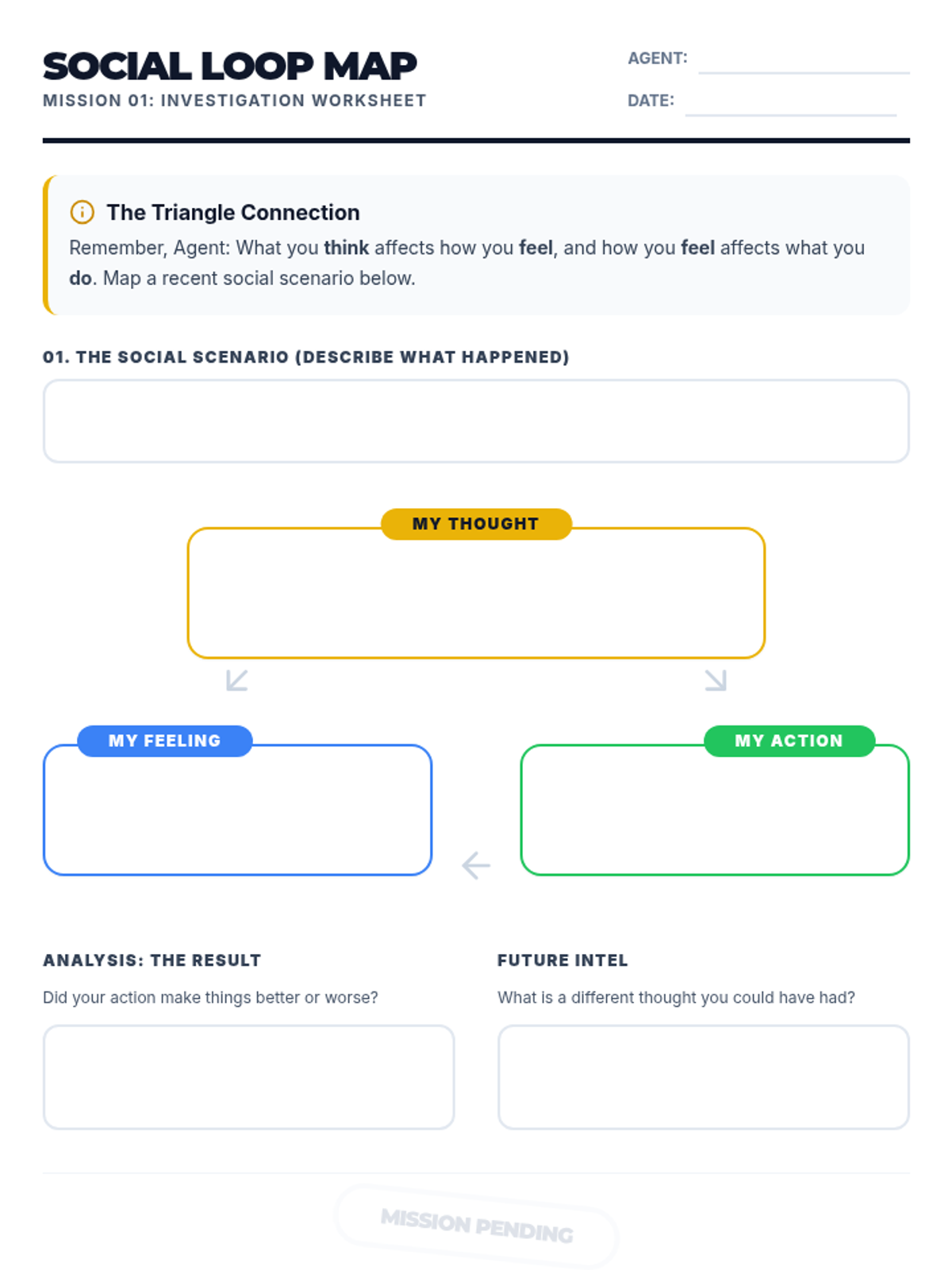
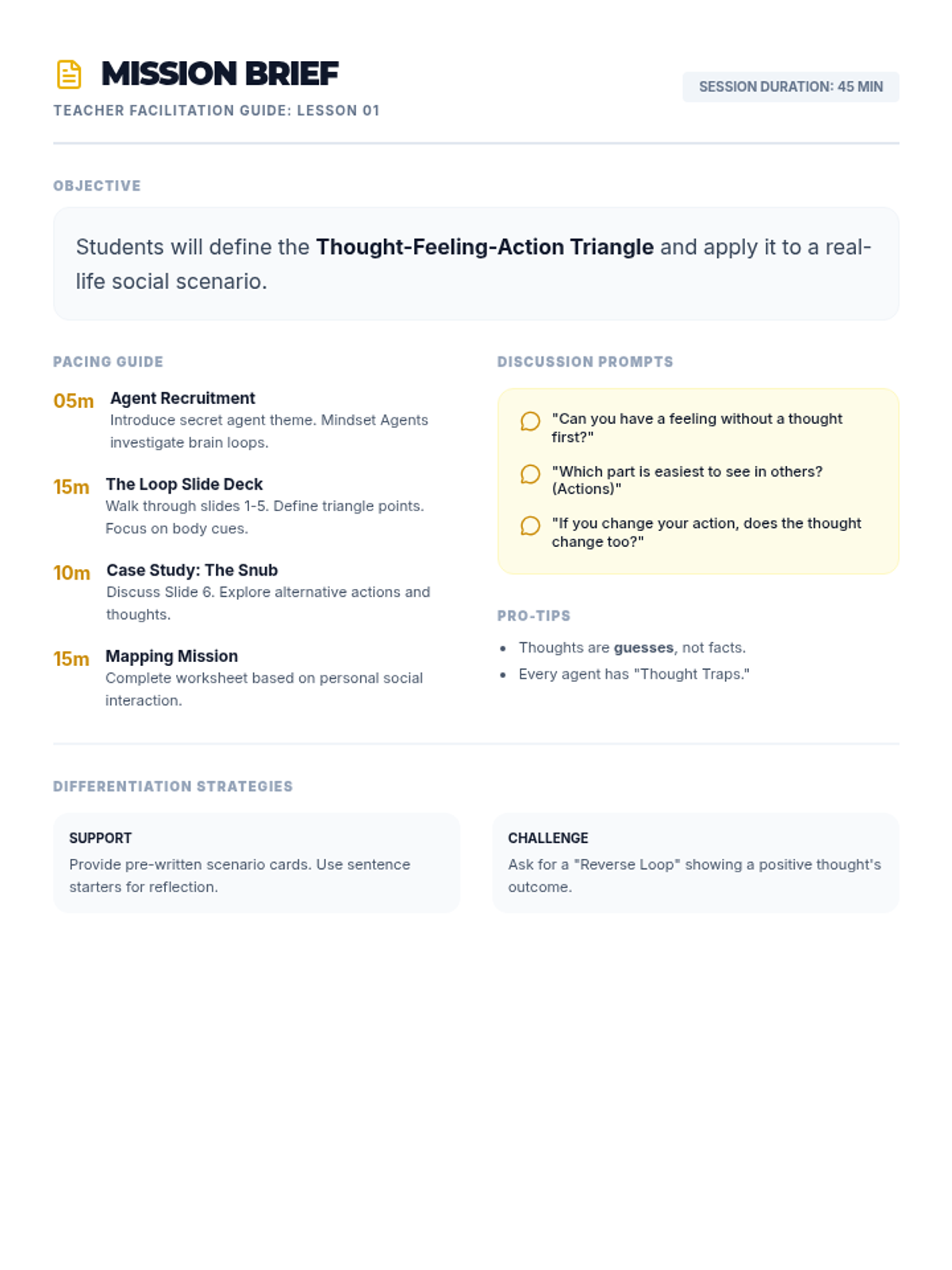
Introduces the Thought-Feeling-Action triangle specifically within social scenarios, helping students see how their inner narrative shapes their friendship outcomes.
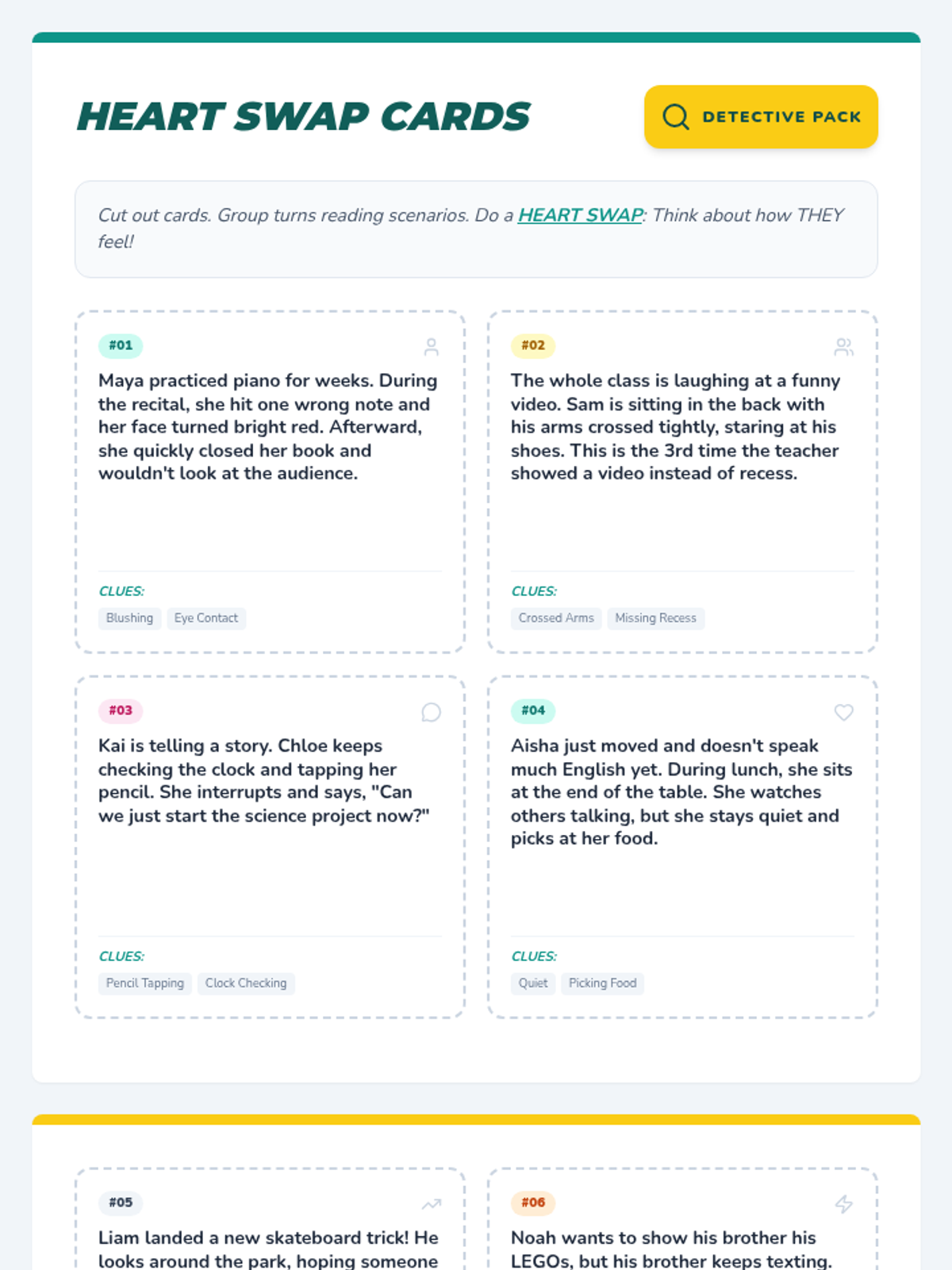
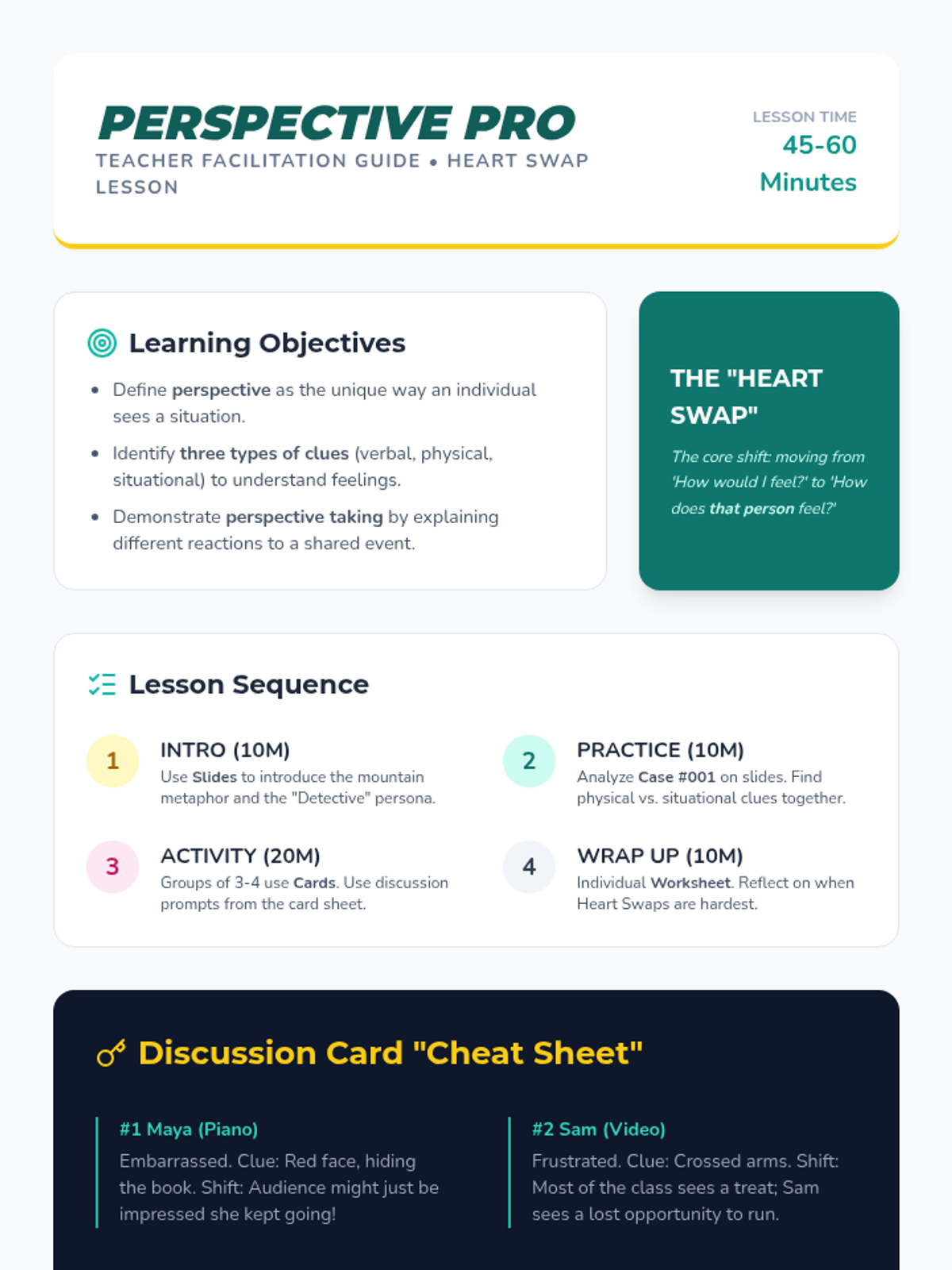
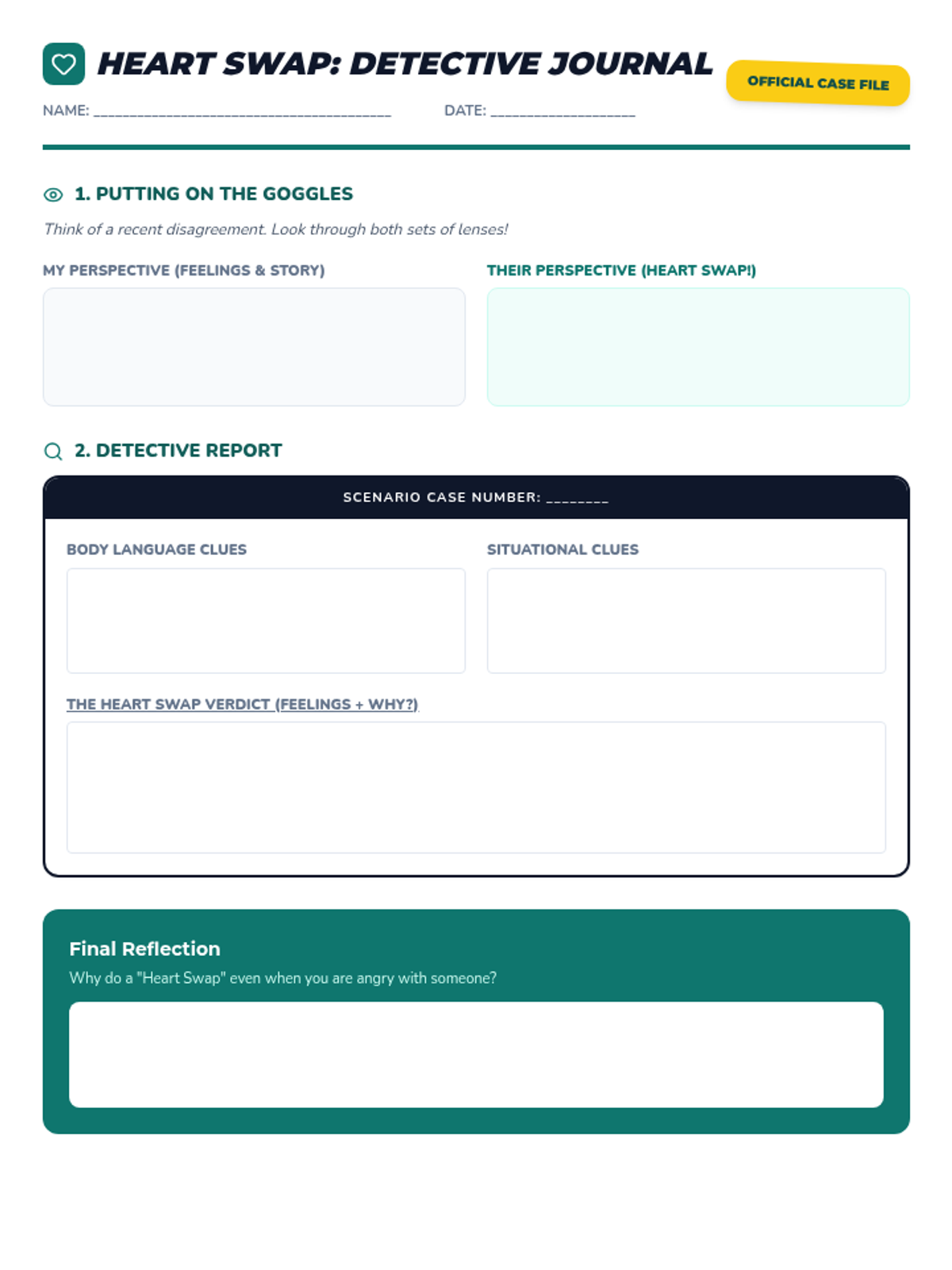
An interactive lesson focused on developing perspective-taking skills in 4th graders through scenario analysis and 'clue hunting' for emotions. Students learn to look through different 'lenses' to understand the feelings and motivations of others.
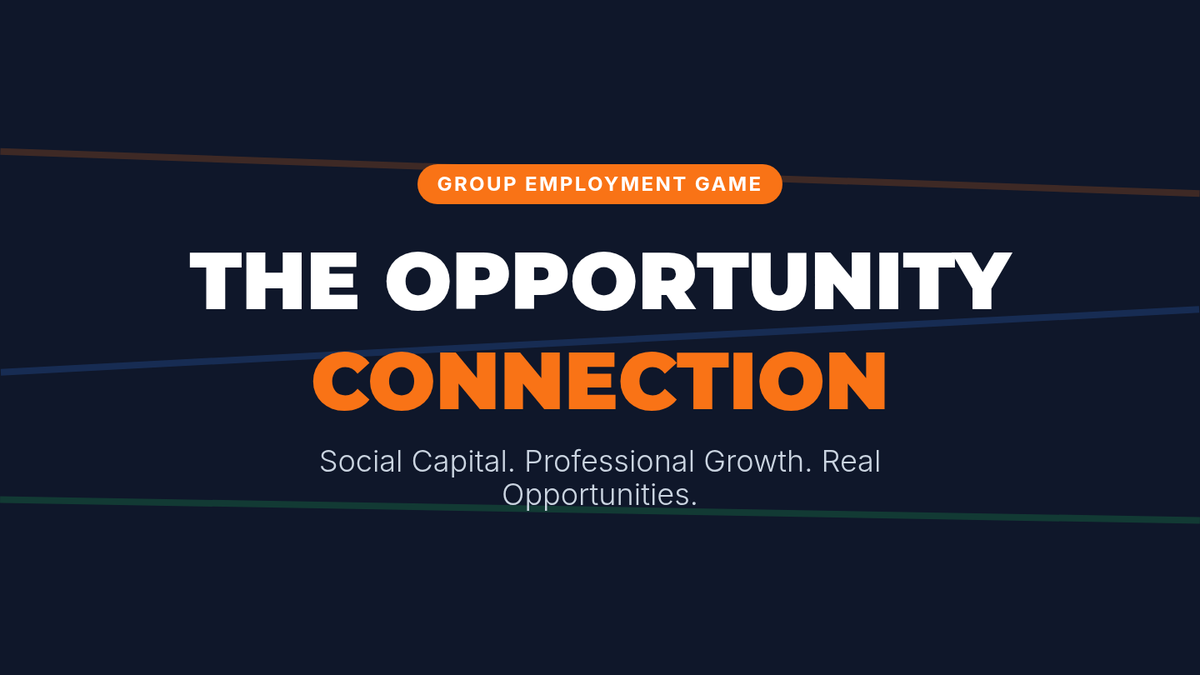
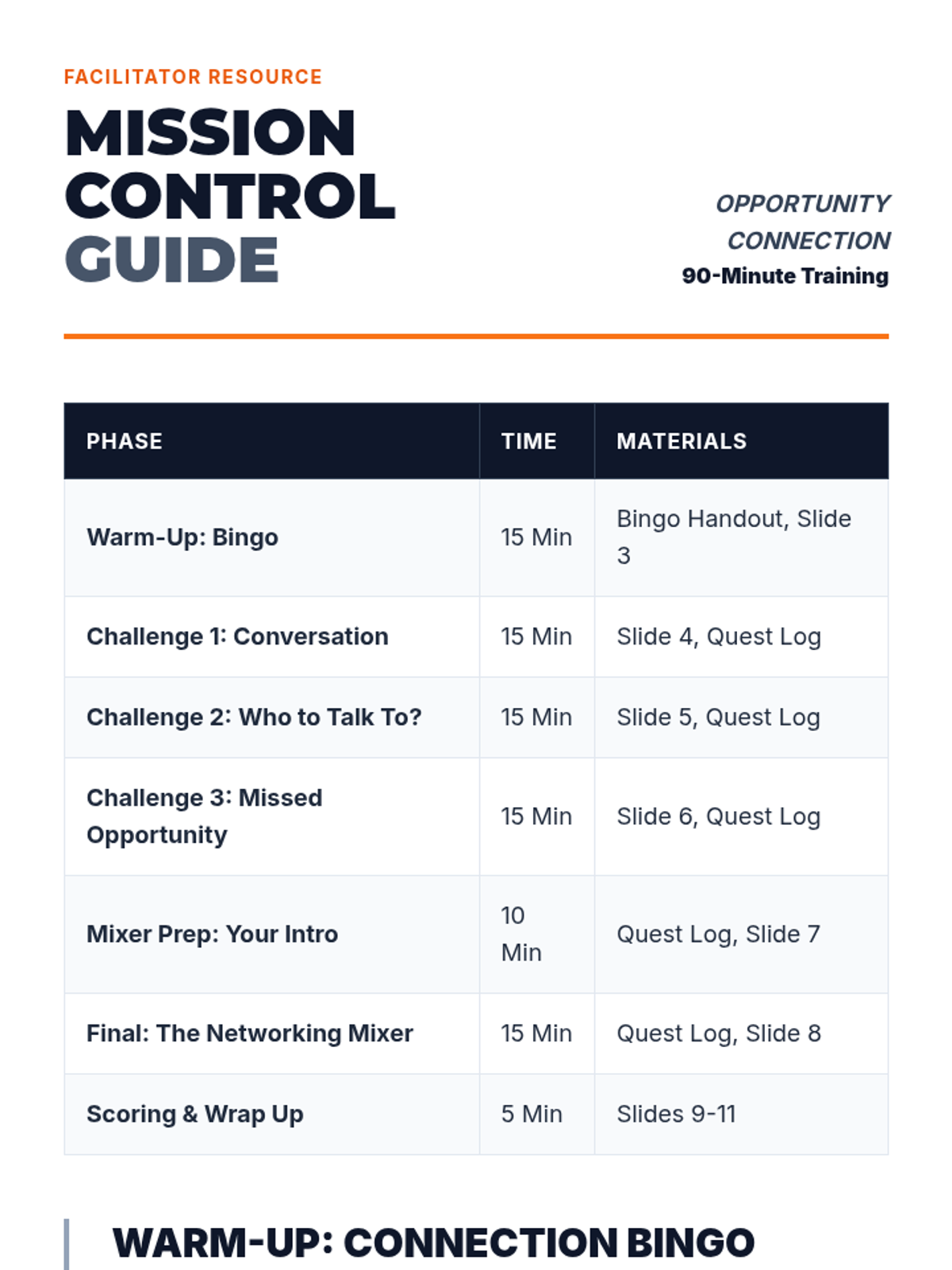
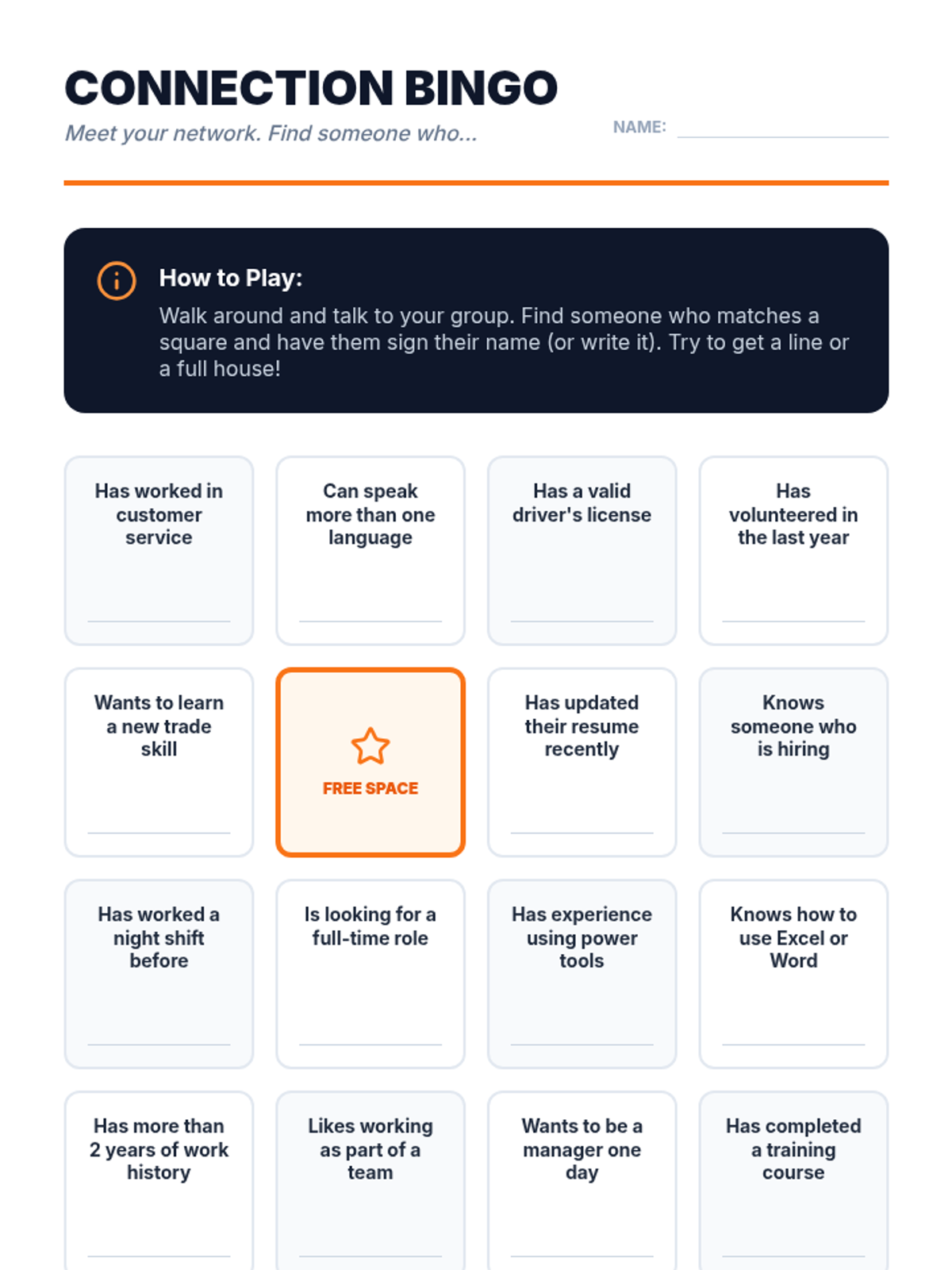
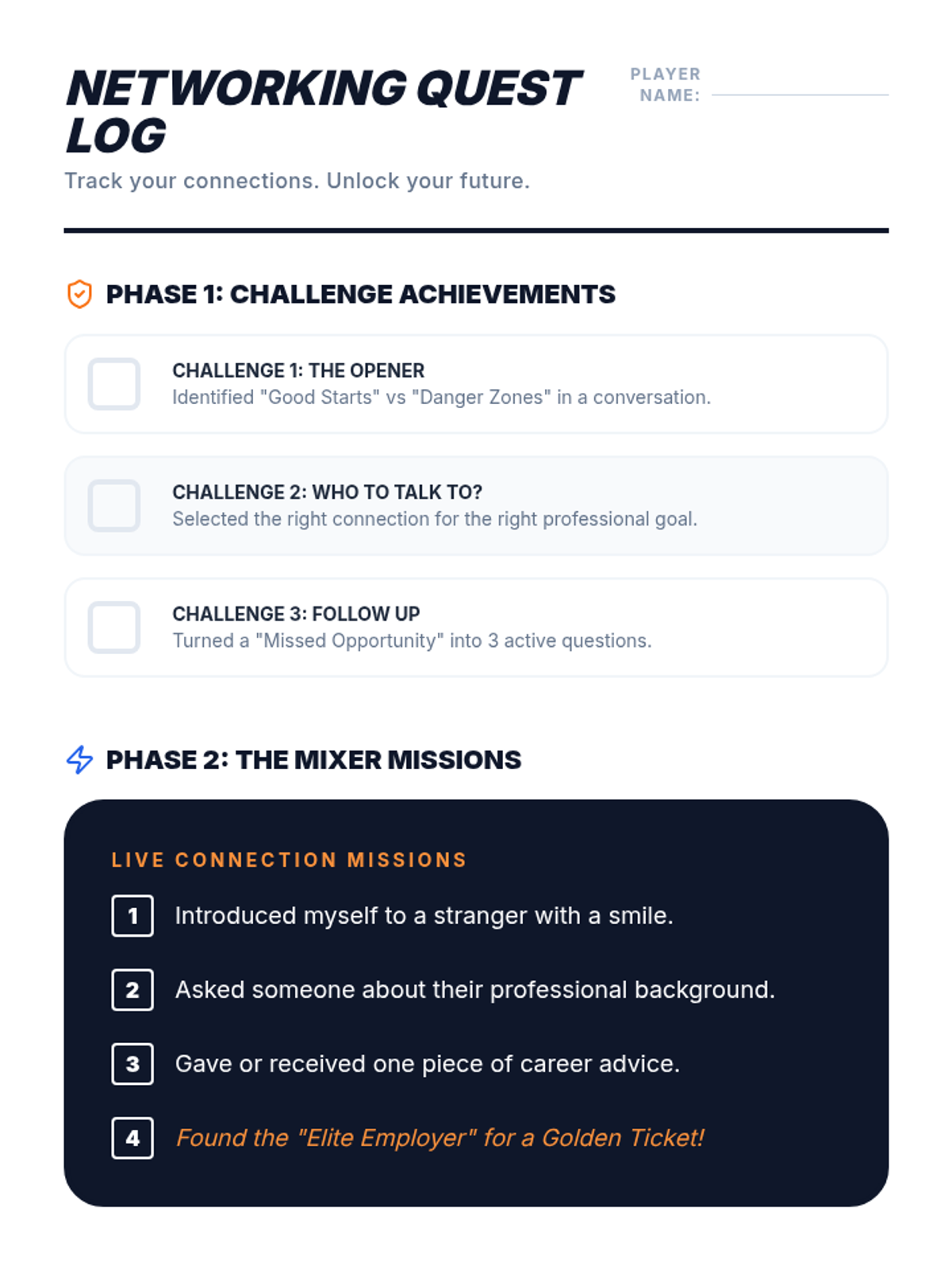
A 90-minute interactive session where participants learn to initiate conversations, identify helpful connections, and practice networking in a simulated environment to unlock career opportunities.
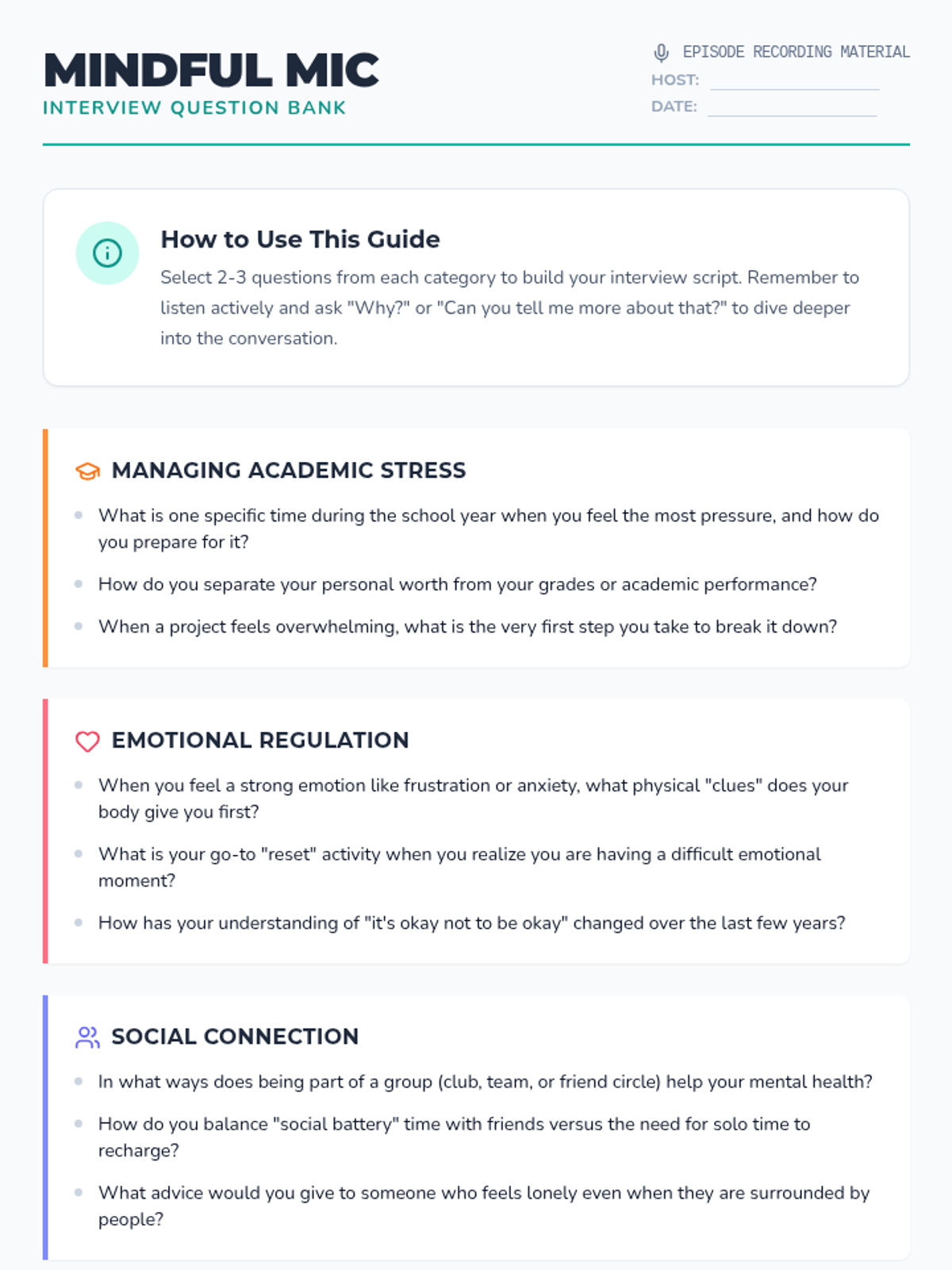
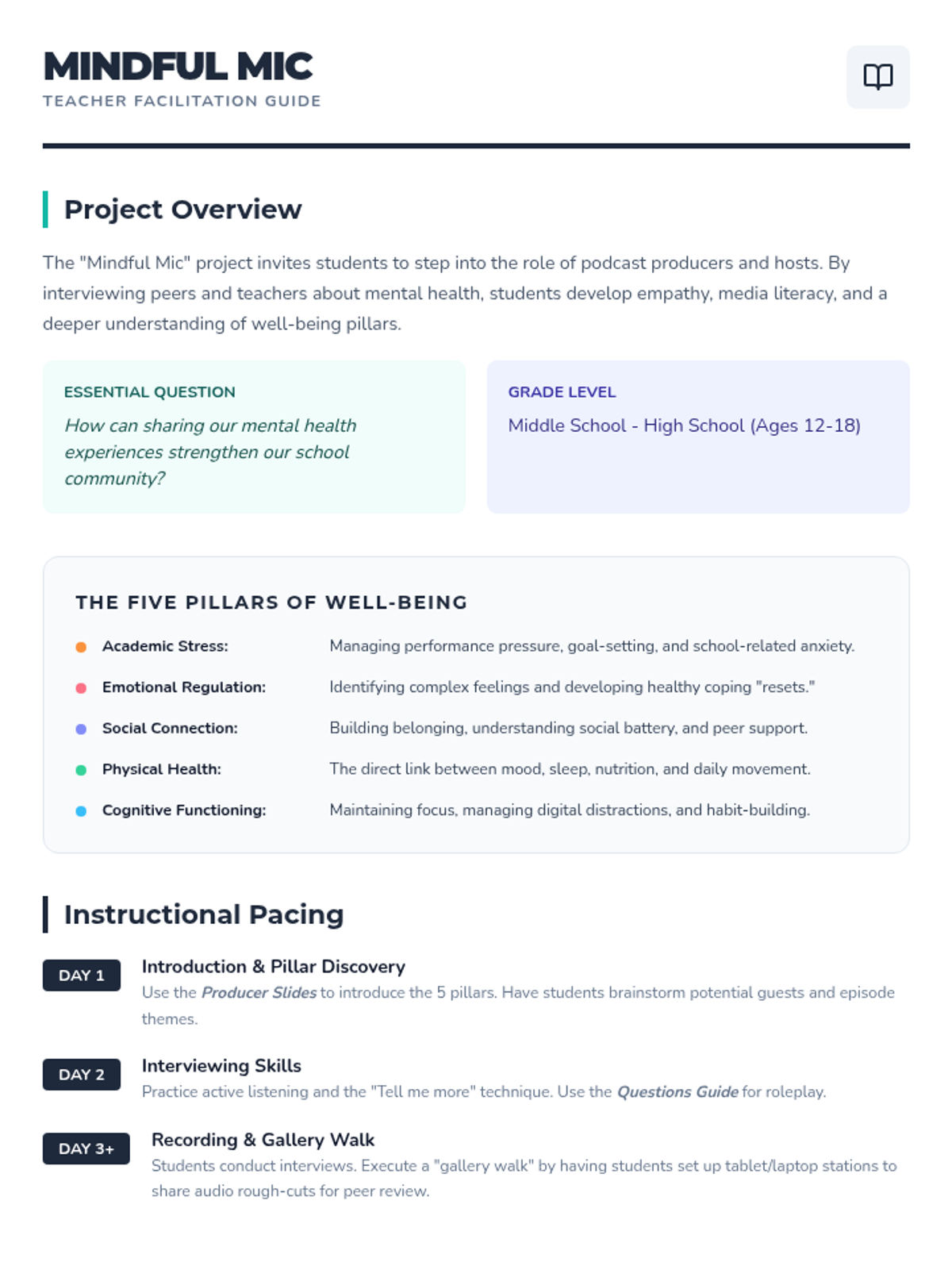
A comprehensive guide for students to produce a podcast exploring mental health through peer and teacher interviews. This lesson covers interview techniques and categorizes questions across five key pillars of well-being.
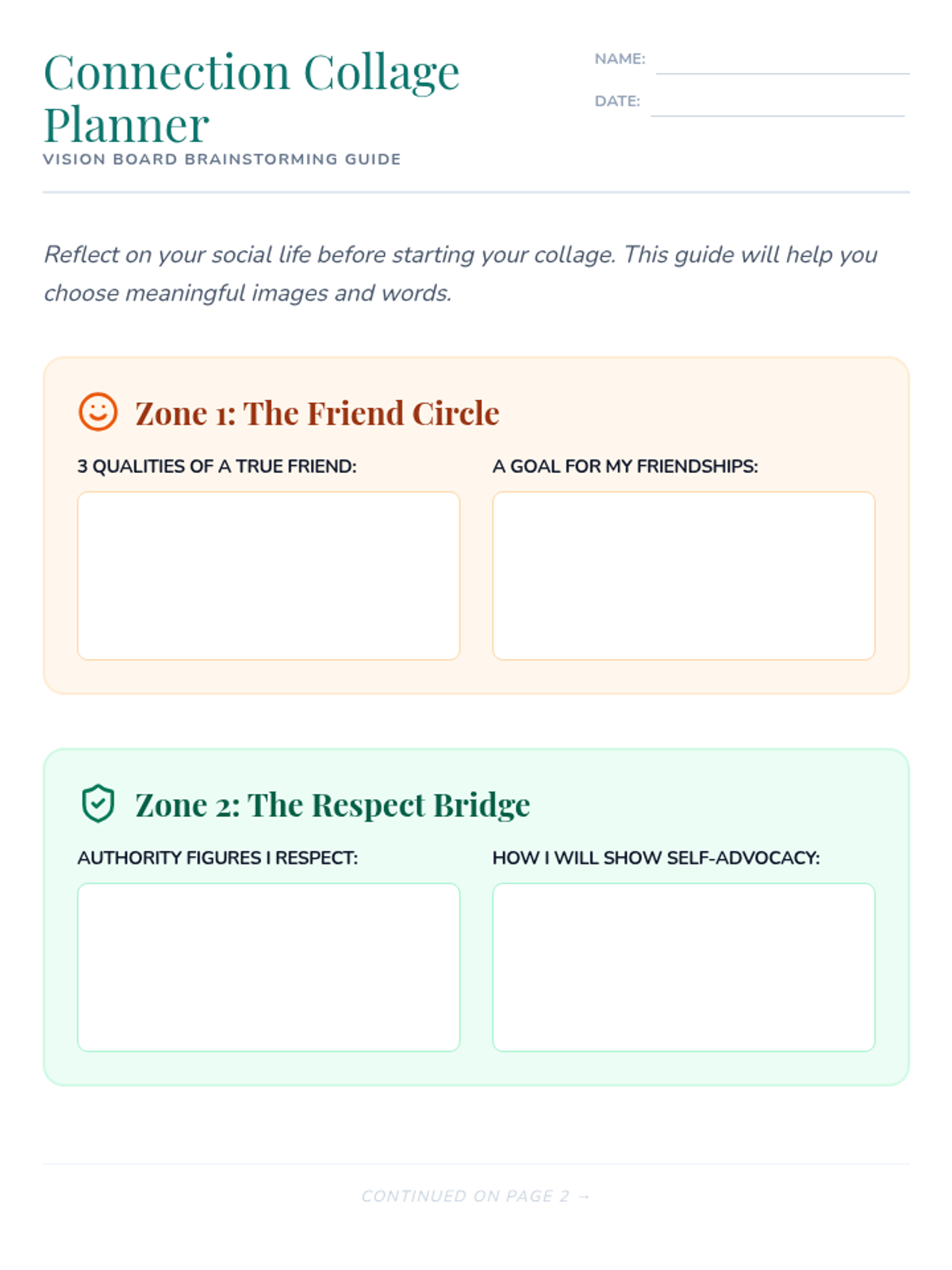
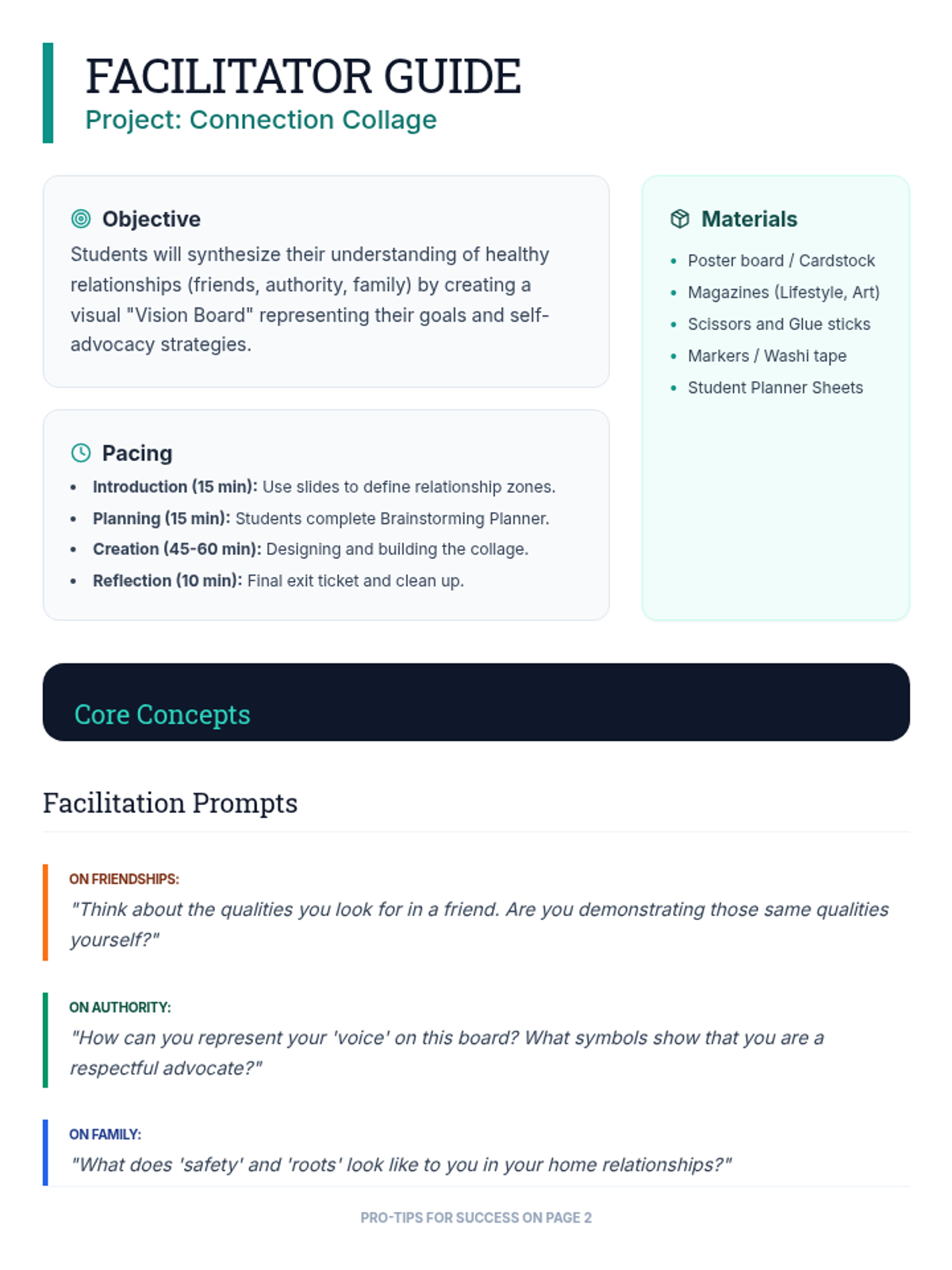
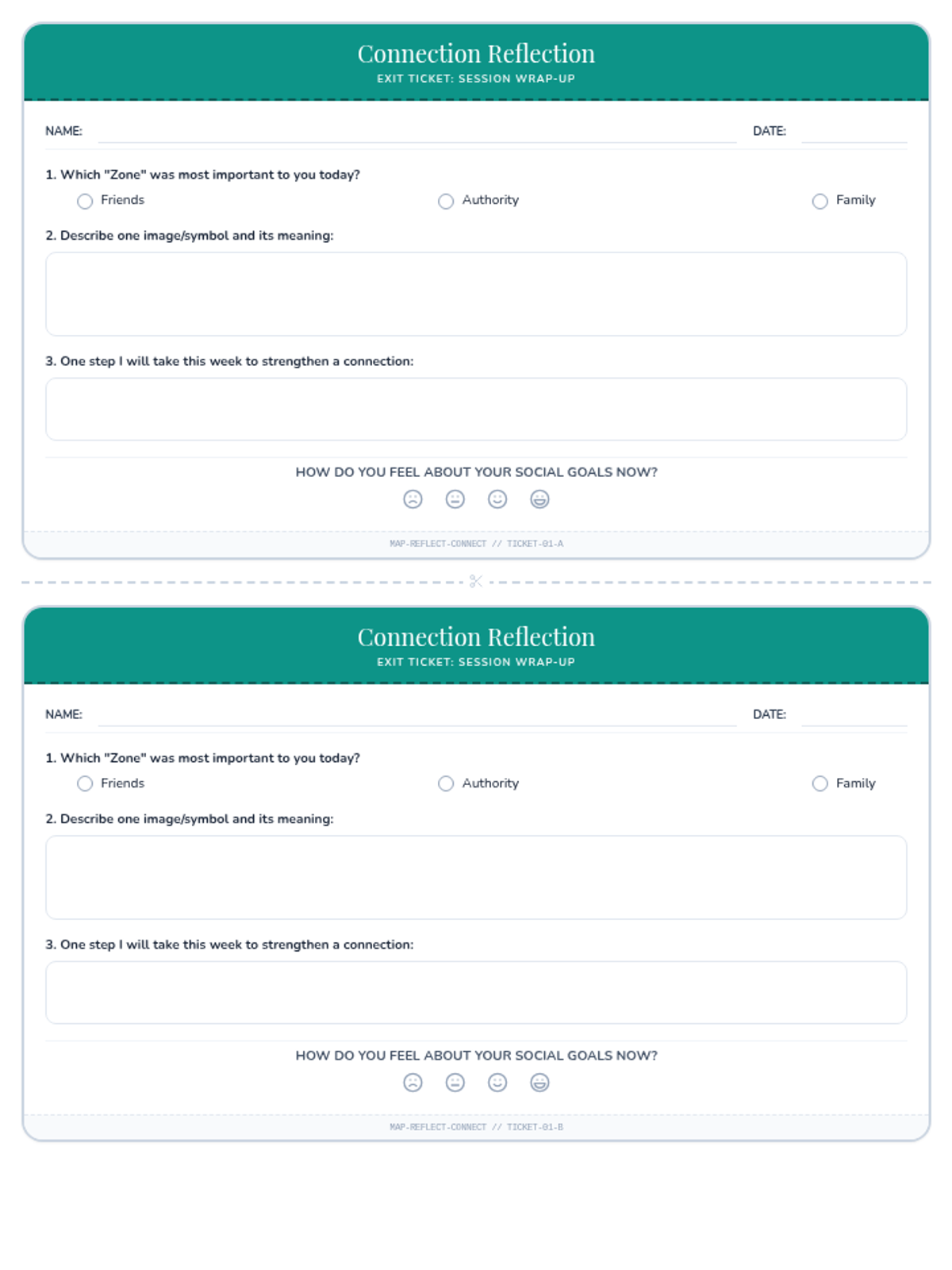
A creative SEL project where students design vision boards to explore and strengthen their relationships with friends, authority figures, and family members.
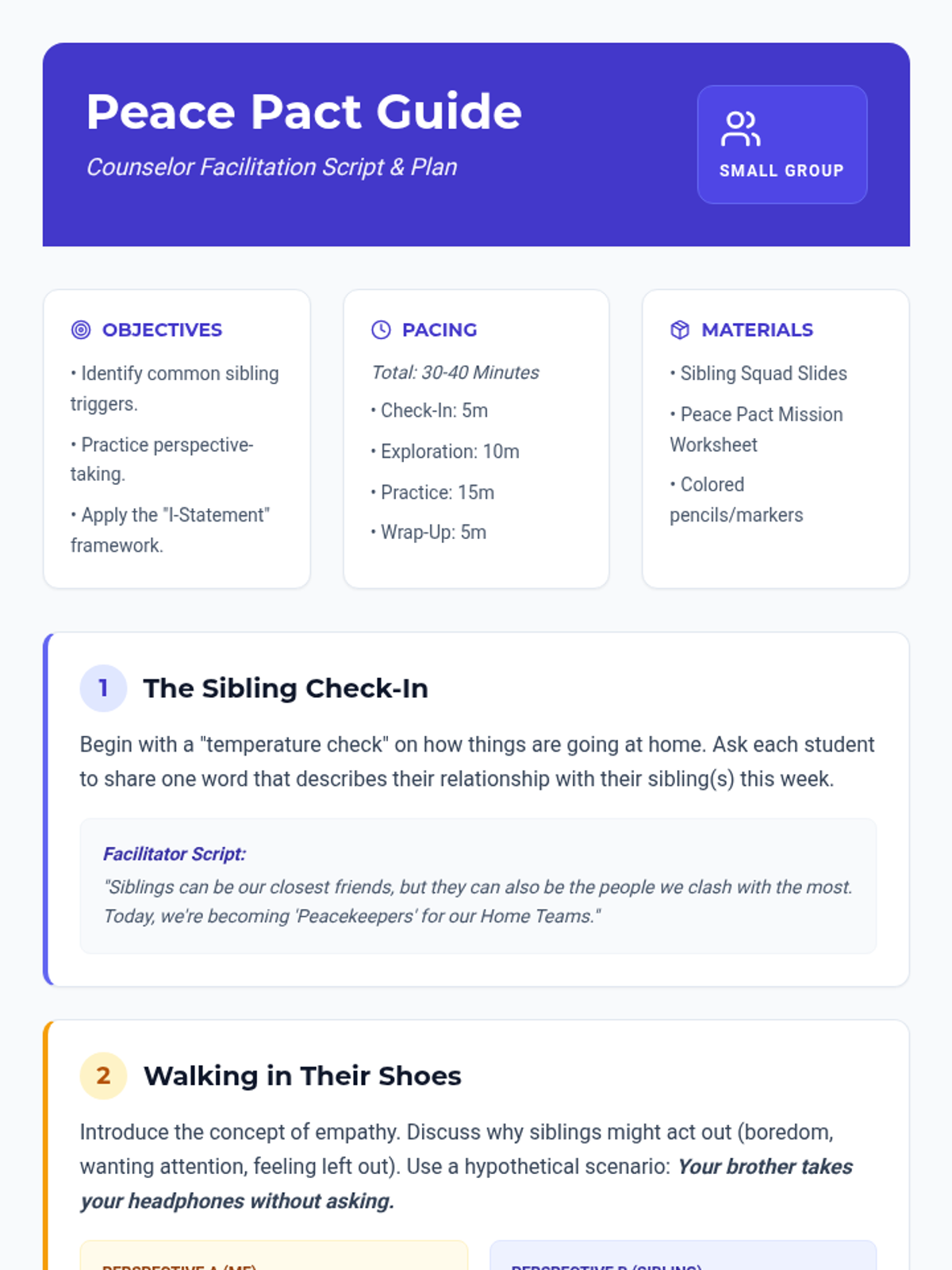
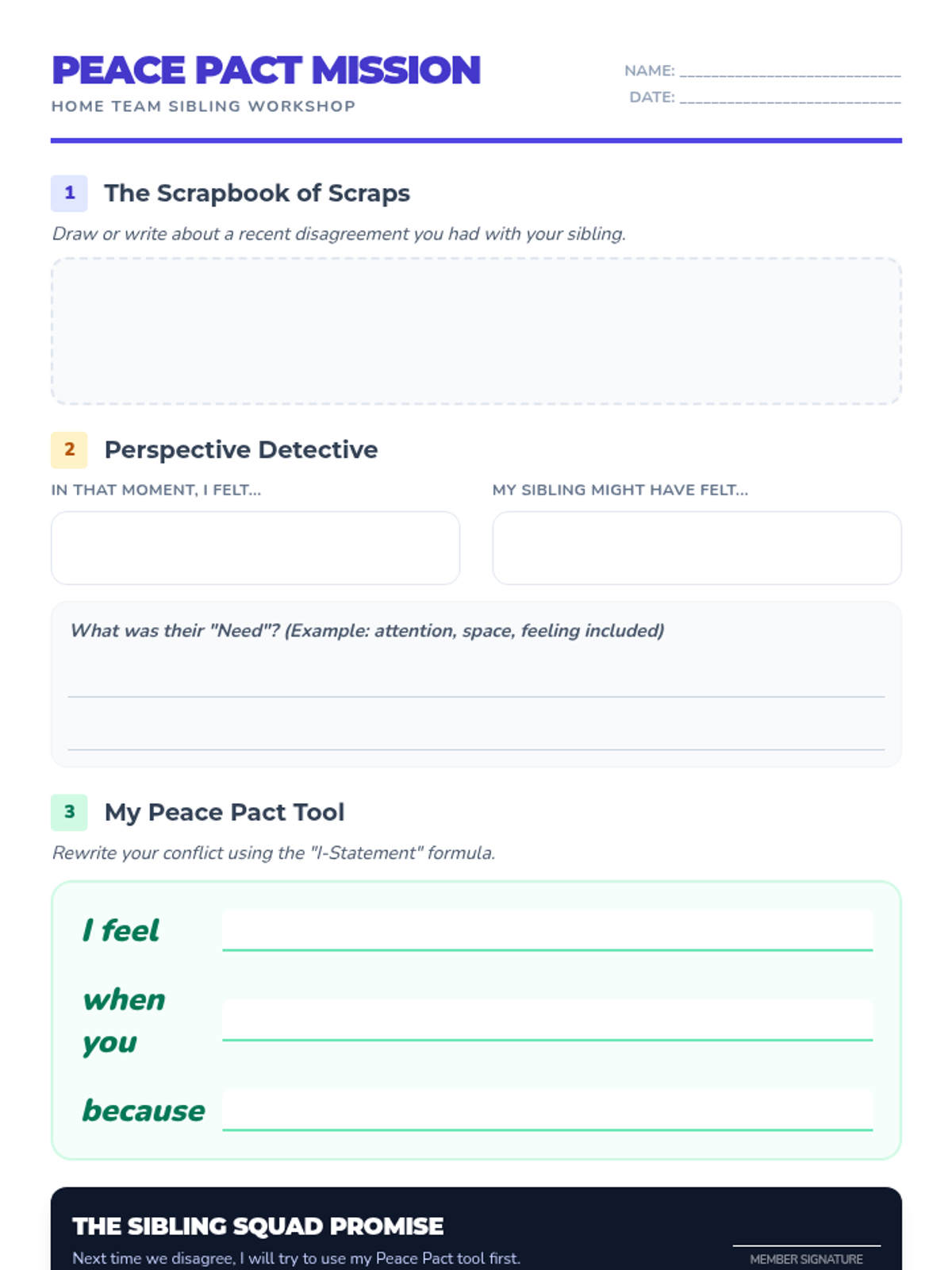
A small group counseling lesson focused on teaching students conflict resolution strategies and empathy to improve their relationships with siblings at home.