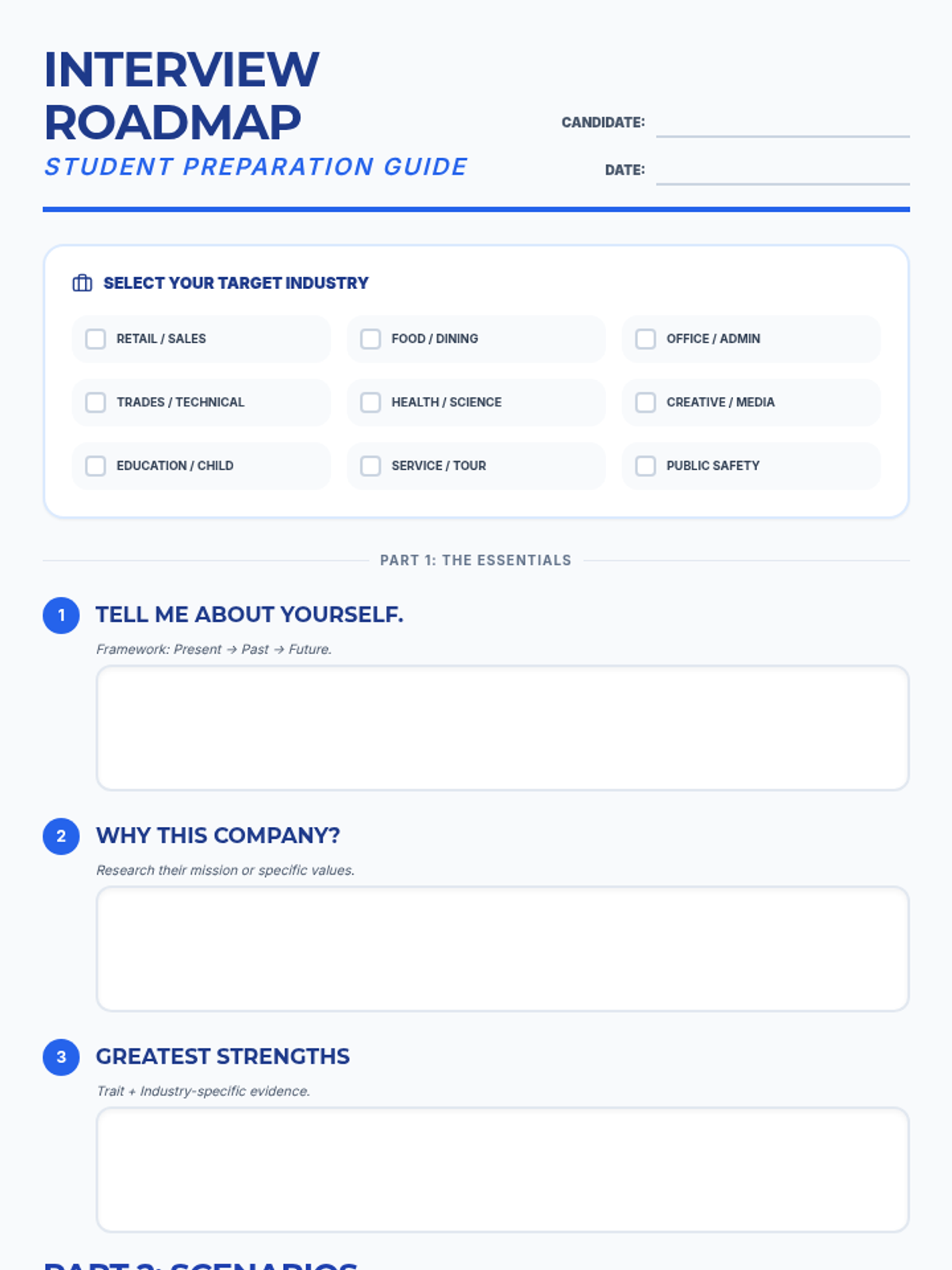
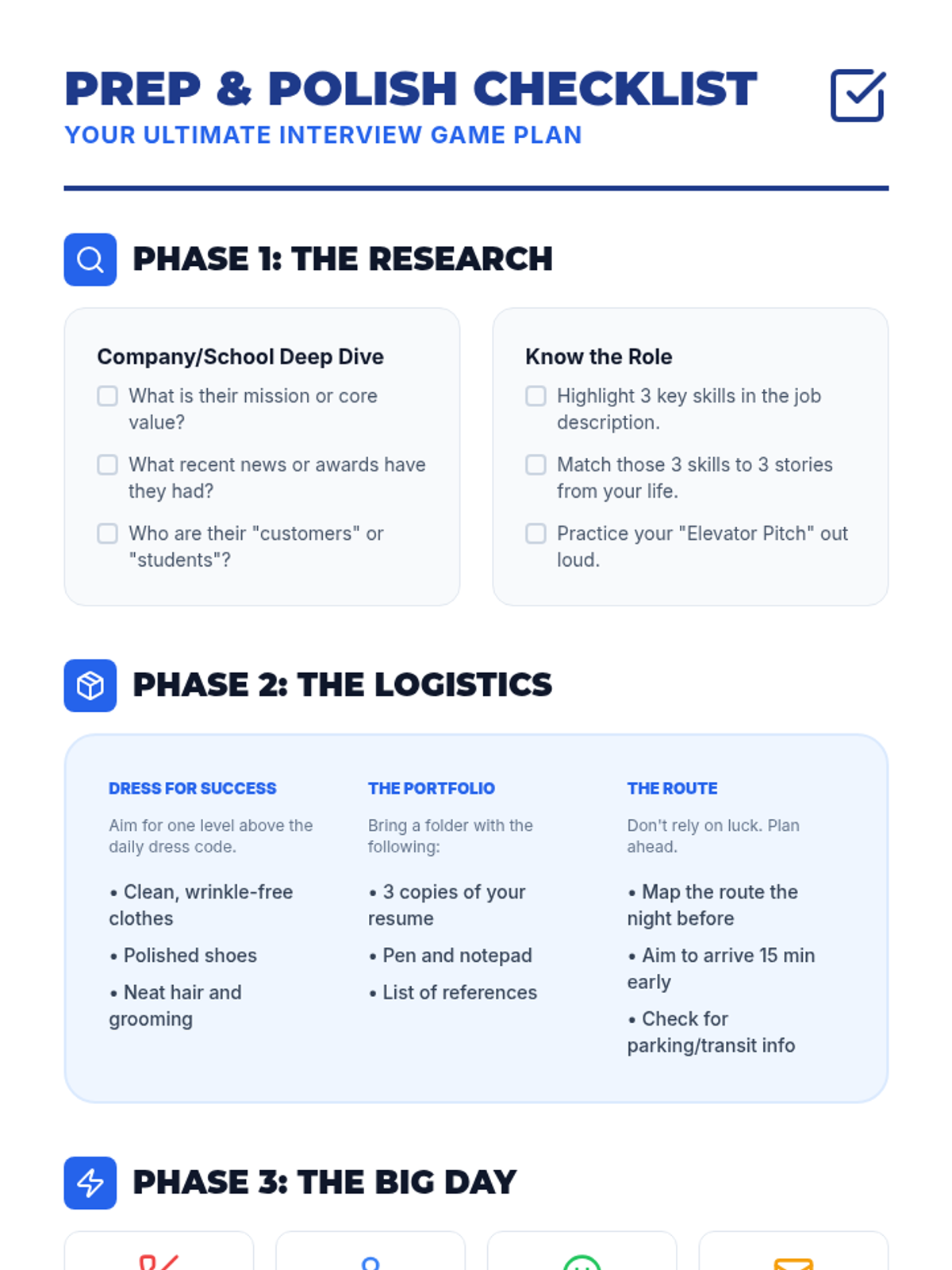
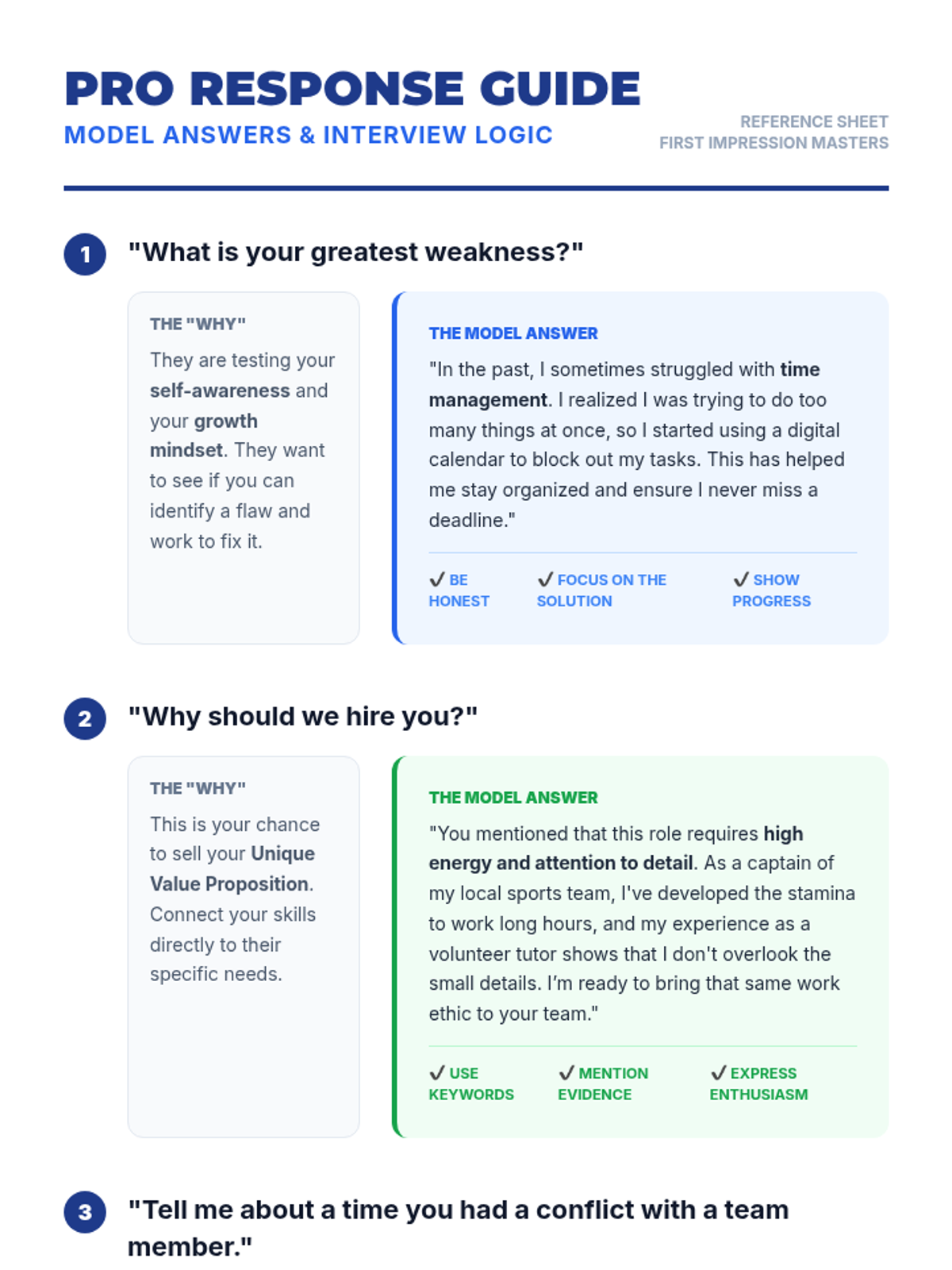
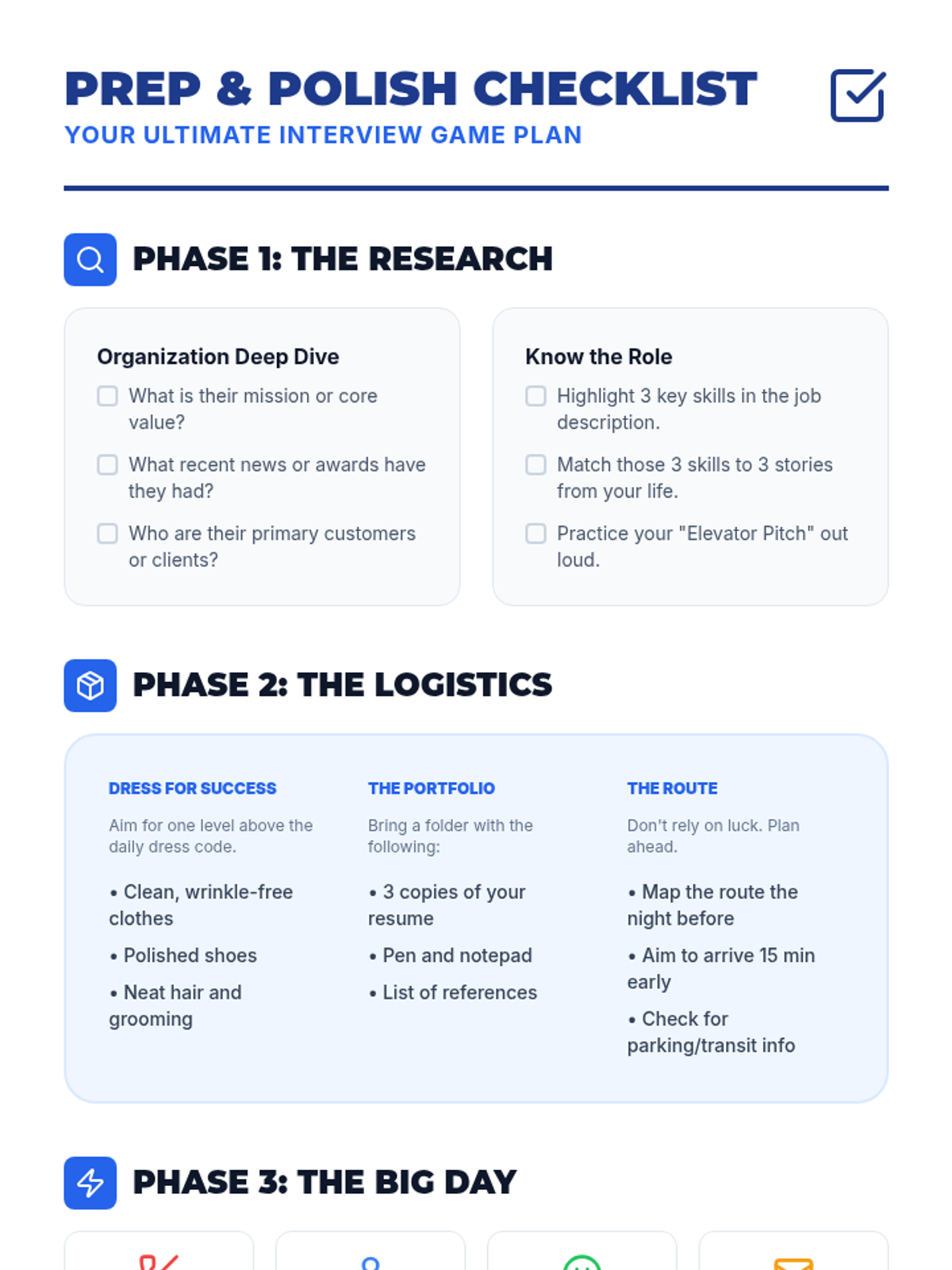
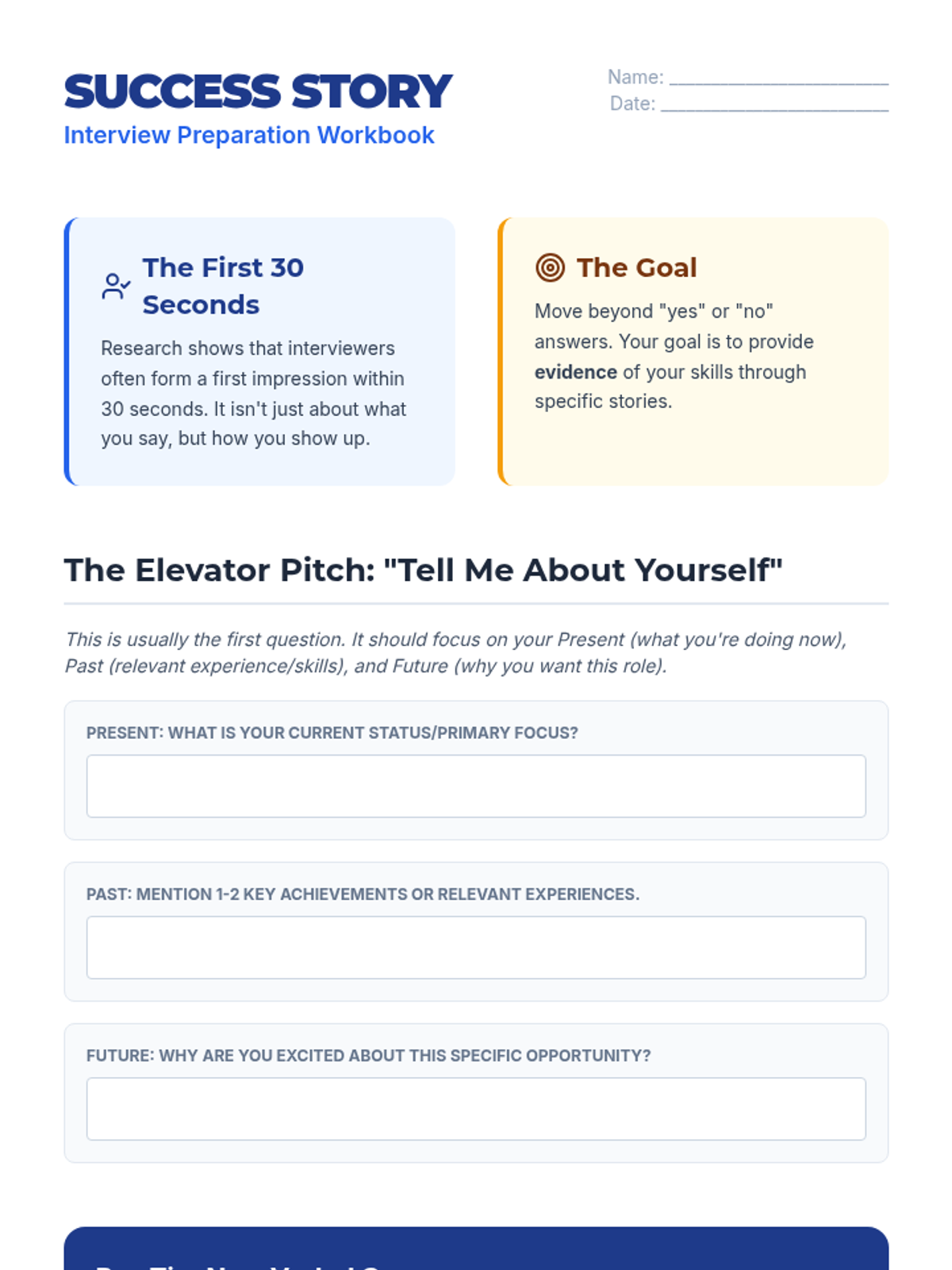
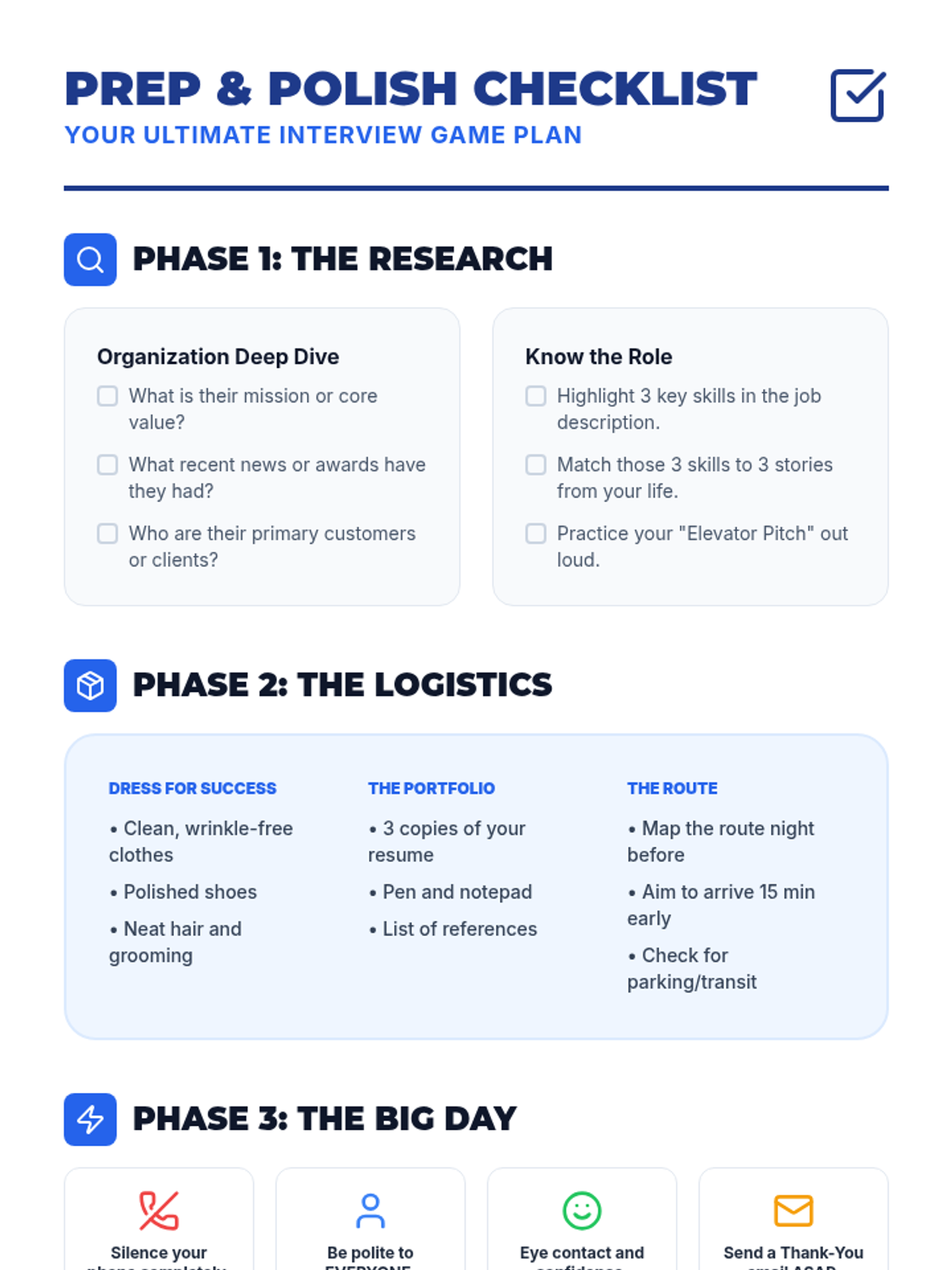
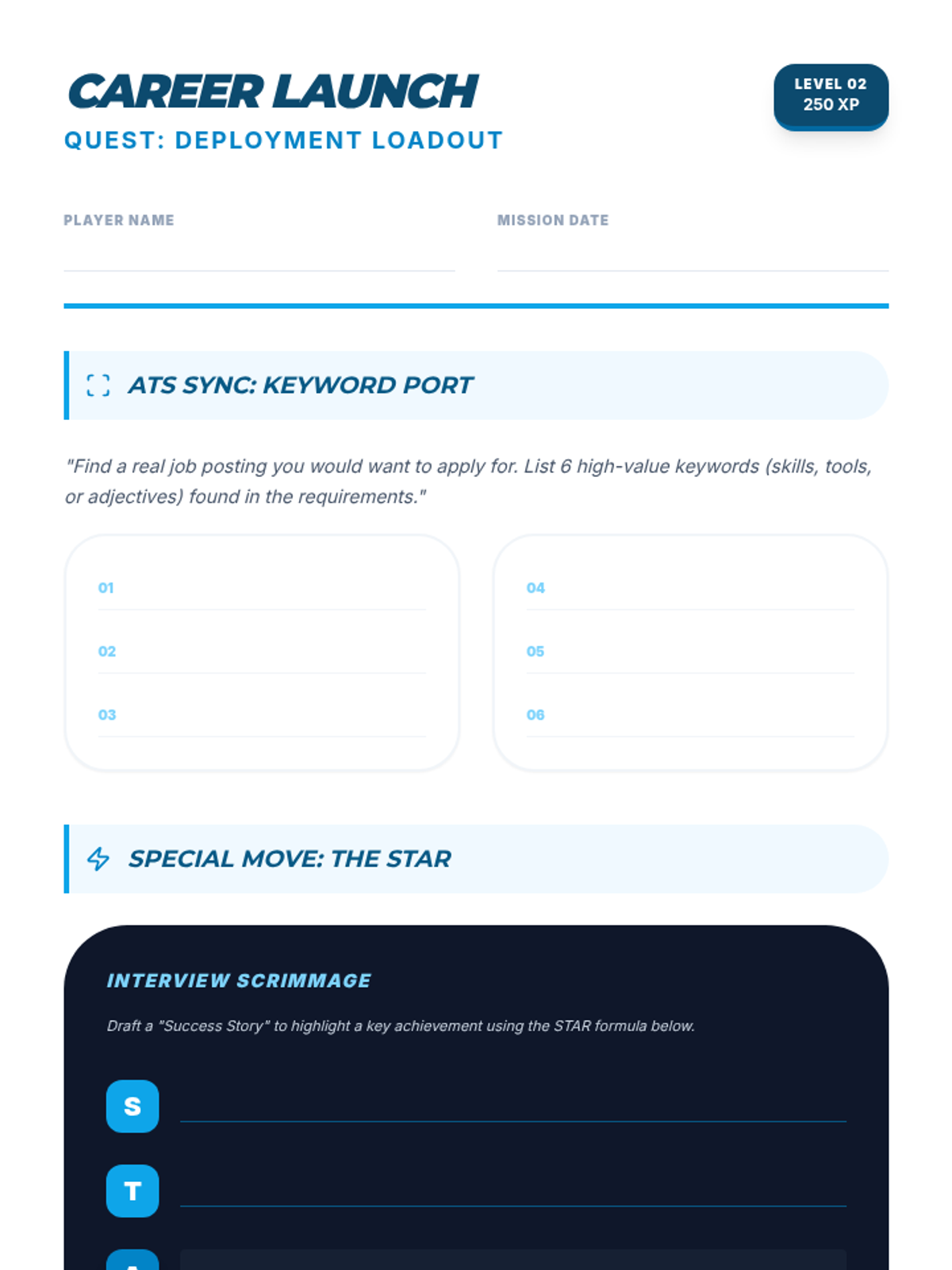
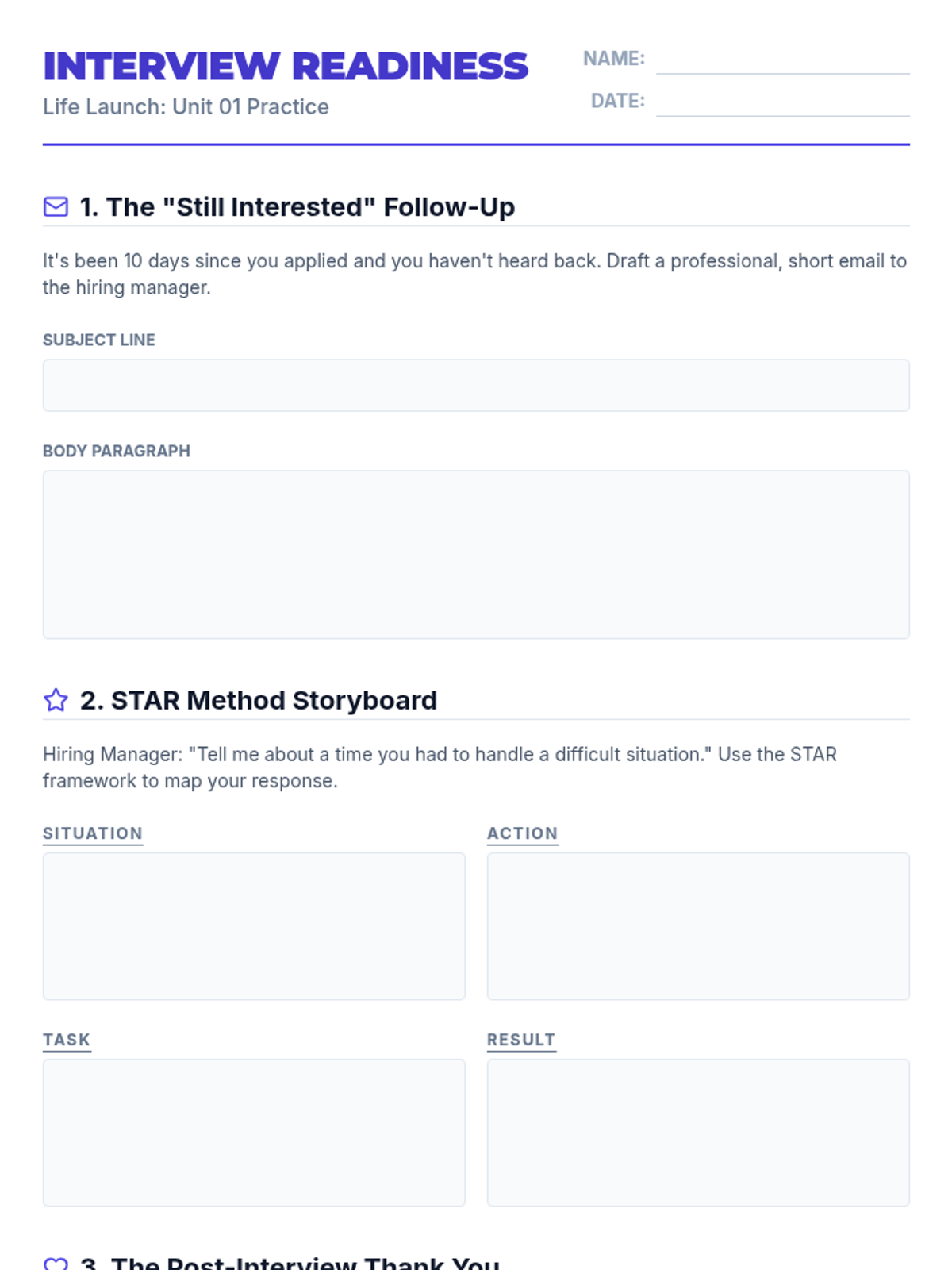
Employer research strategies and behavioral response techniques using the STAR method. Develops virtual interview etiquette, professional presence, and effective follow-up communication.
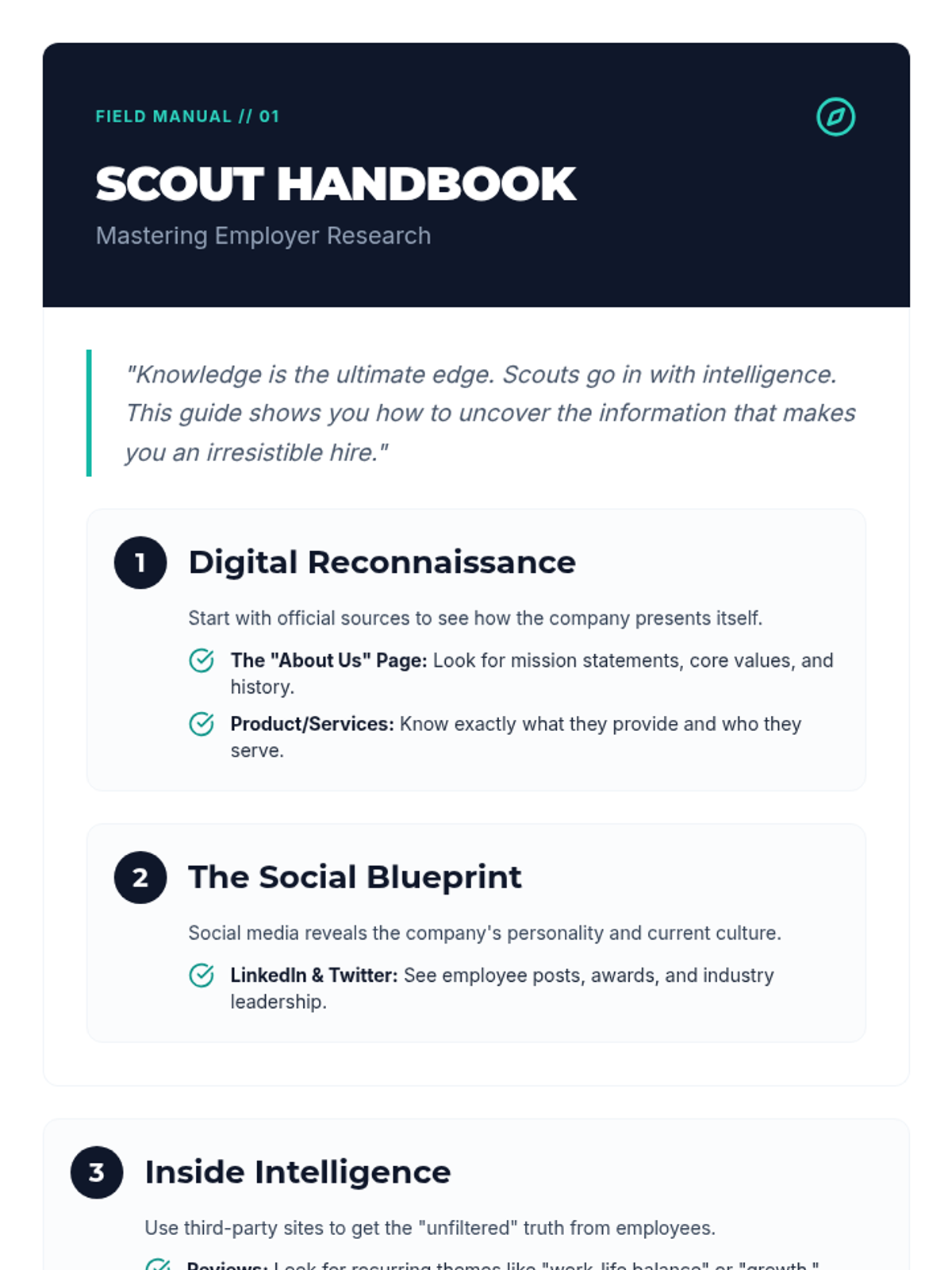
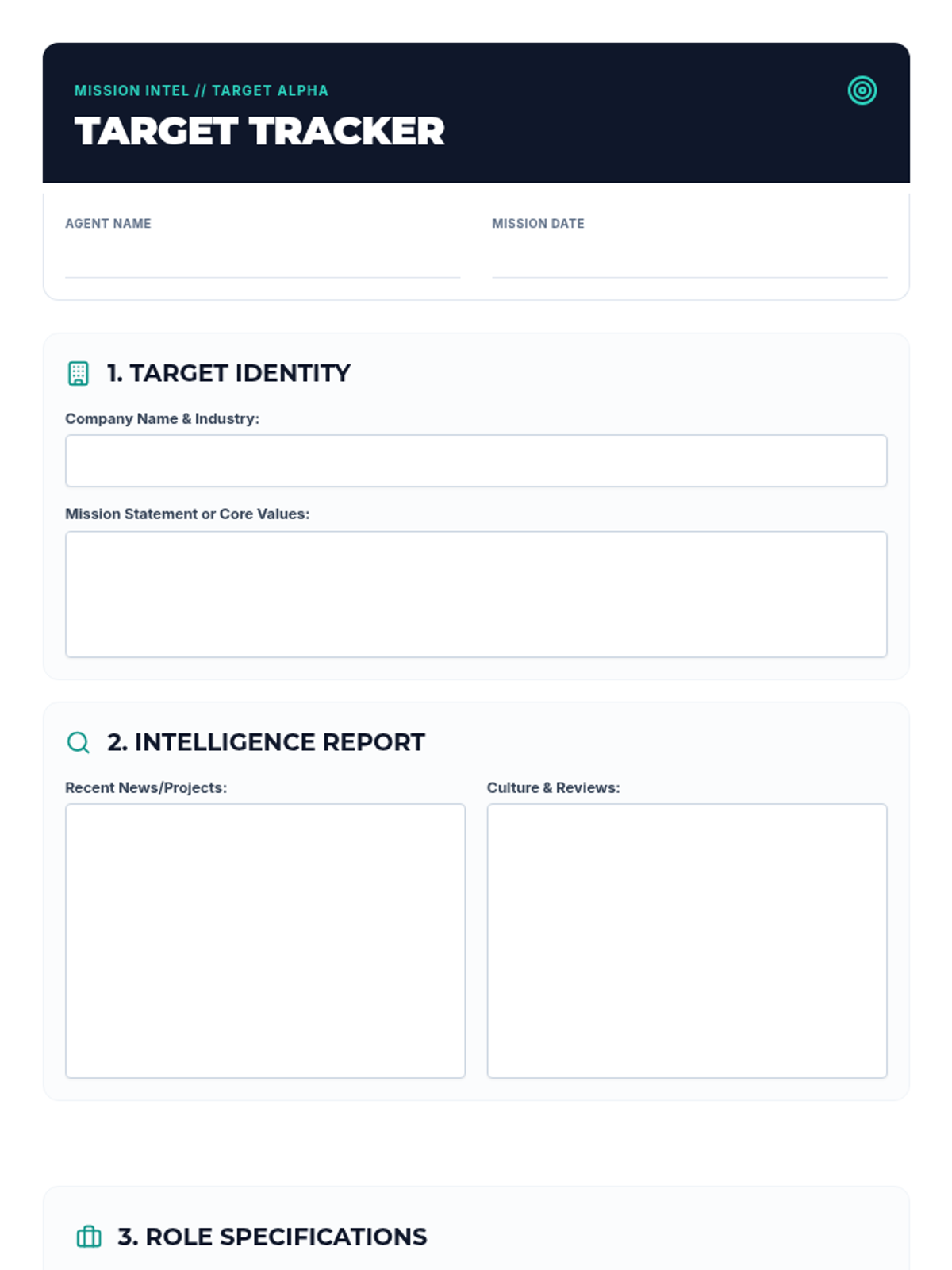
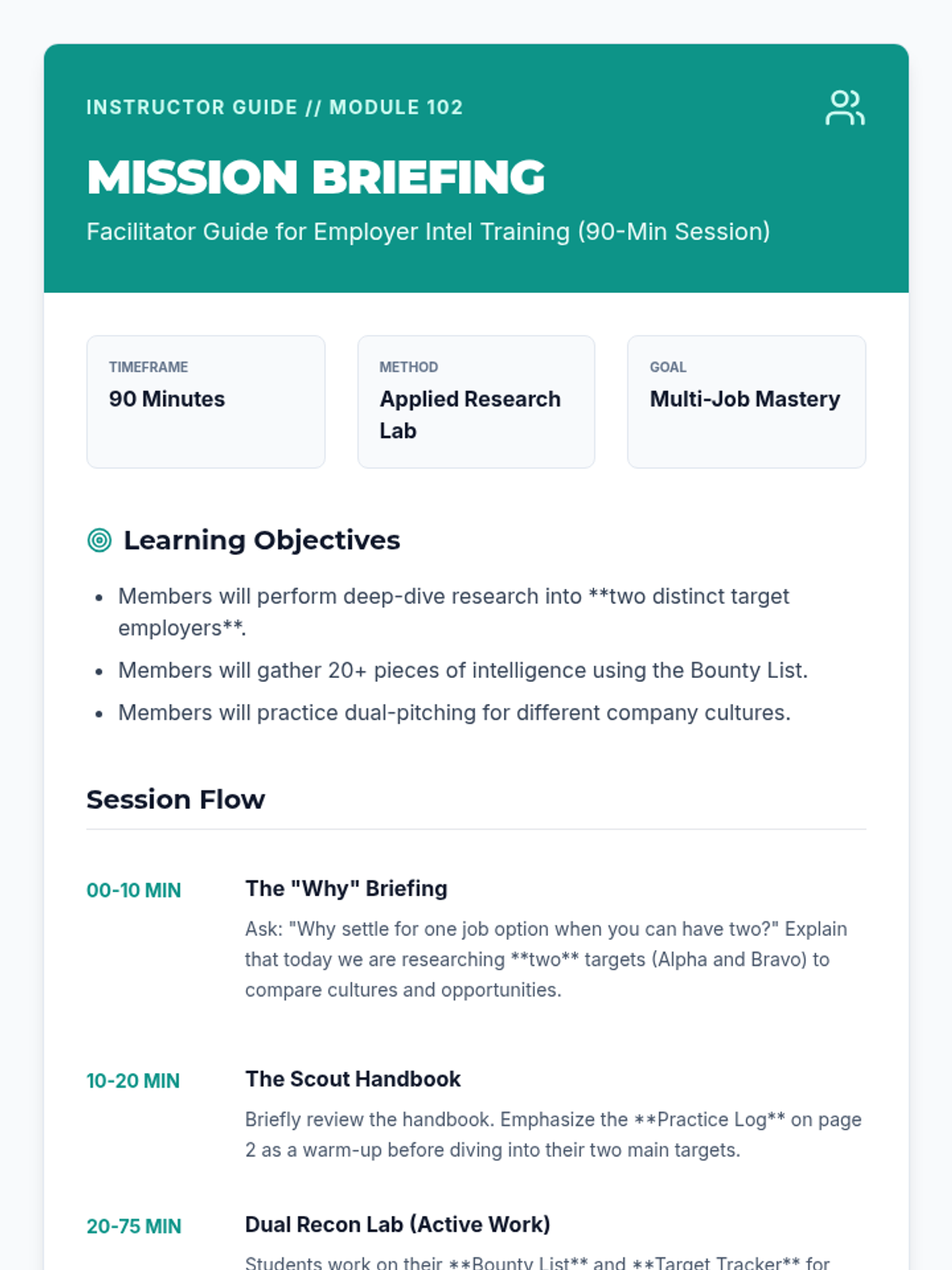
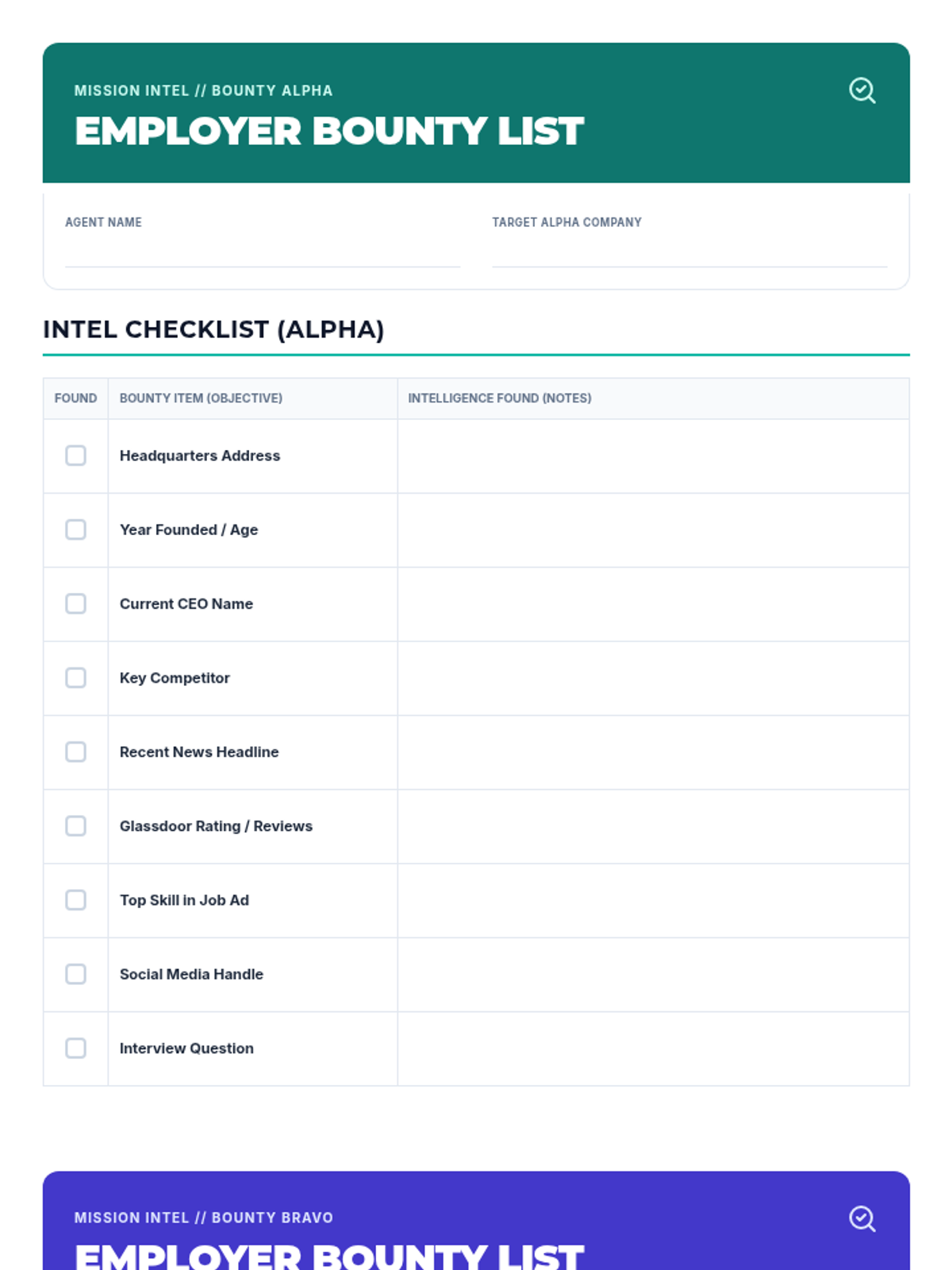
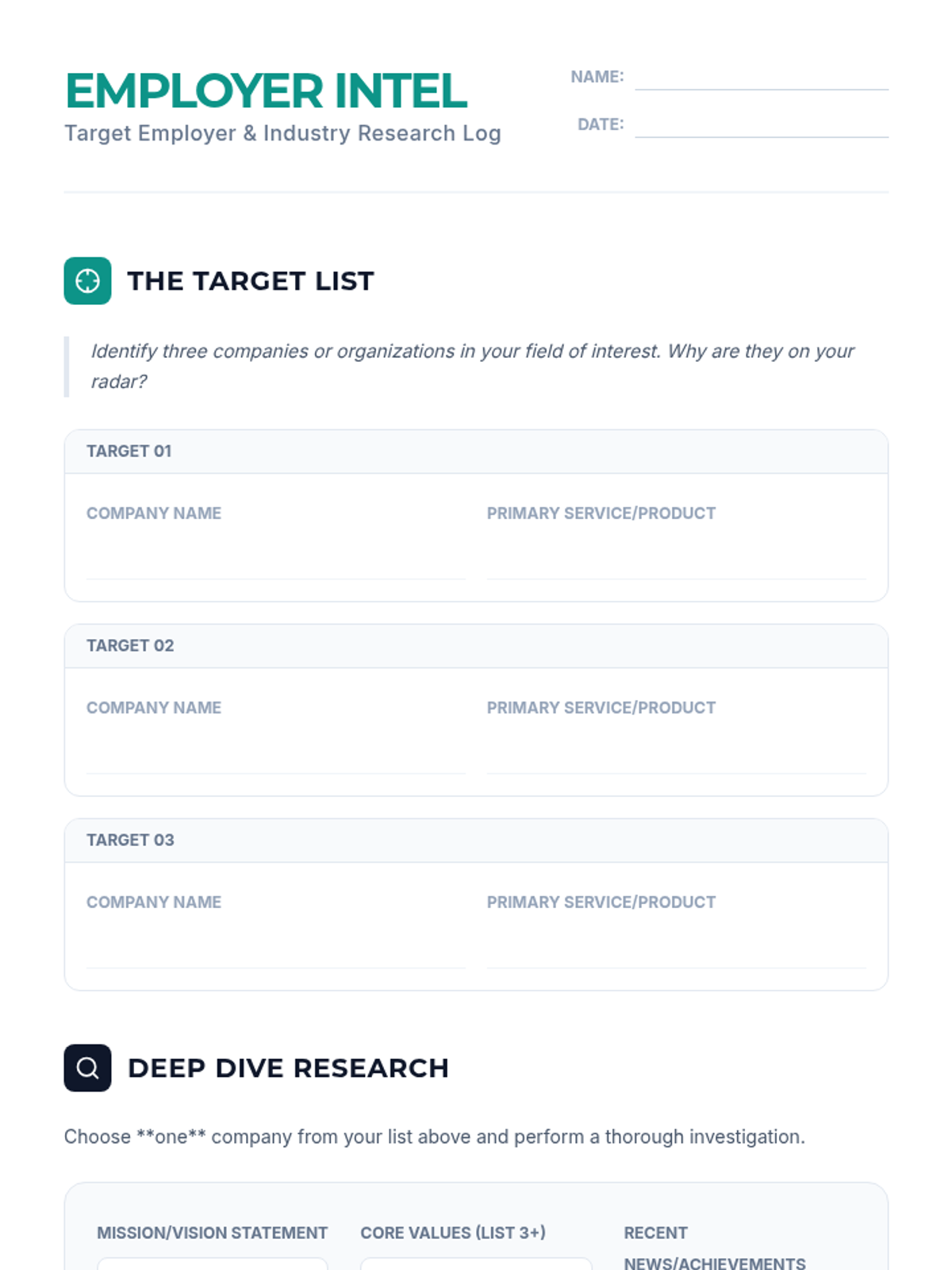
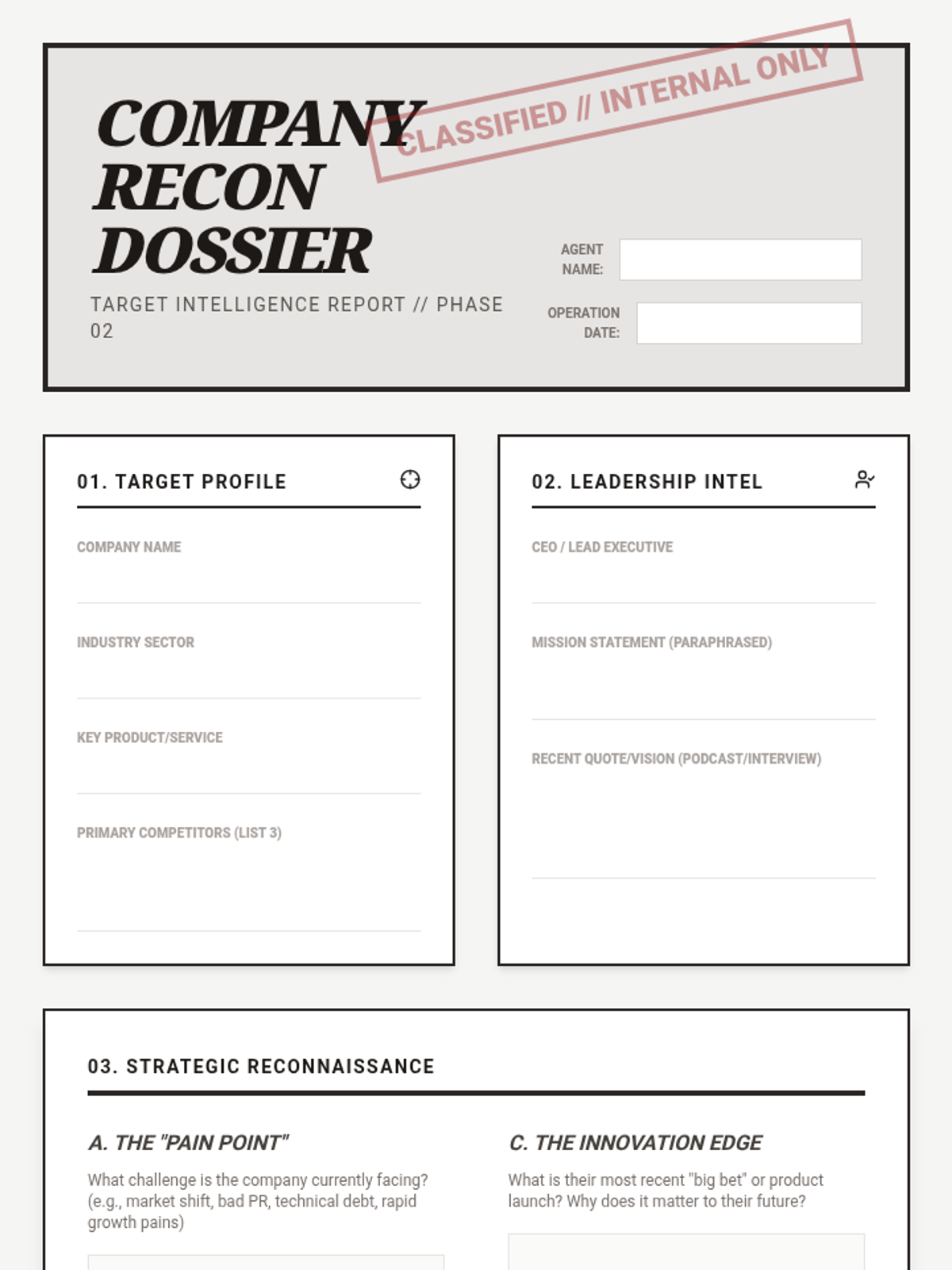
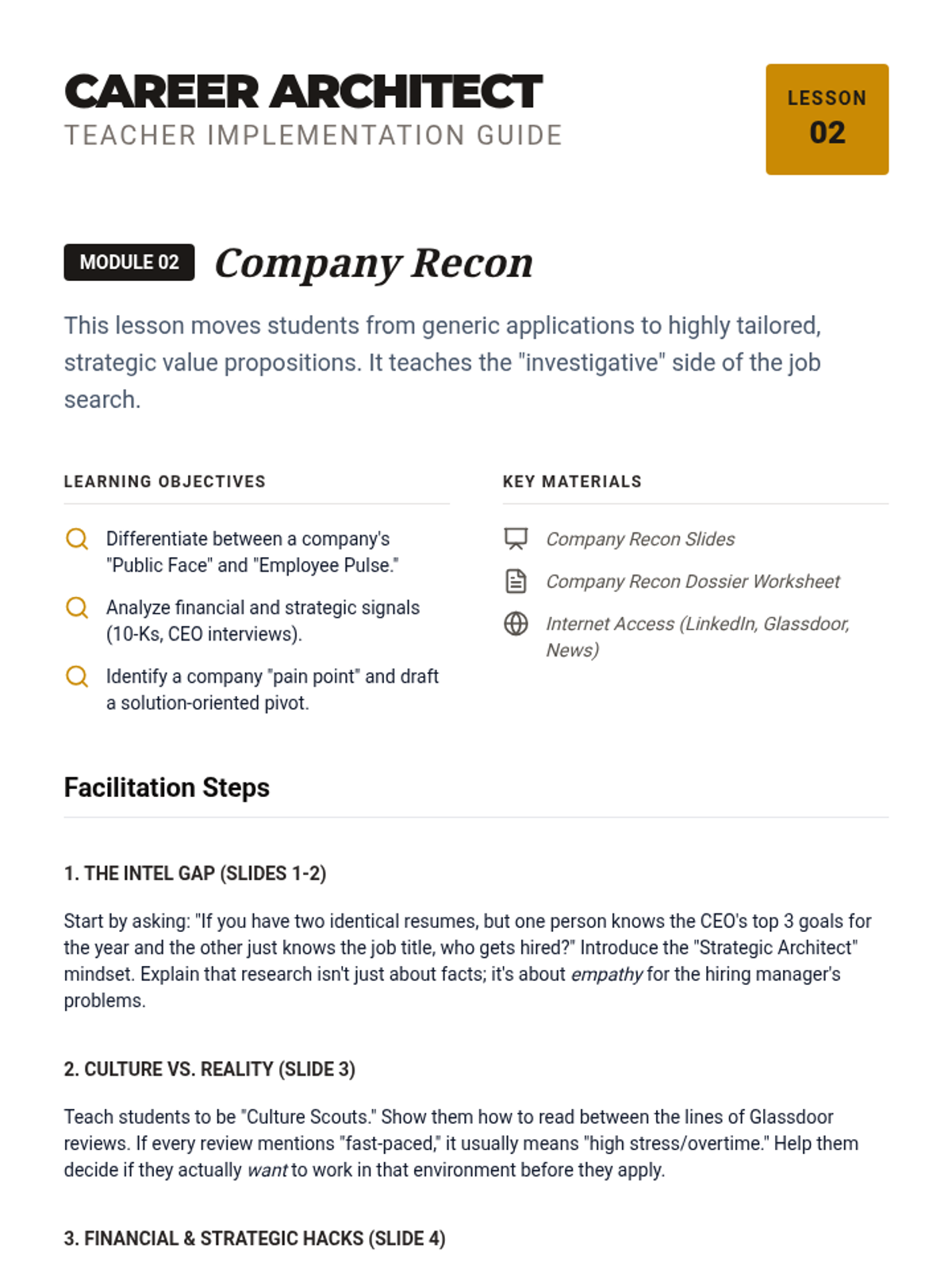
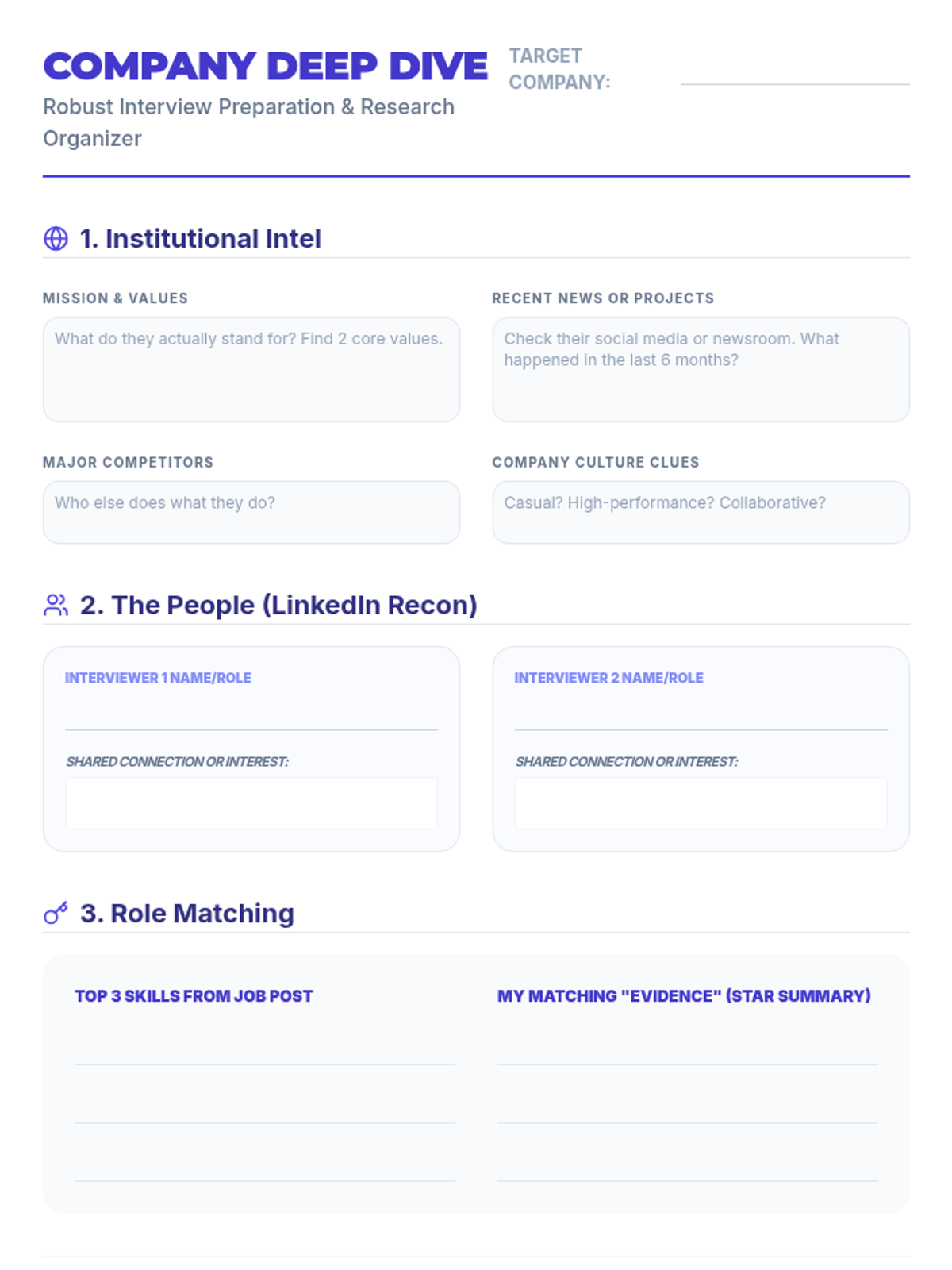
A comprehensive training module focused on teaching job seekers how to perform deep-dive research into potential employers and job listings to prepare for applications and interviews.
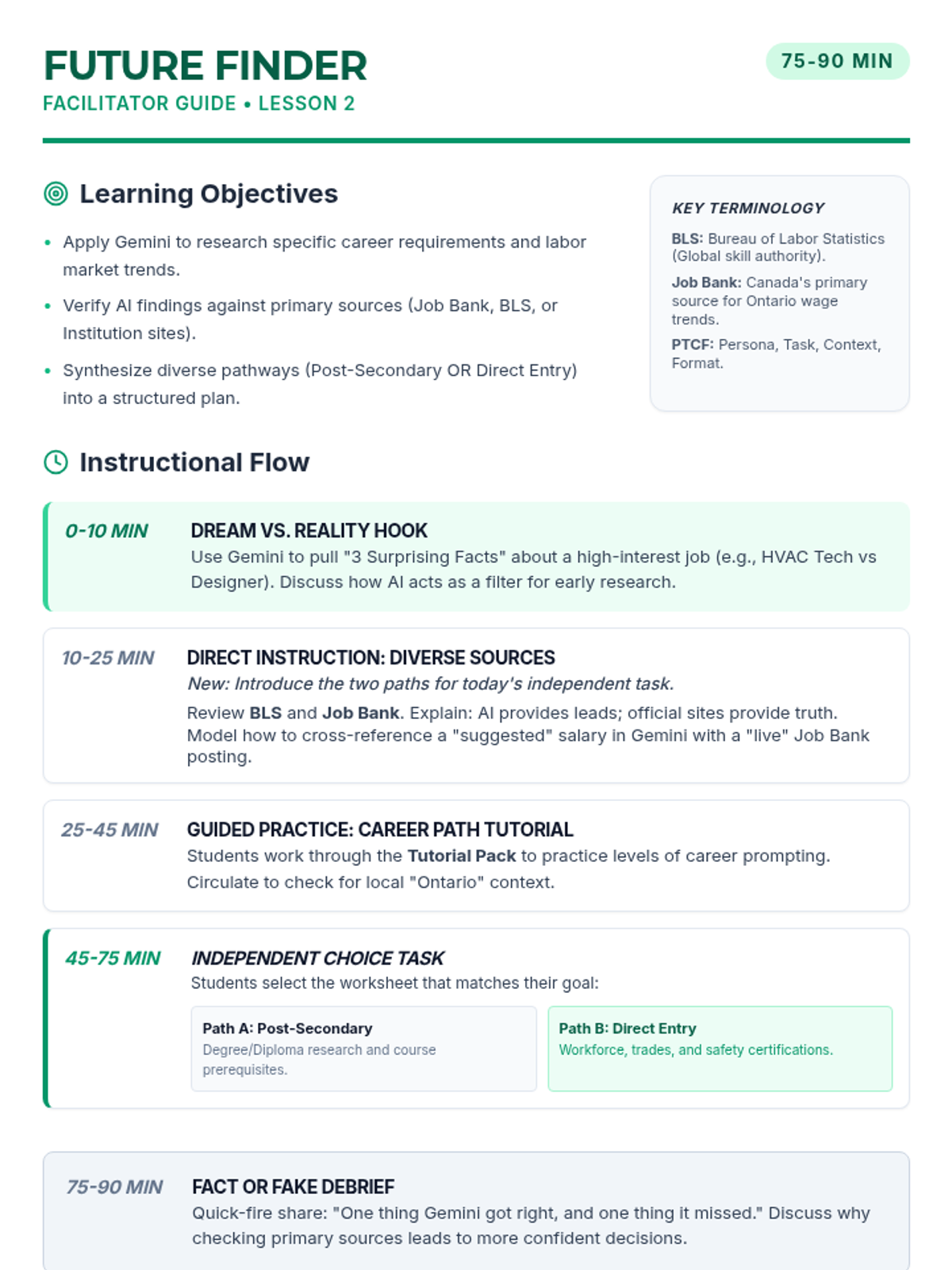
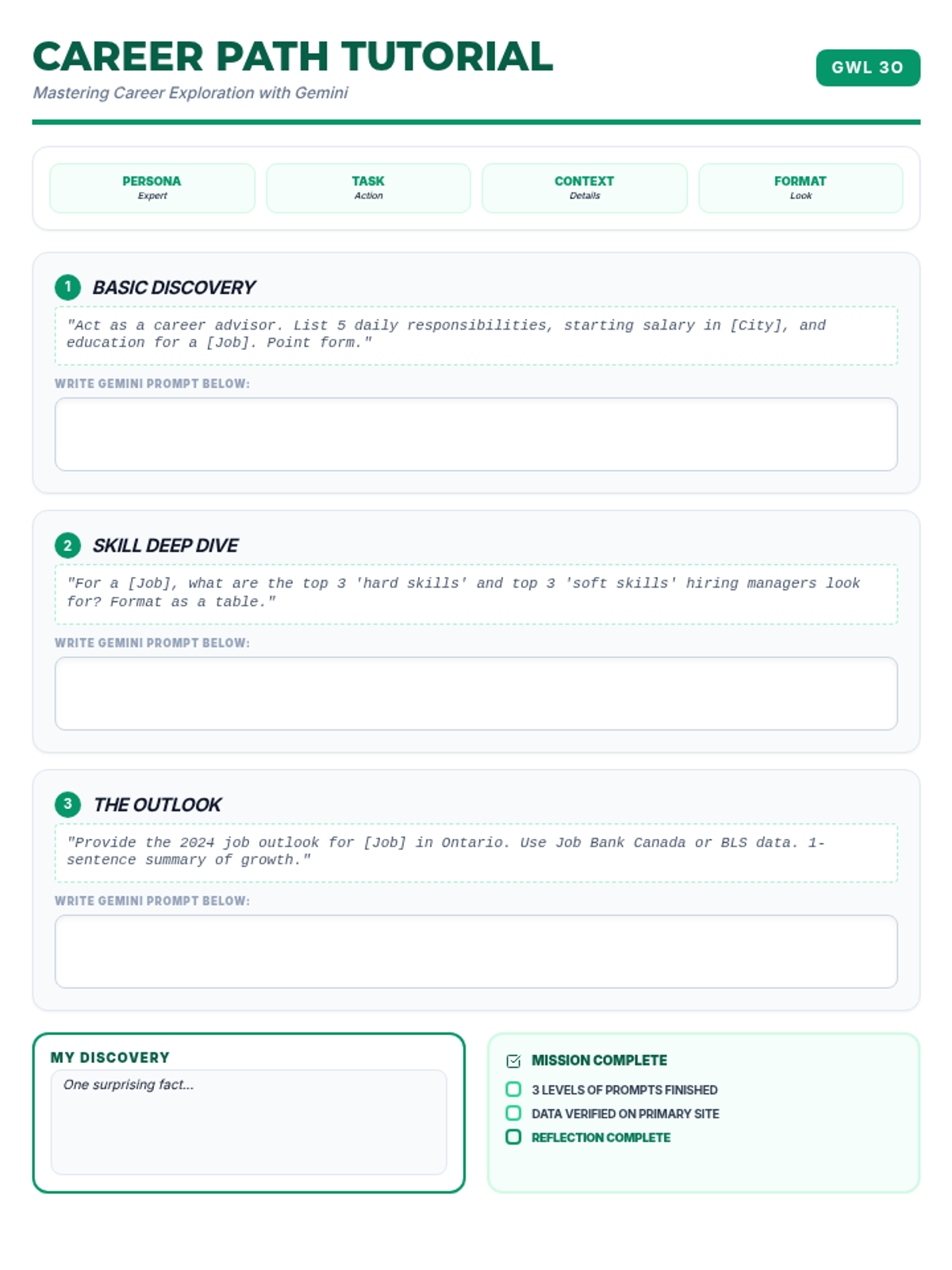
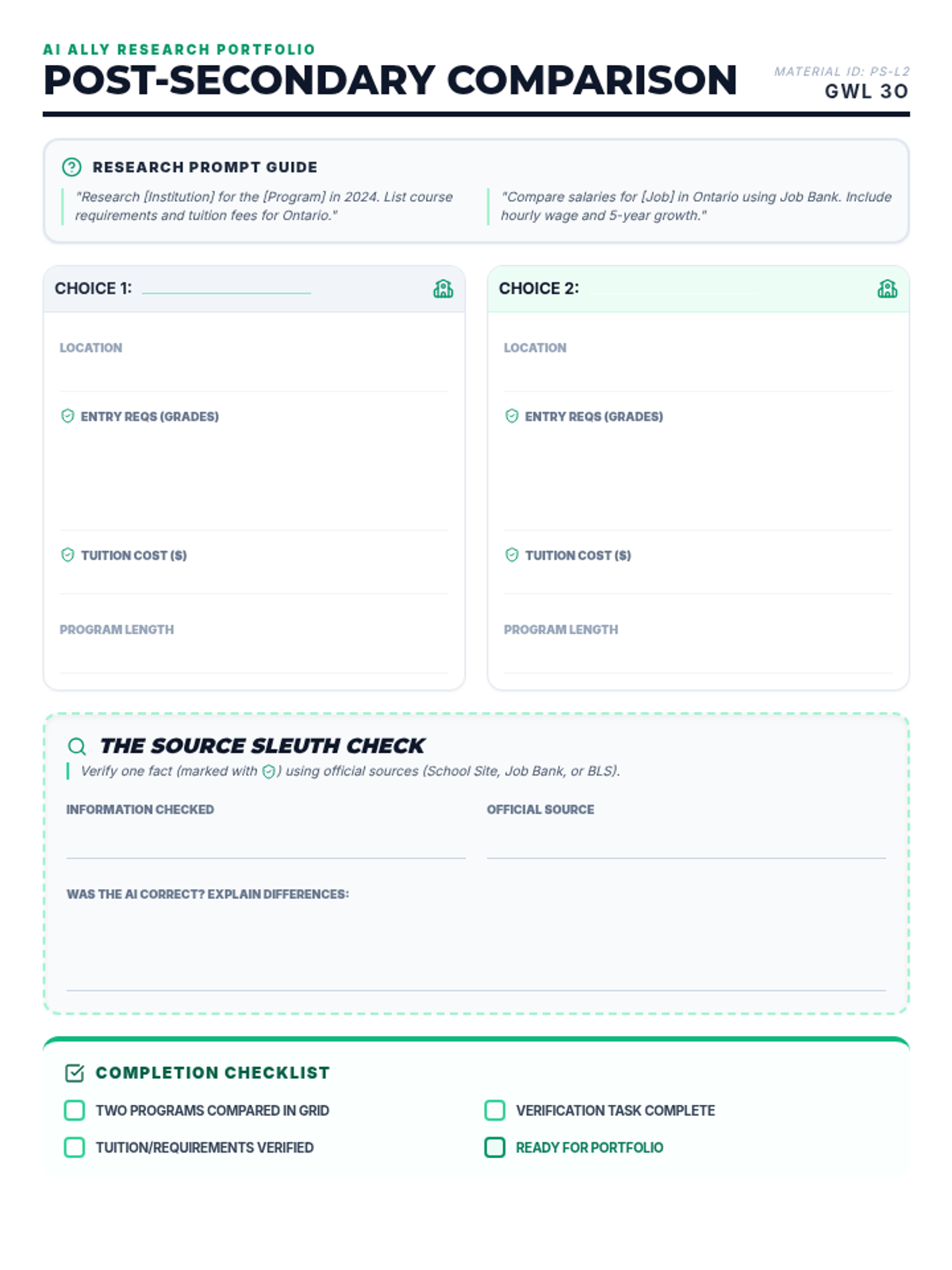
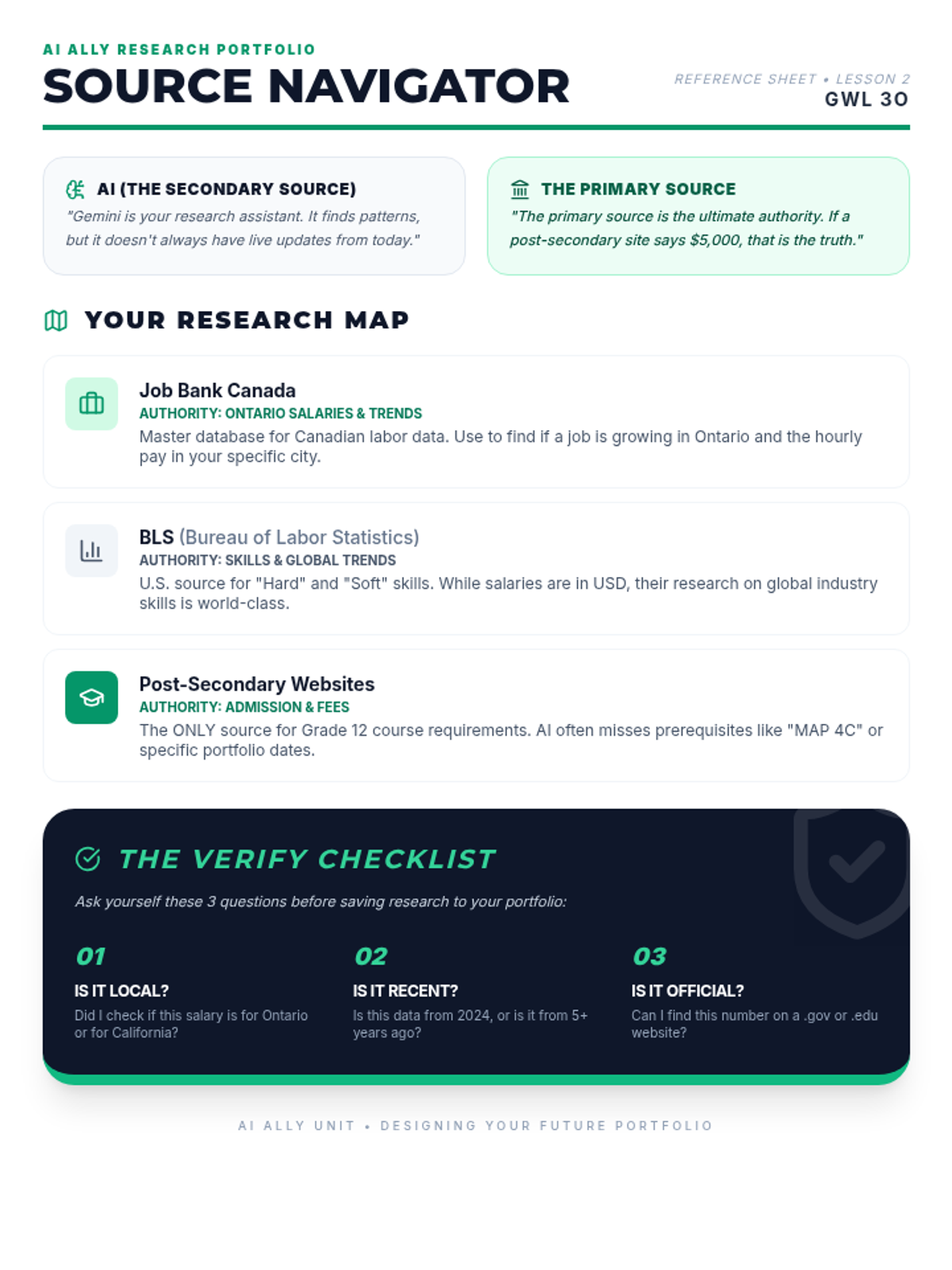
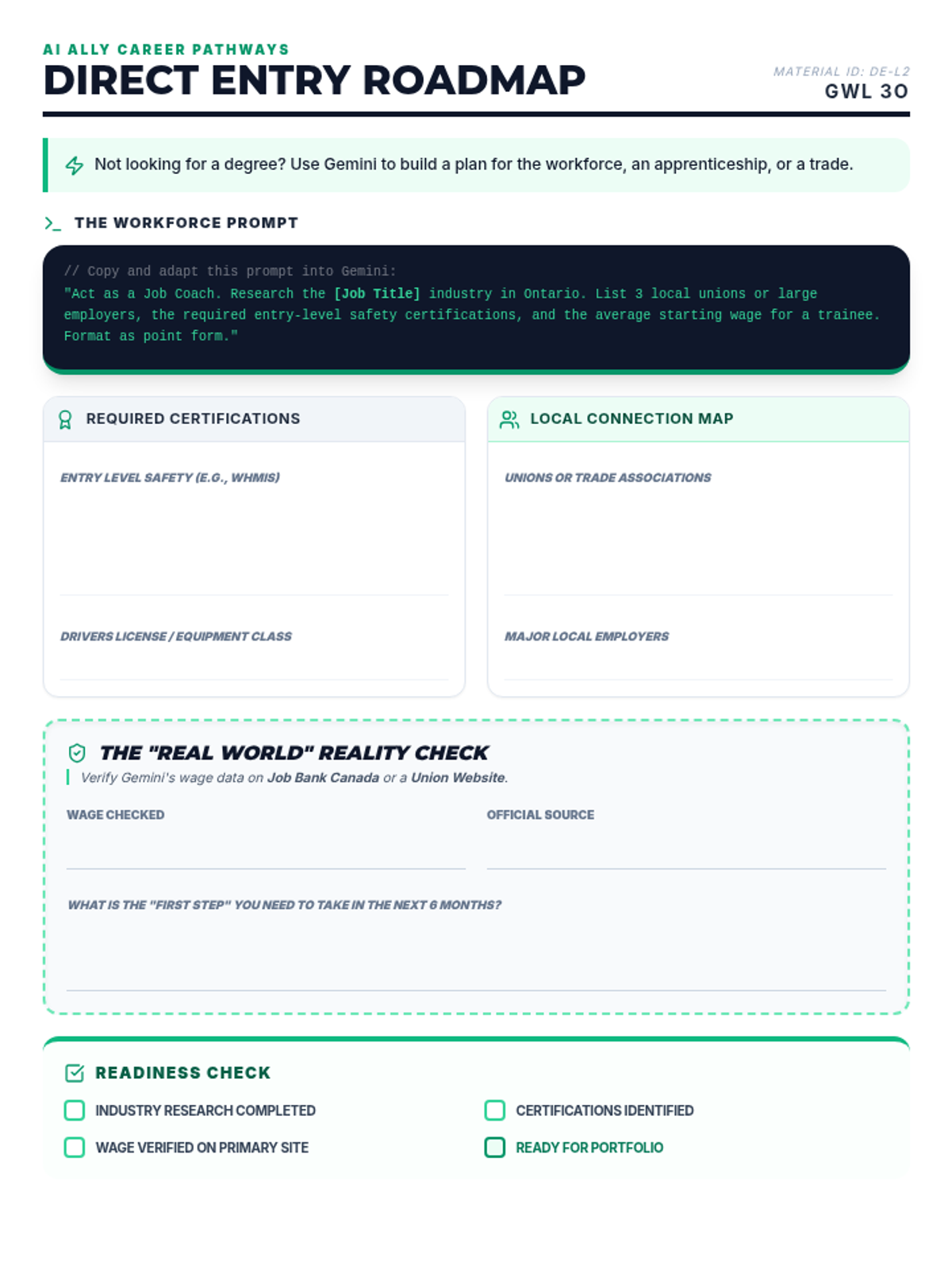
Students use Gemini to explore diverse career pathways, post-secondary requirements, and labor market trends, learning how to cross-reference AI findings with primary sources like government databases and institution websites.
An investigative slide-based lesson where students analyze multiple "mystery" candidates to discover hidden interview traps and best practices through unfolding case studies.
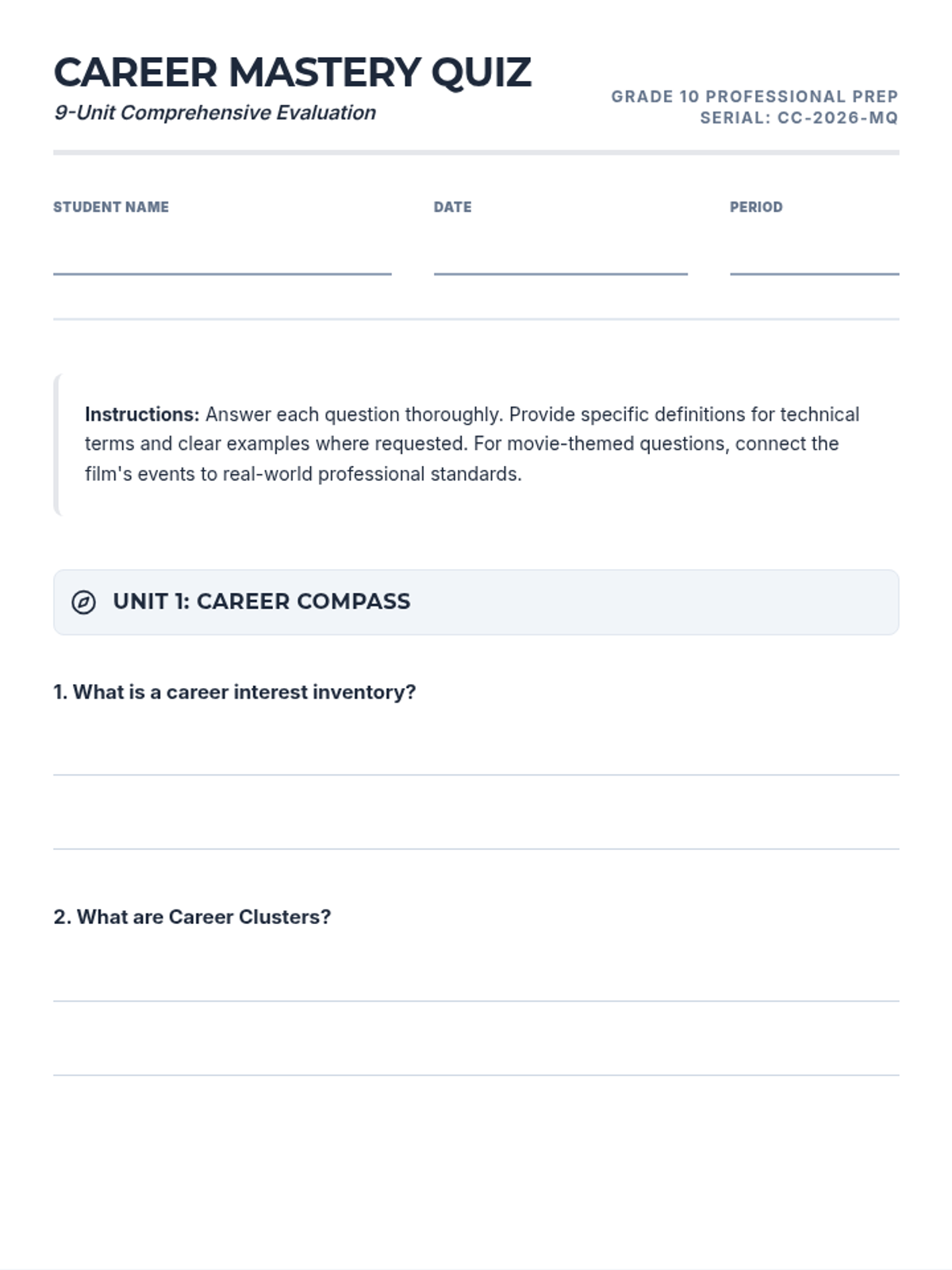
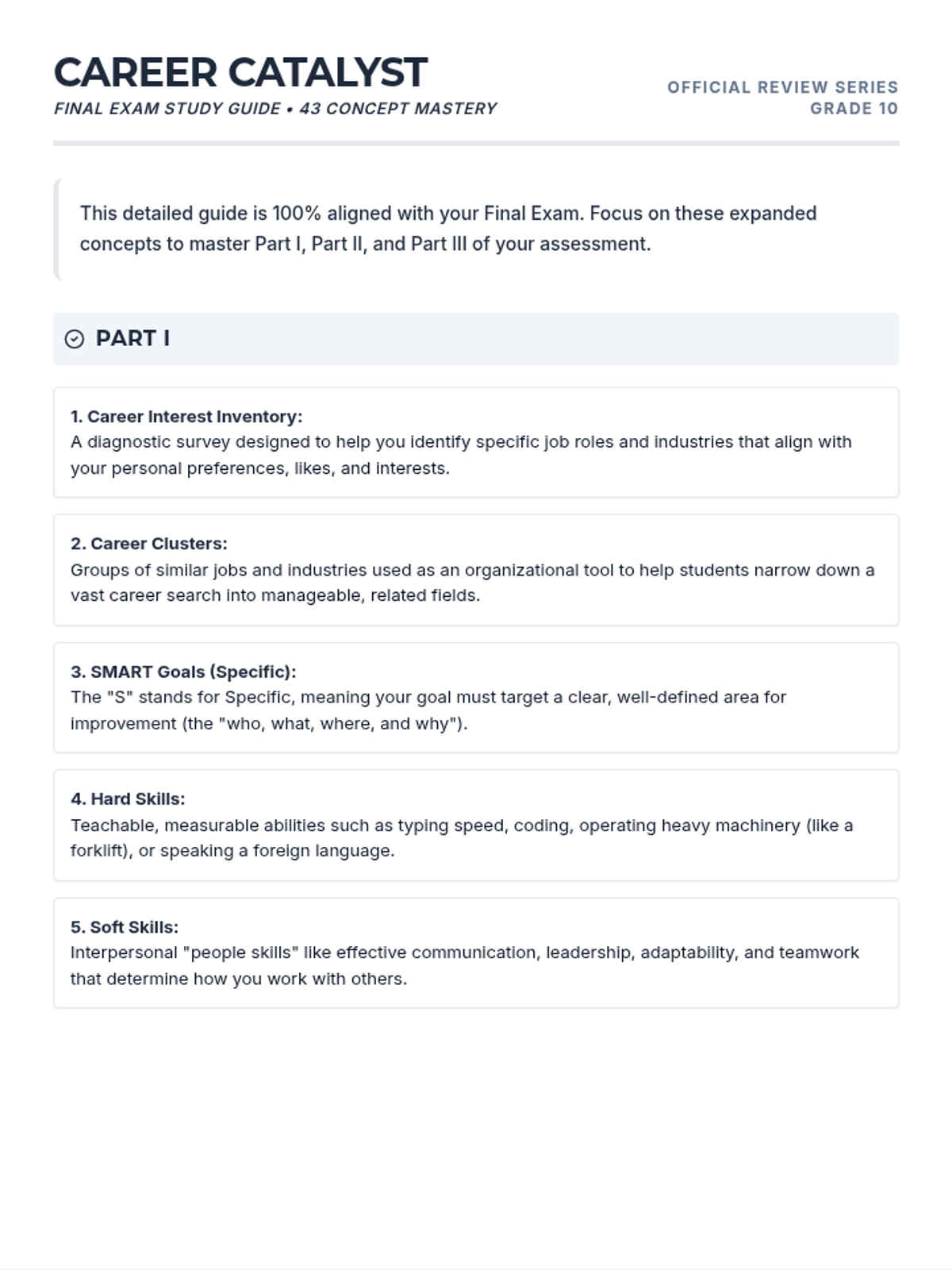
A comprehensive career readiness lesson focused on preparing students for final assessments across multiple units including resume building, application mastery, and professional legacy.
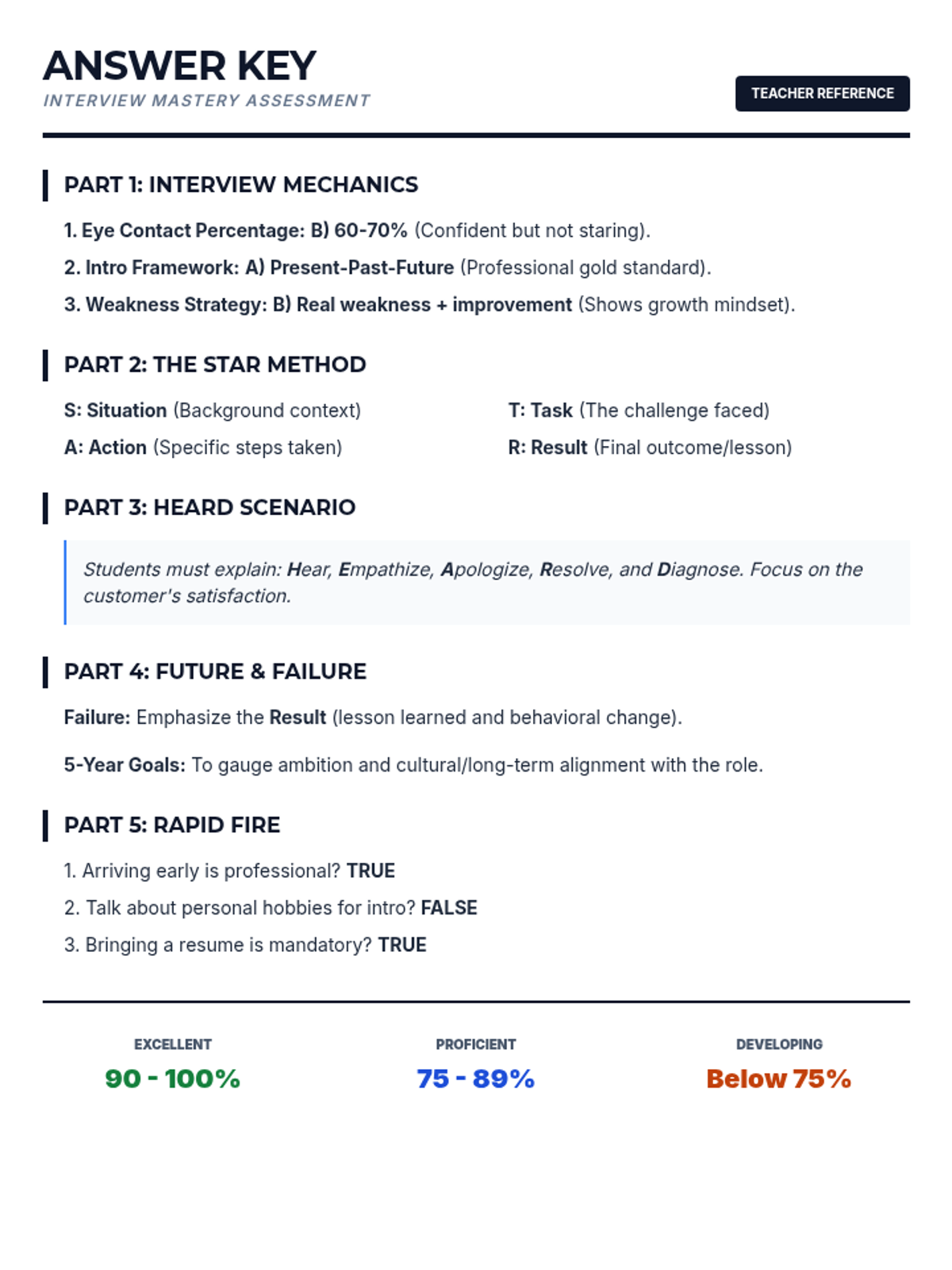
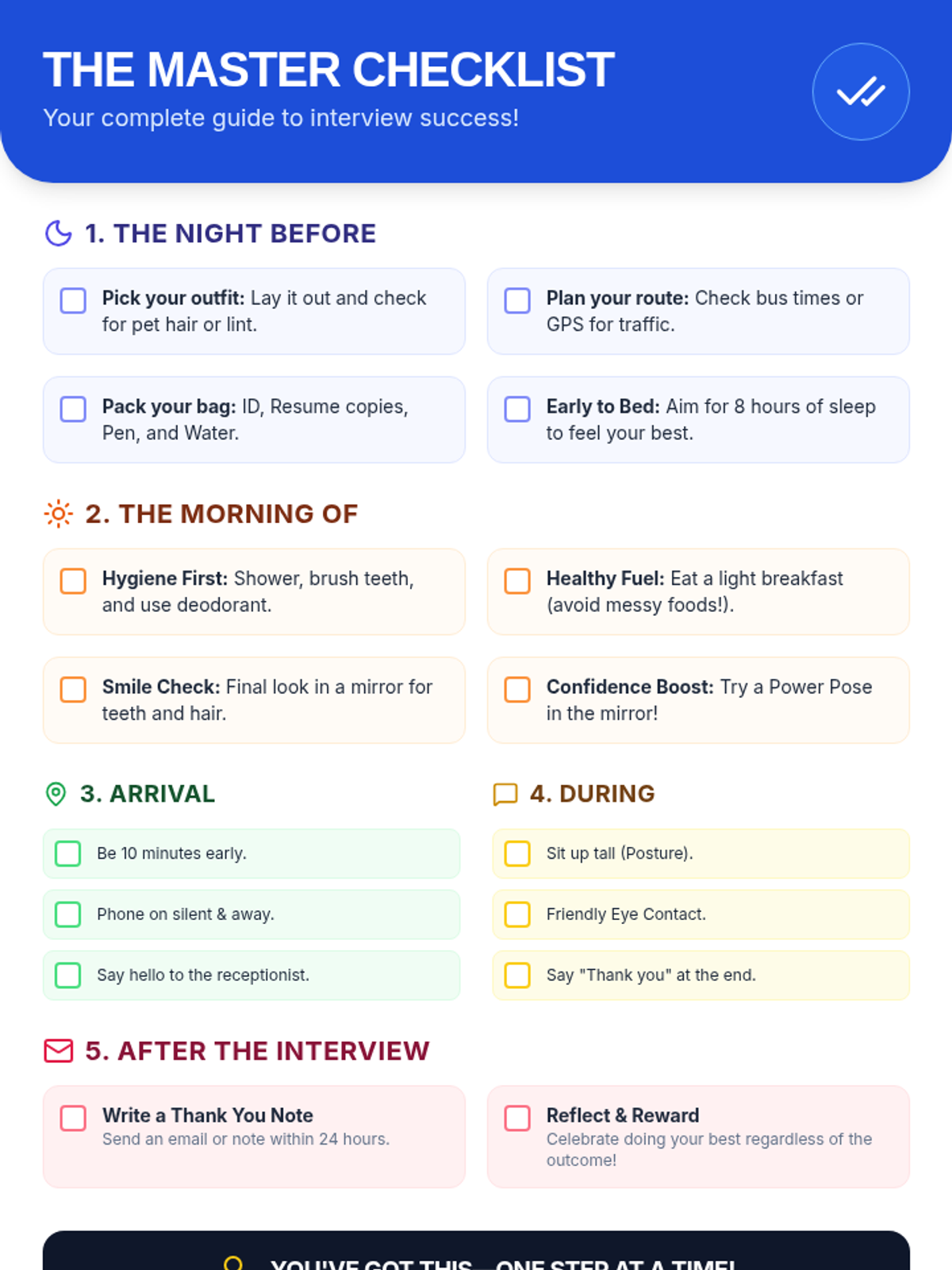
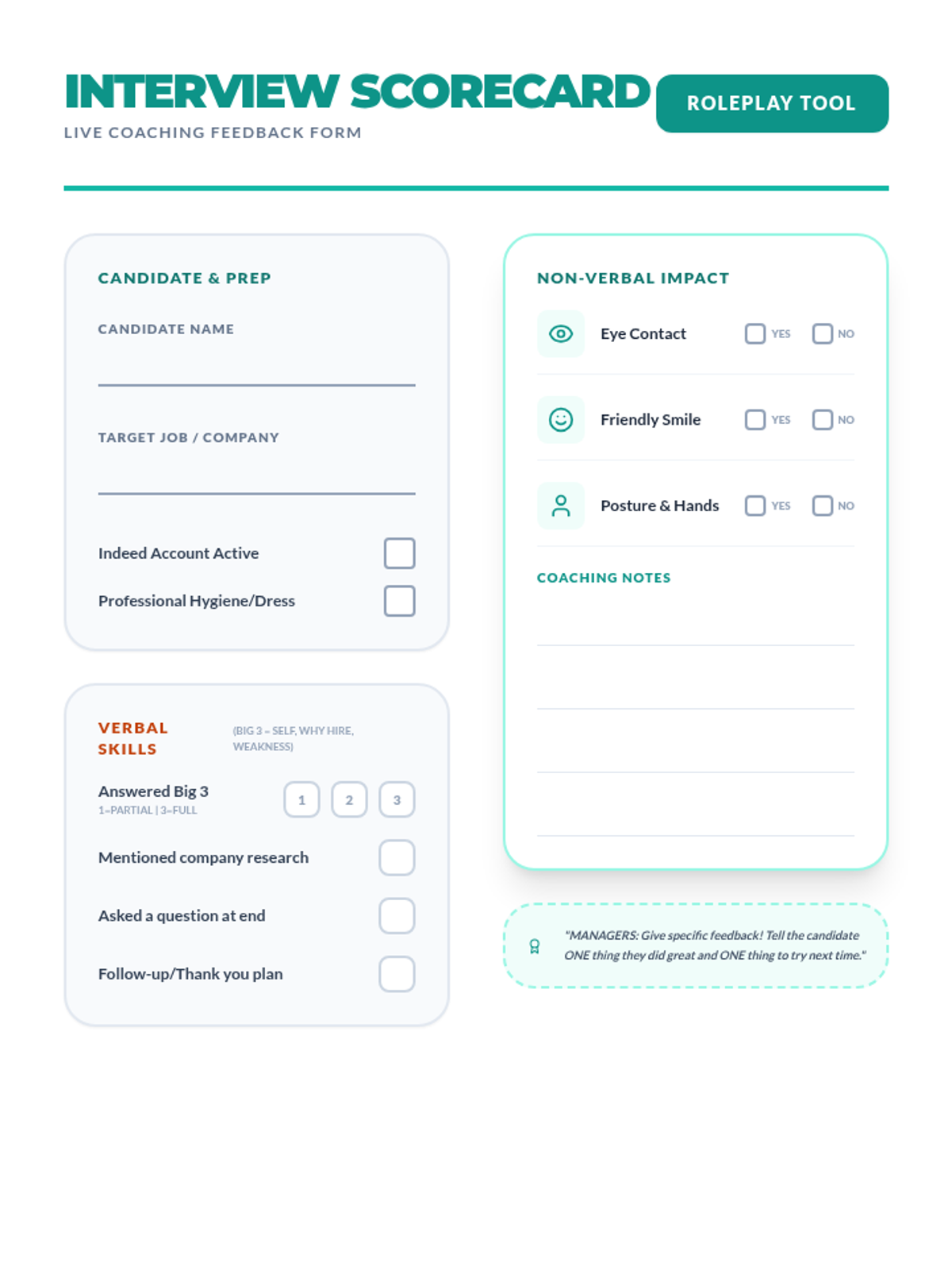
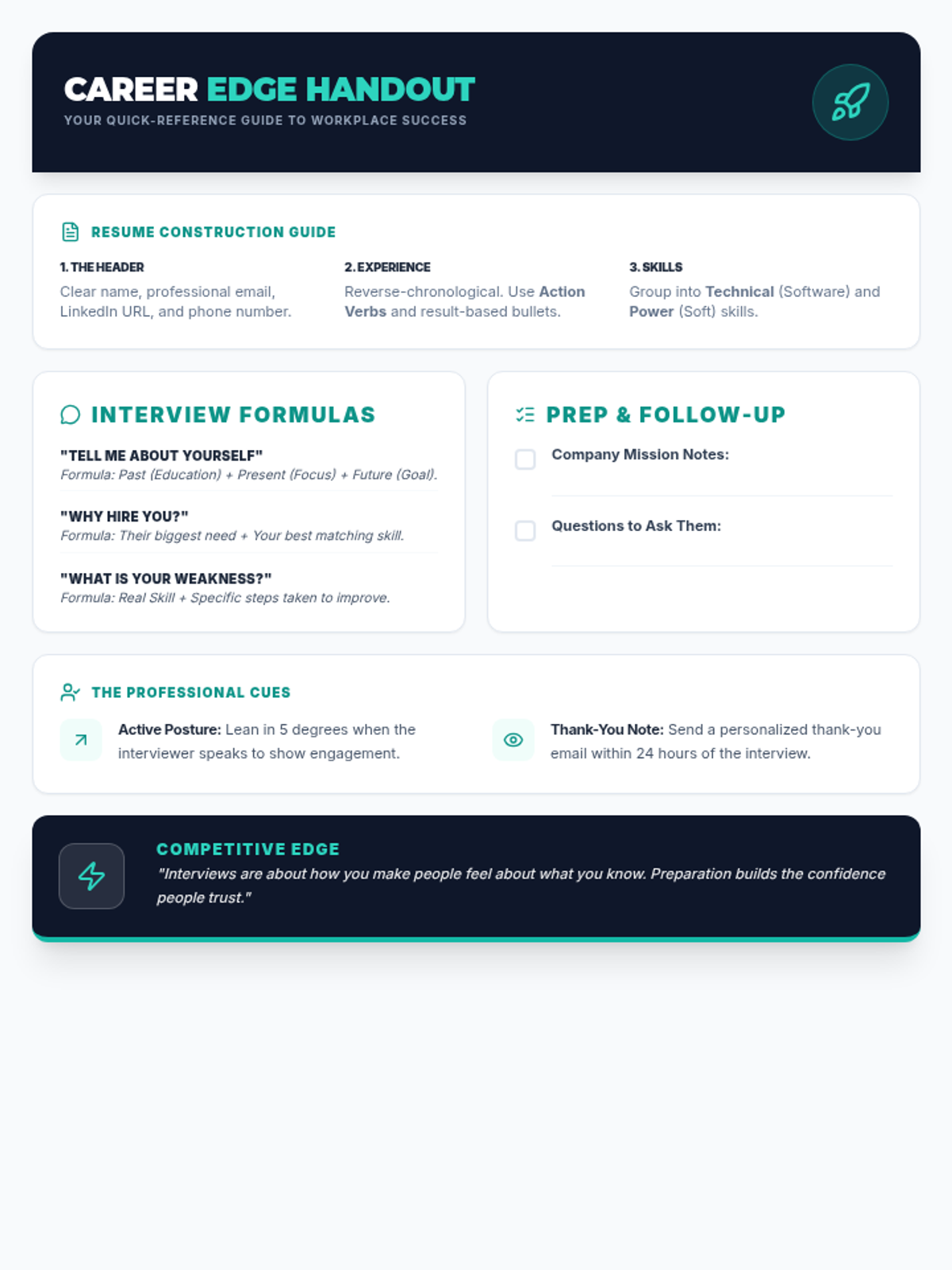
A comprehensive guide to mastering the job interview process, covering essential questions, non-verbal communication, and self-evaluation. Students will prepare responses, practice with peers, and receive professional feedback.
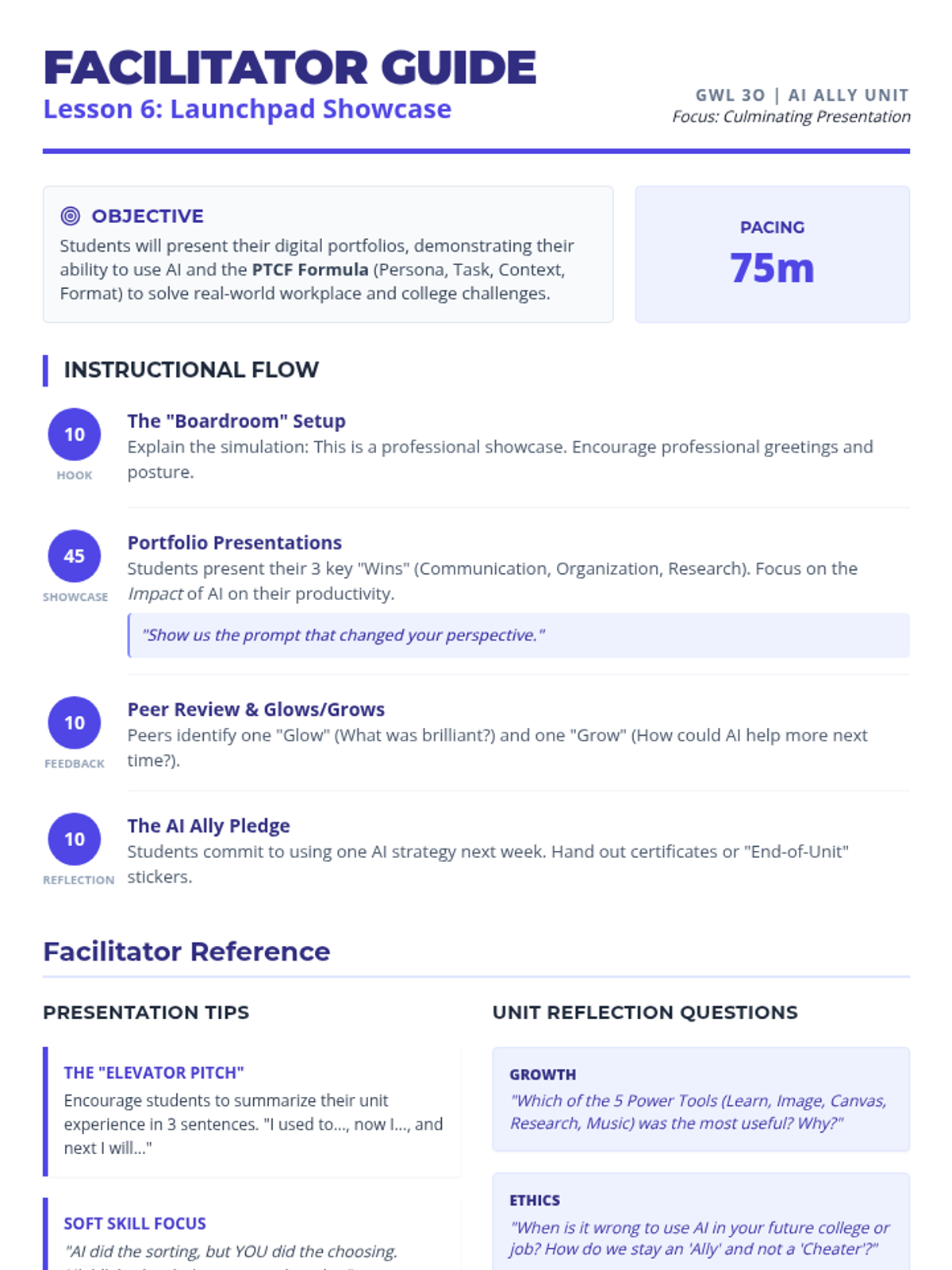
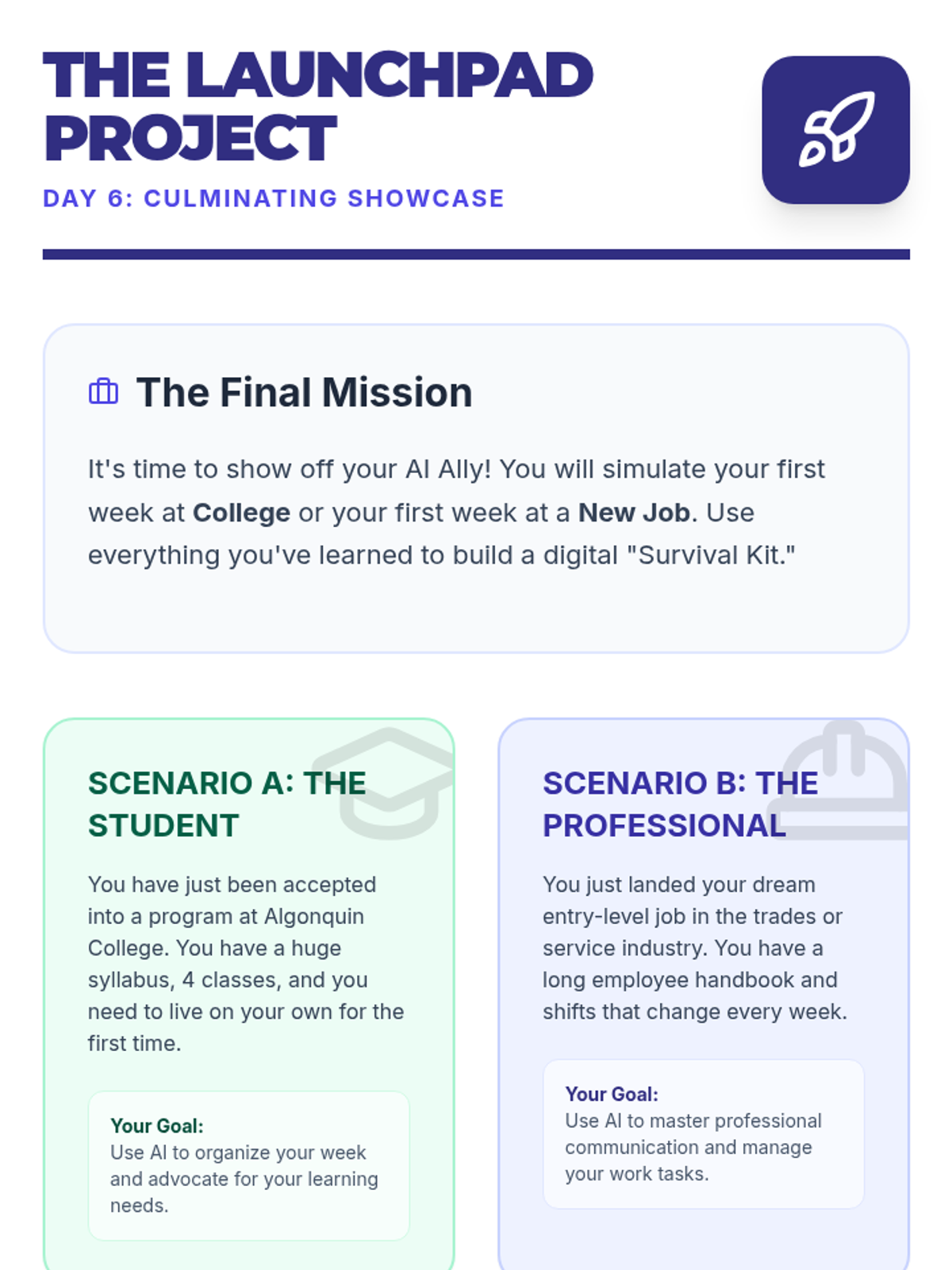
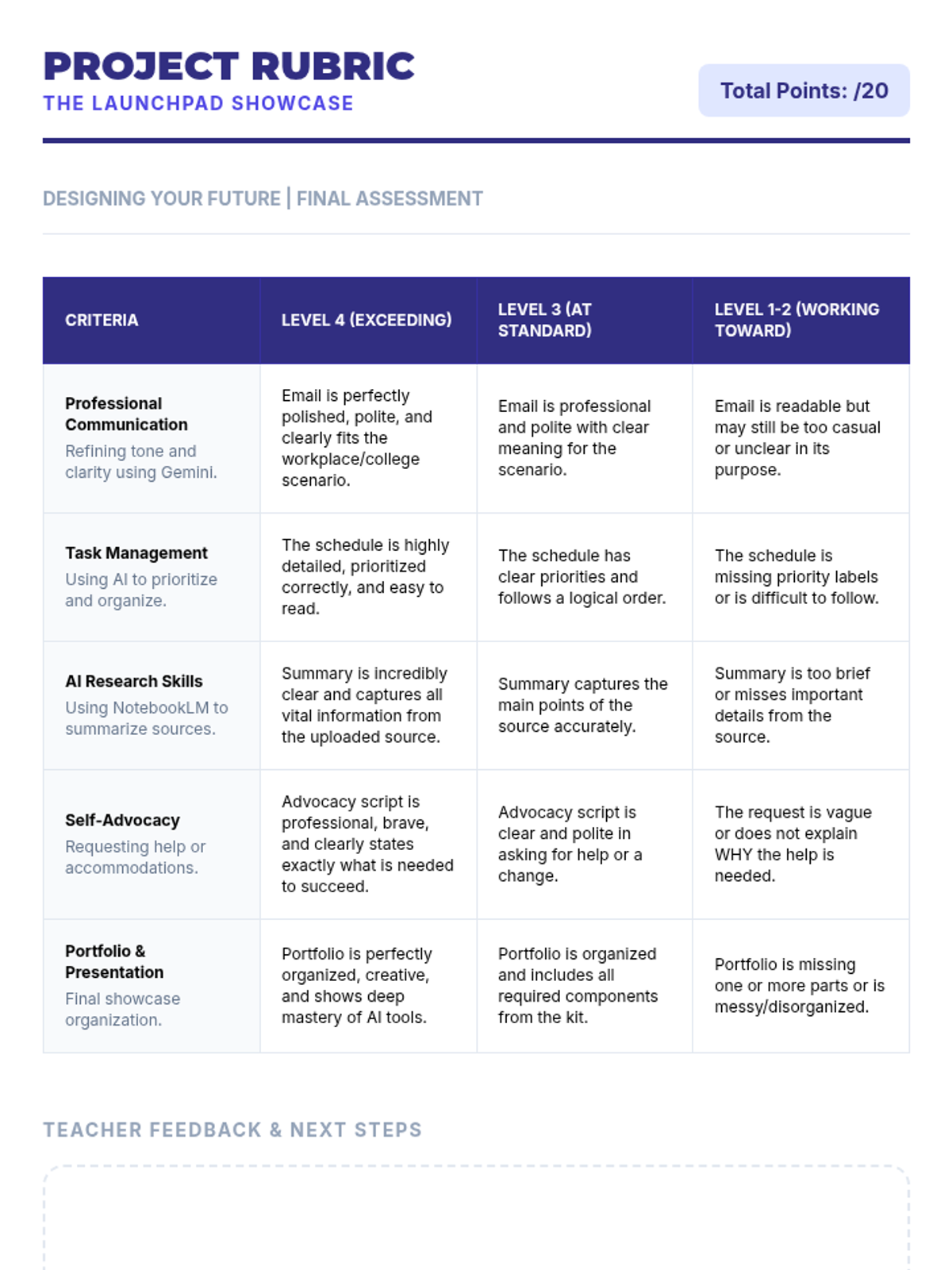
A culminating activity where students apply their AI skills to a real-world college or workplace simulation, presenting their findings in a digital portfolio.
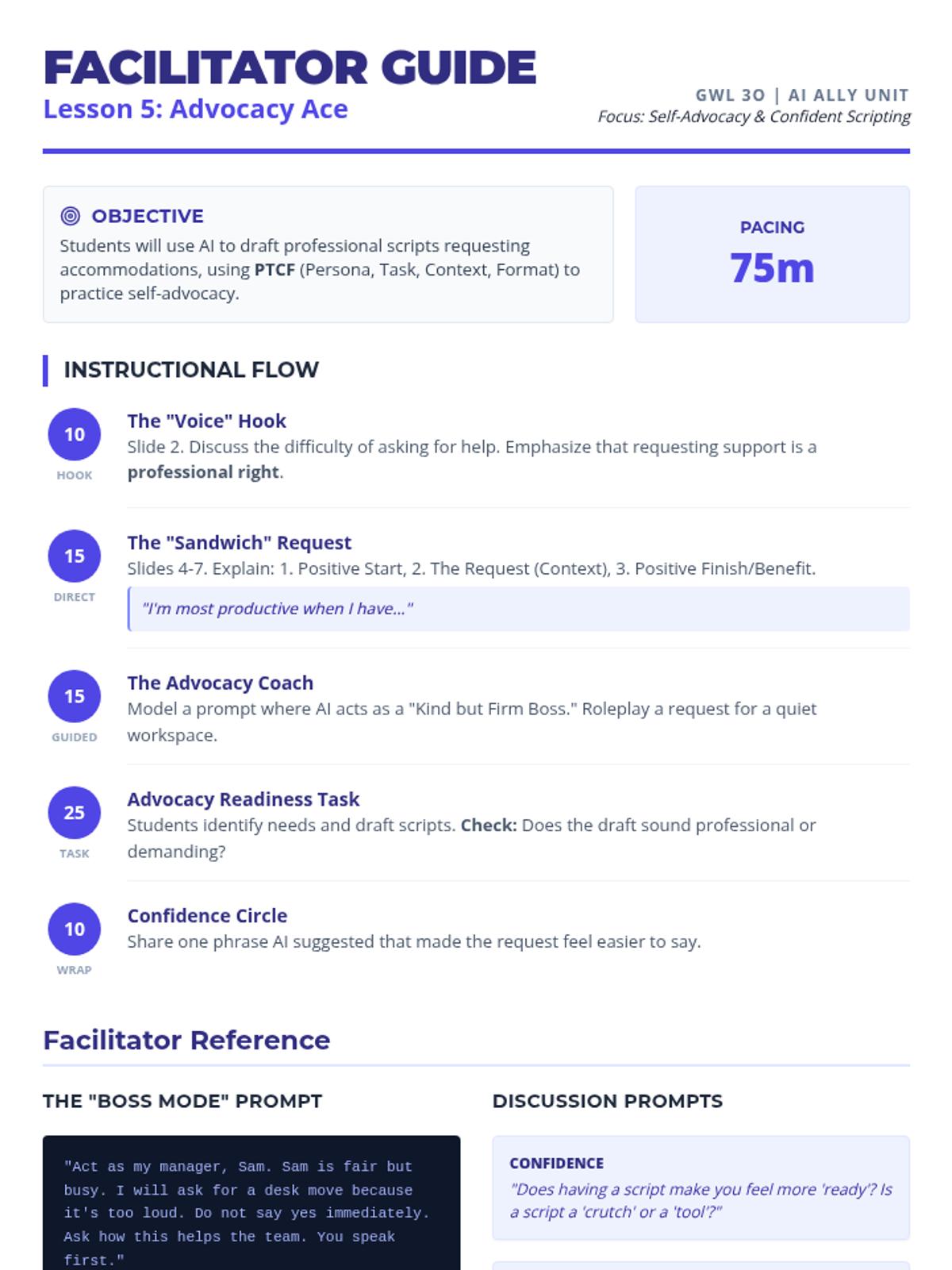
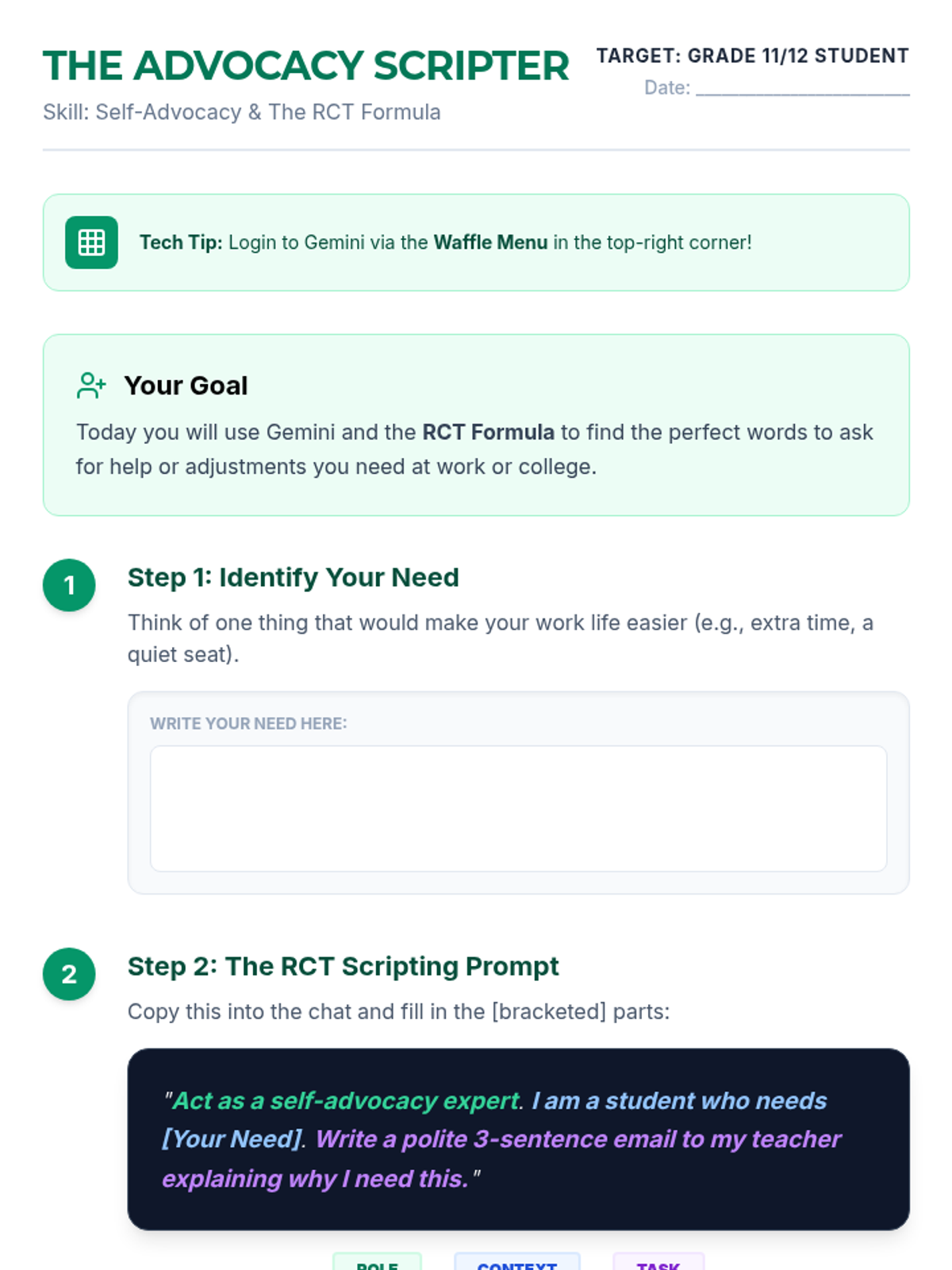
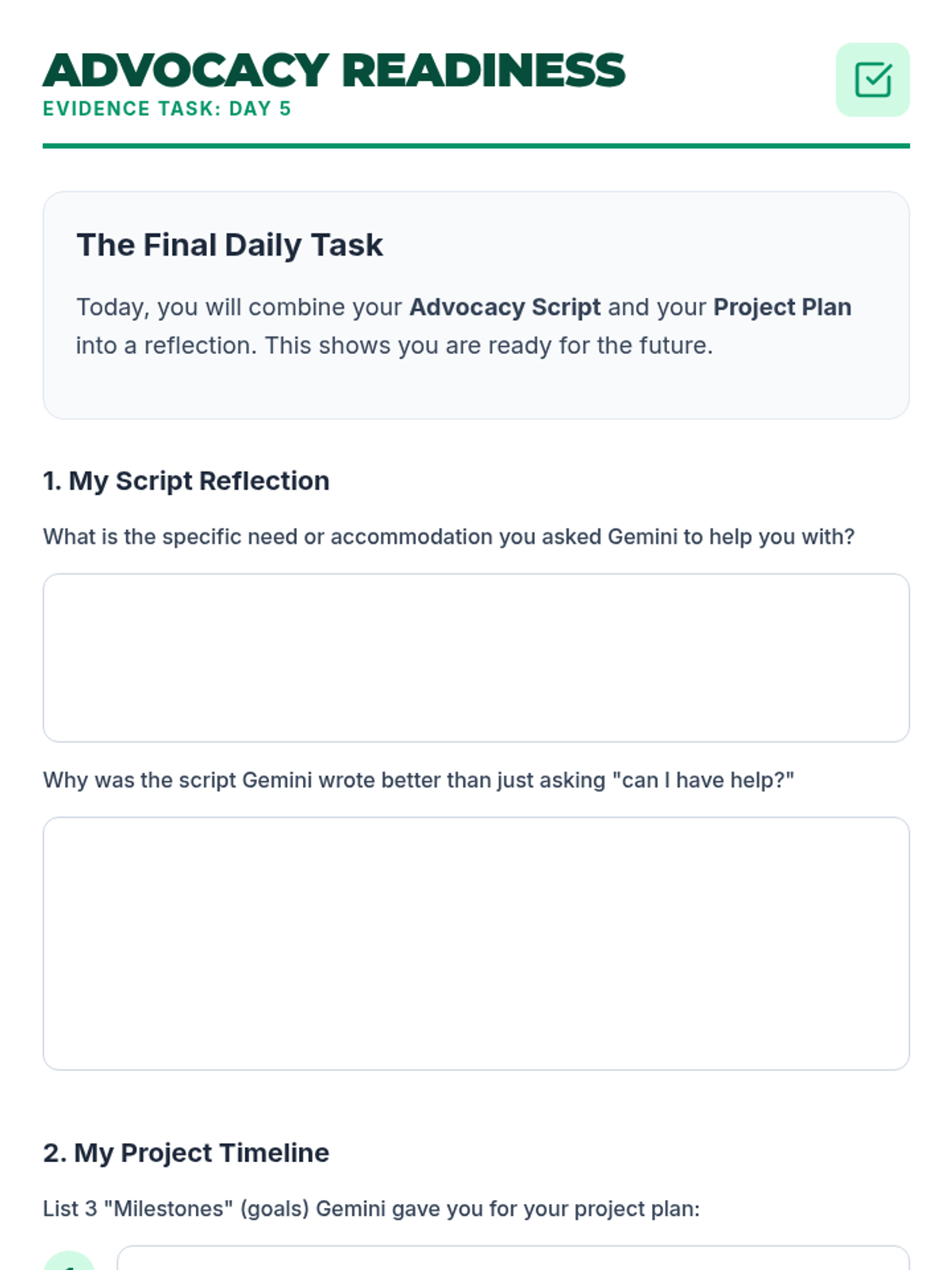
Focuses on self-advocacy and project planning, using AI to draft scripts for accommodation requests and breakdown long-term goals.
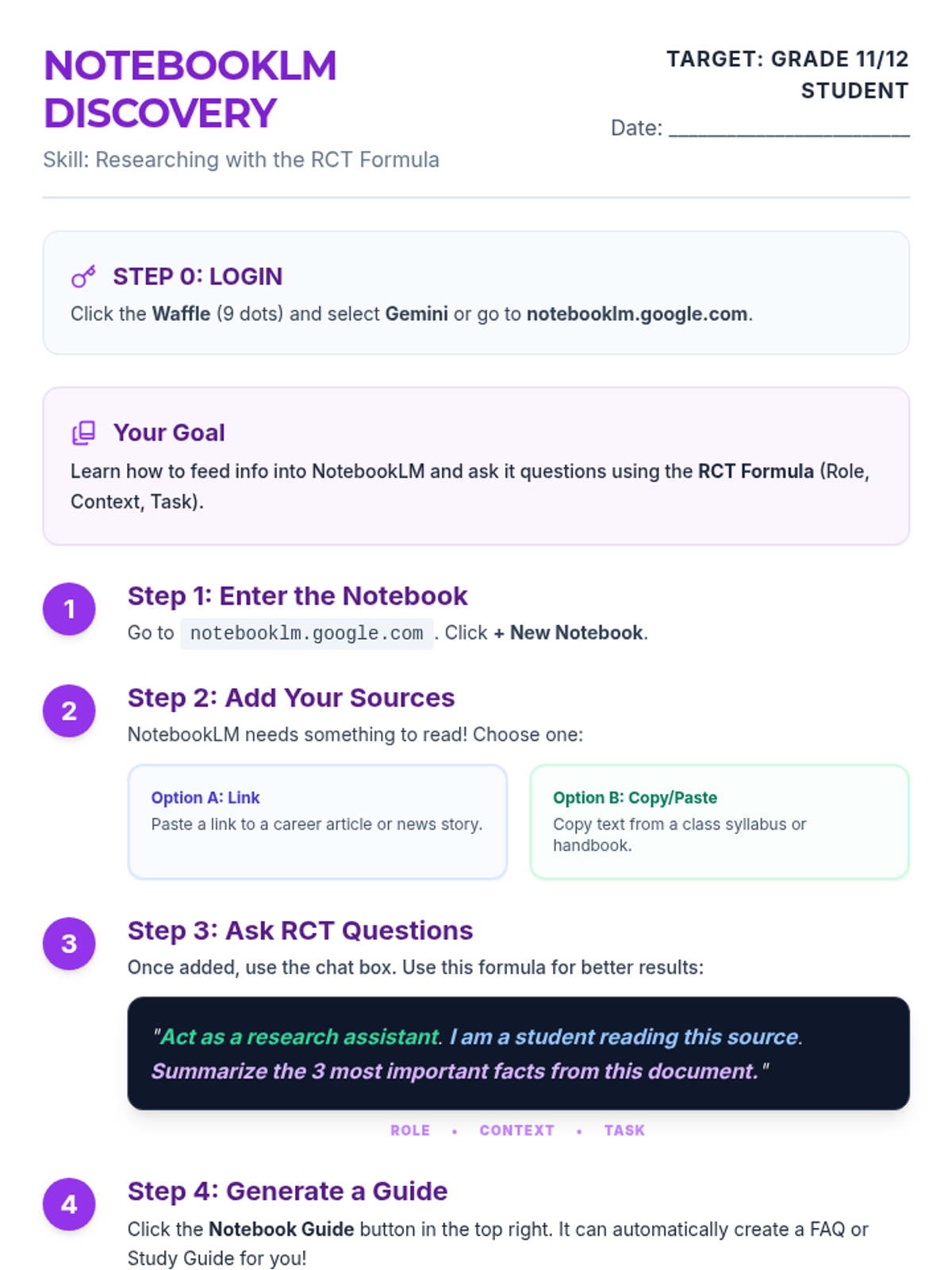
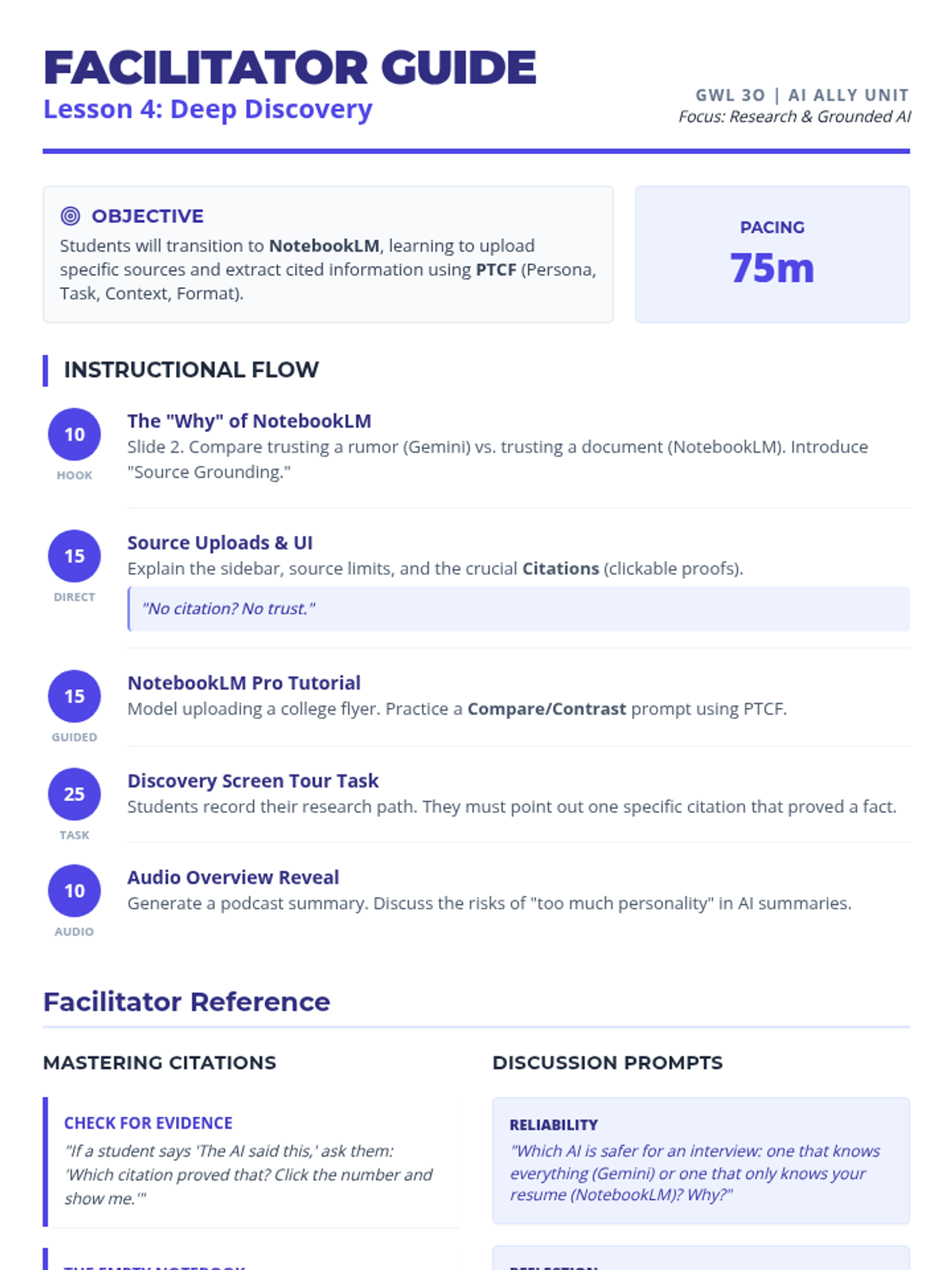
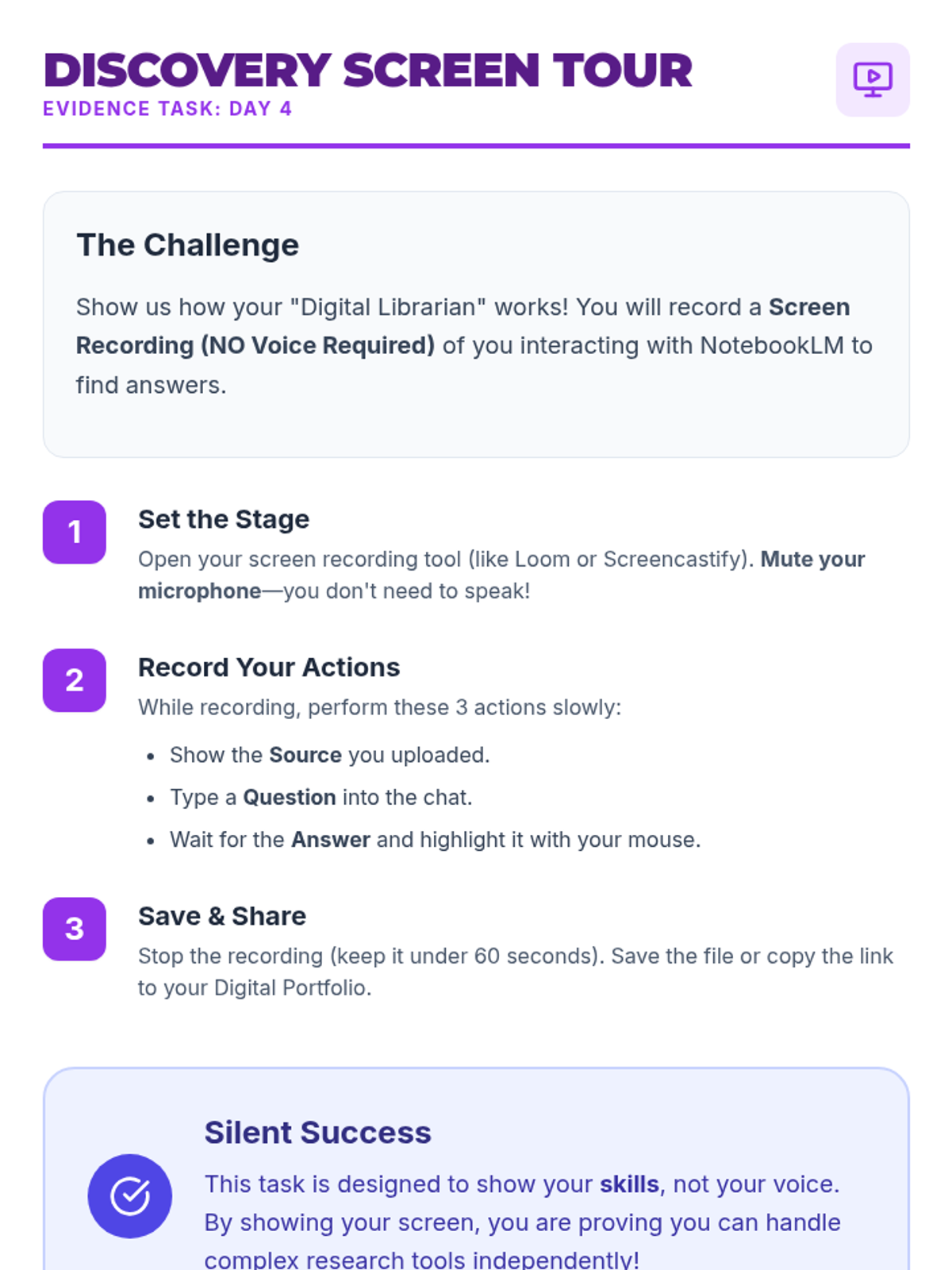
Explores the power of NotebookLM for academic and workplace research, teaching students how to synthesize large amounts of information efficiently.
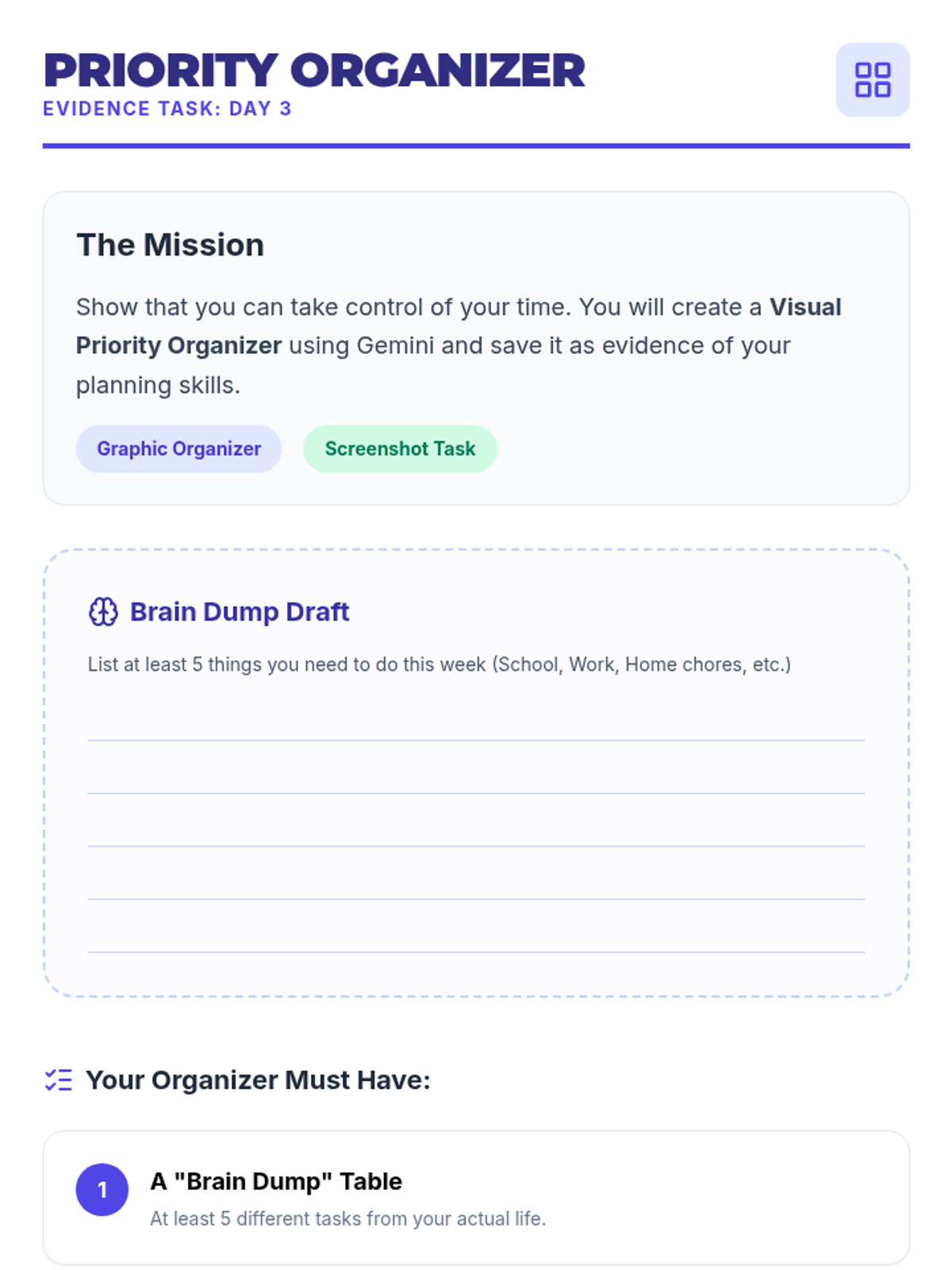
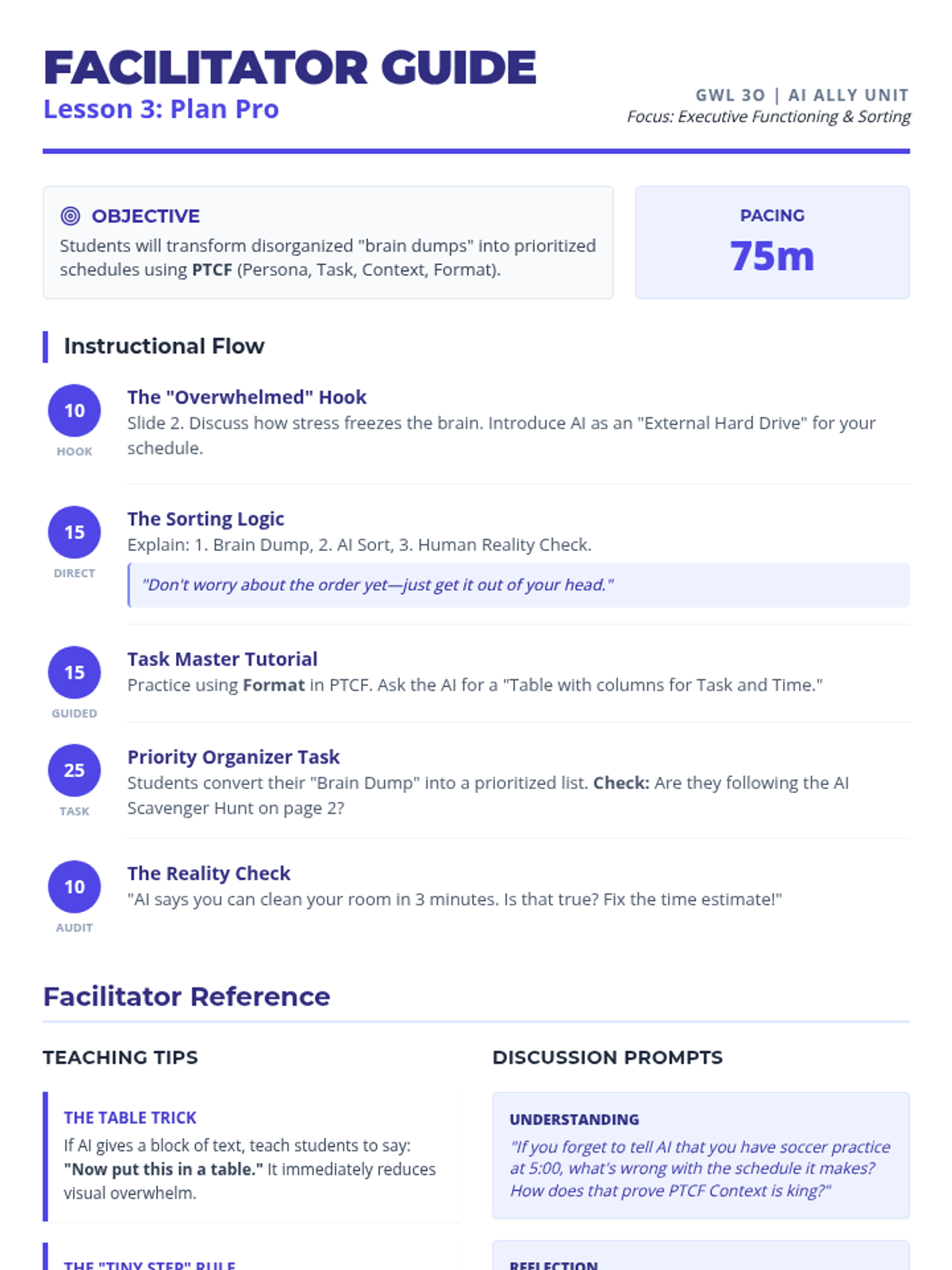
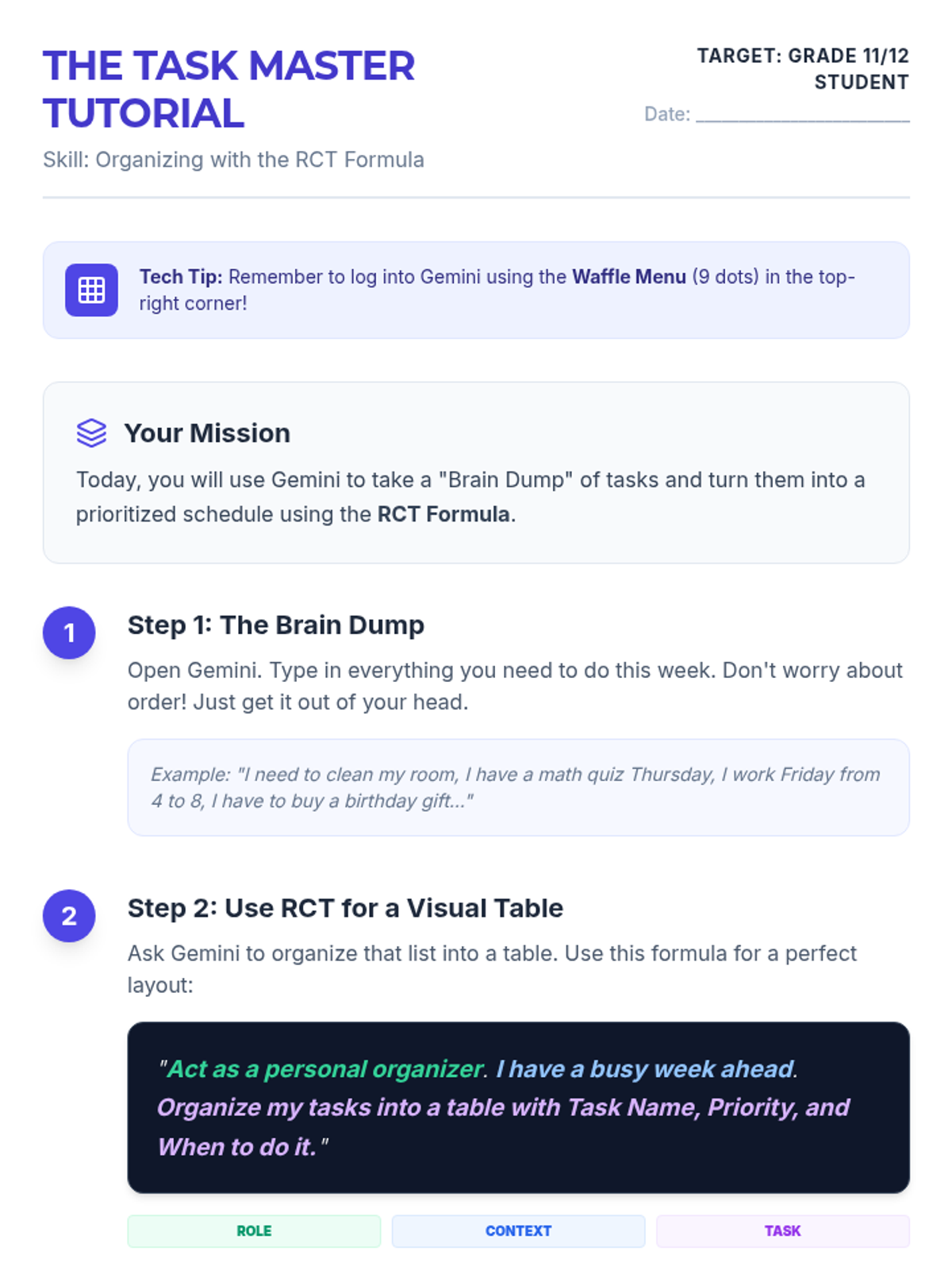
Focuses on organizational skills by using AI to transform messy lists into prioritized schedules and graphic organizers for improved task management.
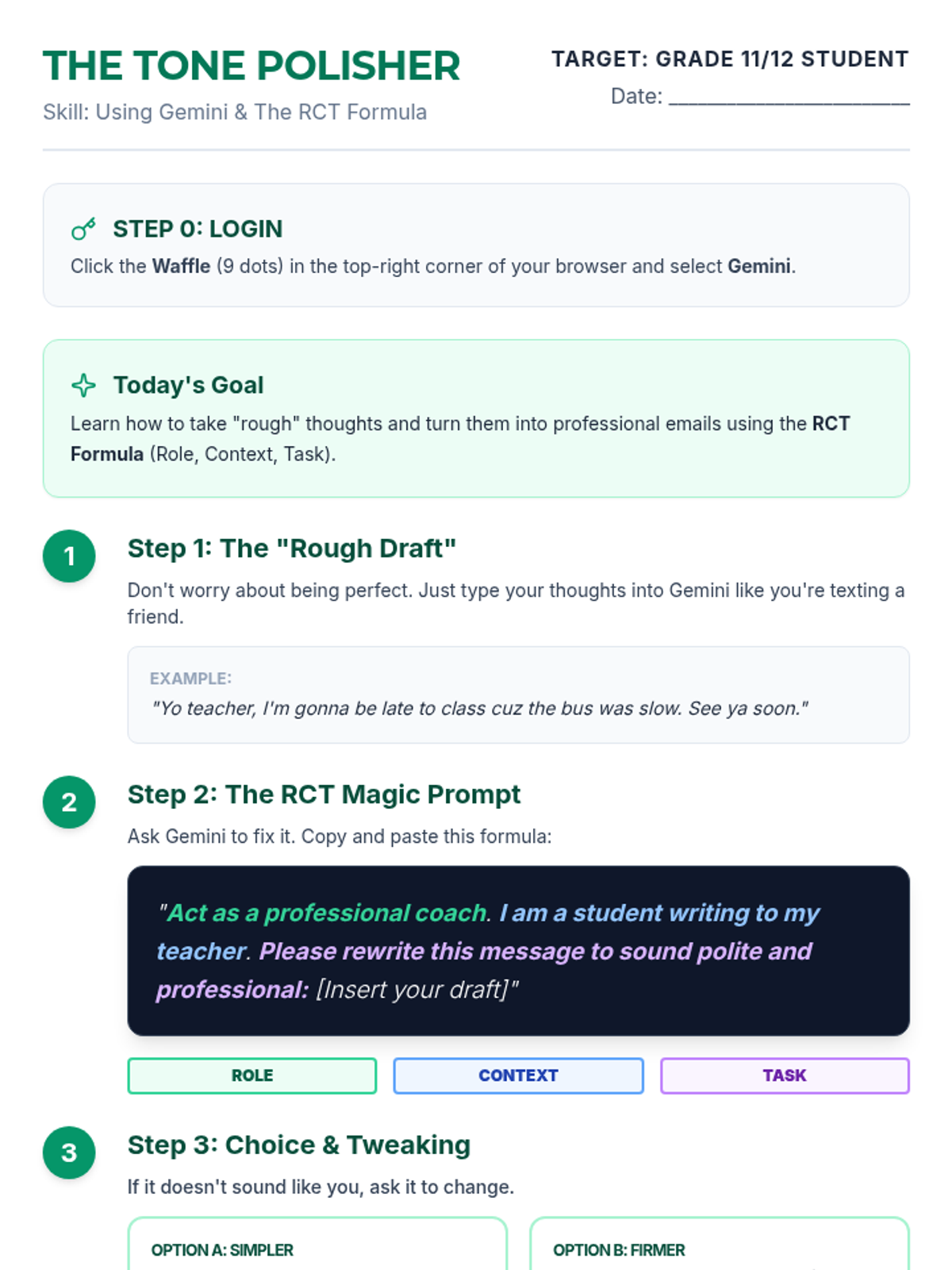
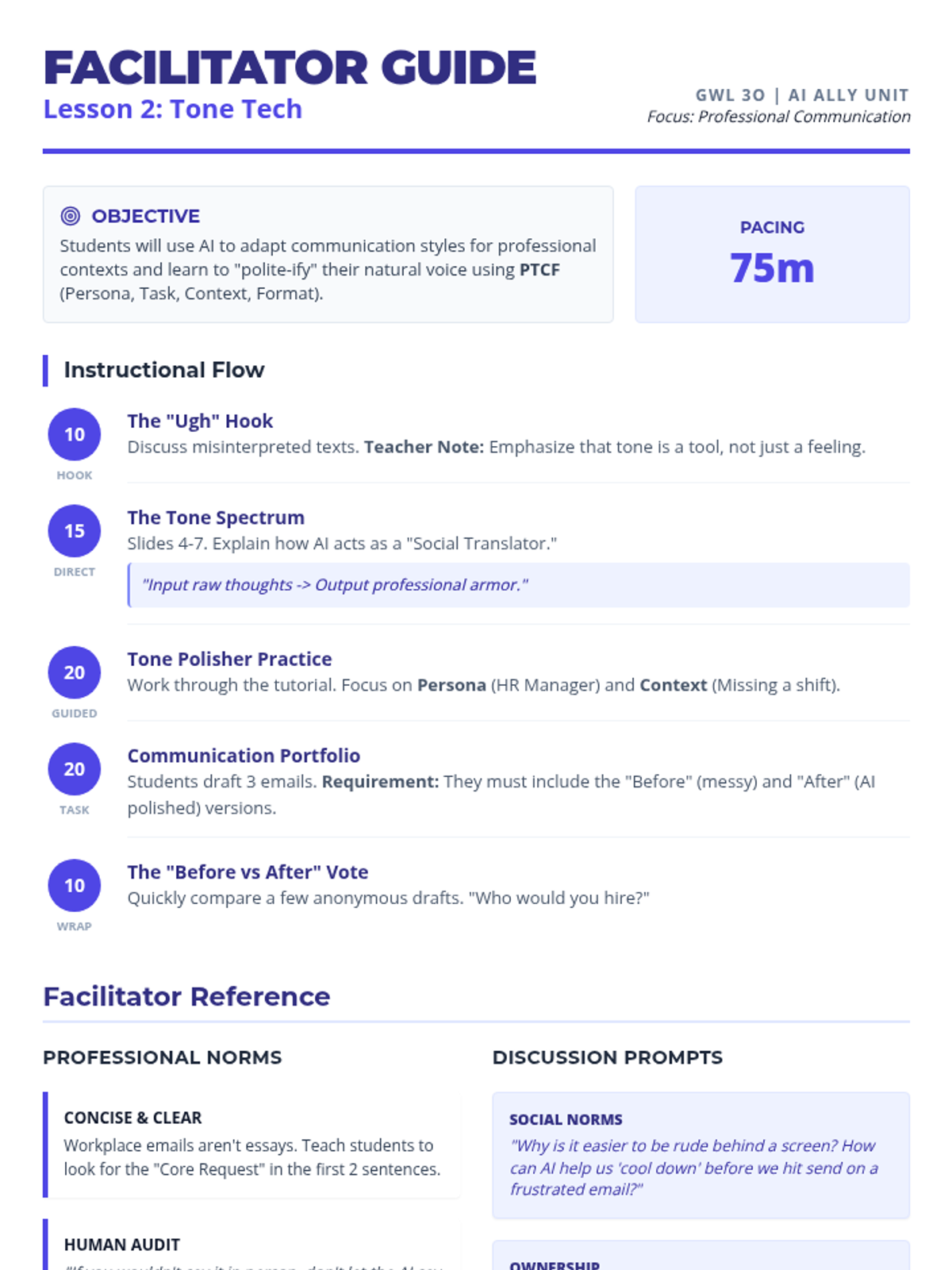
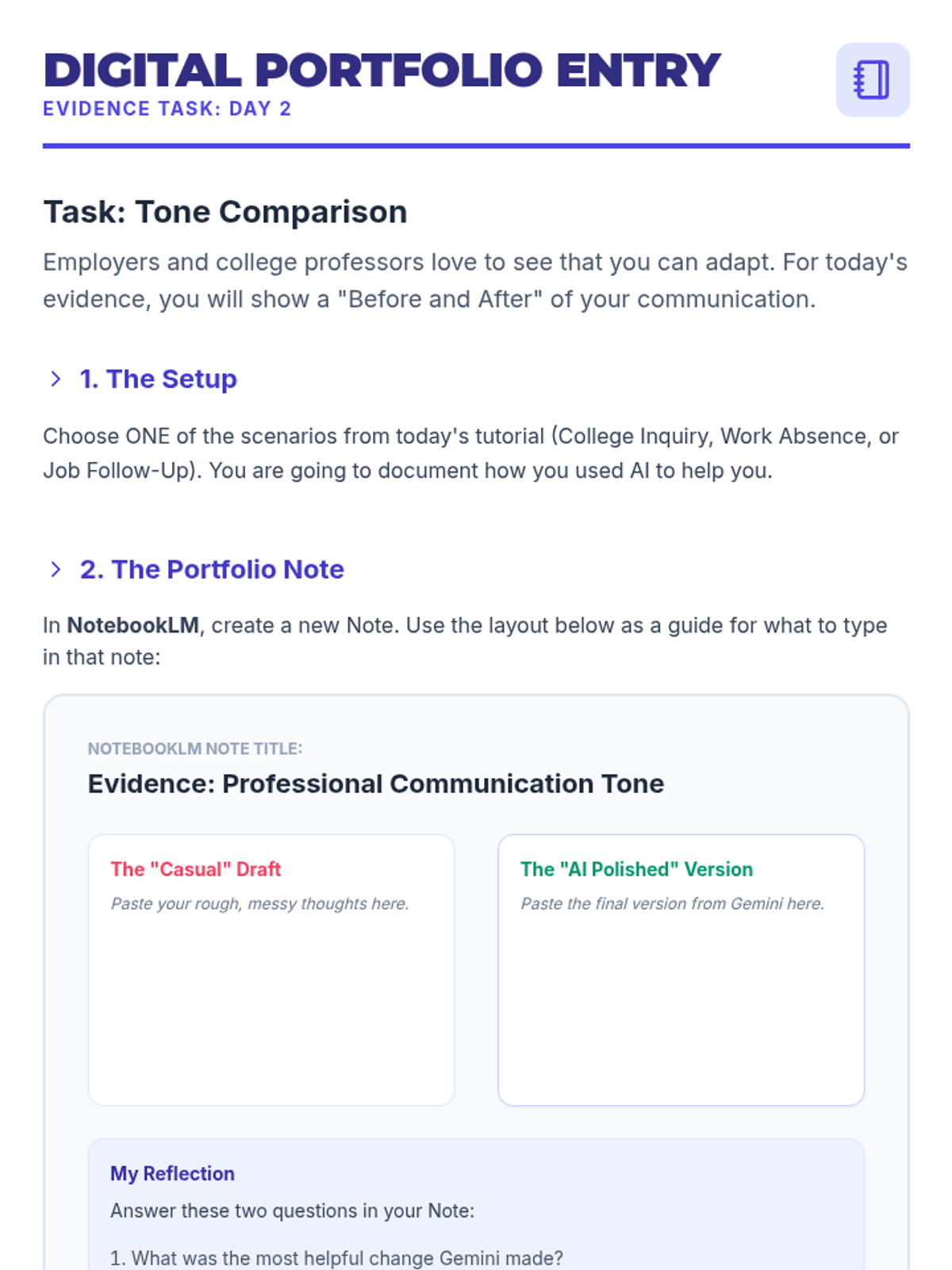
Students learn to use Gemini to refine professional tone and clarity in digital communications, creating a portfolio of email templates for workplace and college scenarios.
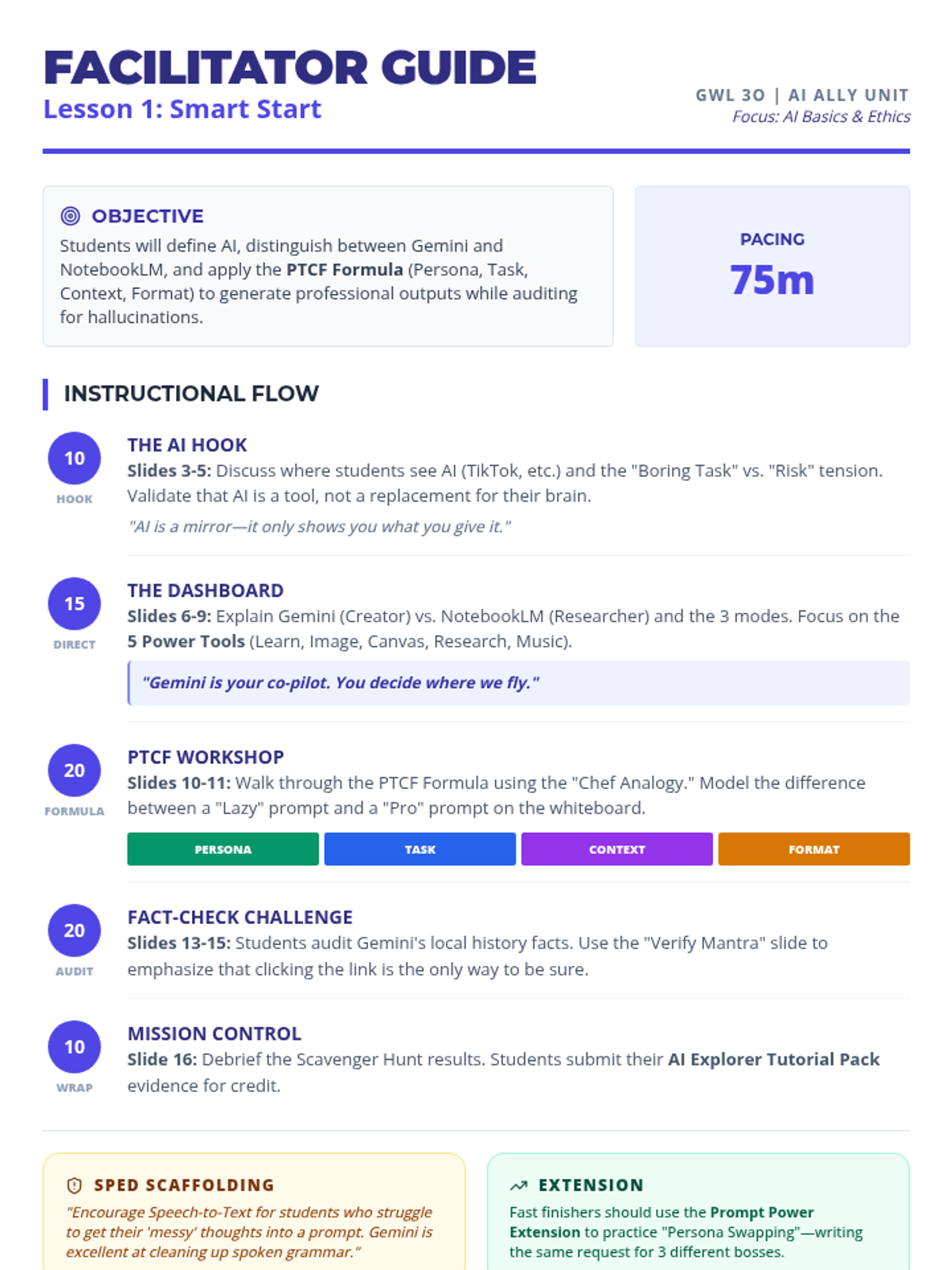
An introduction to AI basics, ethics, and the comparison between Gemini and NotebookLM, culminating in a visual exploration of AI's impact on the future.
A lesson focused on teaching participants how to analyze and 'decode' job descriptions to identify key requirements and hidden expectations.
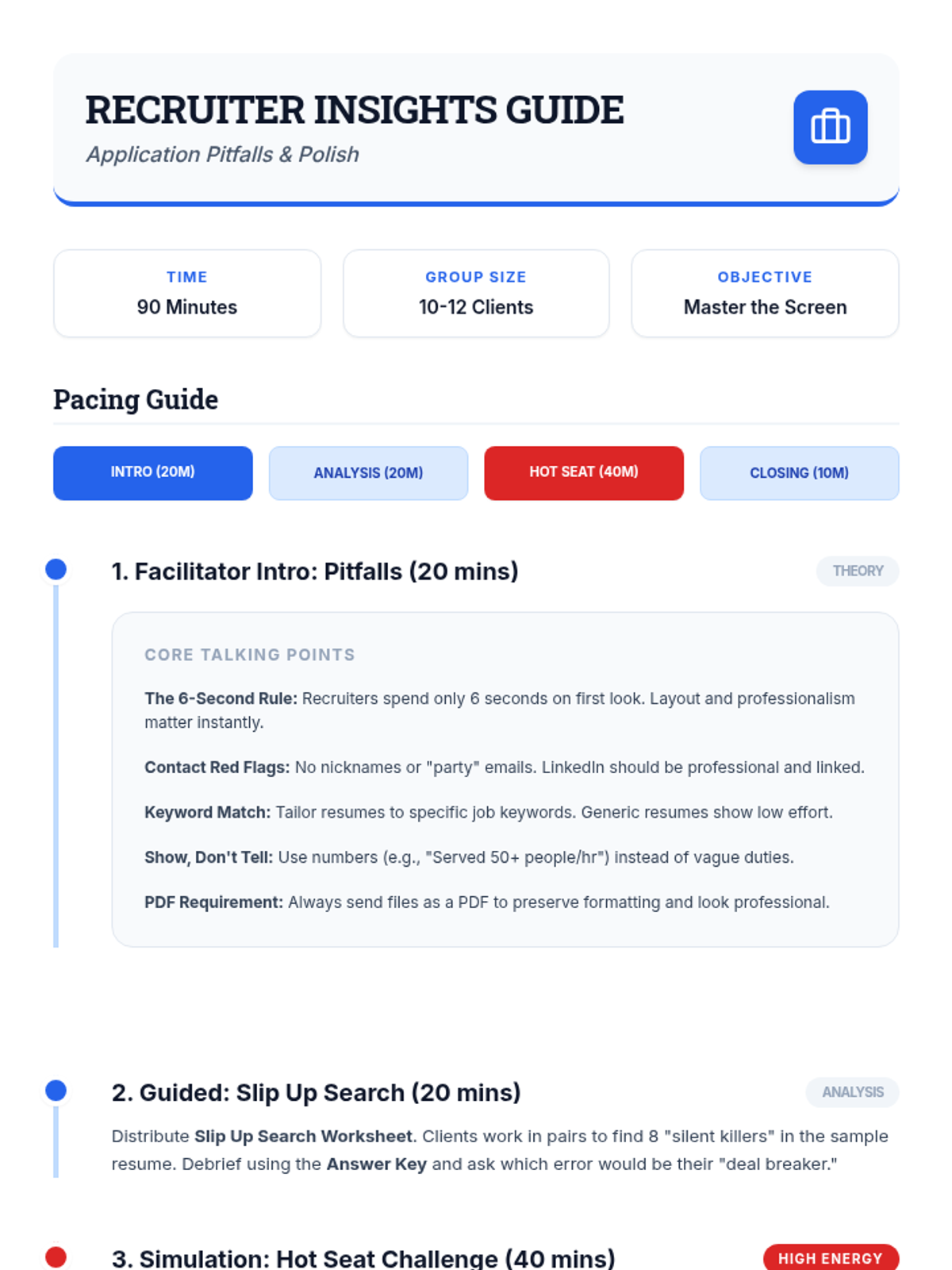
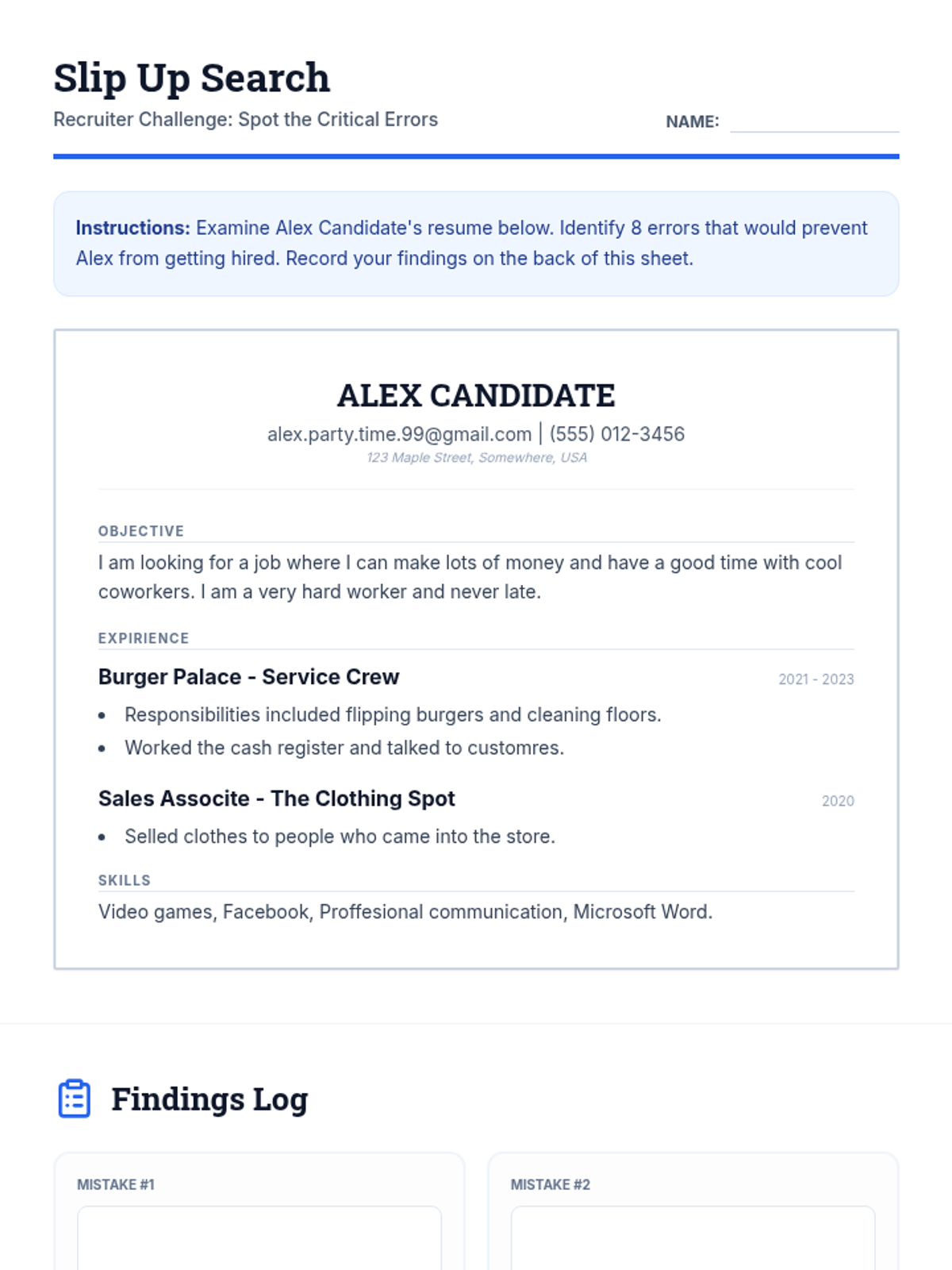
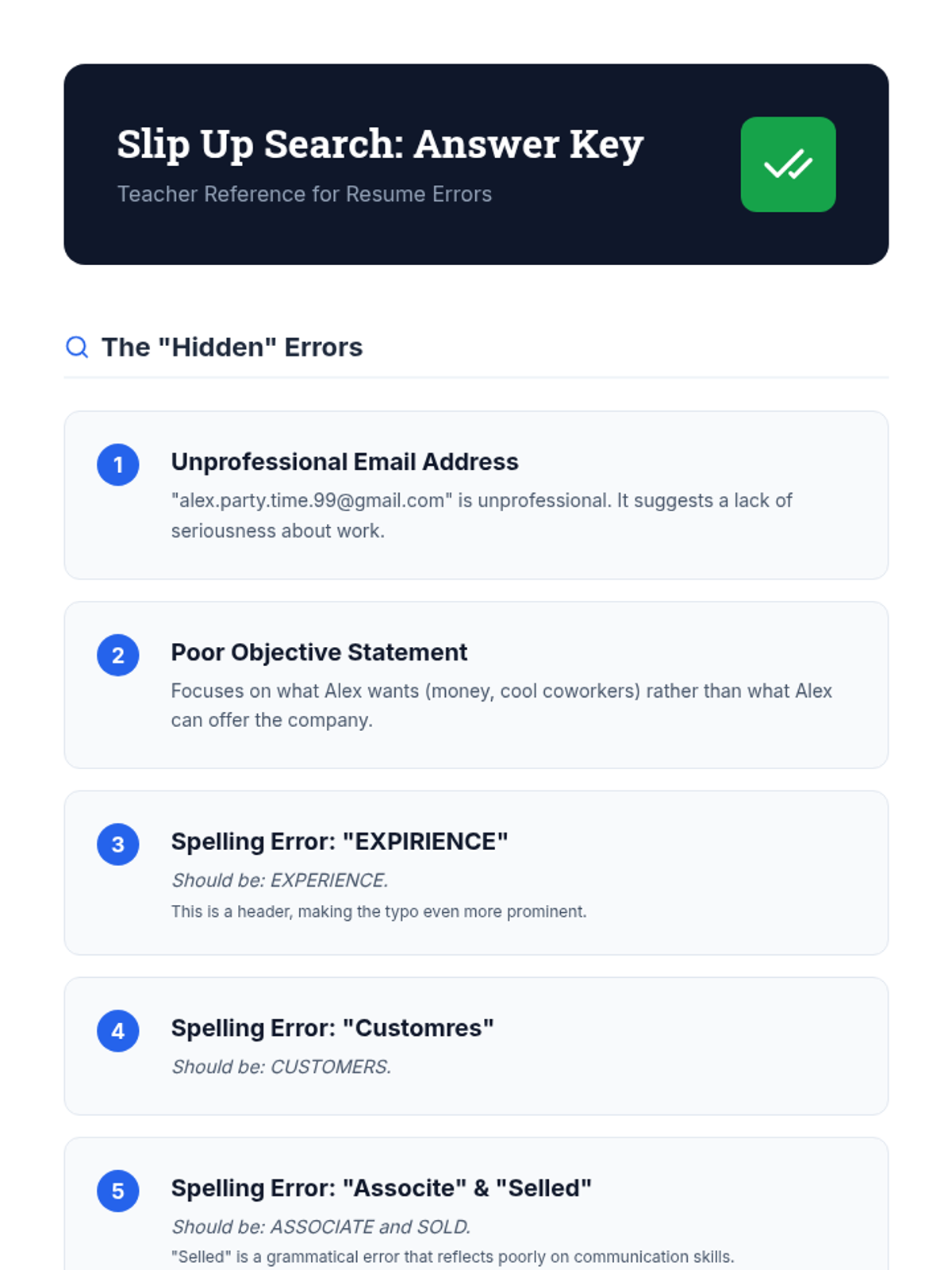
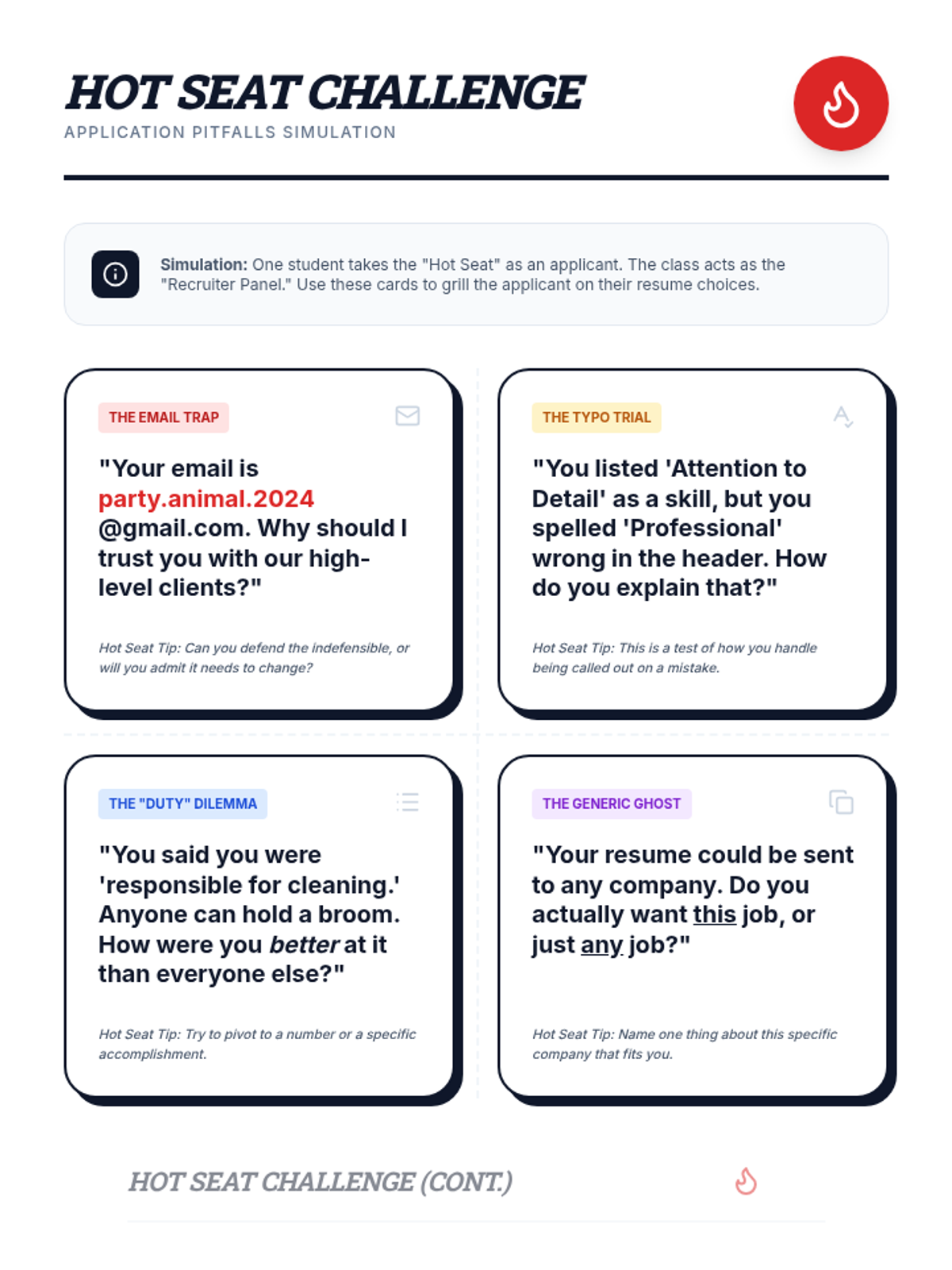
A comprehensive lesson identifying common workplace application errors, from resume typos to unprofessional email addresses, and how to fix them.
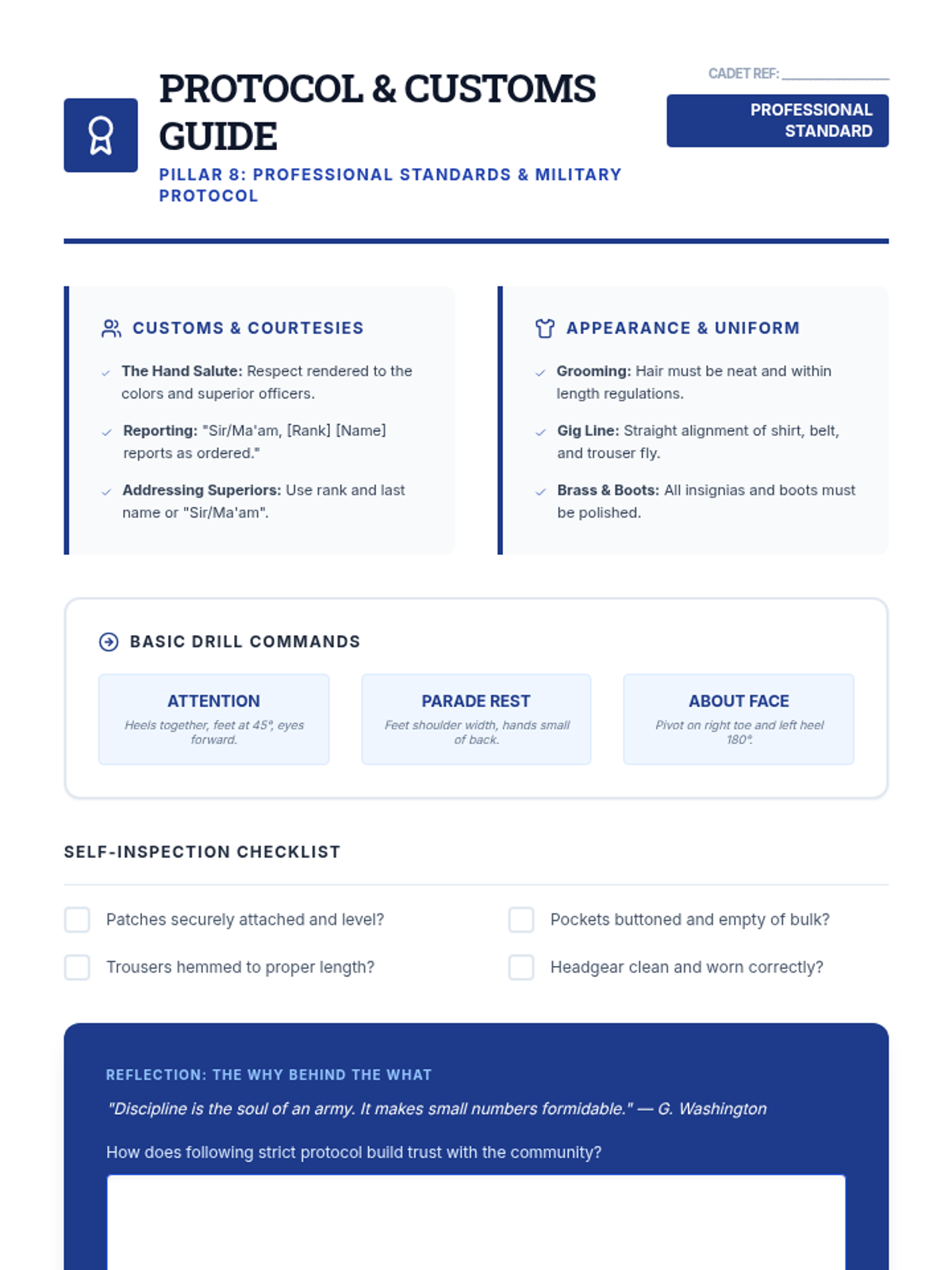
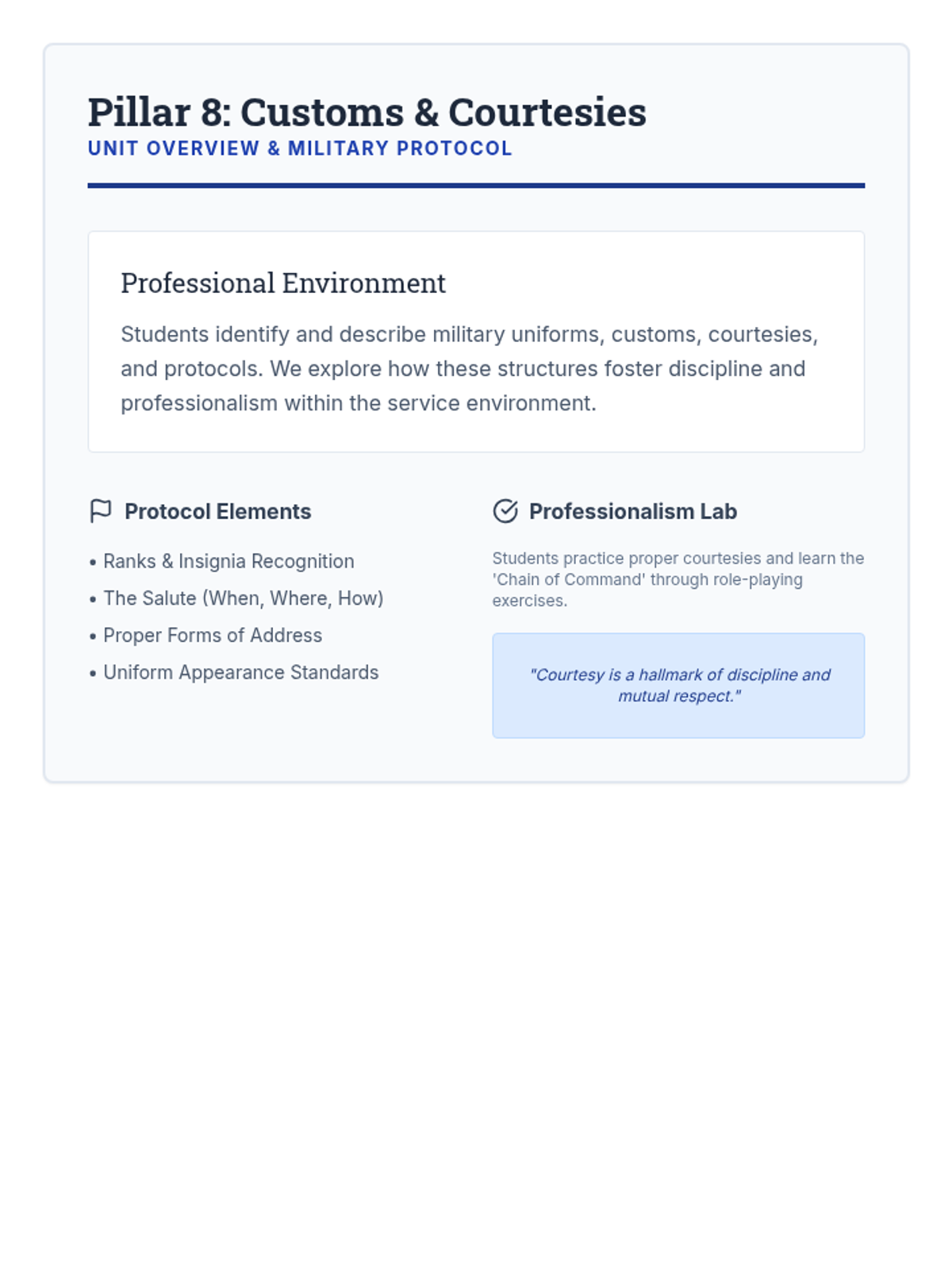
Master military customs, courtesies, protocols, and uniform standards essential for professional military environments.
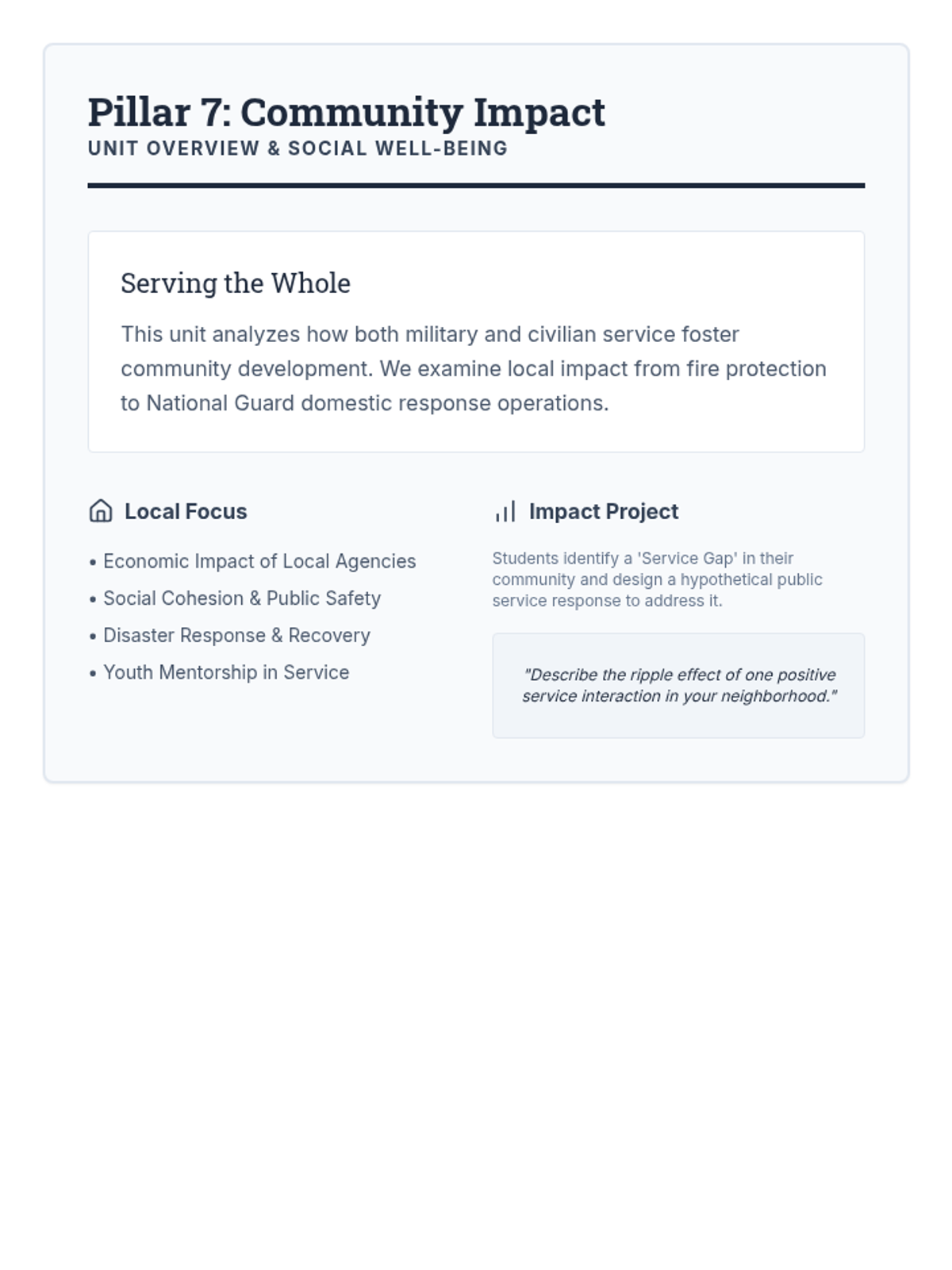
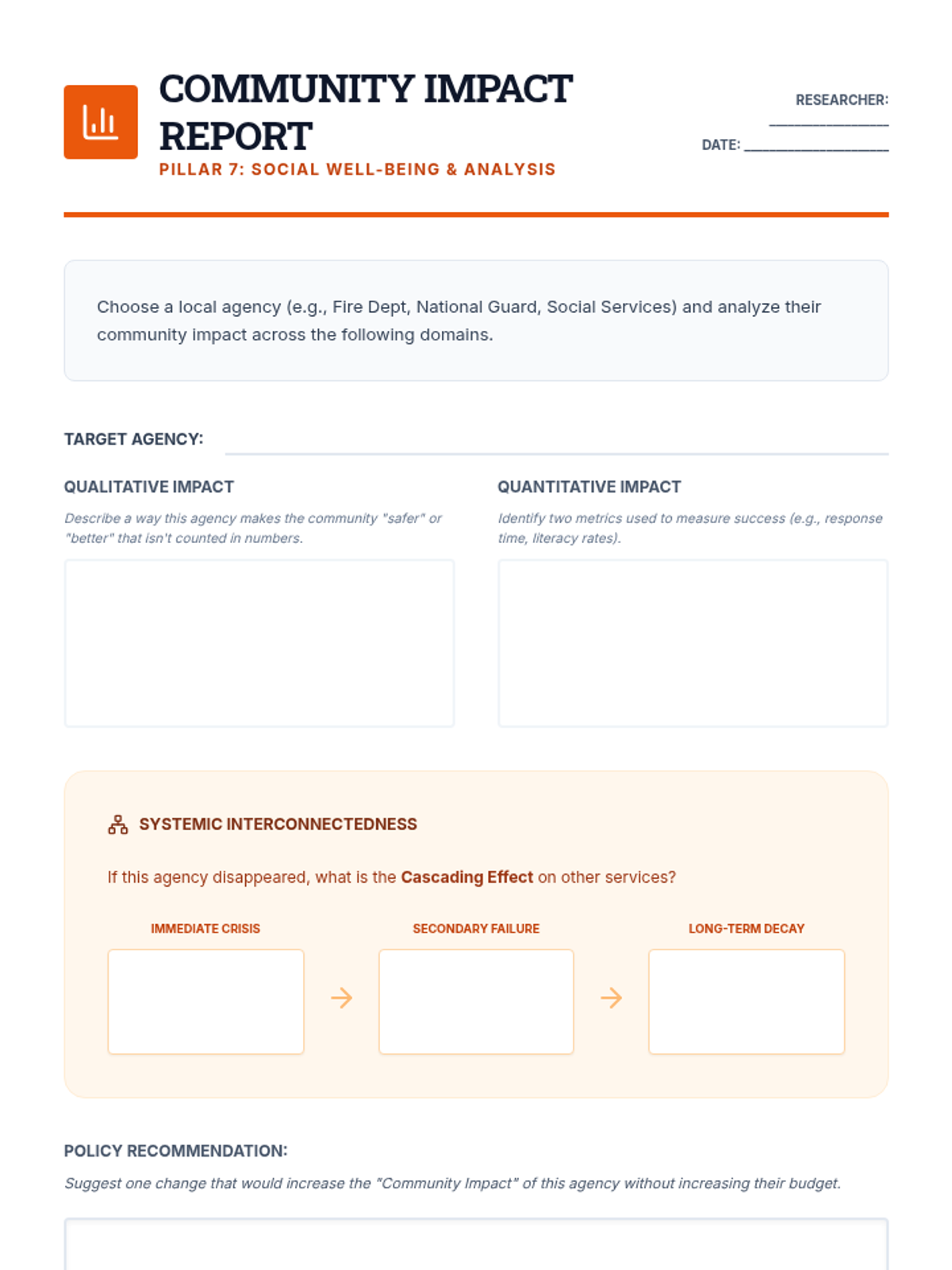
Assess the positive impact of public service on local and national communities, focusing on development and societal well-being.
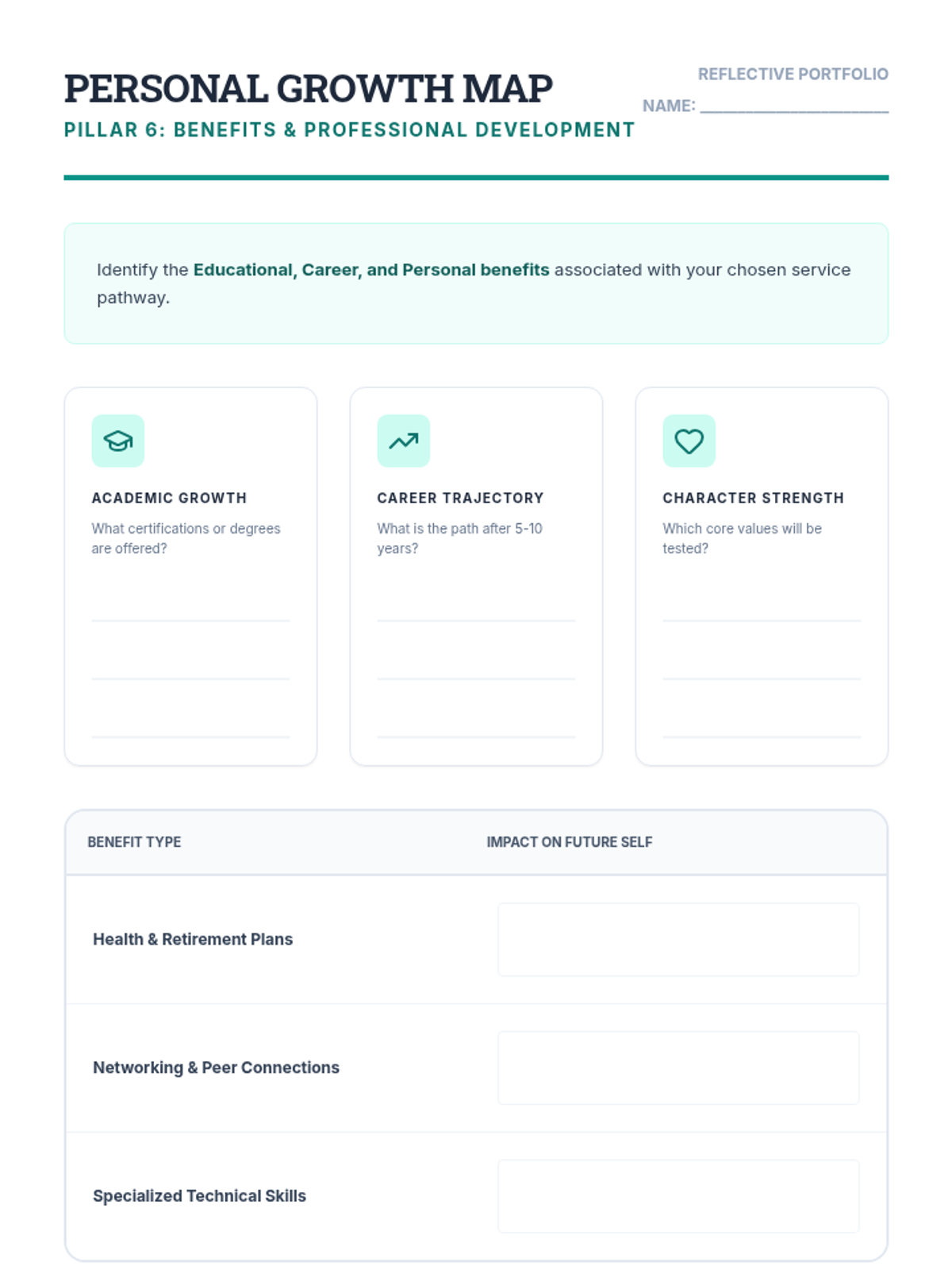
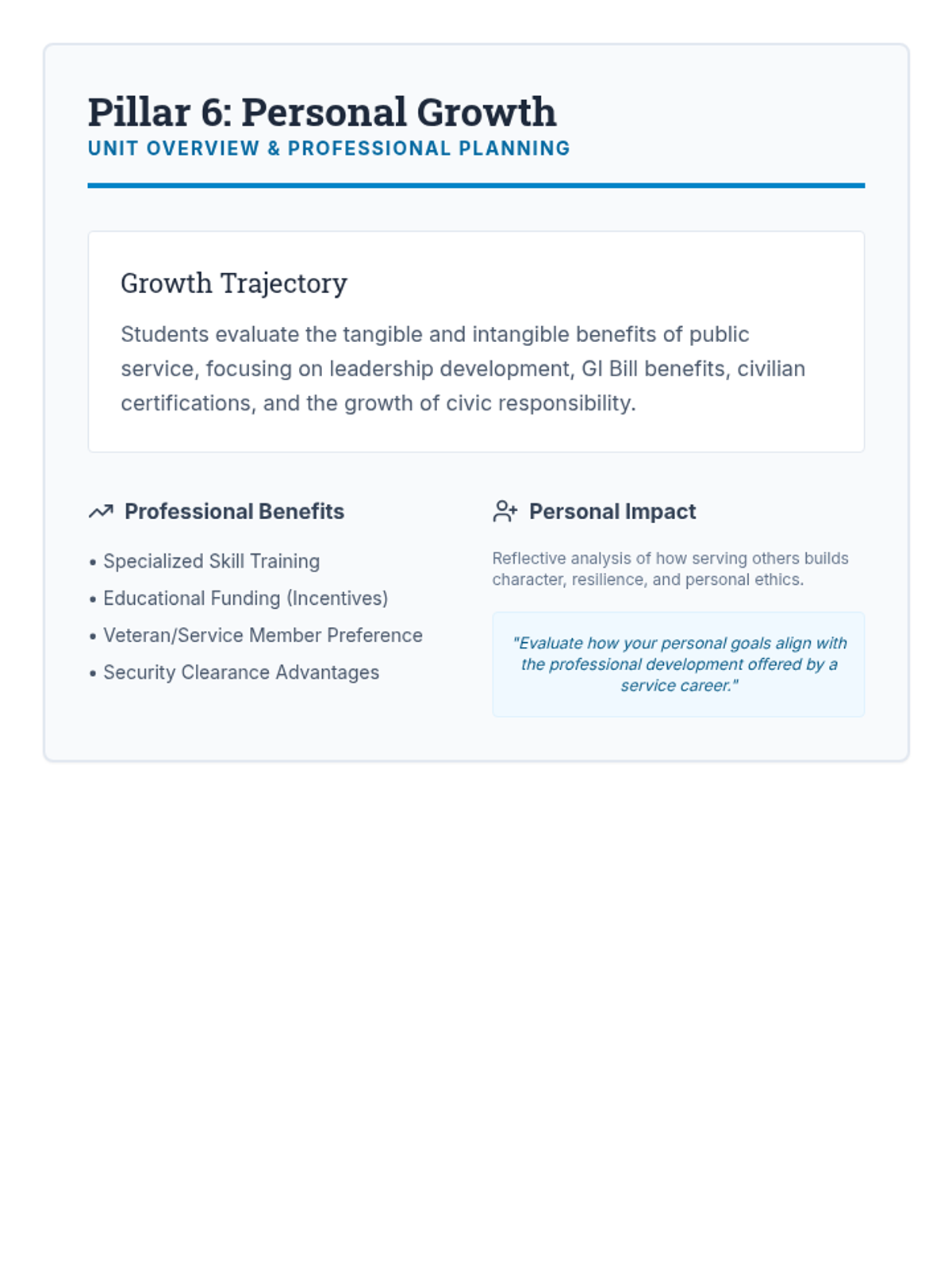
Examine the personal and professional growth resulting from service careers, including civic responsibility and professional advancement.
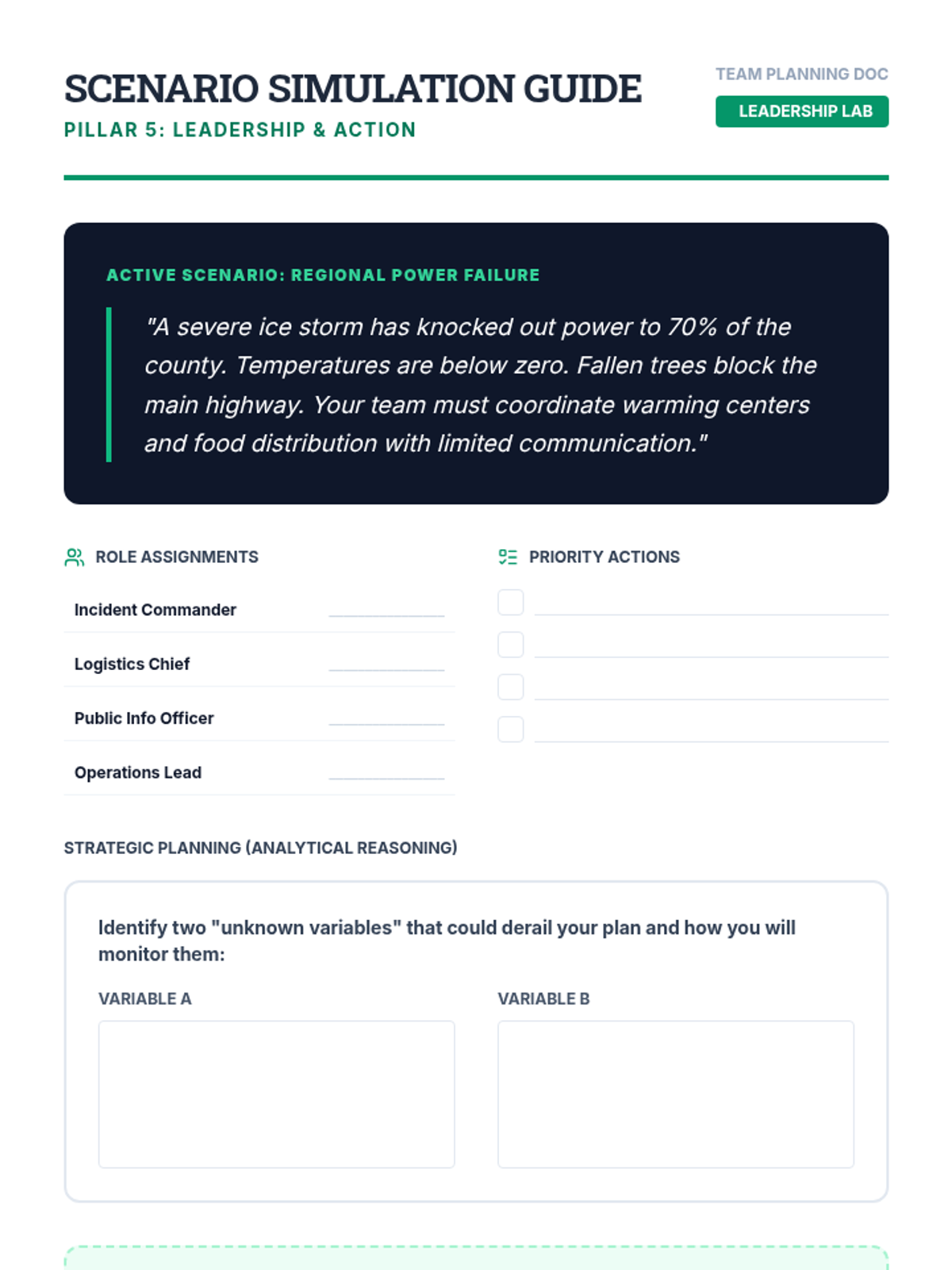
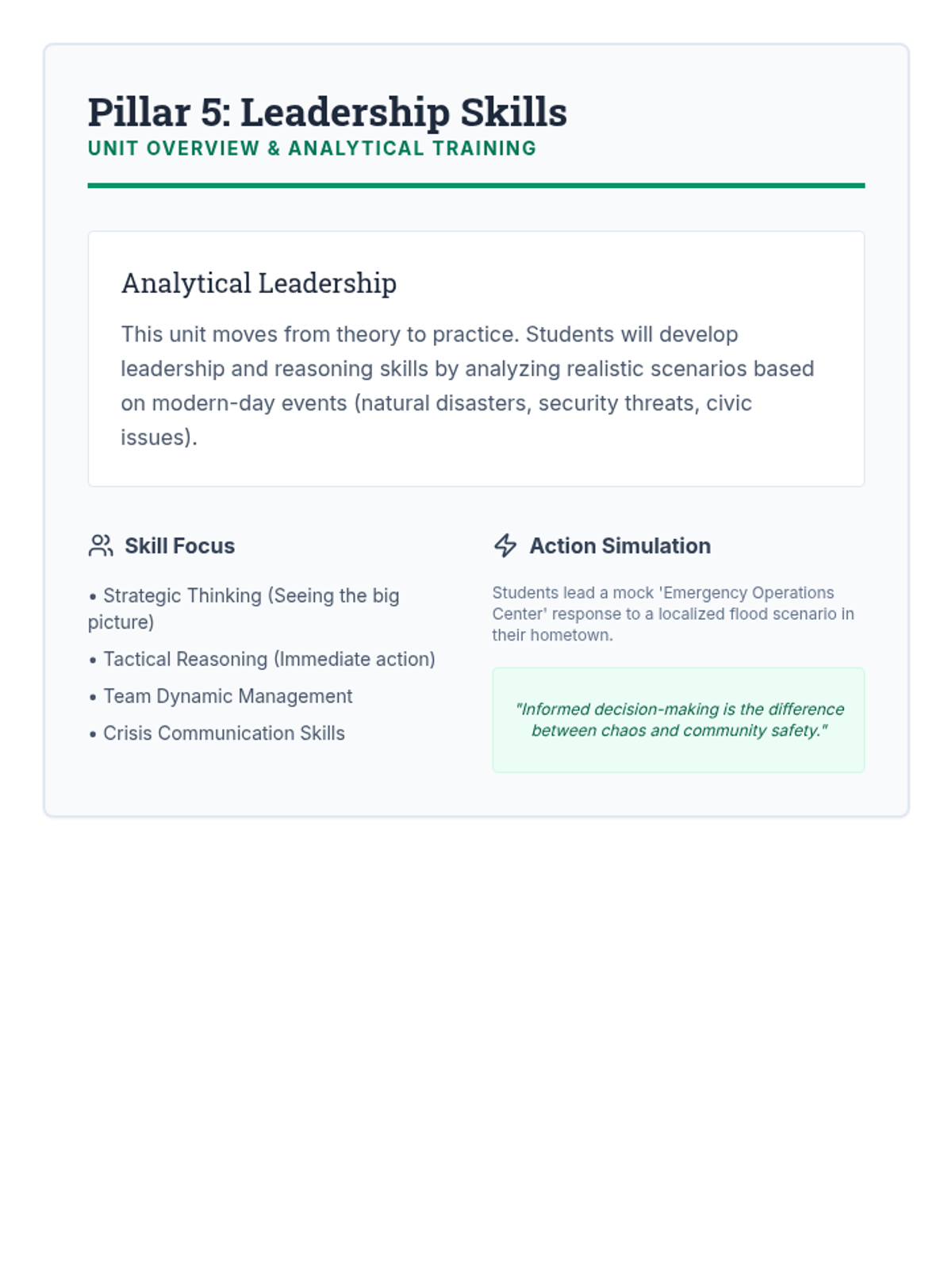
Develop leadership, critical thinking, and analytical reasoning skills through realistic public service simulations and current event analysis.
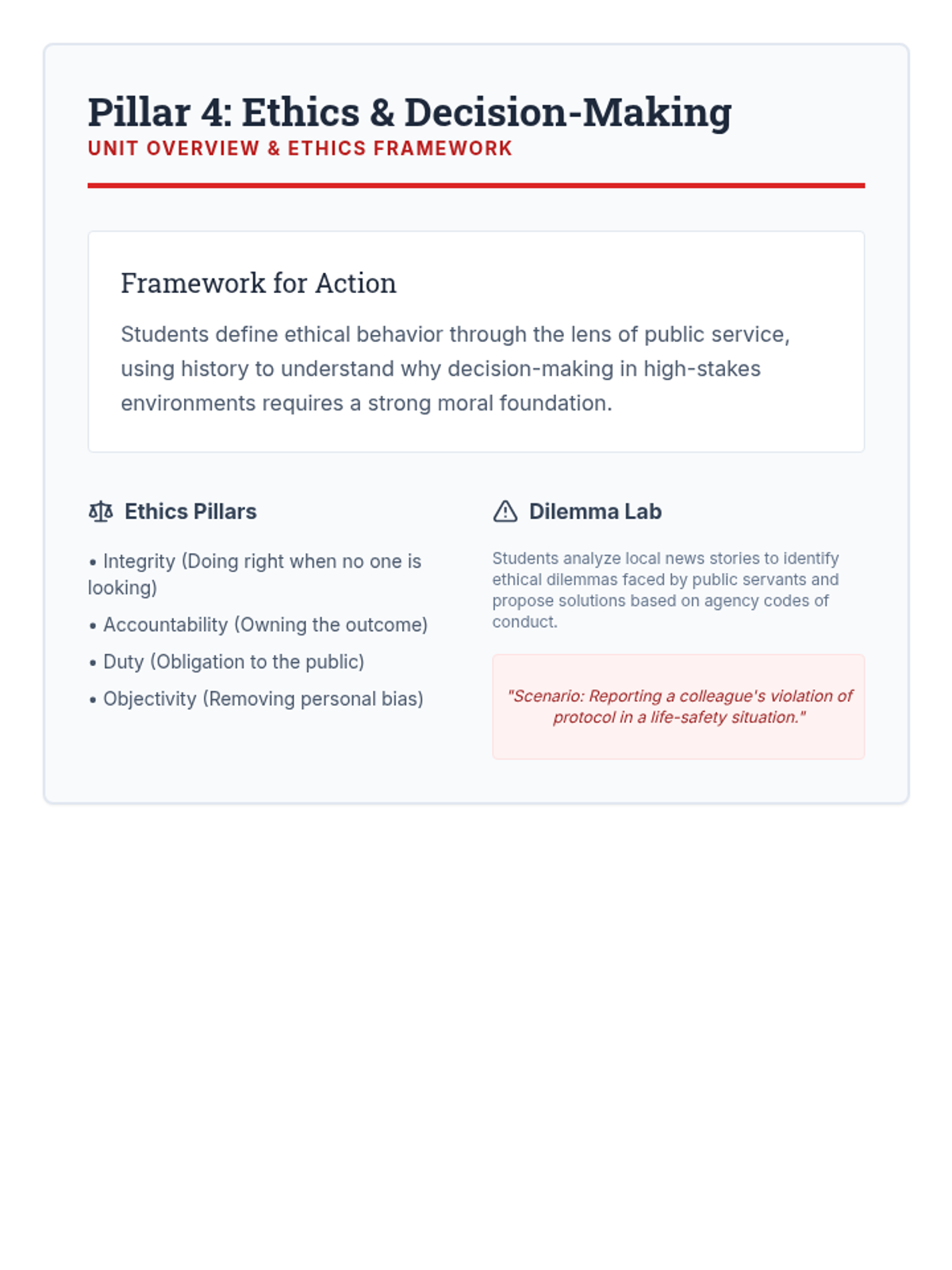
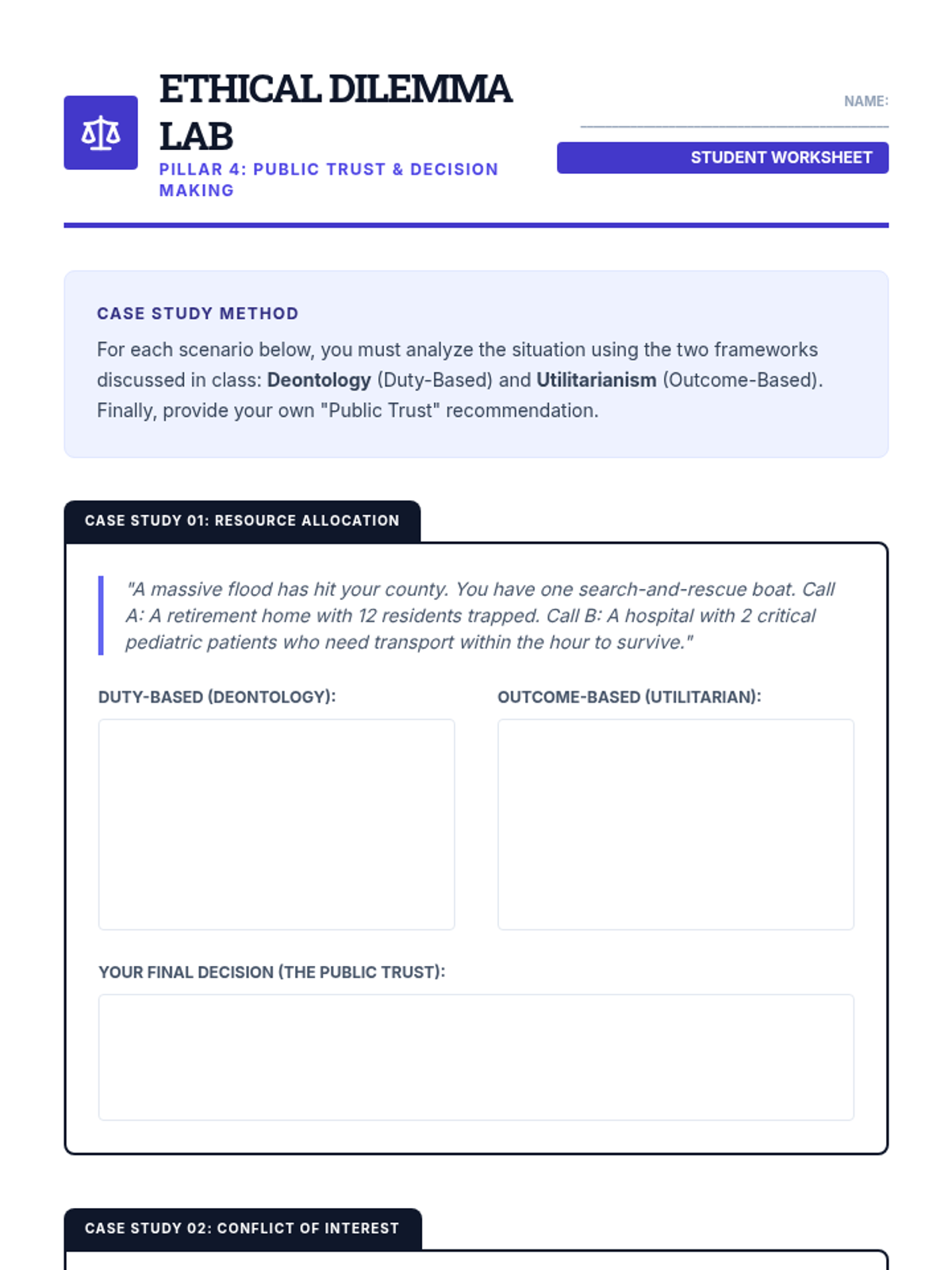
Define and apply ethical frameworks to public service scenarios, analyzing complex challenges and the role of ethics in leadership.
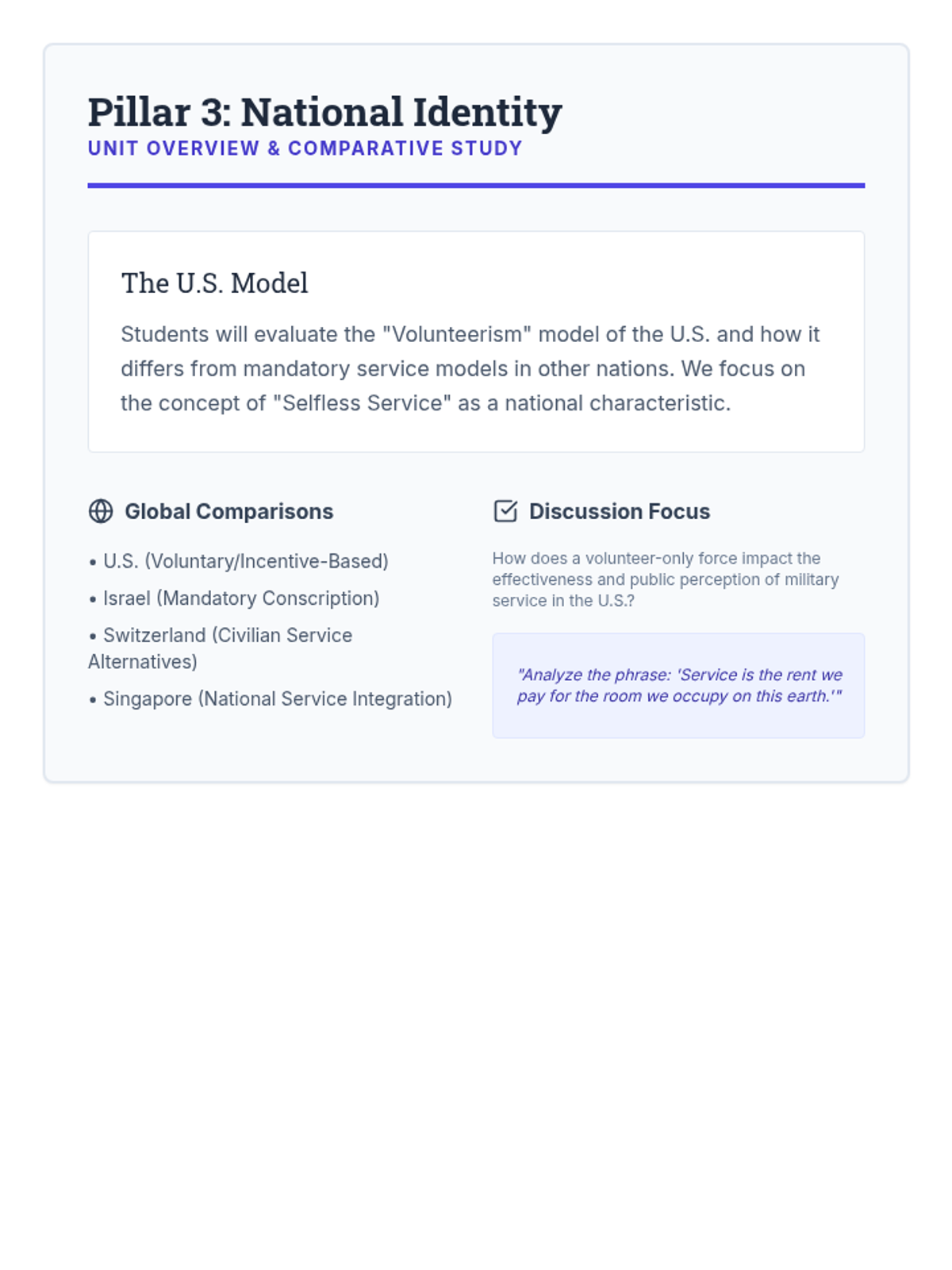
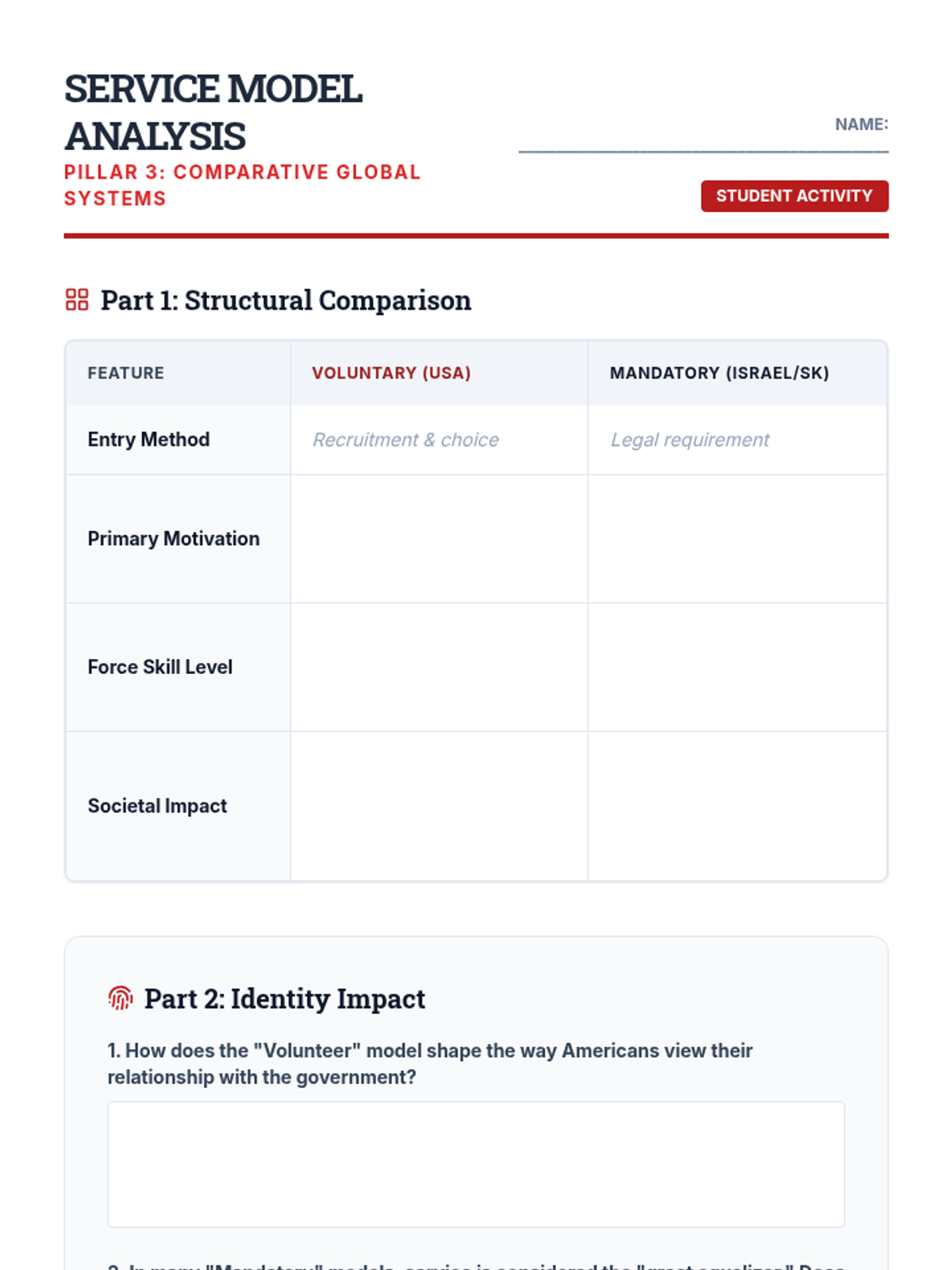
Evaluate how public service shapes U.S. national identity and compare the U.S. volunteerism model with international public service structures.
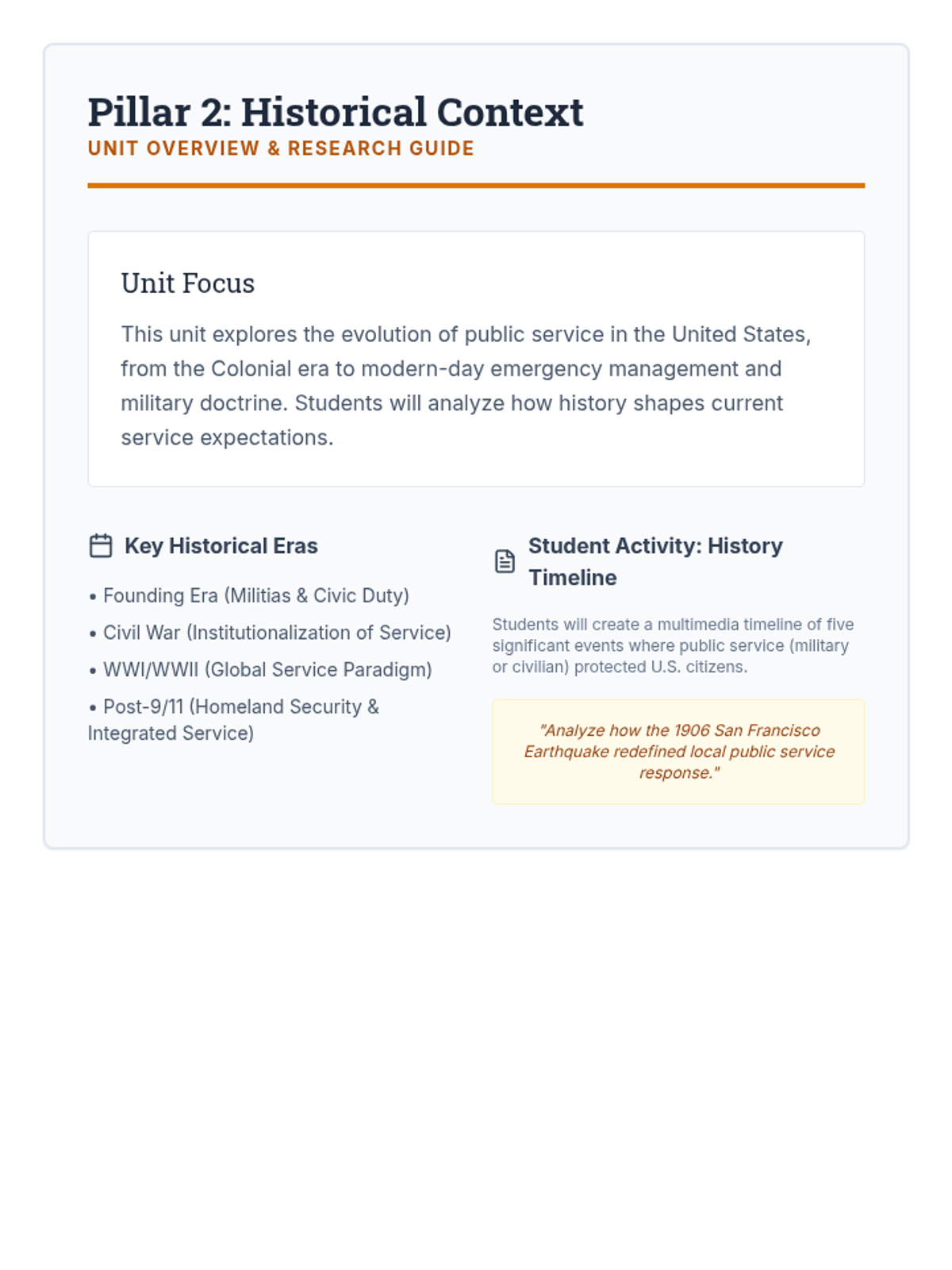
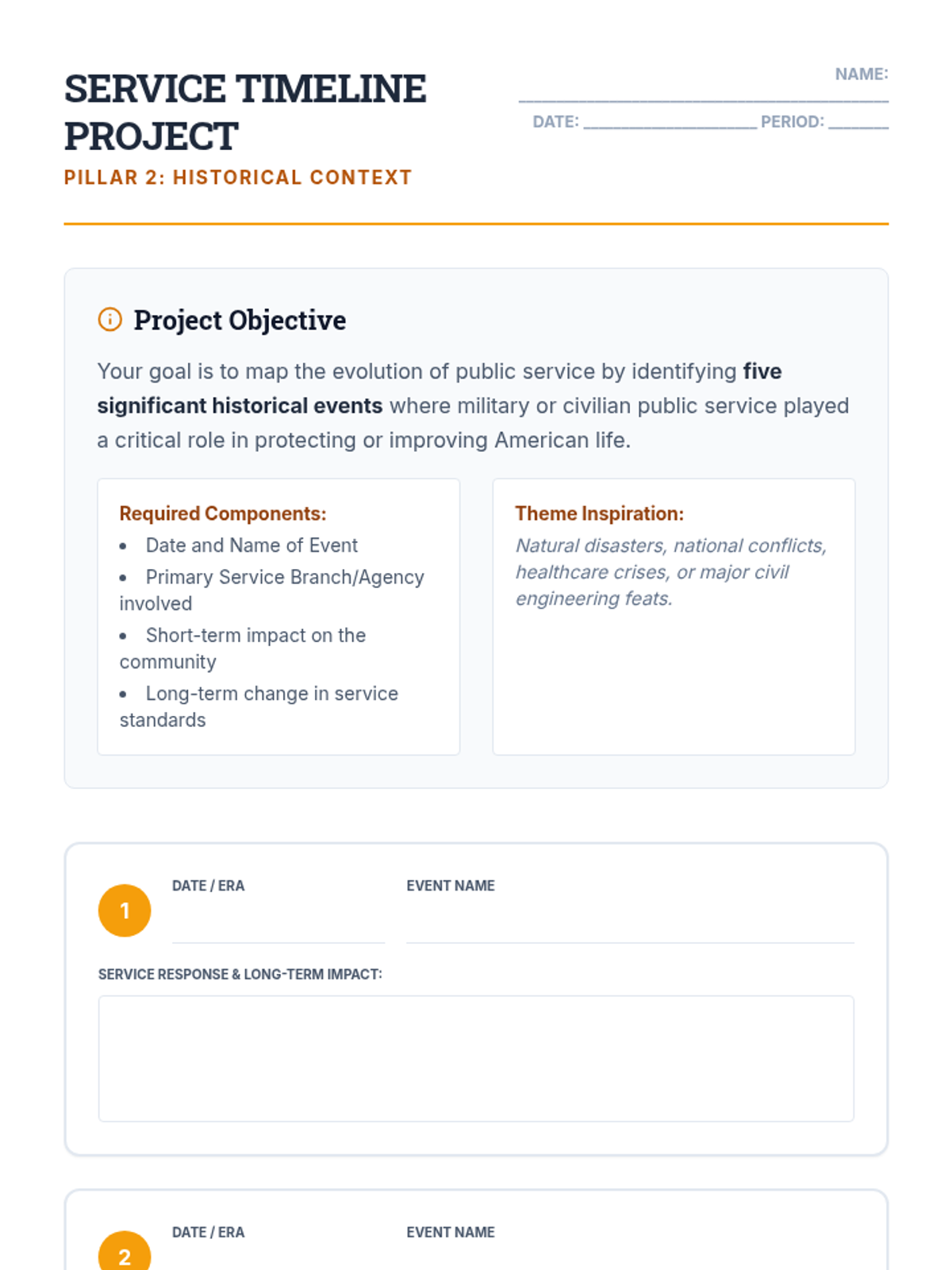
Analyze the historical evolution of public service in the U.S., researching significant events and their impact on national safety and service.
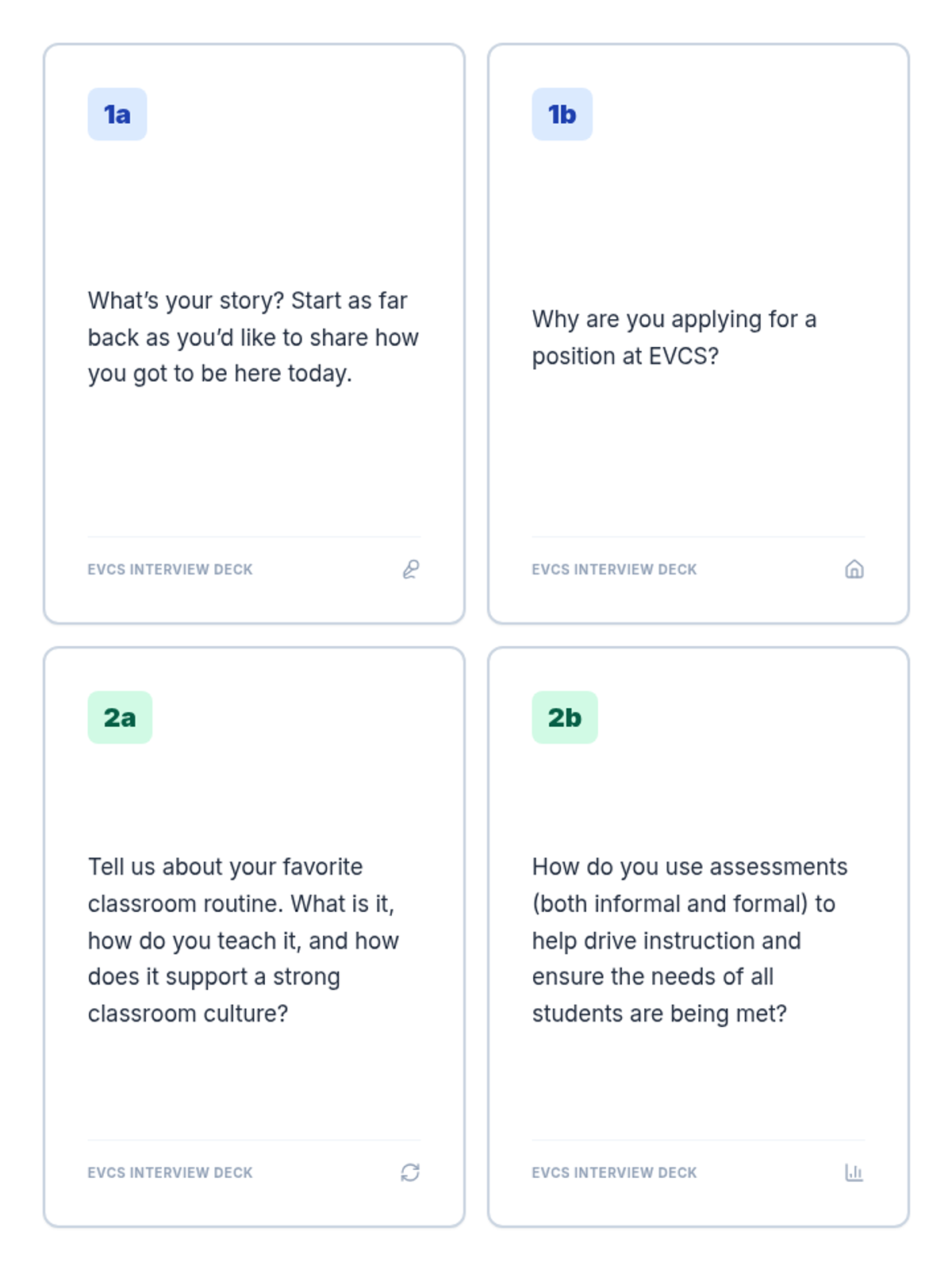
A comprehensive interview kit for school leadership and hiring committees, focusing on high-quality candidate evaluation through targeted questioning and scenario-based discussion.
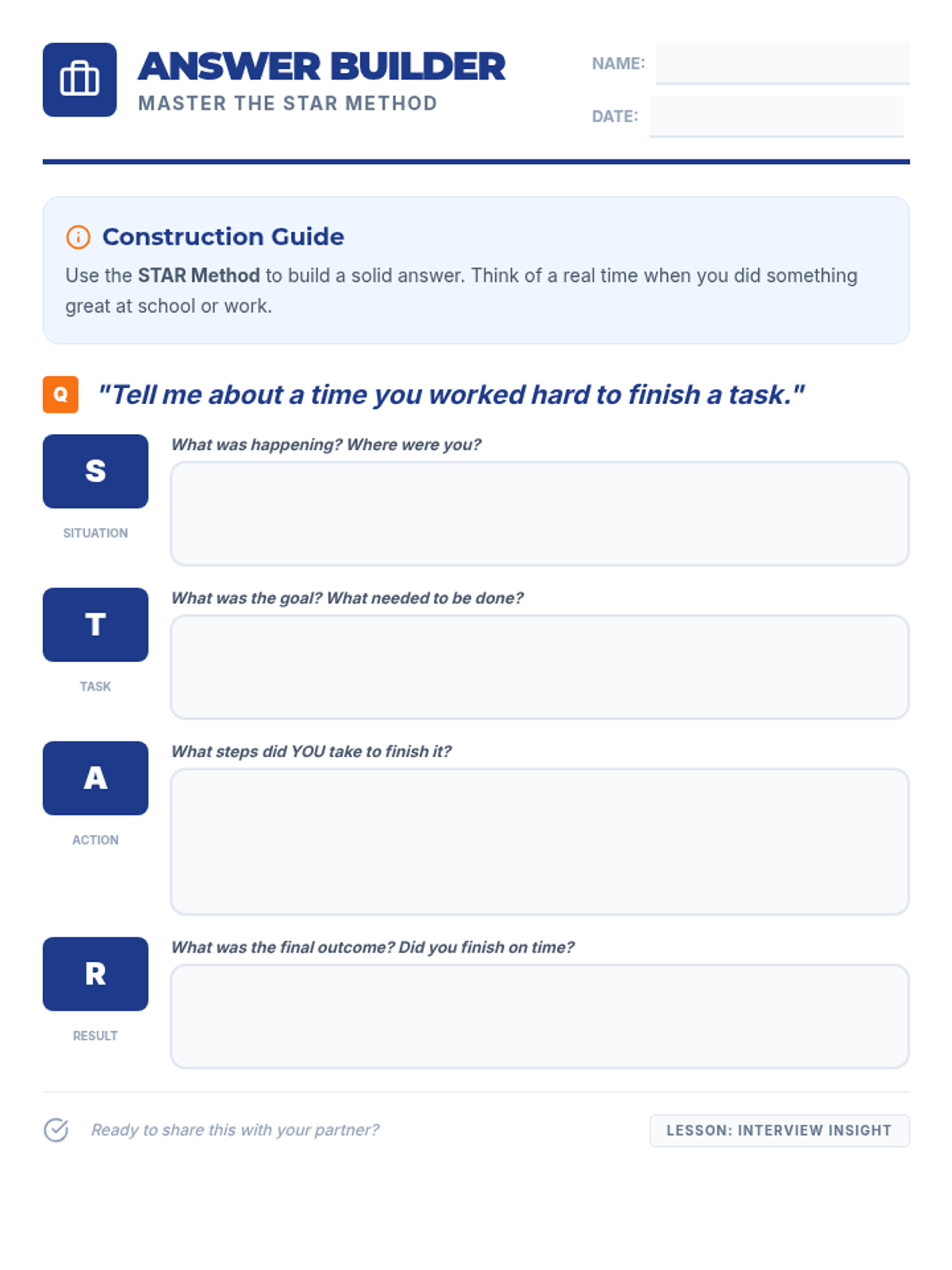
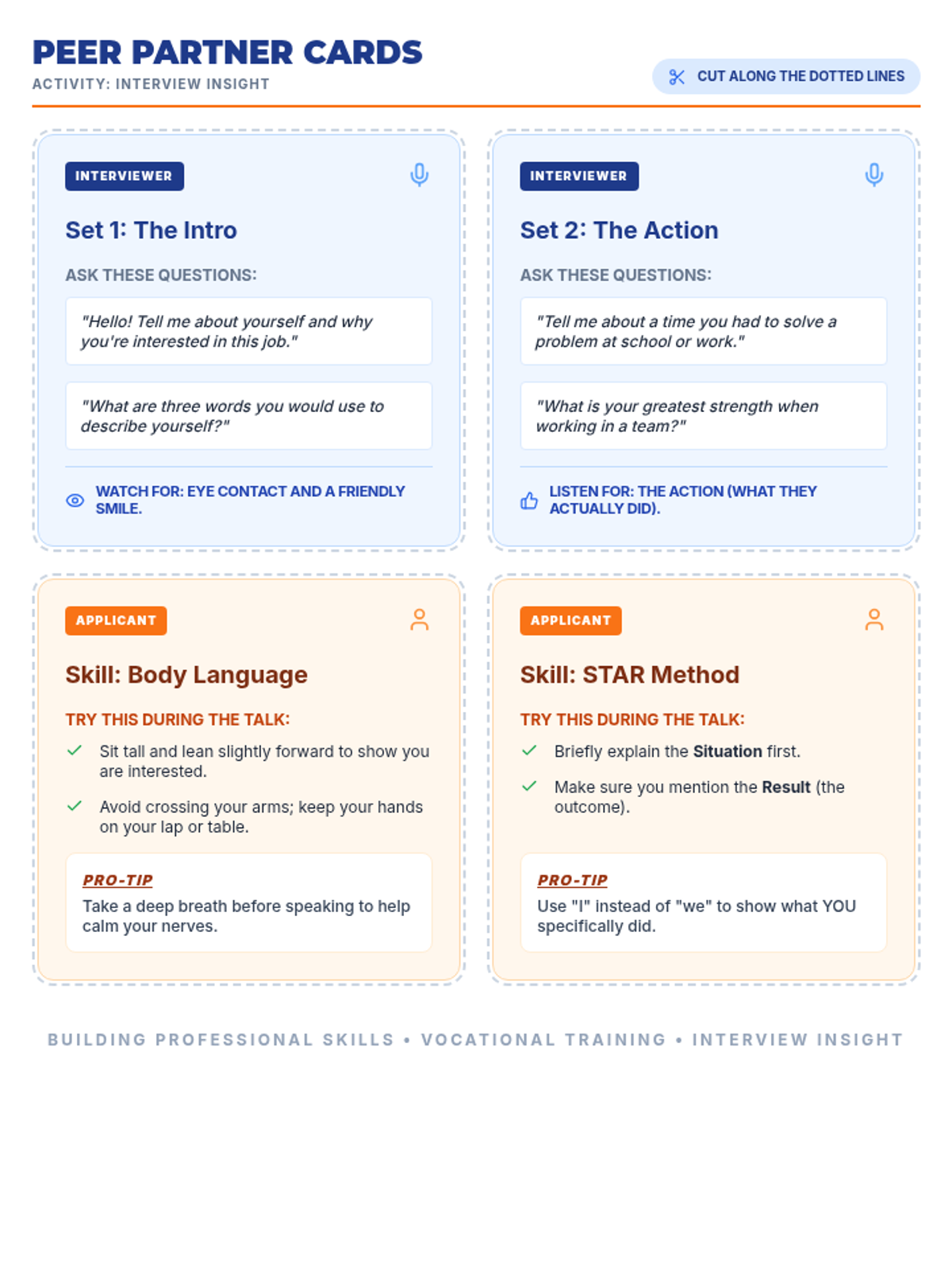
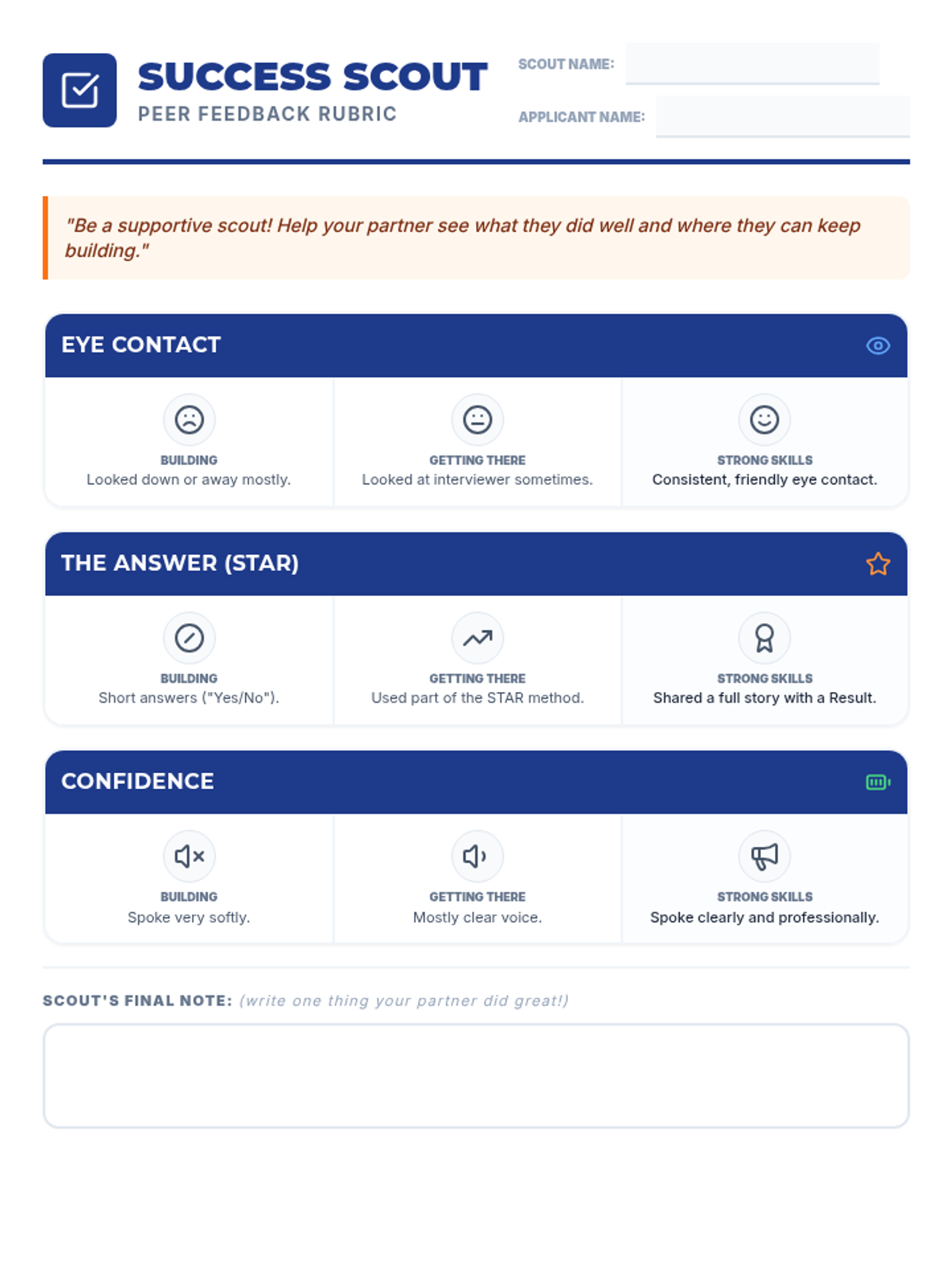
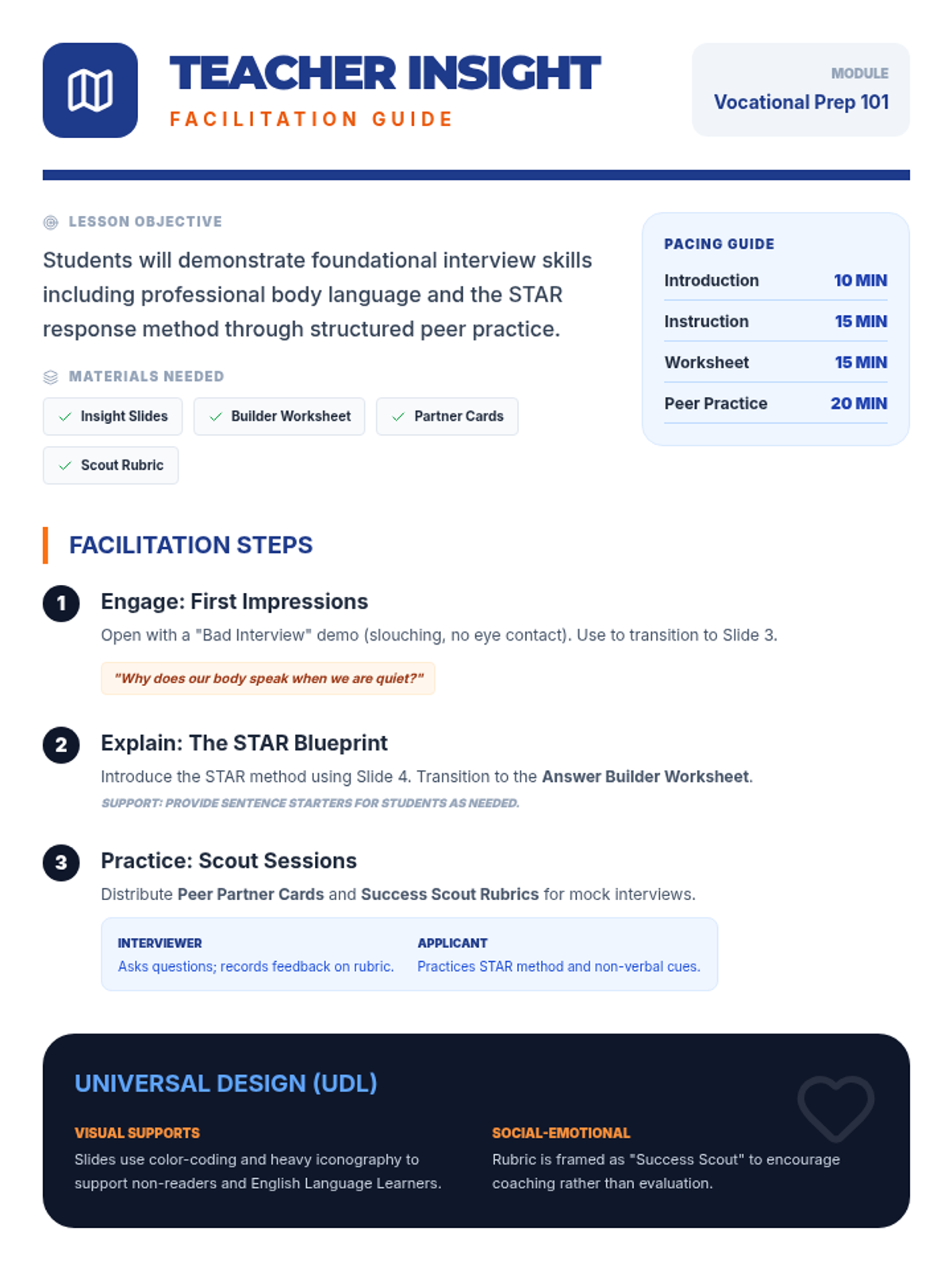
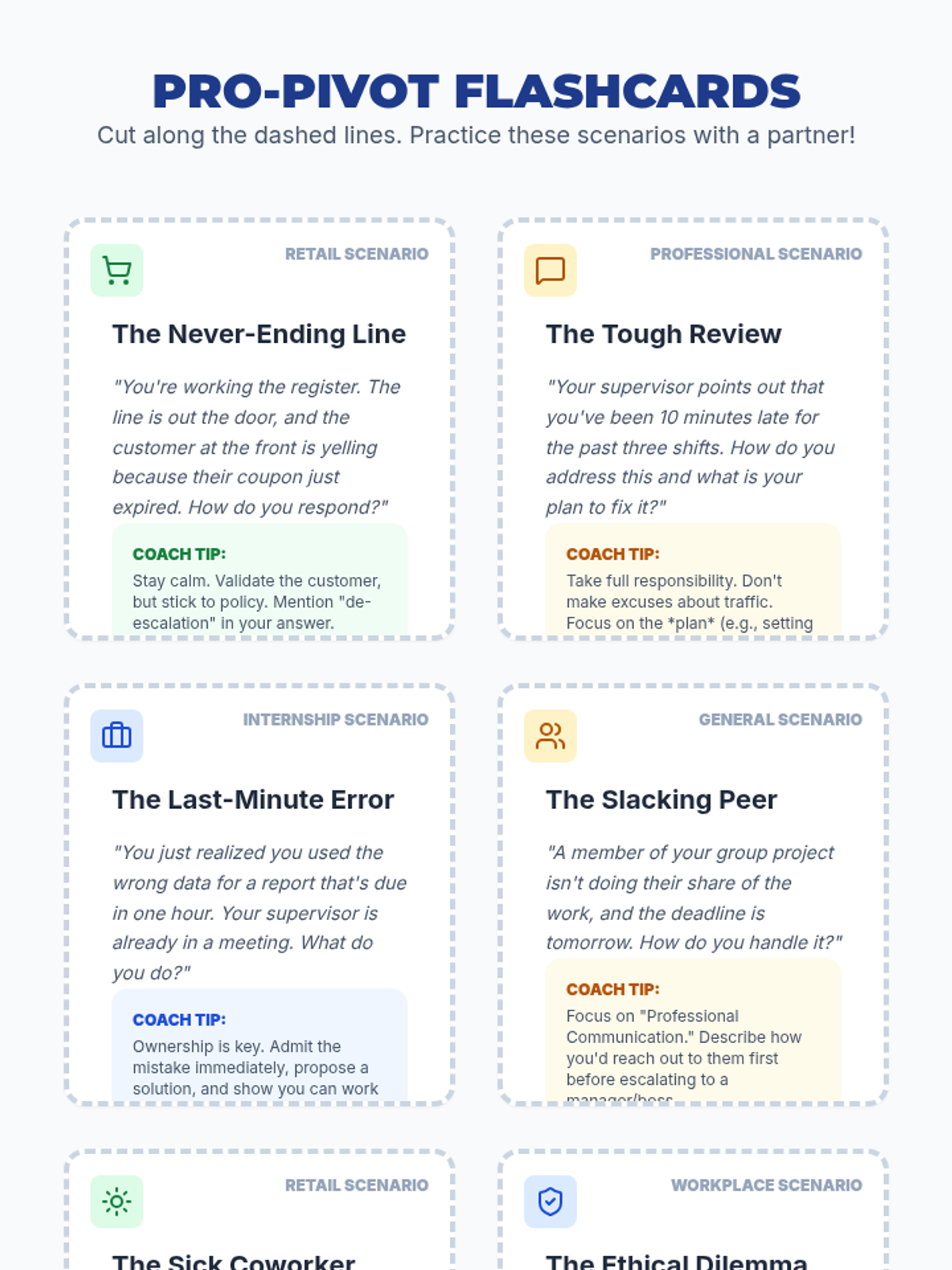
A vocational training module focused on non-verbal communication and strategic response techniques for job interviews, designed for students with diverse learning needs.
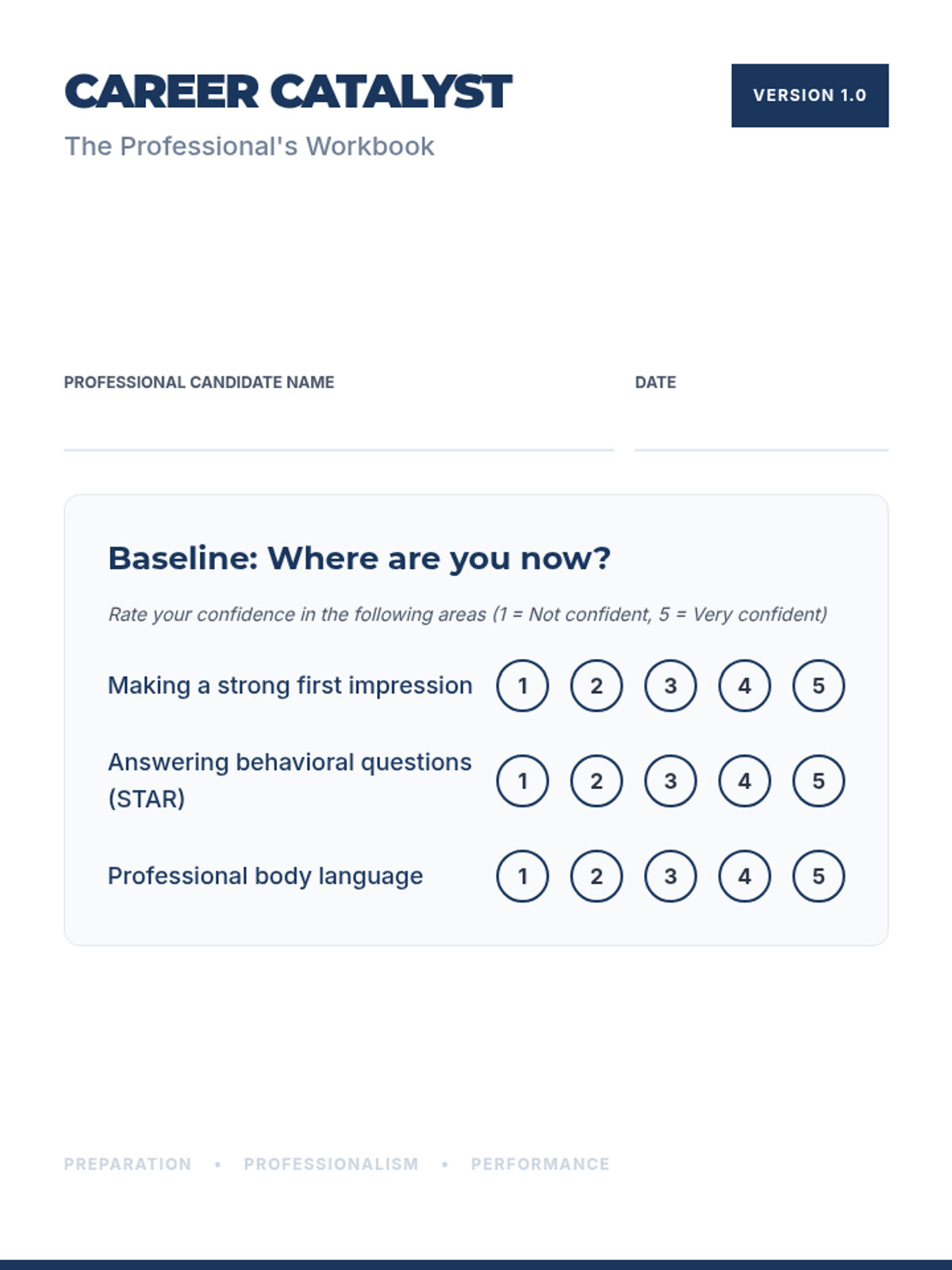
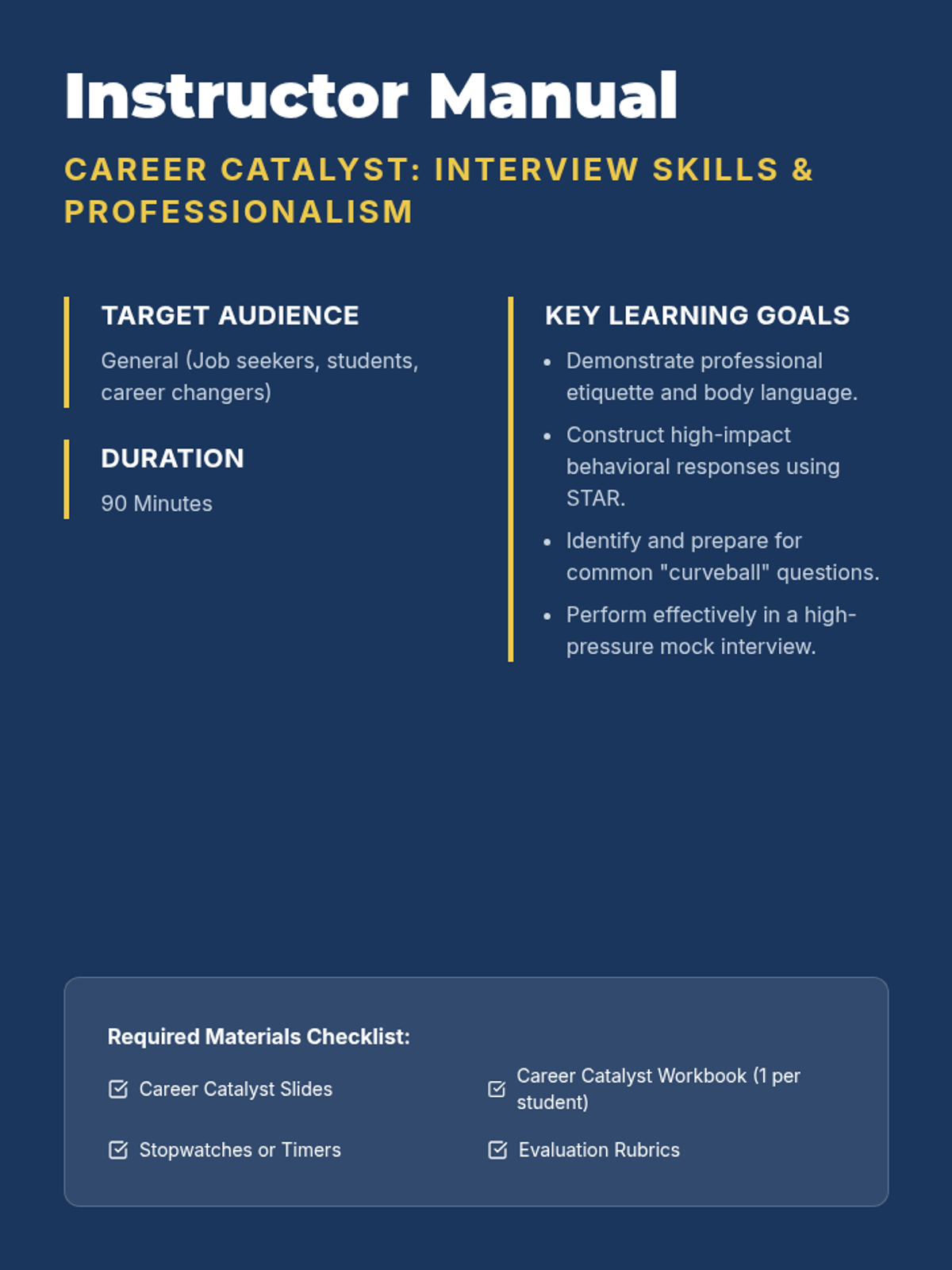
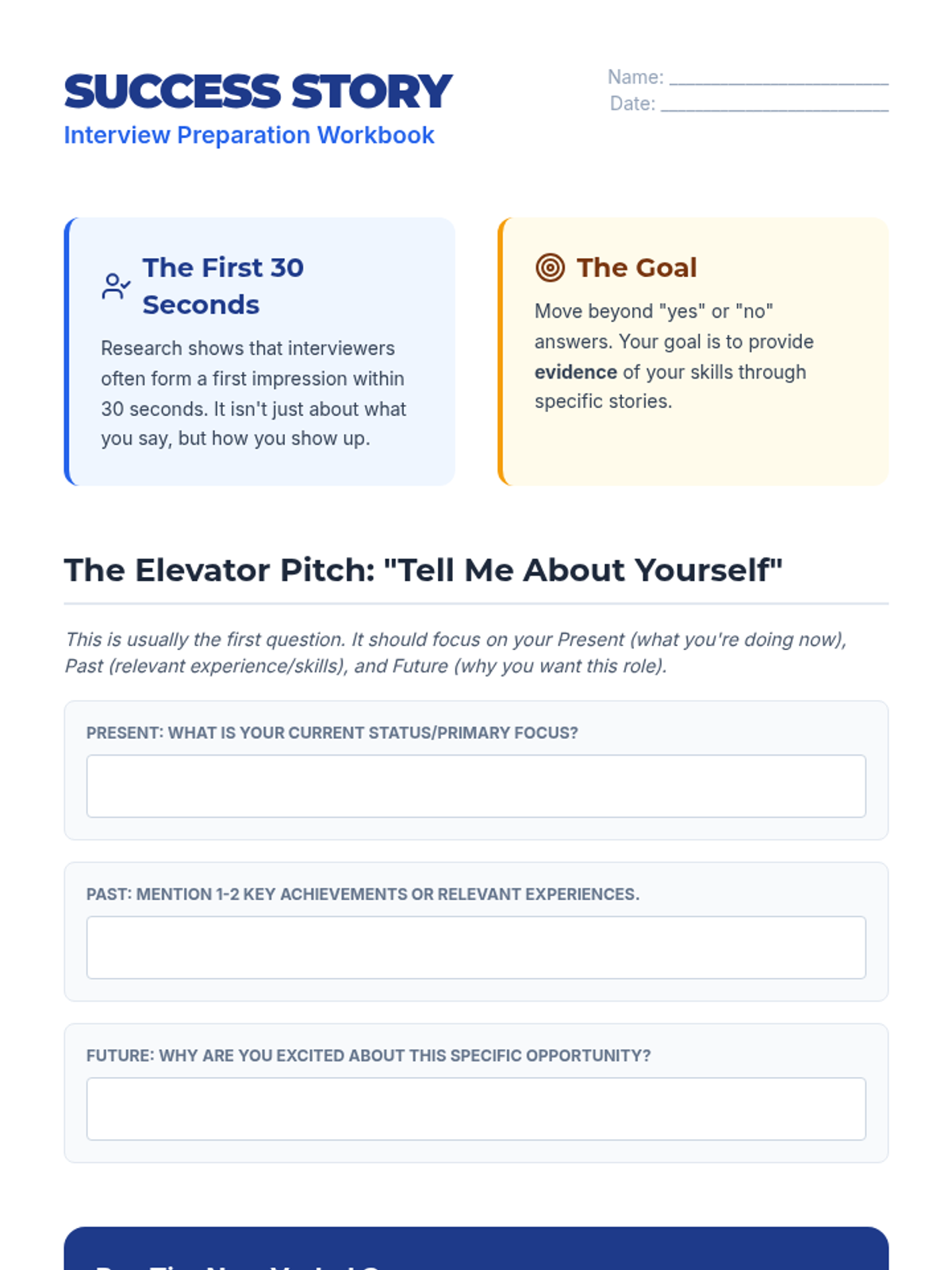
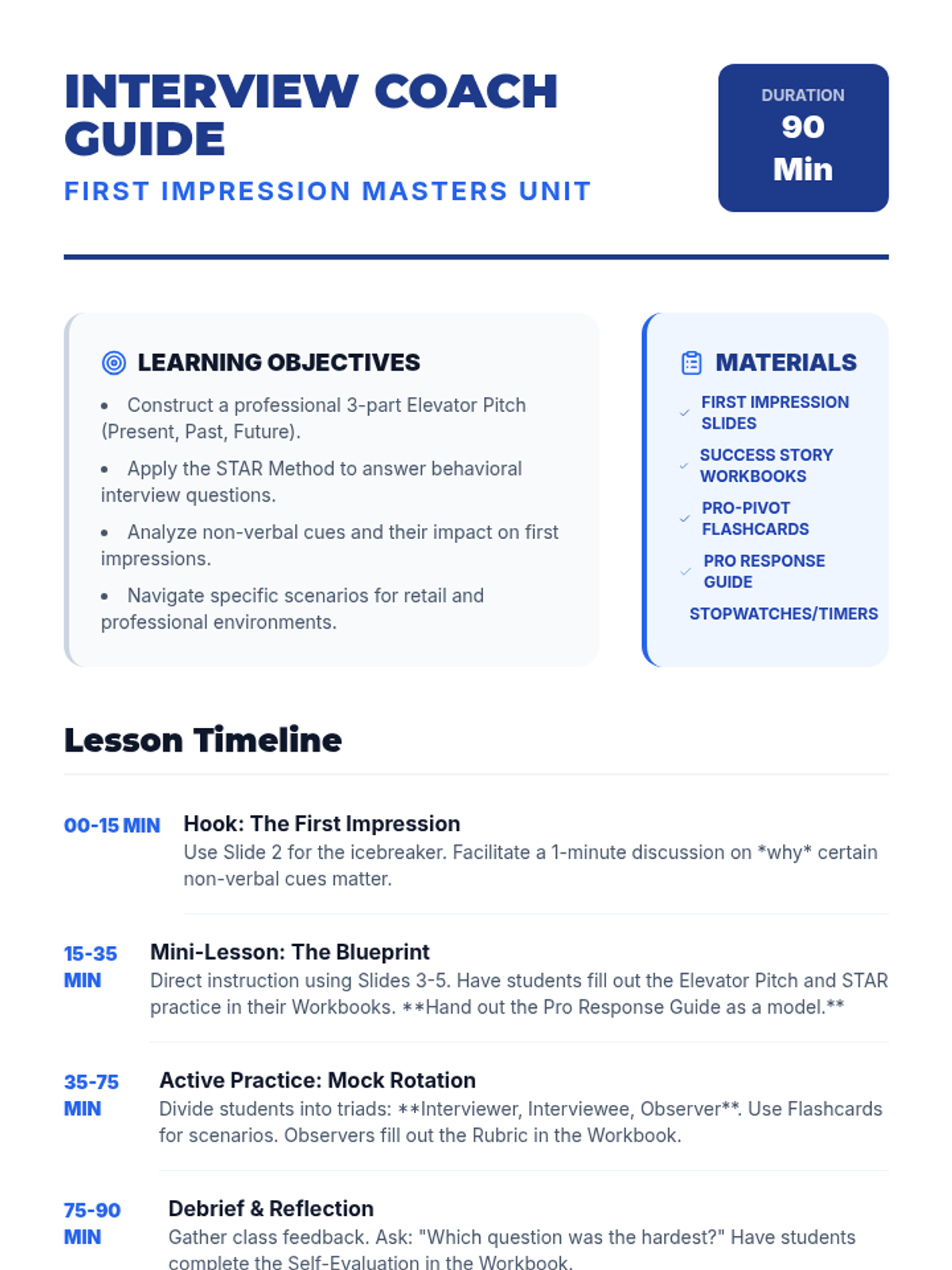
A comprehensive 90-minute lesson covering first impressions, the STAR method for behavioral questions, and professional etiquette for job seekers.
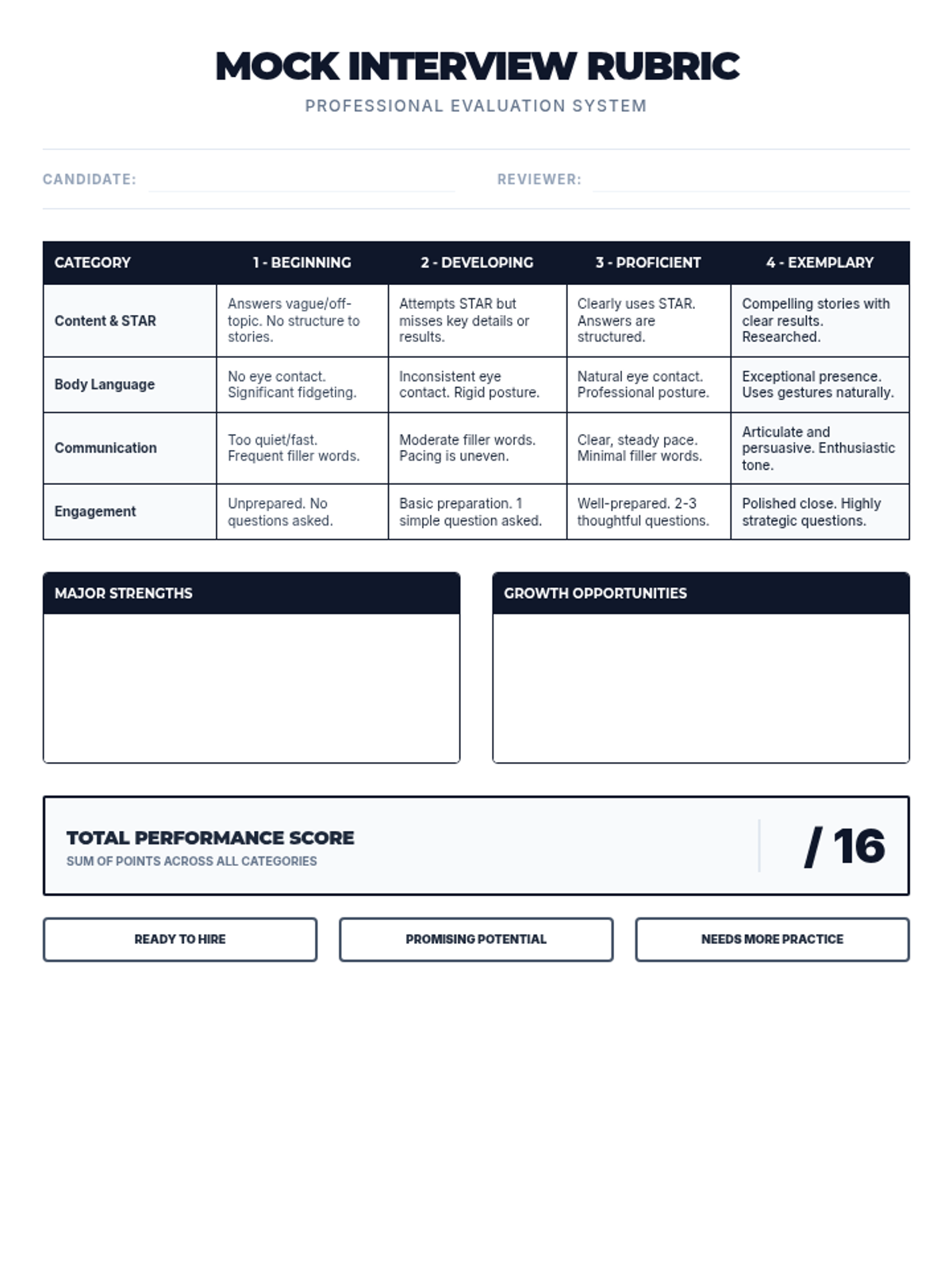
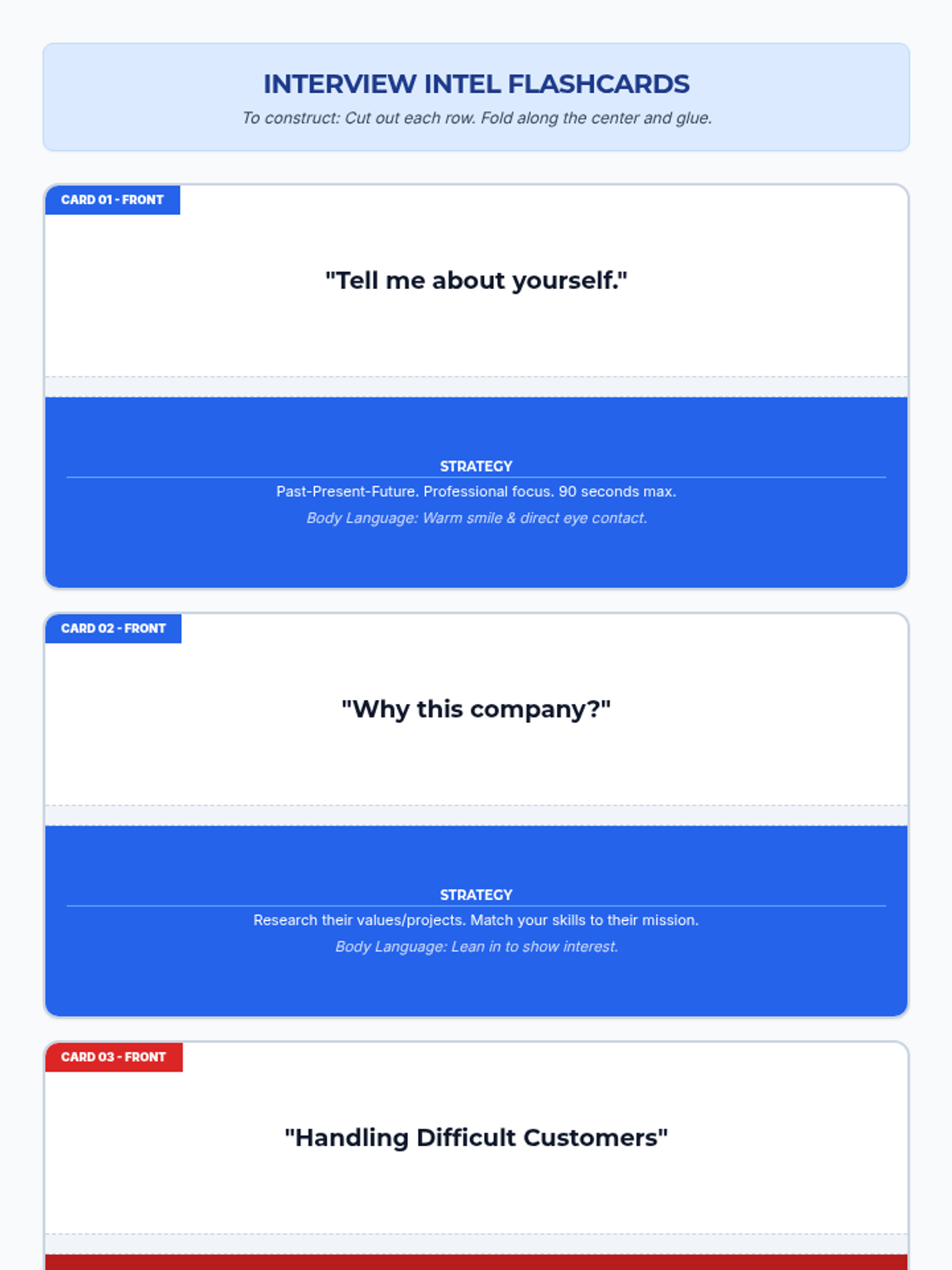
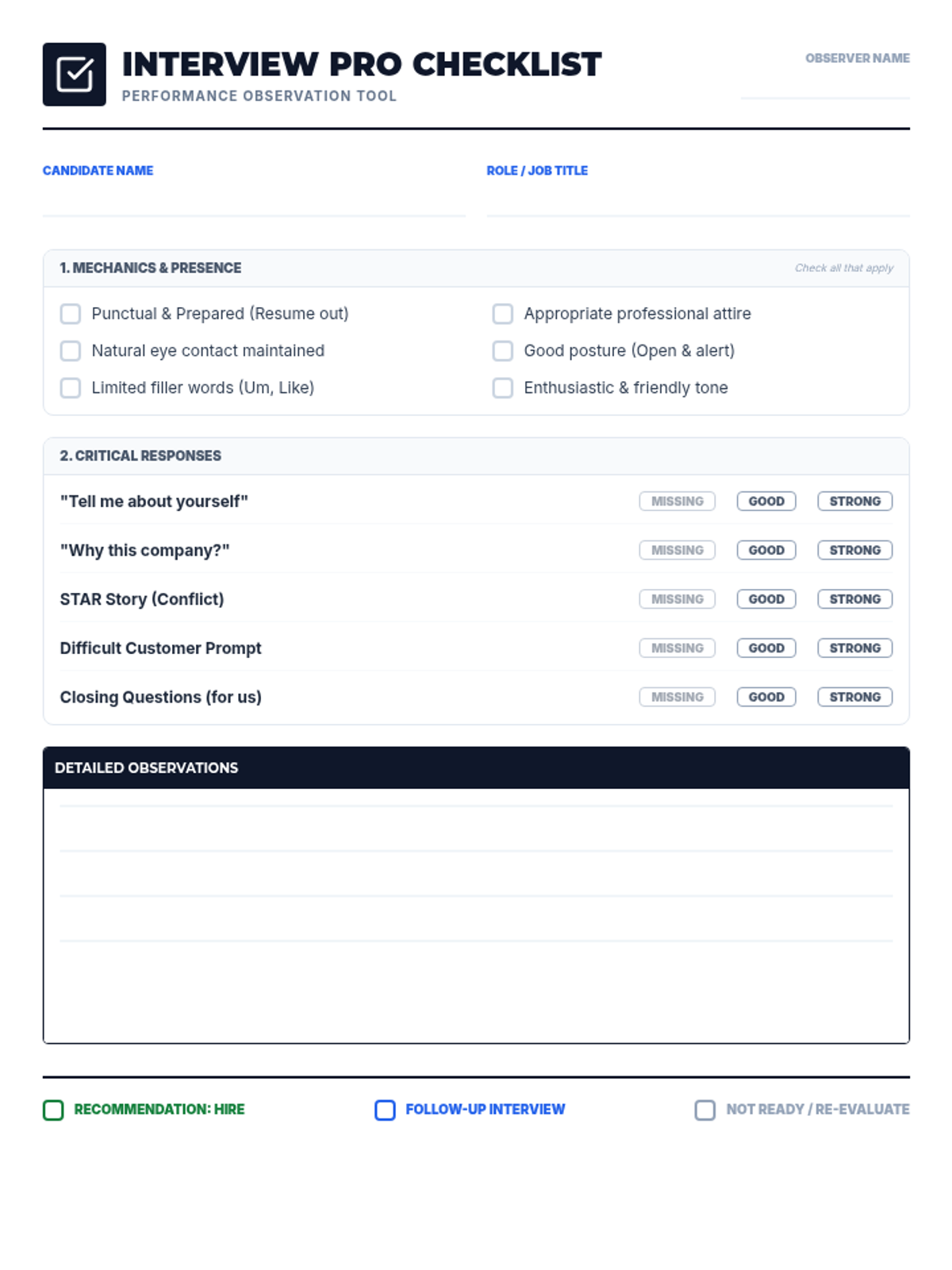
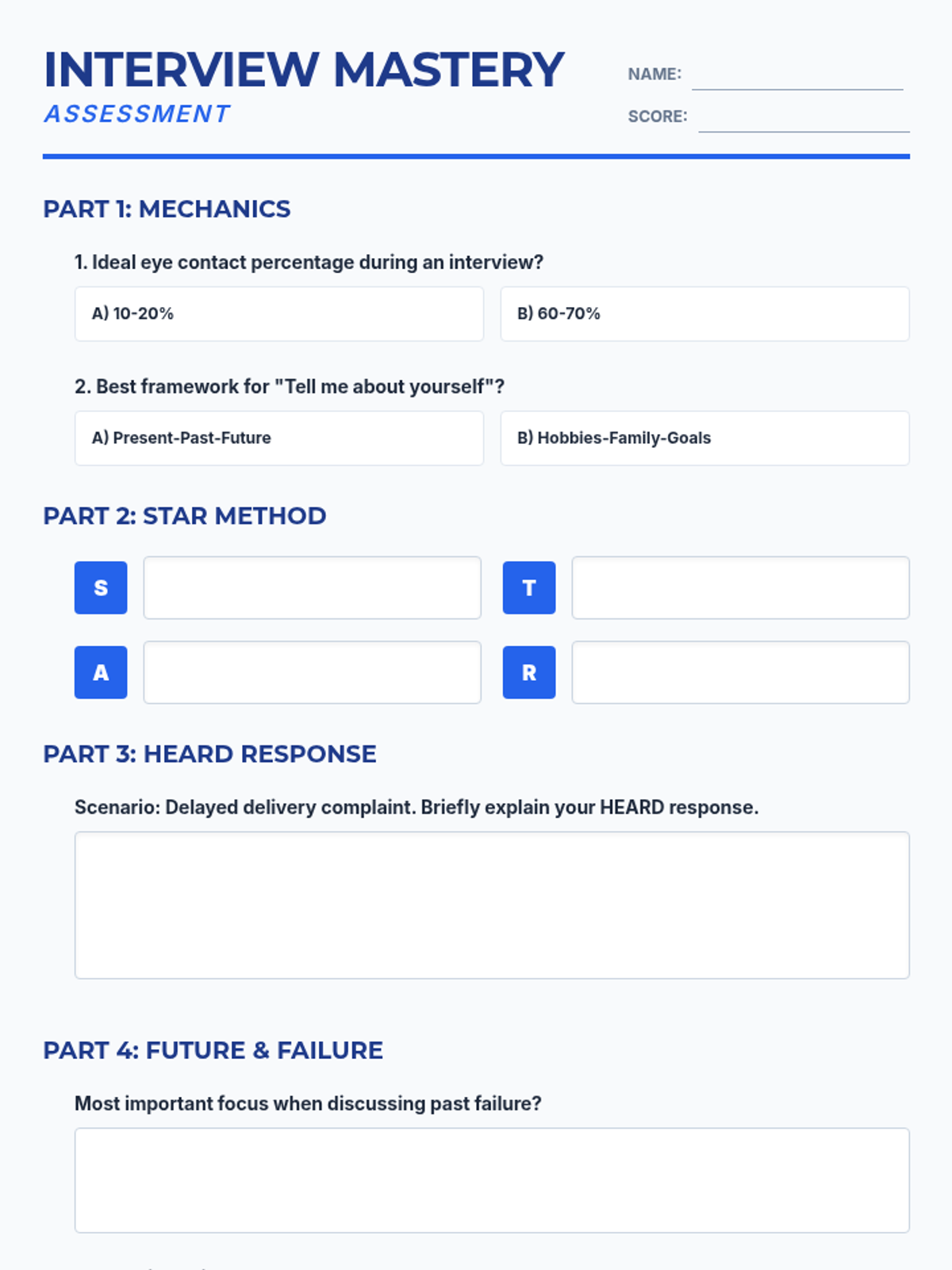
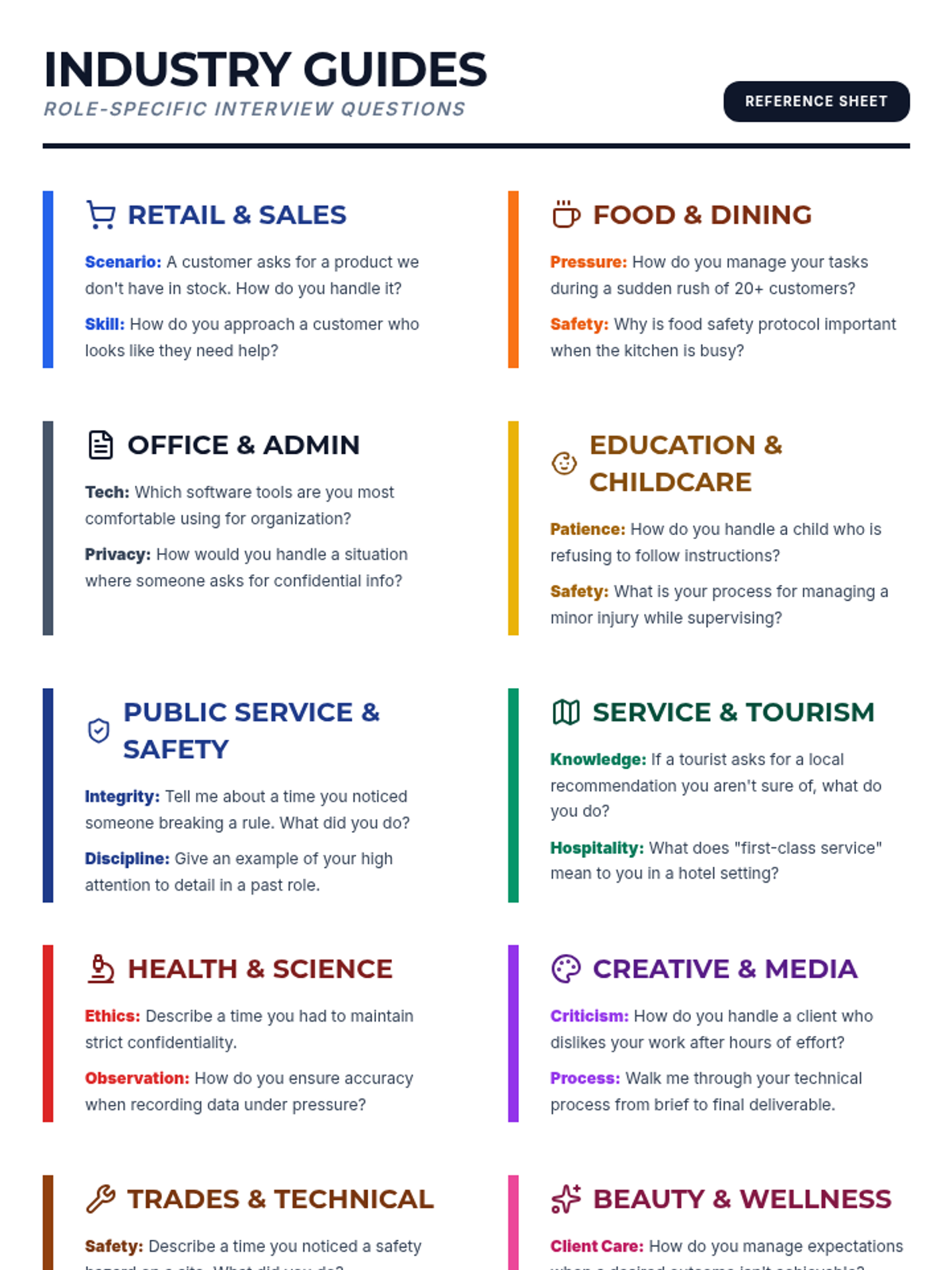
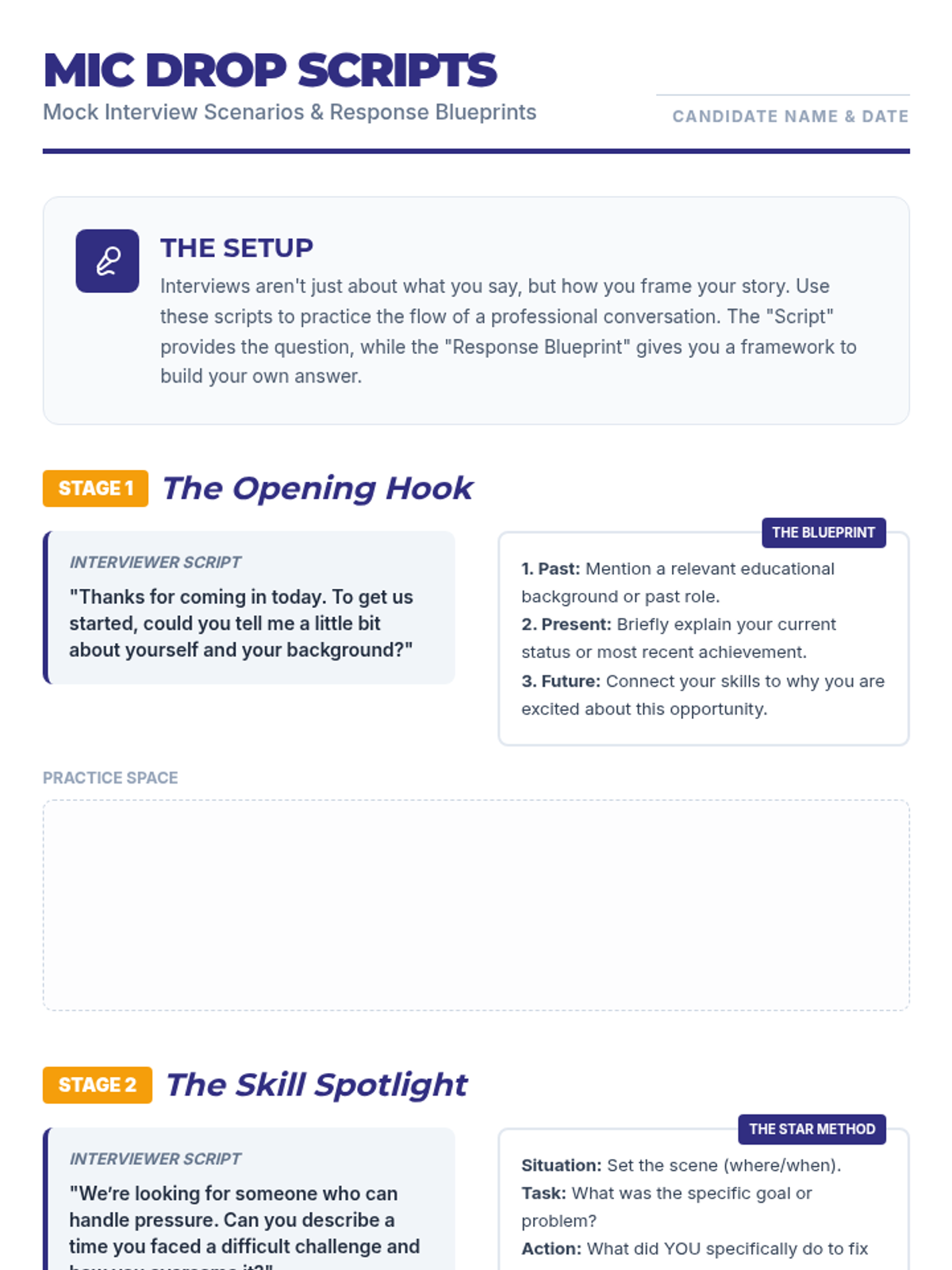
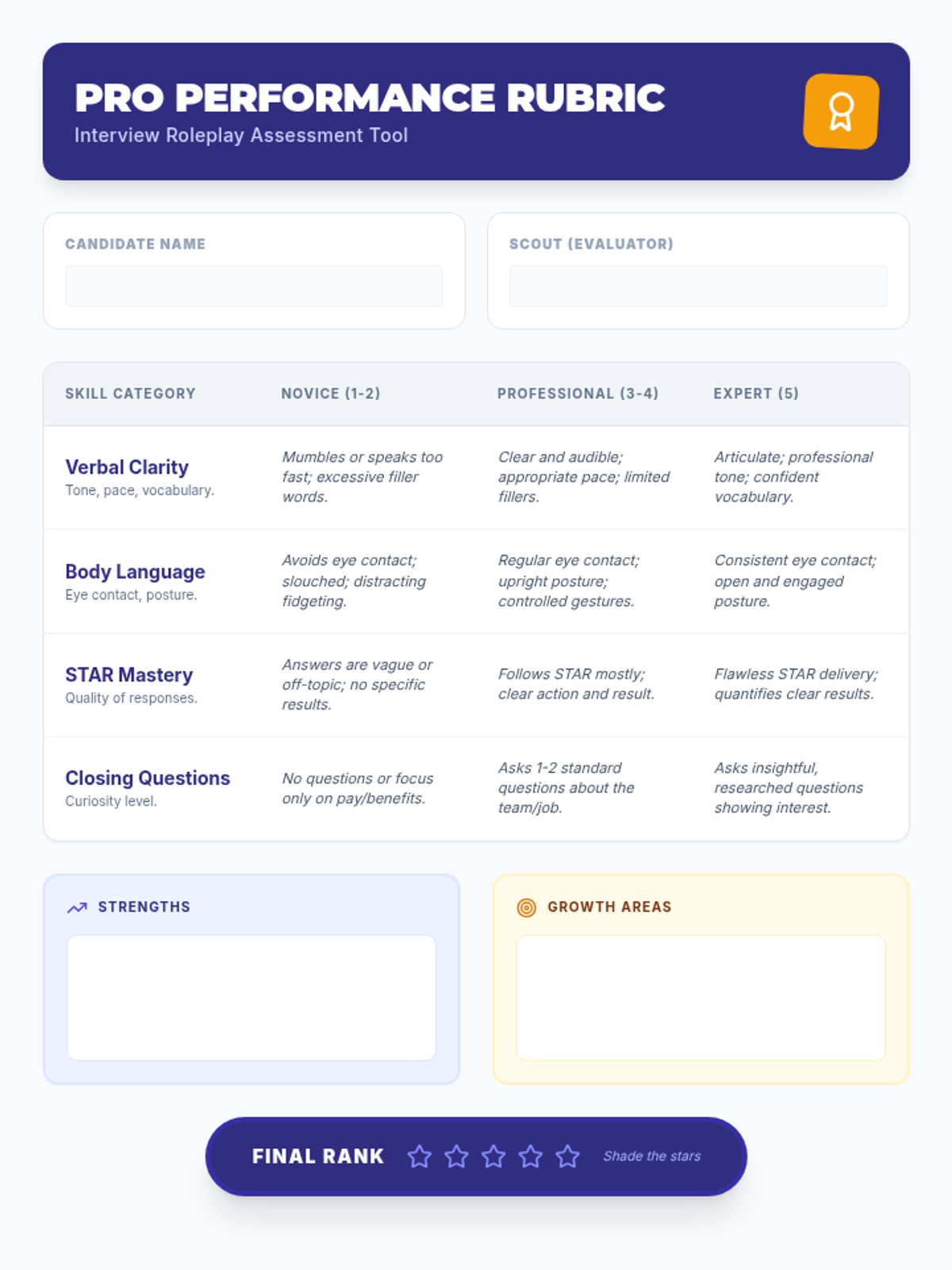
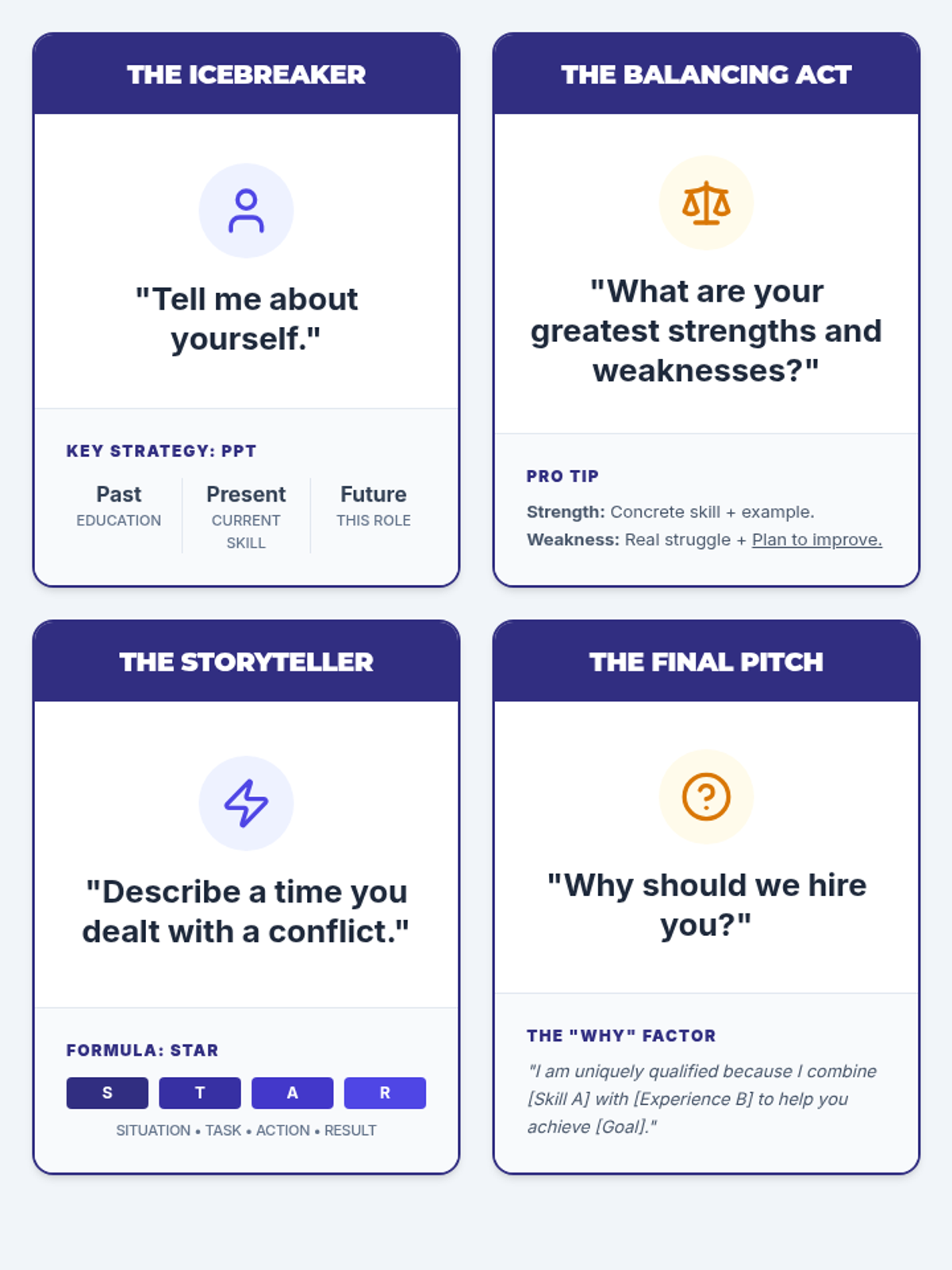
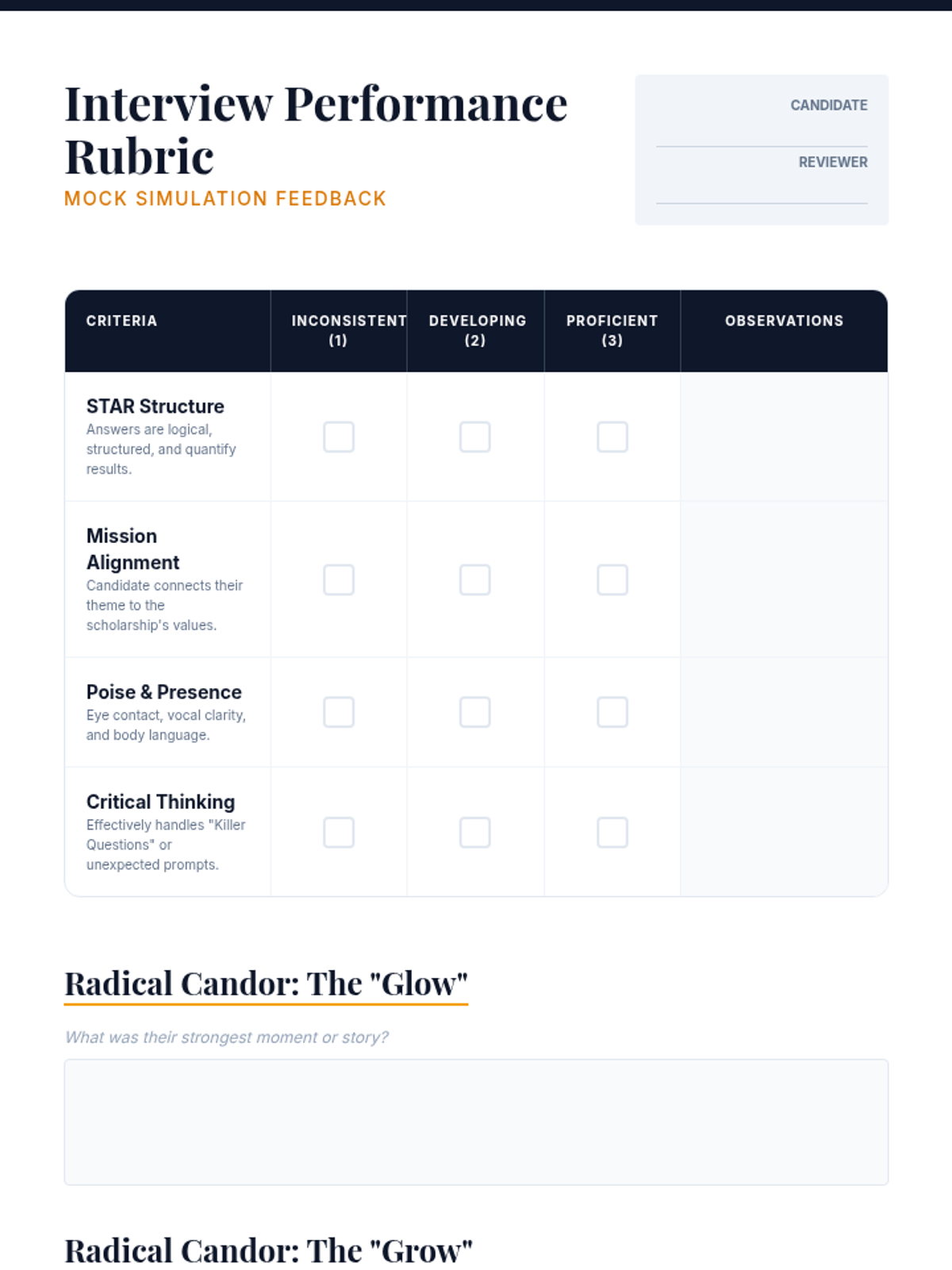
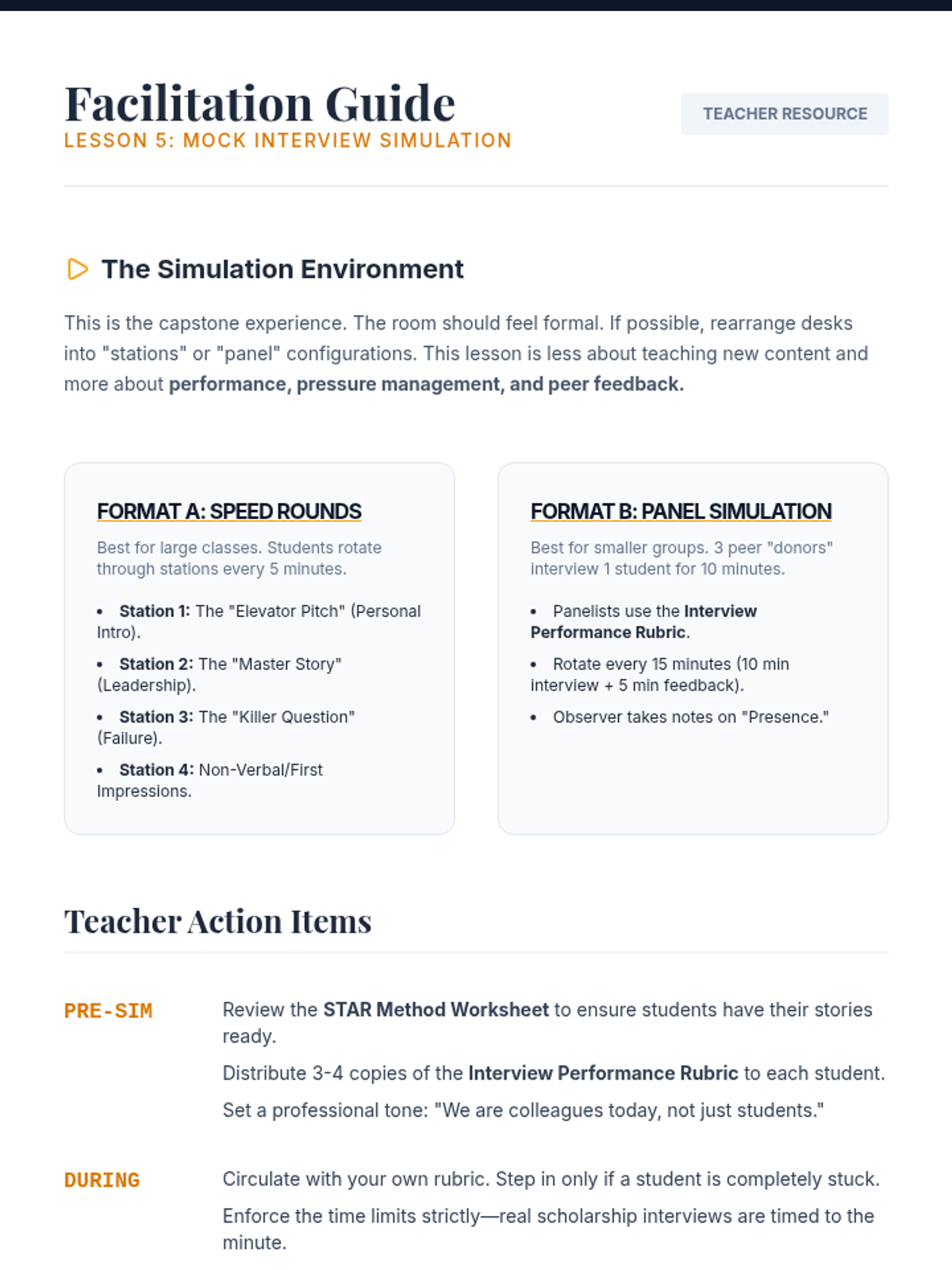
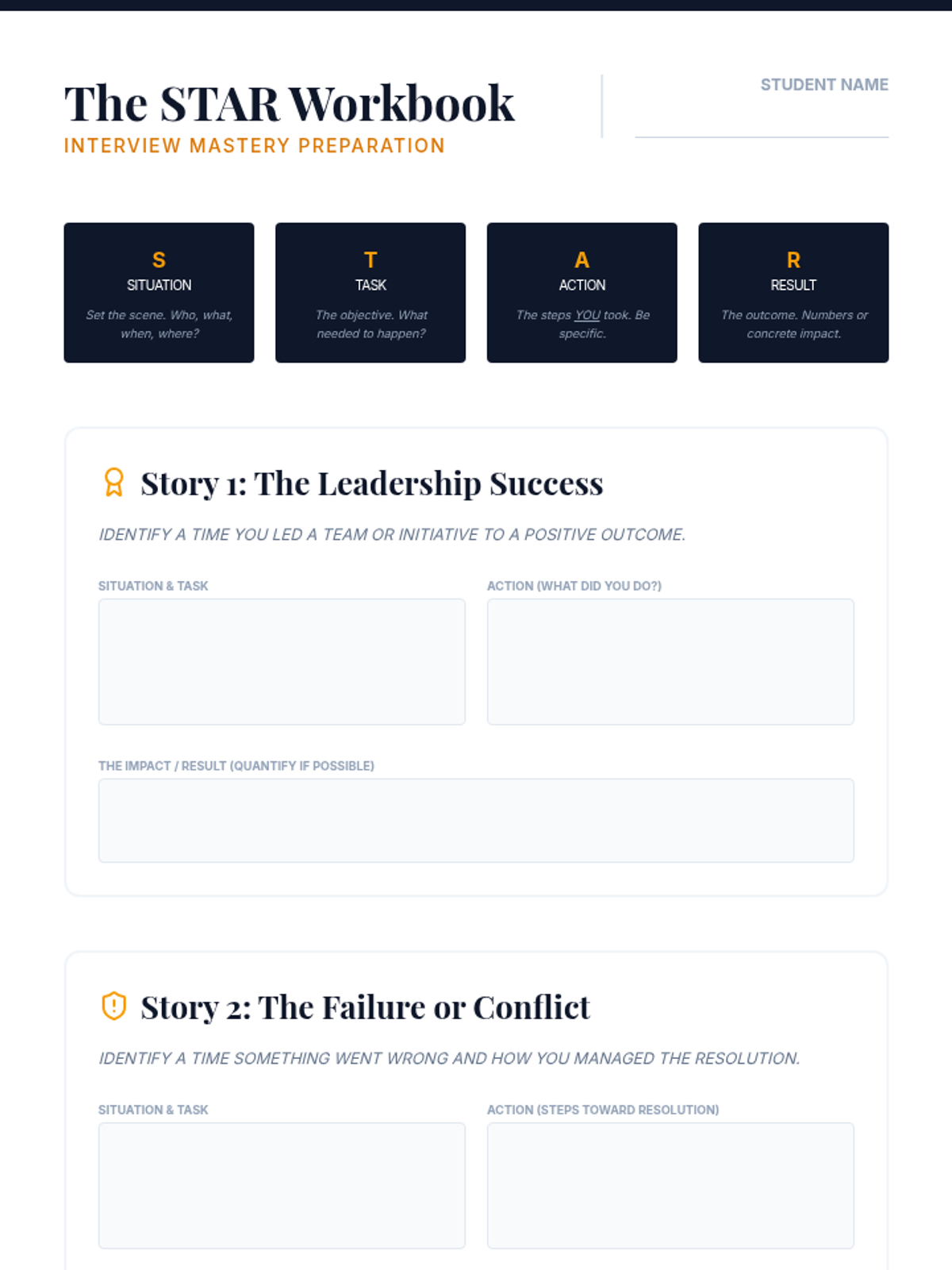
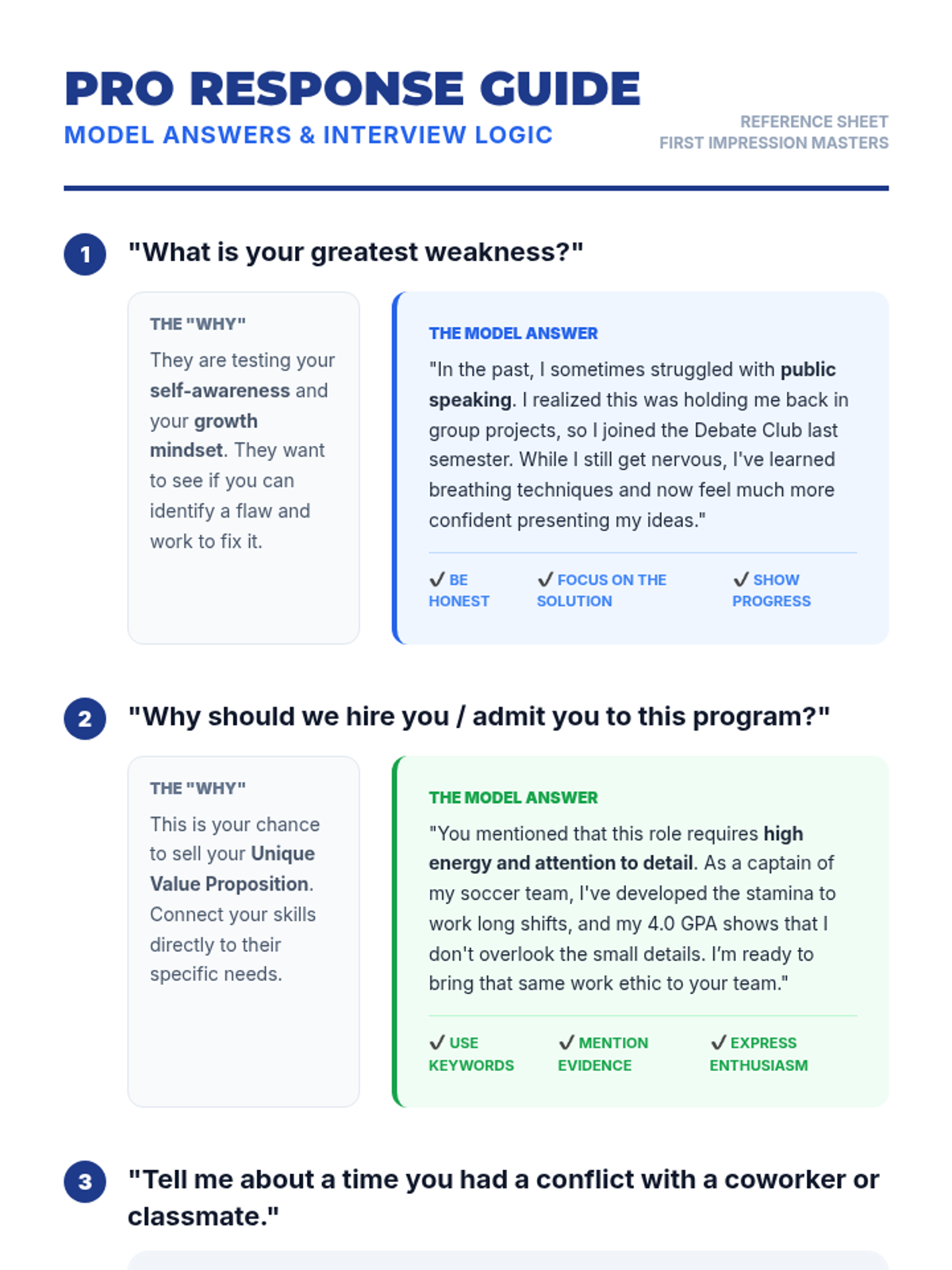
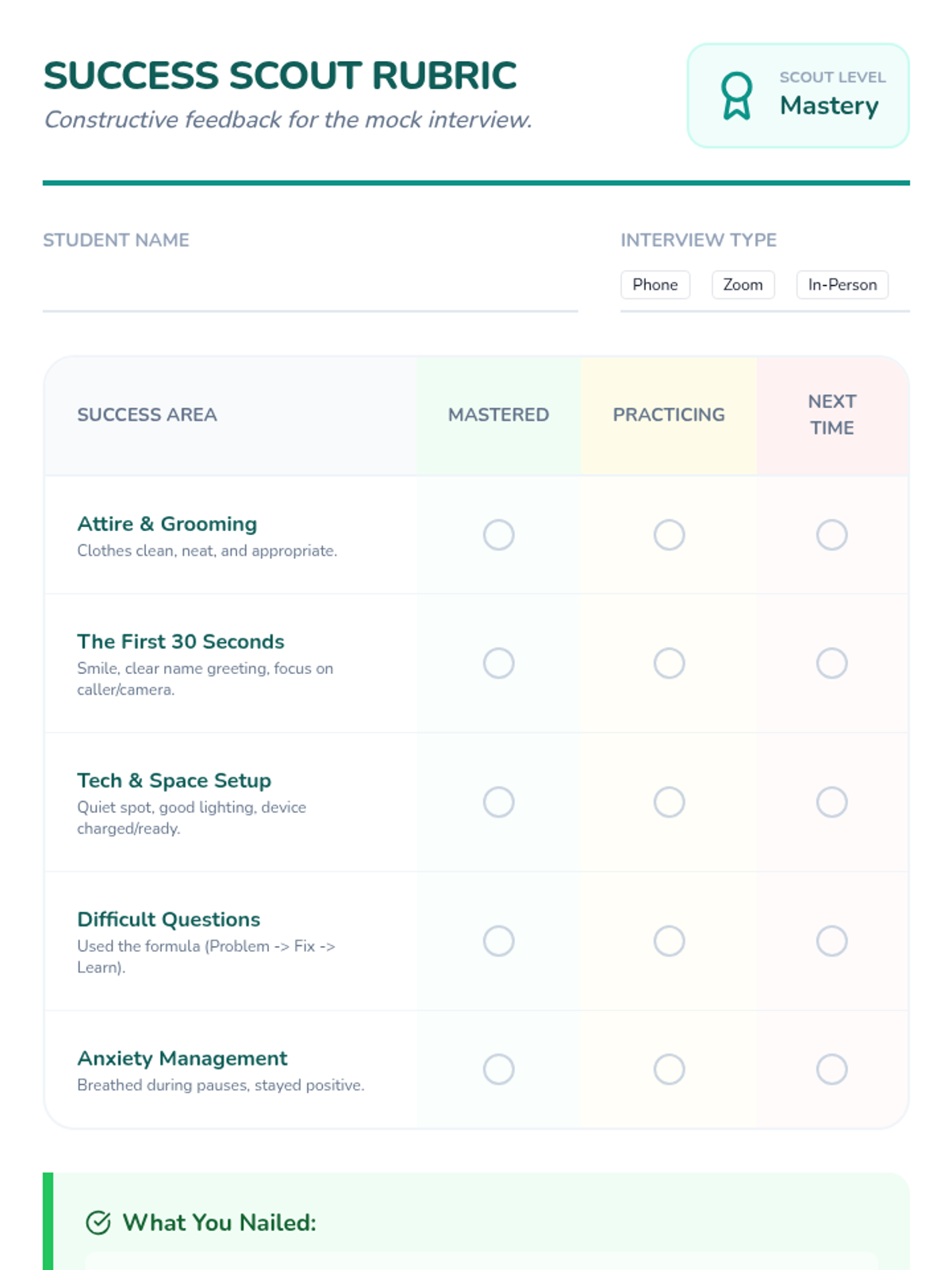
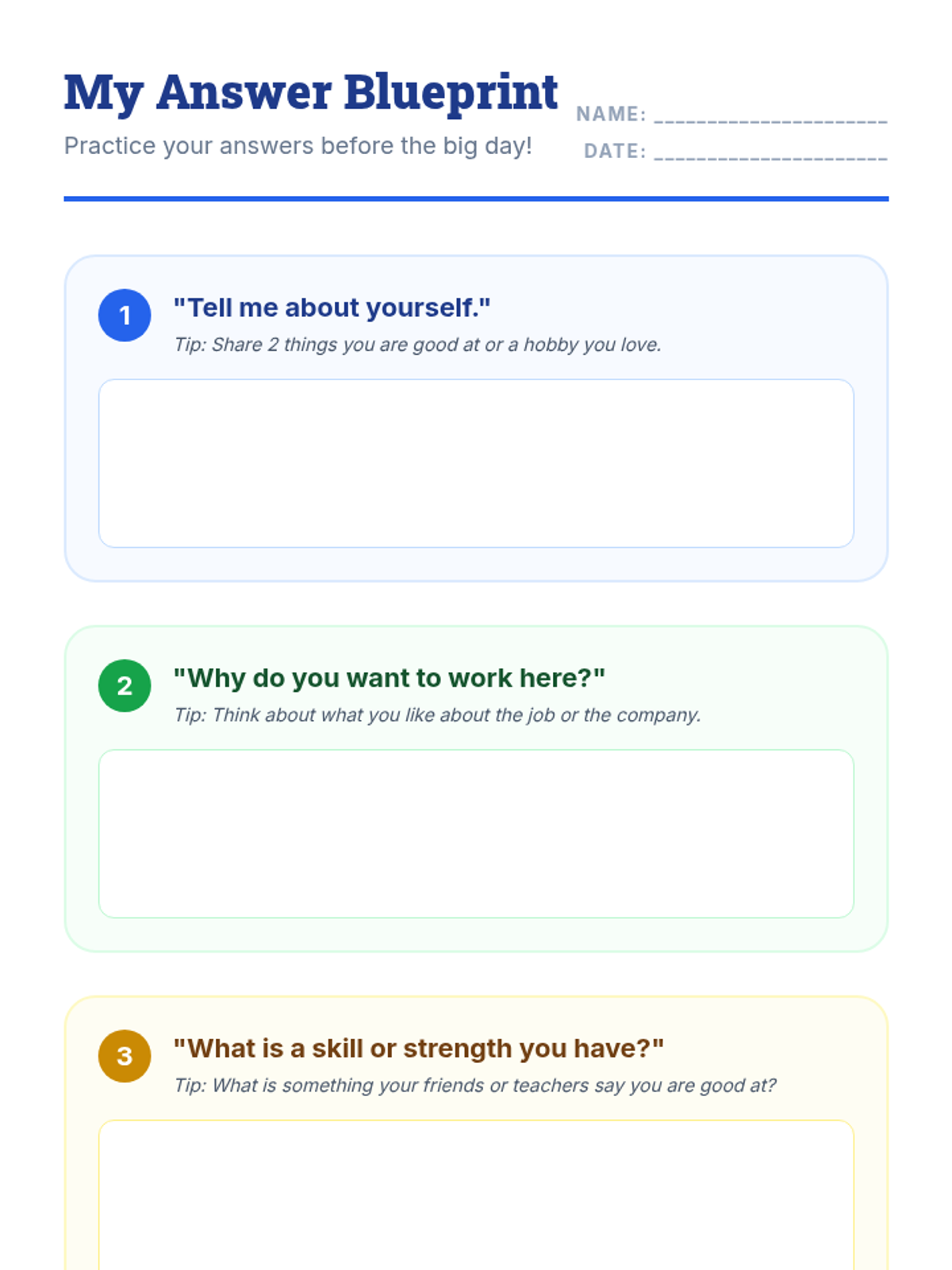
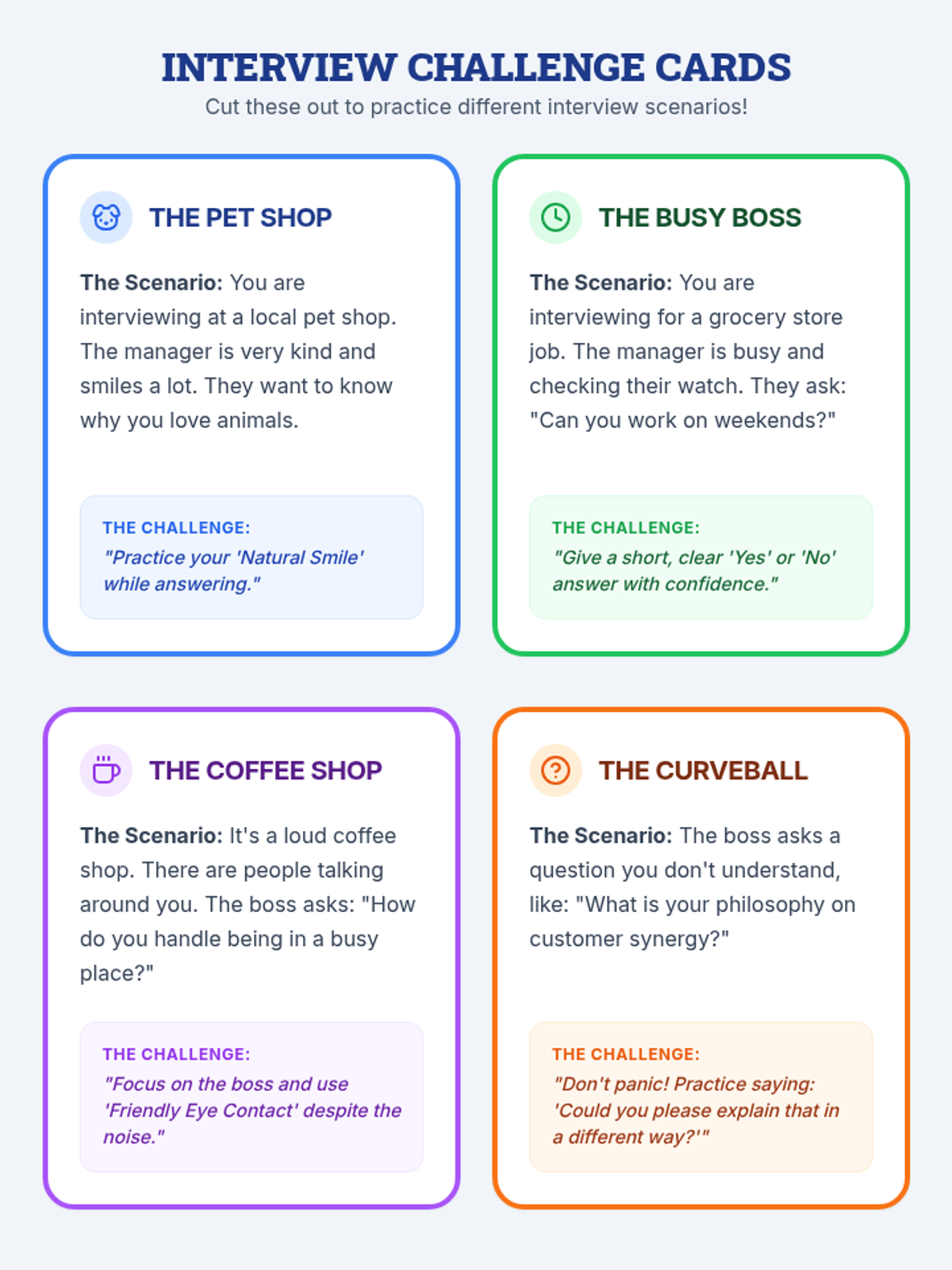
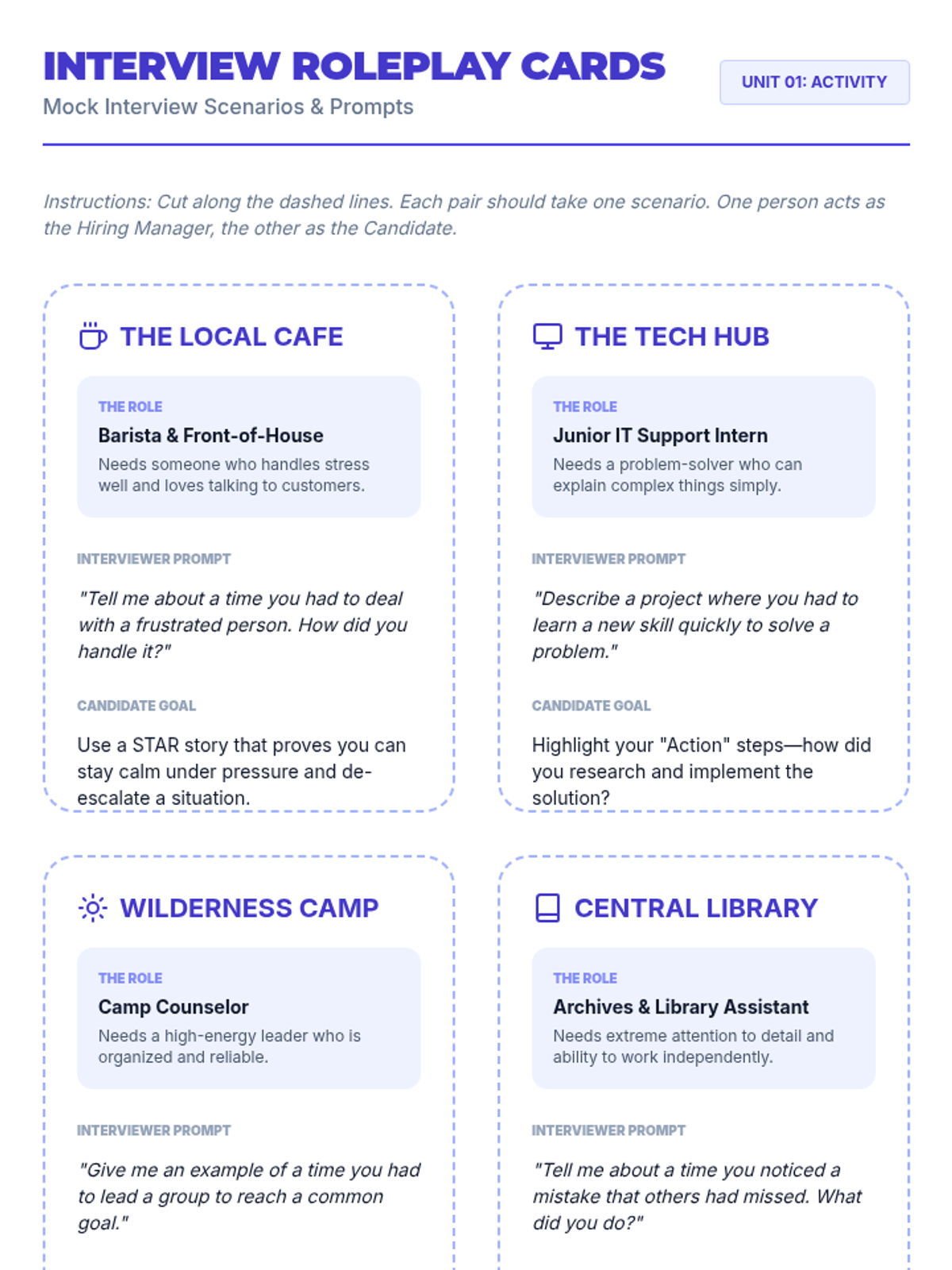
A comprehensive guide to mastering the art of the interview, featuring annotated scripts, performance-based rubrics, and visual prompt cards to build student confidence and professional communication skills.
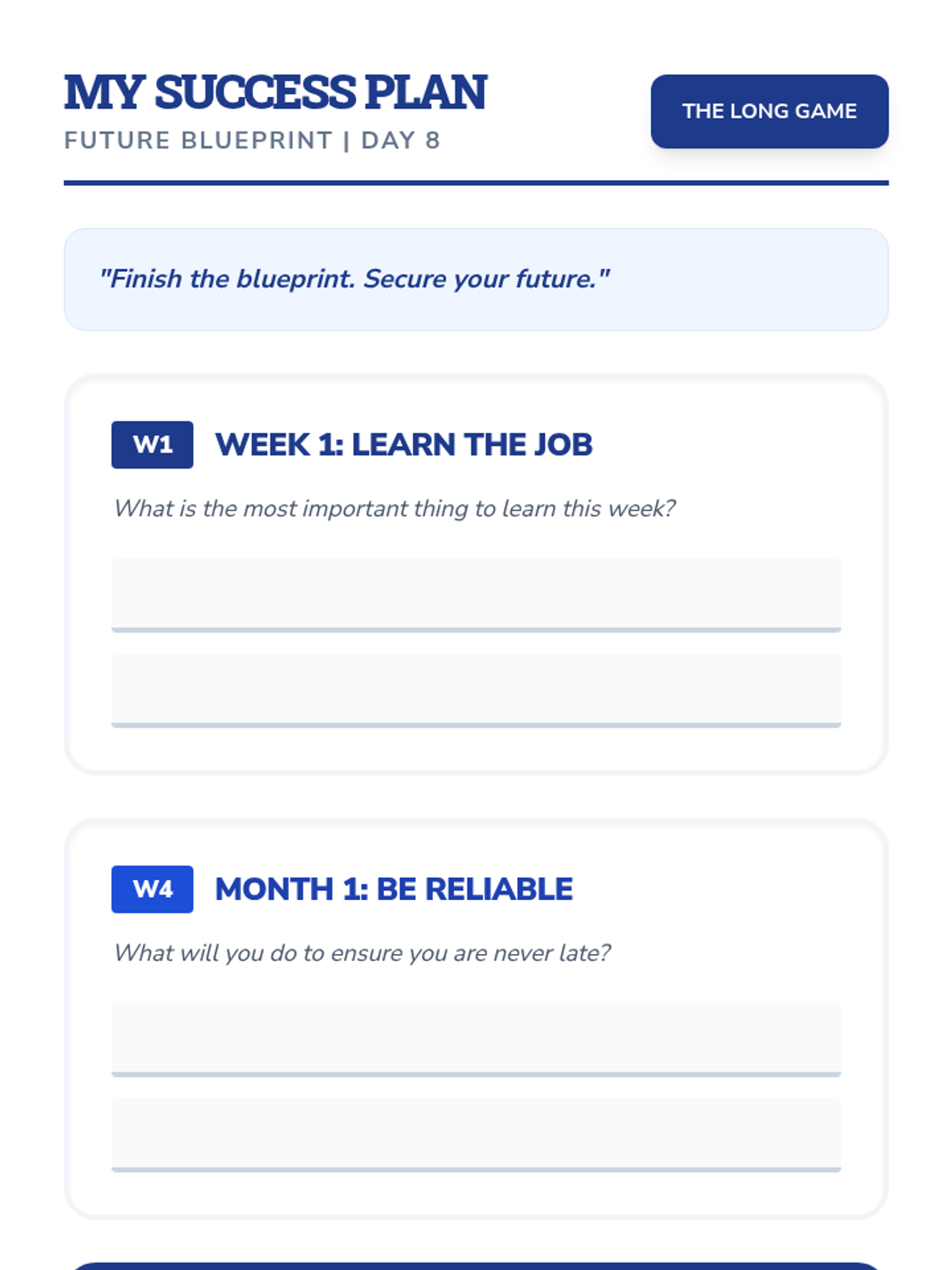
Job search strategies, staying employed, and long-term career planning. Final review and preparation for the 'working world'.
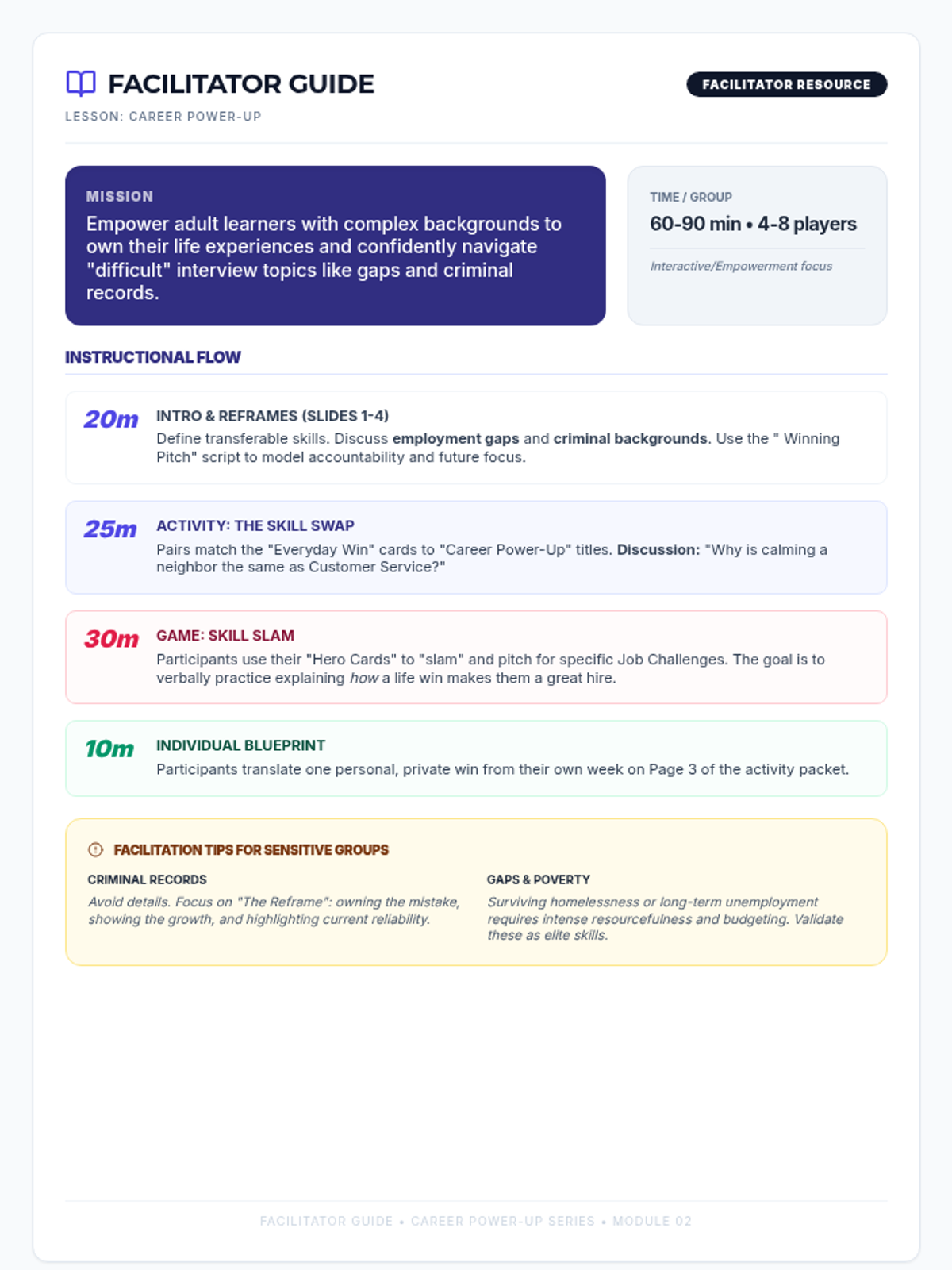
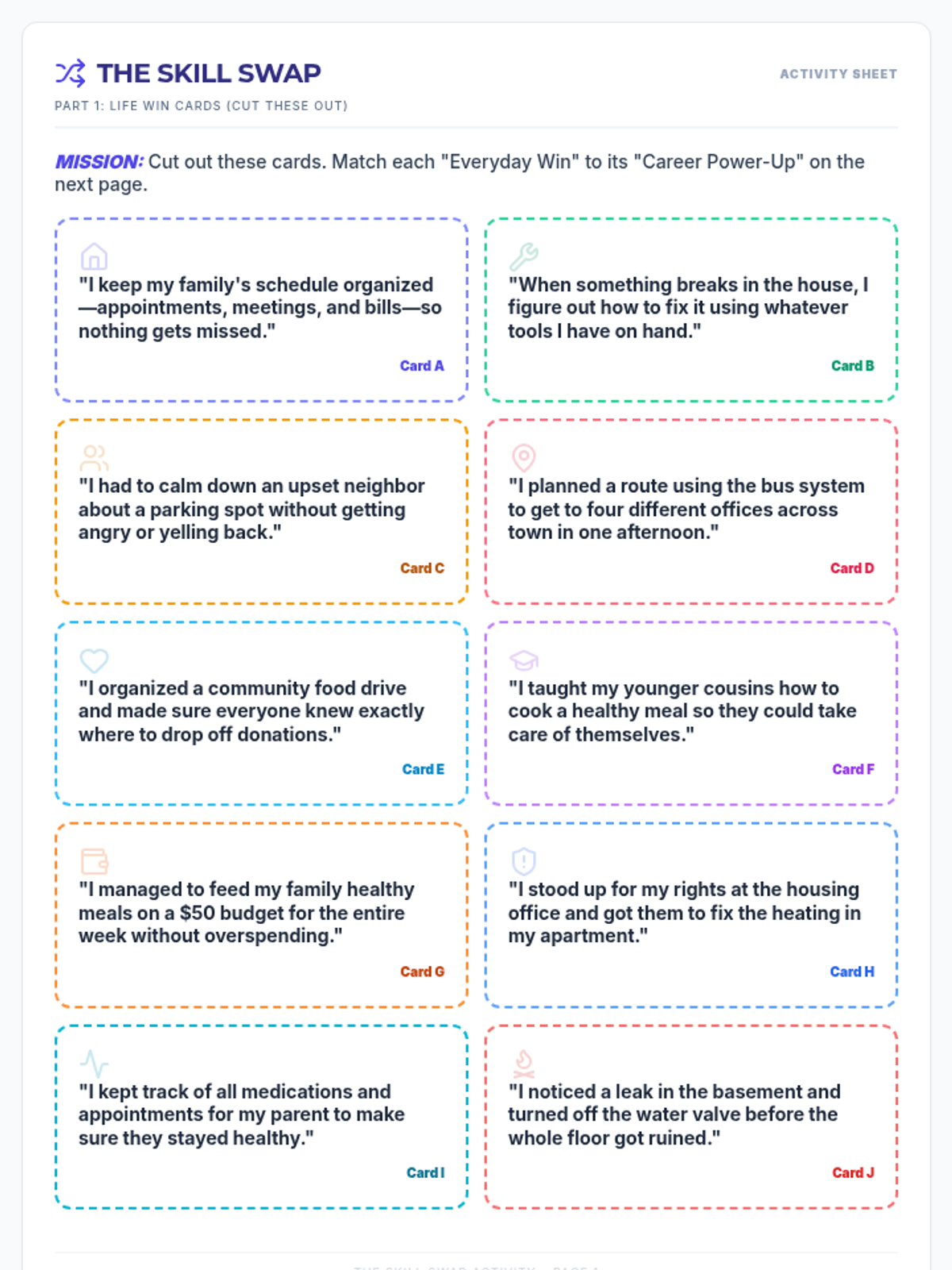
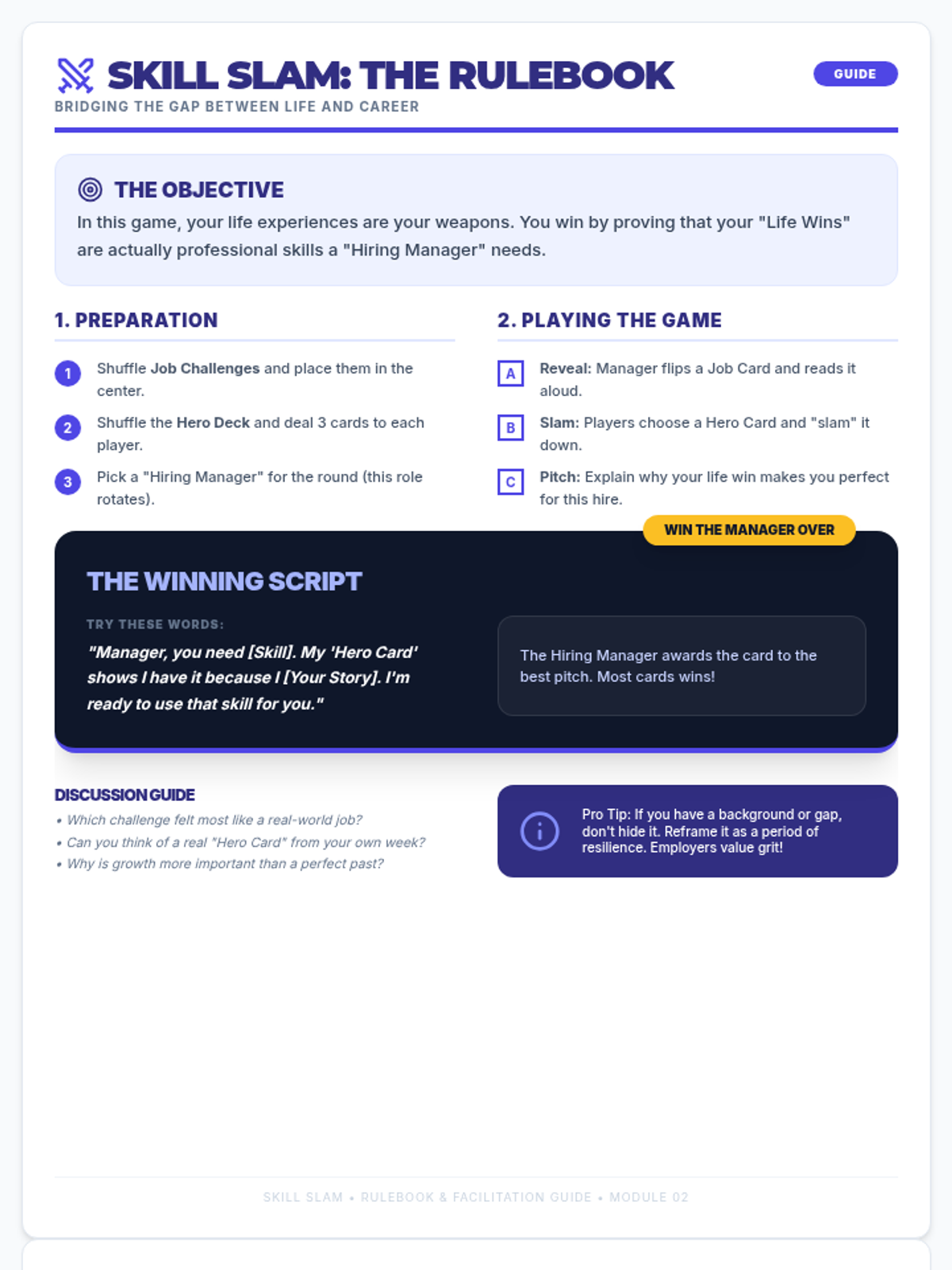
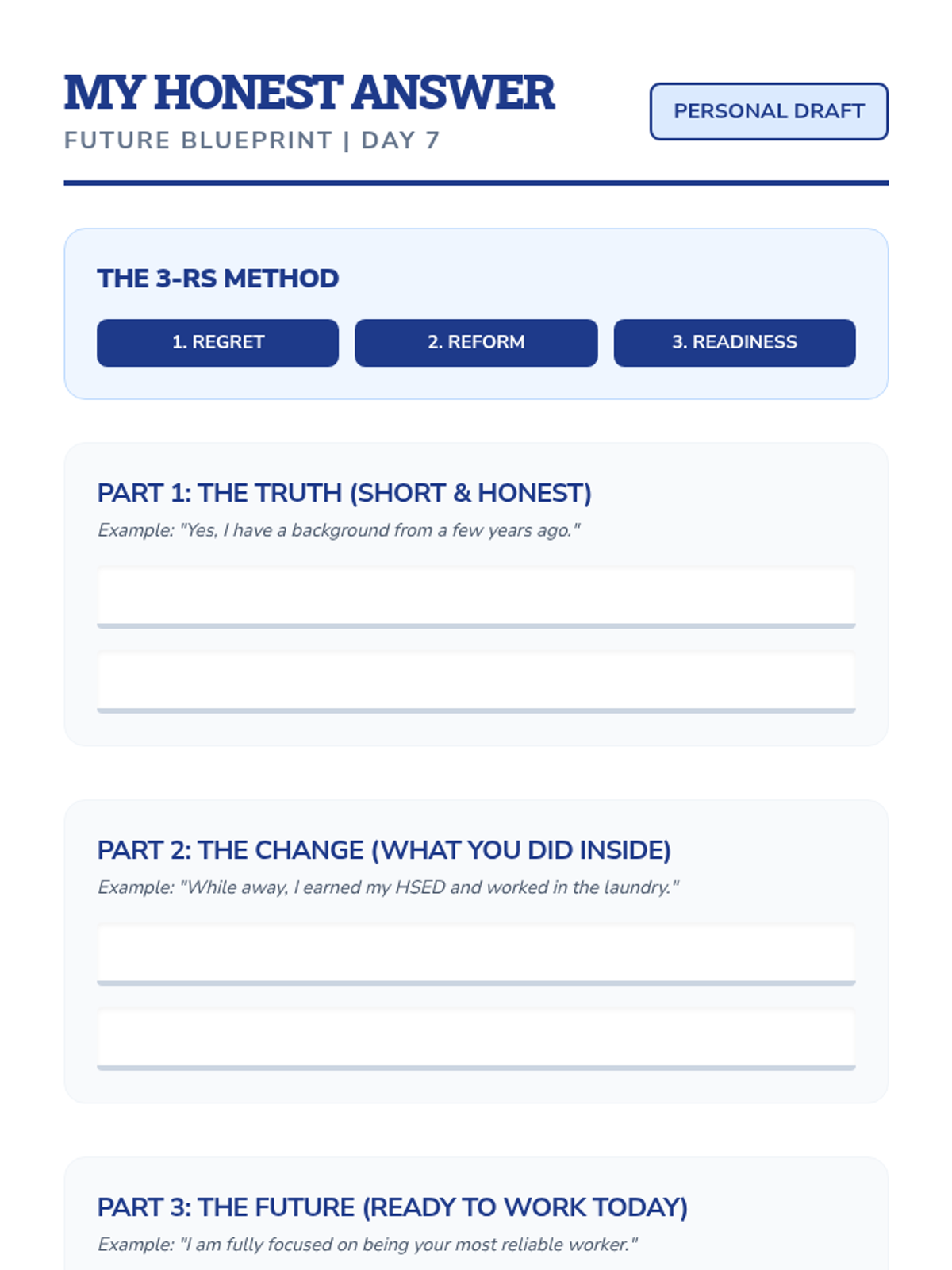
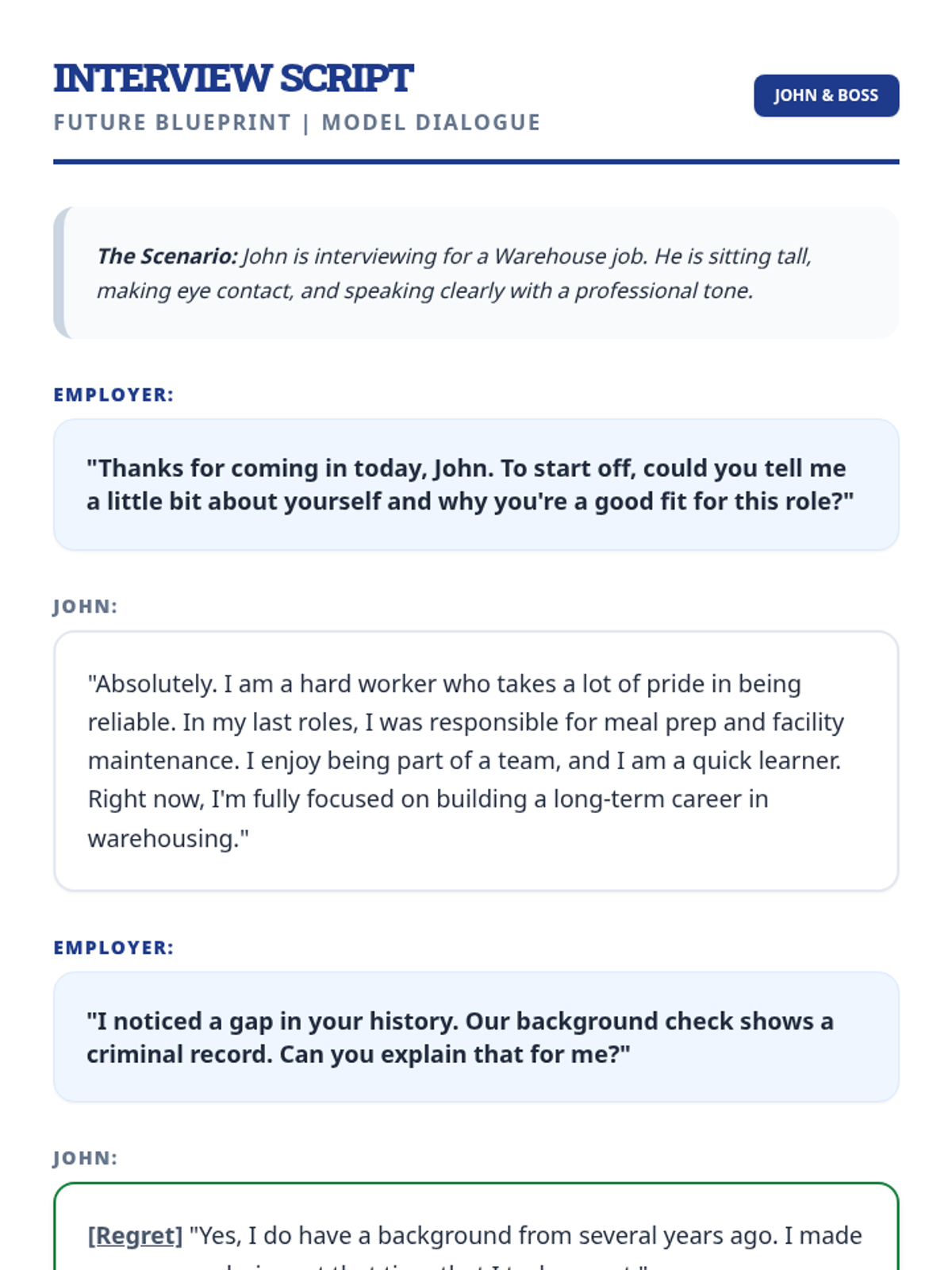
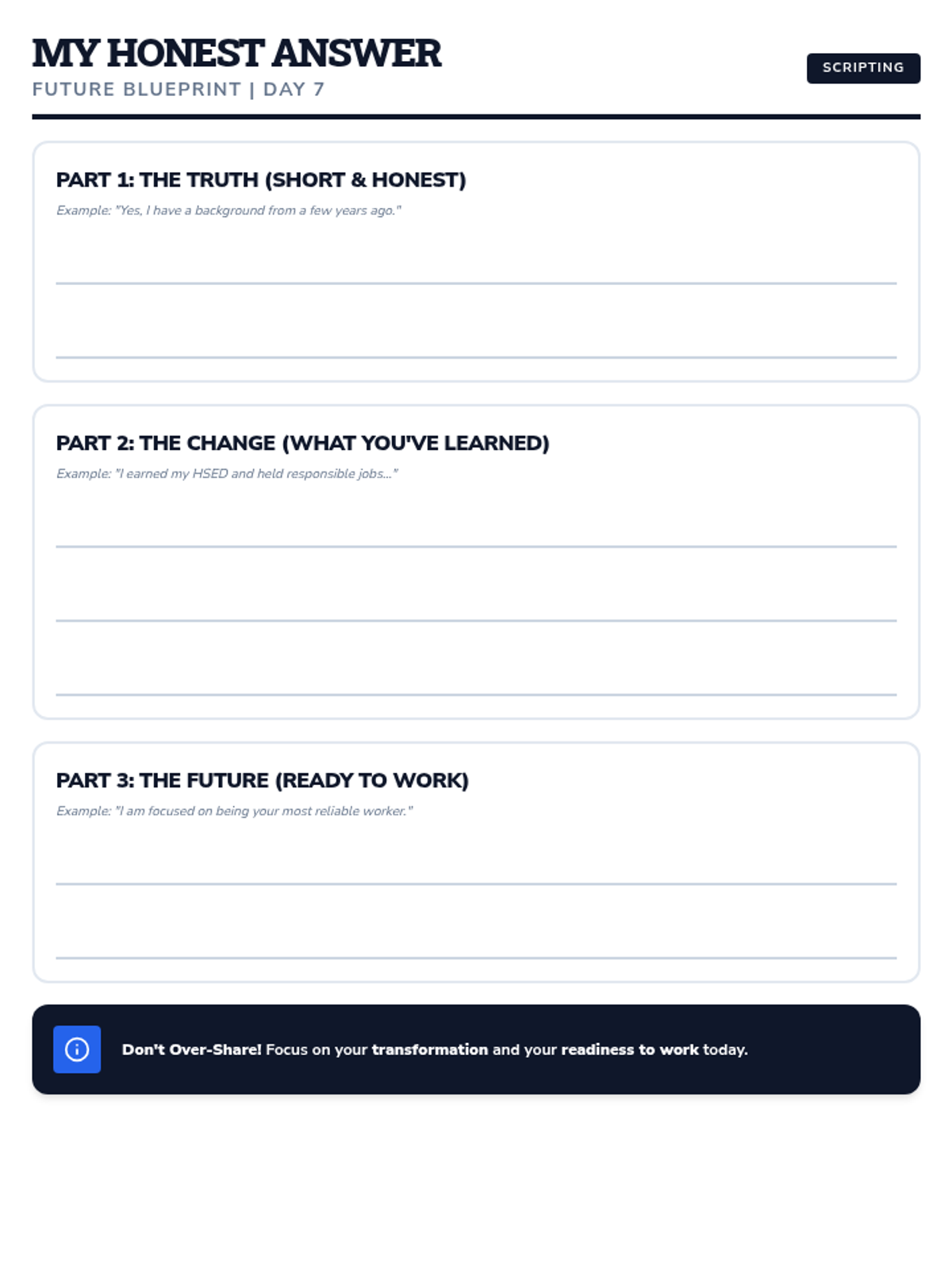
Specific strategies for addressing incarceration and background checks. Uses the 'Regret, Reform, Readiness' framework.
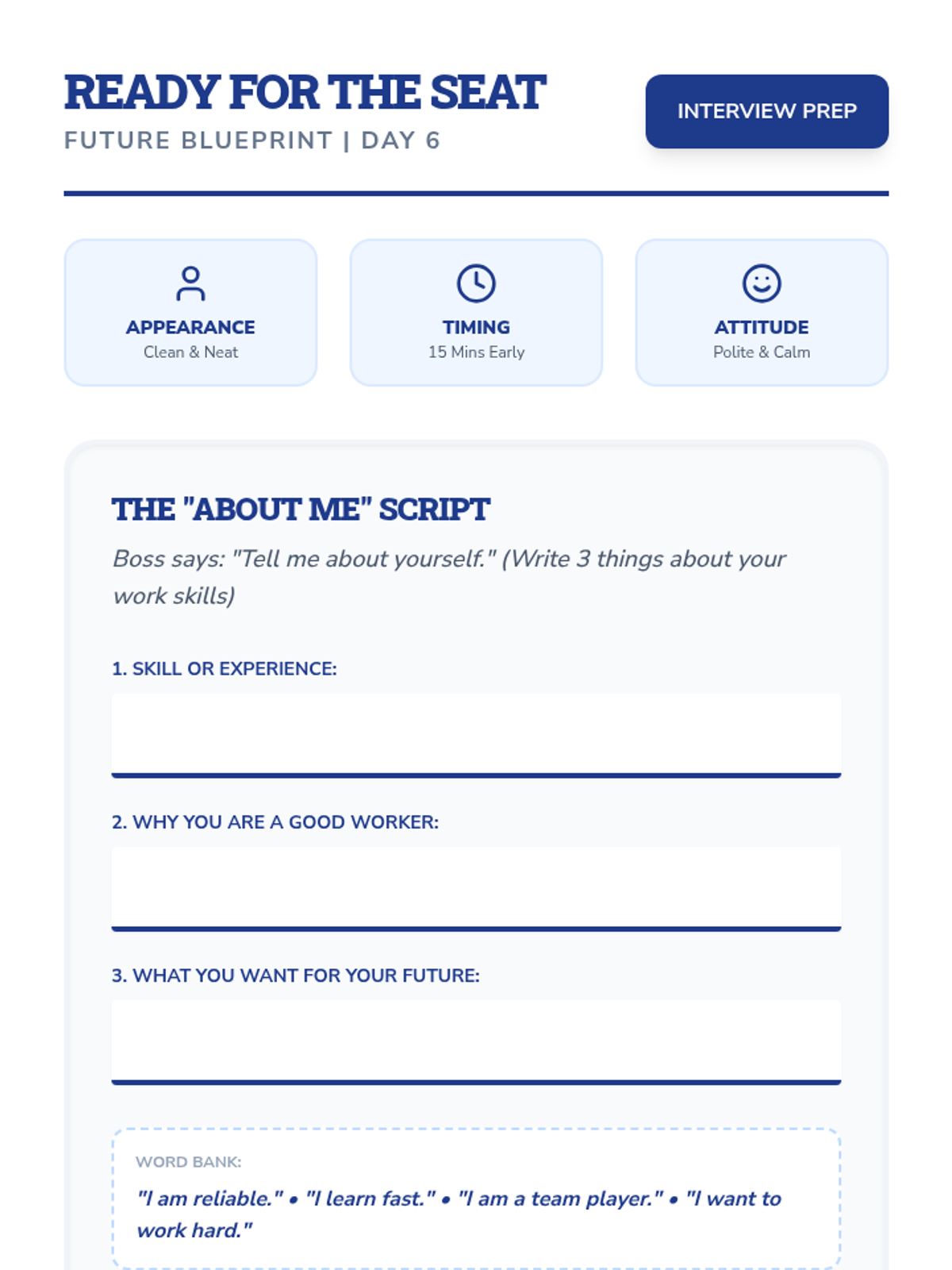
Preparation for the interview process. Focuses on preparation, appearance, and the first five minutes of the encounter.
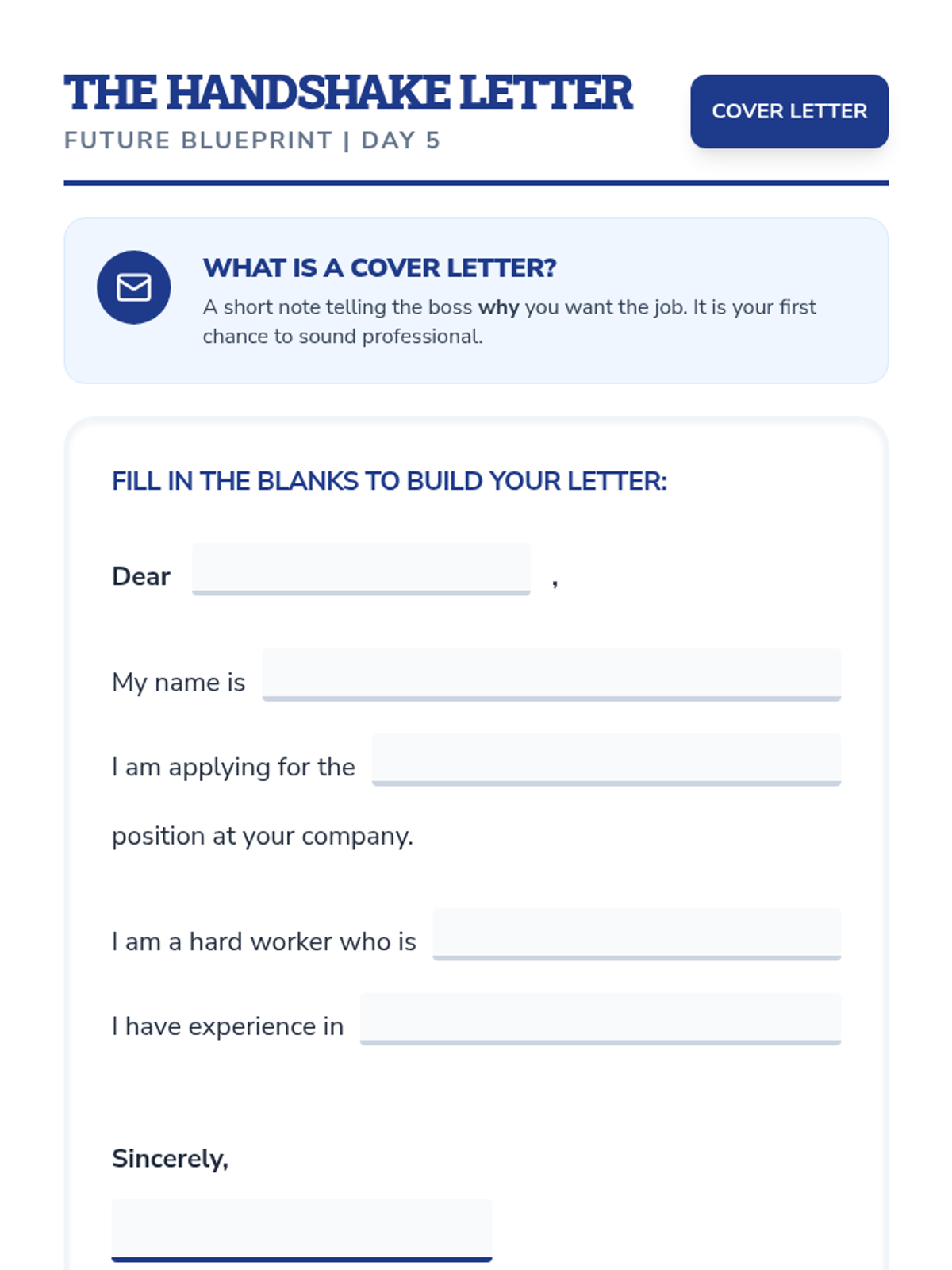
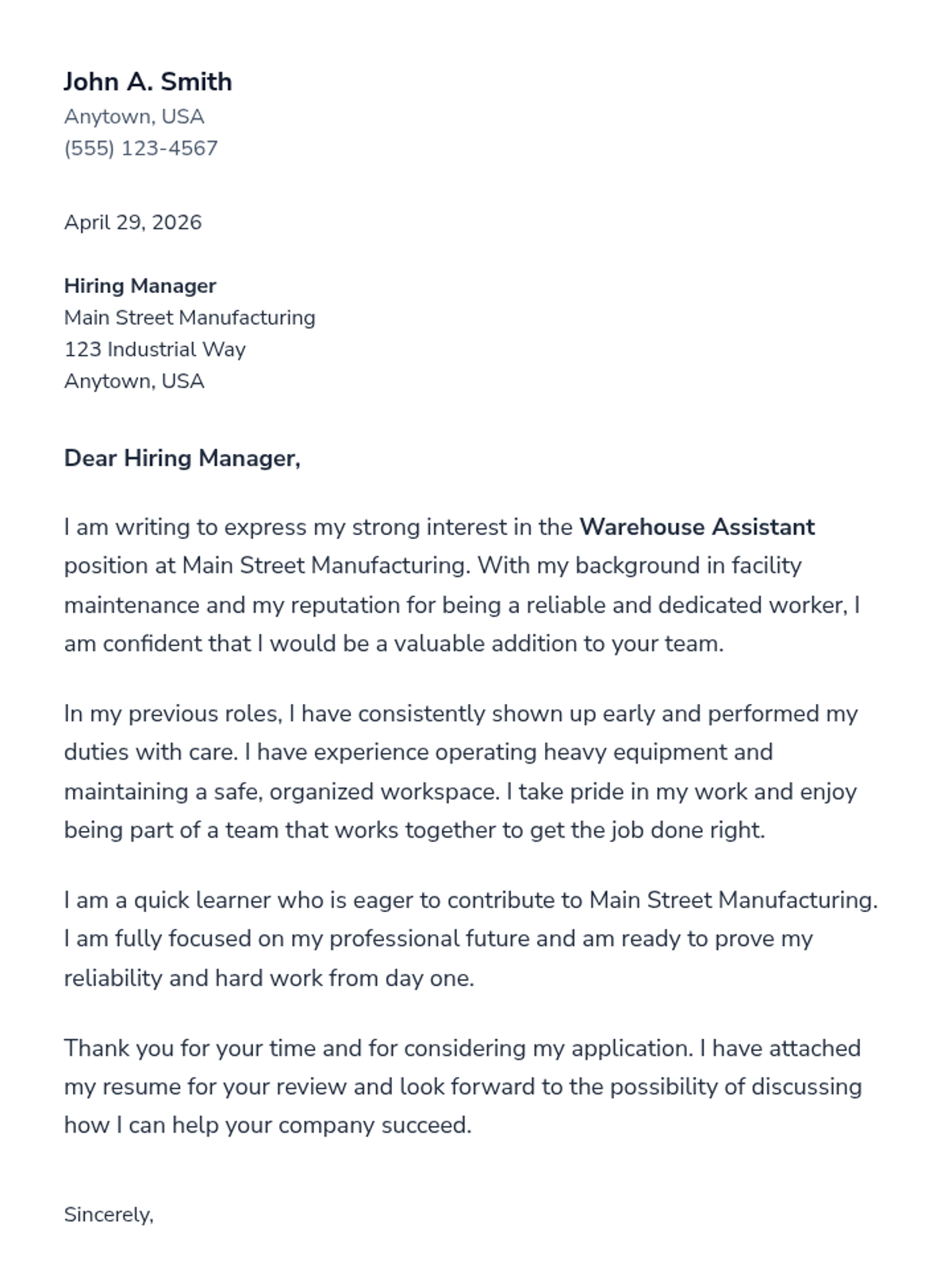
Demystifying the cover letter. Students learn how to introduce themselves to an employer and explain their interest in a role.
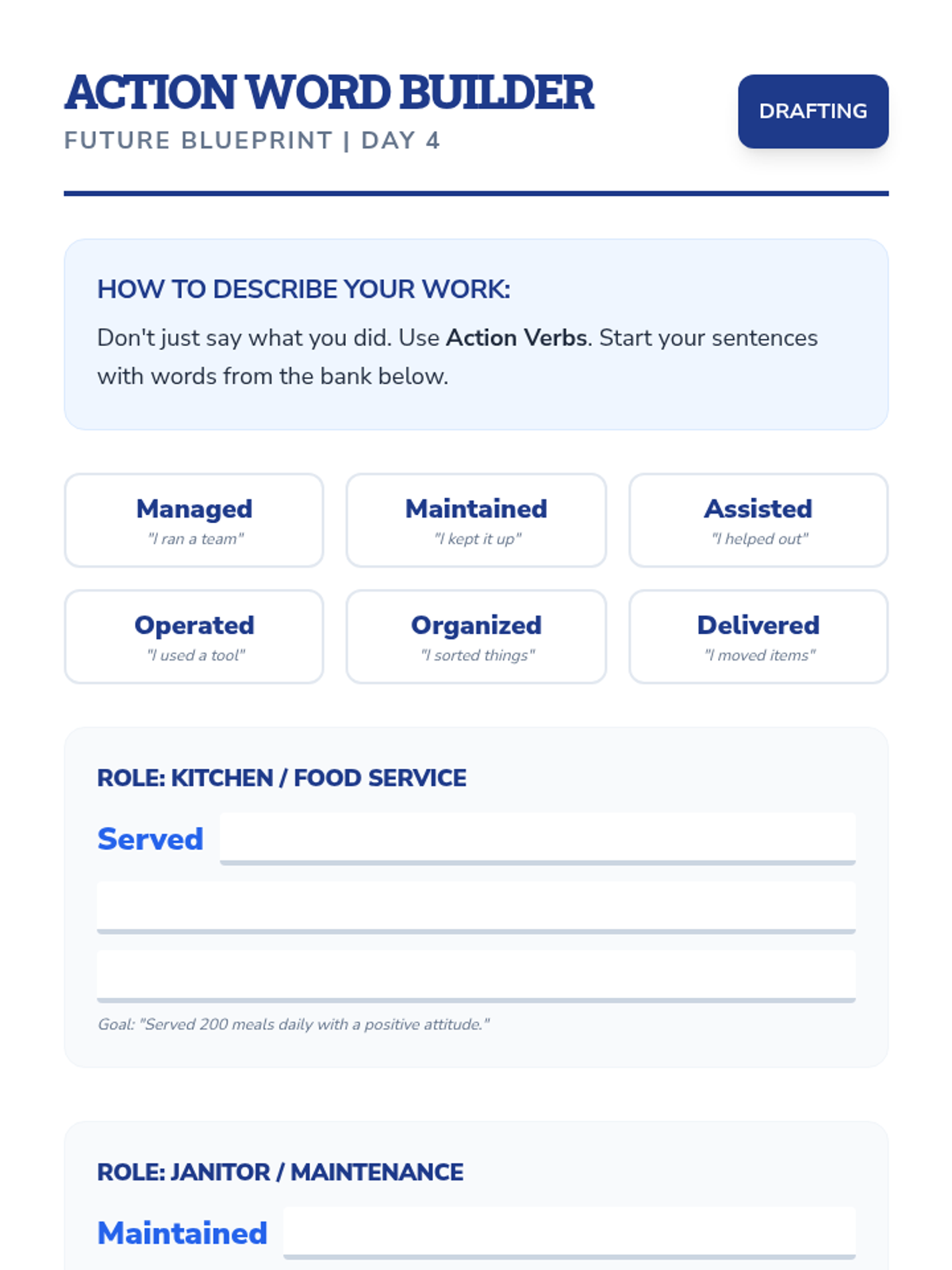
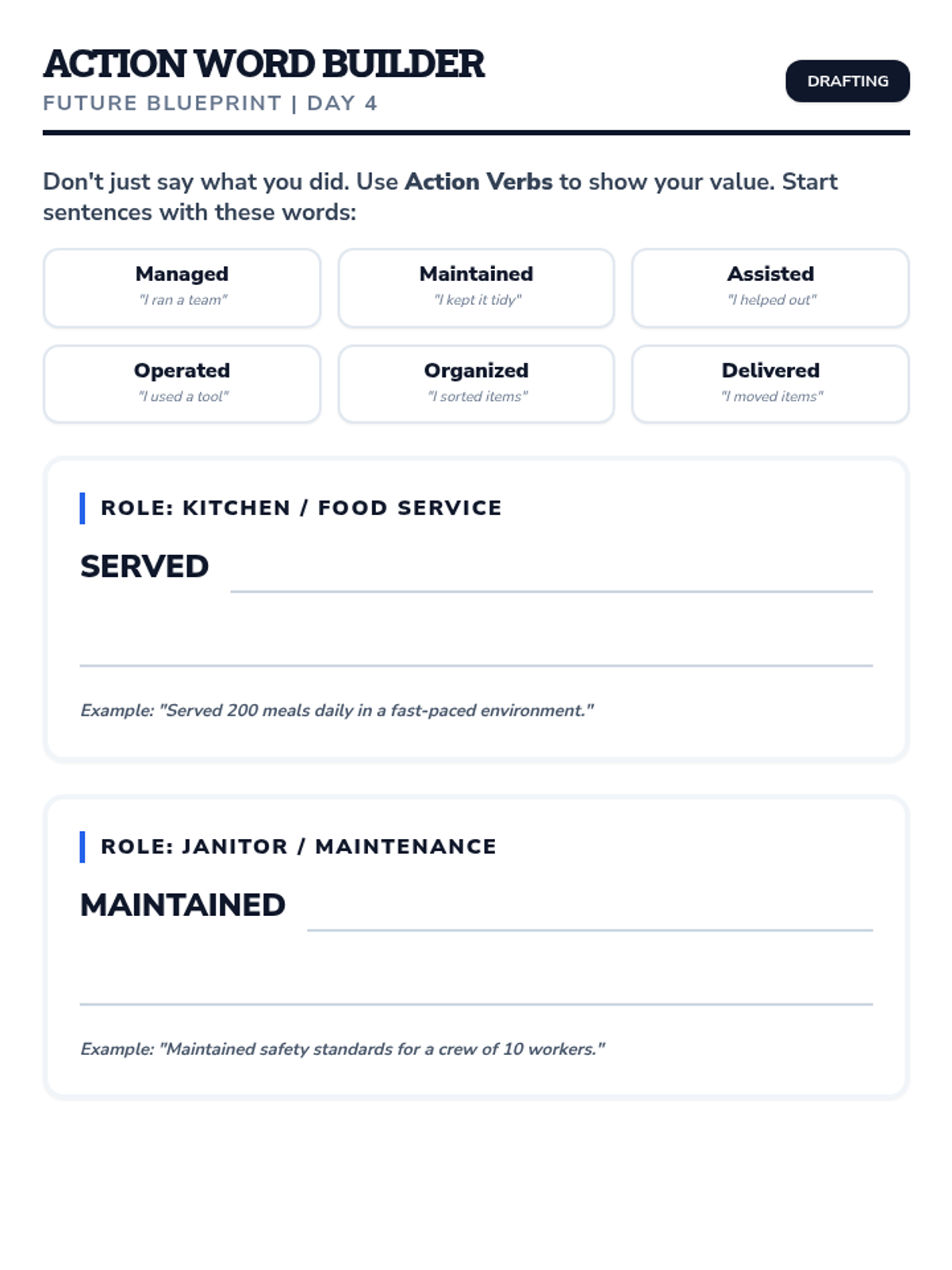
Guided drafting of the resume. Focuses on using action verbs and structuring work history to highlight strengths.
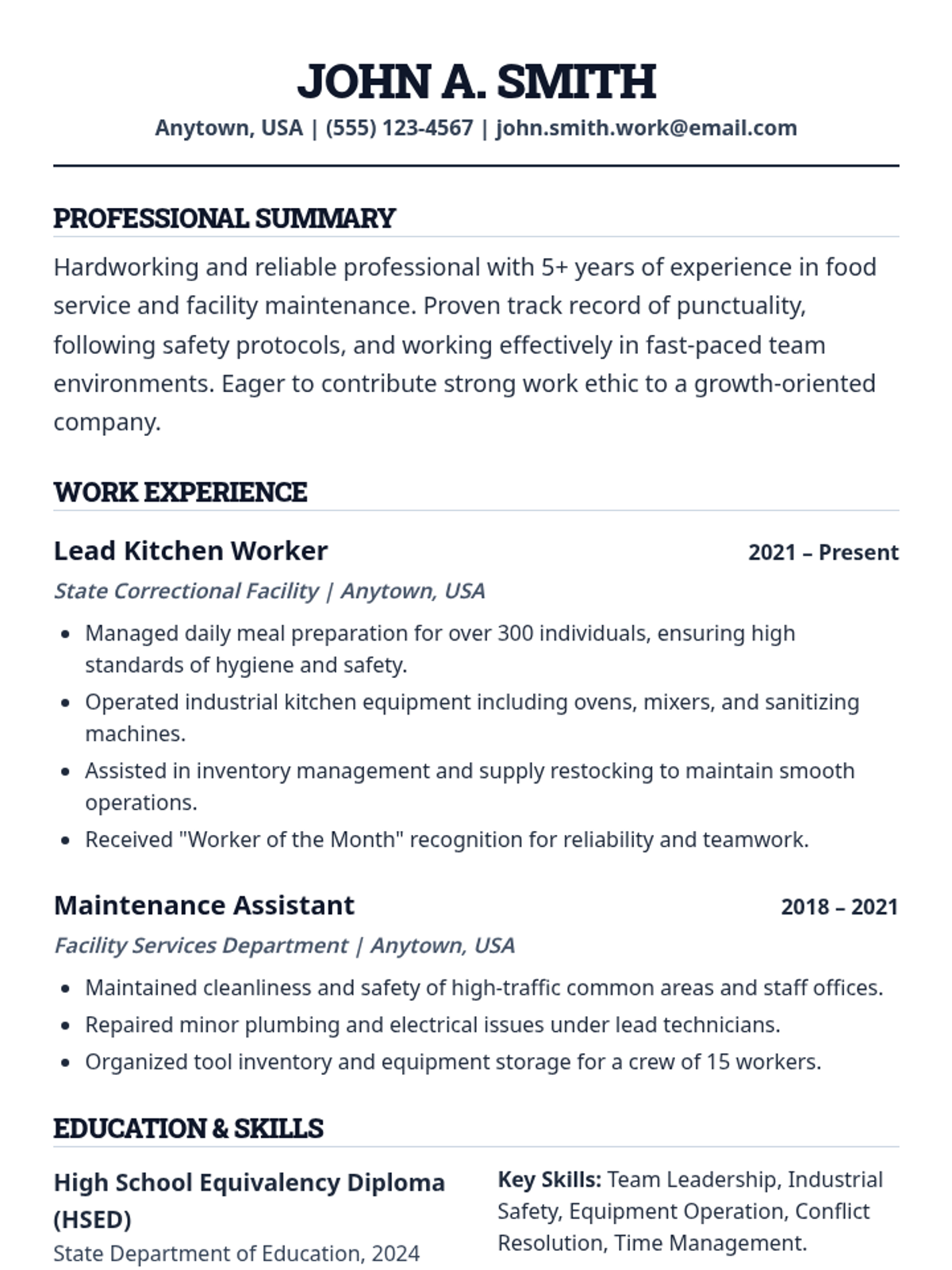
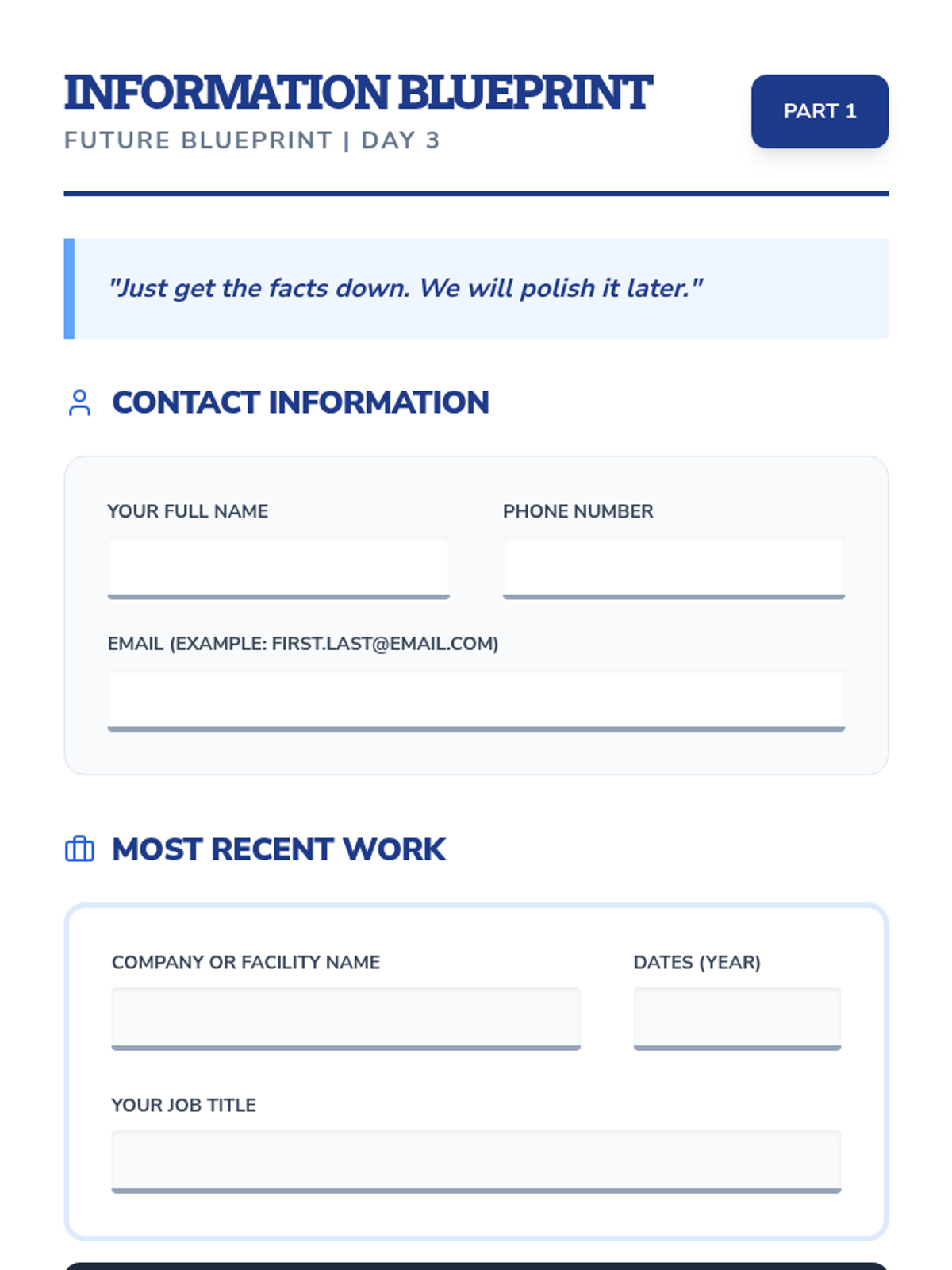
Introduction to resume components. Students begin gathering the necessary information for their professional documents in a simplified format.
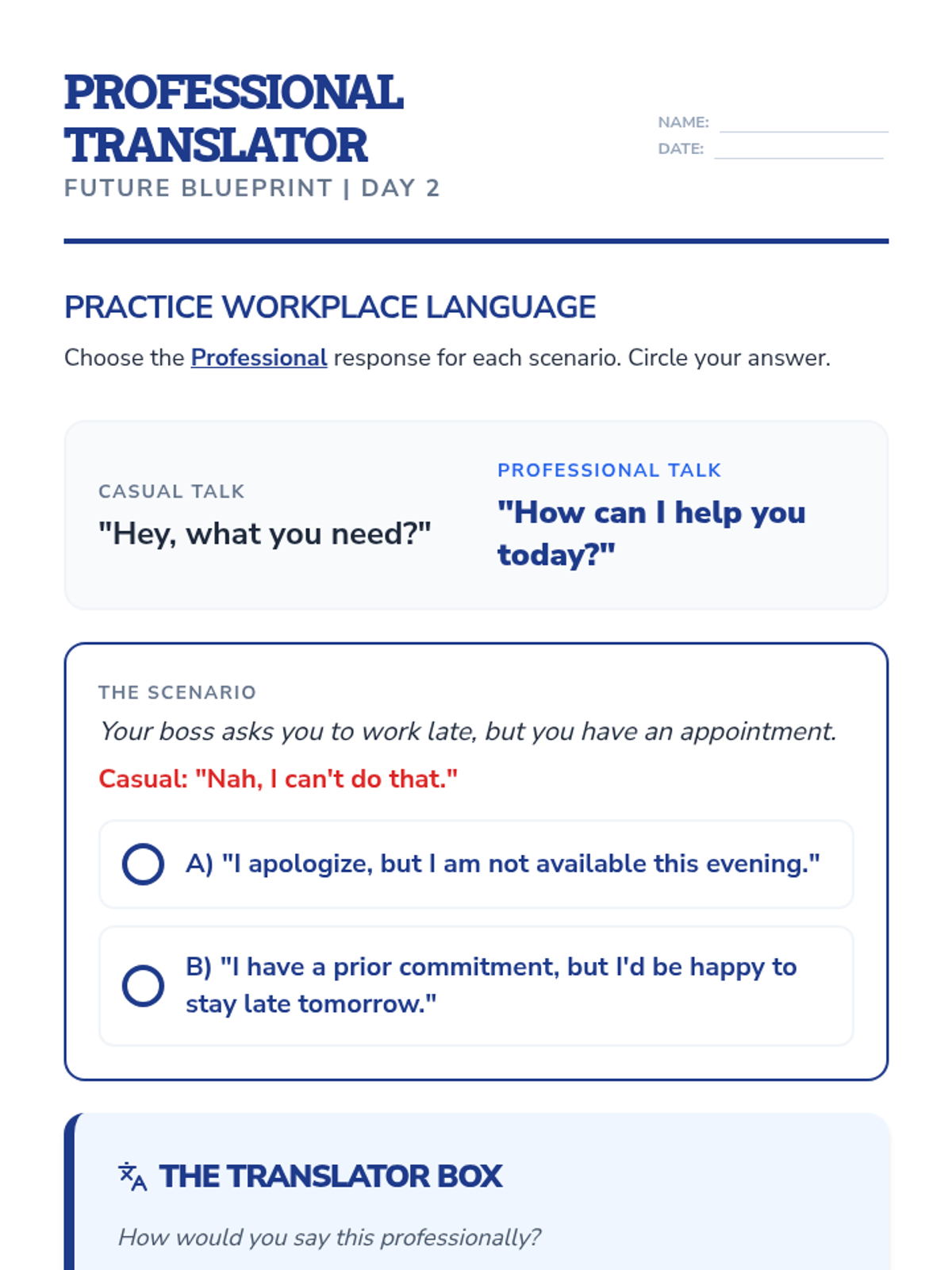
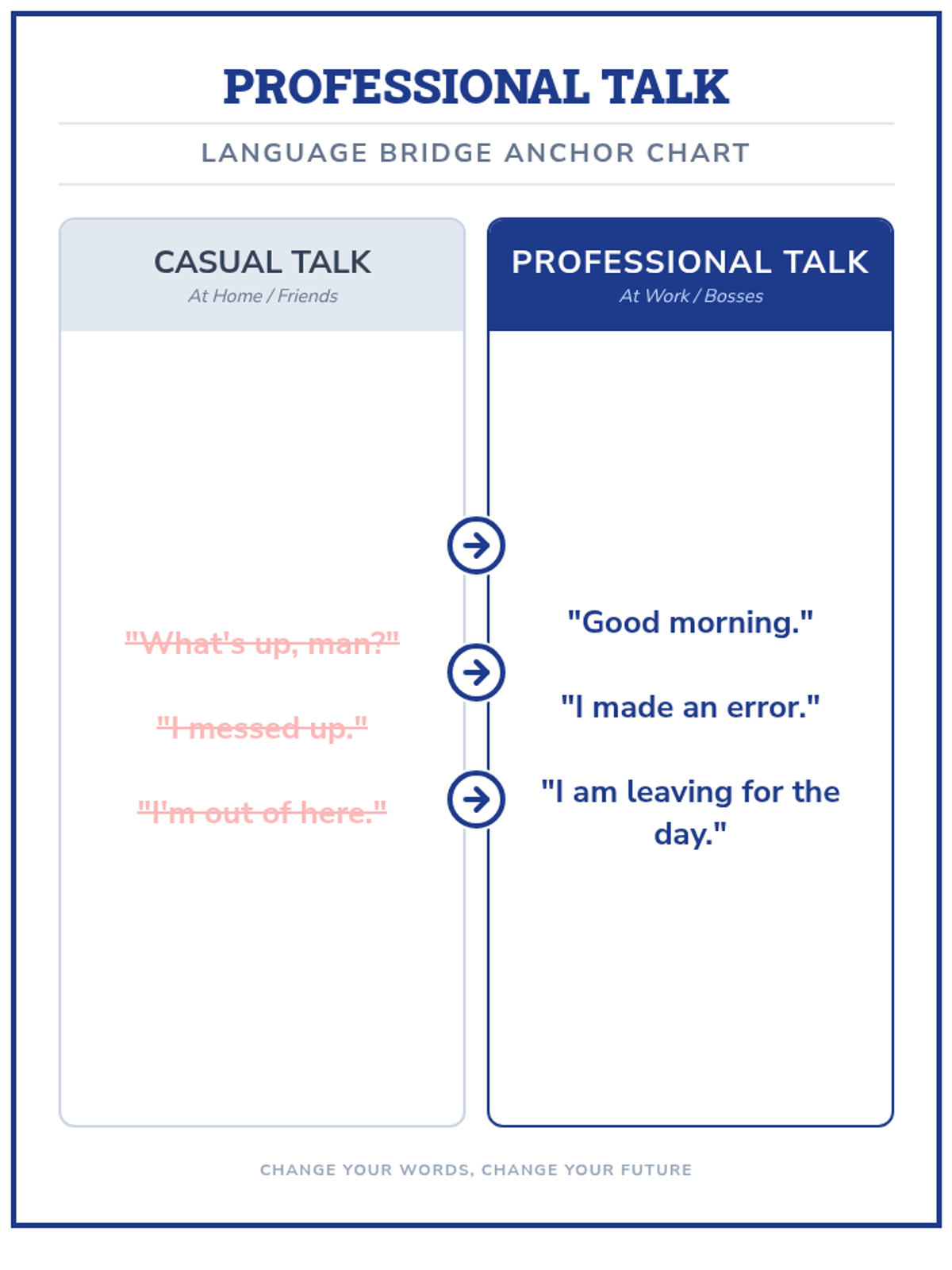
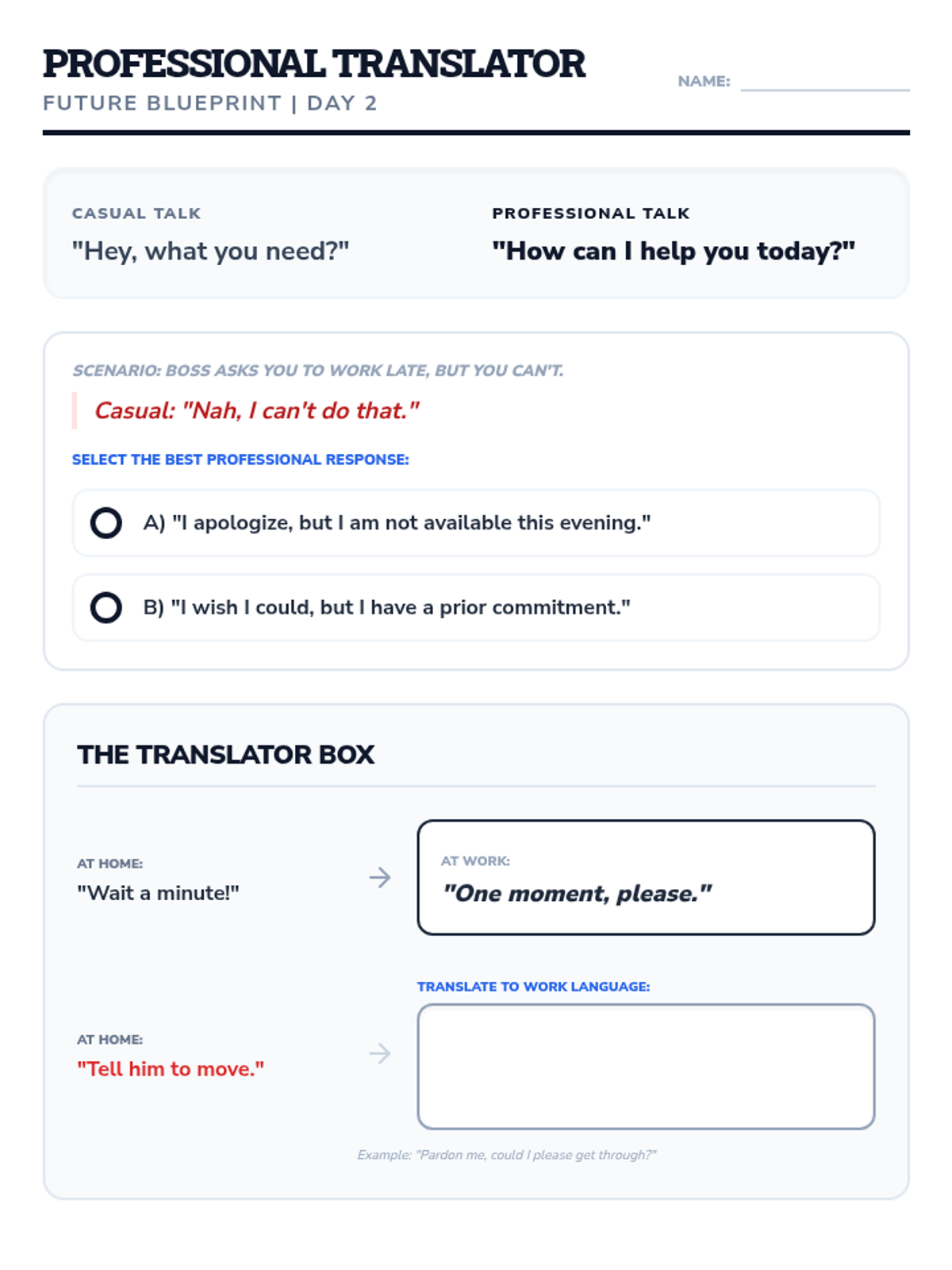
Covers soft skills, professional vocabulary, and non-verbal communication. Practice shifting from casual to professional language.
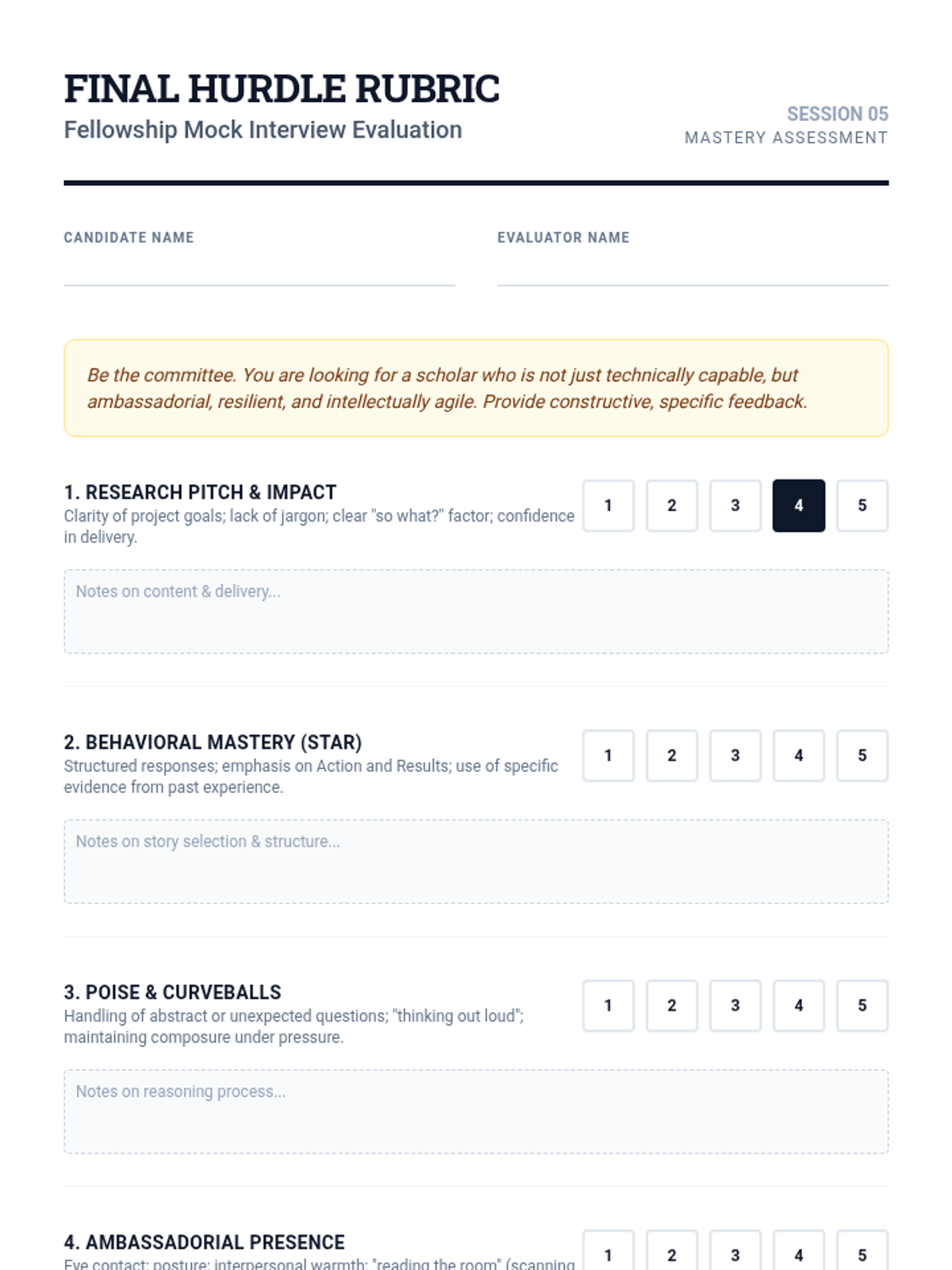
A culminating mock interview experience followed by instruction on professional follow-up etiquette and managing outcomes.
Focuses on managing unexpected or abstract questions by demonstrating visible reasoning and intellectual poise.
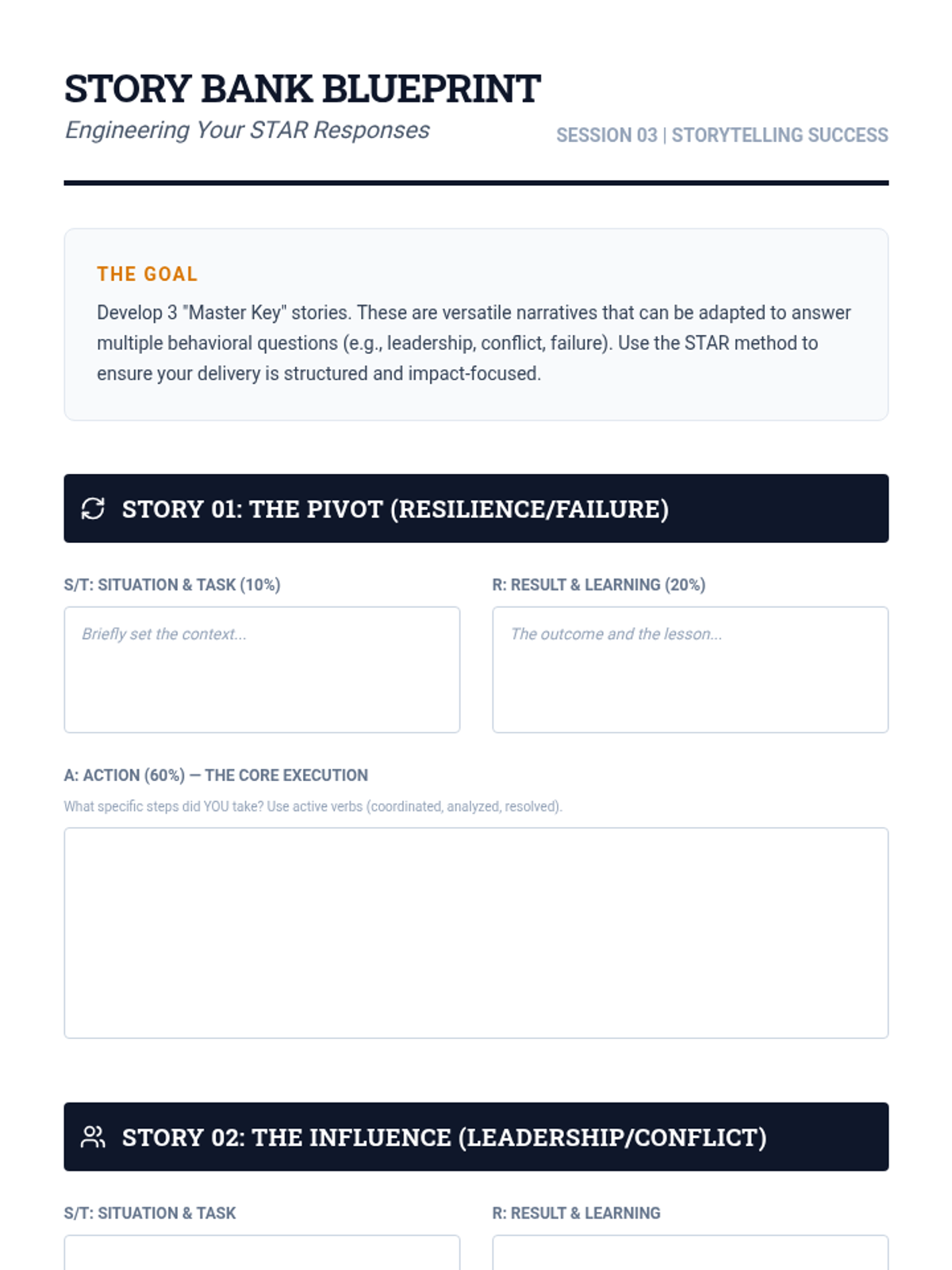
Students master the STAR method to answer behavioral questions and develop a strategic 'story bank' of professional experiences.
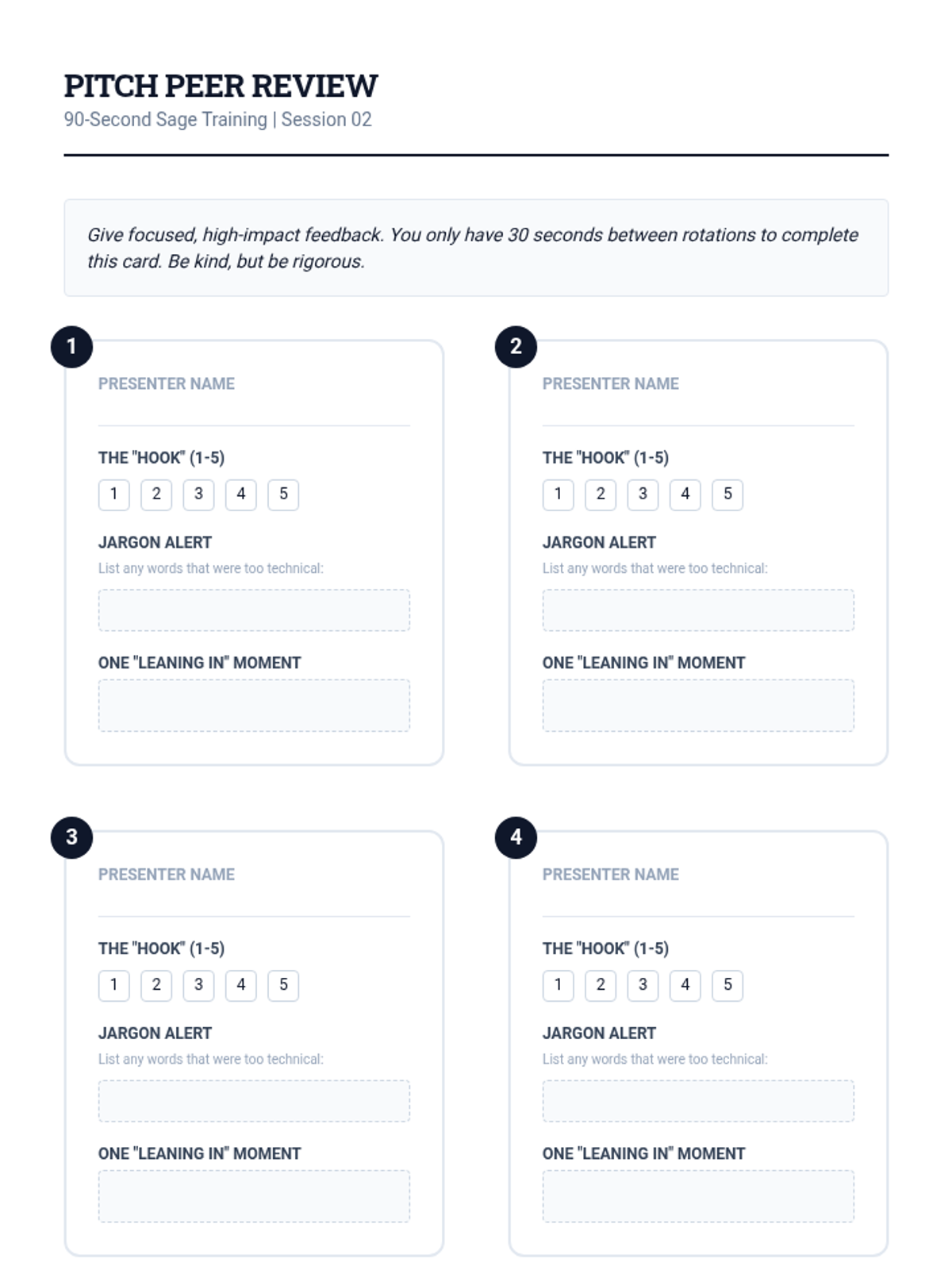
Students craft and refine a compelling 90-second summary of their research impact, practicing delivery for diverse audiences.
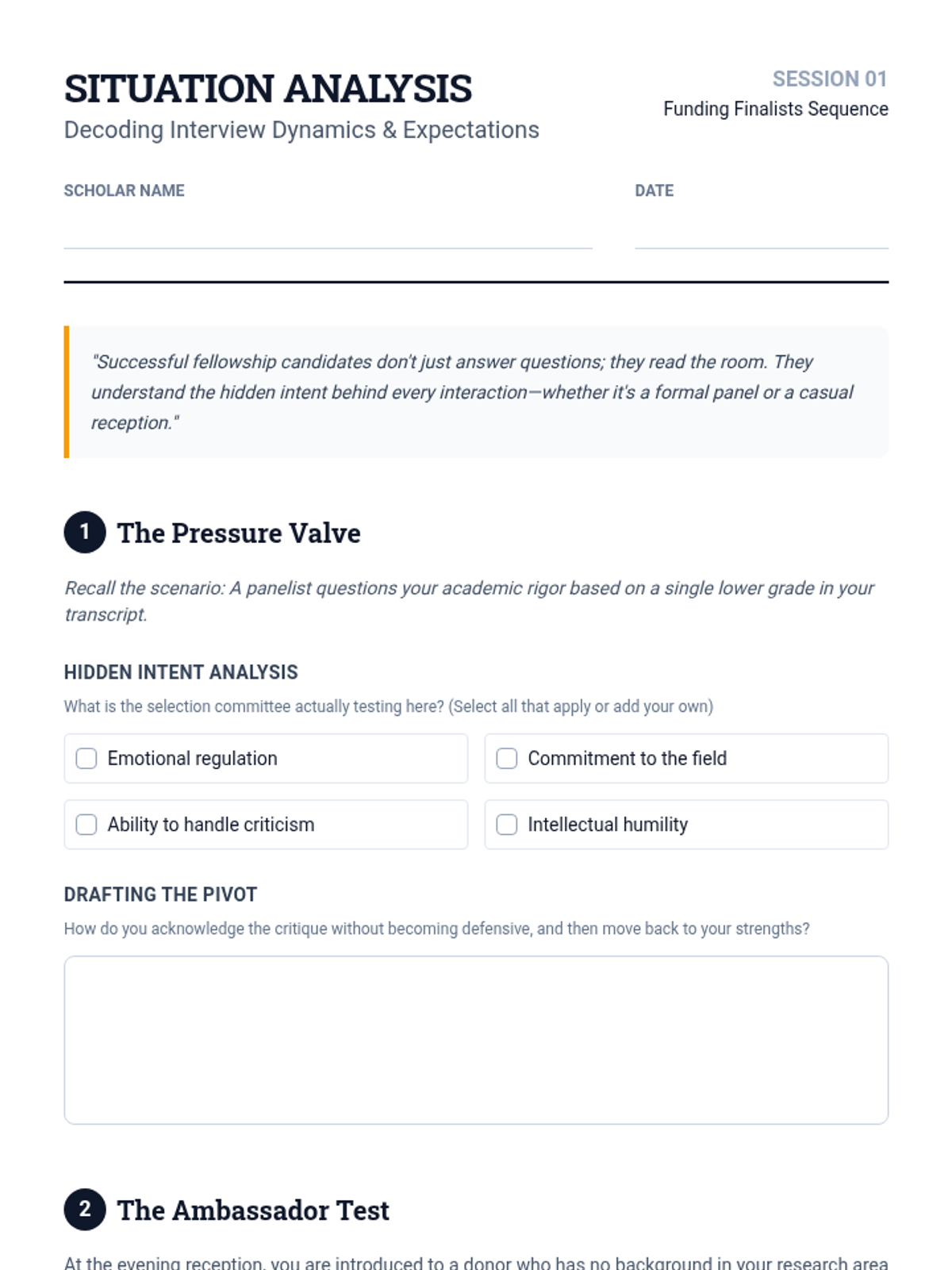
Students analyze different fellowship interview styles—panel, one-on-one, and social—and decode the underlying expectations of selection committees.
Students engage in mock interview simulations and learn post-interview etiquette and scholarship management.
Students prepare for scholarship interviews using the STAR method to answer behavioral questions effectively.
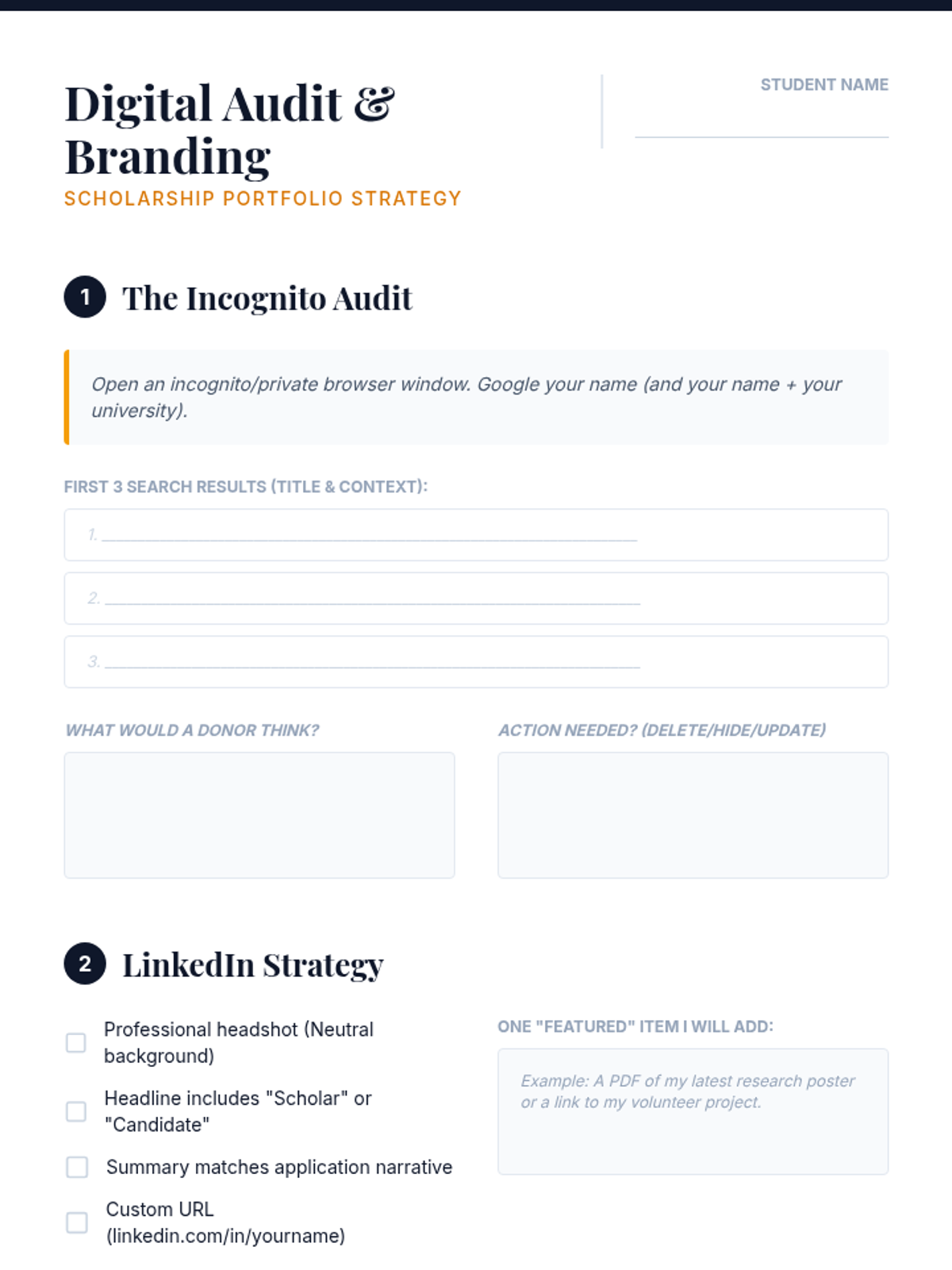
Students audit their digital footprint and curate supplemental materials to reinforce their application's narrative.
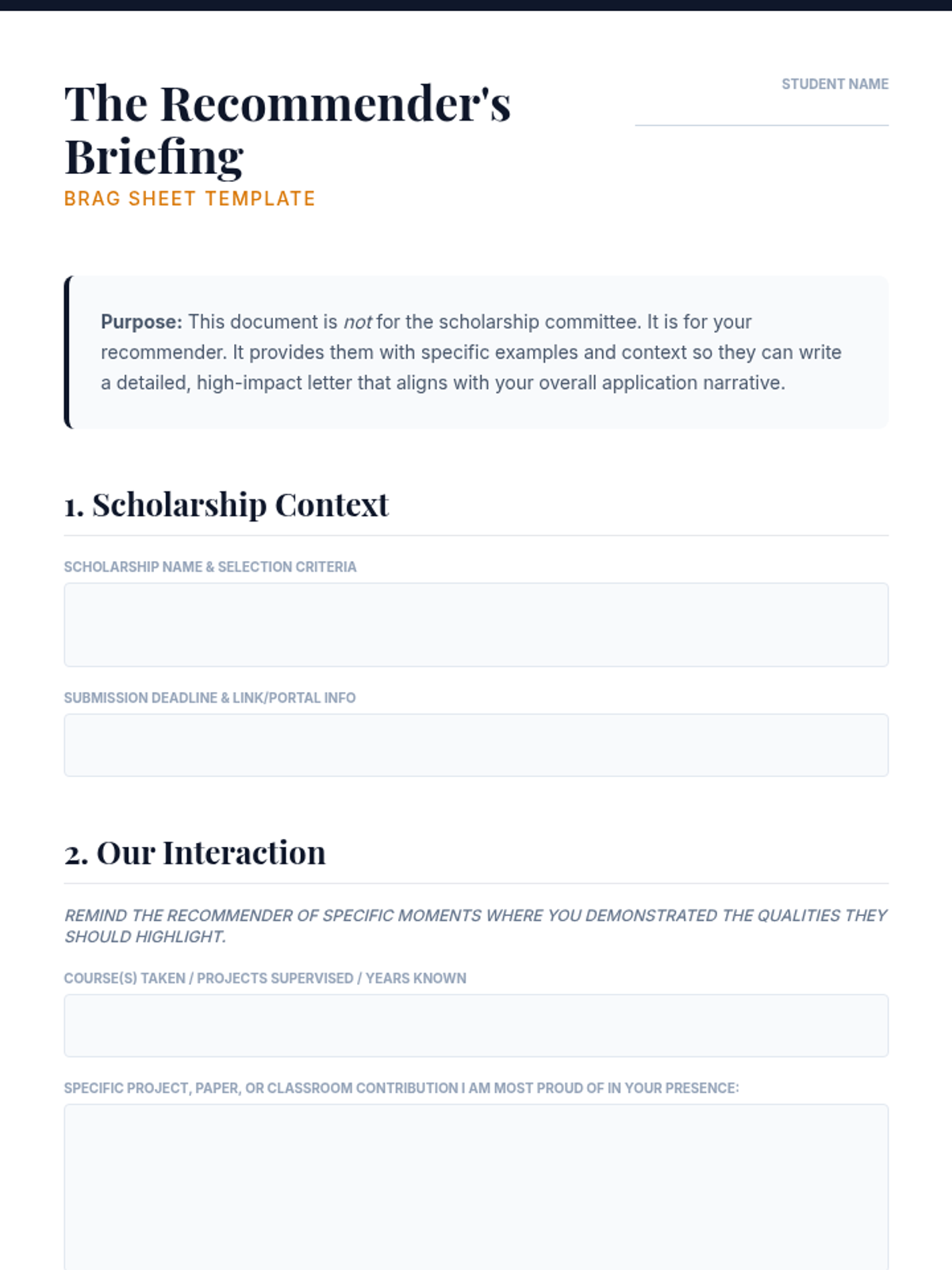
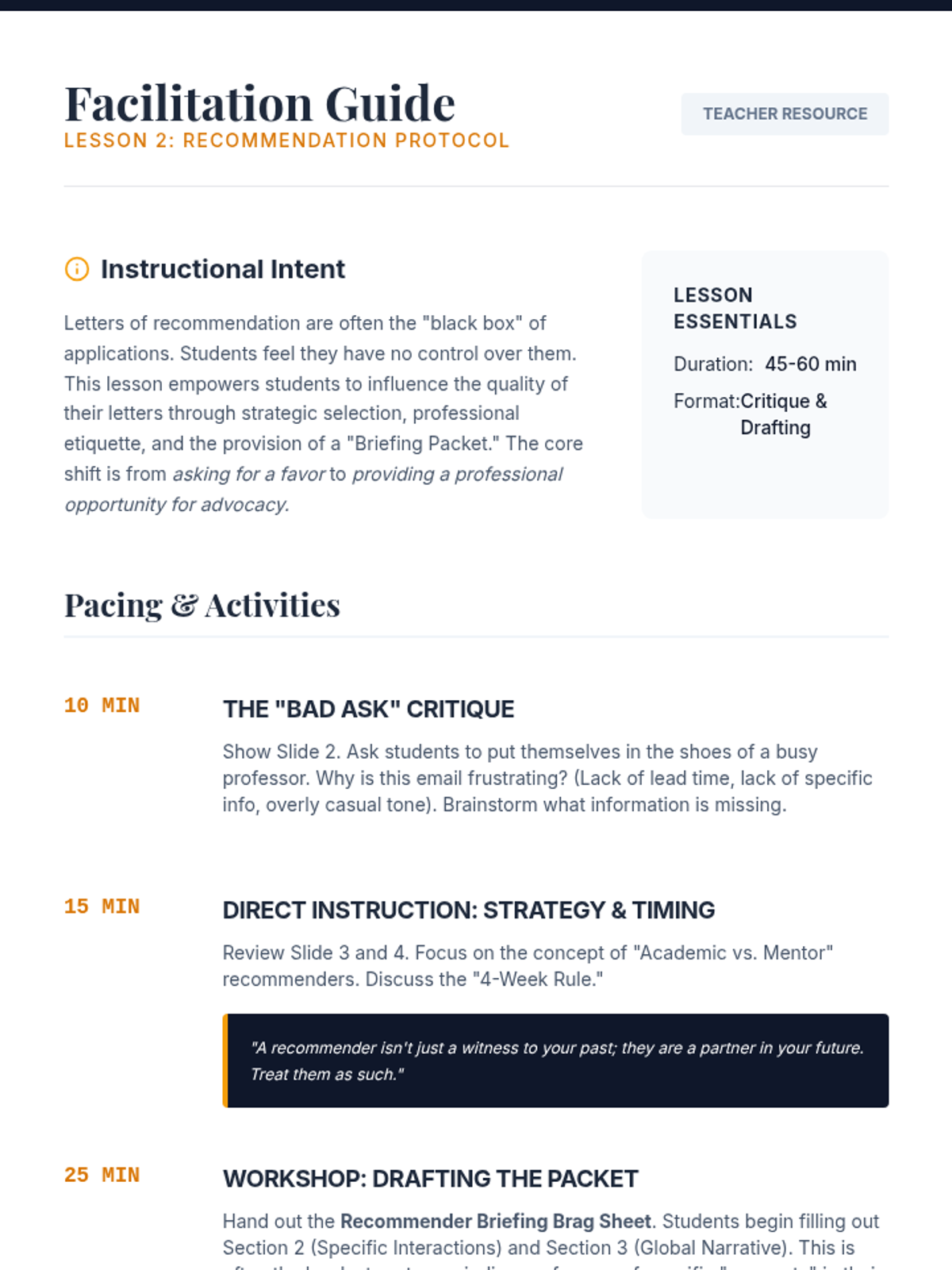
Students learn the etiquette and strategy for requesting letters of recommendation, creating 'brag sheets' to guide their recommenders.
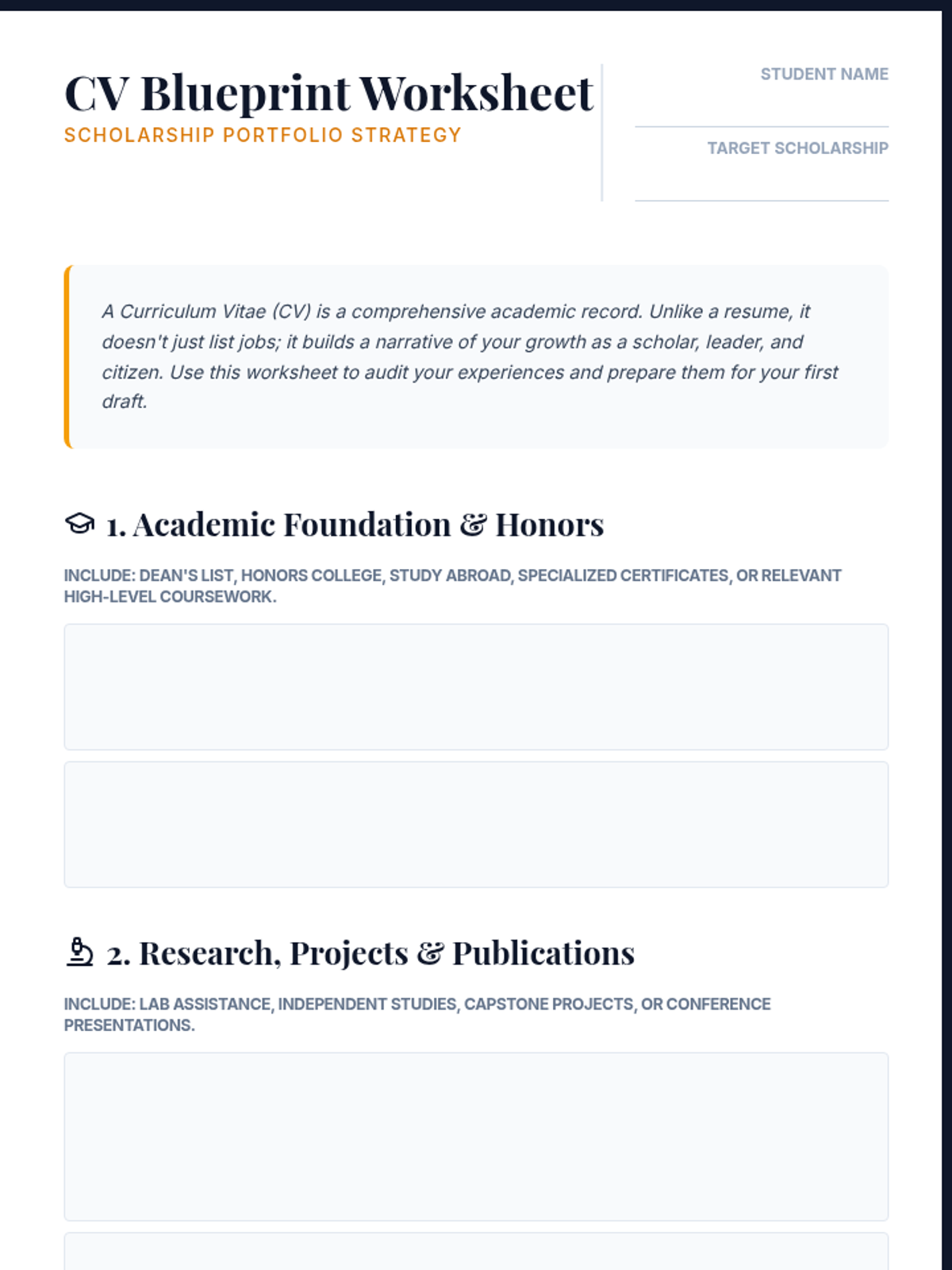
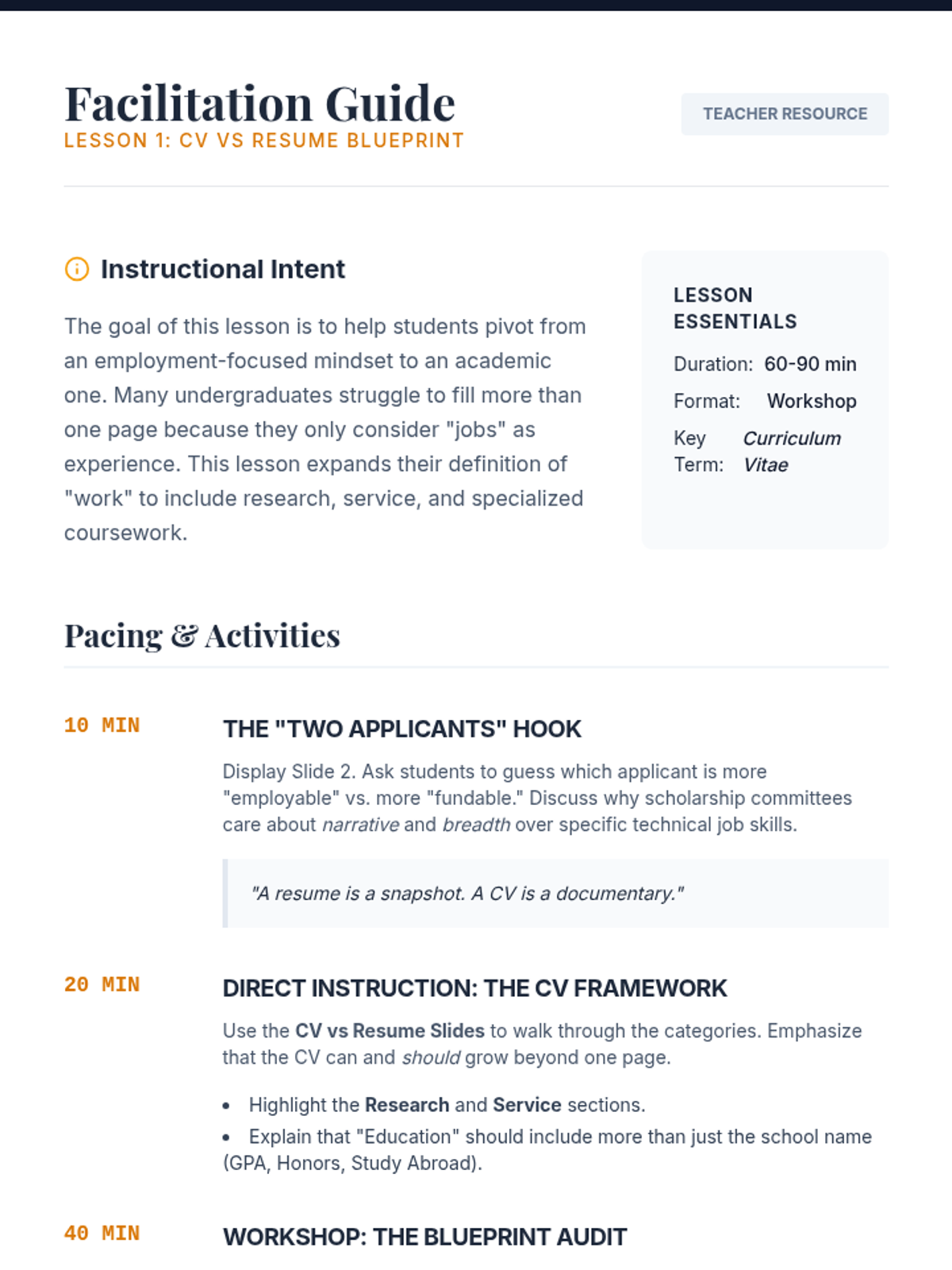
Students differentiate between a standard employment resume and an academic CV, building a document that highlights academic achievements, research, and leadership.
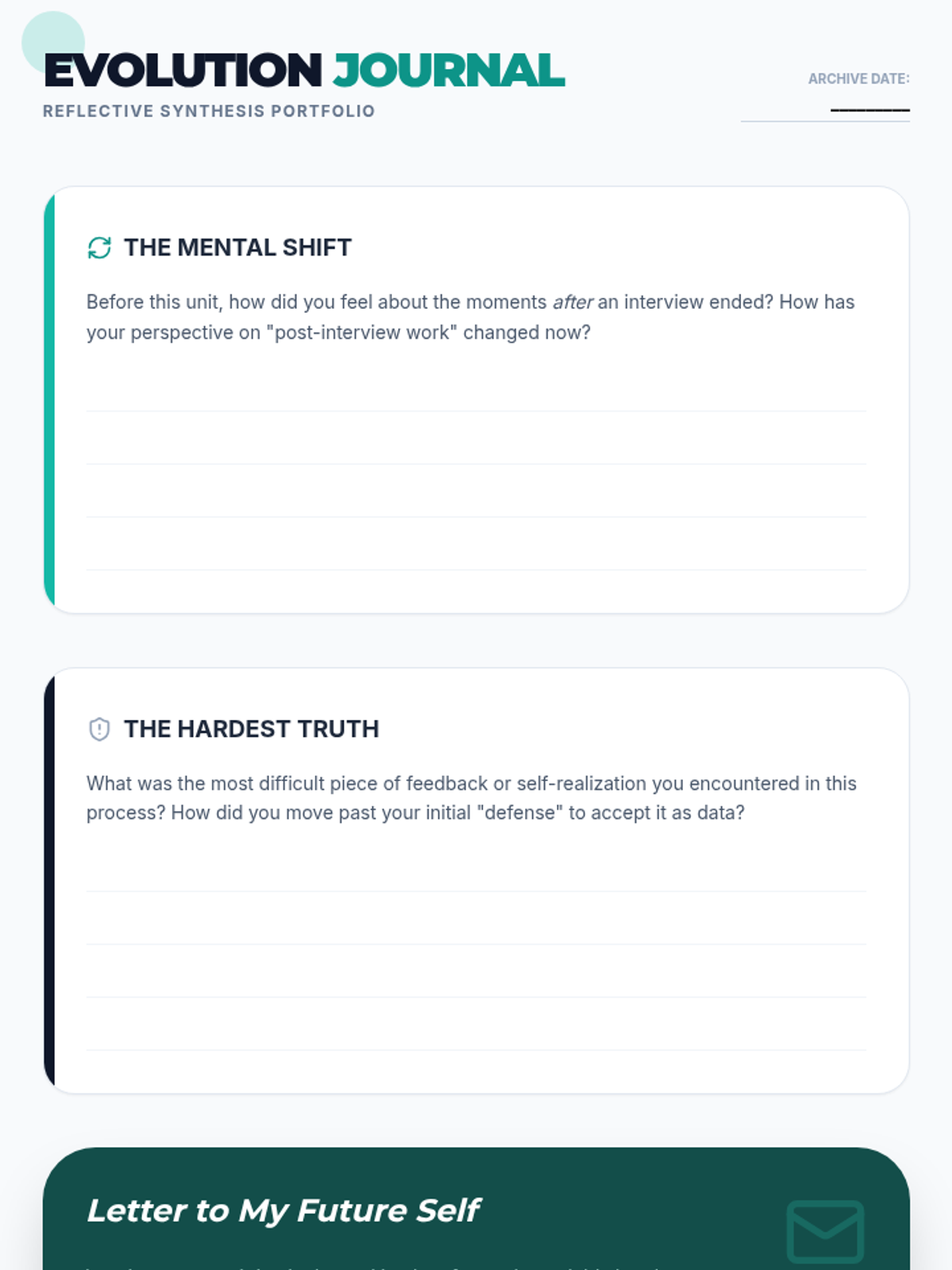
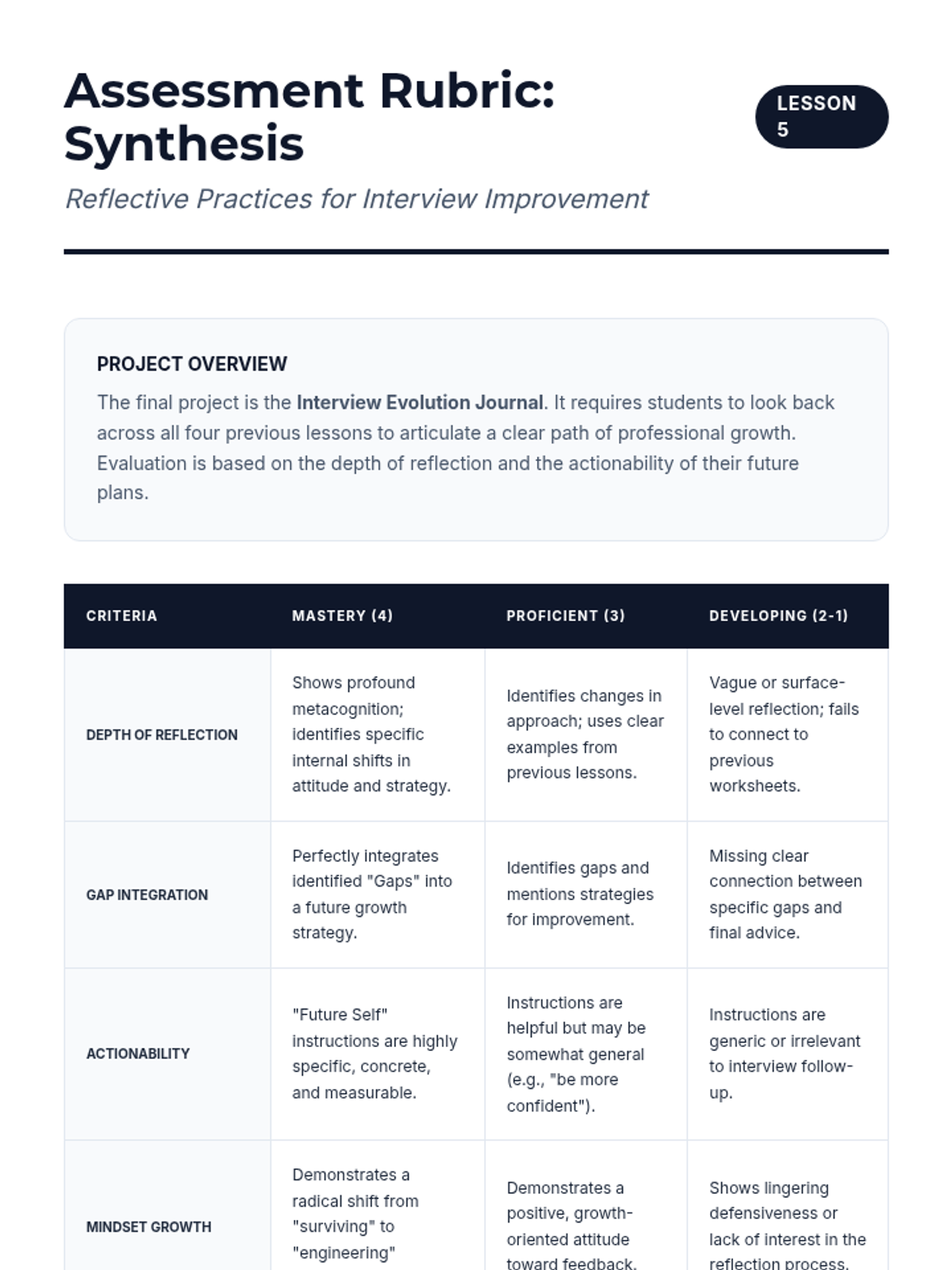
Students synthesize their reflections and growth plans into a final self-assessment. They reflect on how their interview approach has evolved through the inquiry and reflection process.
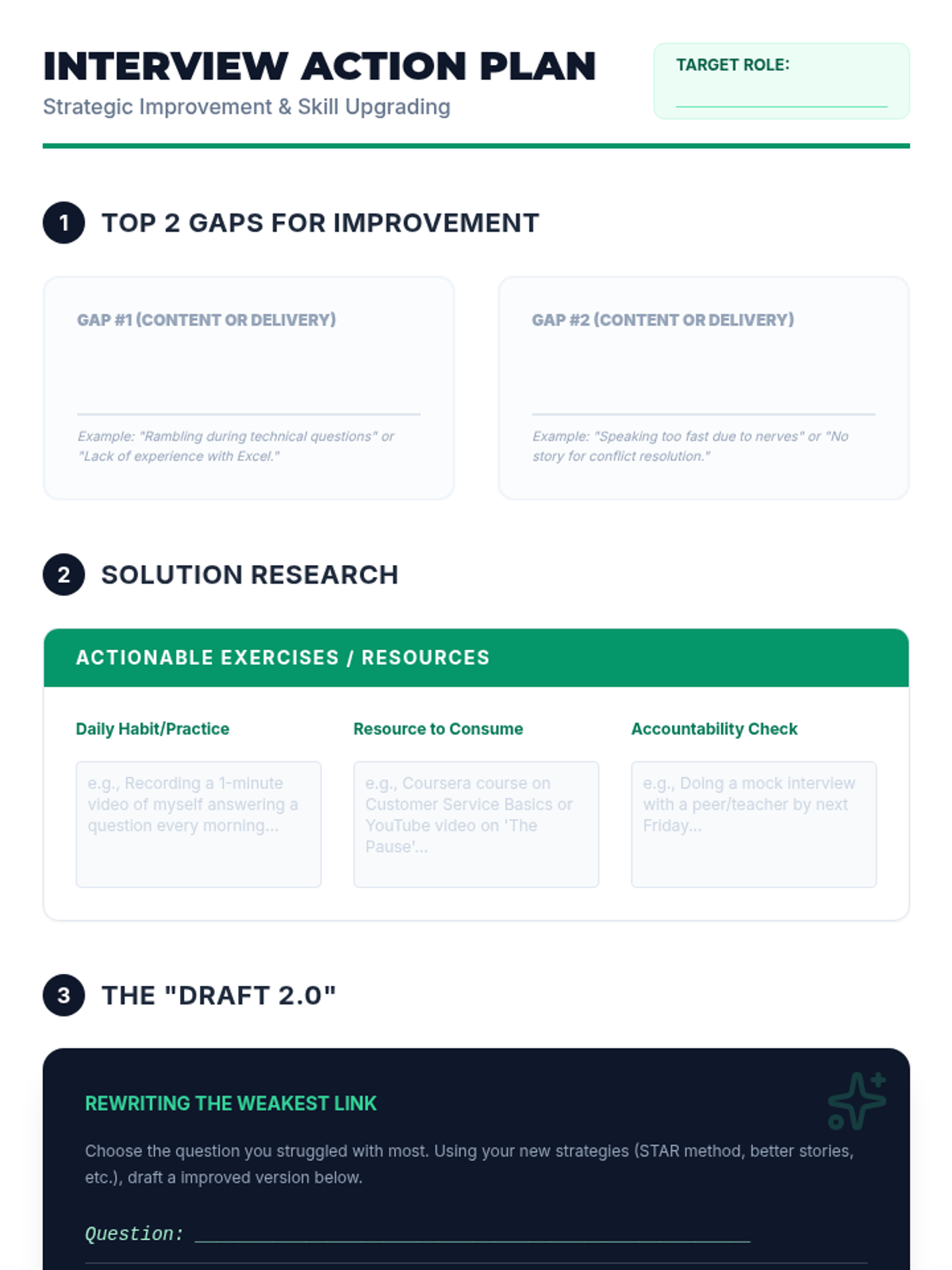
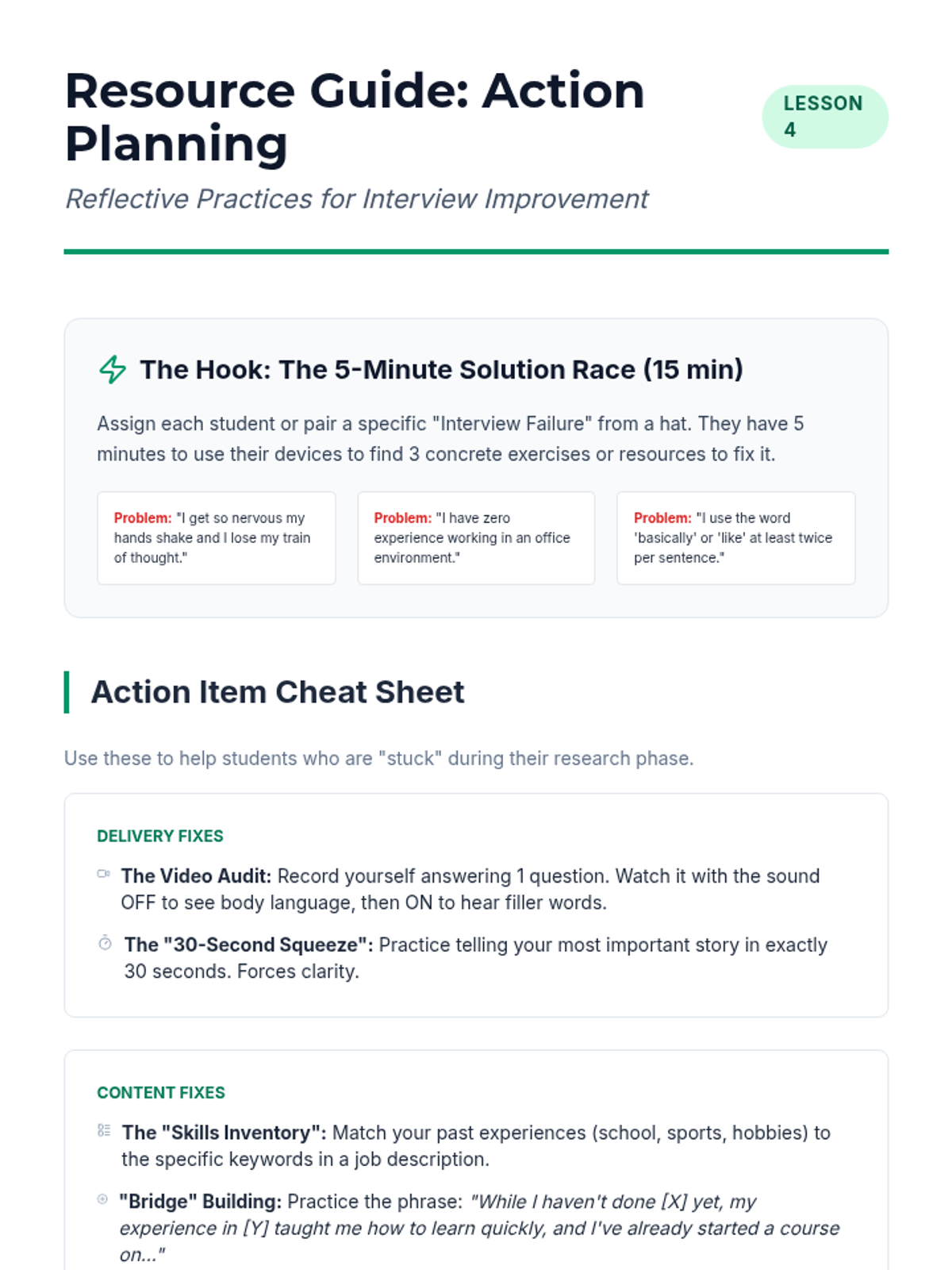
Students turn identified weaknesses into actionable growth strategies. They research specific methods to improve their interview skills and create a strategic plan for their next opportunity.
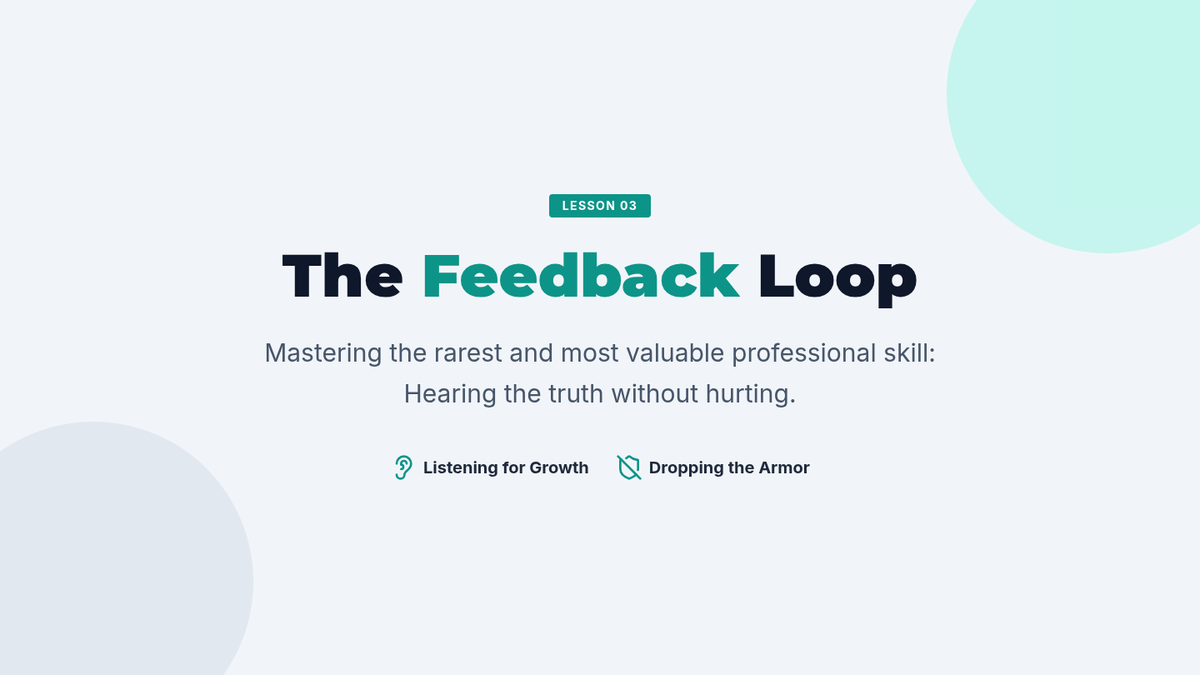
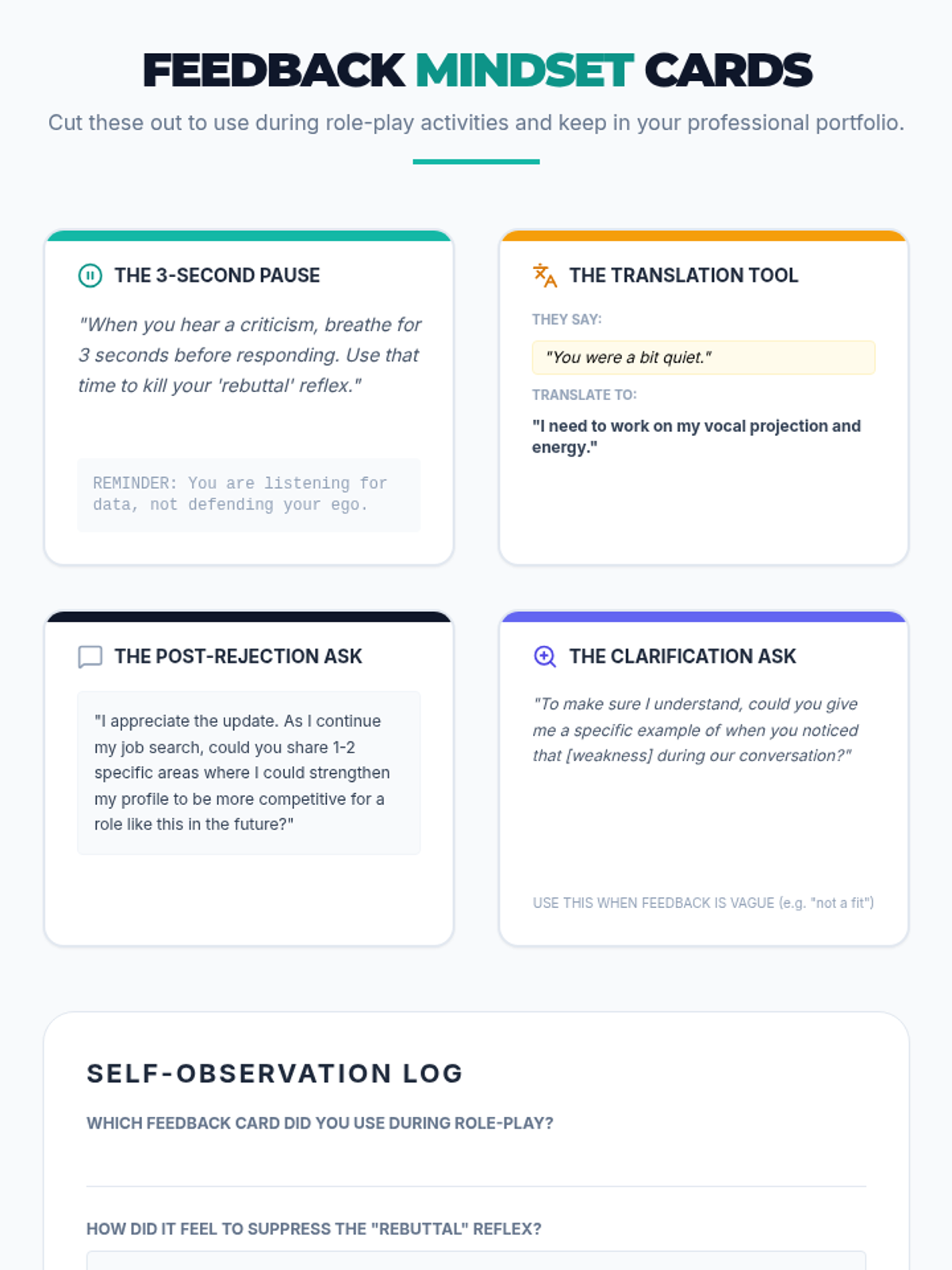
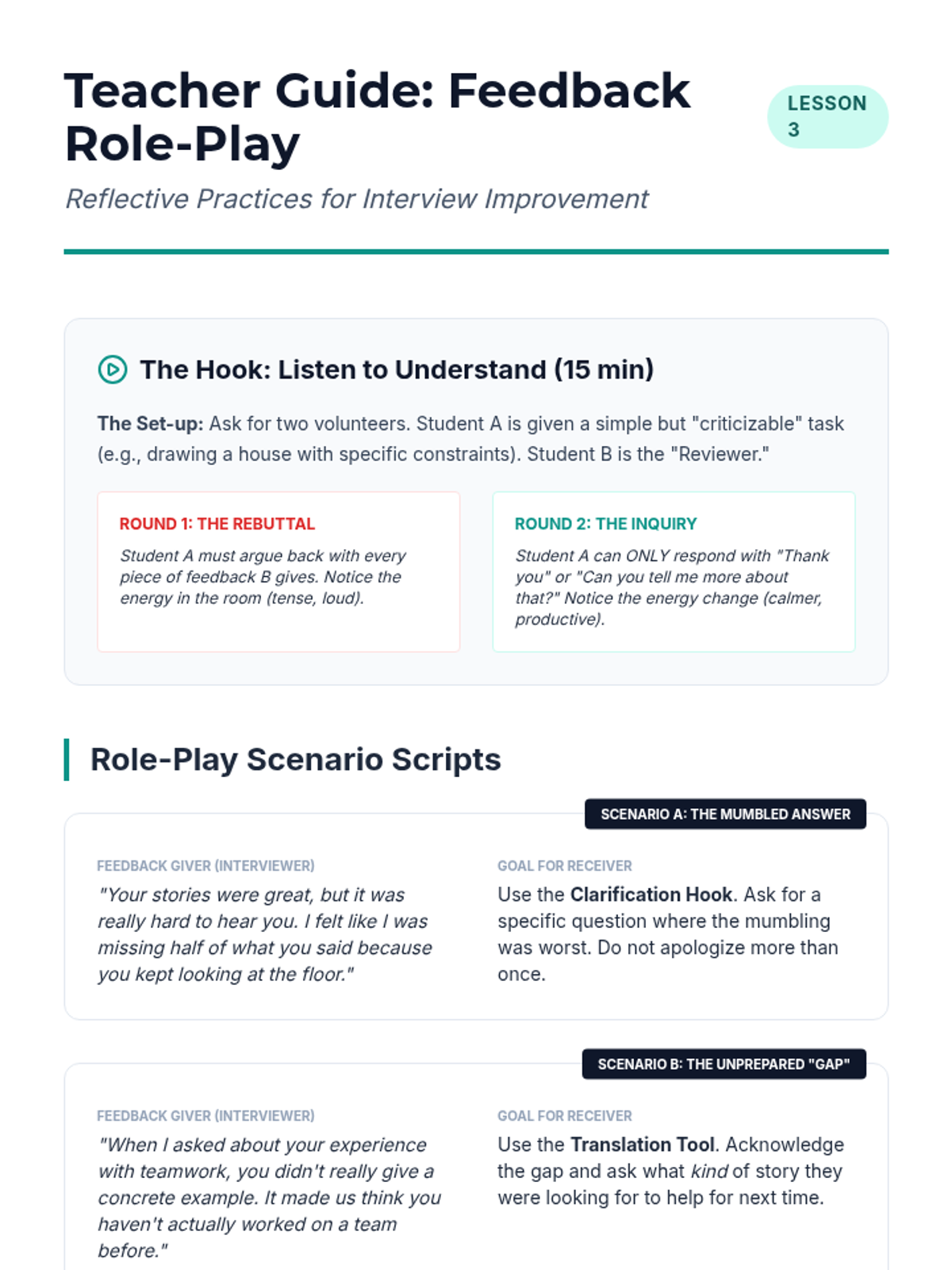
Students explore the art of requesting and receiving professional feedback. The focus is on developing a growth mindset and learning to listen for understanding rather than defensiveness.
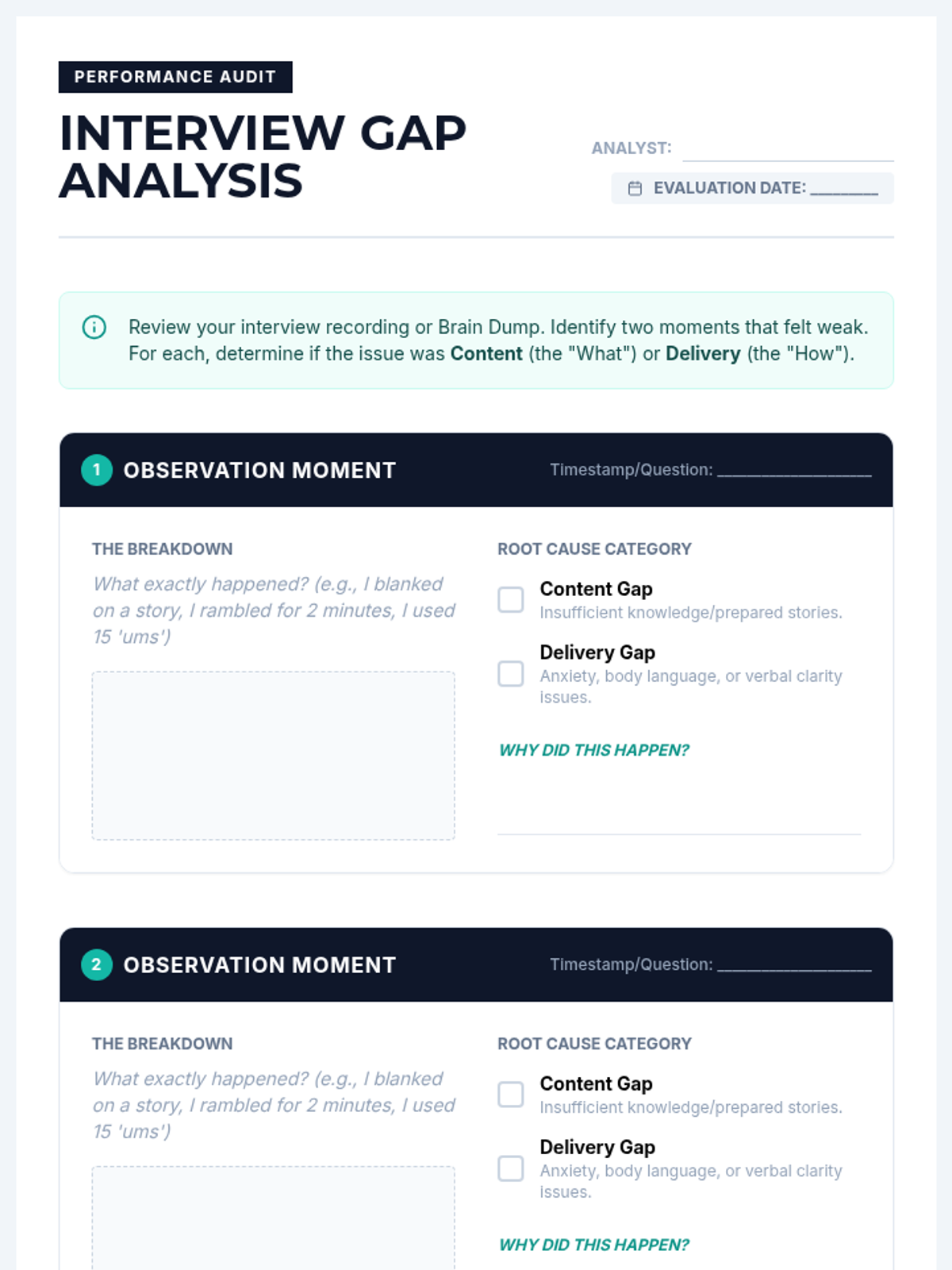
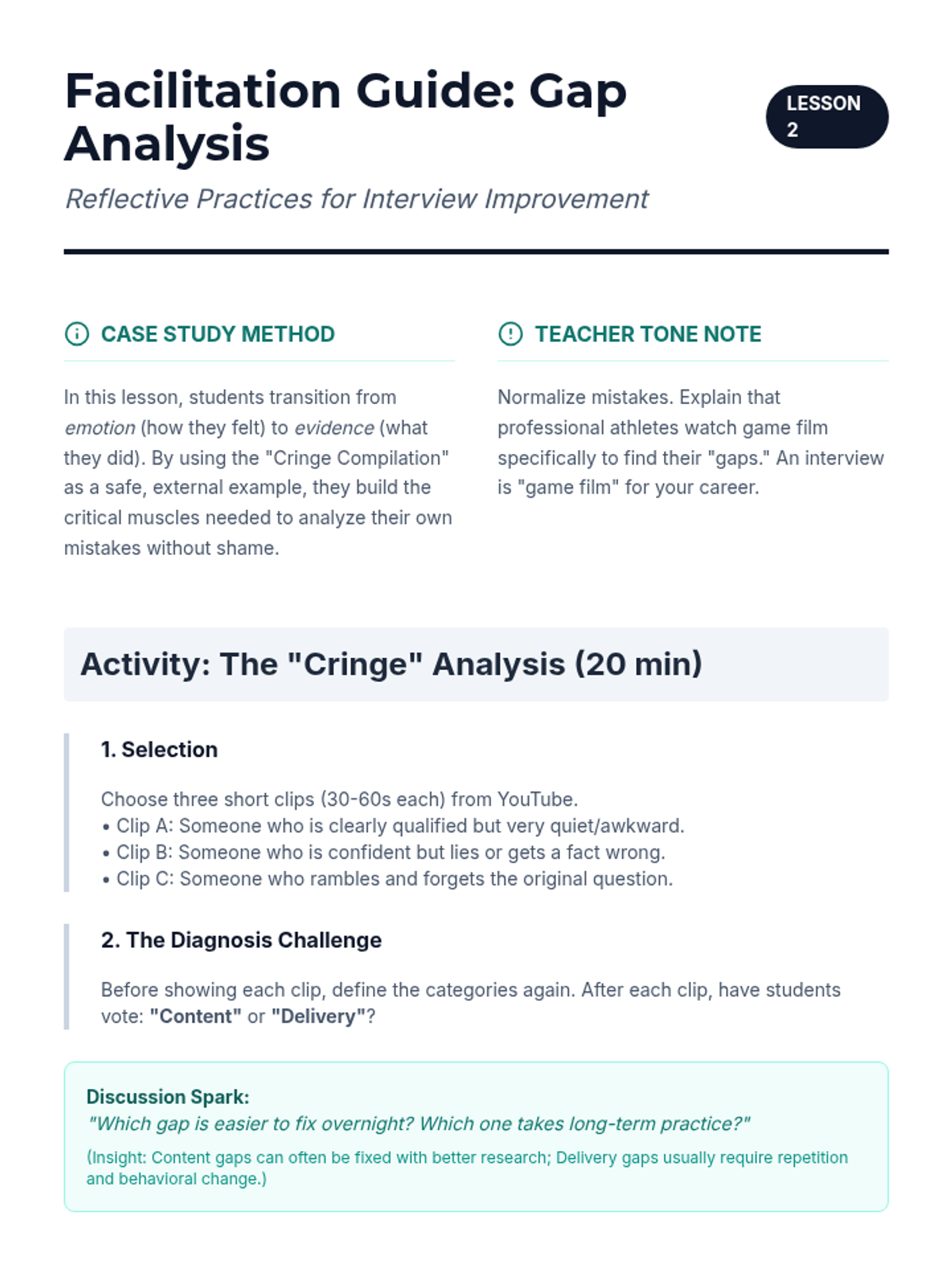
Students analyze mock interview performances to identify specific weaknesses in content and communication. They learn to categorize performance gaps to better target their improvement efforts.
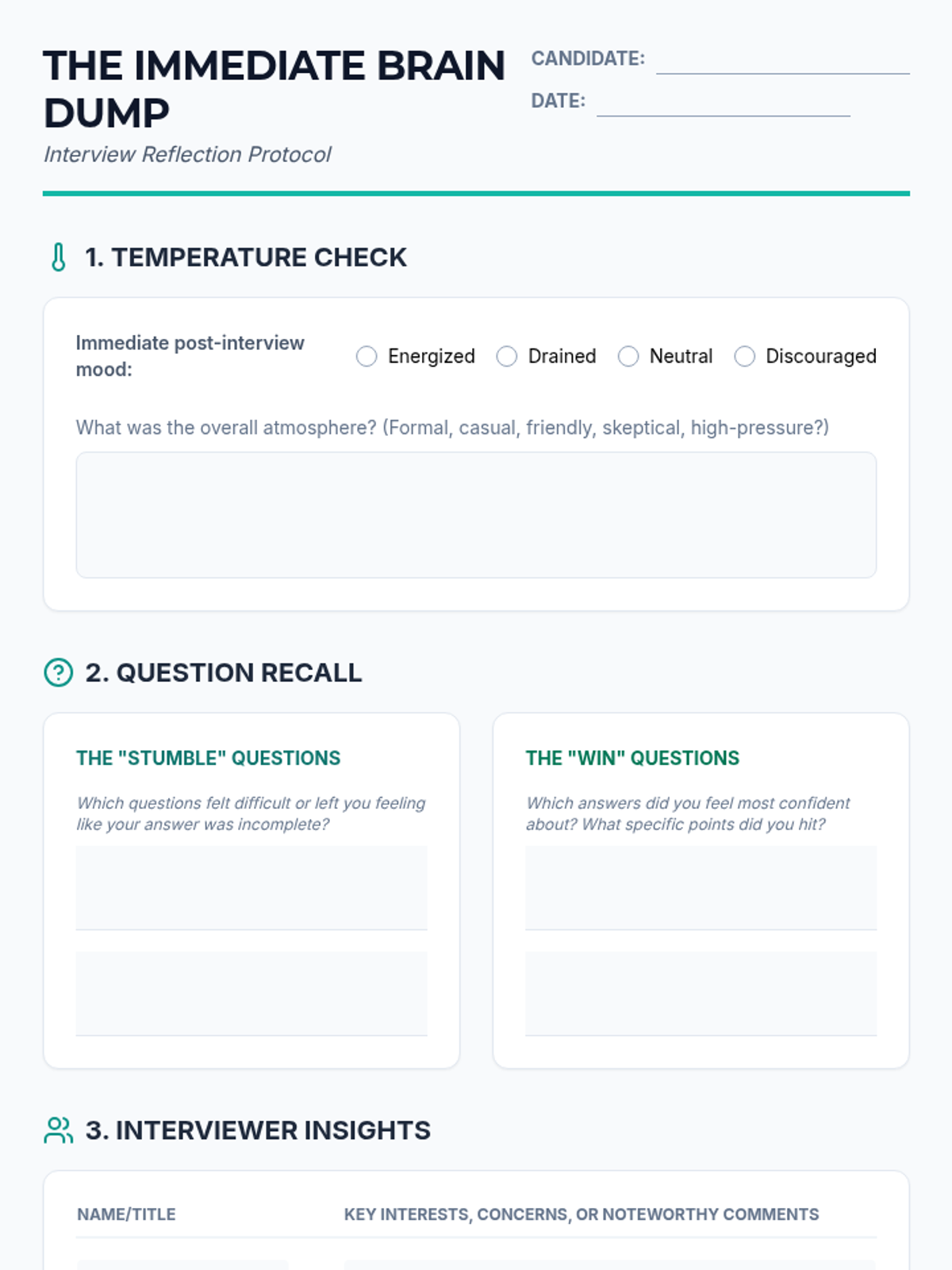
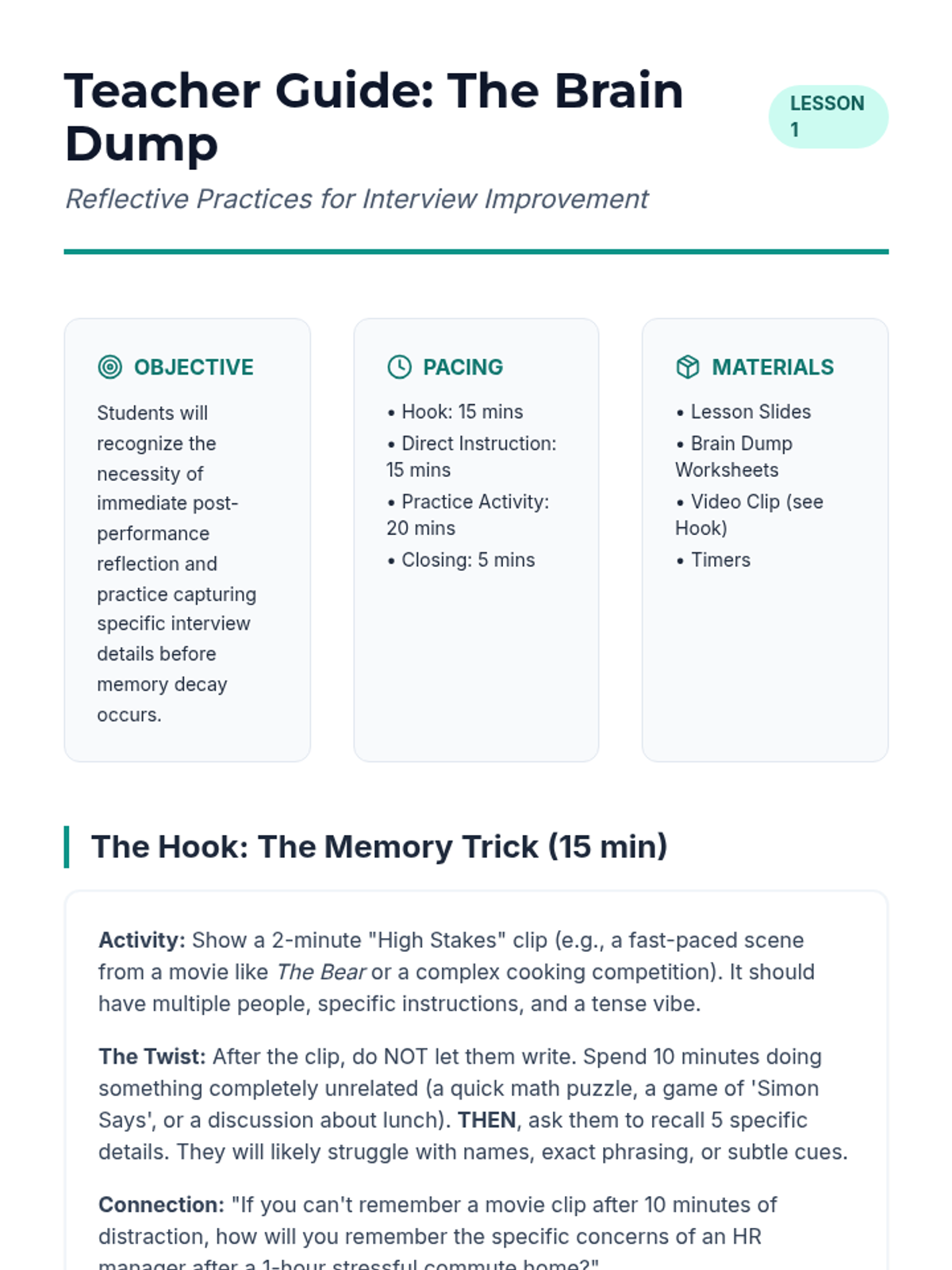
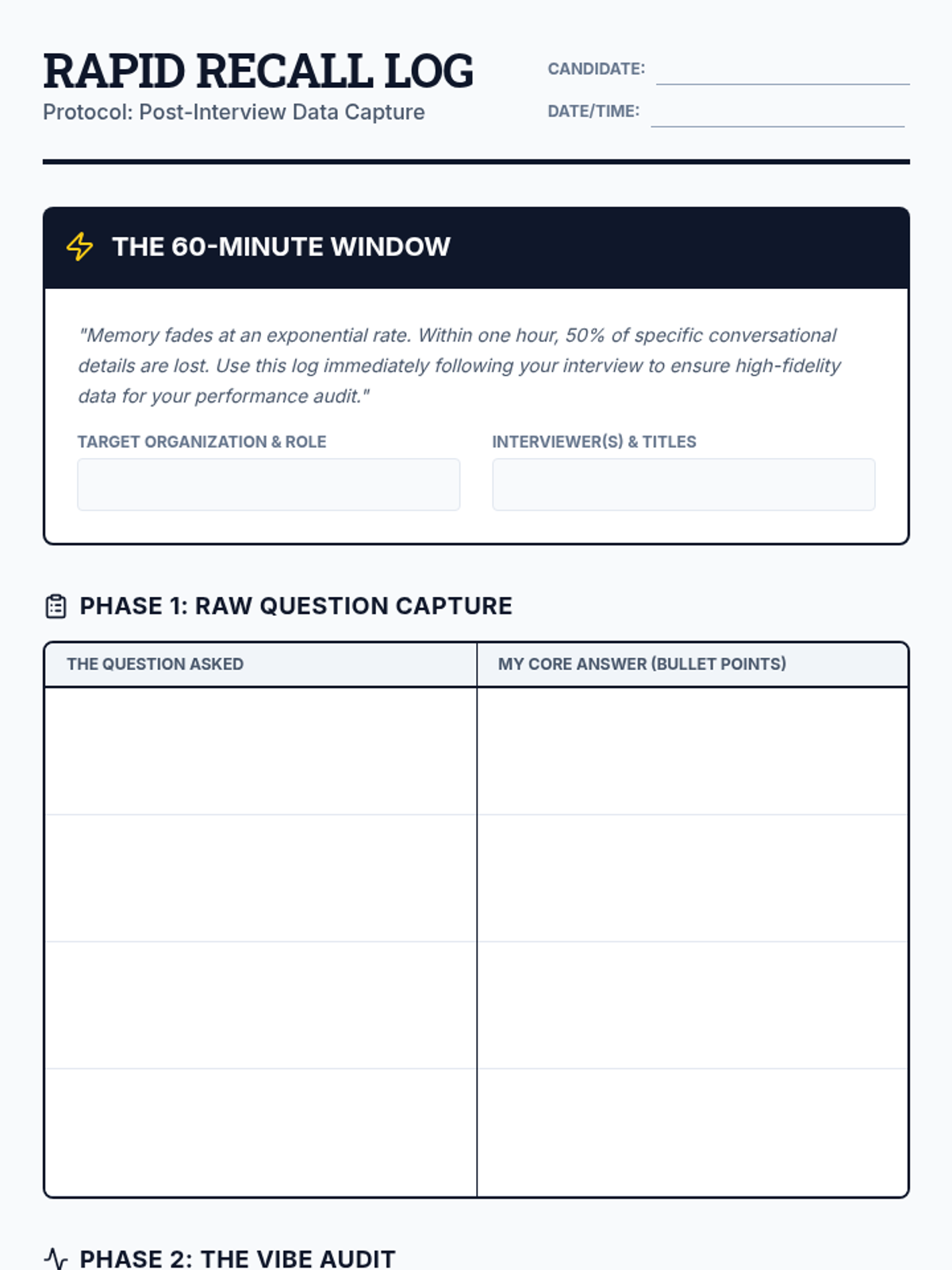
Students learn the technique of recording their thoughts immediately after an interview to capture critical details before they fade. They practice using a structured reflection template to identify tough questions and the overall atmosphere of the interaction.
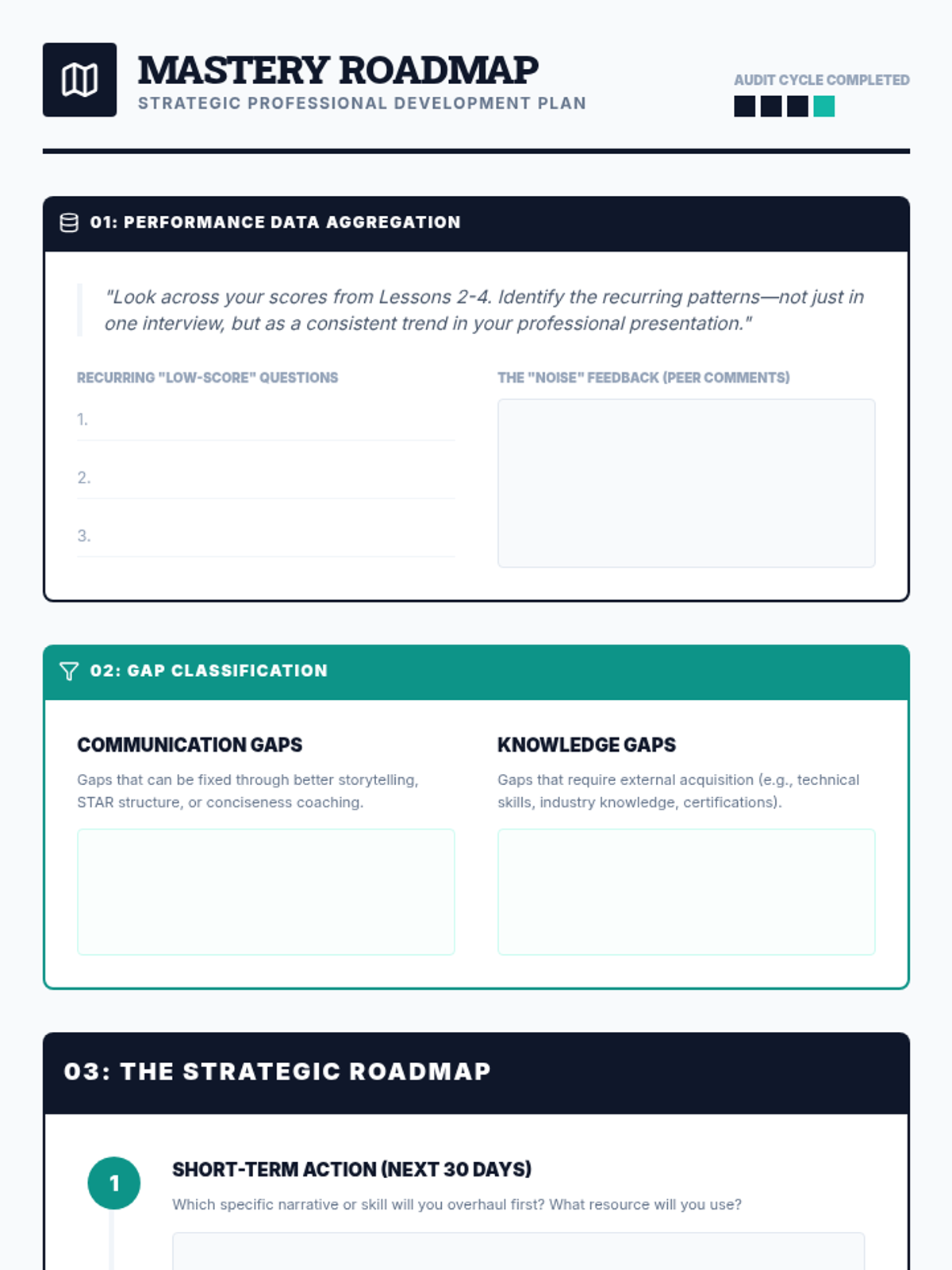
The sequence culminates in a long-term strategic plan that uses interview performance patterns to guide skill acquisition and career growth.
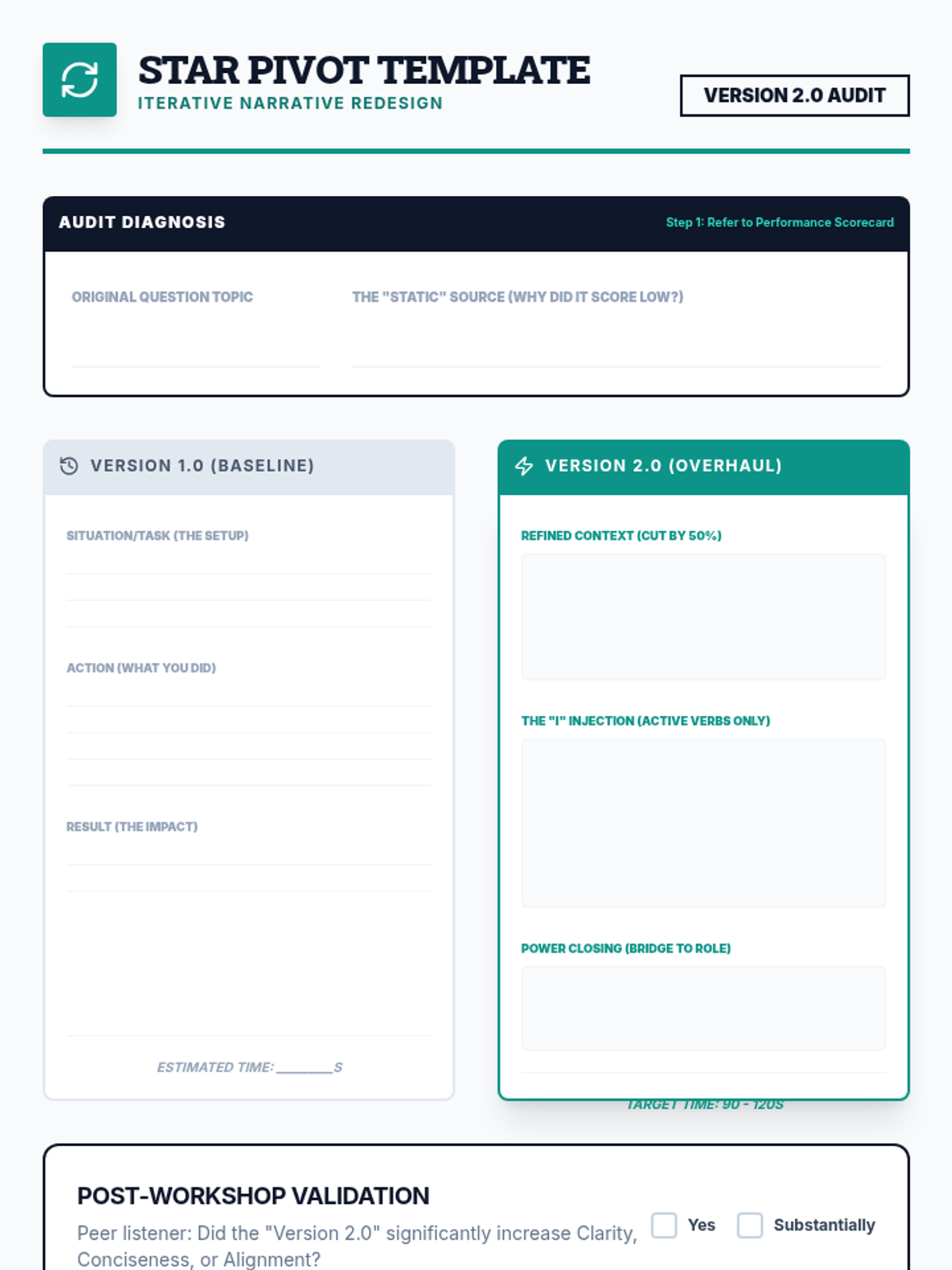
A workshop-style lesson where students use audit data to re-engineer their STAR stories, turning their weakest answers into their strongest narratives.
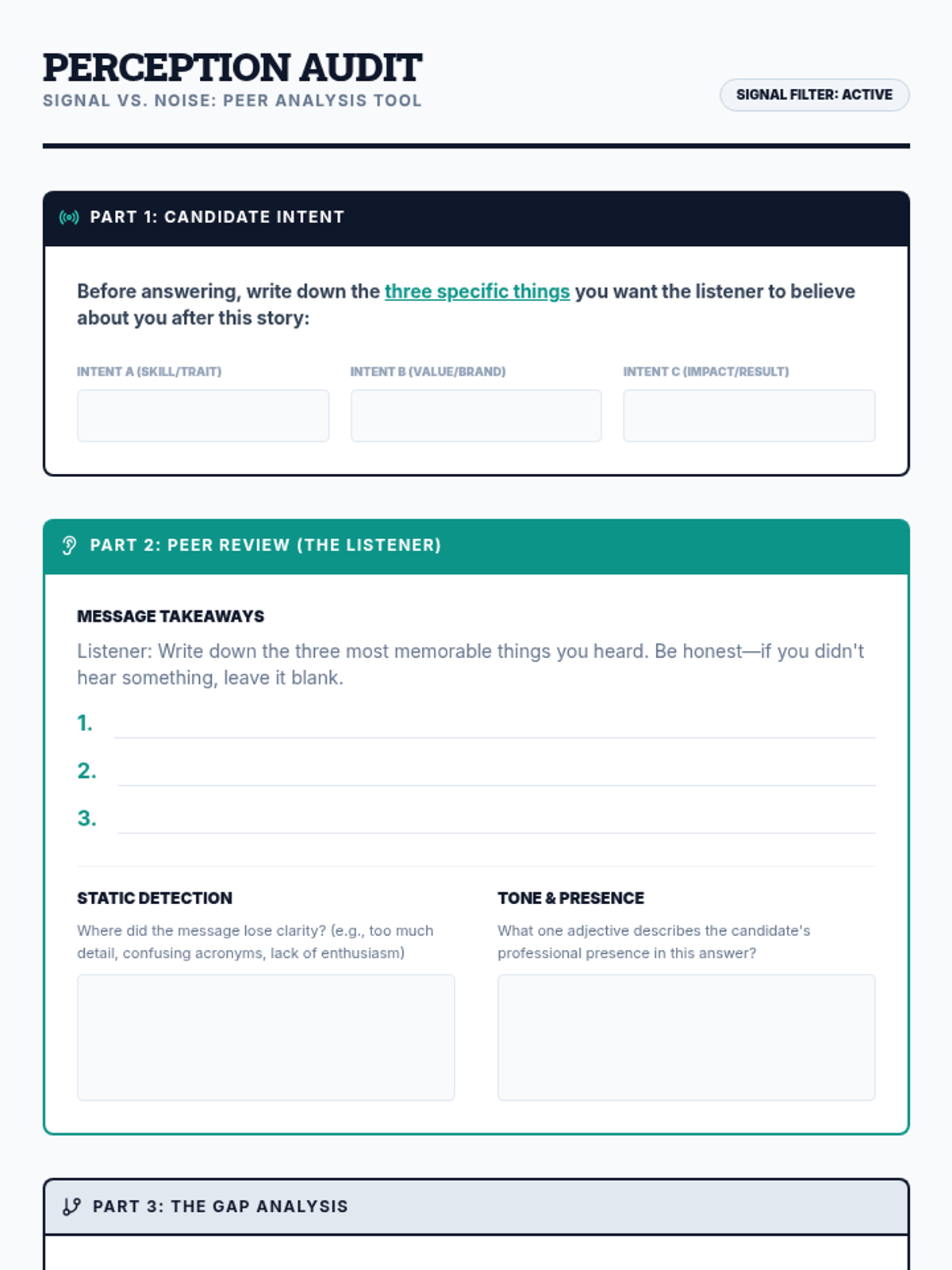
Students conduct a gap analysis between their intended message and how it was perceived by others, identifying 'signal distortion' in their professional communication.
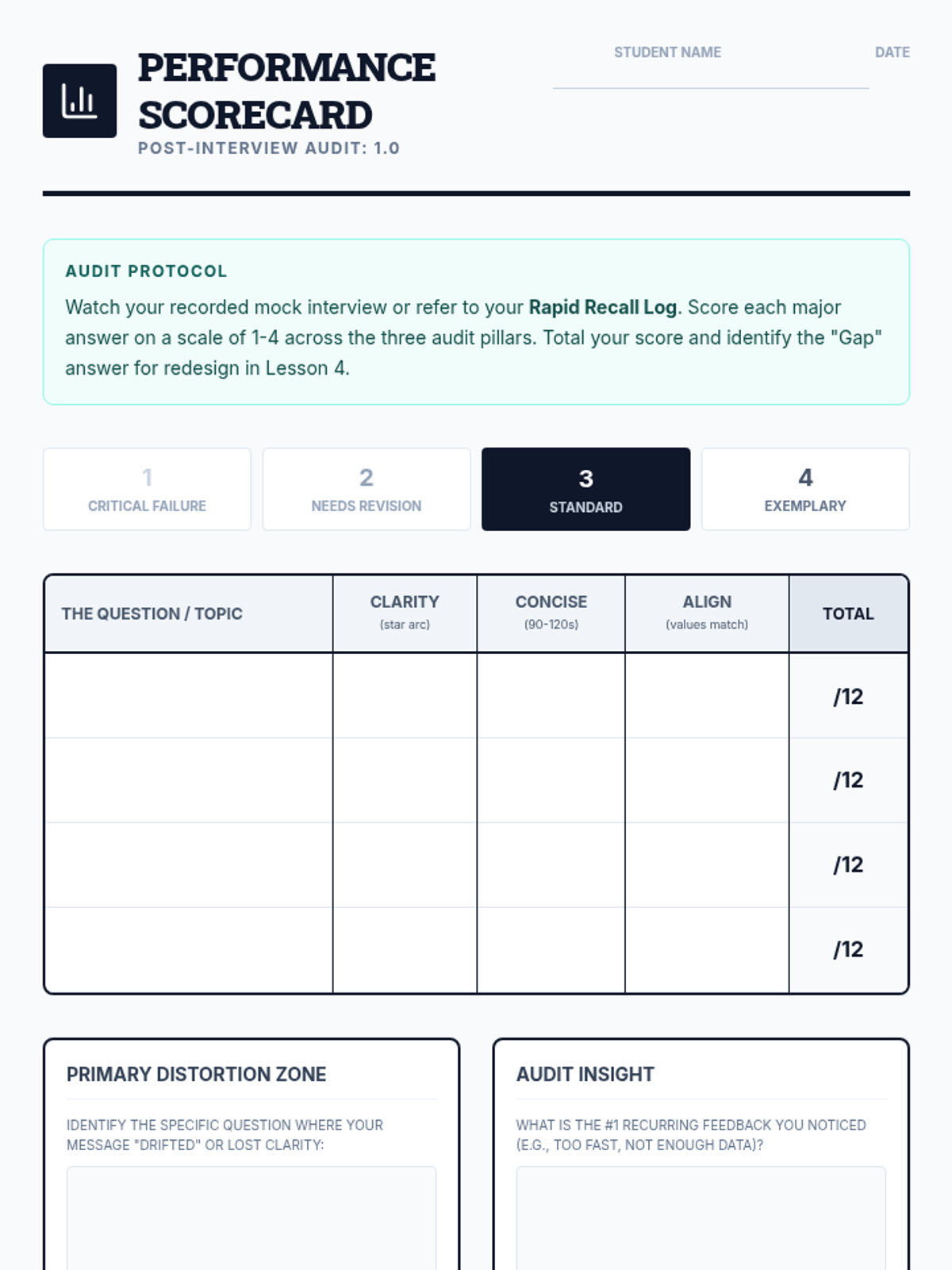
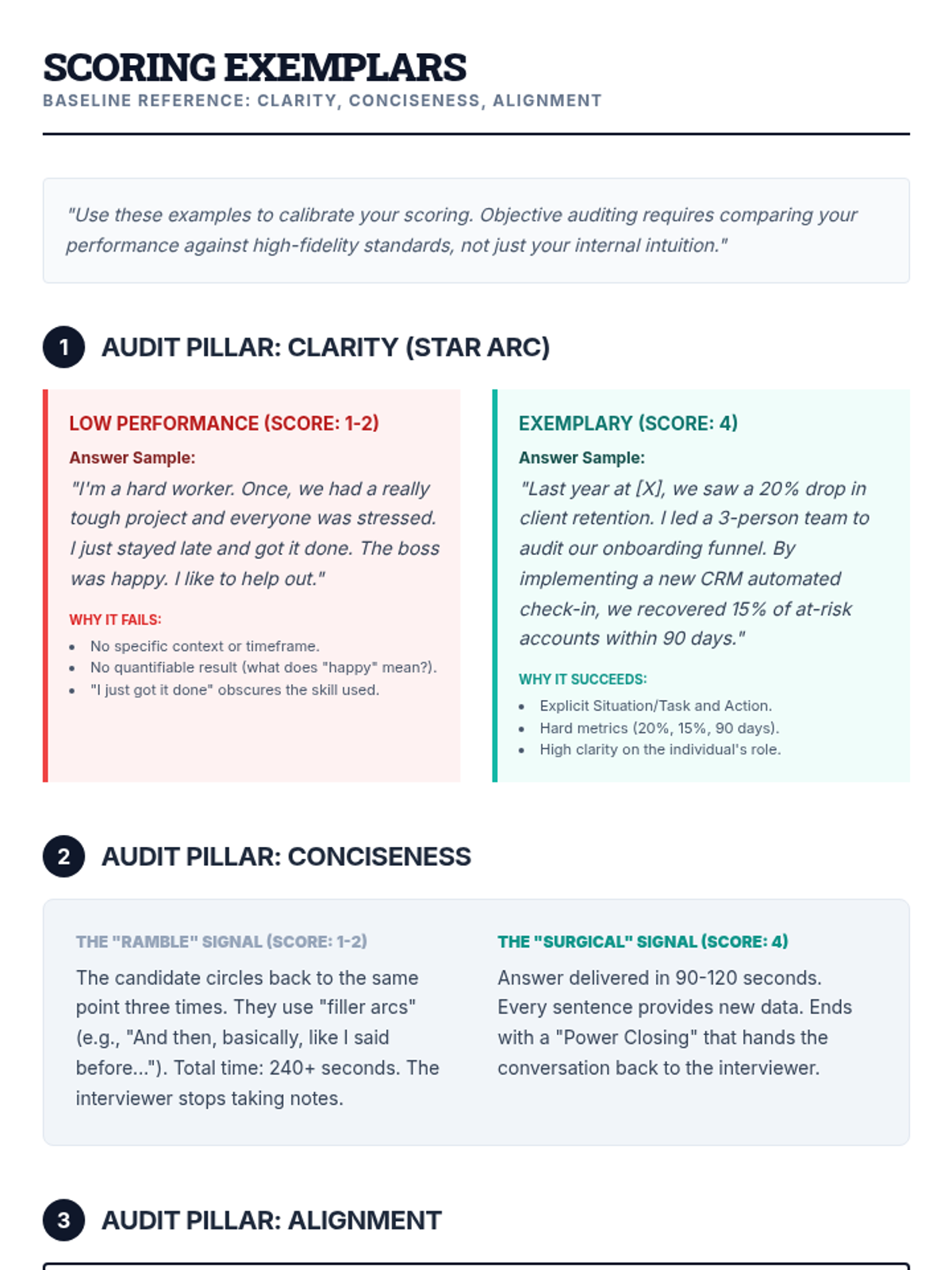
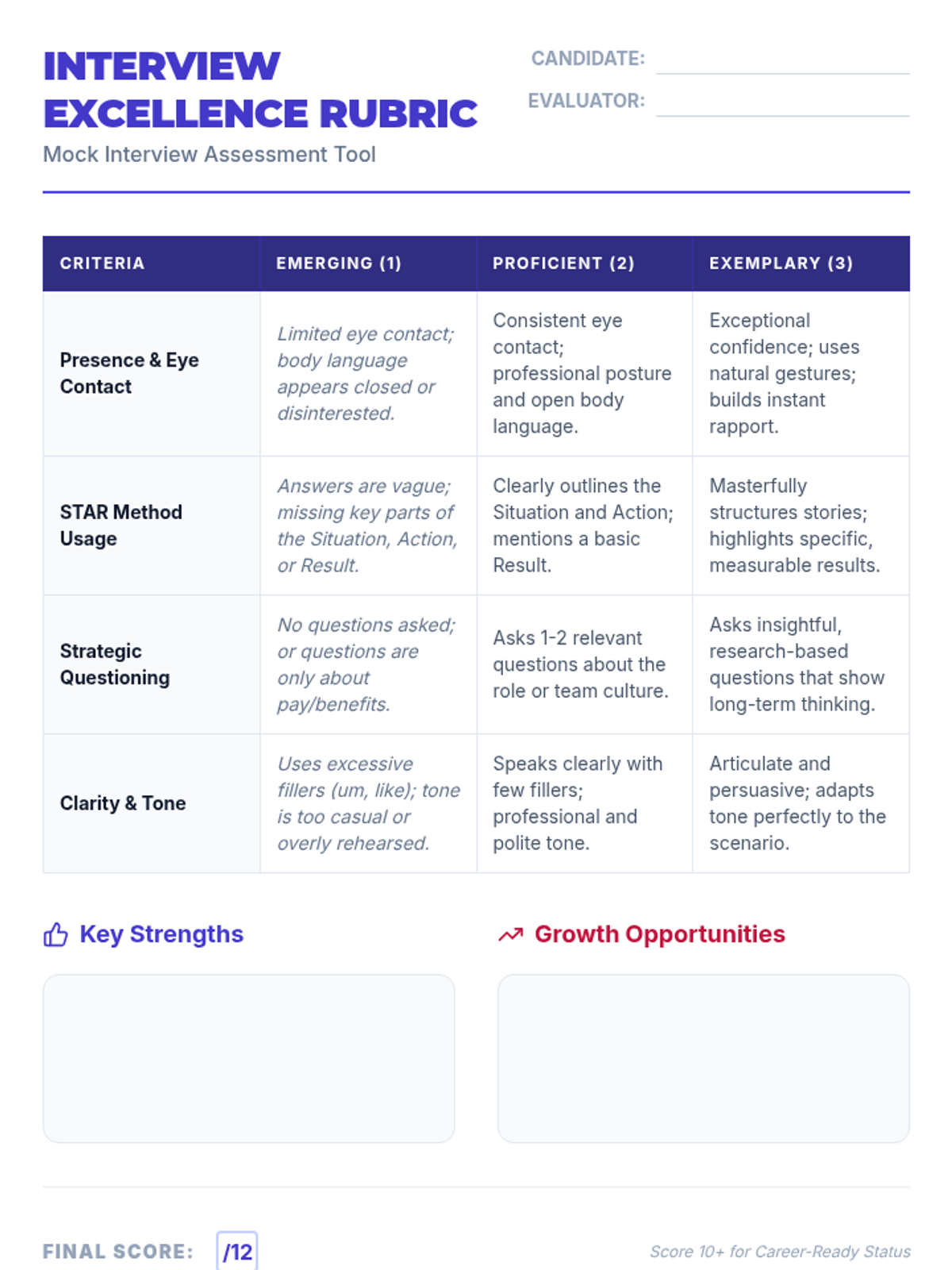
Introduces a standardized rubric for objective self-evaluation. Students analyze clarity, conciseness, and alignment with organizational values.
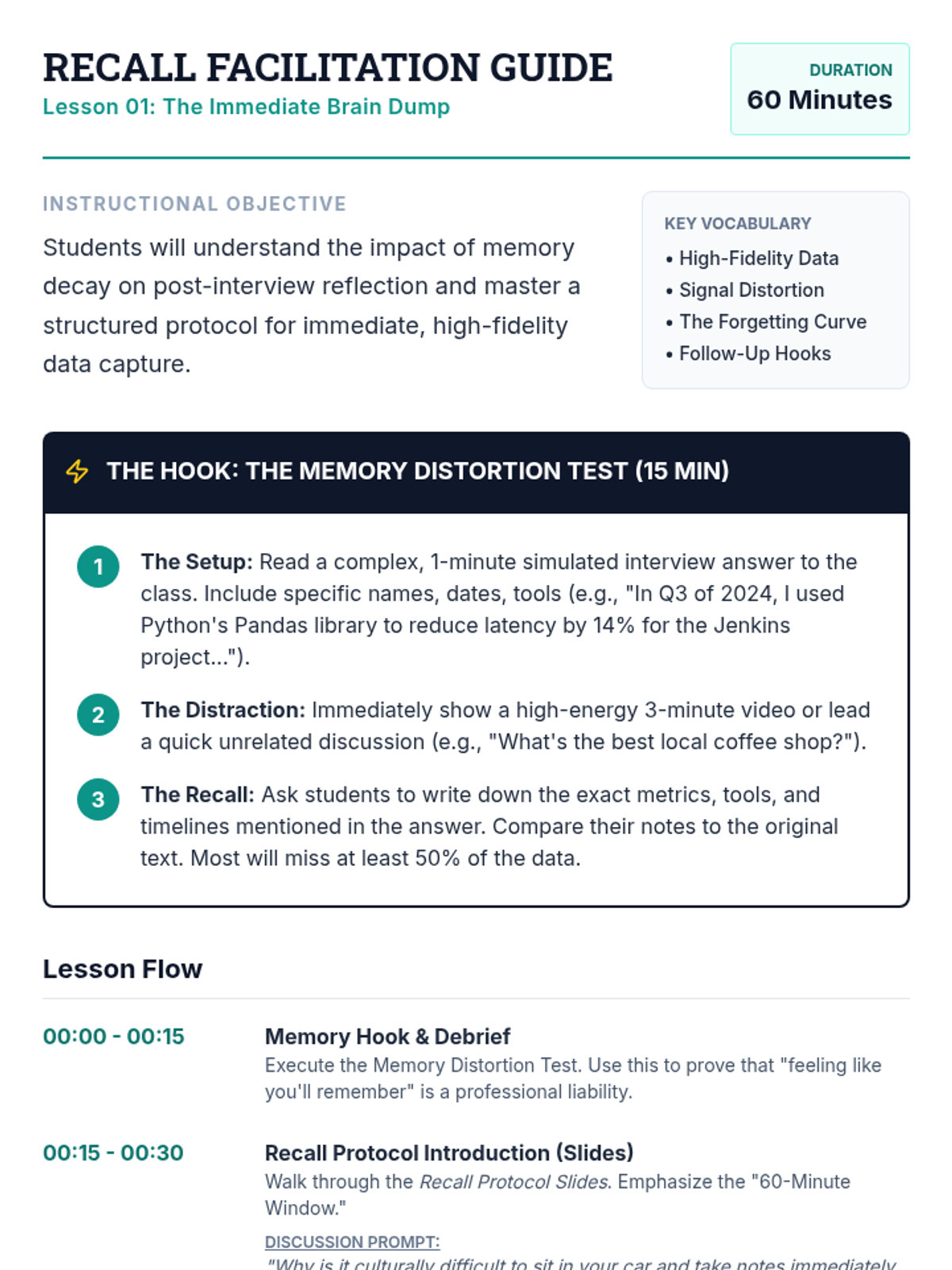
Focuses on the critical 60 minutes post-interview. Students learn a 'Rapid Recall Protocol' to capture data-driven insights before memory decay sets in.
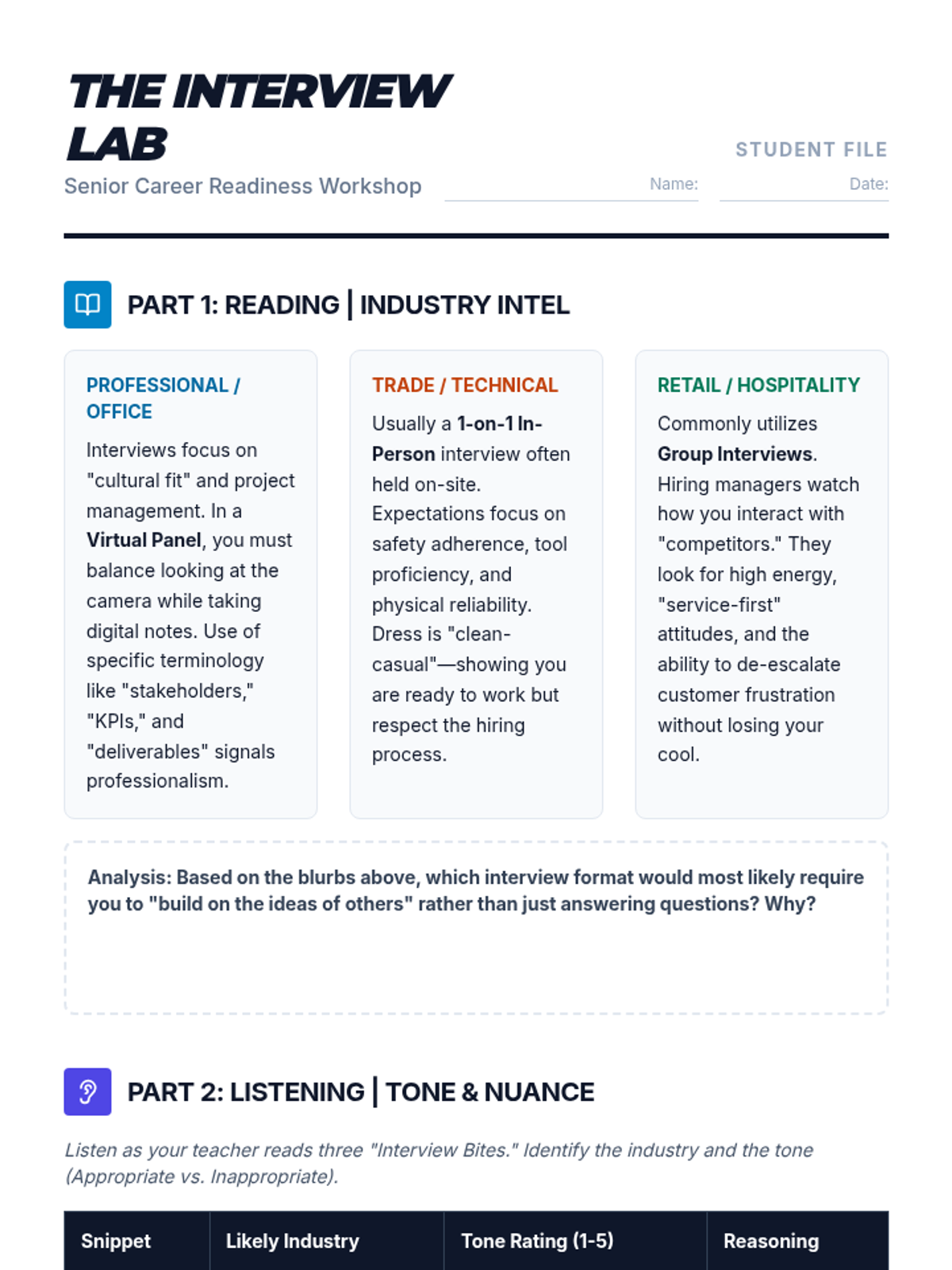
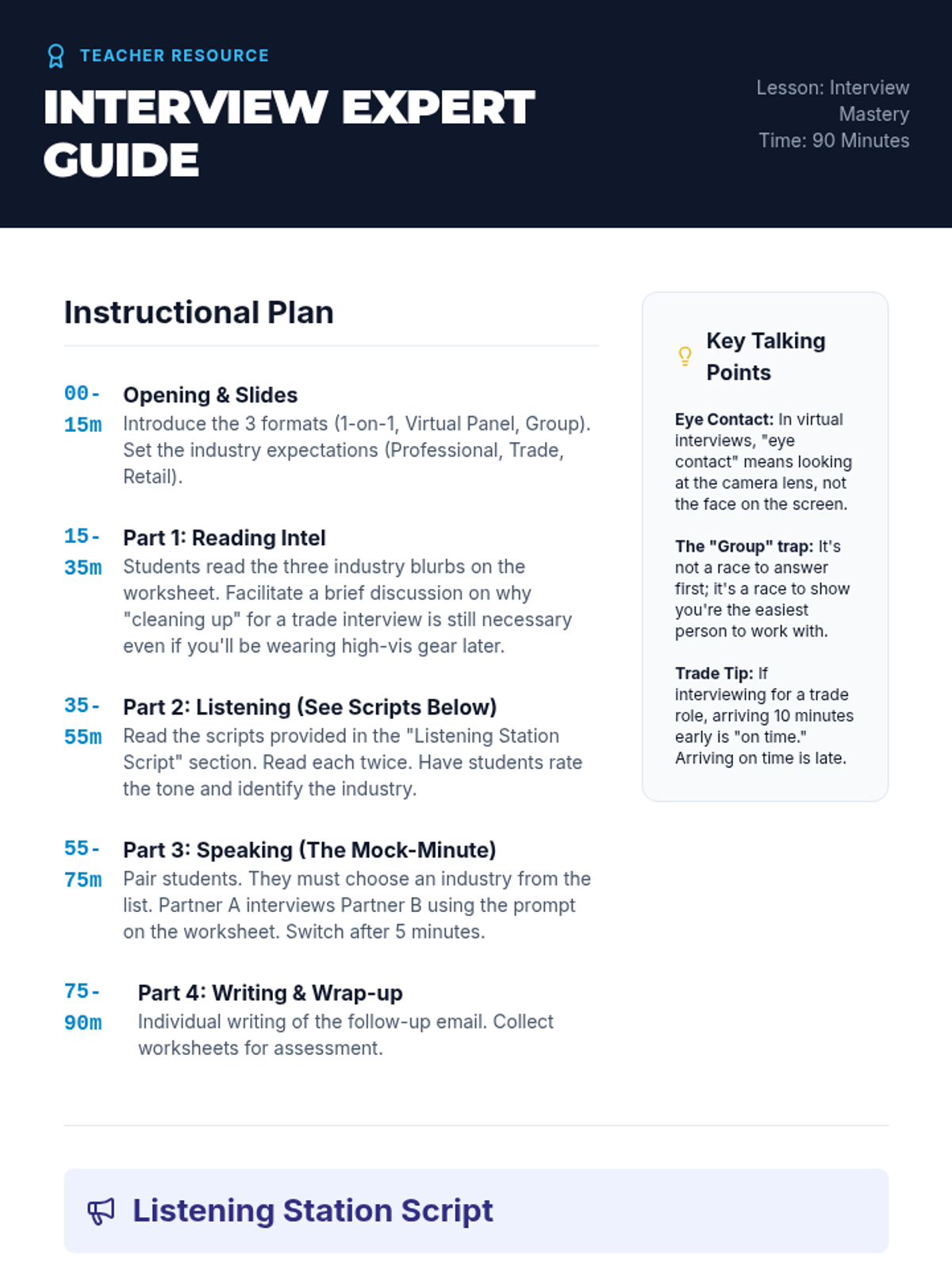
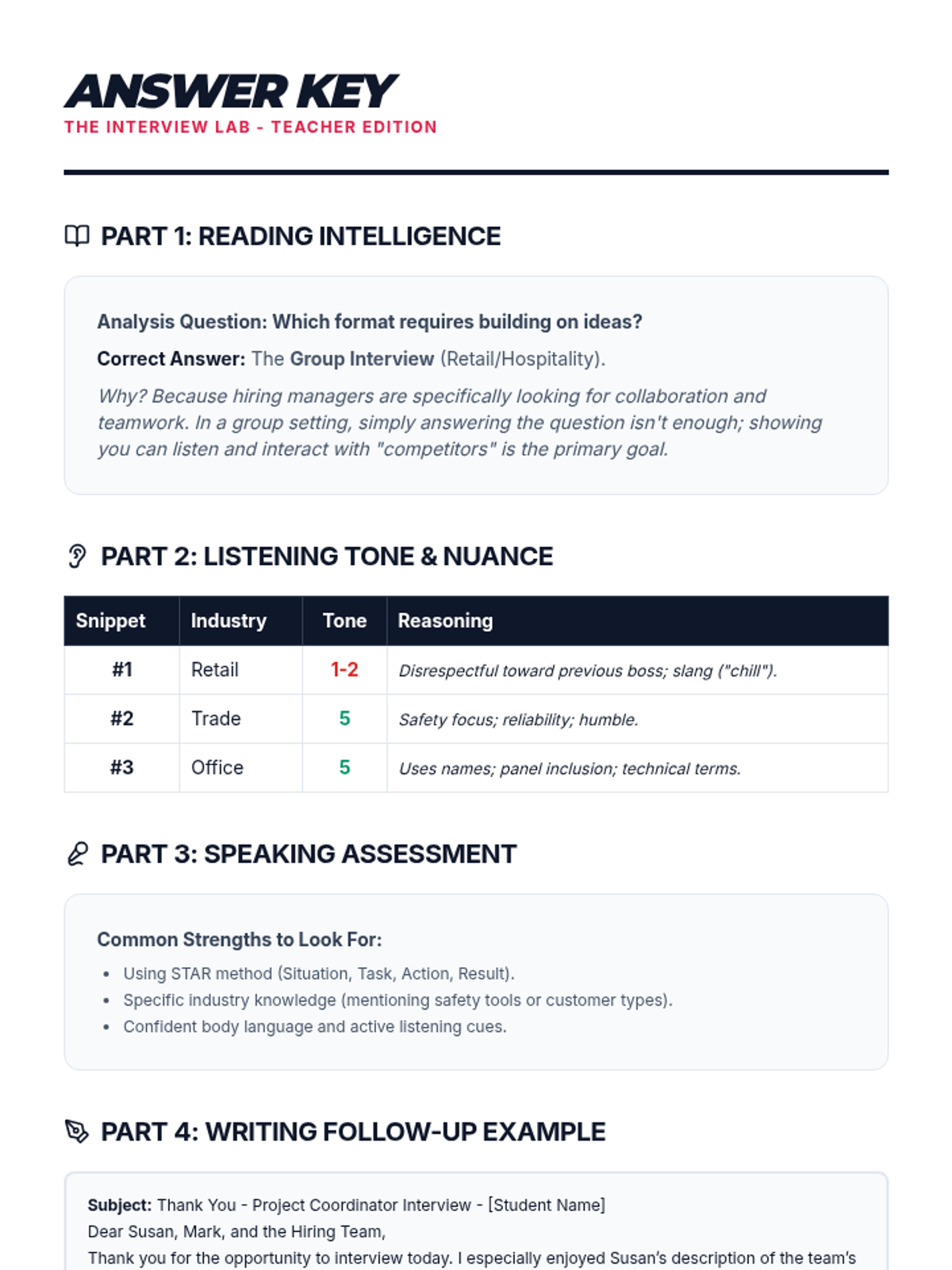
A high-impact 90-minute workshop designed for seniors to master three distinct interview formats across diverse career paths, including corporate, trade, and service industries.
A comprehensive guide to mastering entry-level and academic interviews through the STAR method, practical scenarios, and self-reflection. Students will build a portfolio of stories to demonstrate their skills to future employers and admissions officers.
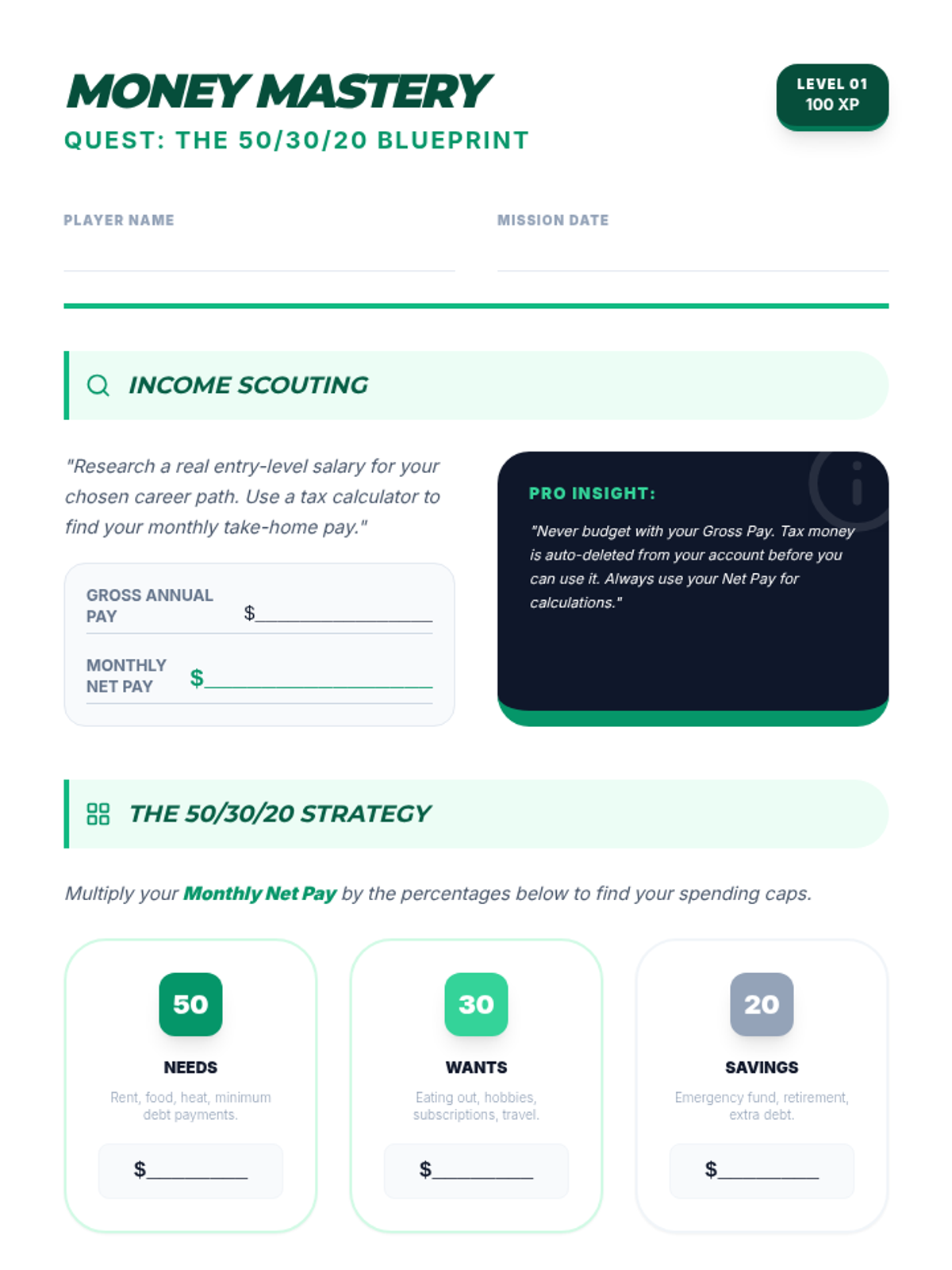
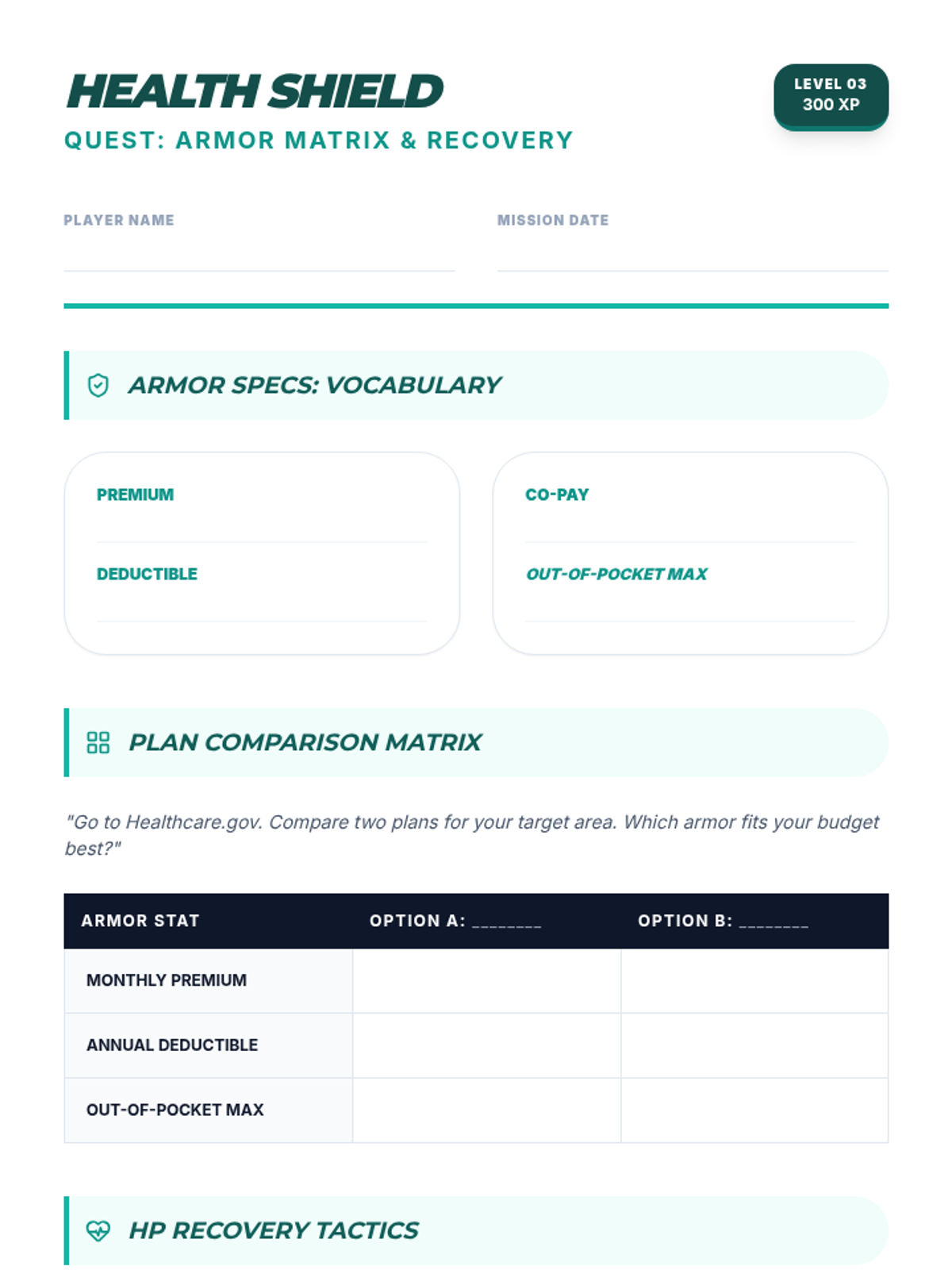
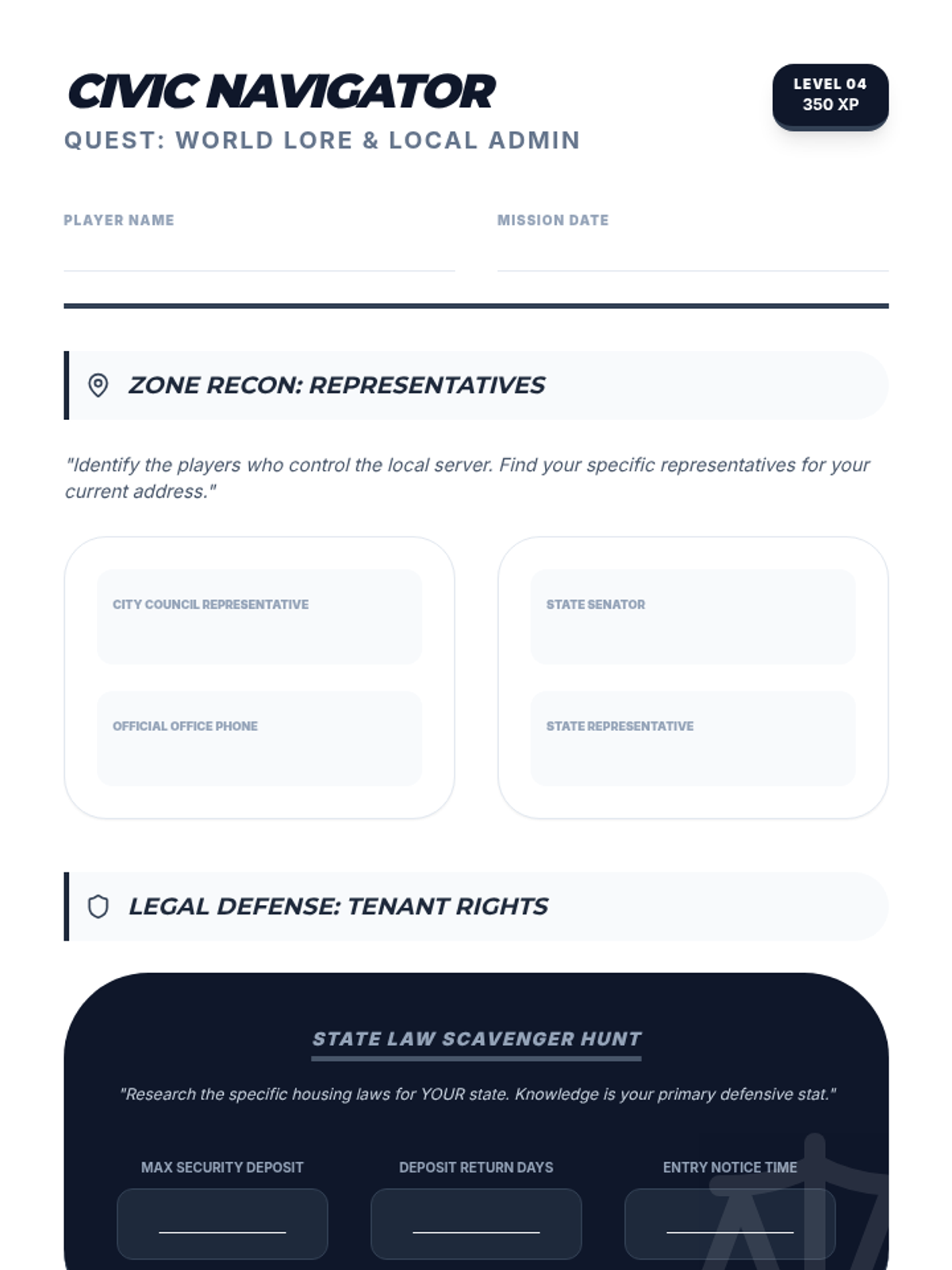
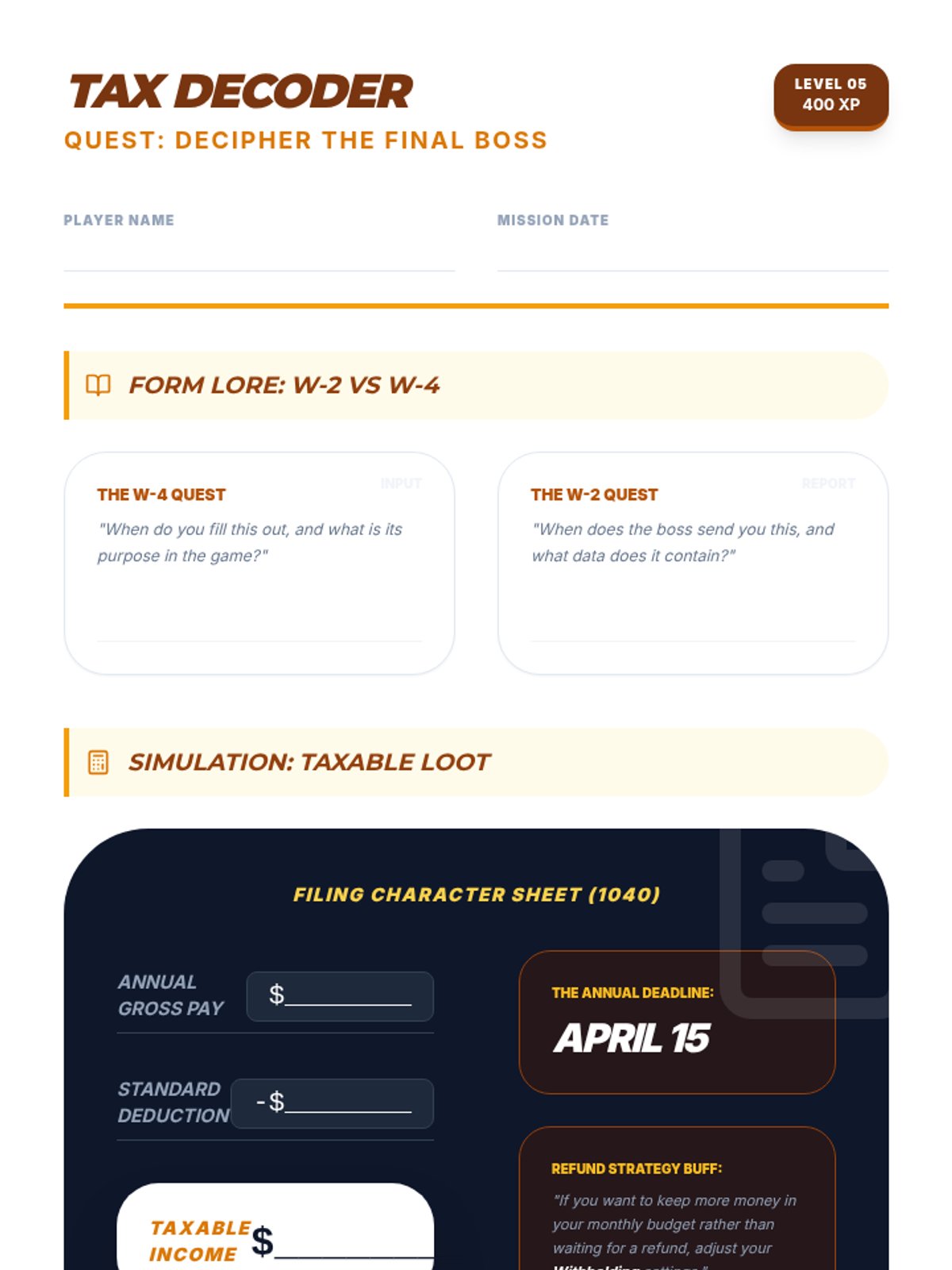
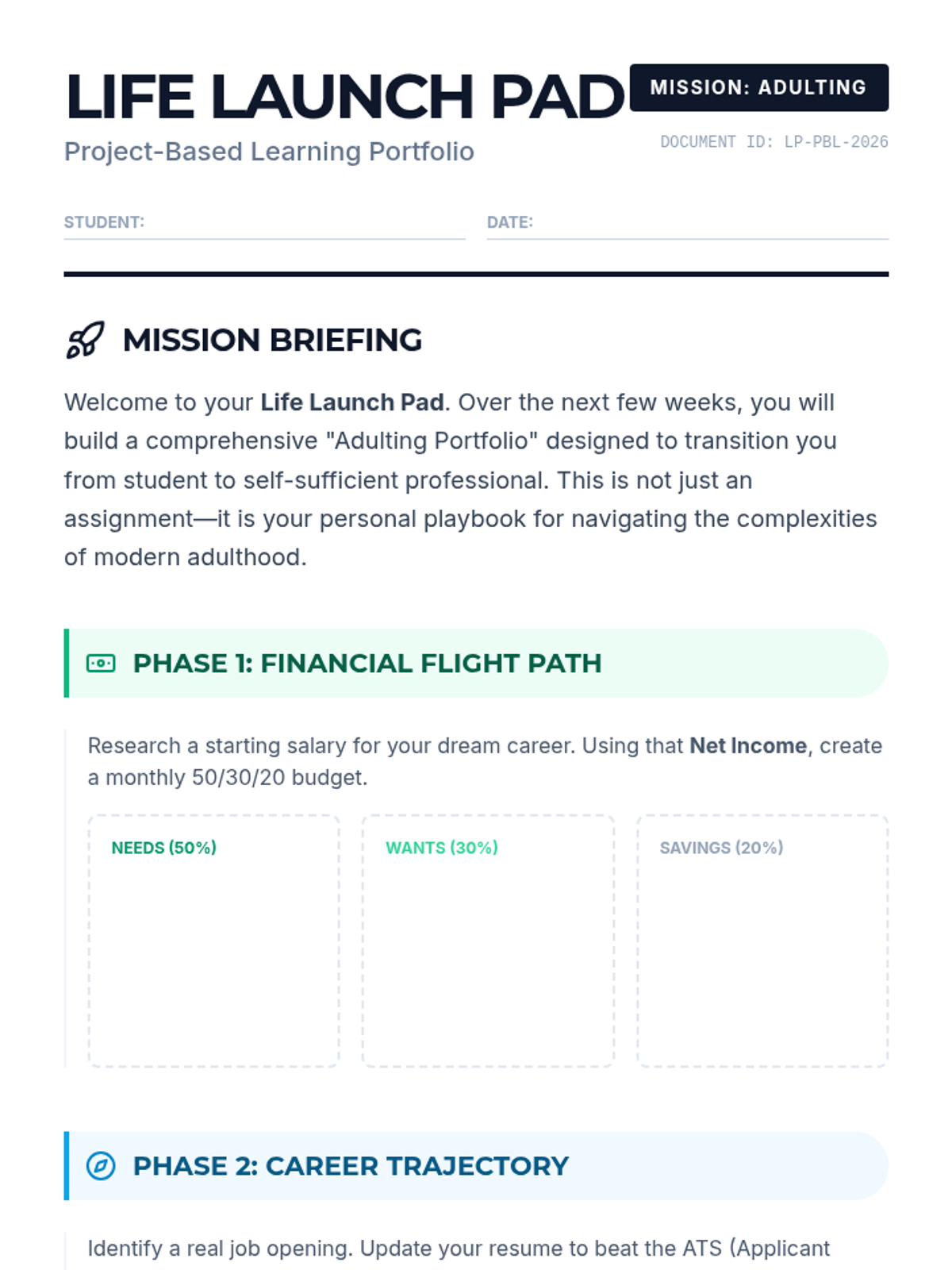
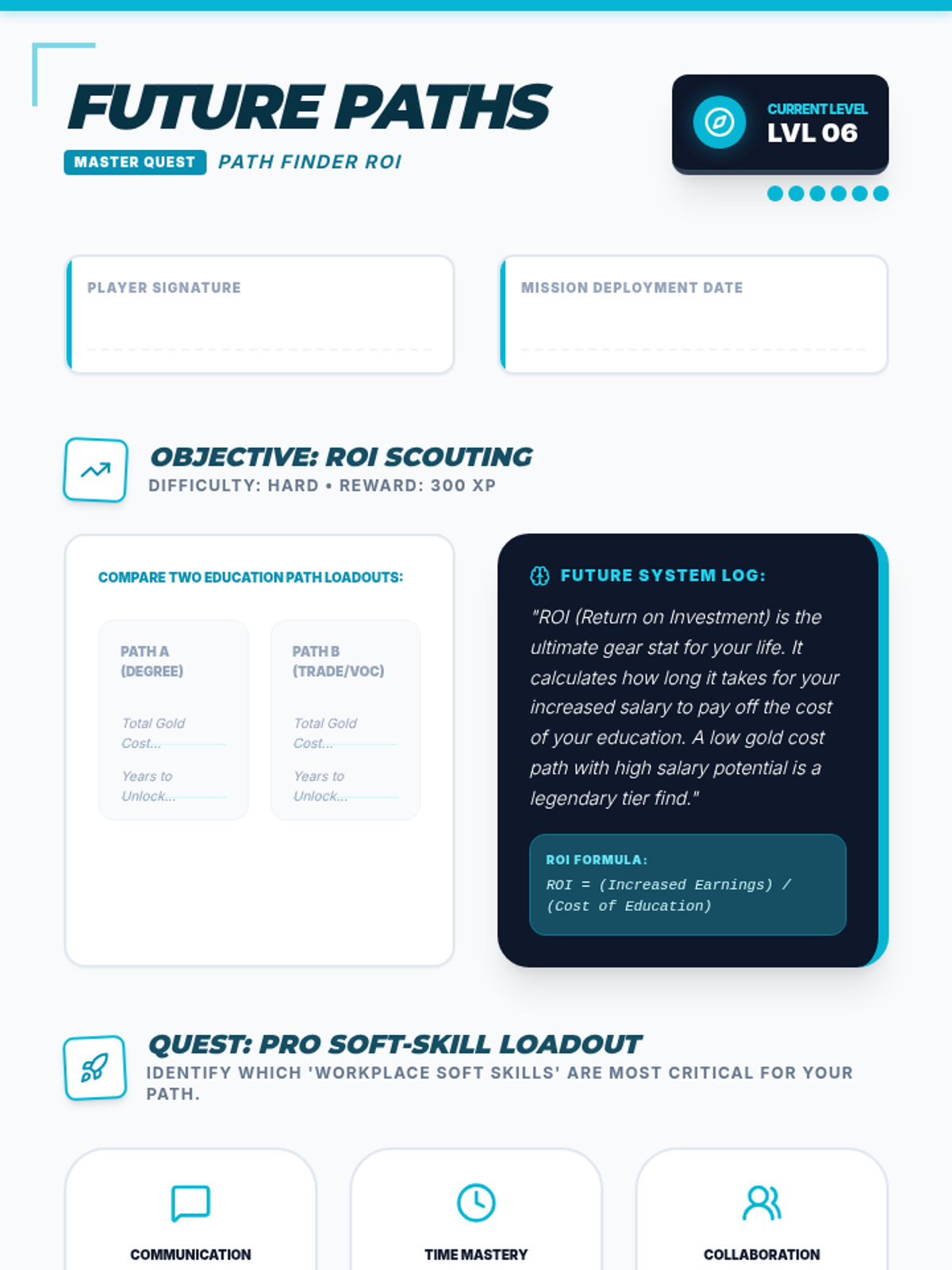
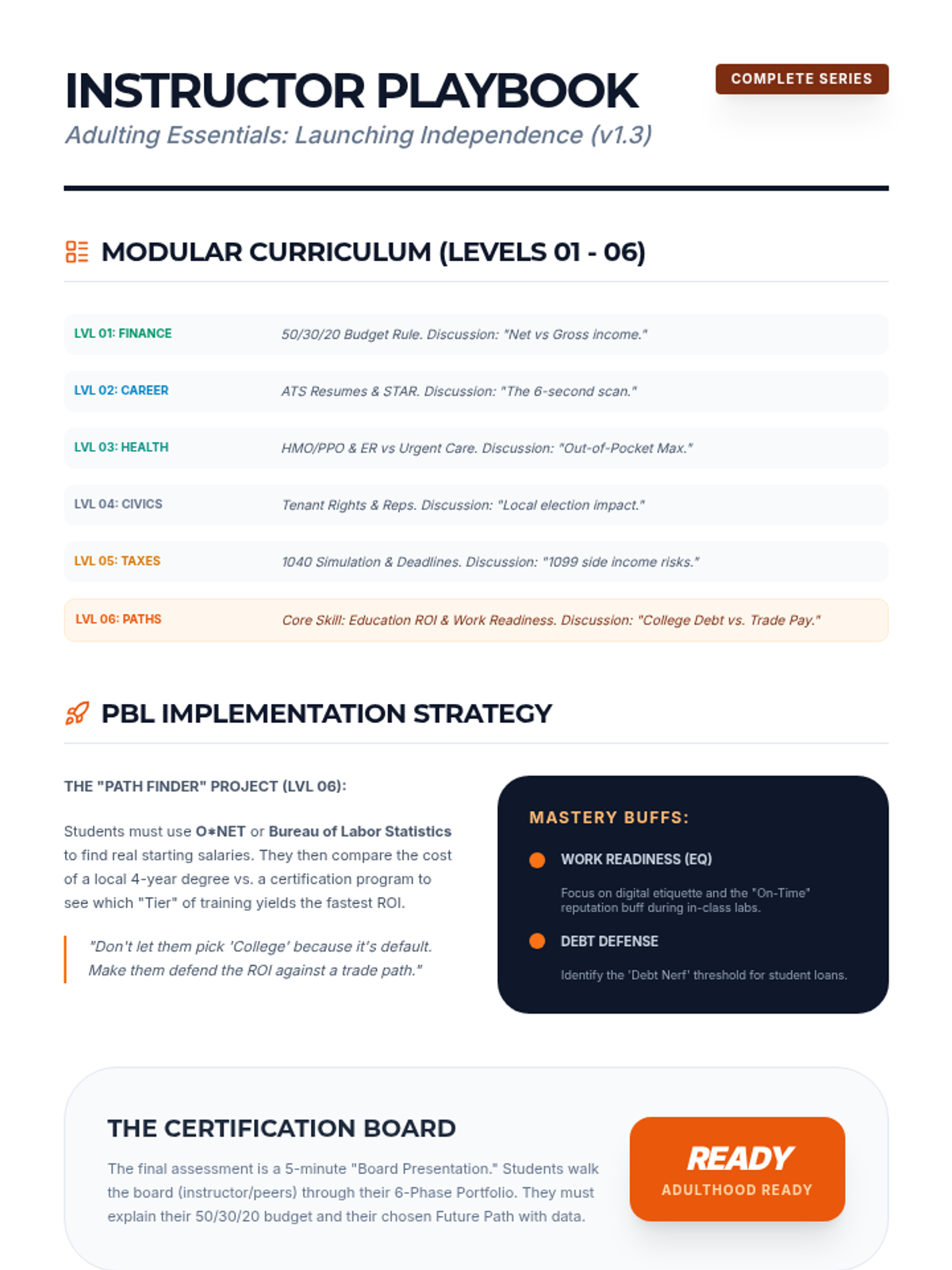
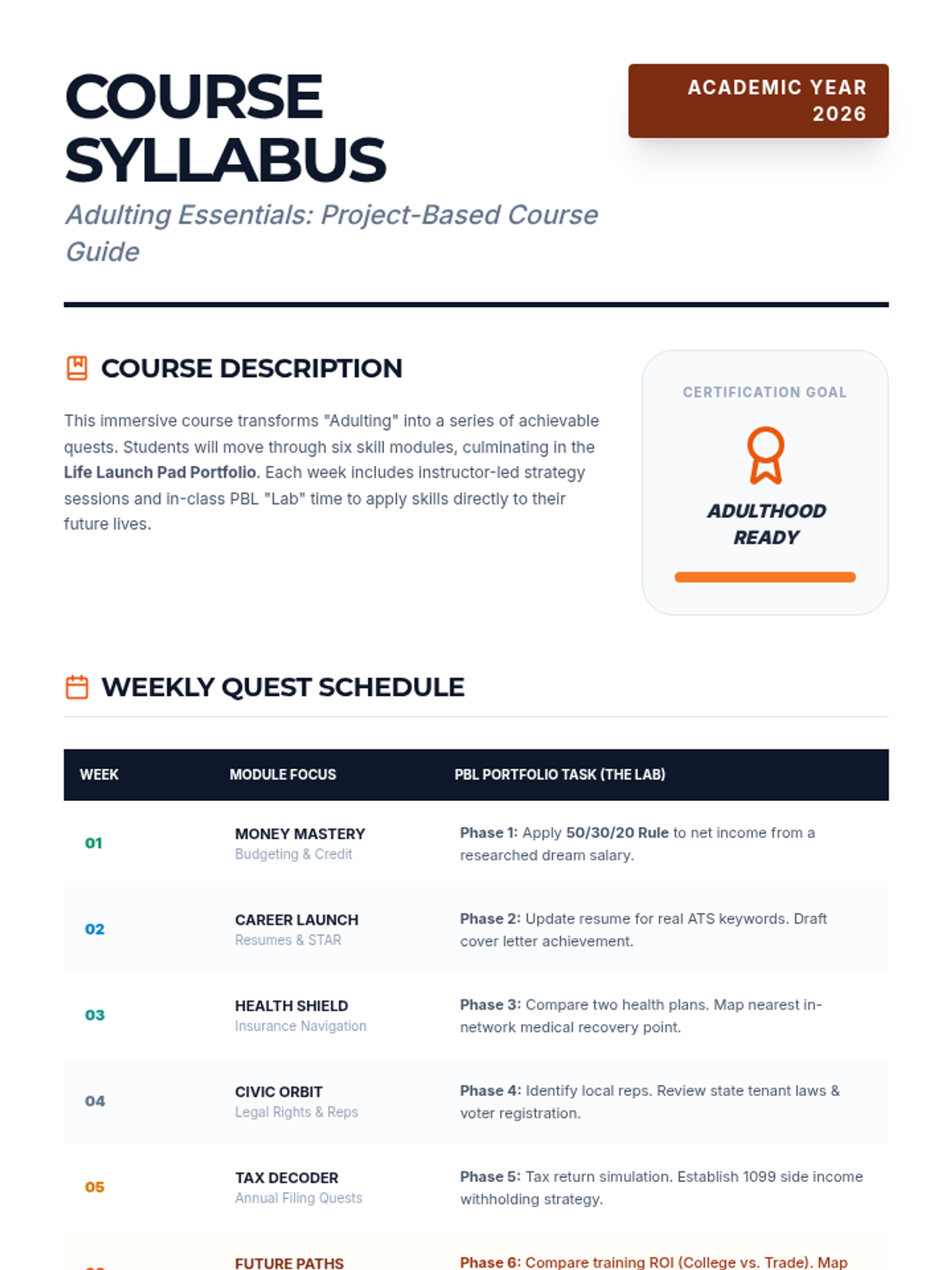
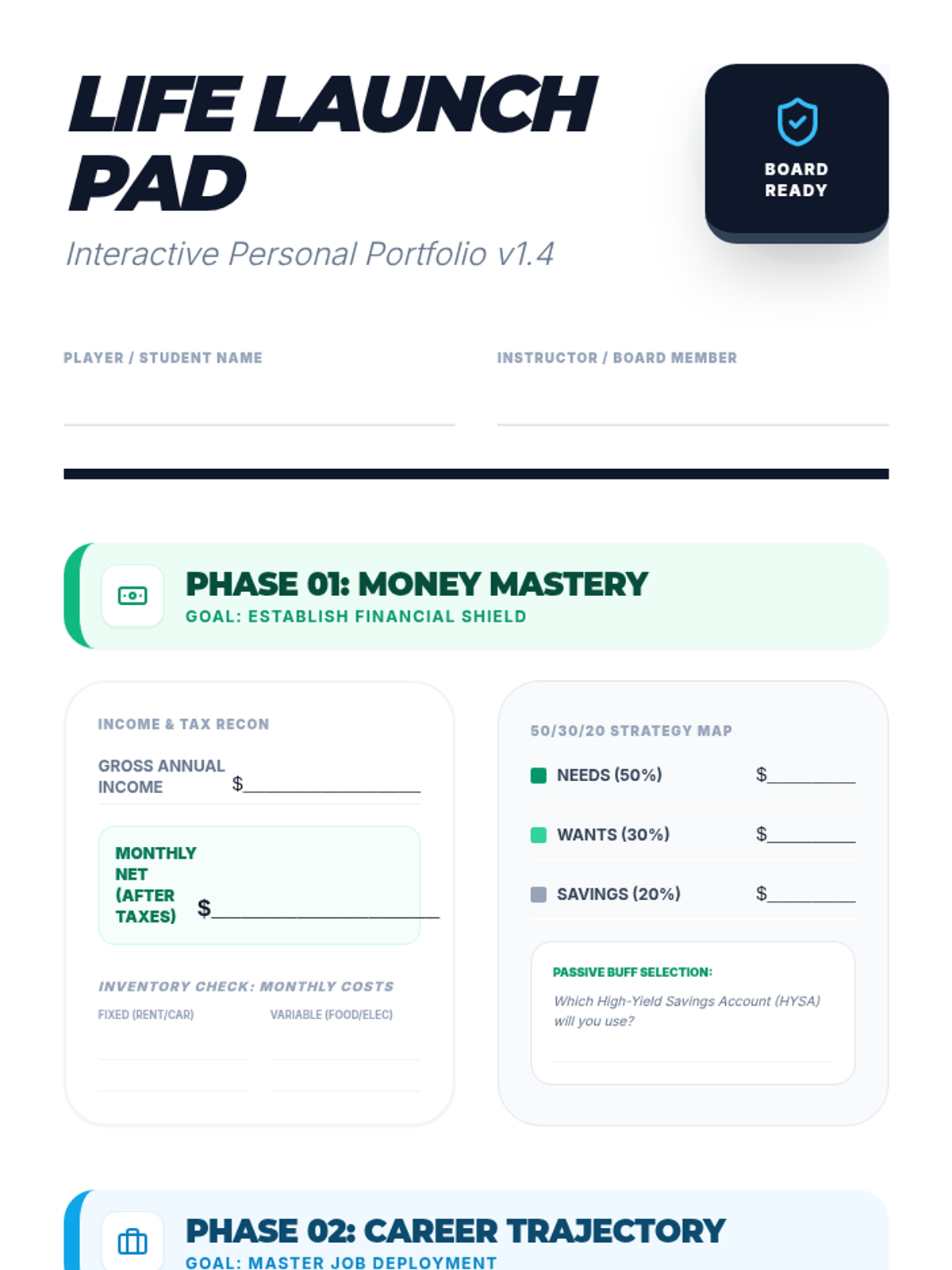
A comprehensive guide to essential adulting skills covering financial literacy, career development, health navigation, and civic responsibilities.
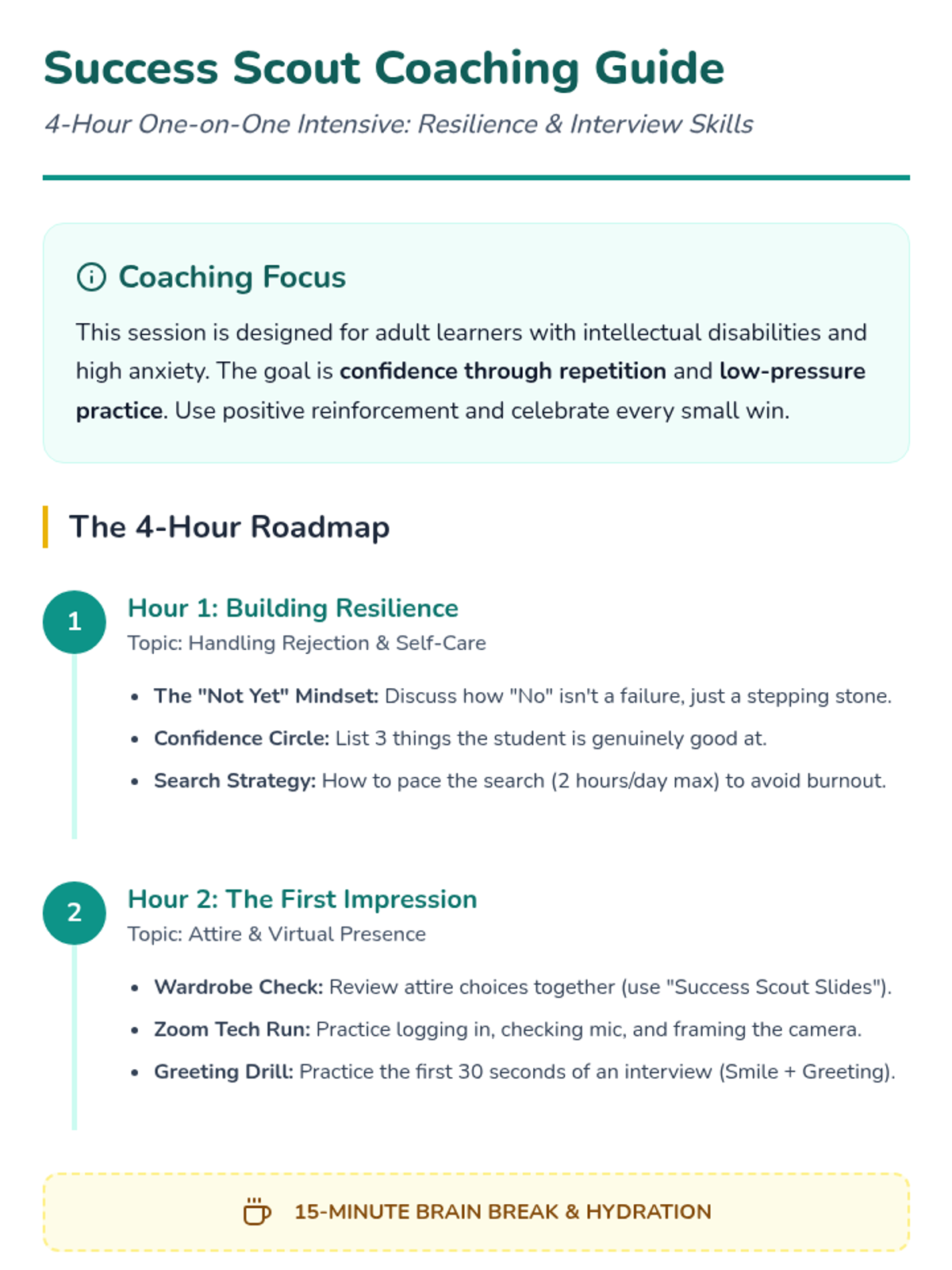
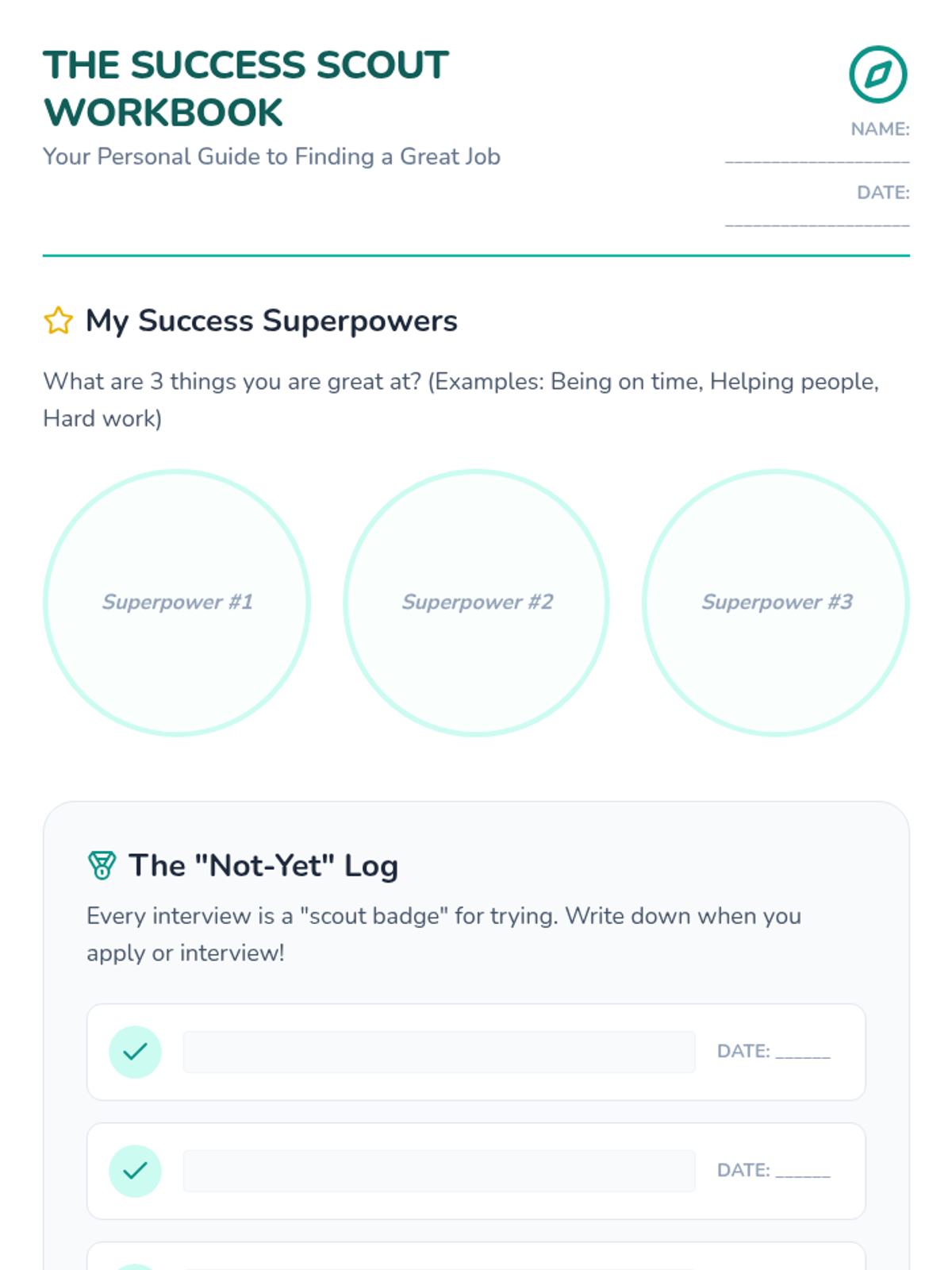
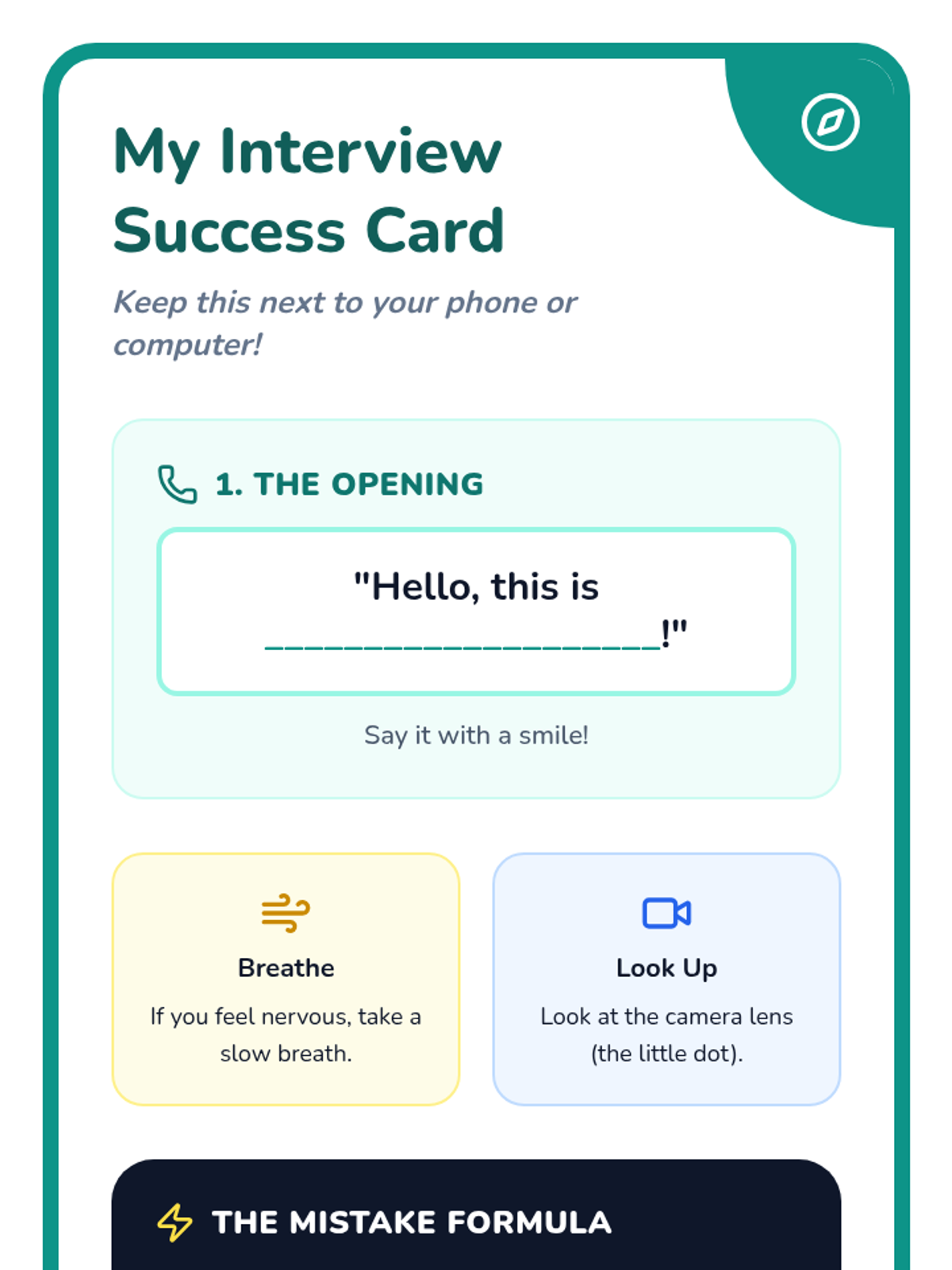
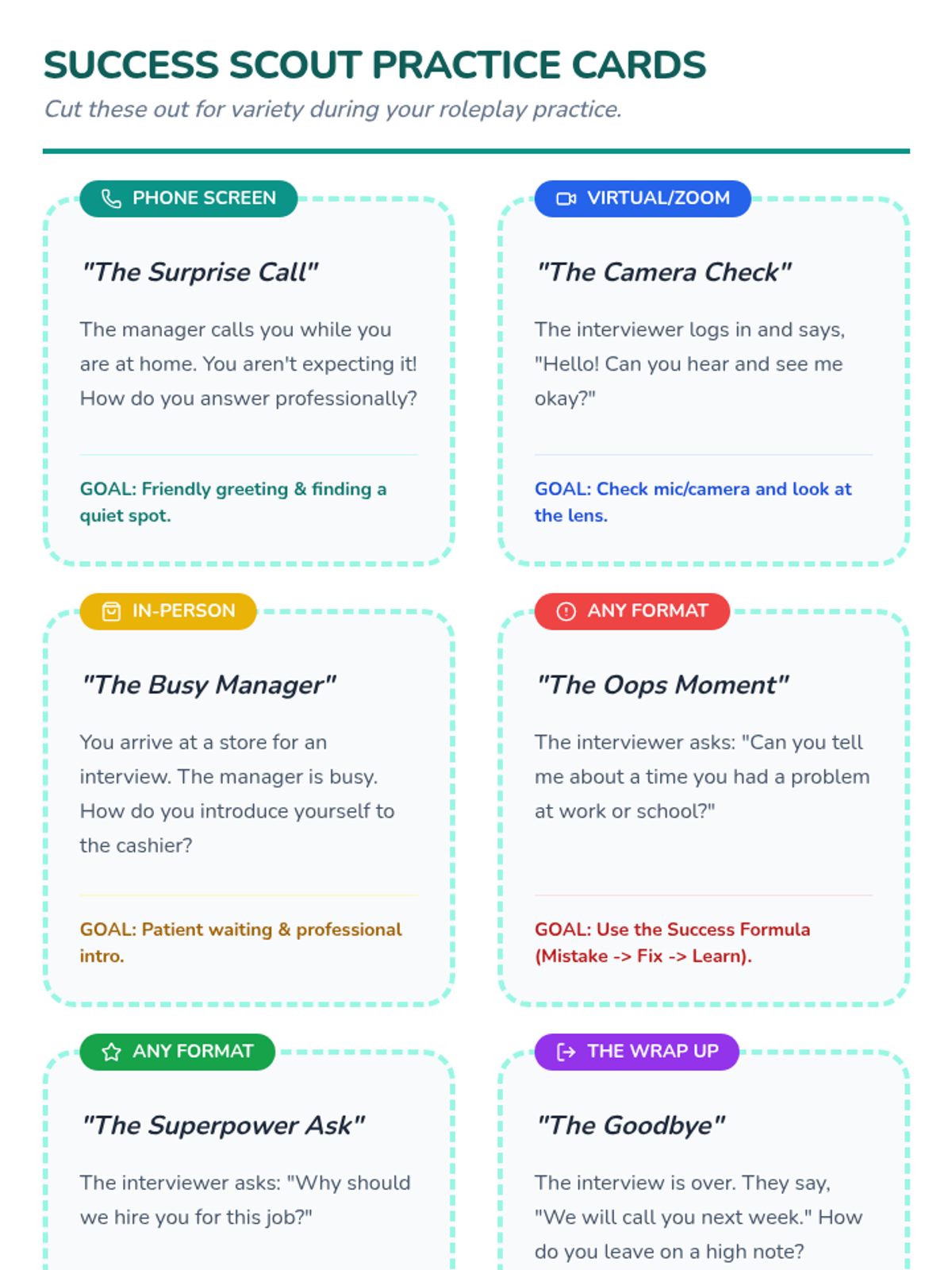
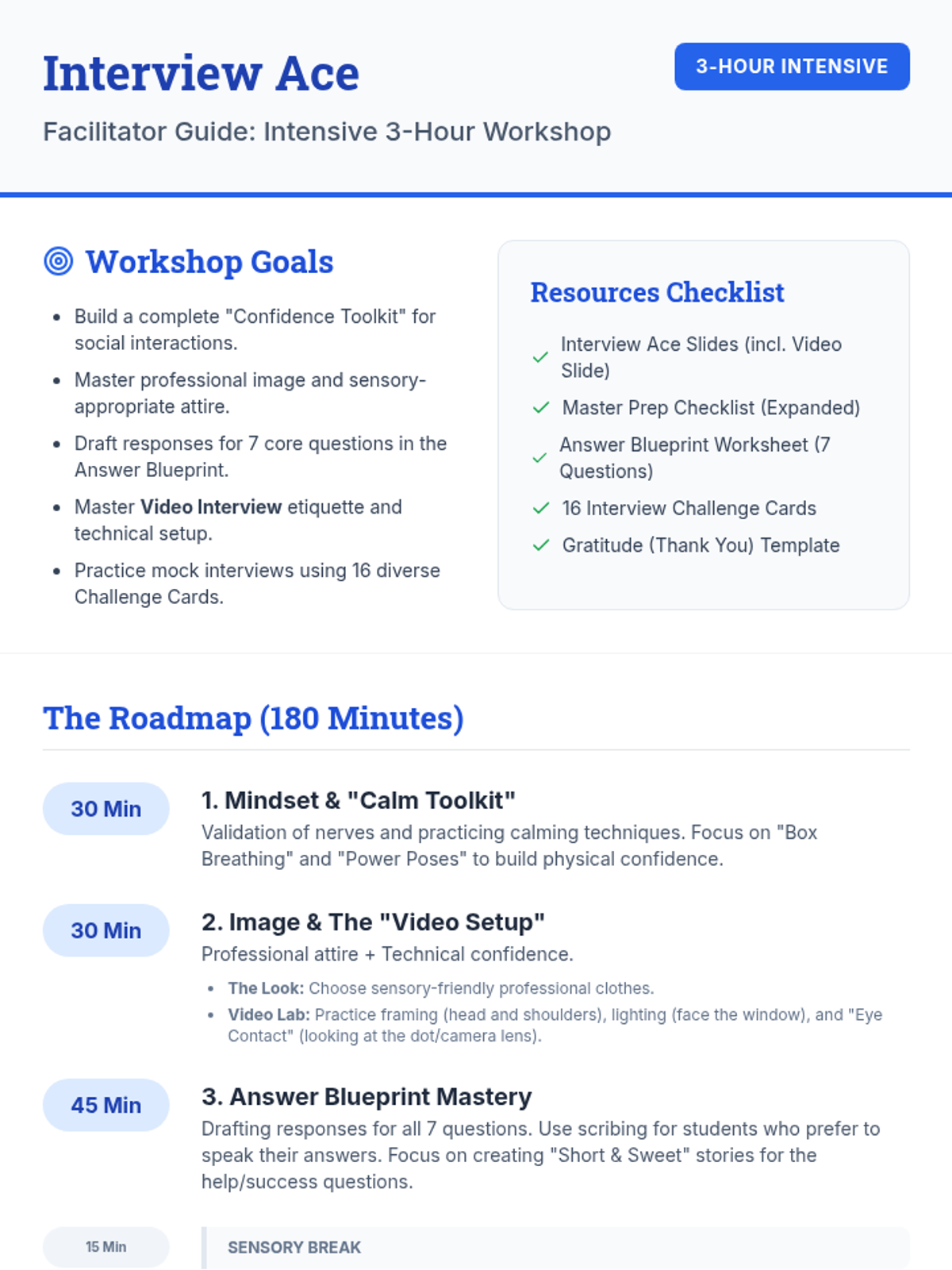
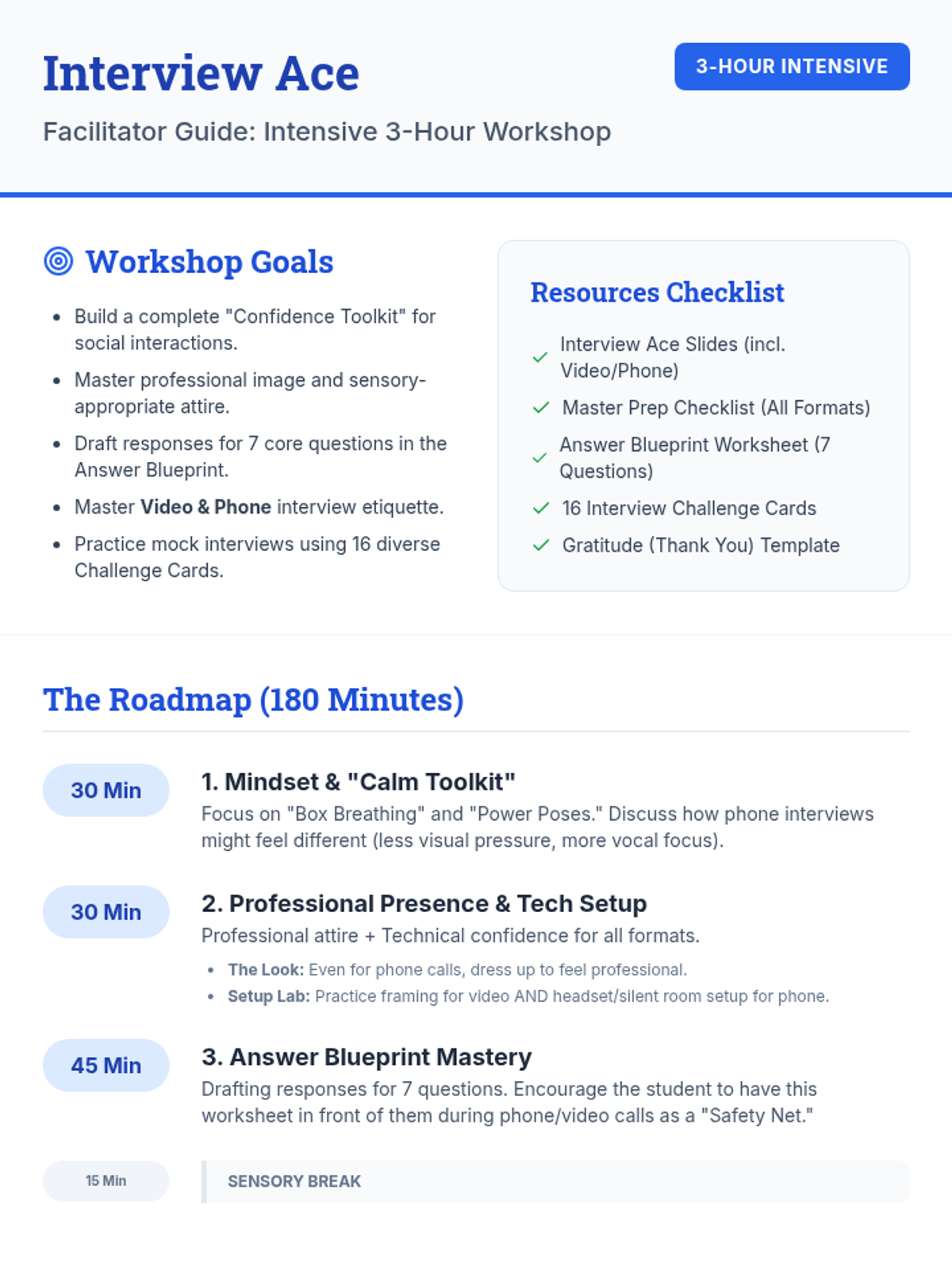
A comprehensive 4-hour coaching session designed for adult learners with intellectual disabilities and high anxiety. It covers emotional resilience during the job search, professional presentation, and practical interview skills for phone, virtual, and in-person settings.
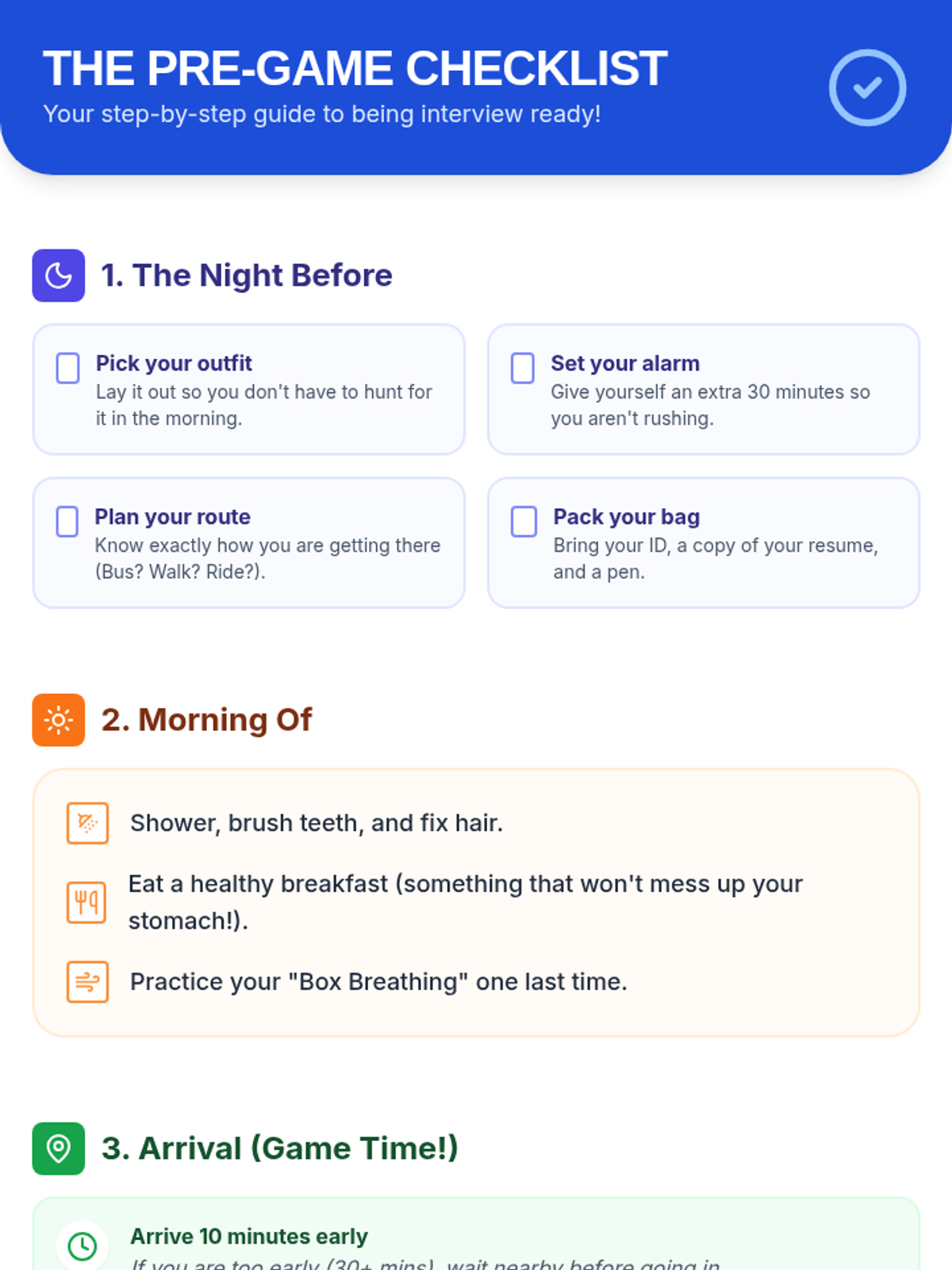
A comprehensive one-on-one lesson designed to help adults with disabilities prepare for job interviews, covering everything from professional attire to managing nerves and practicing common questions.
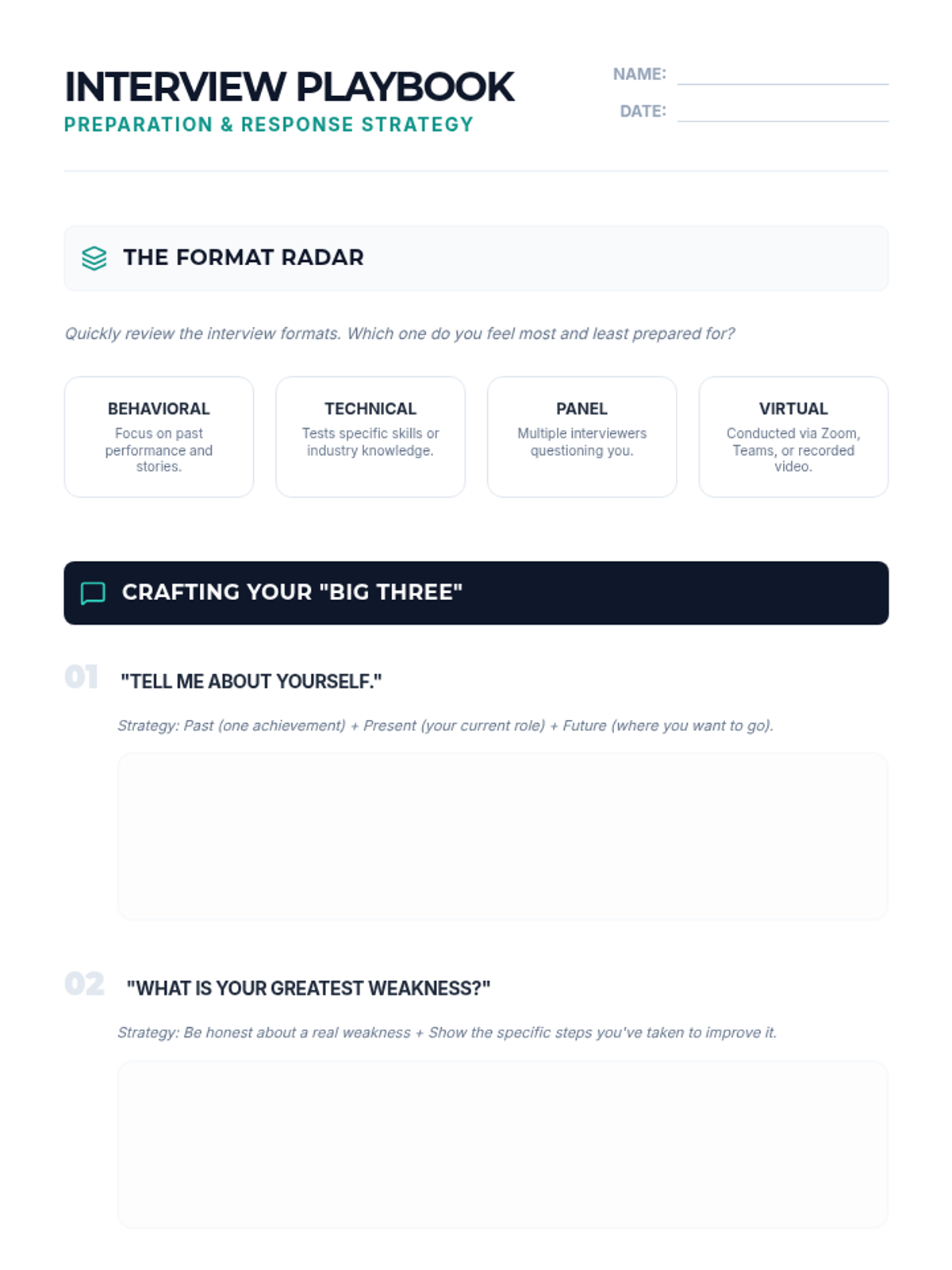
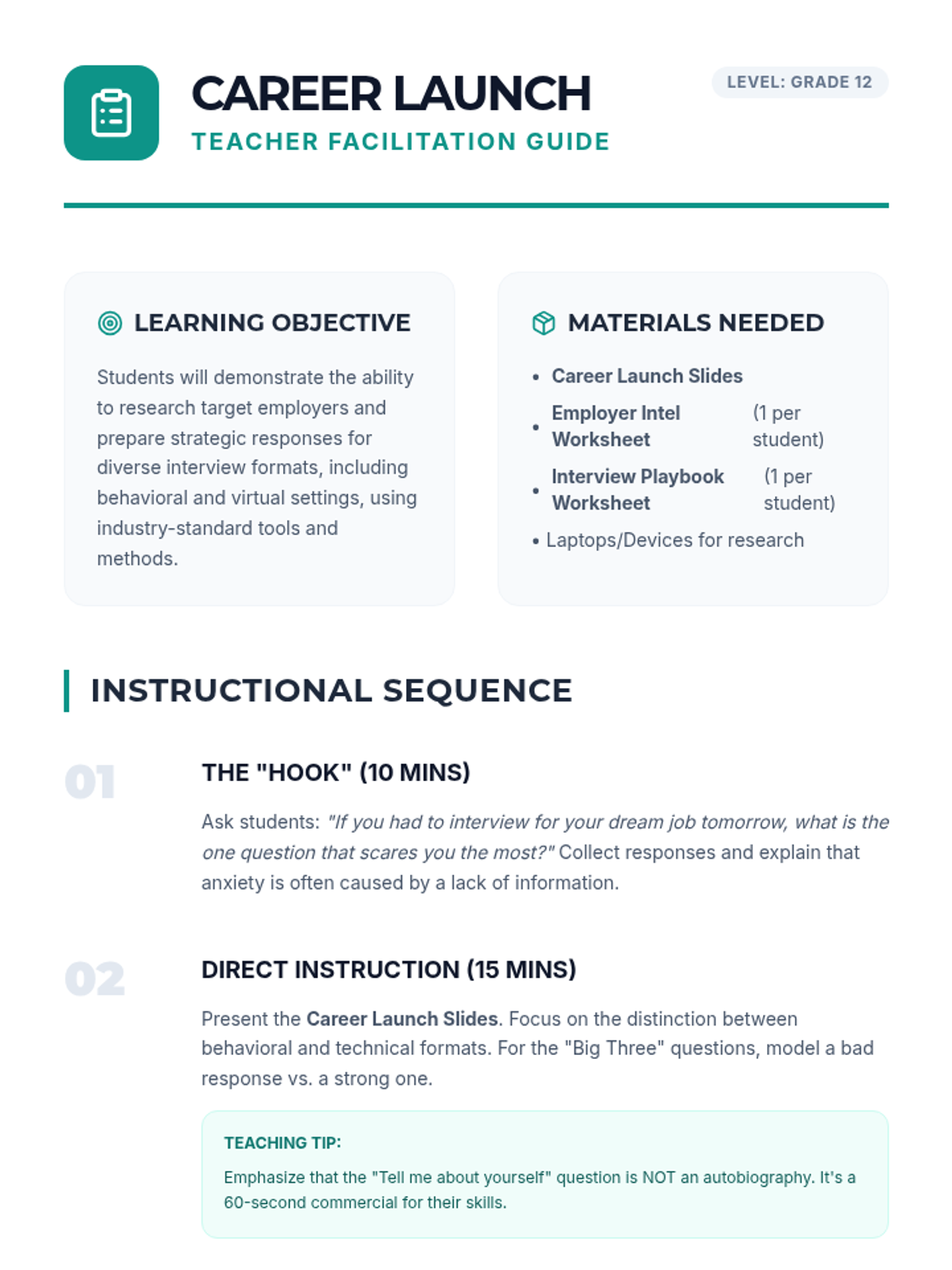
A comprehensive lesson for high school seniors on researching potential employers, understanding various interview formats, and preparing effective responses for both in-person and virtual interviews.
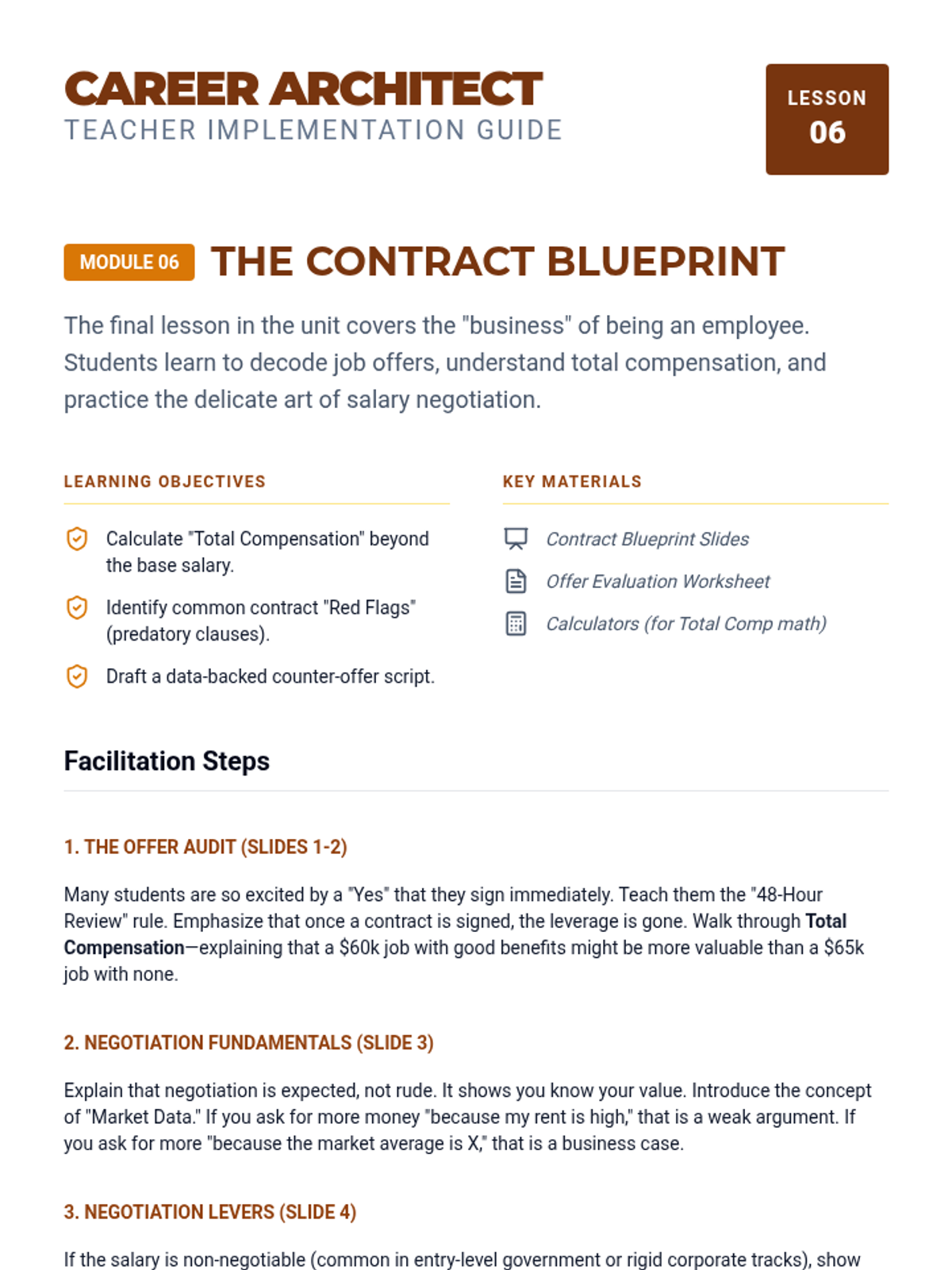
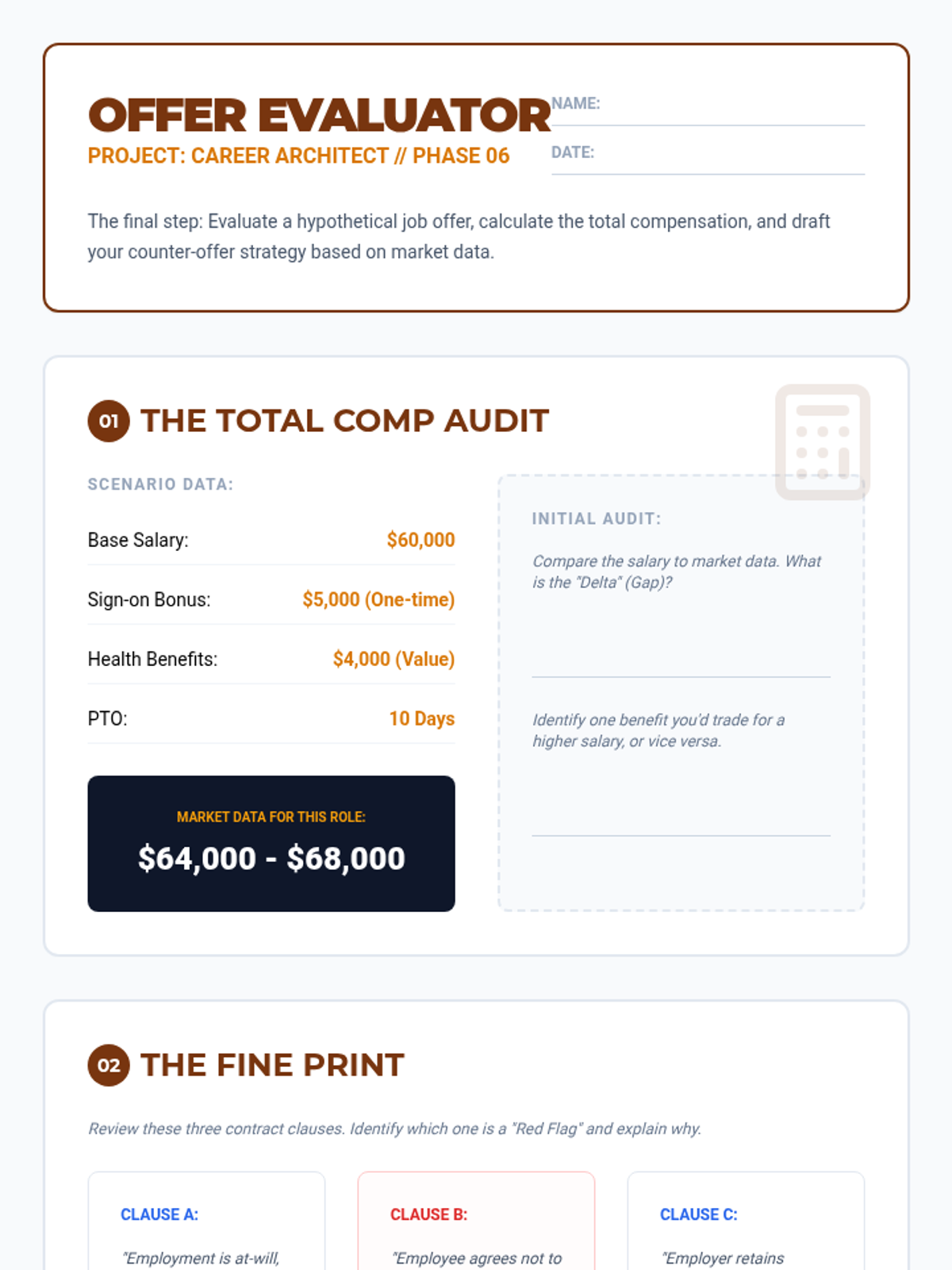
Teaches students how to evaluate job offers, negotiate salary and benefits, and prepare for the professional transition into a new role. Focuses on the "business" side of starting a career.
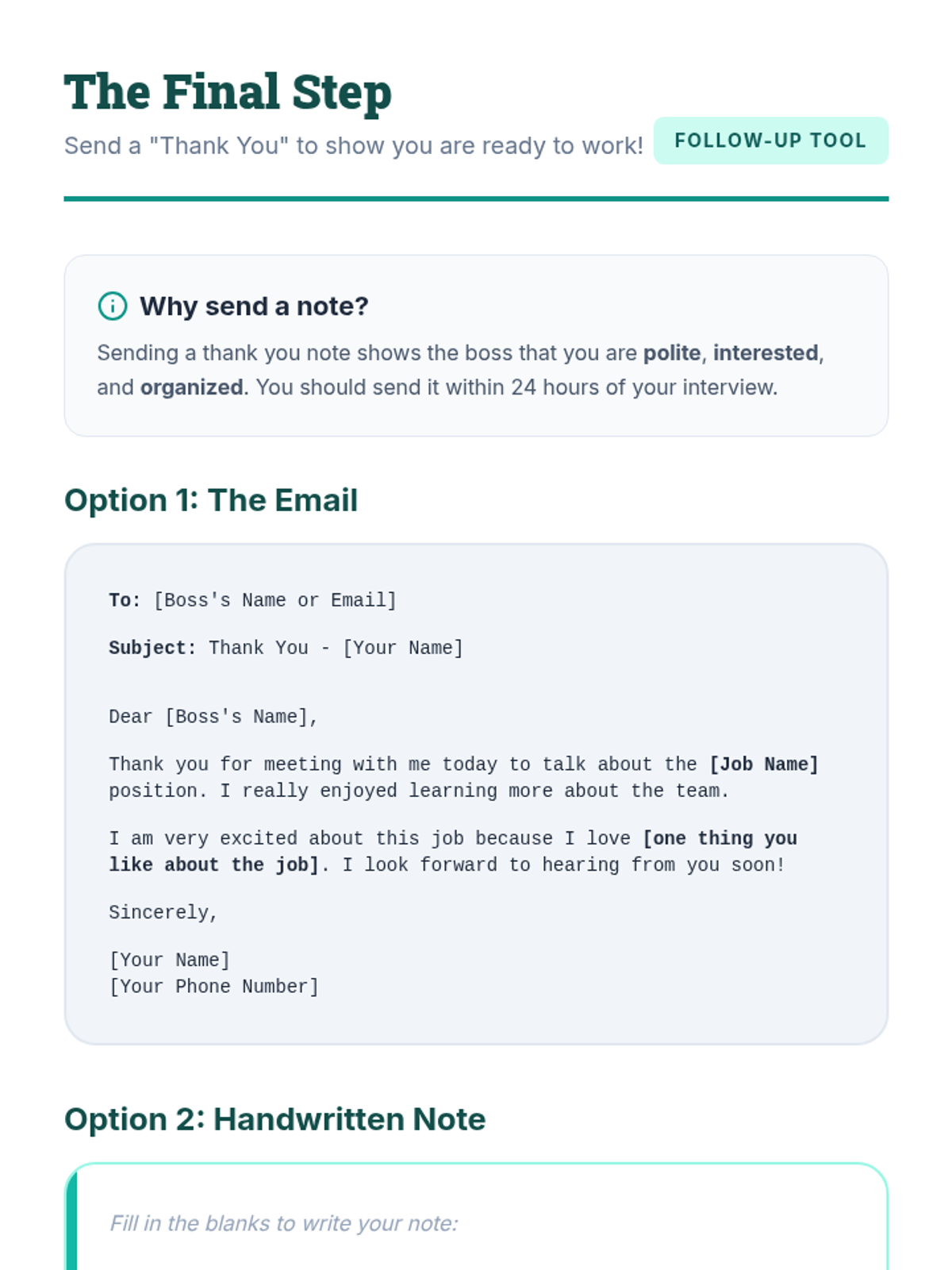
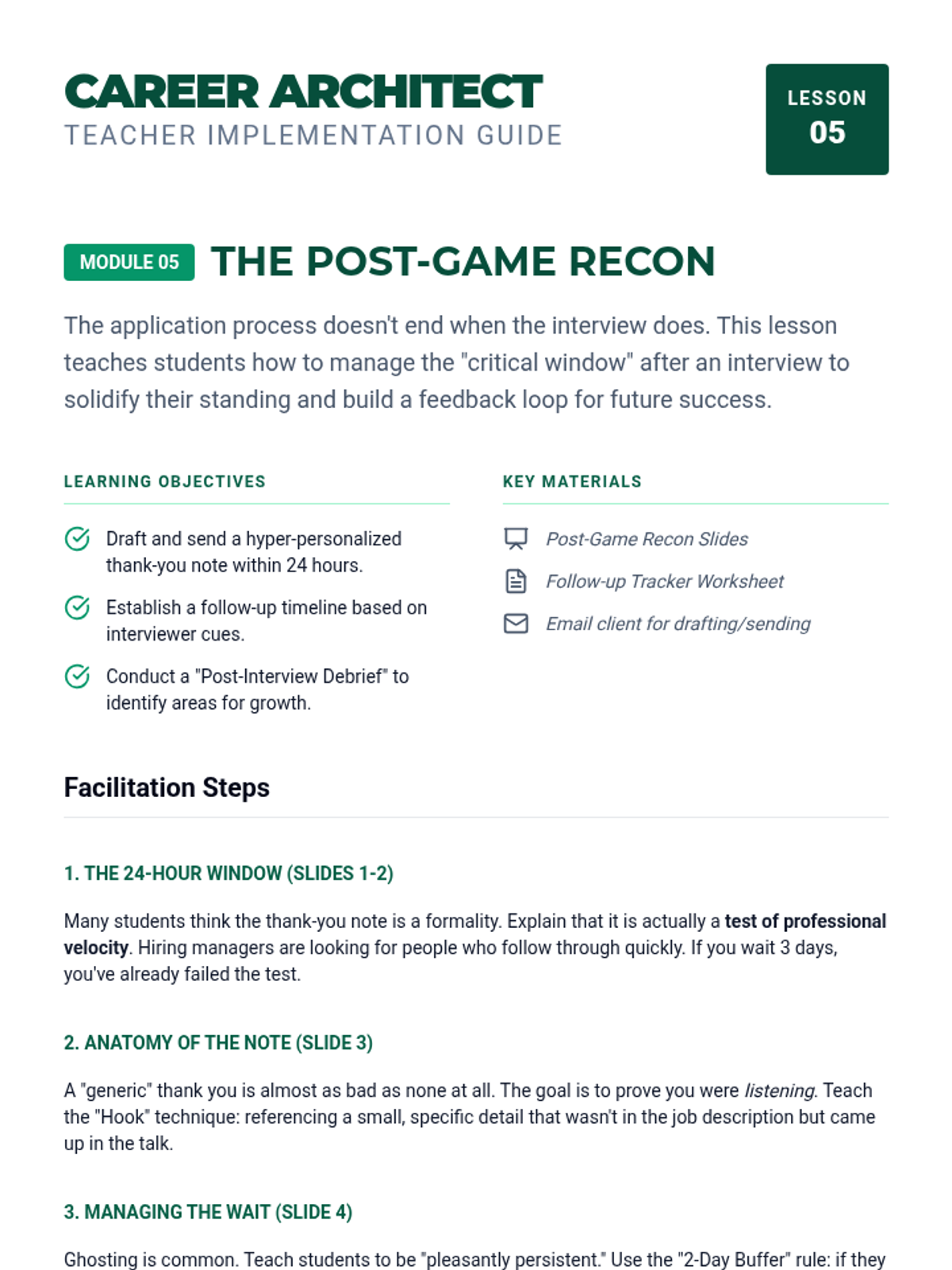
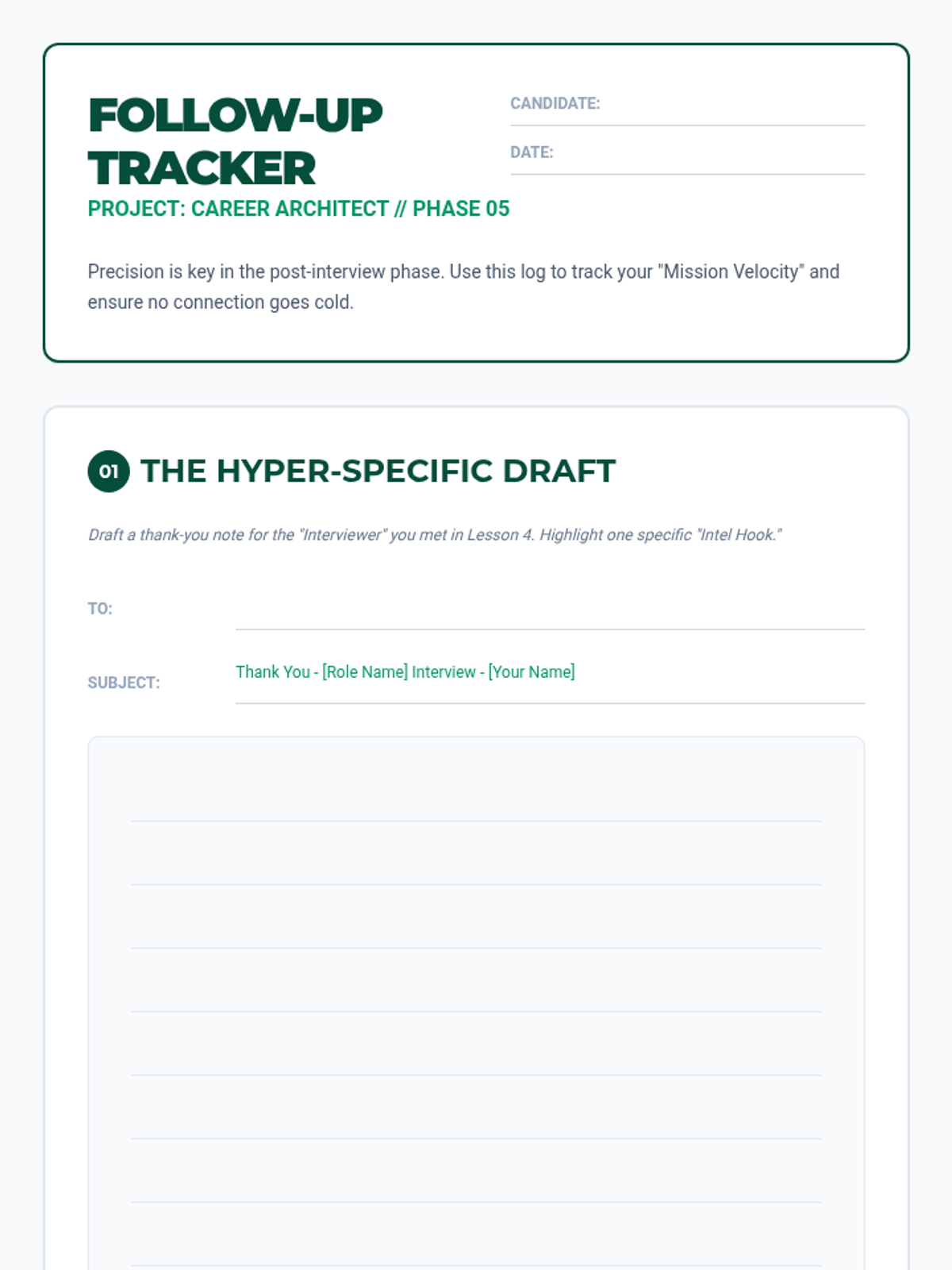
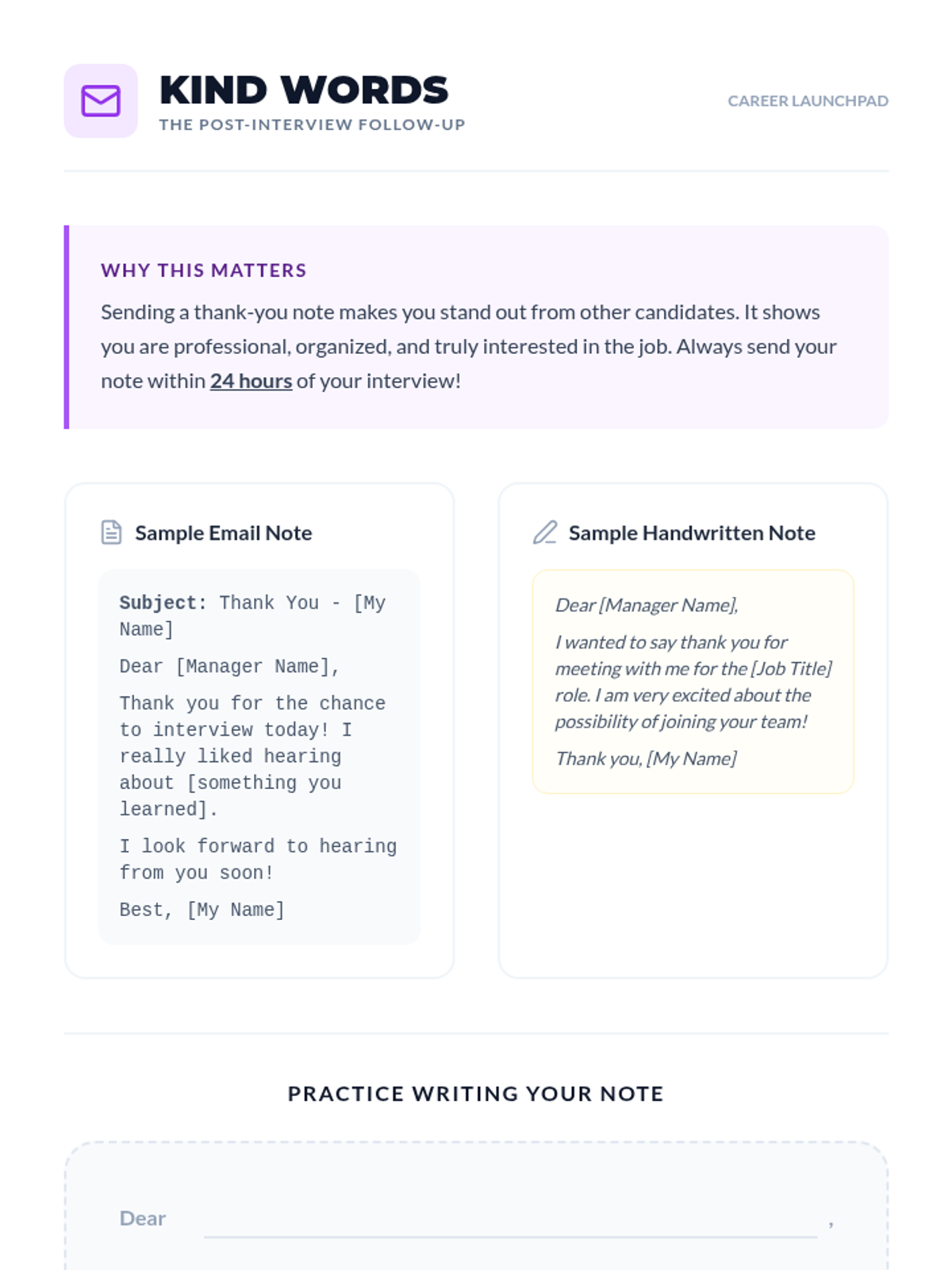
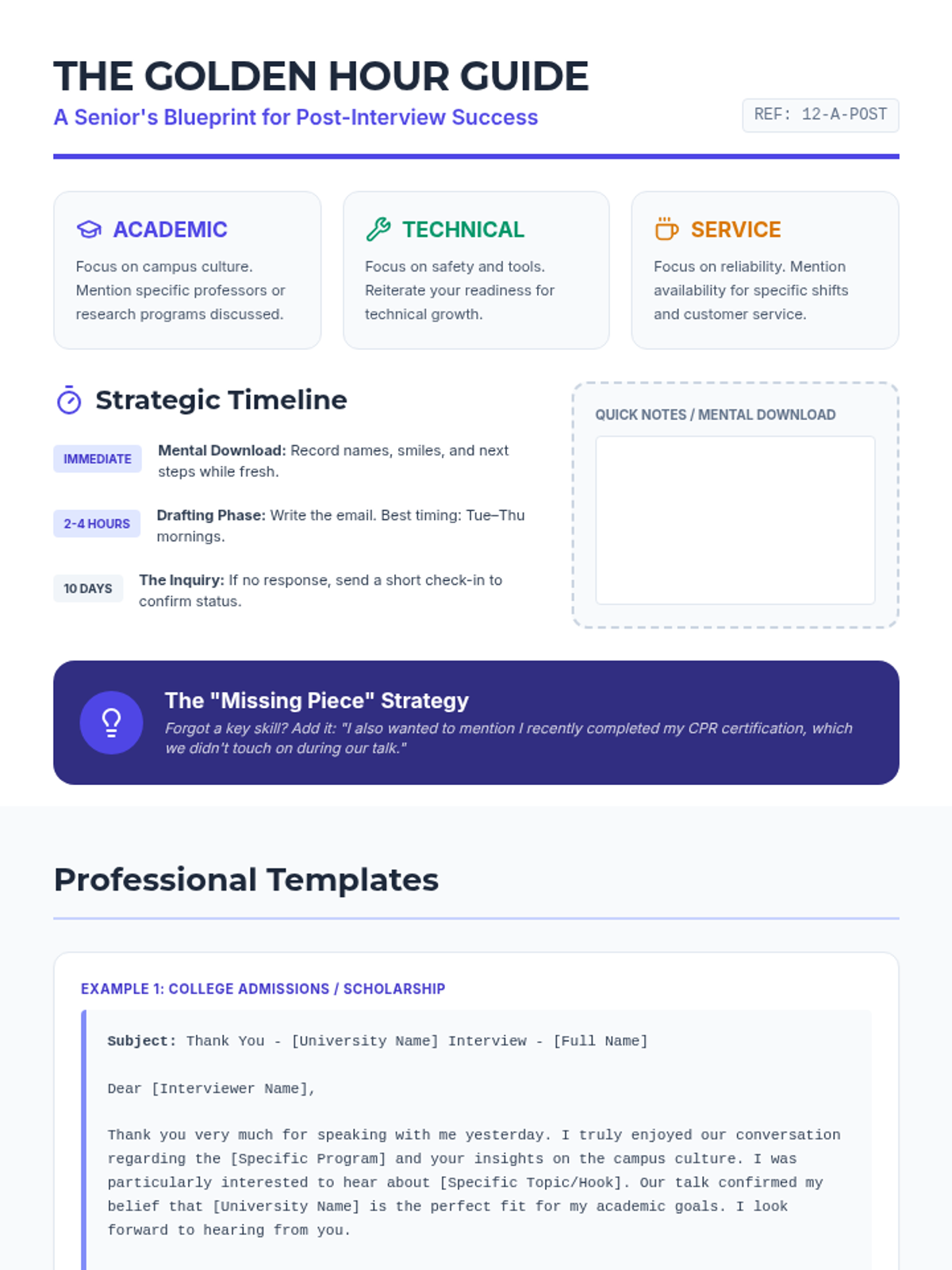
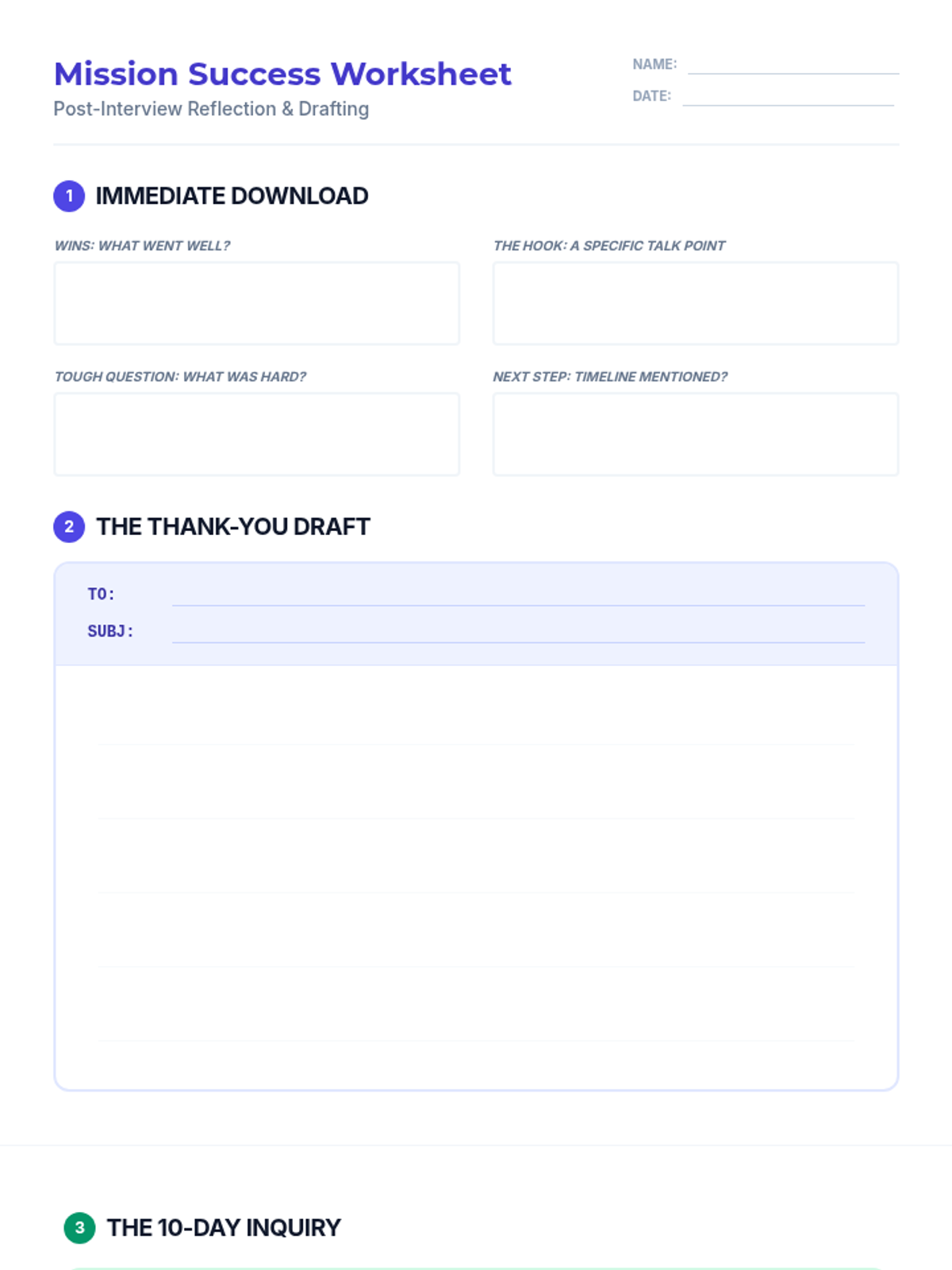
Focuses on the critical period after the interview. Students learn to craft high-impact thank-you notes, manage follow-up timelines, and leverage post-interview feedback to refine their approach.
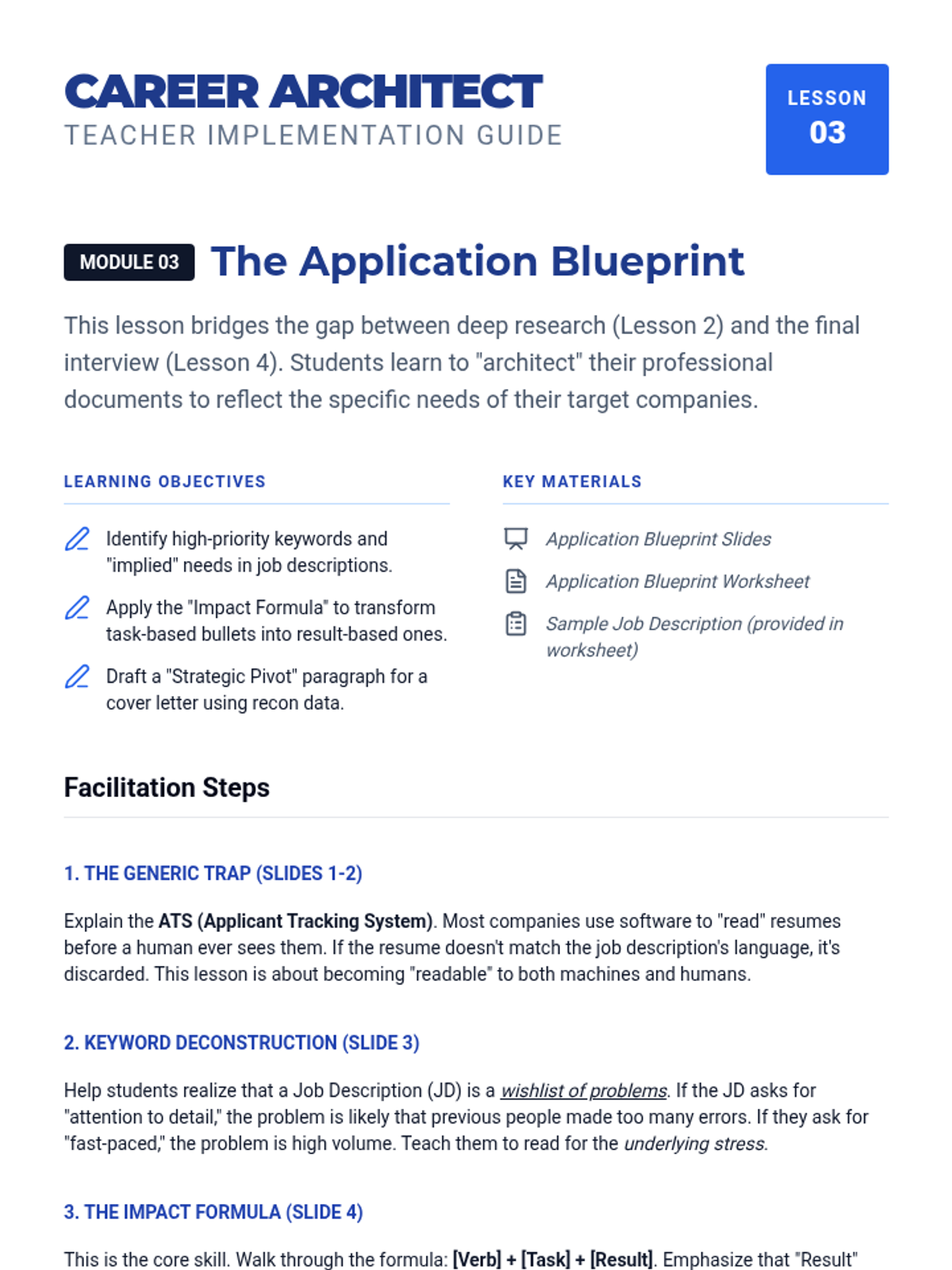
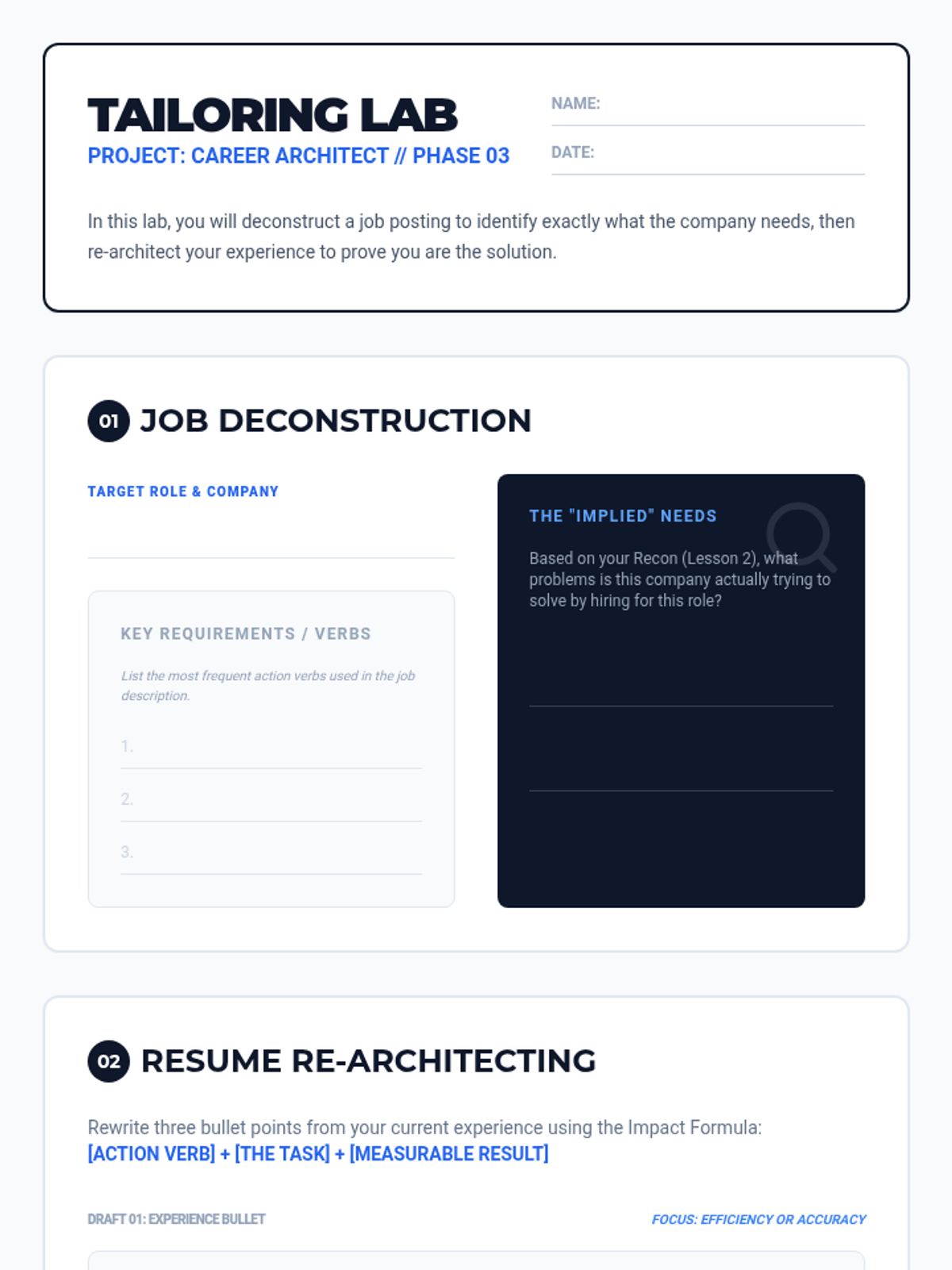
Focuses on translating research into action. Students learn to tailor their resumes and cover letters using the data gathered during their 'Company Recon' to stand out from generic applicants.
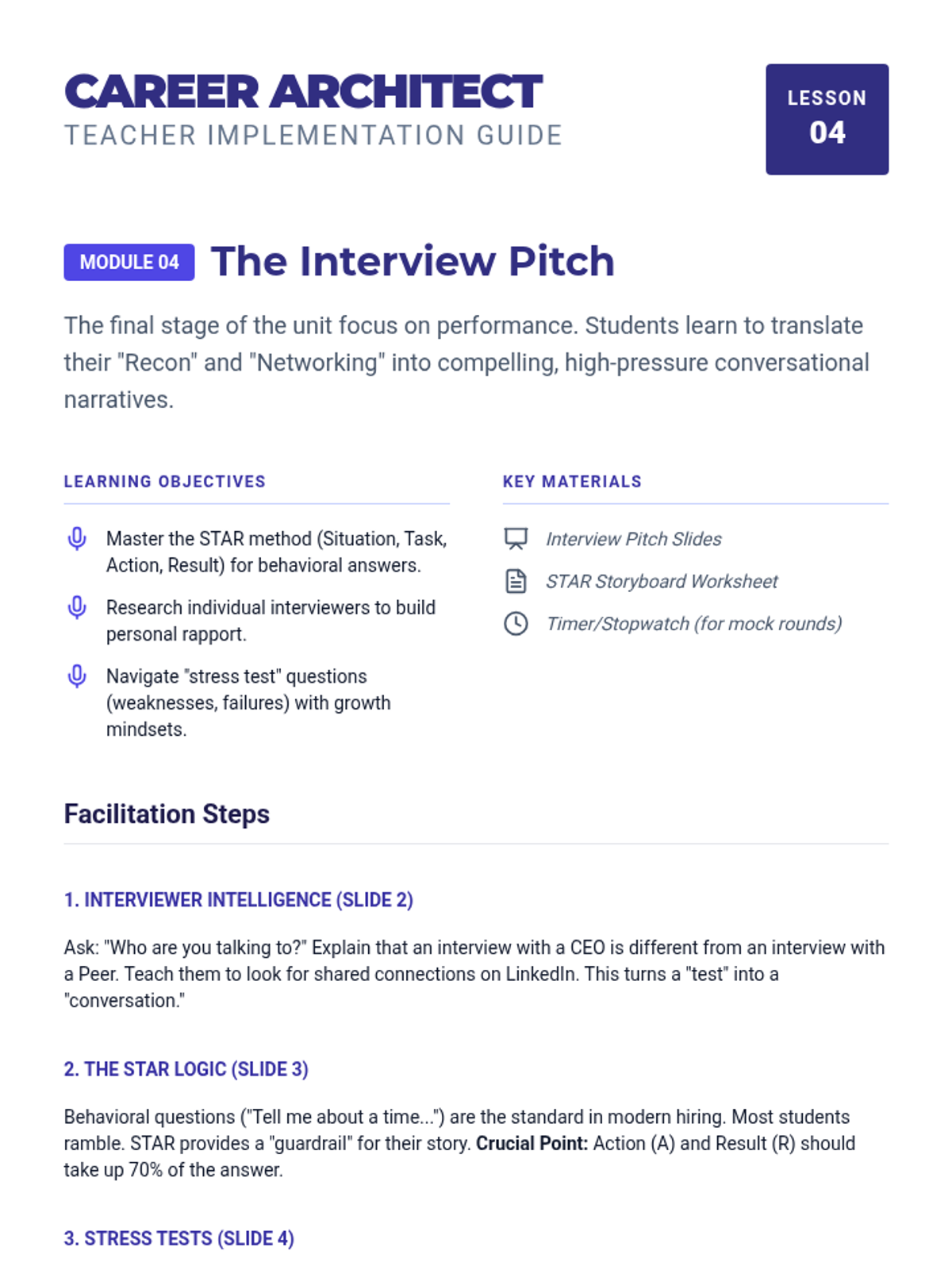
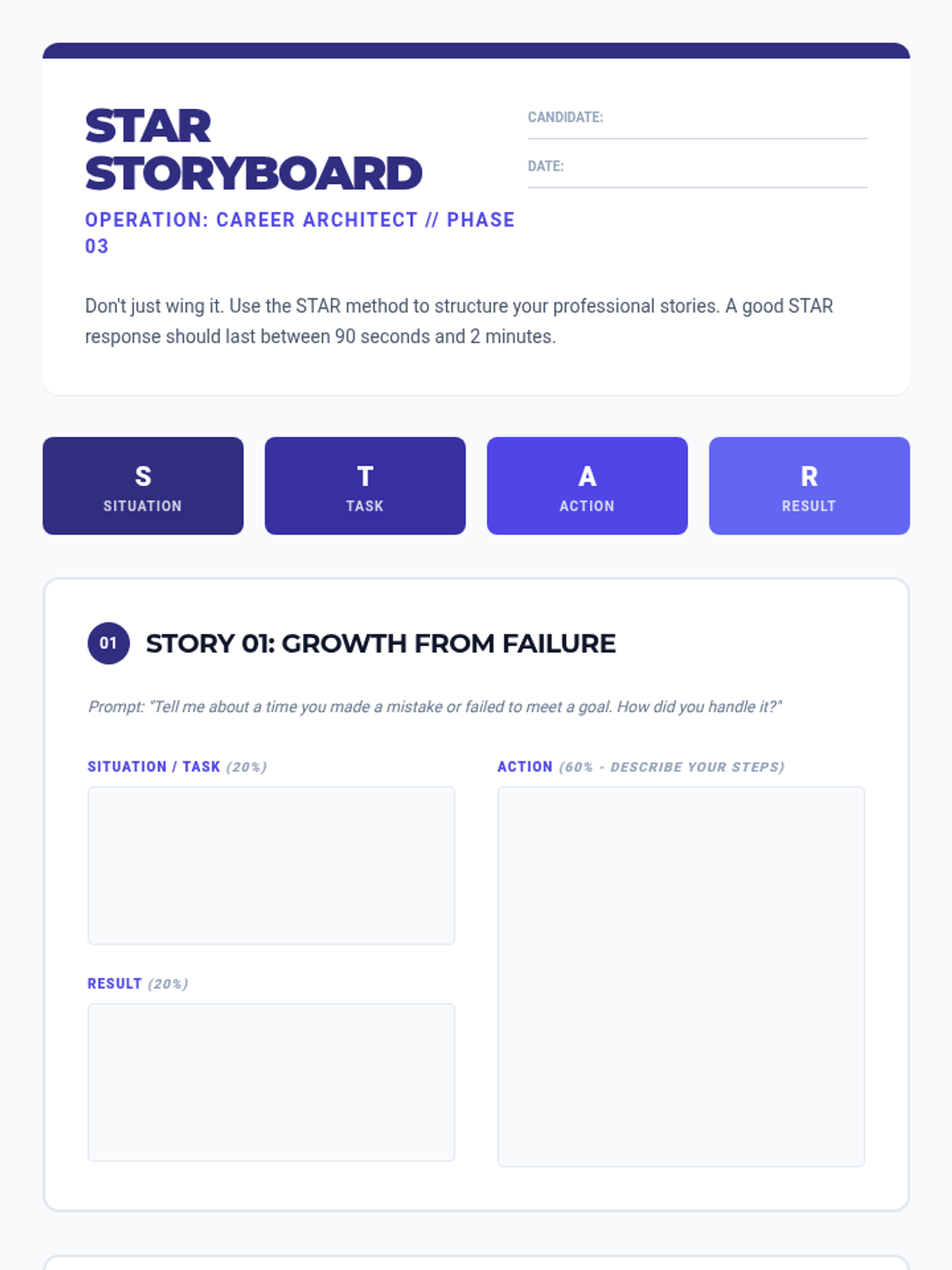
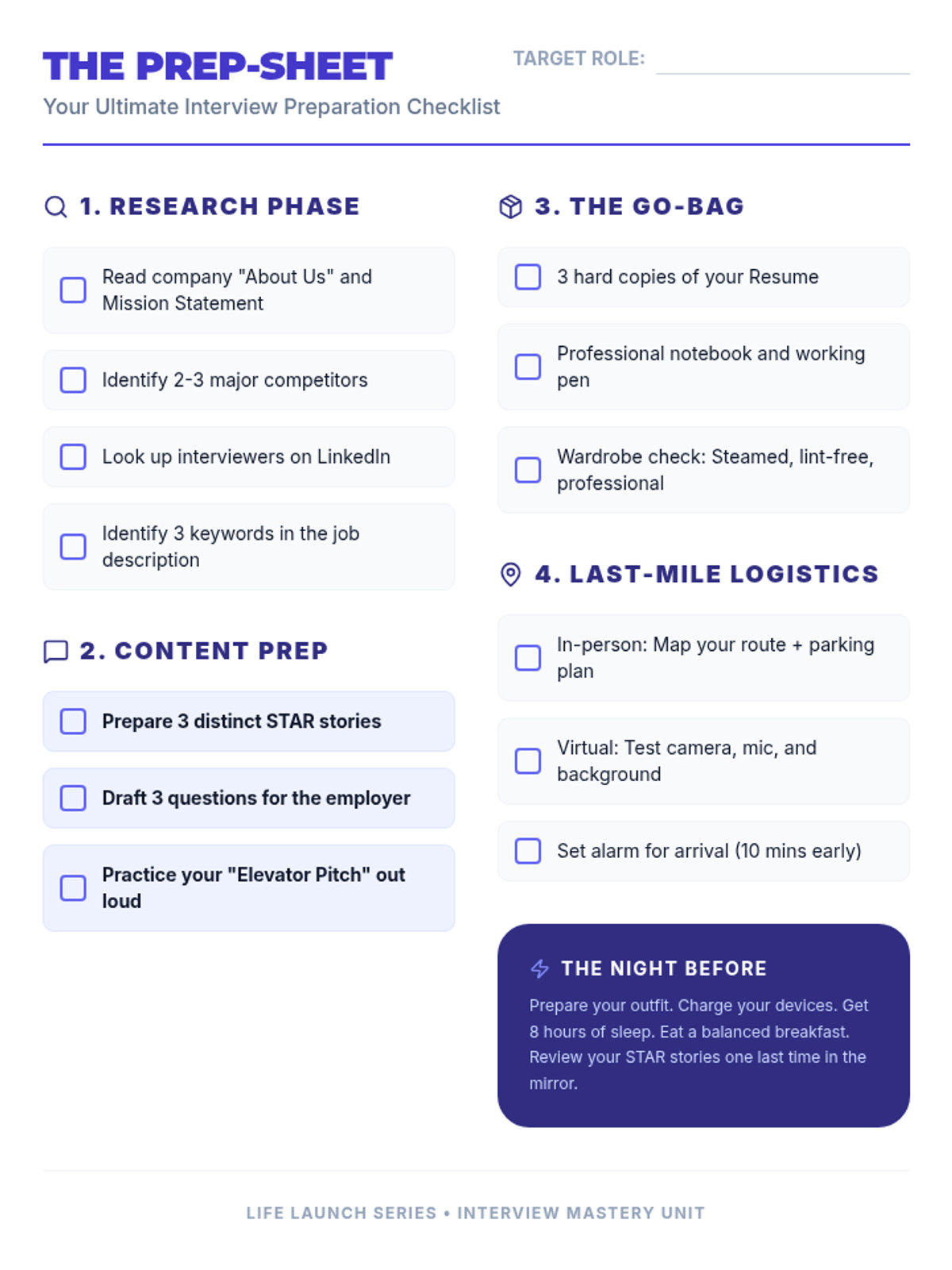
Prepares students for various interview formats and difficult scenarios. Focuses on the STAR method for behavioral questions, researching the interviewers themselves, and practicing high-pressure situational responses.
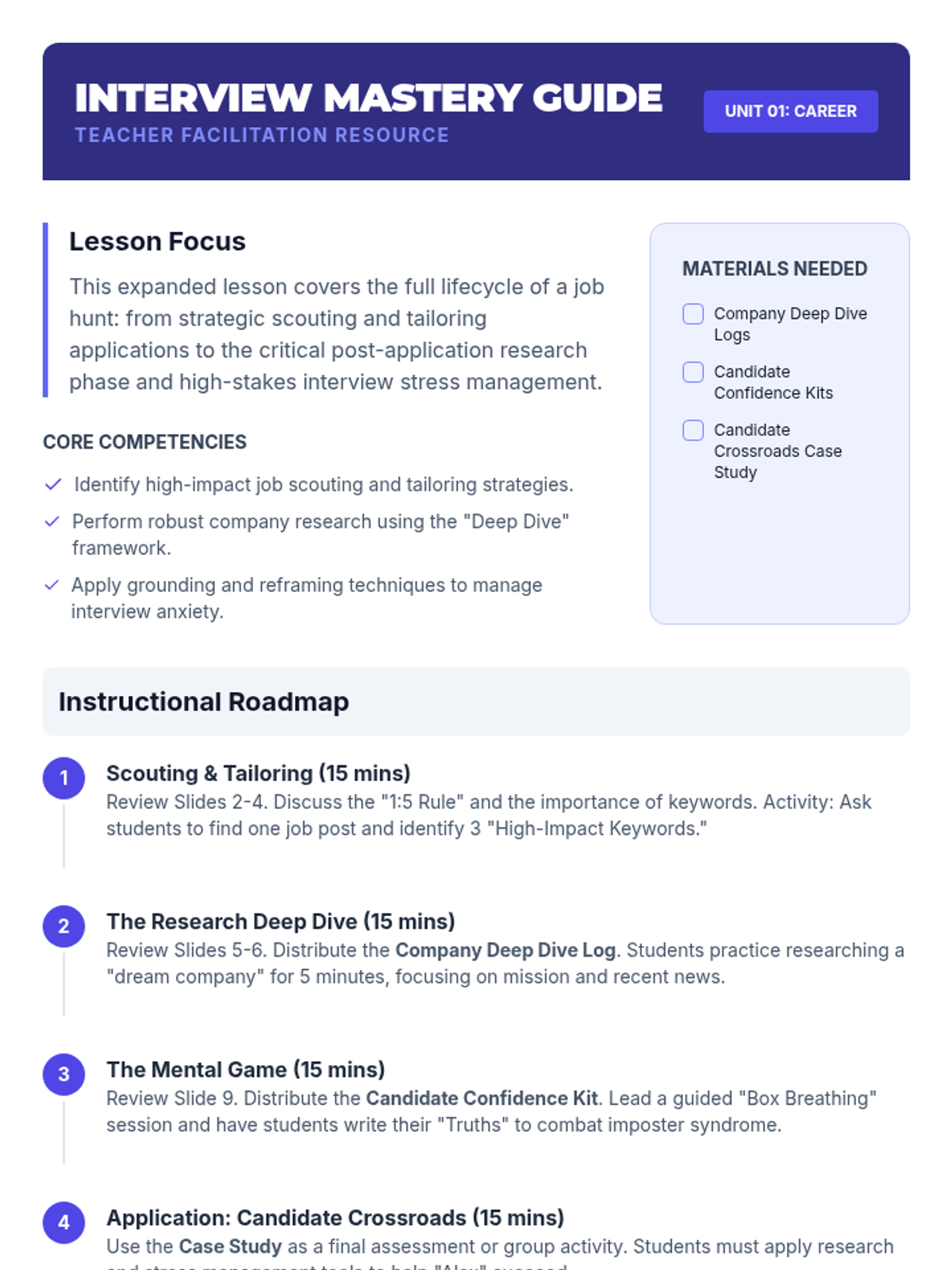
Teaches students how to move beyond surface-level job descriptions. Focuses on researching company culture, financial health, and industry positioning to tailor applications and demonstrate genuine interest and fit.
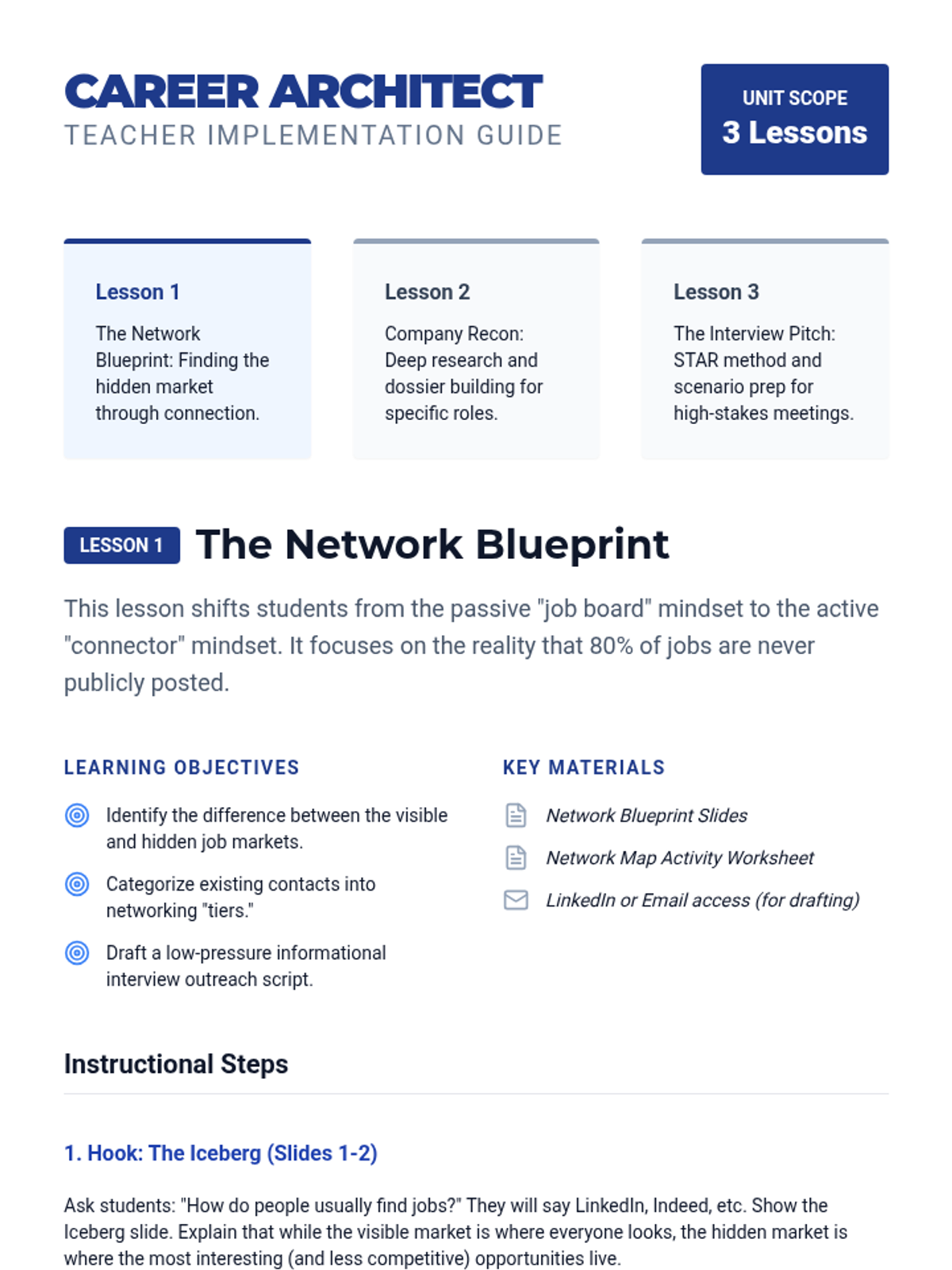
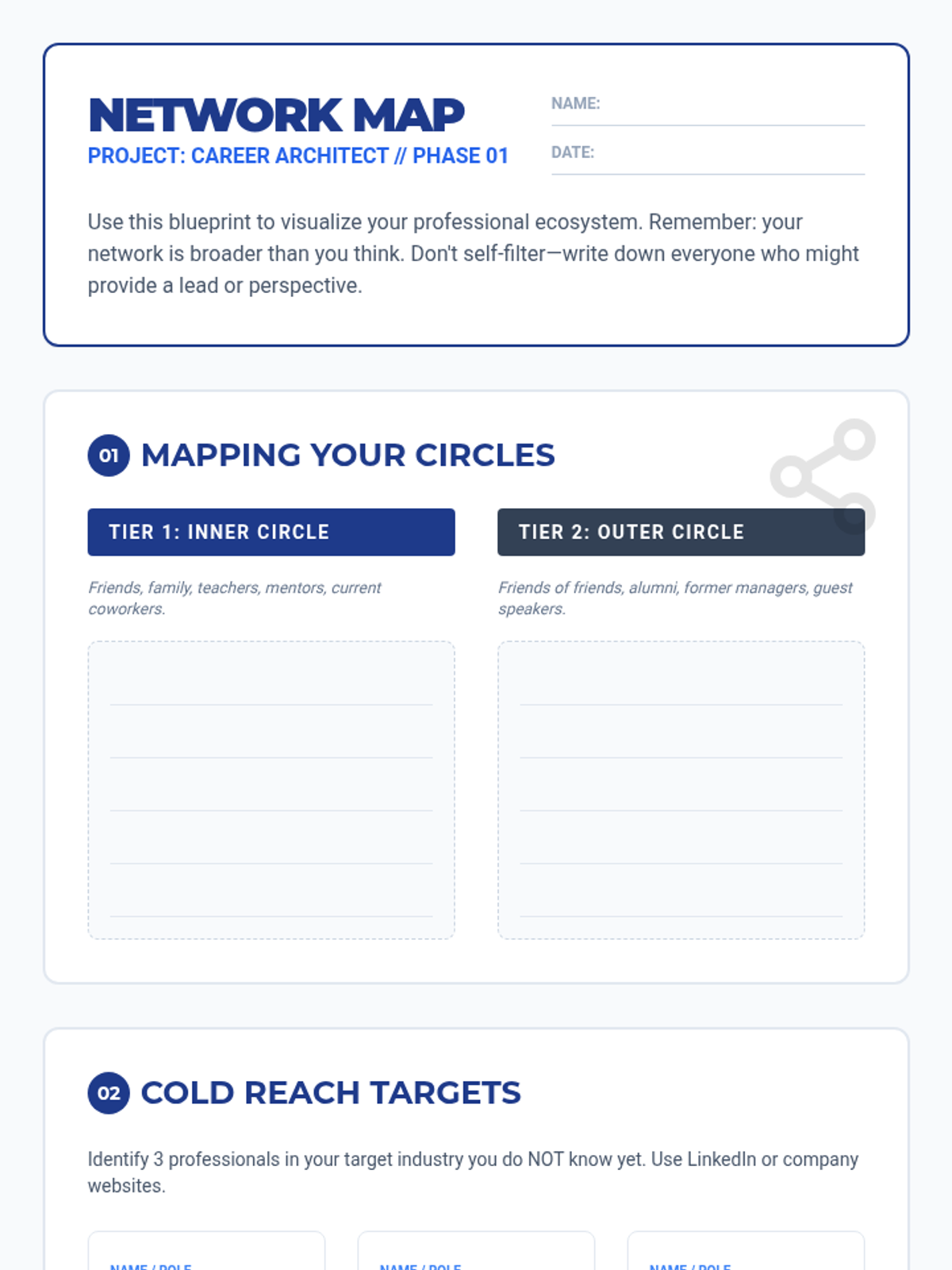
Focuses on the 'hidden job market' and the power of professional networking. Students learn how to identify potential connections, conduct informational interviews, and leverage their existing circle to find opportunities before they are posted publicly.
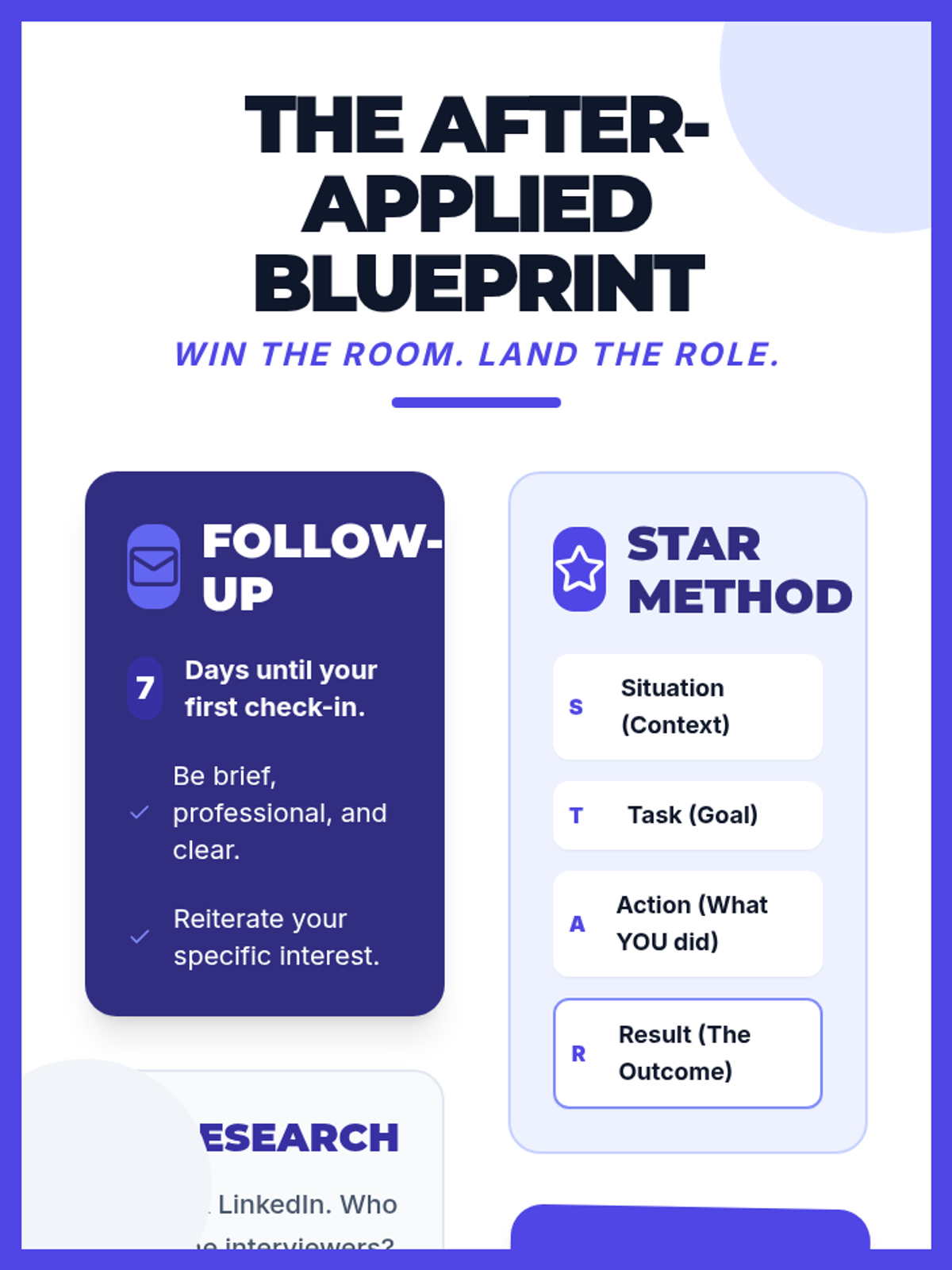
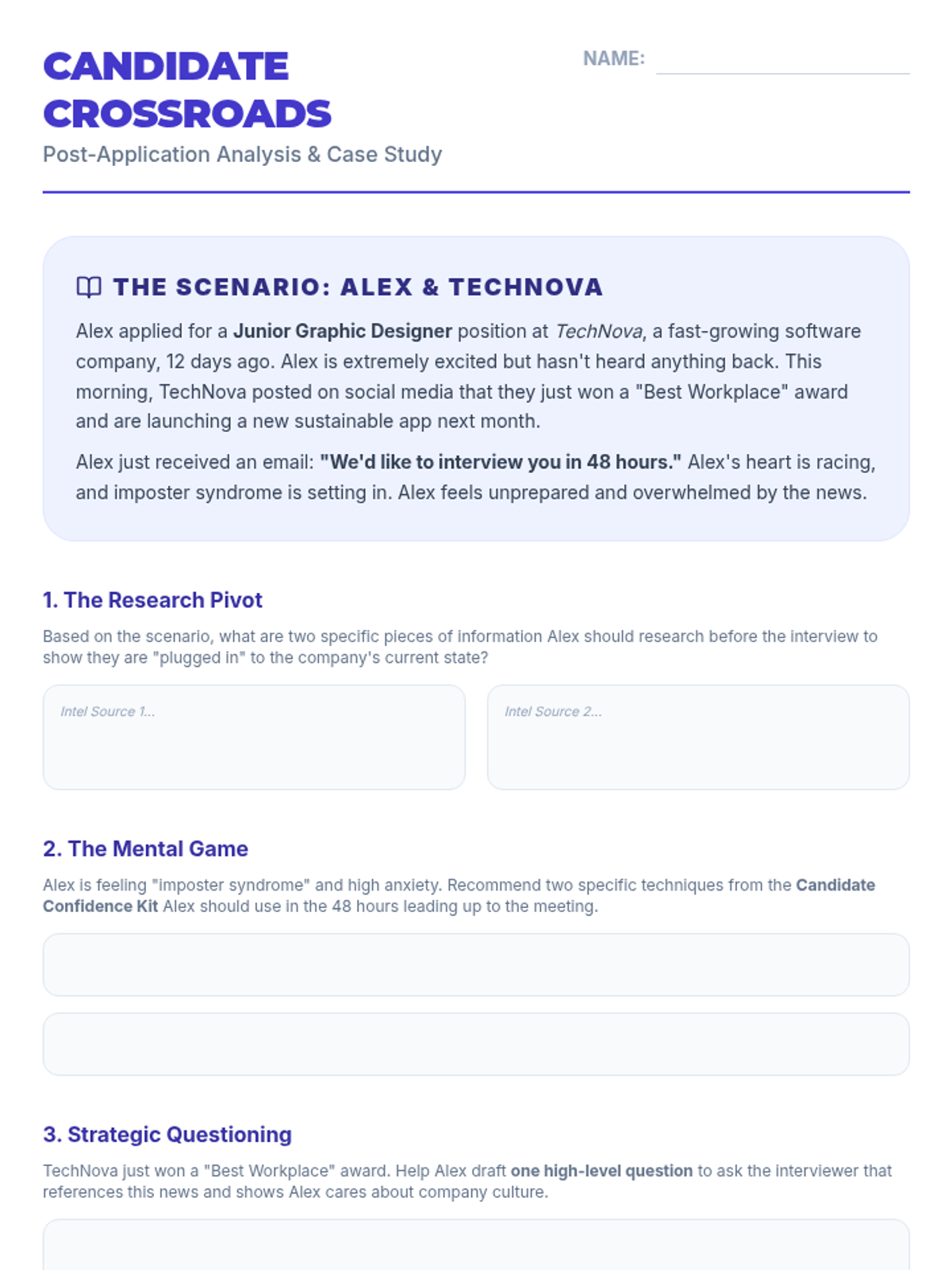
Mastering the critical phase after the job application is submitted. Students learn professional follow-up etiquette, STAR method storytelling, and strategic interview communication.
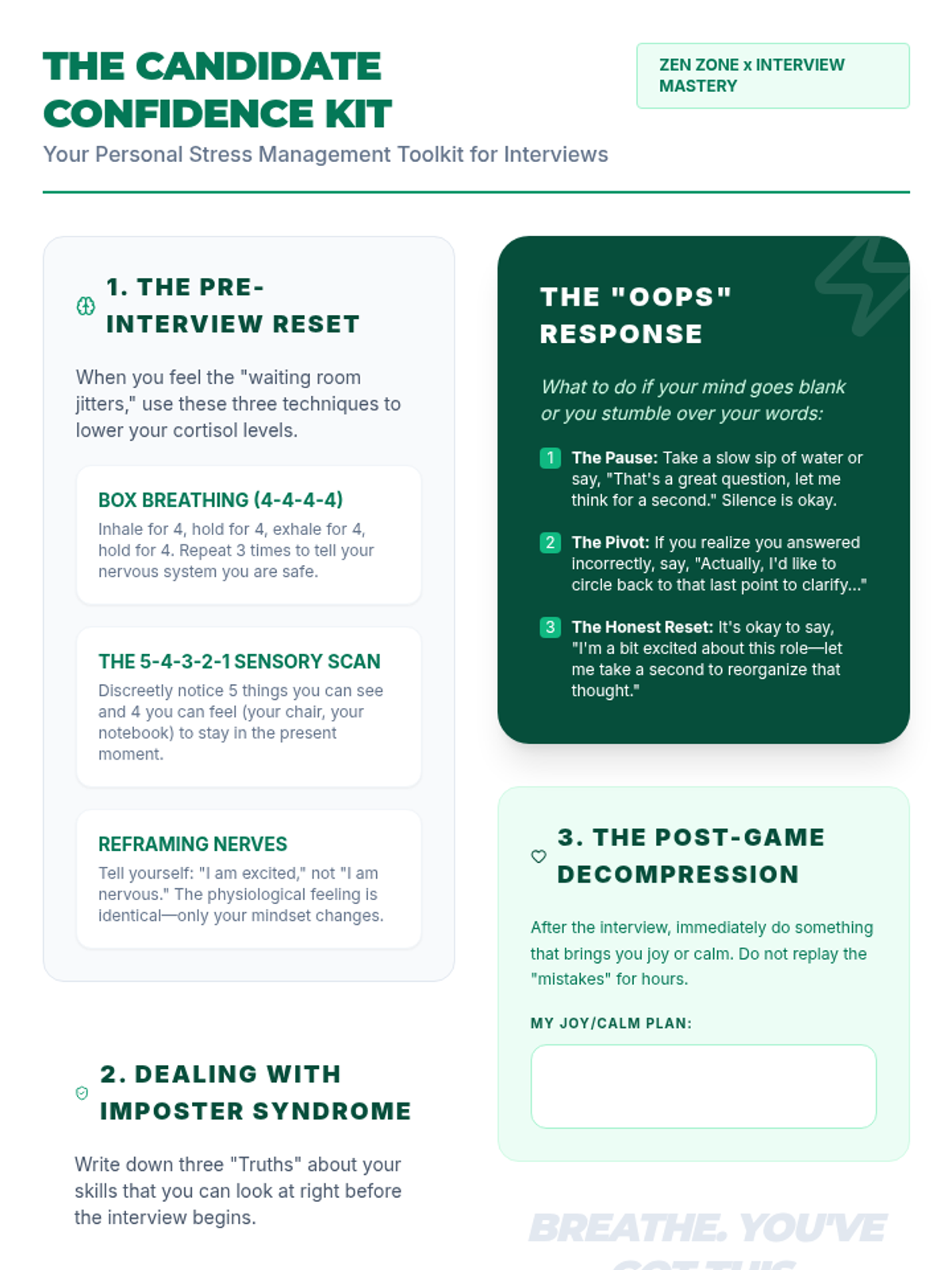
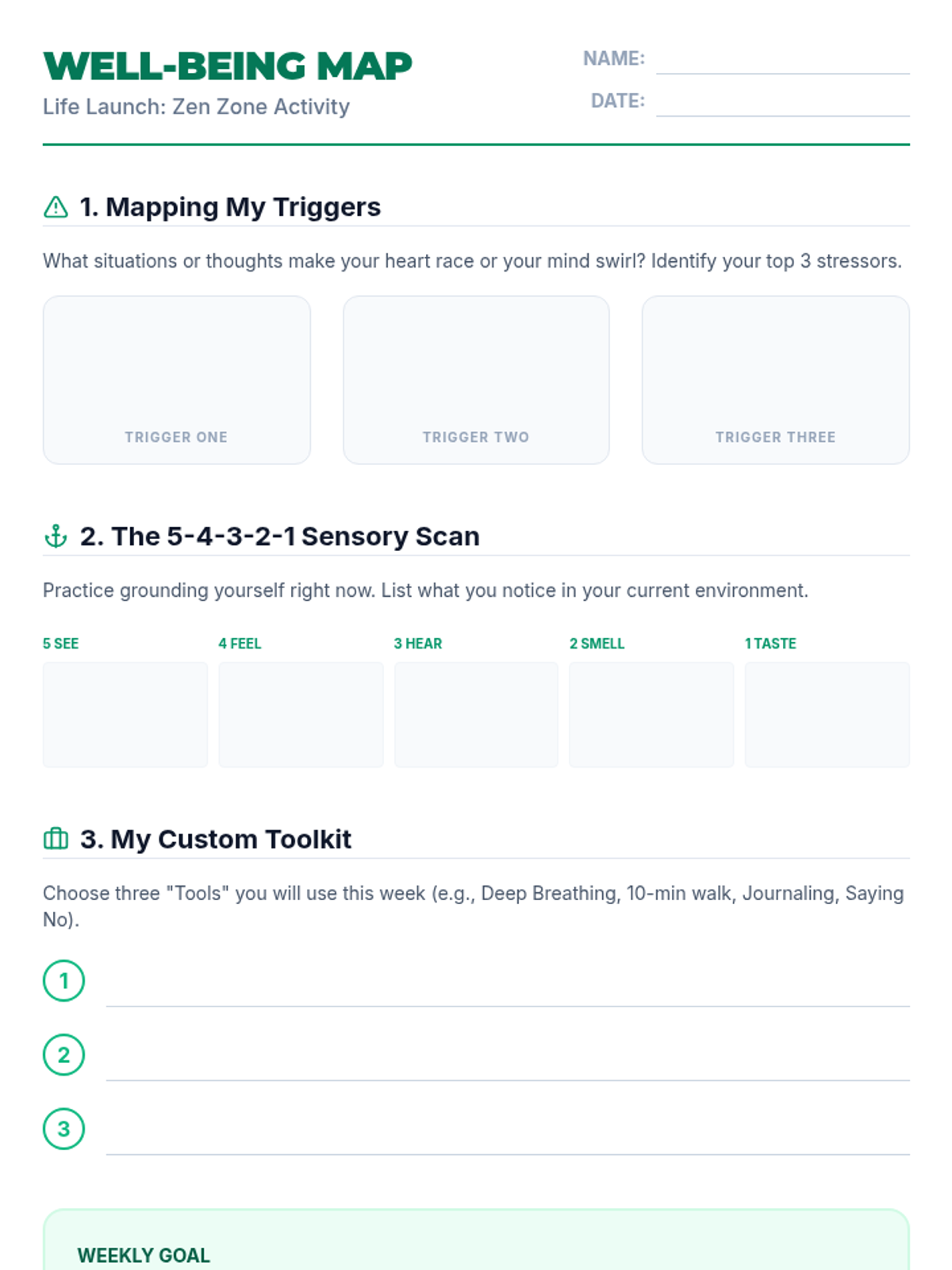
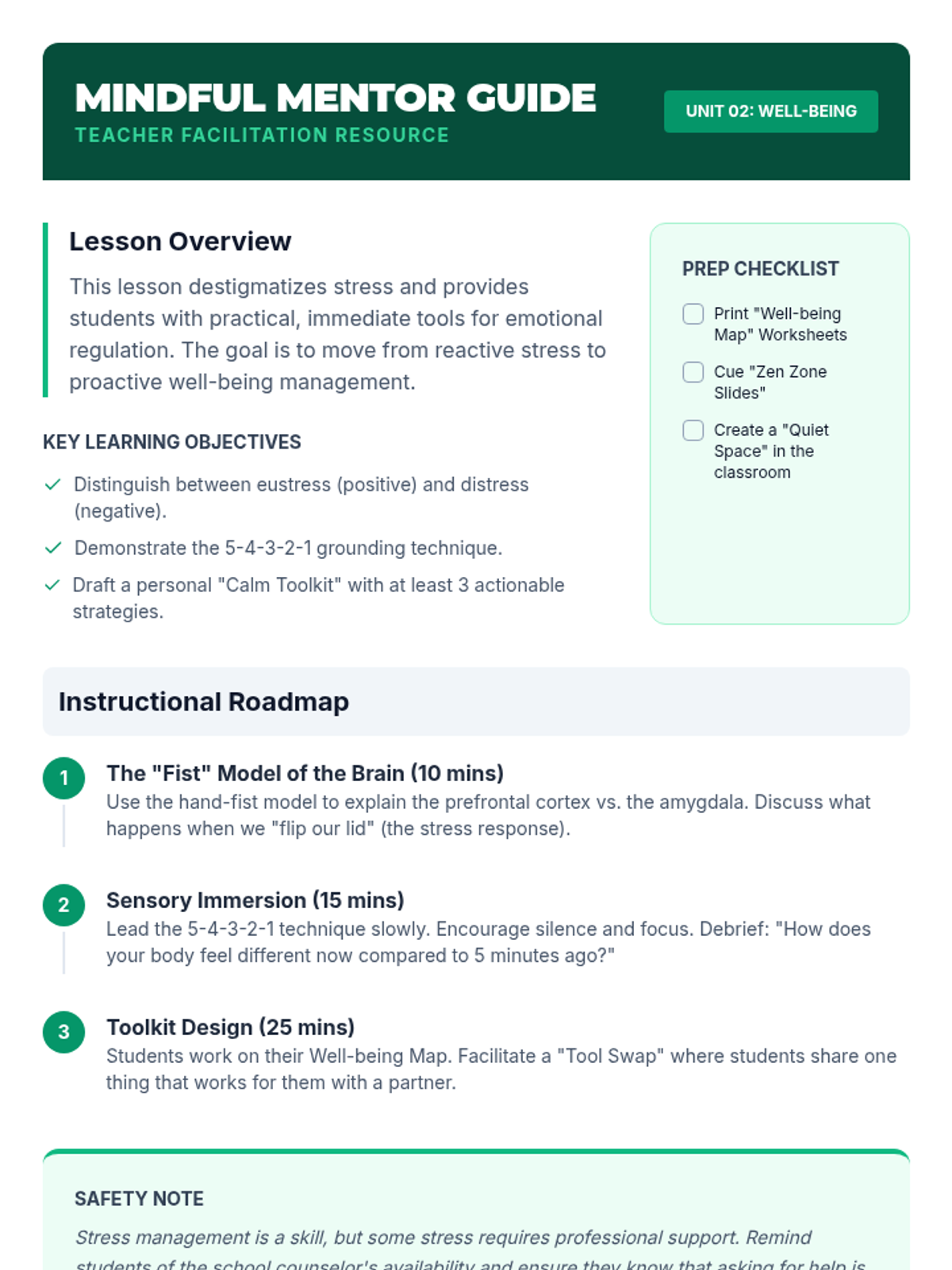
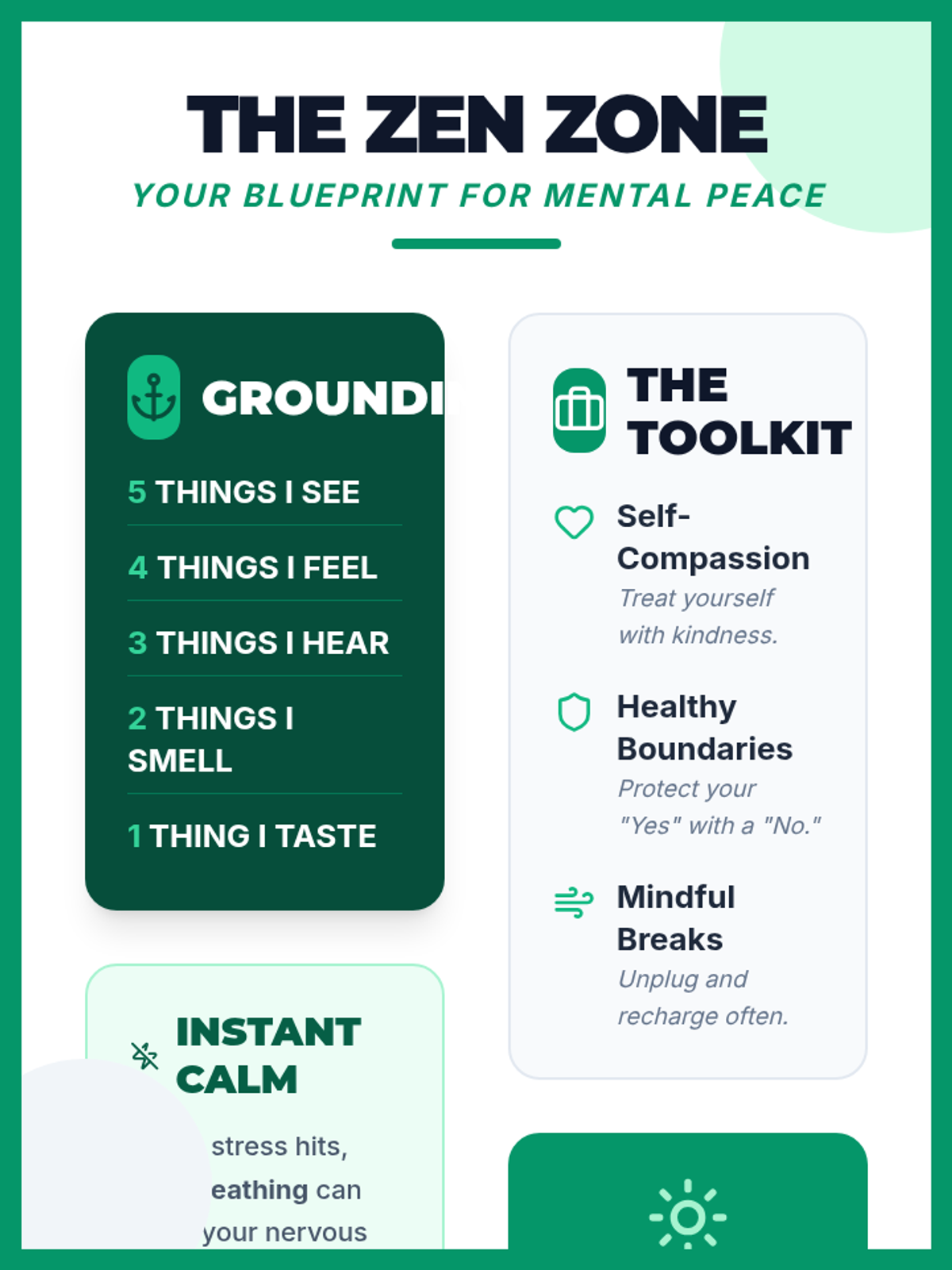
A focused lesson on identifying stress triggers, practicing mindfulness, and building a toolkit of healthy coping mechanisms for mental well-being.
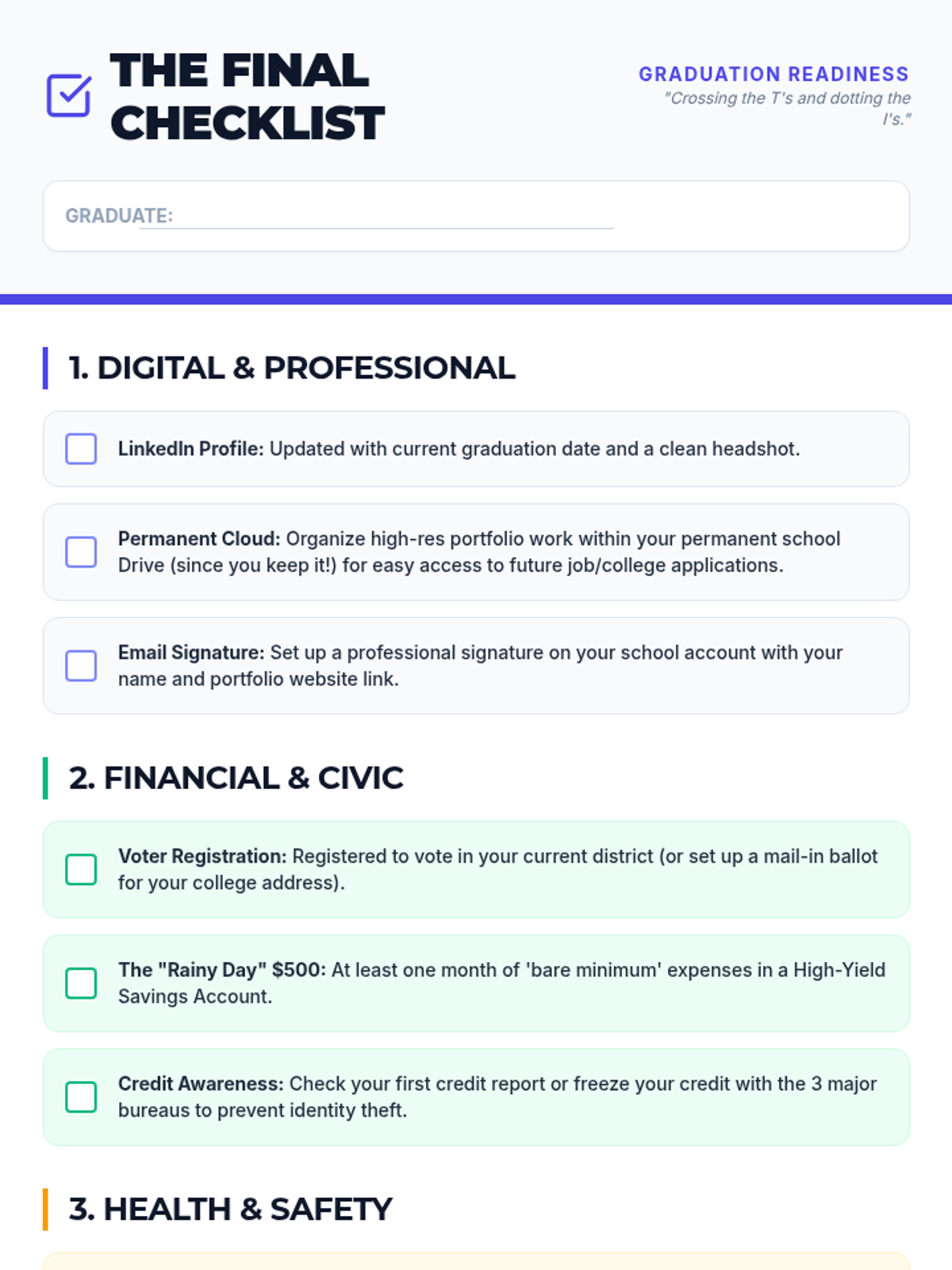
A comprehensive final review and logistics checklist for high school seniors, covering voter registration, insurance cards, professional email signatures, and emergency contact updates.
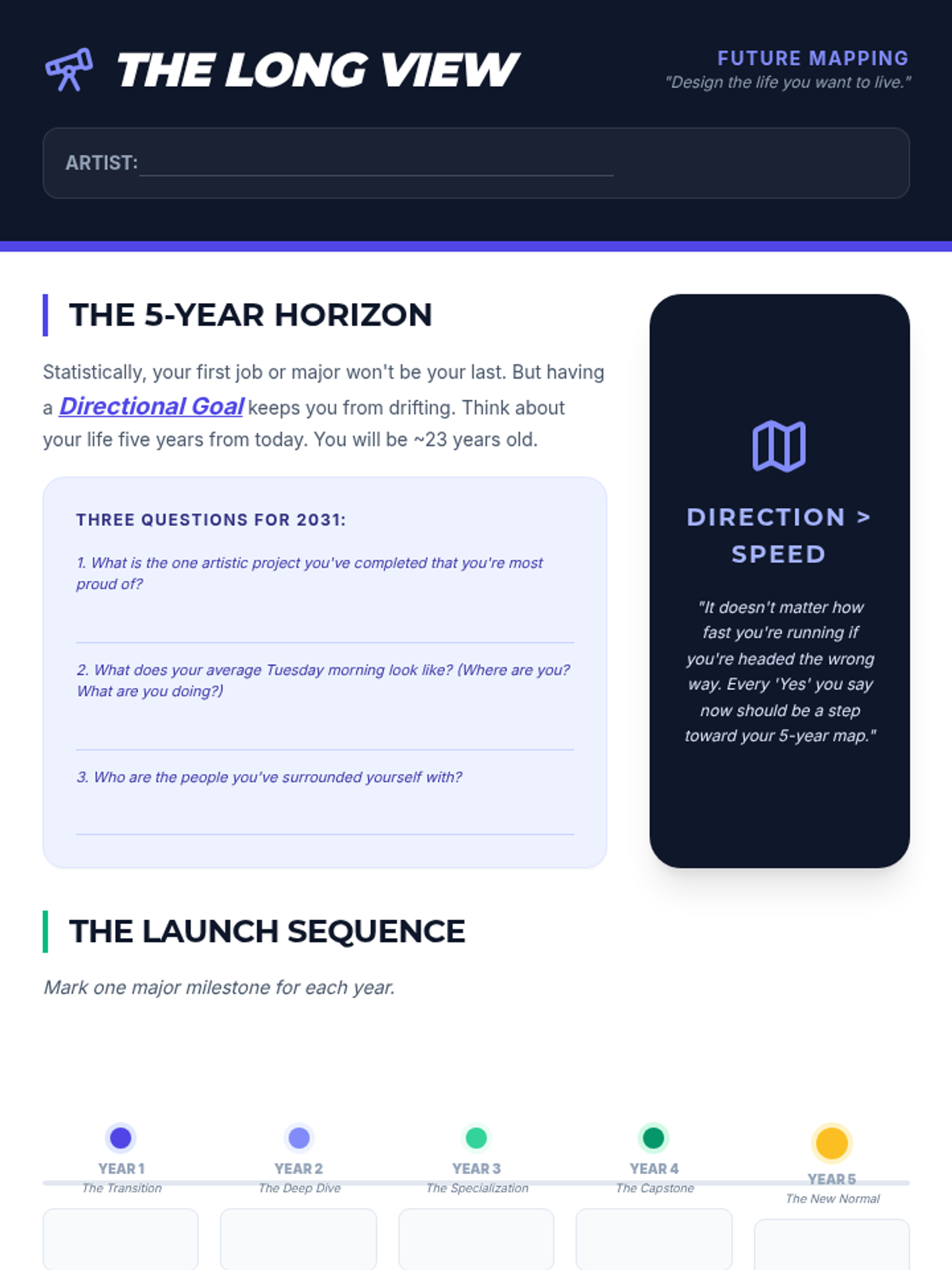
Guides students through a long-term goal-setting exercise, helping them map out professional and personal milestones for their first five years after high school using a visual timeline approach.
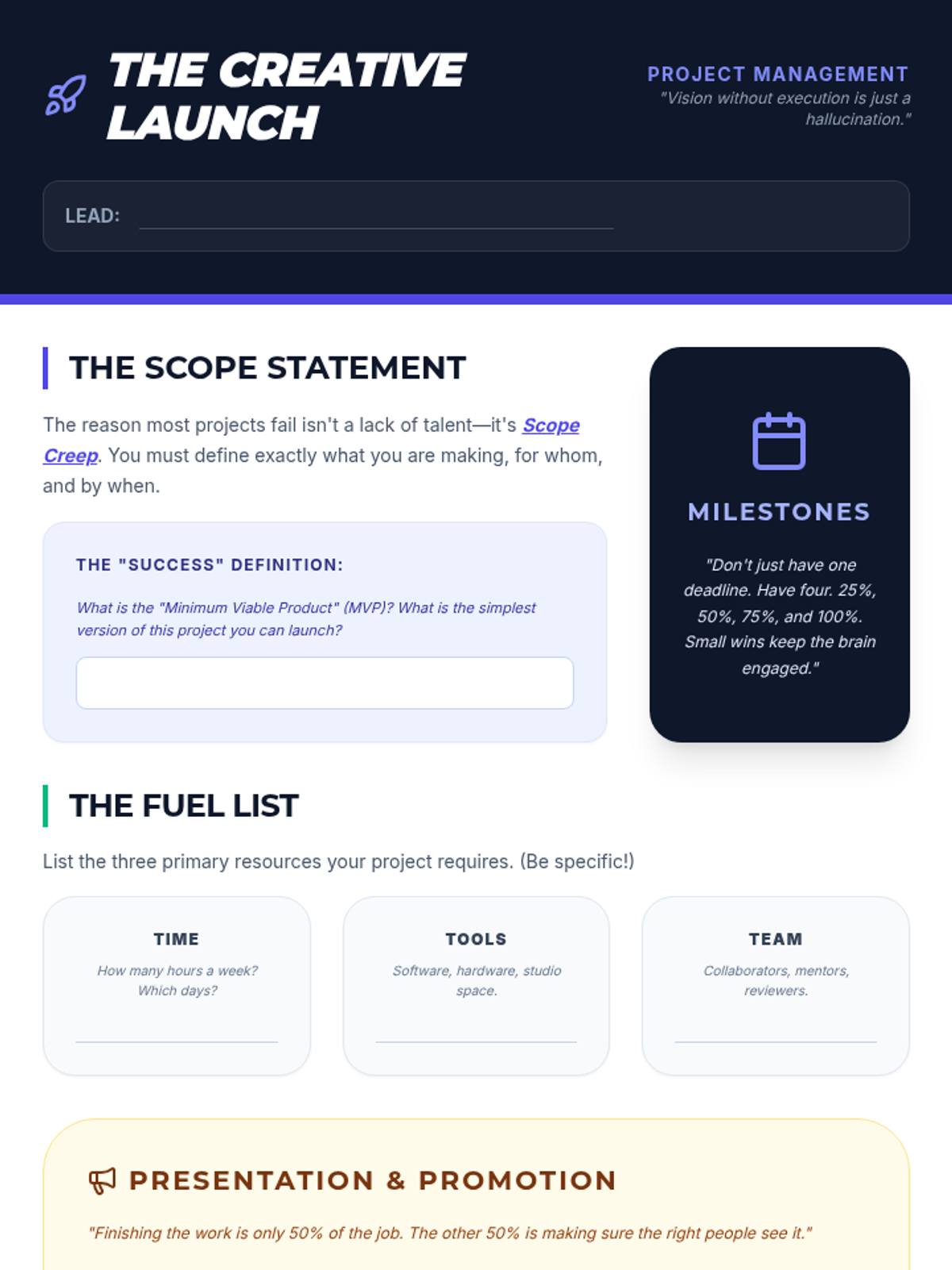
Teaches students how to plan, execute, and document a significant creative project, focusing on milestones, resource management, and the art of the 'Launch.'
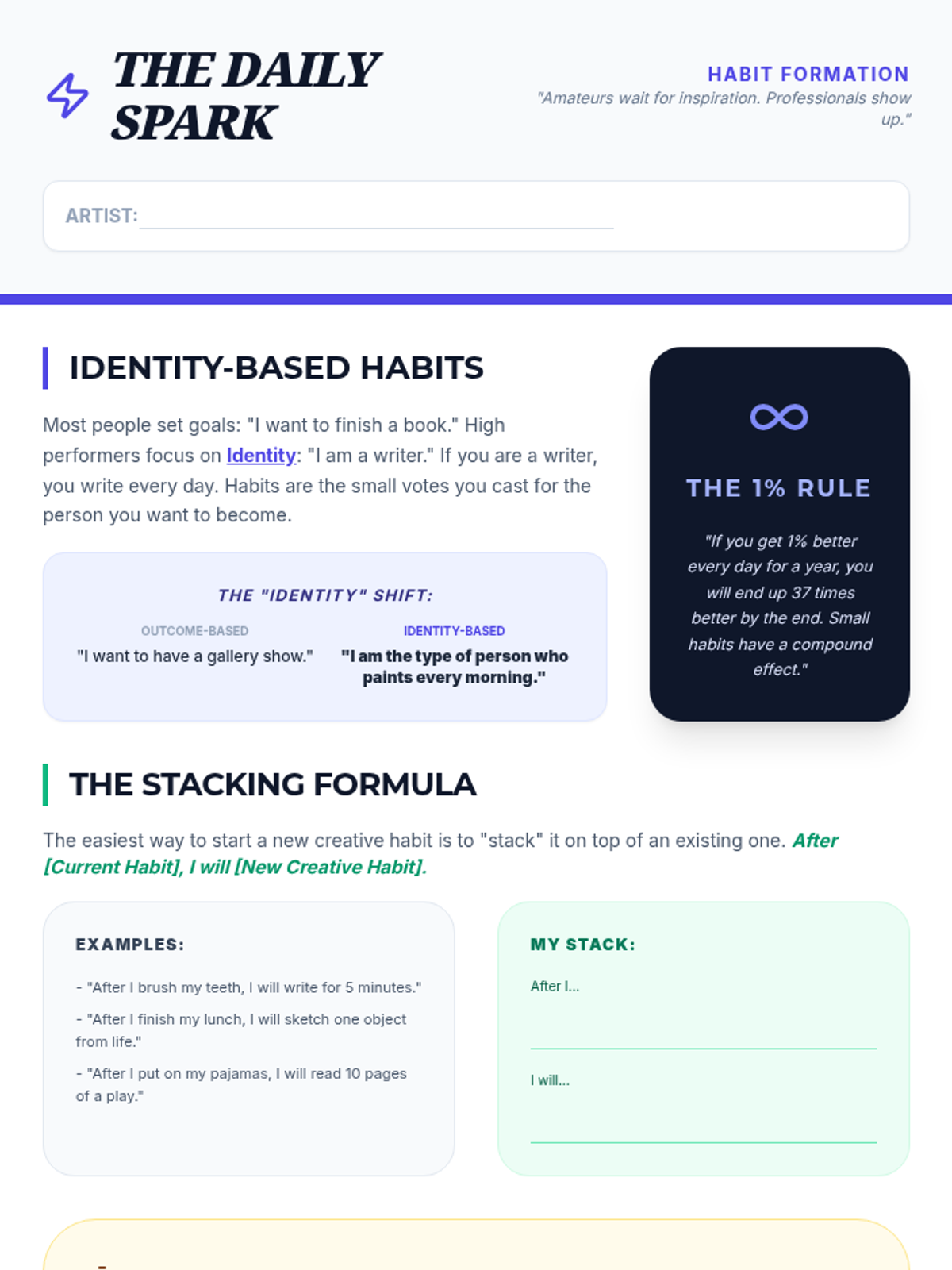
Teaches students how to build and maintain a sustainable artistic practice through small, consistent habits, focusing on the 'Atomic Habits' method for creative output.
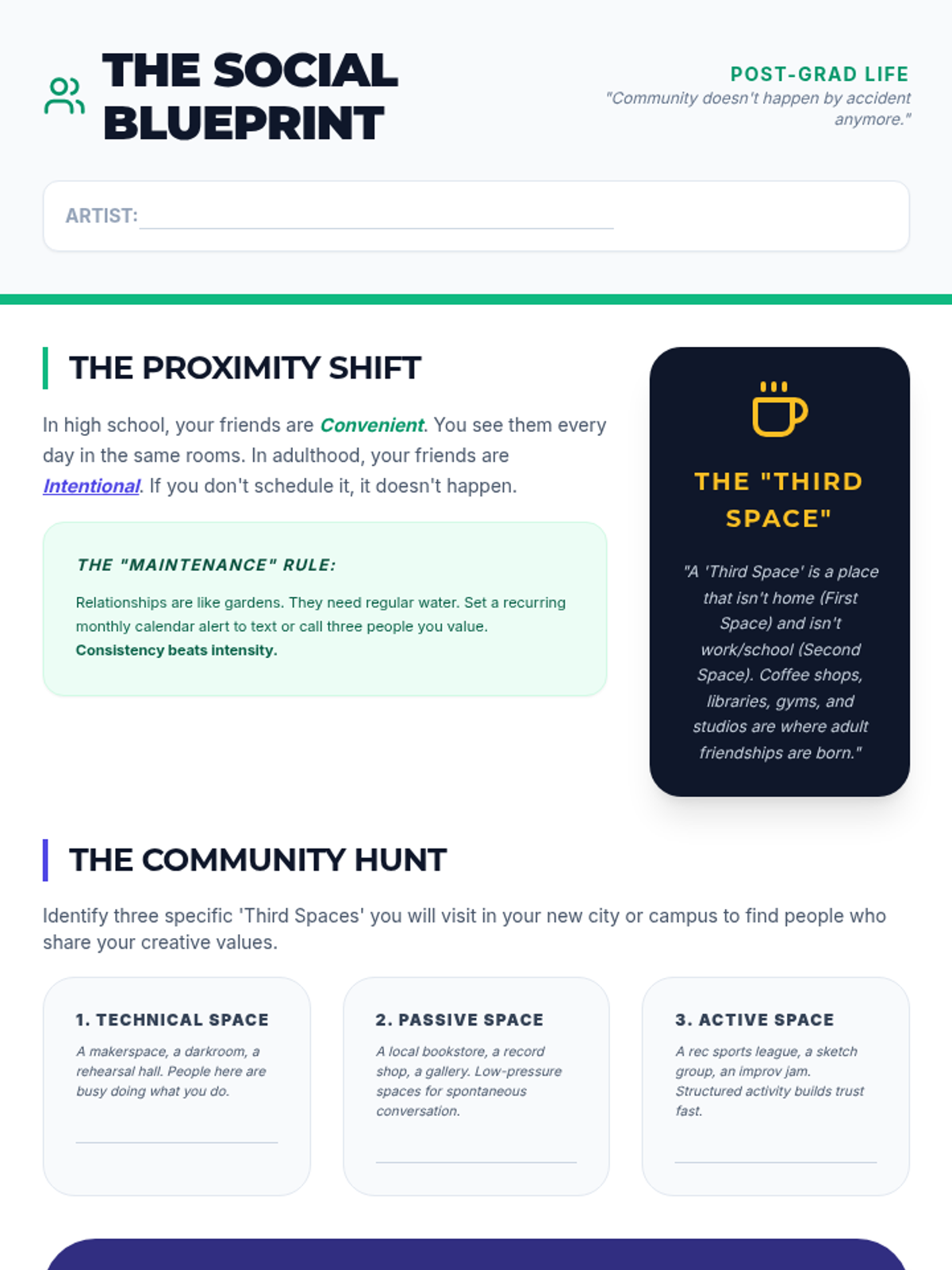
Explores the intentional effort required to build and maintain community as an adult, teaching students how to find 'third spaces' and manage the transition of high school friendships.
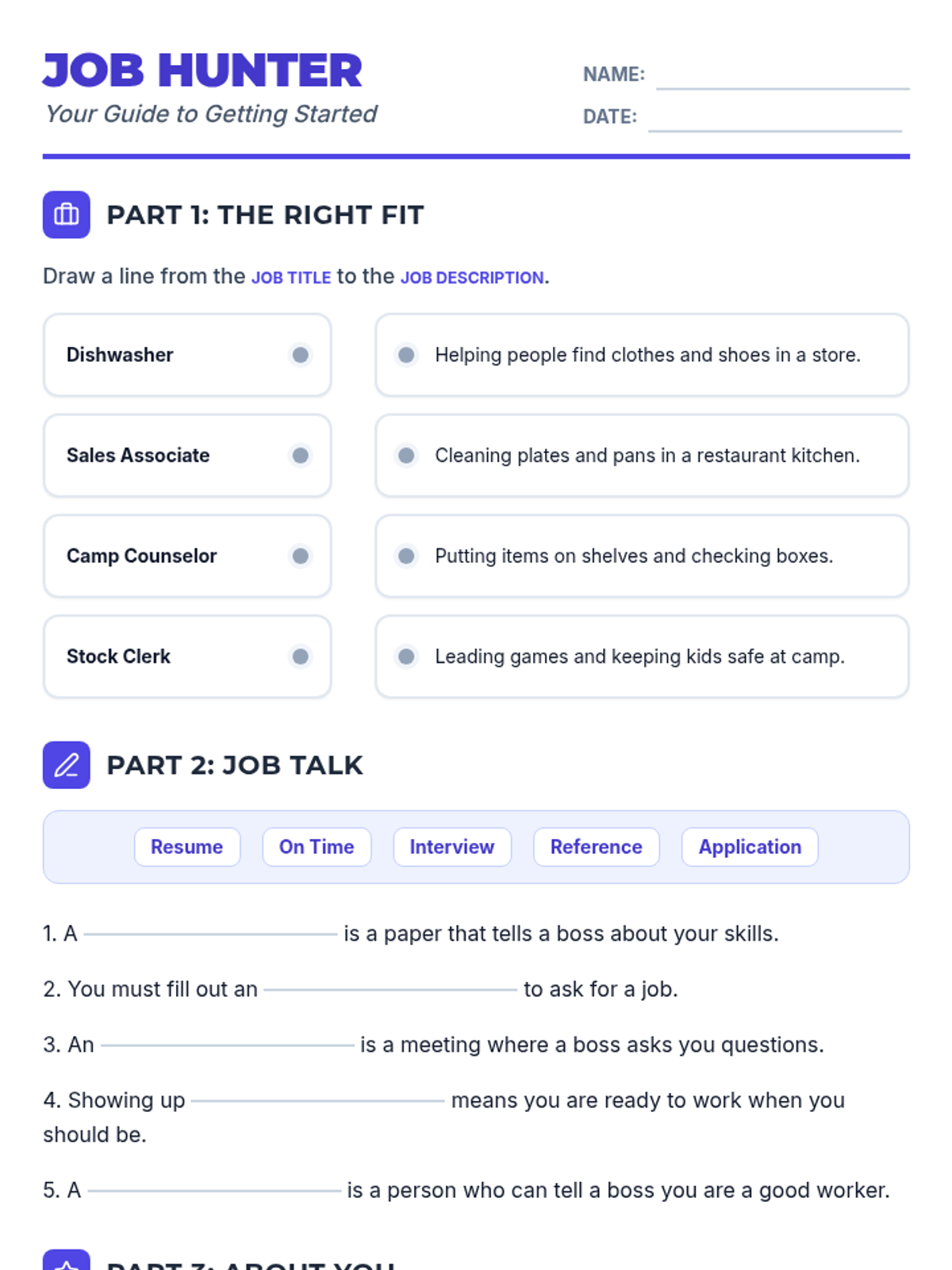
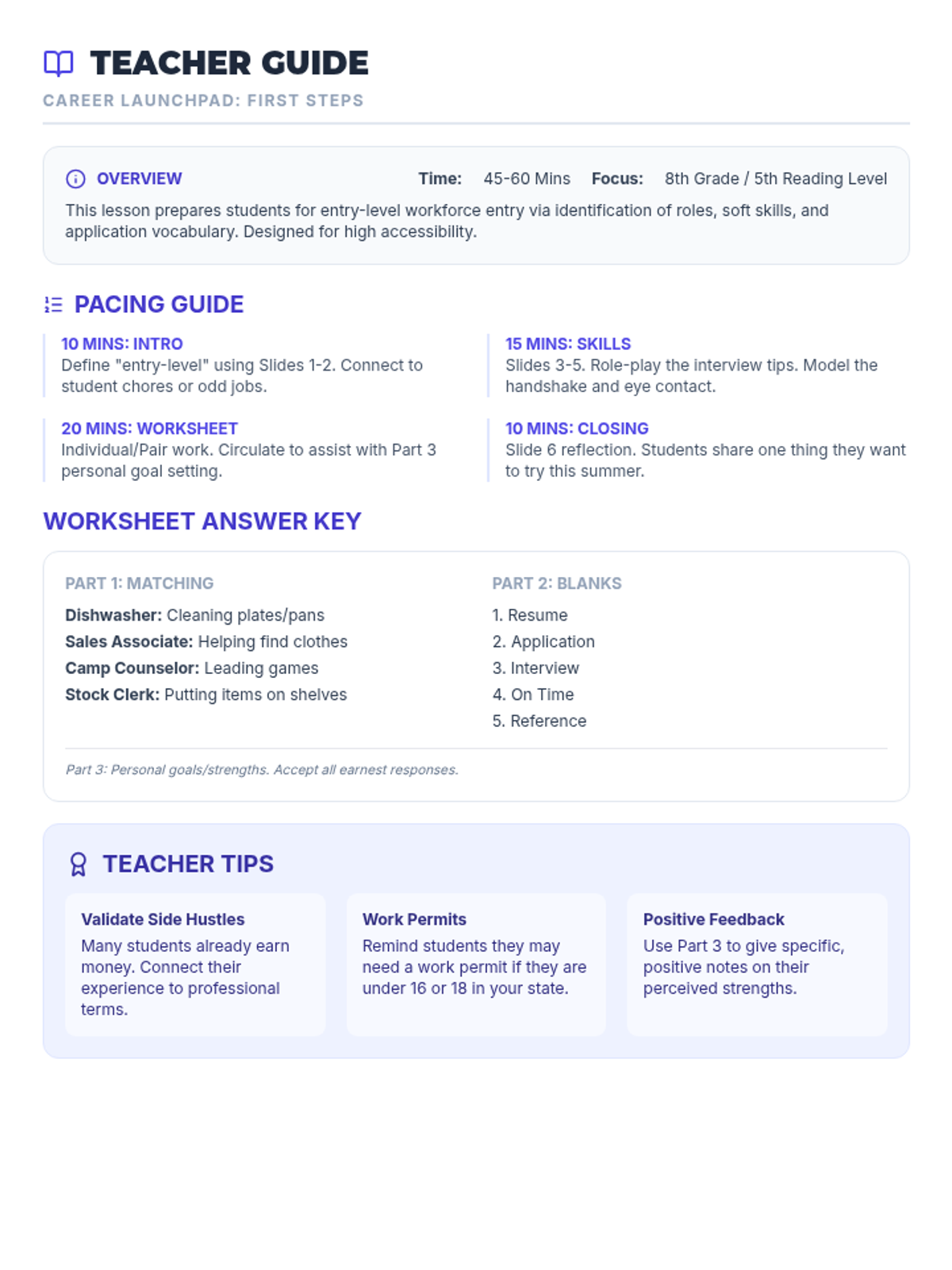
A lesson designed for 8th grade students in alternative settings to prepare for their first entry-level jobs and plan for life after graduation. Focuses on practical skills, identifying job roles, and understanding the basics of employment in simple, accessible language.
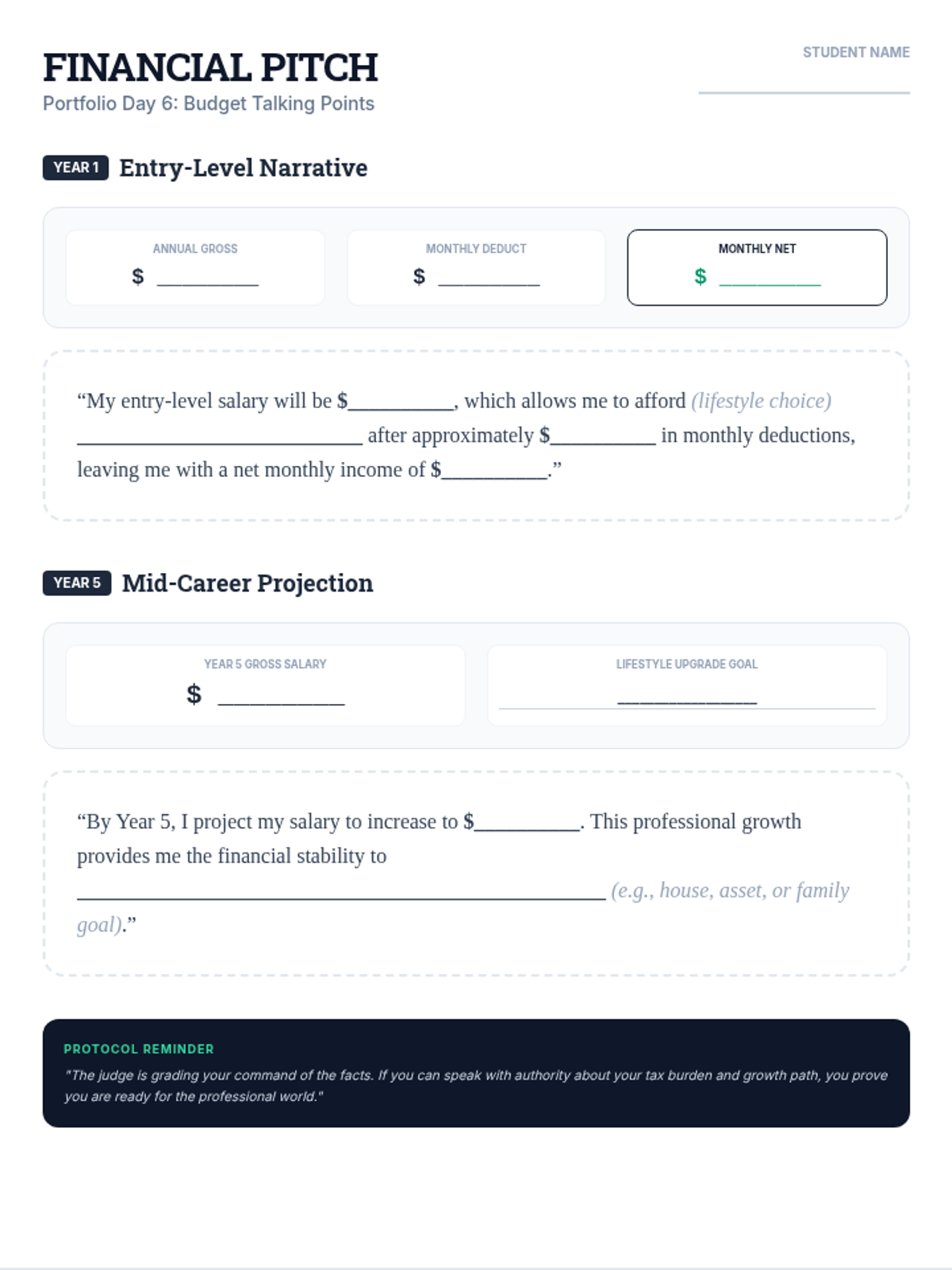
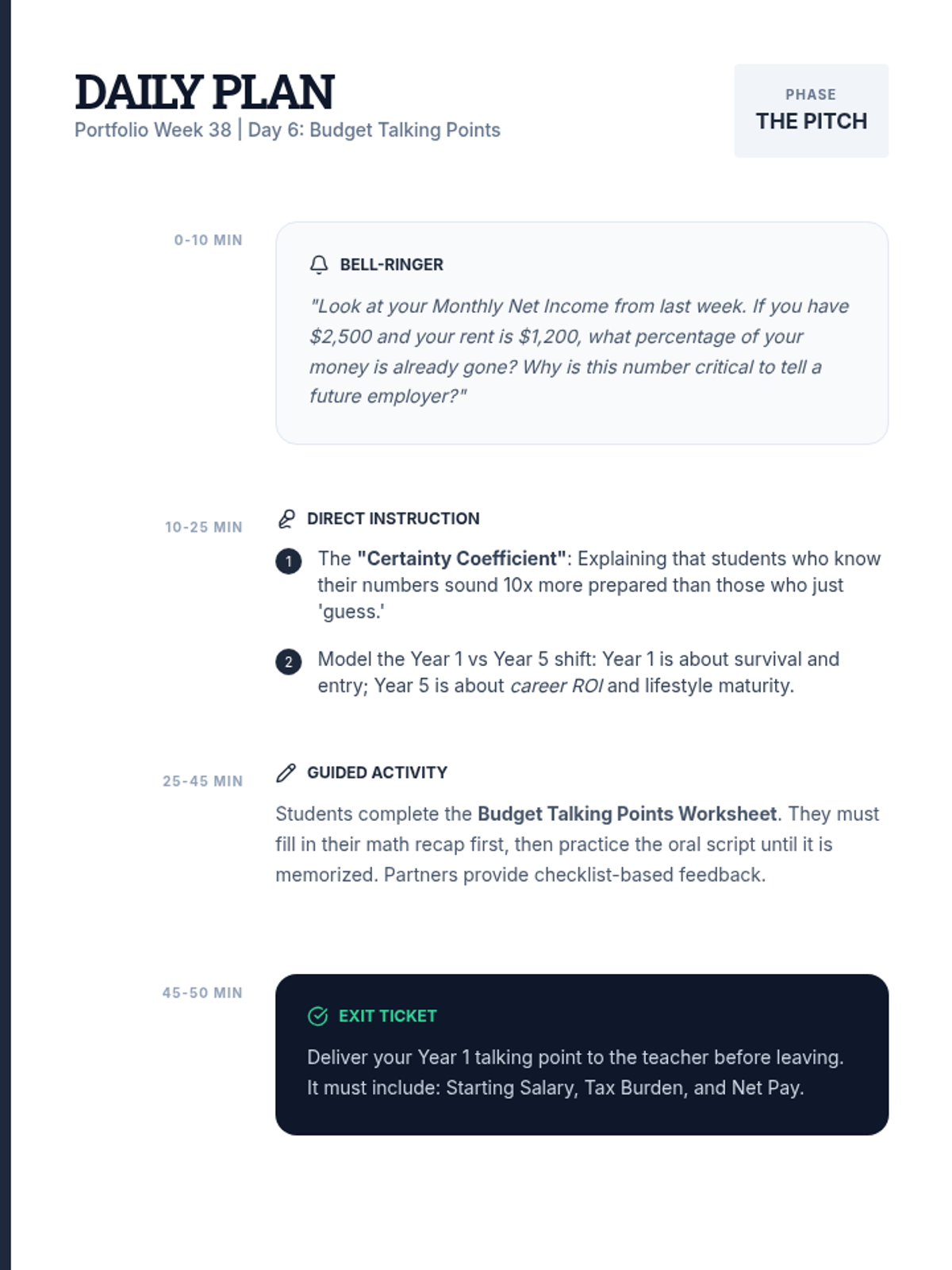
Students draft and practice their core financial talking points for both their entry-level and mid-career projections.
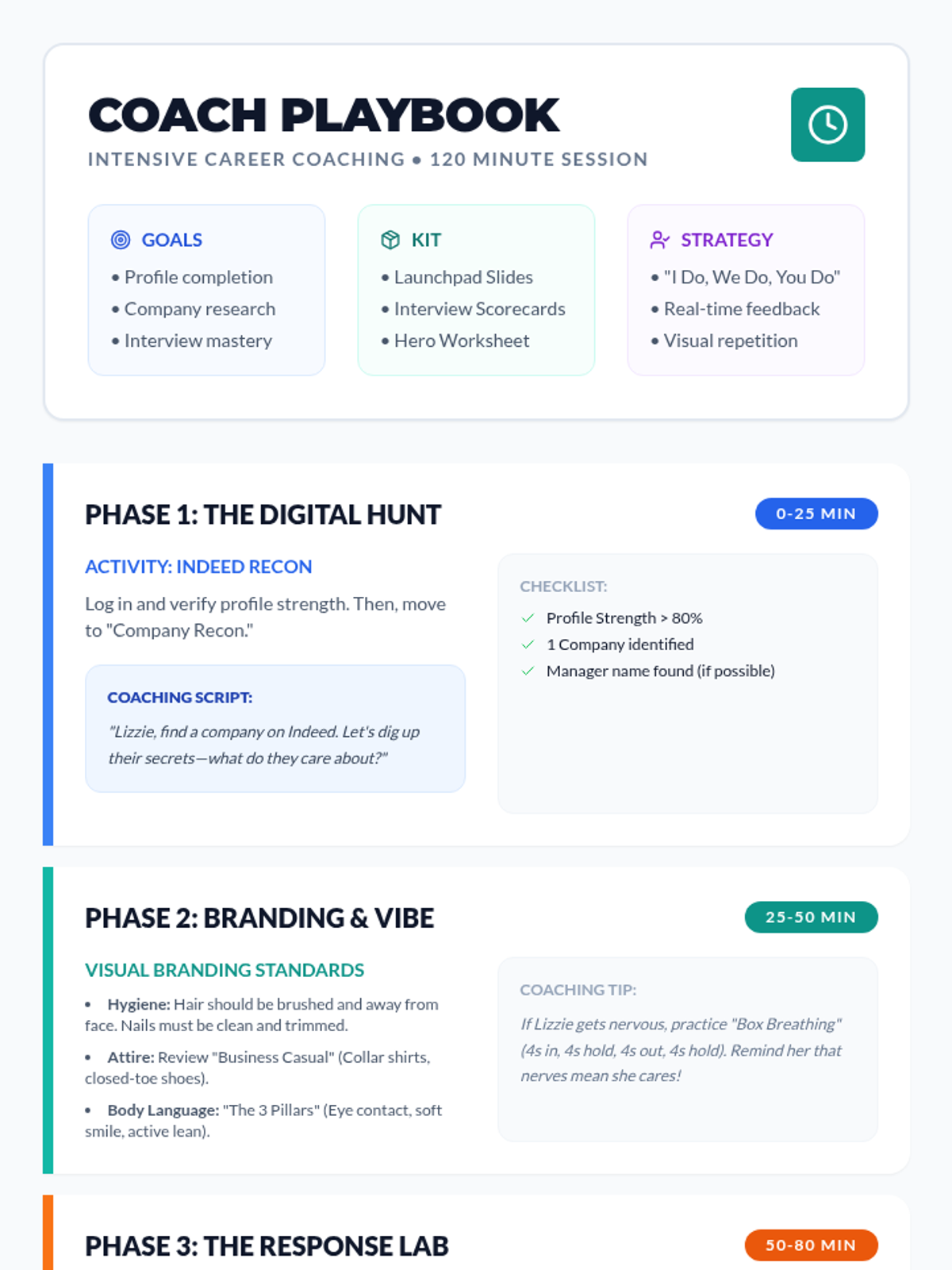
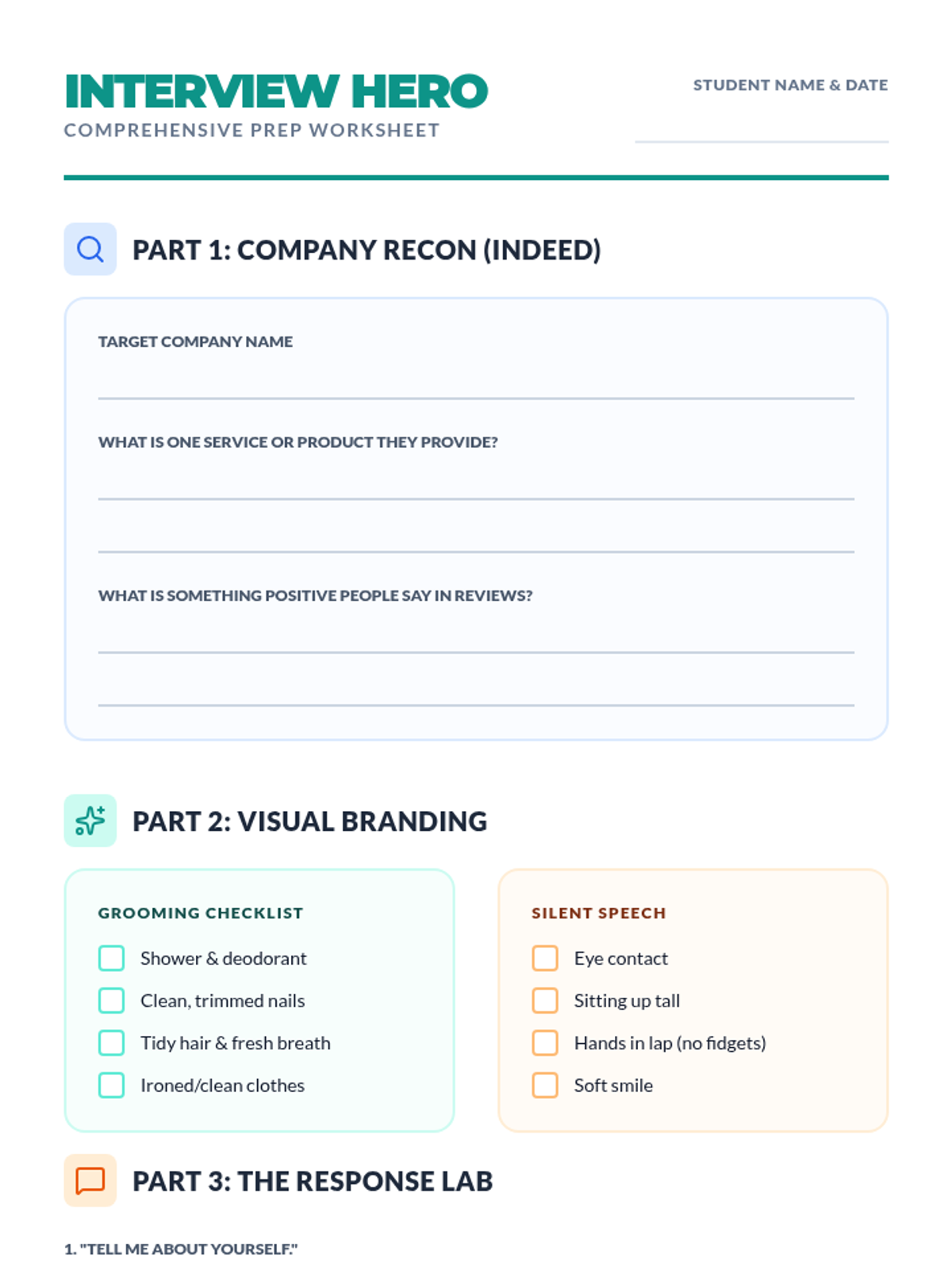
A vocational training lesson designed to help students master the job application process, from online profile management on Indeed to mastering the interview and follow-up.
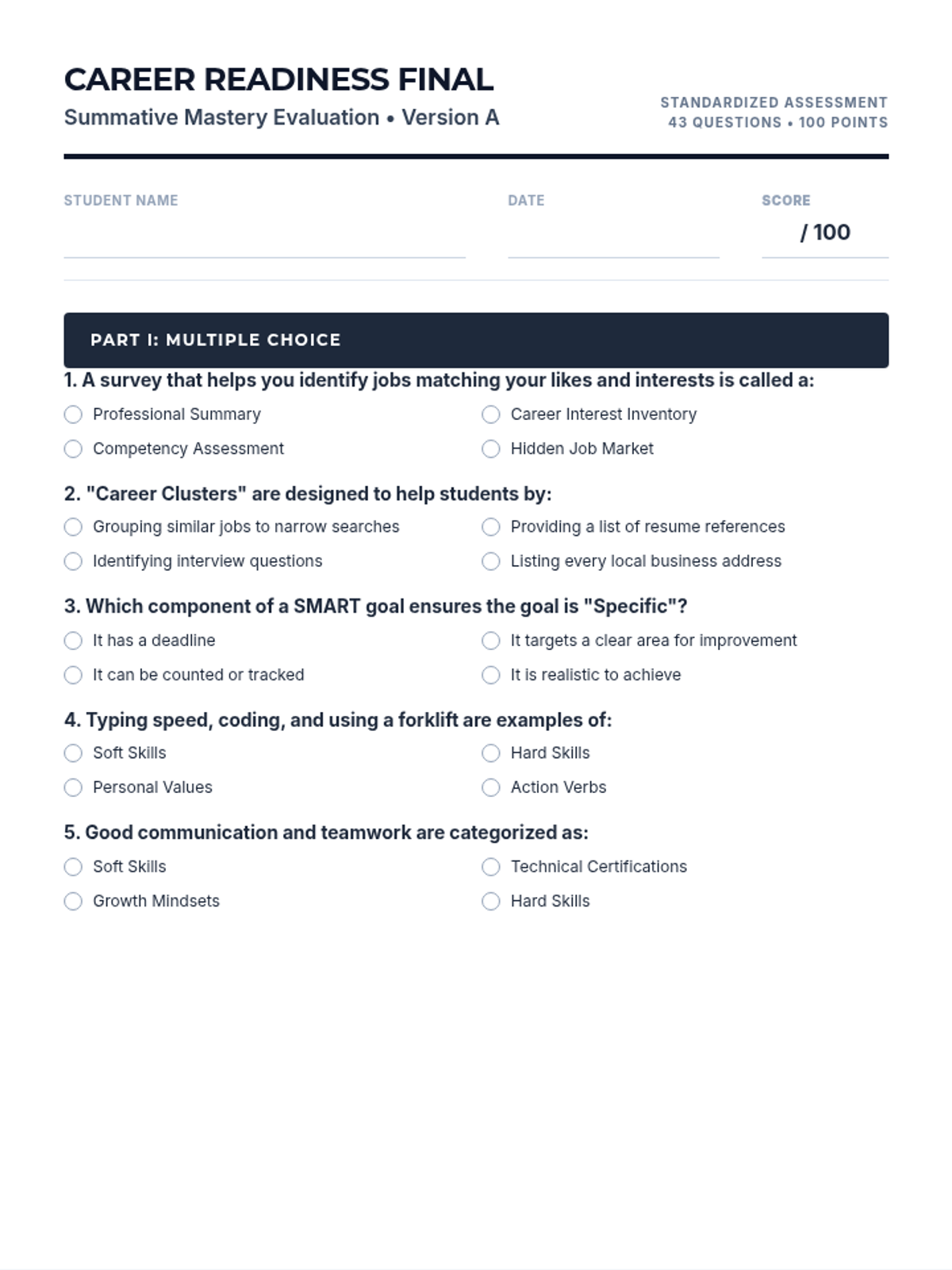
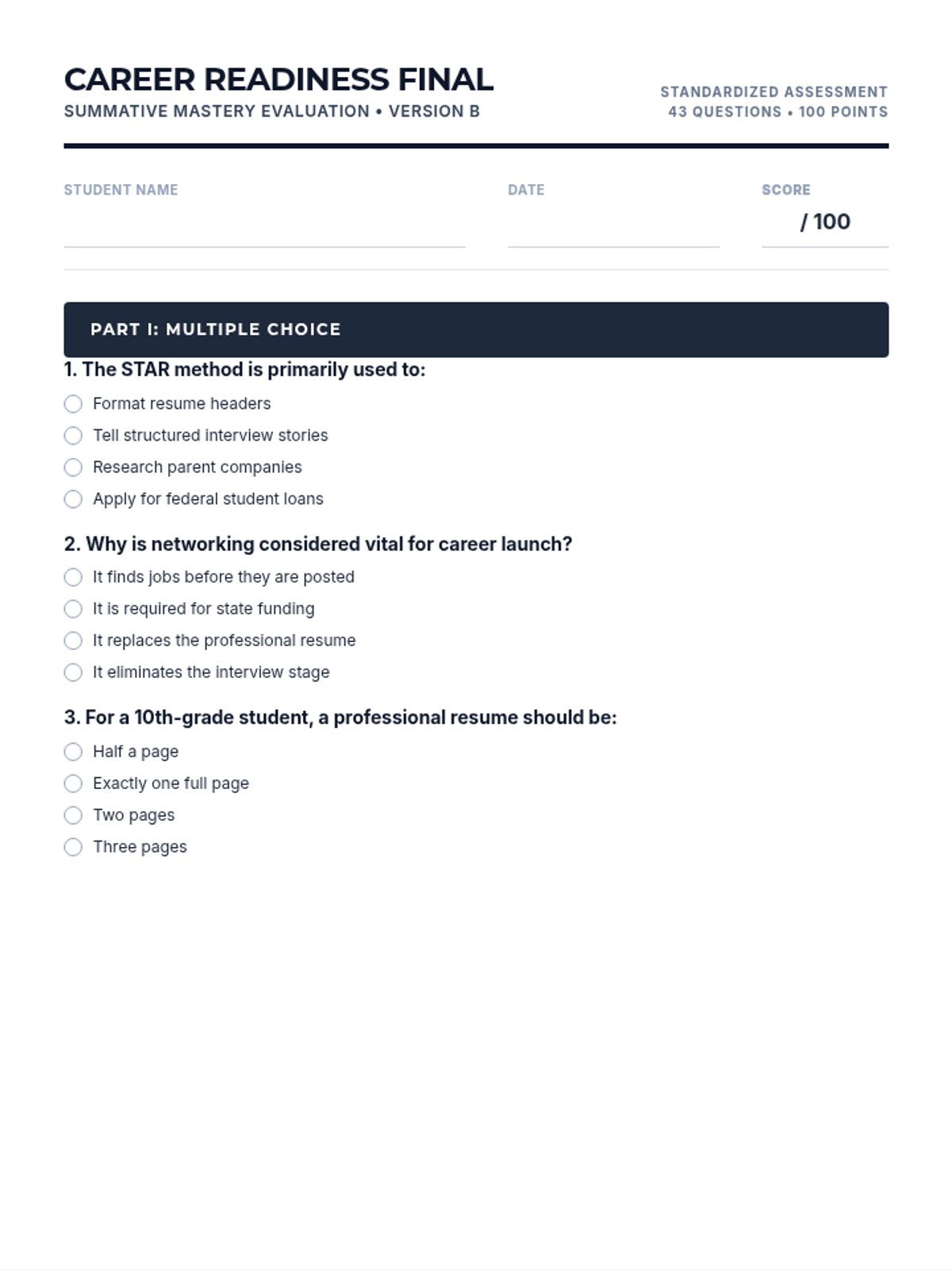
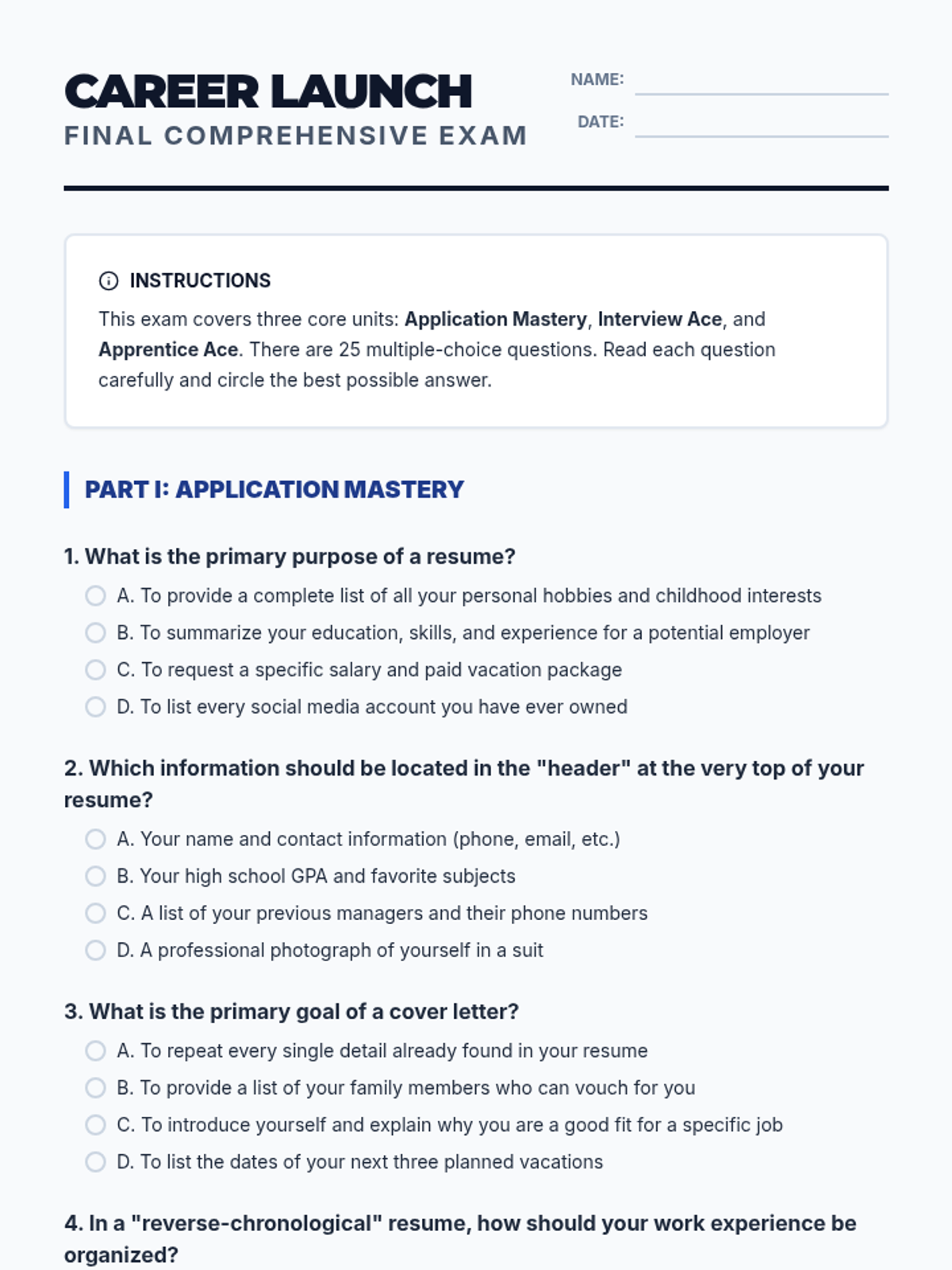
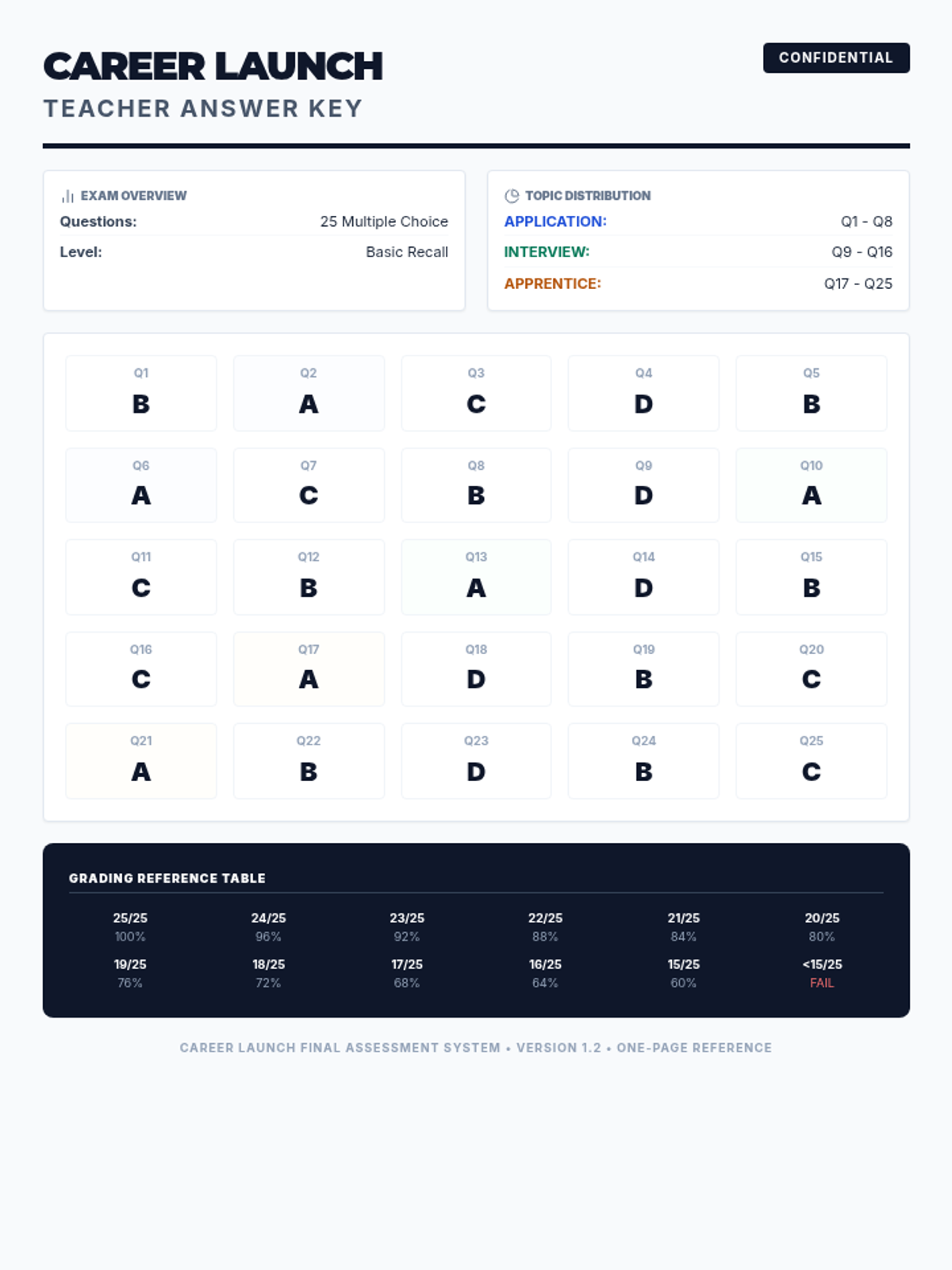
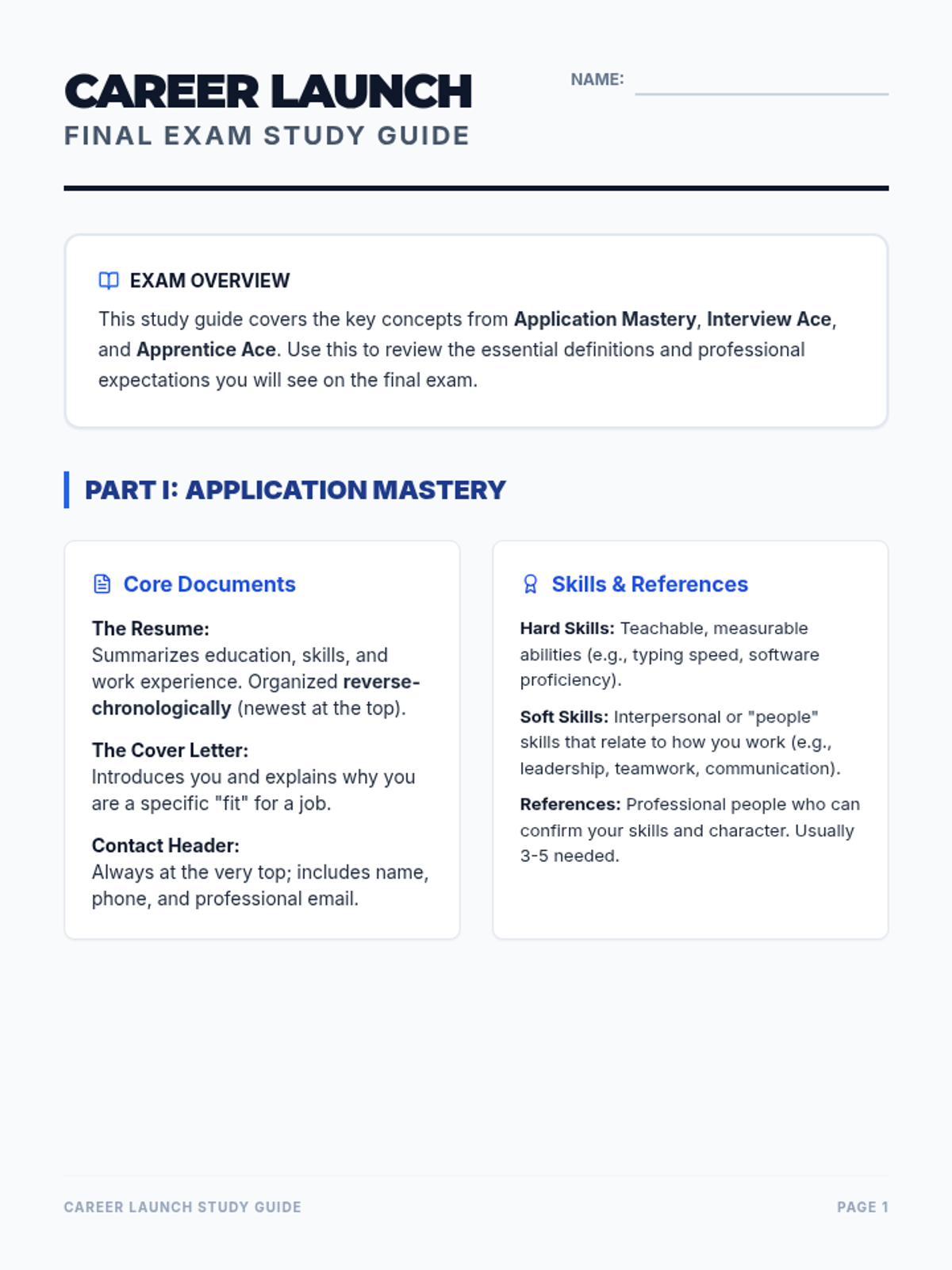
A final assessment covering application preparation, interview techniques, and professional workplace etiquette.
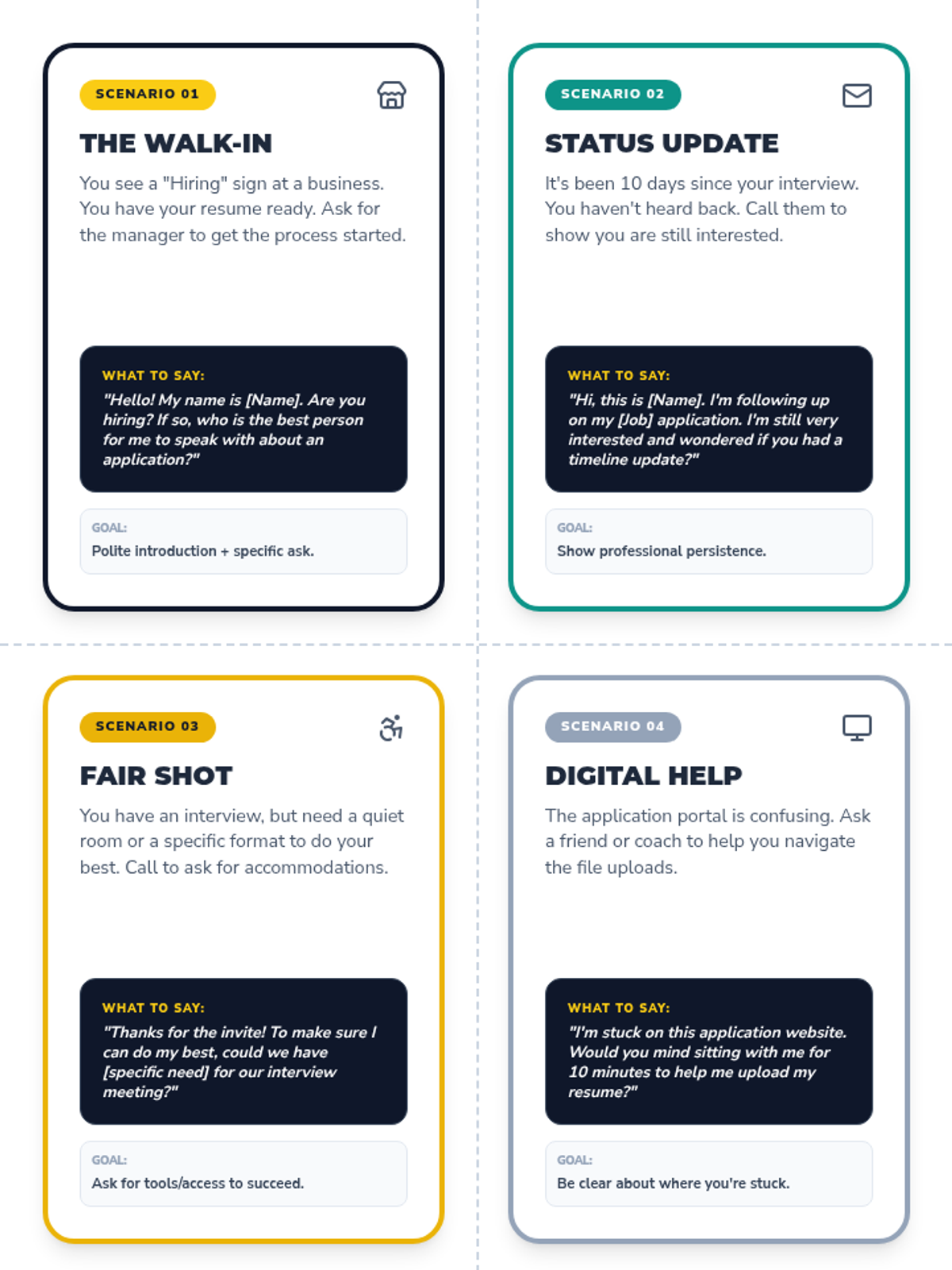
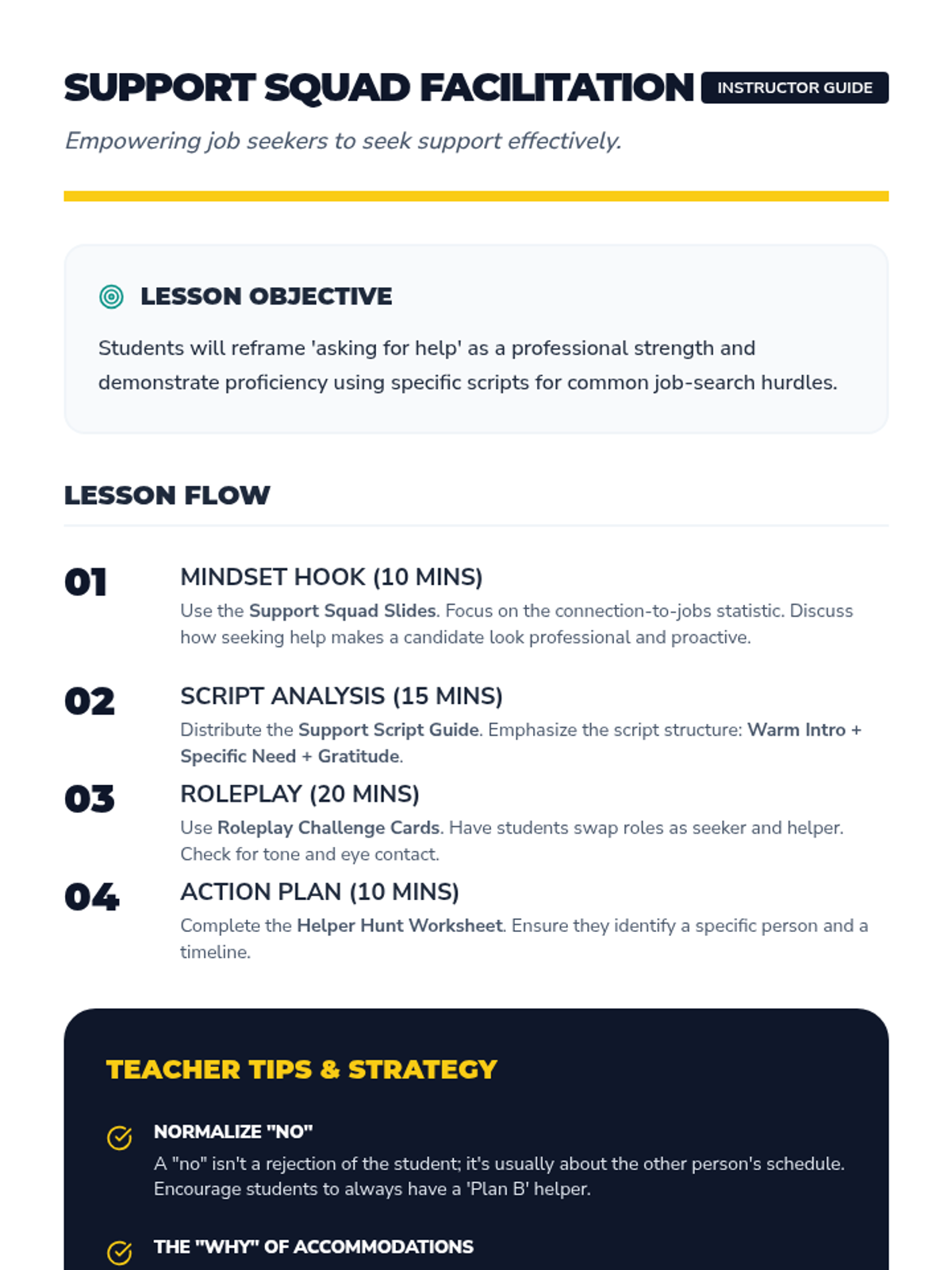
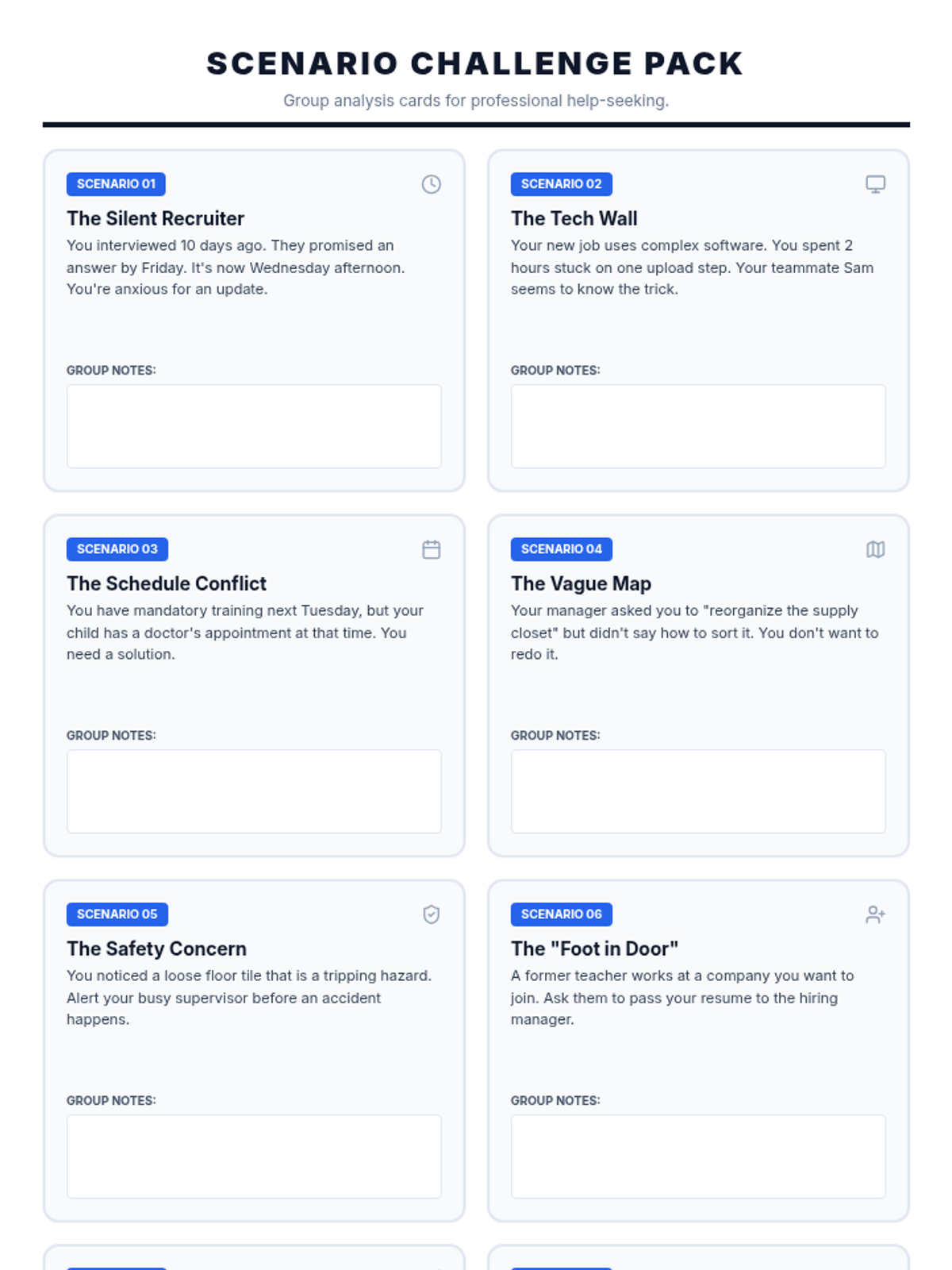
A professional development lesson that reframes asking for help as a vital workplace skill. Students learn to identify their support network, use clear and direct communication scripts, and practice advocating for themselves in common job search and employment scenarios.
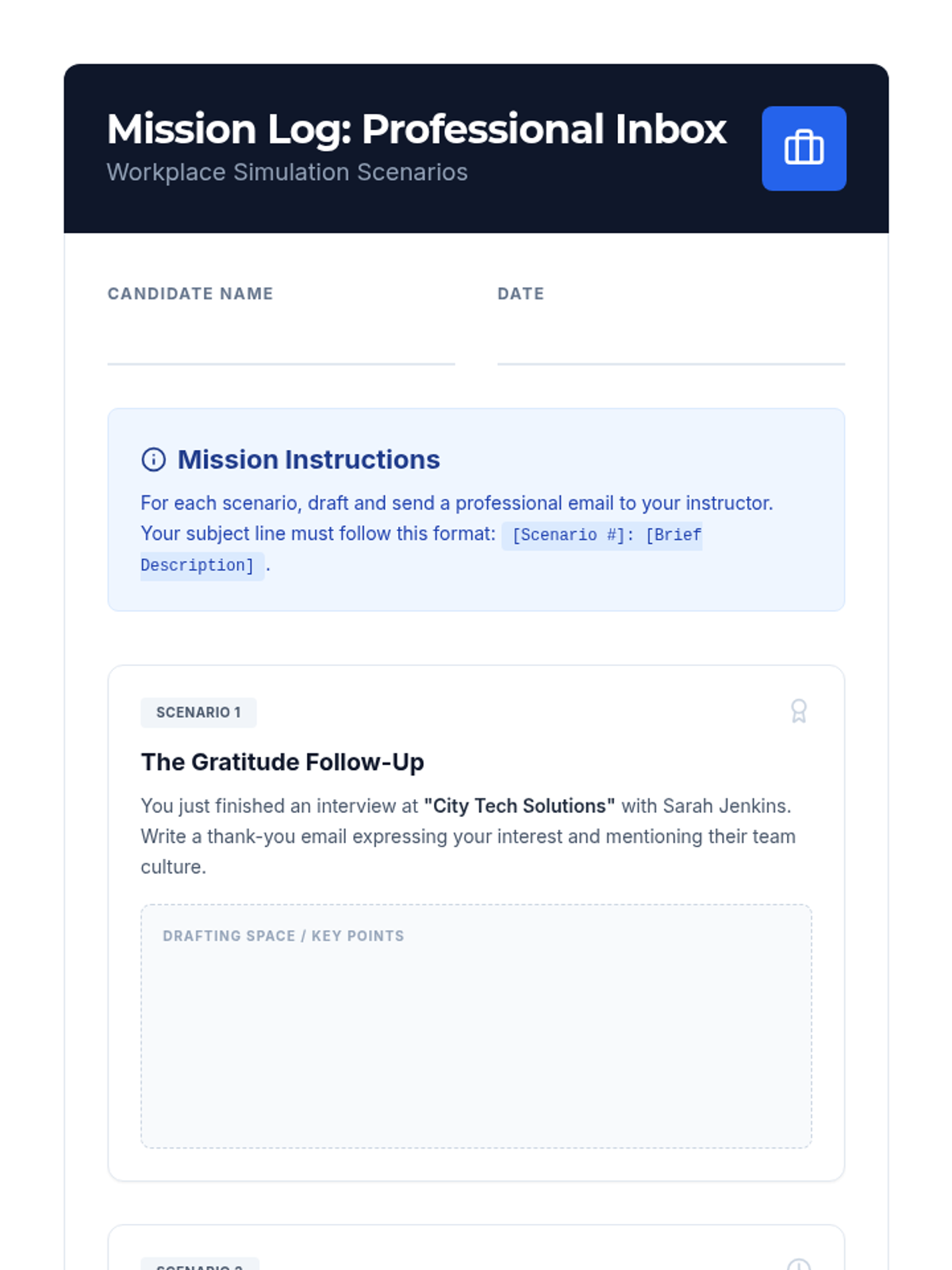
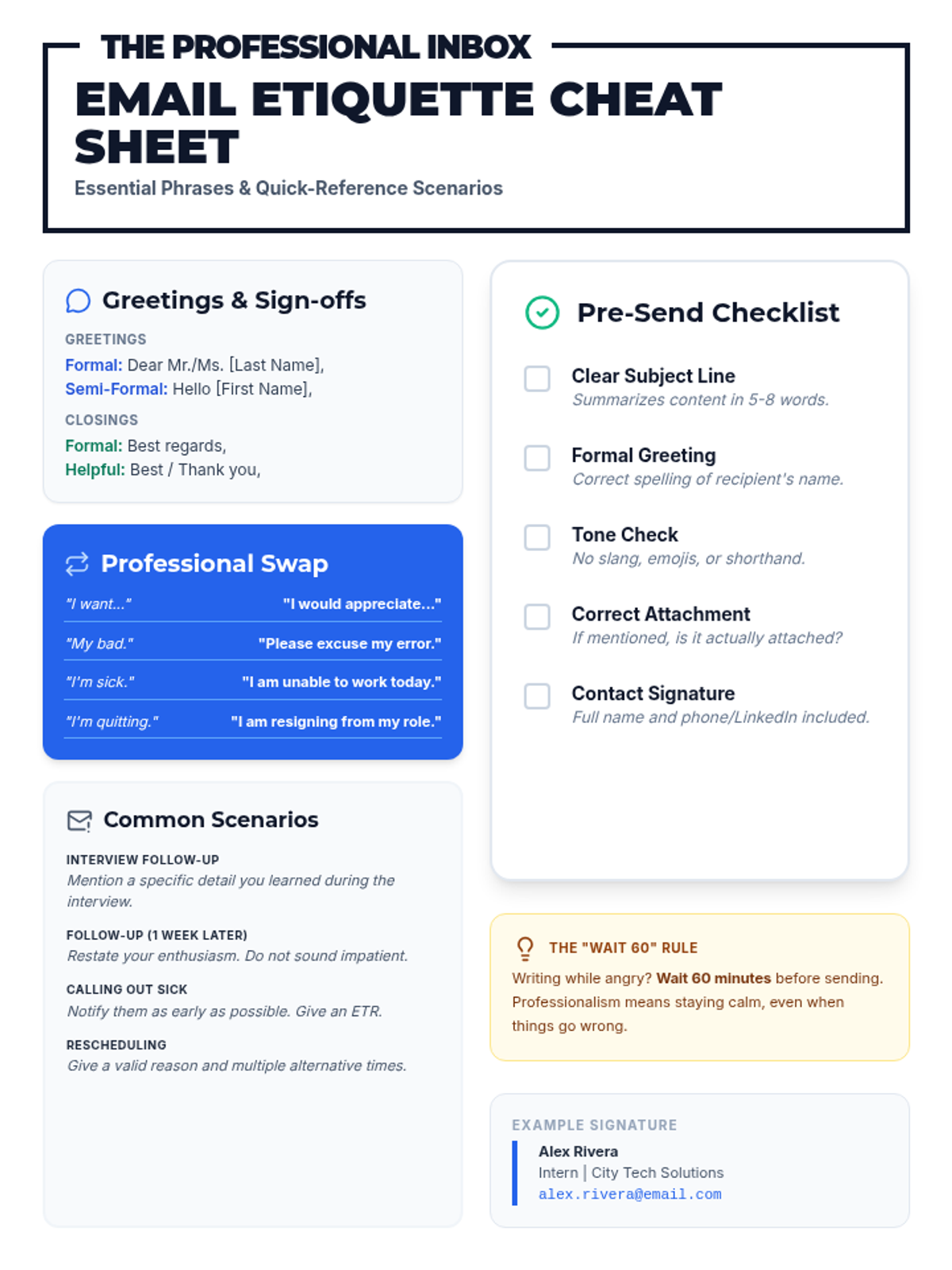
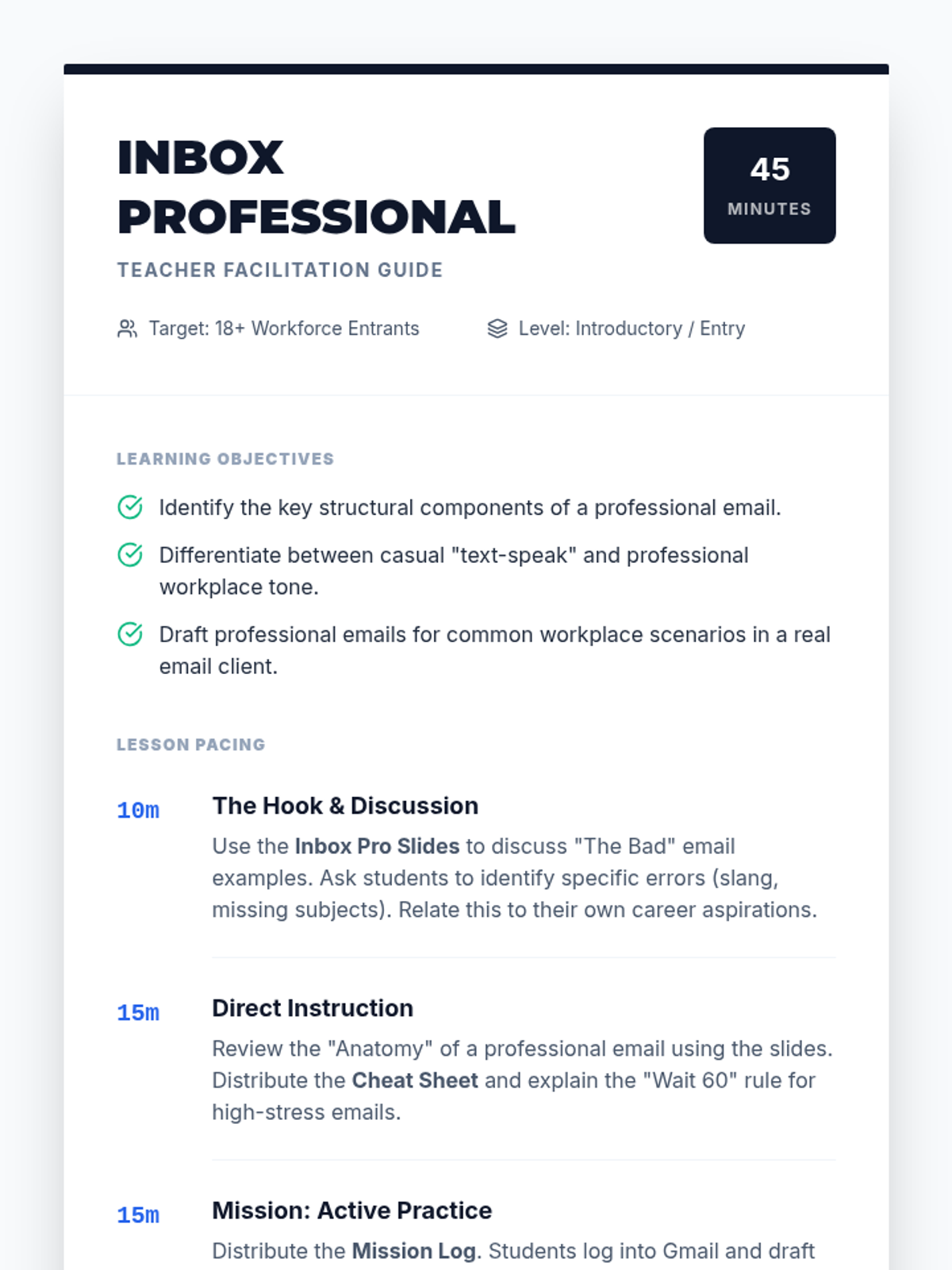
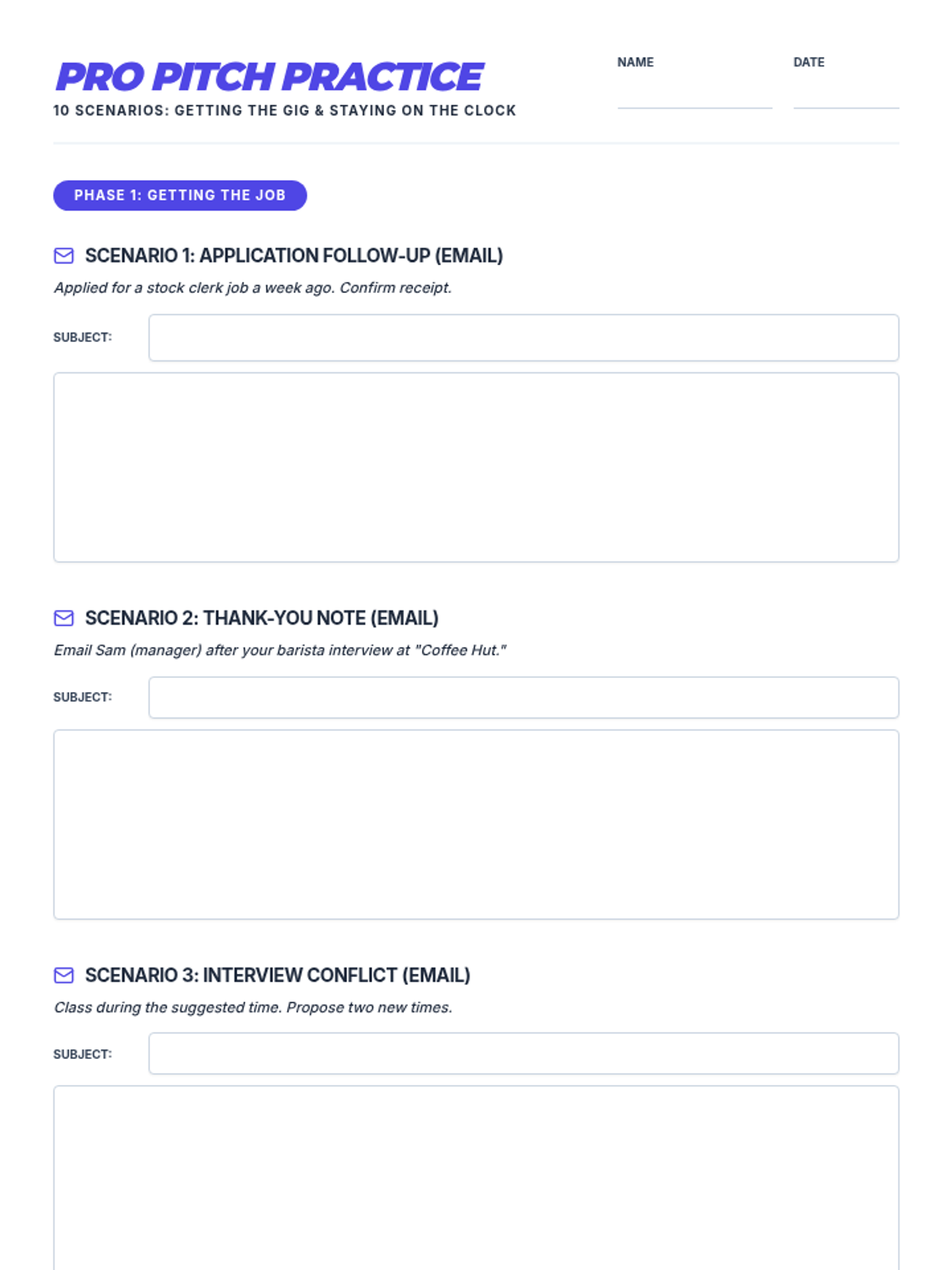
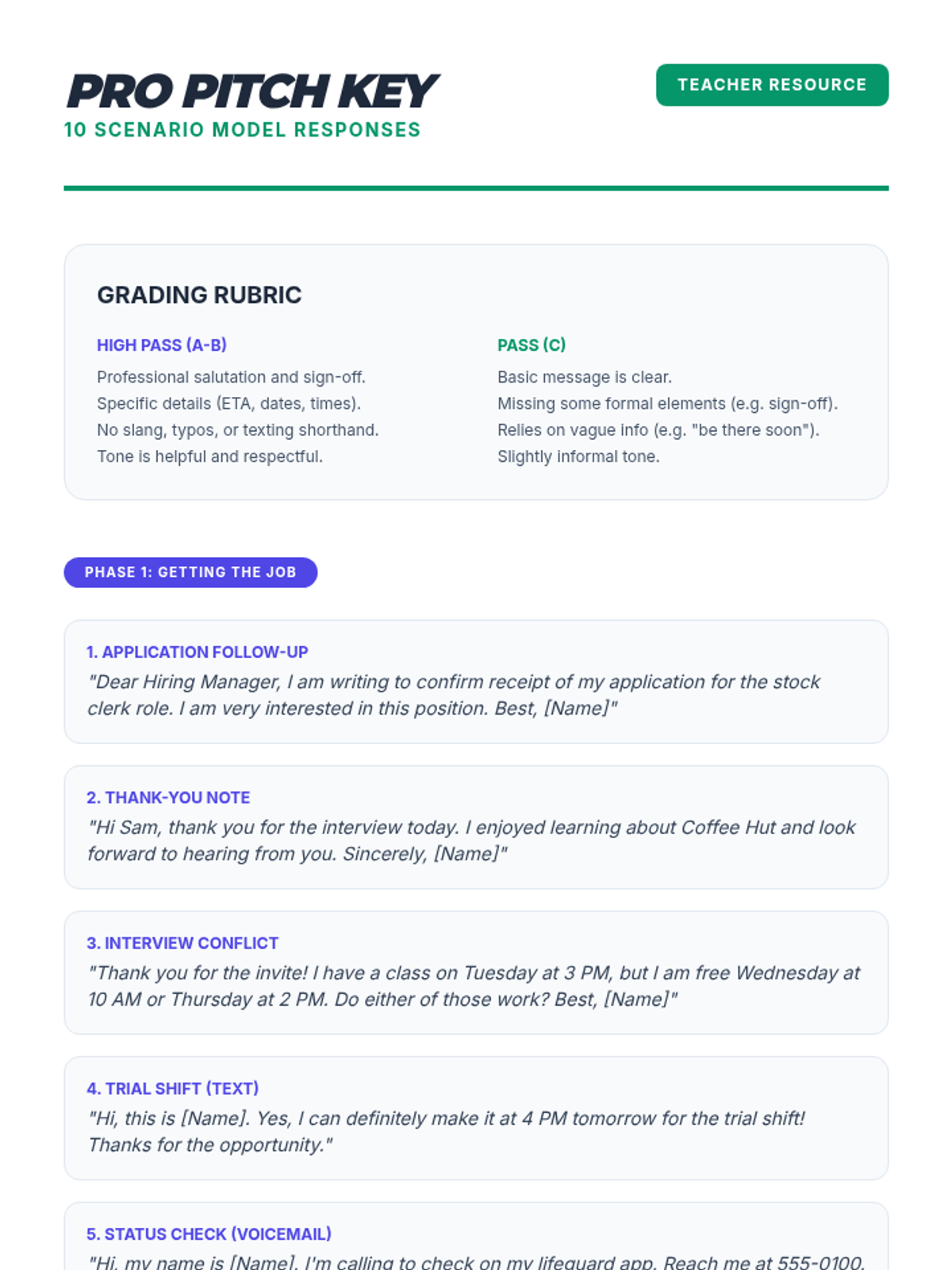
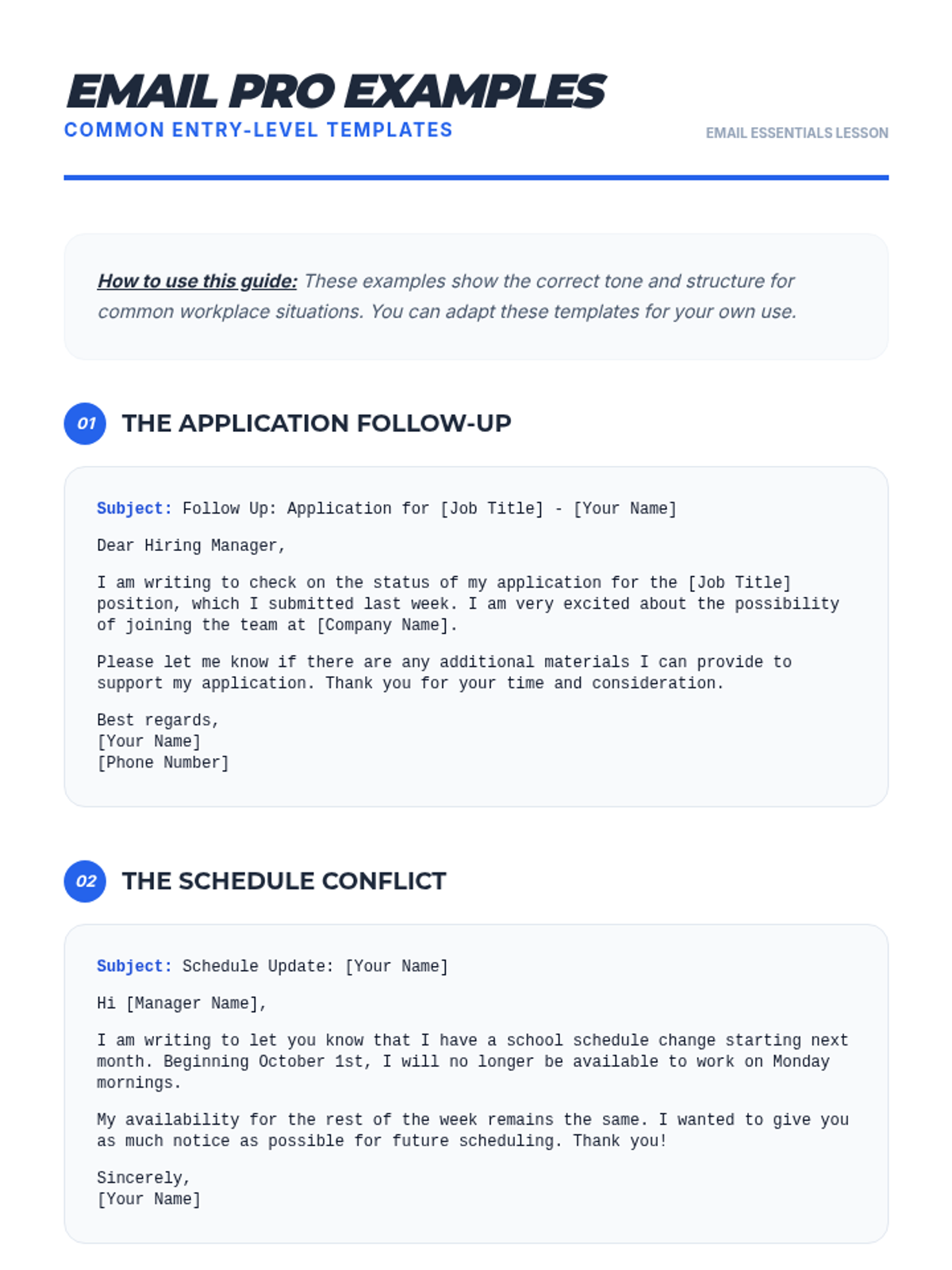
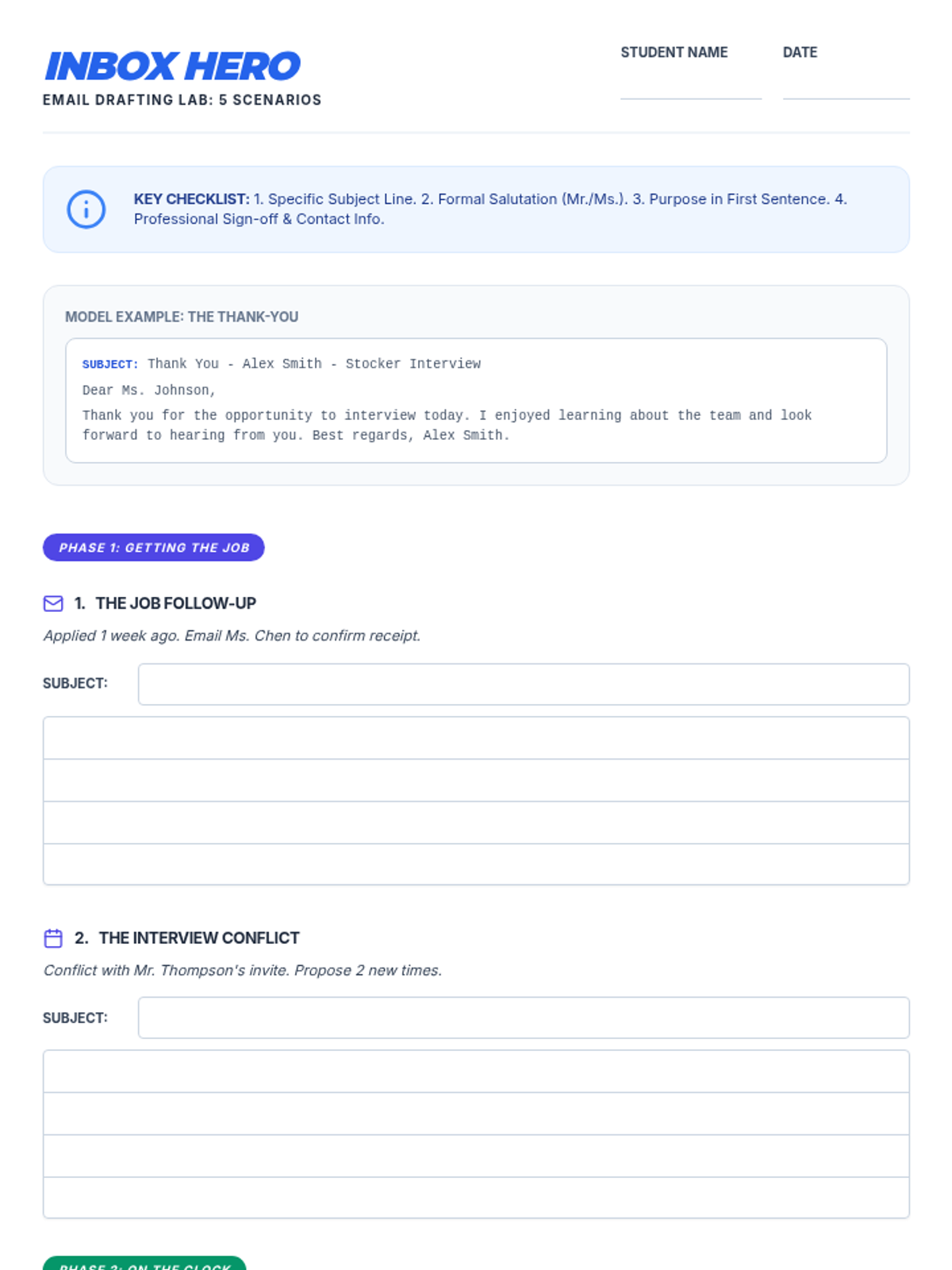
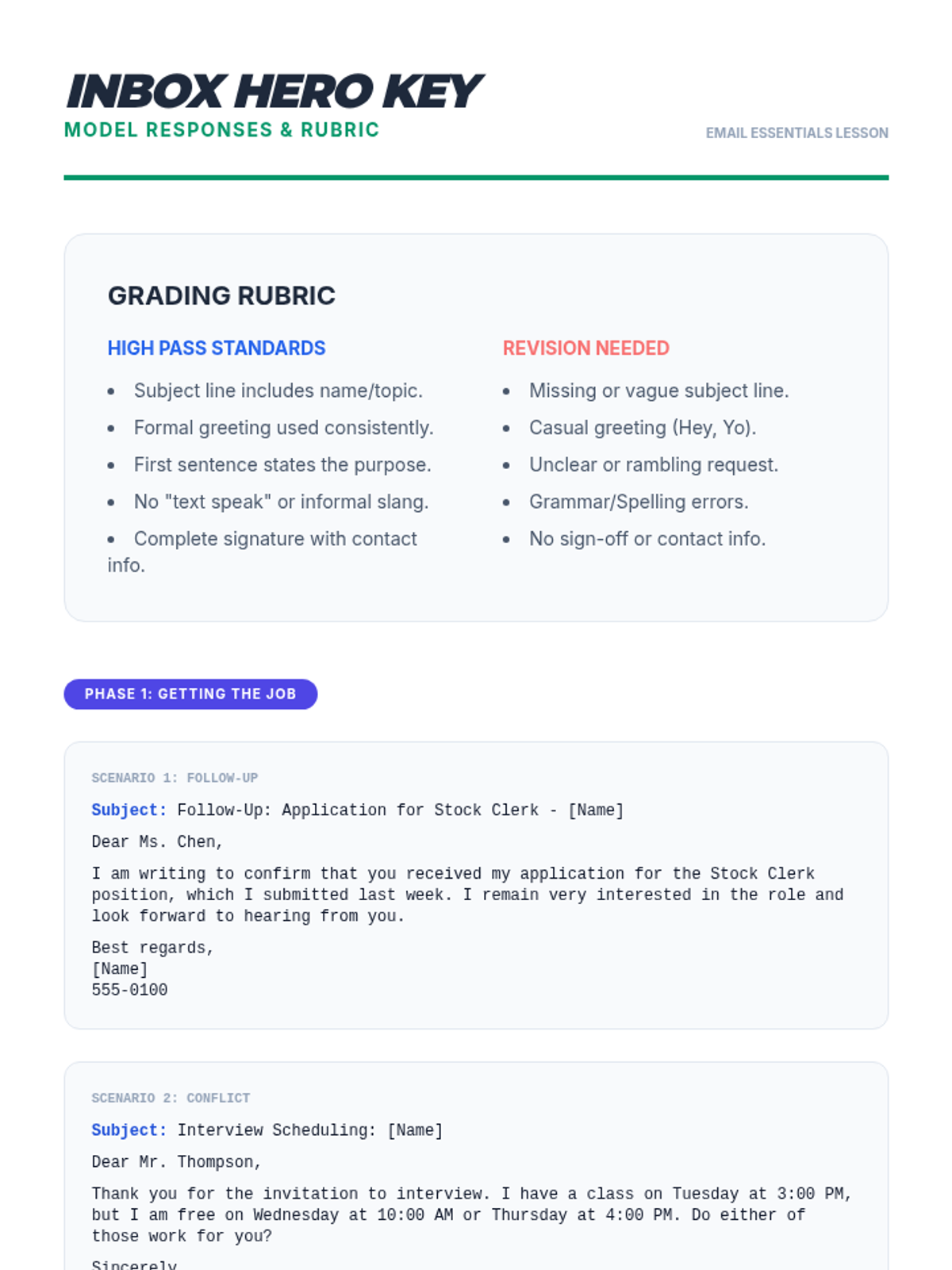
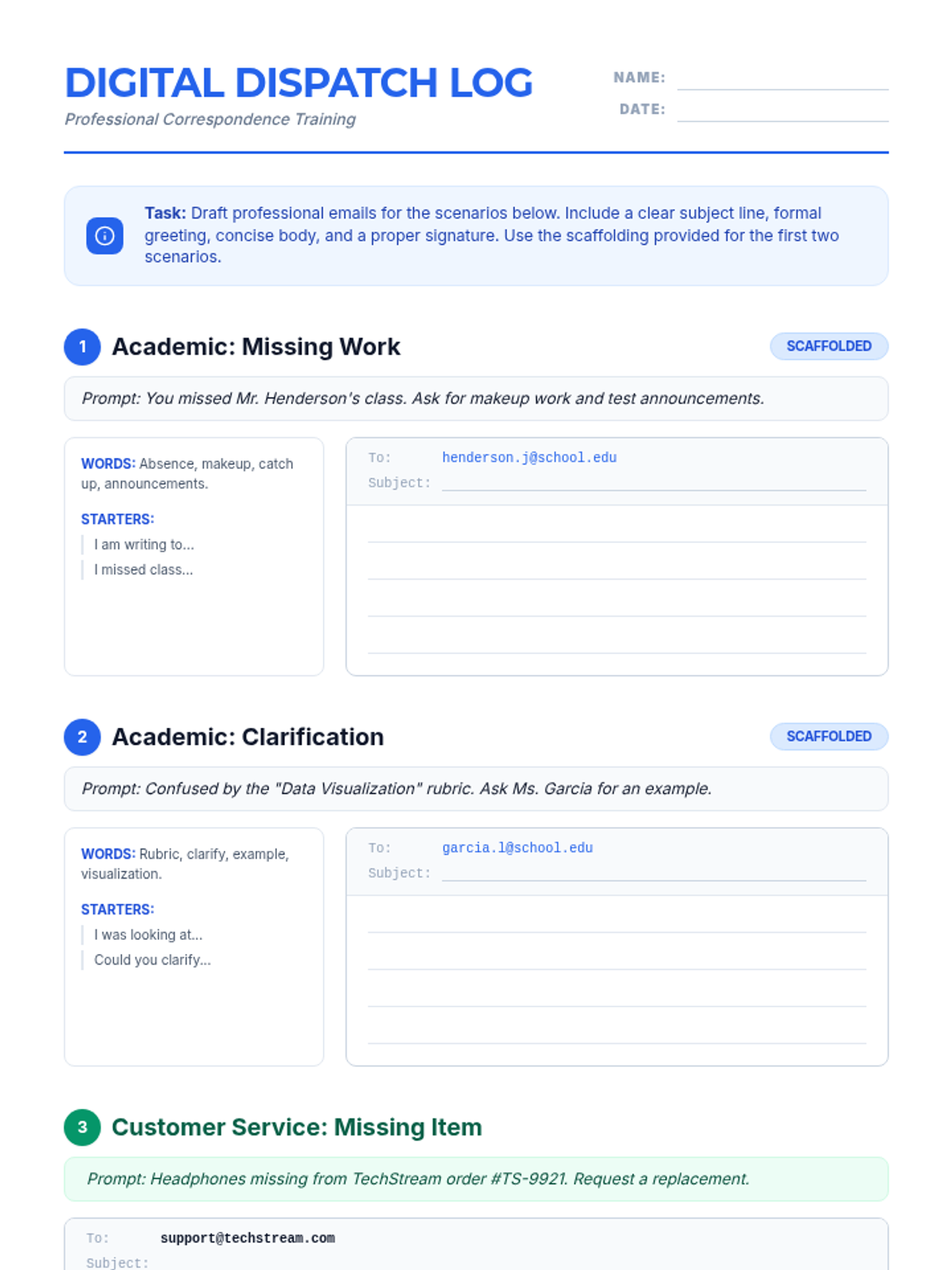
A 45-minute introductory lesson for young adults on the art of professional email communication, featuring real-world scenarios and direct practice.
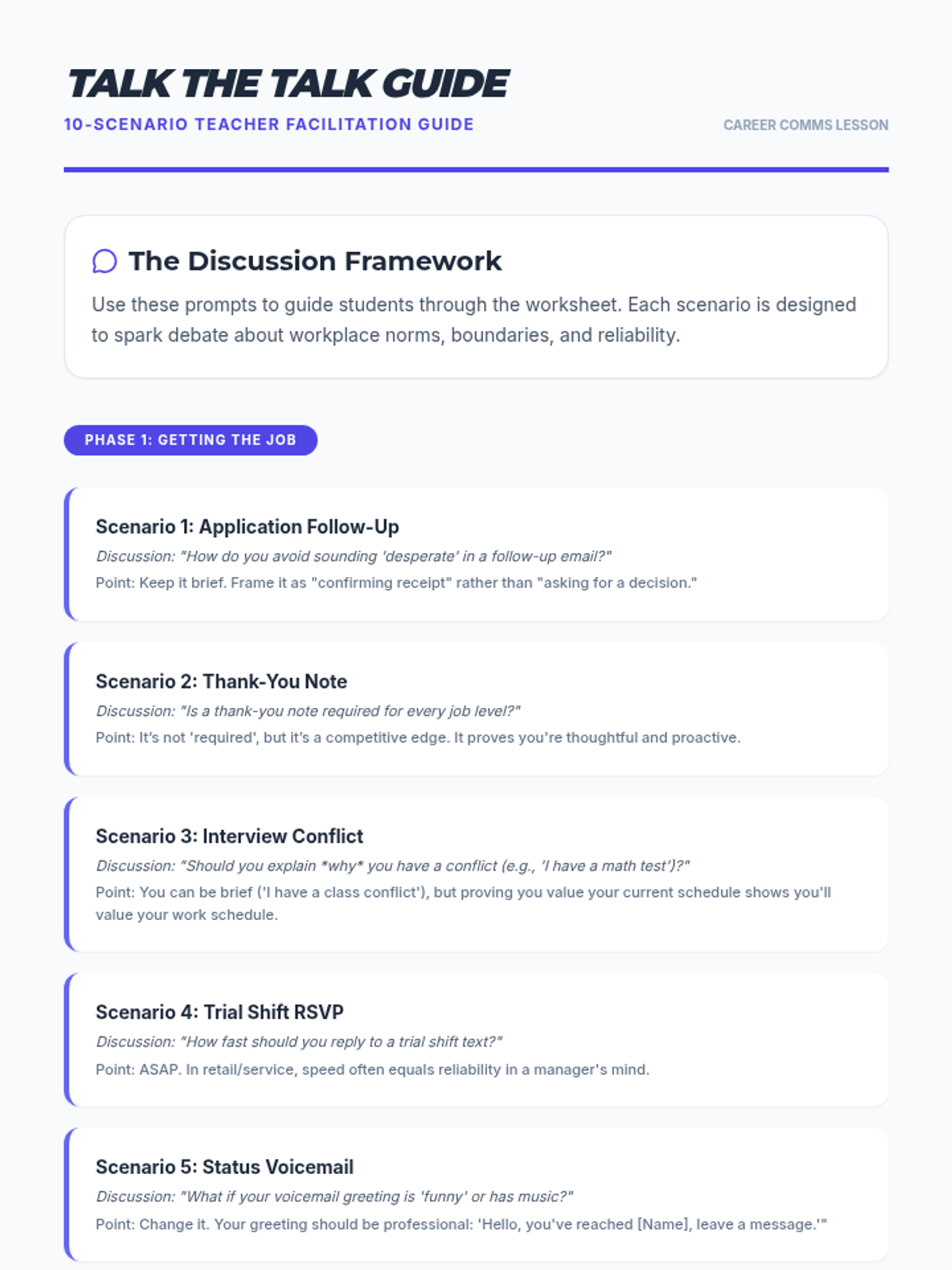
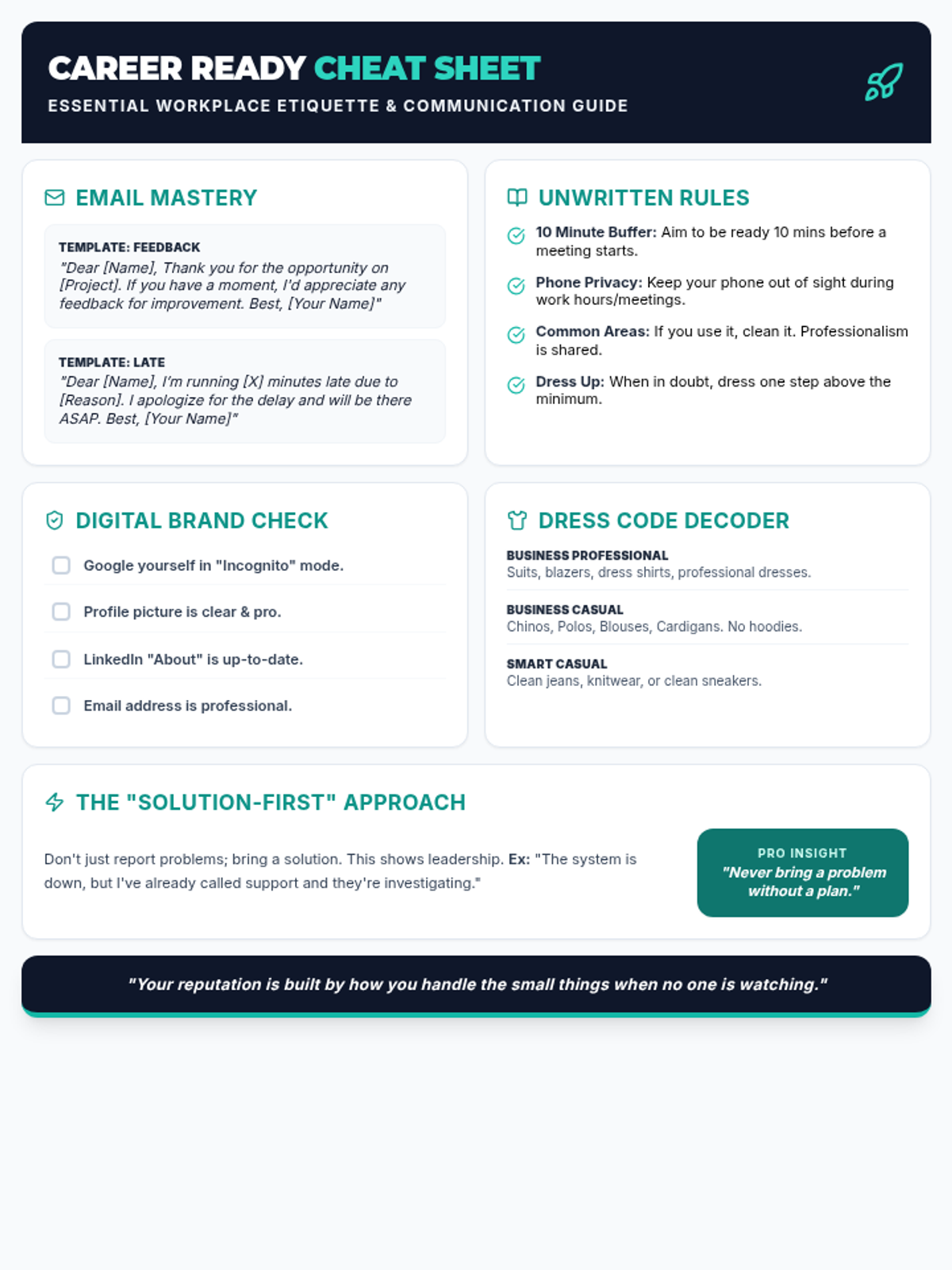
A comprehensive lesson on professional communication for students entering the workforce, covering email etiquette, professional texting, phone calls, and in-person interactions.
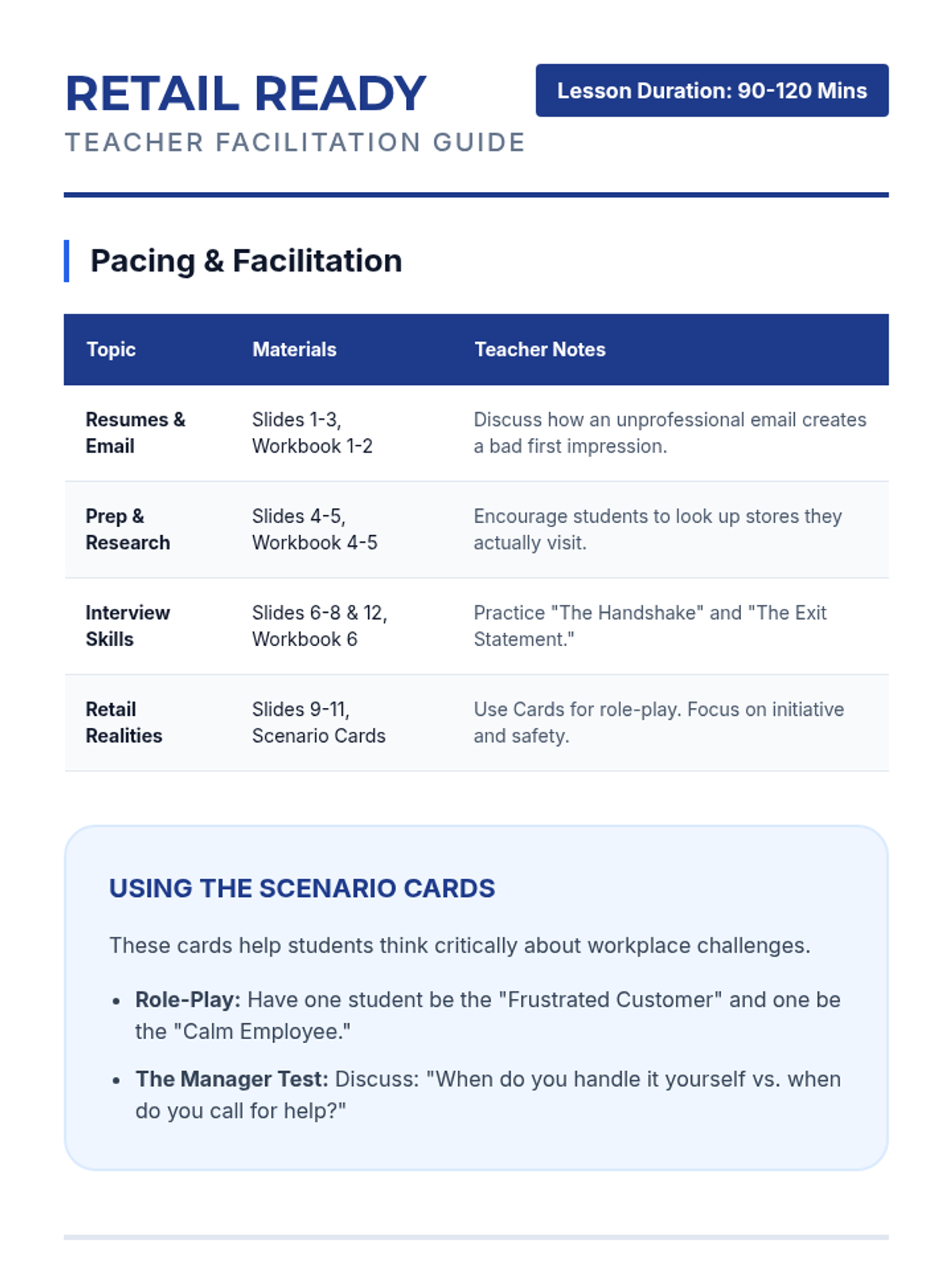
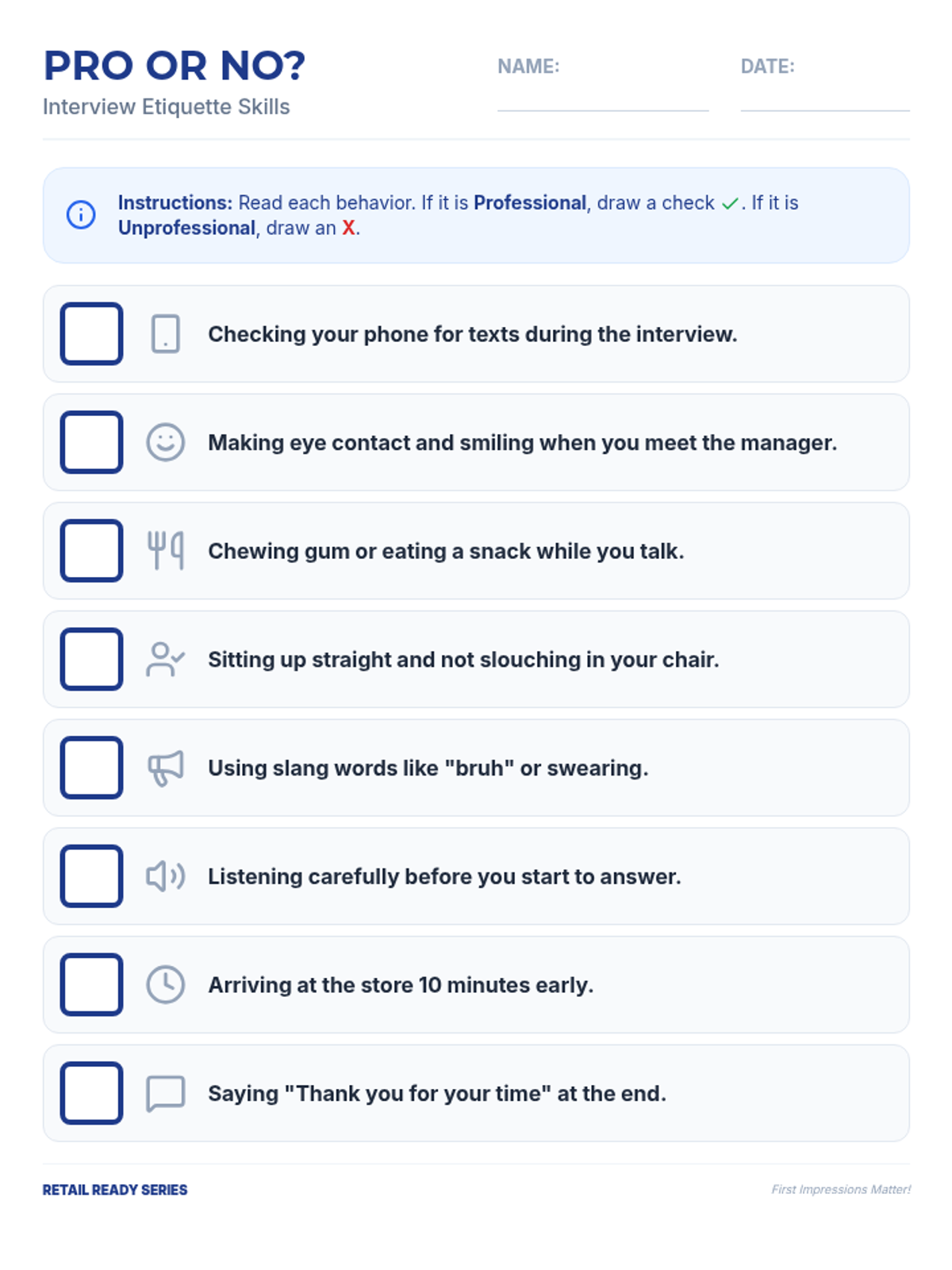
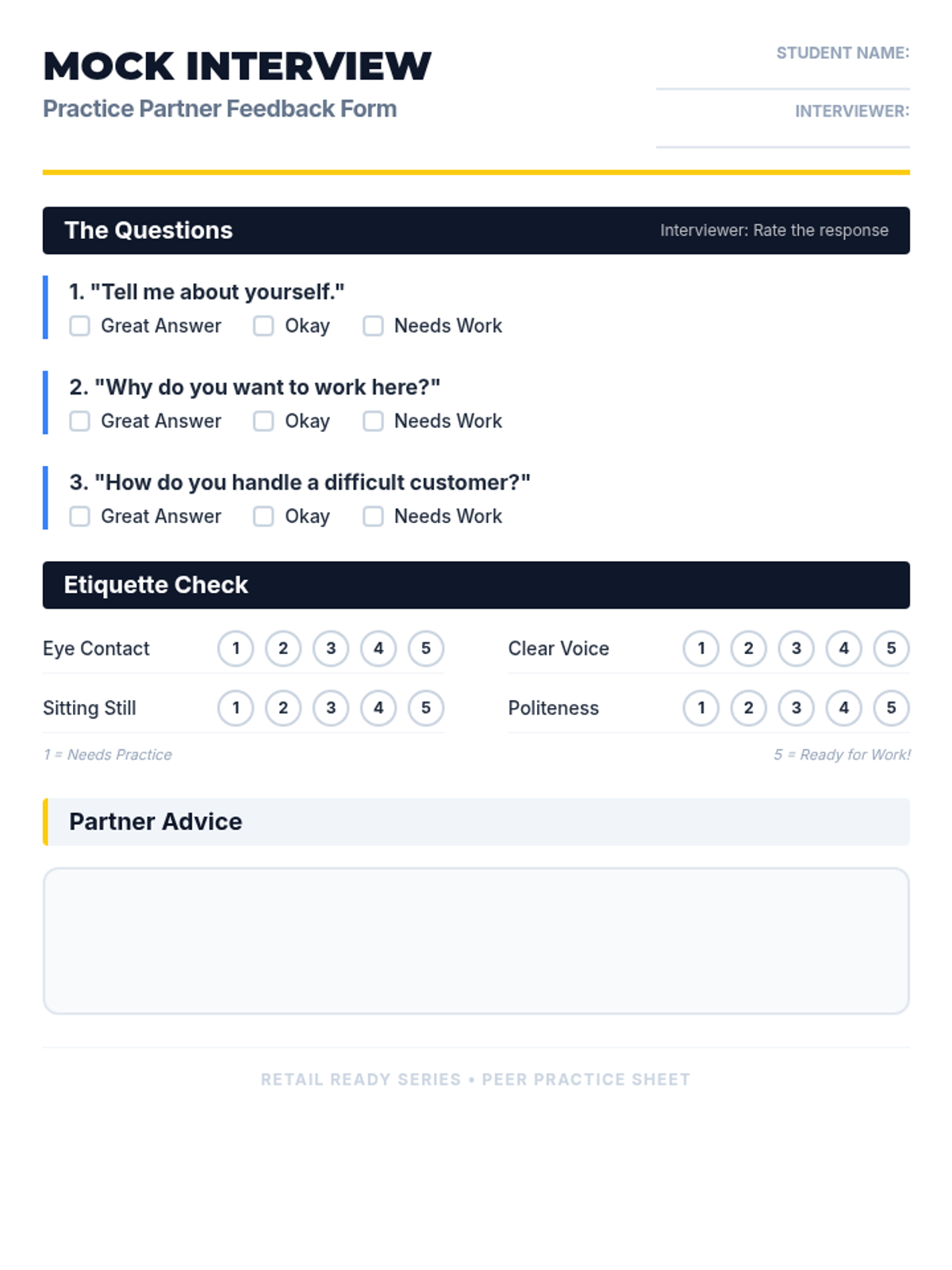
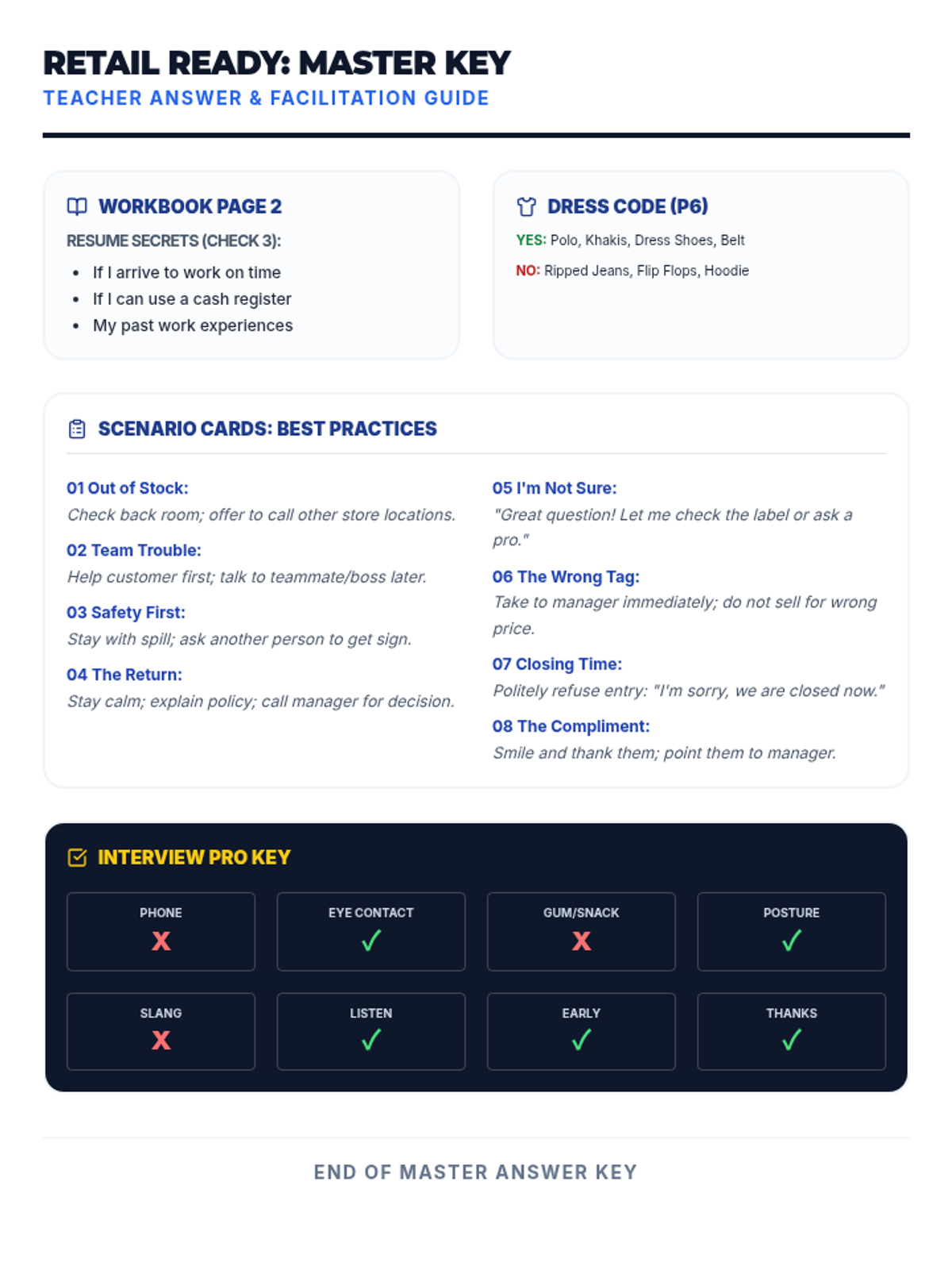
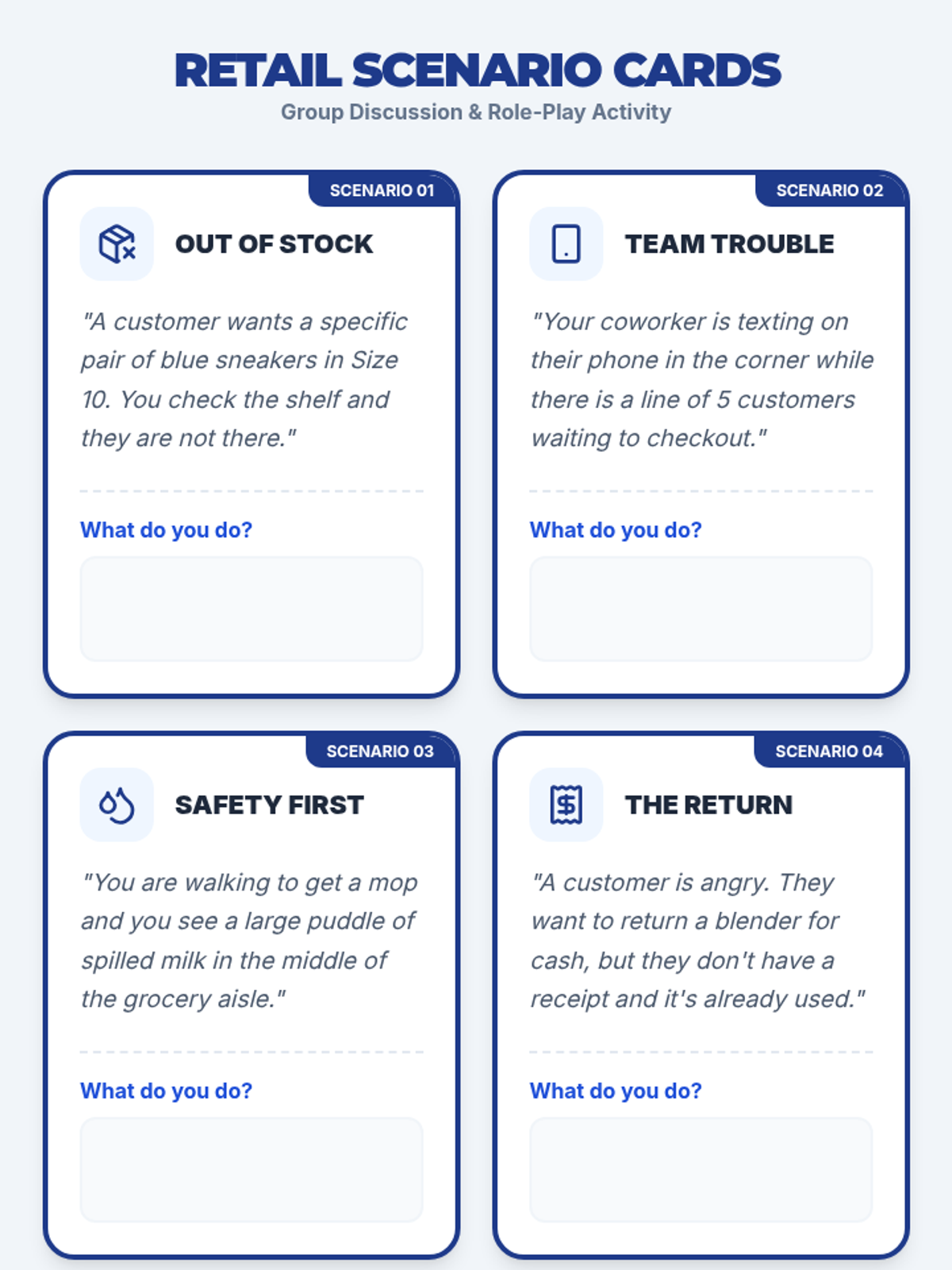
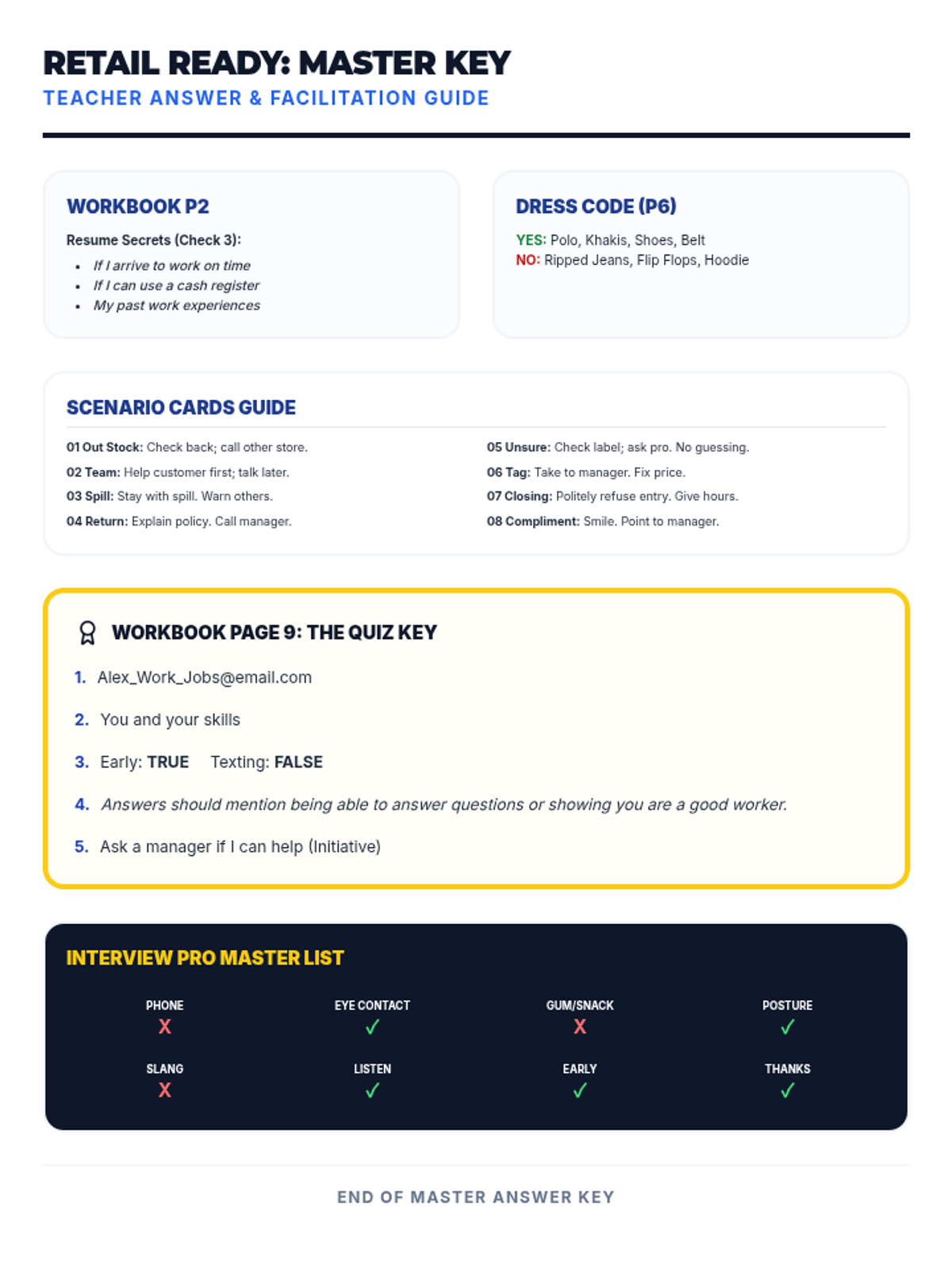
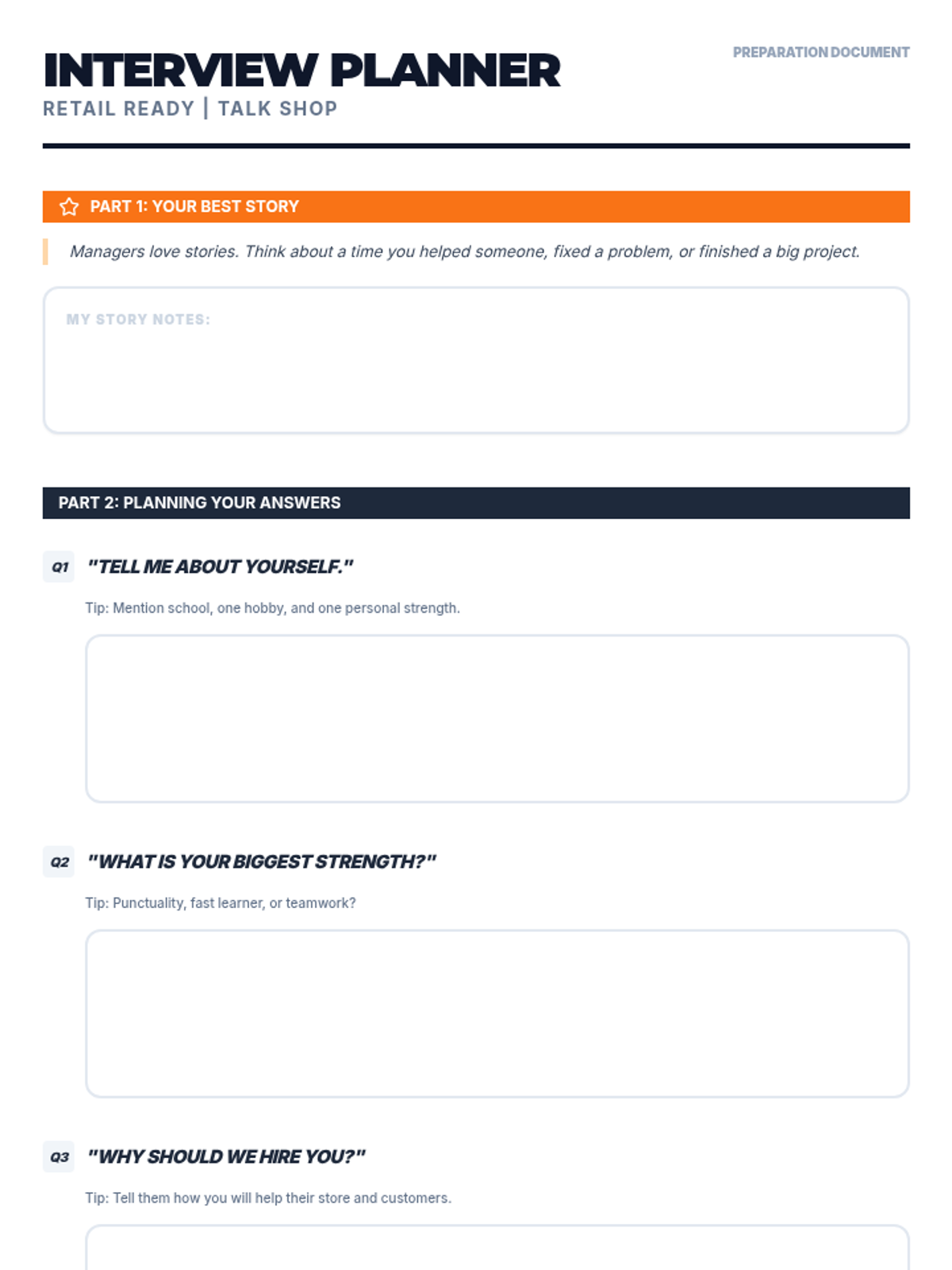
A comprehensive lesson preparing students and transition-aged adults for retail job interviews, covering everything from professional emails to post-interview etiquette.
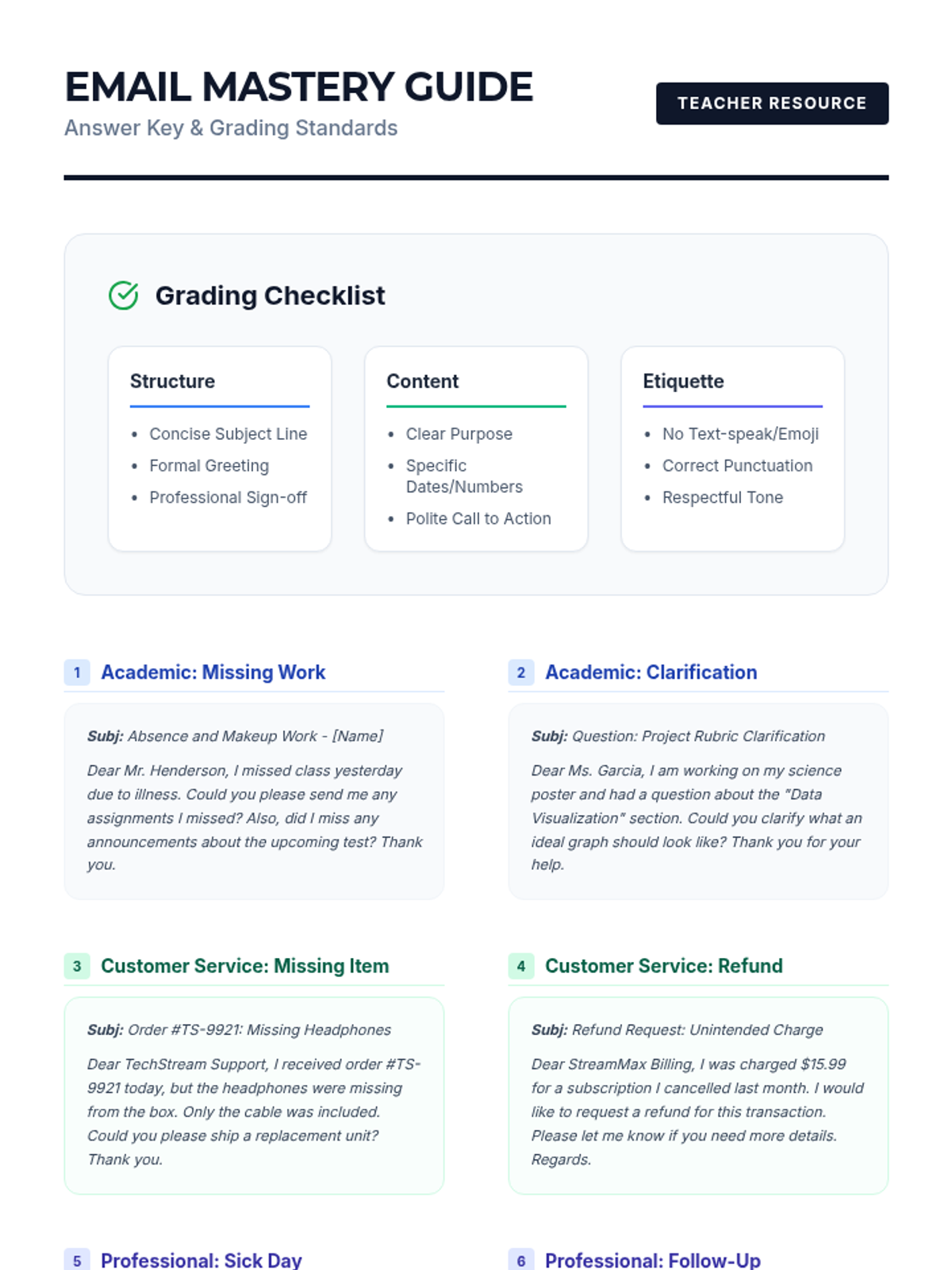
A comprehensive lesson on professional and academic email etiquette, featuring scenarios ranging from school help to job applications. Students learn the structure of a formal email and practice writing their own digital correspondence.
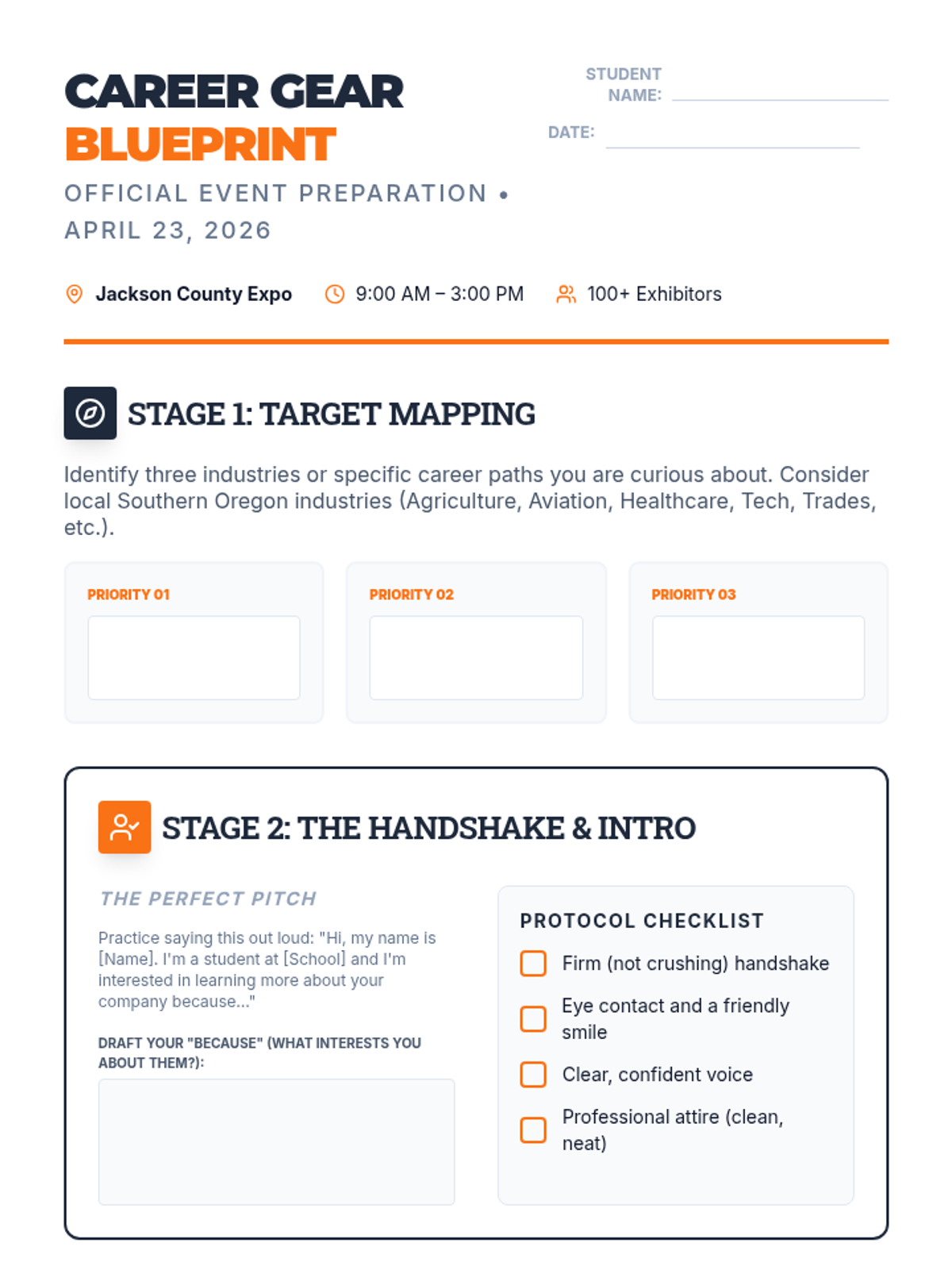
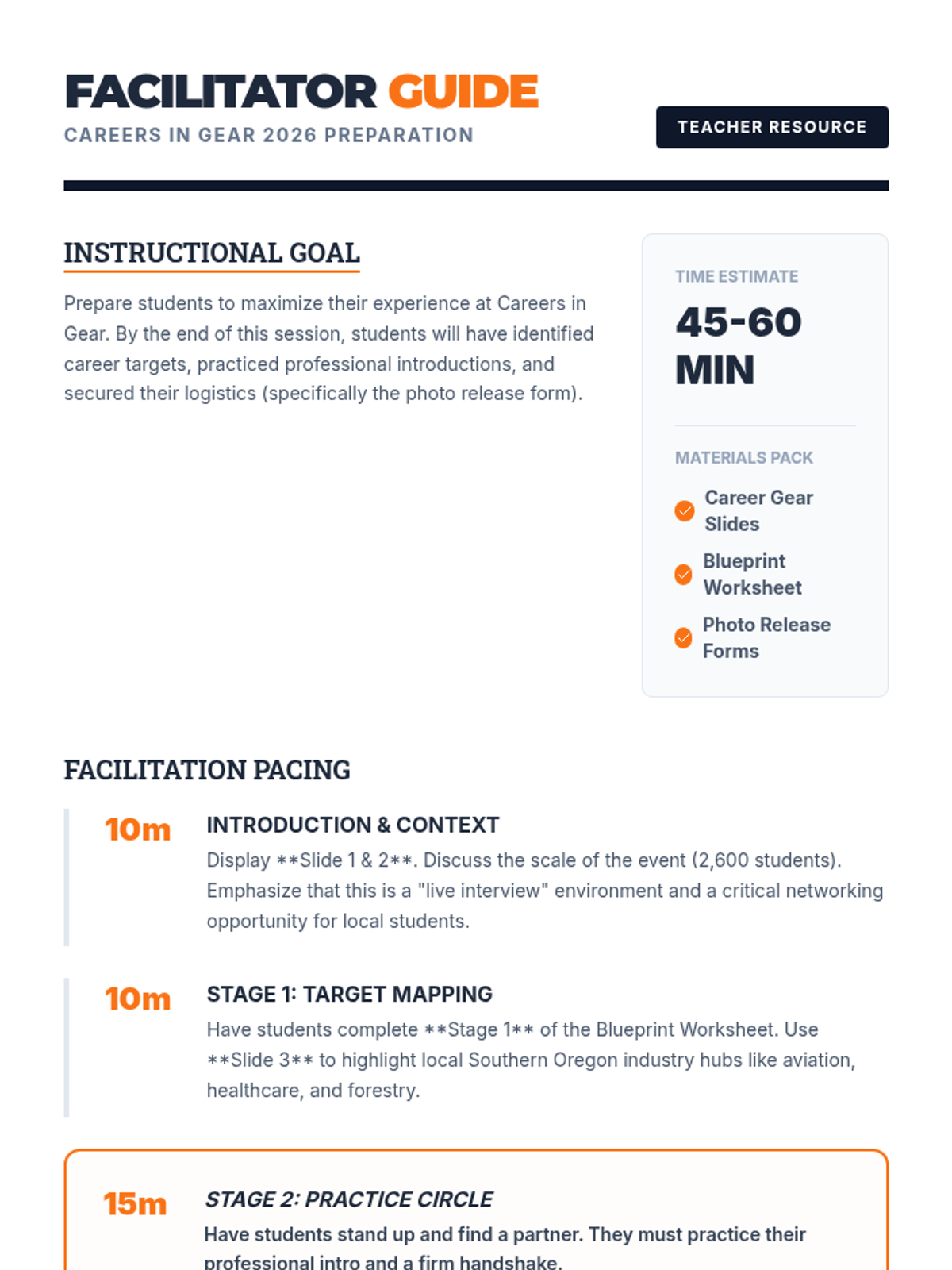
A preparation lesson for the Careers in Gear 2026 event, focusing on career interest identification, professional communication, and logistical readiness.
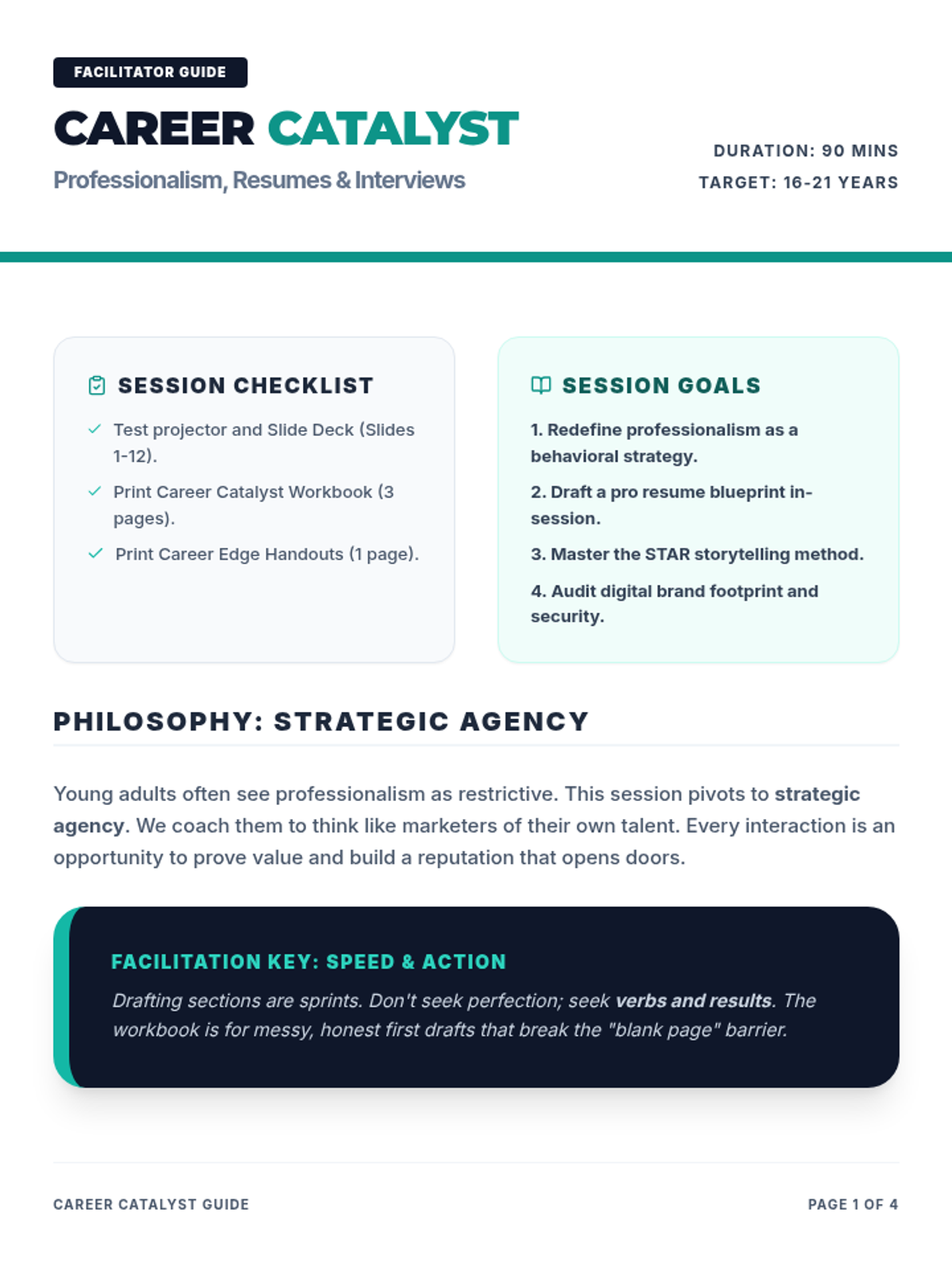
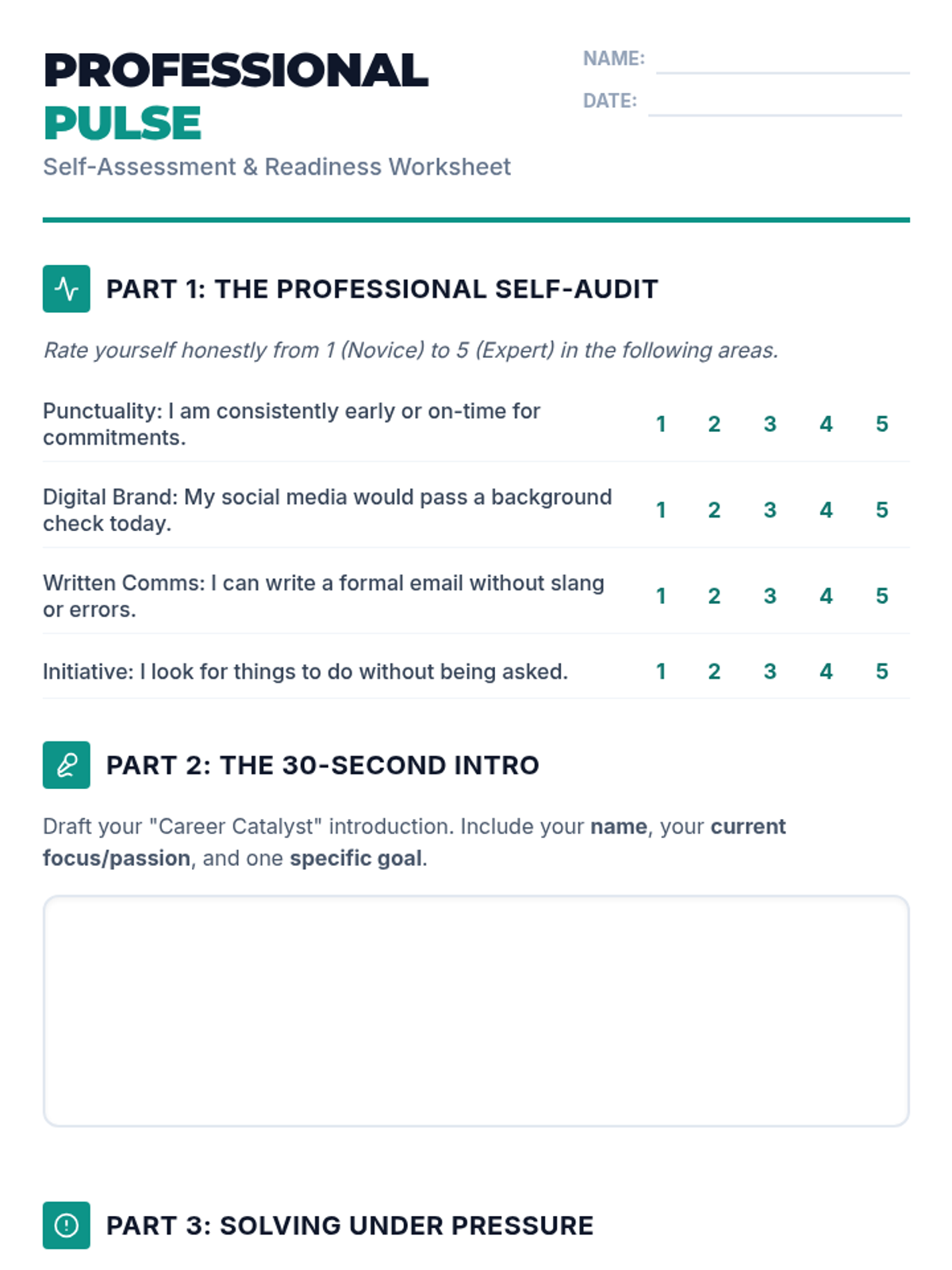
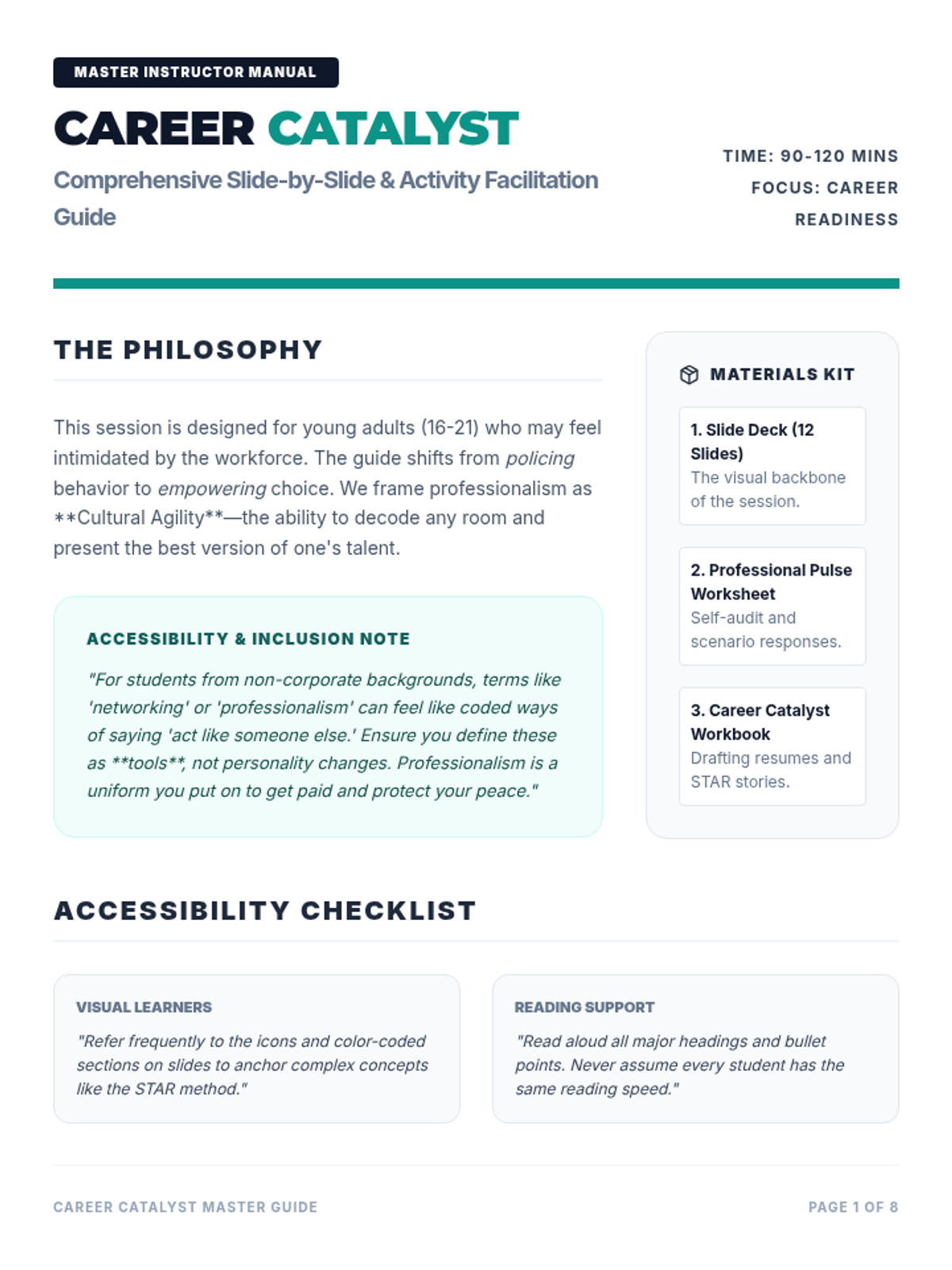
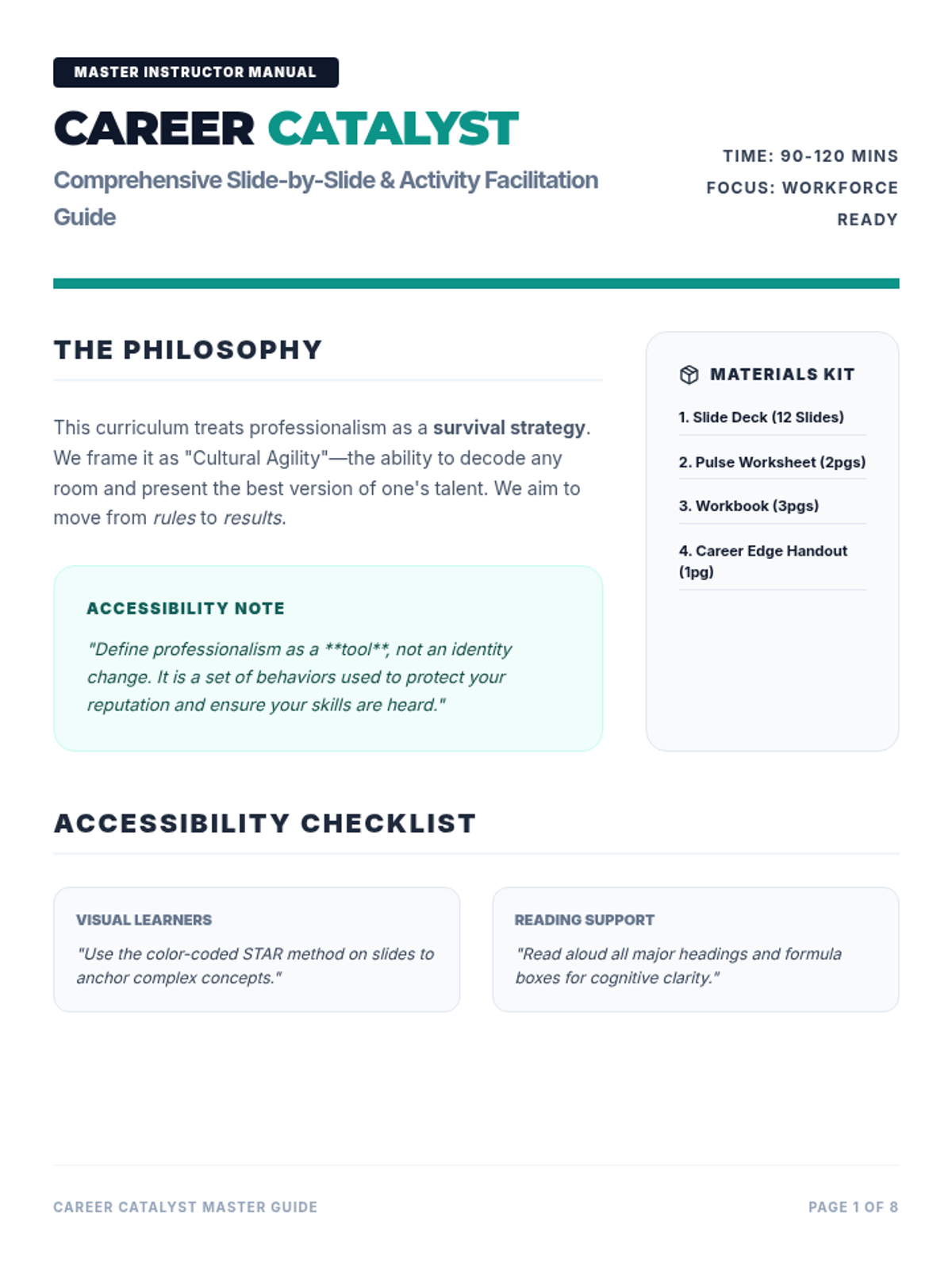
A comprehensive 90-minute session for young adults aged 16-21, focusing on the transition from student to professional through communication, reliability, and workplace etiquette.
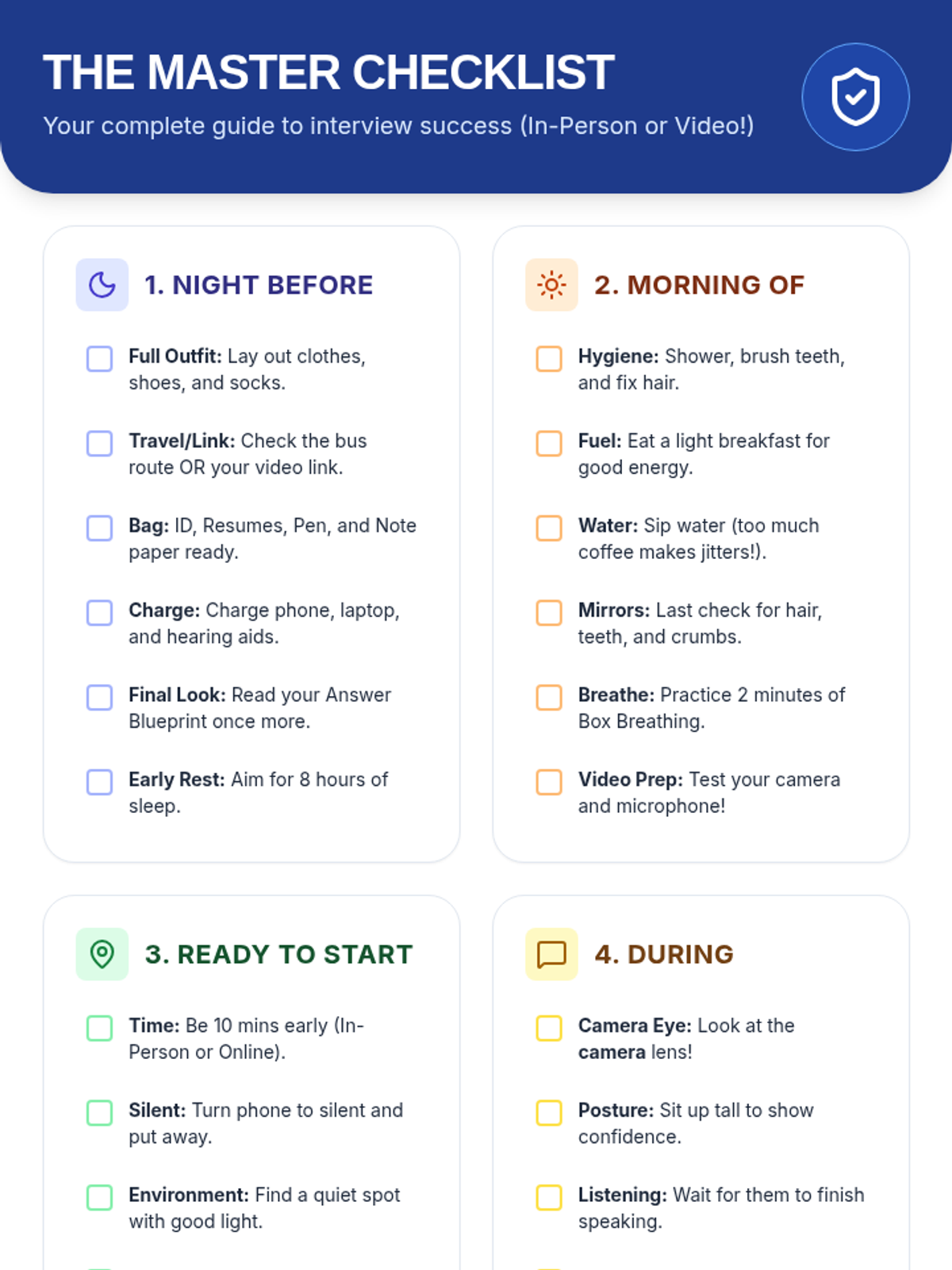
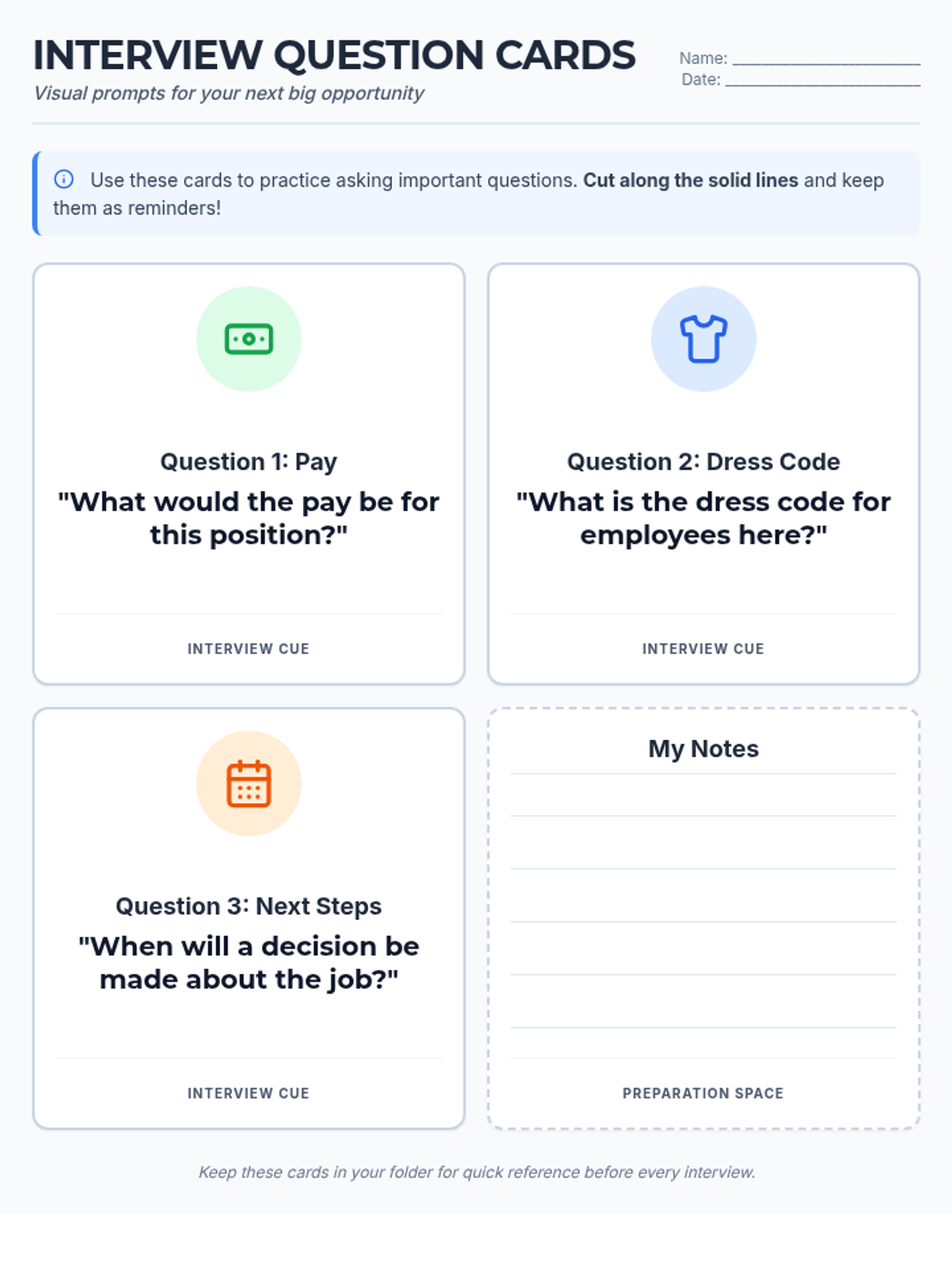
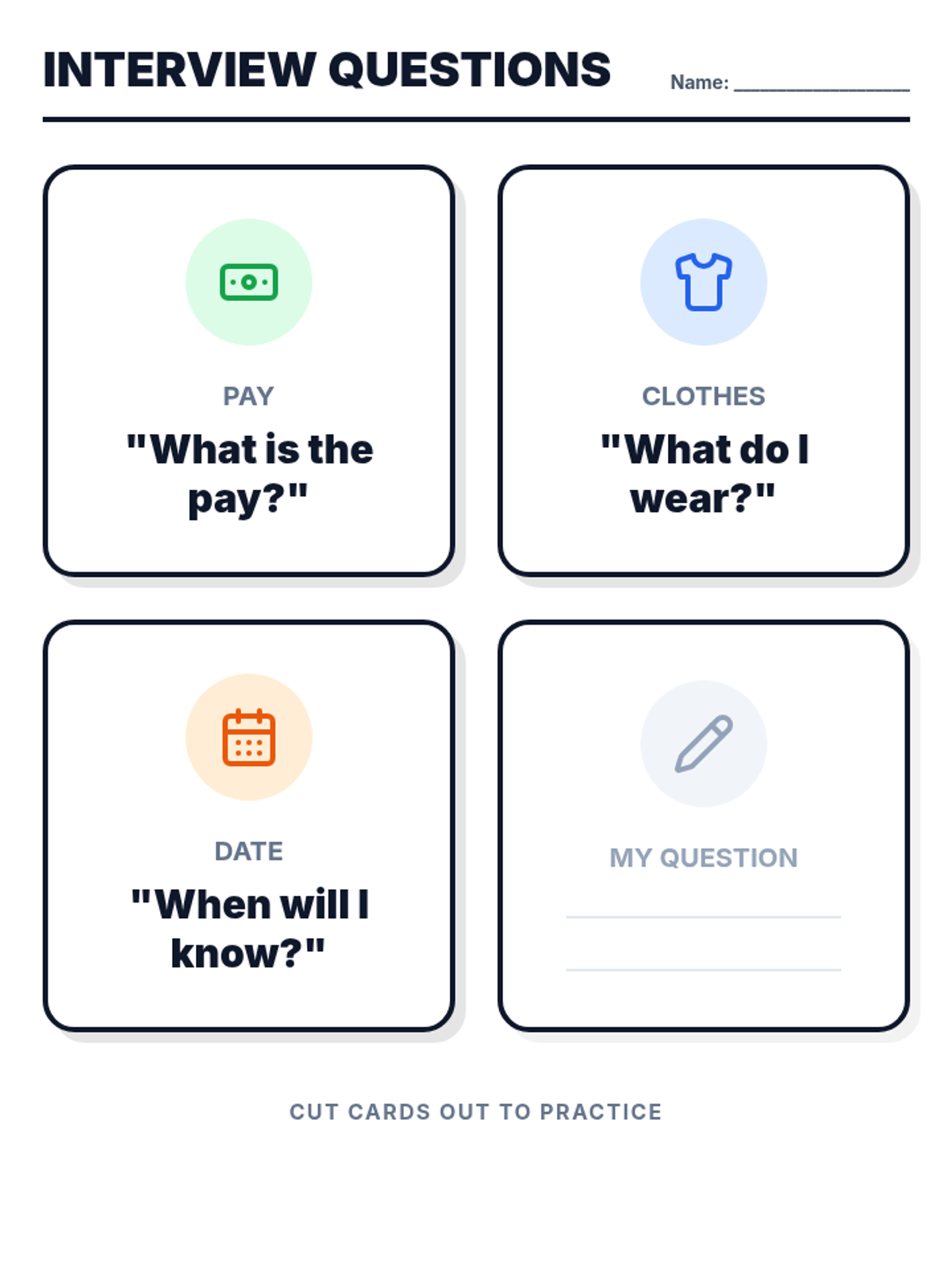
A visual guide and set of practice tools to help students master common job interview questions, focusing on pay, dress code, and next steps.
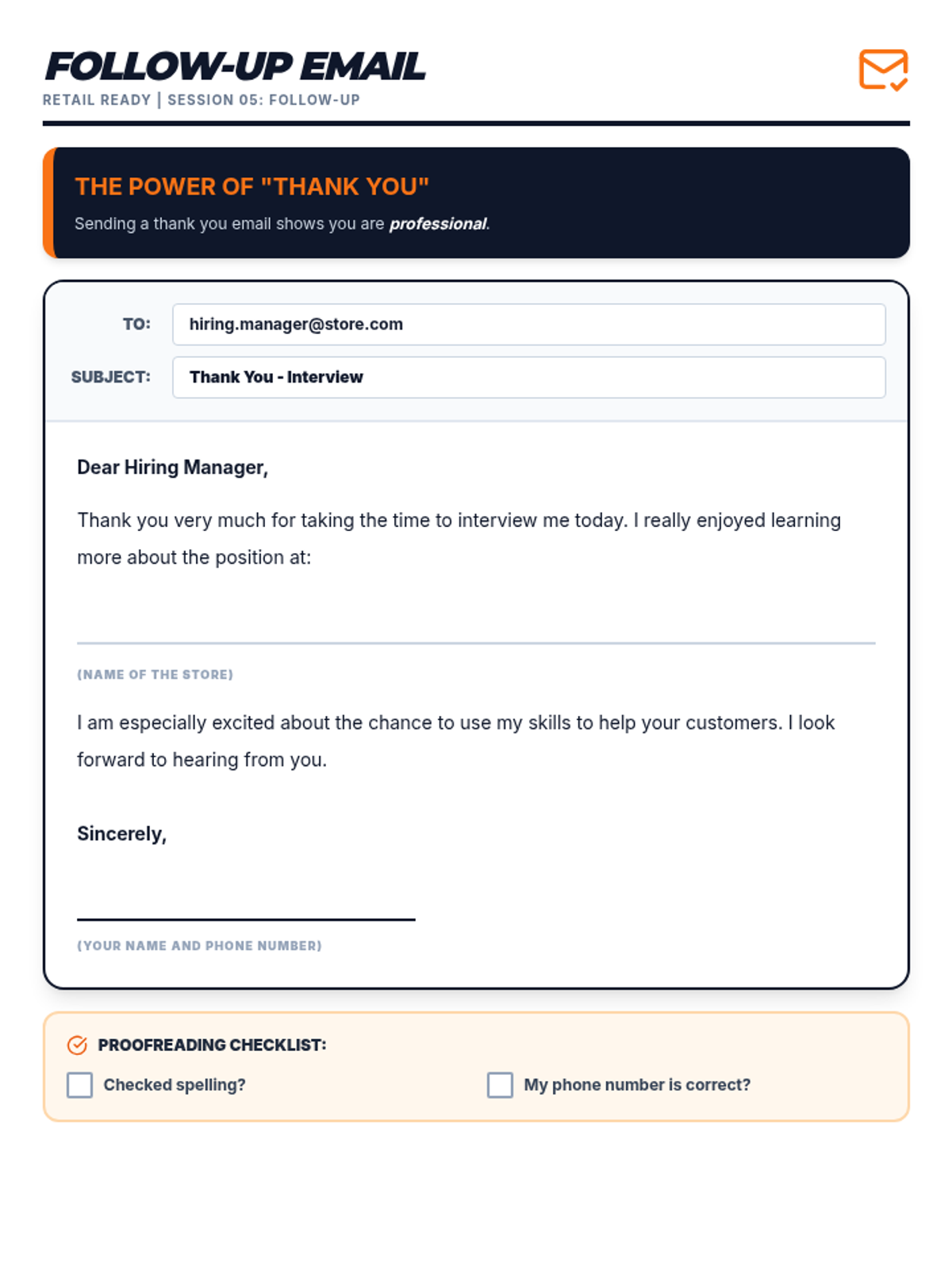
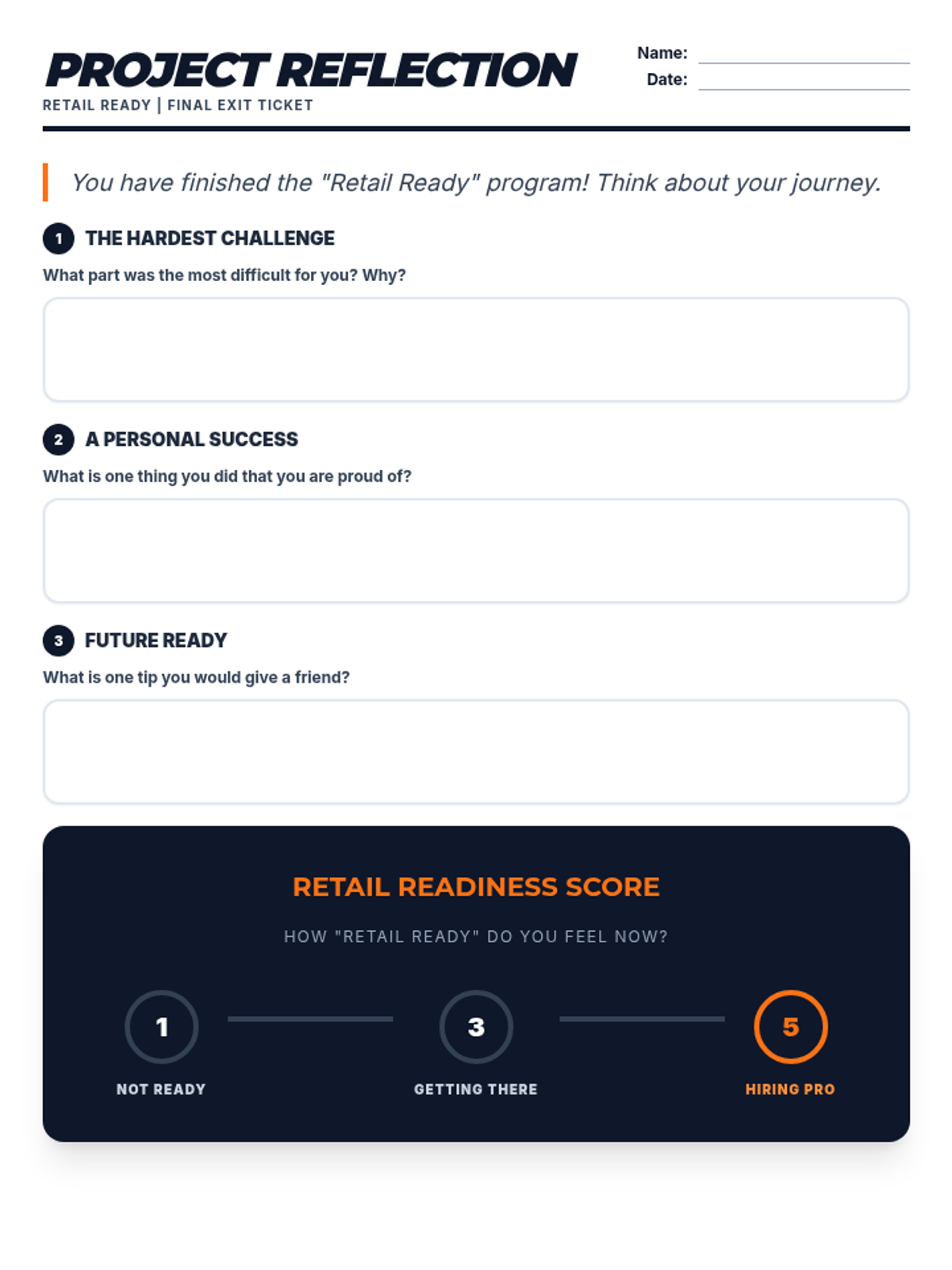
Students learn the importance of post-interview follow-up by writing thank-you emails and reflecting on their overall performance throughout the project.
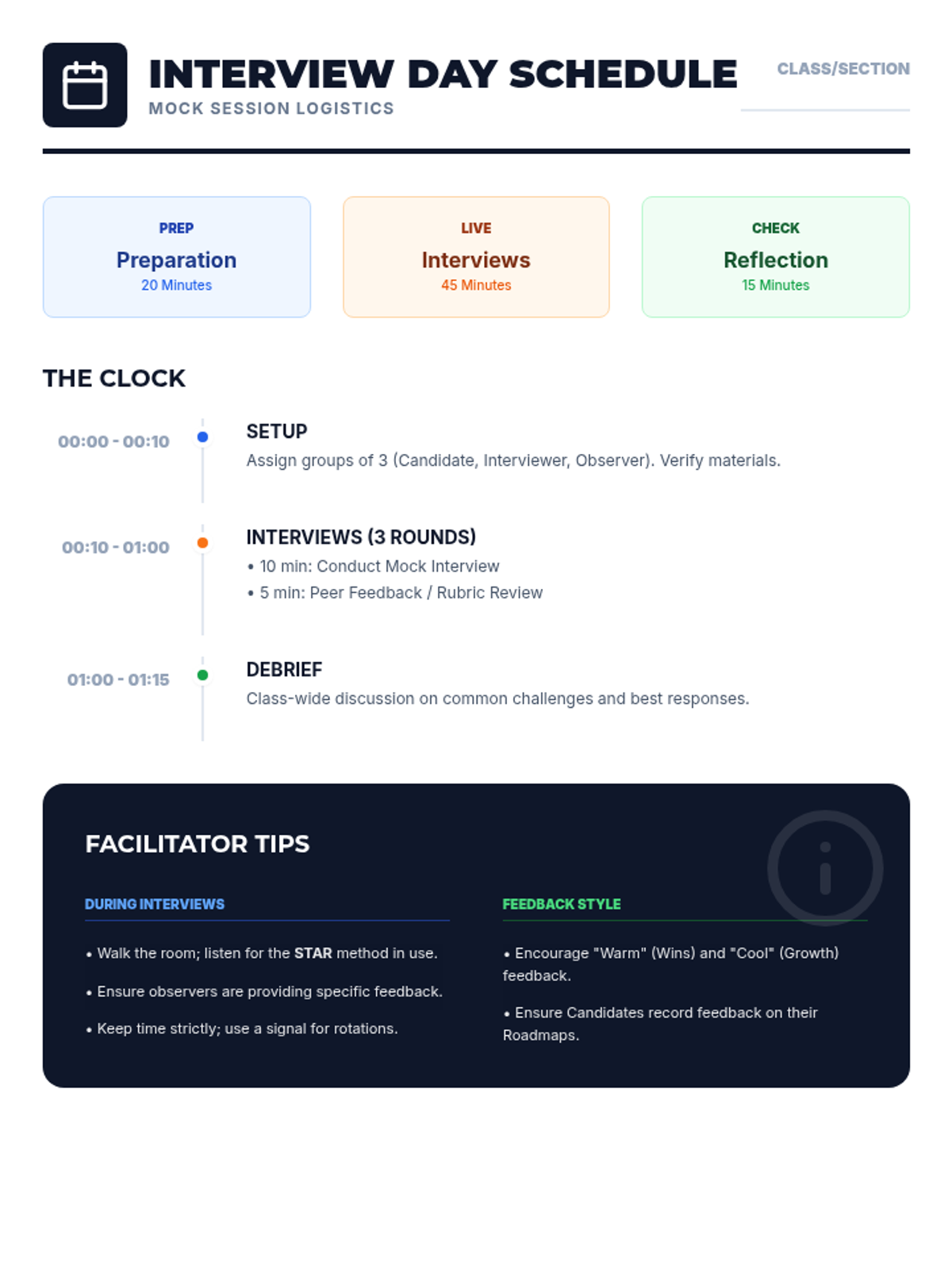
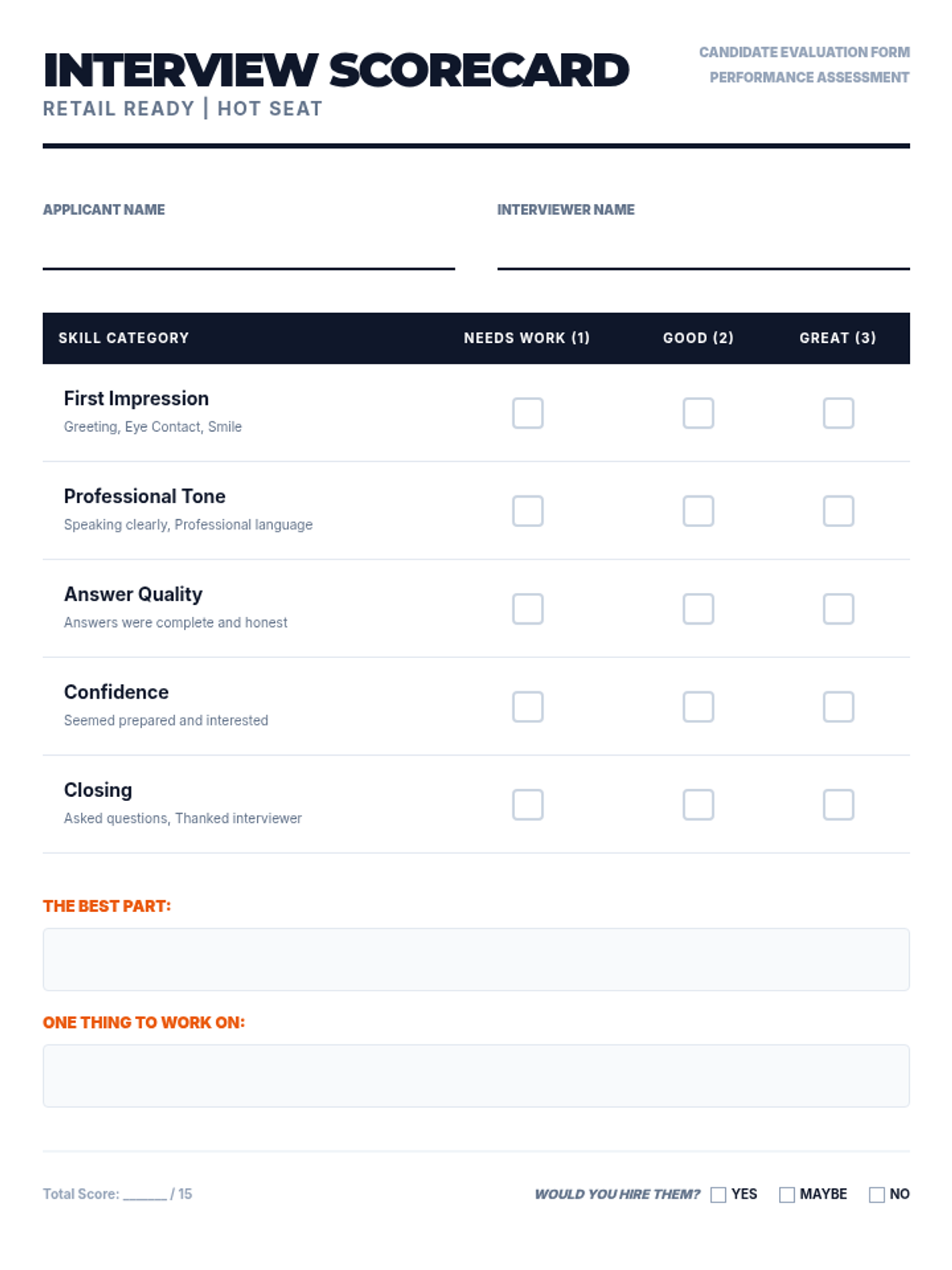
A hands-on day for mock interviews where students practice professional communication and receive constructive feedback.
Students prepare for the social dynamics of an interview by researching common retail questions and planning their own inquiries for the employer.
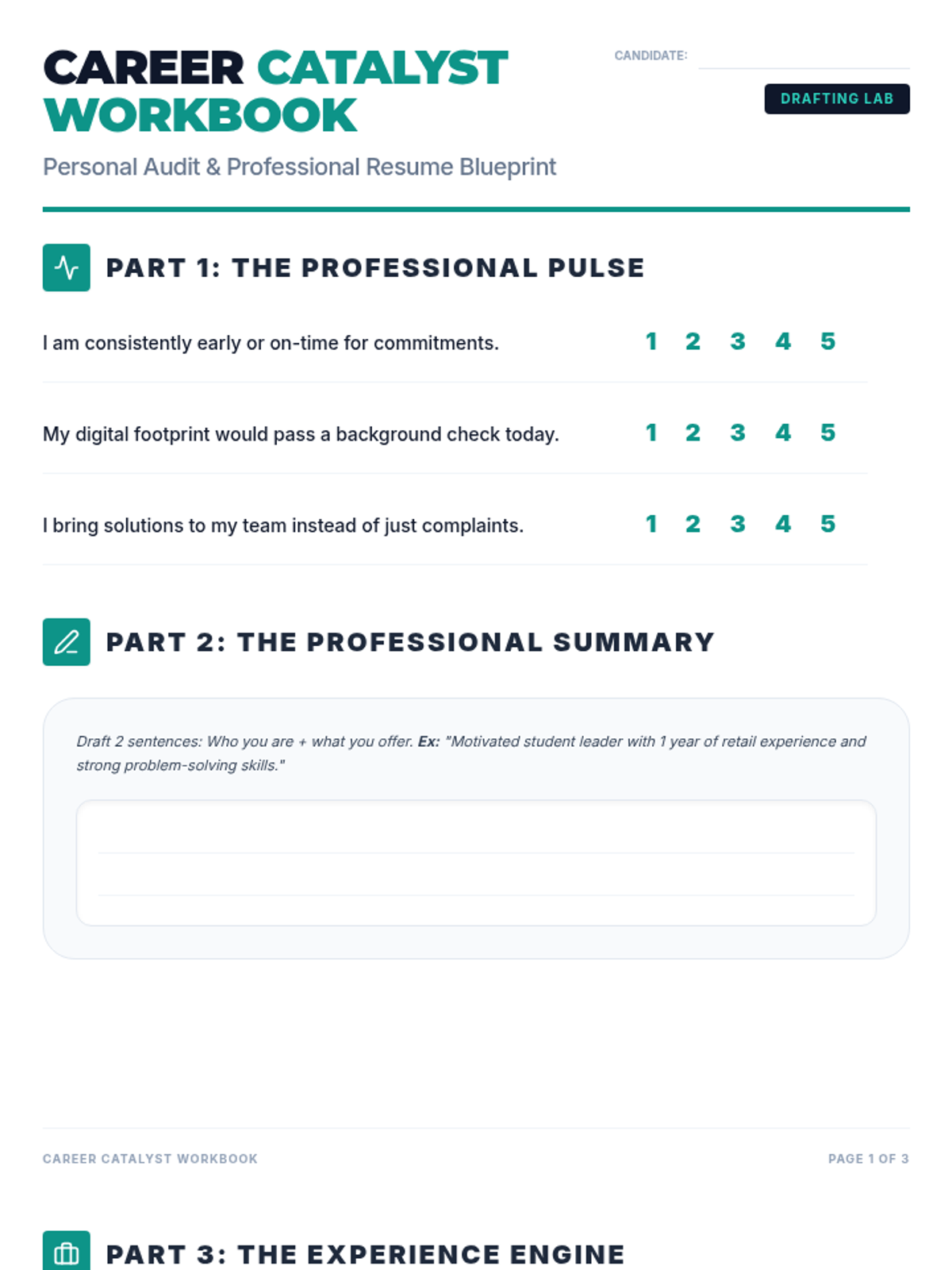
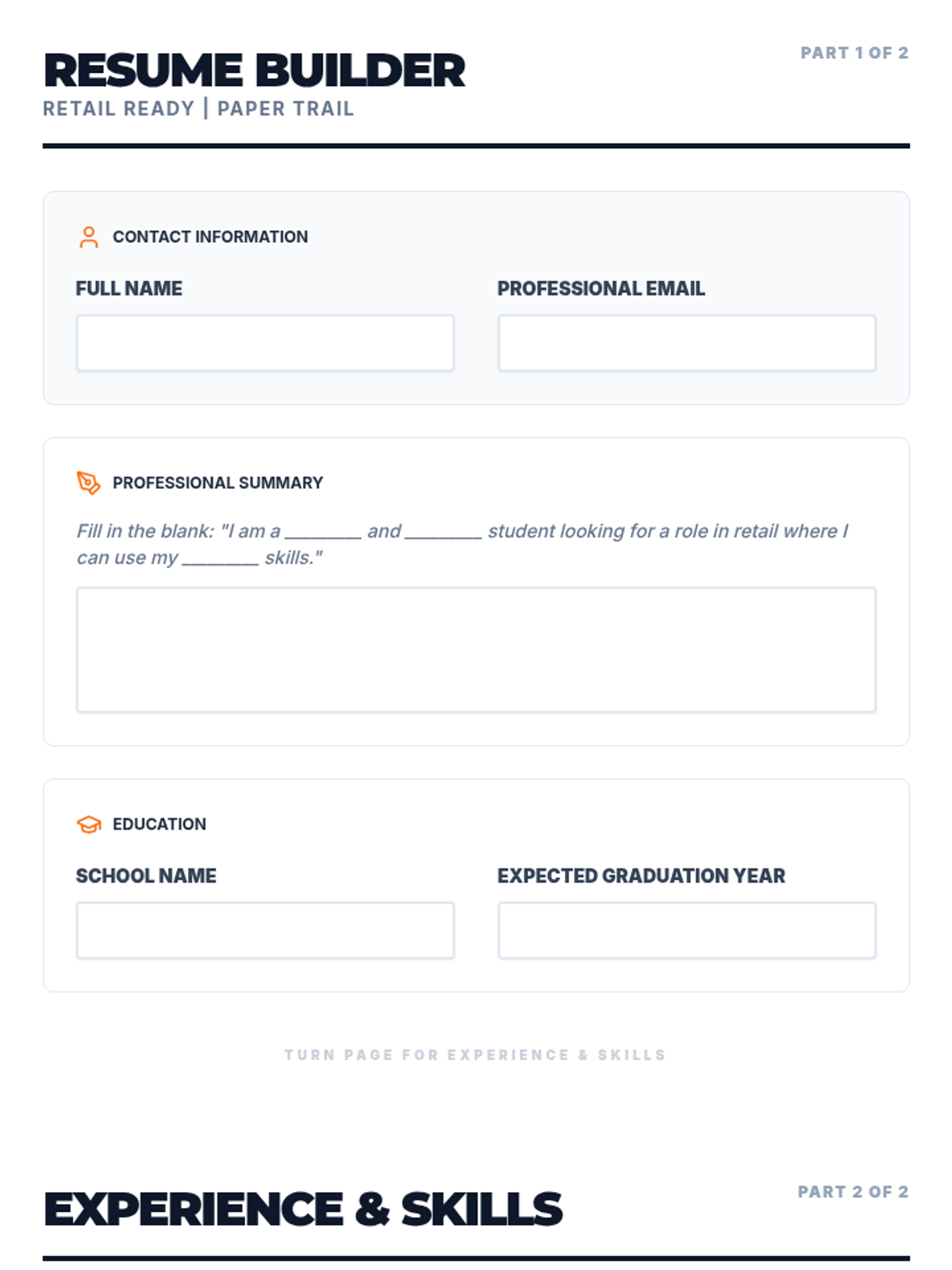
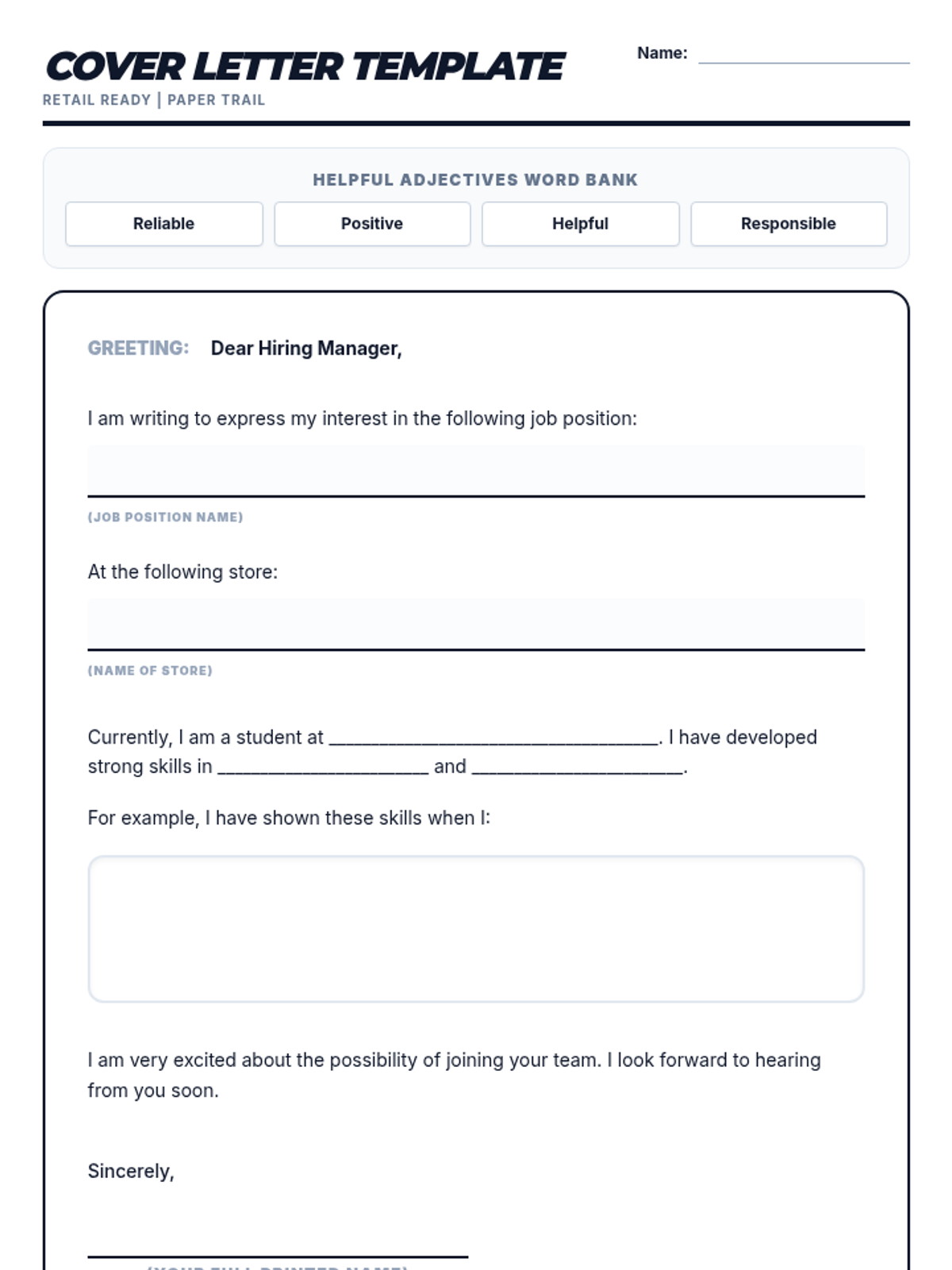
Focuses on translating personal experiences into a professional resume and drafting a concise cover letter using structured templates.
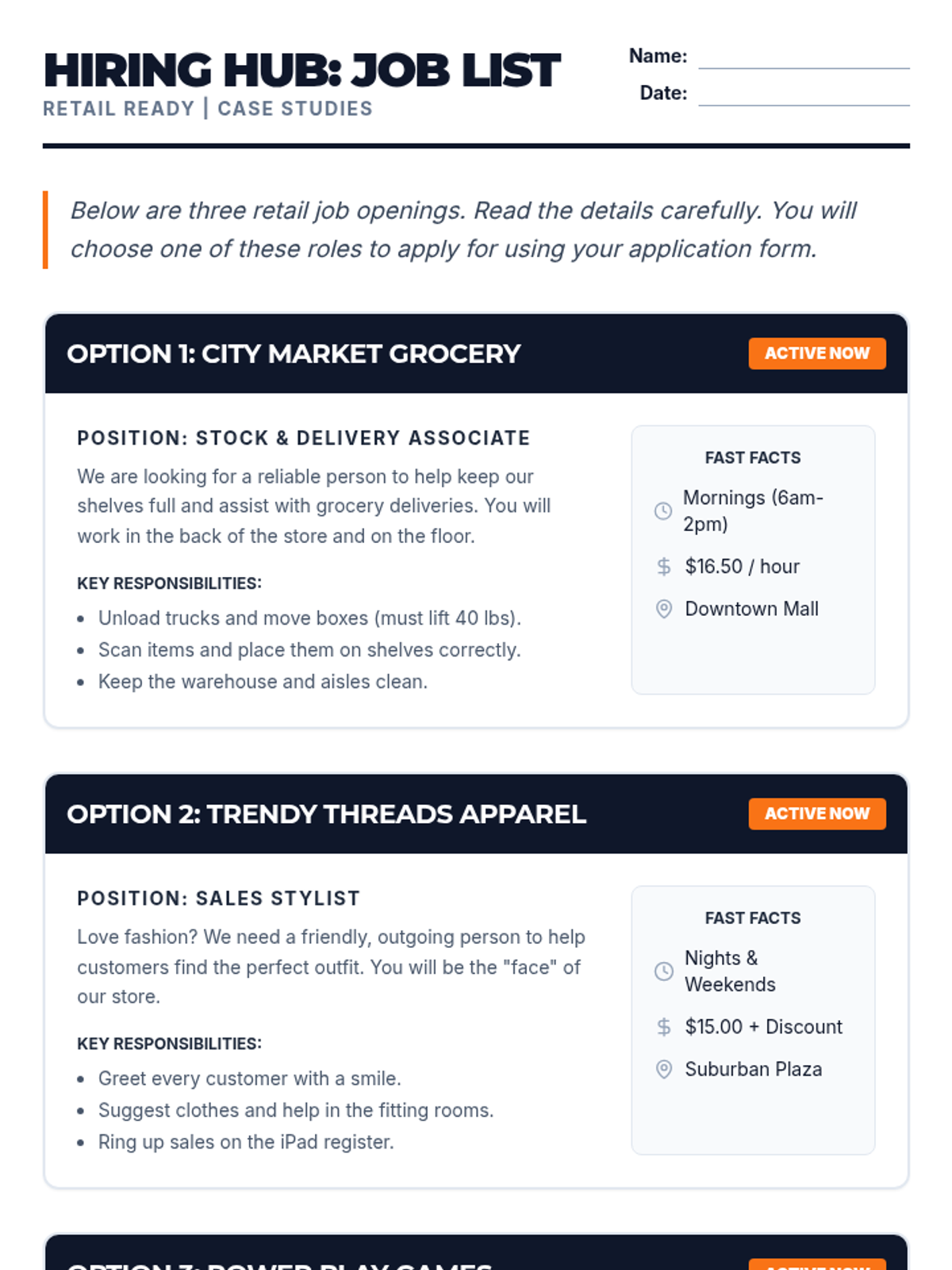
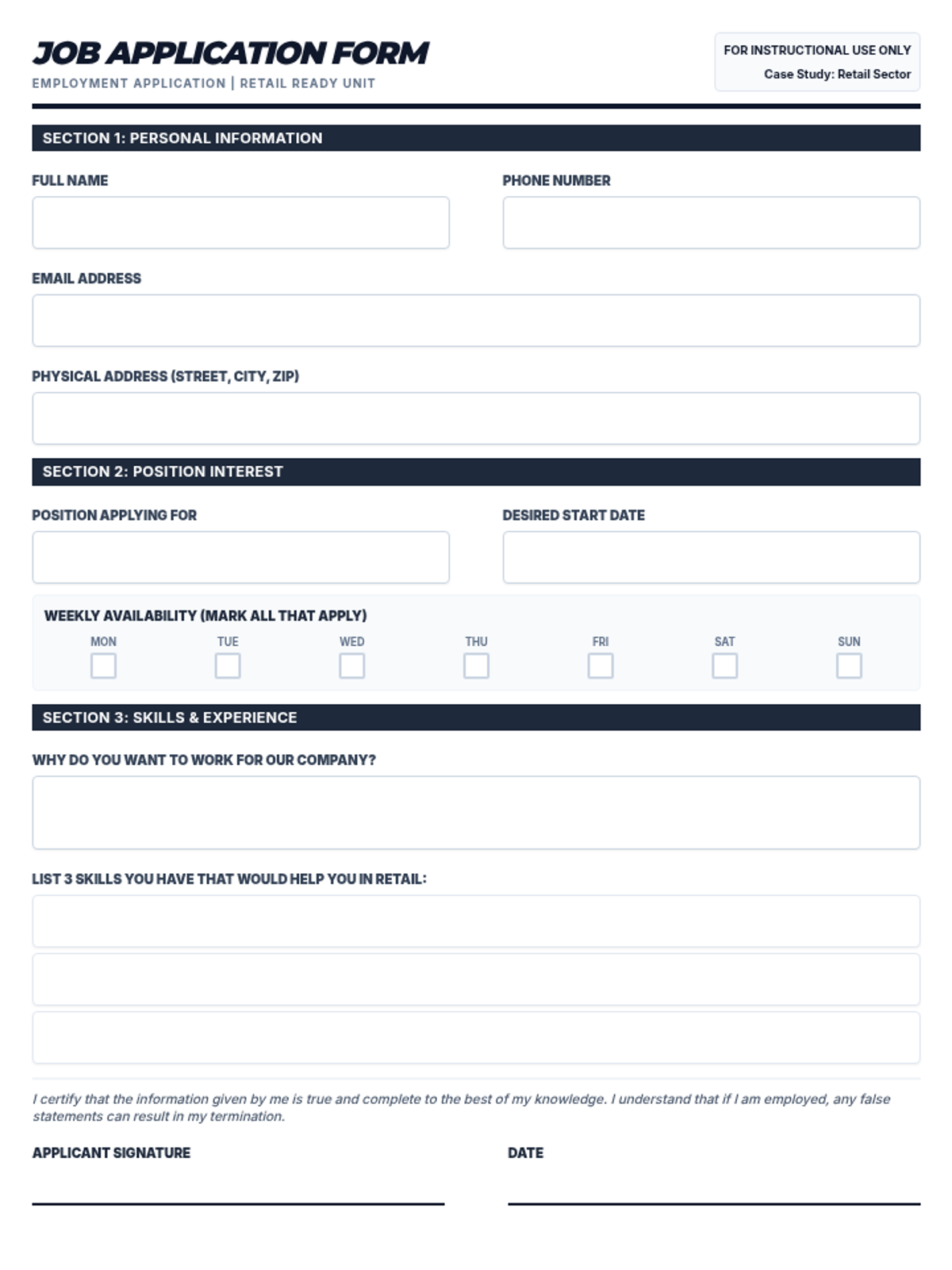
Students explore different retail roles, learn to read job descriptions, and practice completing a standard job application form with accuracy.
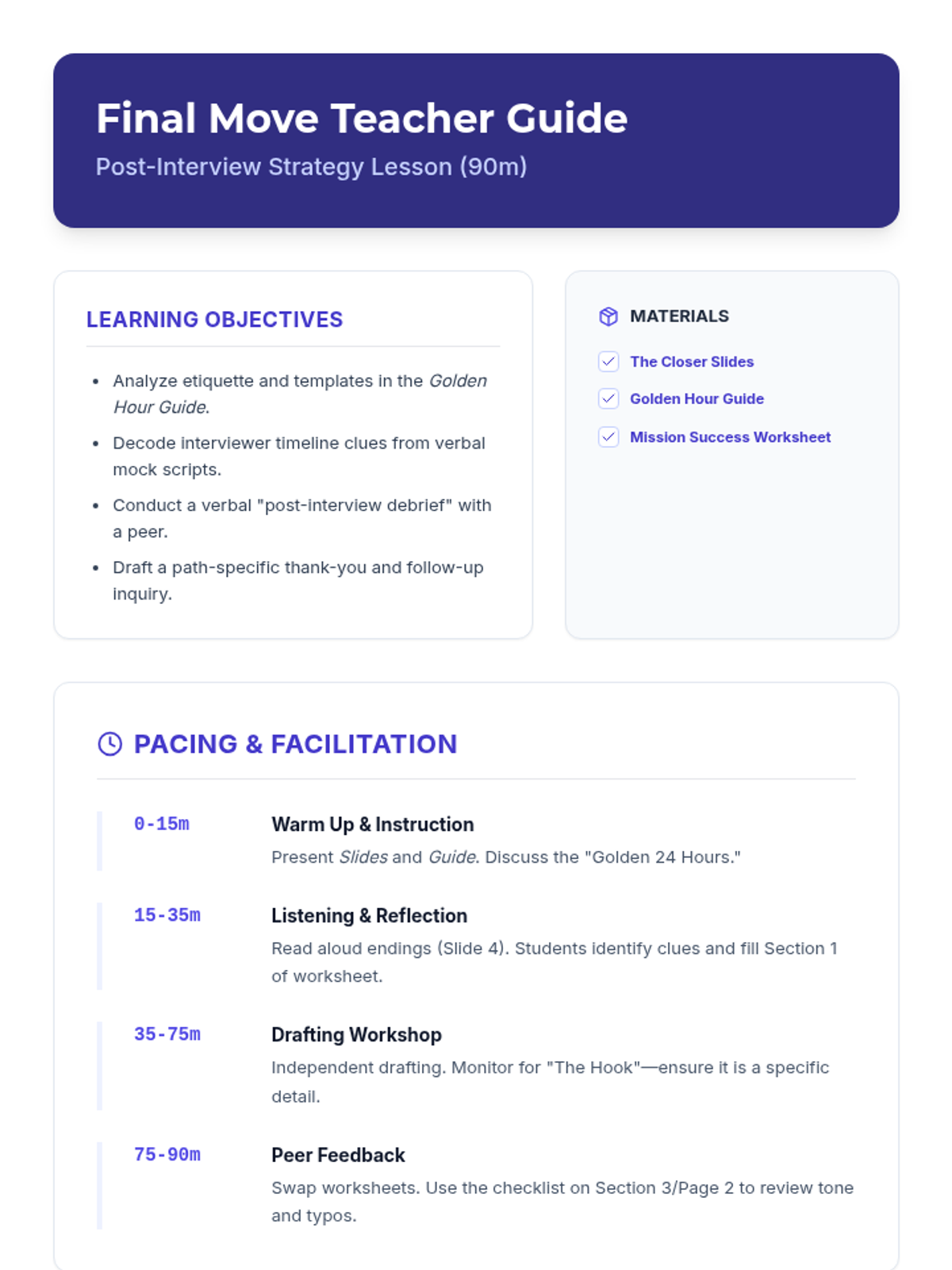
A comprehensive 90-minute lesson for high school seniors on post-interview etiquette, covering college admissions, trade roles, and service jobs with a focus on reflection and professional follow-up communication.