Stop-and-think strategies, impulse management, and SMART goal setting for personal growth. Develops internal motivation, stress reduction techniques, and resilience through proactive planning and monitoring.
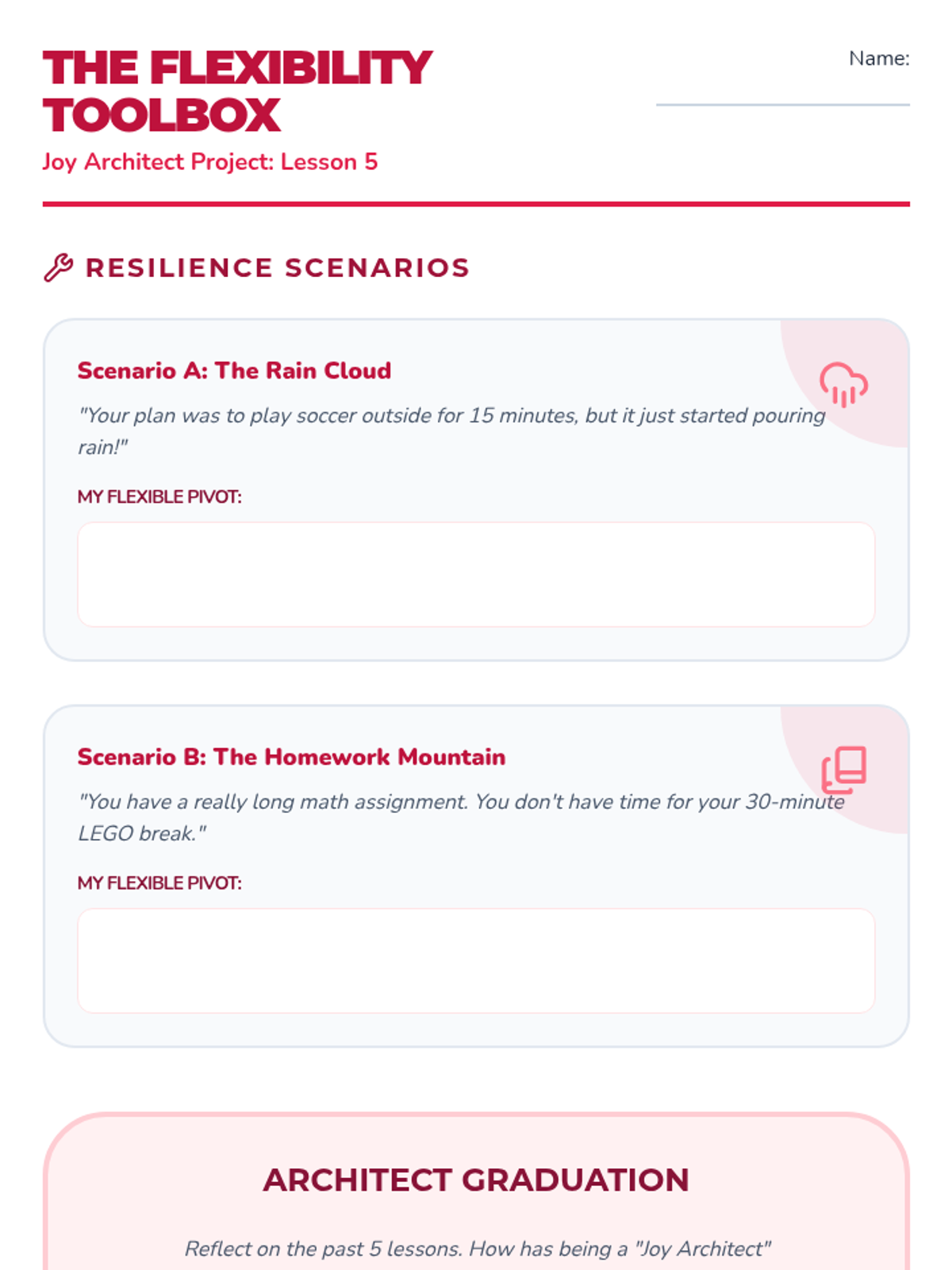
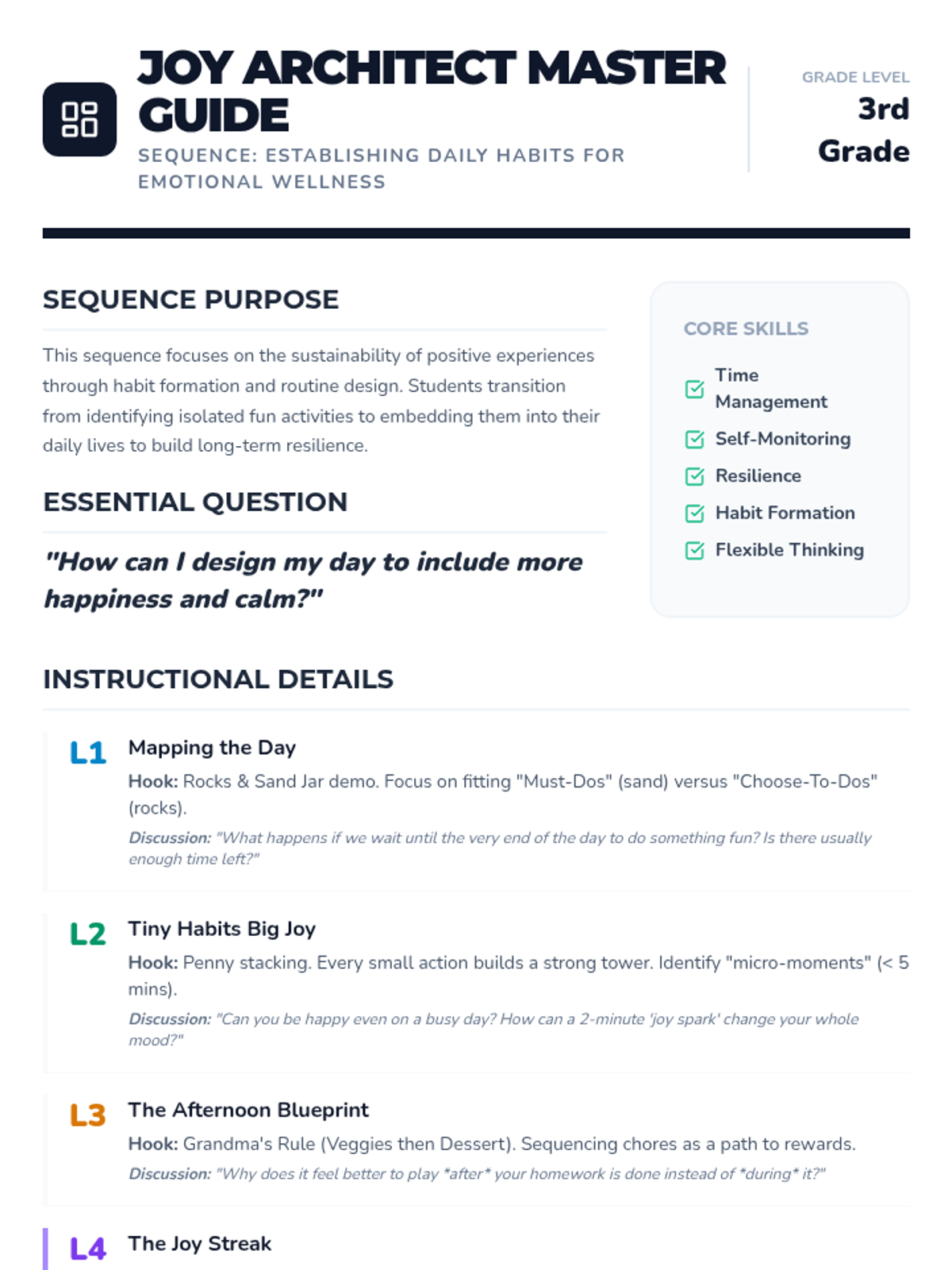
Students reflect on their routine changes and practice 'flexible thinking' for when plans go awry, building resilience and adaptability.
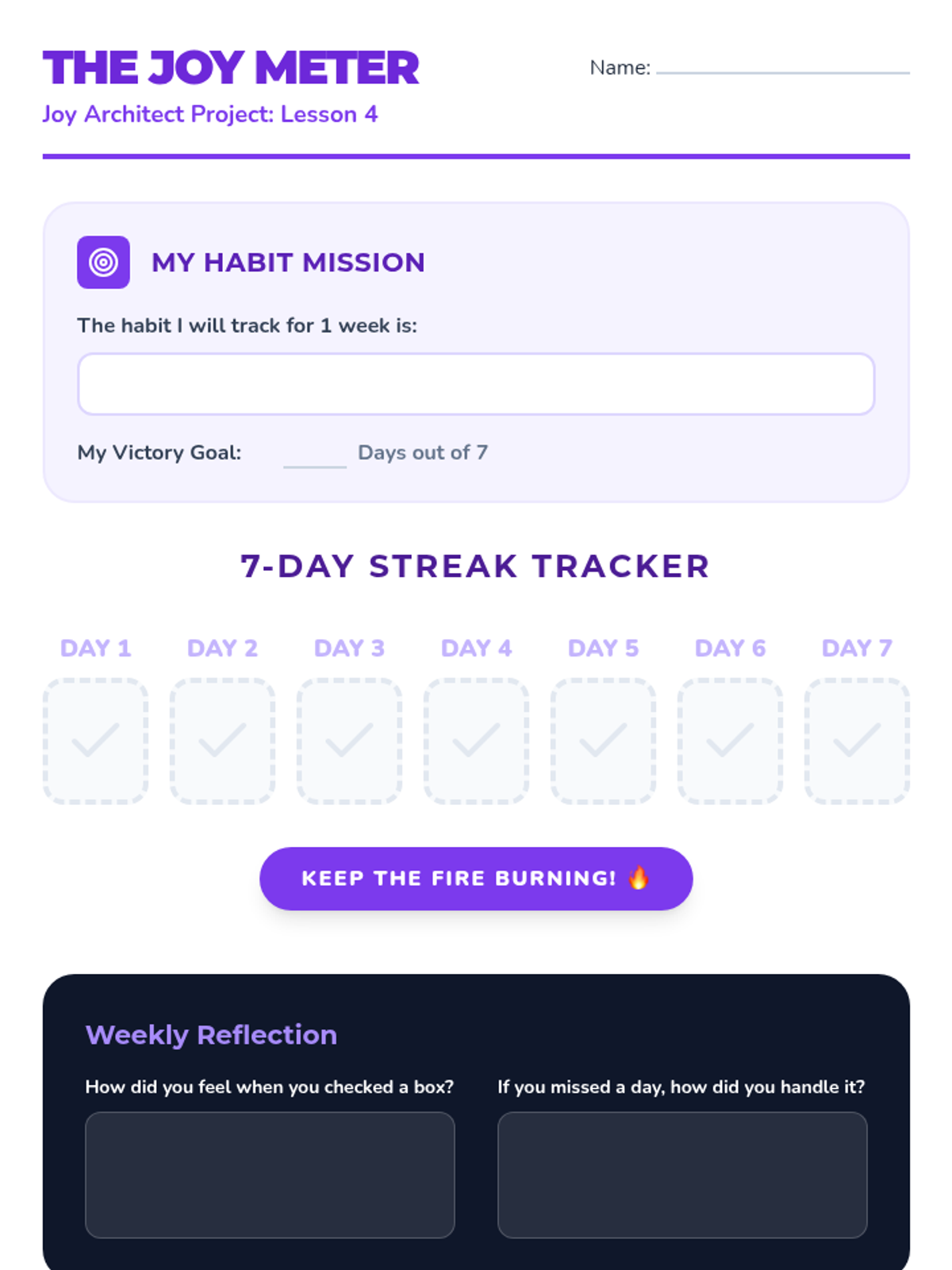
Students create personal trackers to monitor their consistency in engaging with positive habits, learning the power of 'streaks' and self-monitoring.
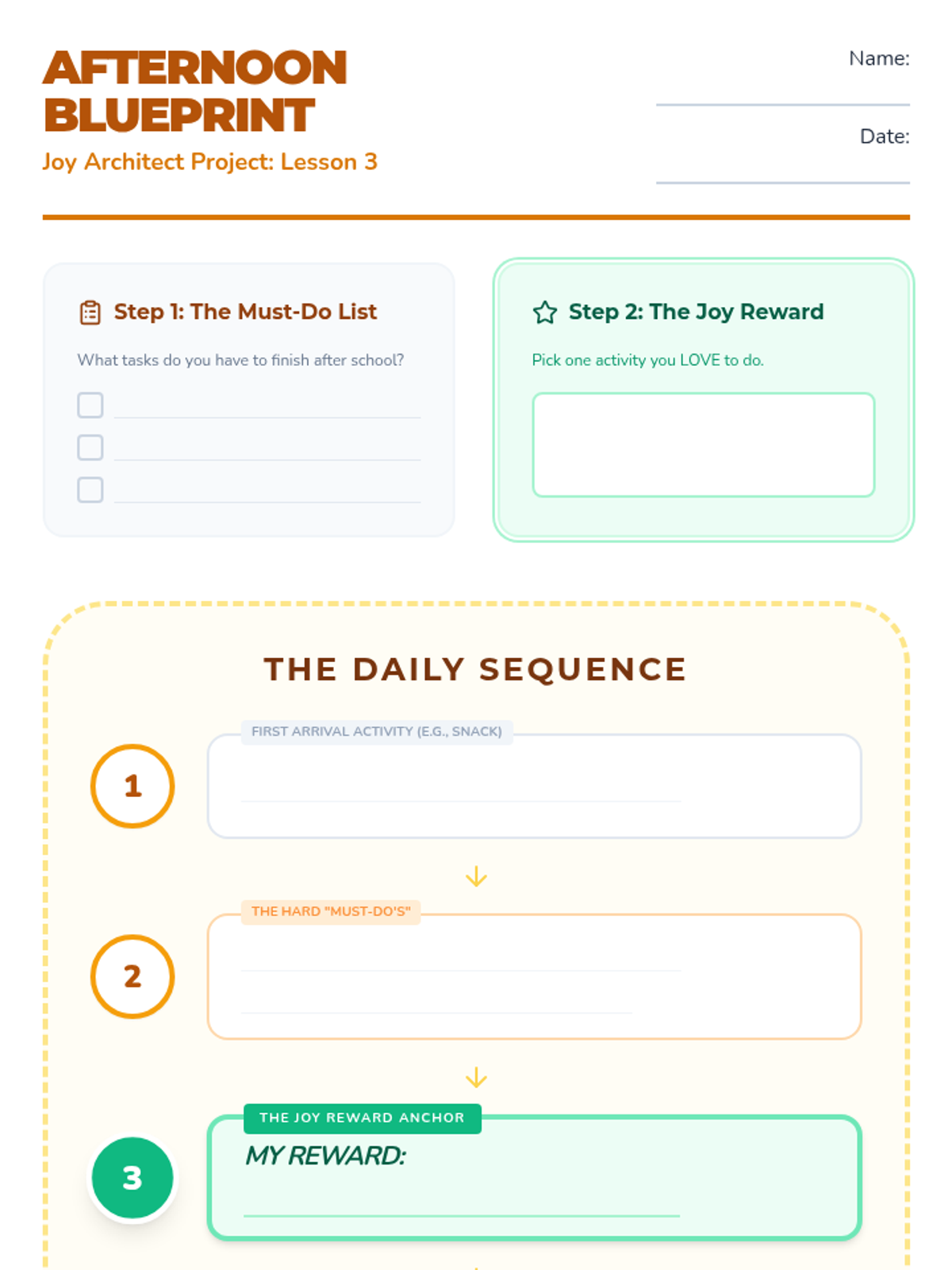
Students design a balanced afternoon routine using 'Grandma's Rule' to sequence chores and rewards, creating a sustainable and motivating schedule.
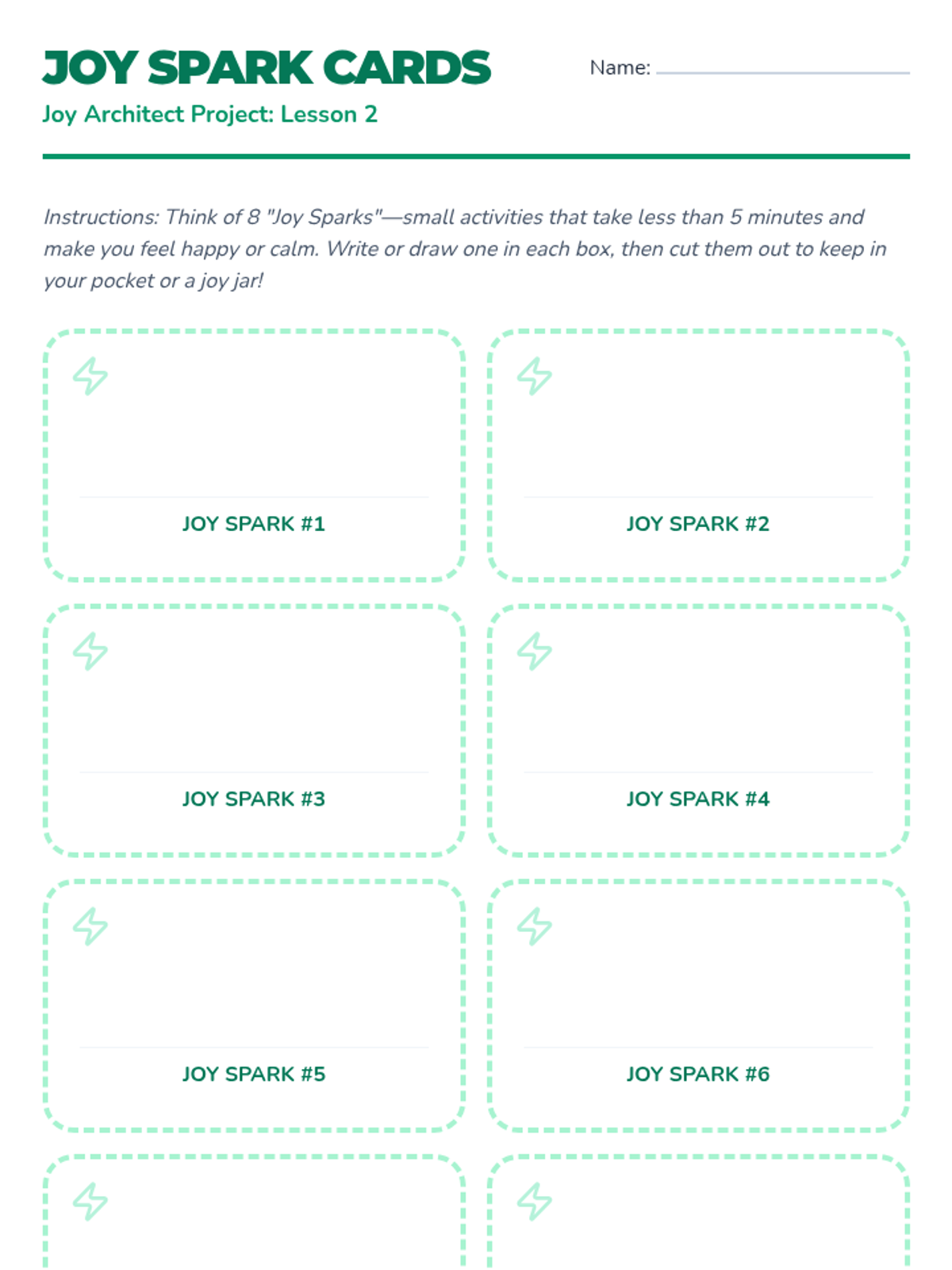
Students explore the concept of 'micro-moments' of joy and learn that frequency of positive experiences is more important than intensity for building long-term happiness.
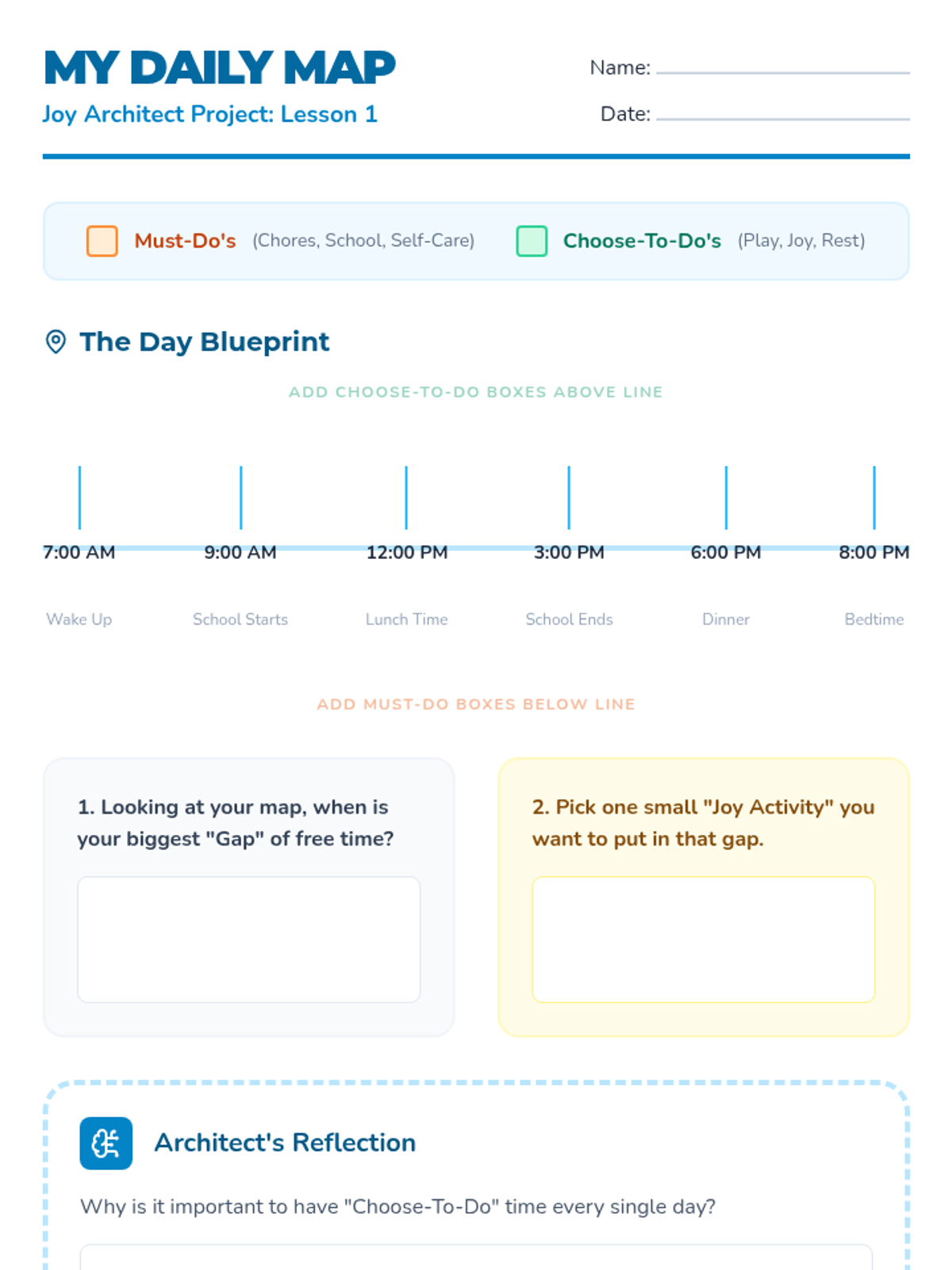
Students audit their current daily schedules to distinguish between 'must-do' tasks and 'choose-to-do' activities, identifying gaps where positive experiences can be added.
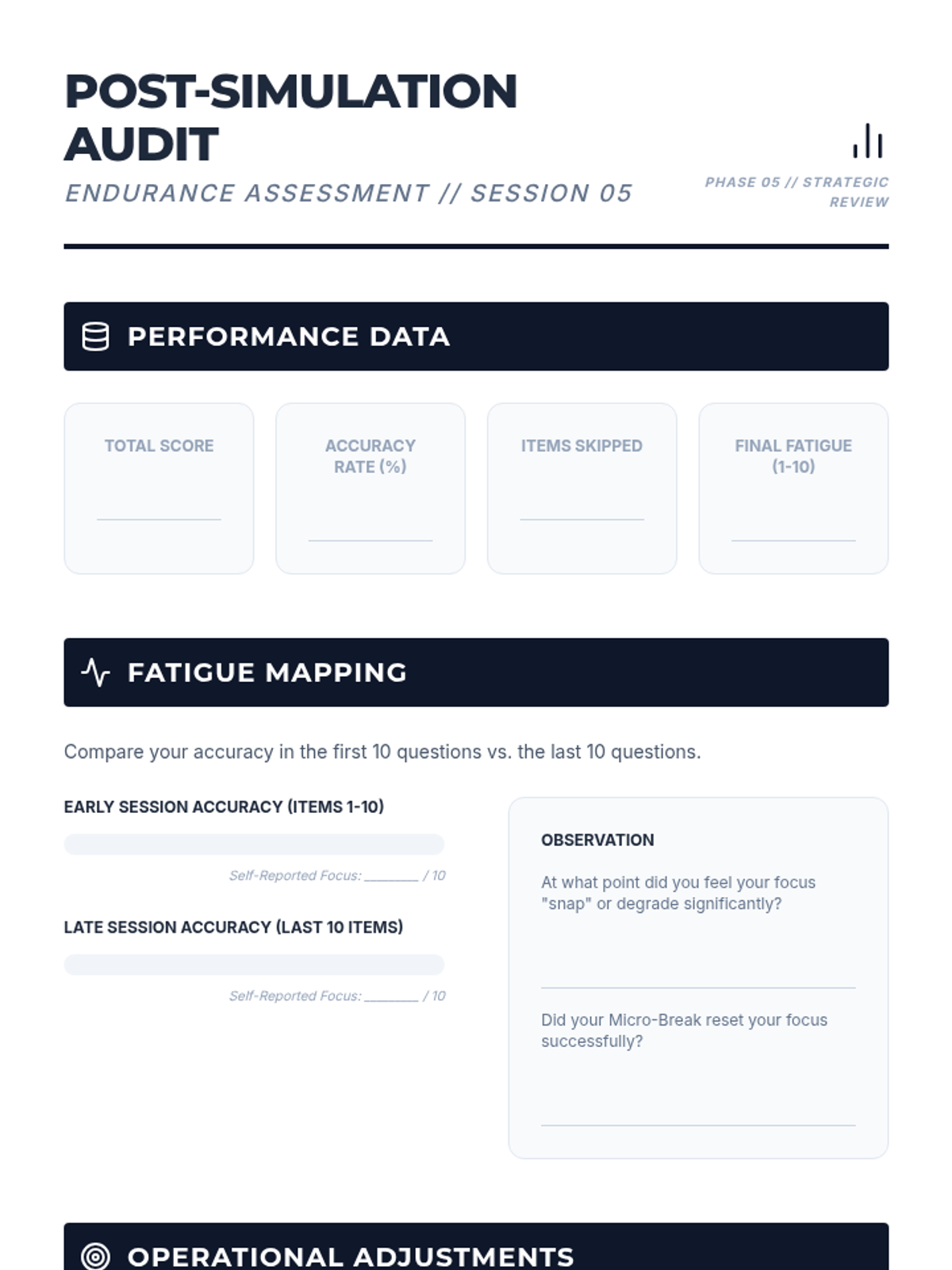
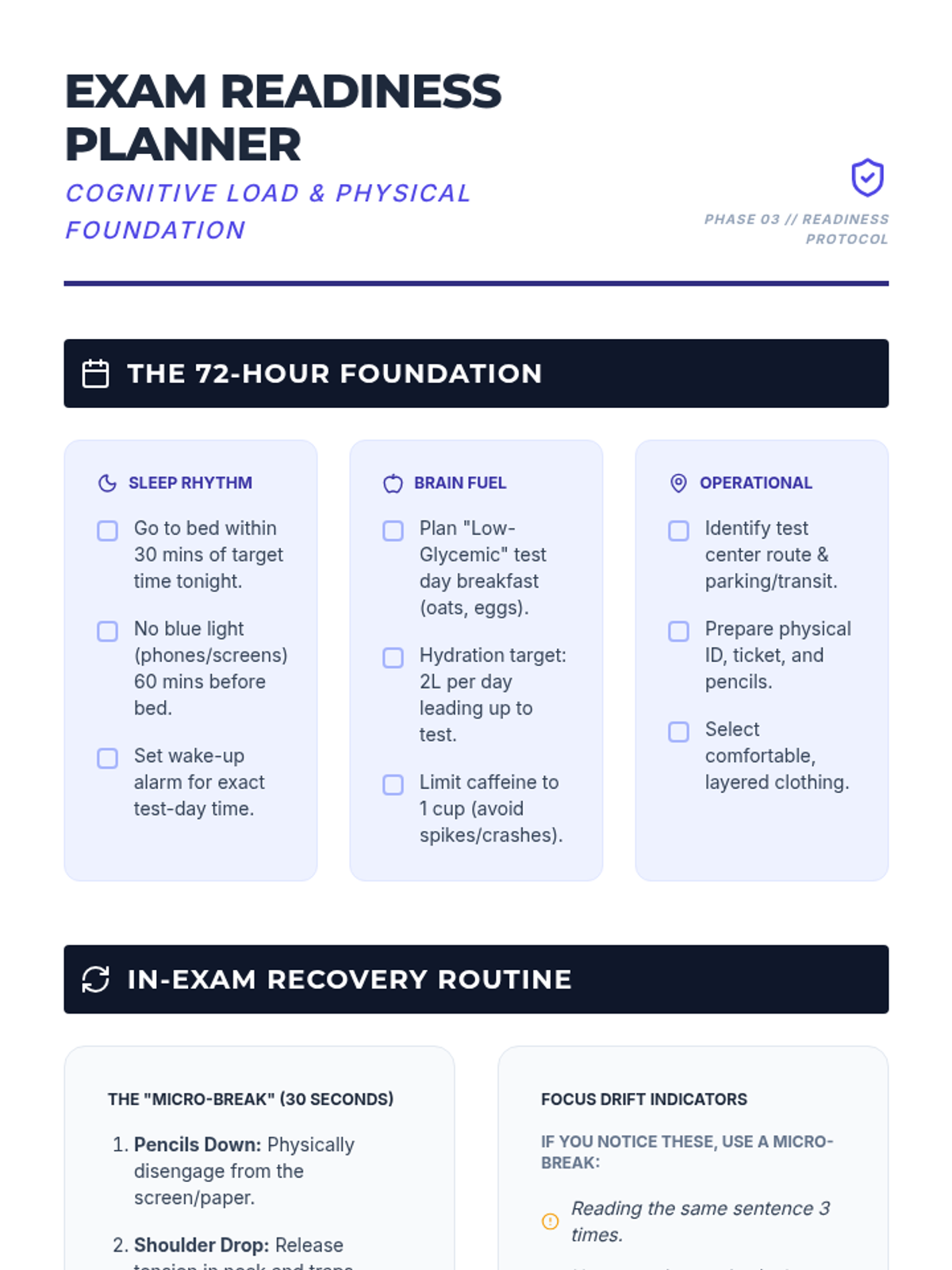
A full-length practice simulation designed to build cognitive endurance and practice micro-break techniques.
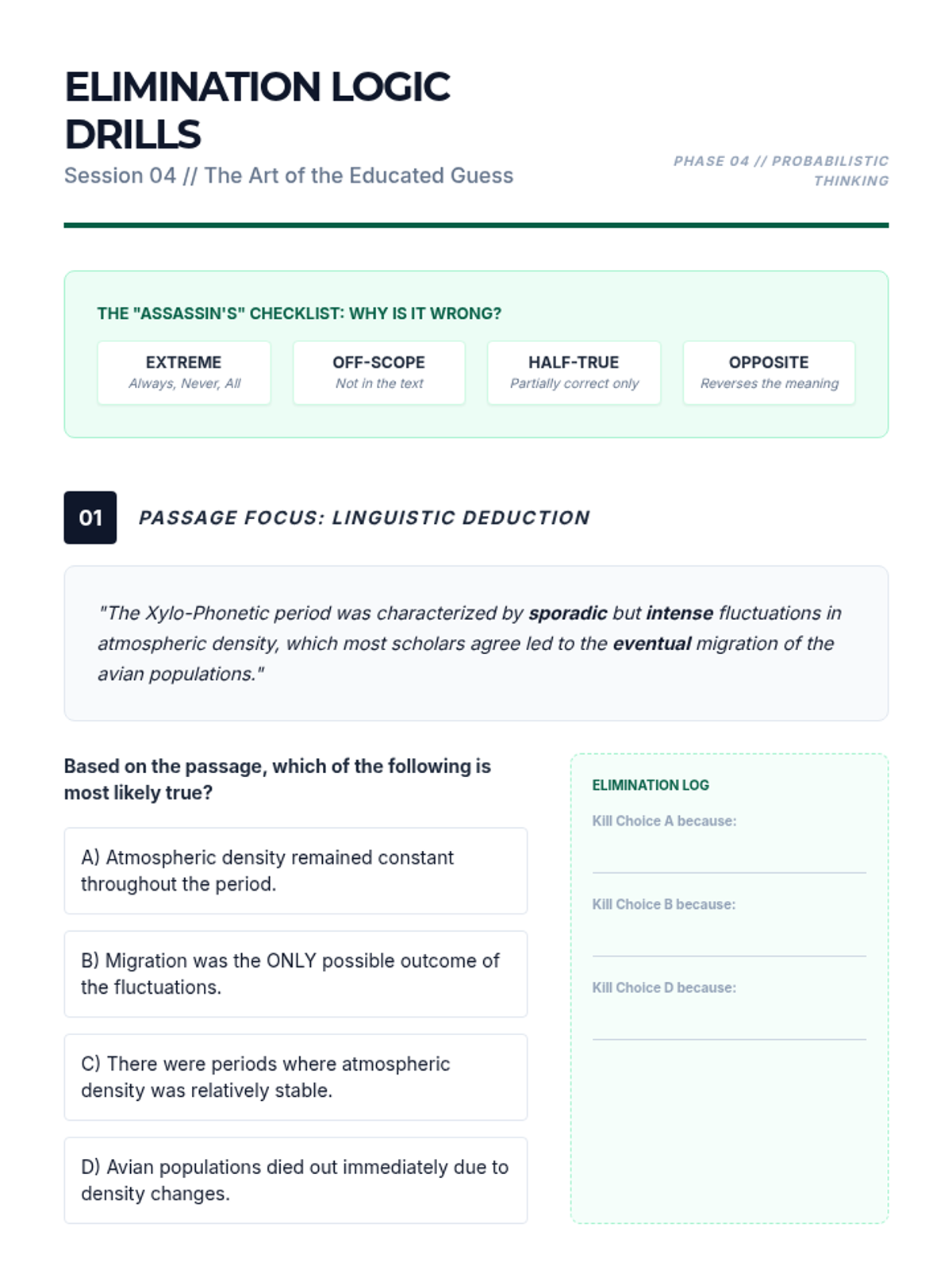
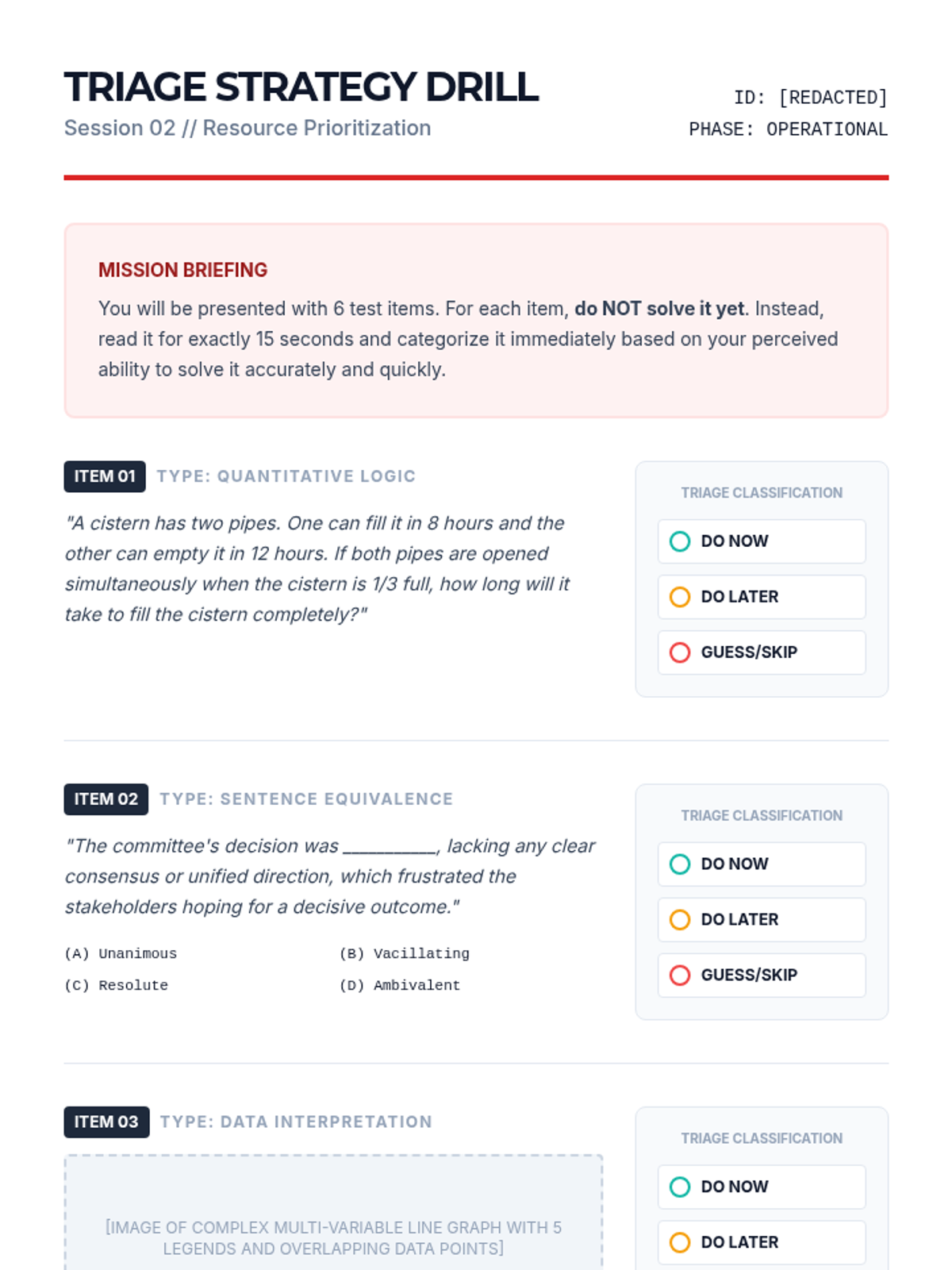
Teaches statistical and logical strategies for educated guessing when an answer is not immediately clear.
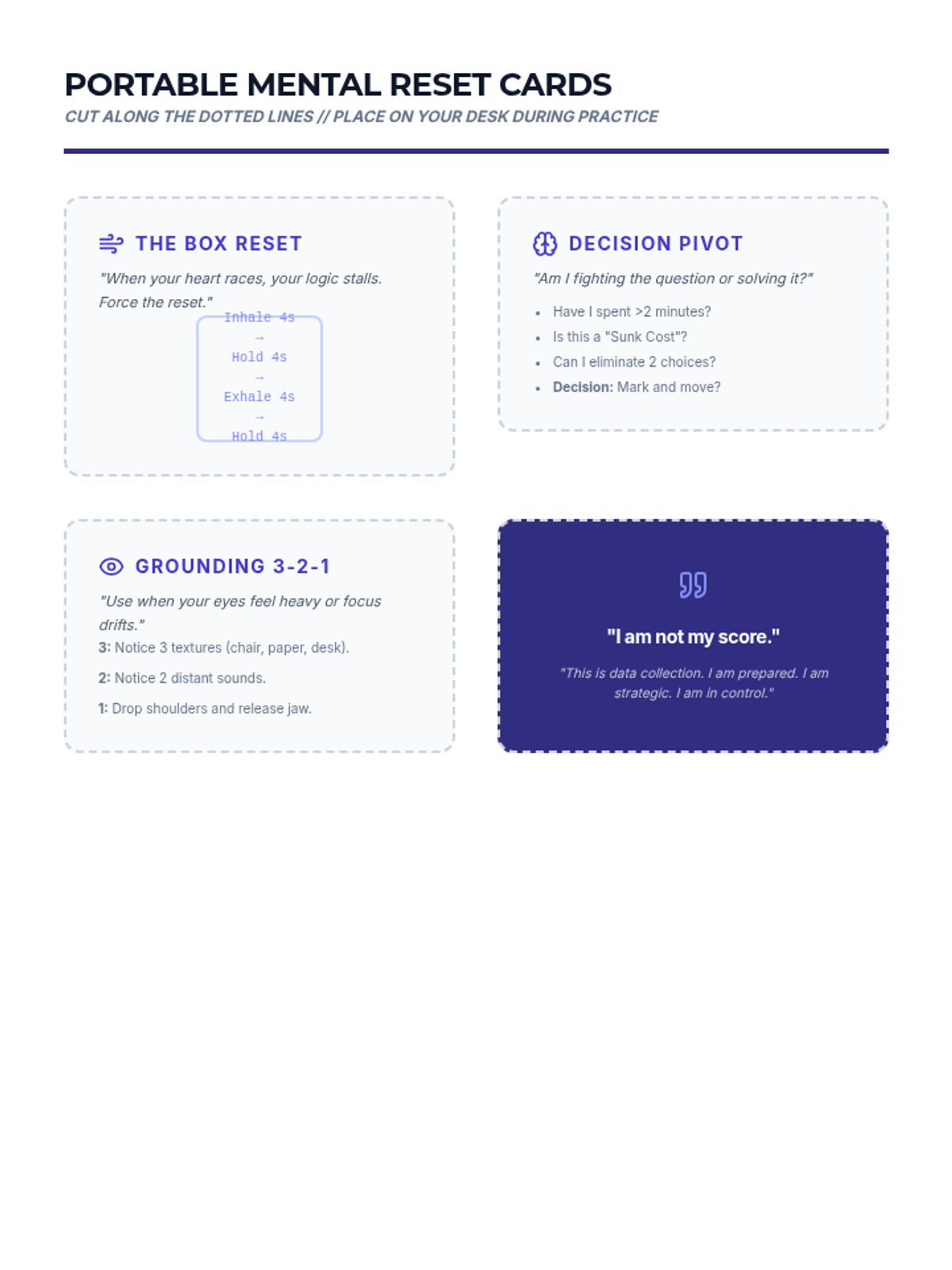
Explores techniques for maintaining focus and reducing anxiety during high-pressure assessments.
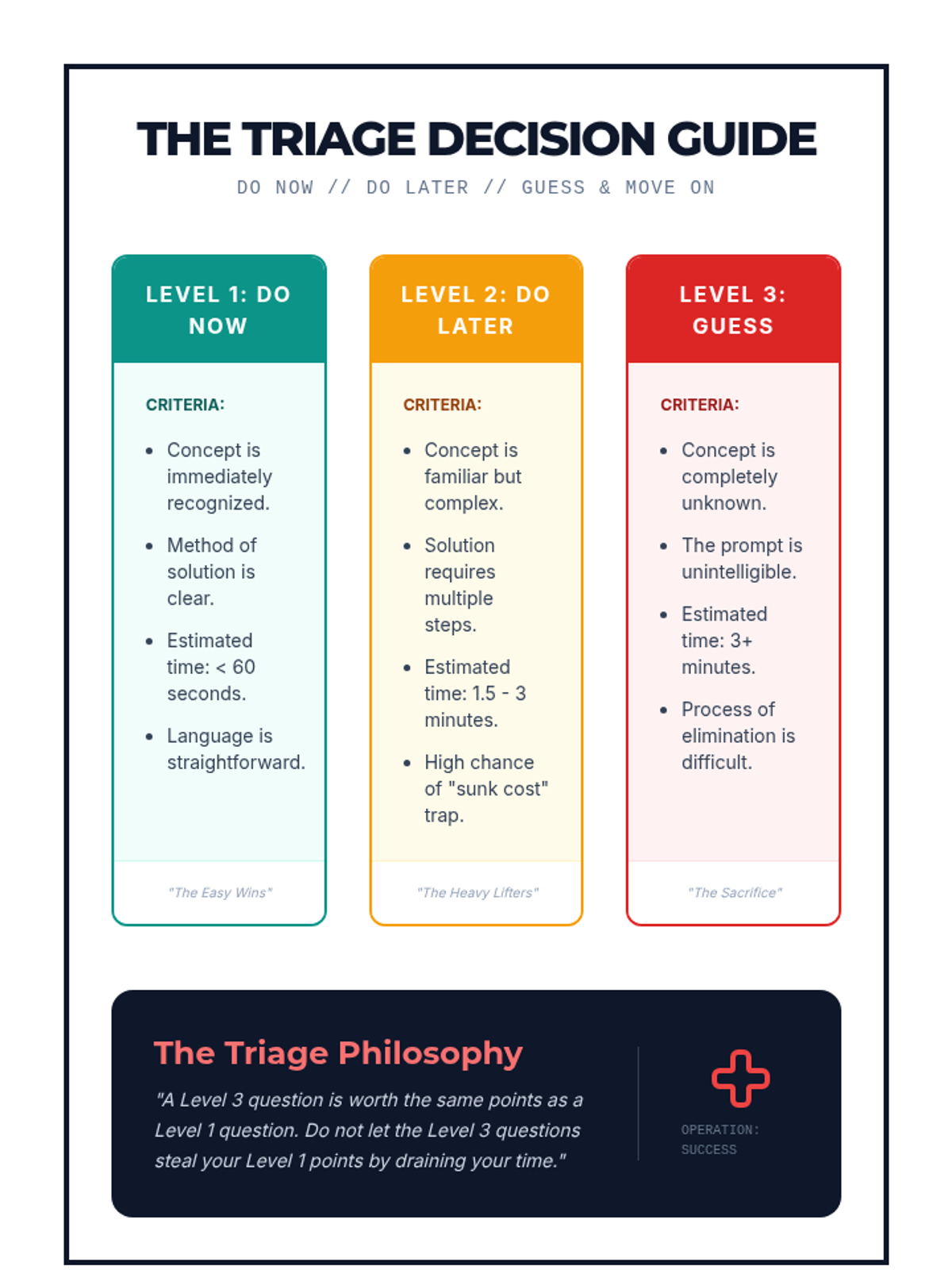
Focuses on the 'triage' method to prioritize questions and manage time effectively during an exam.
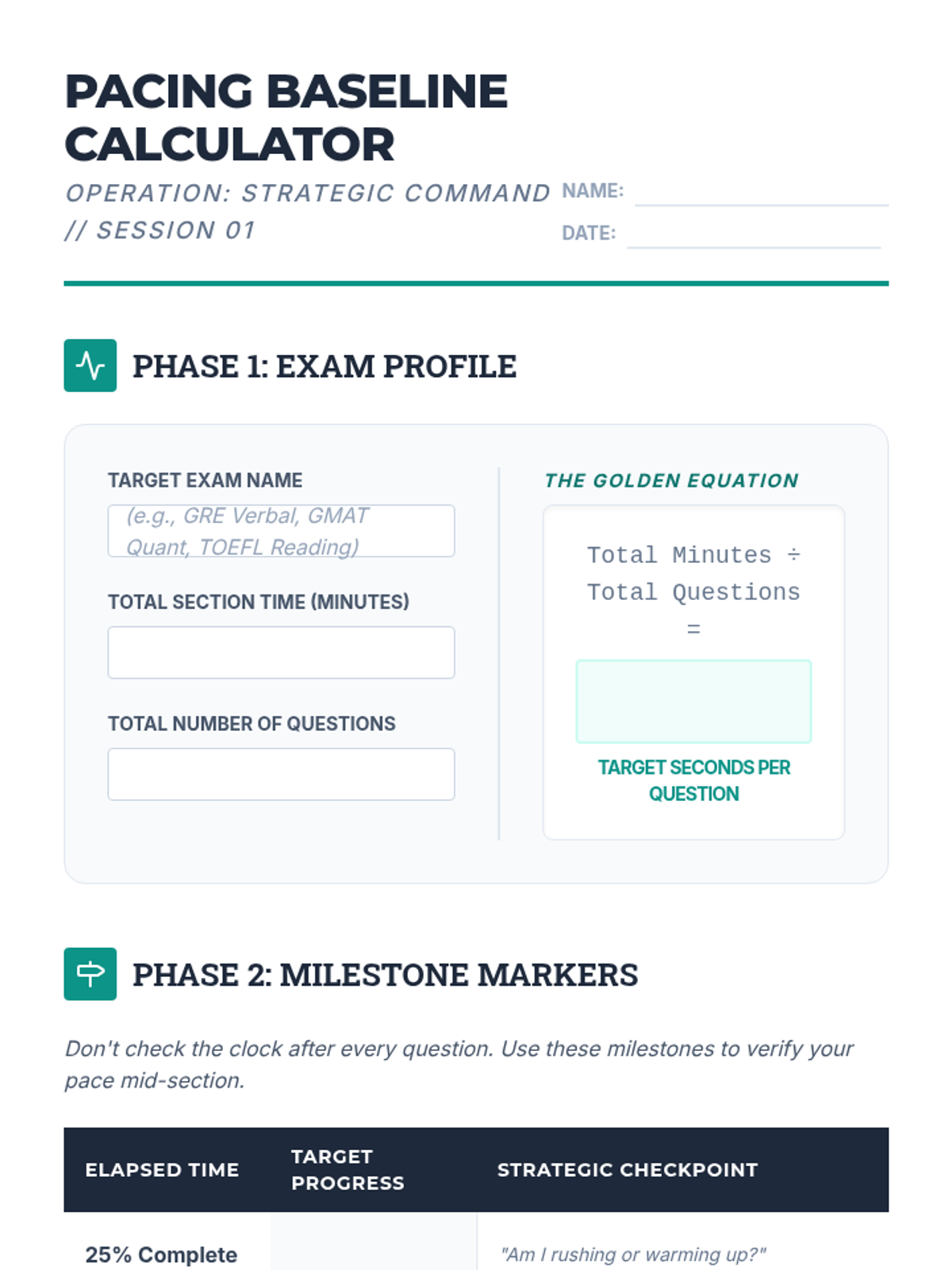
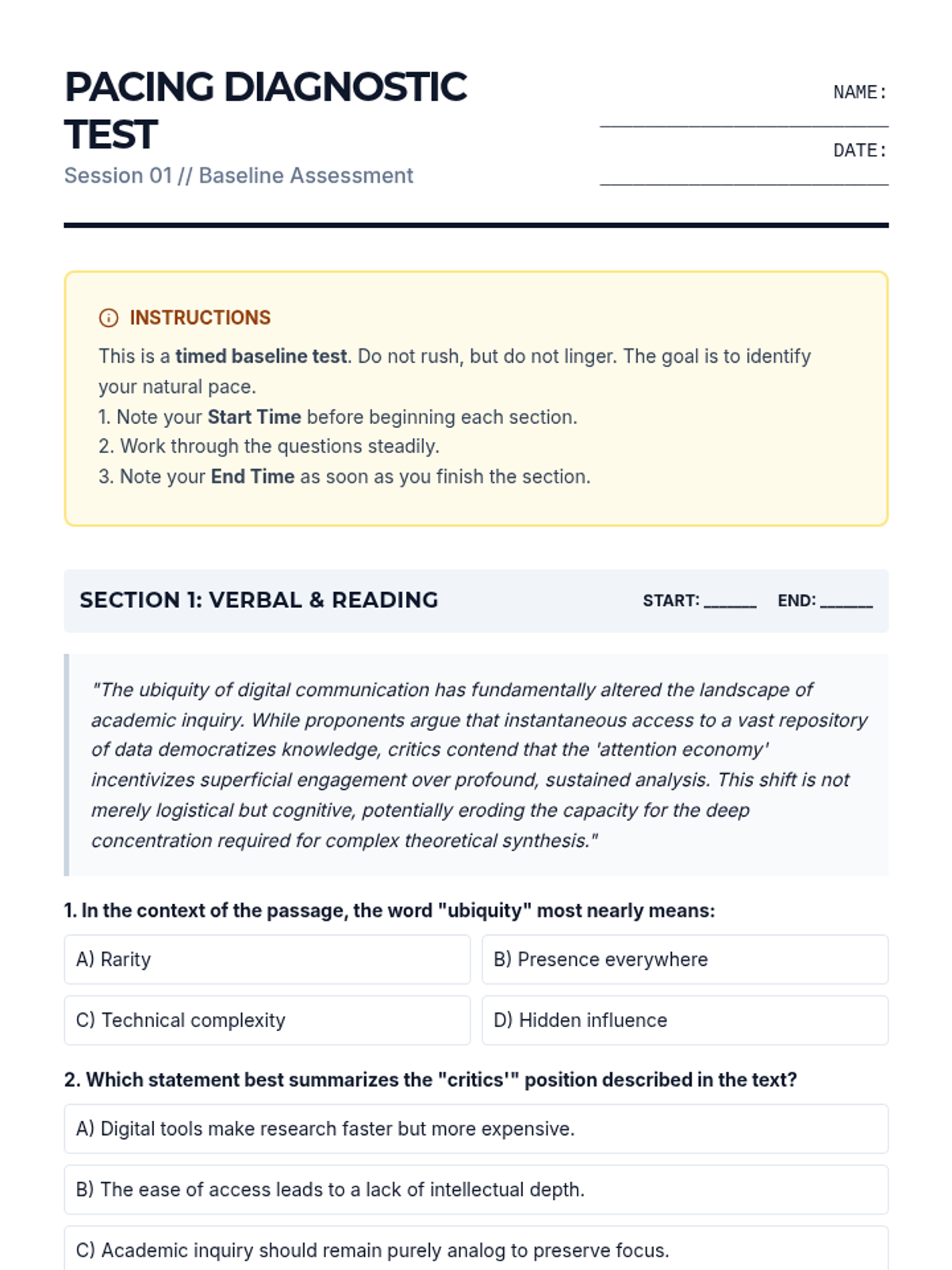
Students determine their current testing pace and learn to calculate precise time allocations for specific exams.
Focuses on the concept of opportunity cost through role-playing scenarios, teaching students to analyze the value of what is given up when making choices.
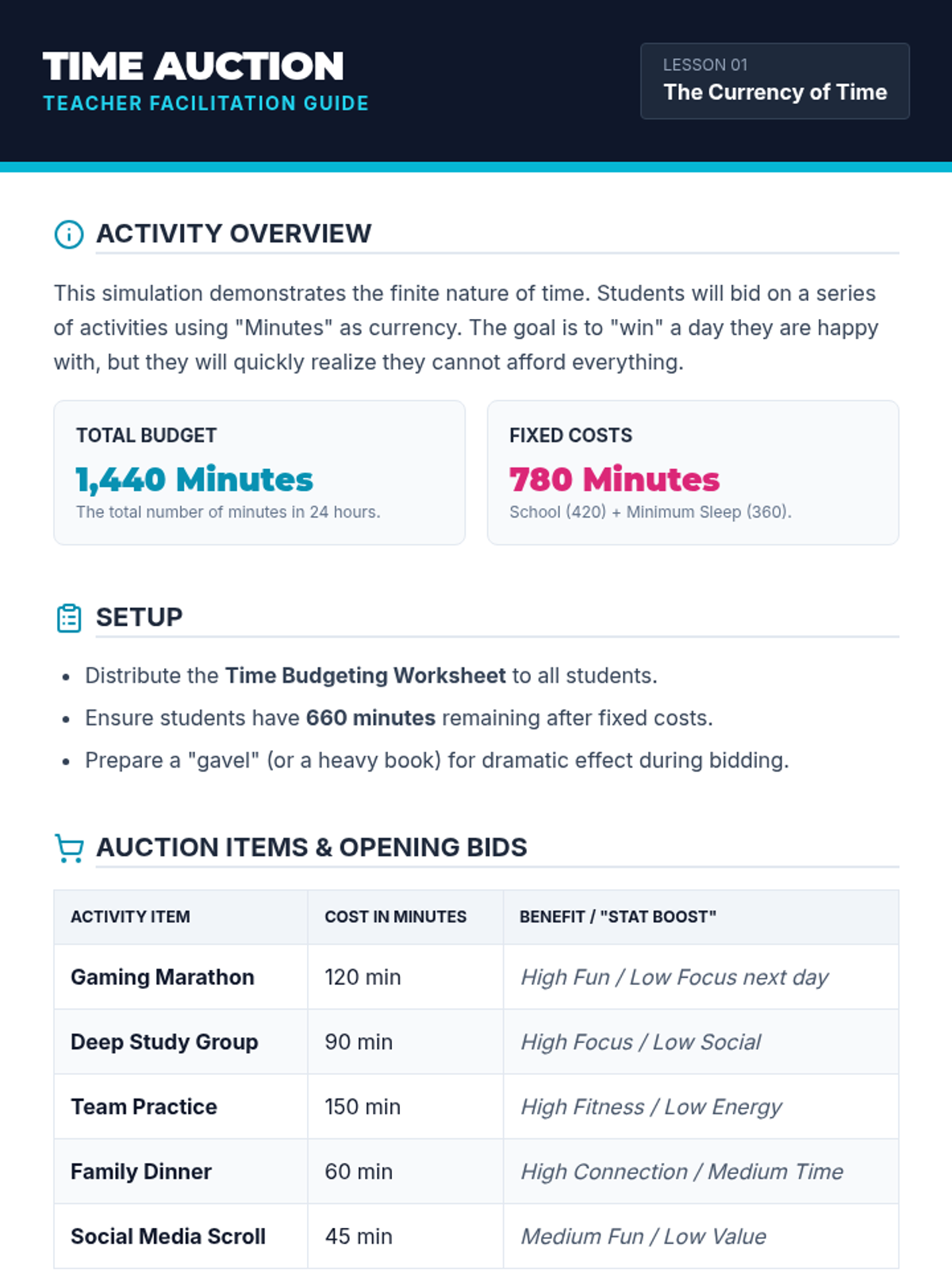
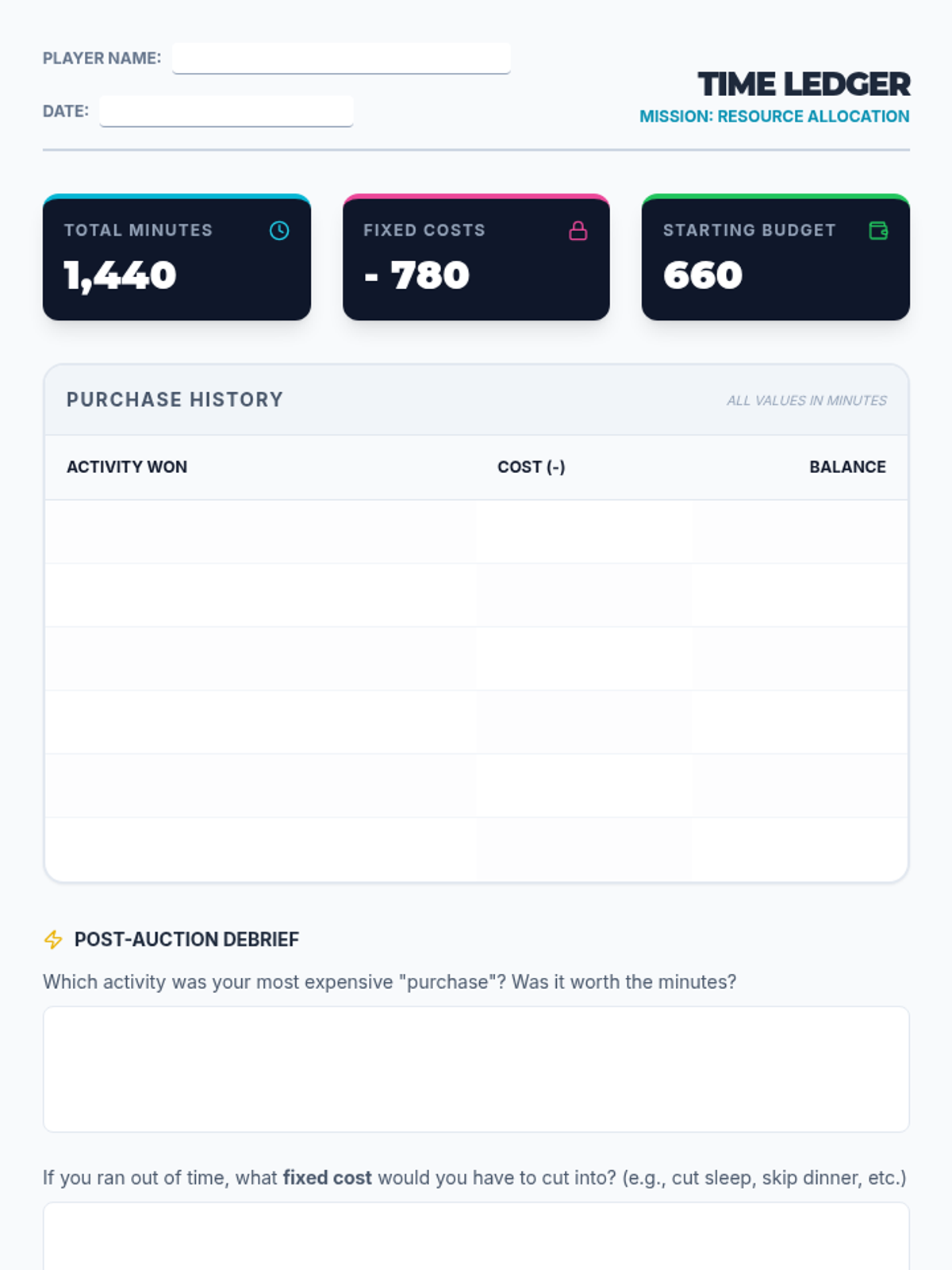
Introduces time as a finite currency through a game economy where students 'buy' activities, establishing the foundational constraint of resource management.
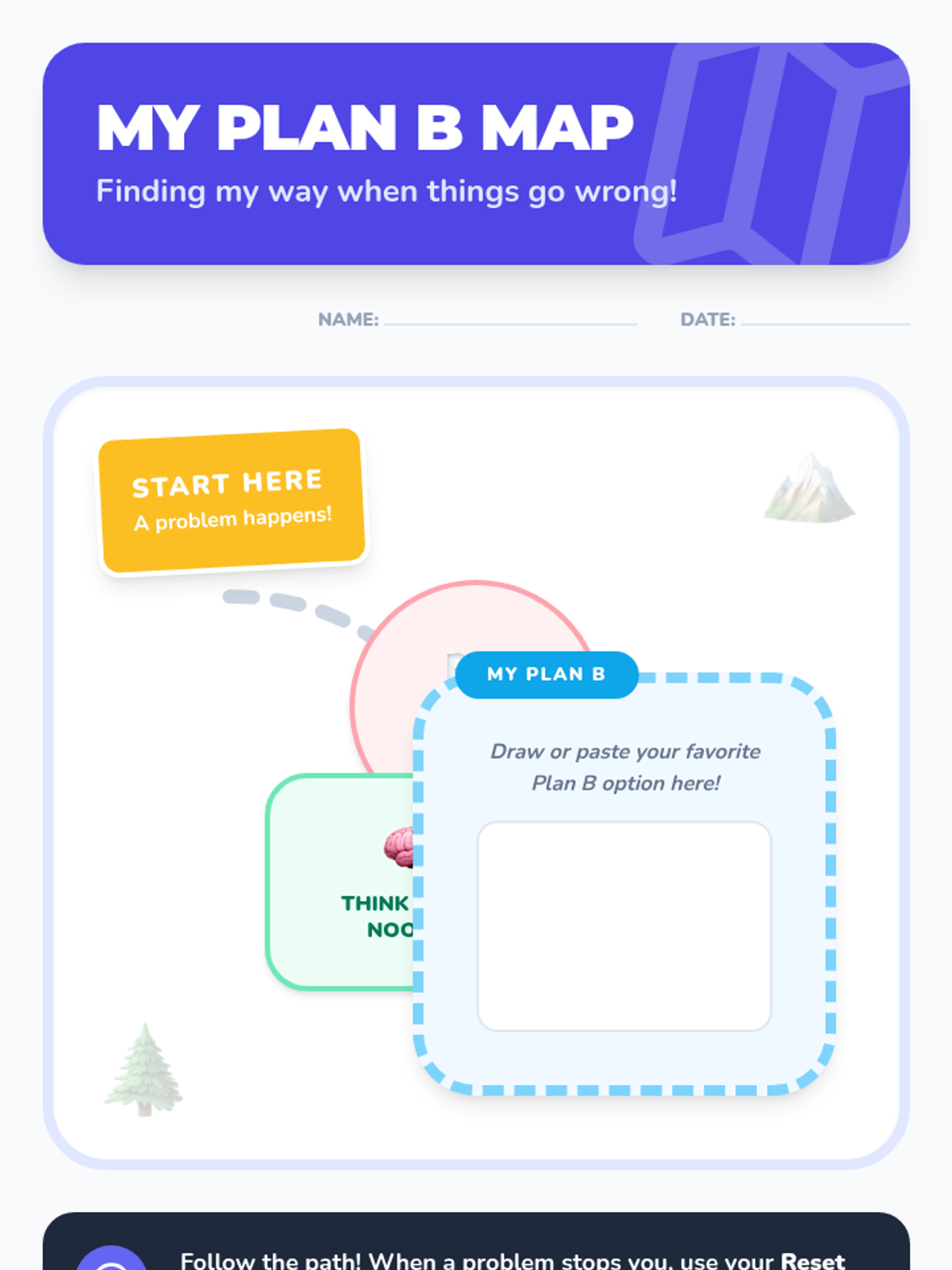
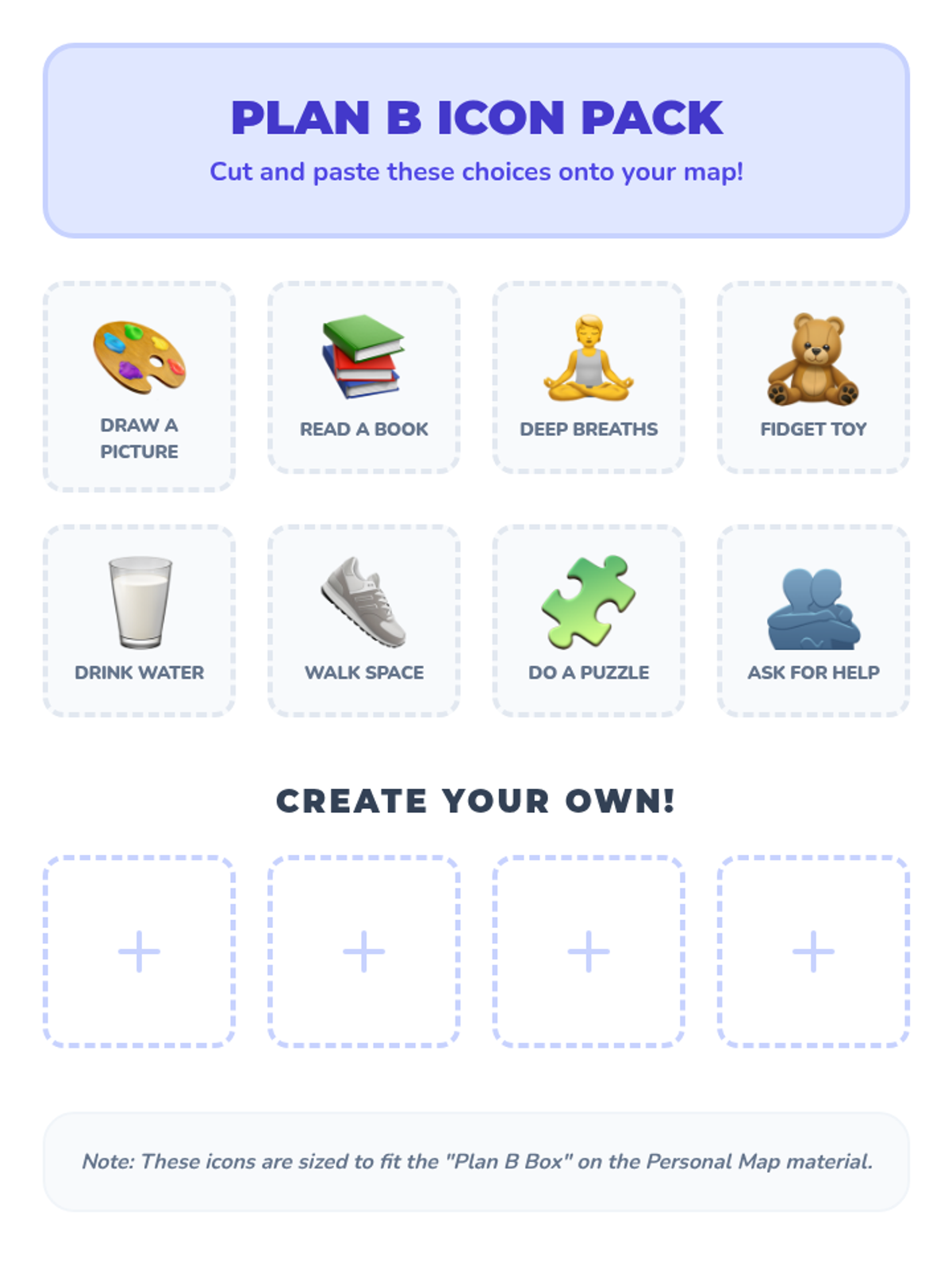
Students synthesize their learning by creating a personalized visual map of 'Plan B' options for common classroom obstacles.
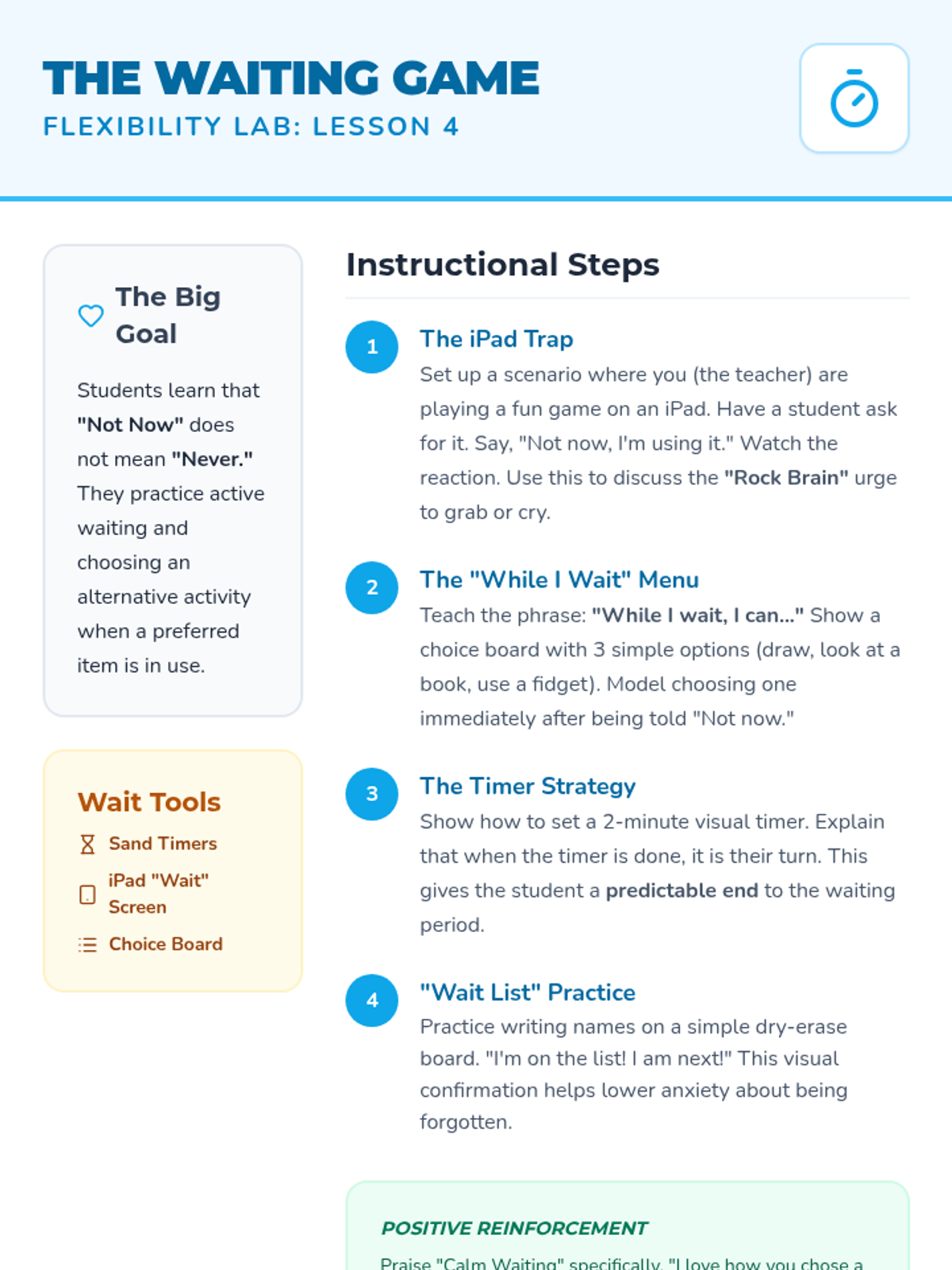
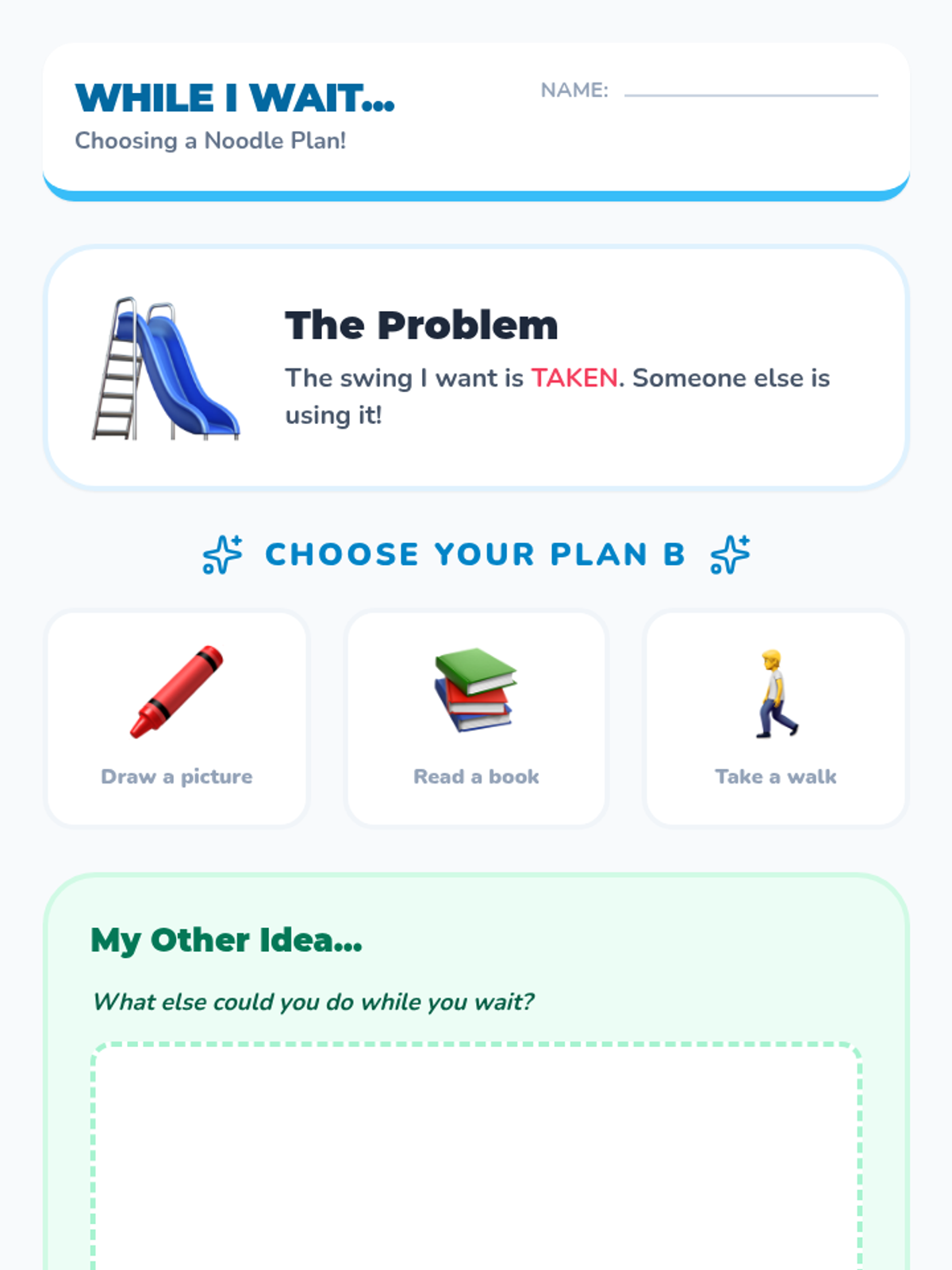
Focuses on the skill of 'waiting' and choosing alternatives when preferred items are unavailable.
Students practice managing anxiety during schedule shifts by using visual aids and moving to a 'Plan B' activity.
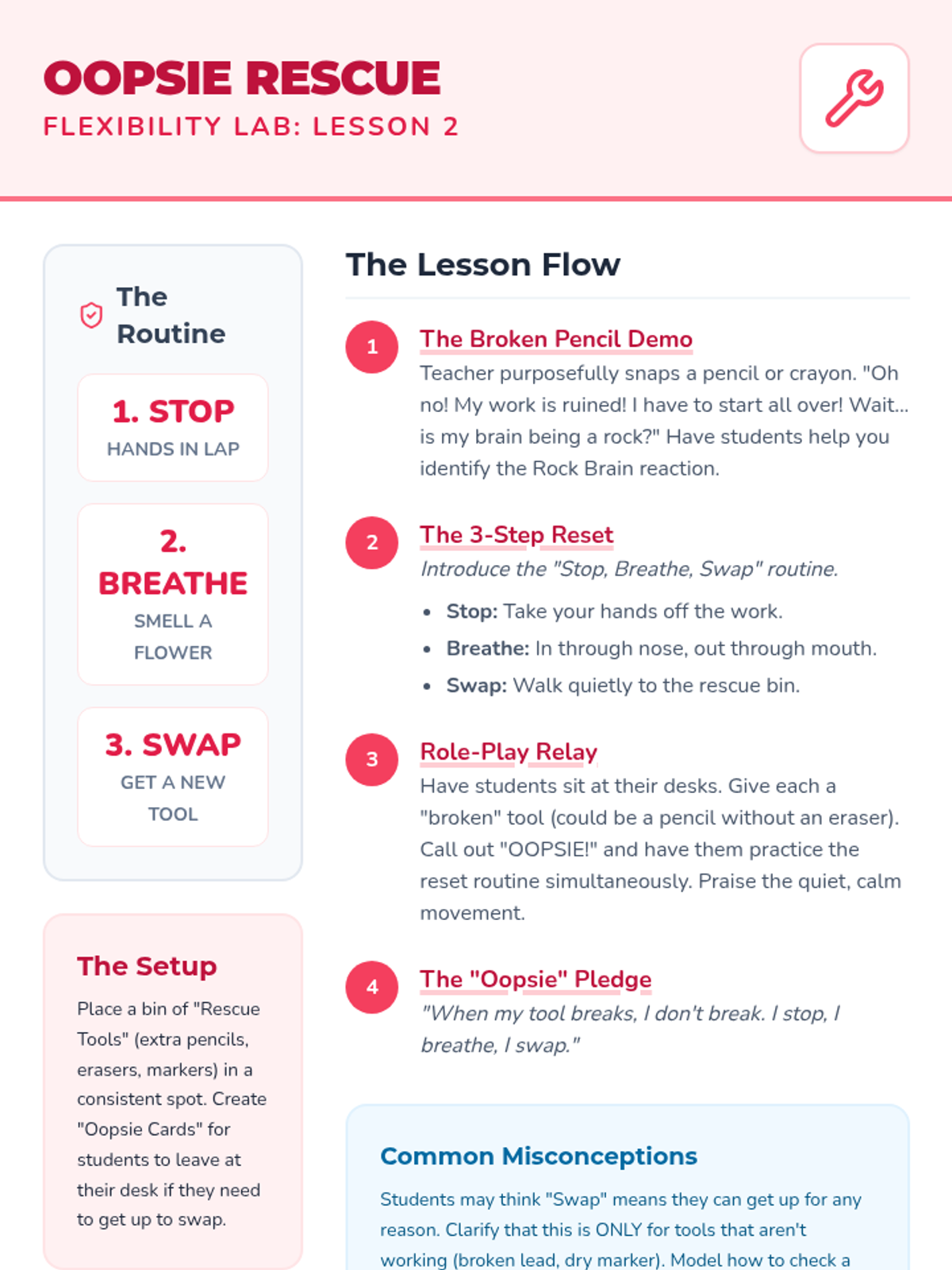
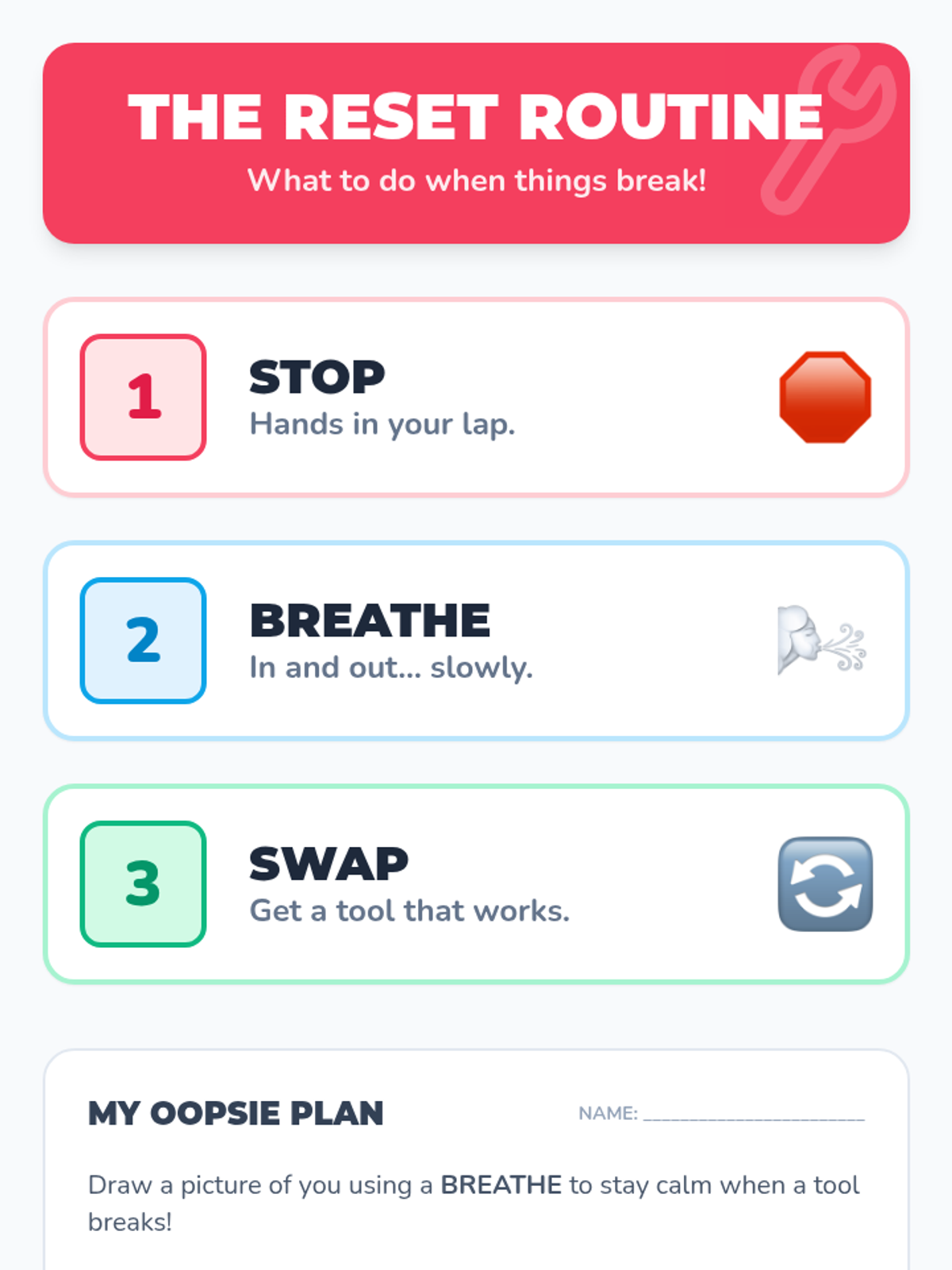
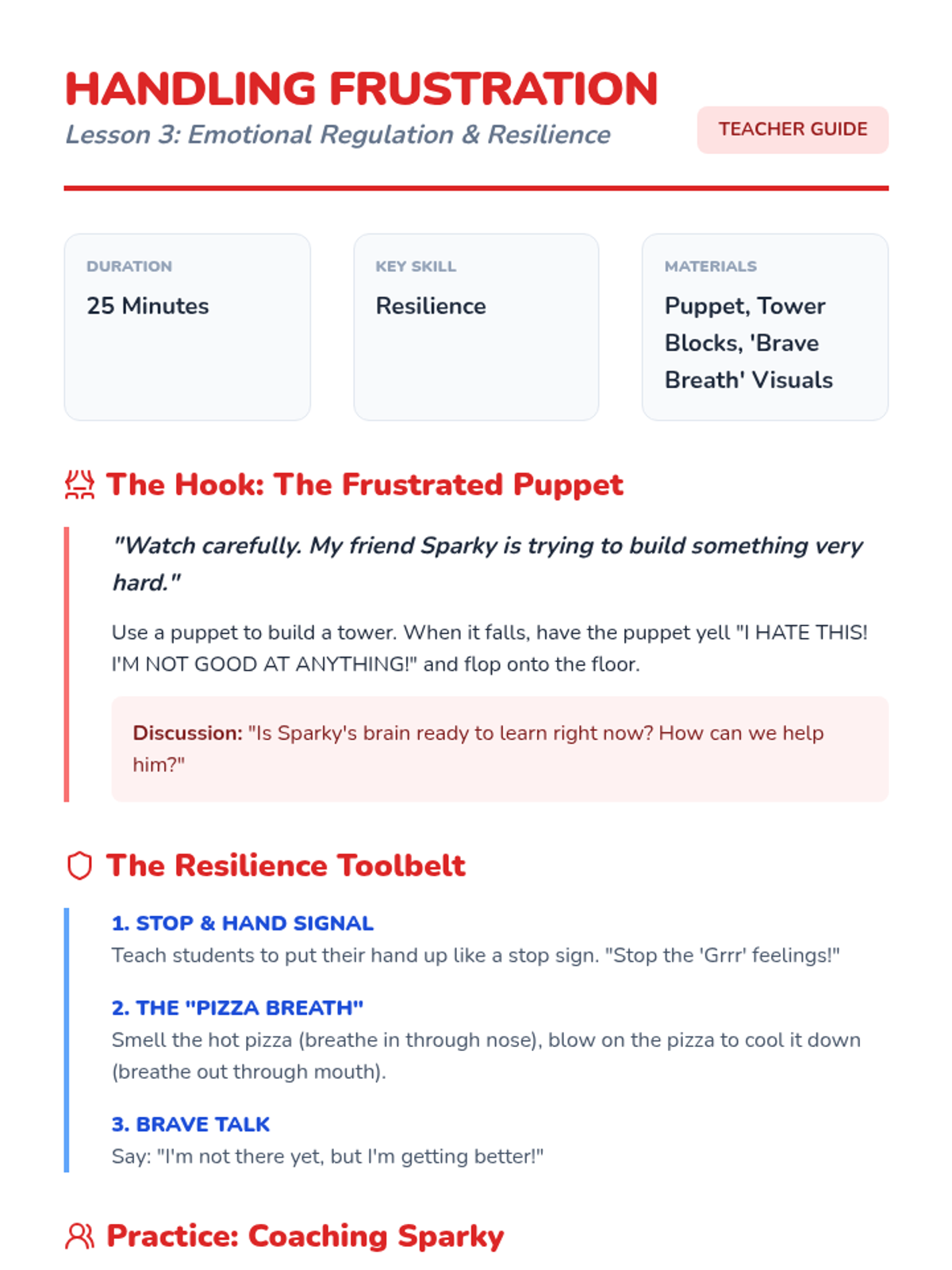
Students role-play tool breakage and practice a three-step reset routine: Stop, Breathe, Swap to maintain emotional regulation.
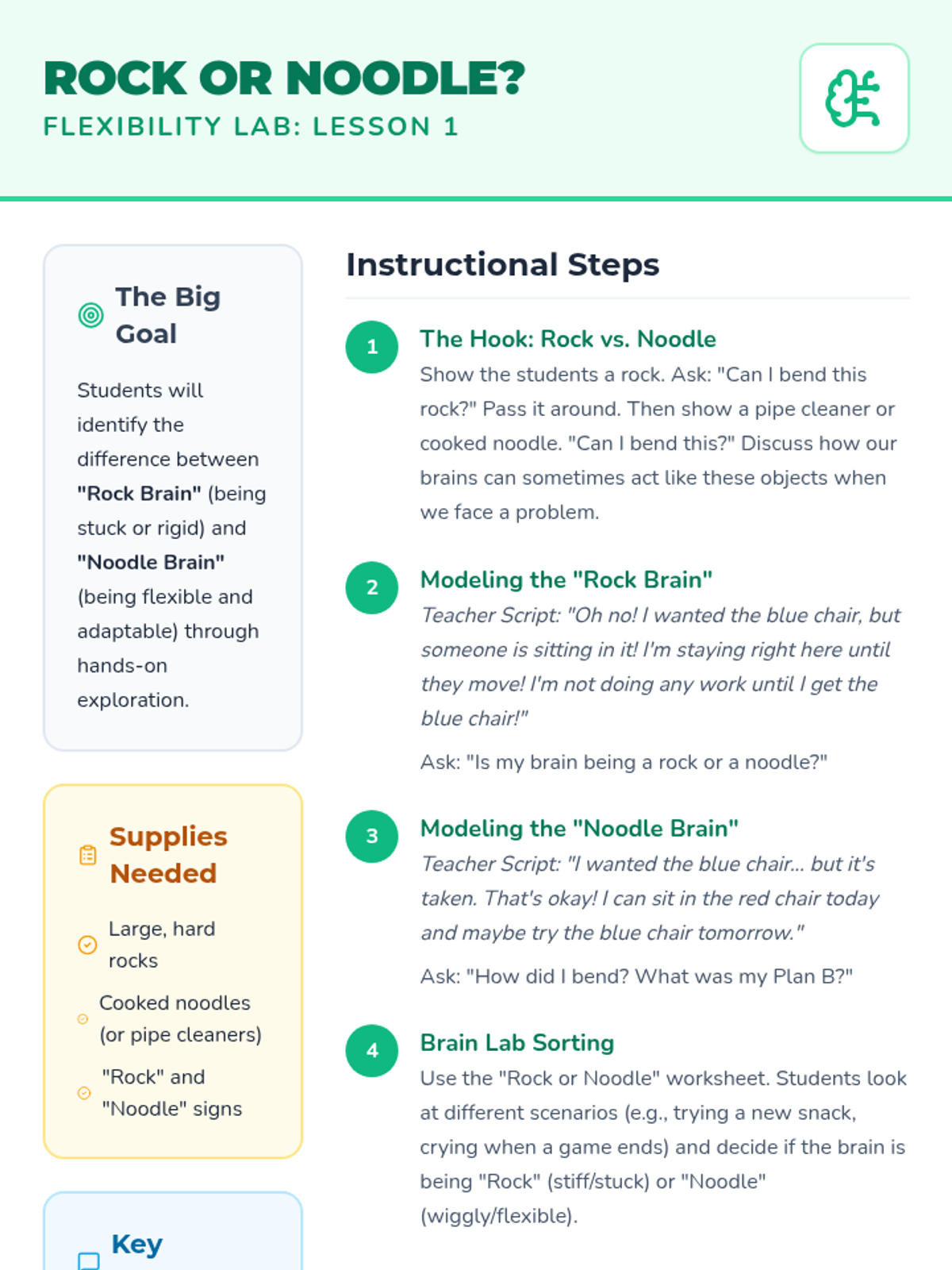
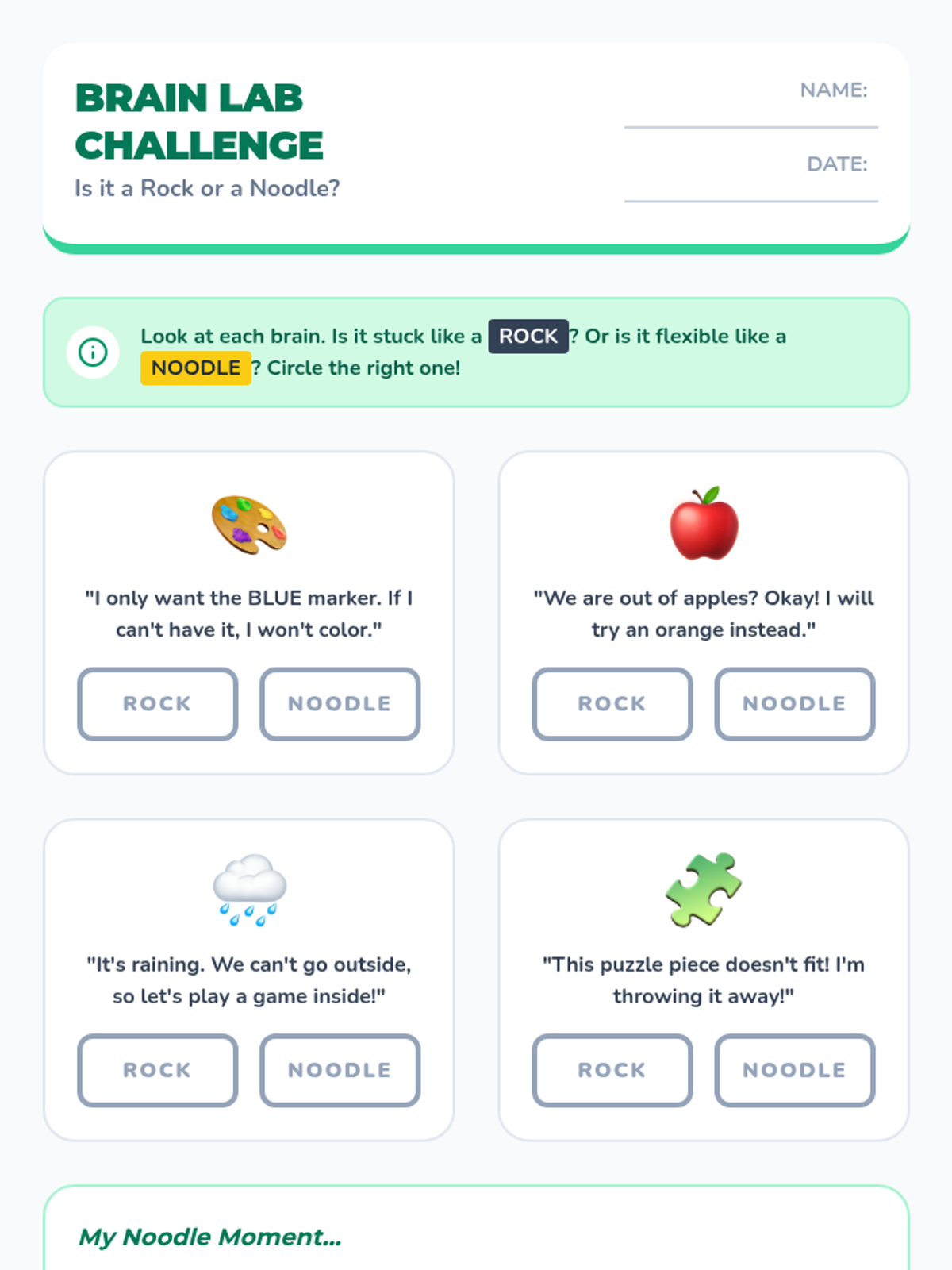
Students explore the difference between 'rock brain' (stuck) and 'noodle brain' (flexible) using physical objects and metaphors. They establish the core vocabulary for the unit.
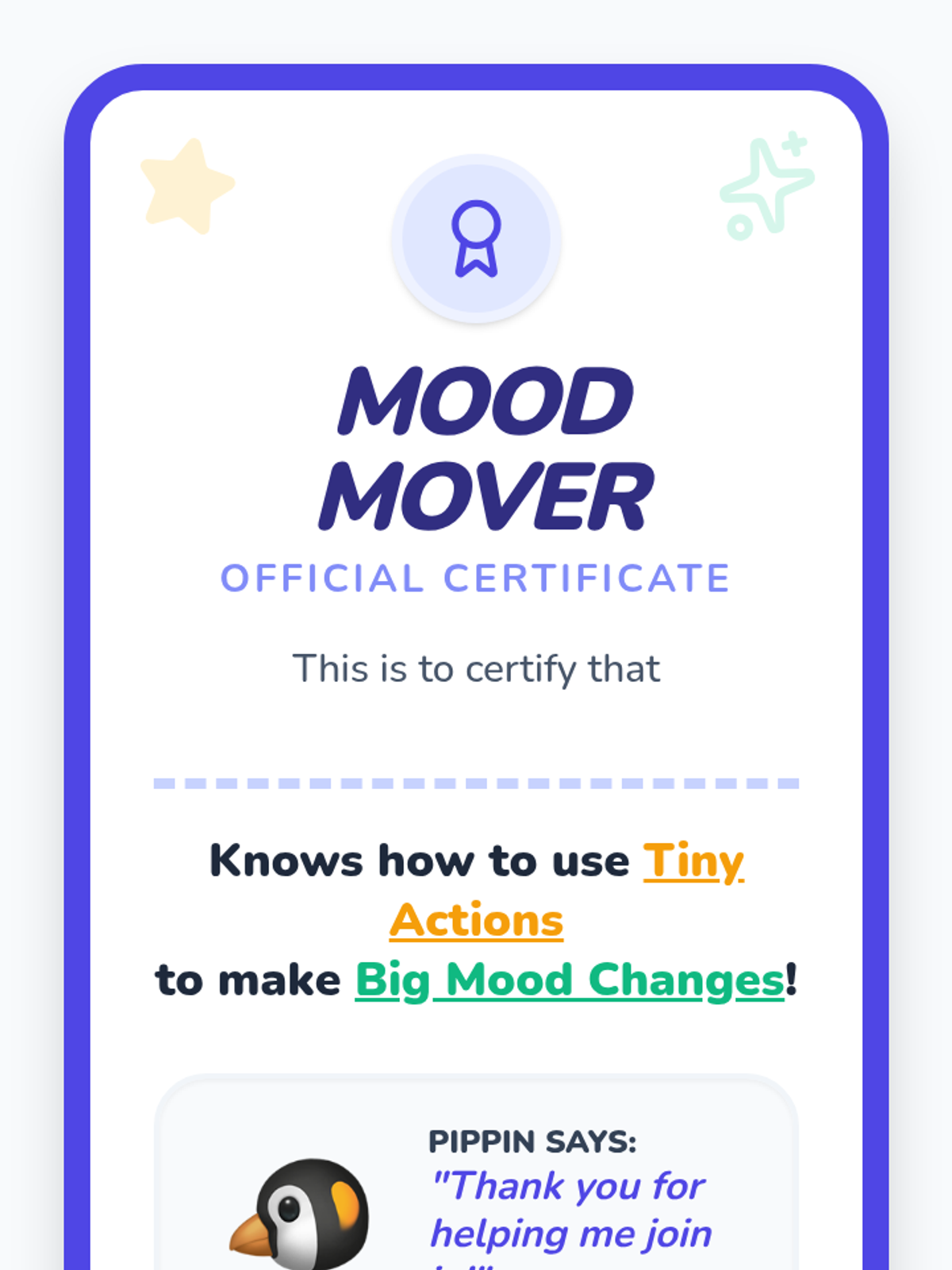
Students apply their learned strategies to help Pippin join the class, reflecting on their journey from feeling stuck to feeling active.
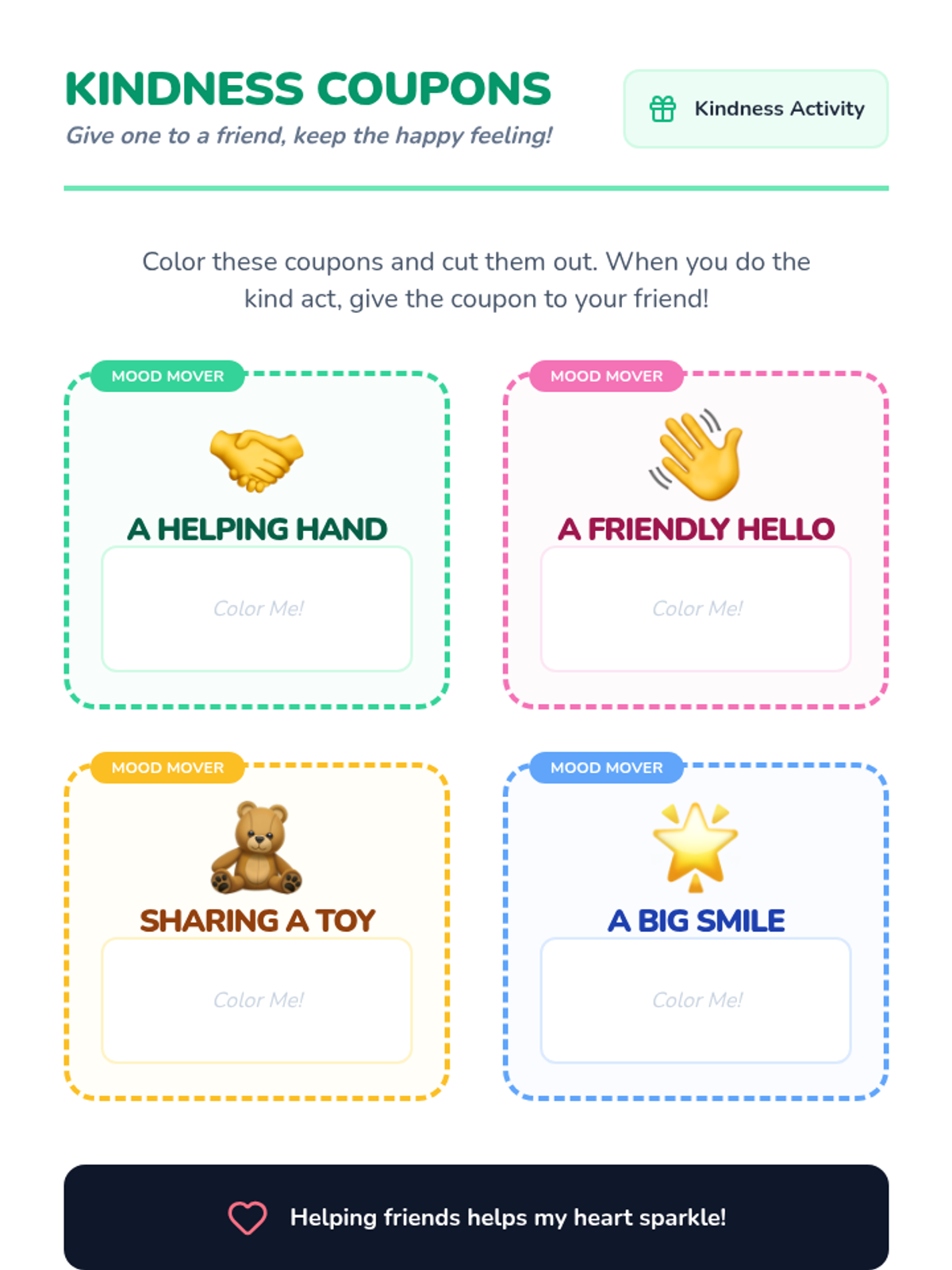
Students discover the mood-boosting power of kindness by practicing simple prosocial actions within the classroom community.
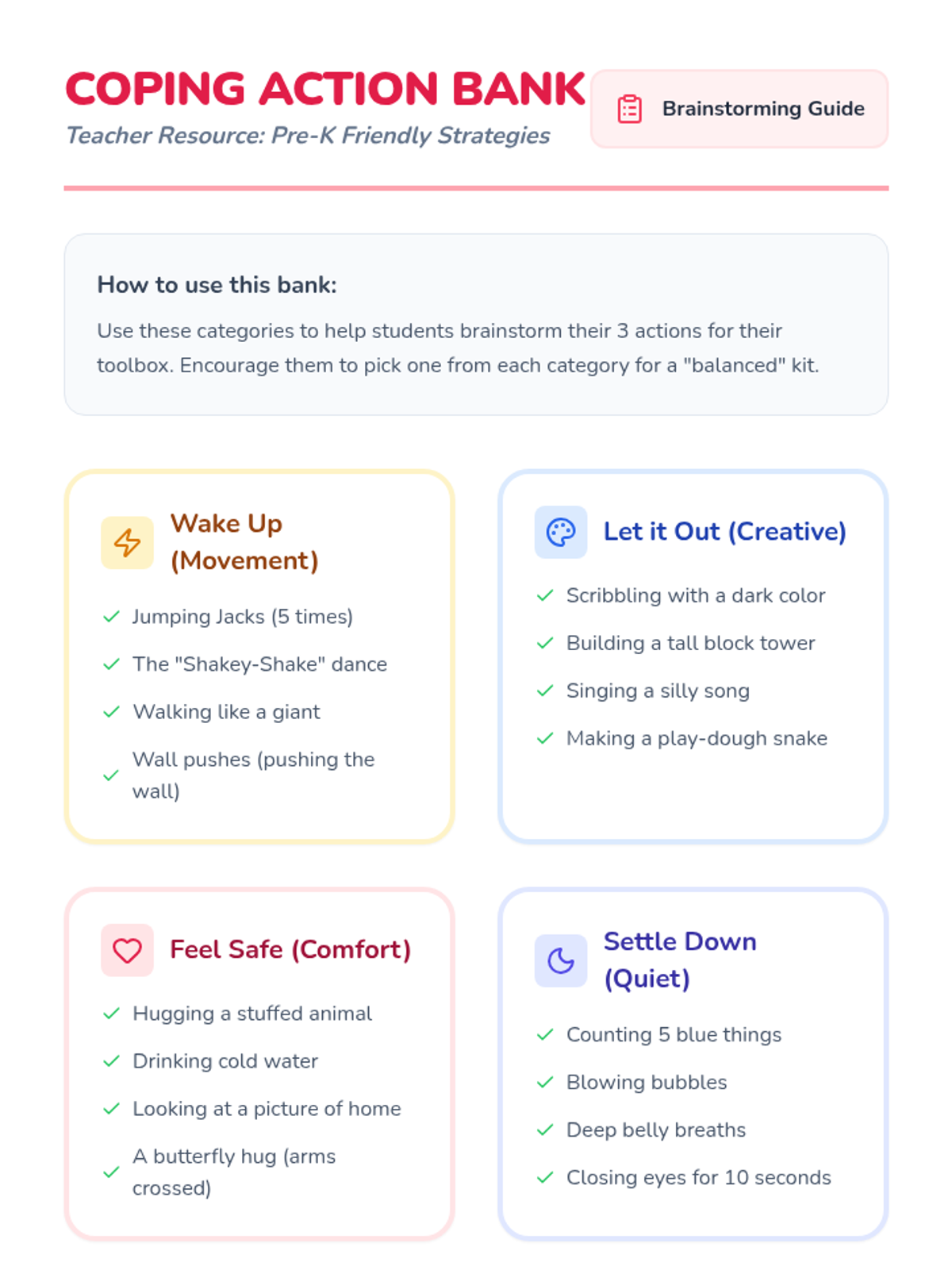
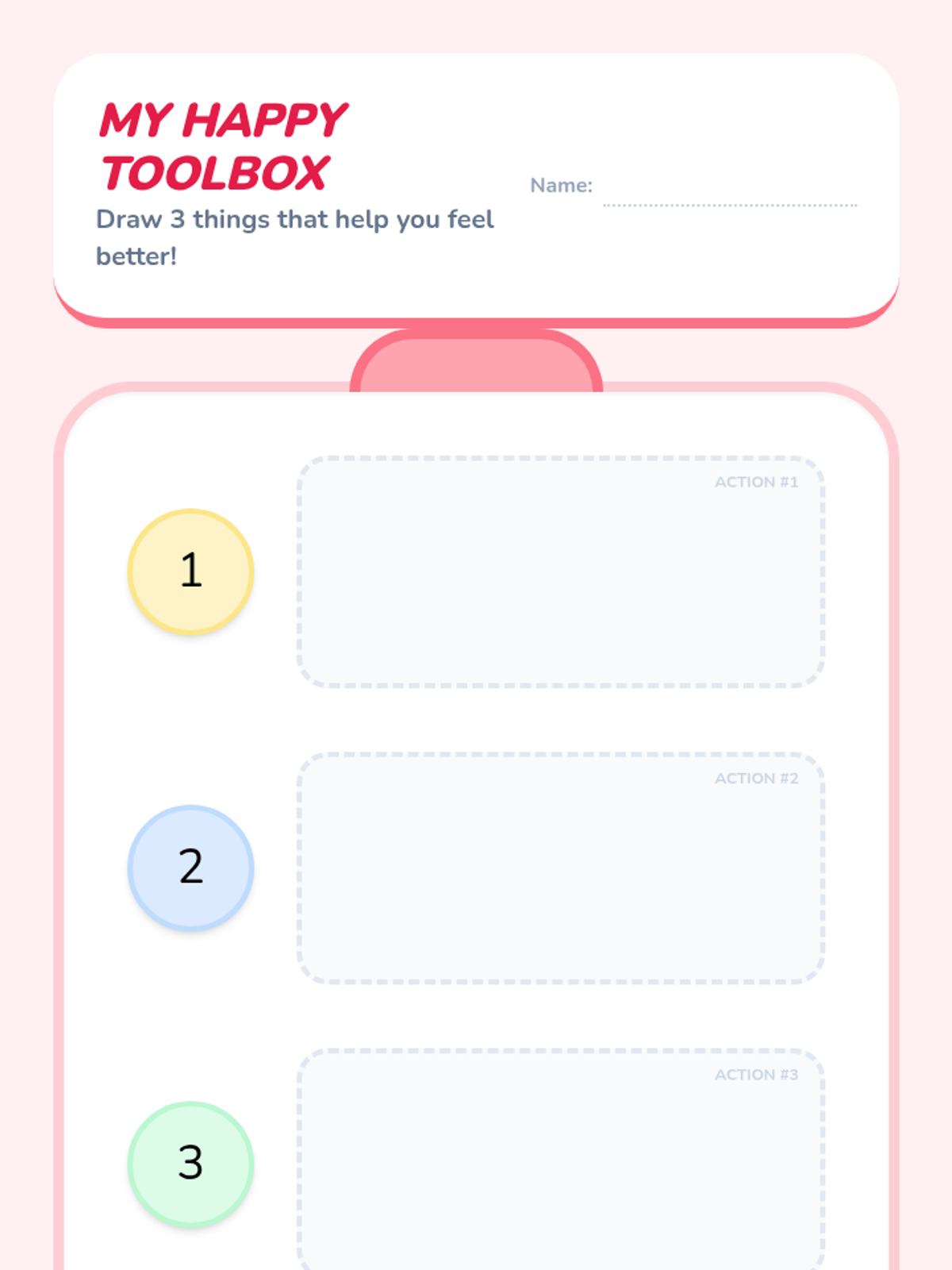
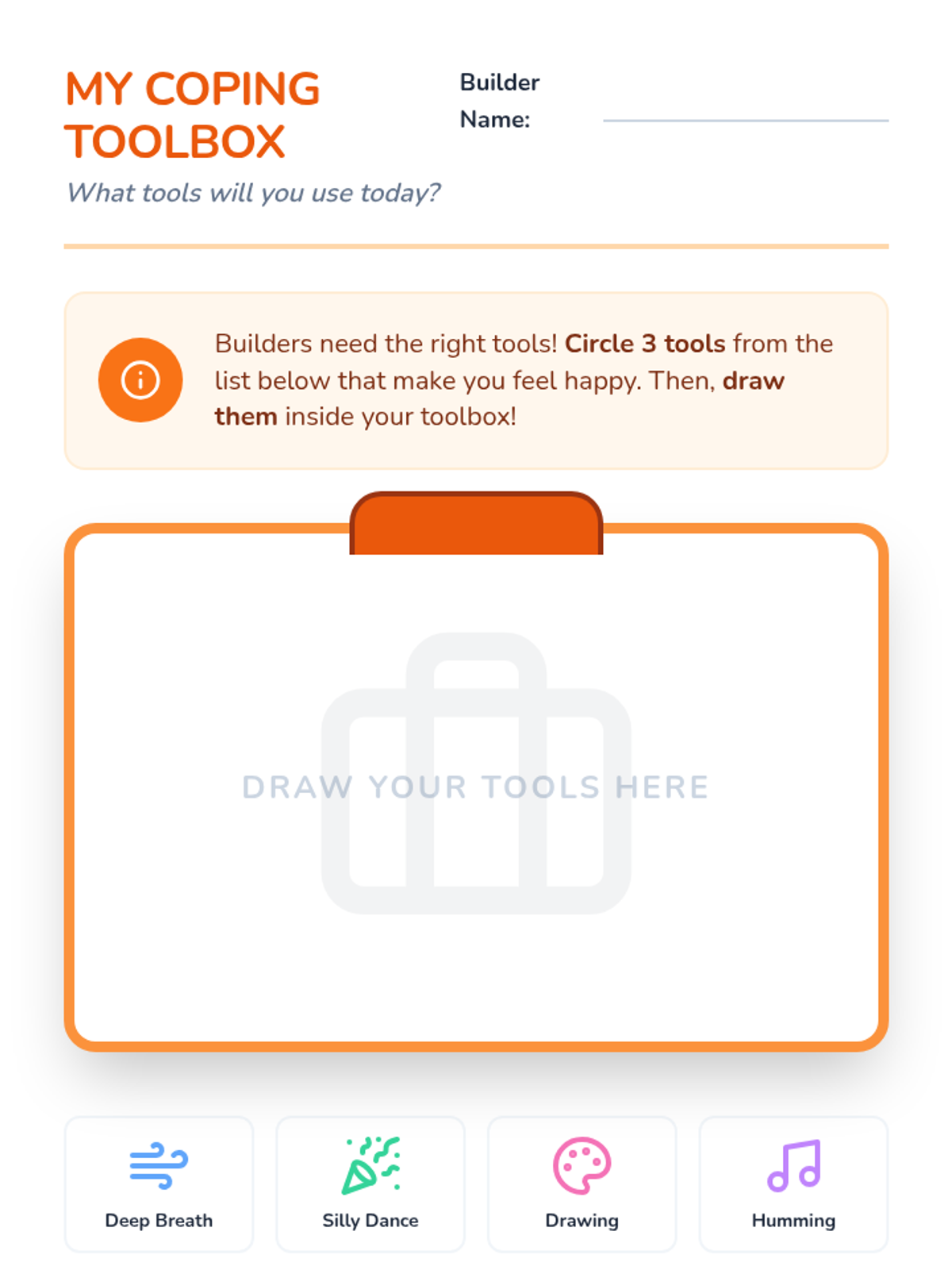
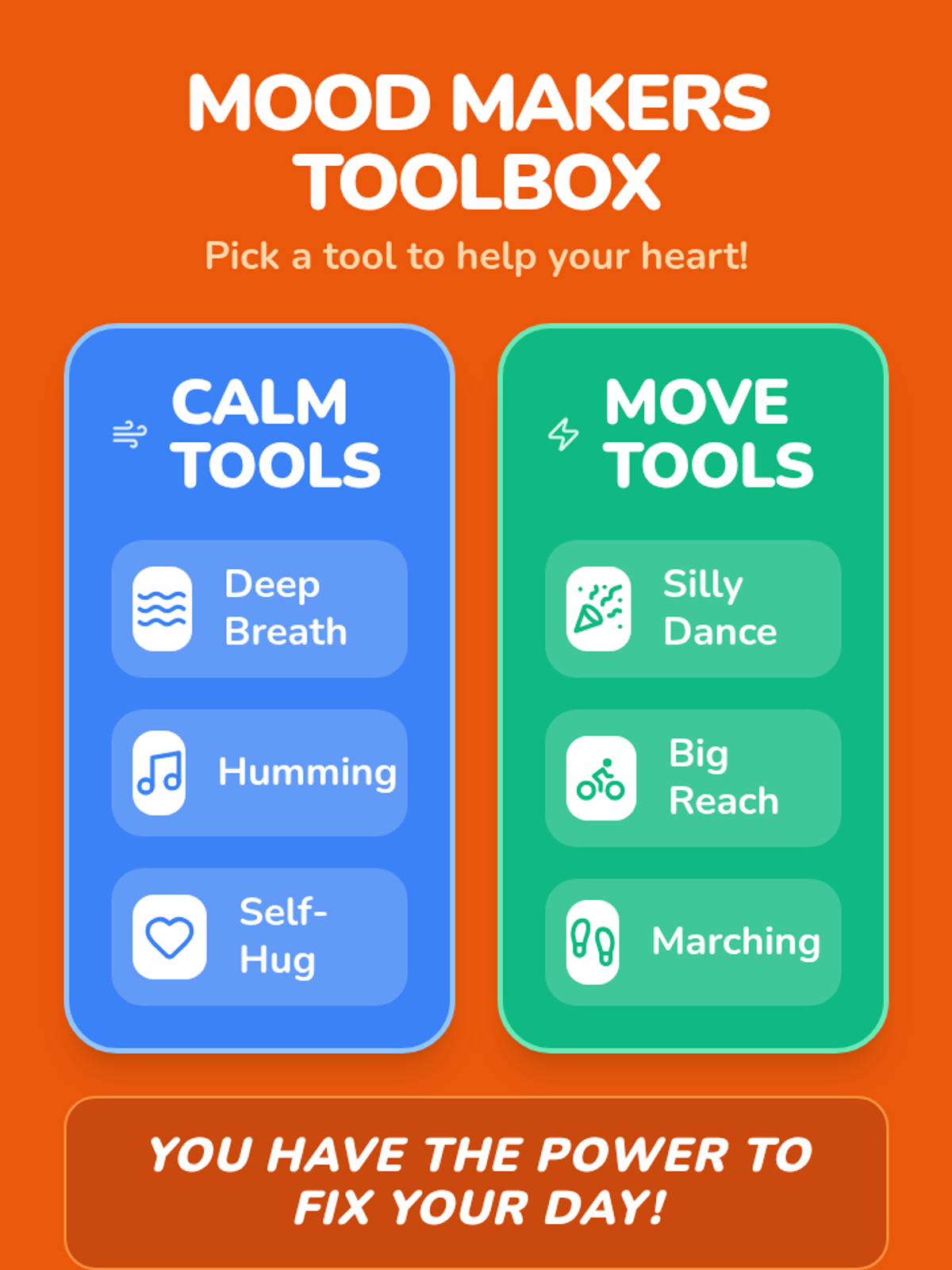
Students identify and select three specific, safe actions they can take to build their own mental 'Coping Kit' for difficult days.
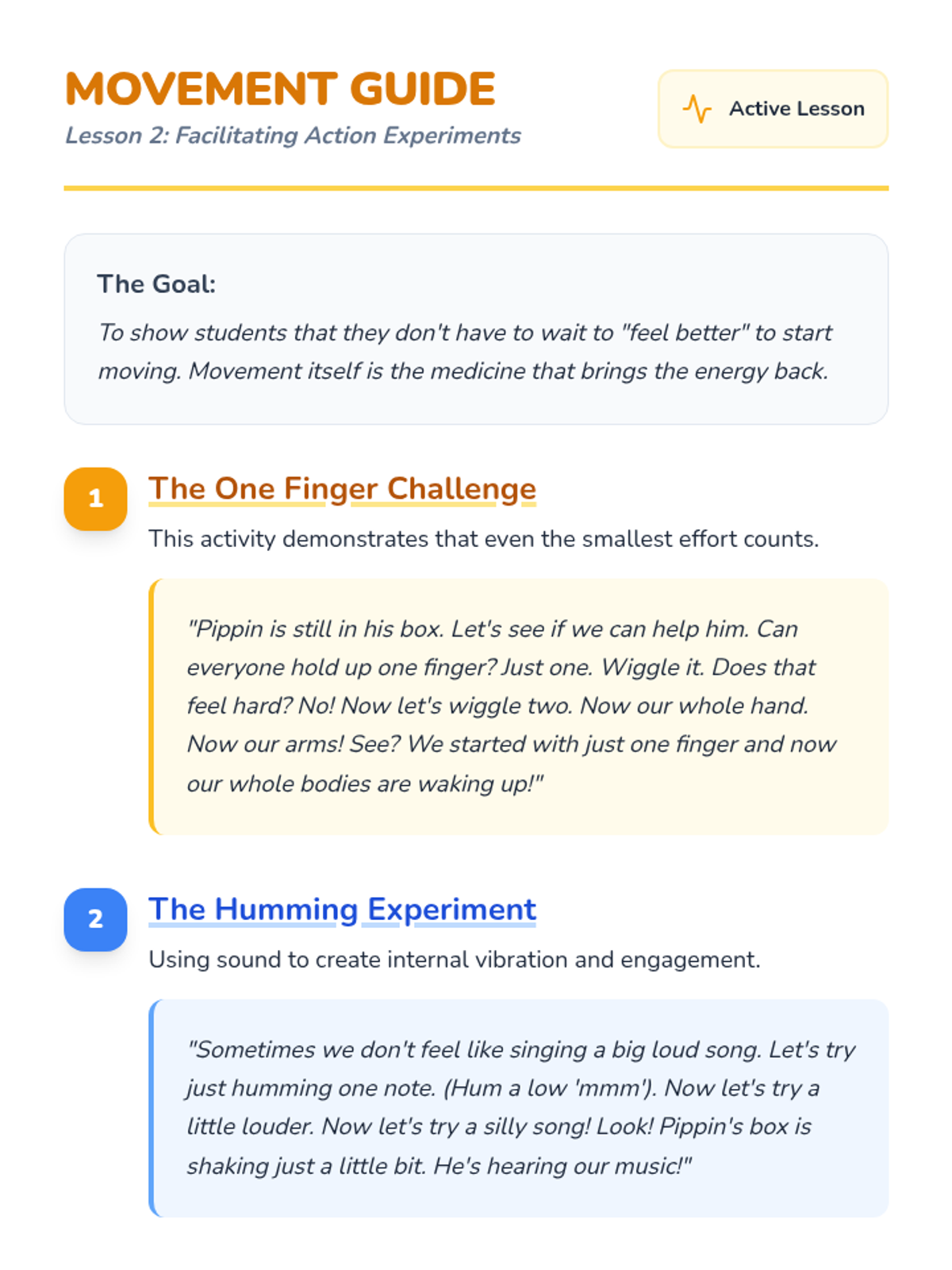
Students lead Pippin through 'Action Experiments' like stretching and singing to see how small movements can create big shifts in mood.
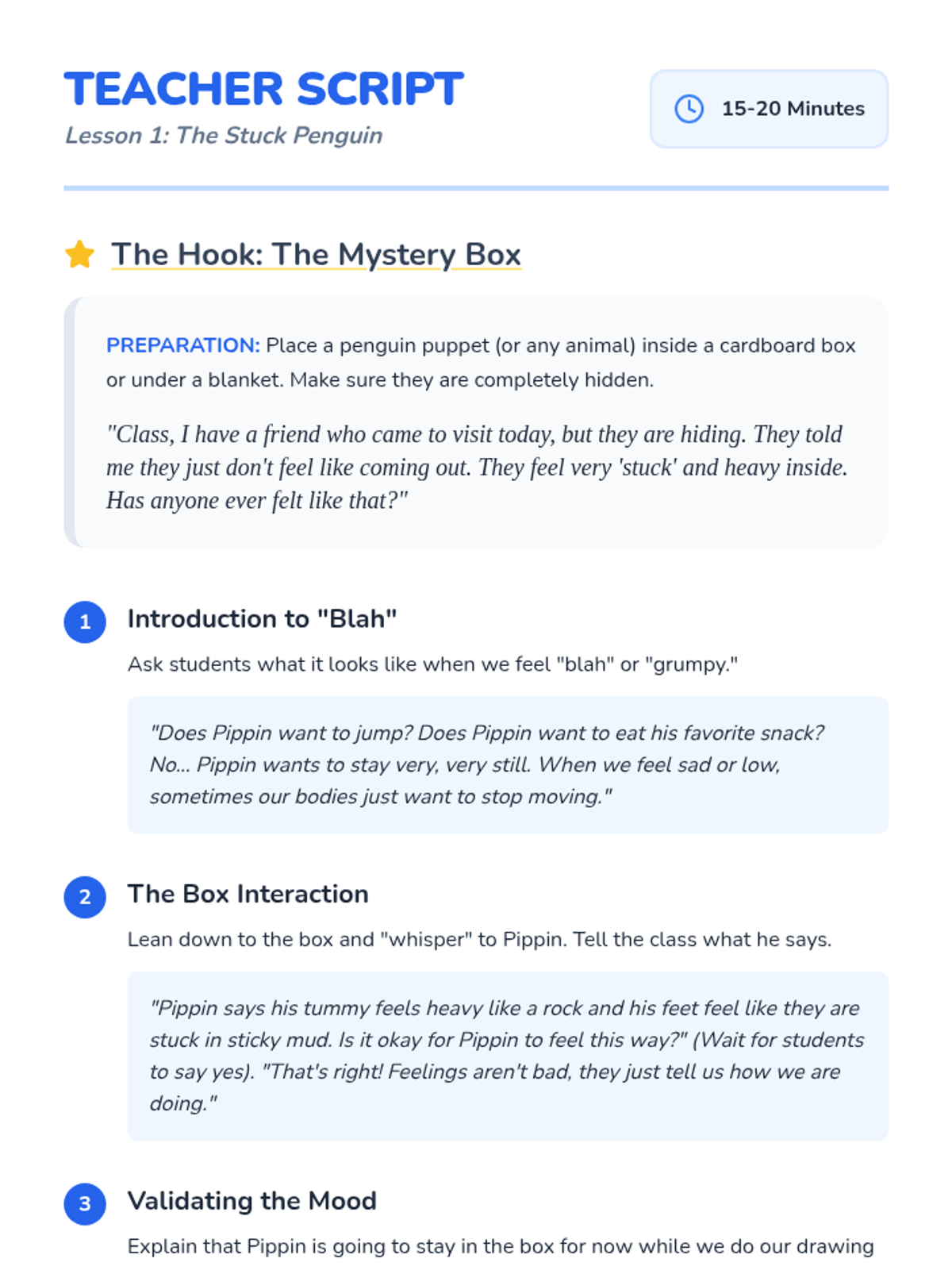
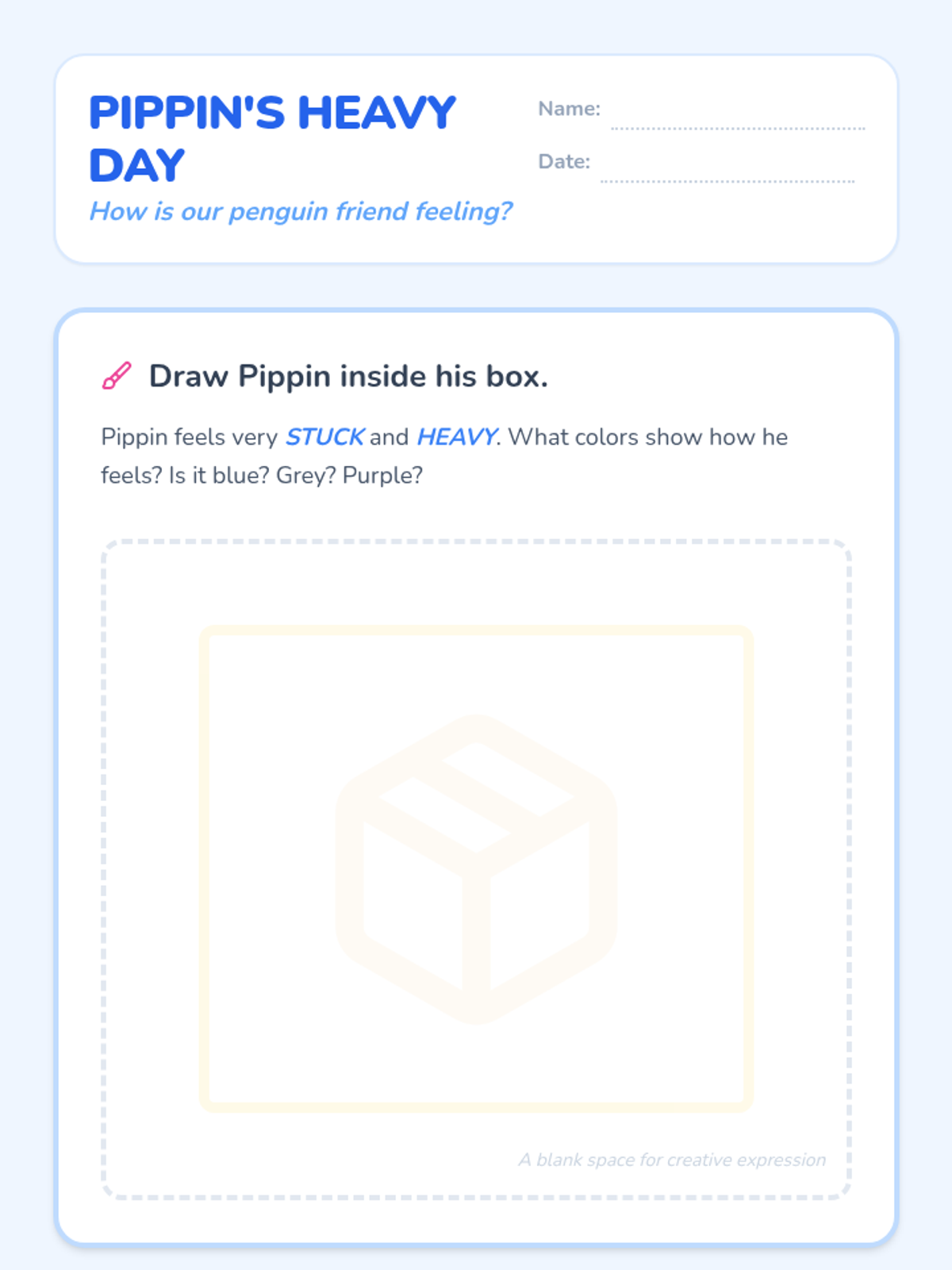
Students meet Pippin the Penguin, a puppet who feels 'stuck' and grumpy, to explore the connection between feelings and physical stillness.
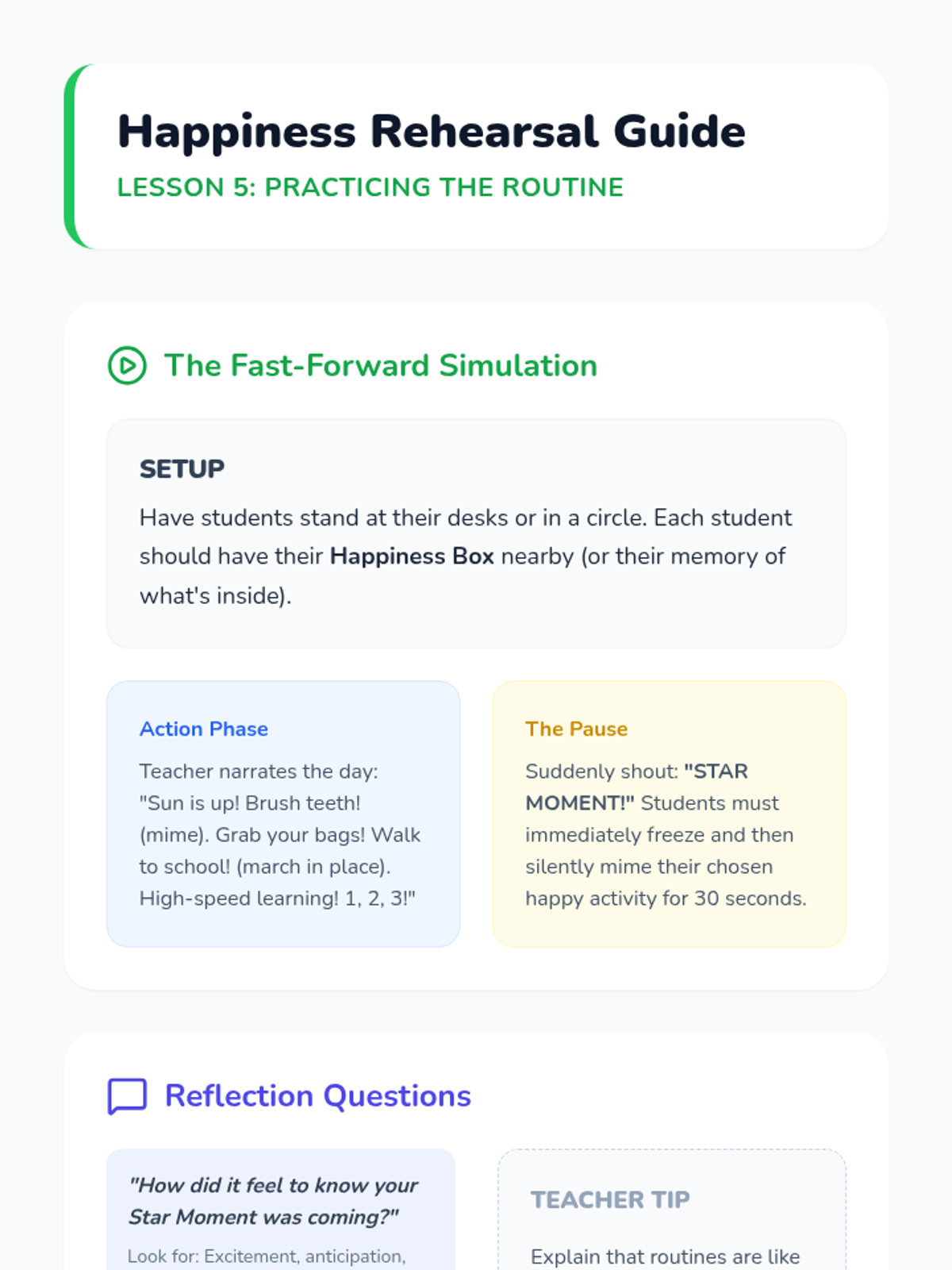
The class participates in a 'fast-forward' simulation of their daily routine, practicing their planned positive moments and reflecting on the benefits of anticipation.
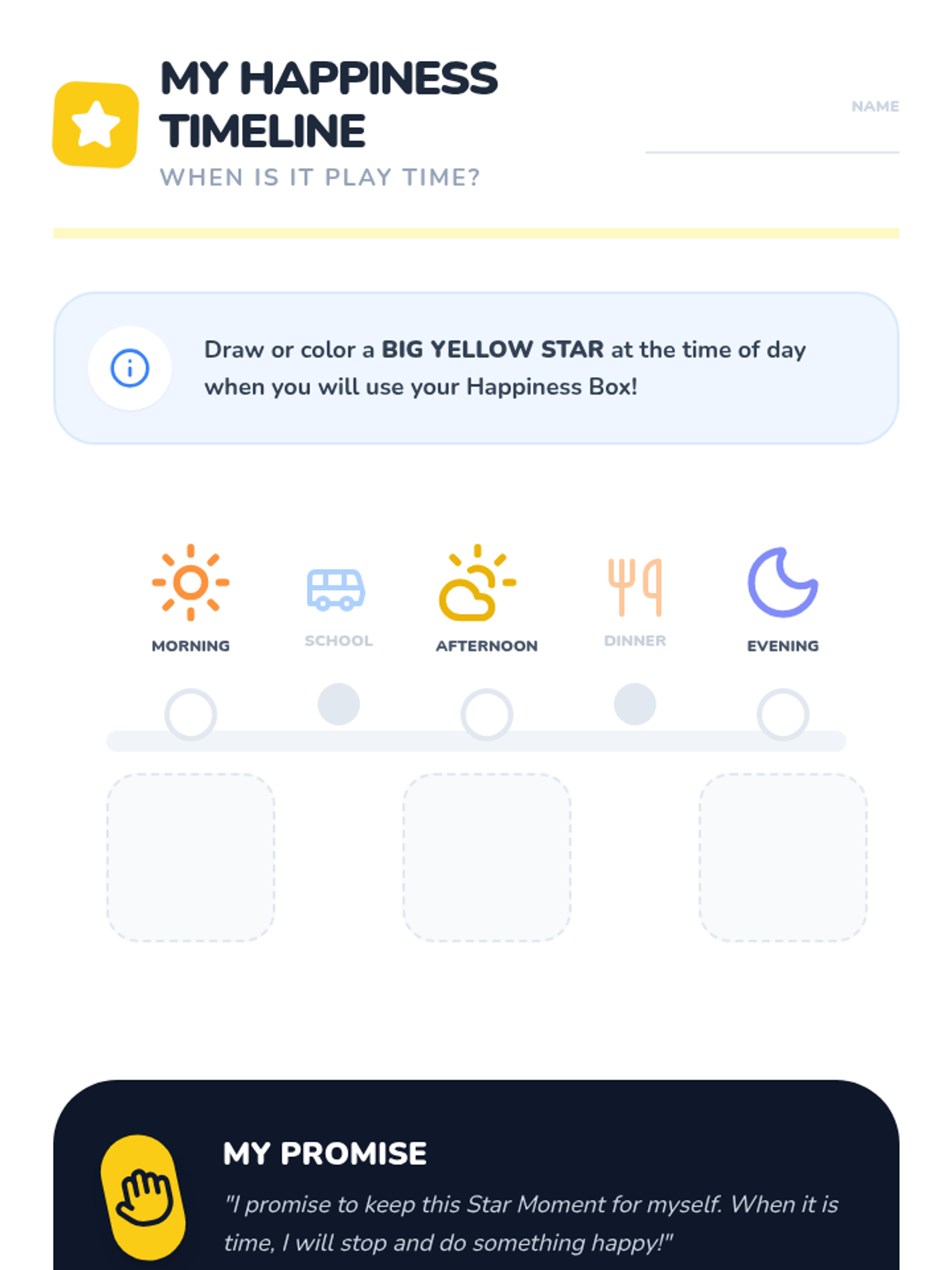
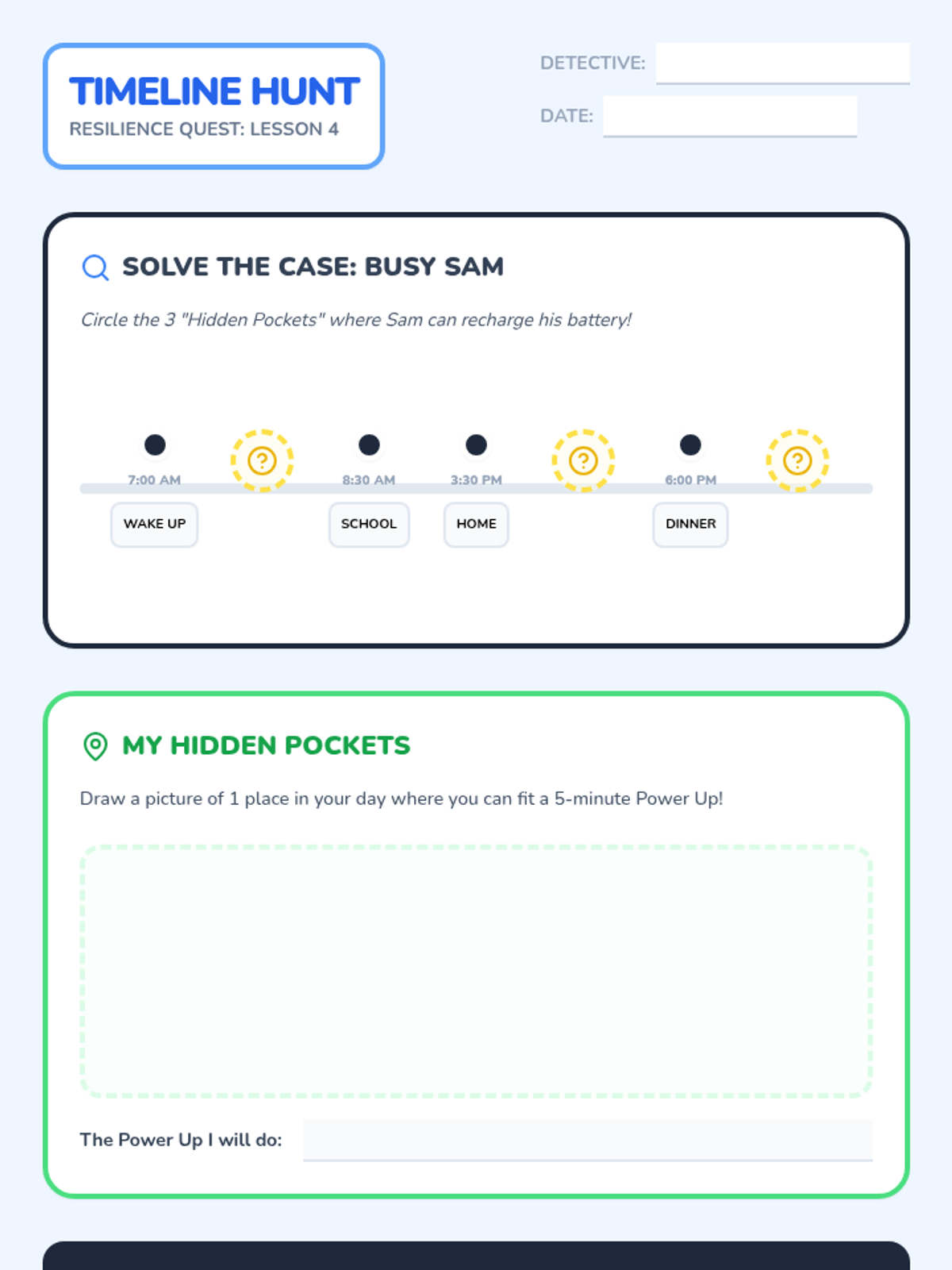
Students use a visual timeline to schedule a 'Positive Pause' and learn the importance of keeping promises to themselves for daily happiness.
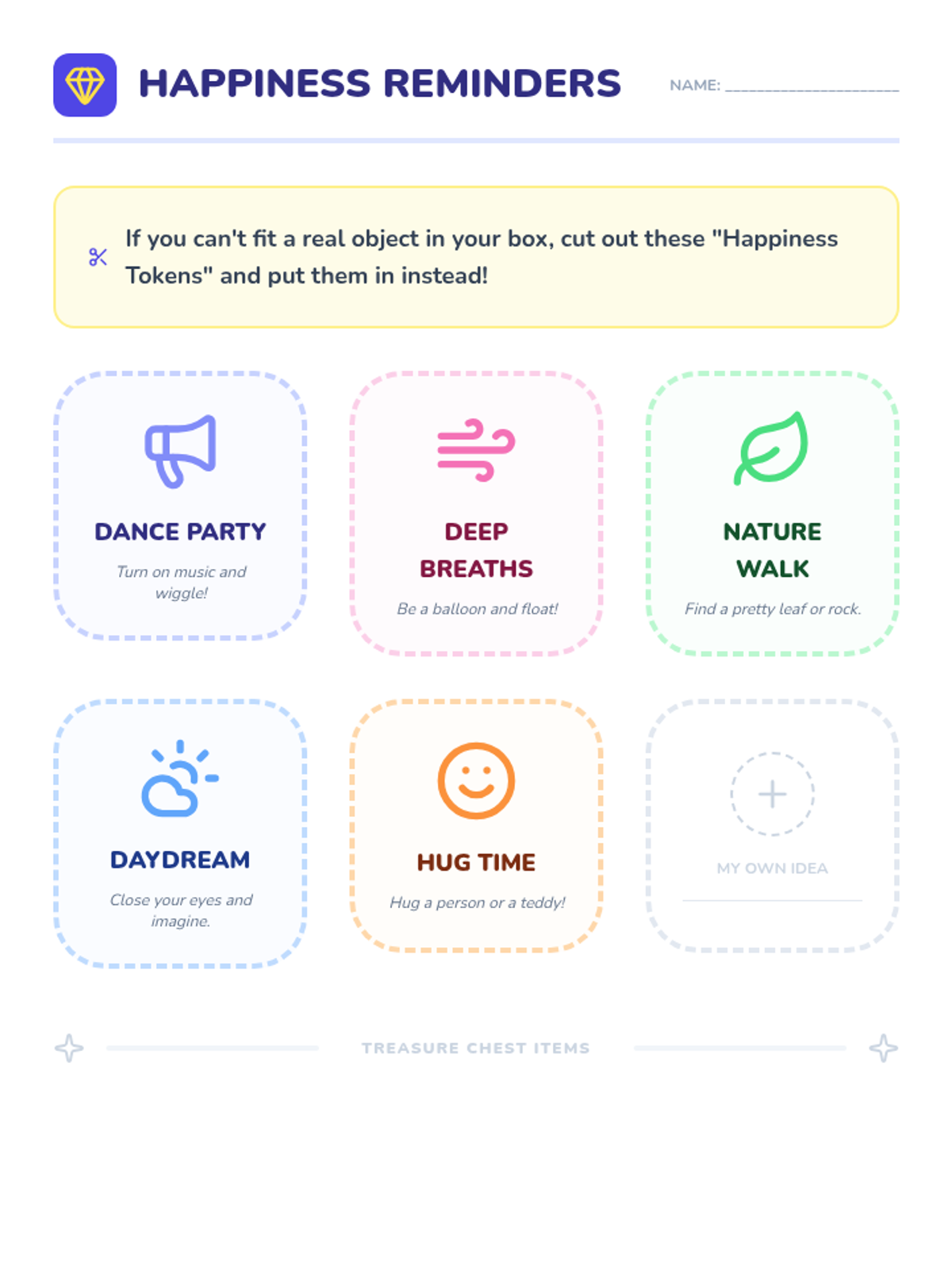
Students construct and decorate a 'Happiness Box' to hold physical reminders of positive activities, creating a tangible commitment to emotional well-being.
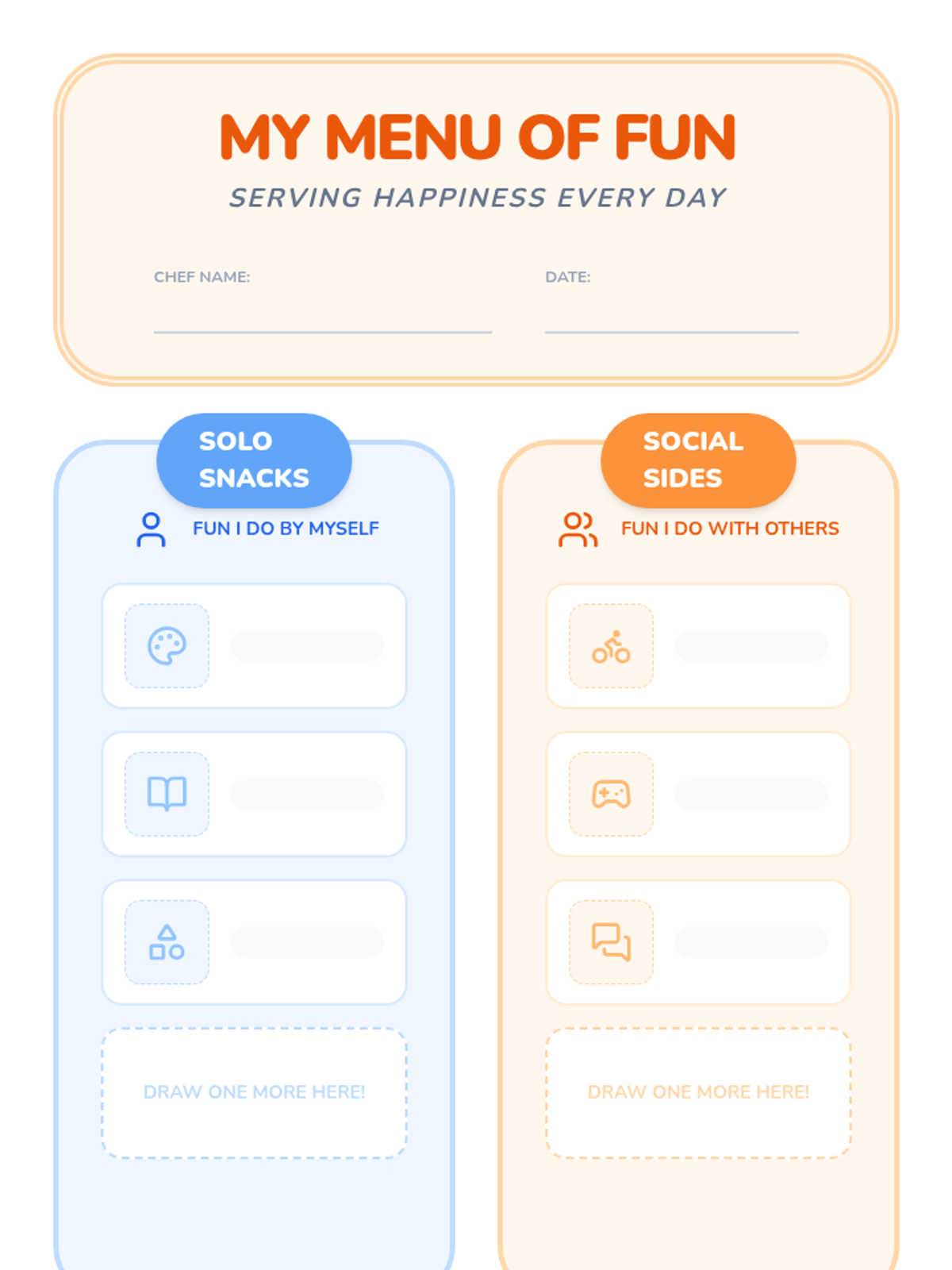
Students collaborate to brainstorm a variety of rewarding activities, categorizing them into things they can do alone or with others to create a personal 'Menu of Fun'.
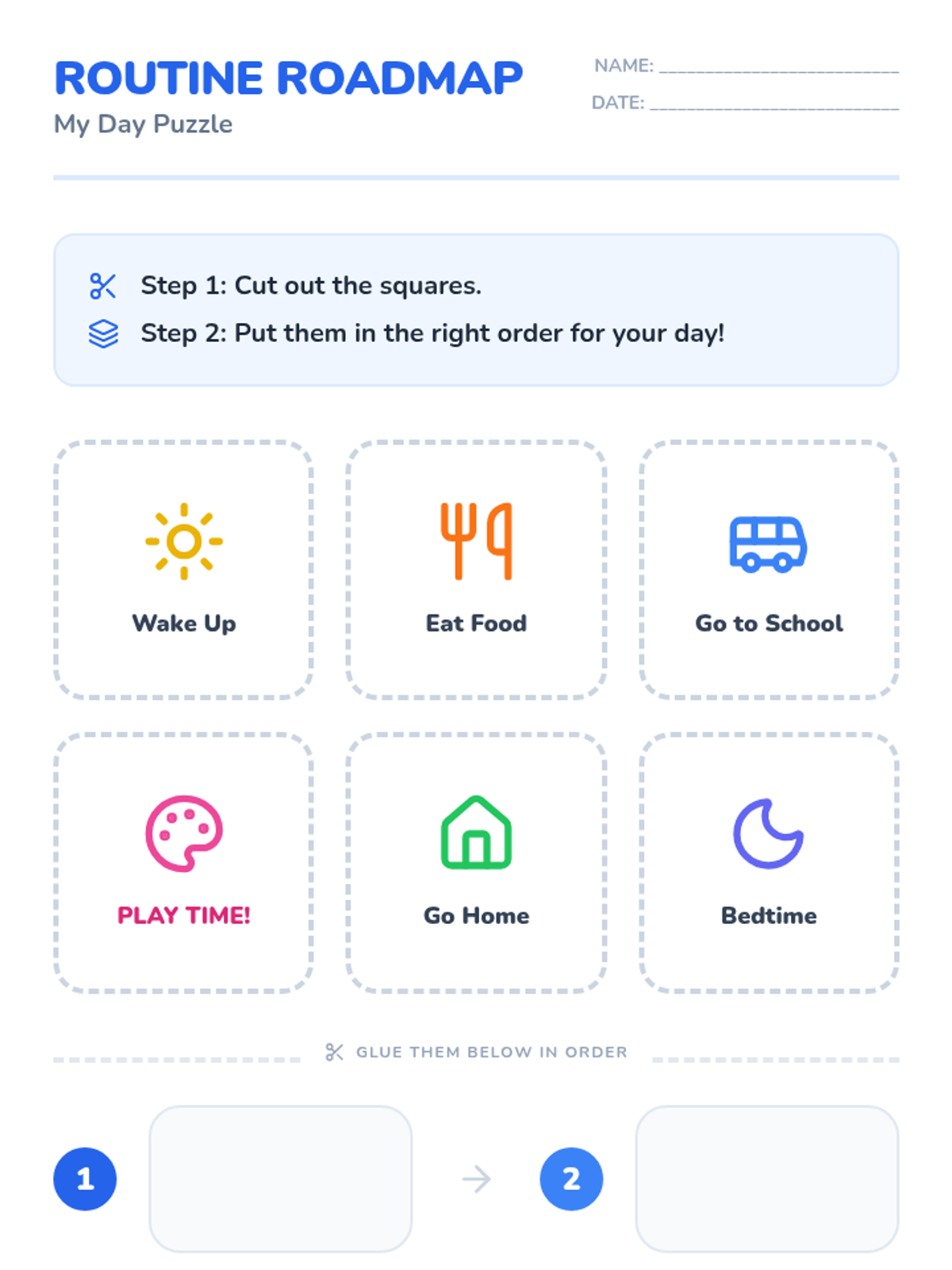
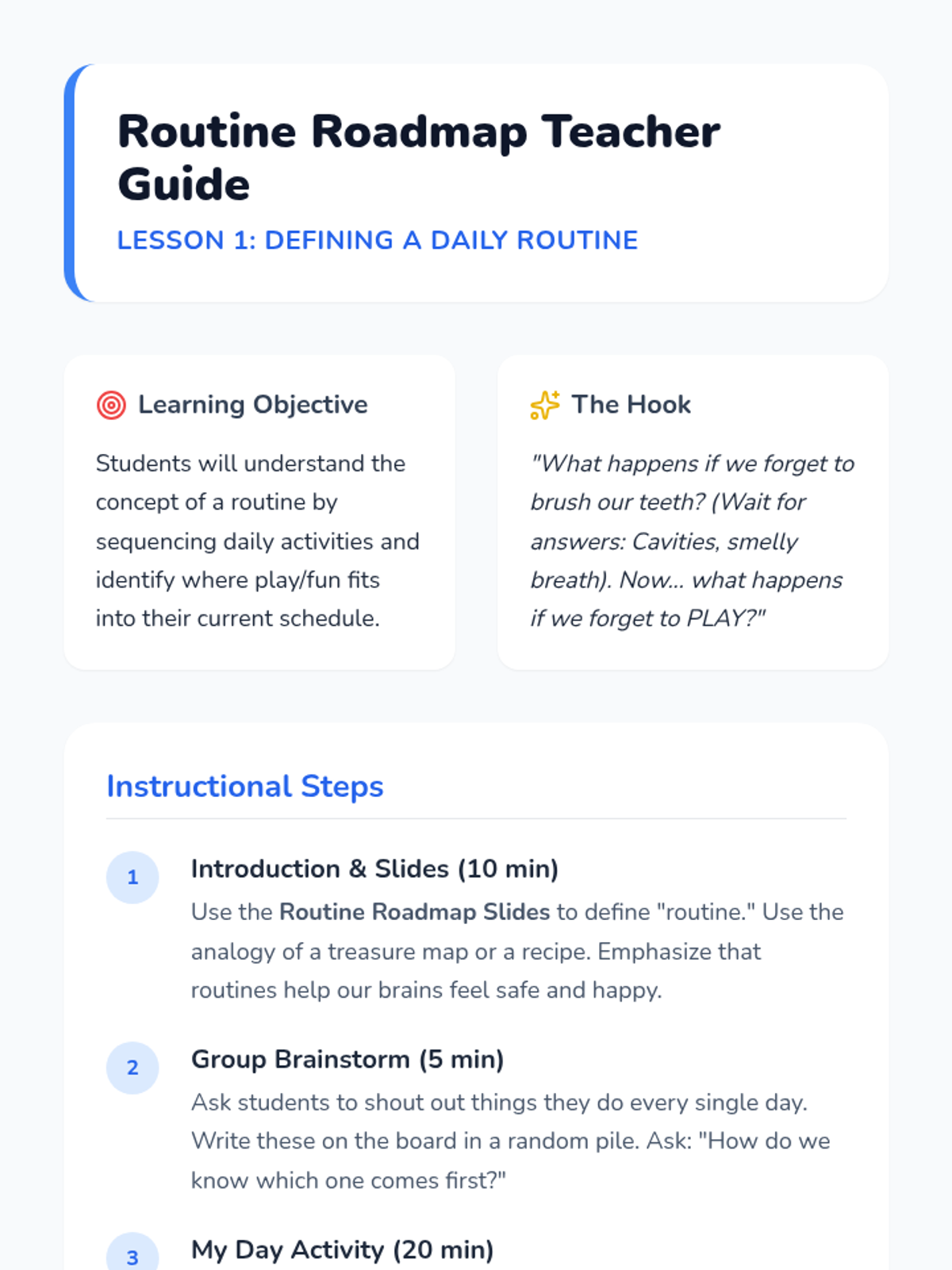
Students explore the concept of a daily routine, sequence typical daily events, and identify where play and fun currently fit into their schedule.
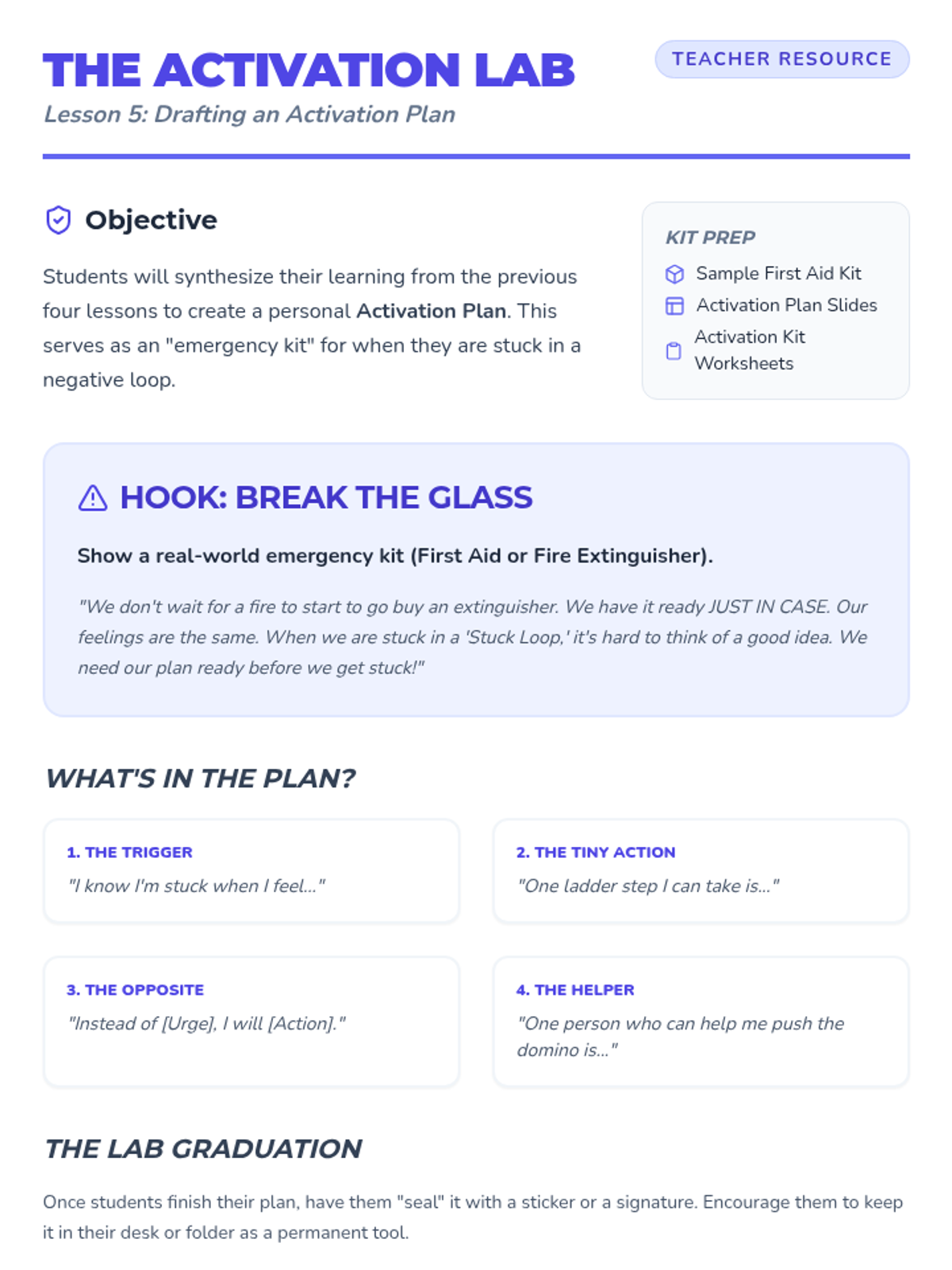
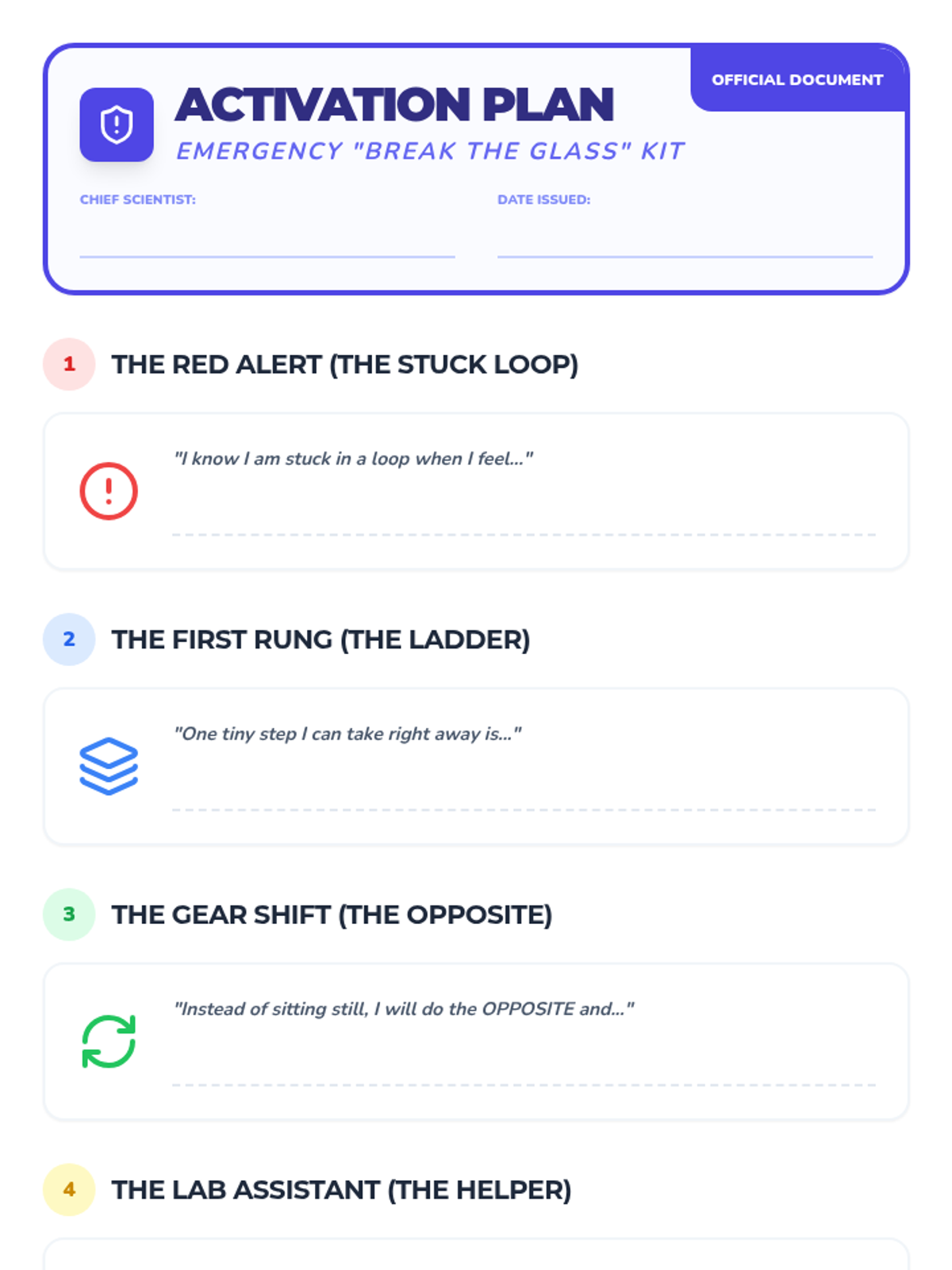
Students synthesize their learning by creating a personal 'Activation Plan' to use when they feel stuck or unmotivated.
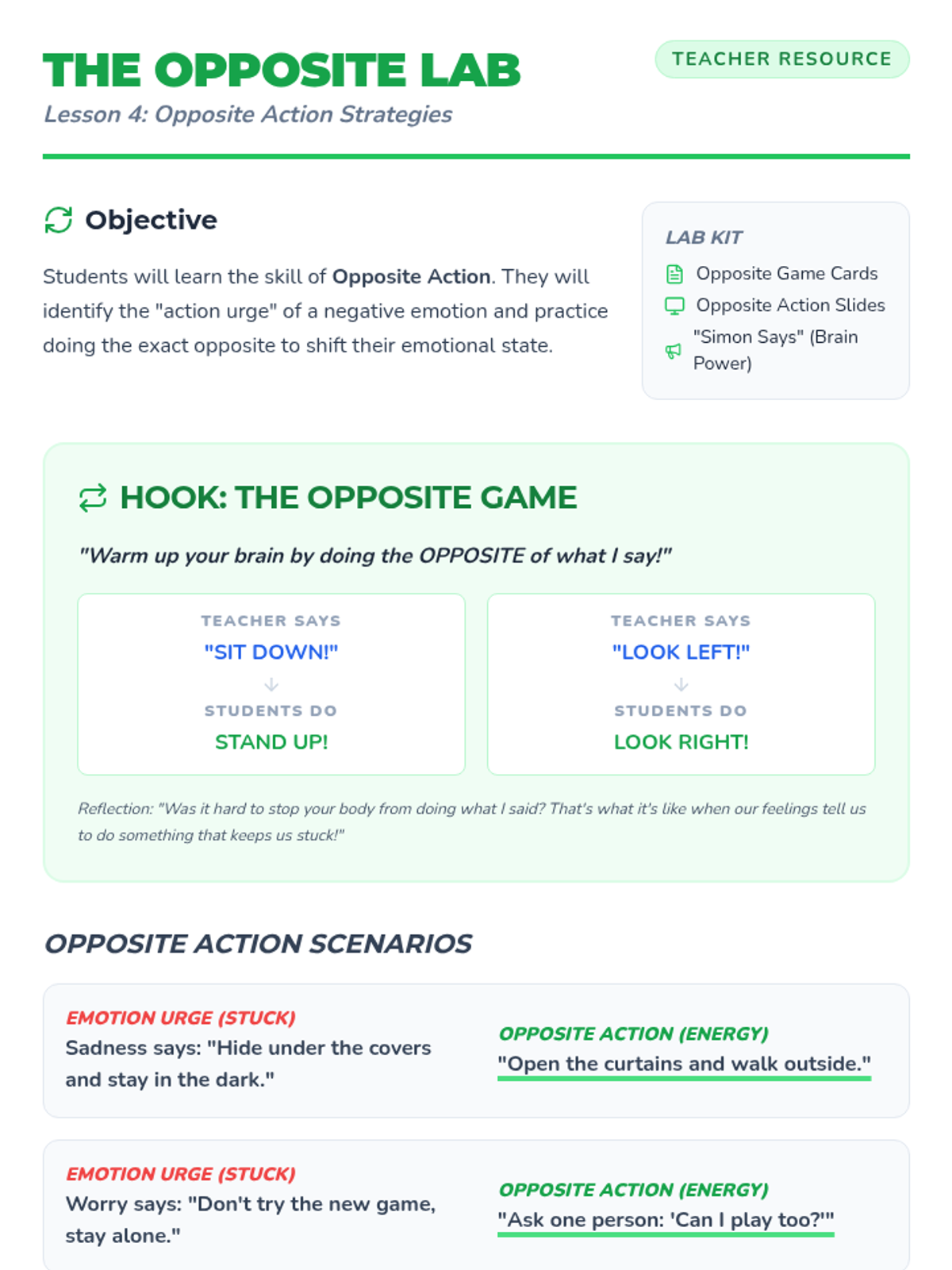
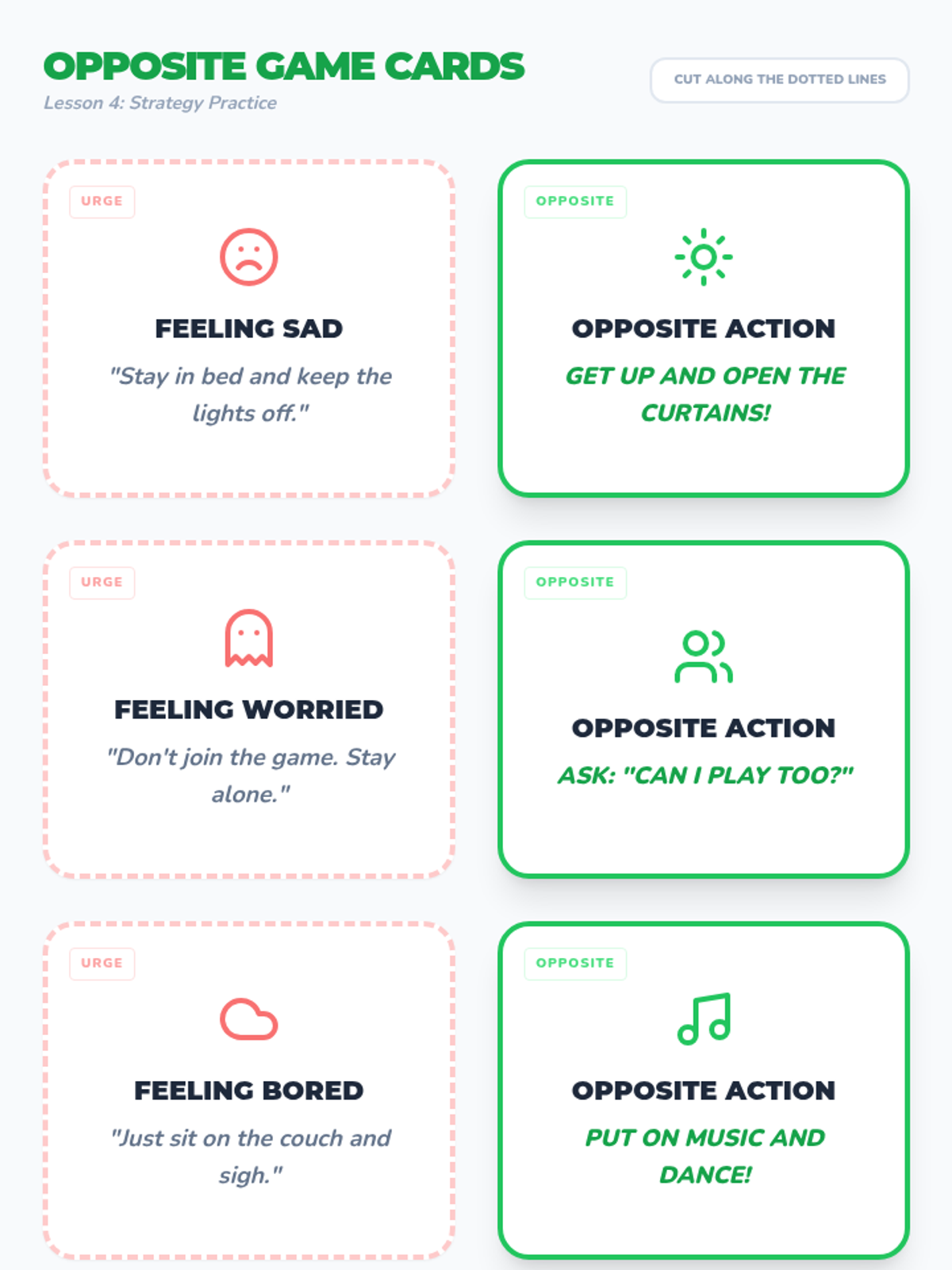
Students learn and practice 'Opposite Action,' doing the reverse of what a negative emotion suggests to shift their mood.
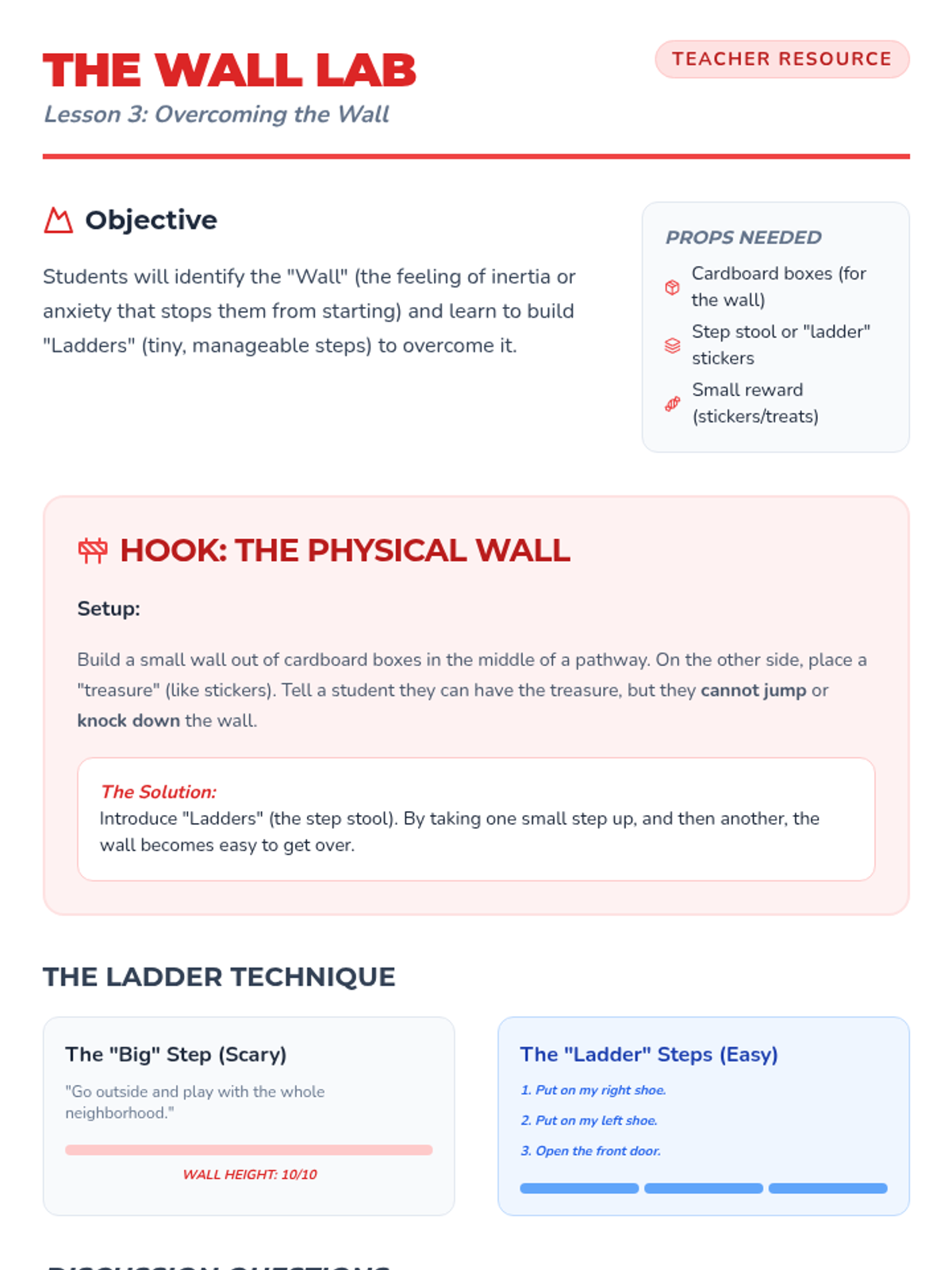
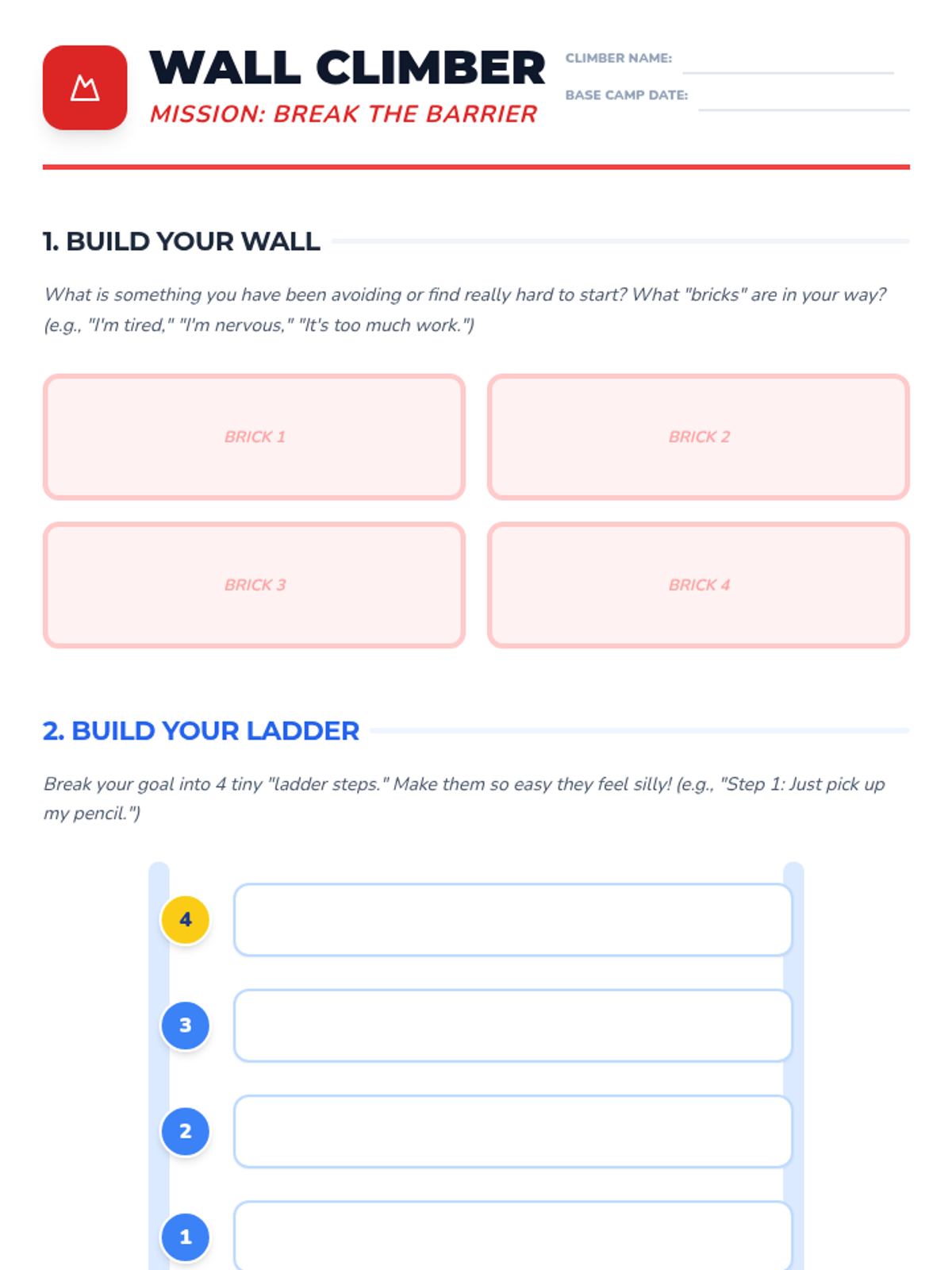
Students identify emotional barriers ('The Wall') and practice breaking large tasks into 'Ladders' or small, manageable steps.
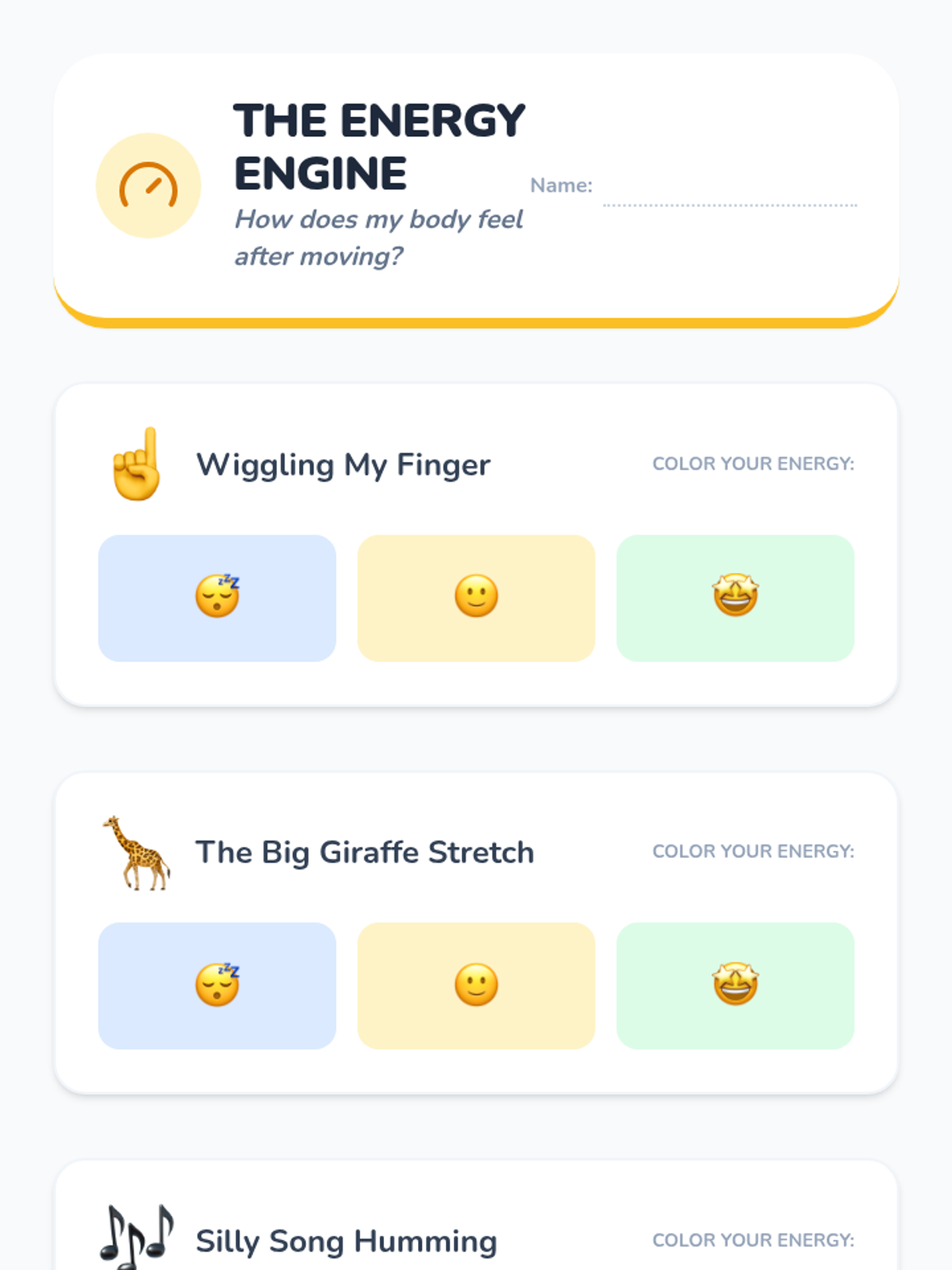
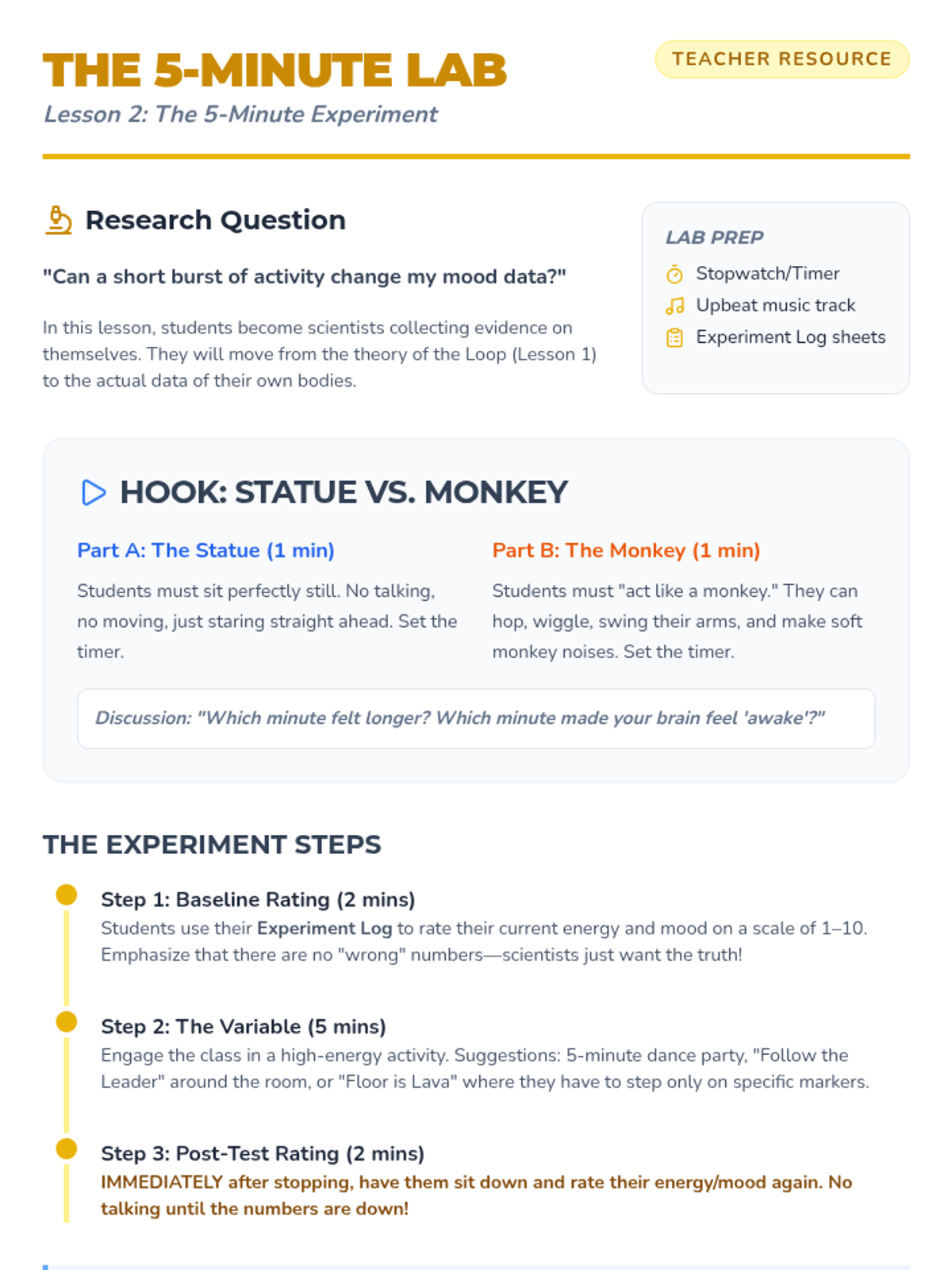
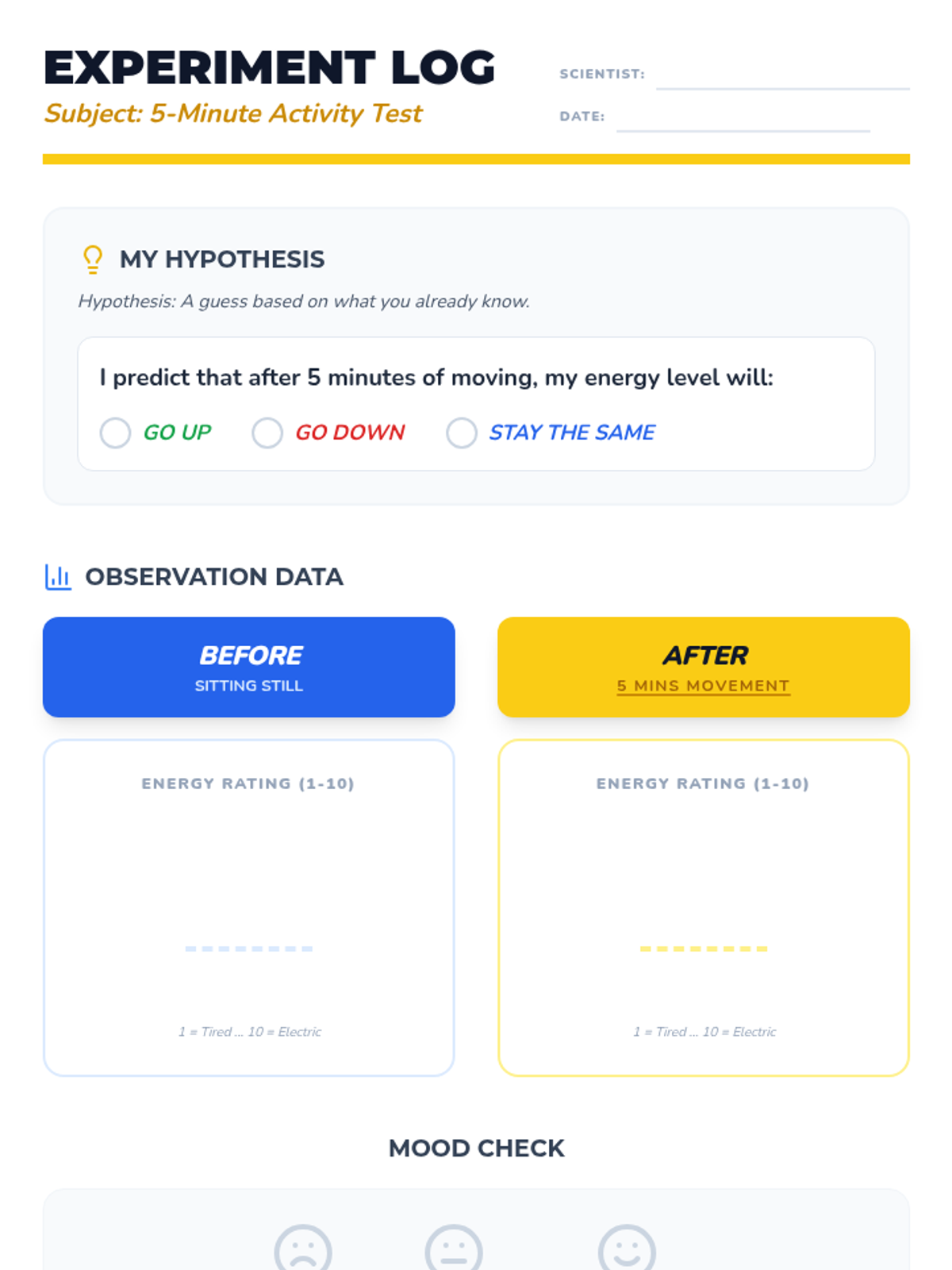
Students conduct a personal experiment to gather evidence on how a short burst of activity affects their energy and mood levels.
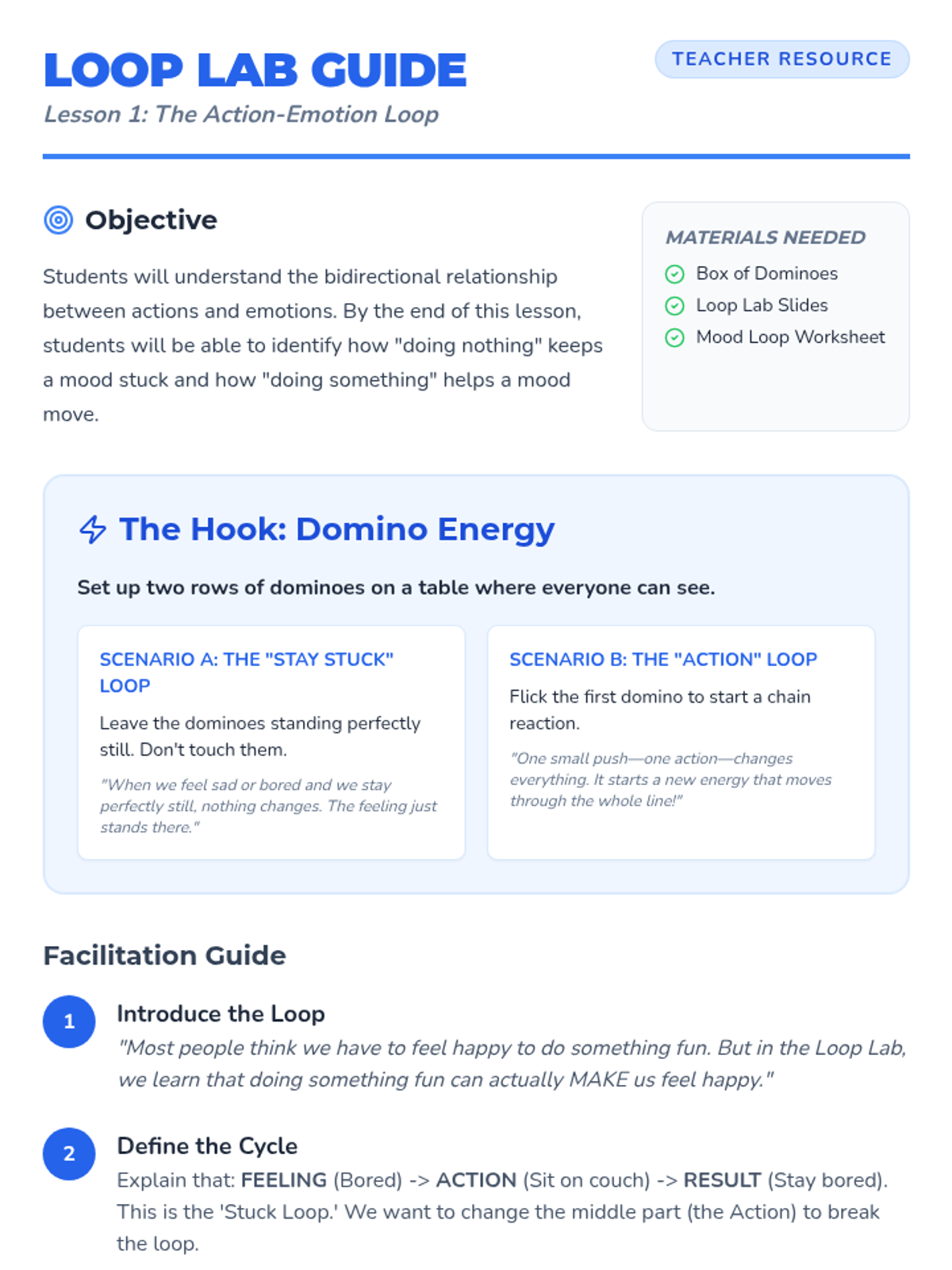
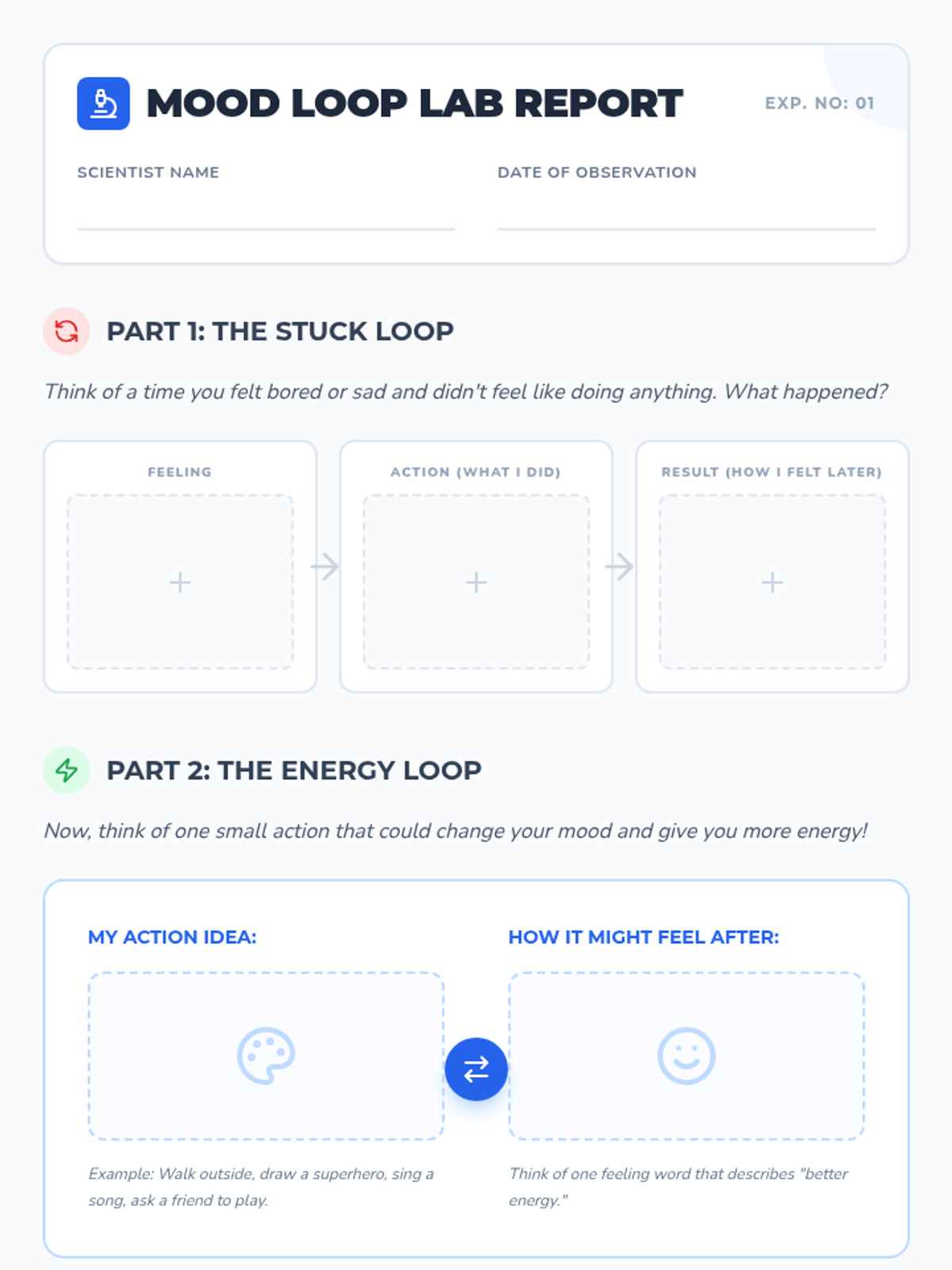
Students learn the basic concept that thoughts, feelings, and actions are connected, using a loop diagram to understand how actions can change emotional states.
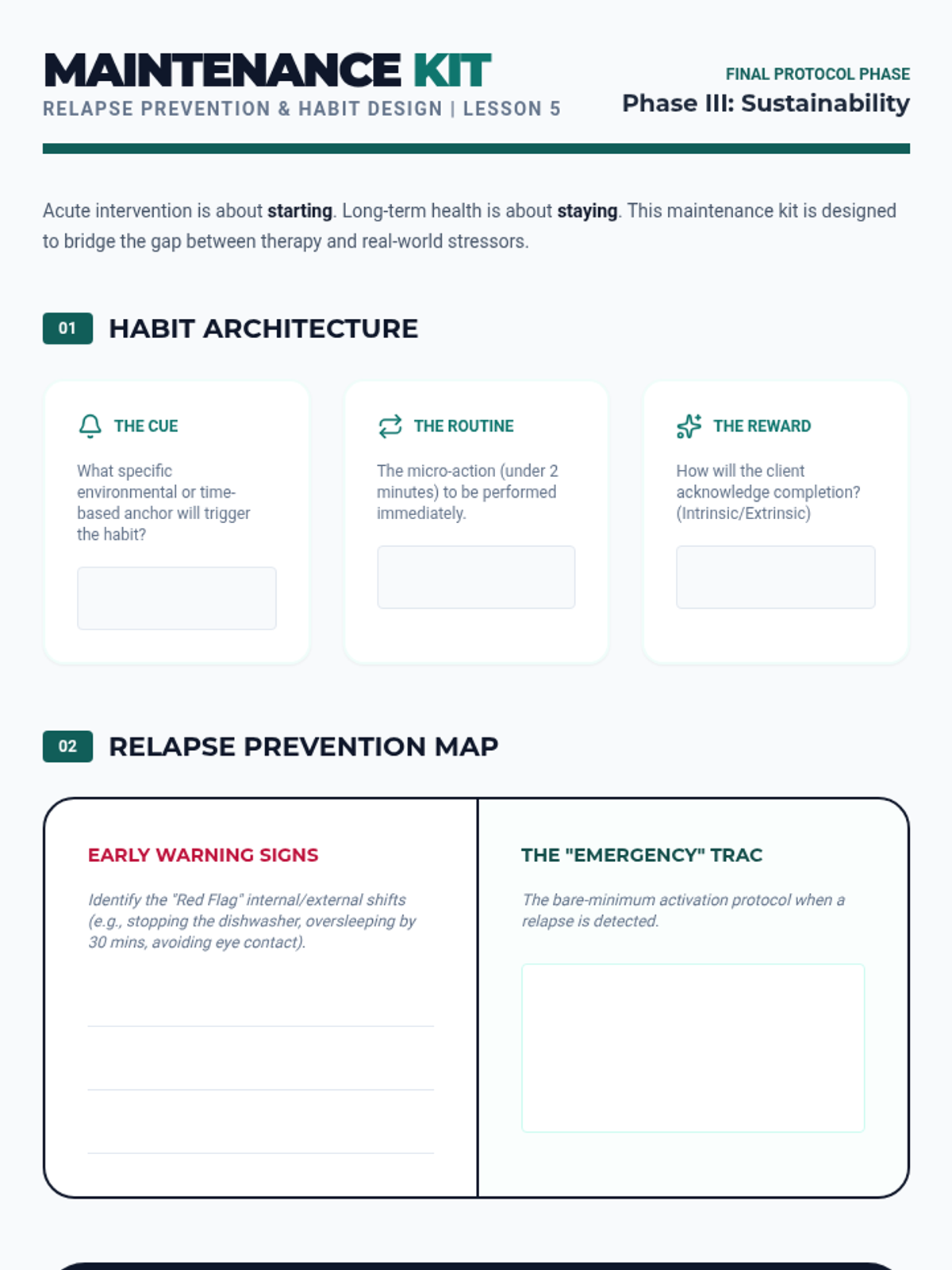
Transitions from acute intervention to long-term maintenance, applying habit formation principles and creating relapse prevention plans to ensure sustainable lifestyle changes.
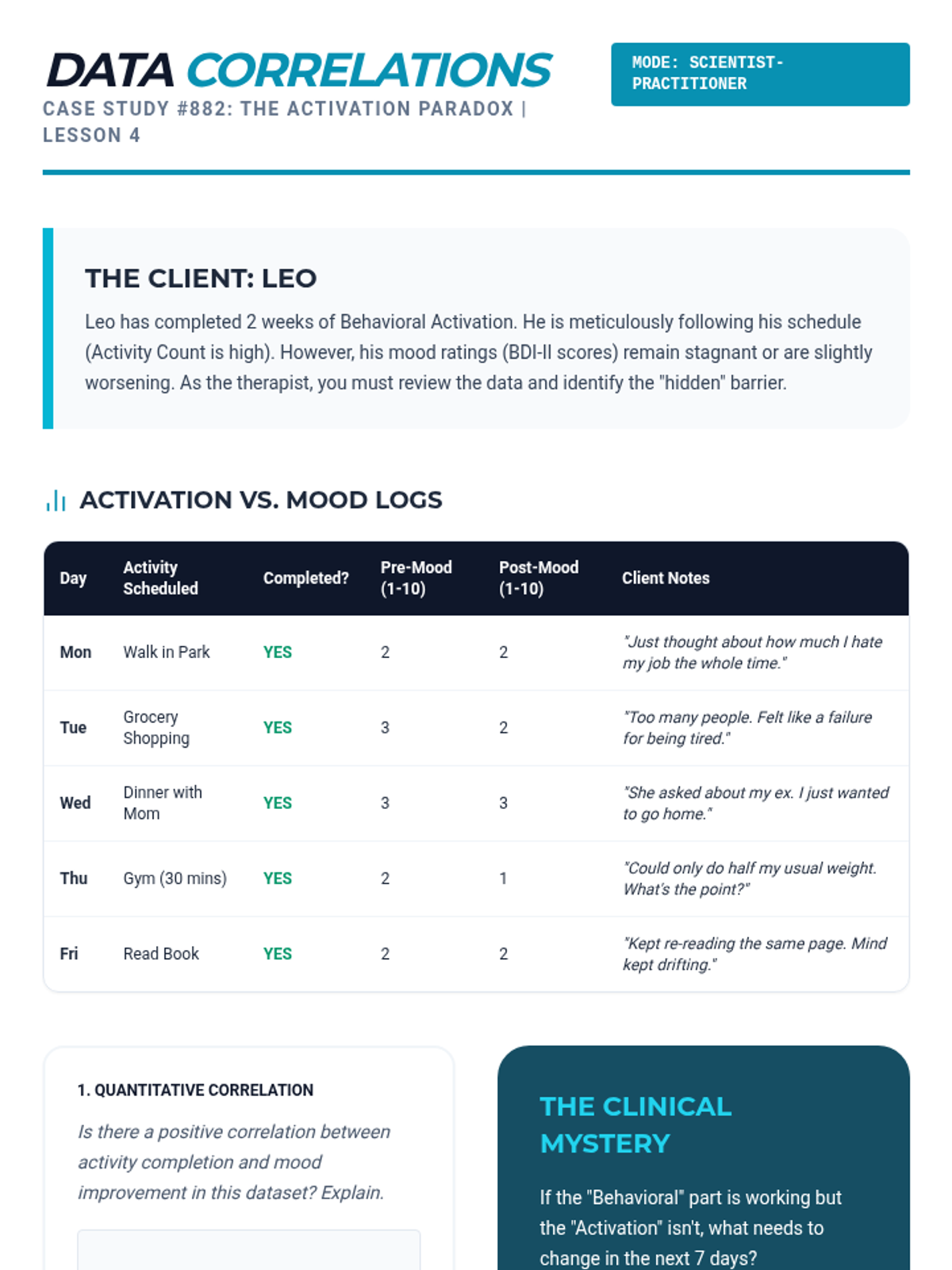
Students analyze mood and activity data to evaluate intervention effectiveness, practicing the role of the scientist-practitioner in a clinical setting.
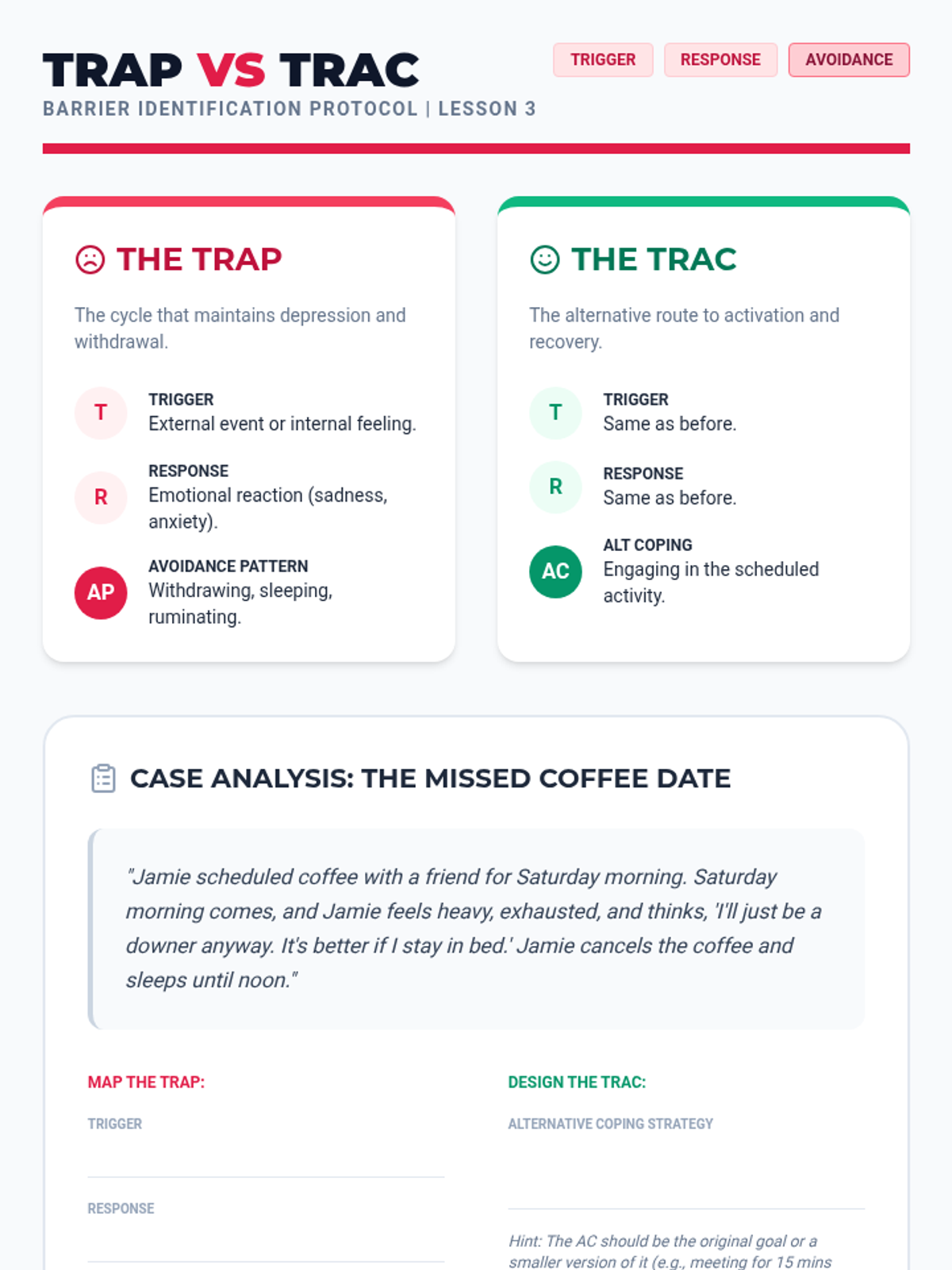
Introduces the TRAP/TRAC framework for identifying avoidance patterns and implementing alternative coping strategies when clients face internal or external barriers.
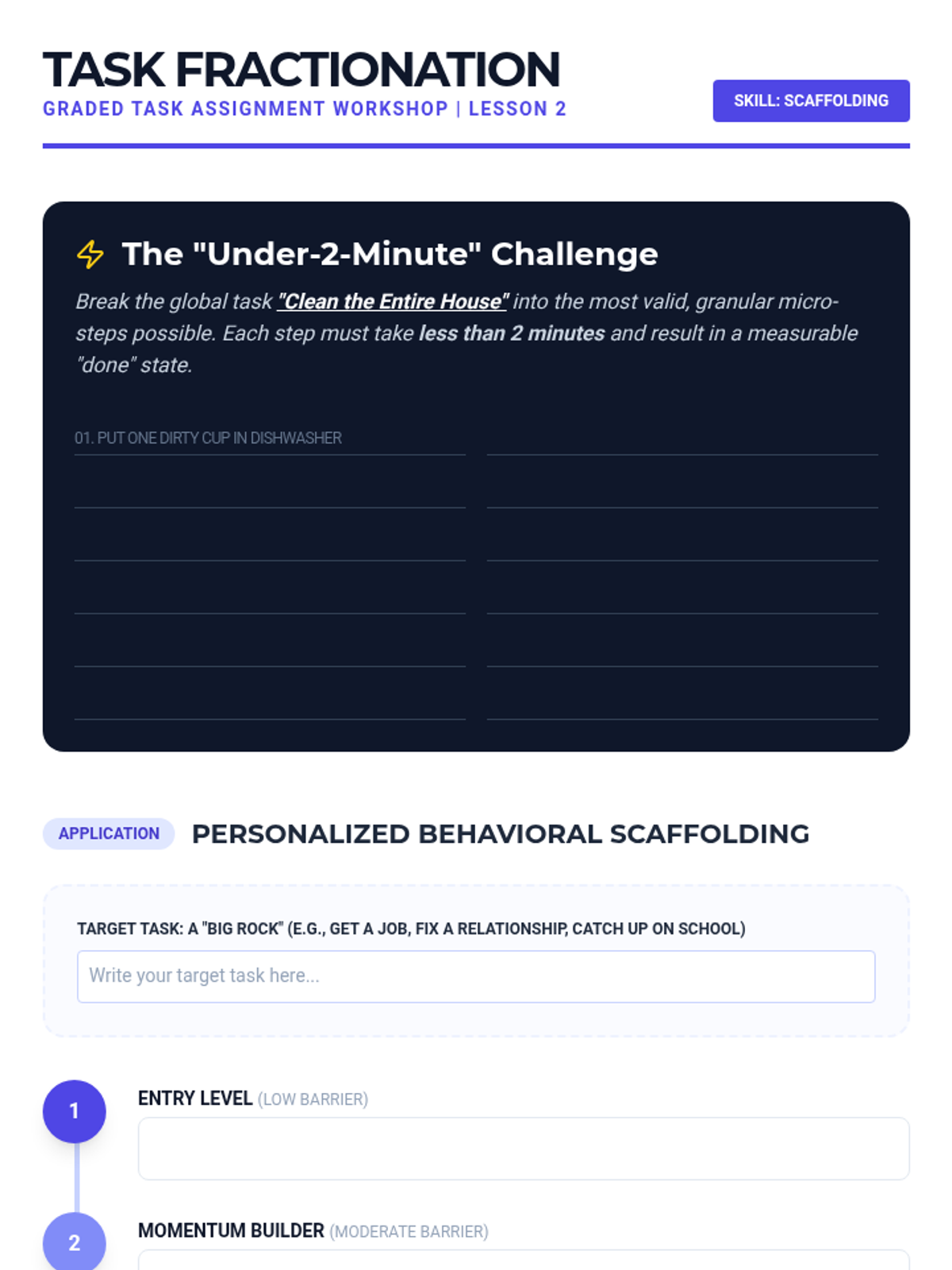
Focuses on the technique of breaking down overwhelming tasks into manageable micro-steps to build self-efficacy and momentum in clients.
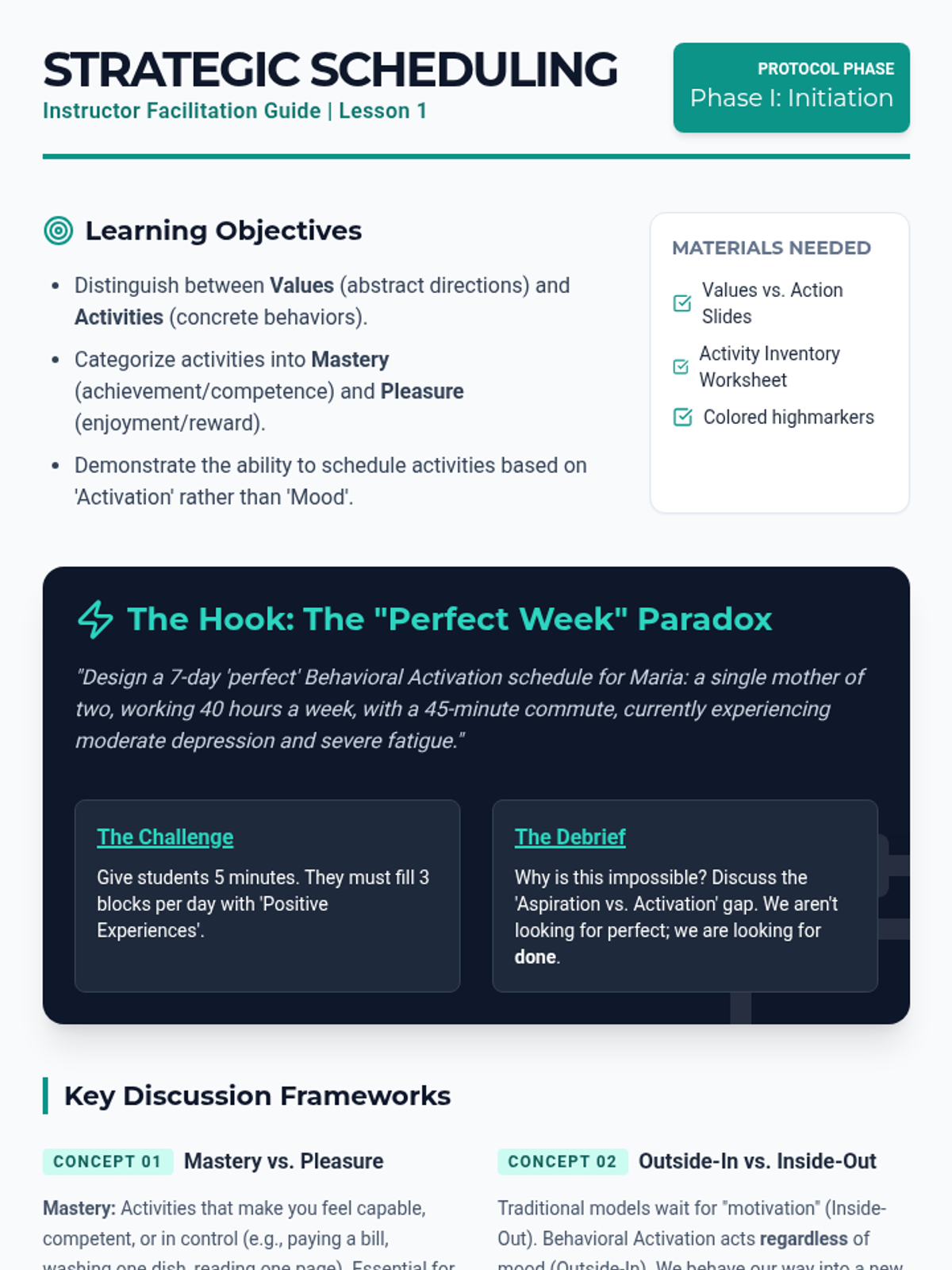
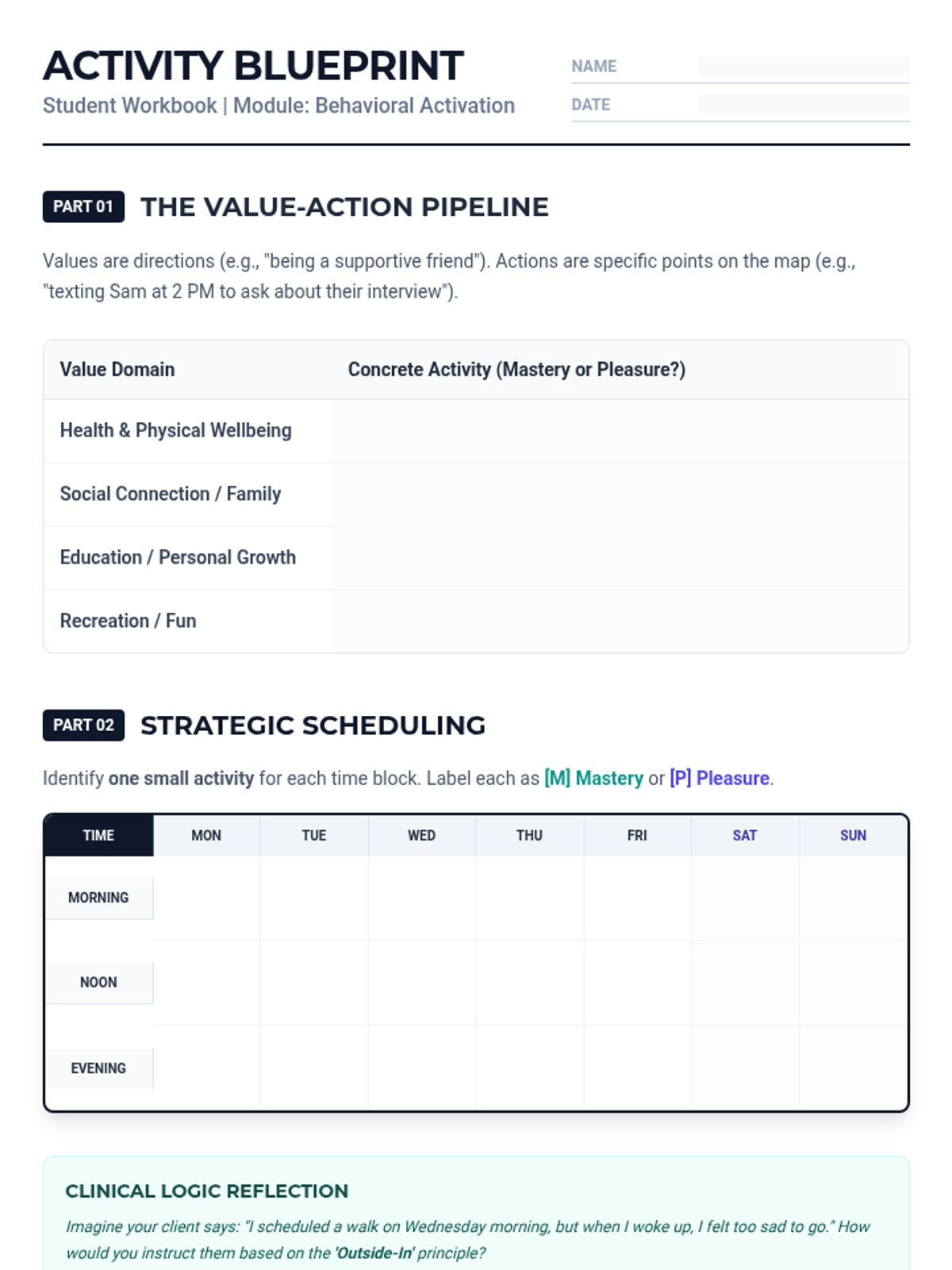
Students bridge the gap between abstract values and concrete behaviors by creating structured schedules. The focus is on identifying activities that provide 'Mastery' and 'Pleasure' to counteract depressive withdrawal.
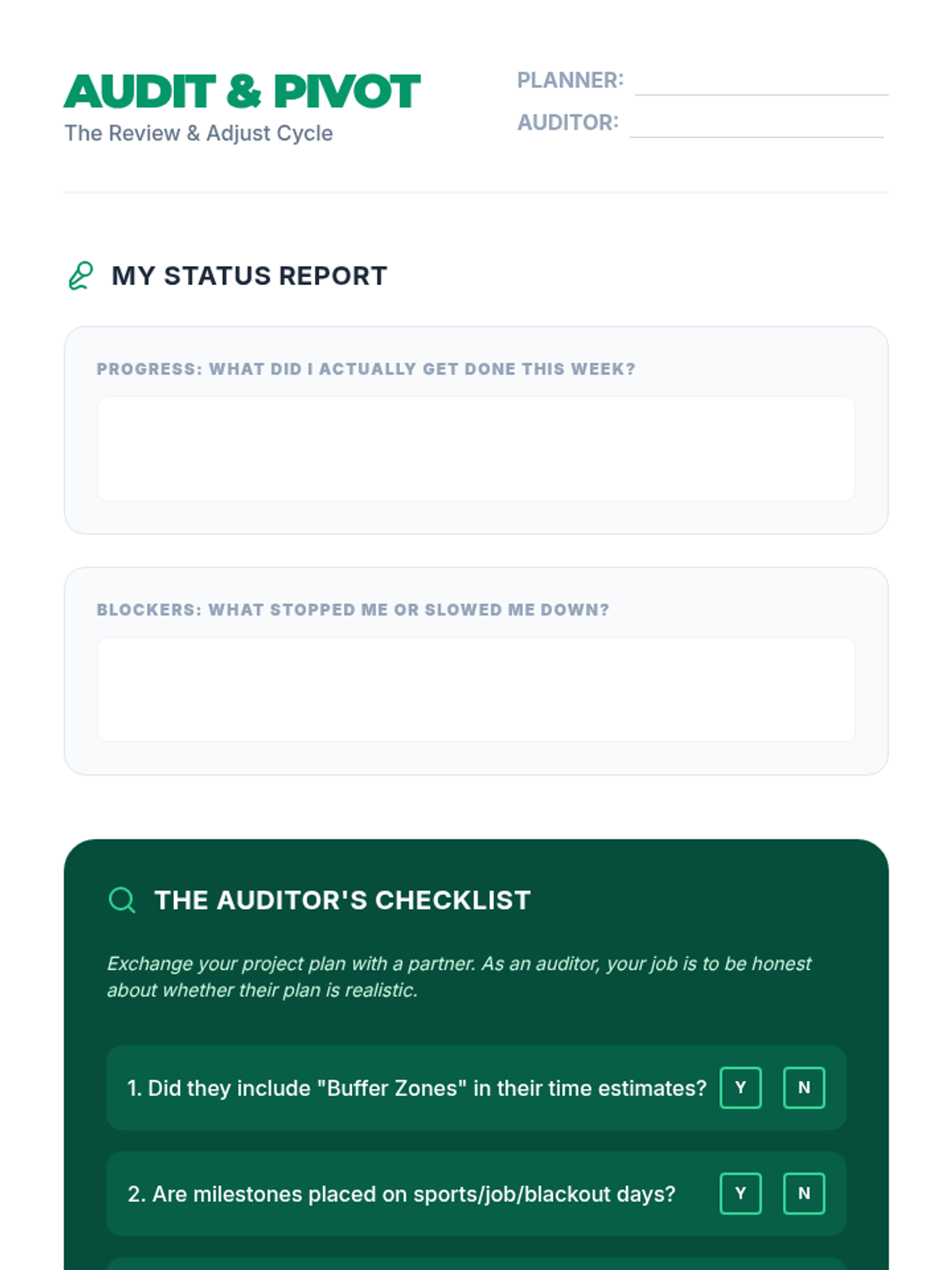
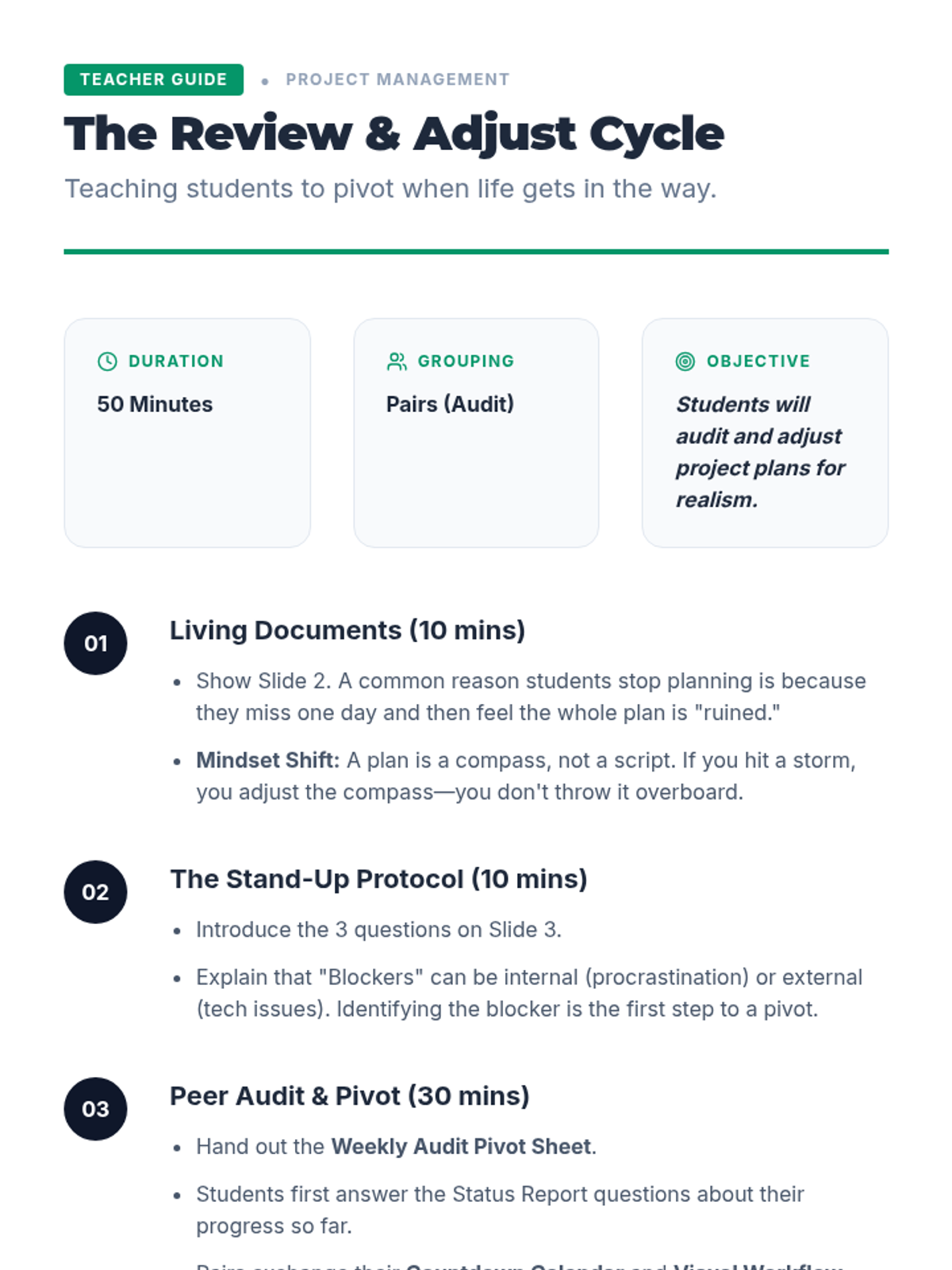
Students learn to treat plans as living documents, conducting weekly audits to adjust their timelines based on actual progress.
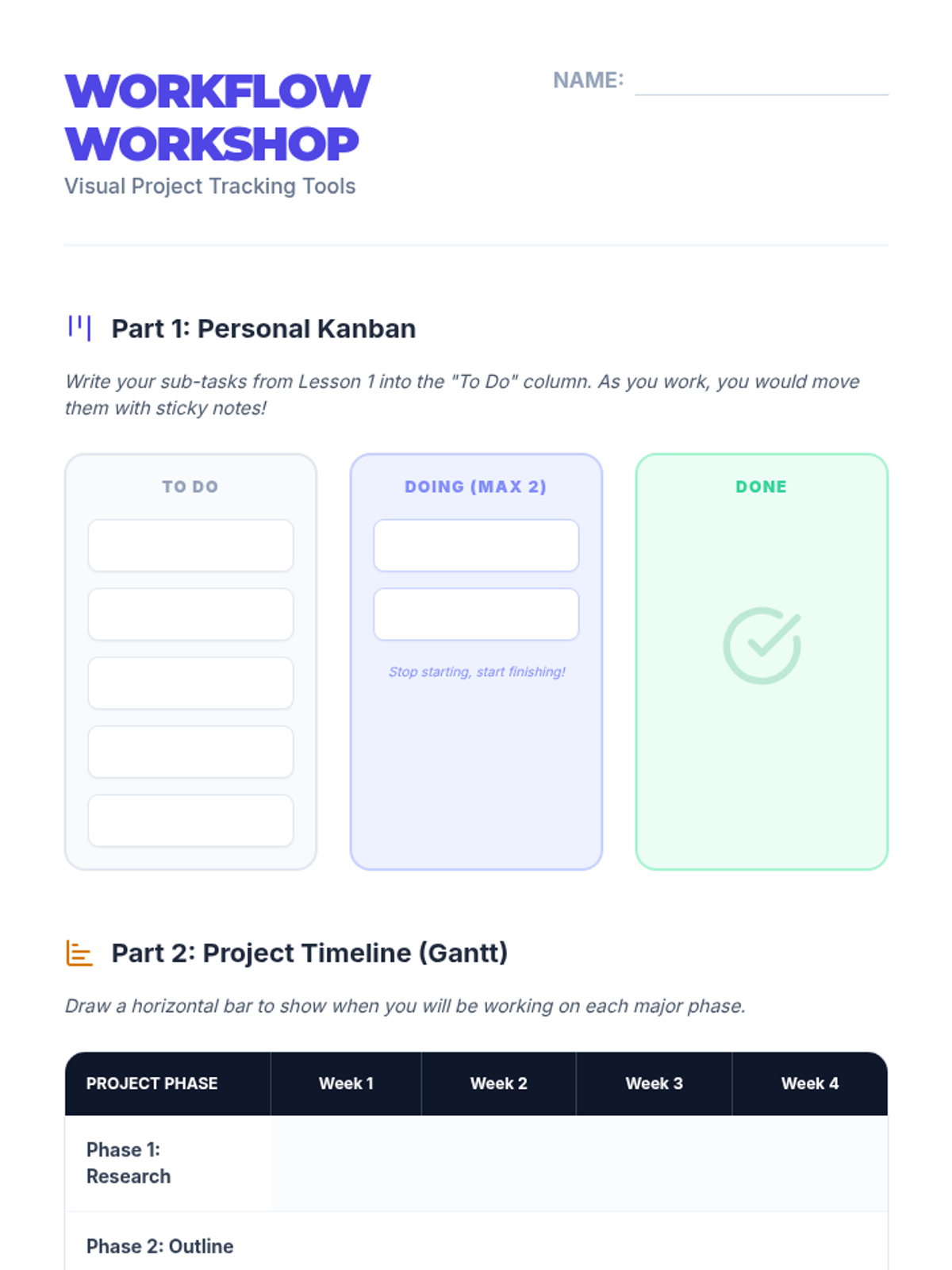
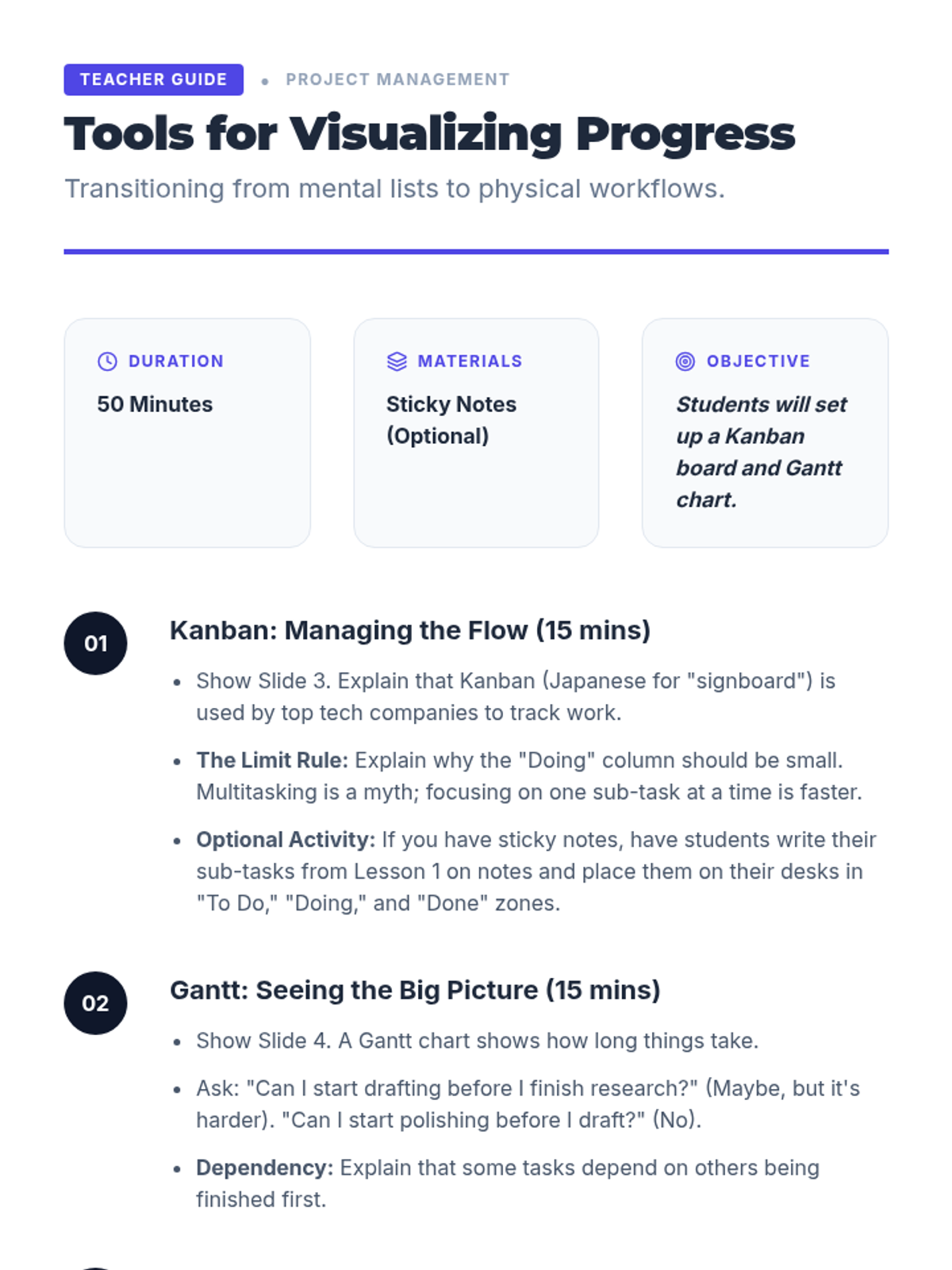
Students explore visual tools like Gantt charts and Kanban boards to track project progress visually.
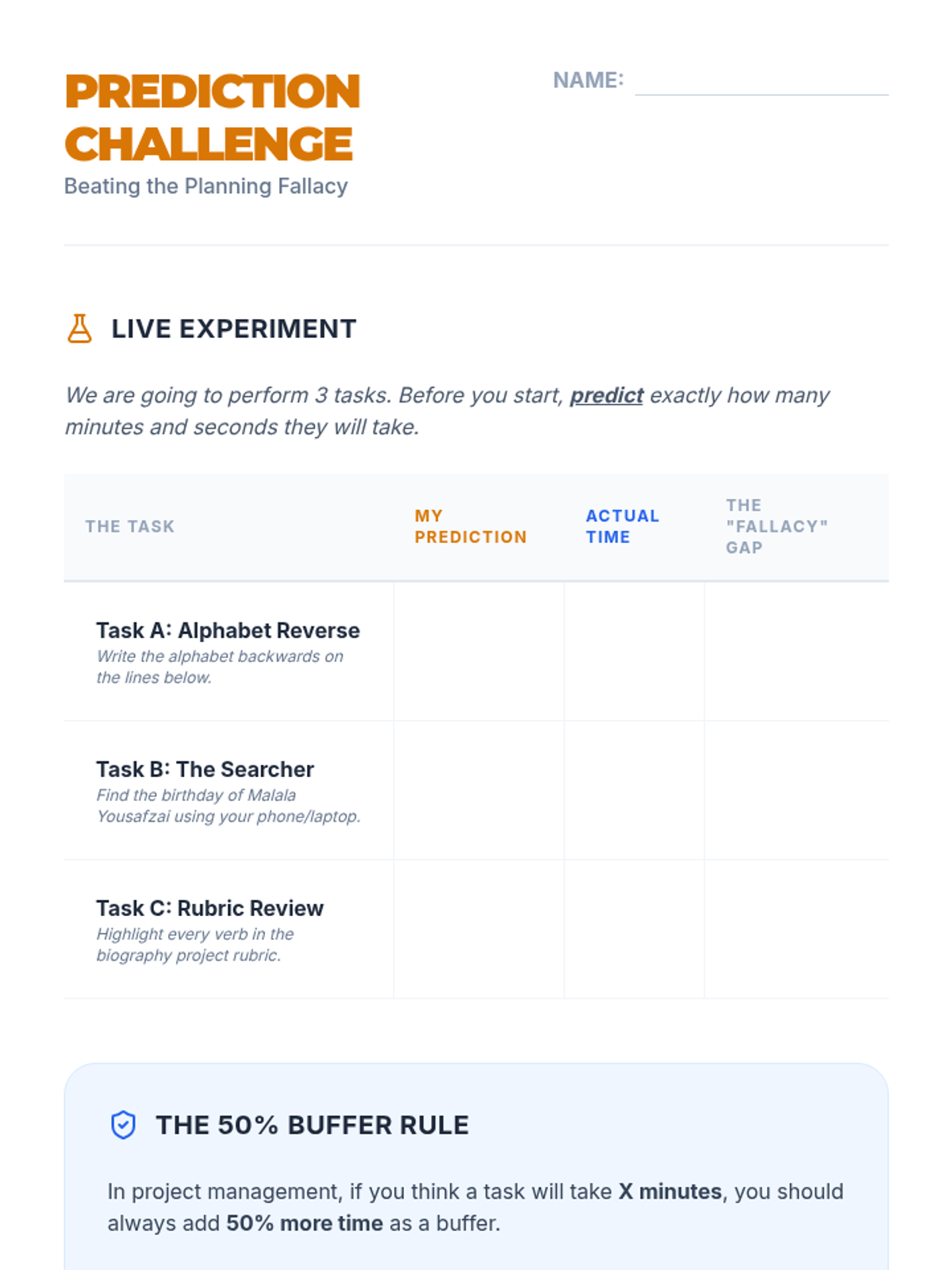
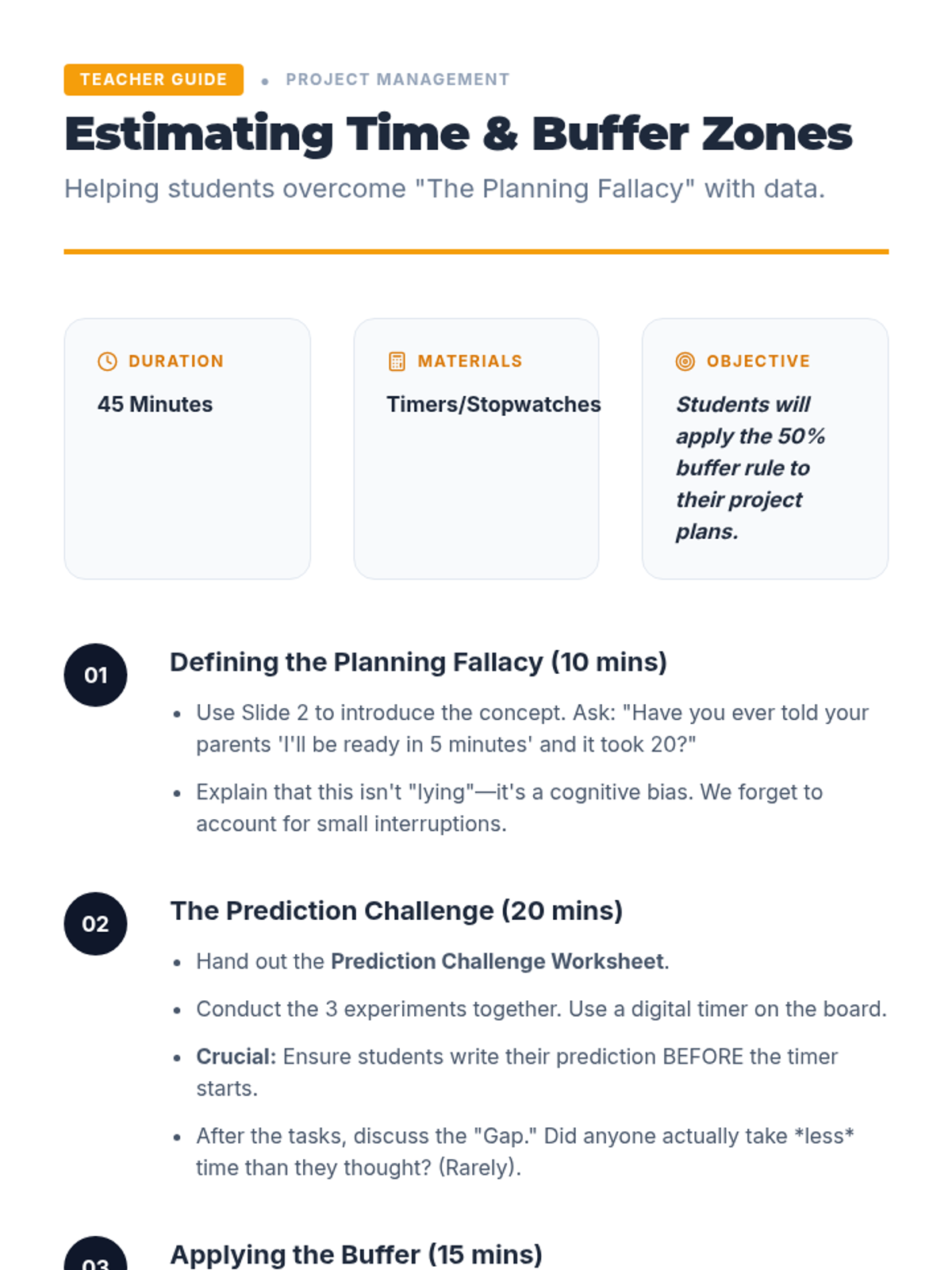
Students practice estimating task duration and learn to add buffer zones to account for the planning fallacy.
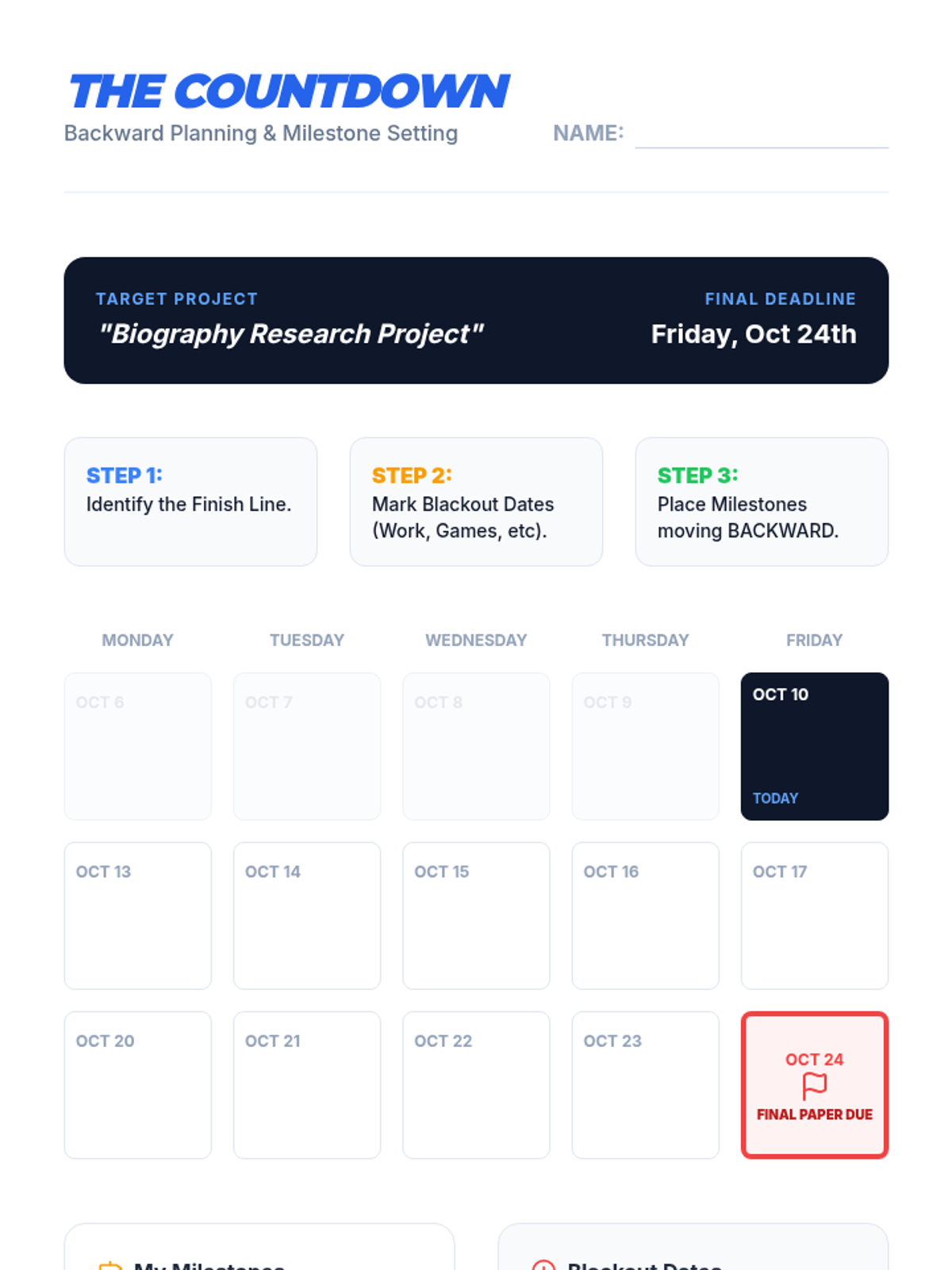
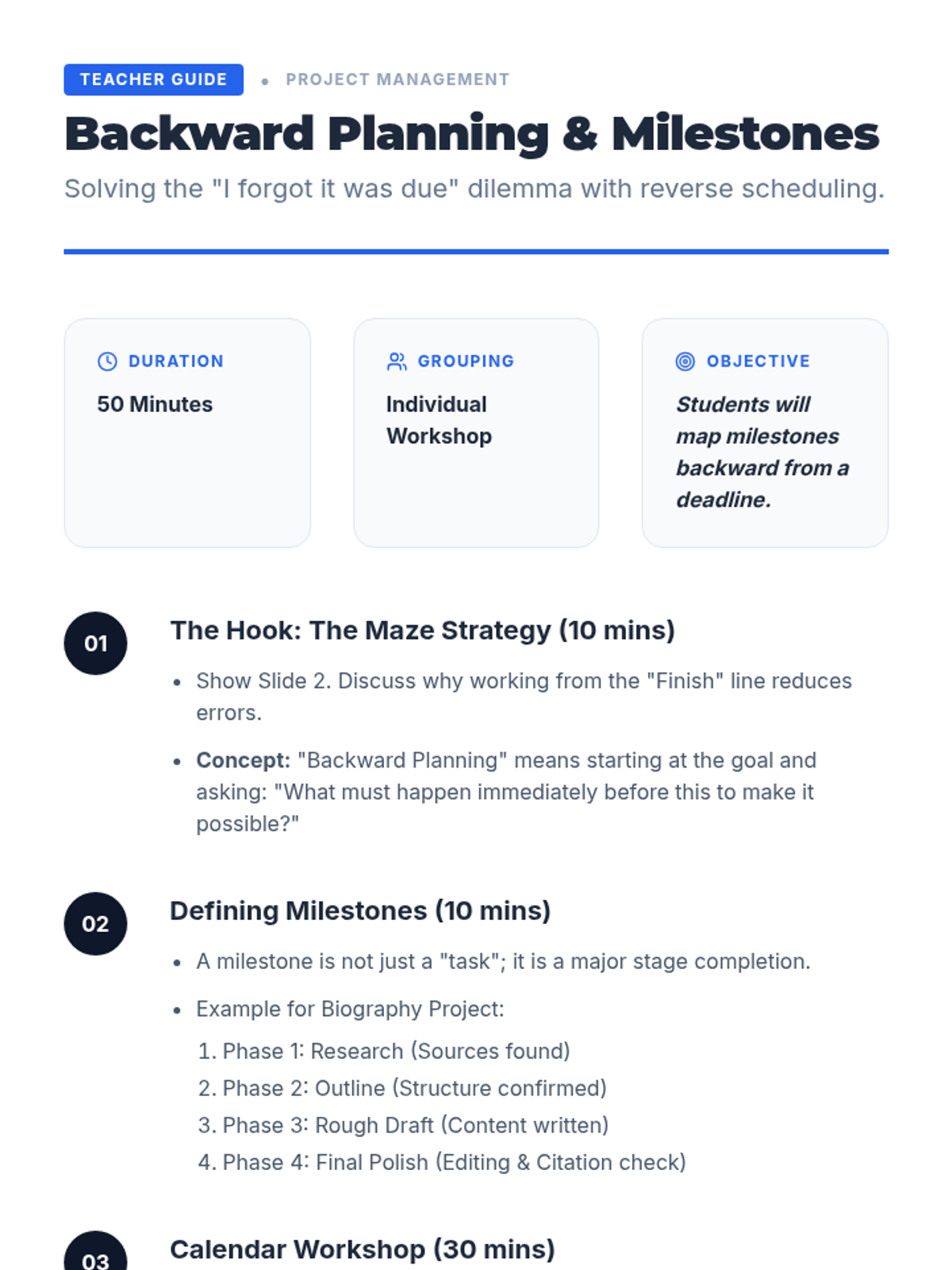
Students use backward planning to set interim milestones on a calendar, accounting for non-school days and other commitments.
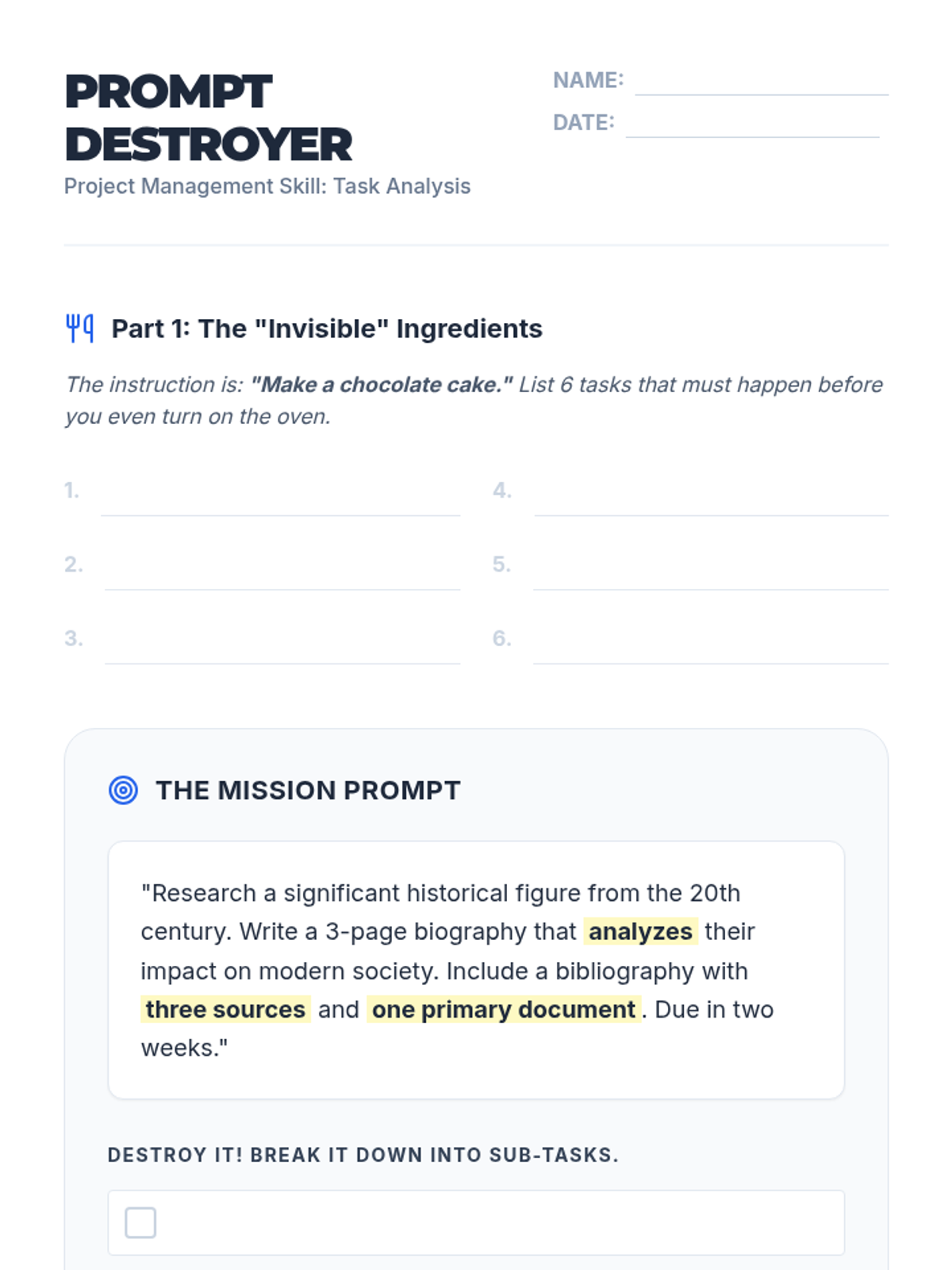
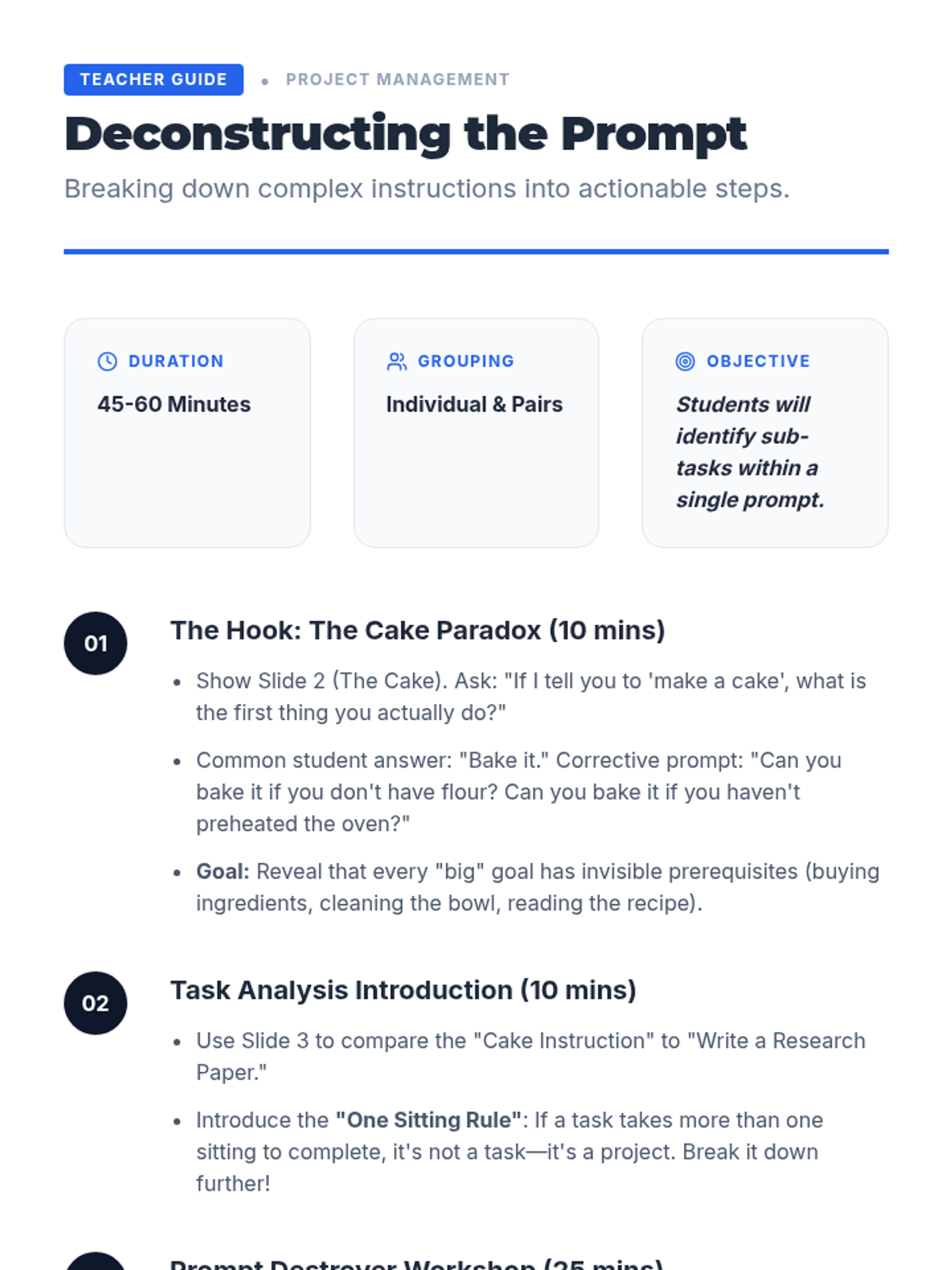
Students learn to analyze a complex assignment rubric to identify hidden tasks, turning a single sentence into a detailed checklist.
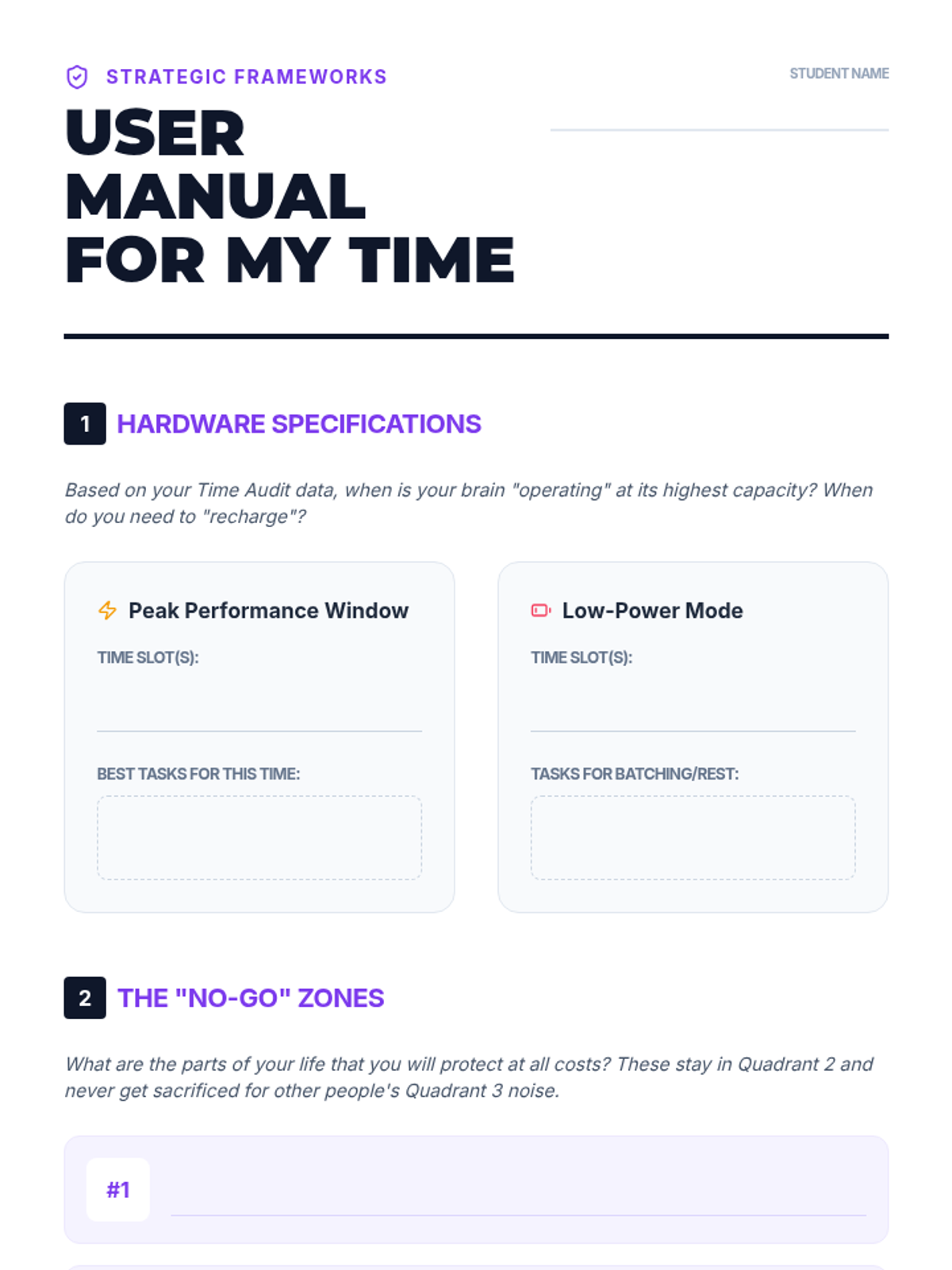
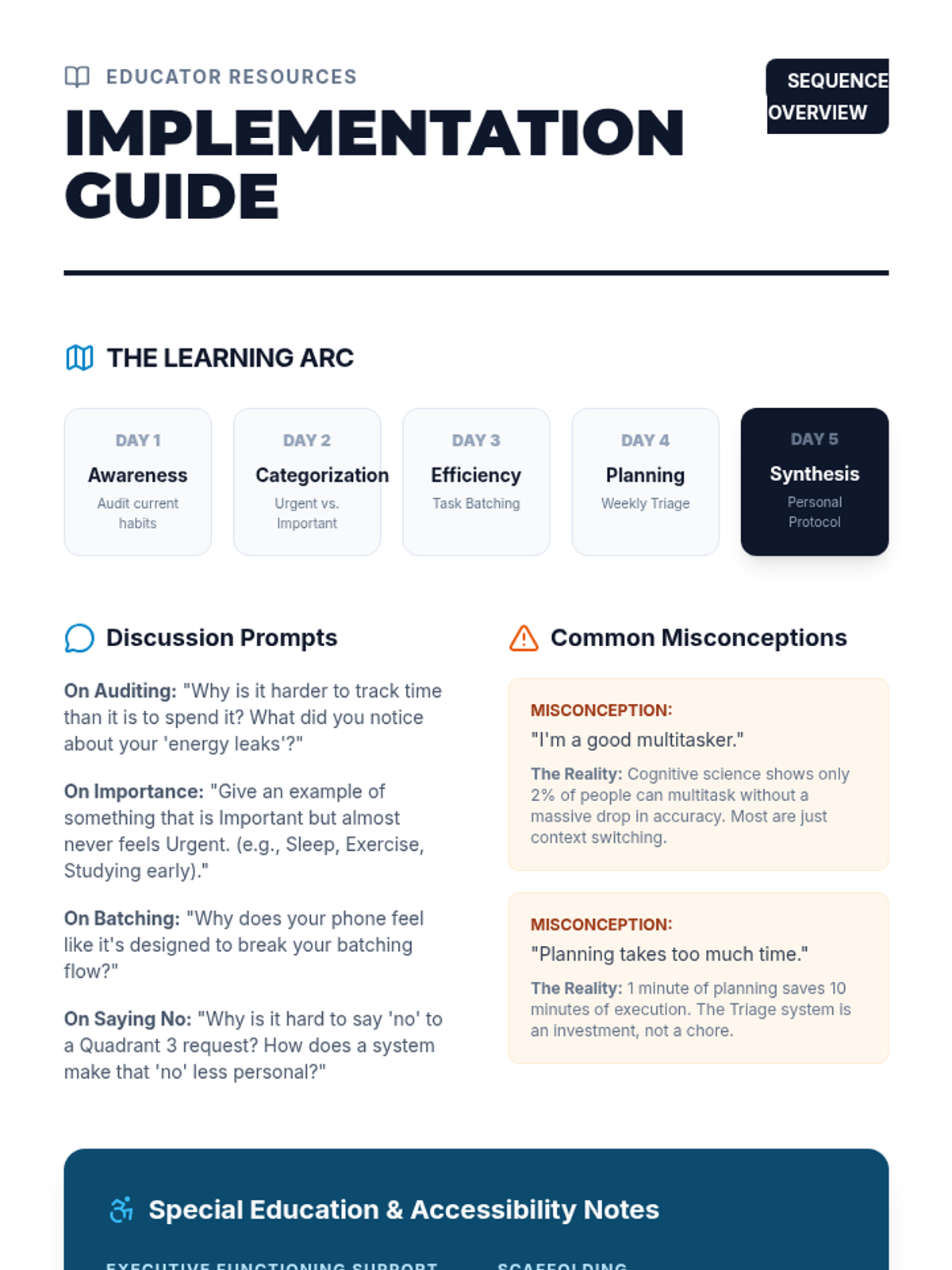
Students synthesize the tools learned to create a personal decision-tree for handling new commitments, presented as a 'User Manual for My Time'.
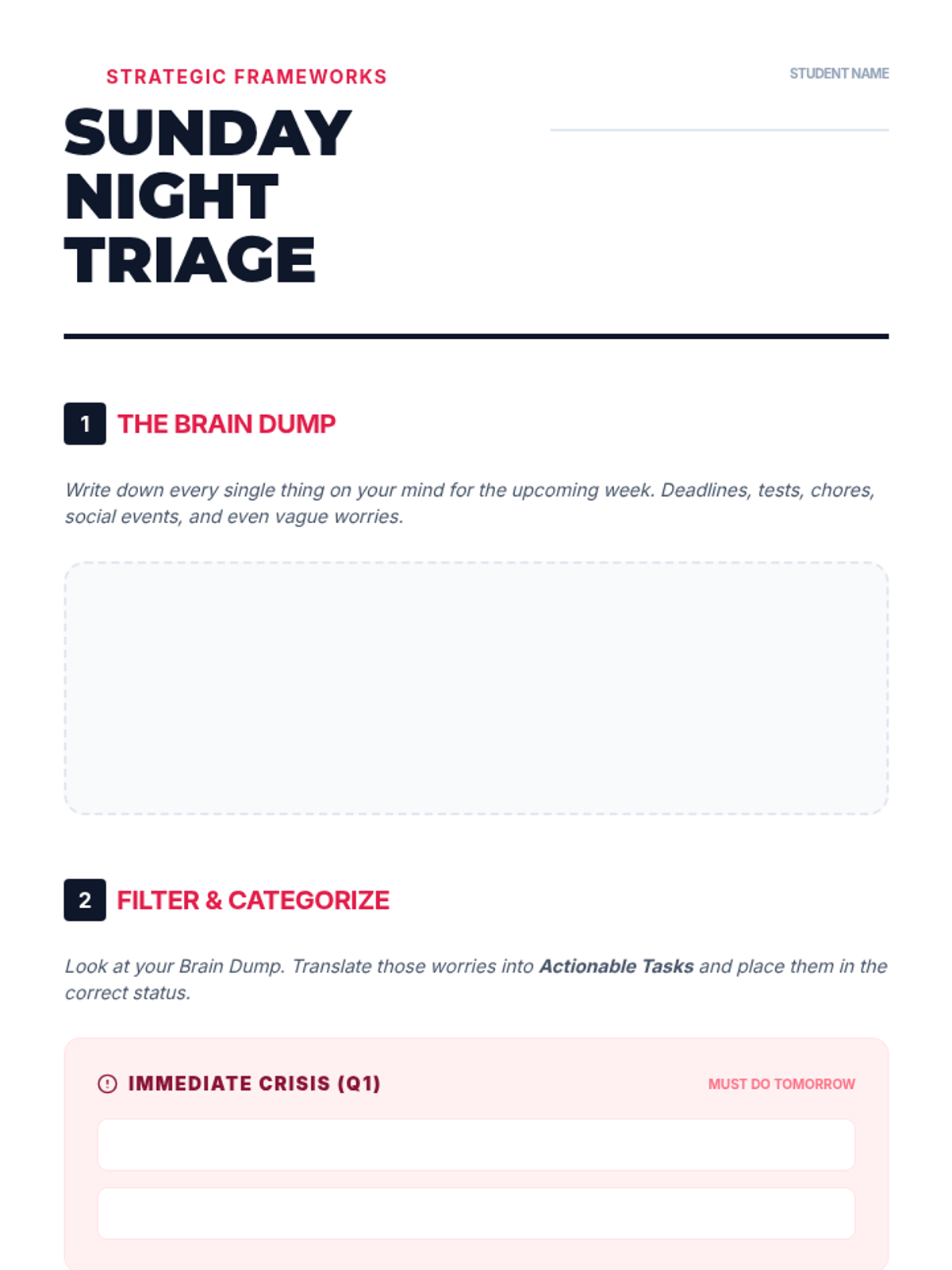
Students create a Sunday Night Triage routine to review upcoming deadlines and sort them by priority, clearing mental clutter before the week begins.
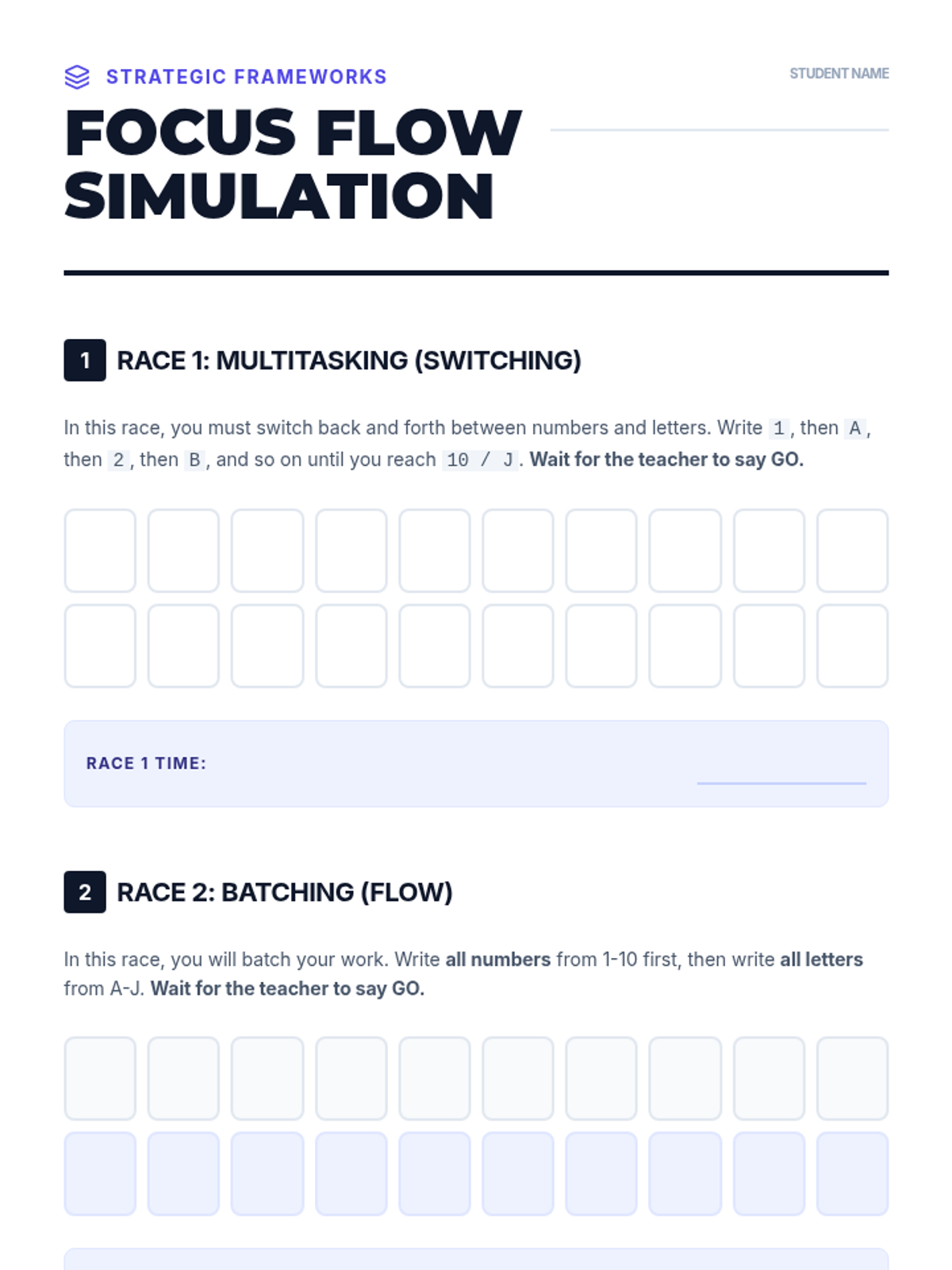
Addresses the cognitive cost of multitasking. Students practice 'batching' similar tasks to increase efficiency and reduce mental fatigue through simulations and workflow optimization.
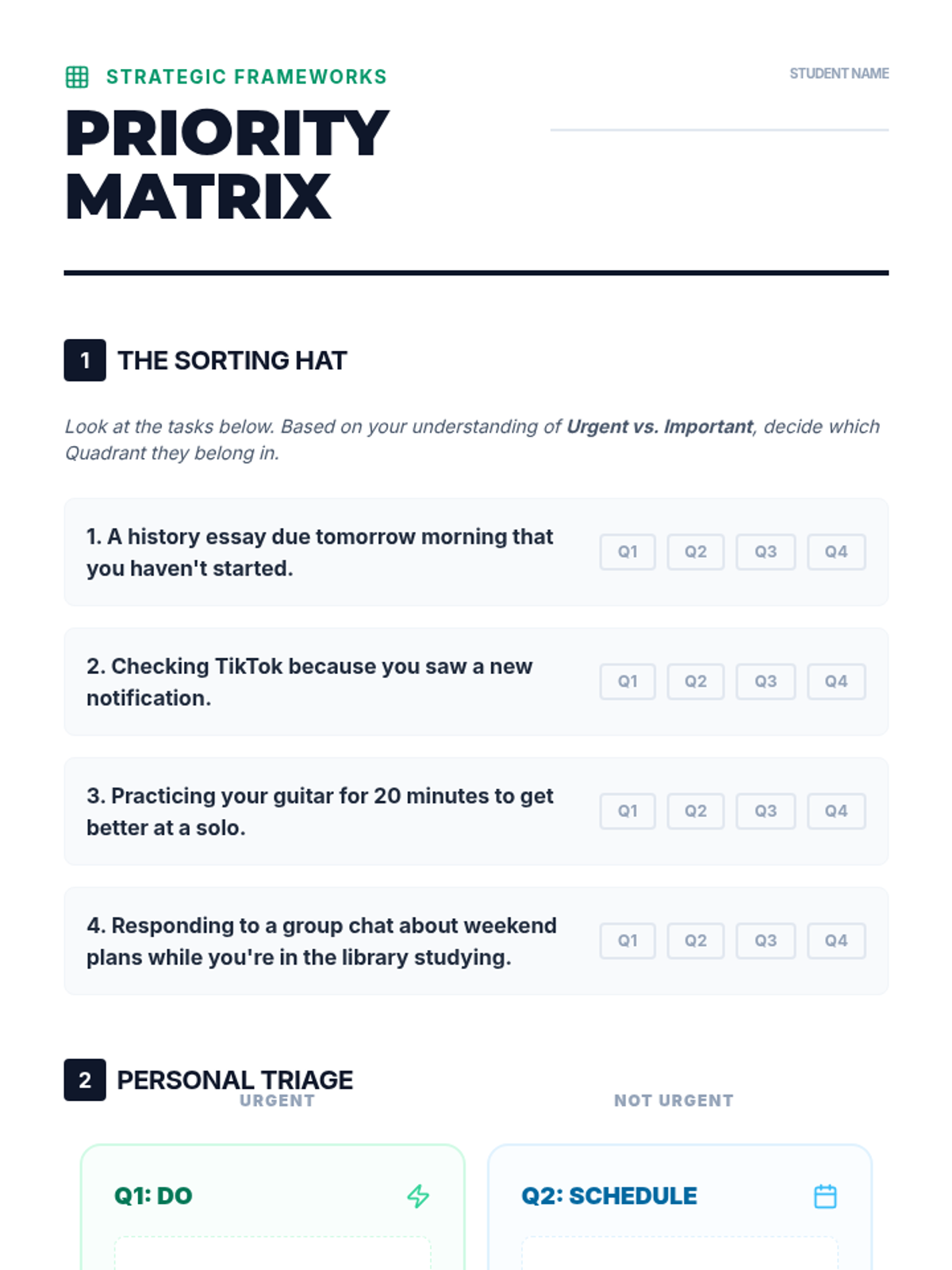
Students learn to categorize tasks into four quadrants: Do First, Schedule, Delegate, and Don't Do. The lesson focuses on distinguishing urgency from importance using real-world scenarios.
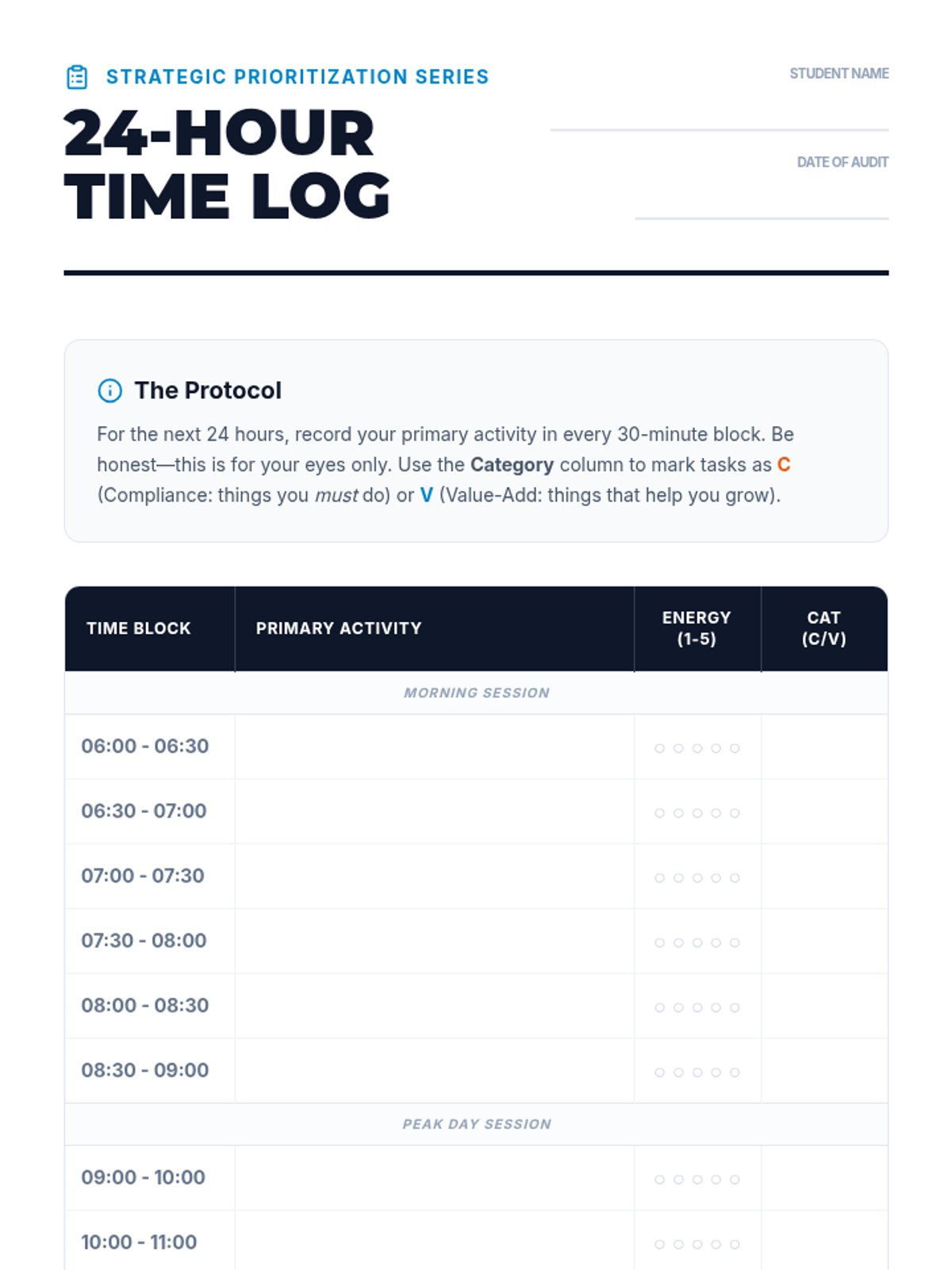
Students track their activities over a 24-hour period to identify patterns, distractions, and peak energy times. They analyze the data to categorize time spent on 'compliance' tasks versus 'value-add' activities.
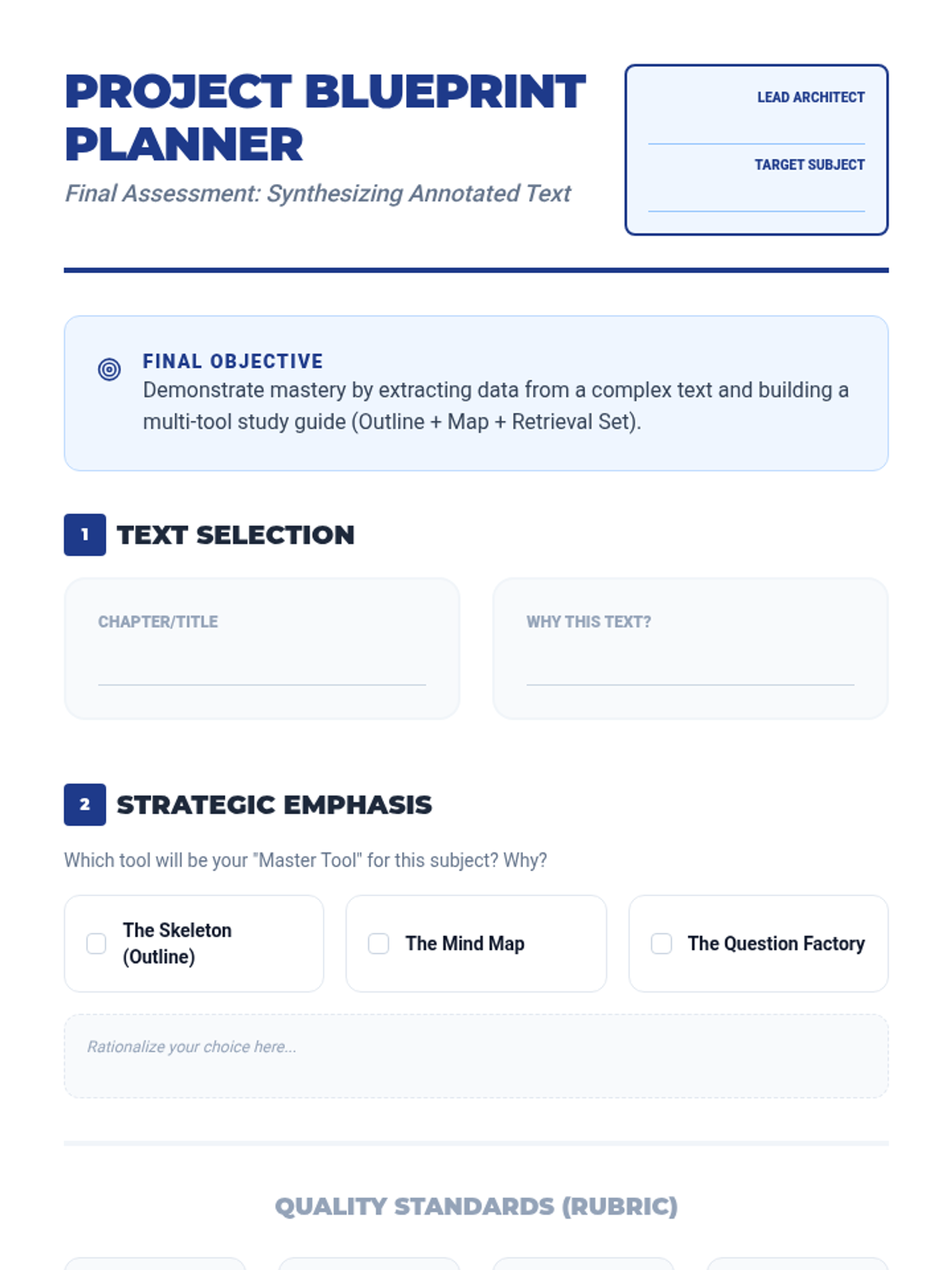
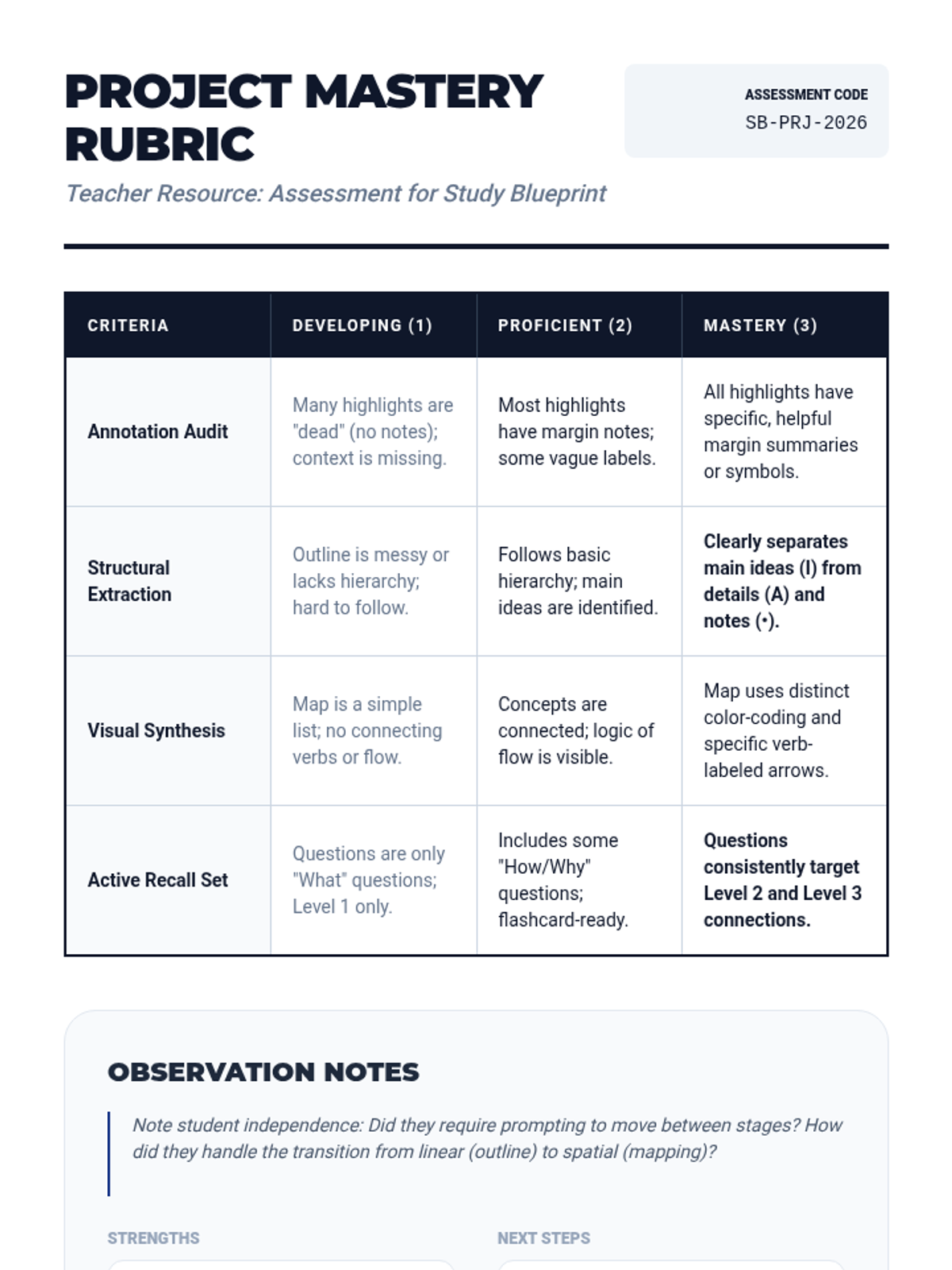
In this mastery-based project, students apply the entire workflow to a text from another class, producing a professional-grade study guide tailored to their specific learning style.
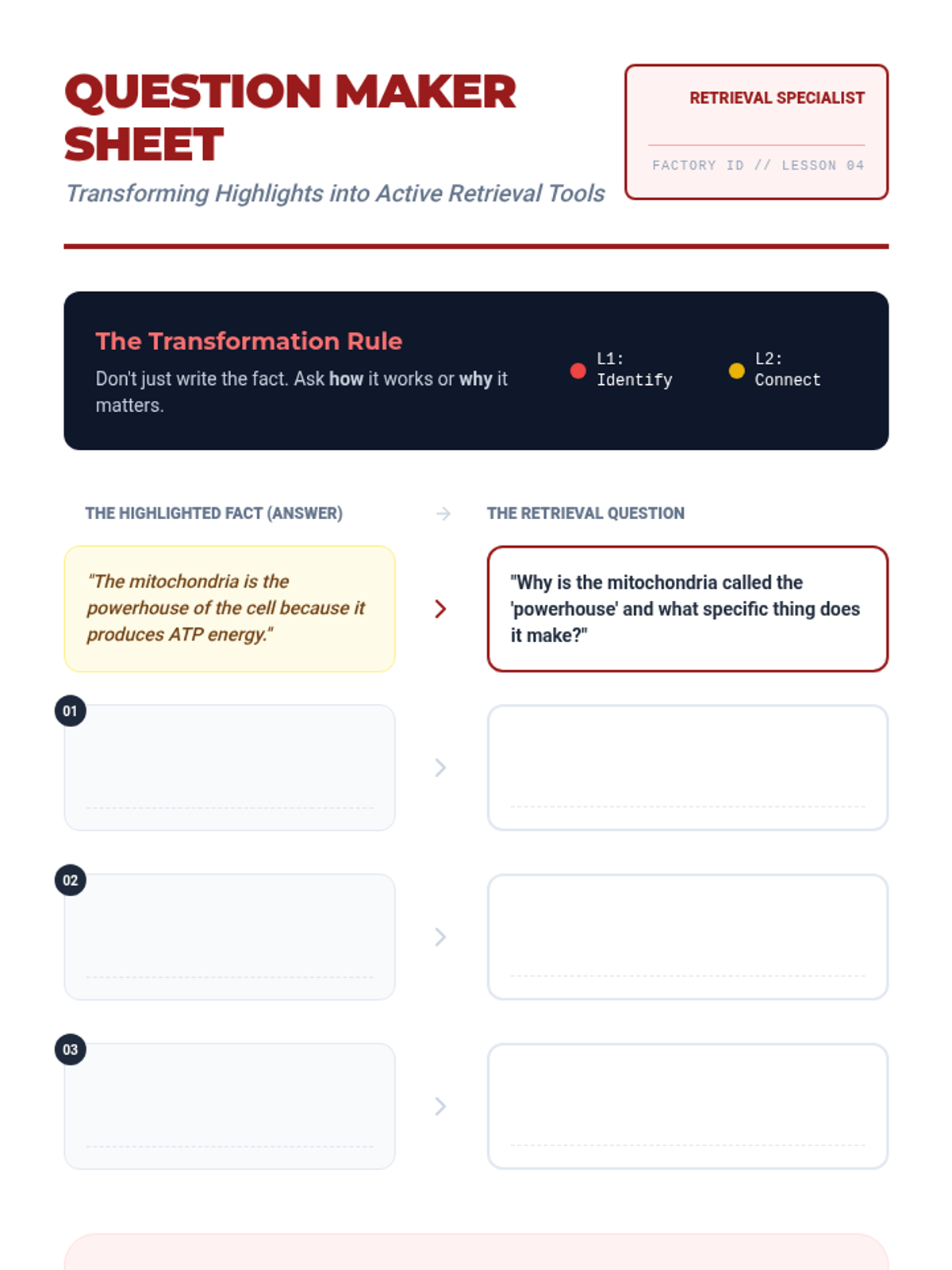
Students shift from passive re-reading to active recall by transforming their highlighted facts into high-quality retrieval questions for self-quizzing and flashcards.
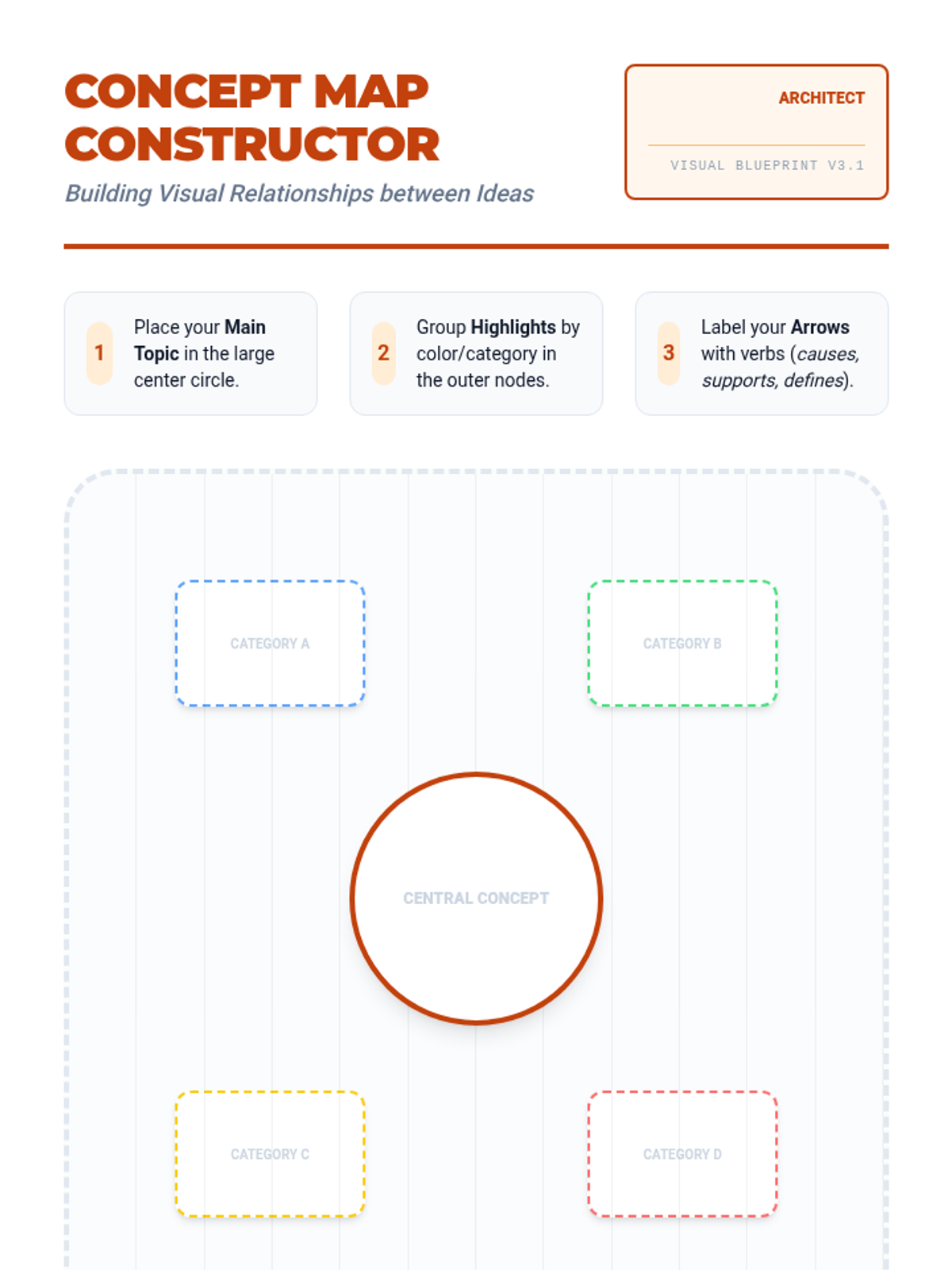
Focusing on spatial learning, students translate their categorized annotations into visual concept maps that highlight the relationships between key terms and ideas.
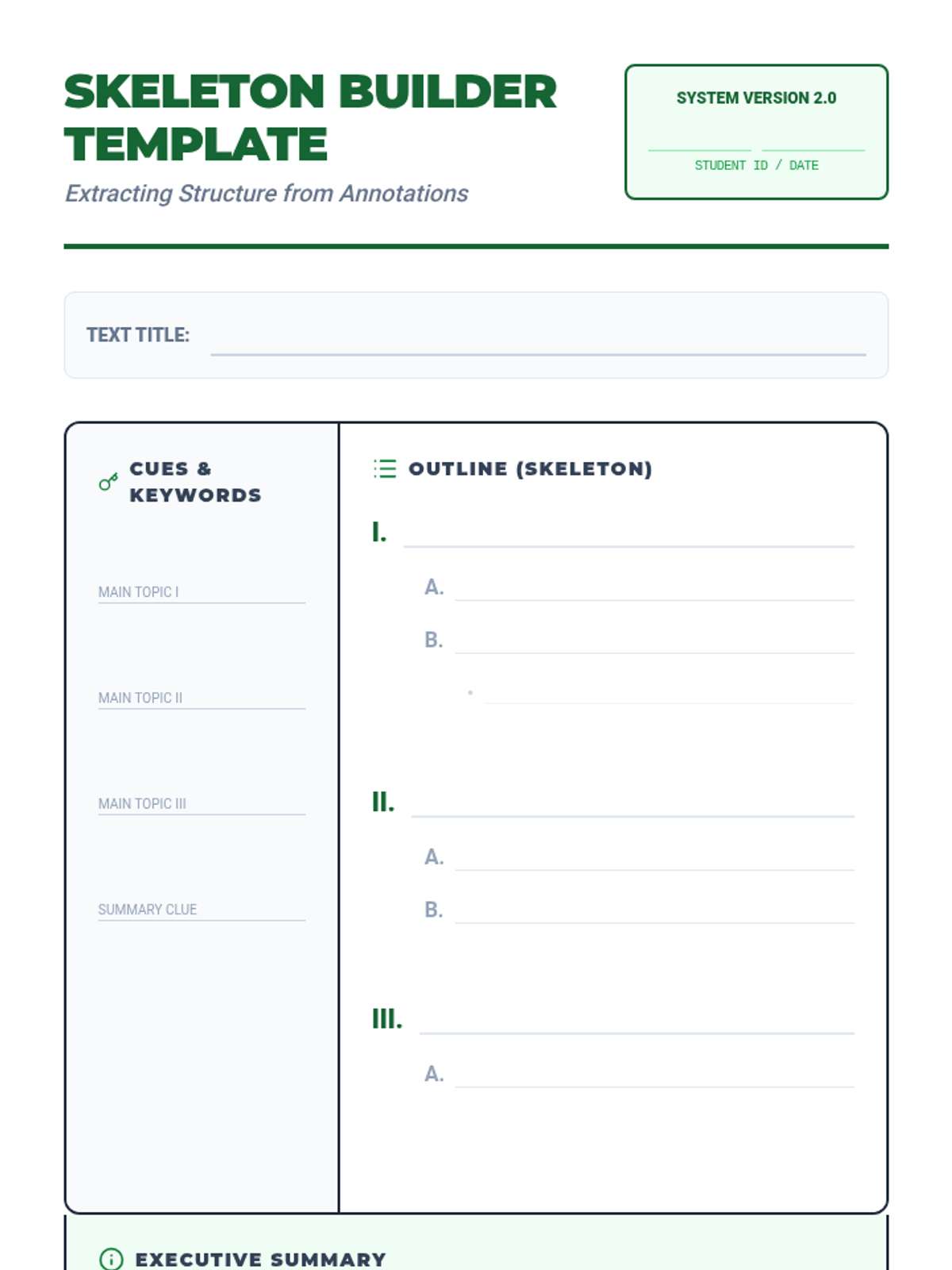
Students learn the 'Skeleton Method' to extract main ideas and supporting details from their highlights, organizing them into structured Cornell notes or topic outlines.
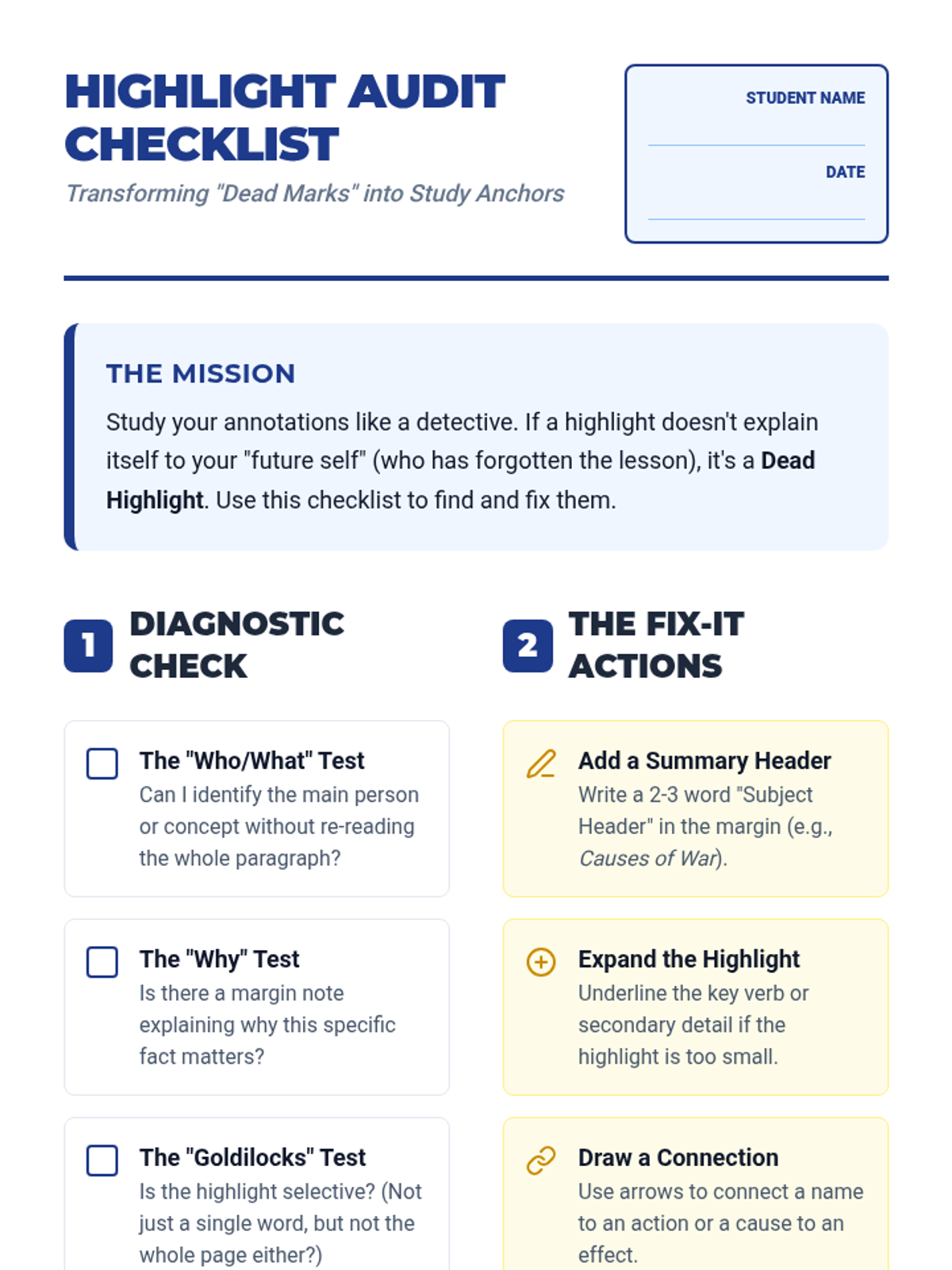
Students investigate the effectiveness of their previous annotations, identifying 'dead highlights' and learning to add meaningful context to their notes to make them useful for future review.
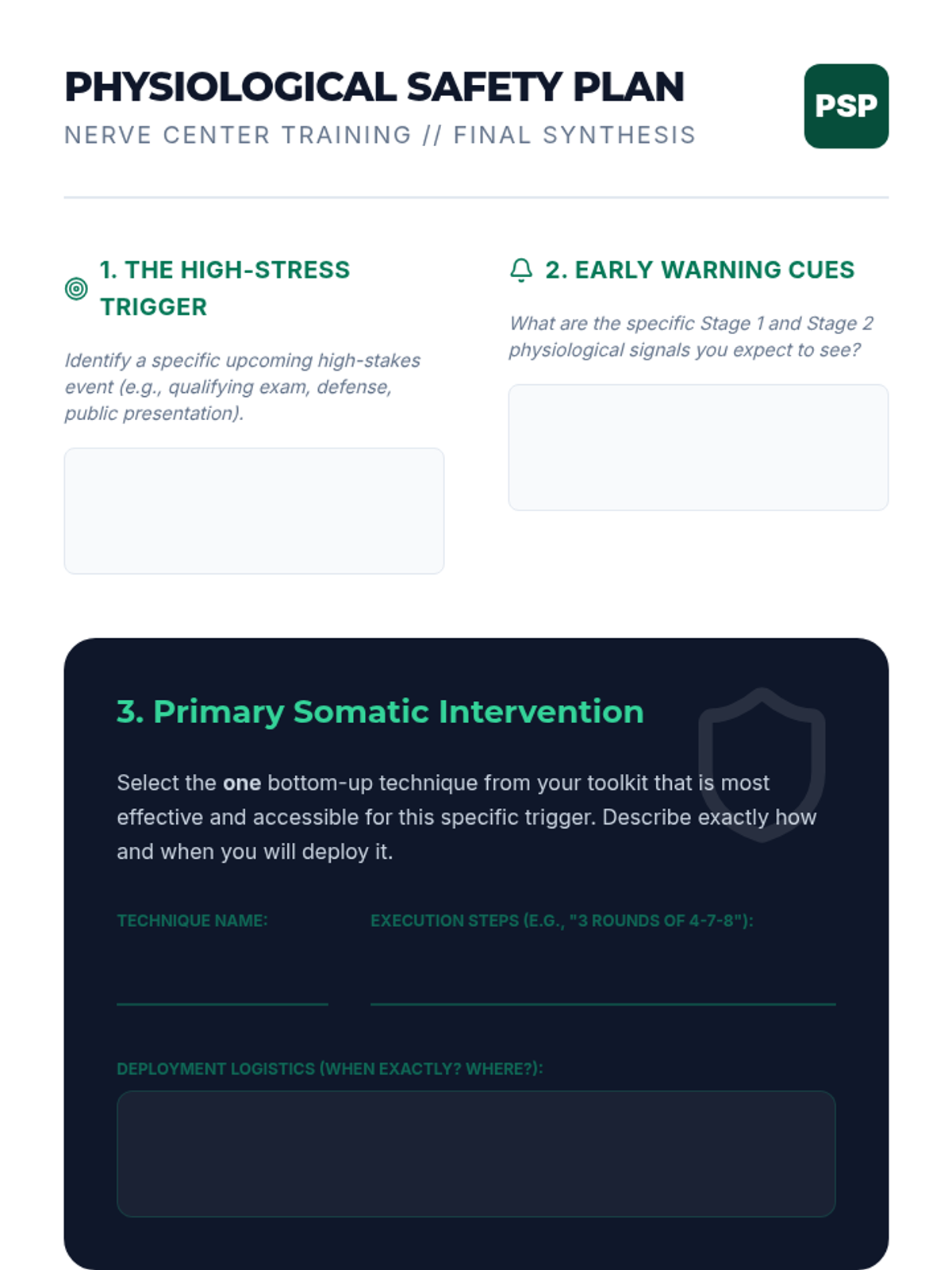
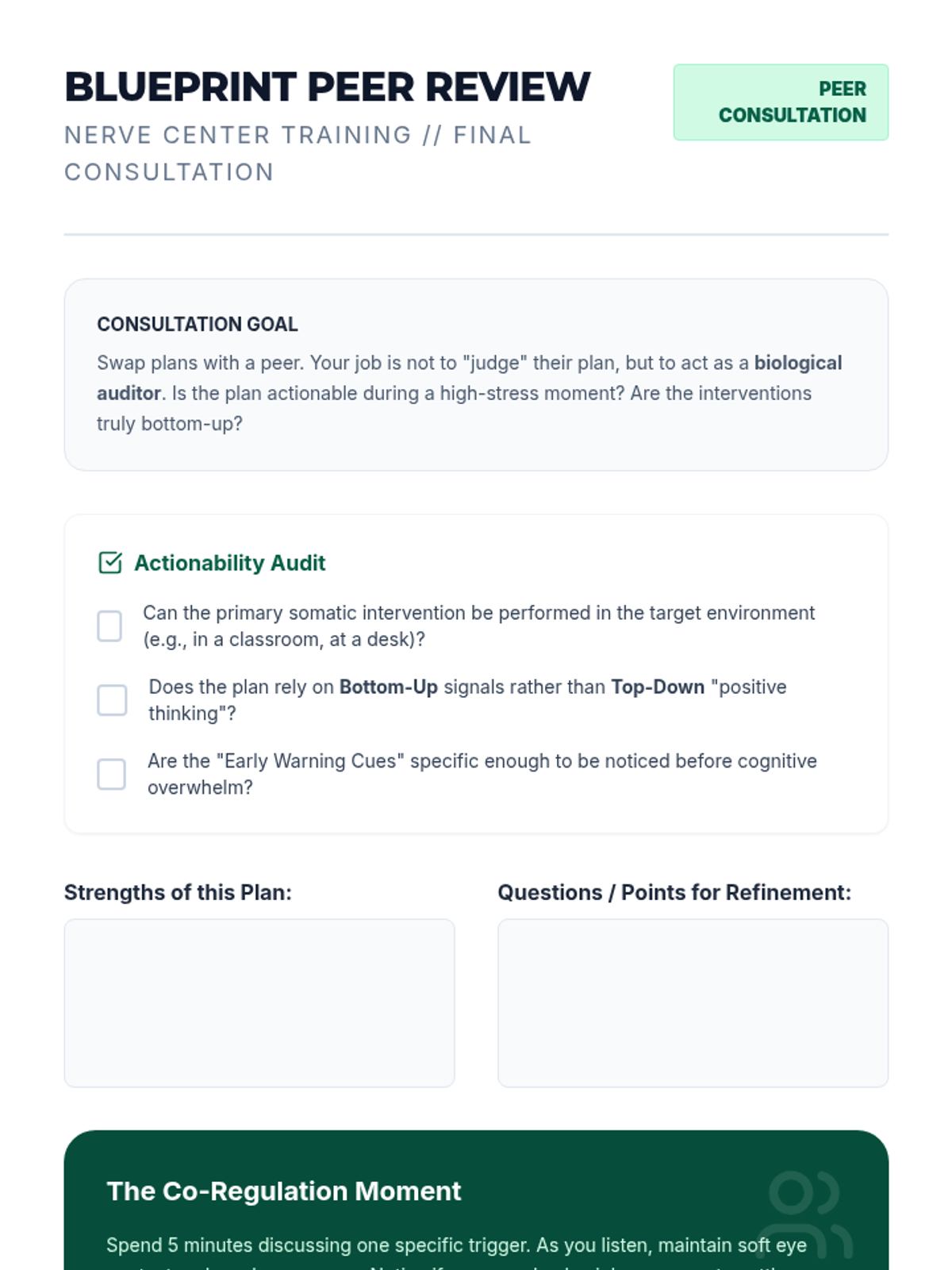
Students synthesize their knowledge to create a personalized physiological safety plan for high-stress periods. They identify triggers, early warning signs, and pre-planned somatic interventions.
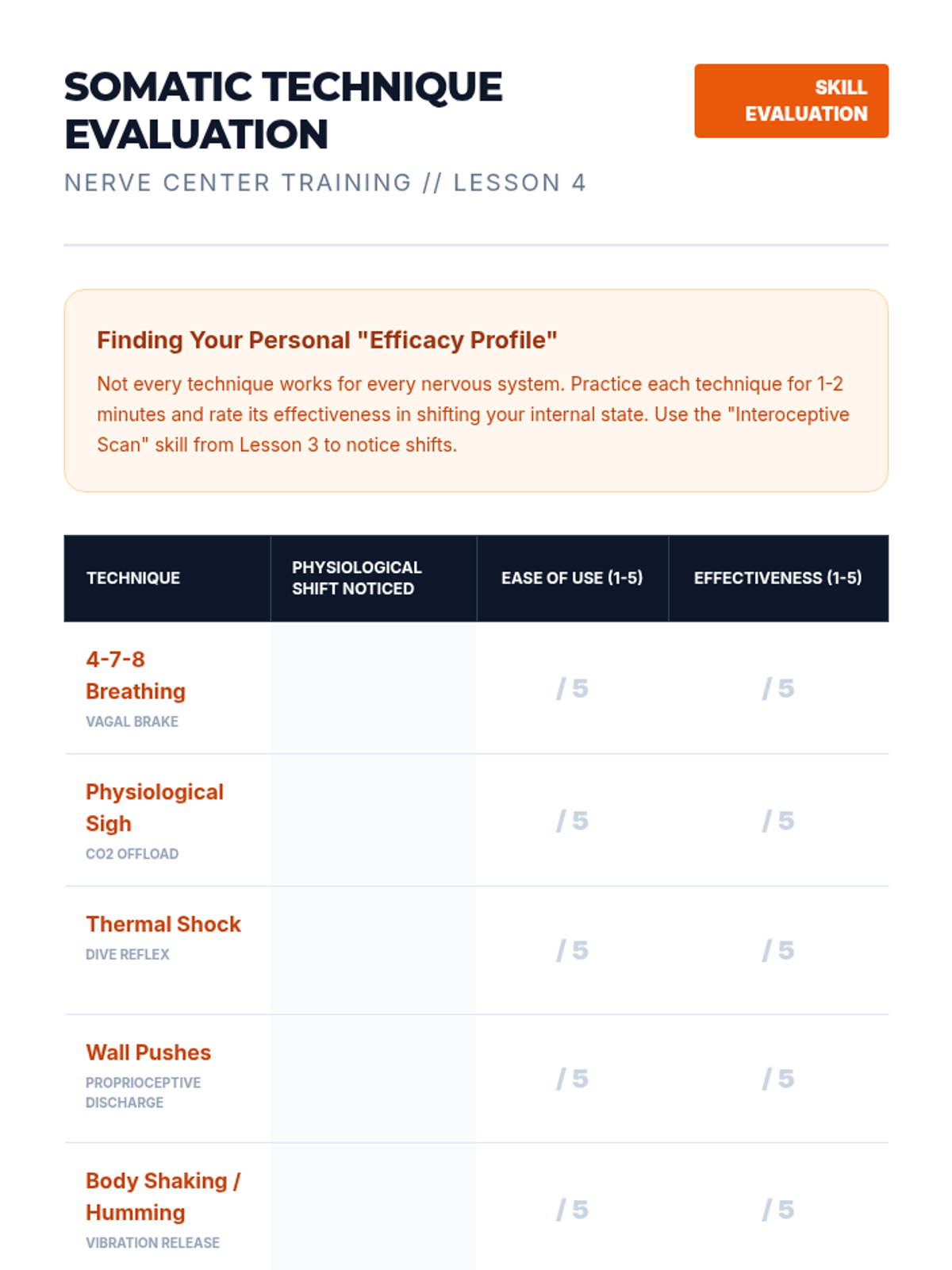
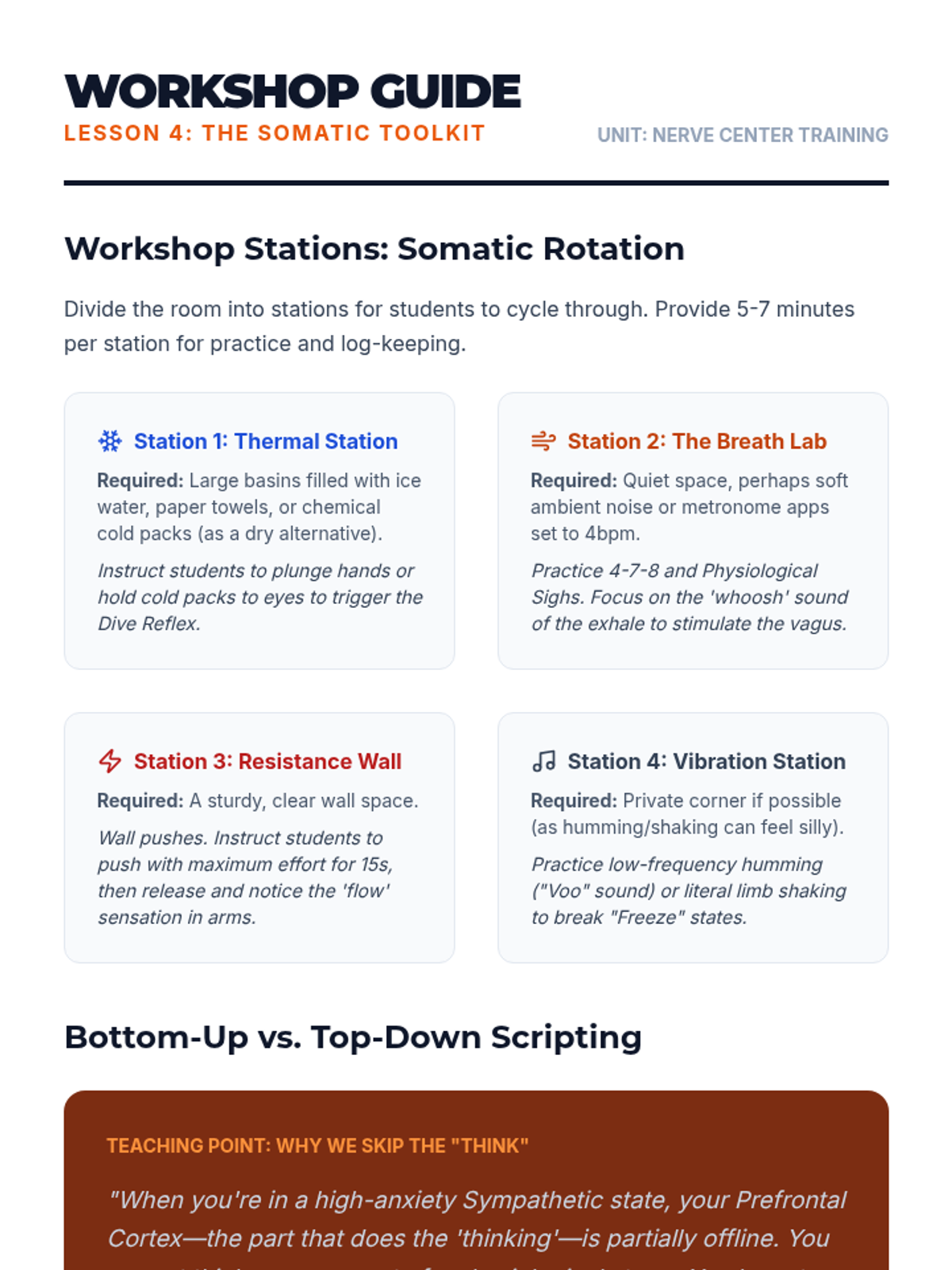
Students evaluate somatic bottom-up processing techniques like diaphragmatic breathing and thermal regulation. They learn to choose the right physical strategy for their specific physiological profile.
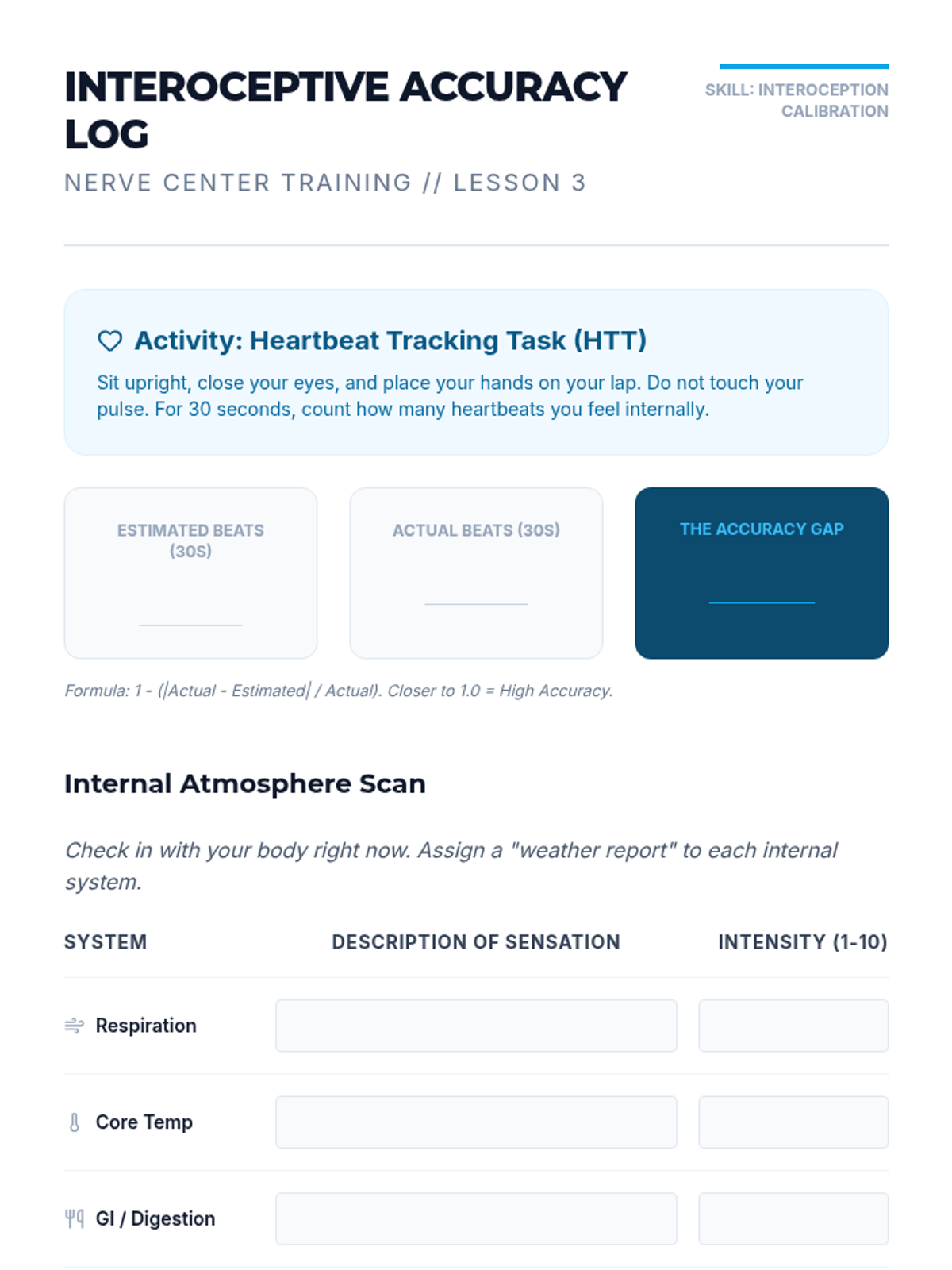
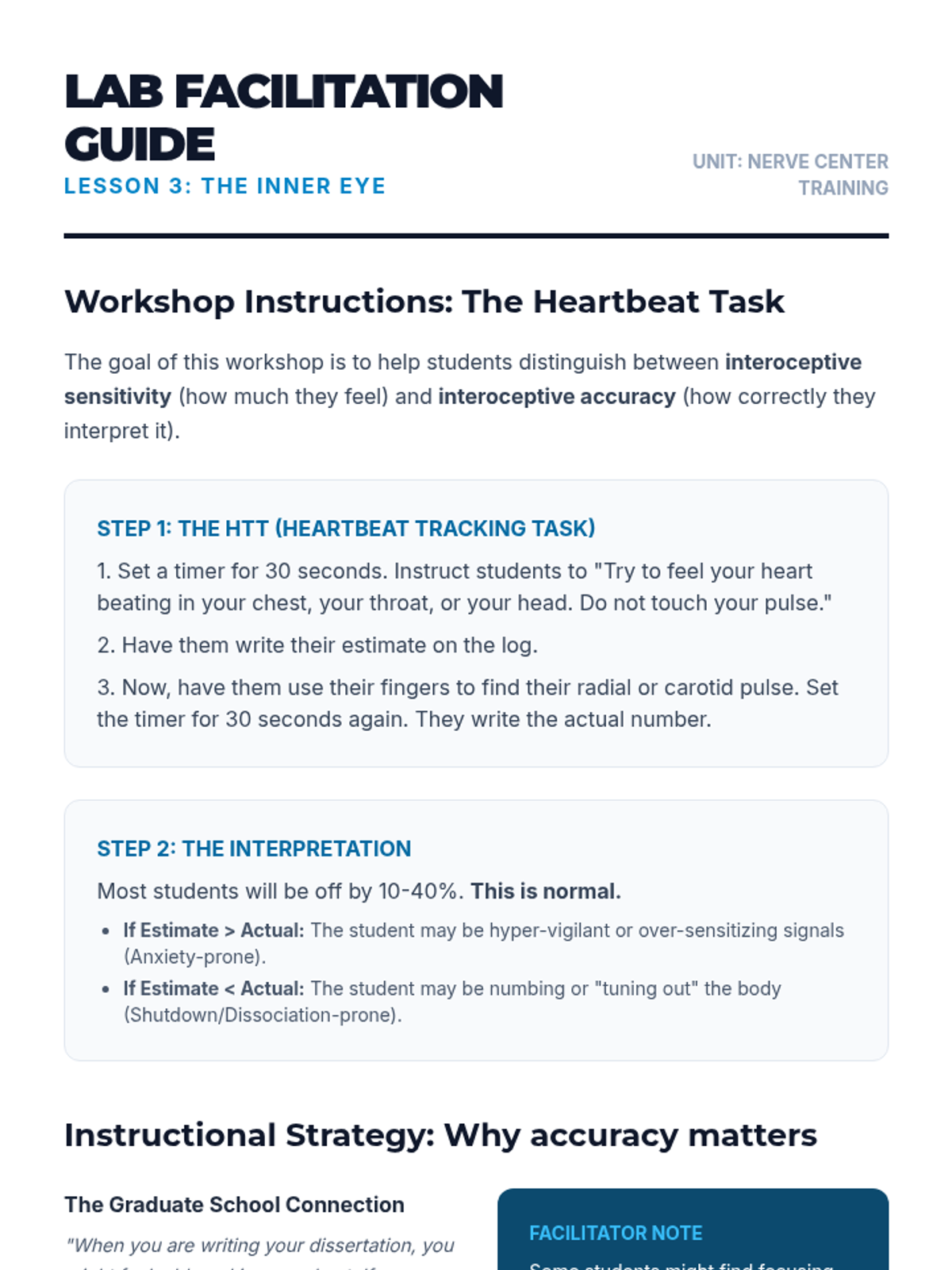
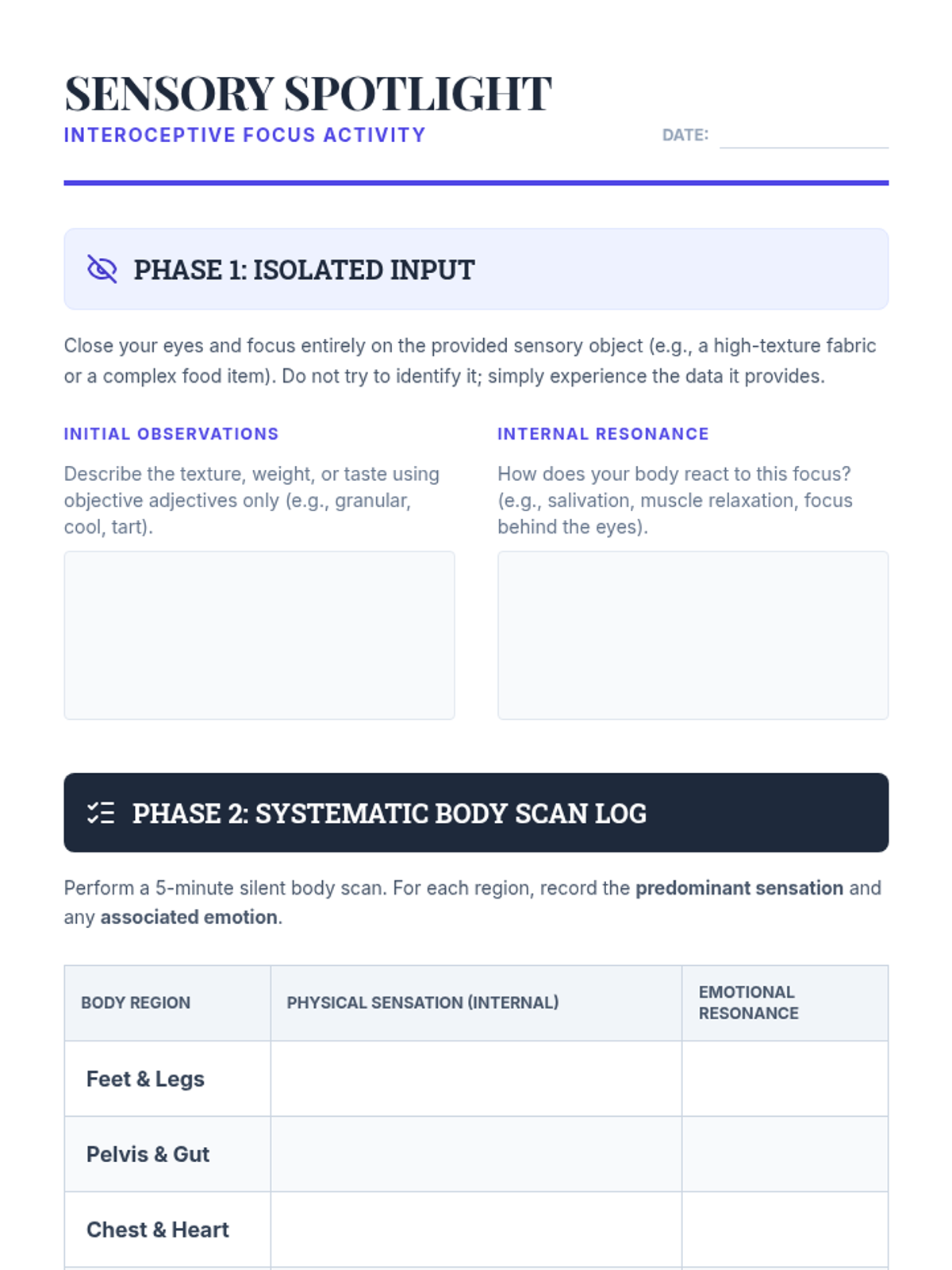
Learners practice interoception—the sense of the internal state of the body. They test their accuracy in detecting heart rate and tension, connecting poor awareness with high anxiety.
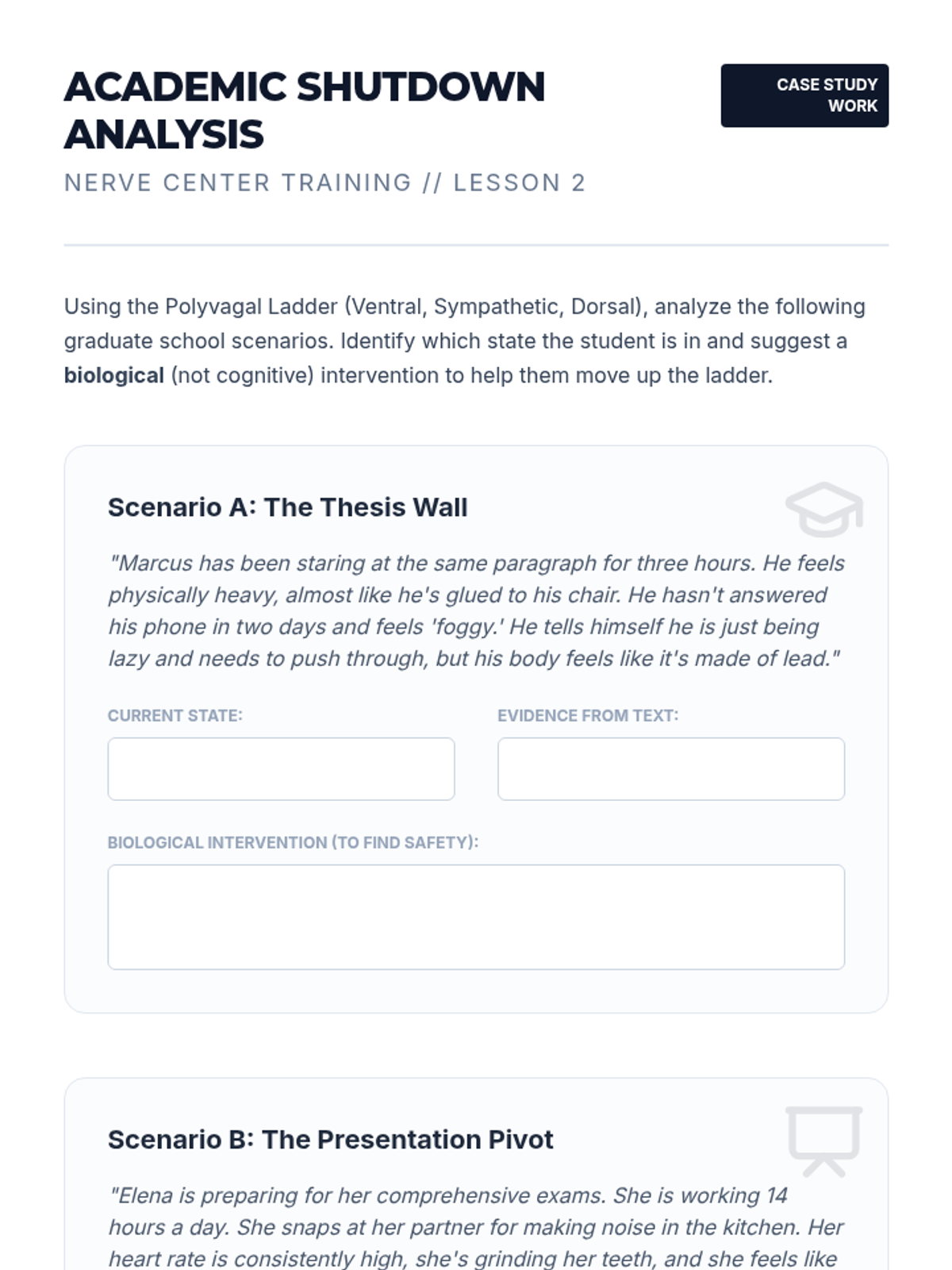
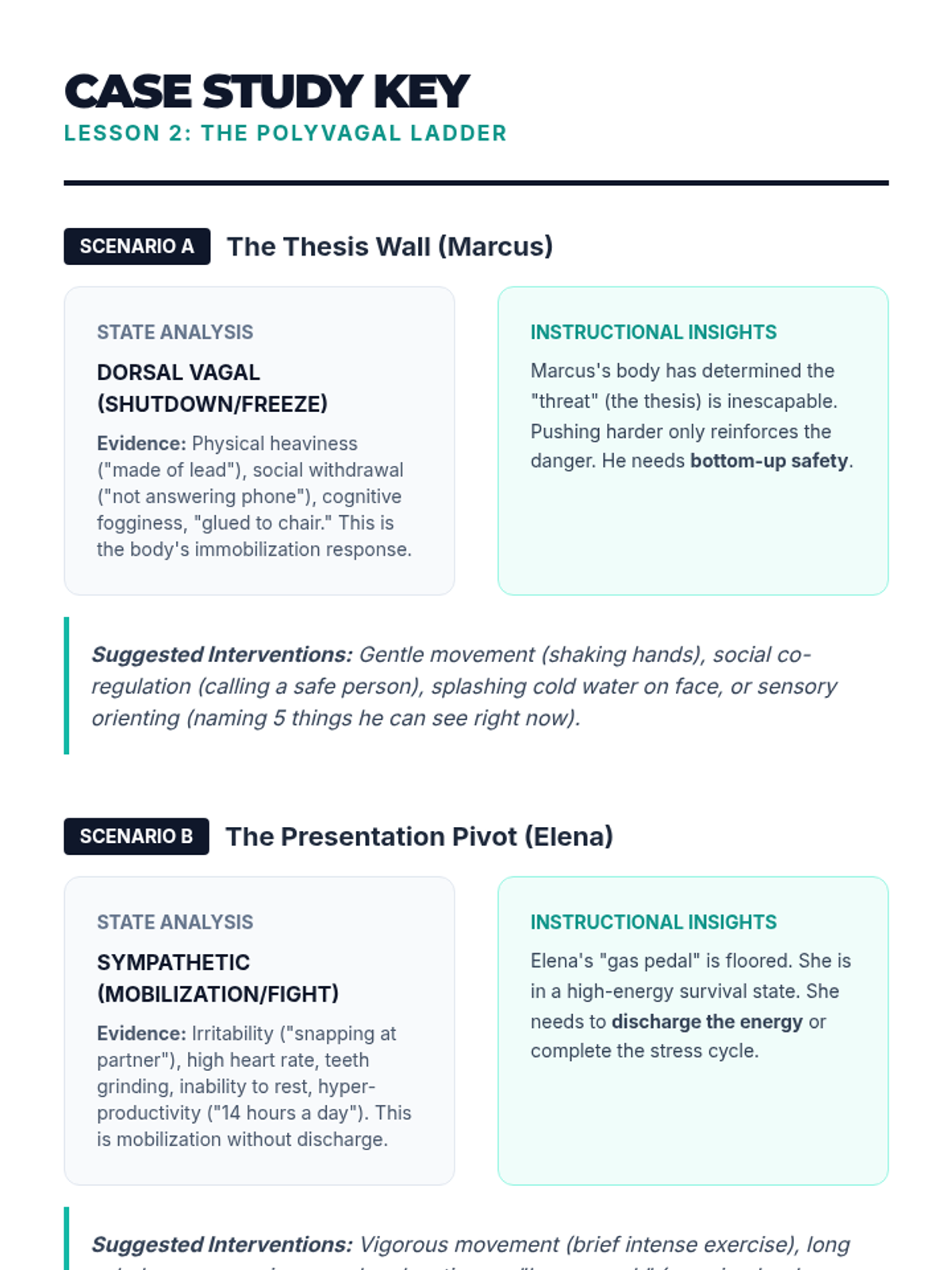
Dives into Polyvagal Theory to distinguish between fight/flight mobilization and dorsal vagal shutdown. Students analyze behaviors like procrastination and isolation as biological responses.
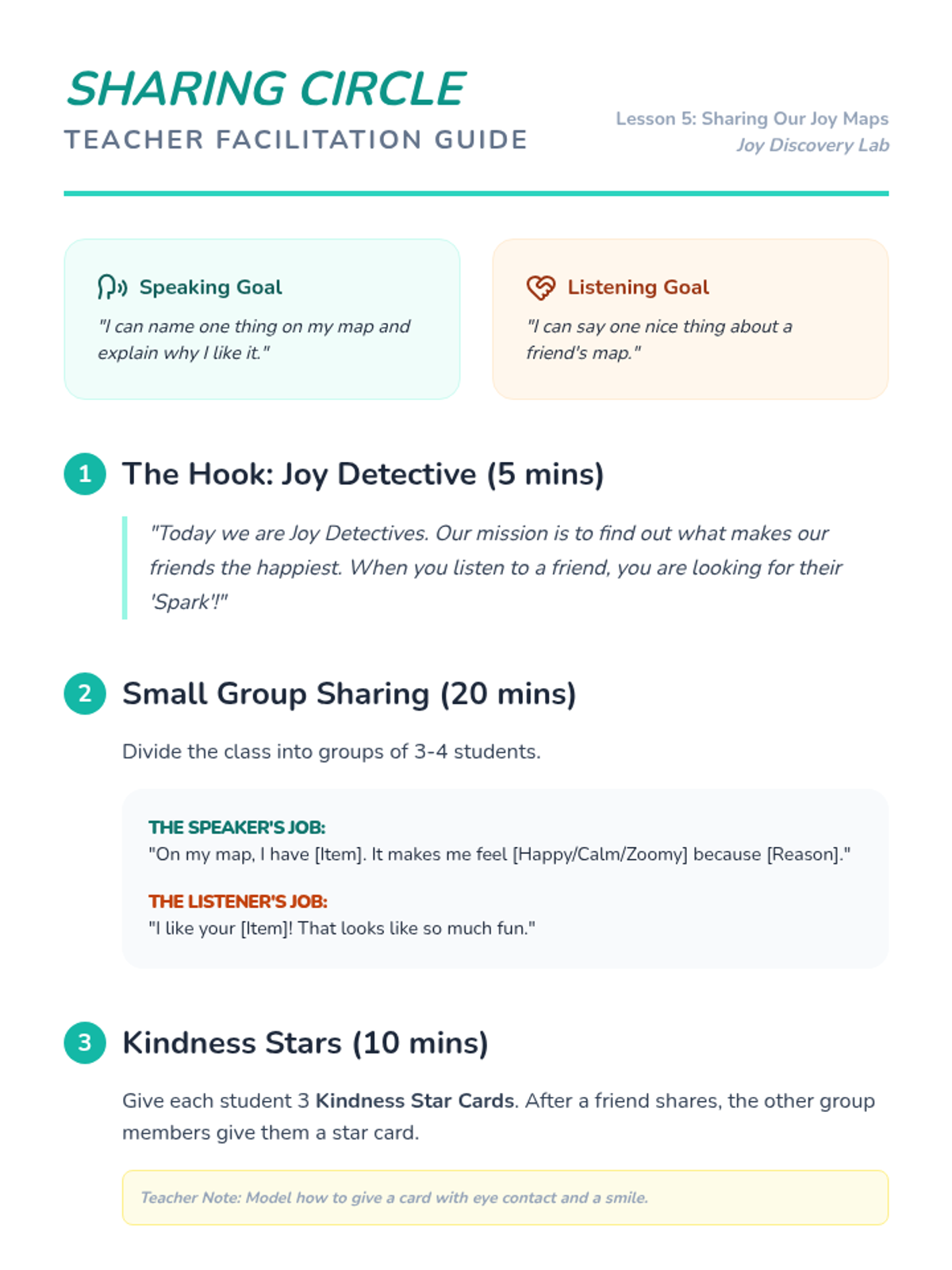
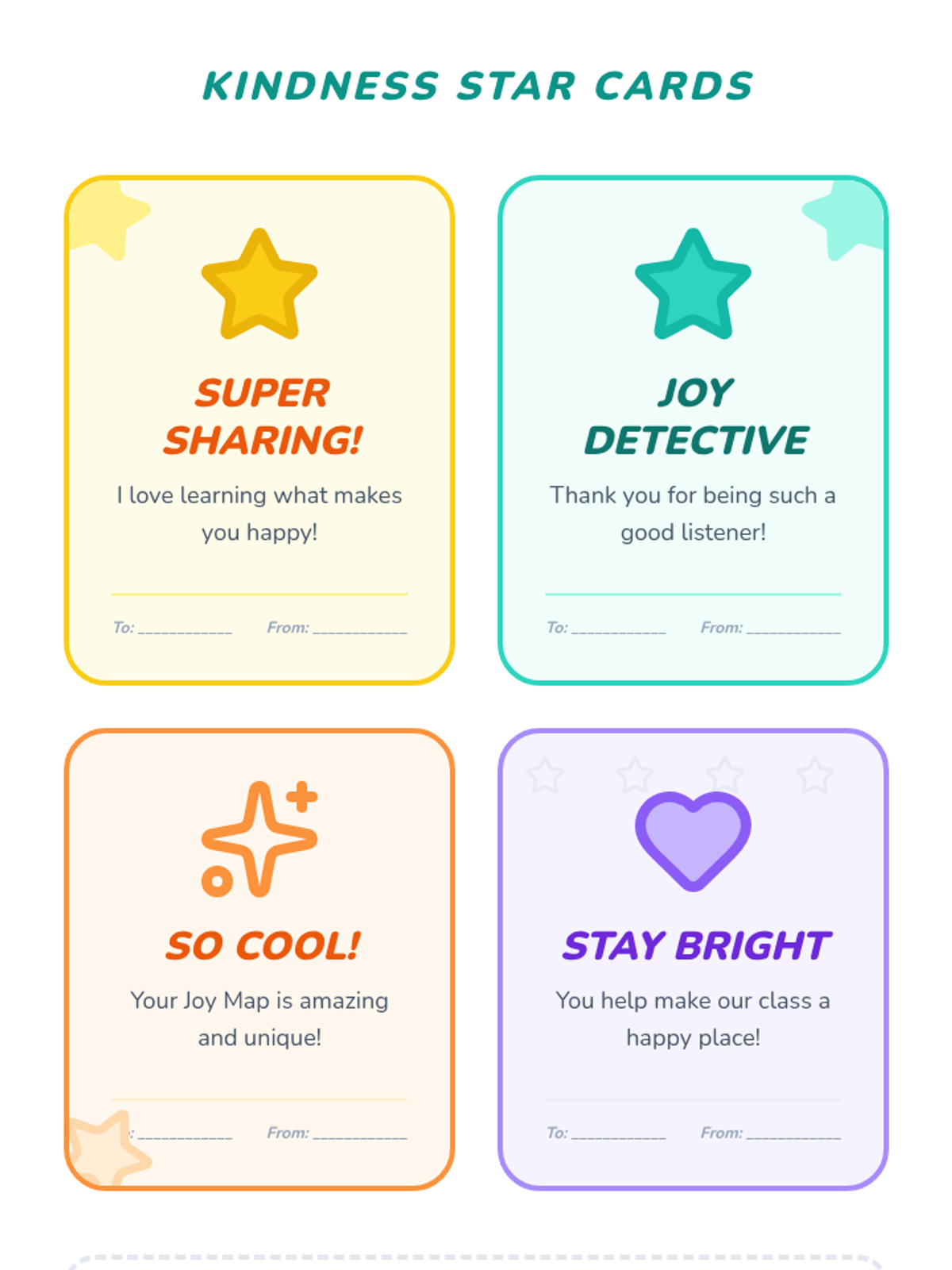
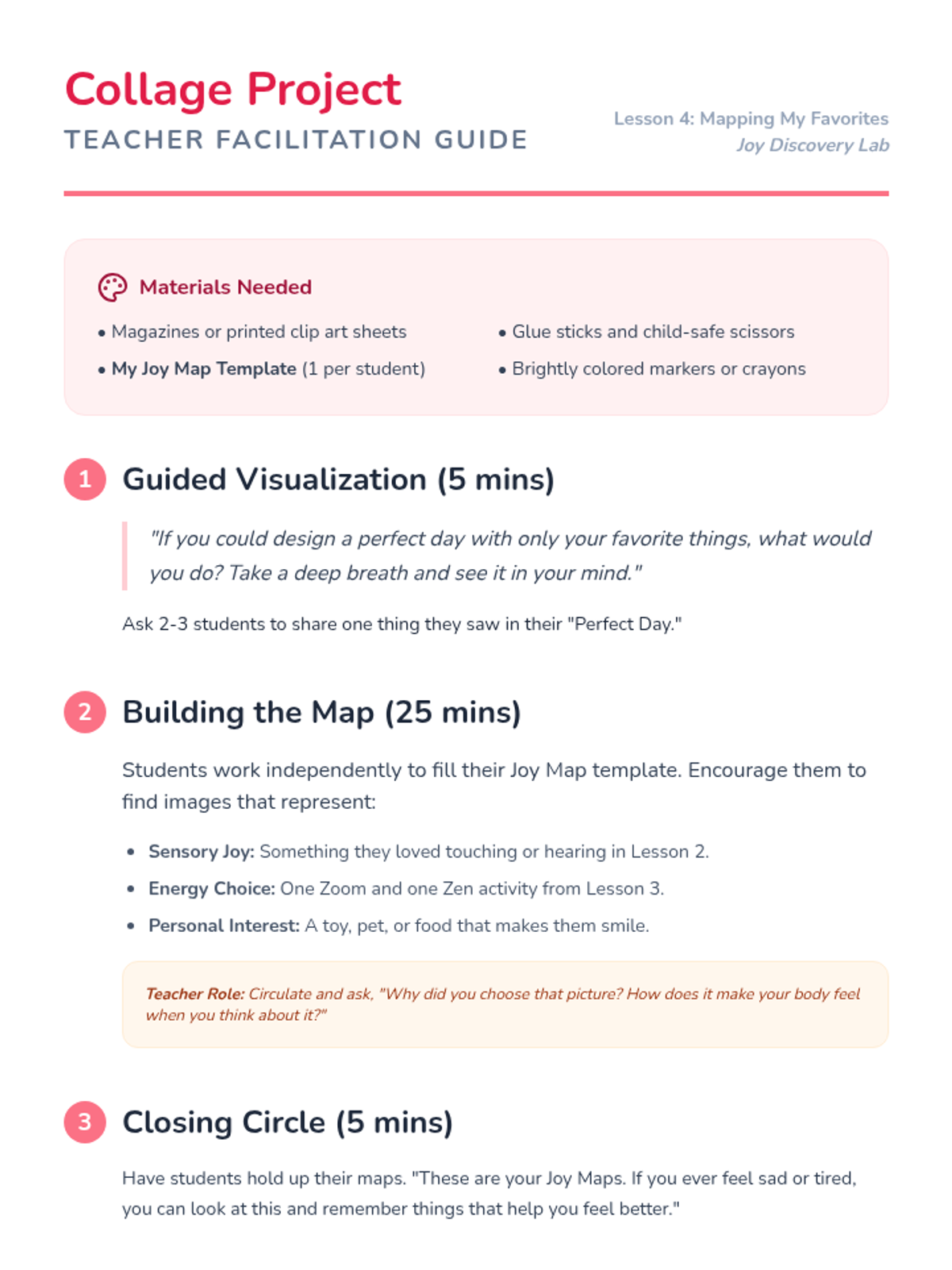
Students present their collages to small groups, articulating why they chose specific activities. Peer listeners practice affirming others' choices.
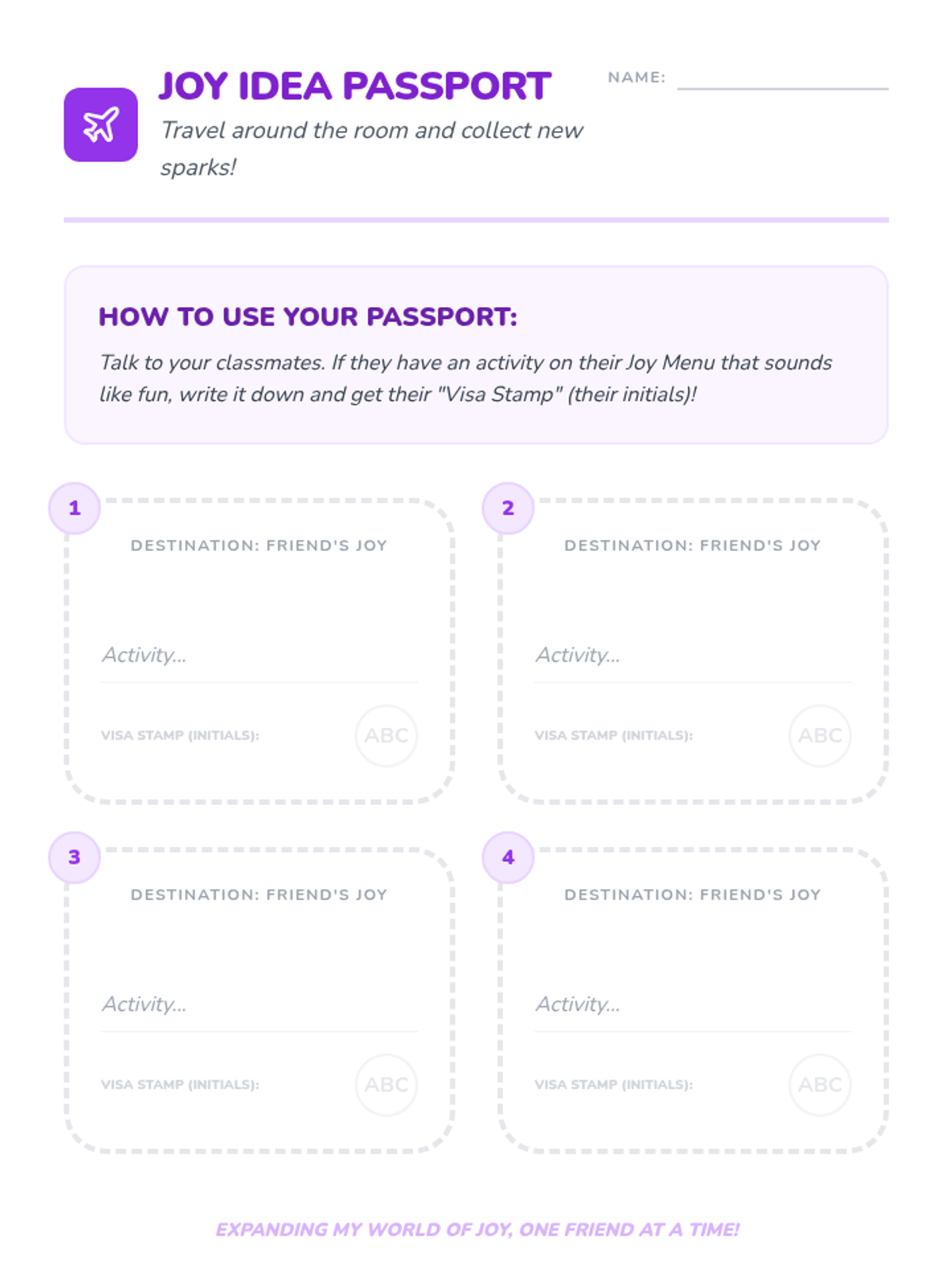
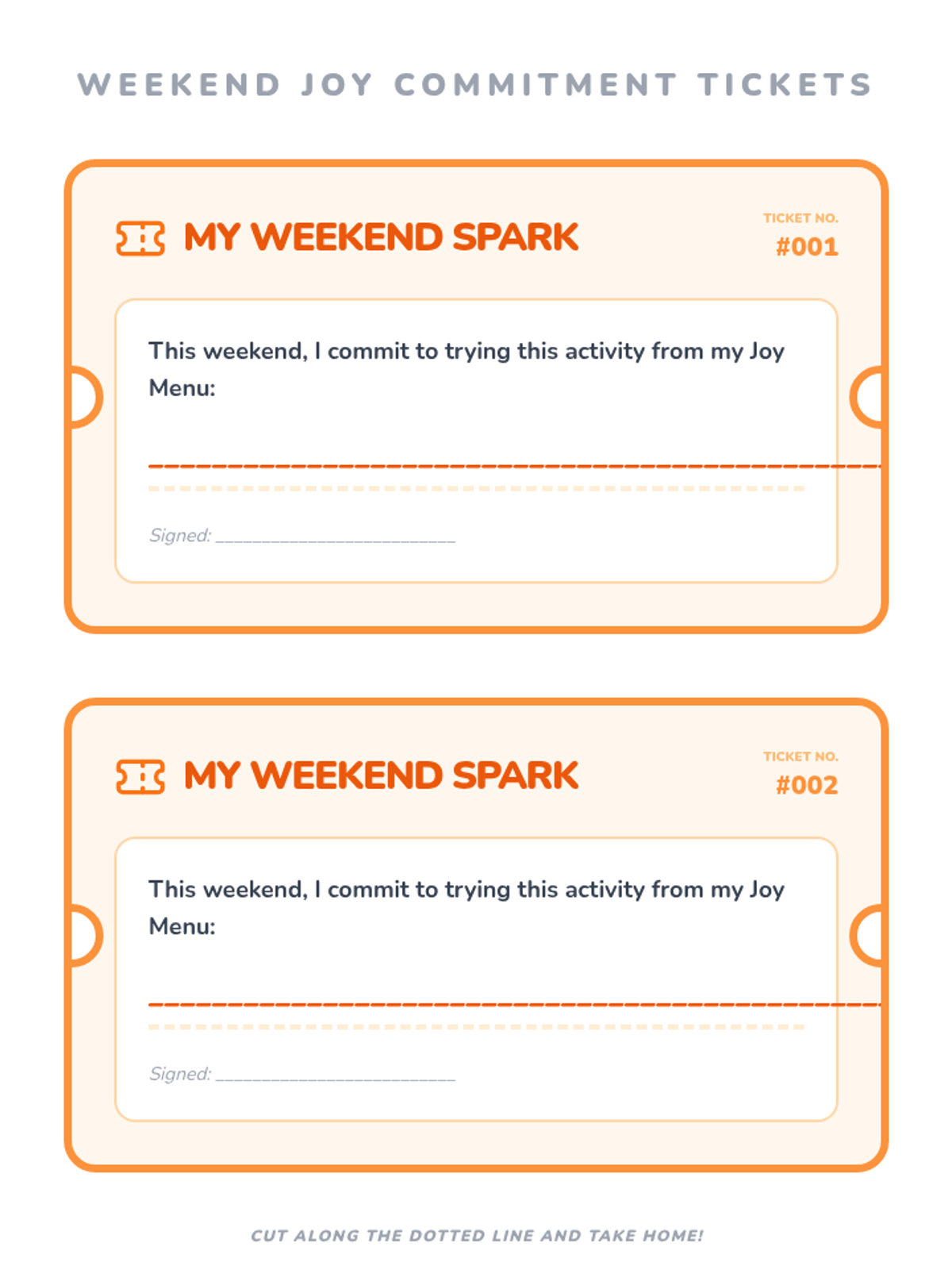
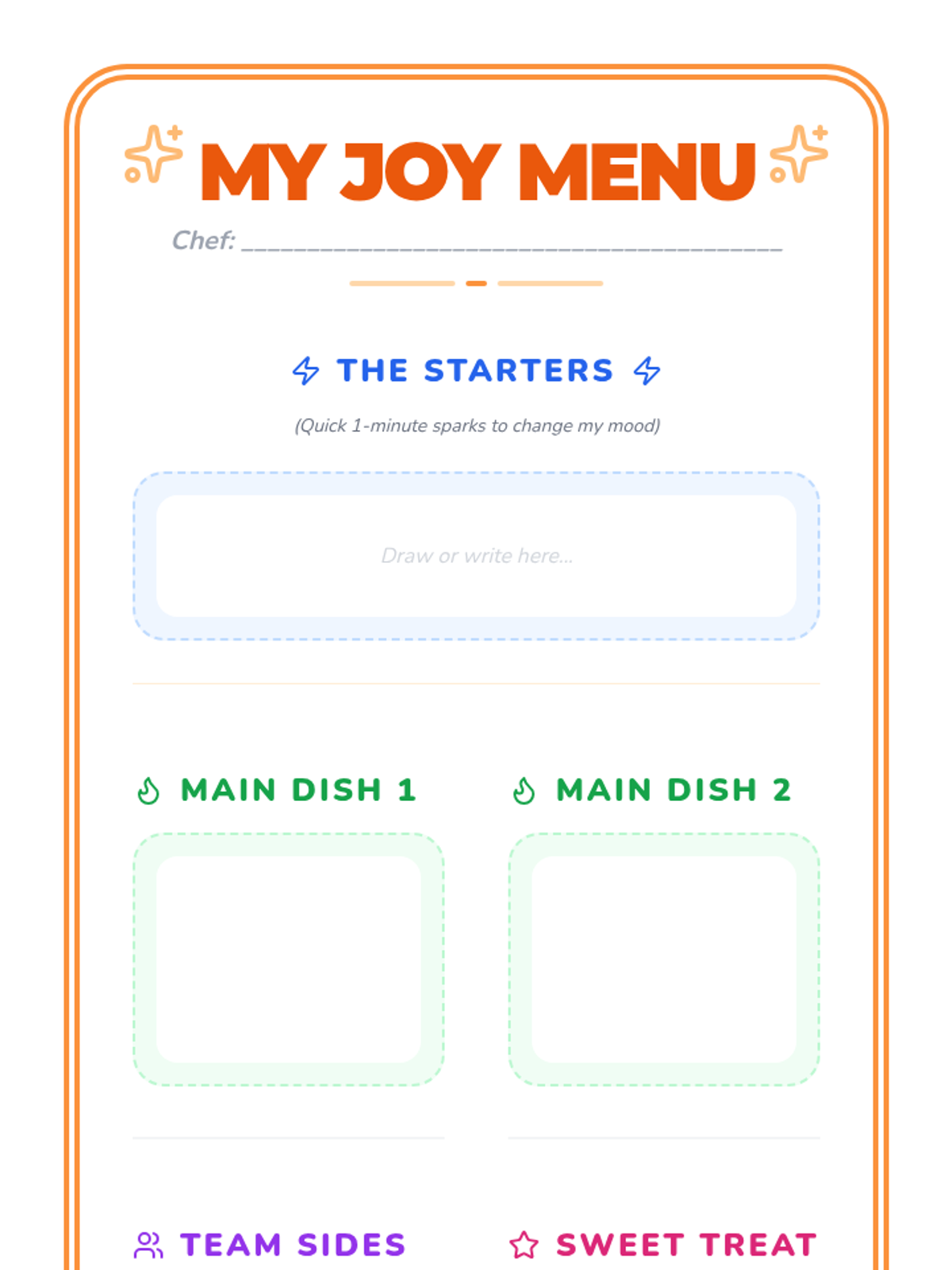
Students present their Joy Menus to small groups, allowing peers to borrow ideas to add to their own lists. The lesson concludes with a commitment to try one menu item over the weekend.
Using a collage format, students select and paste images of their favorite activities onto a personal poster. This visual aid serves as a concrete reference tool.
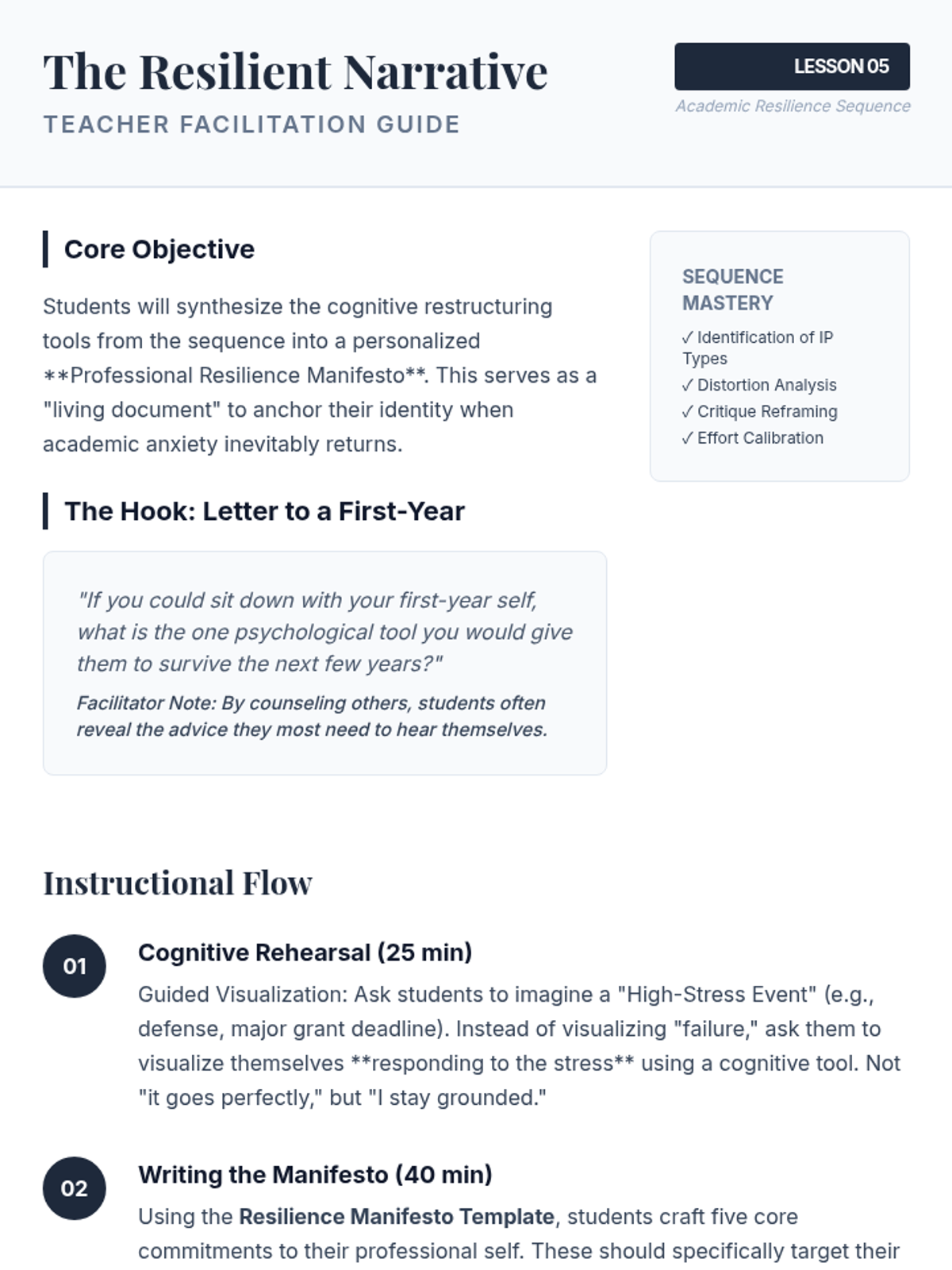
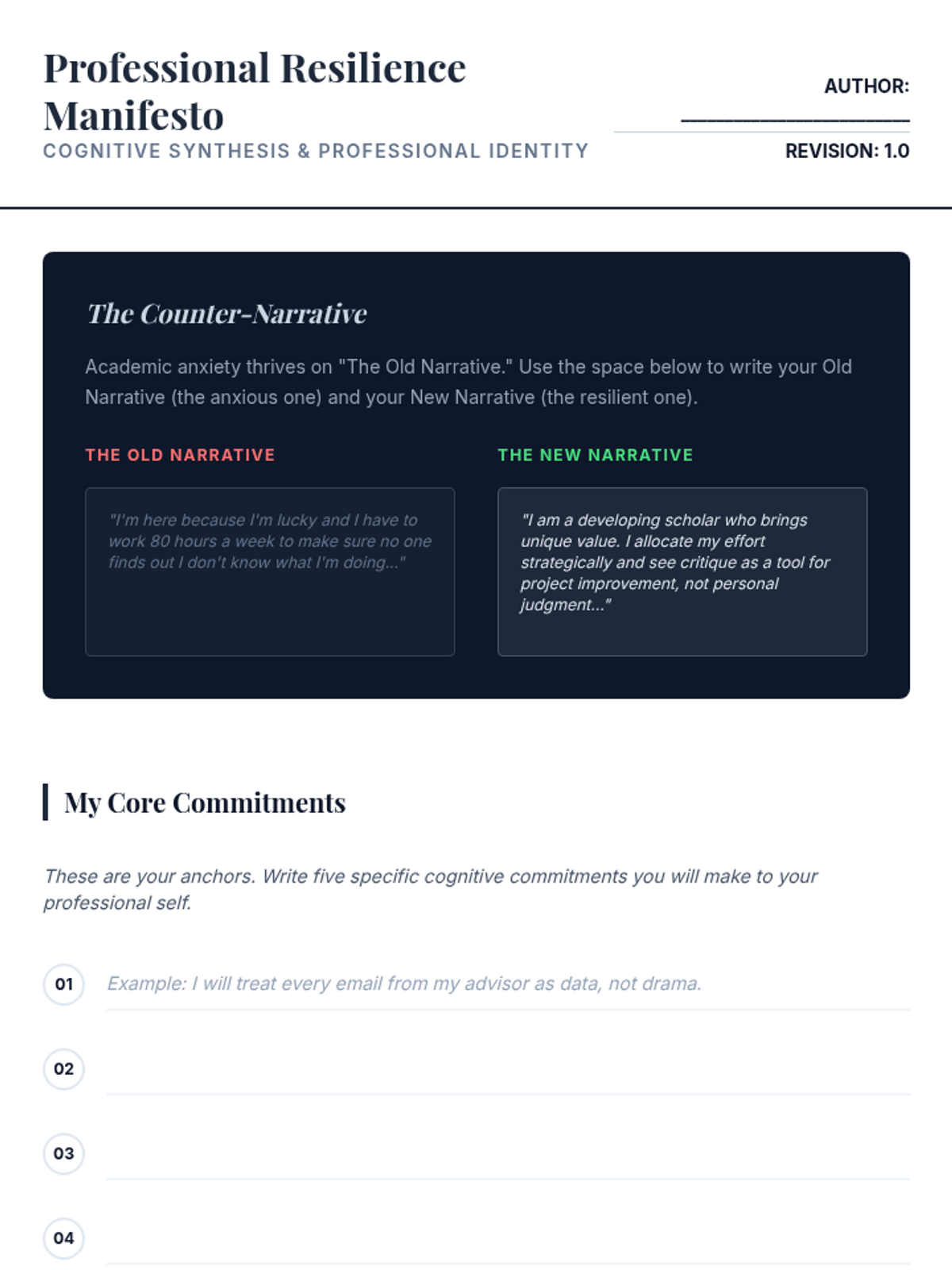
Students synthesize their learning by constructing a Professional Resilience Manifesto and practicing cognitive rehearsal to prepare for future academic challenges.
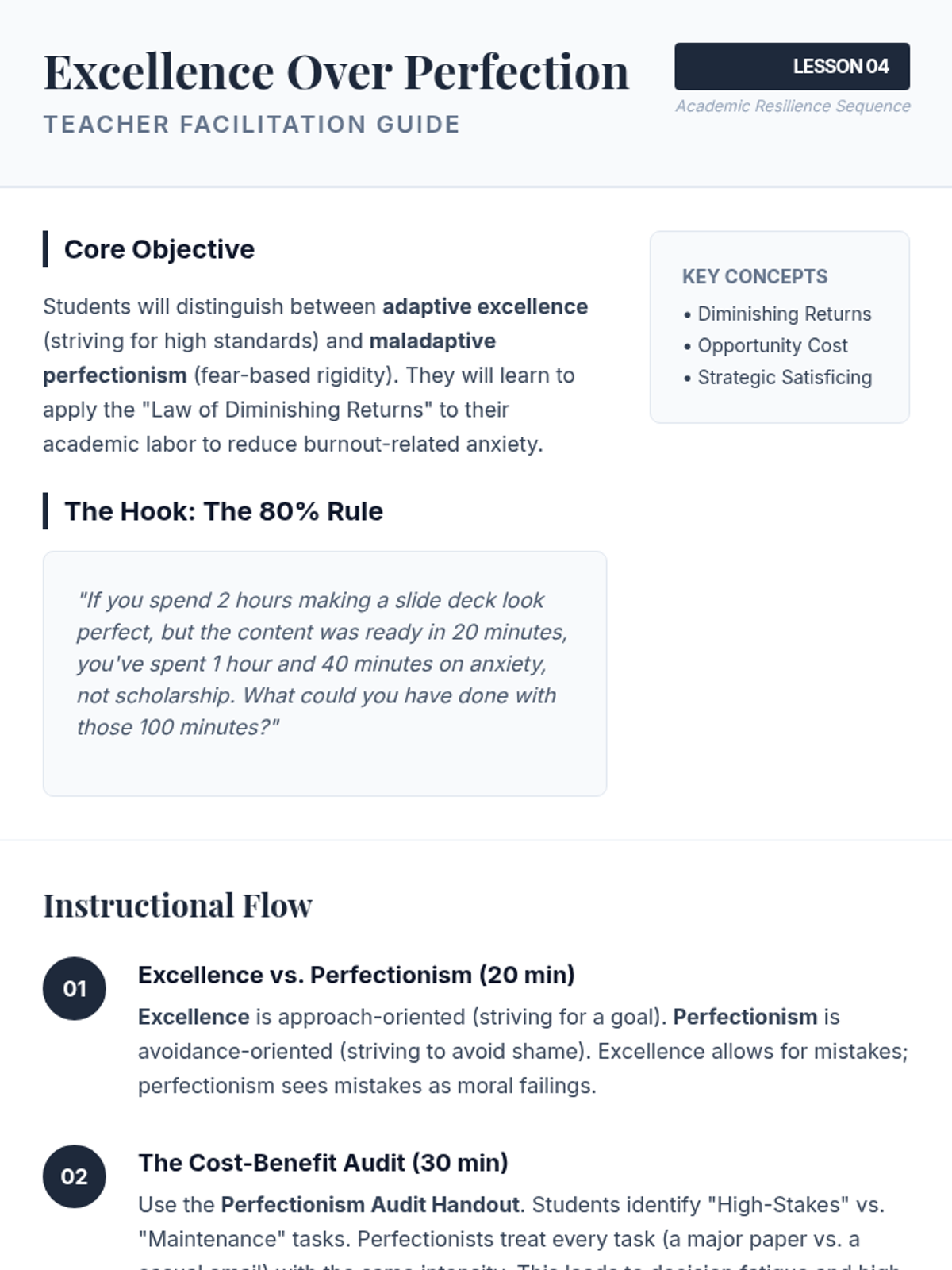
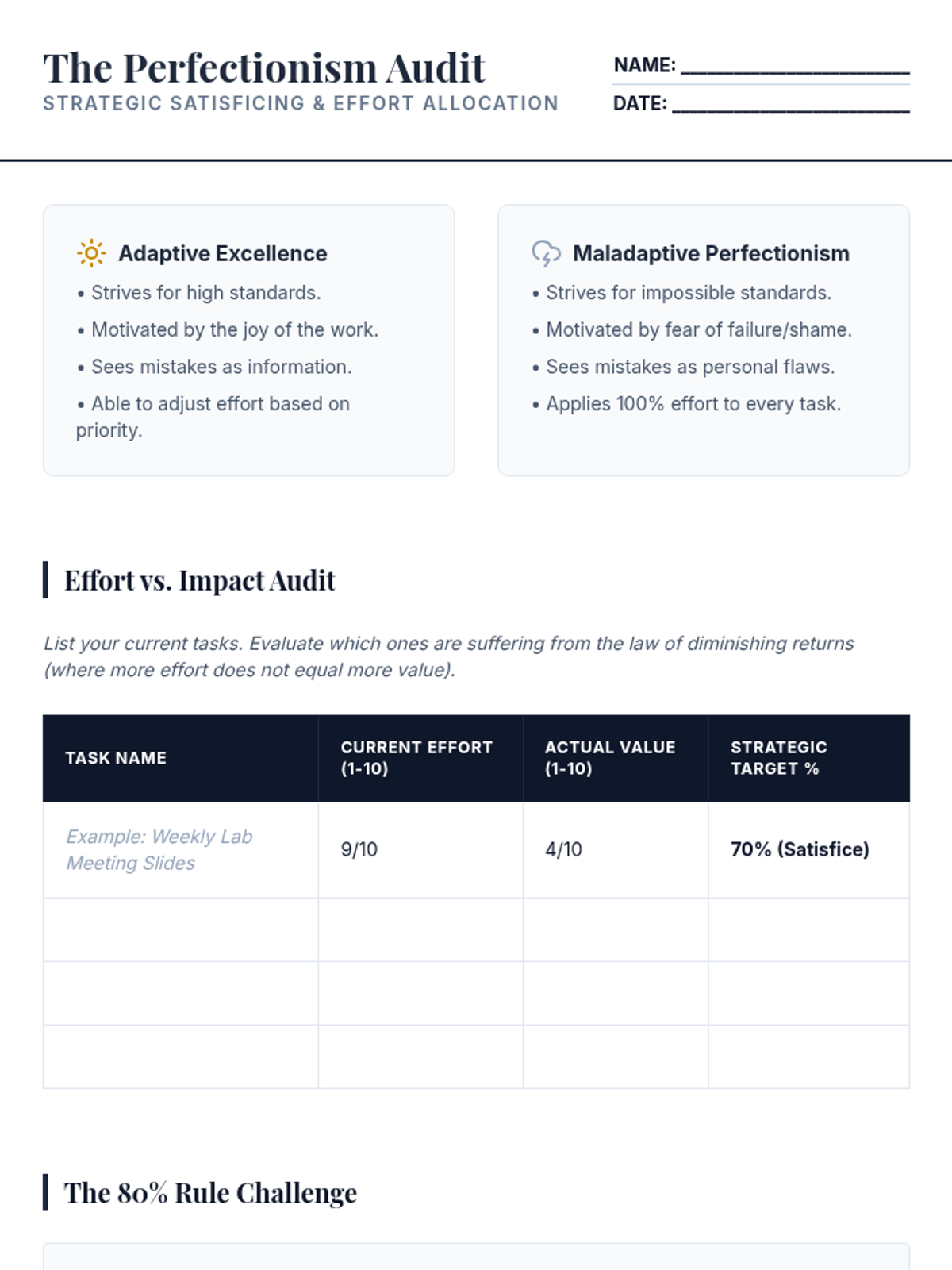
Participants distinguish between adaptive excellence and maladaptive perfectionism, exploring the 'law of diminishing returns' in academic work and its anxiety cost.
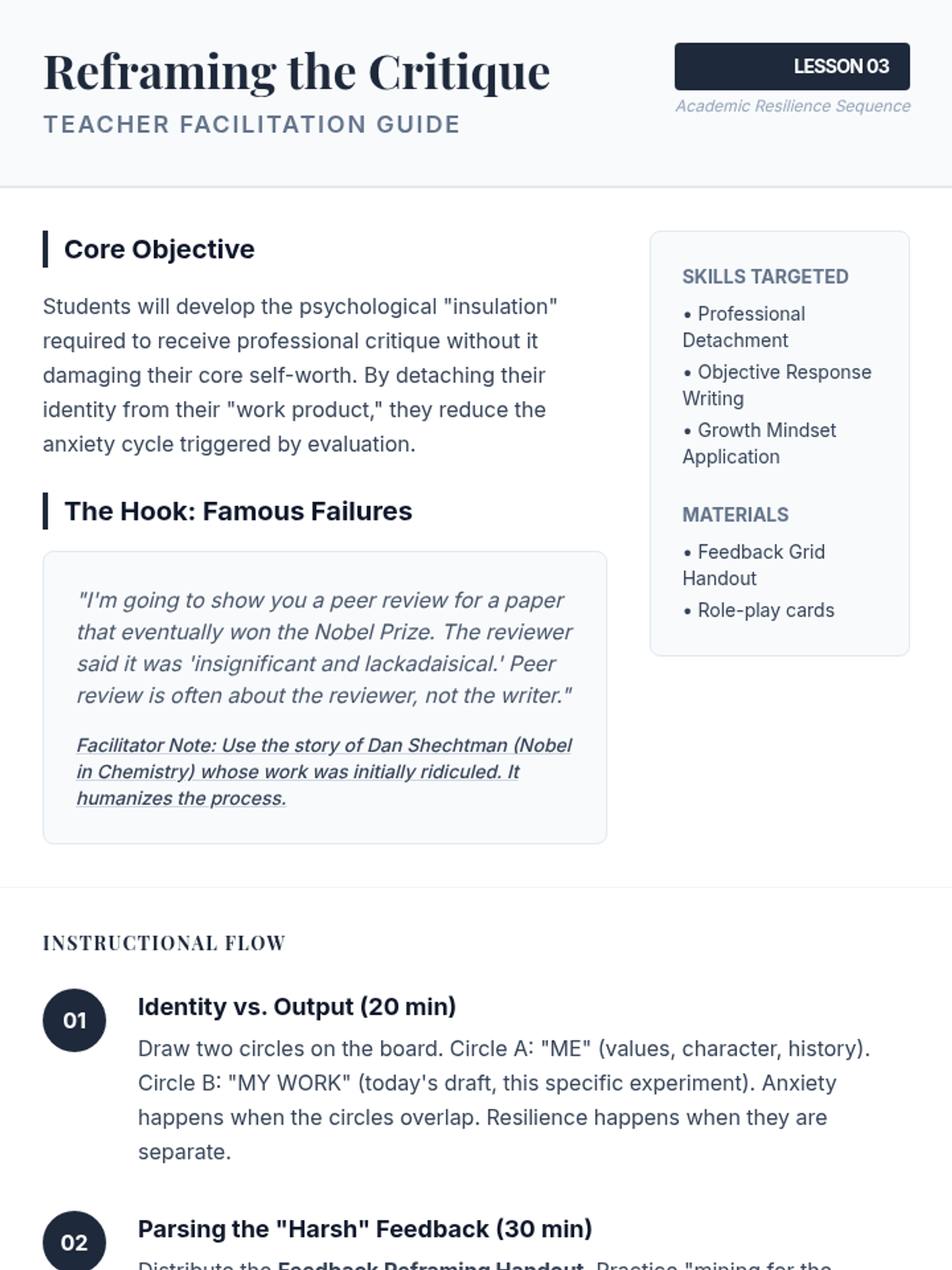
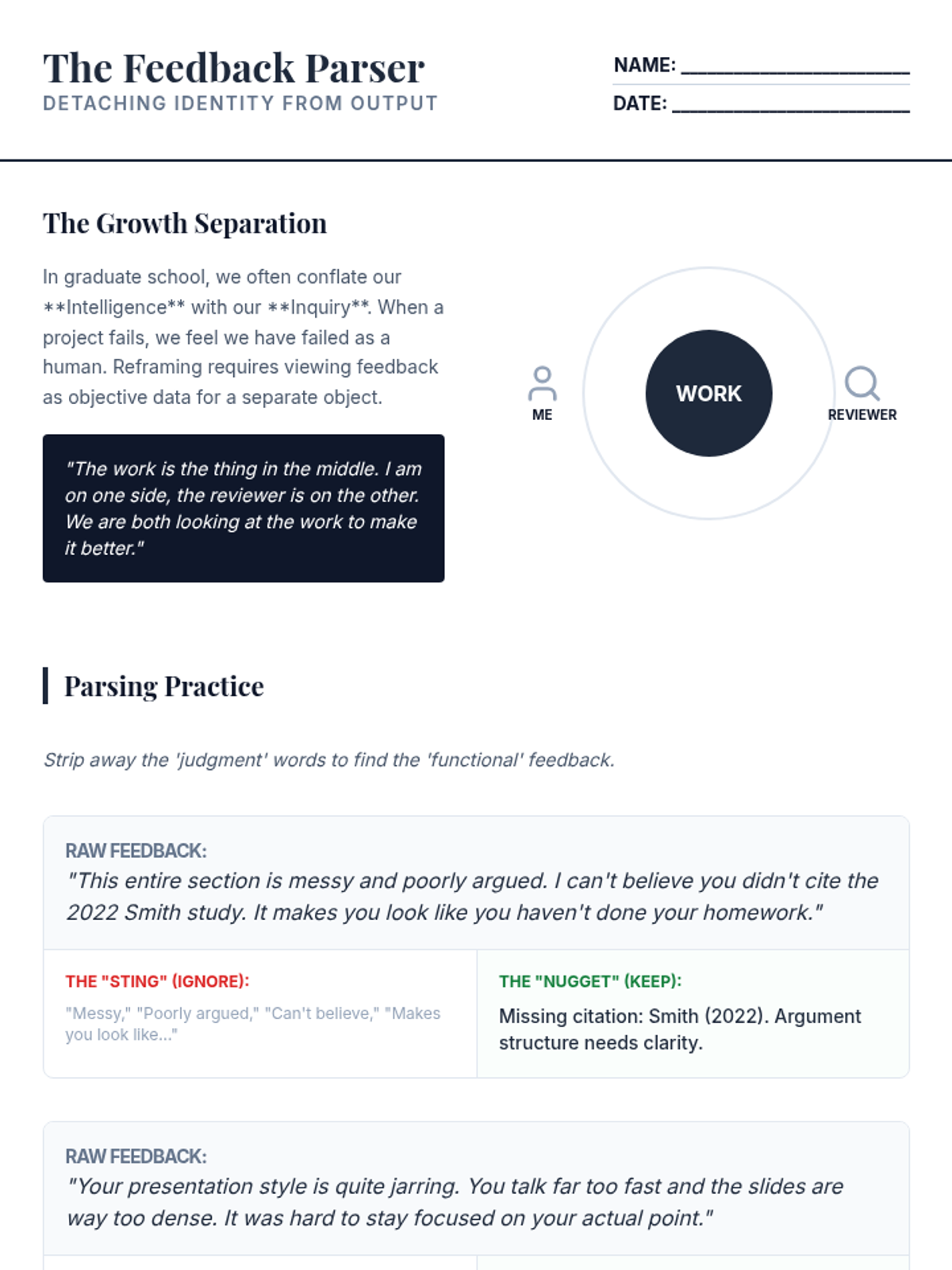
This lesson focuses on detaching self-worth from academic critique, practicing objective responses to harsh feedback and adopting a growth mindset toward evaluation.
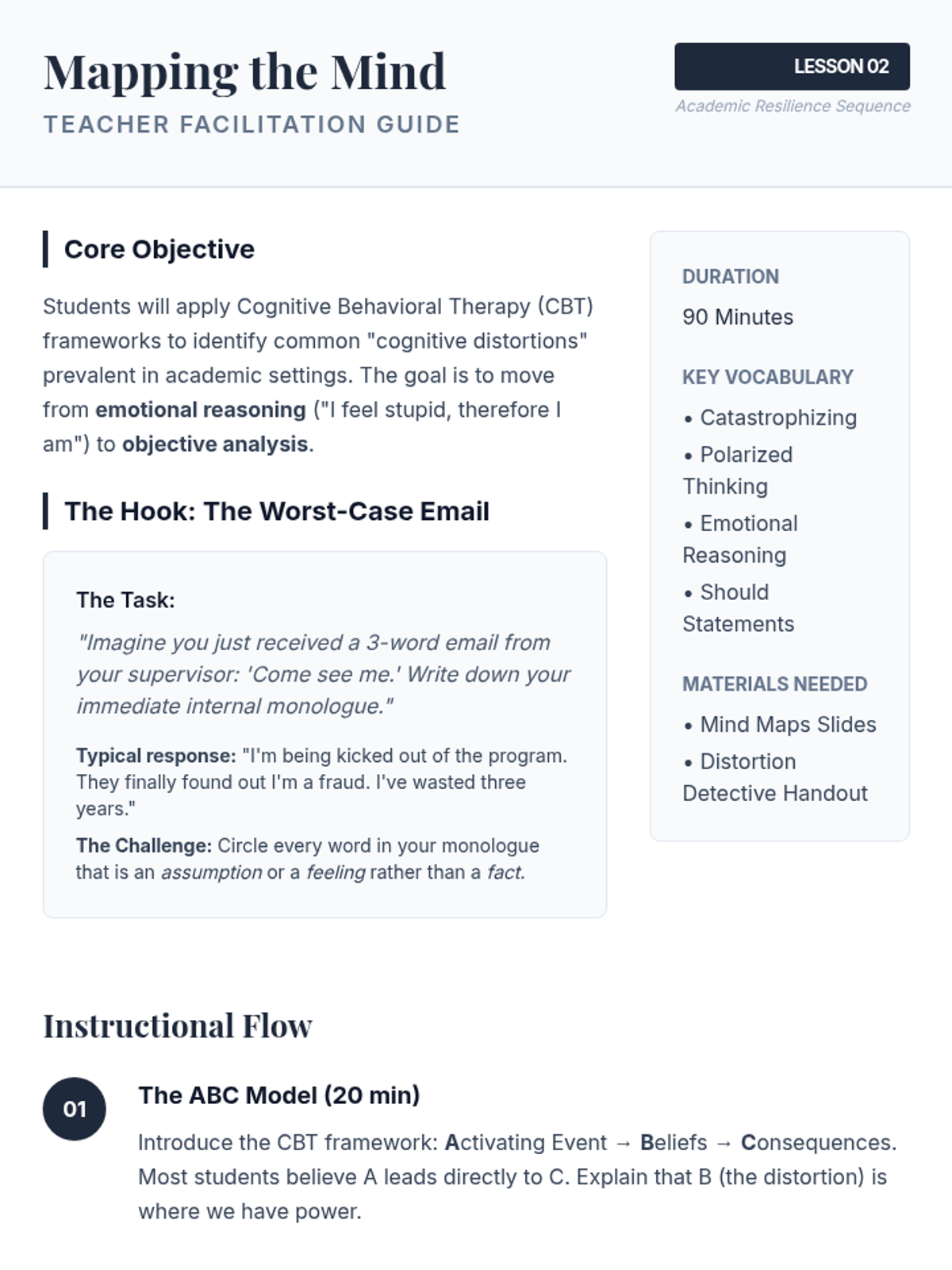
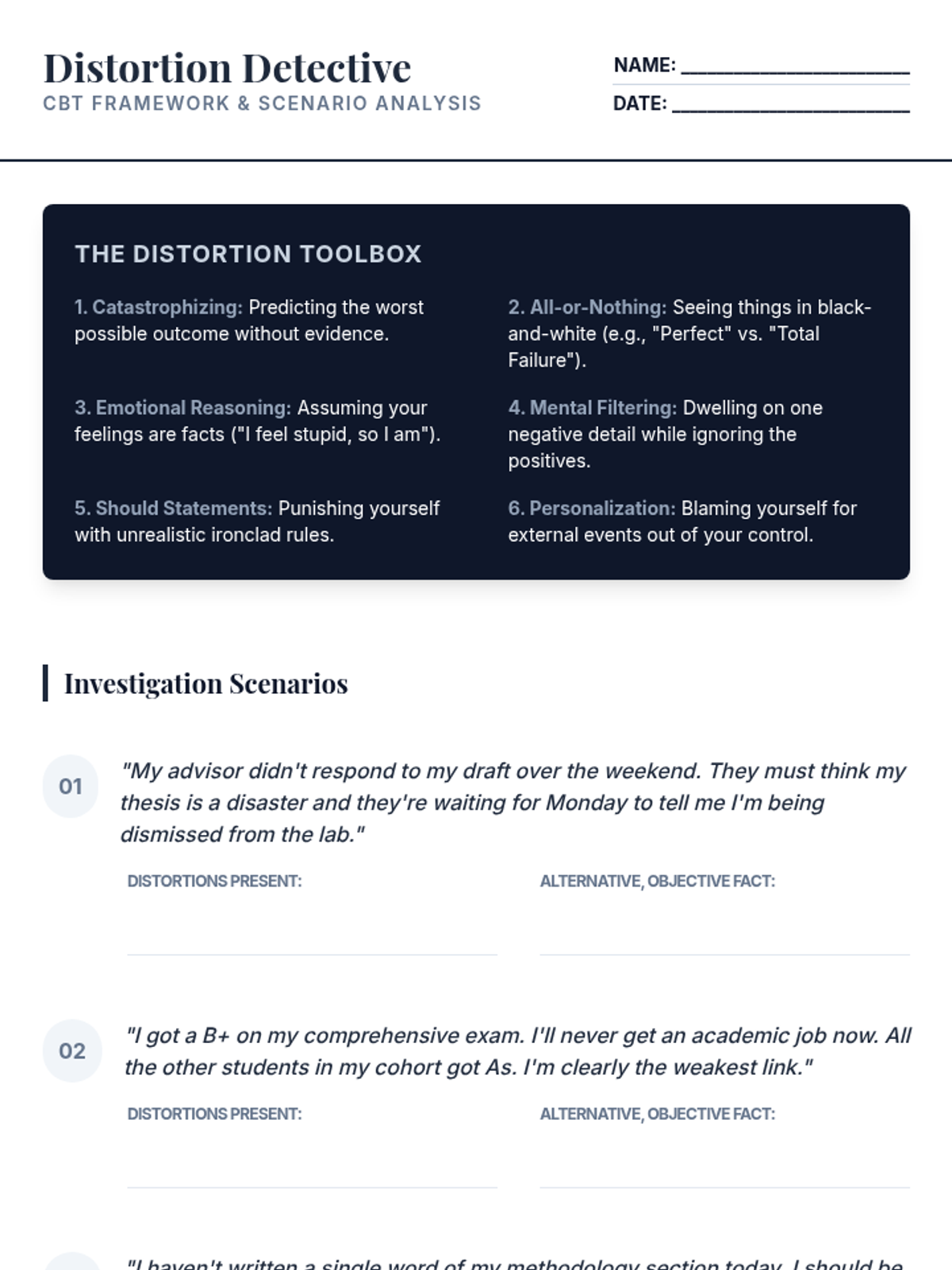
Students learn to identify common cognitive distortions like catastrophizing and all-or-nothing thinking using CBT frameworks to provide a vocabulary for cognitive restructuring.
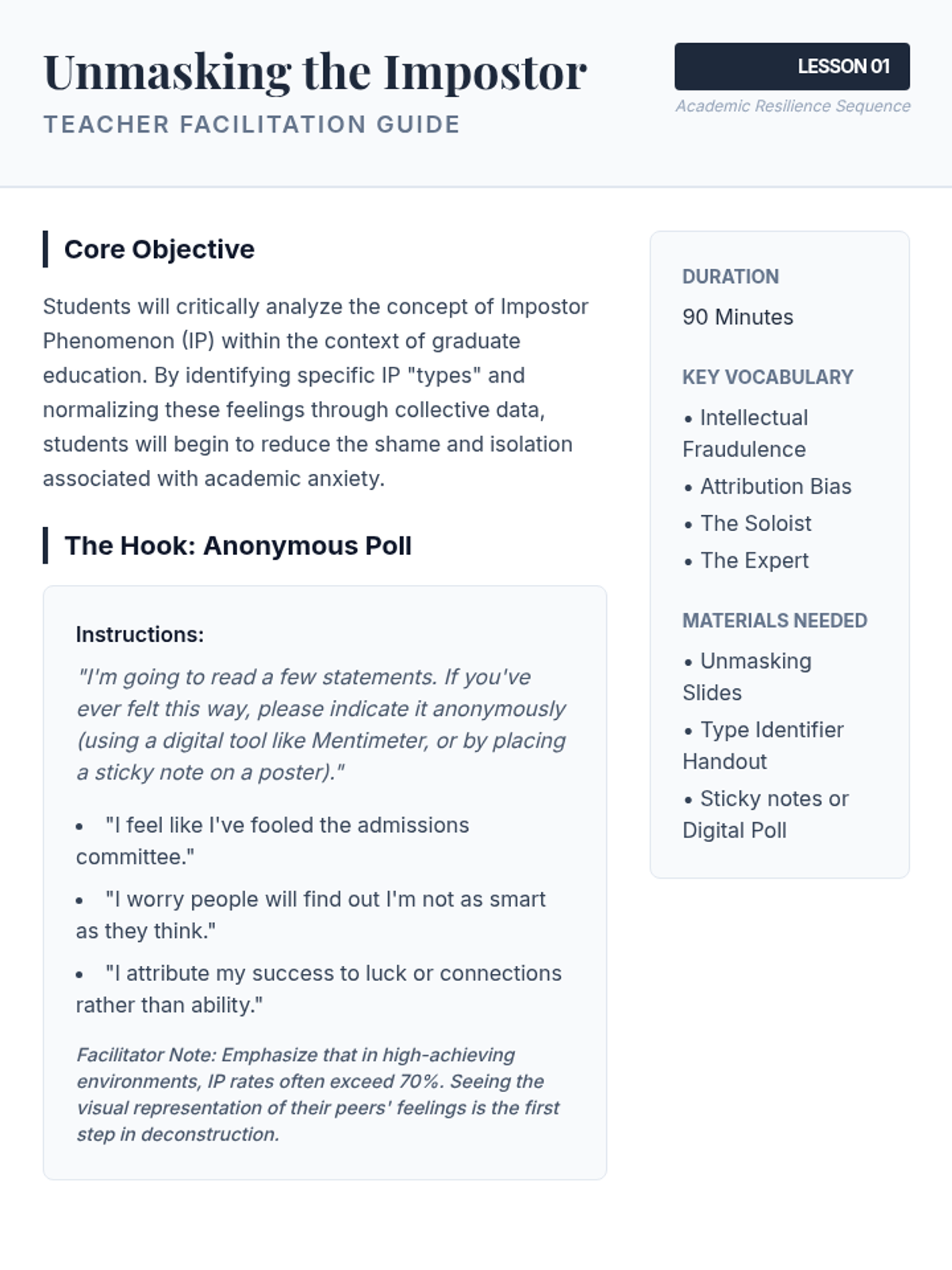
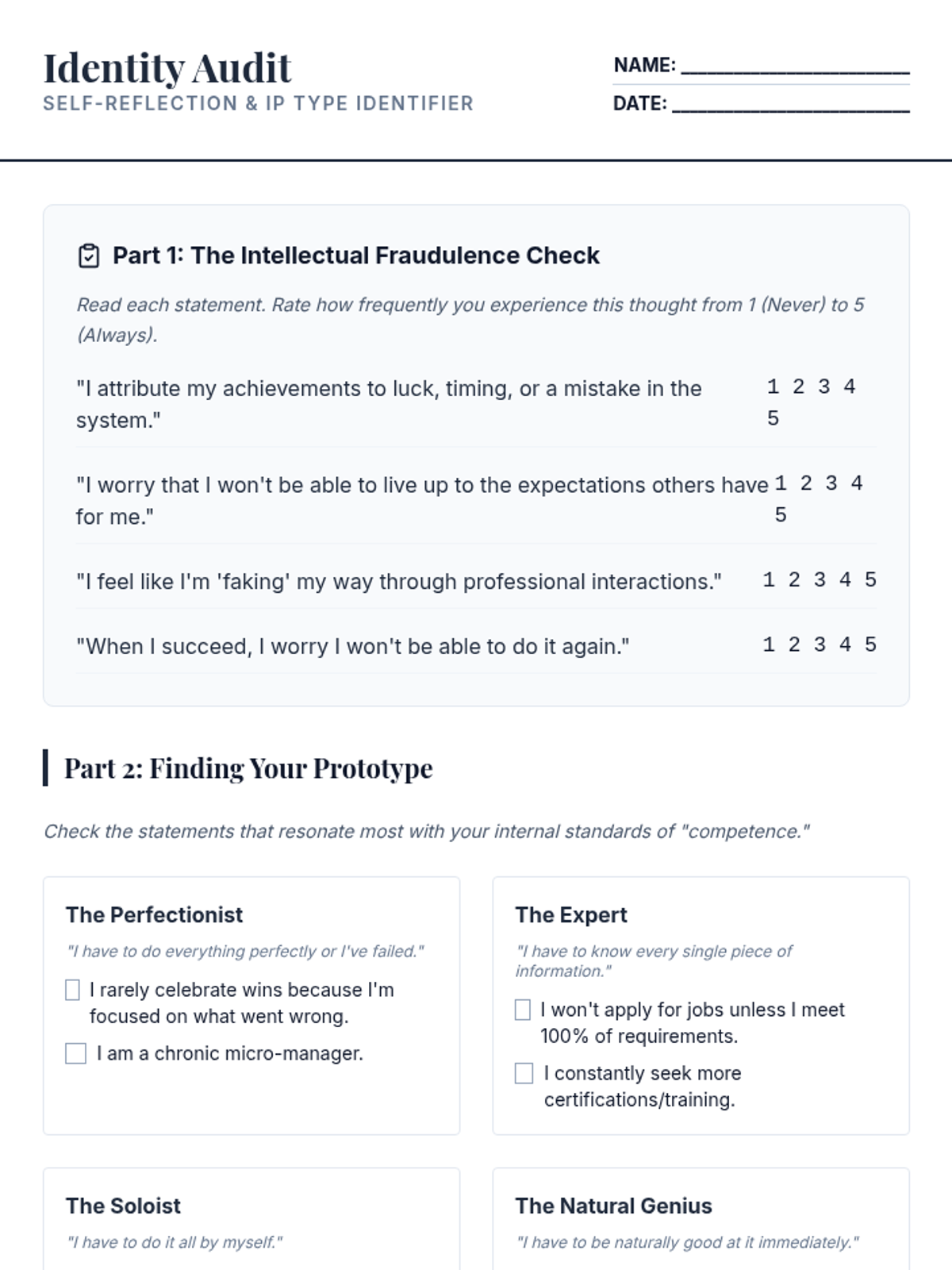
Students analyze the Impostor Phenomenon (IP) in higher education, identifying the five types of 'impostors' and normalizing their experiences within the academic community.
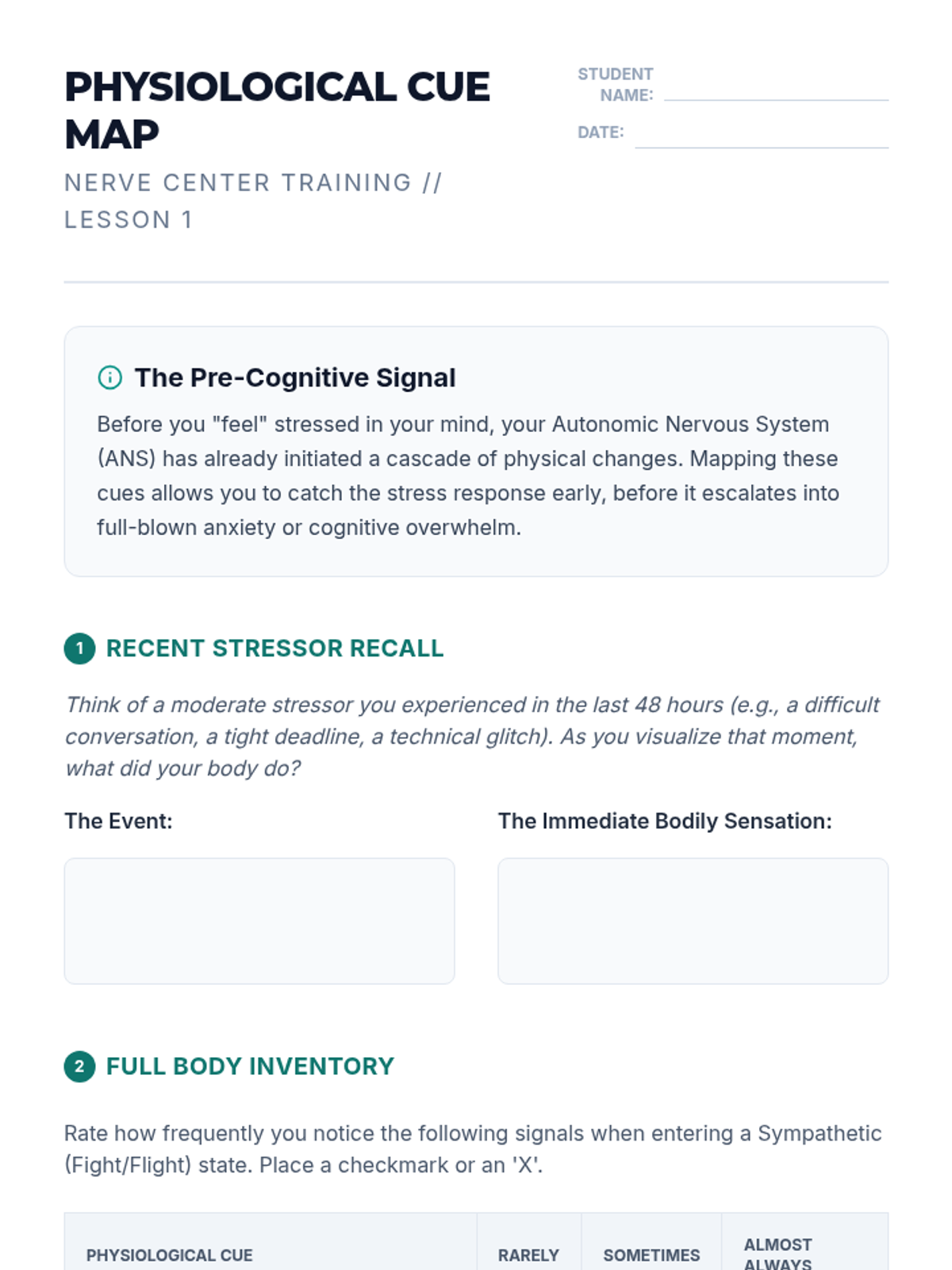
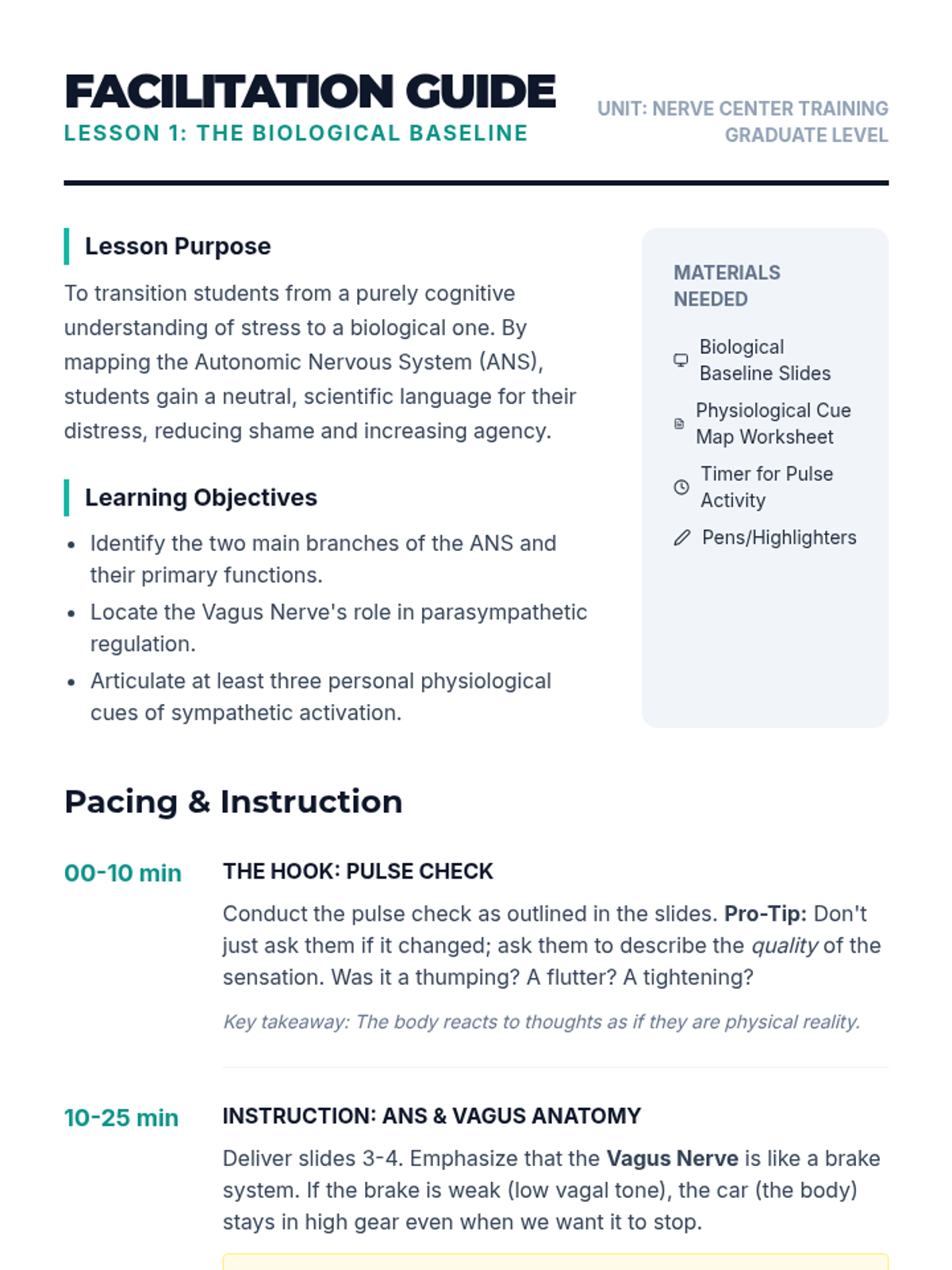
Focuses on the anatomy of the stress response, the sympathetic and parasympathetic branches of the ANS, and the role of the vagus nerve. Students map their own physiological 'early warning signs'.
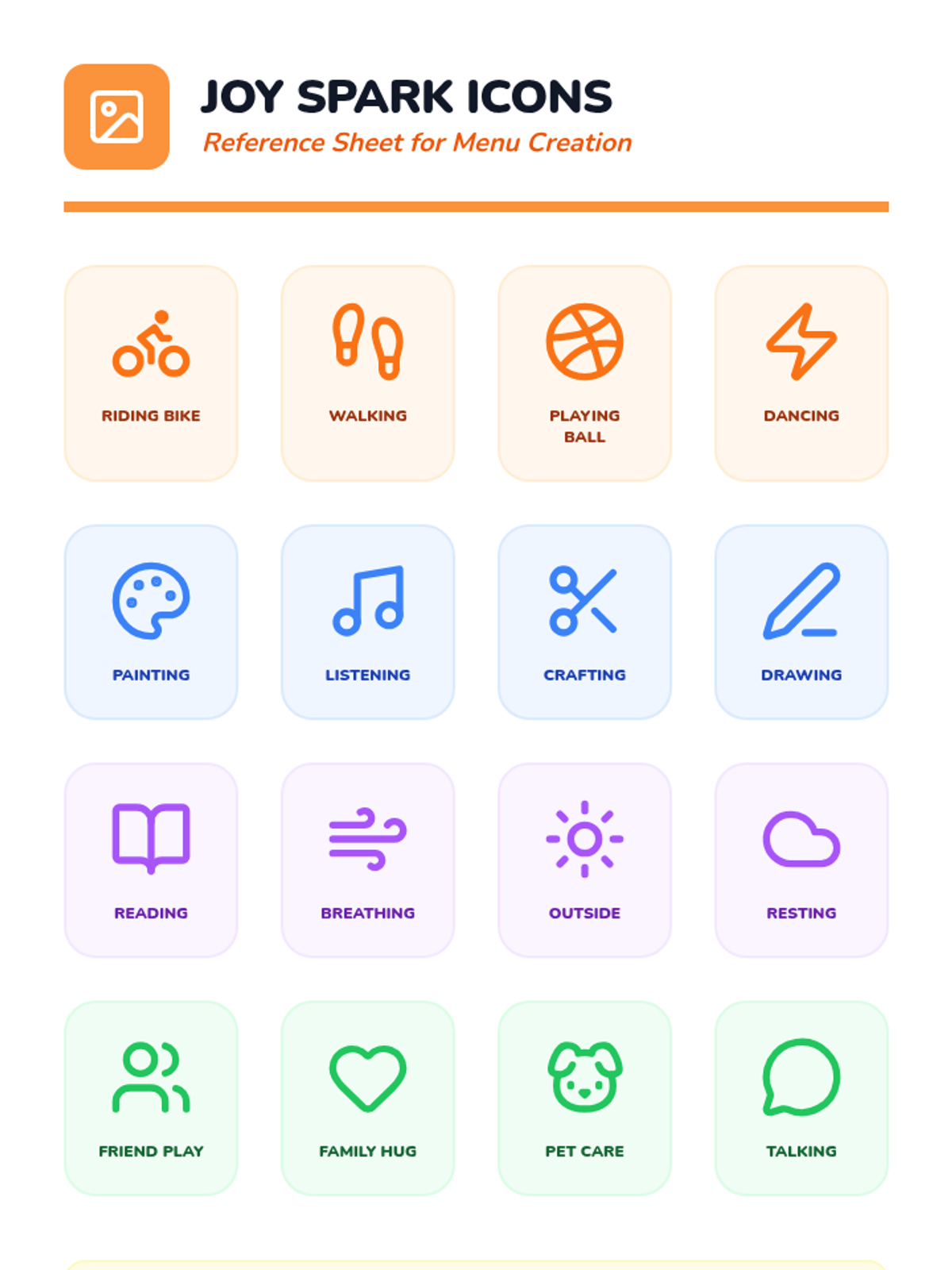
Using their investigations, students create a visual 'menu' or choice board of their top 5 reliable mood-boosting activities. They illustrate these options to serve as a reference tool.
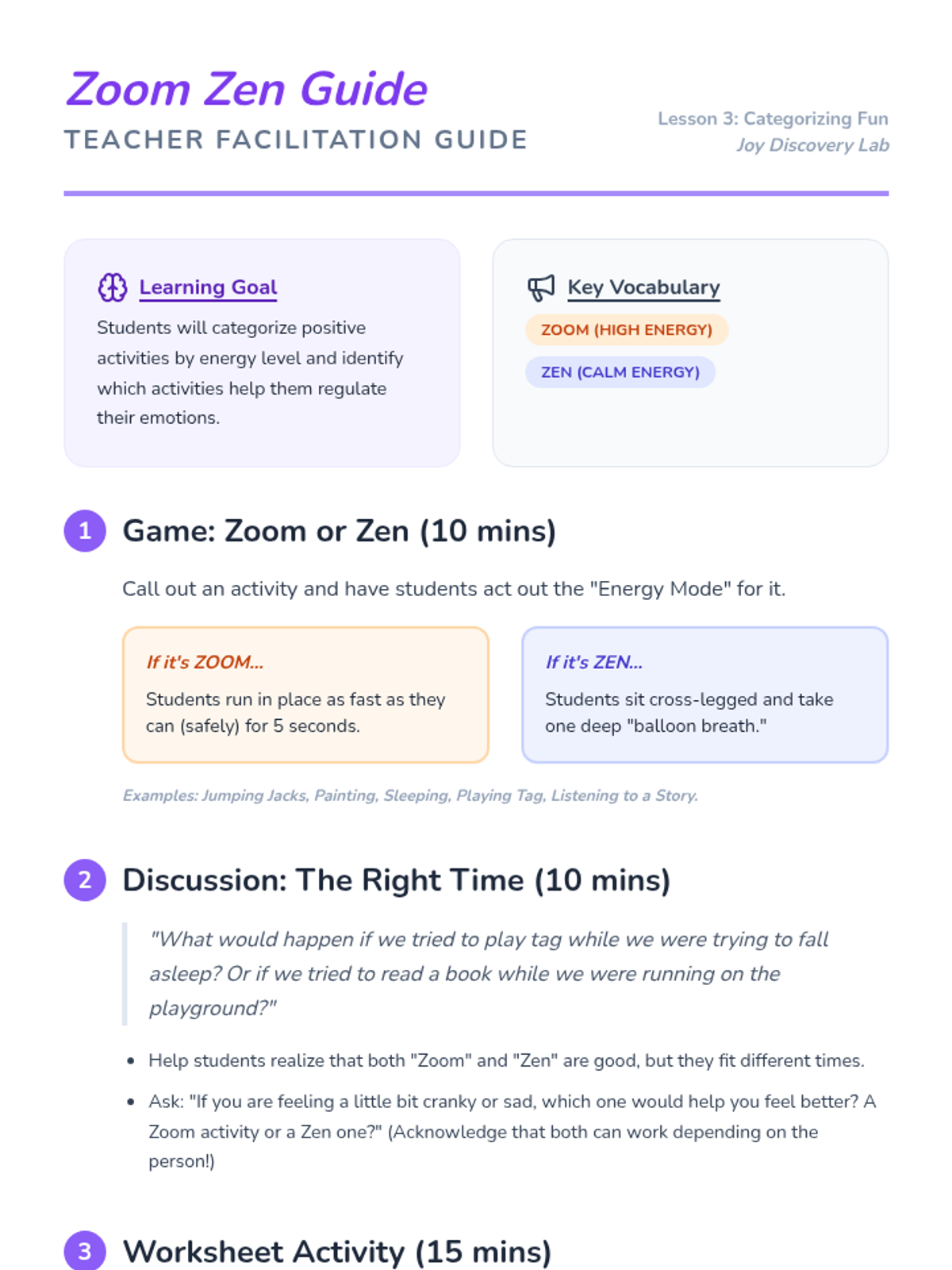
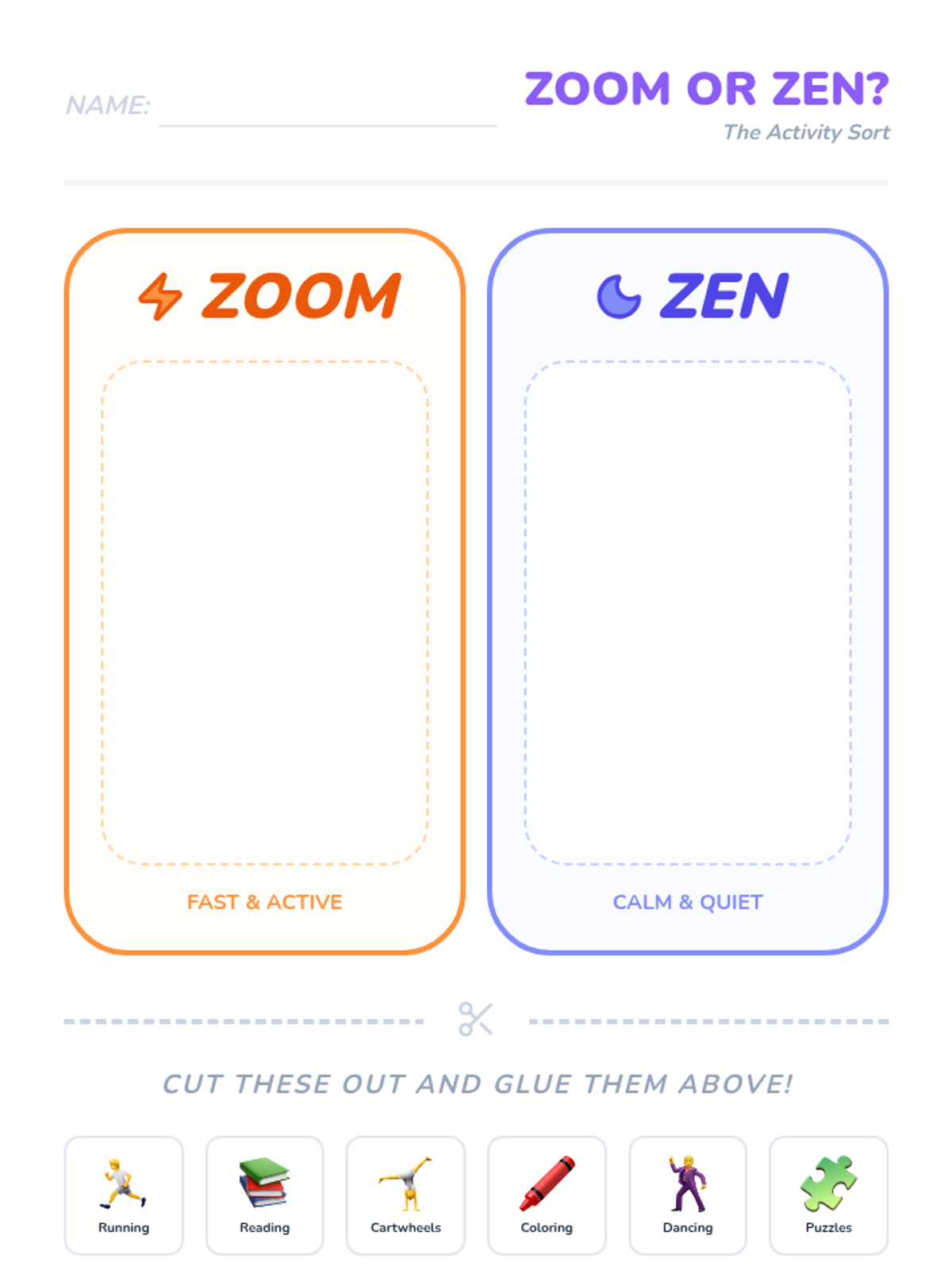
Students sort images of activities into 'high energy' fun (running, dancing) and 'calm' fun (reading, coloring). The class discusses how different times of day might need different types of positive activities.
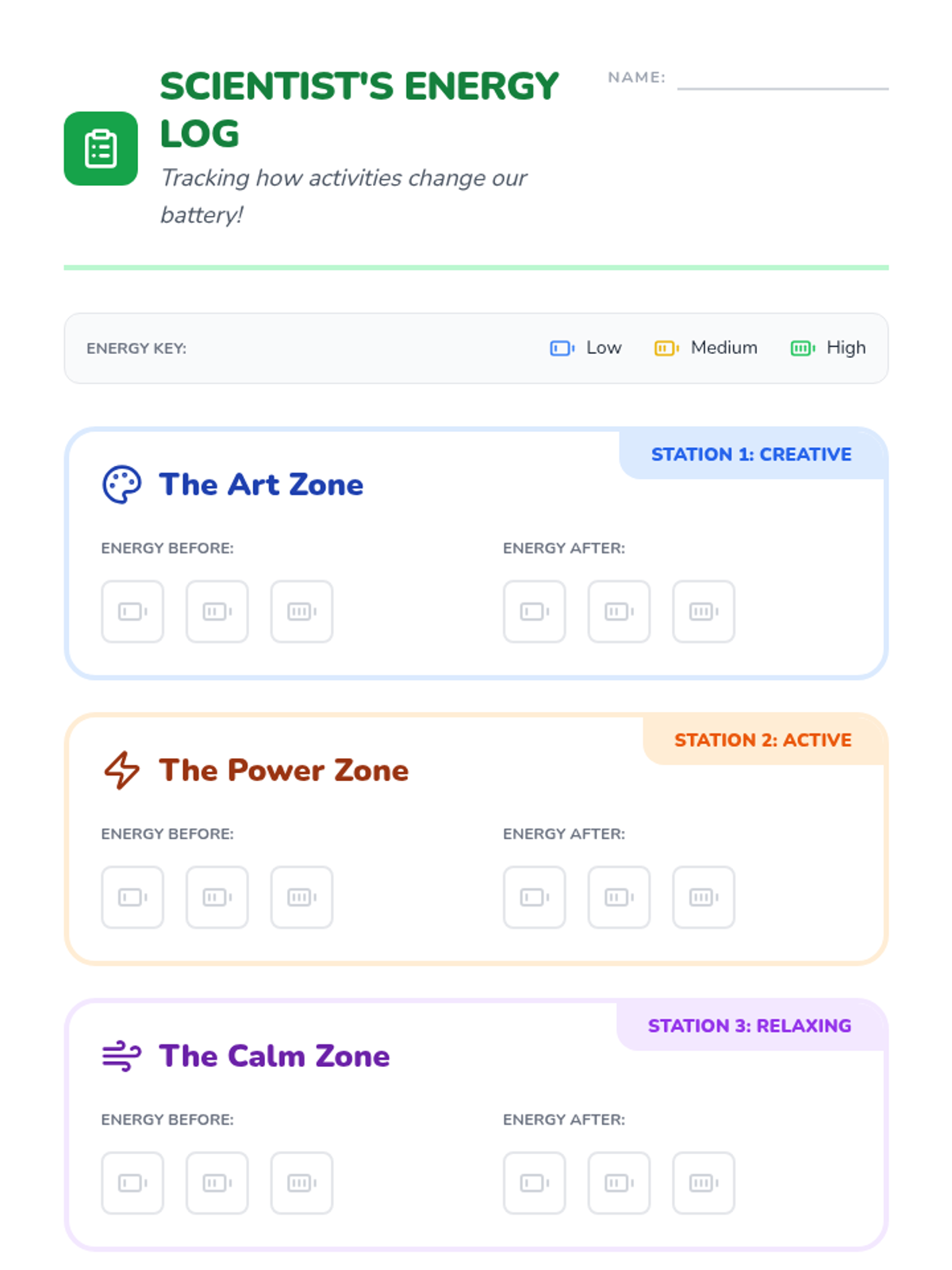
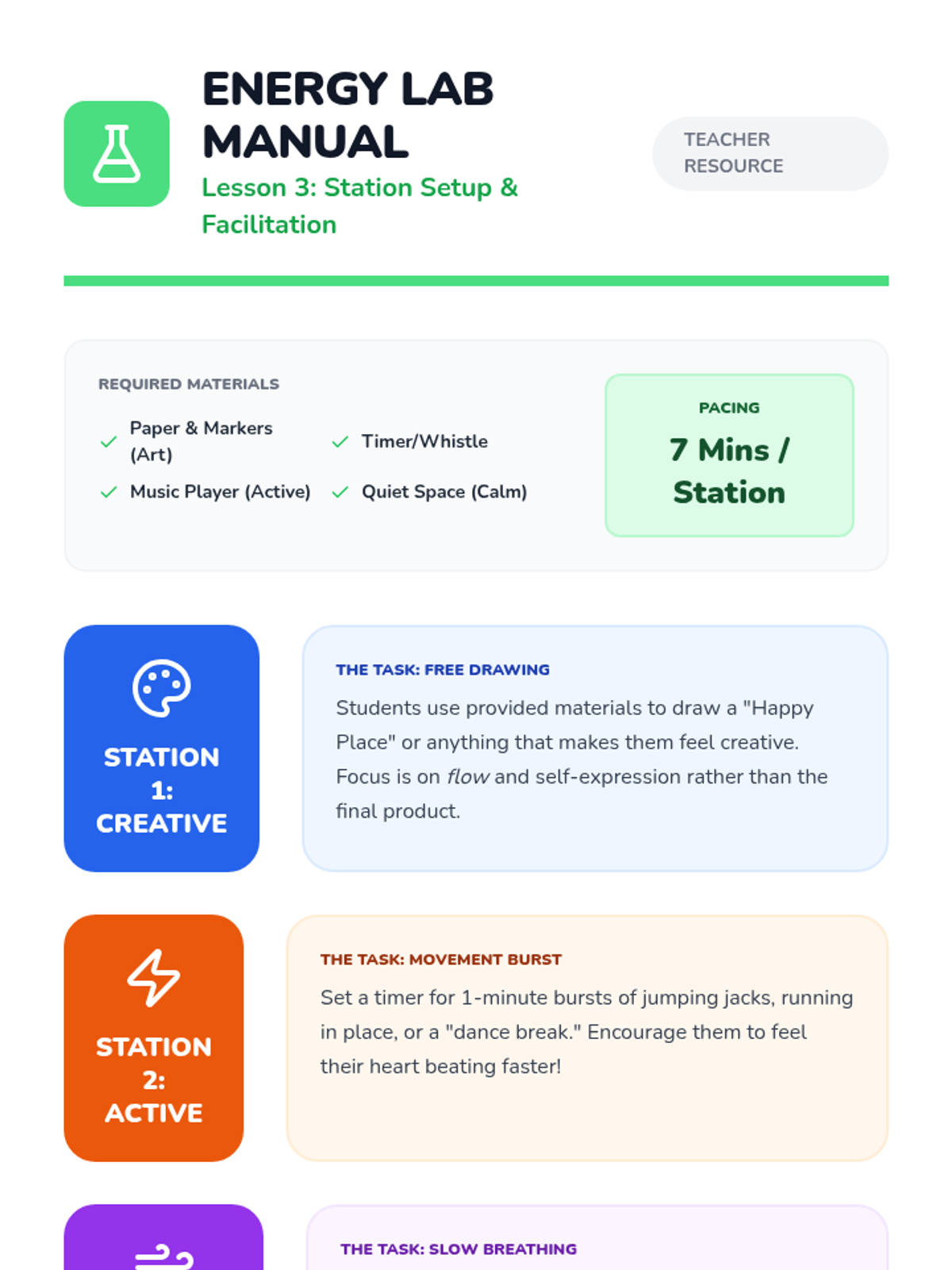
Students rotate through stations testing different types of positive engagement: creative (drawing), active (jumping jacks), and relaxing (deep breathing). They record how each station changes their energy level.
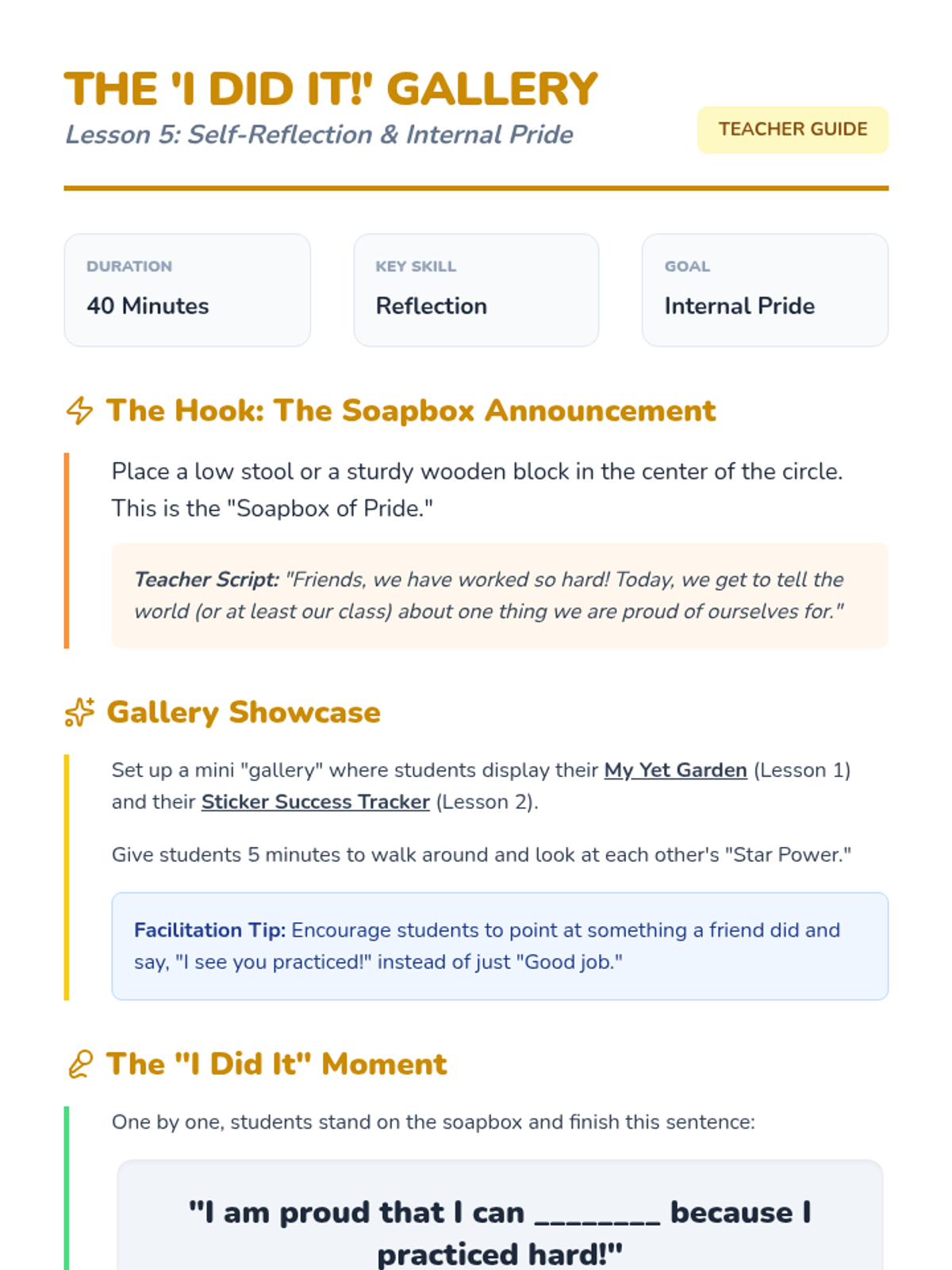
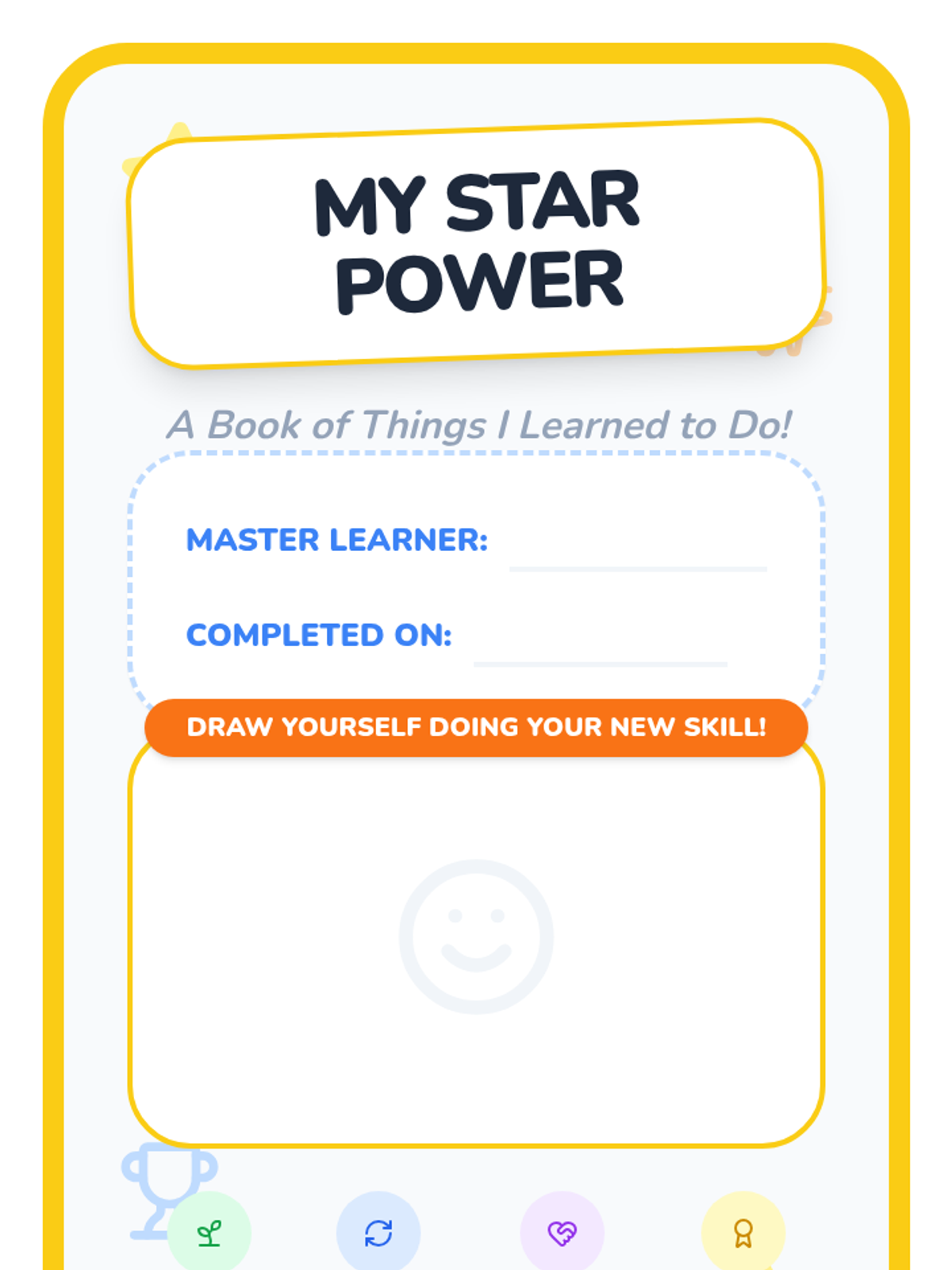
Reflecting on achievements and celebrating the internal feeling of pride through a classroom showcase.
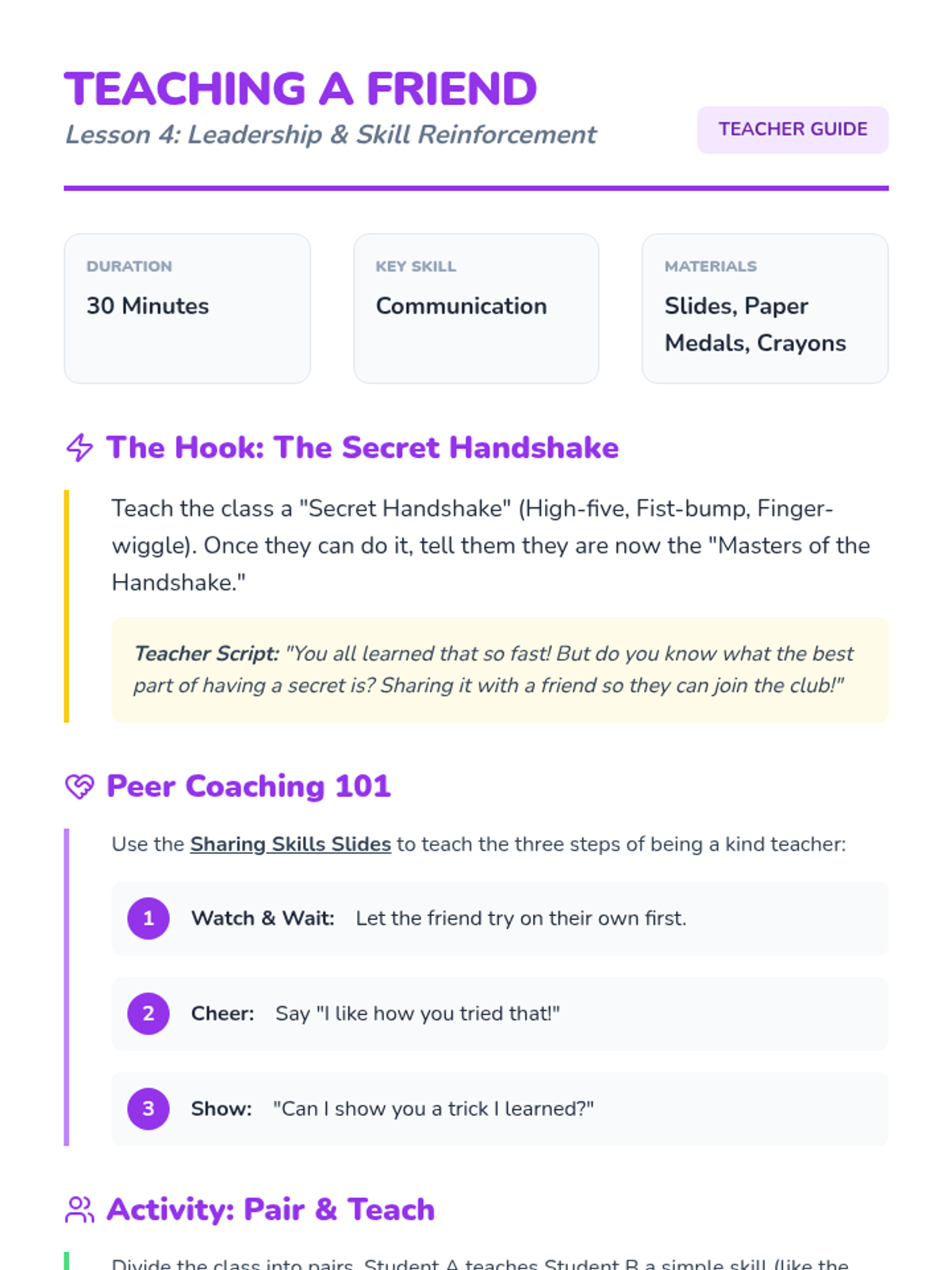
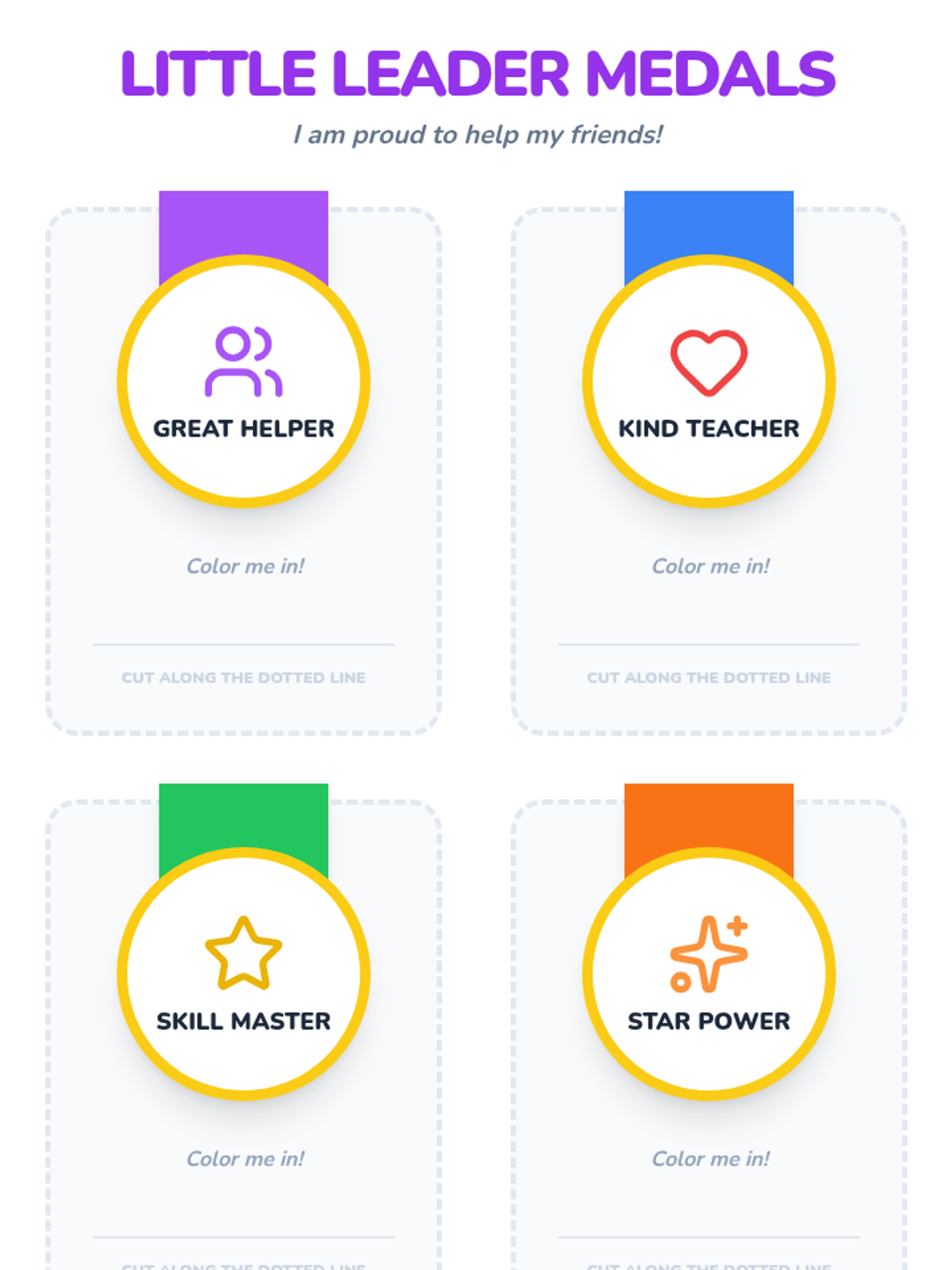
Empowering students to share their mastered skills with peers, building leadership and reinforcing their own learning.
Learning emotional regulation tools and positive self-talk to manage frustration when learning something new.
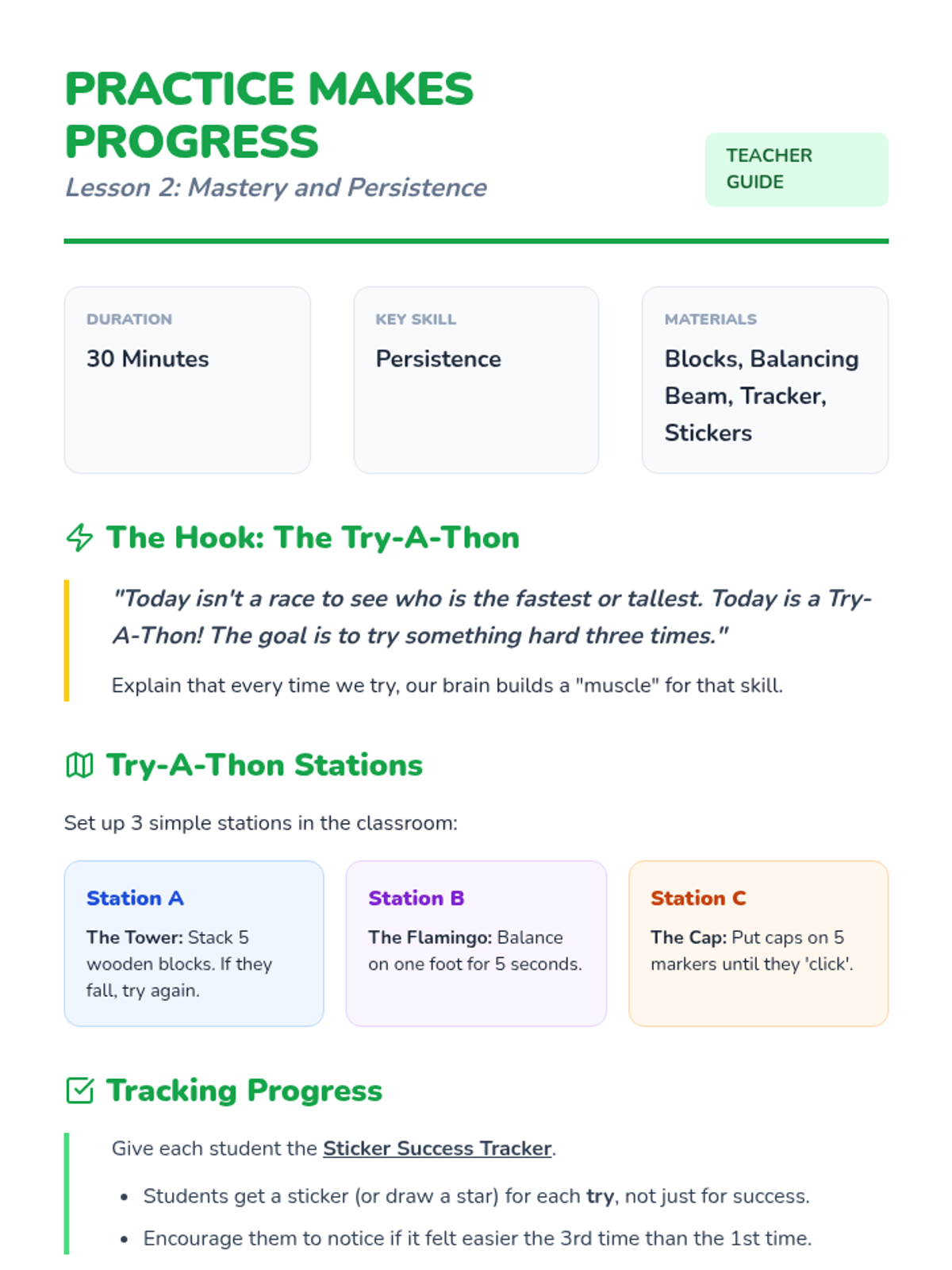
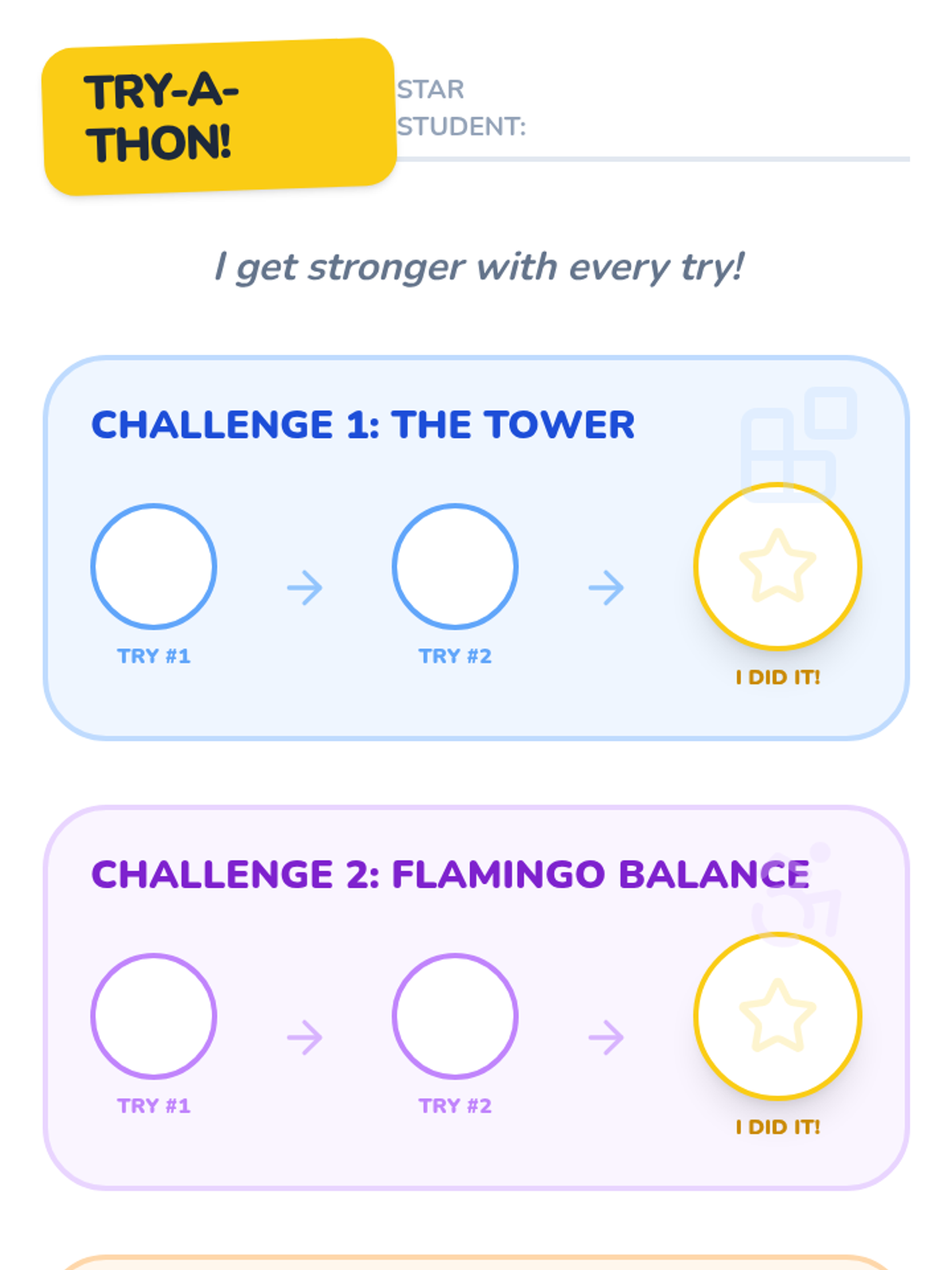
Focusing on persistence and tracking small improvements through repeated practice of simple skills.
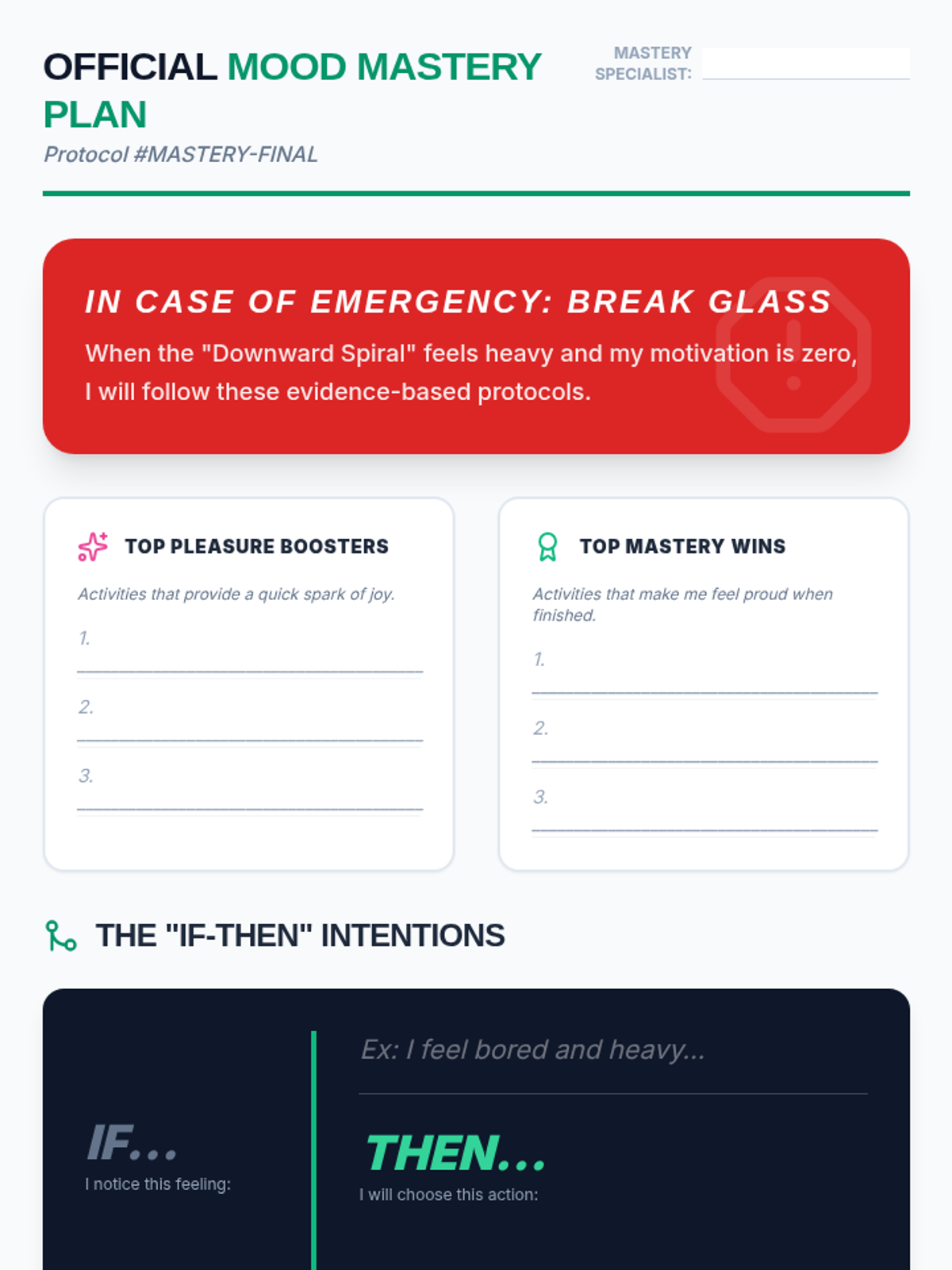
Synthesizing their learning, students create a 'Break the Glass' emergency plan for days when they feel low or anxious. They select their most effective pleasure and mastery activities and write specific implementation intentions (If I feel X, then I will do Y).
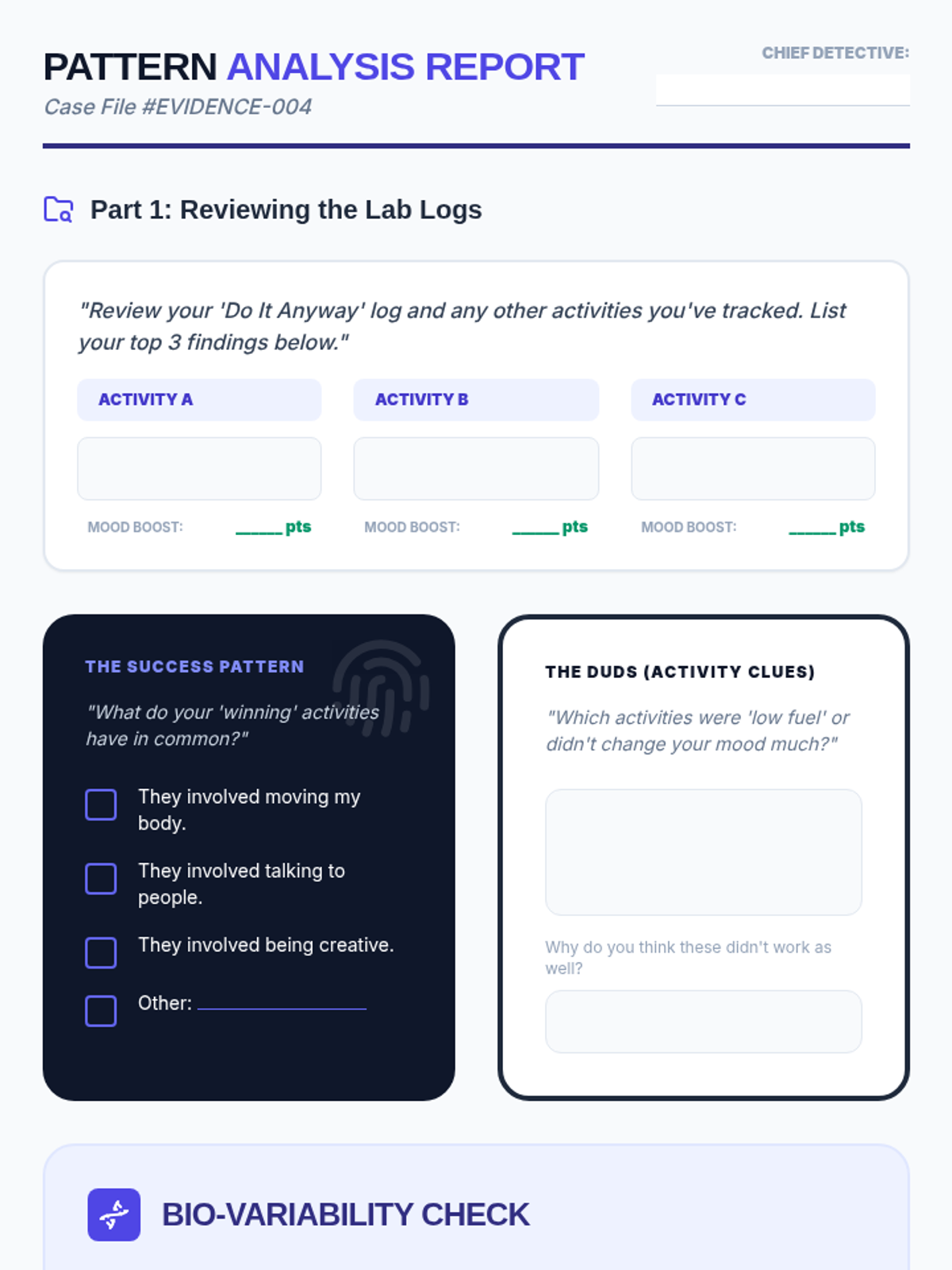
Students review the results of their personal experiments or case study data to identify patterns in how specific activities impact mood. They discuss the variability of results (what works for one person may not work for another) and begin curating their personal 'top hits' for mood improvement.
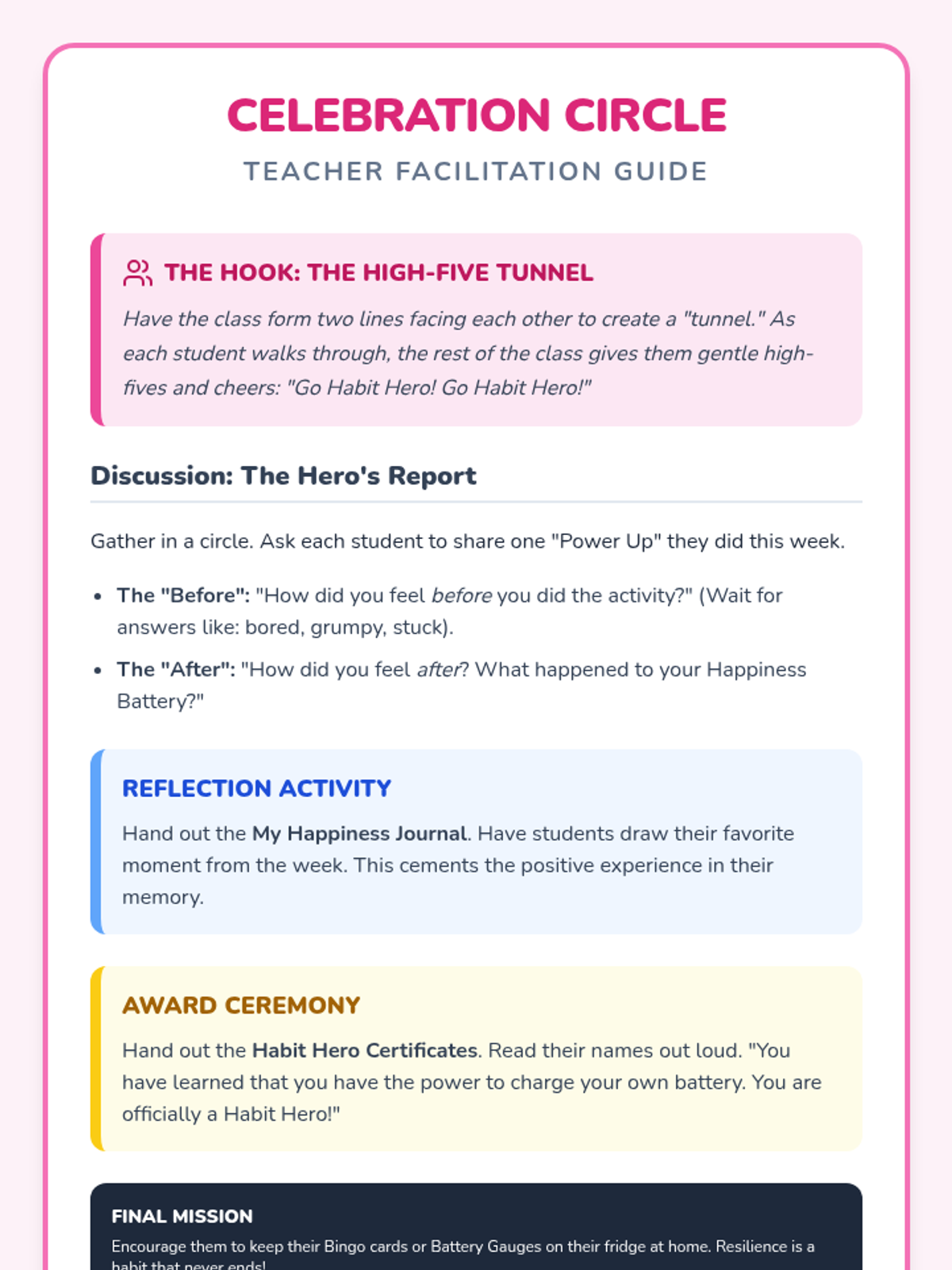
A final reflection and celebration session where students share their progress, discuss the impact of their new habits, and receive recognition for their efforts.
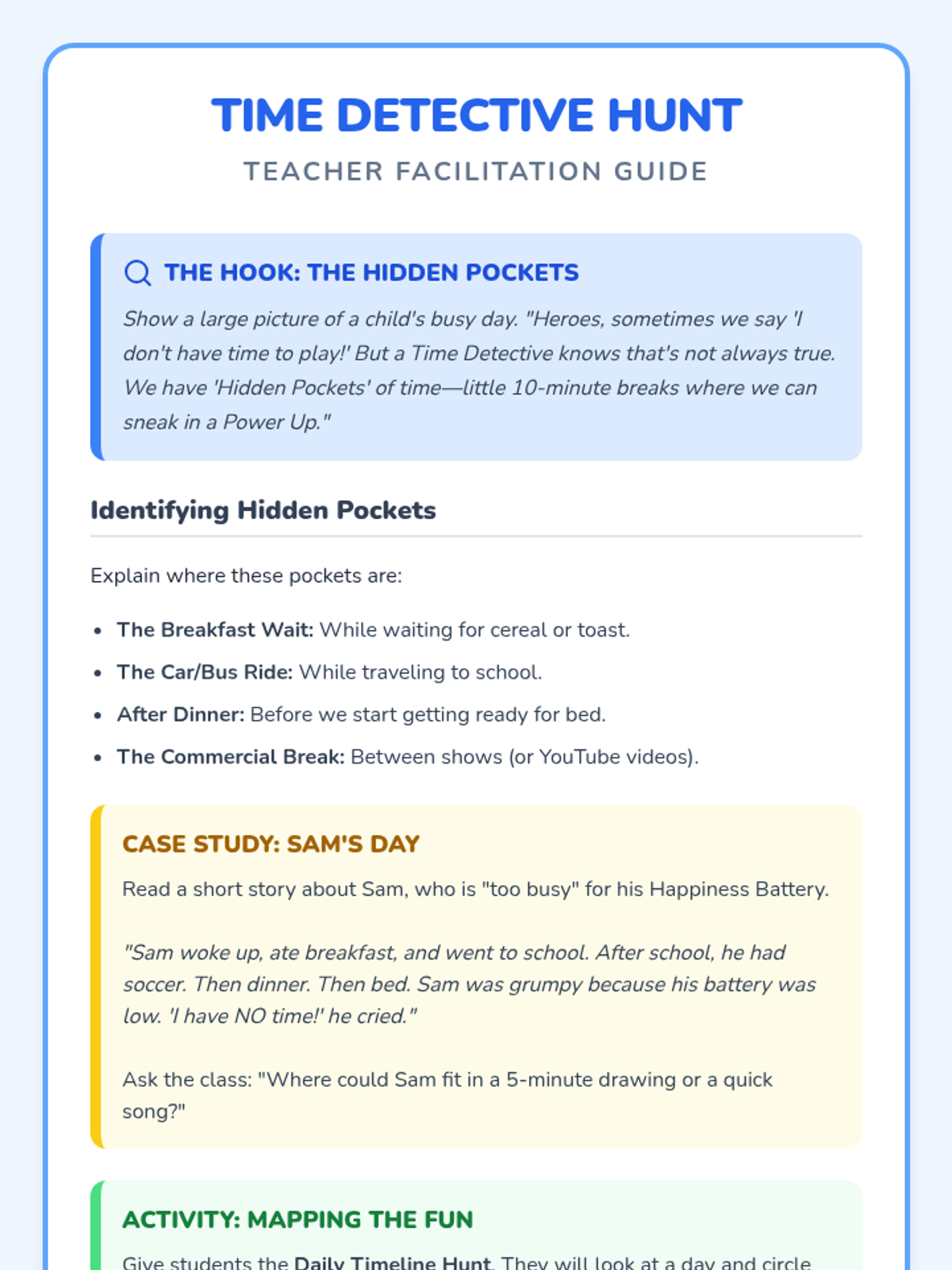
Students become 'Time Detectives' to identify opportunities in their daily lives to fit in short, high-impact positive activities.
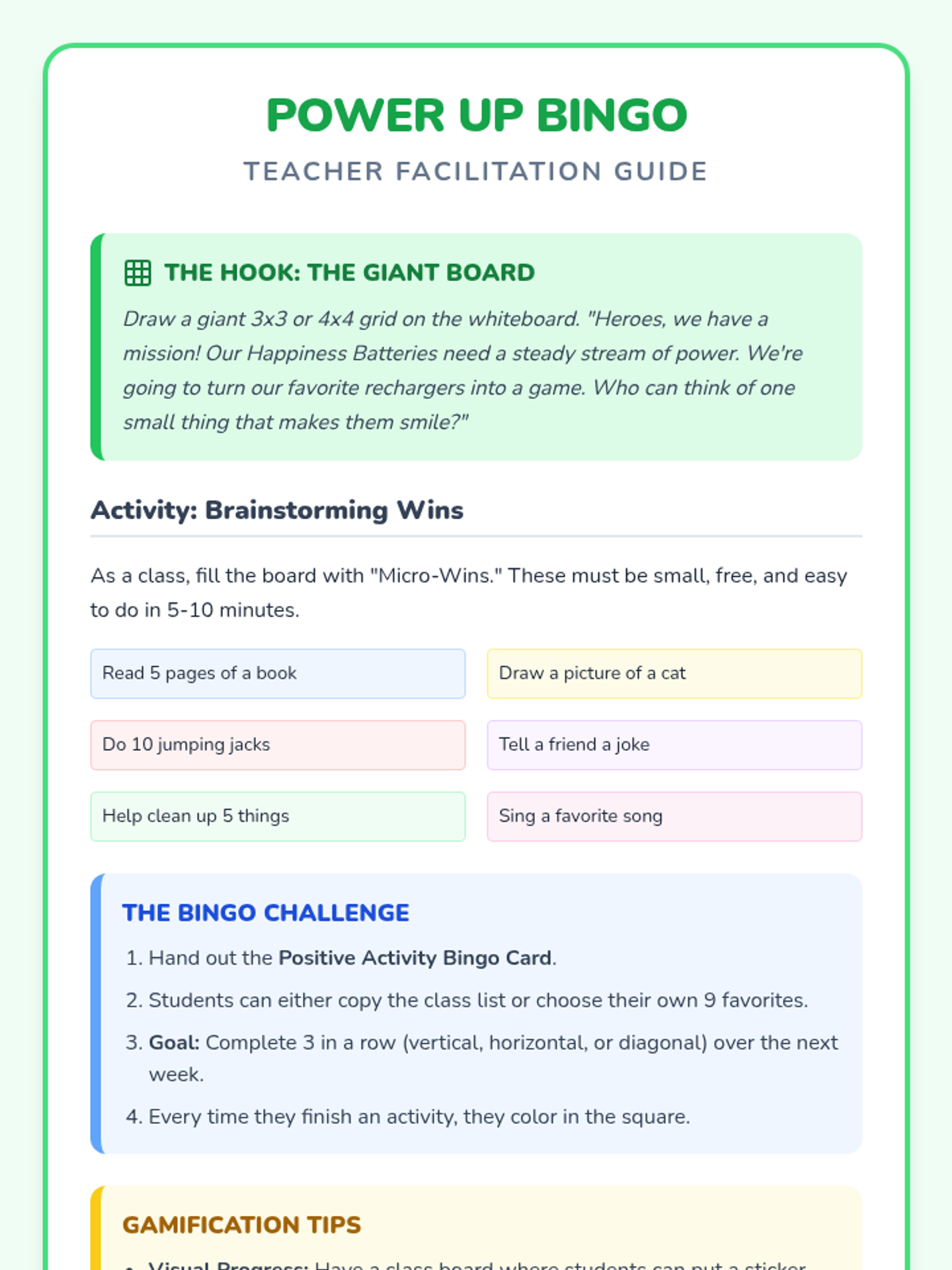
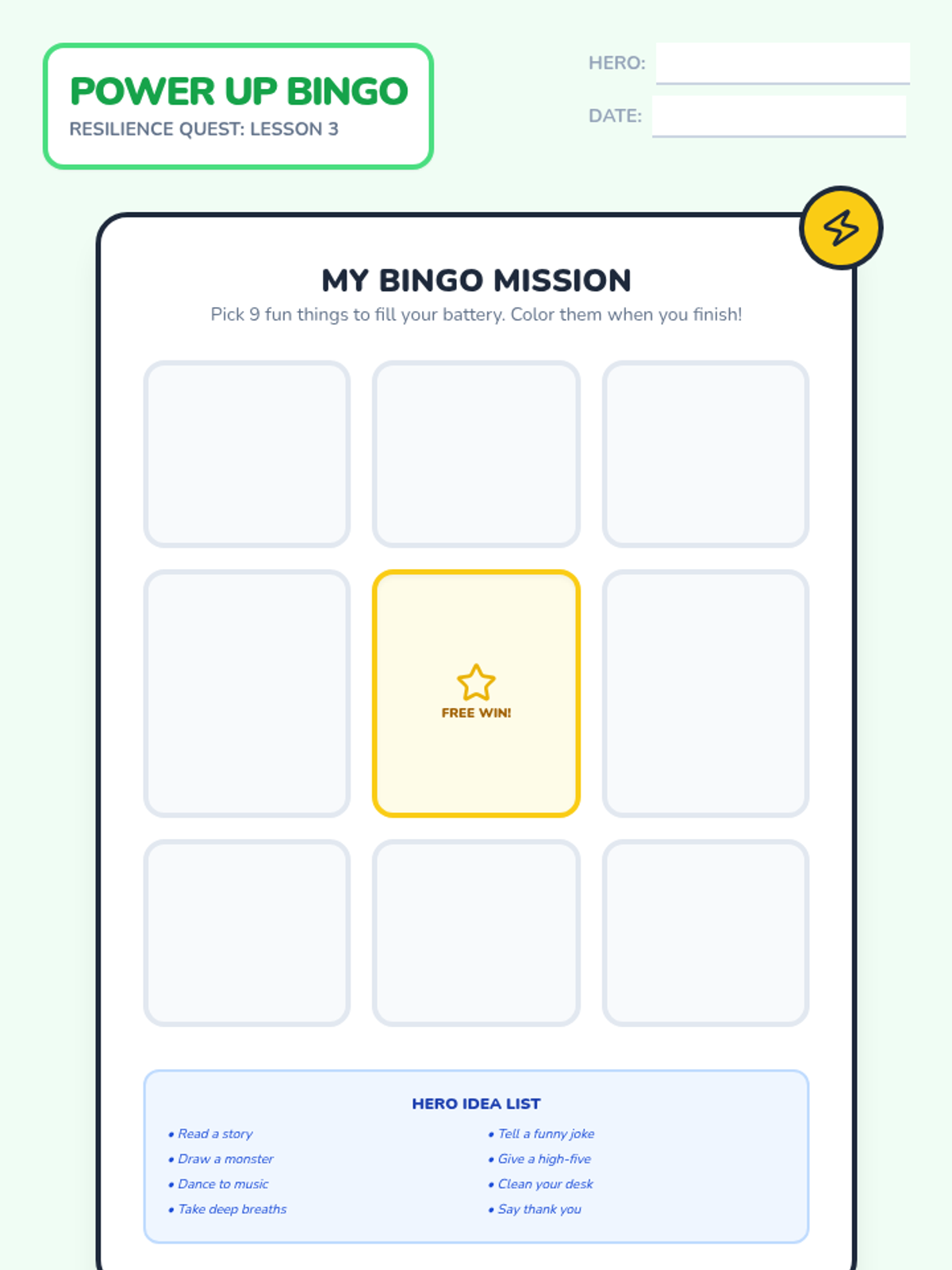
Students gamify their positive habits by creating and participating in a class-wide bingo challenge focused on daily small wins.
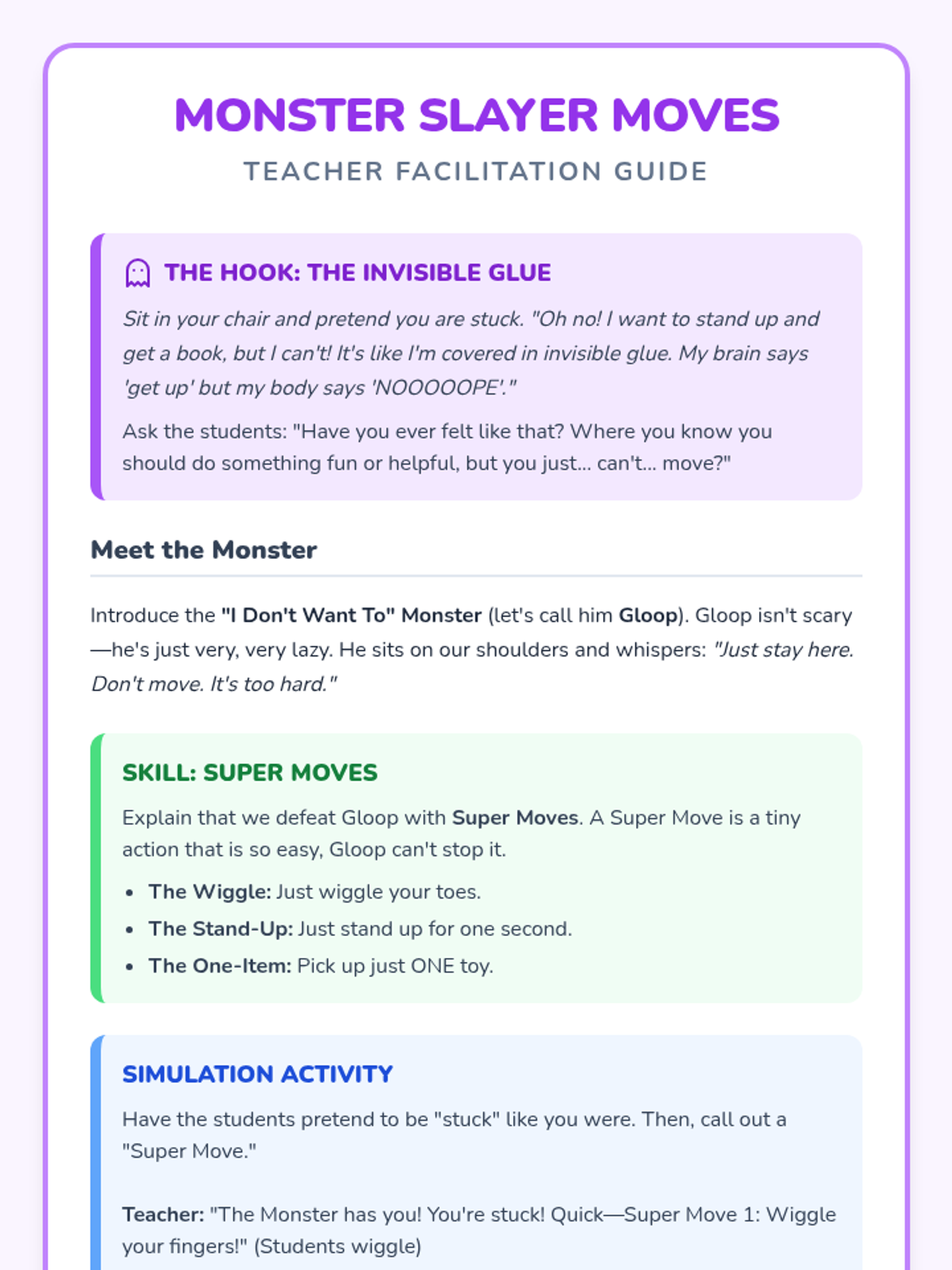
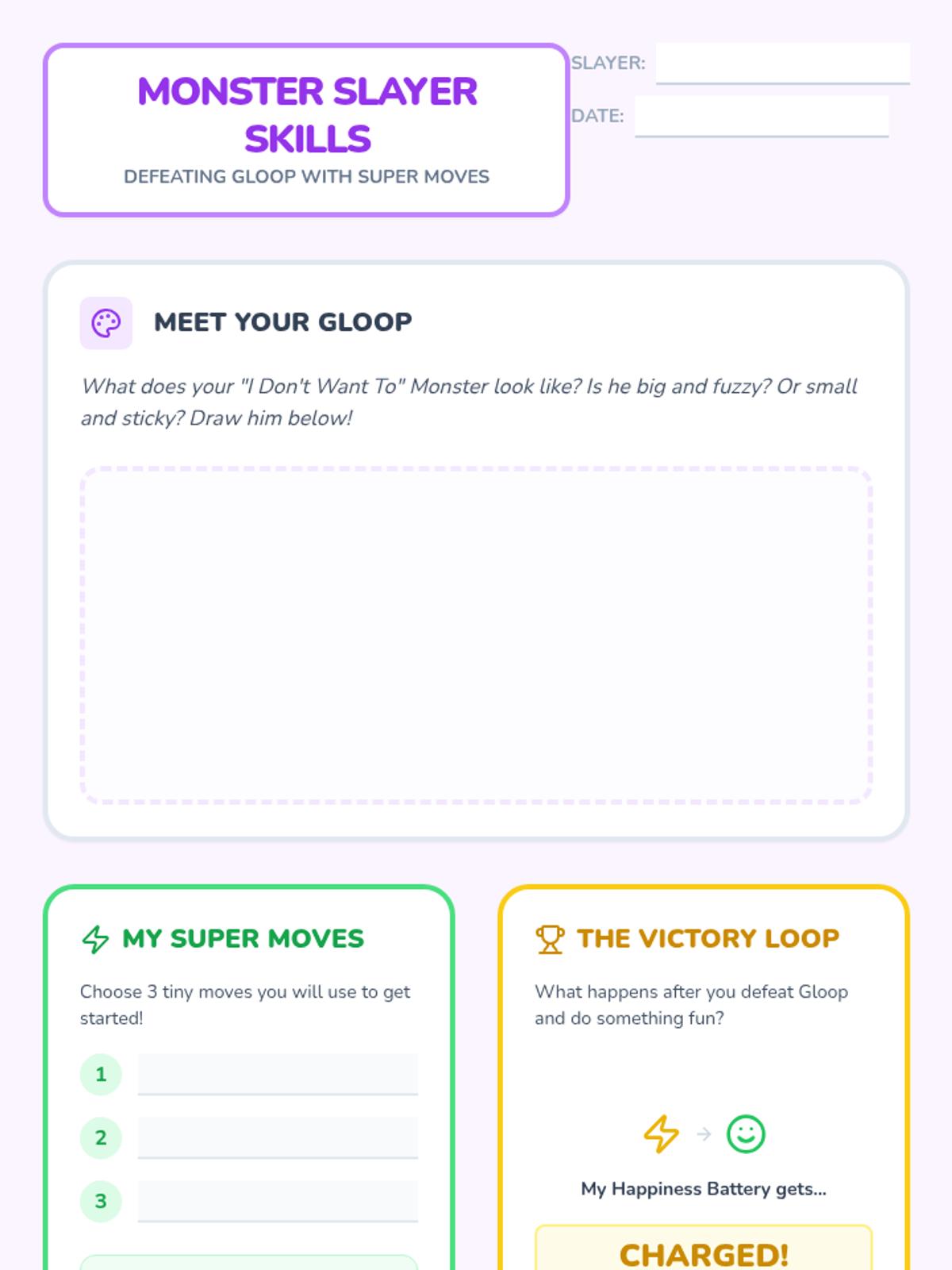
Teaches students how to overcome inertia and task initiation hurdles by personifying the 'I Don't Want To' feeling and using 'Super Moves' to get started.
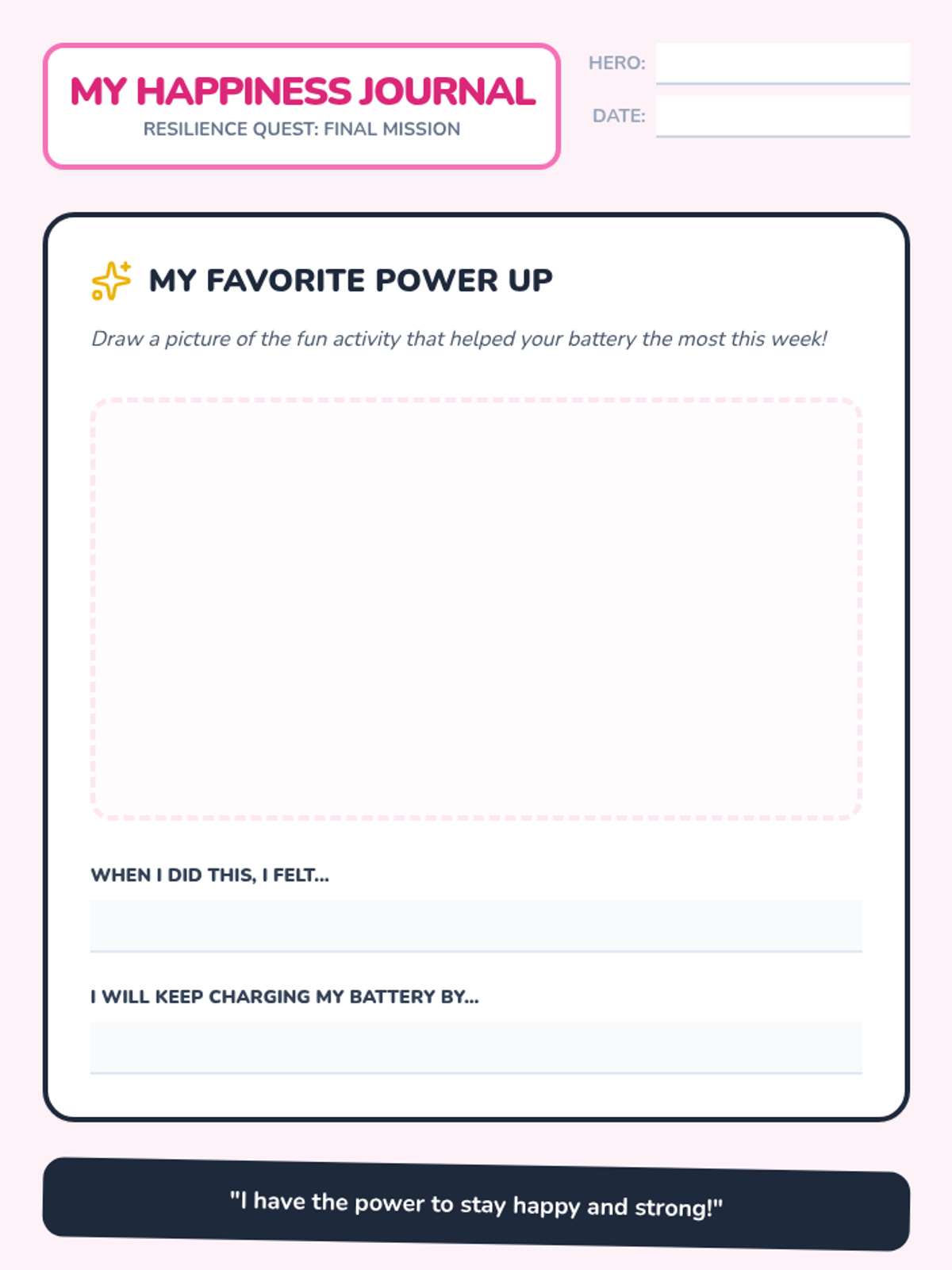
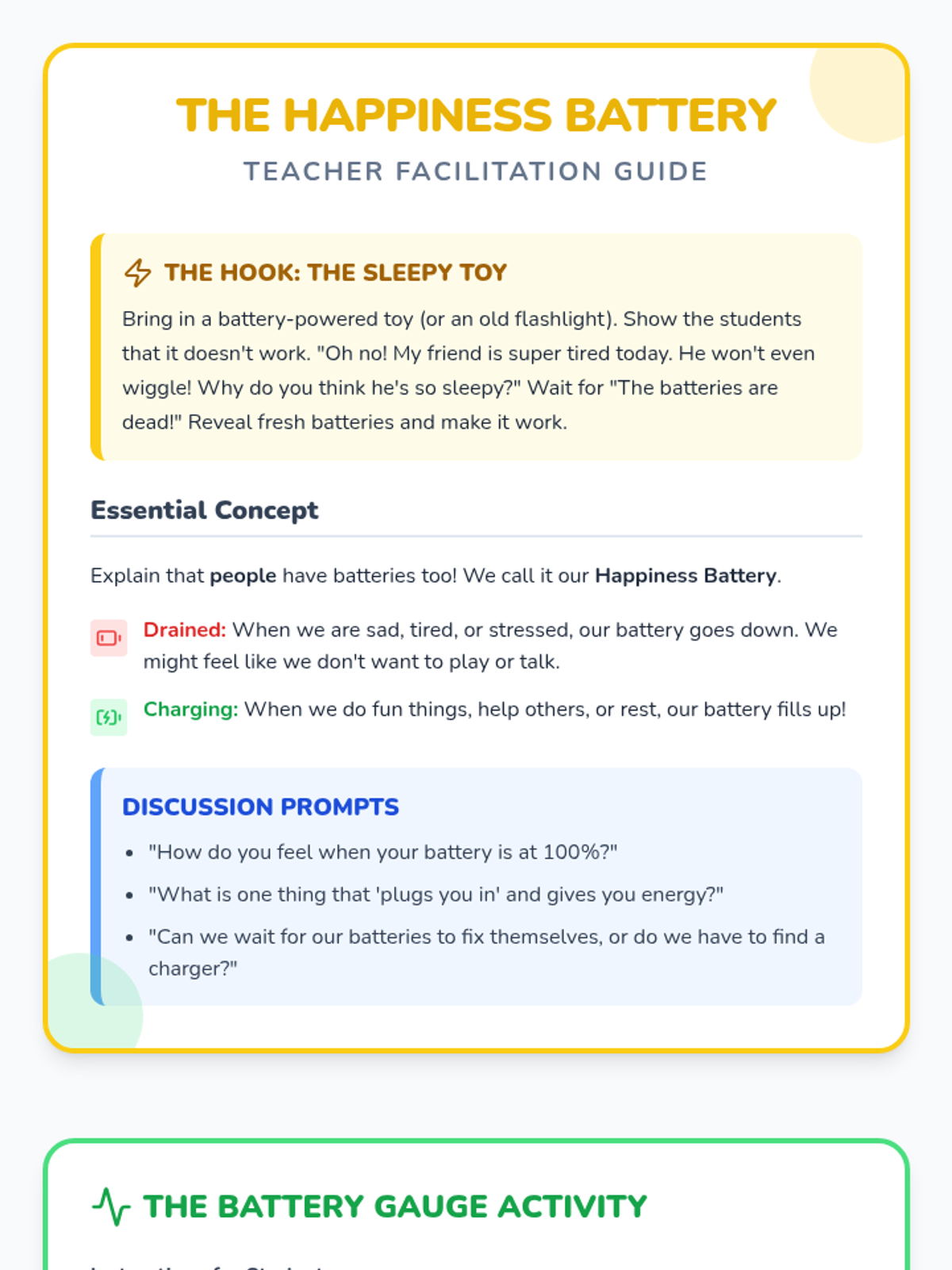
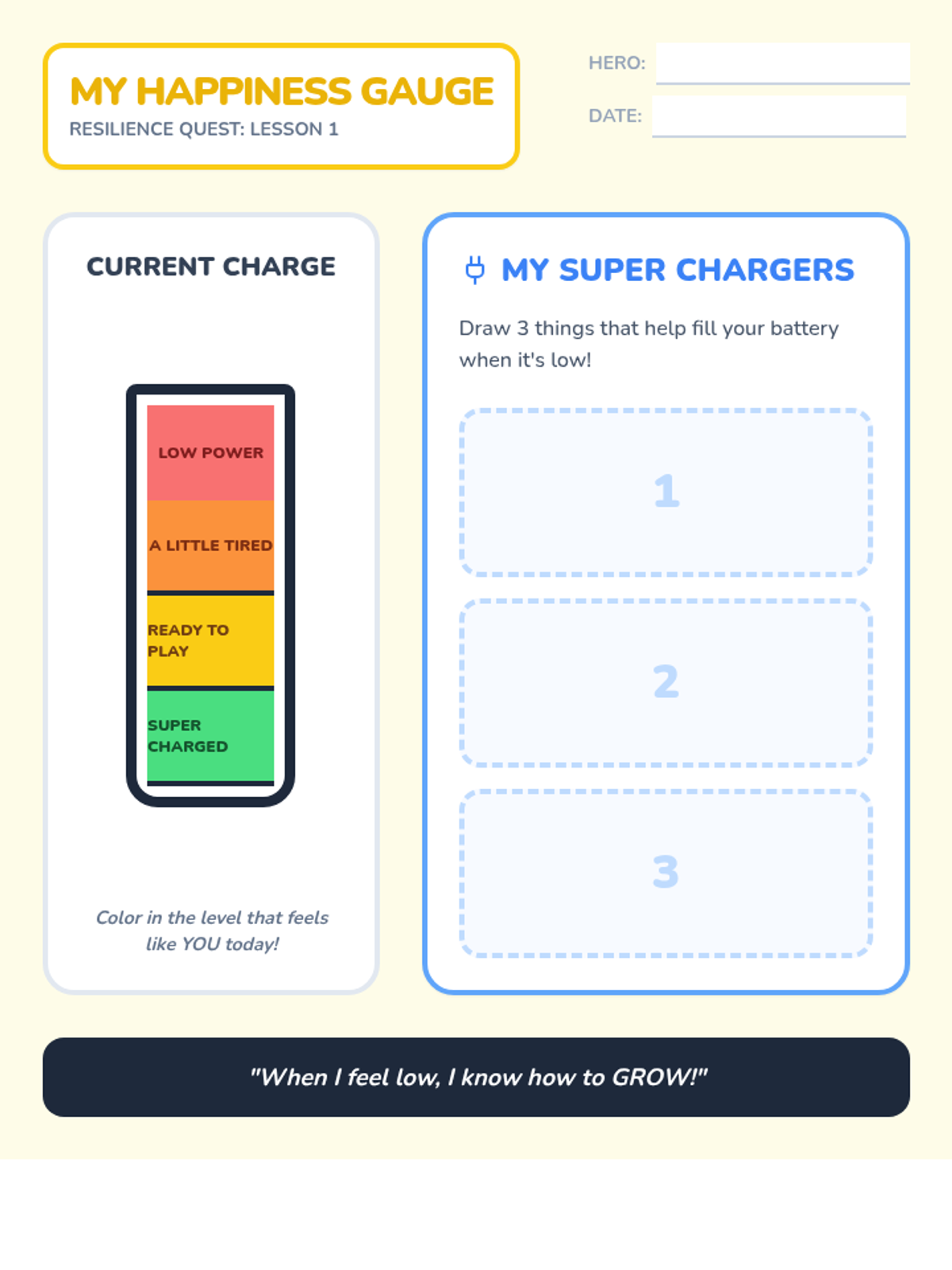
Introduces the battery metaphor for emotional energy, teaching students to monitor their own 'charge' and understand the need for recharging through positive activities.
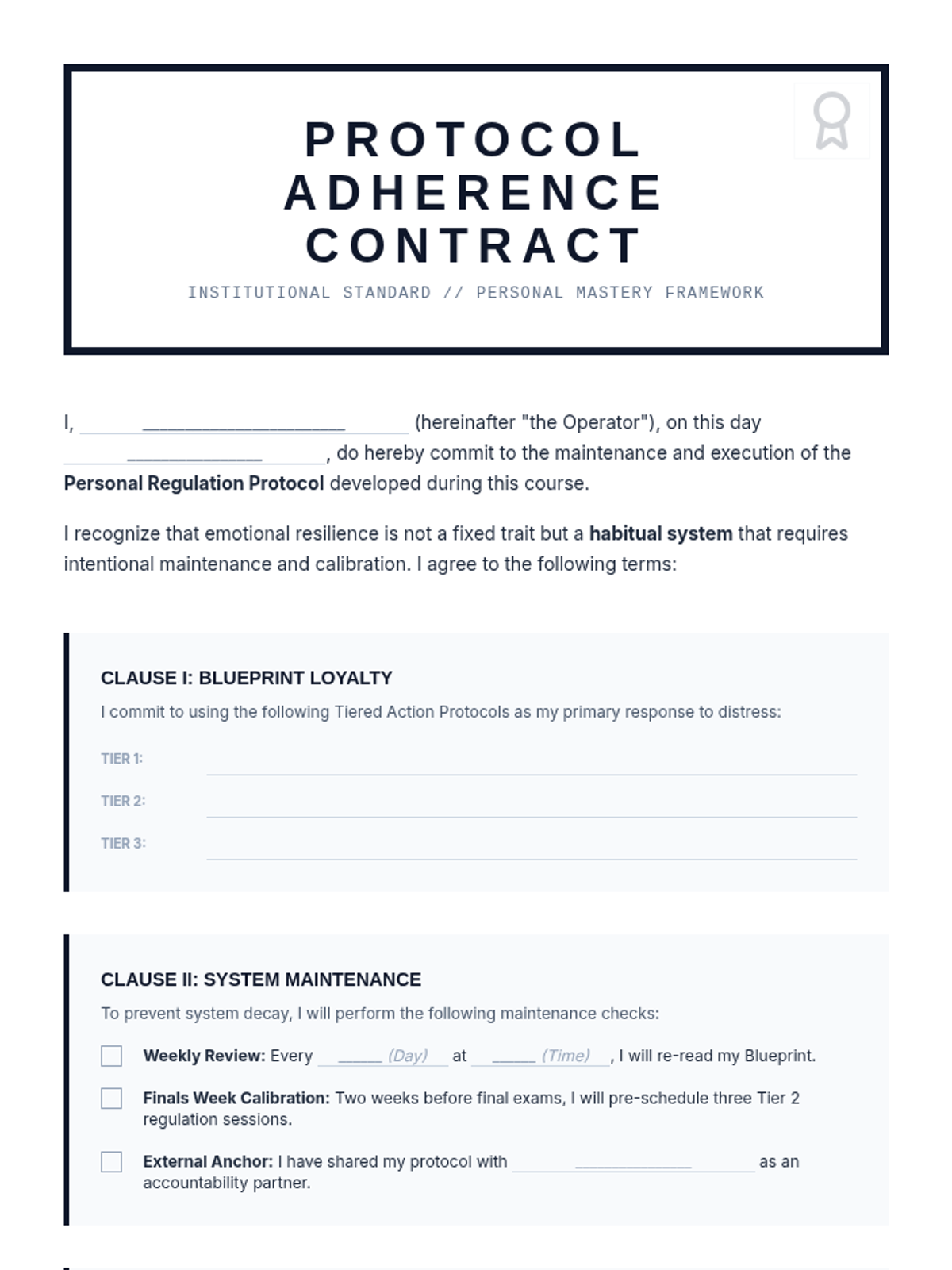
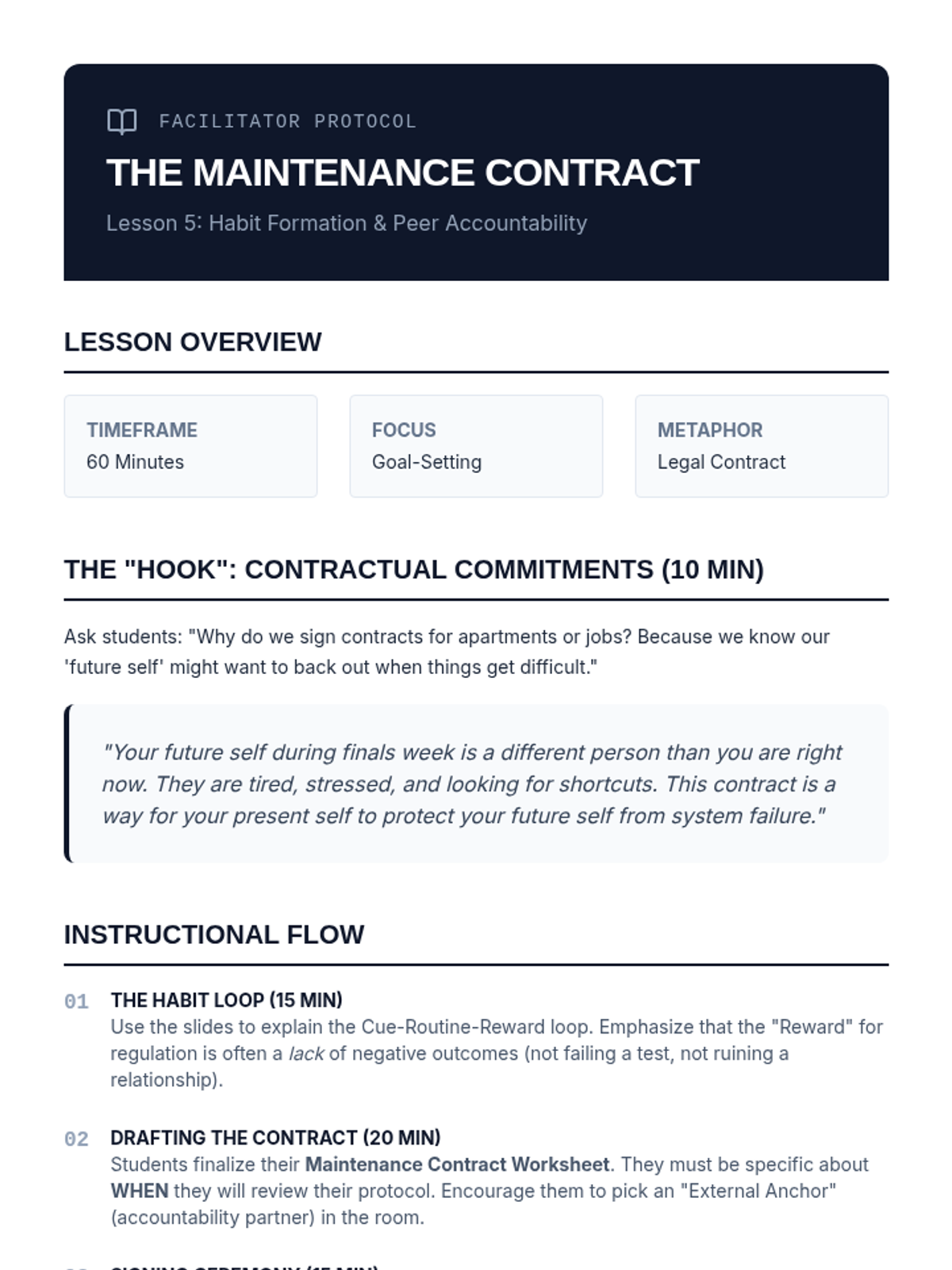
Students finalize their protocols and establish a formal maintenance contract to ensure long-term adherence and habit formation.
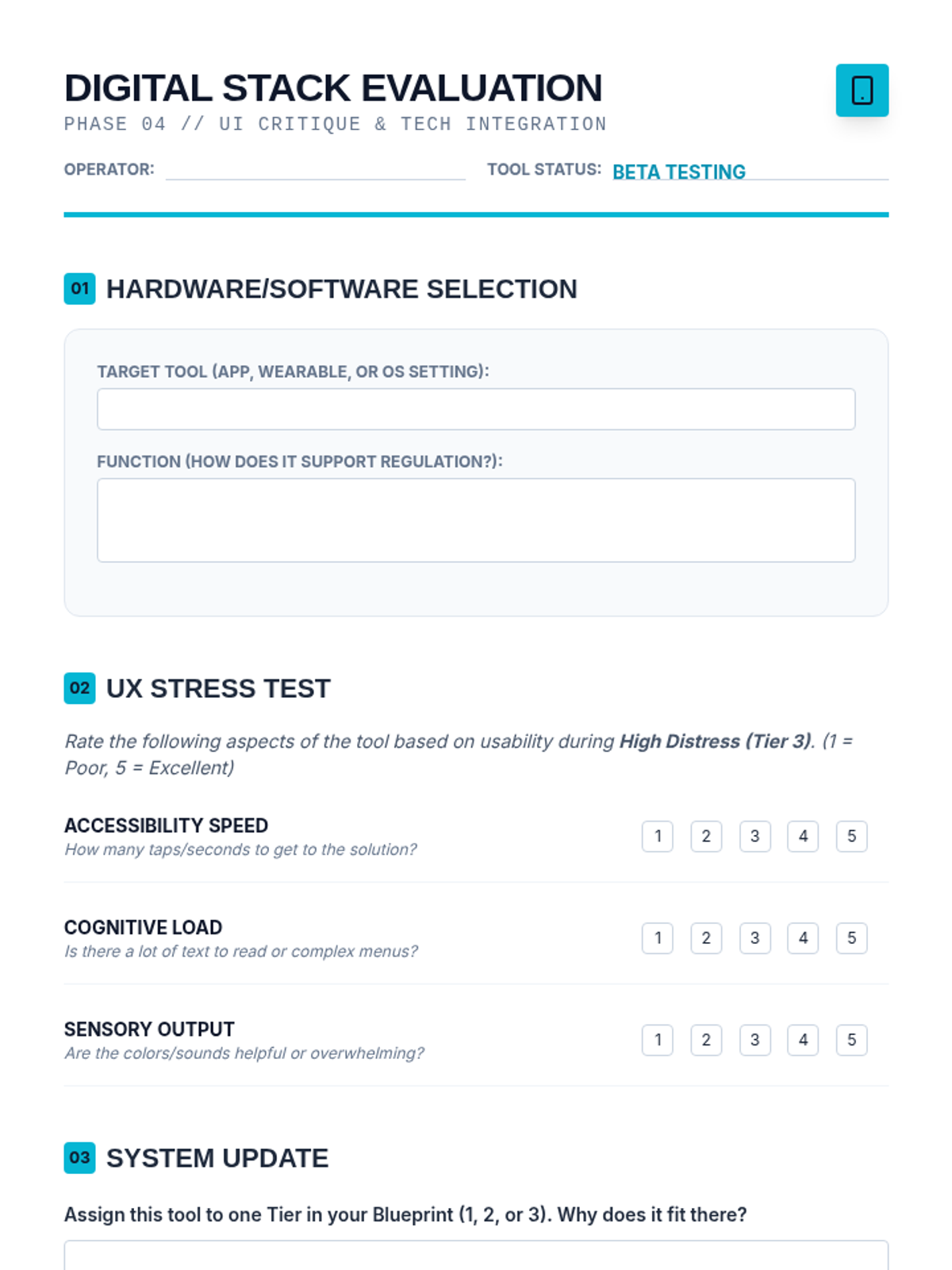
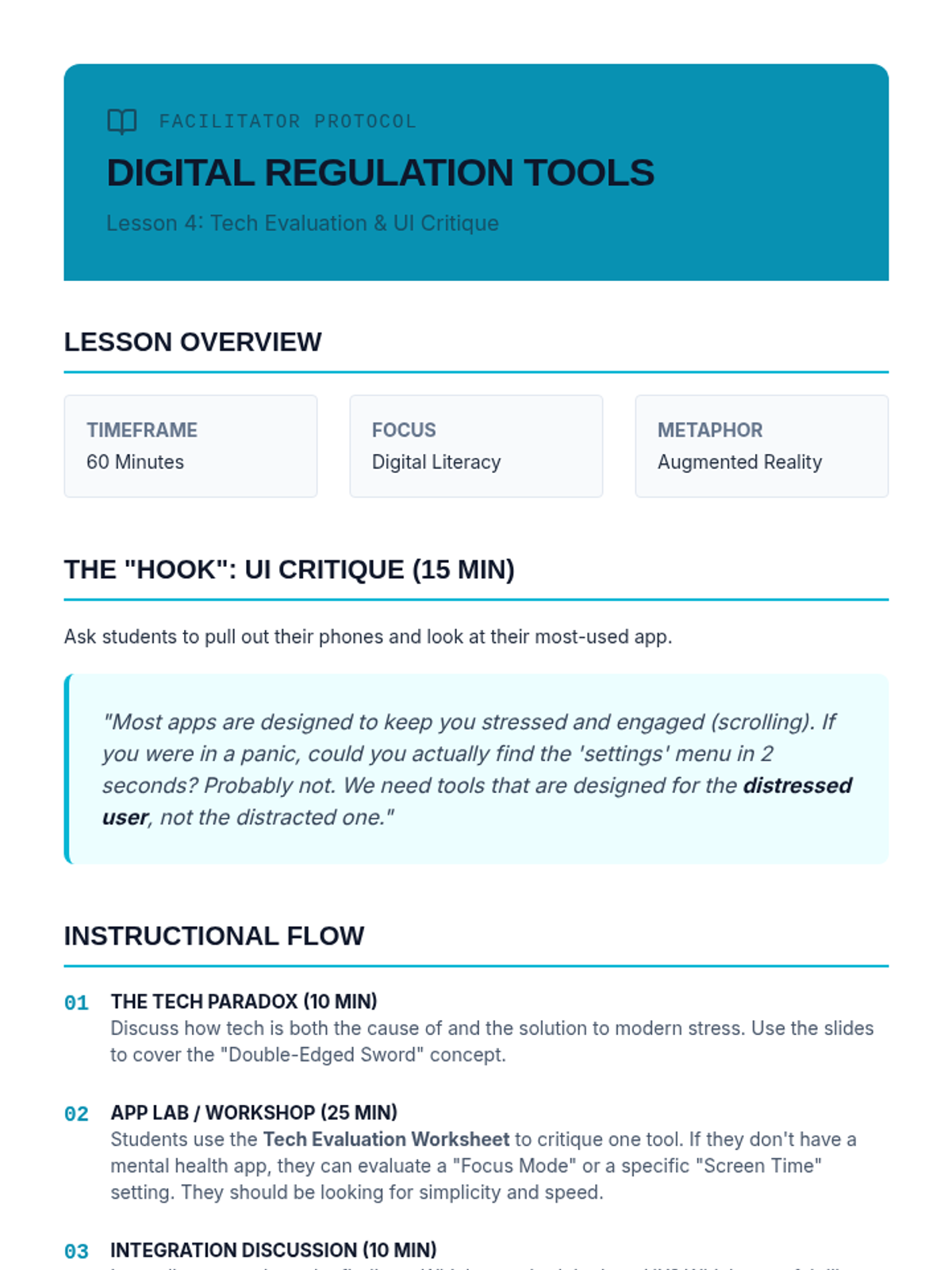
Students evaluate digital tools, apps, and wearables to integrate effective technological supports into their personalized regulation protocols.
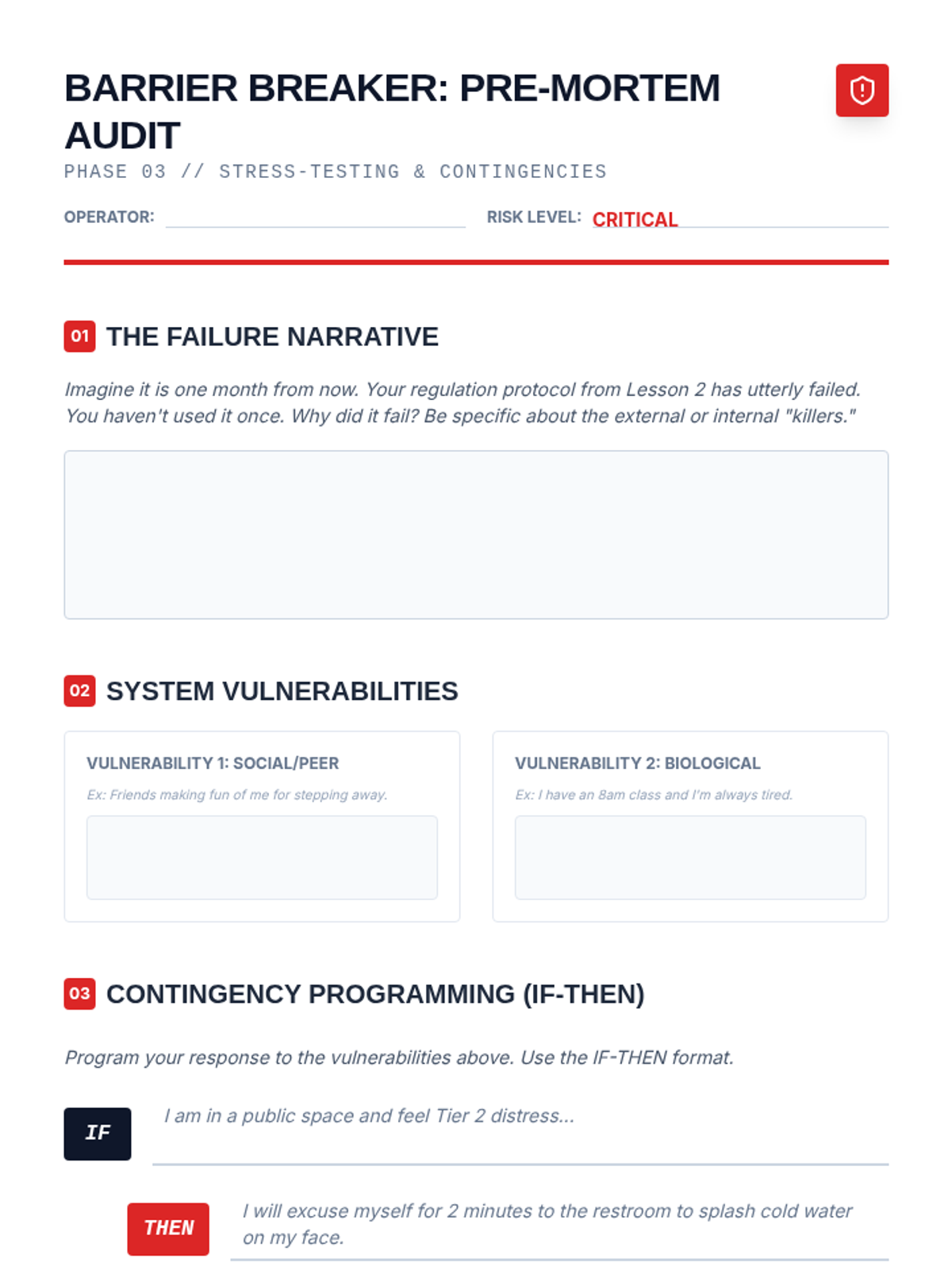
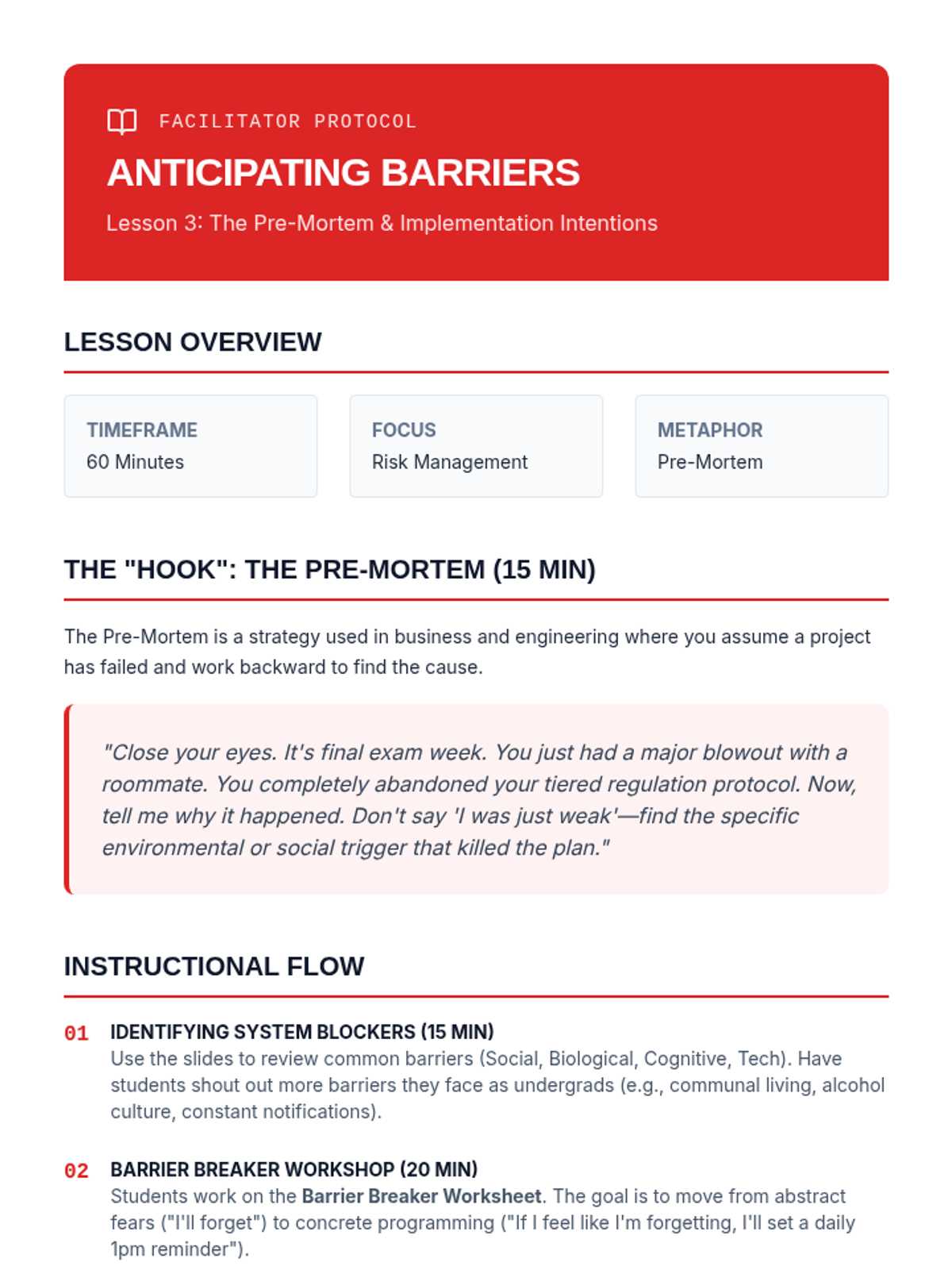
Students identify obstacles to their regulation plan and develop 'If-Then' implementation intentions to navigate triggers and barriers.
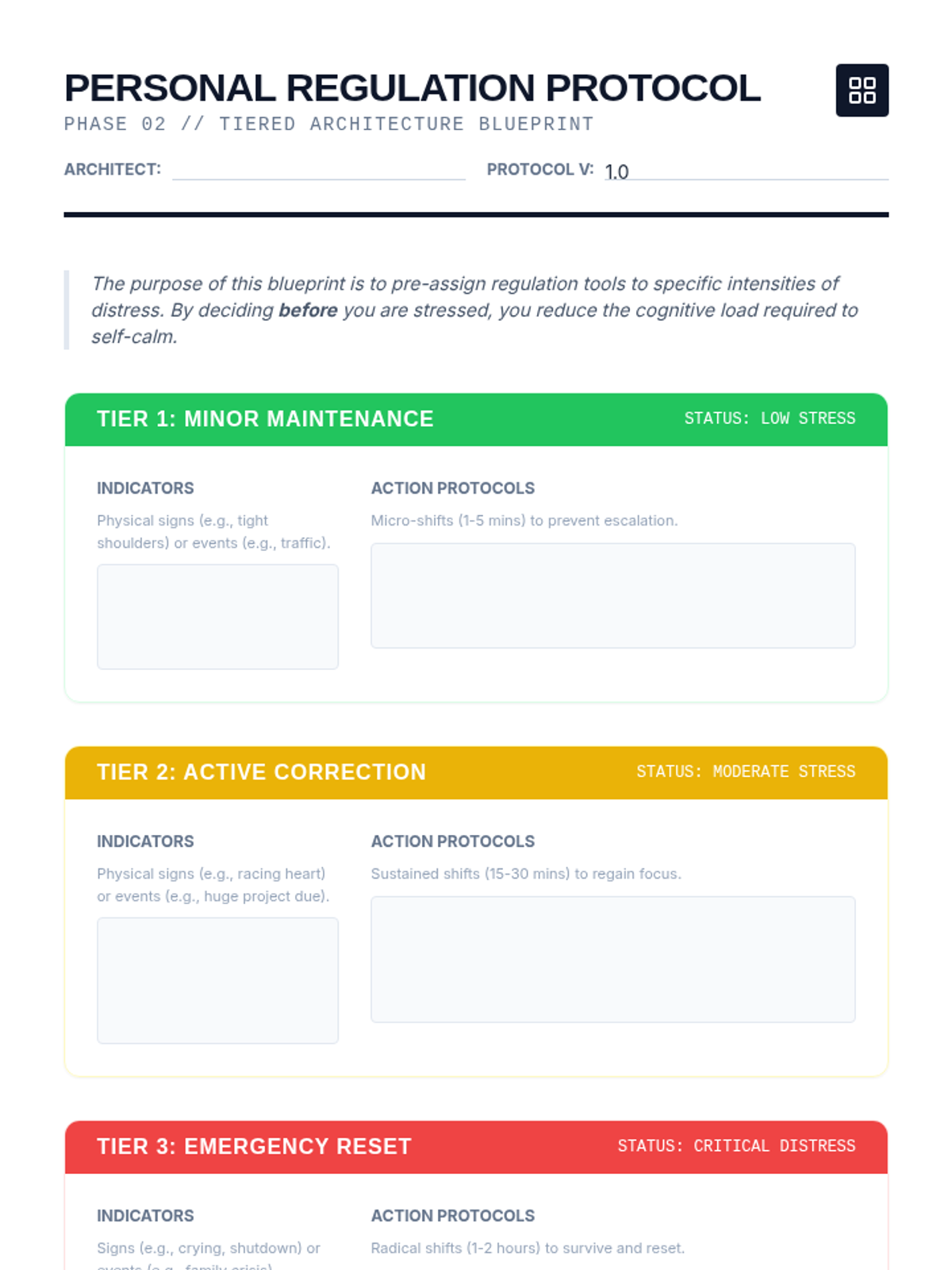
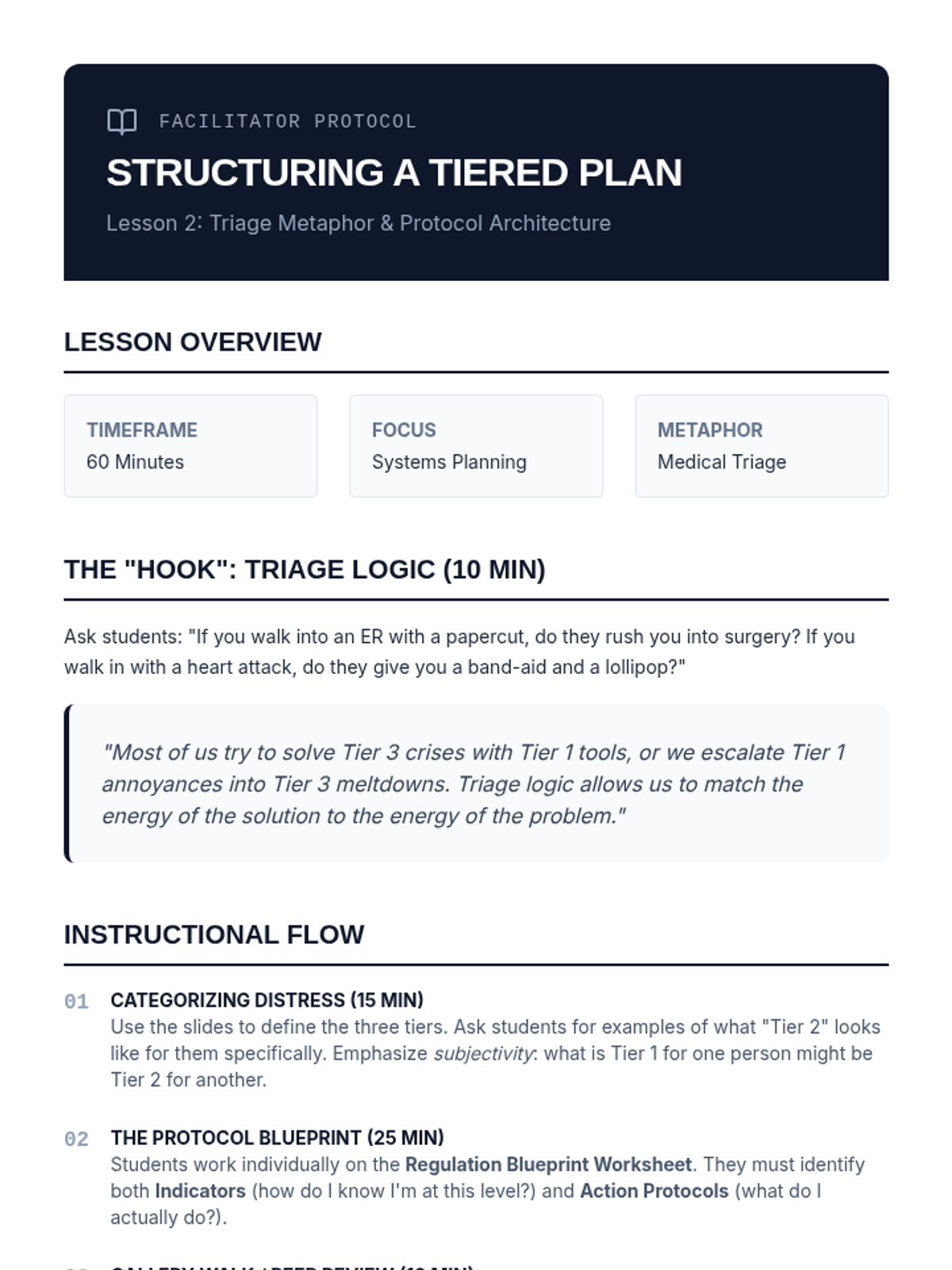
Students use a triage metaphor to design a three-tiered response plan, assigning specific self-calming tools to different intensities of distress.
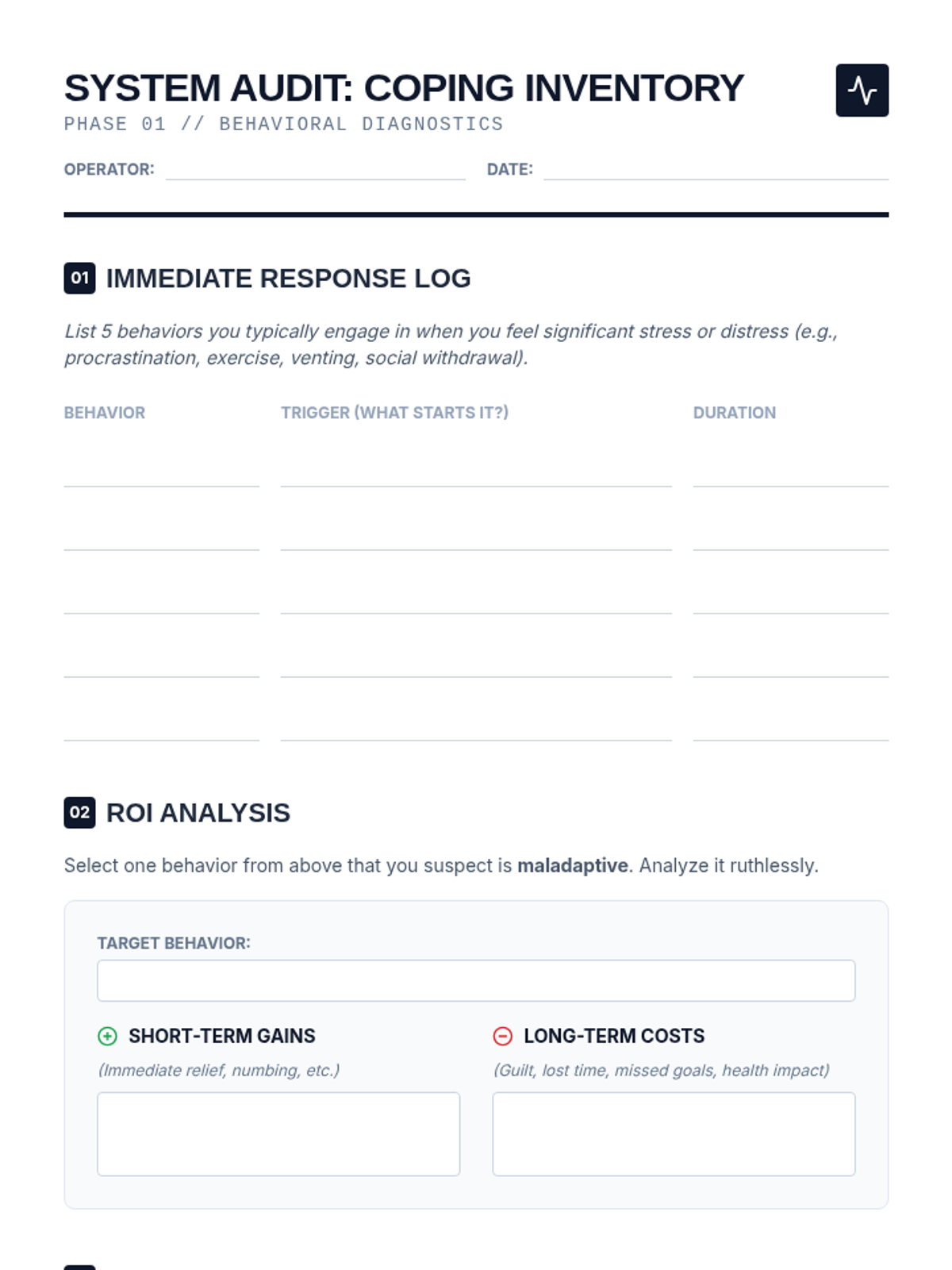
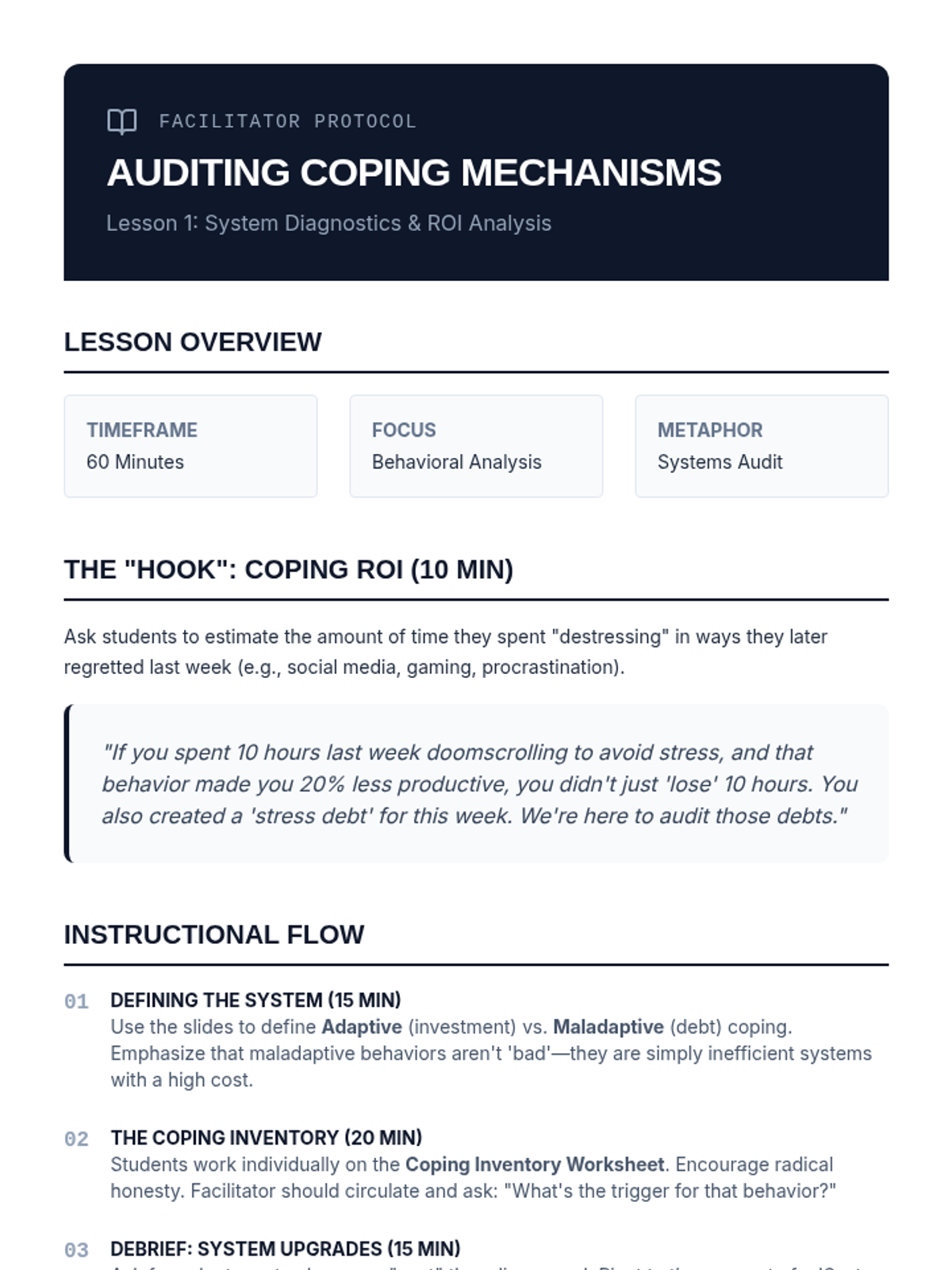
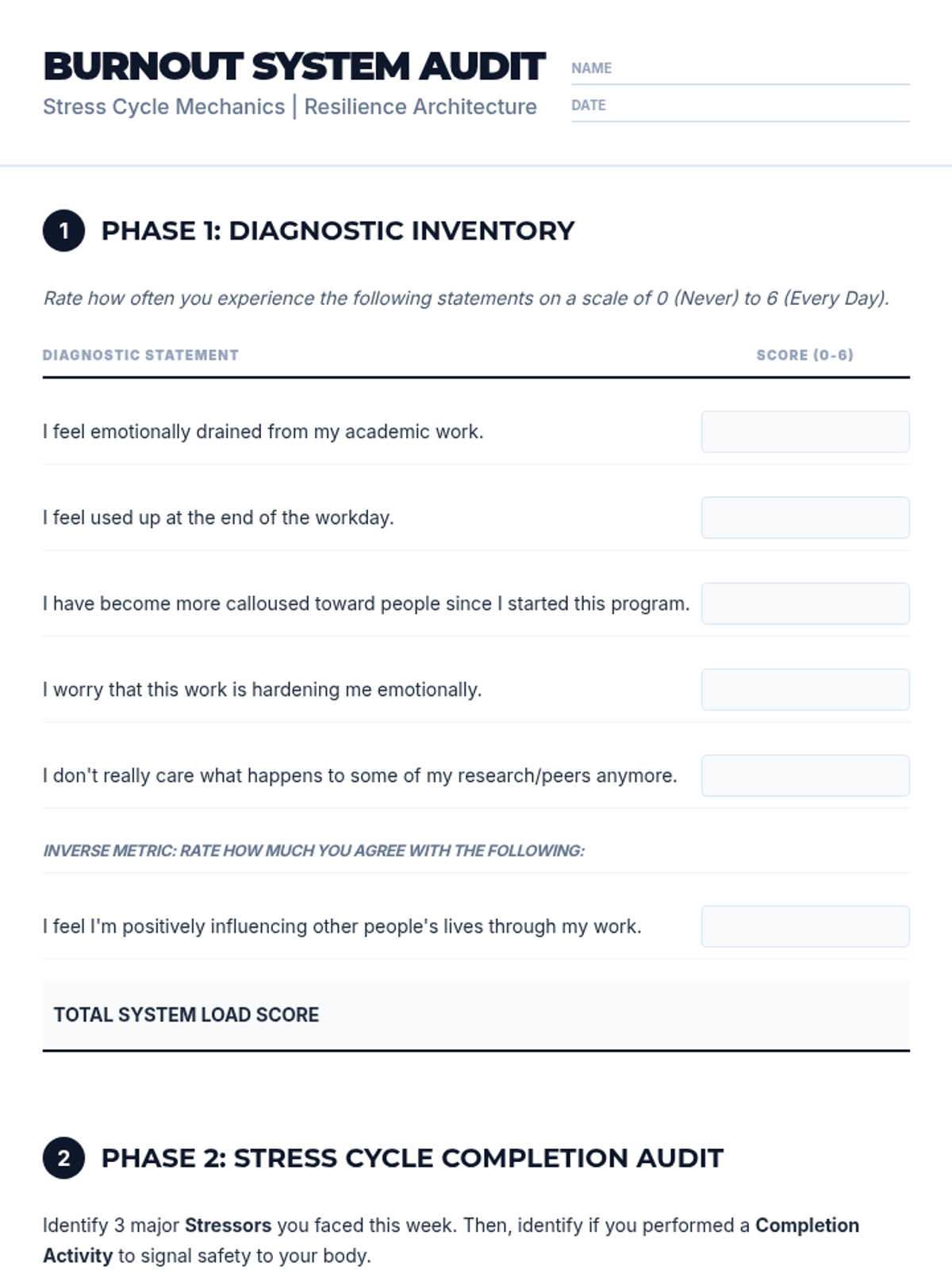
Students conduct an inventory of current stress responses and perform a cost-benefit analysis to distinguish between adaptive and maladaptive behaviors.
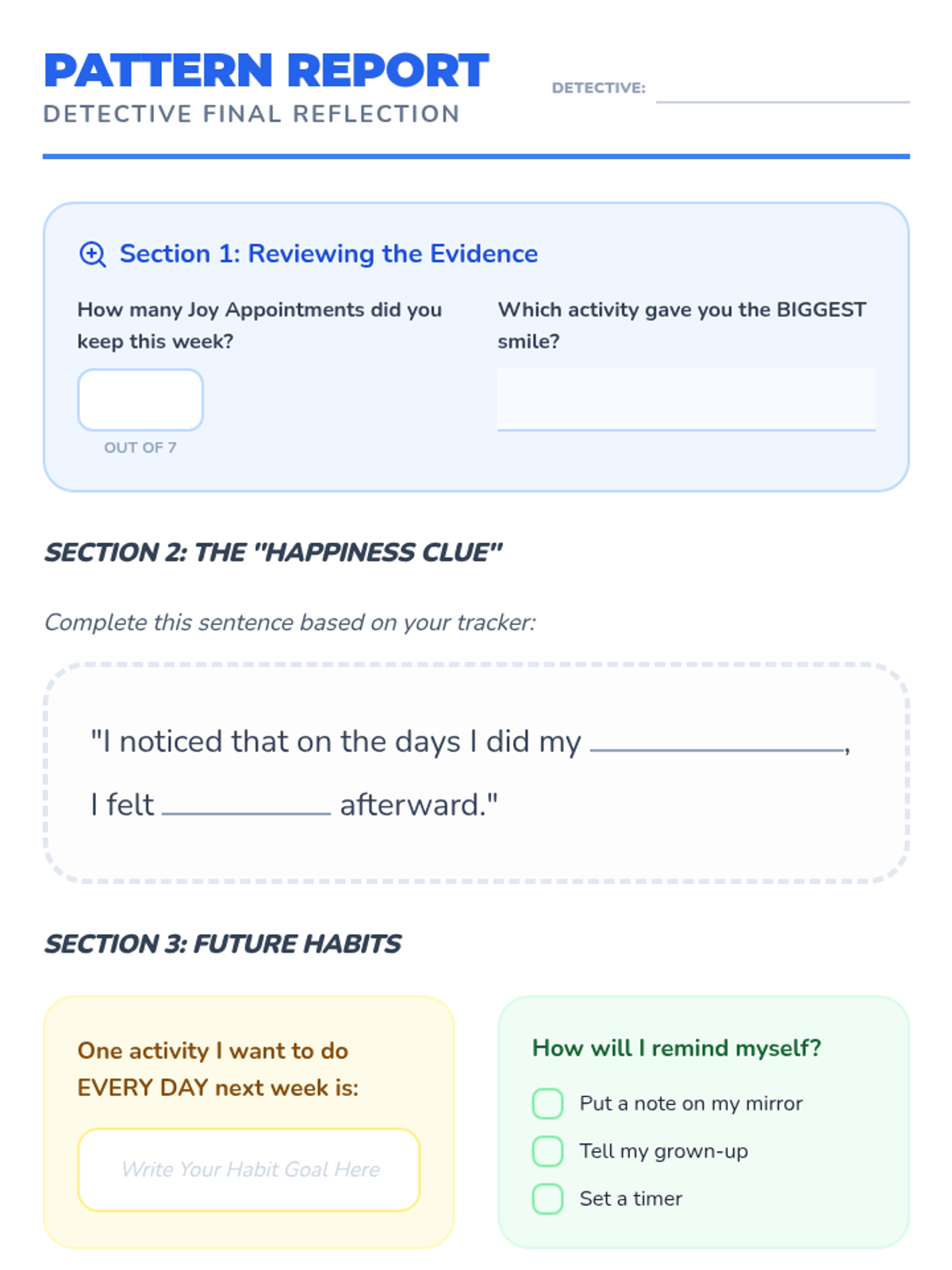
Students reflect on their habits and mood patterns to set personal goals for maintaining a positive daily routine.
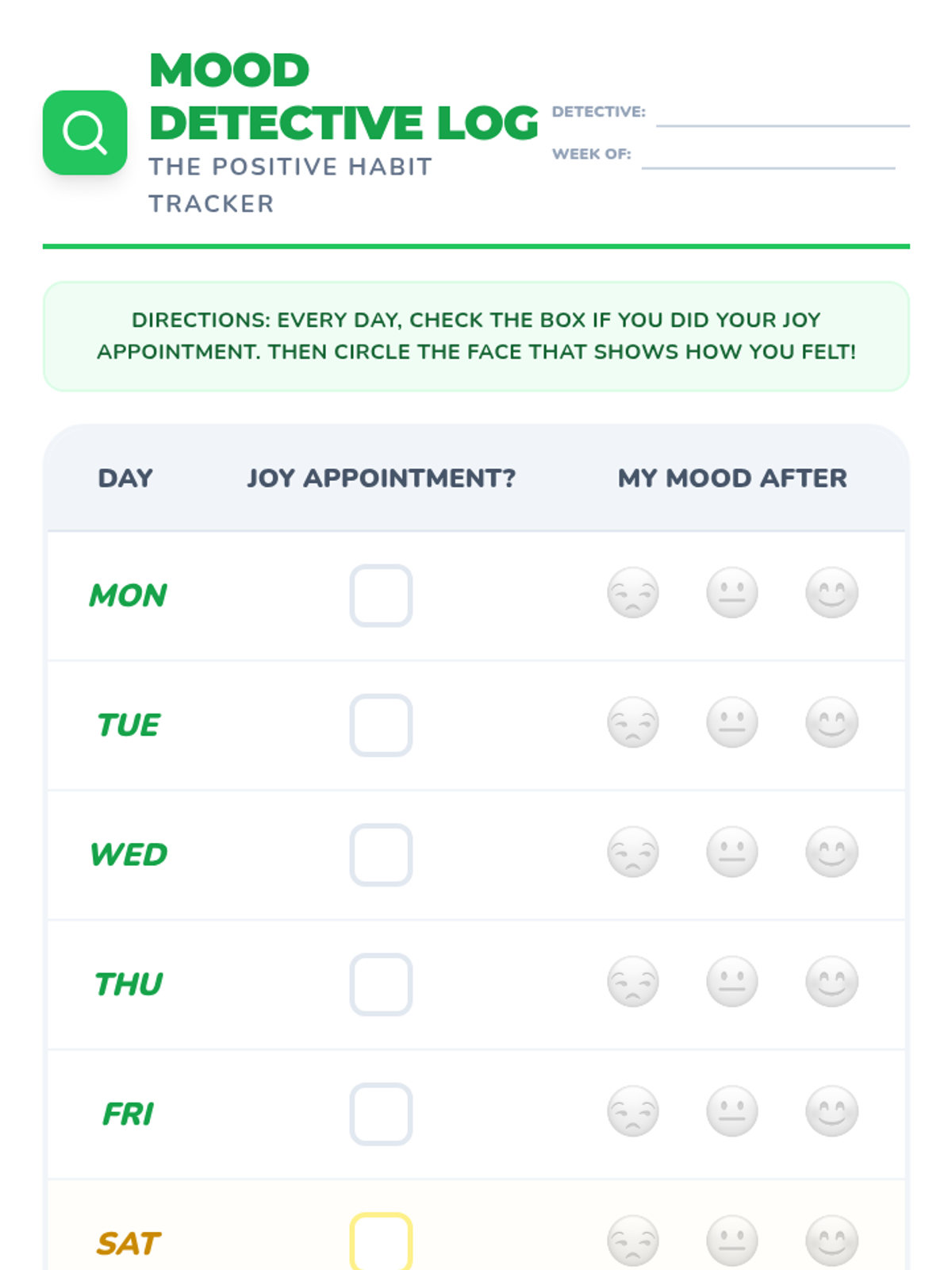
Students use a tracker to monitor positive activities and their subsequent mood, reinforcing the link between action and emotion.
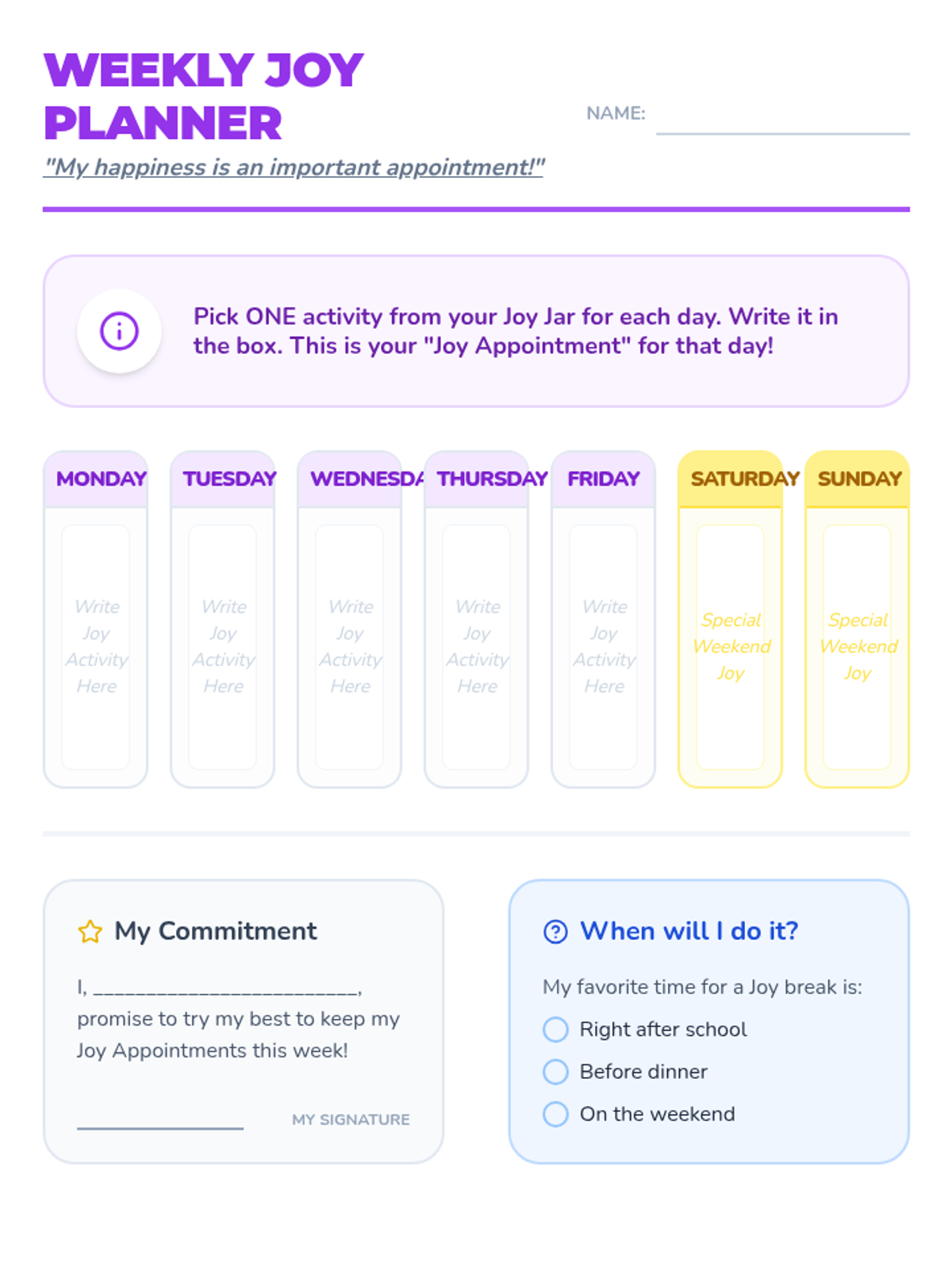
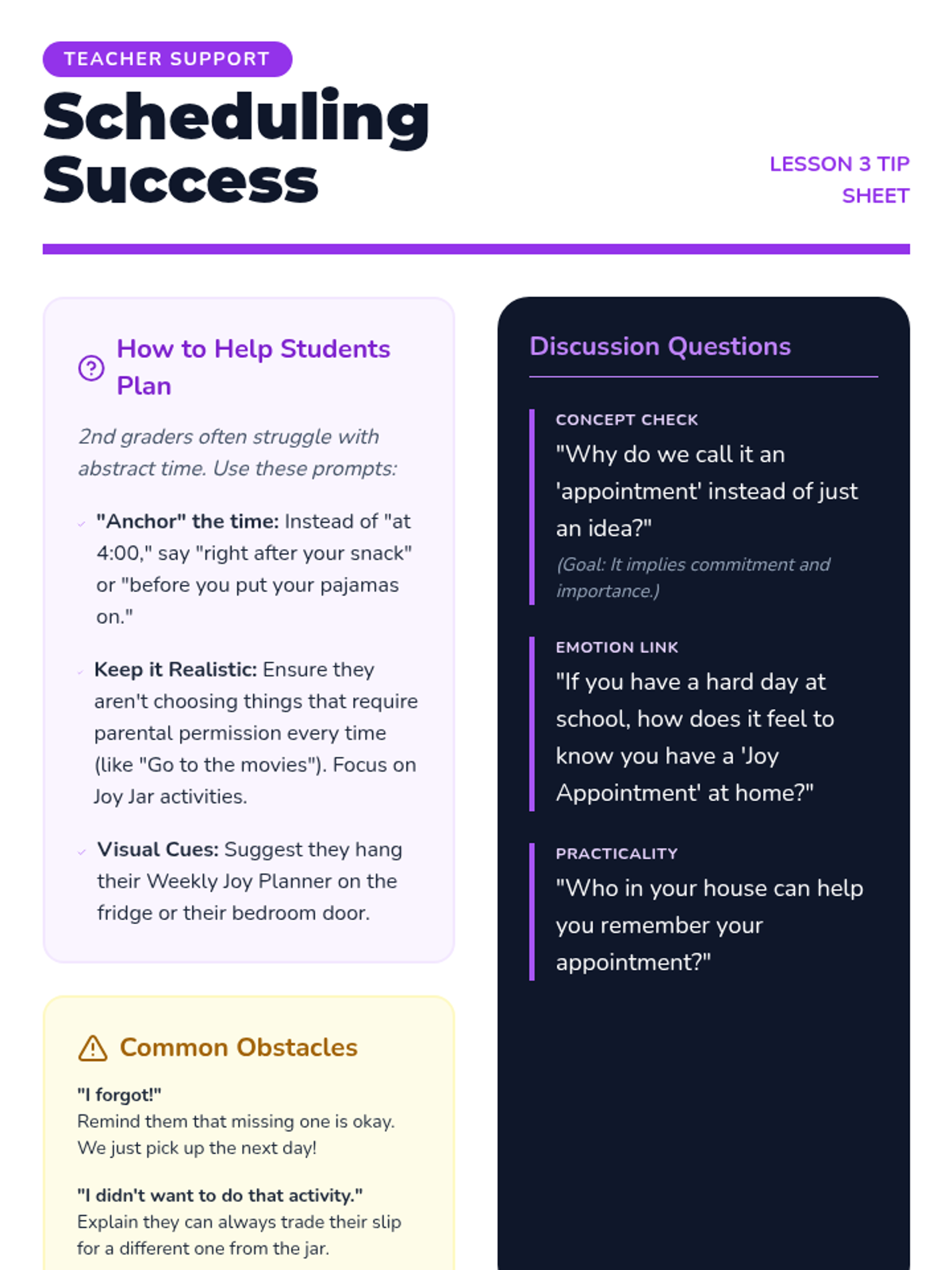
Students learn to schedule intentional 'joy breaks' into their weekly calendar, treating self-care as an important commitment.
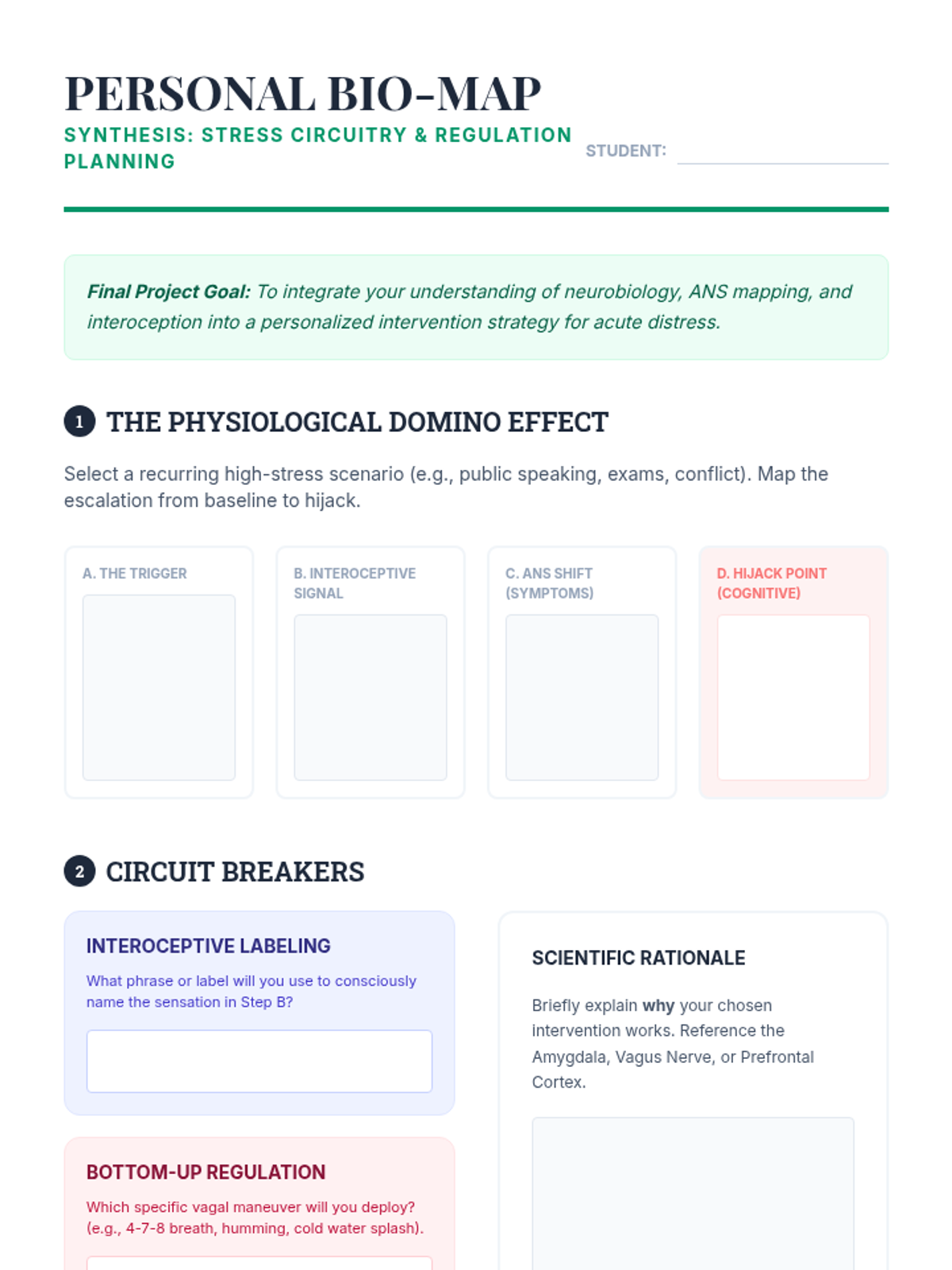
Students integrate their knowledge to create a personal 'bio-map' of their stress escalation cycle. They present how specific physiological interventions can interrupt this cycle at various stages.
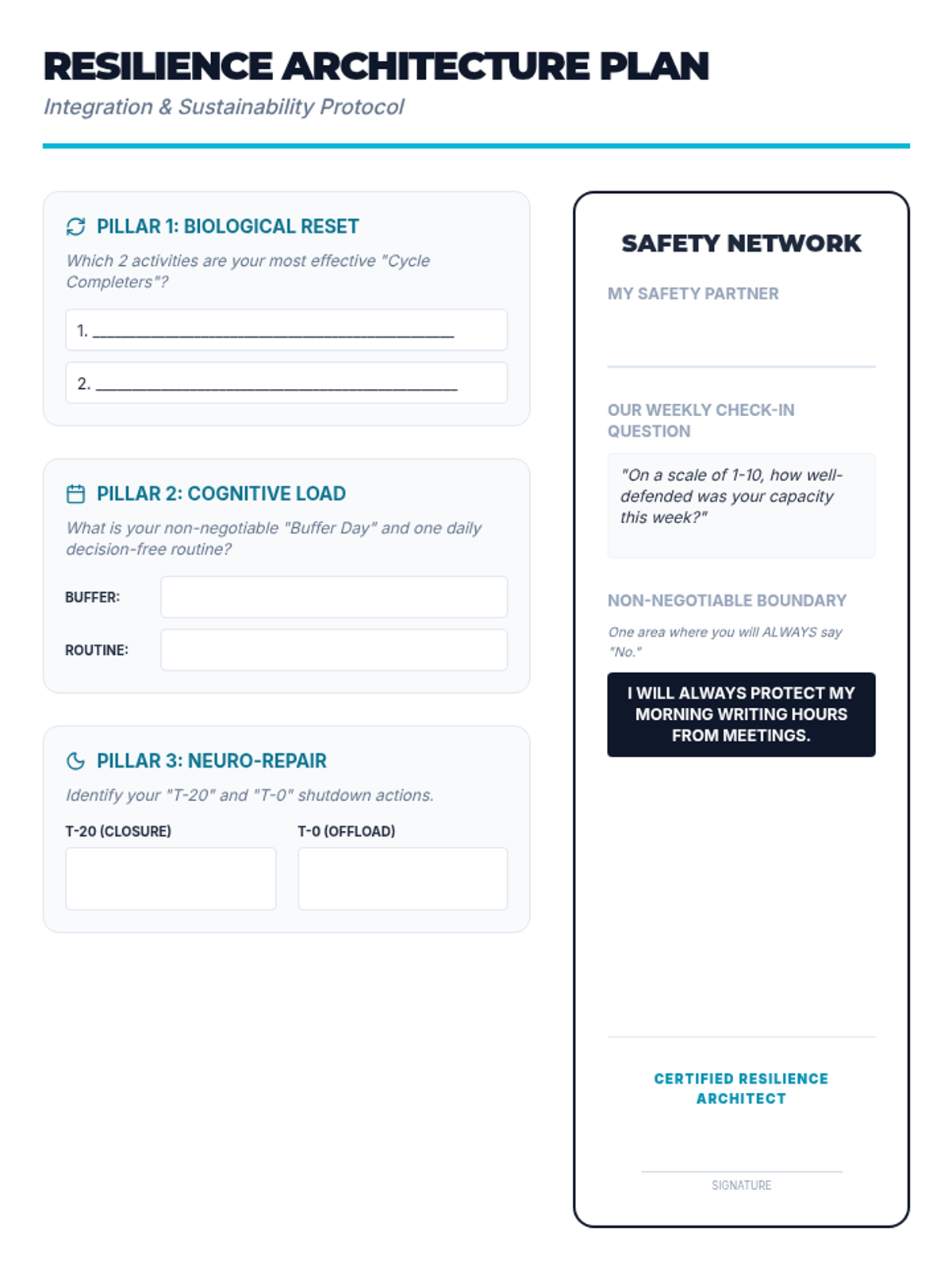
Final synthesis where students integrate all learned modules into a personalized Resilience Architecture plan and a portable Crisis Card for emergency restoration.
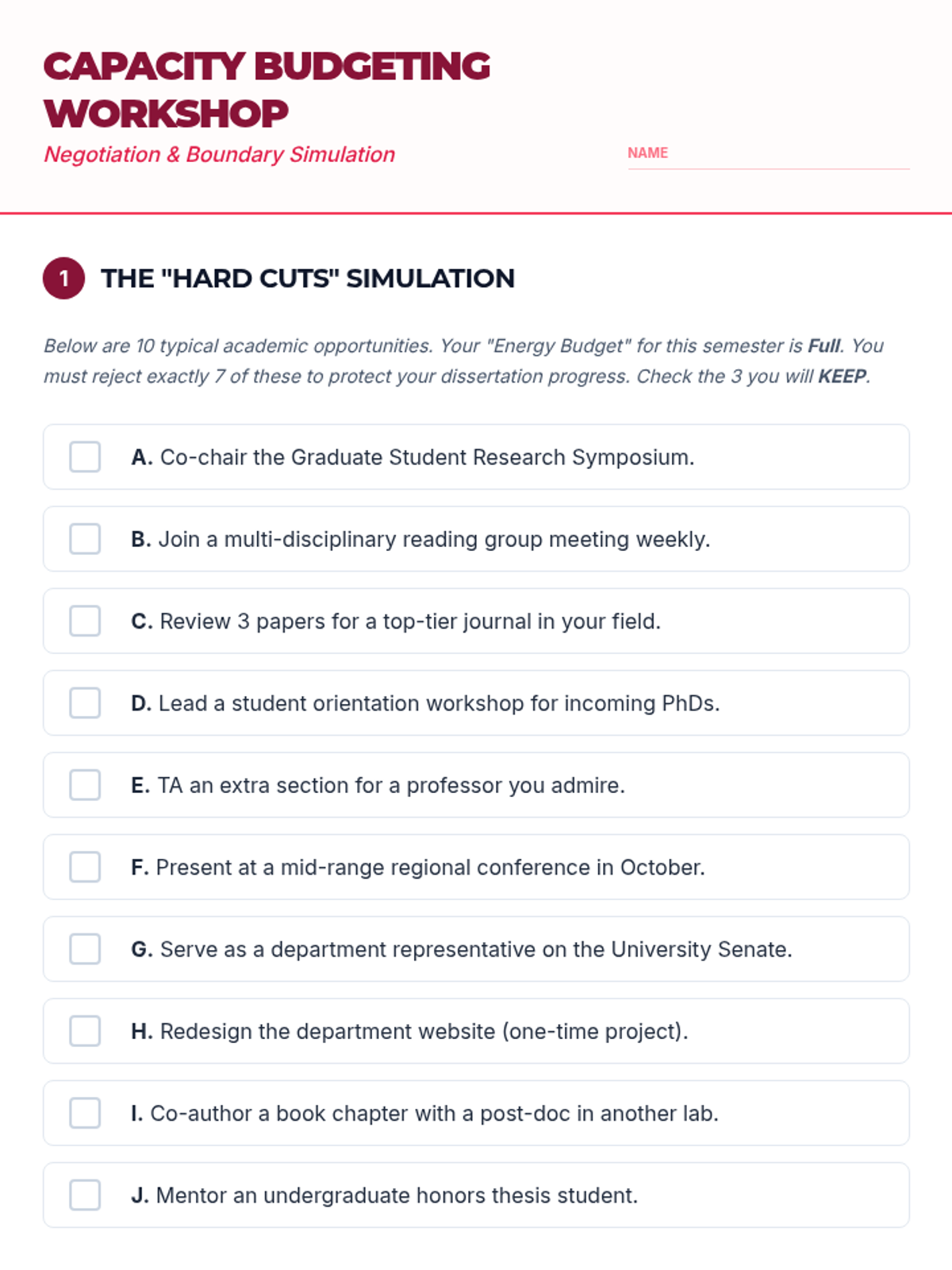
Addresses the pressure to overcommit in academia by teaching the 'Strategic No' as a tool for protecting capacity and ensuring career longevity.
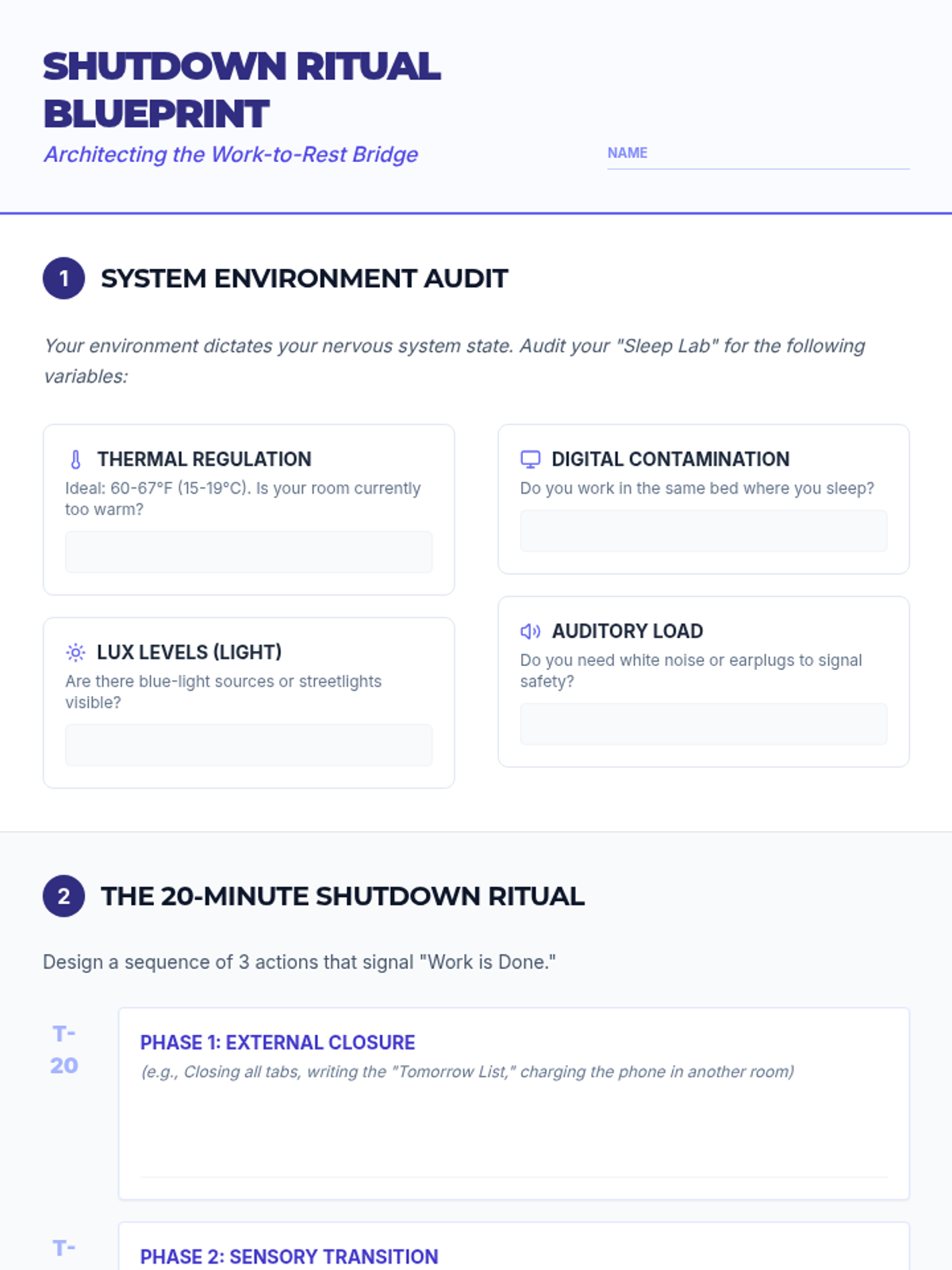
Explores the neurobiology of sleep and its role in emotional regulation, culminating in the design of a 'shutdown ritual' to combat revenge bedtime procrastination.
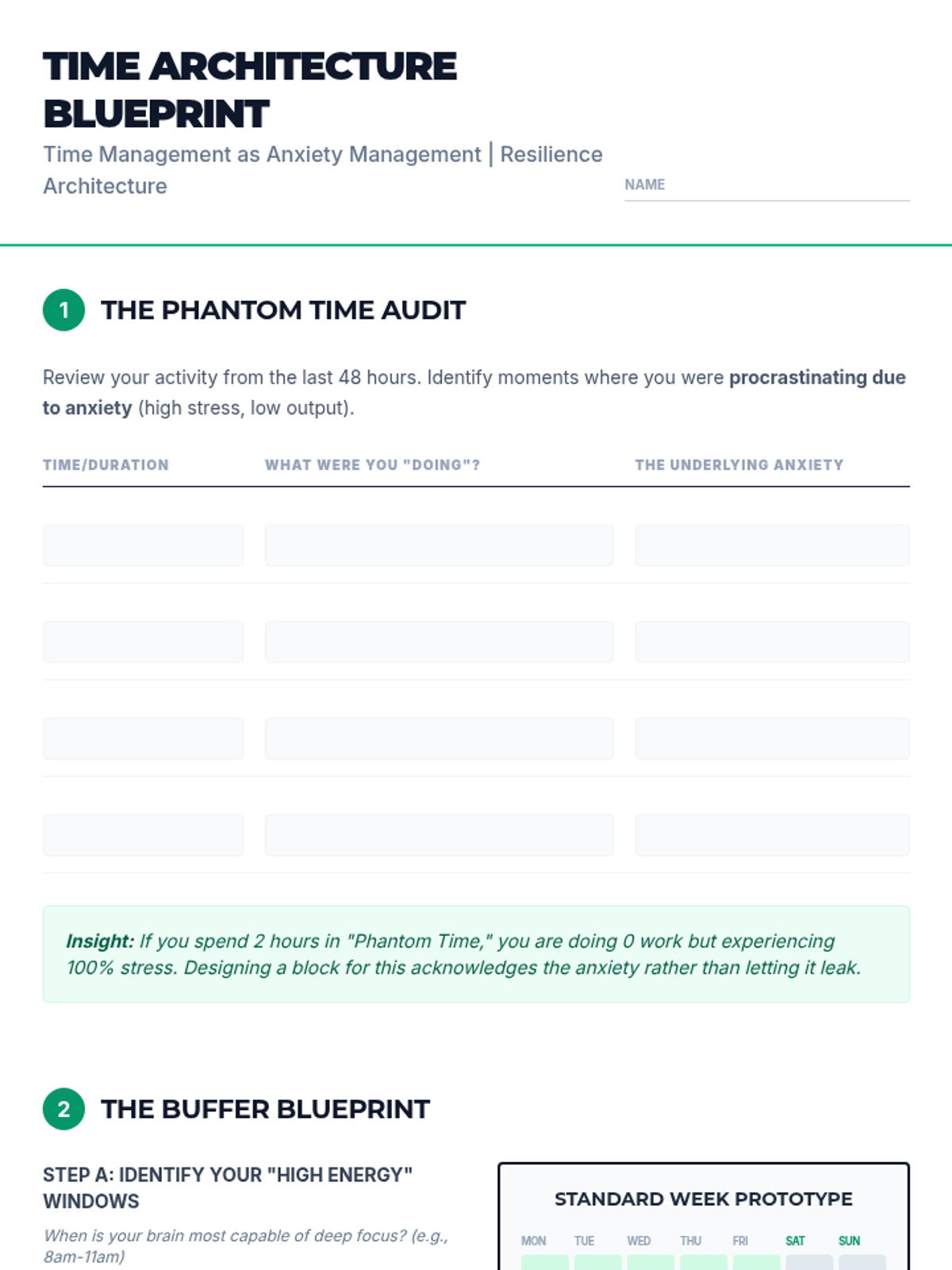
Reframes time management as a tool for reducing cognitive load and anxiety, teaching graduate students to design schedules based on energy levels and buffer capacity.
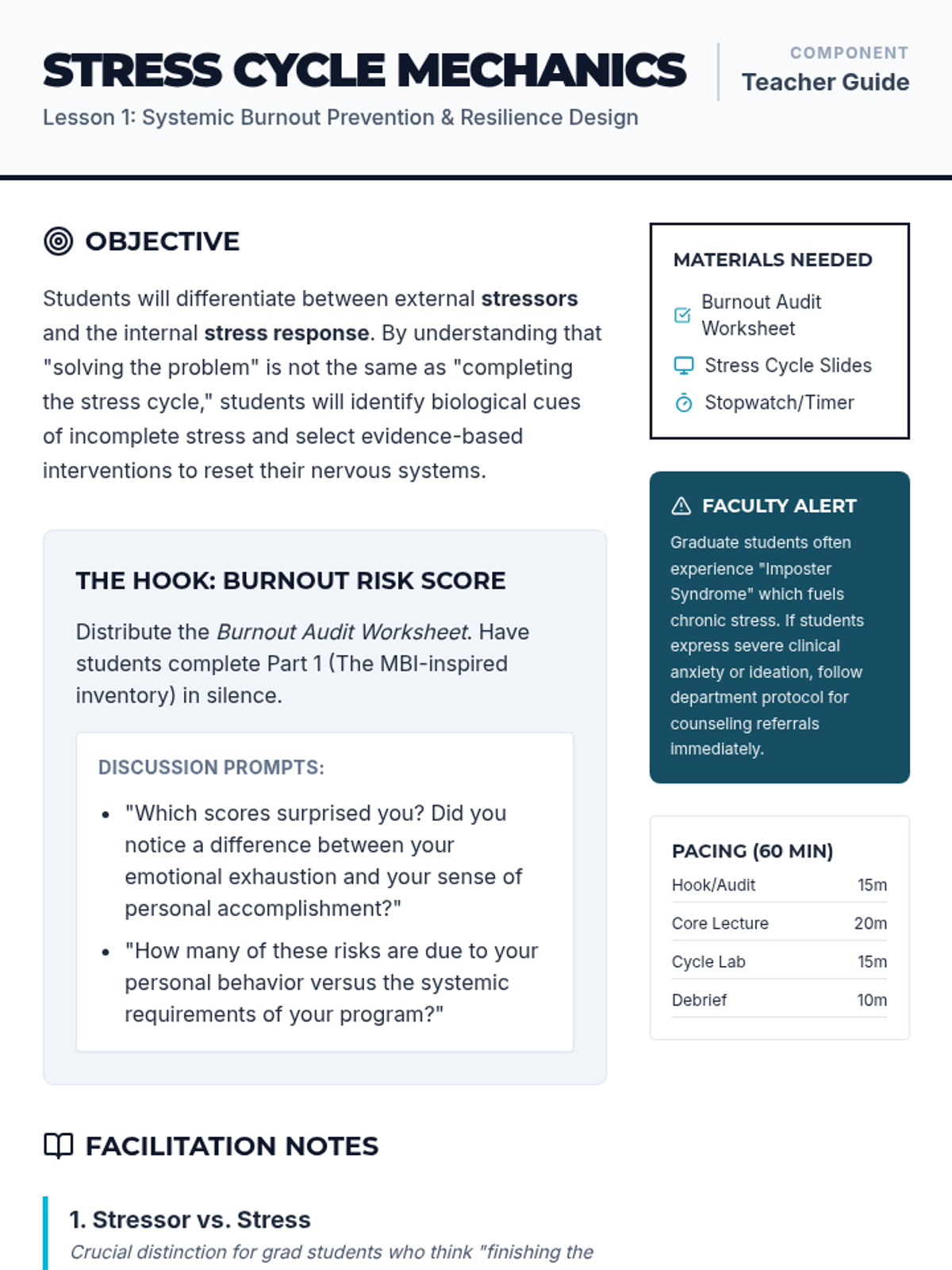
Students distinguish between stressors and the physiological stress response, auditing their current routines to ensure they are completing the stress cycle to prevent chronic burnout.
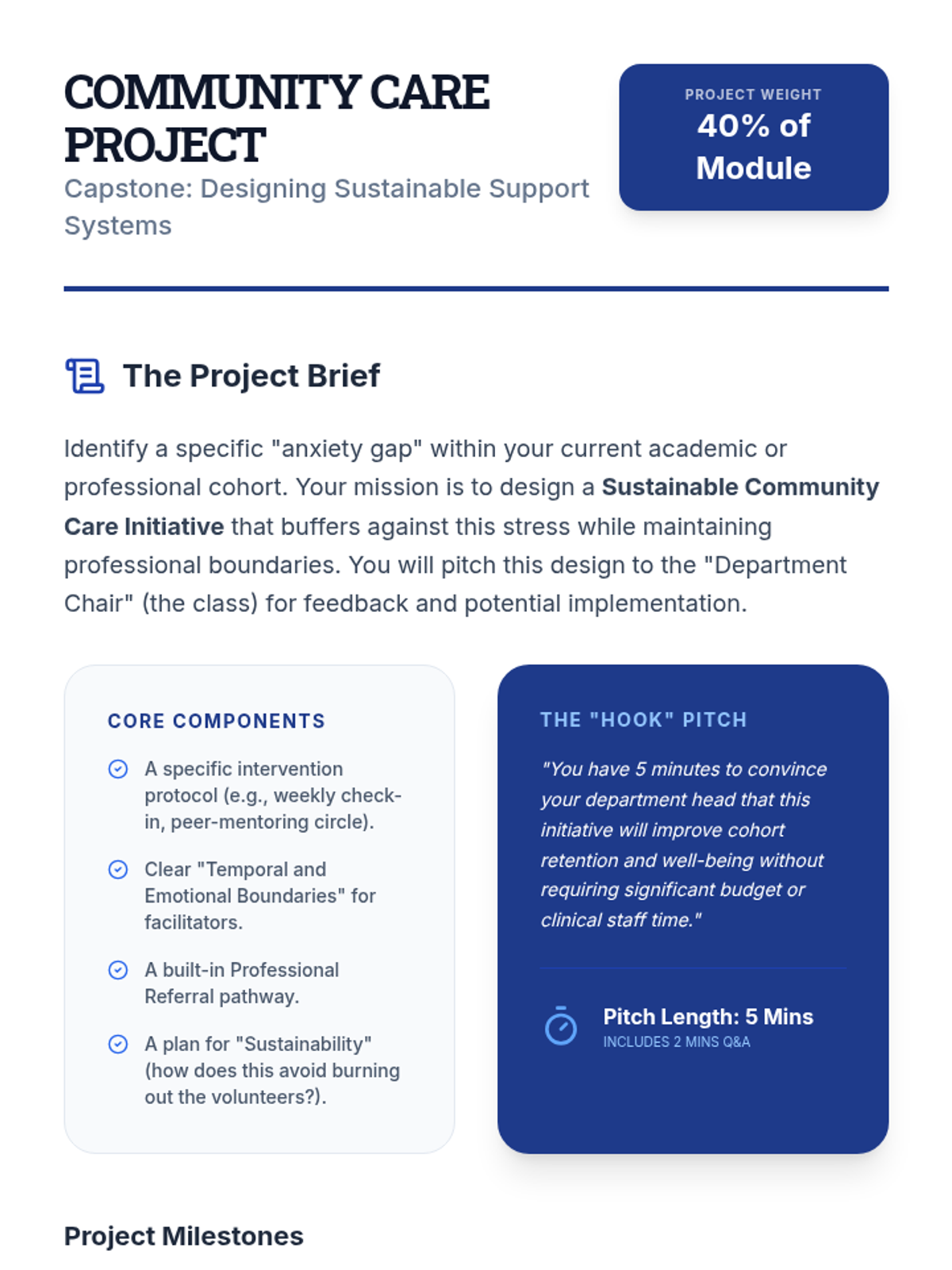
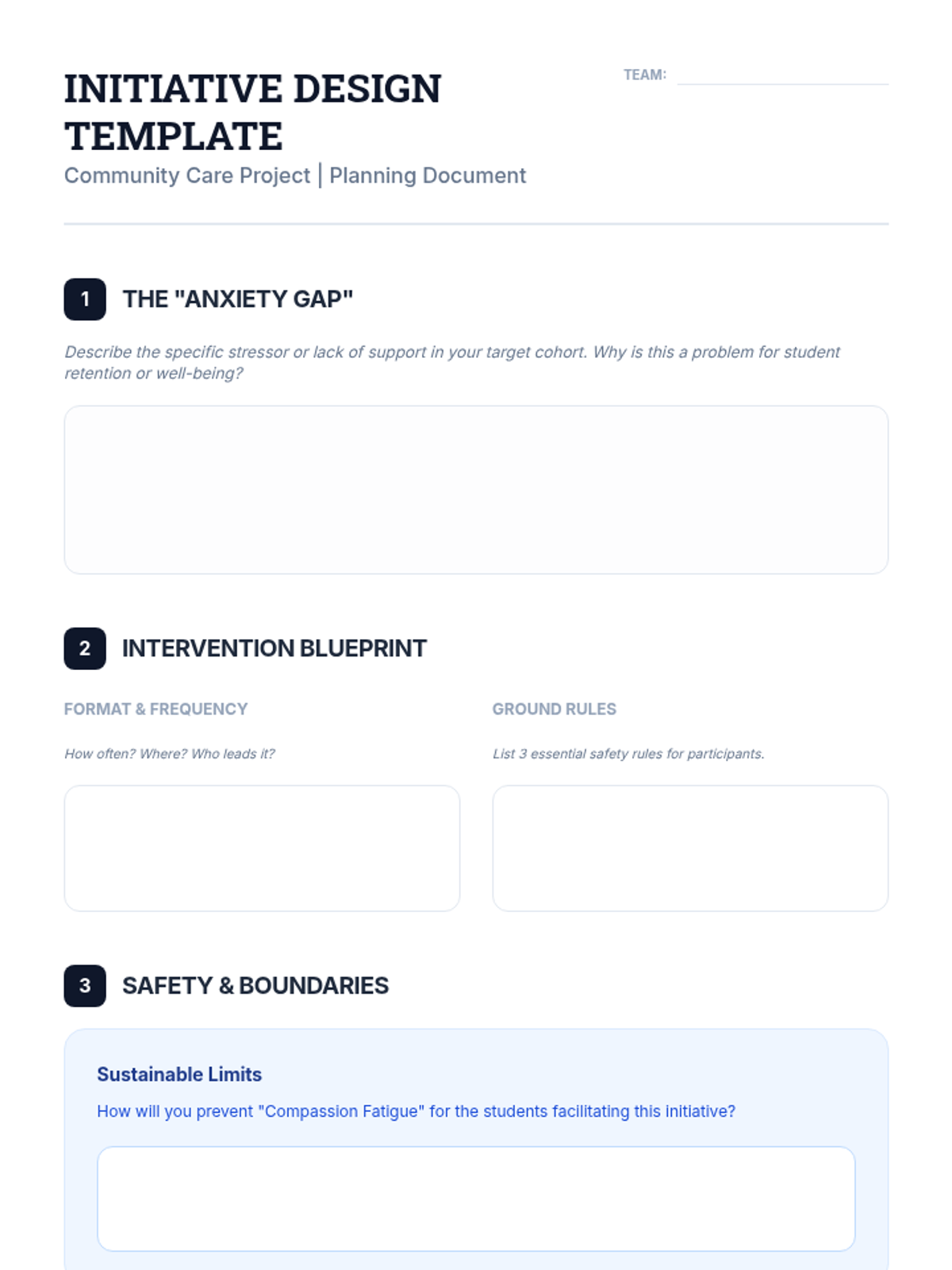
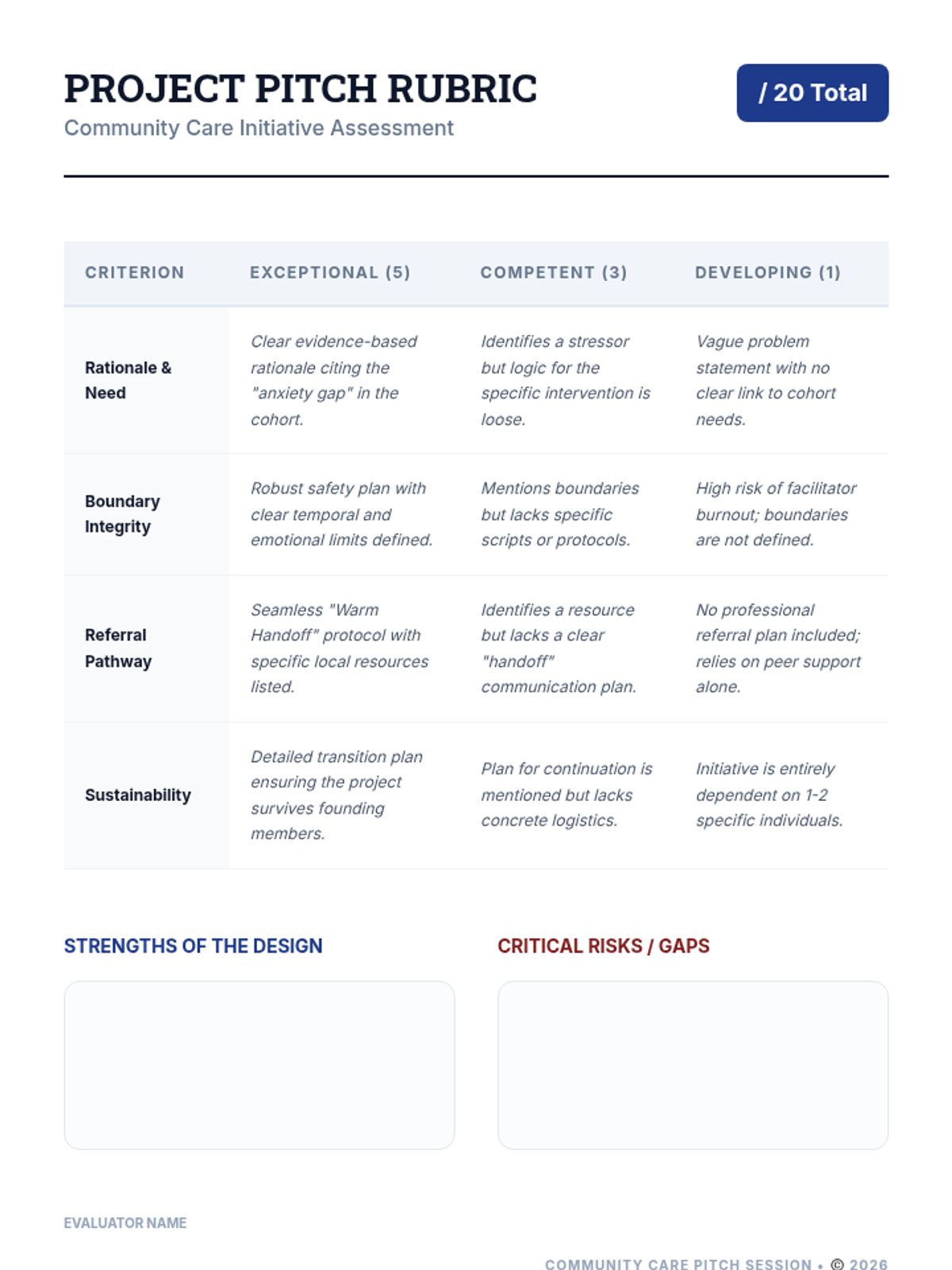
Students design and pitch a sustainable community care initiative tailored to their specific academic or professional cohort.
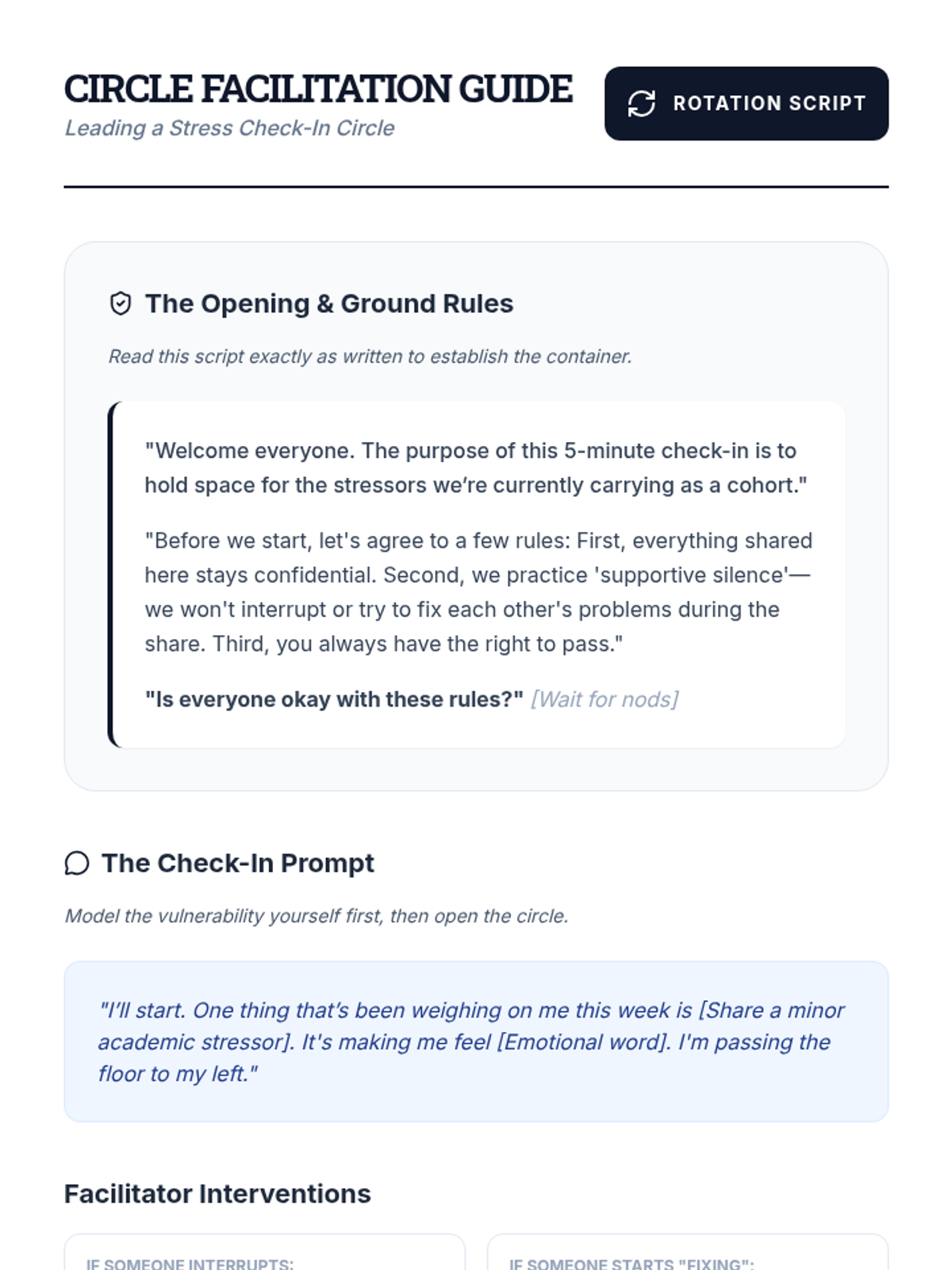
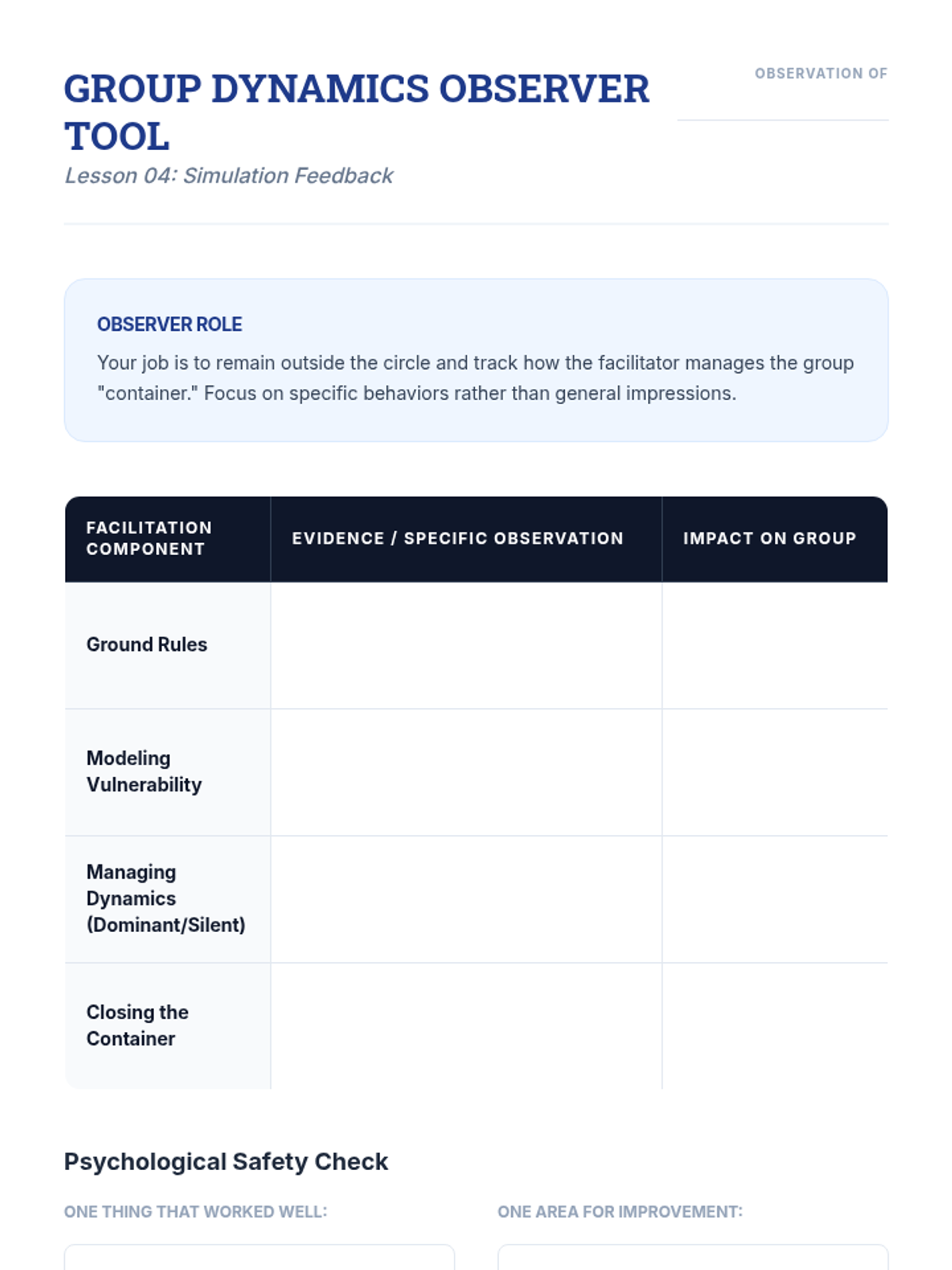
Develops skills for leading group stress check-ins, managing dynamics, and ensuring psychological safety in group settings.
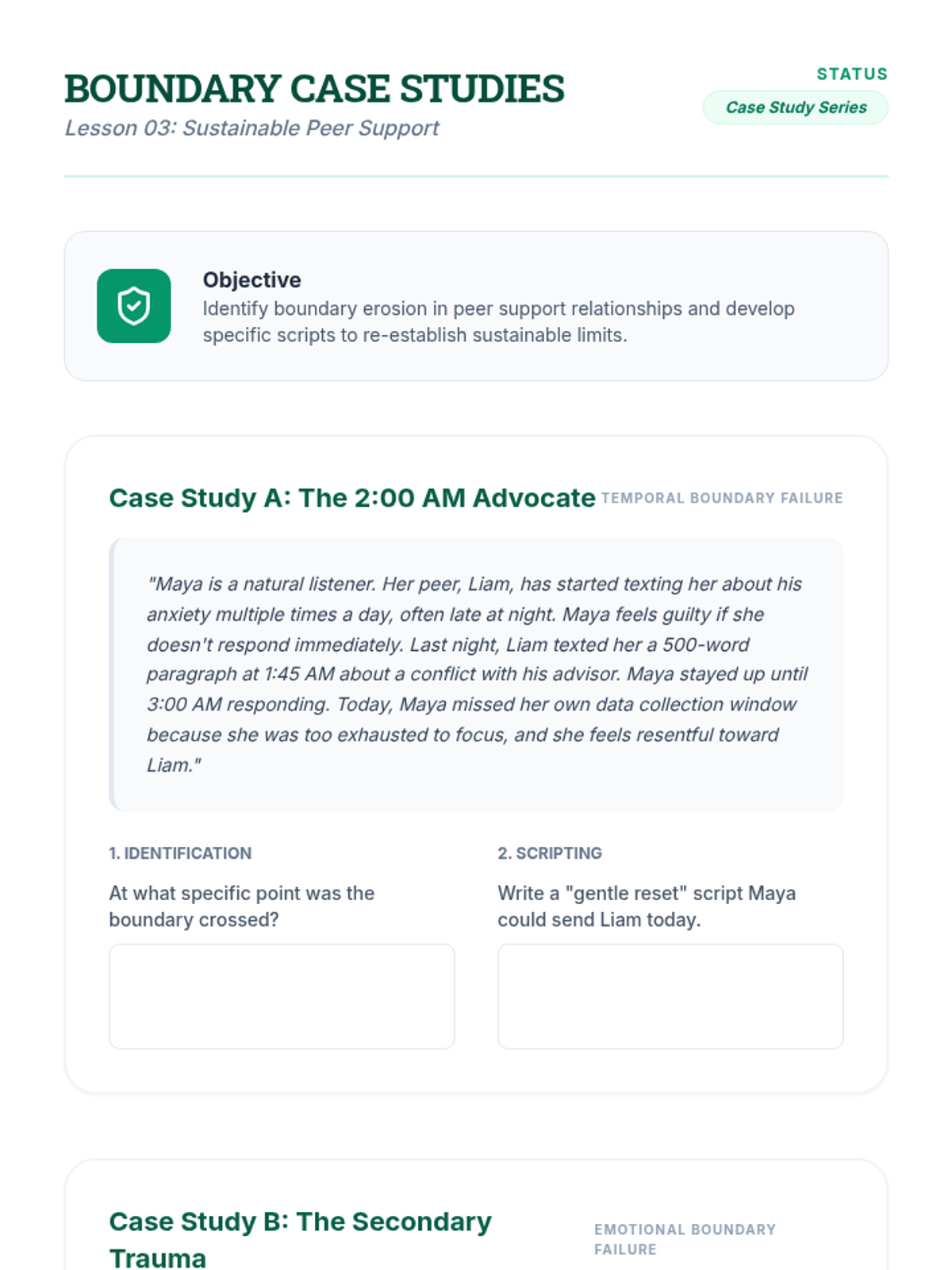
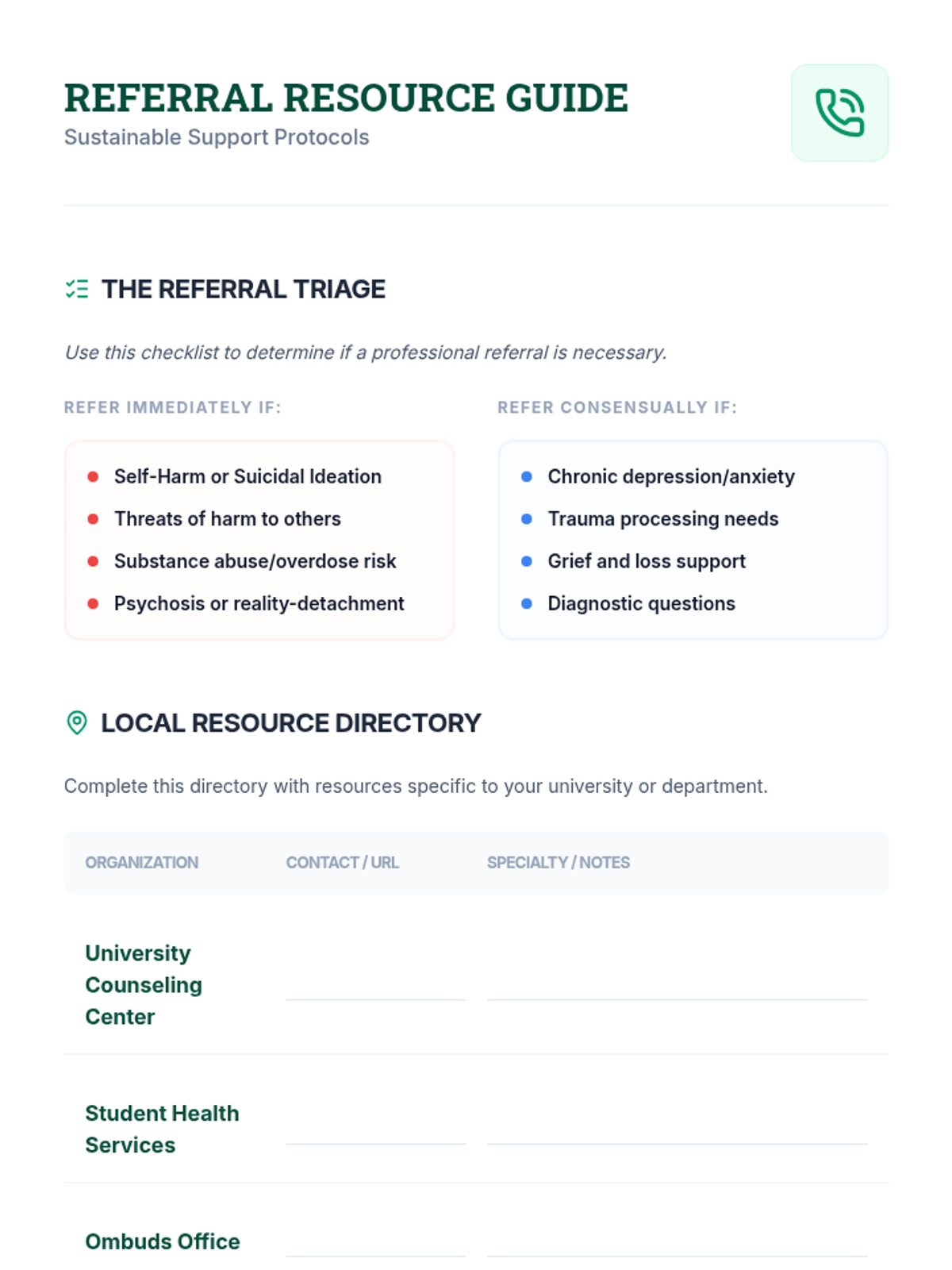
Focuses on preventing compassion fatigue through emotional and temporal boundaries and professional referral protocols.
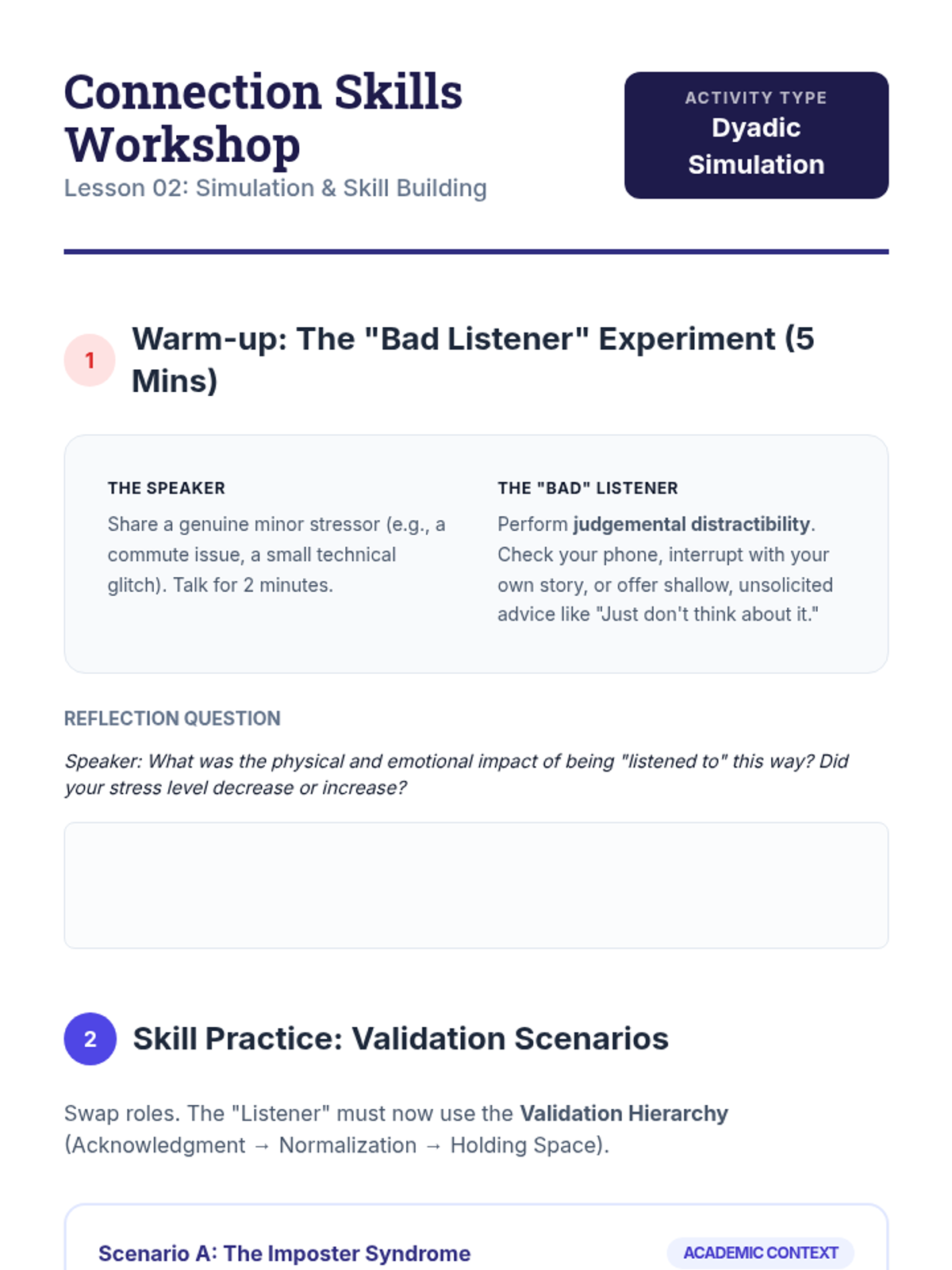
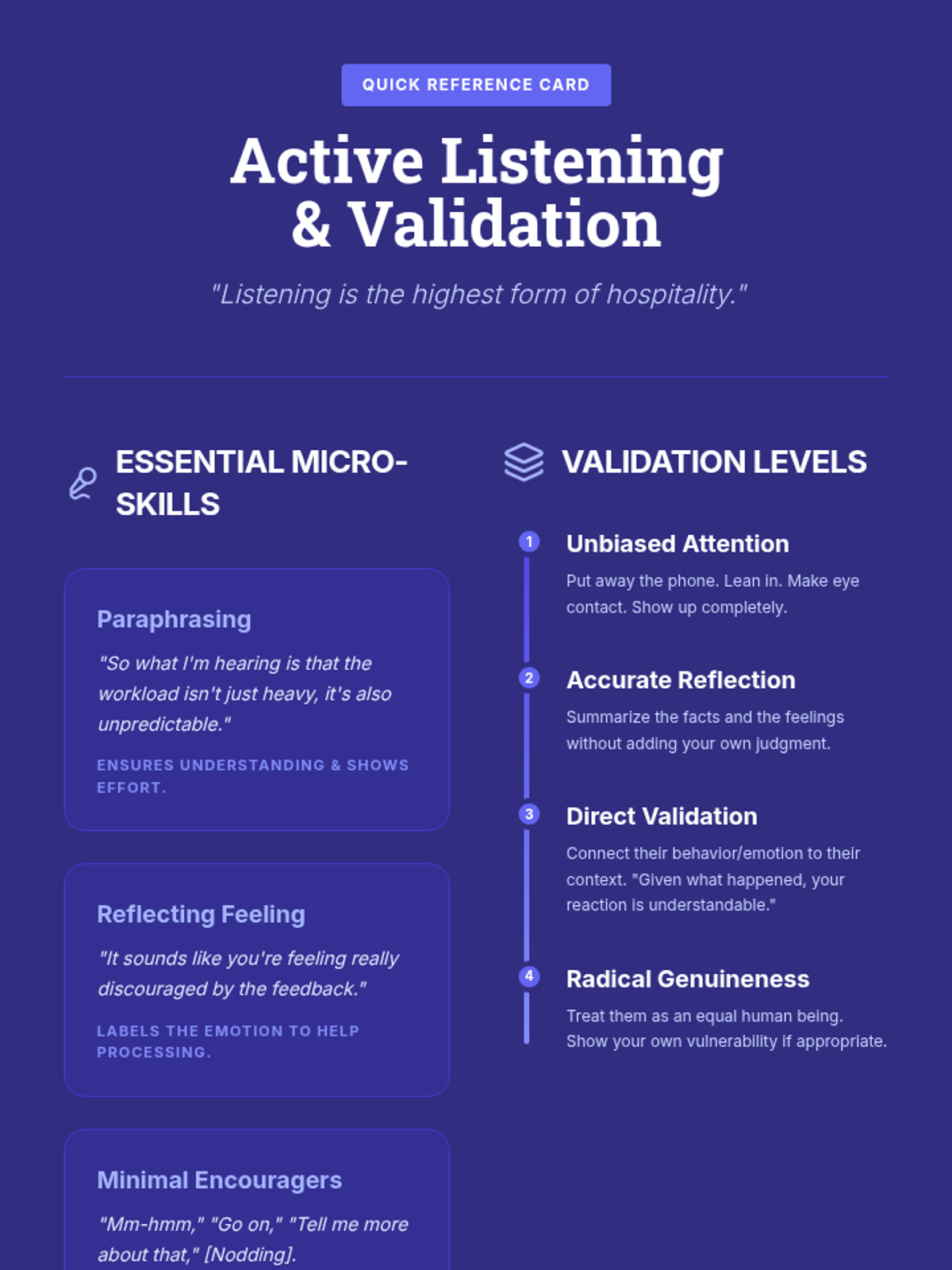
Practical workshop on active listening, validation, and holding space for peers without the pressure to provide immediate solutions.
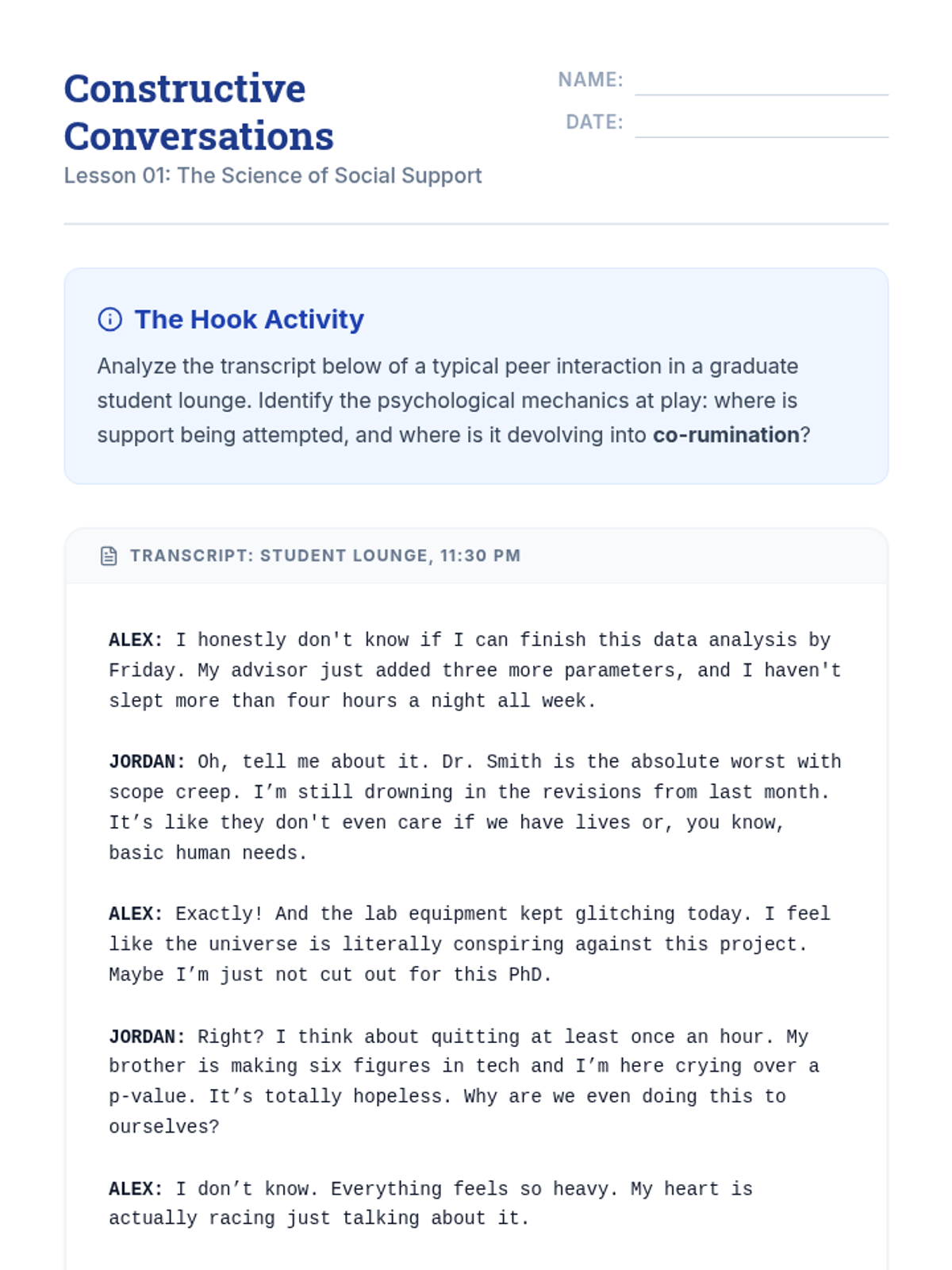
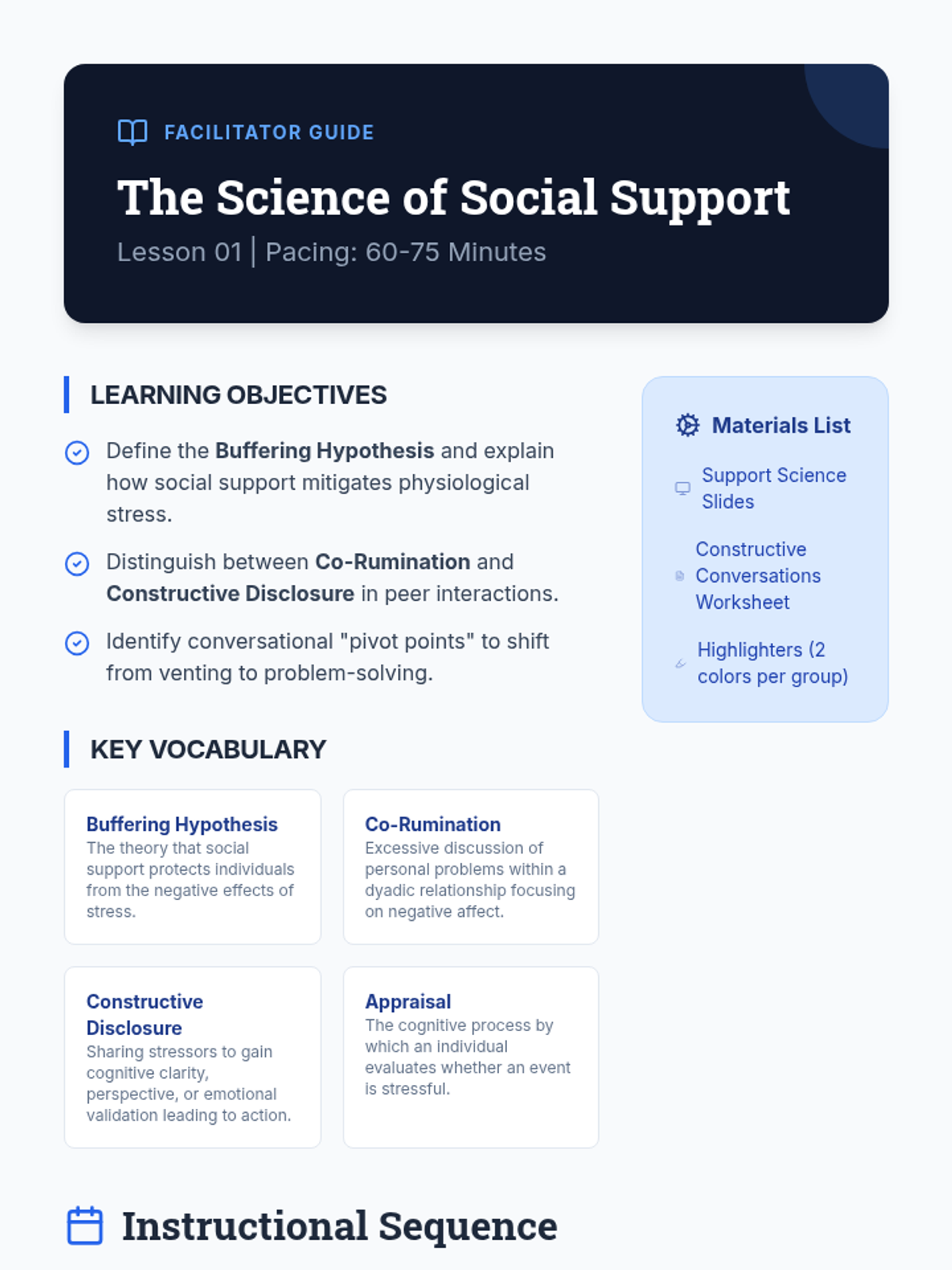
Examines the buffering hypothesis and the psychological mechanics of how social connection mitigates stress, contrasting co-rumination with constructive disclosure.
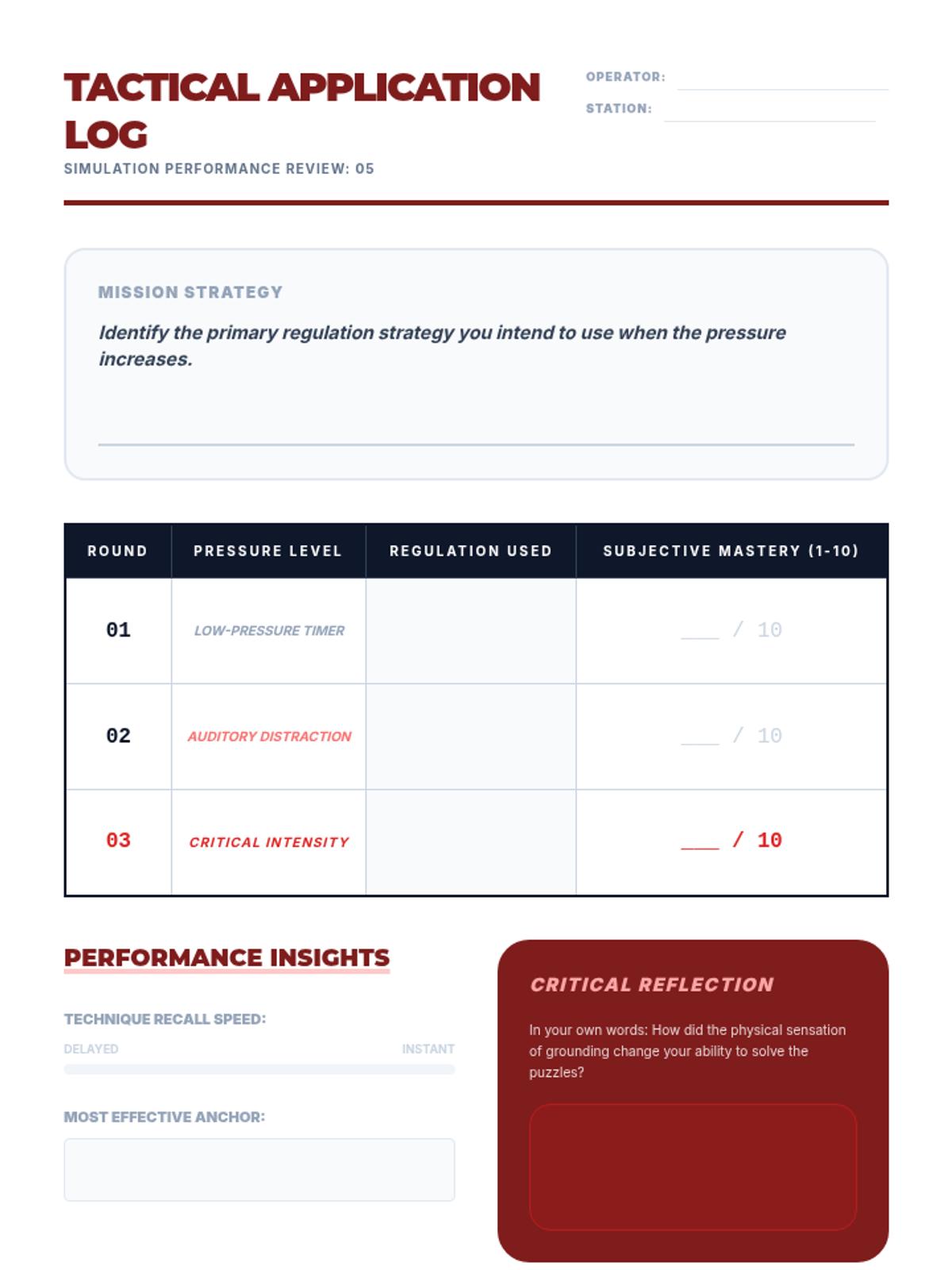
A culminating simulation where students face timed cognitive challenges while practicing their chosen regulation techniques. This bridges the gap between knowing a technique and using it under pressure.
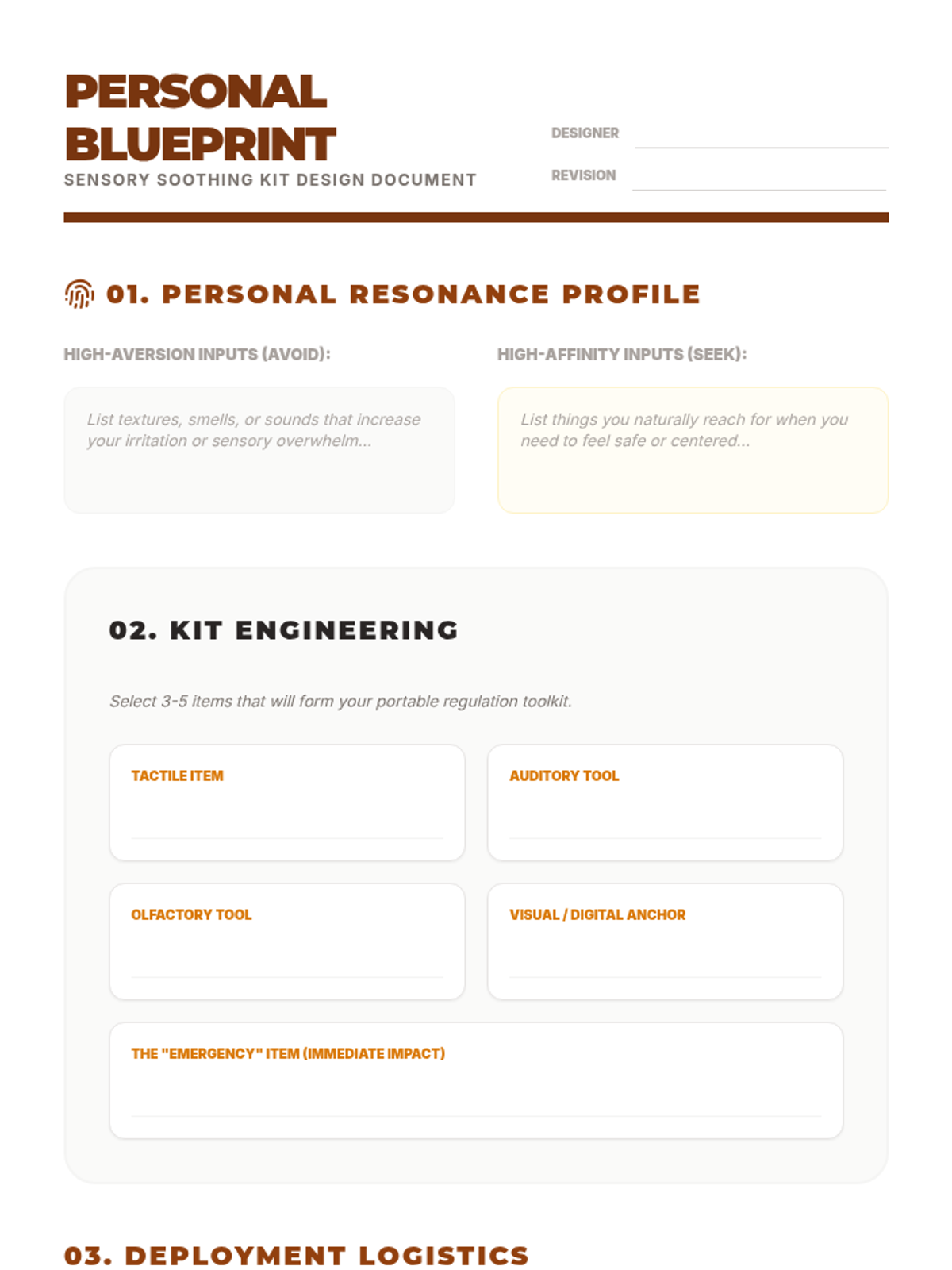
Learners identify personal sensory preferences that induce calm. They design and assemble a portable or digital 'kit' of resources to use during high-stress periods.
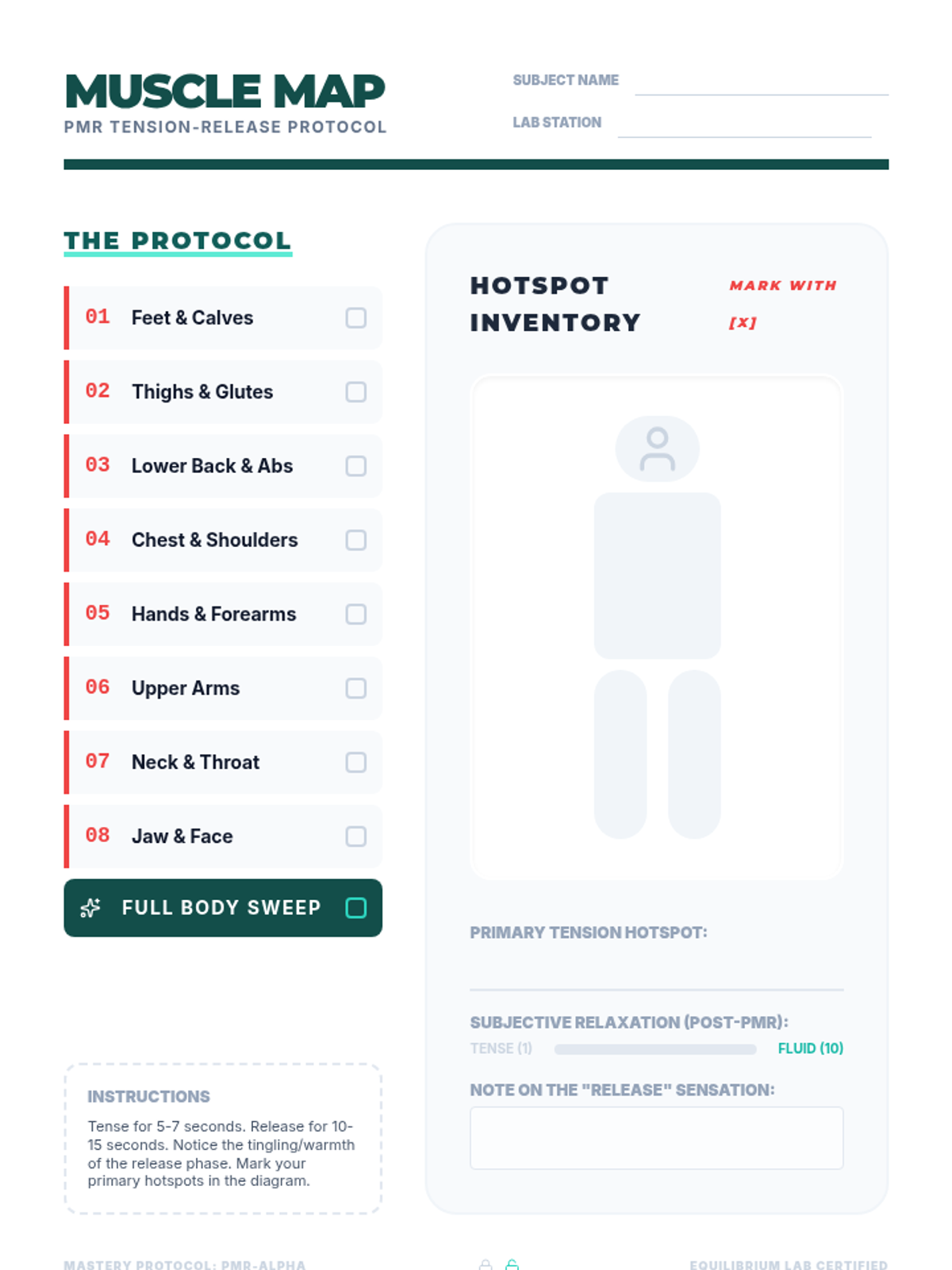
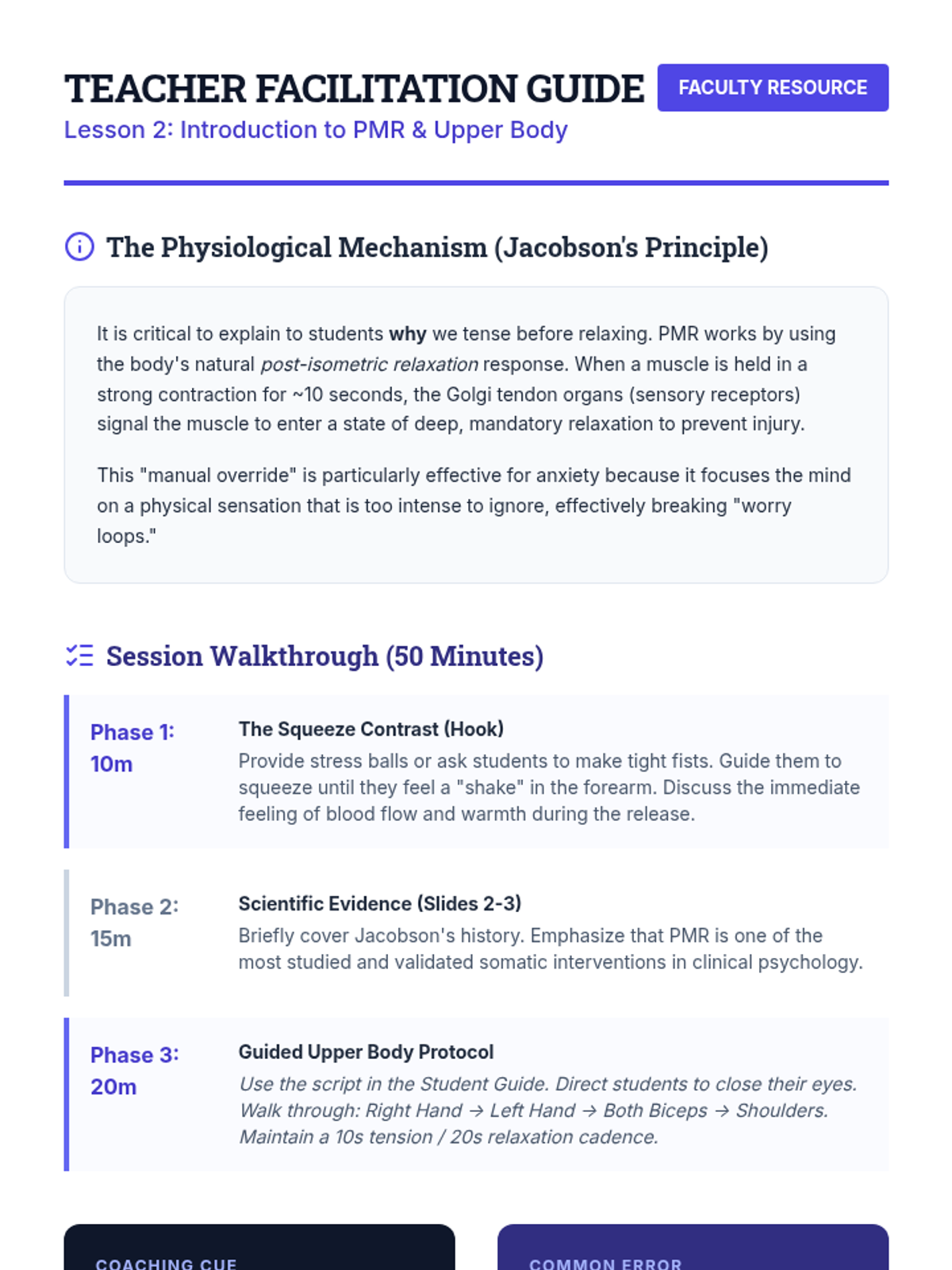
Students learn the sequence of tensing and releasing muscle groups to identify and release held physical tension. The lesson emphasizes the connection between physical relaxation and mental clarity.
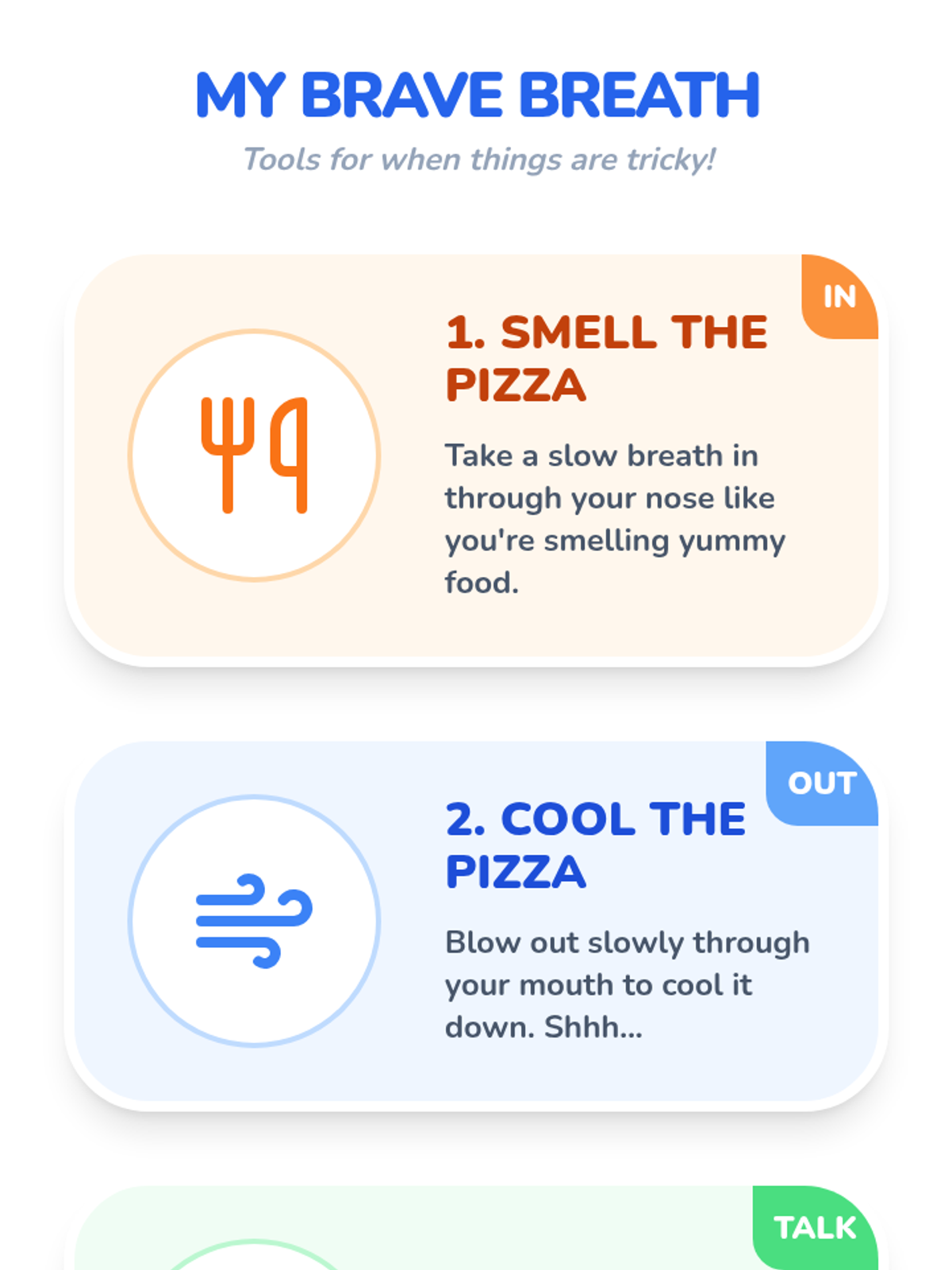
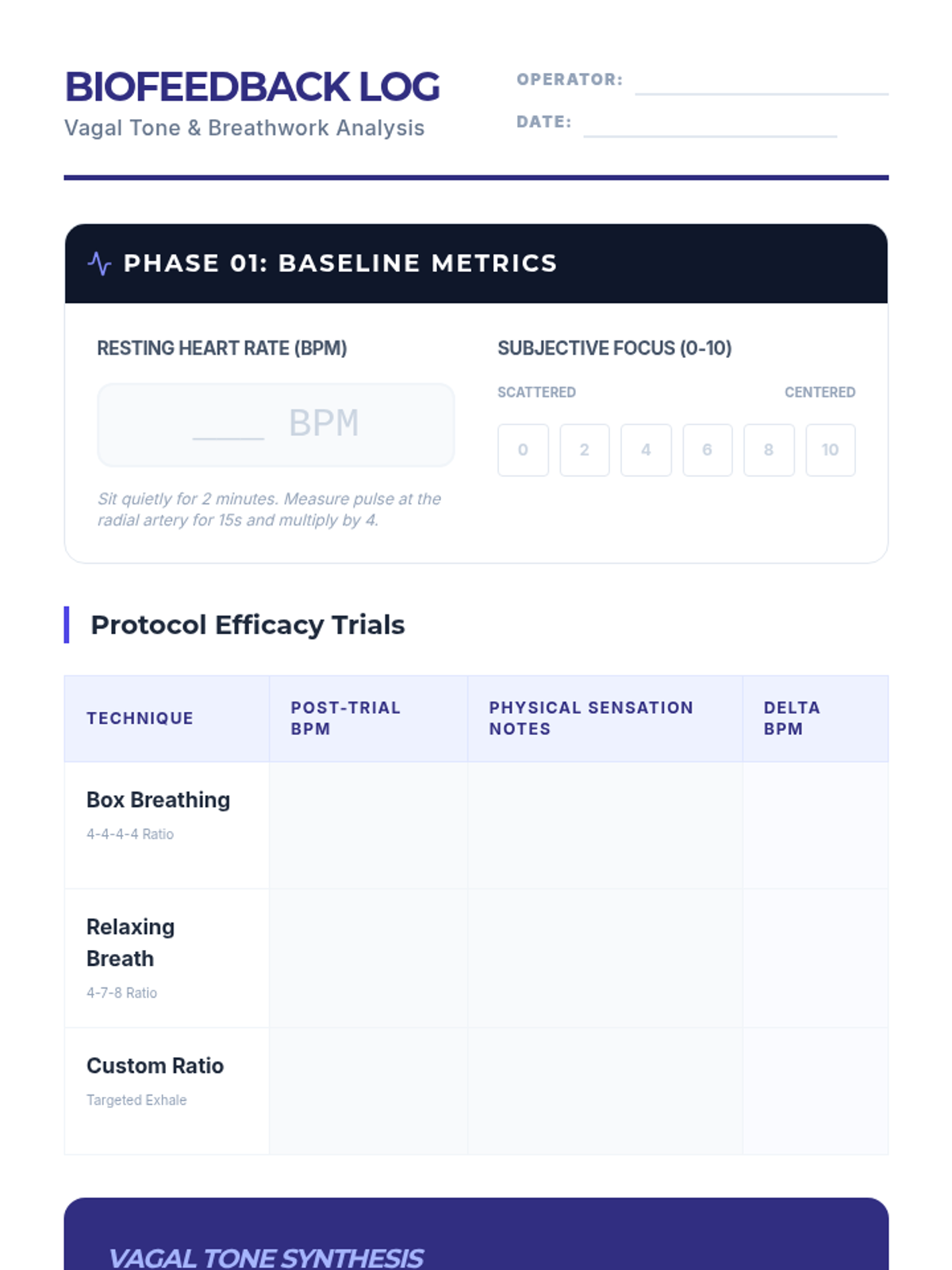
A technical workshop on breathwork, focusing on Box Breathing and 4-7-8 breathing to stimulate the parasympathetic nervous system. Students use biofeedback tools to measure the efficacy of different ratios.
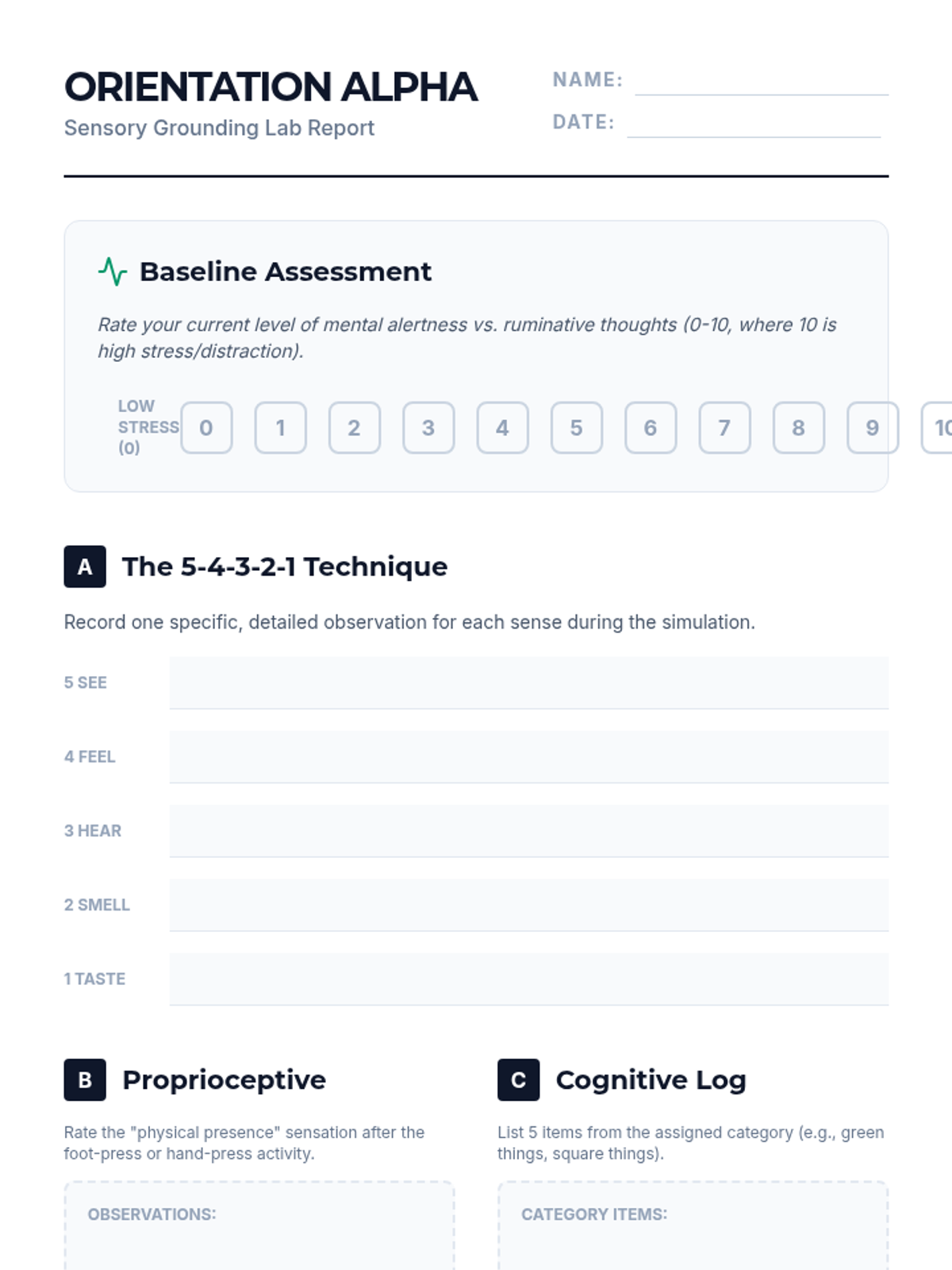
Students practice the 5-4-3-2-1 technique and other sensory-based orientation strategies to reconnect with the present moment. The lesson explains the science of how sensory input overrides ruminative thought loops.
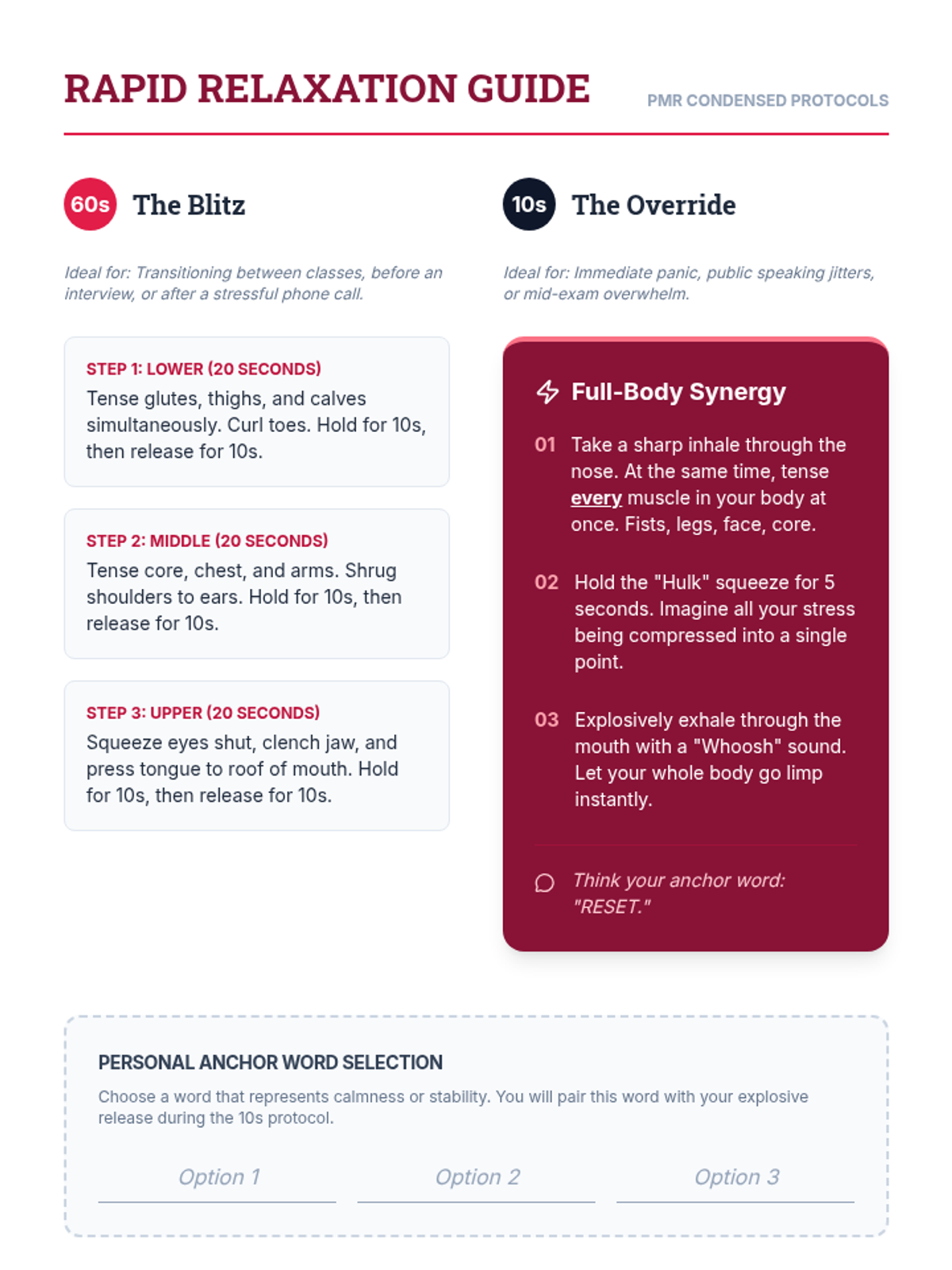
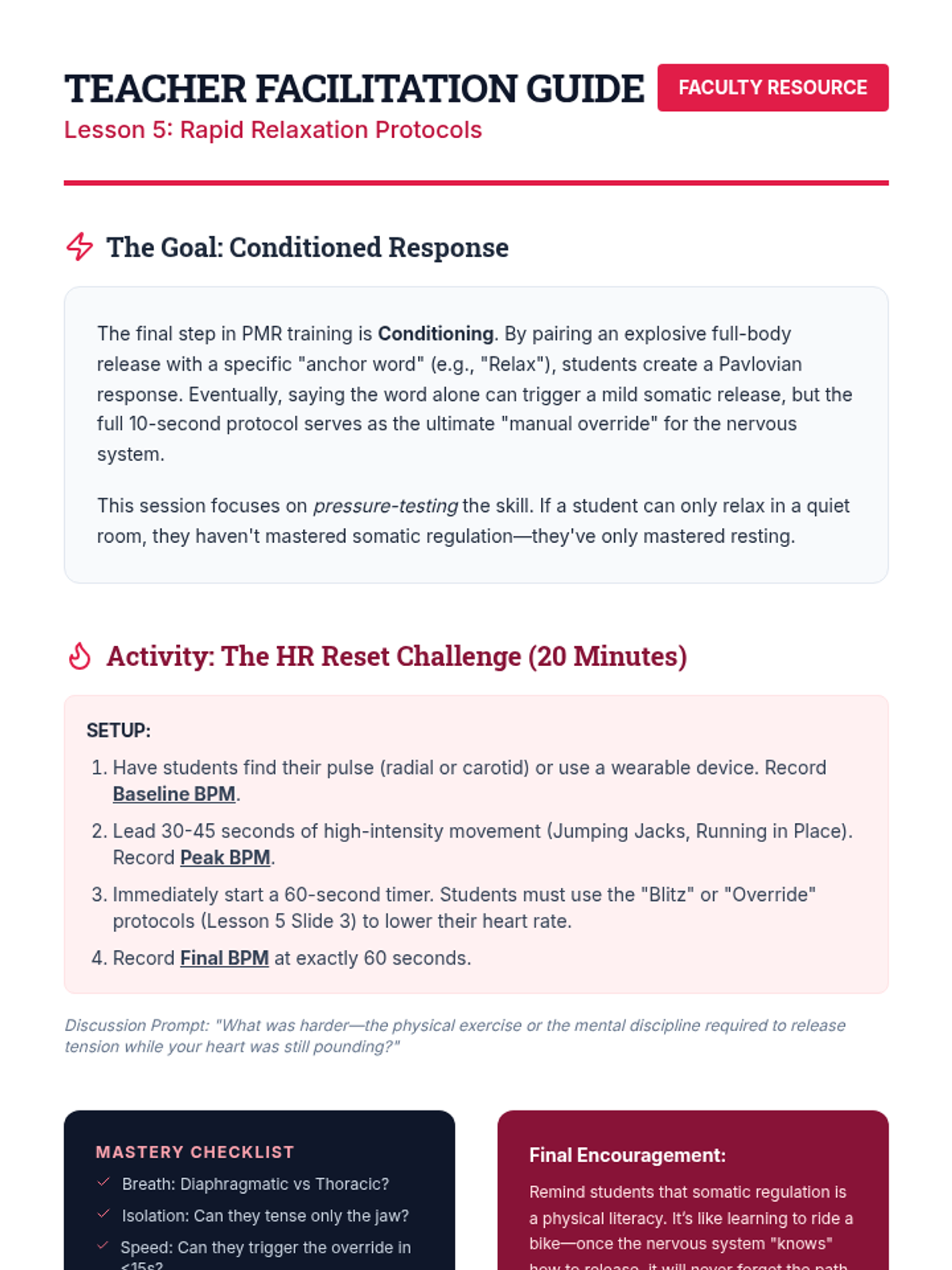
Students condense the full PMR session into 60-second and 10-second versions. They simulate high-stress environments to practice deploying these rapid techniques effectively.
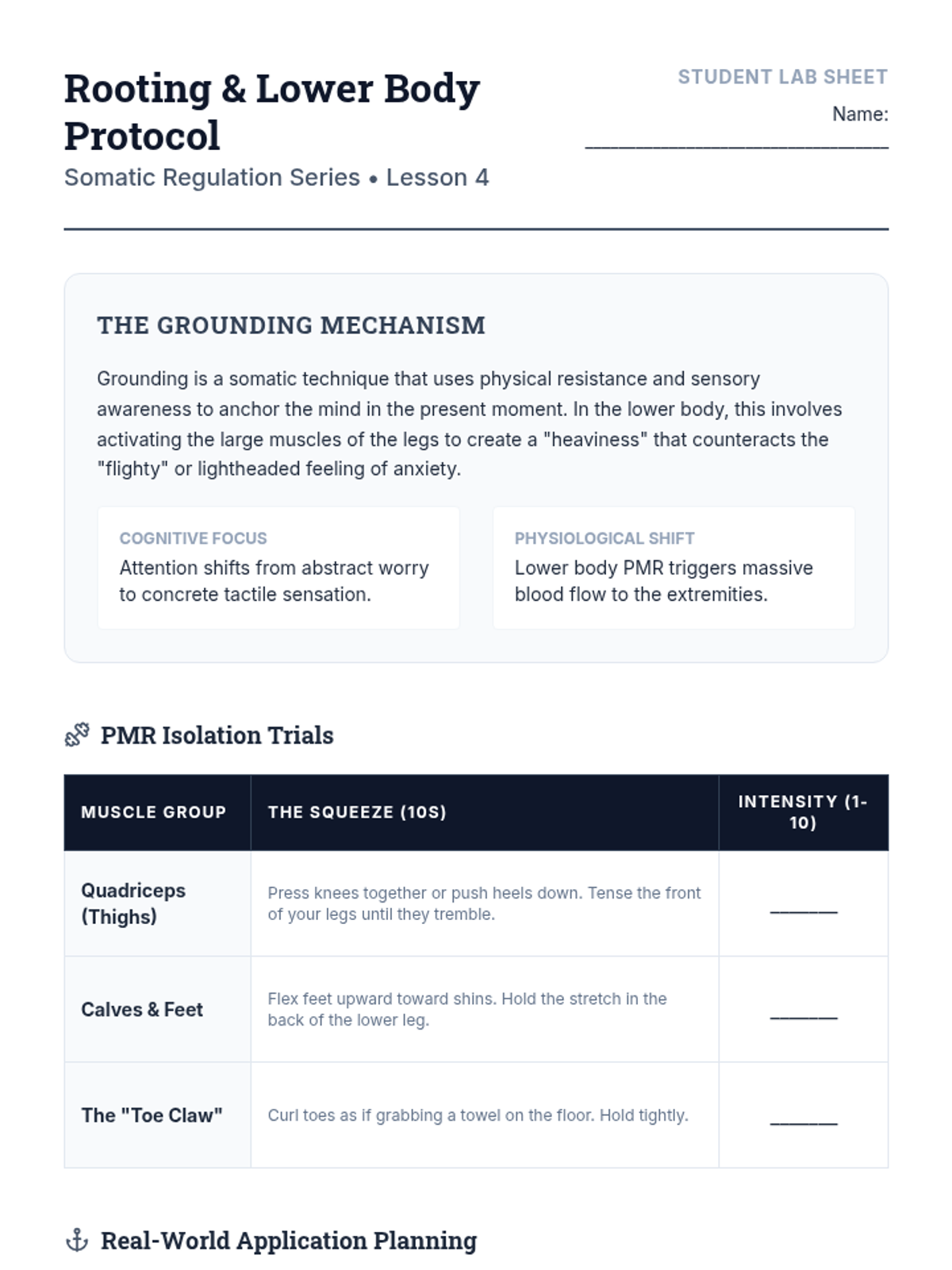
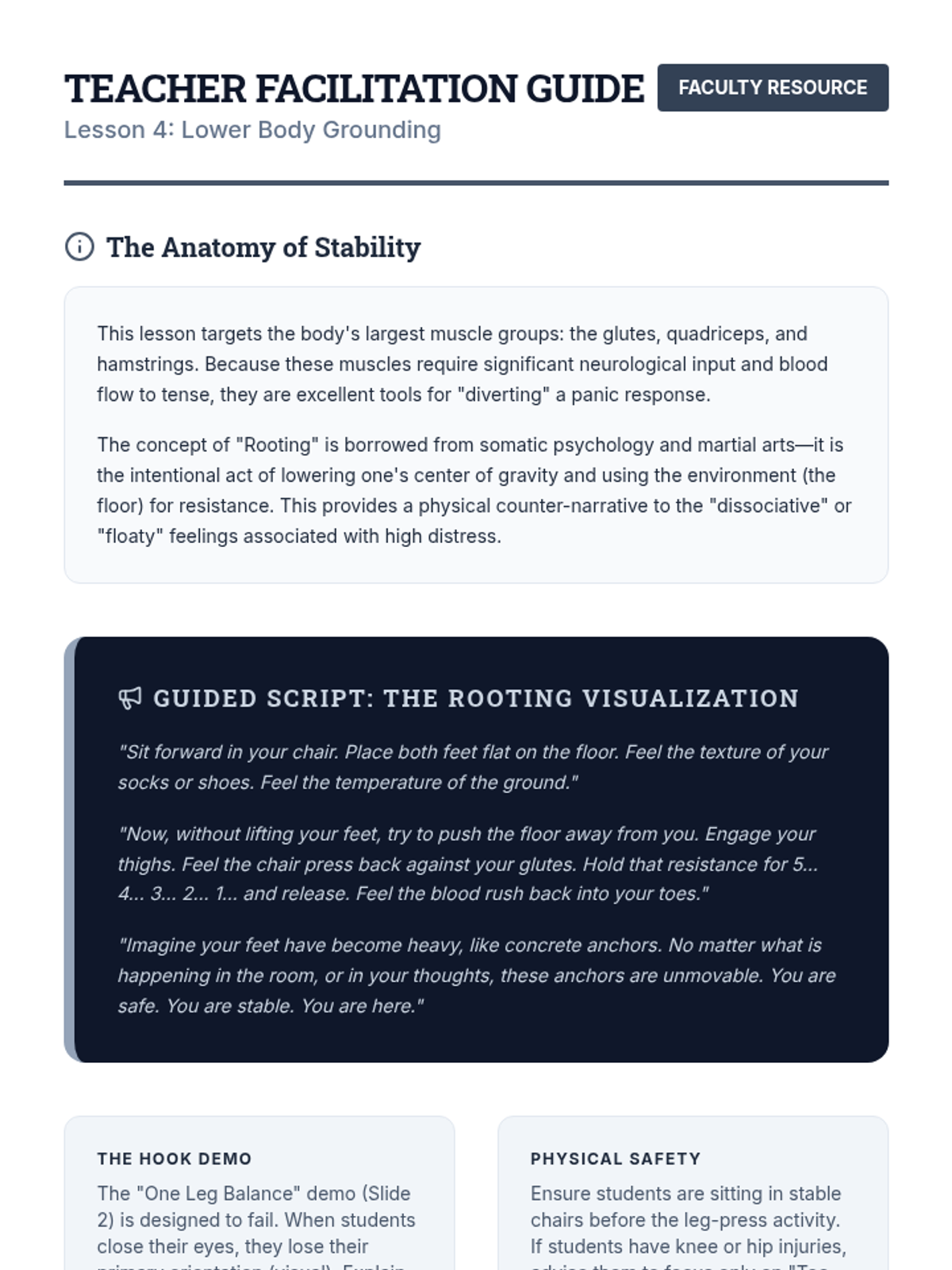
The focus shifts to the legs and feet to establish a physical sense of stability. Students learn to use the floor for resistance and grounding during seated lectures or exams.
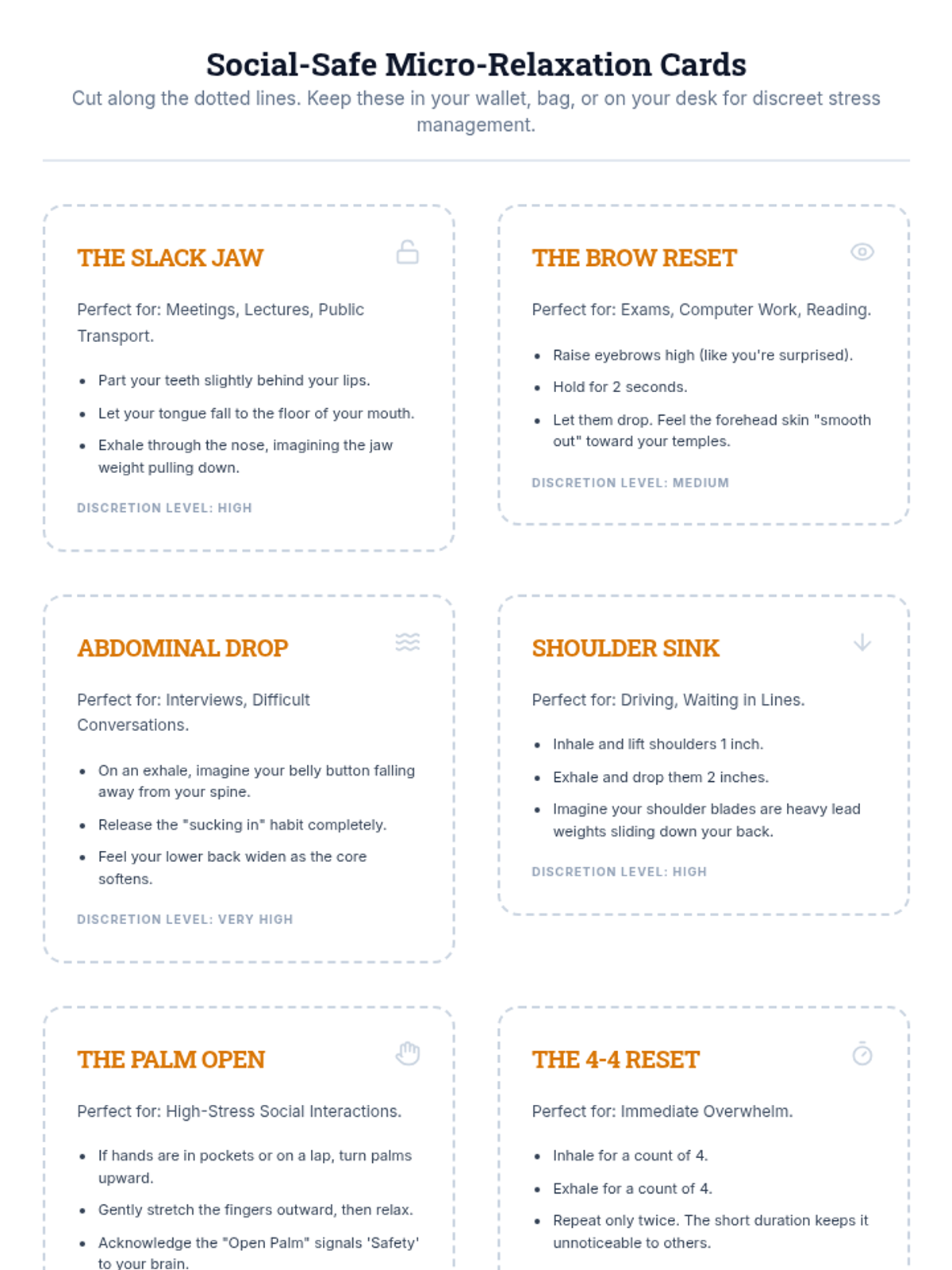
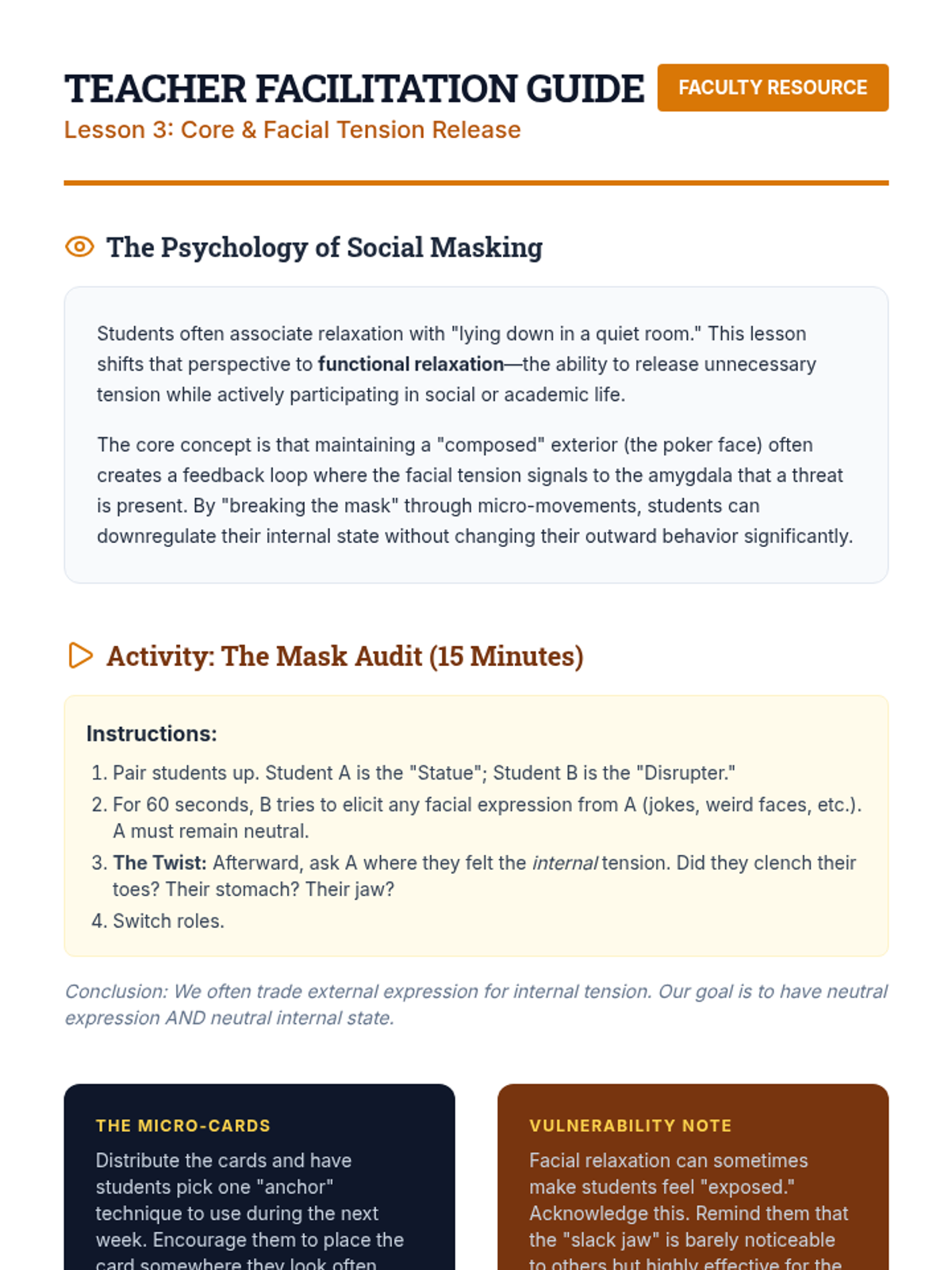
Students focus on the often-ignored areas of the jaw, forehead, and abdomen where stress accumulates. The lesson emphasizes micro-movements to release tension in social settings.
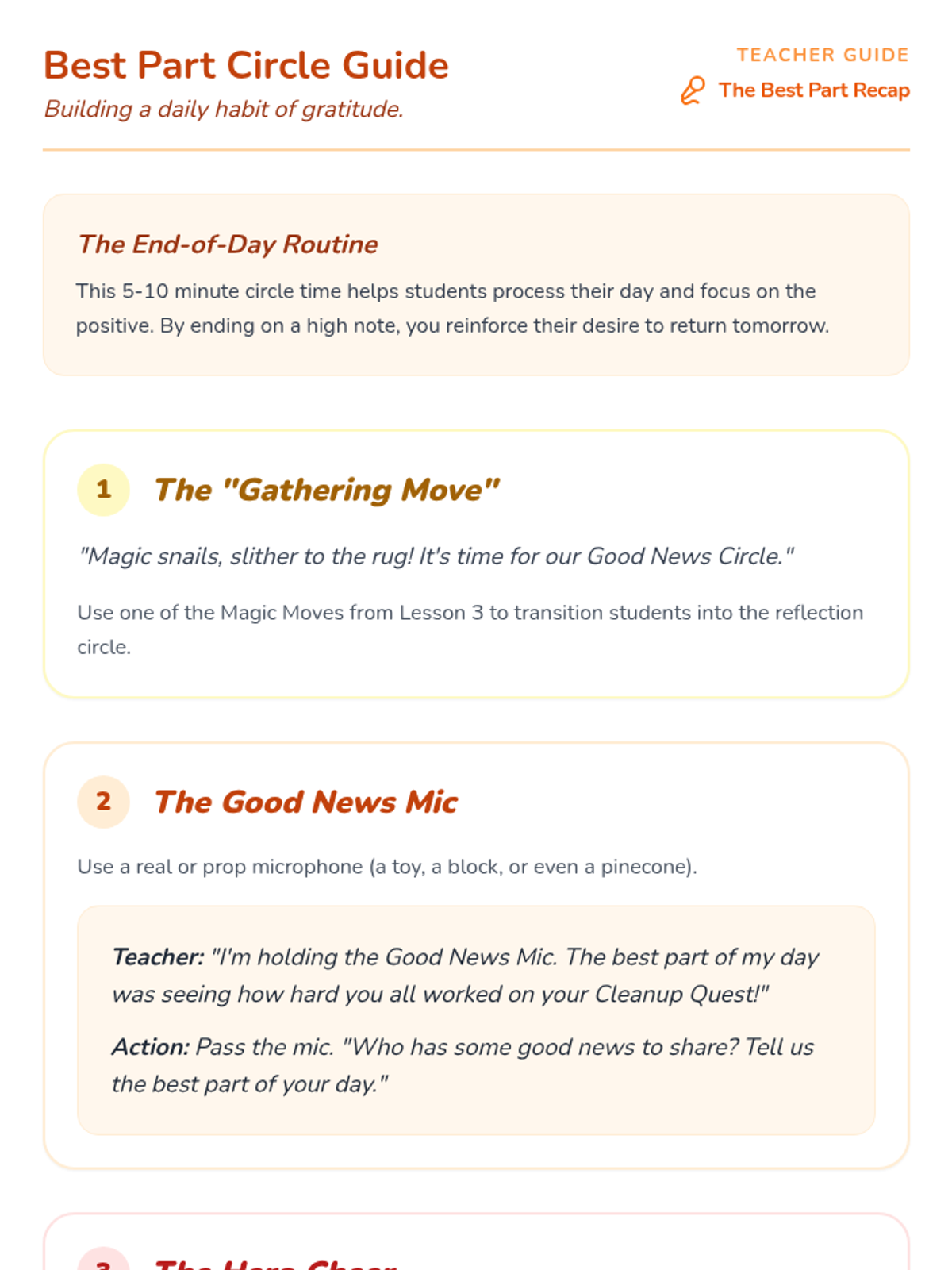
Students establish a gratitude habit by sharing the best parts of their day, reinforcing positive memories before going home.
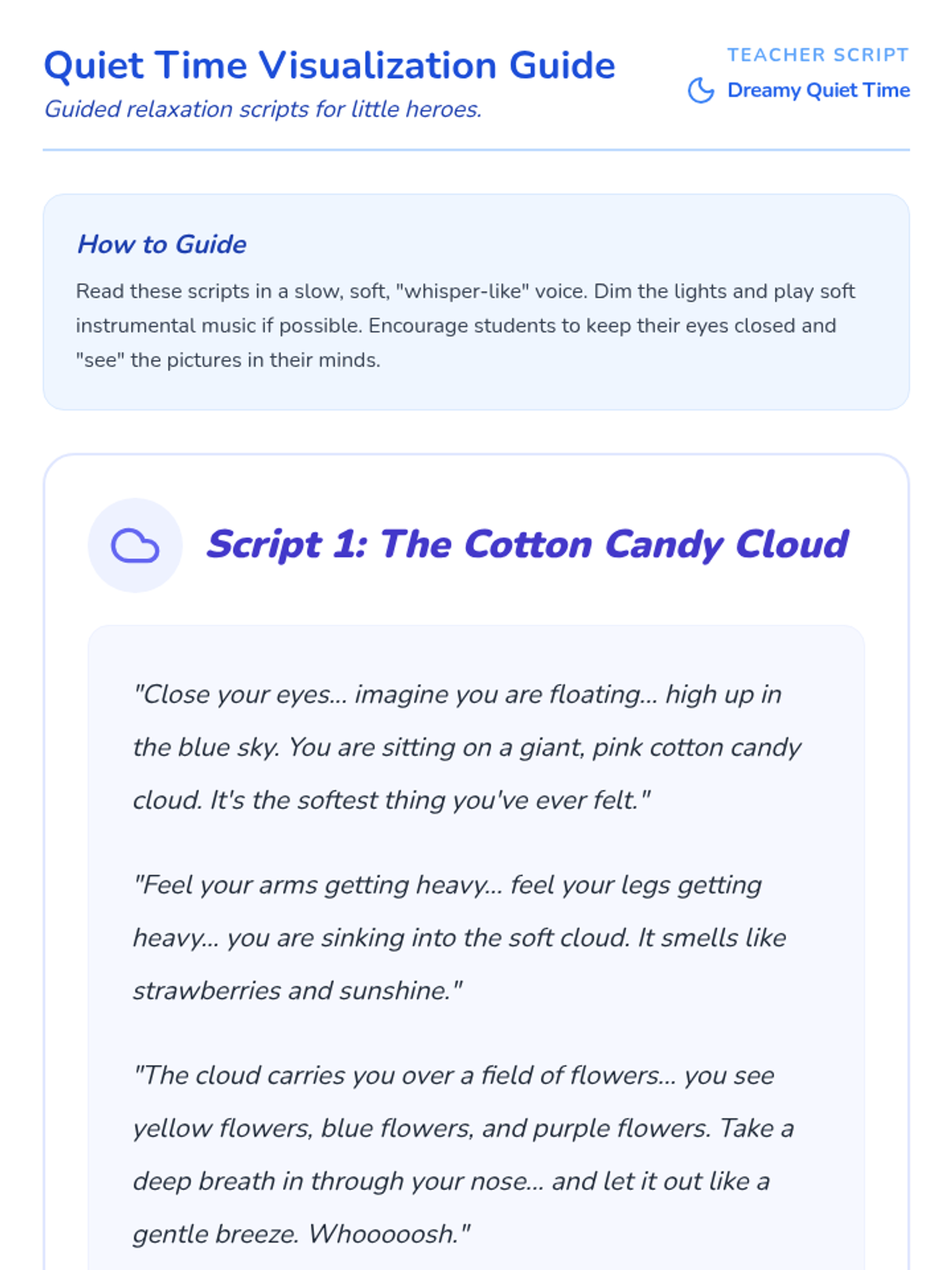
Students explore visualization and relaxation techniques to find joy and stillness during quiet or nap times.
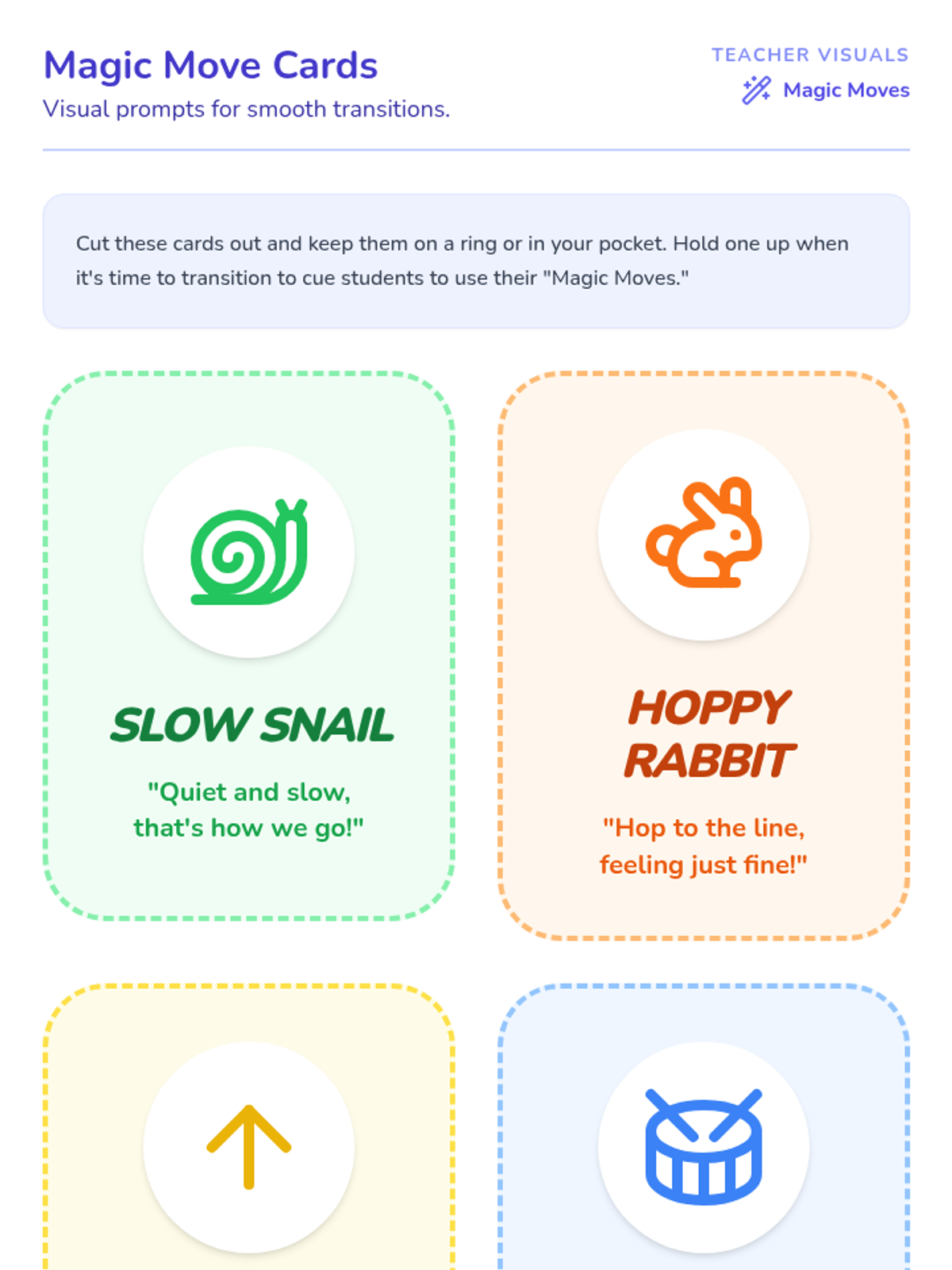
Students learn stress-free transition strategies, using imagination and 'magic' to move smoothly between activities.
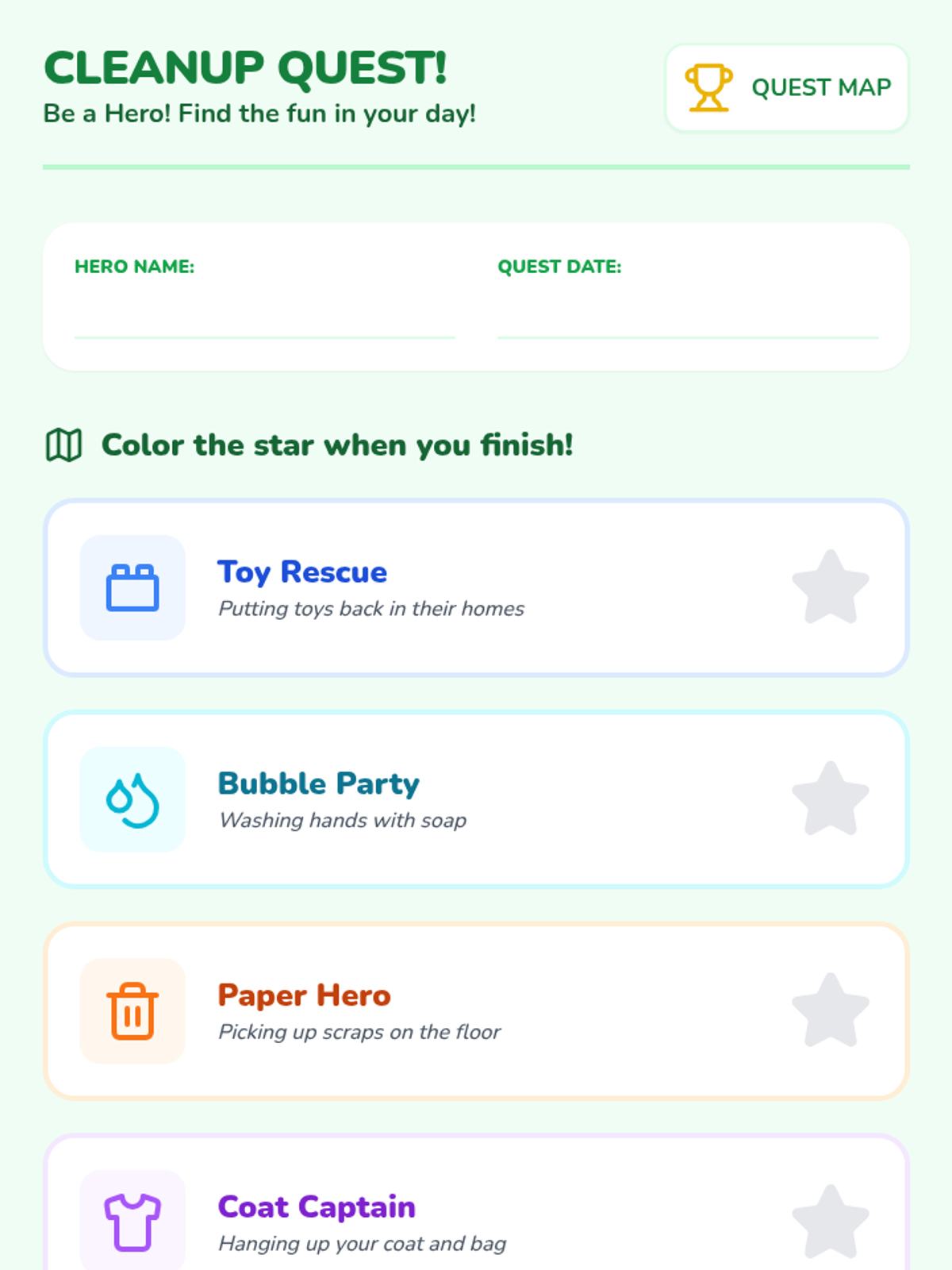
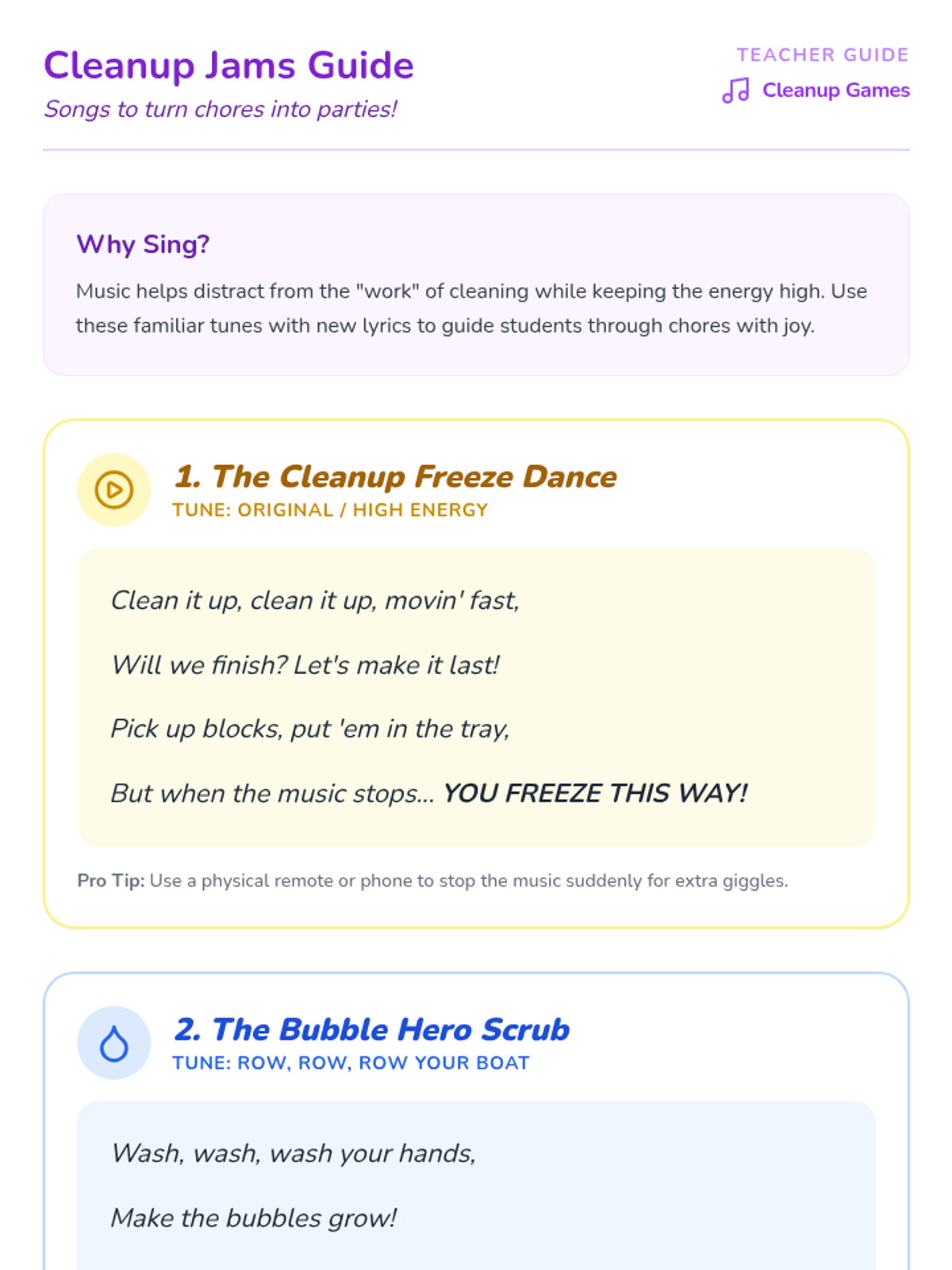
This lesson turns cleanup and maintenance tasks into games and songs, helping students reframe chores as positive, shared experiences.
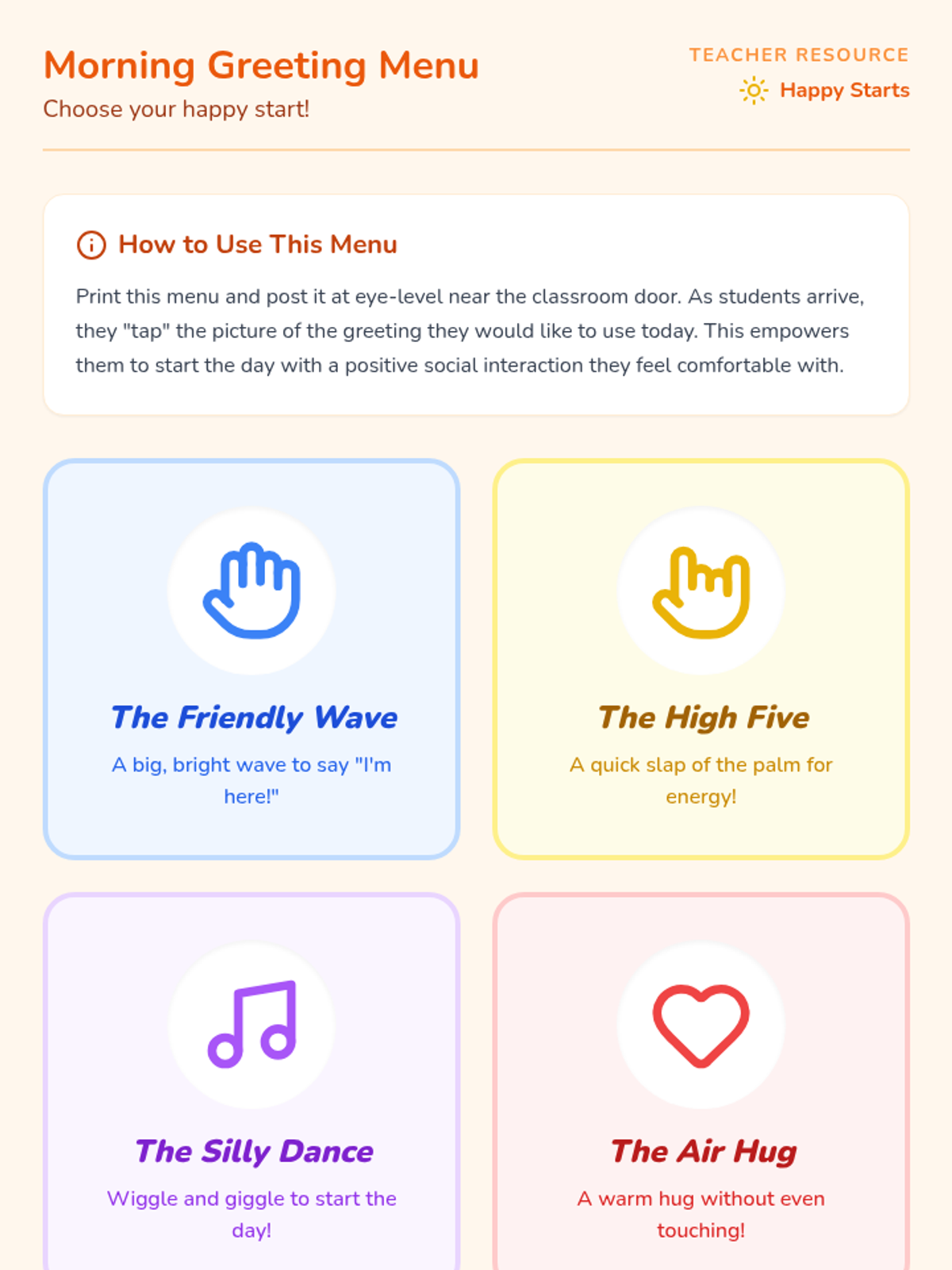
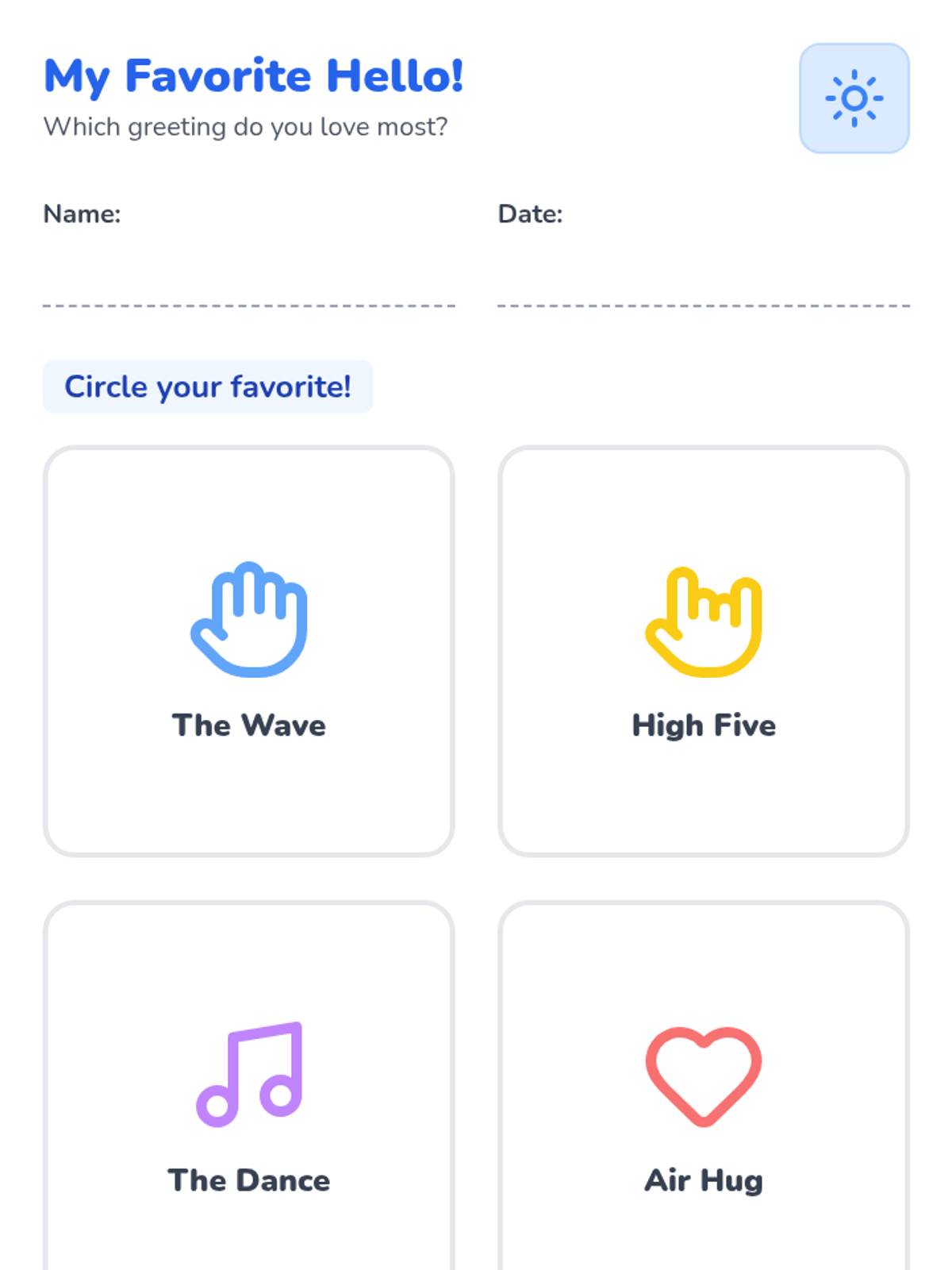
Students practice different ways to start the day positively, choosing signature greetings like waves, high-fives, or dances to set a happy tone.
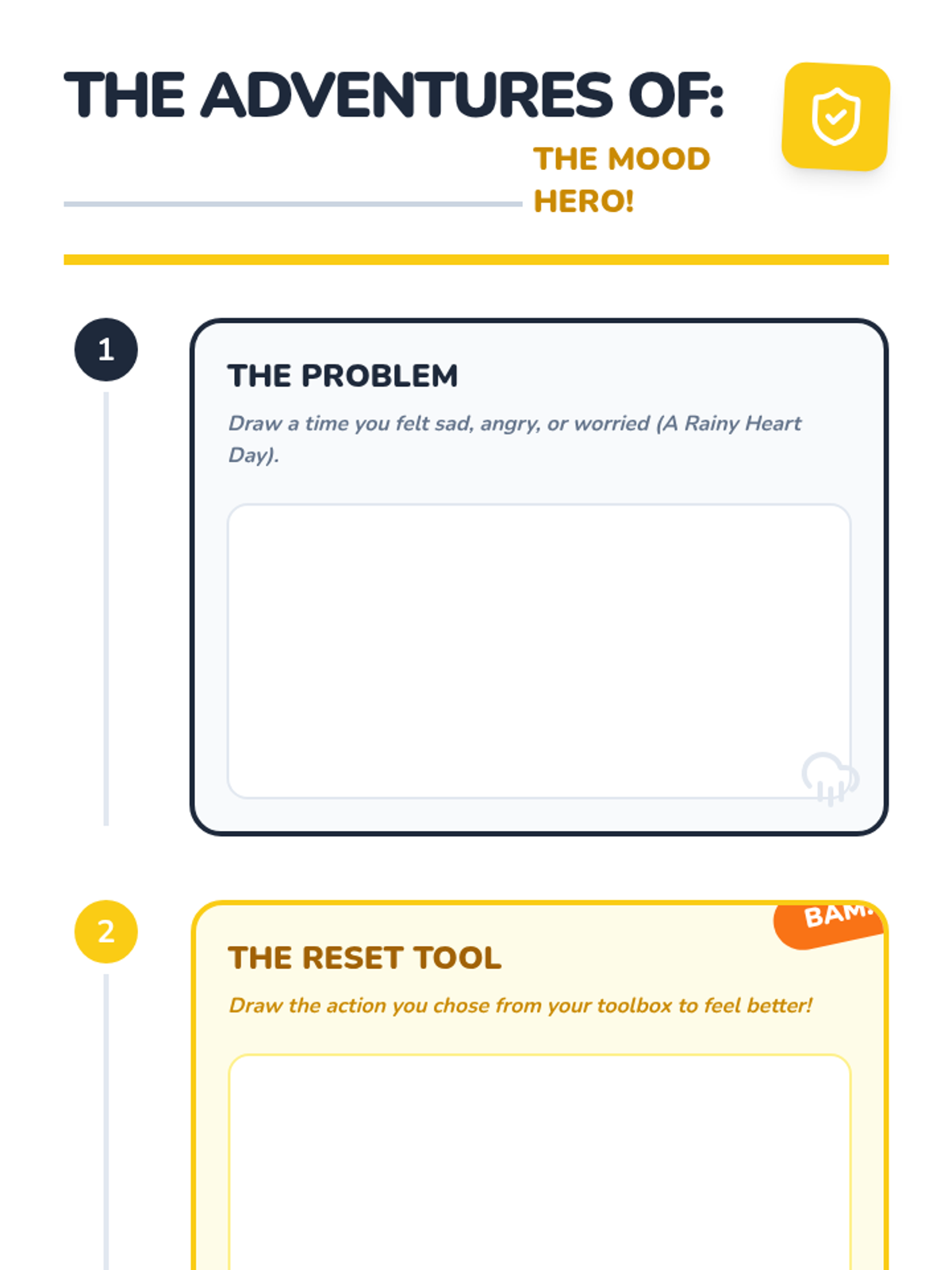
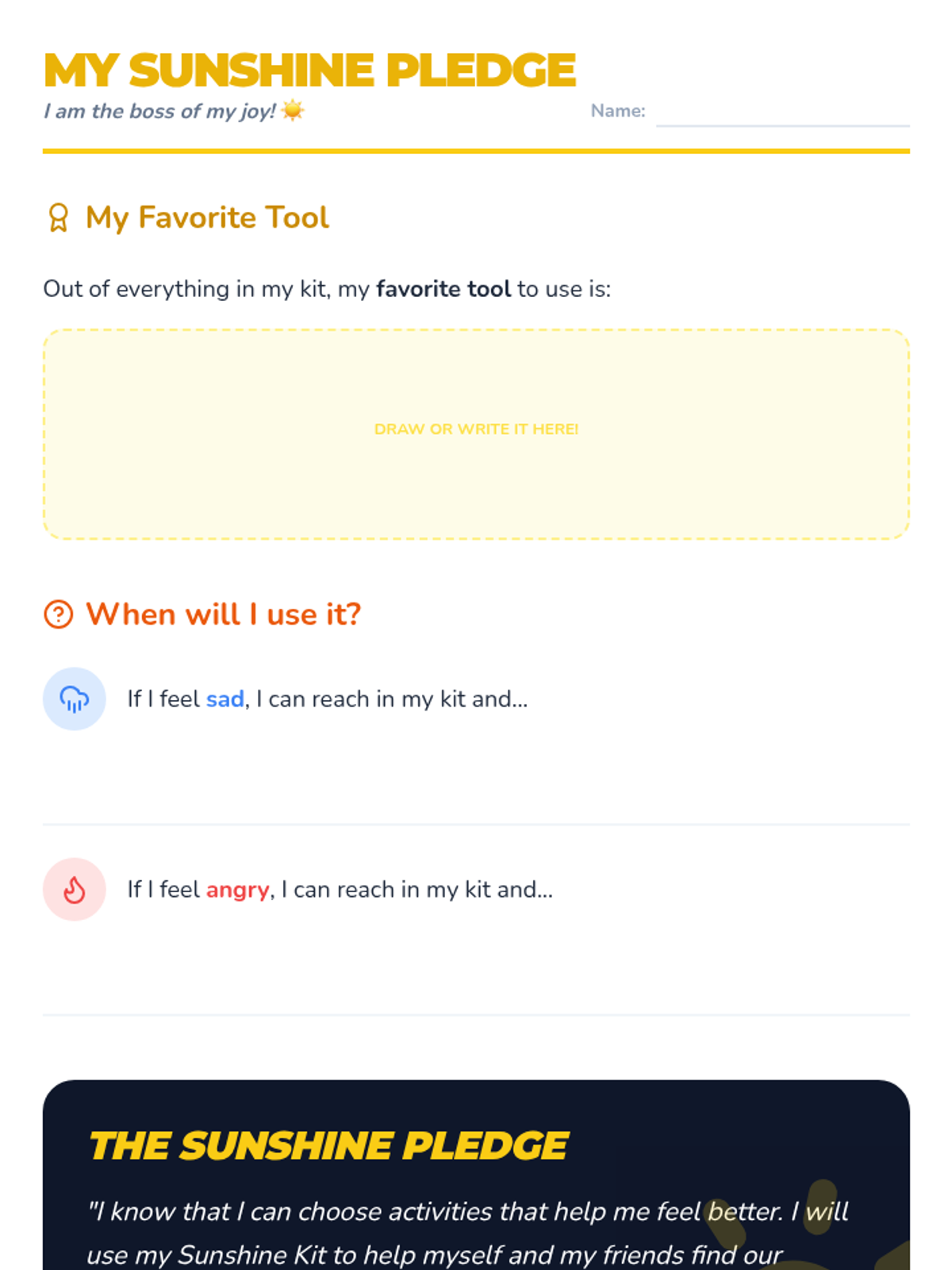
Students reflect on their learning by creating a visual narrative of emotional change. They celebrate their new skills as 'Mood Heroes' who can help themselves feel better.
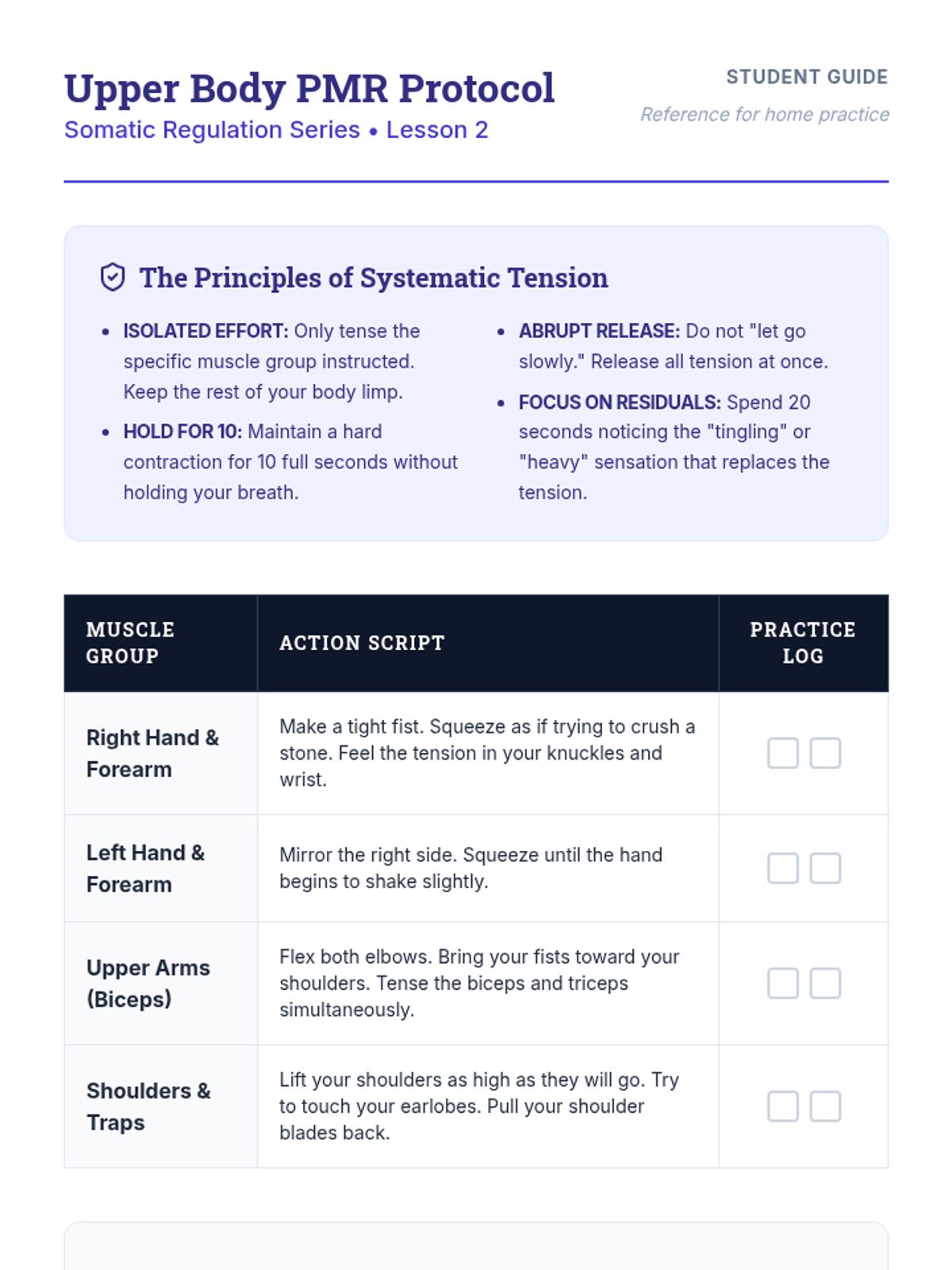
This lesson introduces the history and evidence base of PMR before guiding students through the isolation of upper body muscle groups. Students practice distinguishing between high tension and deep relaxation in the hands, arms, and shoulders.
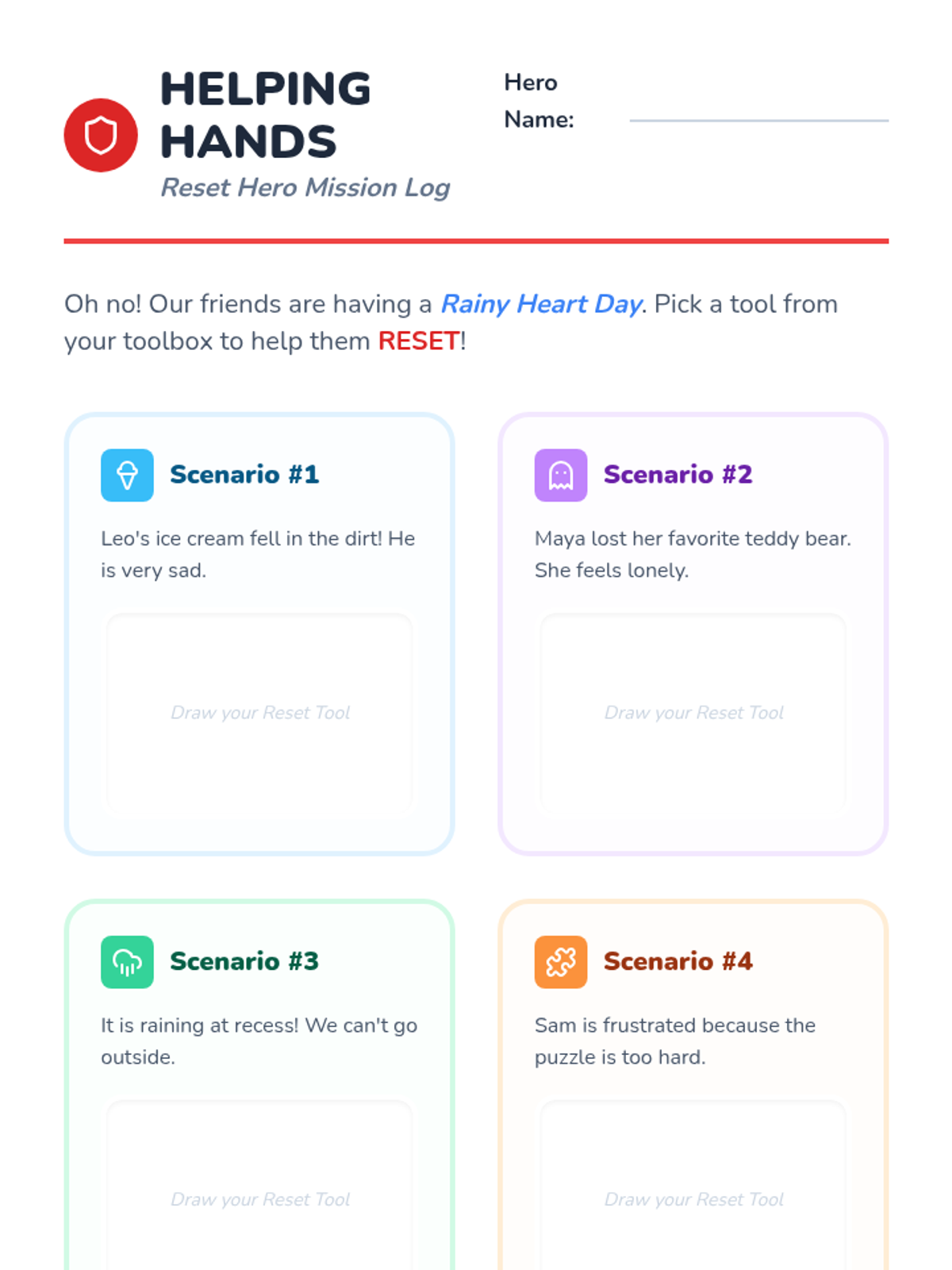
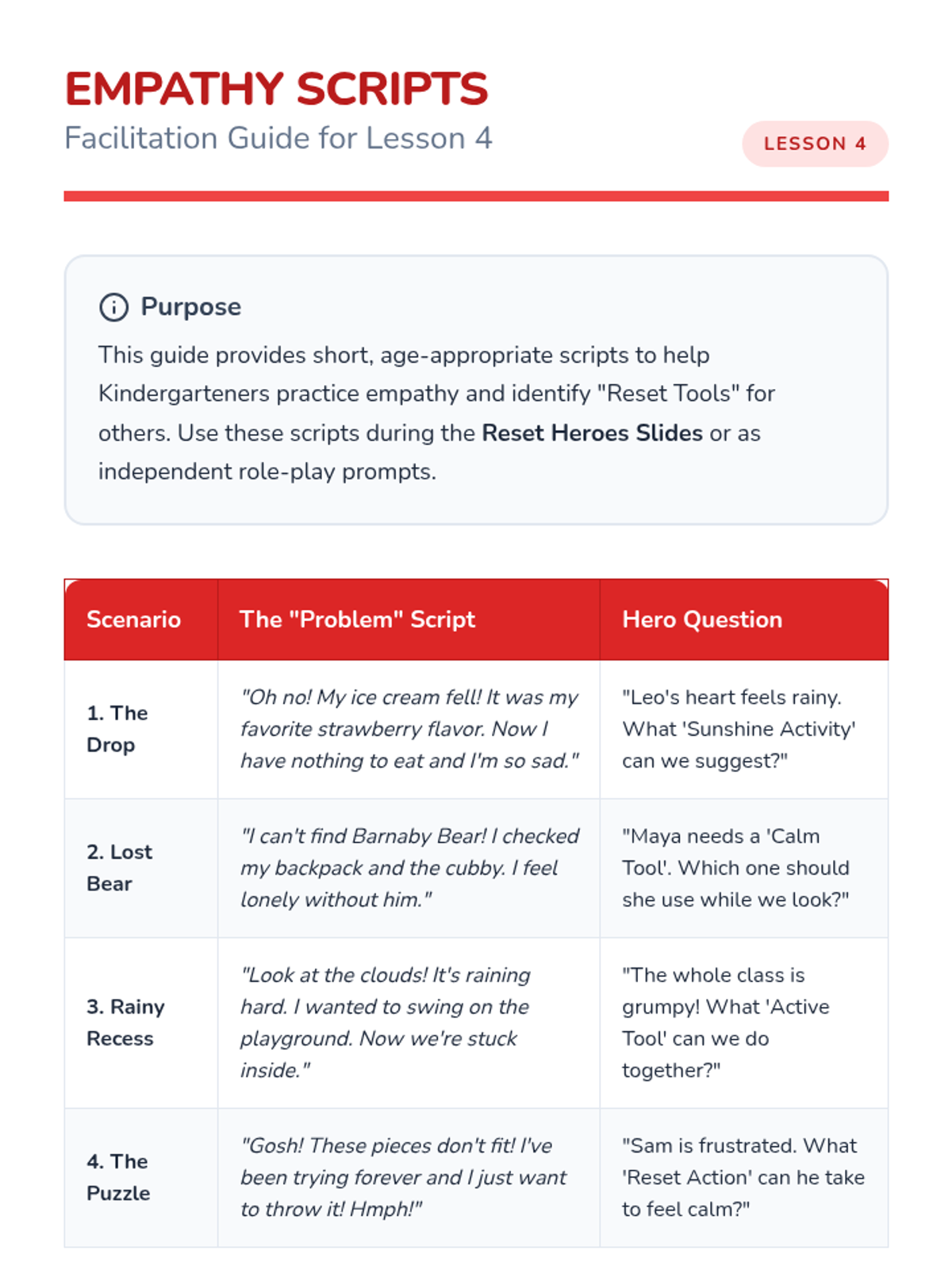
Using role-play and scenarios, students practice empathy and behavioral activation by helping characters navigate disappointments through positive activity choices.
Students identify and select specific actions to include in a personal 'coping toolkit.' They practice retrieving these 'tools' to handle common stressors or worries.
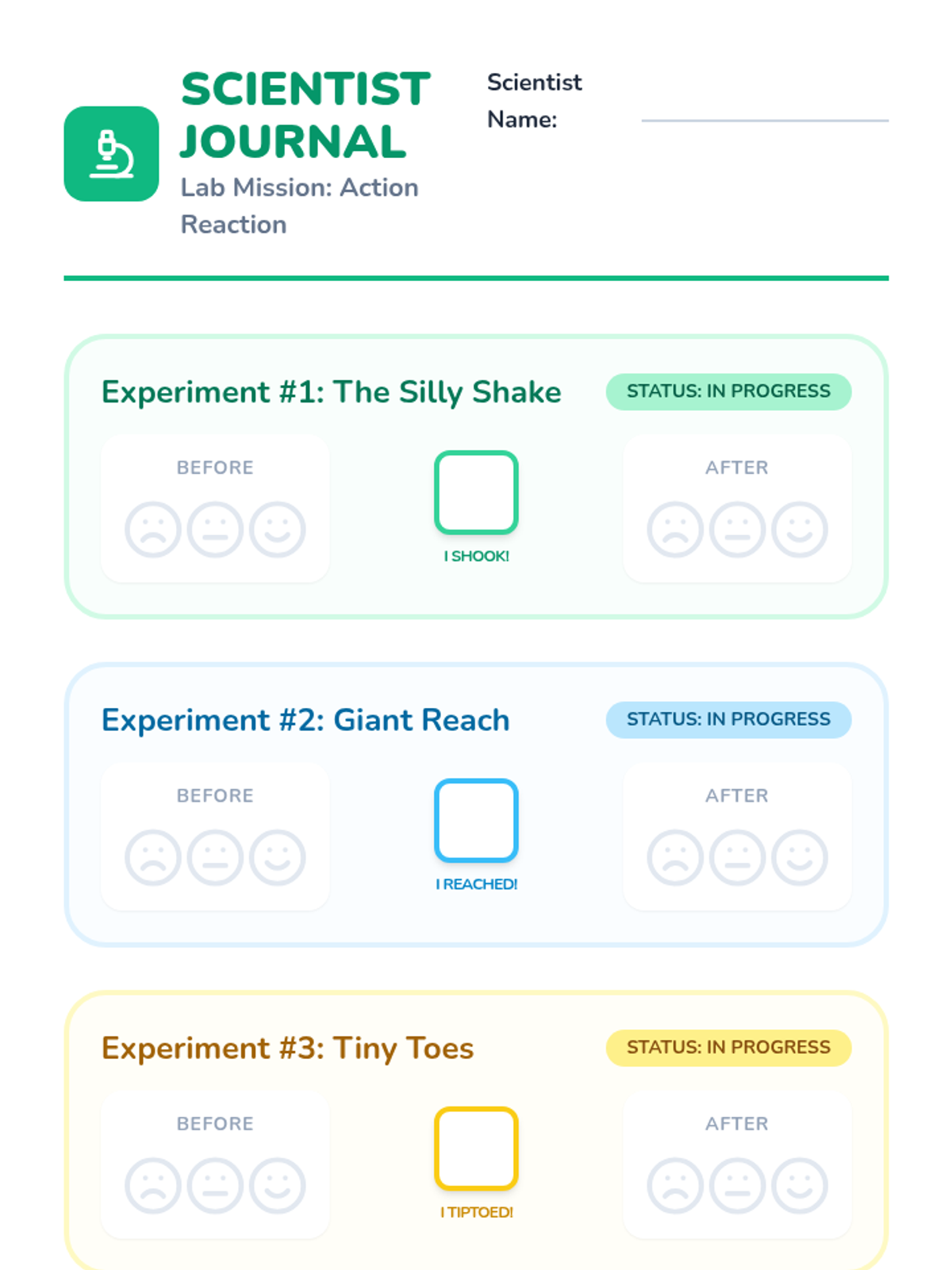
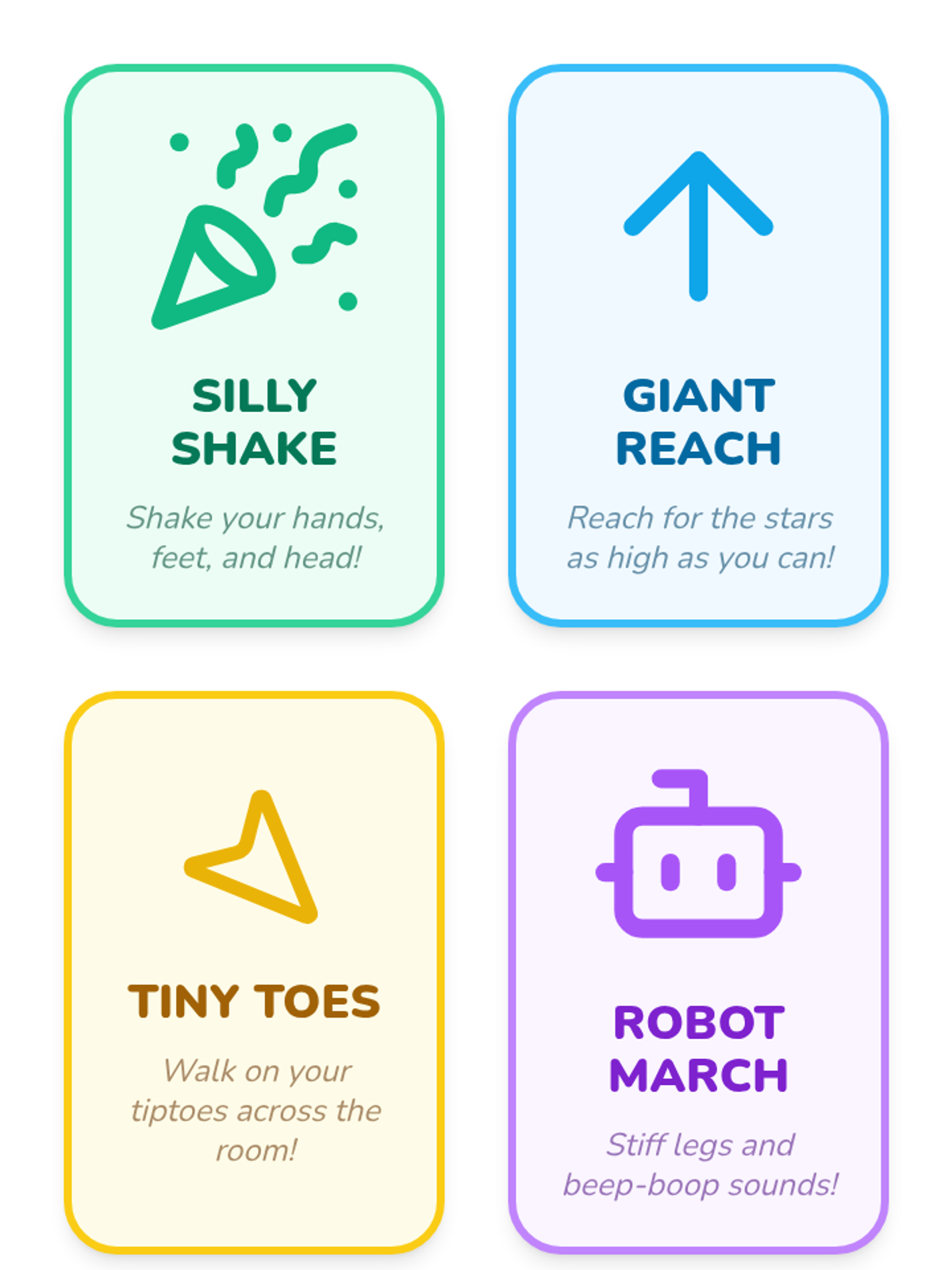
Students act as scientists to test how physical movement and silly actions change their internal energy and mood. They observe the immediate cause-and-effect relationship between action and emotion.
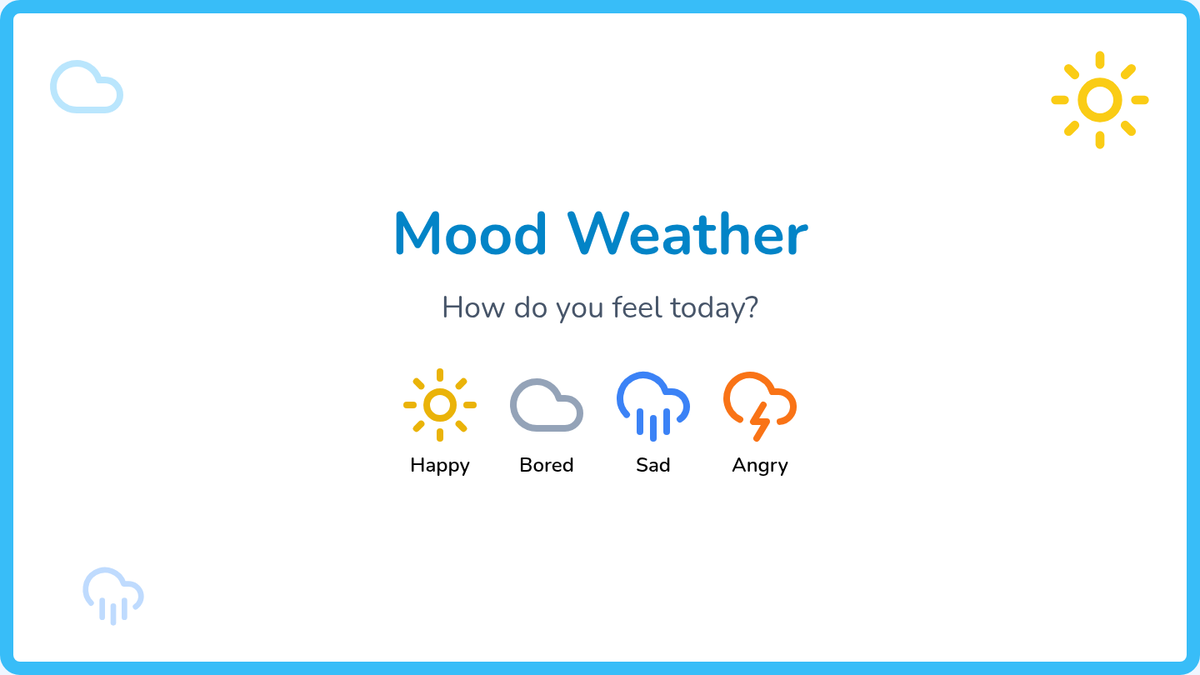
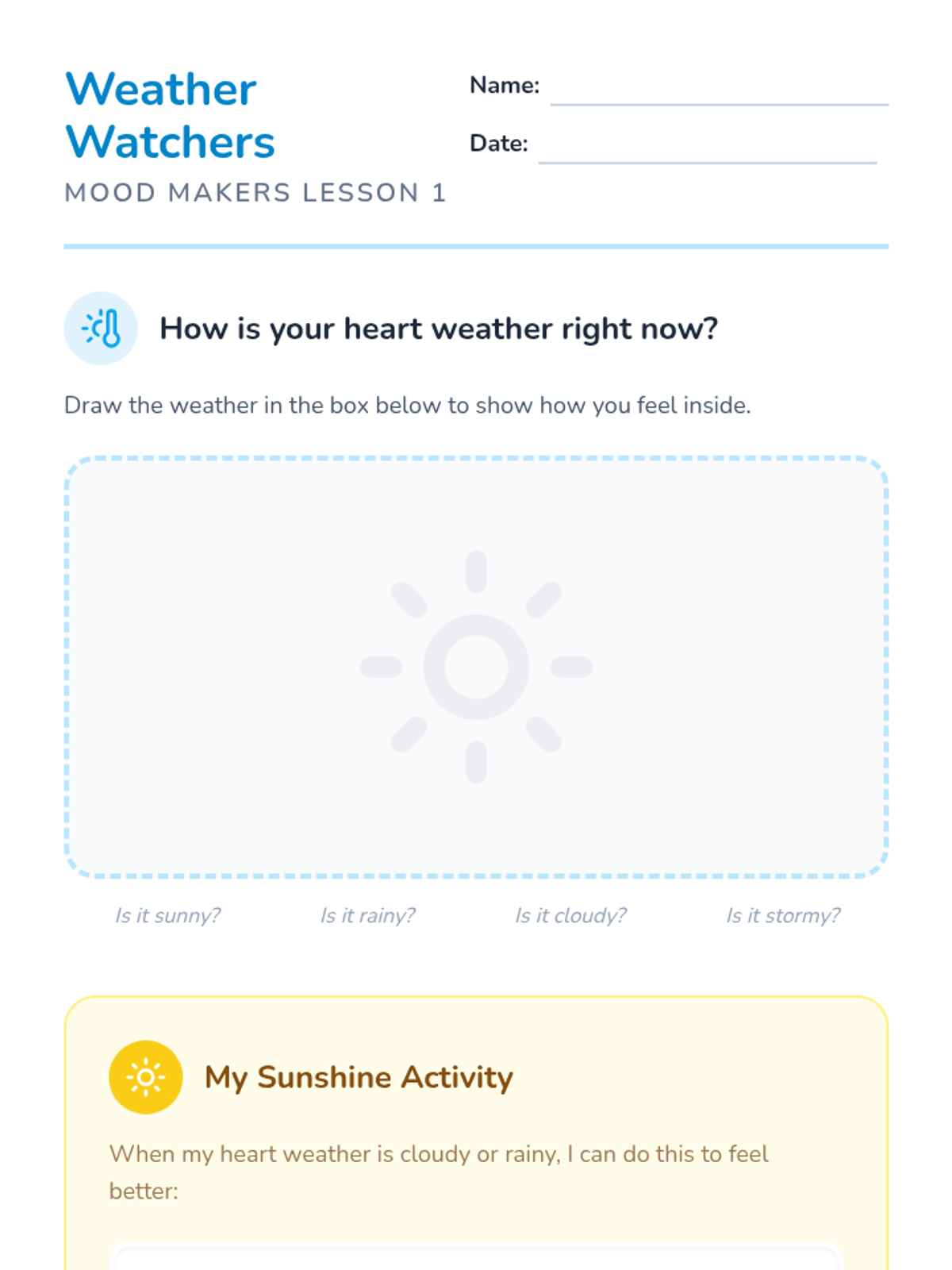
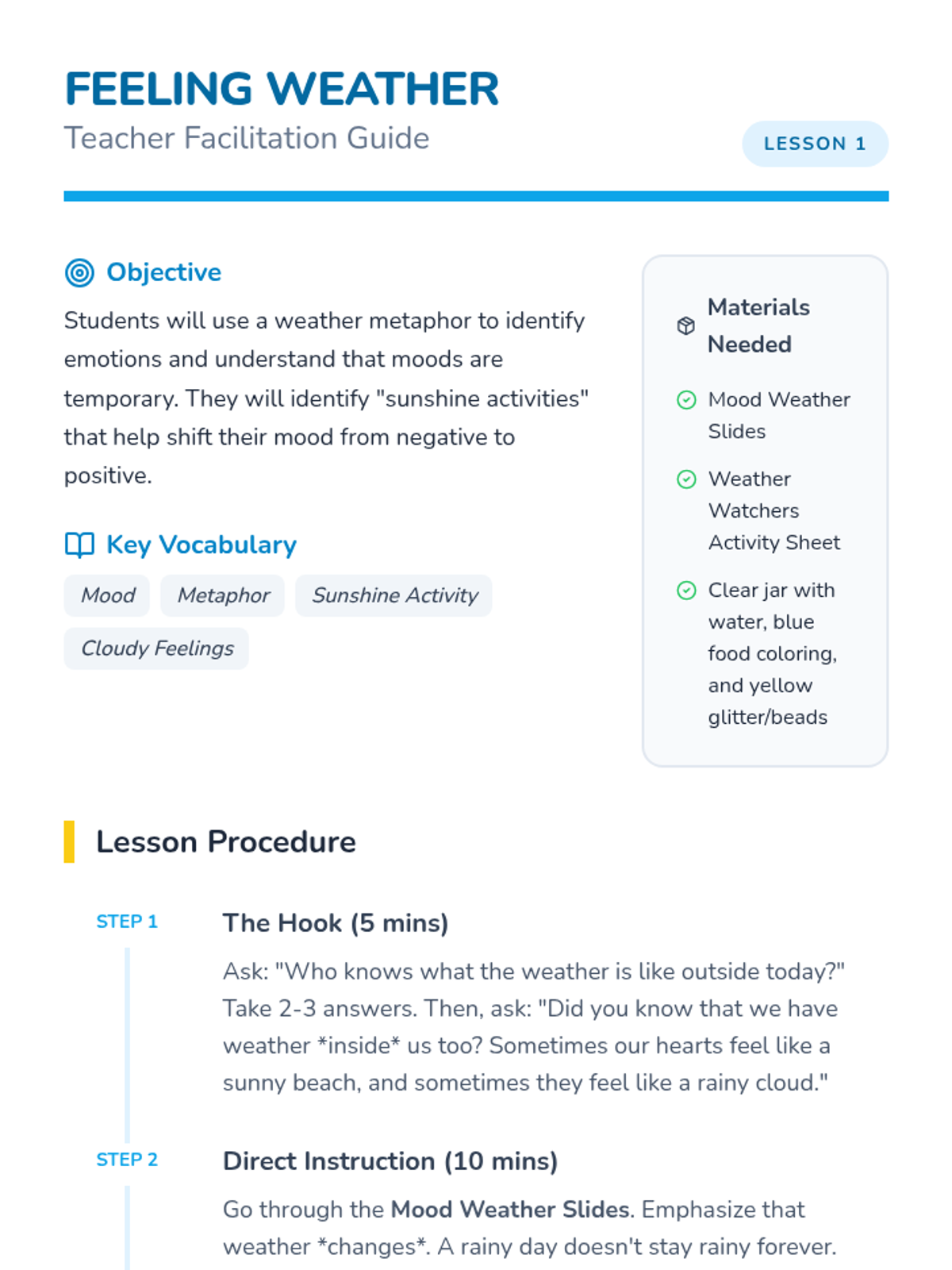
Students explore the metaphor of feelings as weather and learn that just as weather changes, so can their moods. They observe how 'sunshine' activities can help clear away 'cloudy' feelings.
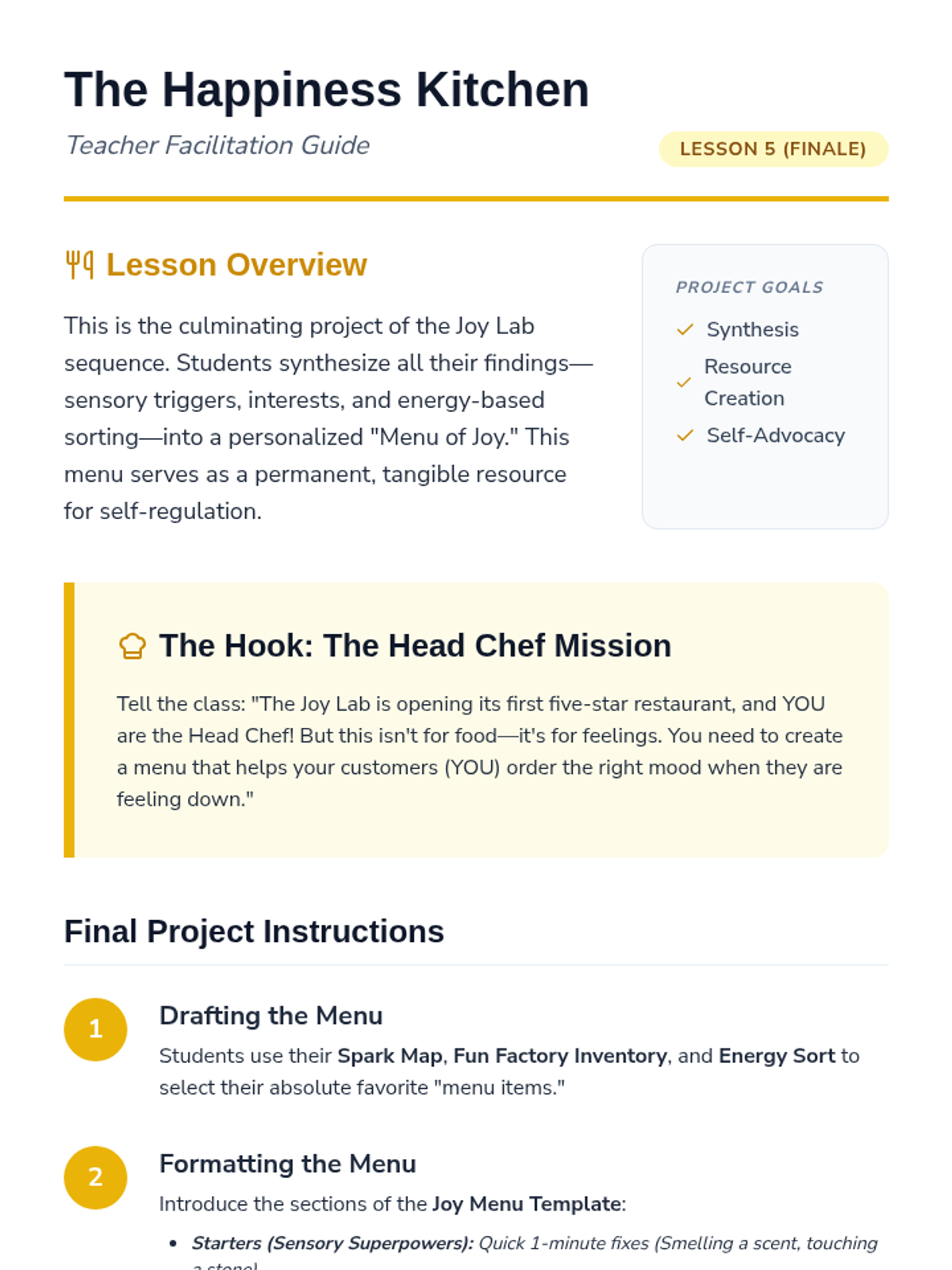
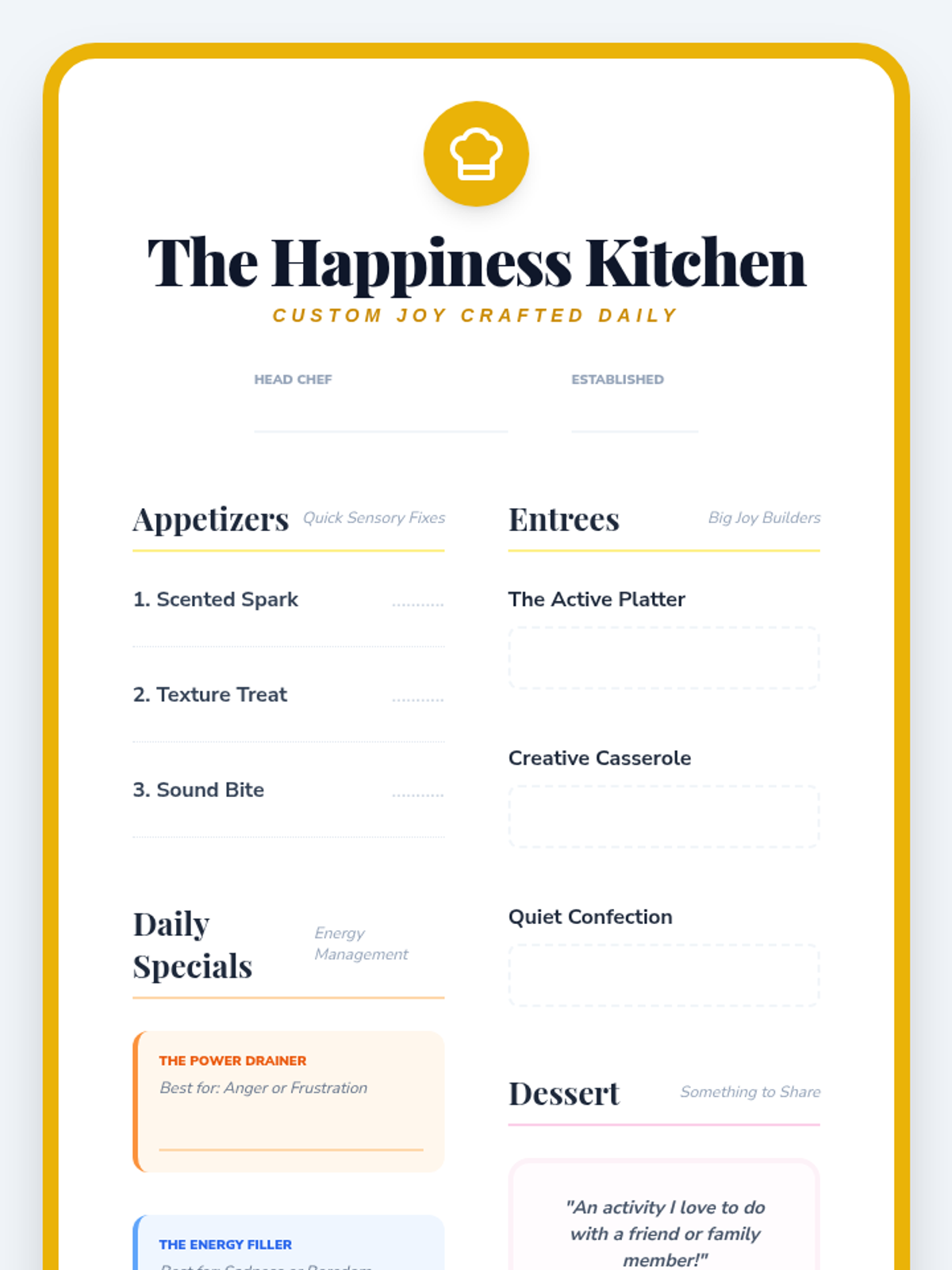
Students synthesize their findings to create a personalized, illustrated menu of 'Go-To' activities and role-play scenarios where they might order from their menu.
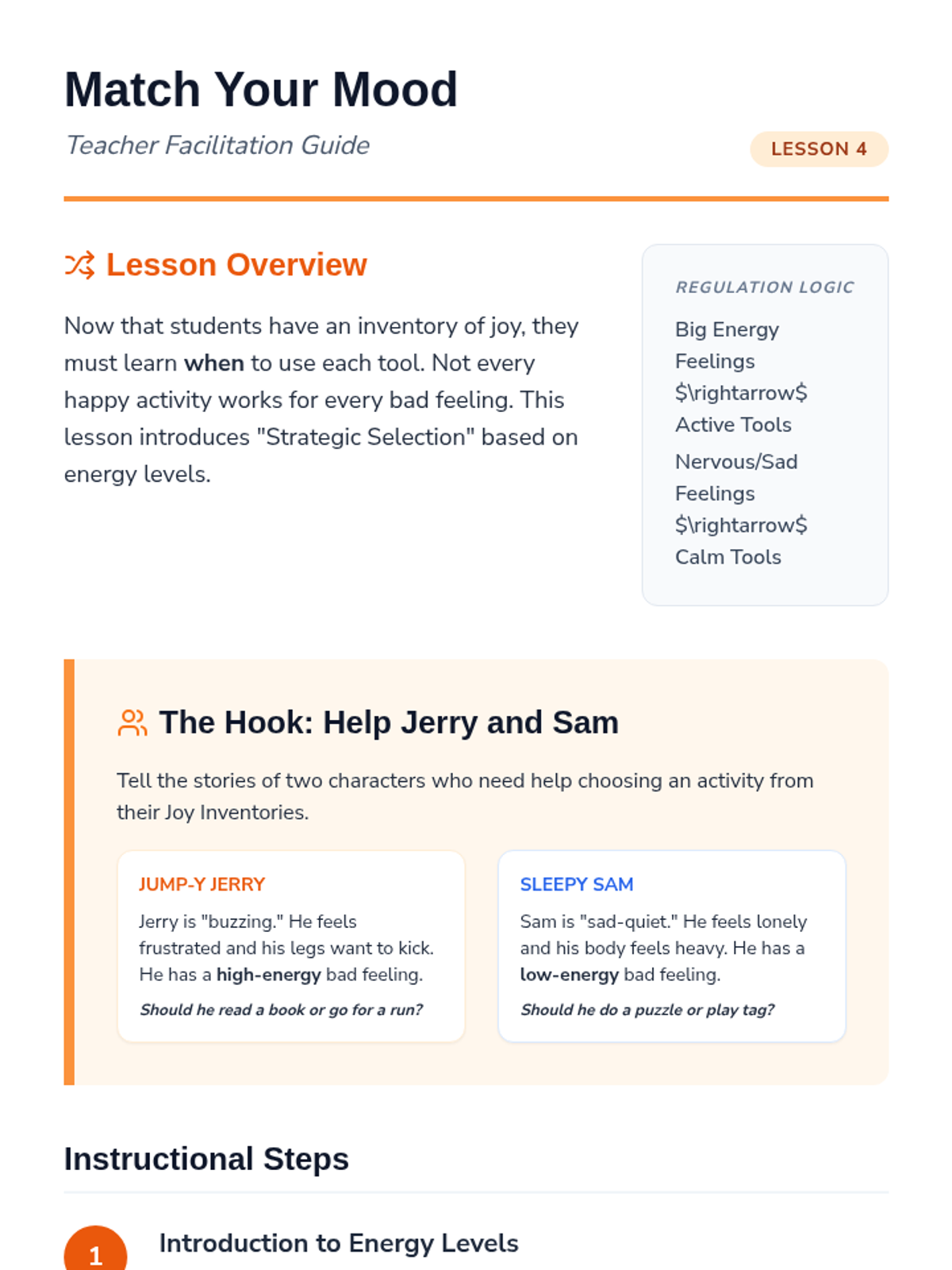
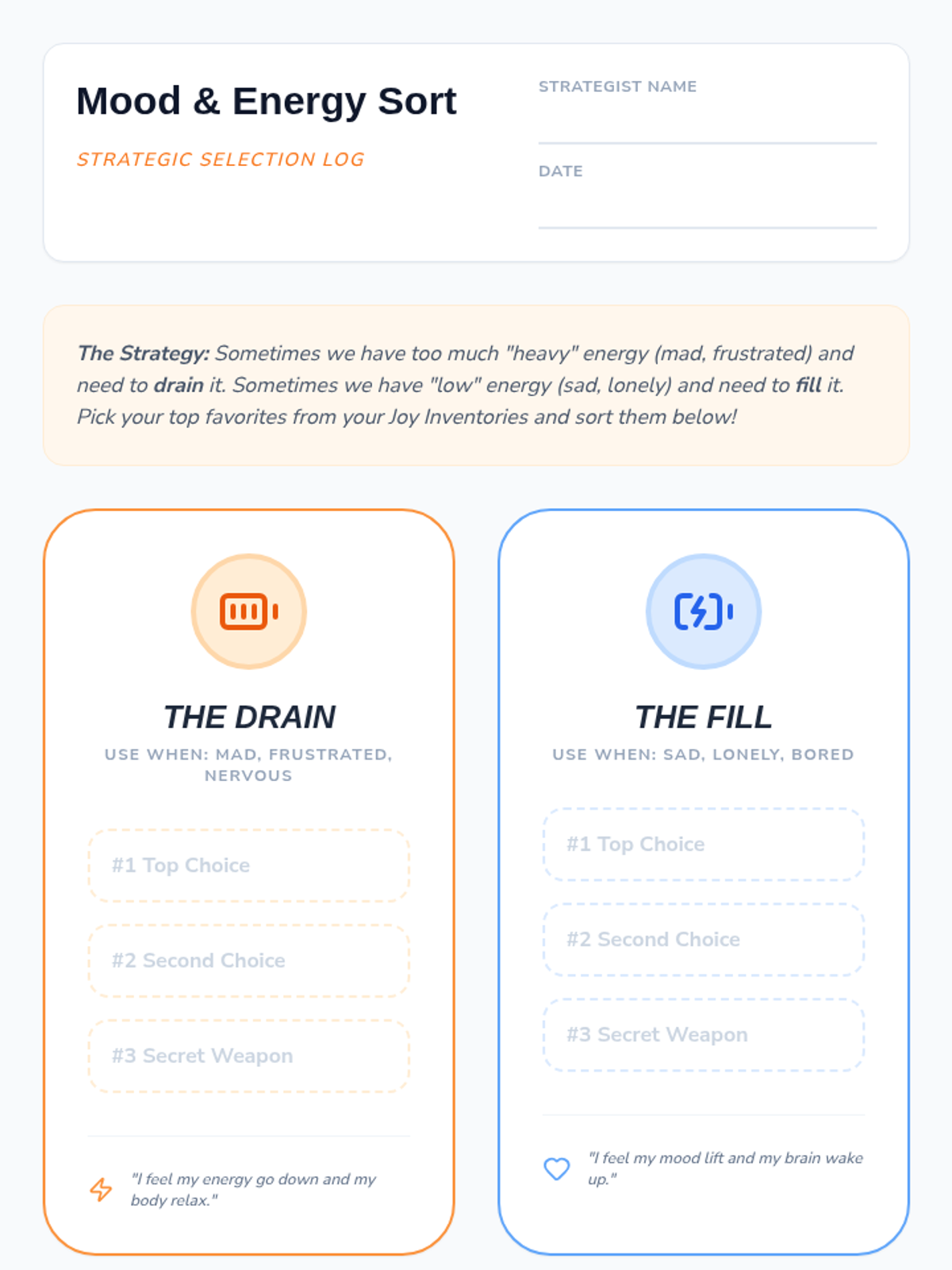
Students organize activities into categories based on energy levels: 'High Energy' for releasing frustration and 'Low Energy' for calming anxiety. They learn to strategically select activities based on current emotional needs.
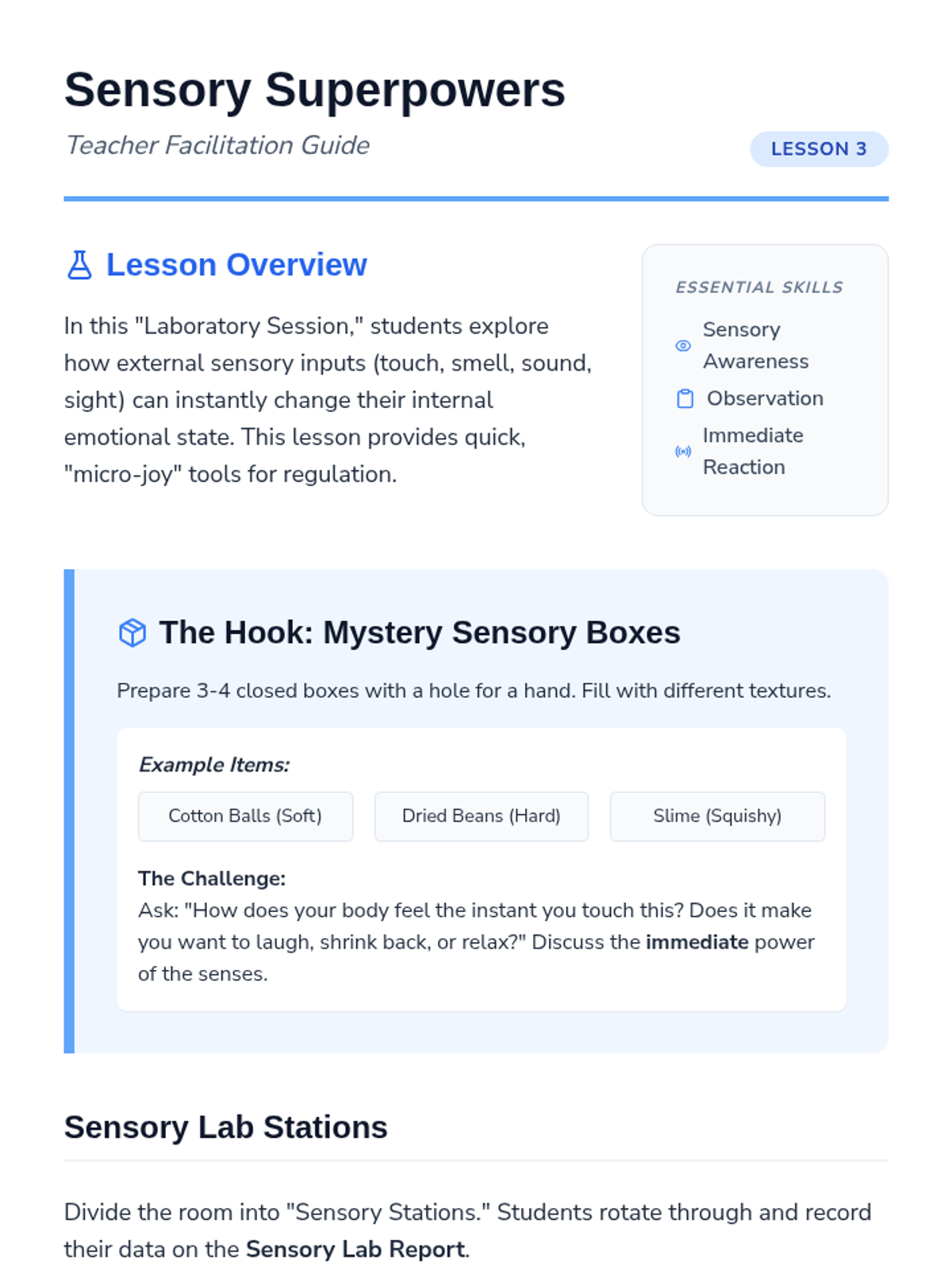
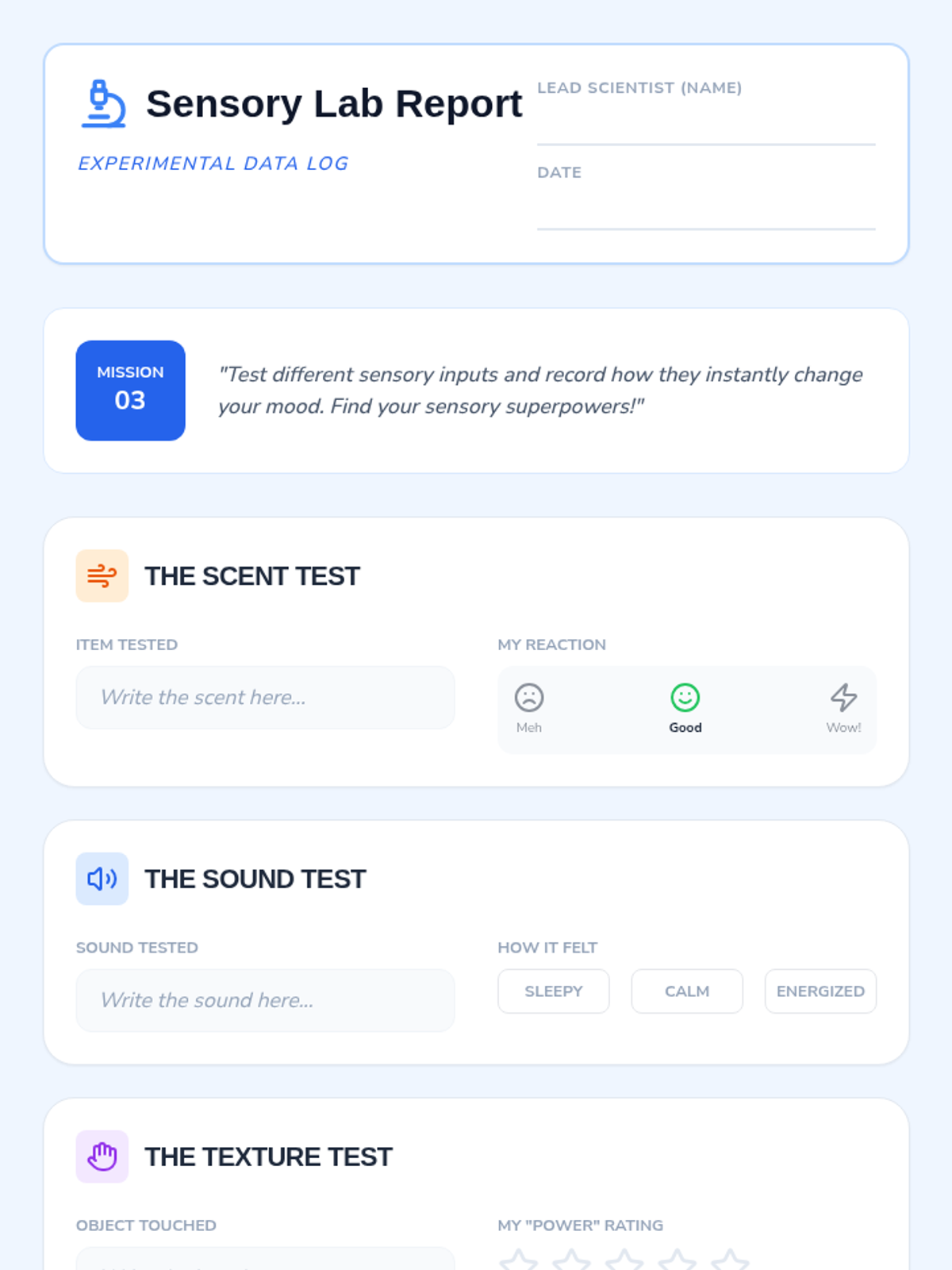
This lesson focuses on simple, sensory-based experiences that can boost mood quickly. Students test different sensory inputs and record their immediate reactions to connect external stimuli to internal emotional states.
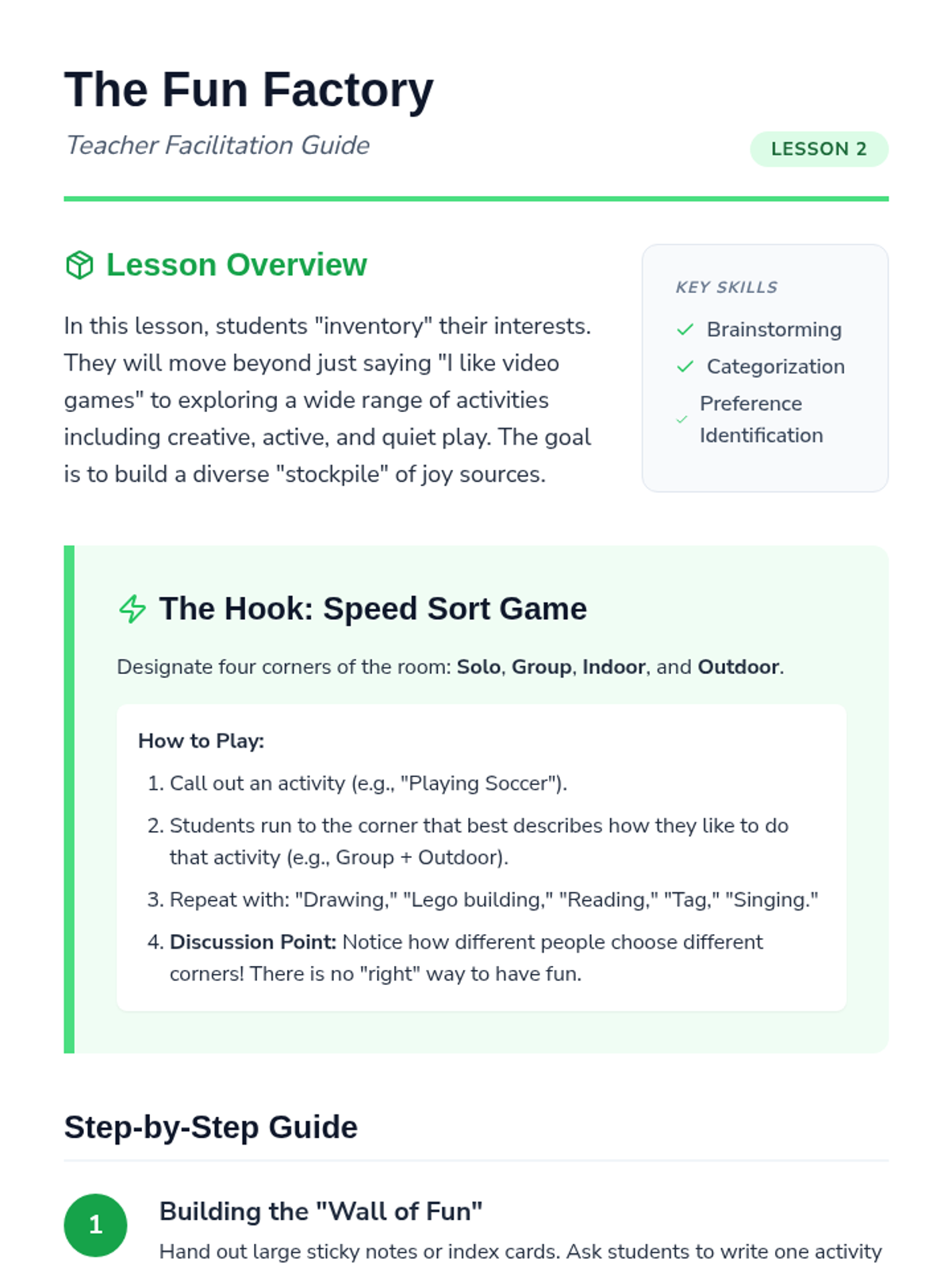
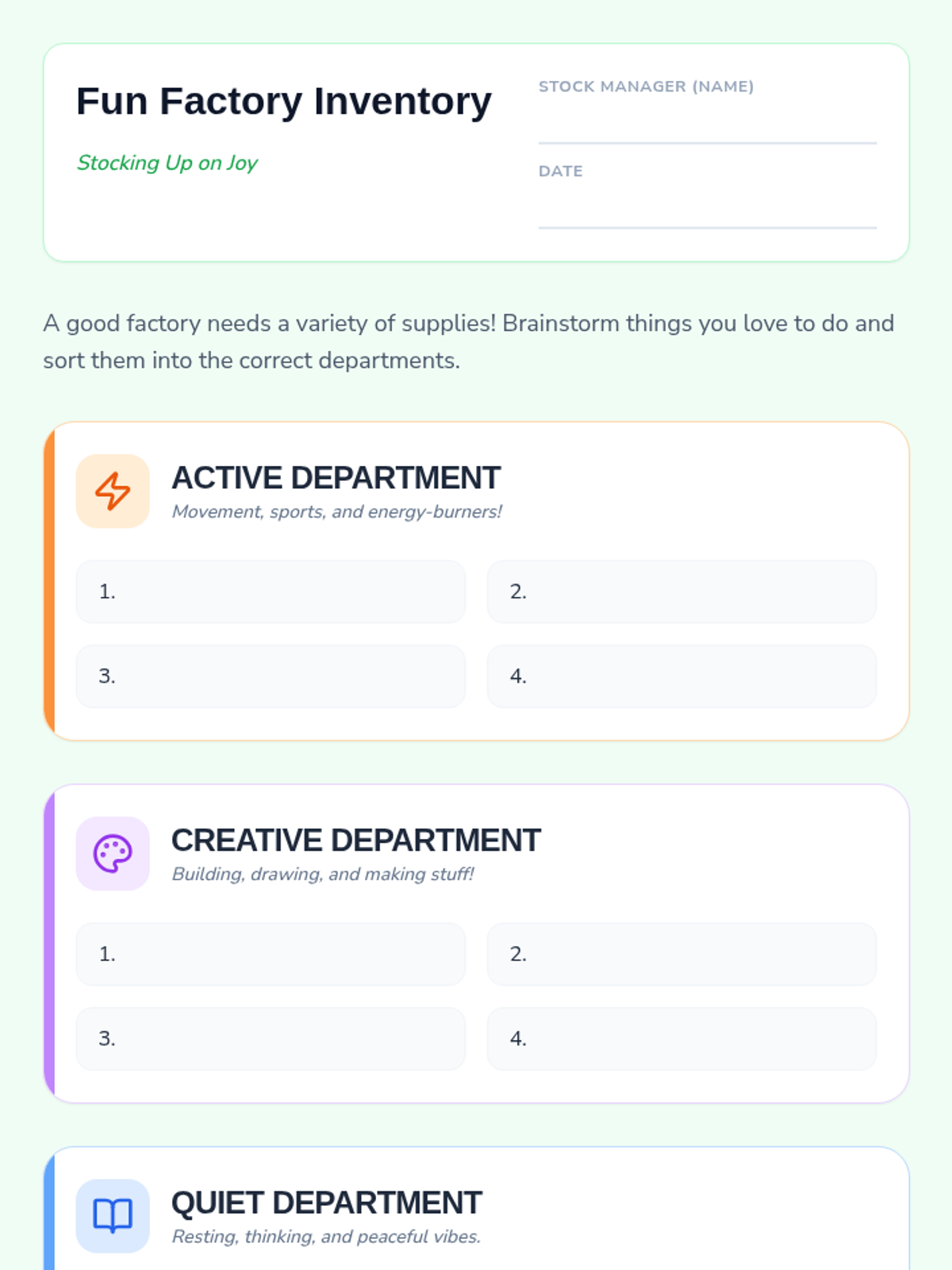
Students brainstorm a wide variety of activities they enjoy, distinguishing between active play, creative expression, and quiet relaxation. They learn that different types of fun serve different emotional needs.
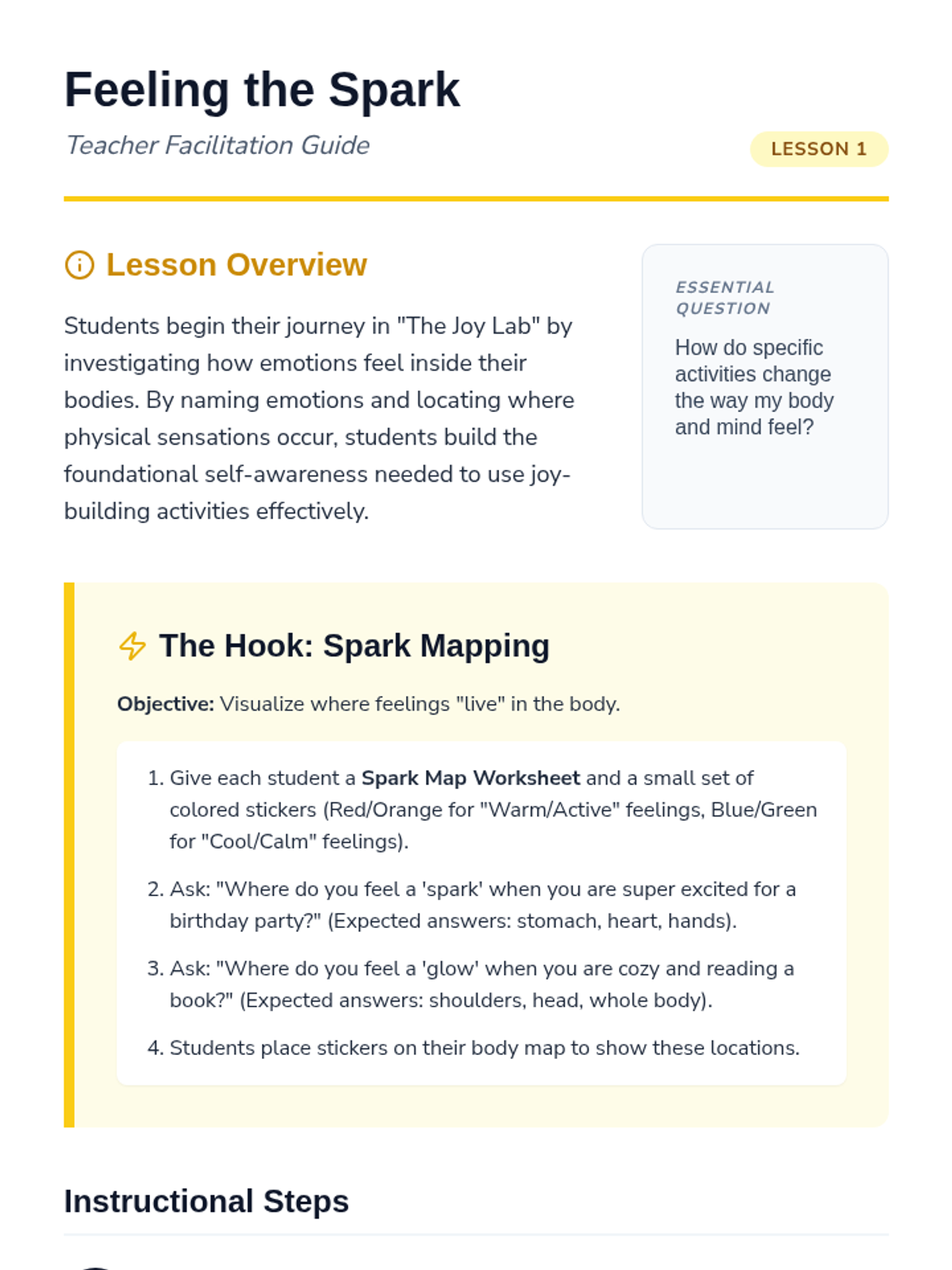
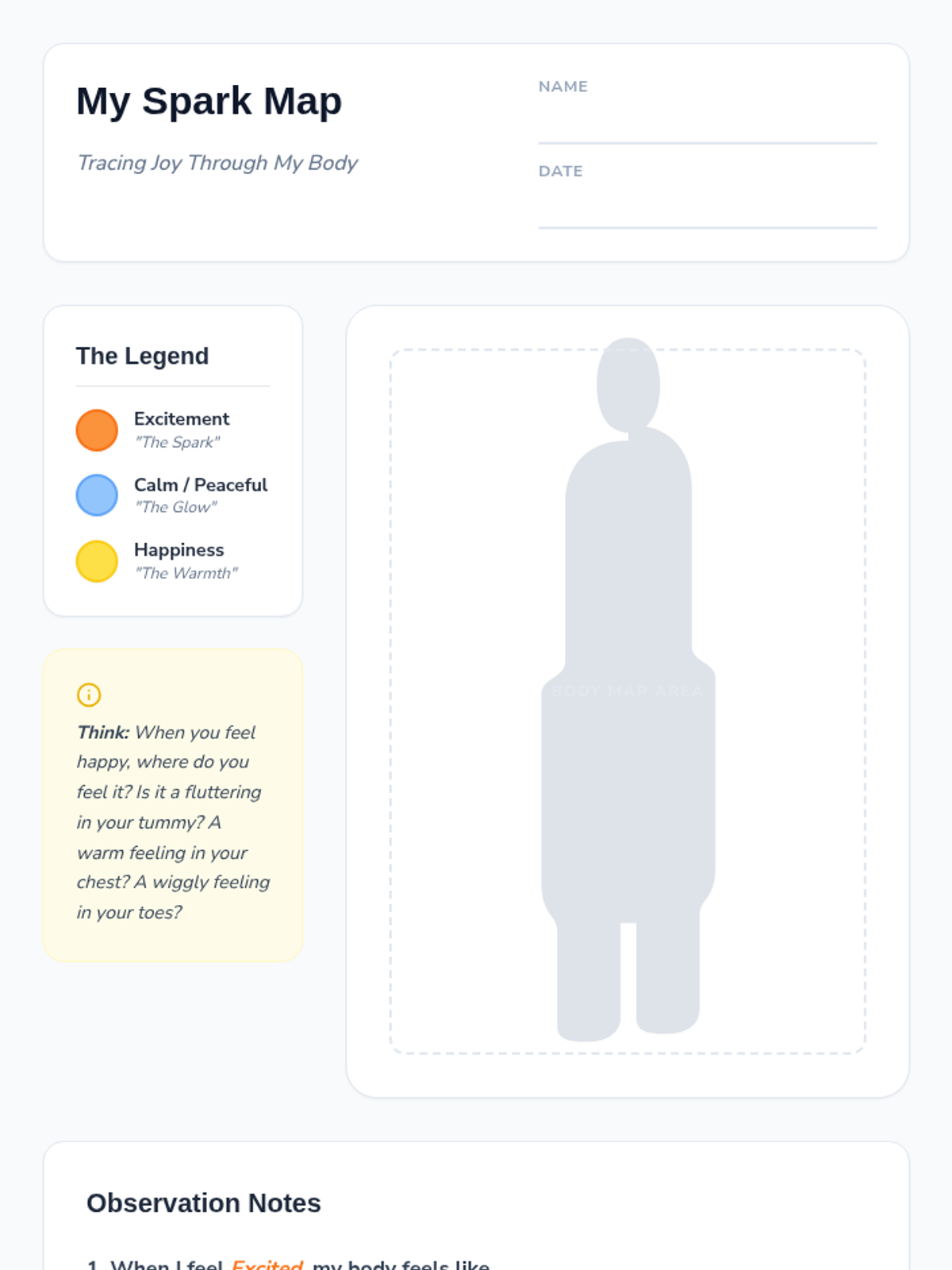
Students explore the vocabulary of emotions and identify physical sensations associated with happiness, calm, and excitement. They create a body map to visualize where they feel positive emotions.
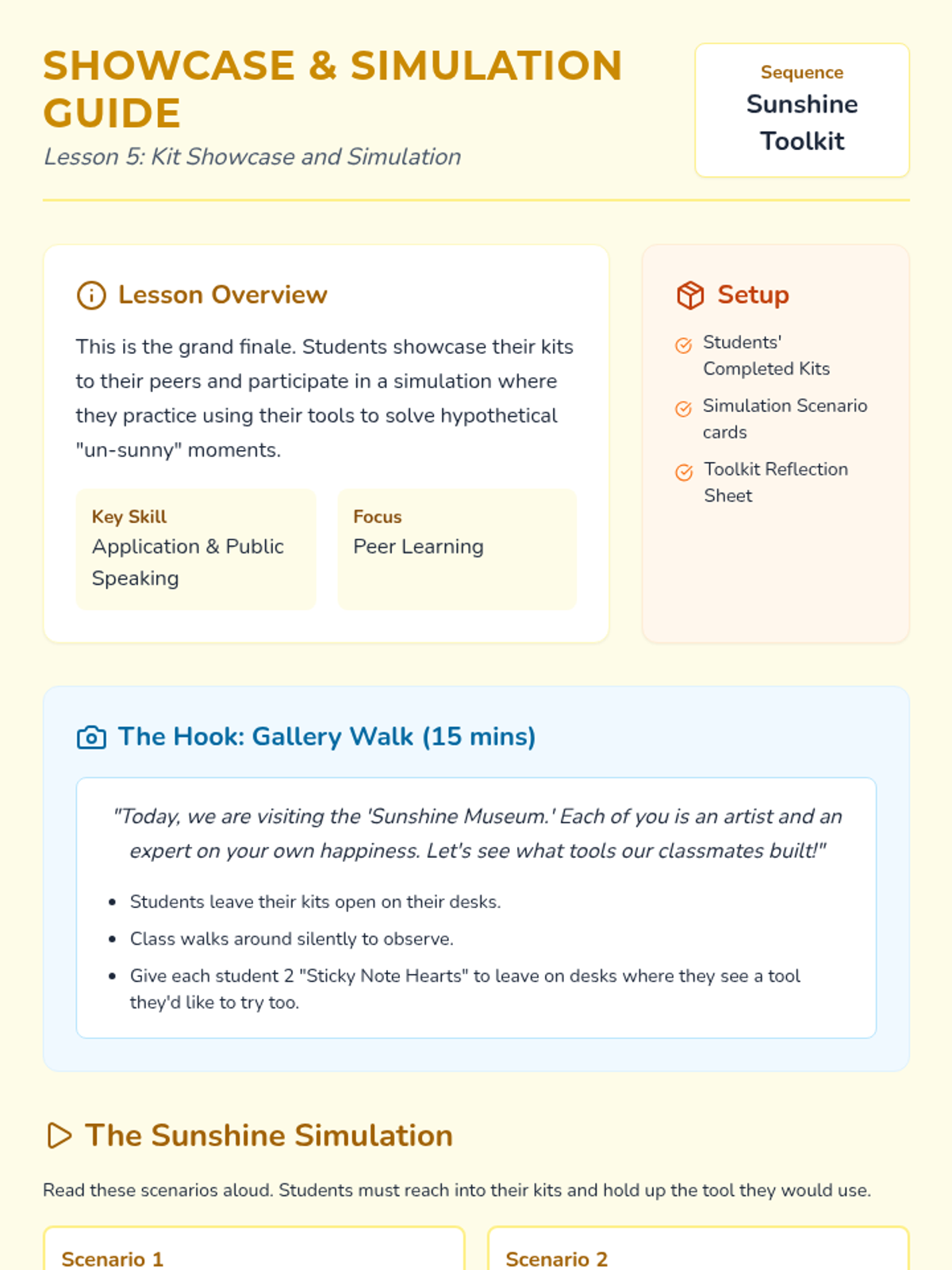
The culminating lesson where students present their kits and practice using them through real-world simulations. A Gallery Walk allows students to learn from their peers' creative tool choices.
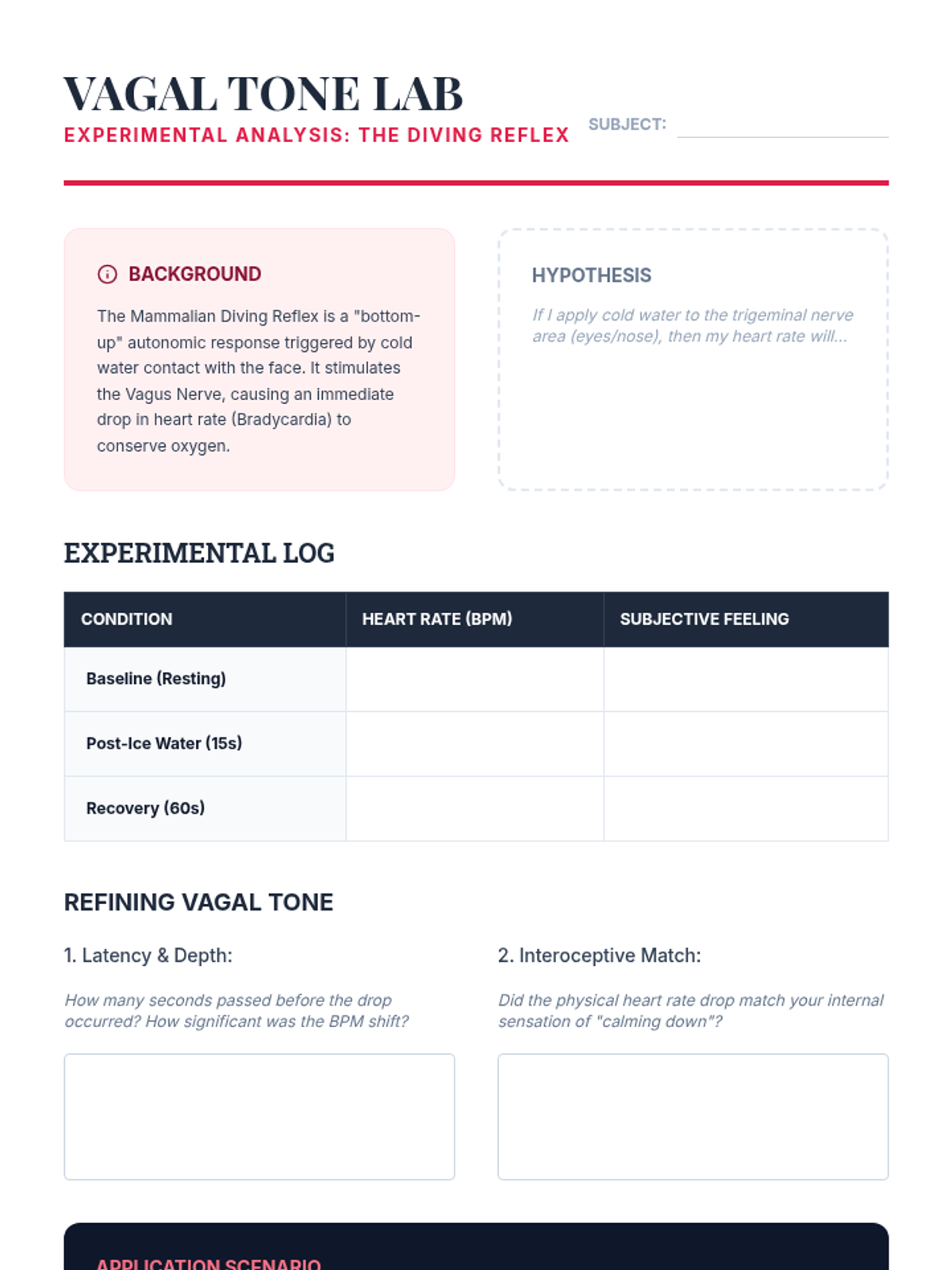
Participants investigate the role of the vagus nerve in regulating heart rate and calming the nervous system. They experiment with specific physical maneuvers (like cold exposure or humming) that stimulate vagal tone.
Students practice focused attention on internal bodily sensations to detect early warning signs of distress. The lesson moves from guided body scans to independent practice in identifying subtle tension.