Students explore the difference between 'rock brain' (stuck) and 'noodle brain' (flexible) using physical objects and metaphors. They establish the core vocabulary for the unit.
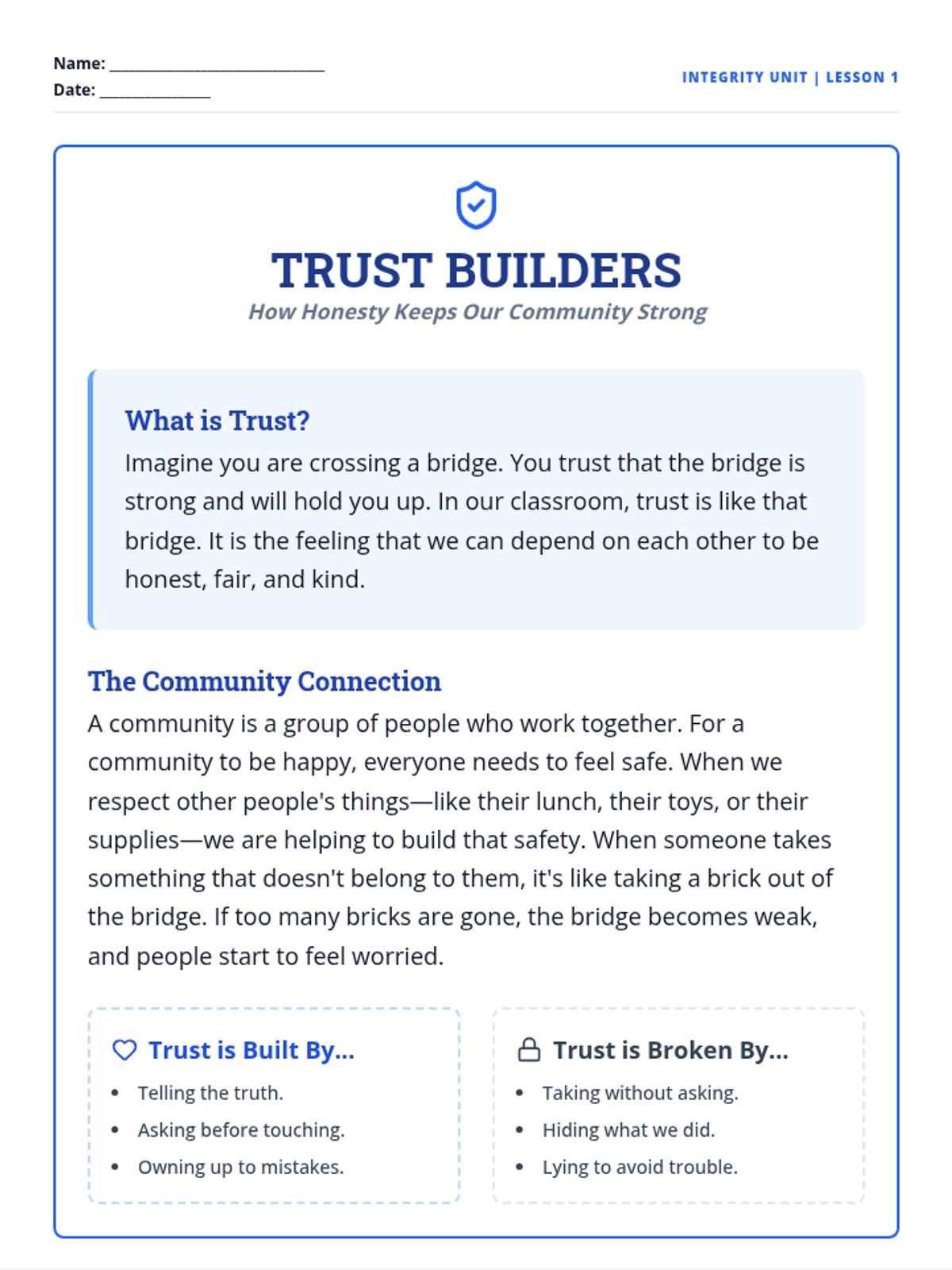
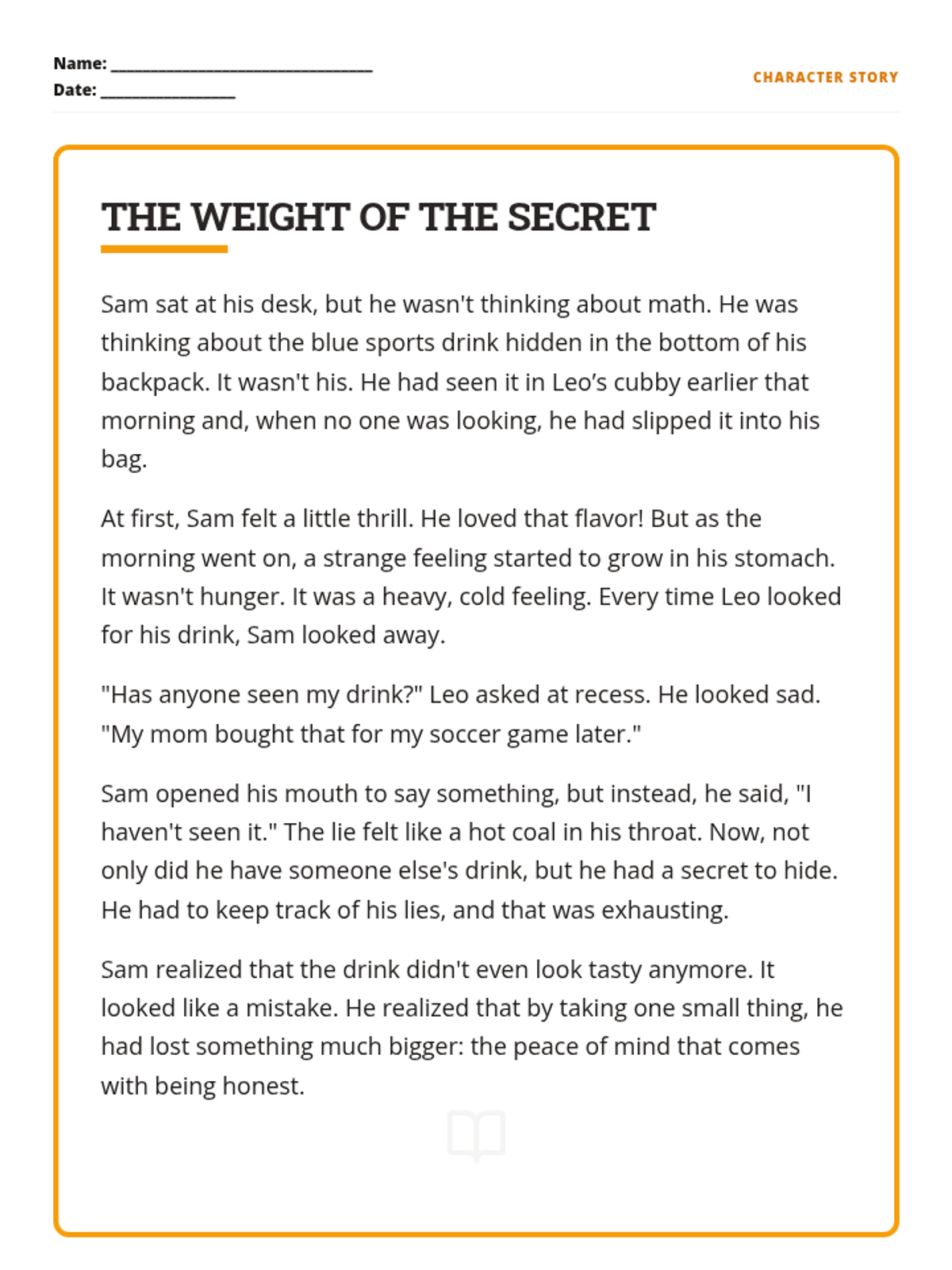
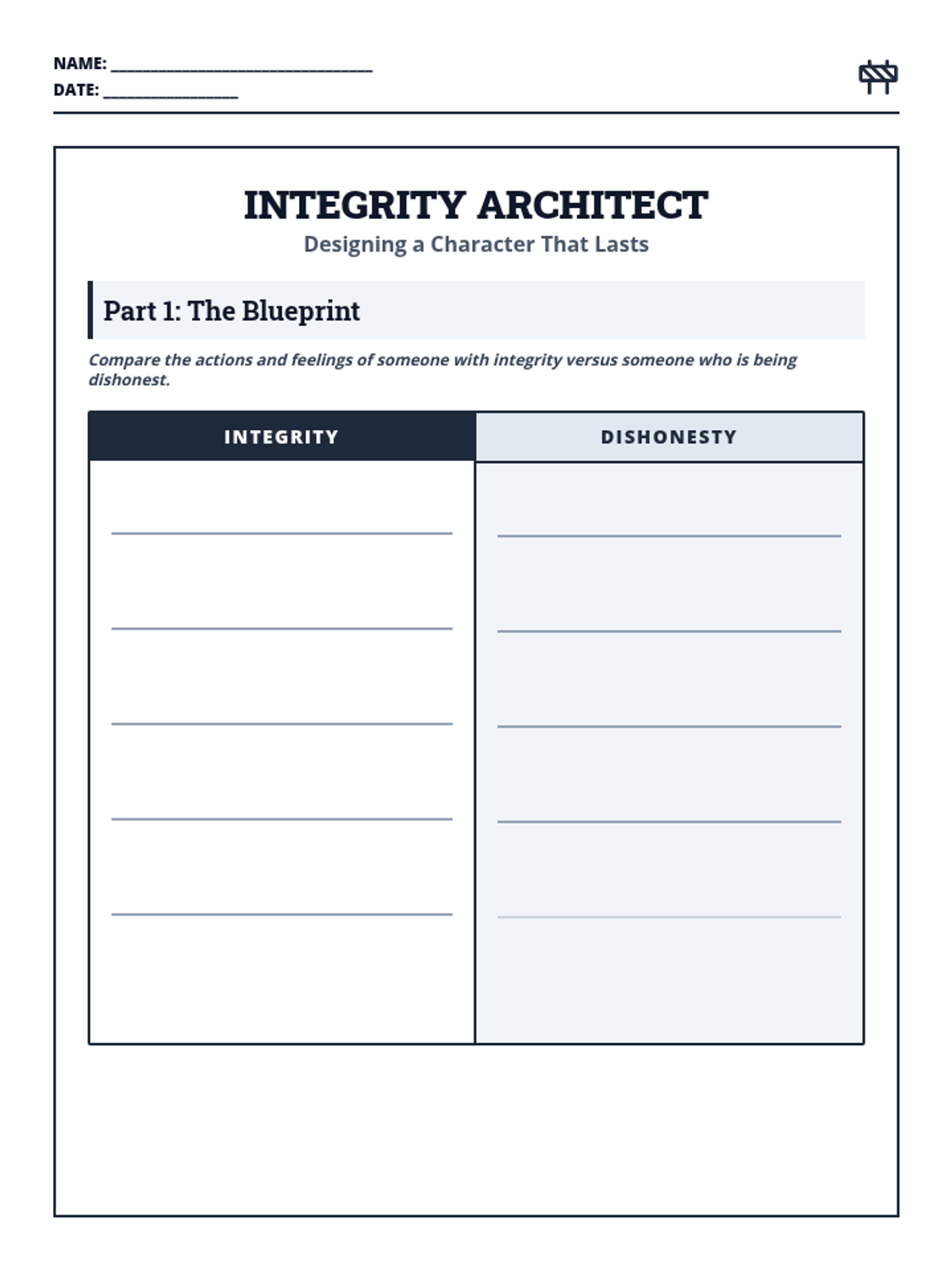
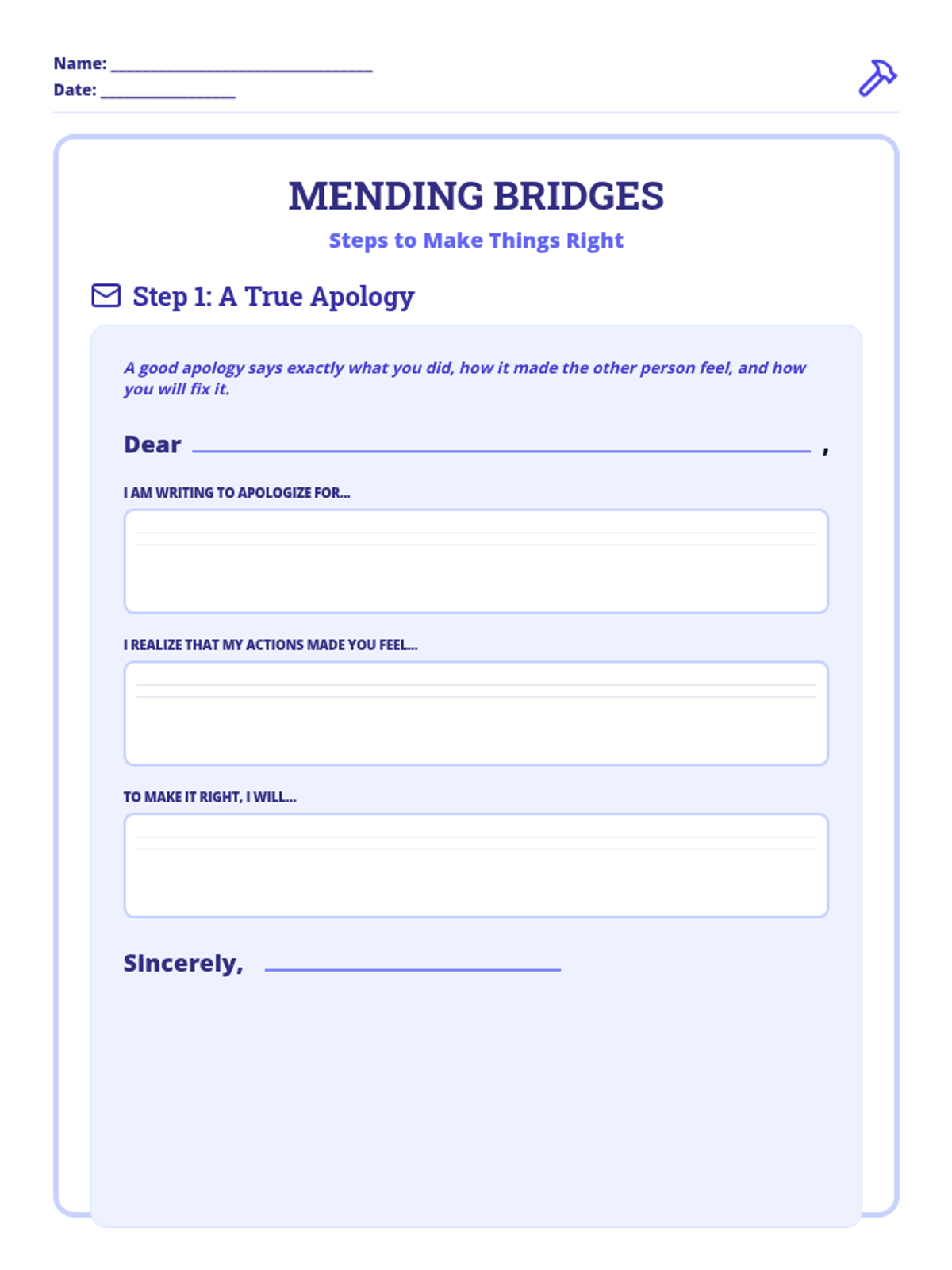
A restorative justice unit for elementary students focusing on the impact of theft and dishonesty on community trust, featuring informational text, a relatable narrative, and reflective writing projects.
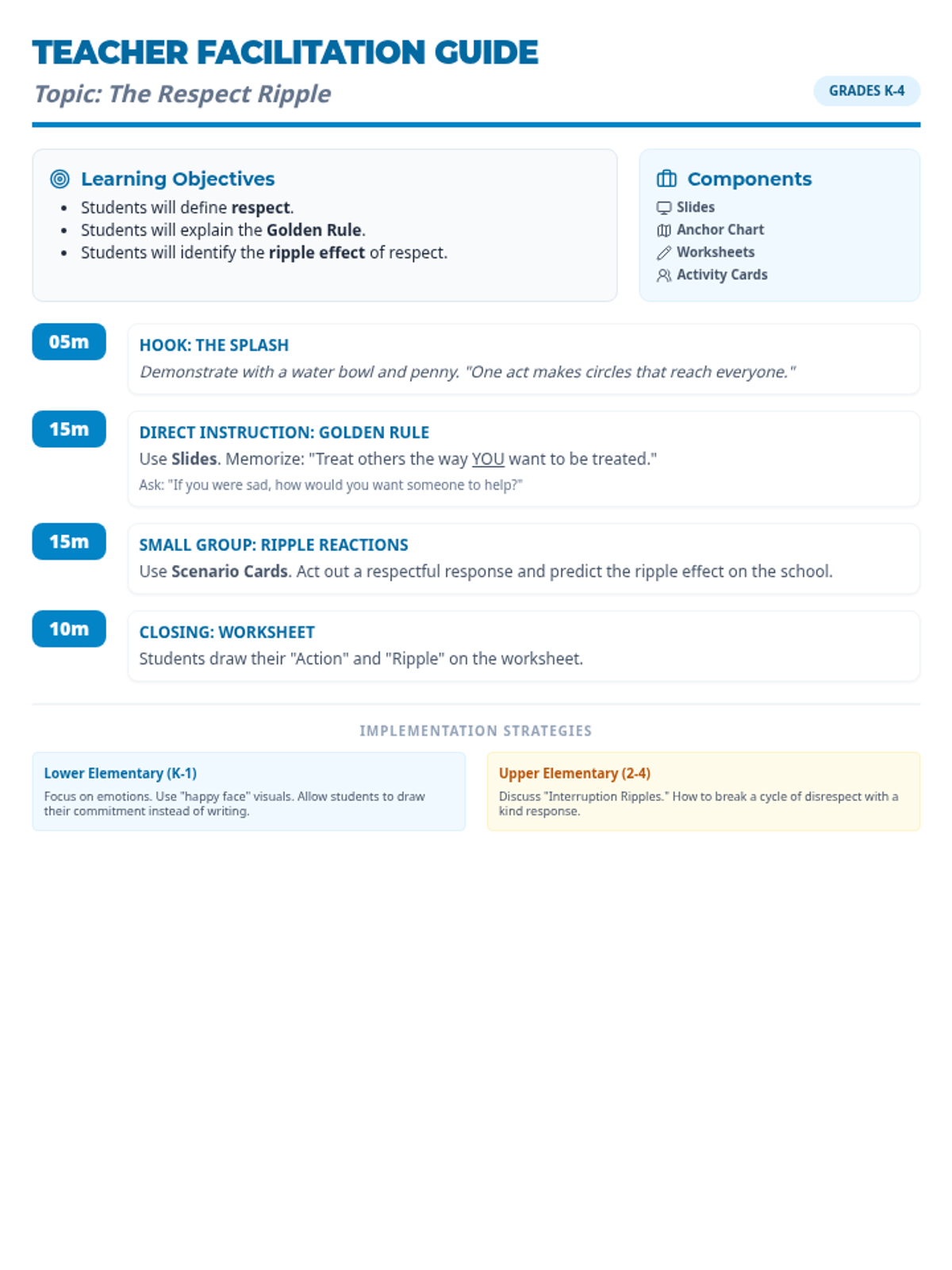
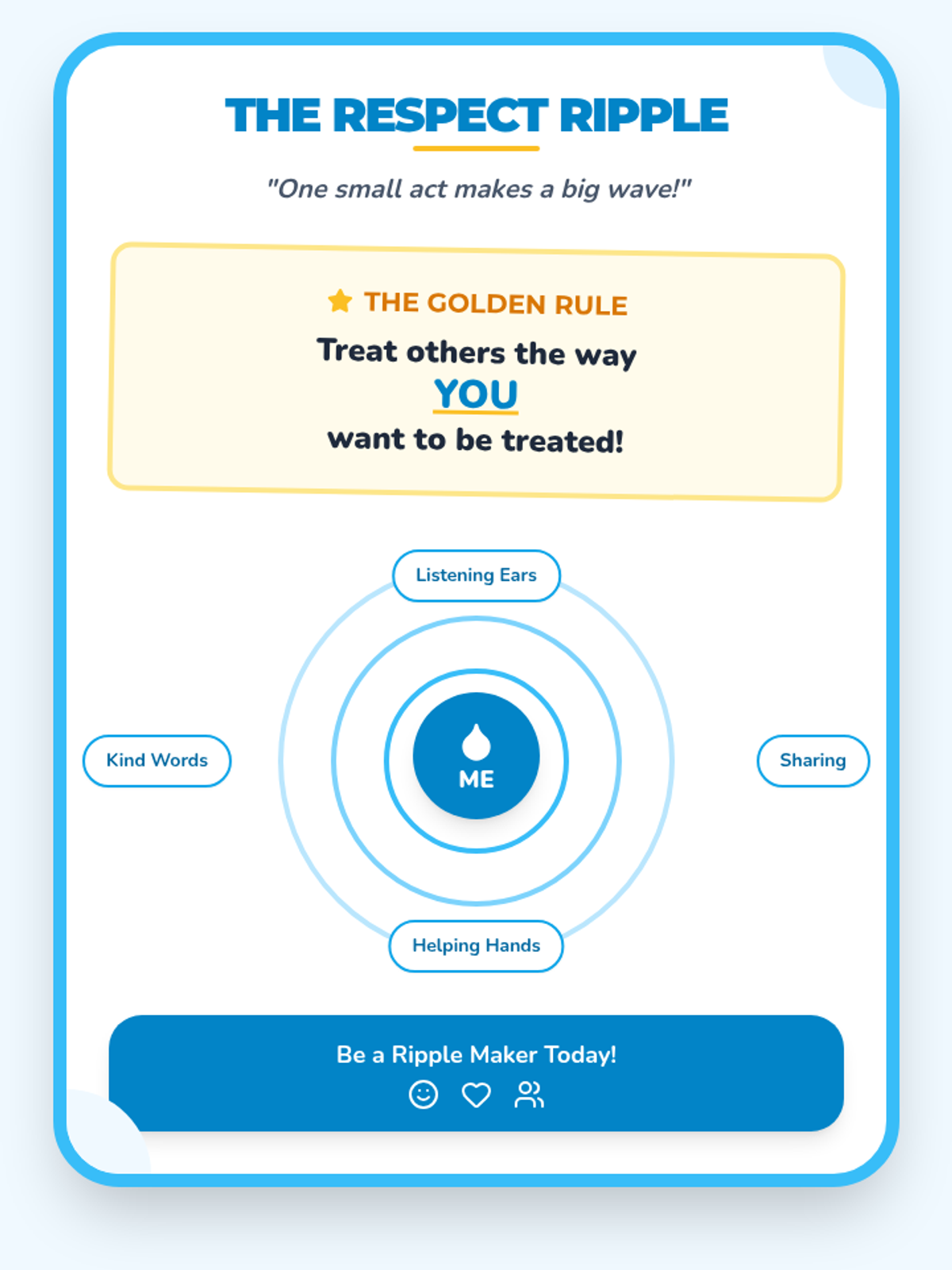
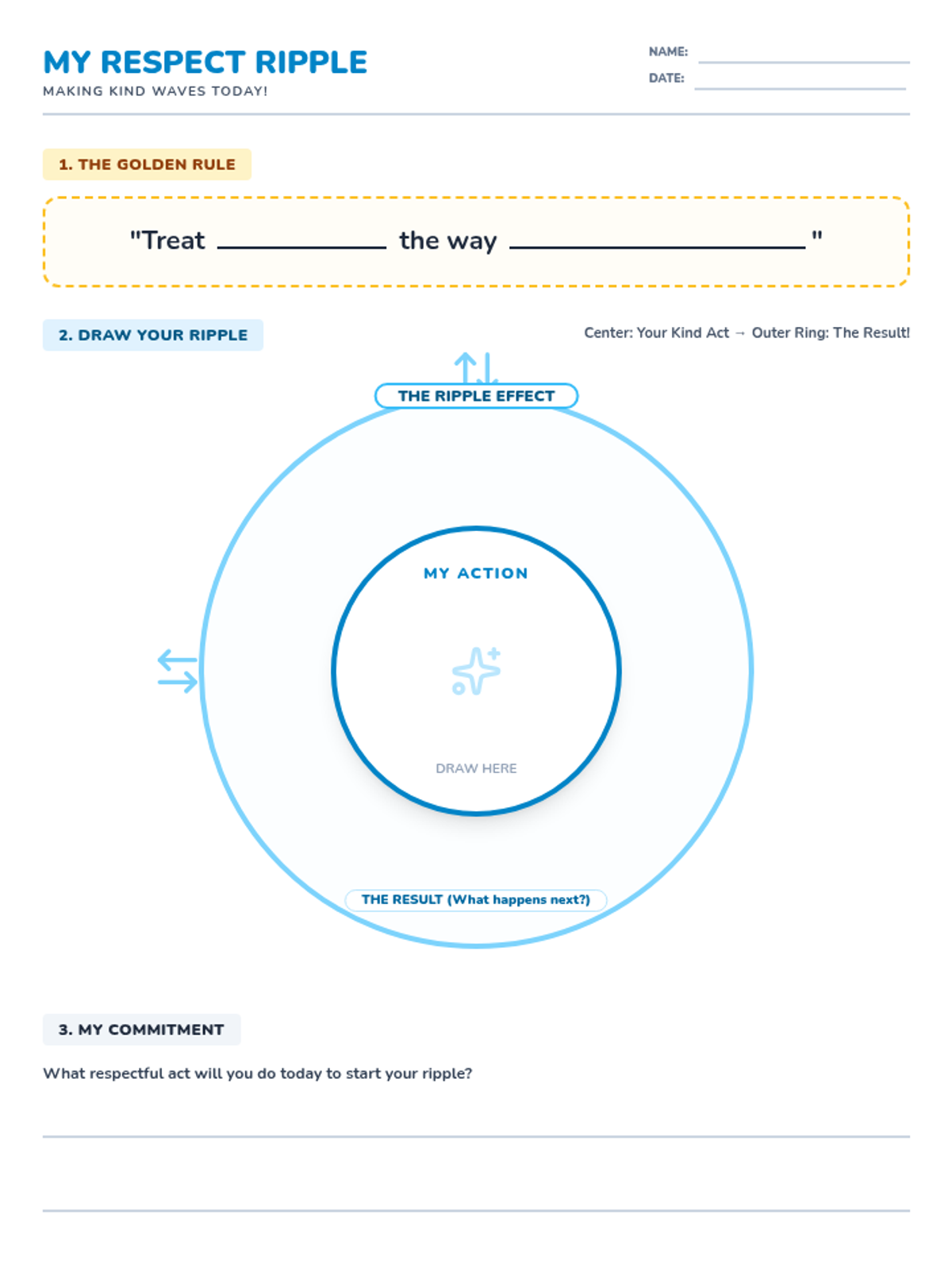
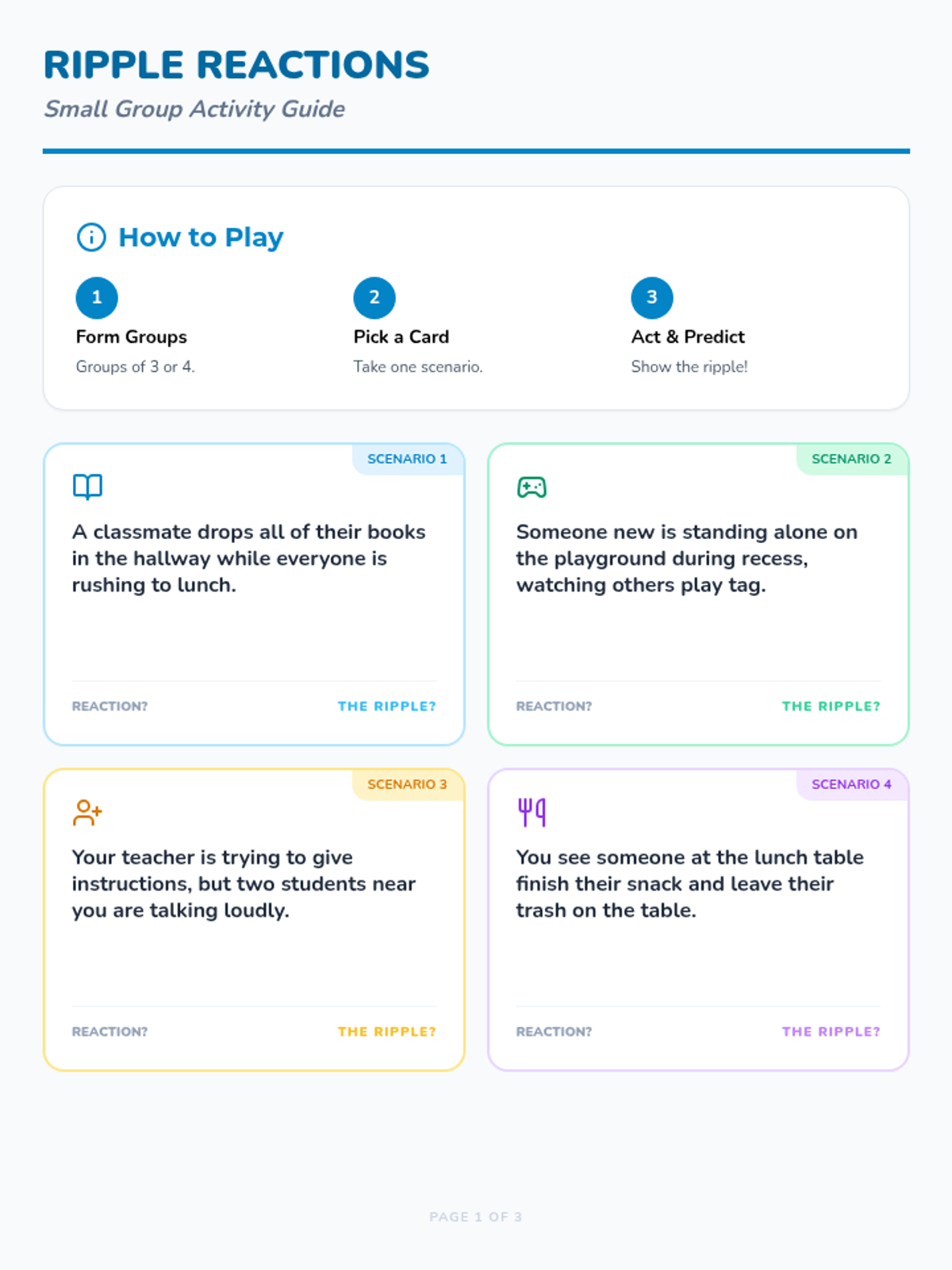
A comprehensive lesson on respect for K-4 students, focusing on the Golden Rule and the 'ripple effect' of kind actions. Includes a visual slide deck, teacher's guide, student worksheet, anchor chart, and small group activity cards.
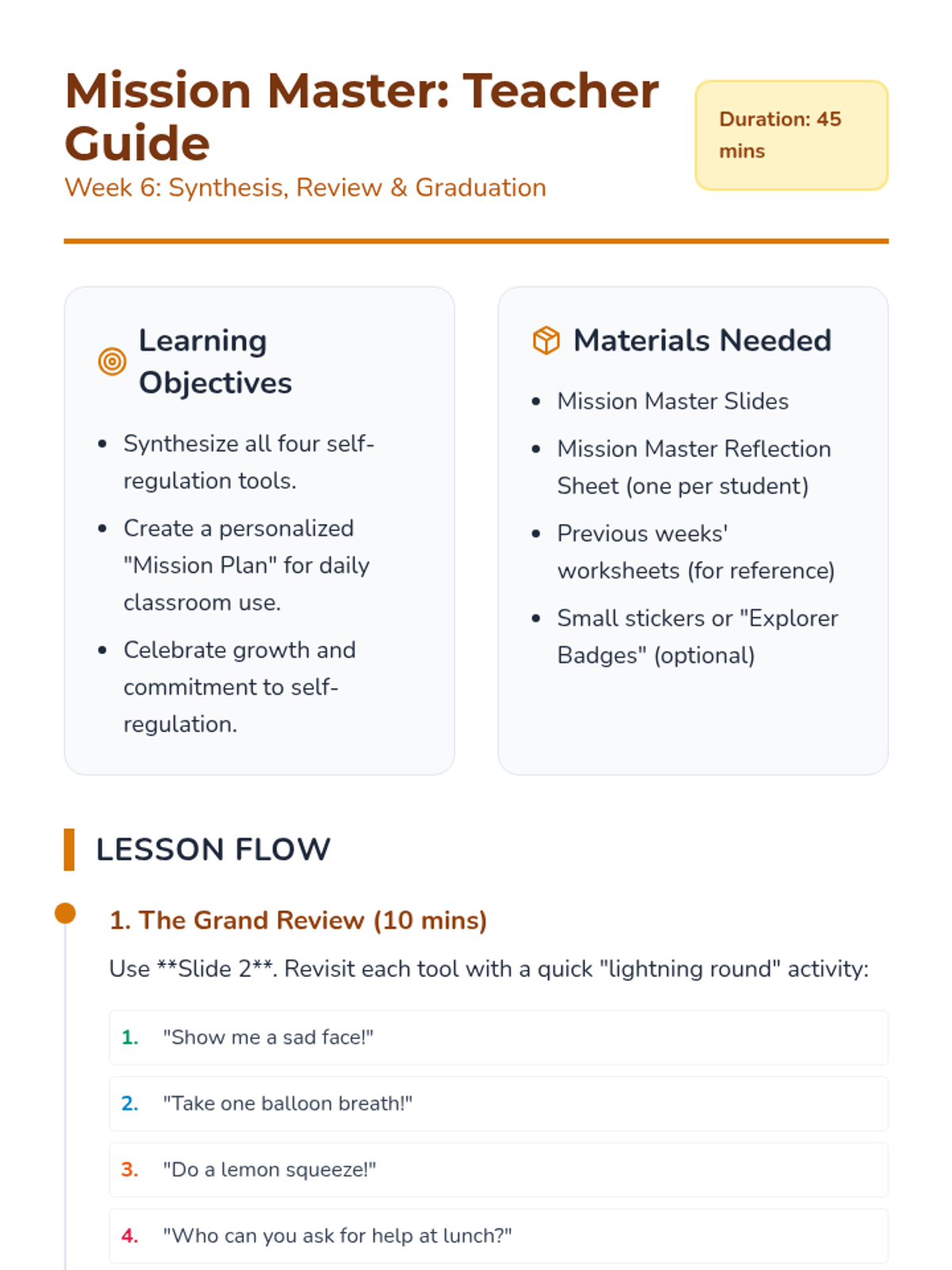
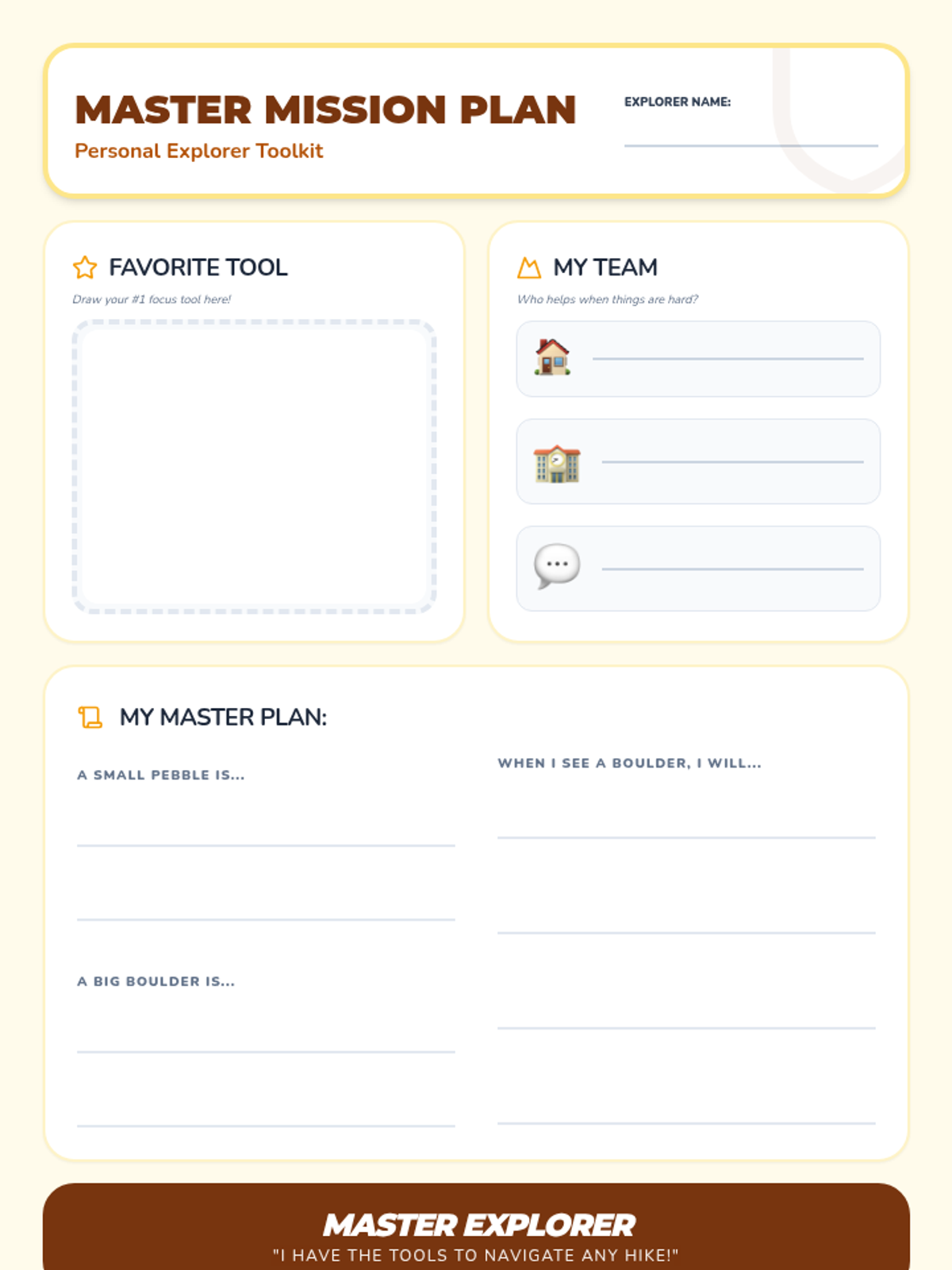
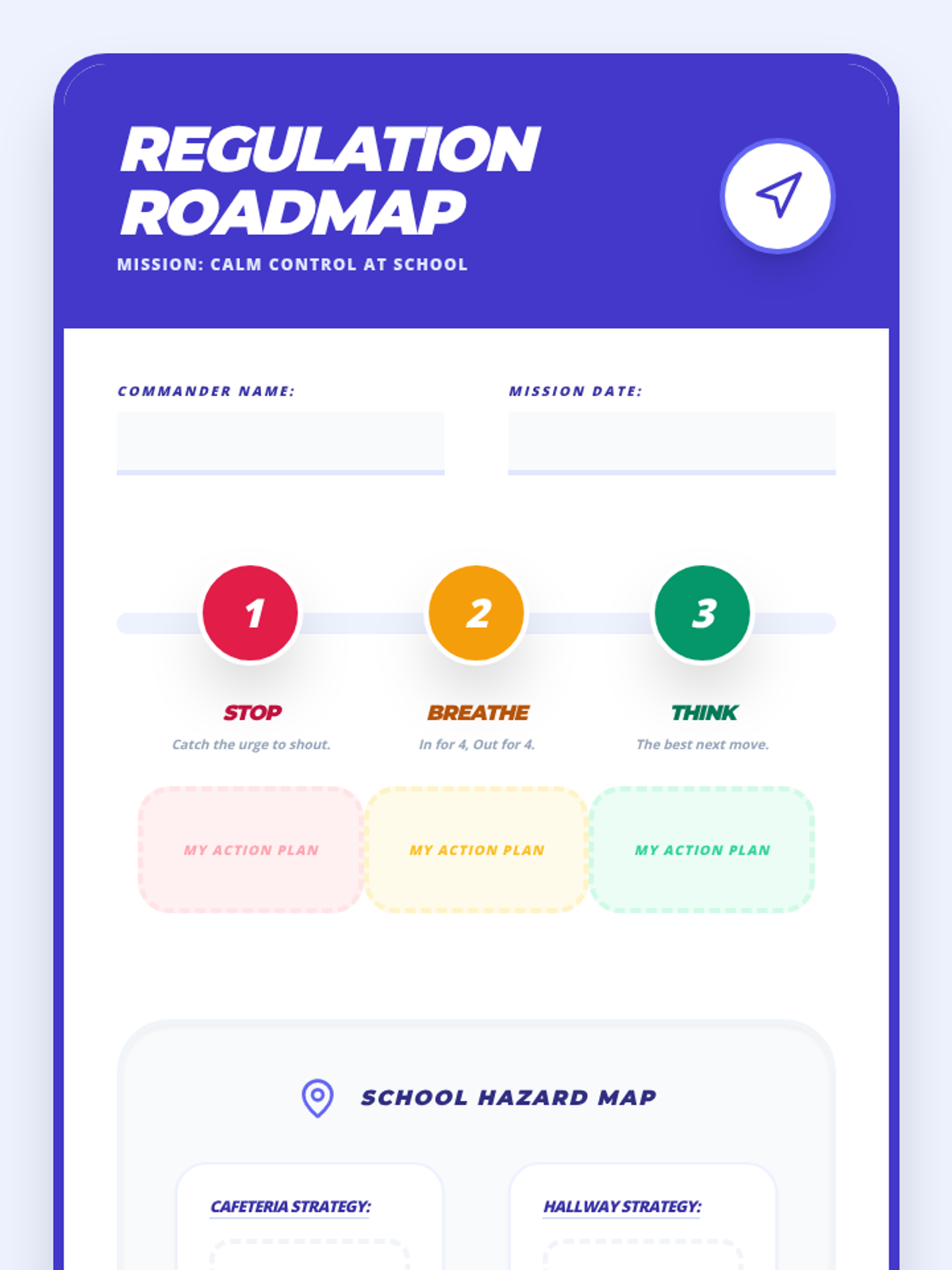
Reviewing all tools and creating a personalized 'Mission Plan' for classroom success.
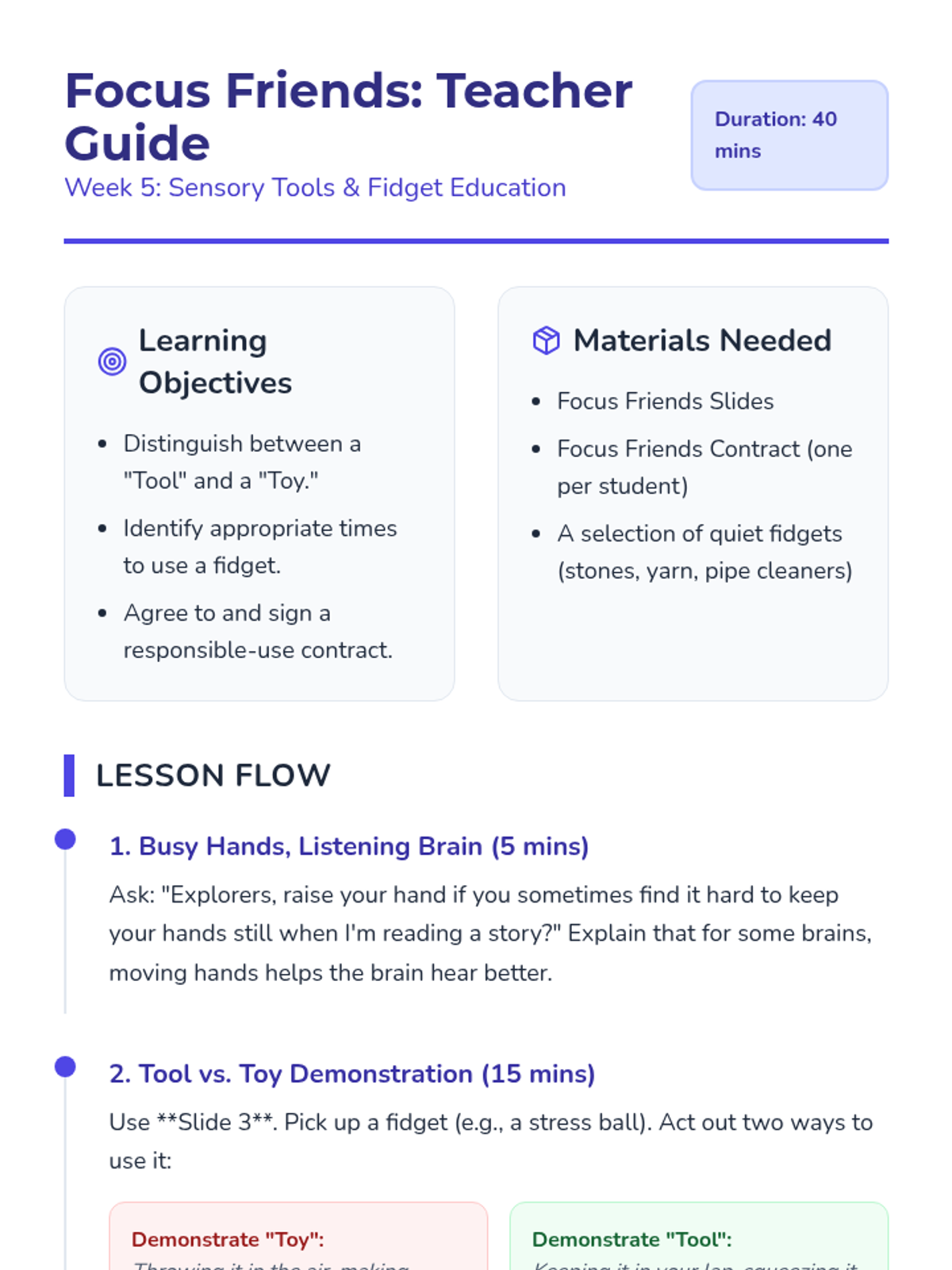
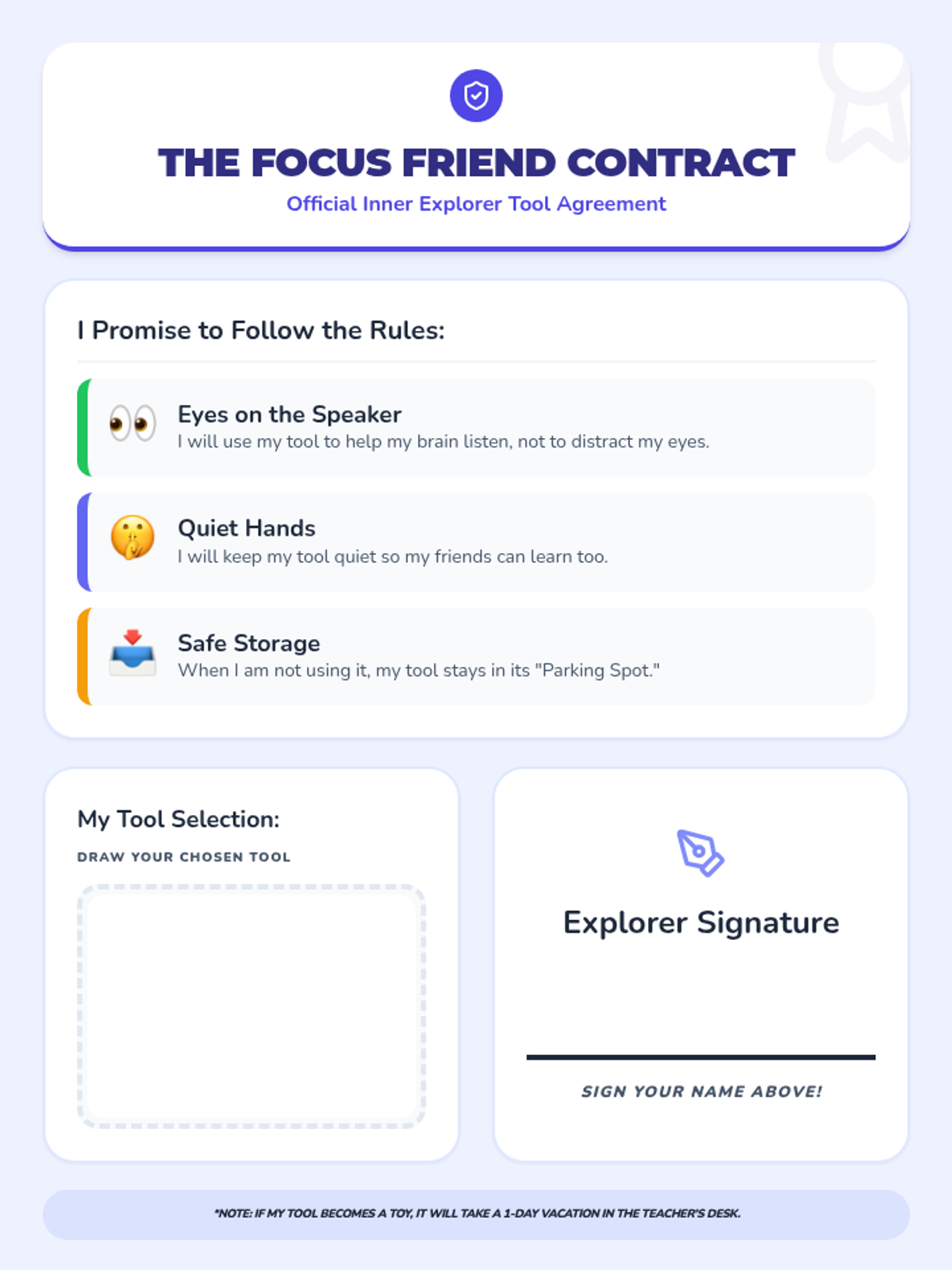
Learning how to use fidgets and sensory tools appropriately for focus.
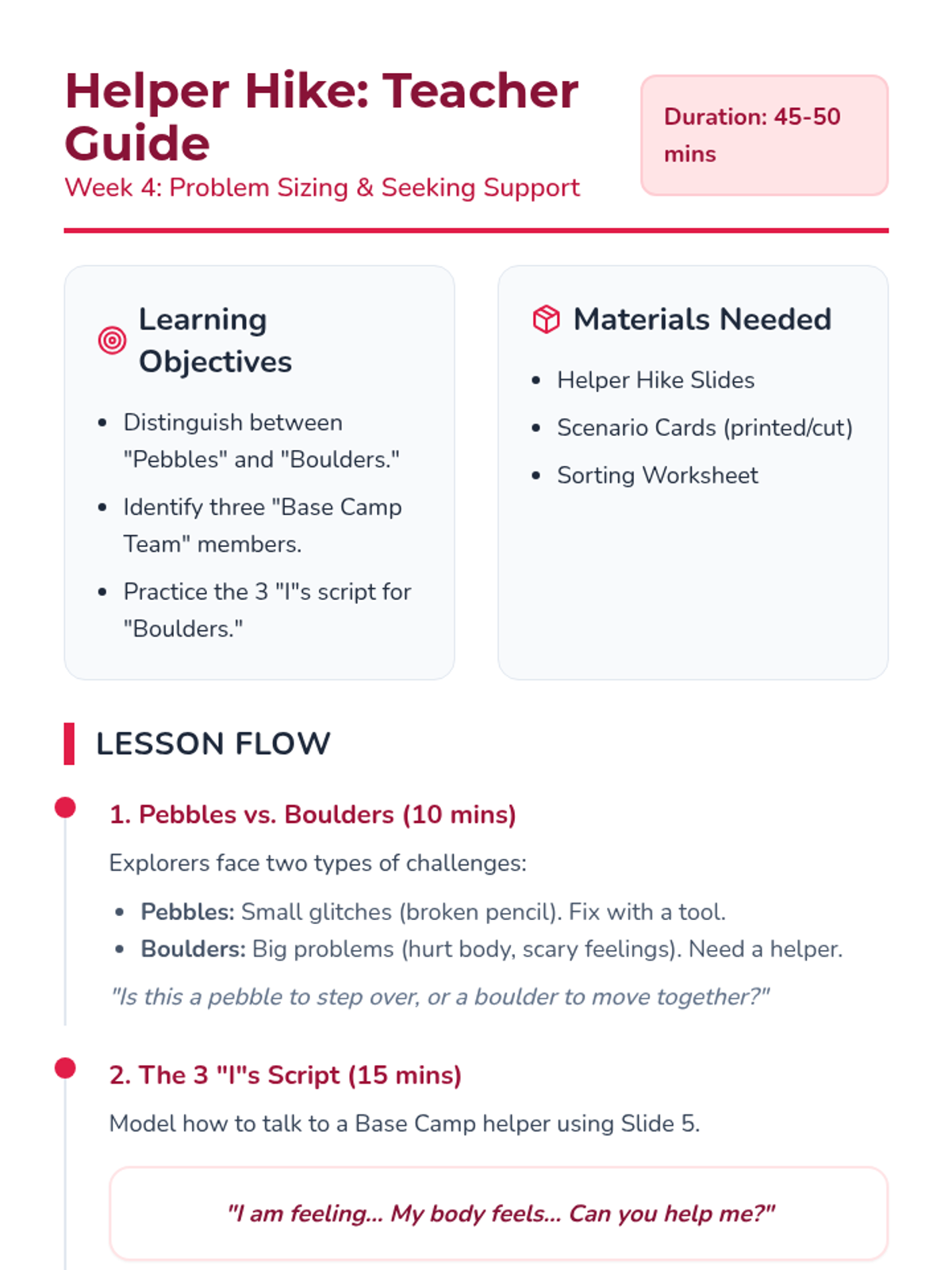
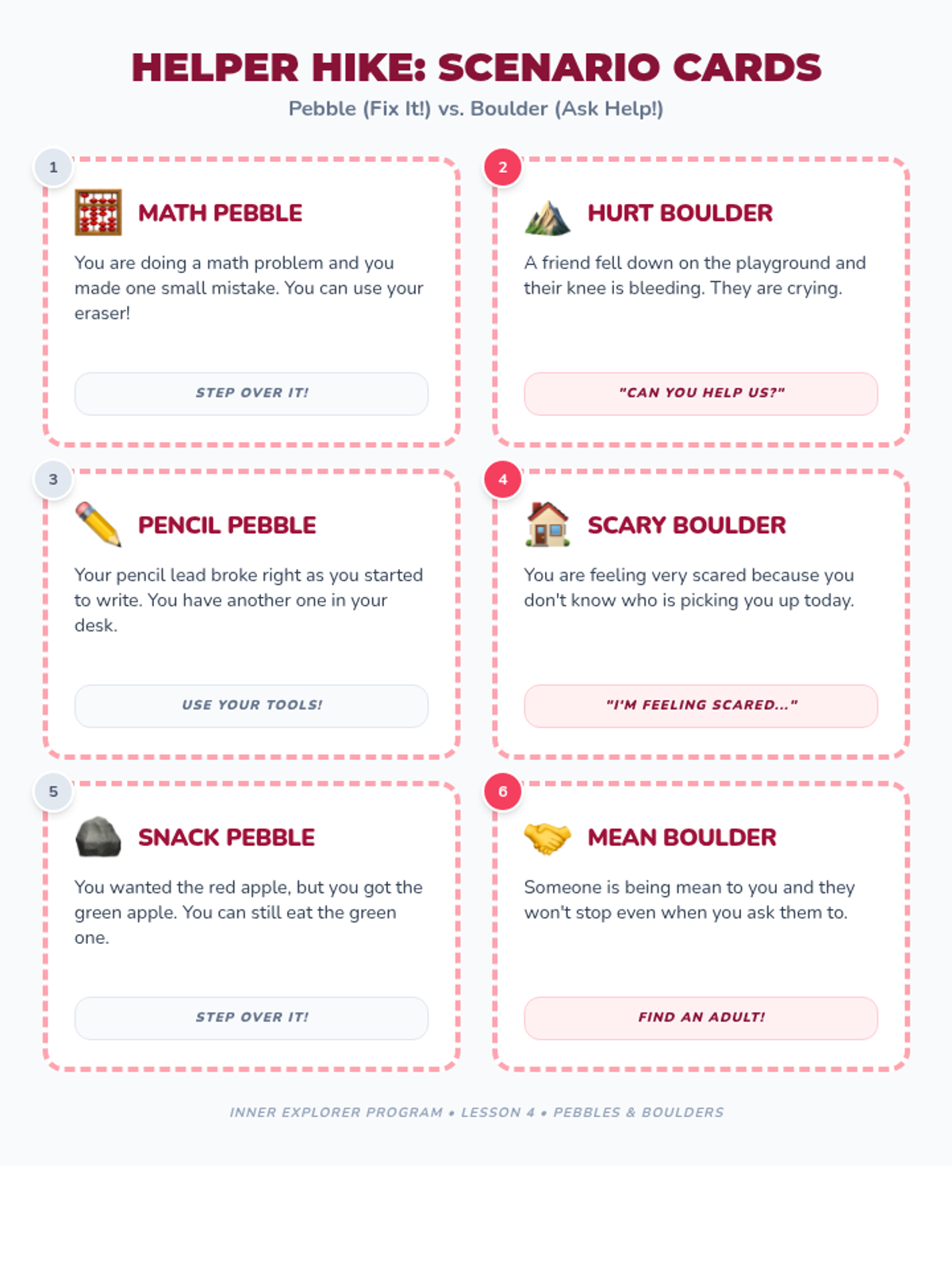
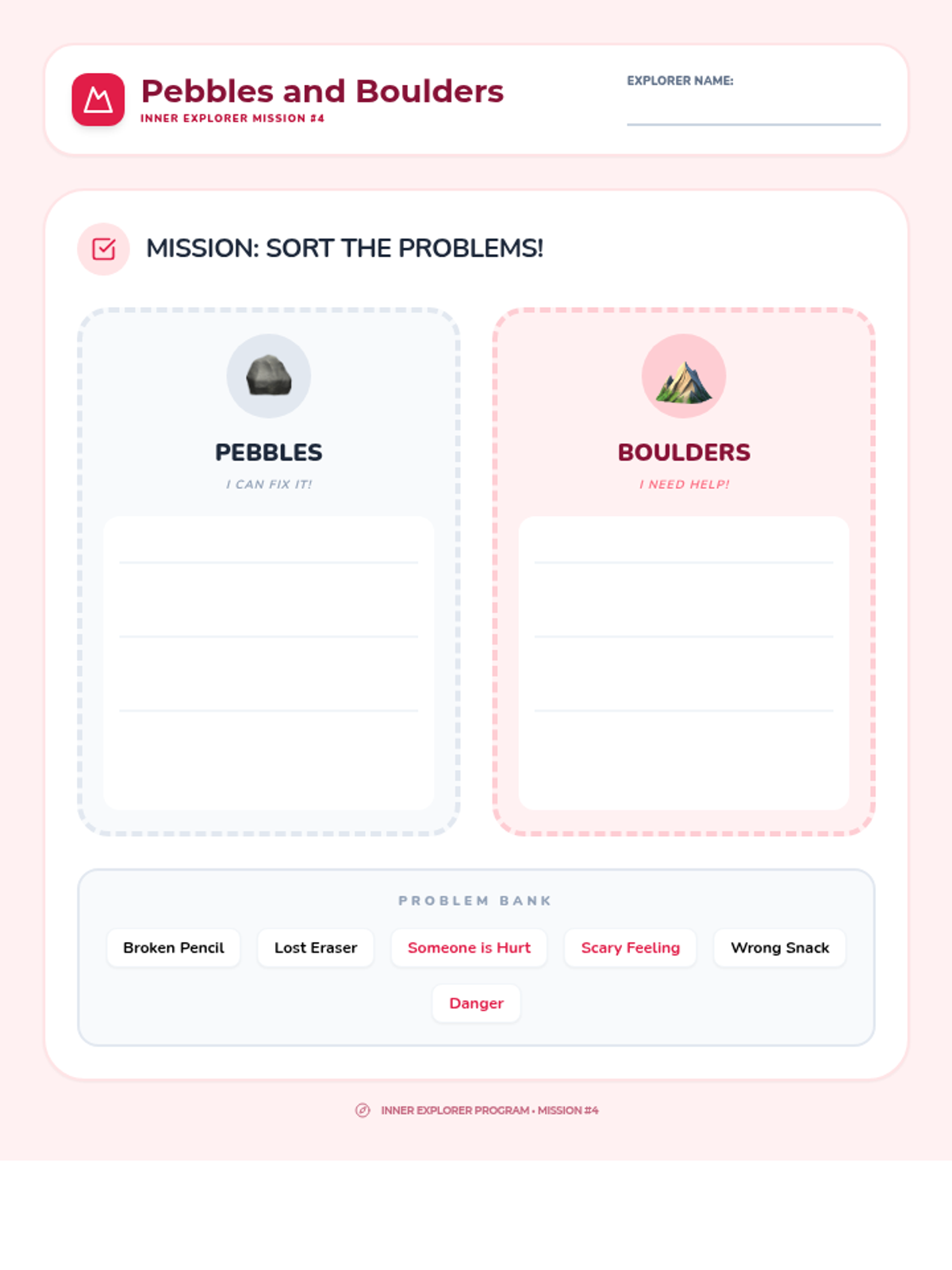
Developing the skill of asking for help and talking through emotions with a trusted adult.
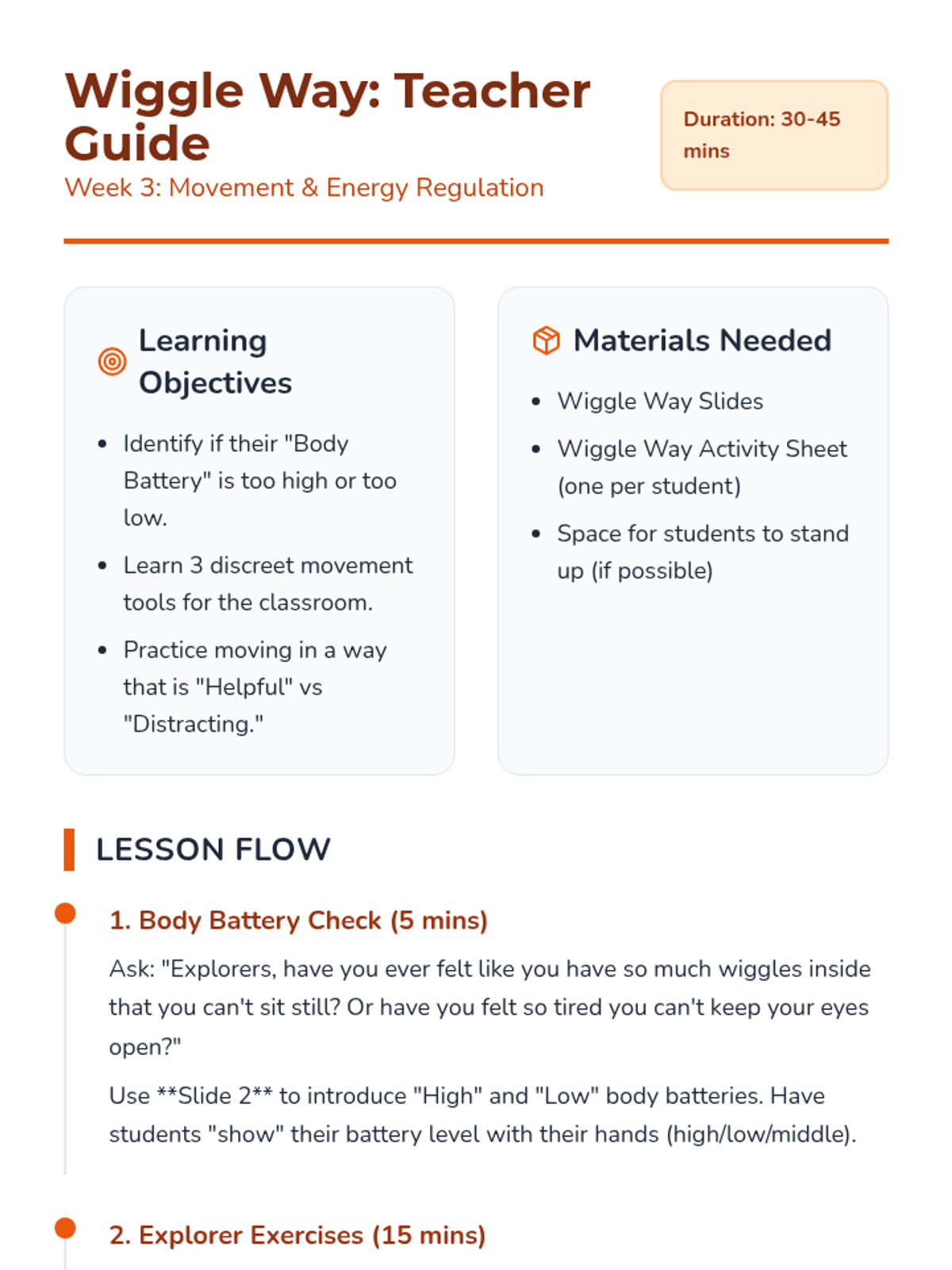
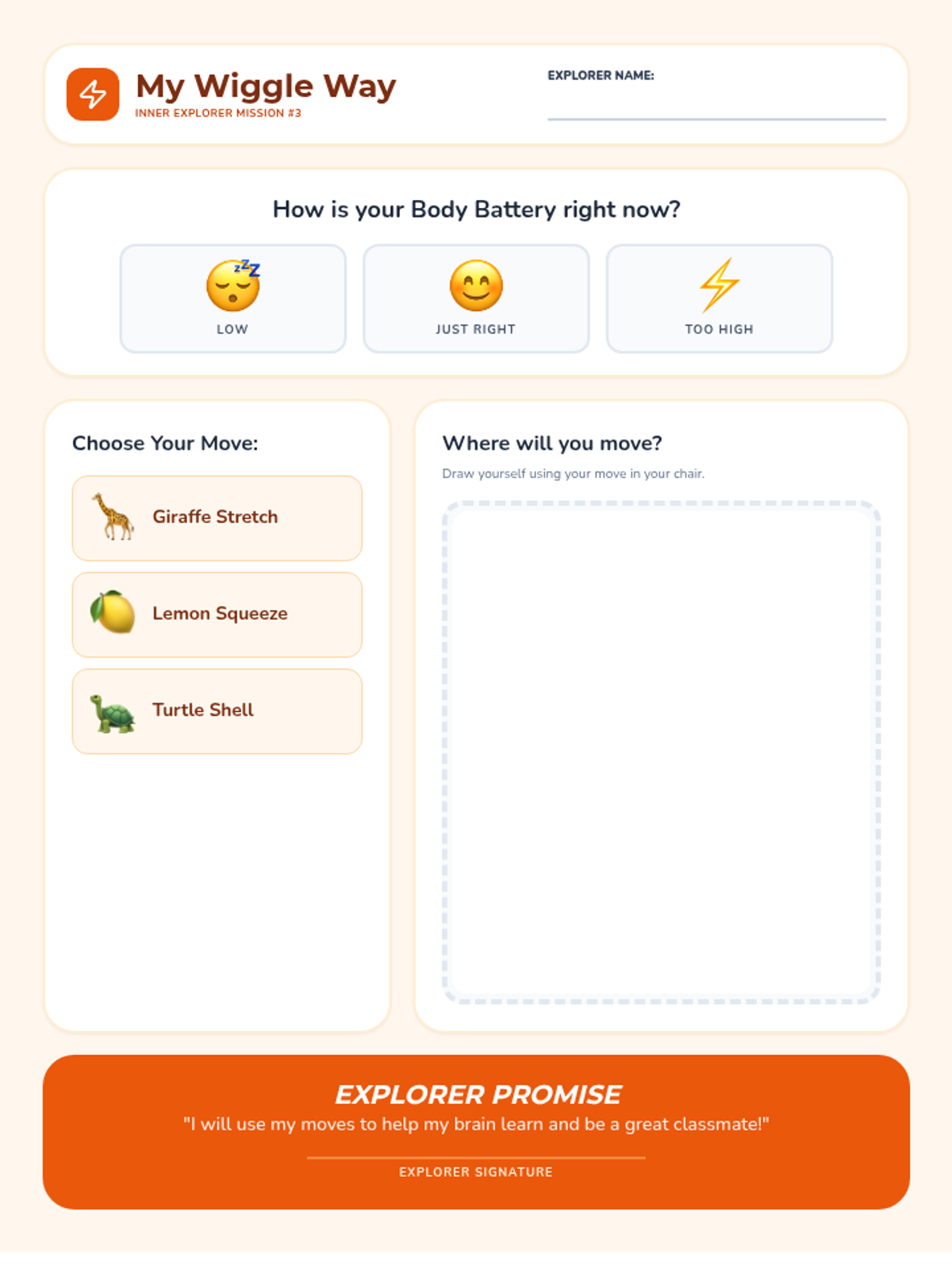
Understanding how movement can help refocus energy and stay on task.
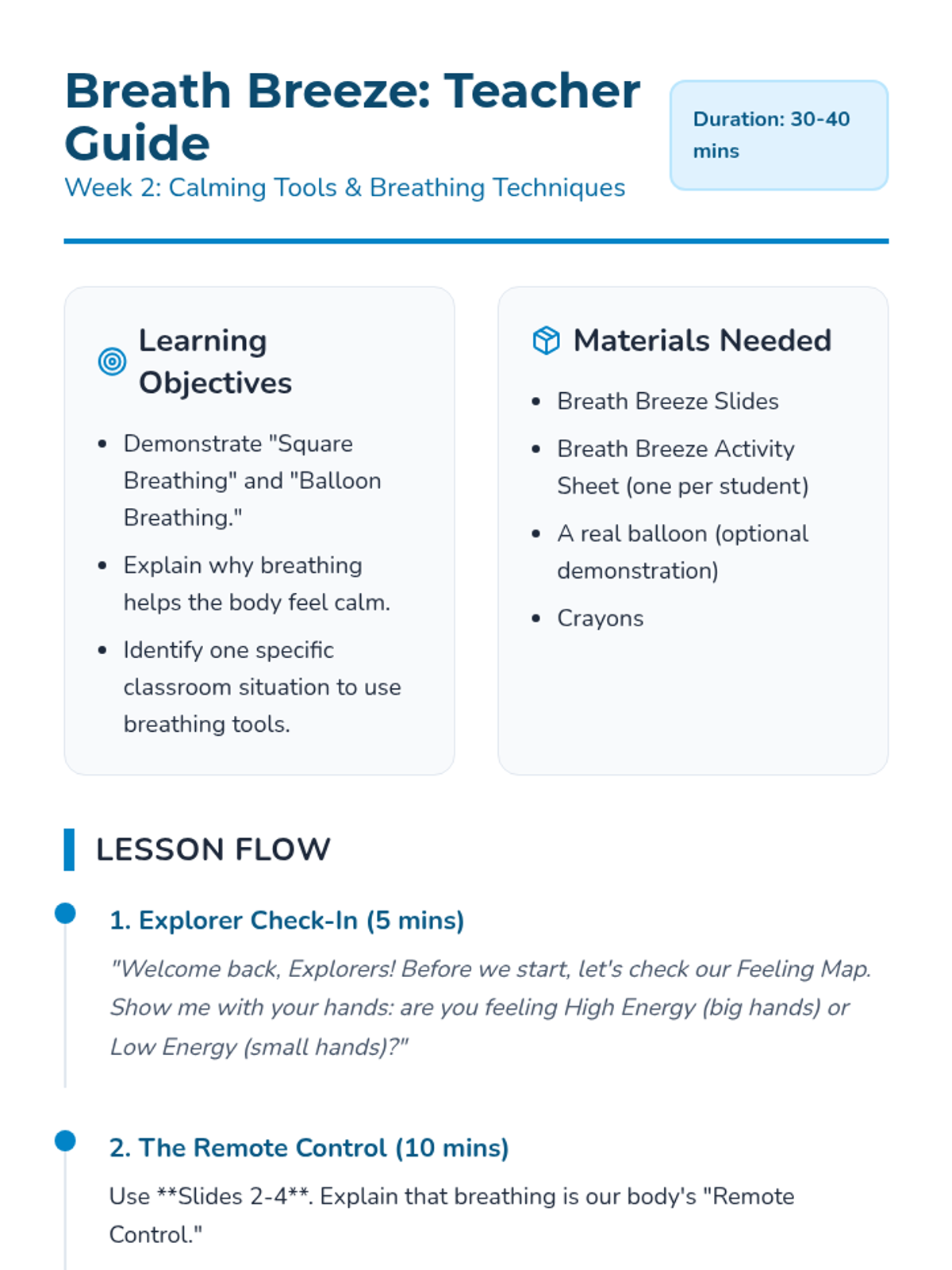
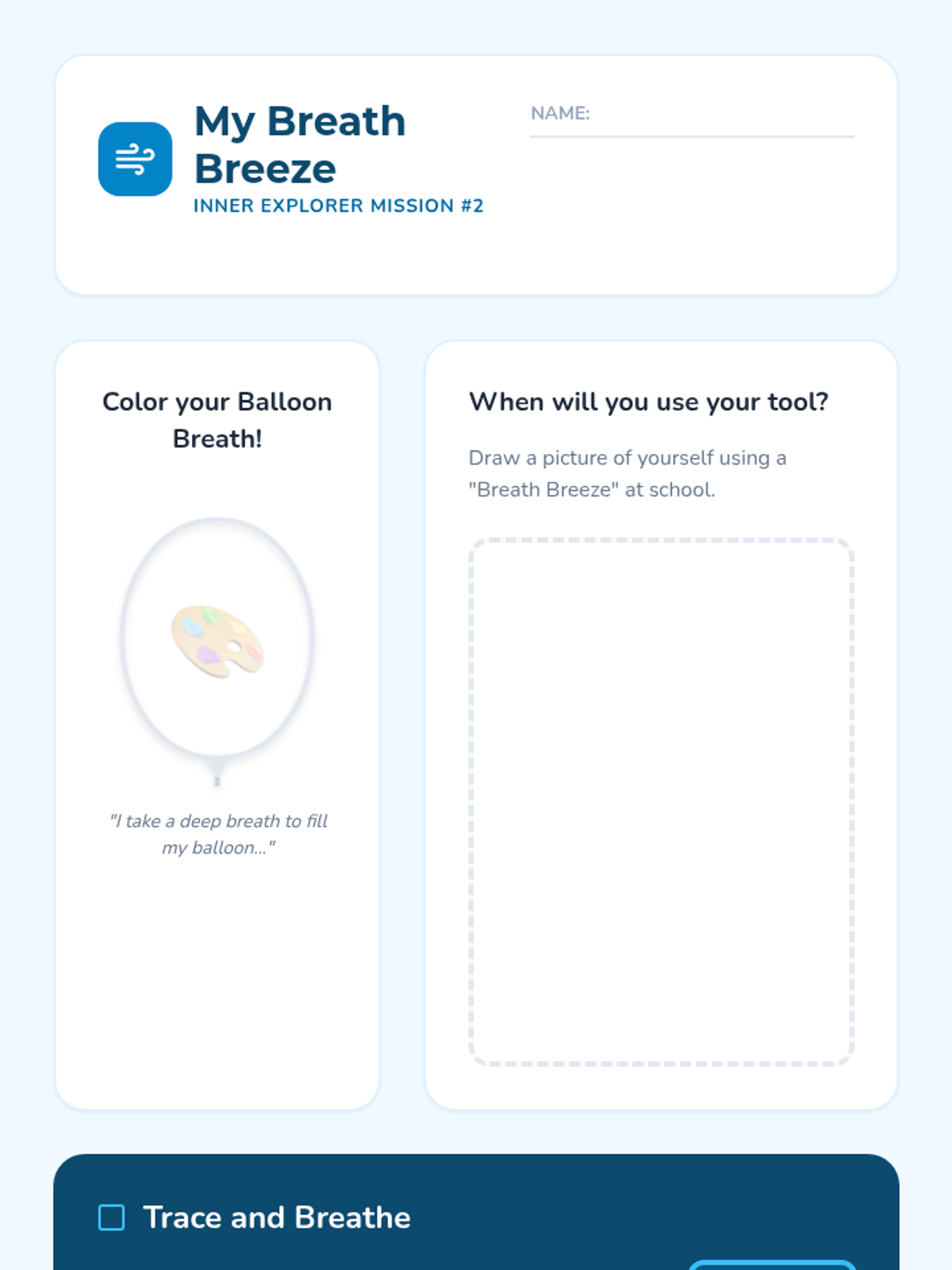
Learning different breathing techniques to calm the mind and body.
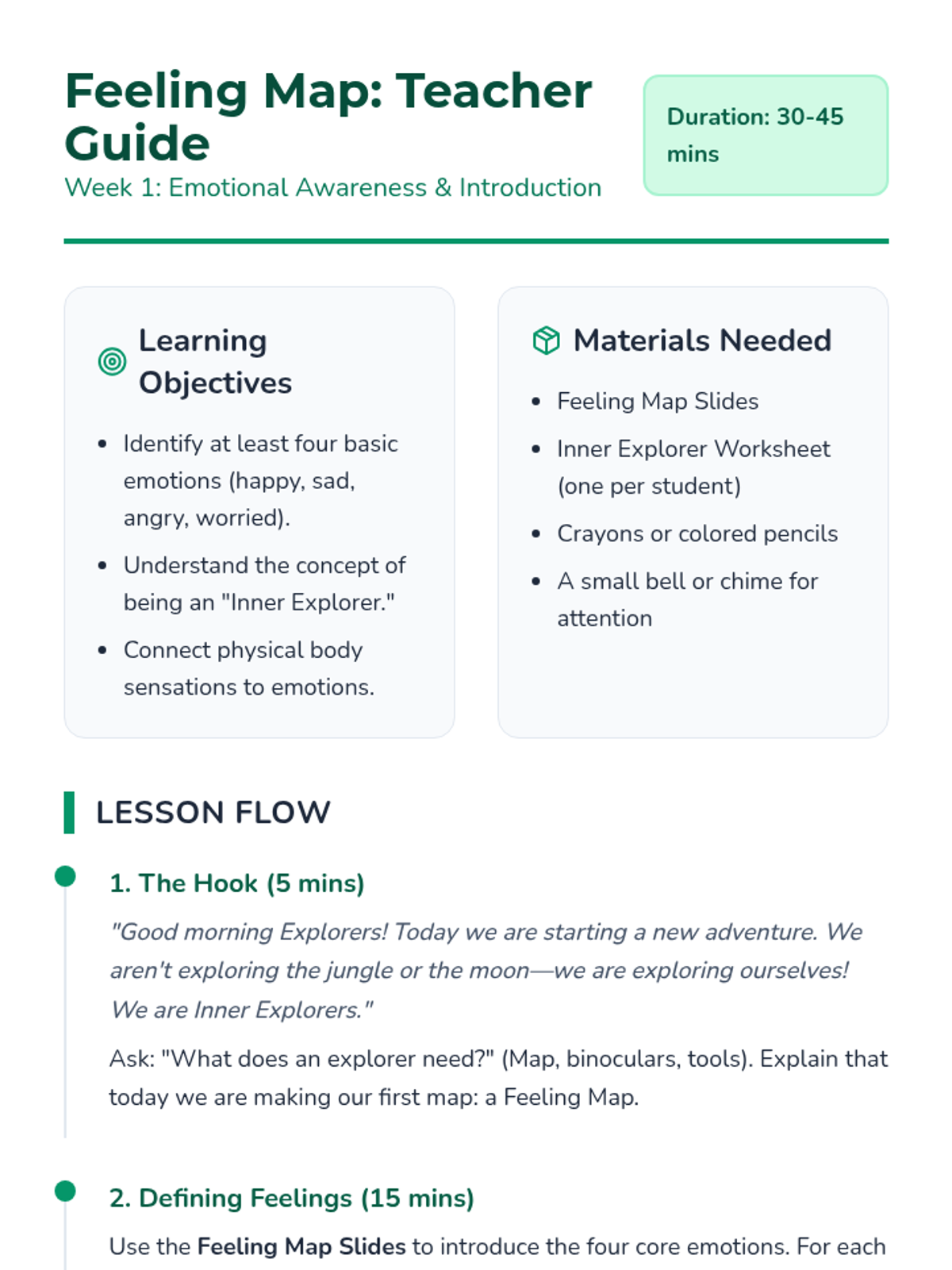
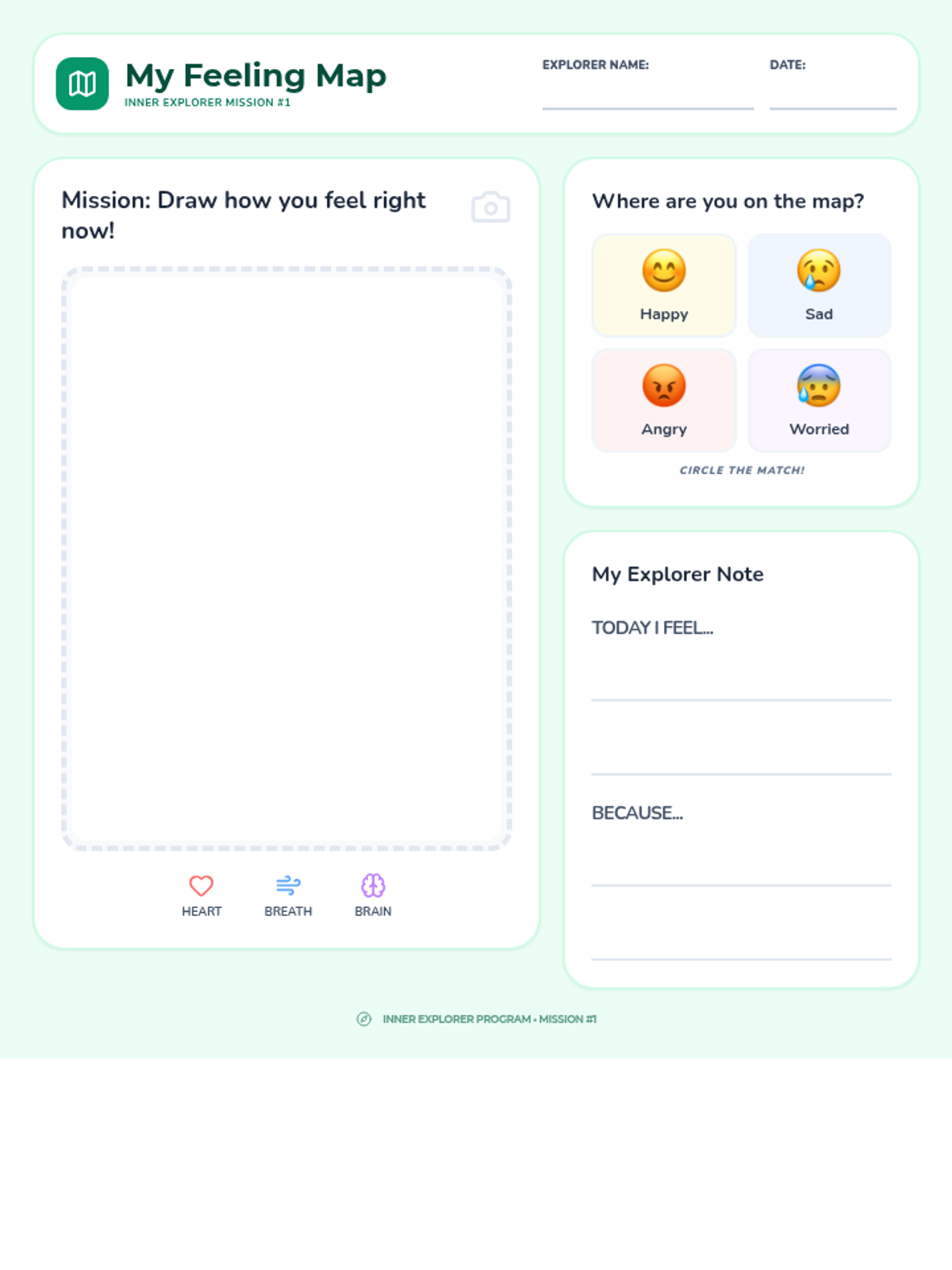
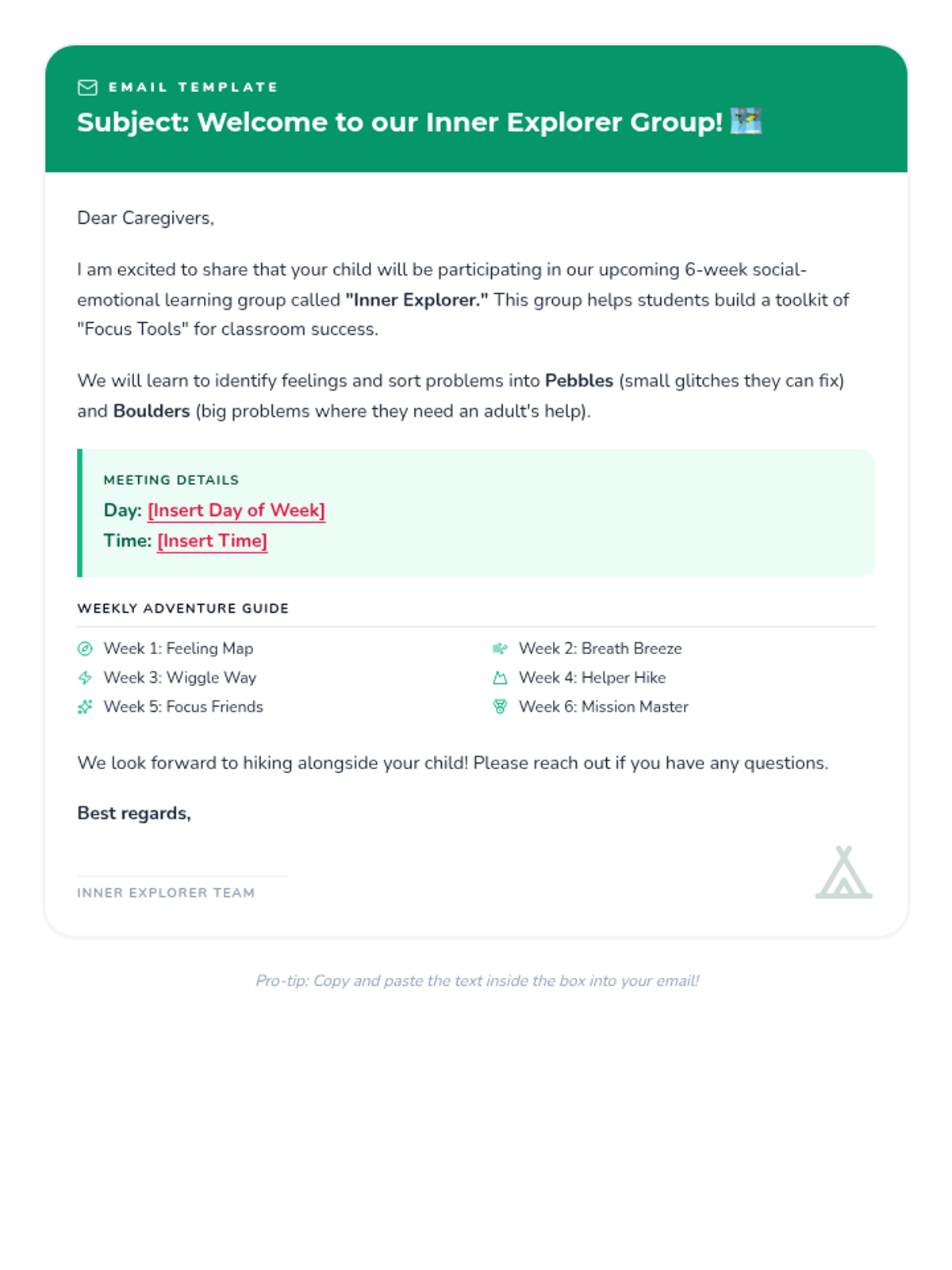
Introduction to the concept of feelings as a 'map' and identifying common emotions.
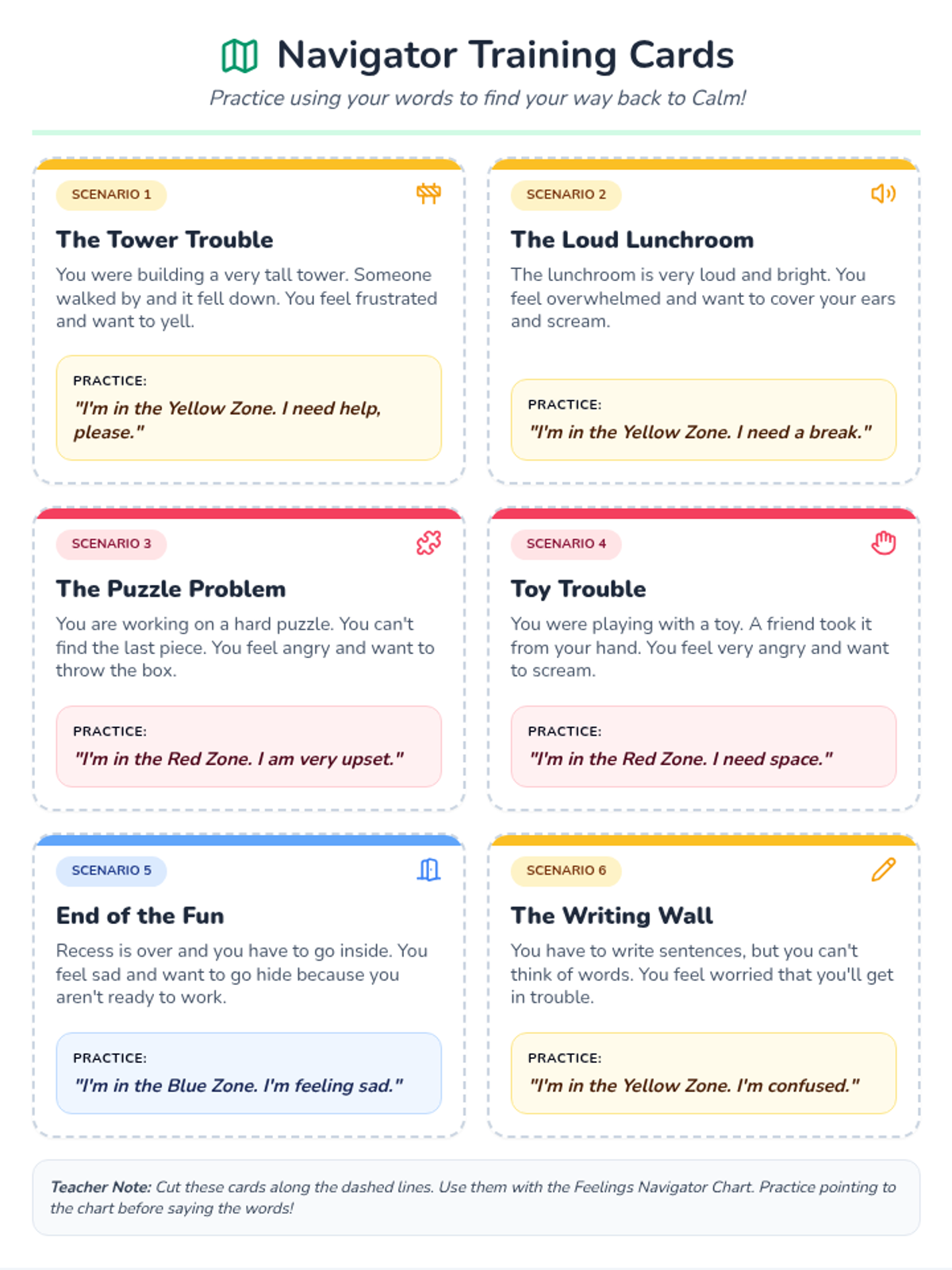
A lesson designed for two first-graders to learn how to replace screaming and eloping with verbal communication using a feelings chart. Through role-play and visual aids, students practice identifying their emotions and stating their needs.
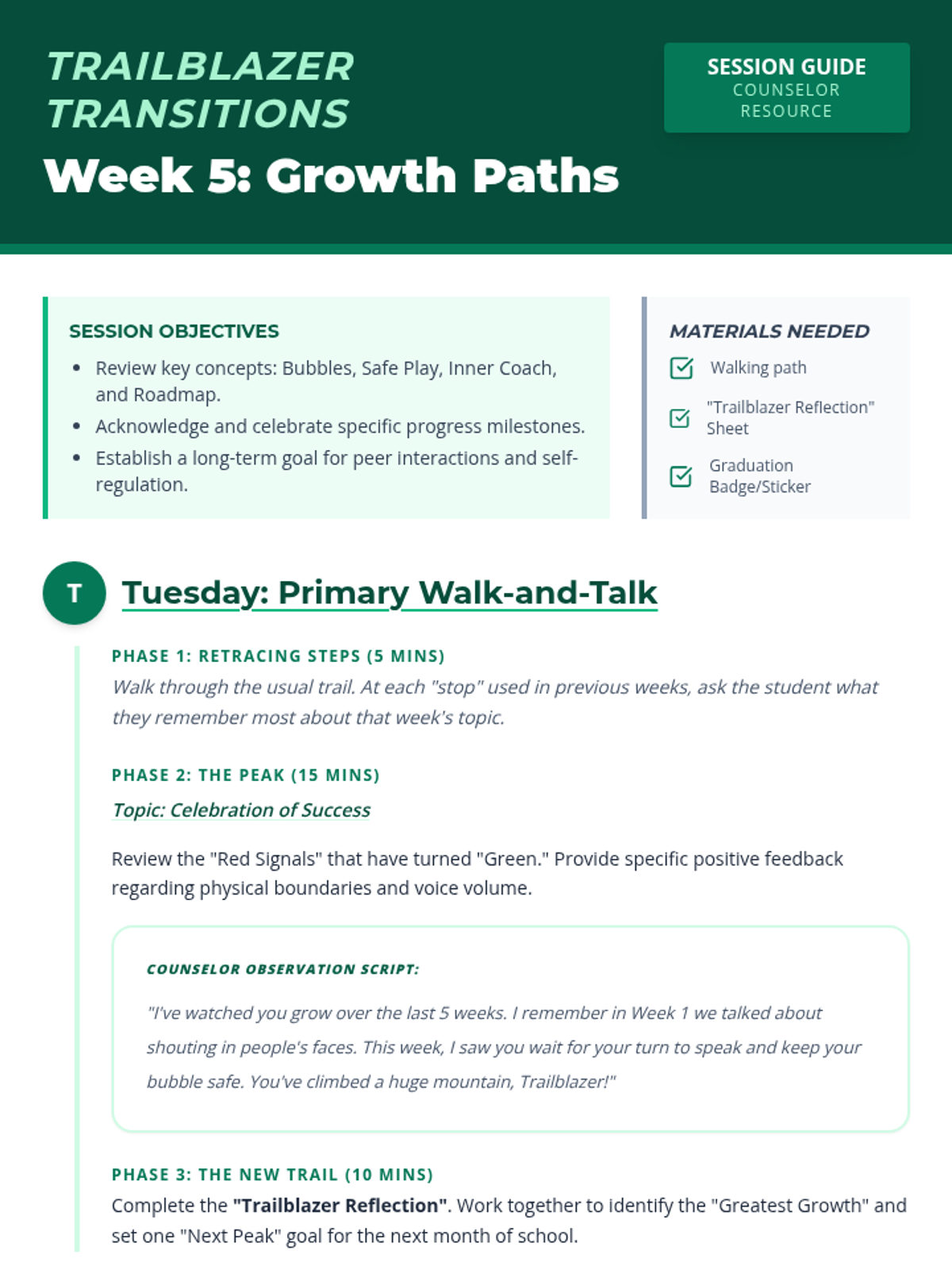
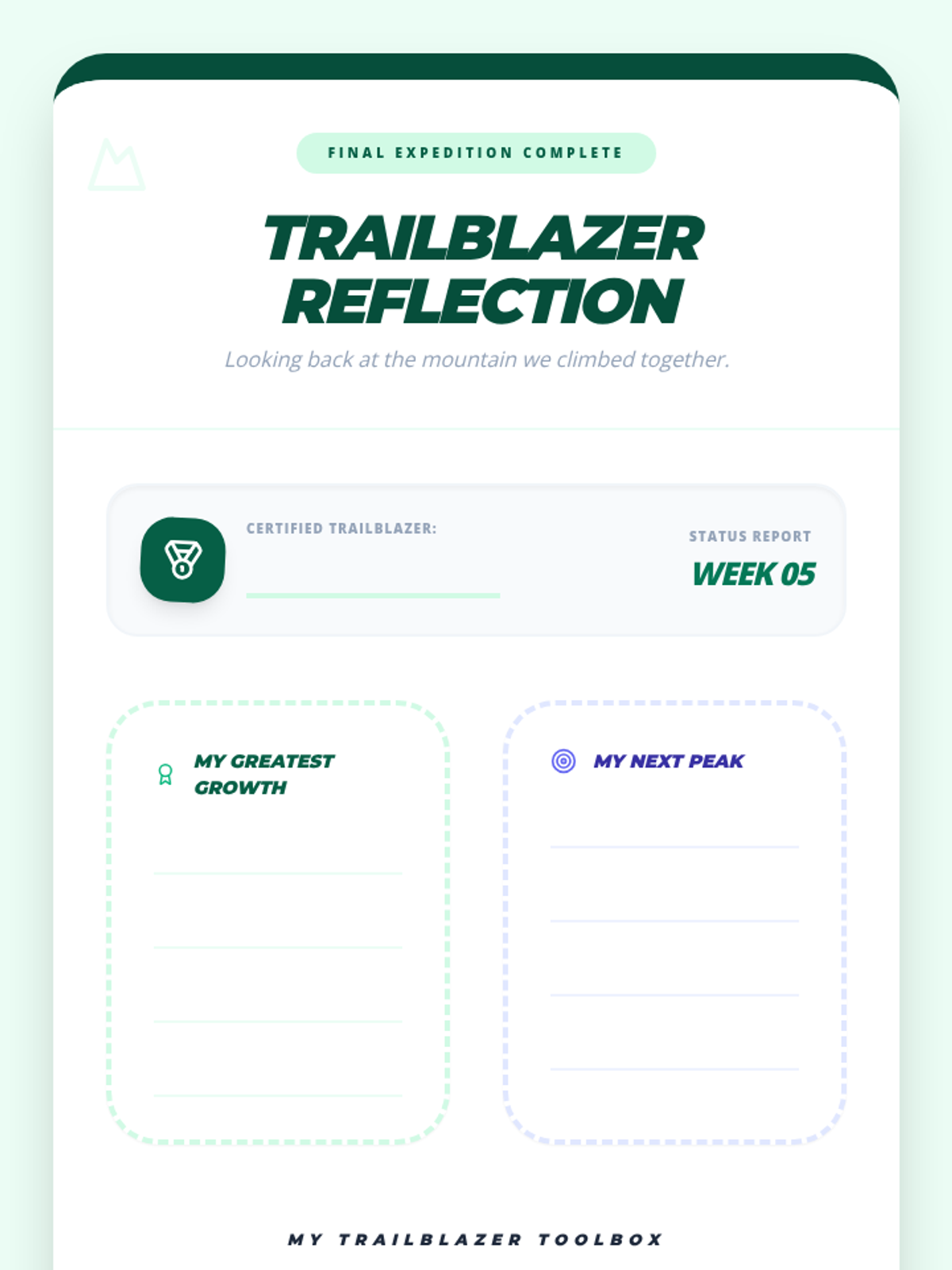
Consolidates learning from the previous weeks and sets goals for continued social-emotional success.
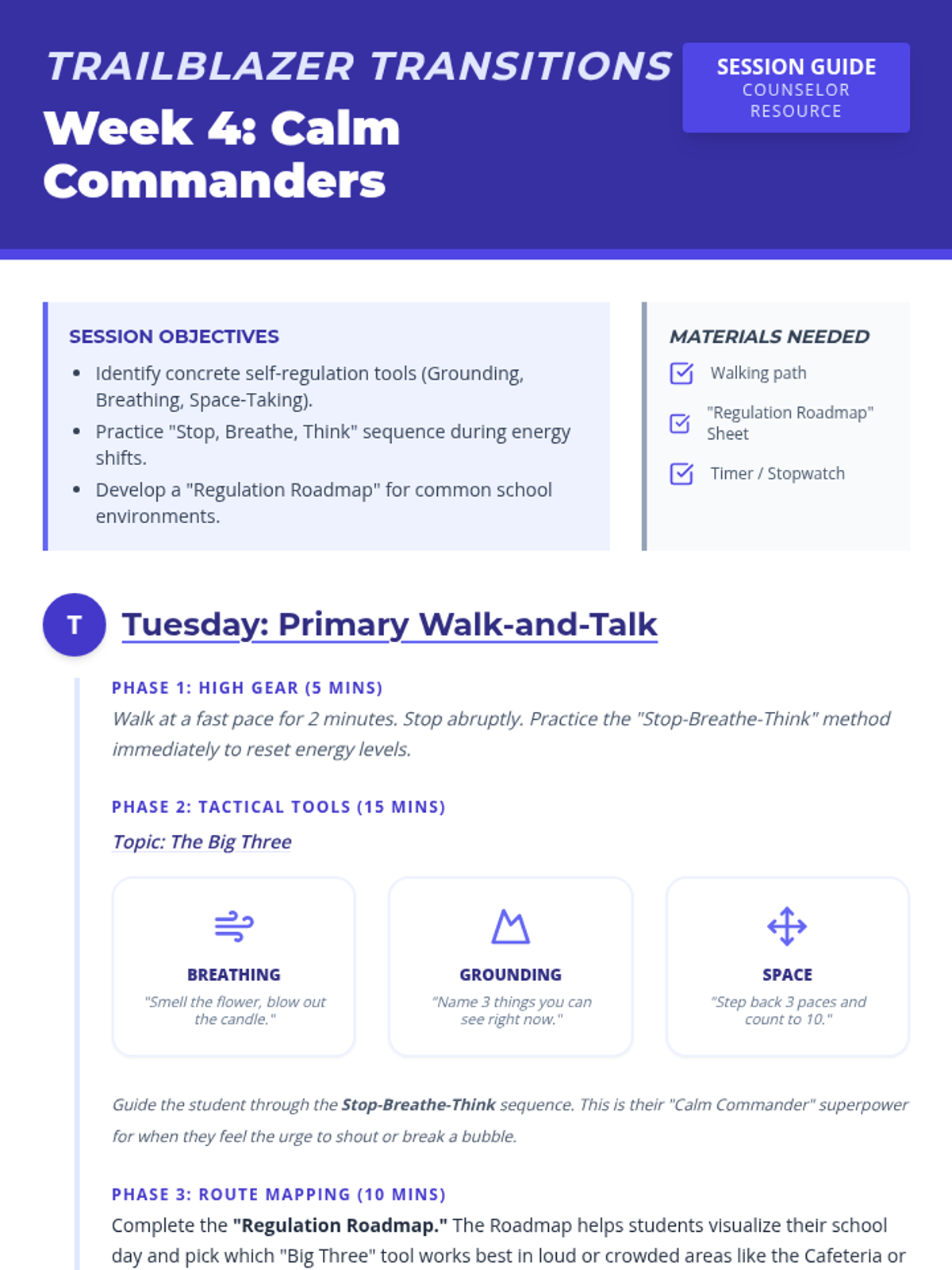
Teaches concrete self-regulation strategies and provides tools for emotional regulation.
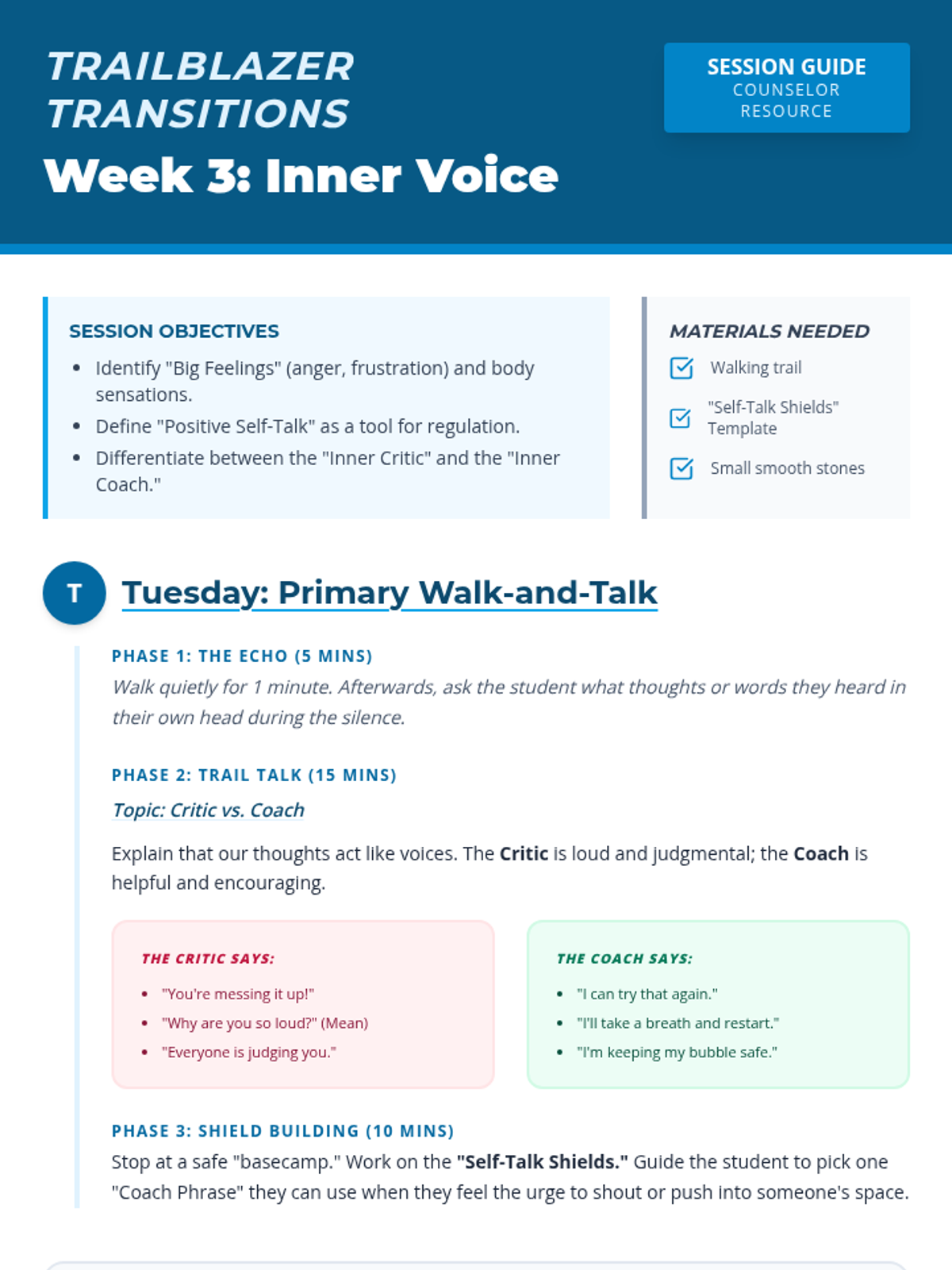
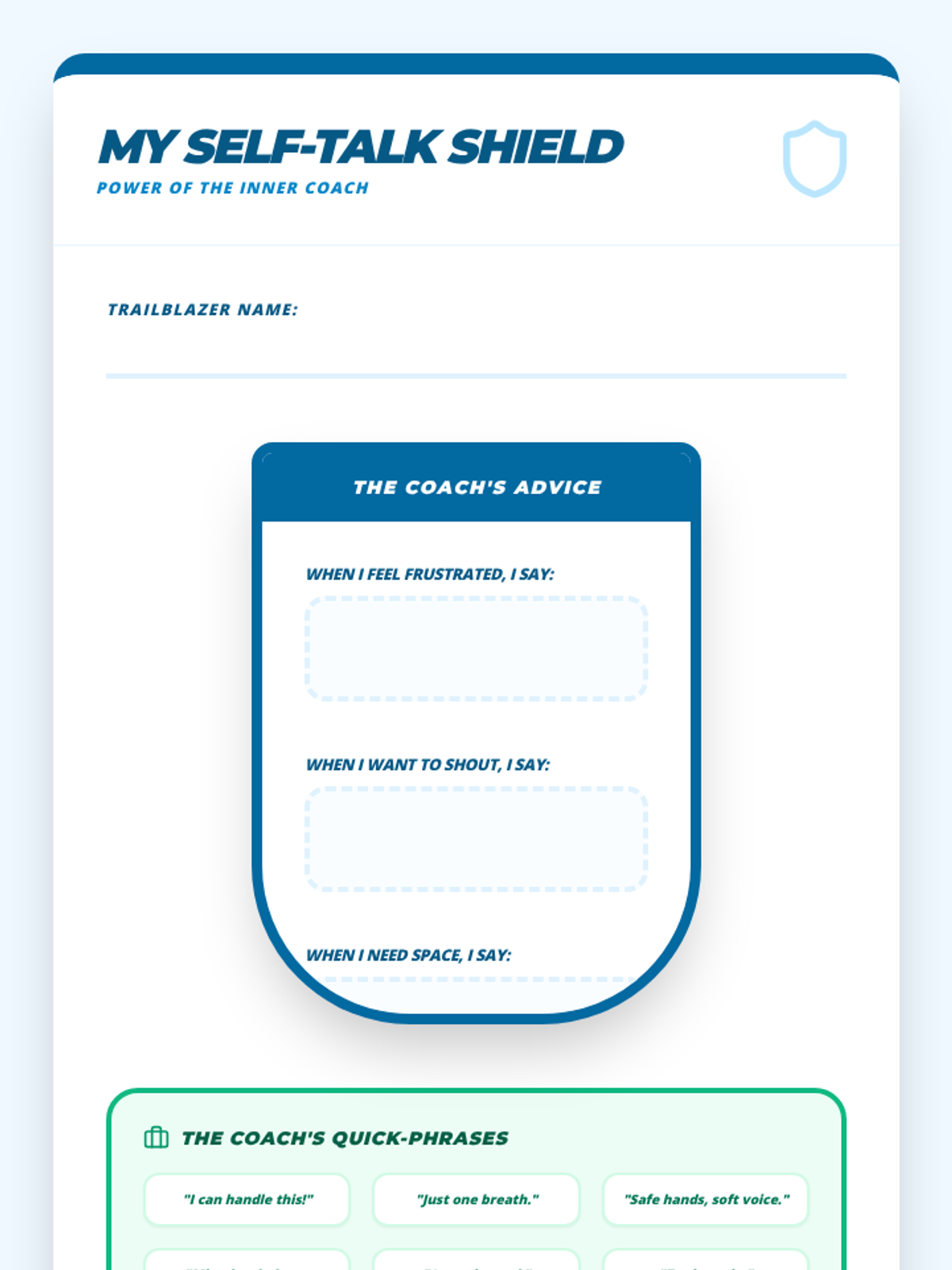
Explores emotional awareness and the power of positive self-talk to manage frustration.