Empathetic skill development through emotion recognition, cultural diversity appreciation, and bias confrontation. Targets multi-perspective analysis to support respectful interactions and complex social responses.
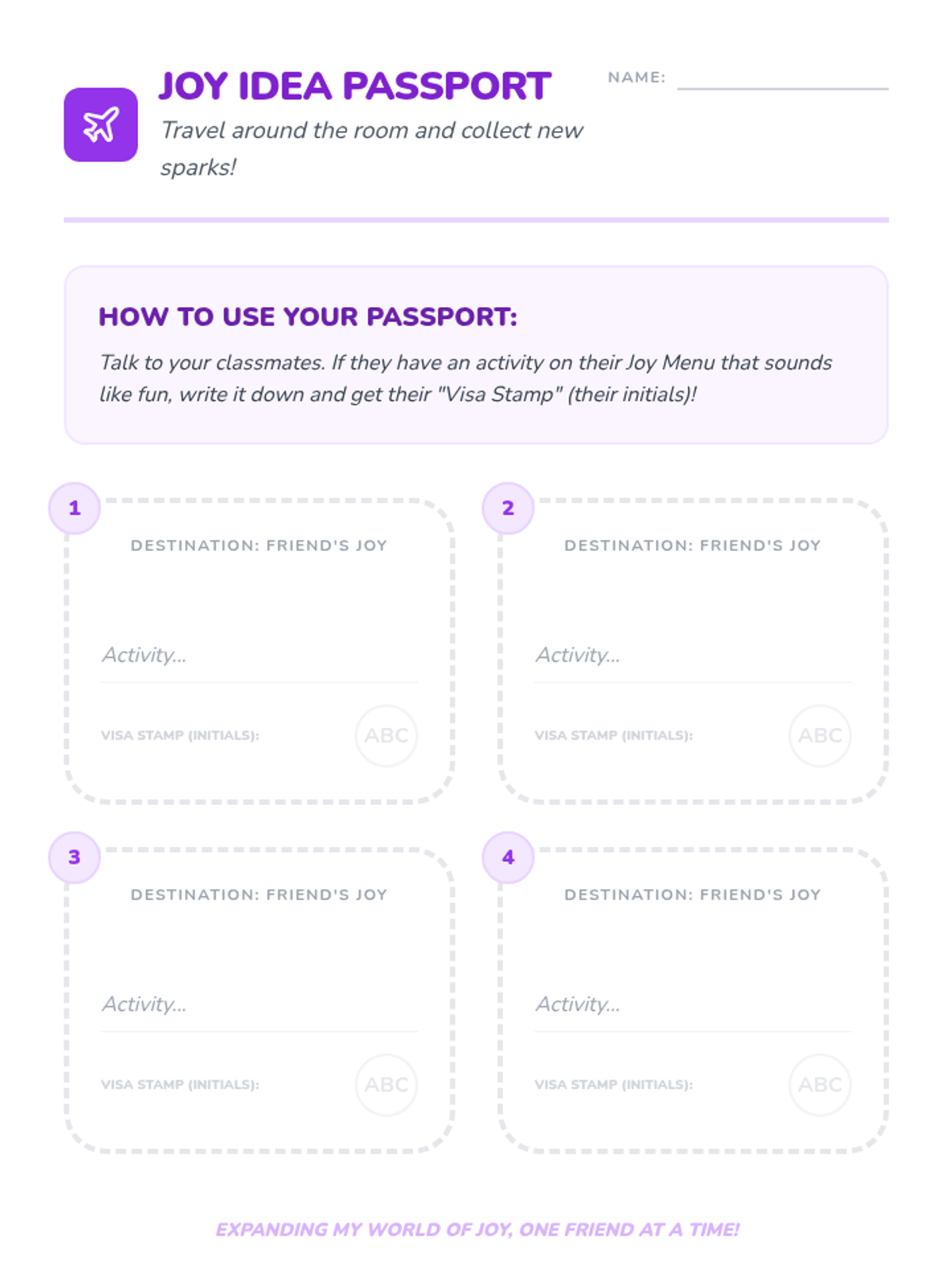
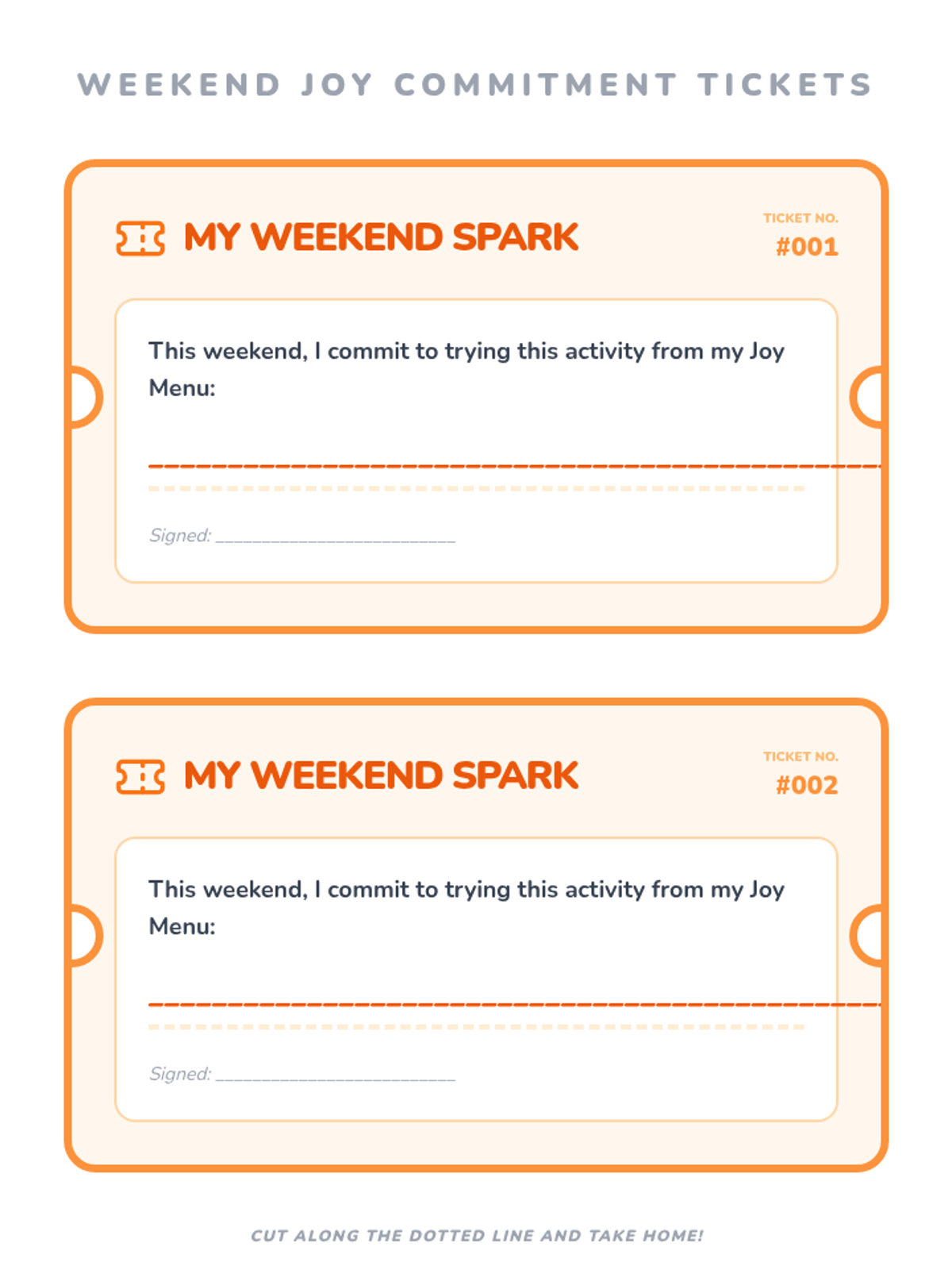
Students present their Joy Menus to small groups, allowing peers to borrow ideas to add to their own lists. The lesson concludes with a commitment to try one menu item over the weekend.
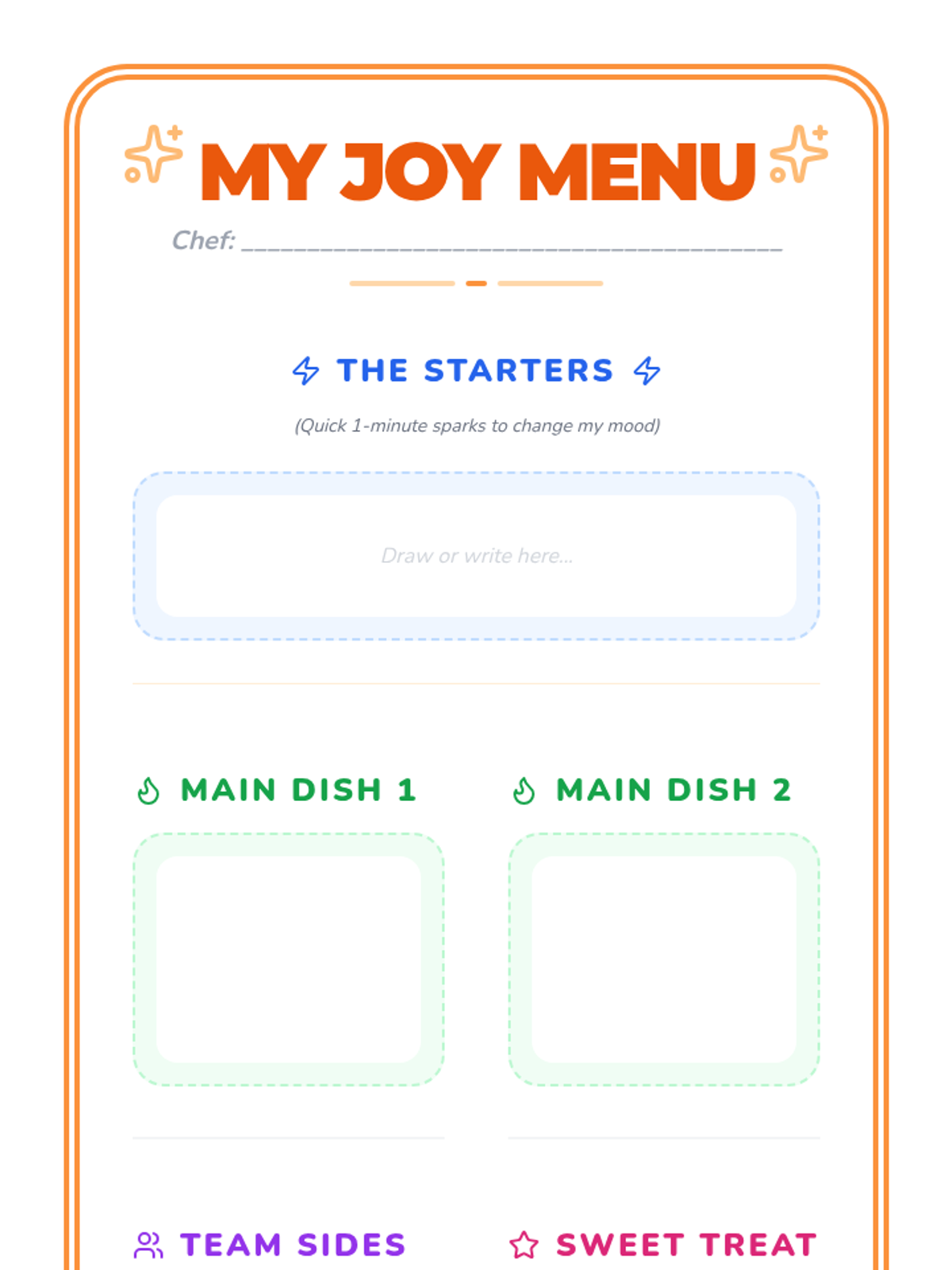
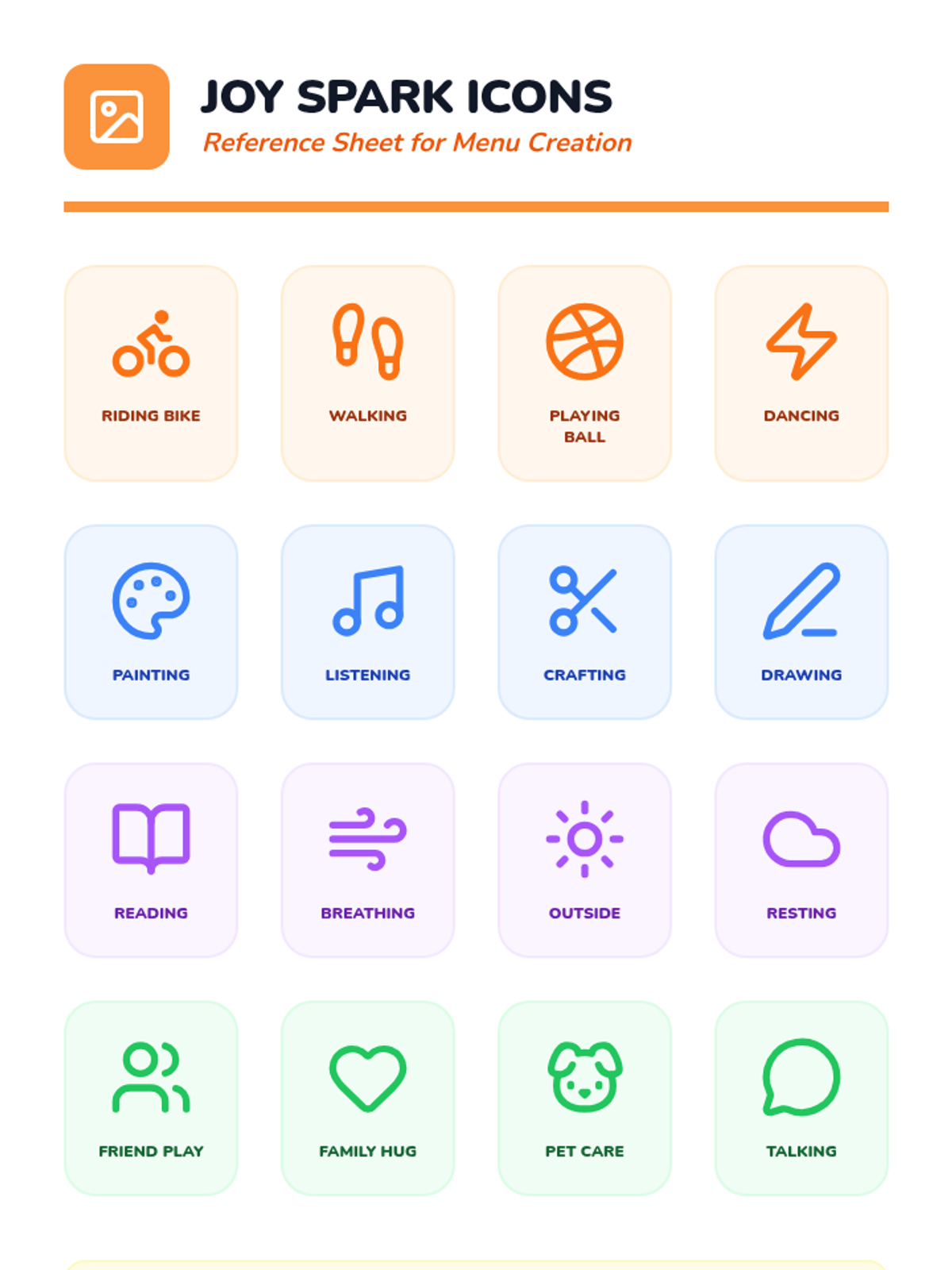
Using their investigations, students create a visual 'menu' or choice board of their top 5 reliable mood-boosting activities. They illustrate these options to serve as a reference tool.
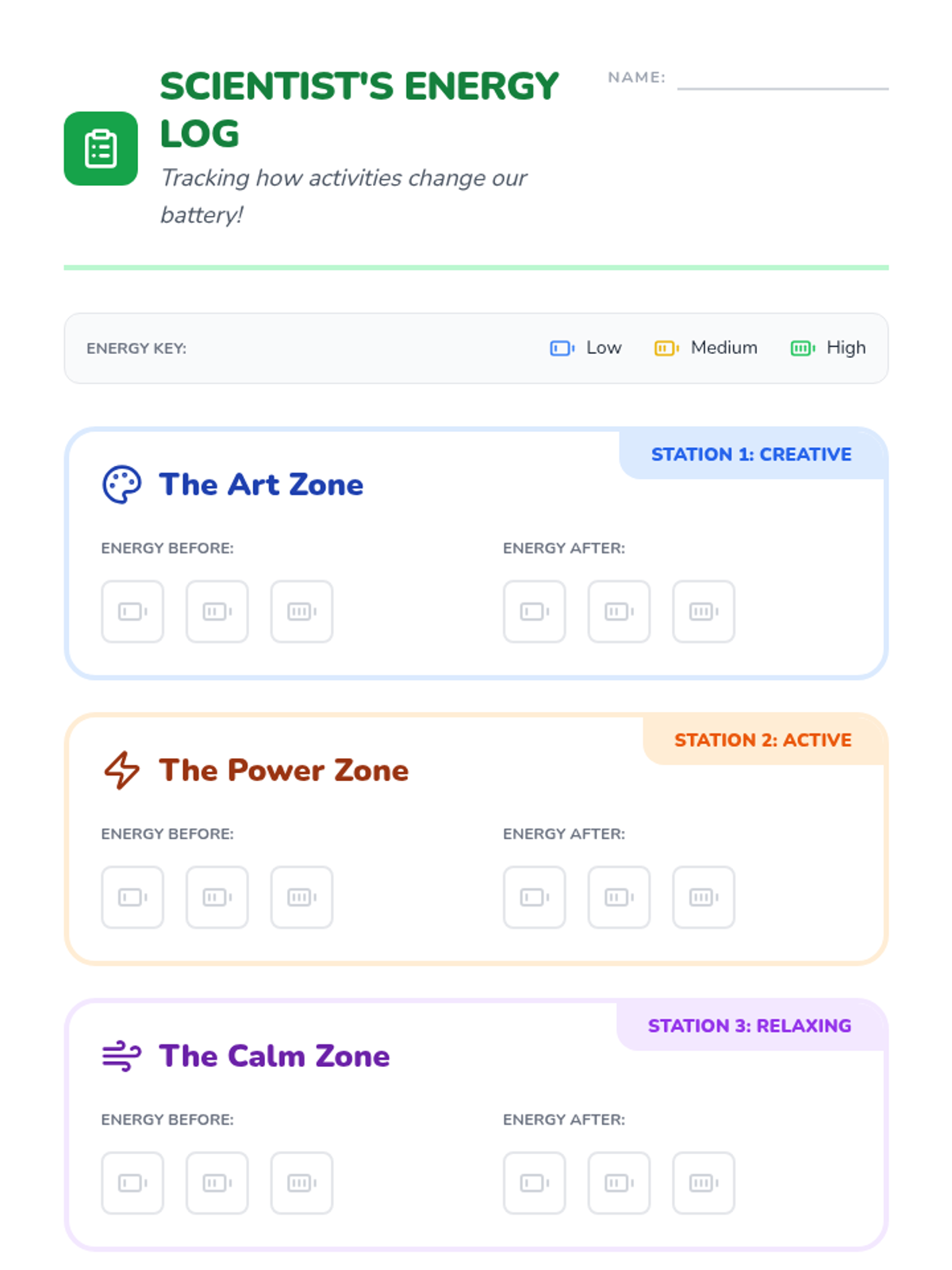
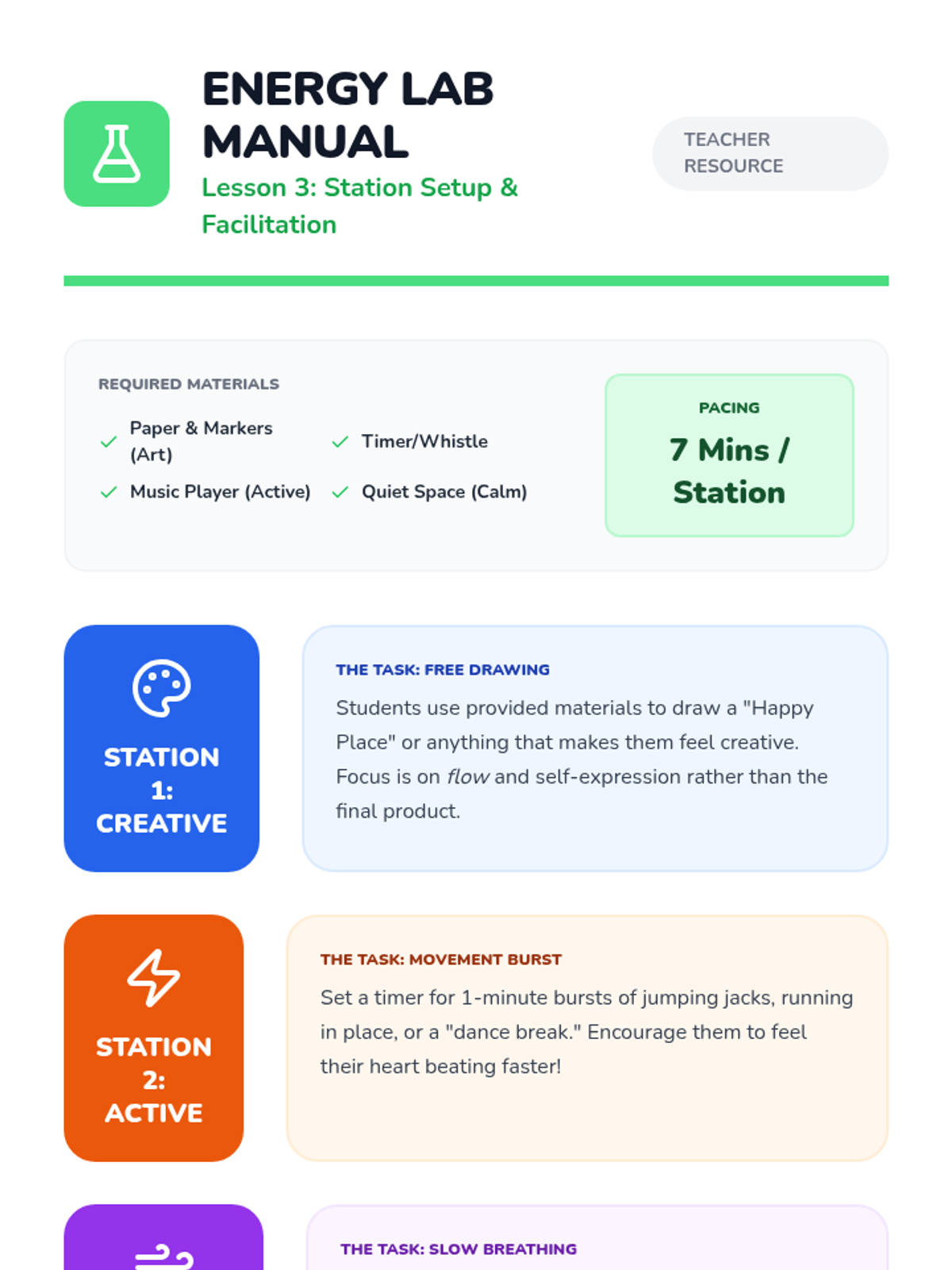
Students rotate through stations testing different types of positive engagement: creative (drawing), active (jumping jacks), and relaxing (deep breathing). They record how each station changes their energy level.
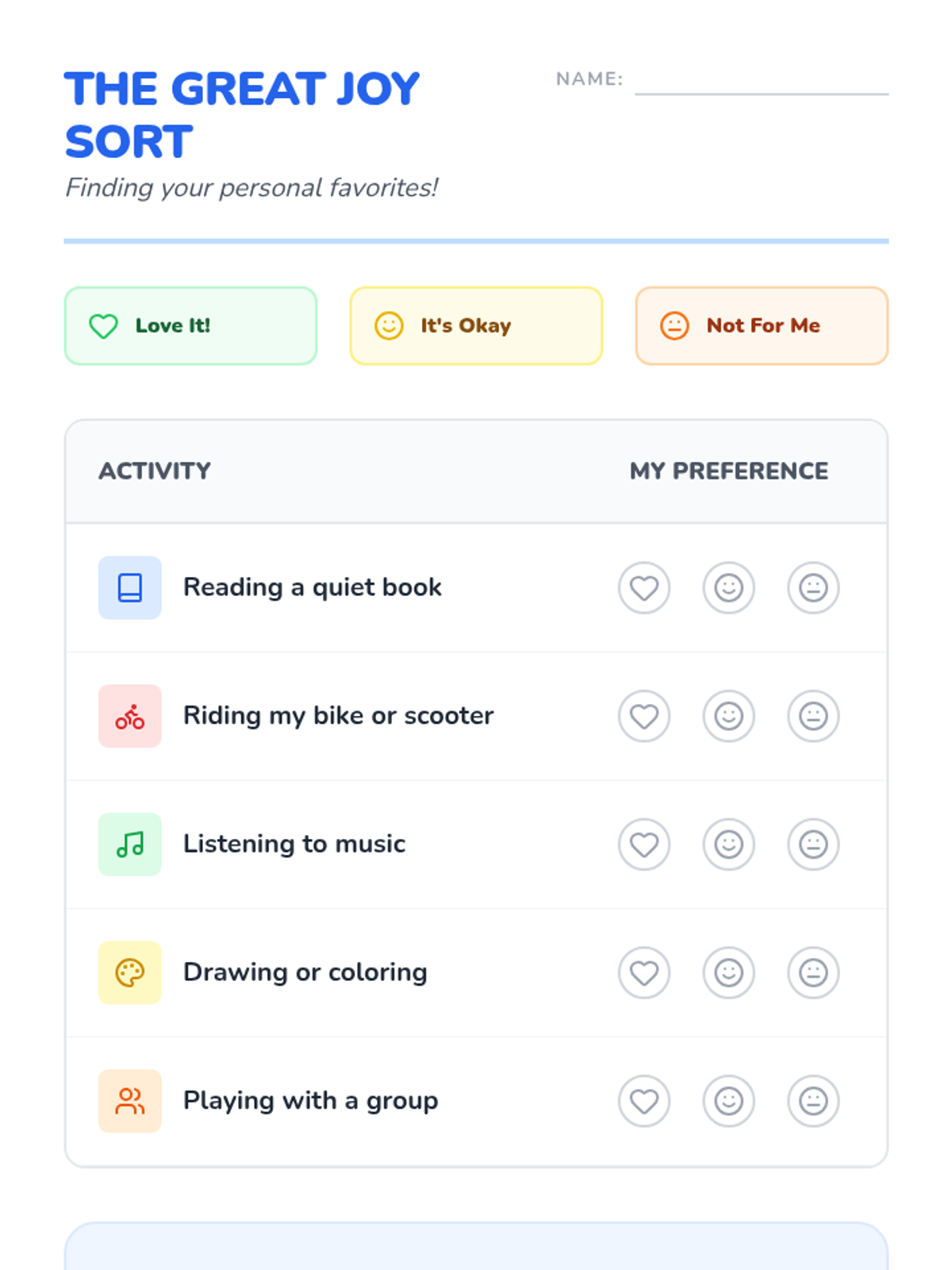
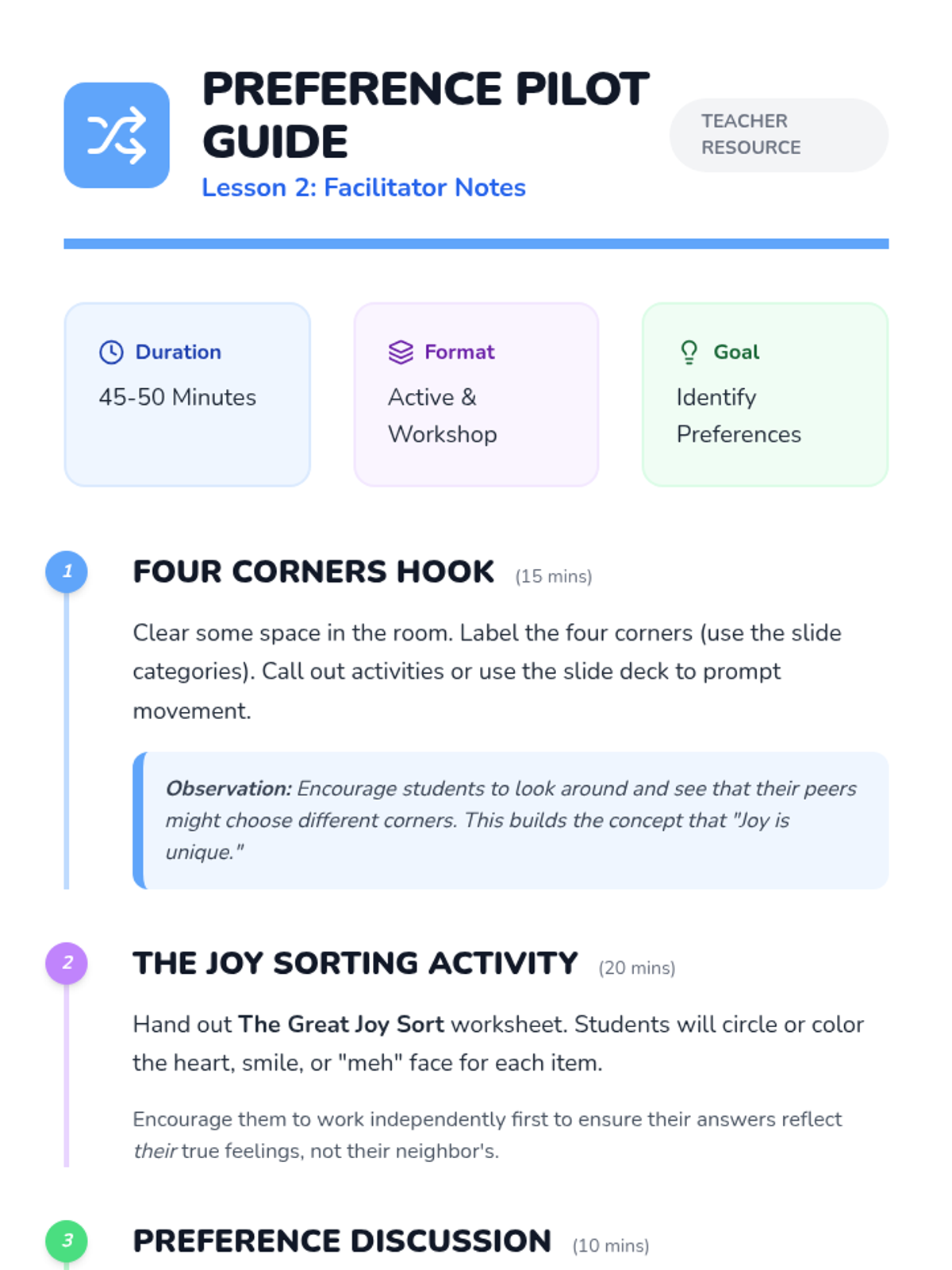
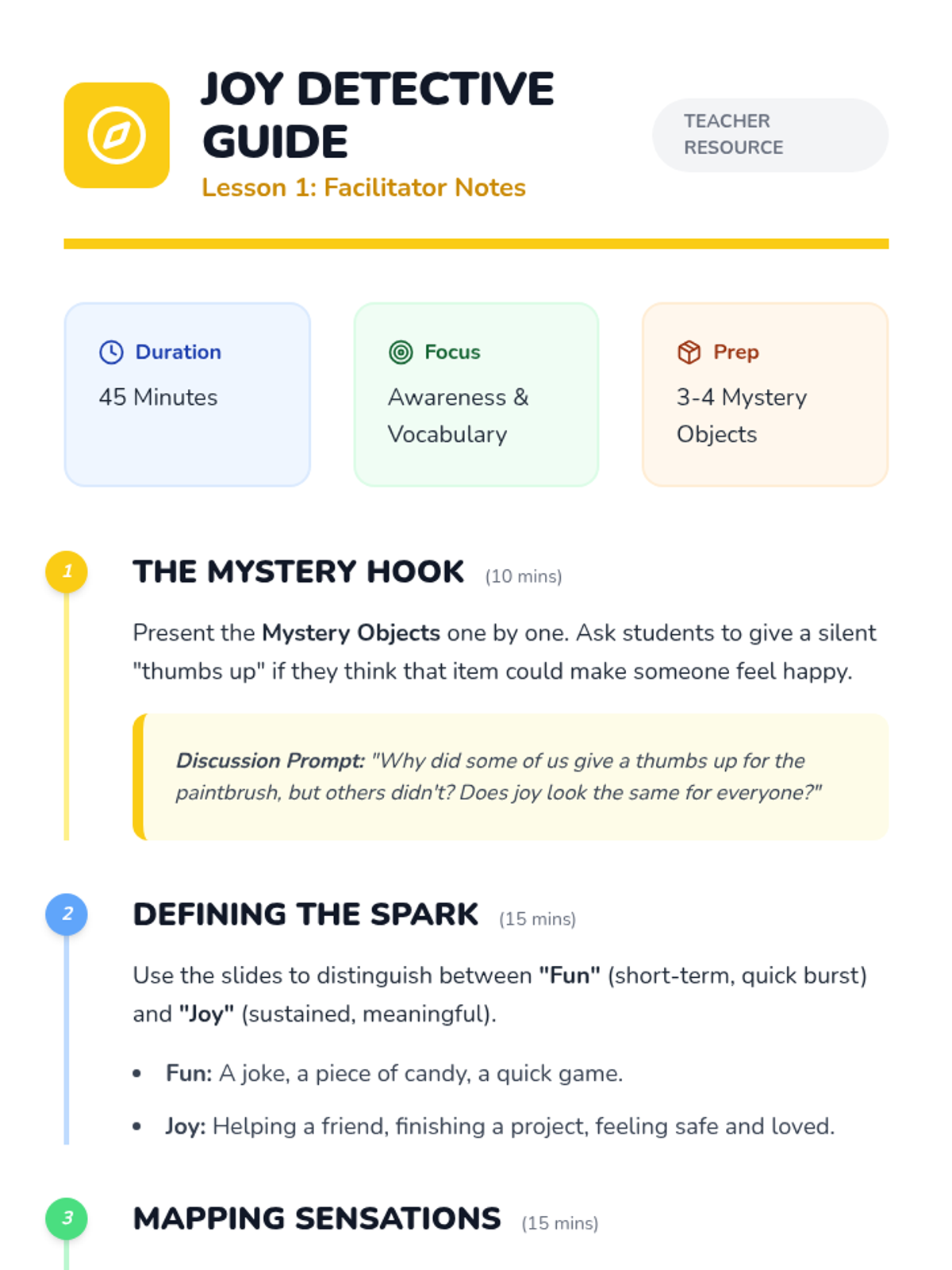
Students engage in an activity sorting game where they categorize various pastimes into 'Love it,' 'It's okay,' and 'Not for me.' This helps them realize that positive experiences are unique to each individual.
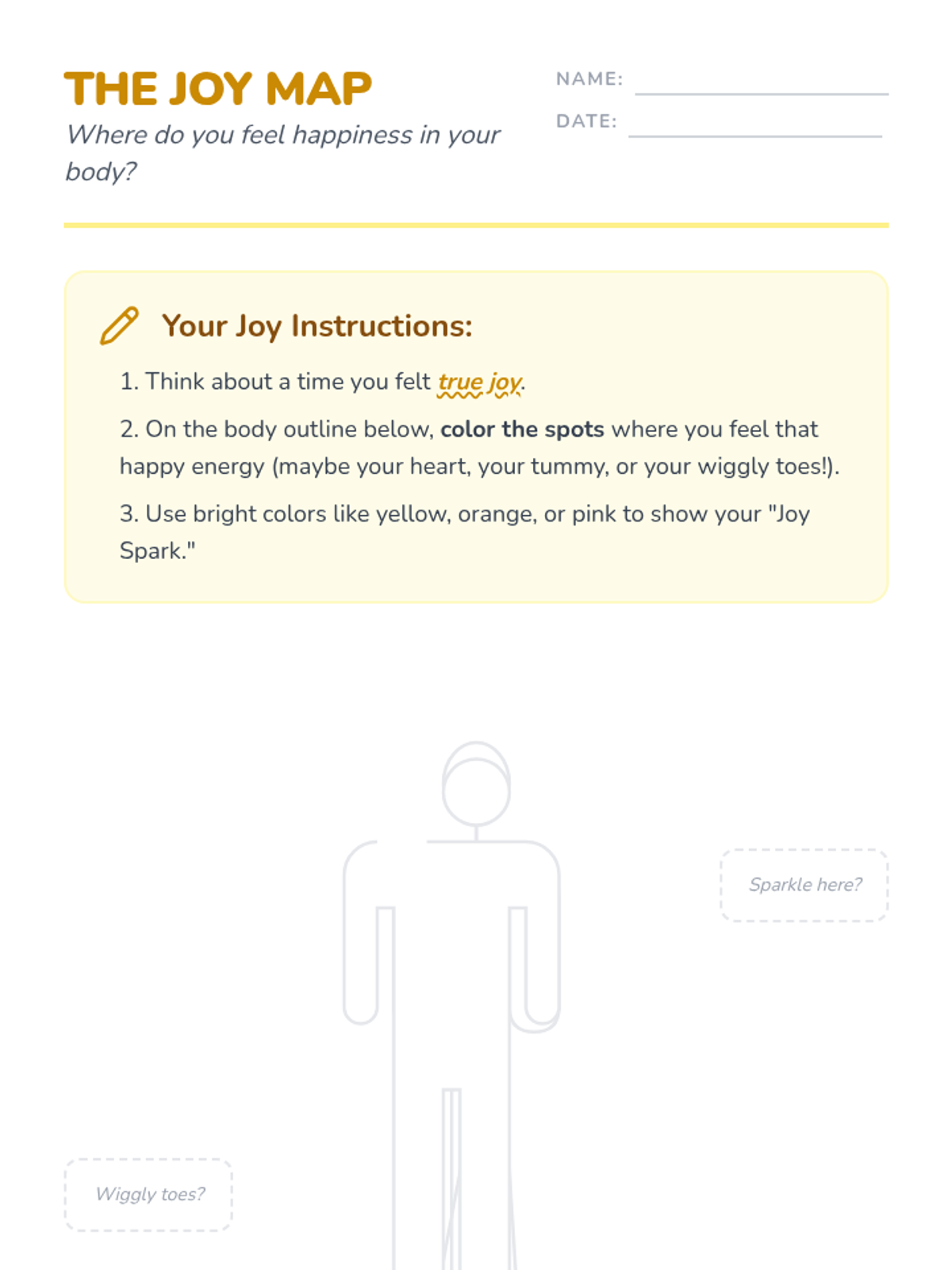
Students define joy and identify what happiness feels like in their bodies. They brainstorm activities that elicit positive emotions and distinguish between short-term fun and long-term happiness.
In this culminating lesson, students take the role of a compliance officer auditing a fictional company. They apply all learned concepts to identify potential liabilities and recommend legal corrections.
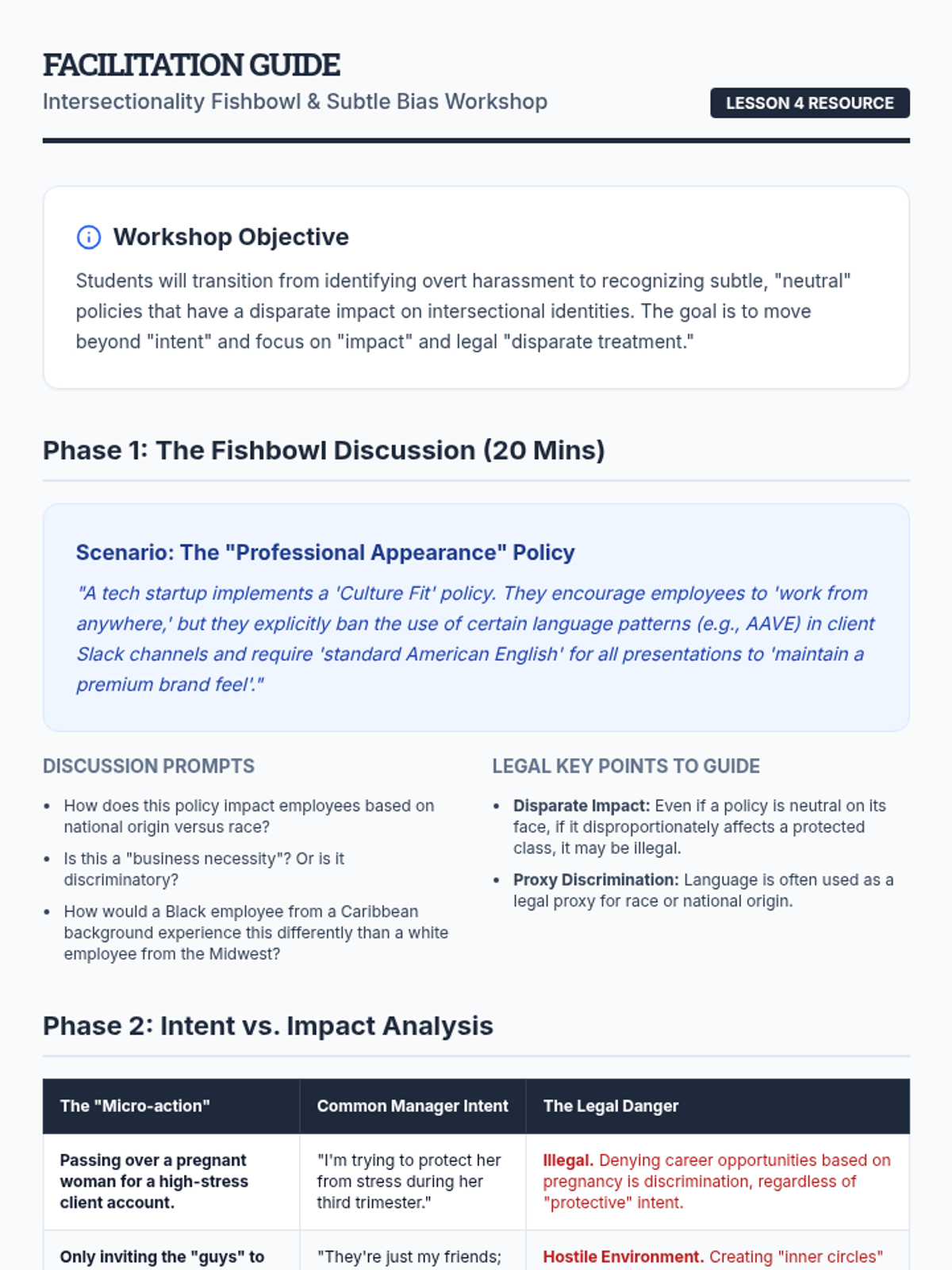
The lesson moves beyond overt slurs to examine microaggressions and intersectional discrimination where multiple protected identities overlap. Students discuss the complexity of proving intent versus impact.
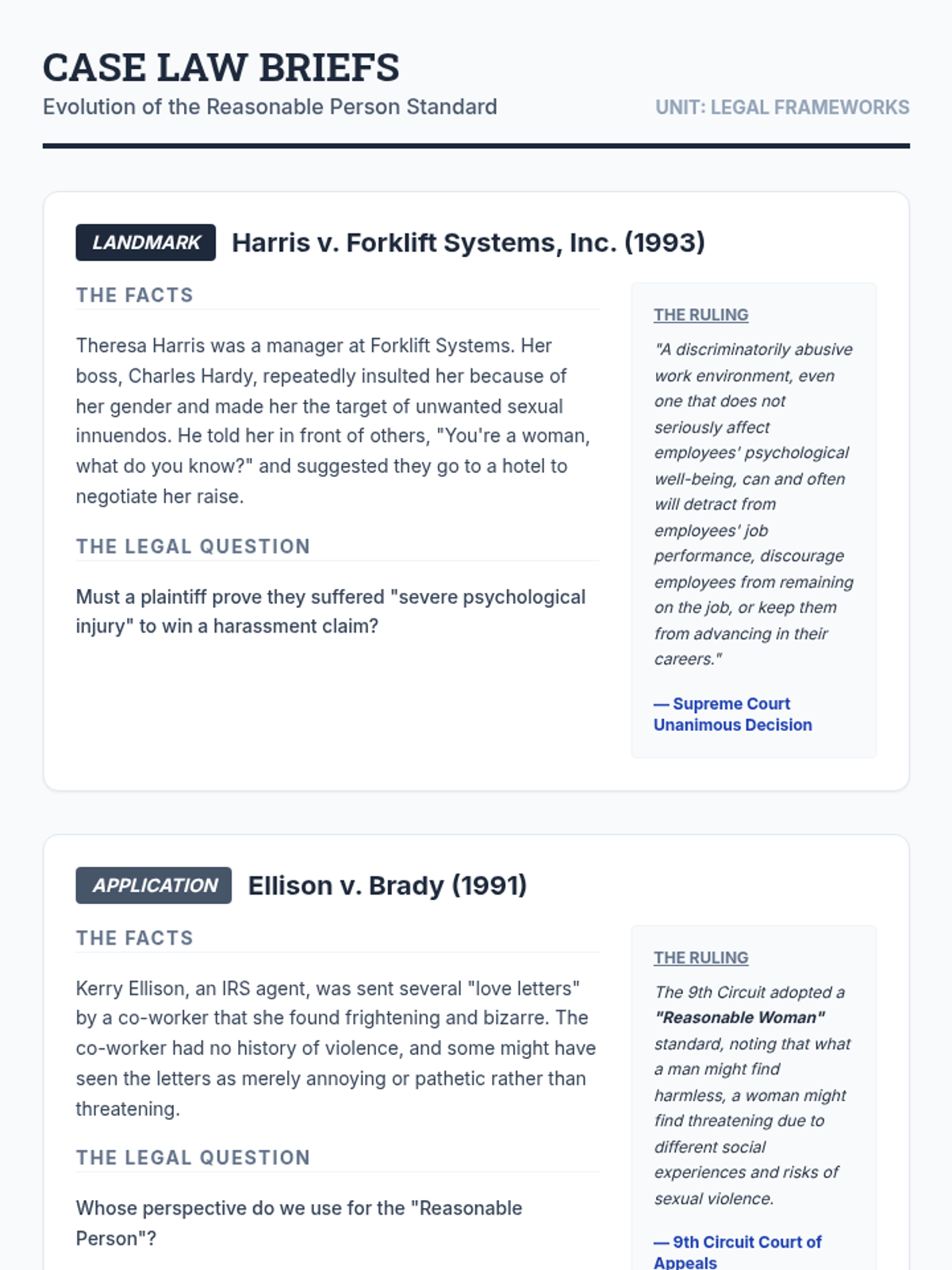
Students explore the 'reasonable person standard' used by courts to determine if conduct is objectively offensive. They analyze court opinions to see how this metric is applied in objective legal rulings.
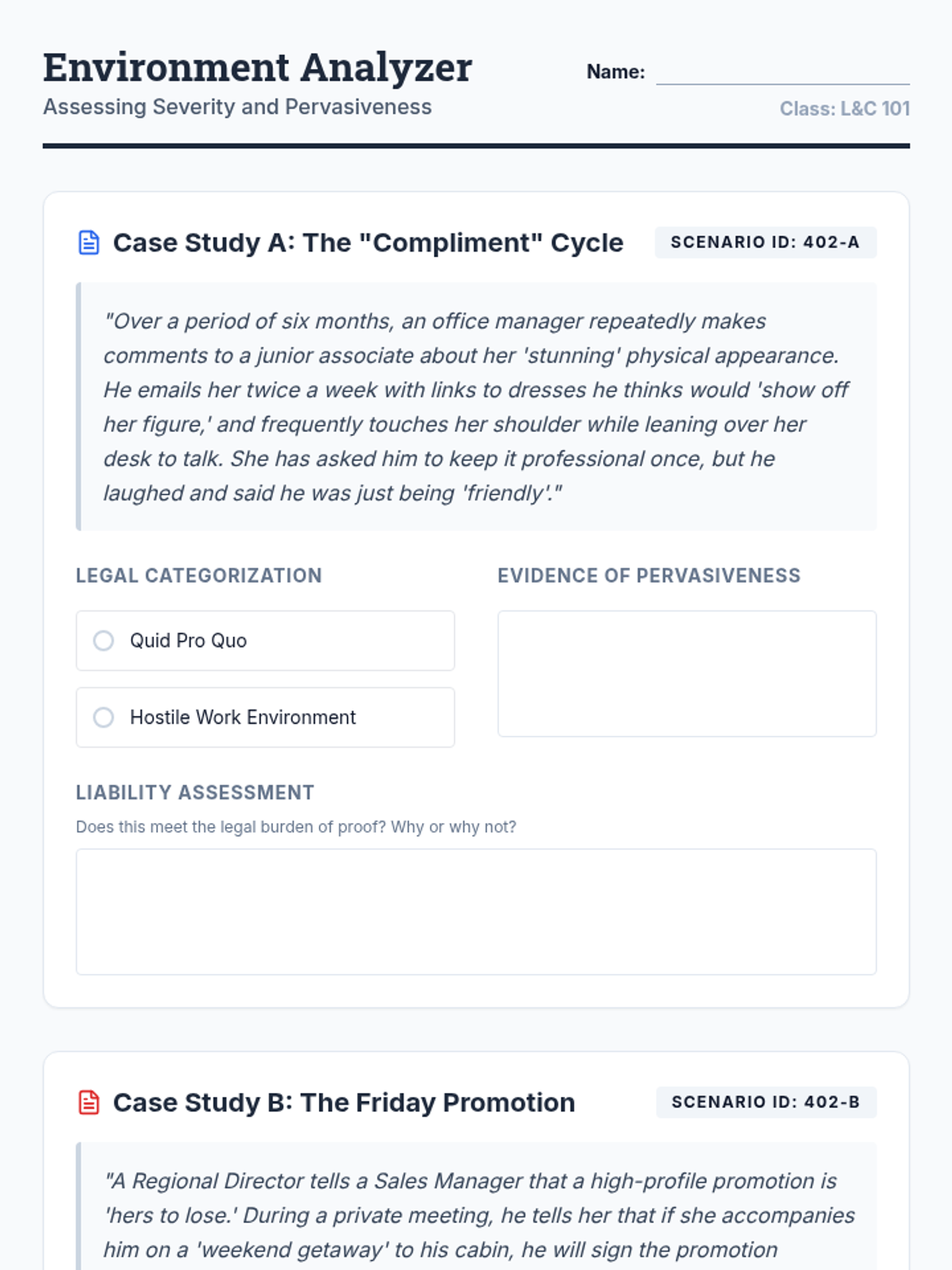
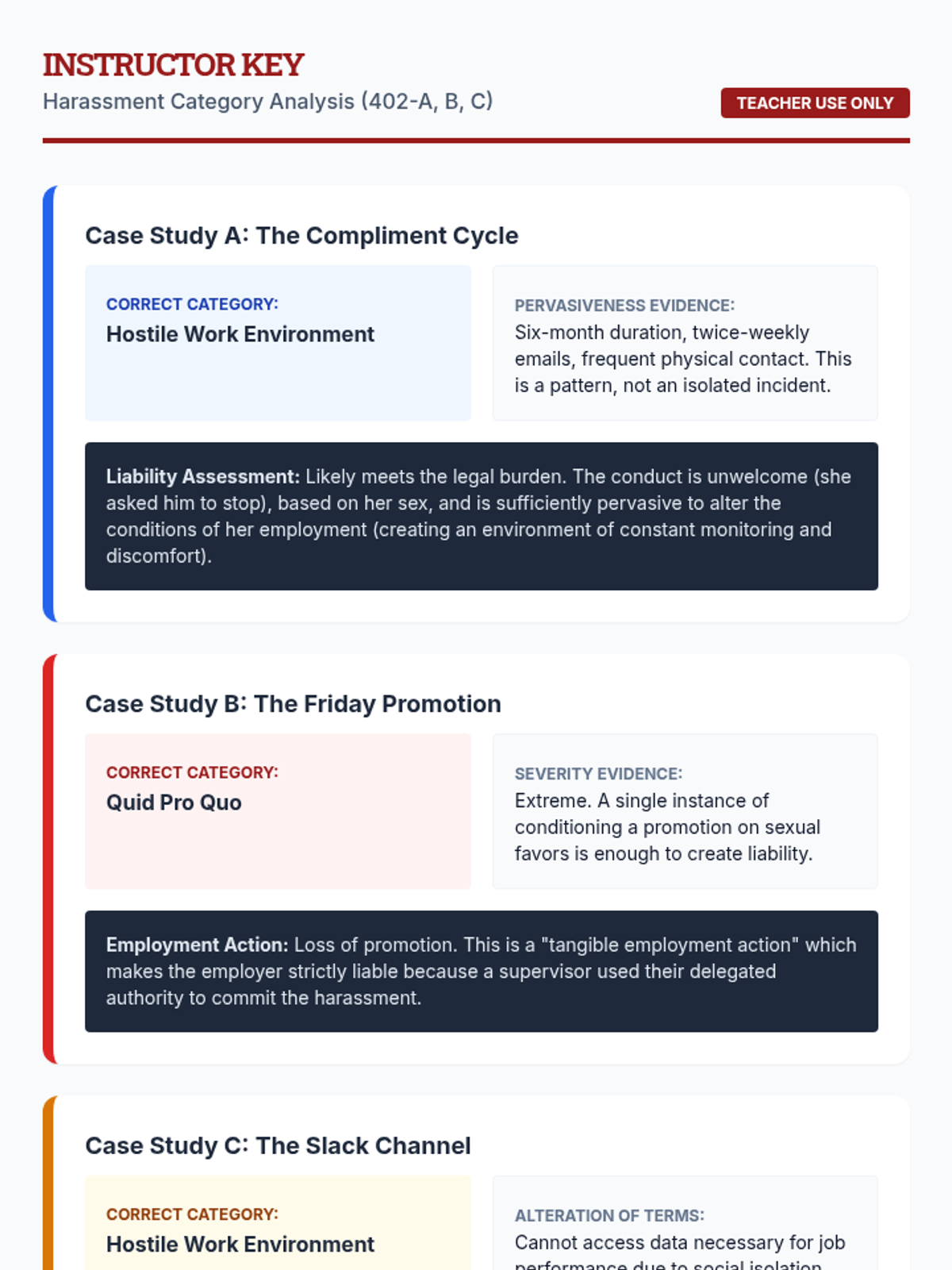
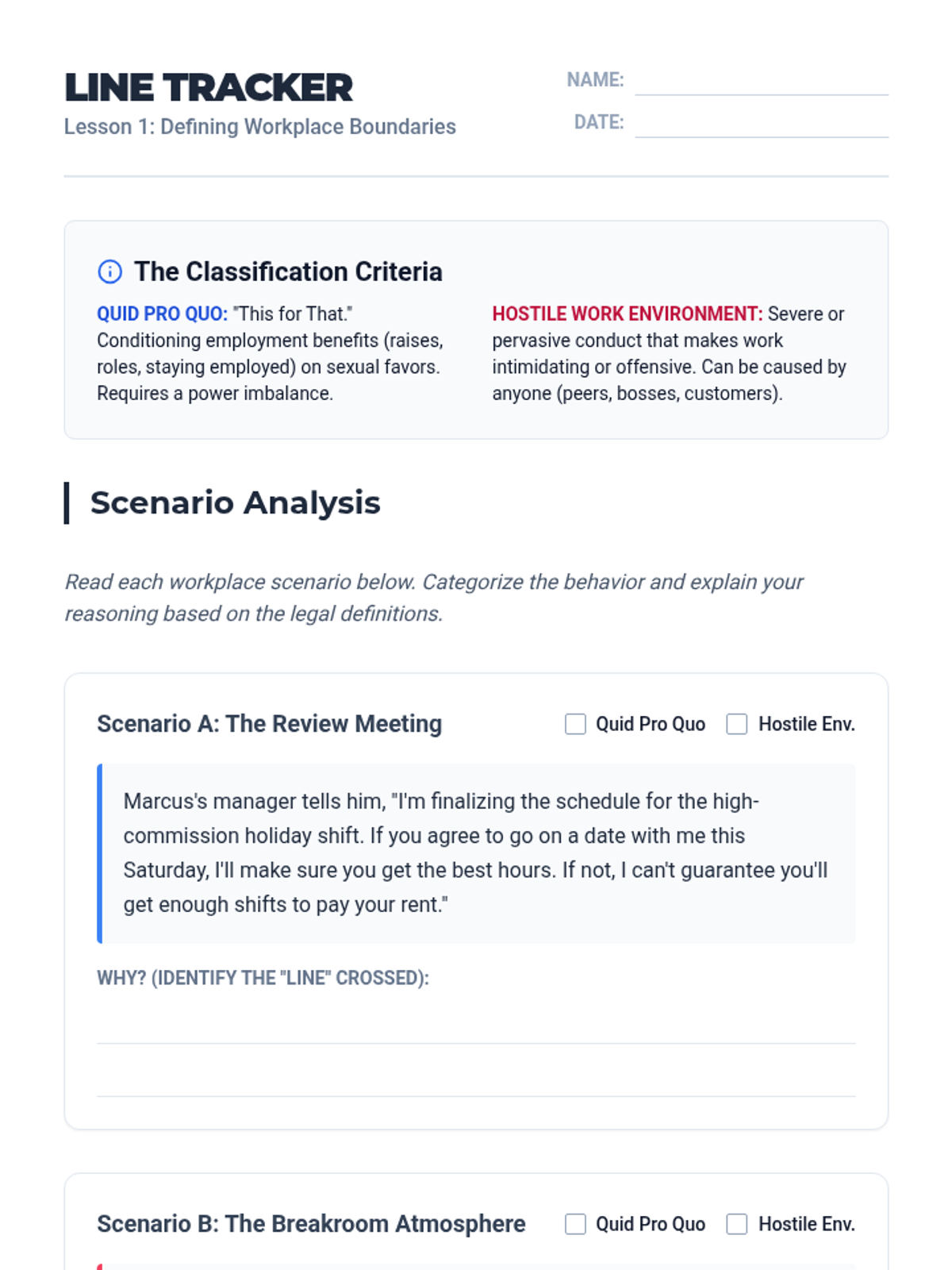
This lesson breaks down the two primary categories of sexual harassment: Quid Pro Quo and Hostile Work Environment. Students analyze specific criteria required to meet the legal burden of proof, including severity and pervasiveness.
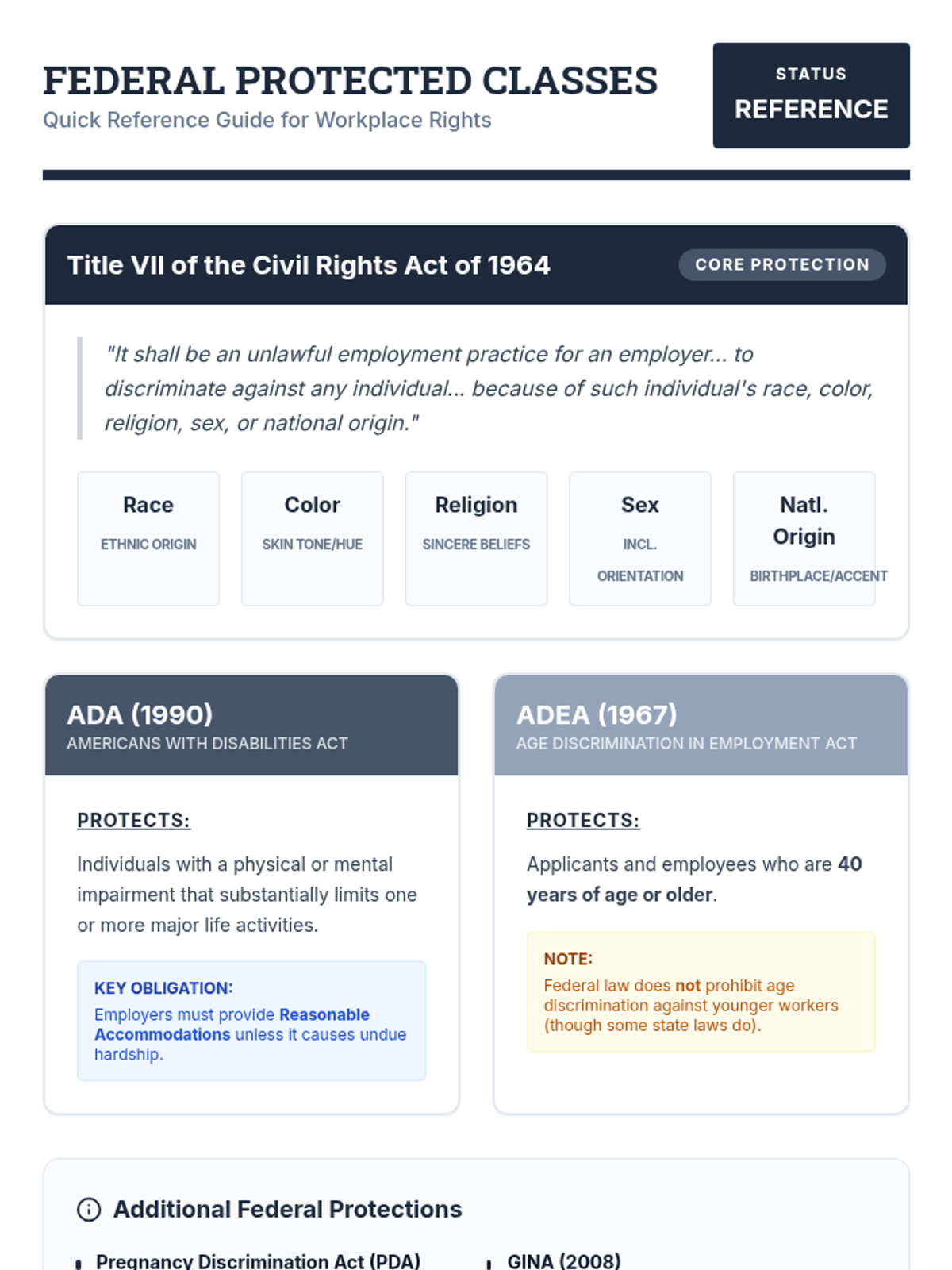
Students examine the core statutes governing workplace rights, specifically Title VII, the ADA, and the ADEA. The session focuses on identifying protected classes and understanding the historical context of these protections.
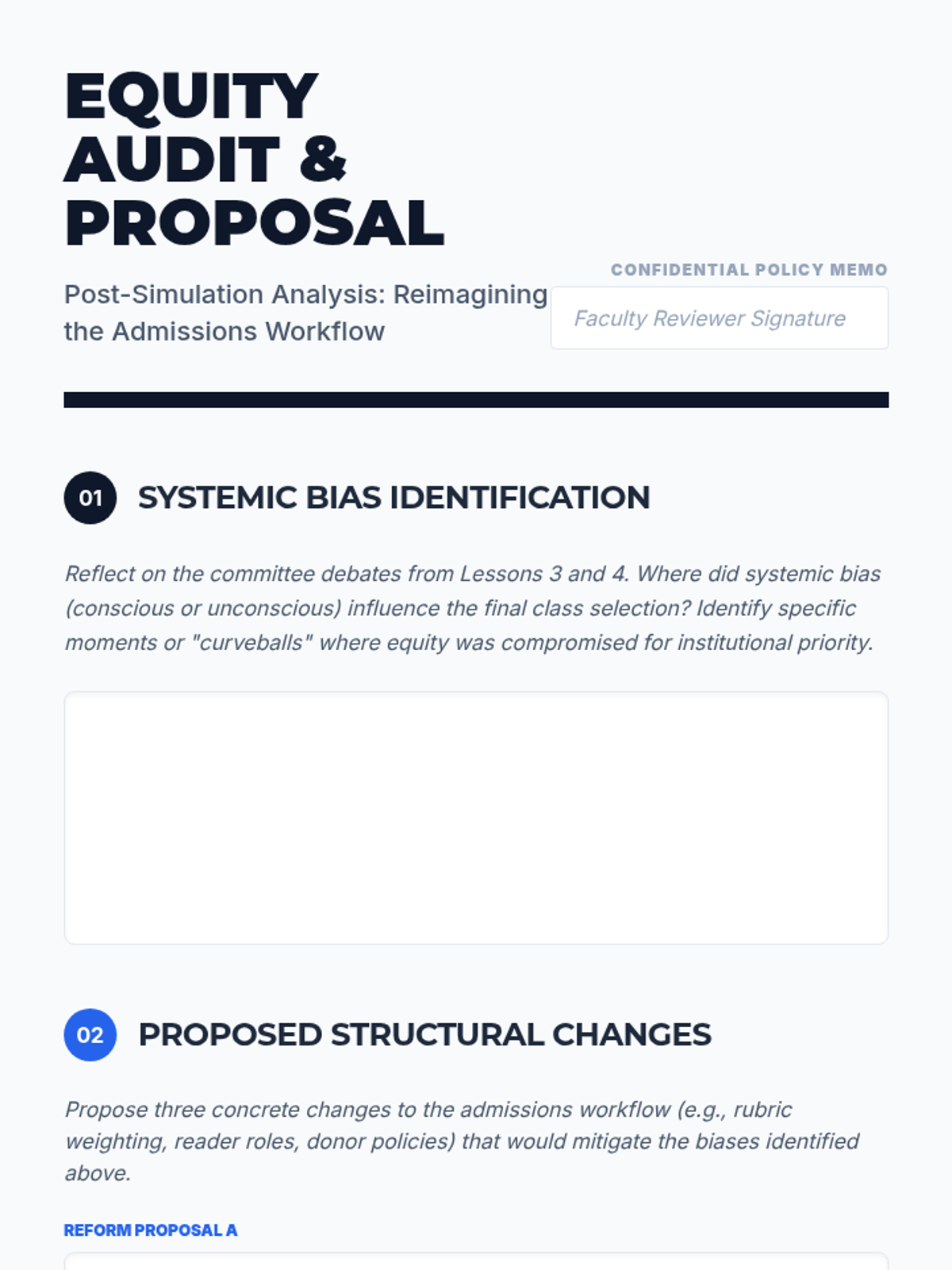
Students step out of role to analyze the simulation outcomes, discussing where systemic bias entered the process. The lesson culminates in a proposal for improving the equity of the admissions review workflow.
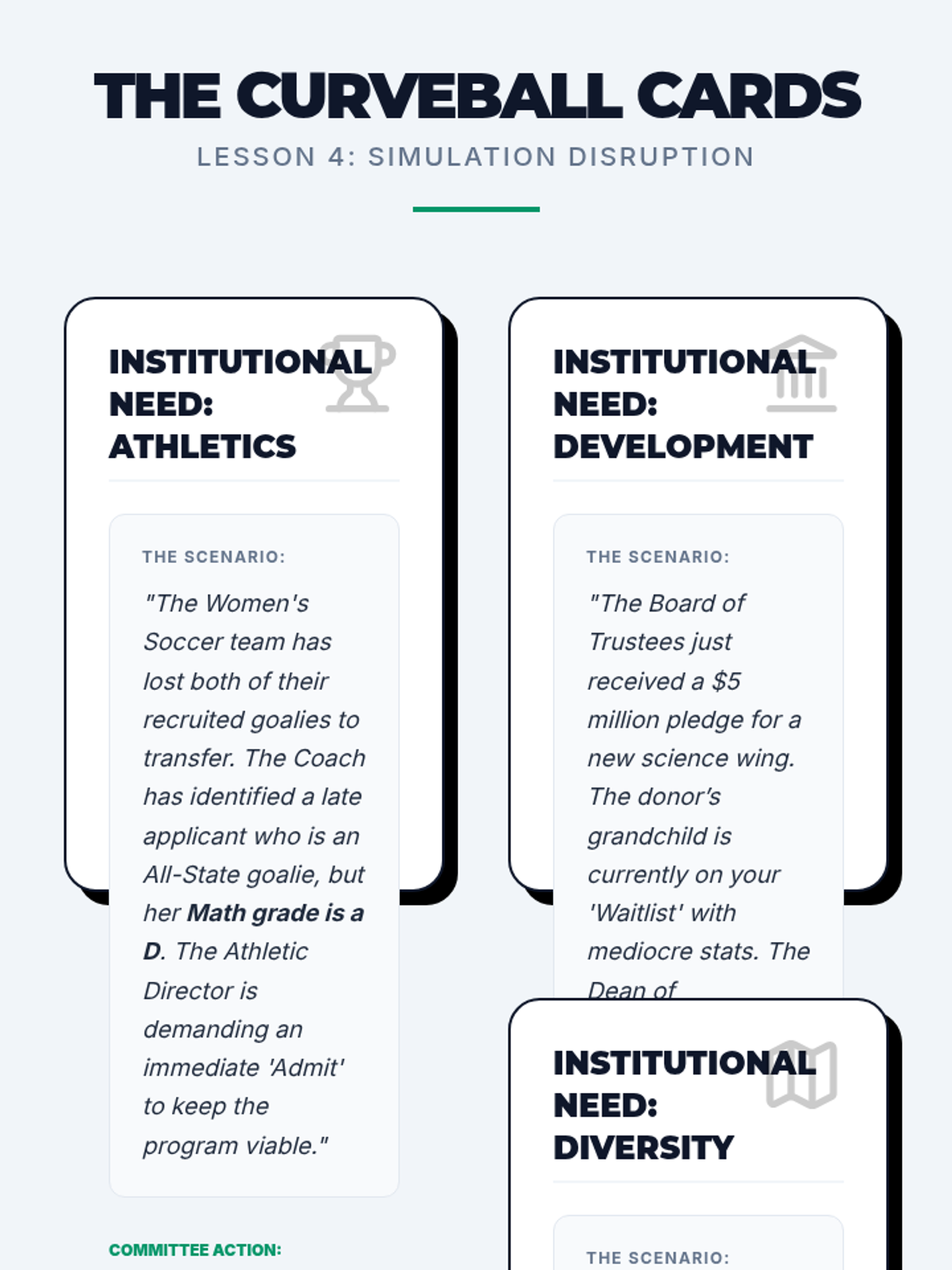
The simulation introduces real-world constraints such as legacy preferences, athletic recruitment needs, and yield protection strategies. Students must adjust their cohort selections to meet these external institutional demands.
Functioning as regional admissions officers, students present their assigned applicants to a small group, advocating for acceptance or rejection based on evidence. The focus is on articulating a clear argument grounded in the application materials.
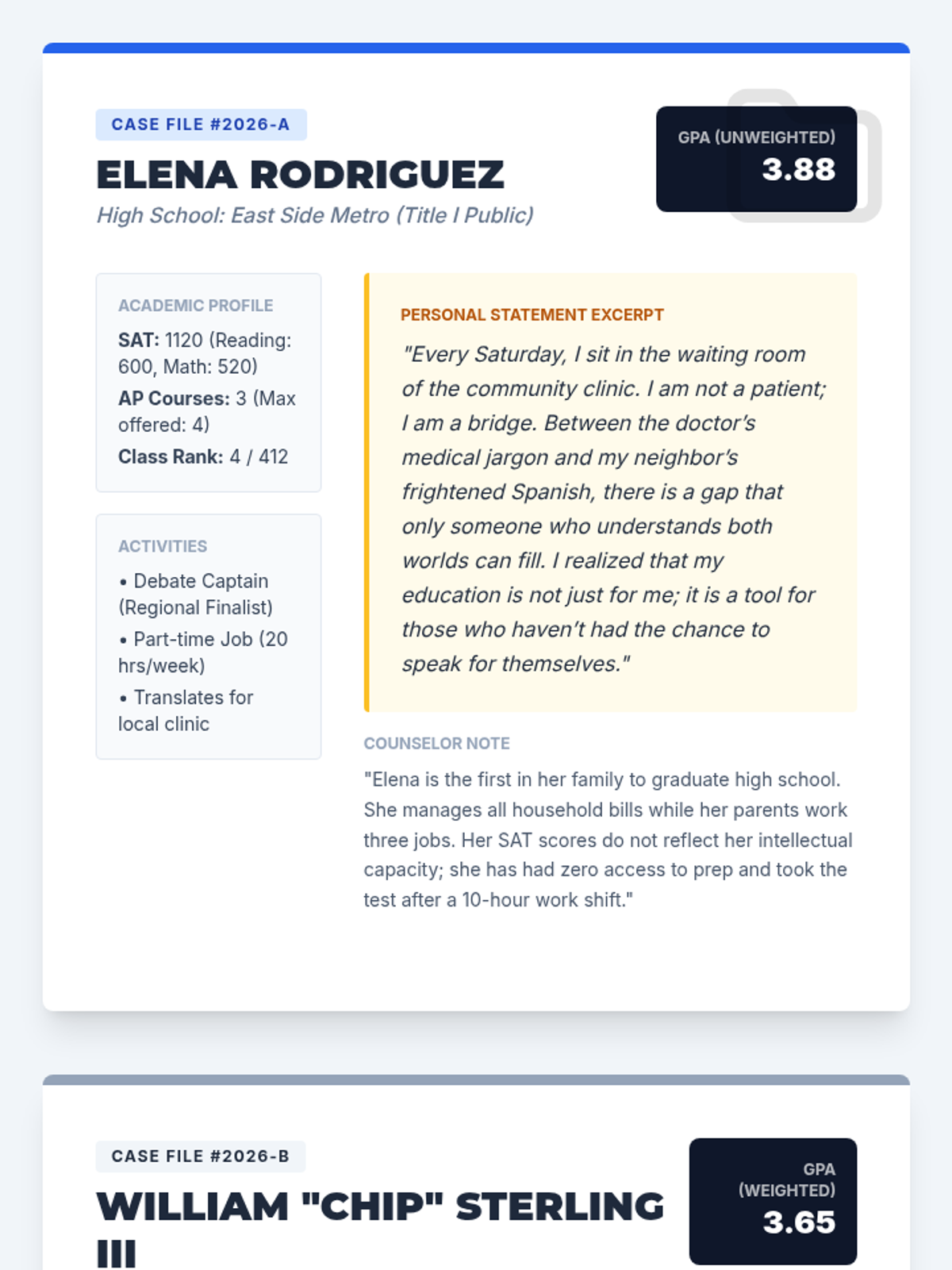
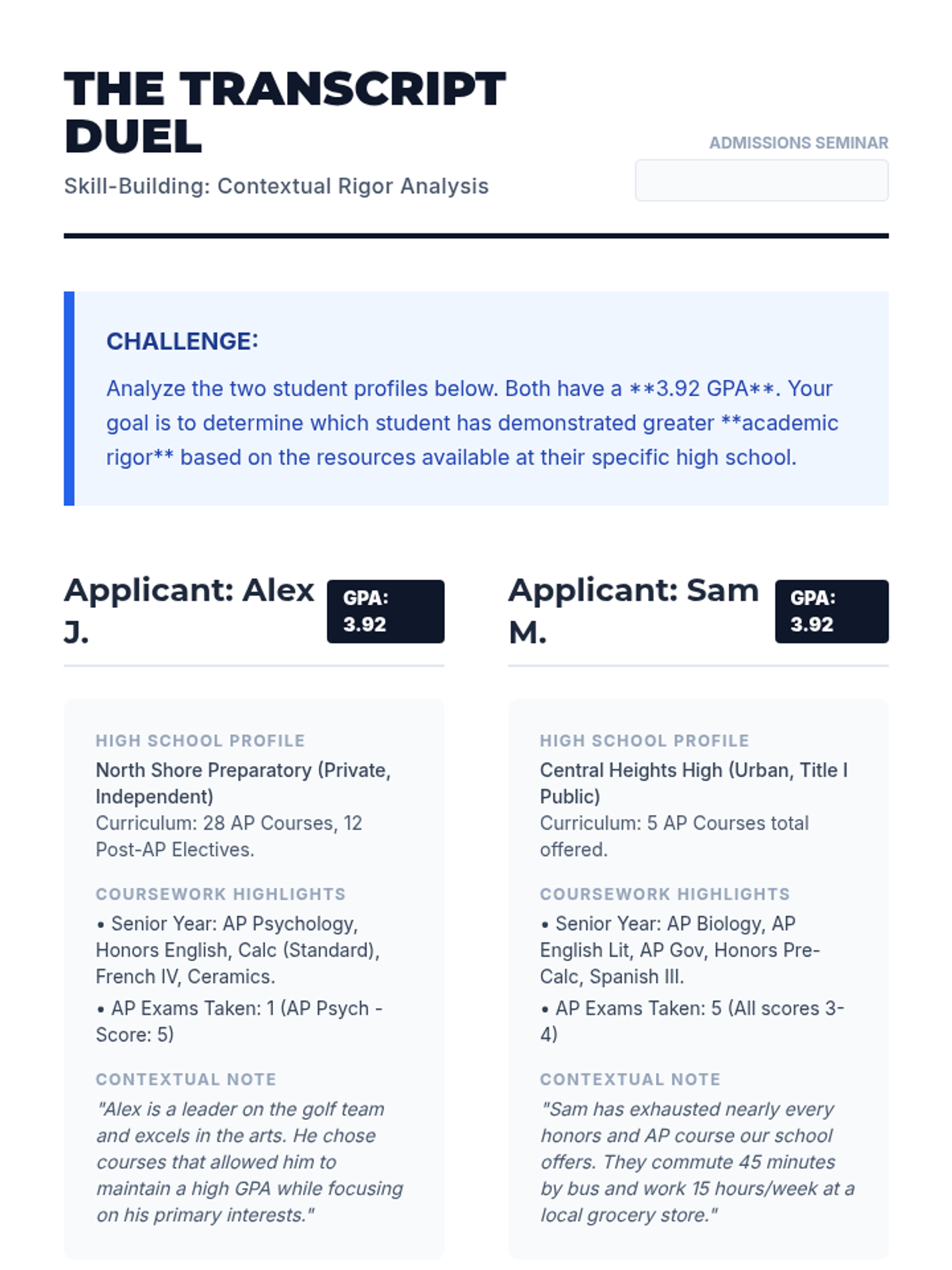
Participants review redacted application files, practicing the skill of 'reading between the lines' of transcripts and standardized test reports. They learn to identify rigorous course sequencing and contextualize GPA within school profiles.
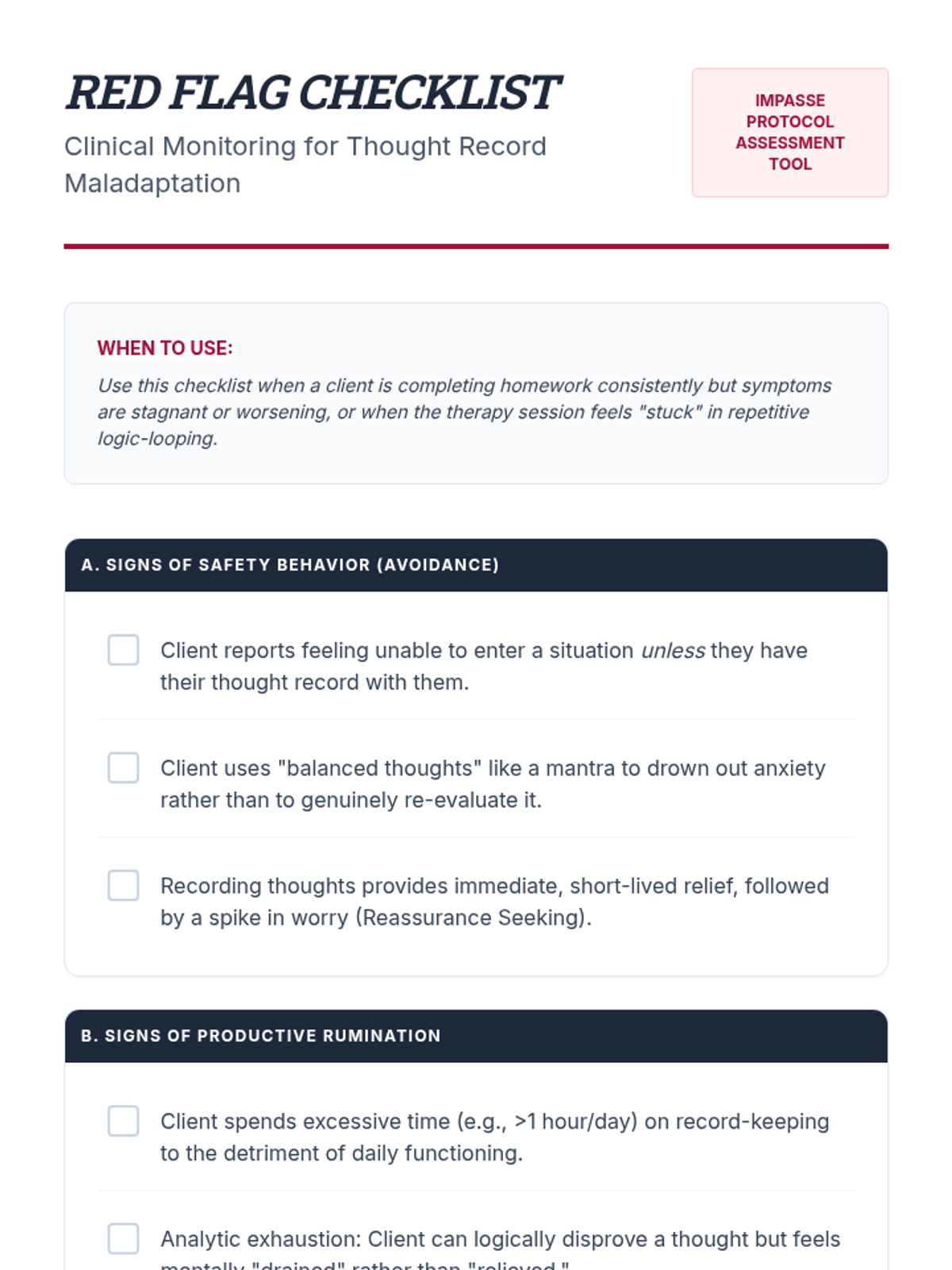
Develops clinical judgment for managing resistance, impasses, and the potential for thought records to become ruminative or safety behaviors.
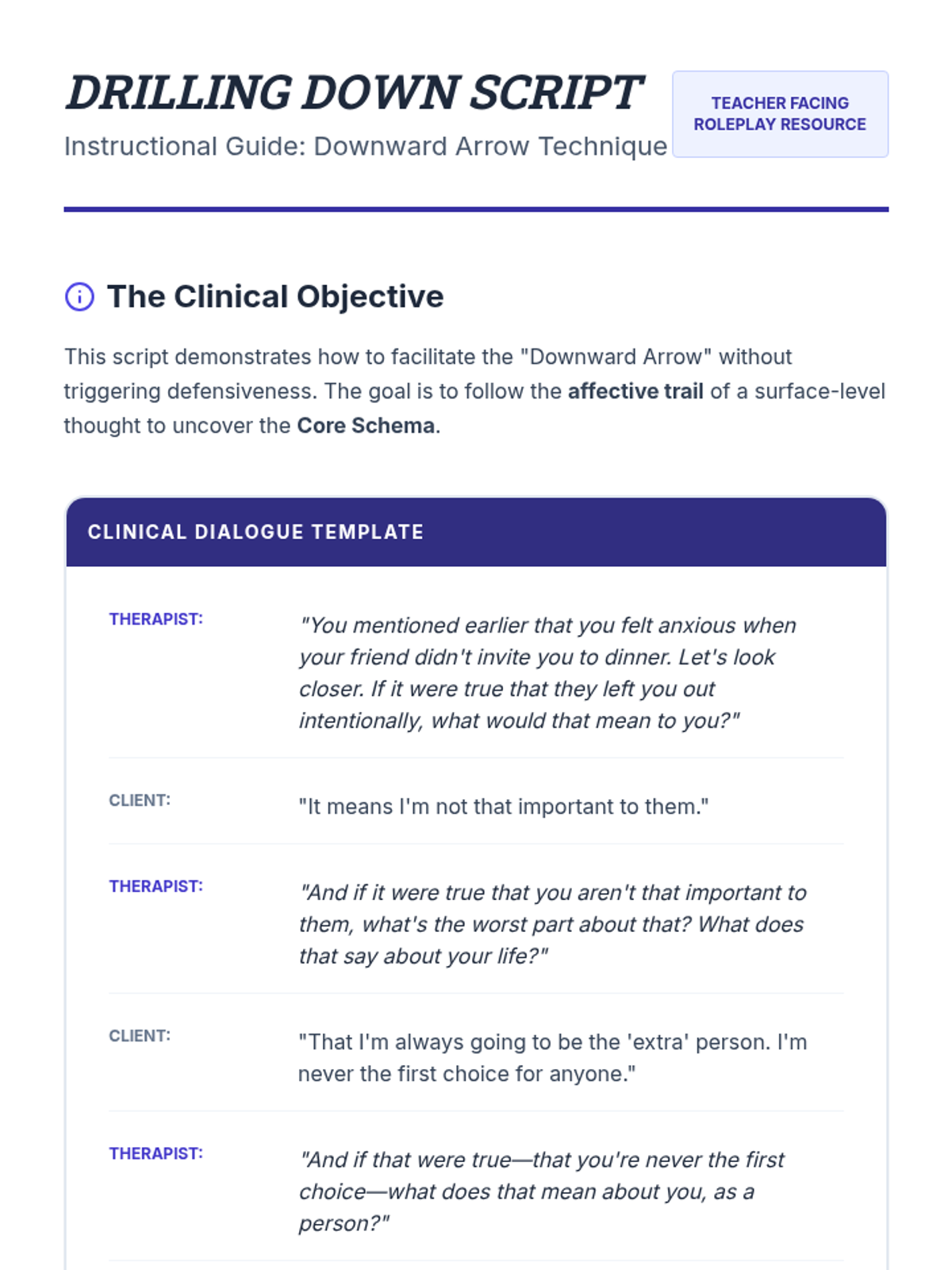
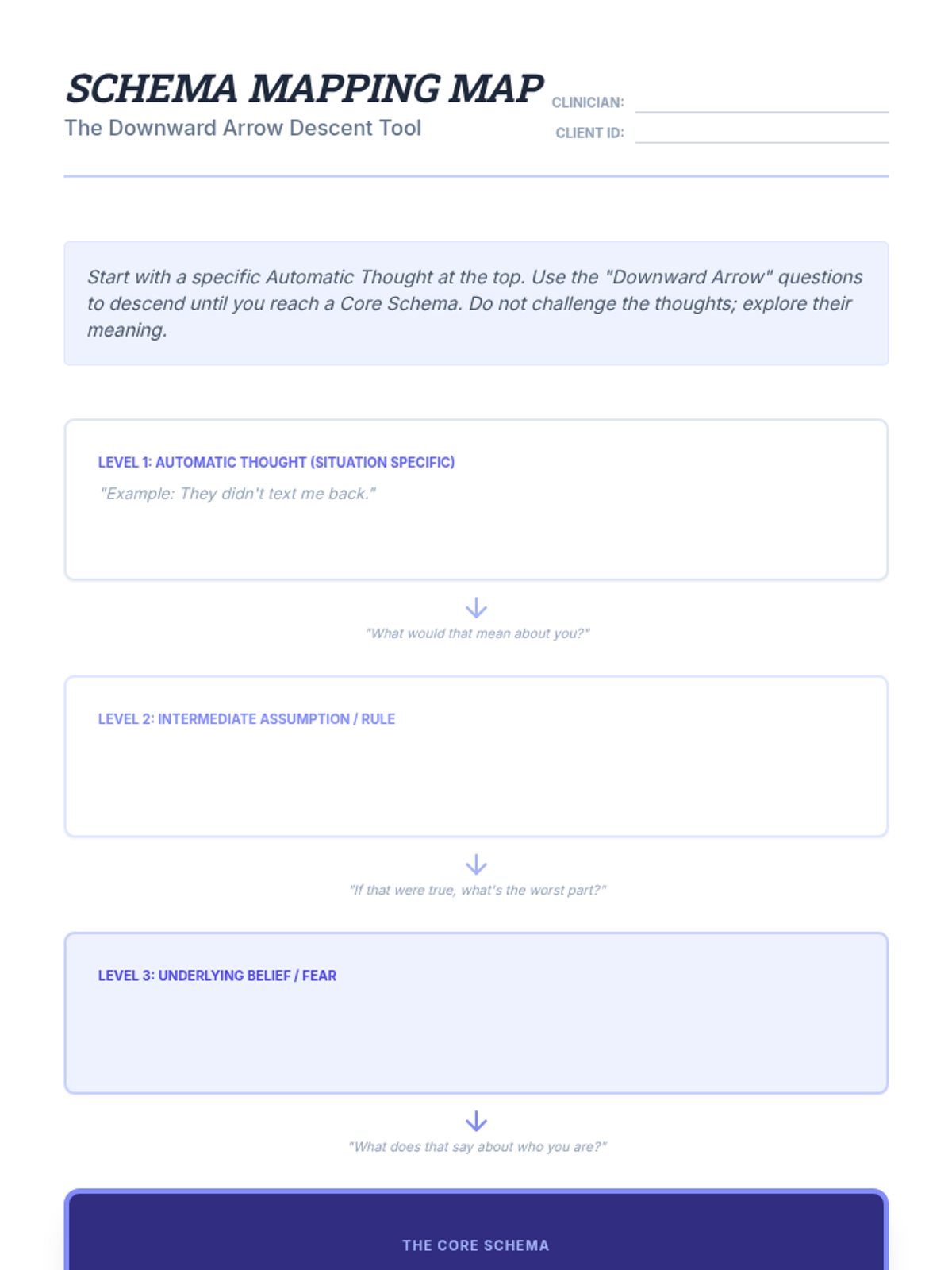
Teaches the downward arrow technique to connect surface-level automatic thoughts to deeper intermediate assumptions and maladaptive core schemas.
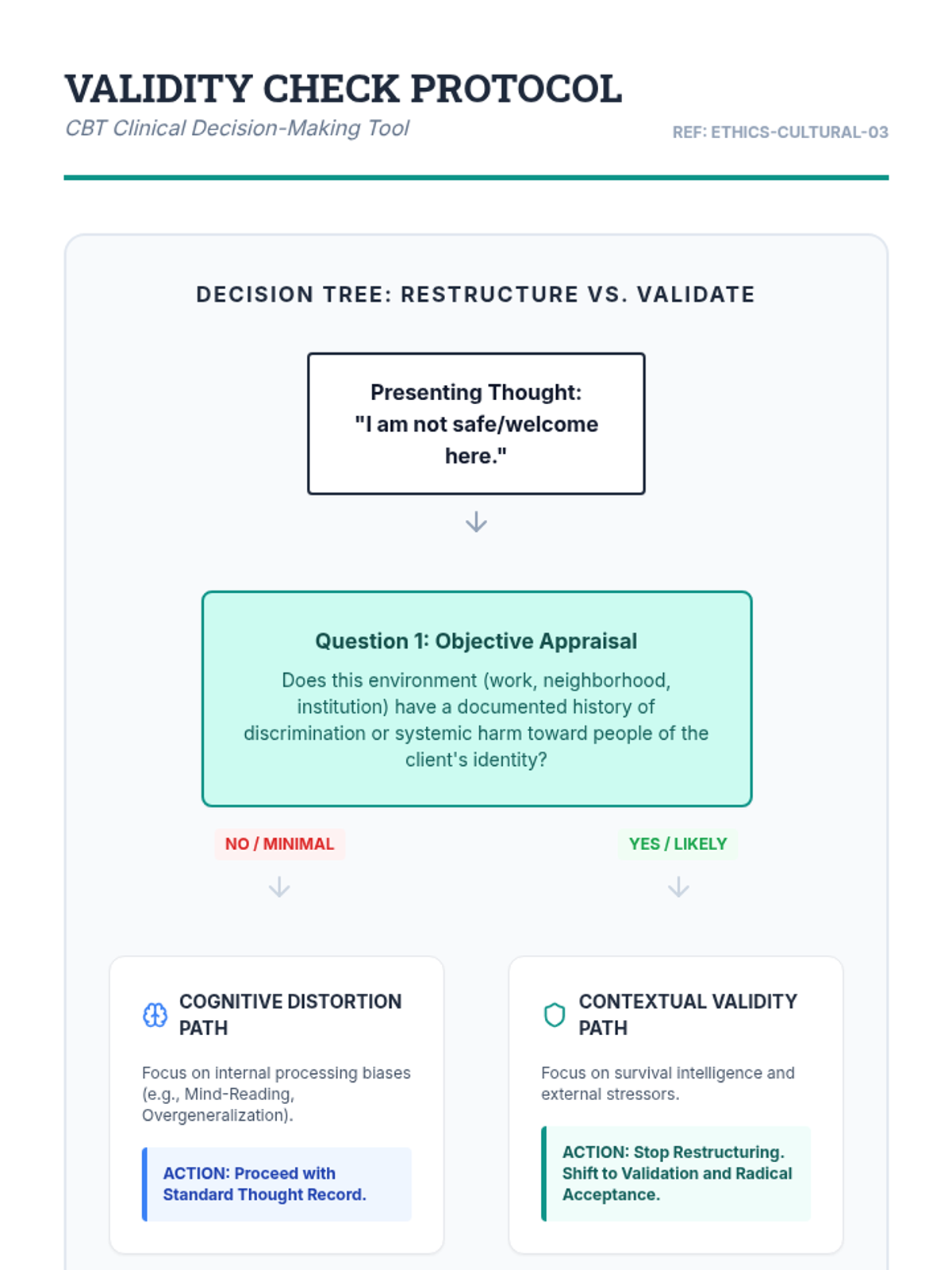
Critically evaluates the use of cognitive restructuring in the context of systemic oppression and cultural diversity, distinguishing between distortions and valid perceptions.
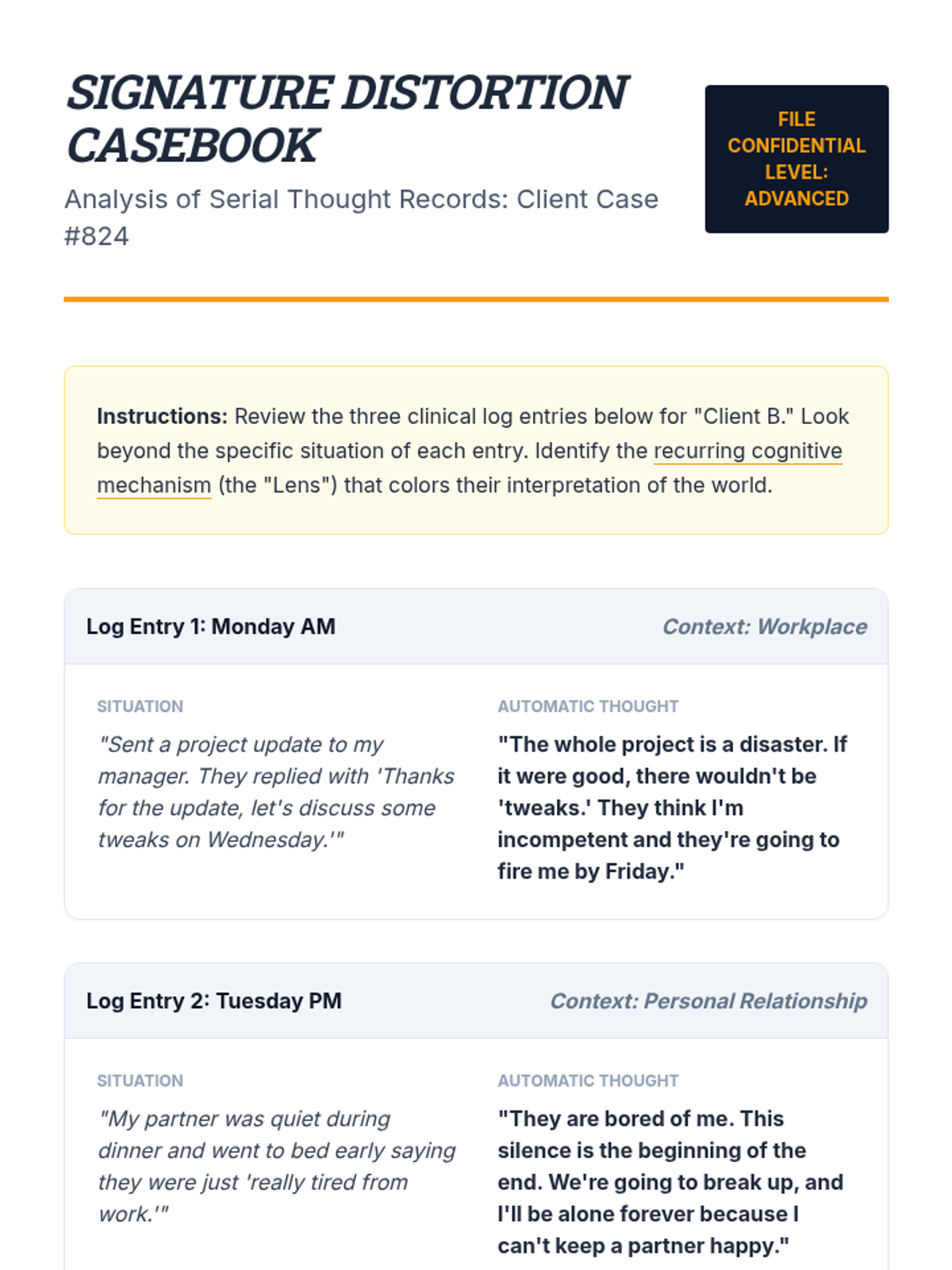
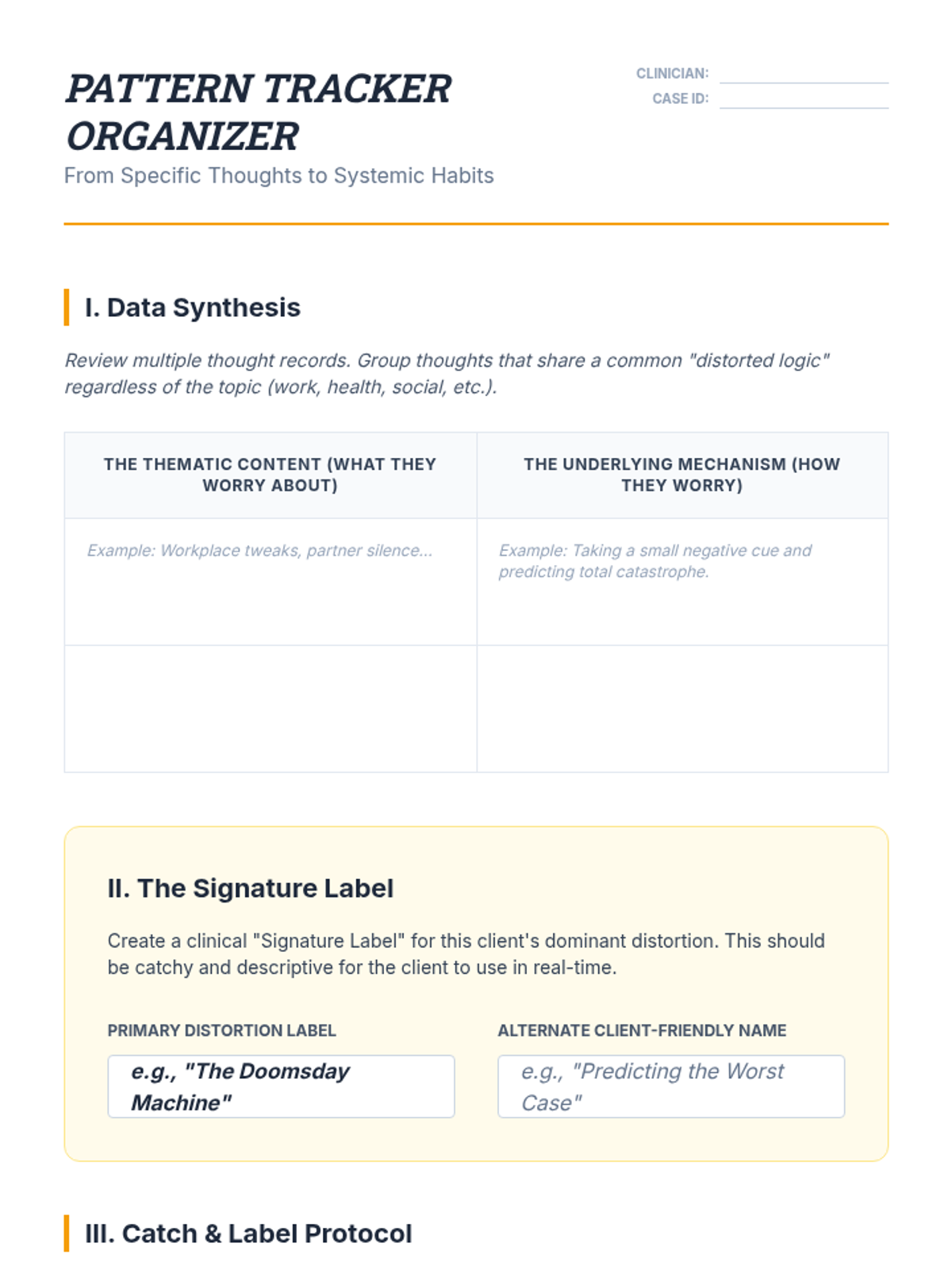
Focuses on meta-cognitive analysis of serial thought records to identify systemic patterns and 'signature' distortions in client thinking.
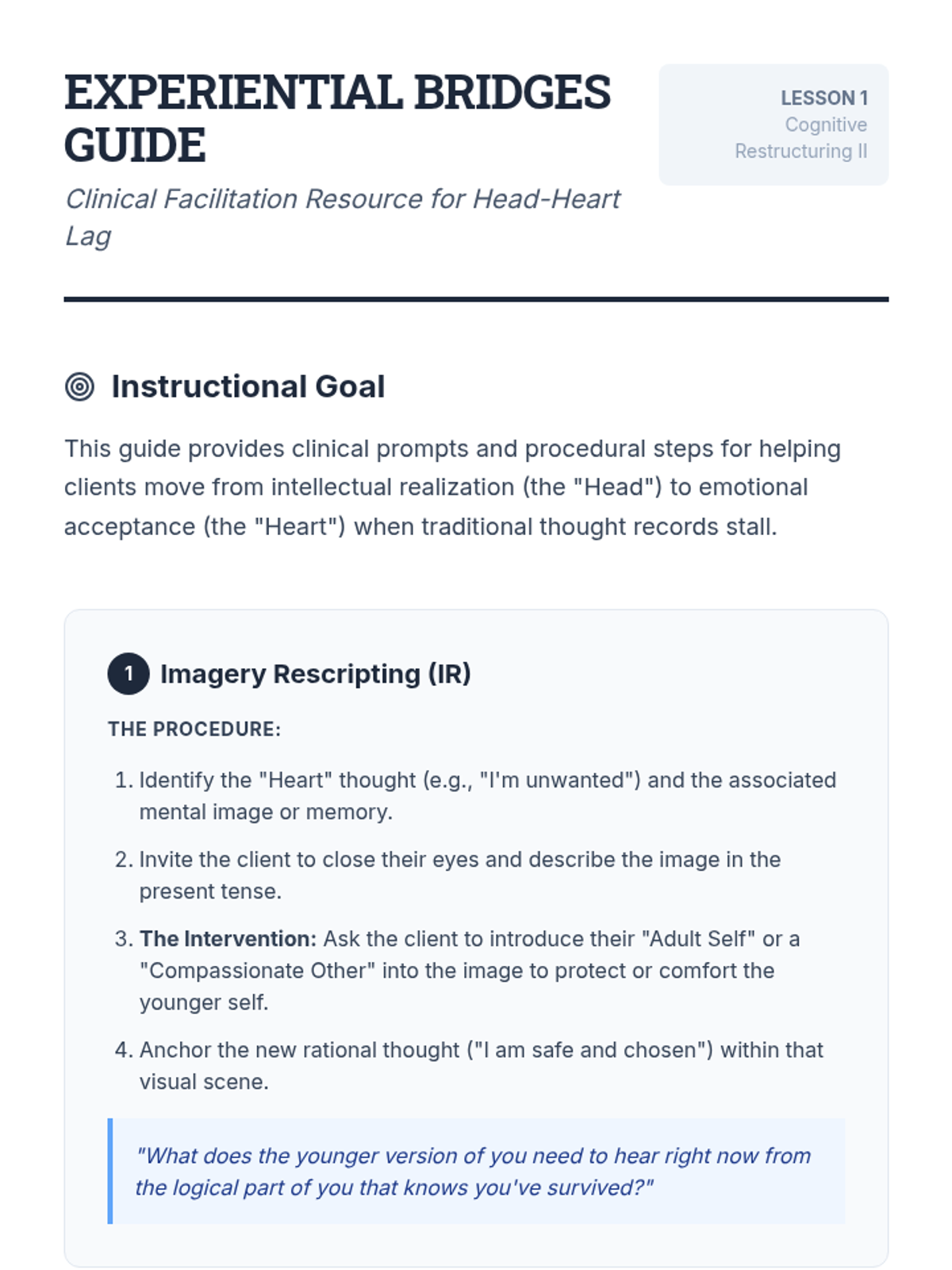
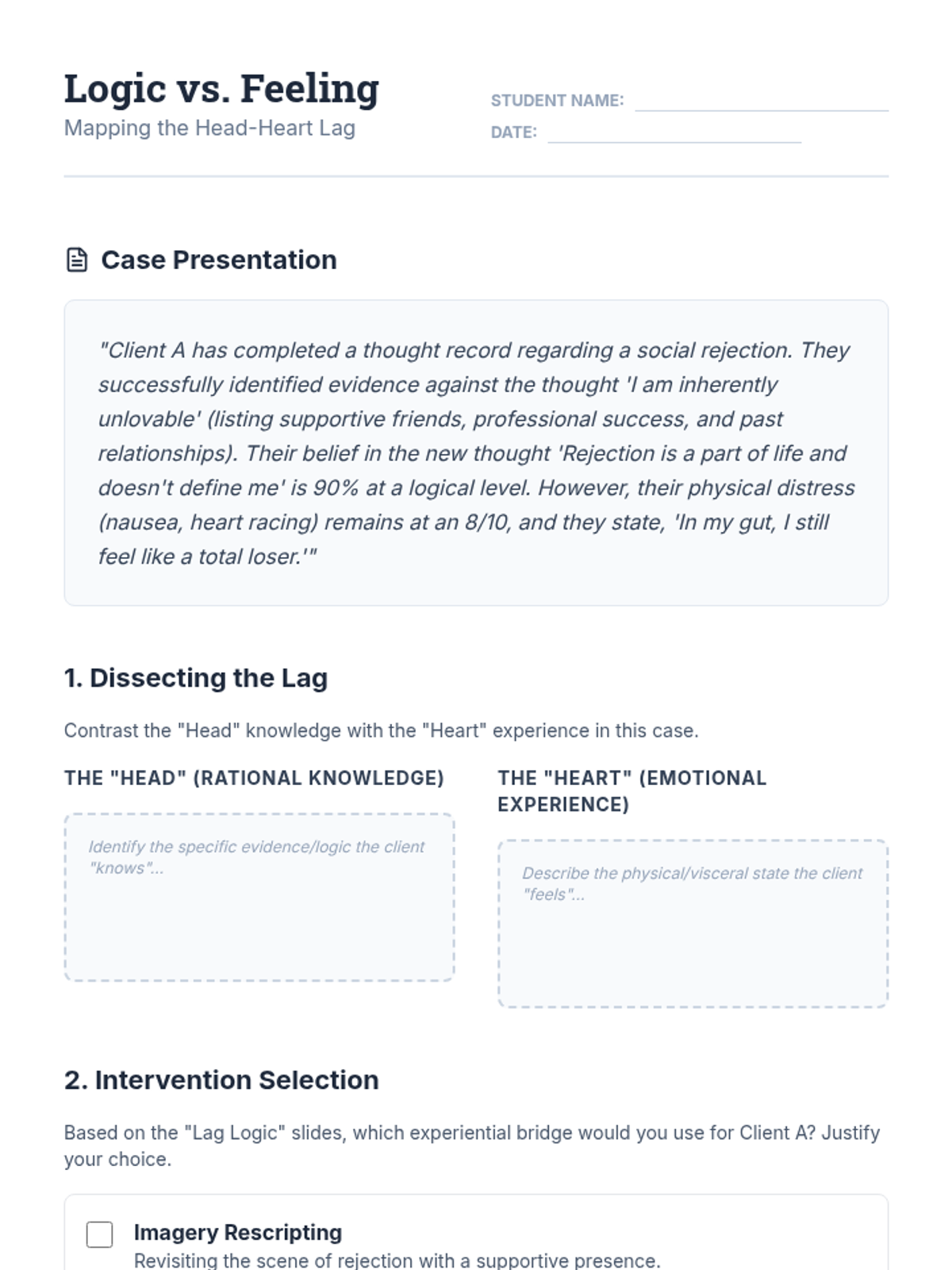
Explores the phenomenon of 'rational-emotional dissonance' and introduces experiential techniques to bridge the gap between cognitive understanding and emotional shift.
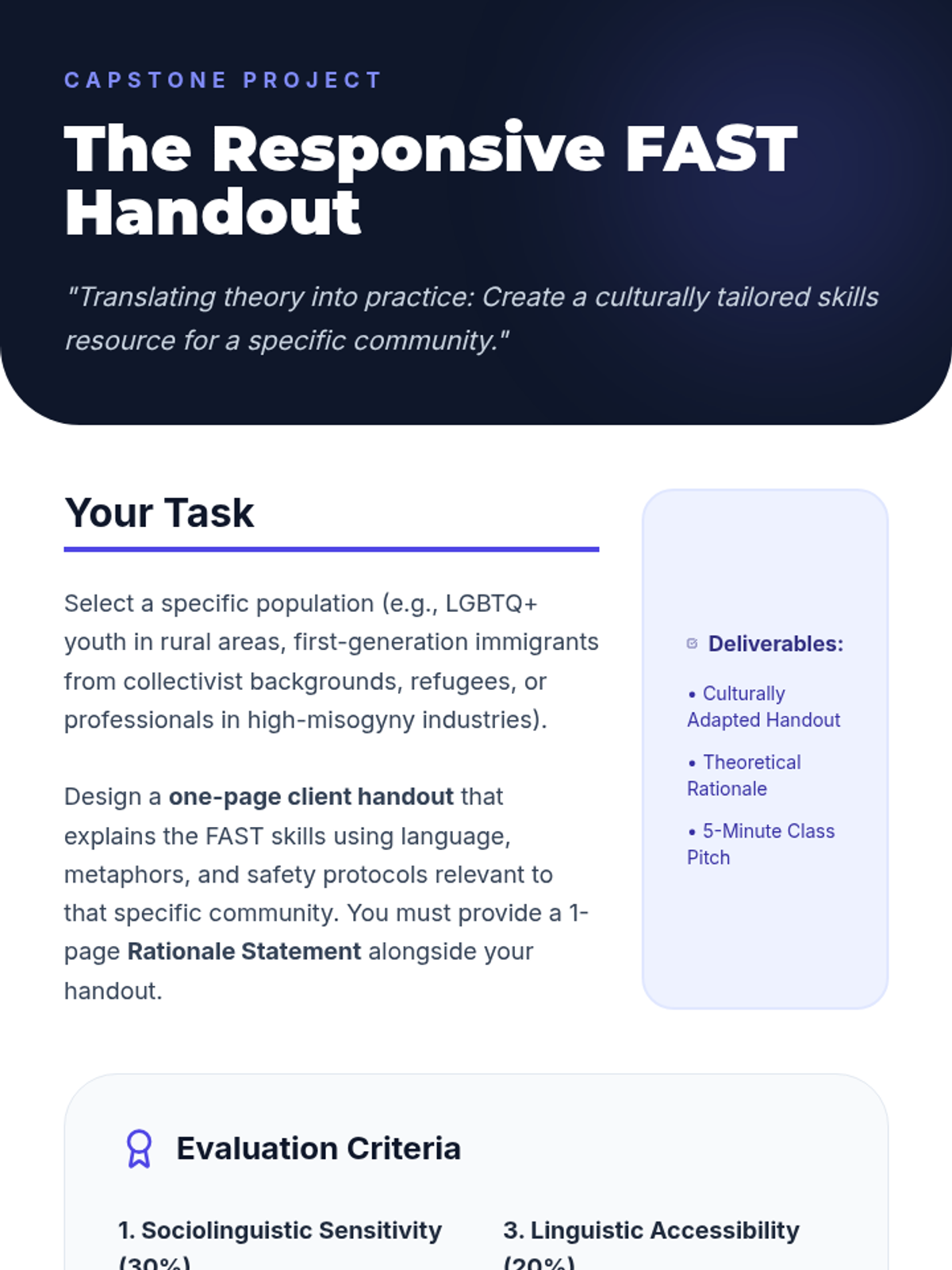
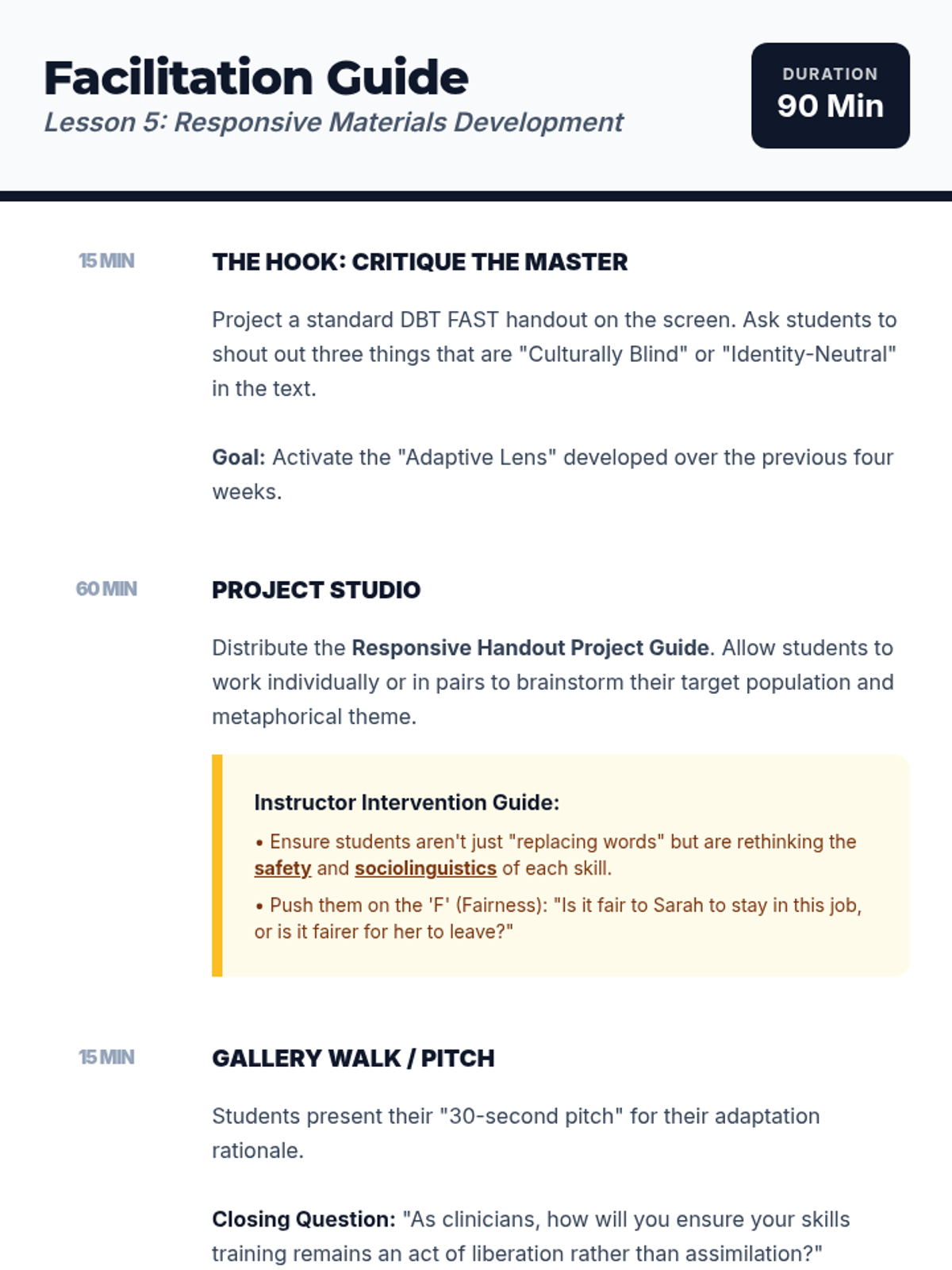
Synthesize learning by creating a culturally adapted FAST skills handout for a specific marginalized or non-Western population.
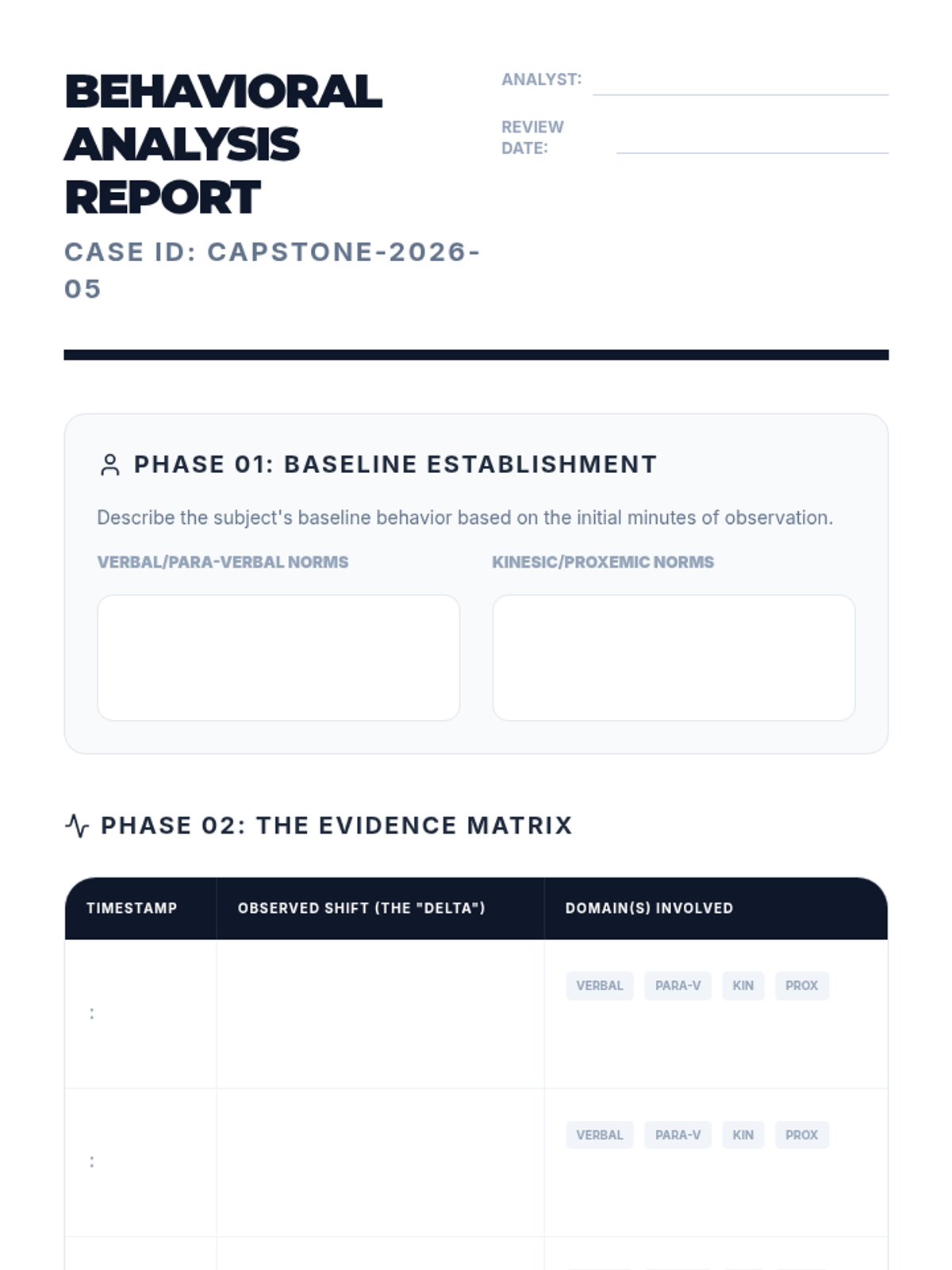
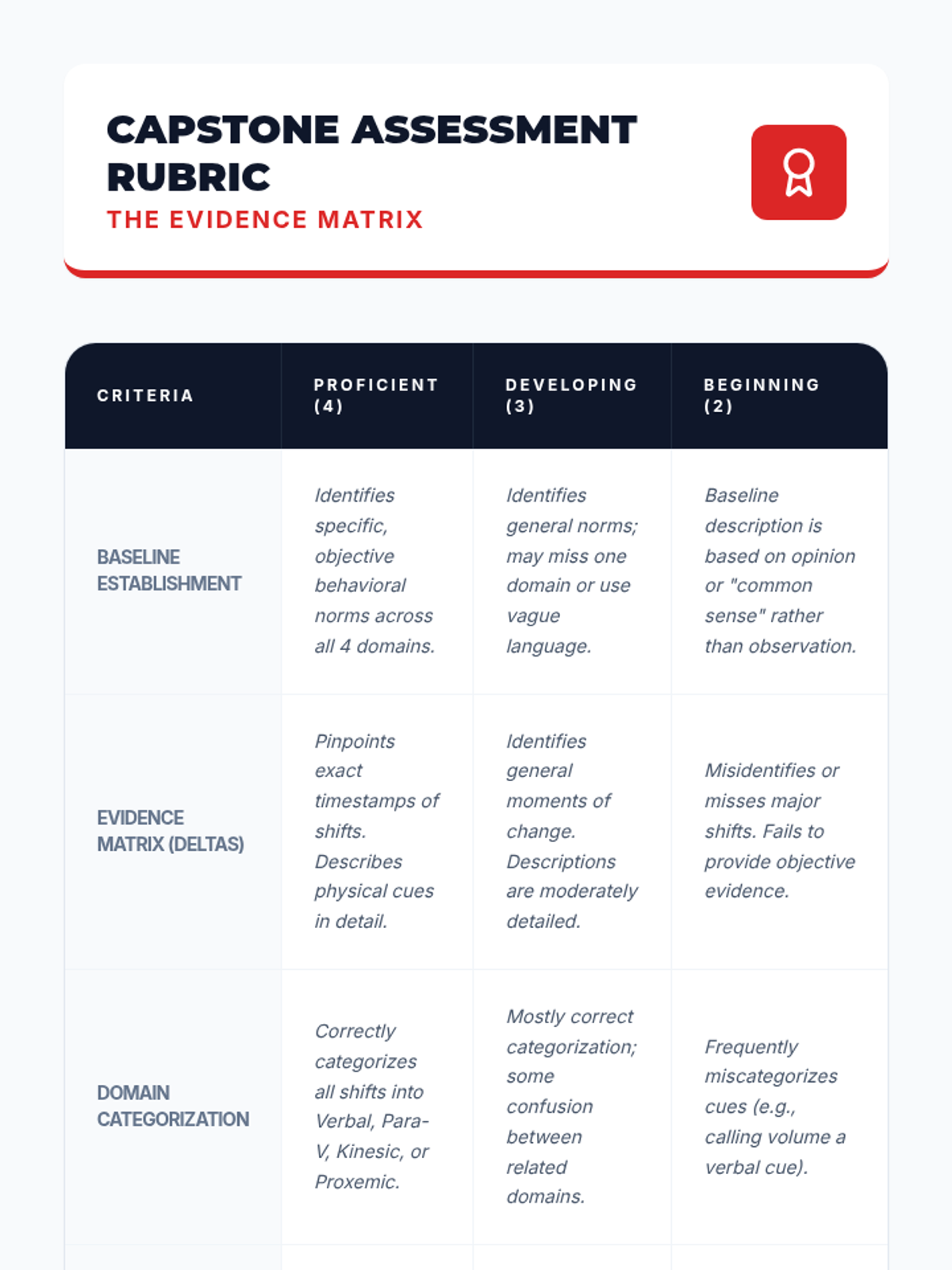
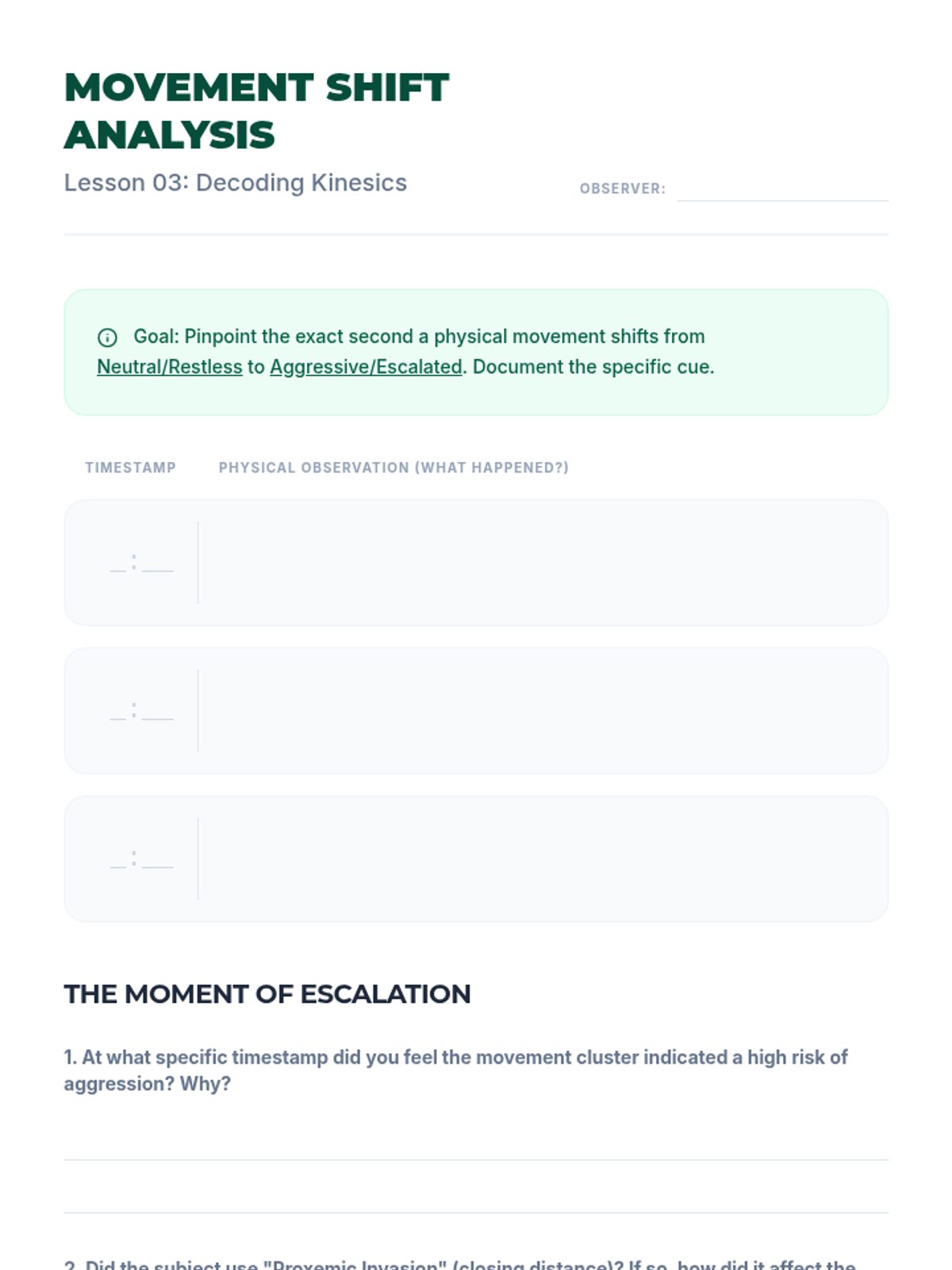
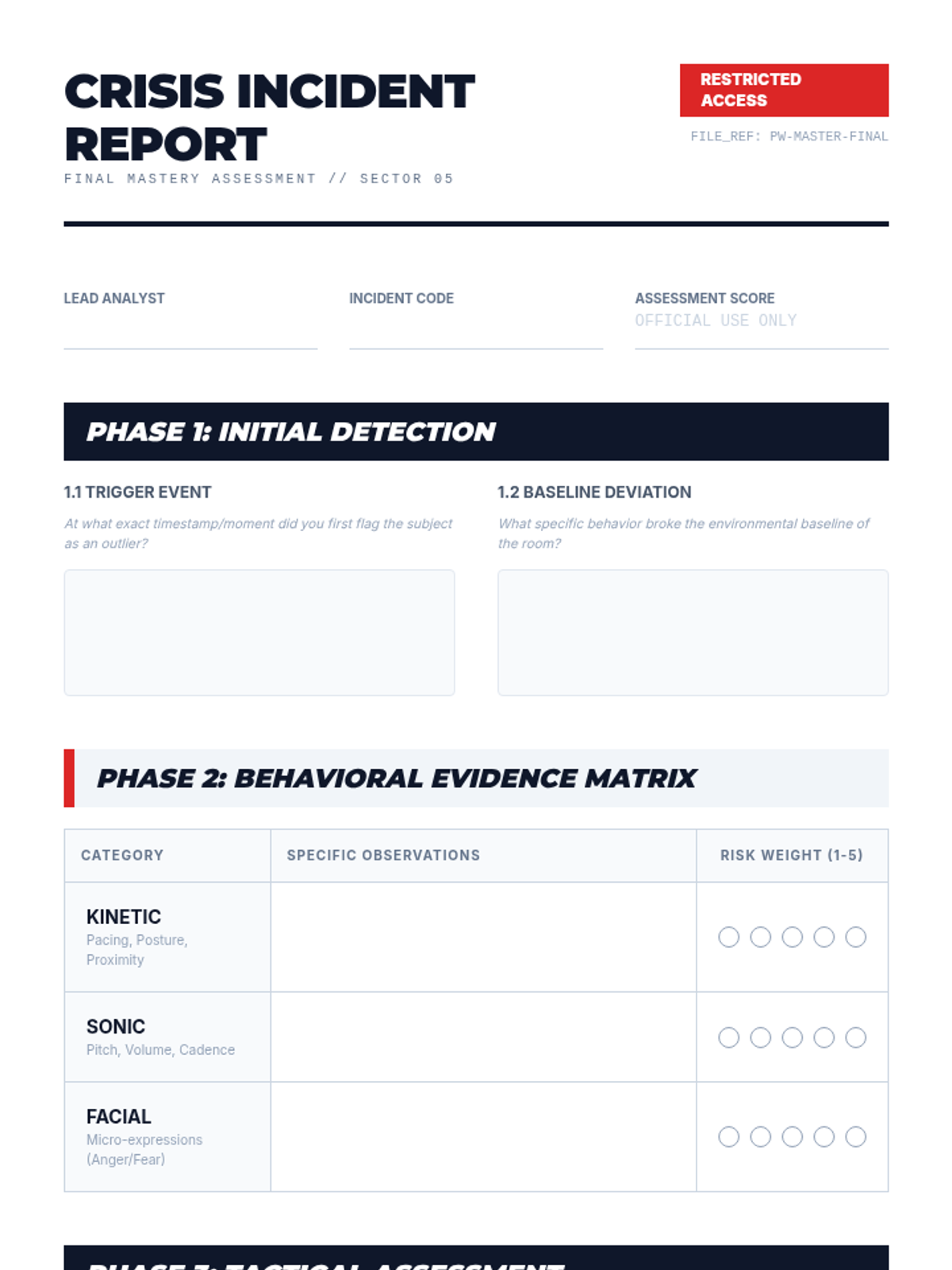
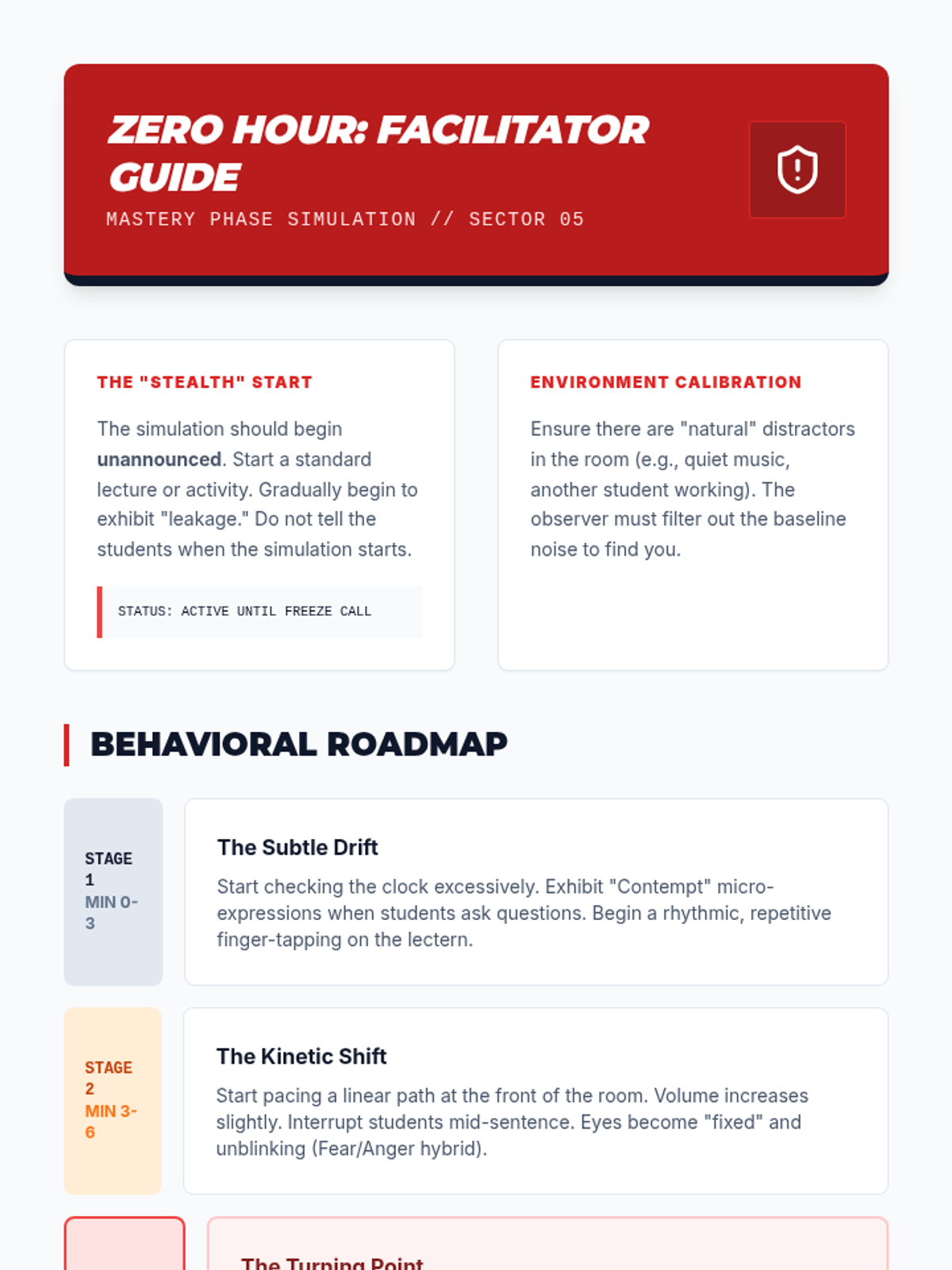
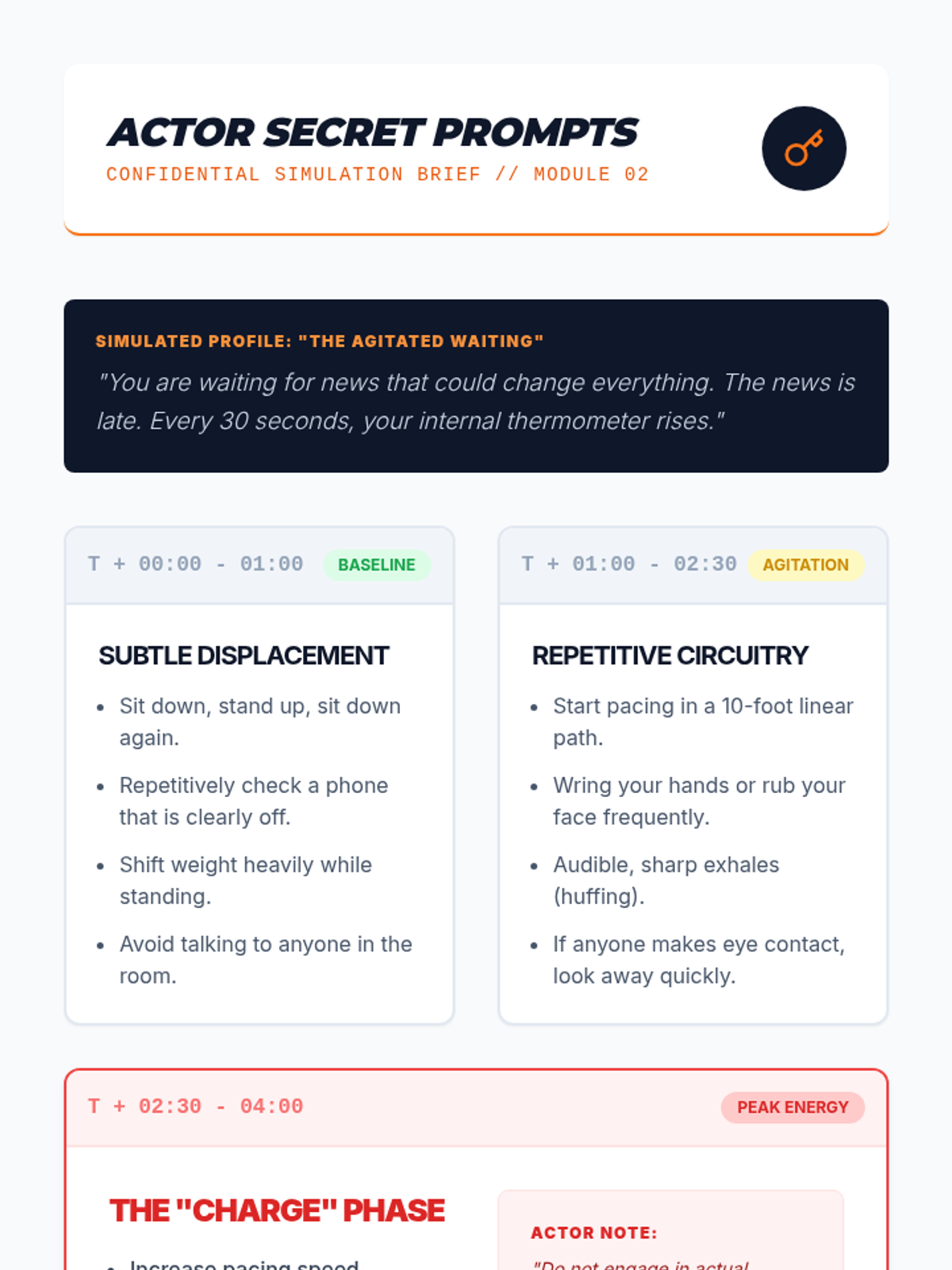
In this synthesis lesson, students review a full-length interaction containing multiple phases of behavior. They must map the subject's journey from baseline to trigger to escalation, citing specific evidence for every shift.
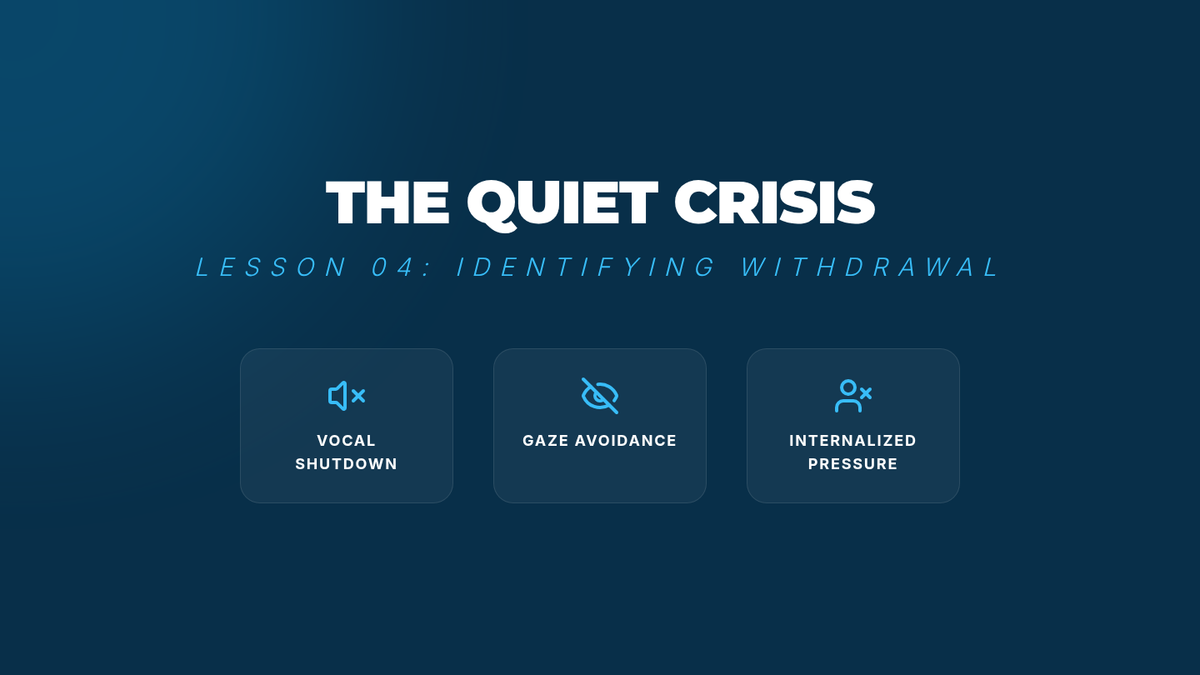
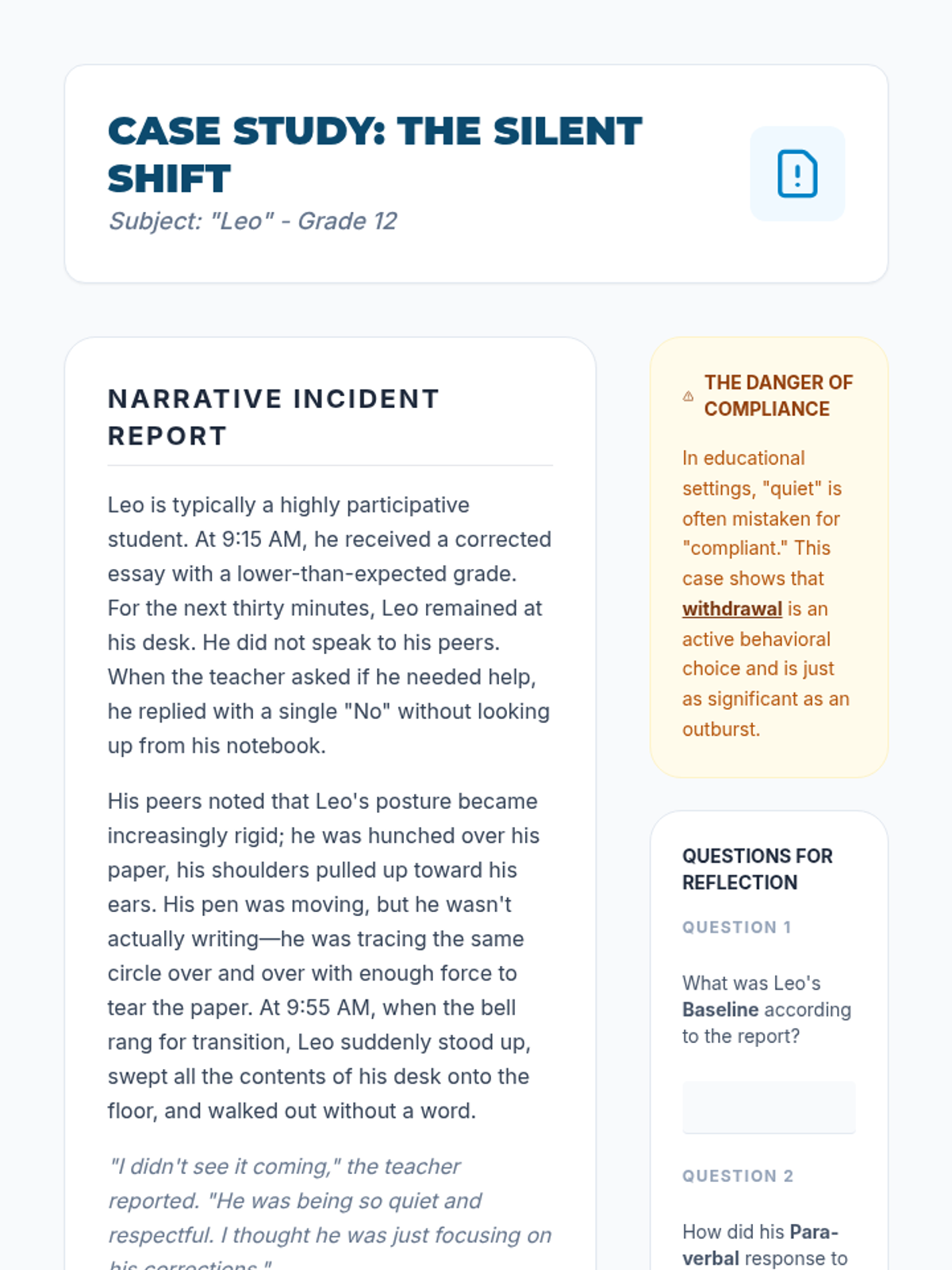
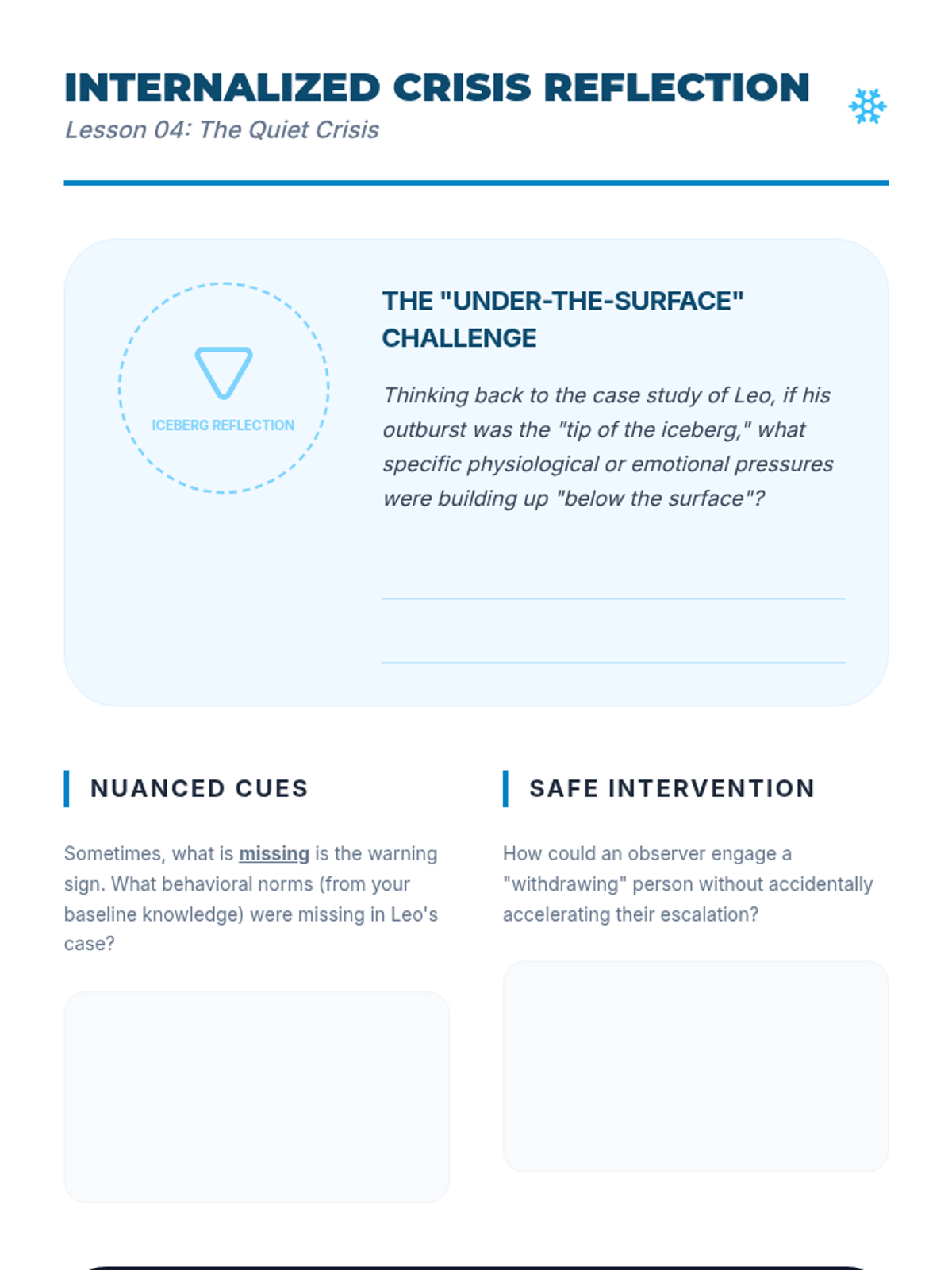
Moving beyond active aggression, this lesson focuses on 'implosive' escalation—withdrawal, silence, and avoidance. Students analyze case studies of students who escalated internally before an outburst, learning to spot the 'quiet' warning signs.
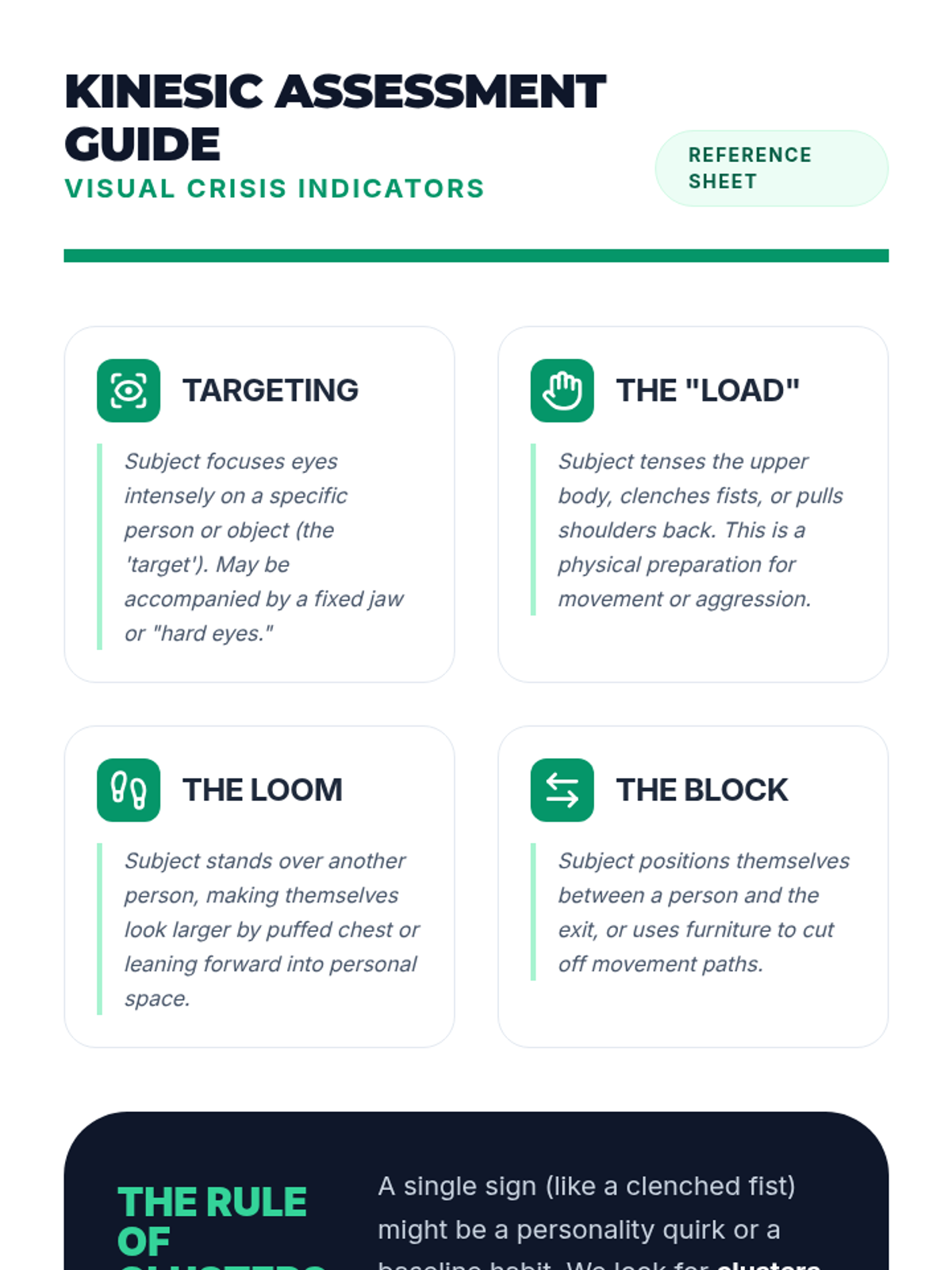
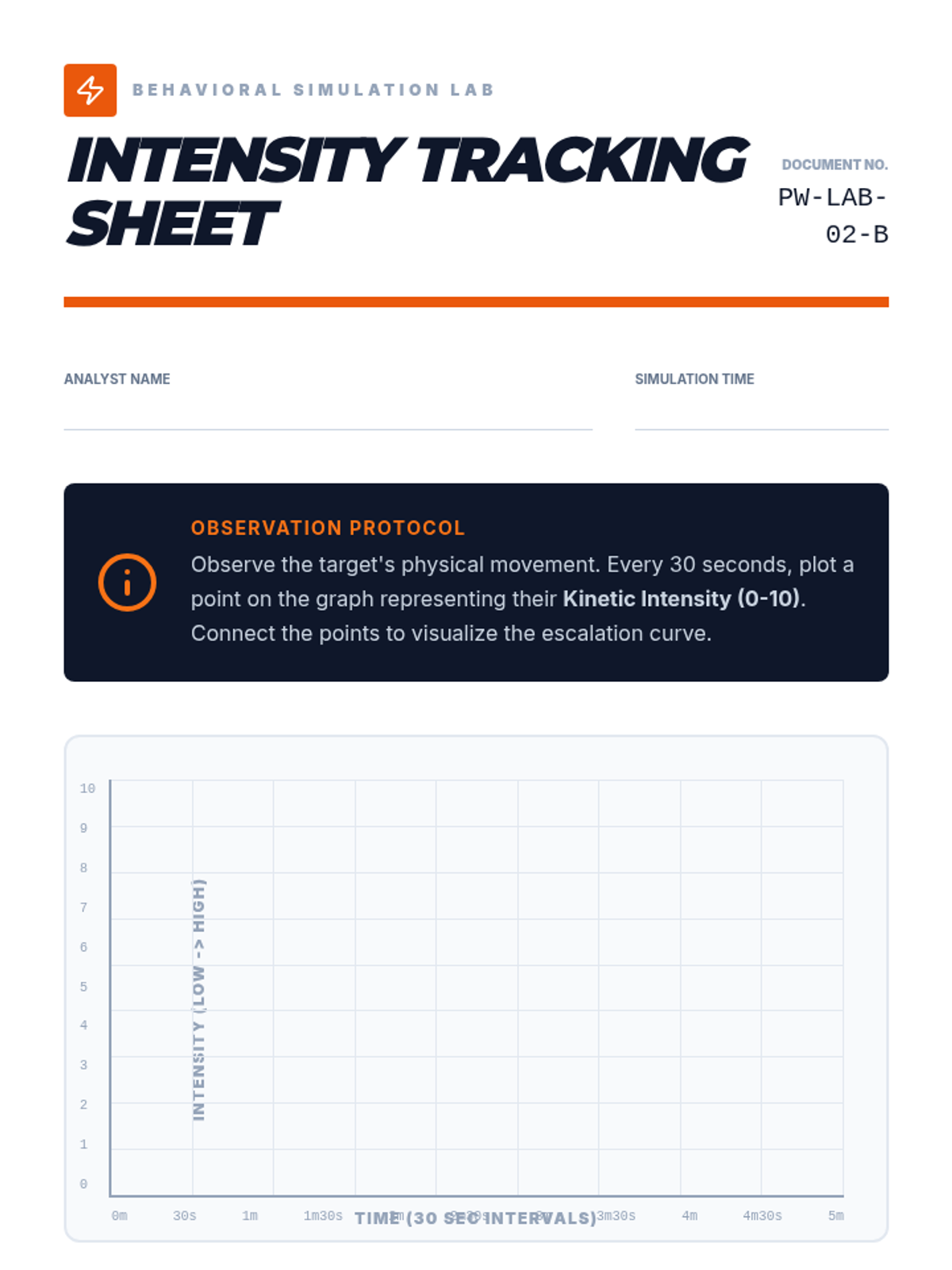
Students investigate physical warning signs such as pacing, fist-clenching, and invasion of personal space. They review footage of escalating situations to pinpoint the exact moment physical movement shifts from restless to aggressive.
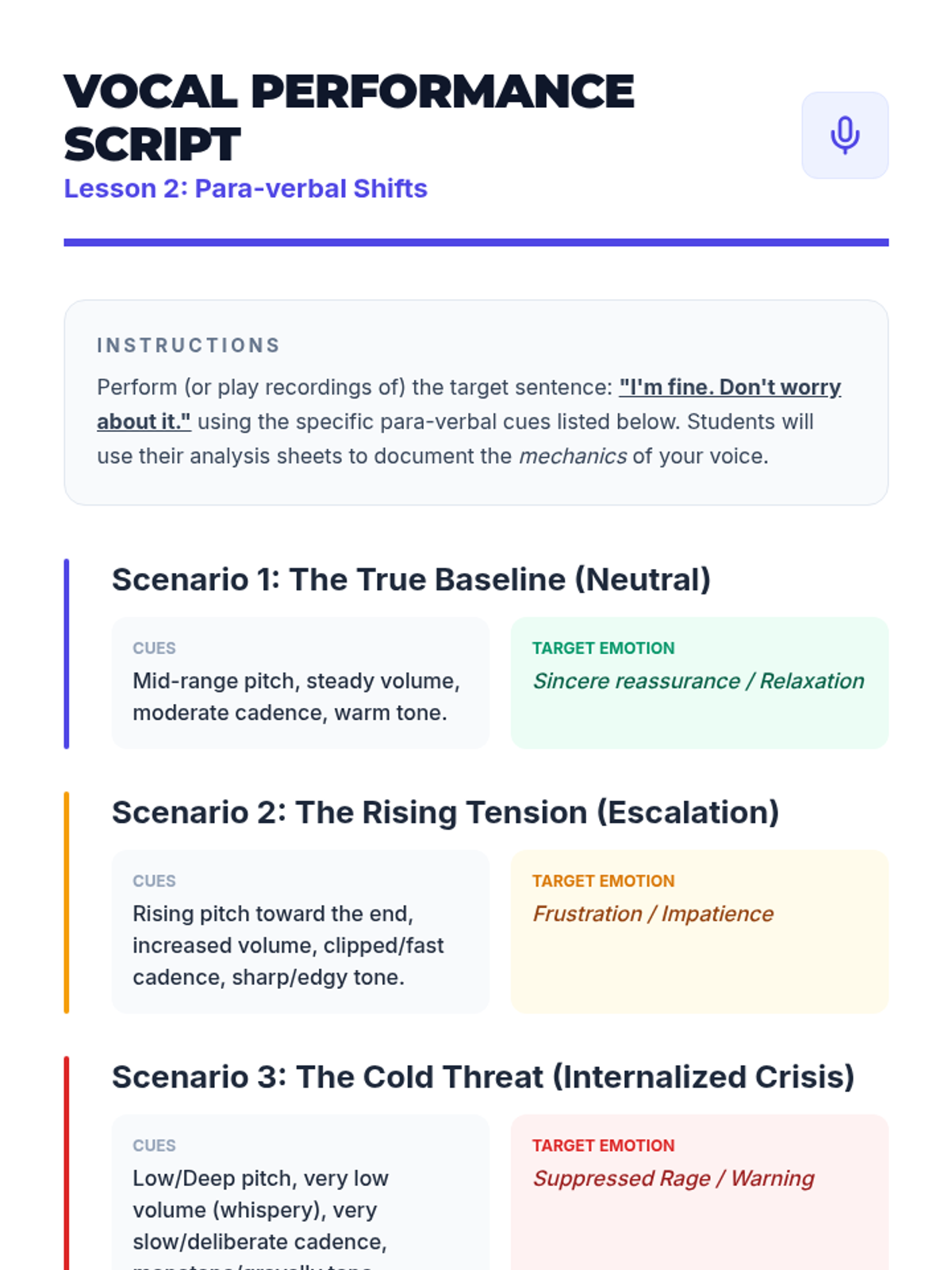
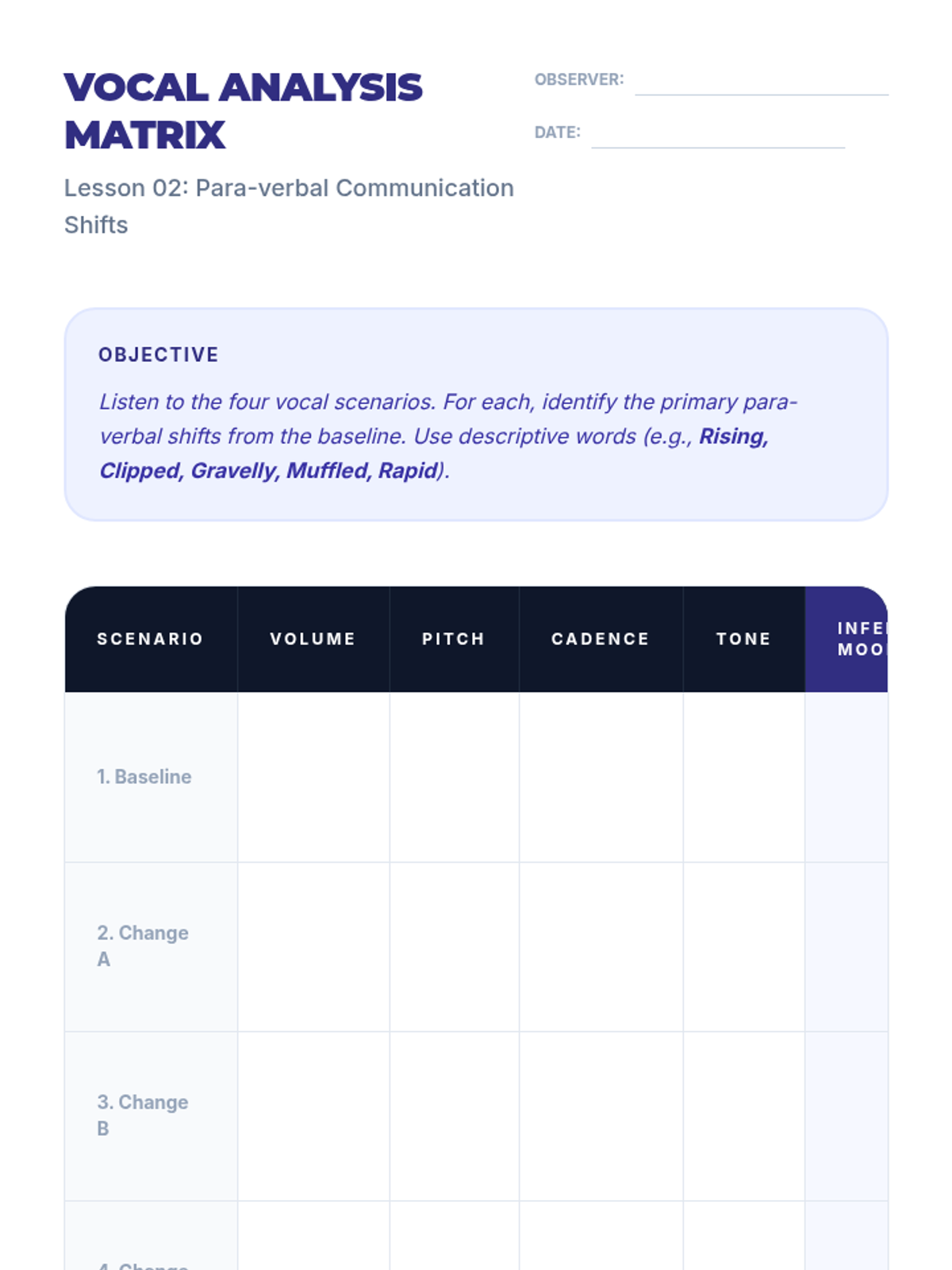
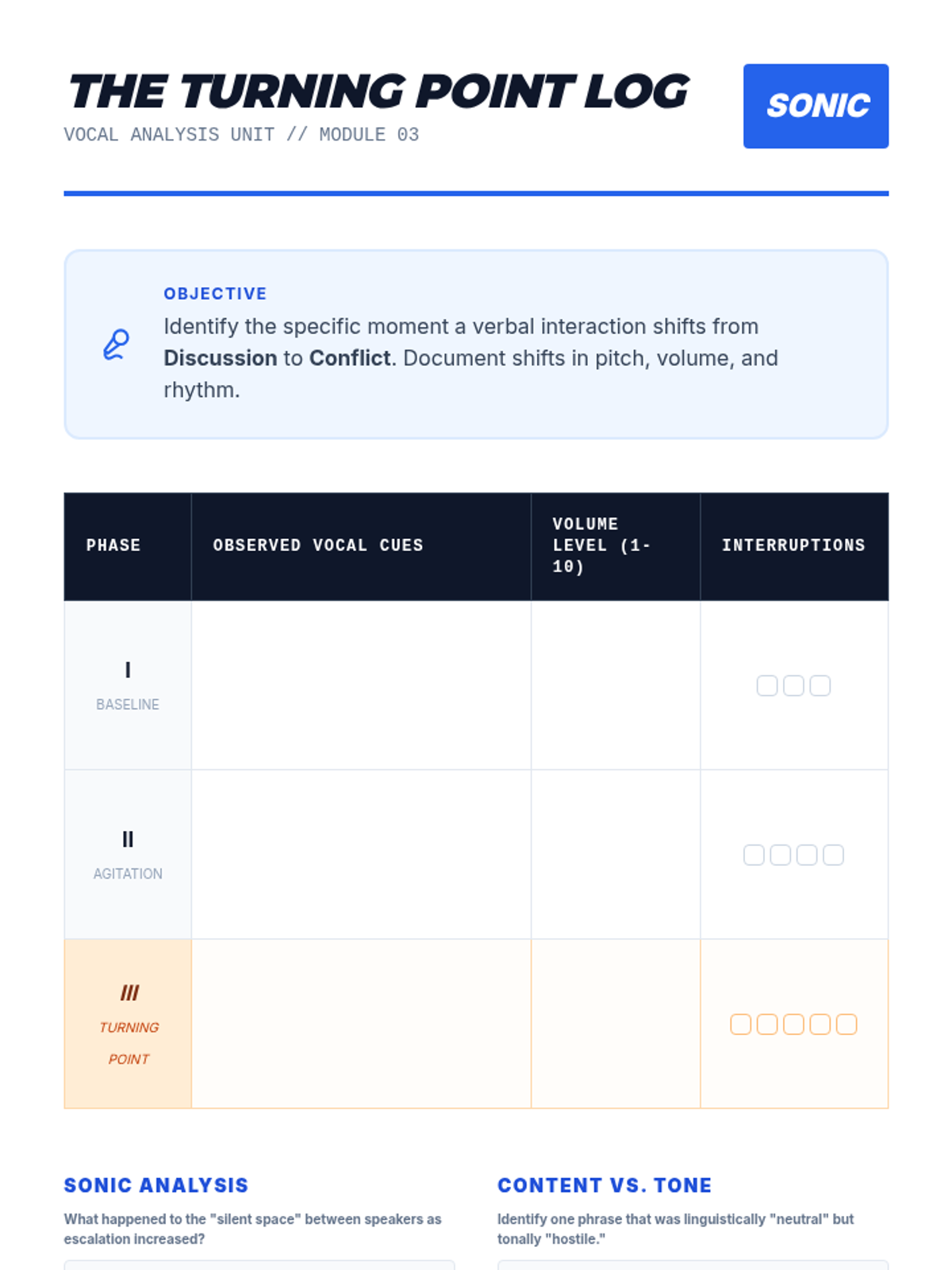
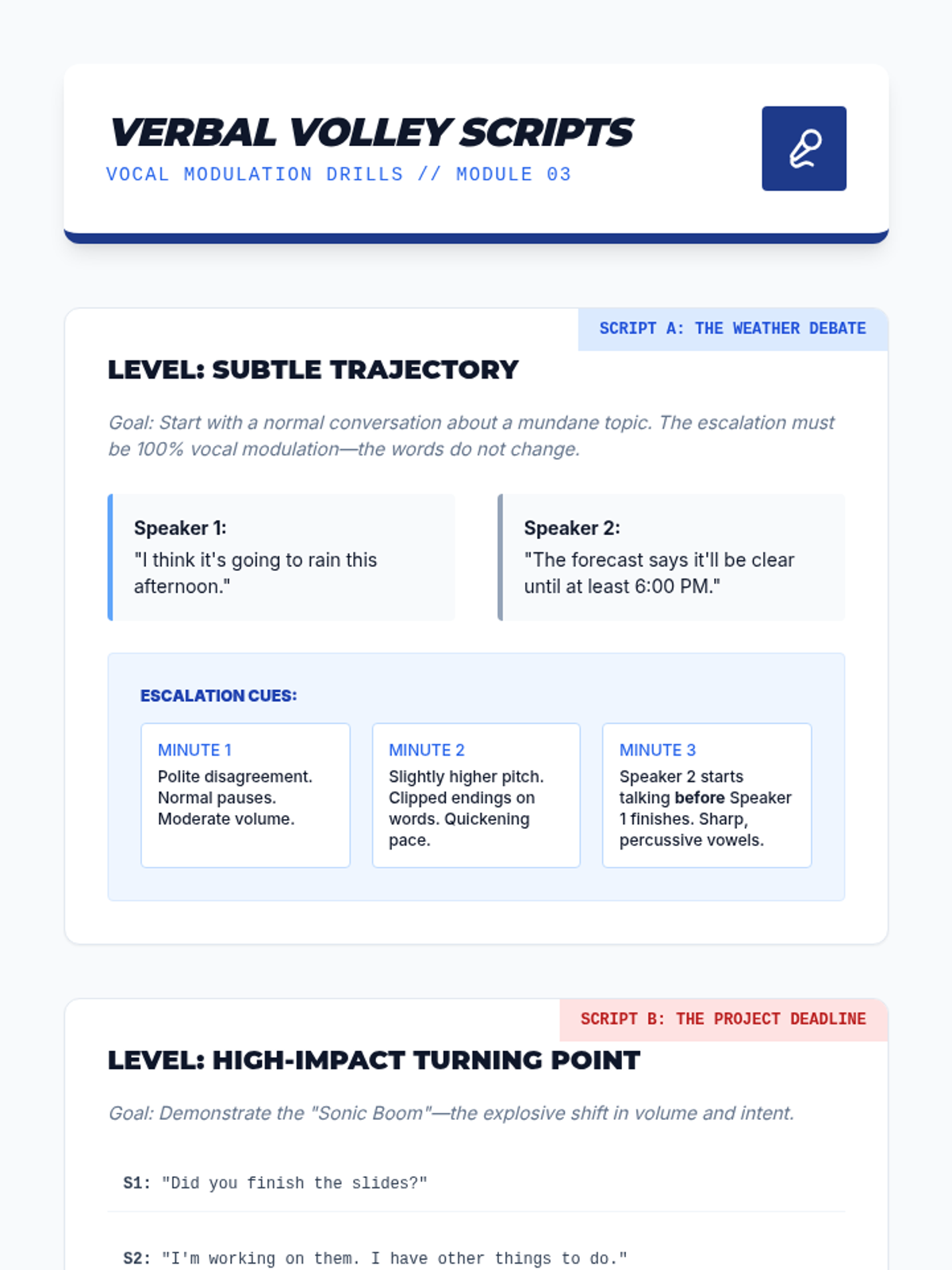
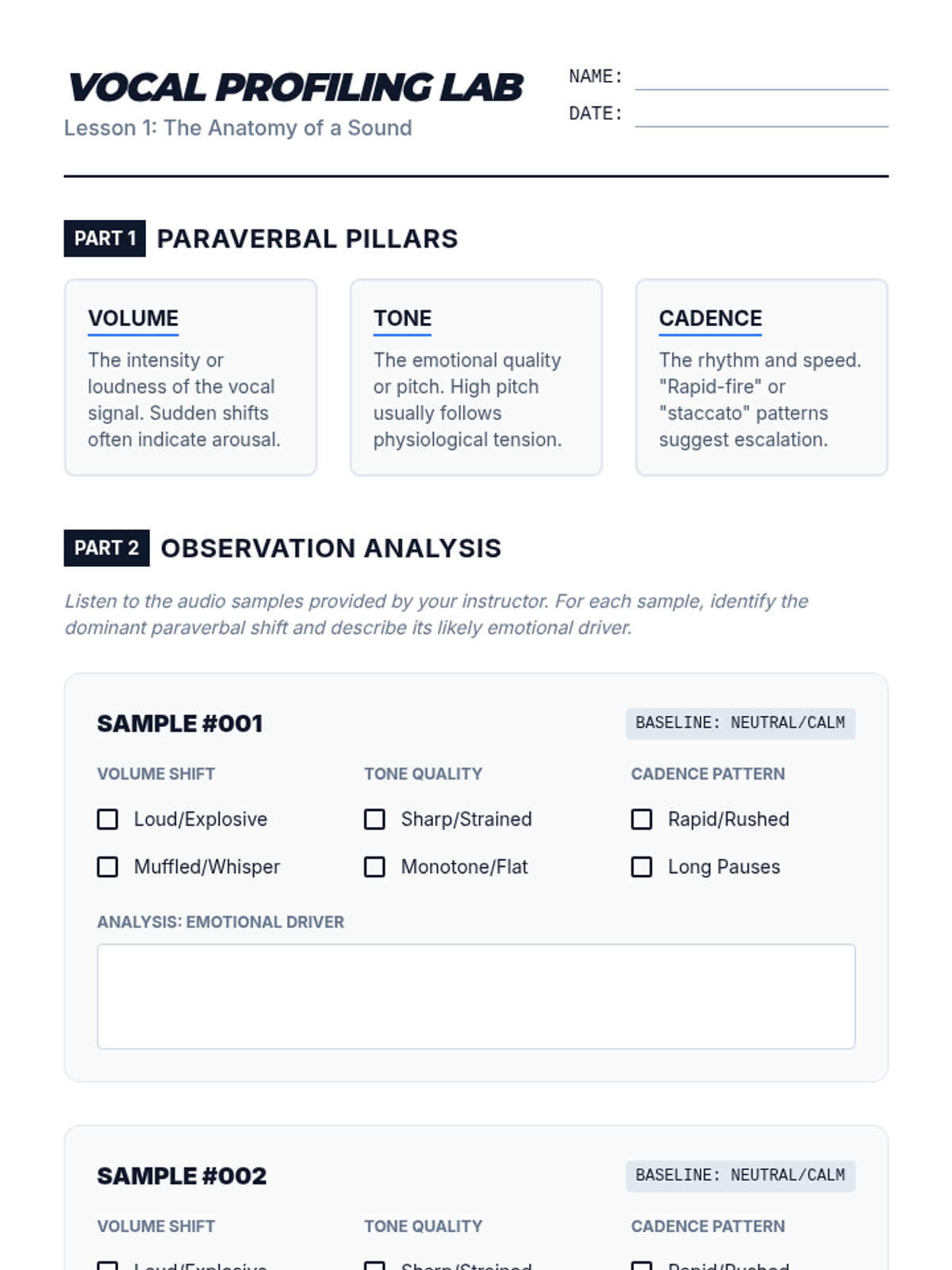
Focusing on how things are said rather than what is said, students analyze audio recordings to identify changes in pitch, volume, cadence, and tone.
A final mastery-based simulation where students apply all previous skills to identify risk levels in a live, unfolding scenario.
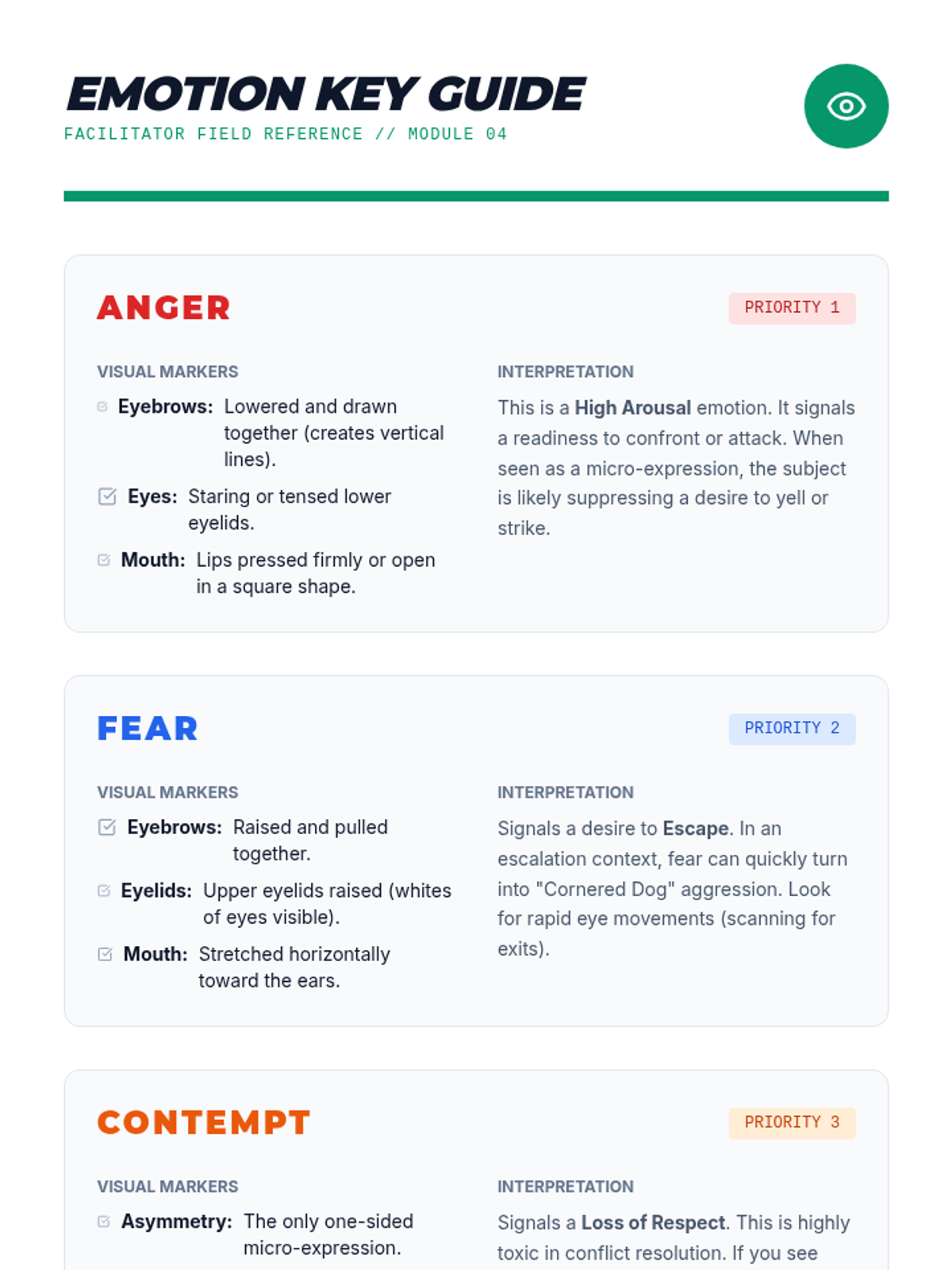
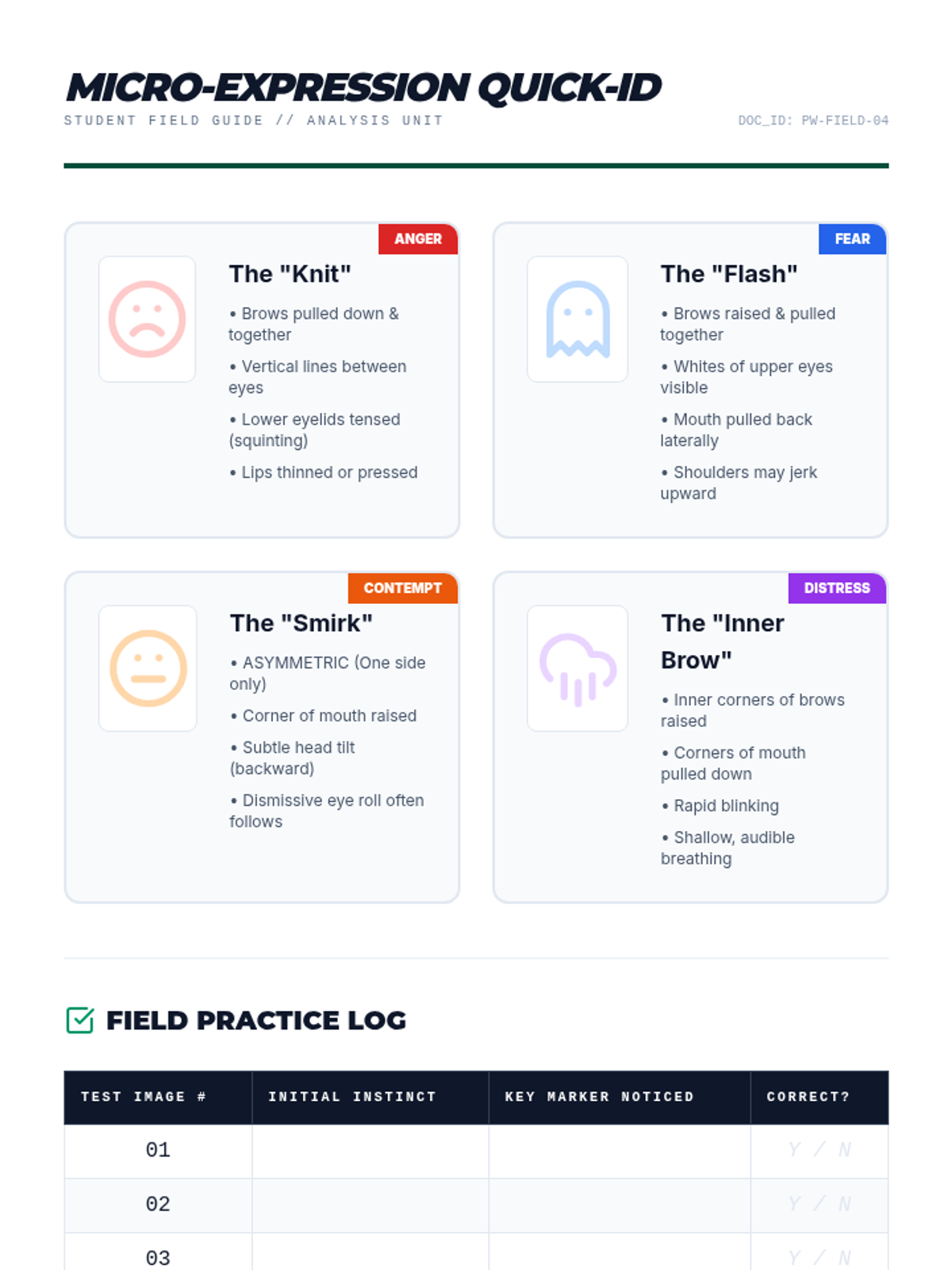
Focuses on the split-second 'leaks' of emotion in facial expressions that often precede behavioral outbursts.
Students analyze shifts in tone and volume to identify the 'turning point' where a conversation moves from debate to emotional conflict.
Focuses on tracking physical restlessness and pacing behaviors in real-time, helping students correlate kinetic energy with internal anxiety levels.
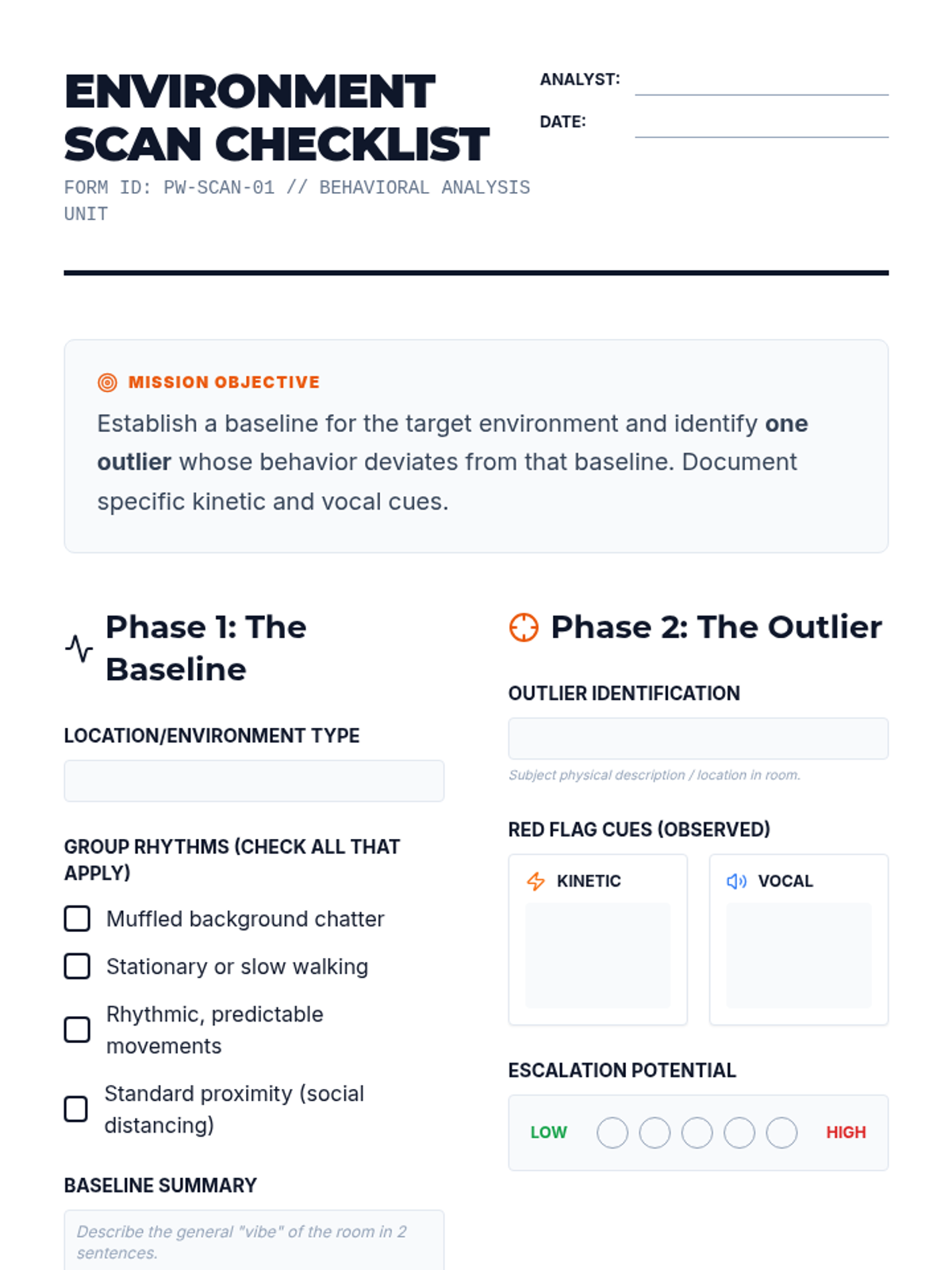
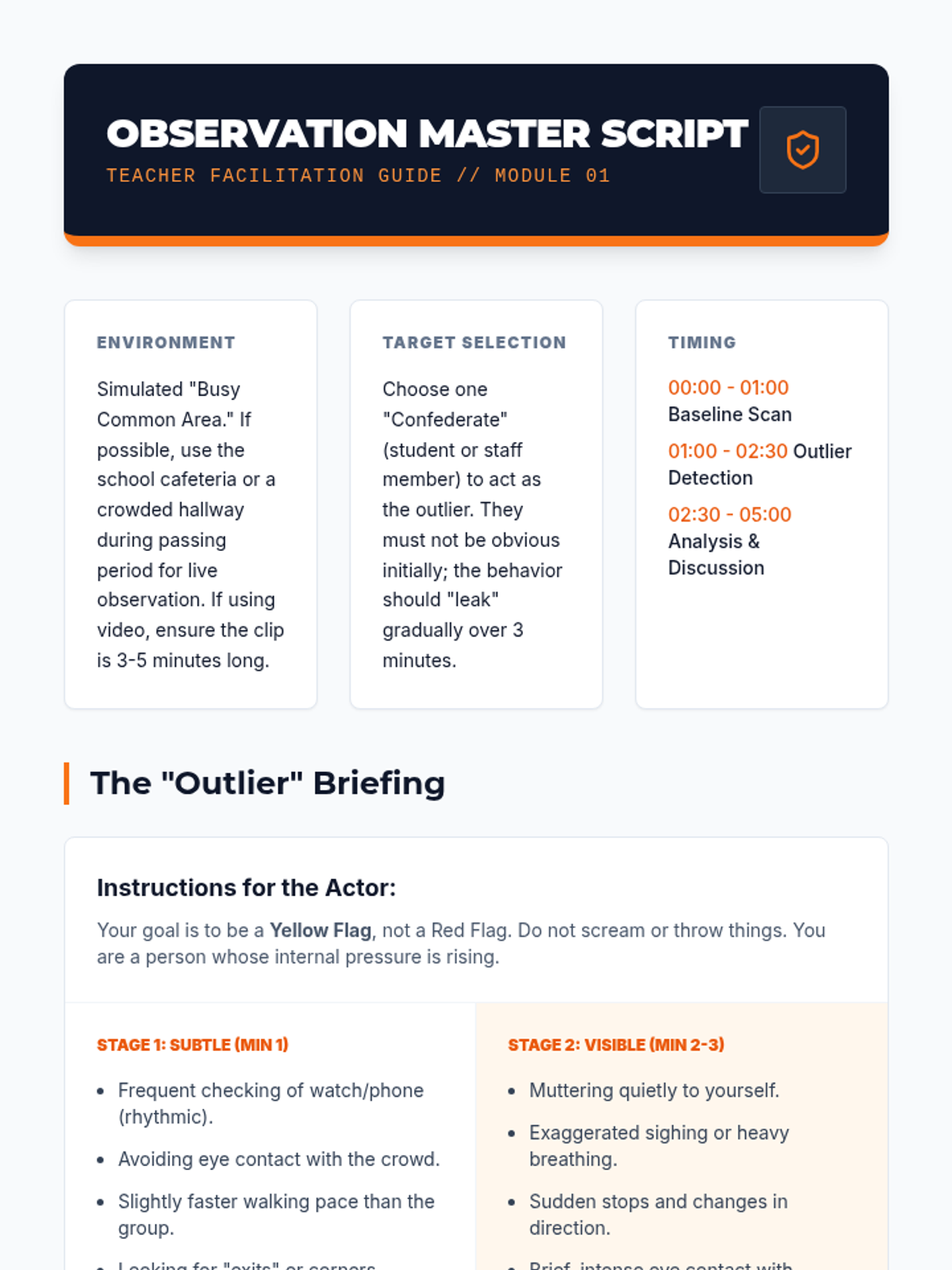
Students learn techniques for situational awareness, focusing on scanning a room for 'outlier' behaviors and identifying individuals who deviate from group norms.
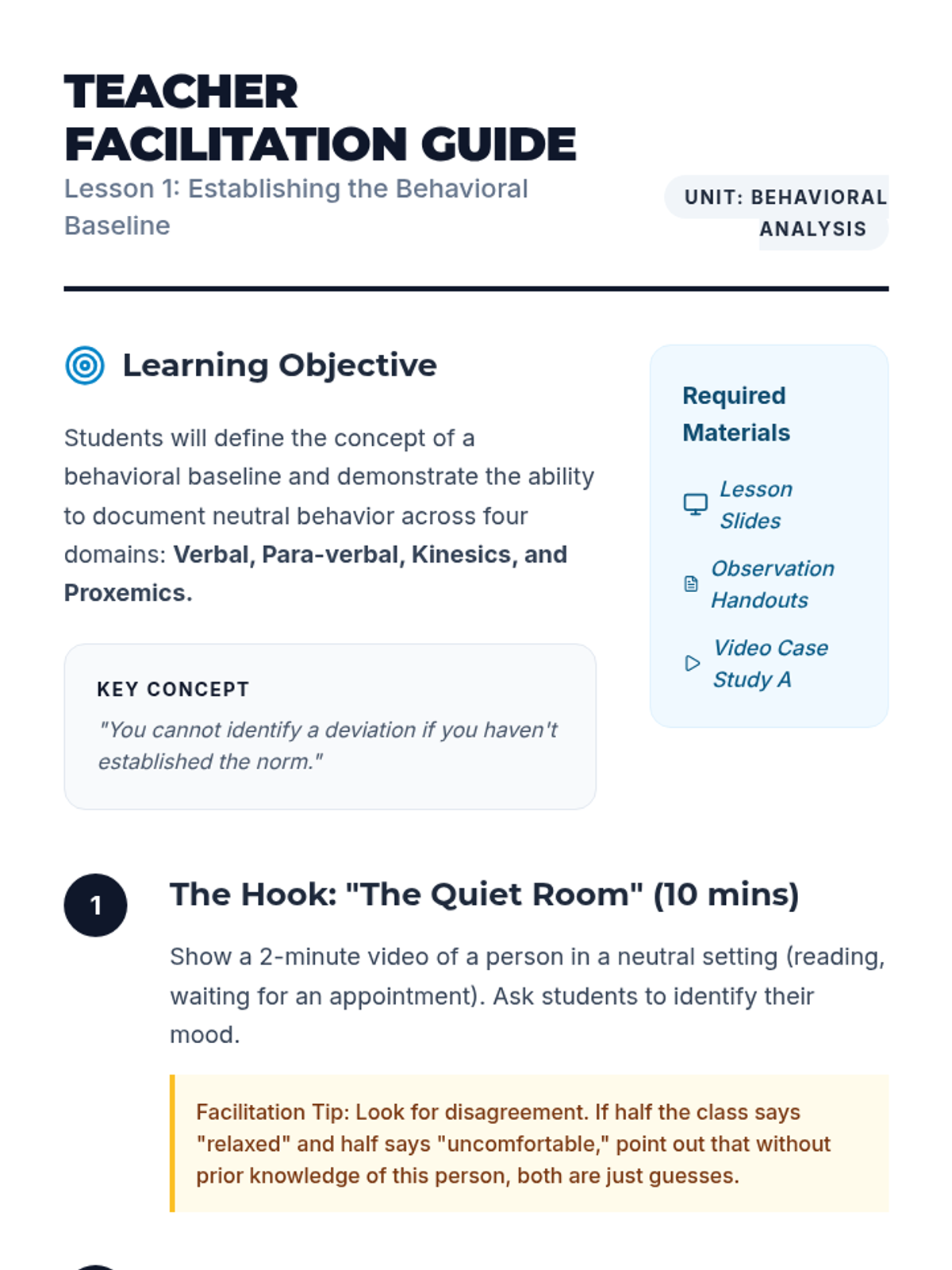
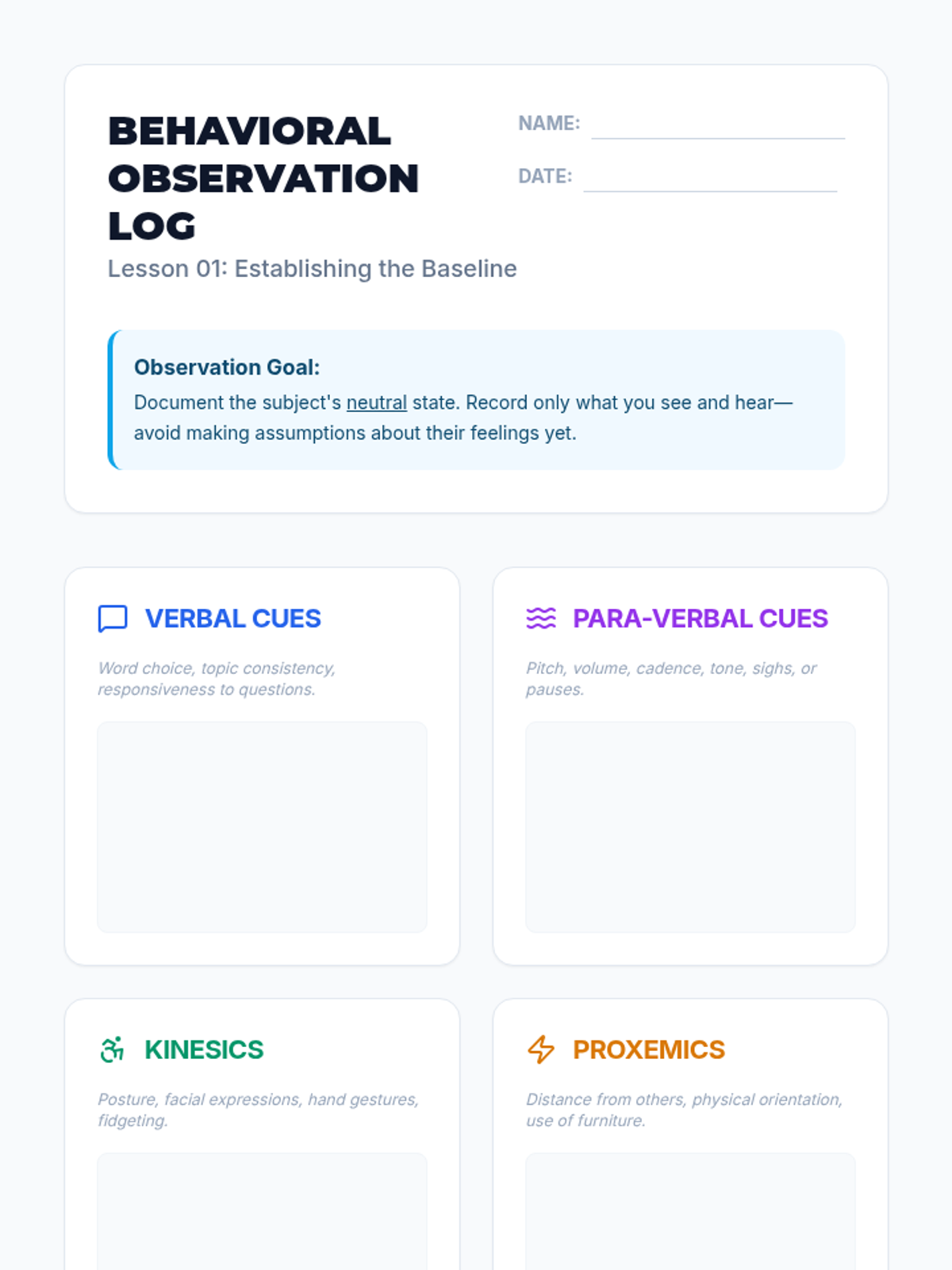
Students examine the concept of 'baseline behavior'—the standard operating state of an individual—to create a reference point for detecting future anomalies.
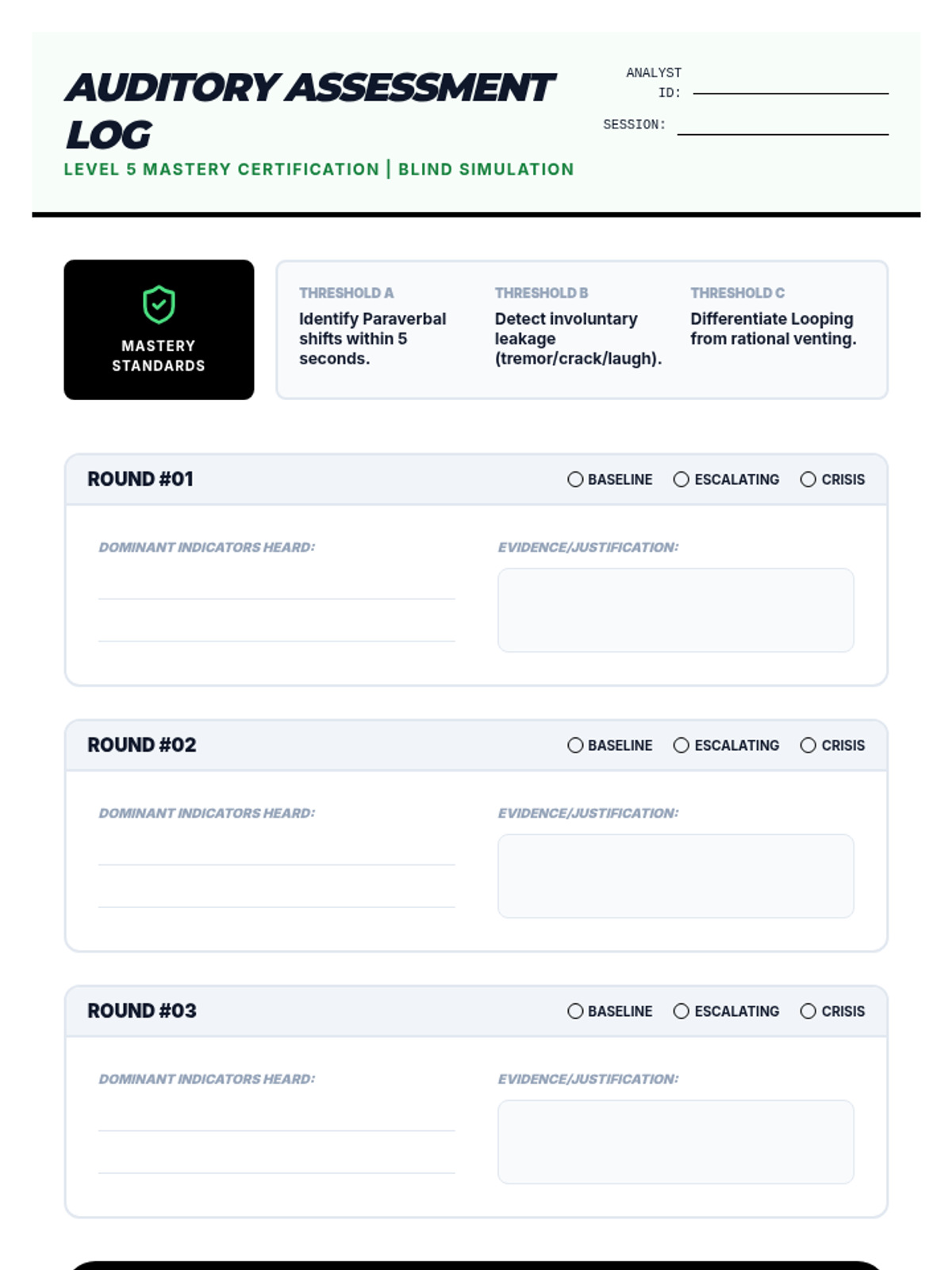
A mastery-based simulation where students assess emotional states based solely on auditory cues in a controlled environment.
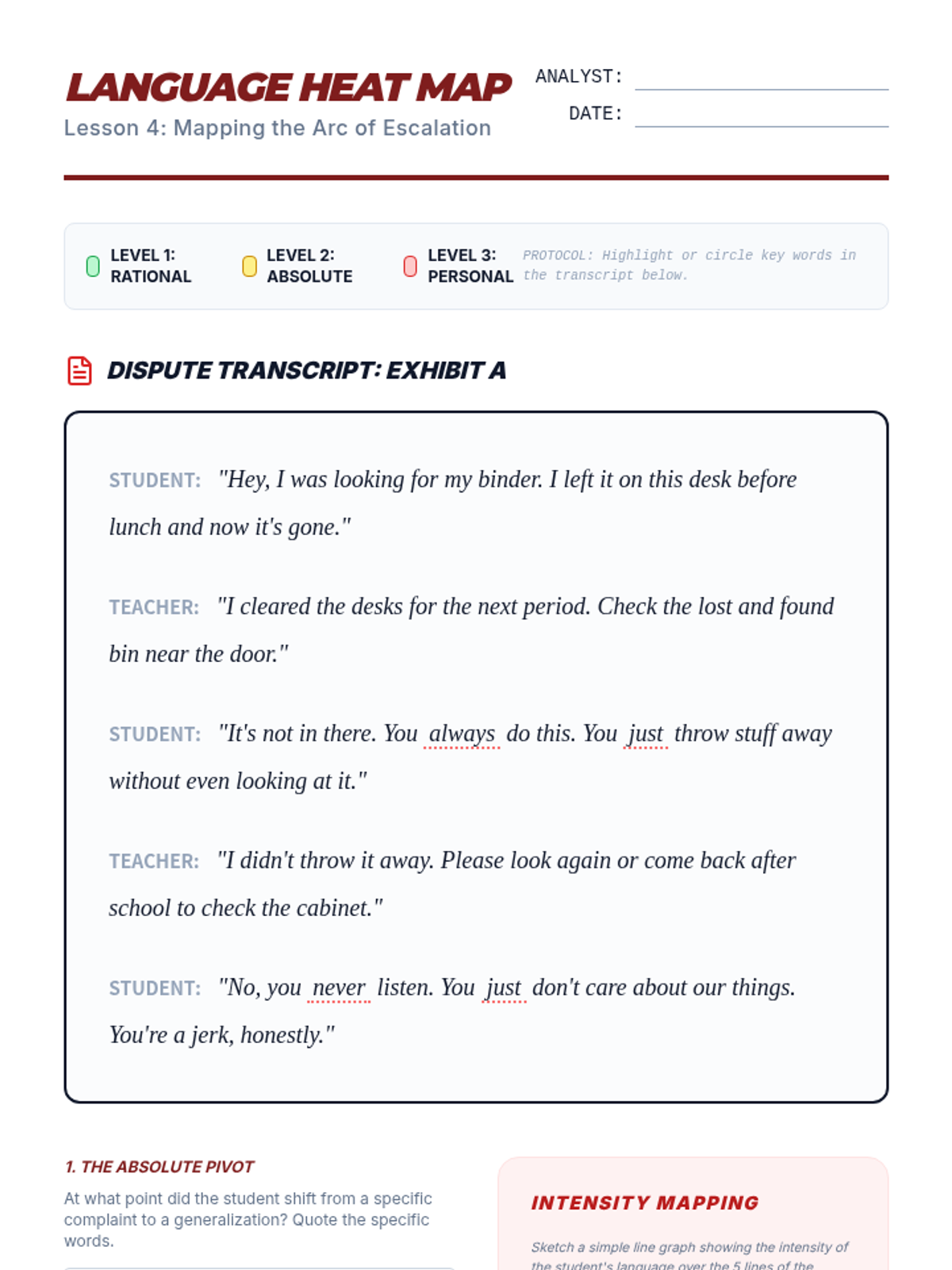
Students track the shift from logical language to emotional generalizations and personal attacks during a verbal dispute.
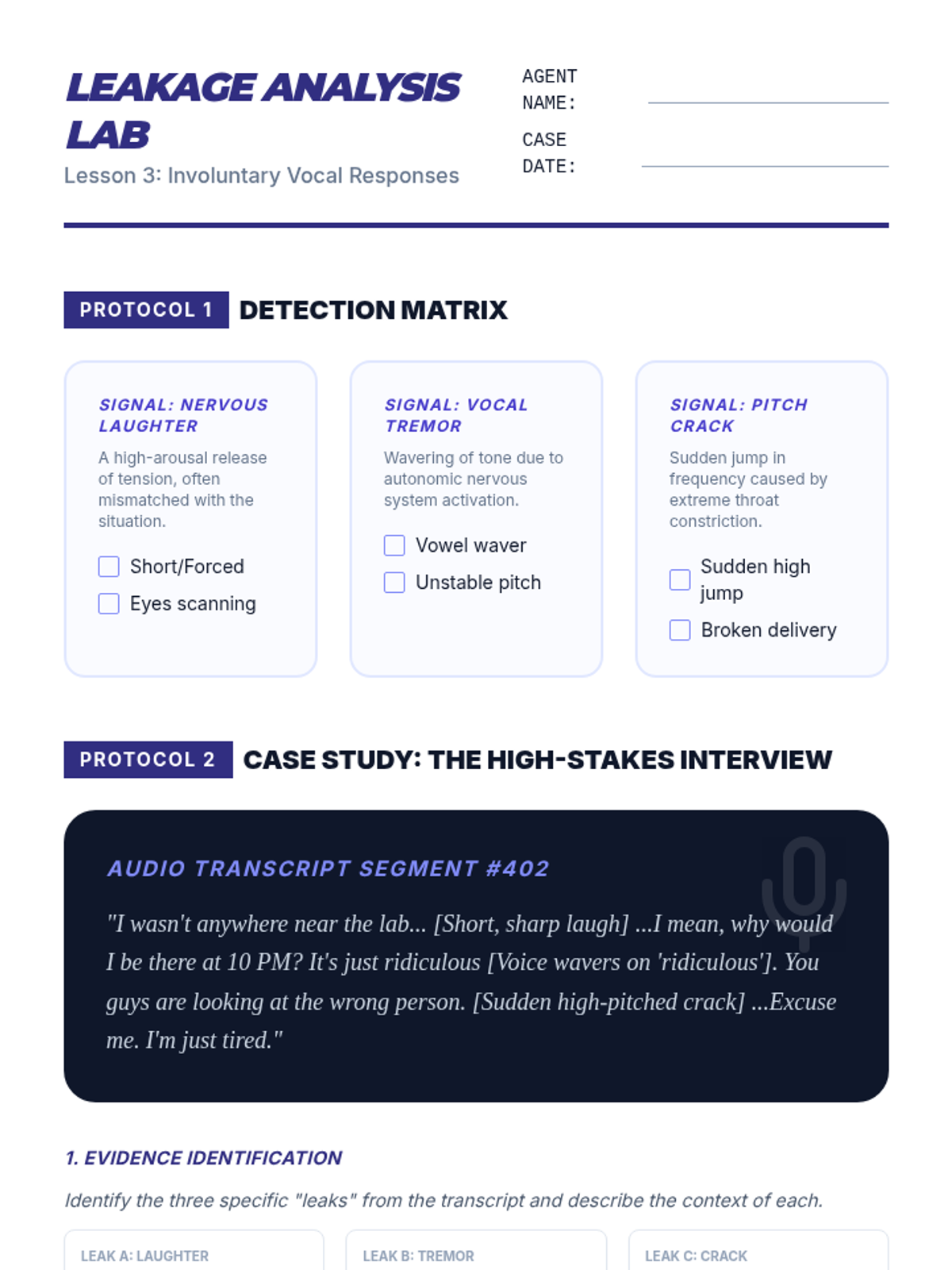
An examination of involuntary vocal responses such as tremors, cracking, and nervous laughter as indicators of high emotional tension.
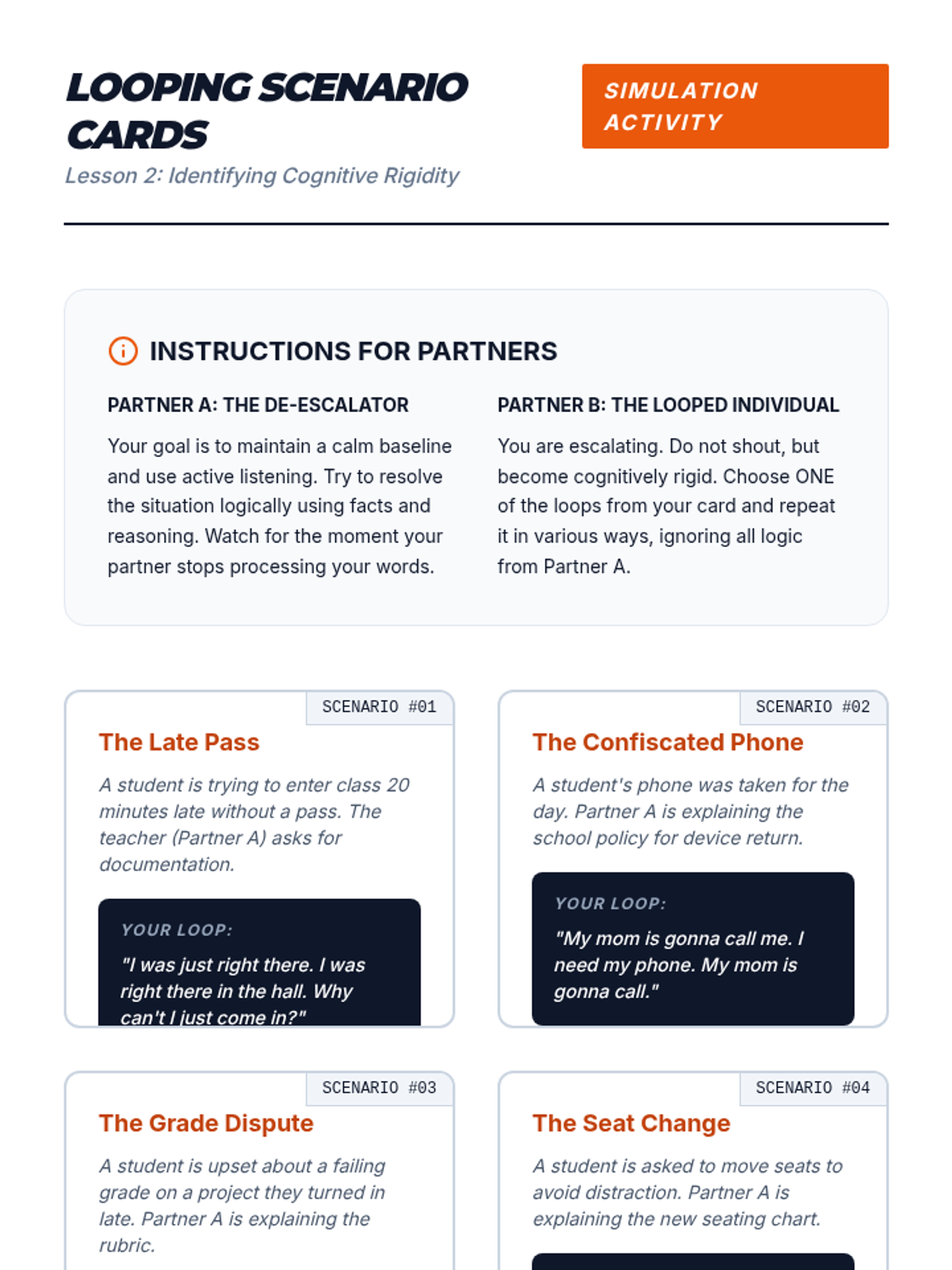
Focuses on cognitive rigidity during escalation, specifically identifying 'looping' speech patterns and repetitive questions.
Students break down the components of paraverbal communication, learning how shifts in speed, pitch, and volume indicate sympathetic nervous system arousal.
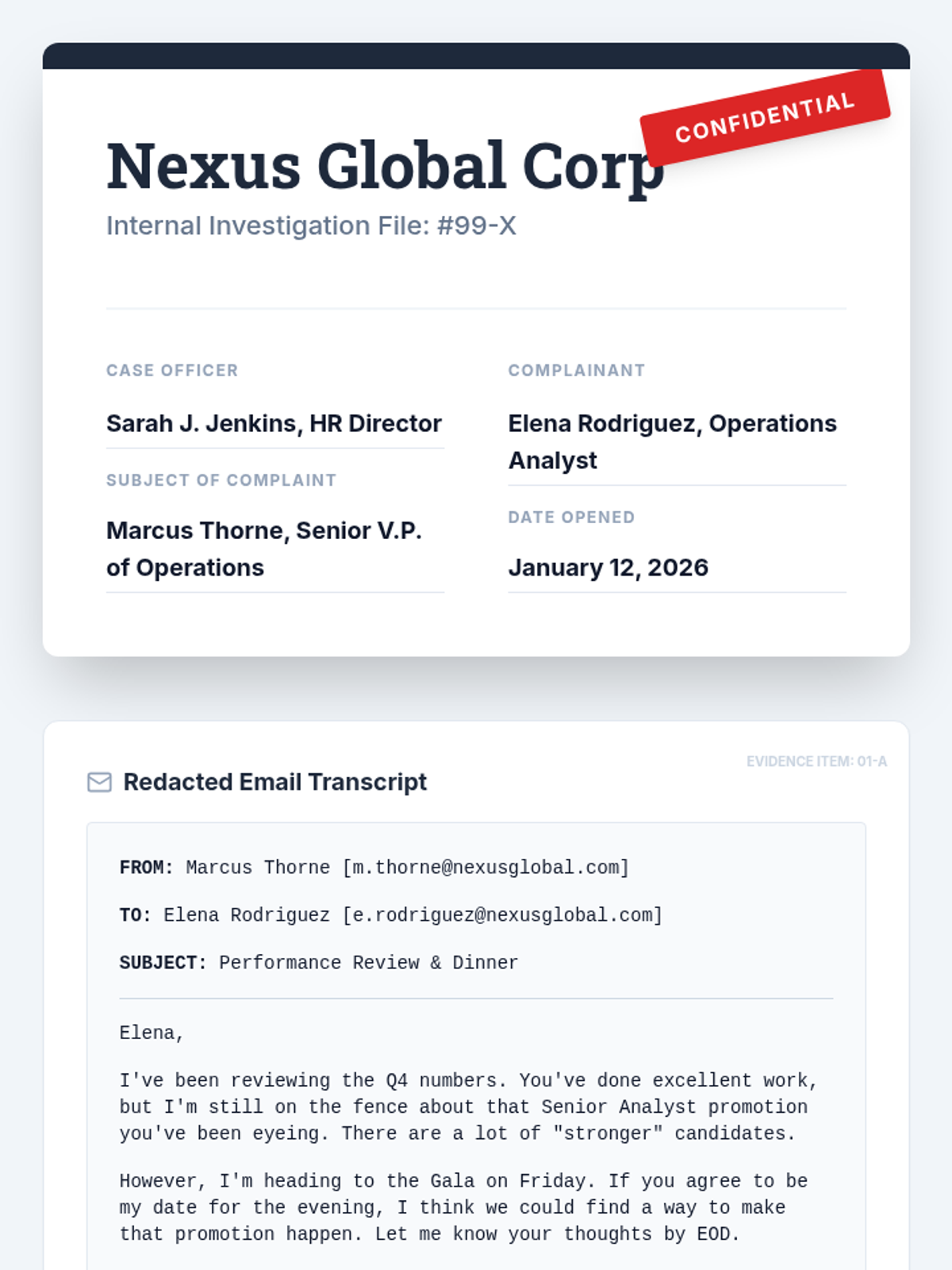
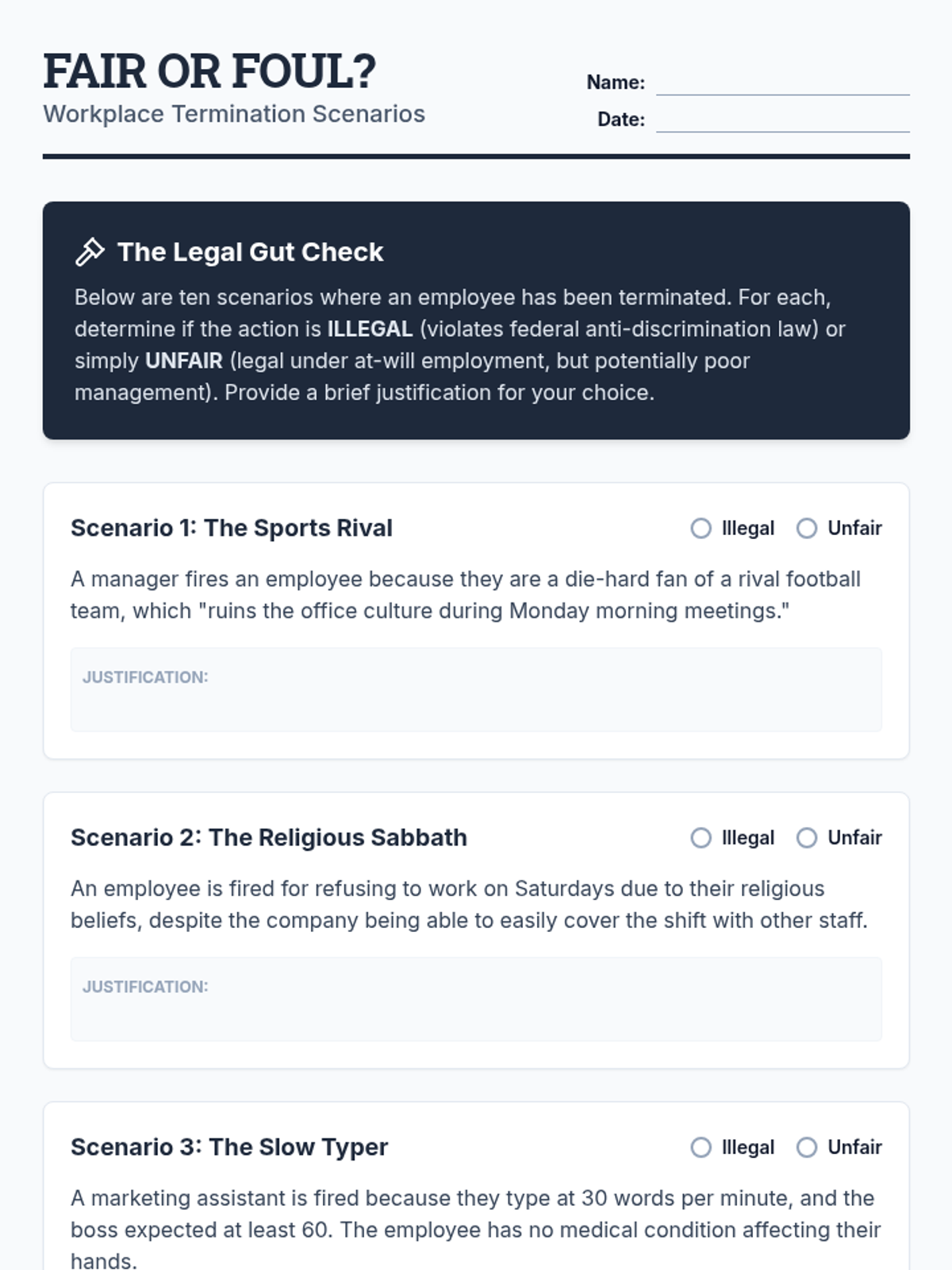
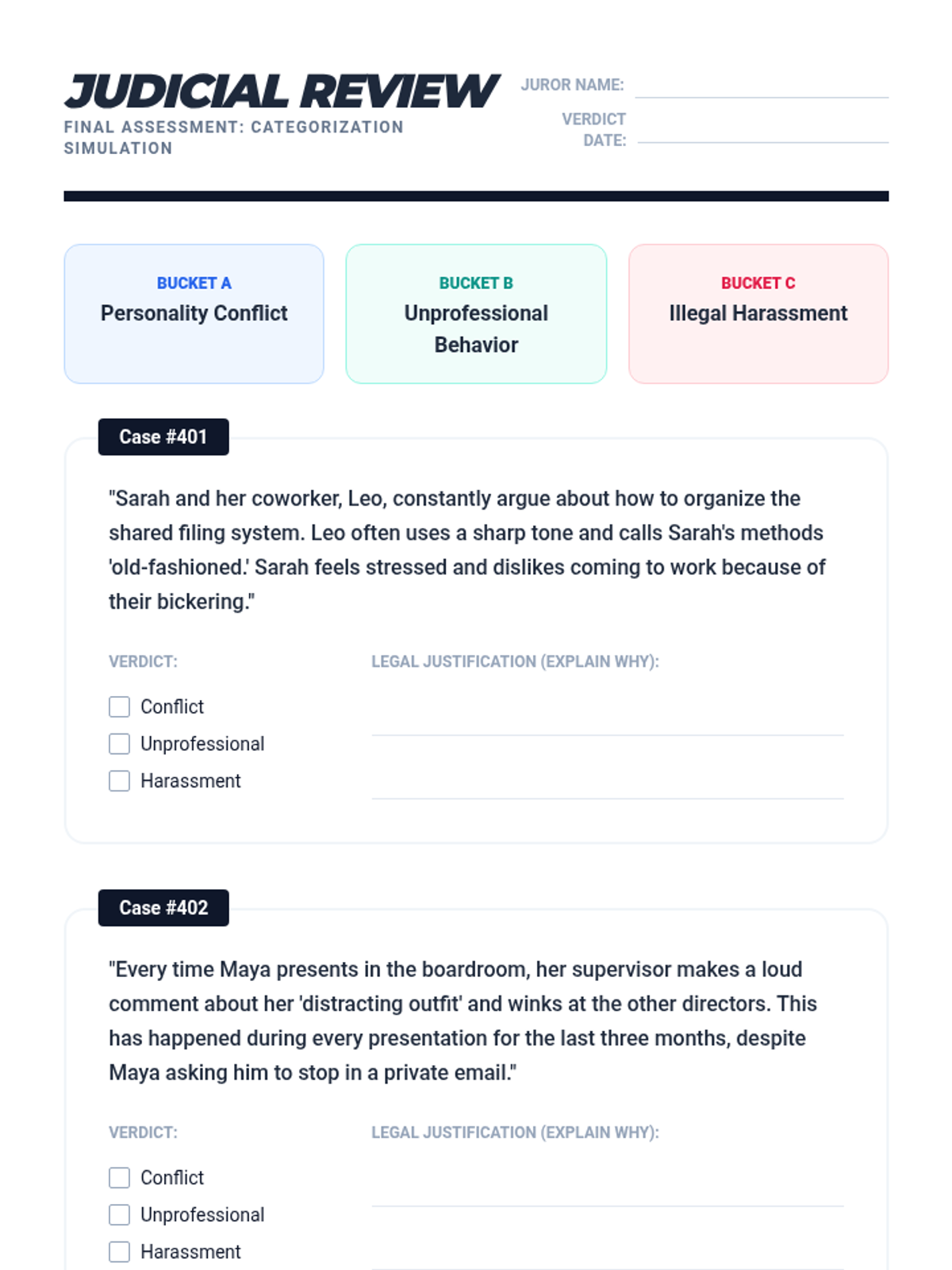
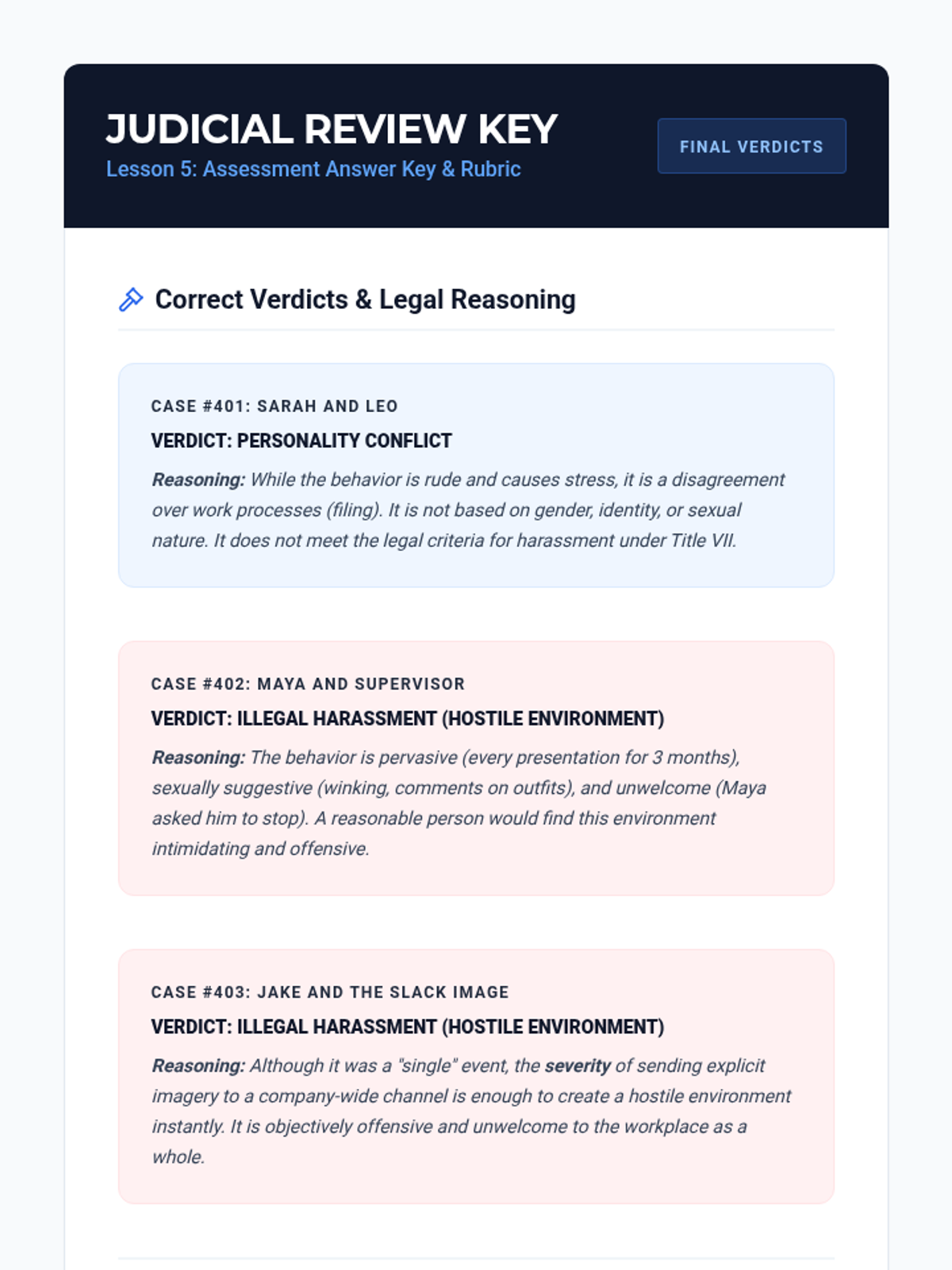
Students participate in a 'judicial review' simulation where they categorize complex scenarios as 'Personality Conflict,' 'Unprofessional,' or 'Illegal Harassment.' They must justify their categorization using criteria learned in the sequence.
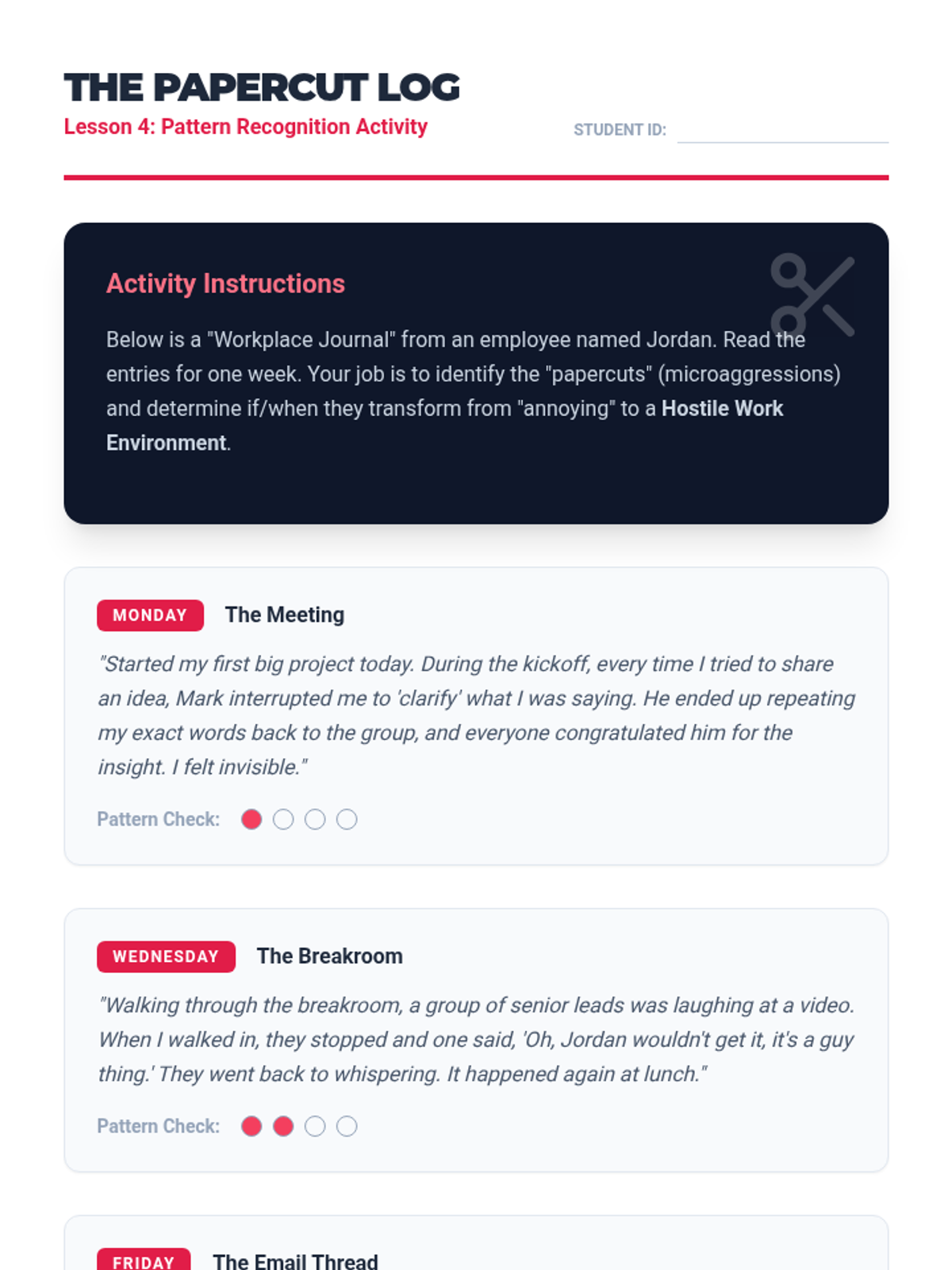
Students examine how microaggressions contribute to a hostile work environment over time. The lesson emphasizes recognizing patterns of behavior that may not be explicit harassment in isolation but become toxic cumulatively.
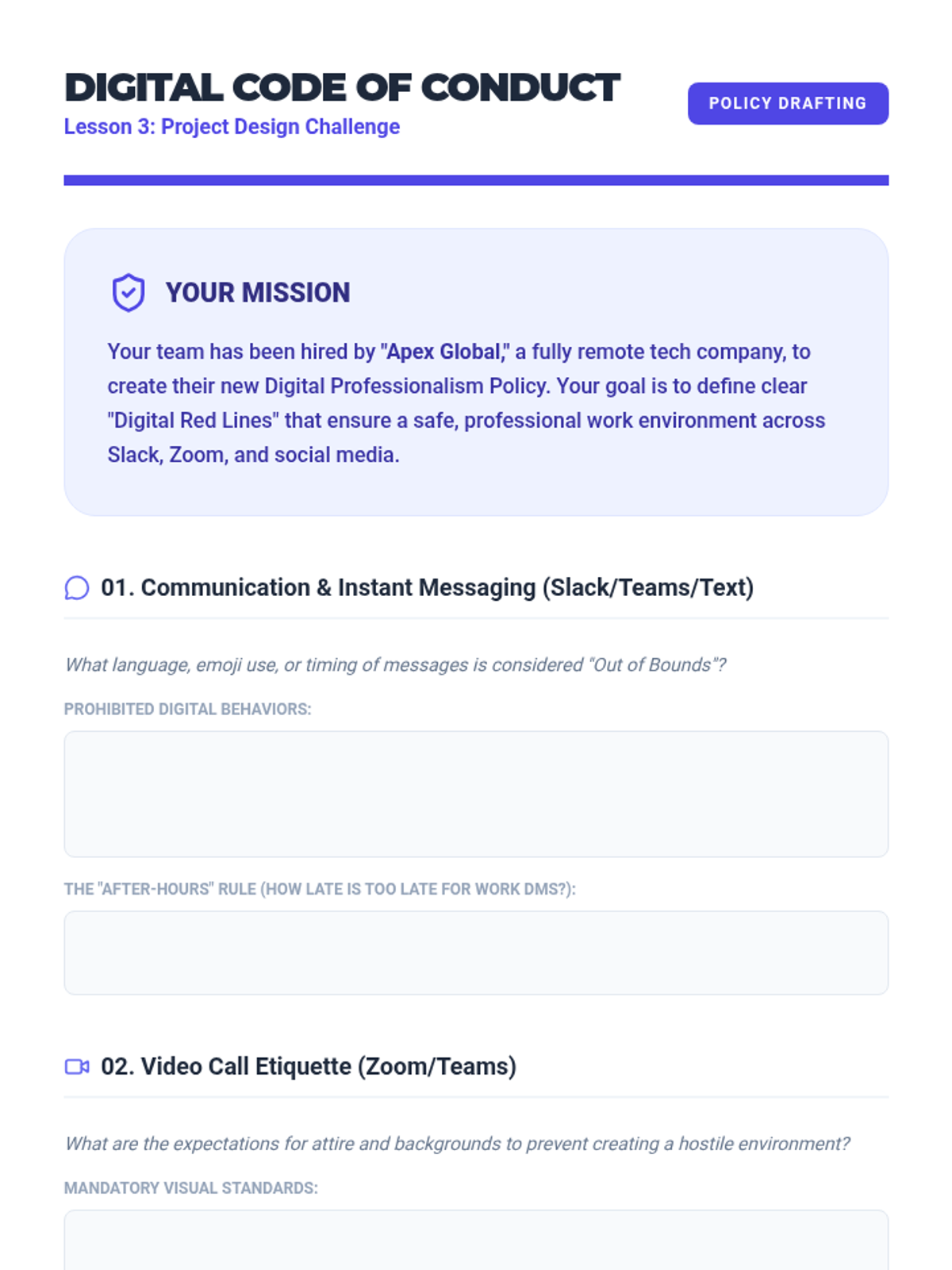
Students explore how harassment manifests in remote work and digital spaces, including inappropriate texts, emails, and social media interactions. They develop a code of conduct for digital professional communication.
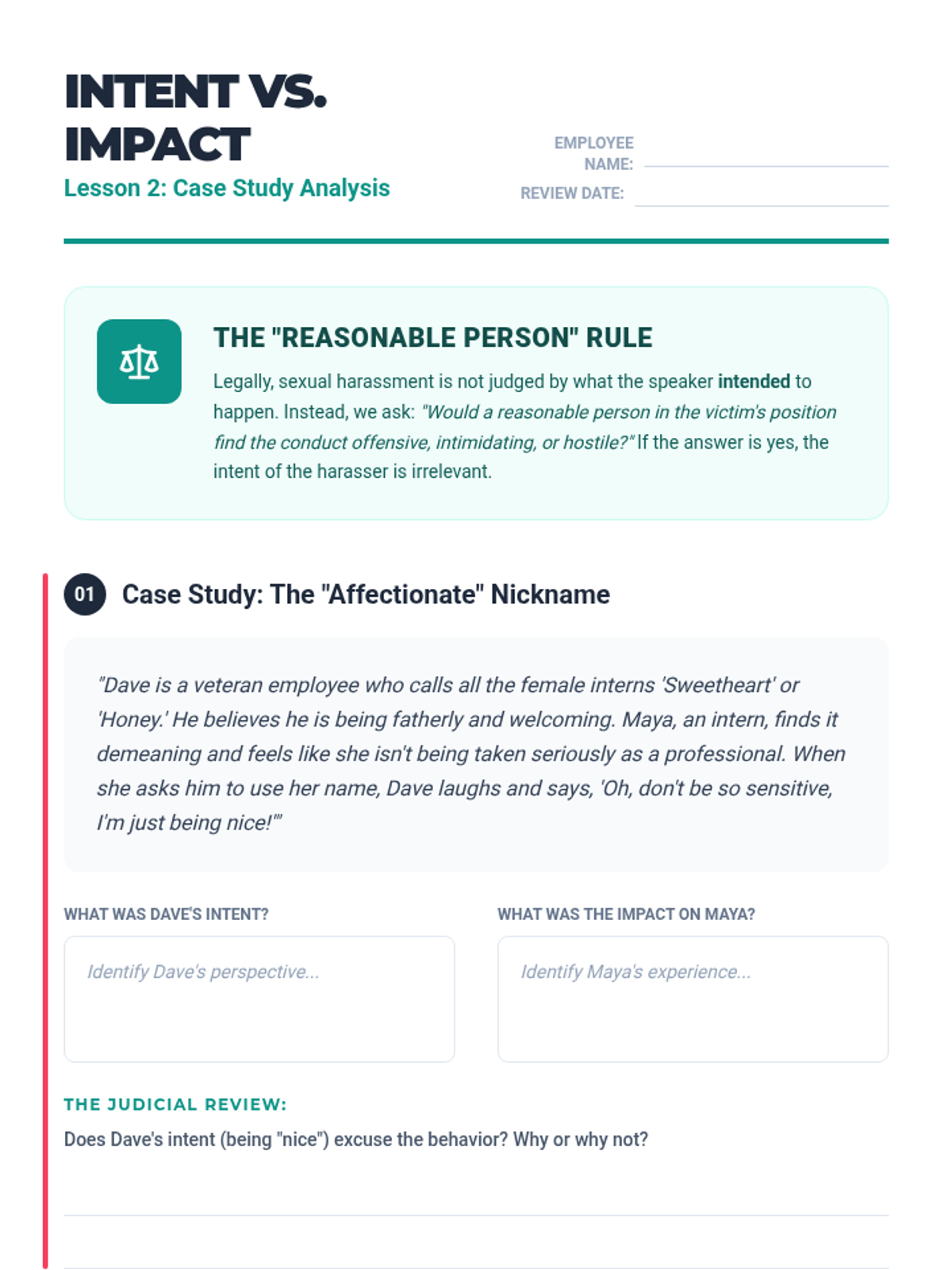
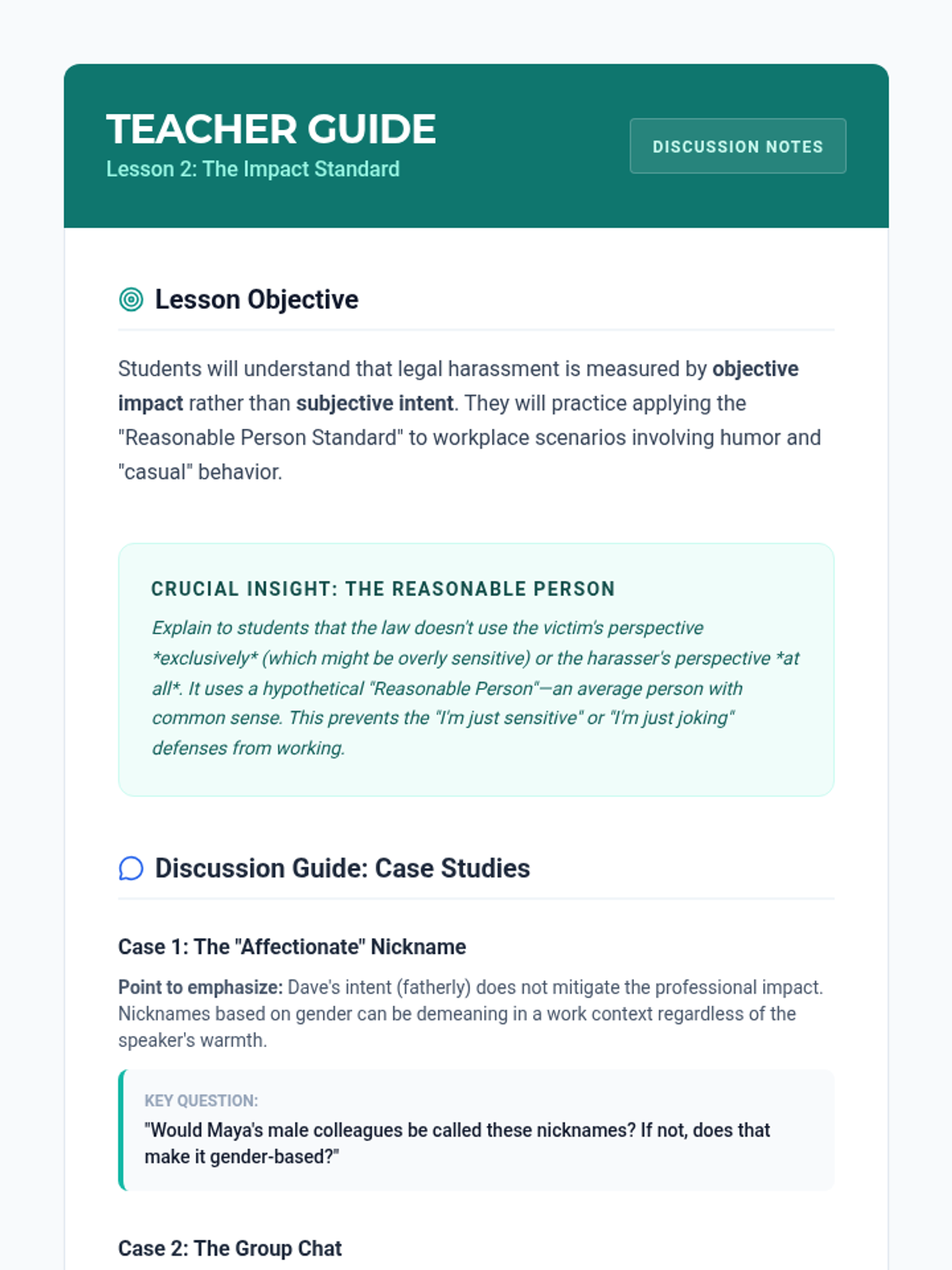
This lesson focuses on the legal standard that harassment is judged by its impact on the victim, not the intent of the harasser. Students review scenarios where 'jokes' constitute harassment.
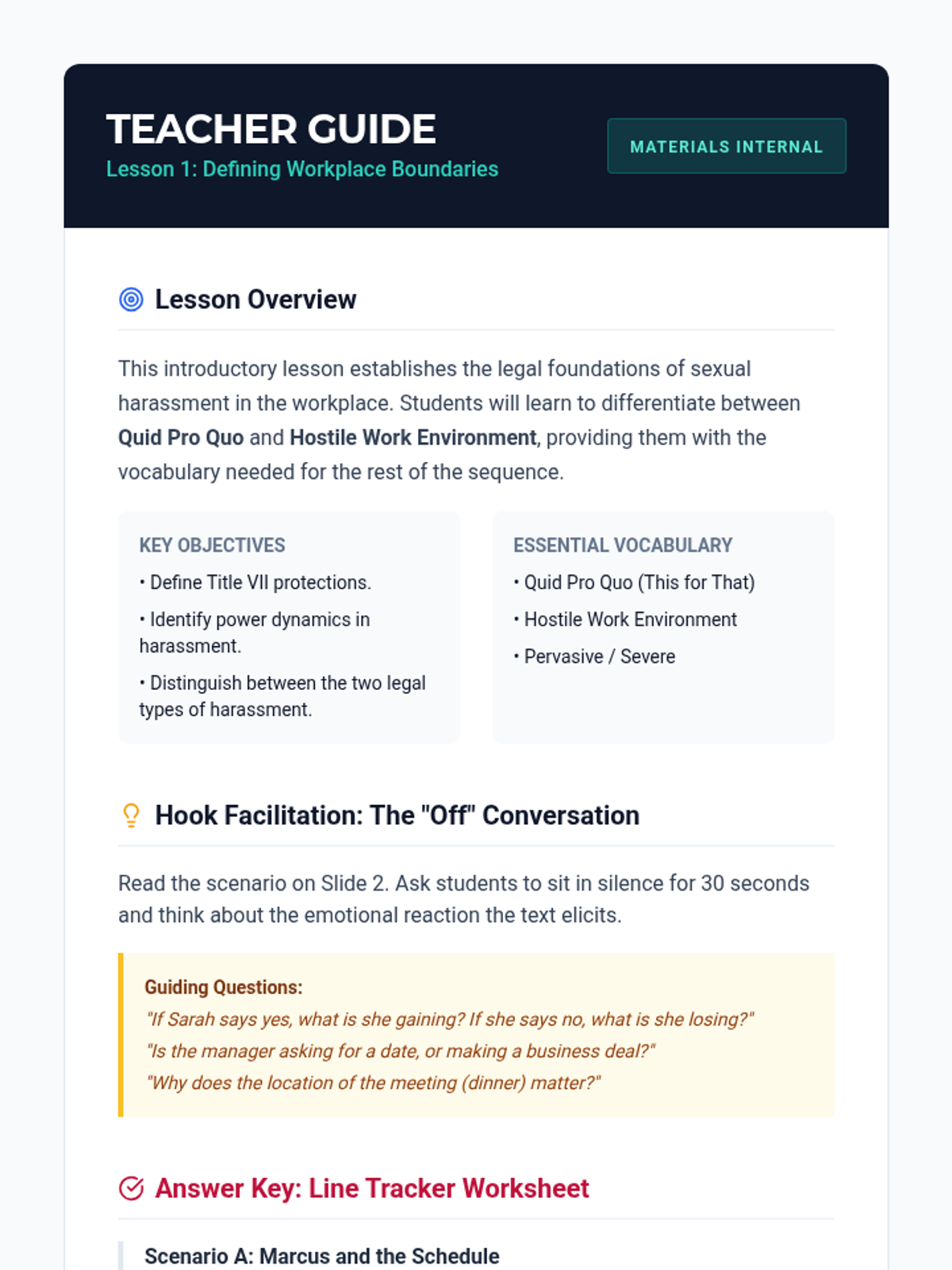
Students distinguish between the two primary legal types of sexual harassment: 'this for that' (quid pro quo) and pervasive hostile environments. They analyze clear-cut examples of each to build a working definition.
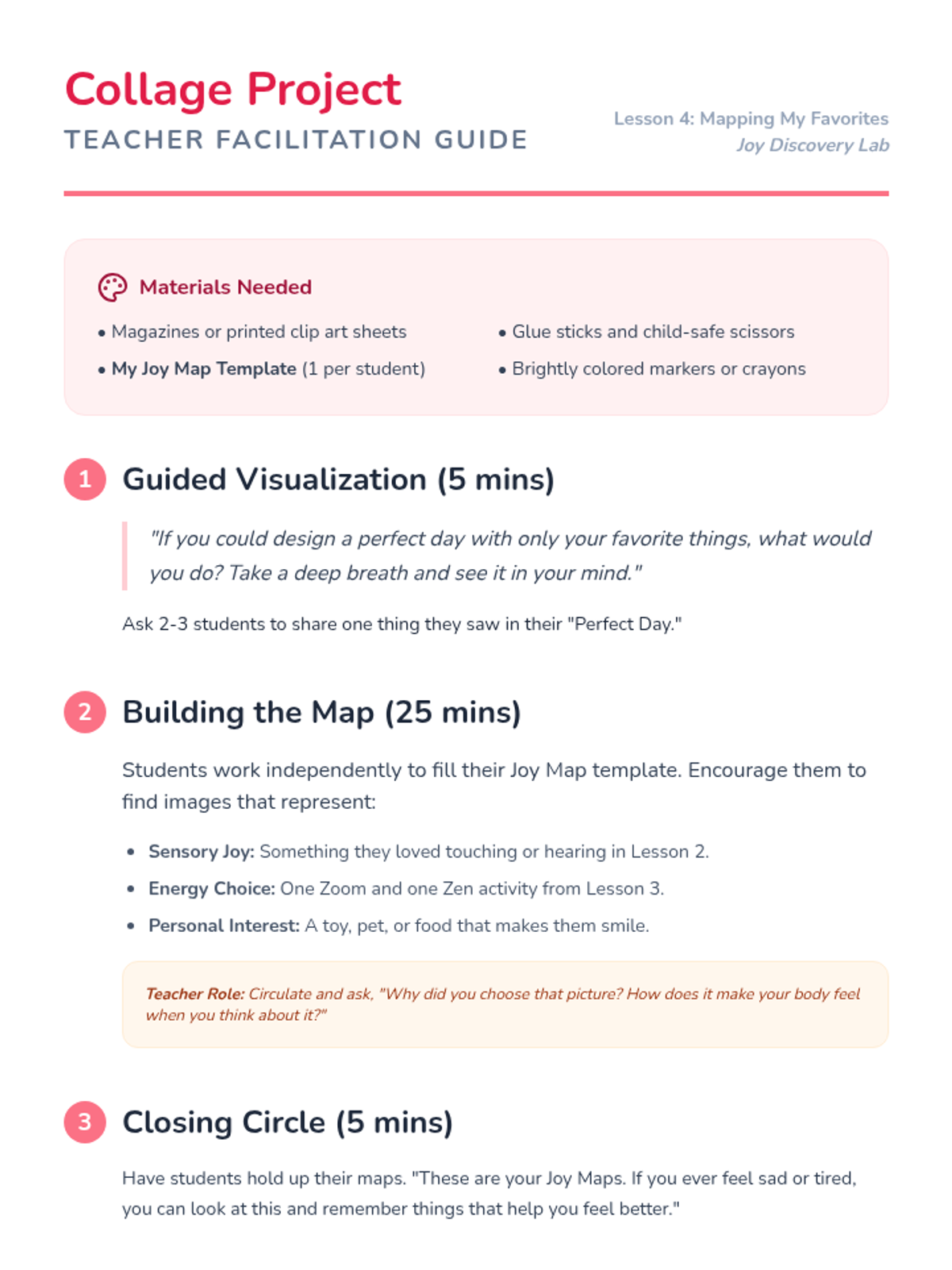
Students present their collages to small groups, articulating why they chose specific activities. Peer listeners practice affirming others' choices.
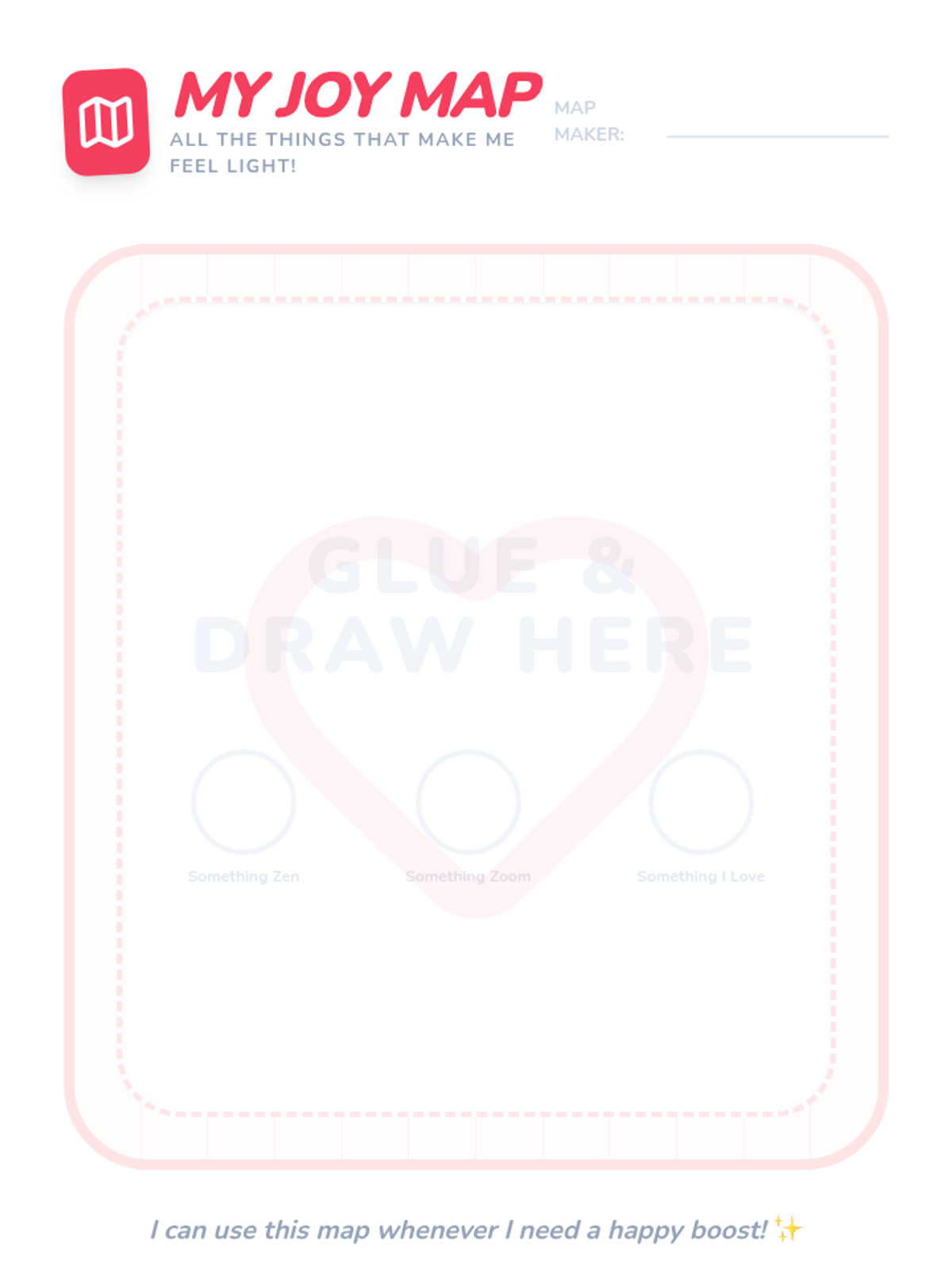
Using a collage format, students select and paste images of their favorite activities onto a personal poster. This visual aid serves as a concrete reference tool.
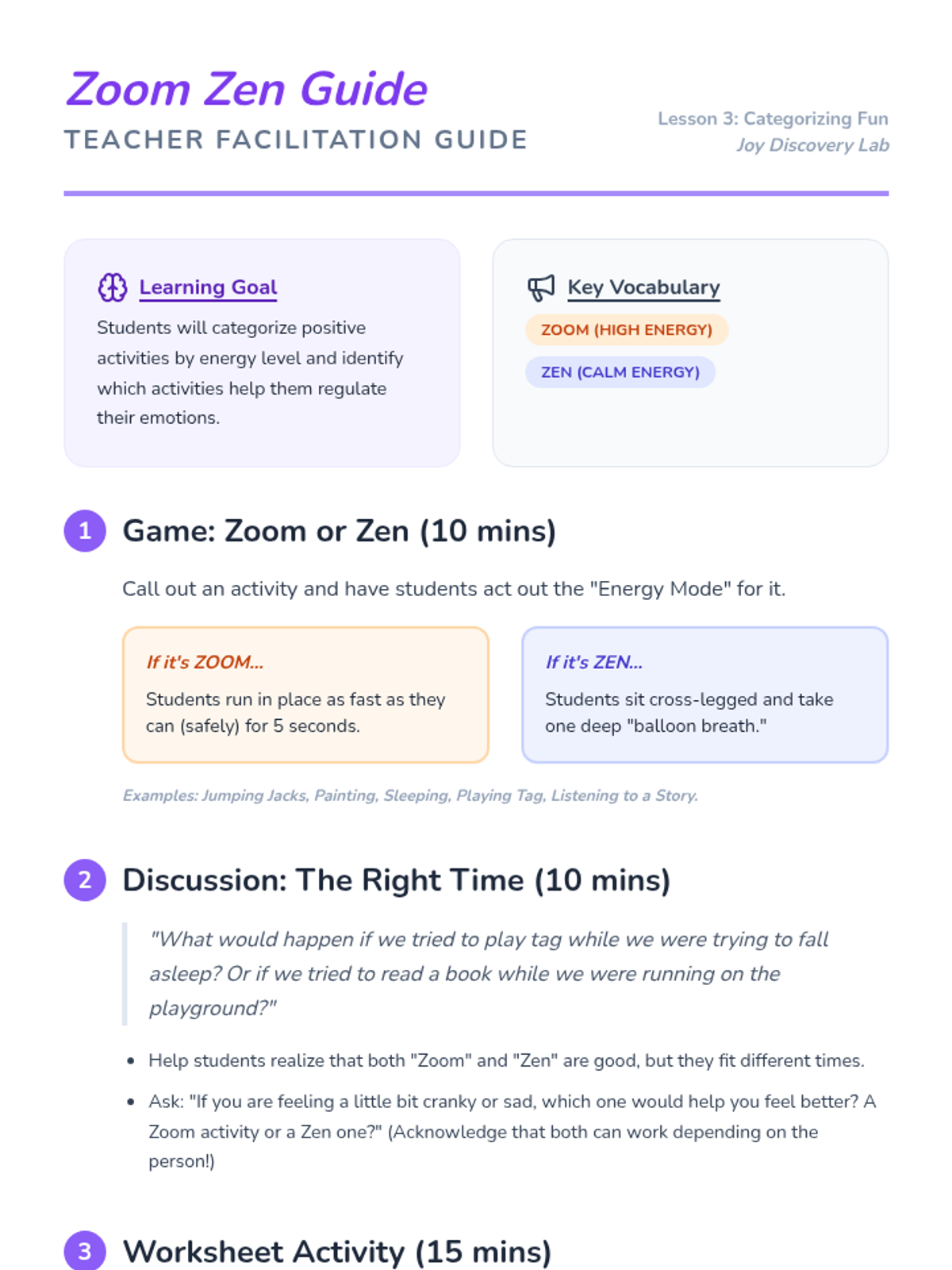
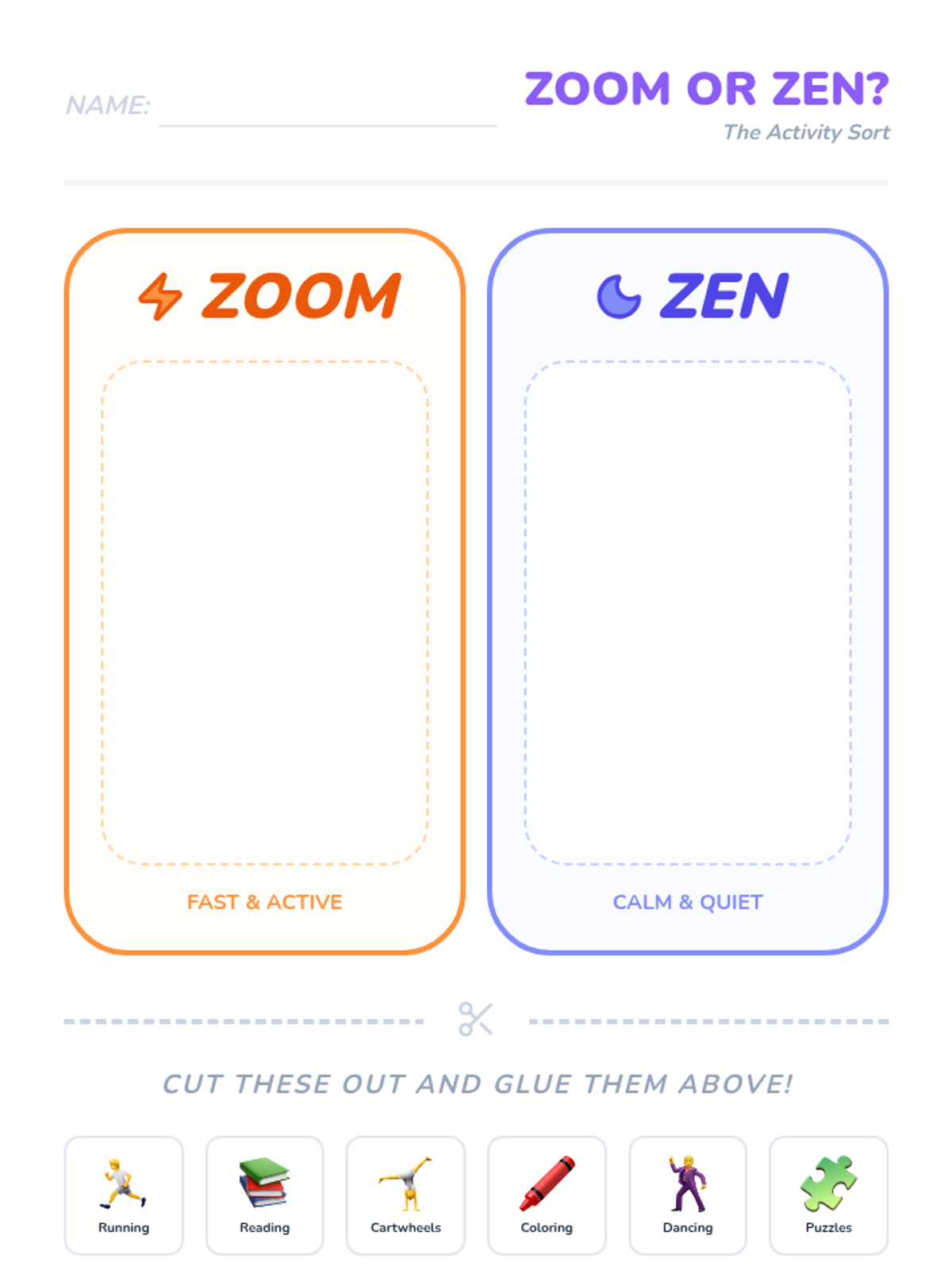
Students sort images of activities into 'high energy' fun (running, dancing) and 'calm' fun (reading, coloring). The class discusses how different times of day might need different types of positive activities.
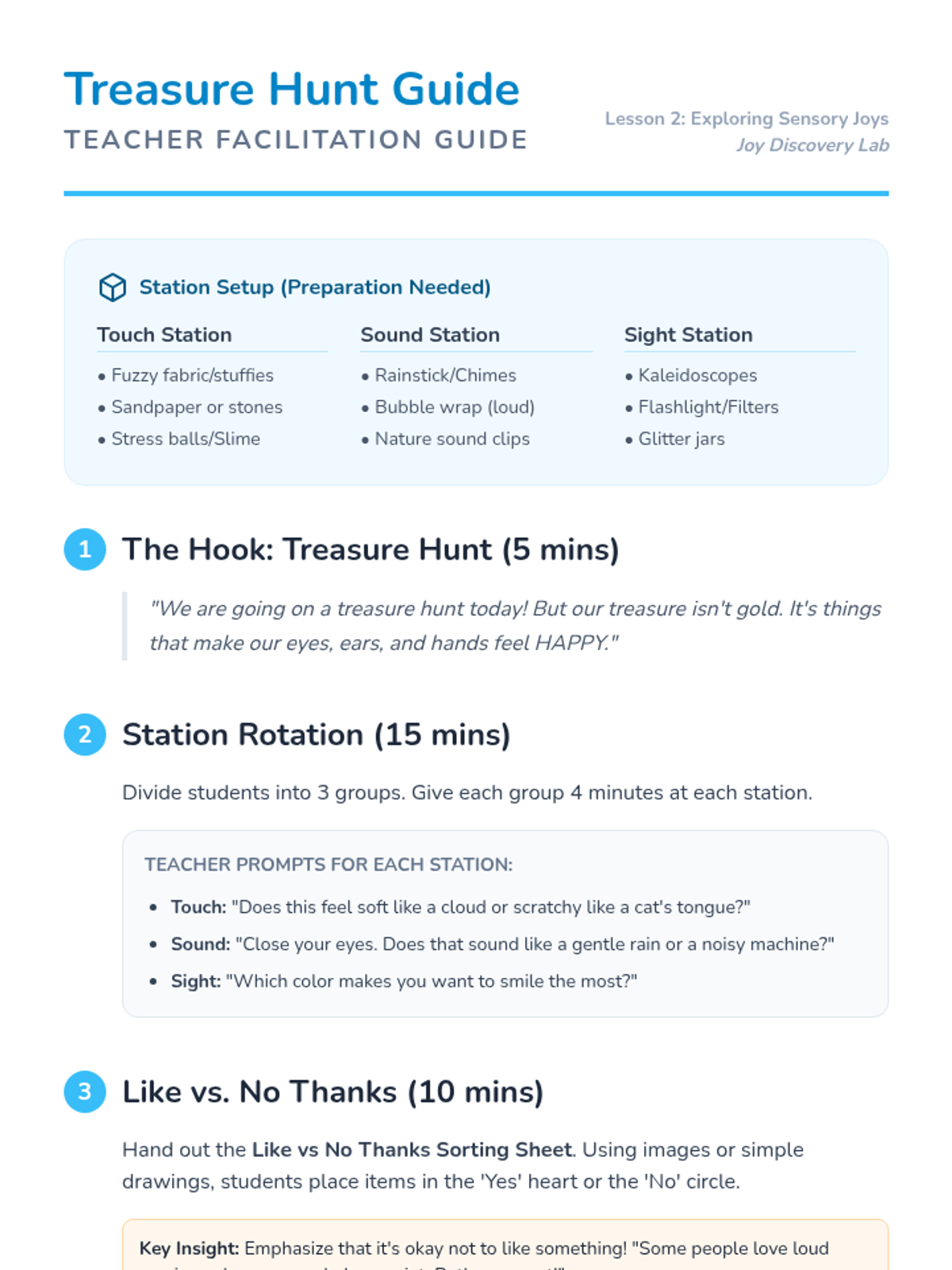
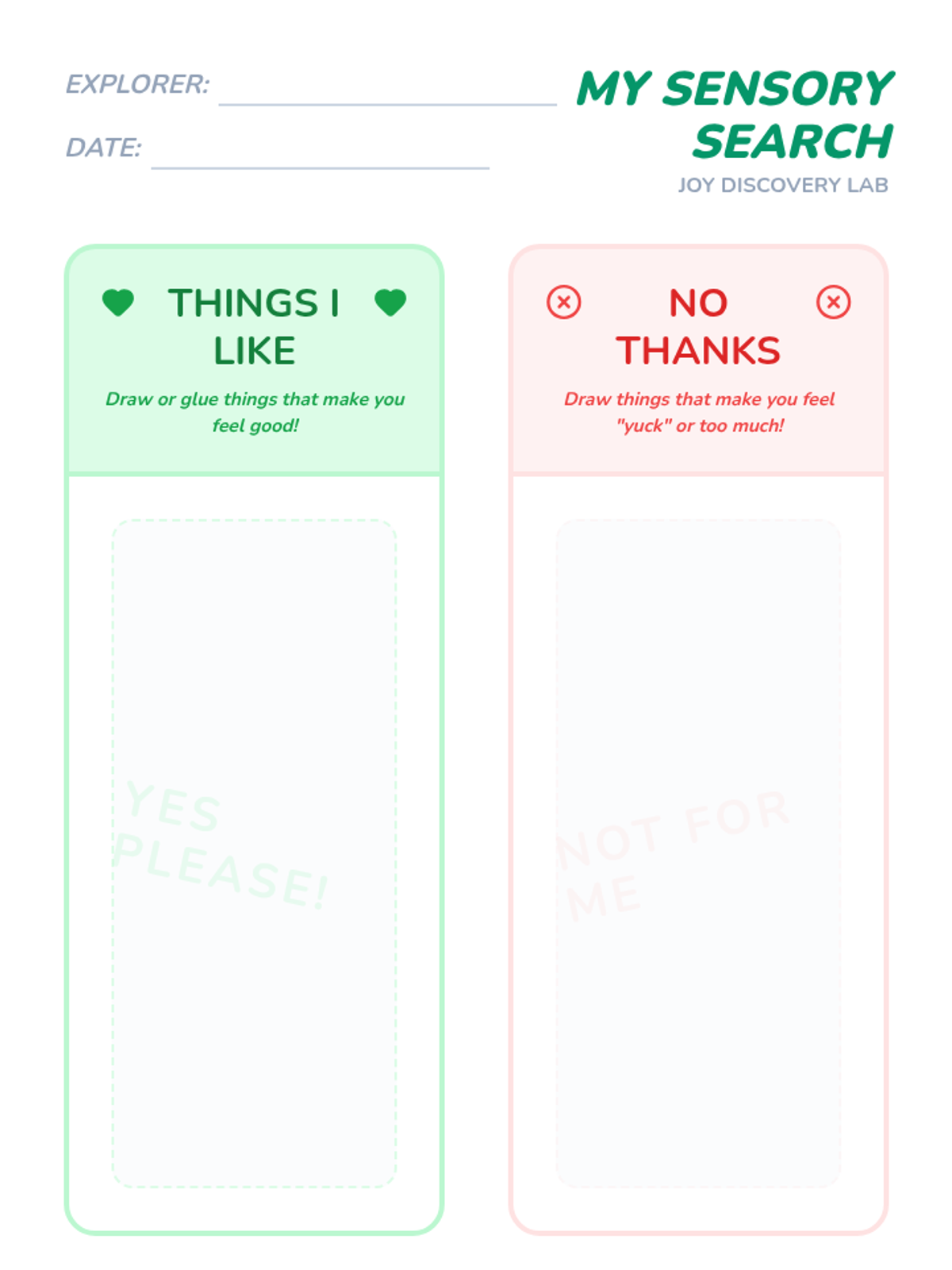
Learners engage in a sensory station rotation to discover which sights, sounds, and textures make them feel good. They classify experiences as 'things I like' versus 'things I do not like'.
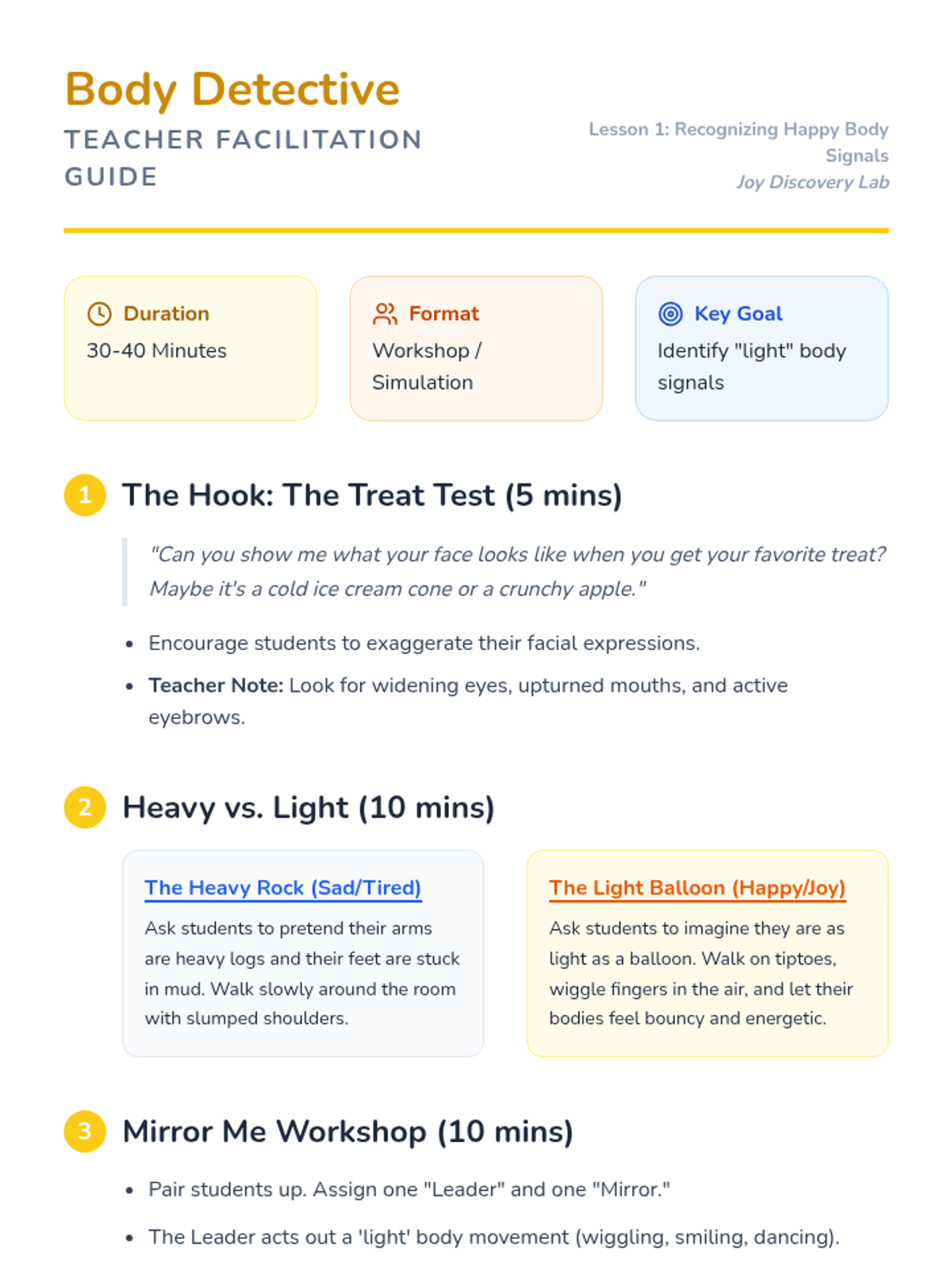
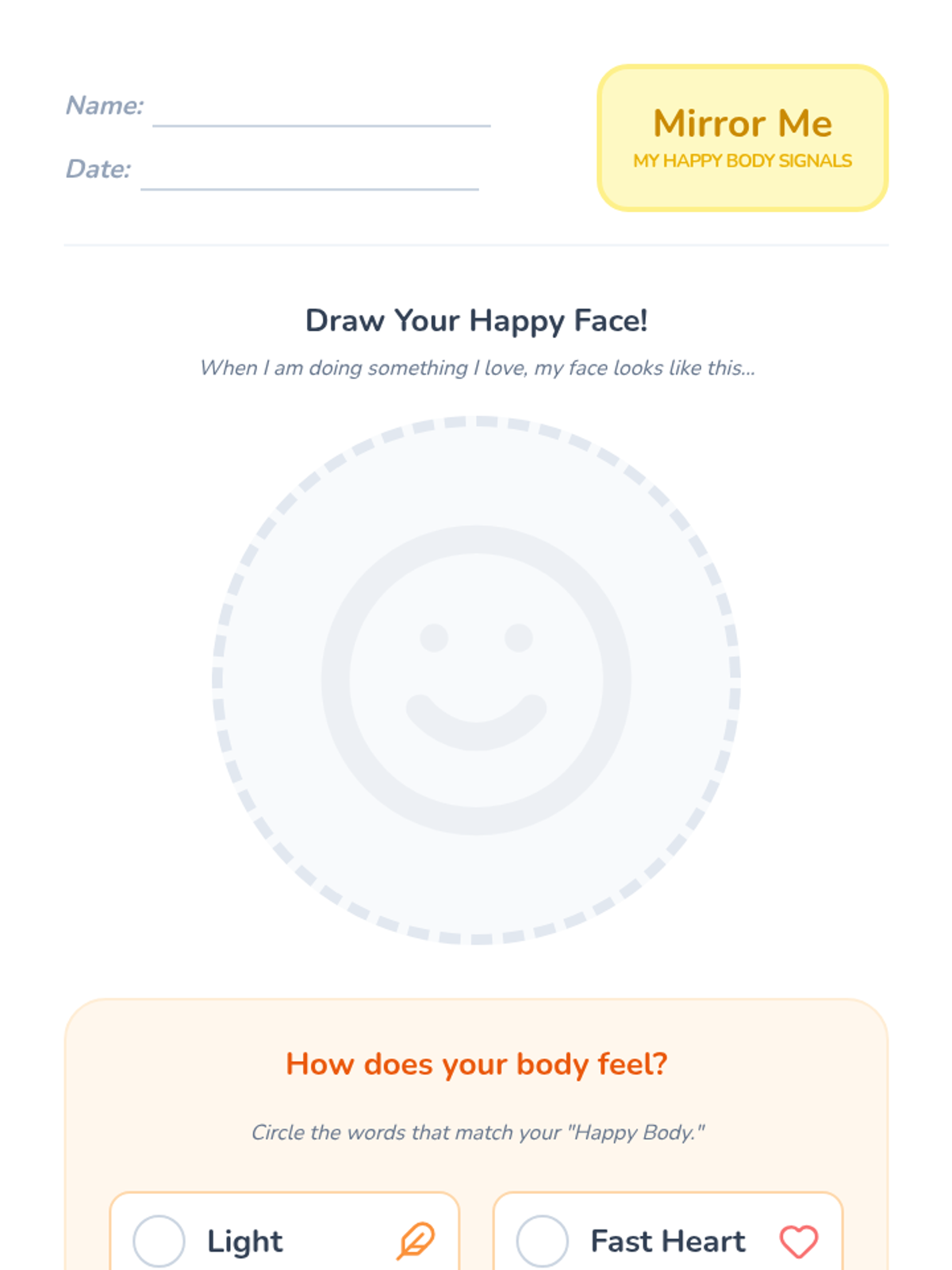
Students learn to identify the physical sensations associated with happiness and excitement through guided movement and mirror exercises.
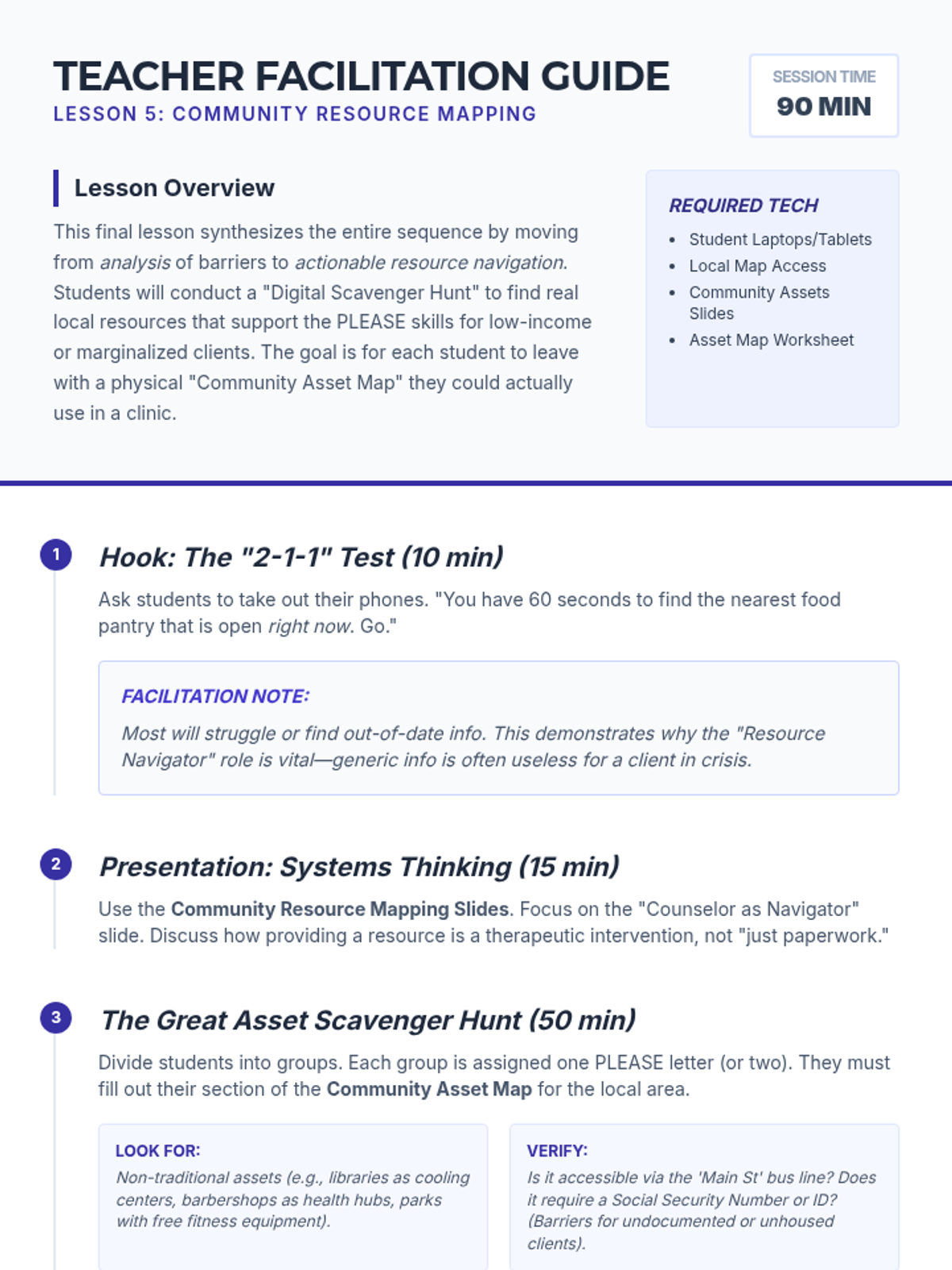
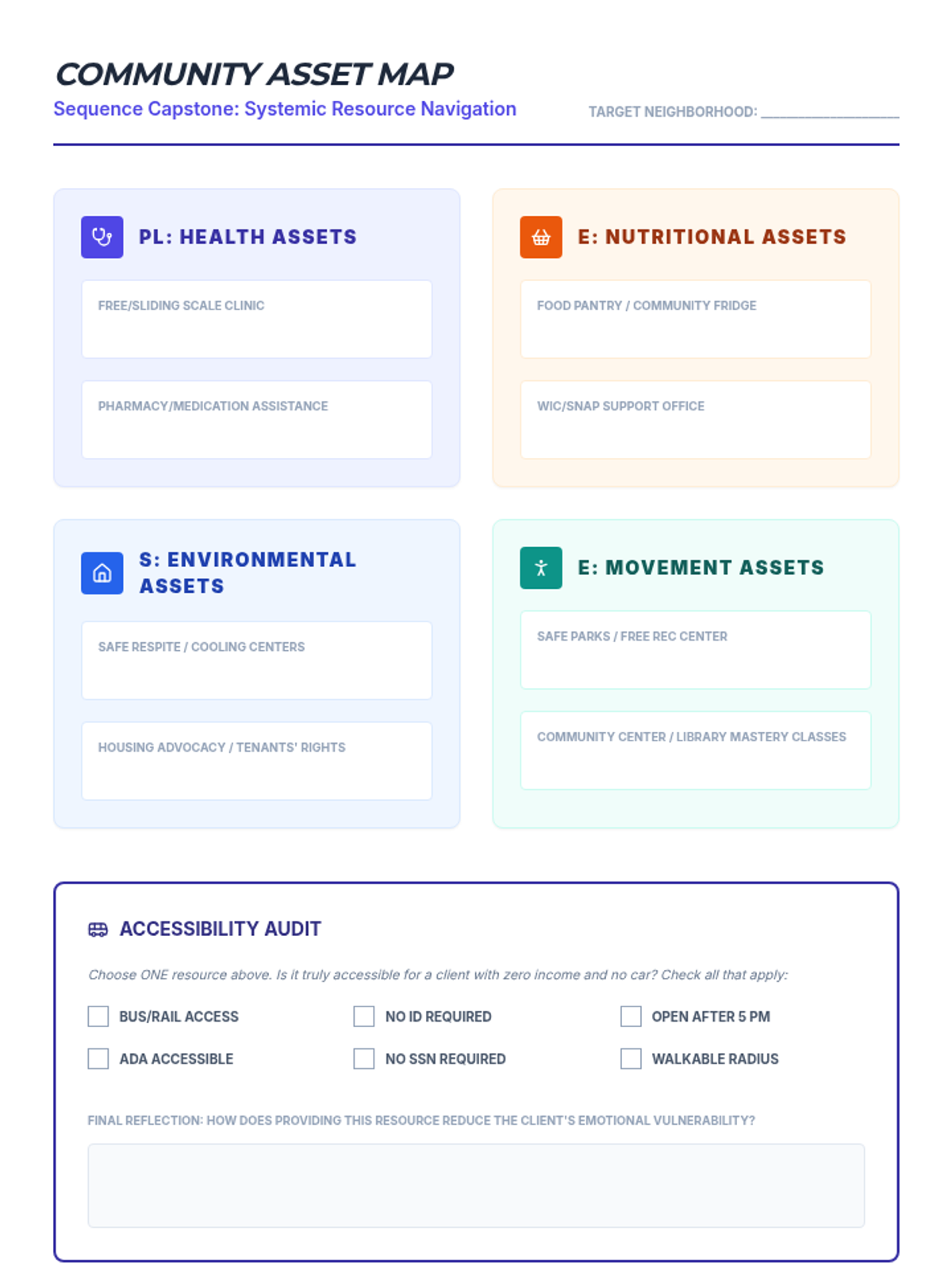
The sequence culminates with students mapping local community resources that support the PLEASE skills for low-income or marginalized clients.
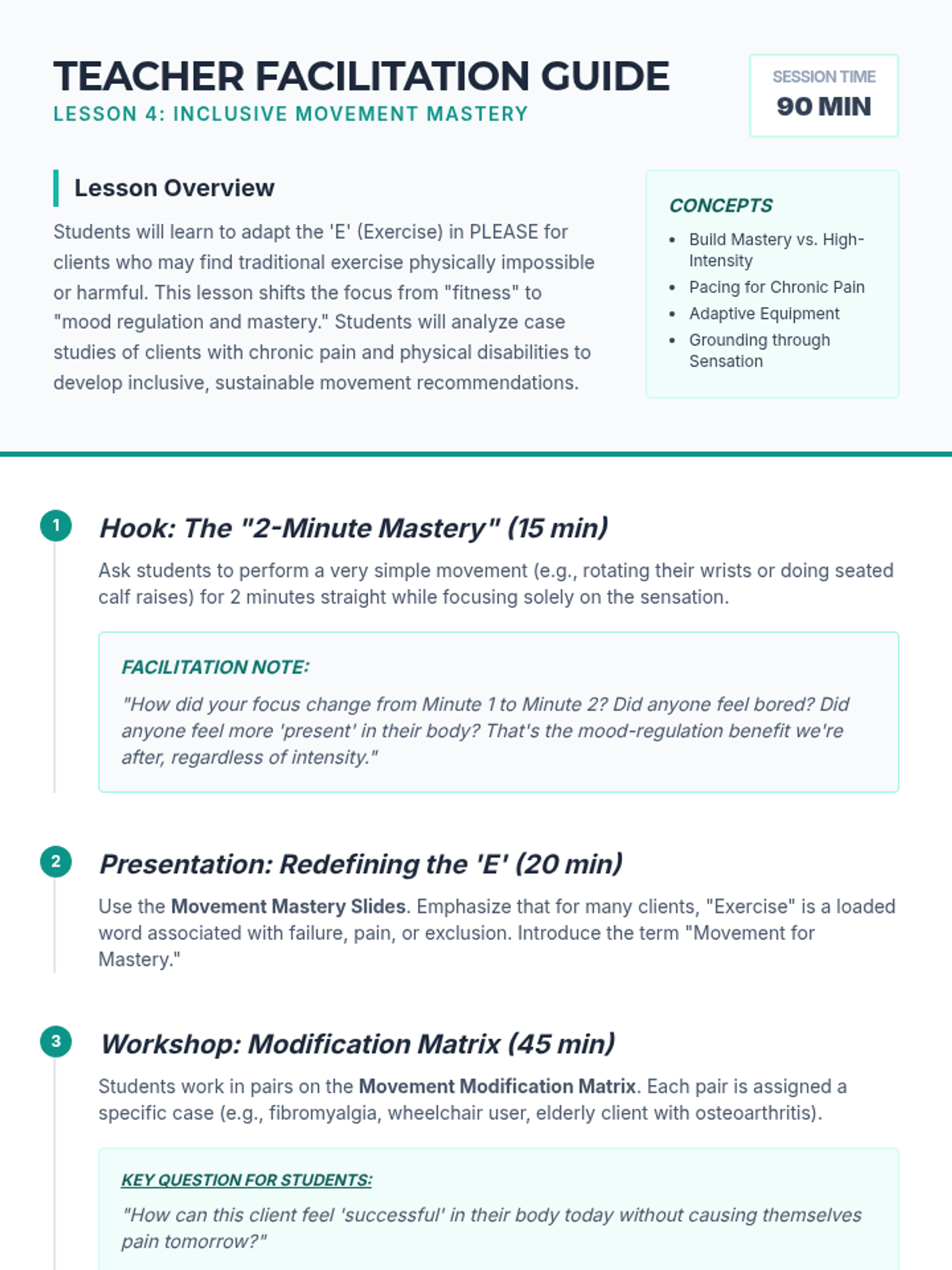
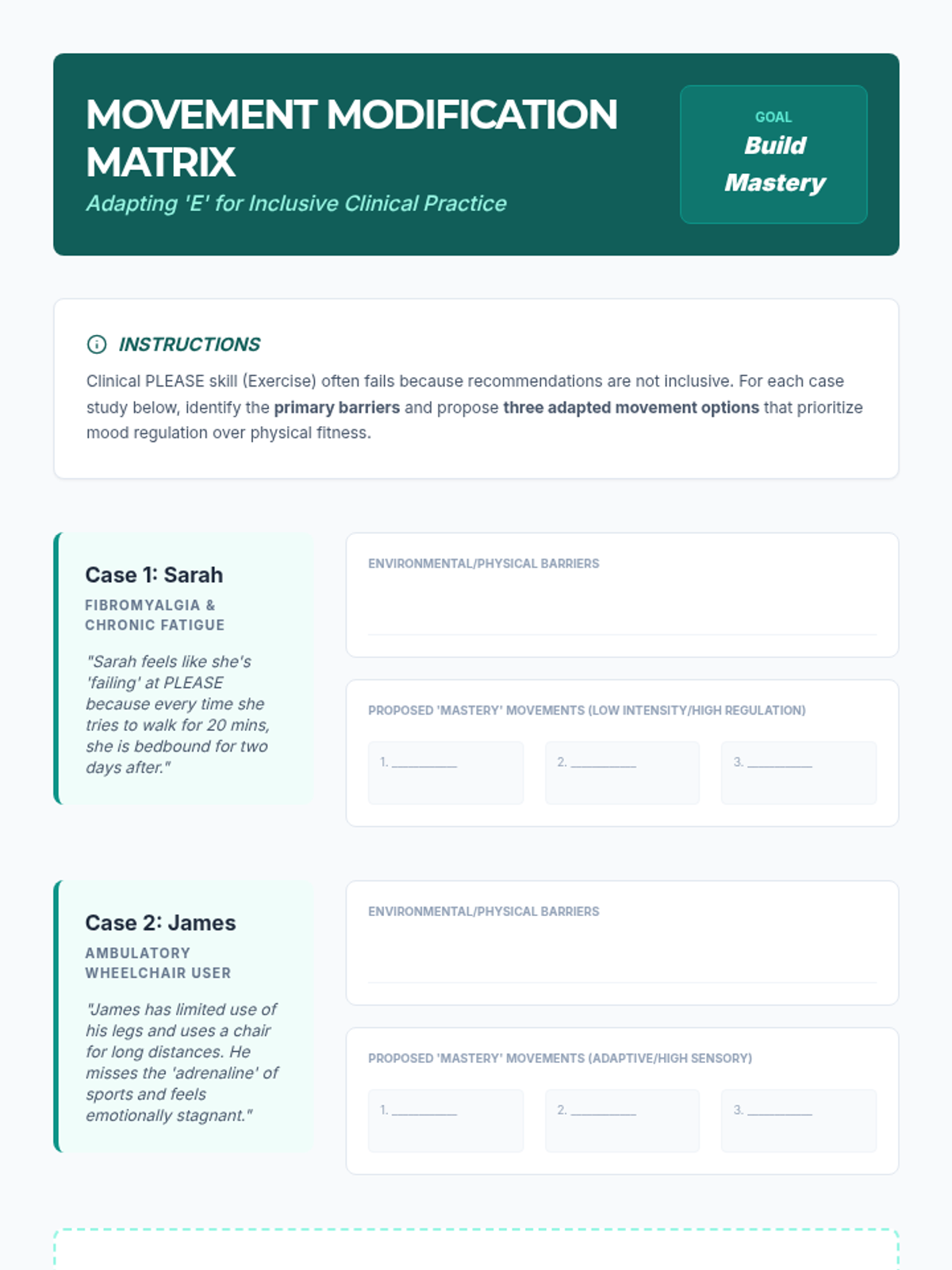
Students learn to adapt movement recommendations for mood regulation for clients with physical disabilities or chronic pain, focusing on 'building mastery'.
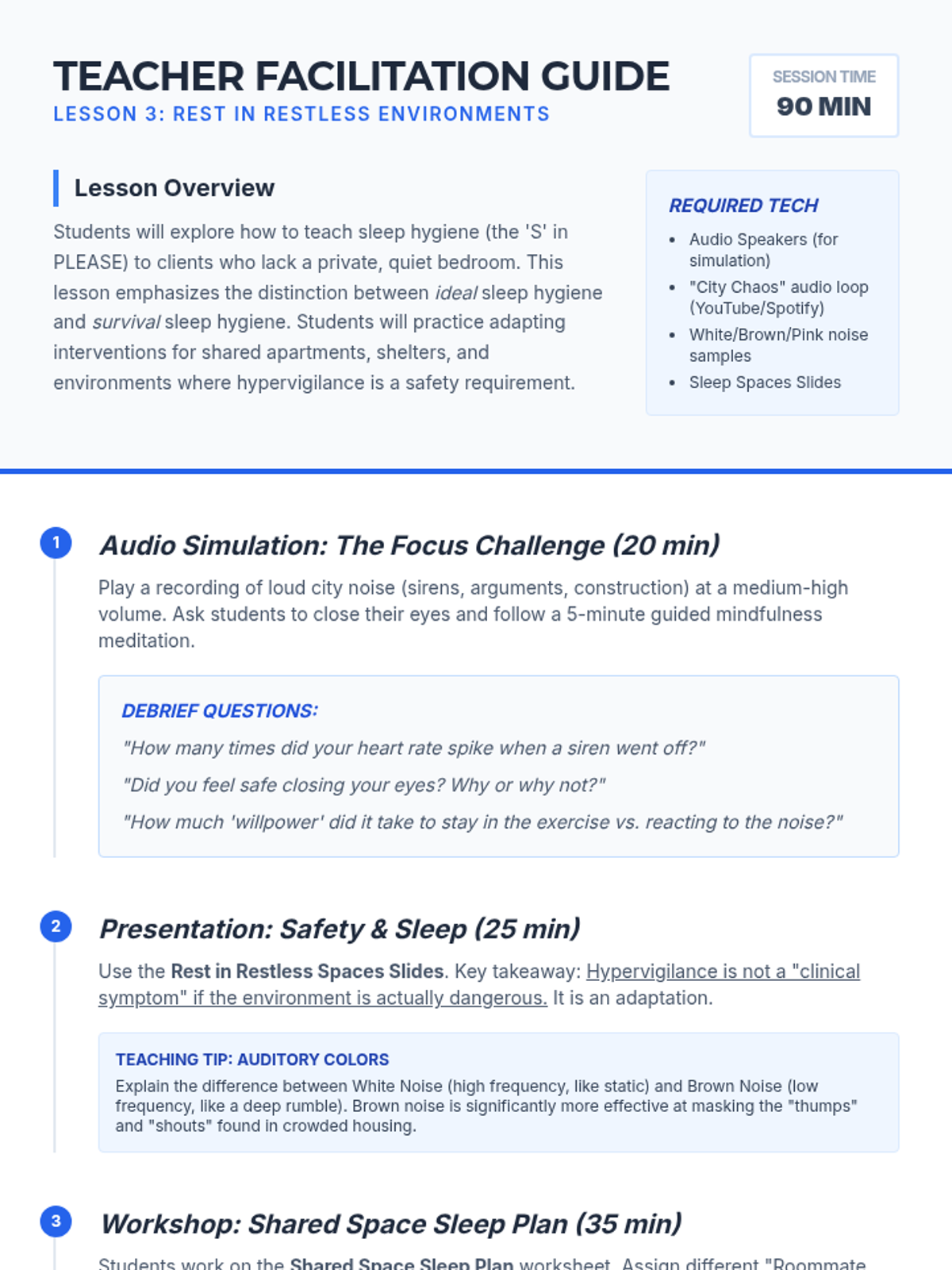
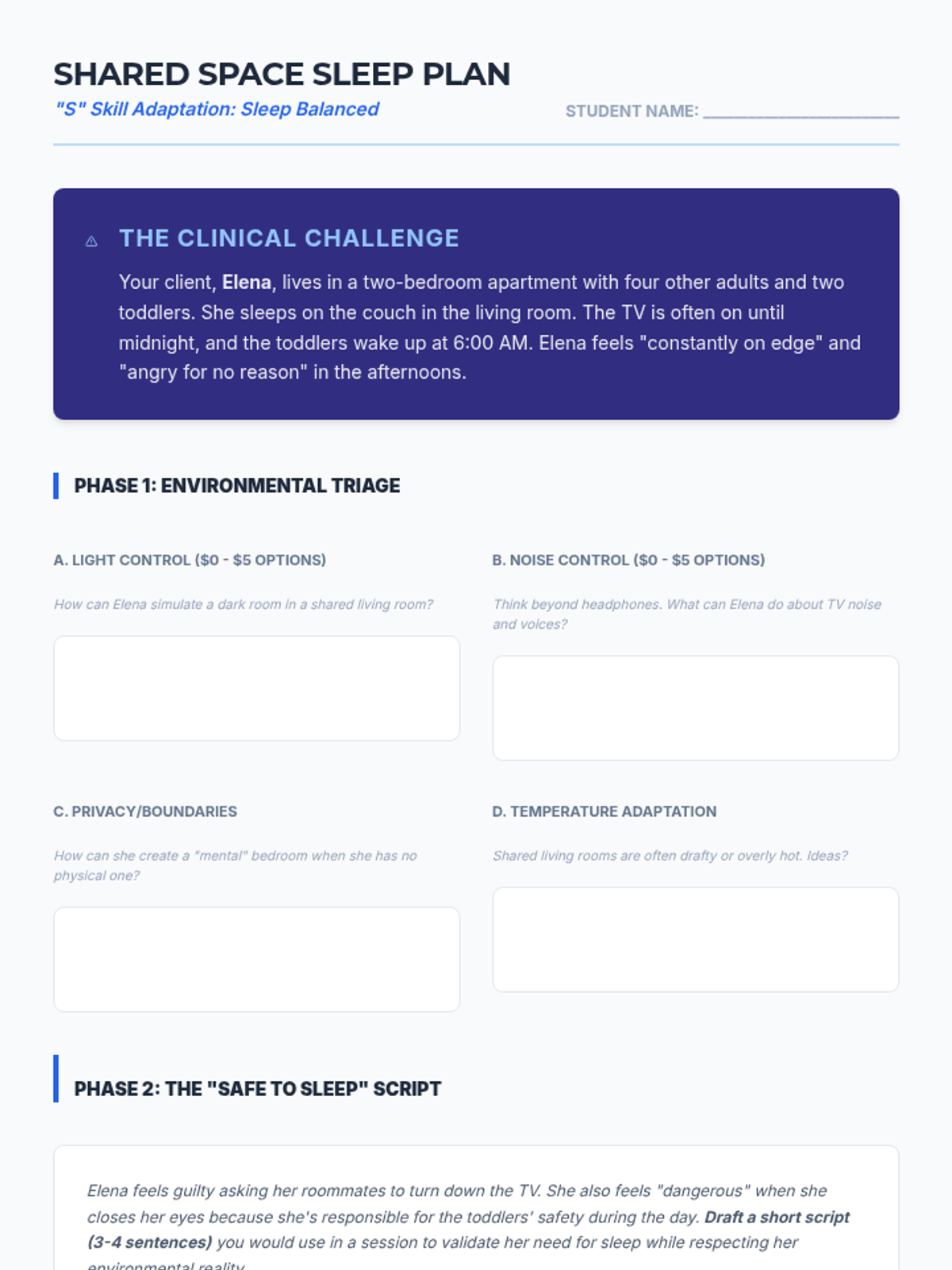
This lesson addresses sleep hygiene for clients in crowded or noisy environments, focusing on environmental adaptation and behavioral modifications.
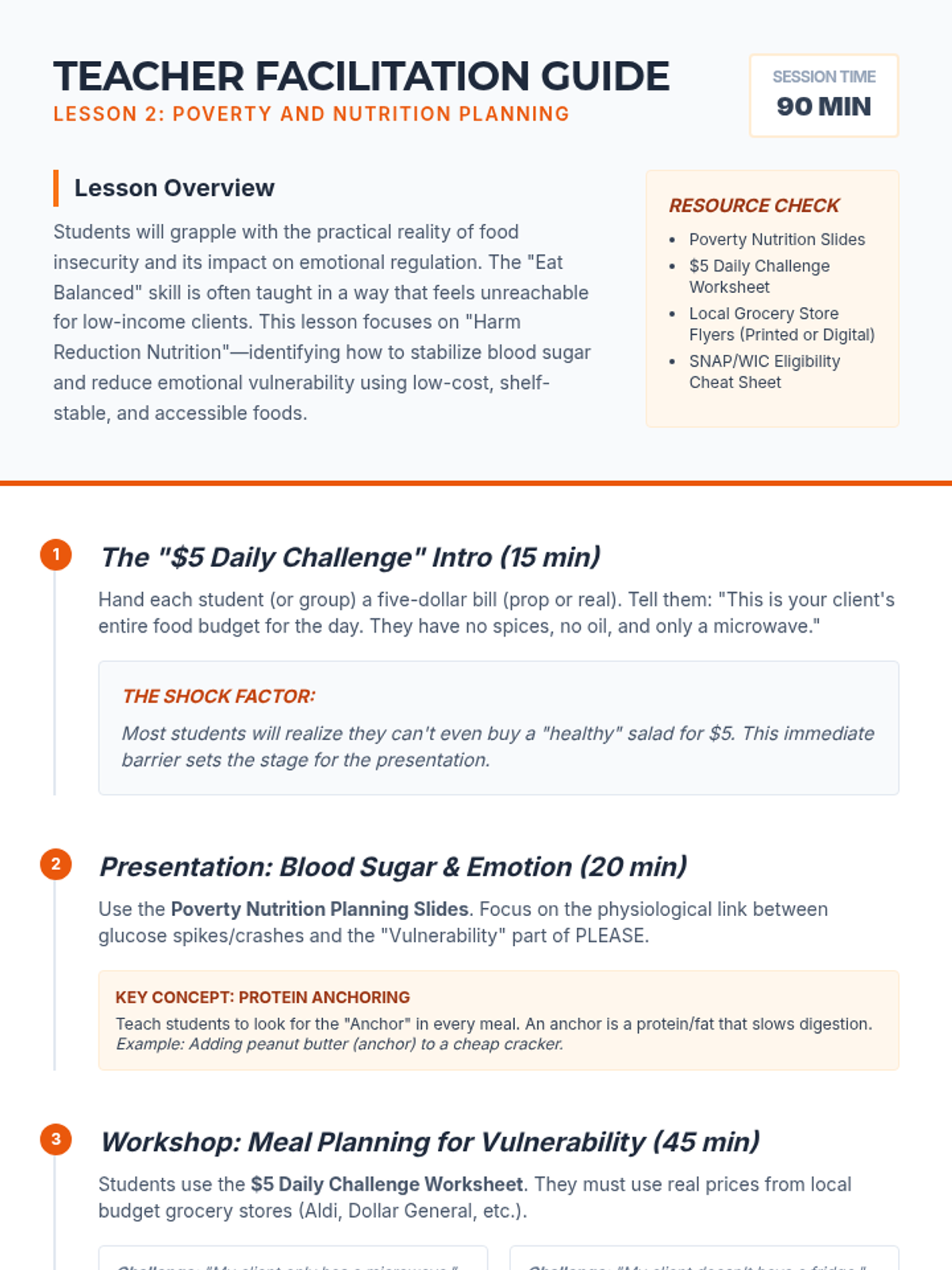
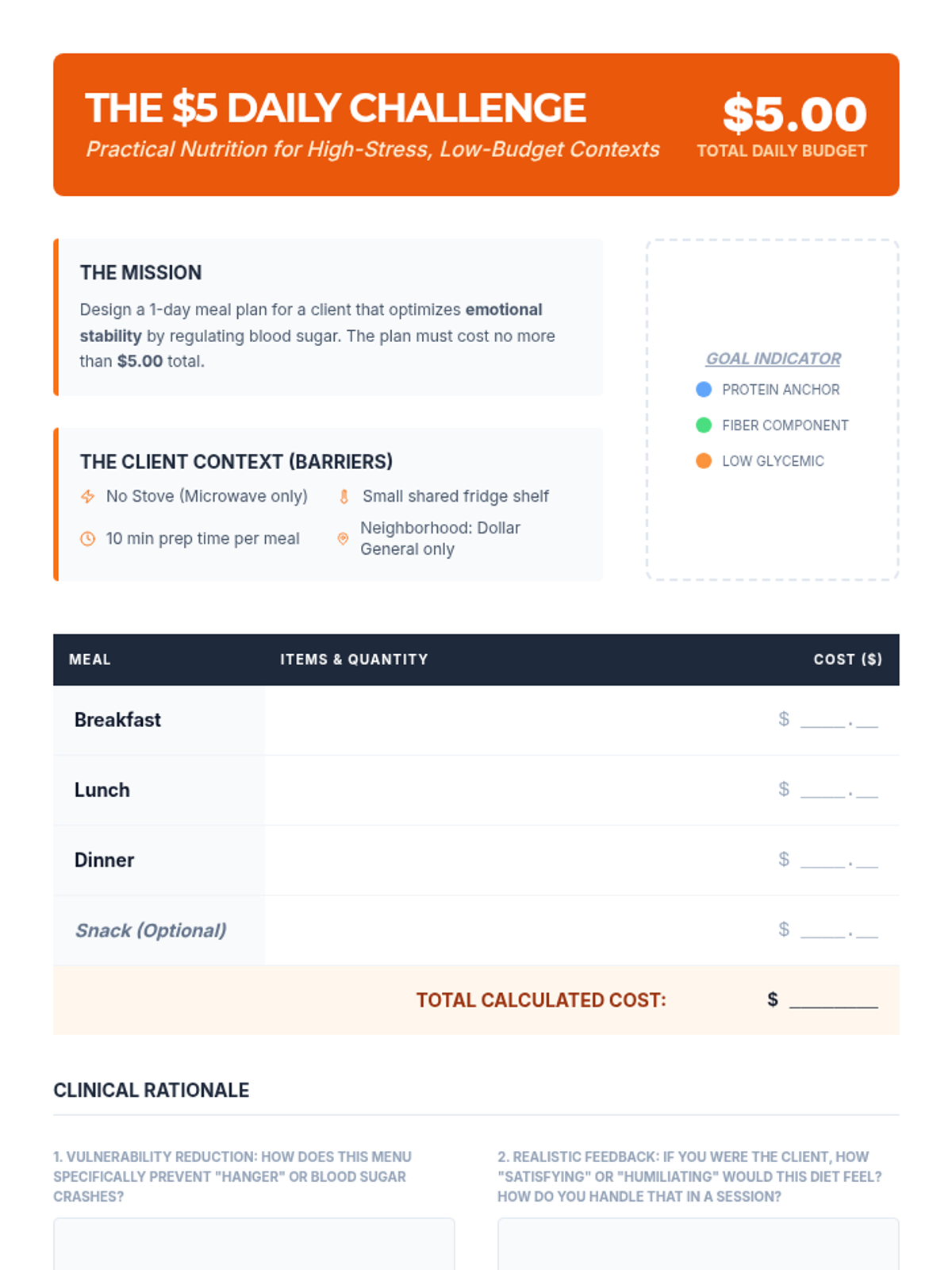
Students modify nutritional advice for clients with limited budgets or access, developing realistic harm-reduction strategies for 'Eating Balanced'.
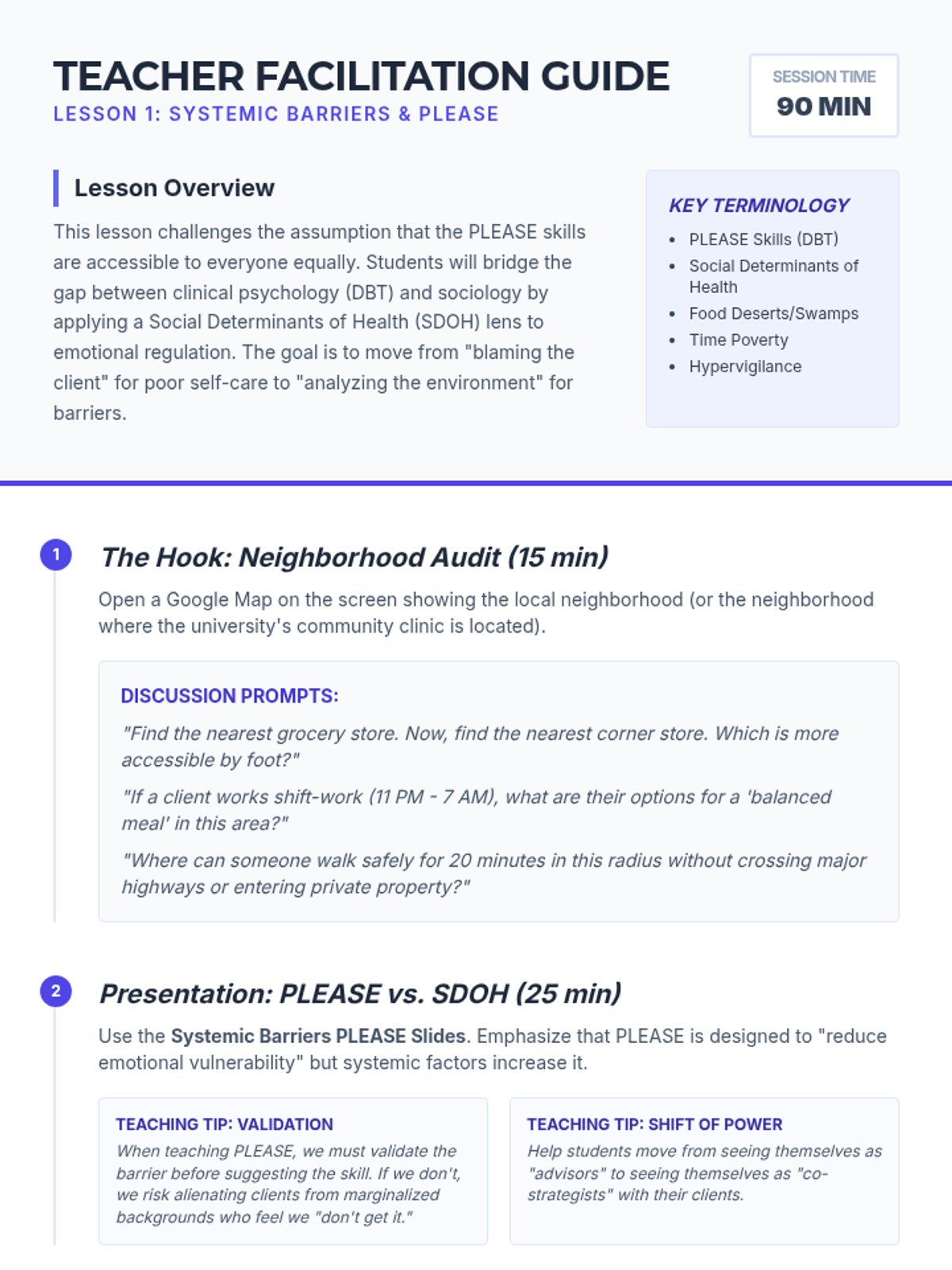
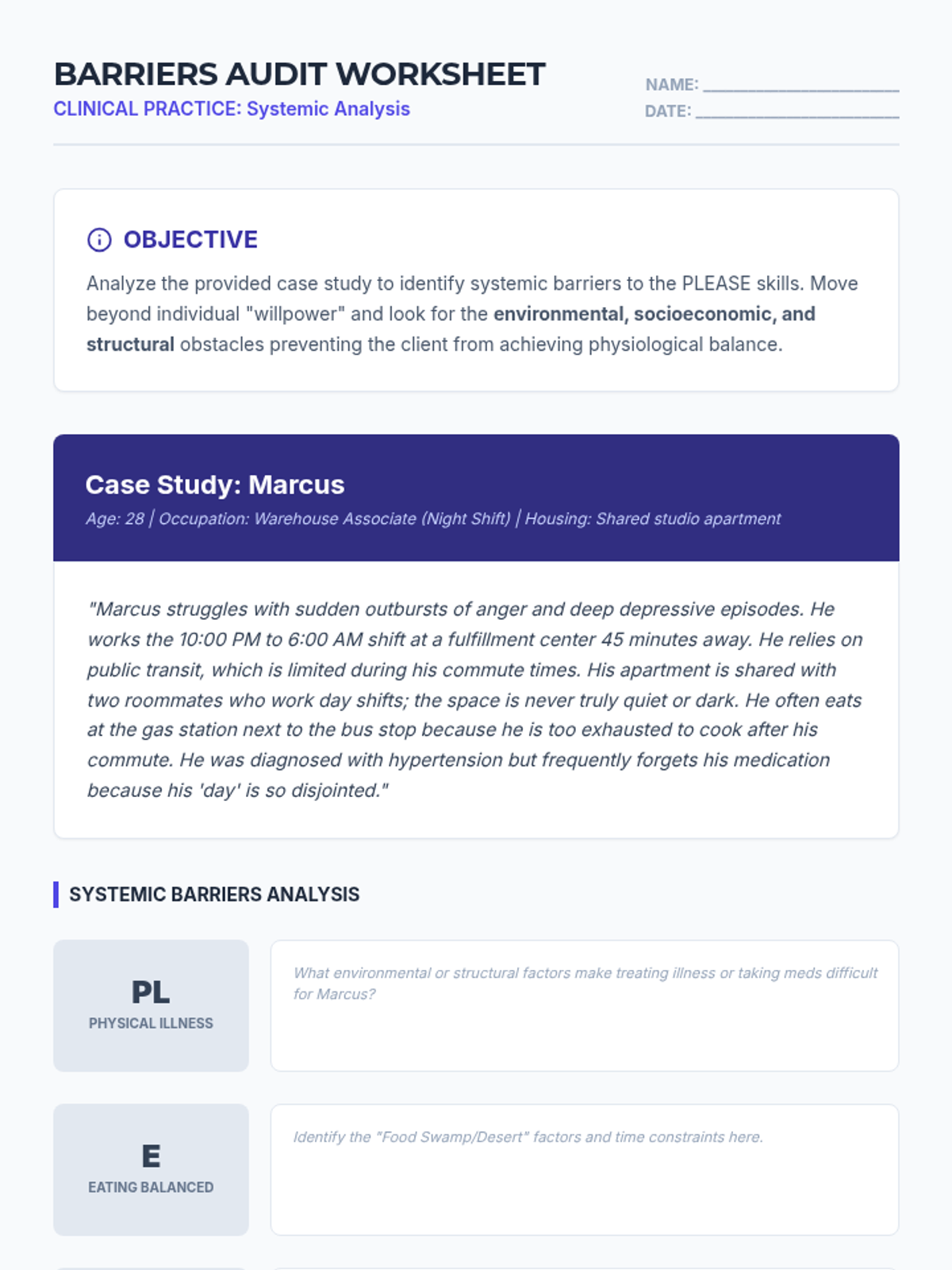
Students critique standard PLEASE skills through a socioeconomic lens, identifying how food deserts, shift work, and environment impact emotional regulation.
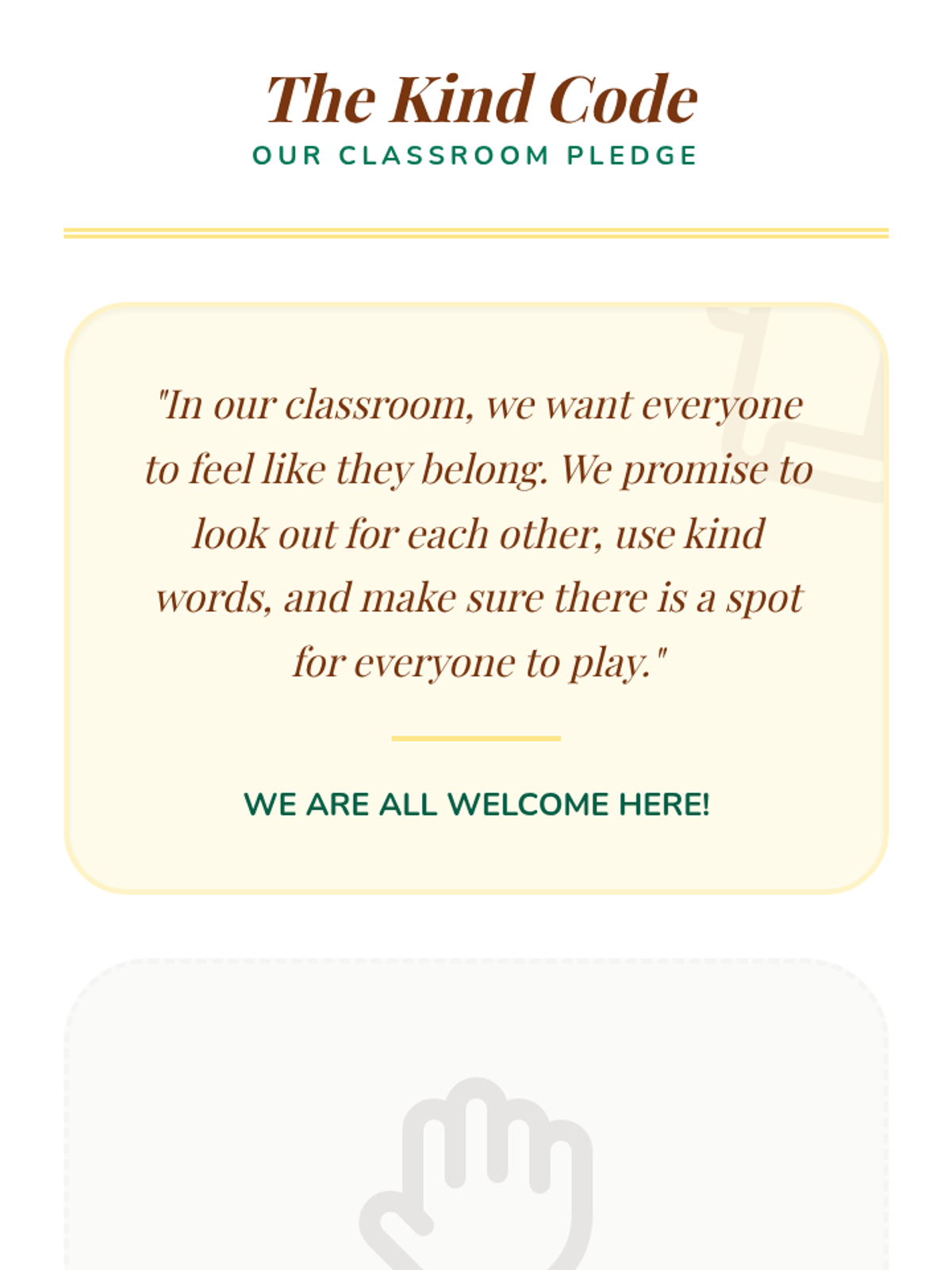
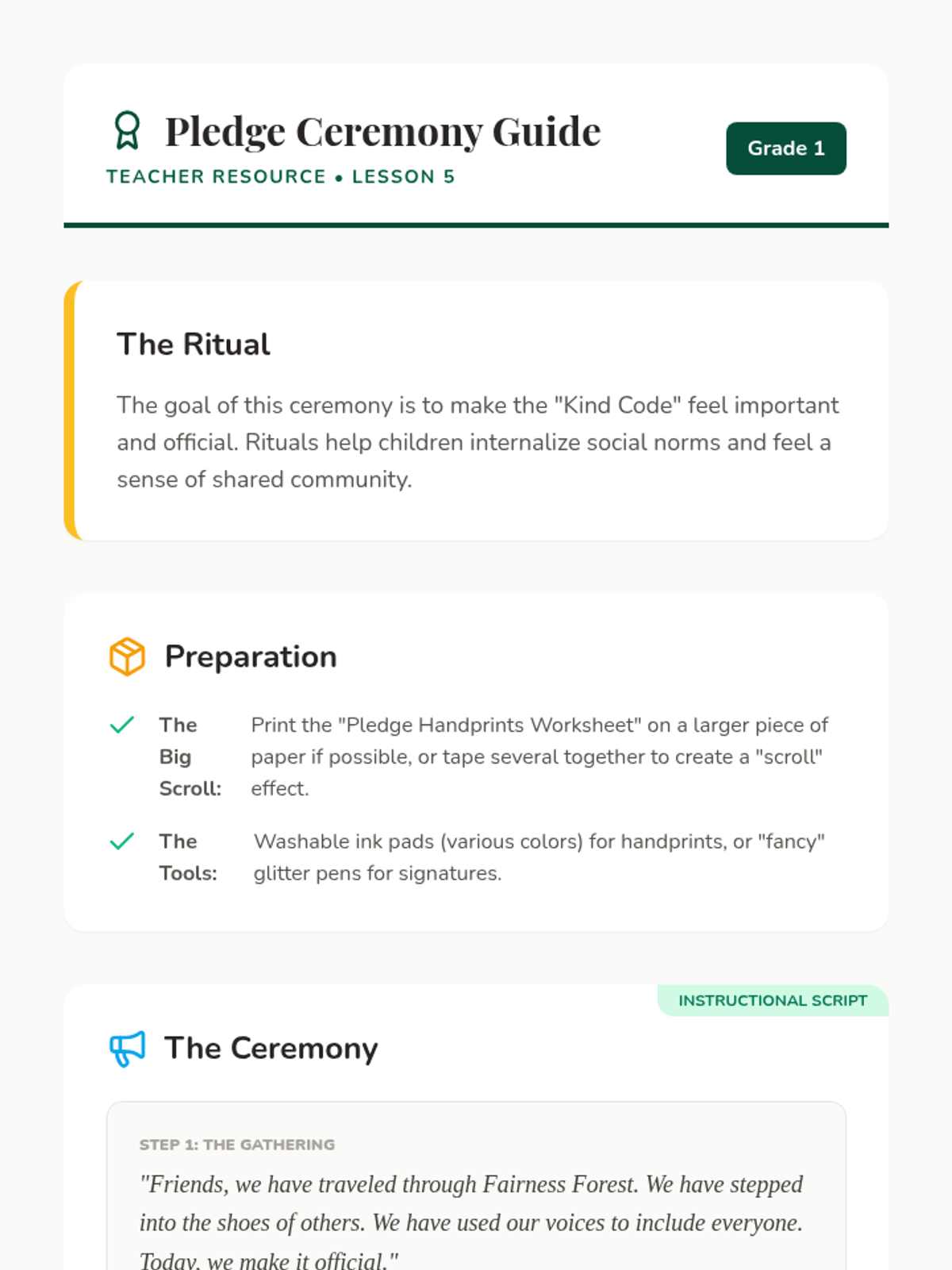
The class formalizes their commitment to inclusion by co-creating and signing a classroom pledge.
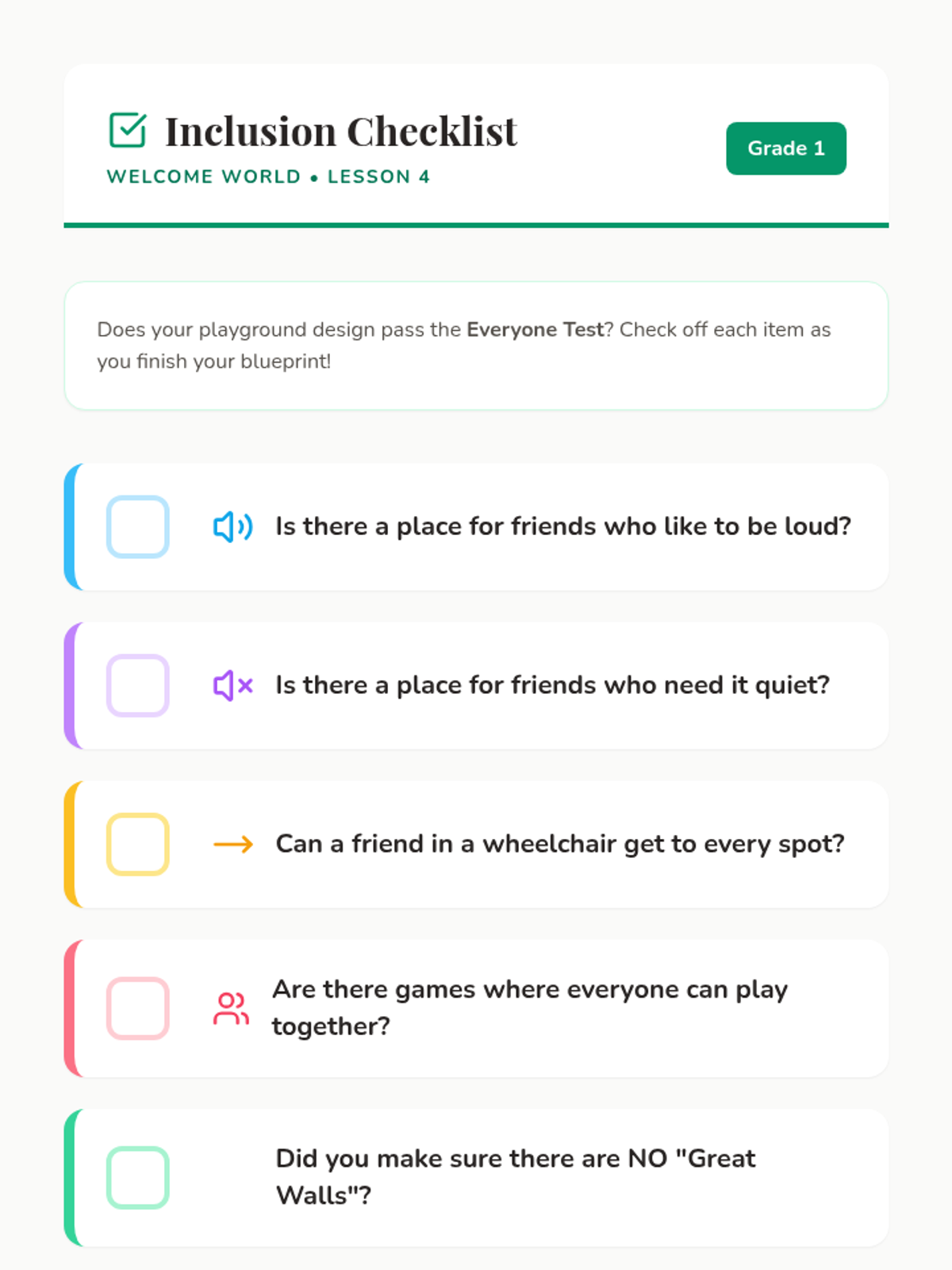
Students design inclusive playground models to visualize a world where everyone can play together regardless of differences.
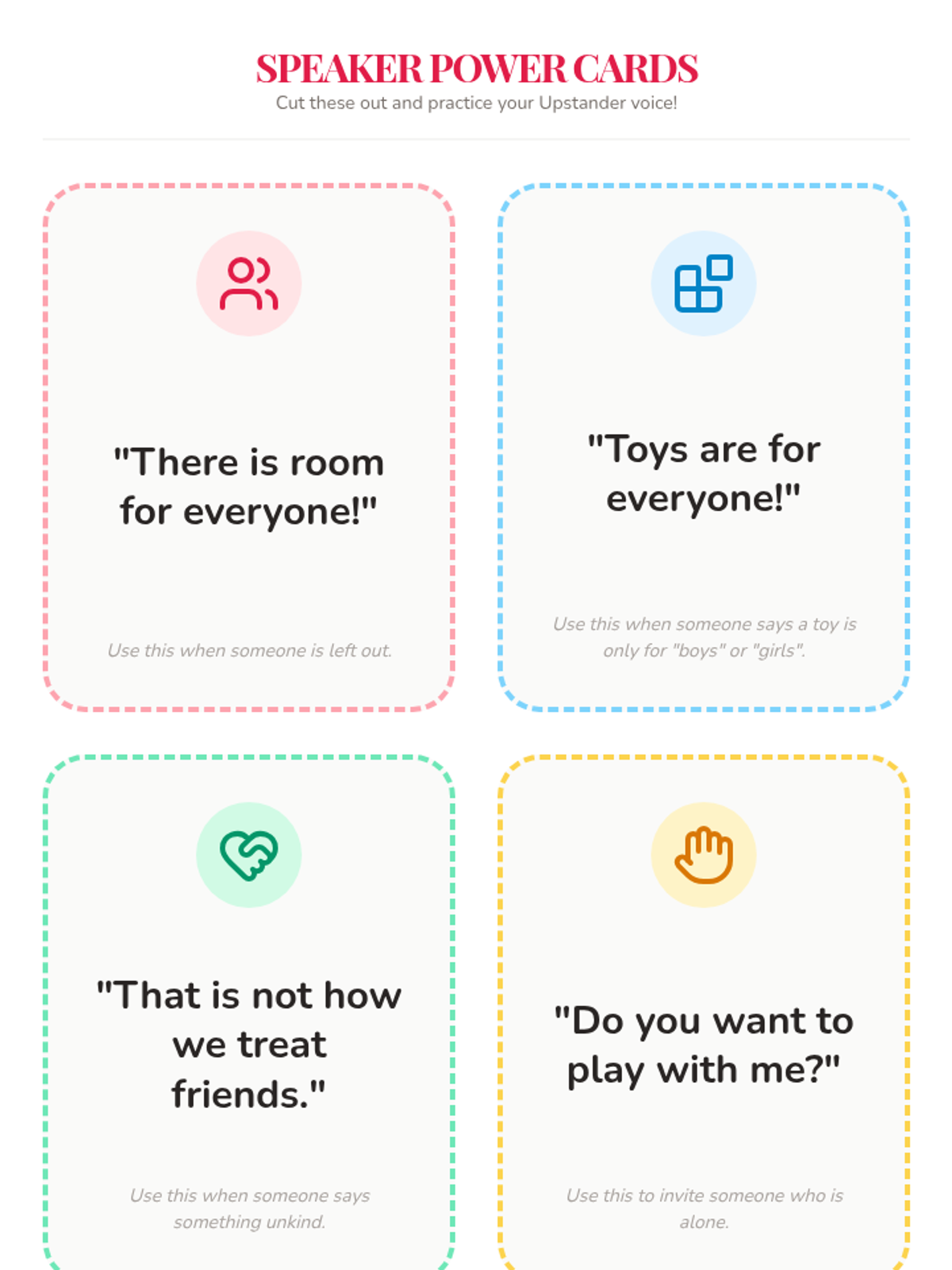
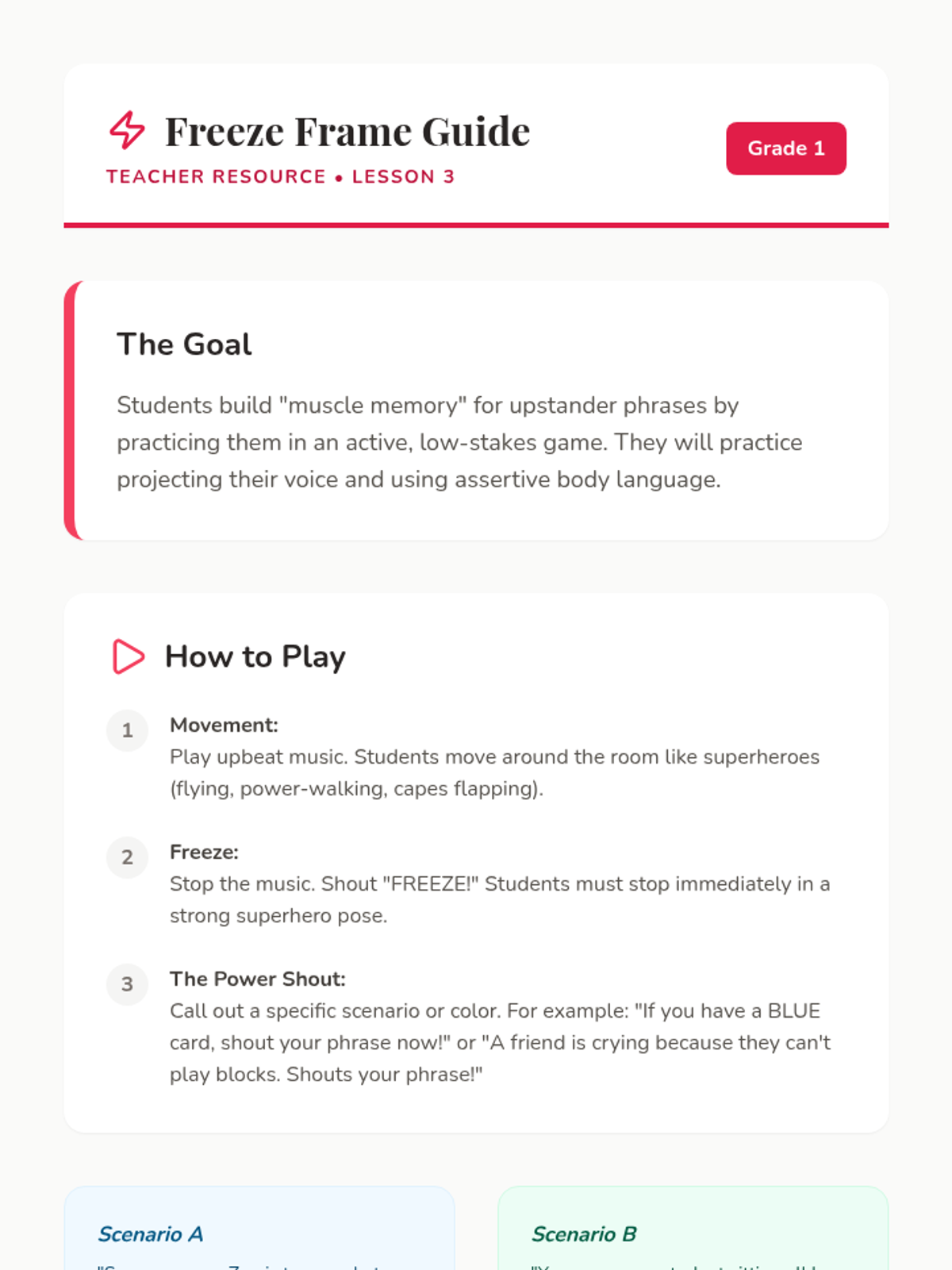
Students learn and practice specific upstander phrases to respond to unfair comments and stereotypes in a safe, structured environment.
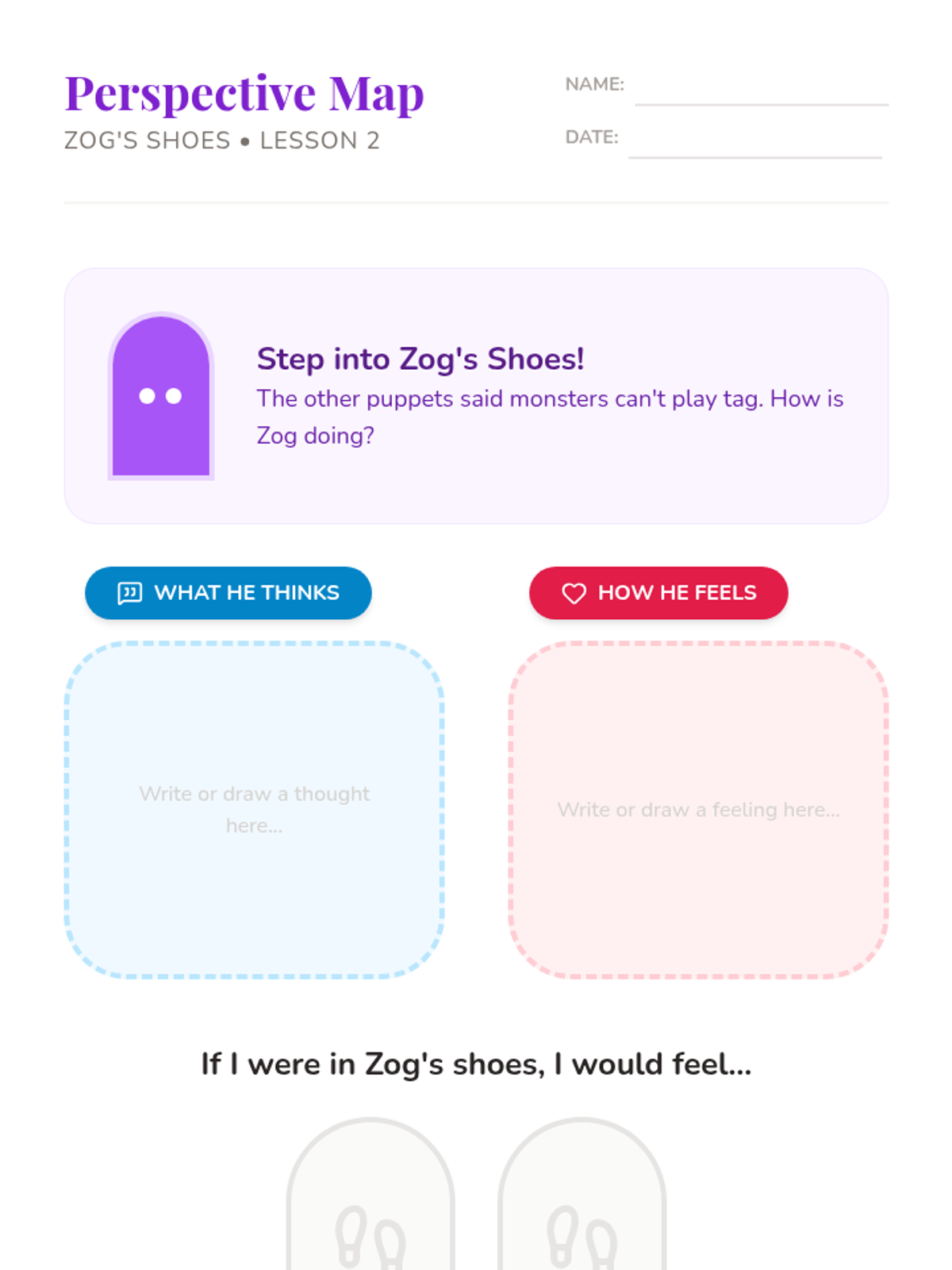
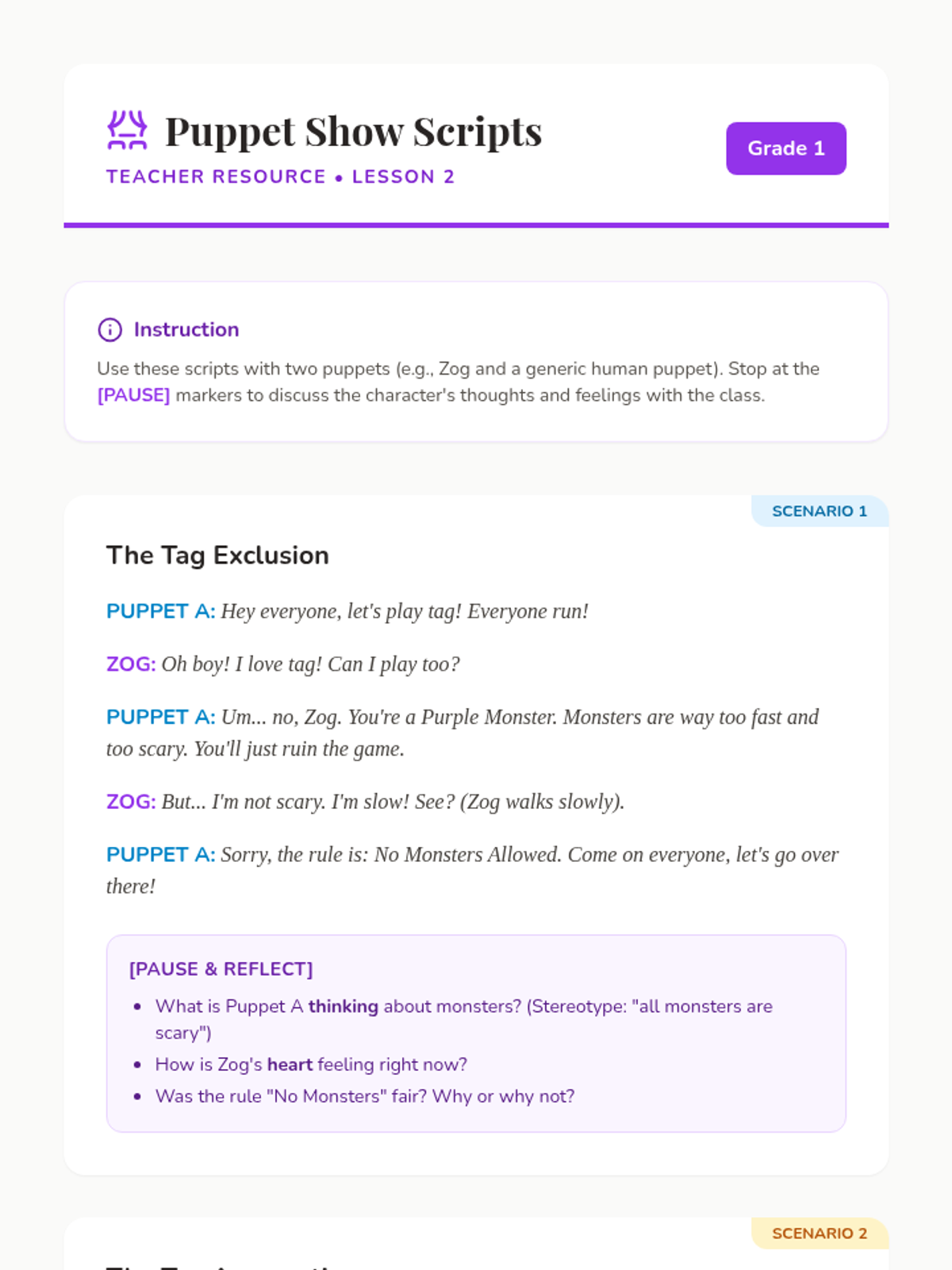
Using puppets, students practice perspective-taking by identifying how characters feel when they are excluded based on stereotypes.
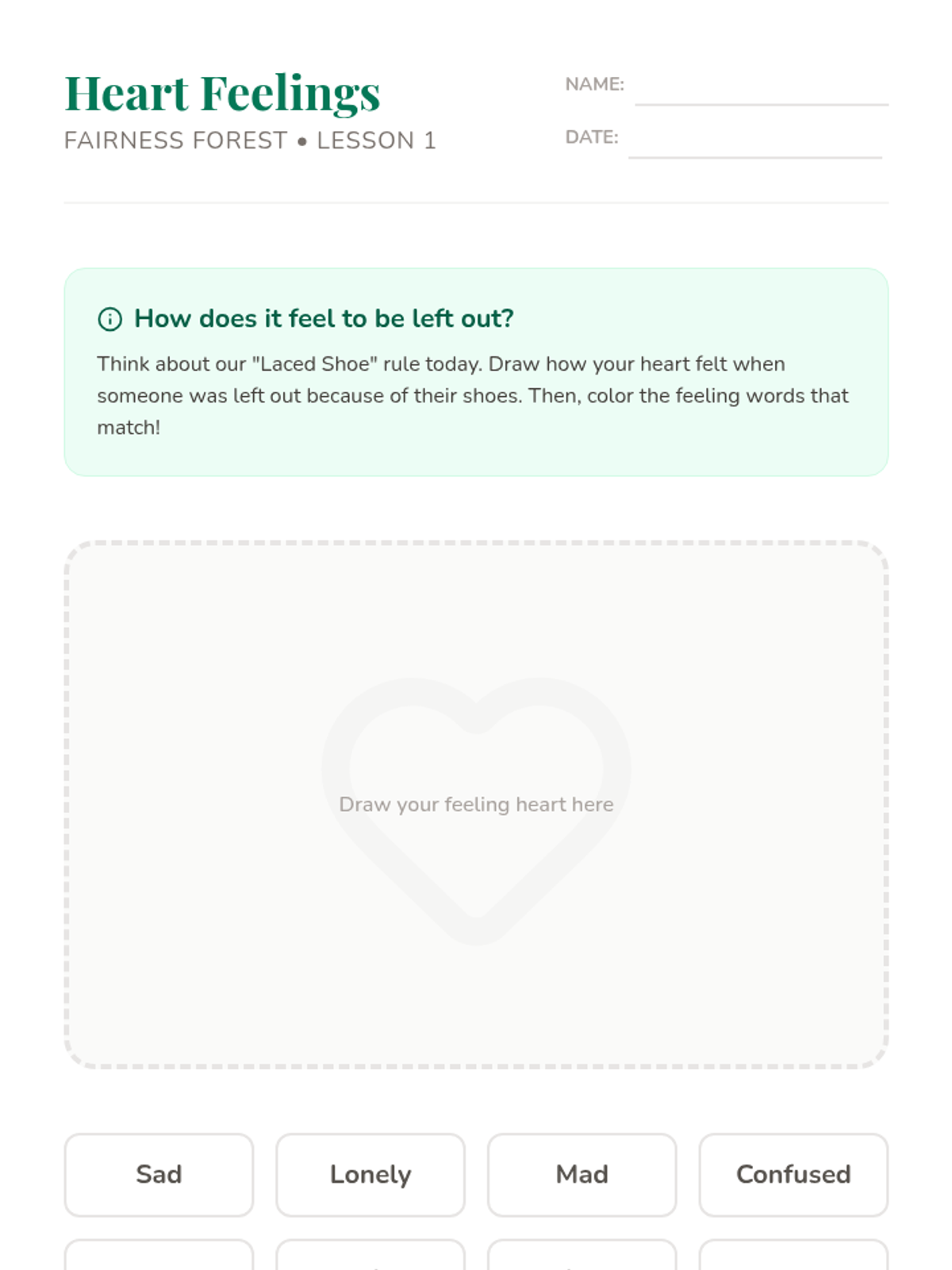
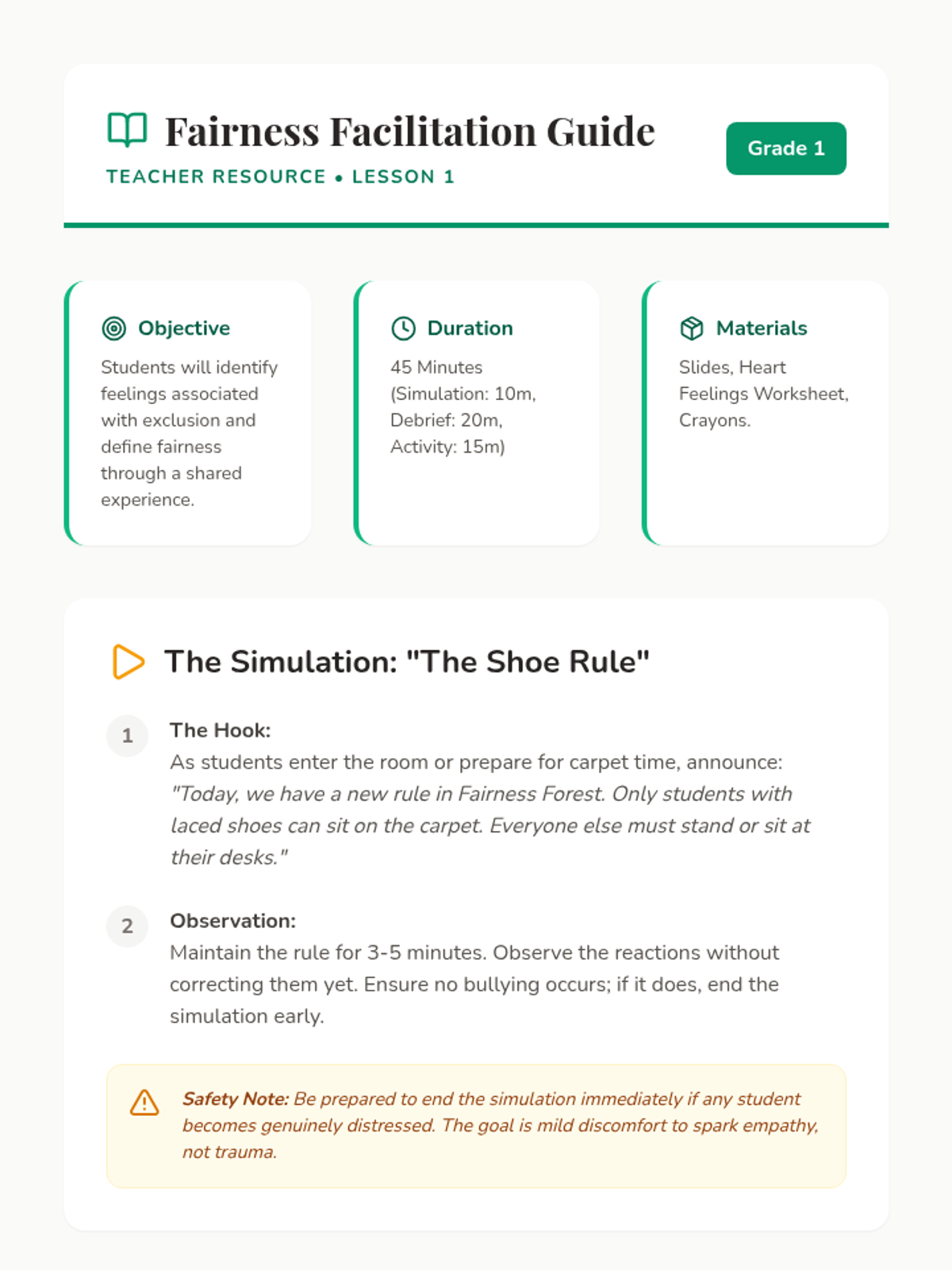
Students experience a structured simulation of unfairness to identify feelings associated with exclusion and define the concept of fairness.
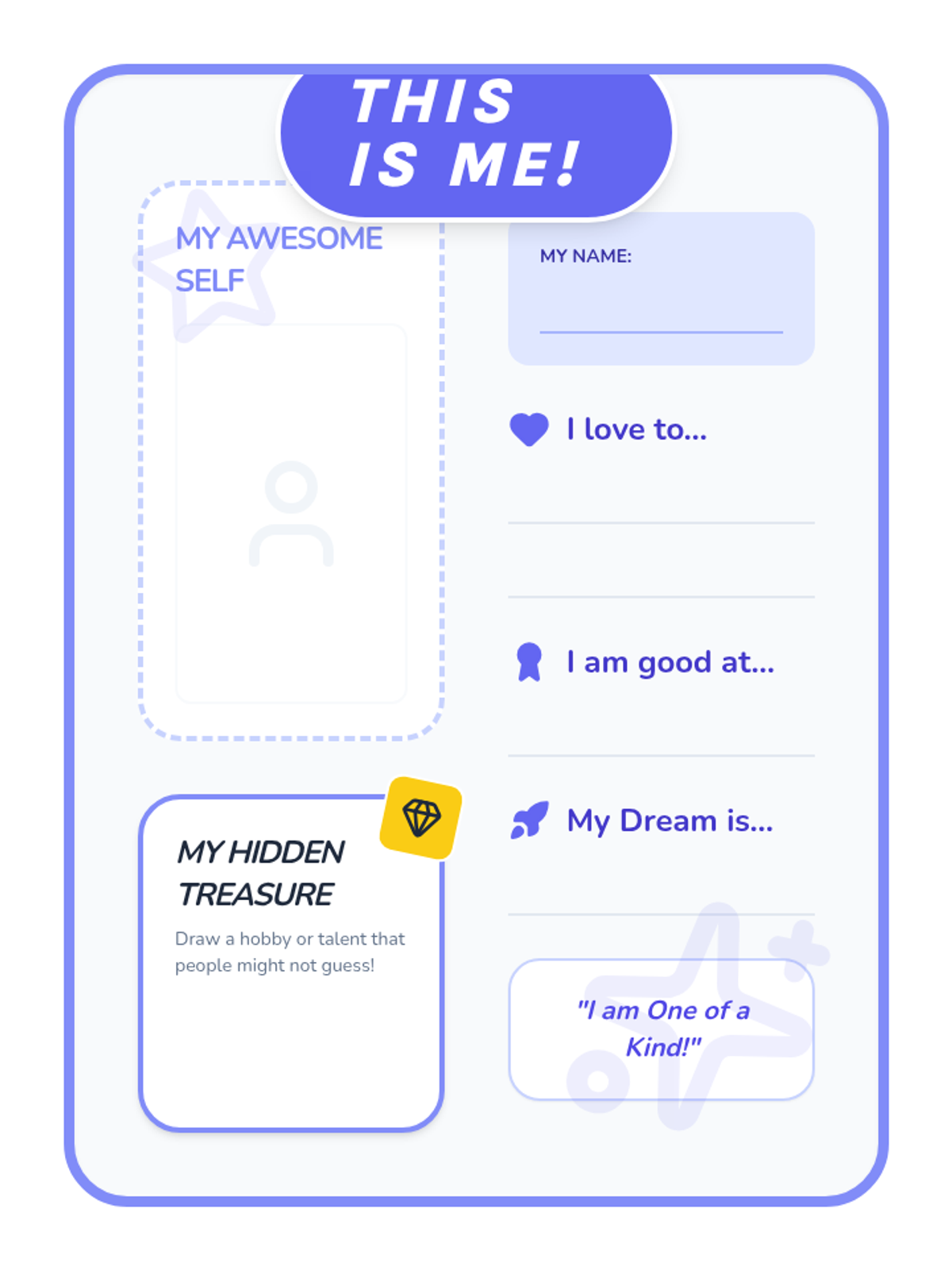
Students create and present posters that showcase their unique mix of interests, celebrating their individual identities beyond stereotypes.
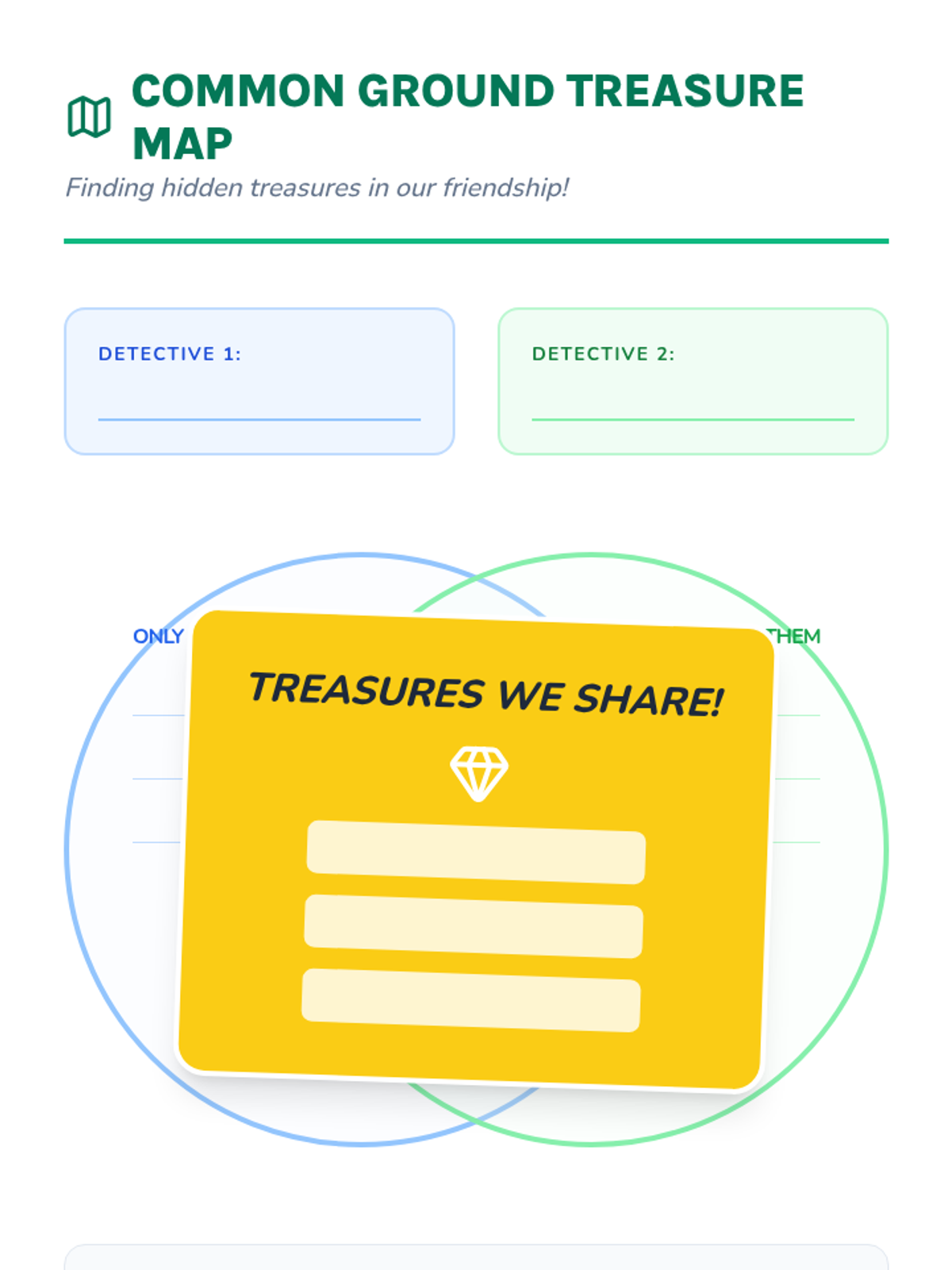
Partners find shared interests across outward differences using a simplified Venn diagram approach to build empathy and connection.
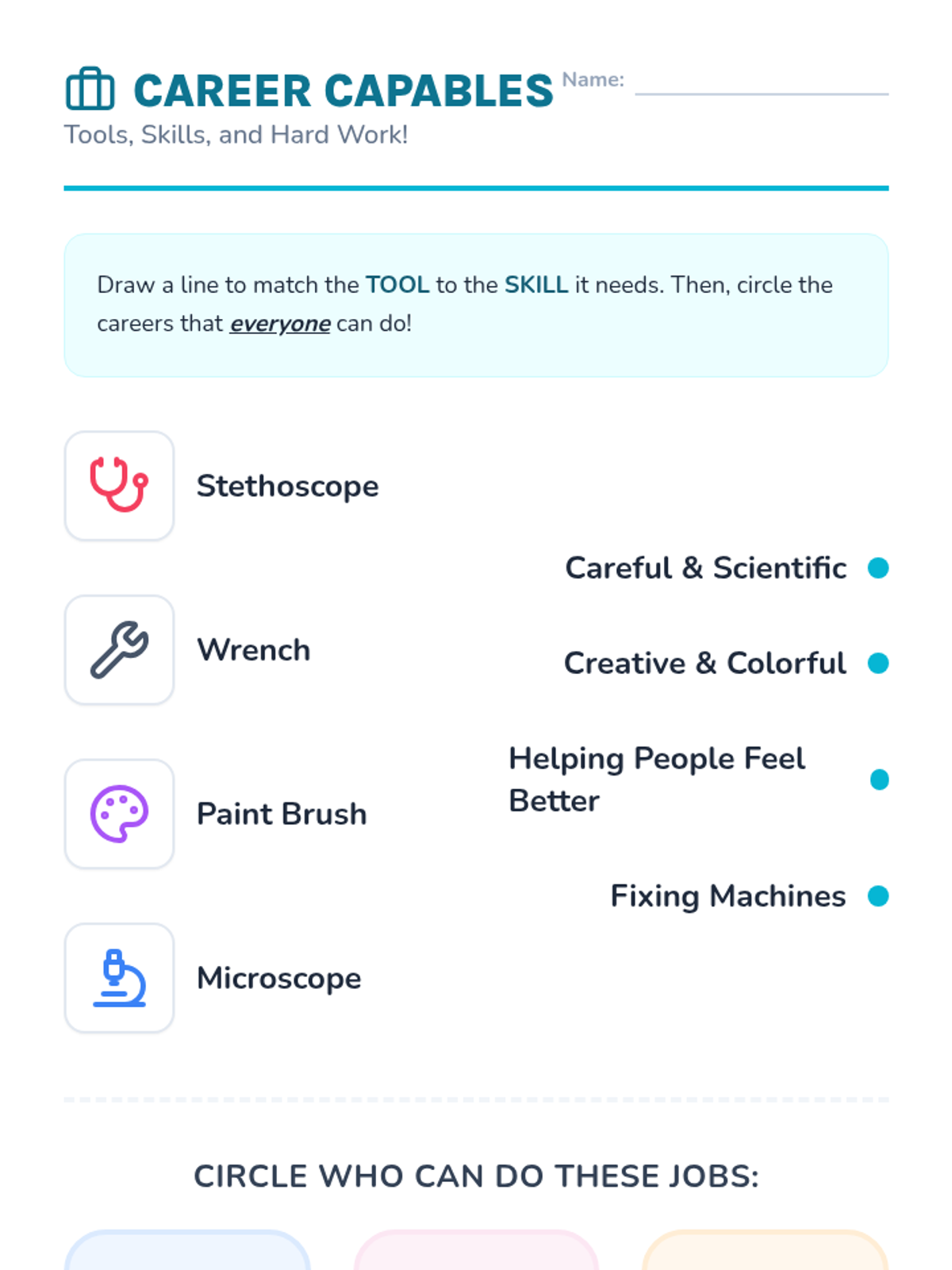
Students engage with community helper roles to see that skills and hard work determine career paths, regardless of appearance or gender.
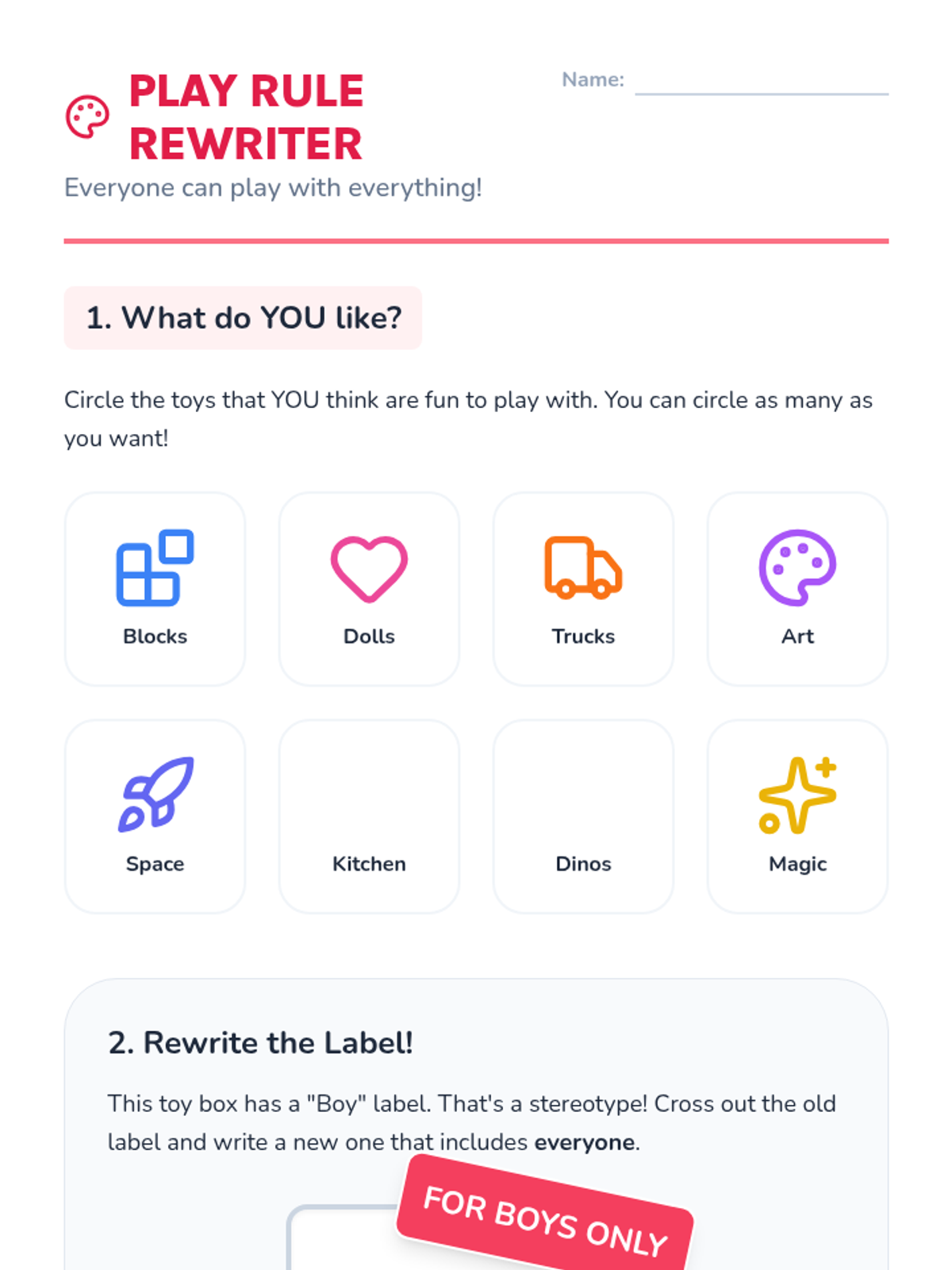
Class examines toys and marketing to discuss why some are labeled for boys or girls, concluding that play and interests should not be limited by gender.
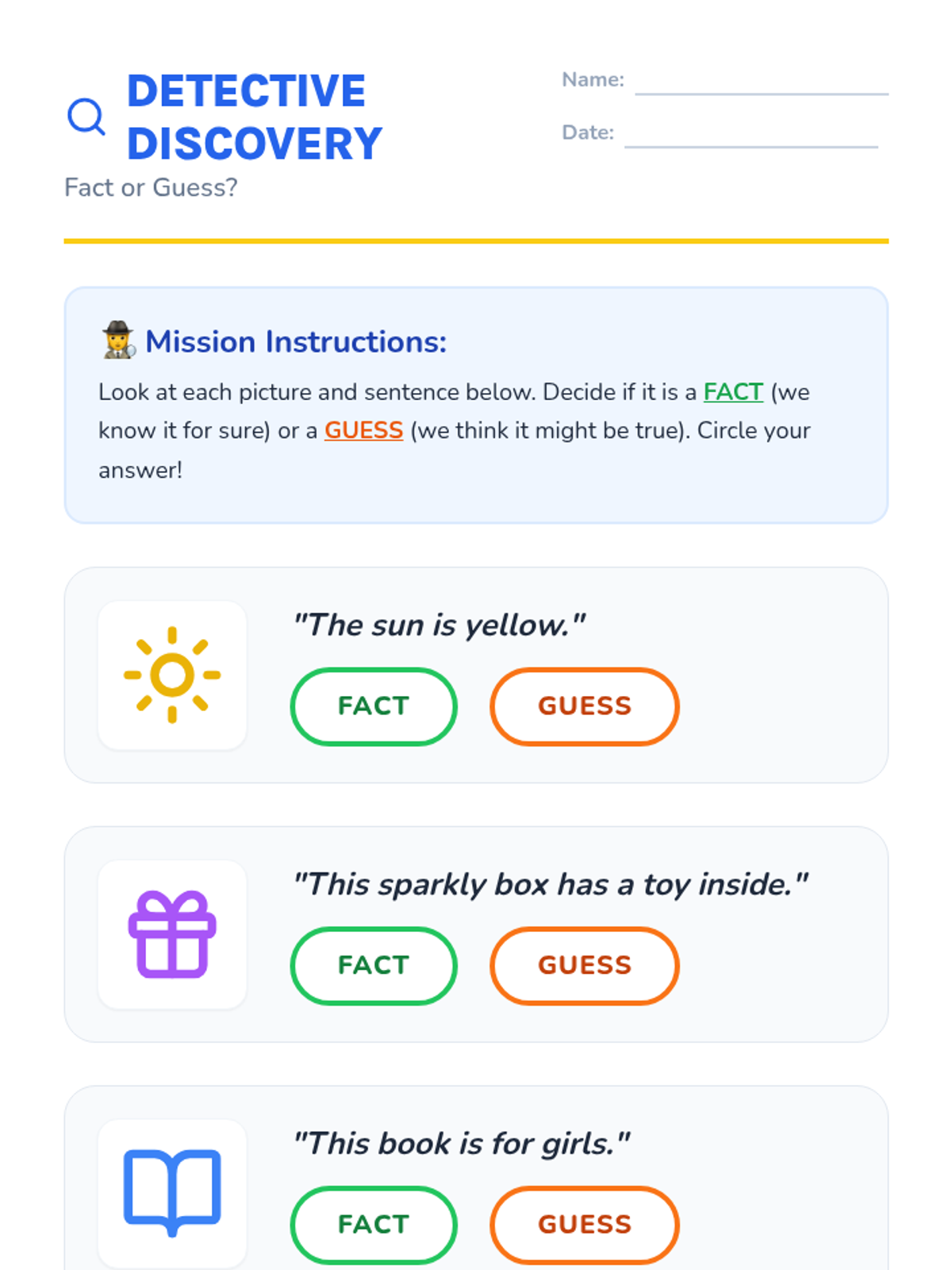
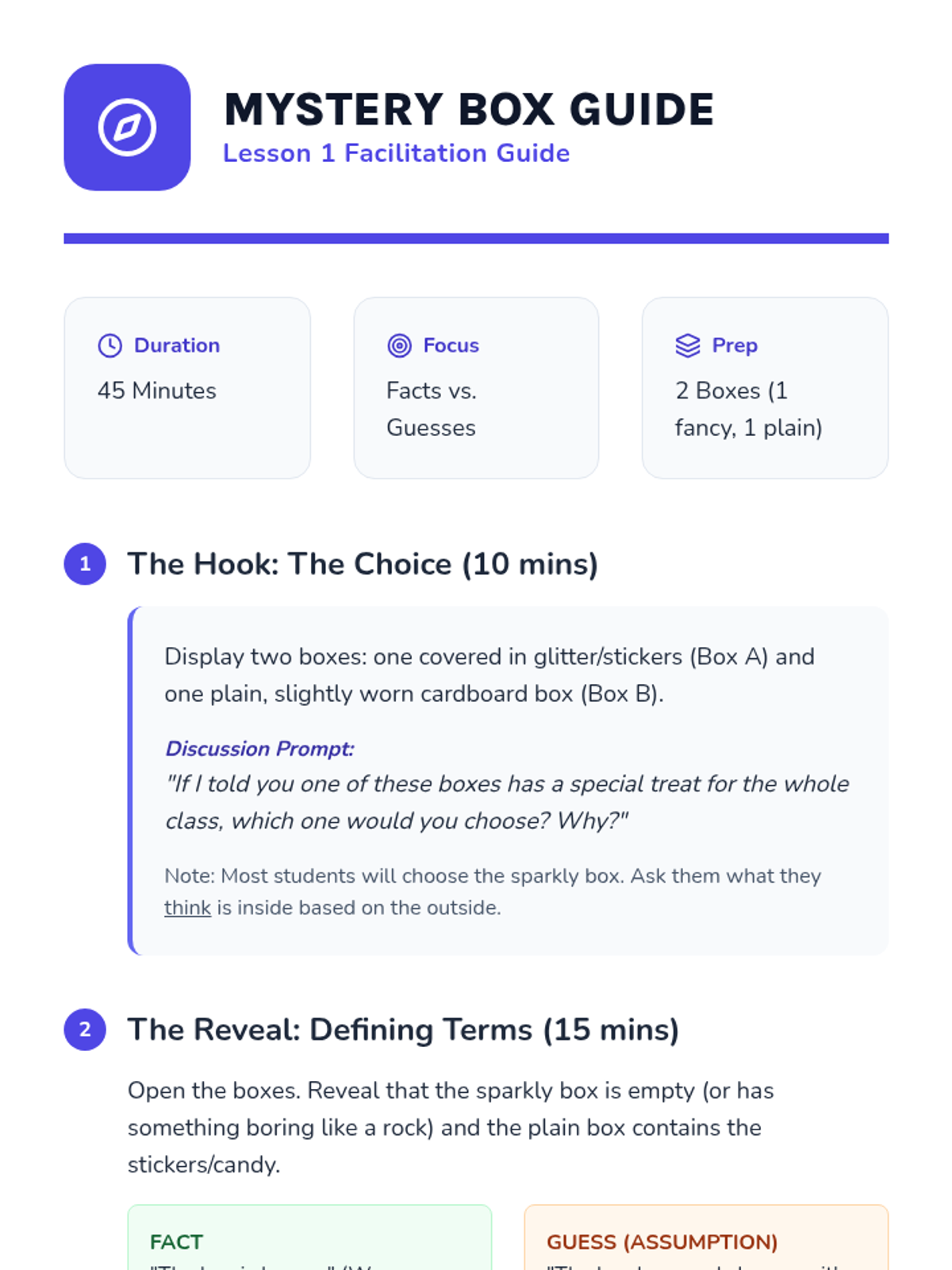
Students learn the difference between a fact (what we know for sure) and a guess (an assumption) using a Mystery Box activity. They connect this to how looking at someone's outside doesn't tell us everything about their inside.
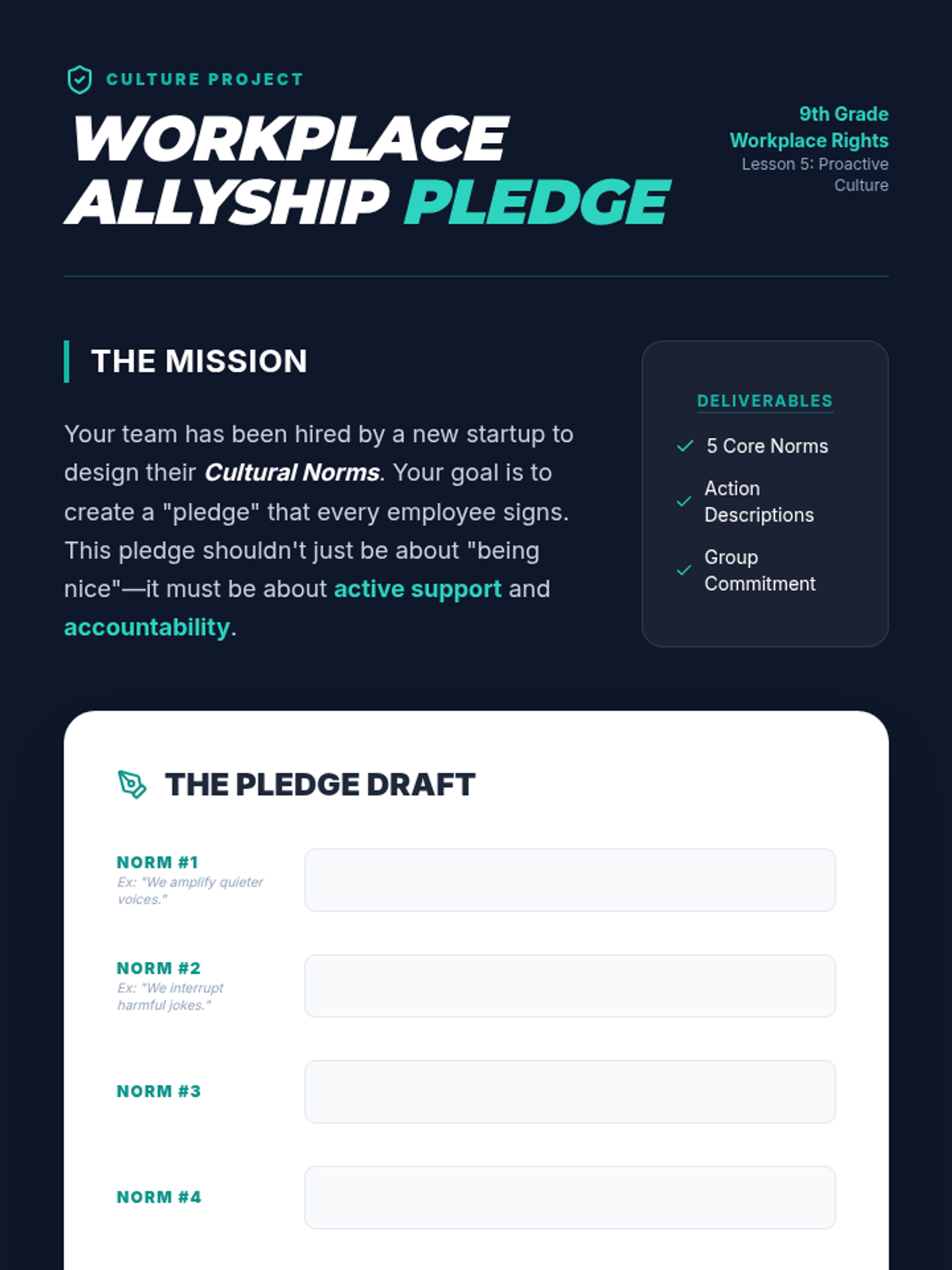
Moving from reactive to proactive, students design workplace norms and pledges that foster a culture of mutual support and accountability.
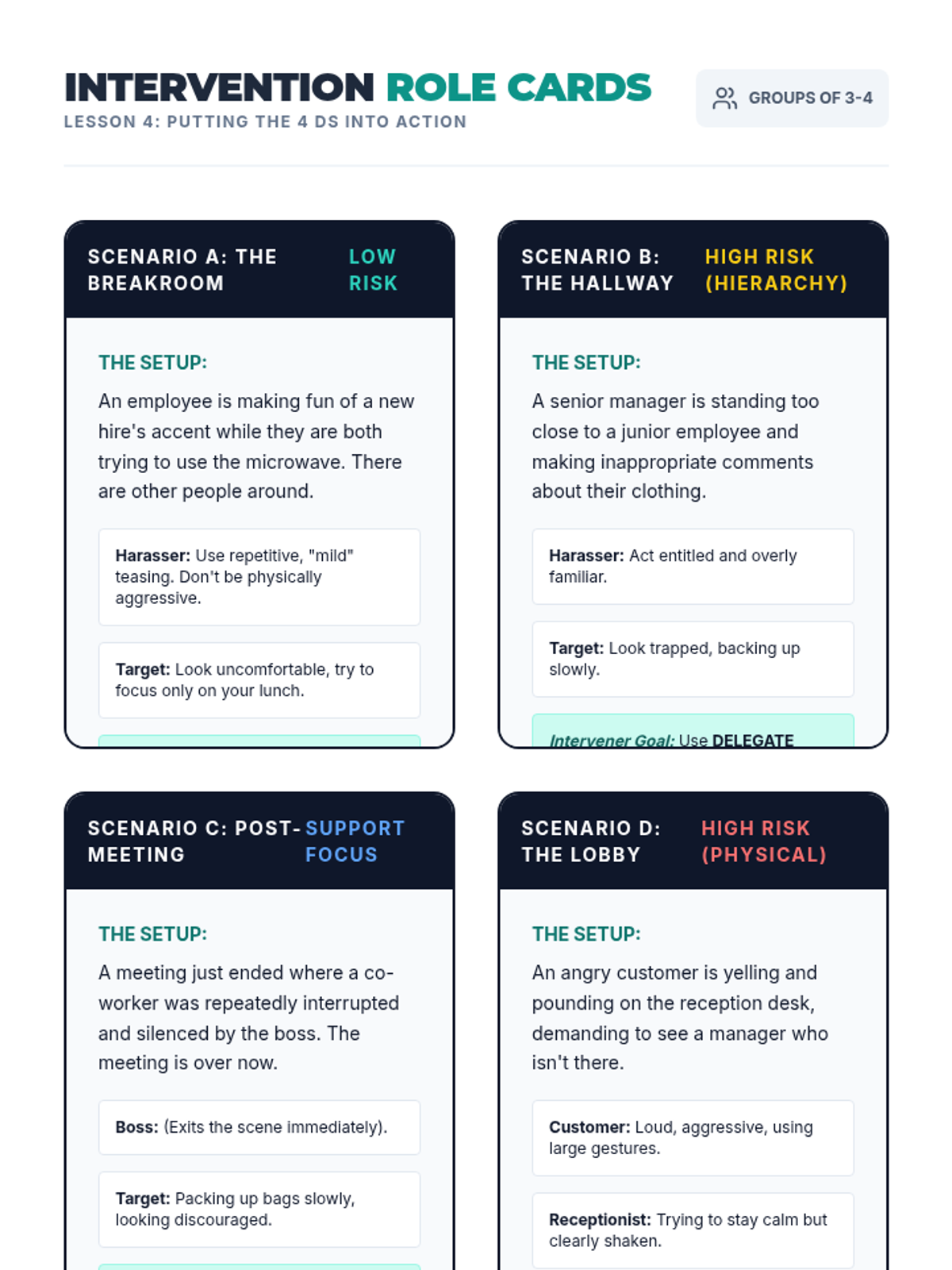
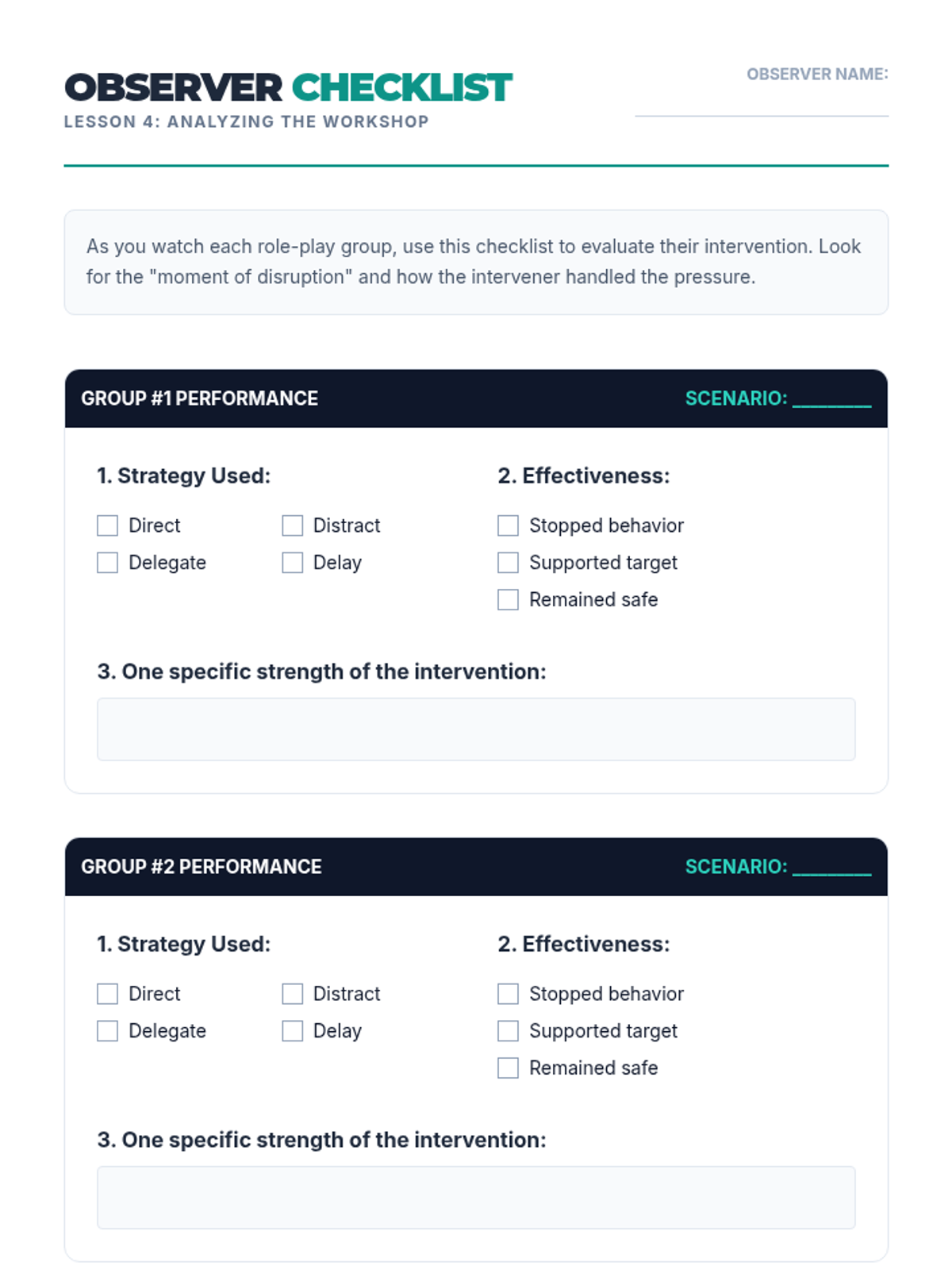
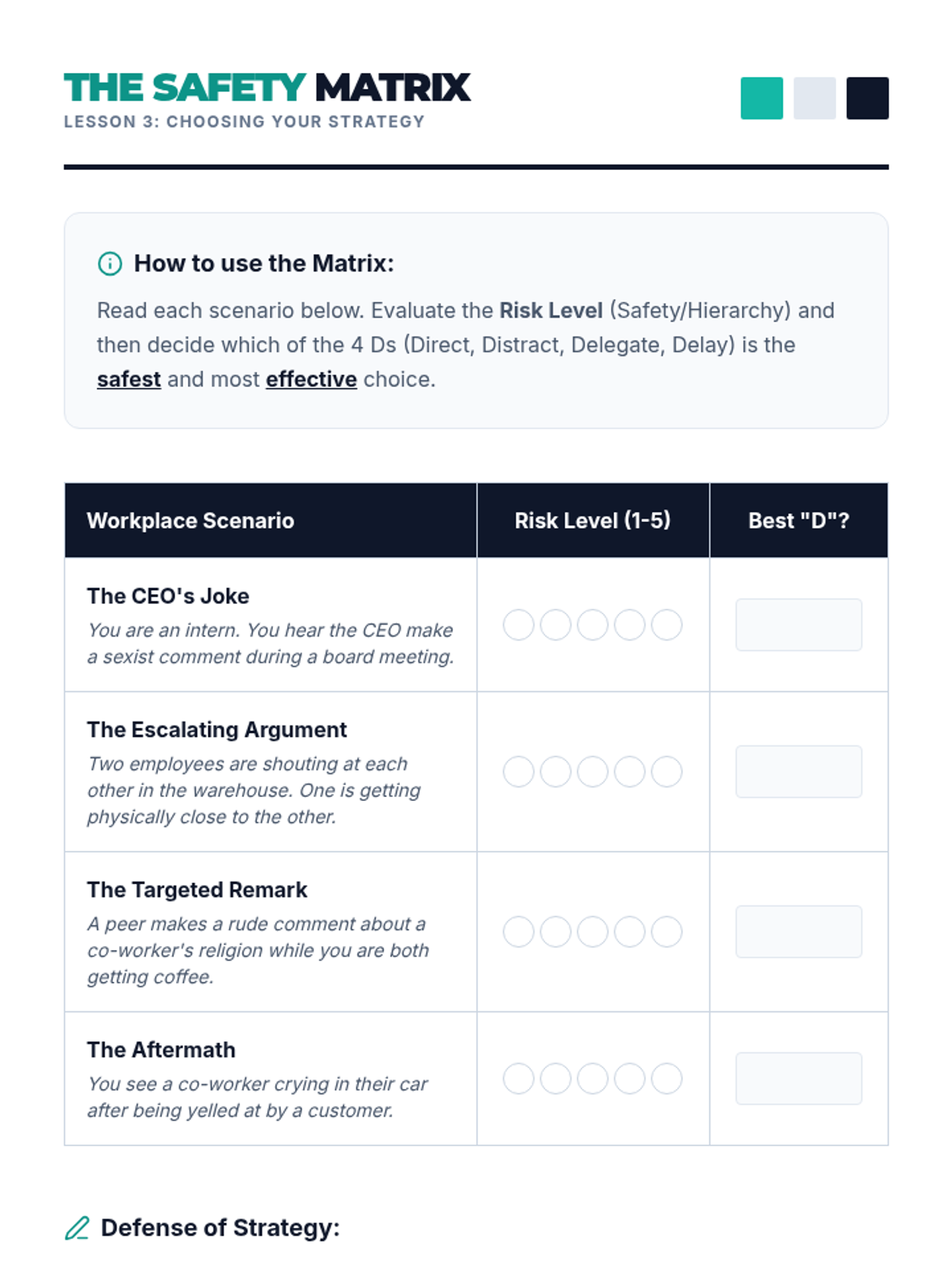
A hands-on workshop where students rotate through roles to practice applying the 4 Ds in realistic workplace scenarios, from breakrooms to boardrooms.
Focus on Delegate and Delay strategies, teaching students how to involve authorities safely and how to provide post-incident support to targets of harassment.
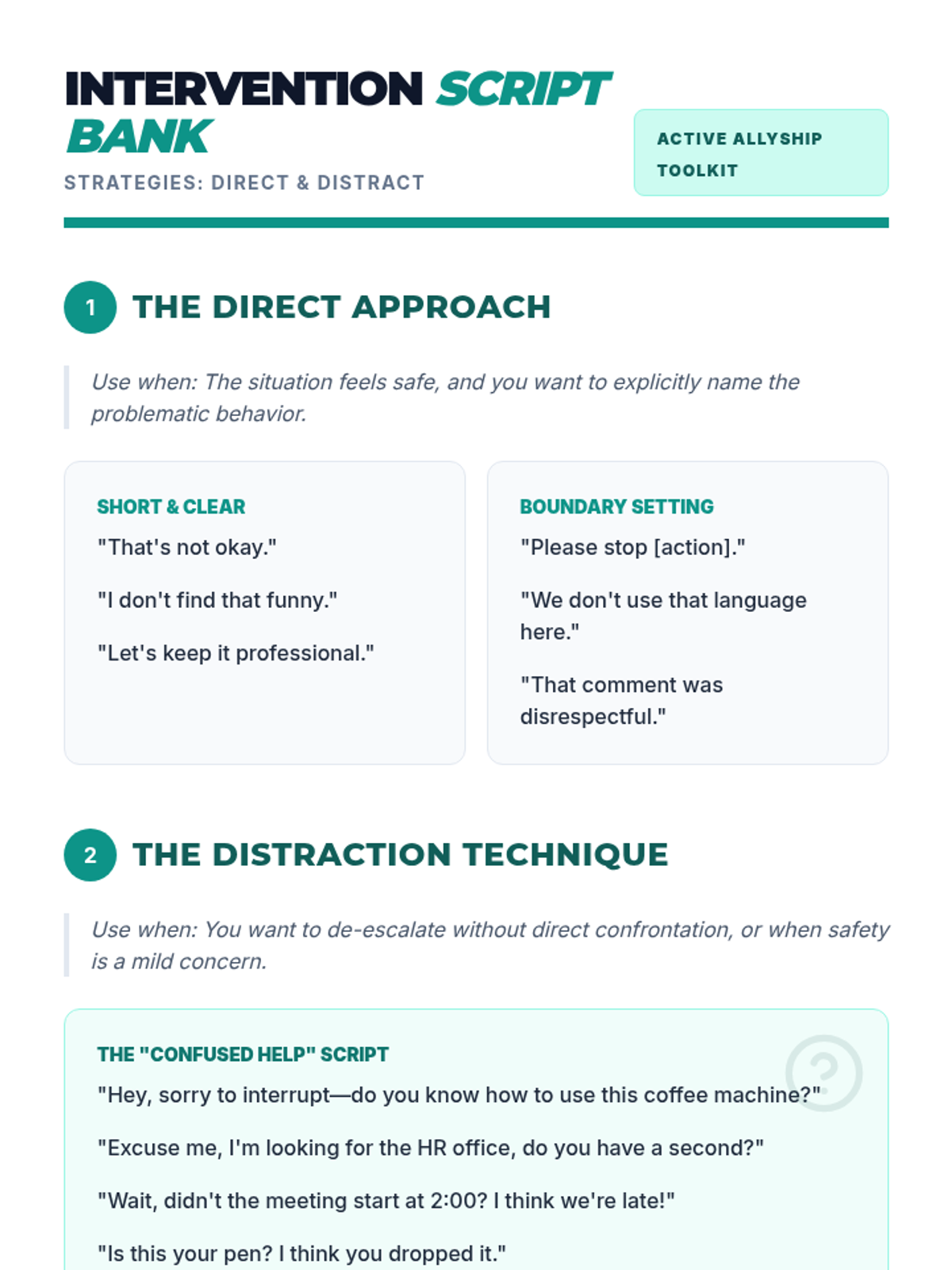
Introduction to the first two 'Ds' of intervention: Direct and Distract. Students practice de-escalation techniques and scripting to interrupt harassment without necessarily escalating conflict.
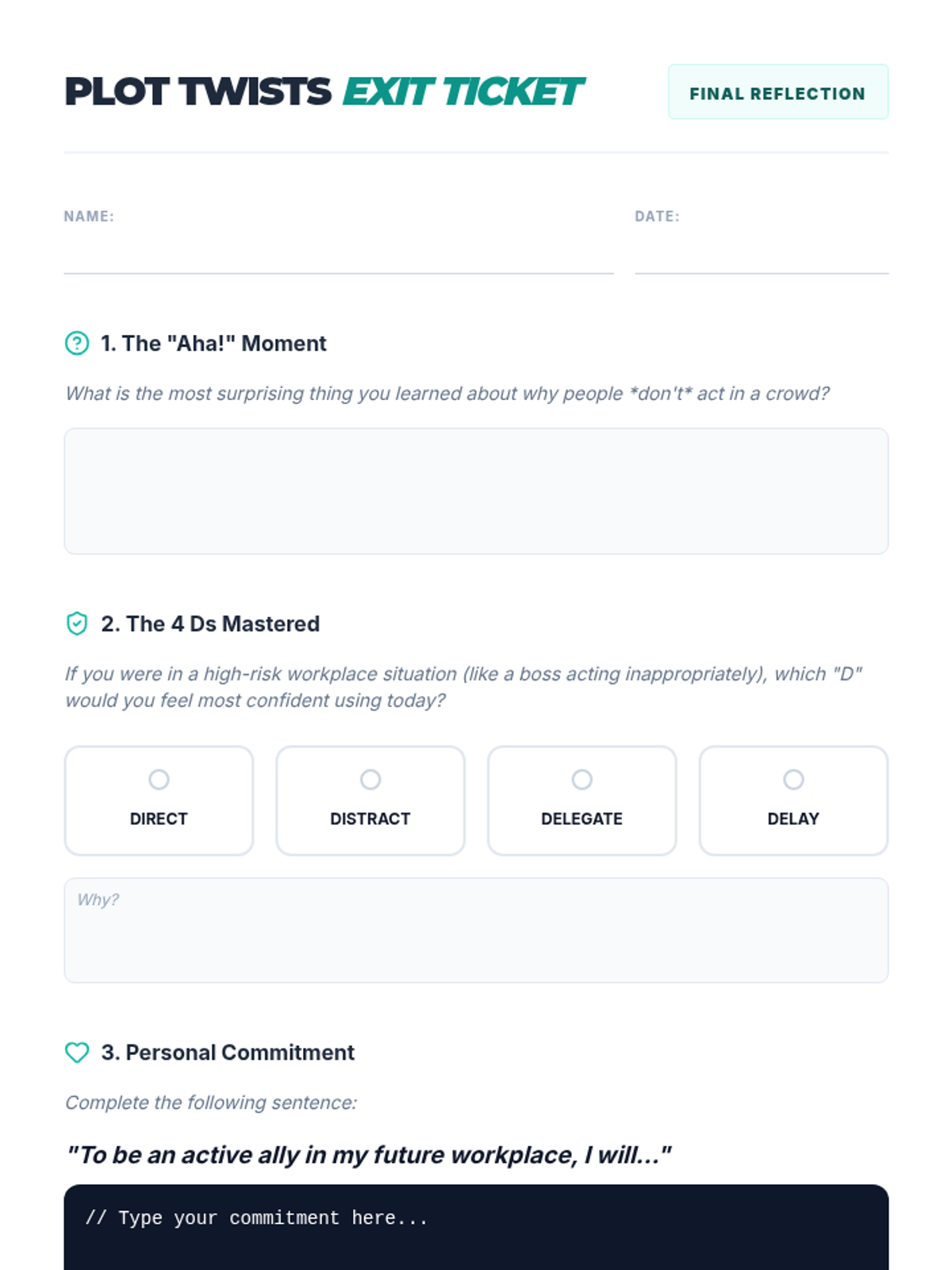
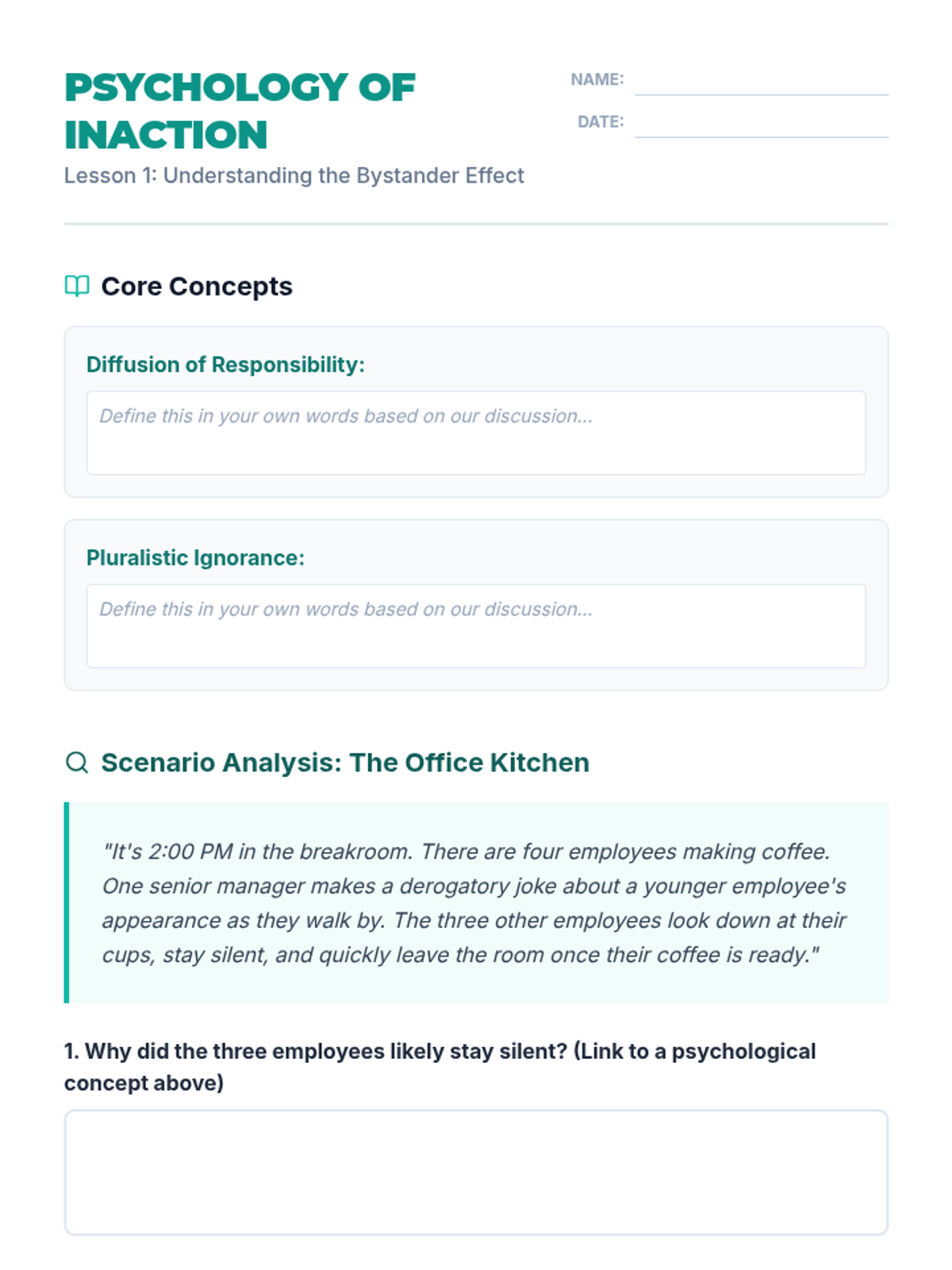
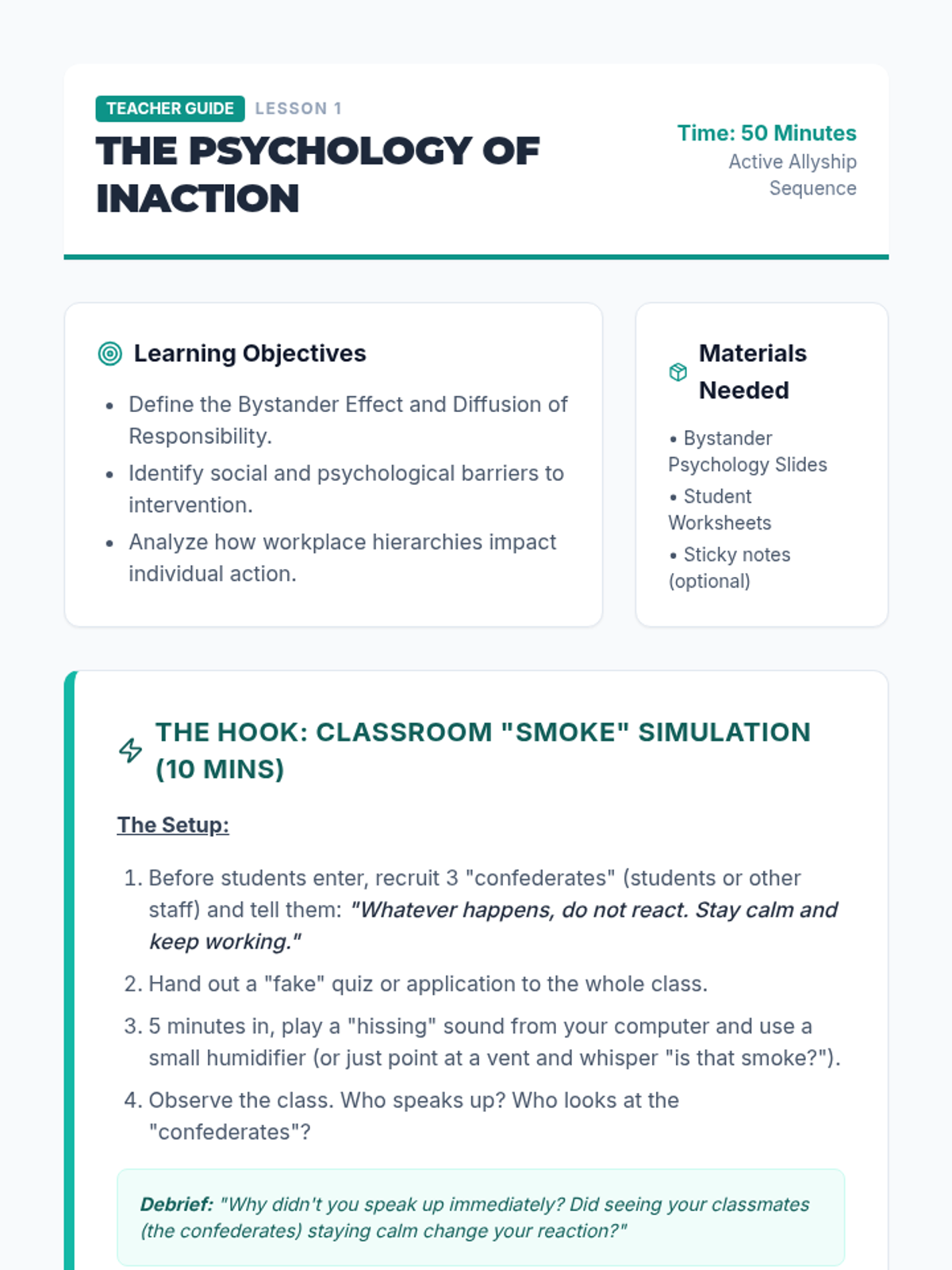
Students investigate why people often fail to act when they witness wrongdoing, exploring social psychology concepts like diffusion of responsibility and barriers to intervention in workplace hierarchies.
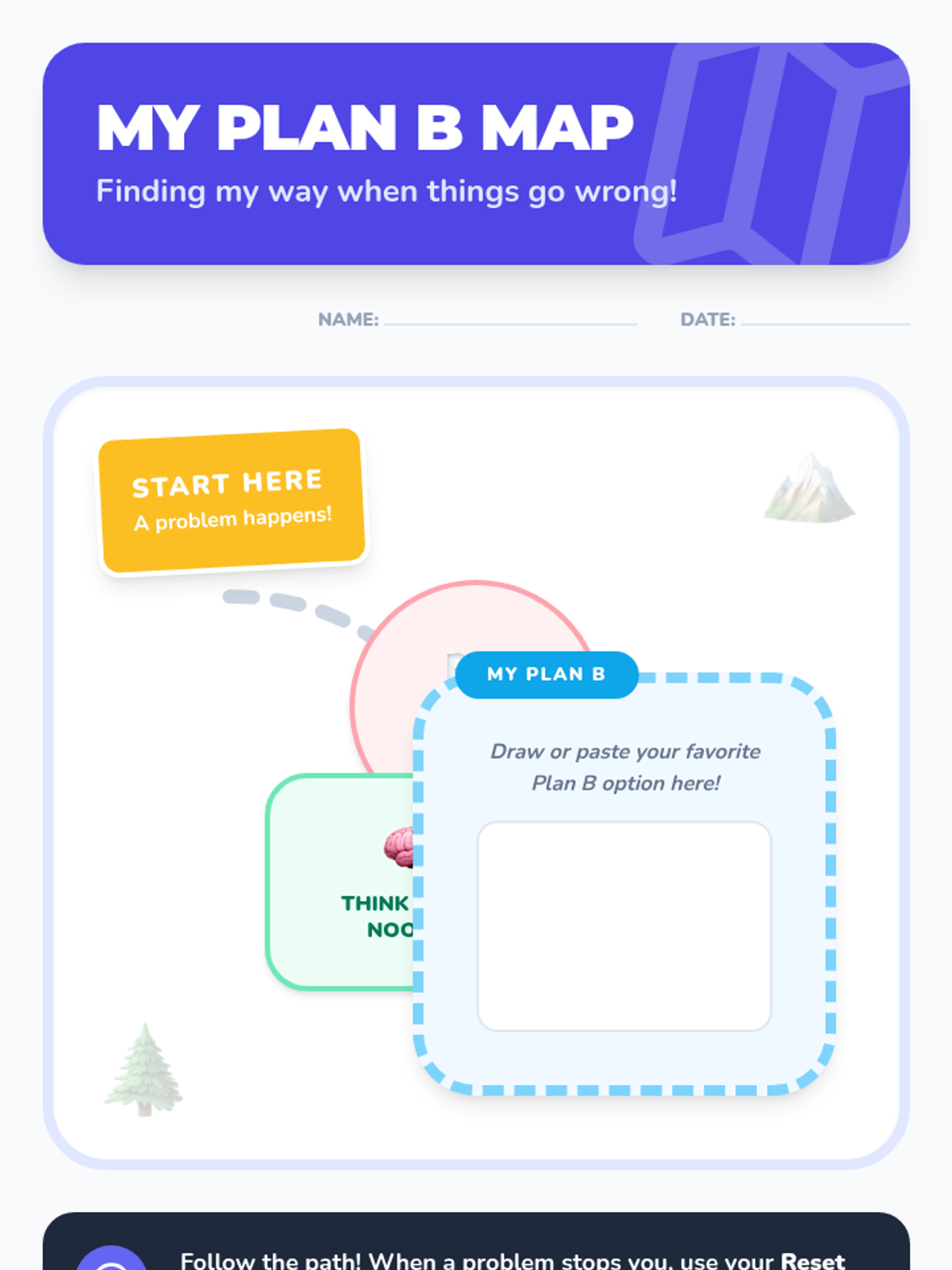
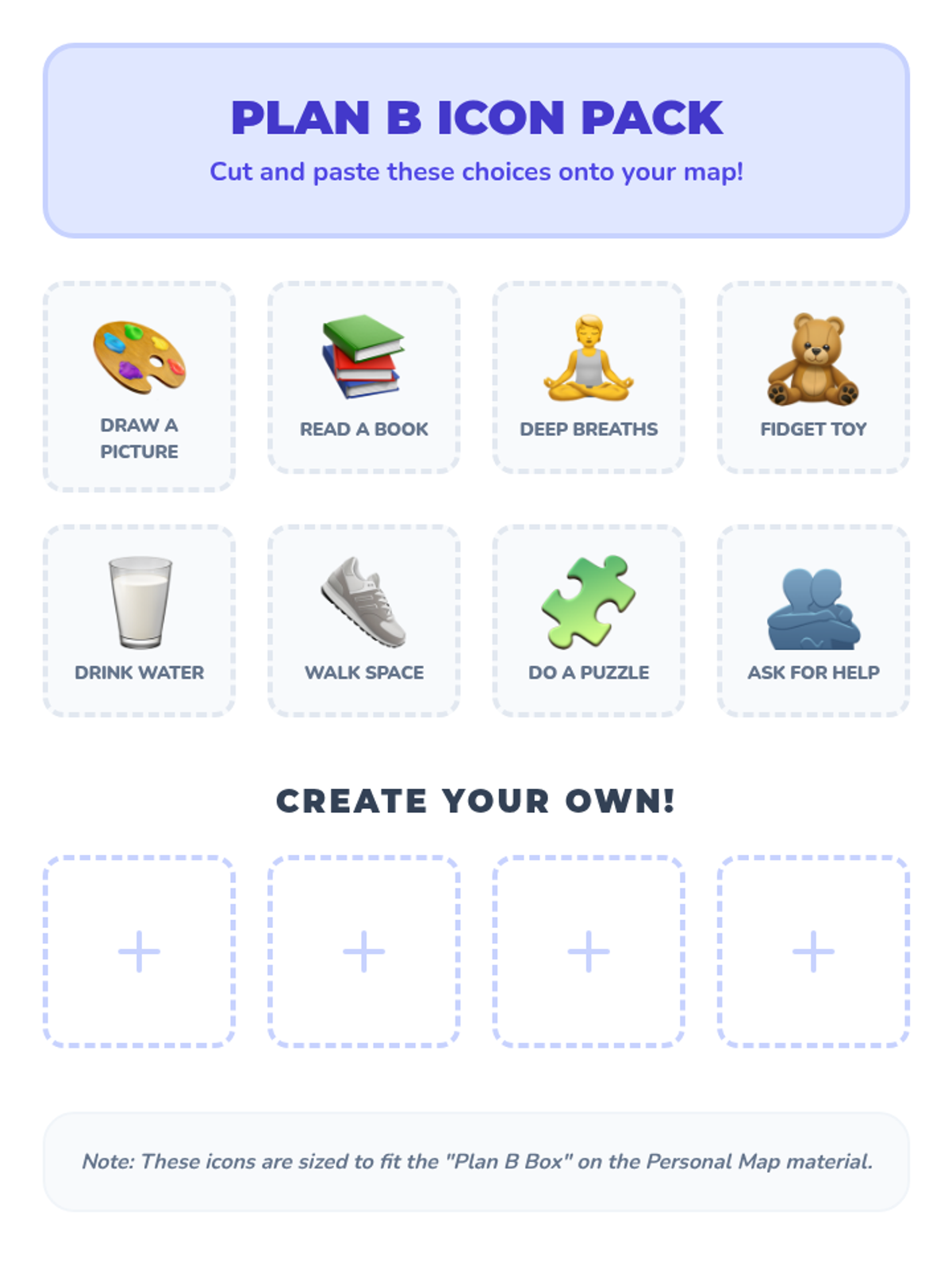
Students synthesize their learning by creating a personalized visual map of 'Plan B' options for common classroom obstacles.
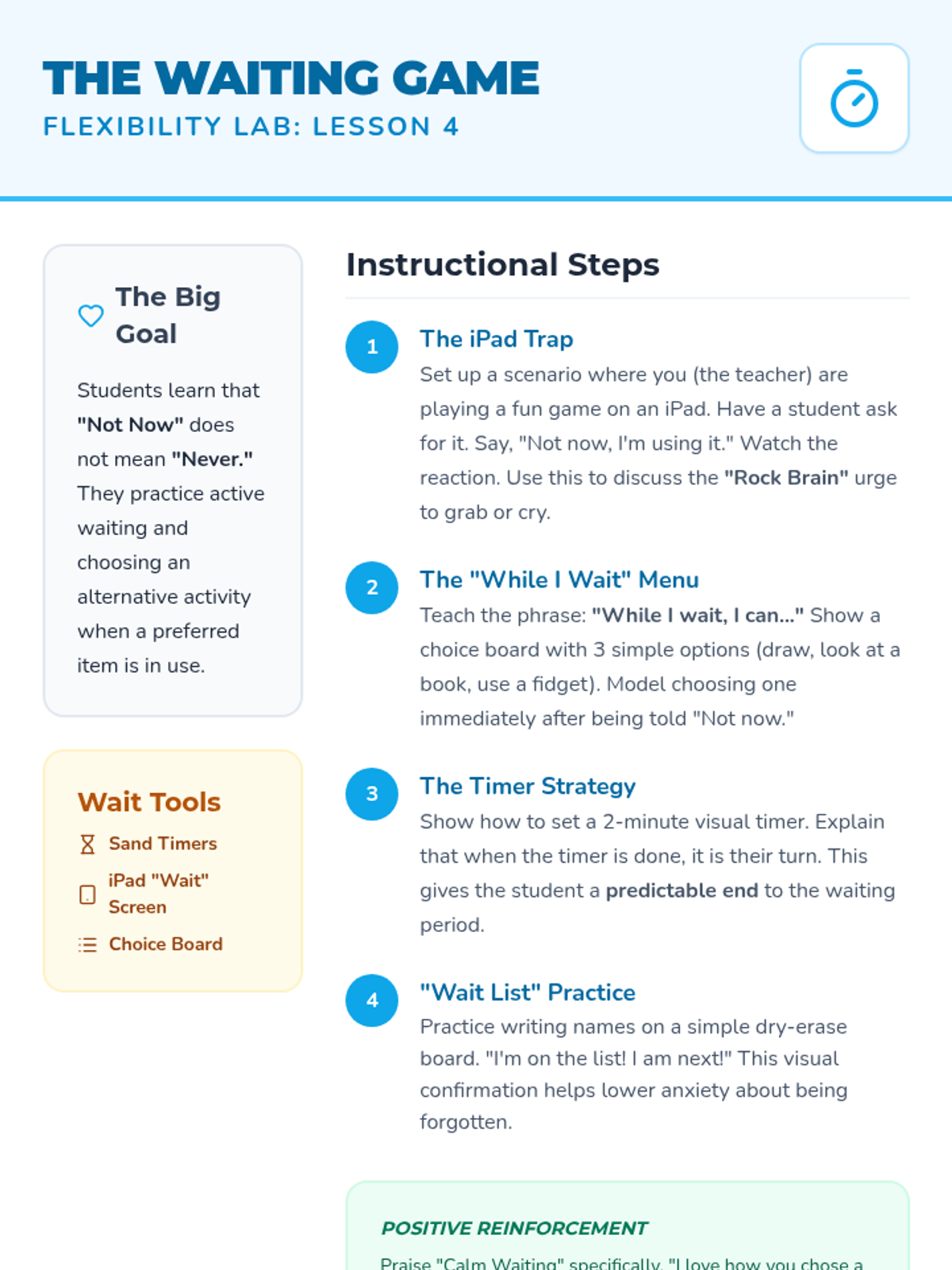
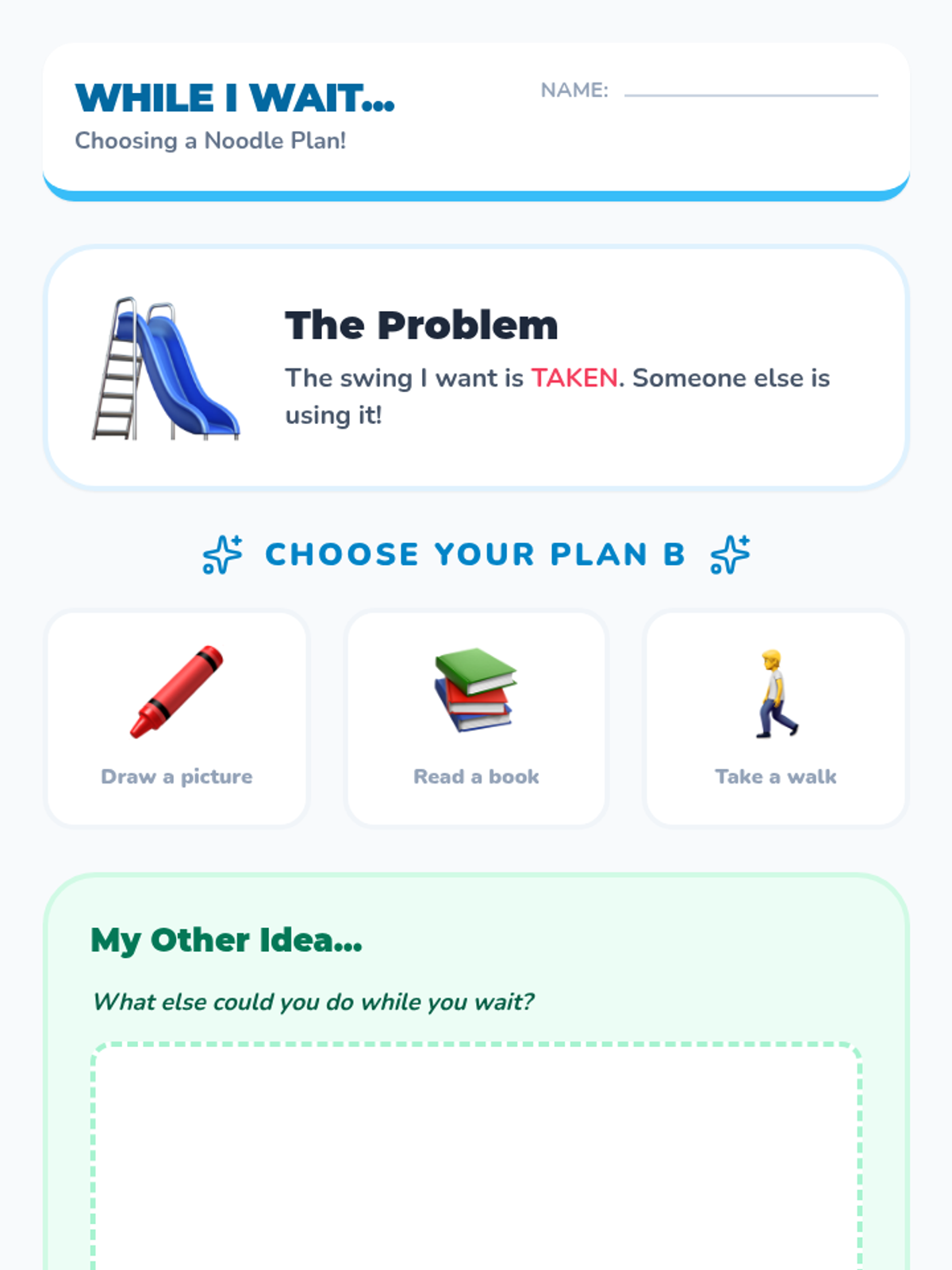
Focuses on the skill of 'waiting' and choosing alternatives when preferred items are unavailable.
Students practice managing anxiety during schedule shifts by using visual aids and moving to a 'Plan B' activity.
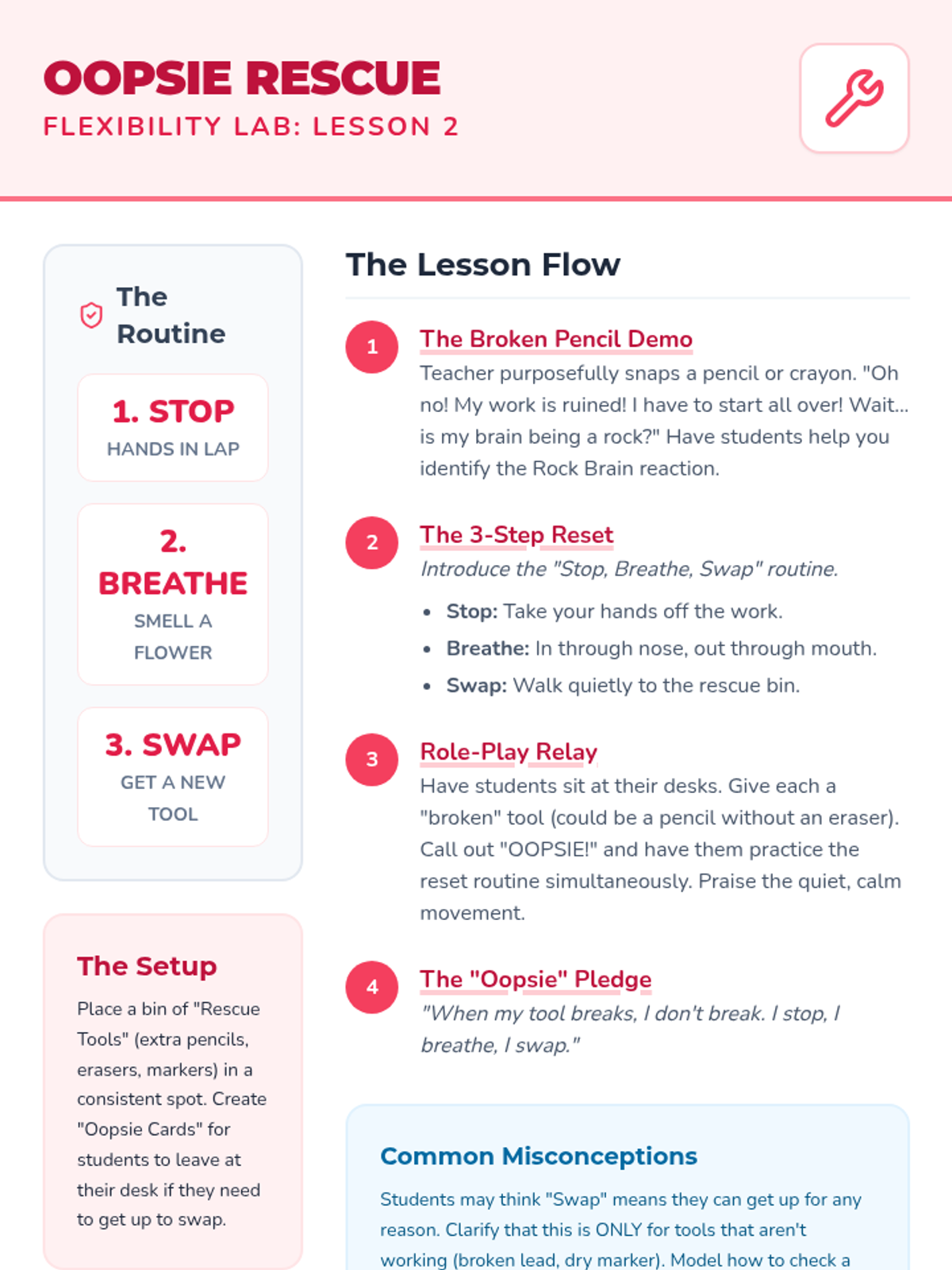
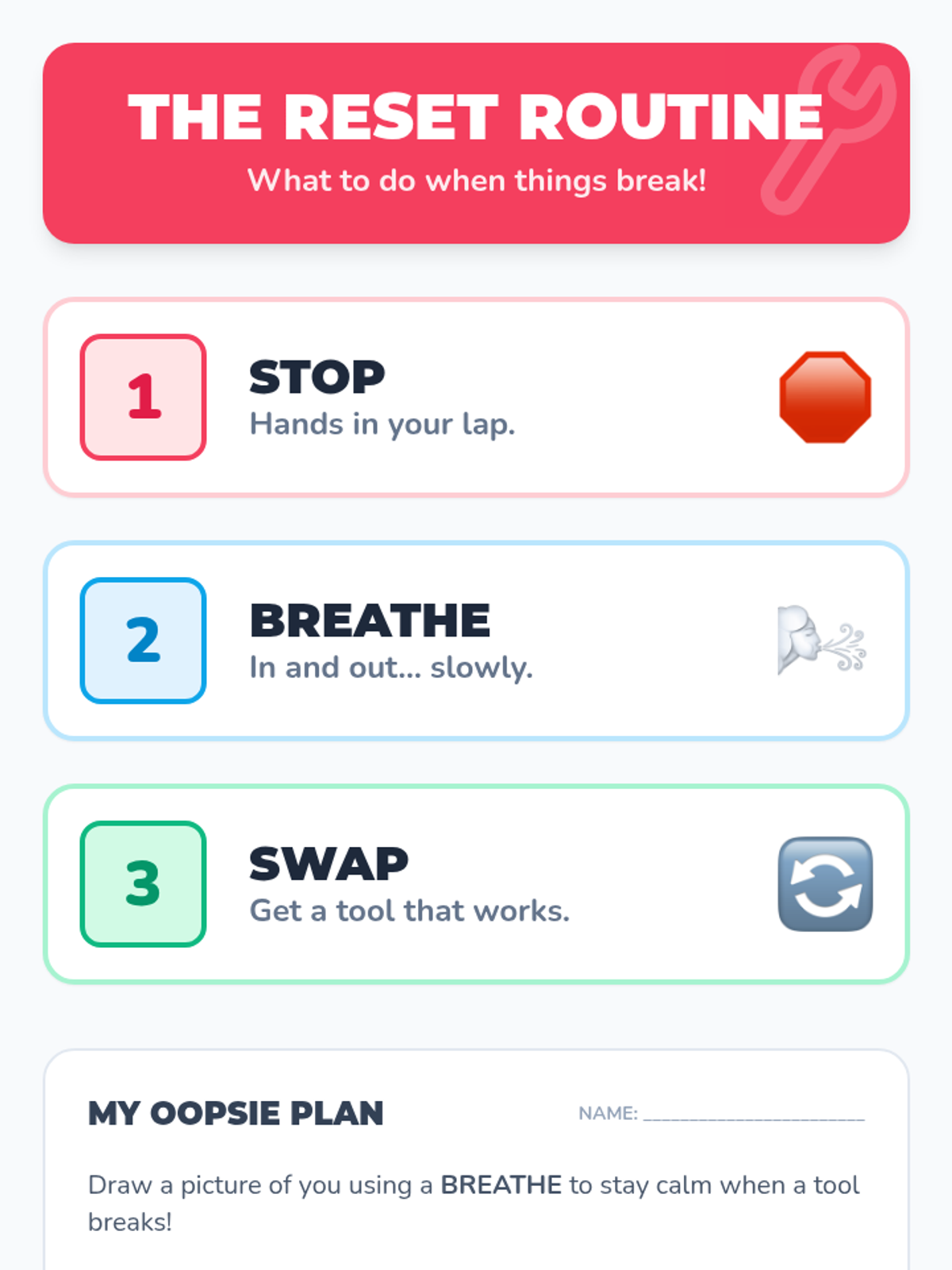
Students role-play tool breakage and practice a three-step reset routine: Stop, Breathe, Swap to maintain emotional regulation.
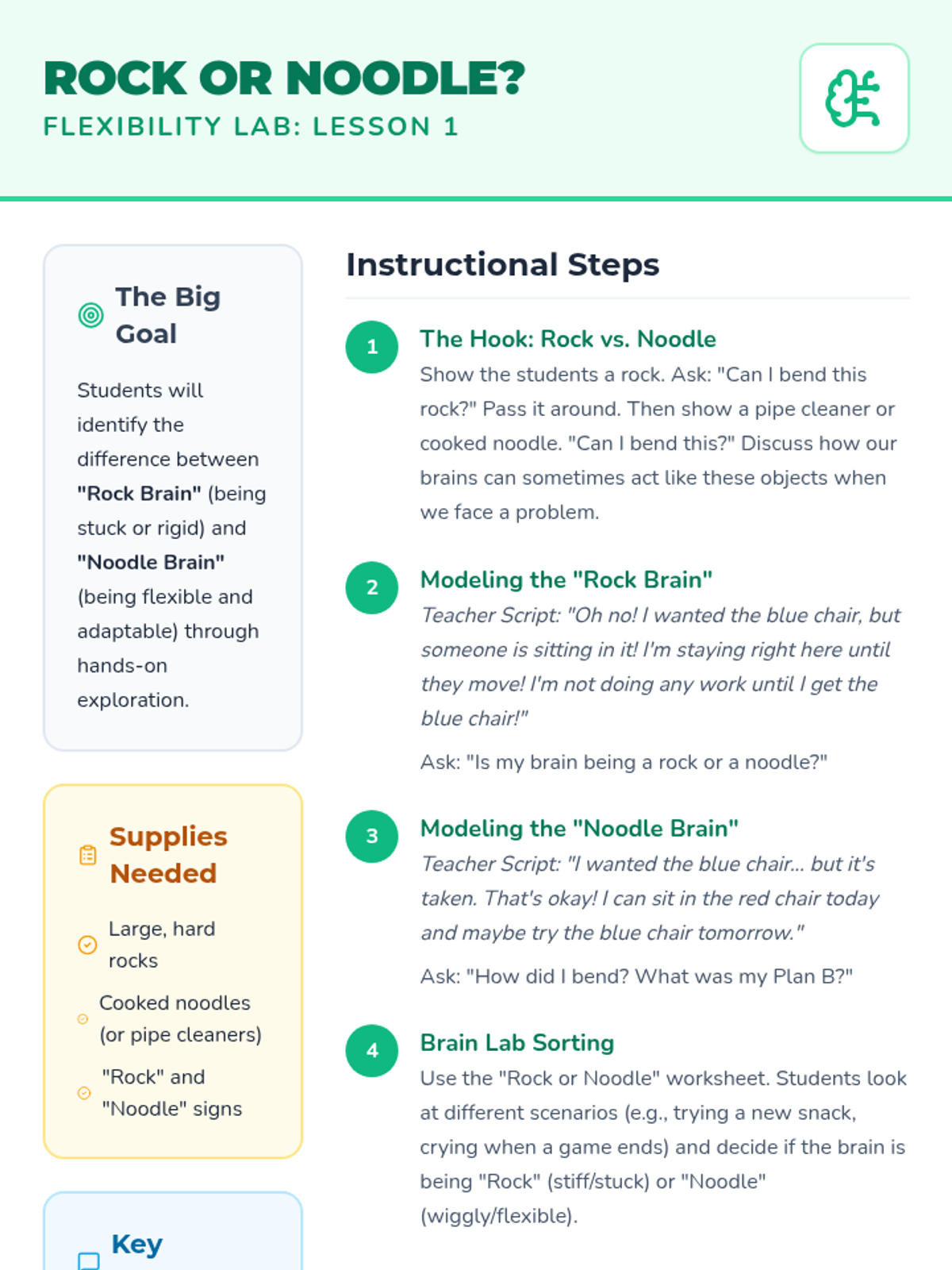
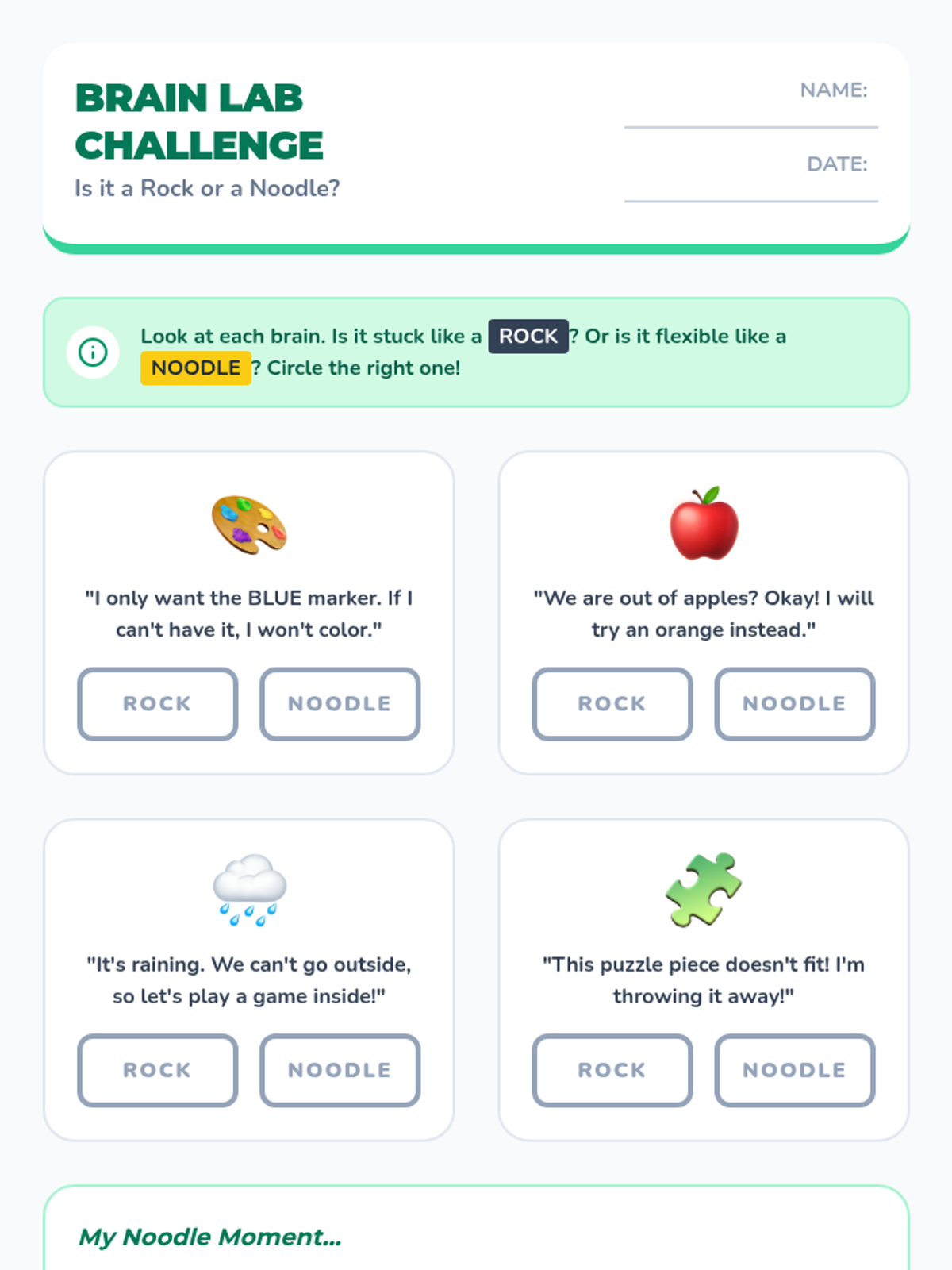
Students explore the difference between 'rock brain' (stuck) and 'noodle brain' (flexible) using physical objects and metaphors. They establish the core vocabulary for the unit.
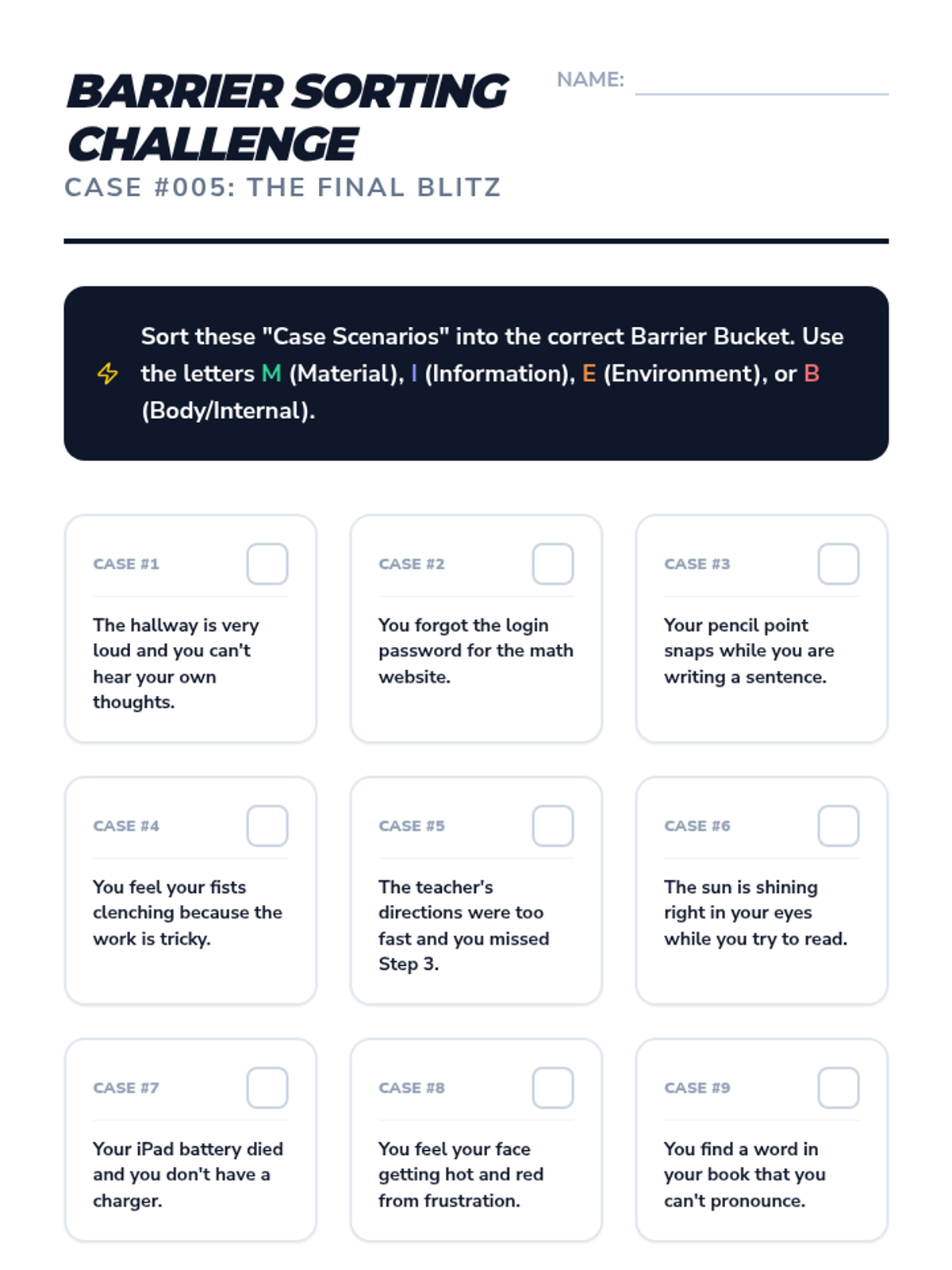
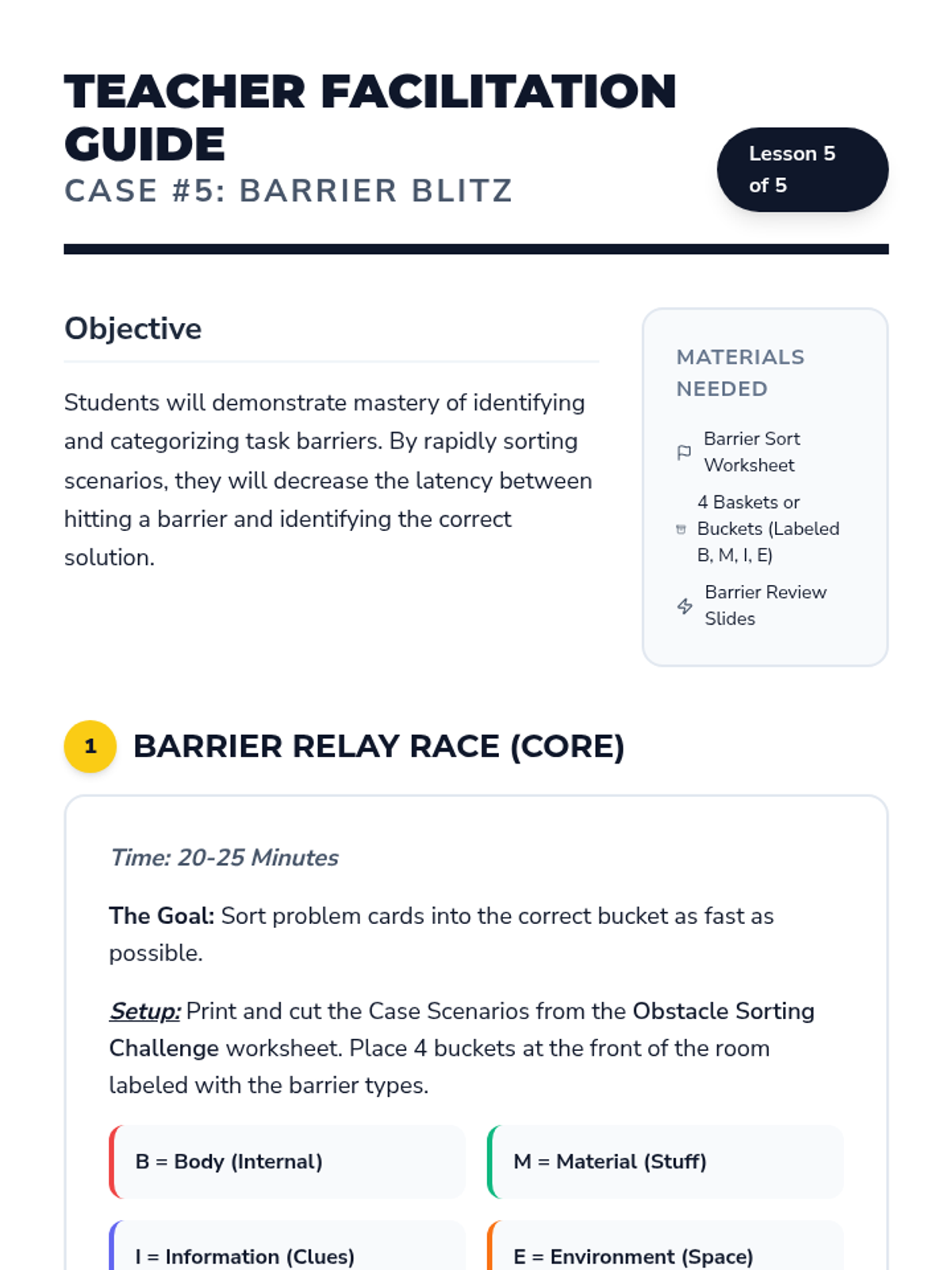
A culminating lesson where students rapidly sort various scenarios into barrier categories to reduce the time between hitting a wall and identifying the solution.
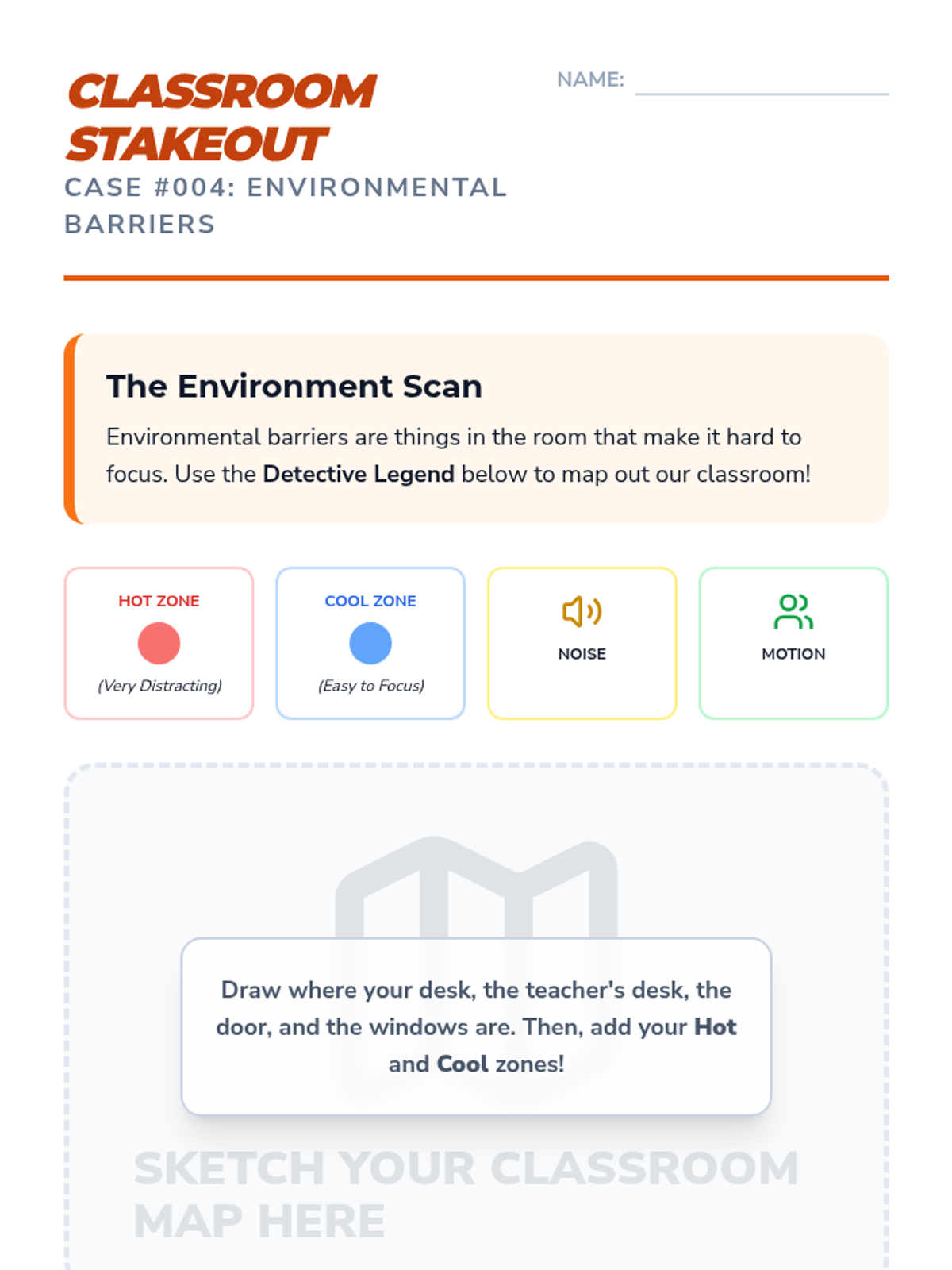
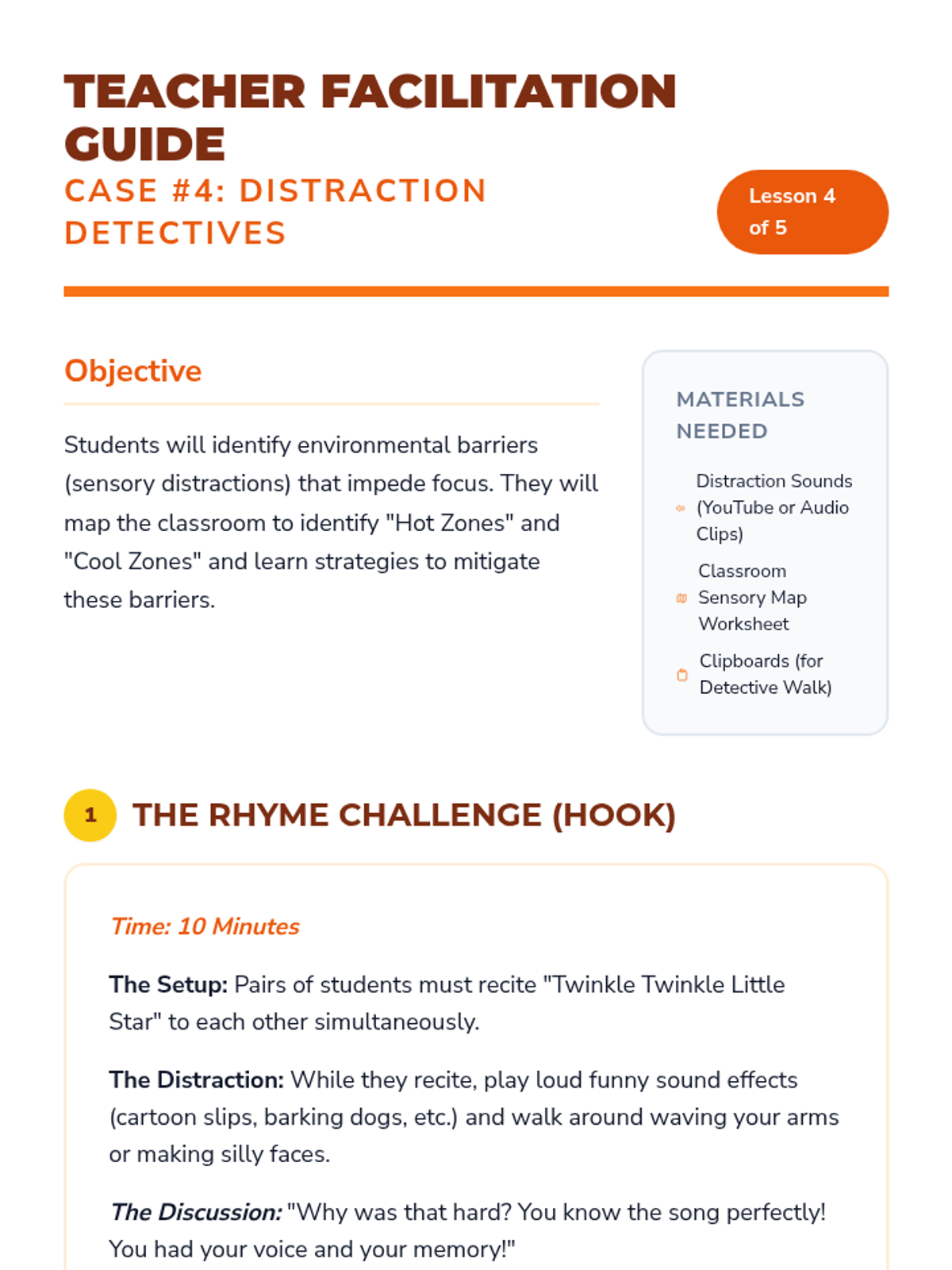
Investigates sensory and environmental barriers like noise or clutter, conducting a 'detective walk' to identify classroom distractions.
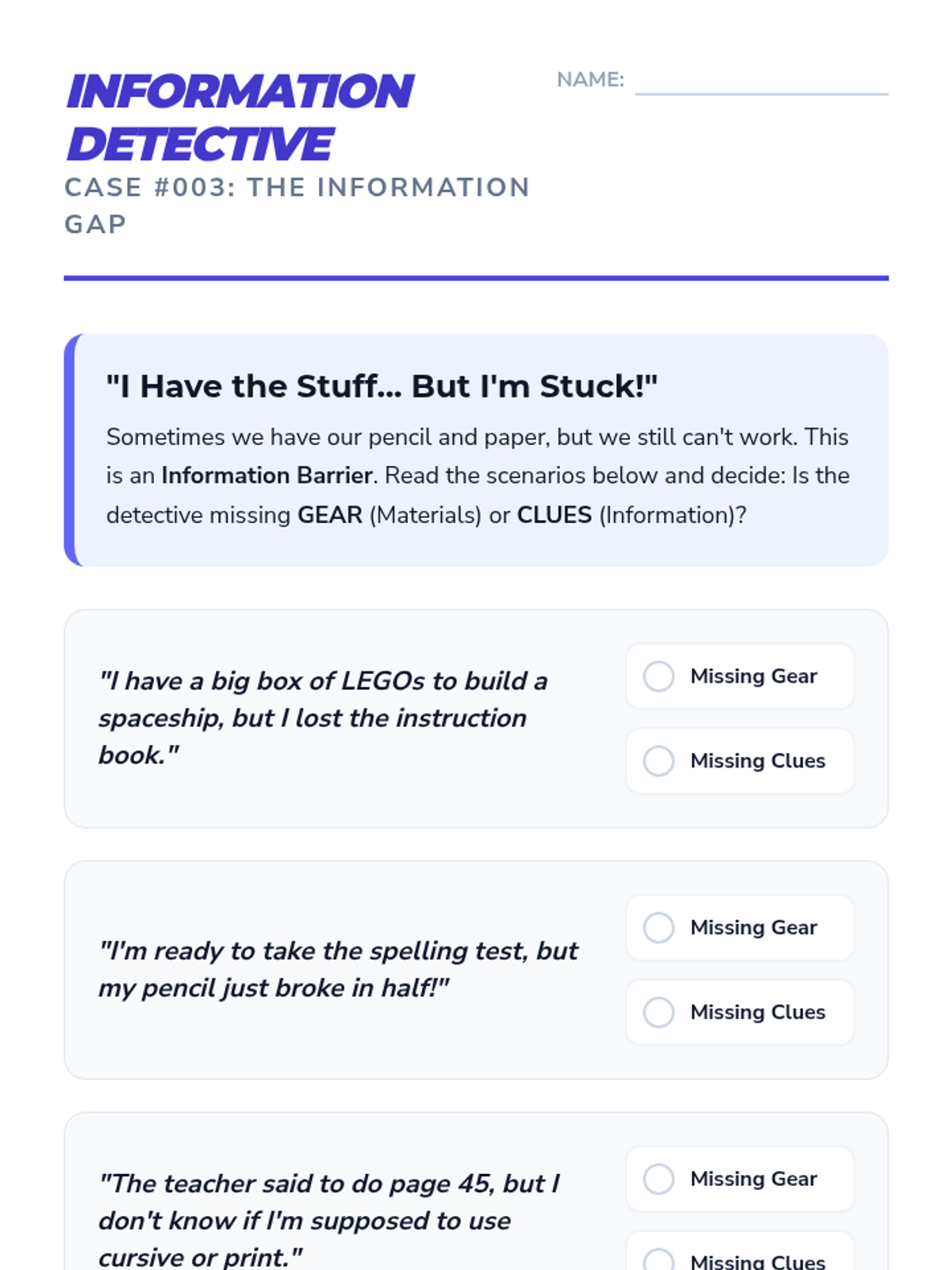
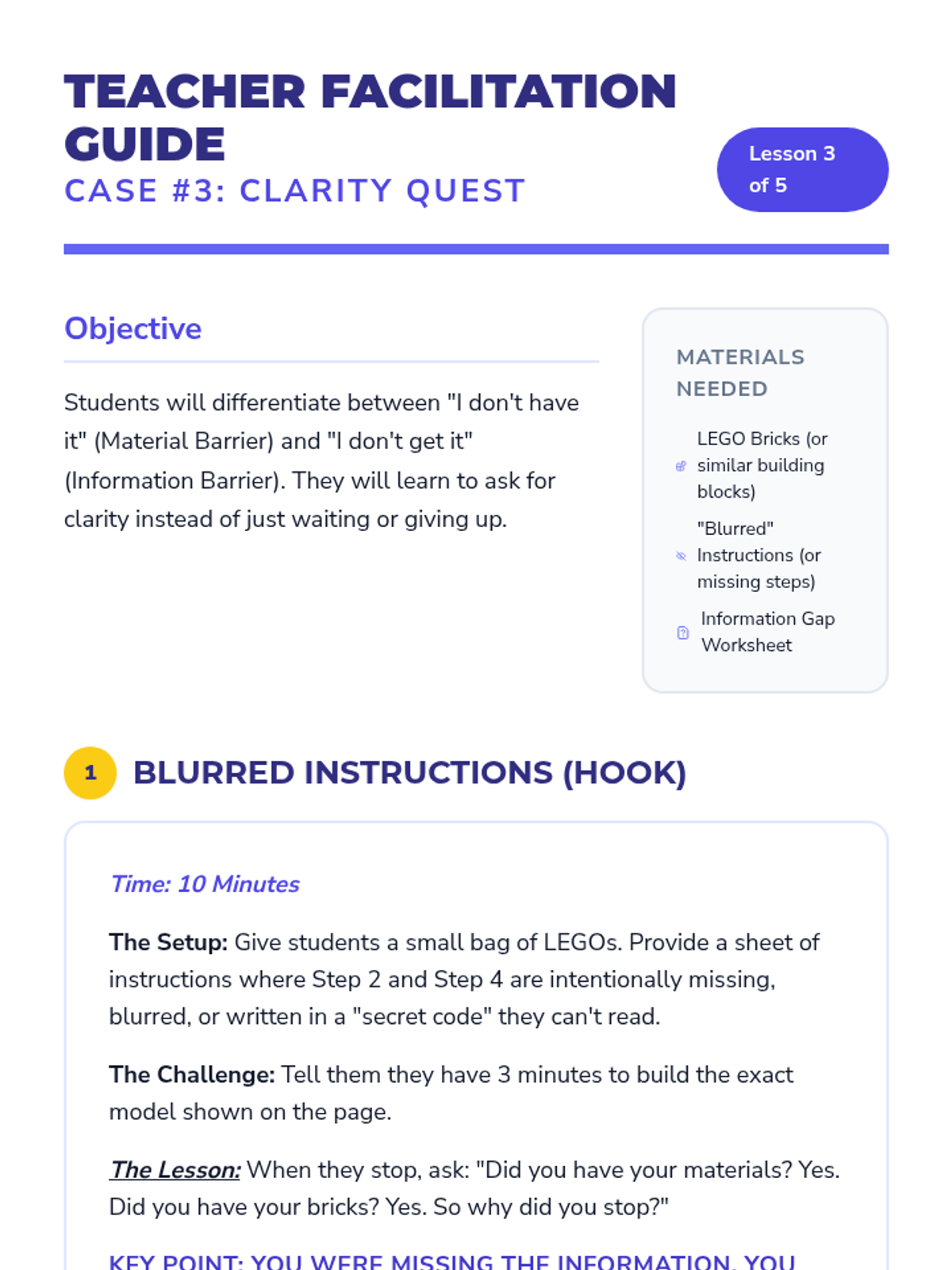
Teaches students to recognize when they are stuck due to a lack of clarity or understanding, differentiating between 'I don't have it' and 'I don't get it.'
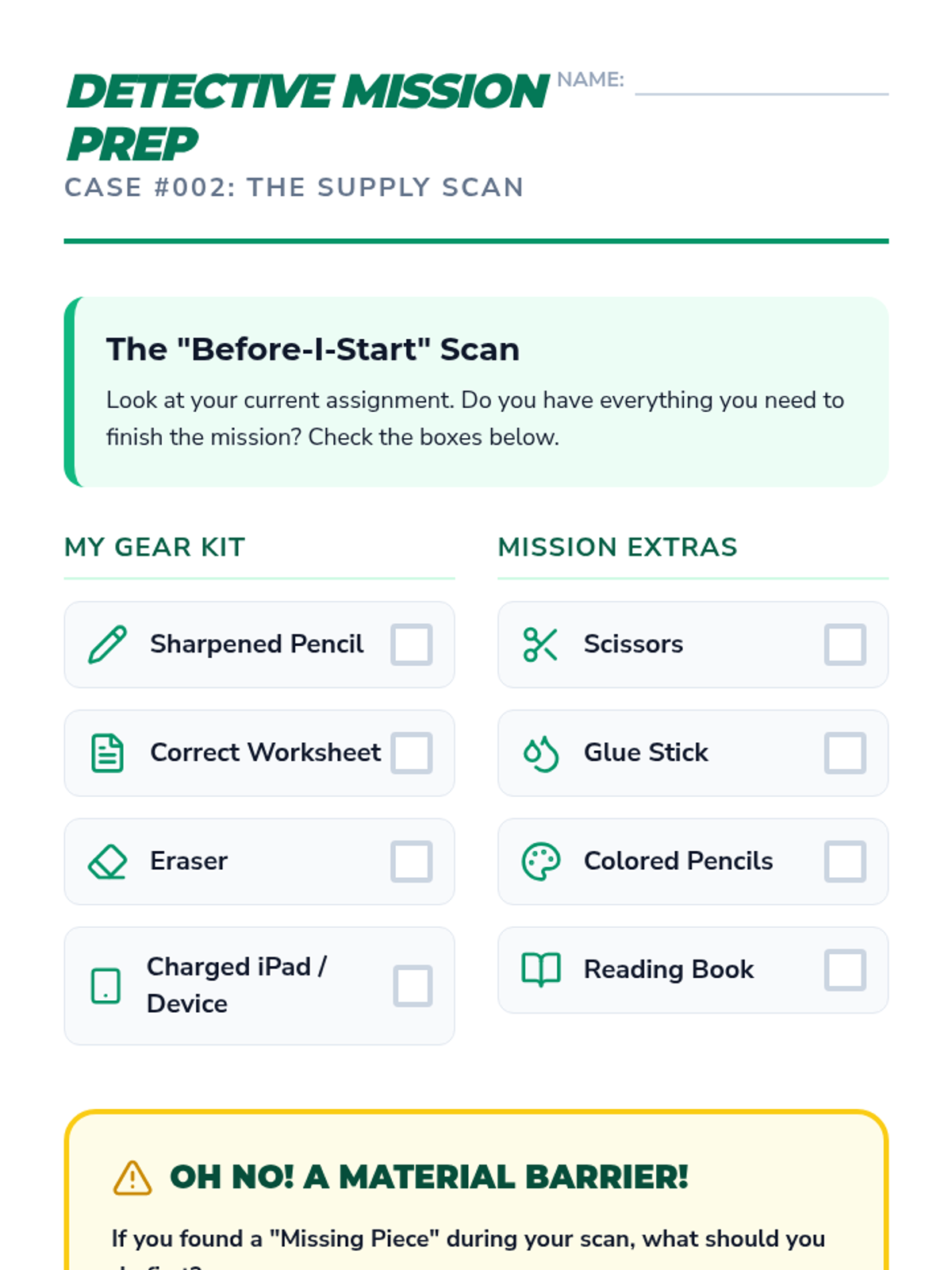
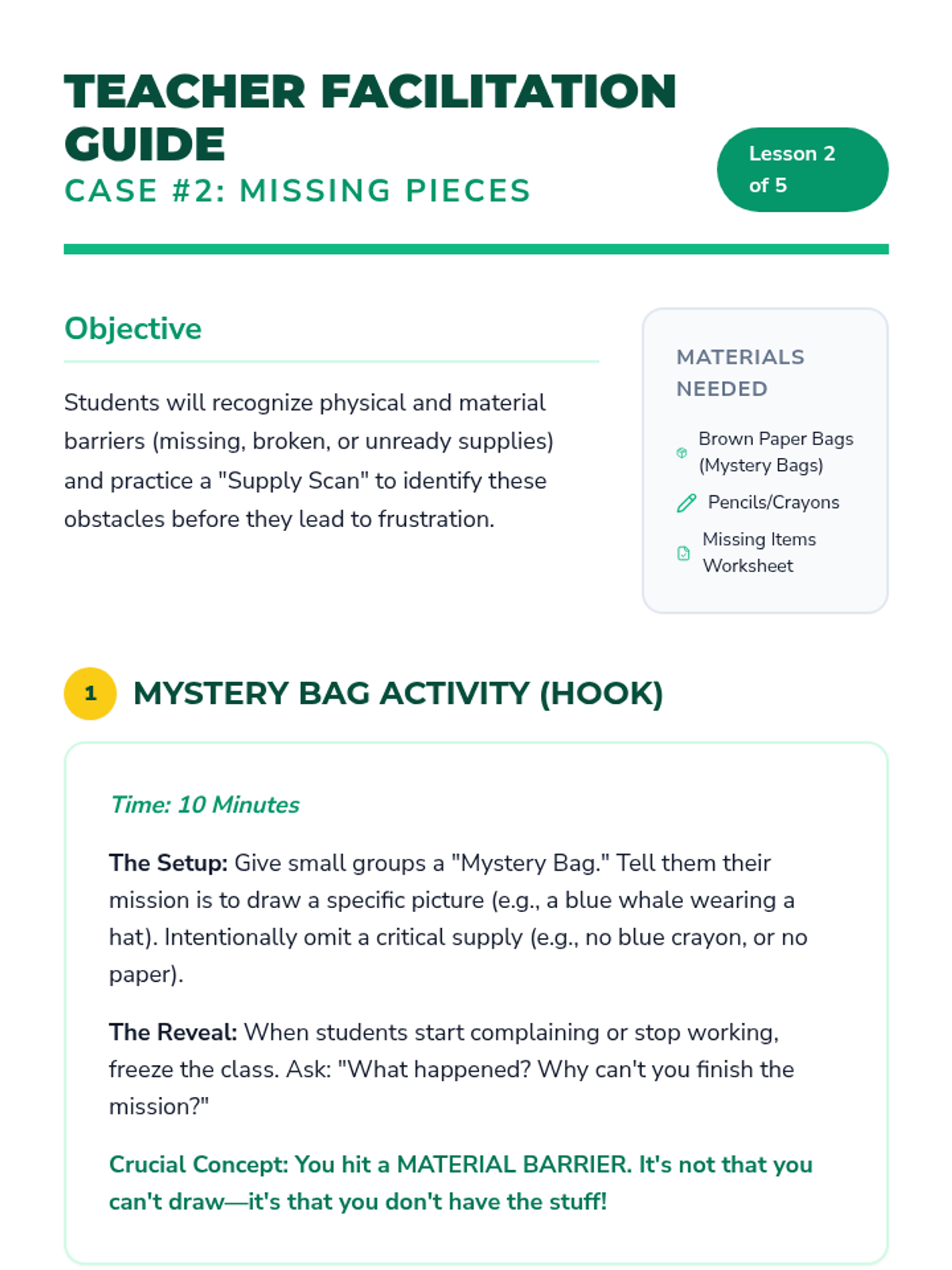
Focuses on tangible obstacles like broken tools or missing materials, teaching students to perform a 'supply scan' to identify what is physically missing.
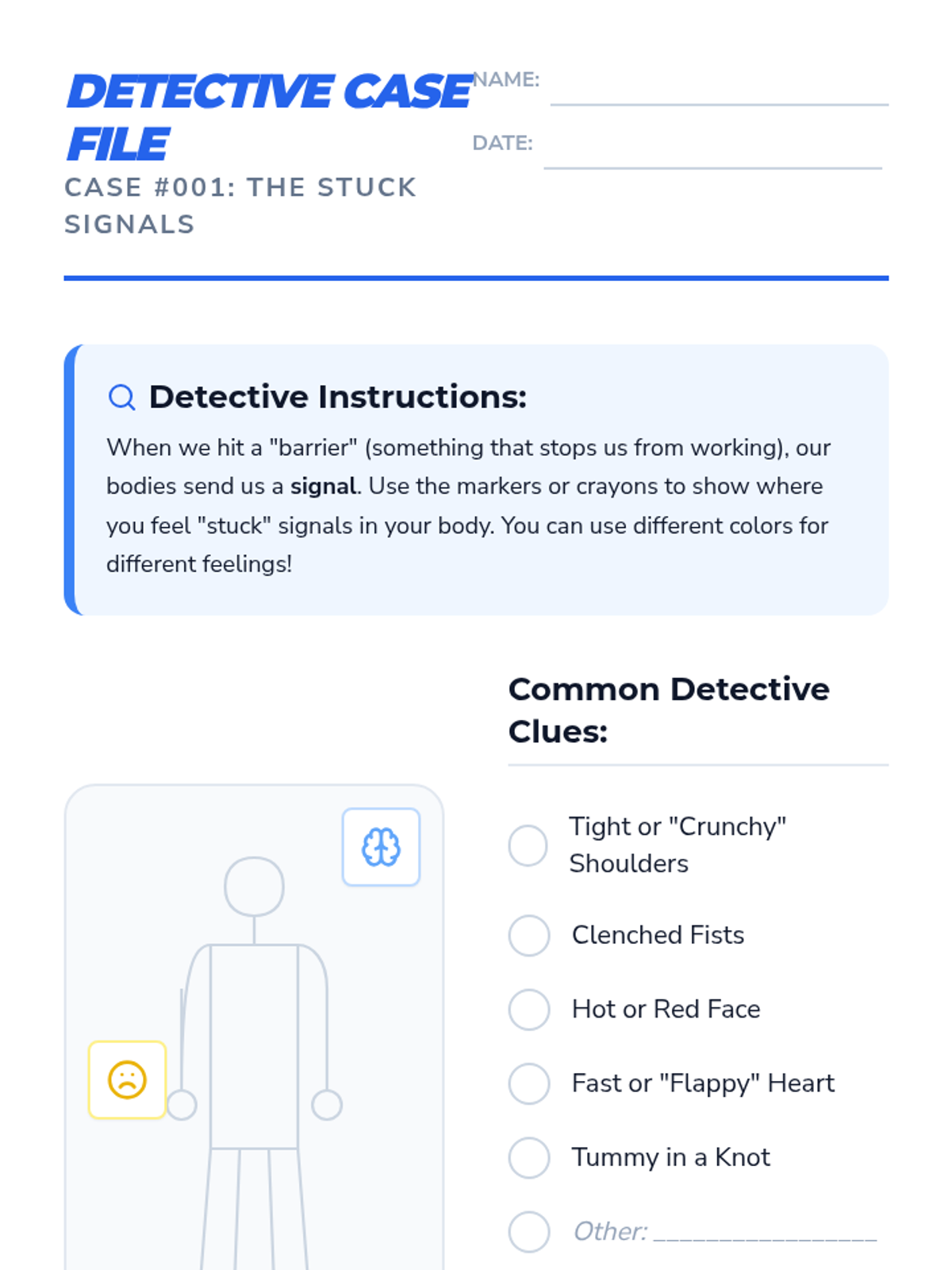
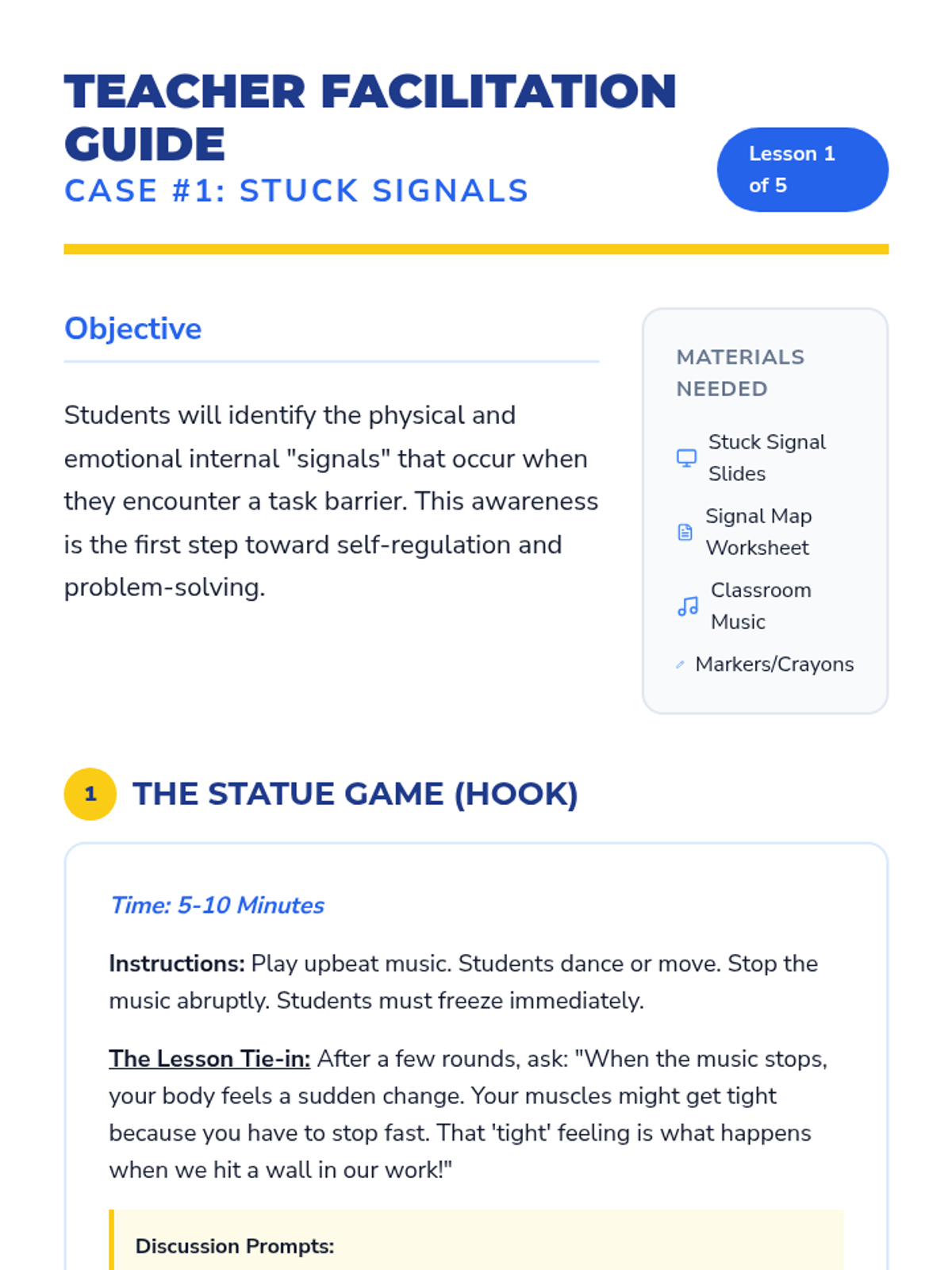
Students explore the physical and emotional sensations associated with hitting a task barrier, identifying what frustration feels like to recognize the moment they need to stop.
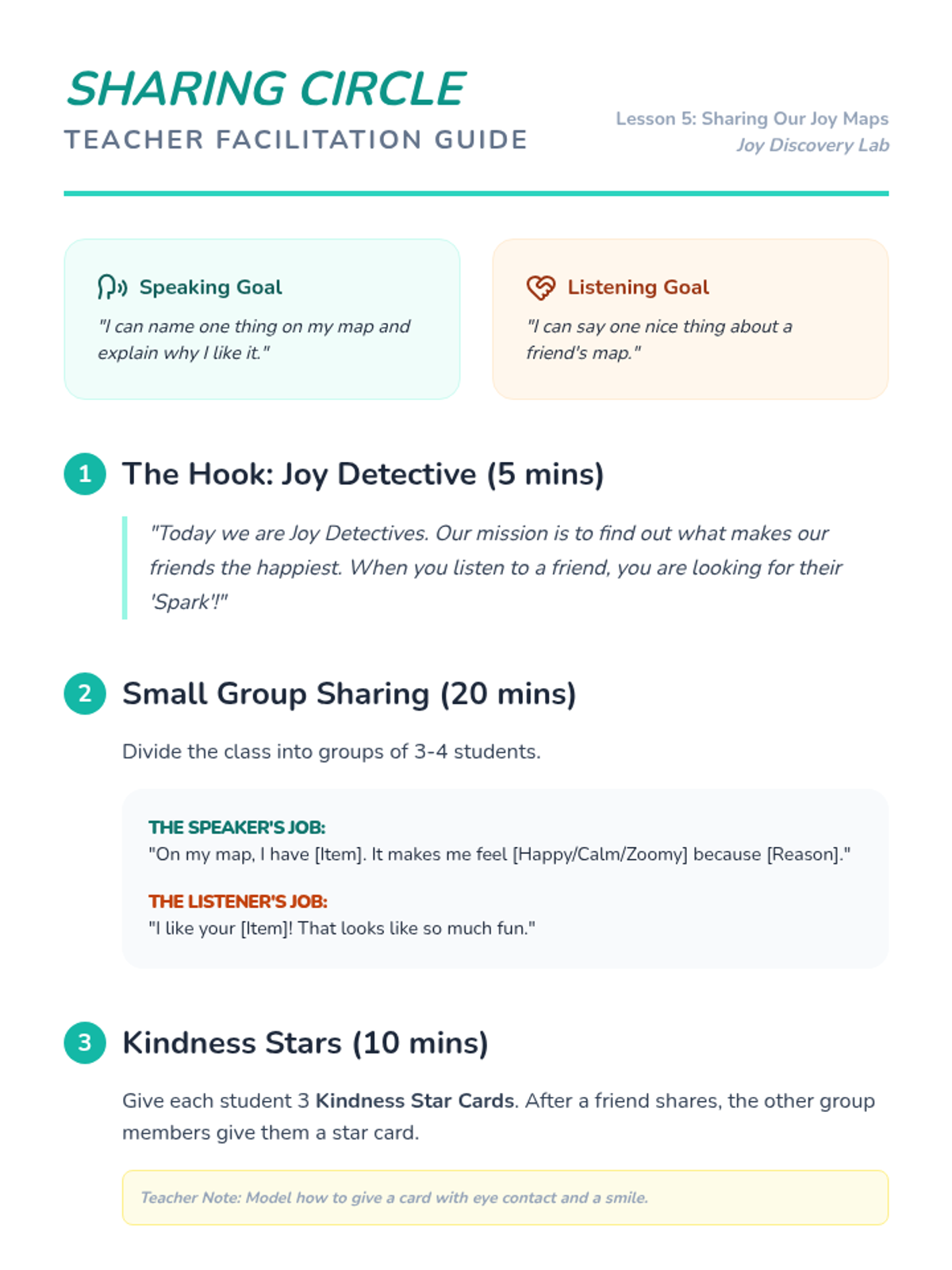
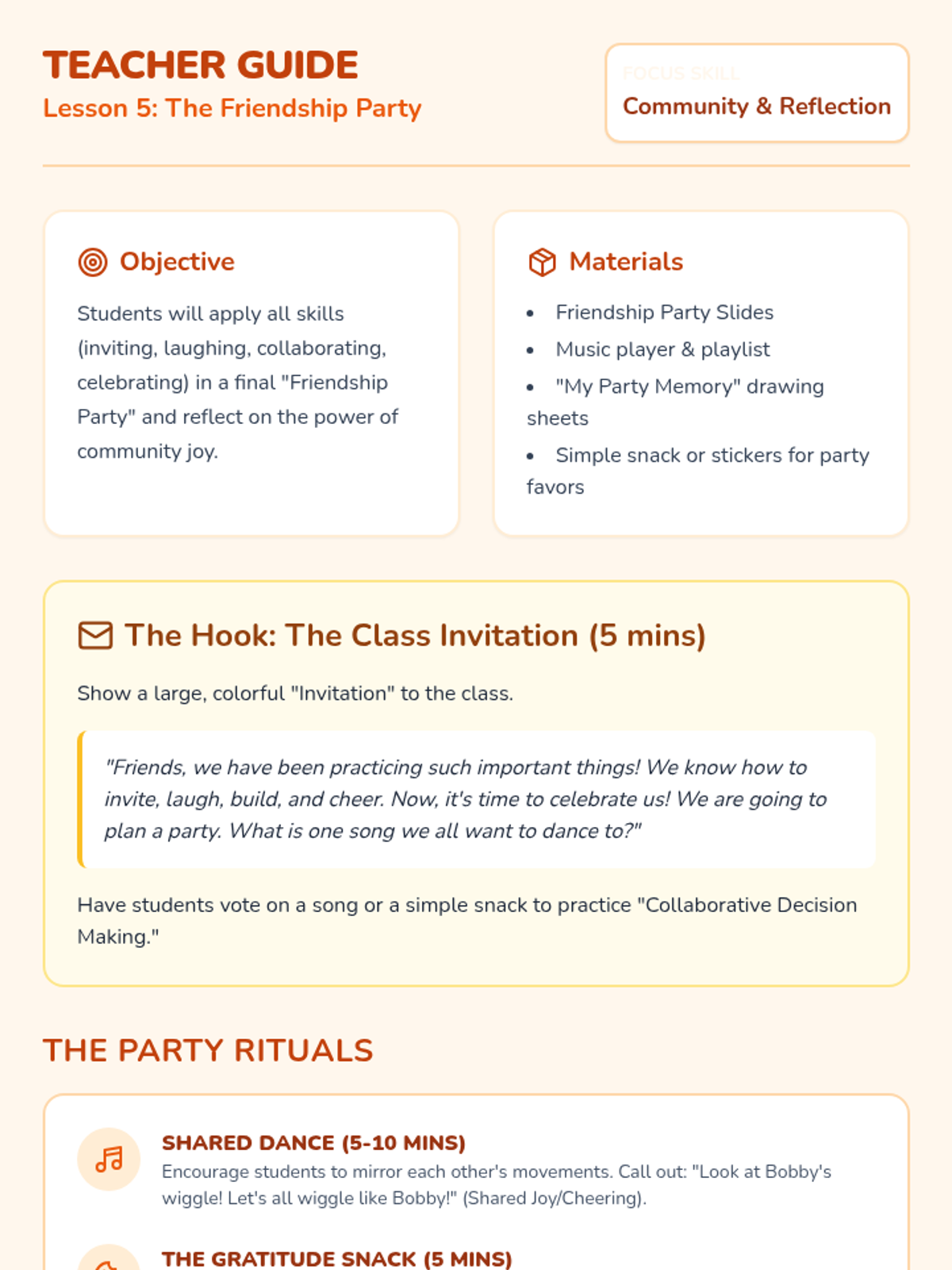
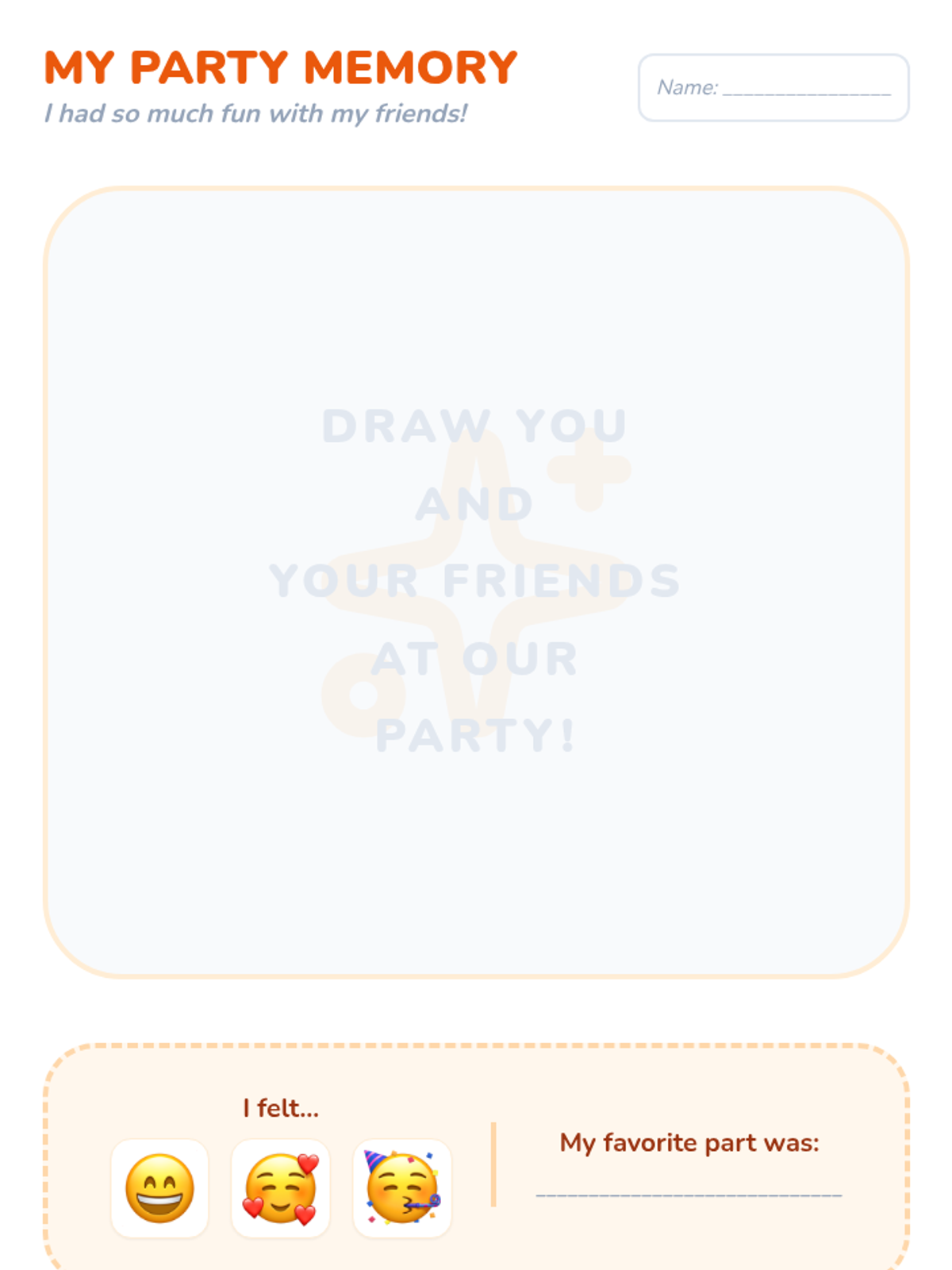
A culminating event where students plan and execute a simple shared activity (like a dance party or snack share). They reflect on how doing things together feels different than doing them alone.
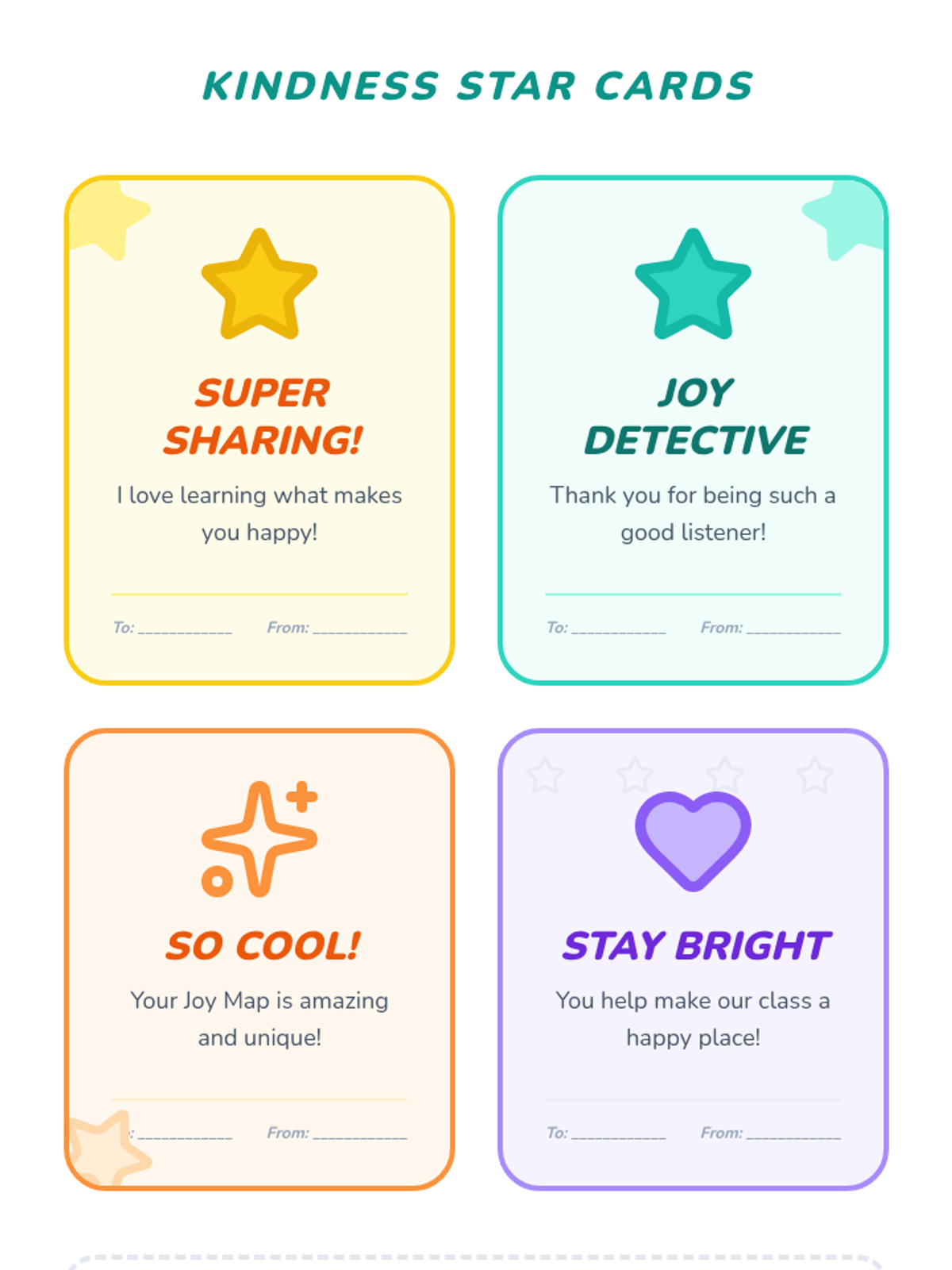
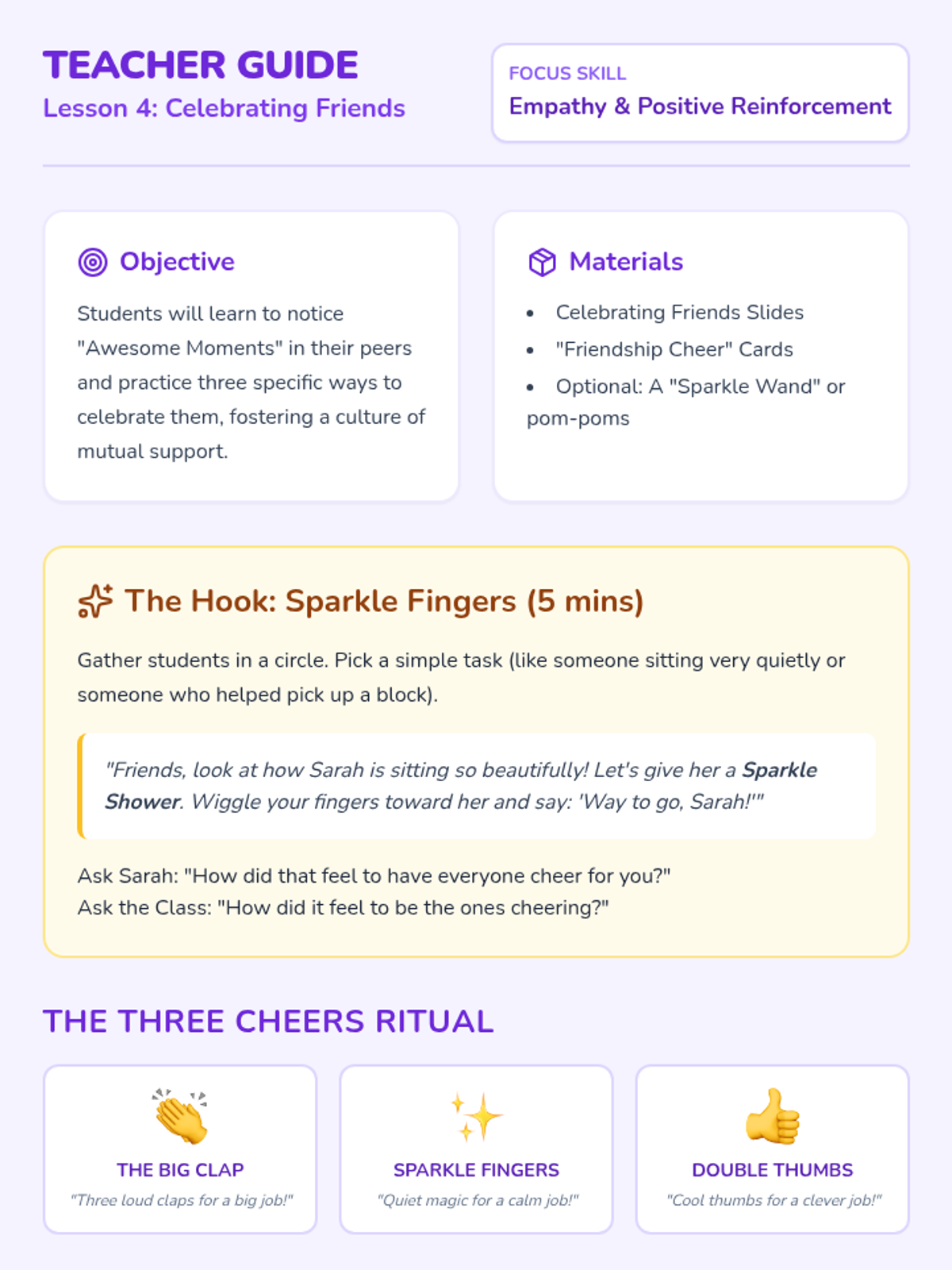
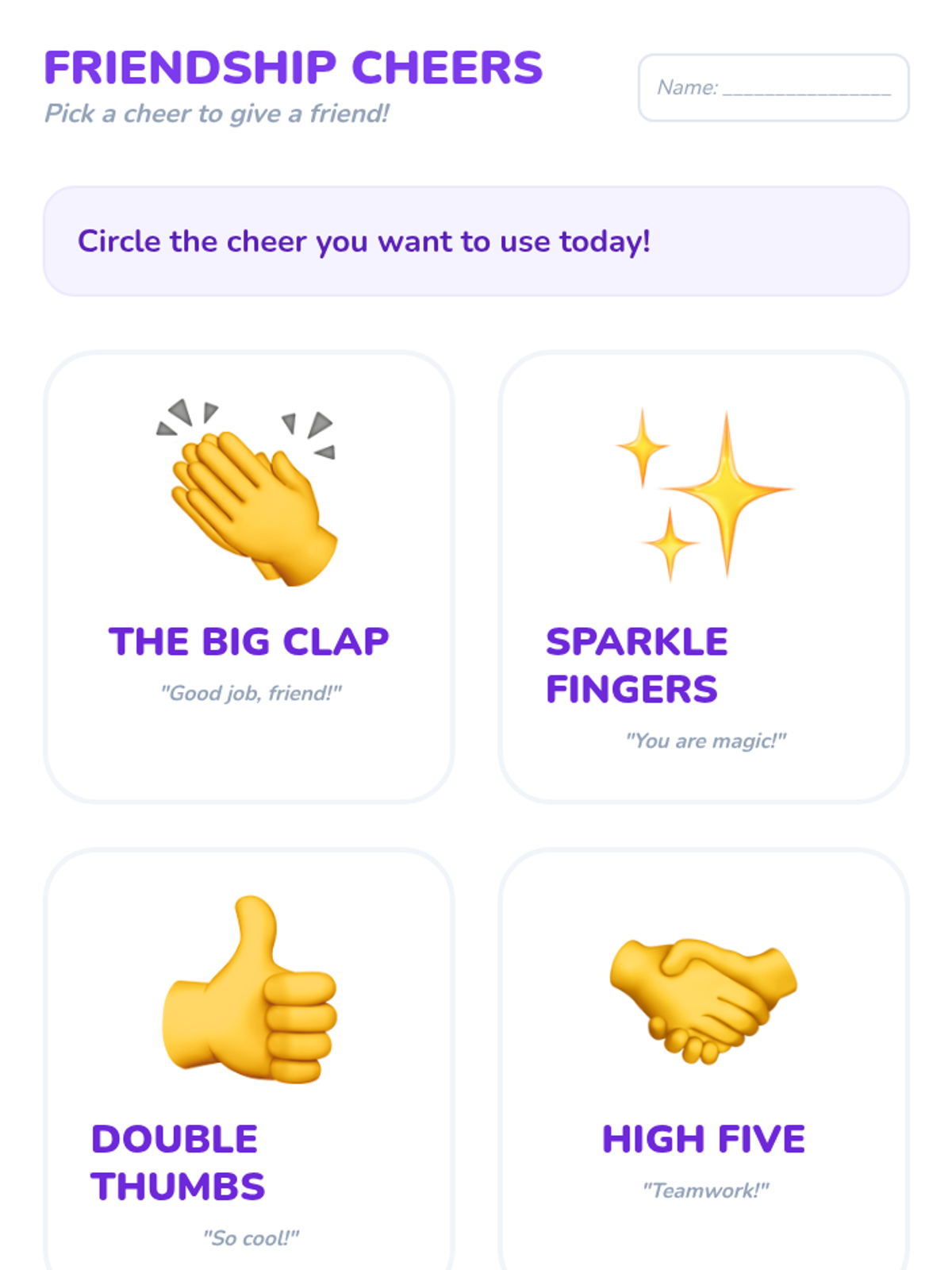
Students learn to identify when a friend does something good and how to celebrate them (clapping, cheering). This shifts focus from self-gratification to finding joy in others' success.
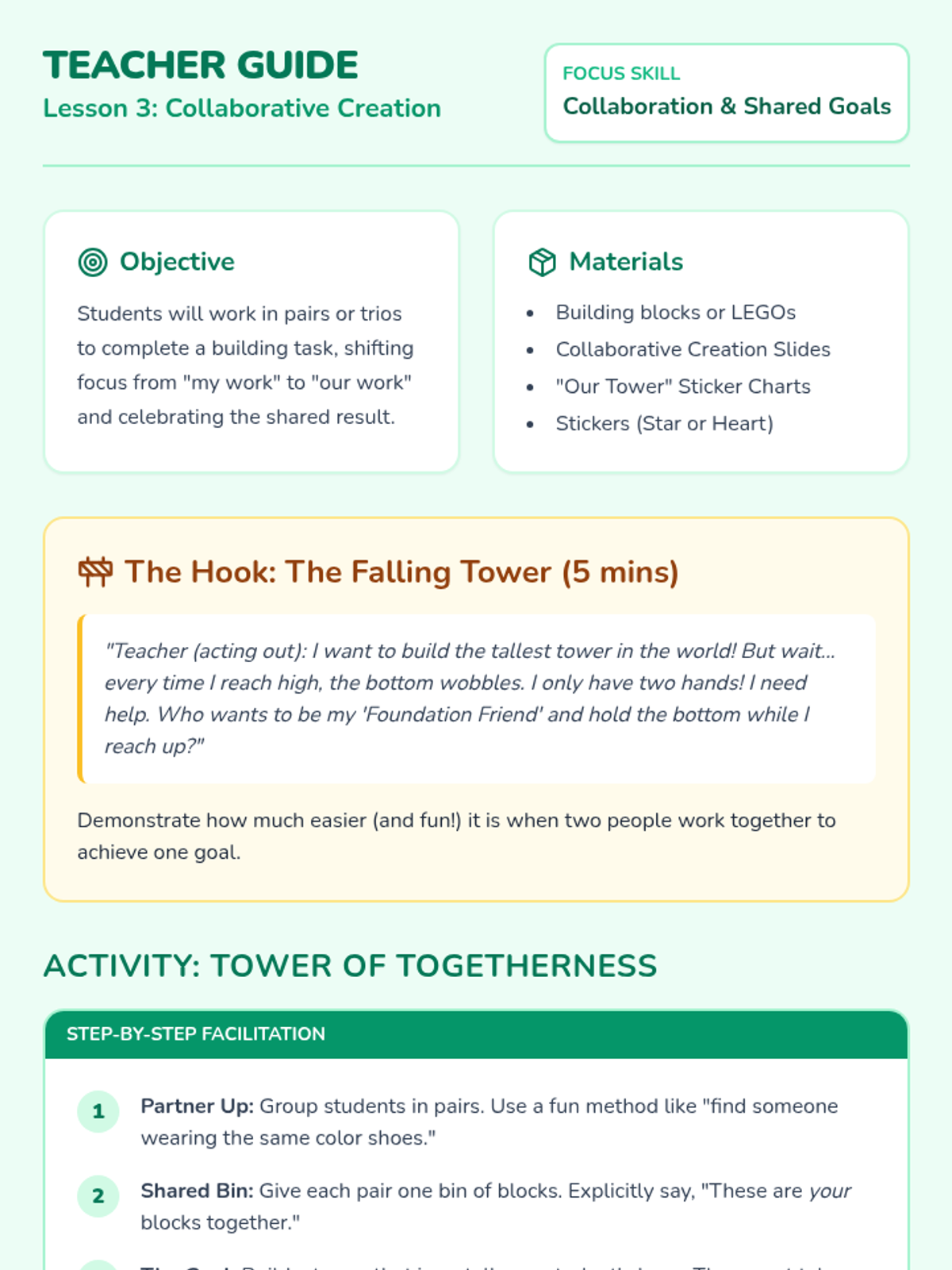
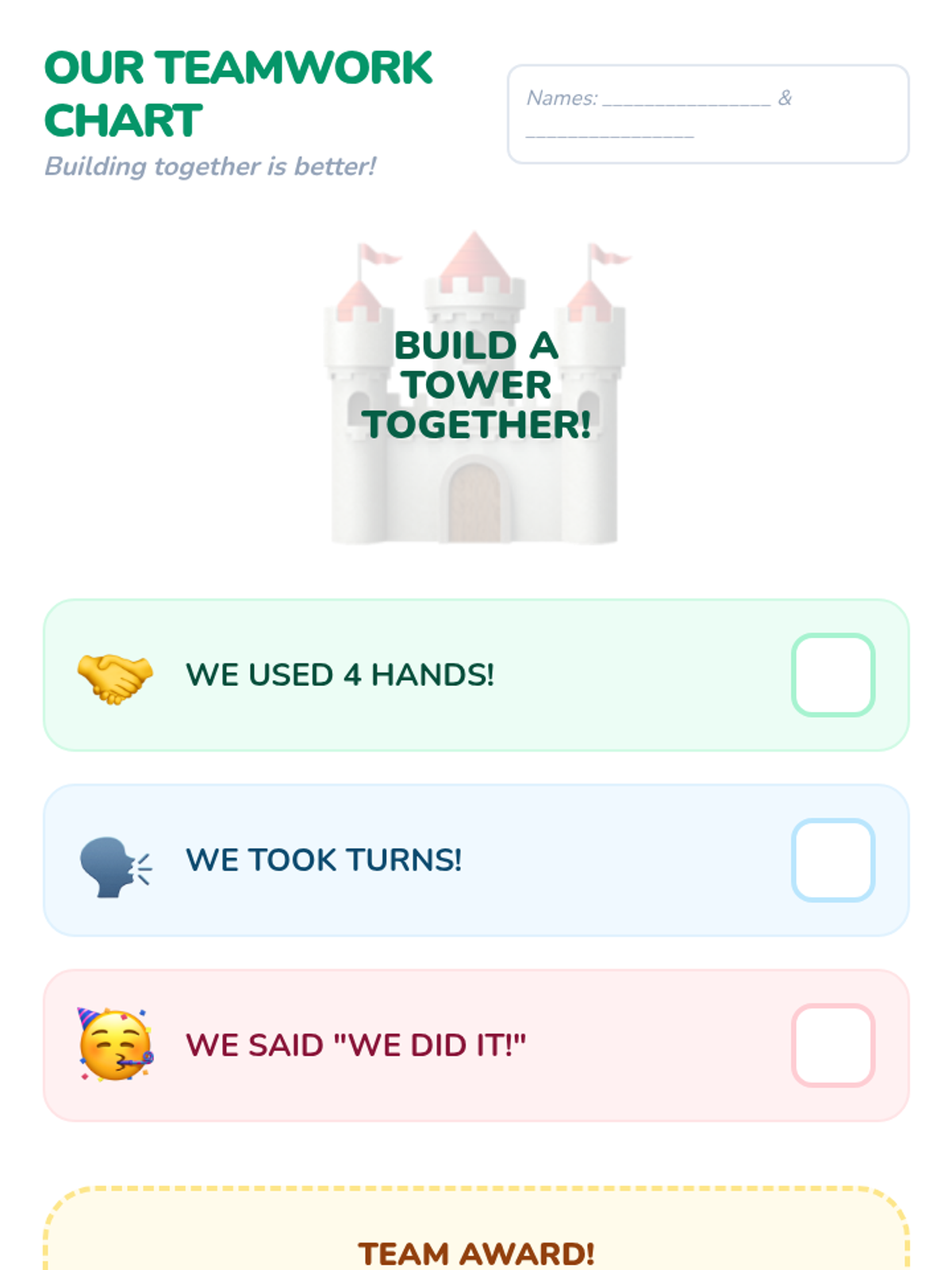
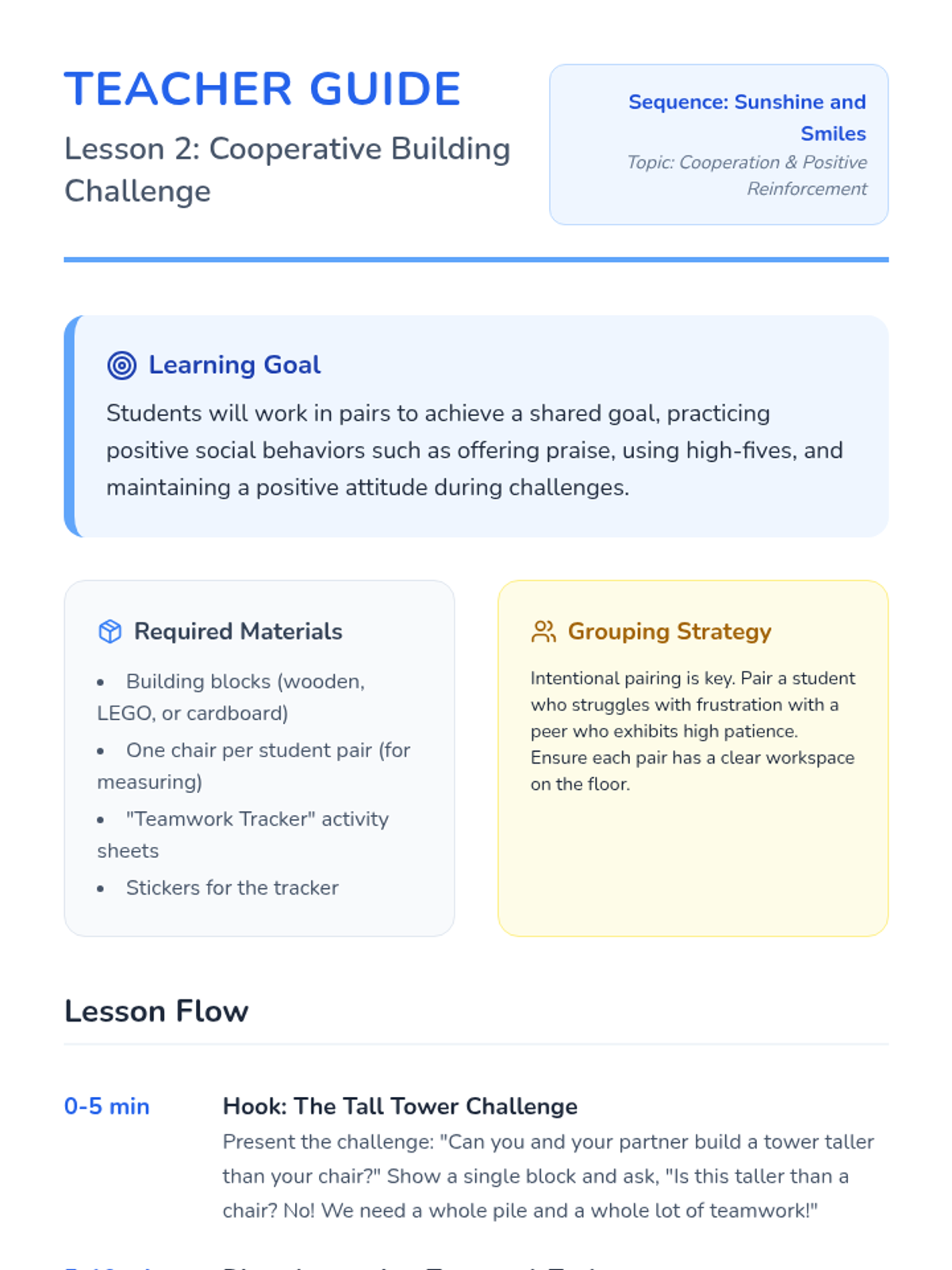
Small groups work together to build something (block tower, art piece). The focus is on the positive feeling of achieving a goal together rather than the final product.
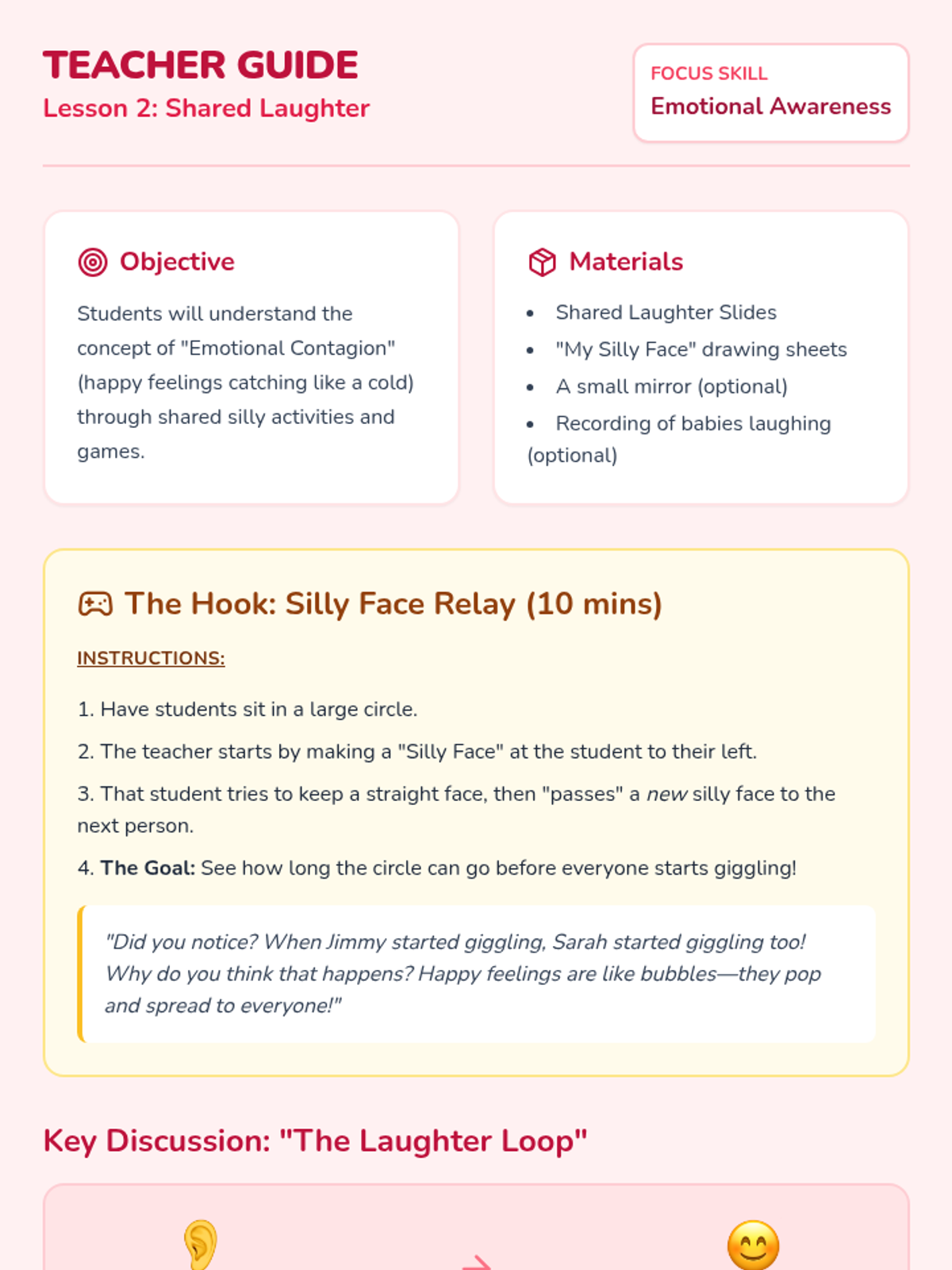
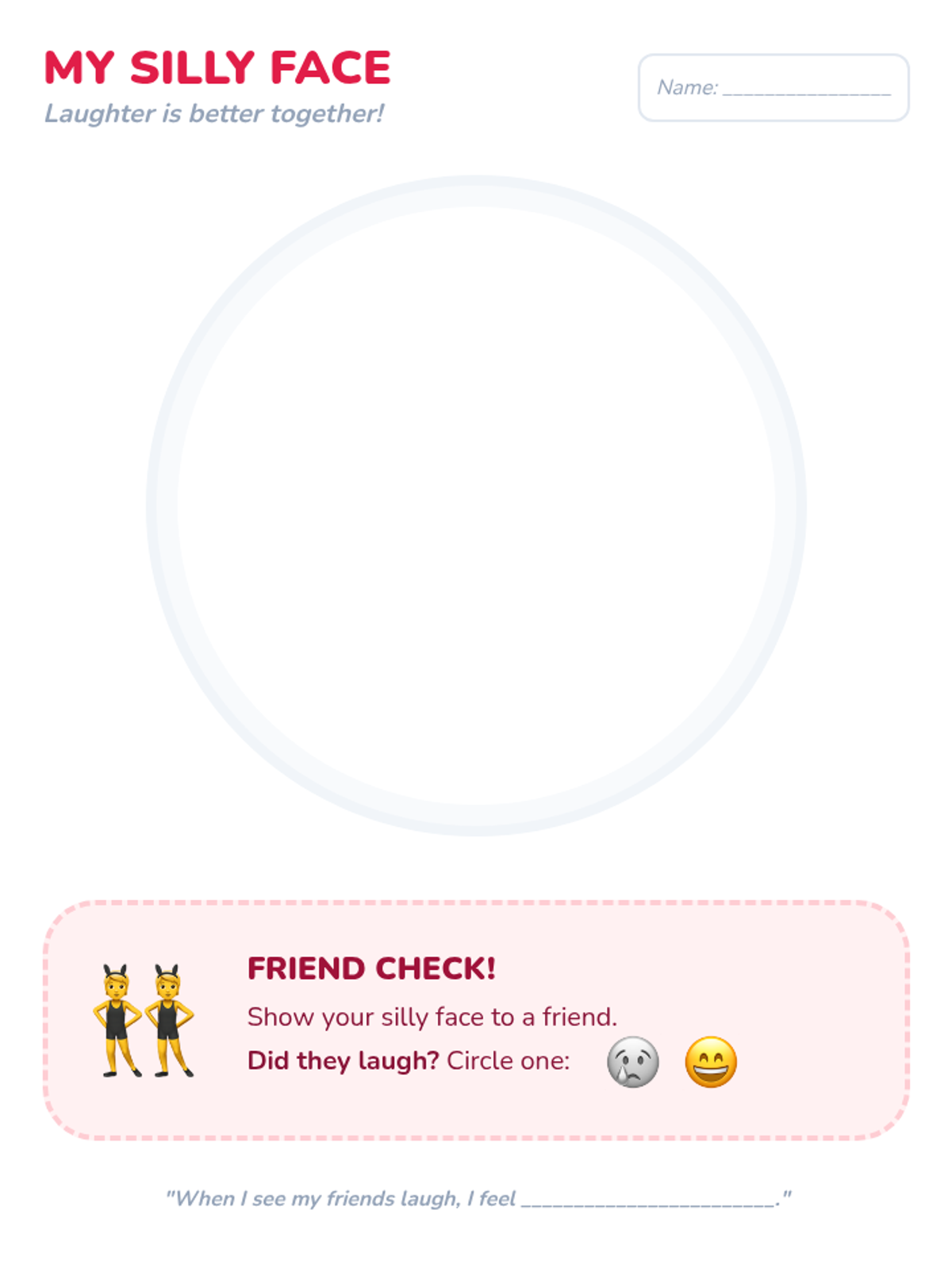
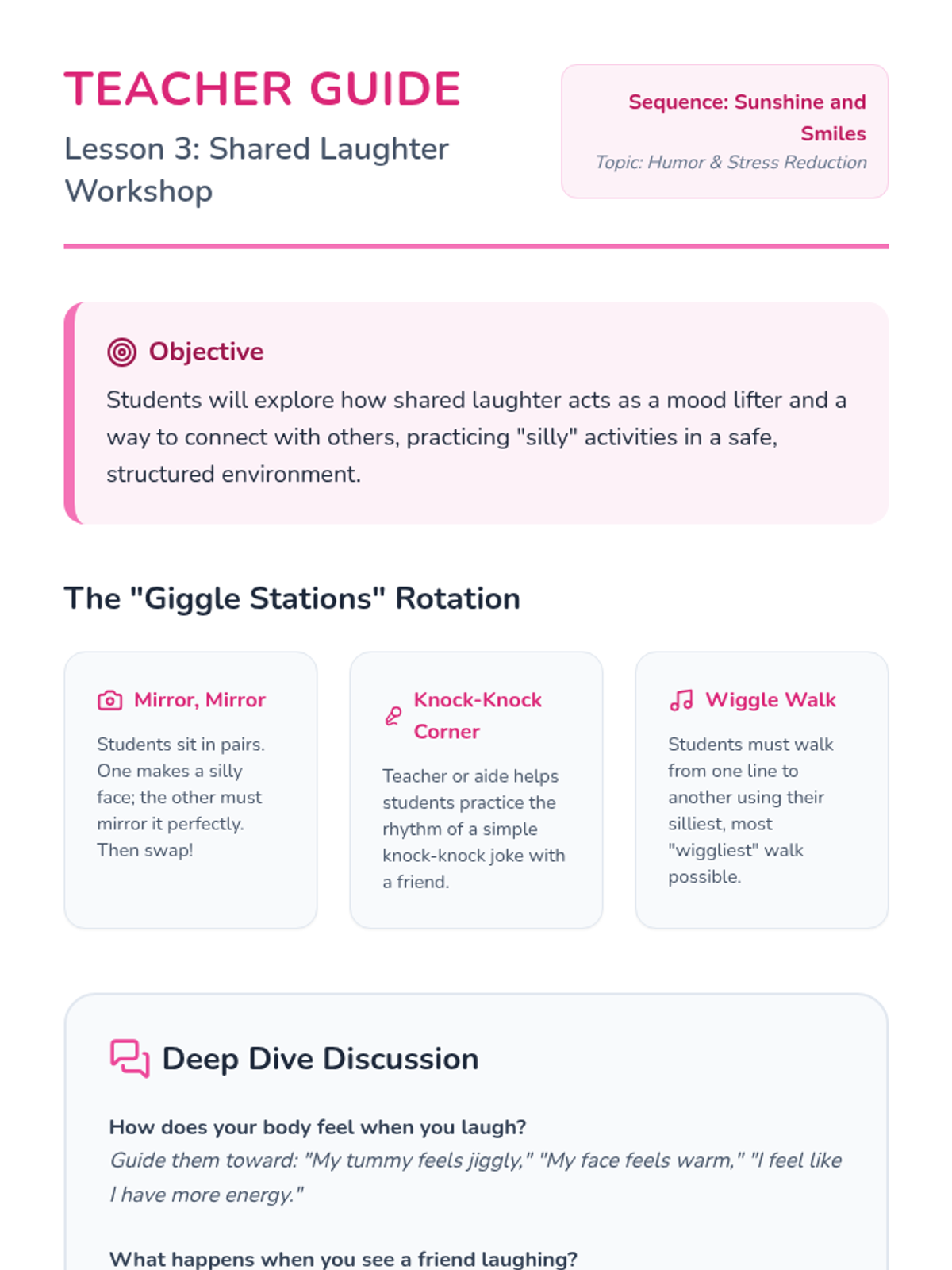
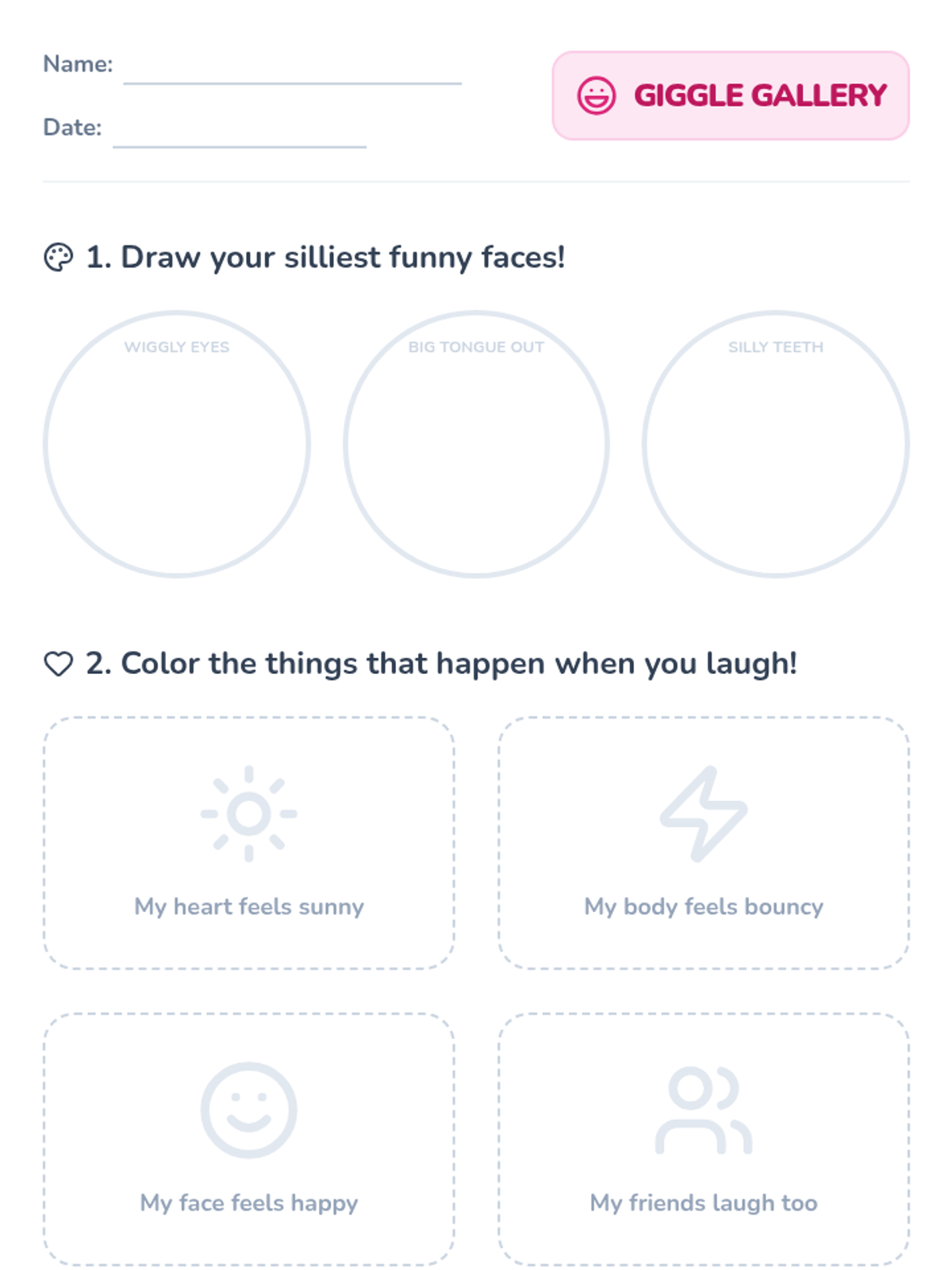
The class engages in silly activities designed solely to produce shared laughter. They discuss how hearing others laugh makes them want to laugh too, introducing the concept of emotional contagion.
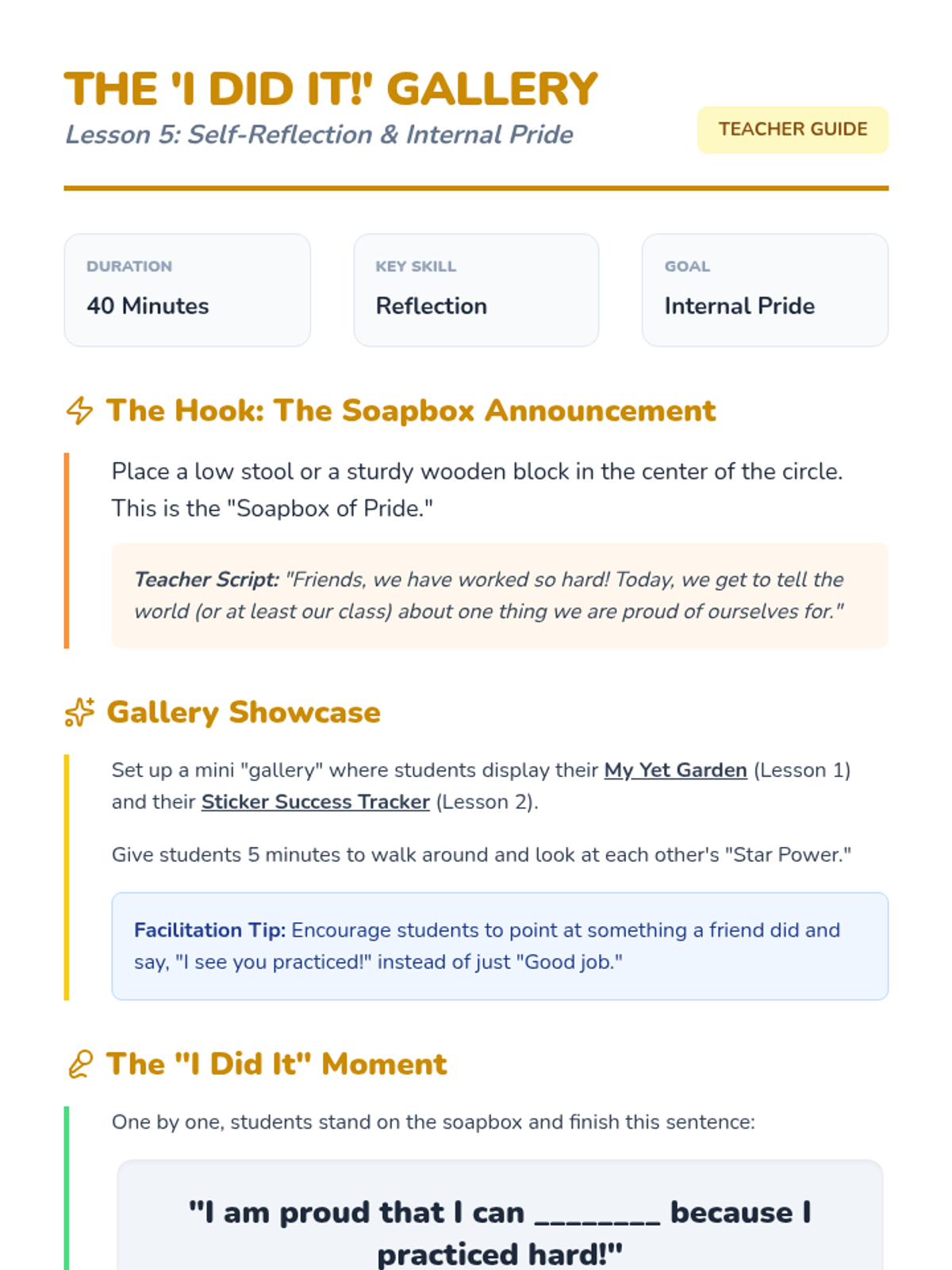
Reflecting on achievements and celebrating the internal feeling of pride through a classroom showcase.
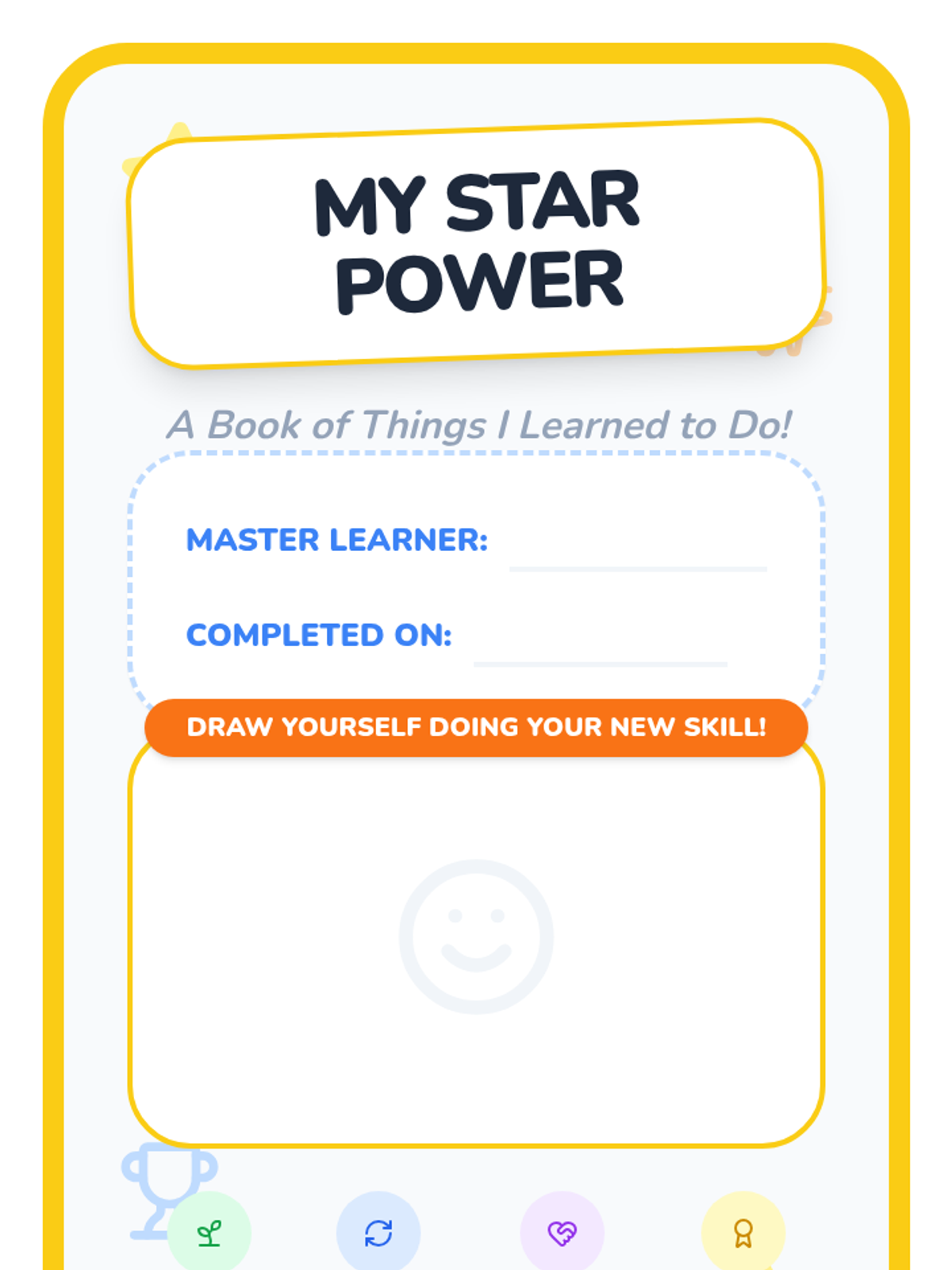
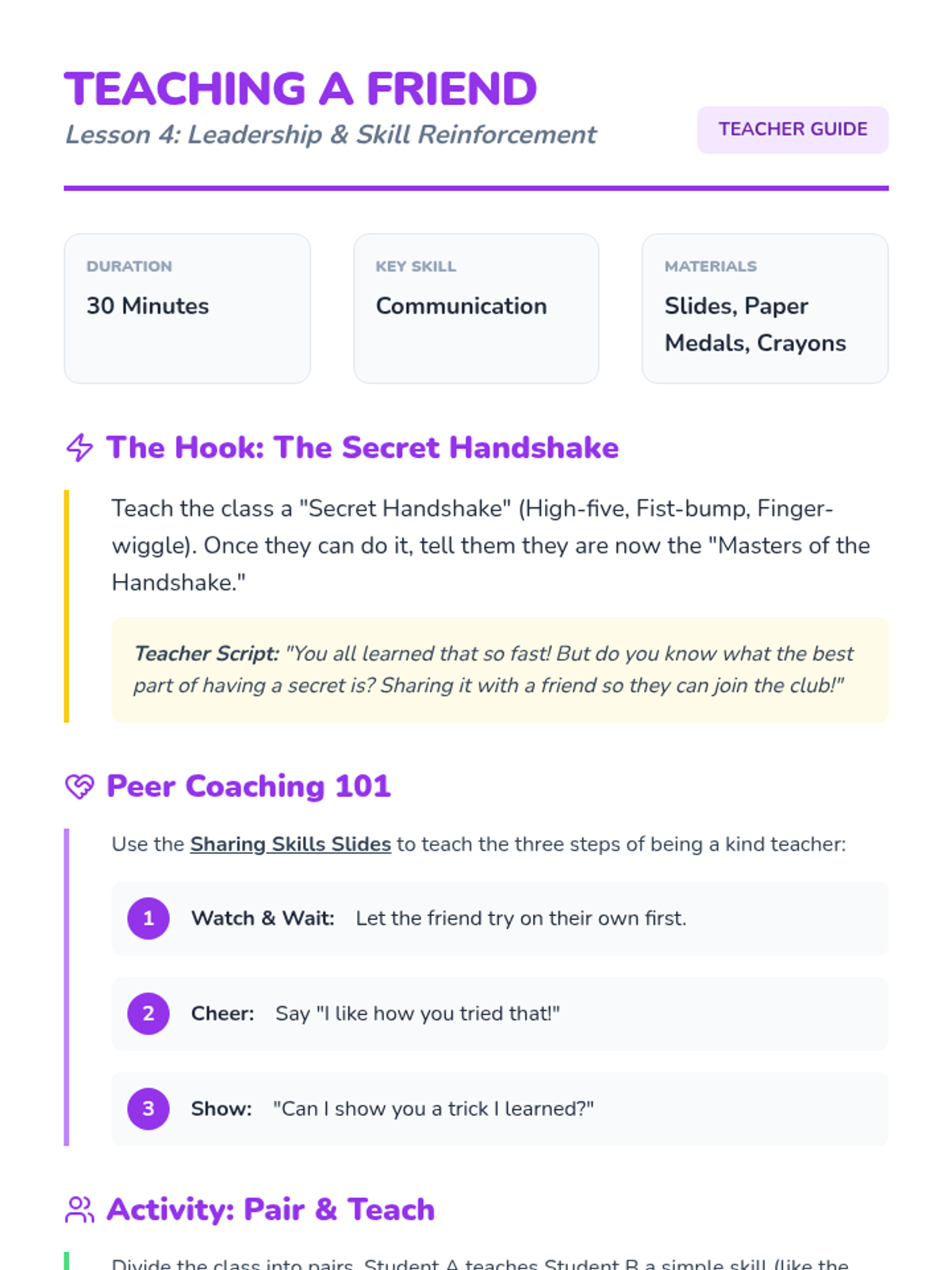
Empowering students to share their mastered skills with peers, building leadership and reinforcing their own learning.
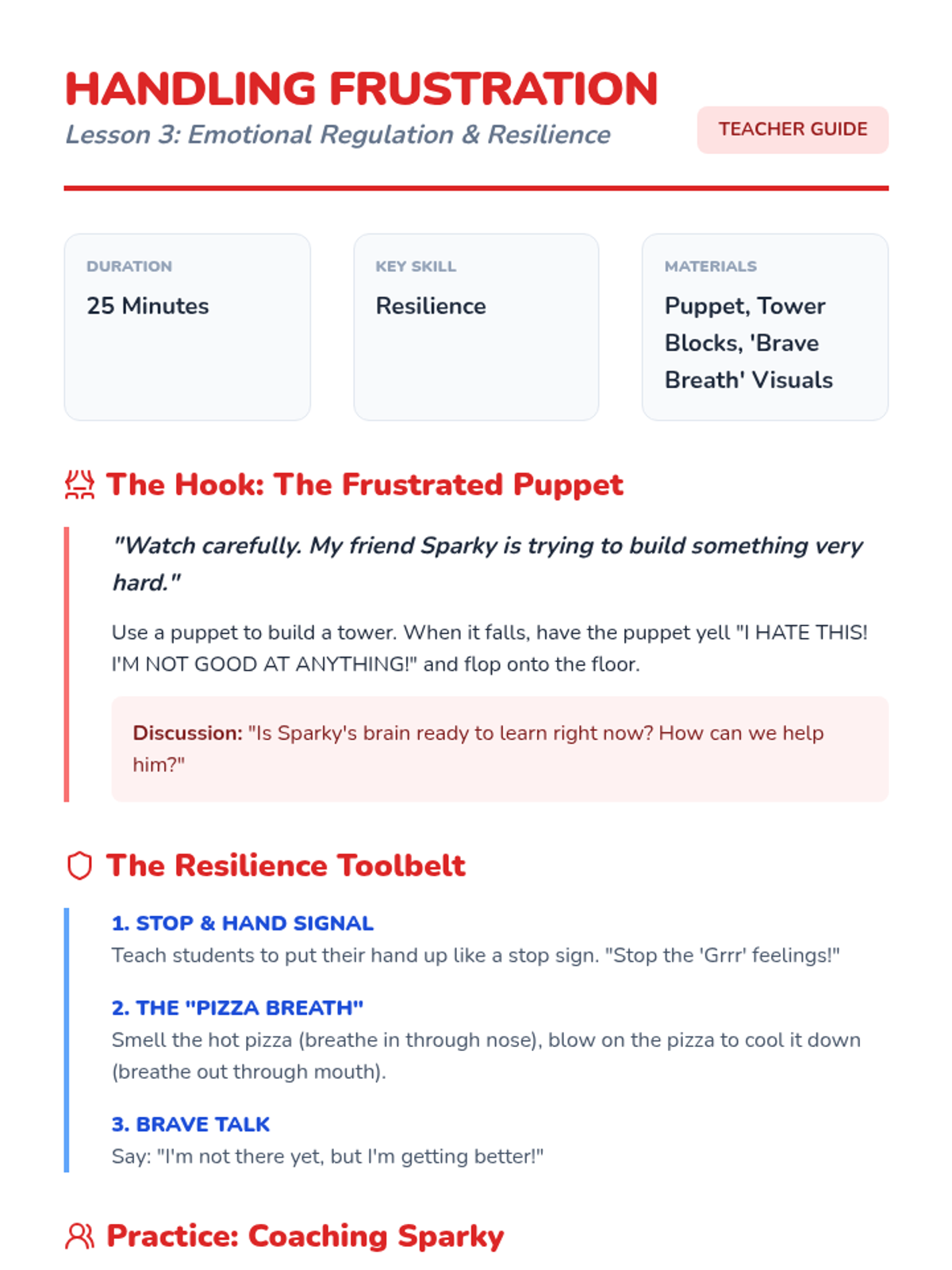
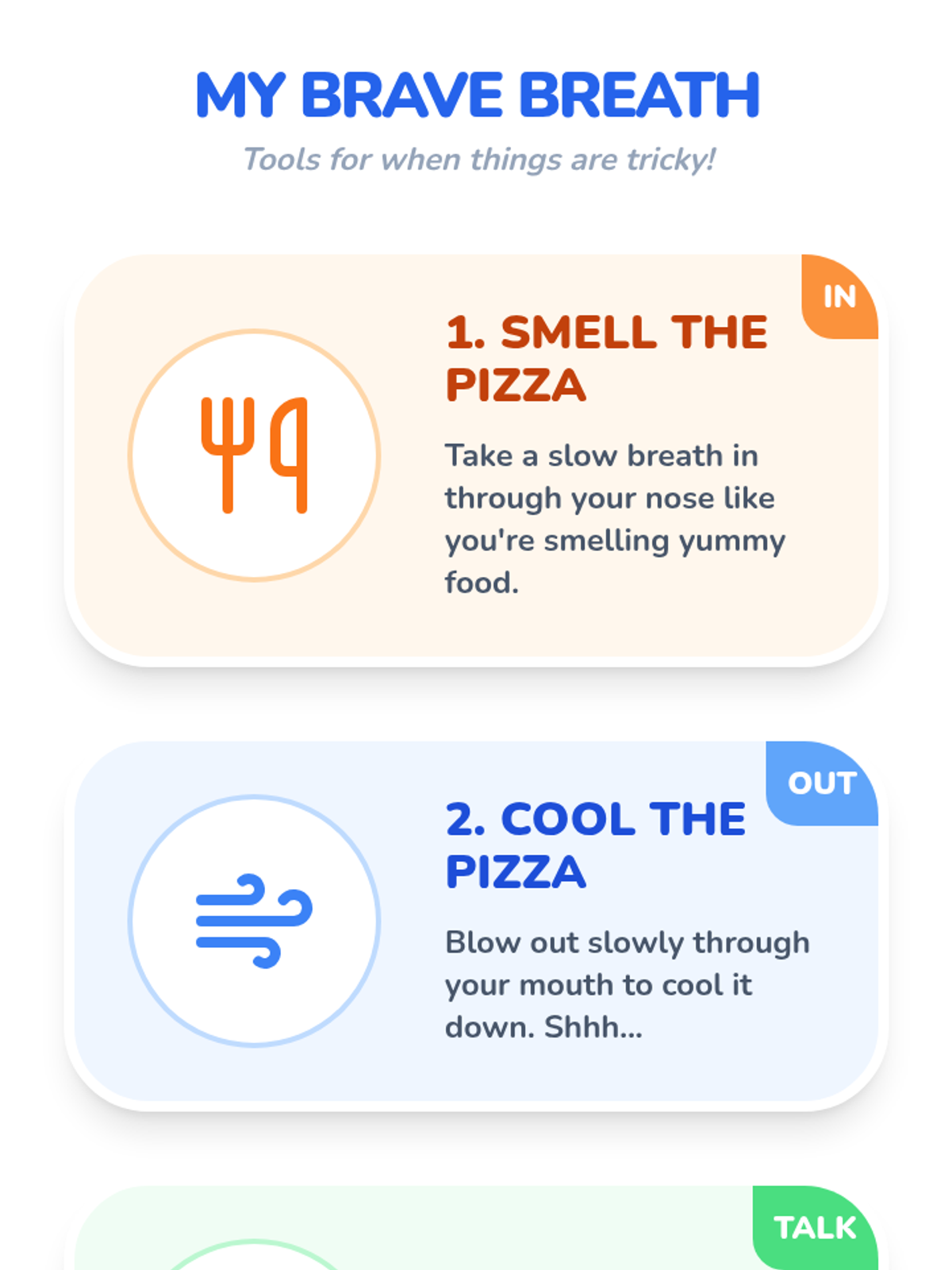
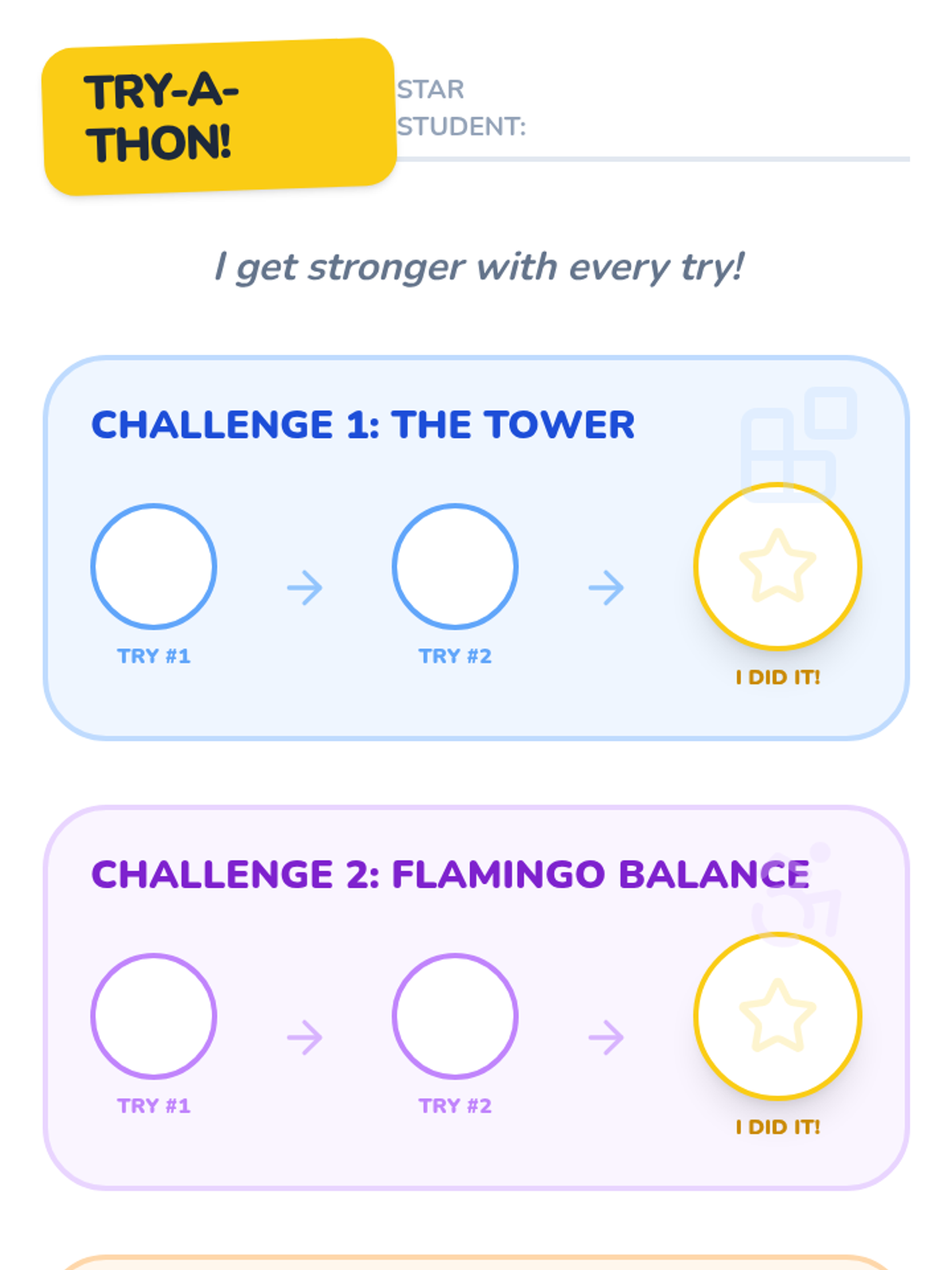
Learning emotional regulation tools and positive self-talk to manage frustration when learning something new.
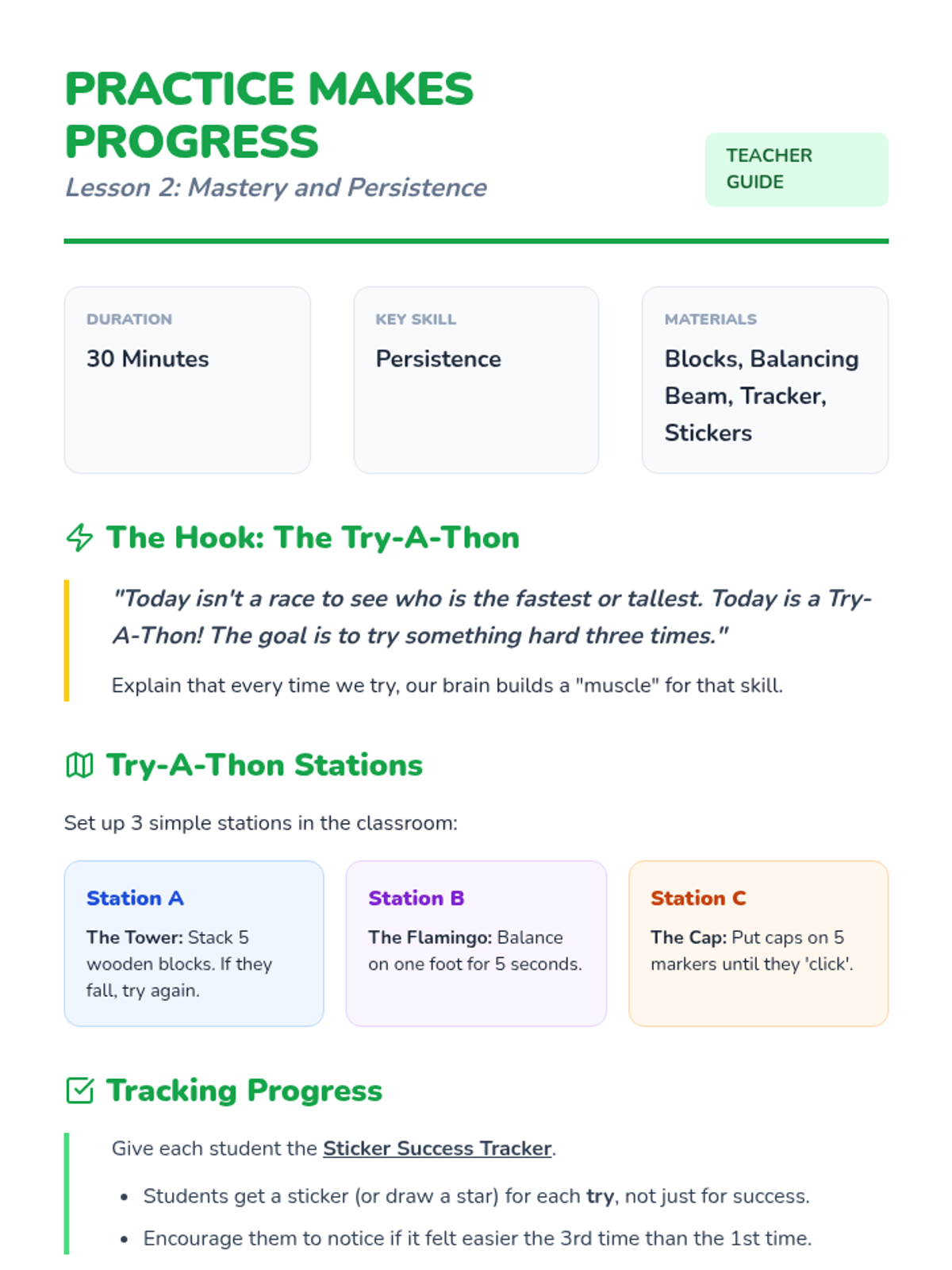
Focusing on persistence and tracking small improvements through repeated practice of simple skills.
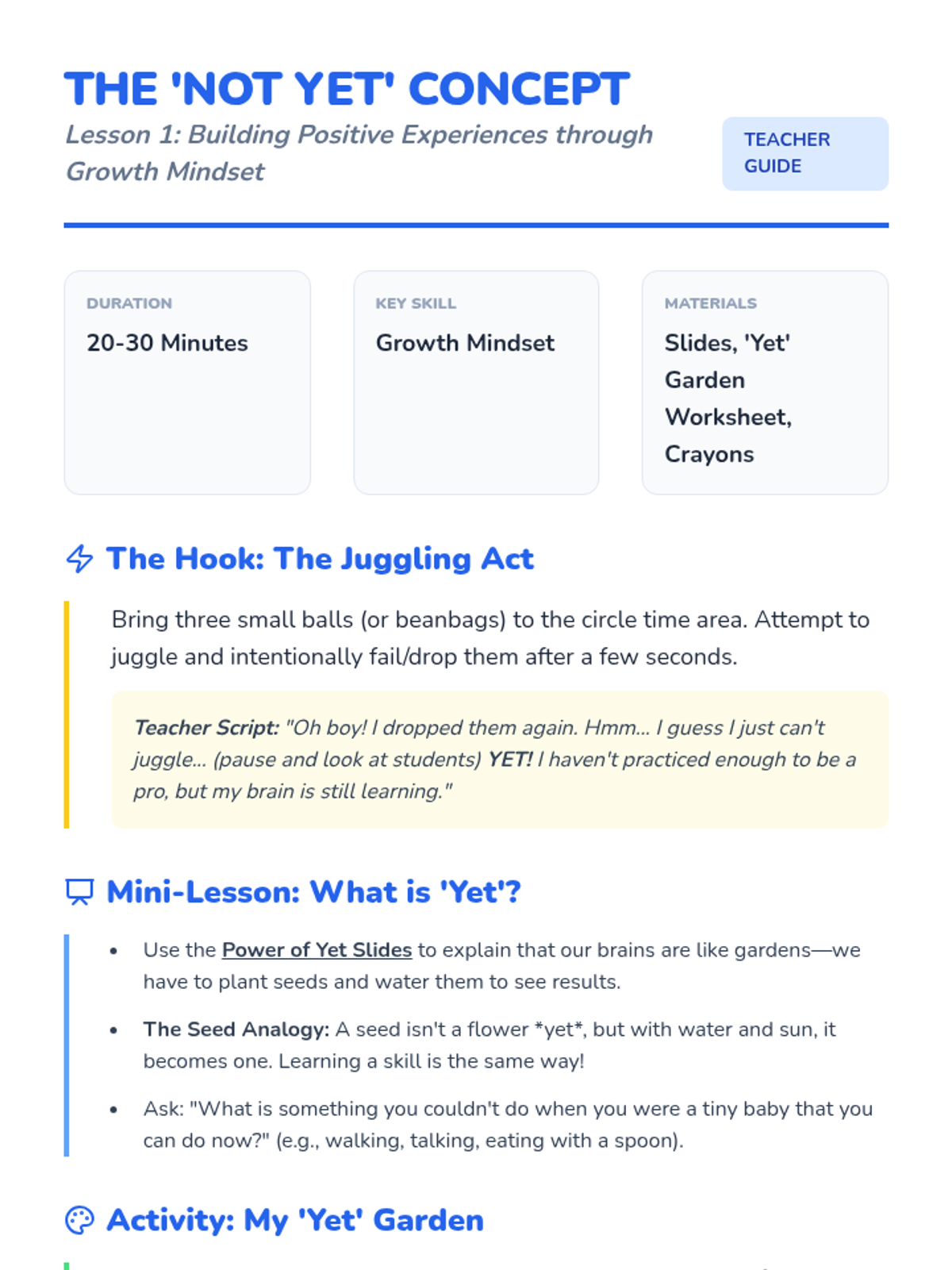
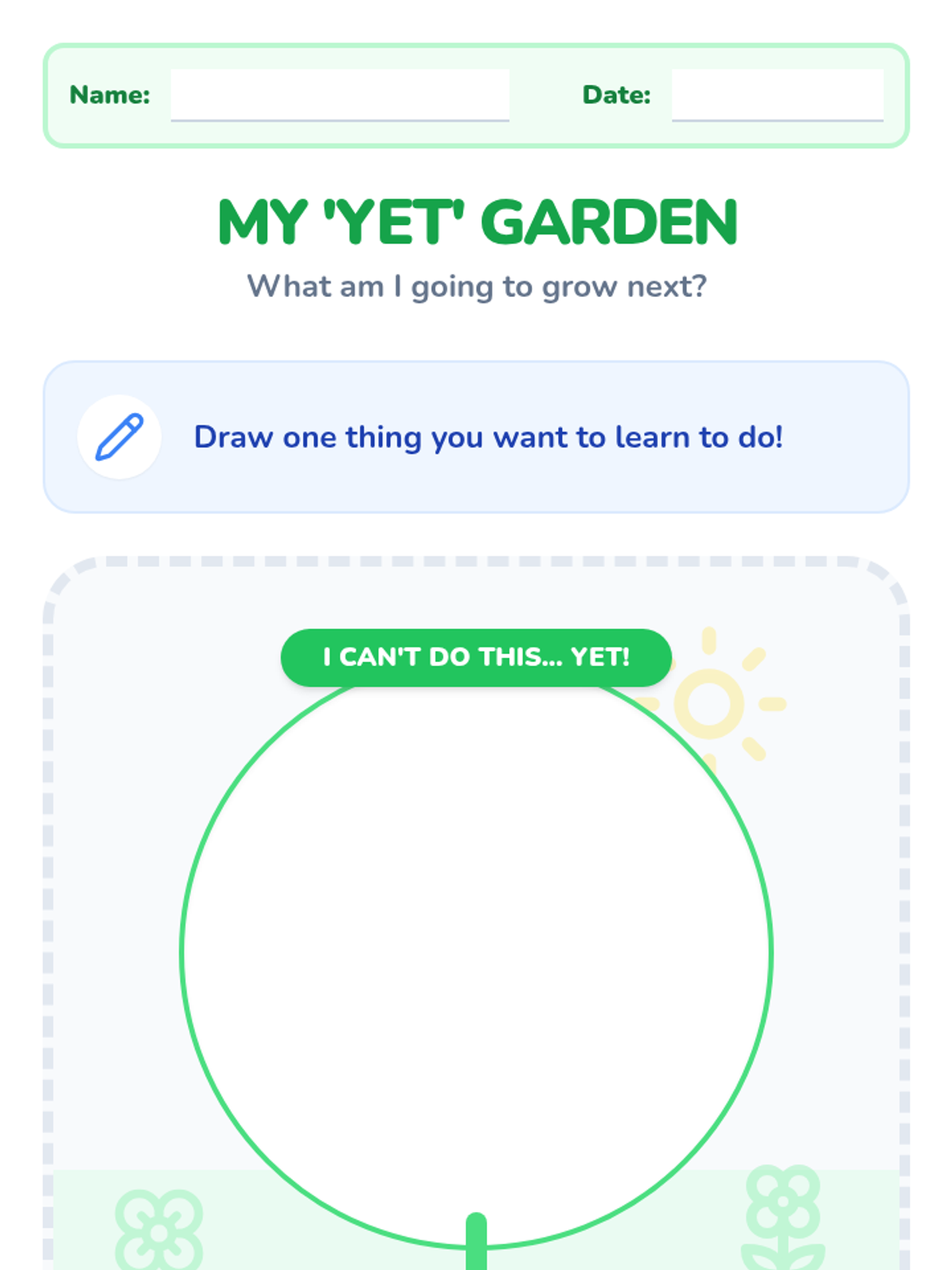
Introduction to the growth mindset using the word 'yet' to transform frustrations into future goals.
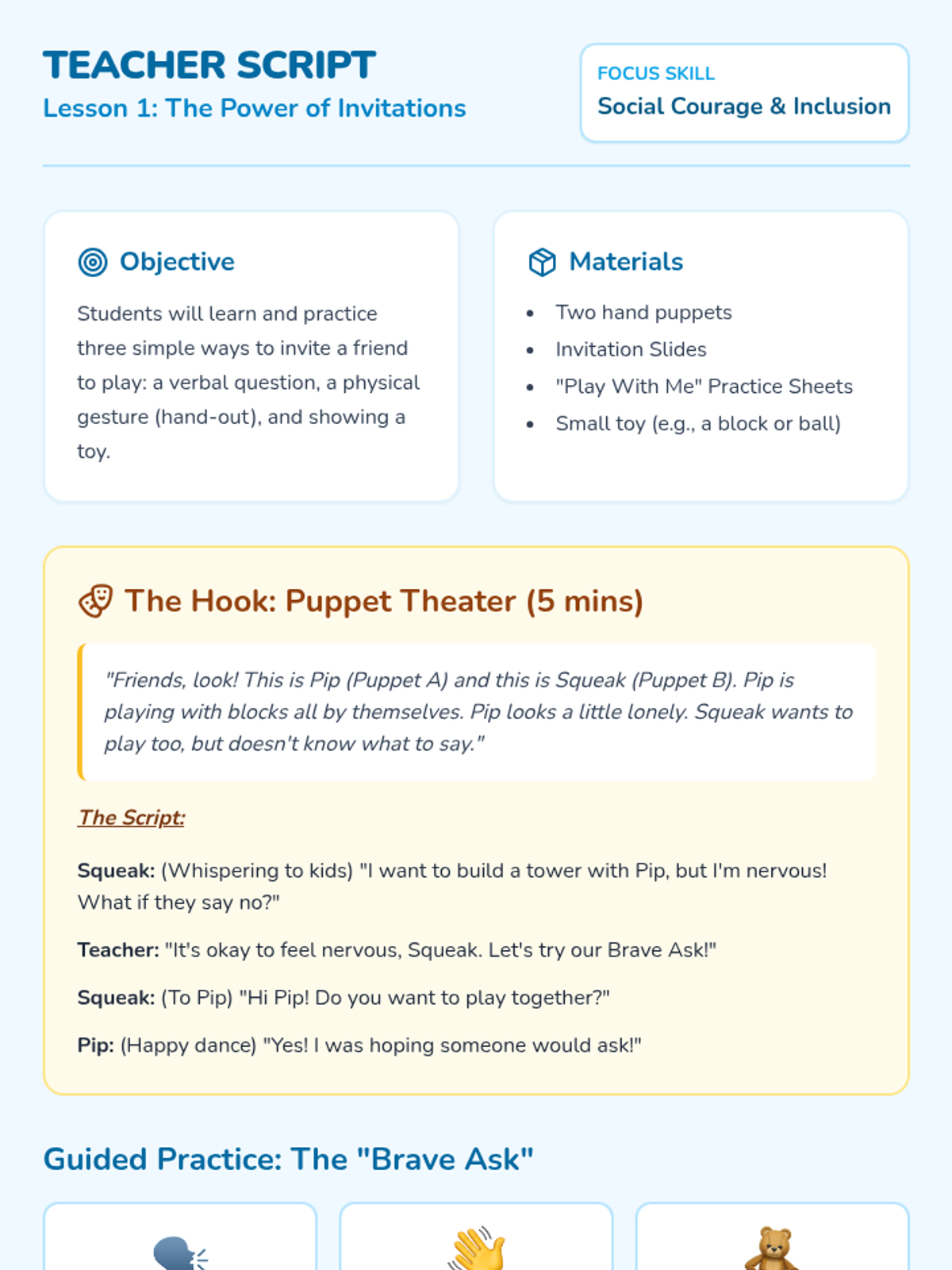
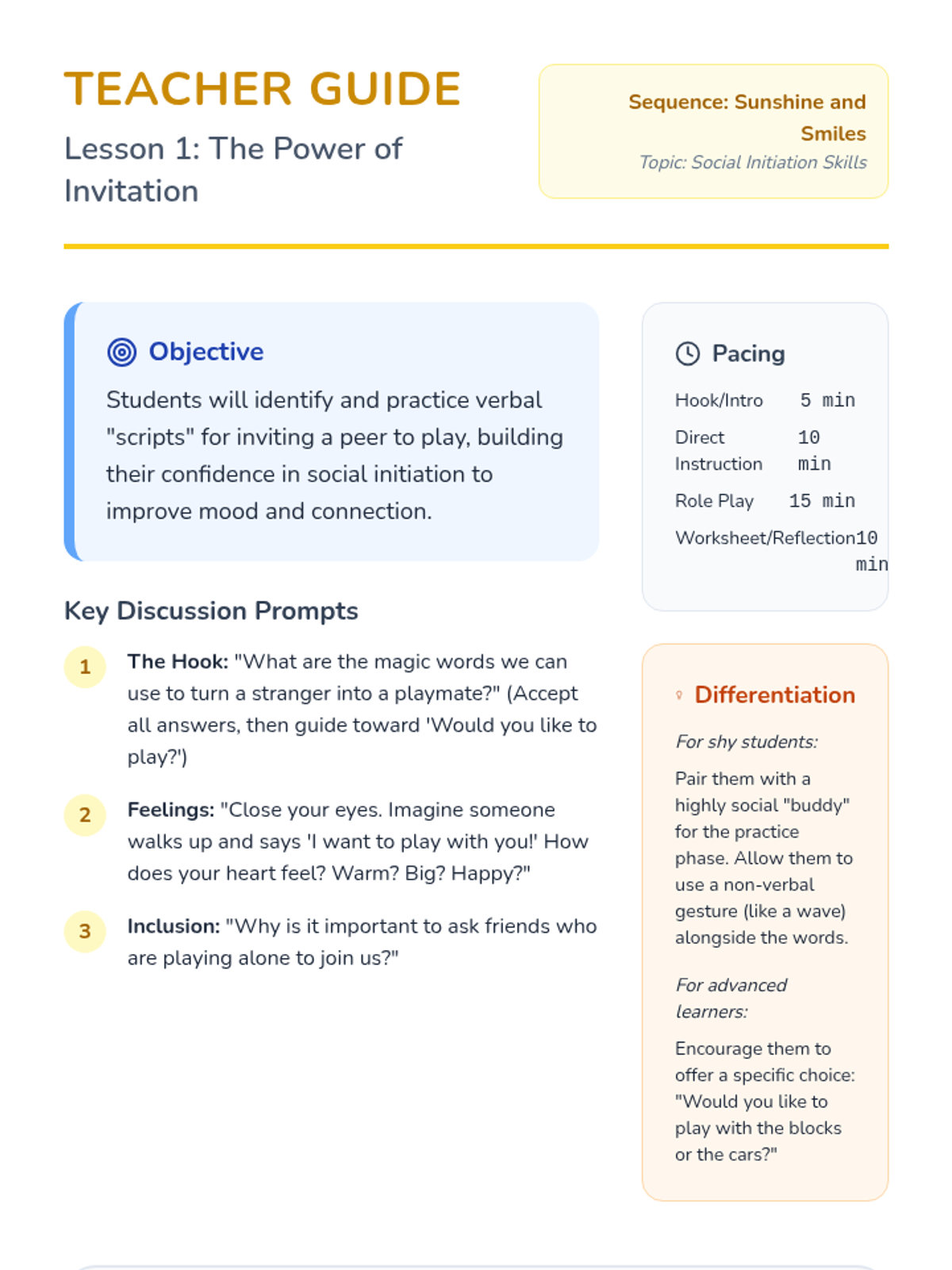
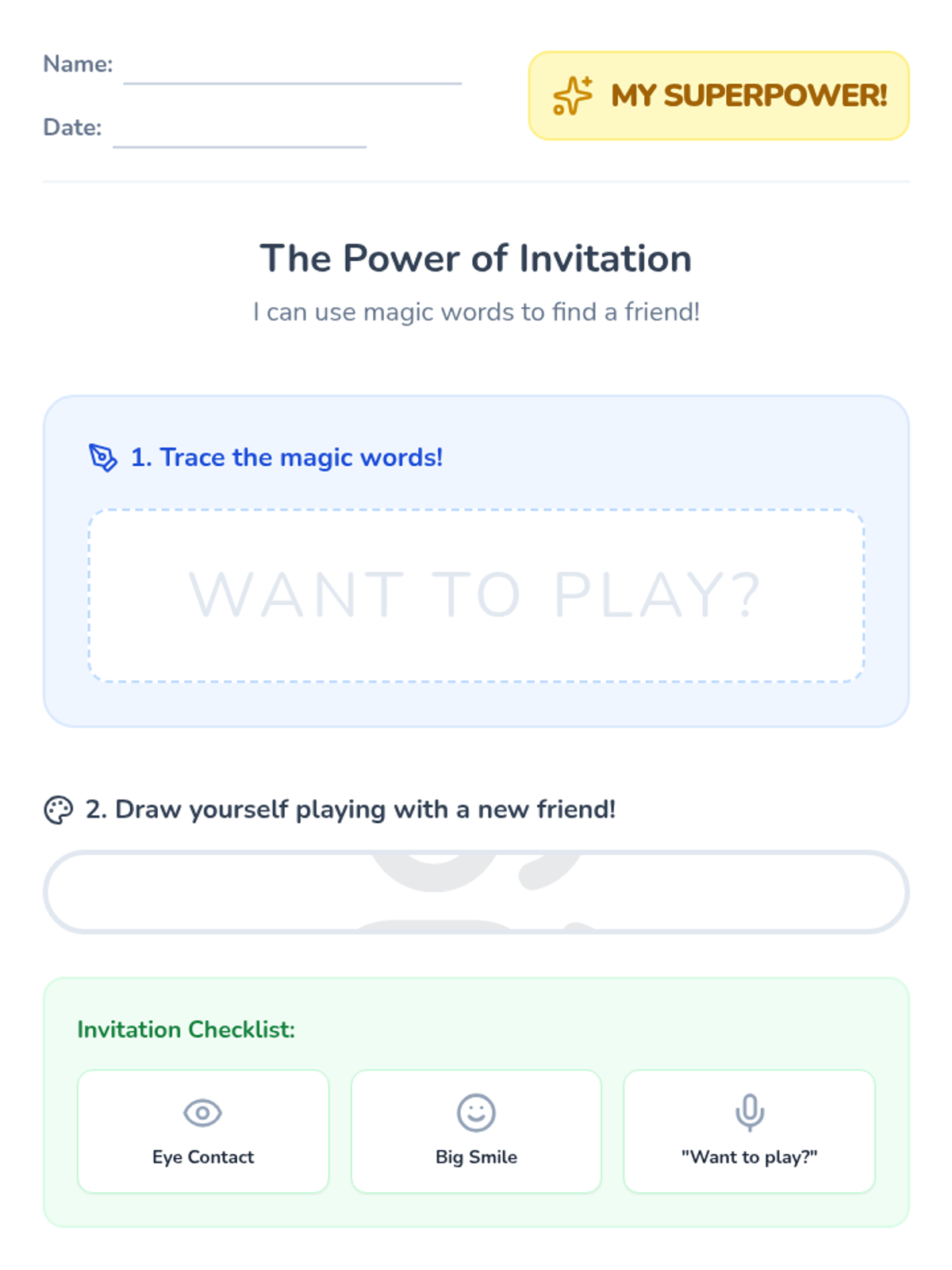
Students learn simple scripts and gestures to invite peers to join a positive activity, practicing inclusion and social courage.
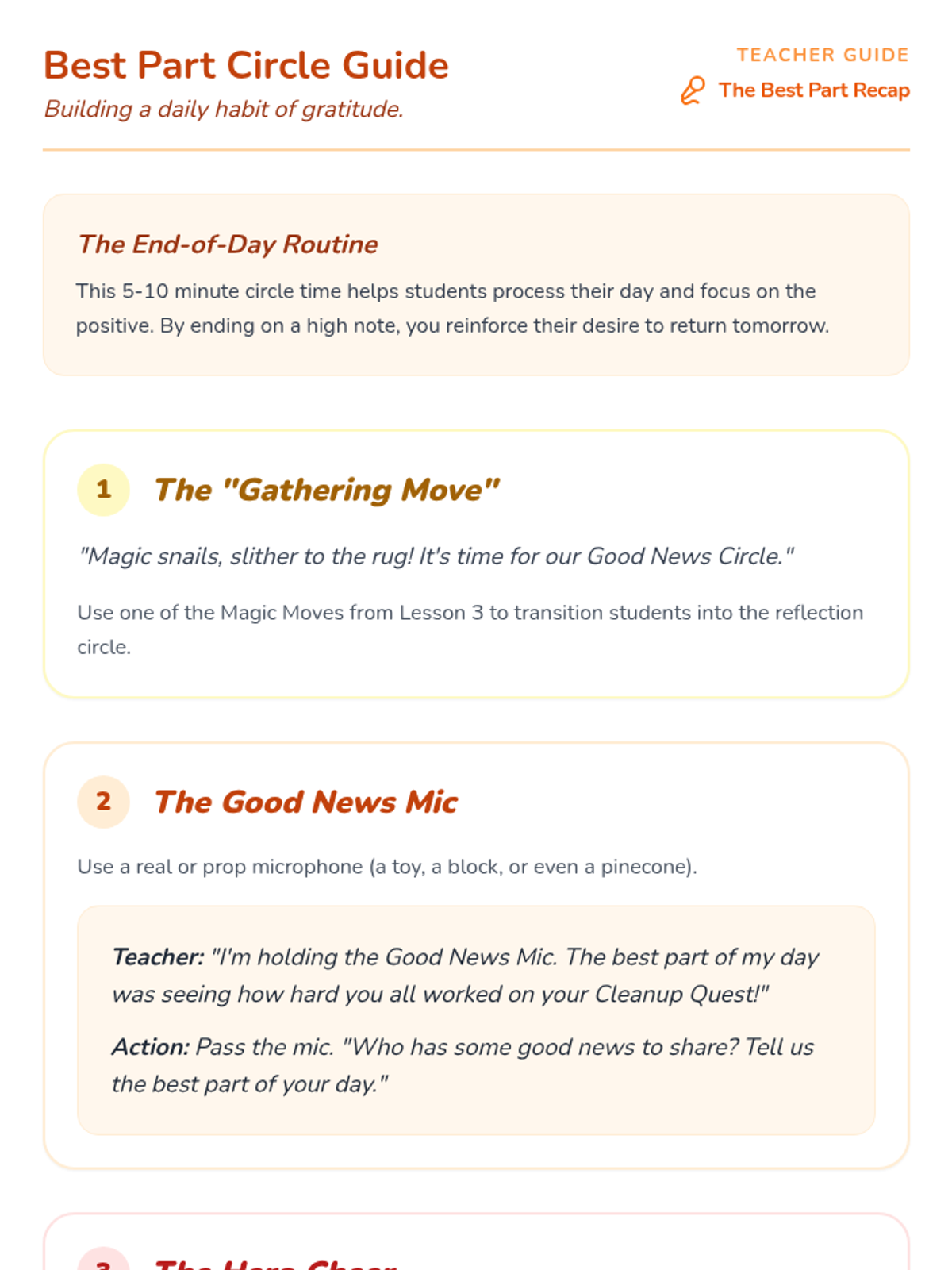
Students establish a gratitude habit by sharing the best parts of their day, reinforcing positive memories before going home.
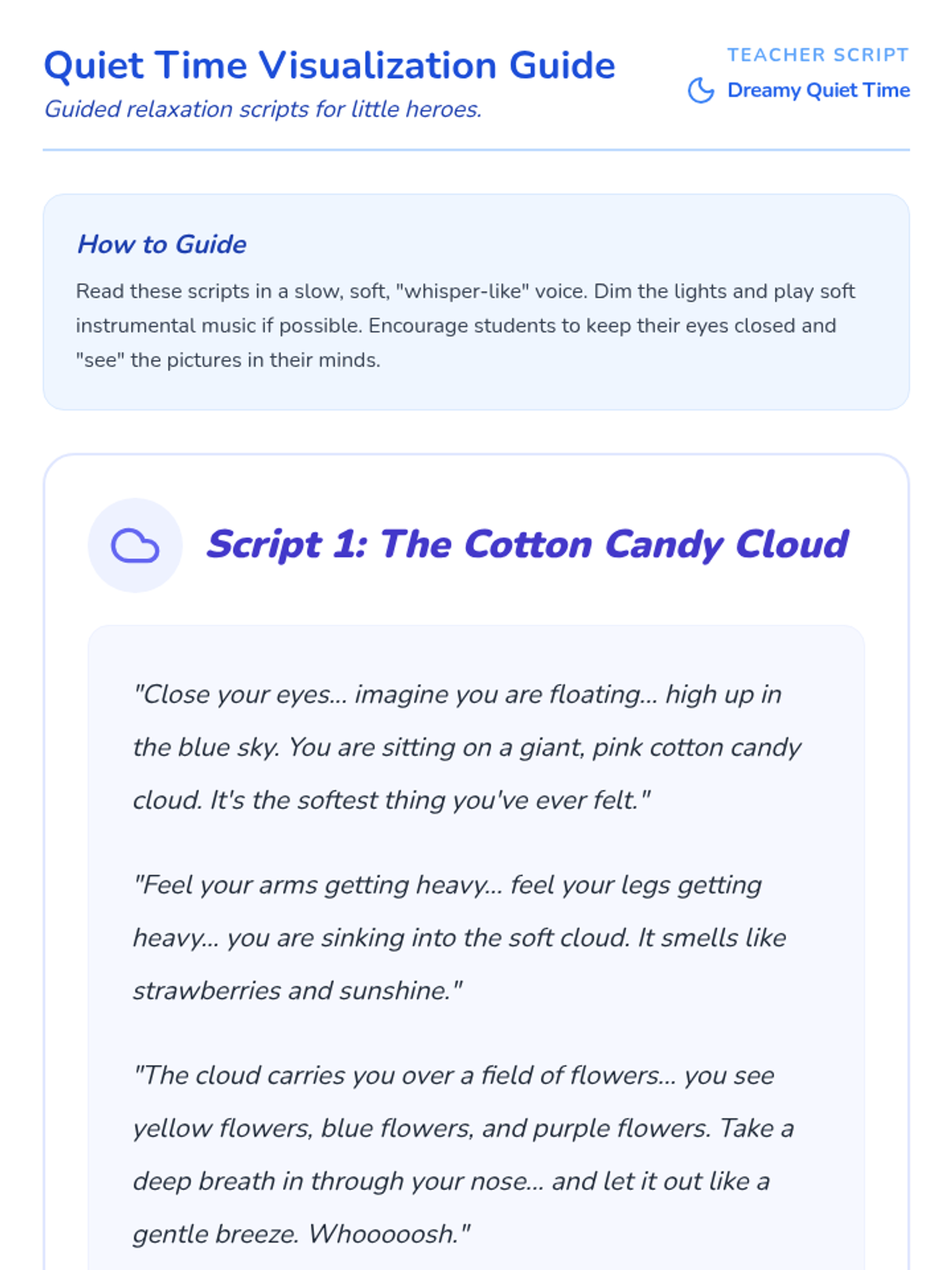
Students explore visualization and relaxation techniques to find joy and stillness during quiet or nap times.
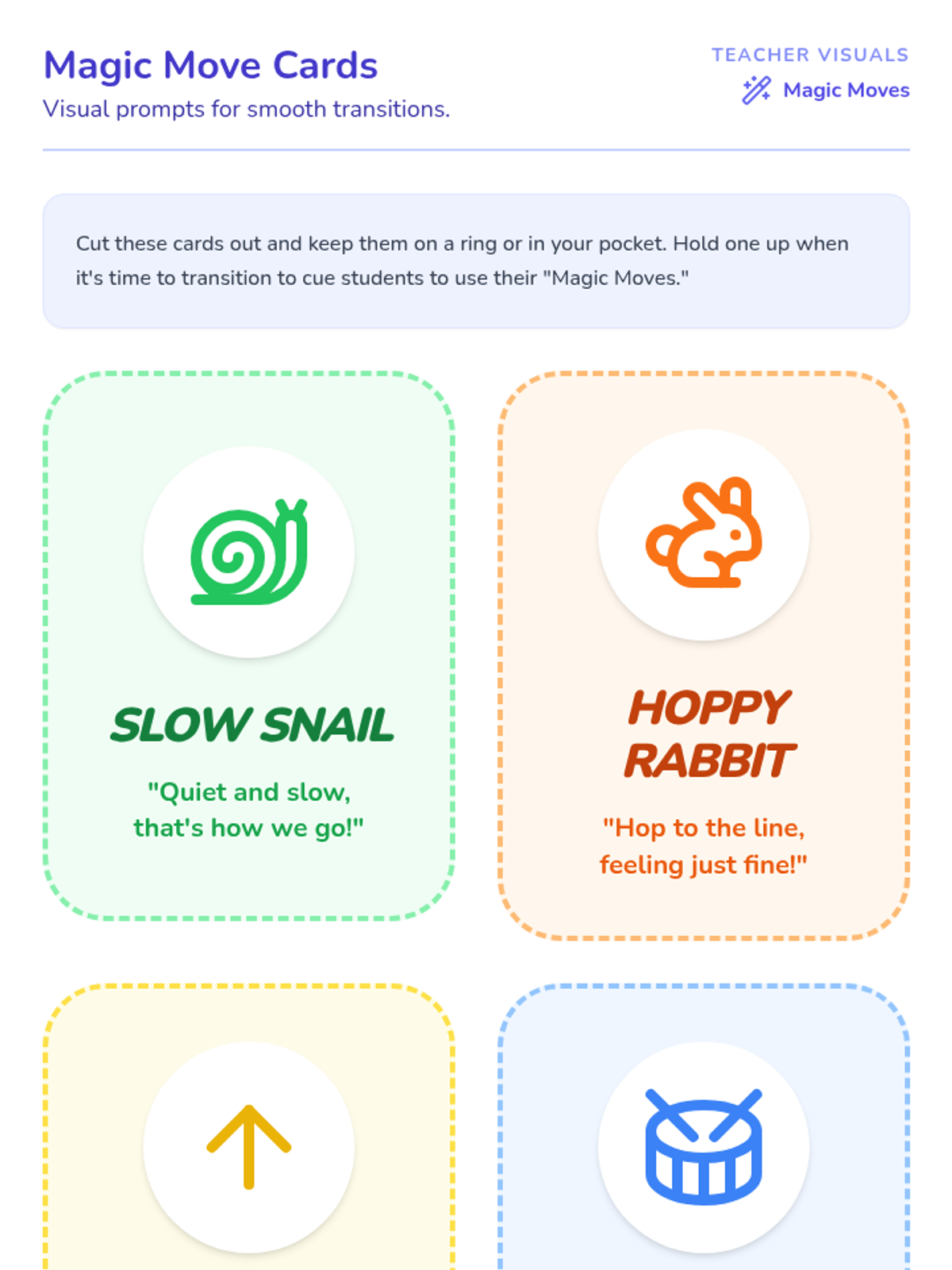
Students learn stress-free transition strategies, using imagination and 'magic' to move smoothly between activities.
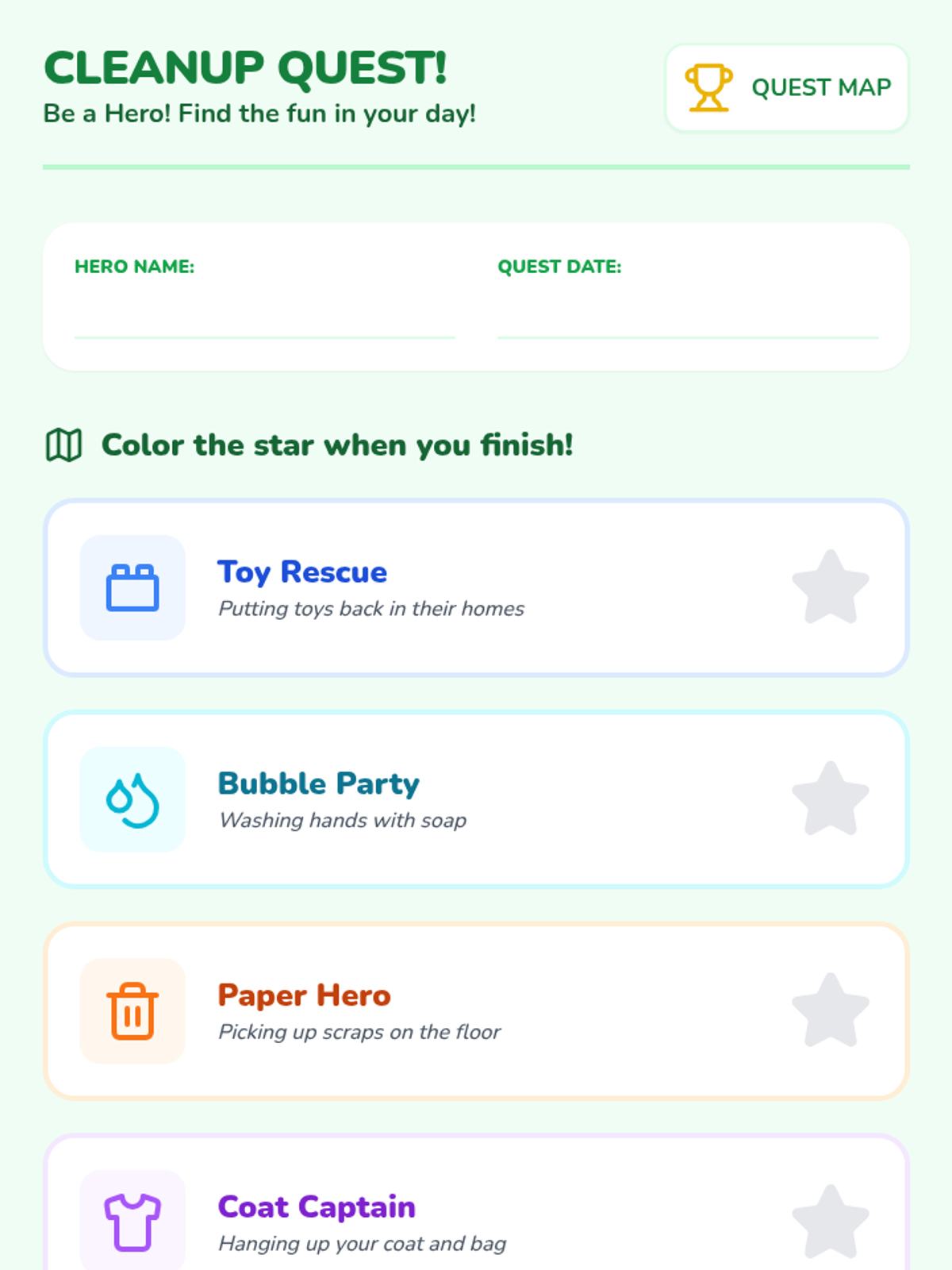
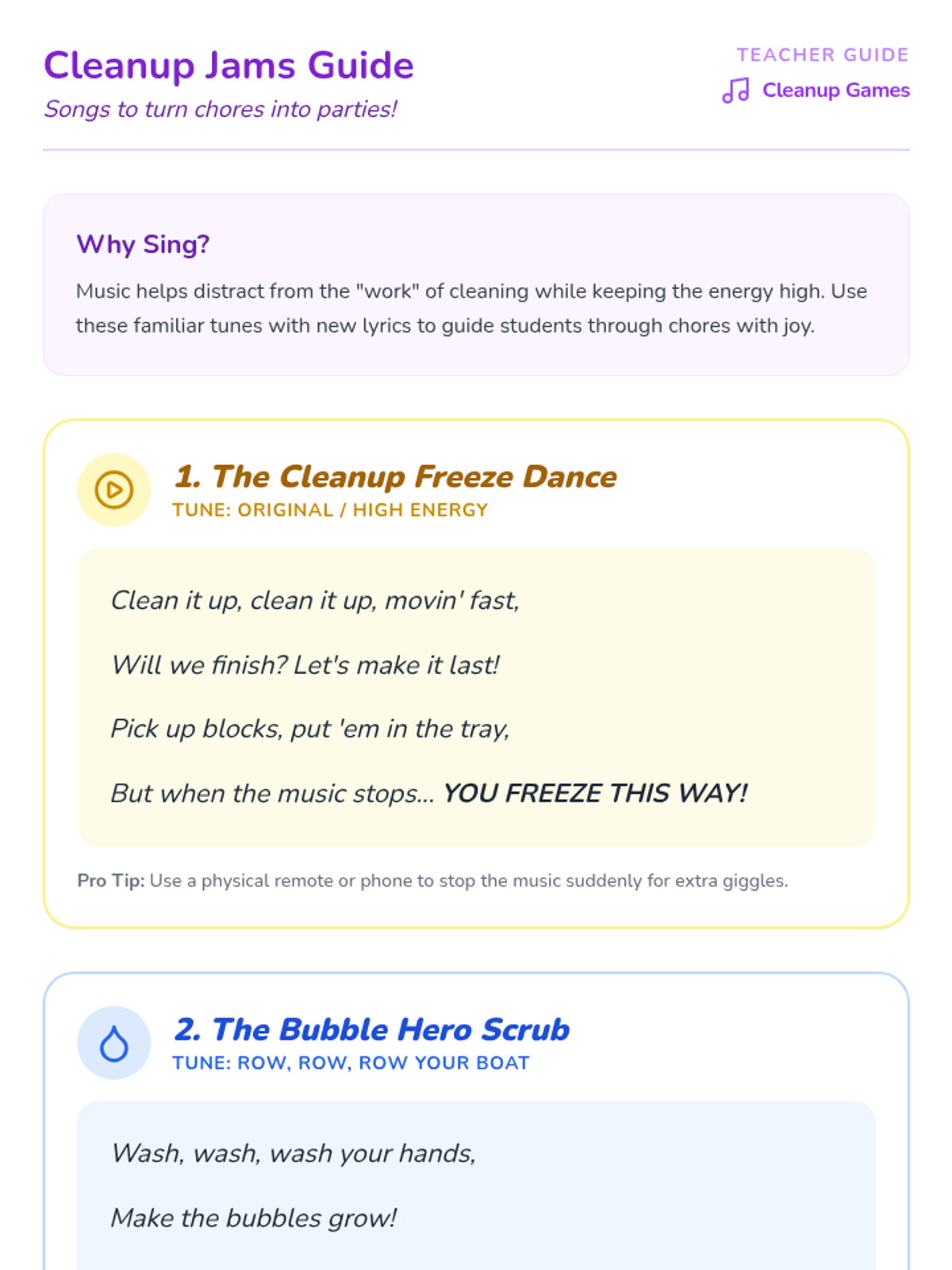
This lesson turns cleanup and maintenance tasks into games and songs, helping students reframe chores as positive, shared experiences.
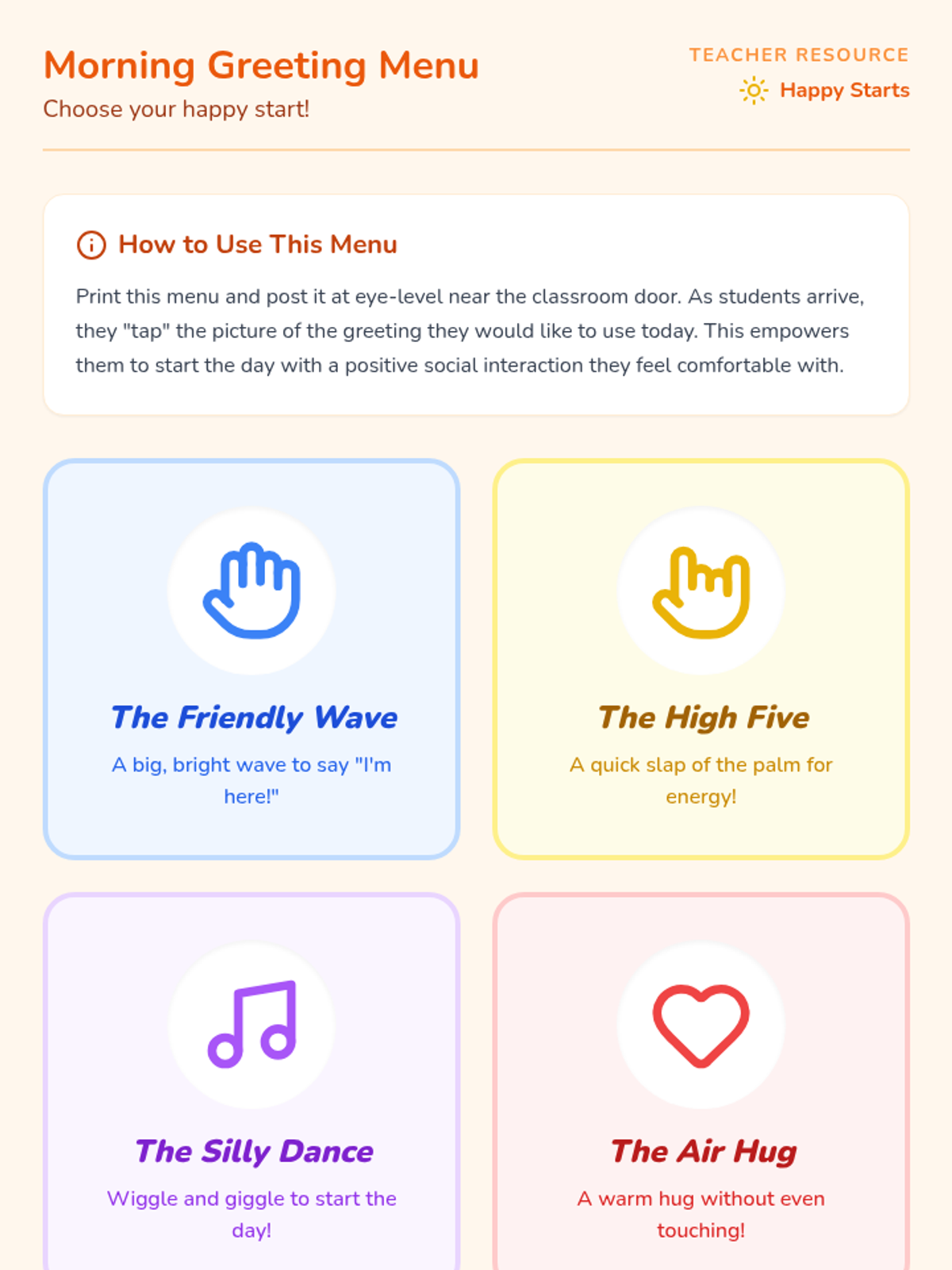
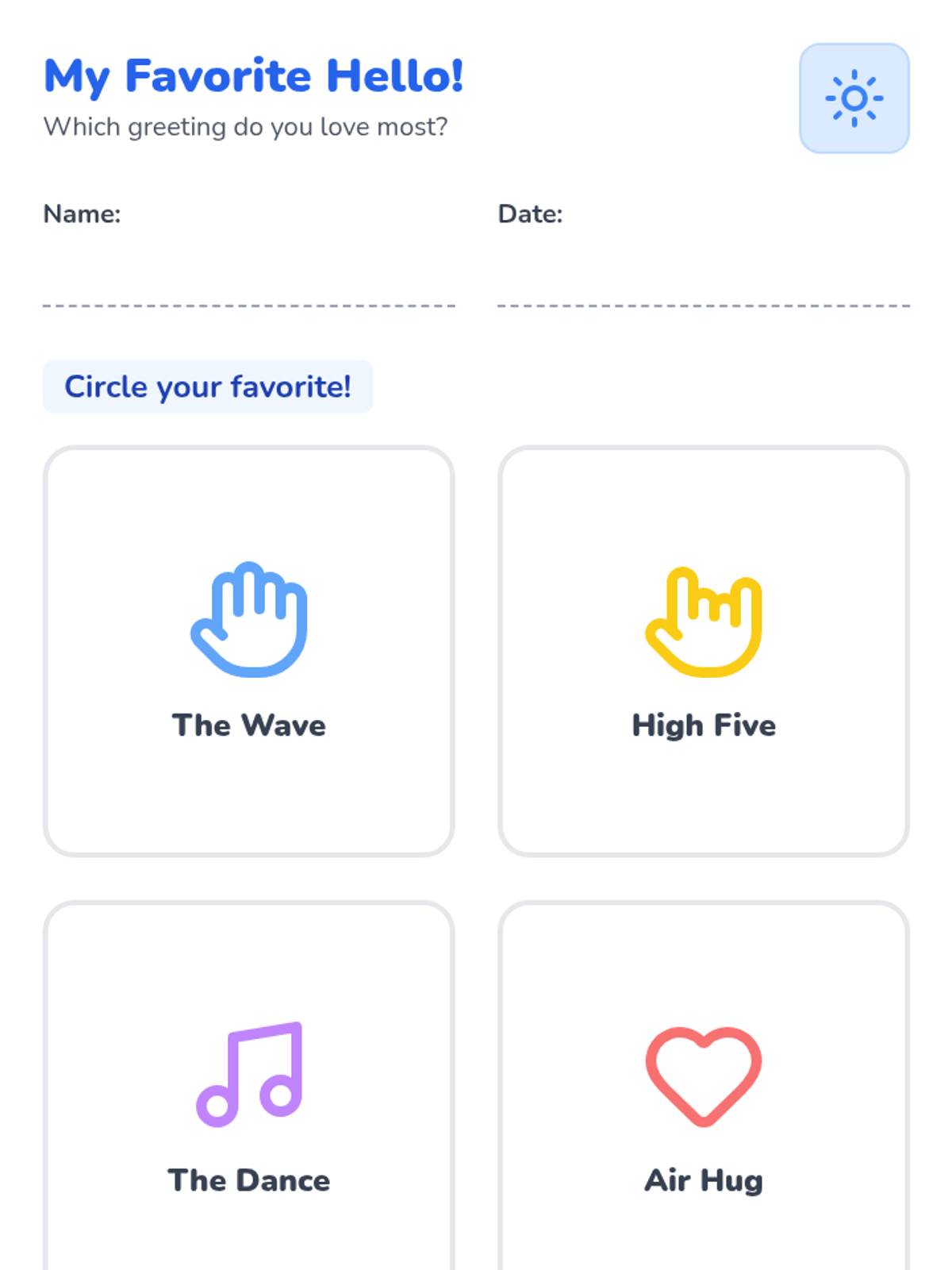
Students practice different ways to start the day positively, choosing signature greetings like waves, high-fives, or dances to set a happy tone.
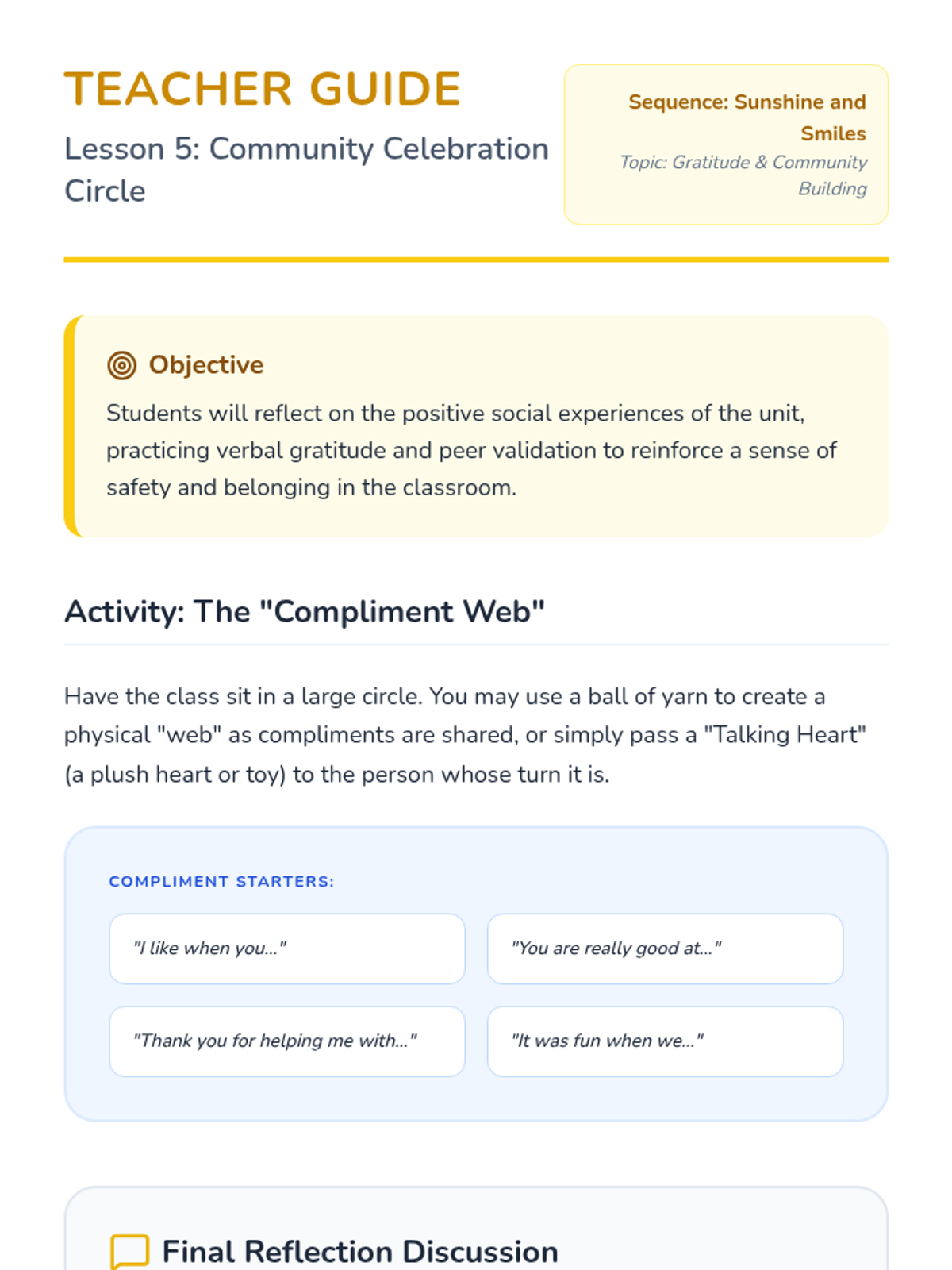
A concluding circle time where students share compliments and favorite memories to reinforce their community bond.
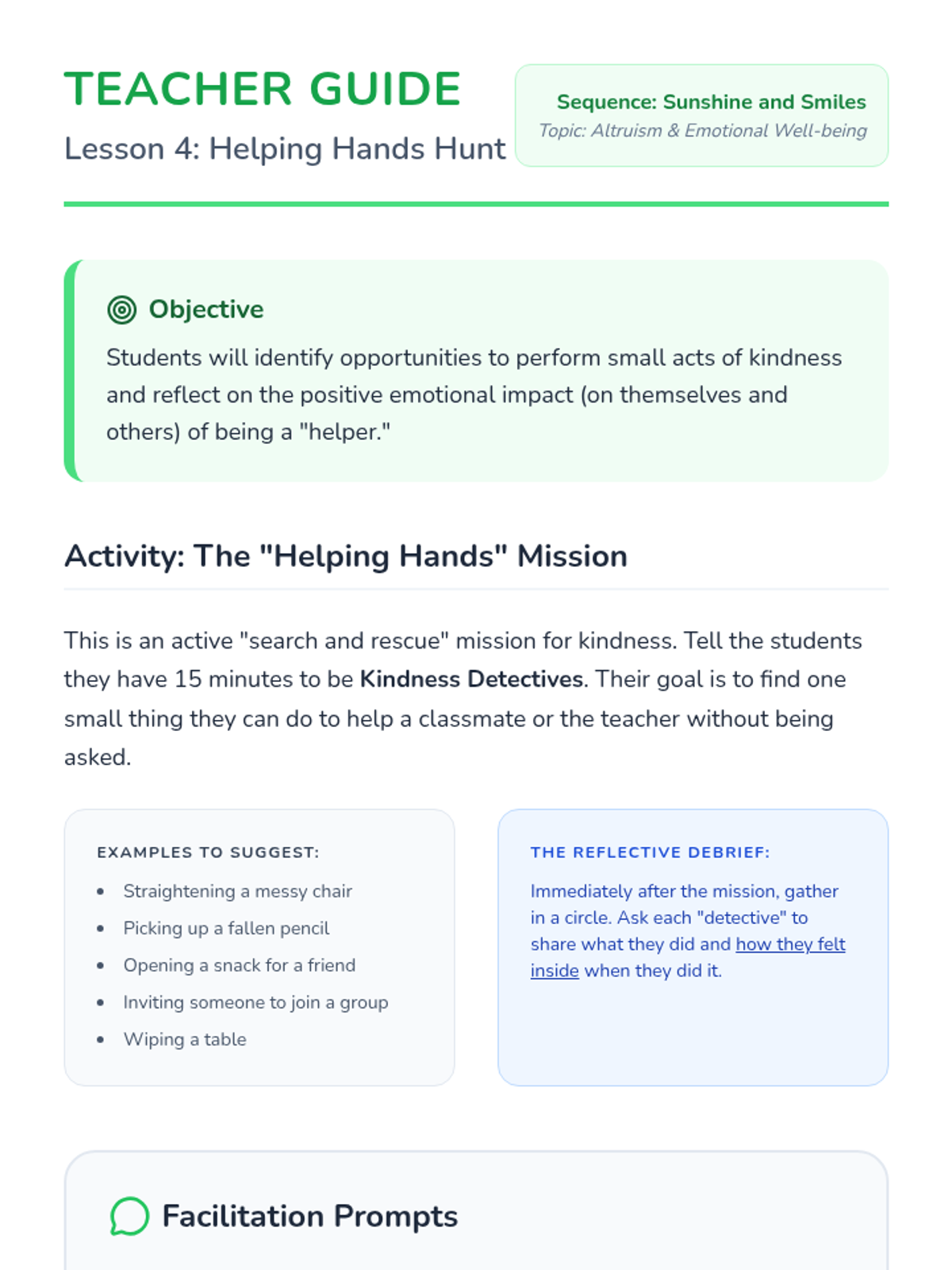
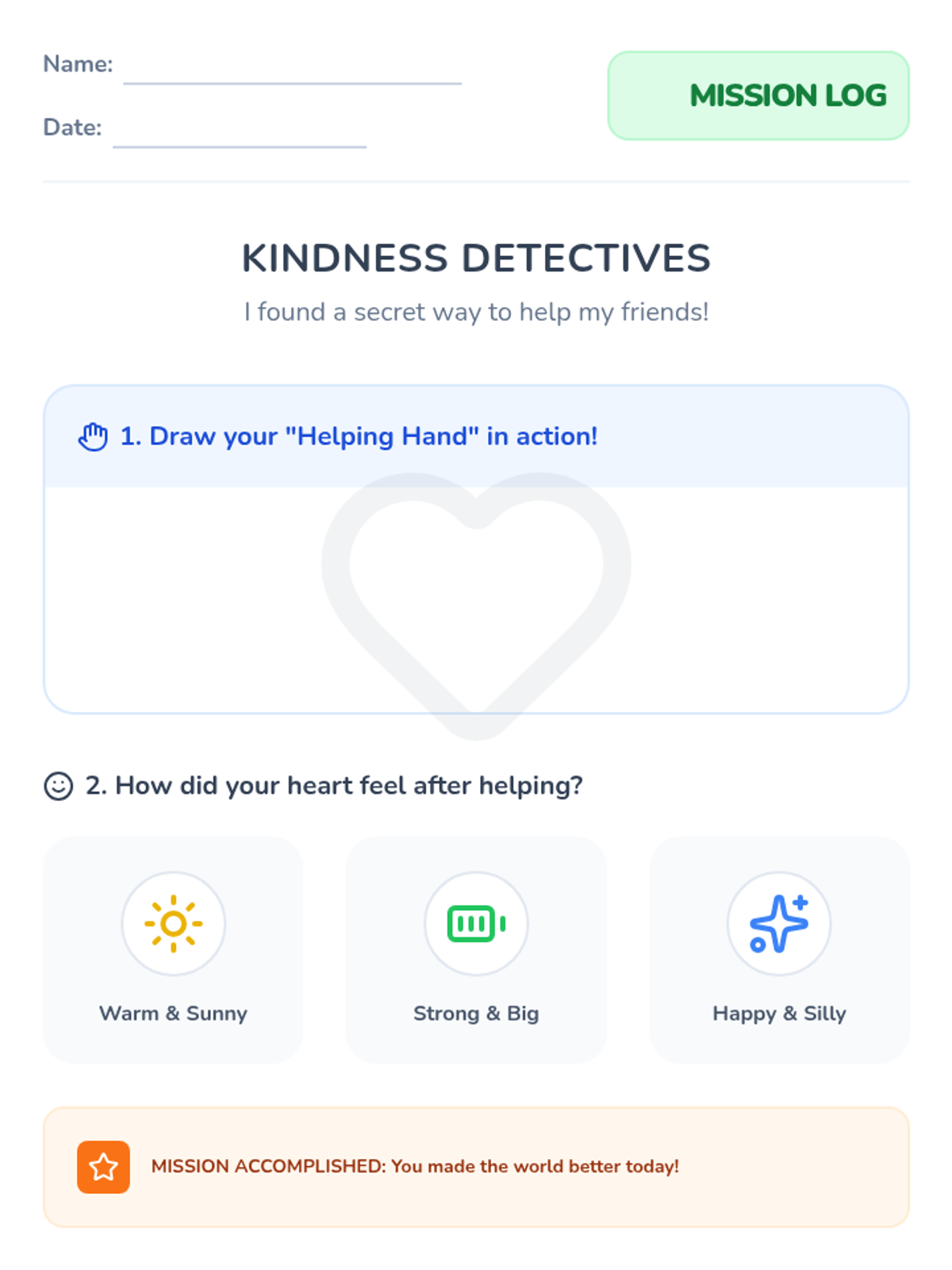
Students look for small ways to help others and reflect on how acts of kindness improve their own emotional well-being.
Students engage in silly activities to discover how shared laughter acts as a physical release and mood booster.
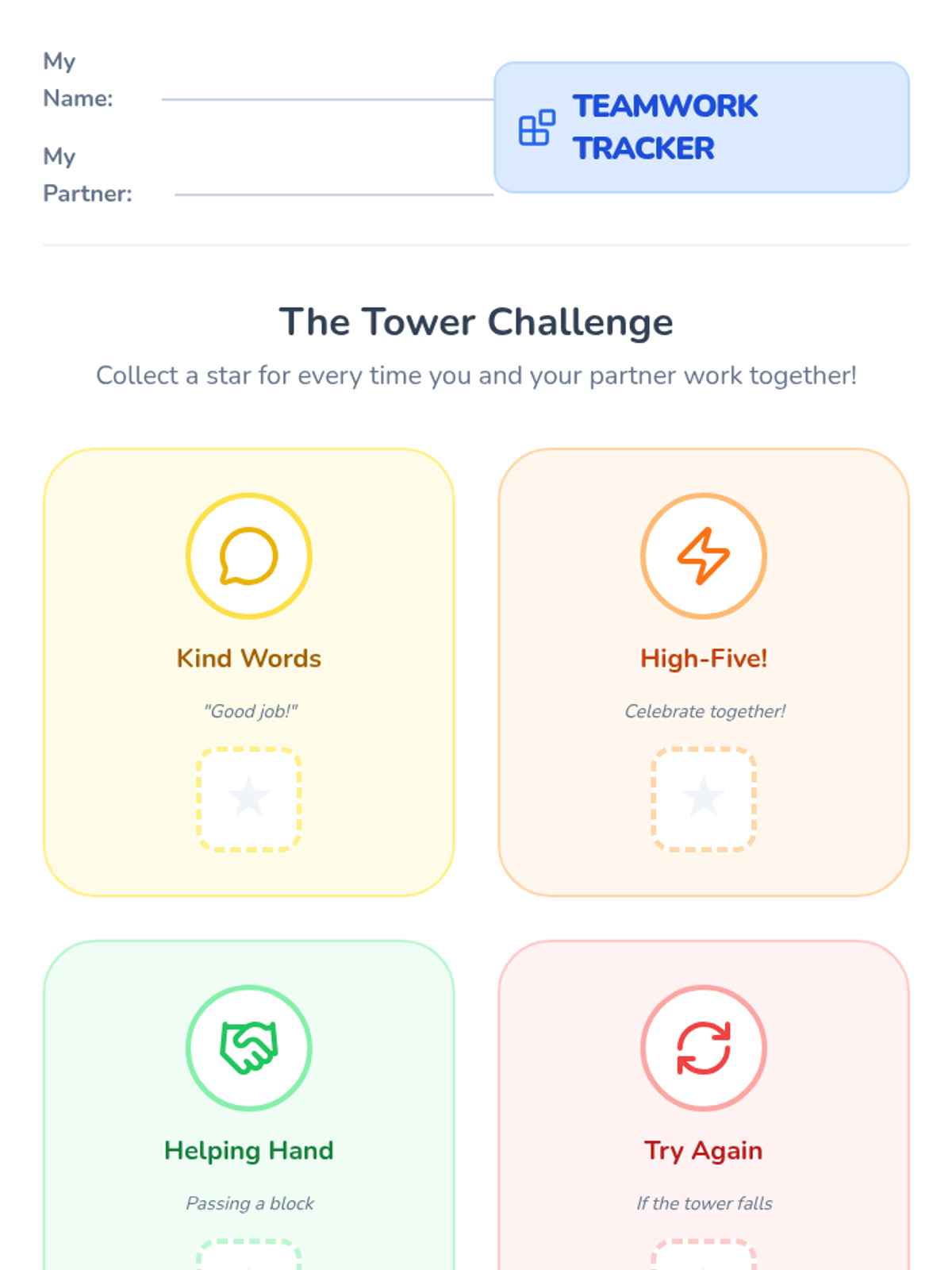
Pairs of students work together to build blocks while focusing on positive interactions like high-fives and encouraging words.
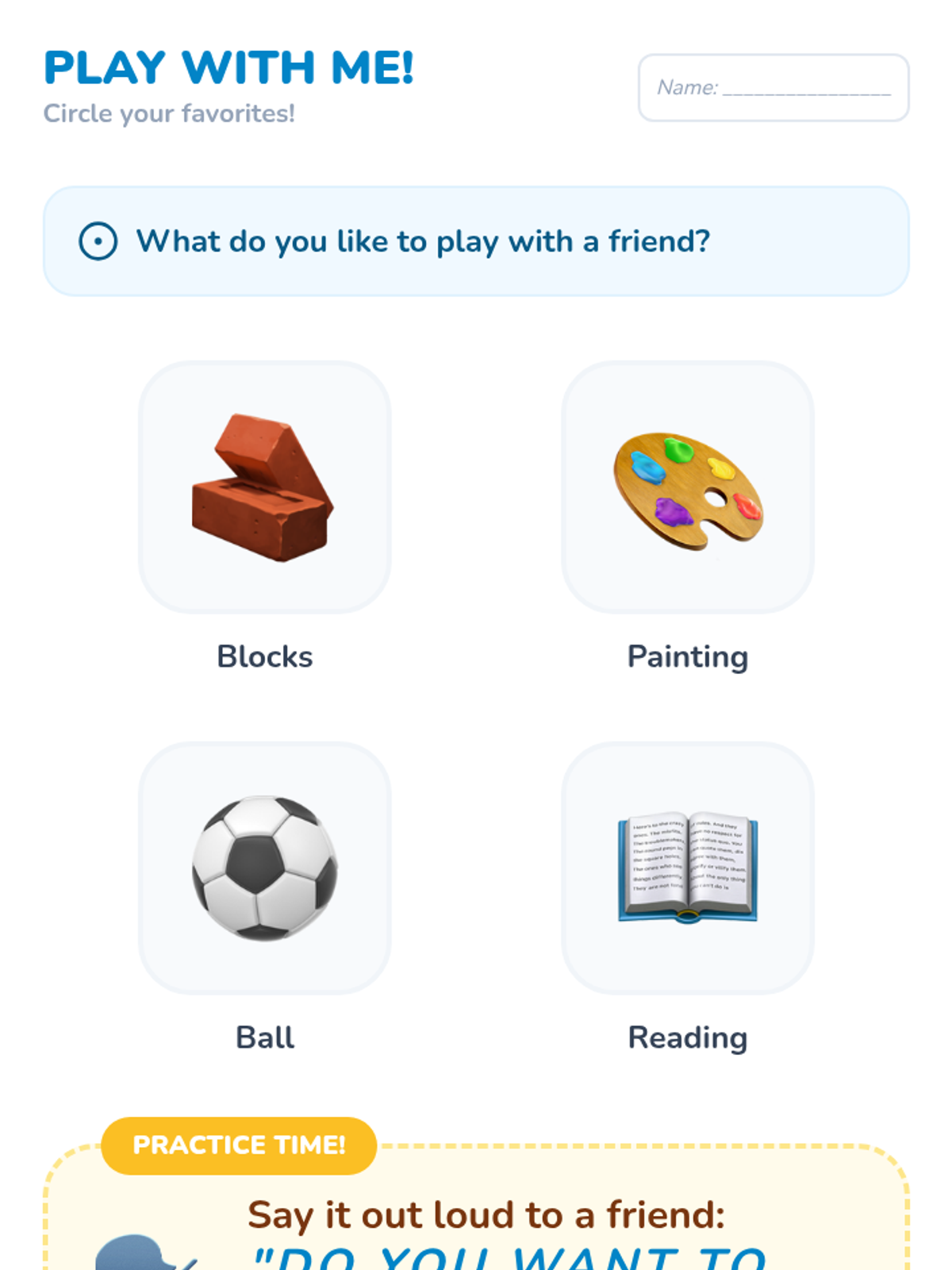
Students learn and practice simple scripts for asking a peer to play, exploring the feelings associated with inclusion.