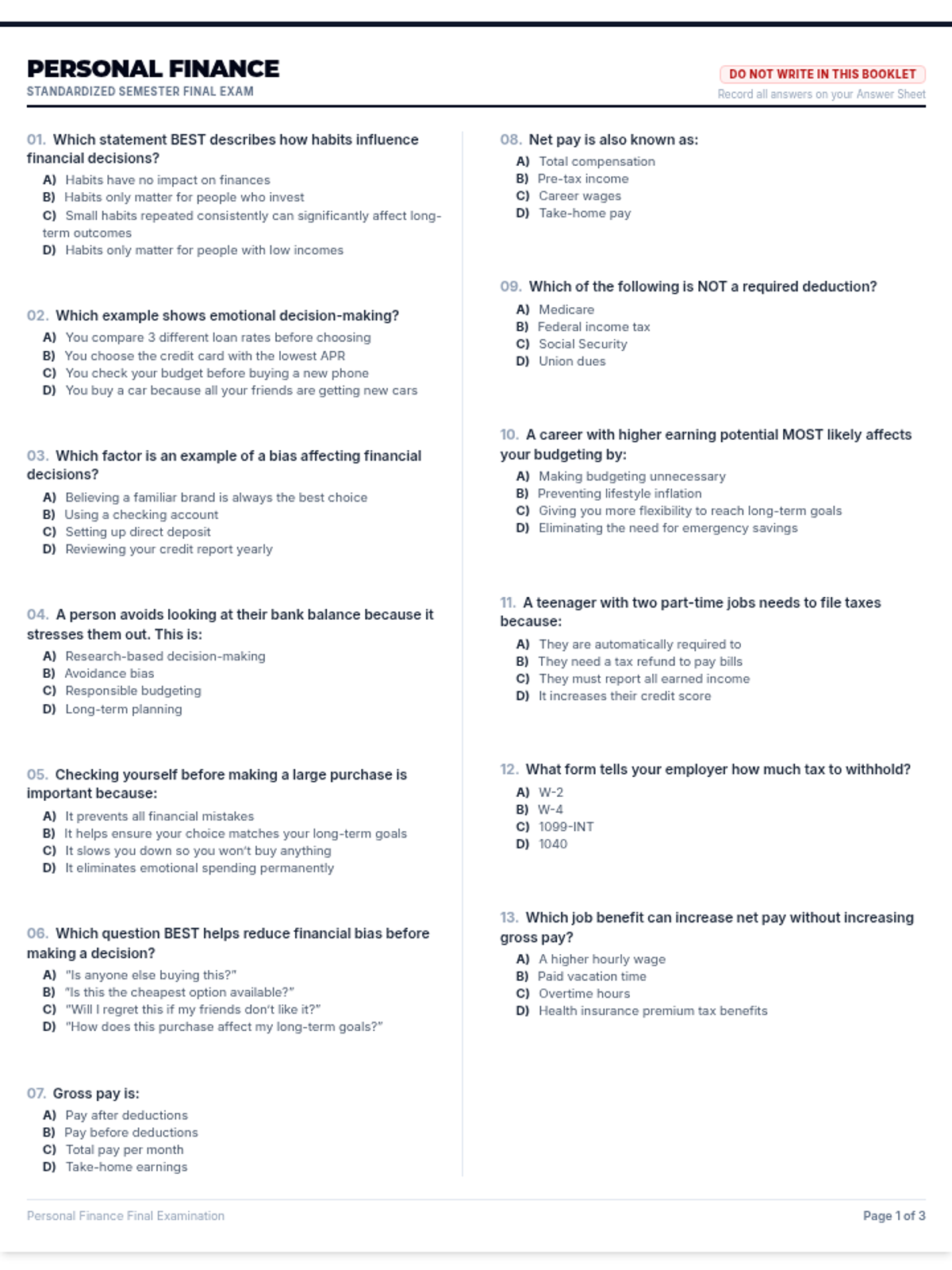
Students investigate physical warning signs such as pacing, fist-clenching, and invasion of personal space. They review footage of escalating situations to pinpoint the exact moment physical movement shifts from restless to aggressive.
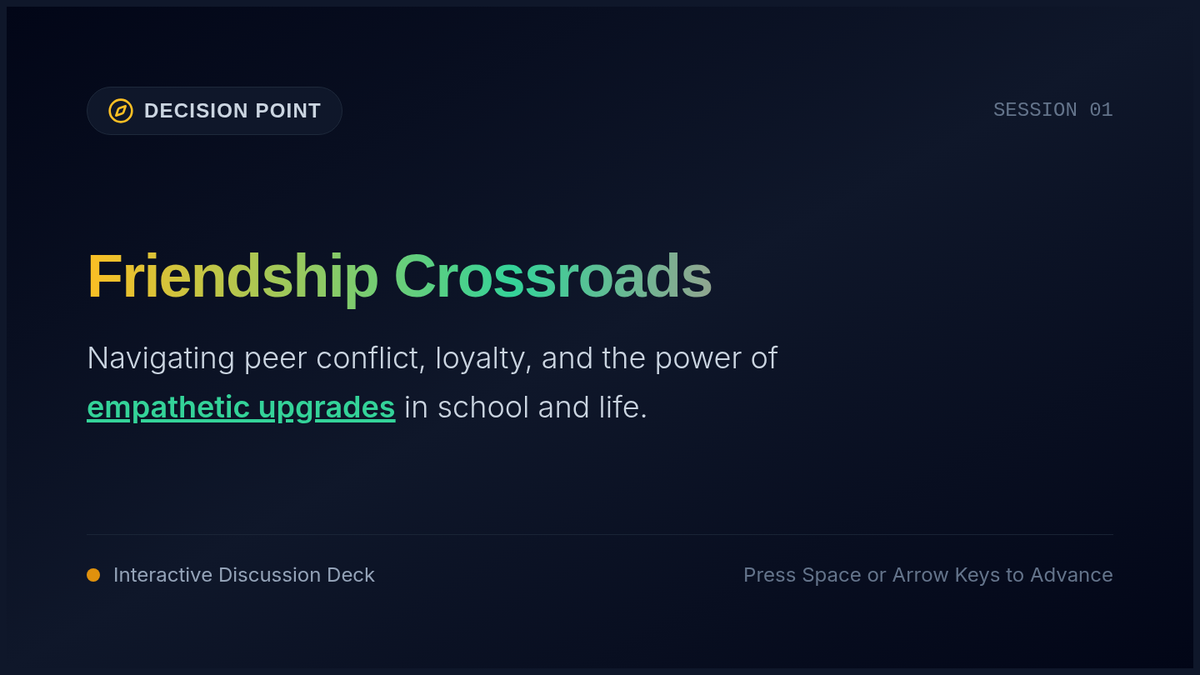
A comprehensive lesson for high school students that explores the intersection of self-esteem and soft skills. Students will learn how building competence in communication, empathy, and leadership reinforces their internal sense of worth through interactive scenarios and reflections.
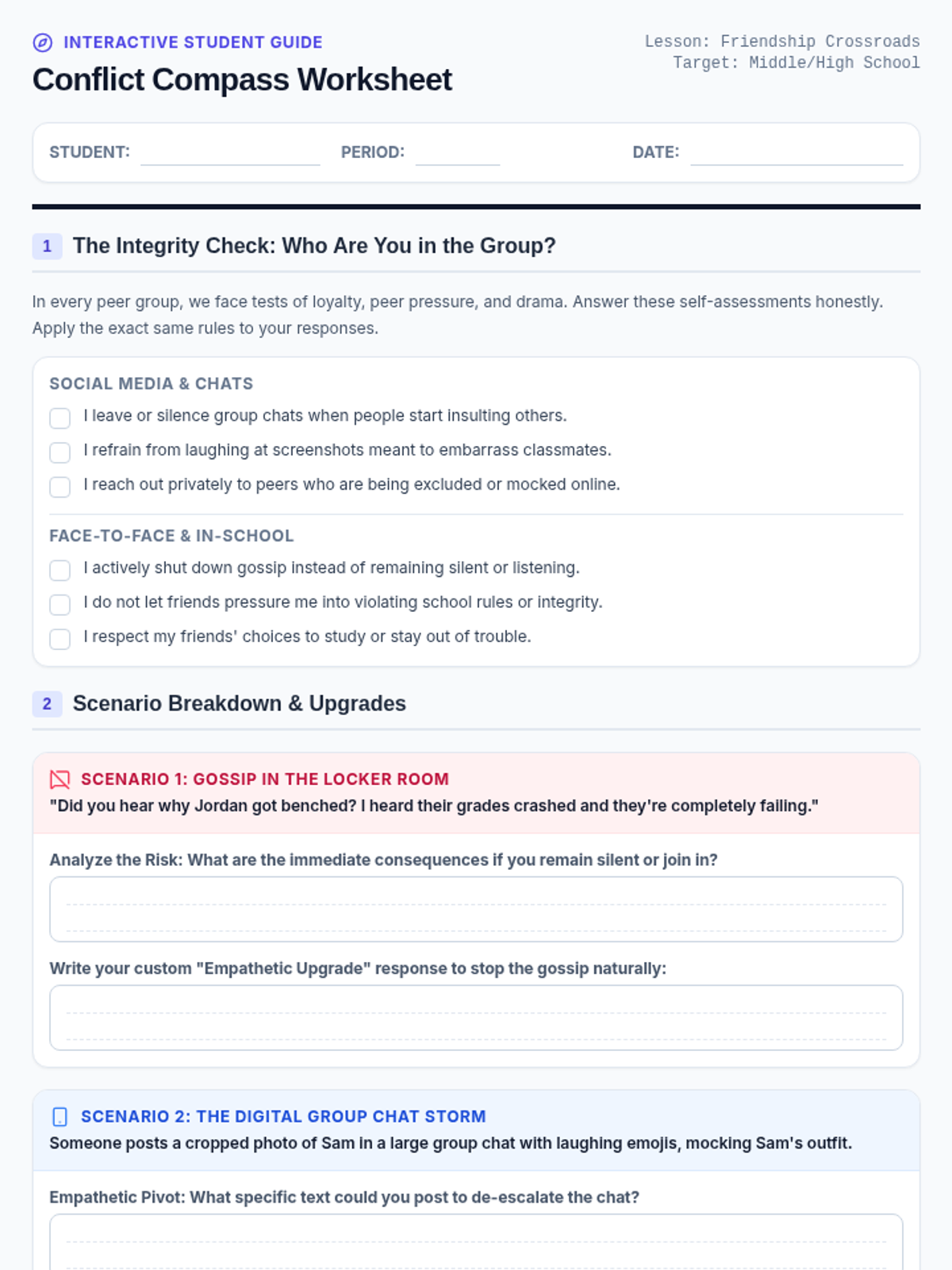
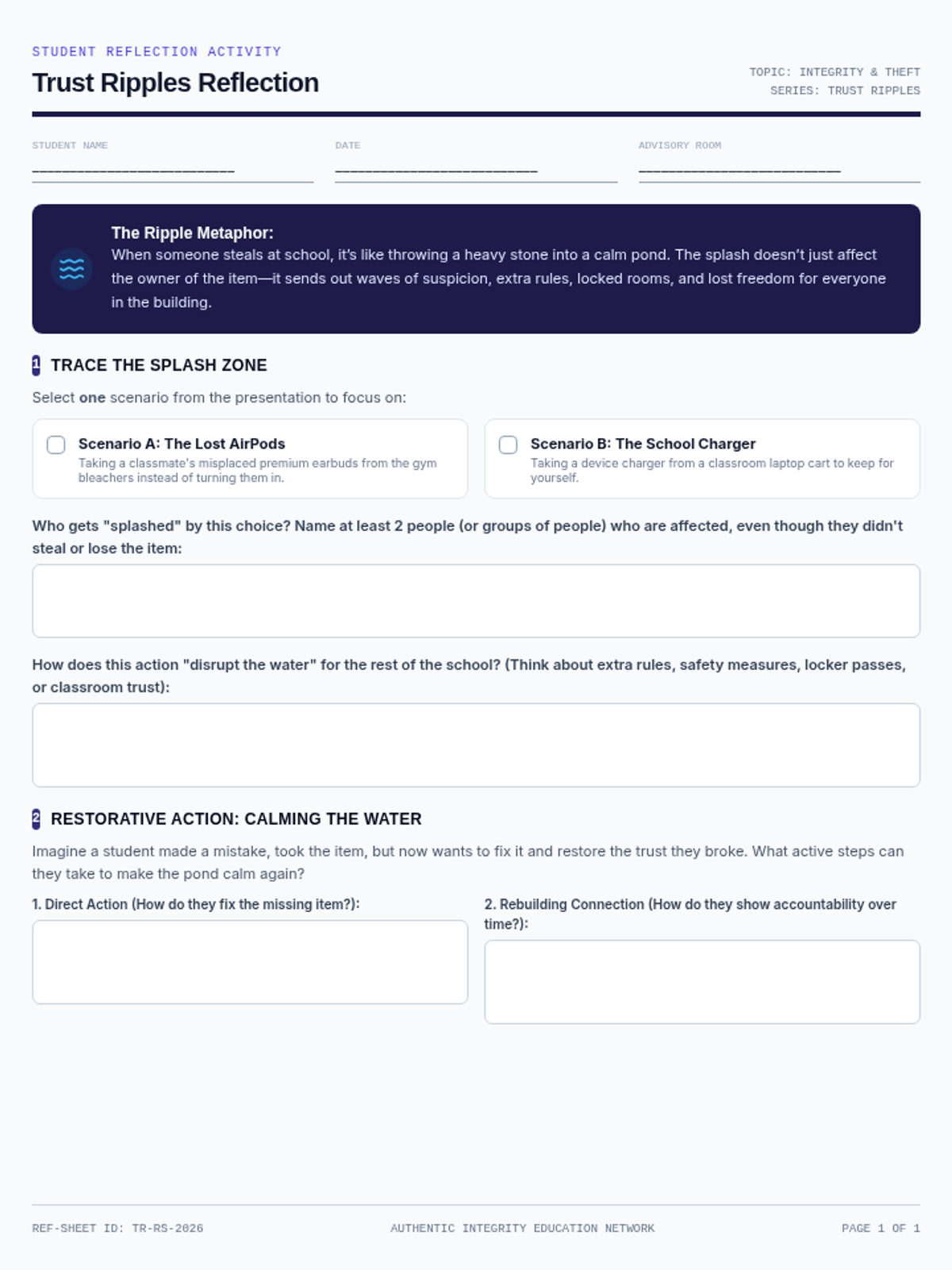
A large-group SEL lesson focused on character, exploring the concept of doing the right thing even when no one is watching through interactive discussions and reflective activities.
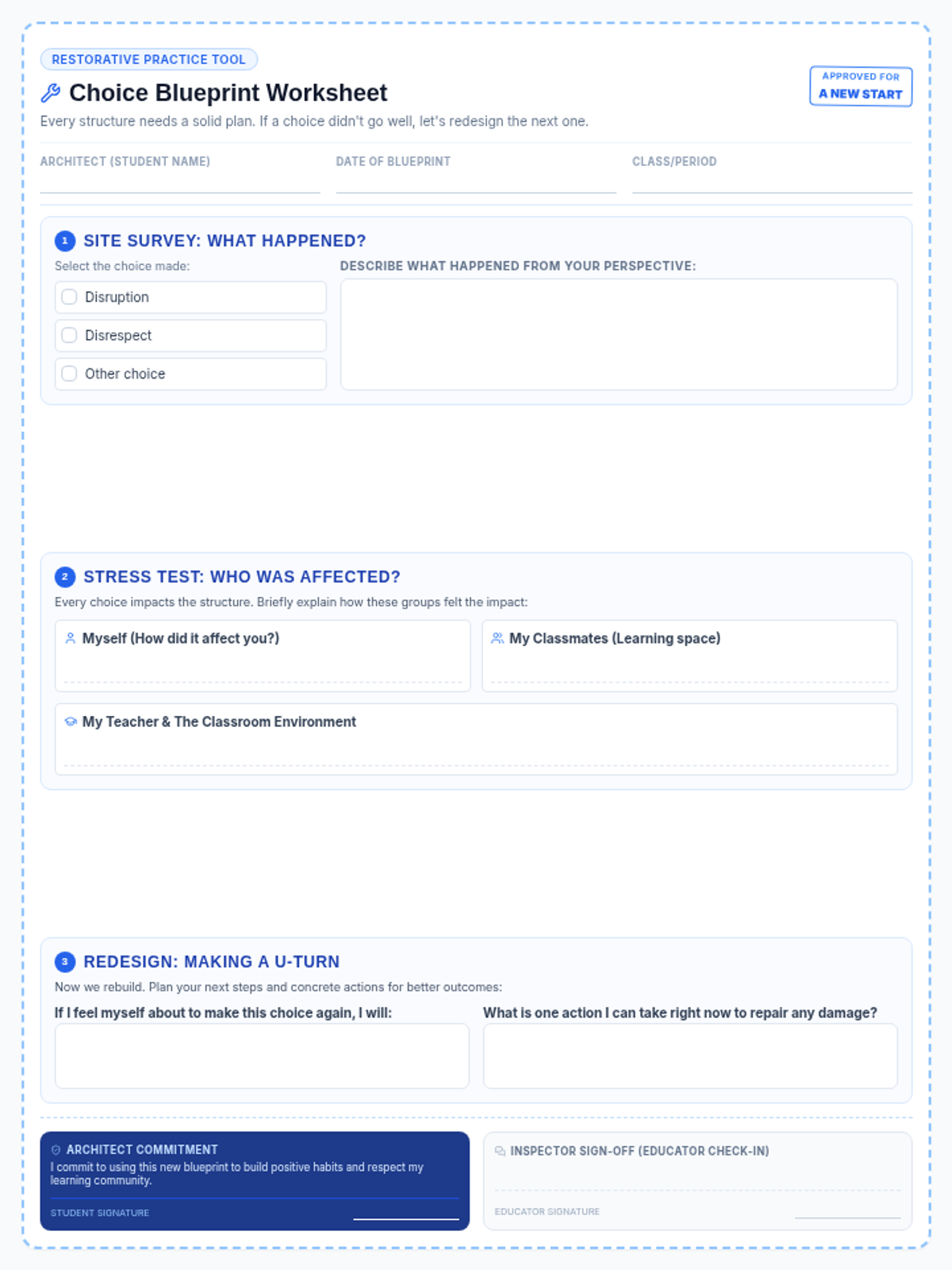
A comprehensive lesson exploring the motivations behind academic dishonesty and the long-term impact of cheating on personal integrity and community trust. Students analyze realistic scenarios and build a personal 'blueprint' for ethical decision-making.
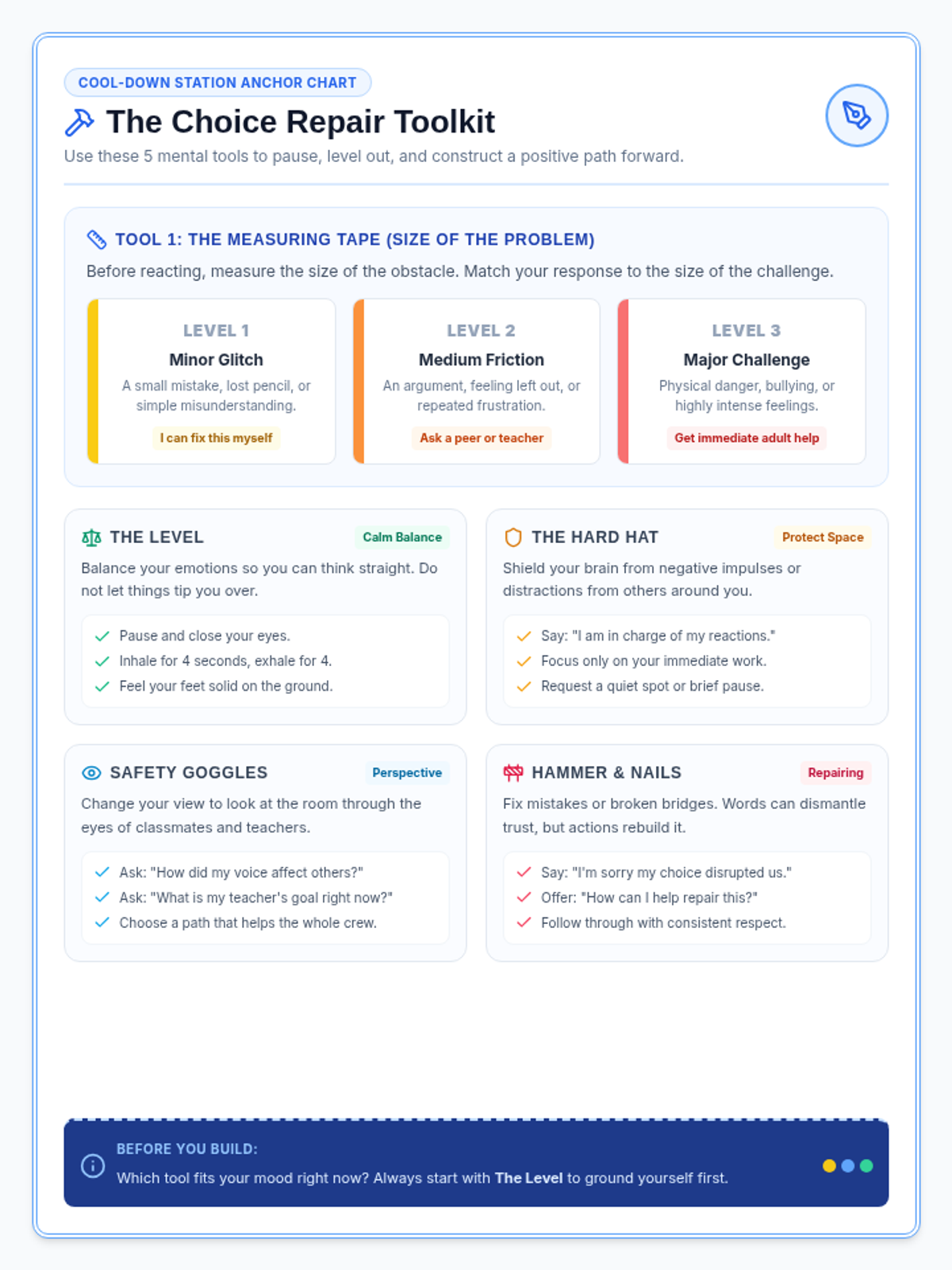
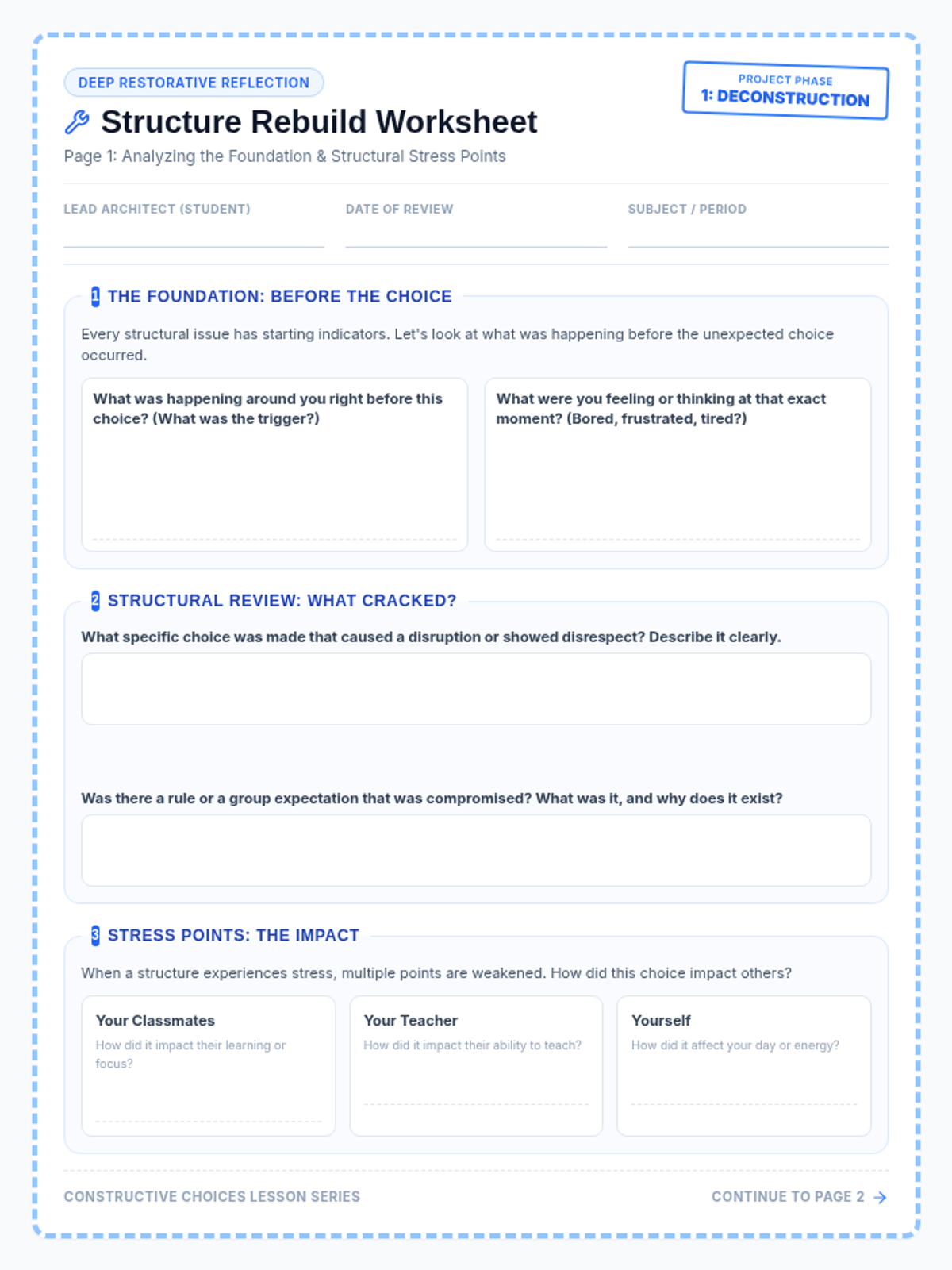
A guide for students and staff on how to safely navigate and respond to physical conflicts in a school setting, focusing on de-escalation, safety, and restorative practices.
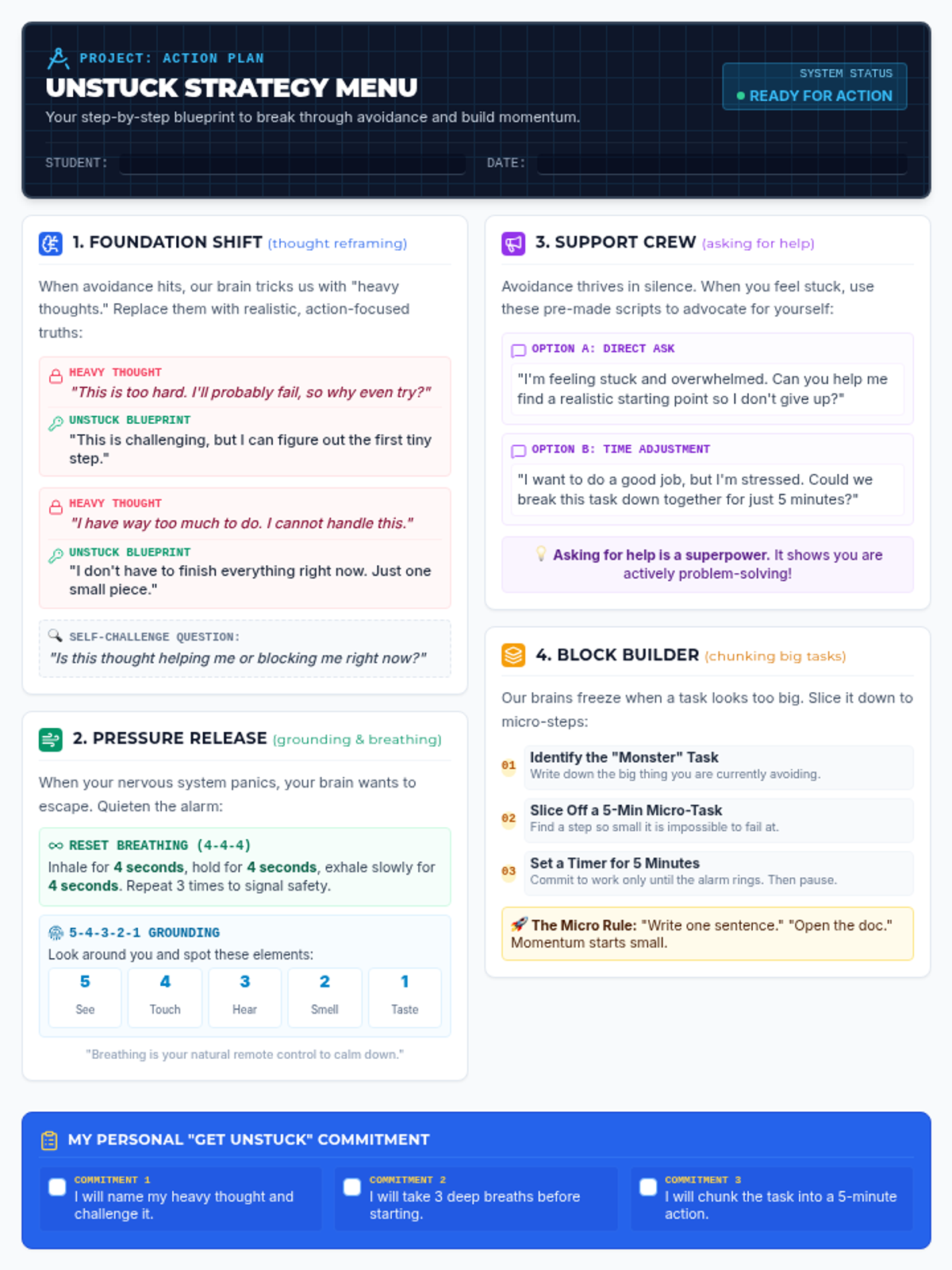
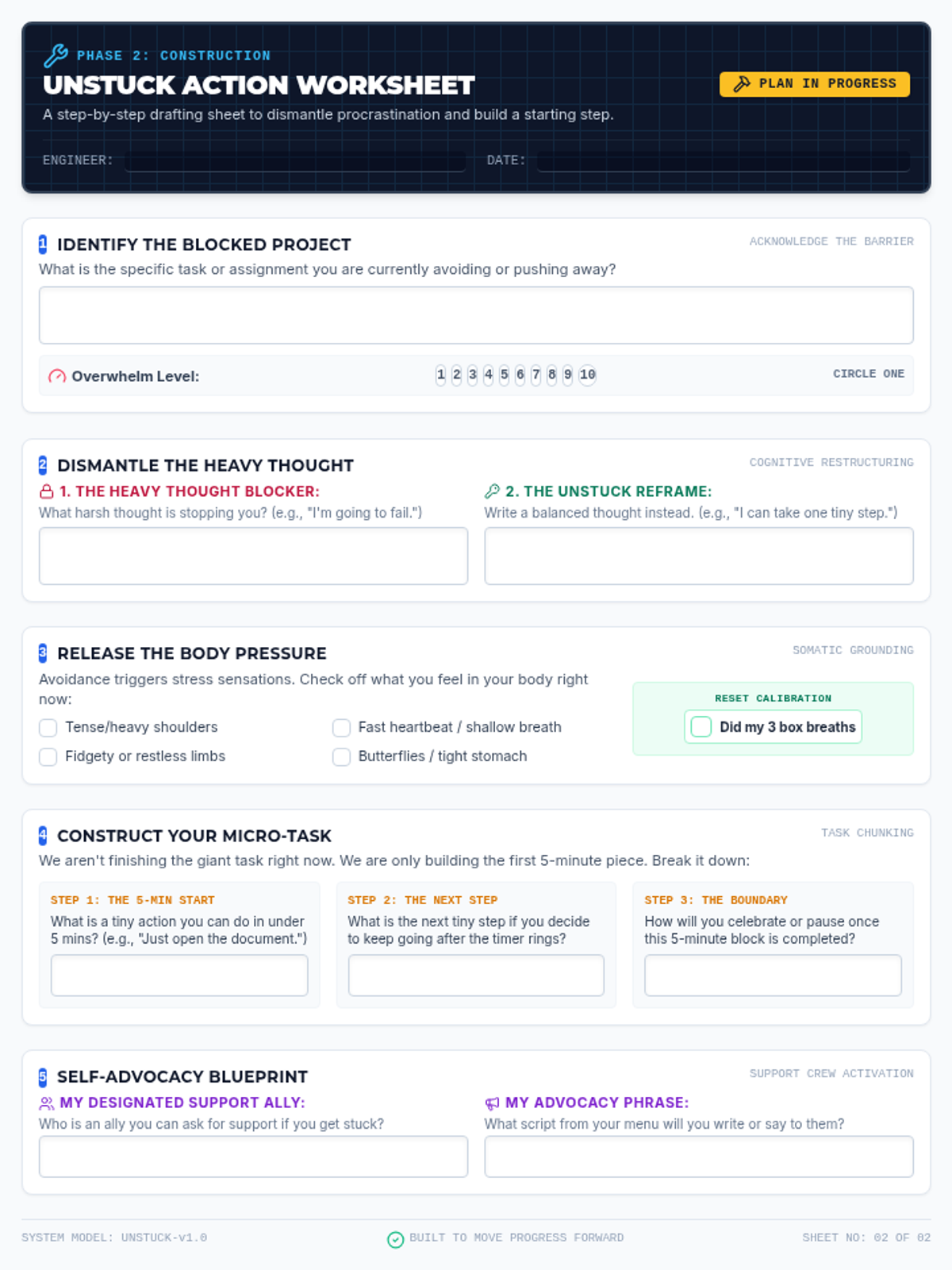
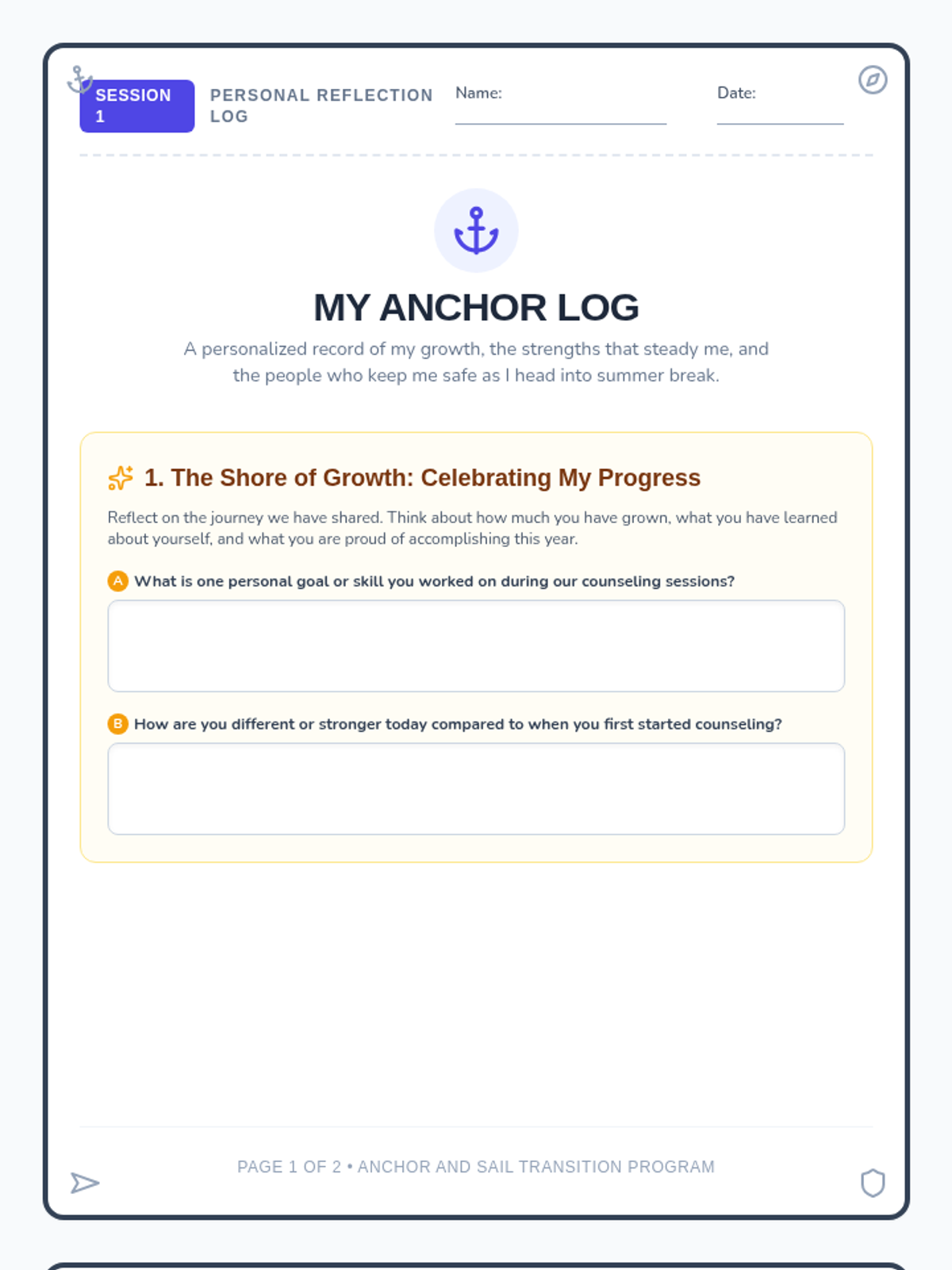
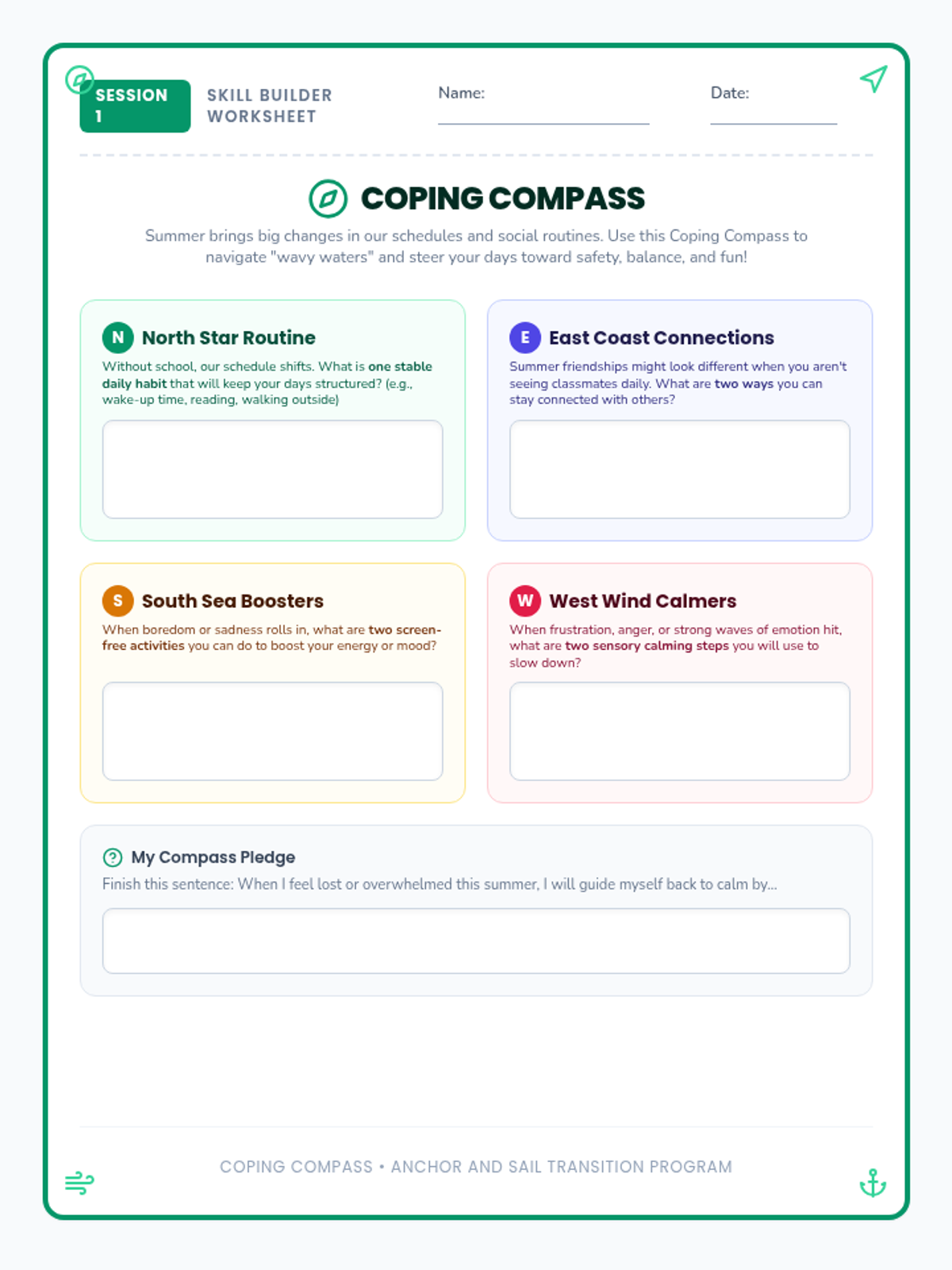
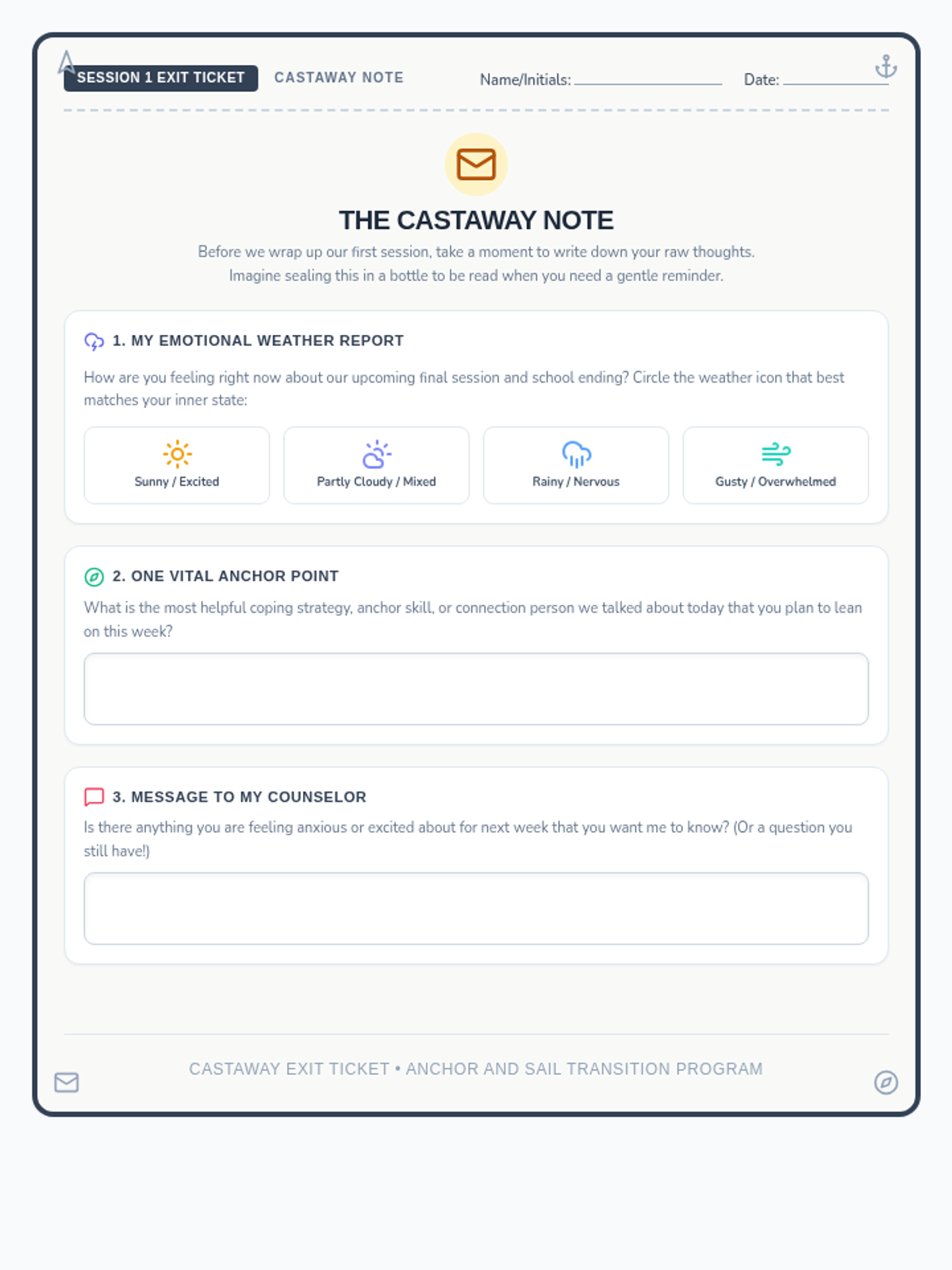
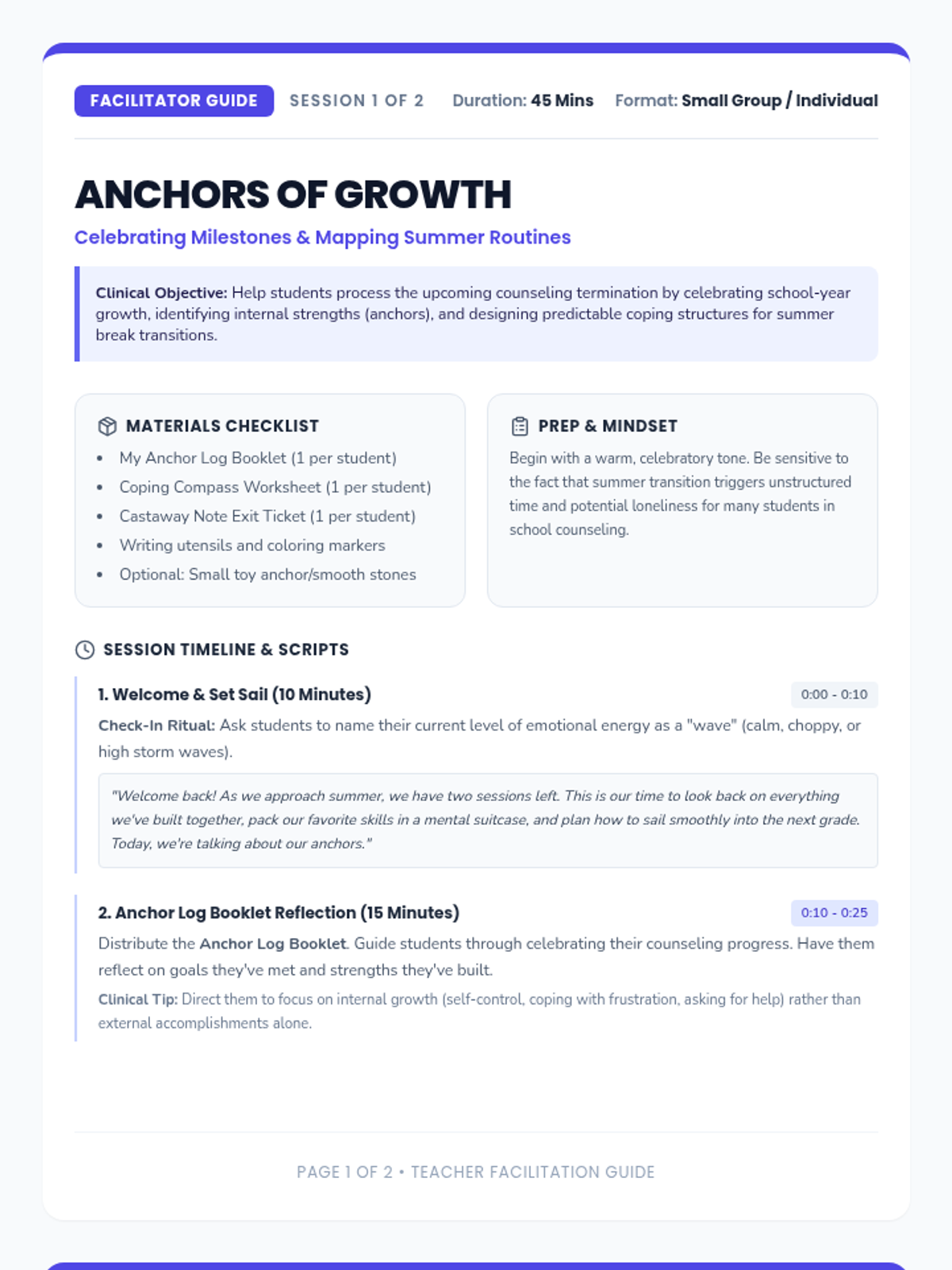
A set of resources designed for a therapeutic program to address class and work avoidance using a witty, nautical winter theme. Focuses on self-regulation, coping skills, and the impact of individual behavior on the school community.
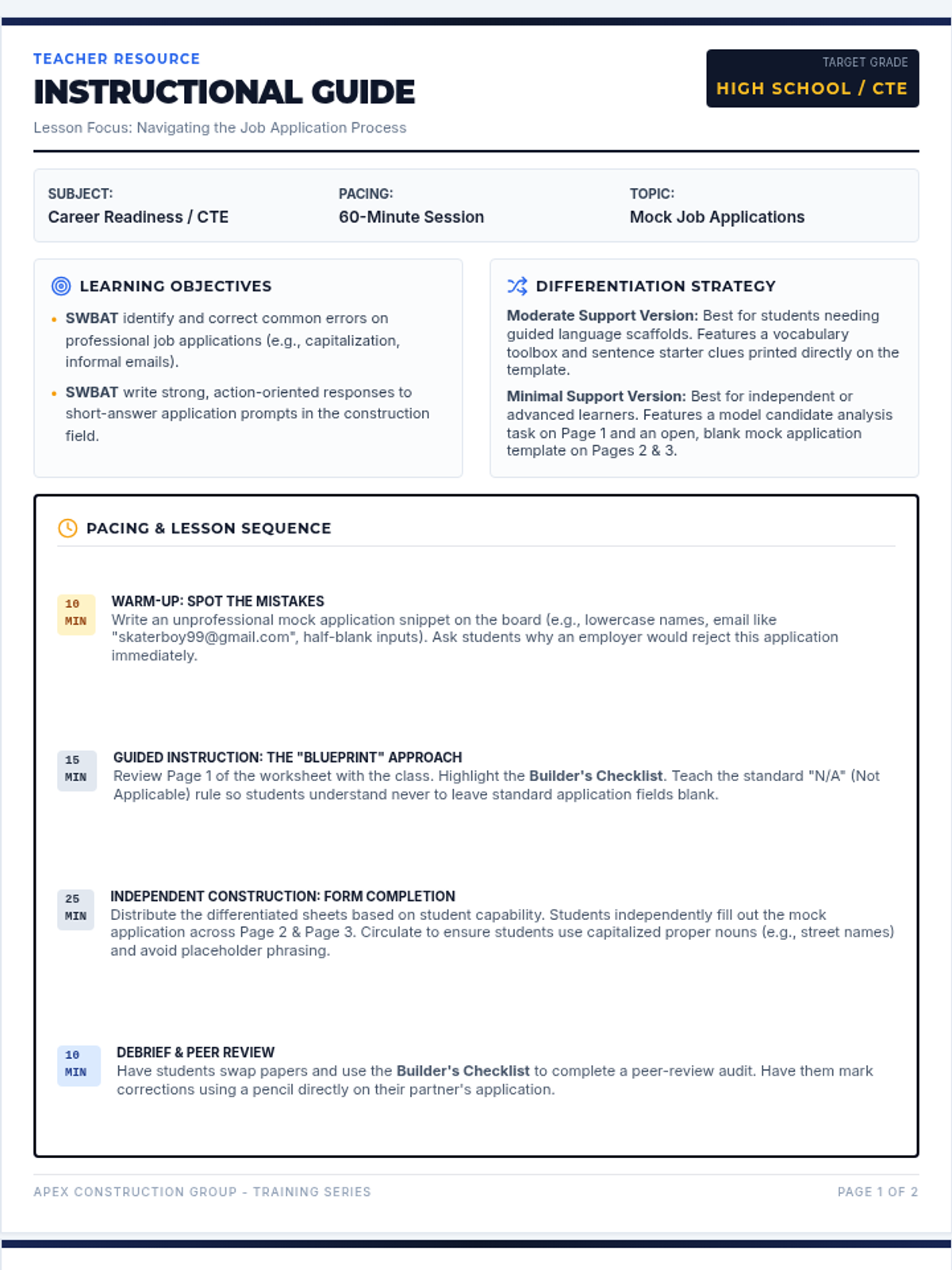
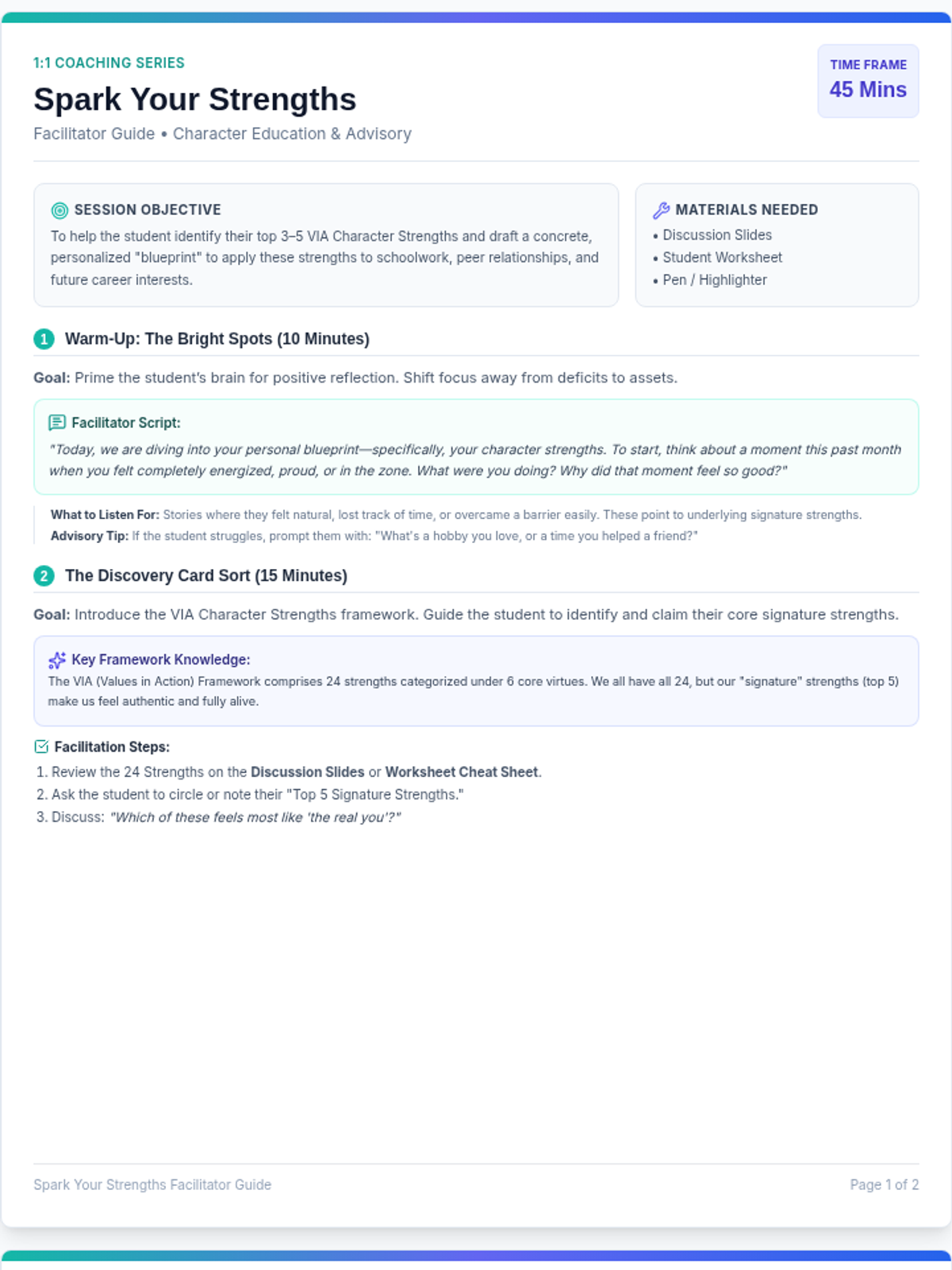
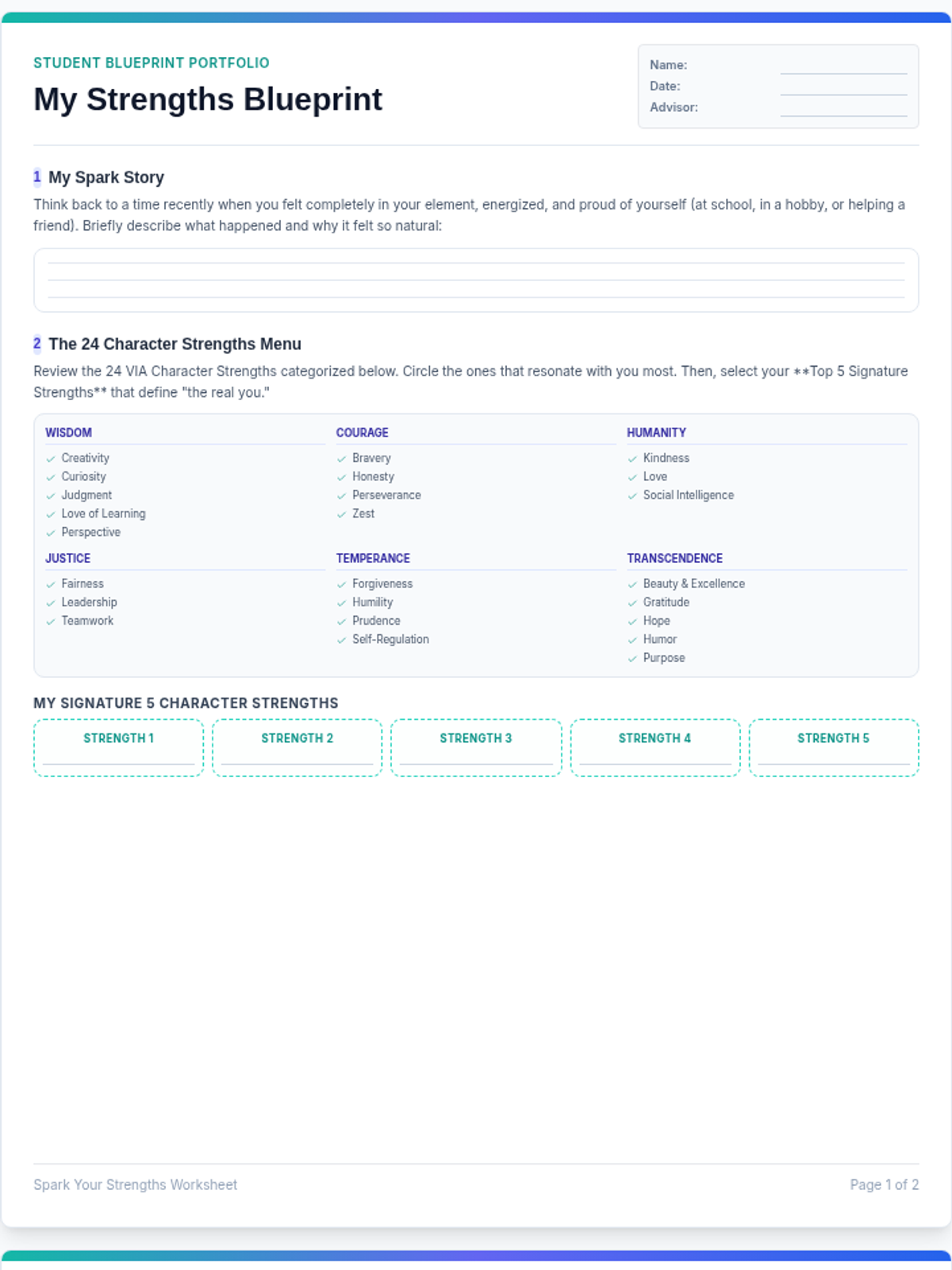
A game-inspired goal-setting activity designed for parent-teacher conferences, focusing on identifying student strengths and growth areas through a 'future quest' lens.
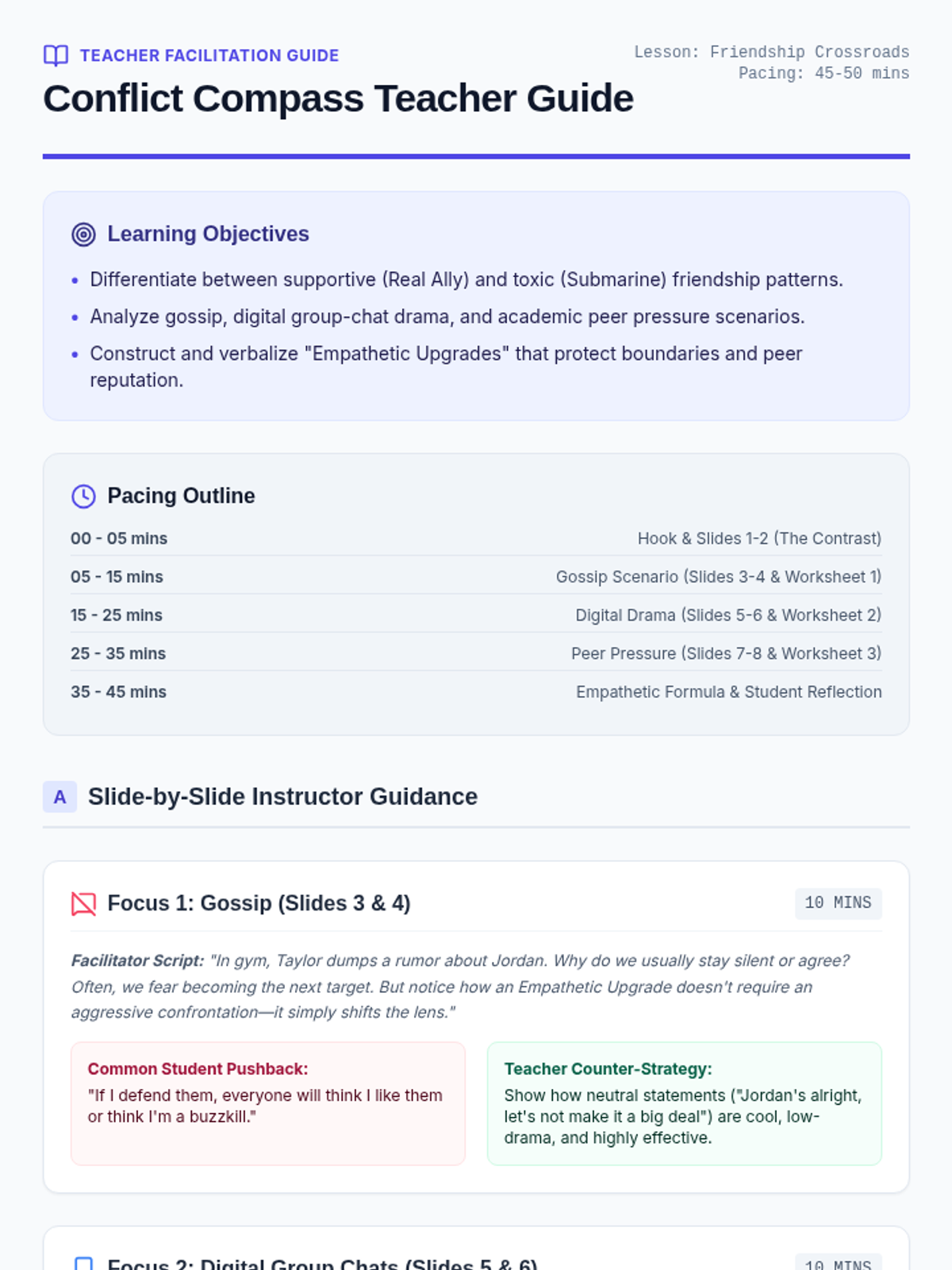
This lesson helps high school students identify and navigate social conflict, specifically focusing on scenarios where teasing crosses the line into bullying. Students will analyze 8 realistic scenarios to develop empathy and bystander intervention strategies.
A set of high-impact materials for parent-teacher conferences, including informational displays, a family pledge, and an interactive student campaign activity.
A comprehensive 90-minute lesson focused on identifying and practicing assertive communication using 'I' statements and confident body language. includes a slide deck, practice scenarios, and a visual anchor chart.
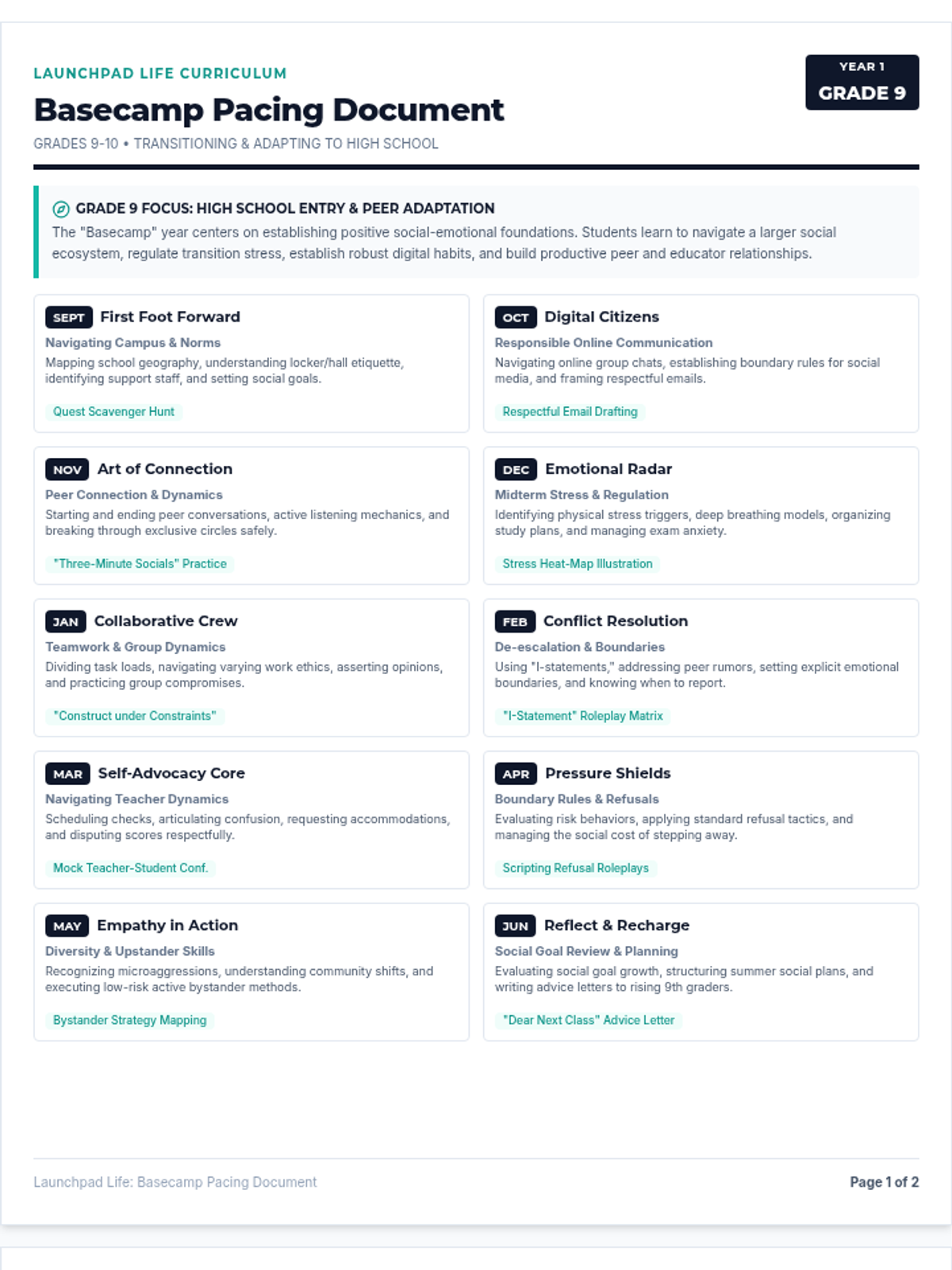
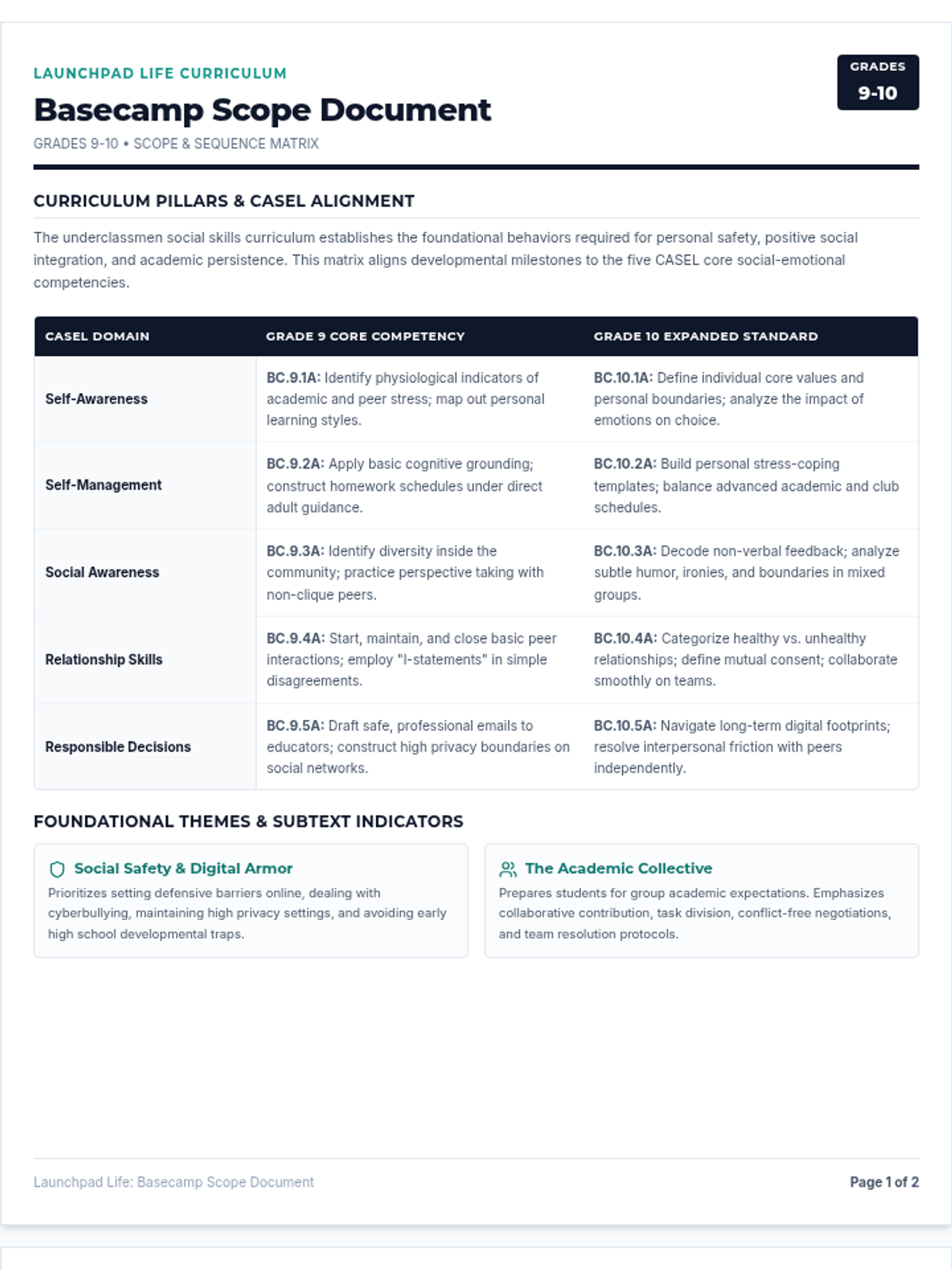
A comprehensive small group lesson for high school students focused on decoding social nuances, specifically sarcasm, figurative language, tone, and facial expressions.
An interactive workshop where students rotate through stations to practice group decision-making, public speaking, and non-verbal communication. Students will learn the balance between using their voice and active listening through hands-on challenges.
A lesson focused on empowering students to use their voices effectively through role-playing and presentation projects. Students explore empathy, perspective-taking, and communication strategies.
A comprehensive toolkit designed to help educators, students, and families collaborate on resolving chronic absenteeism and building consistent attendance habits. This lesson provides the structure for effective attendance conferences and documented intervention strategies.
Applying assertive communication and emotional regulation to the digital world. Students discuss the 'disinhibition effect' of screens and practice protocols for group chats and social media conflicts.
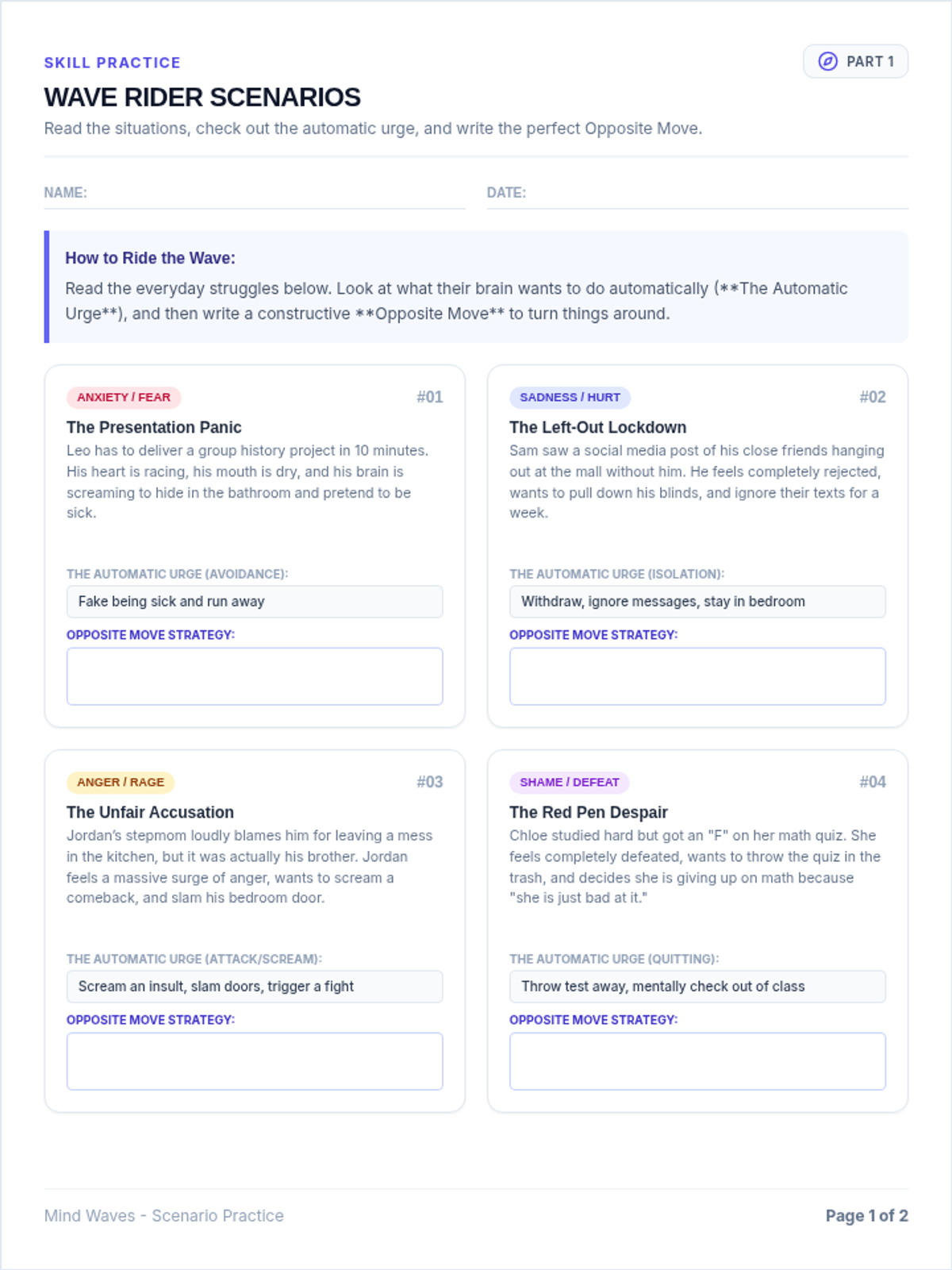
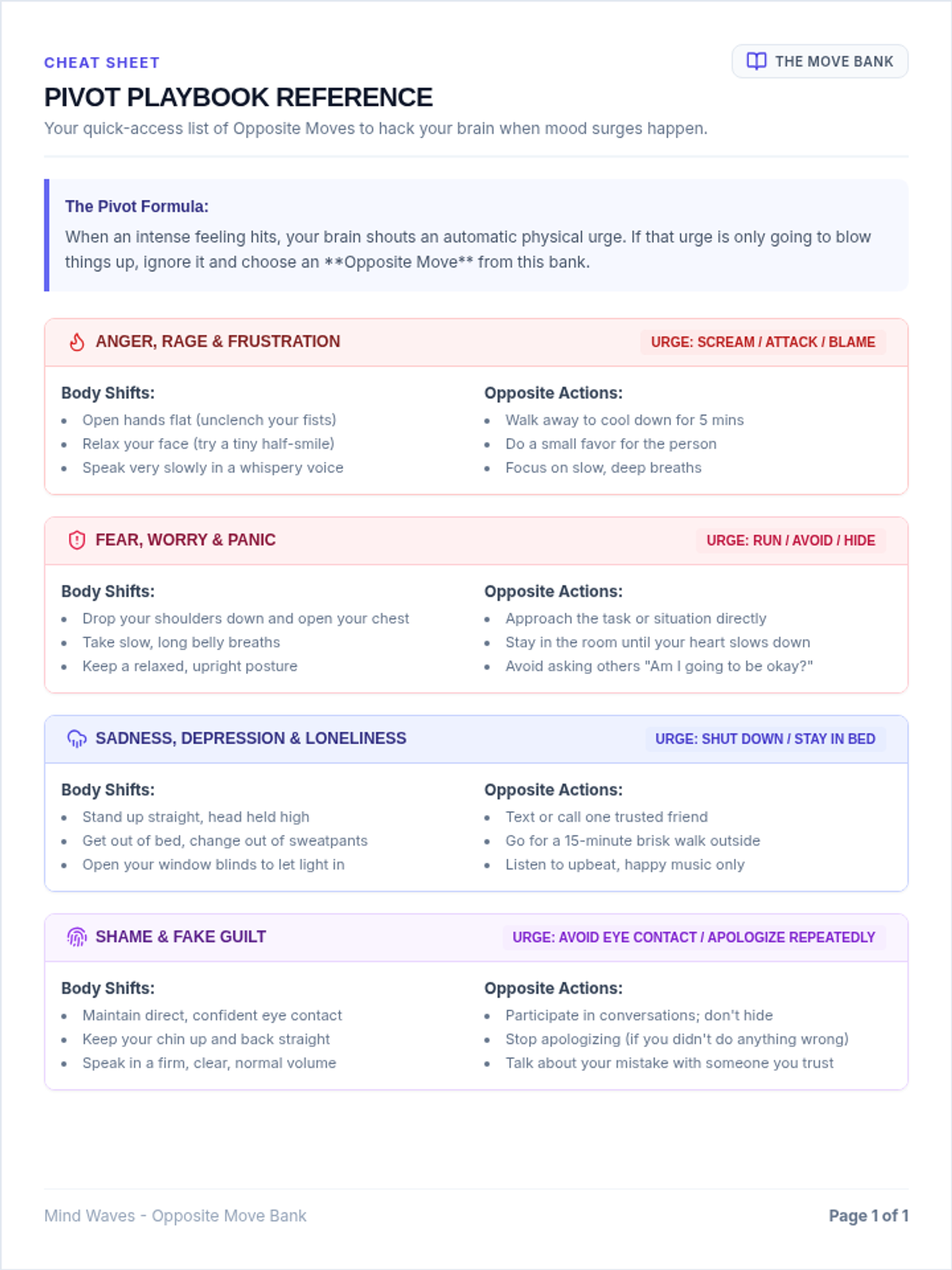
A specialized module focusing on the transition from impulsive verbal aggression to strategic, assertive communication. Students learn to use precise language to maintain social capital and resolve conflicts without escalation.
Provides a structured framework for collaborative problem-solving, guiding students from identifying the core issue to choosing a win-win solution.
Teaches the 'I-Statement' formula and the art of active listening to help students express needs and understand others without escalation.
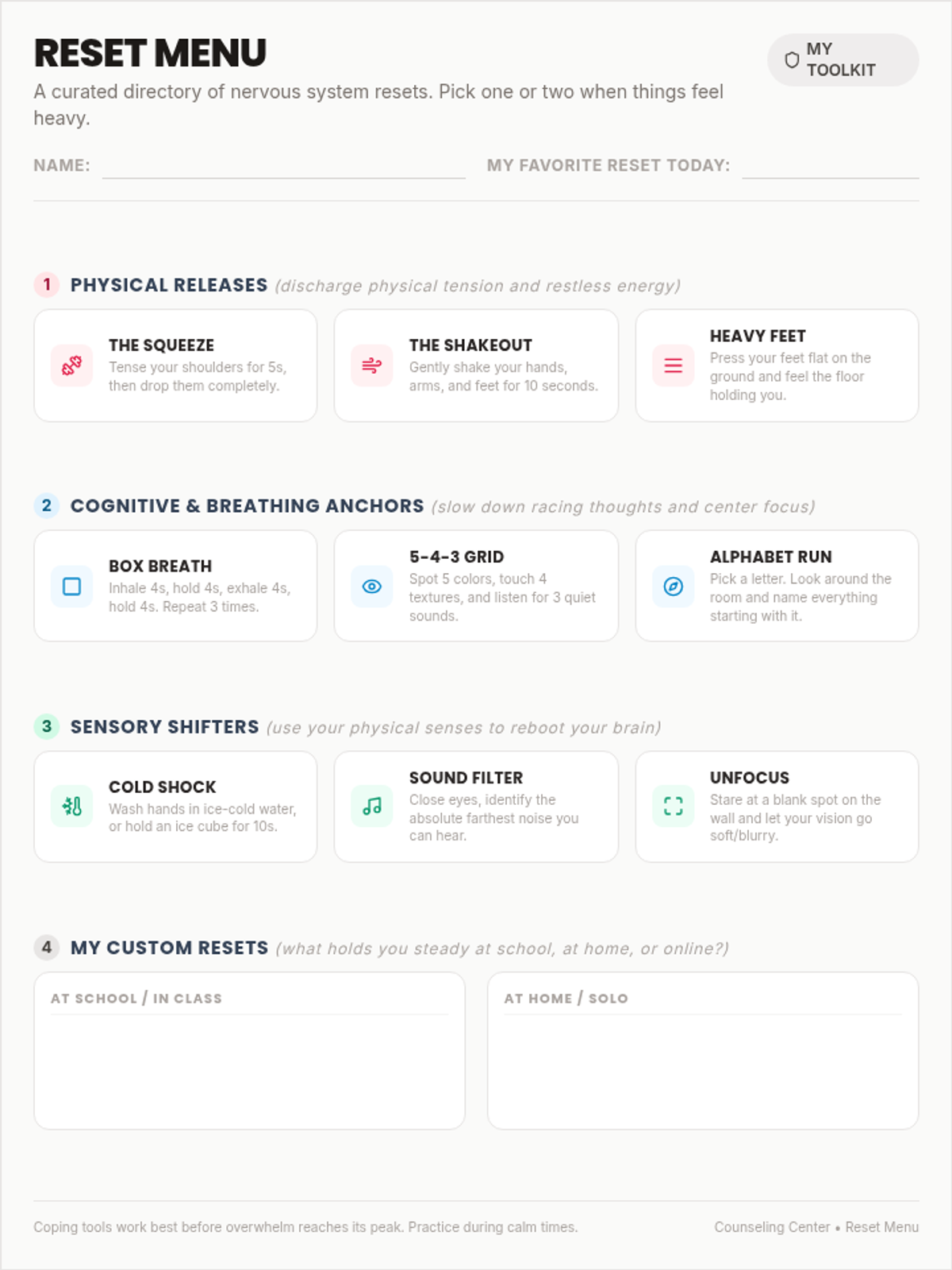
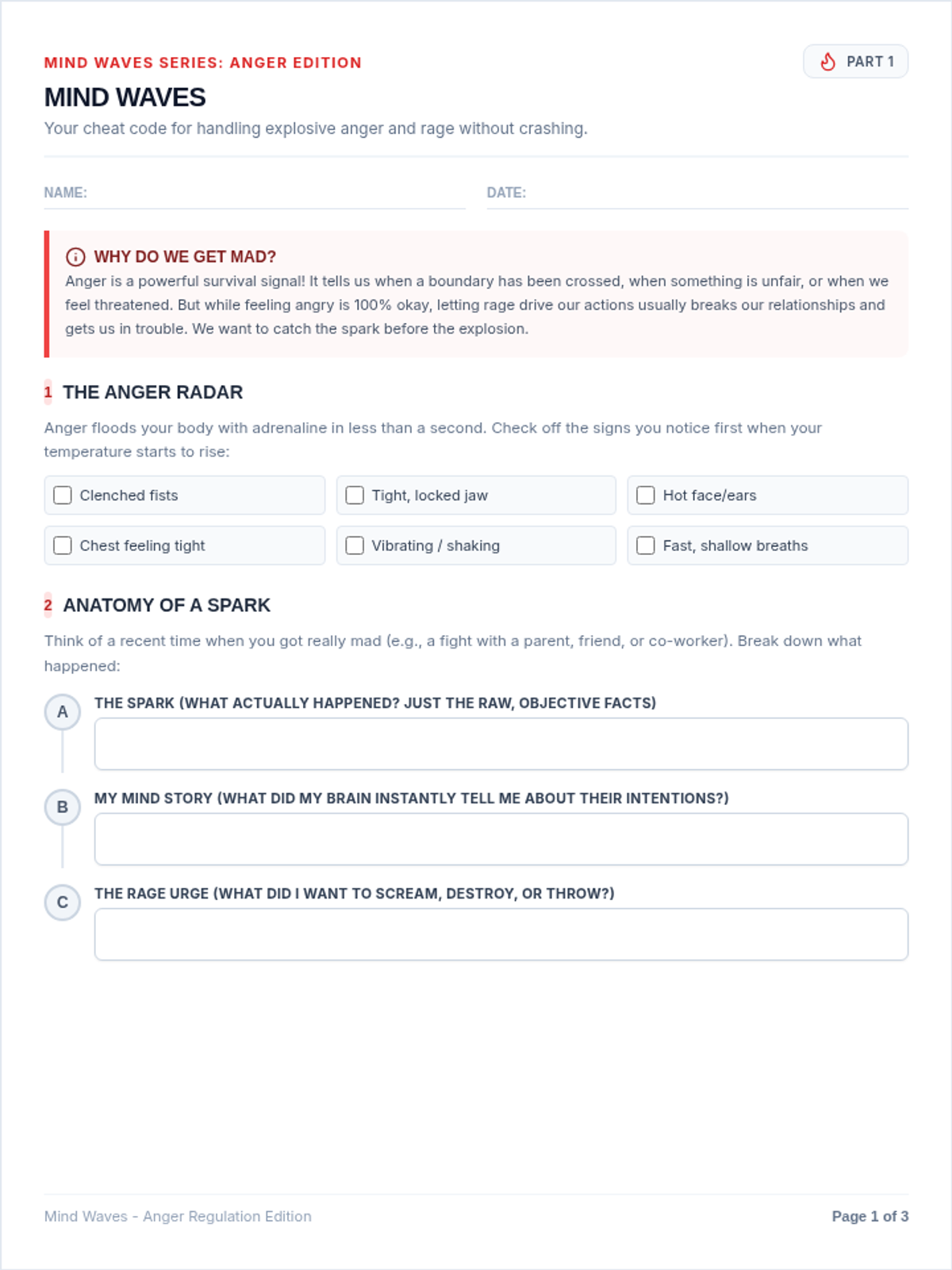
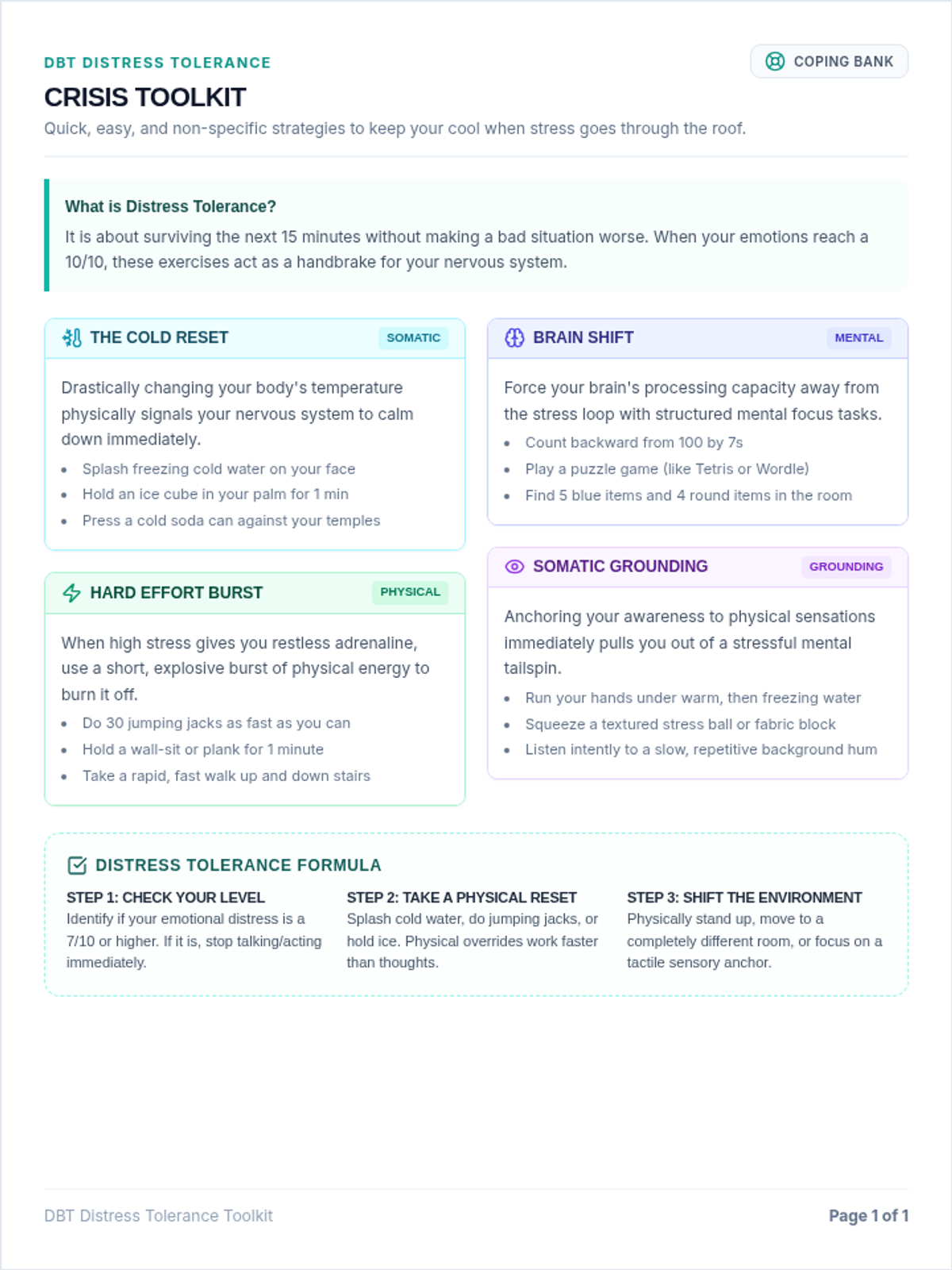
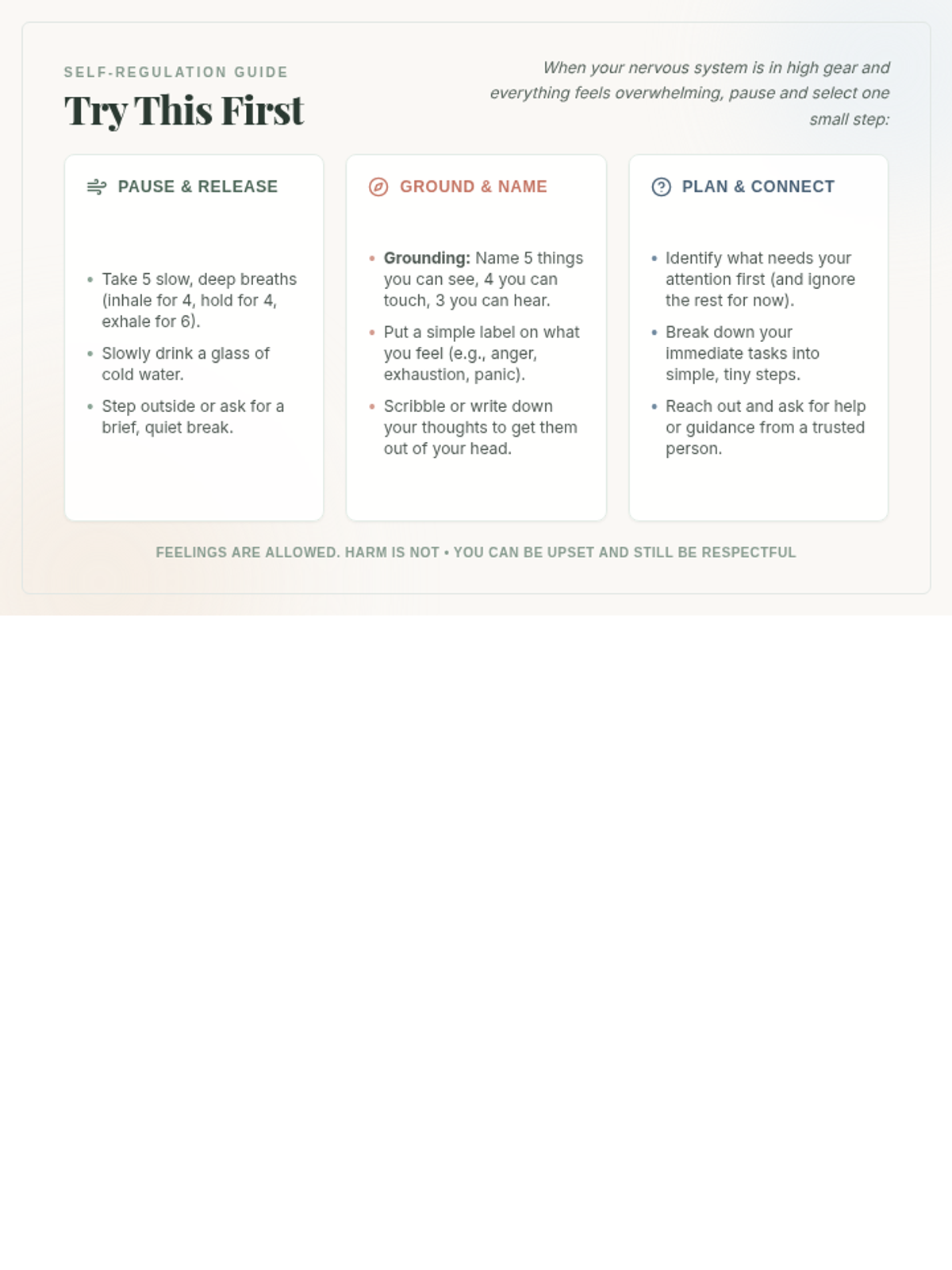
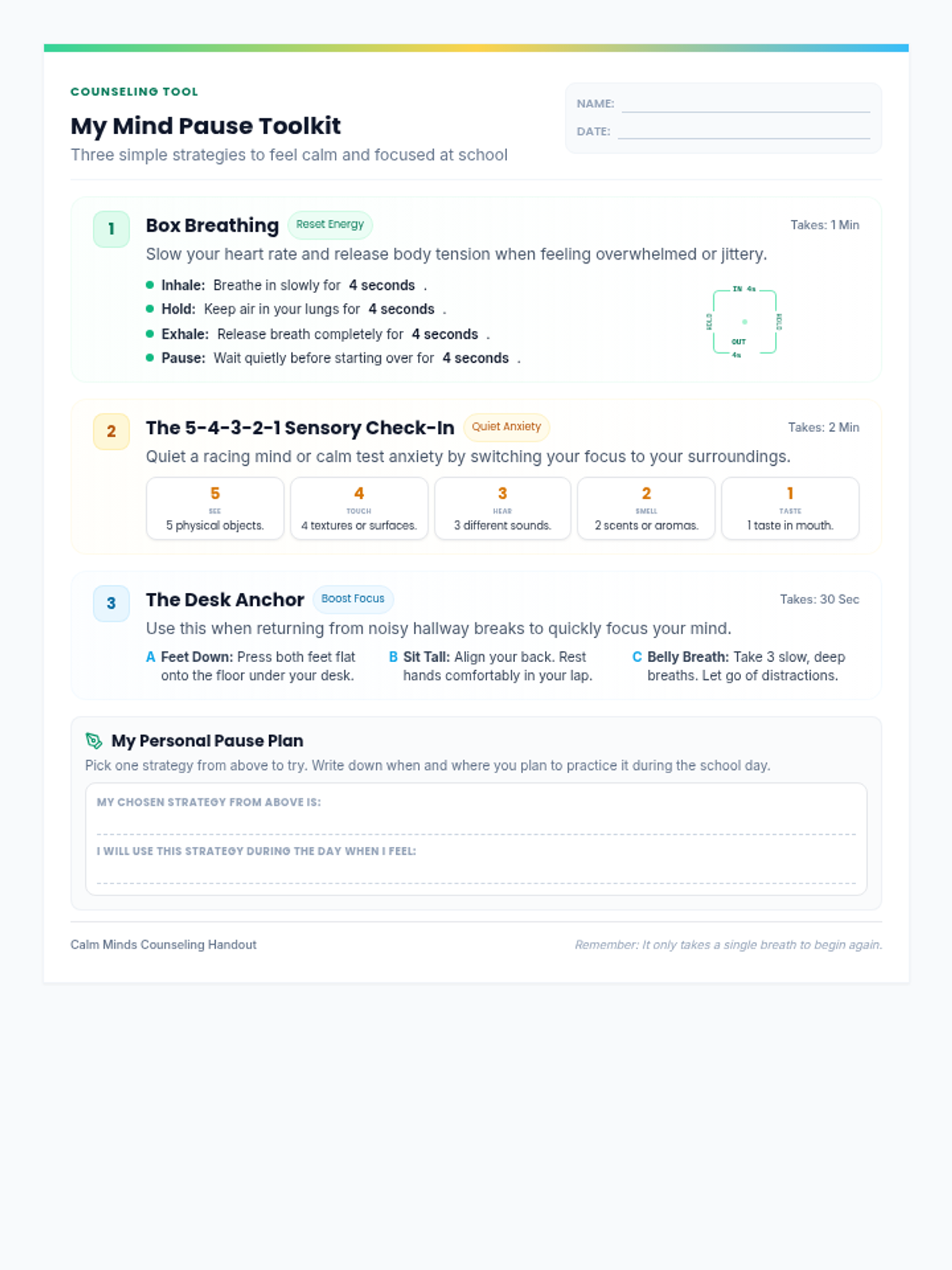
Focuses on identifying the physical signs of frustration and practicing immediate 'cool-down' techniques to prevent aggressive outbursts before they start.
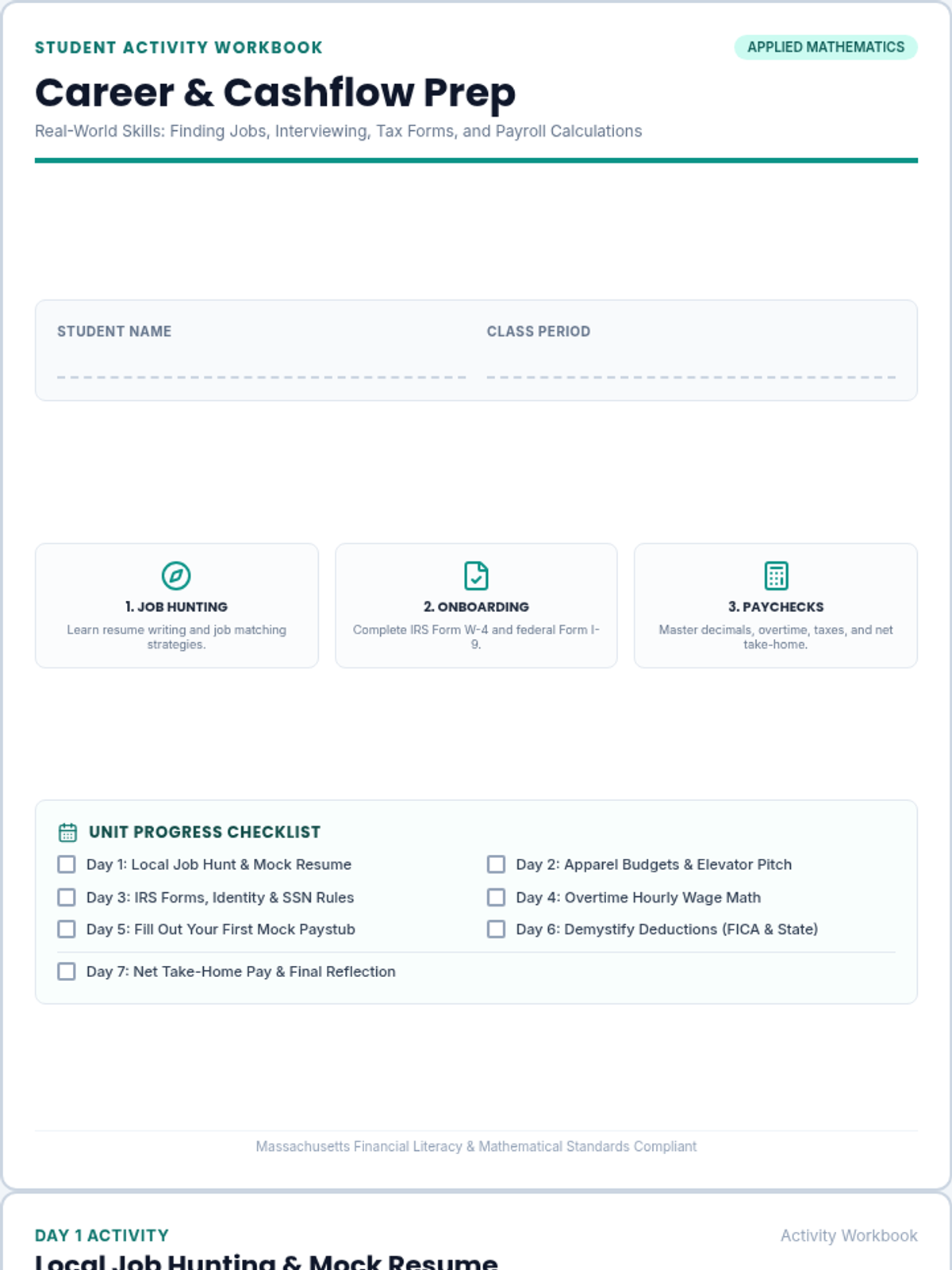
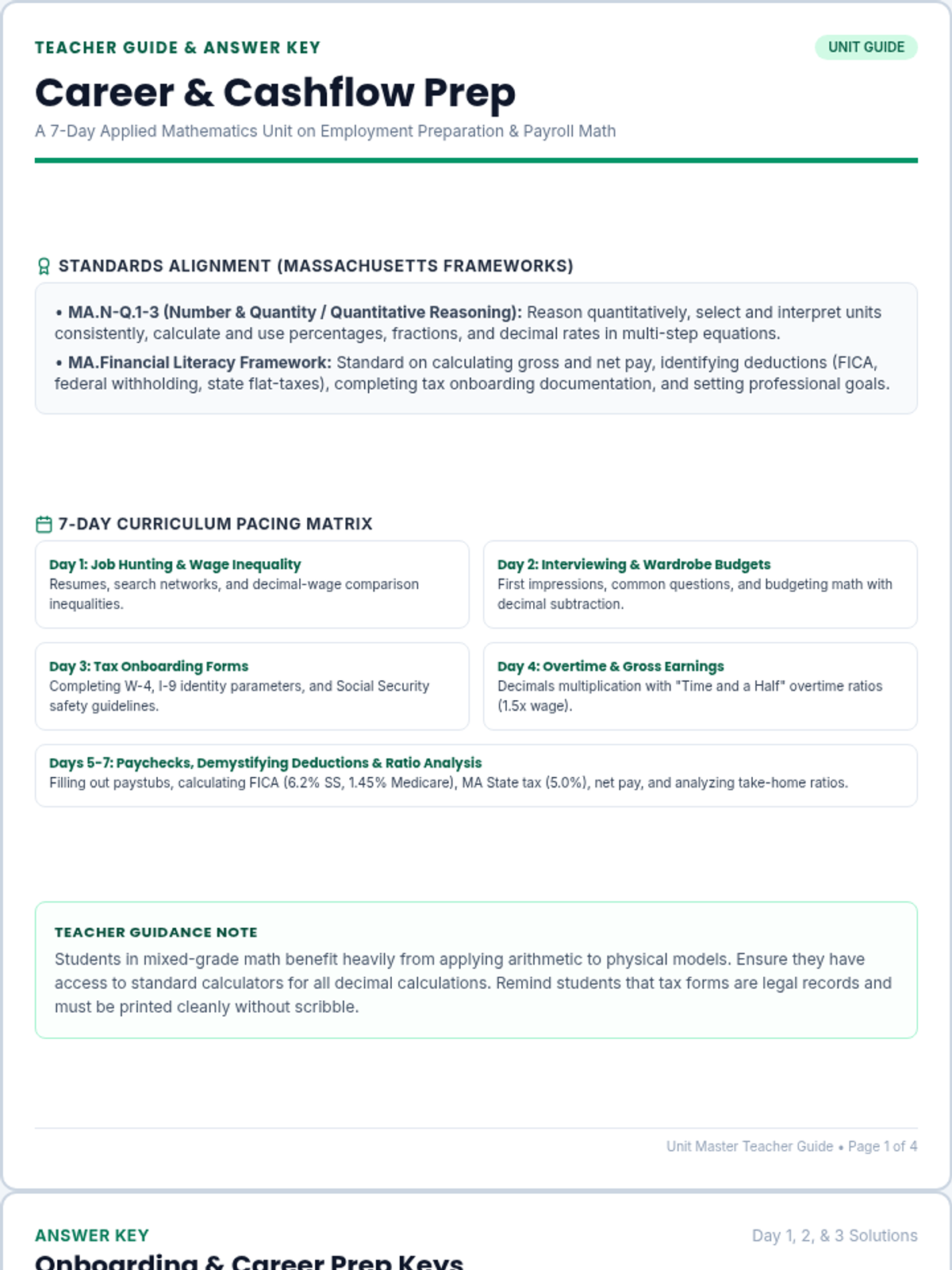
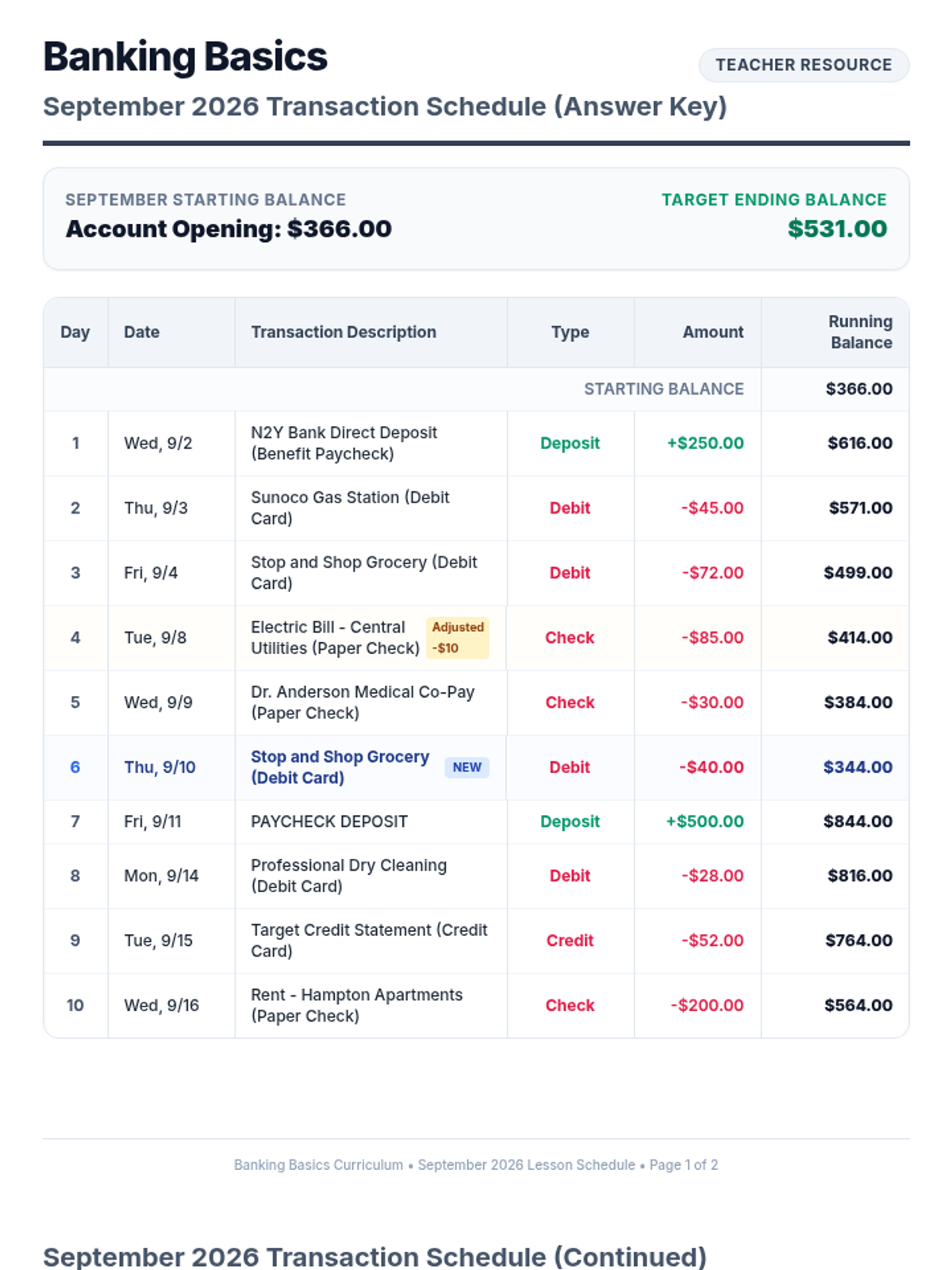
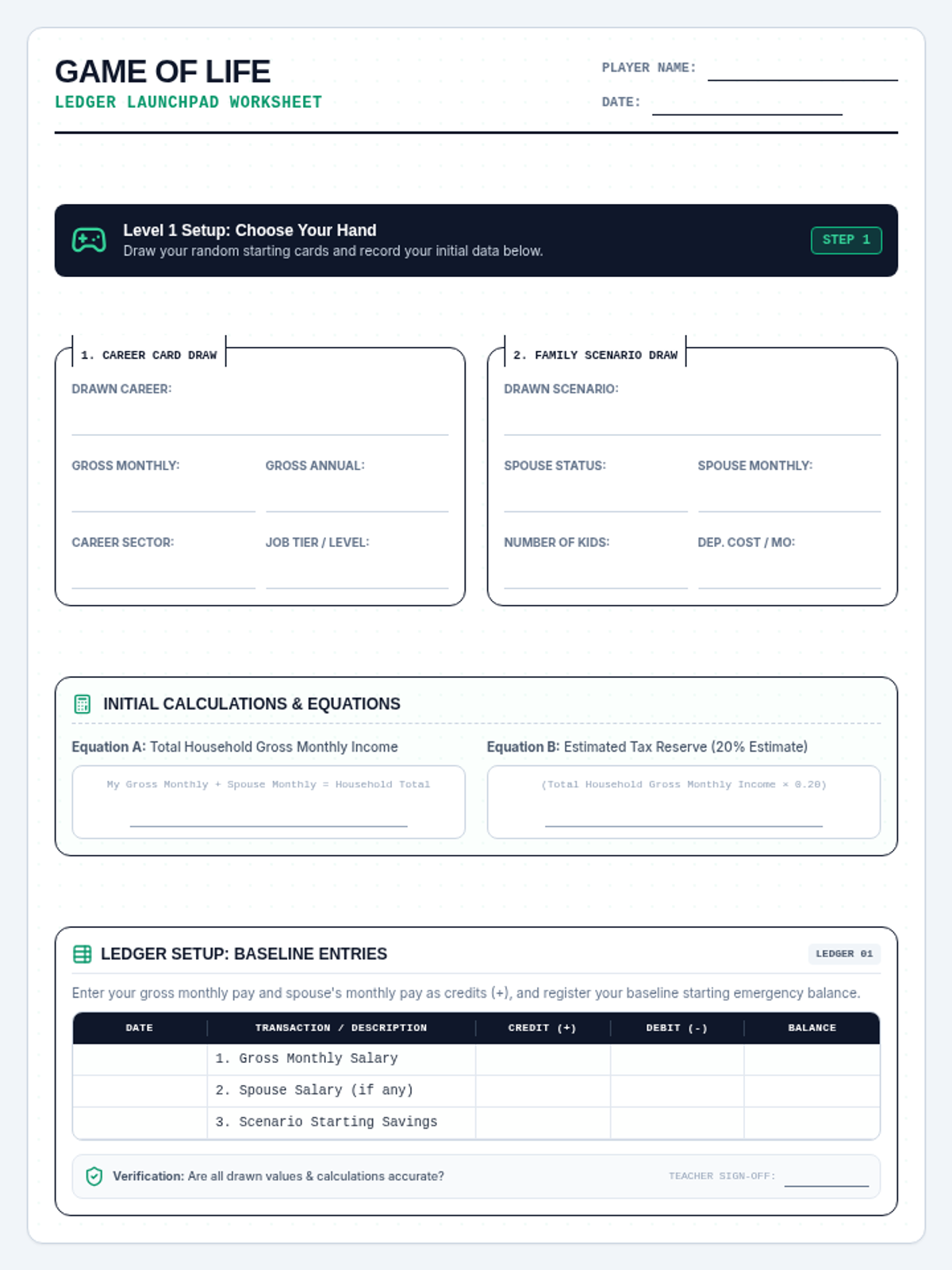
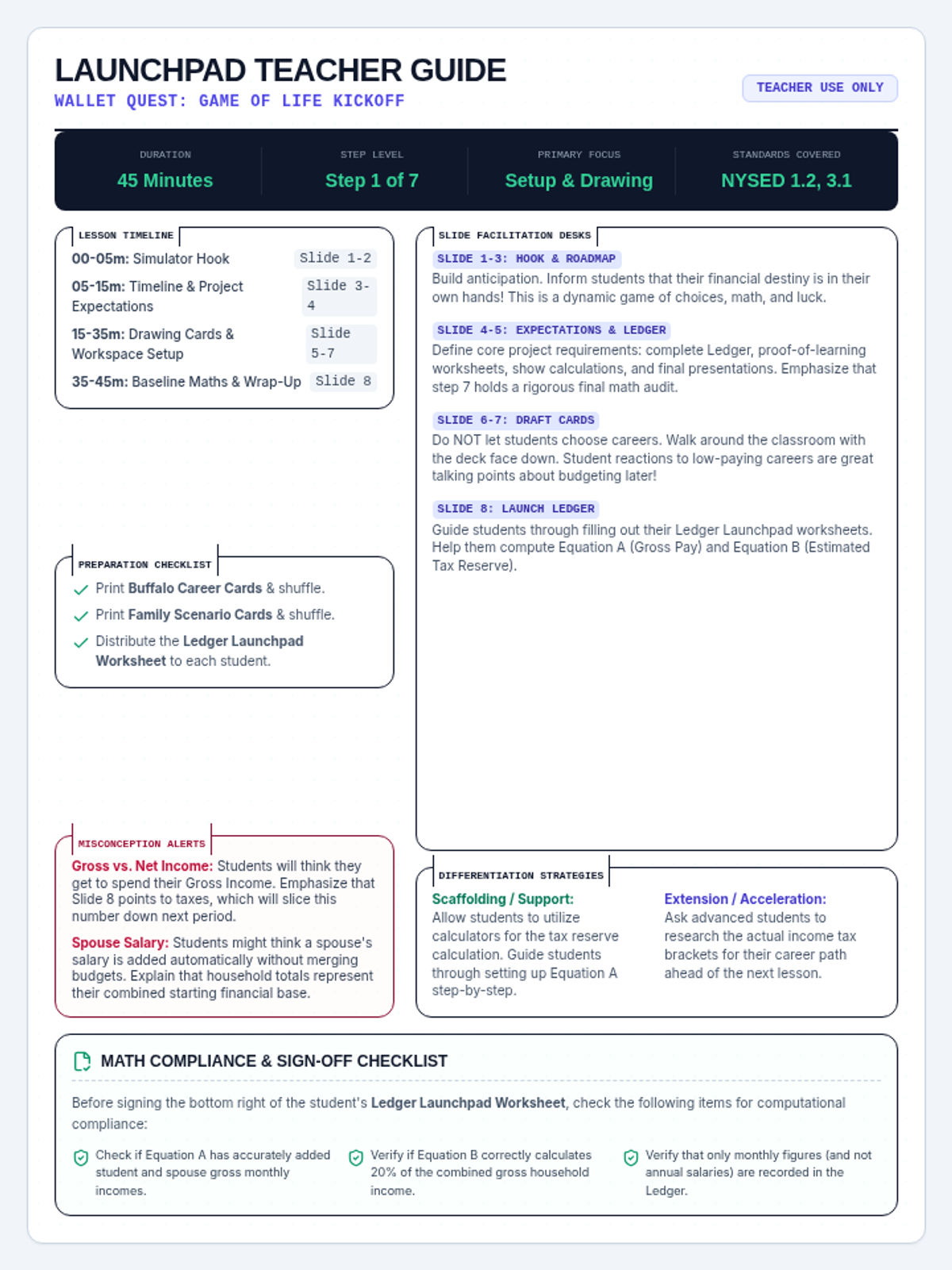
A project-based learning experience for high school seniors to bridge the gap between their 'Reality Check' lifestyle results and actual financial planning, featuring career research, tax calculations, and a 'Curveball' challenge.
A lesson designed for teenage boys focusing on identifying peer pressure, understanding its psychological roots, and mastering assertive refusal skills in both real-world and digital contexts.
A lesson designed to build empathy for individuals with anxiety disorders by examining the impact of language and stigma. Students will watch a segment of Crash Course Psychology, engage in a word association exercise, and create a Language Guide to promote respectful mental health discussions.
A high school advisory lesson focused on cultivating empathy for individuals with invisible disabilities, specifically dissociative disorders, by debunking myths and addressing the impact of social stigma.
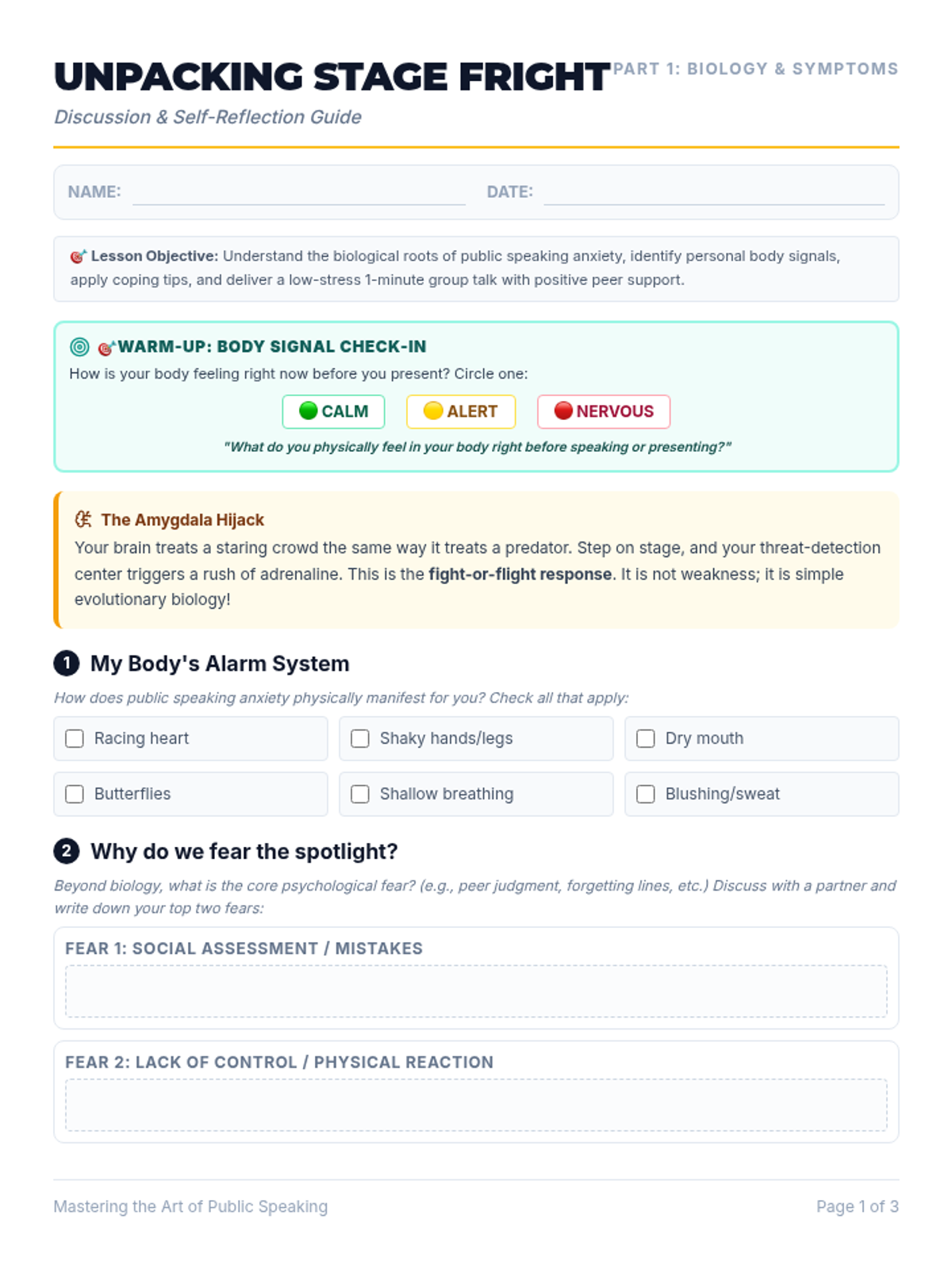
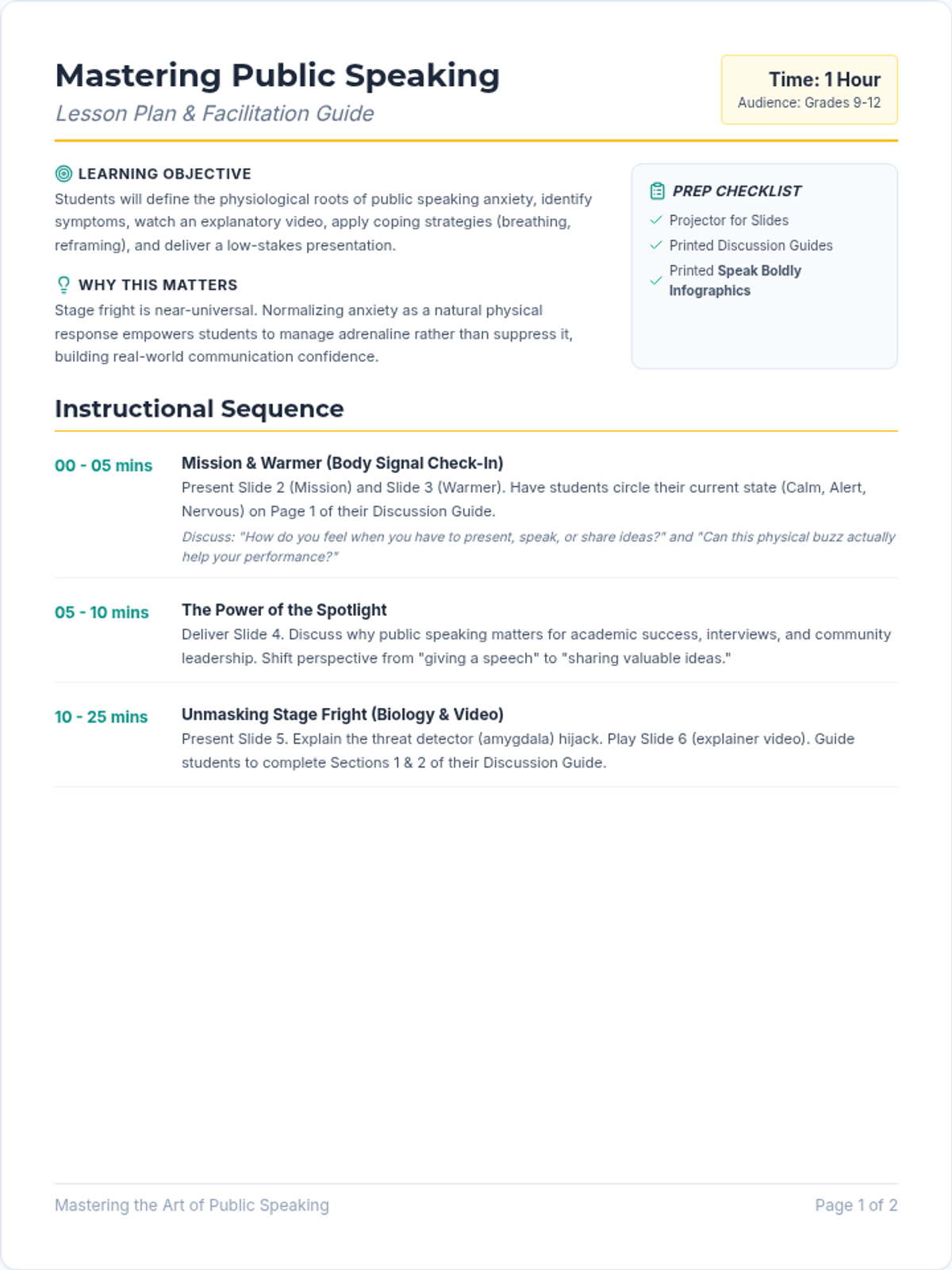
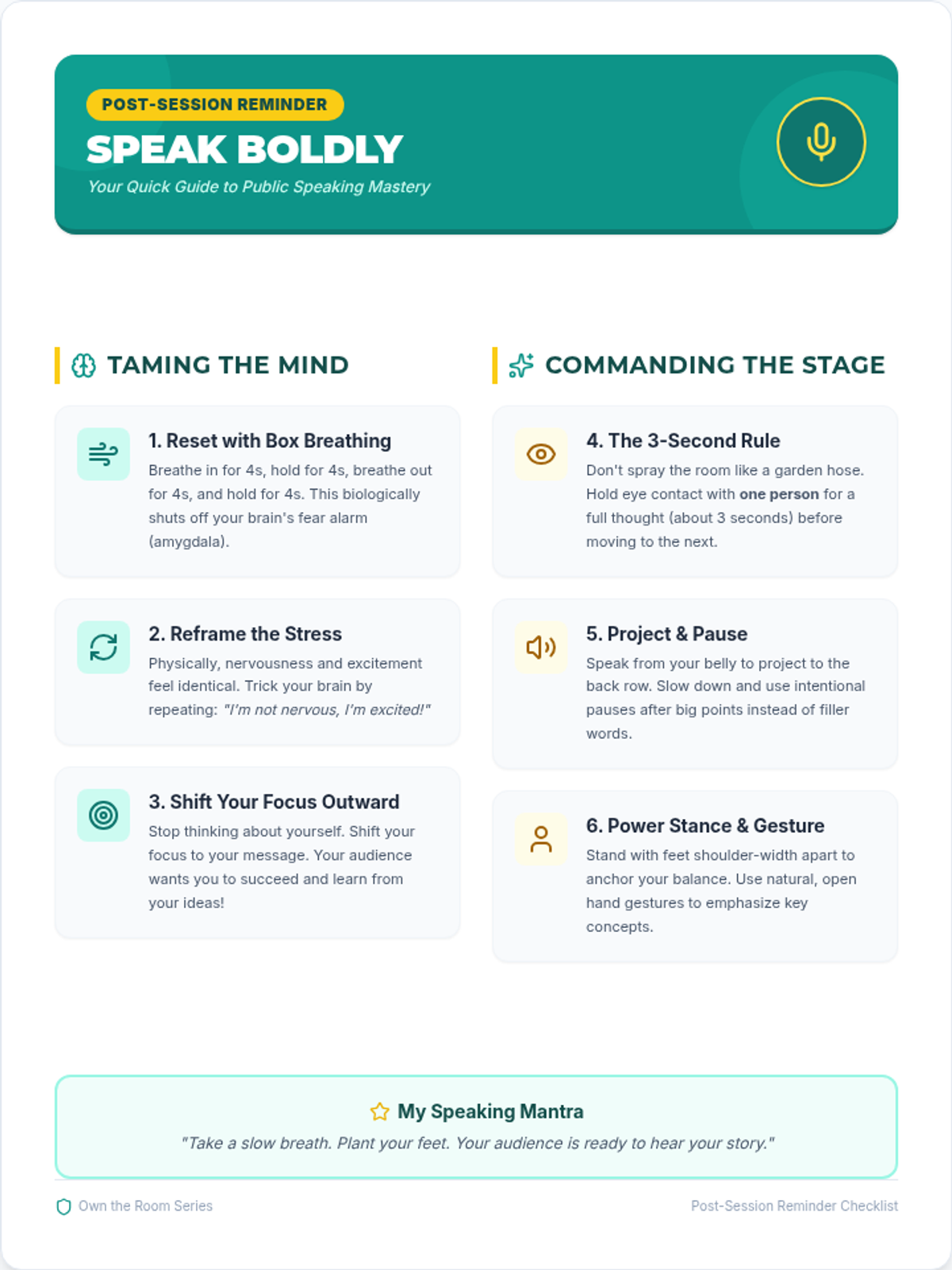
A social-emotional learning and public speaking lesson designed to help students Grade 6-12 overcome performance anxiety through the science of 'choking' and the design of personal pre-performance rituals. Students watch a TED-Ed video, analyze why we get nervous, and practice a discreet 10-second calming routine before delivering short, fun impromptu speeches.
A study skills lesson for high schoolers focused on understanding the 'working memory bottleneck' and implementing cognitive load strategies to prevent 'choking' during high-stakes exams. Students will participate in a memory stress-test, watch a video on the science of pressure, and develop a personalized 'Test Day Ritual' including information dumping.
A high school advisory lesson focused on building community through gratitude and vulnerability. Students explore the 'Psychological Gym' concept, watch a TEDx talk on happiness as a skill, and participate in a Gratitude Wall activity.
Students explore the science of happiness through Katarina Blom's TEDx talk, learning that while thoughts are automatic (negativity bias), actions are chosen. The lesson culminates in a gratitude challenge and a mental health 'workout' via a T-chart action plan.
Students will explore the psychological concept of self-objectification and the cognitive load it places on the brain, particularly in 11th-12th grade and undergraduate contexts. Through Lindsay Kite's TED talk and interactive scenario mapping, students will learn to identify the three paths of body image resilience: Sinking, Hiding/Fixing, and Rising.
A nautical-themed lesson where students use an ocean metaphor to visualize their post-secondary plans, identify their support systems, and research future resources.
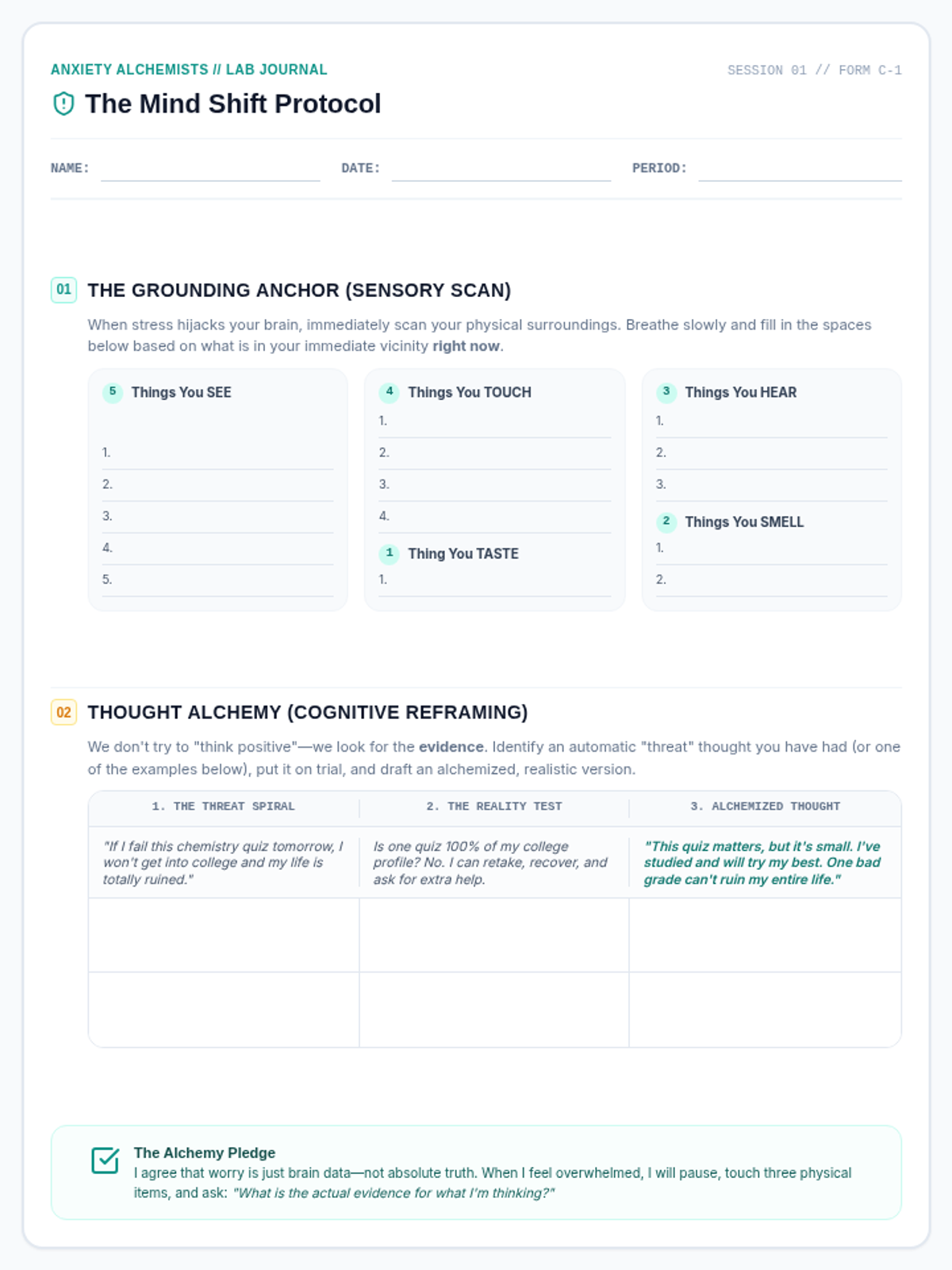
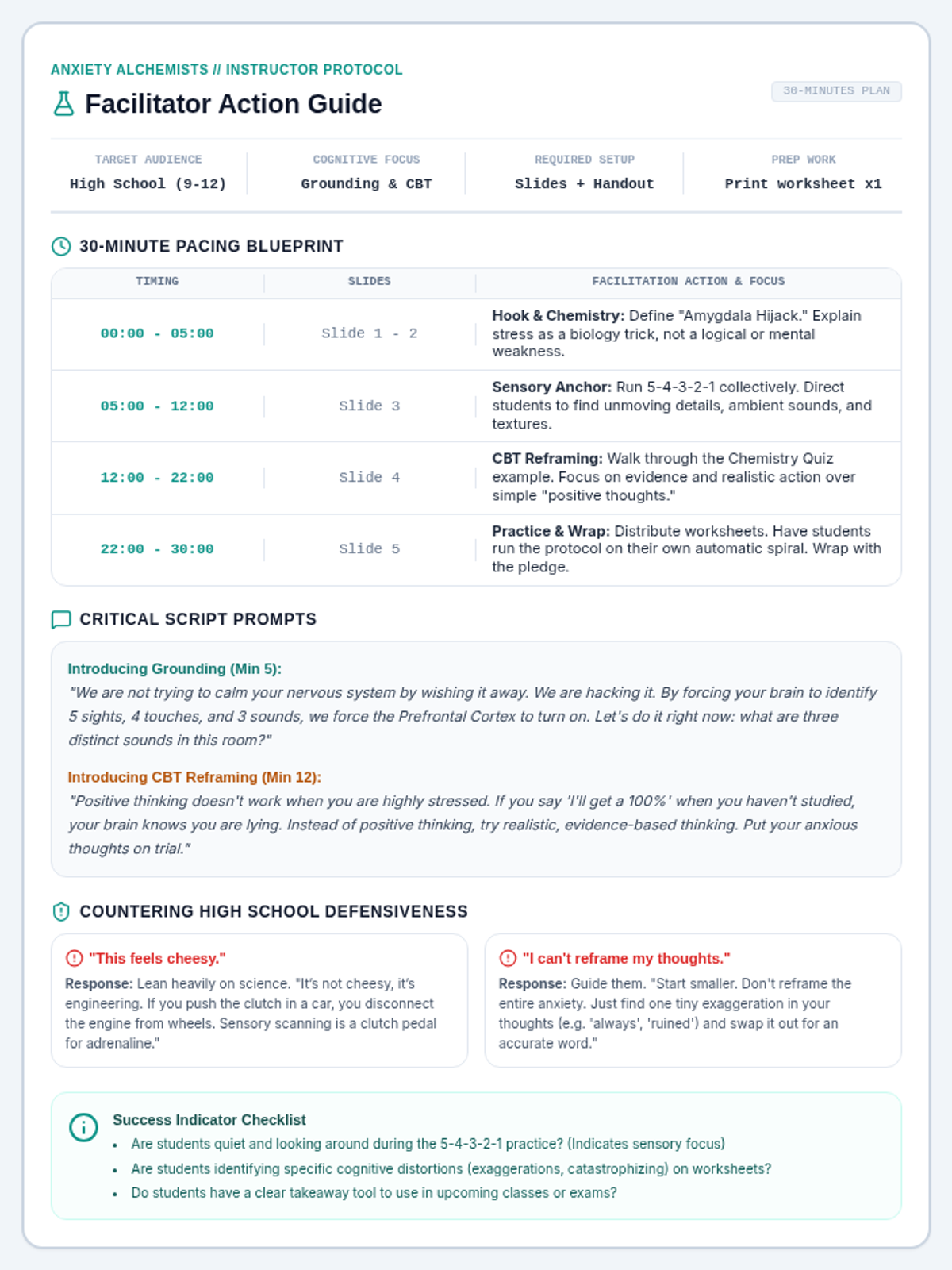
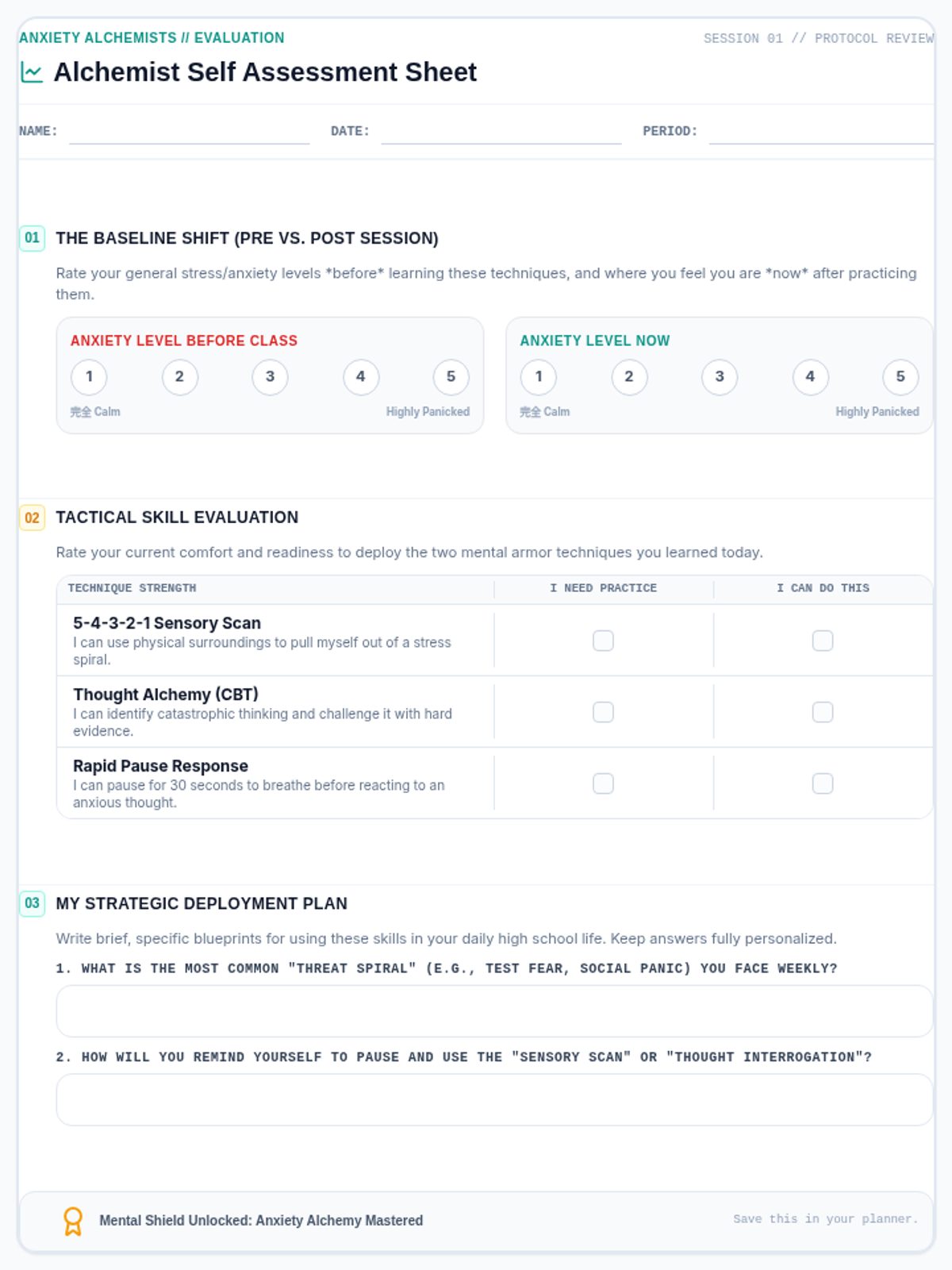
A mental health and future-planning lesson that helps upper high school students navigate the anxiety of post-graduation life by reframing negative 'what-if' spirals into actionable inquiries using nautical metaphors.
A career exploration lesson for 11th and 12th graders focusing on the 'ocean of possibilities' after high school. Students analyze a video metaphor, define post-secondary options, and research various paths including trade schools, gap years, and the workforce.
A 45-minute workshop for parents focusing on student anxiety regarding life after high school. Parents explore the 'Ocean of Possibility' metaphor, reflect on their own experiences, and practice supportive communication strategies.
A mental health awareness lesson for high school students focused on breaking down social stigma and the 'ego' barriers that prevent vulnerability. Students analyze Jake Tyler's TEDx talk to understand how mental health challenges can level the playing field and foster genuine human connection.
Students will identify 'deflection' strategies in communication, analyze the social pressure to appear 'fine,' and practice sharing authentic feelings through a 'Masks Off' creative activity.
Students prepare for academic counseling by performing a self-assessment and drafting a professional inquiry to initiate a conversation about their post-secondary pathways.
A parent workshop designed to help families navigate post-secondary planning conversations with empathy and curiosity rather than anxiety. Parents will analyze a student's perspective on future-planning stress and practice reframing 'the big question' into smaller, more meaningful inquiries about interests and values.
A lesson for high school students focused on identifying self-stigma and applying cognitive reframing techniques to improve mental health outcomes.
A comprehensive high school lesson focused on dismantling mental health stigma through myth-busting, the 'broken leg' analogy, and practical allyship role-play. Students learn to recognize stigmatizing language and practice supportive communication strategies.
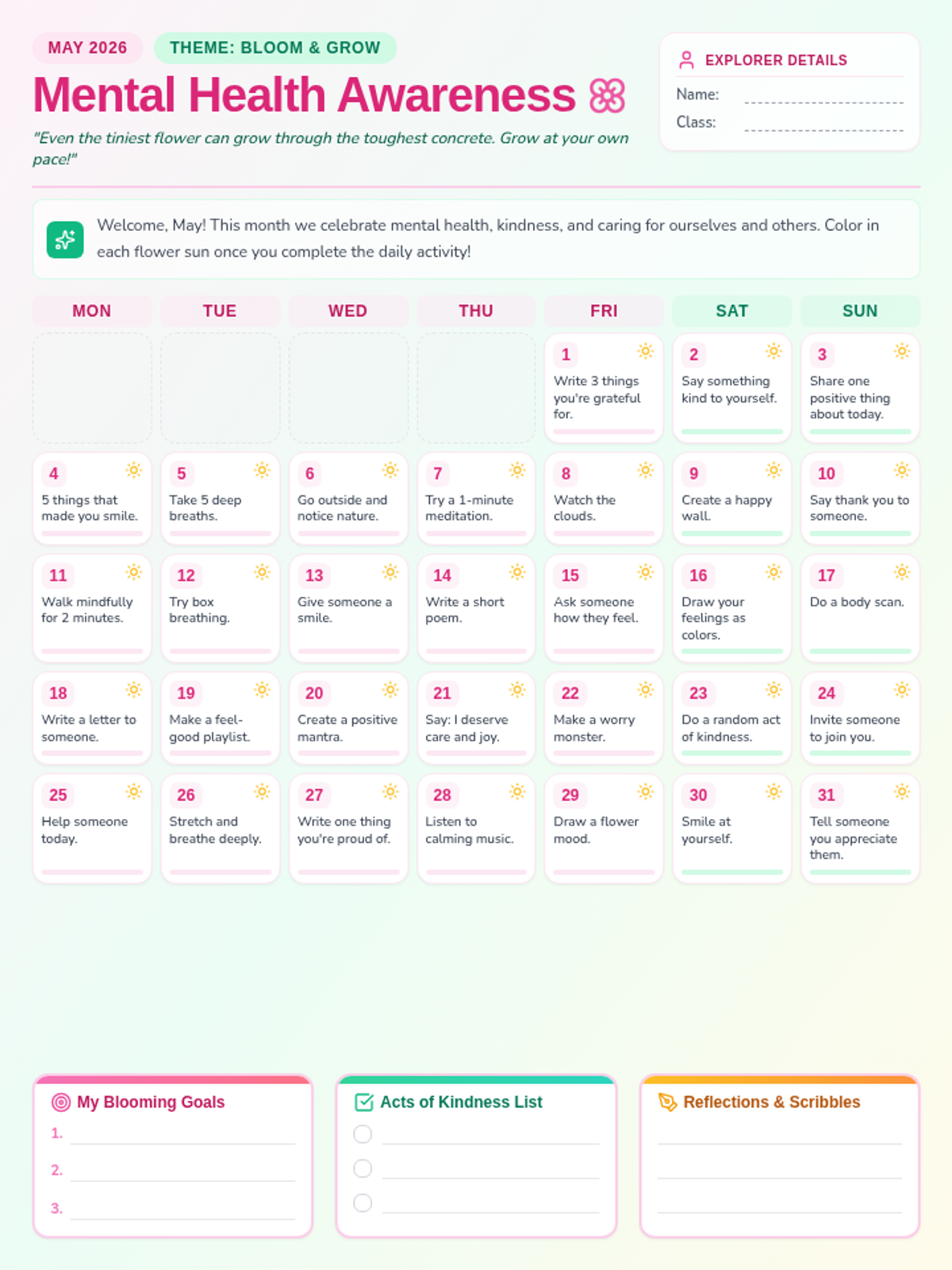
A mental health awareness lesson for middle and high school students that emphasizes the universality of brain health and provides a creative "menu" framework for developing personal self-care strategies.
A high-impact lesson for student leaders to analyze mental health stigma and develop a concrete, school-wide action plan based on seven research-backed strategies. Students will evaluate their school's current climate and vote on feasible initiatives to implement immediately.
A counseling lesson focused on mental health awareness and building support systems. Students explore the factors influencing mental health and create a personalized 'Wellness Wheel' to identify areas of strength and resources for support.
Students learn about decision fatigue through a case study of judicial rulings and apply these insights to redesign their morning routines for reduced cognitive load.
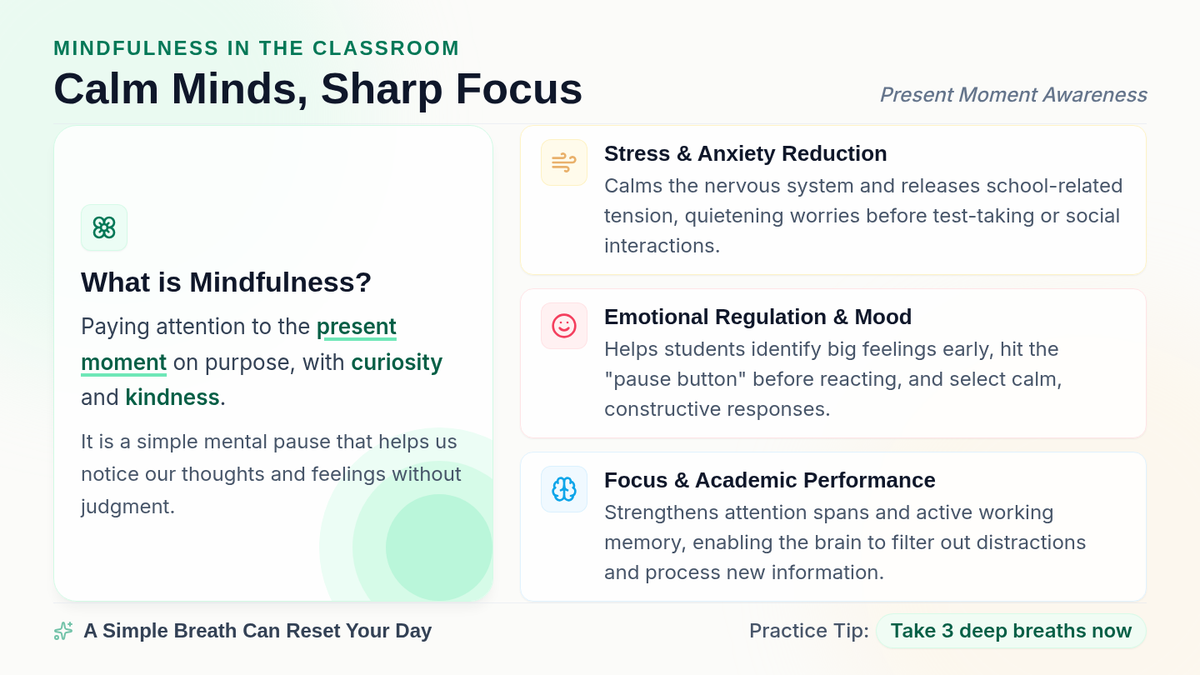
A high school lesson exploring the impact of distraction on cognition and the science of mindfulness through Andy Puddicombe's TED talk. Students evaluate the famous 47% statistic and design a 10-minute personal mindfulness routine.