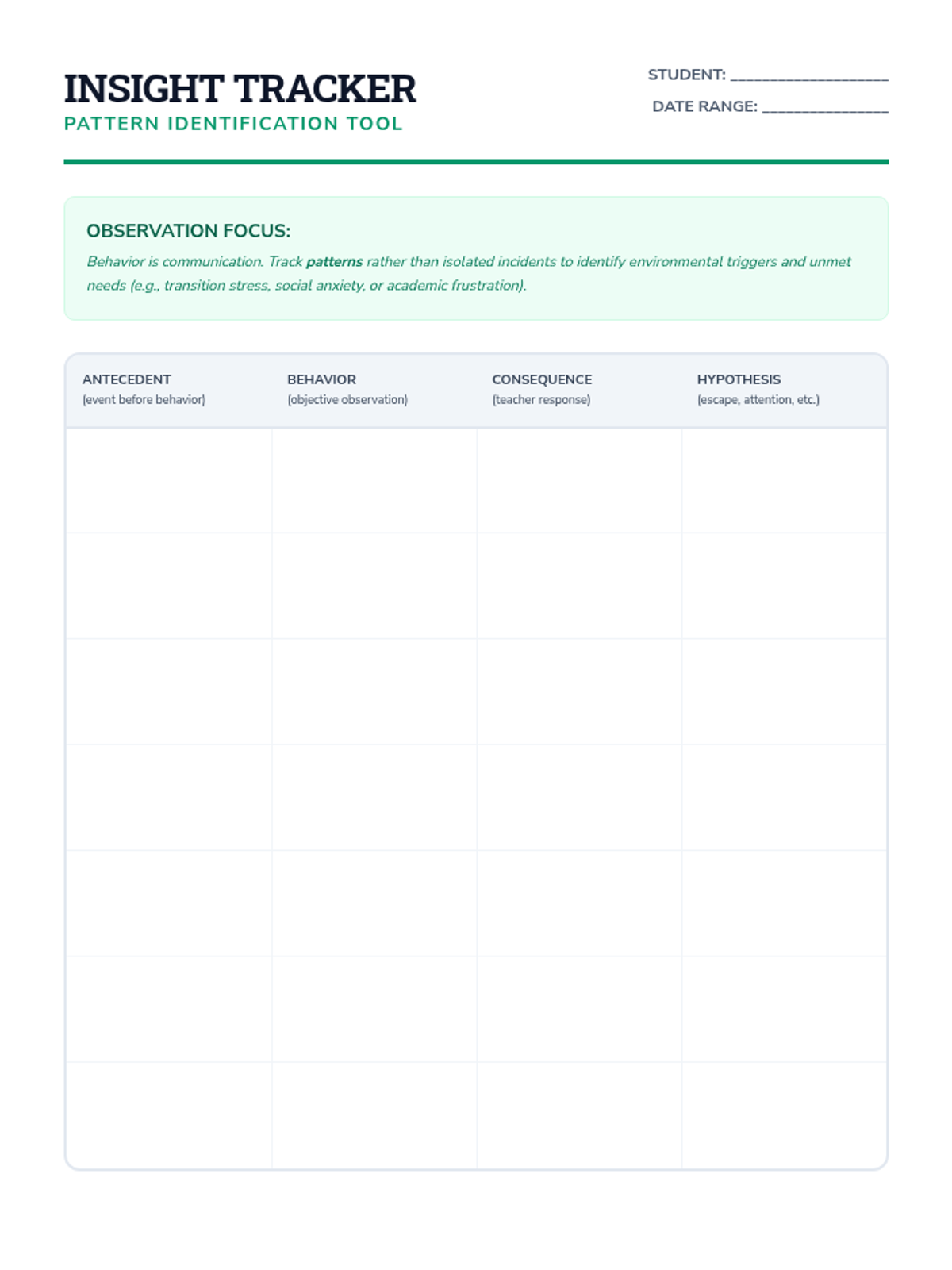
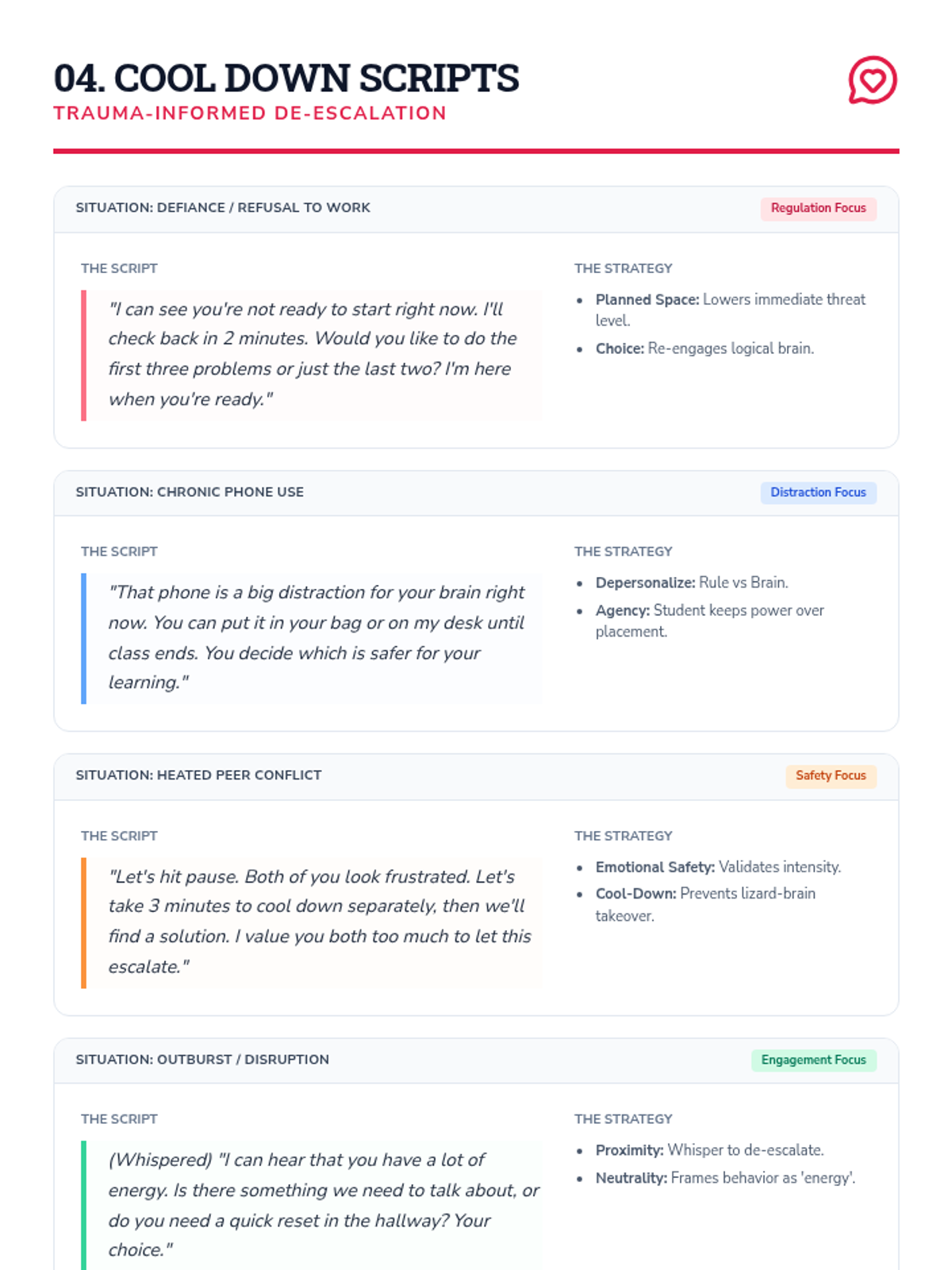
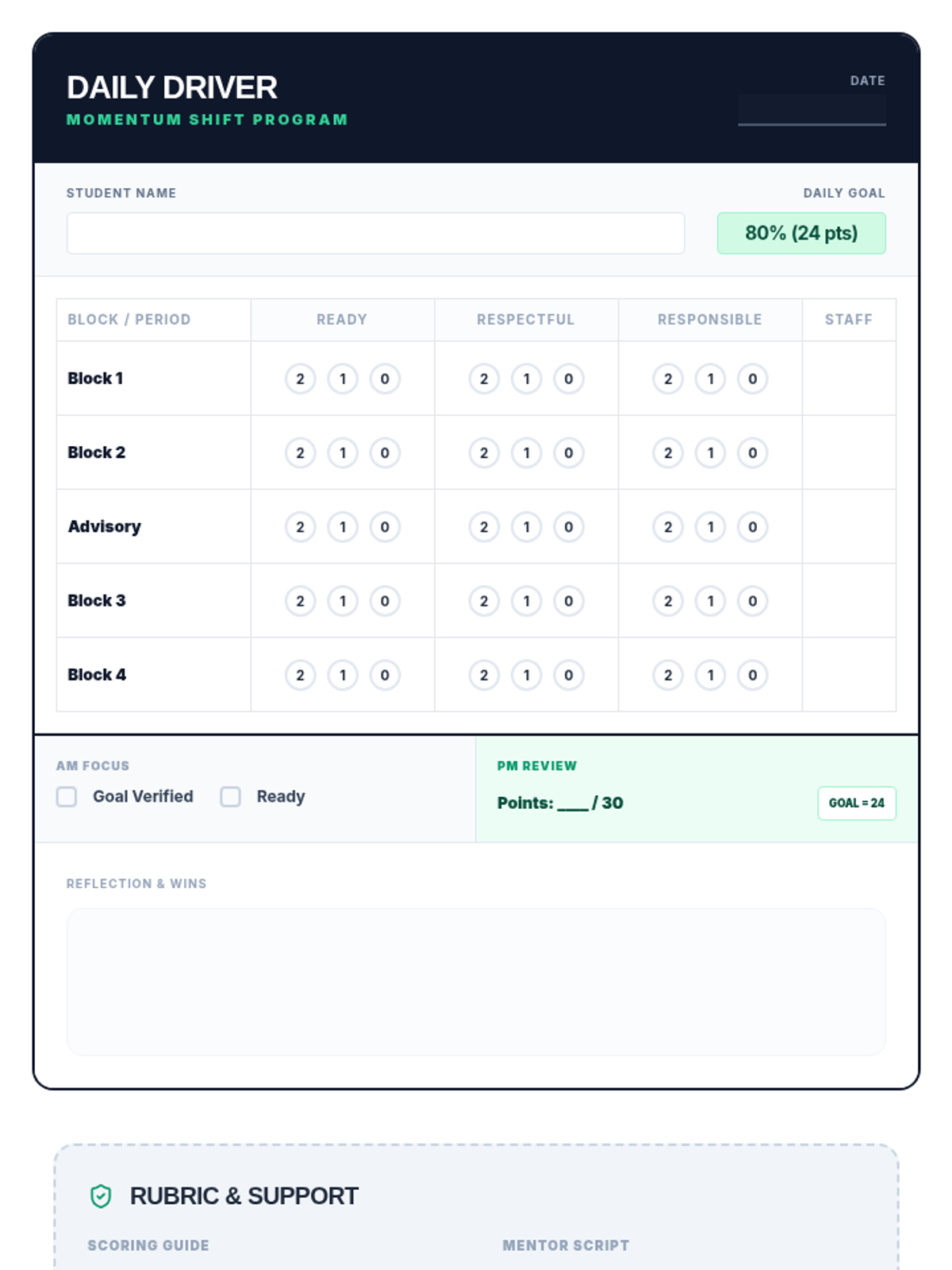
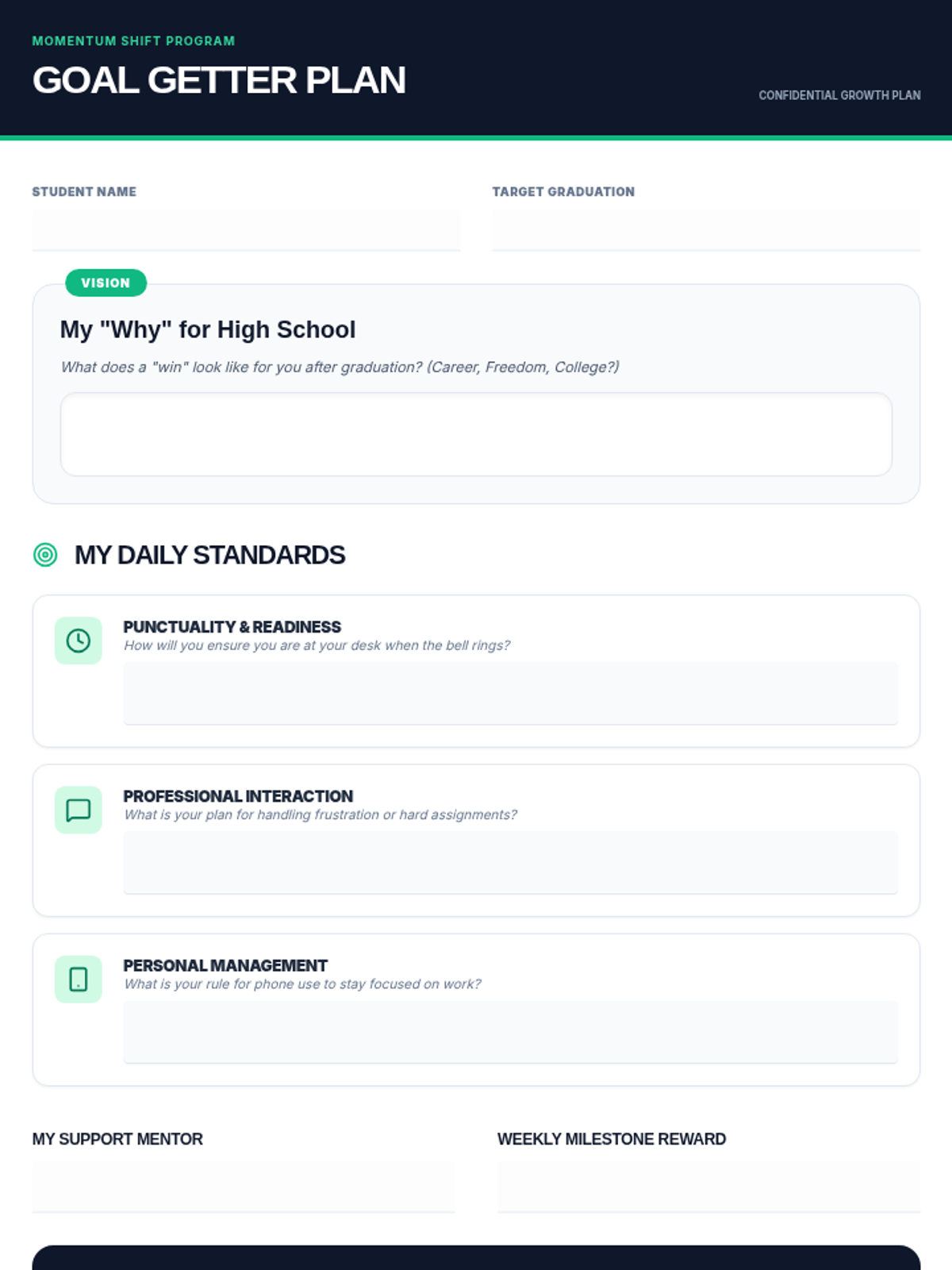
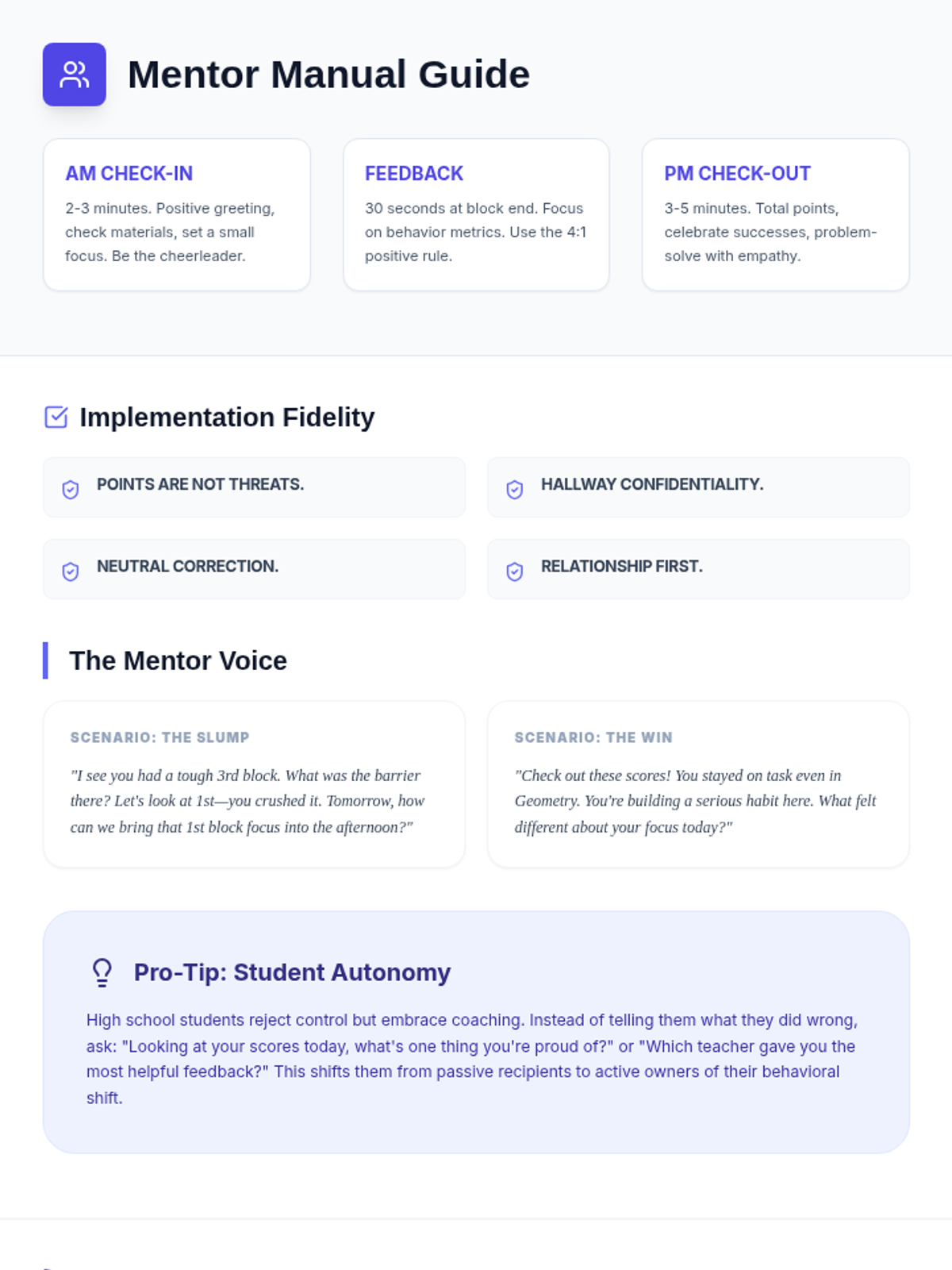
Functional behavior assessment, data tracking, and de-escalation strategies for managing classroom conduct. Addresses positive reinforcement, token economies, and individualized behavior contracts to support student self-regulation.
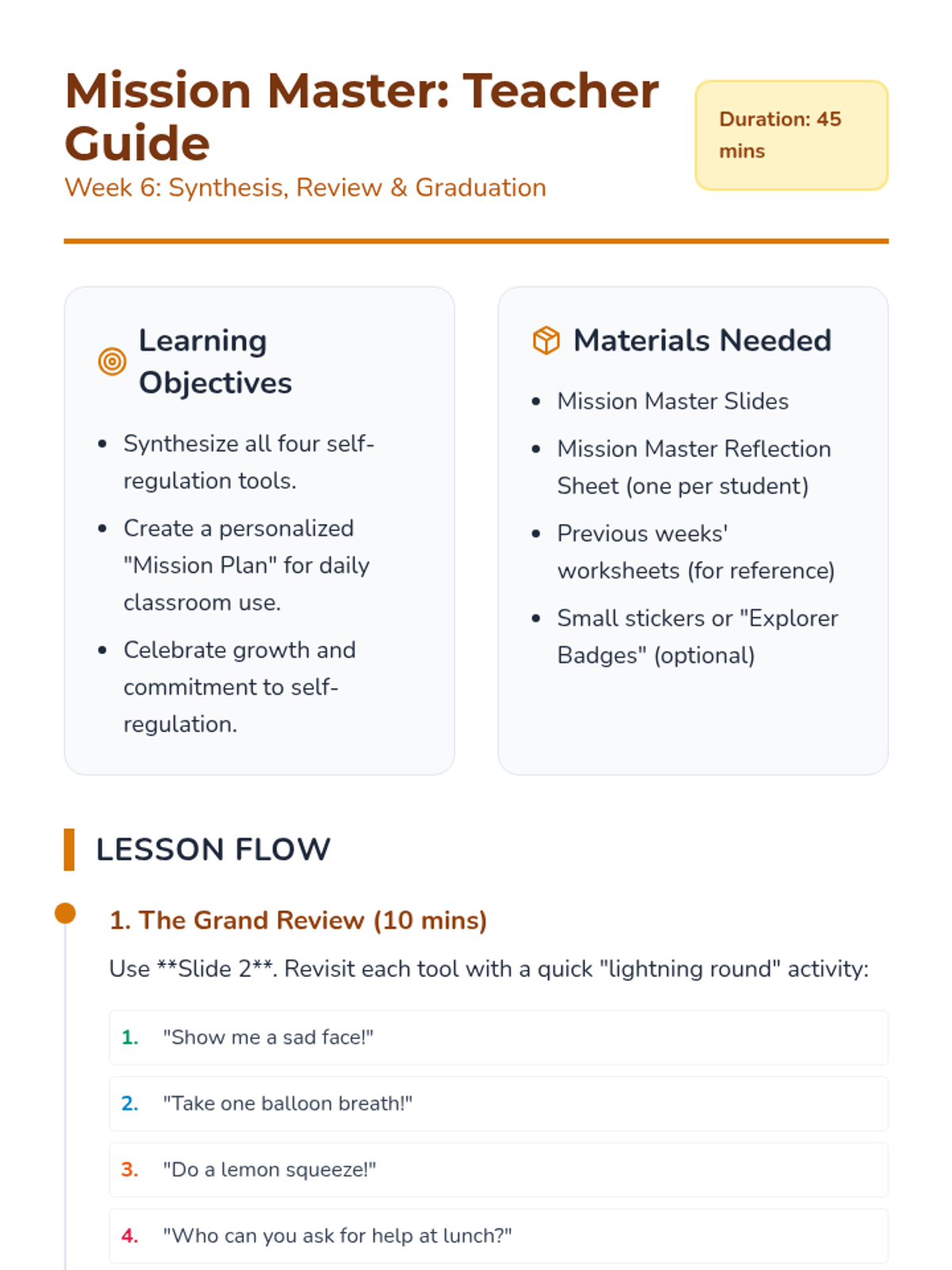
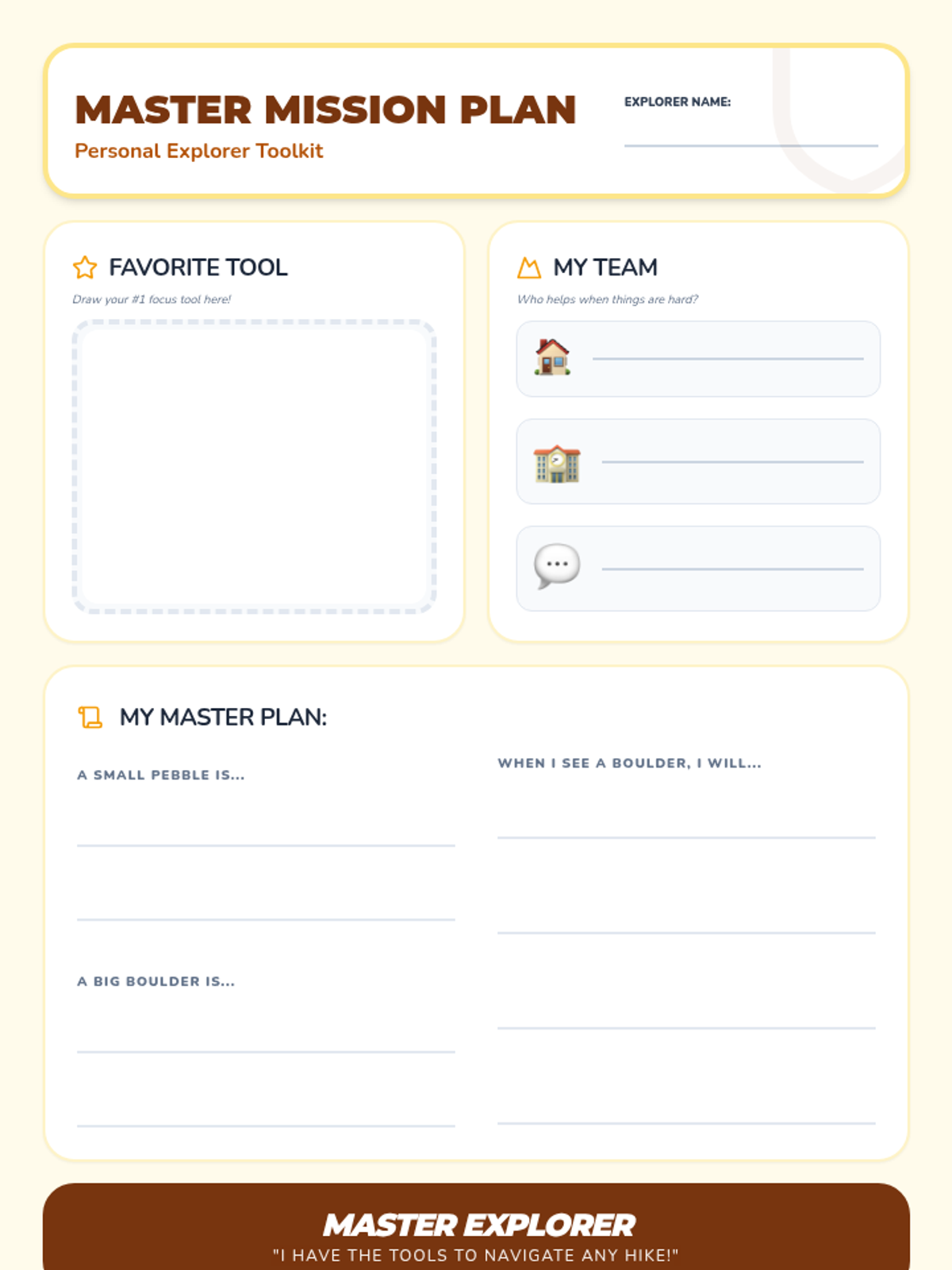
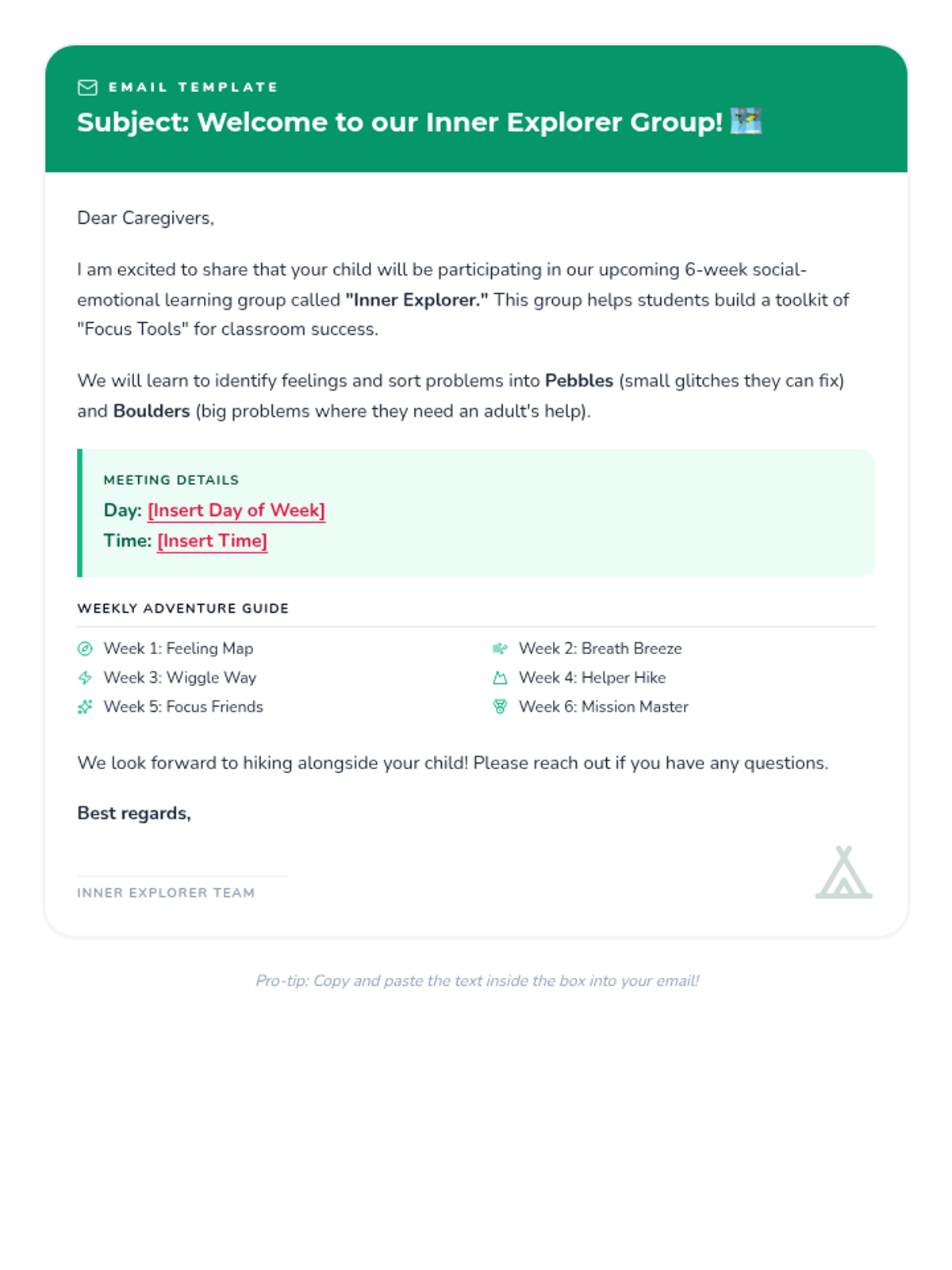
Reviewing all tools and creating a personalized 'Mission Plan' for classroom success.
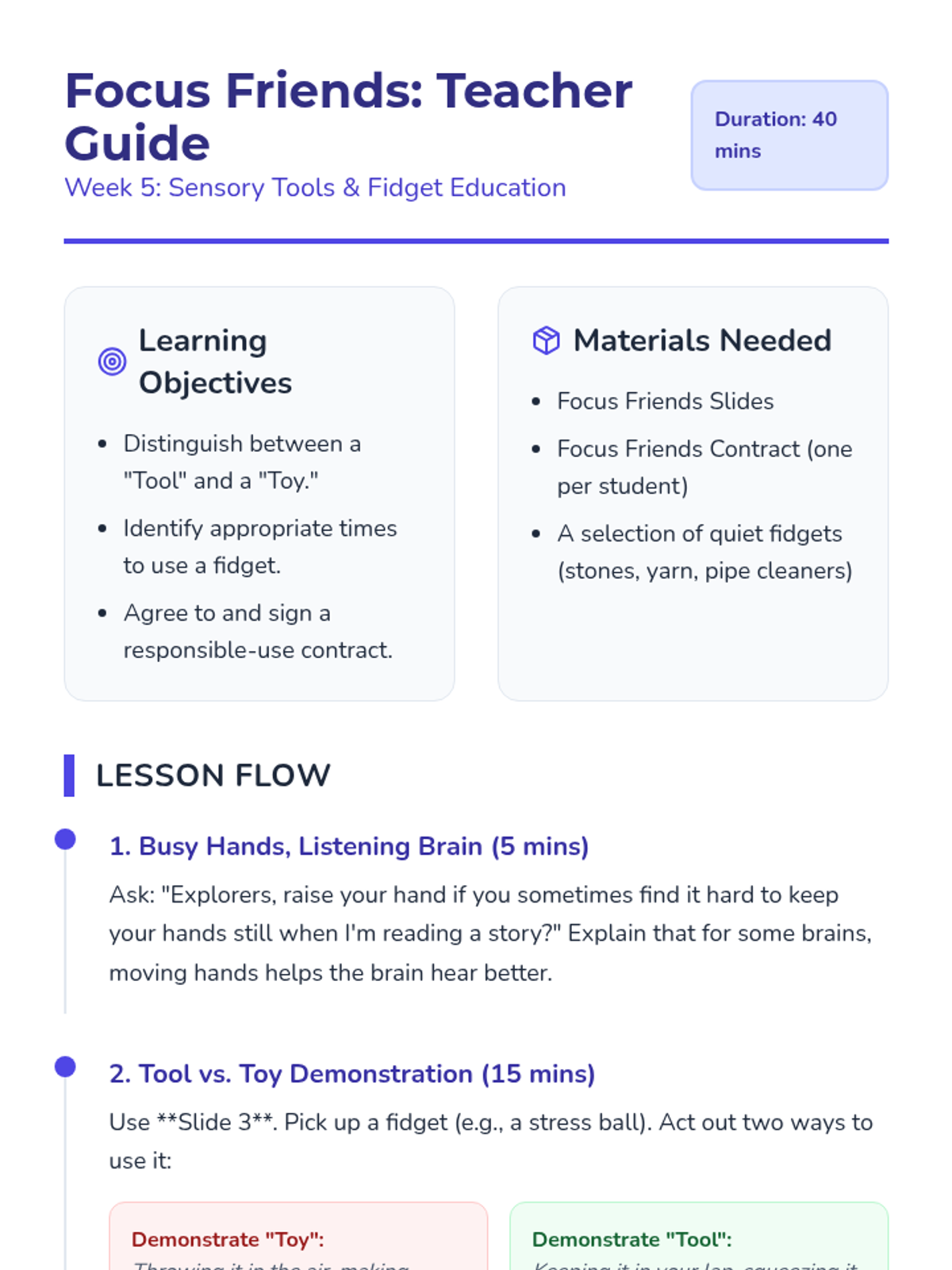
Learning how to use fidgets and sensory tools appropriately for focus.
Developing the skill of asking for help and talking through emotions with a trusted adult.
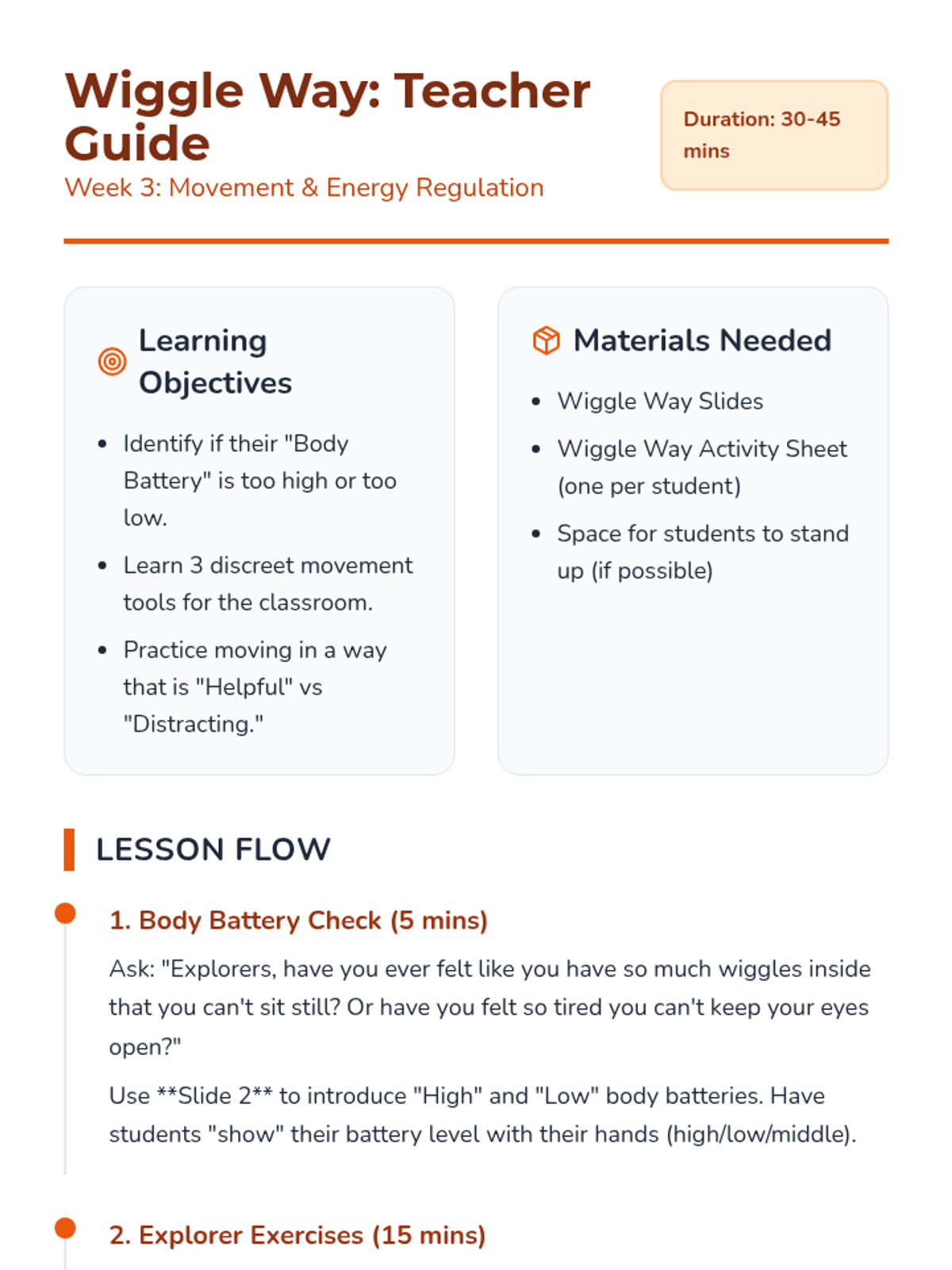
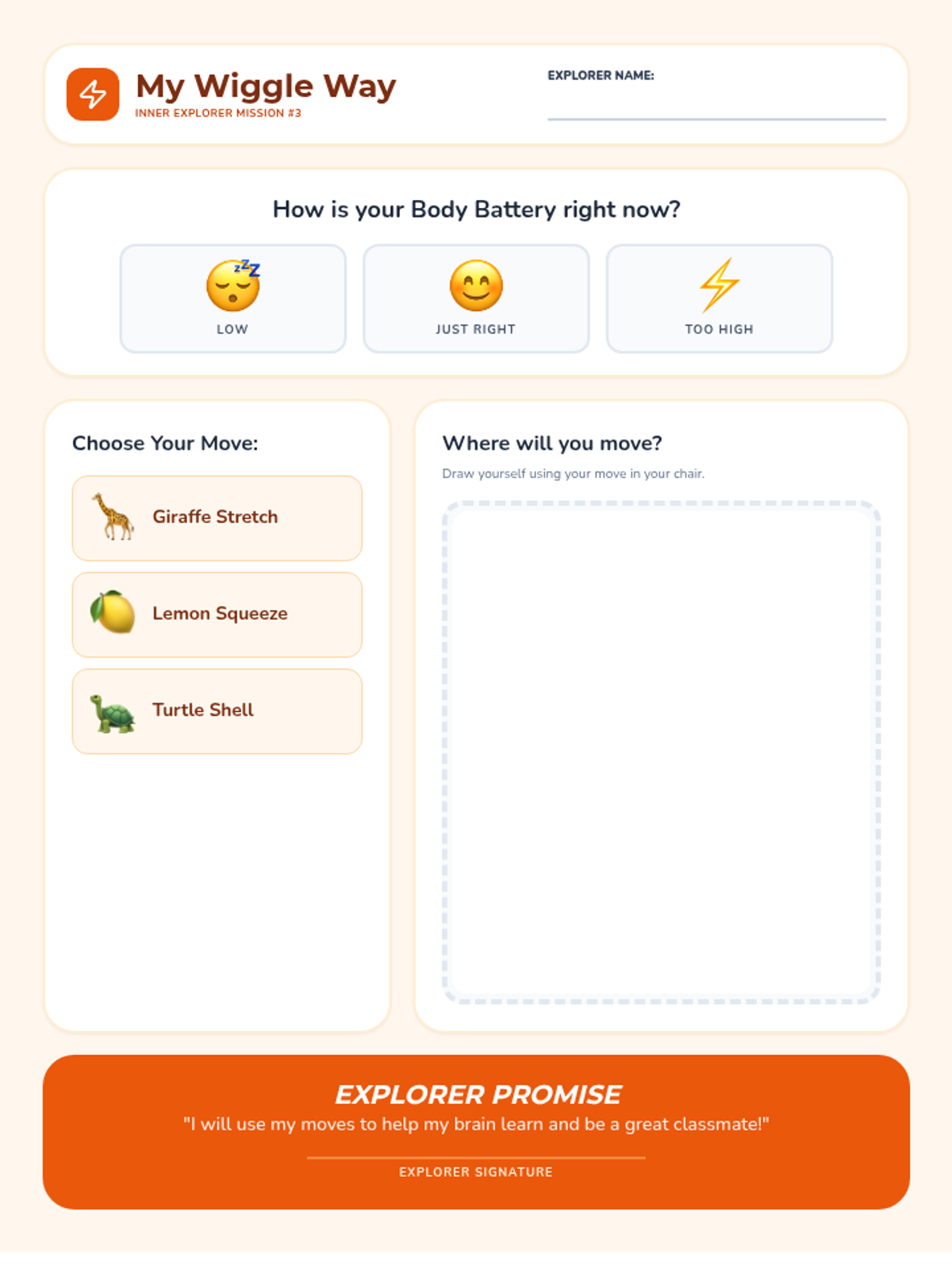
Understanding how movement can help refocus energy and stay on task.
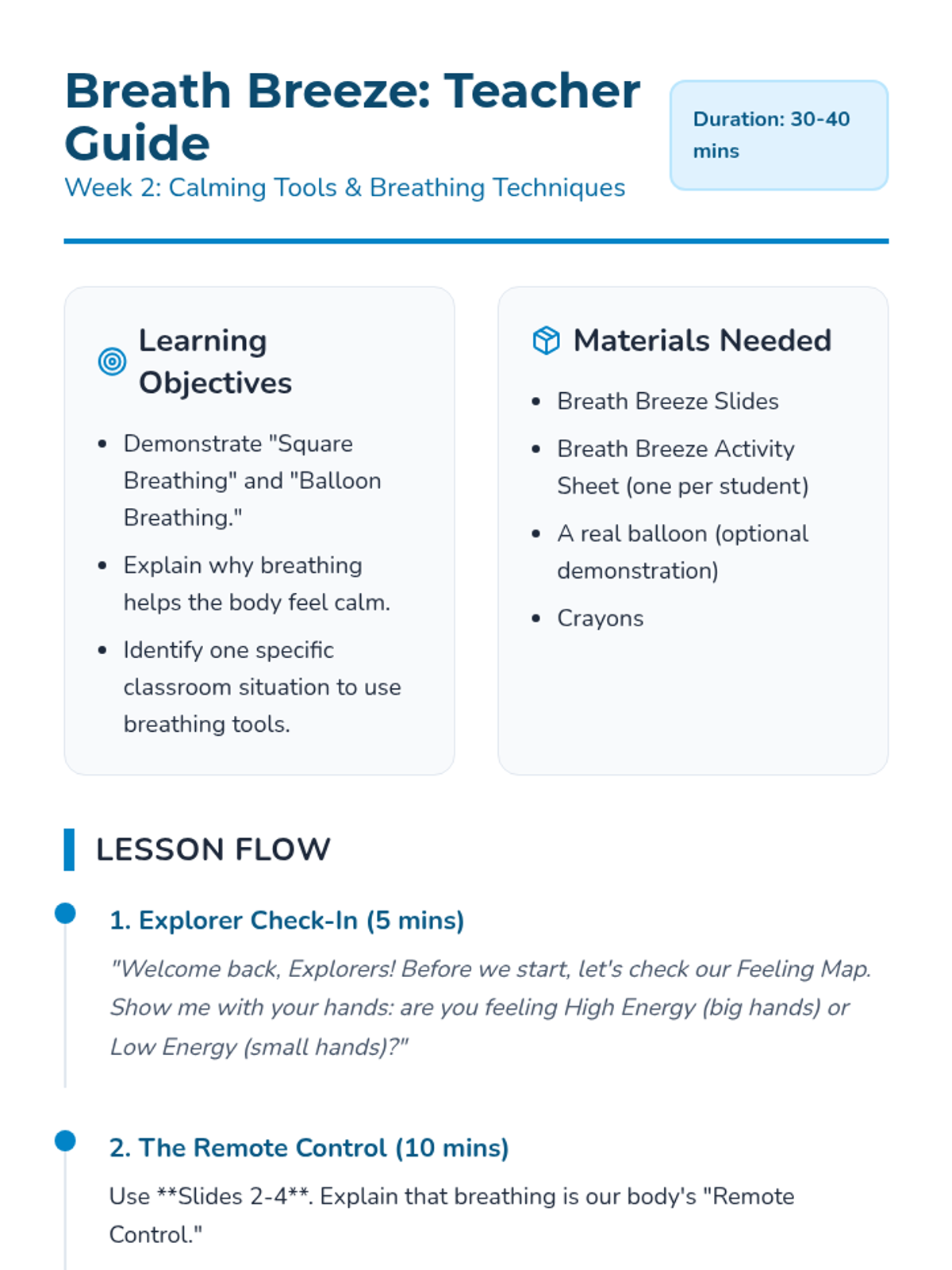
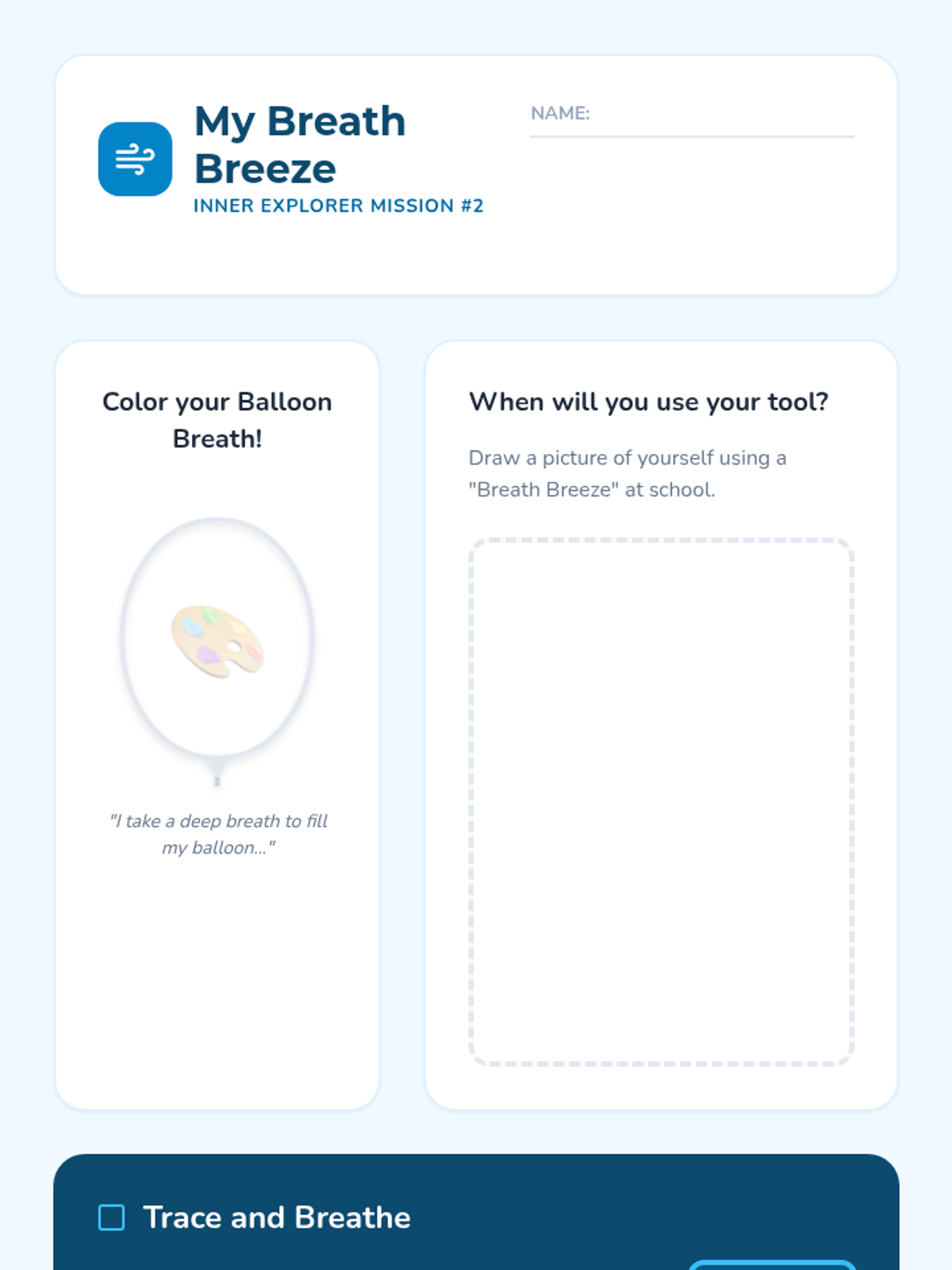
Learning different breathing techniques to calm the mind and body.
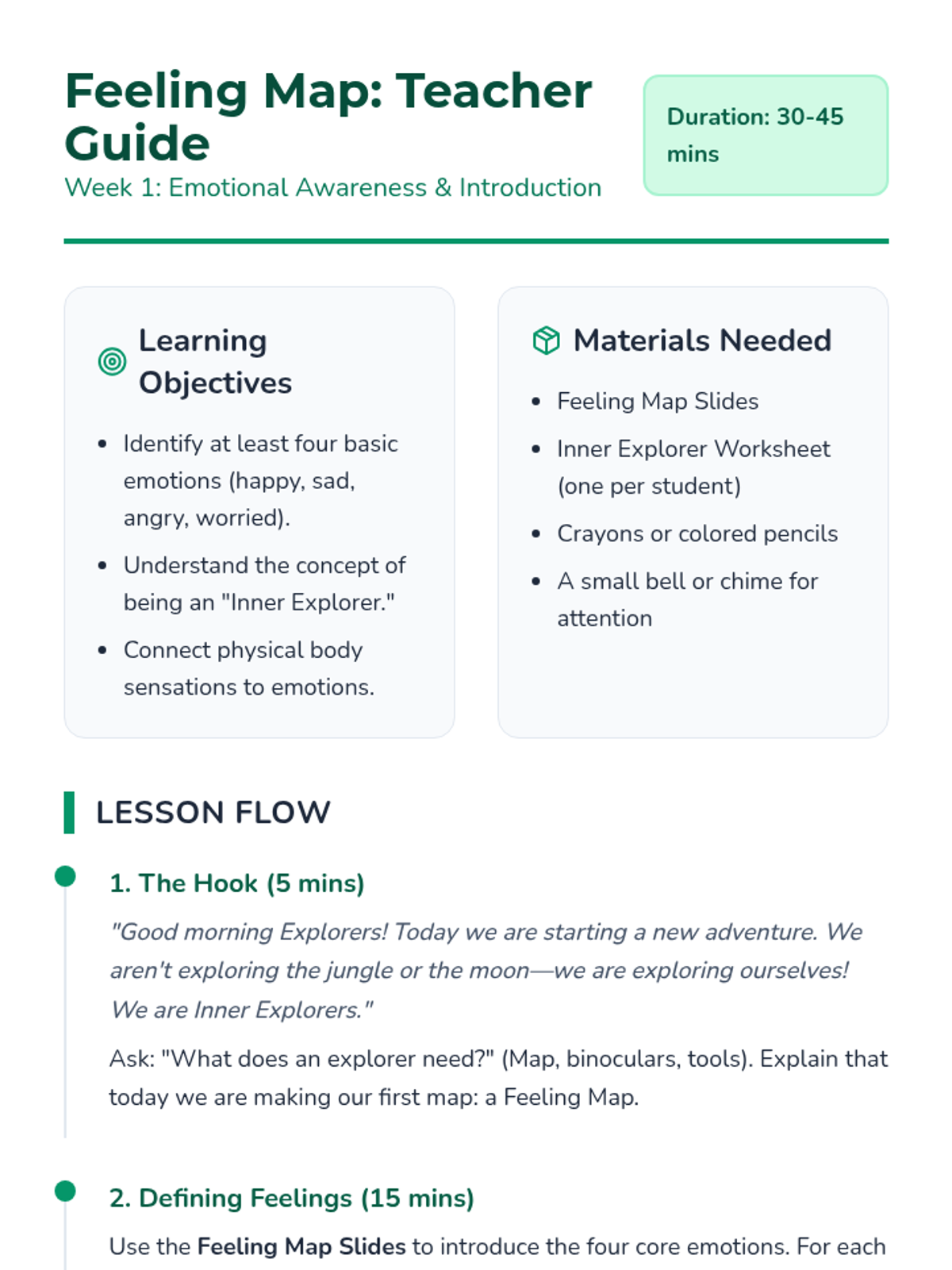
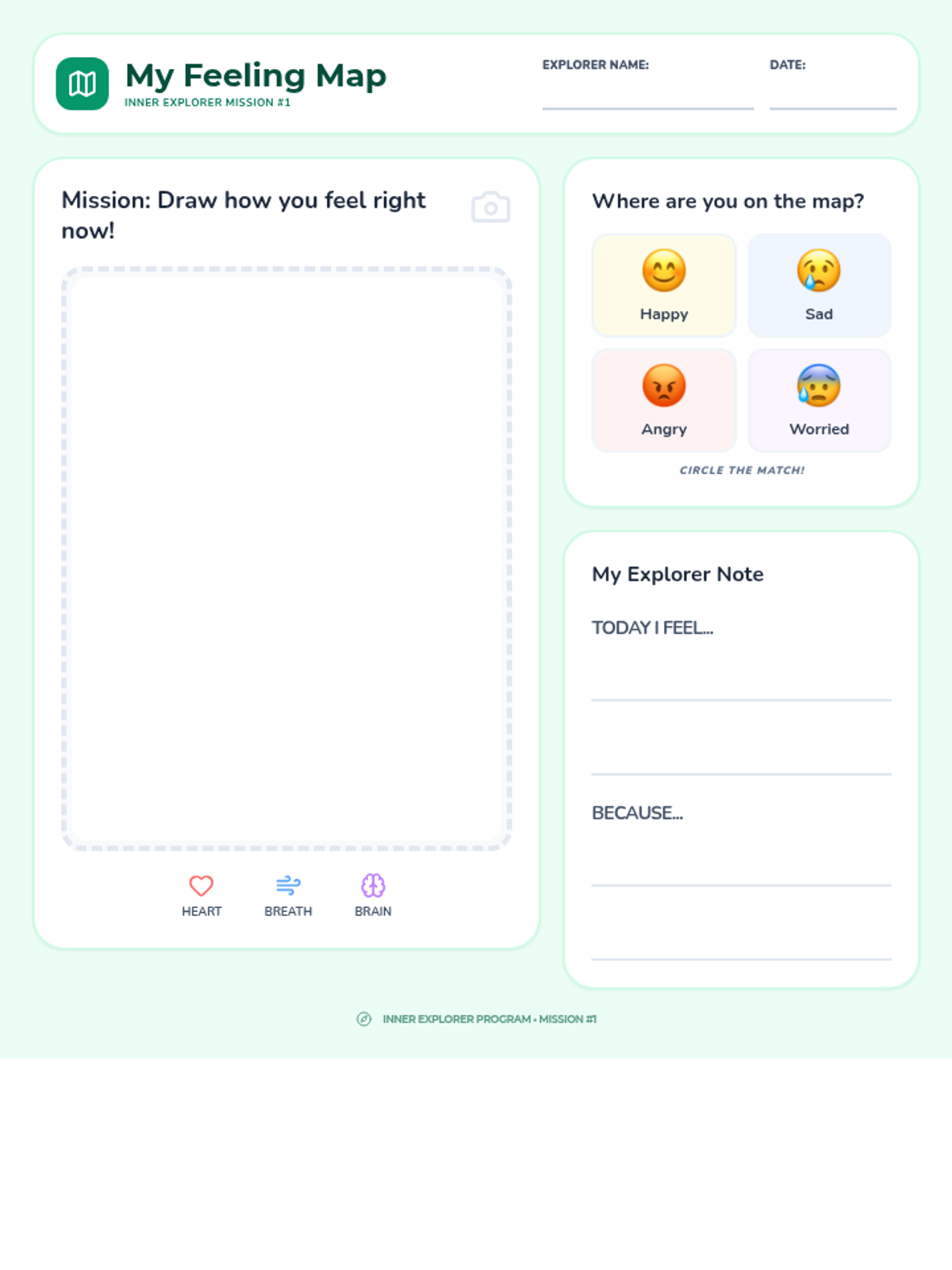
Introduction to the concept of feelings as a 'map' and identifying common emotions.
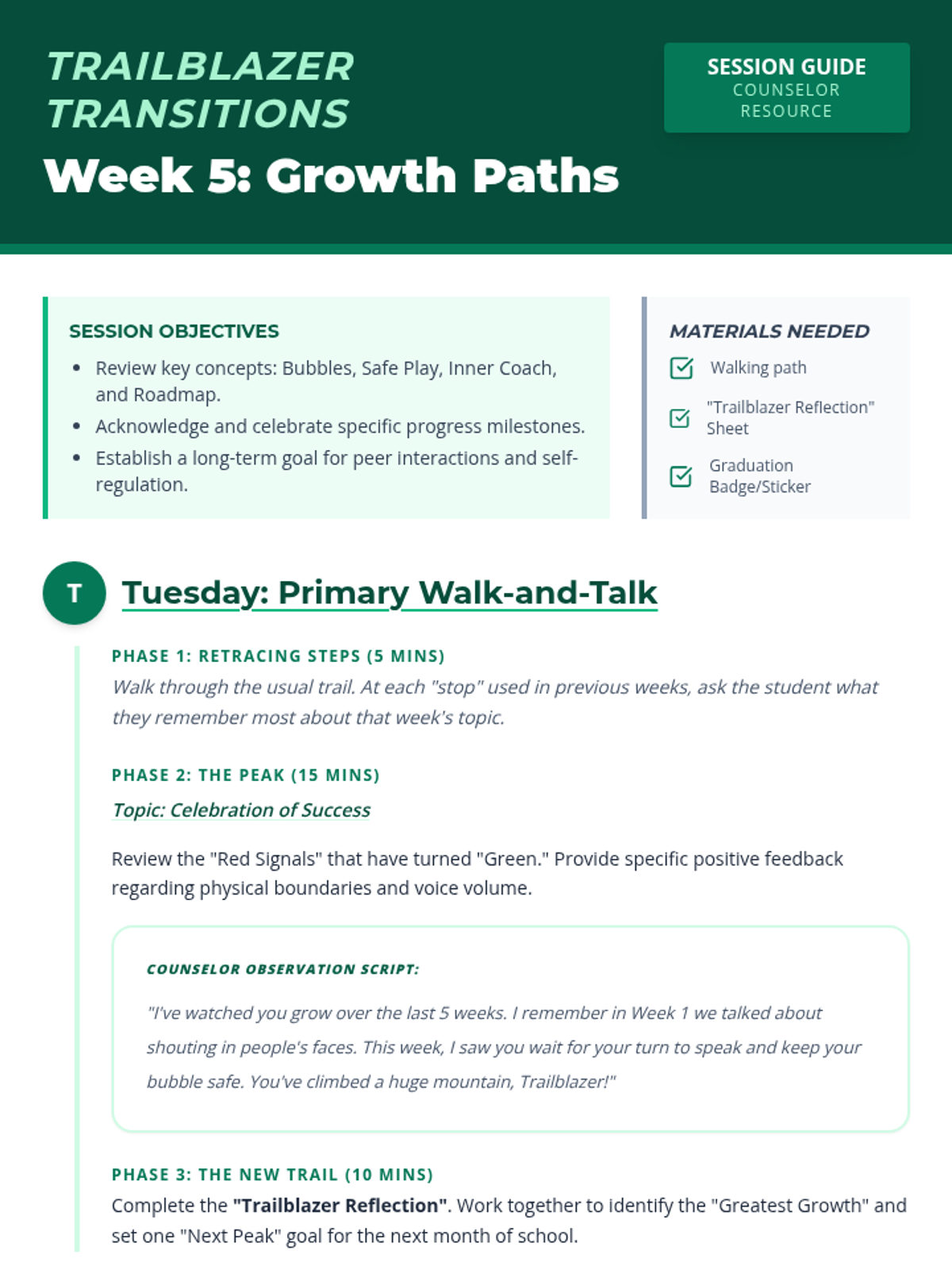
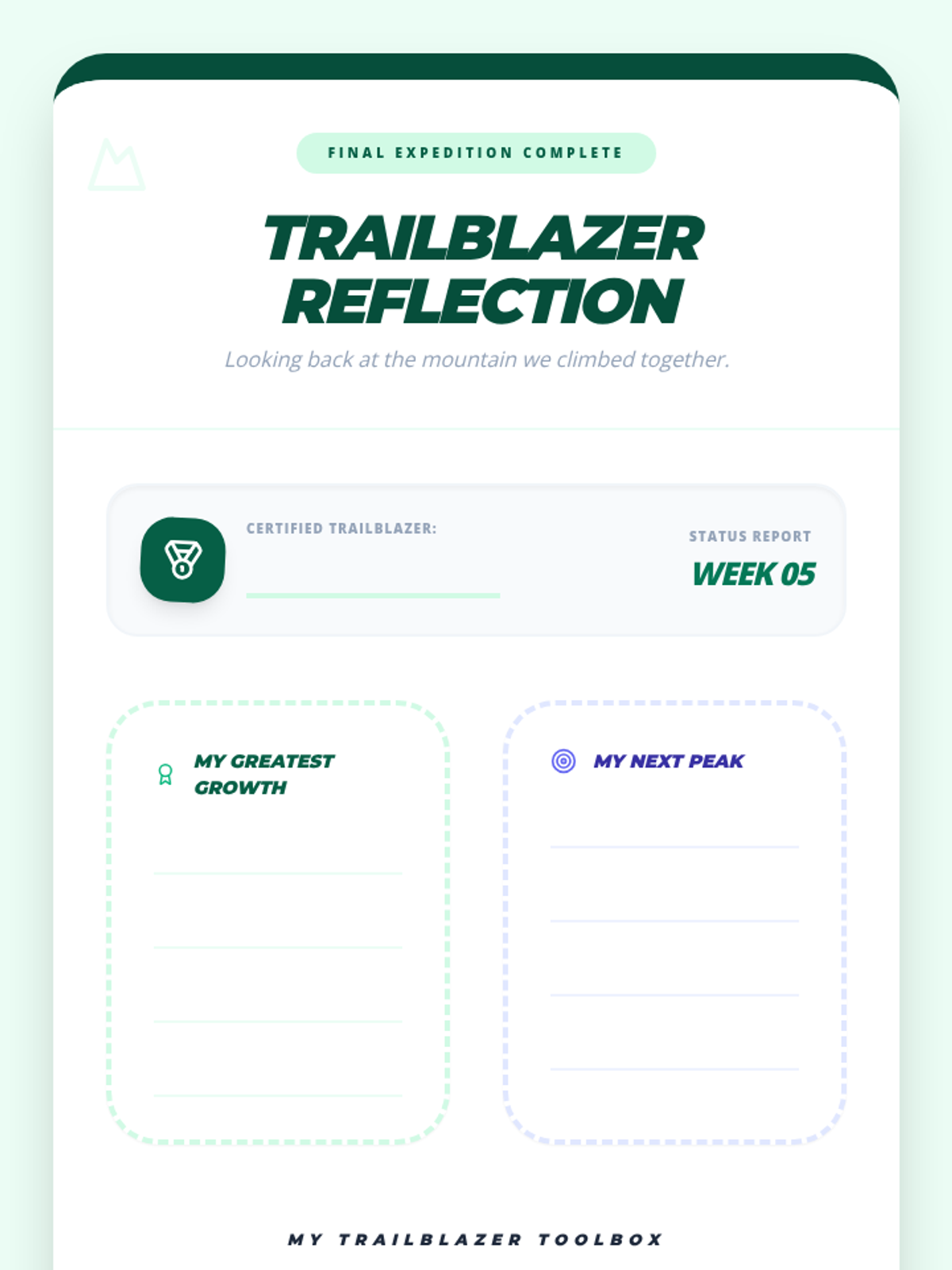
Consolidates learning from the previous weeks and sets goals for continued social-emotional success.
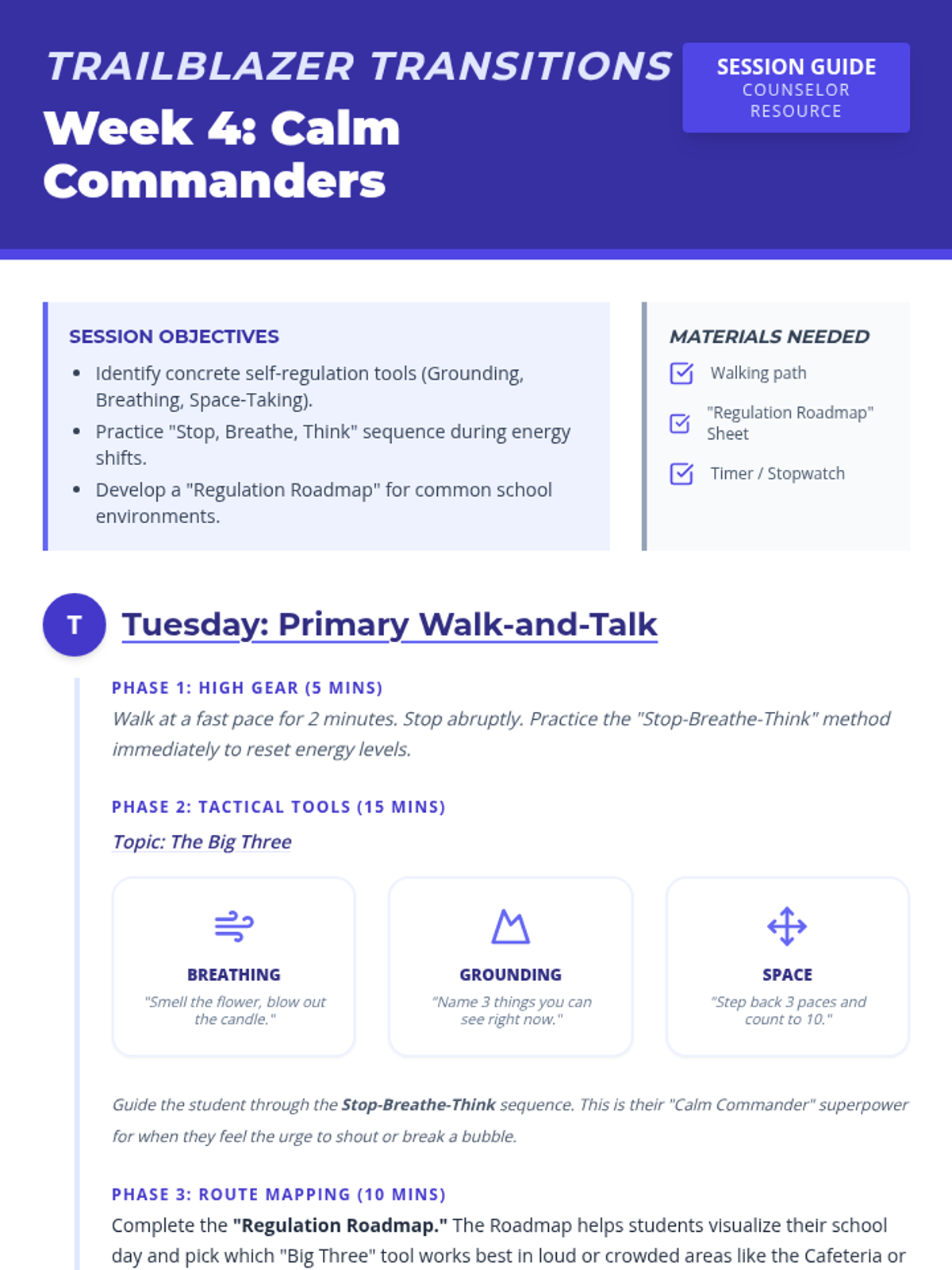
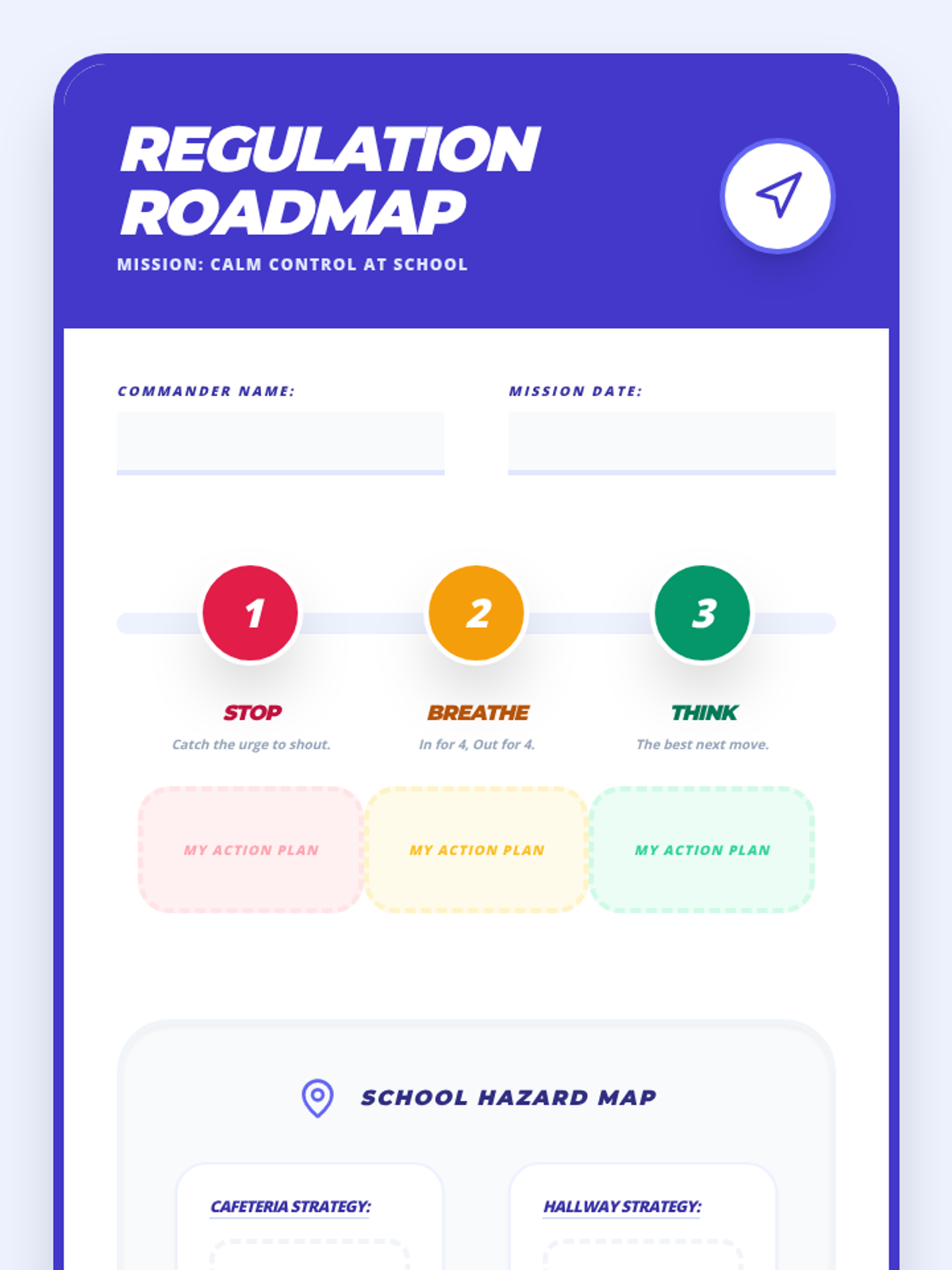
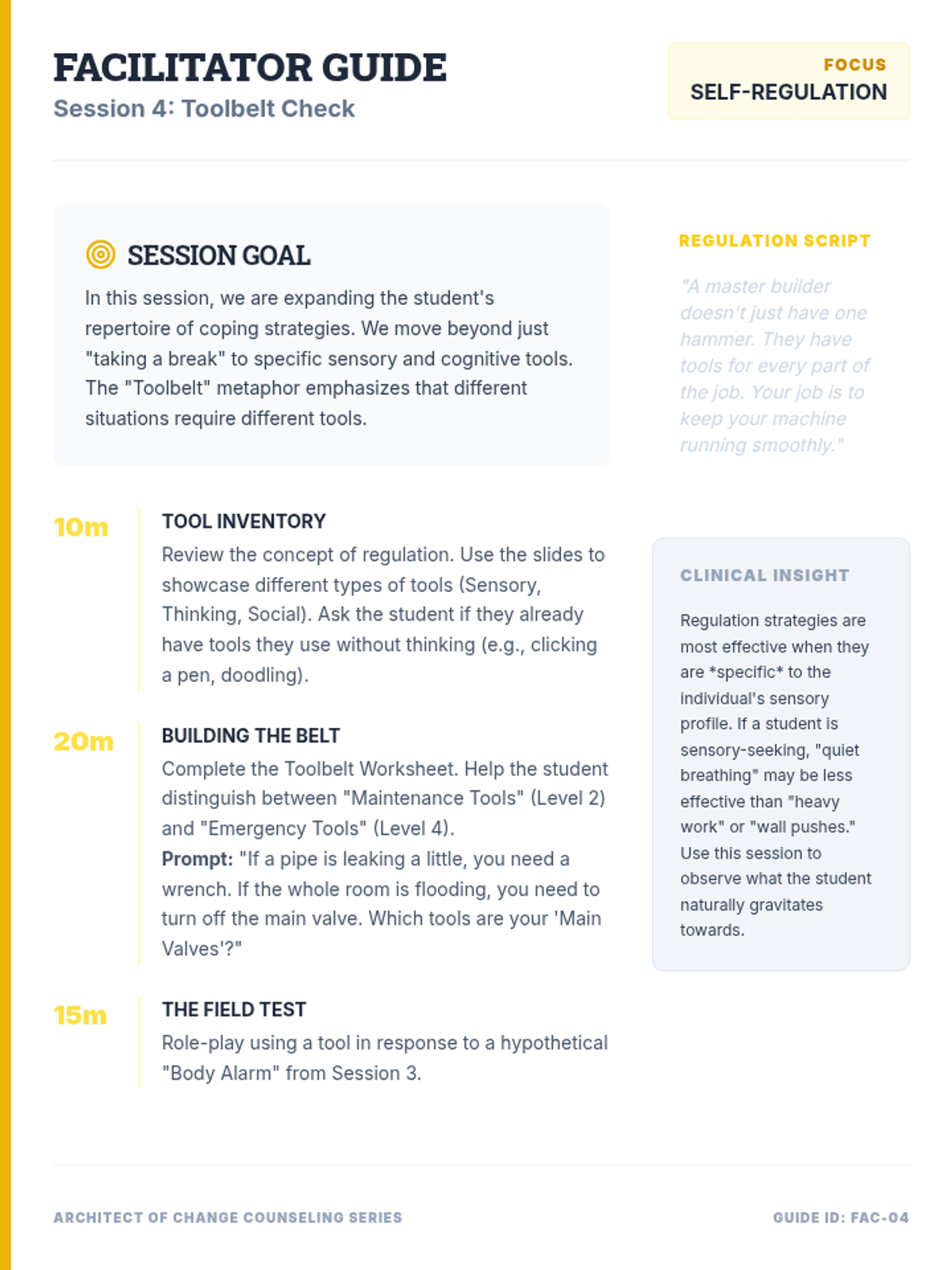
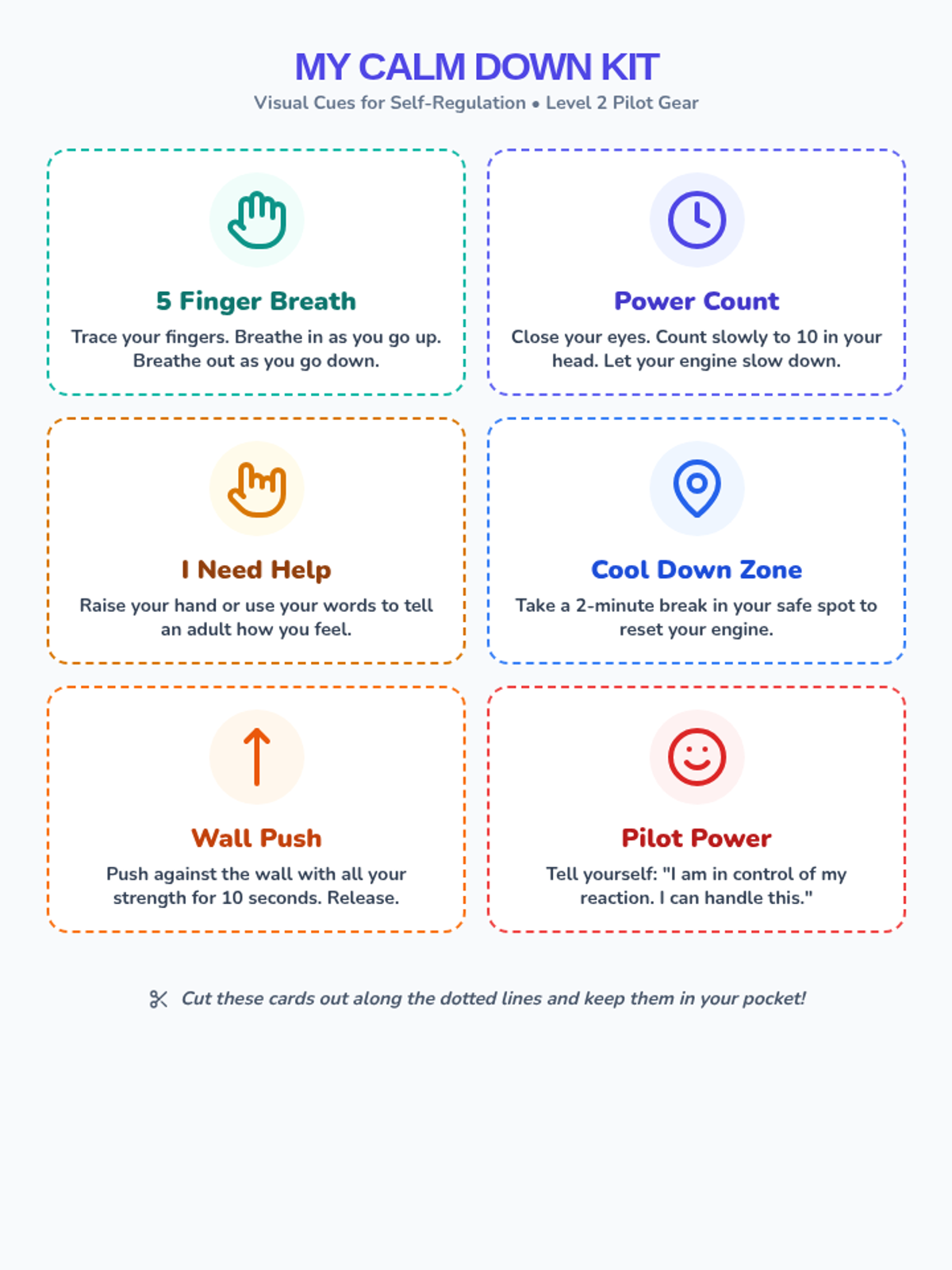
Teaches concrete self-regulation strategies and provides tools for emotional regulation.
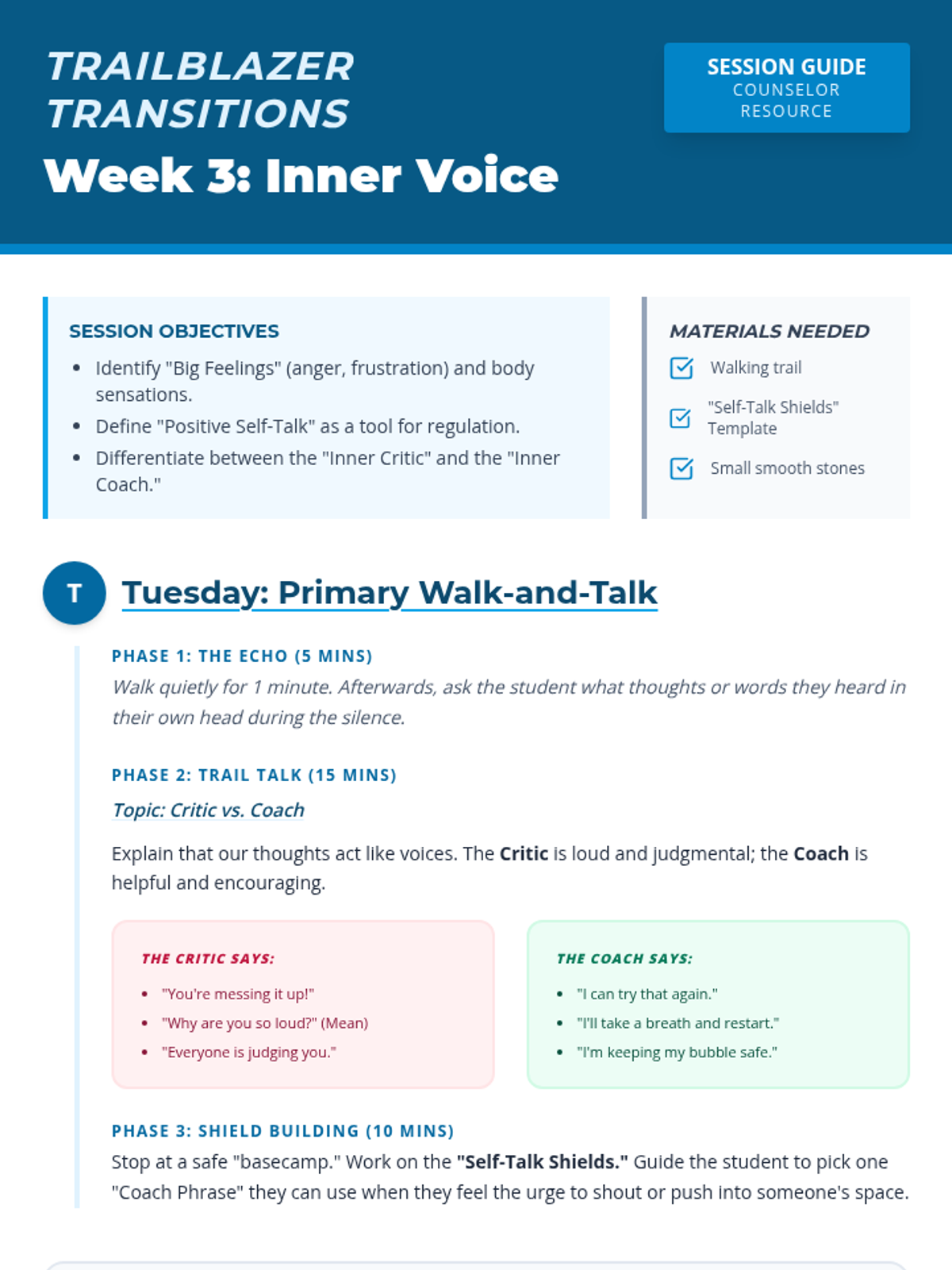
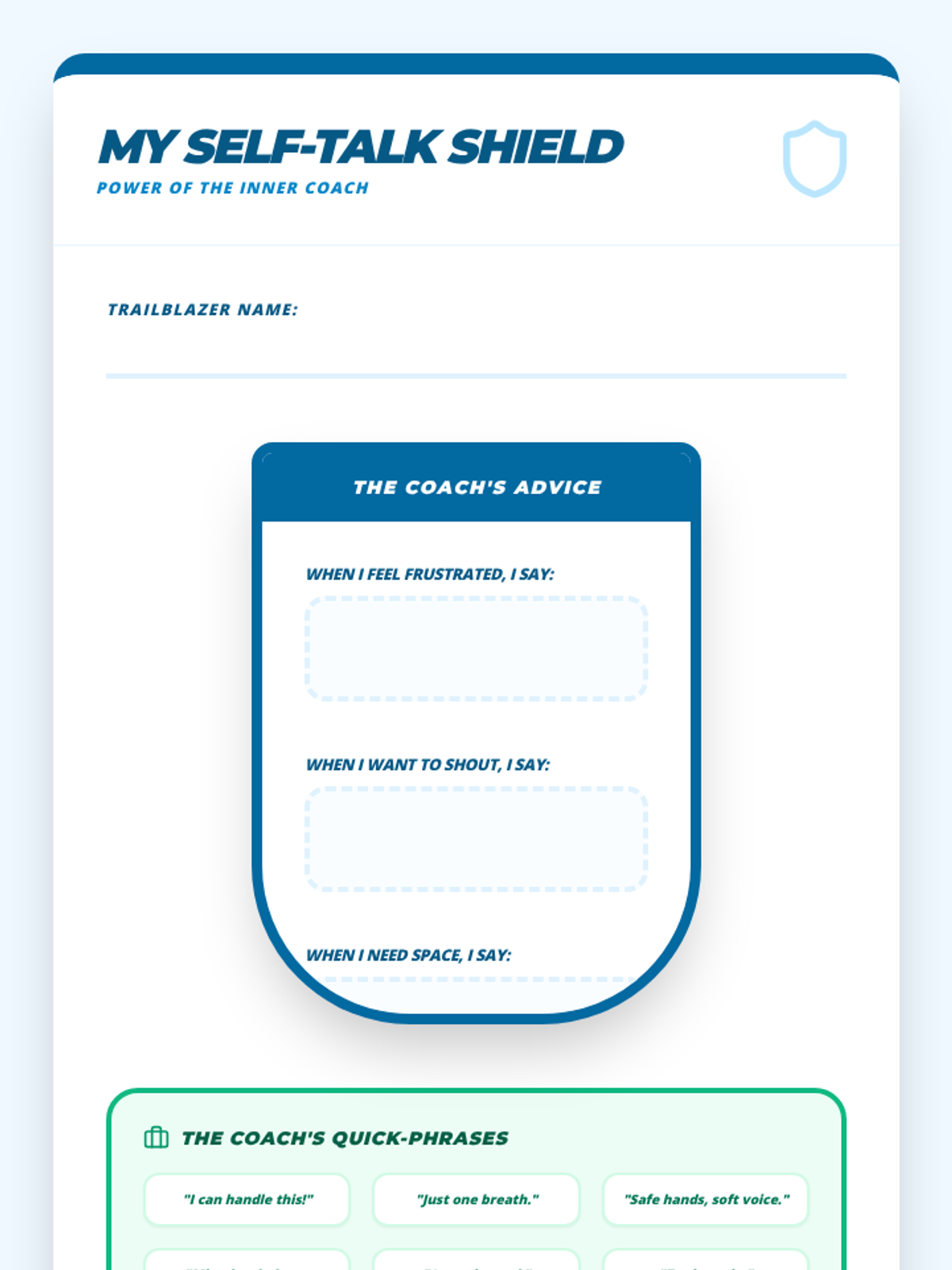
Explores emotional awareness and the power of positive self-talk to manage frustration.
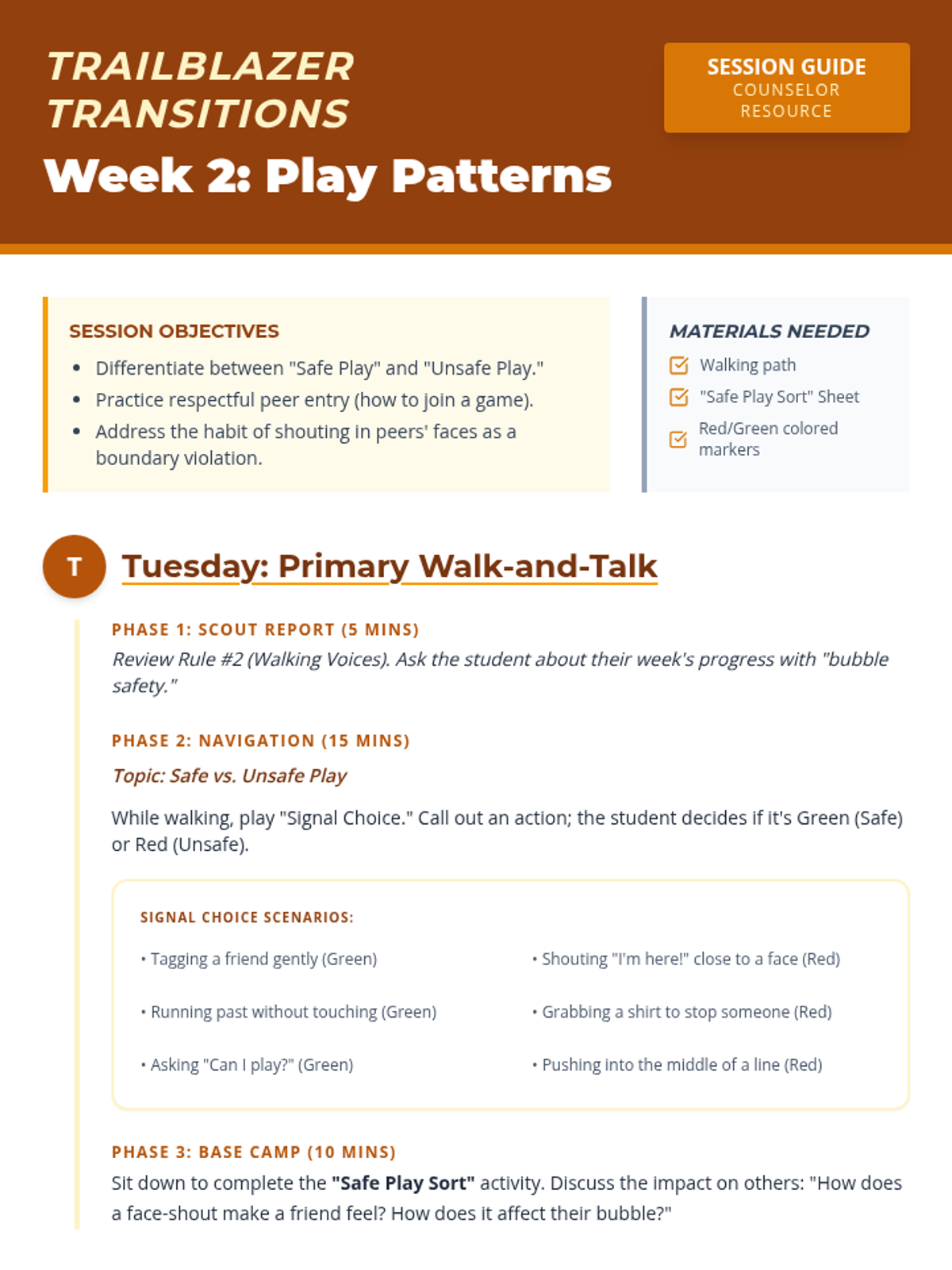
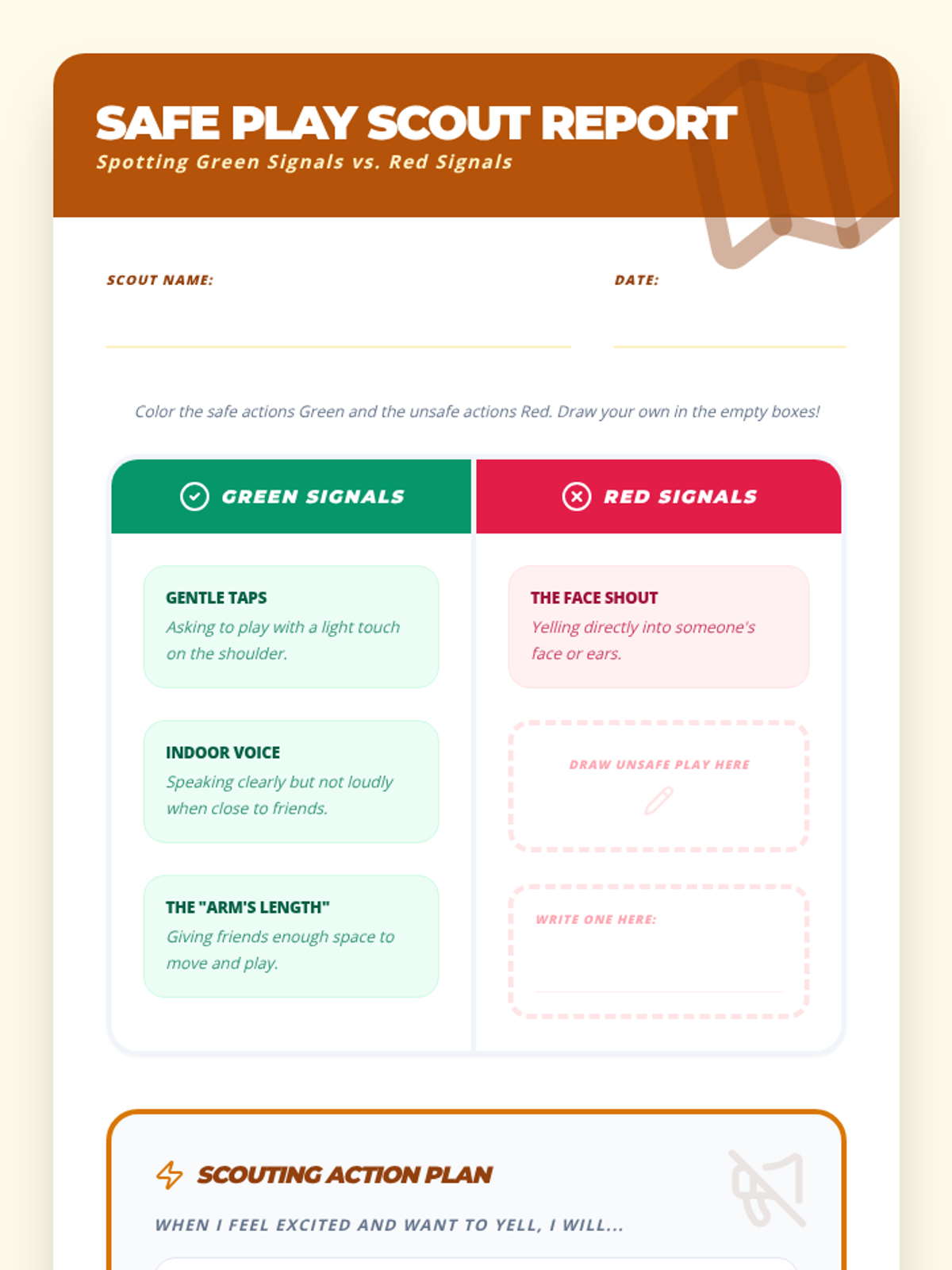
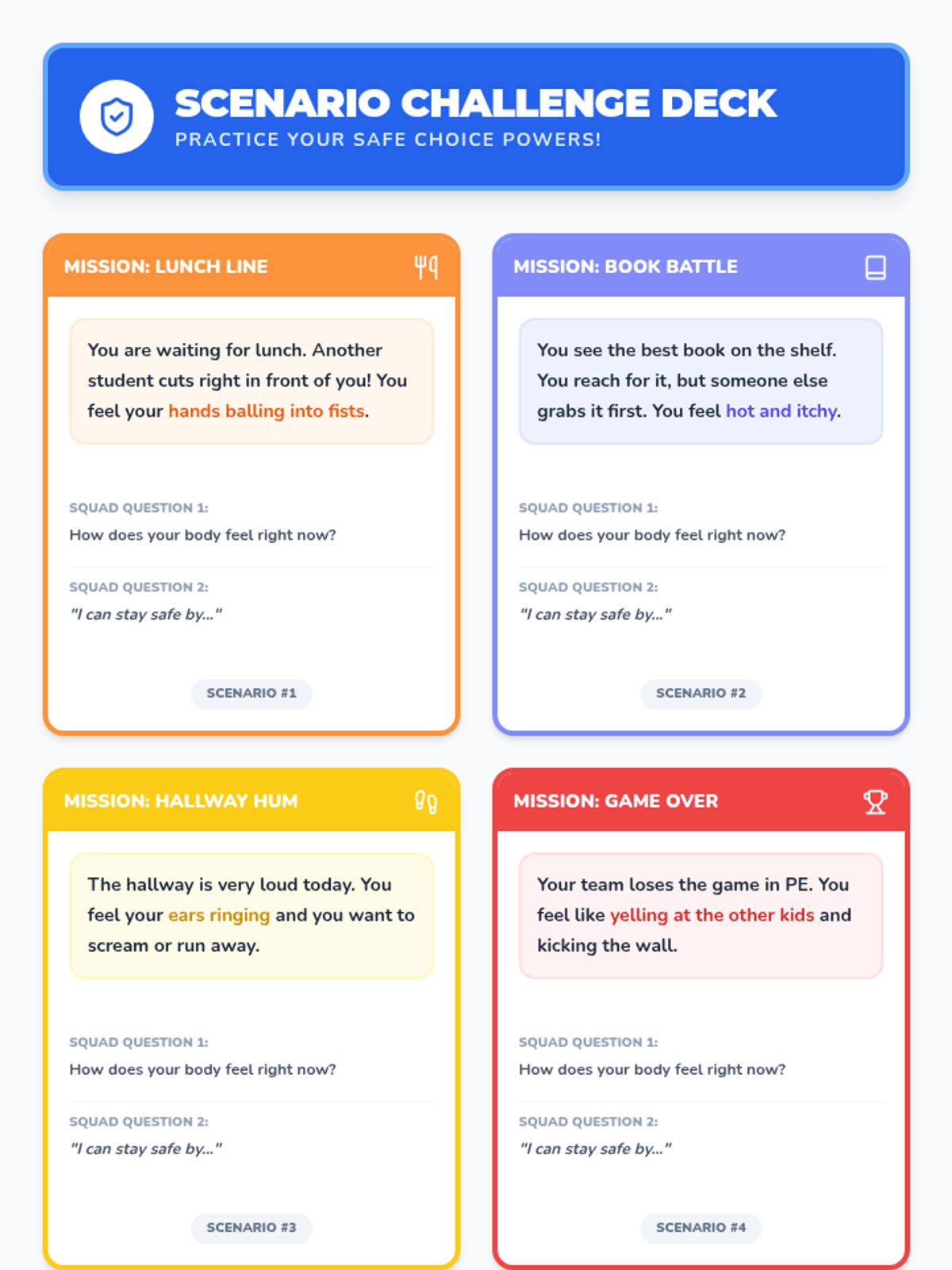
Focuses on distinguishing between safe and unsafe play, specifically addressing peer interactions like shouting and physical contact.
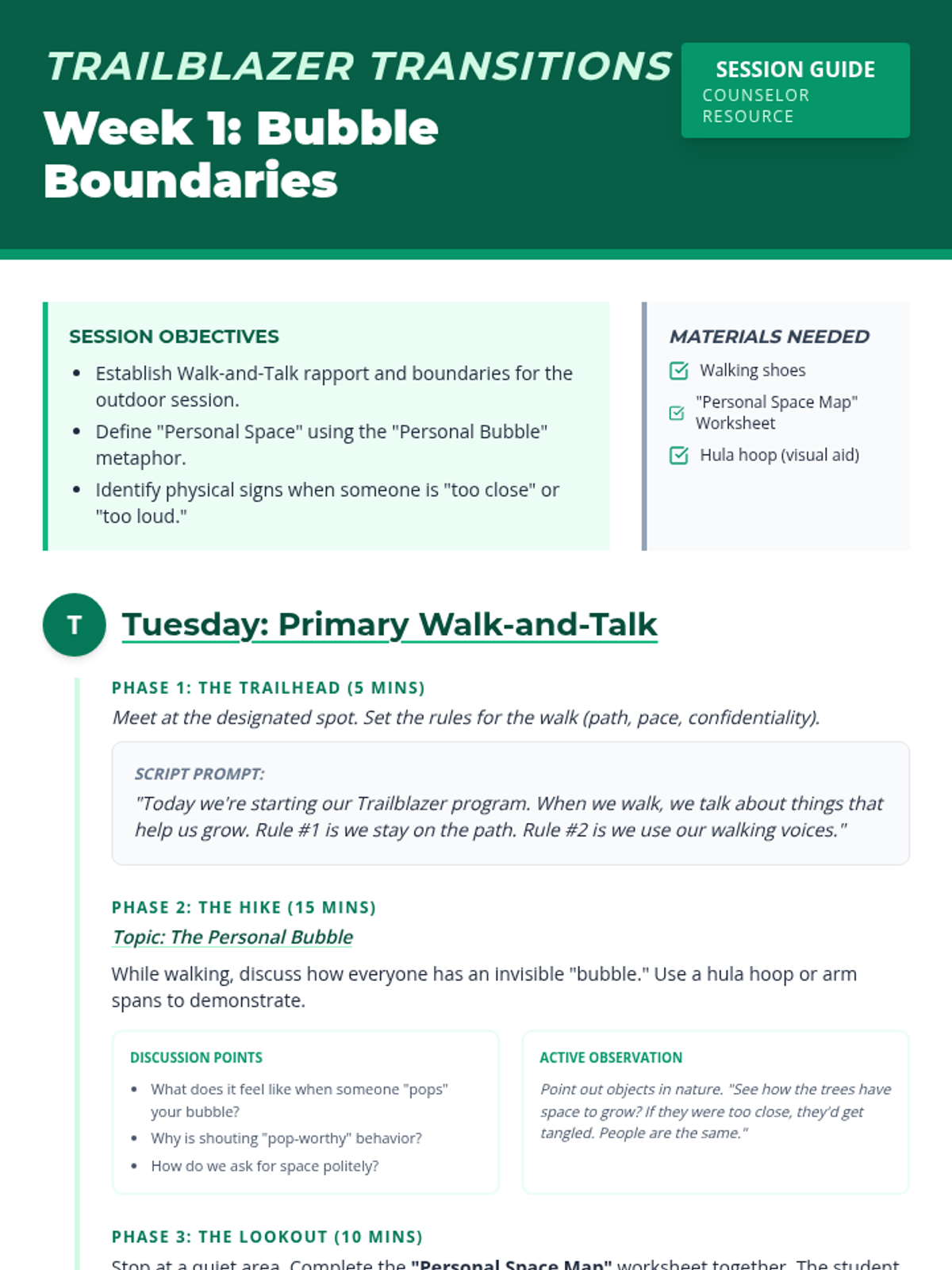
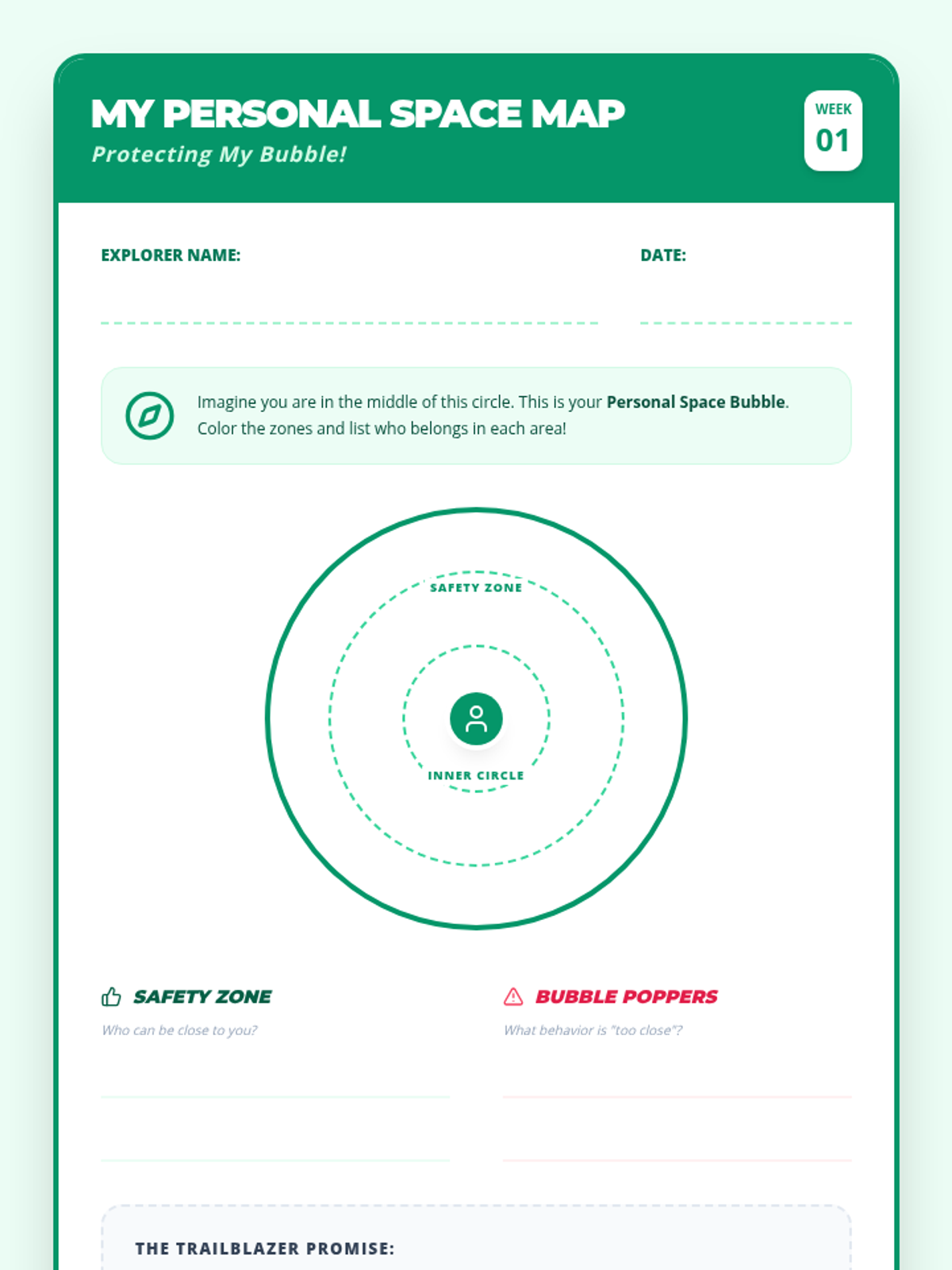
Introduces the concept of personal space and 'bubbles' while establishing the walk-and-talk routine.
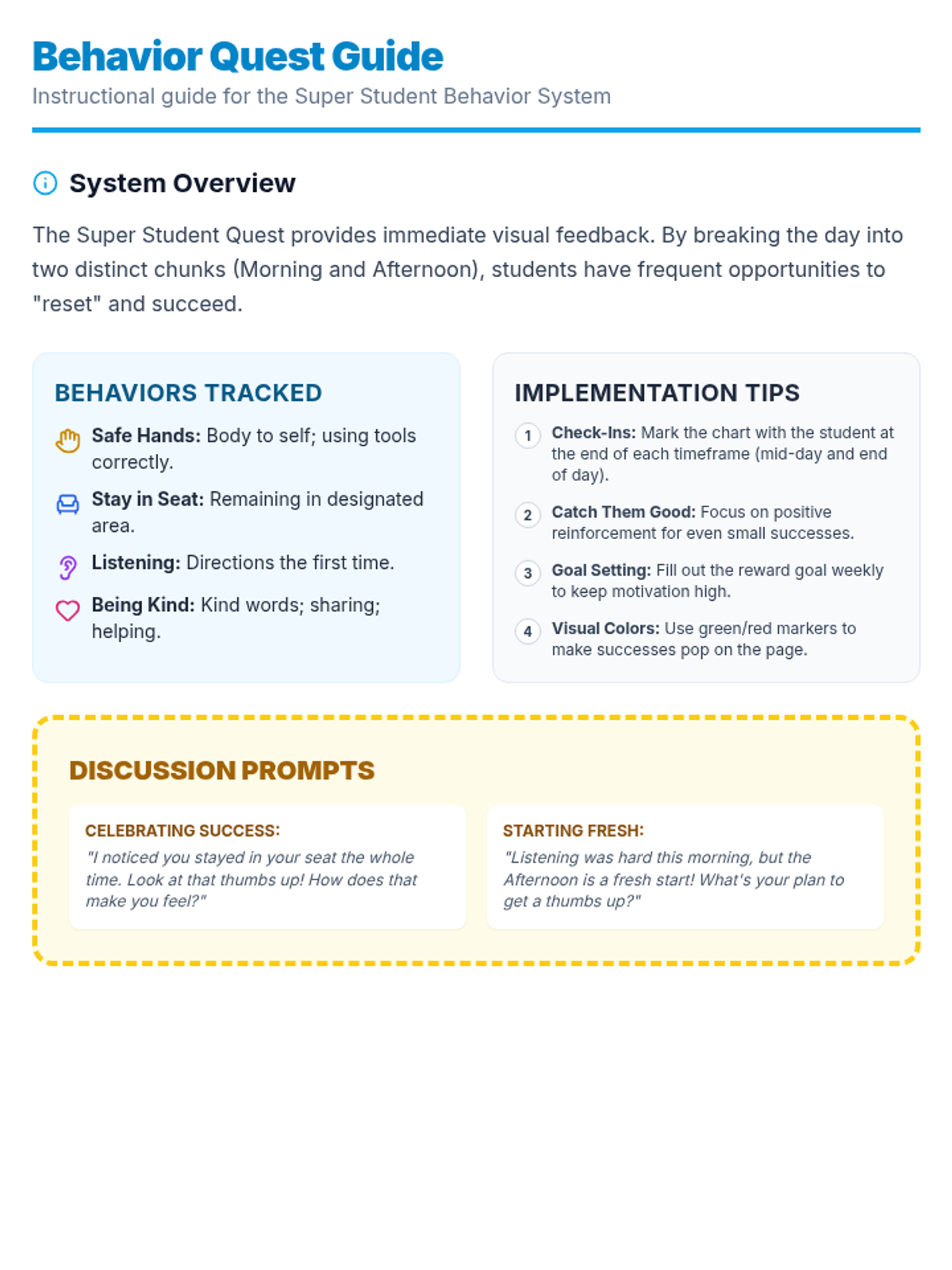
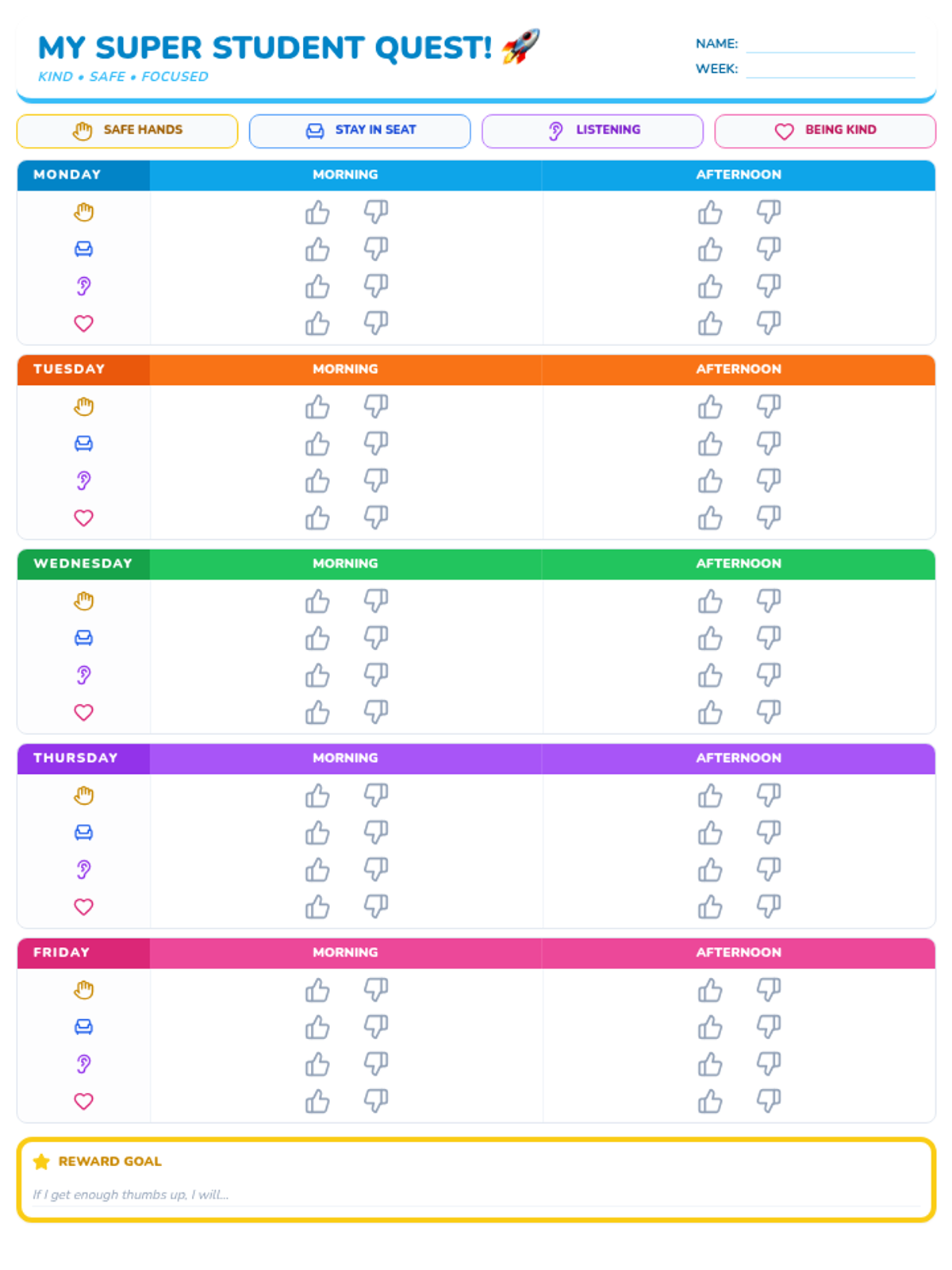
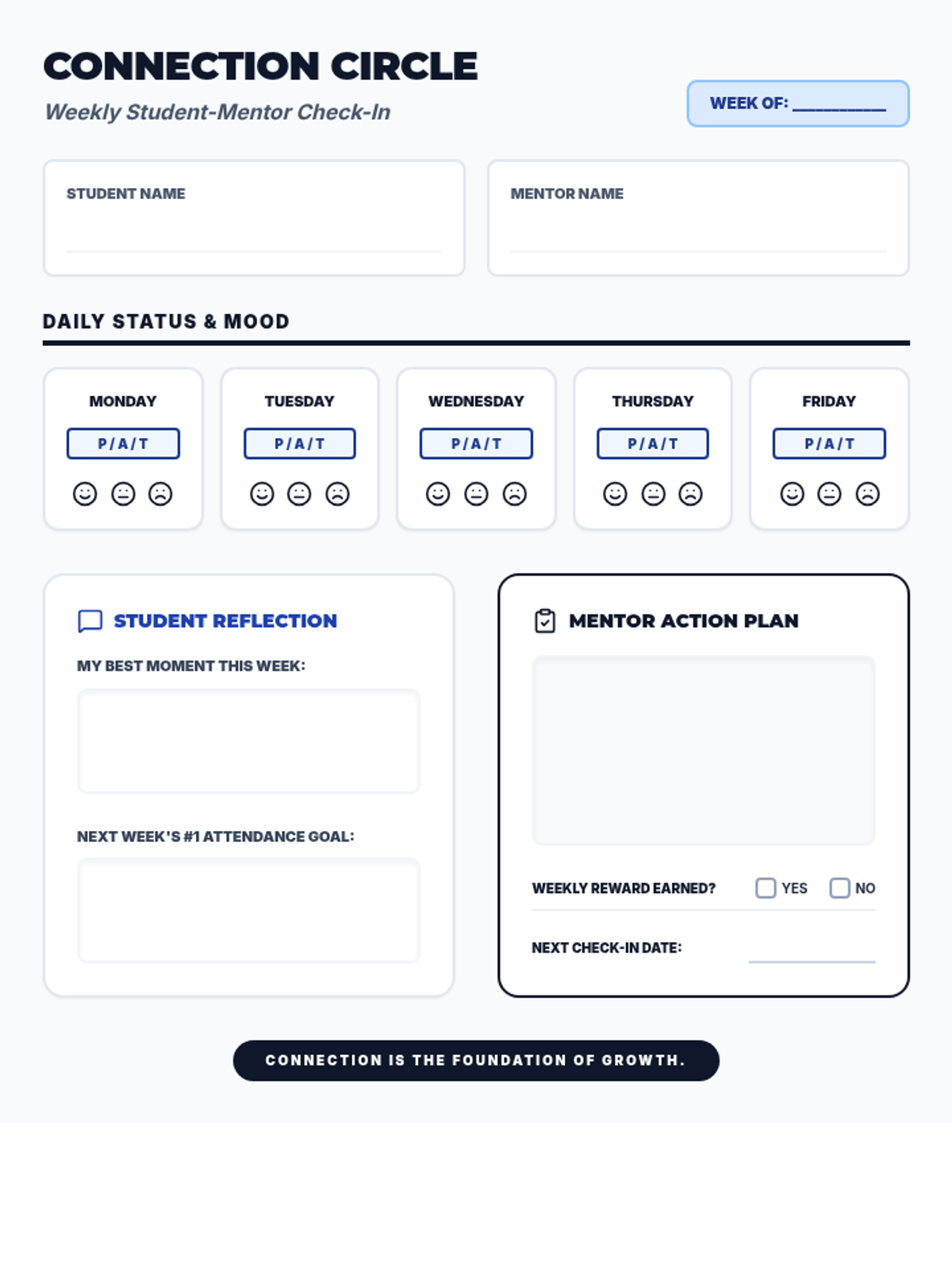
A comprehensive daily behavior tracking system designed for Kindergarteners, focusing on positive reinforcement and clear visual feedback across key school timeframes.
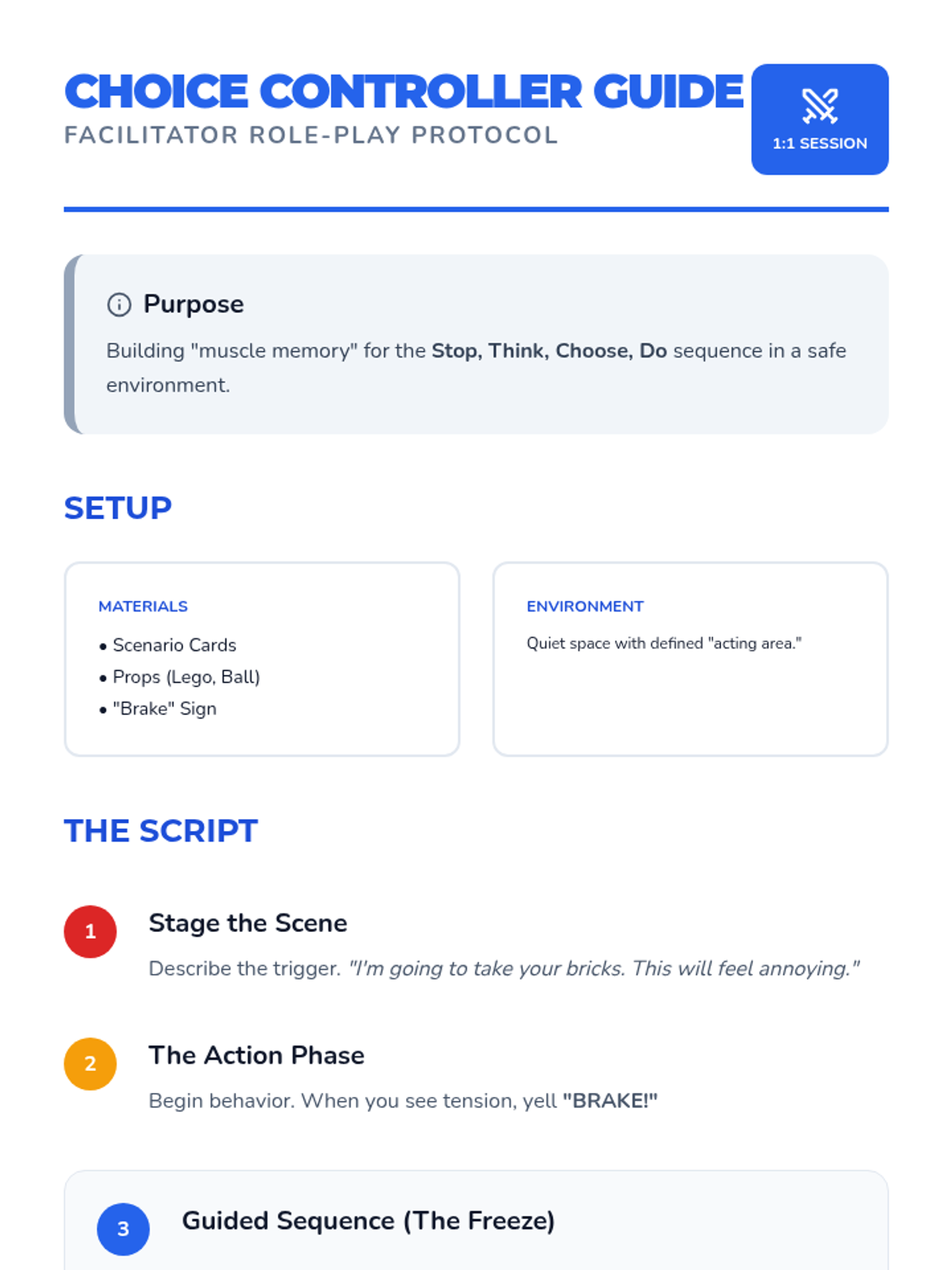
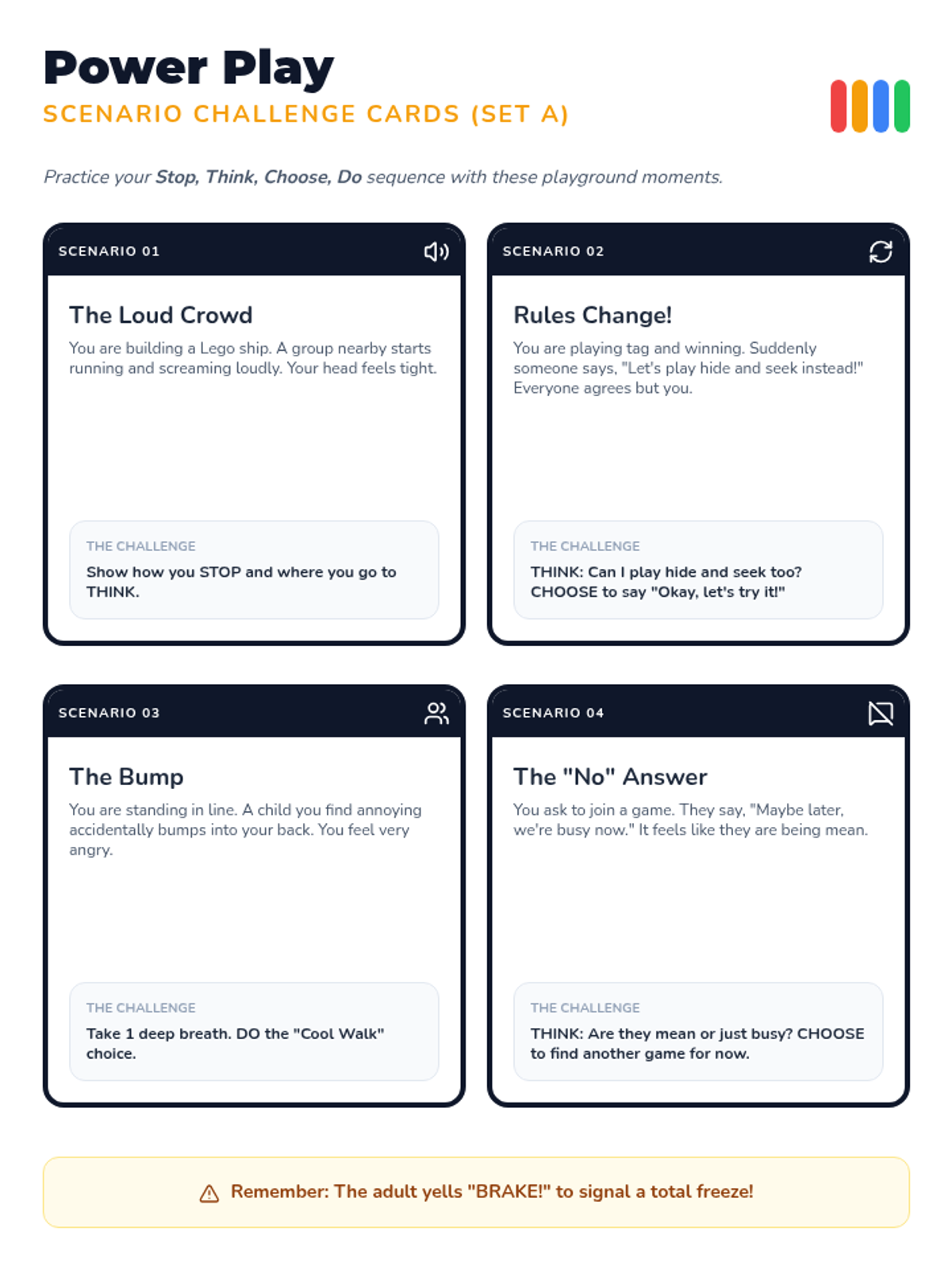
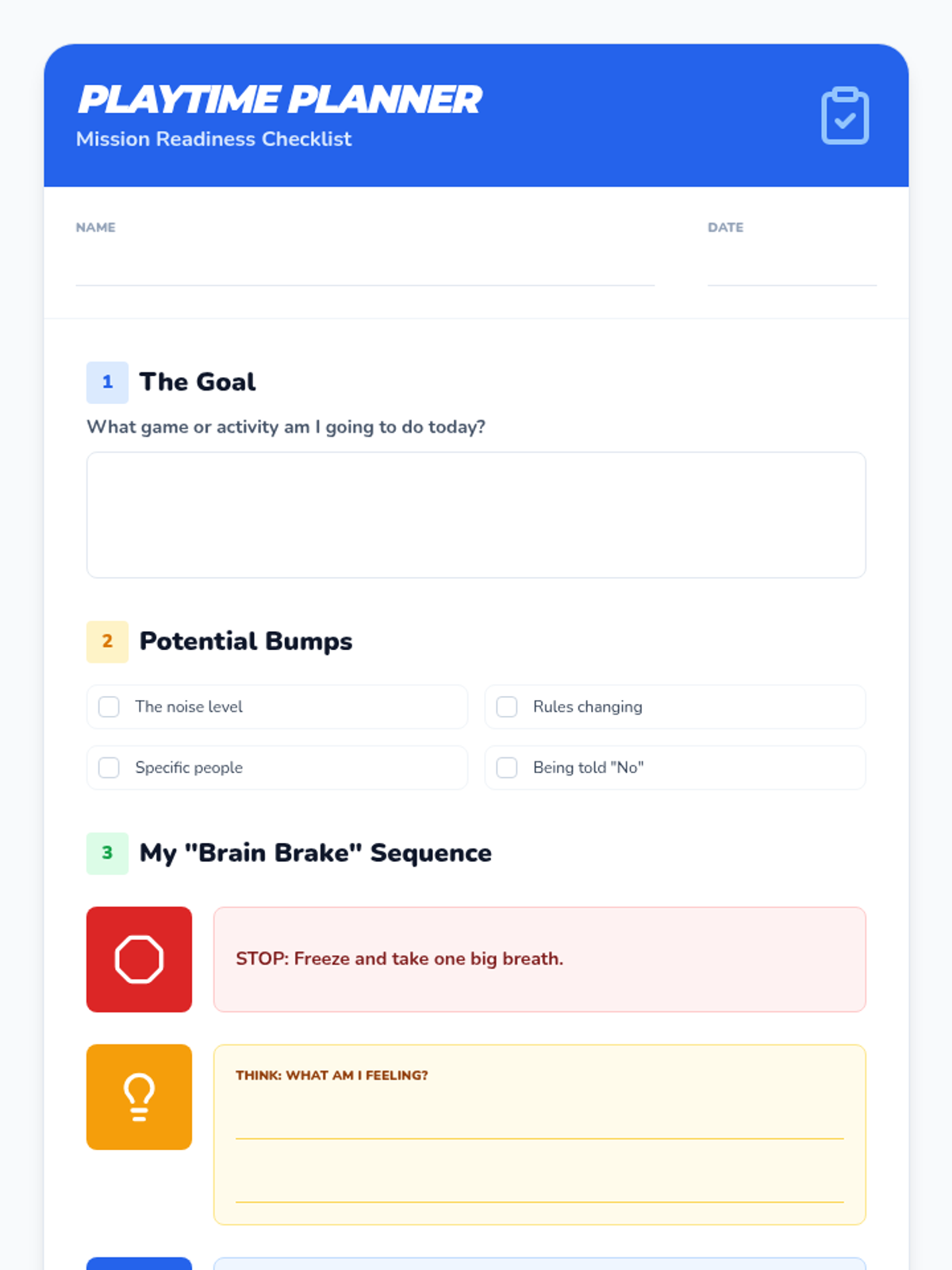
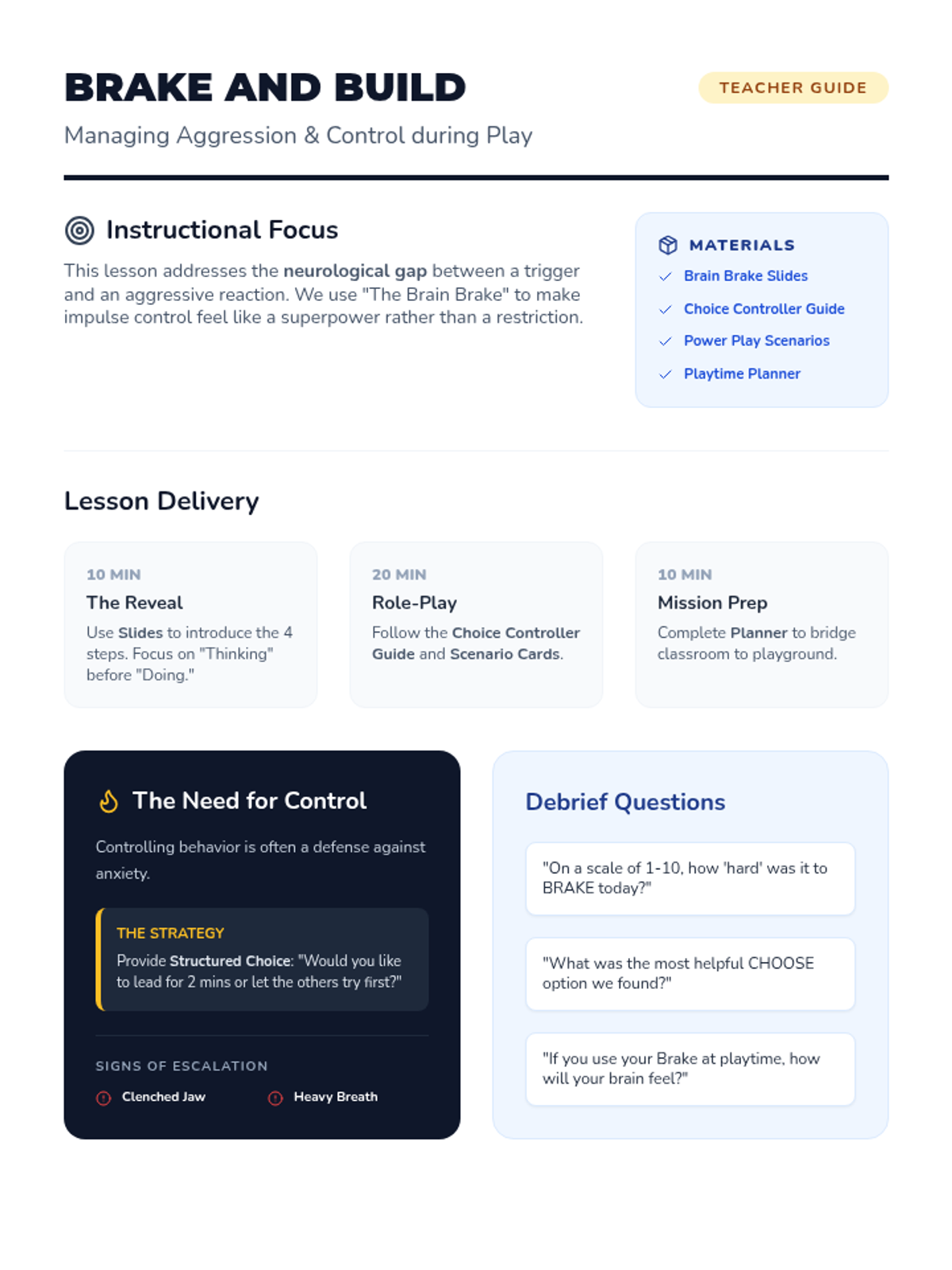
A therapeutic lesson focused on teaching a 4-step impulse control strategy (Stop, Think, Choose, Do) for an 8-year-old student struggling with social frustration and aggression. The lesson uses role-play and visual aids to help the student navigate peer conflict and controlling tendencies.
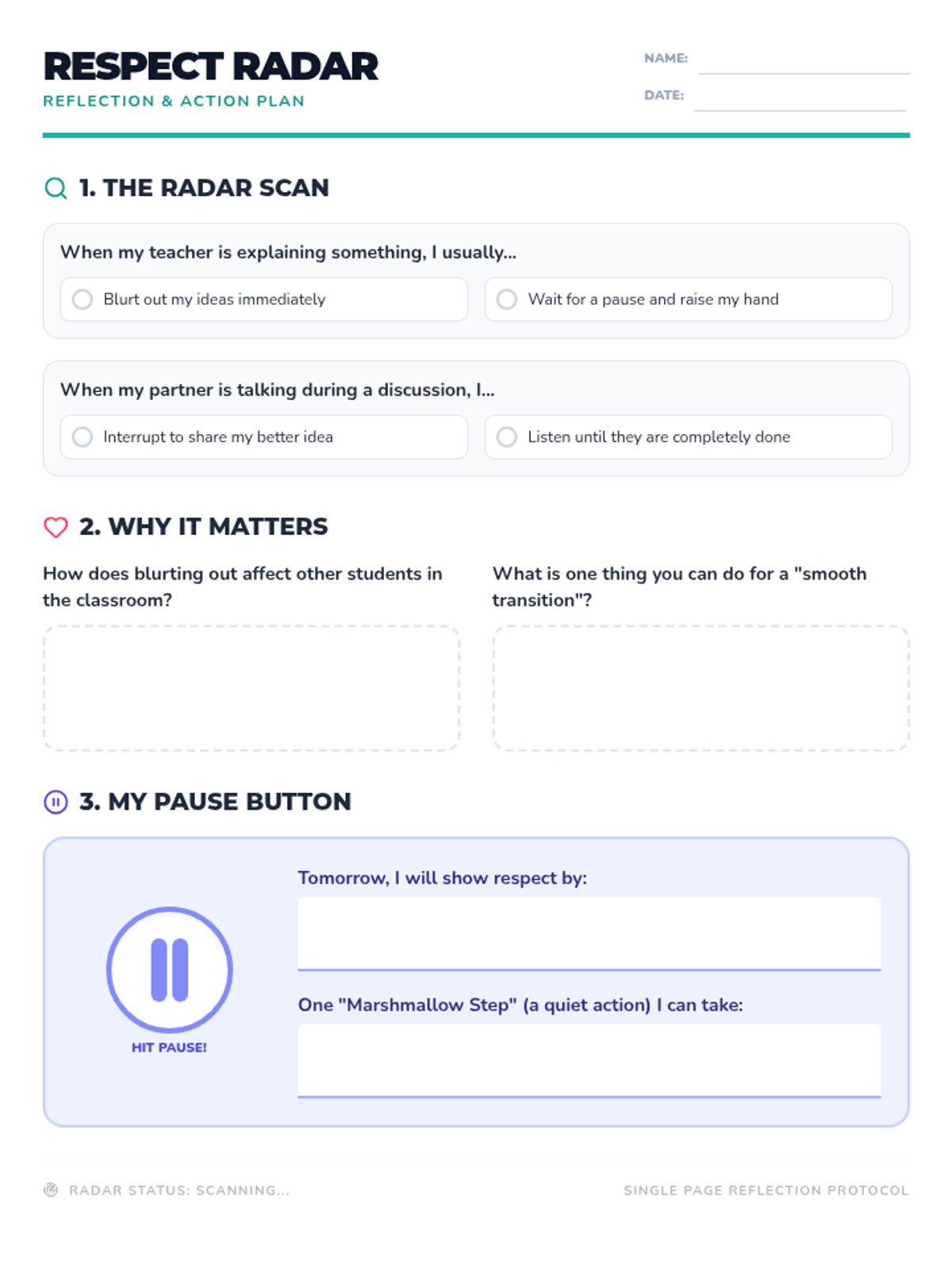
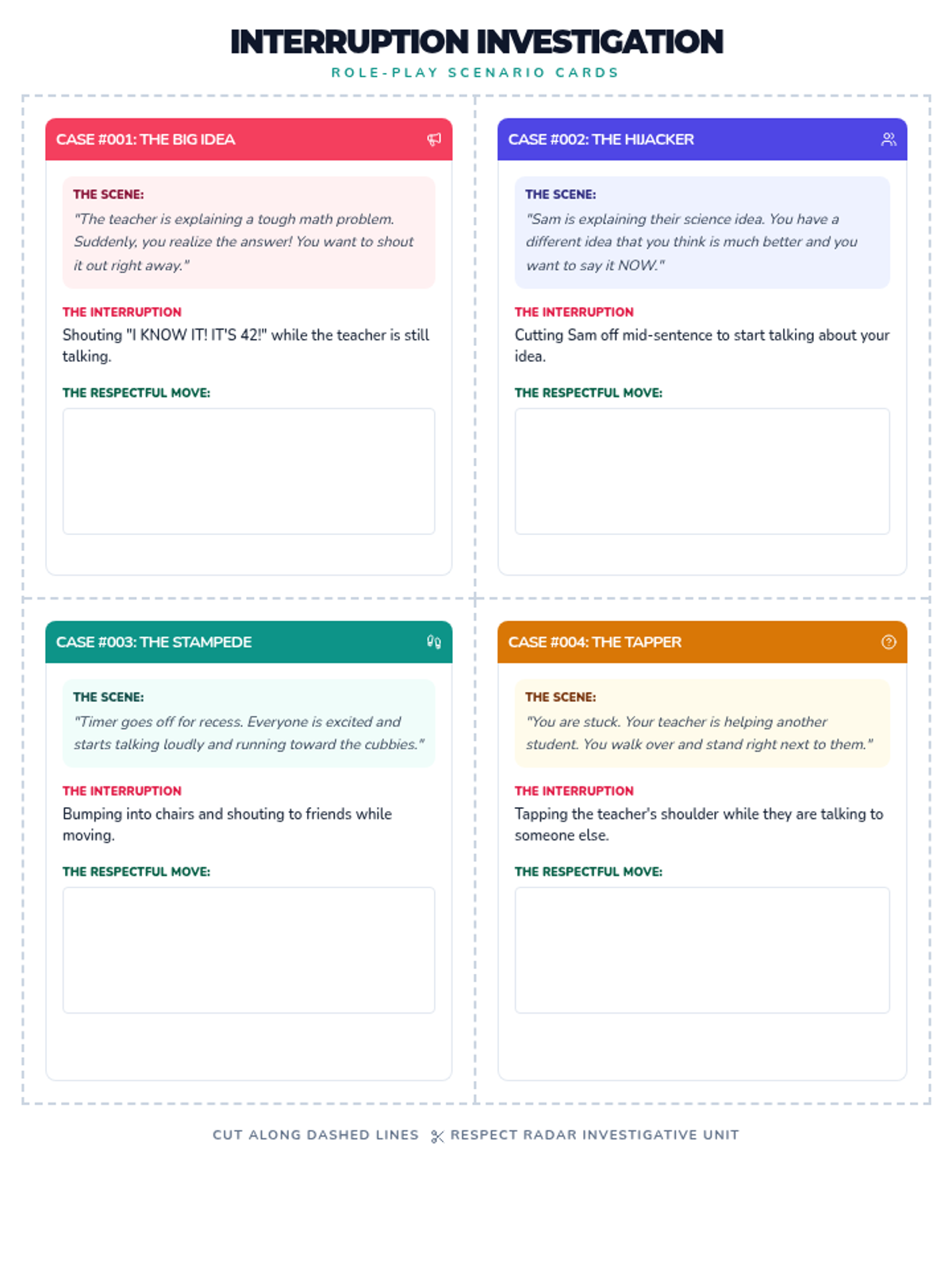
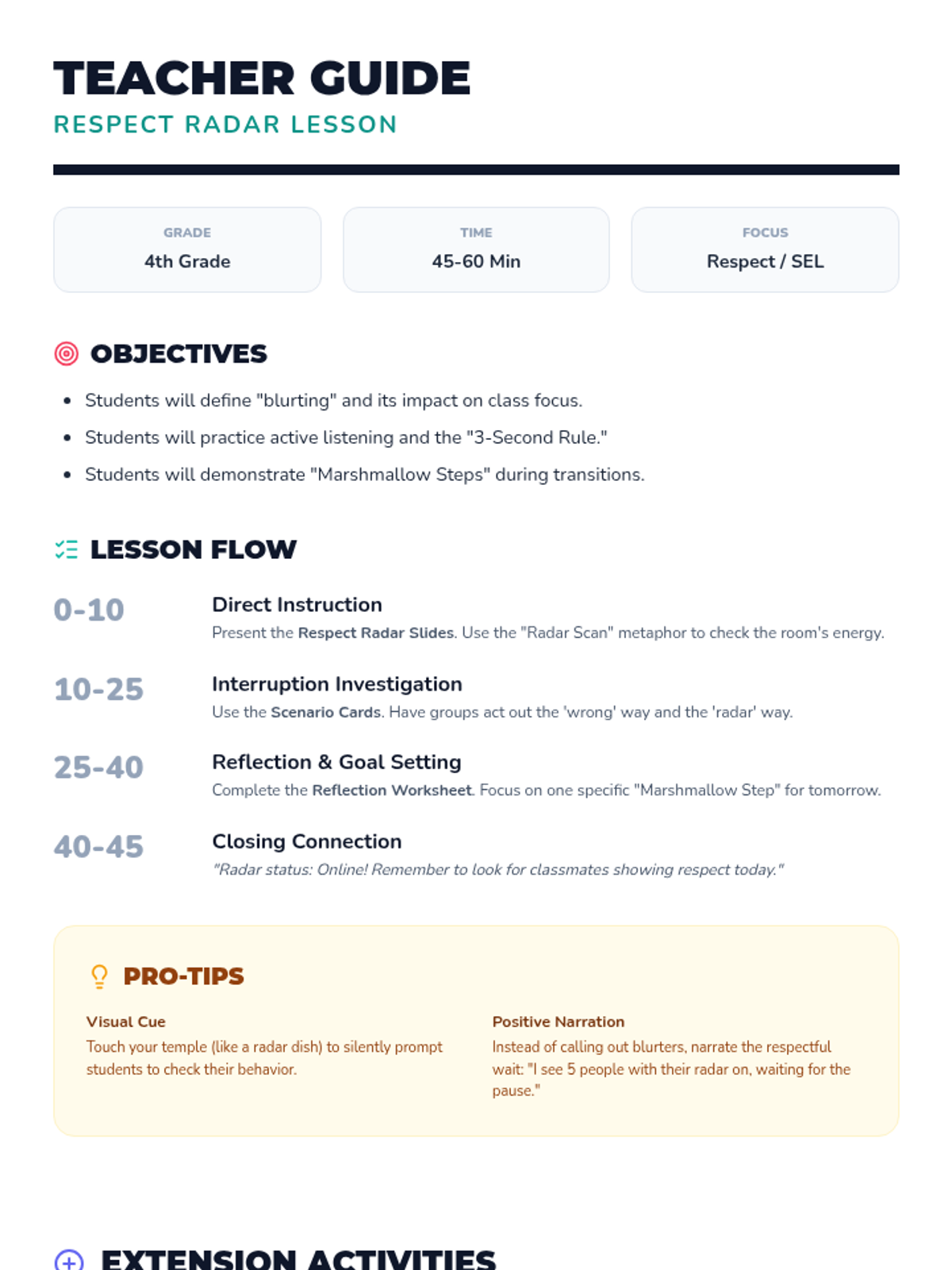
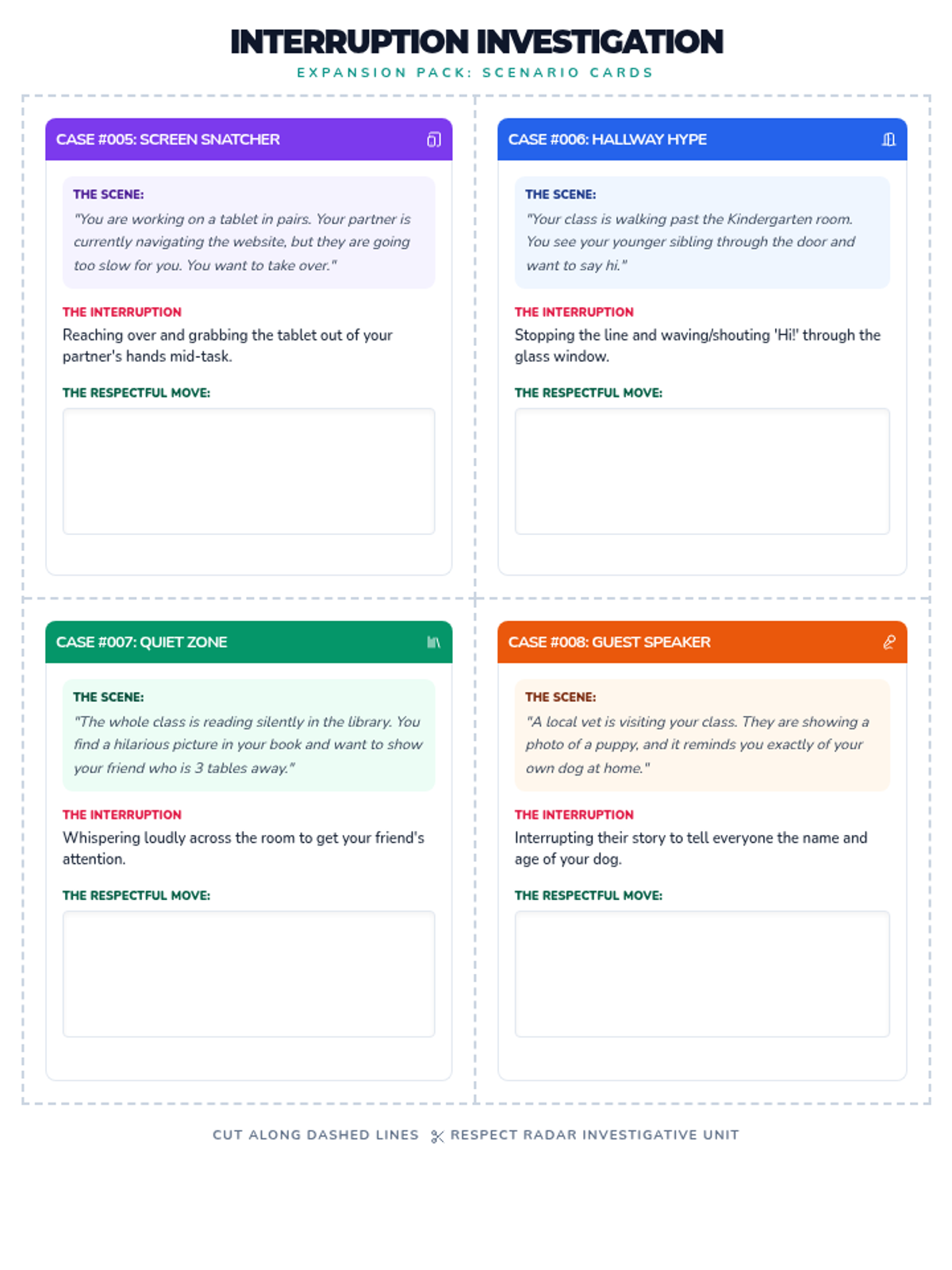
A lesson designed for 4th graders to improve classroom respect by focusing on blurting out, peer interruptions, and smooth transitions using the 'Respect Radar' framework.
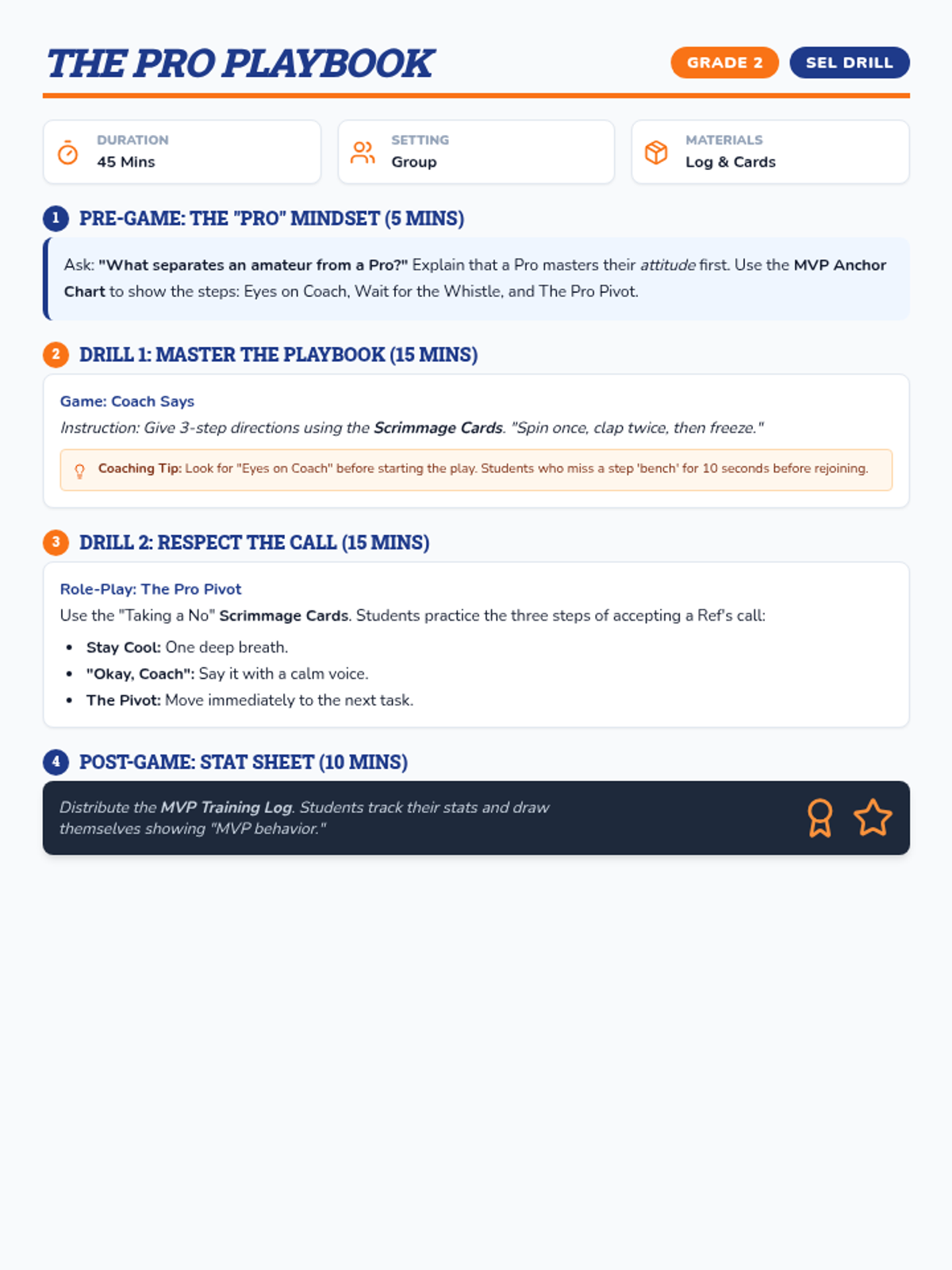
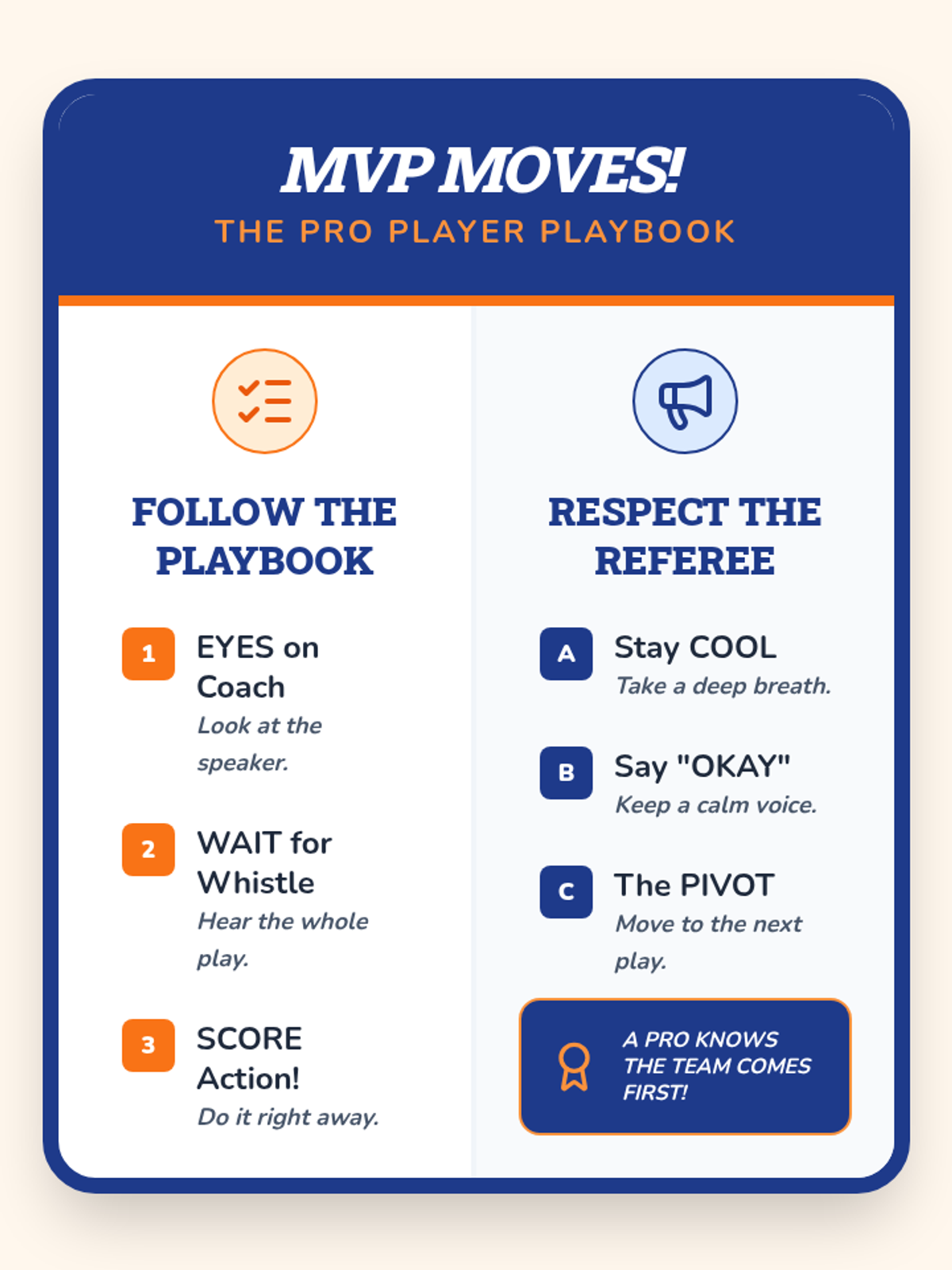
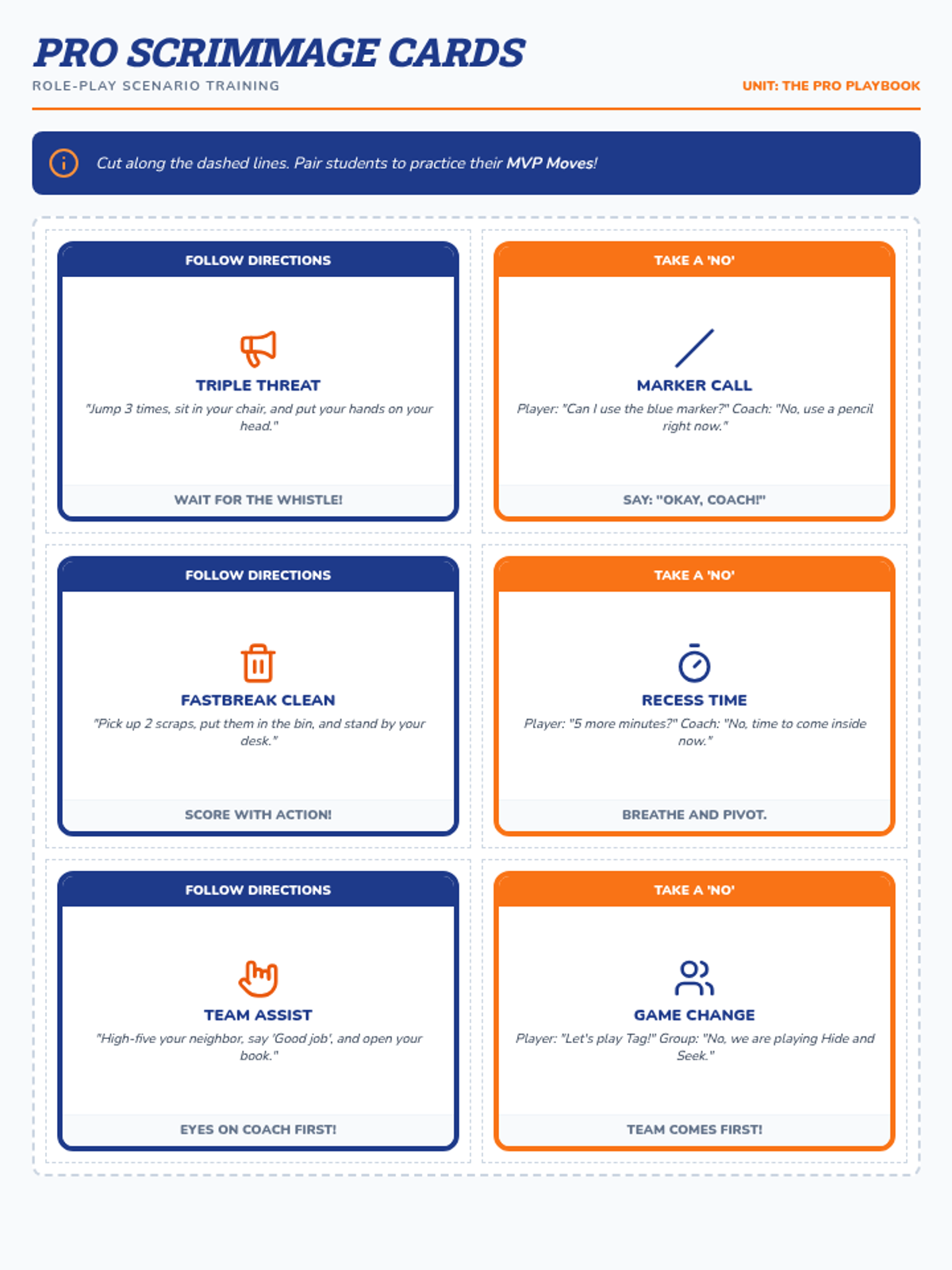
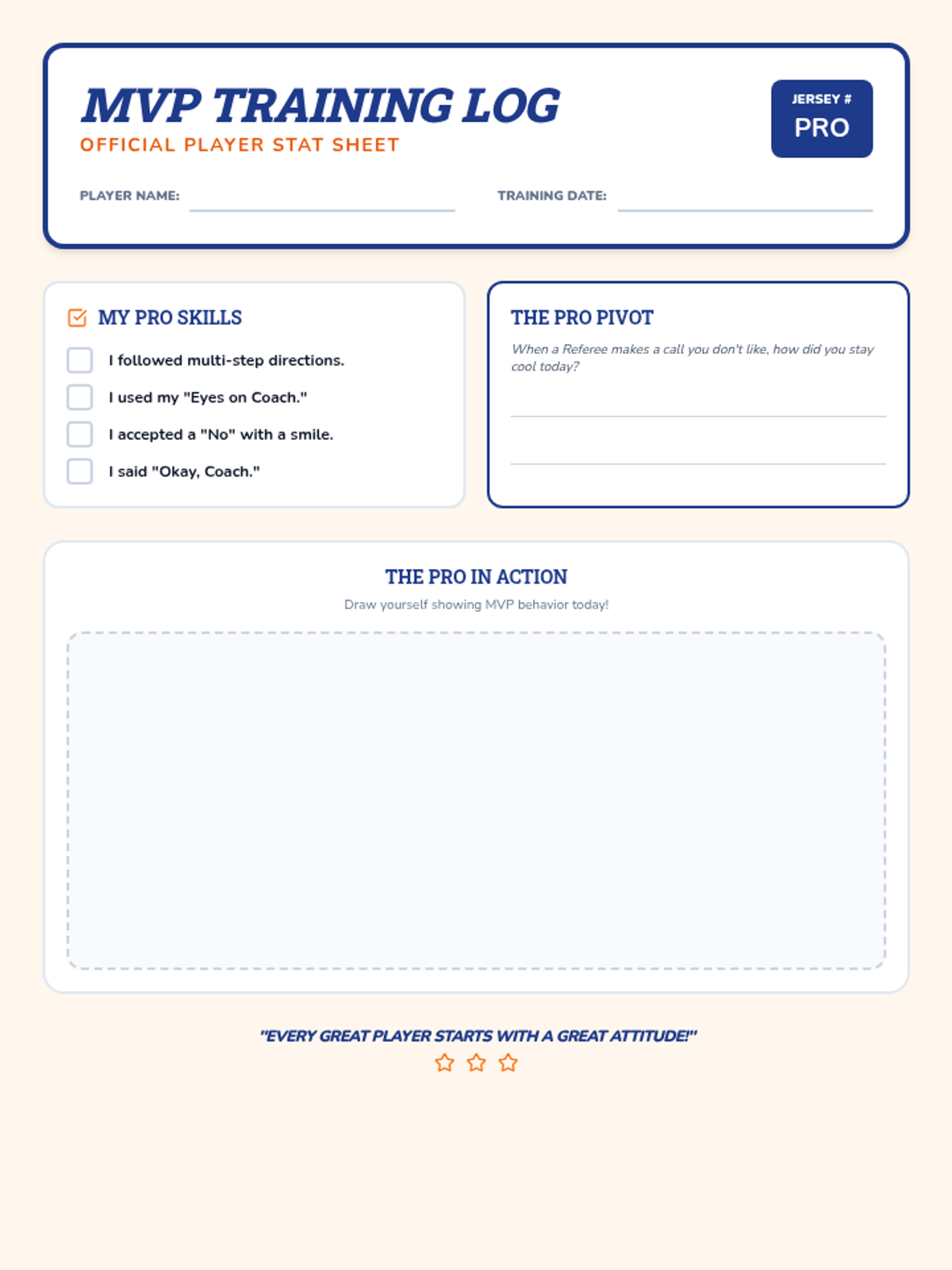
A high-energy lesson for 2nd graders that uses the excitement of professional basketball to teach essential social-emotional skills: following multi-step directions and accepting a 'no' with a positive attitude. Students learn that being a 'pro' means mastering the playbook of respect and discipline.
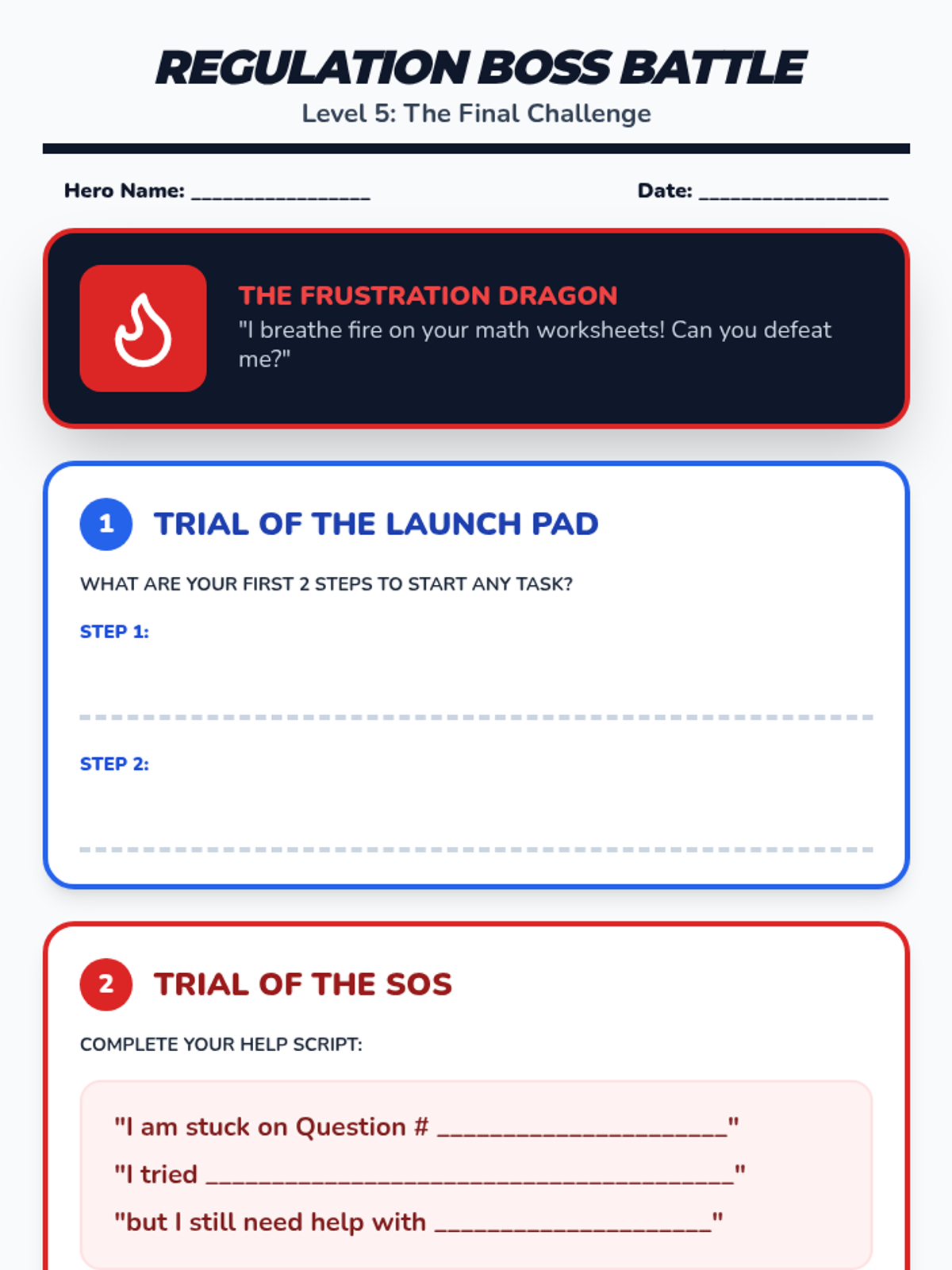
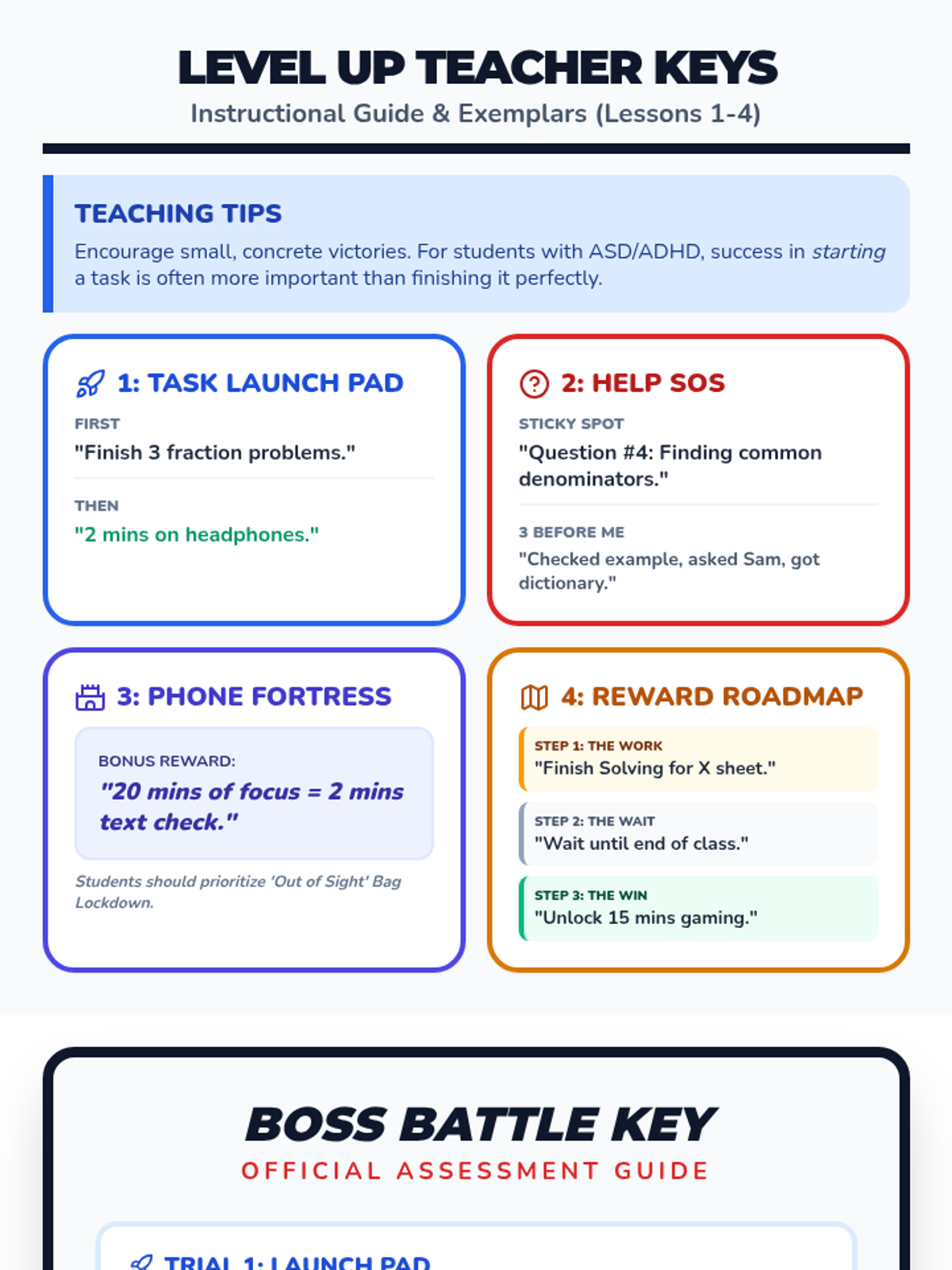
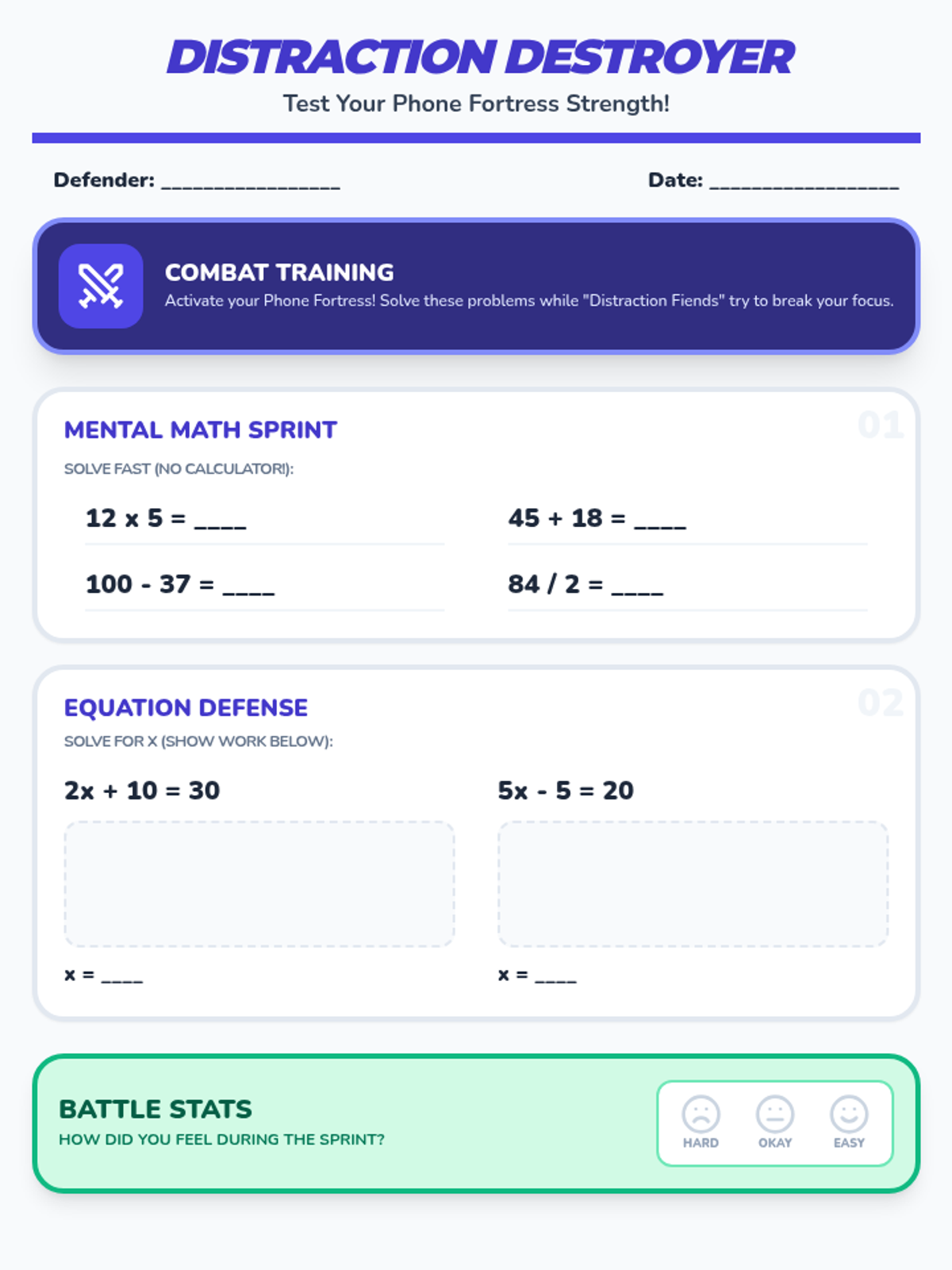
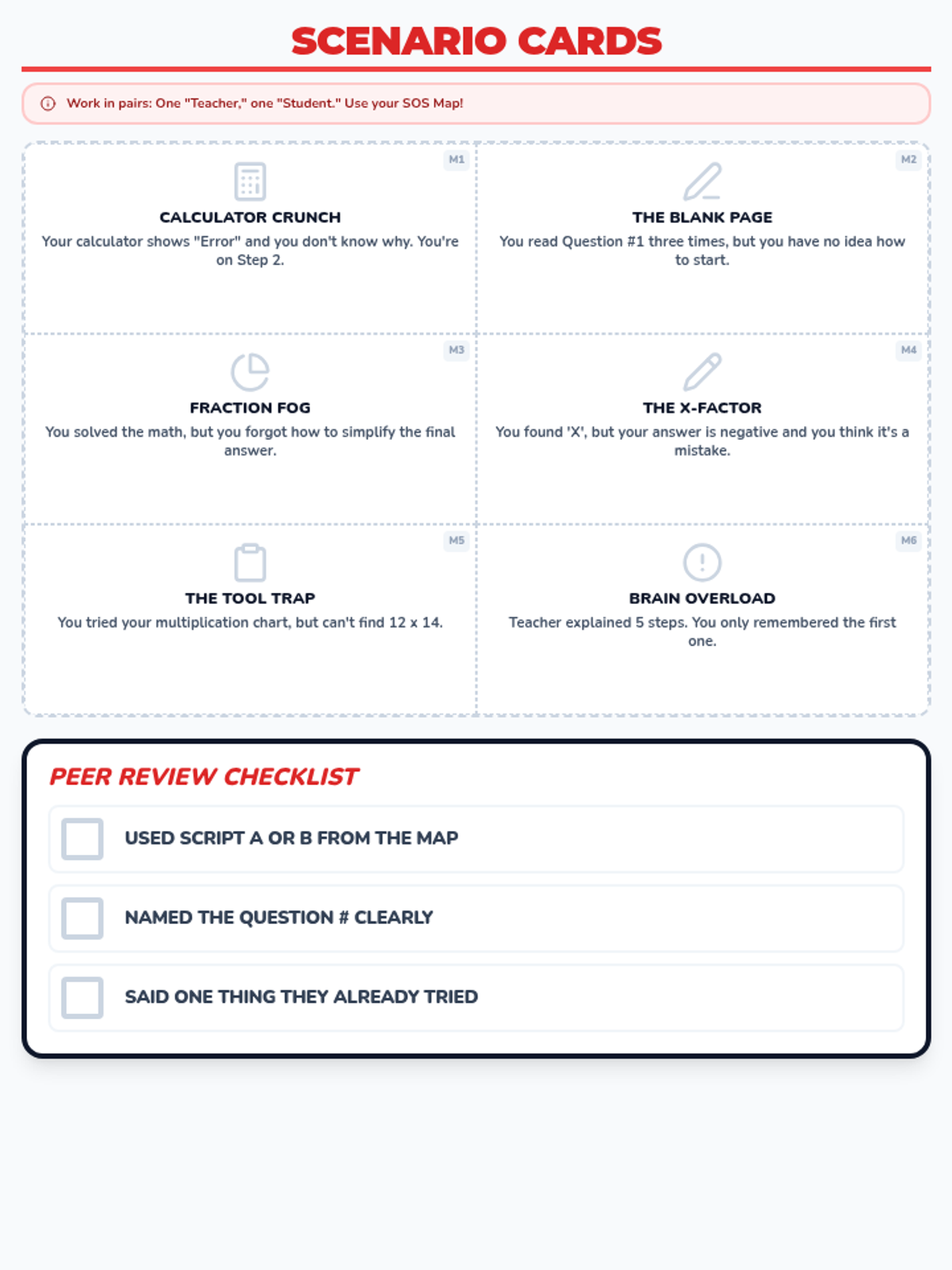
A cumulative 'Boss Battle' review where students use all their regulation tools to solve a series of math-related regulation challenges.
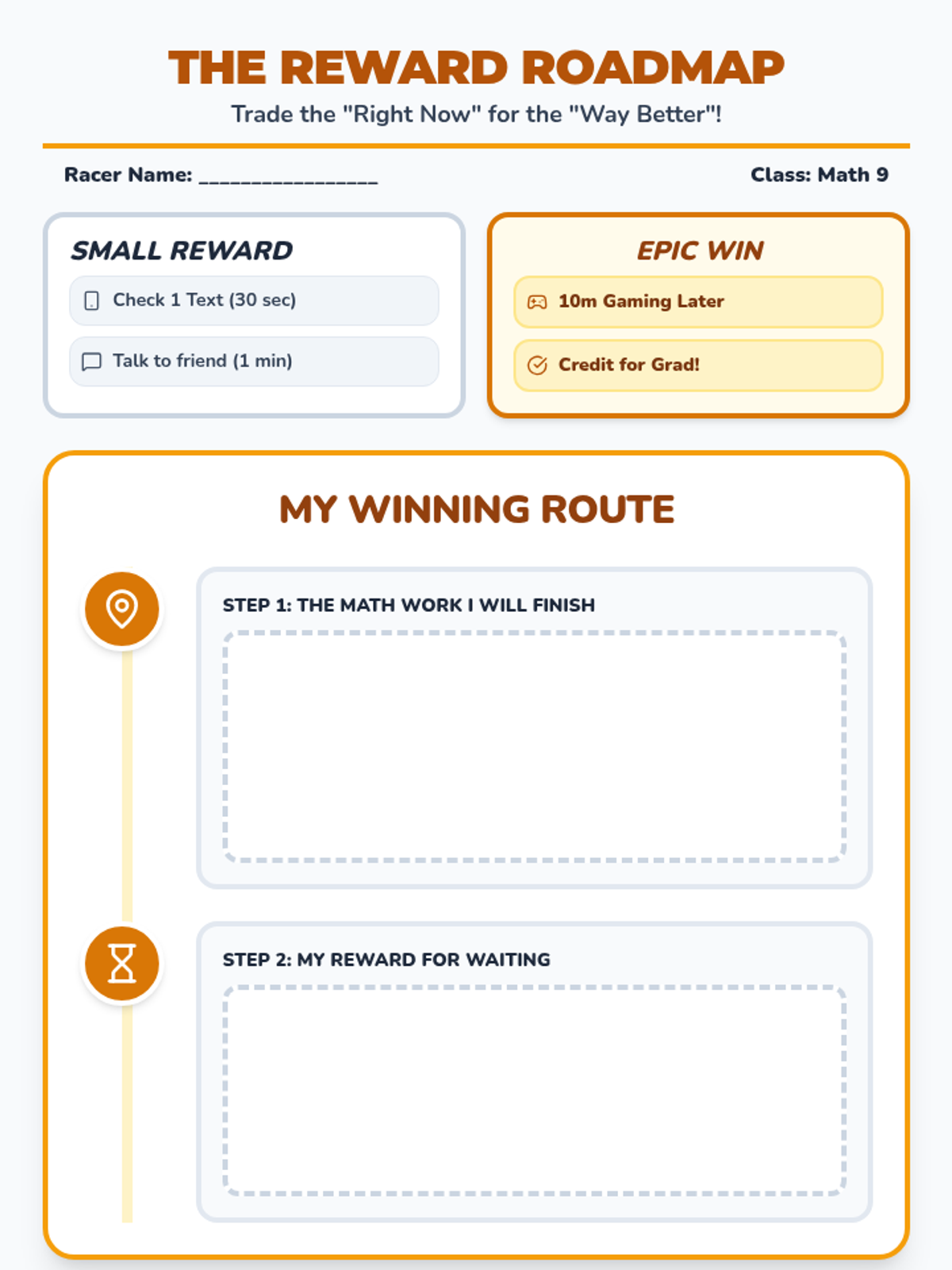
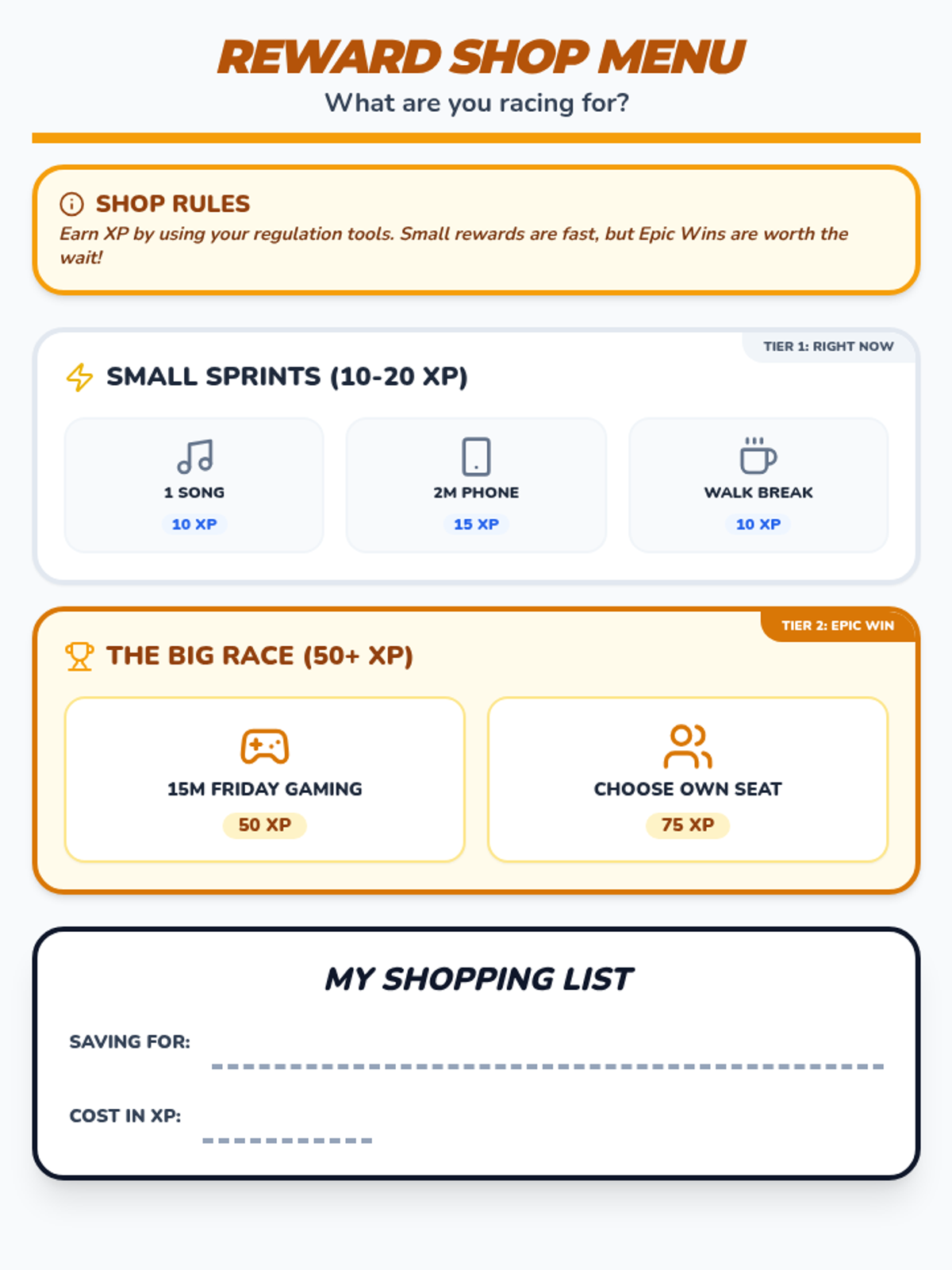
Explores delayed gratification through a 'Reward Roadmap' activity, teaching students to trade immediate distractions for long-term academic success.
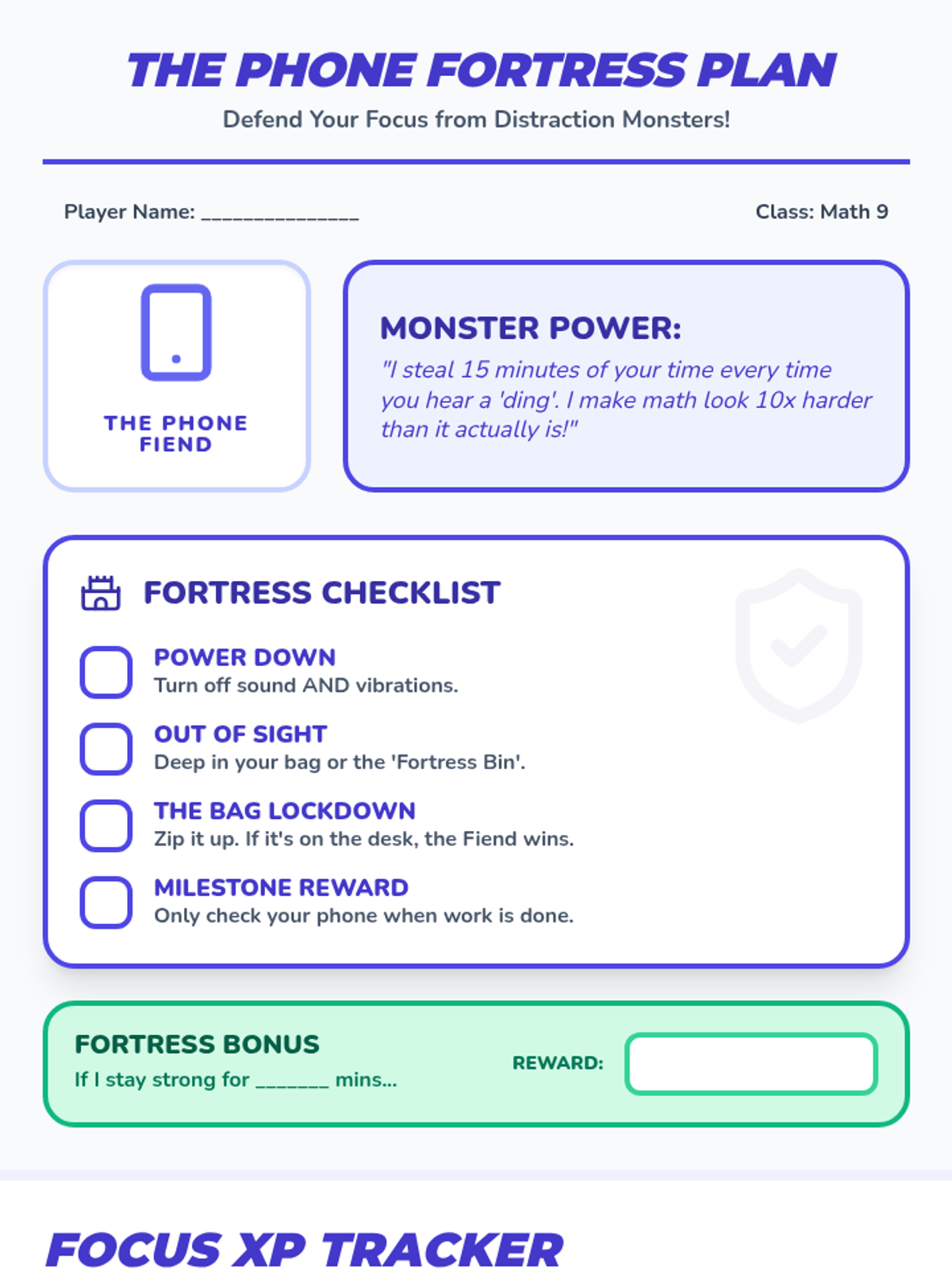
Students identify environmental distractions, specifically phones, and create a 'Phone Fortress' plan using visual checklists to maintain focus.
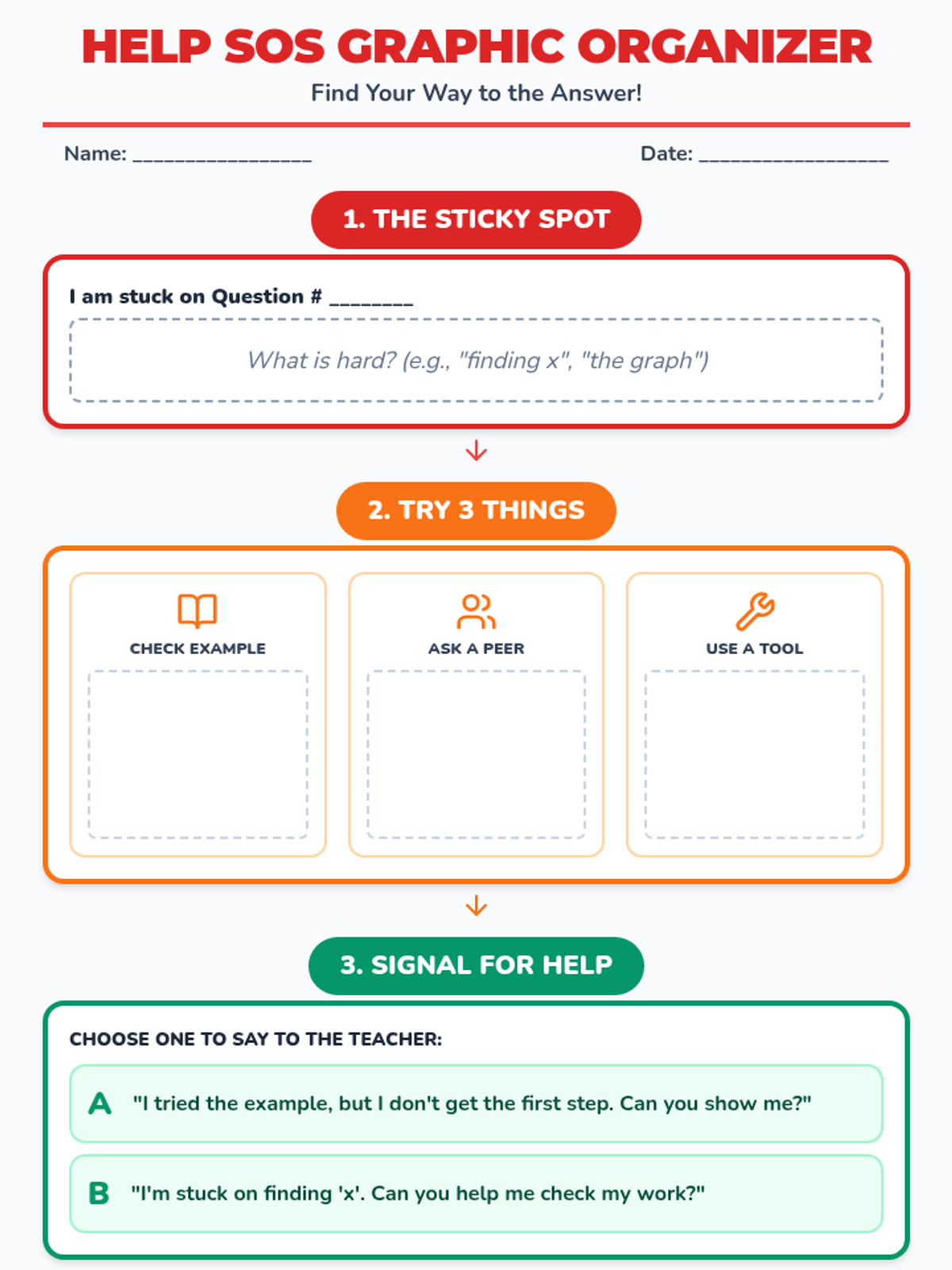
A gamified approach to recognizing when to ask for help and using a structured graphic organizer to communicate specific needs during math problem-solving.
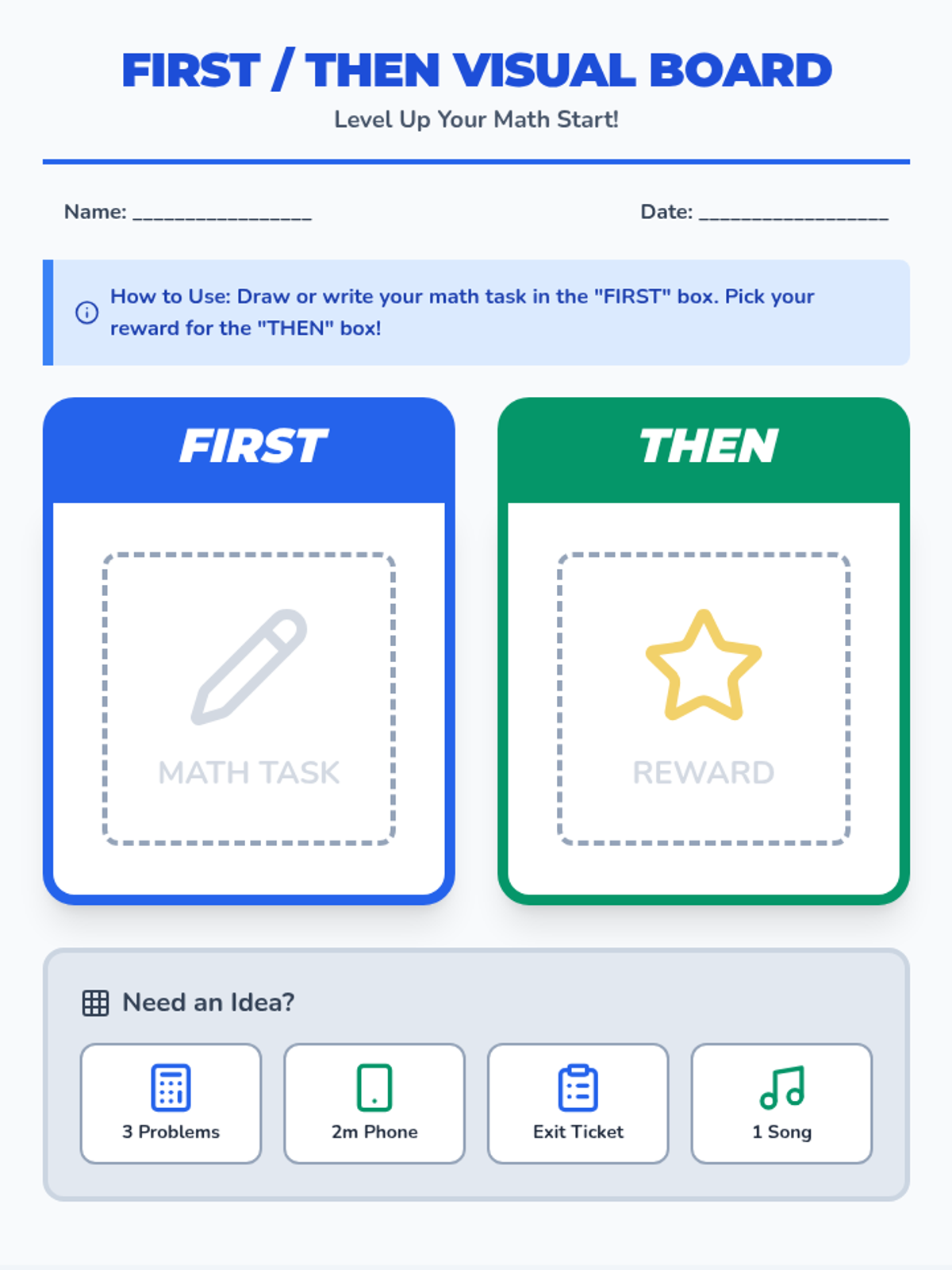
Students learn to use First/Then visual boards and illustrated checklists to overcome task initiation hurdles in math class.
A comprehensive social-emotional learning lesson designed to help 2nd-grade students recognize impulsive urges and practice specific coping strategies in playground and classroom settings.
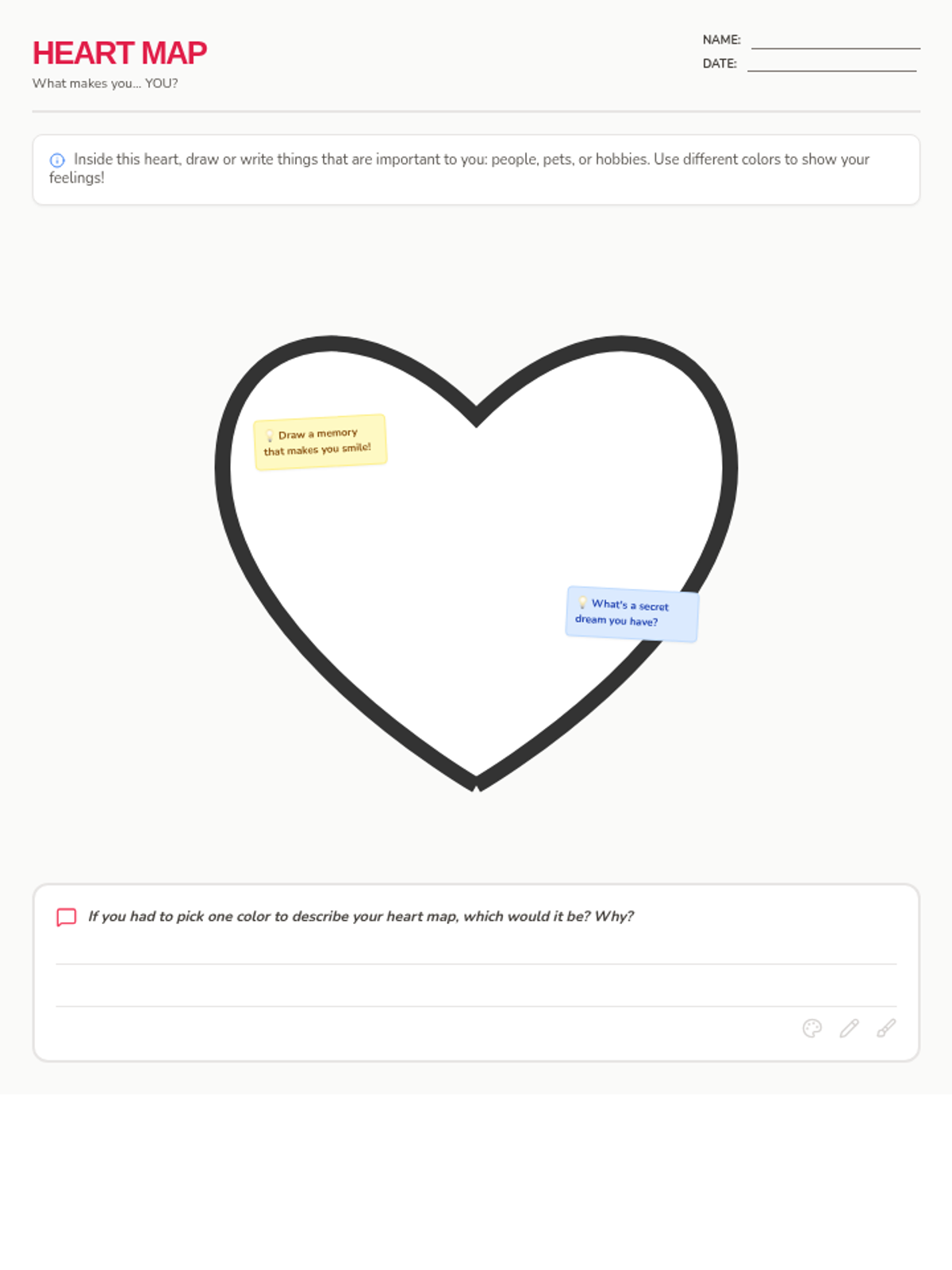
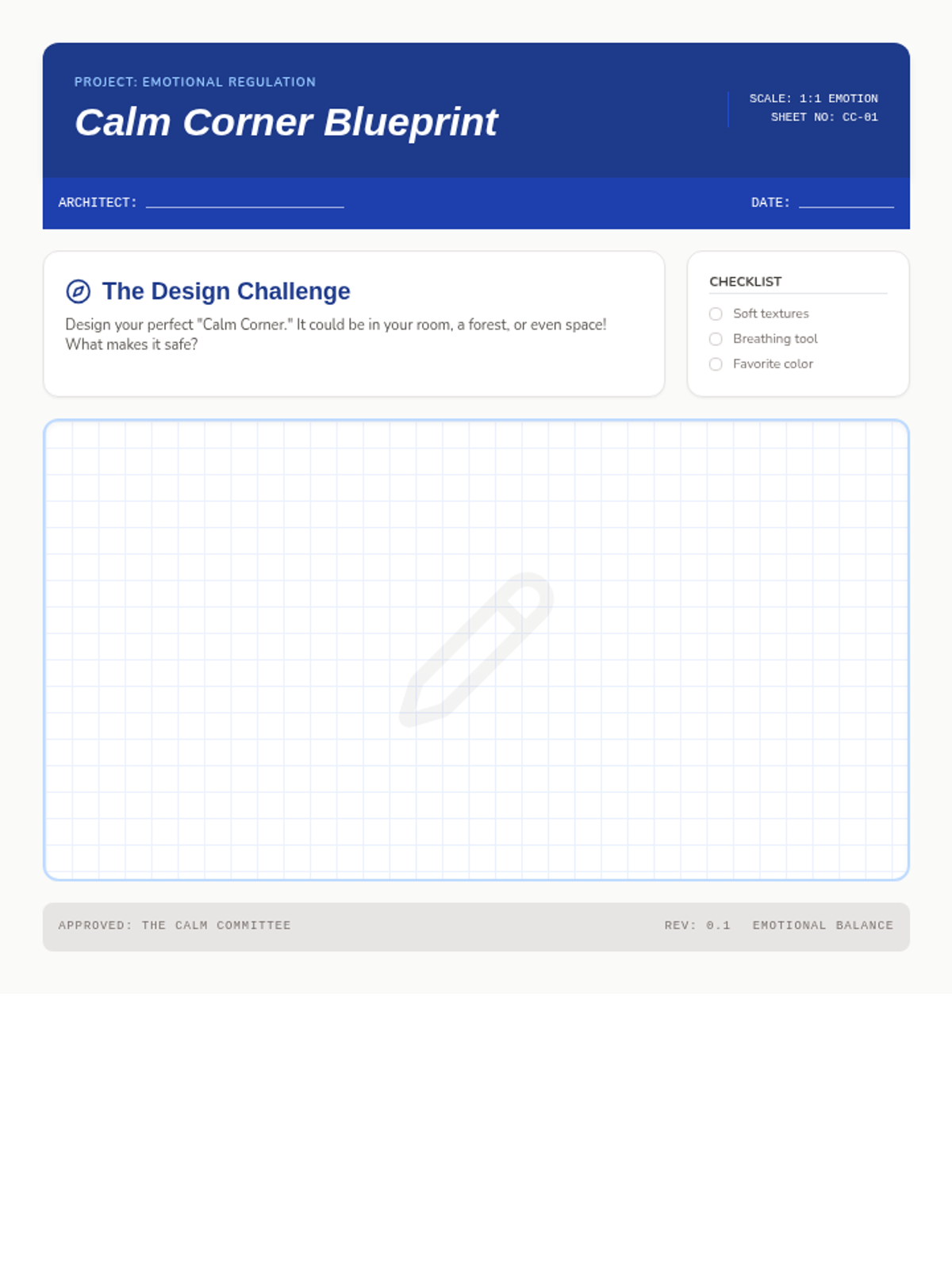
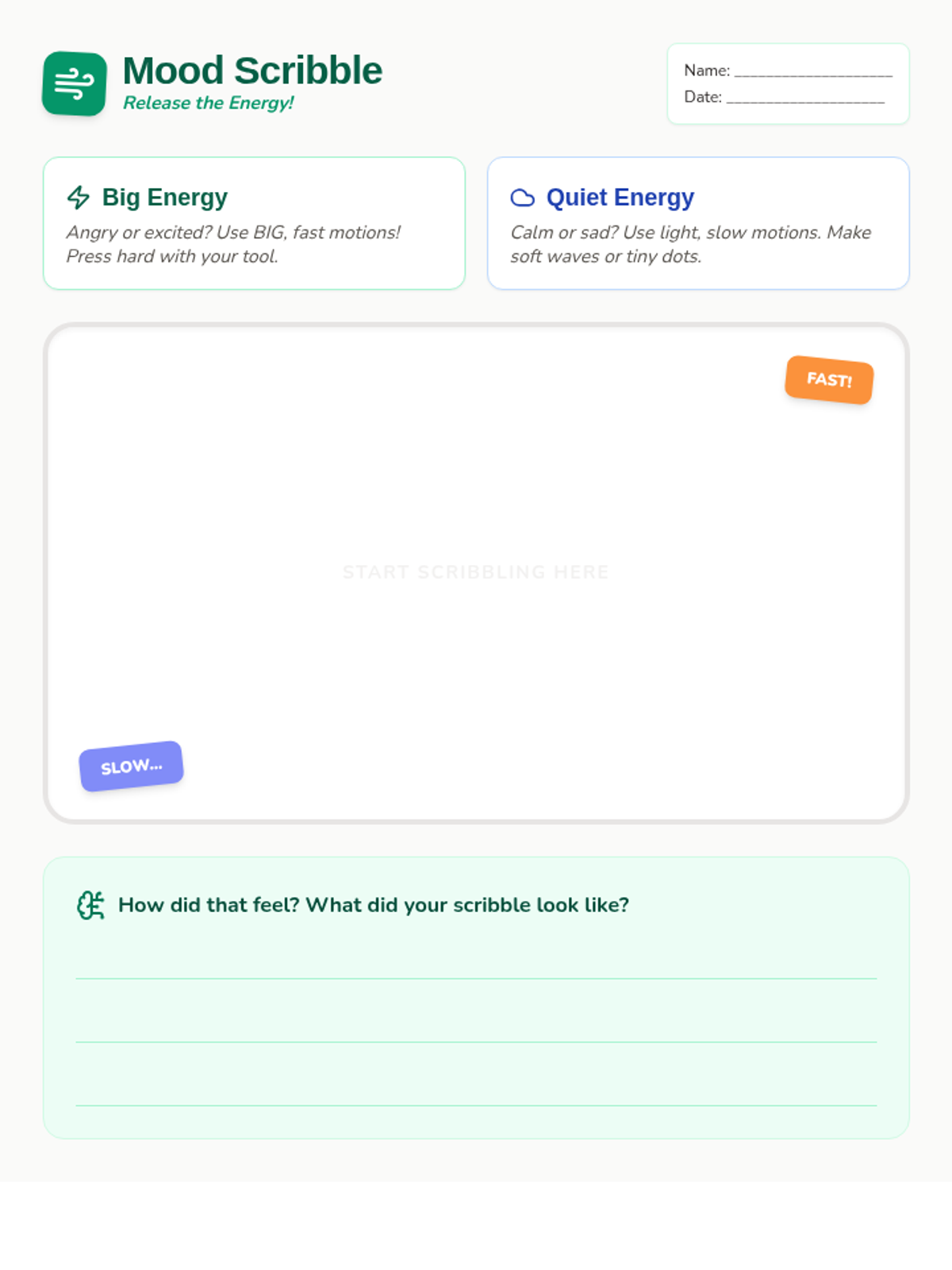
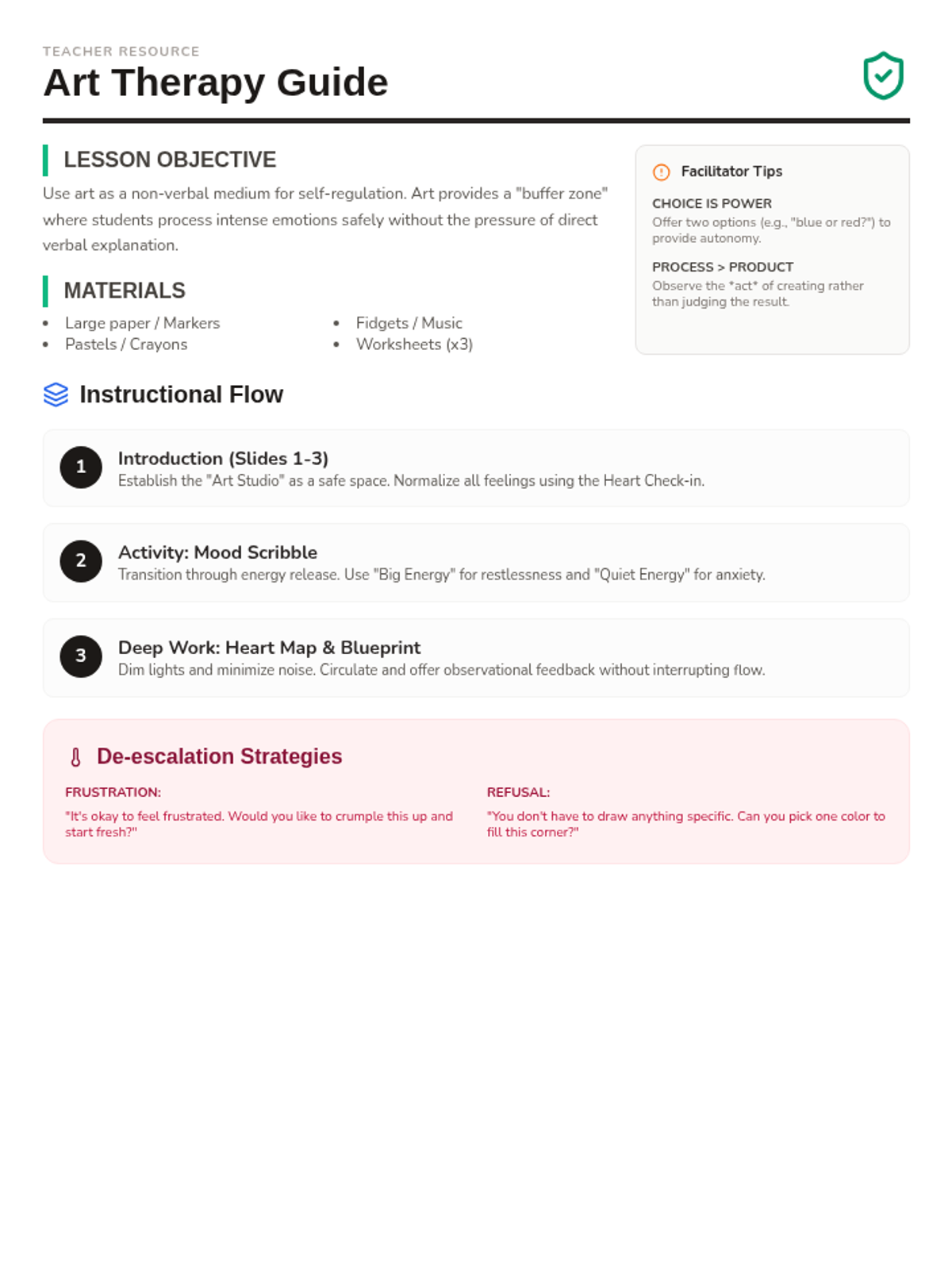
A creative exploration of emotions through art therapy, helping children with behavioral health concerns identify feelings and build self-regulation skills.
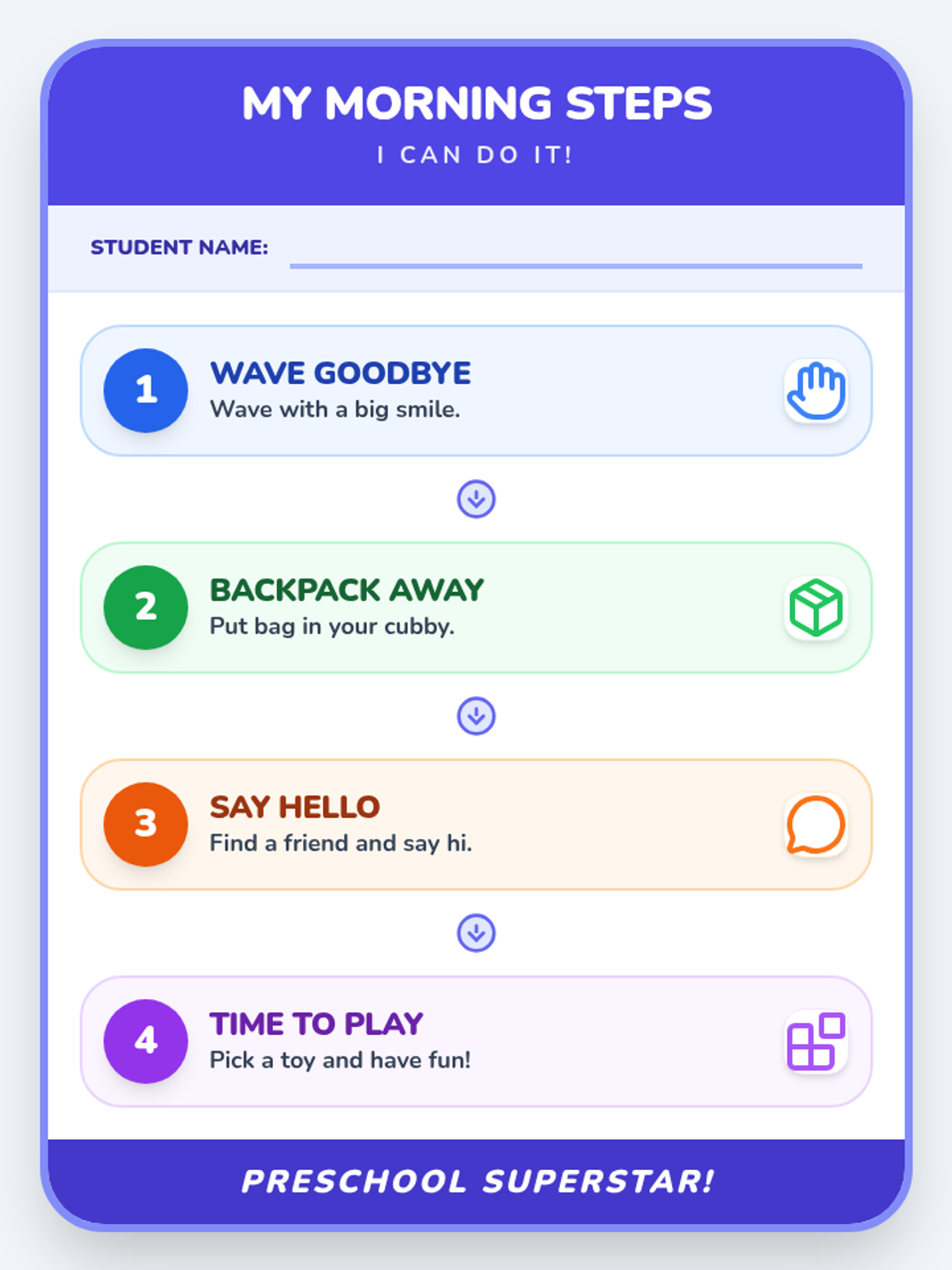
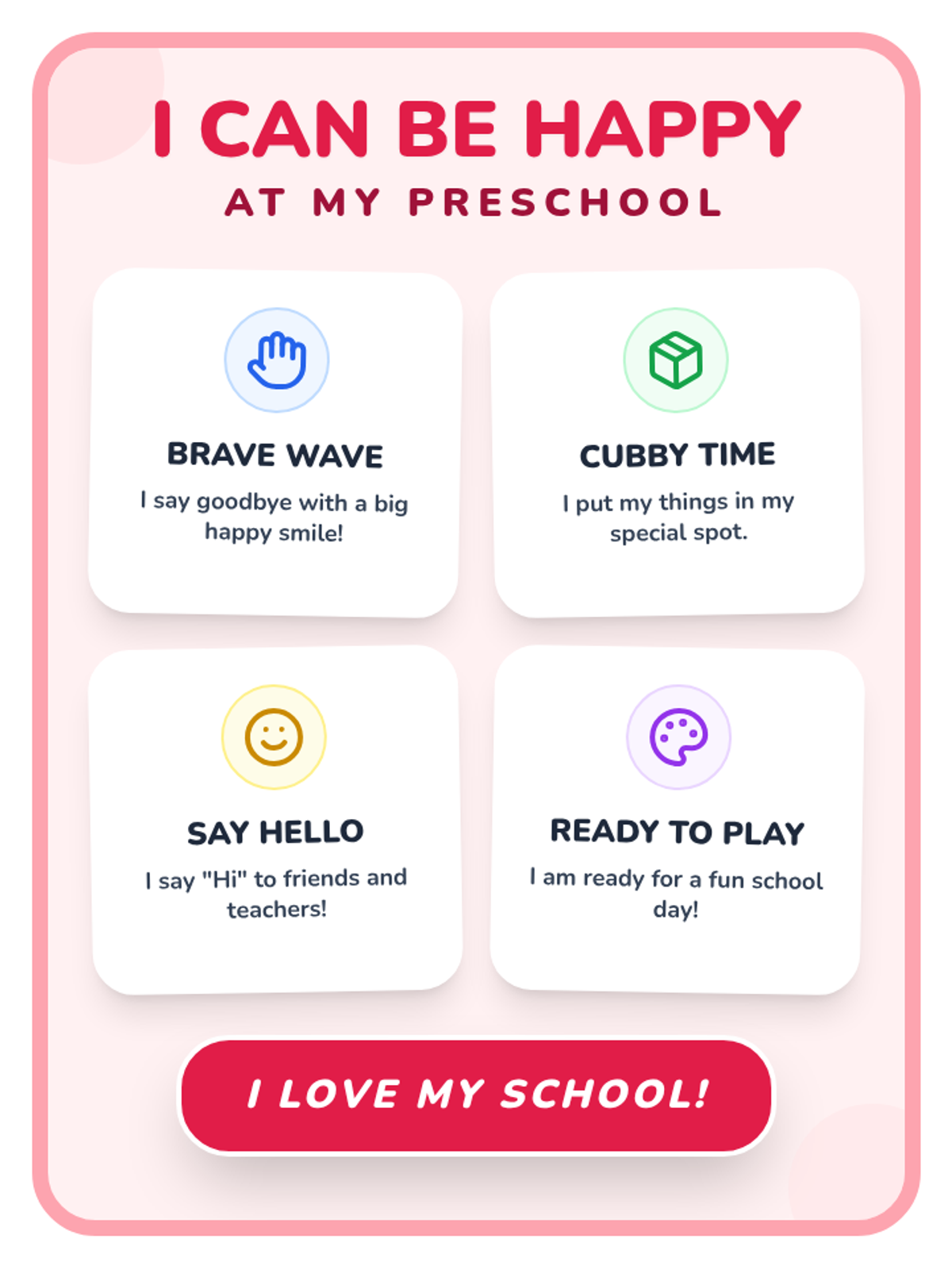
A set of resources to help preschoolers transition happily into their school day, focusing on arrival routines and social interactions.
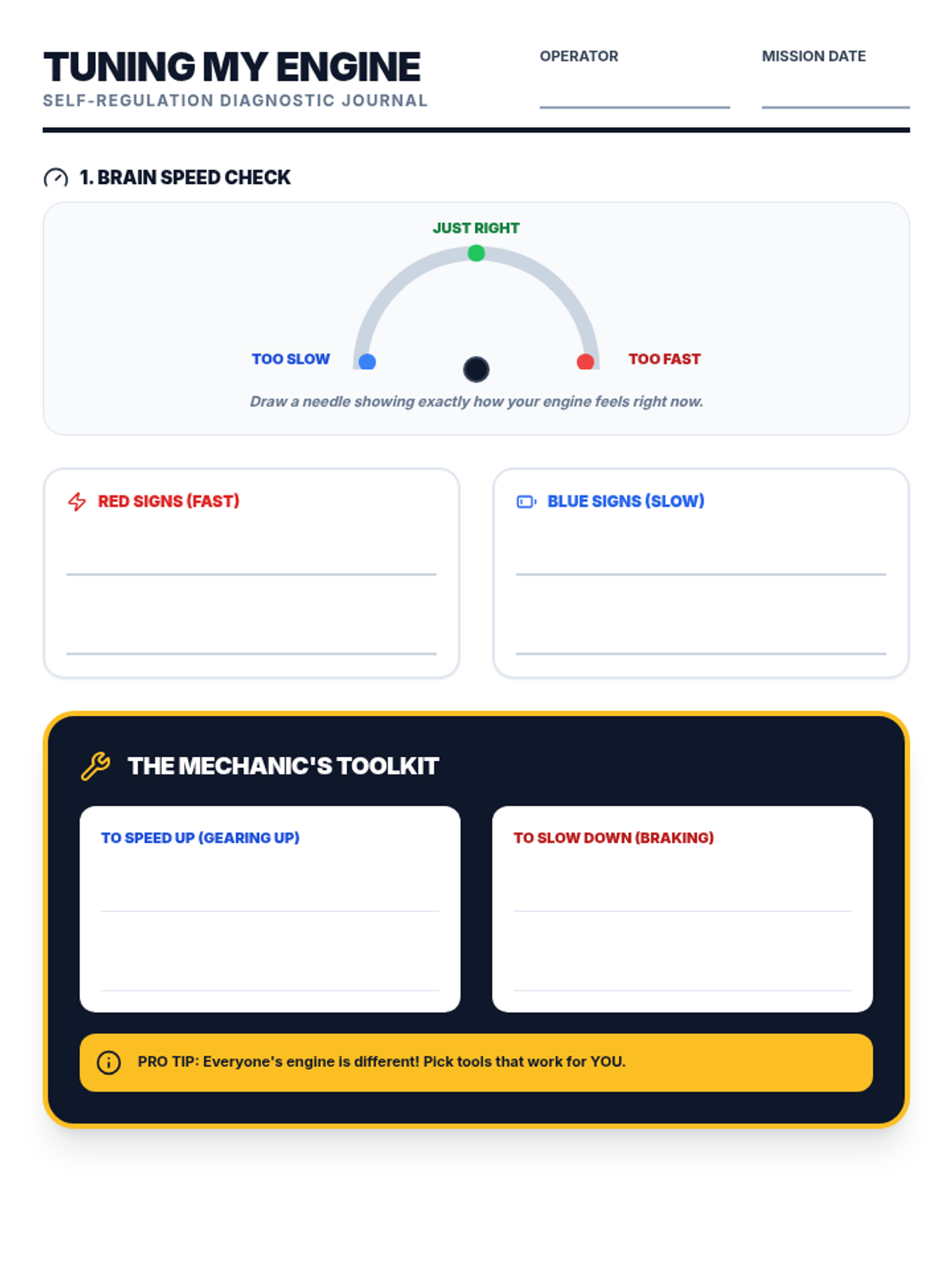
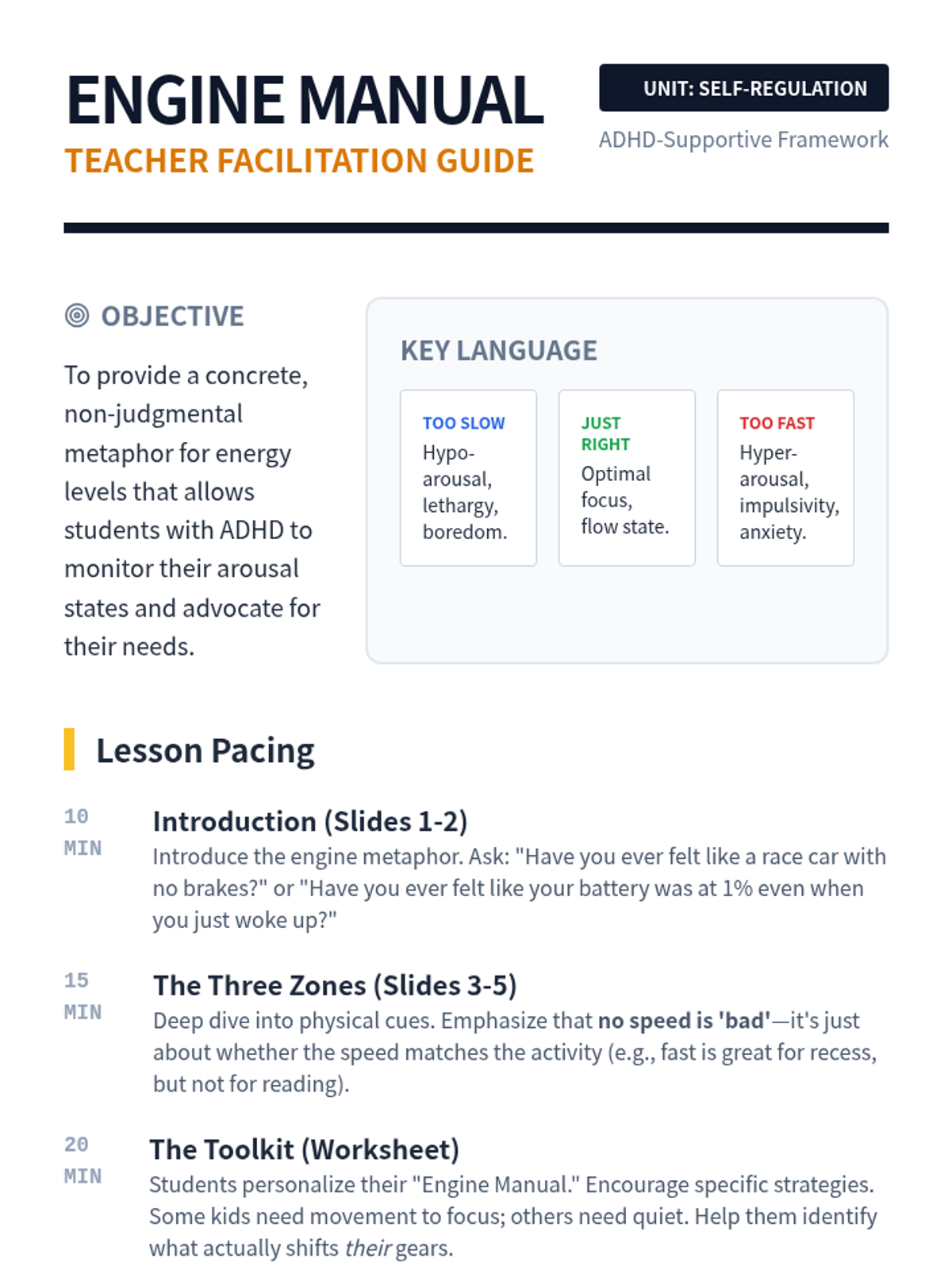
An introduction to self-regulation using the 'Brain Engine' metaphor, helping students with ADHD identify their energy levels and use strategies to get back to 'just right' for learning.
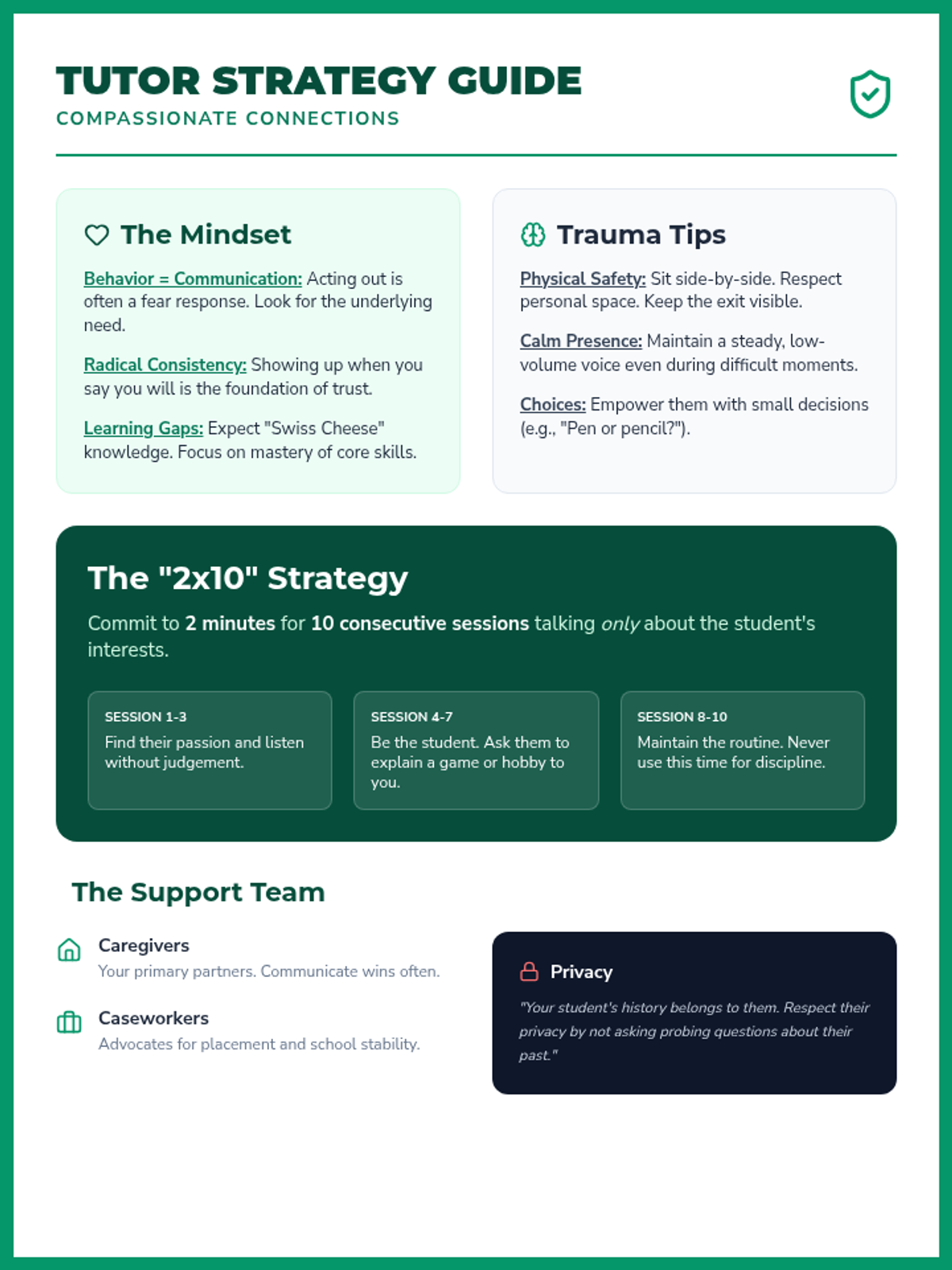
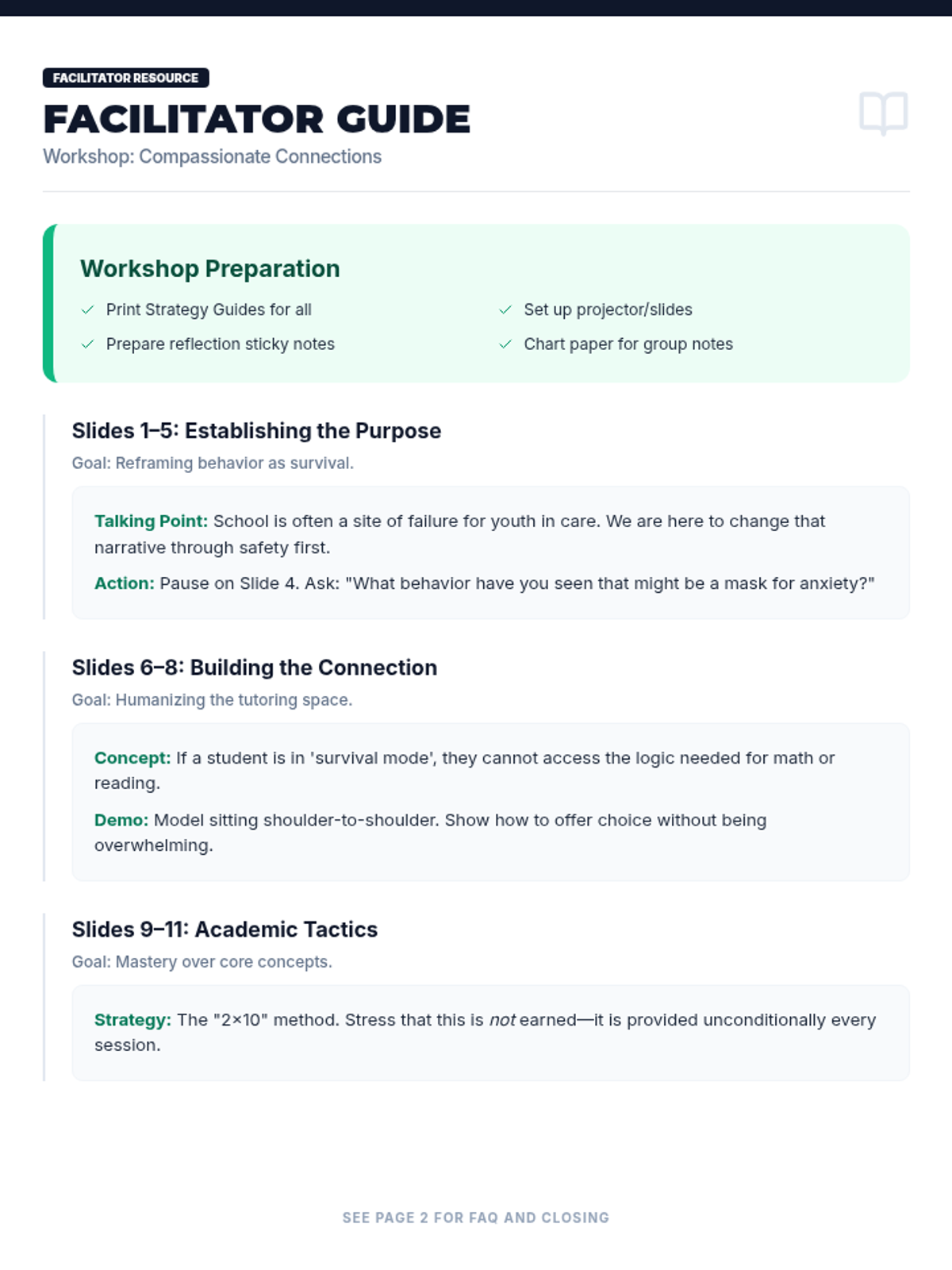
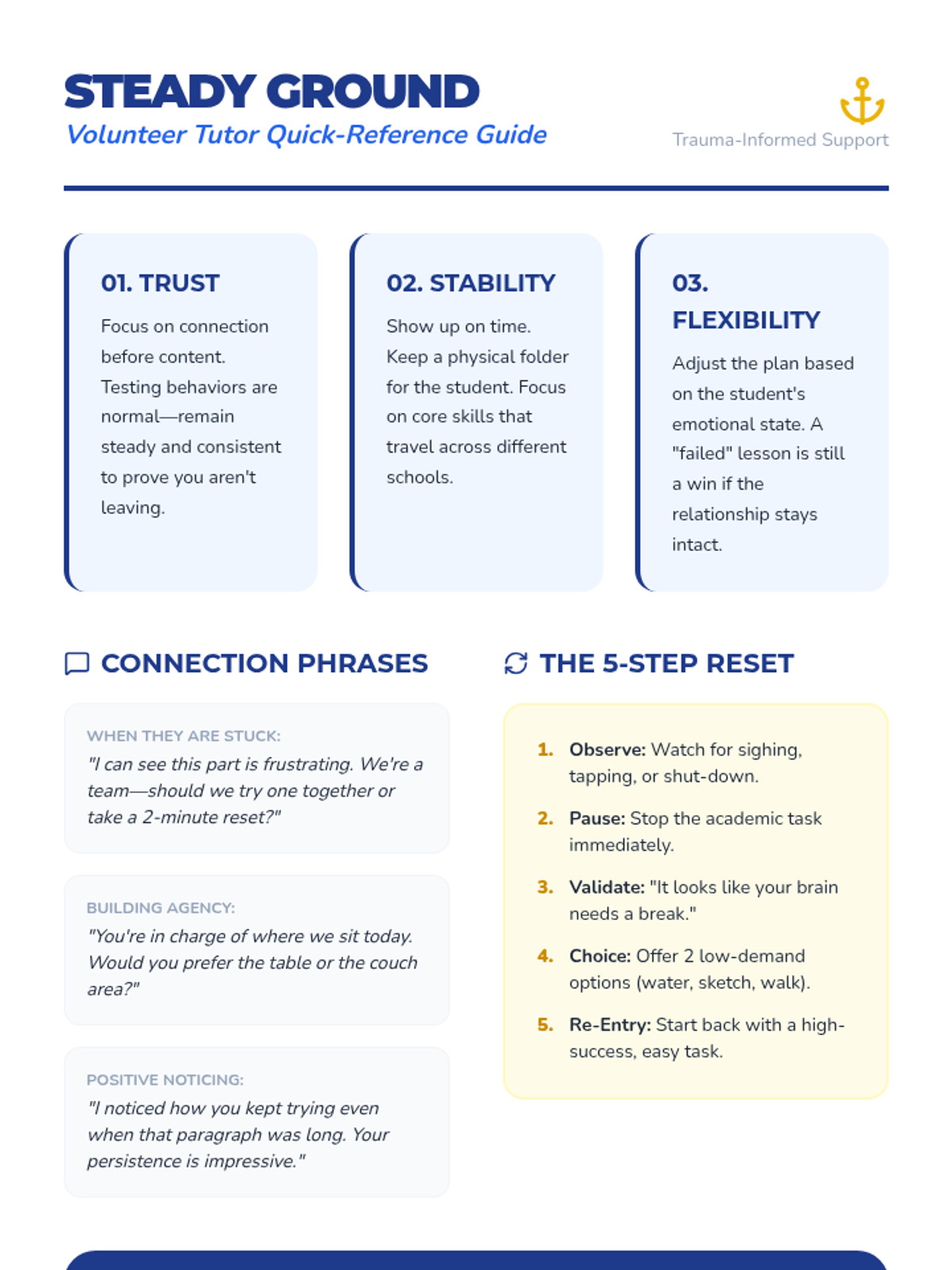
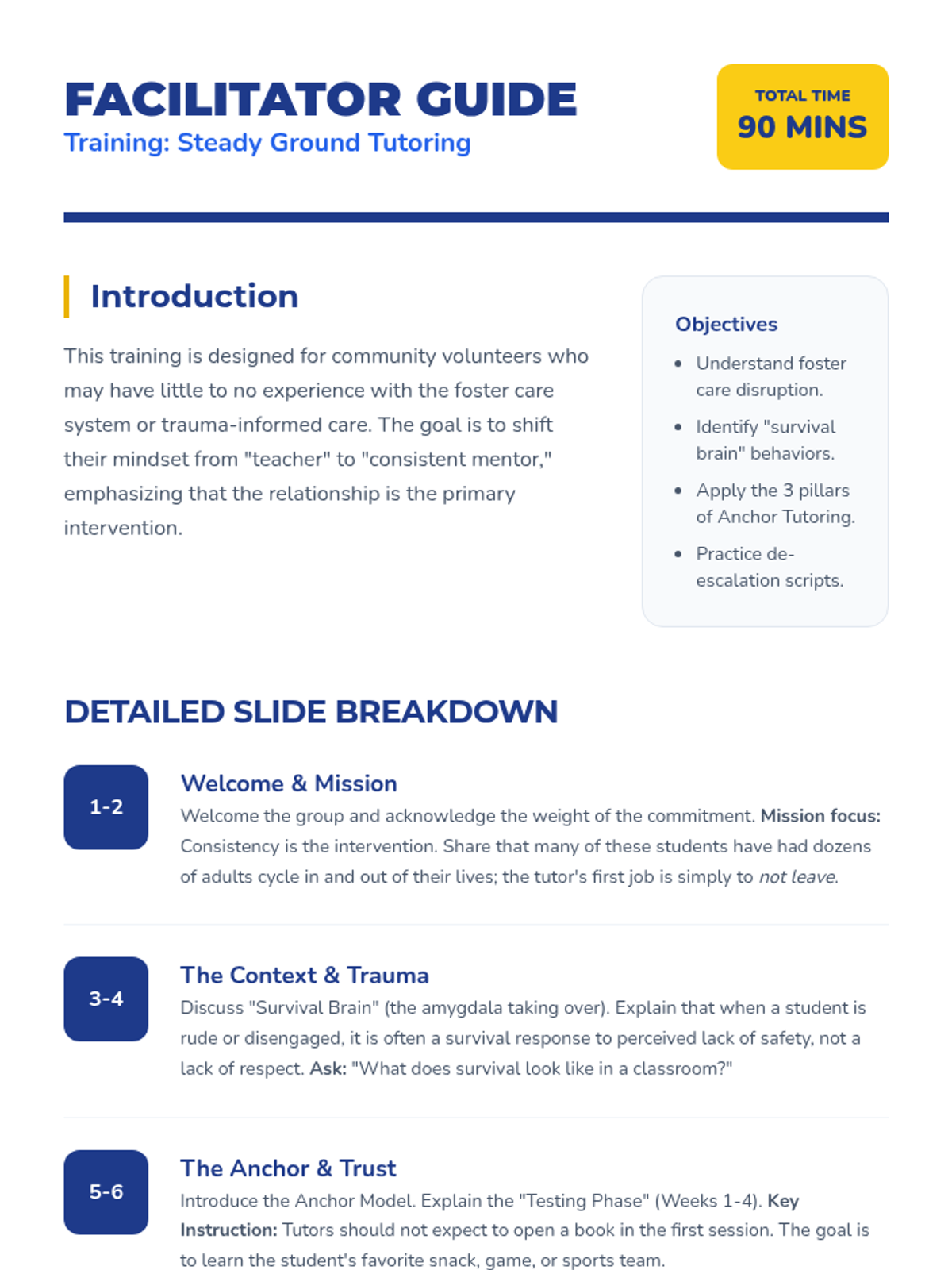
An in-depth workshop for community volunteer tutors focusing on trauma-informed strategies, building trust, and academic support for youth in foster care.
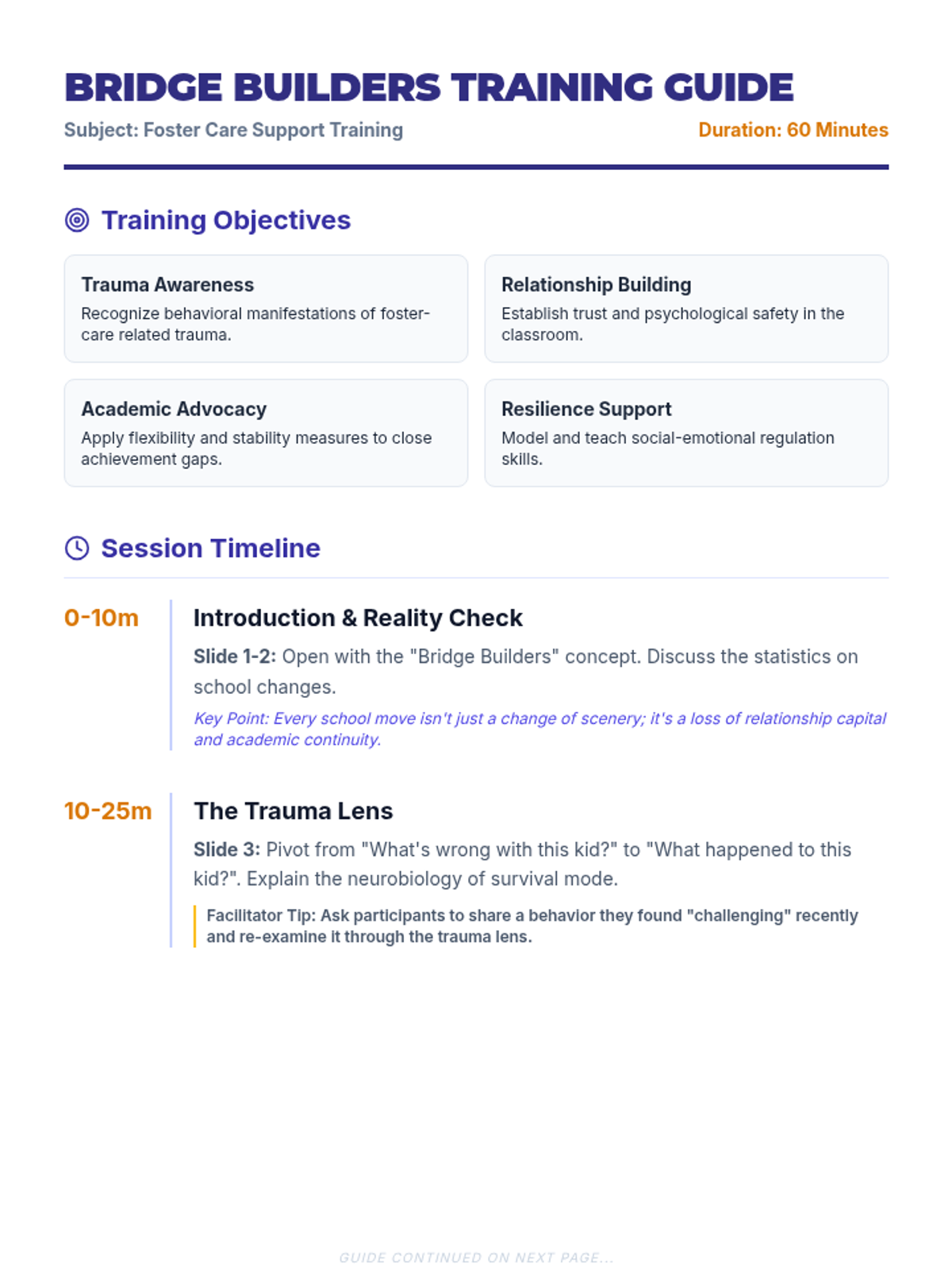
A comprehensive 60-minute training session for new teachers on supporting students in the foster care system, focusing on trauma-informed practices, academic stability, and relationship building.
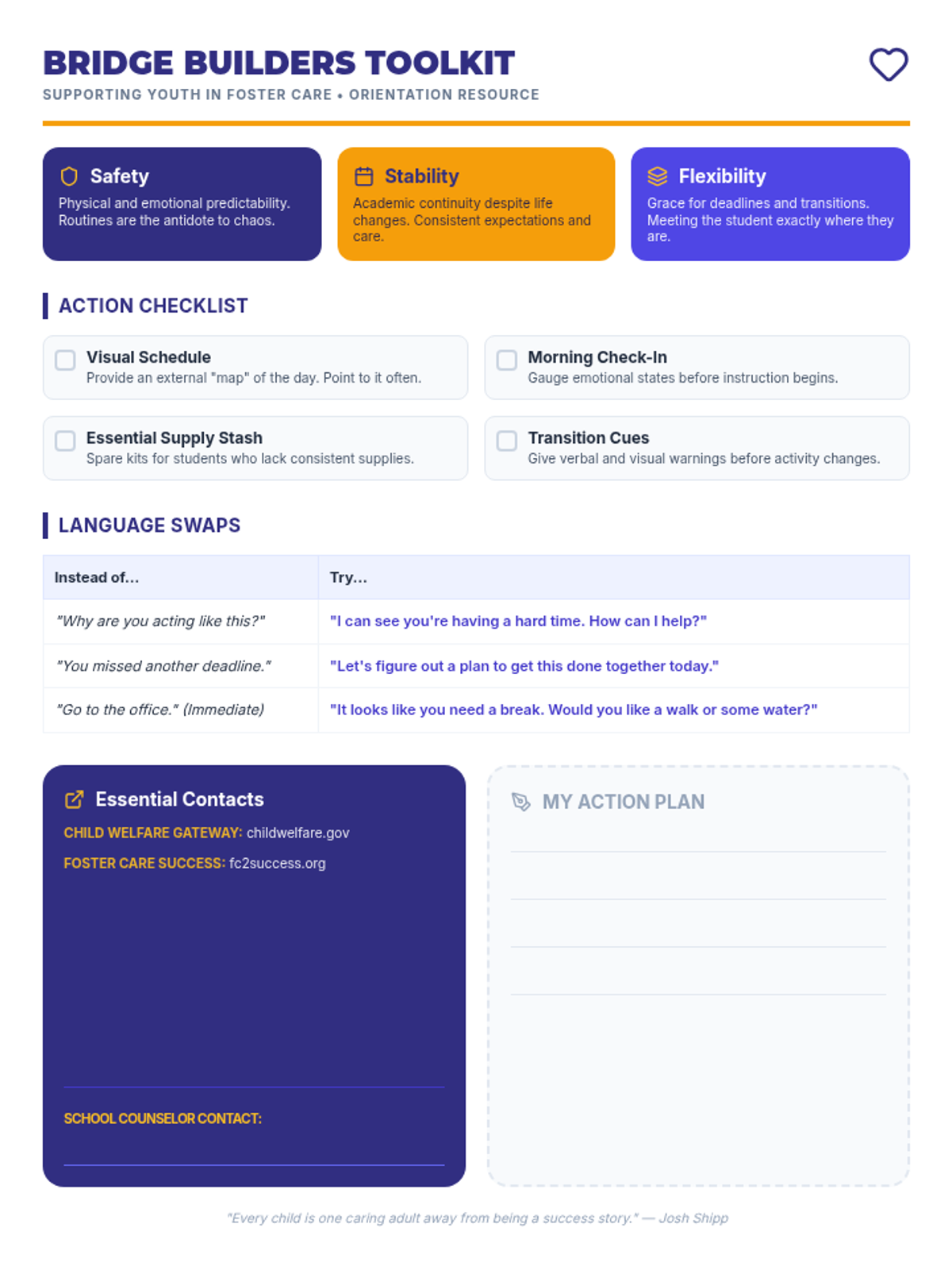
An in-depth training lesson for community volunteers focusing on trauma-informed tutoring strategies for youth in foster care. This lesson covers relationship building, academic stability, and flexibility as core pillars of support.
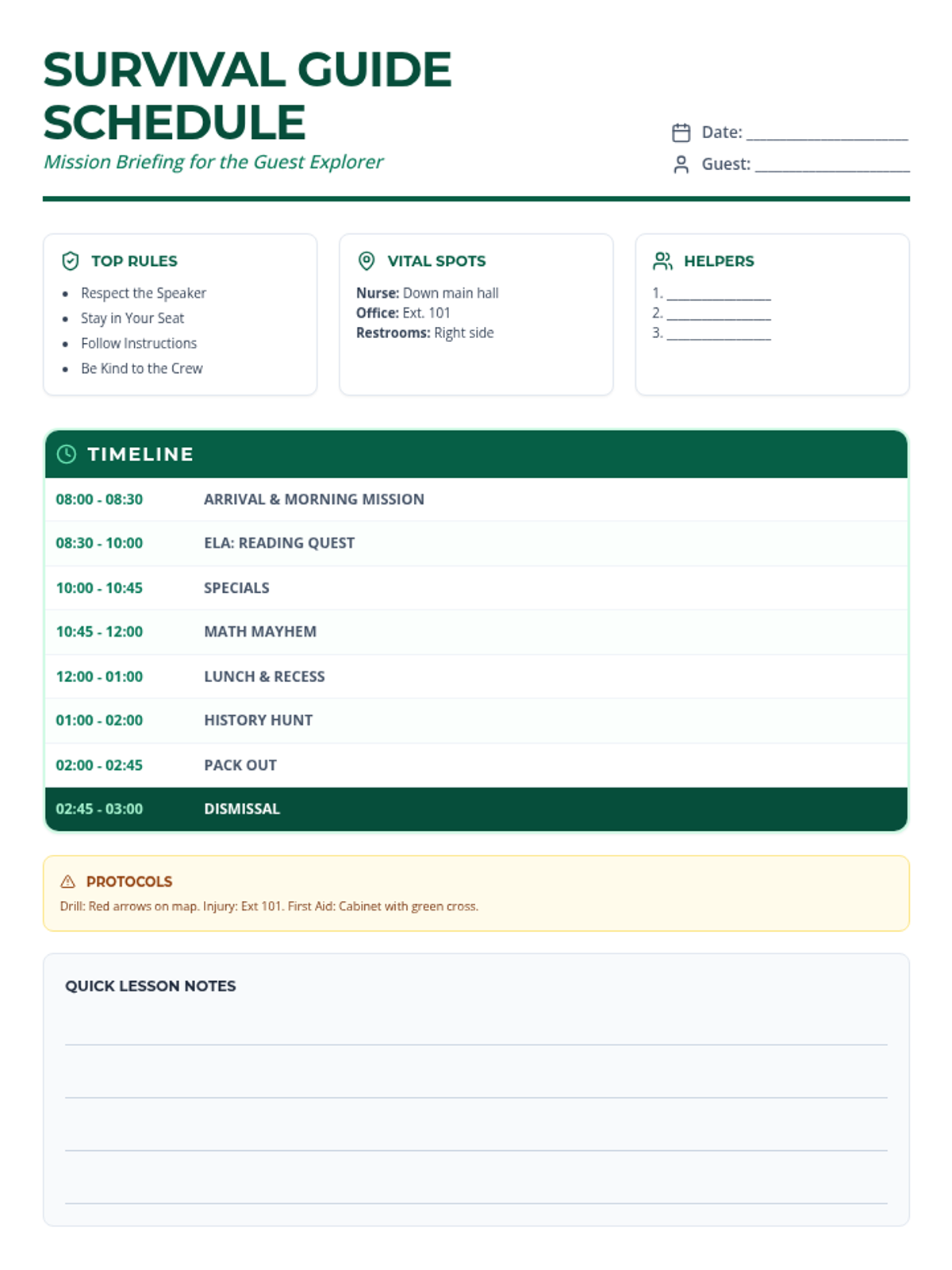
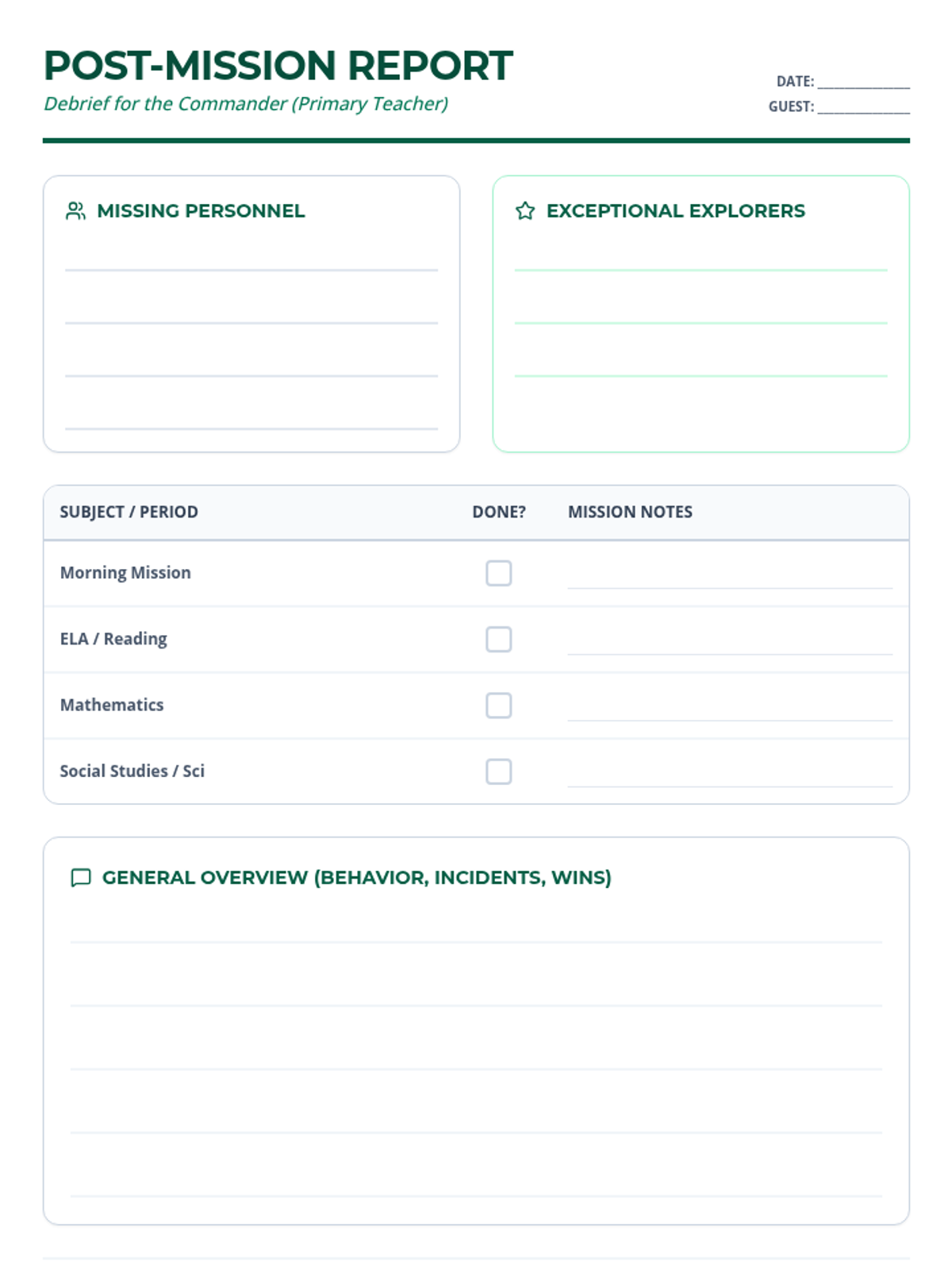
A comprehensive set of materials for a substitute teacher to manage a full school day, including a detailed schedule, morning work, core subject activities, and a reporting system.
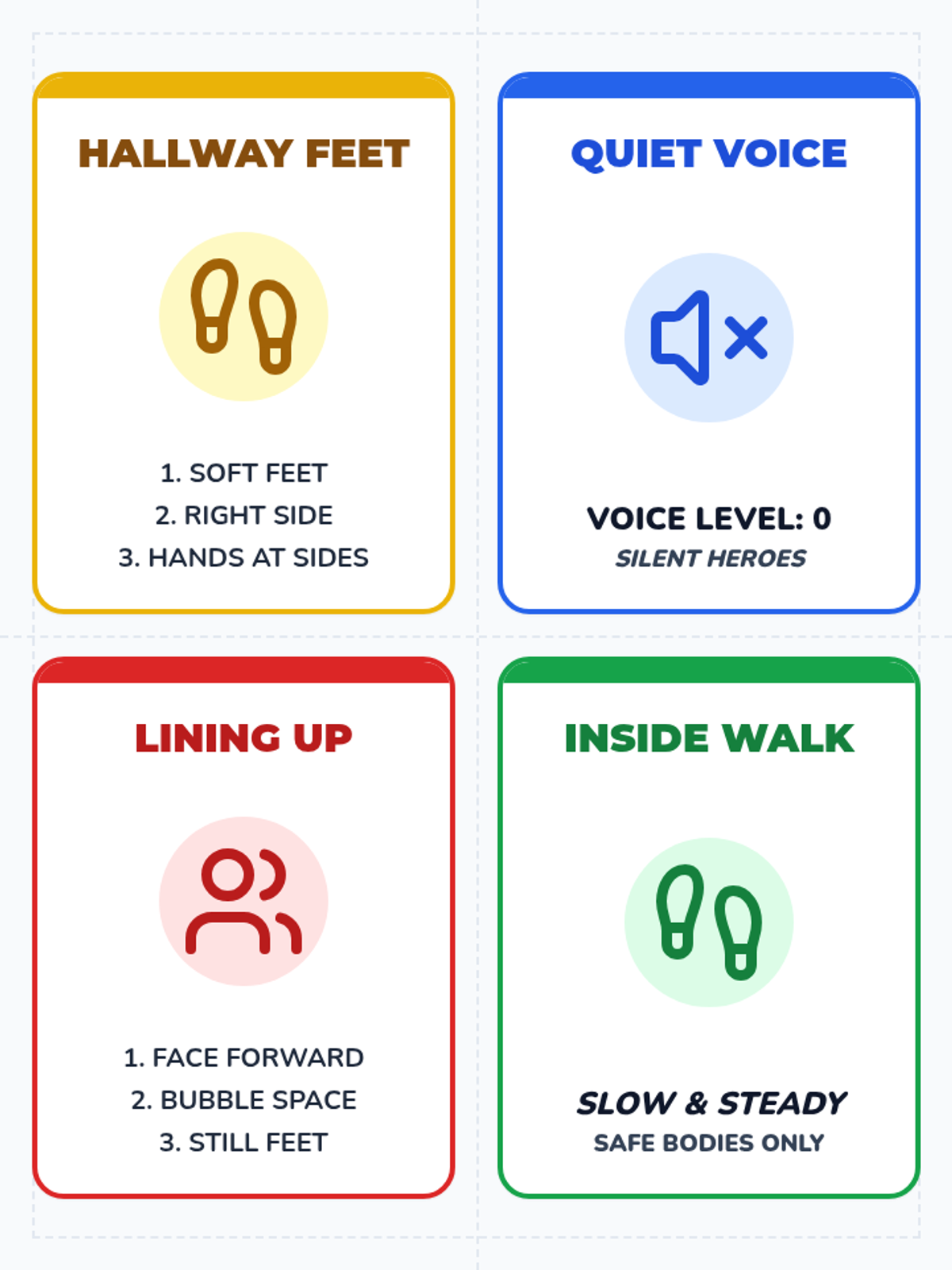
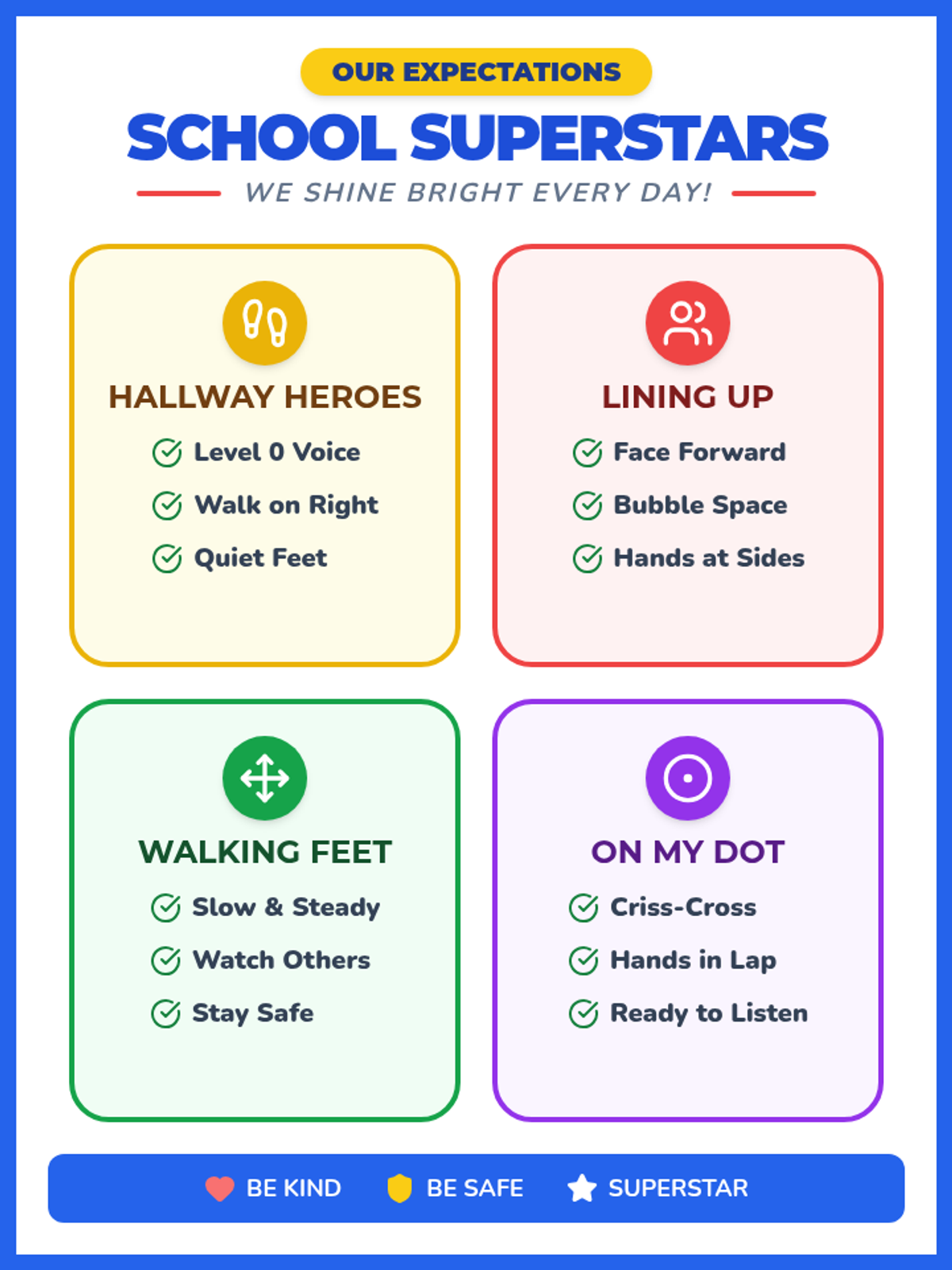
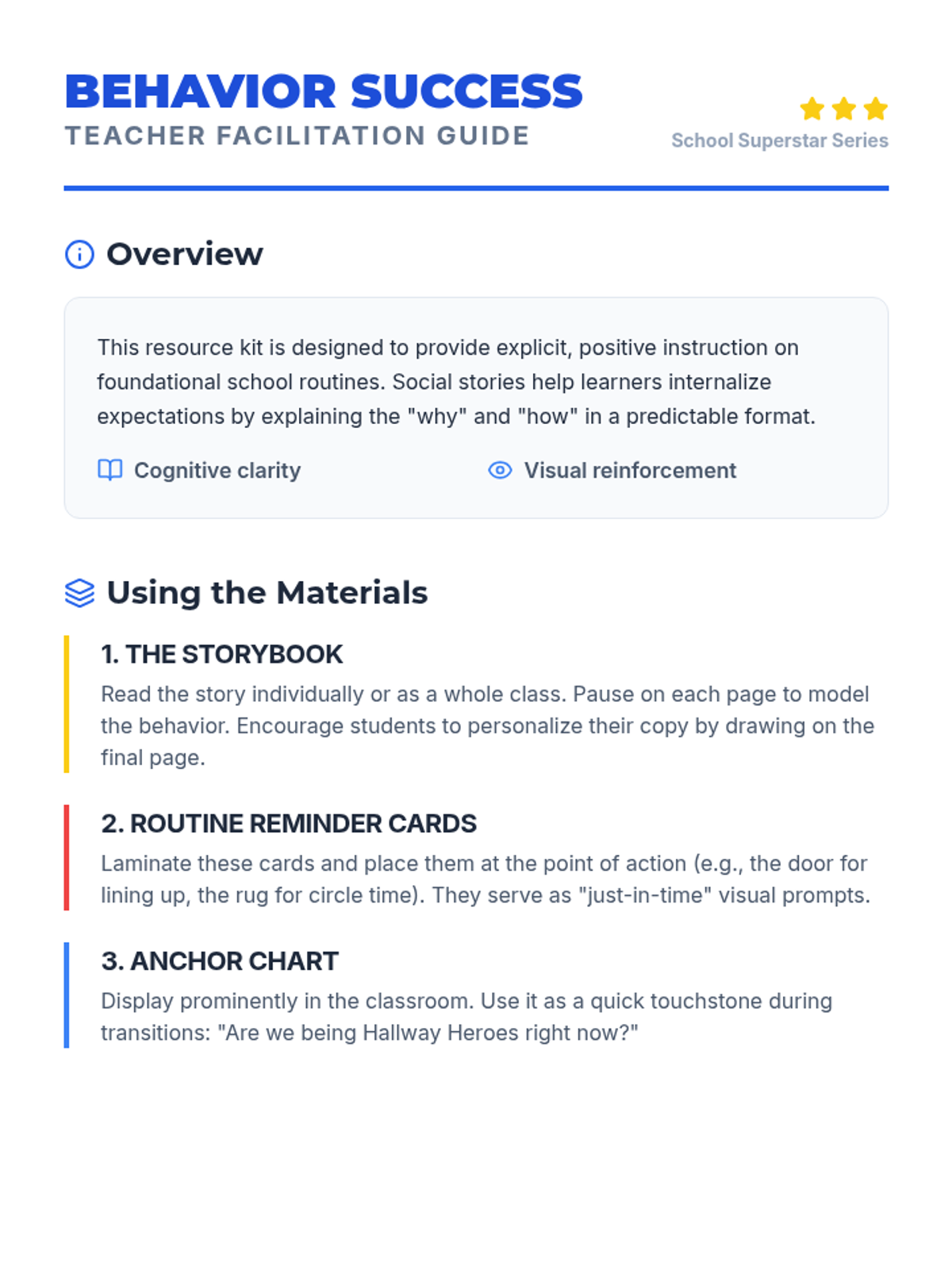
A comprehensive set of social story materials designed to teach and reinforce expected behaviors for walking in hallways, standing in lines, moving through the classroom, and participating in circle time.
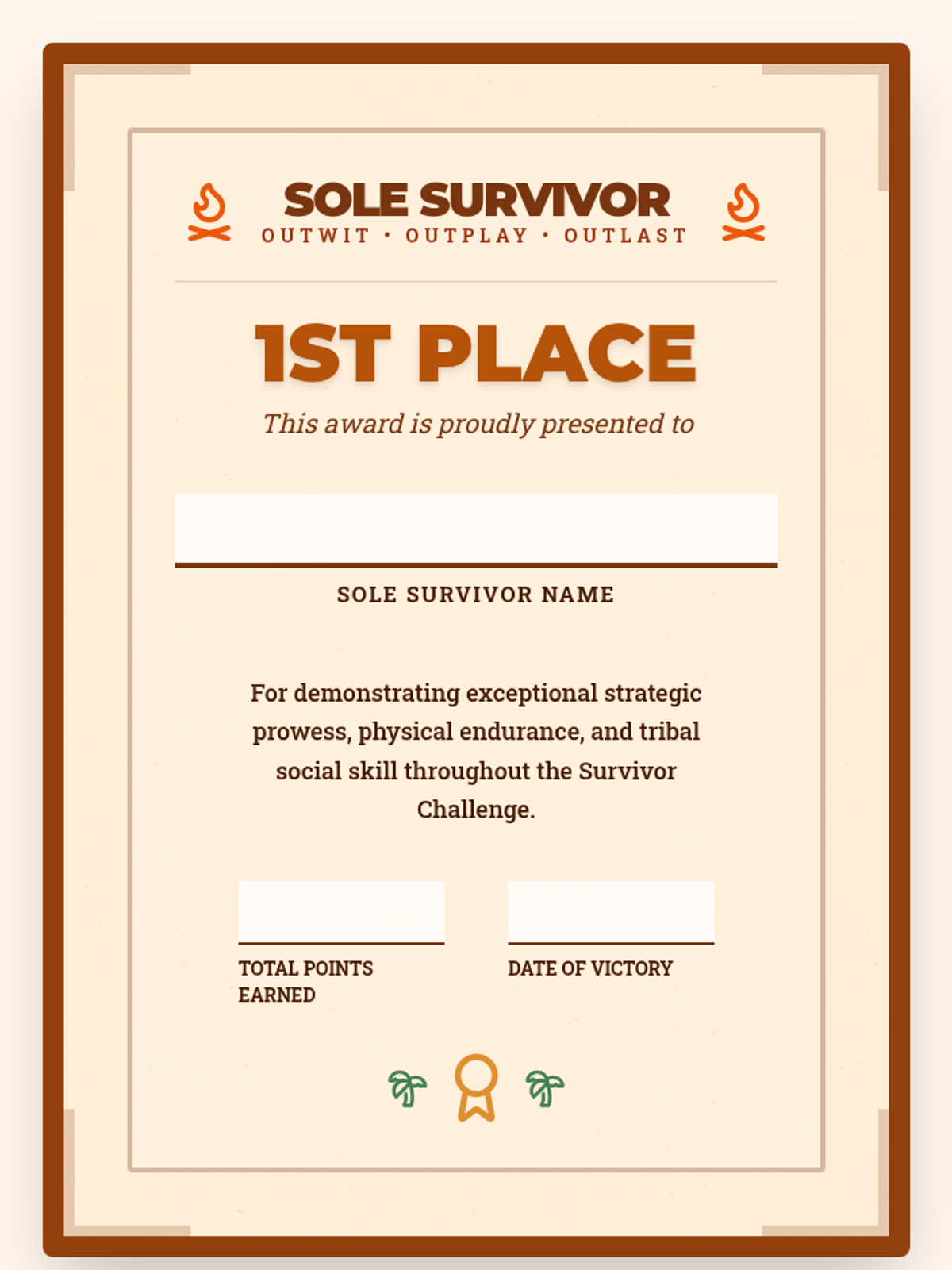
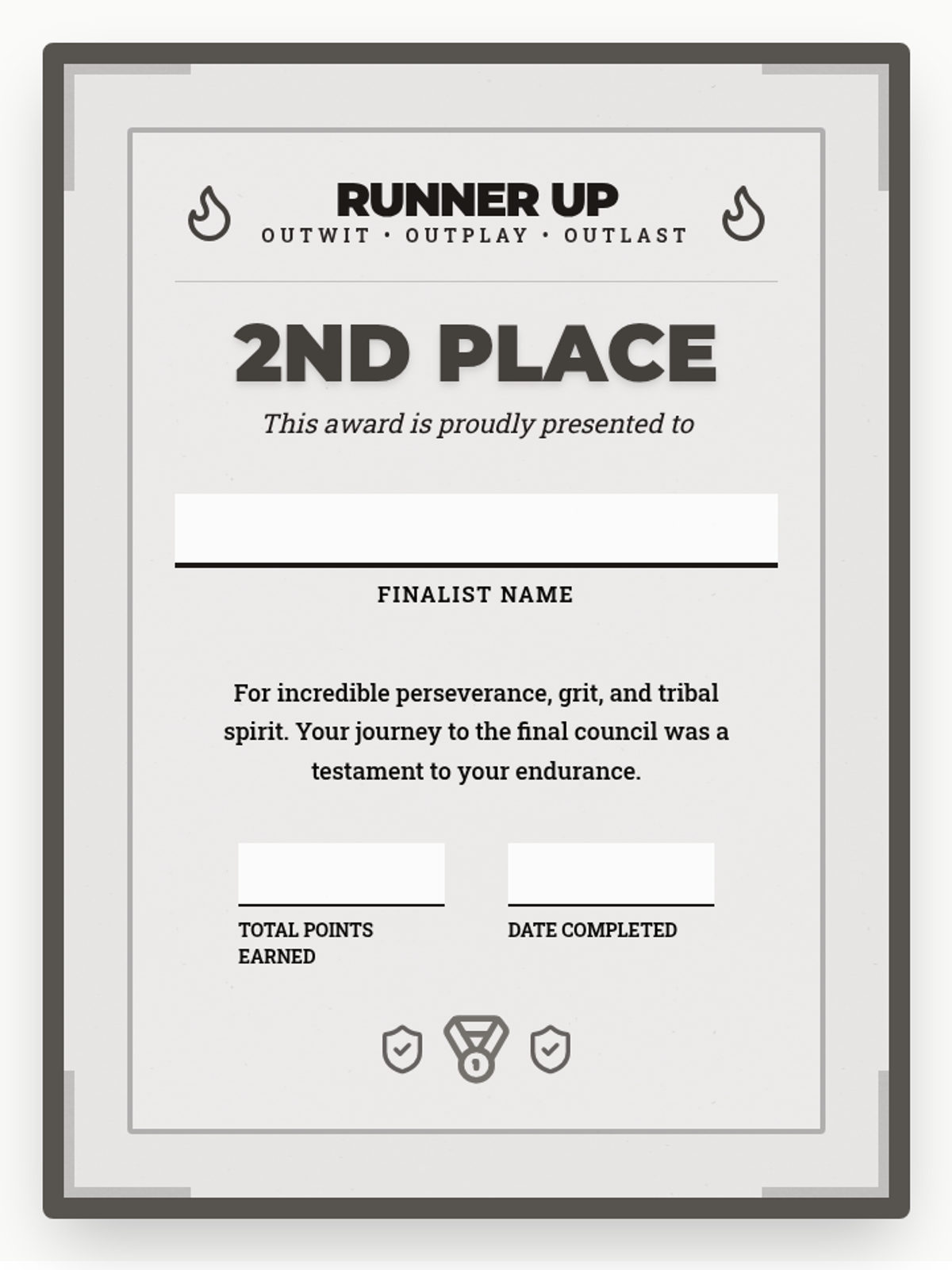
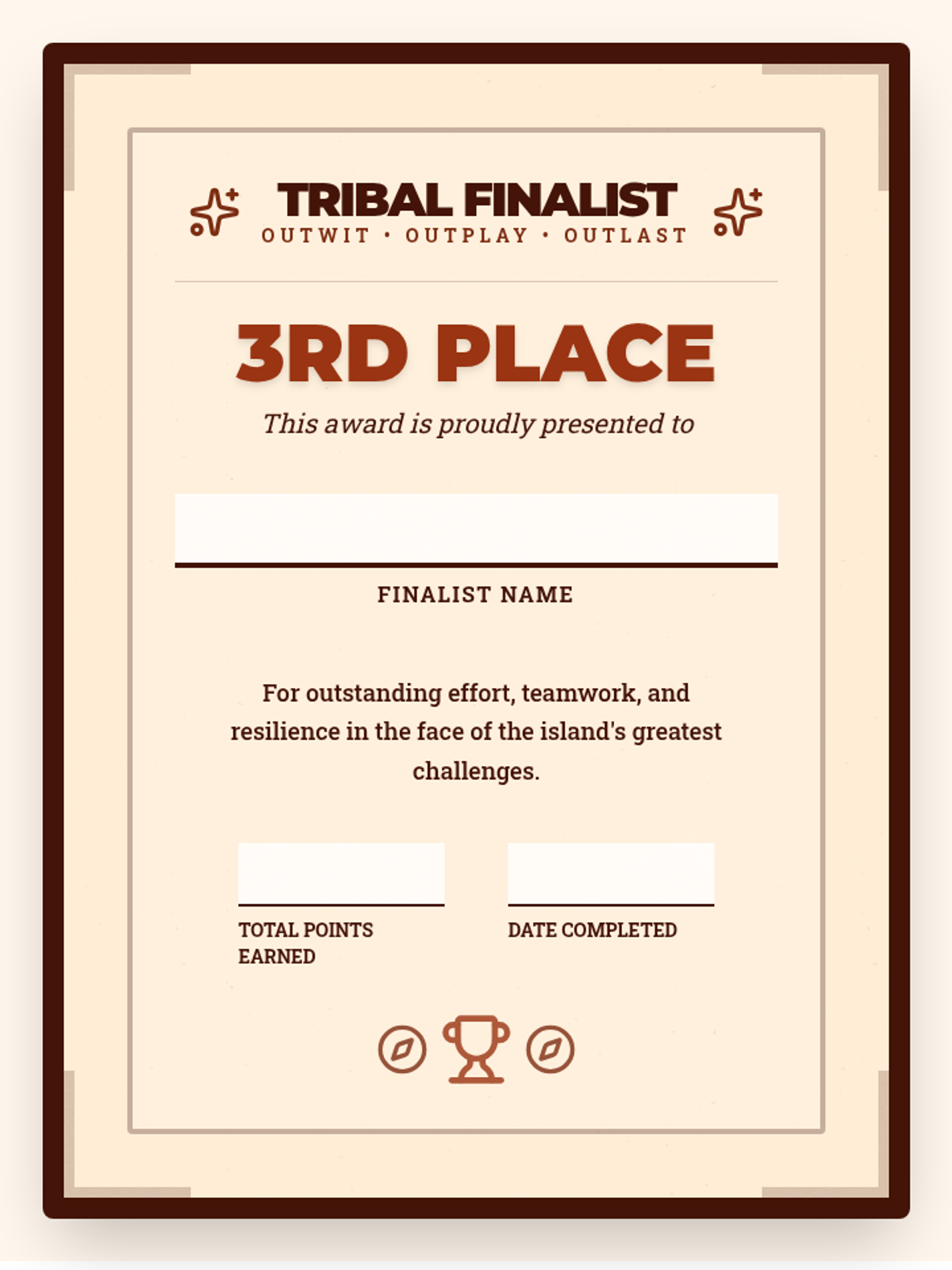
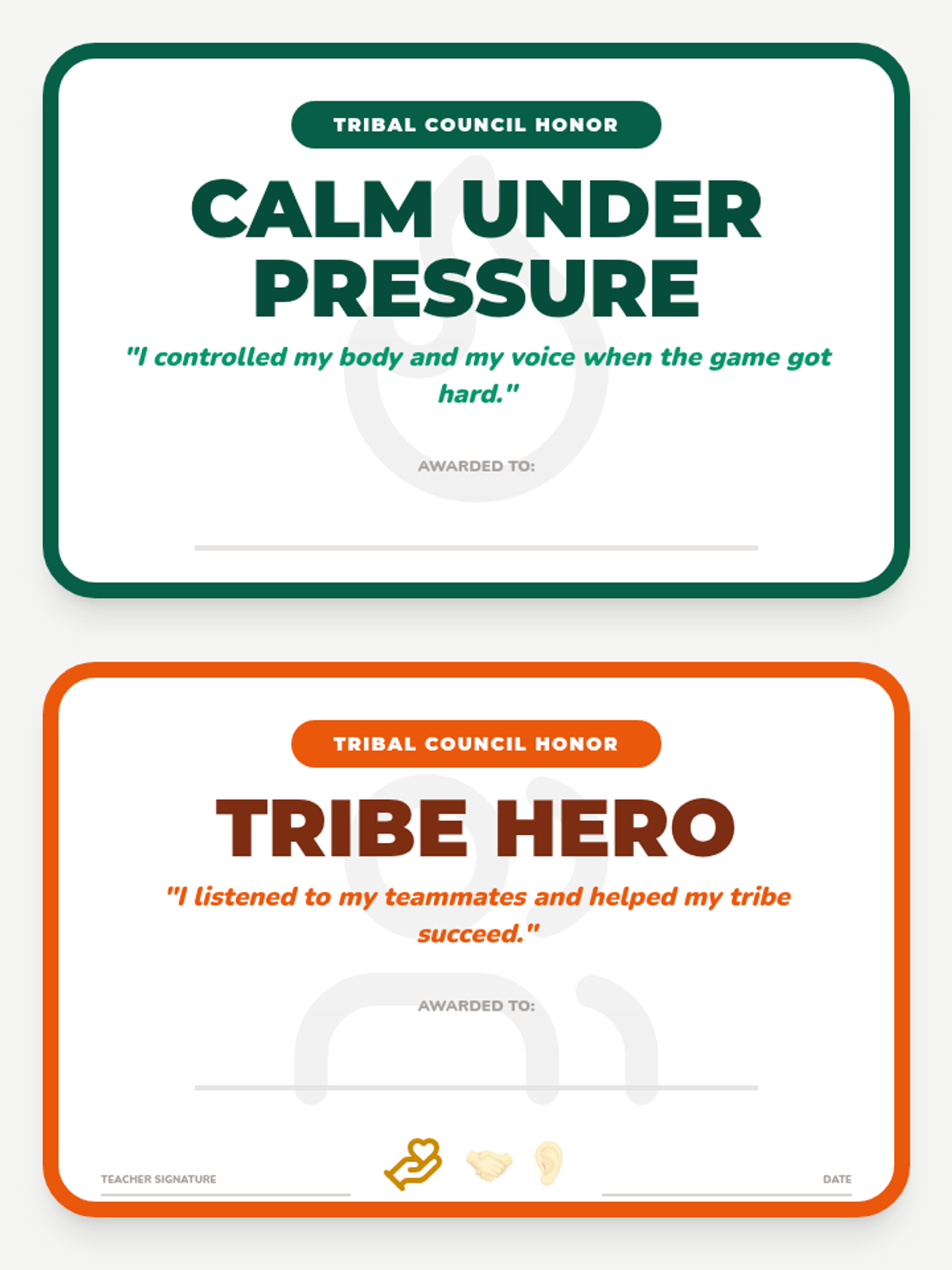
A collection of tribal-themed certificates to recognize the top performers in a classroom survivor challenge. Includes distinct designs for first, second, and third place.
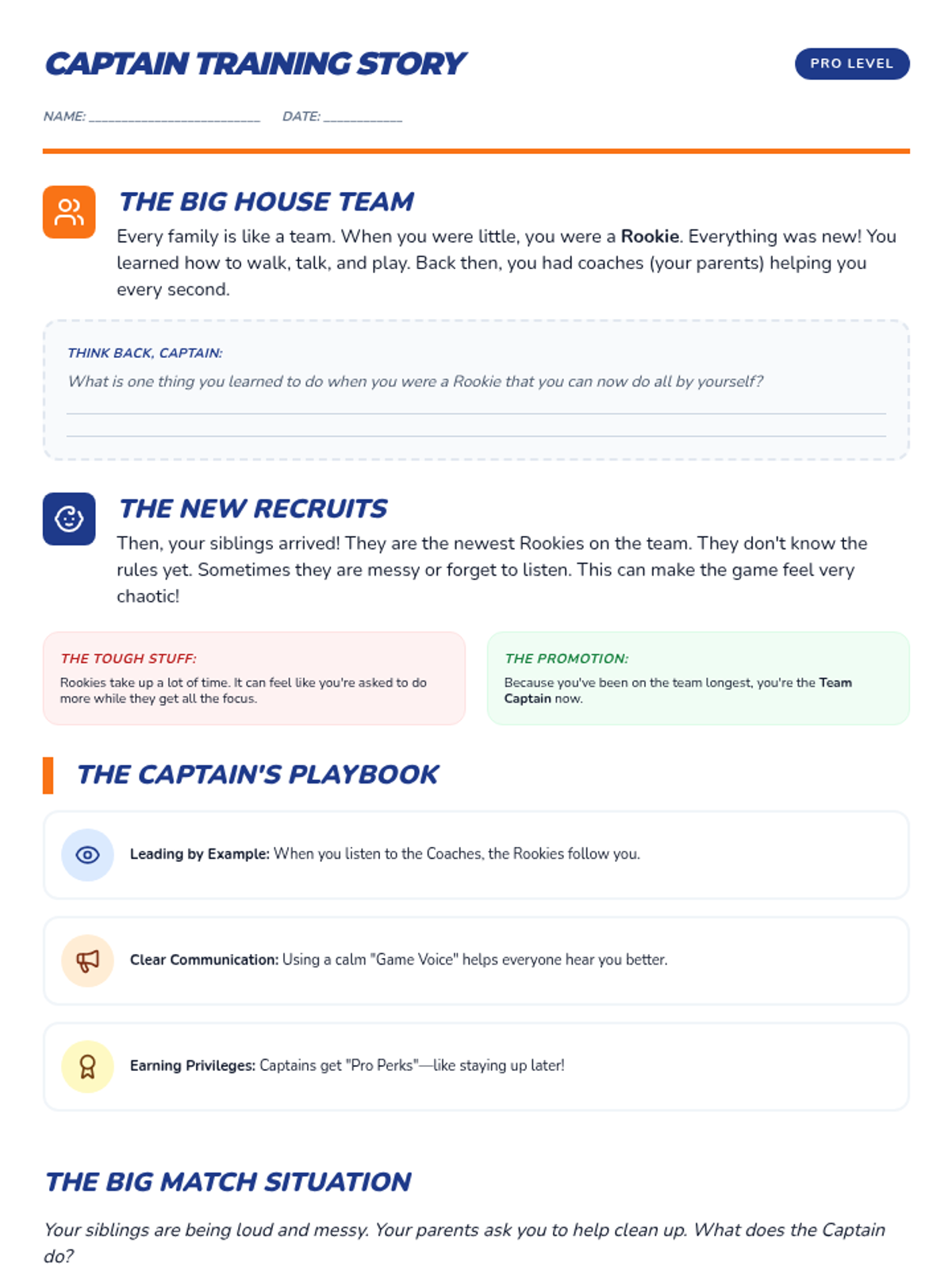
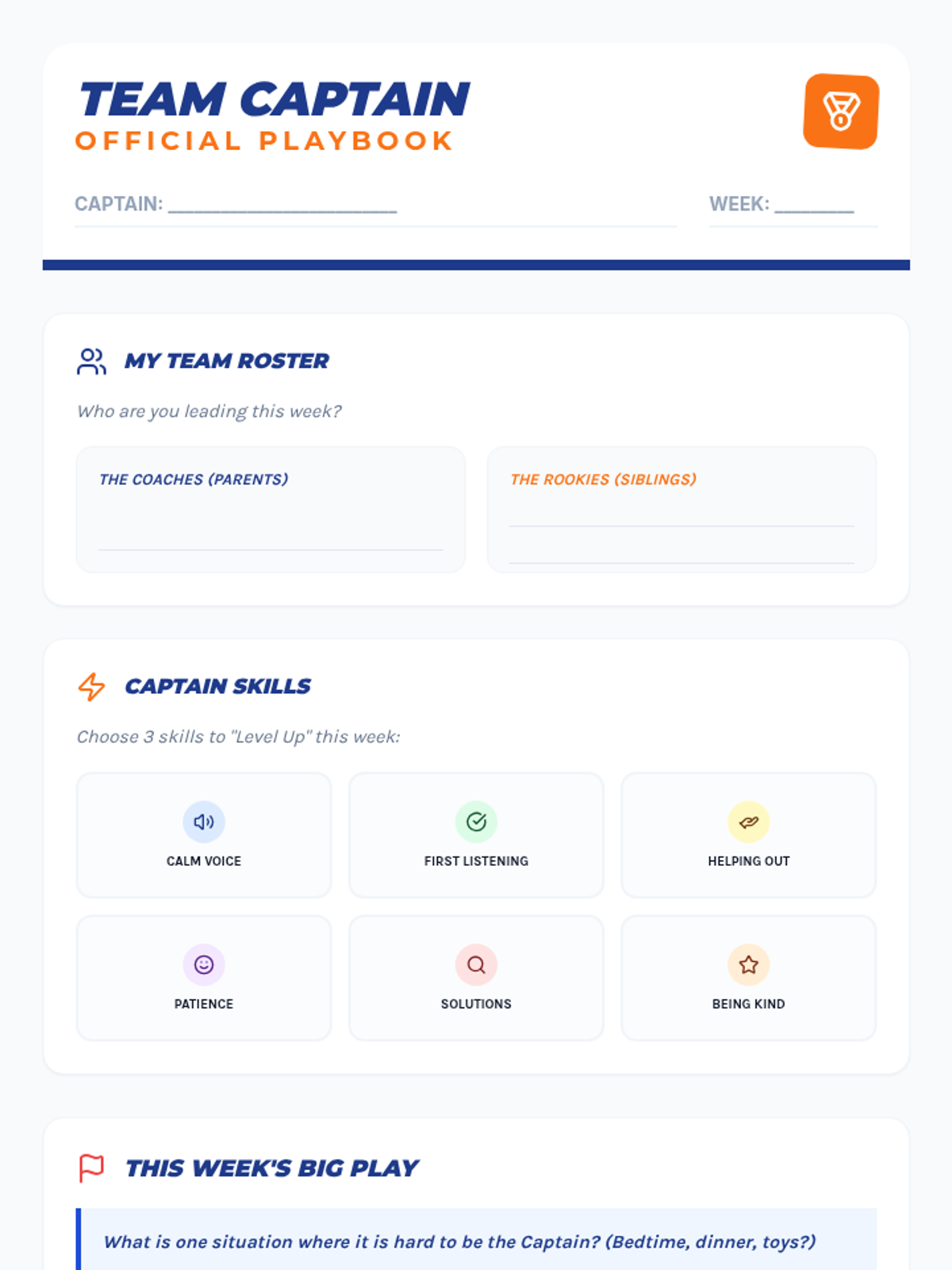
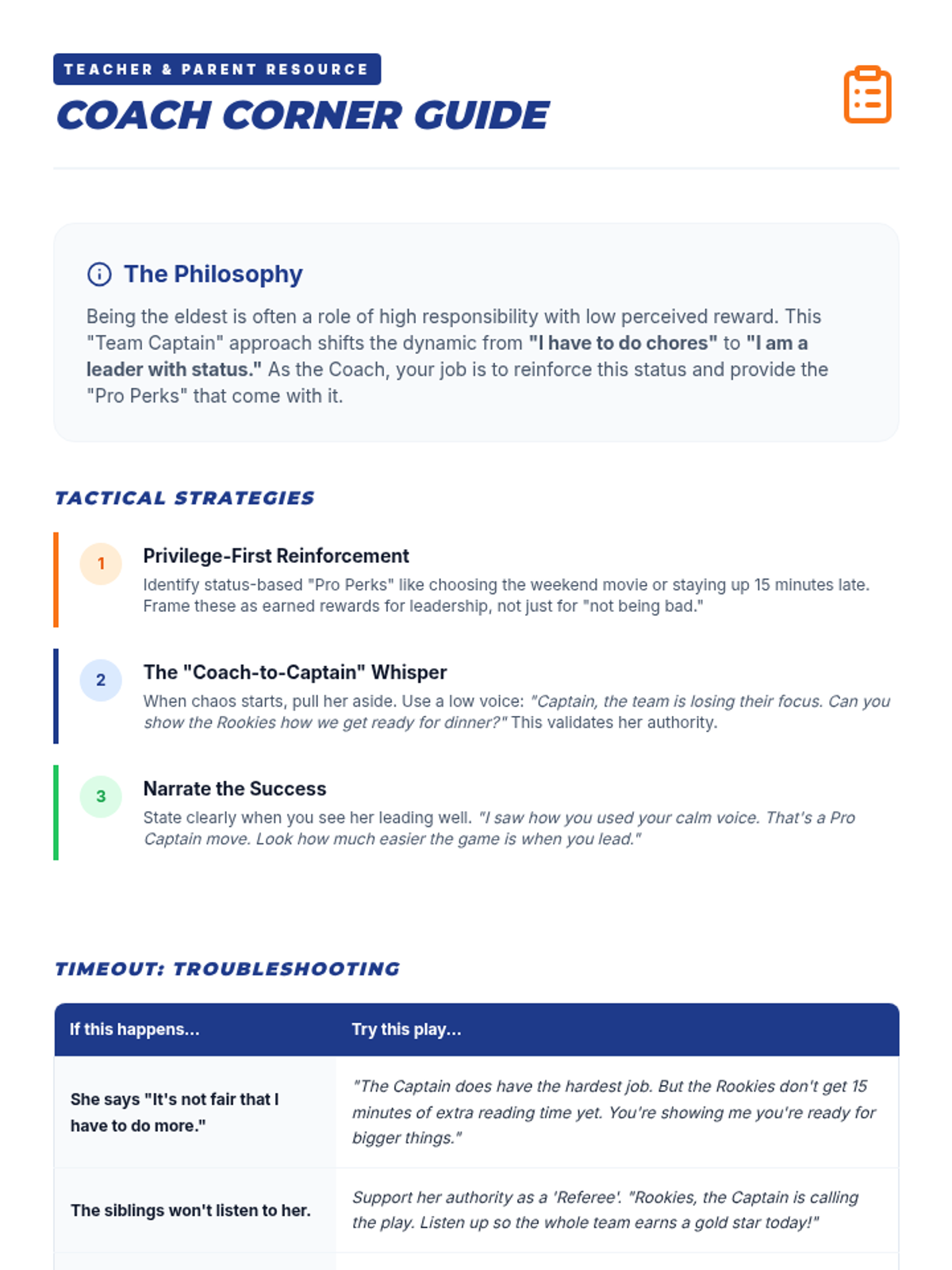
A lesson focused on redefining the eldest child's role as a 'Team Captain'. It includes an interactive social story to build empathy and understanding, a playbook for the child to plan their leadership, and a guide for parents to coach effectively.
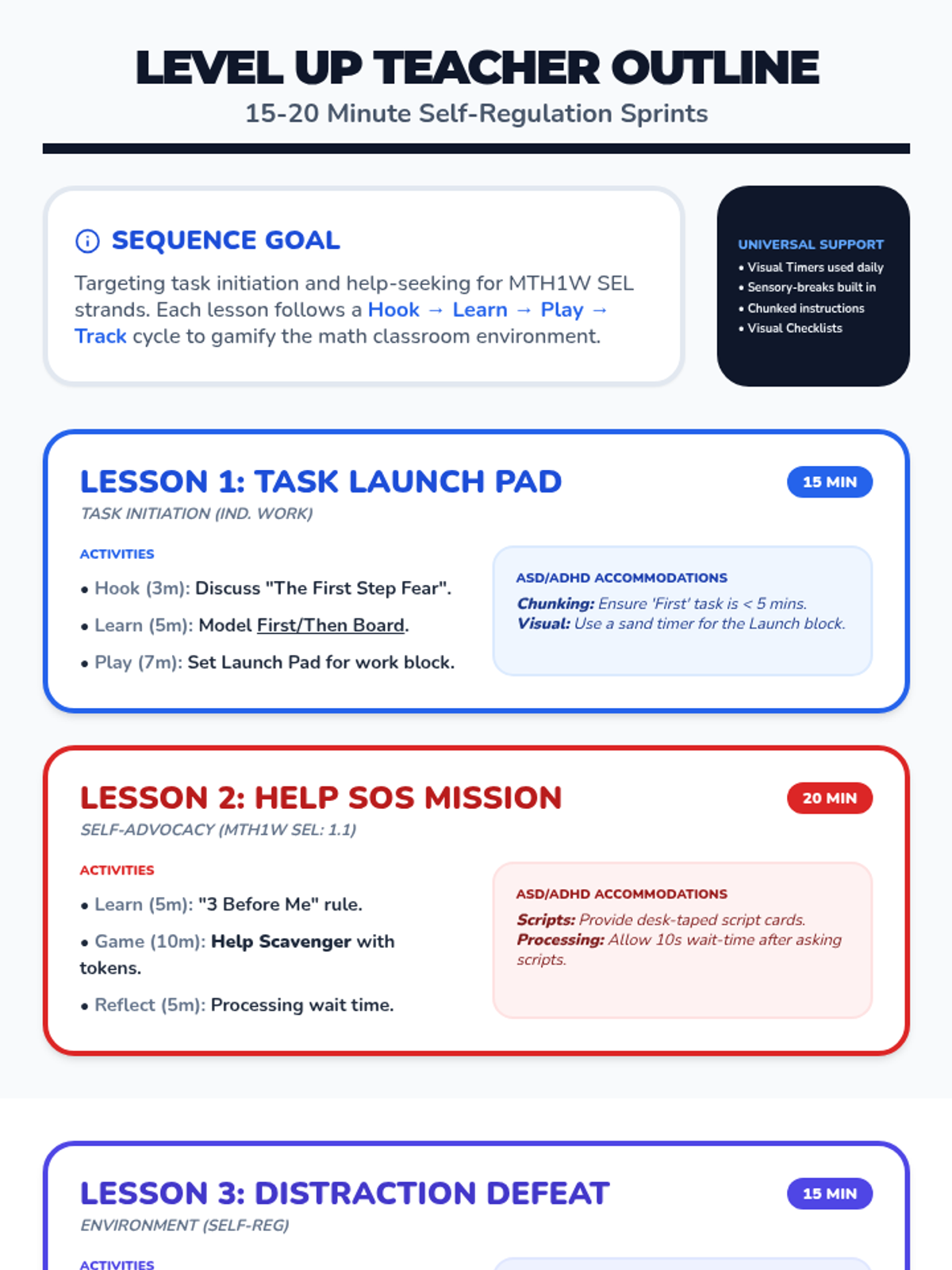
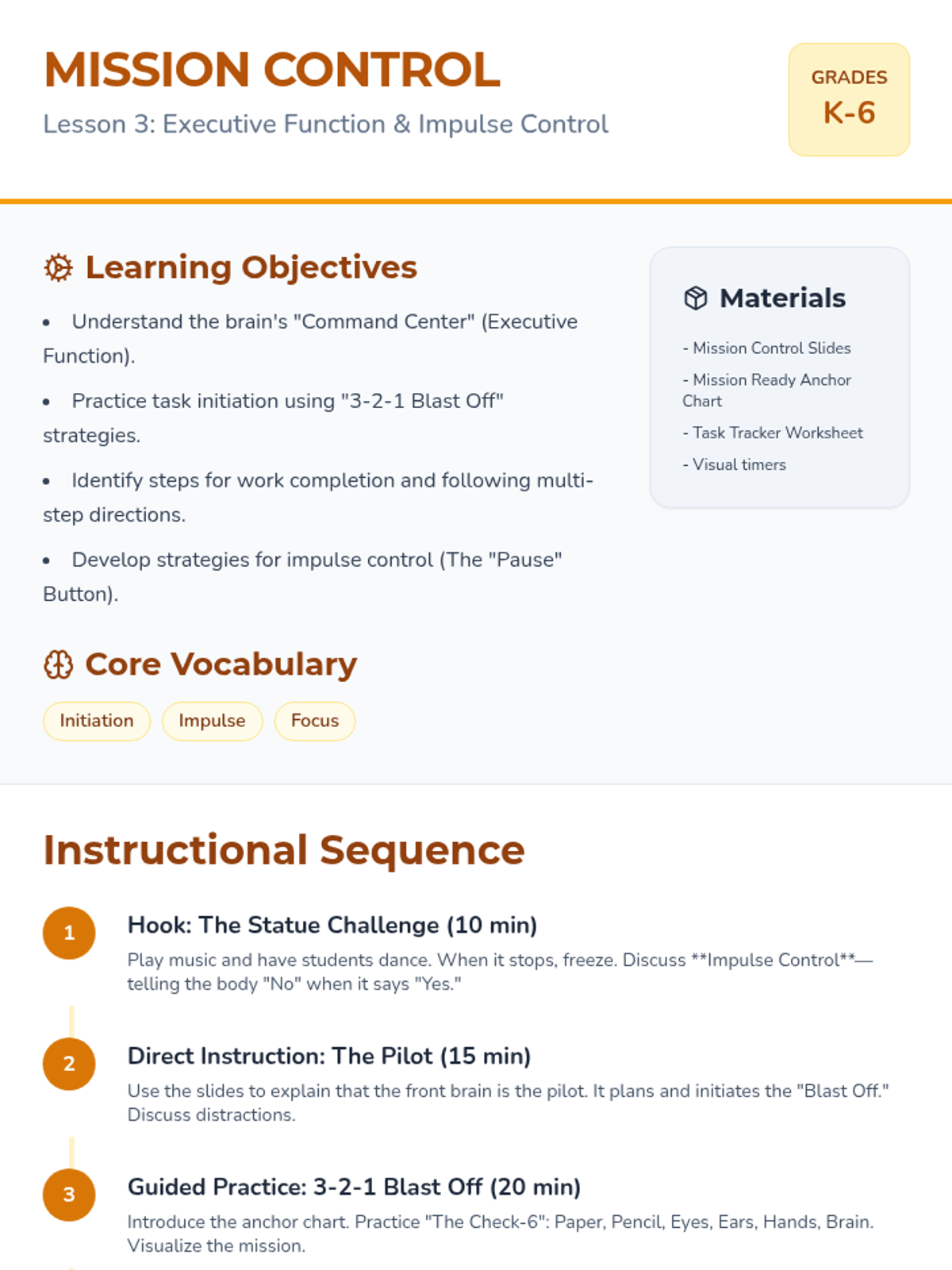
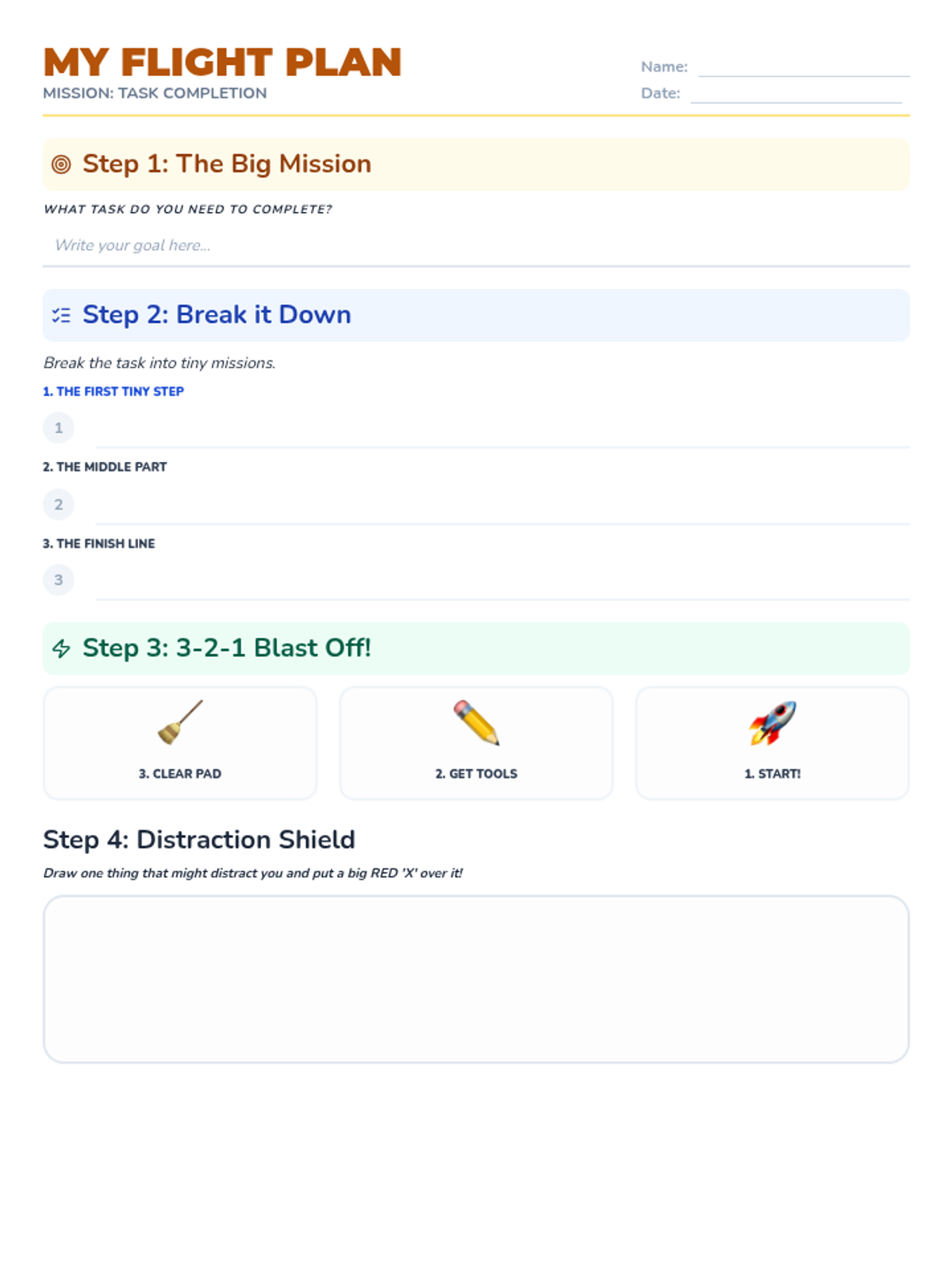
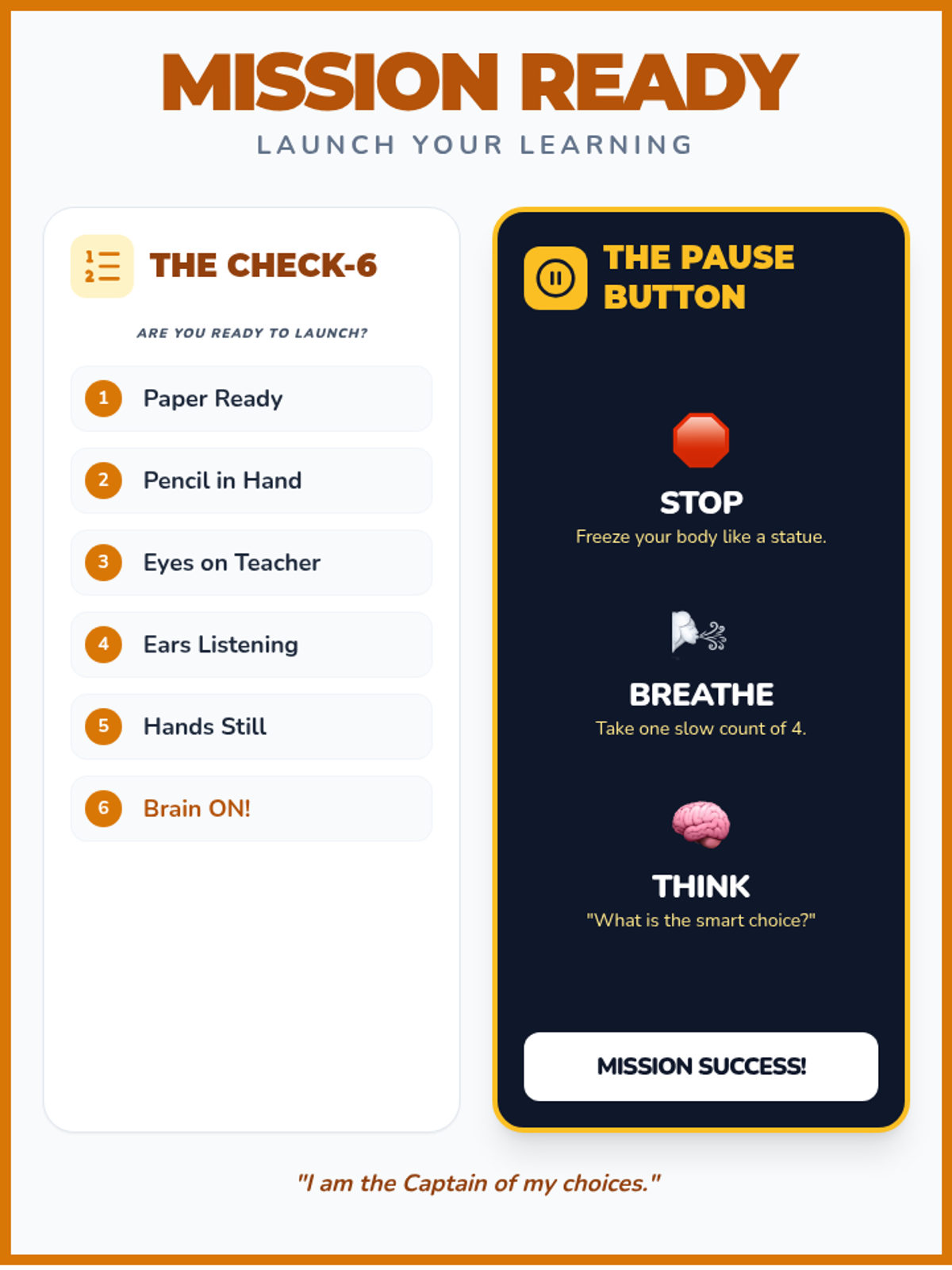
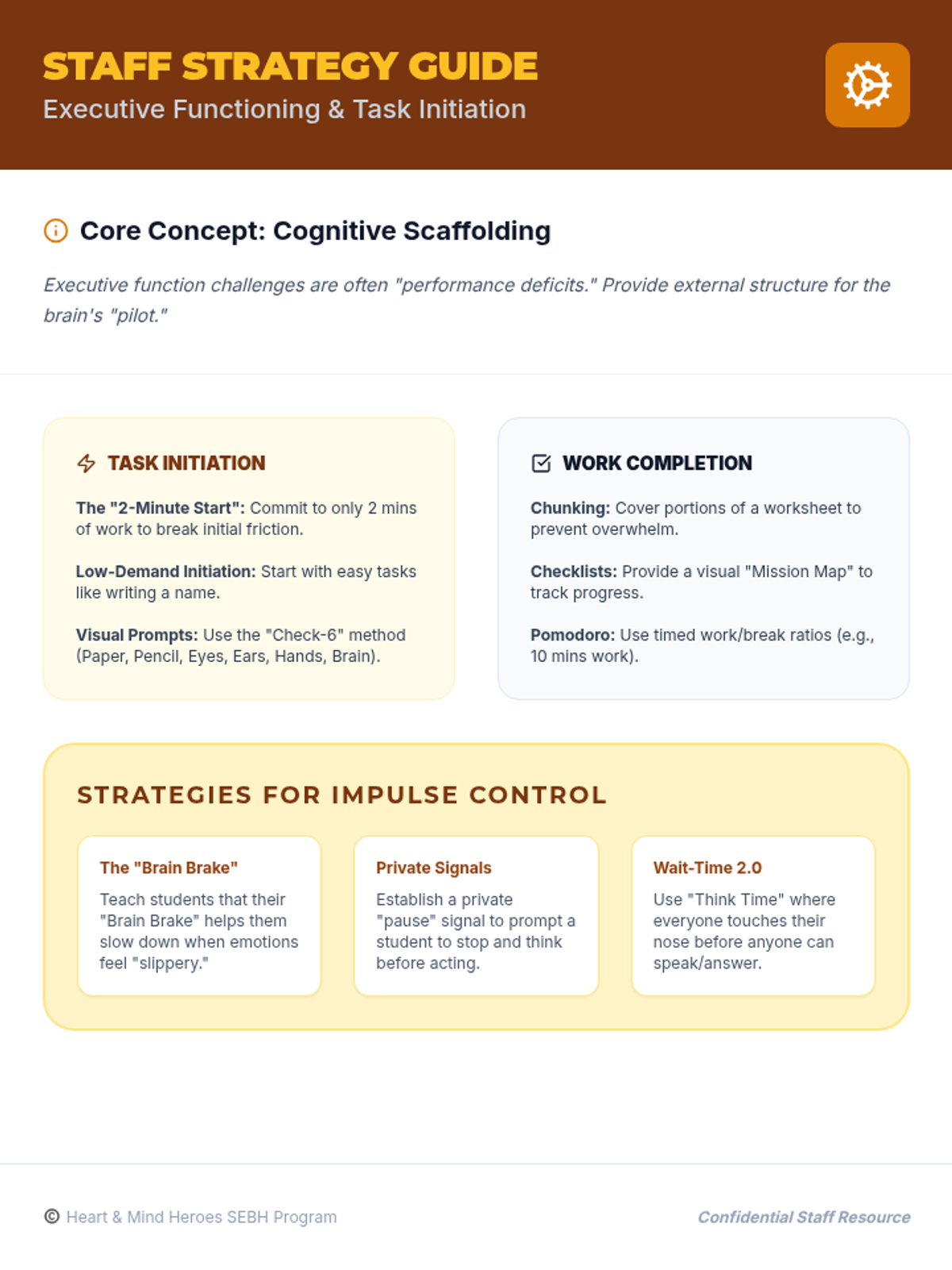
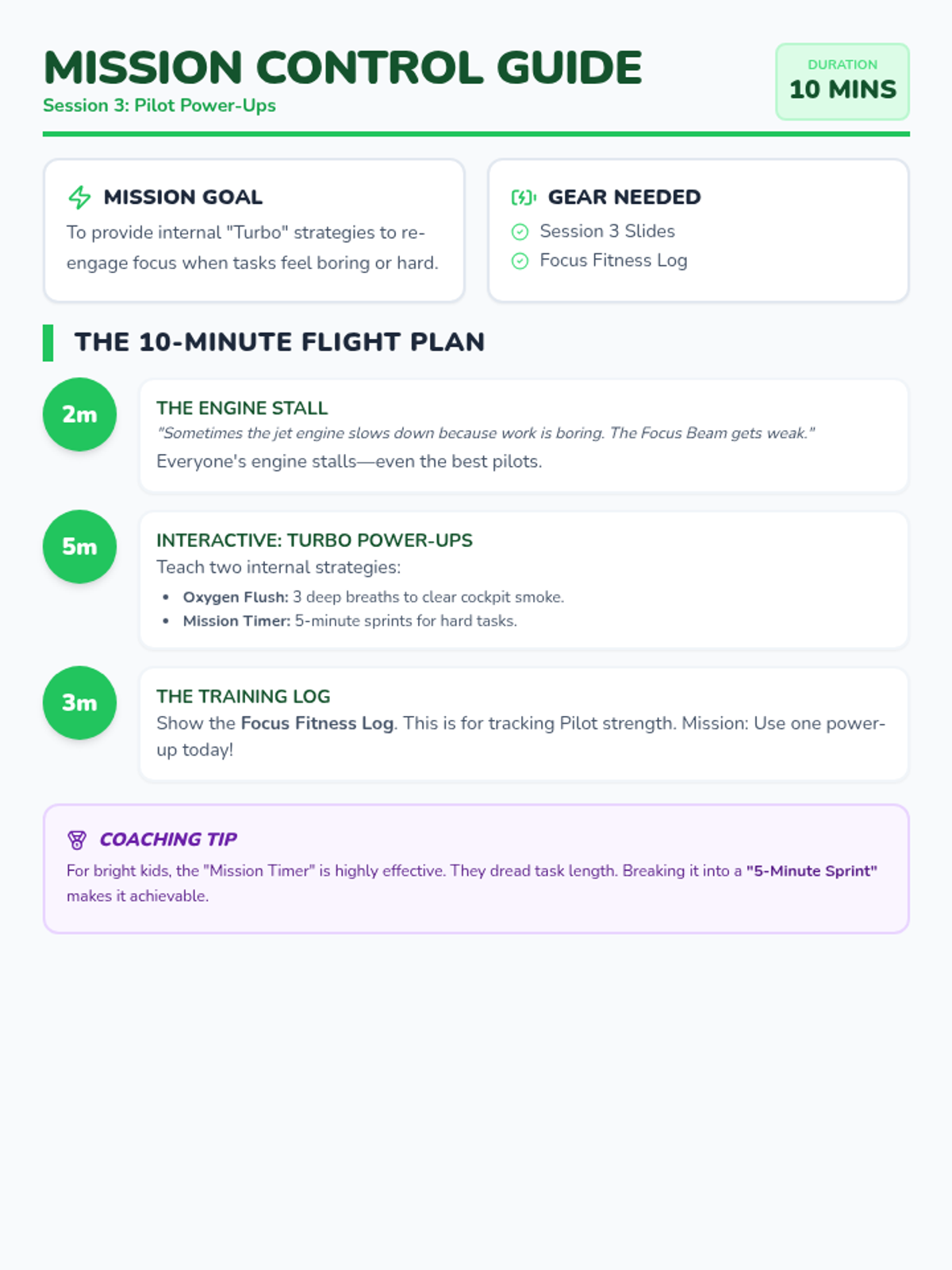
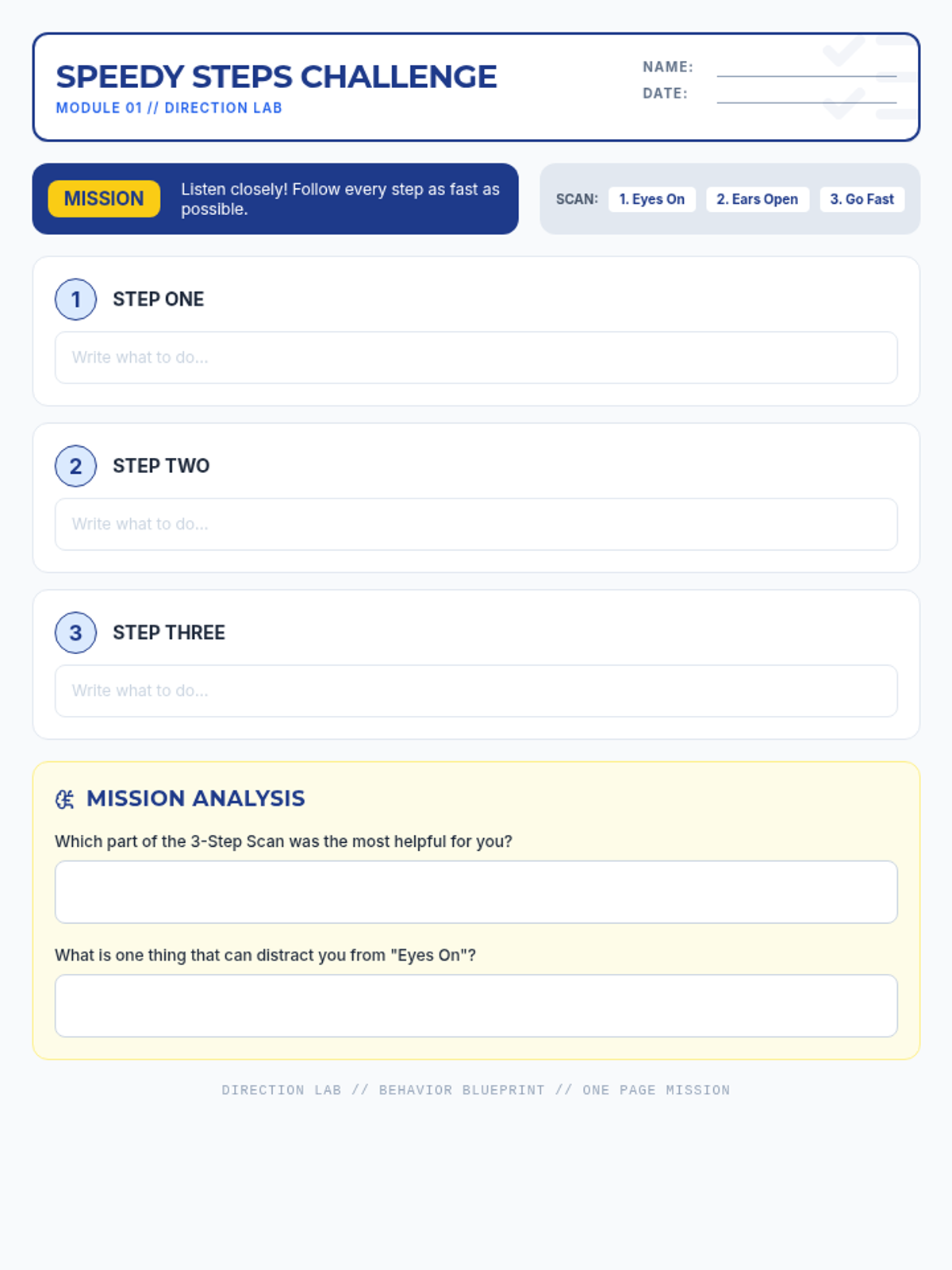
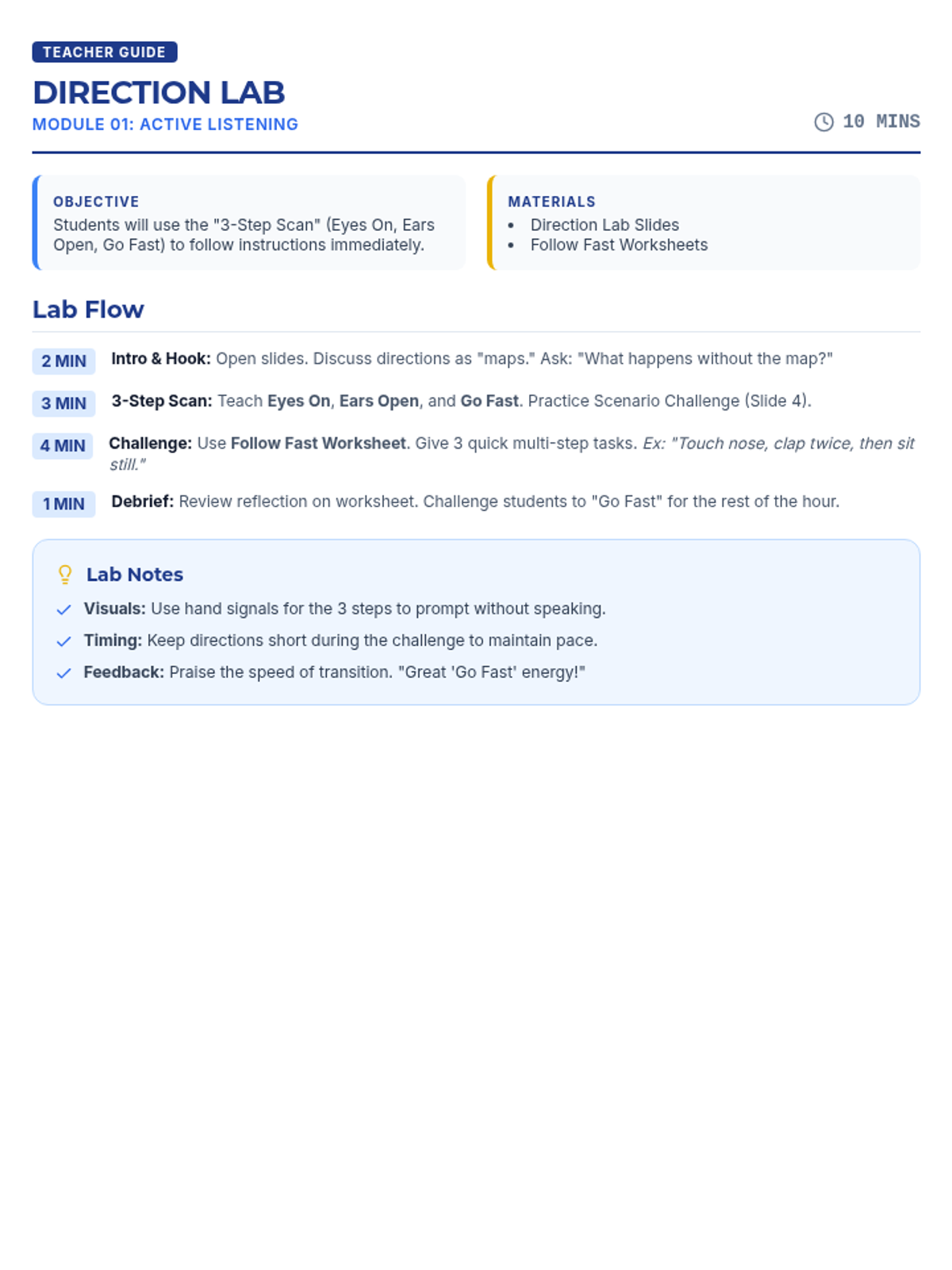
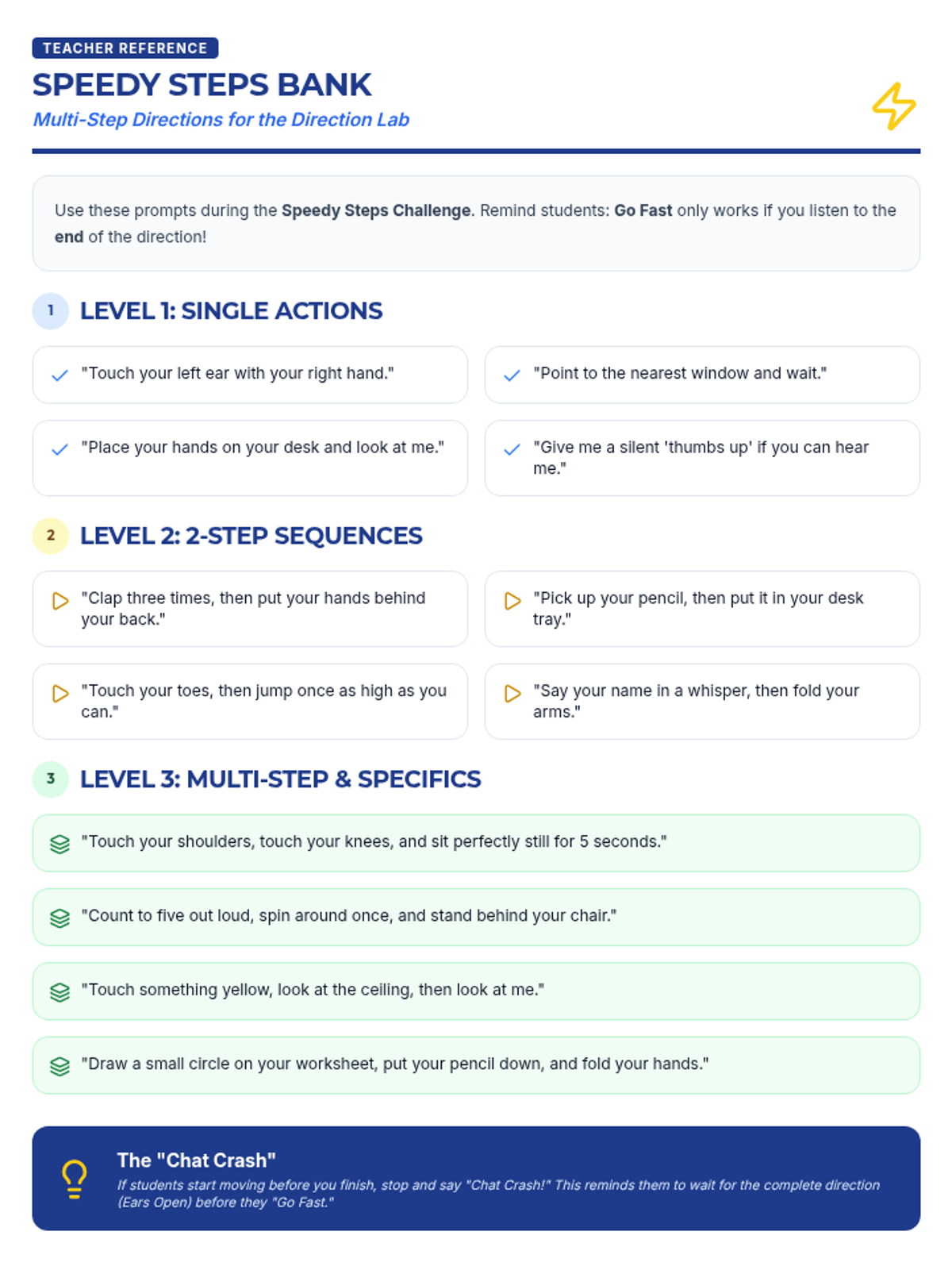
Targets executive functioning skills including task initiation, following directions, and impulse control through 'mission control' strategies.
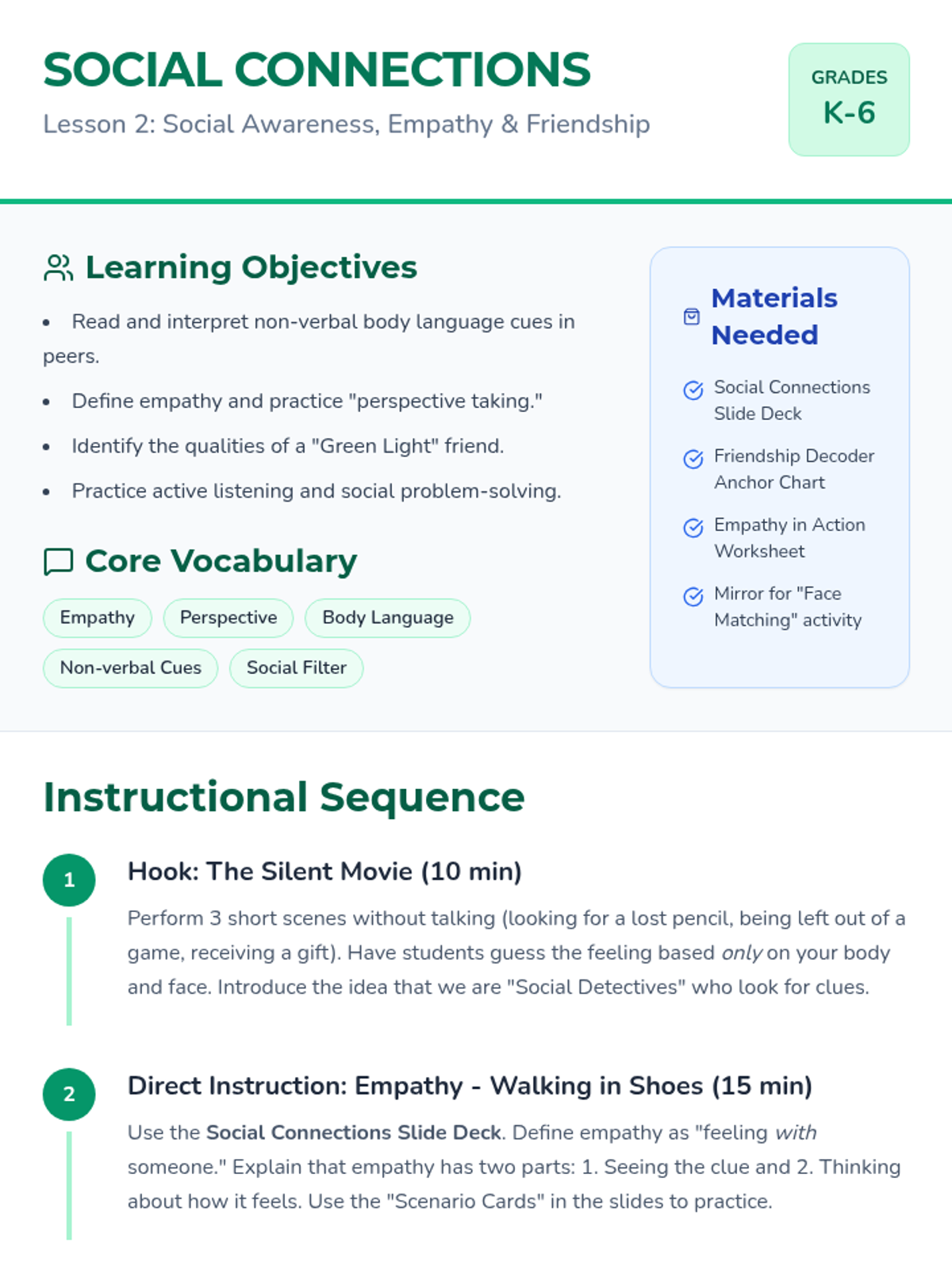
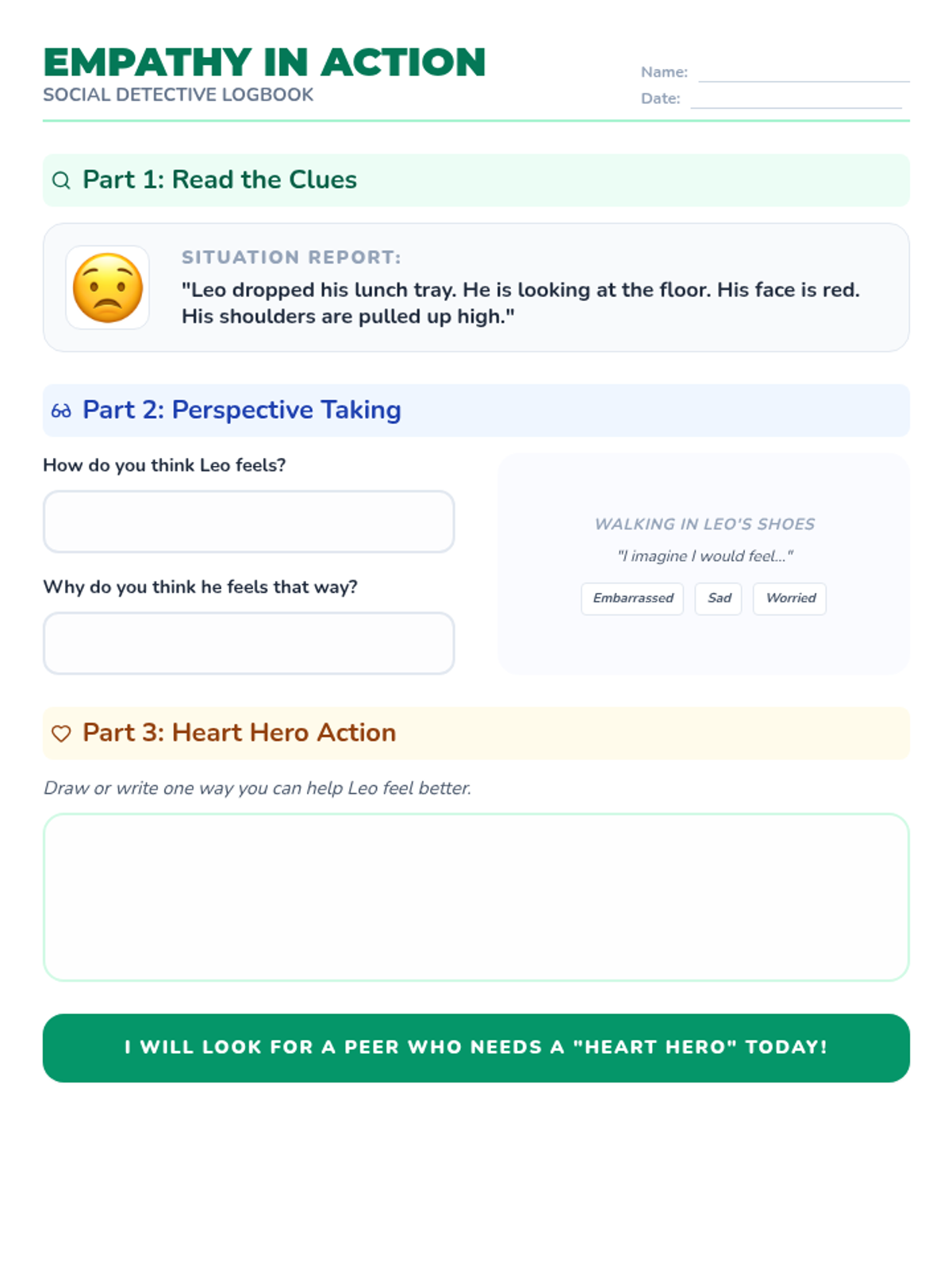
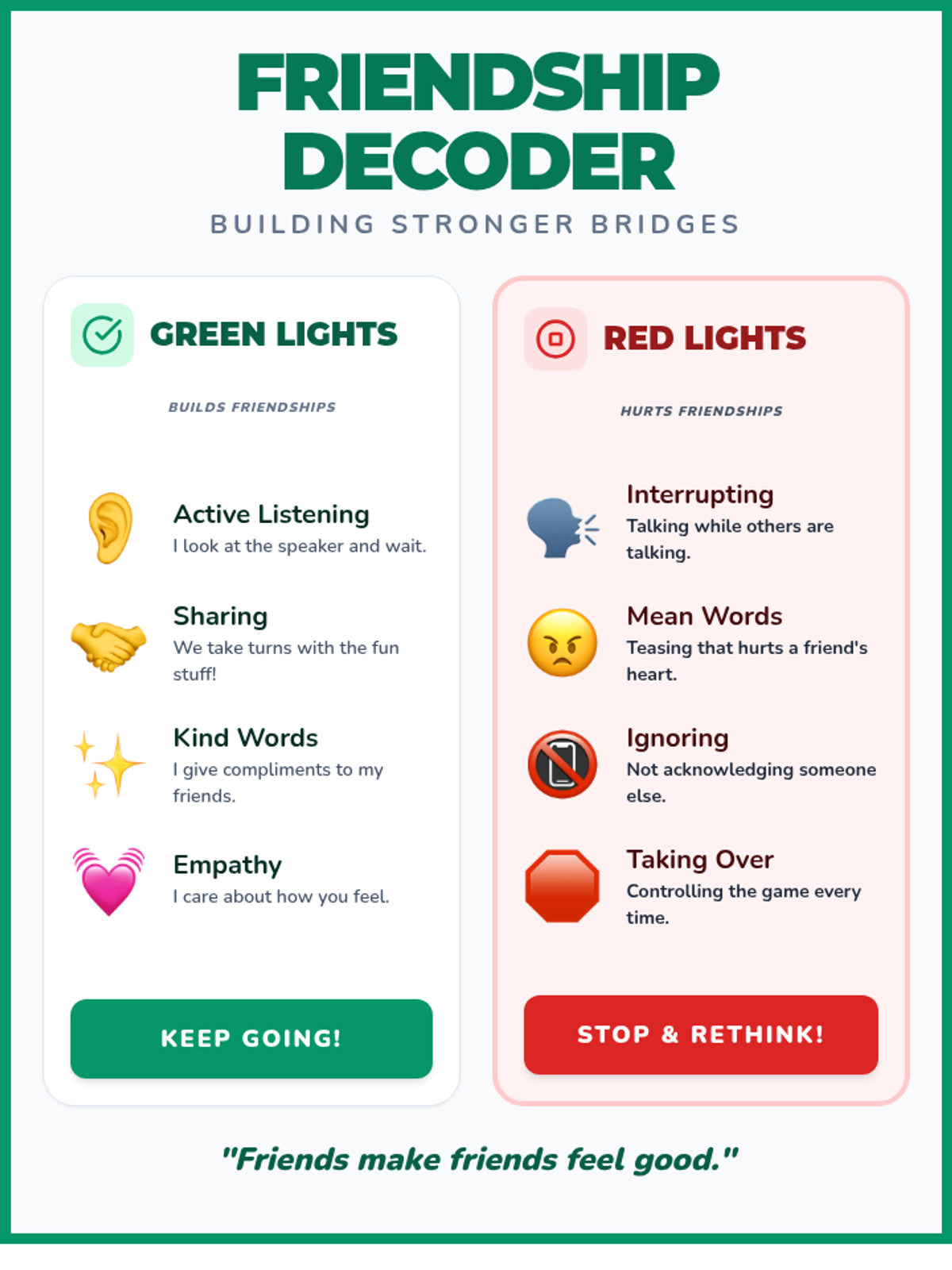
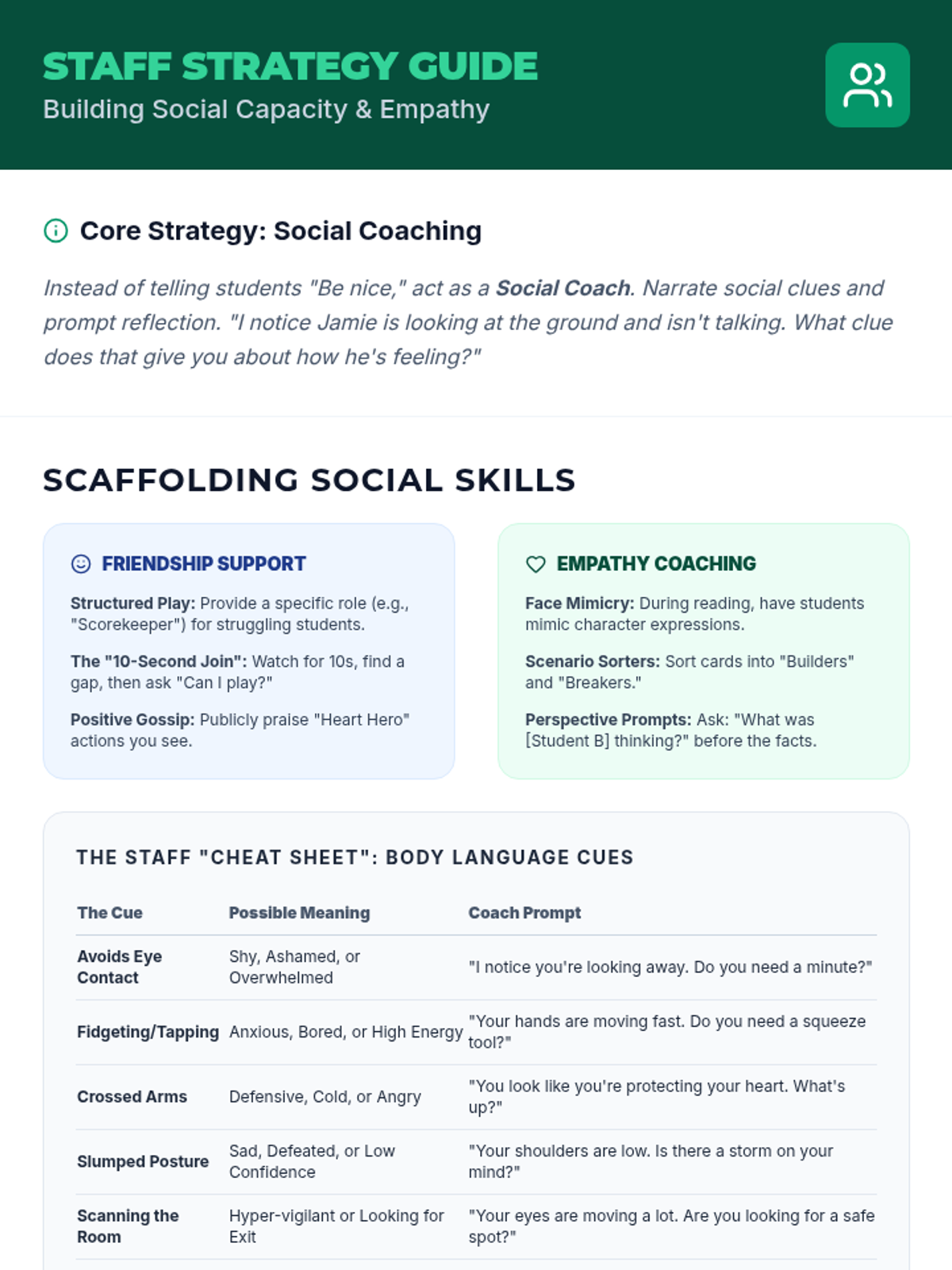
Develops social awareness, empathy, and friendship skills by teaching students to read body language and respond with kindness.
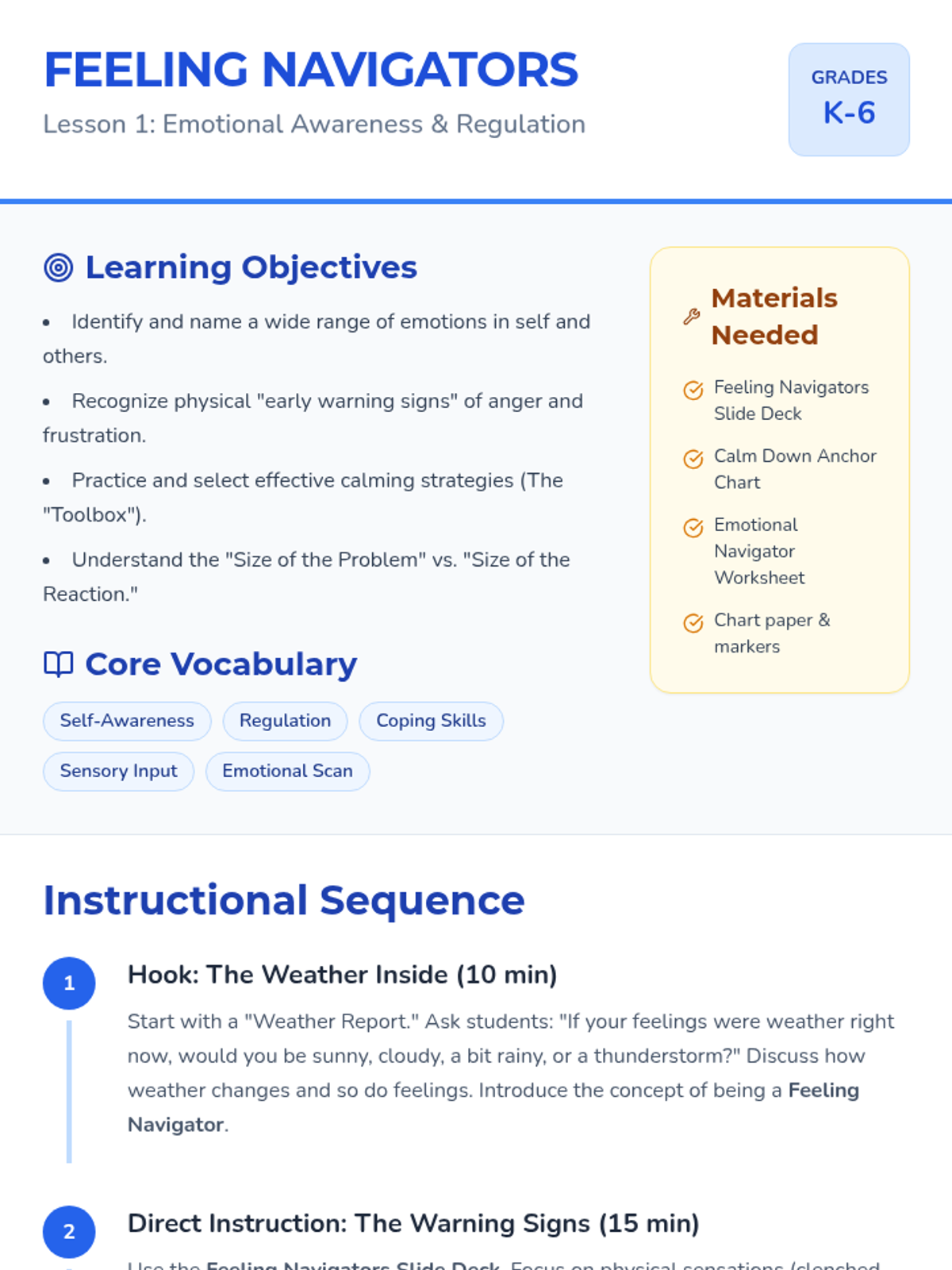
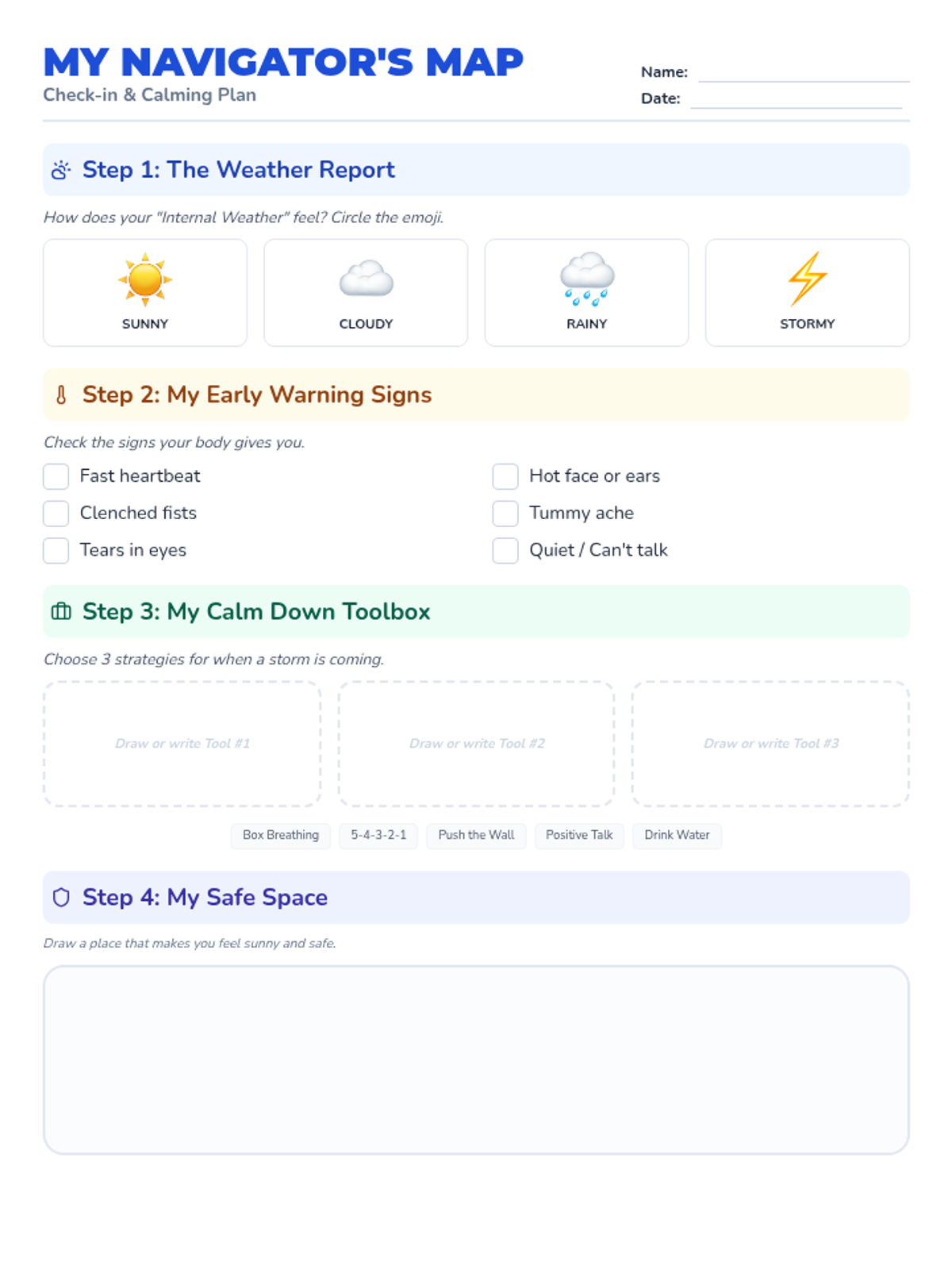
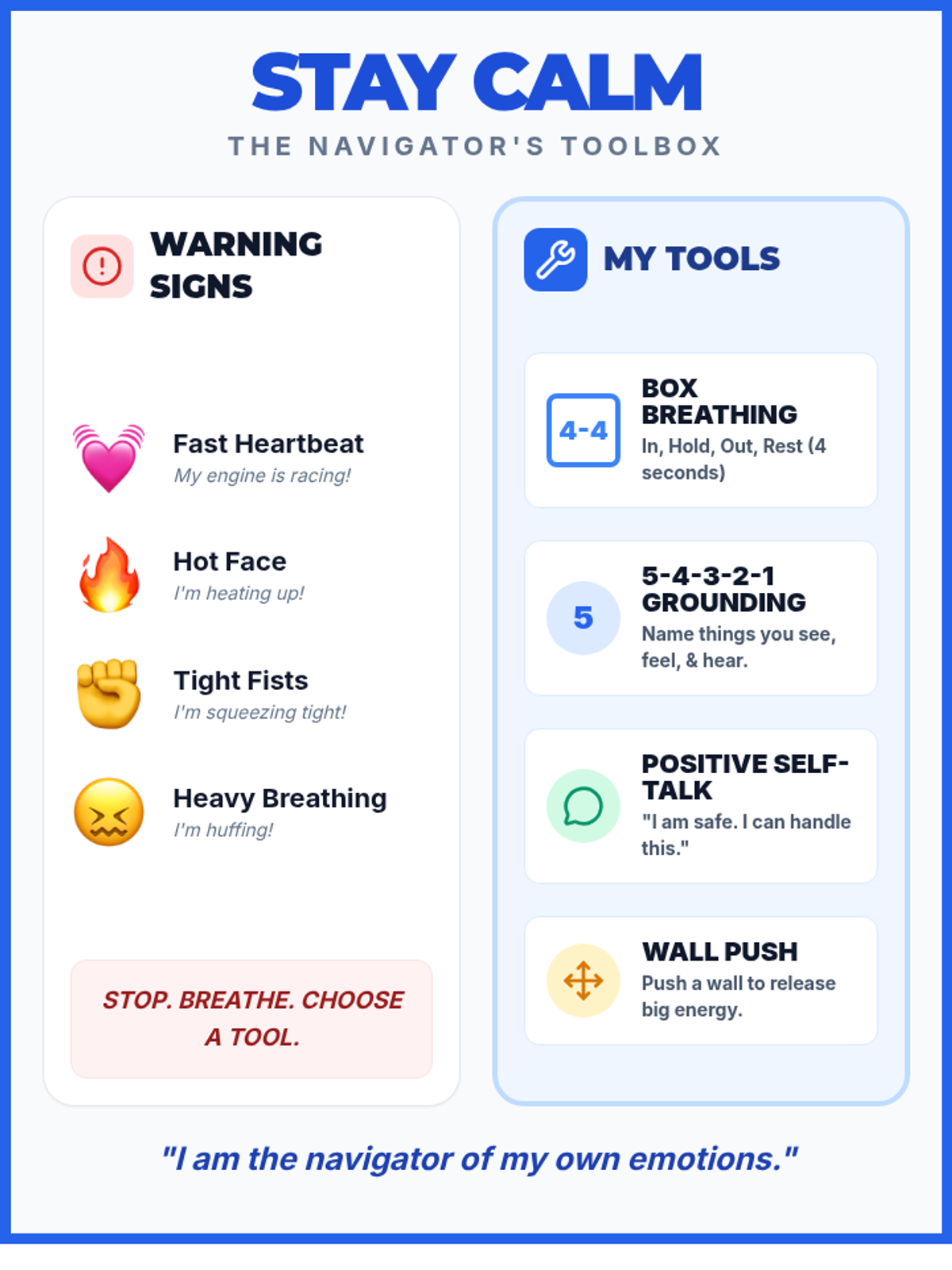
Focuses on identifying emotions, understanding the physical signs of anger, and building a toolbox of calming strategies for self-regulation.
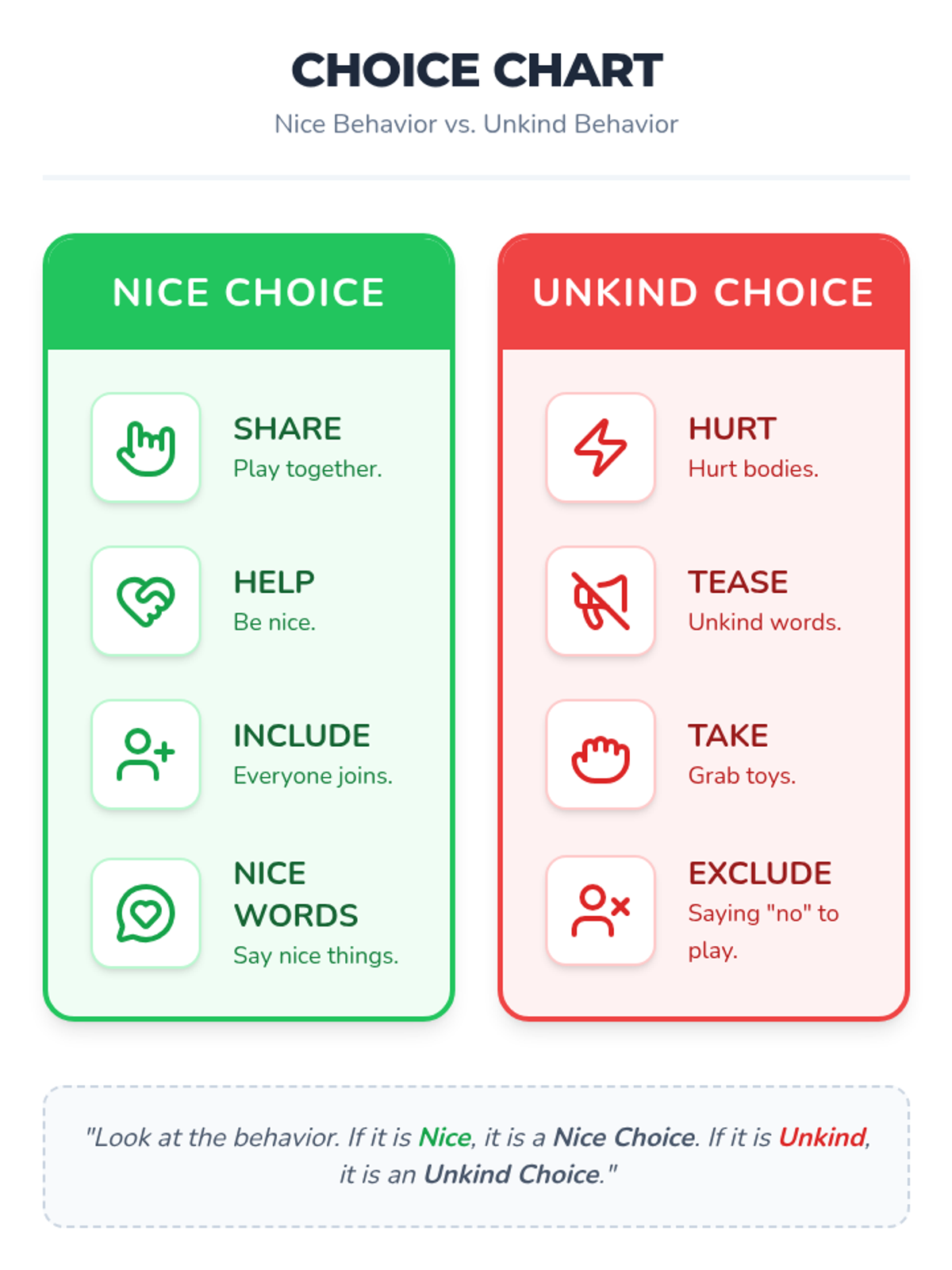
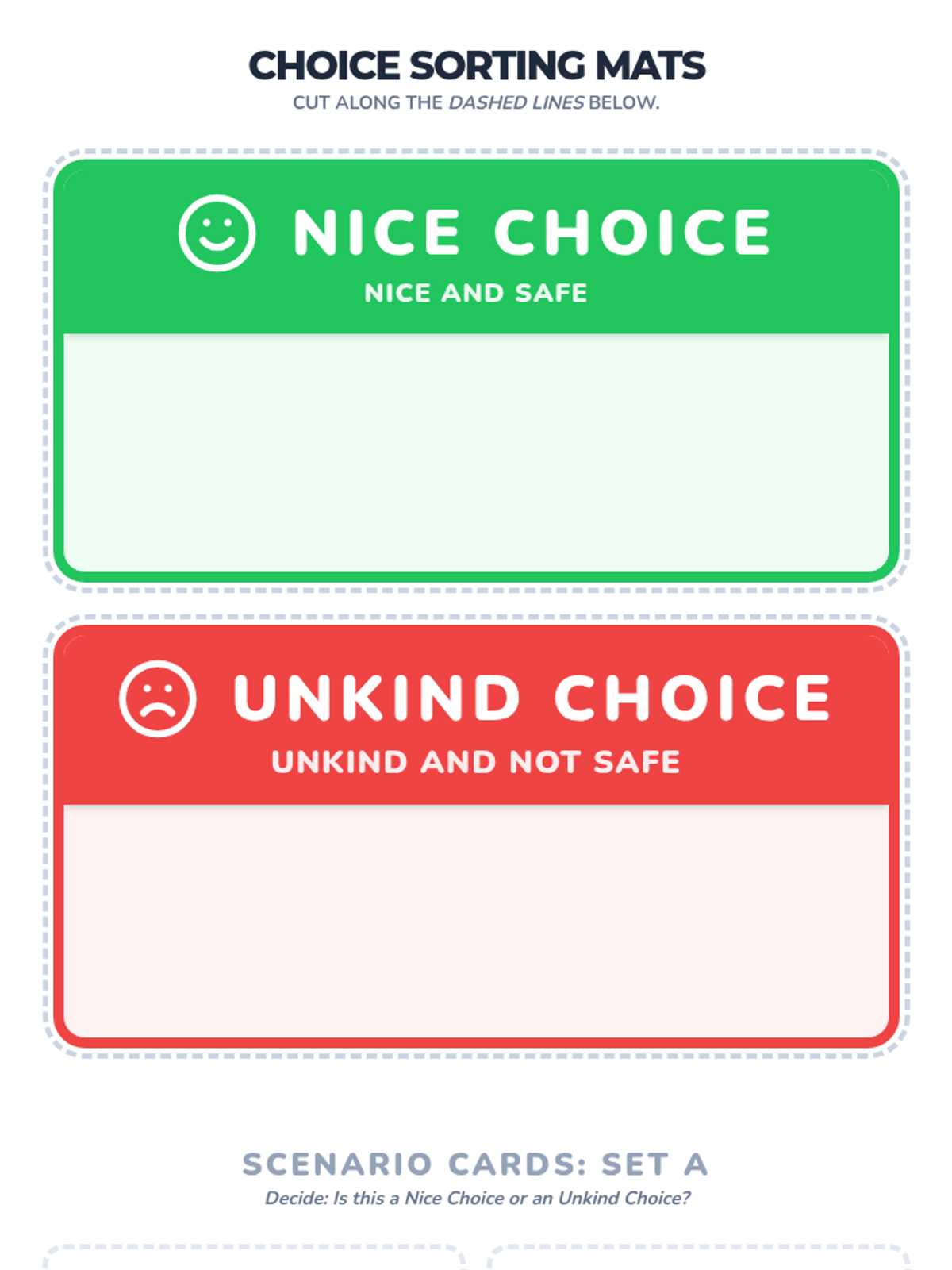
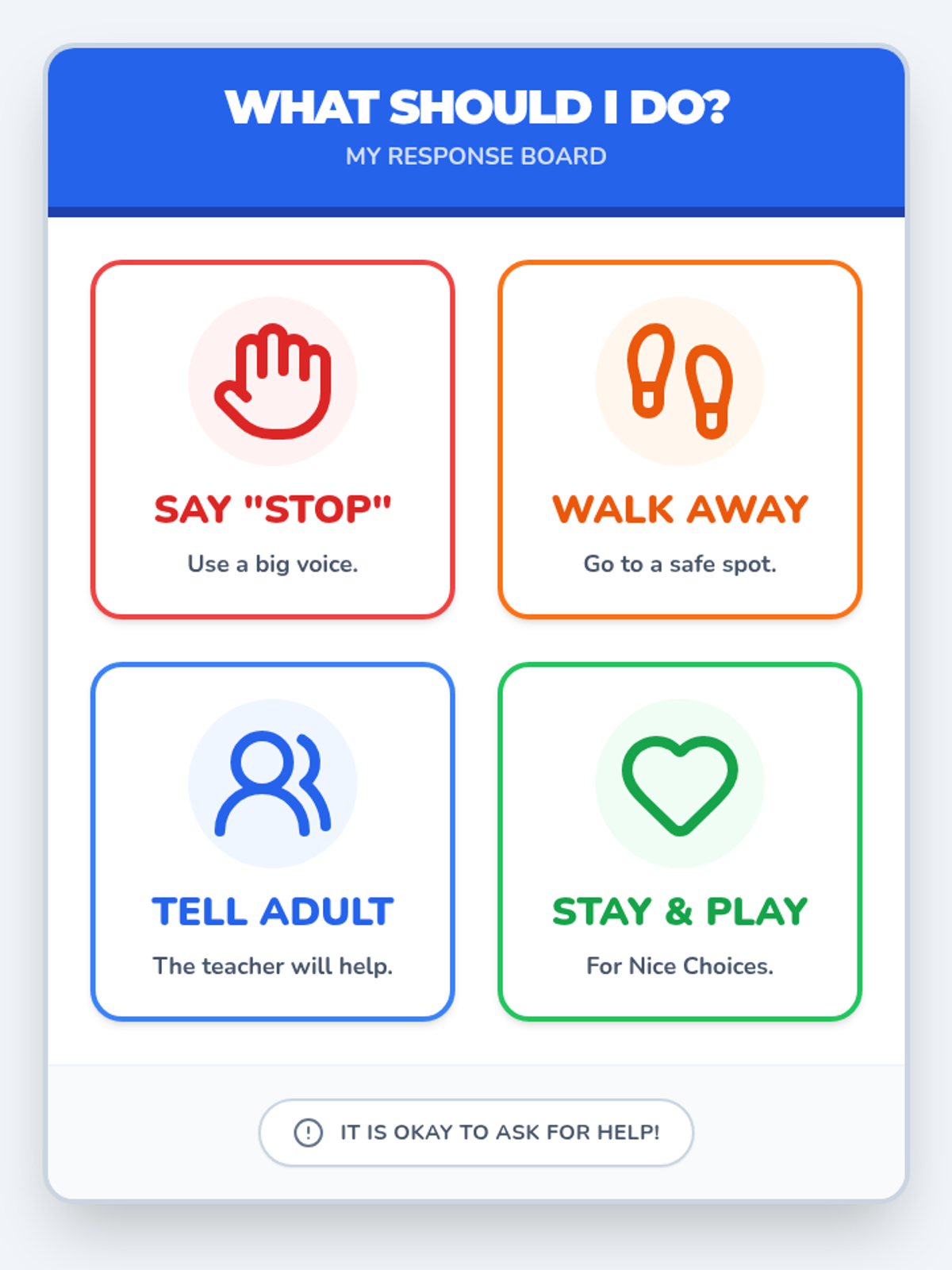
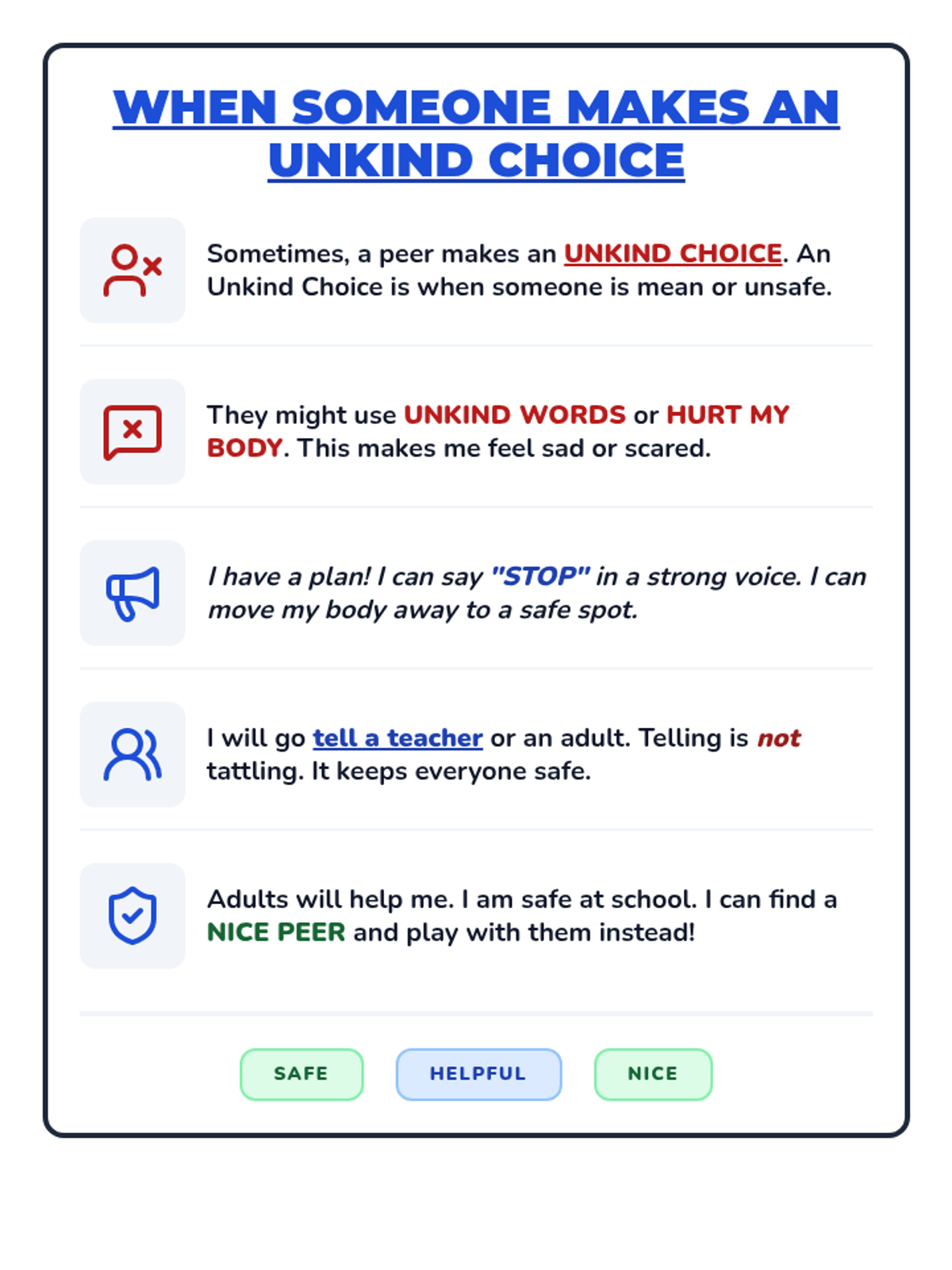
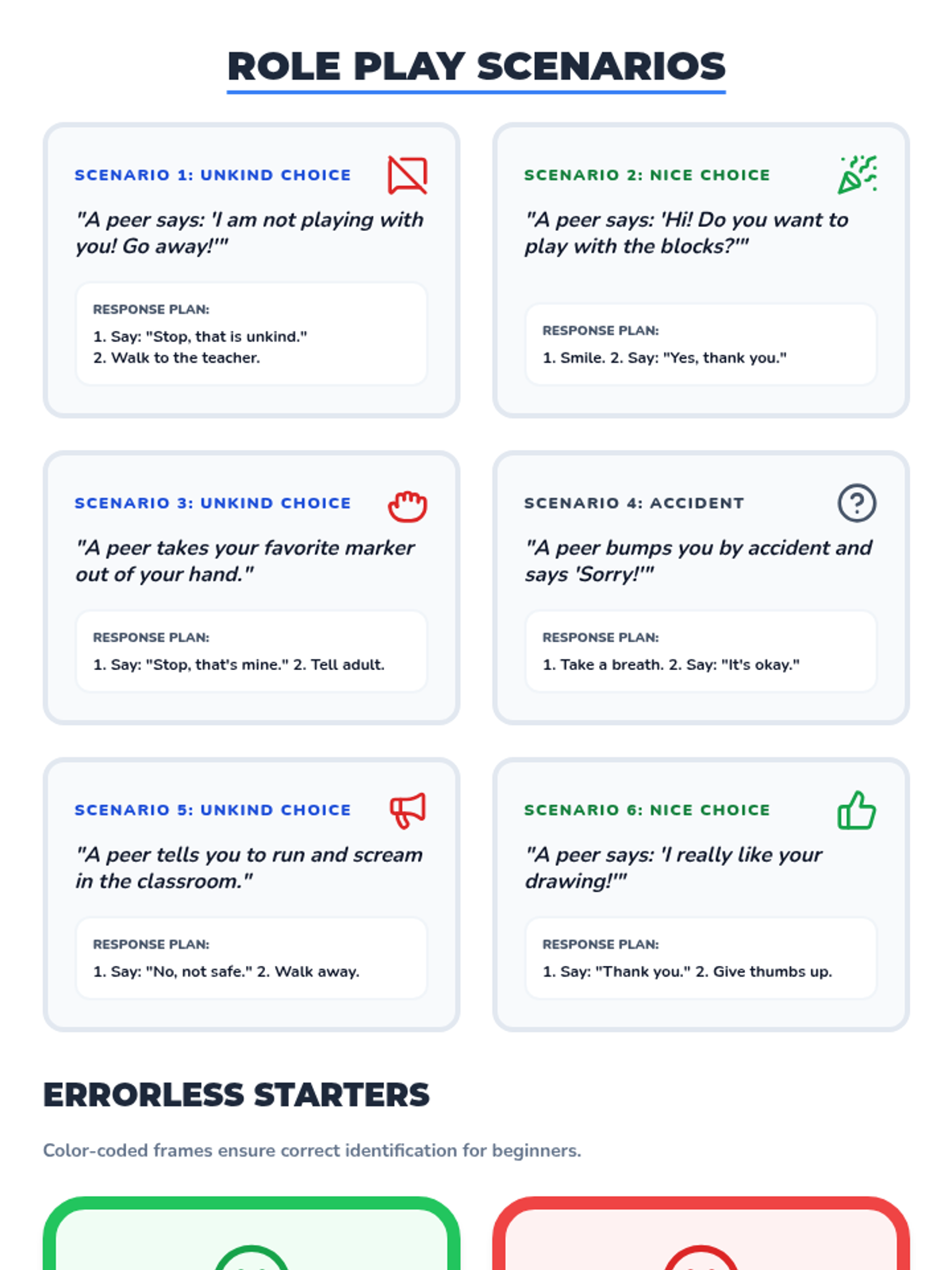
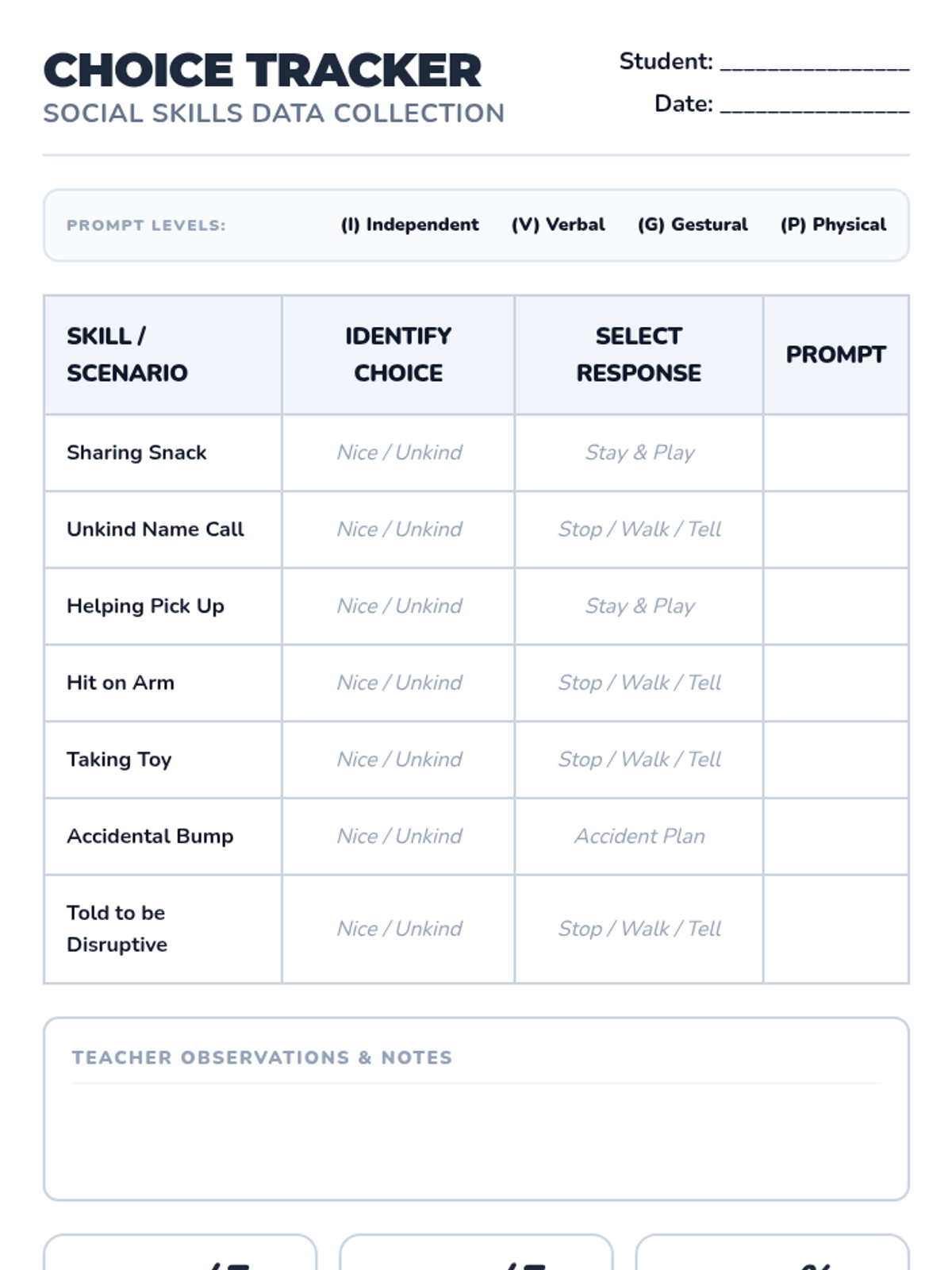
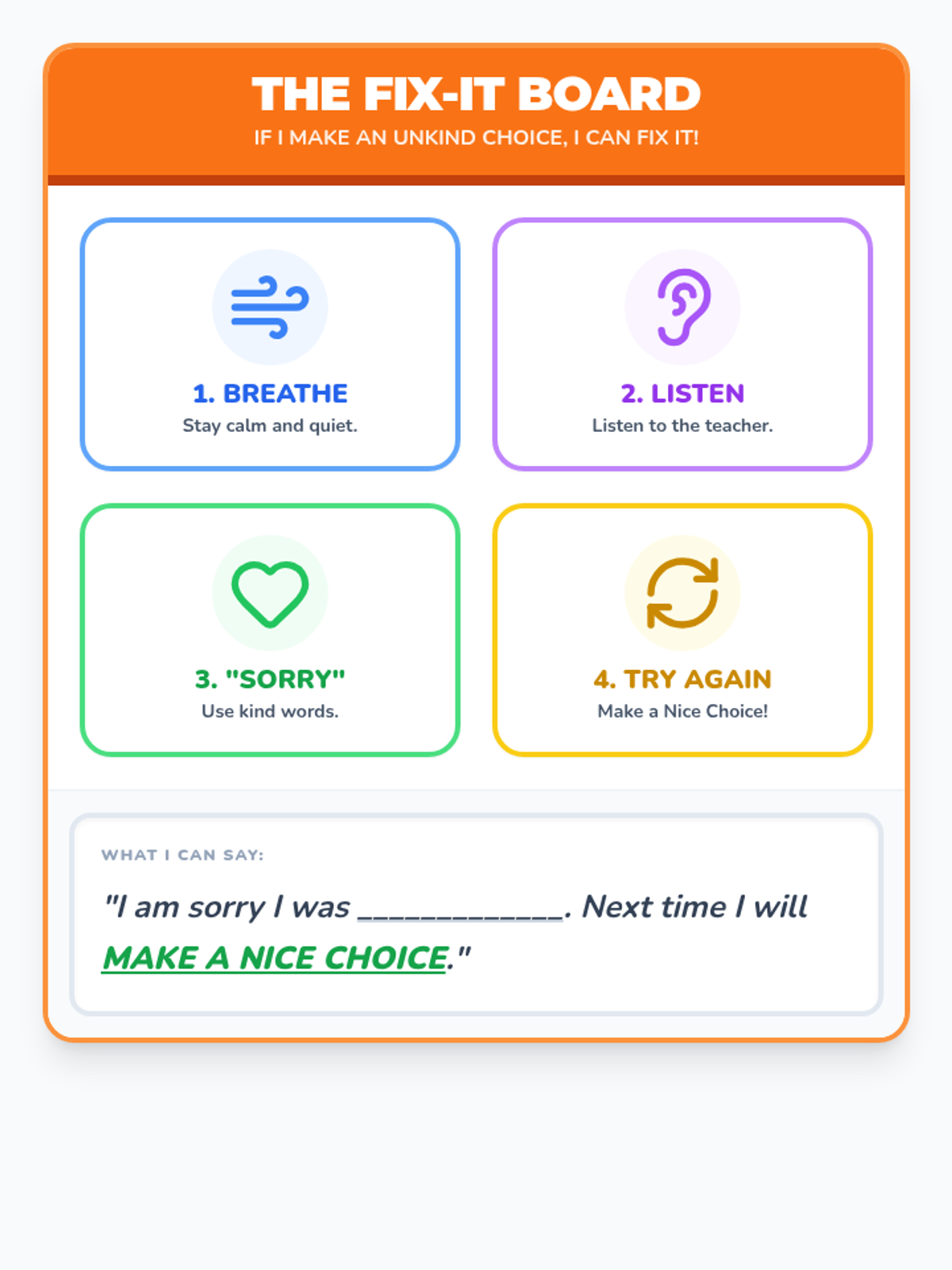
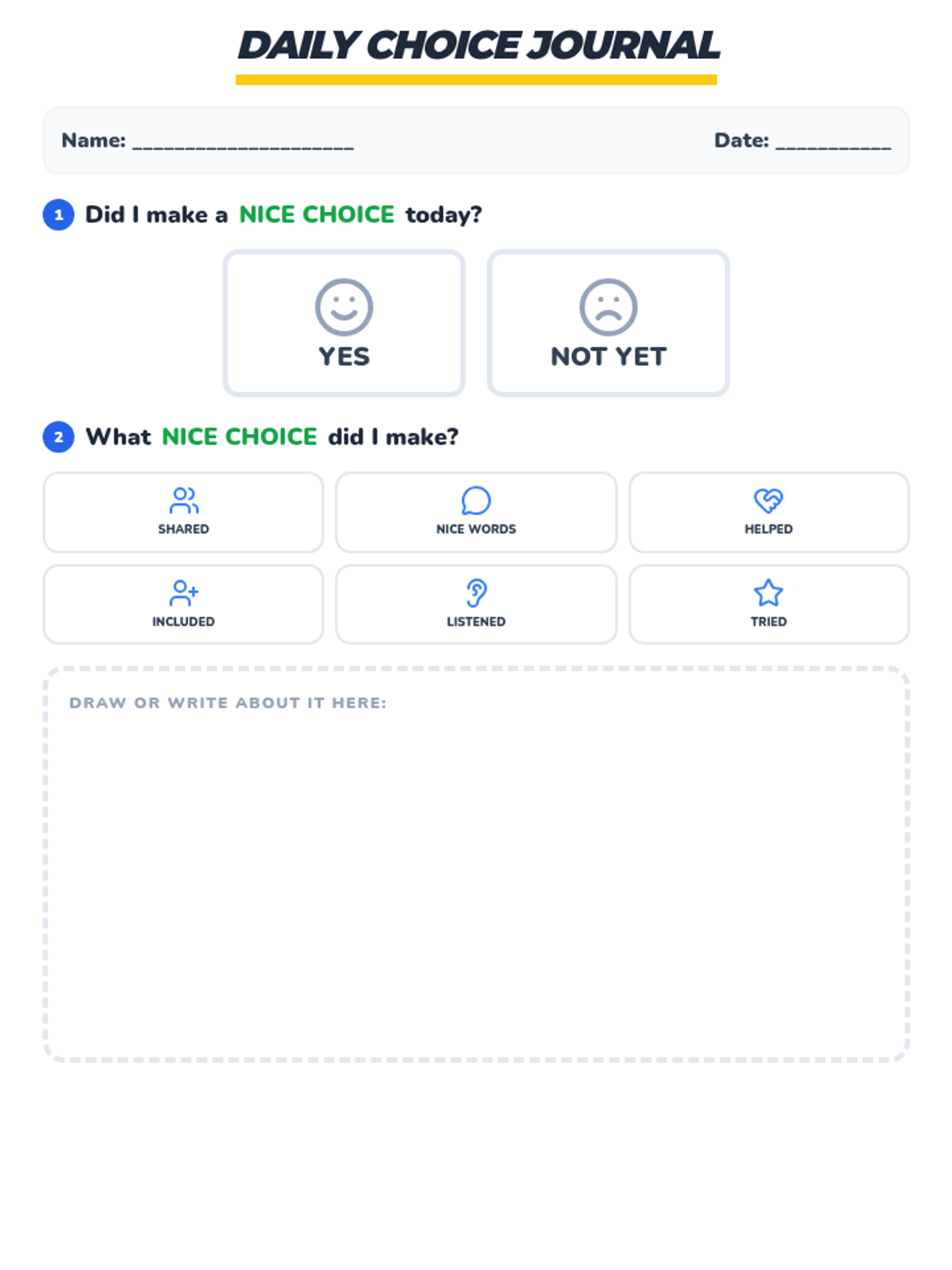
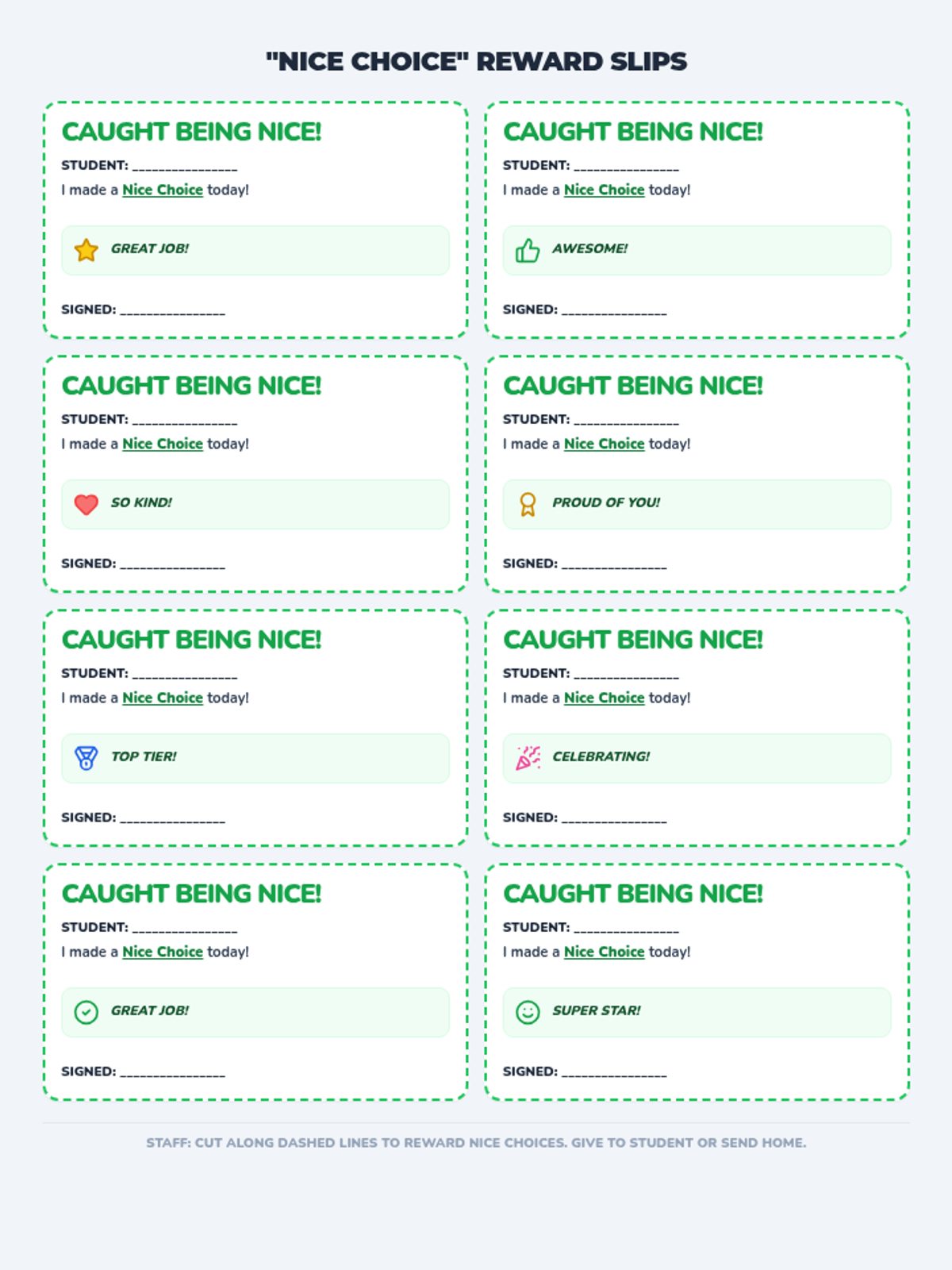
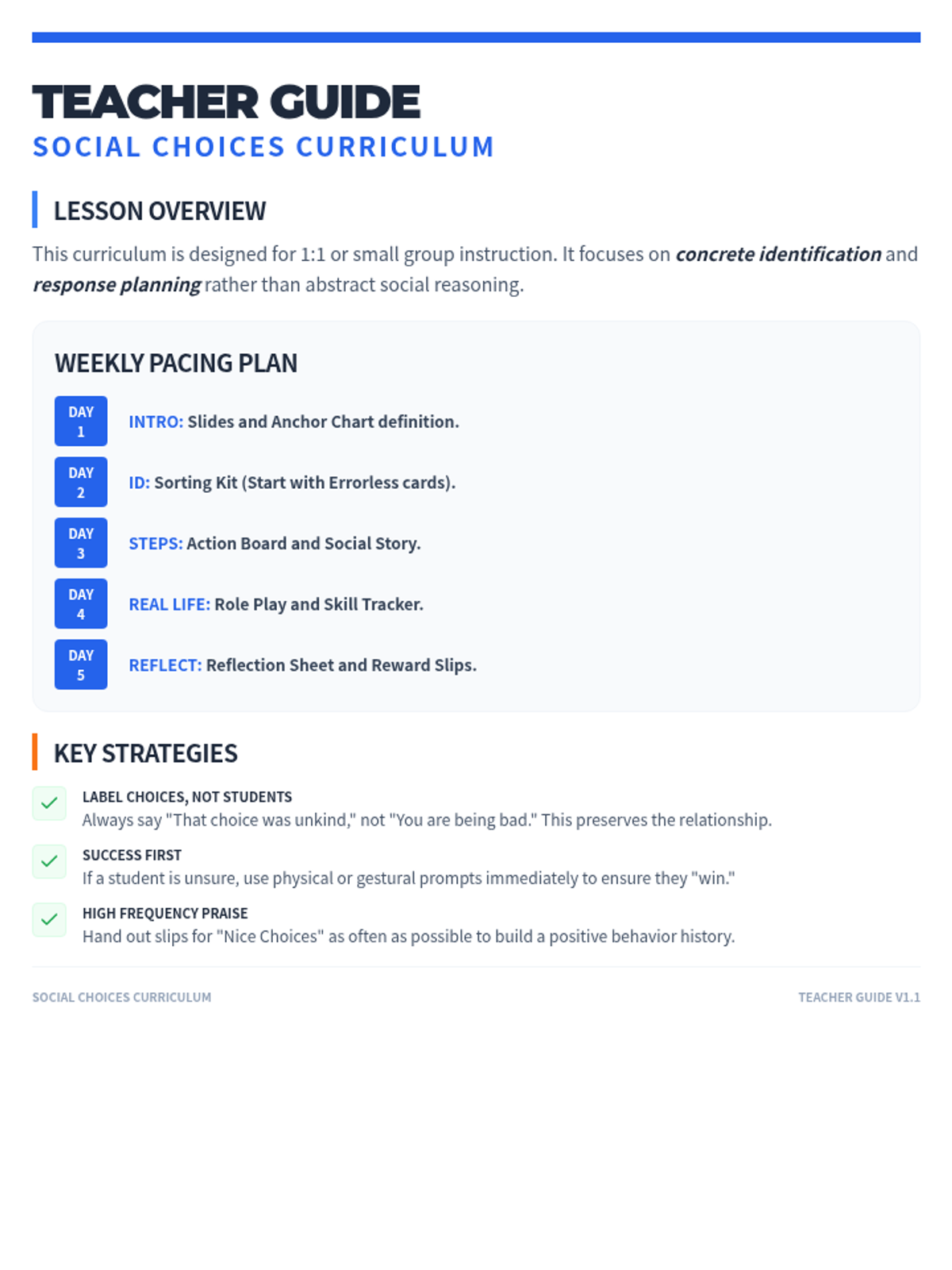
A comprehensive social skills lesson for middle school life skills students to distinguish between kind peer behaviors (Nice Choices) and unkind behaviors (Unkind Choices), including response strategies for bullying.
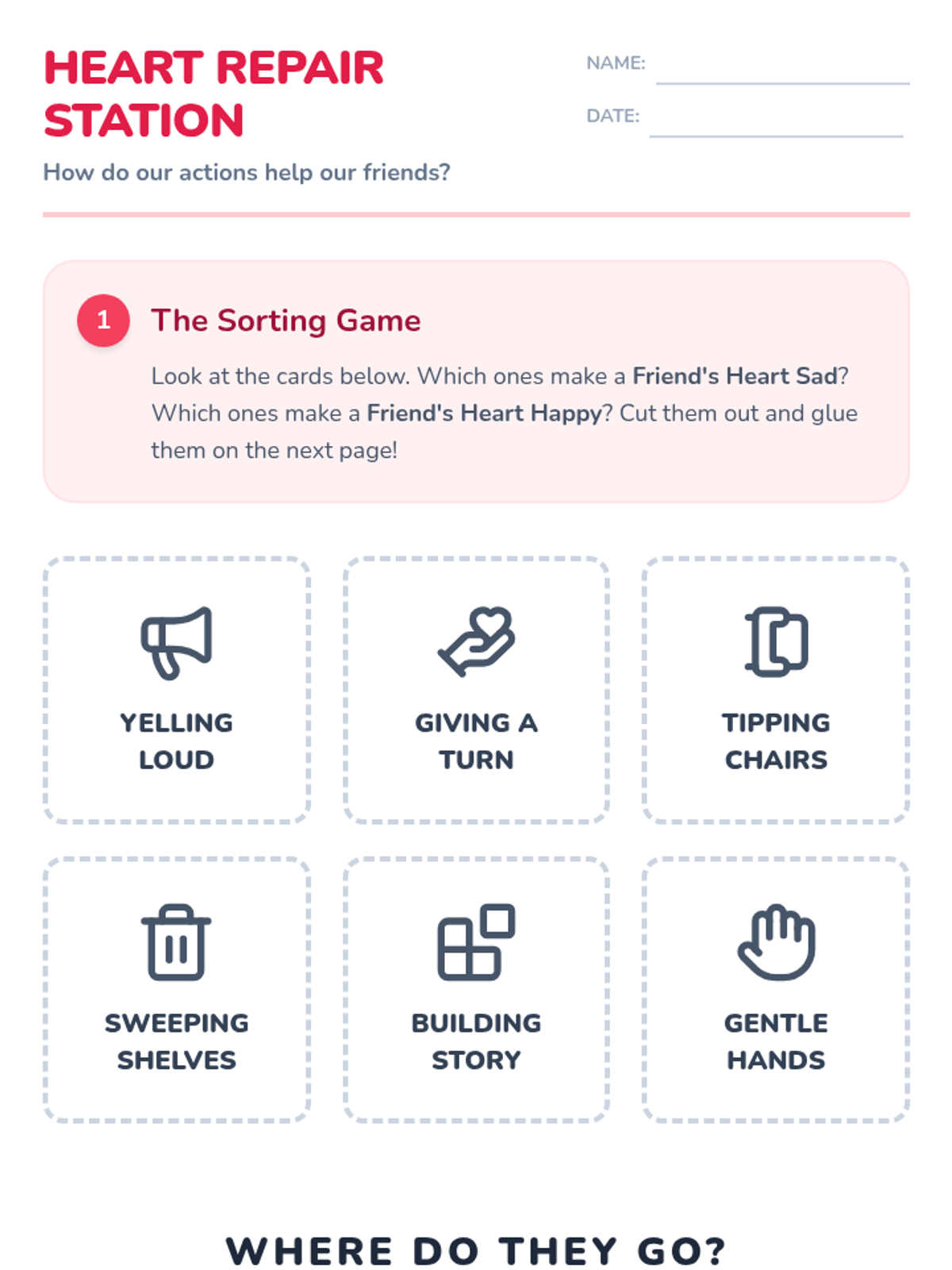
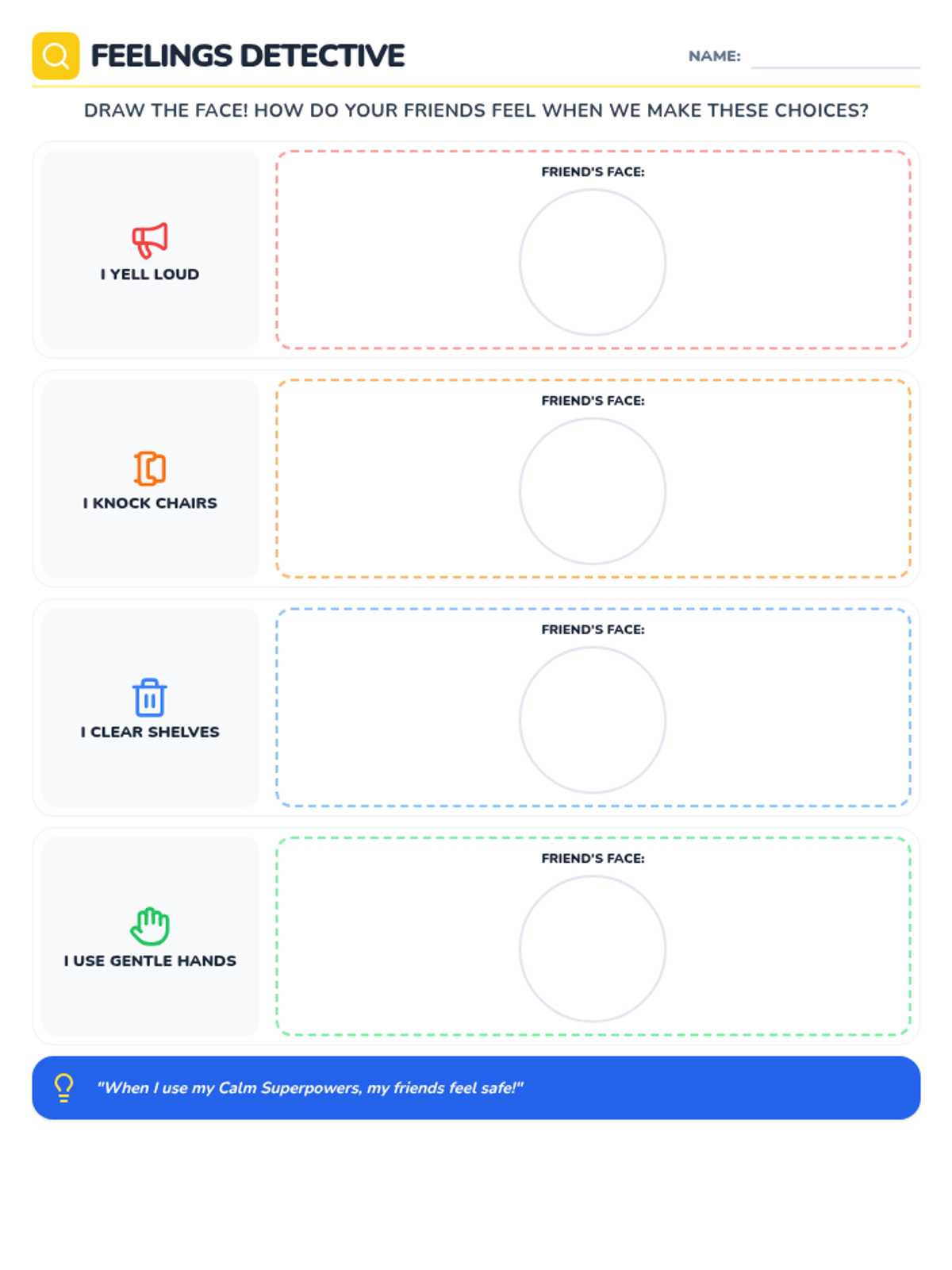
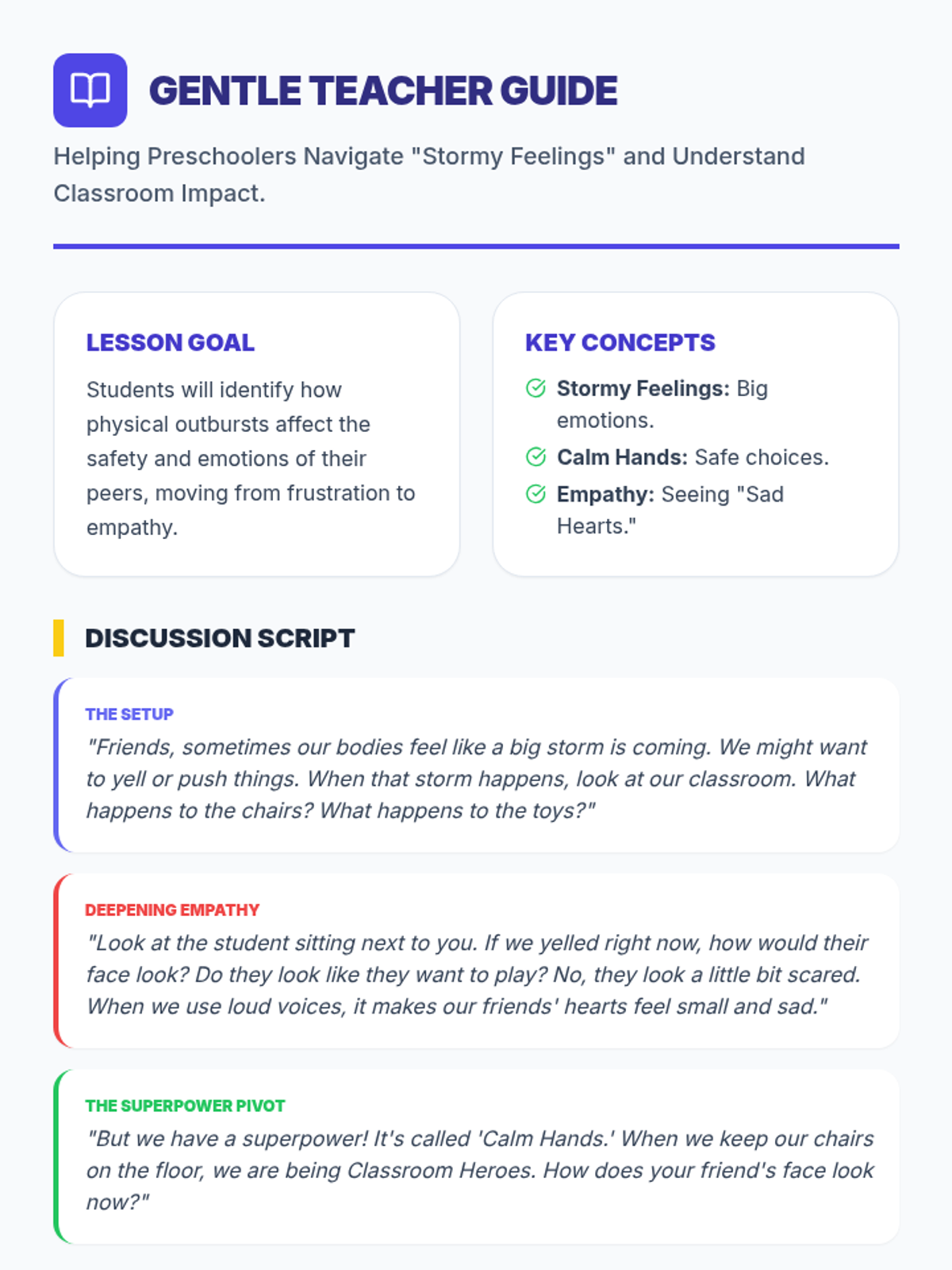
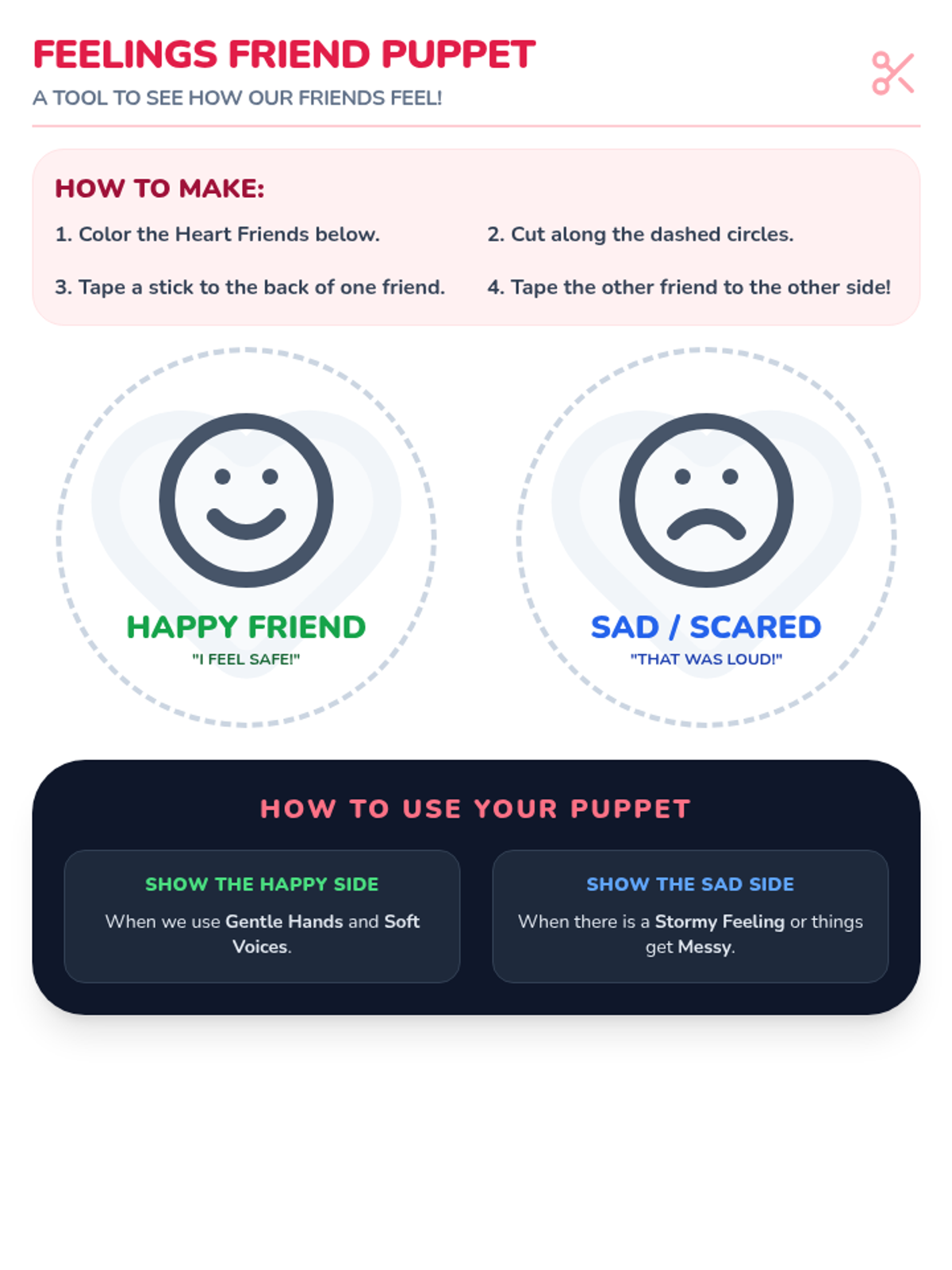
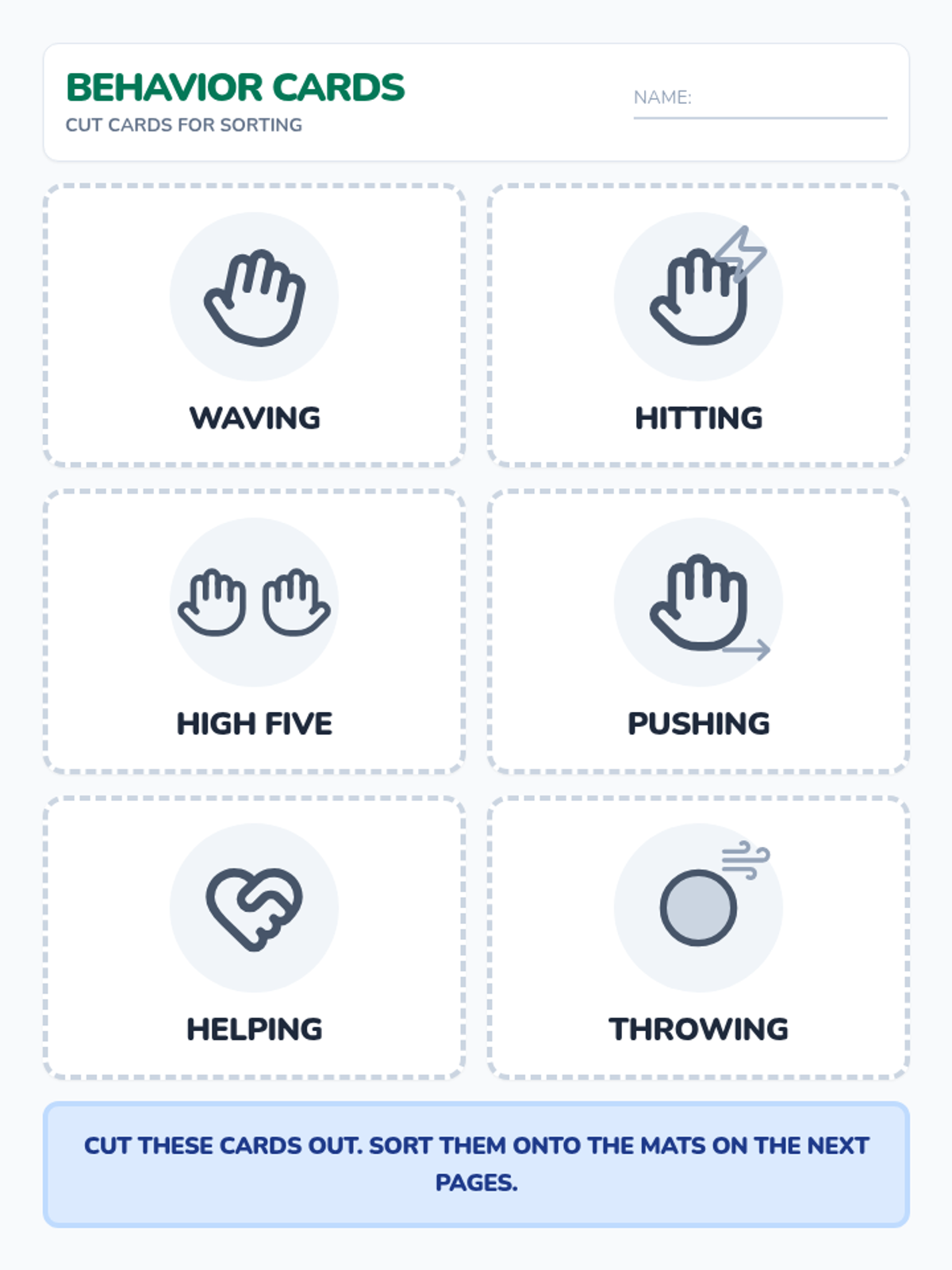
A social-emotional learning lesson designed for preschoolers to understand the impact of physical outbursts (knocking over chairs, clearing shelves, yelling) on their friends' feelings and how to practice 'Calm Hands' instead.
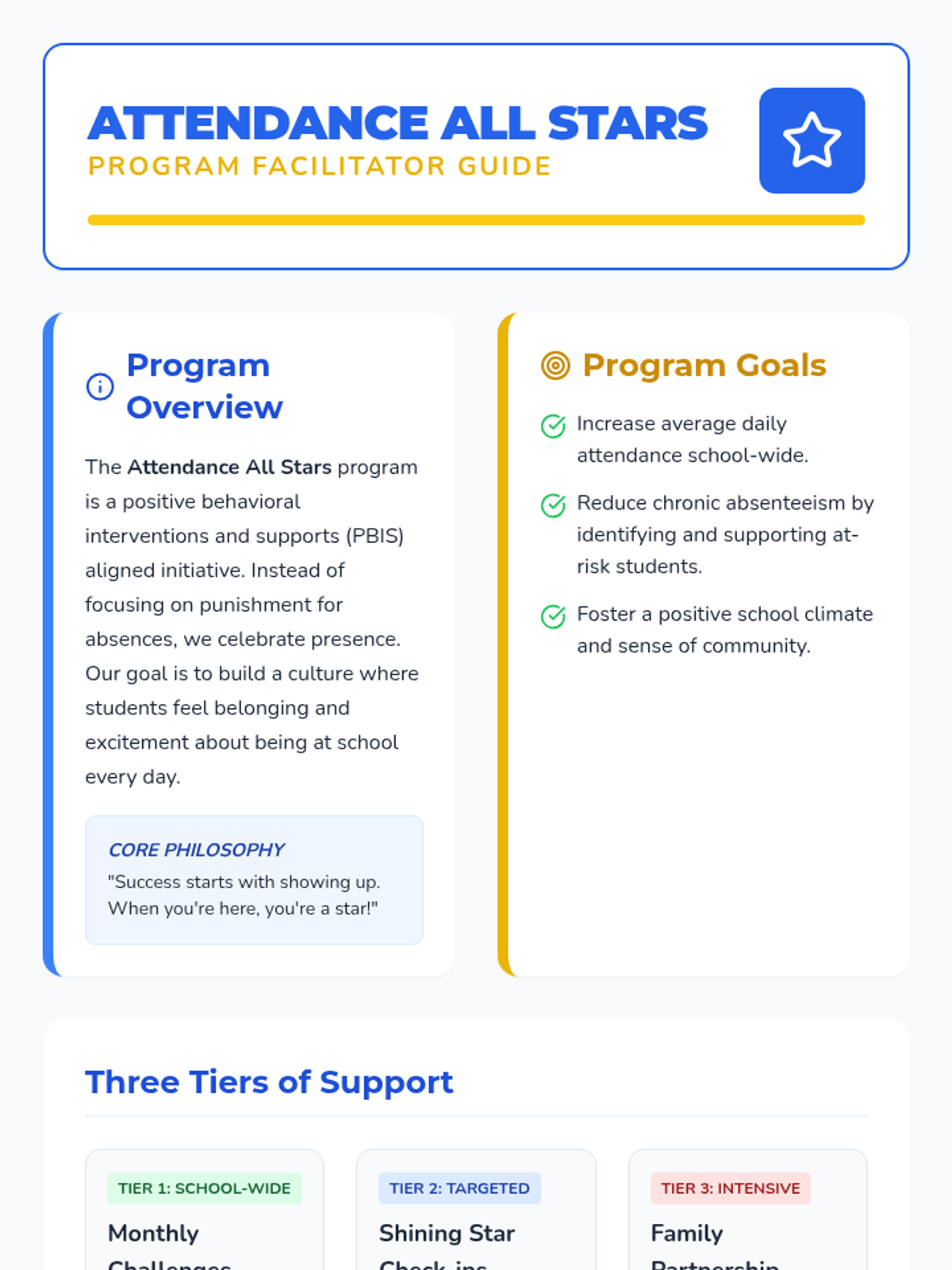
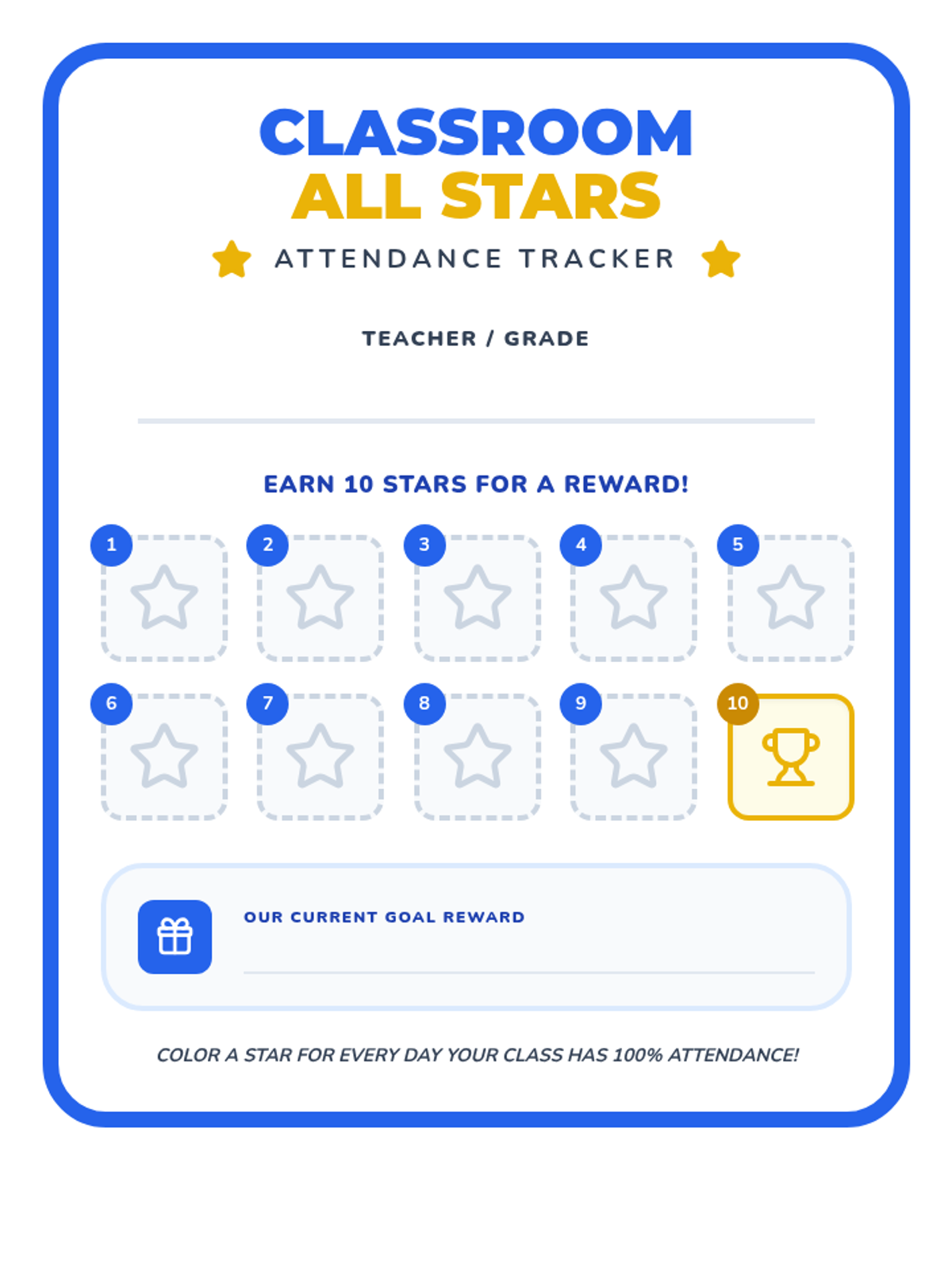
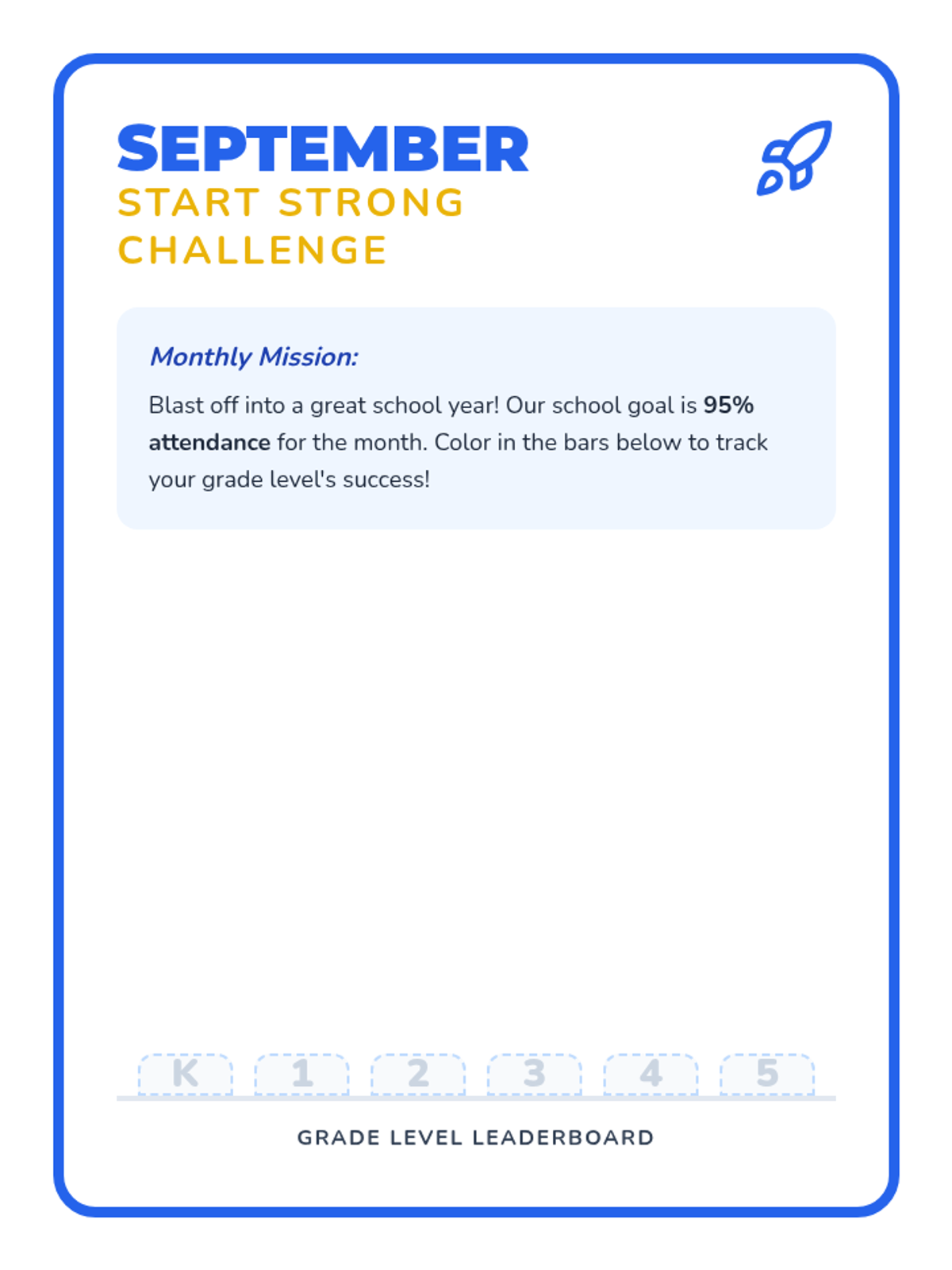
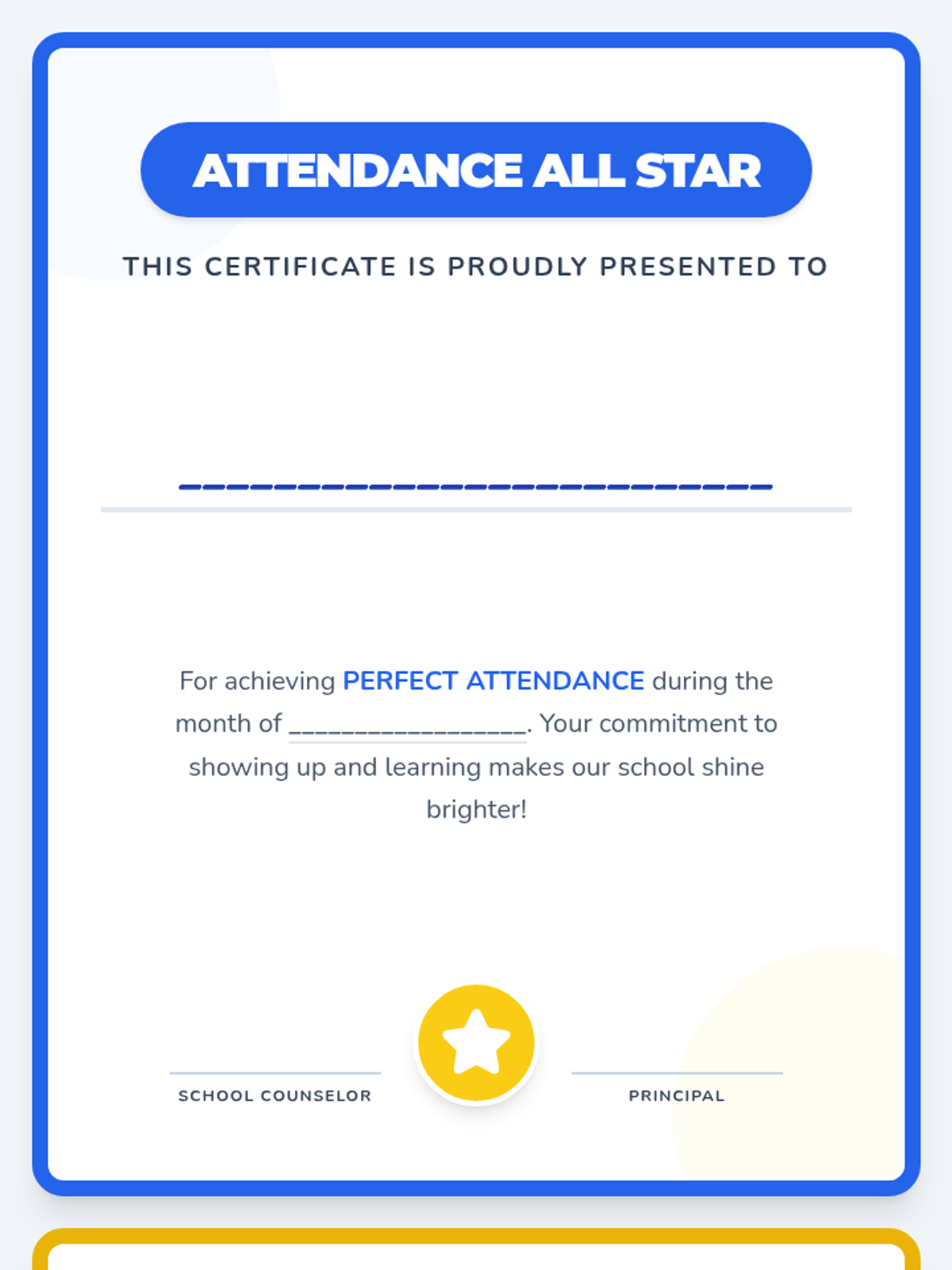
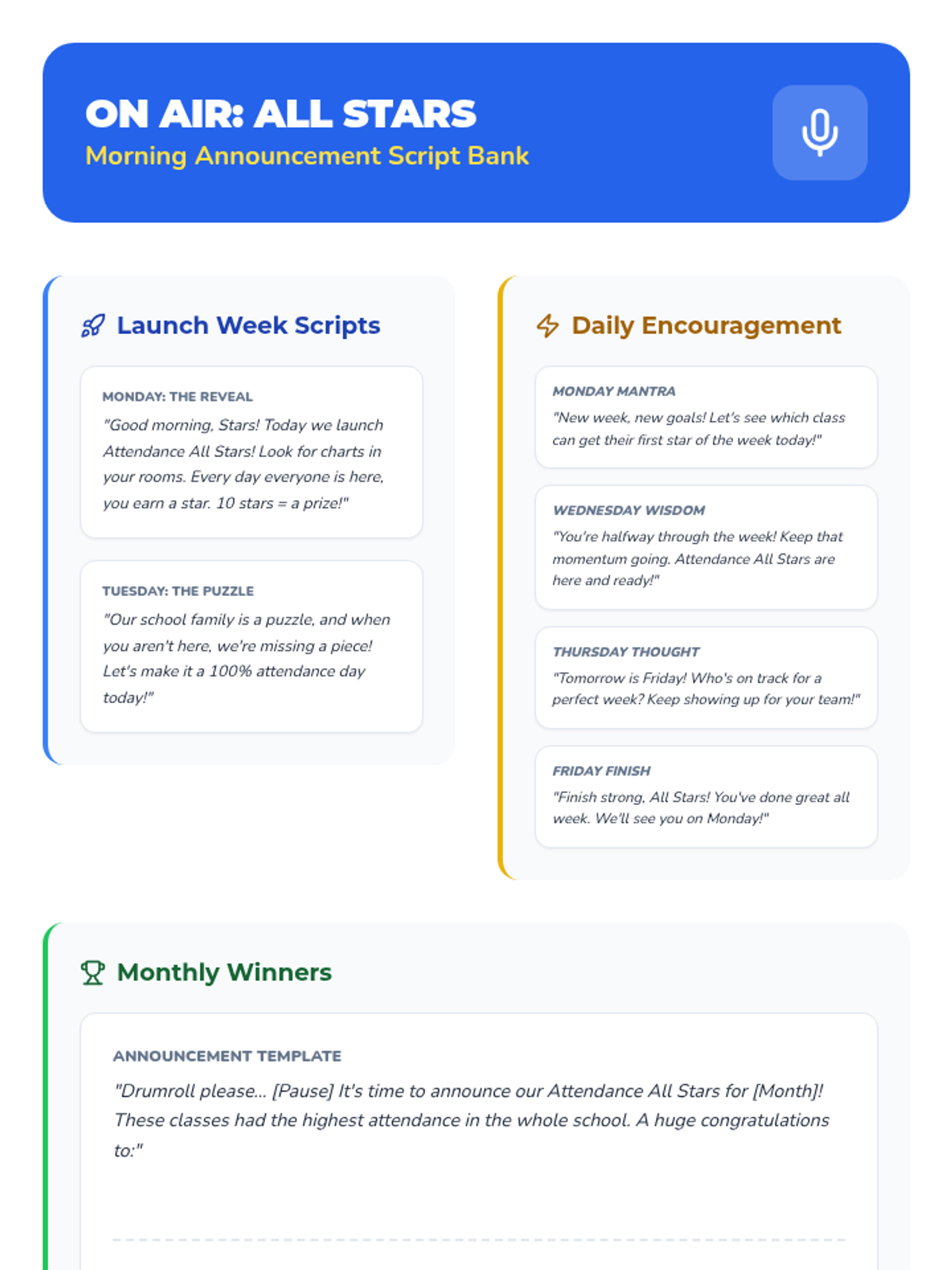
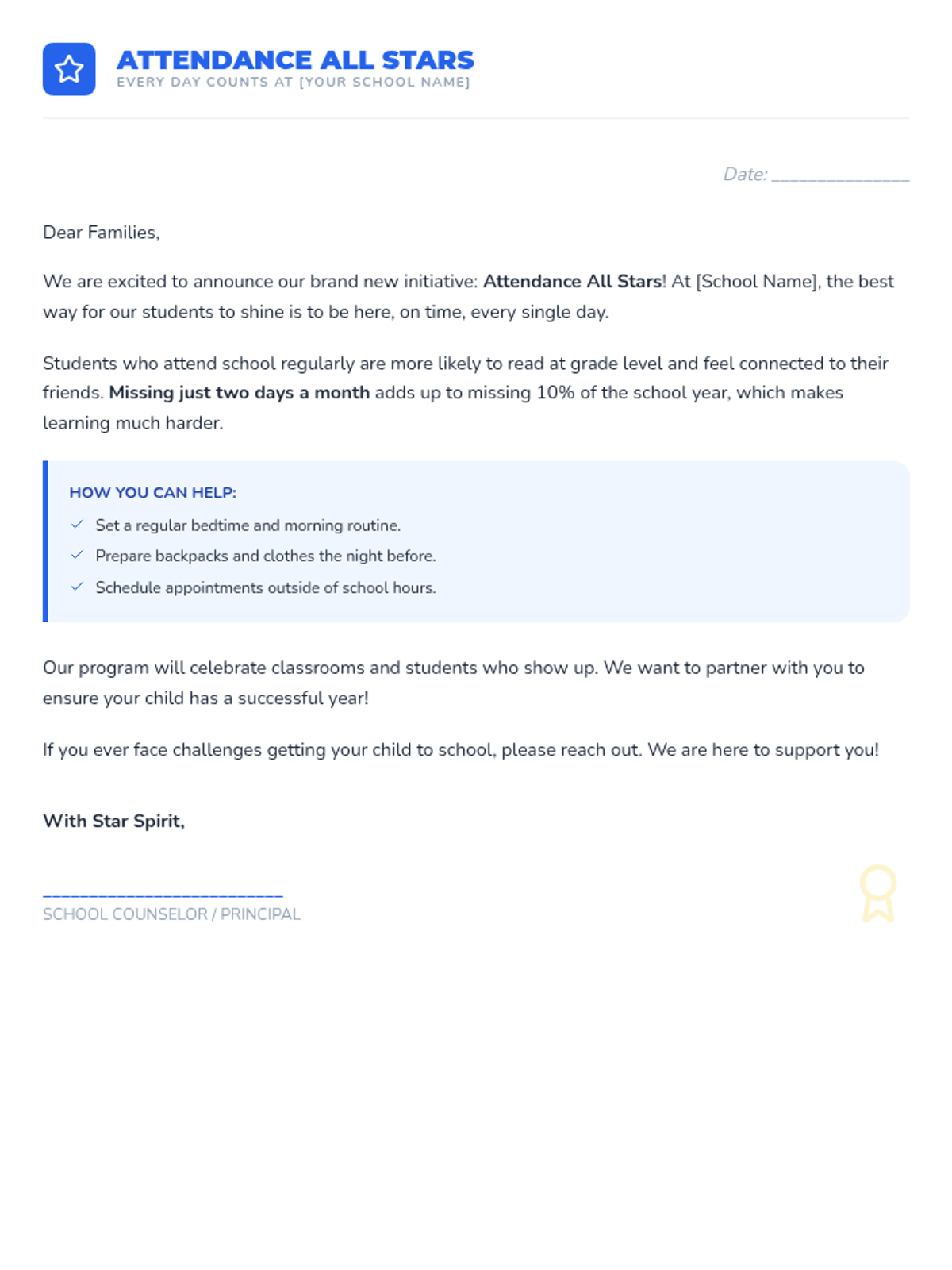
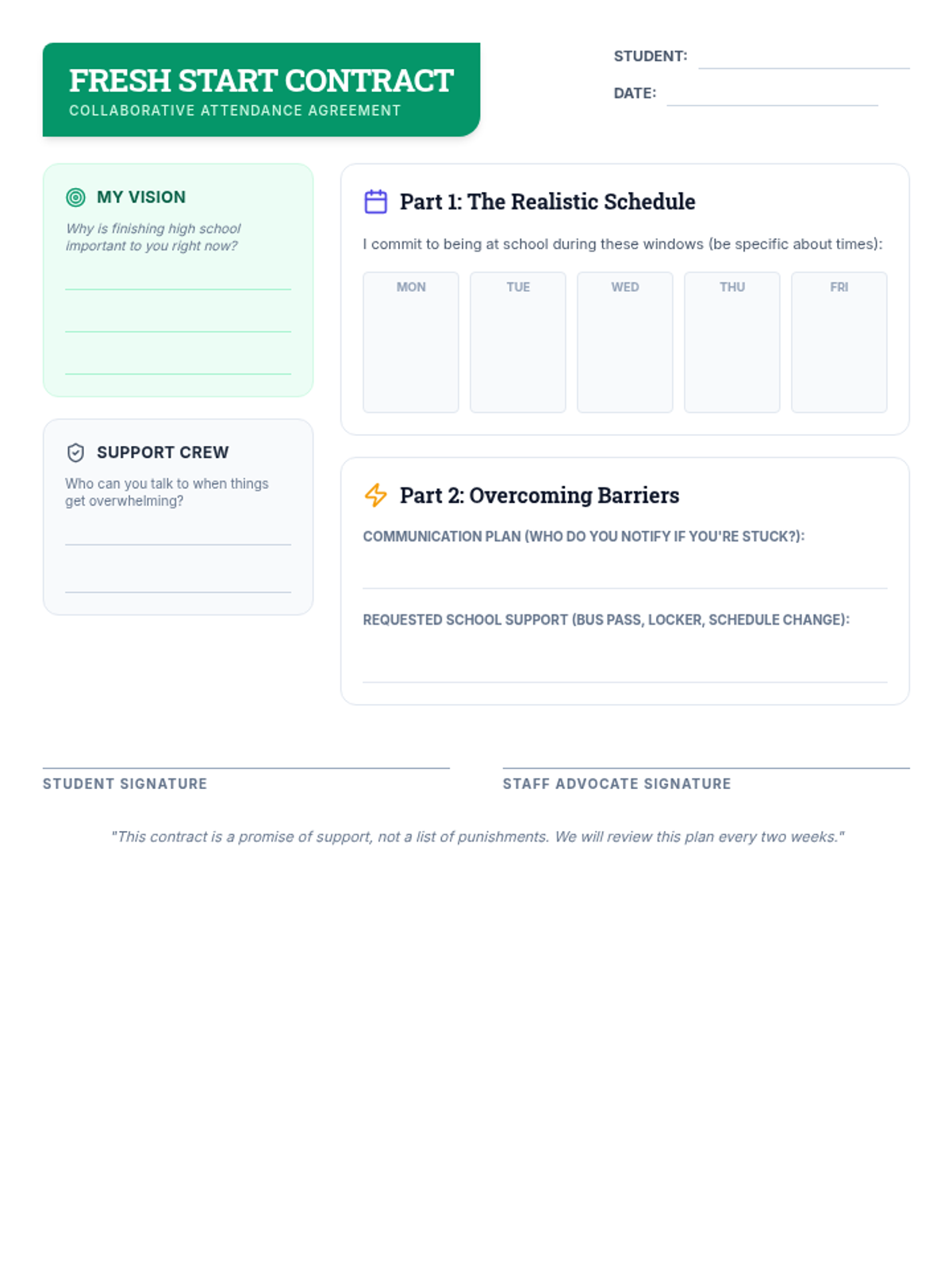
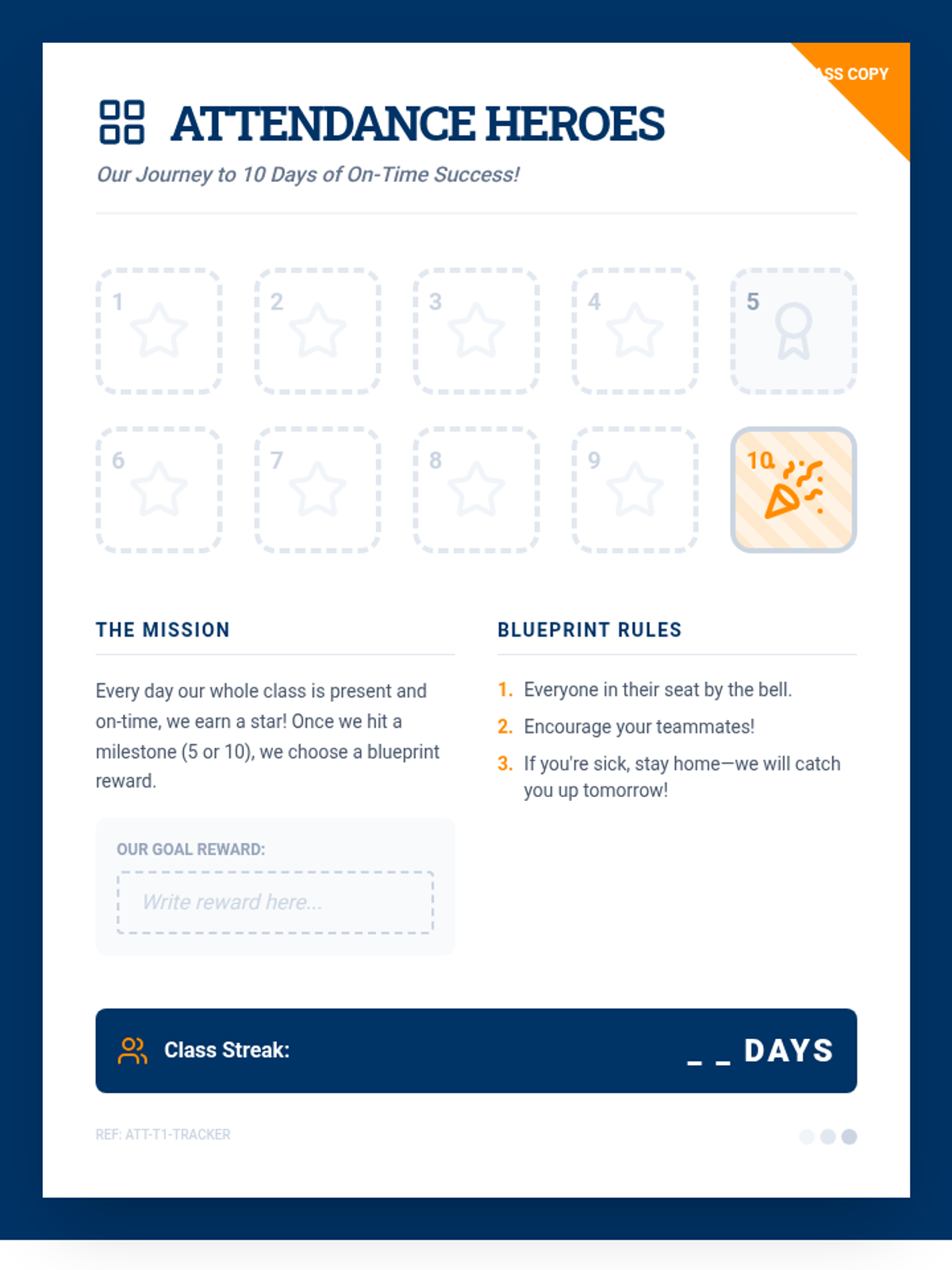
A comprehensive toolkit for elementary school counselors to implement a PBIS-aligned attendance incentive program. Includes everything needed to launch, track, and celebrate consistent school attendance throughout the year.
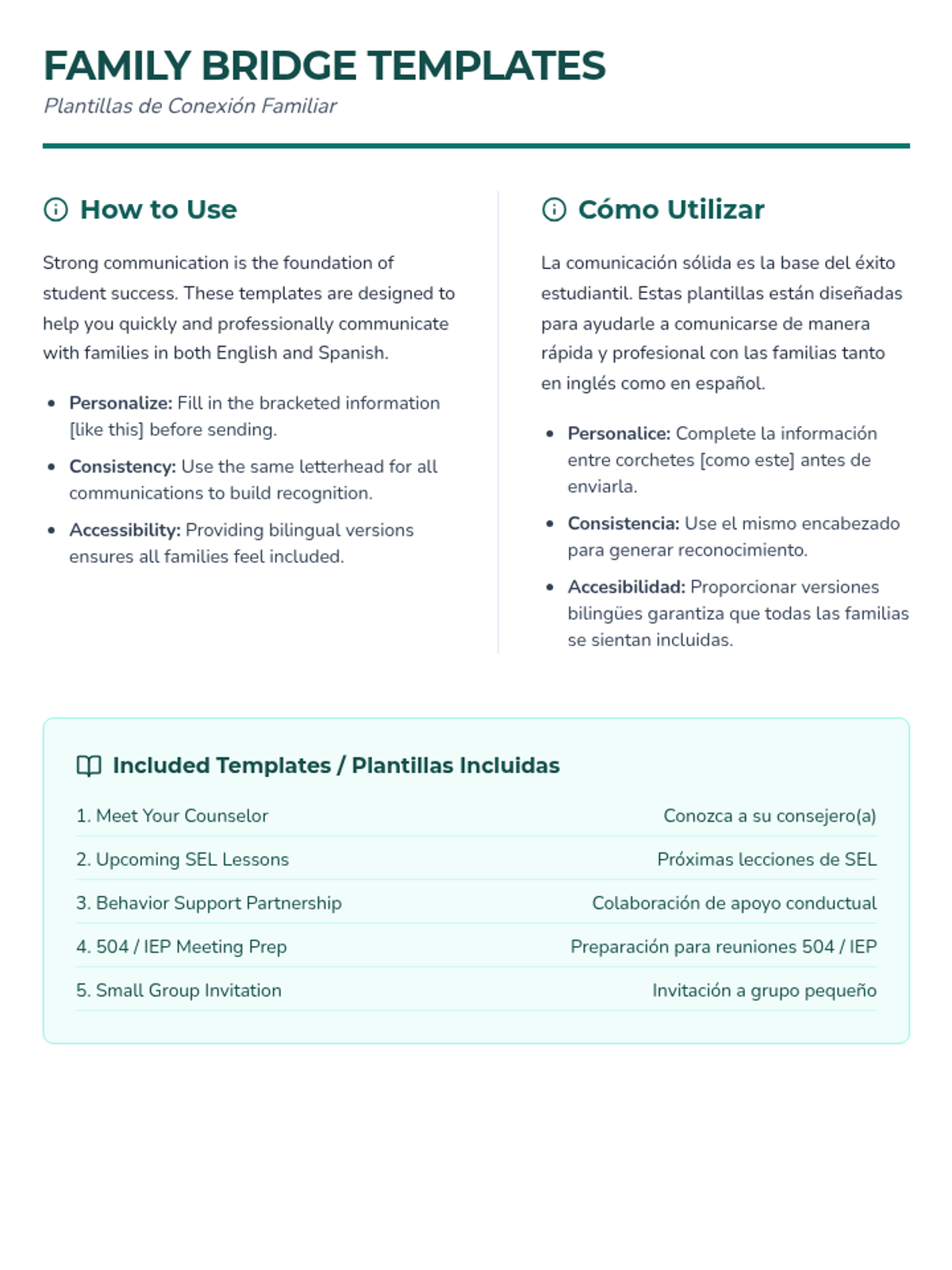
A collection of bilingual (English/Spanish) communication templates designed for elementary school counselors to foster strong home-school partnerships regarding SEL, behavior support, and student meetings.
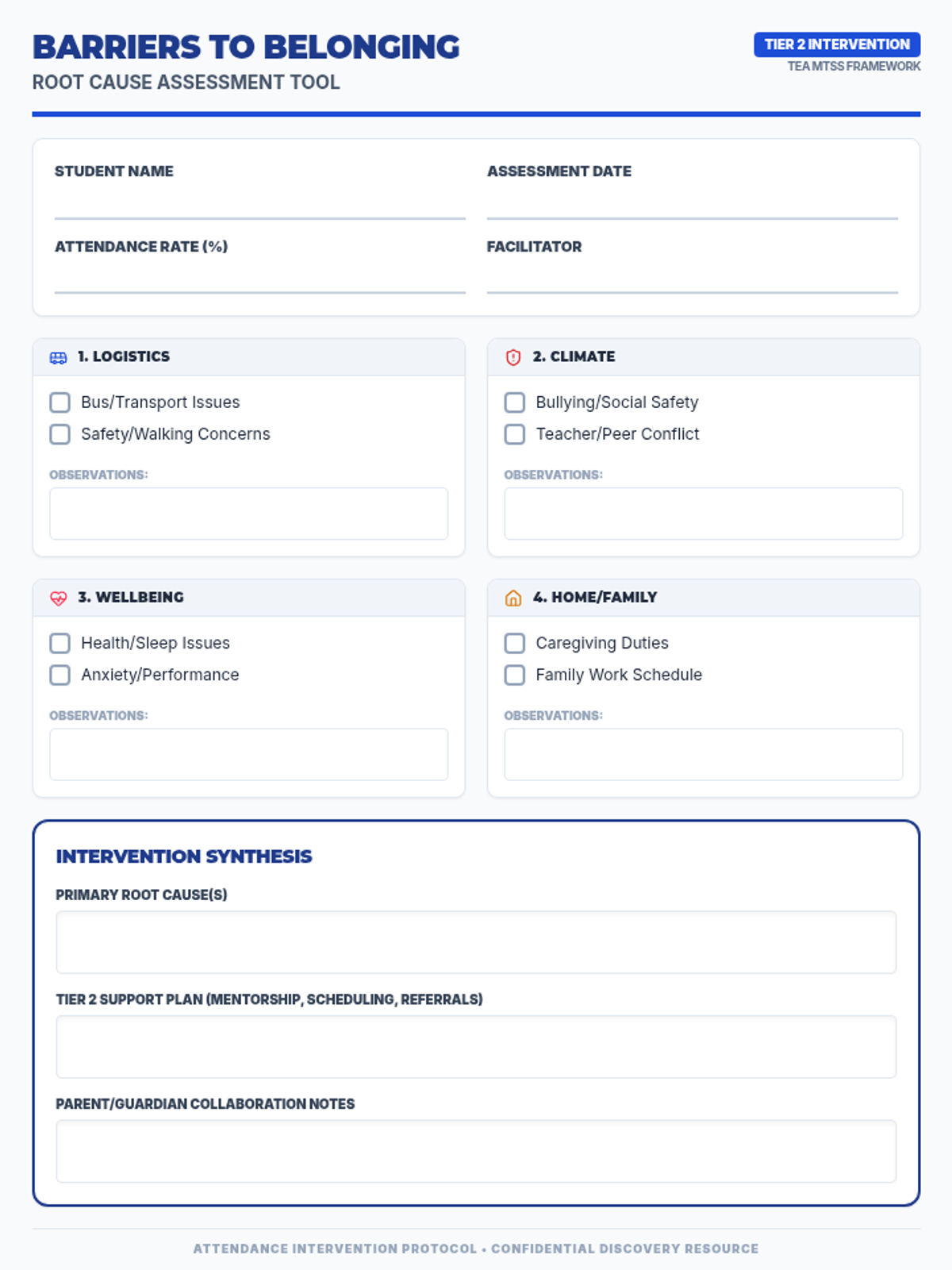
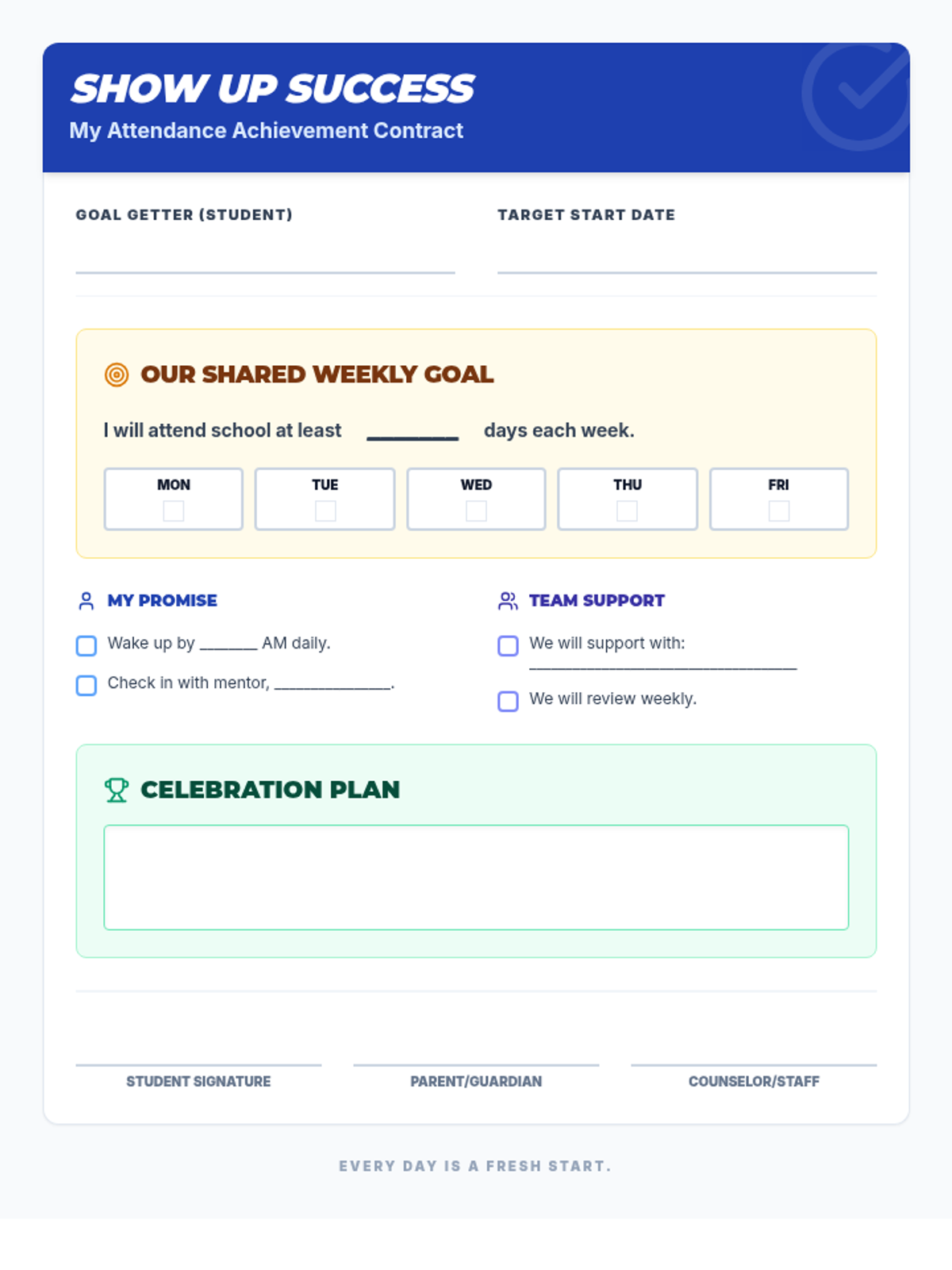
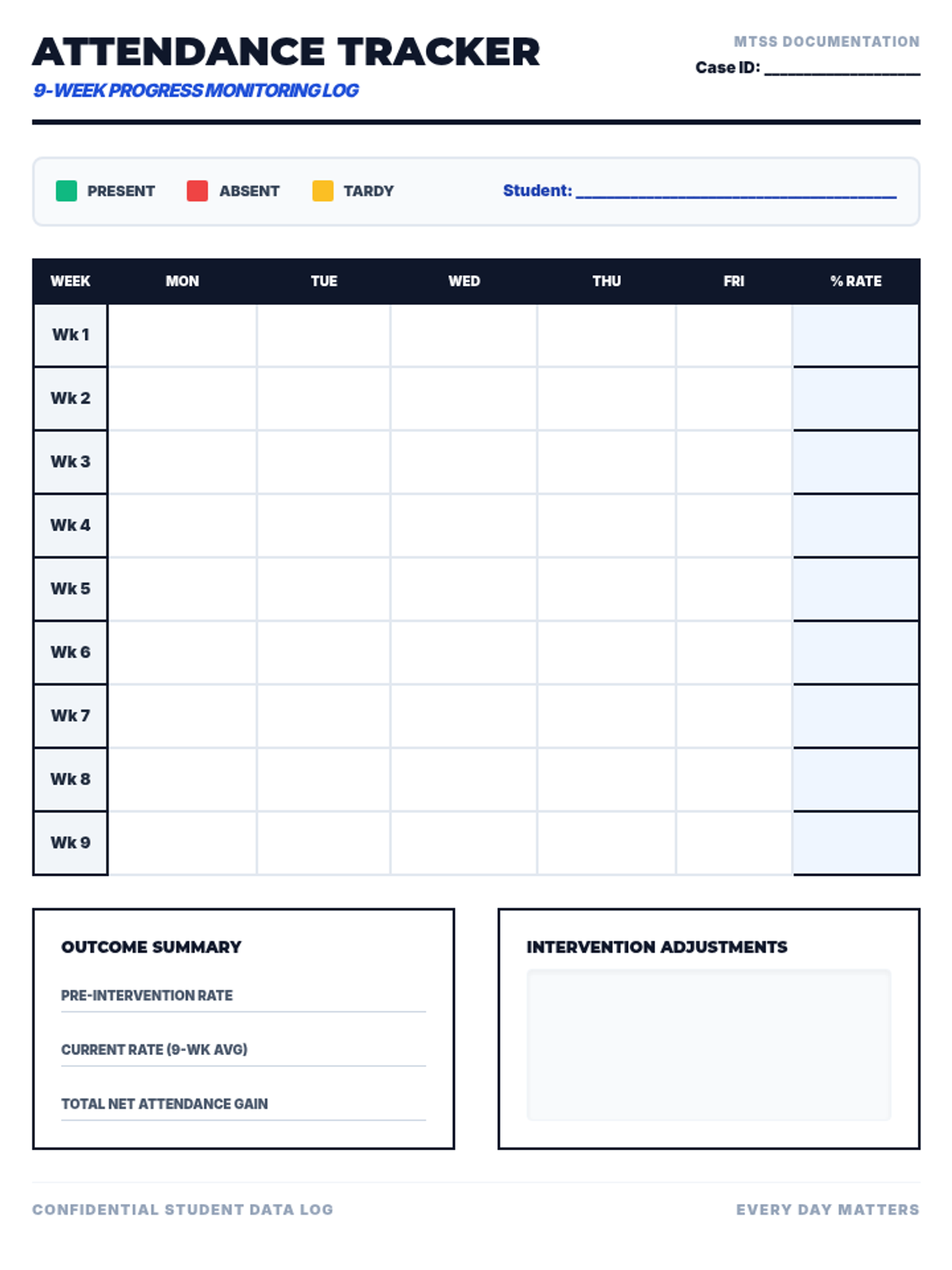
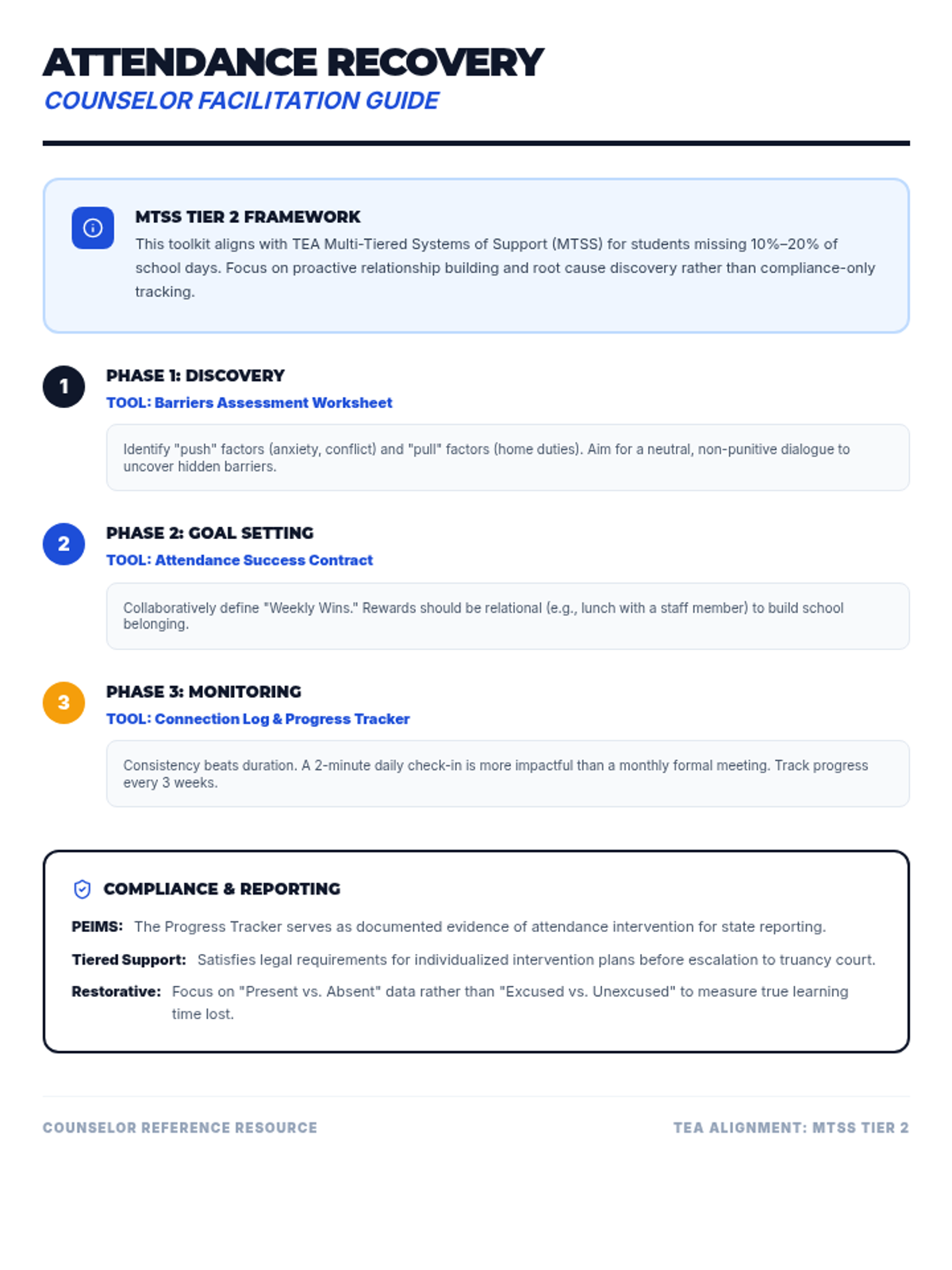
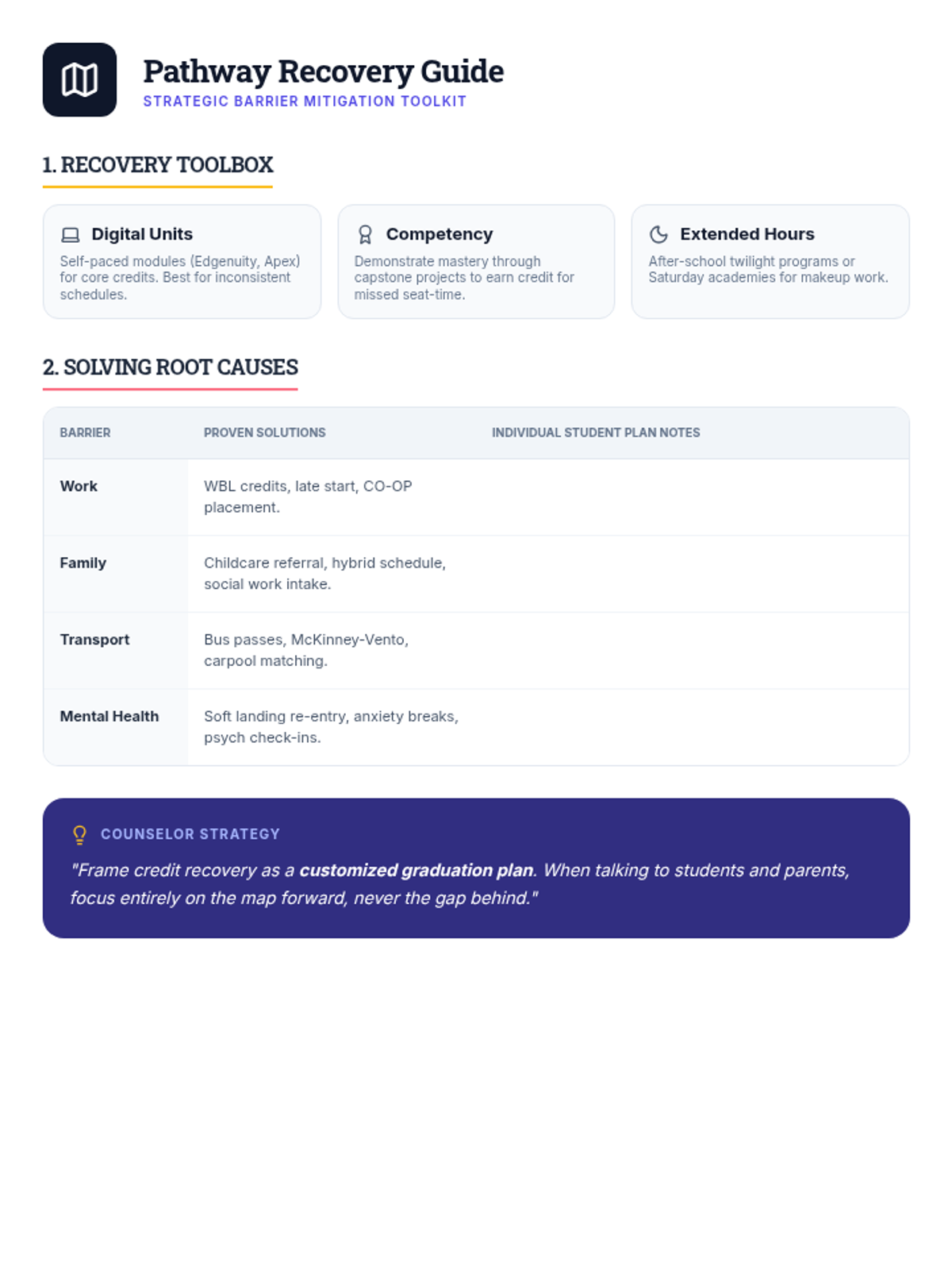
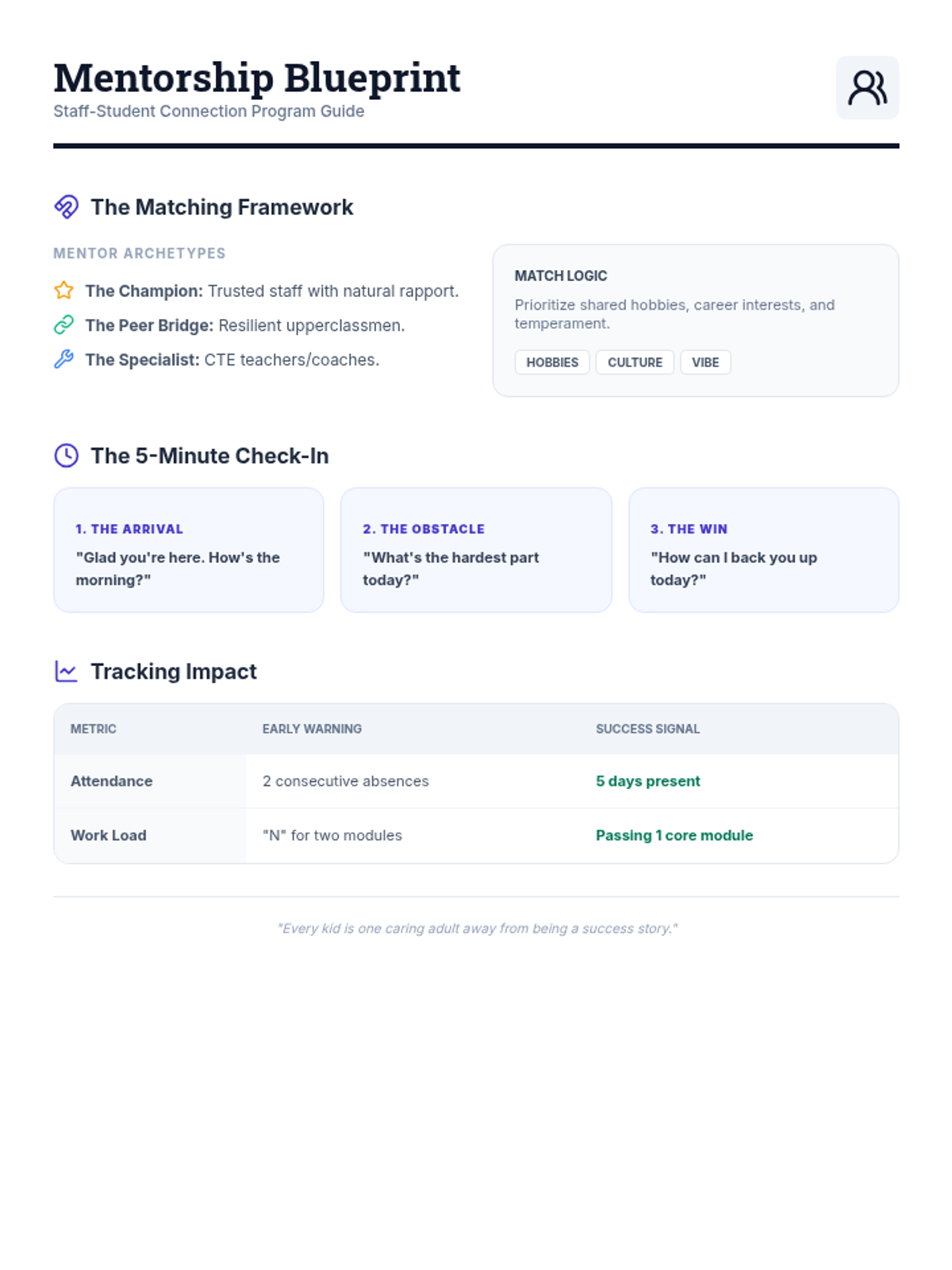
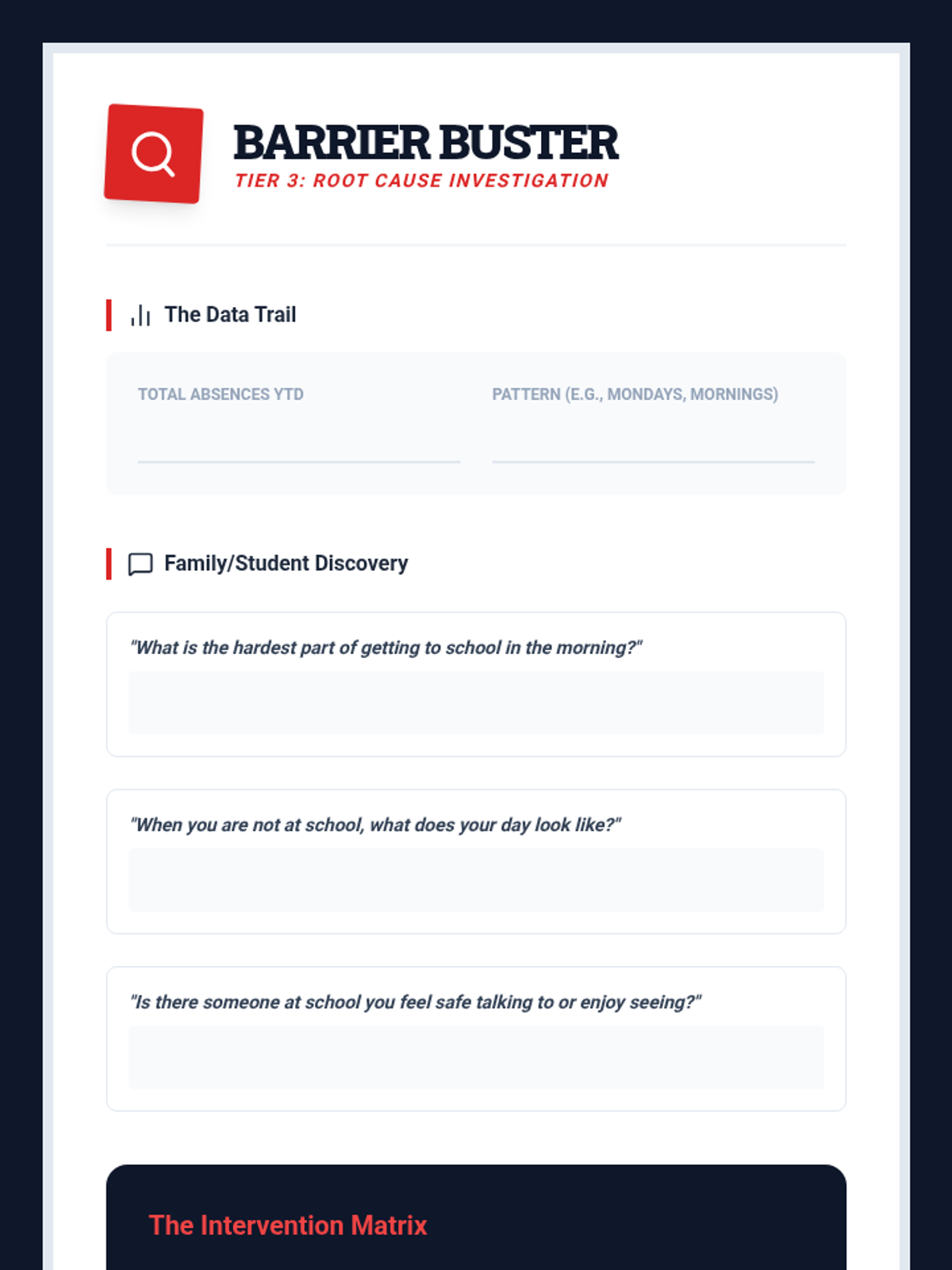
A comprehensive toolkit for middle school counselors to support students with chronic absenteeism through root cause analysis, individualized goal setting, and consistent mentorship.
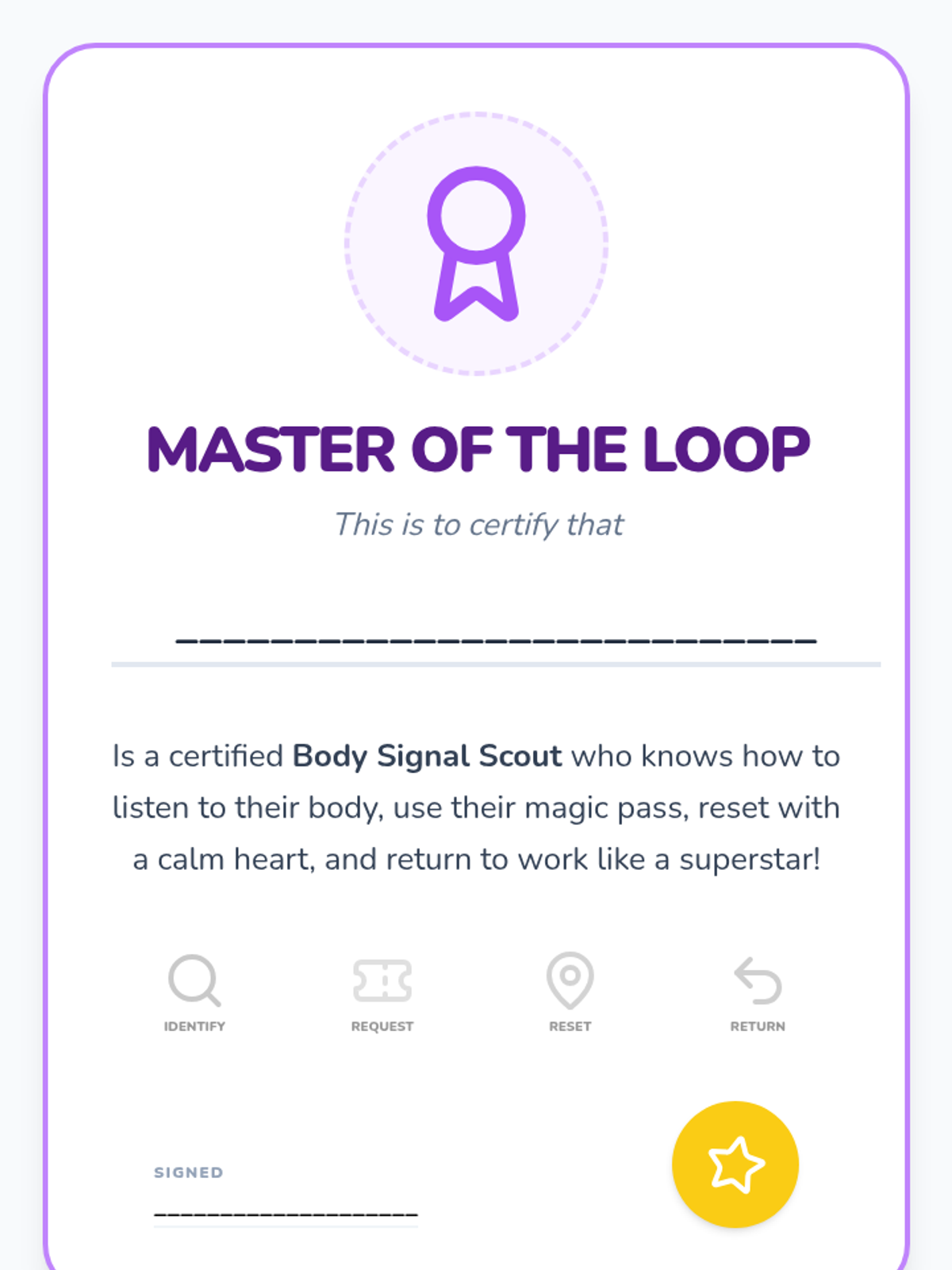
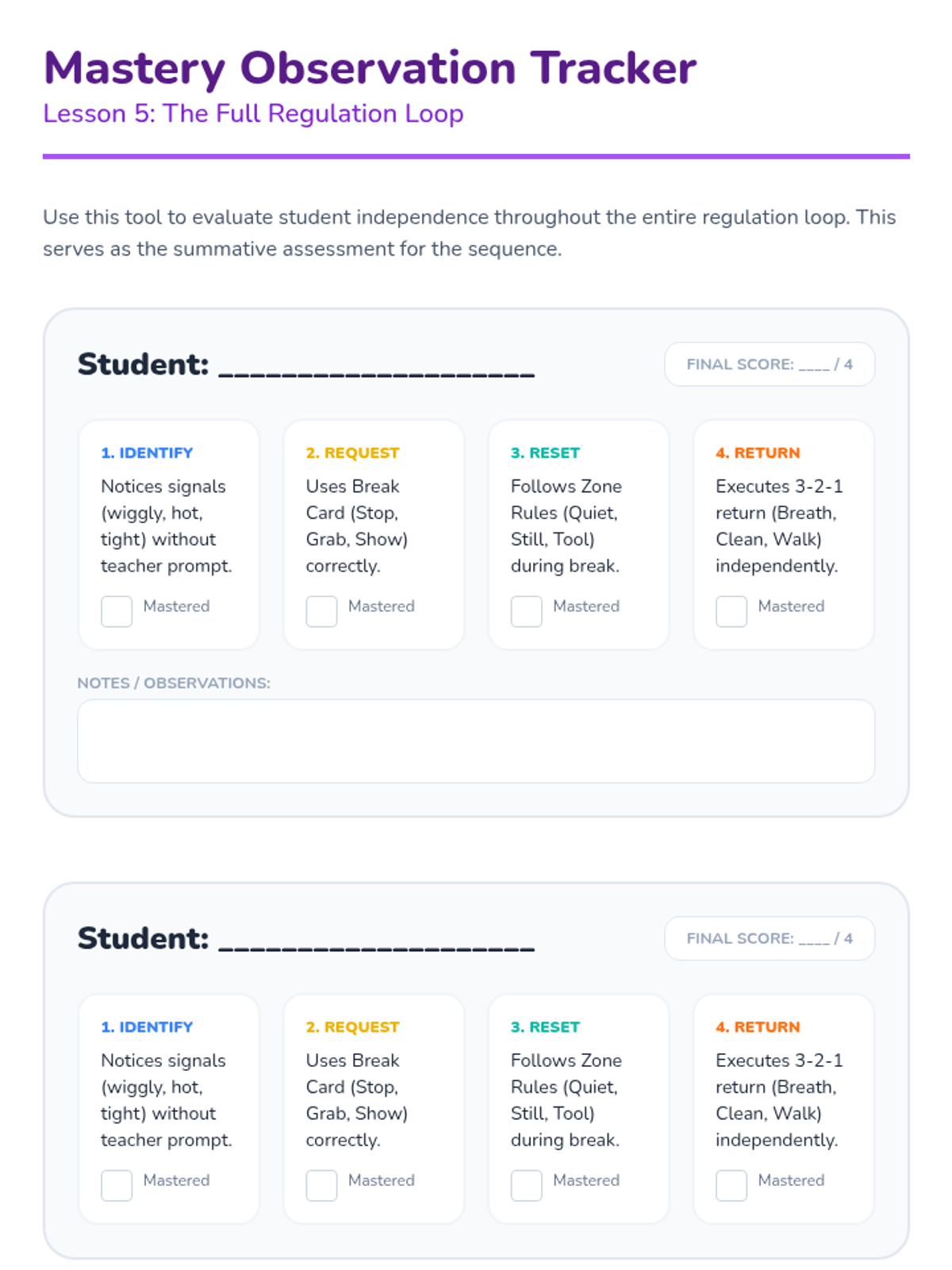
Students demonstrate the complete cycle from identifying a need to returning to work independently.
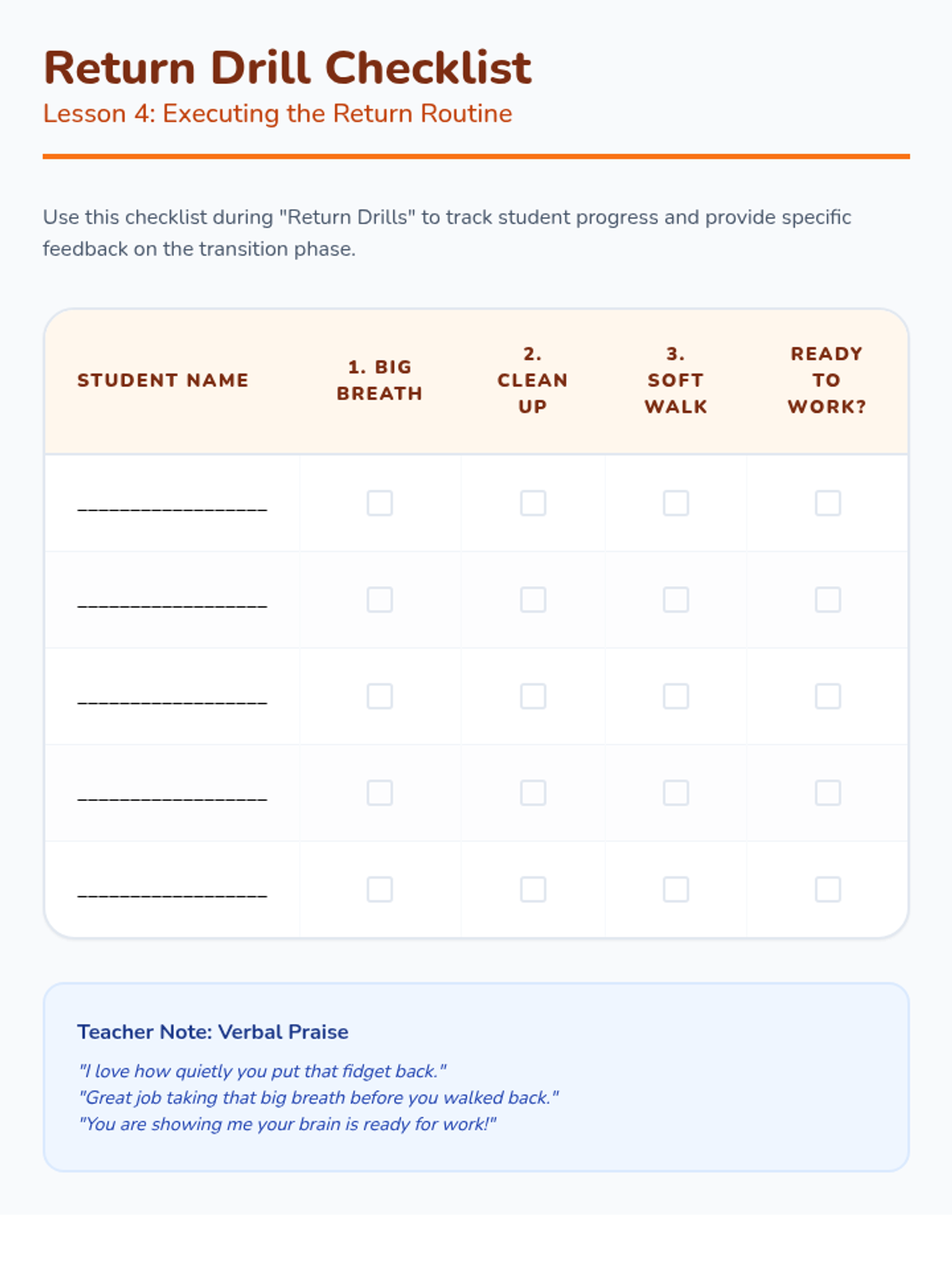
Students practice the routine for ending a break and transitioning back to work smoothly.
Students learn the expectations for the classroom Break Zone, differentiating between 'reset time' and 'play time'.
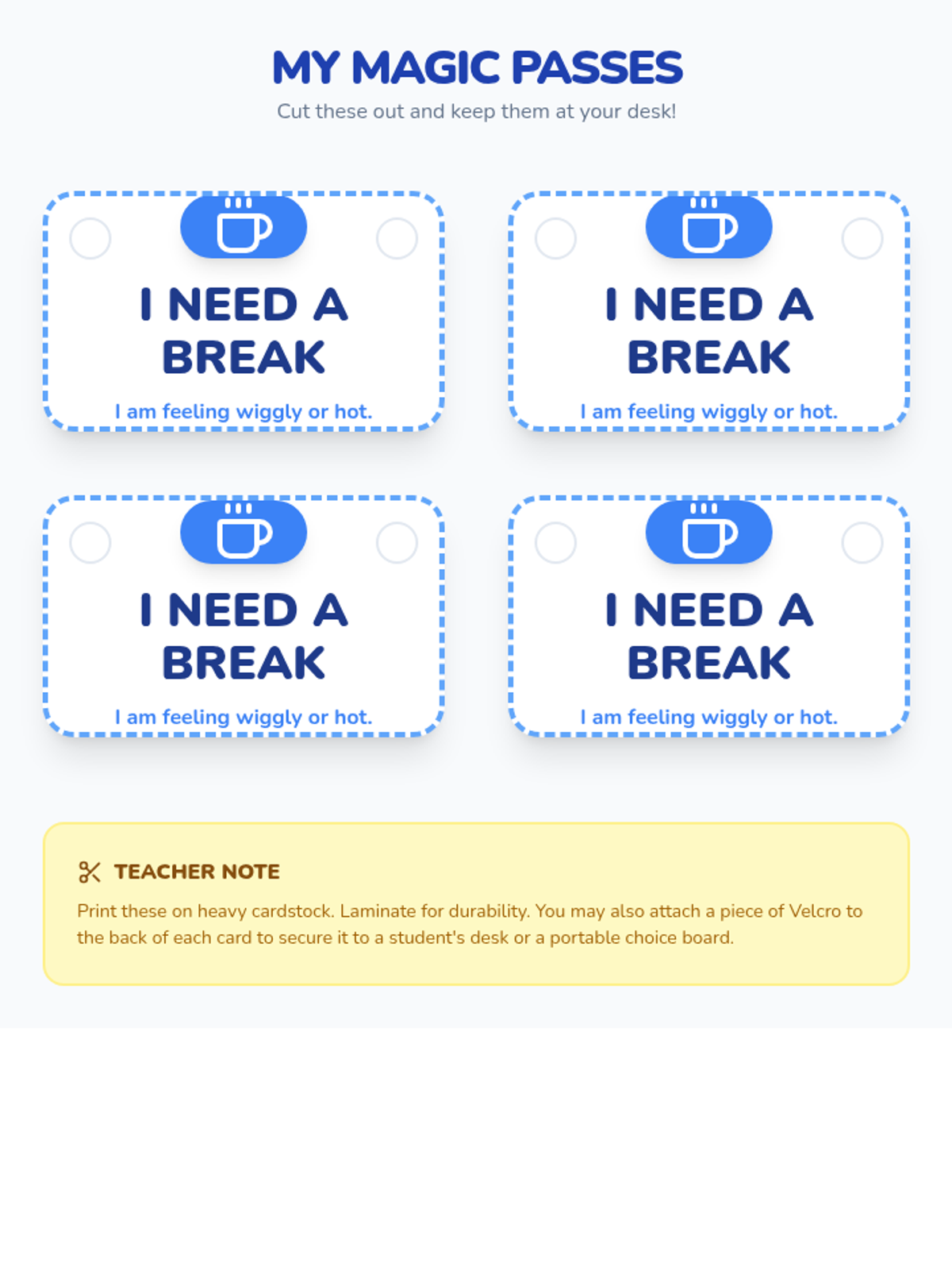
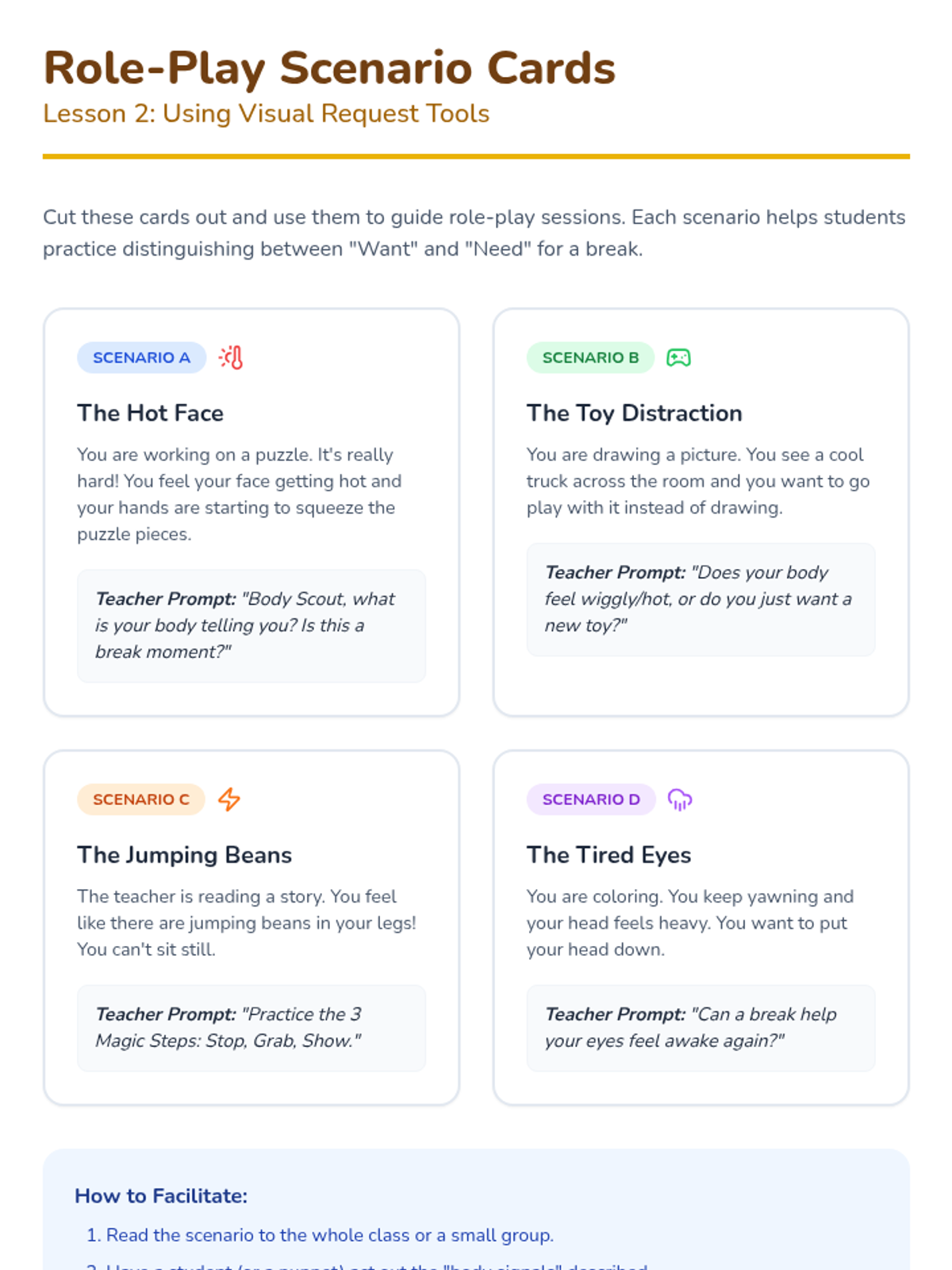
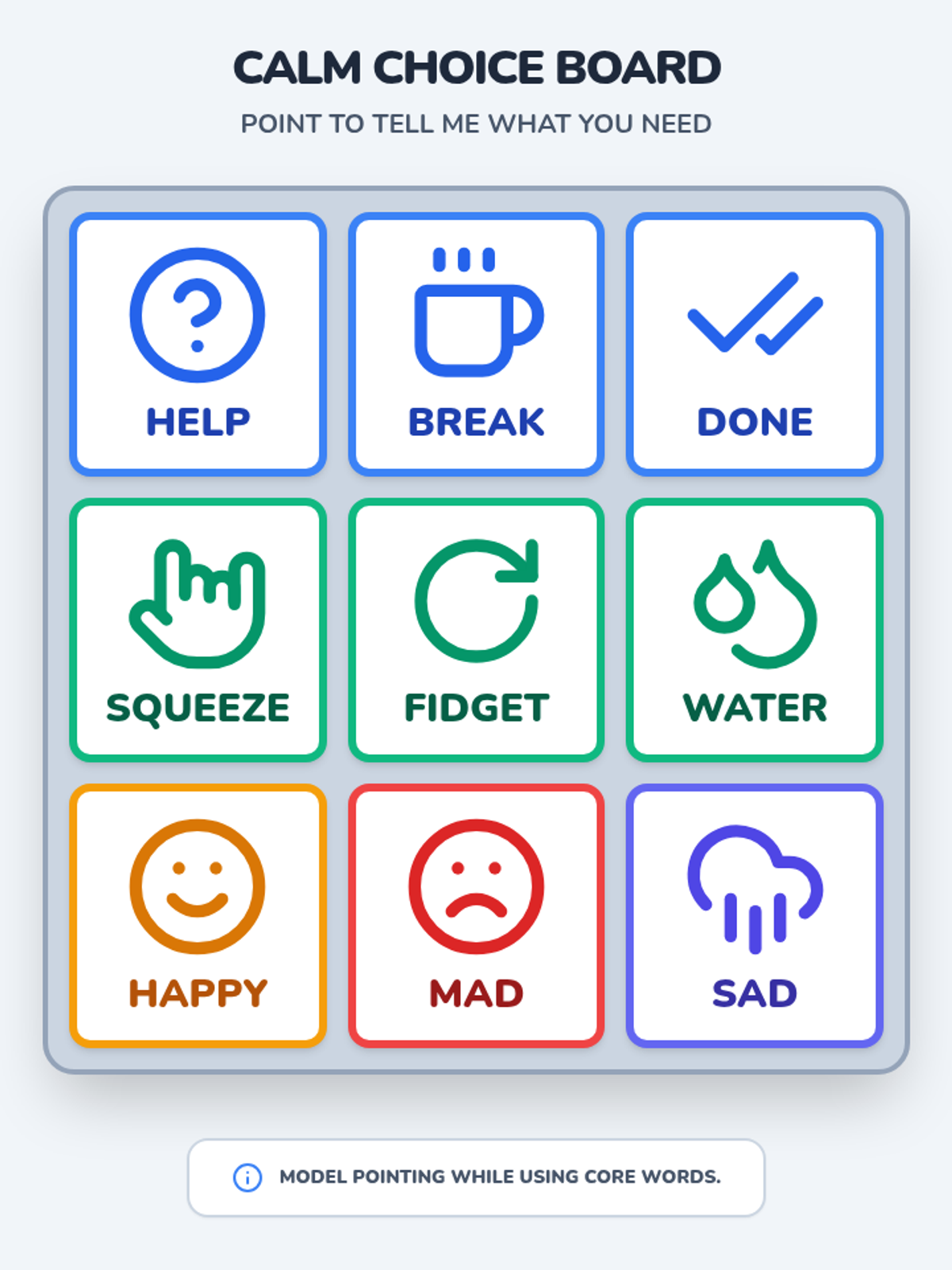
Students learn and practice the 'Stop, Grab, Show' method for non-verbally requesting a break using visual cards.
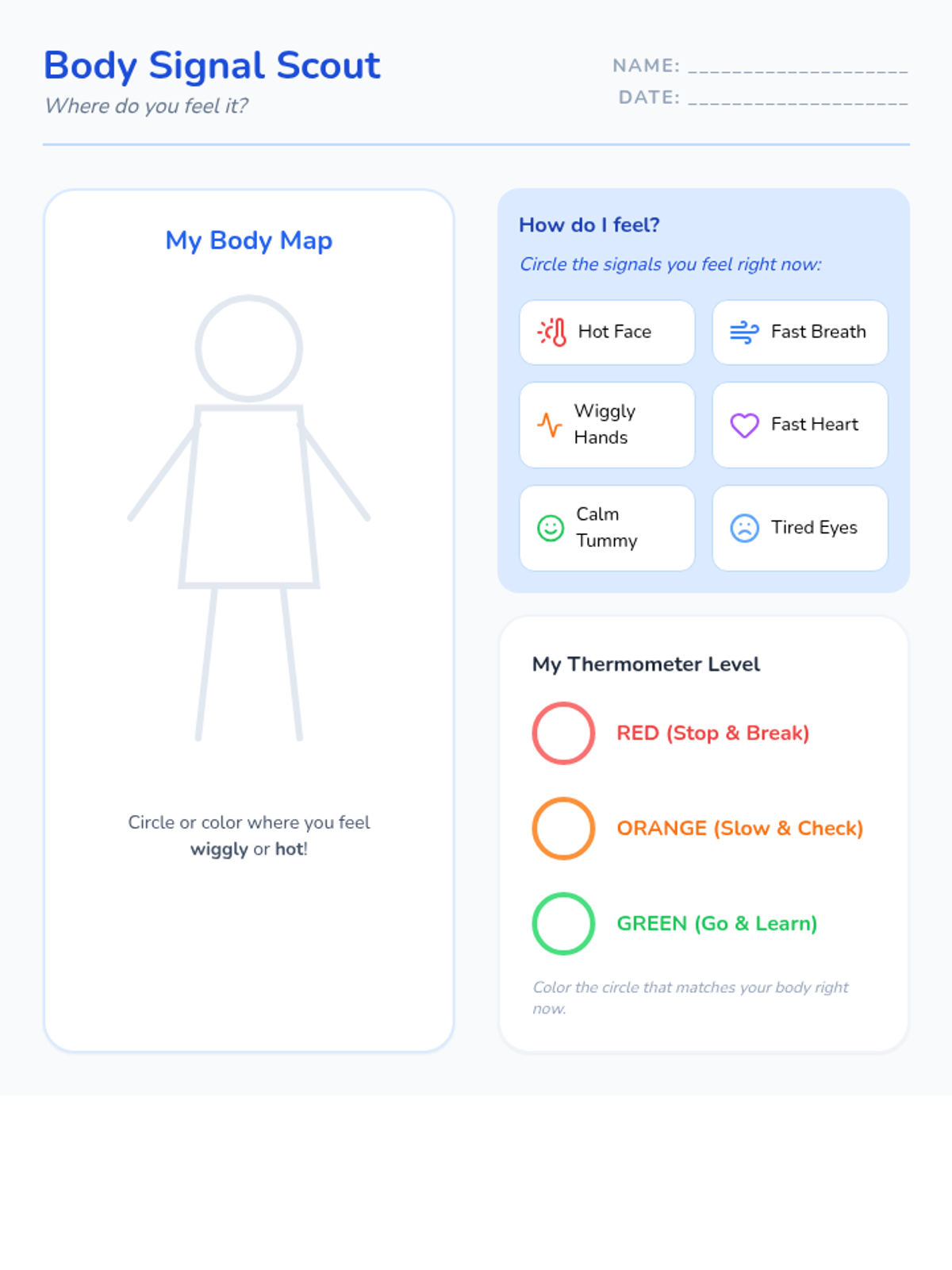
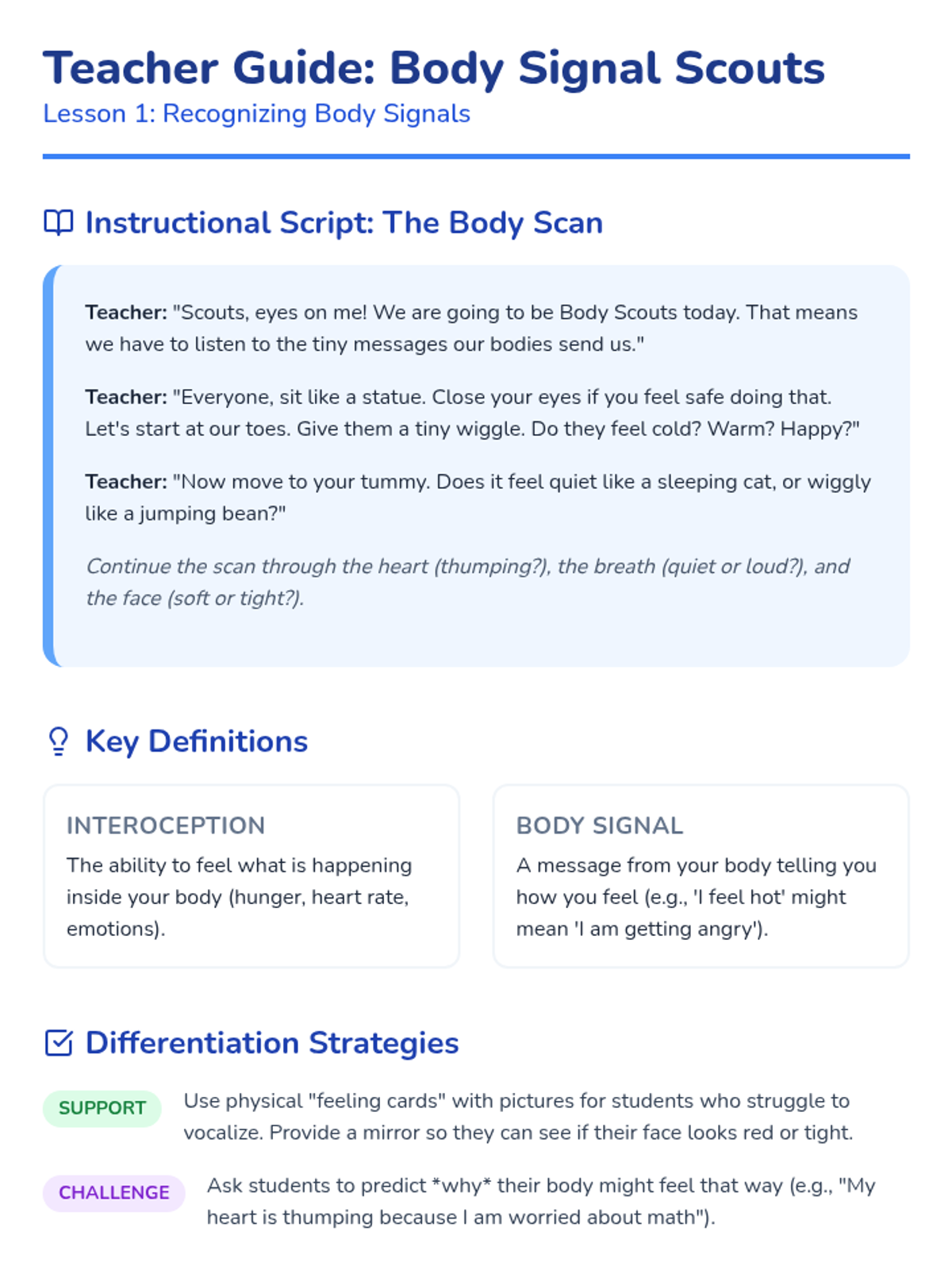
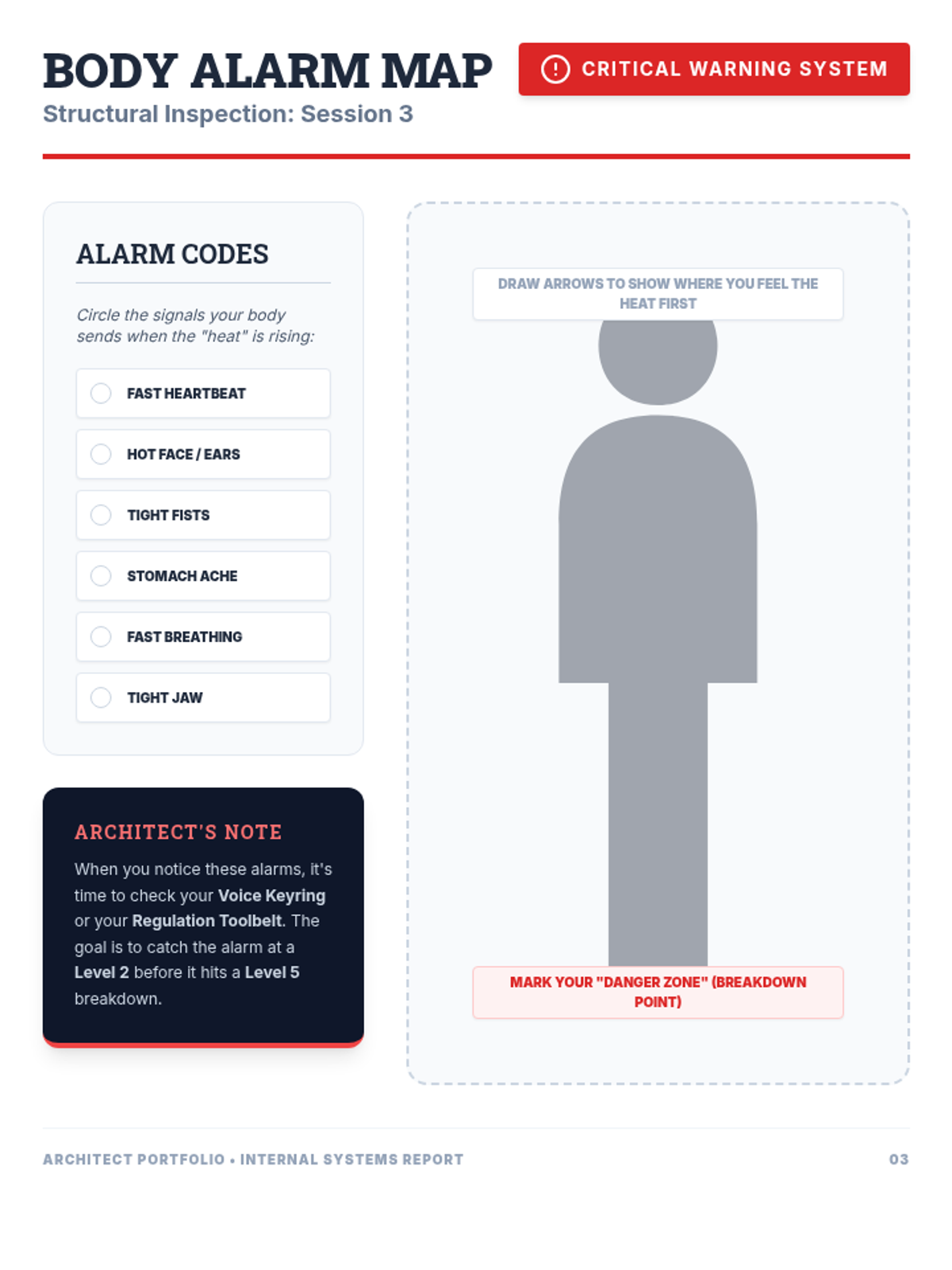
Students identify physical sensations associated with dysregulation using a body scan and create a Body Thermometer visual.
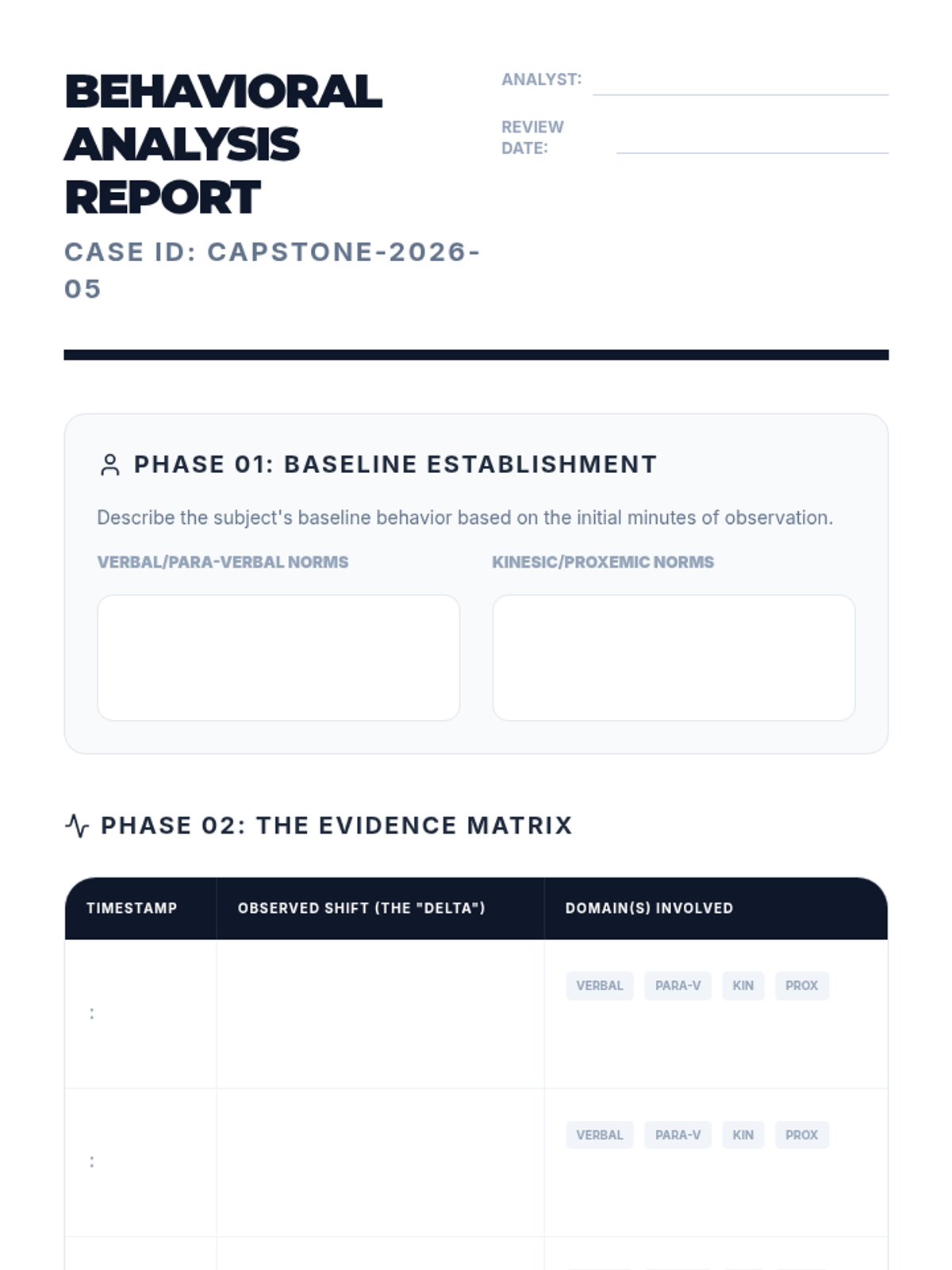
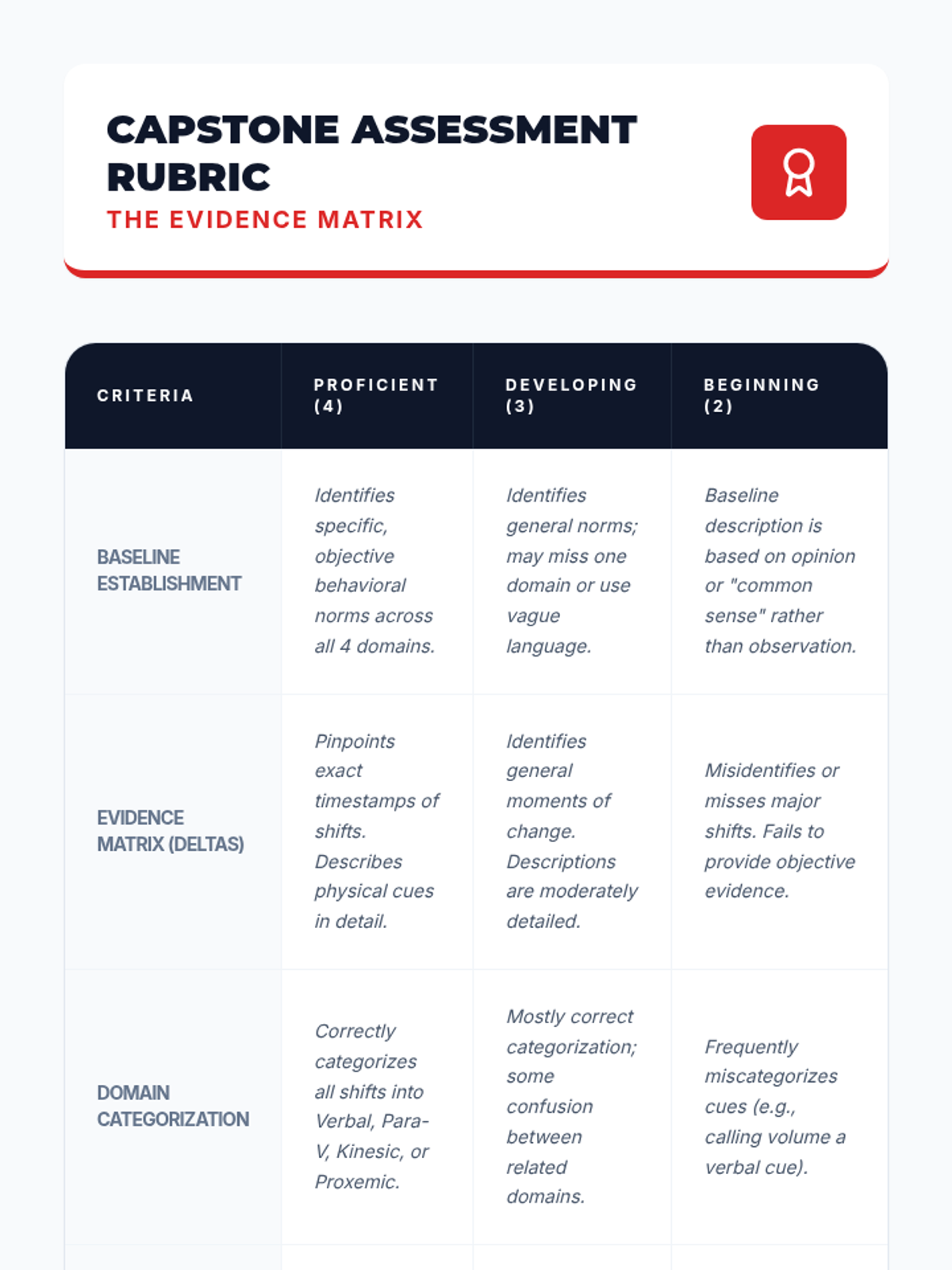
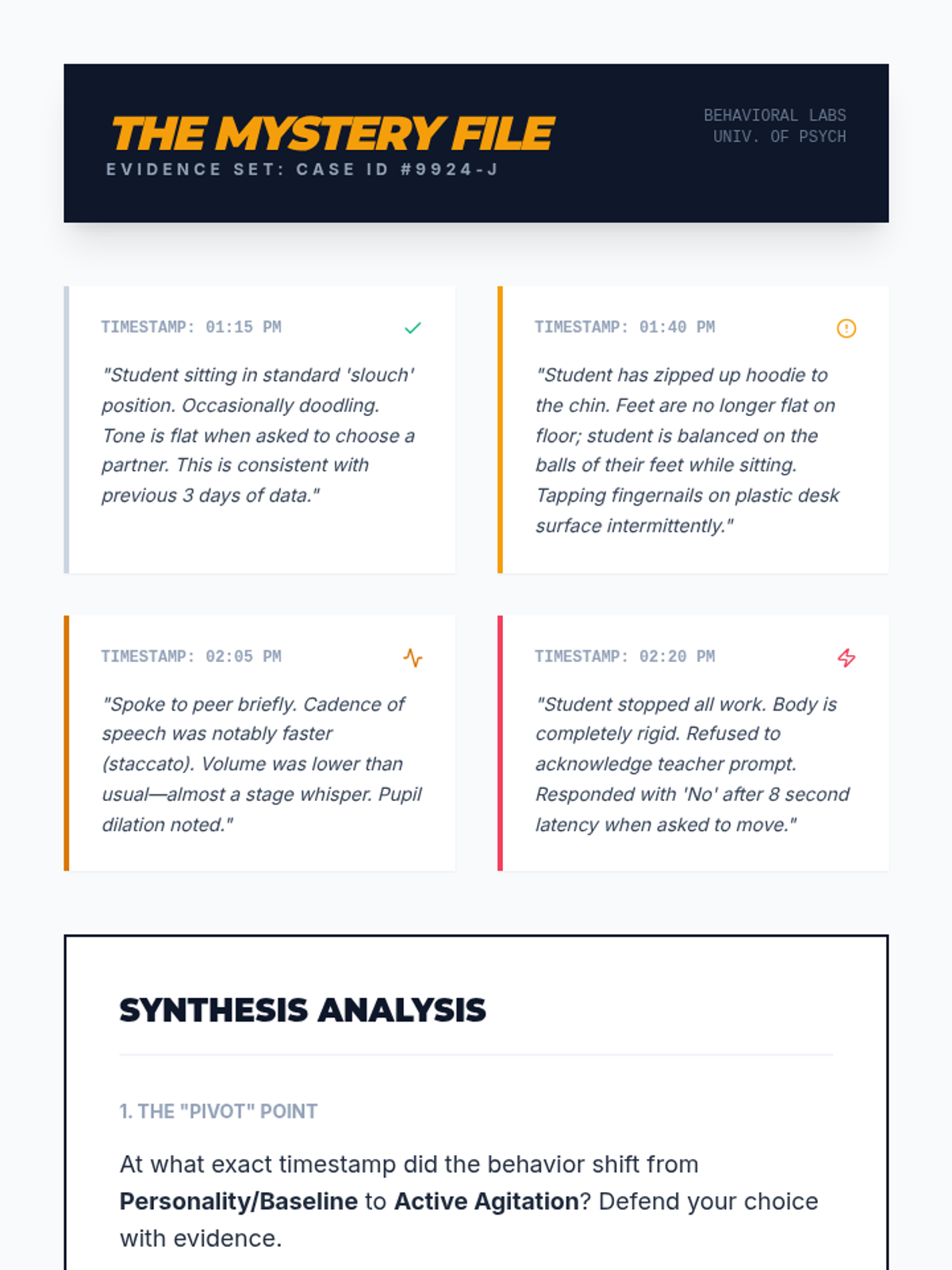
In this synthesis lesson, students review a full-length interaction containing multiple phases of behavior. They must map the subject's journey from baseline to trigger to escalation, citing specific evidence for every shift.
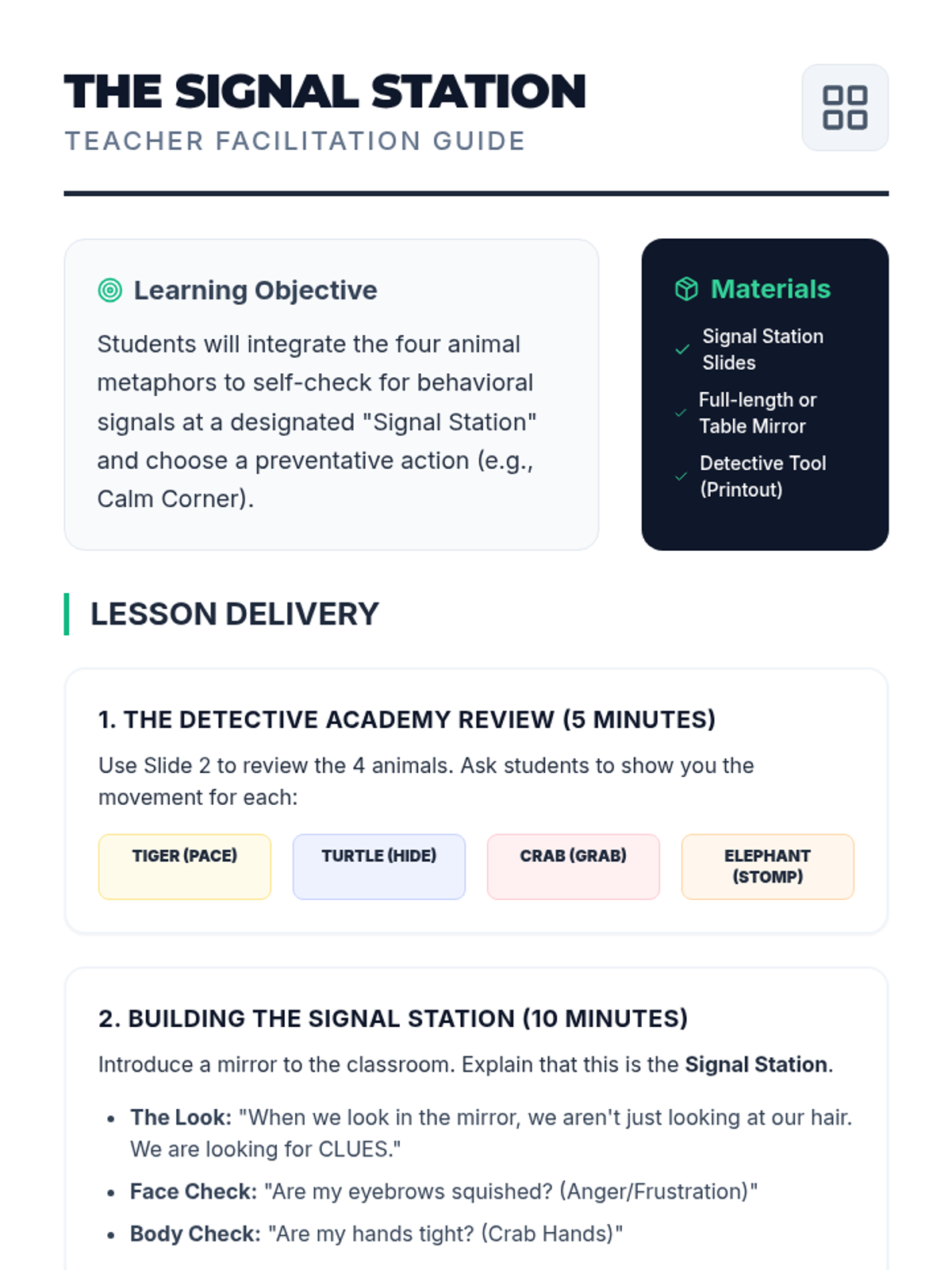
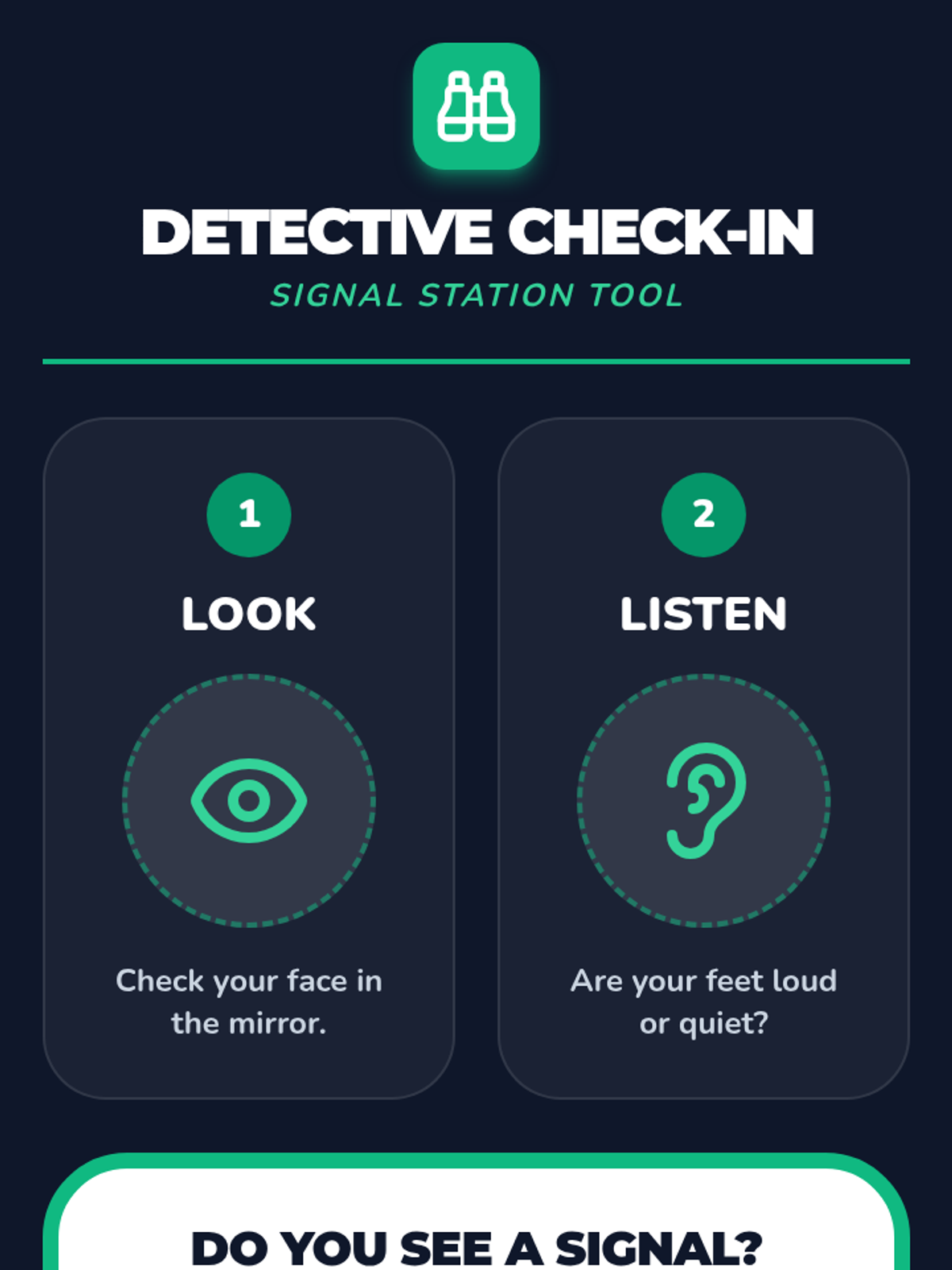
Students set up a classroom mirror station where they can check their own faces and bodies. They role-play noticing a warning sign (like pacing) and choosing to go to the 'calm corner' before a meltdown occurs.
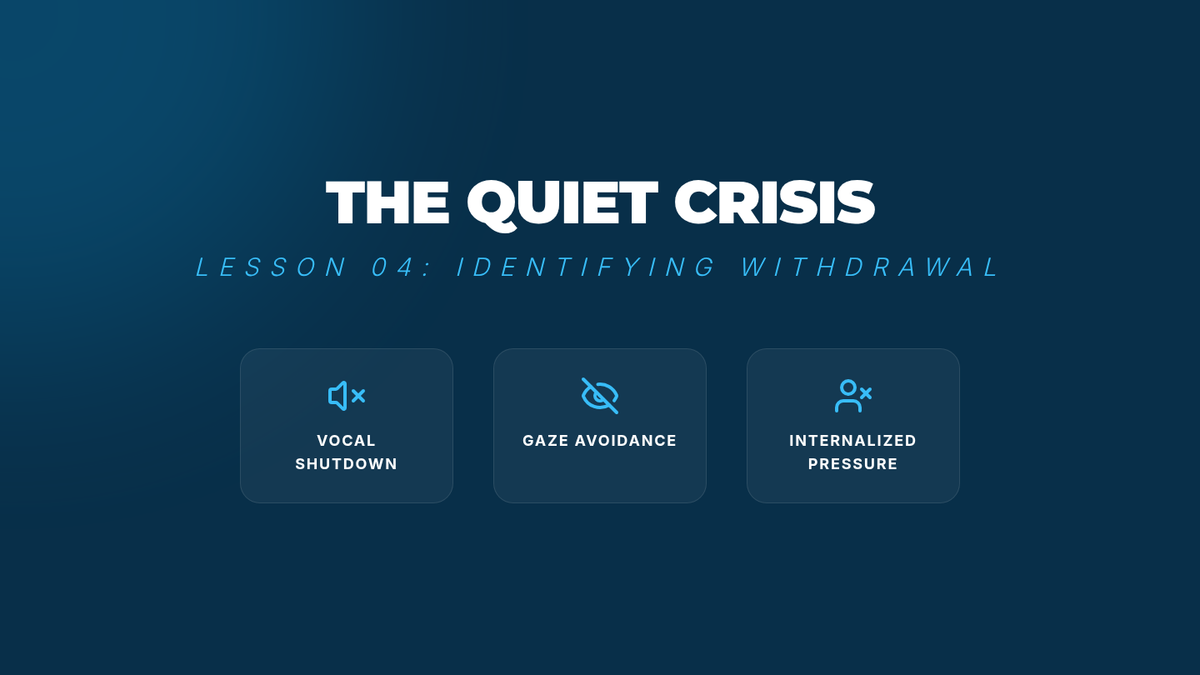
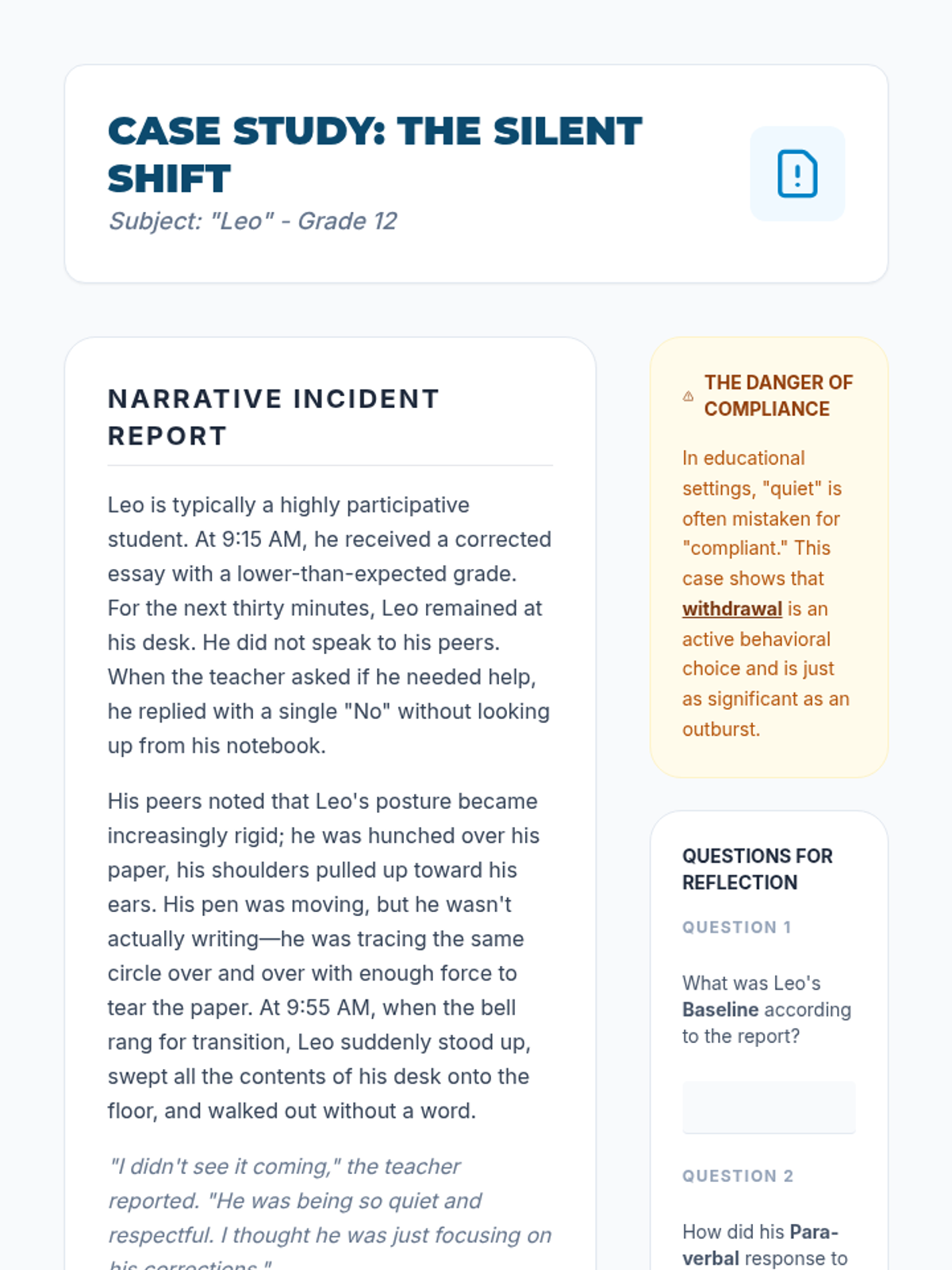
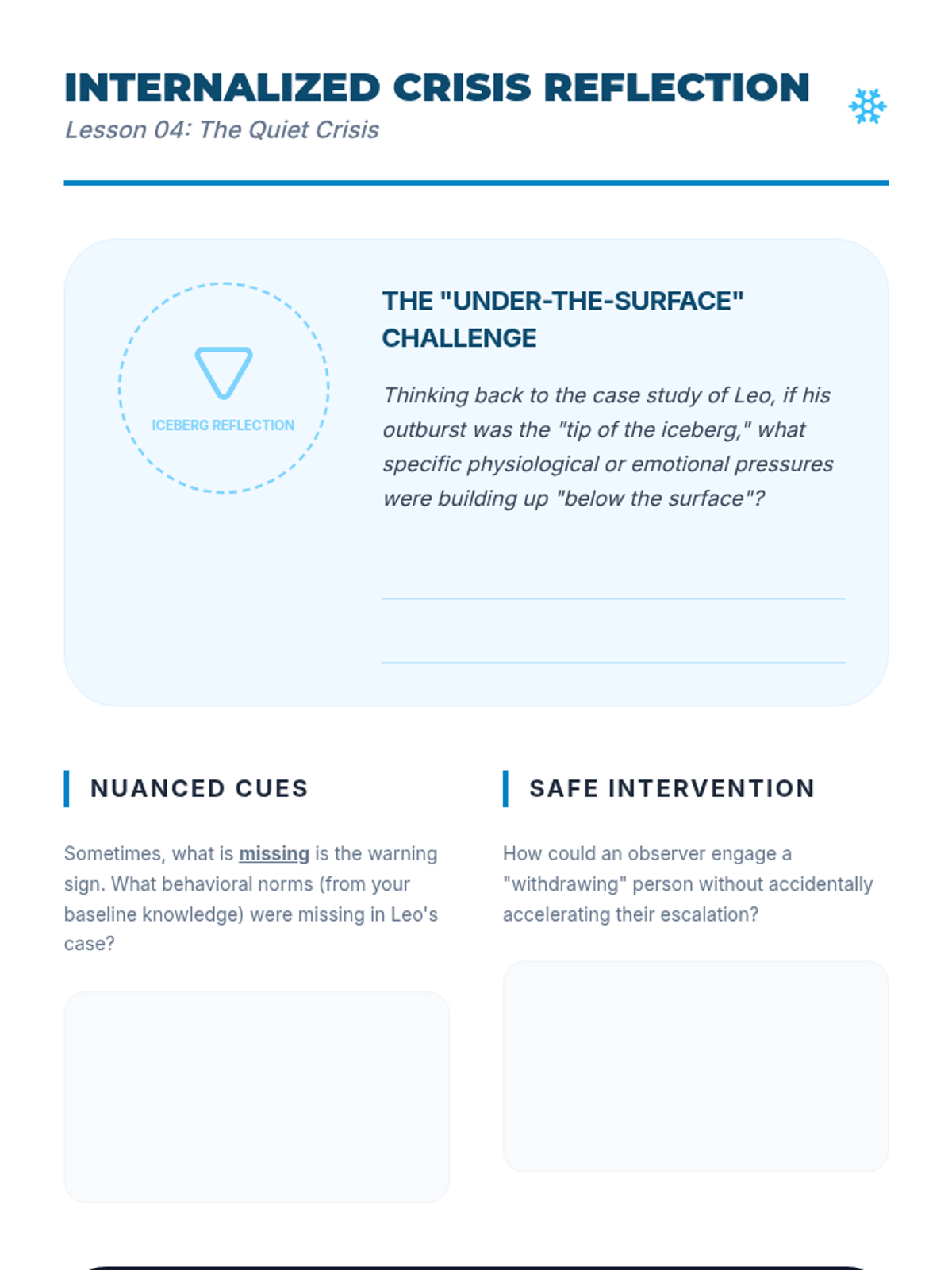
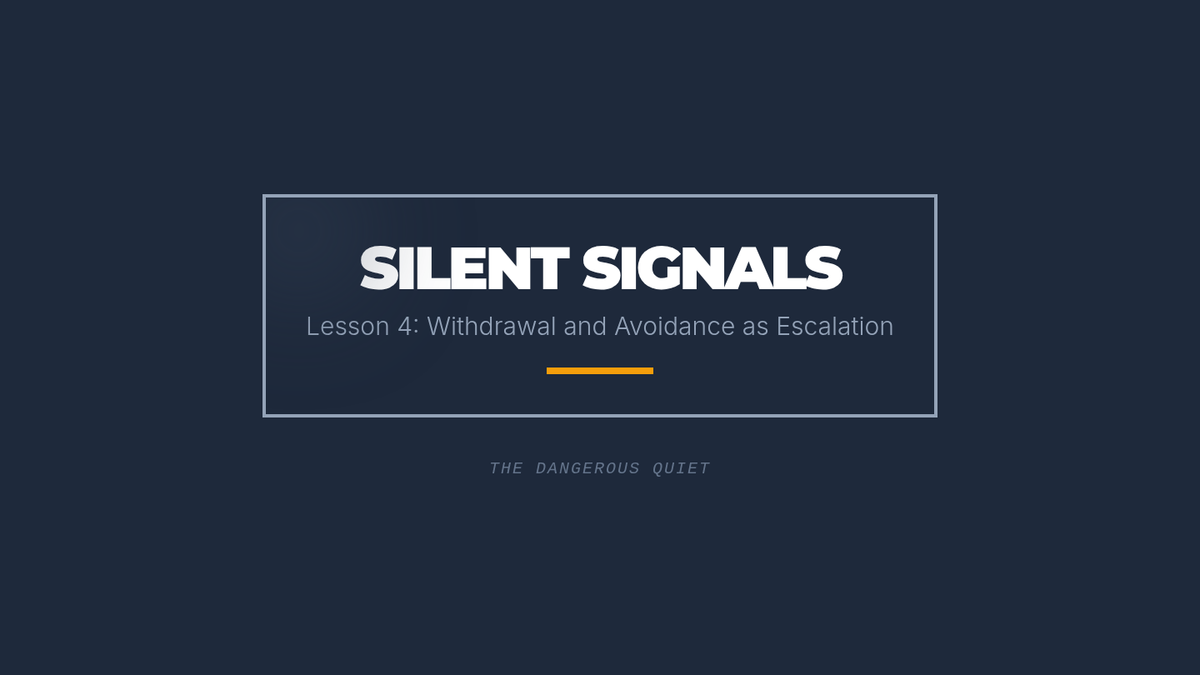
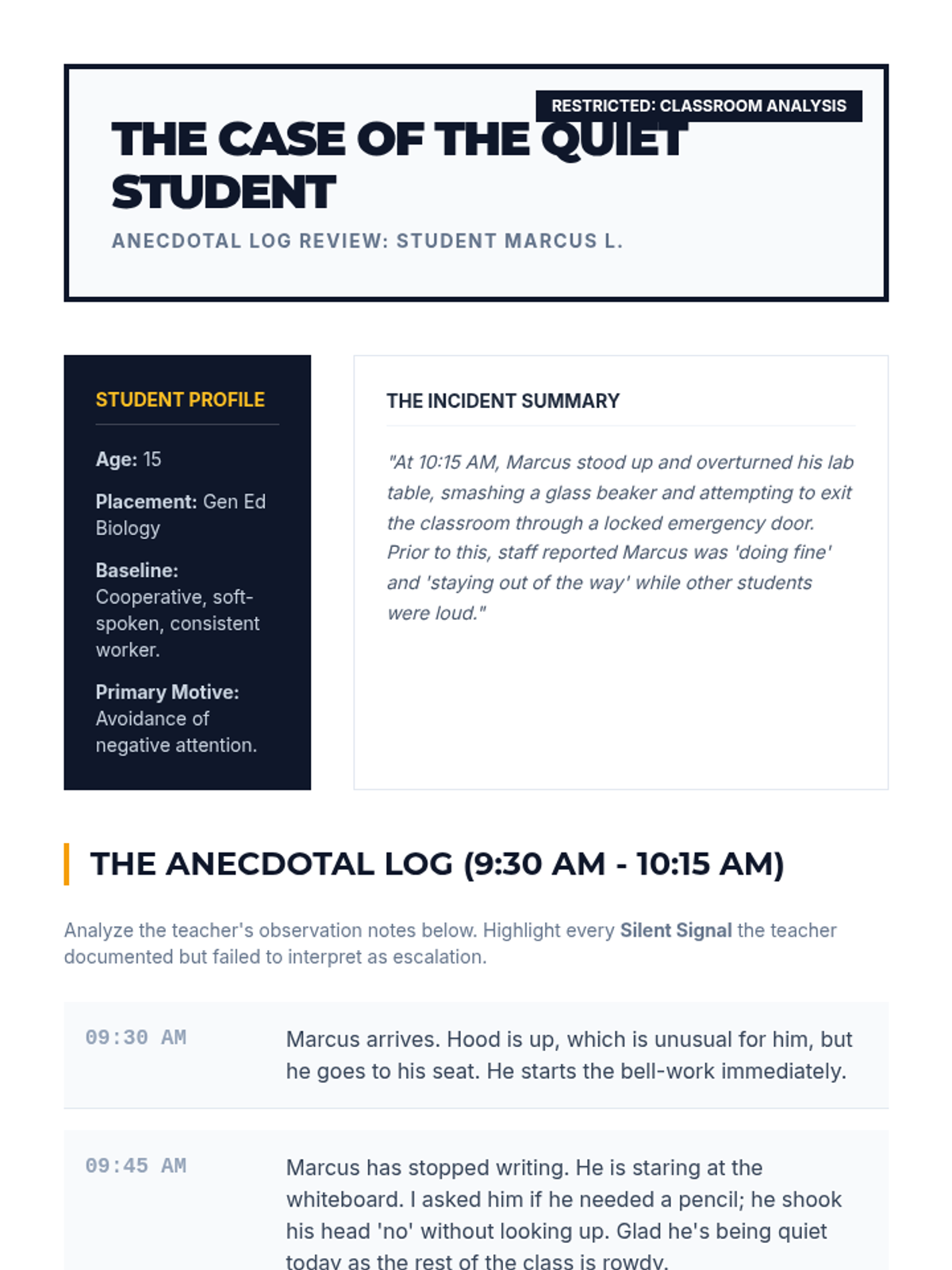
Moving beyond active aggression, this lesson focuses on 'implosive' escalation—withdrawal, silence, and avoidance. Students analyze case studies of students who escalated internally before an outburst, learning to spot the 'quiet' warning signs.
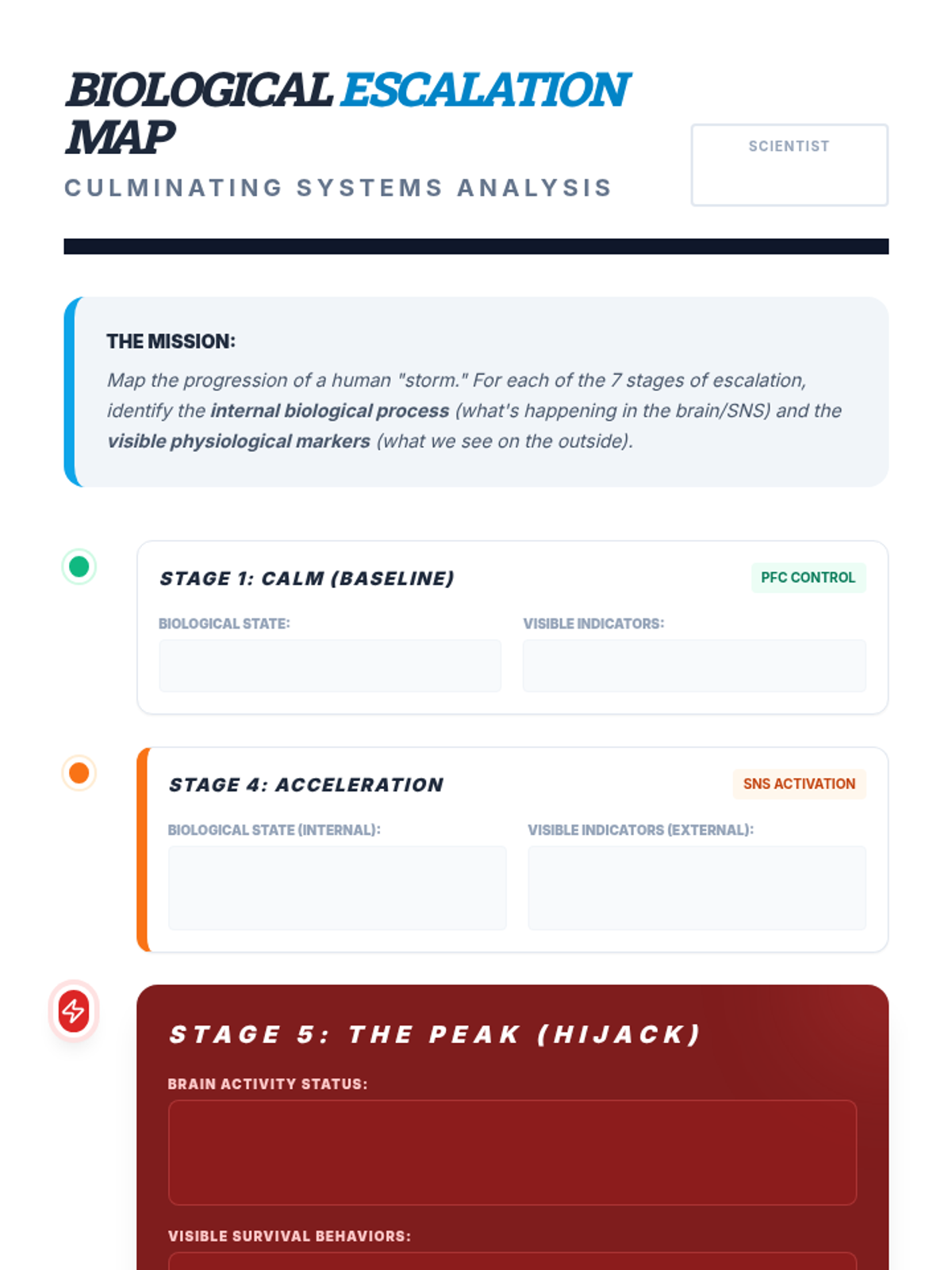
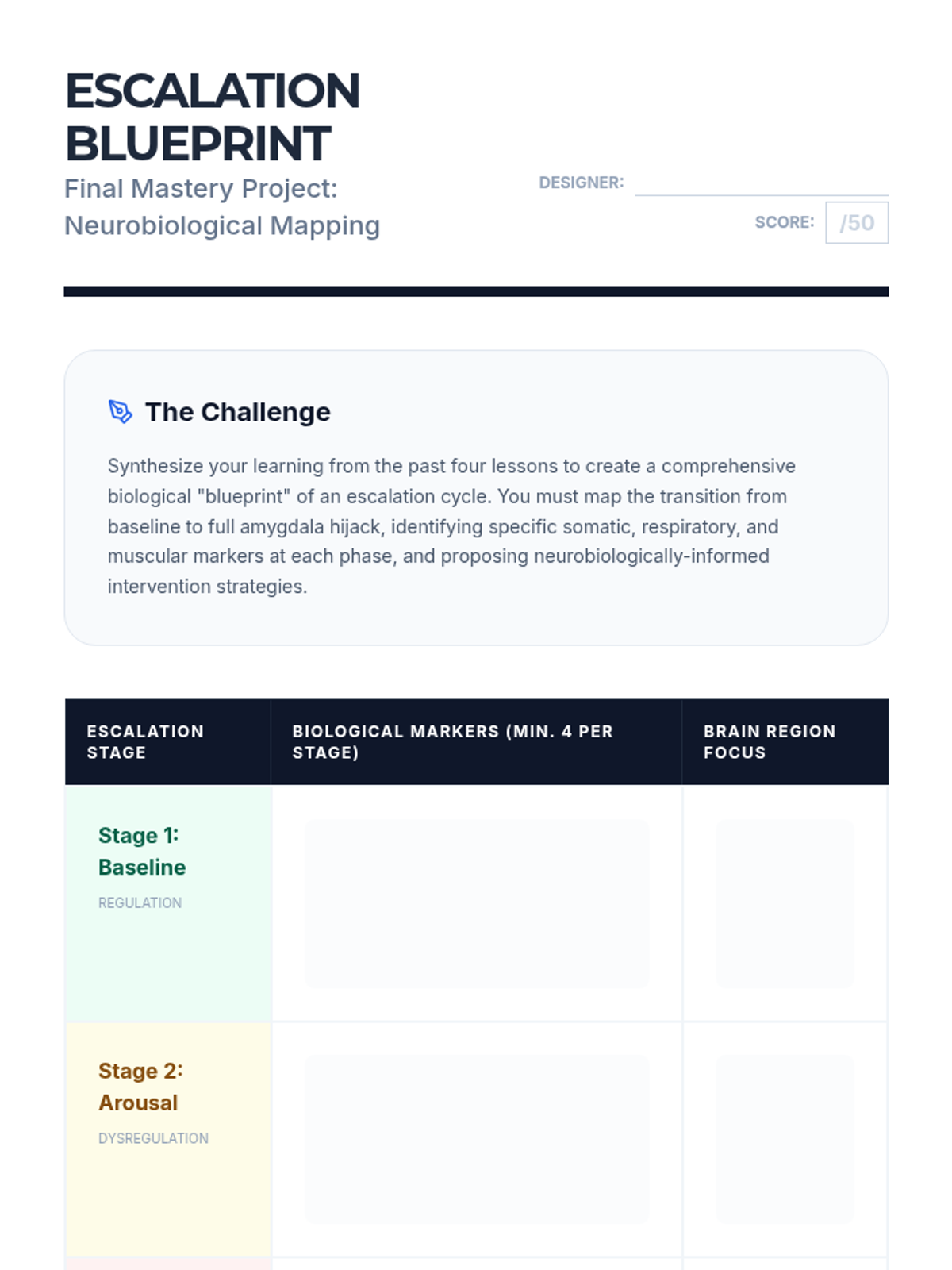
Students create a timeline or flowchart that correlates the seven stages of behavior escalation (Calm, Trigger, Agitation, Acceleration, Peak, De-escalation, Recovery) with specific physiological markers.
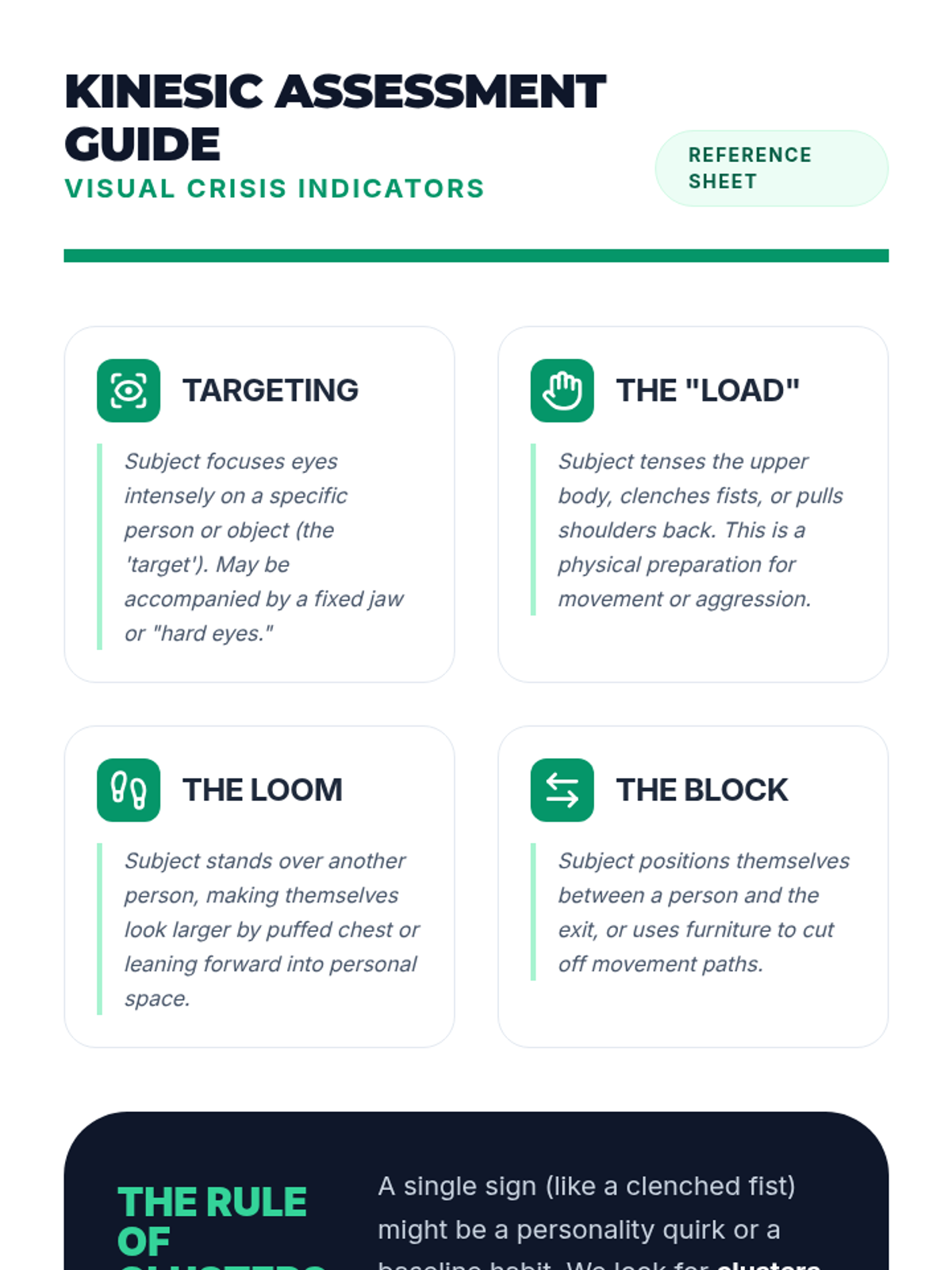
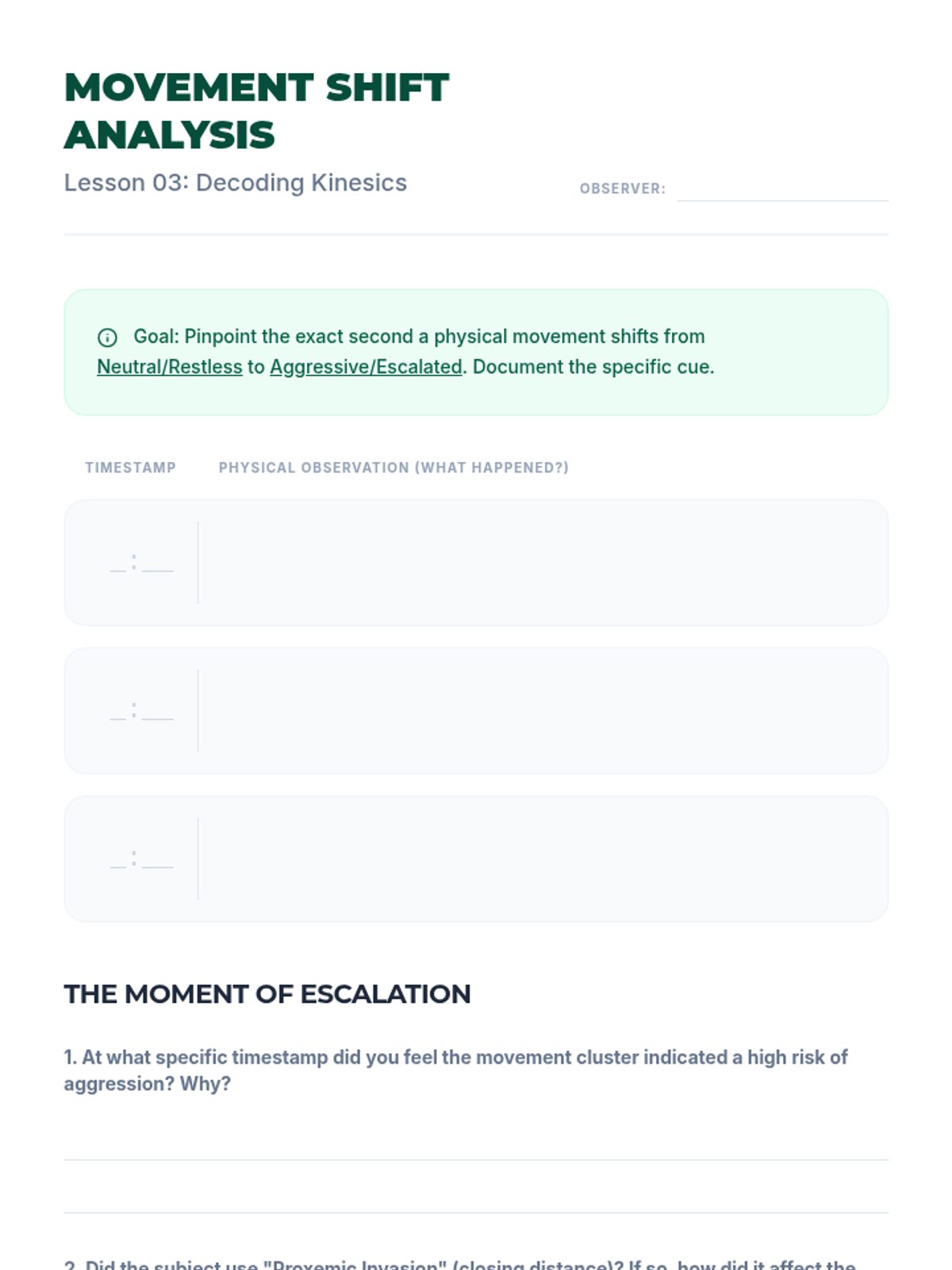
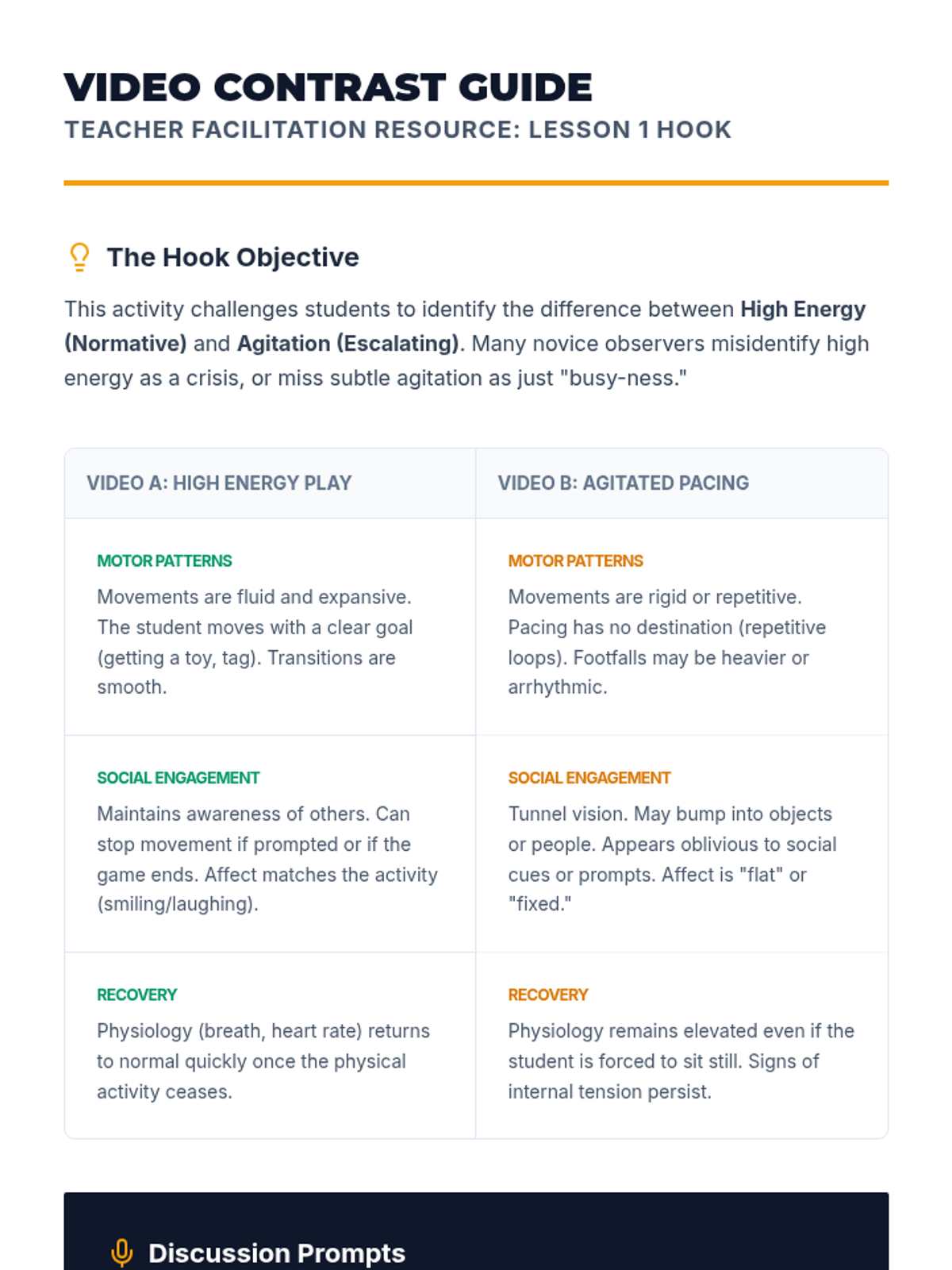
Students investigate physical warning signs such as pacing, fist-clenching, and invasion of personal space. They review footage of escalating situations to pinpoint the exact moment physical movement shifts from restless to aggressive.
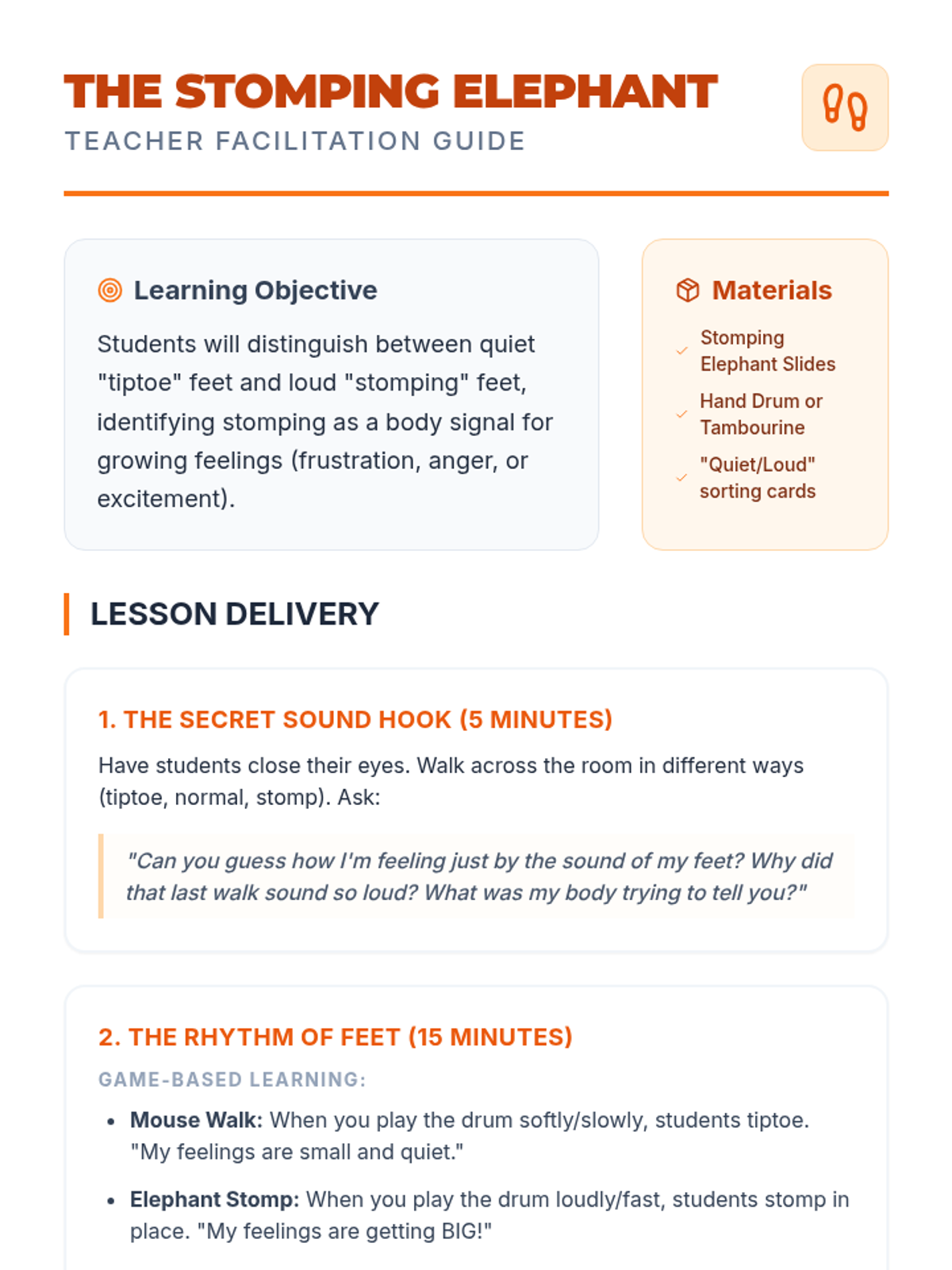
Children contrast 'tiptoe' and 'walking feet' with 'stomping feet.' They identify that heavy, loud footsteps often happen when feelings are growing from small to medium.
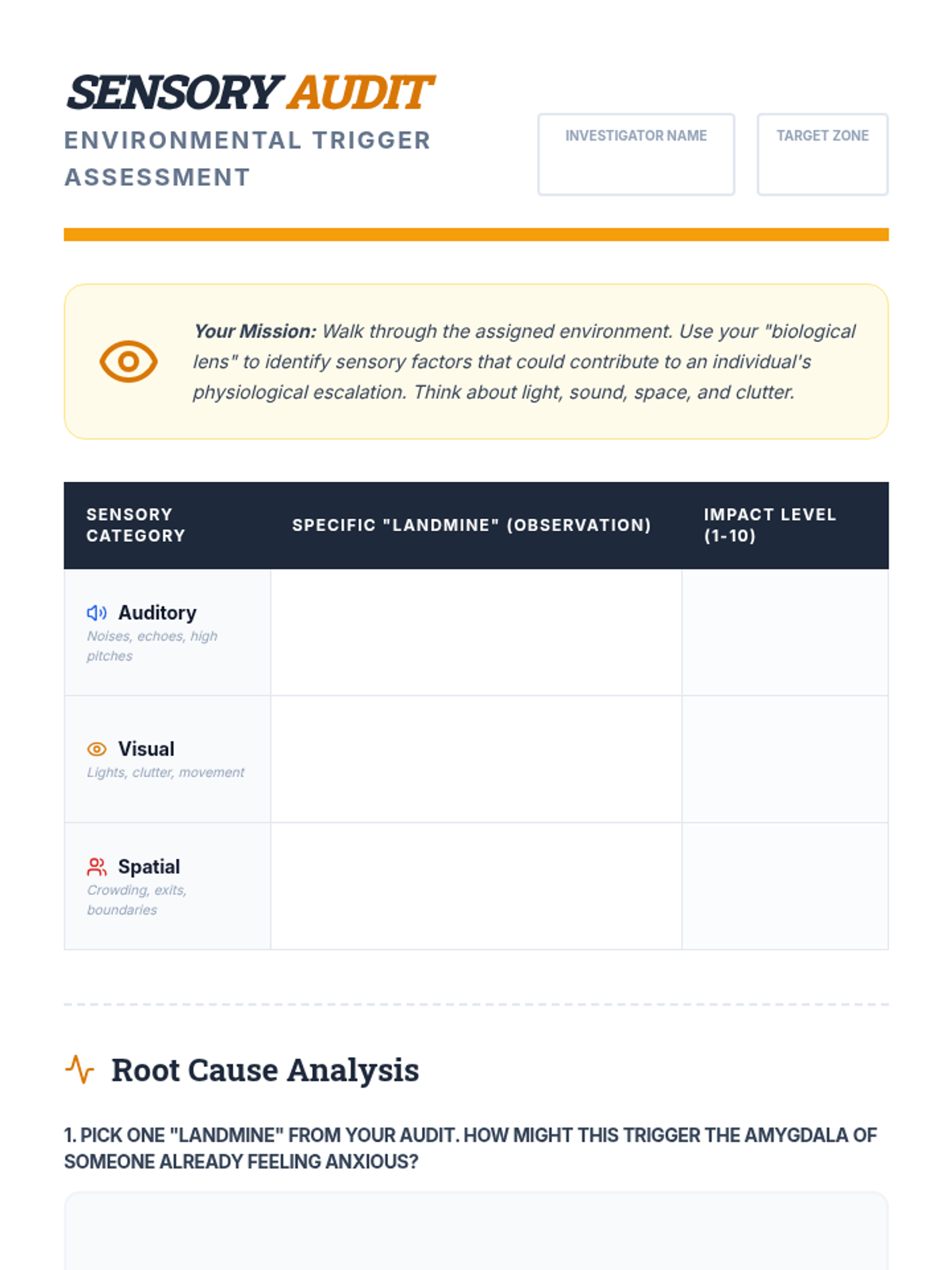
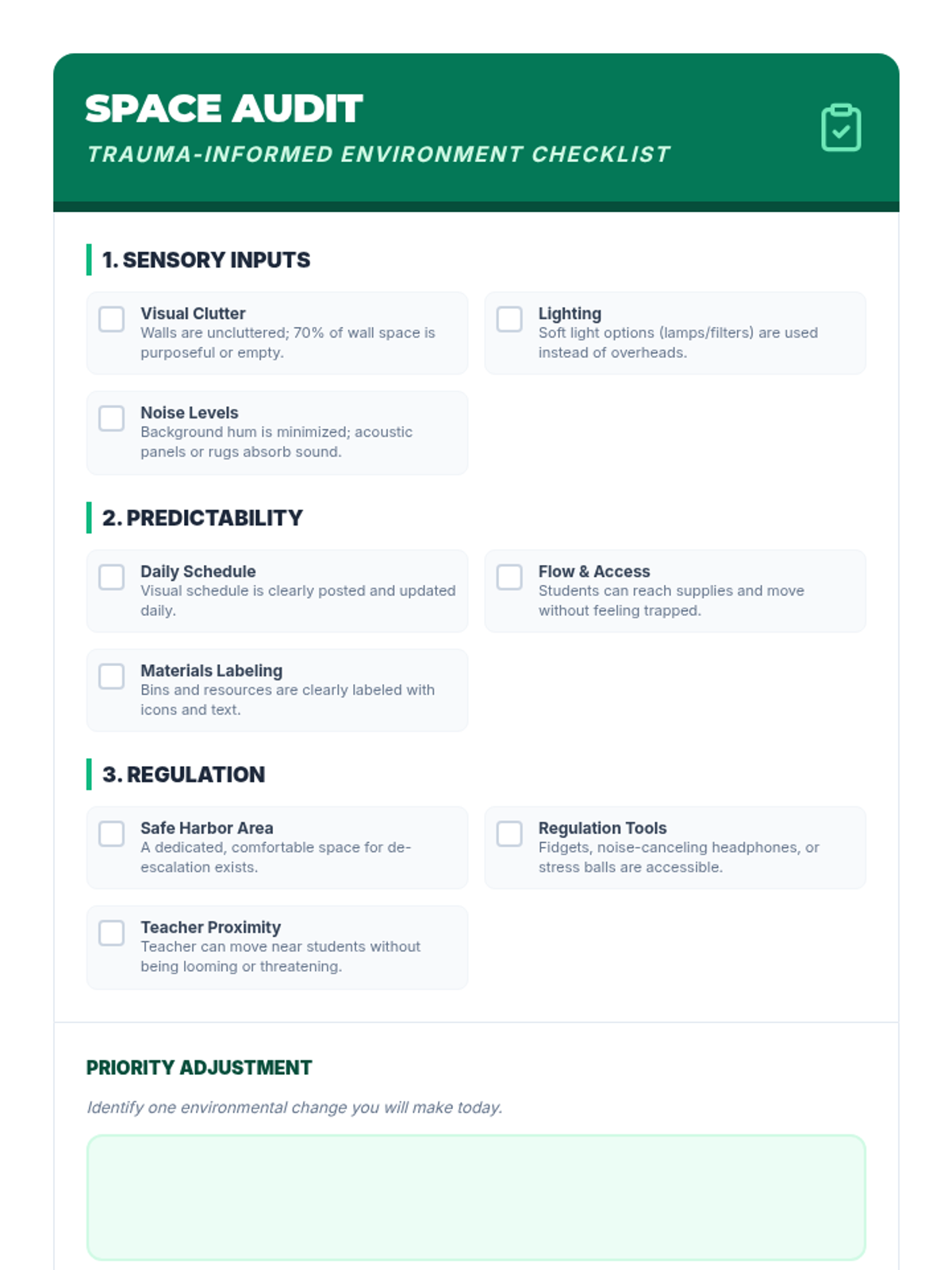
Students investigate how environmental factors (noise, light, crowding) can trigger physiological escalation. They conduct an audit of a classroom or common area to identify potential sensory triggers.
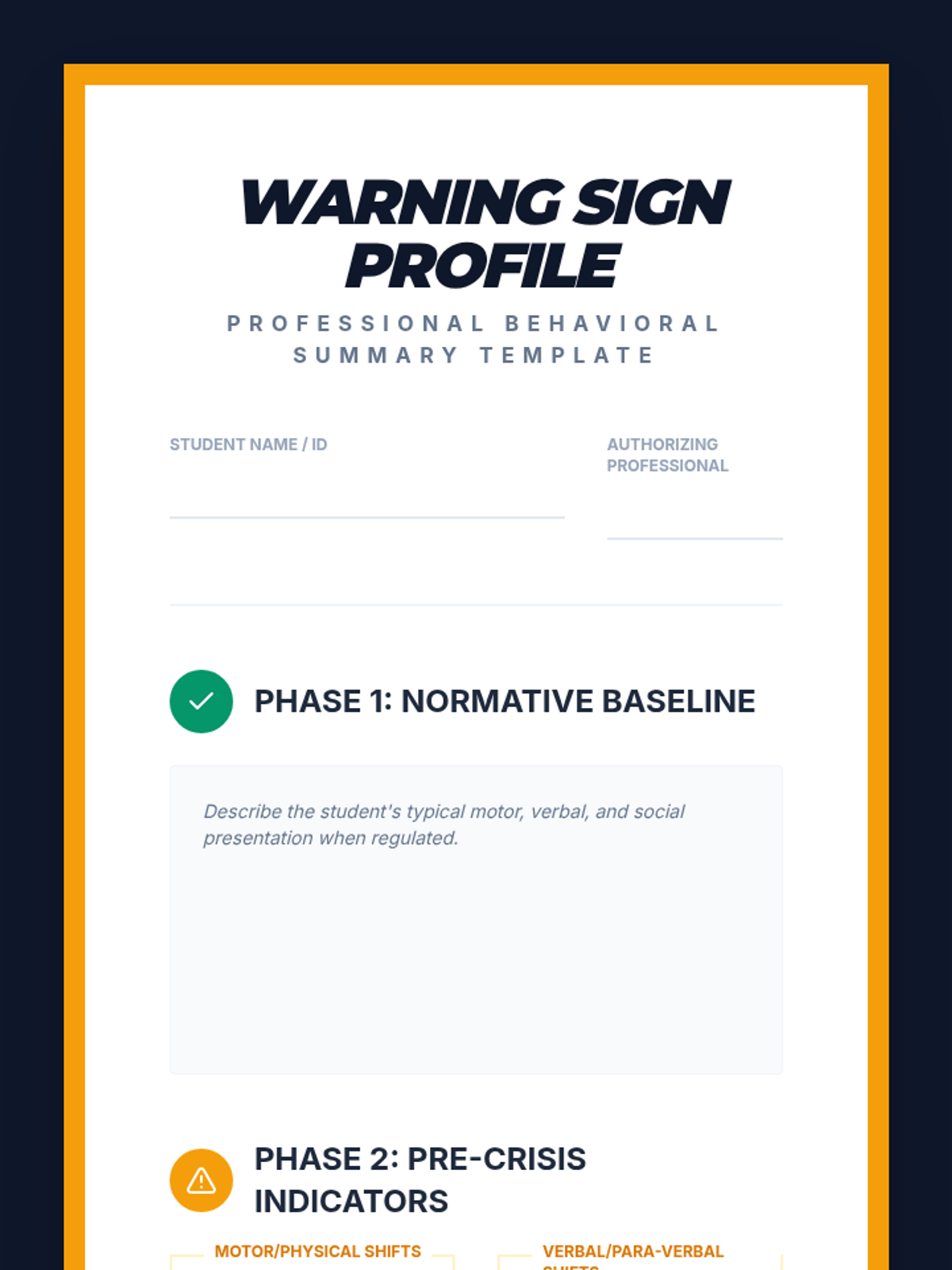
Students integrate all observed markers into a comprehensive Warning Sign Profile for a complex case study, predicting crisis timing based on behavioral evidence.
Exploration of 'quiet' escalation signs such as withdrawal, avoidance, and work cessation, which are frequently overlooked but indicate high risk for crisis.
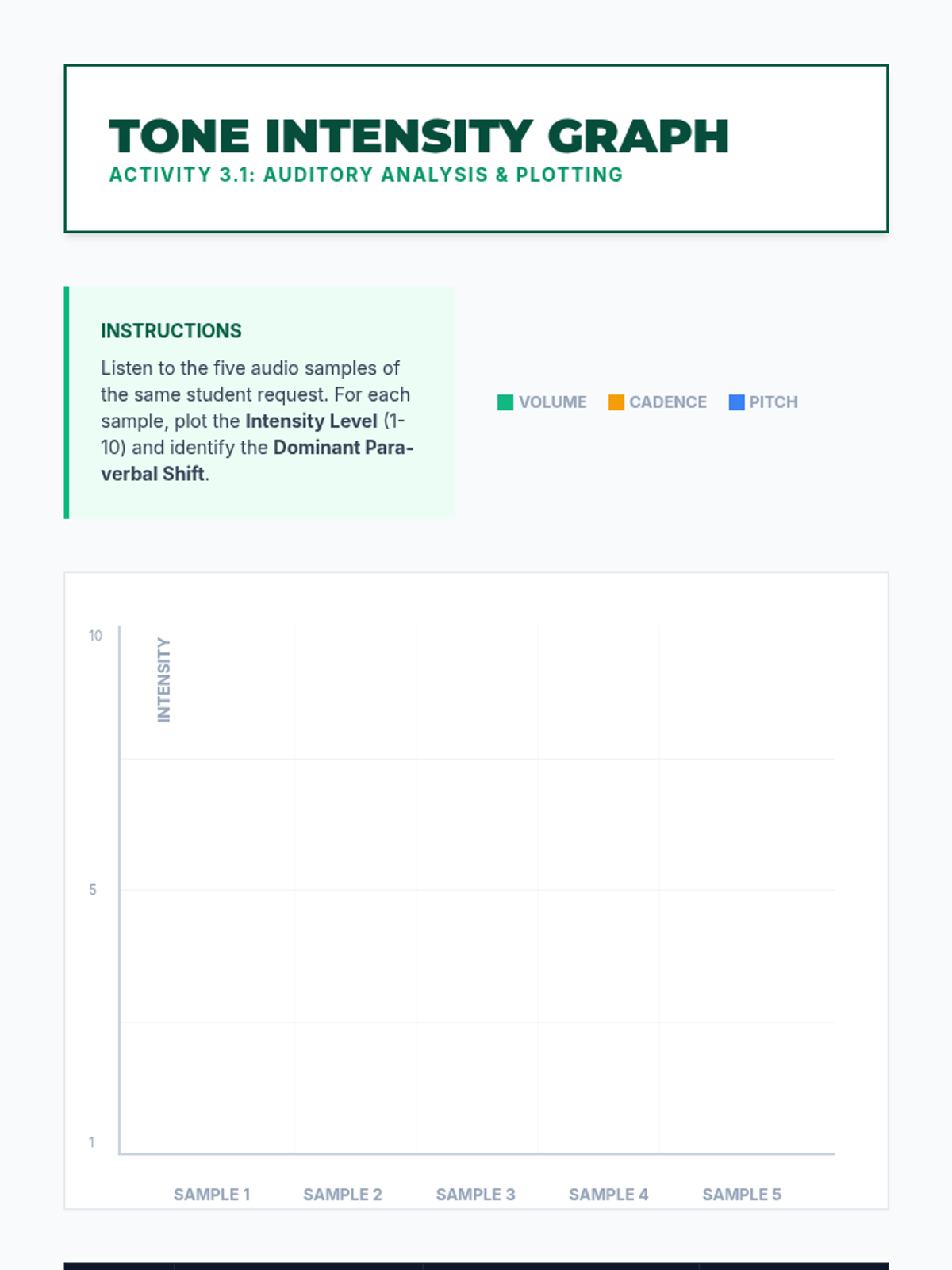
Students analyze changes in volume, cadence, and tone (para-verbals) to identify escalation, distinguishing the quality of delivery from the literal content of speech.
Synthesizes learning into a visual map connecting internal biology to external behavior for proactive intervention planning.
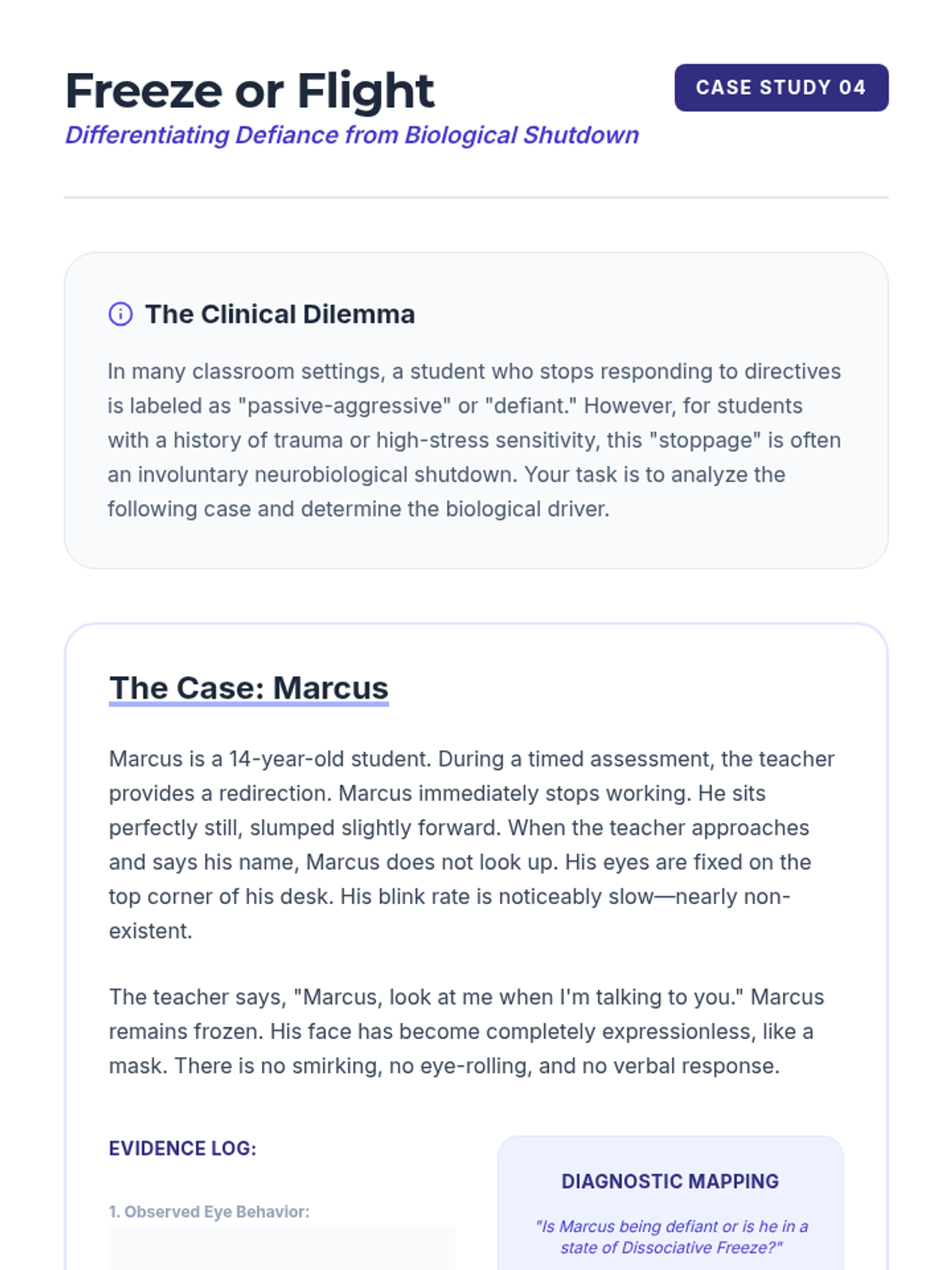
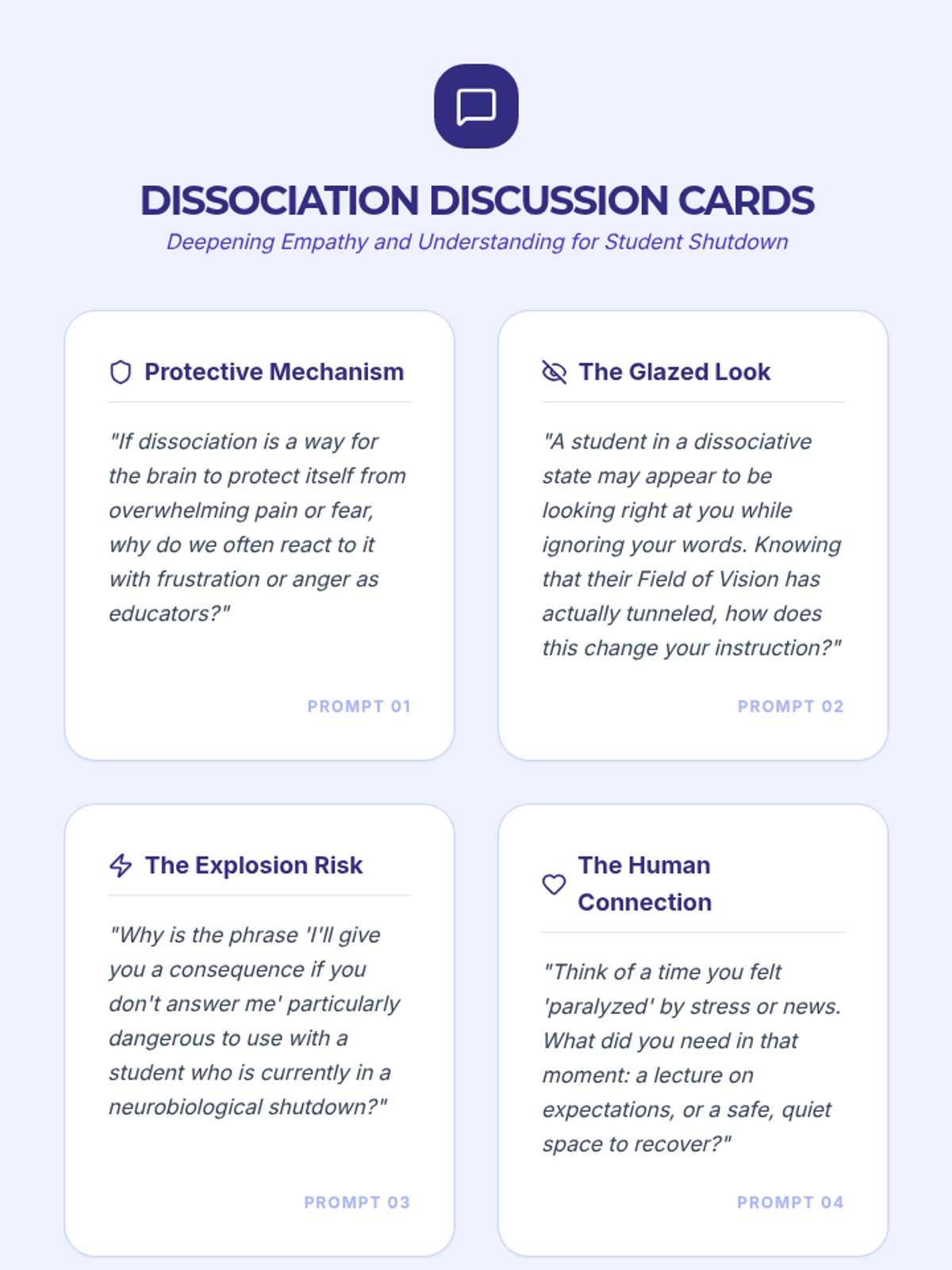
Identifies the 'freeze' response and dissociation, differentiating between intentional defiance and neurobiological shutdown.
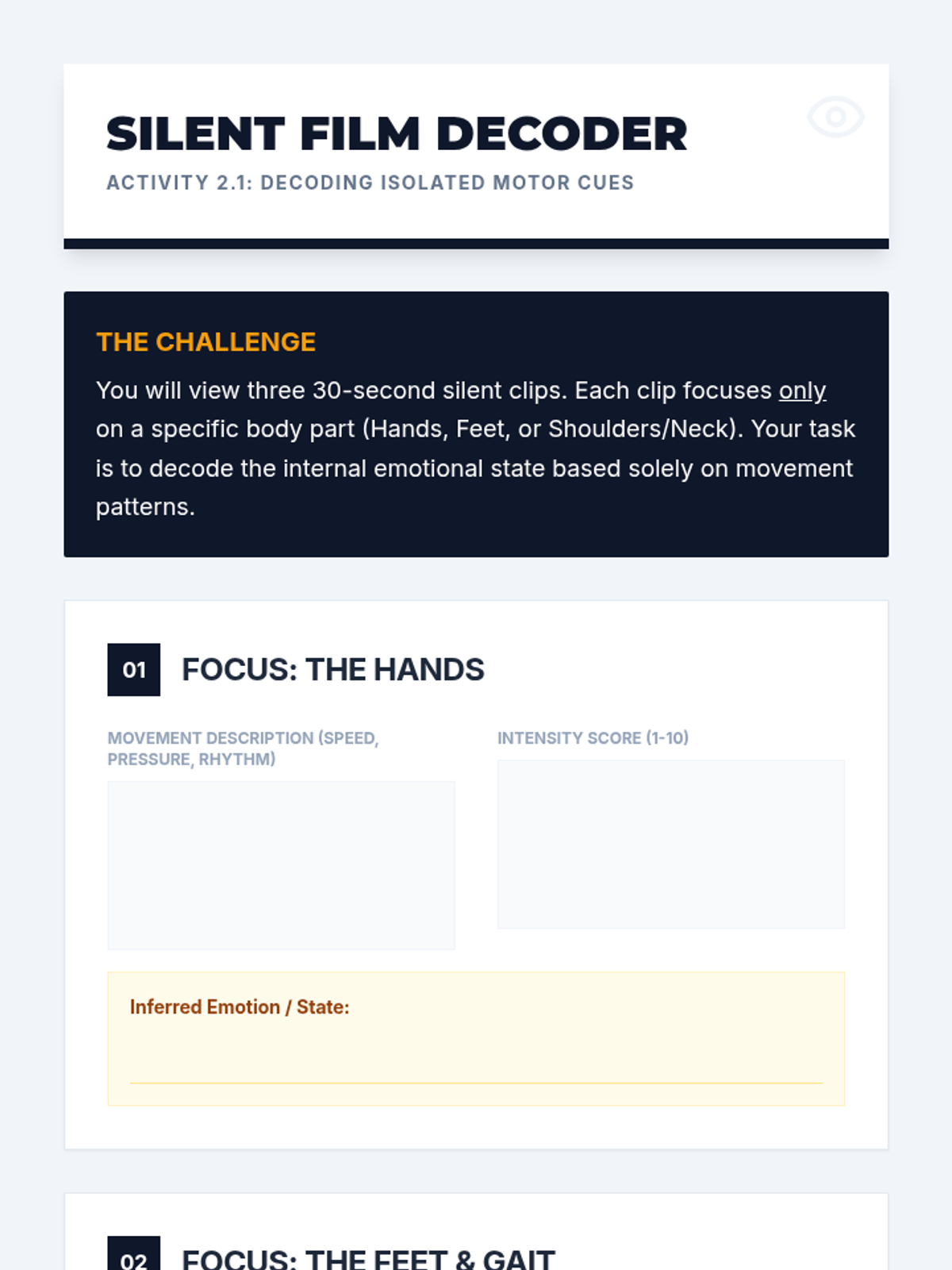
A deep dive into the physical manifestations of early escalation, focusing on micro-movements and motor agitation that often precede vocal outbursts.
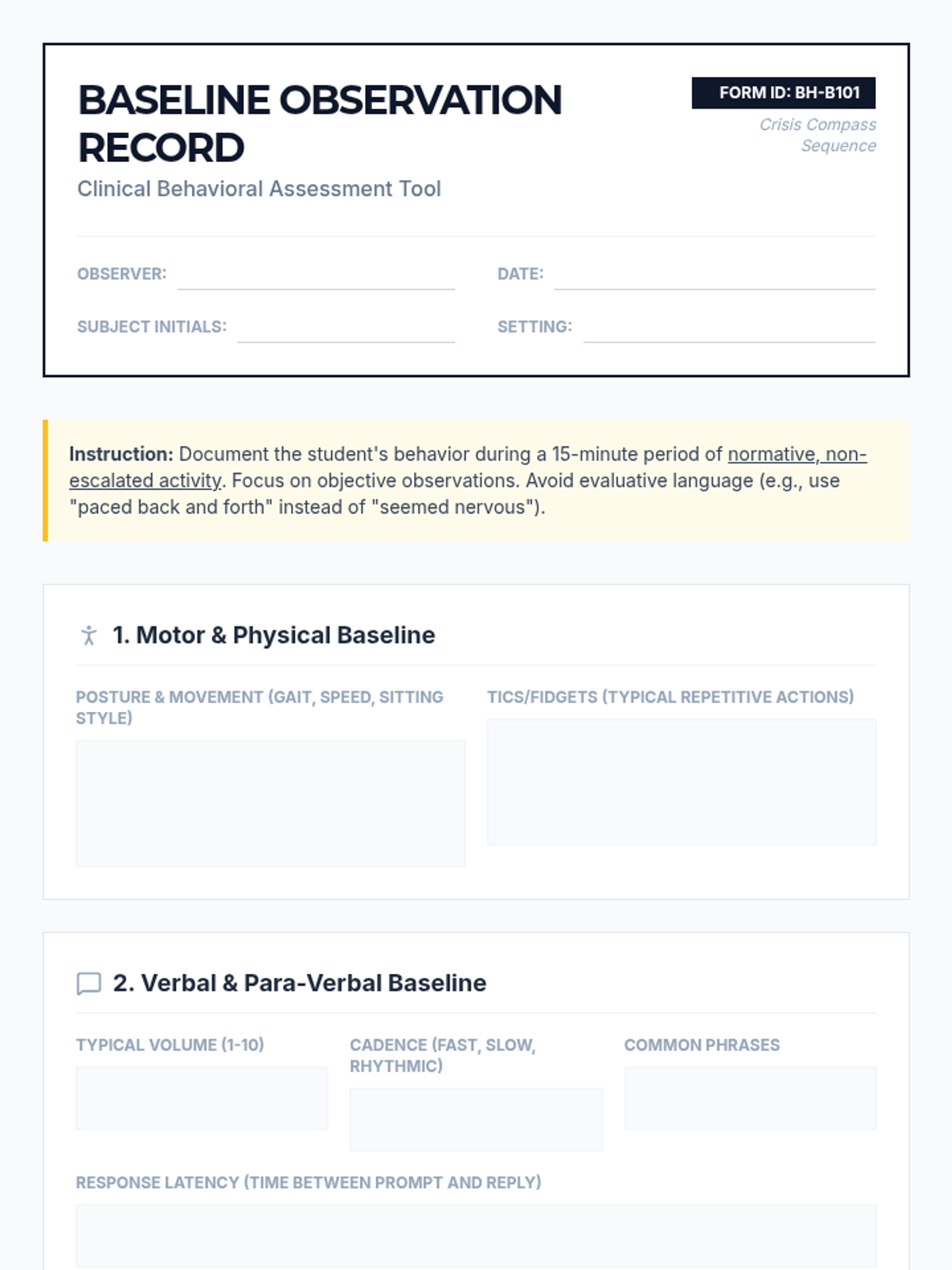
Students define and observe 'baseline' behavior to distinguish between a student's normal state and signs of deviation. This lesson emphasizes cultural context and personality in behavioral documentation.
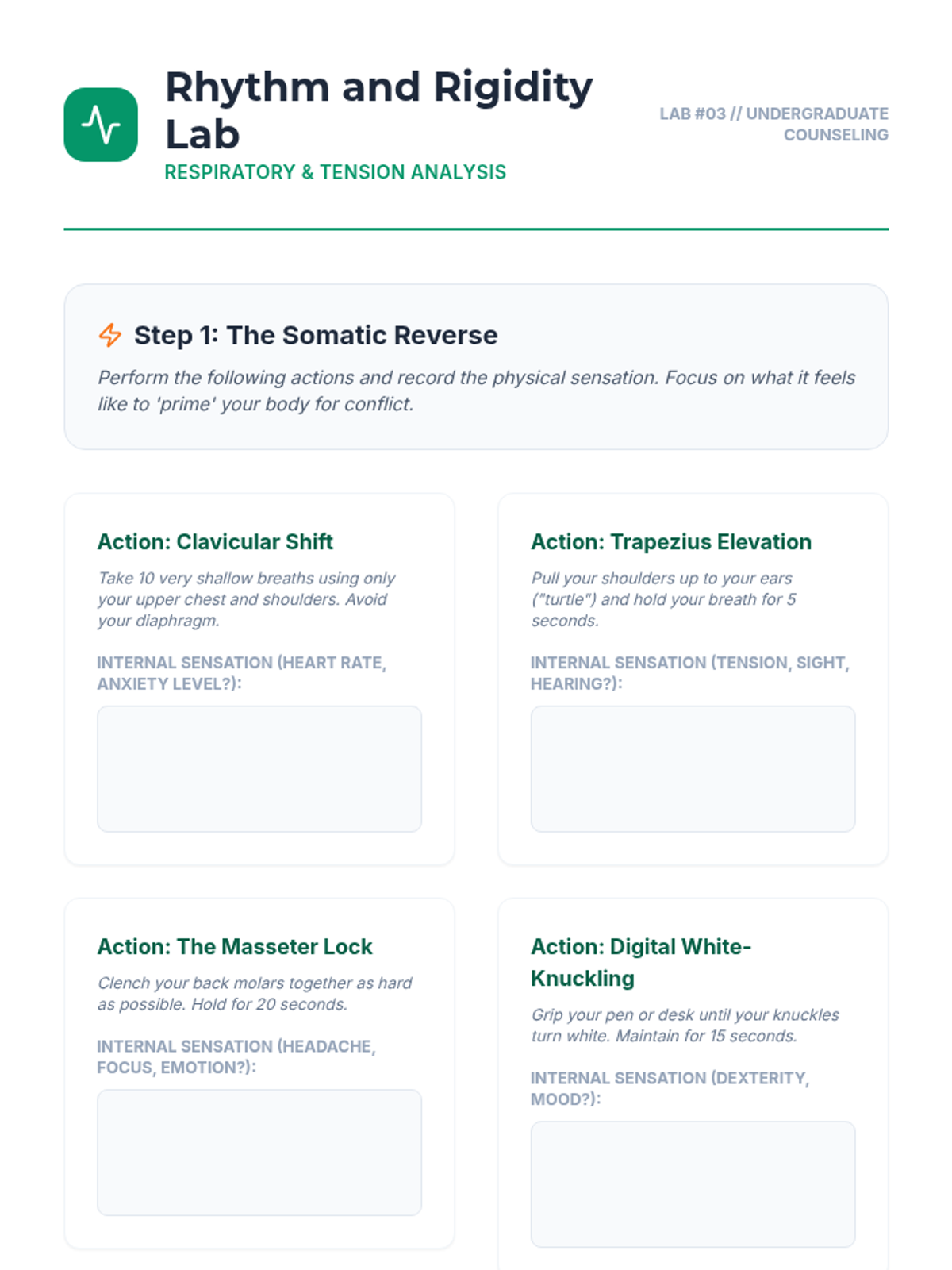
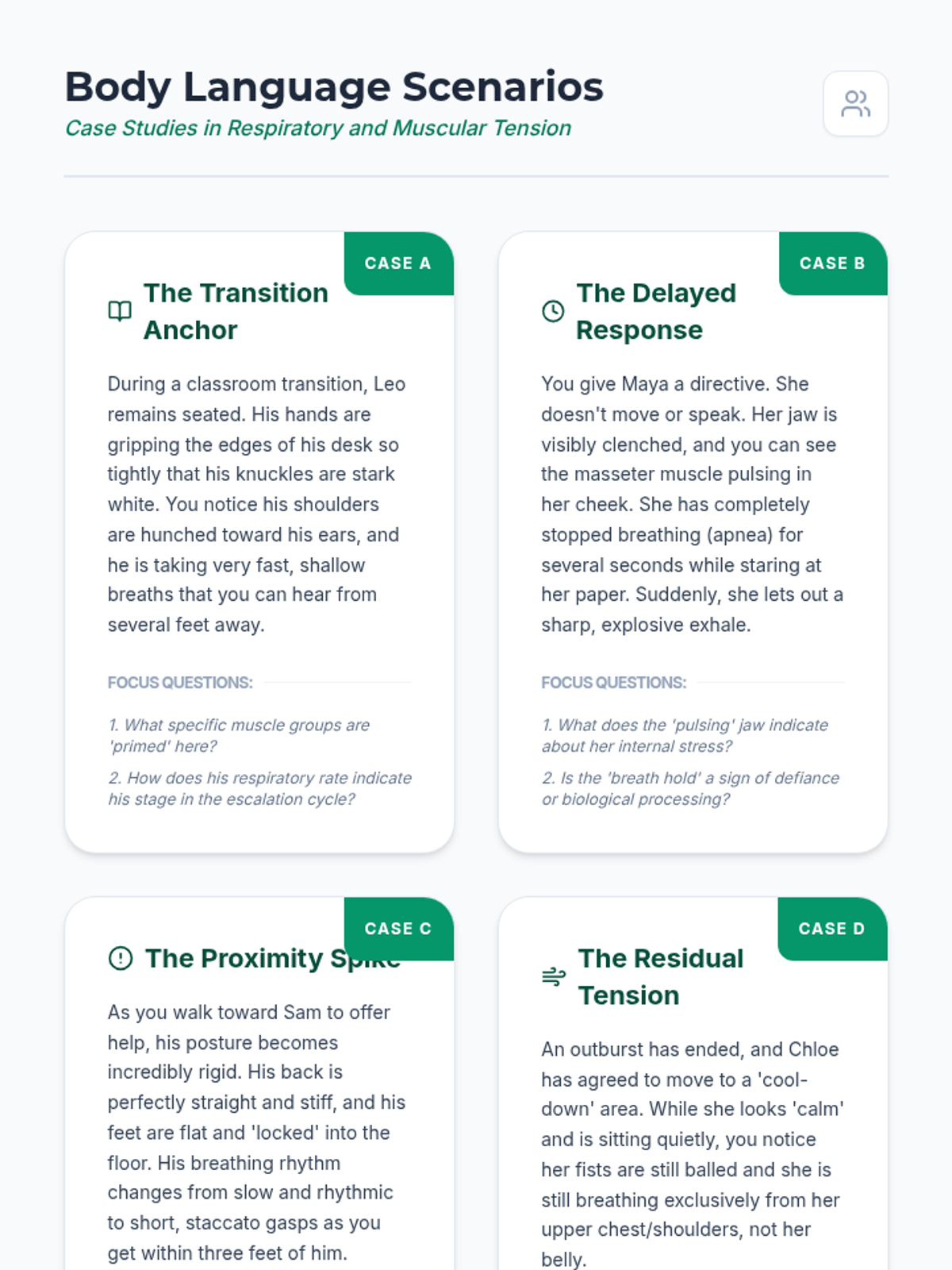
Analyzes changes in breathing patterns and muscle tension as signs of the body preparing for physical defense or flight.
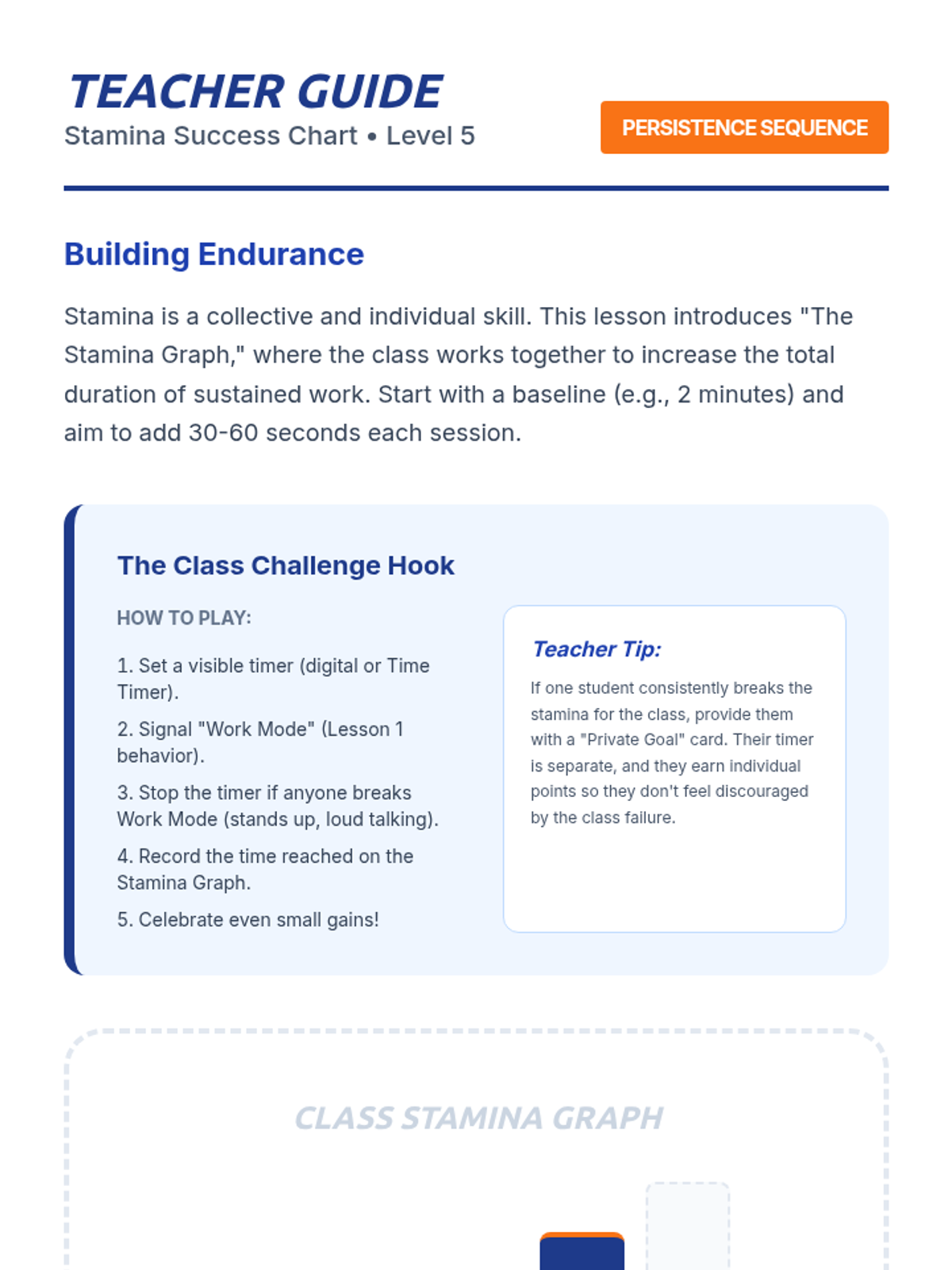
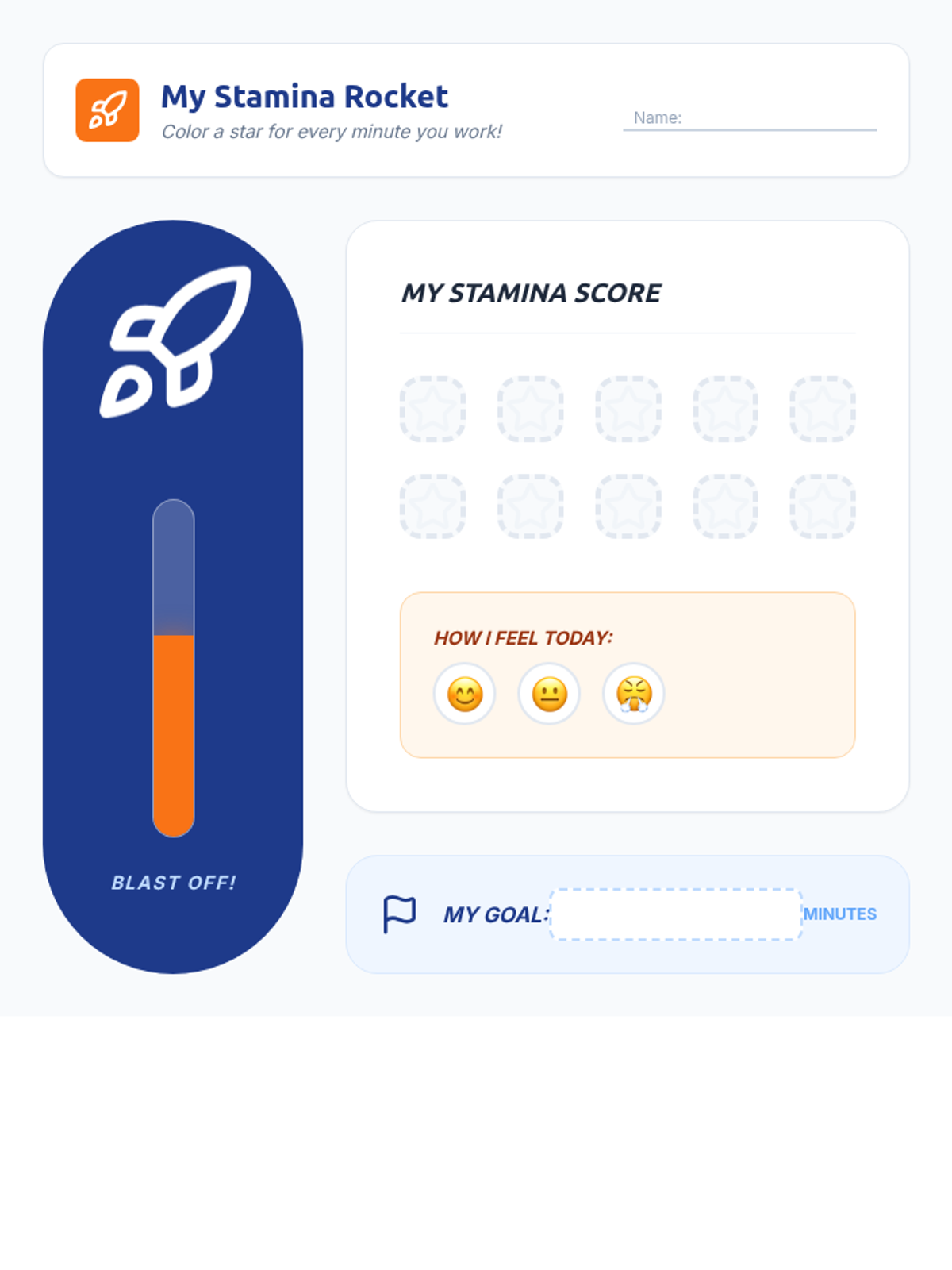
Students synthesize previous skills by engaging in a slightly longer task that requires staying seated and focused. The teacher uses a 'stamina chart' to visually track how long the class can work without breaking focus, celebrating the increase in collective time.
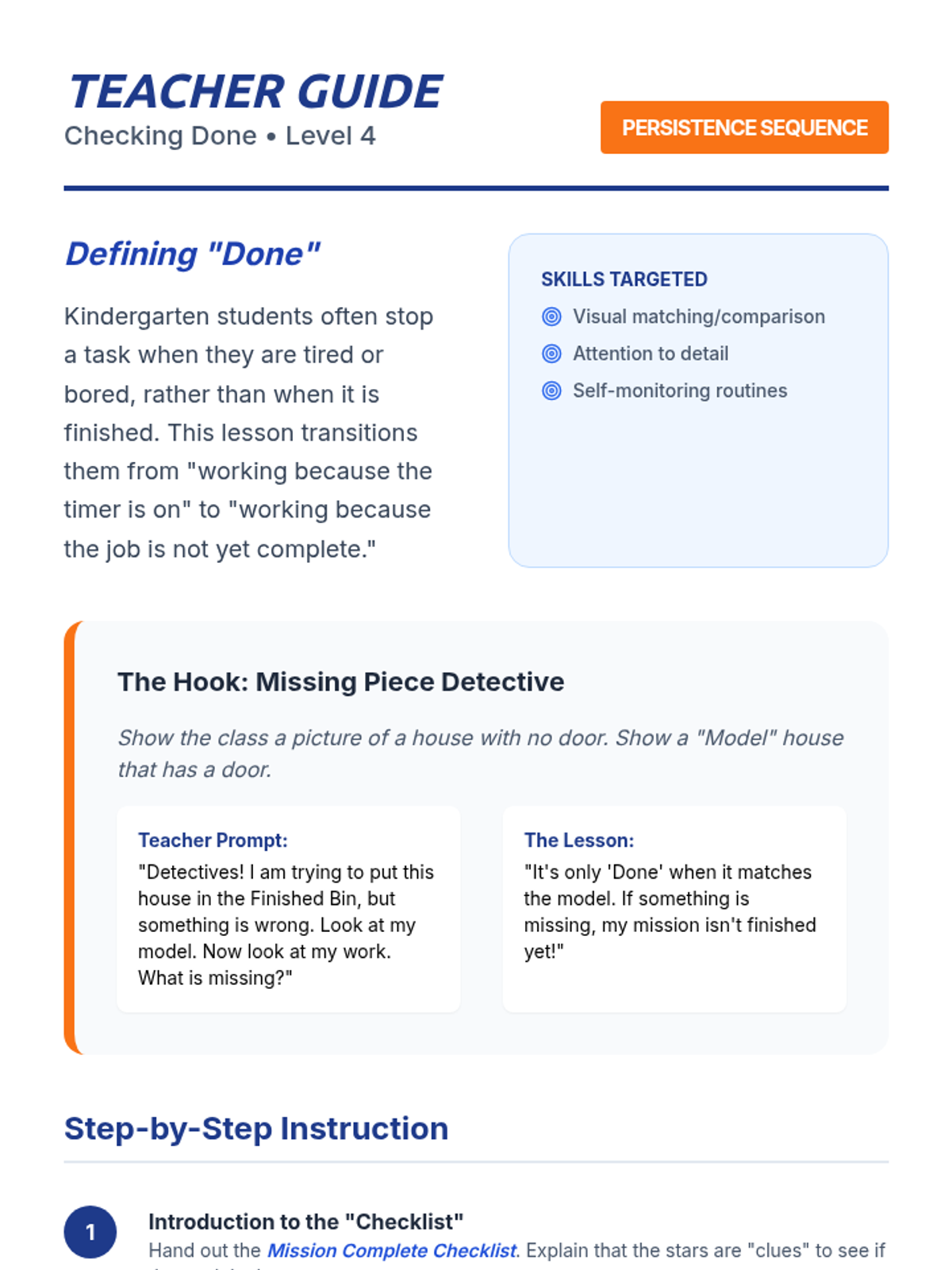
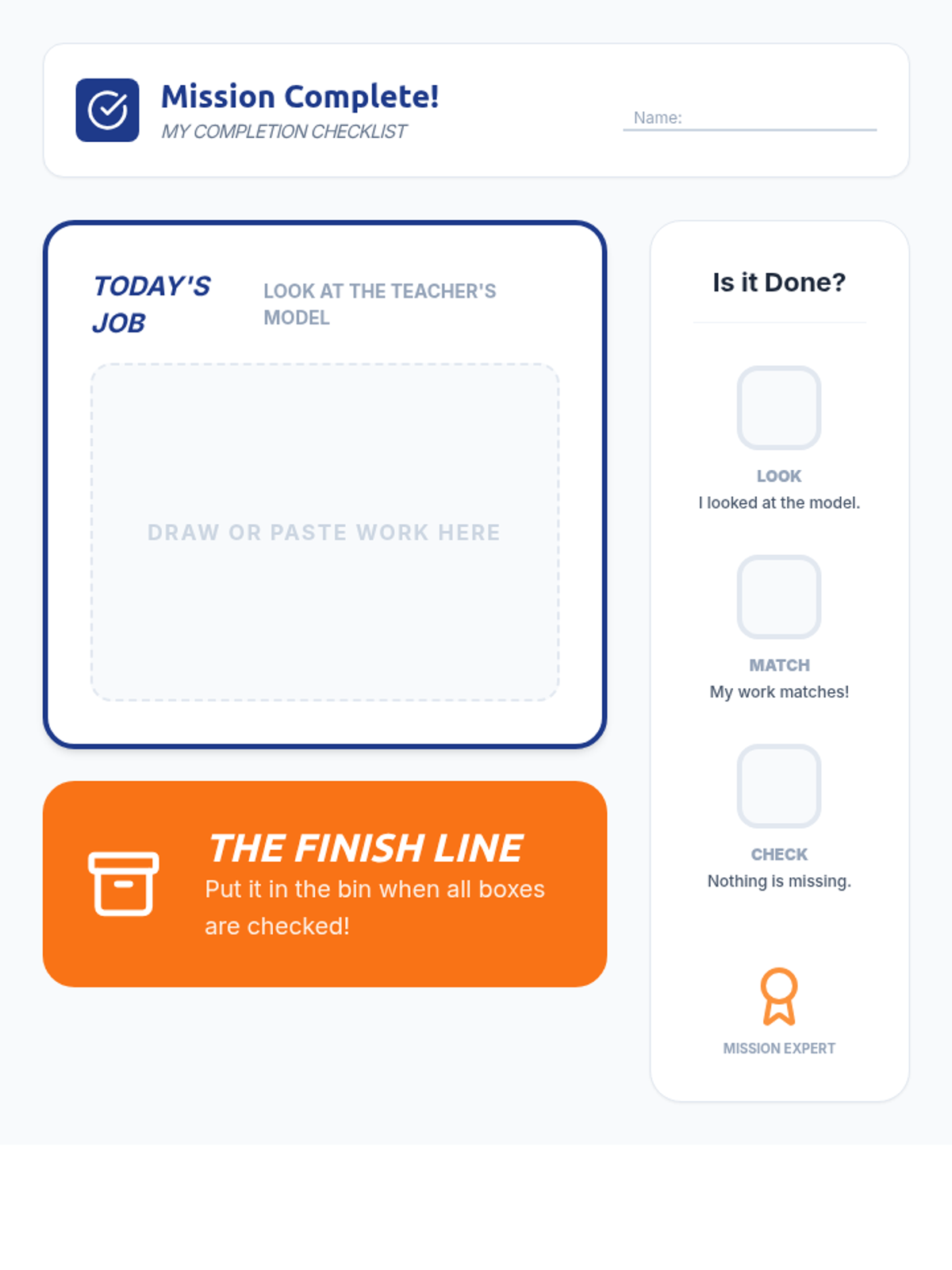
This lesson focuses on the concept of 'done.' Students learn to check their work against a visual model to determine if it is complete before moving the material to a 'Finished' bin, shifting the focus from time-based work to task-based completion.
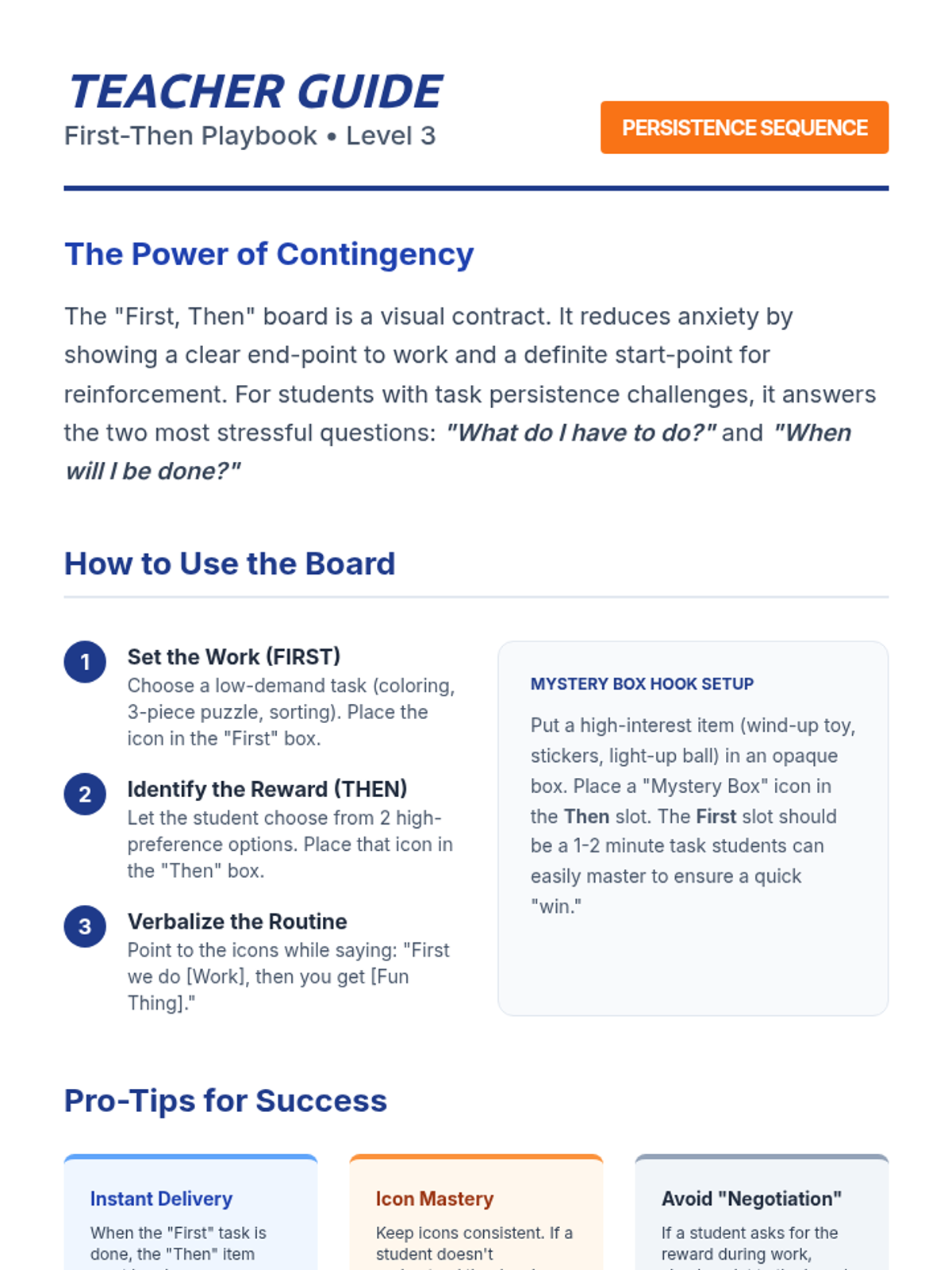
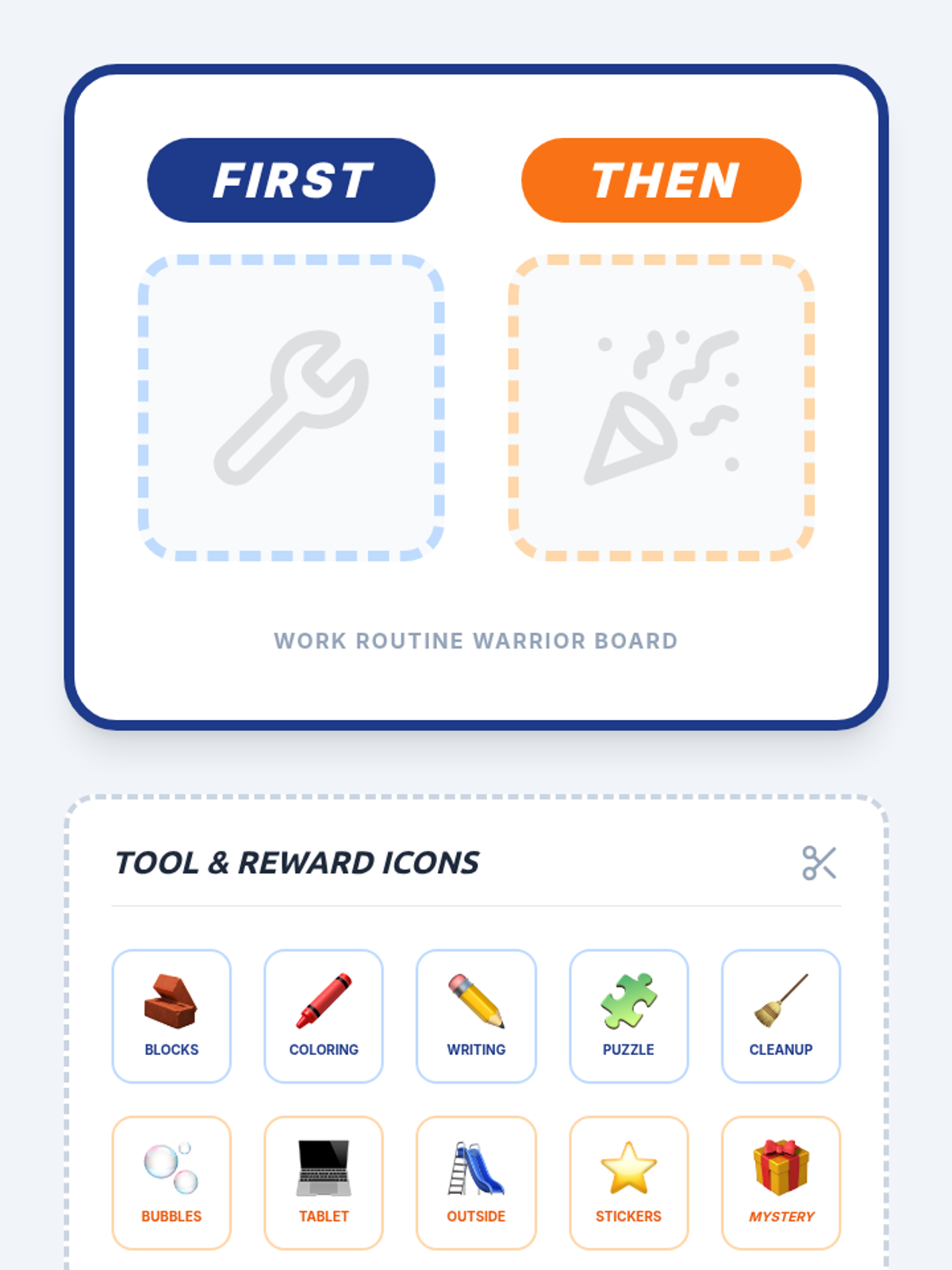
Students learn the logic of 'First Work, Then Reinforcer' using visual boards. The lesson involves completing a low-demand academic task followed immediately by a high-preference reward, reinforcing the concept that persistence leads to positive outcomes.
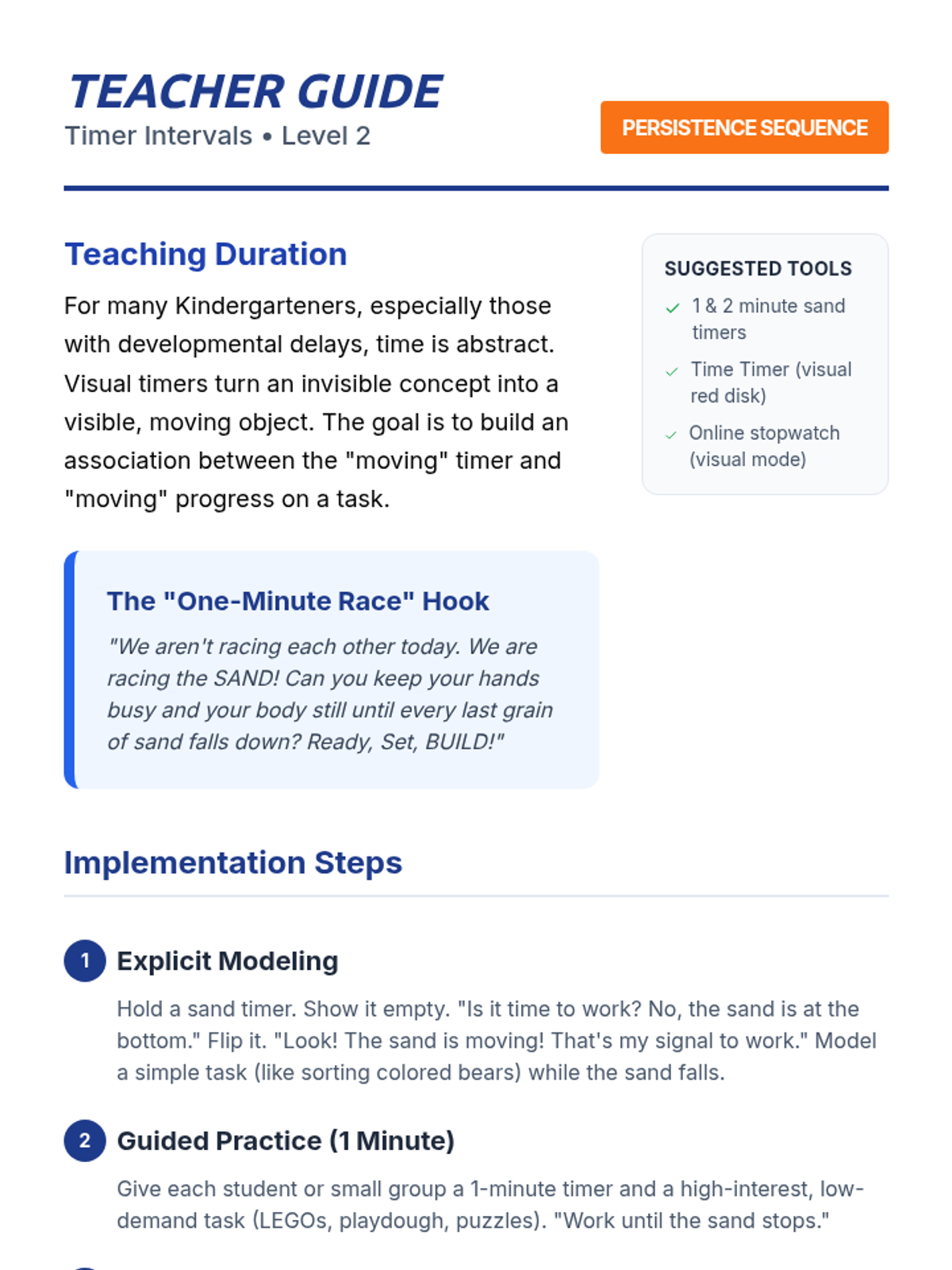
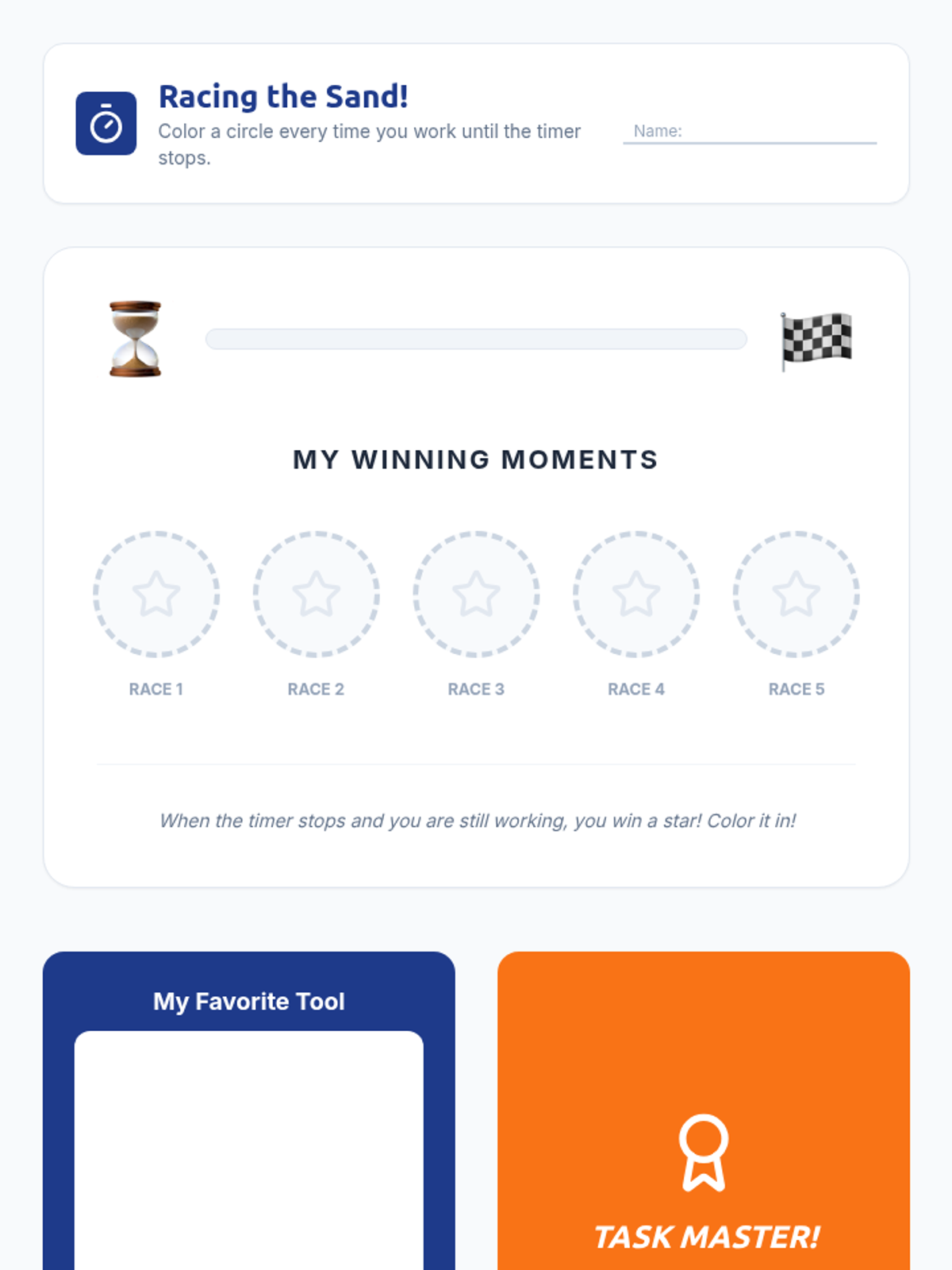
This lesson introduces visual timers (sand timers or digital countdown clocks) as concrete representations of work duration. Students engage in preferred high-interest tasks for very short intervals to associate the timer's movement with sustained focus.
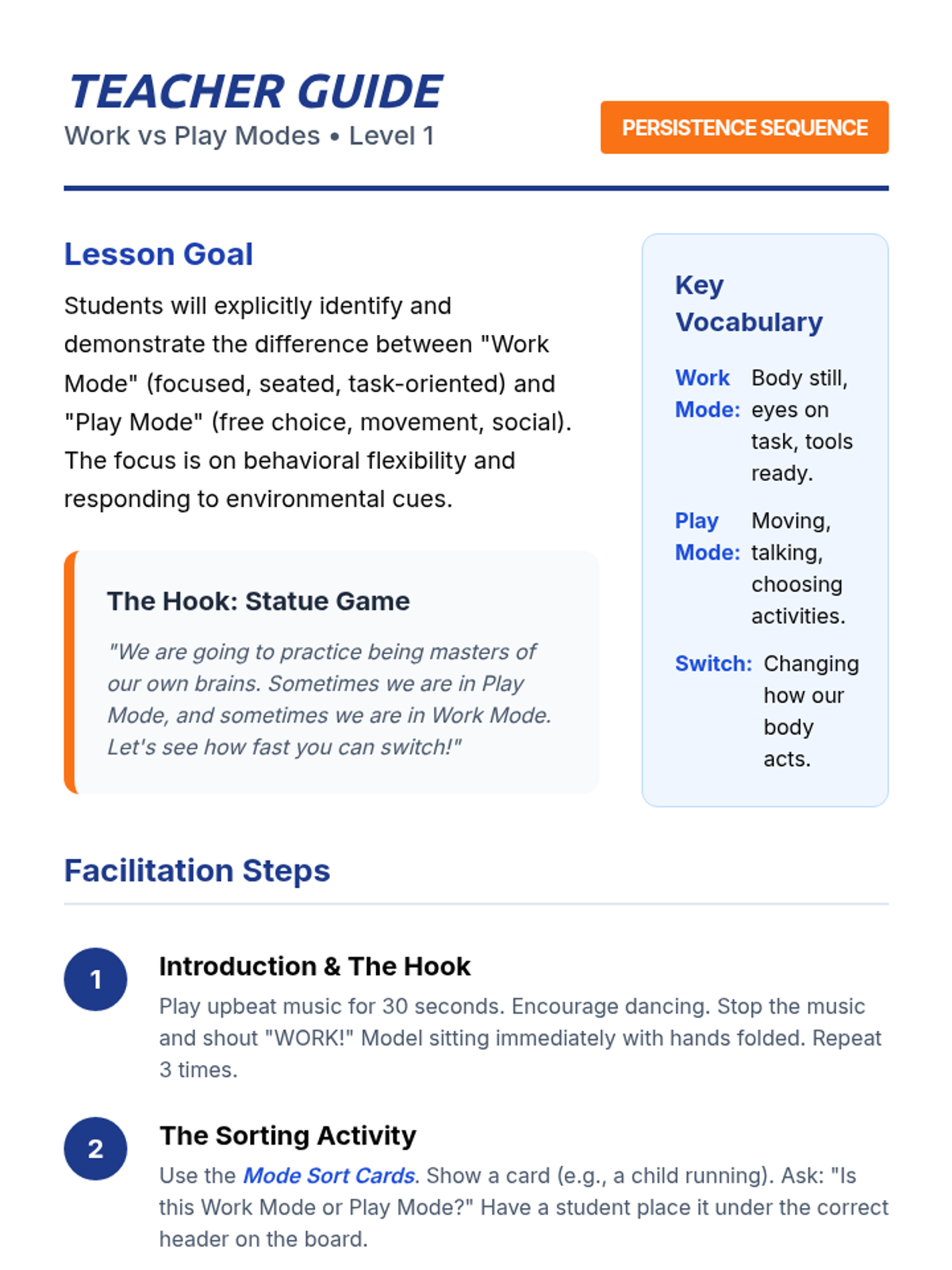
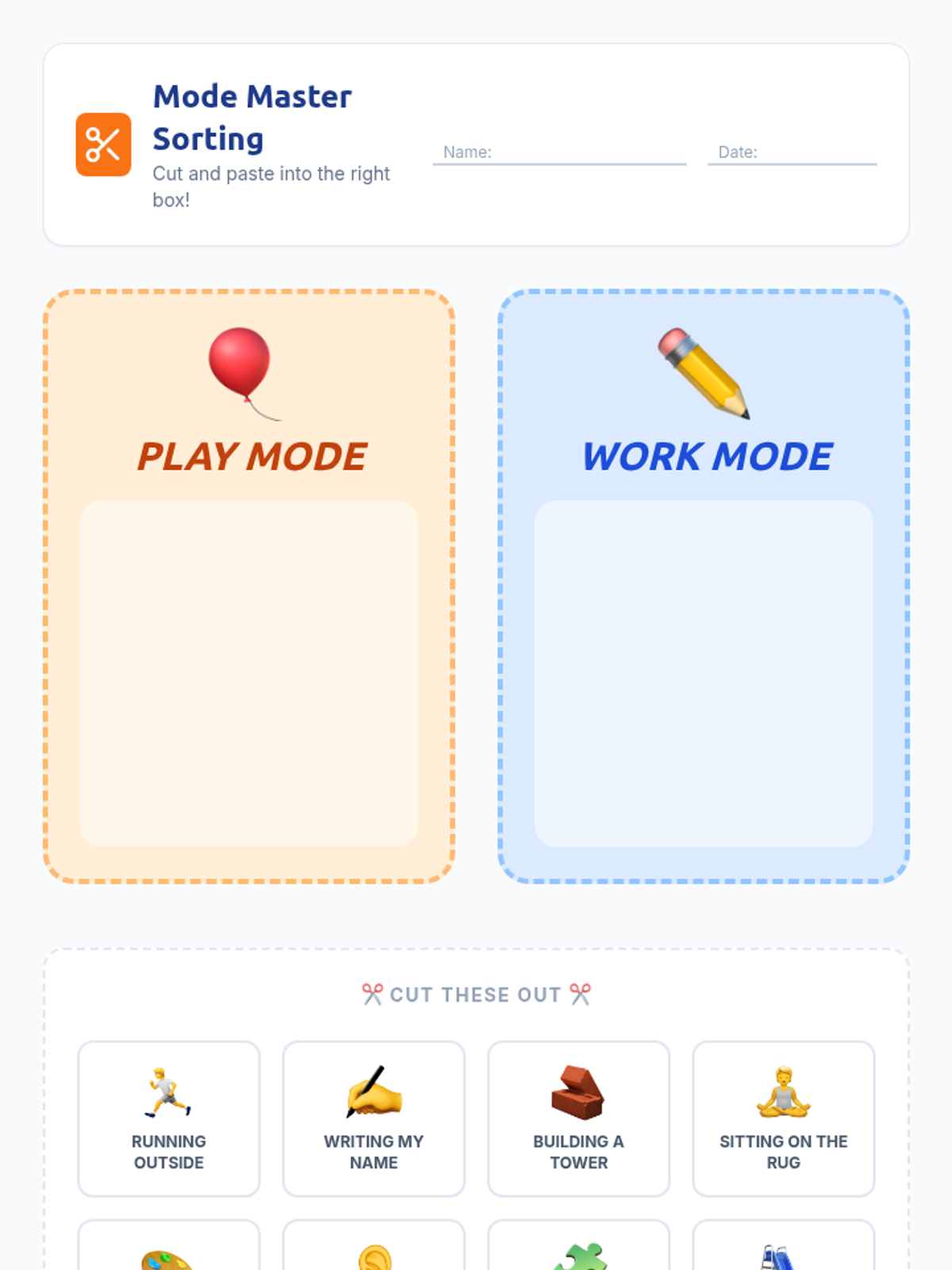
Students distinguish between 'working' and 'playing' behaviors through explicit modeling and sorting activities. This lesson establishes the behavioral expectations for different classroom modes.
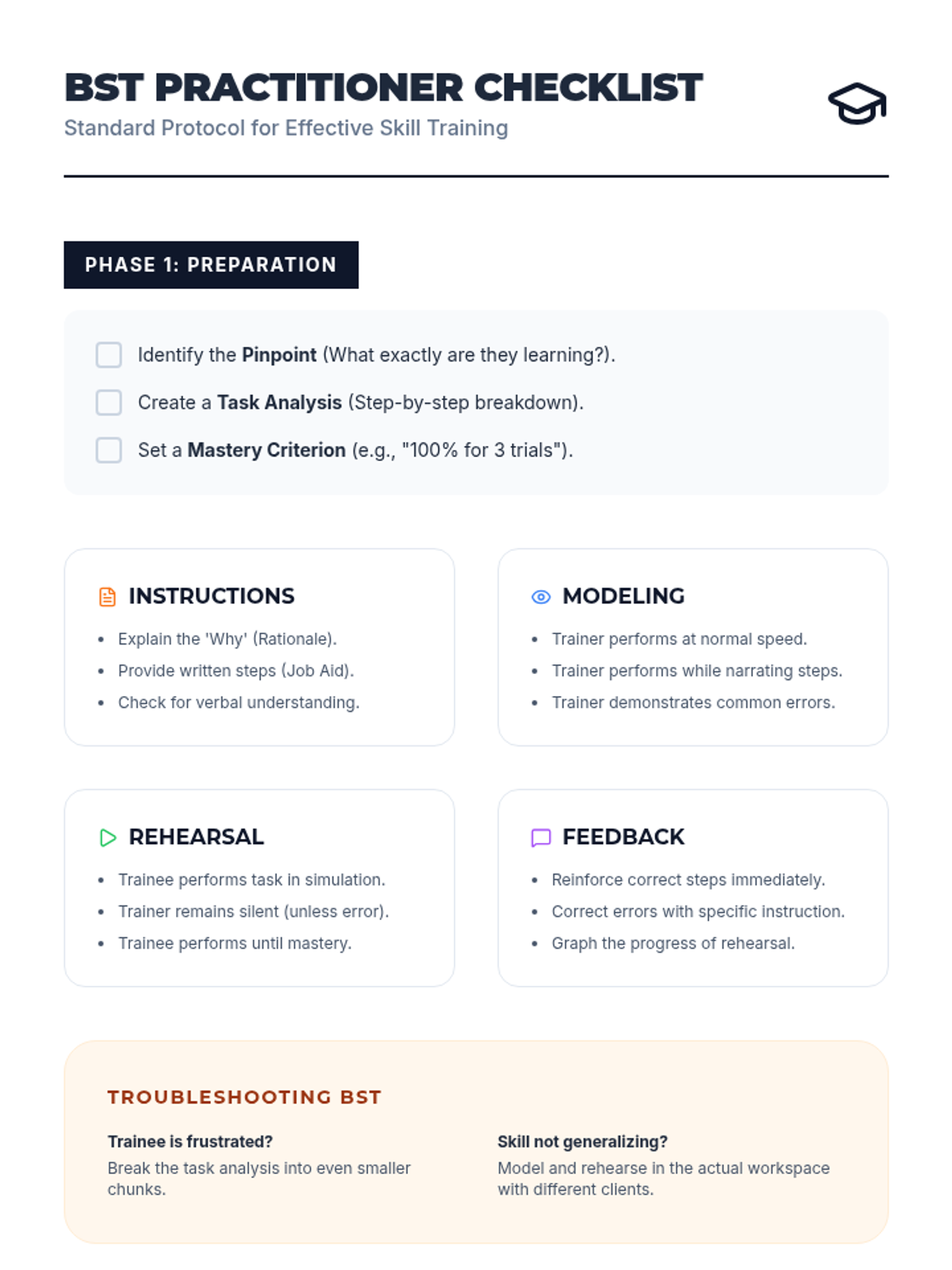
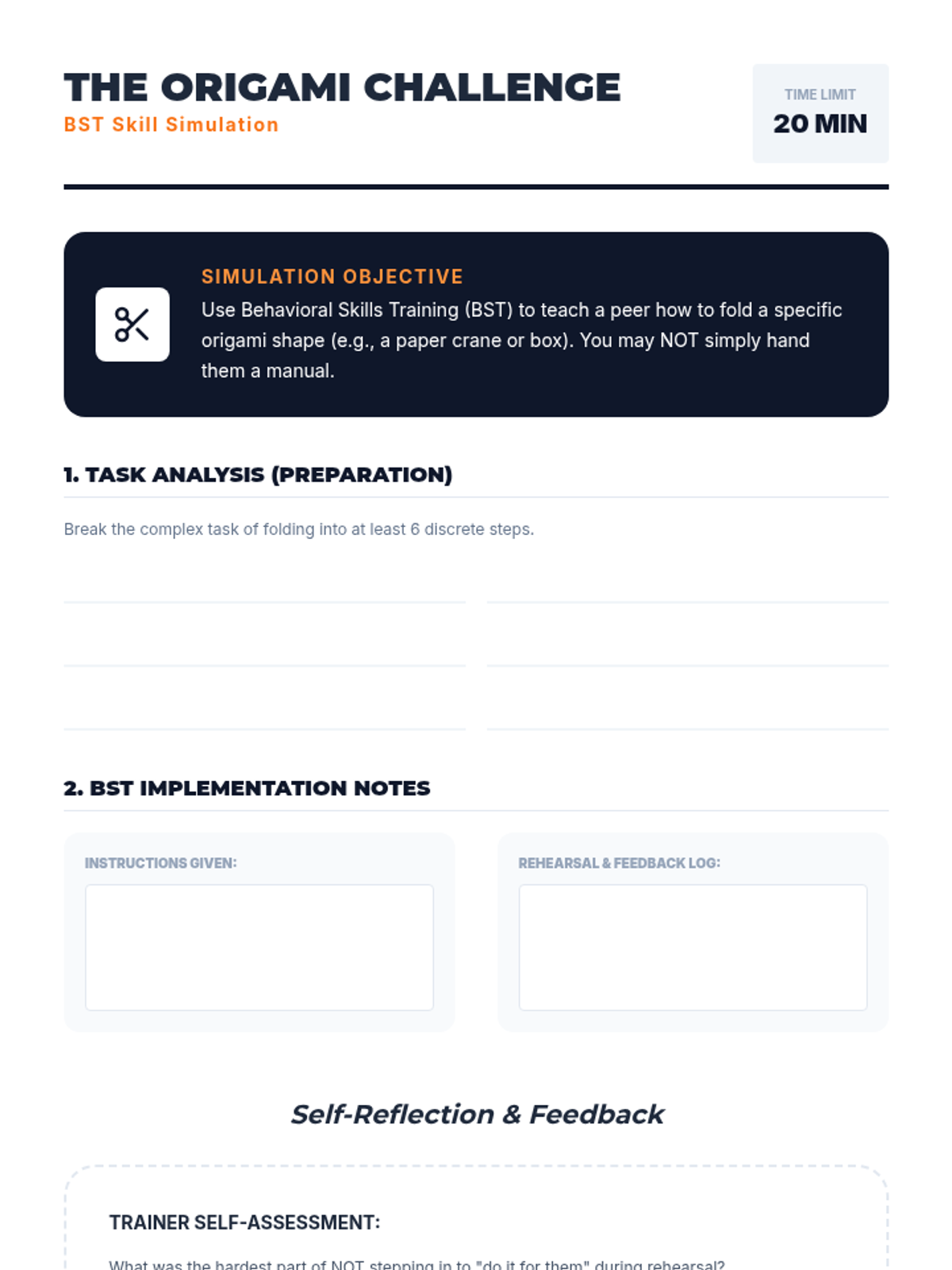
Mastery of the Behavioral Skills Training (BST) model to effectively train staff and ensure the maintenance of skills through reinforcement.
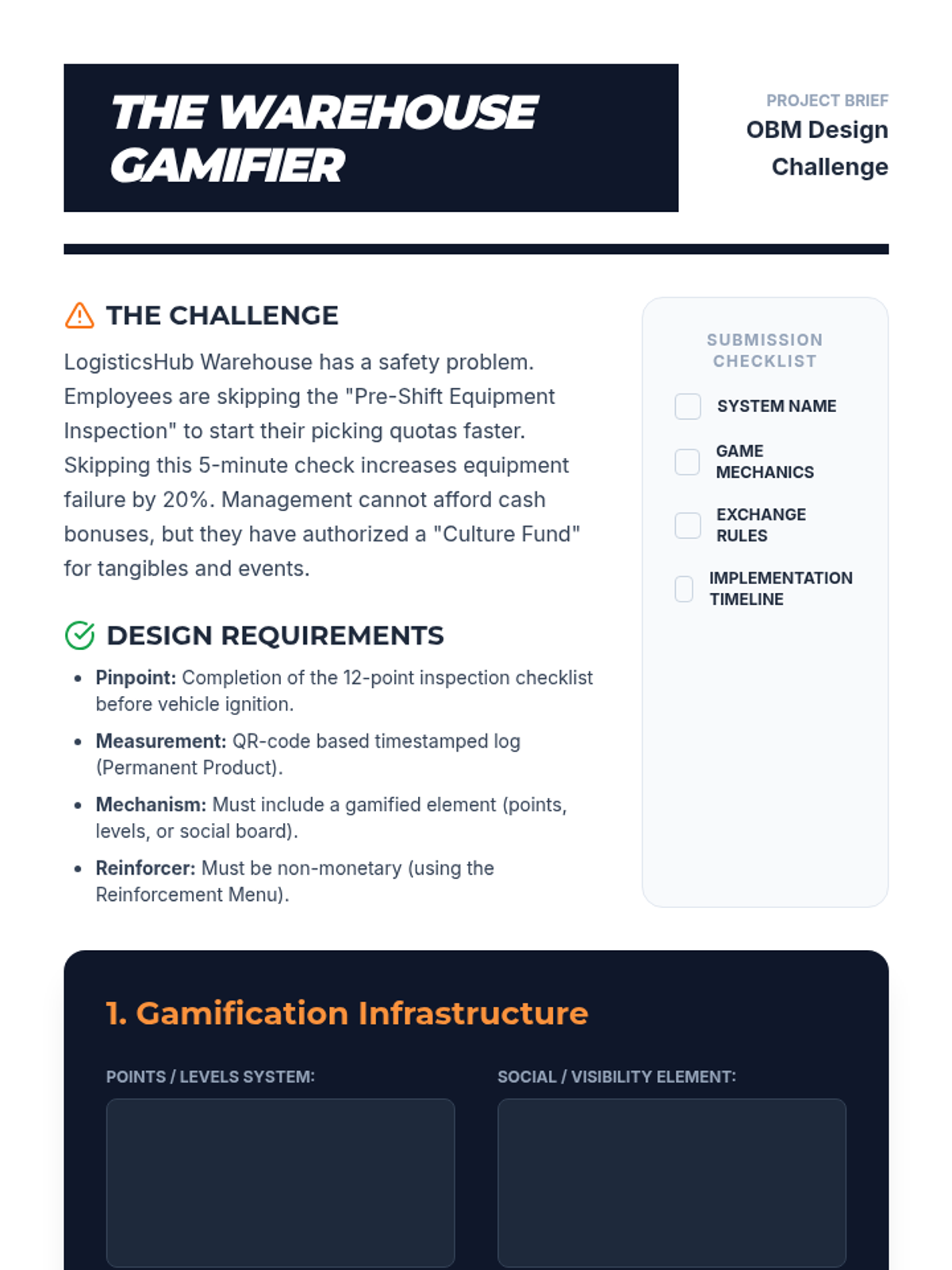
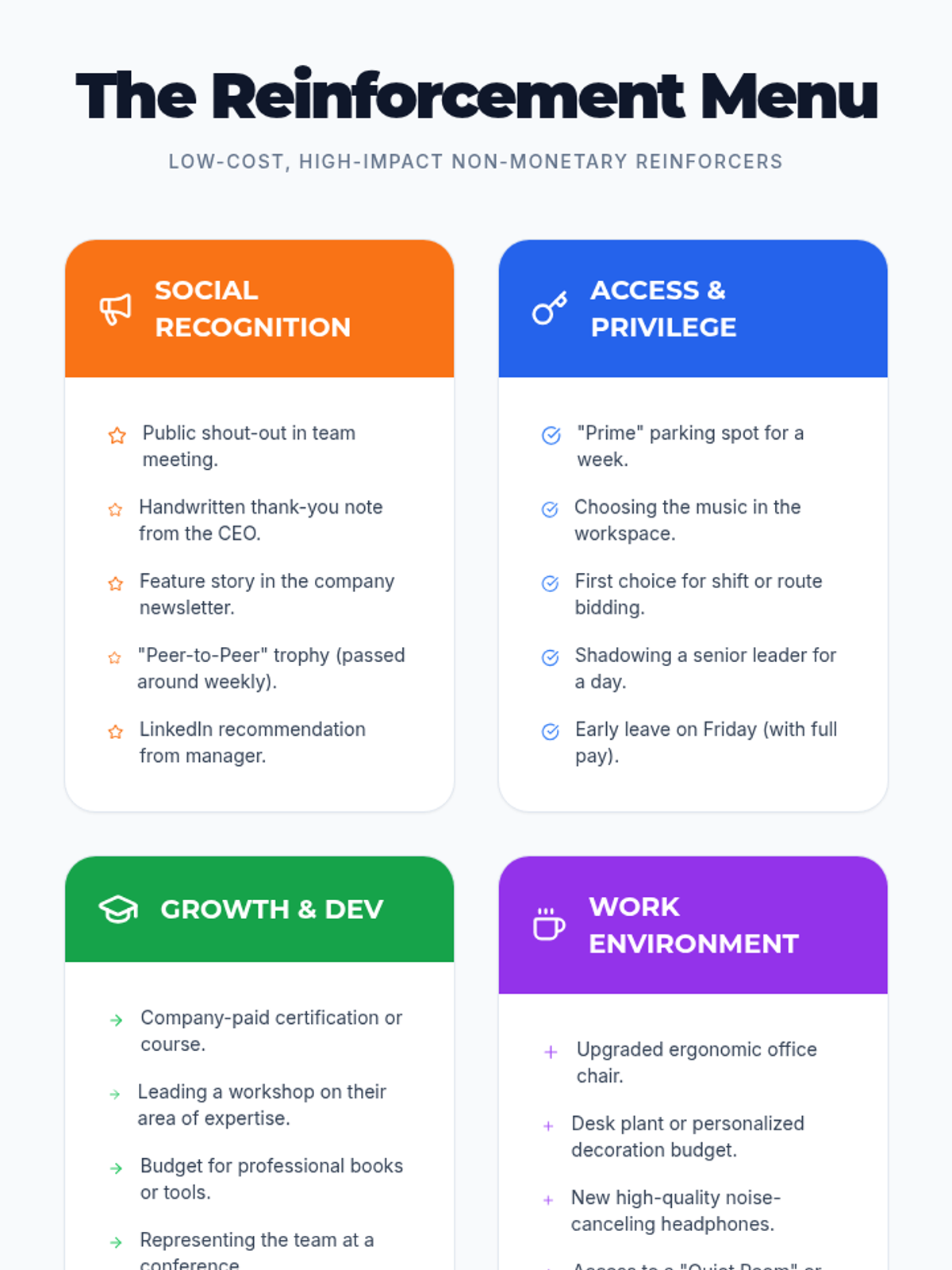
Design of reinforcement systems using non-monetary incentives, gamification, and social recognition to drive workplace performance.
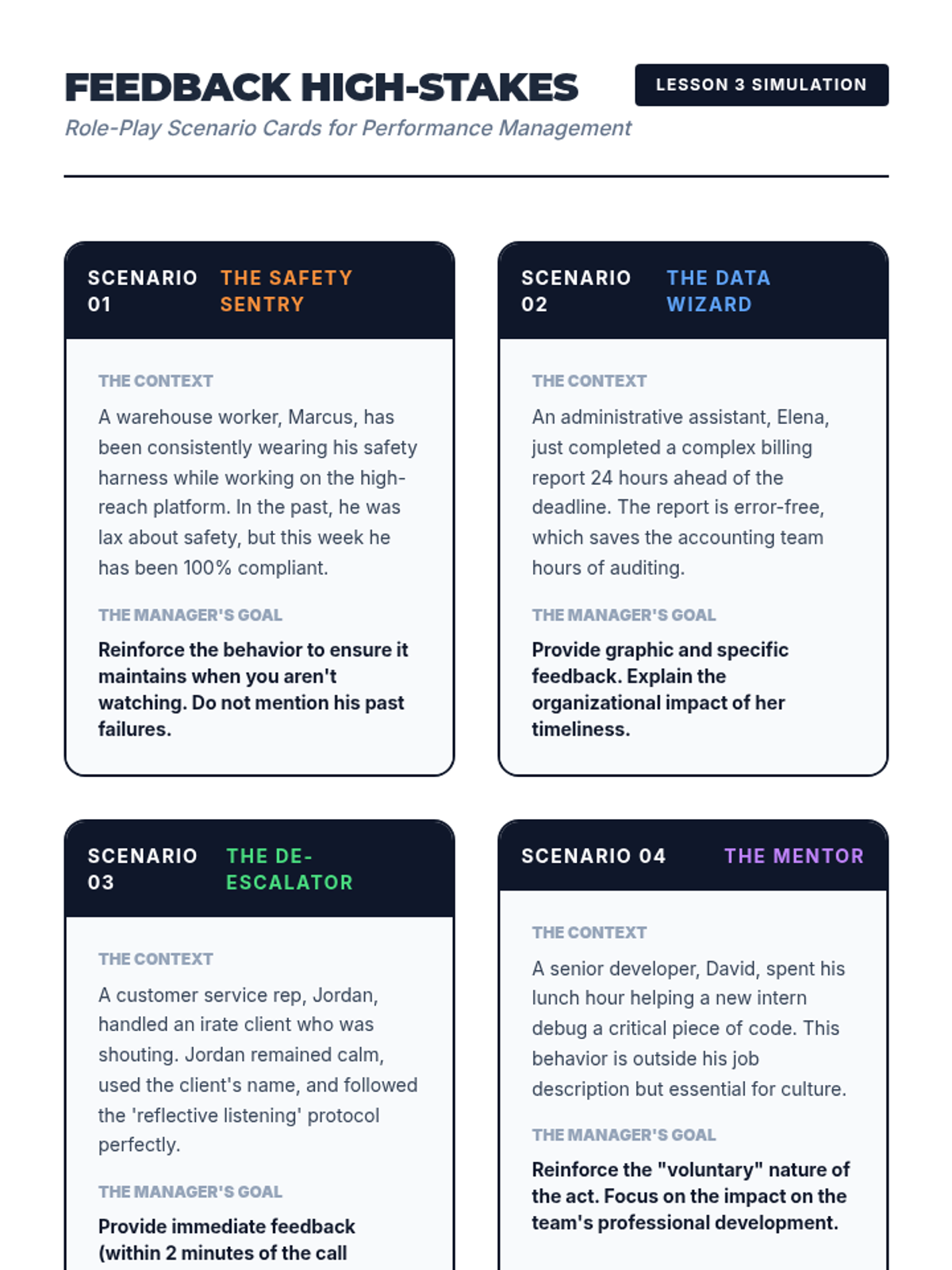
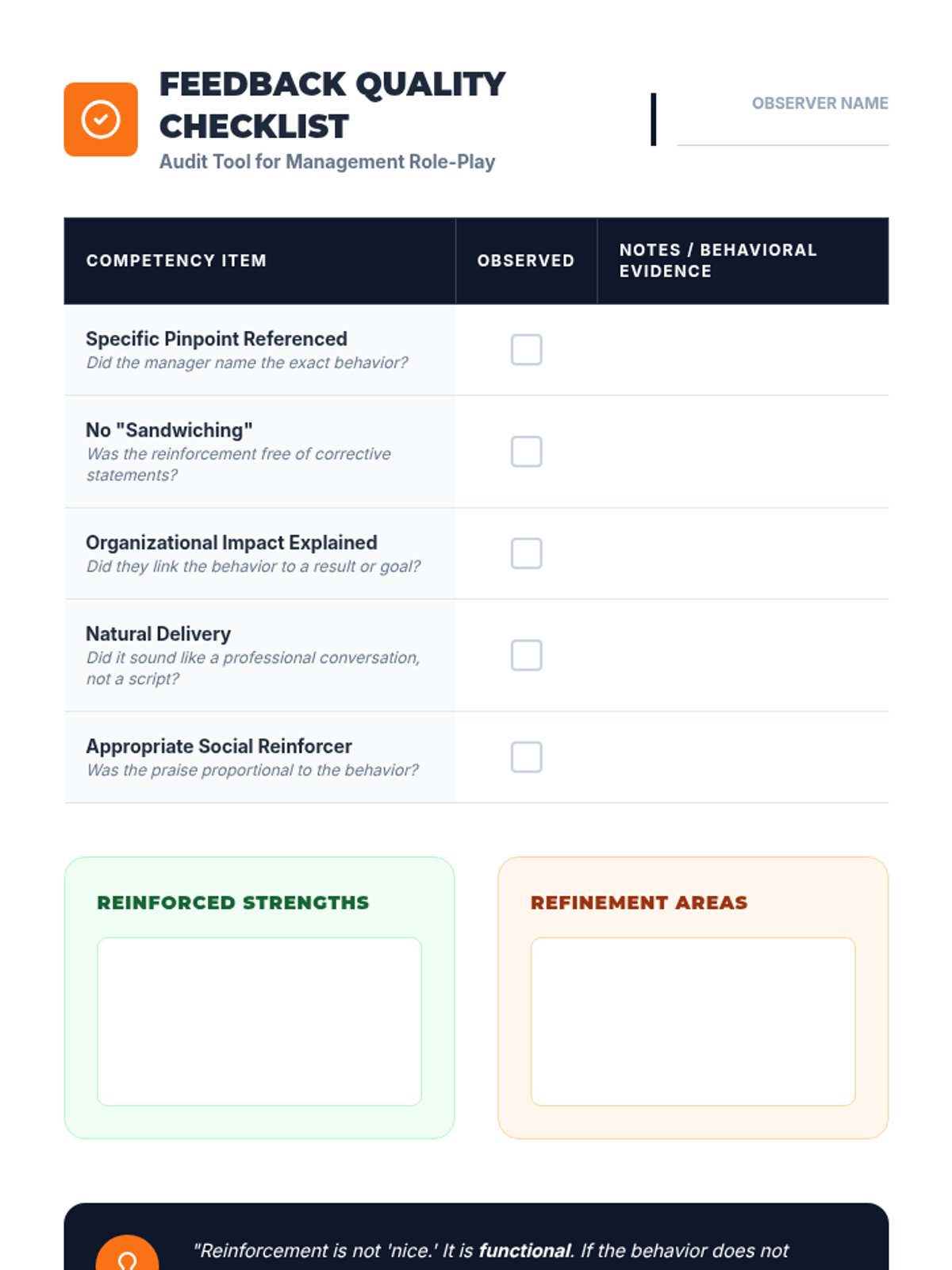
Exploration of feedback as a reinforcer, focusing on the delivery of specific, immediate behavioral feedback in management contexts.
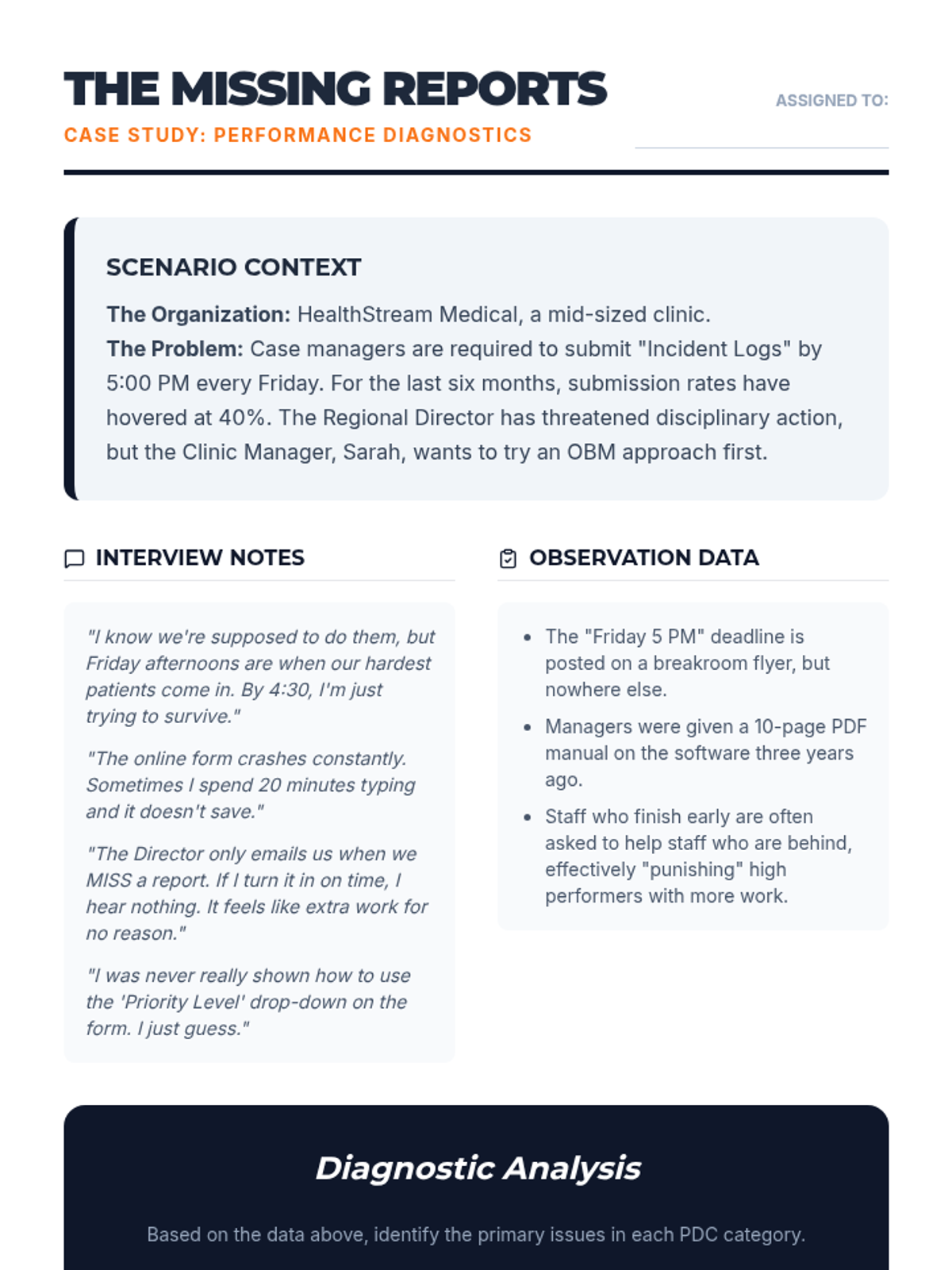
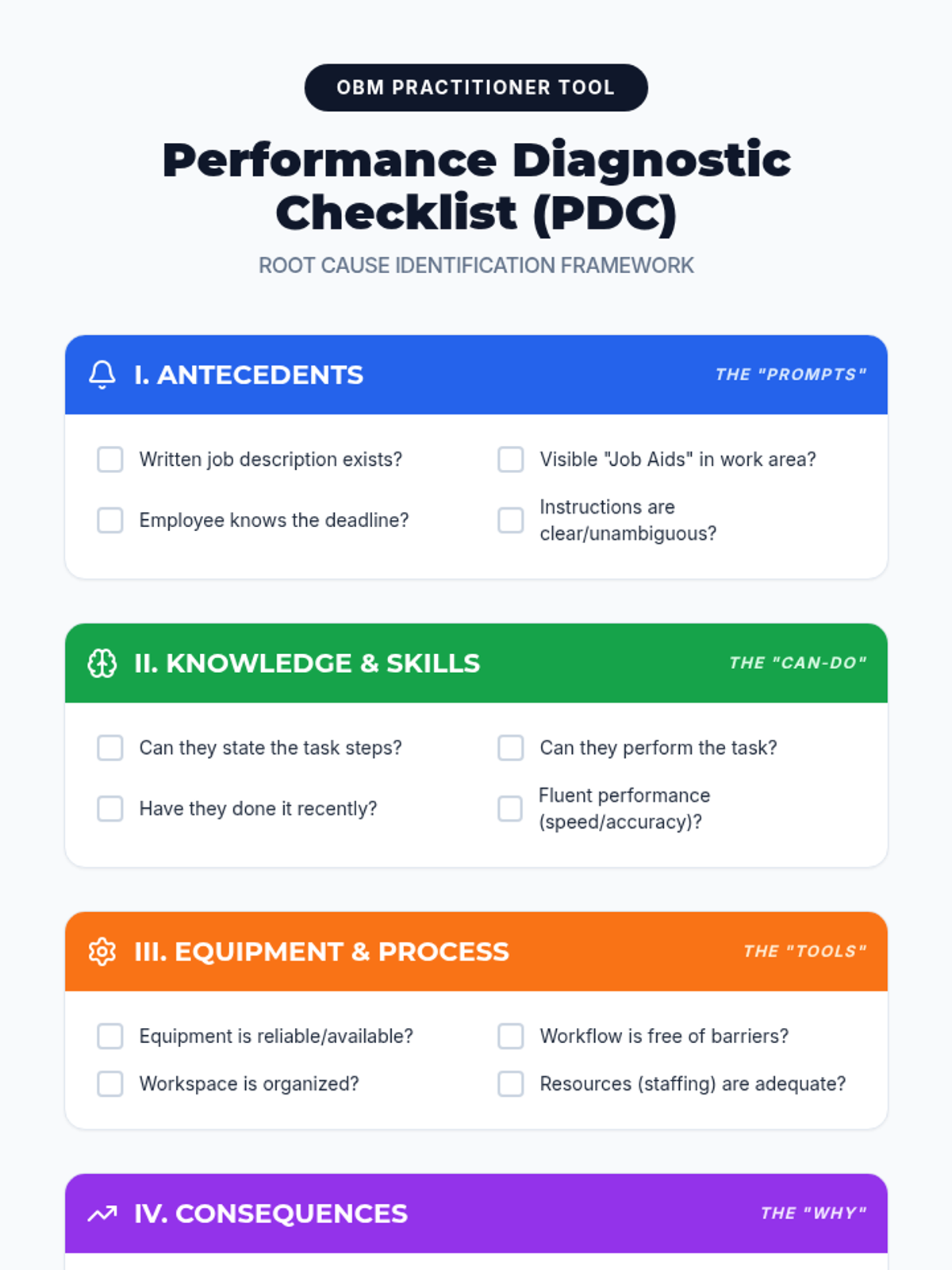
Introduction to the Performance Diagnostic Checklist (PDC) as a tool for root cause analysis to distinguish between skill deficits and motivational issues.
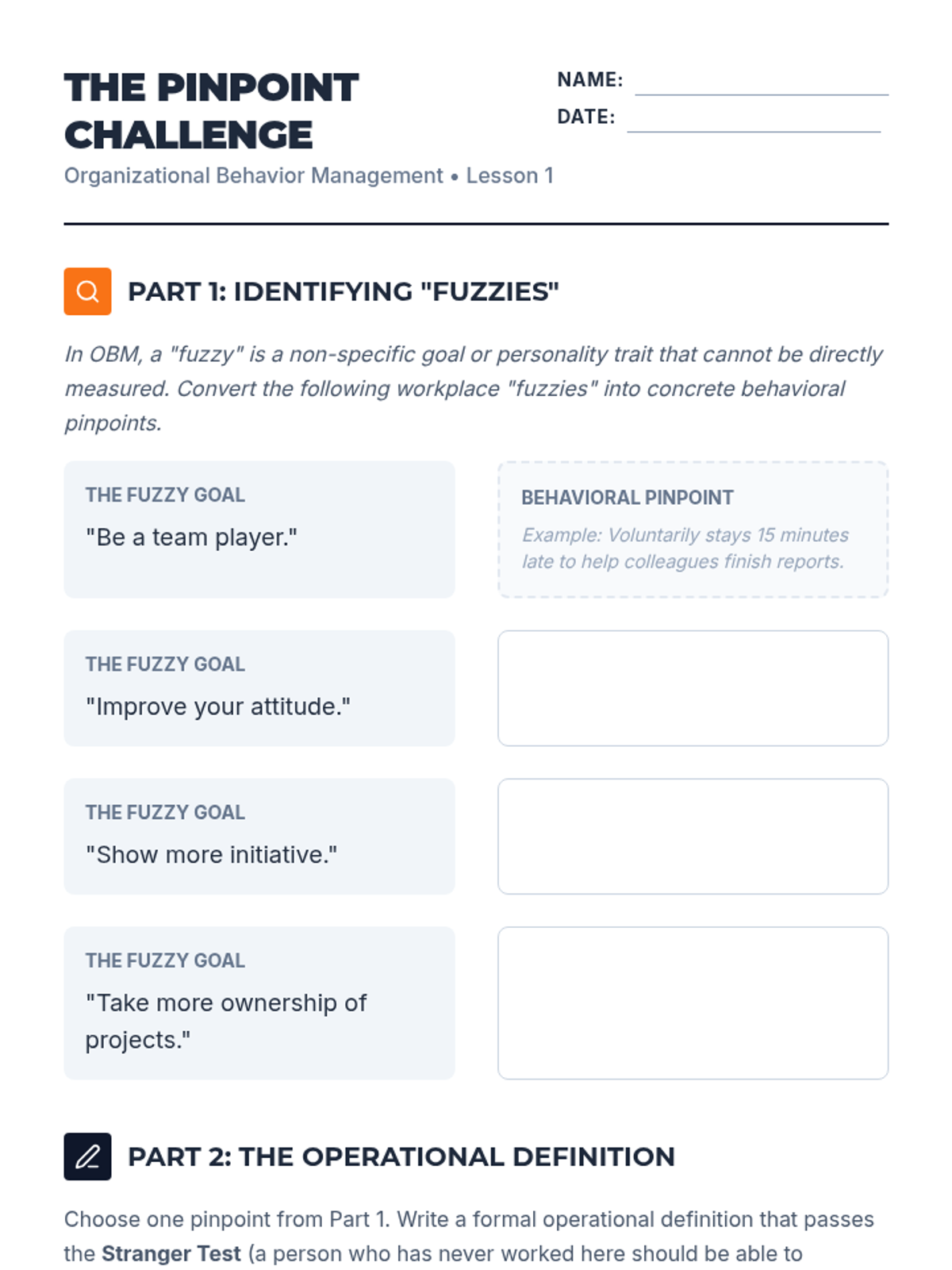
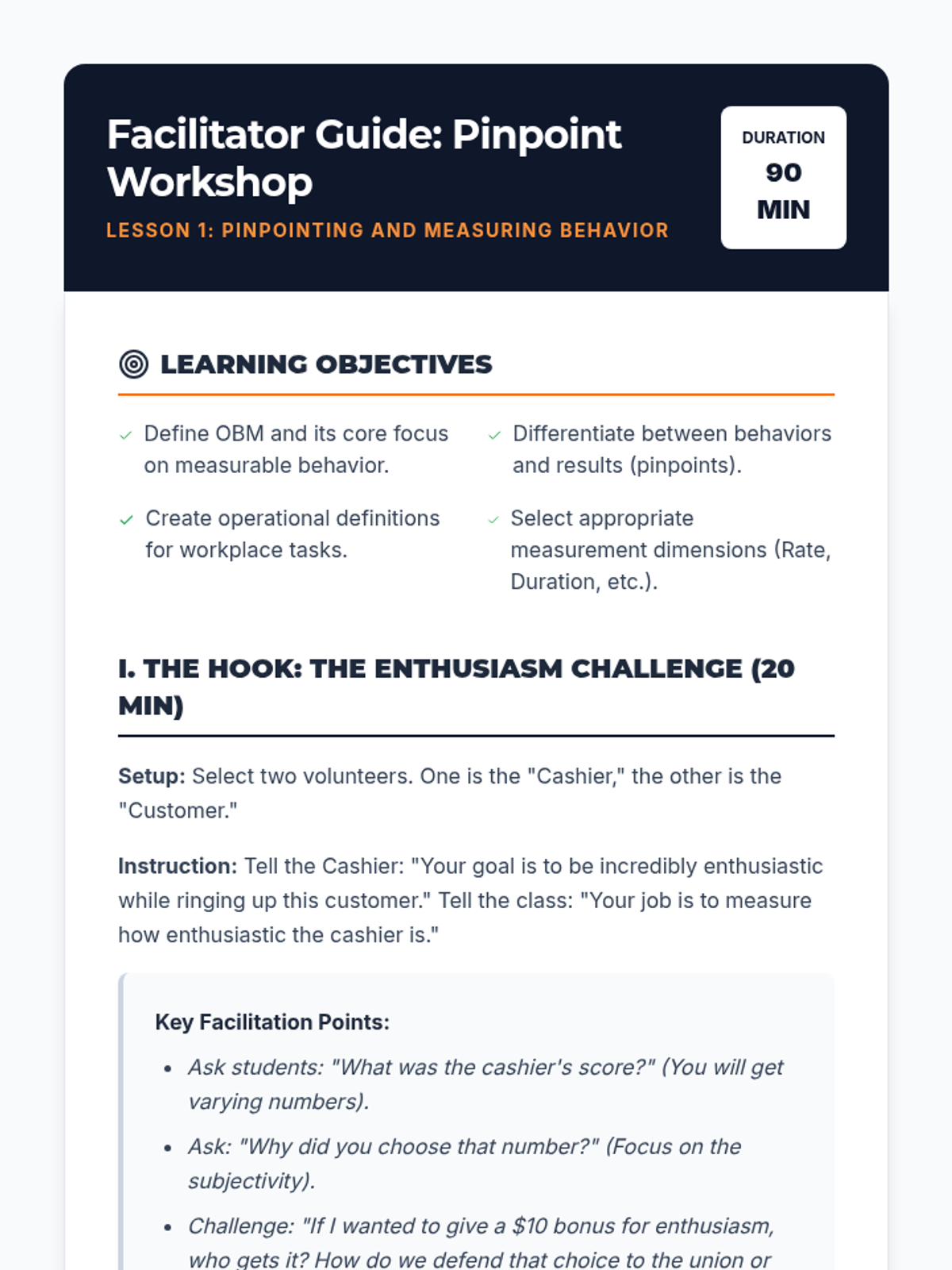
Students learn to translate vague organizational goals into pinpointed, observable behaviors and develop measurement systems for workplace environments.
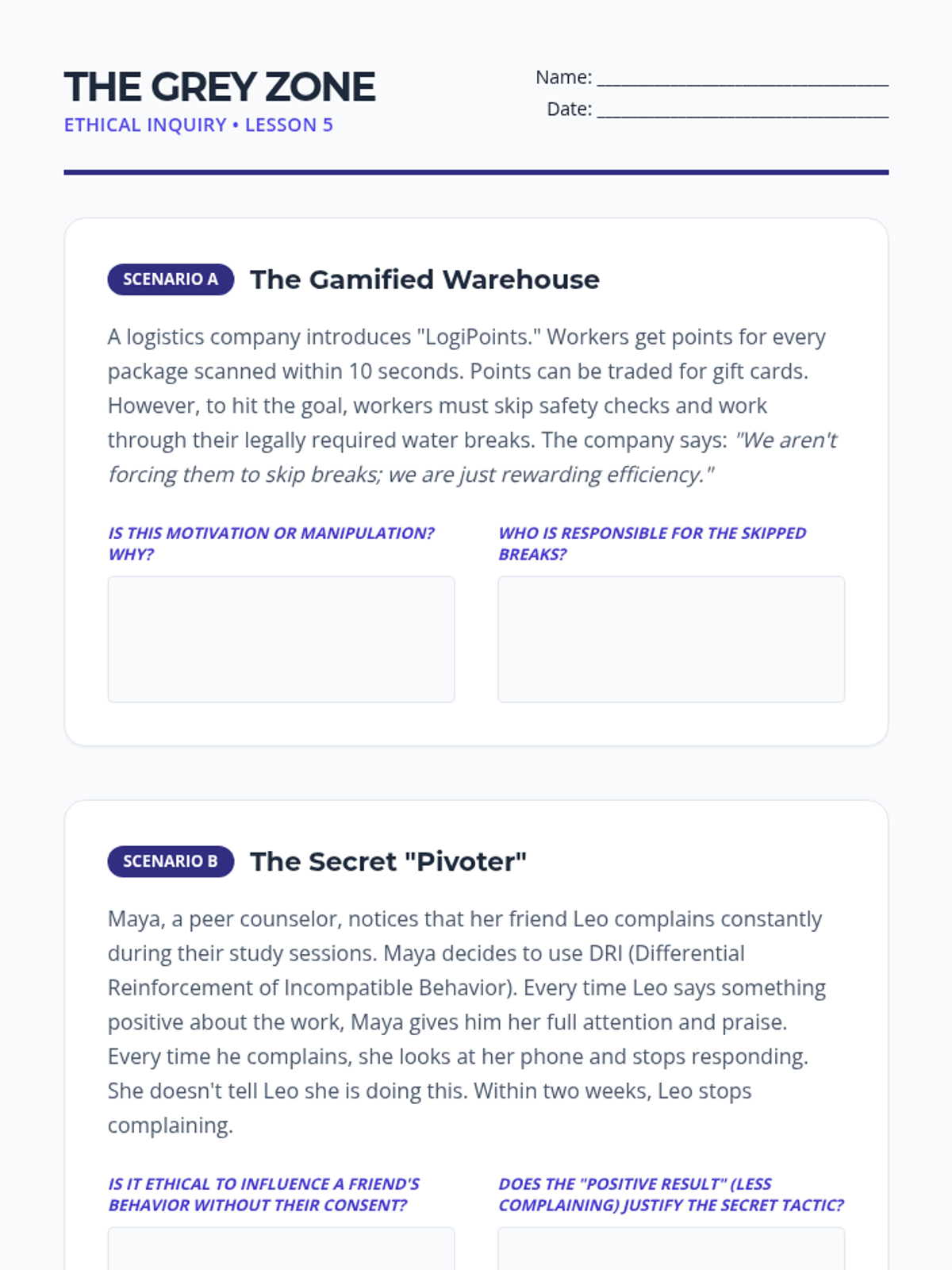
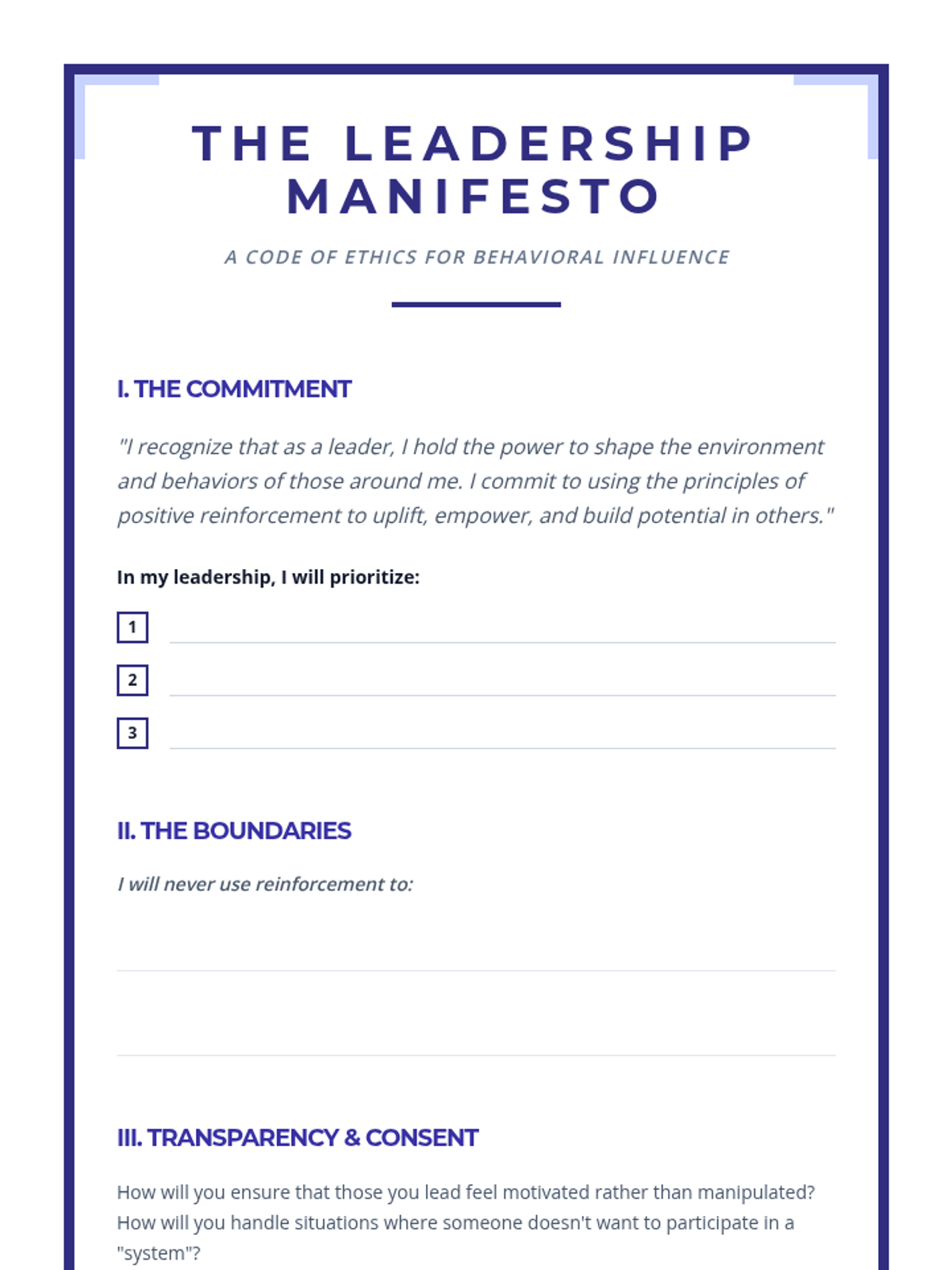
A deep dive into the ethics of behavioral leadership, debating the line between motivation and manipulation and creating a personal code of conduct.
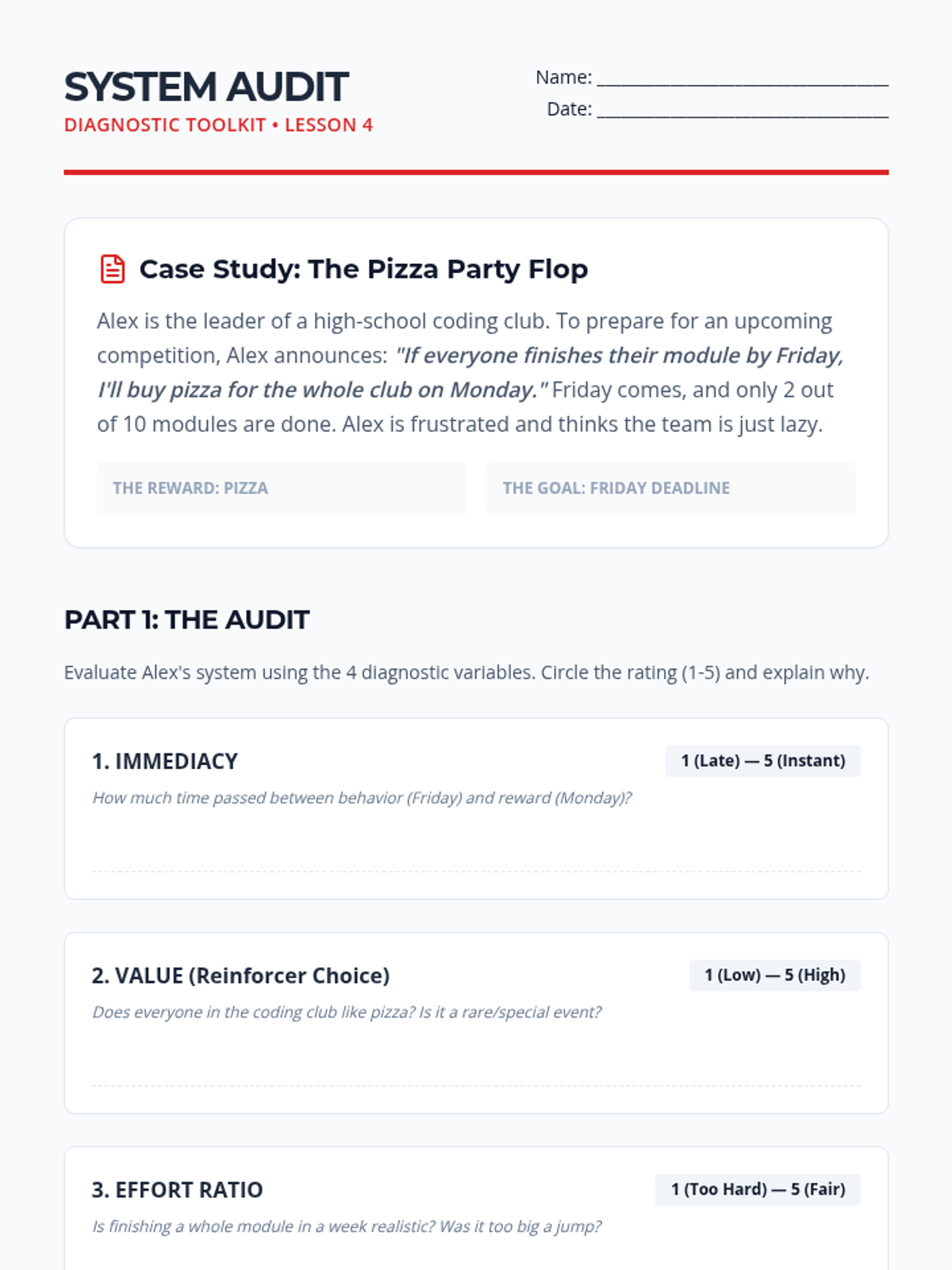
Students diagnose why certain reinforcement systems fail, looking at factors like lack of immediacy, poor reinforcer selection, and trust issues.
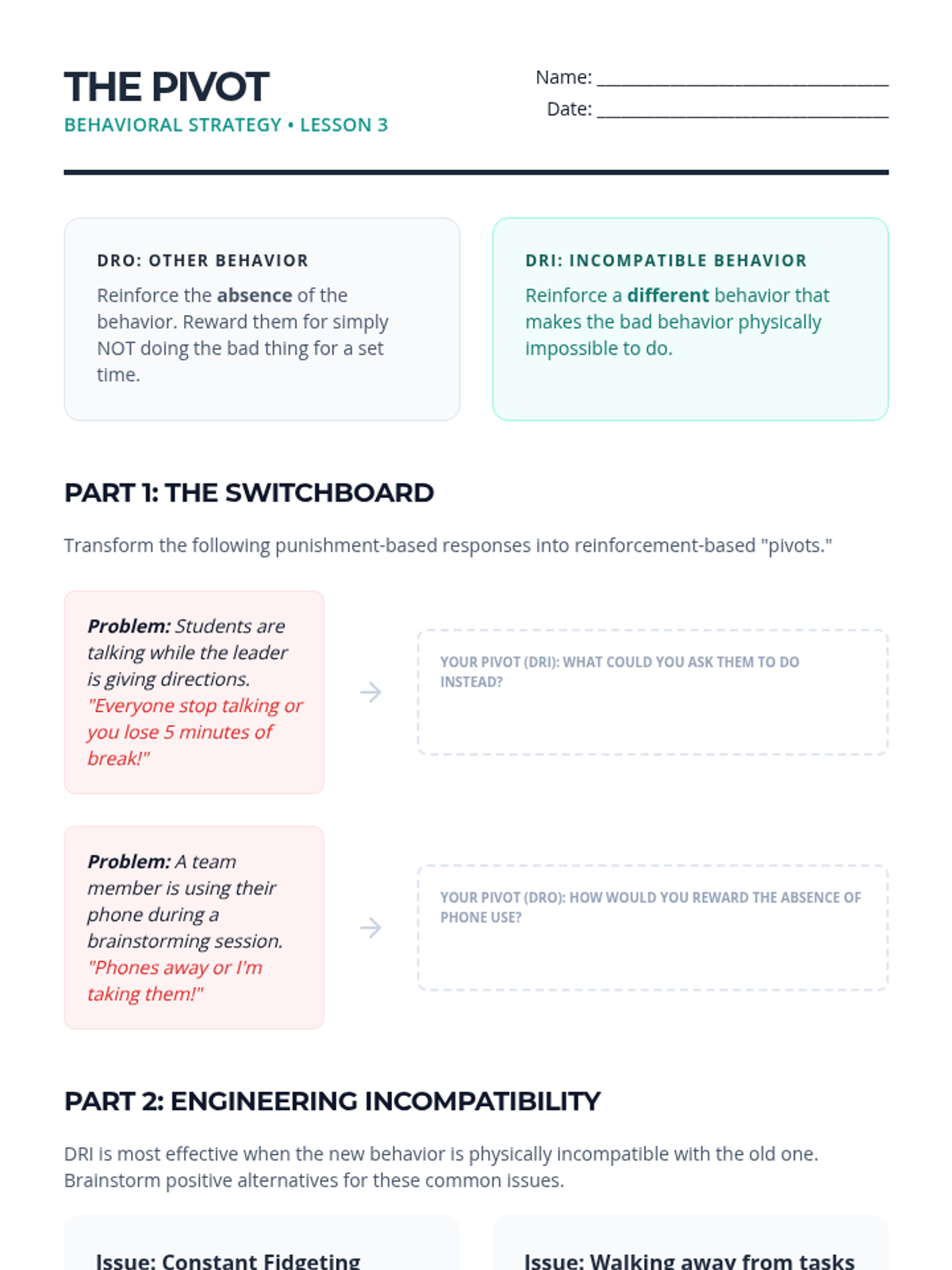
Students explore Differential Reinforcement of Other Behavior (DRO) as a tool for managing conflict and reducing unwanted behaviors without relying on punishment.
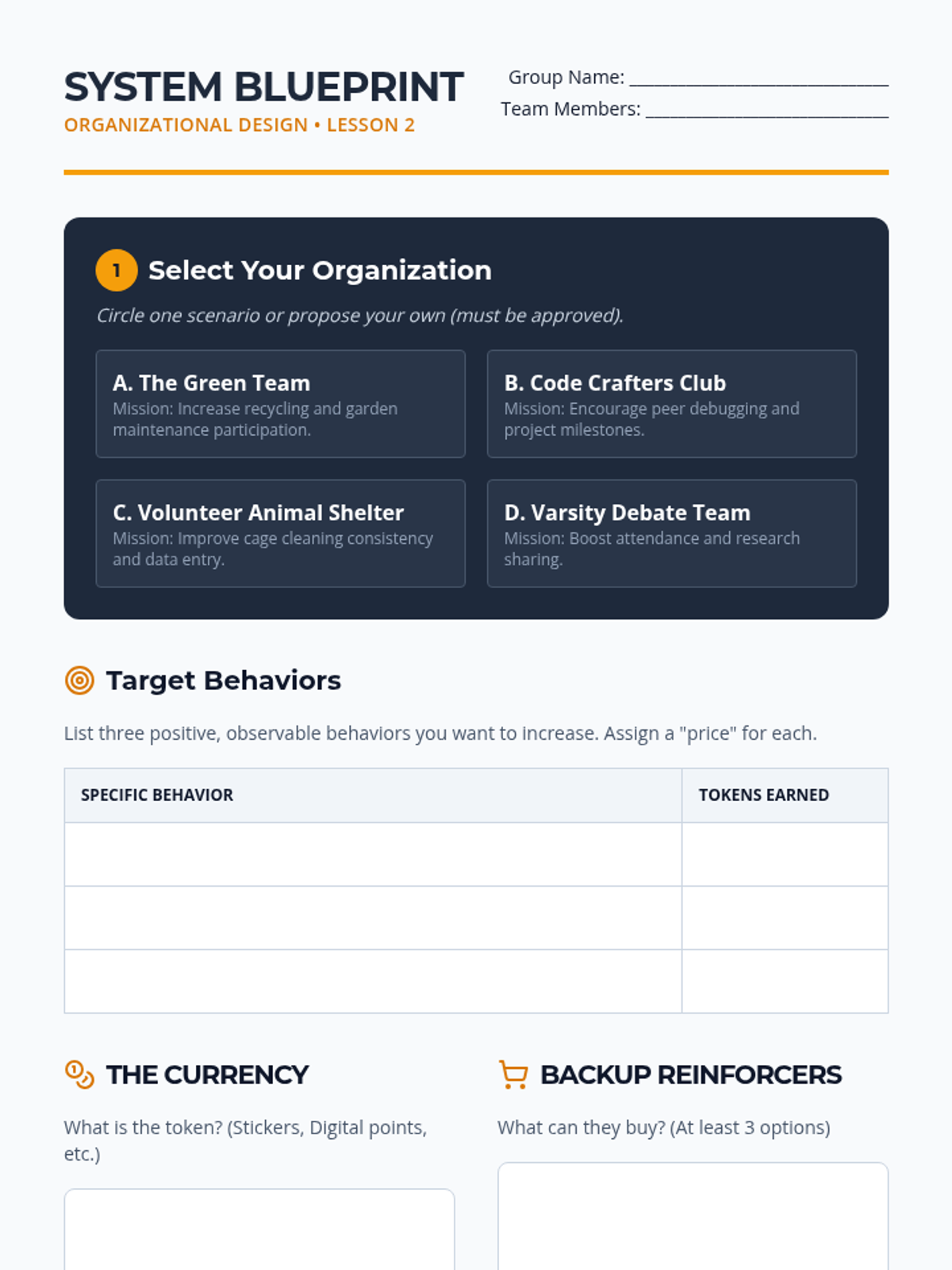
Groups design a token economy system for a hypothetical organization, identifying rules of exchange, currency, and backup reinforcers to improve group participation.
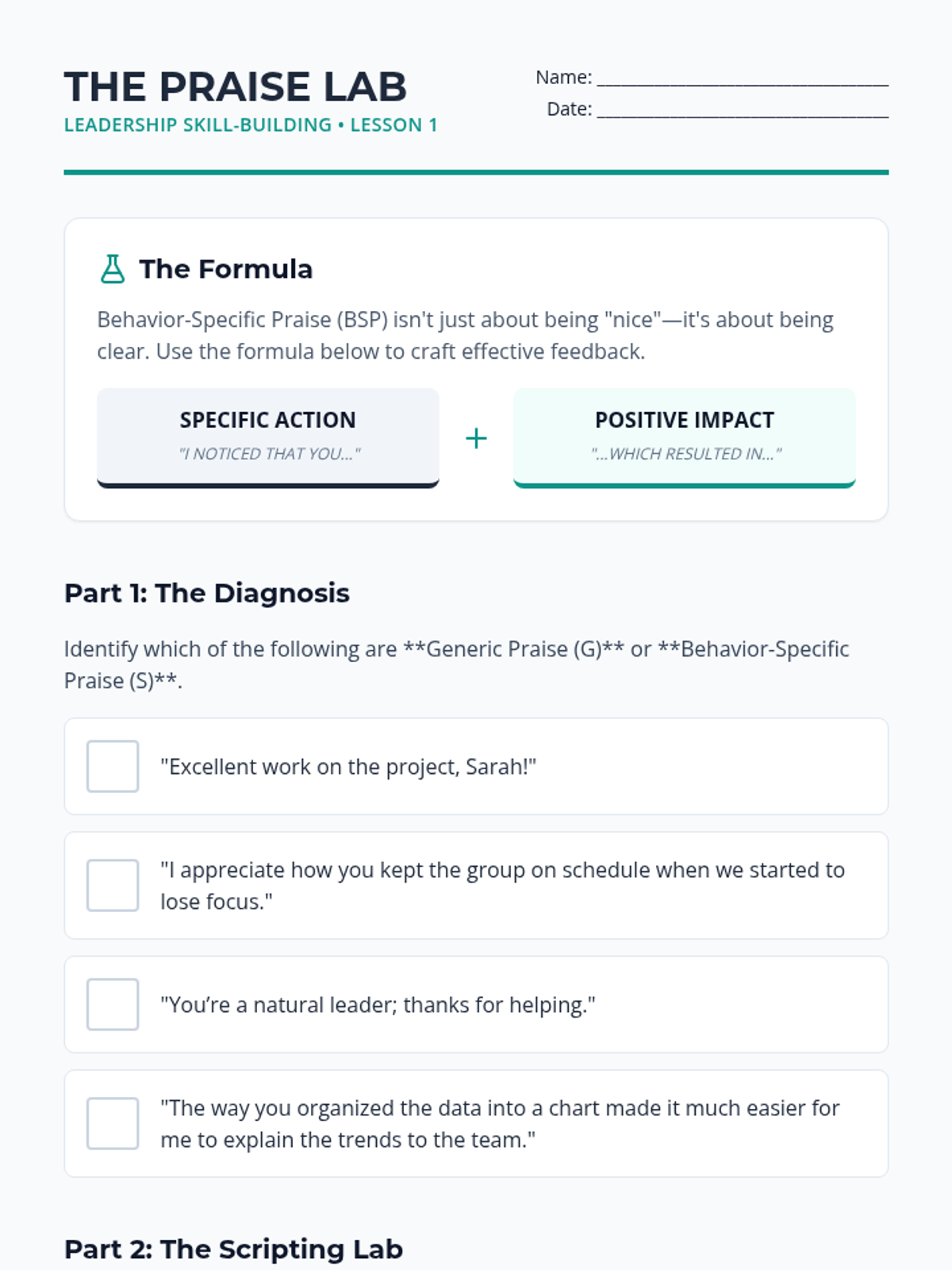
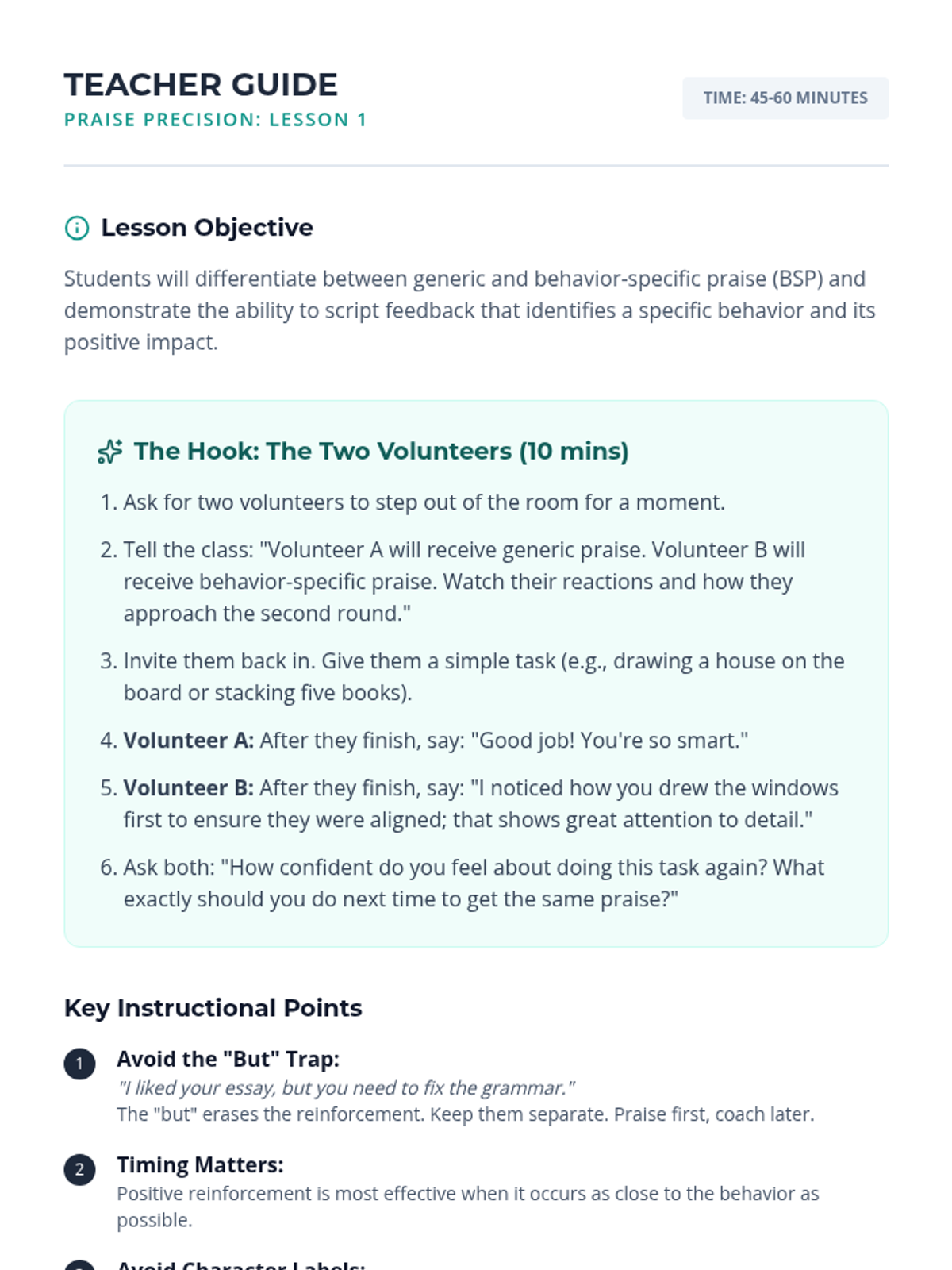
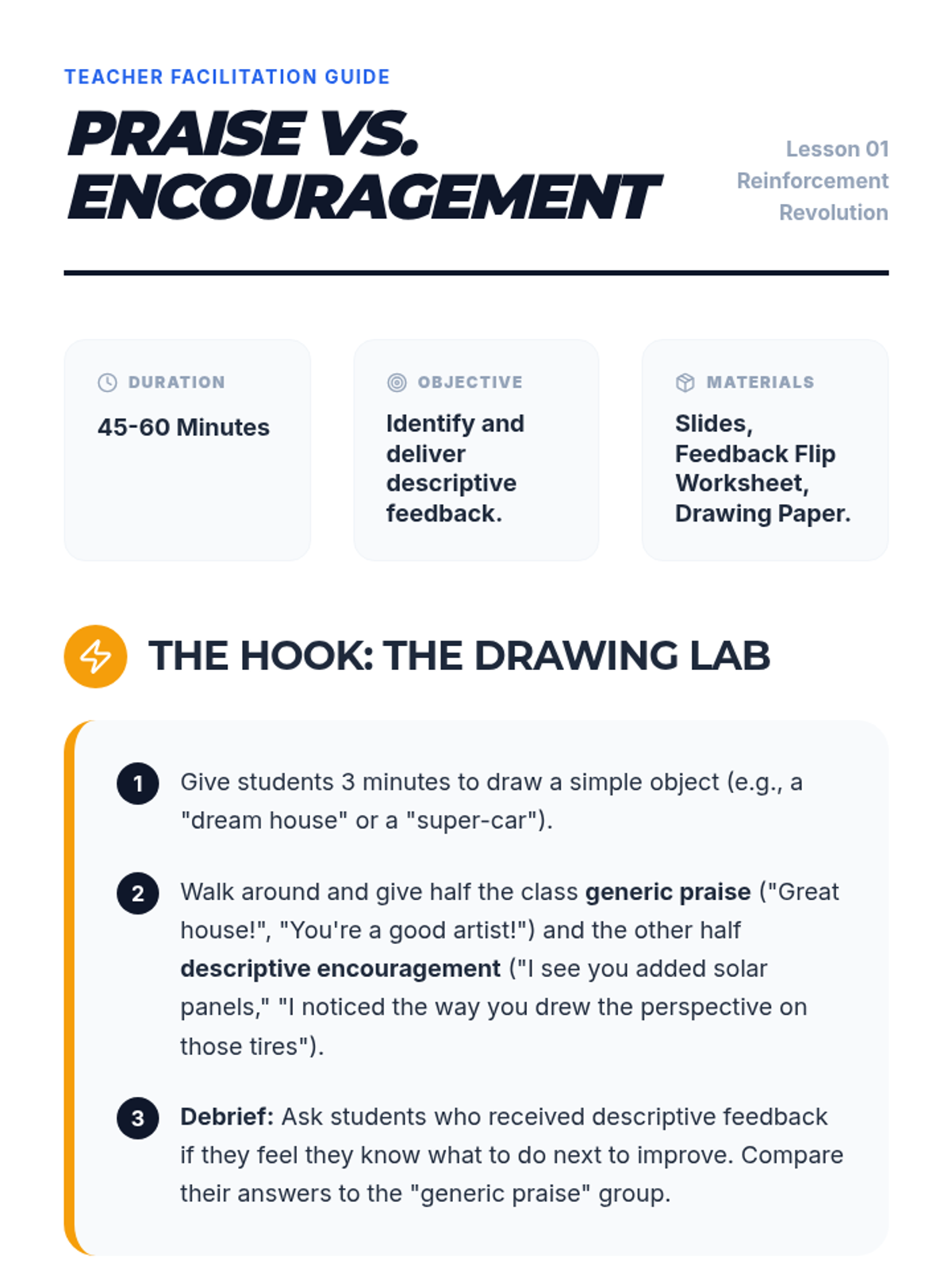
Students analyze the difference between generic and behavior-specific praise, practicing the art of clear, actionable feedback that reinforces specific positive actions.
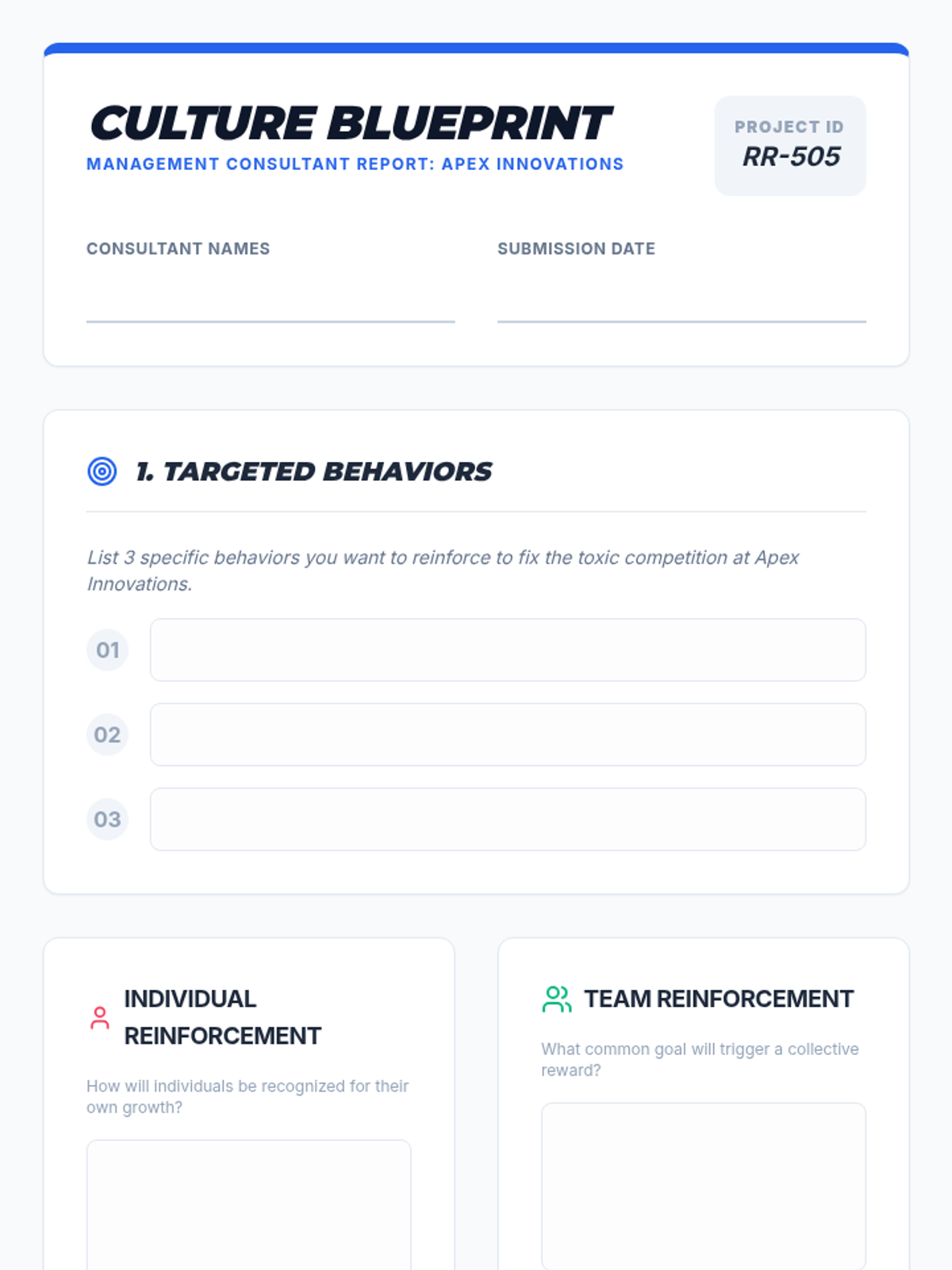
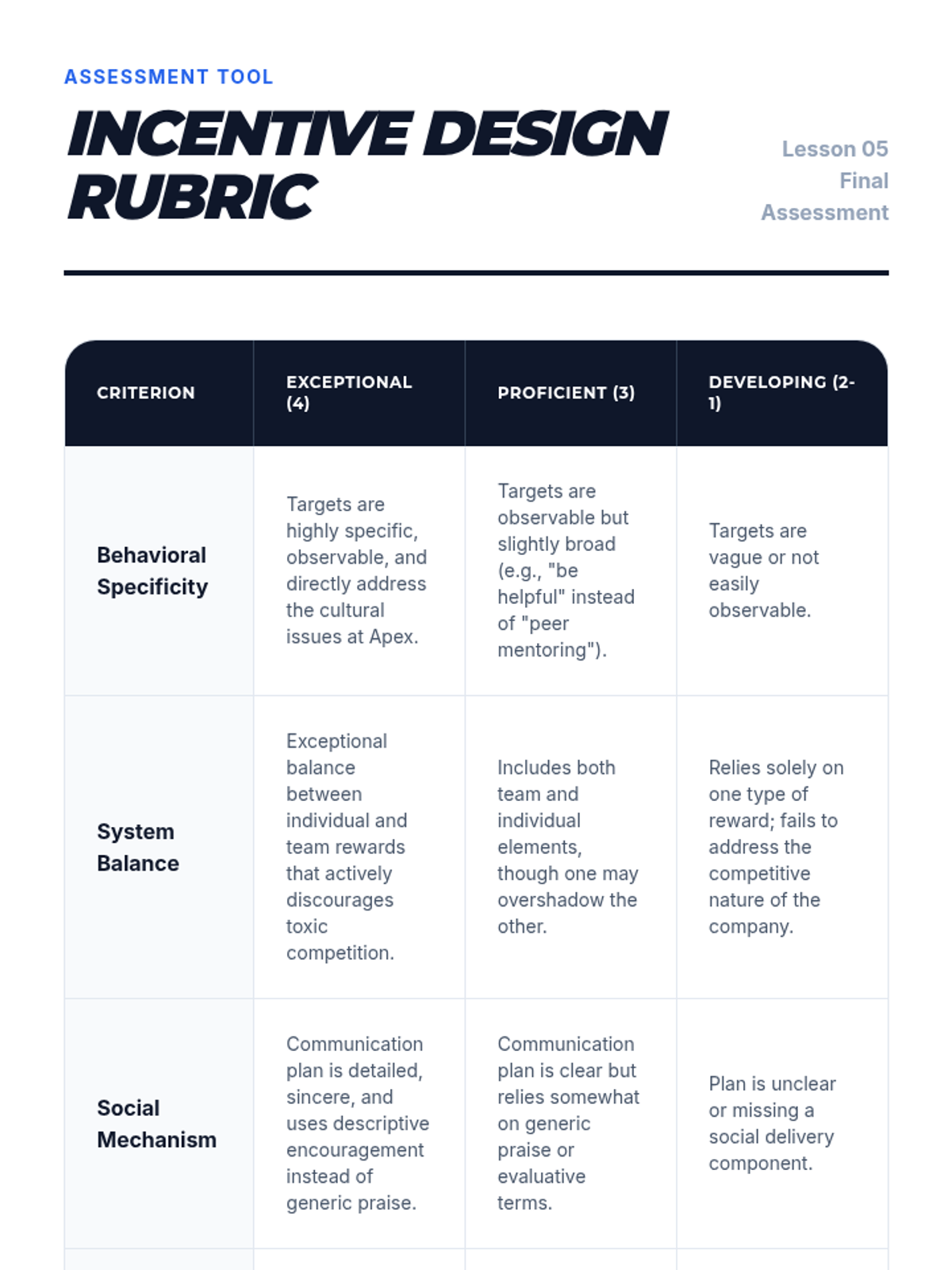
In this culminating activity, students act as management consultants designing a reinforcement system for a struggling organization, balancing individual rewards with team goals.
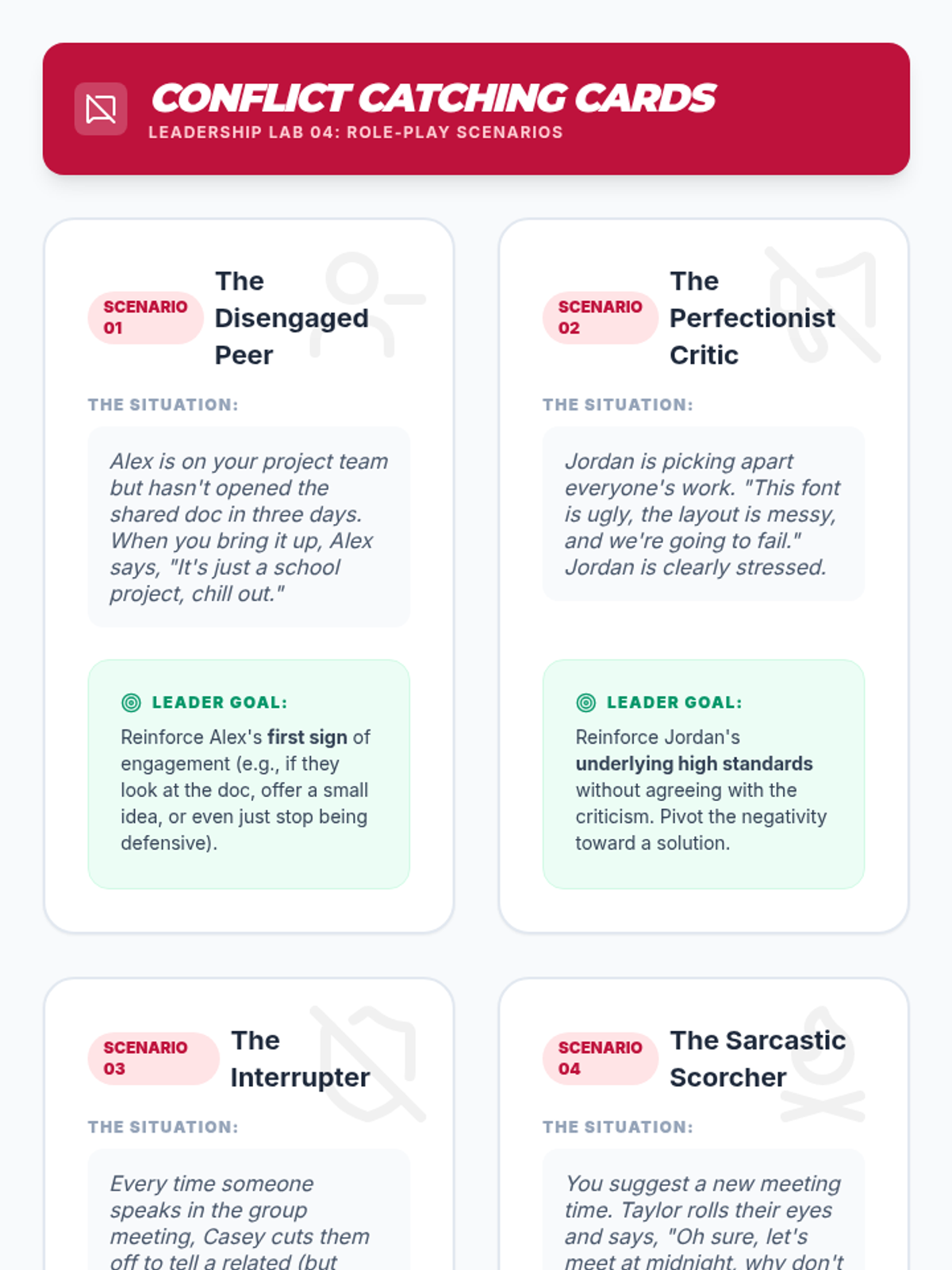
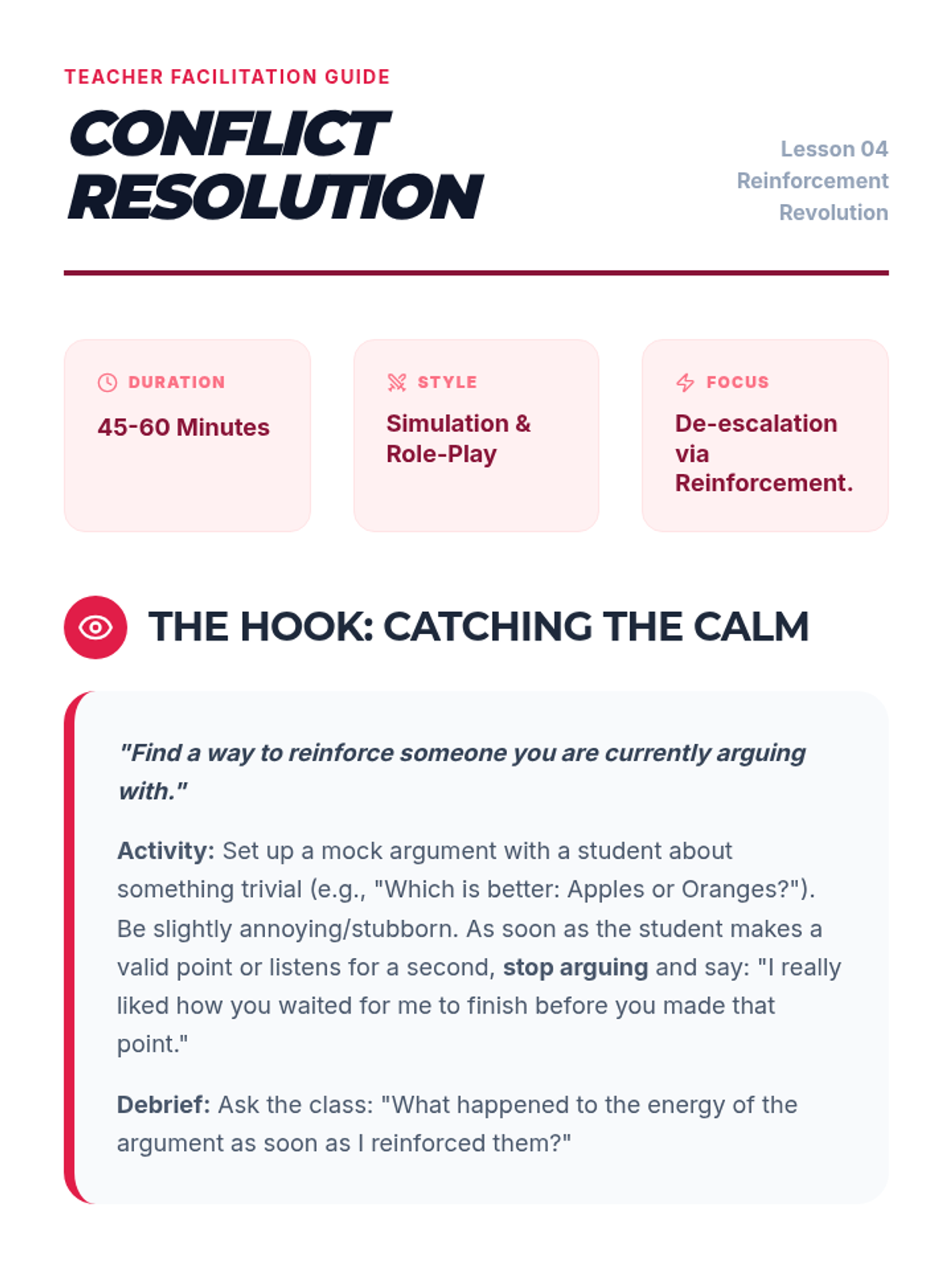
Students investigate how to use positive reinforcement to de-escalate conflict and reinforce cooperative behavior in stressful leadership situations.
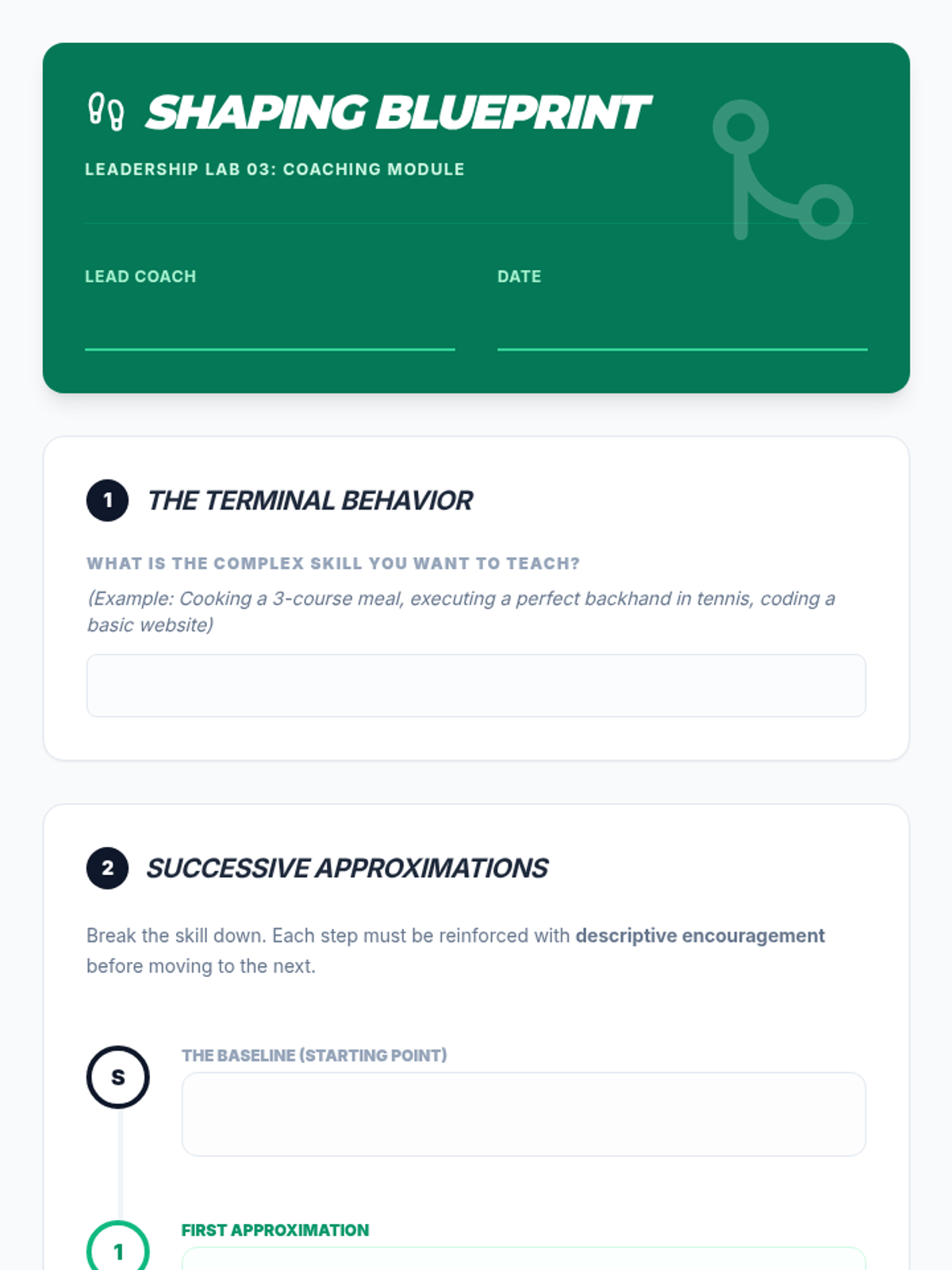
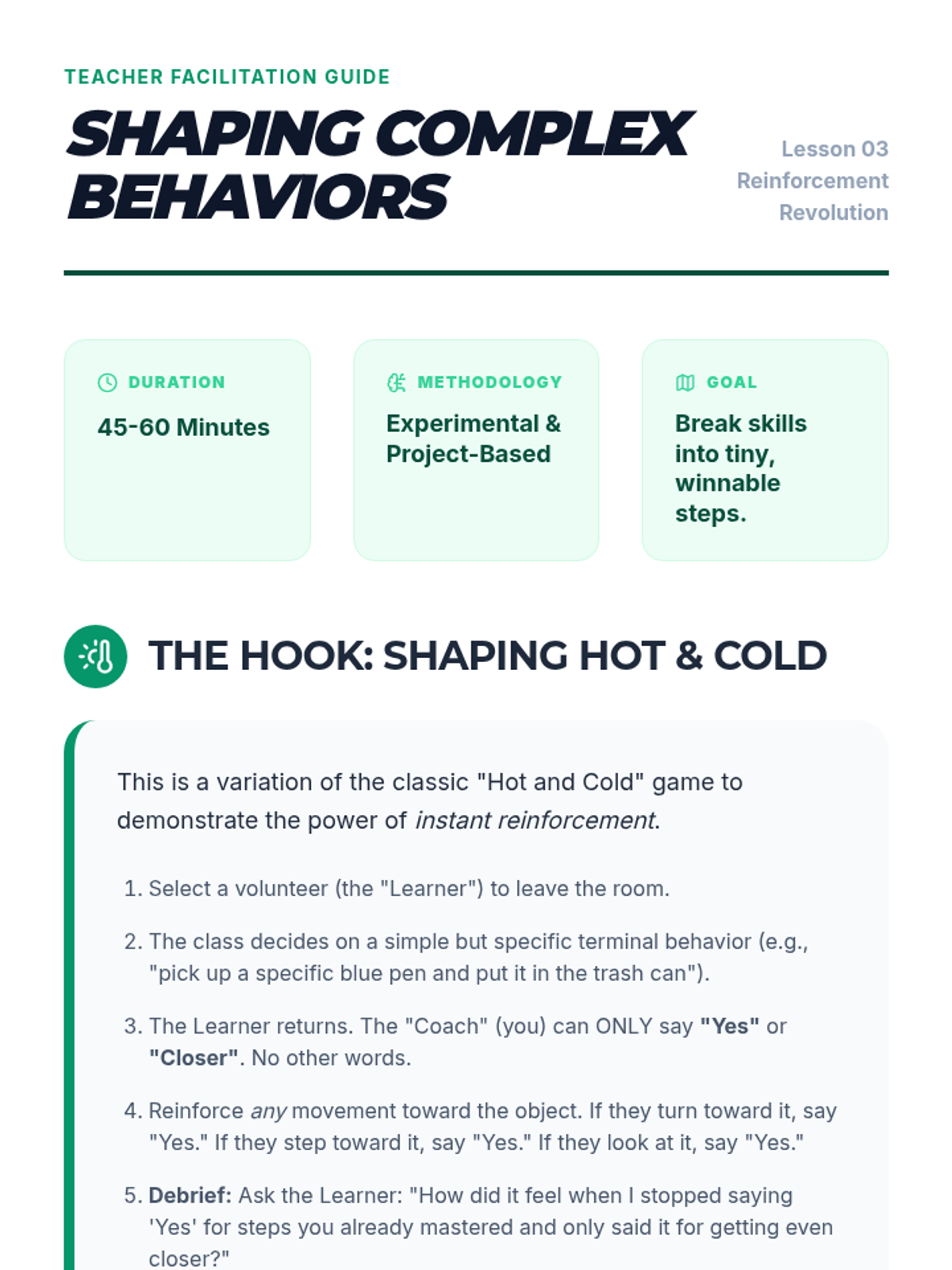
Students learn the technique of 'shaping'—reinforcing successive approximations of a desired complex behavior. They plan how they would teach a peer a new skill by rewarding small steps rather than waiting for perfection.
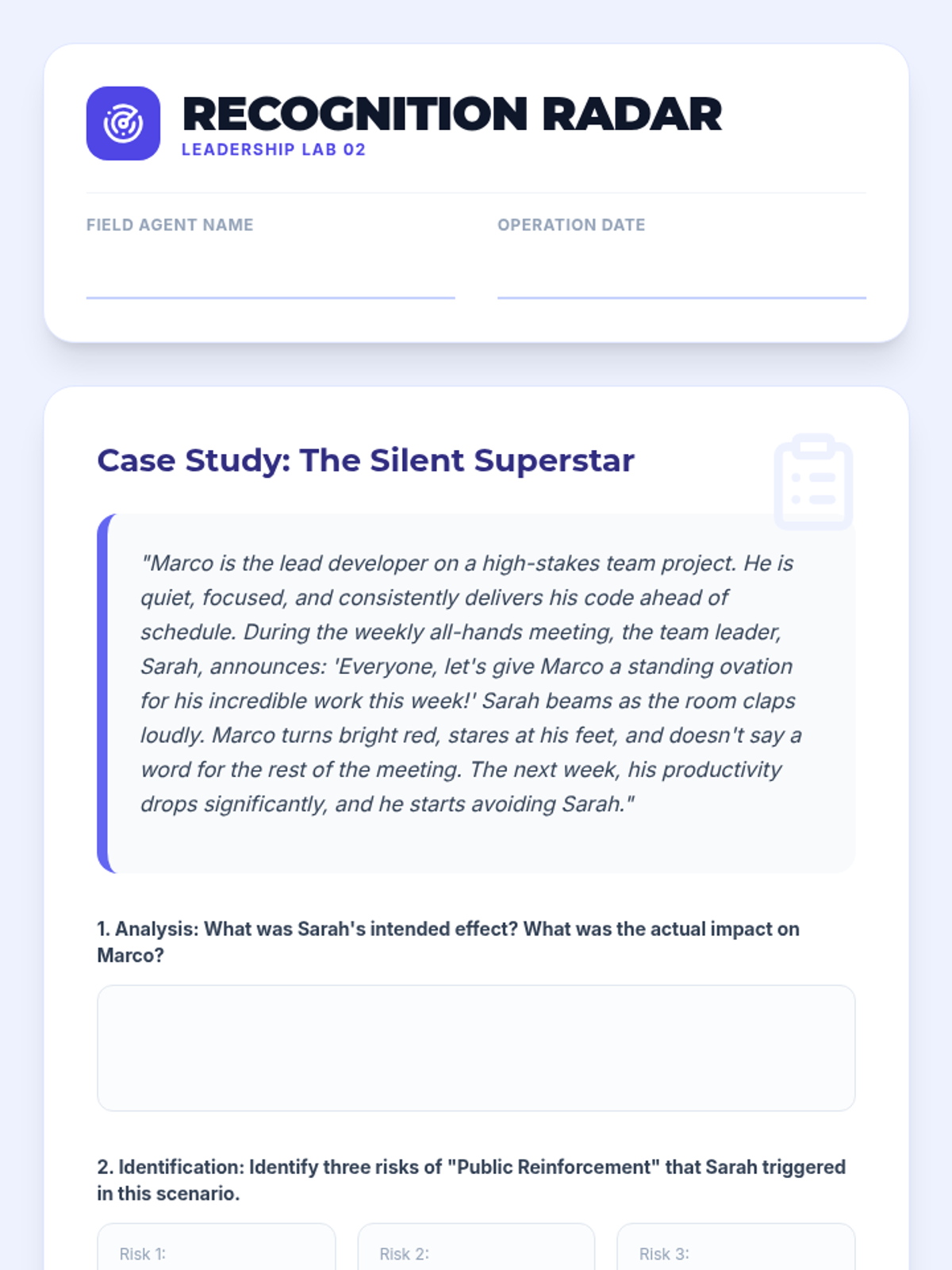
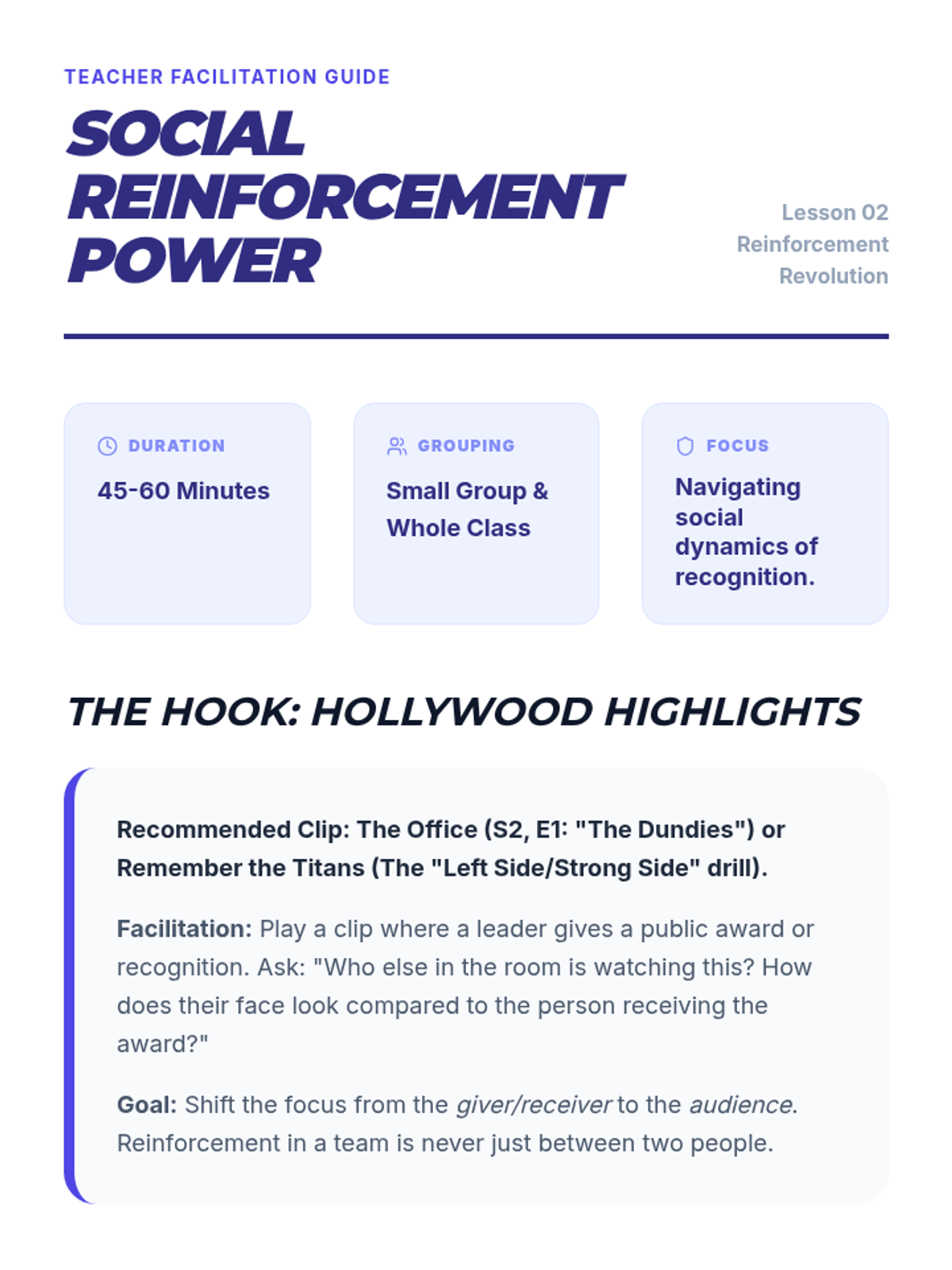
This lesson looks at social recognition as a powerful motivator in teams and groups. Students analyze case studies of workplace or sports team cultures and explore how public vs. private recognition affects individuals differently.
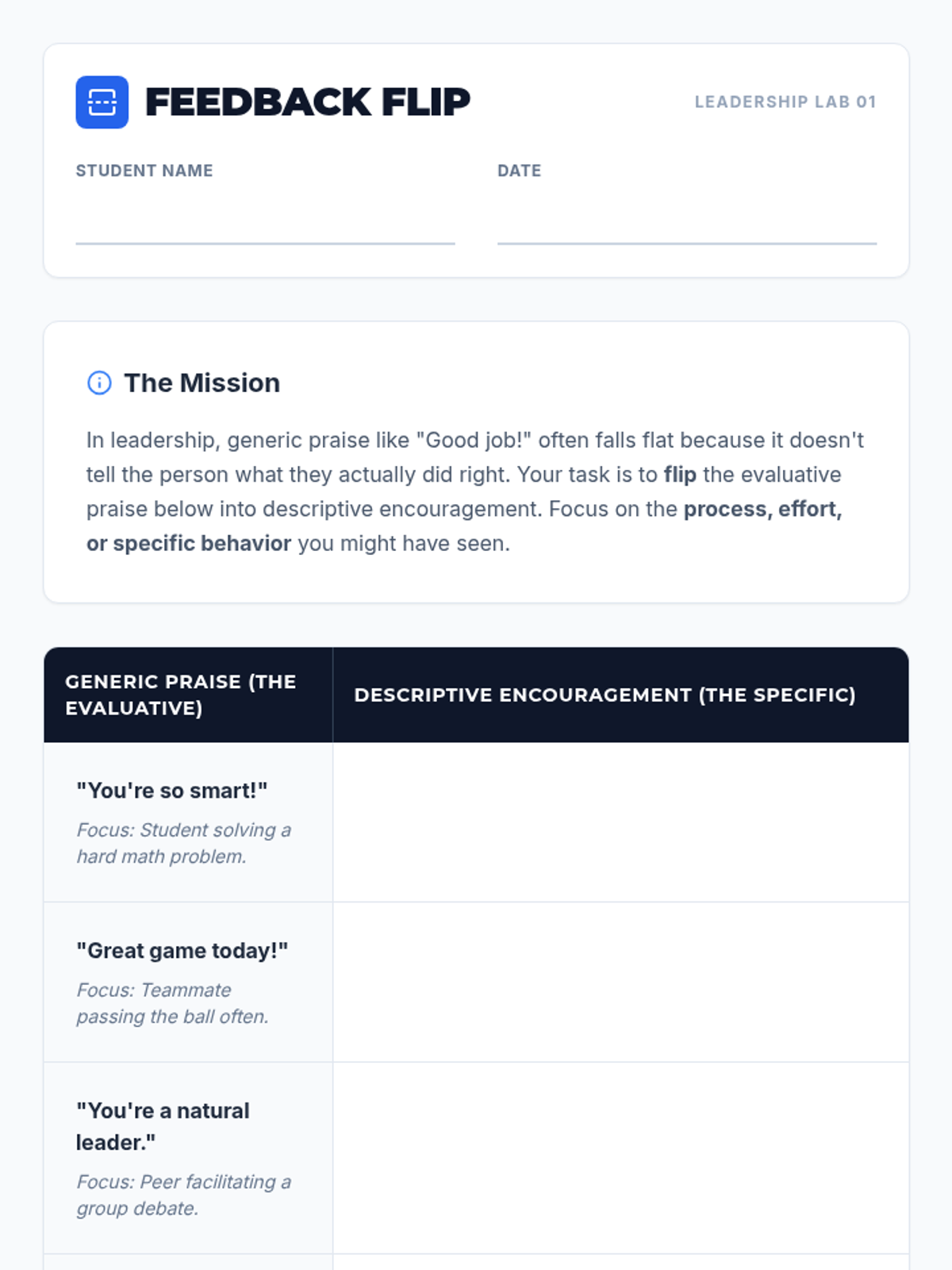
Students distinguish between evaluative praise ('Good job') and descriptive encouragement ('I noticed you organized the files by date'). They practice converting generic compliments into specific, behavior-focused reinforcement that provides actionable feedback.
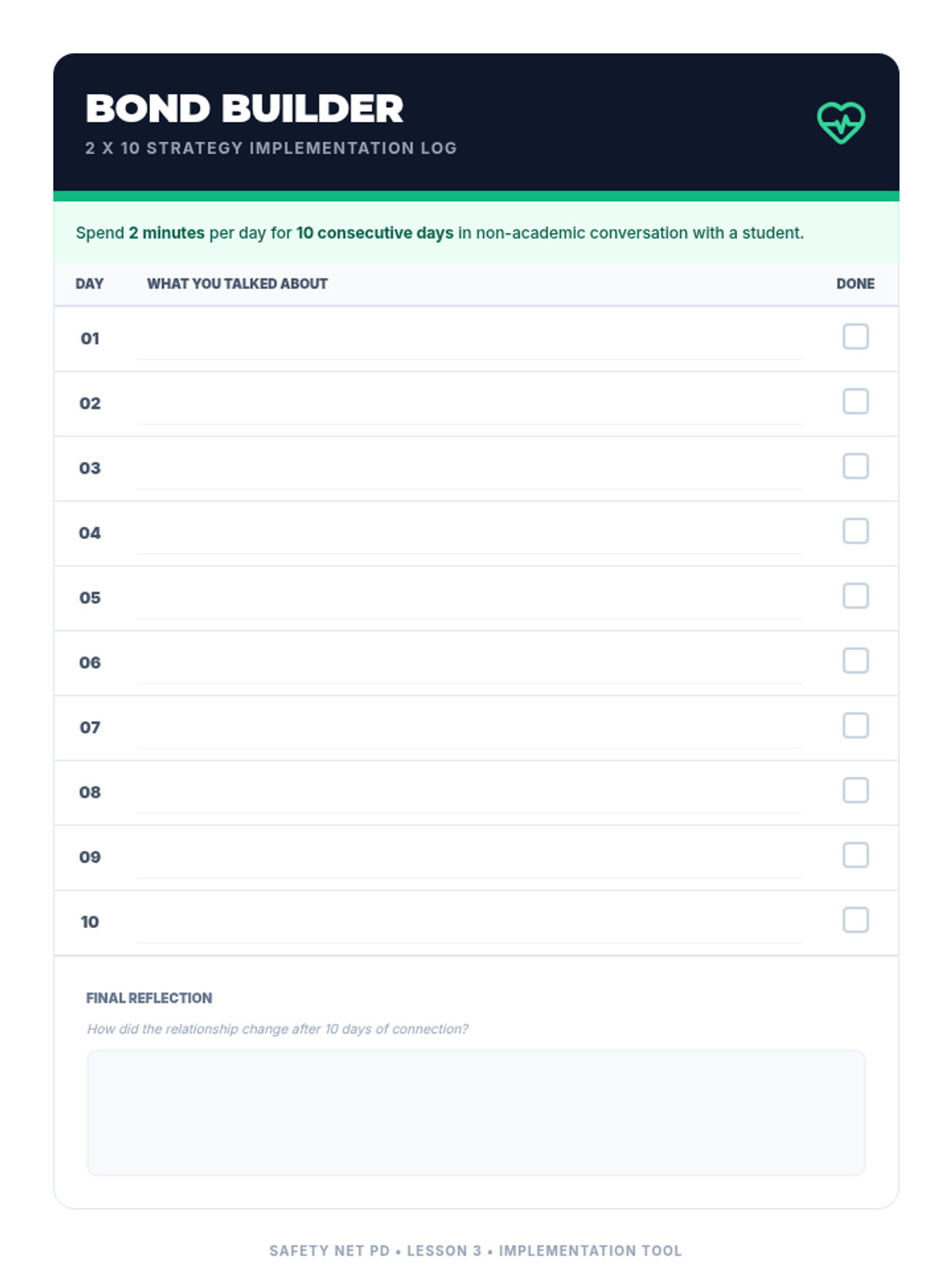
Strategies for building trust-based relationships and auditing the physical and emotional classroom environment for trauma triggers.
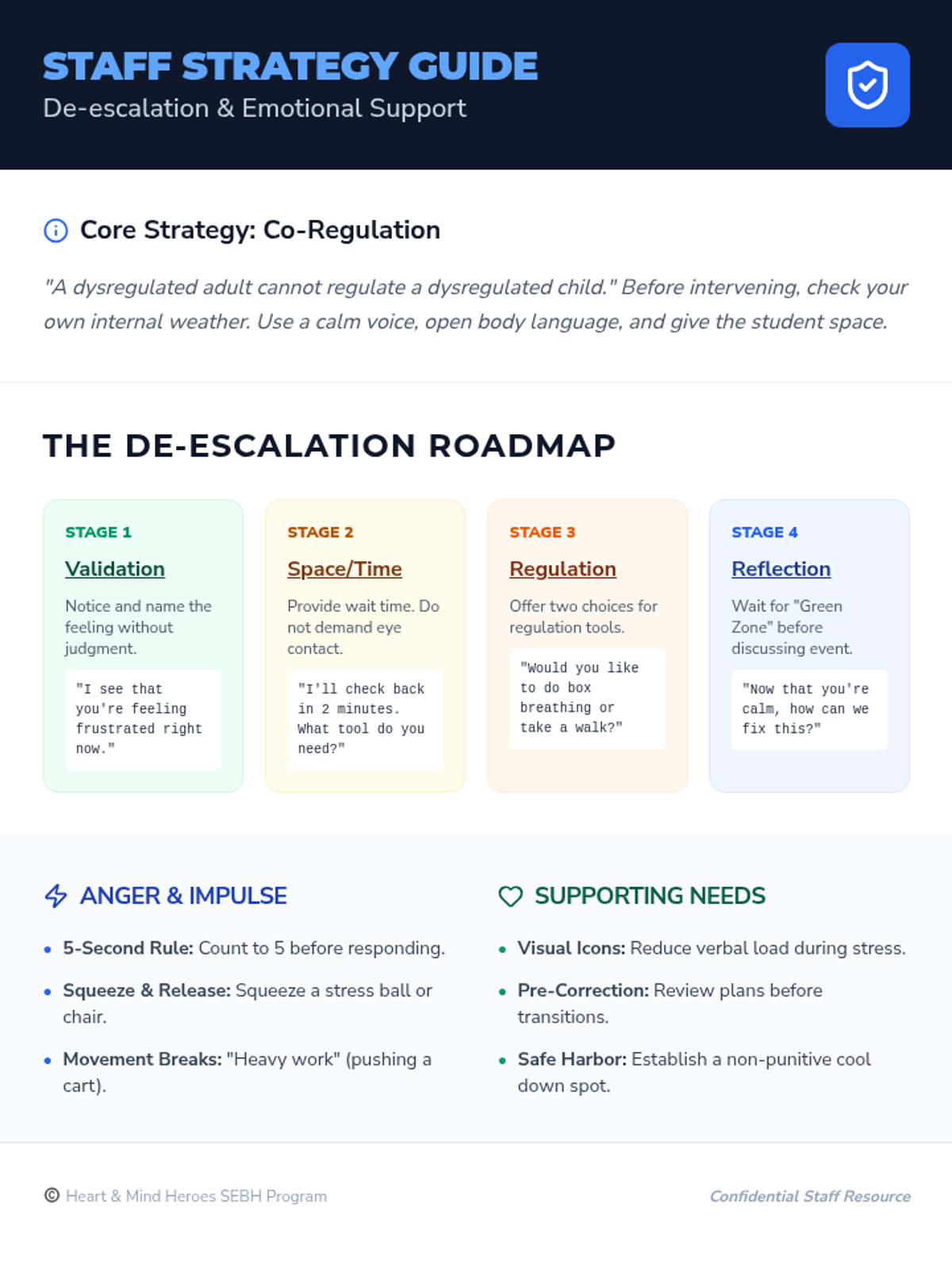
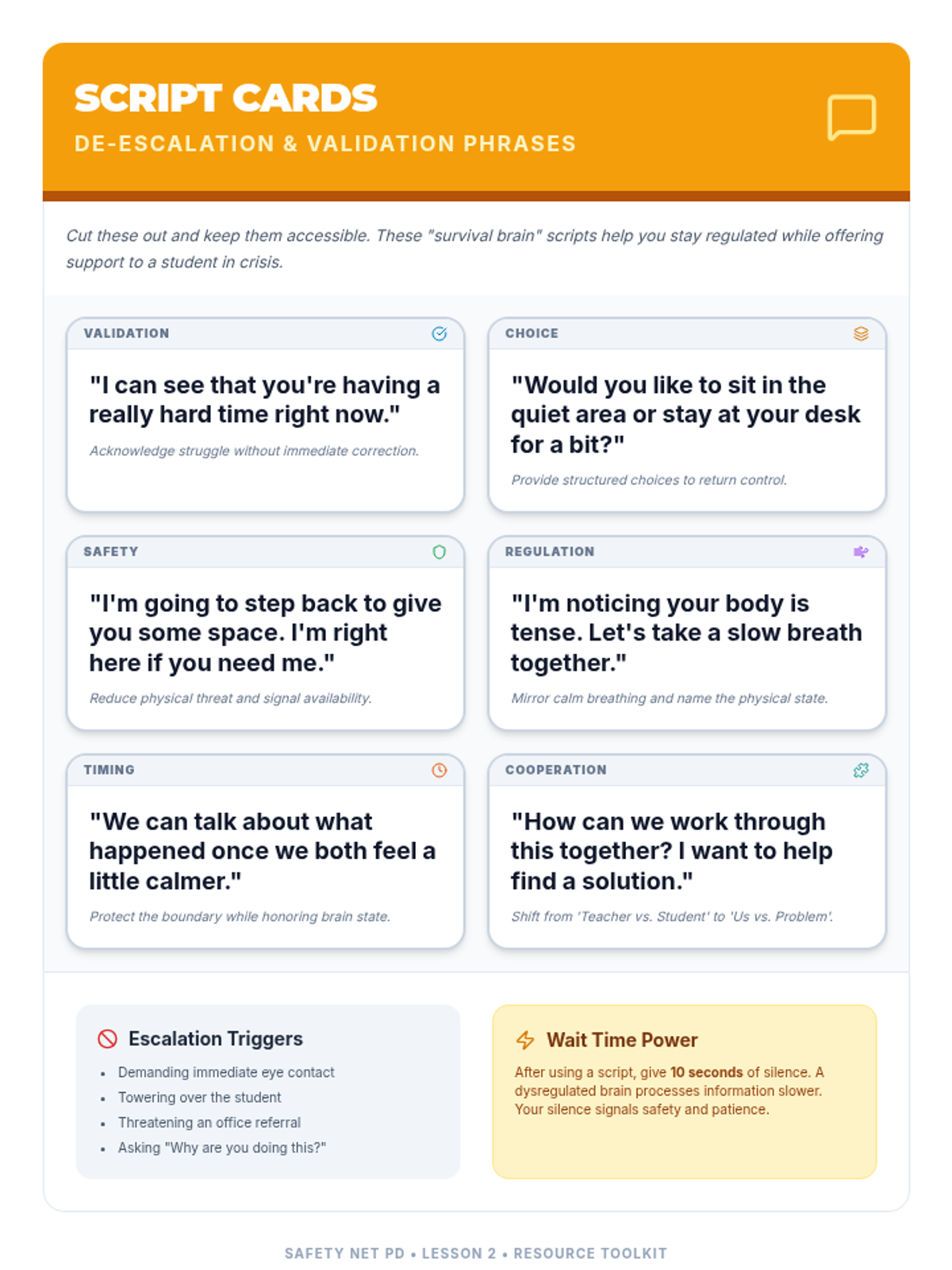
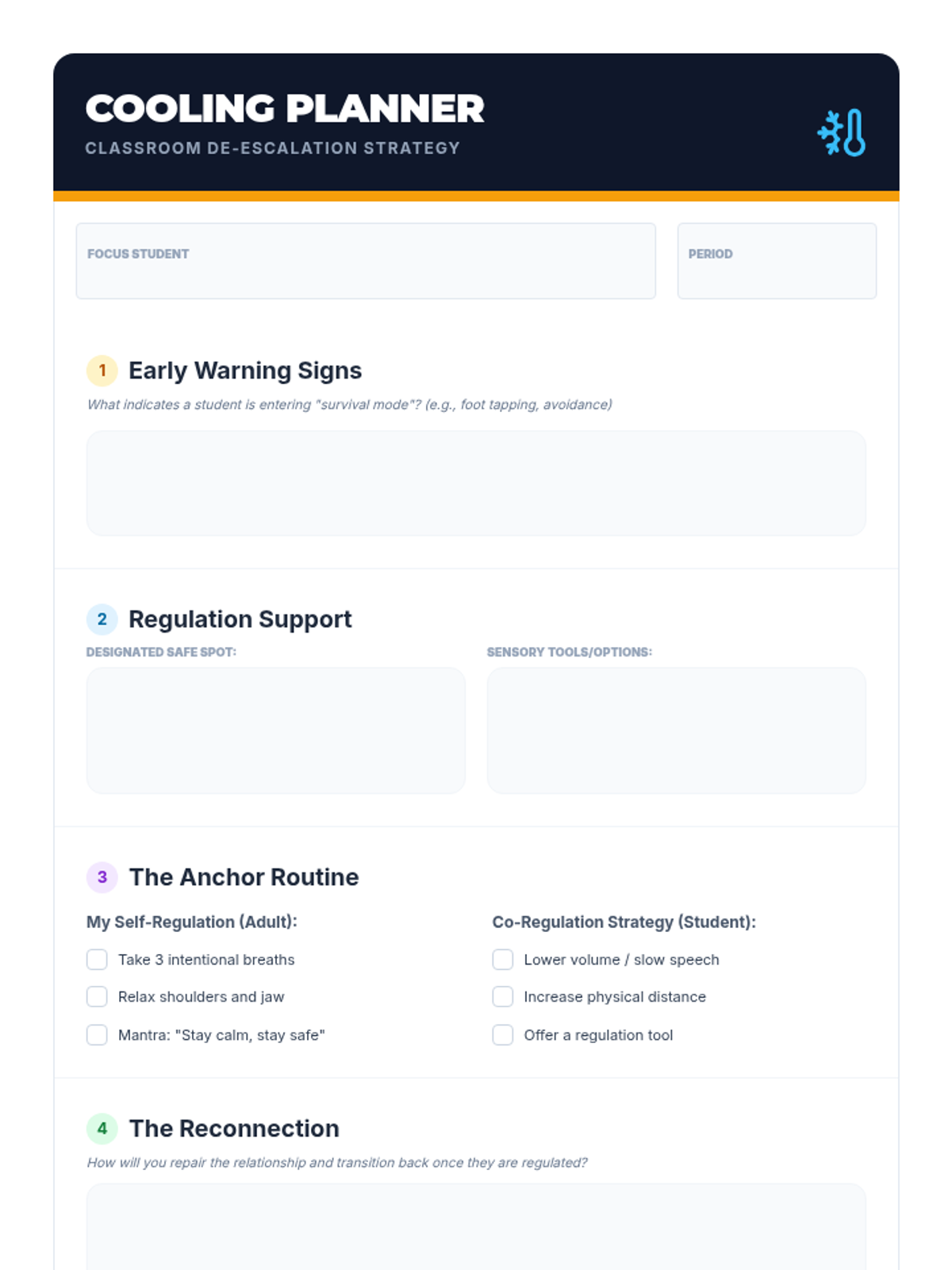
Practical strategies for teacher self-regulation and student co-regulation, focusing on de-escalation techniques and maintaining a regulated classroom presence.
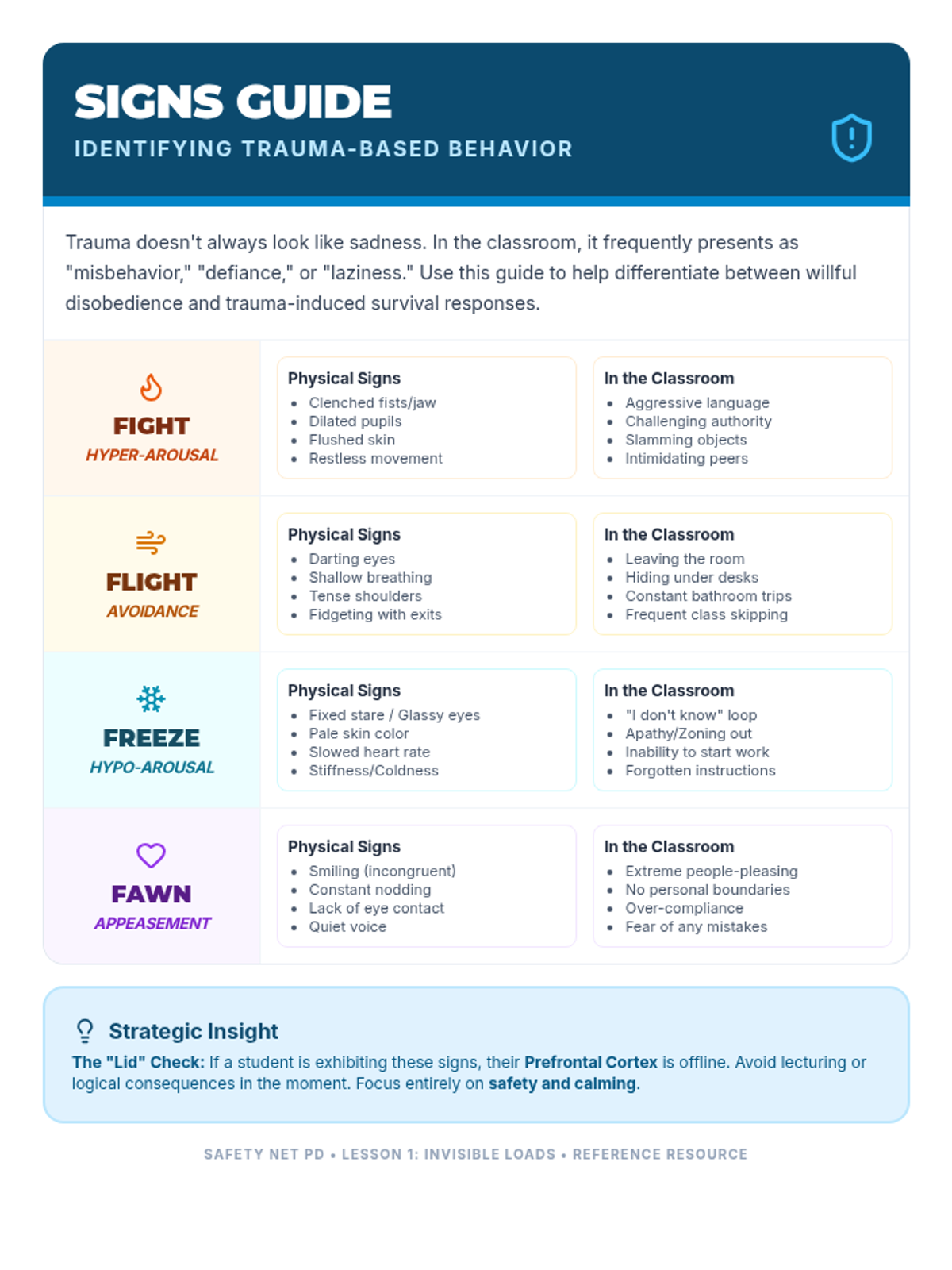
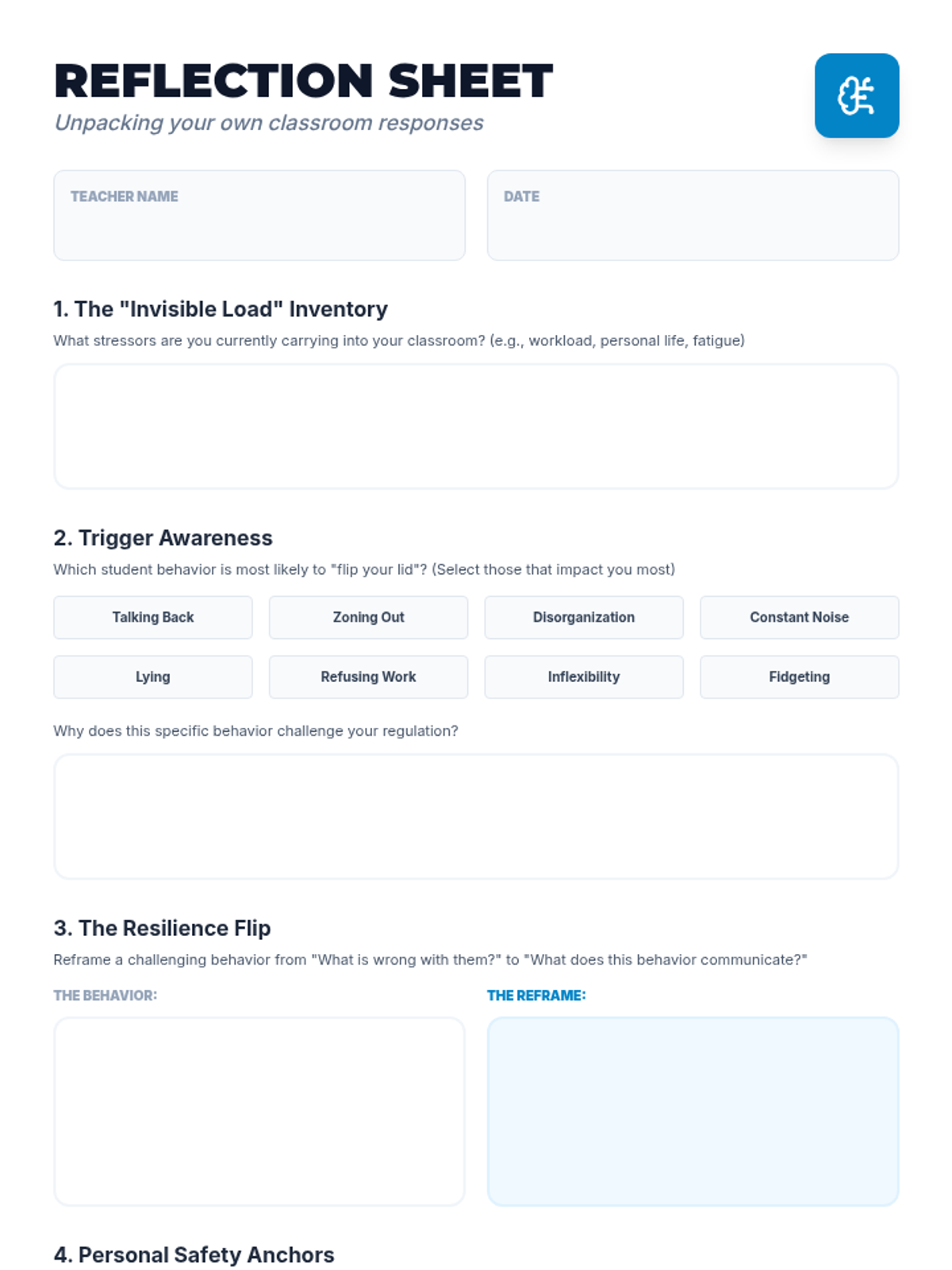
Introduction to the "Invisible Backpack" concept, identifying common signs of trauma in the classroom, and shifting the pedagogical lens from deficit to support.
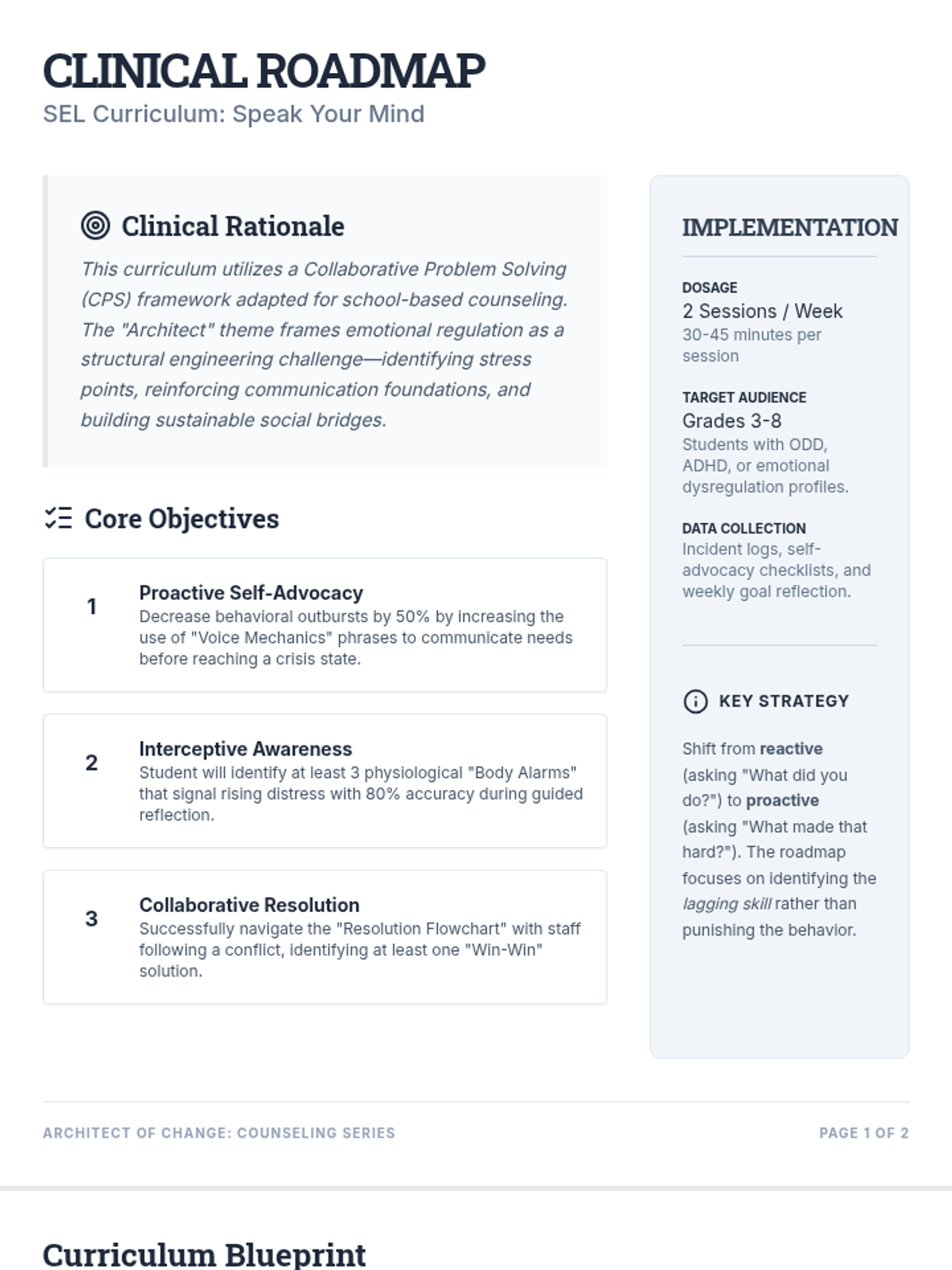
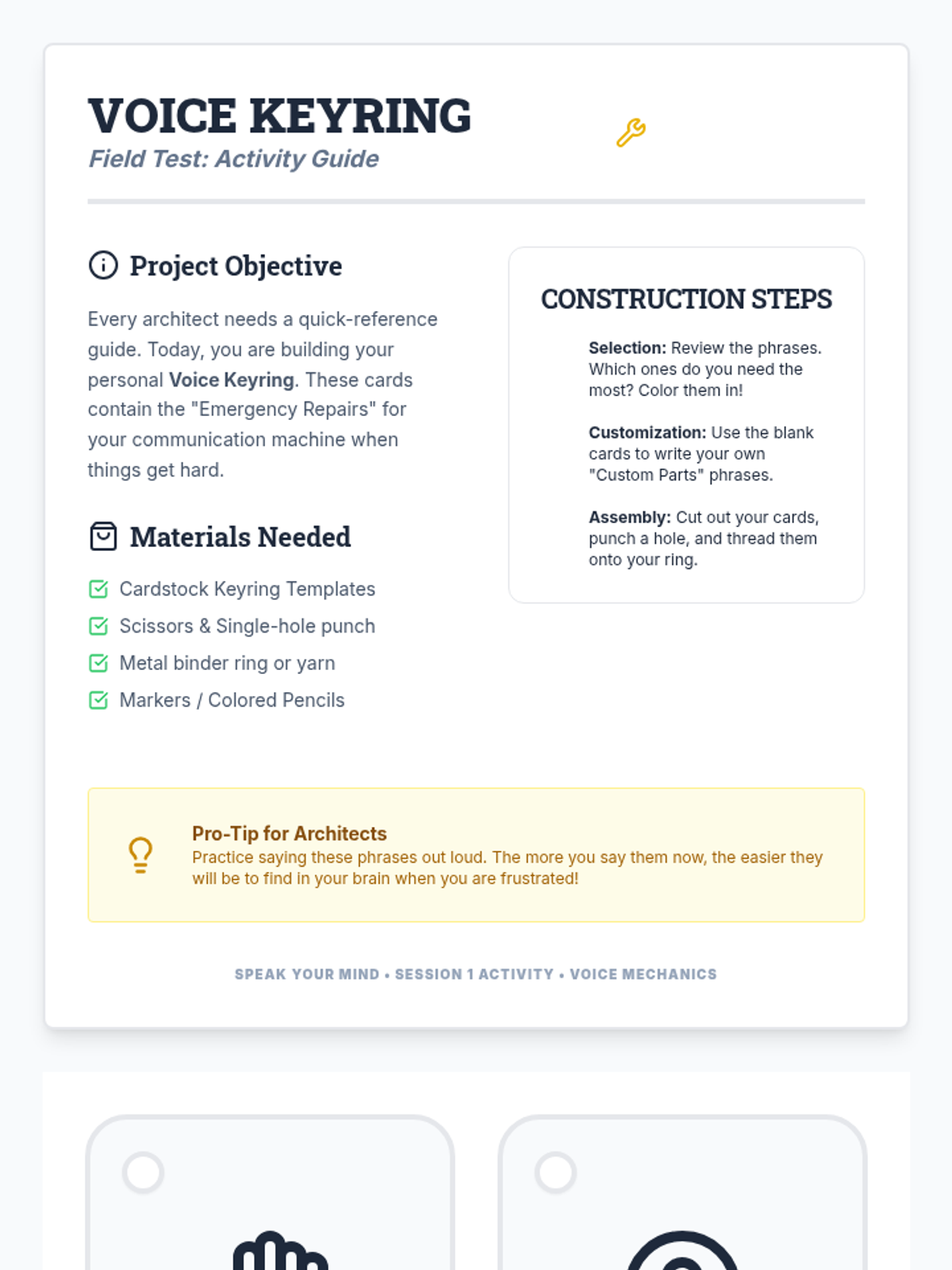
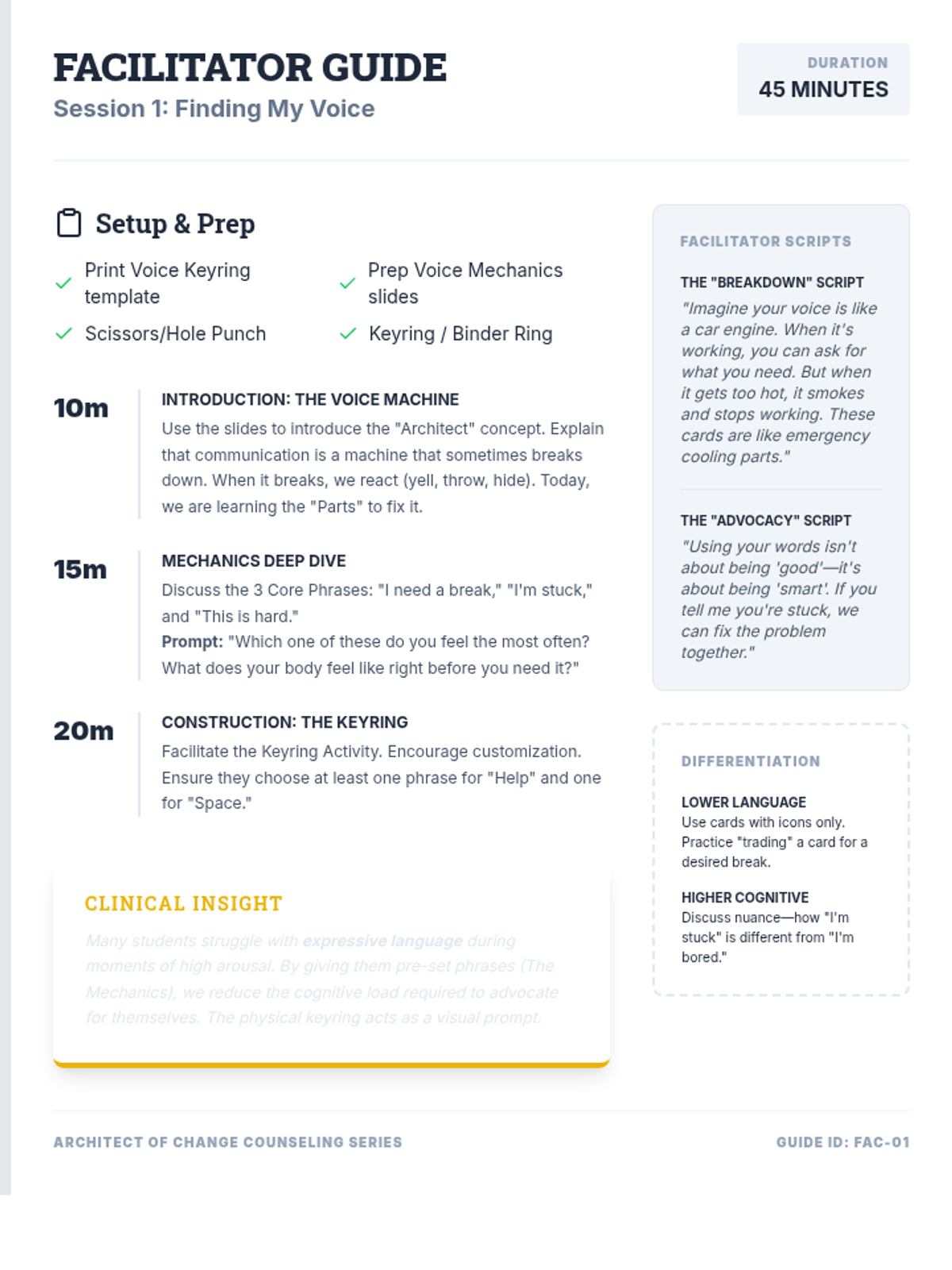
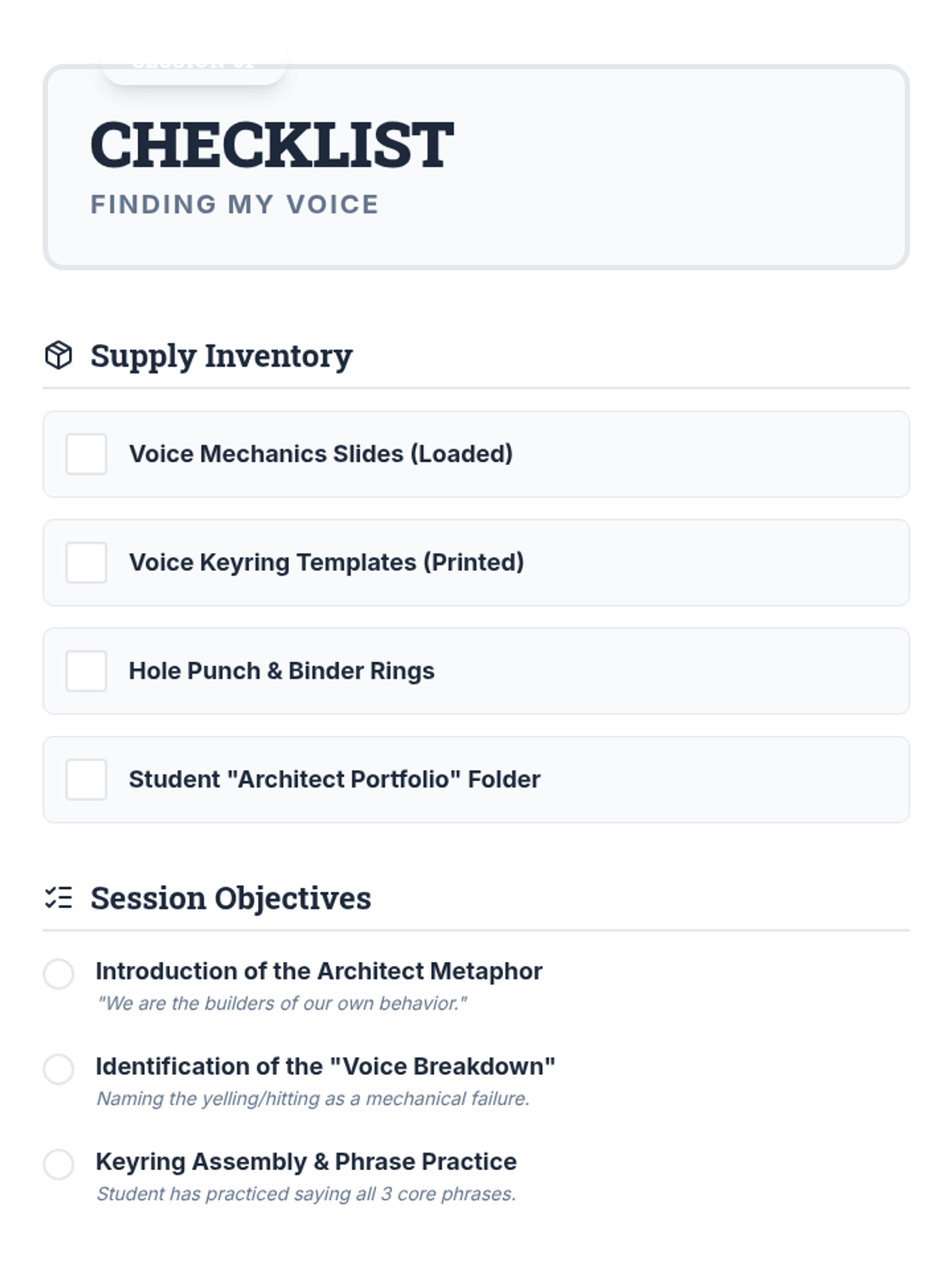
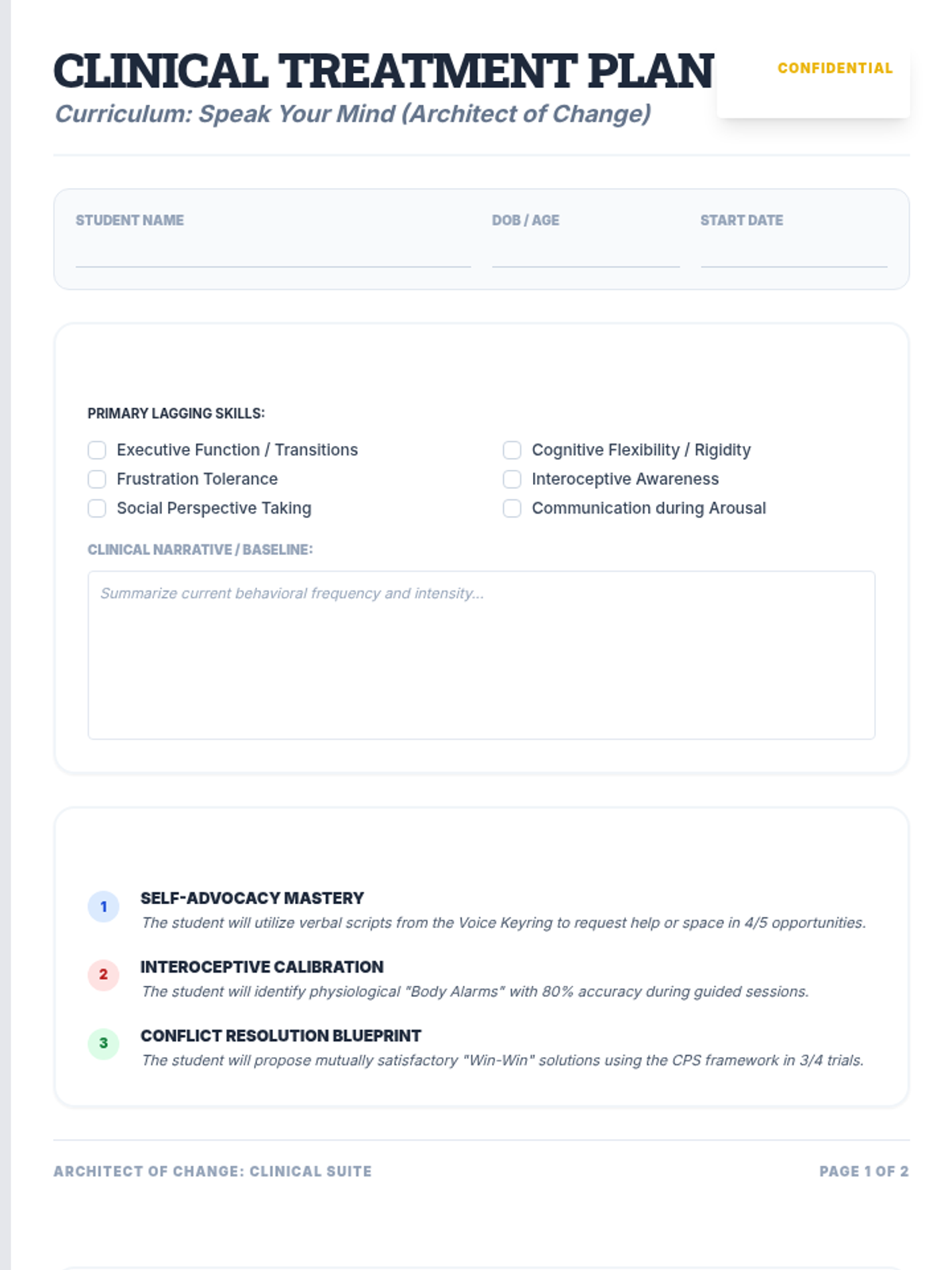
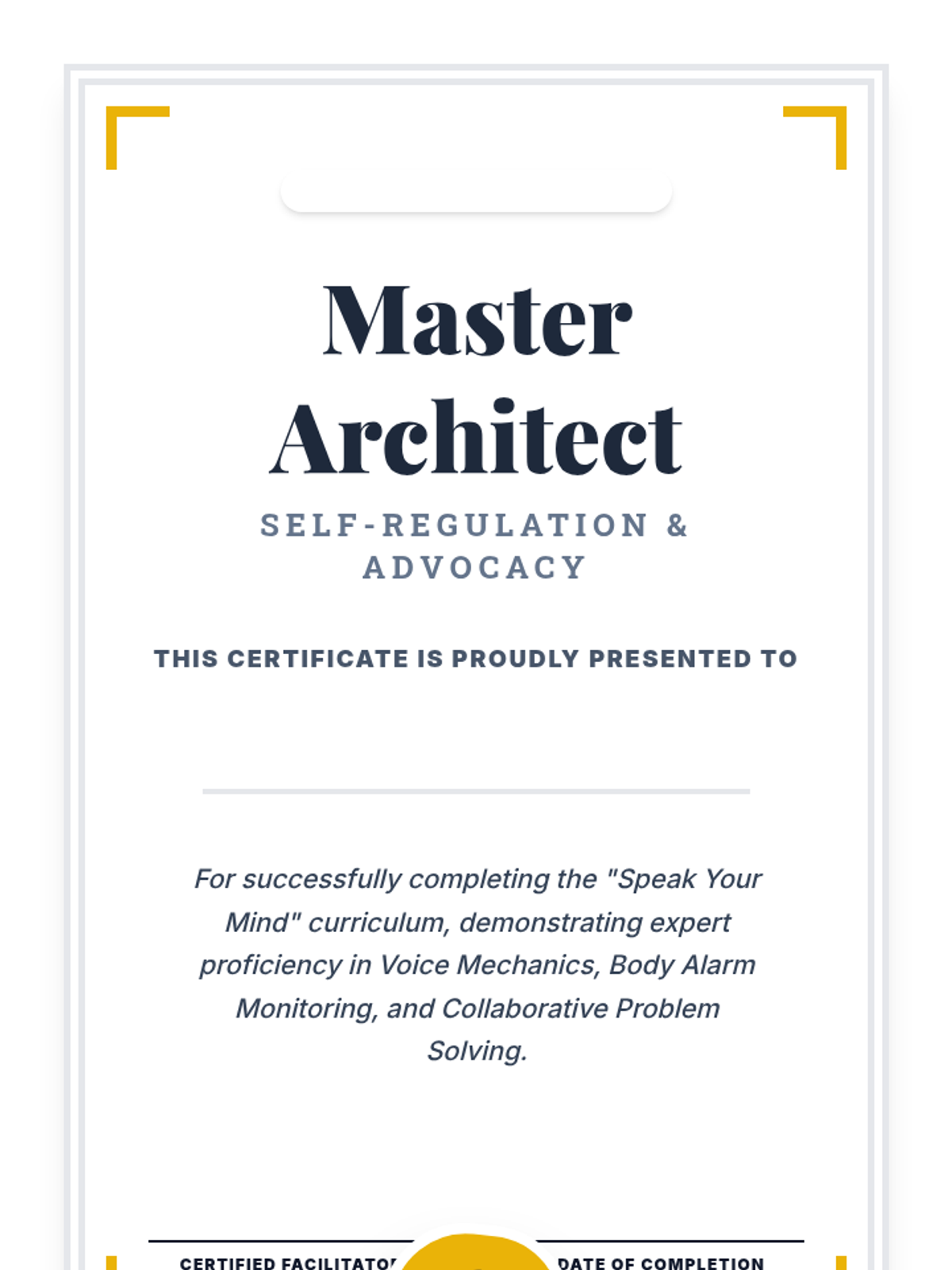
The foundational session focusing on identifying the 'Voice Mechanics'—the specific words and phrases needed to advocate for oneself before reaching a breaking point.
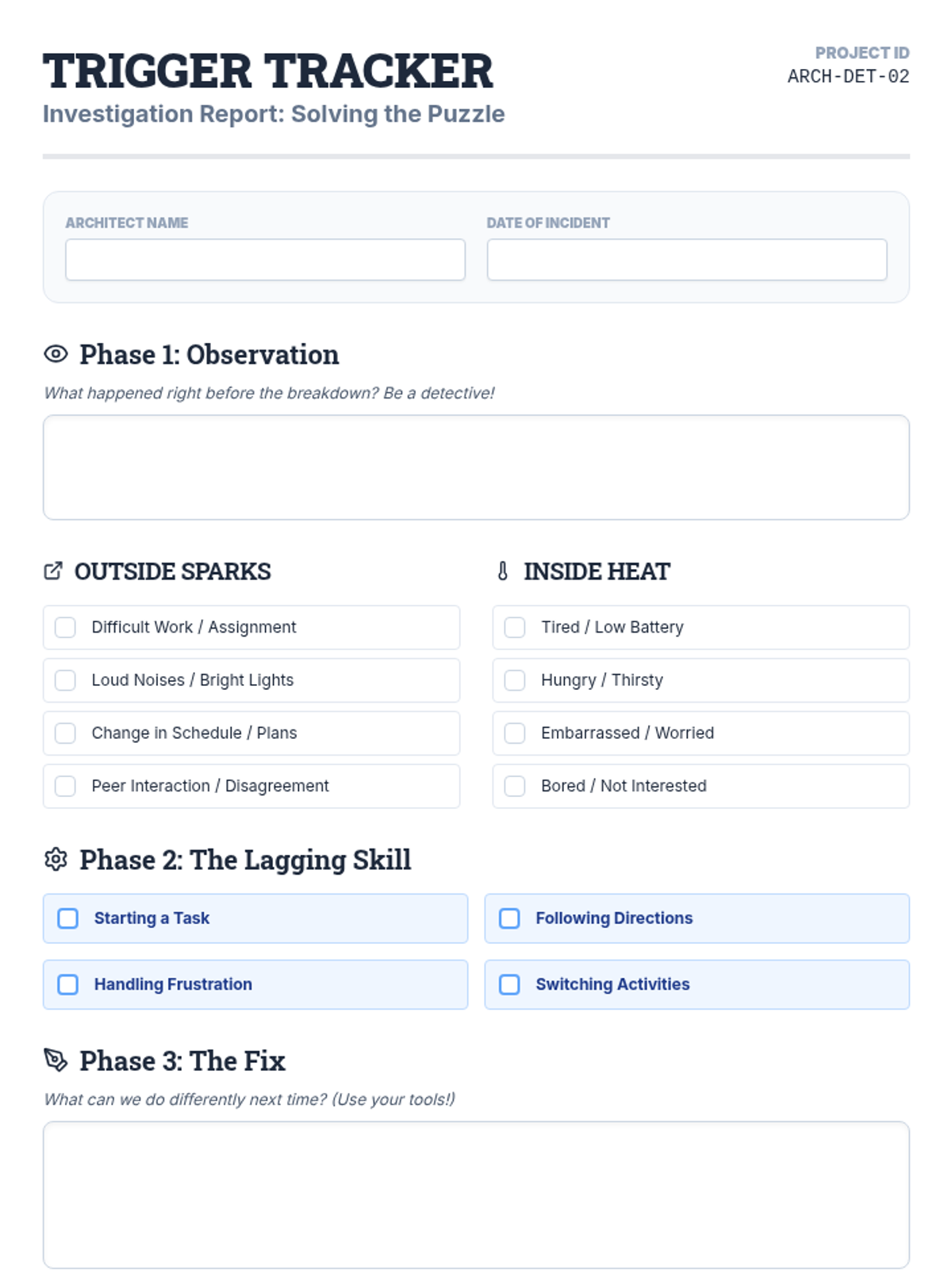
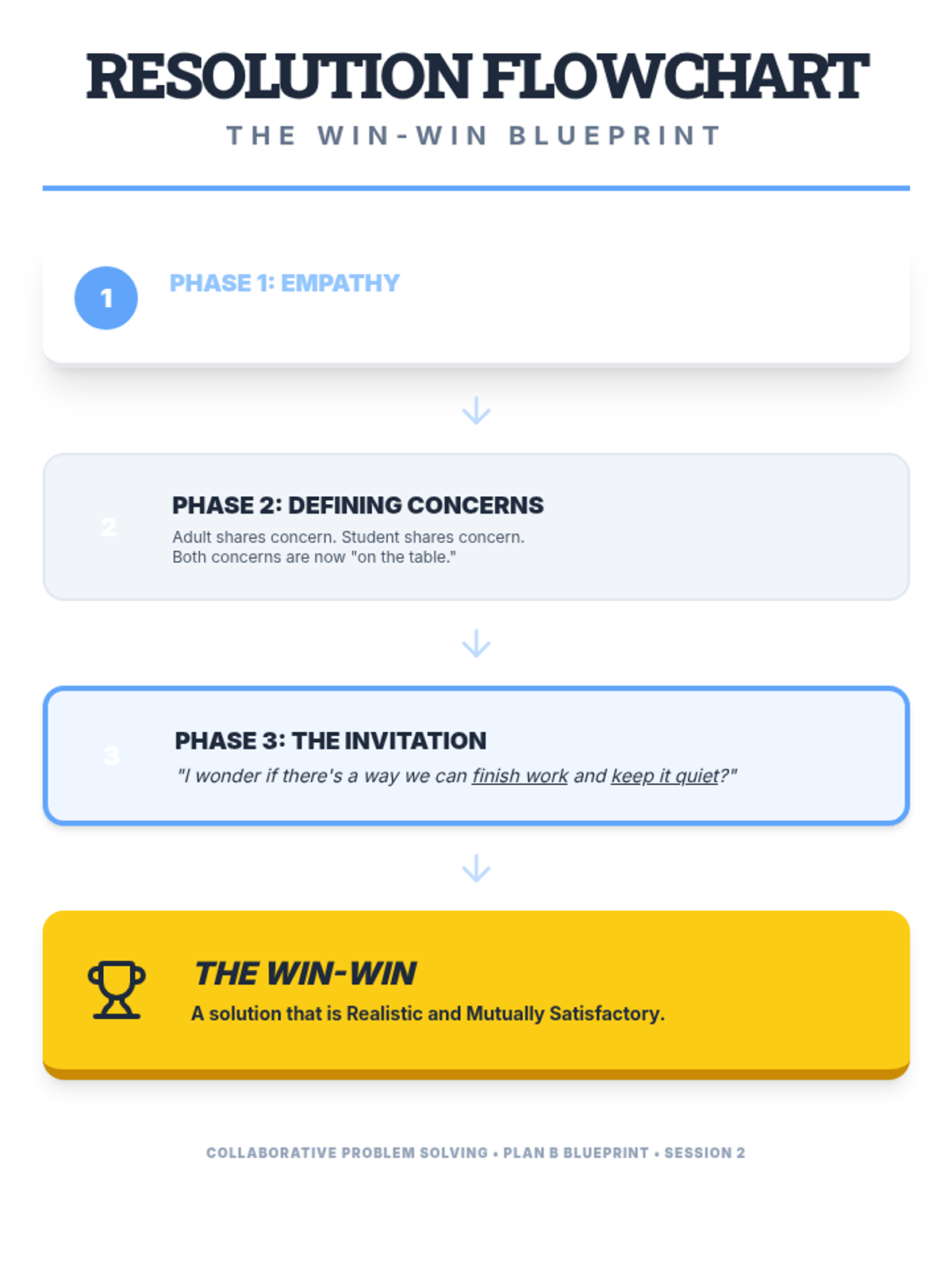
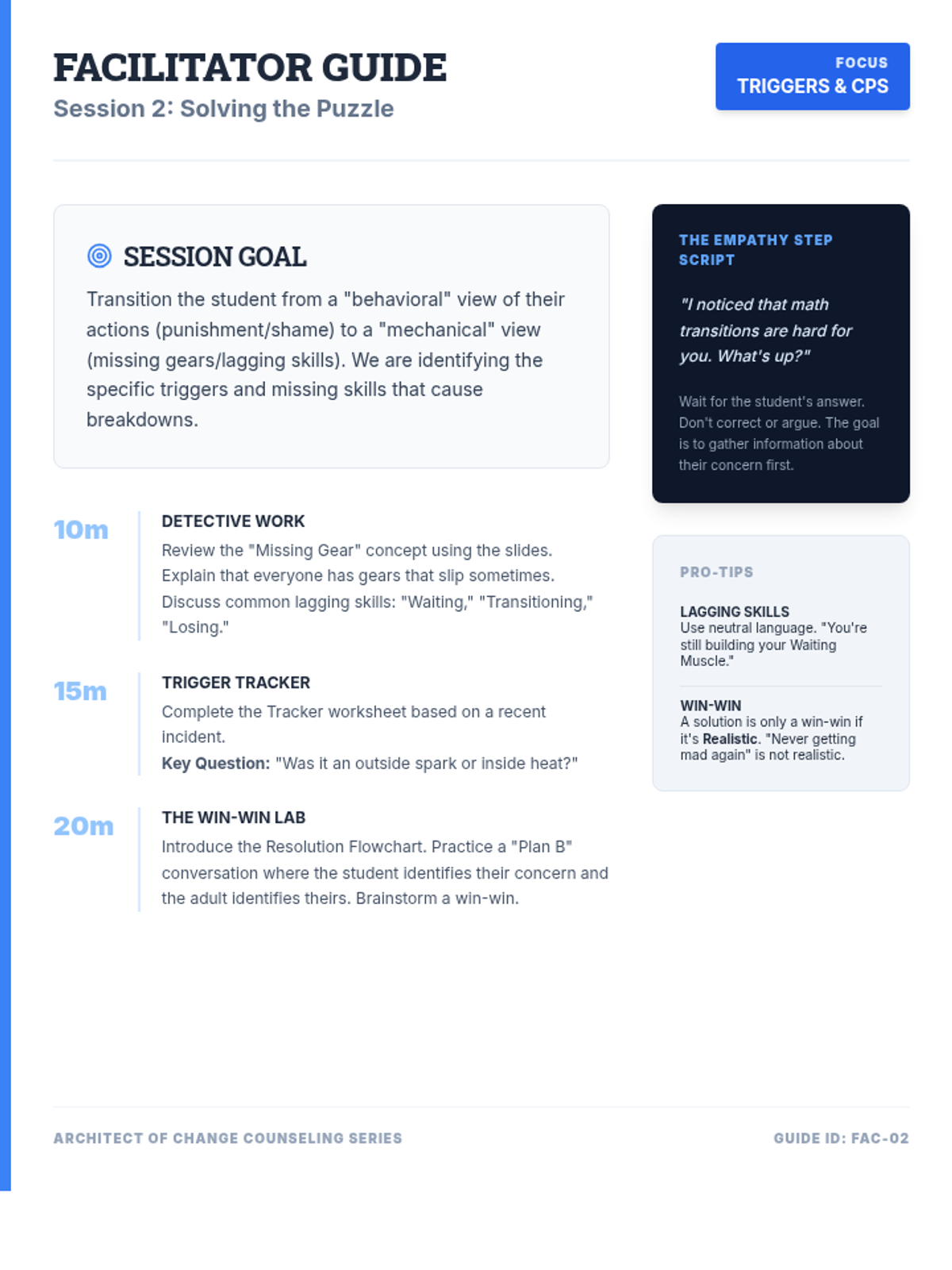
Focuses on identifying triggers and the 'anatomy of an incident' using a collaborative problem-solving framework.
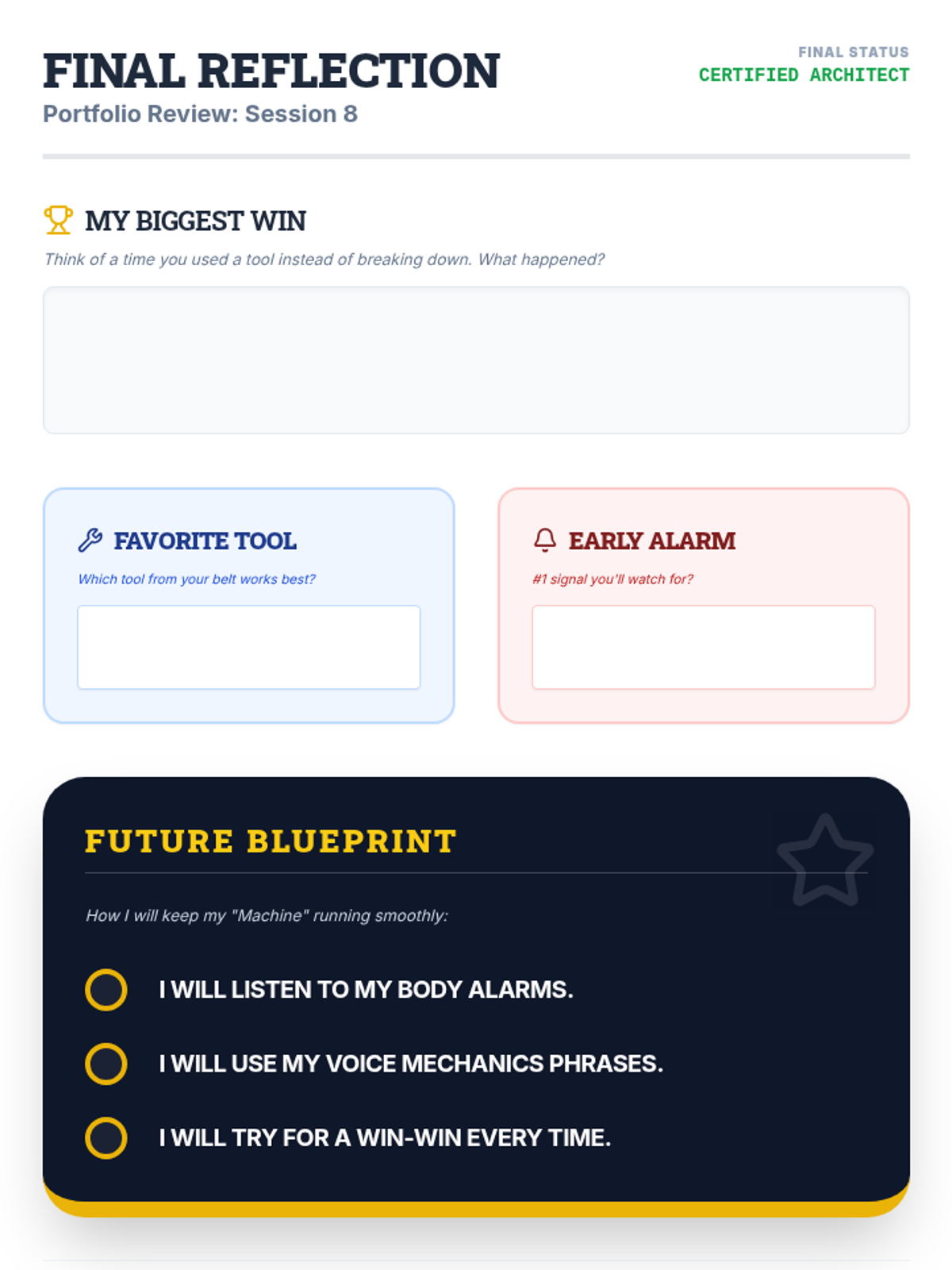
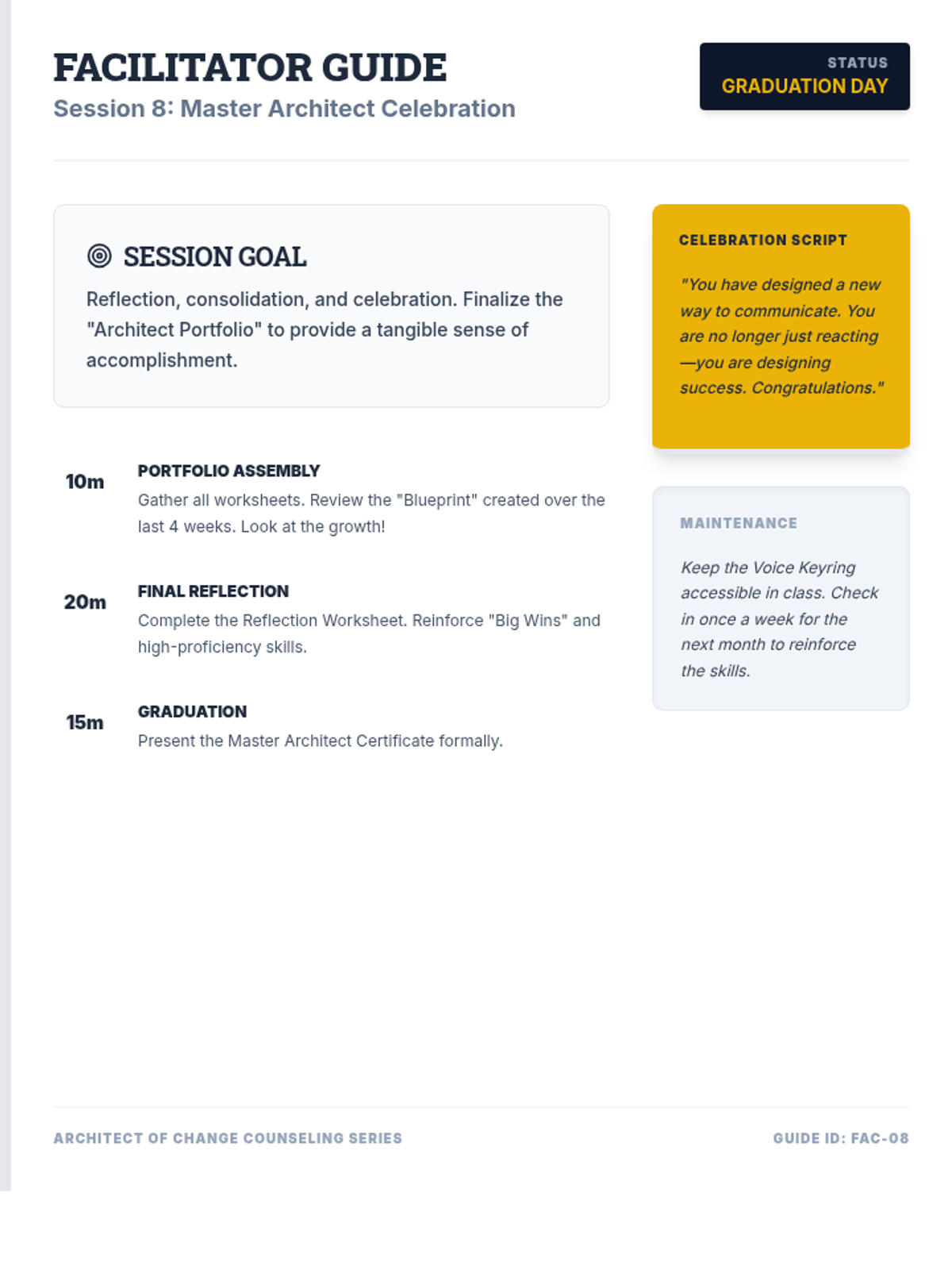
The final session for progress review, portfolio completion, and graduation as a 'Master Architect' of self-regulation.
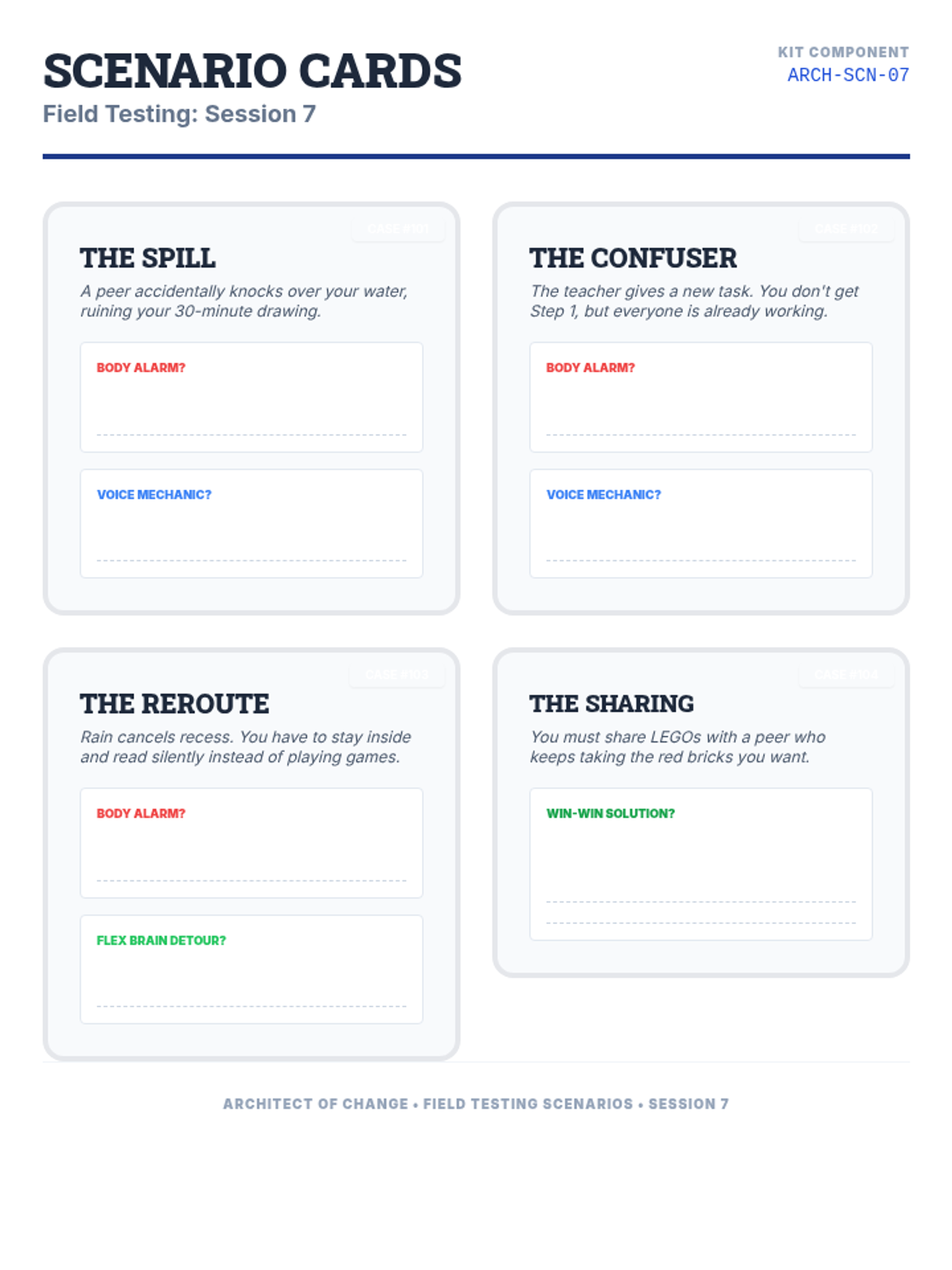
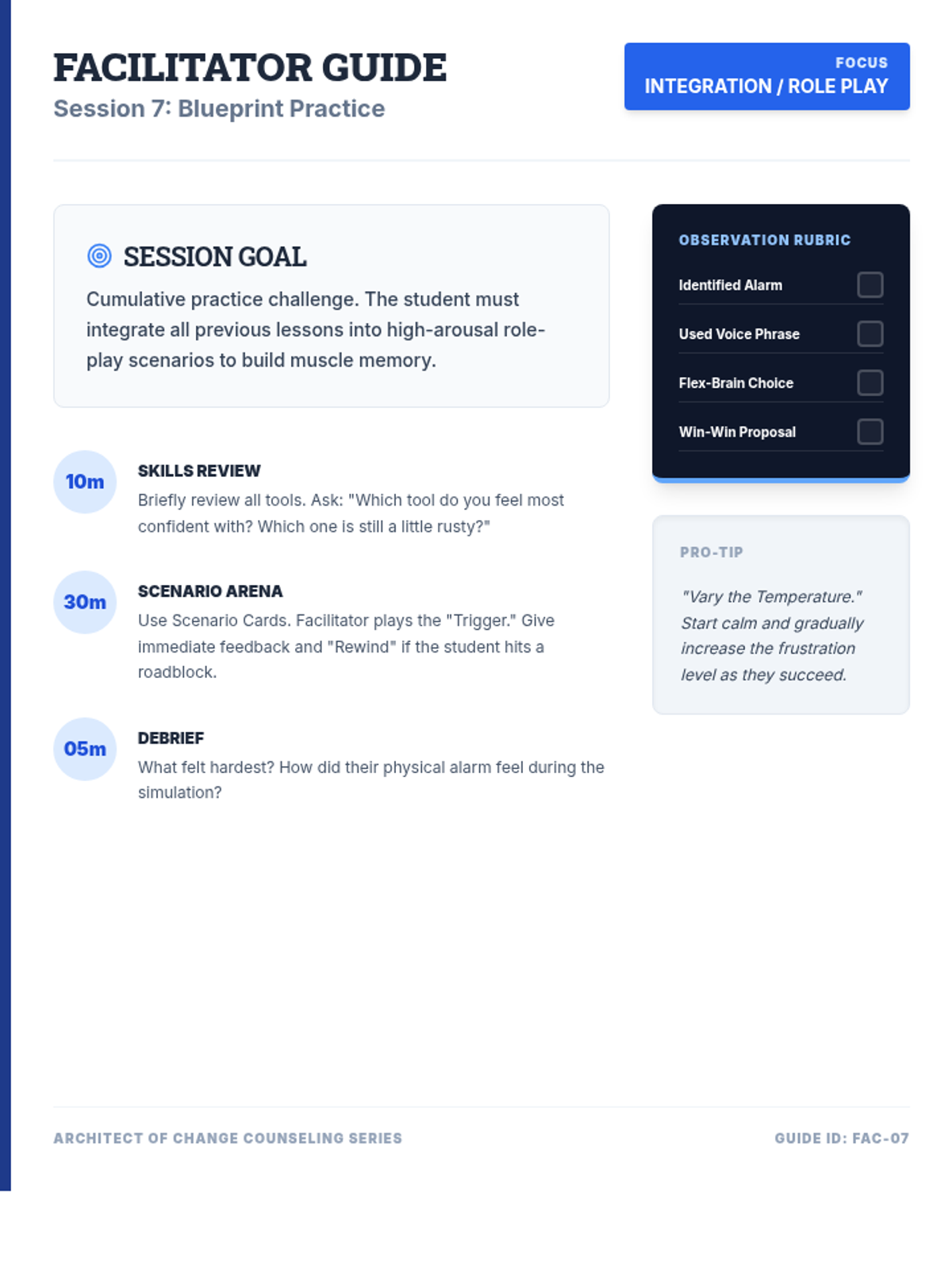
A cumulative role-play session where students apply all previous skills to complex, multi-step real-world scenarios.
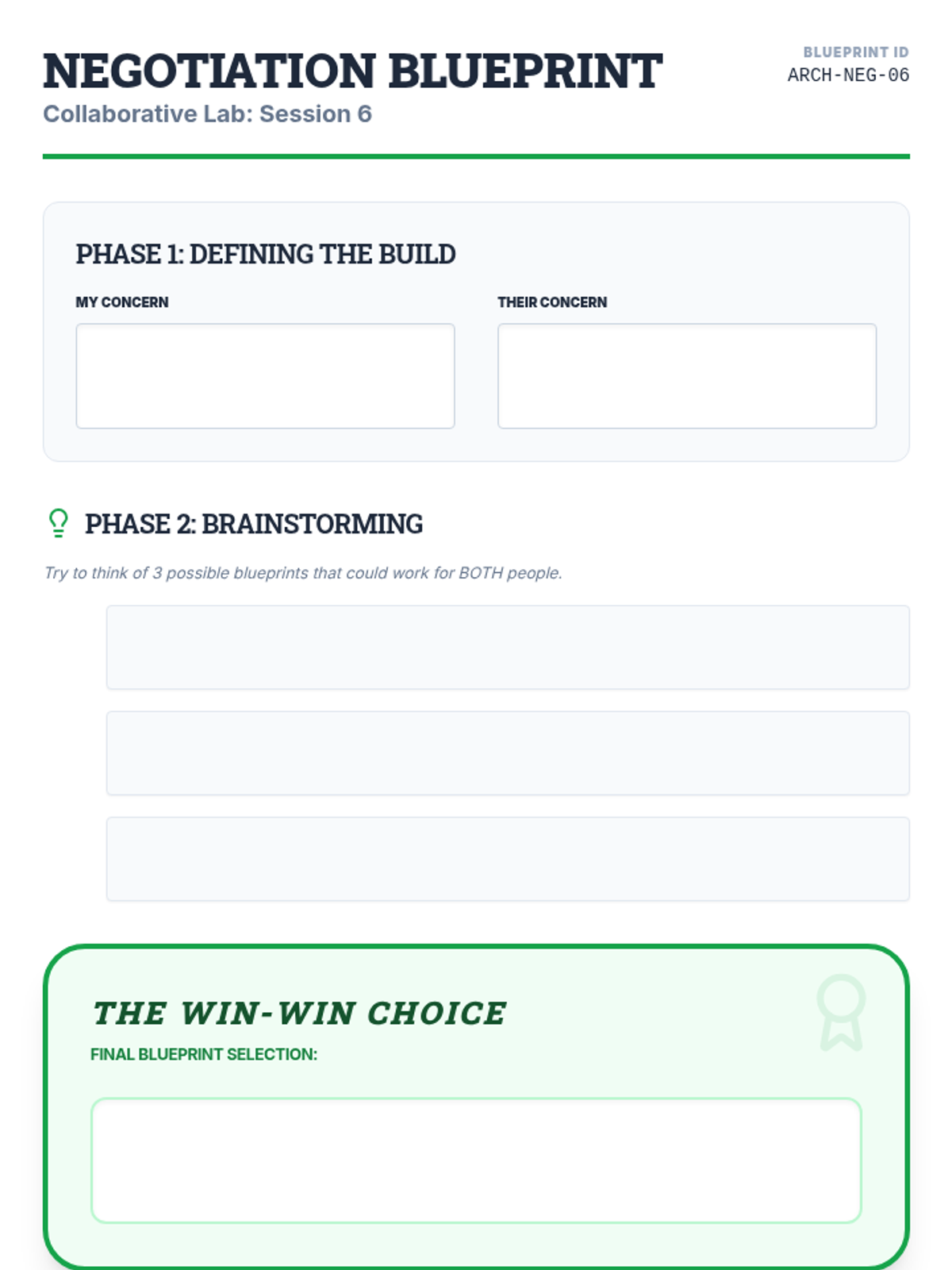
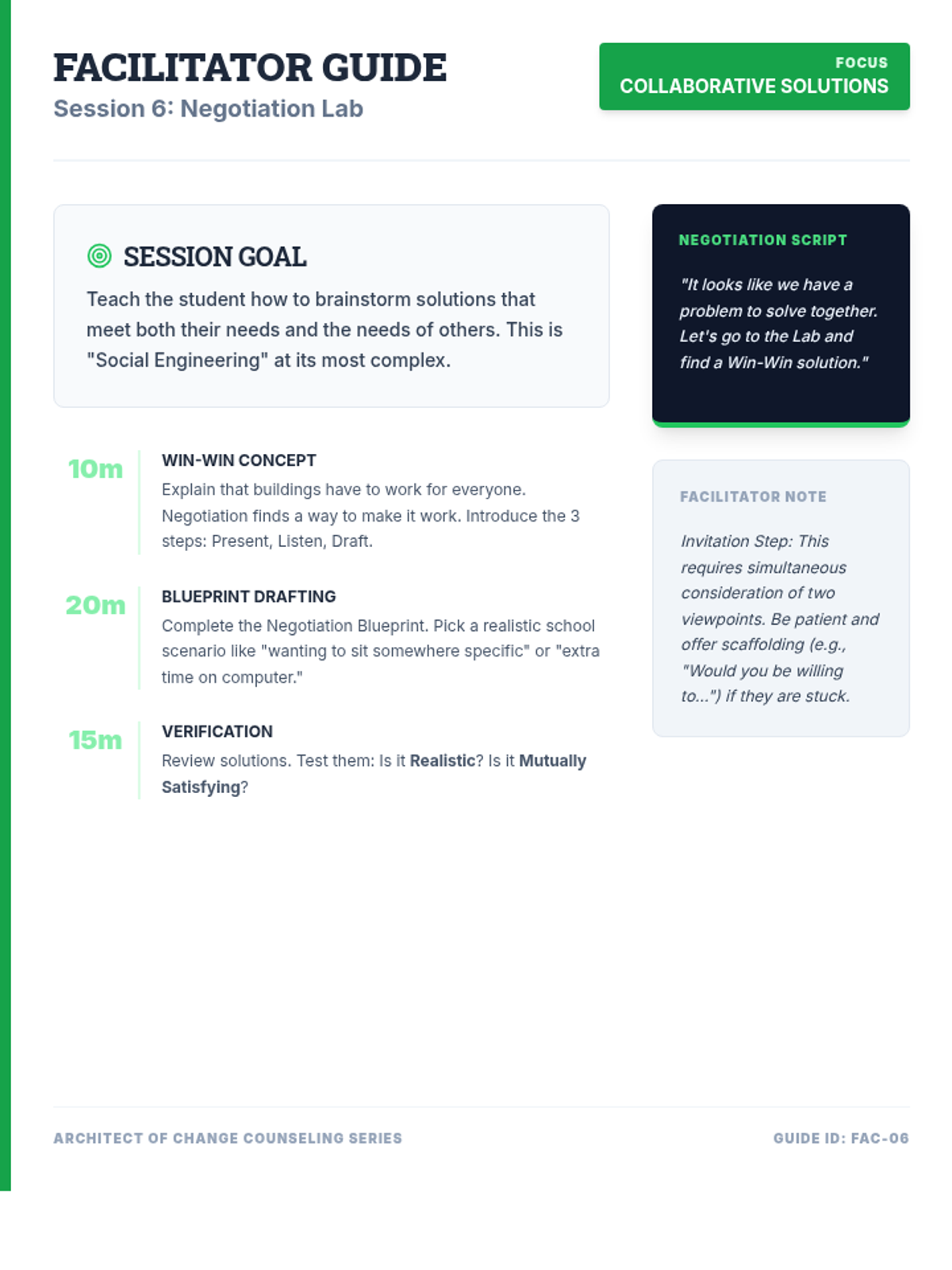
An advanced session on negotiating needs with peers and teachers using a collaborative win-win framework.
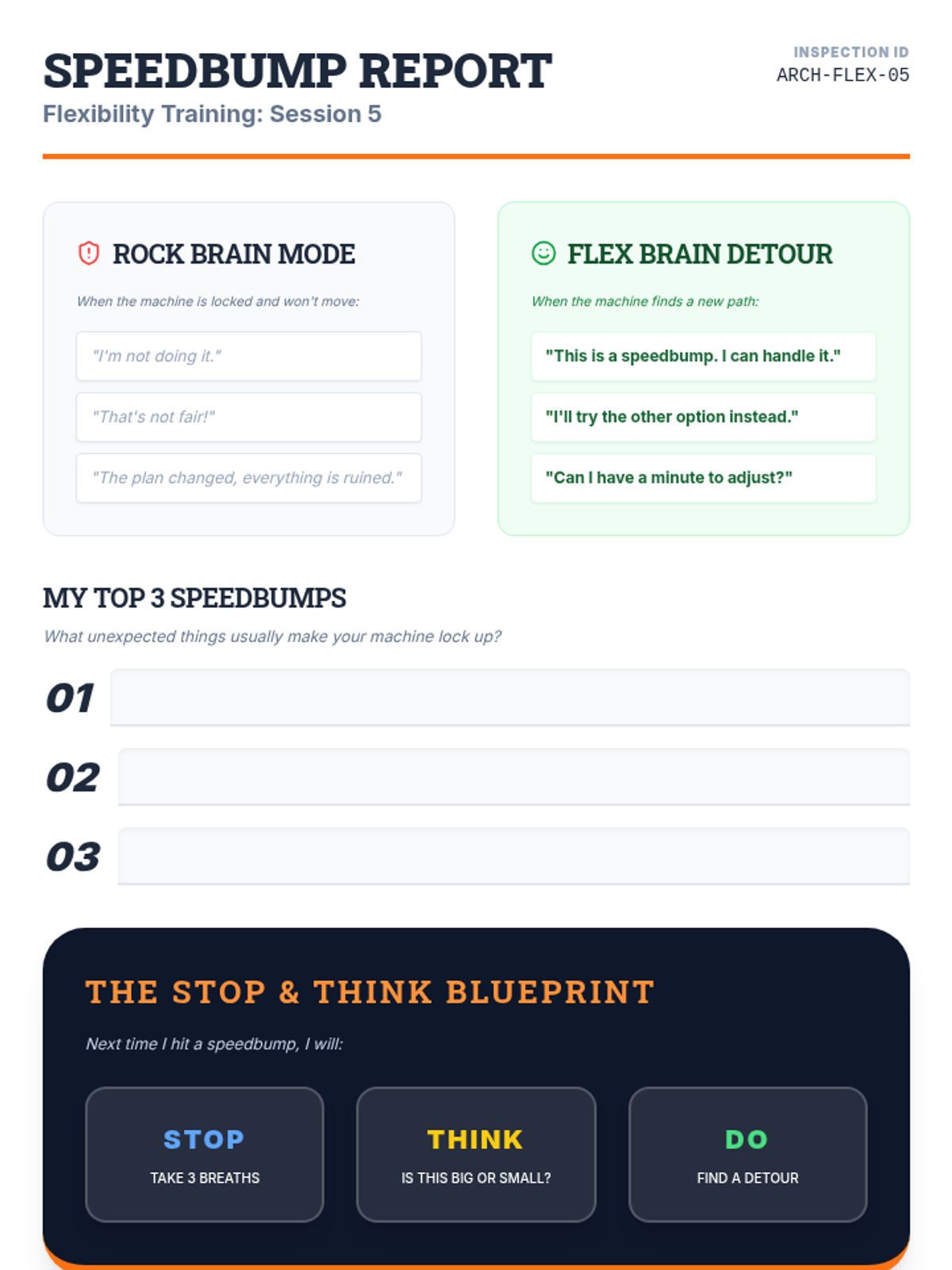
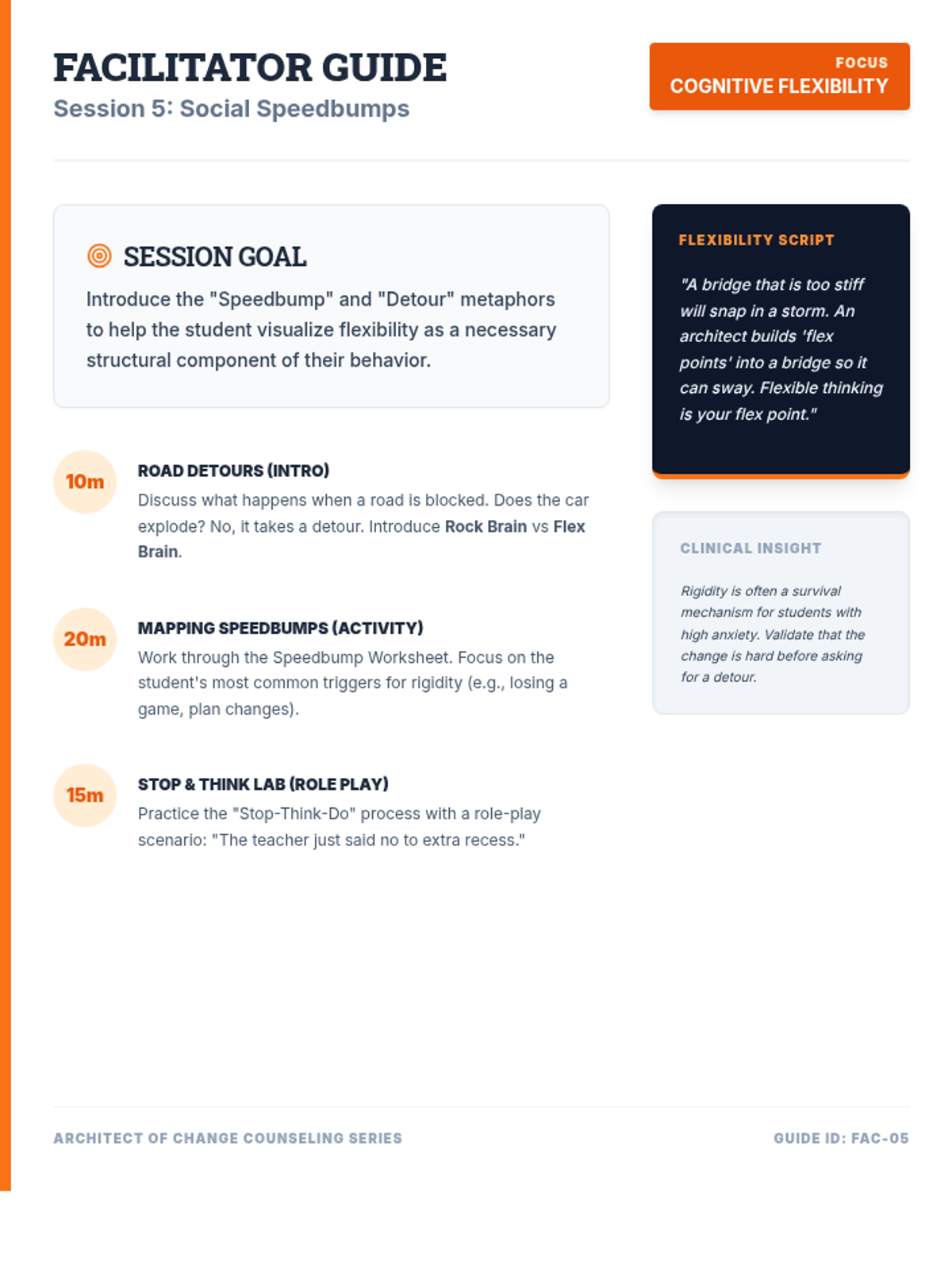
Navigating unexpected changes and social frustrations using flexible thinking and 'Stop and Think' blueprints.
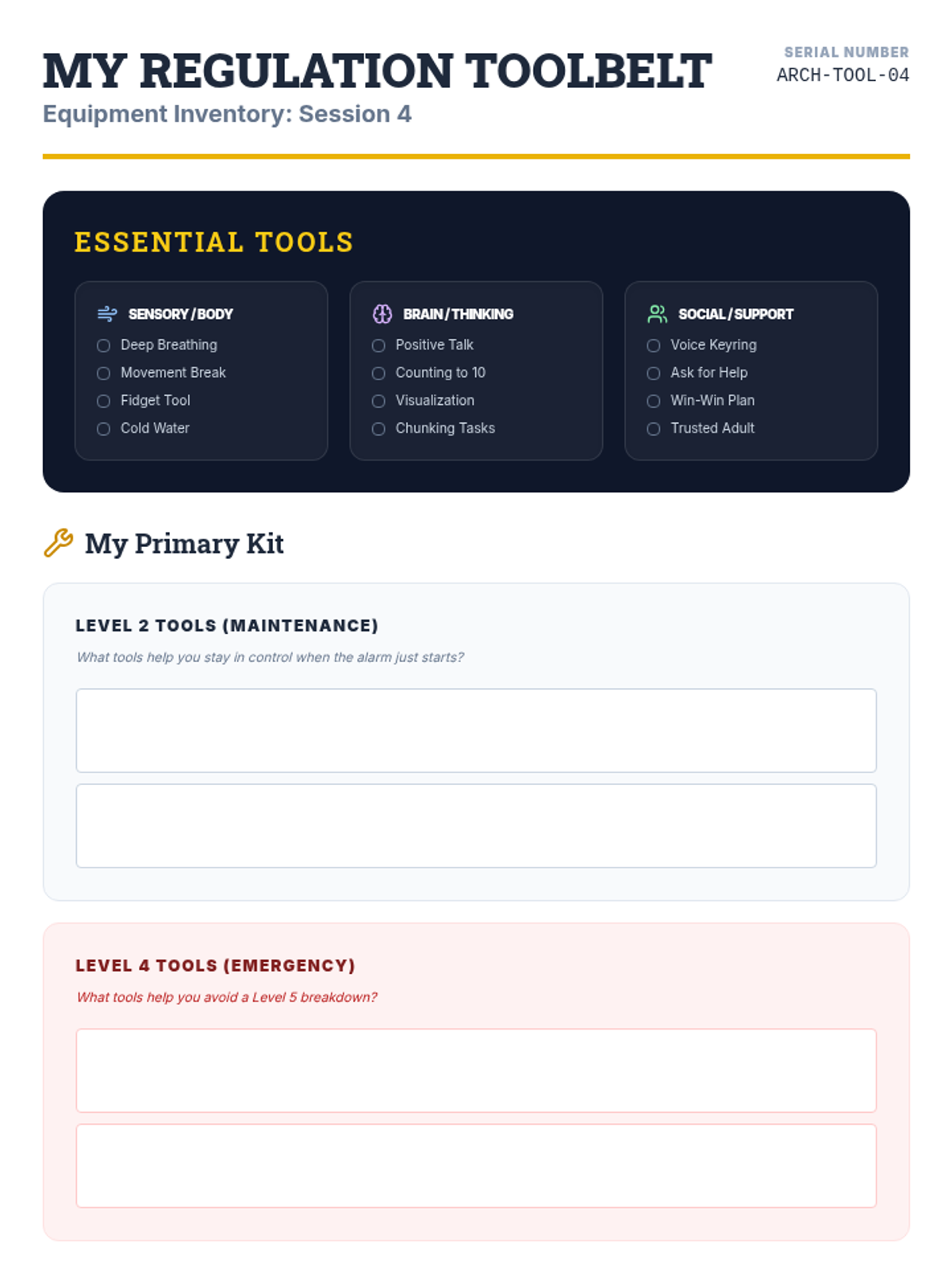
Students build a 'Regulation Toolbelt' with specific sensory and cognitive strategies to de-escalate when body alarms are triggered.
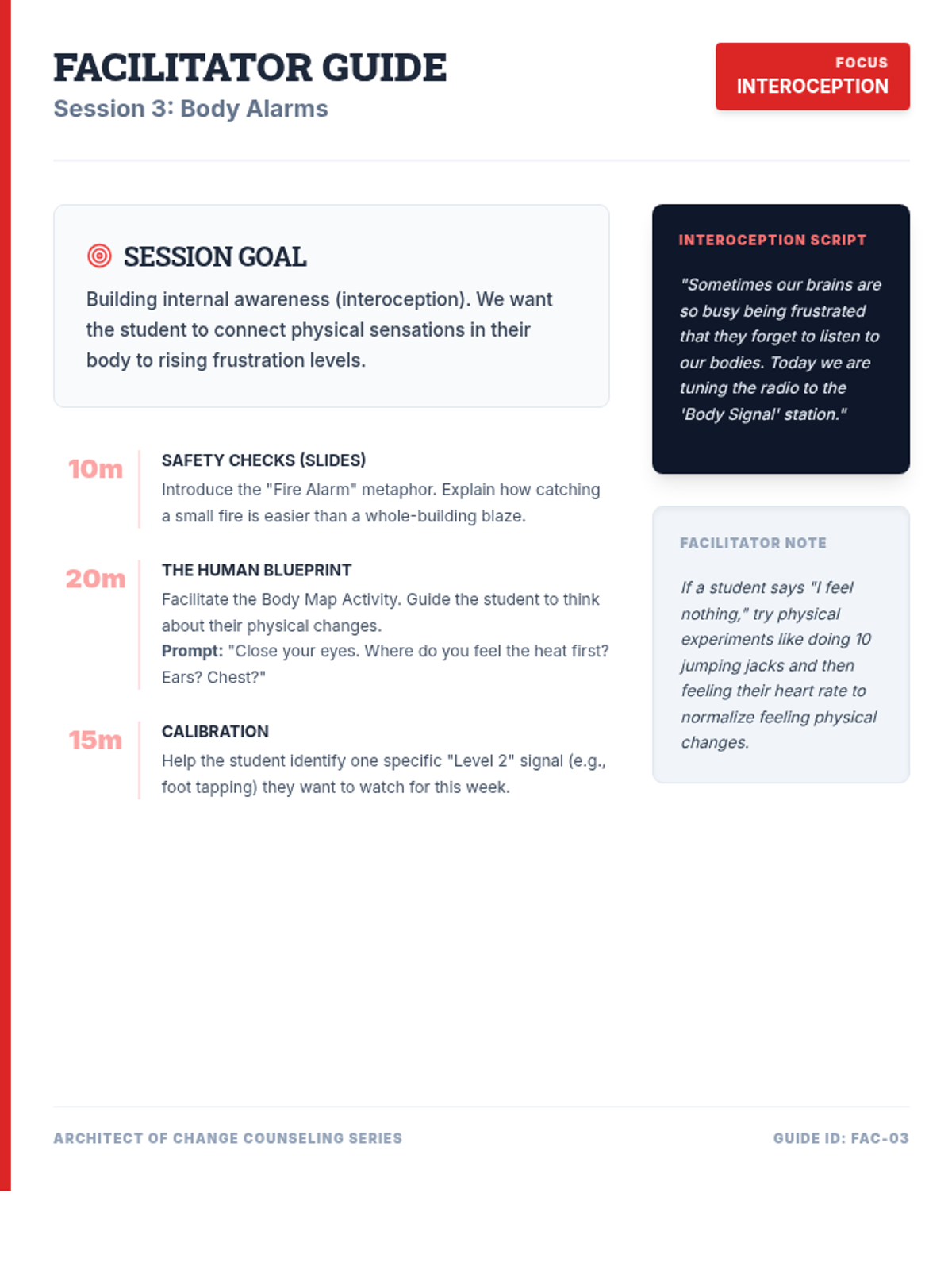
Focuses on identifying physiological 'Body Alarms' that signal distress before an emotional escalation occurs.
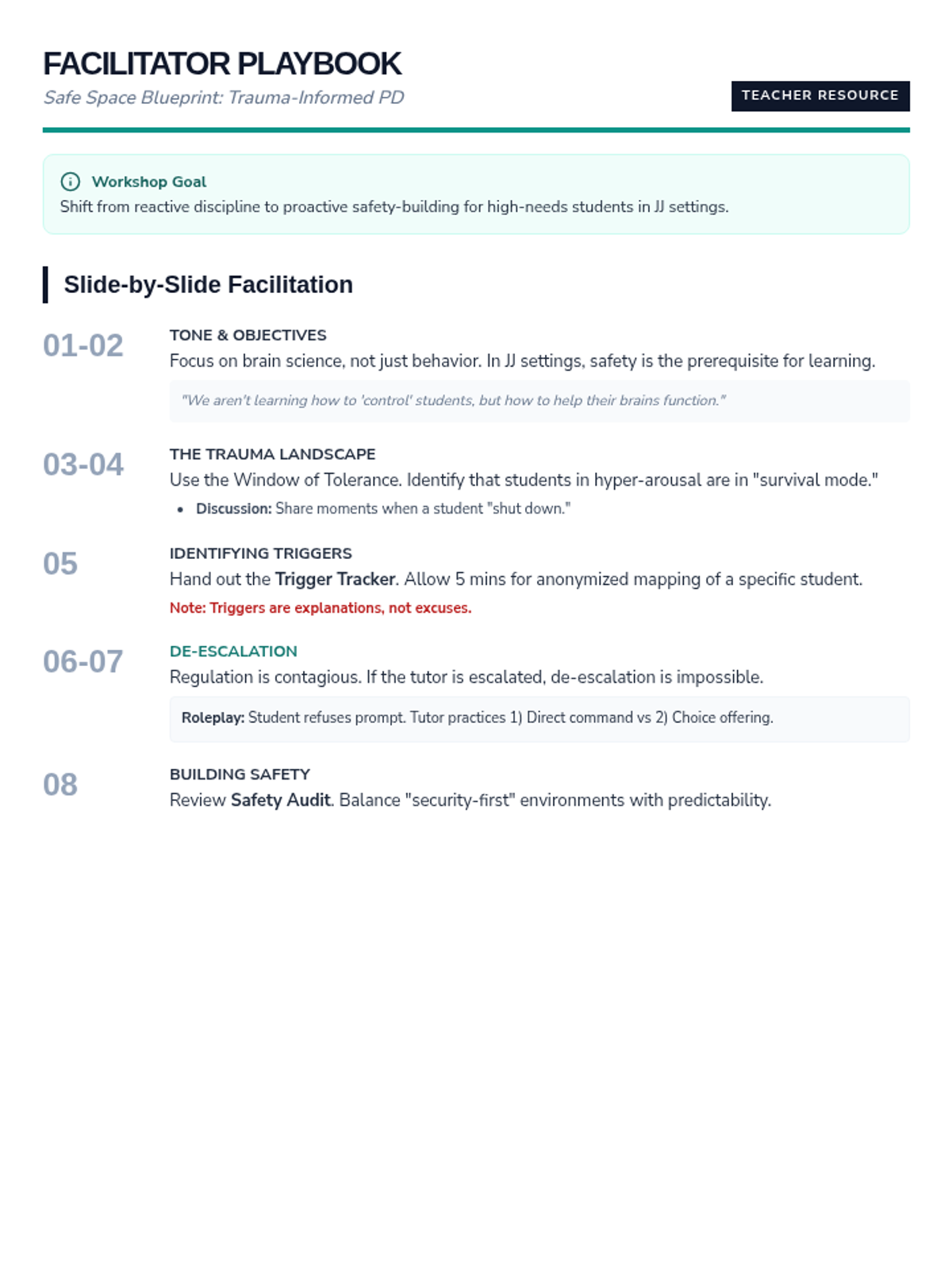
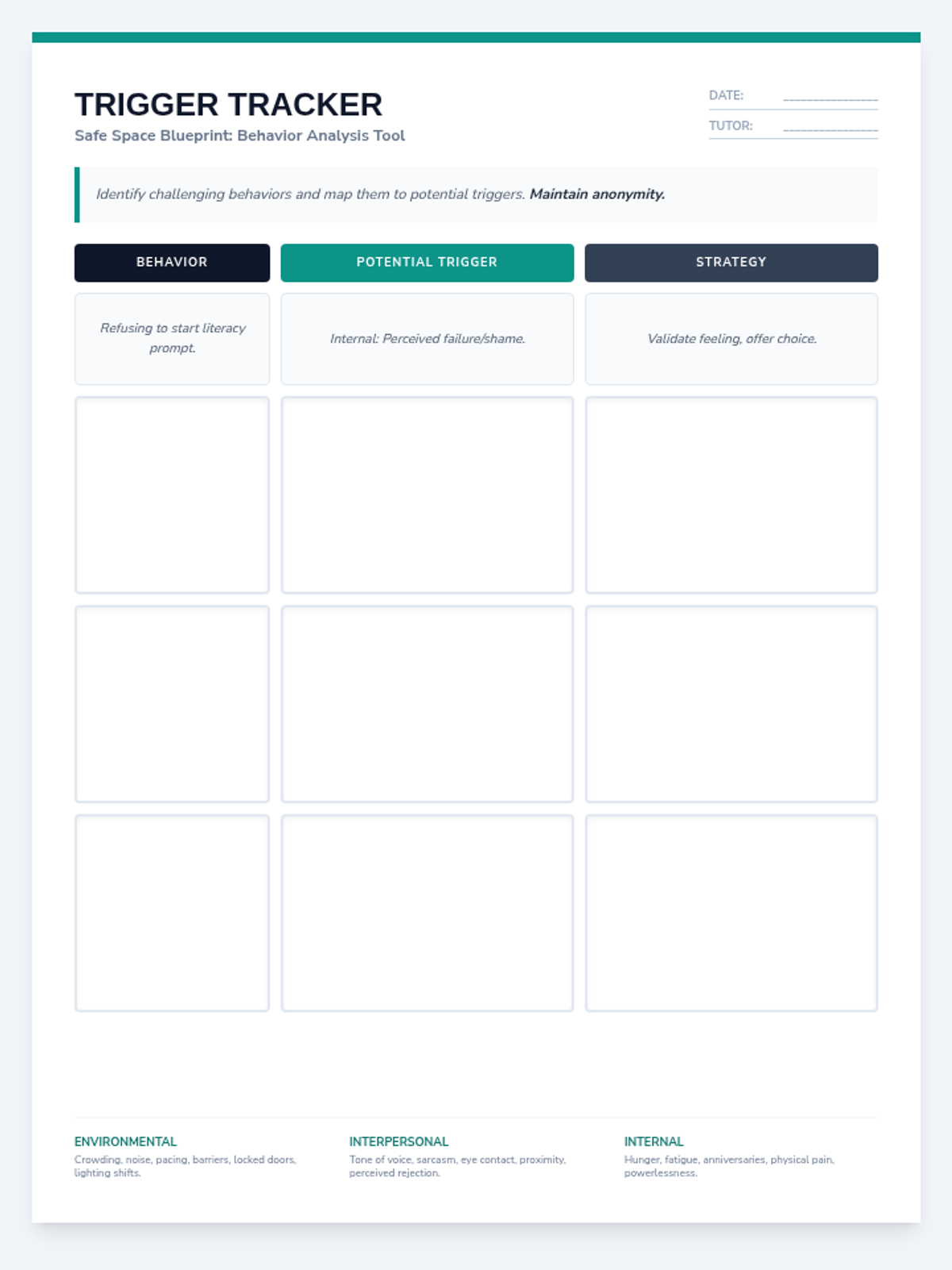
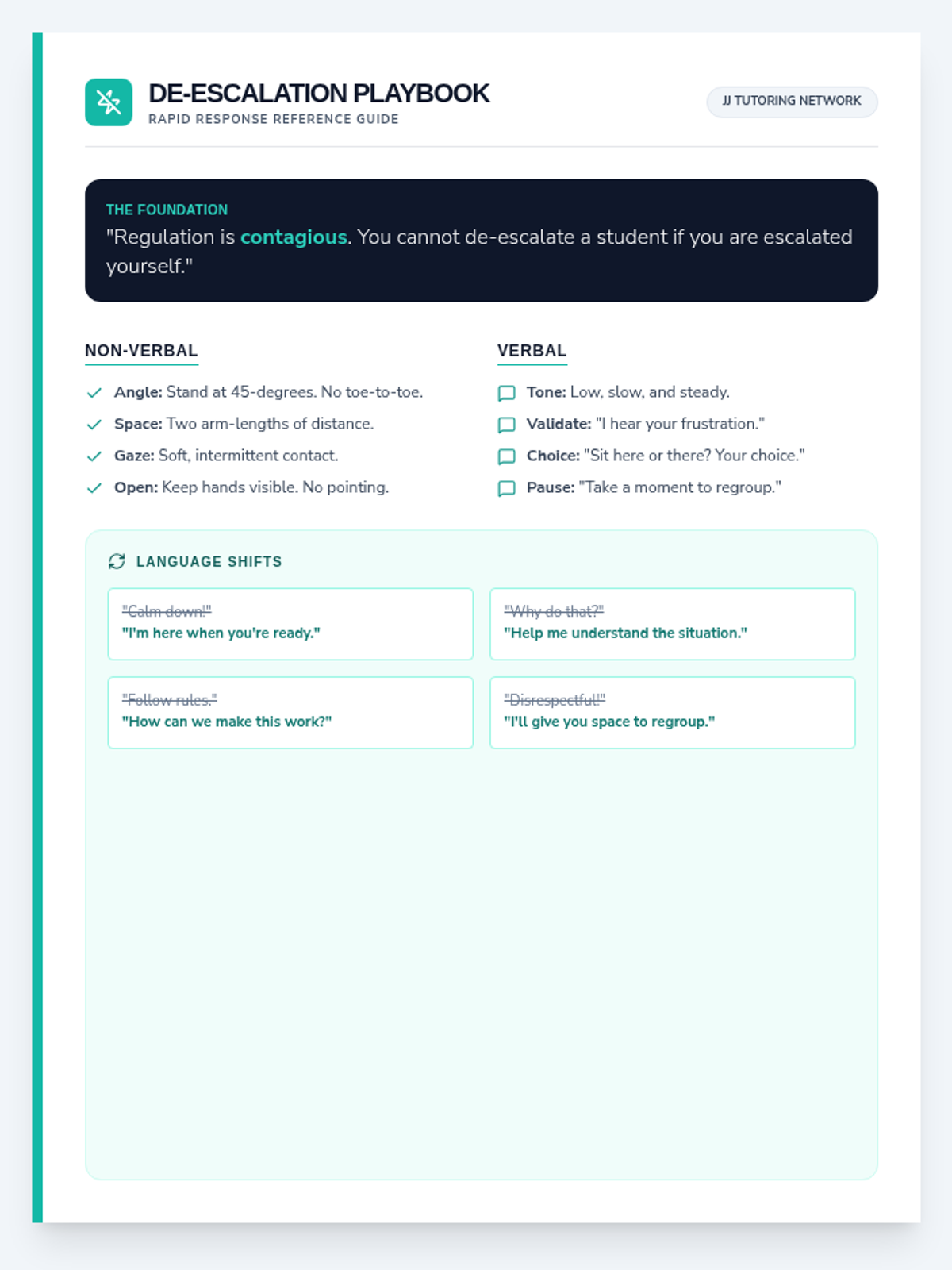
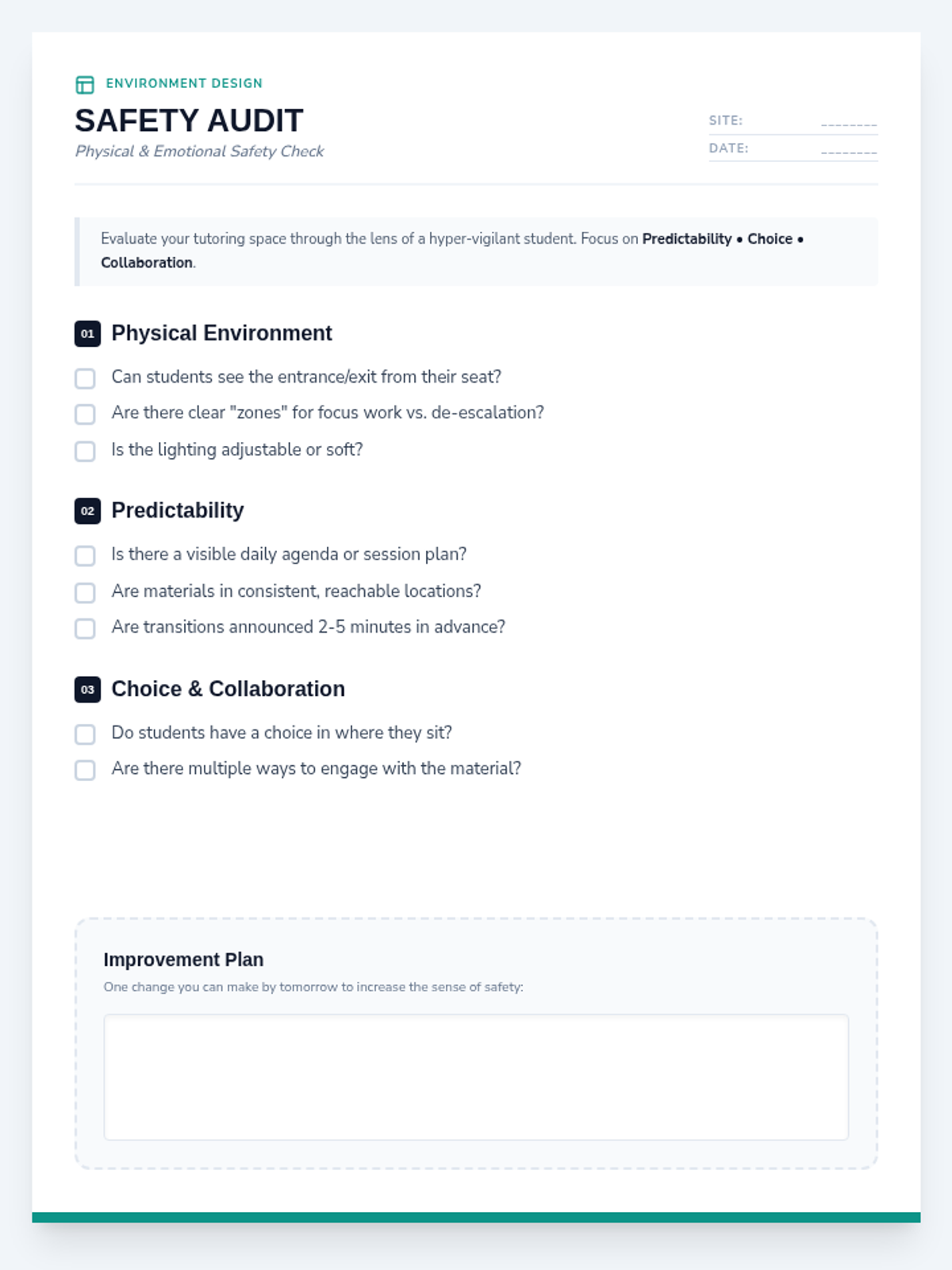
A professional development workshop designed for tutors in juvenile justice settings. It focuses on identifying trauma triggers, mastering de-escalation techniques, and intentionally building a physically and emotionally safe classroom environment.
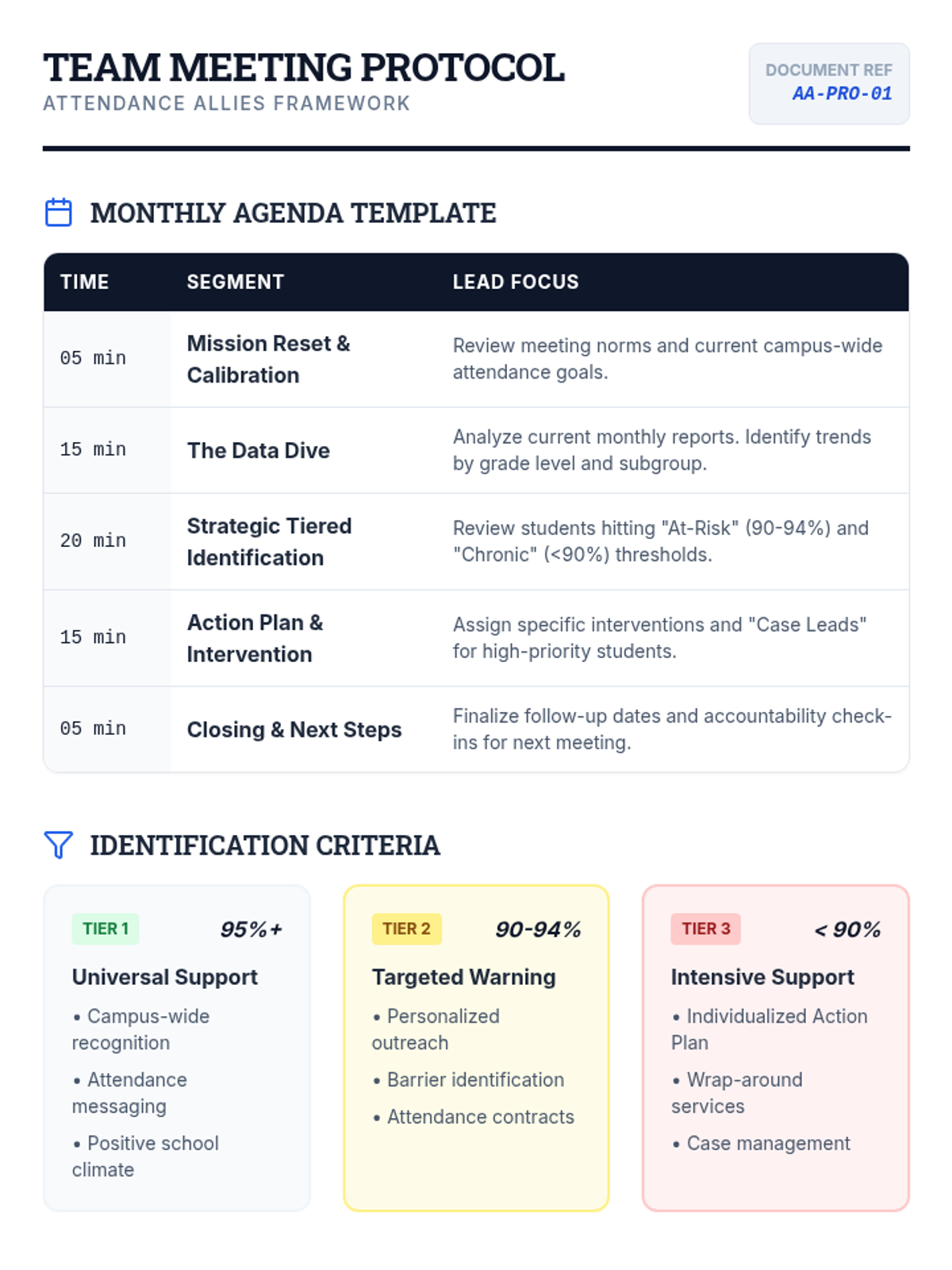
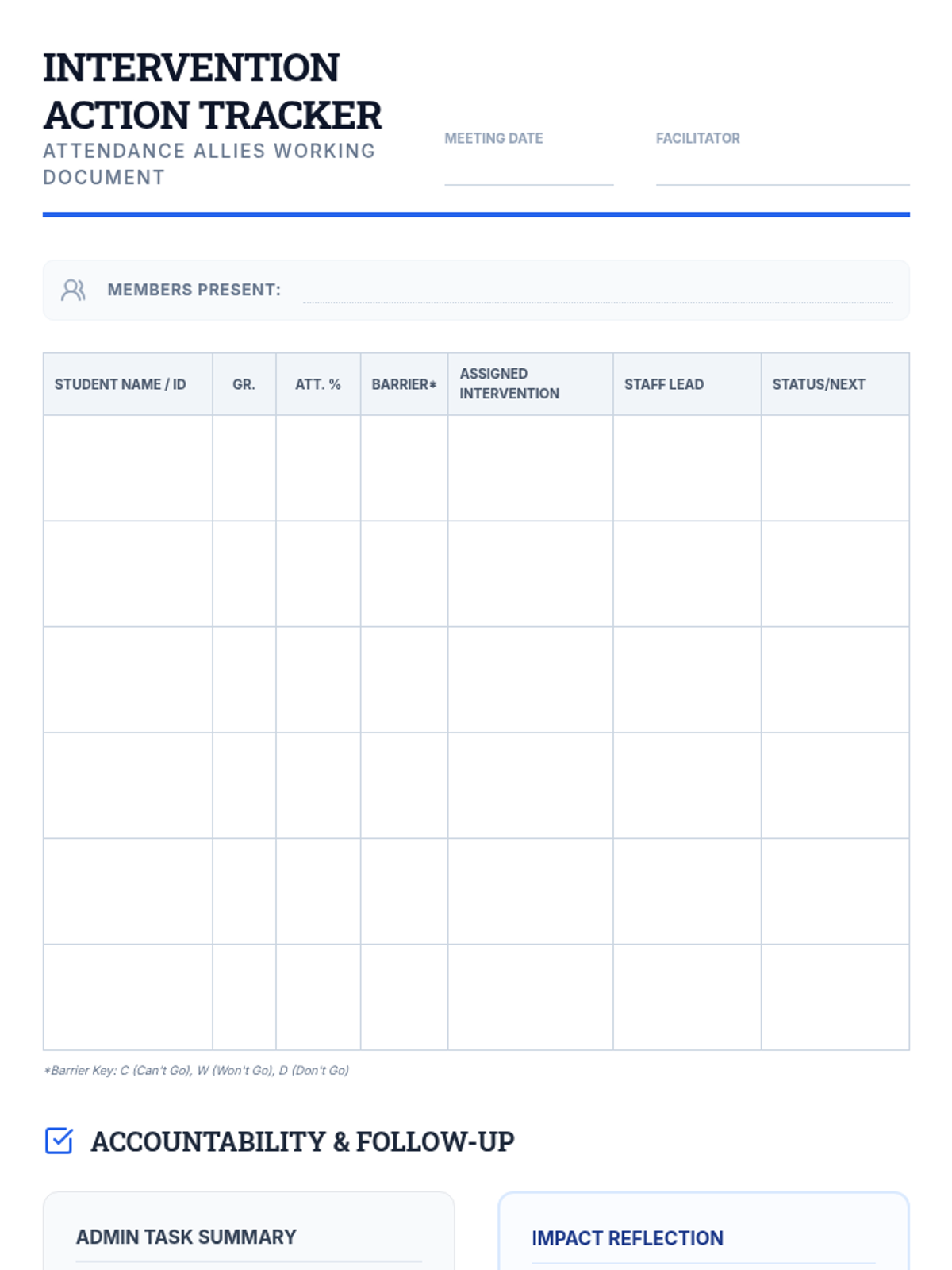
A comprehensive framework for middle school attendance teams to conduct efficient monthly meetings, analyze student data, and assign targeted interventions to improve campus-wide engagement.
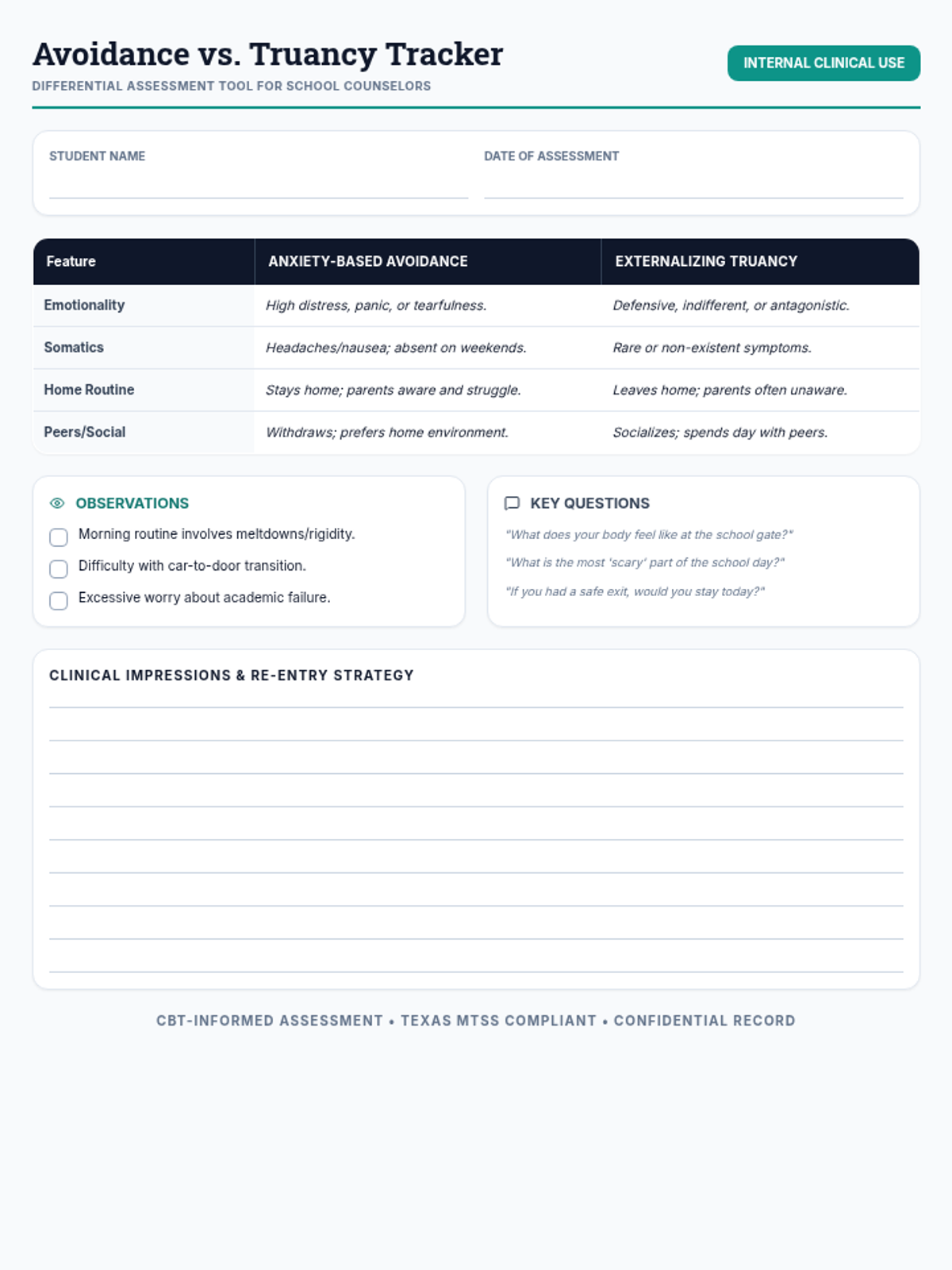
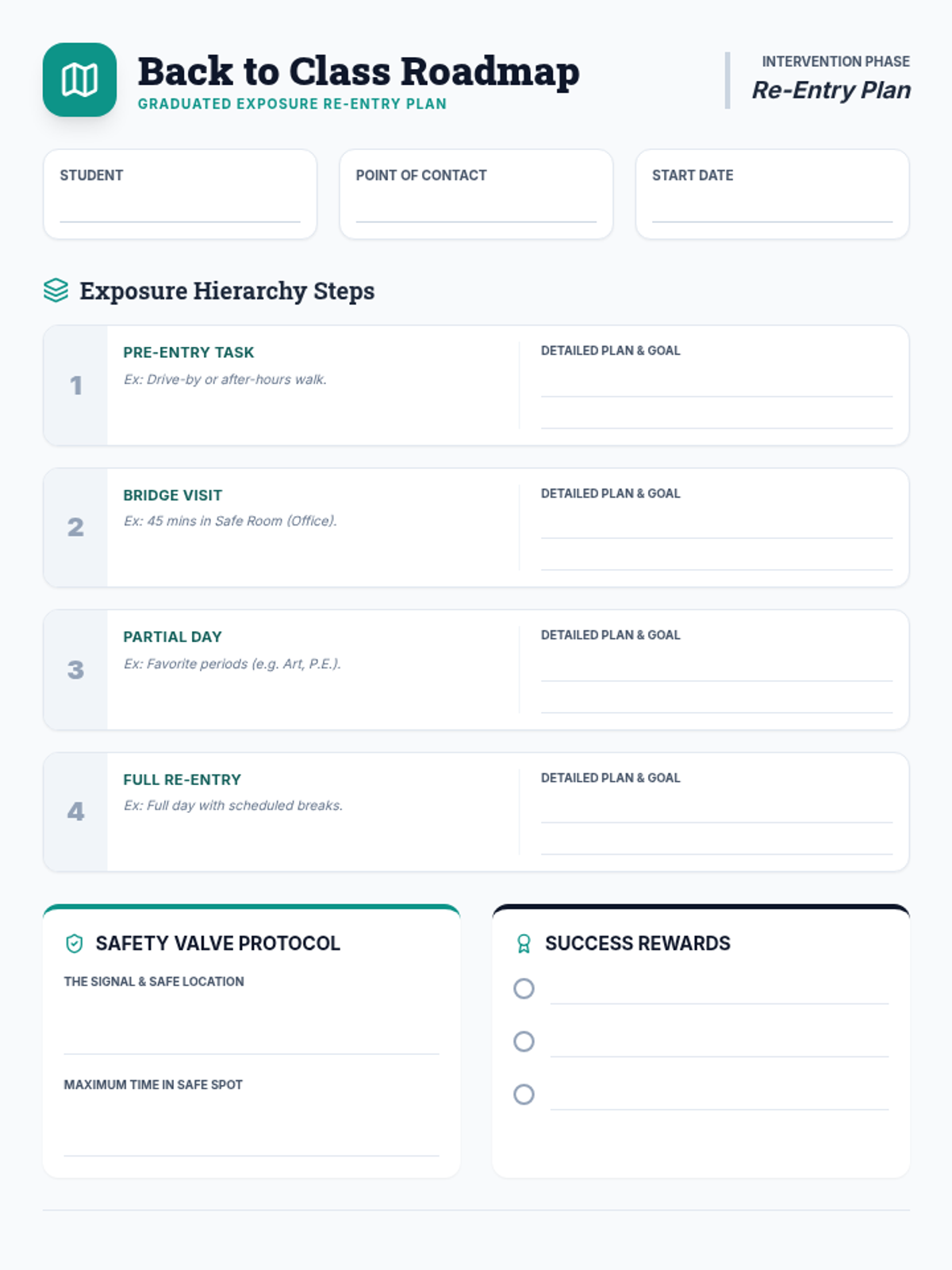
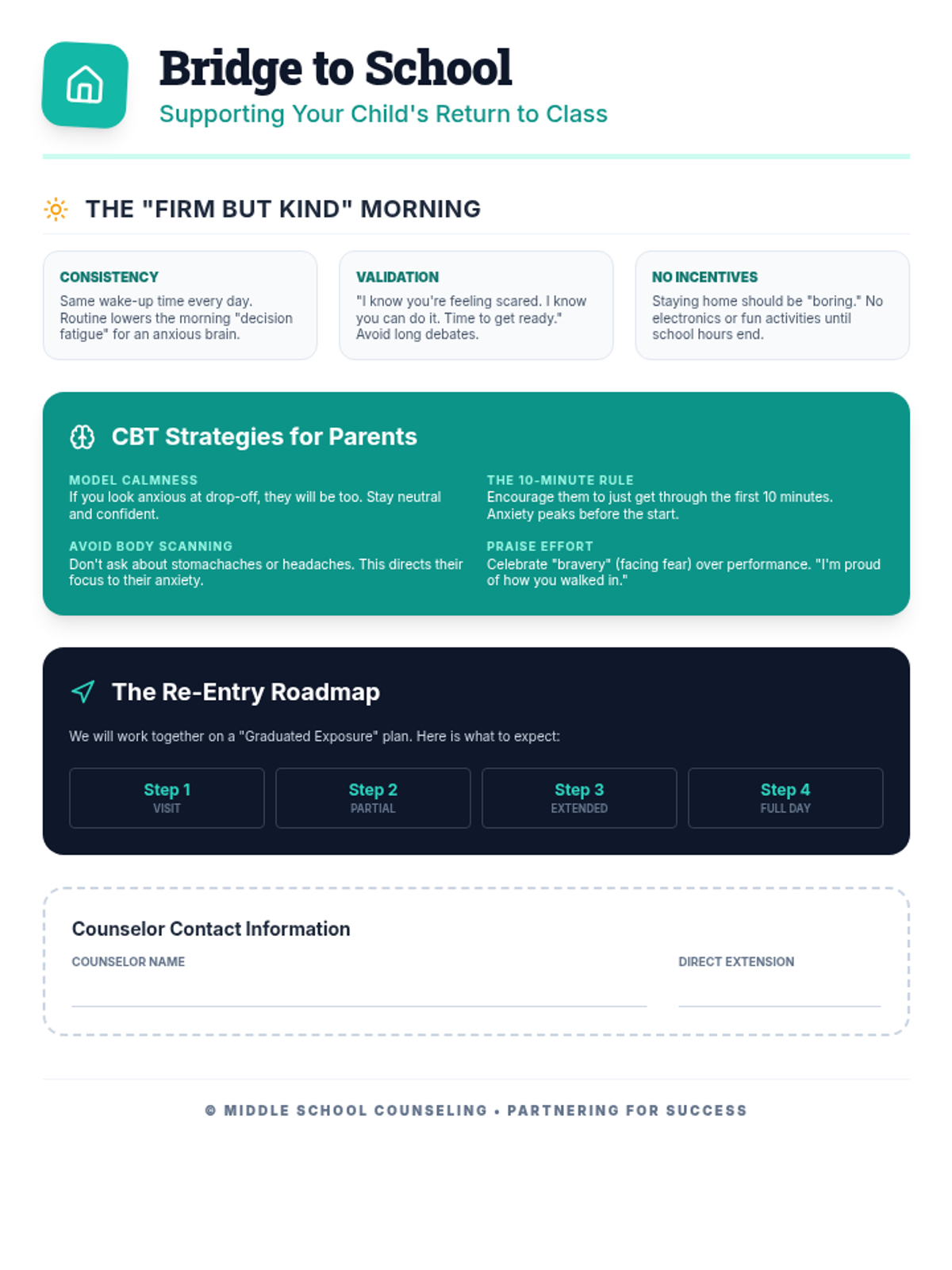
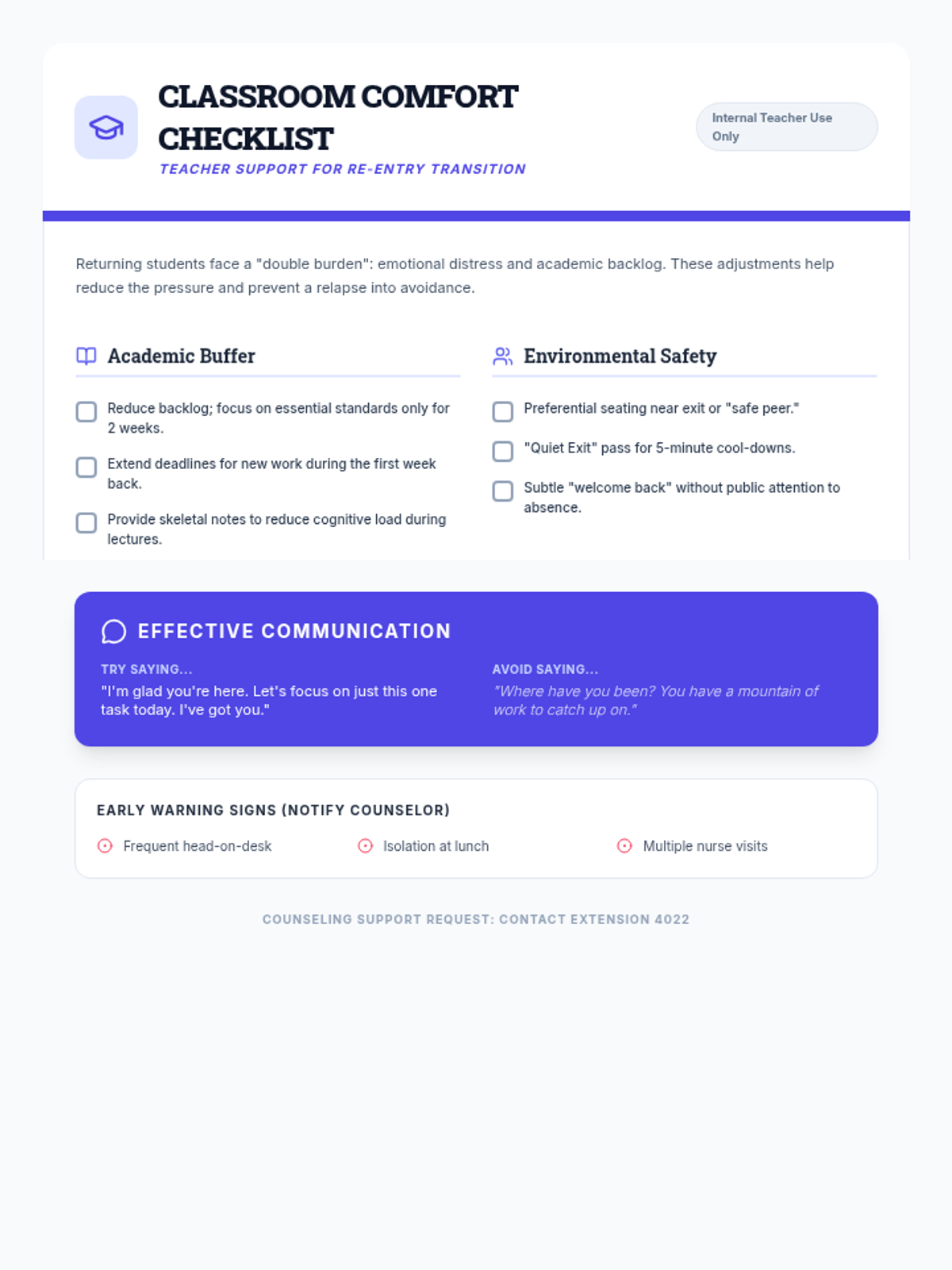
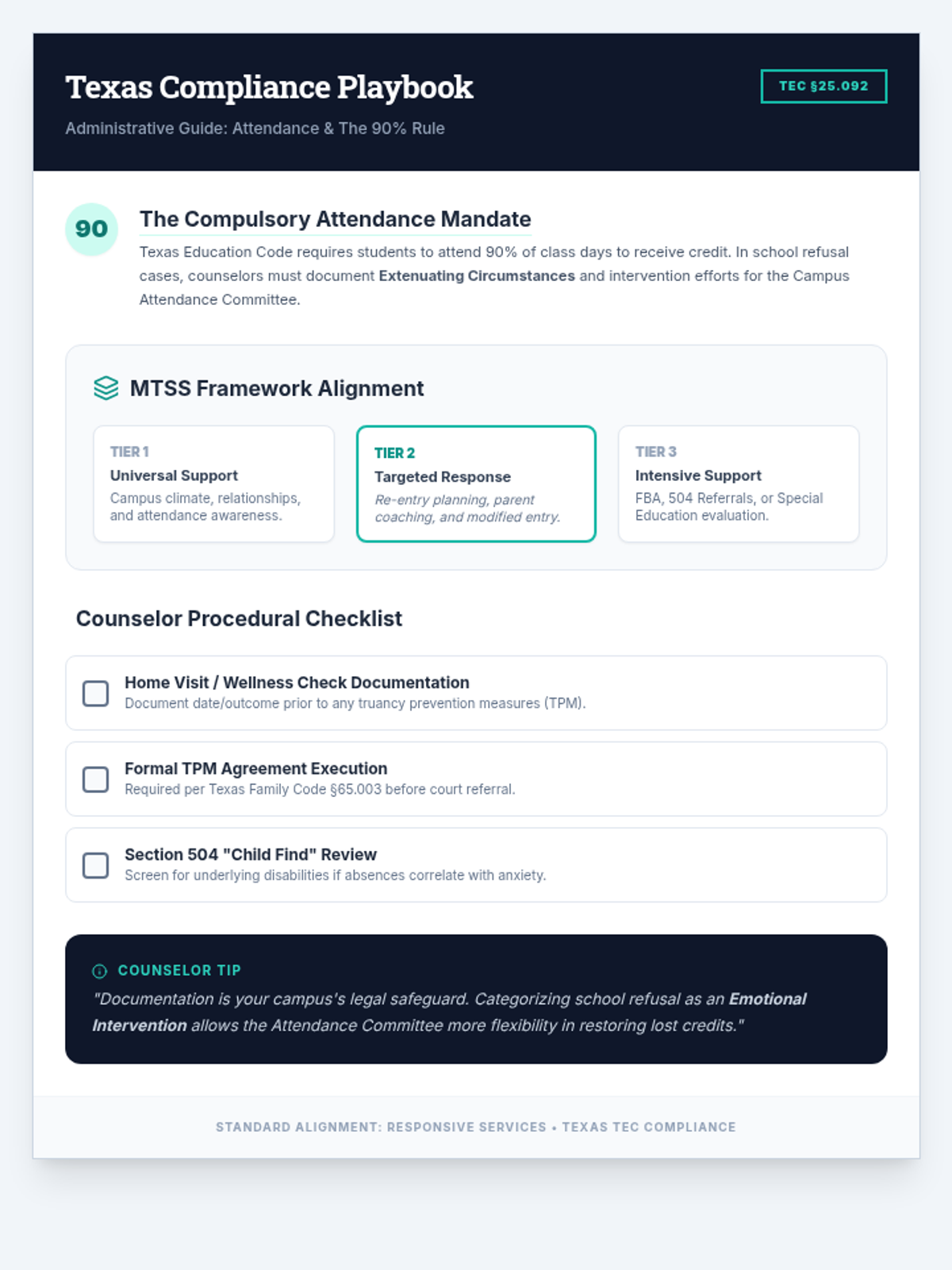
A comprehensive intervention framework for middle school counselors to address school refusal and avoidance using CBT-informed strategies, compliant with Texas educational standards.
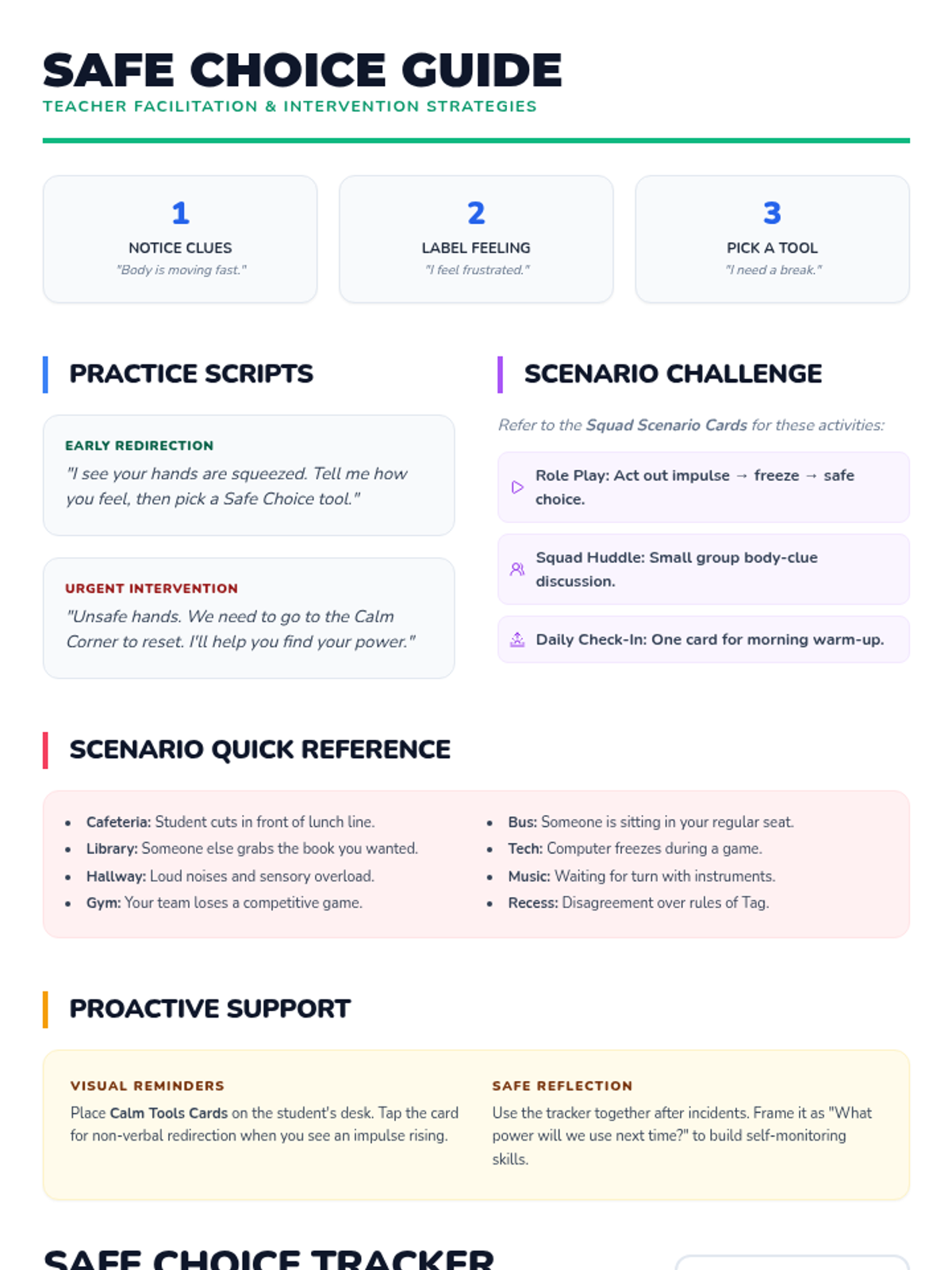
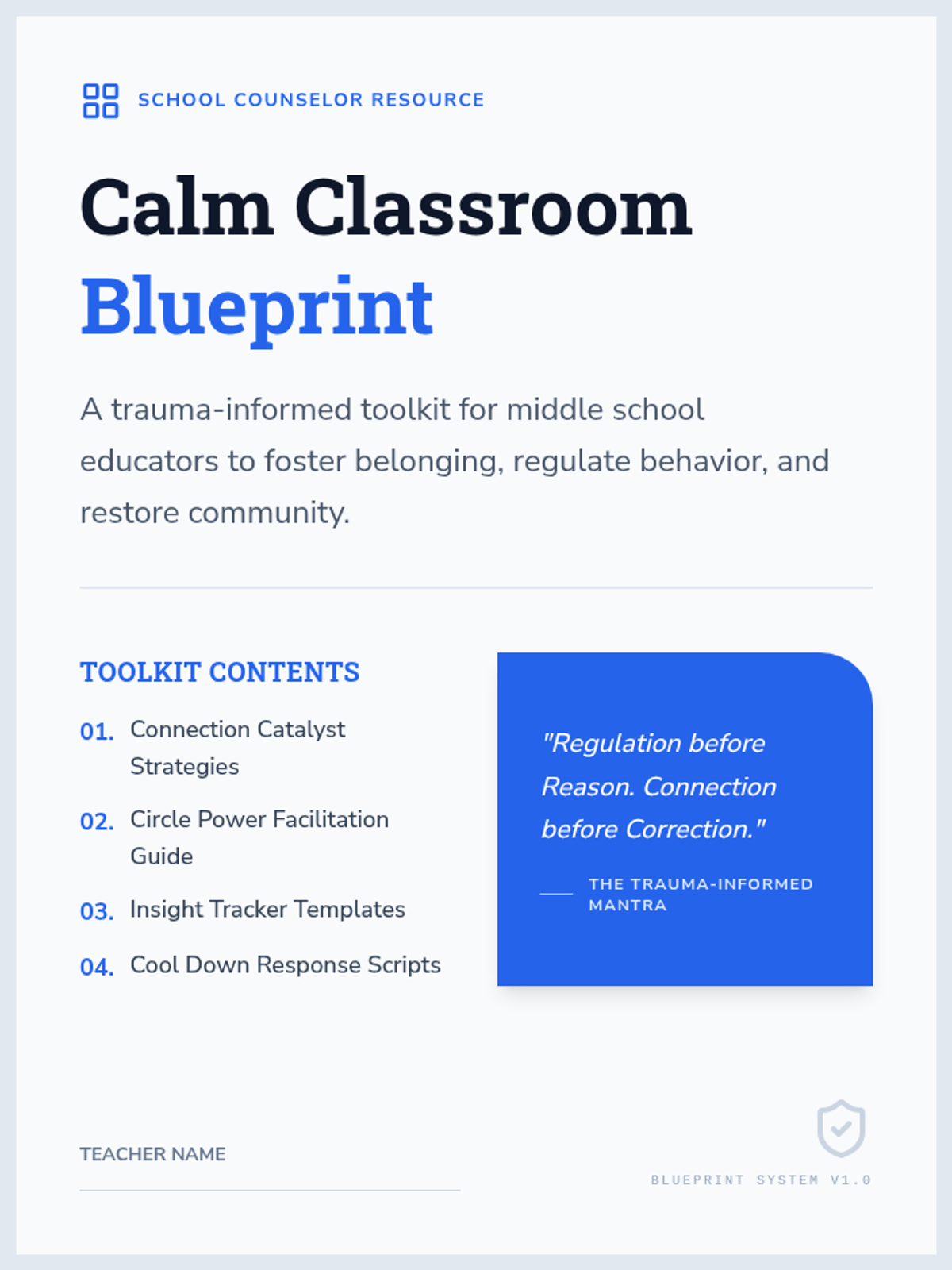
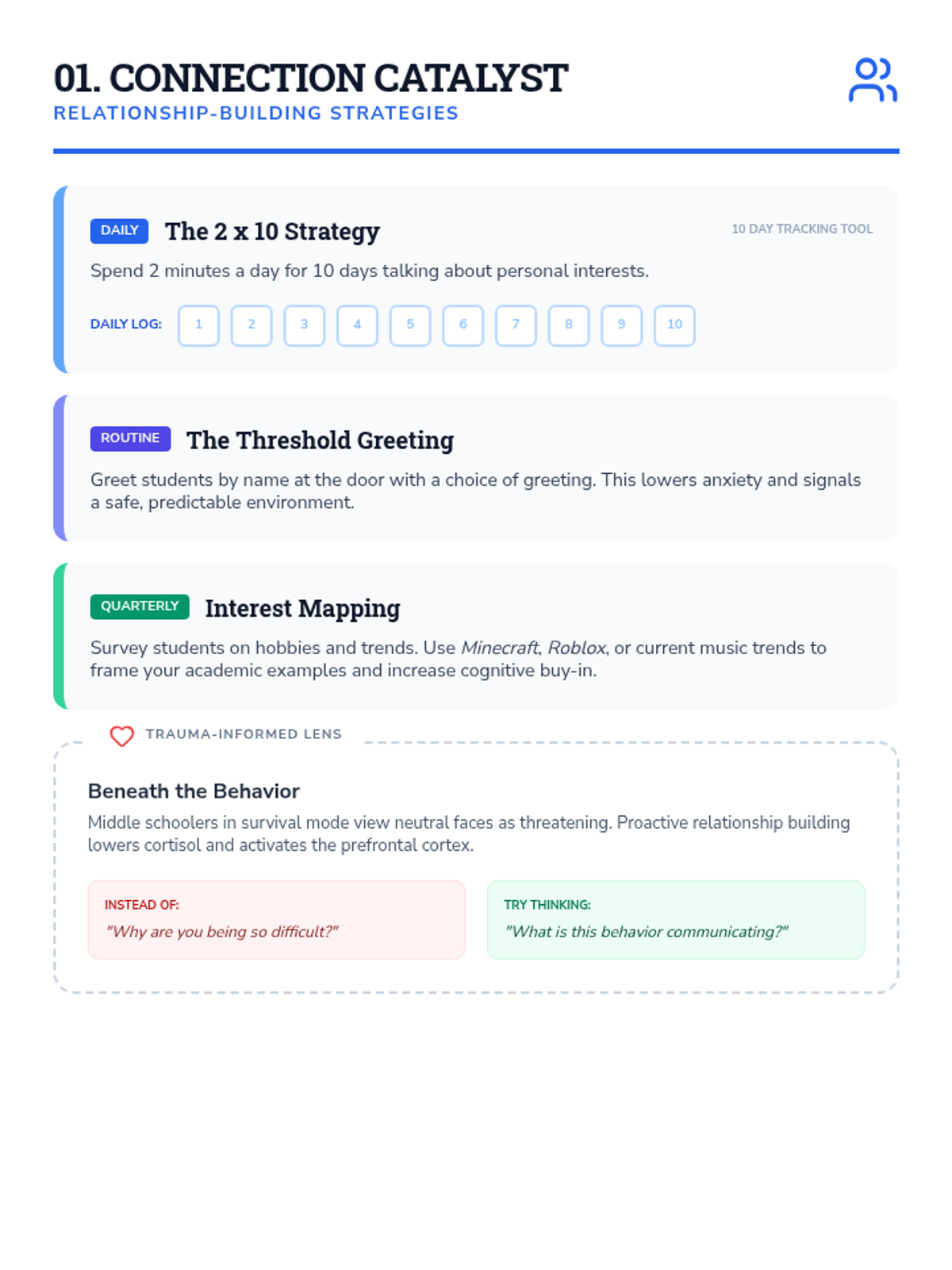
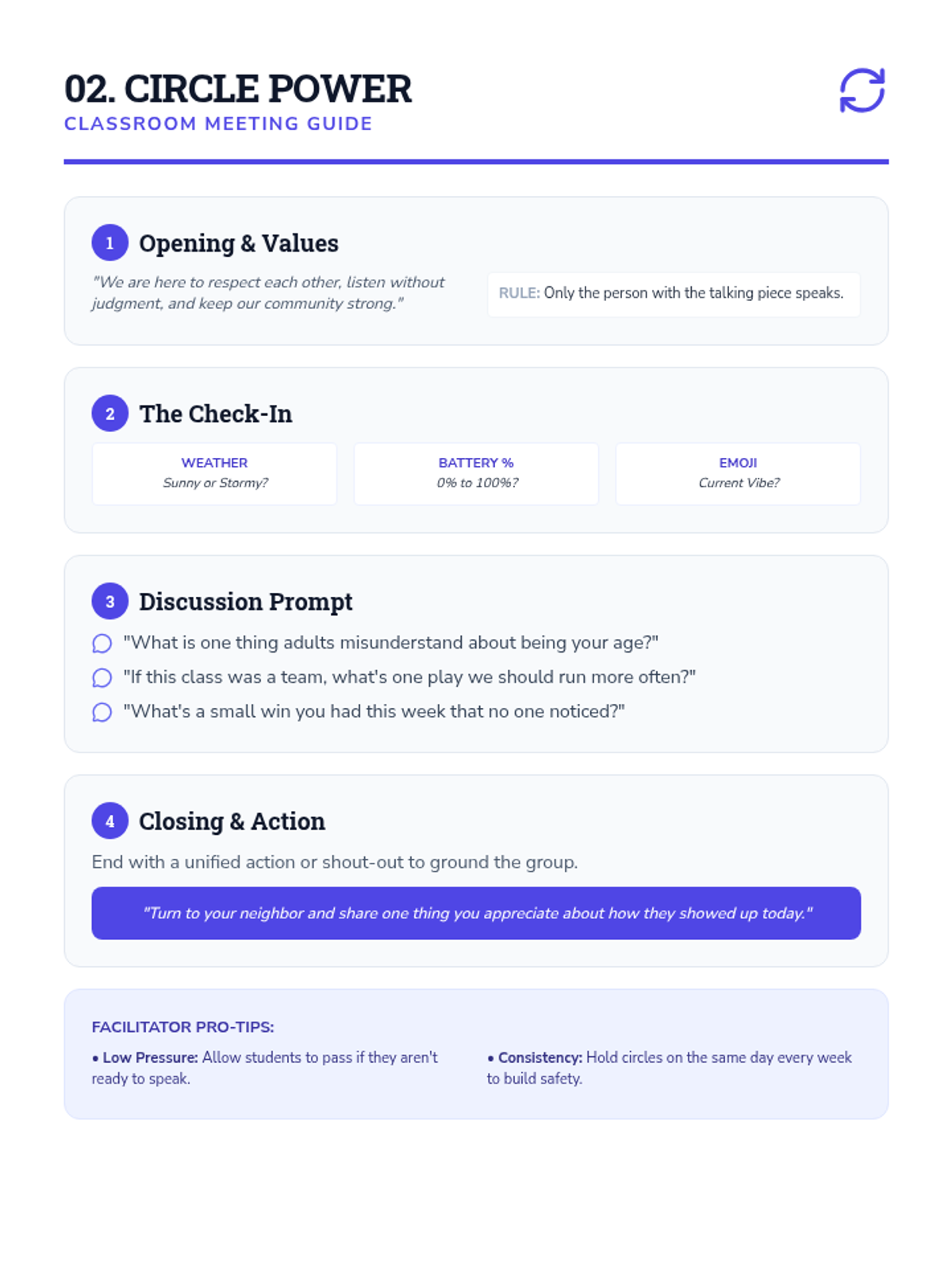
A comprehensive toolkit for middle school teachers to implement trauma-informed behavior supports, including relationship strategies, meeting guides, and de-escalation scripts.
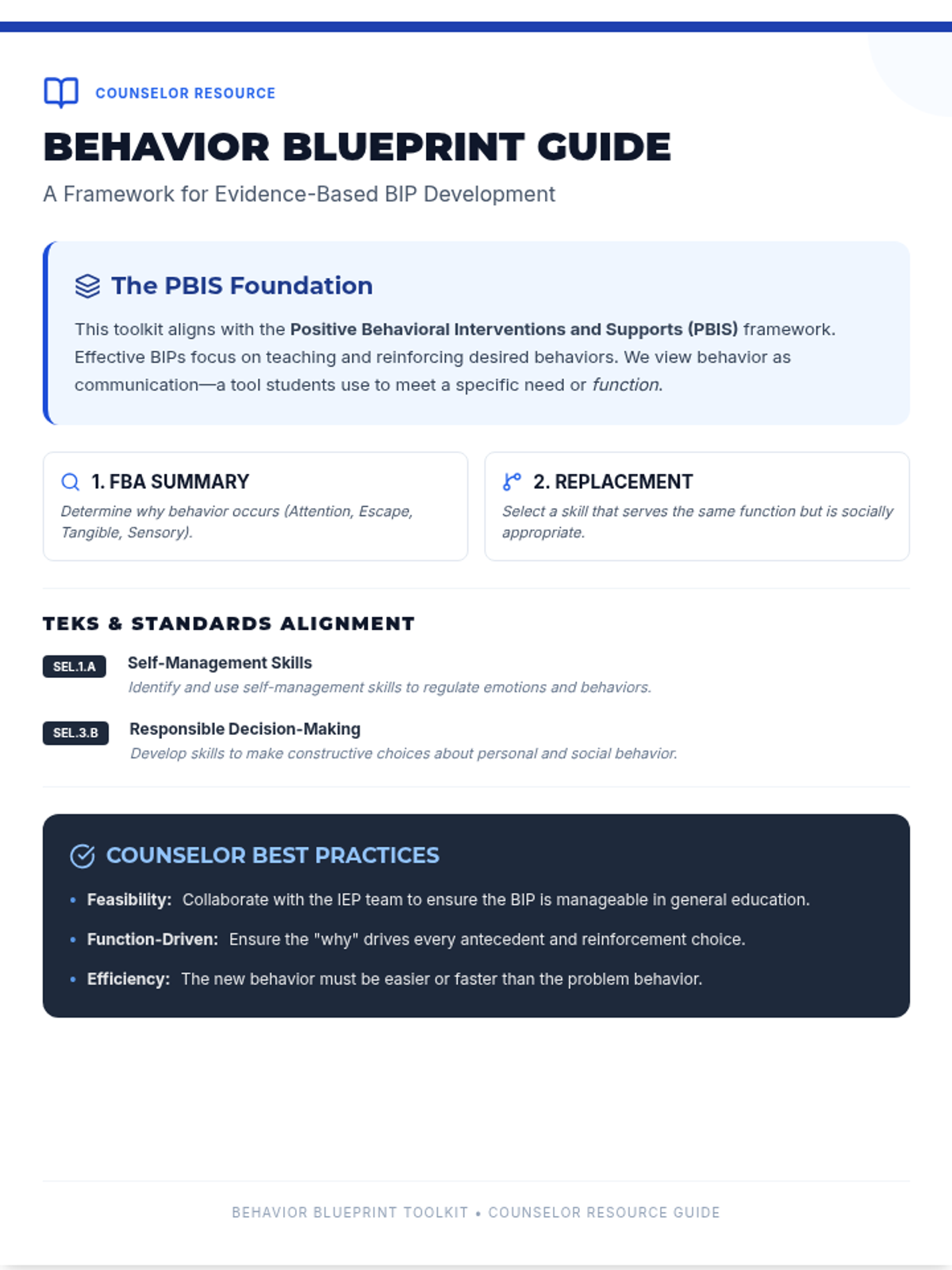
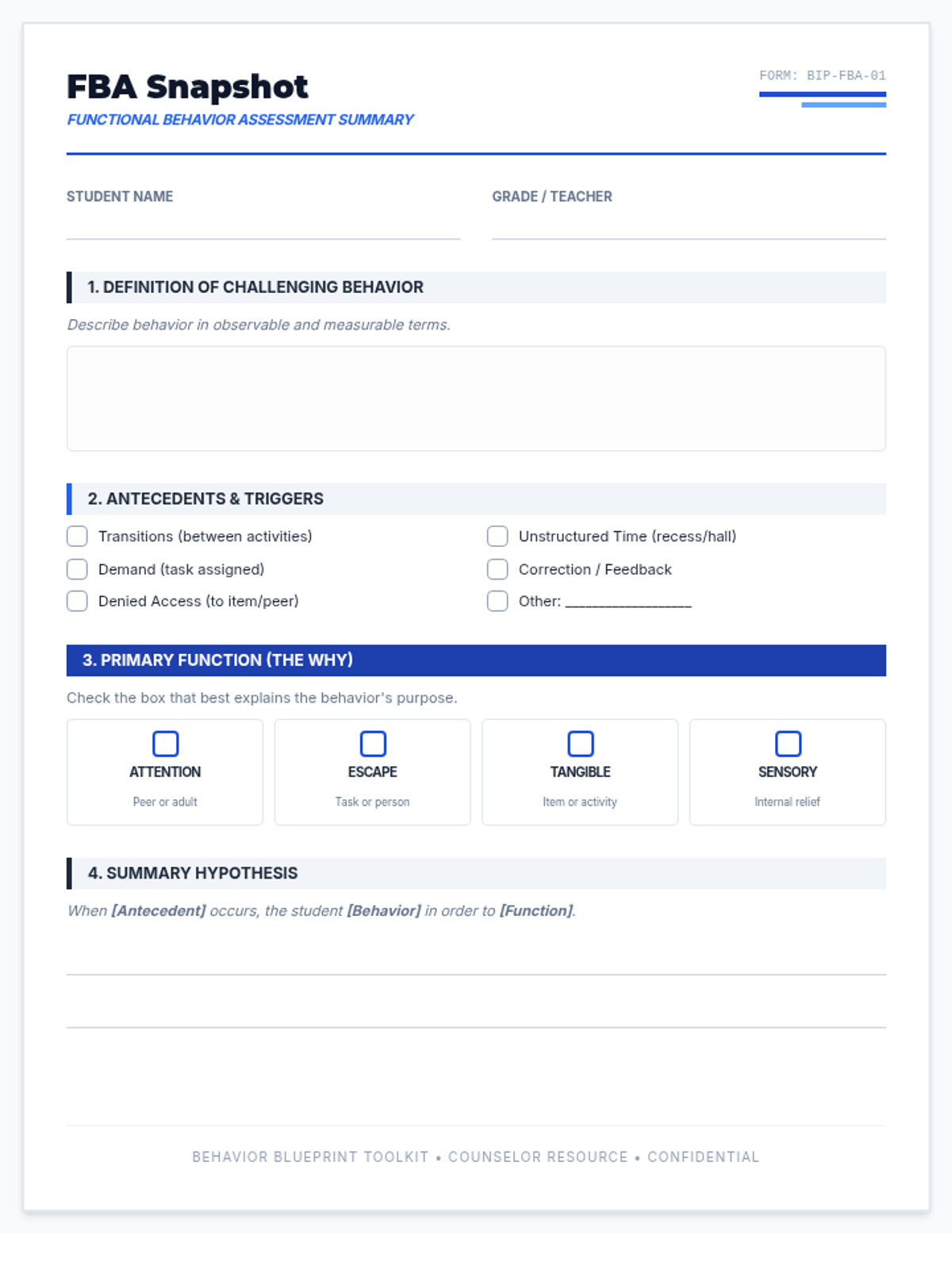
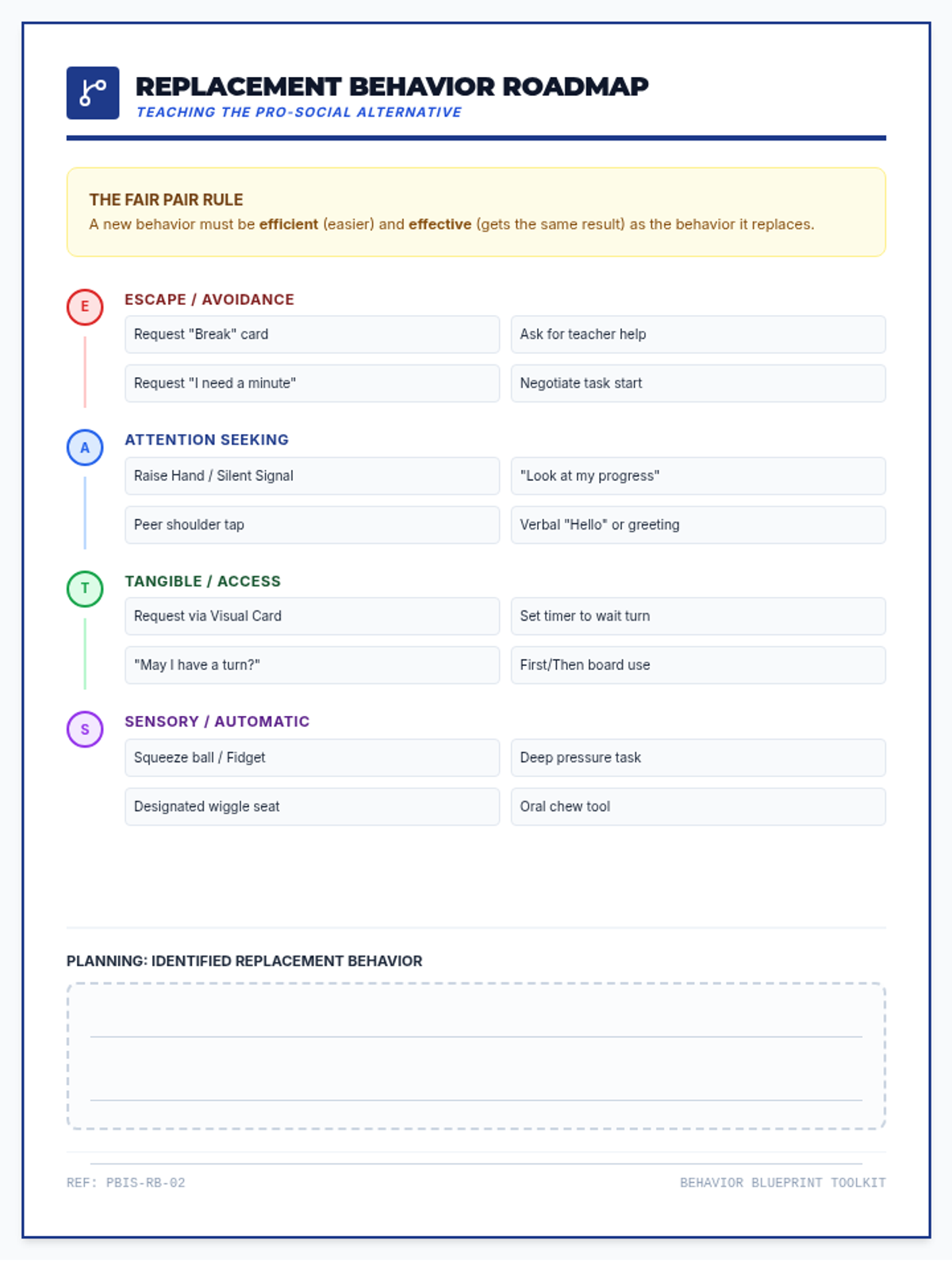
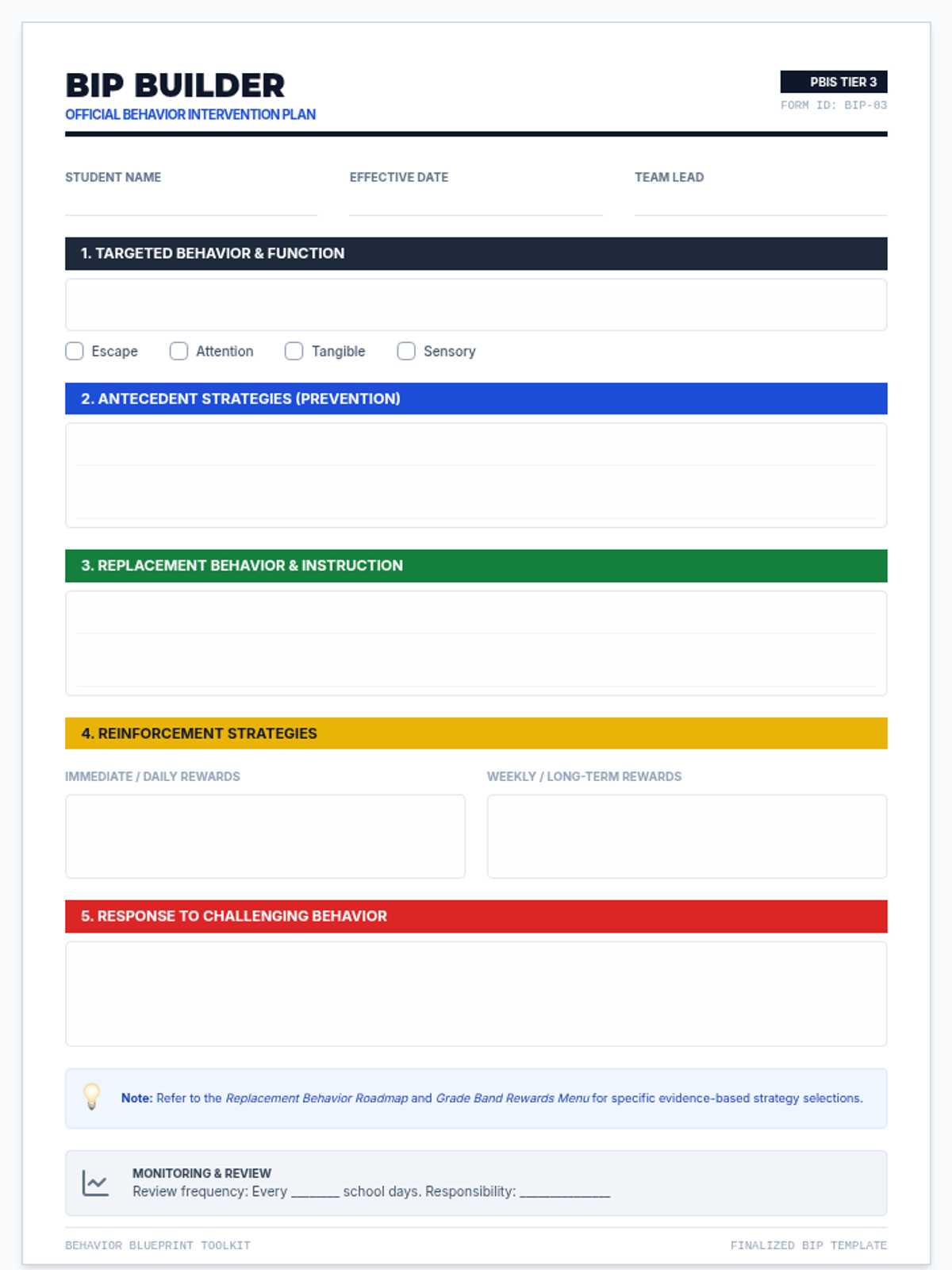
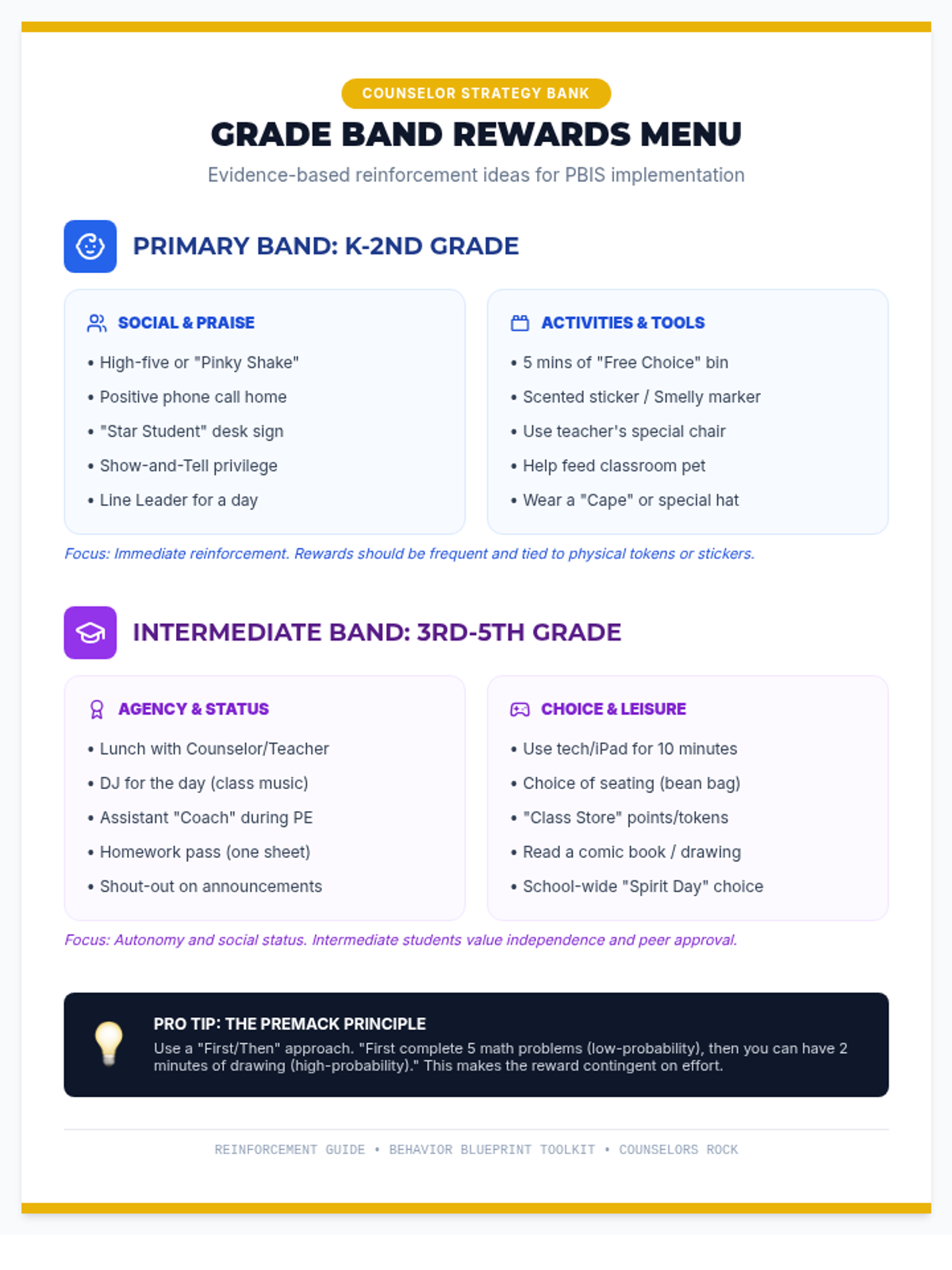
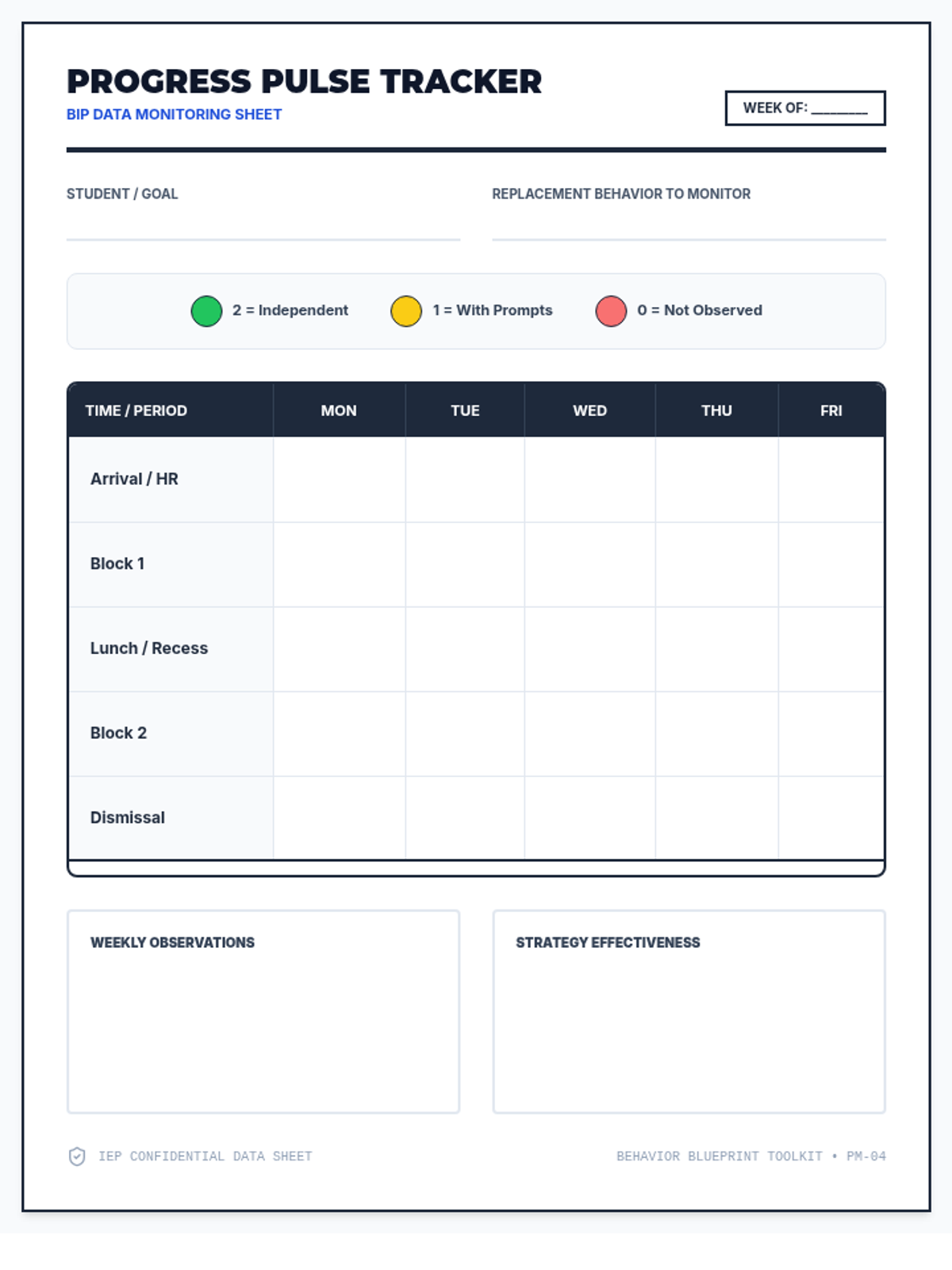
This lesson provides counselors with the foundational tools and templates needed to translate FBA data into actionable behavior intervention plans. It covers functional assessment summaries, replacement behavior selection, and data-driven monitoring.
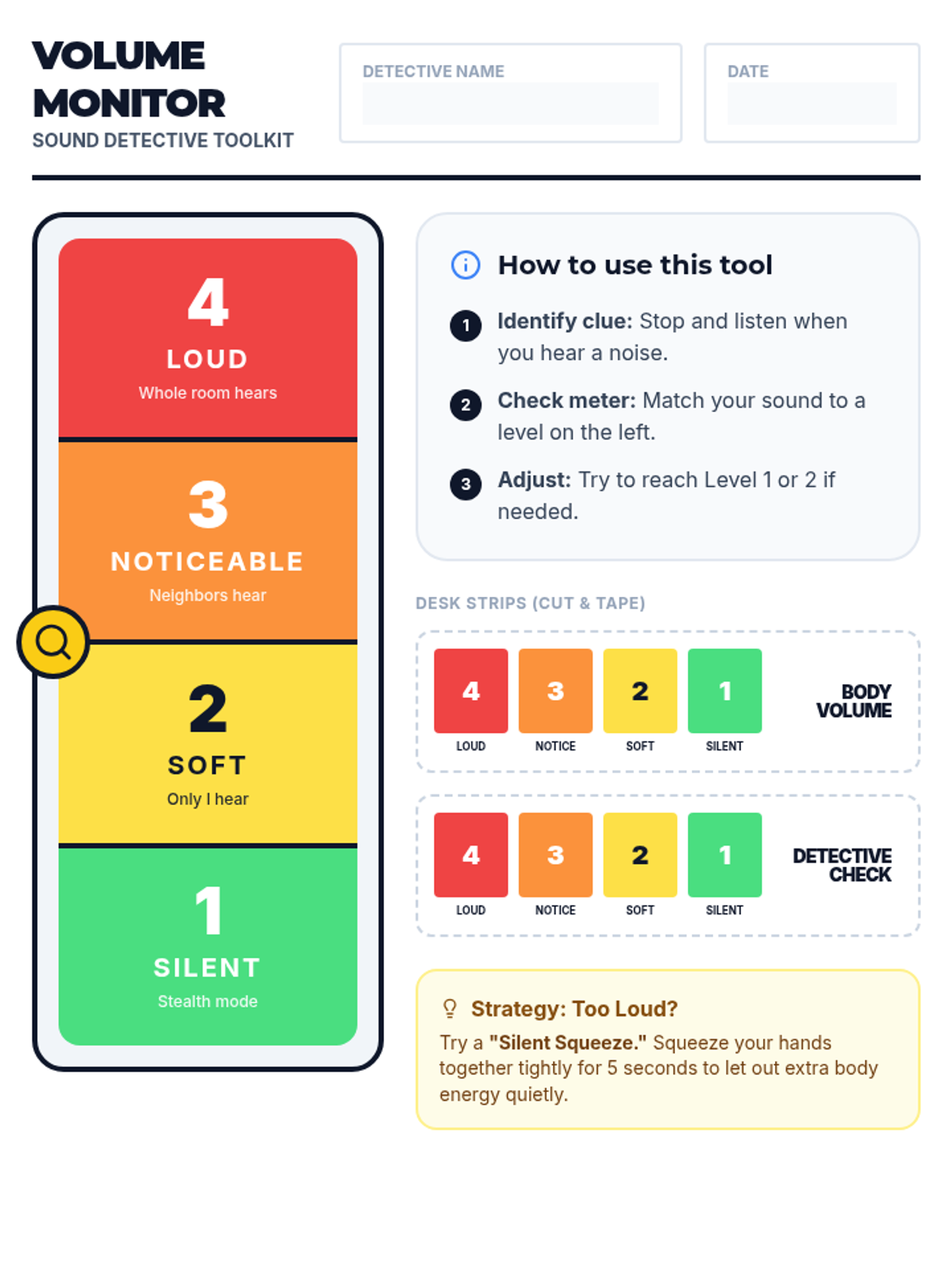
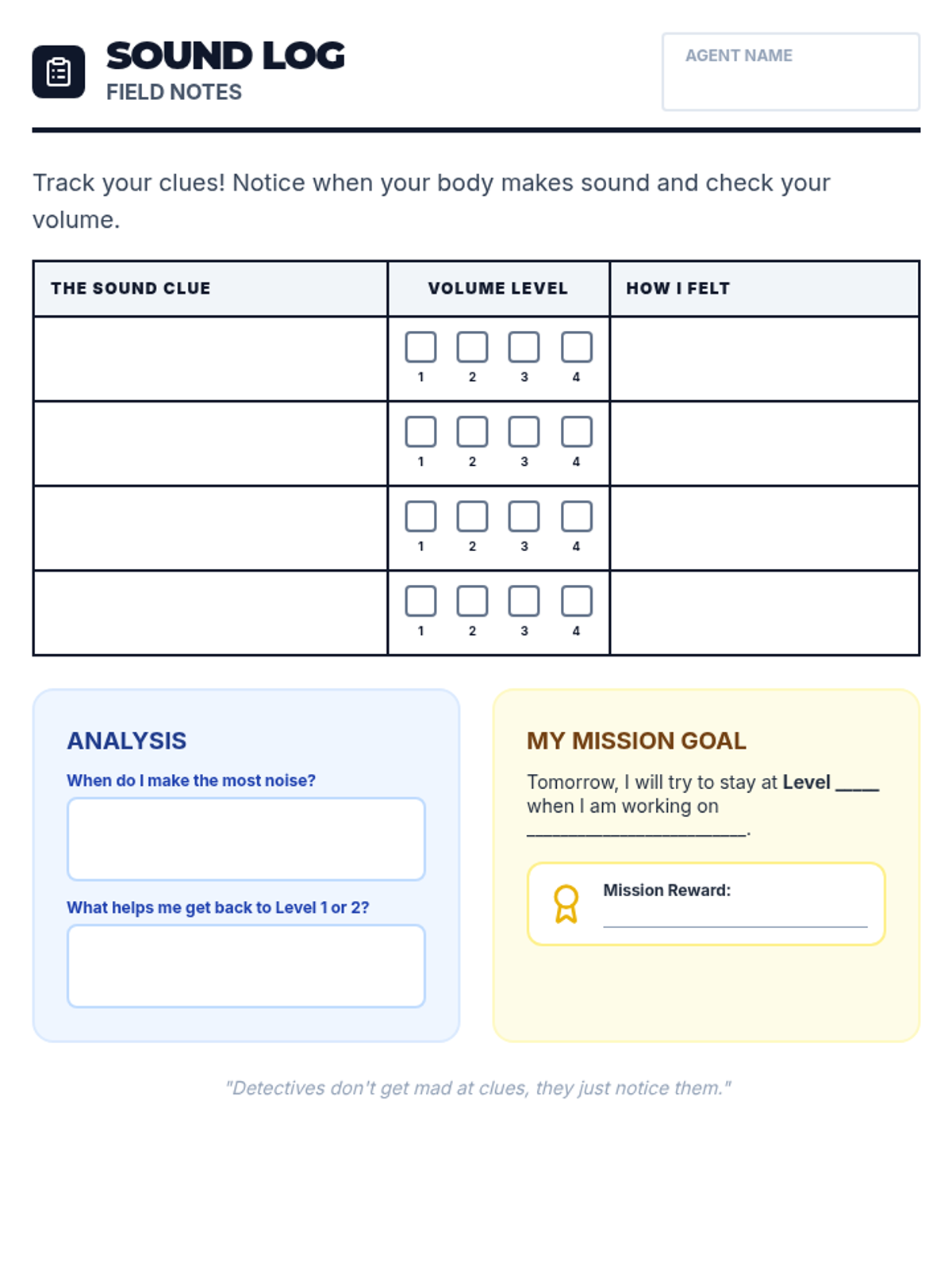
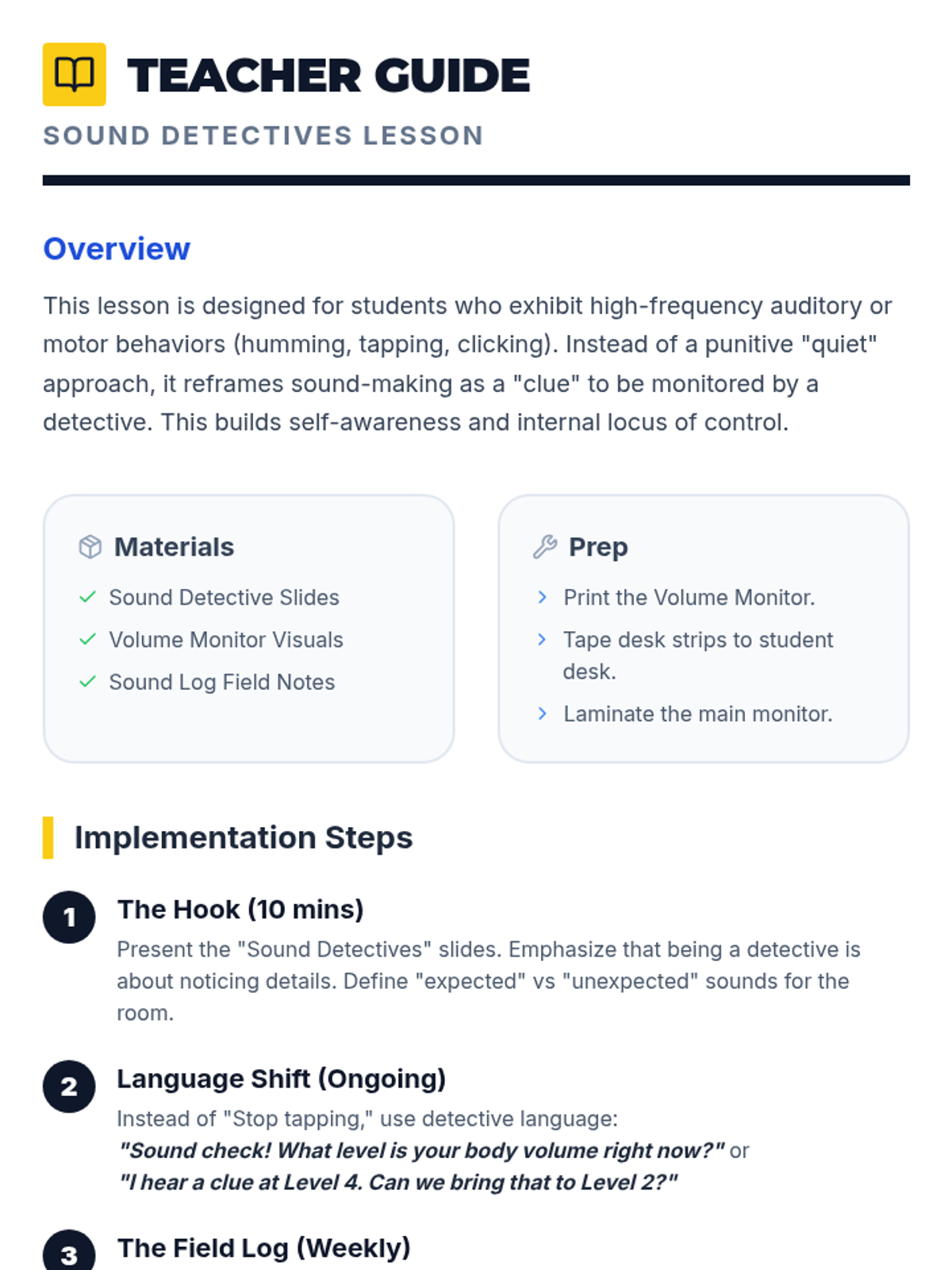
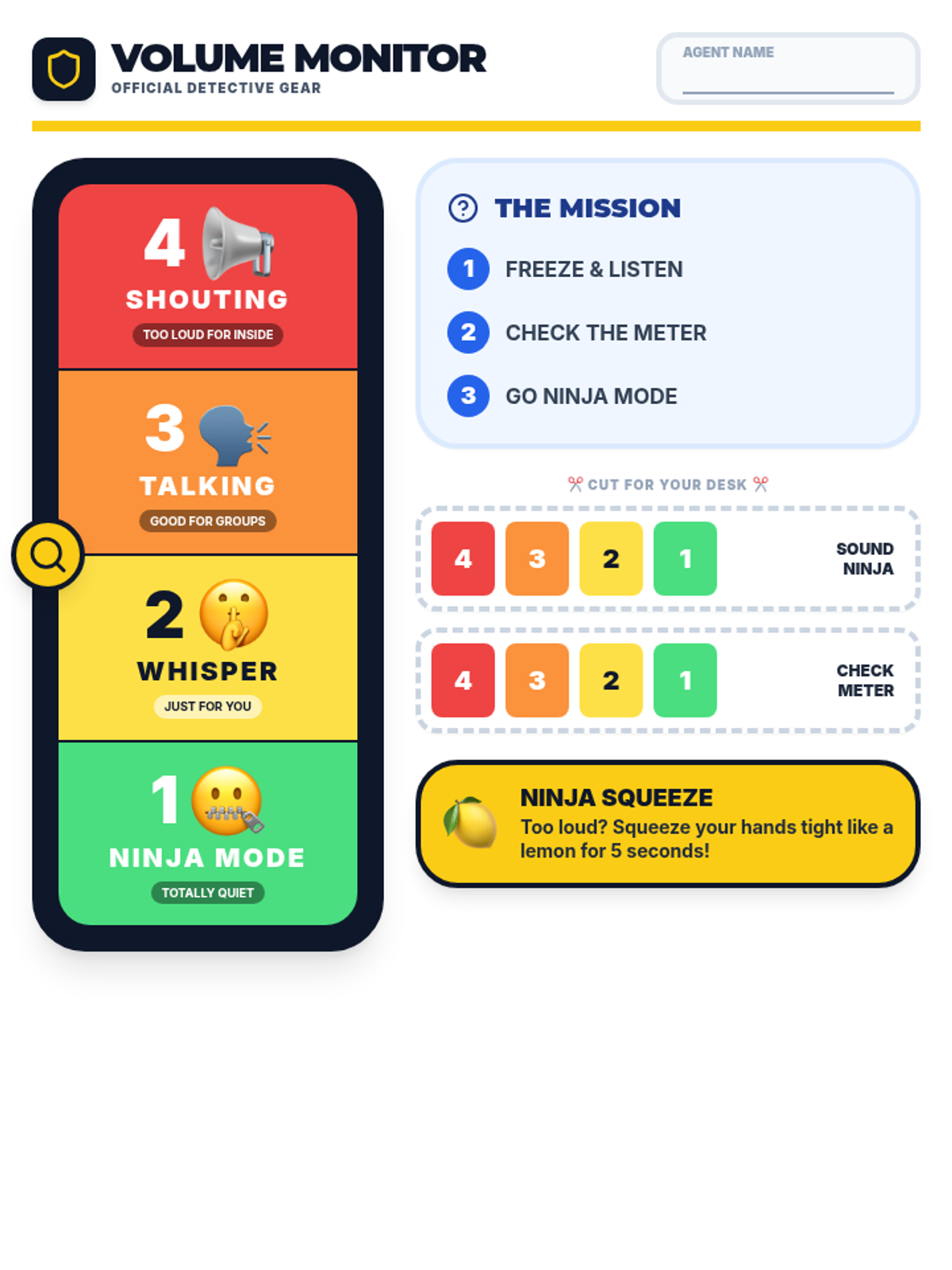
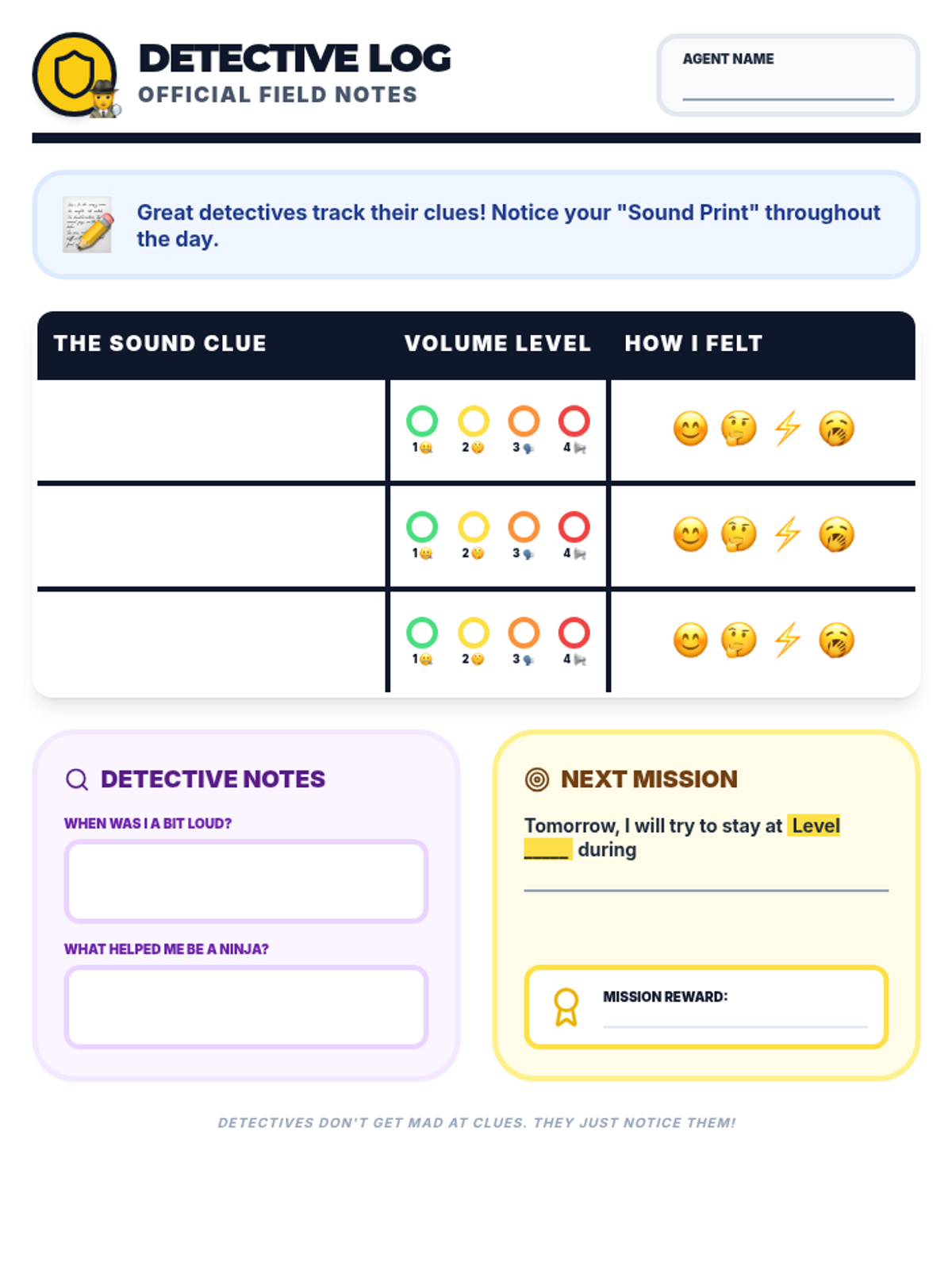
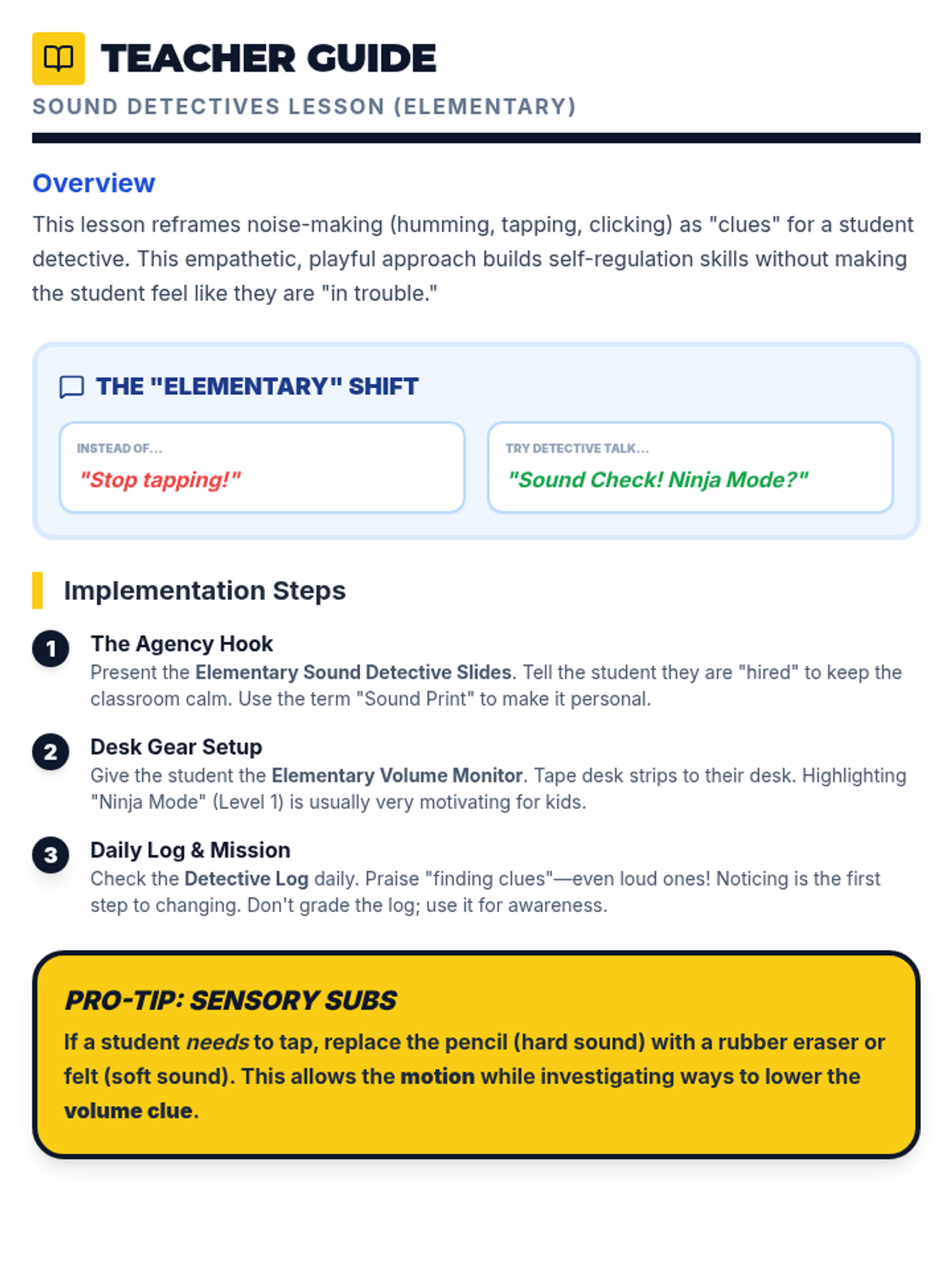
A lesson designed to help students build self-awareness regarding the sounds their bodies and objects make, using a detective-themed approach to monitor and regulate 'body volume'.
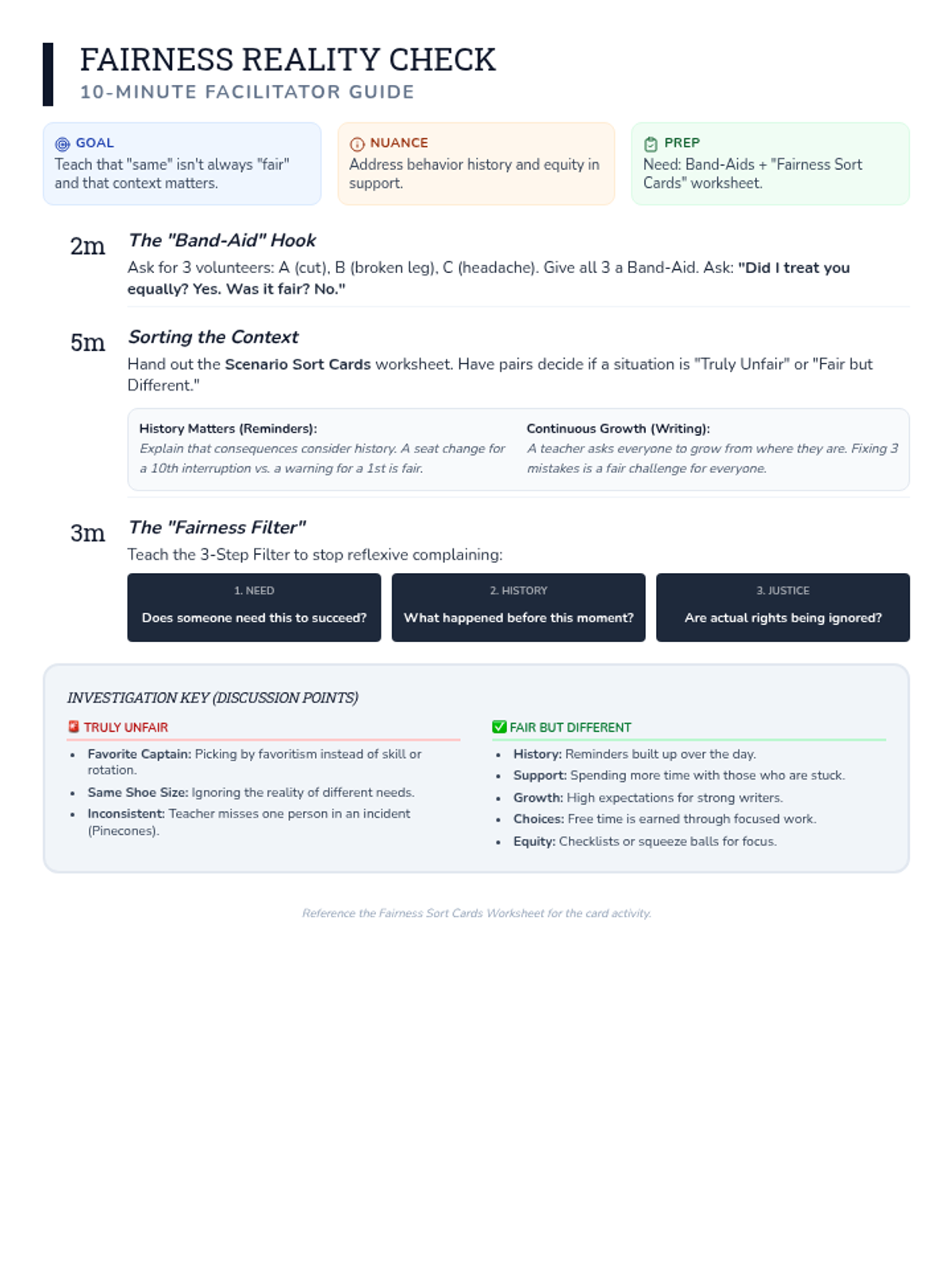
A quick, high-impact session to help students distinguish between true unfairness and situations that are simply different, equitable, or the result of personal choices.
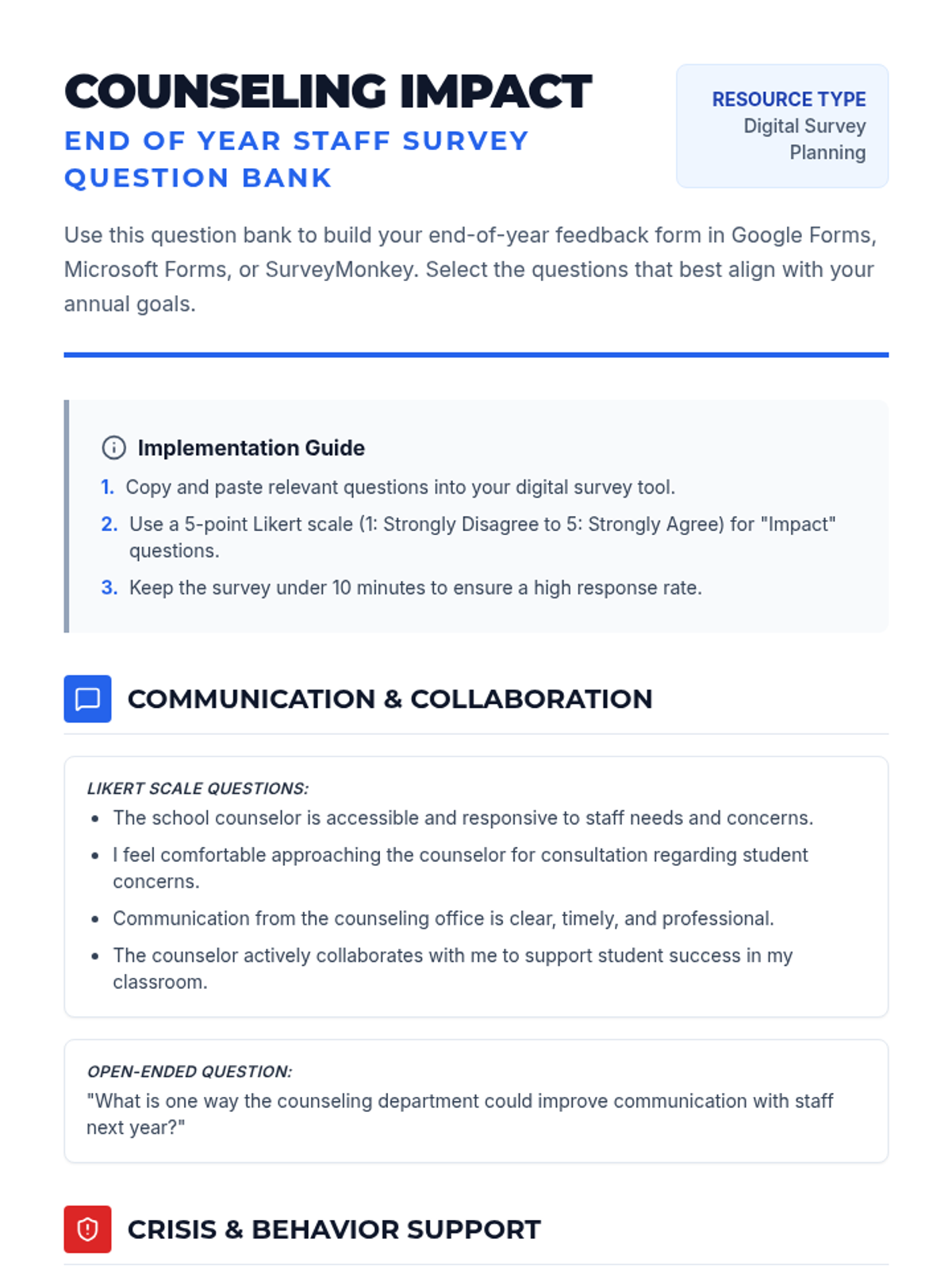
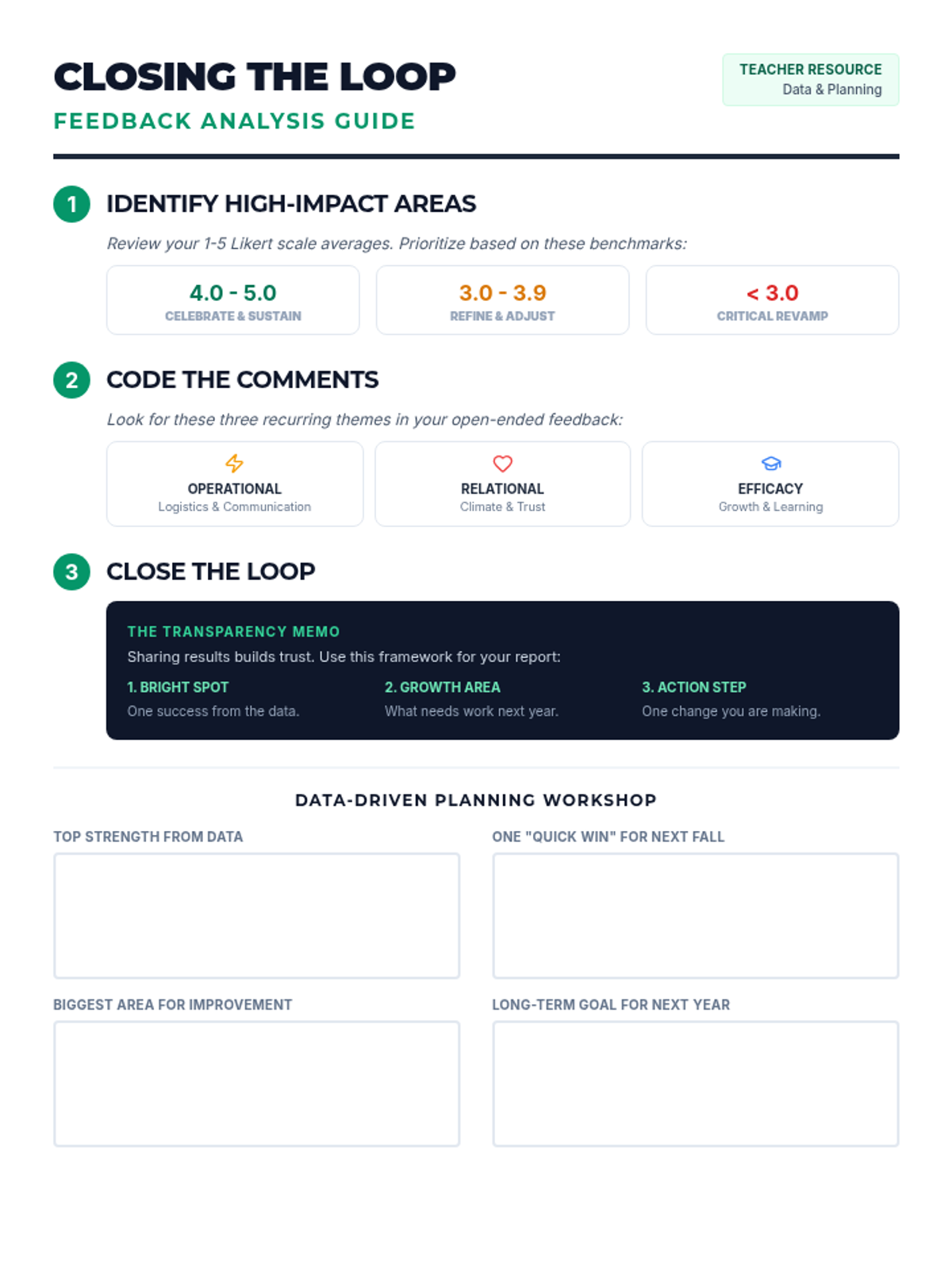
A collection of resources to help school counselors gather and analyze staff feedback at the end of the school year.
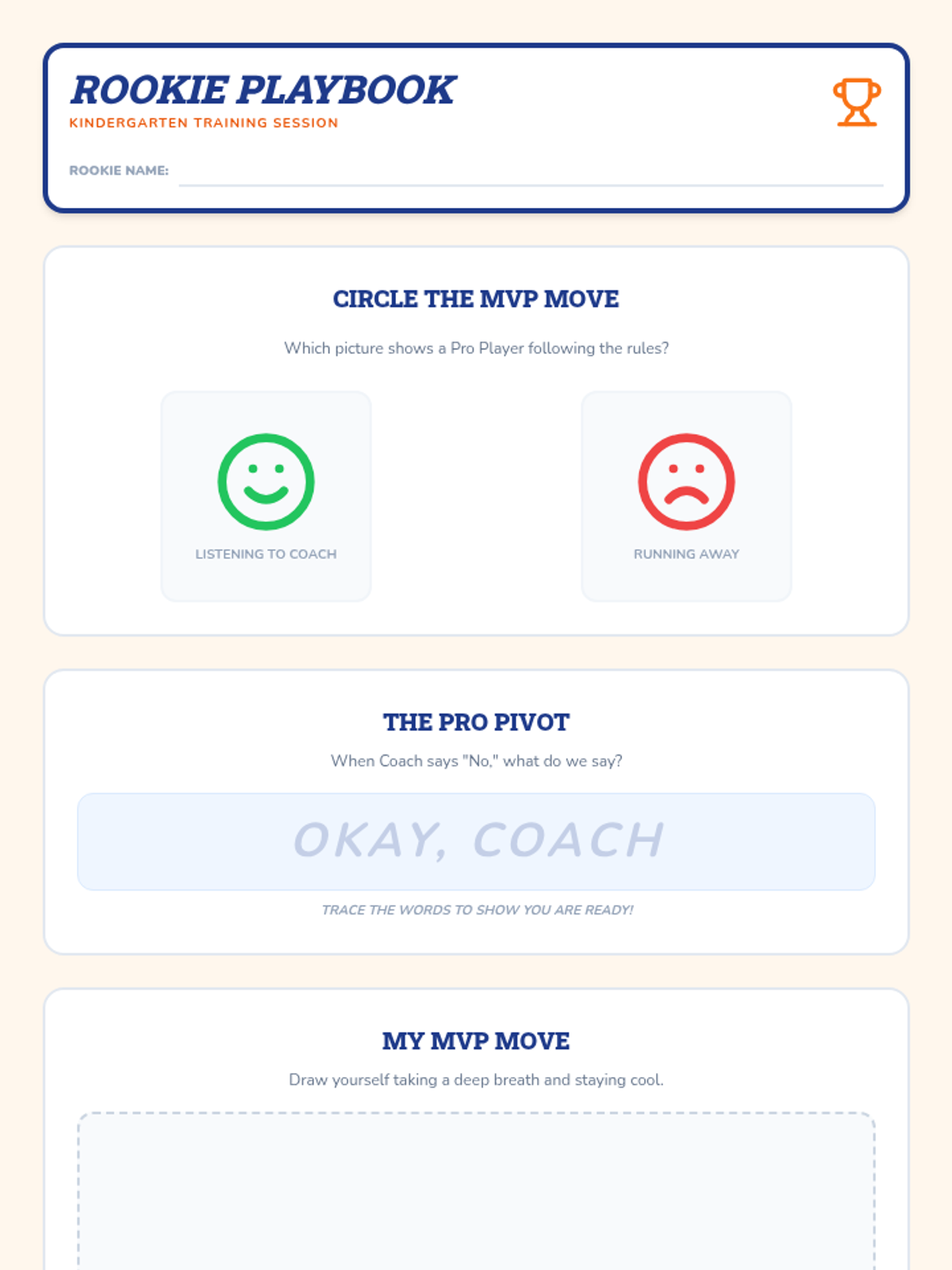
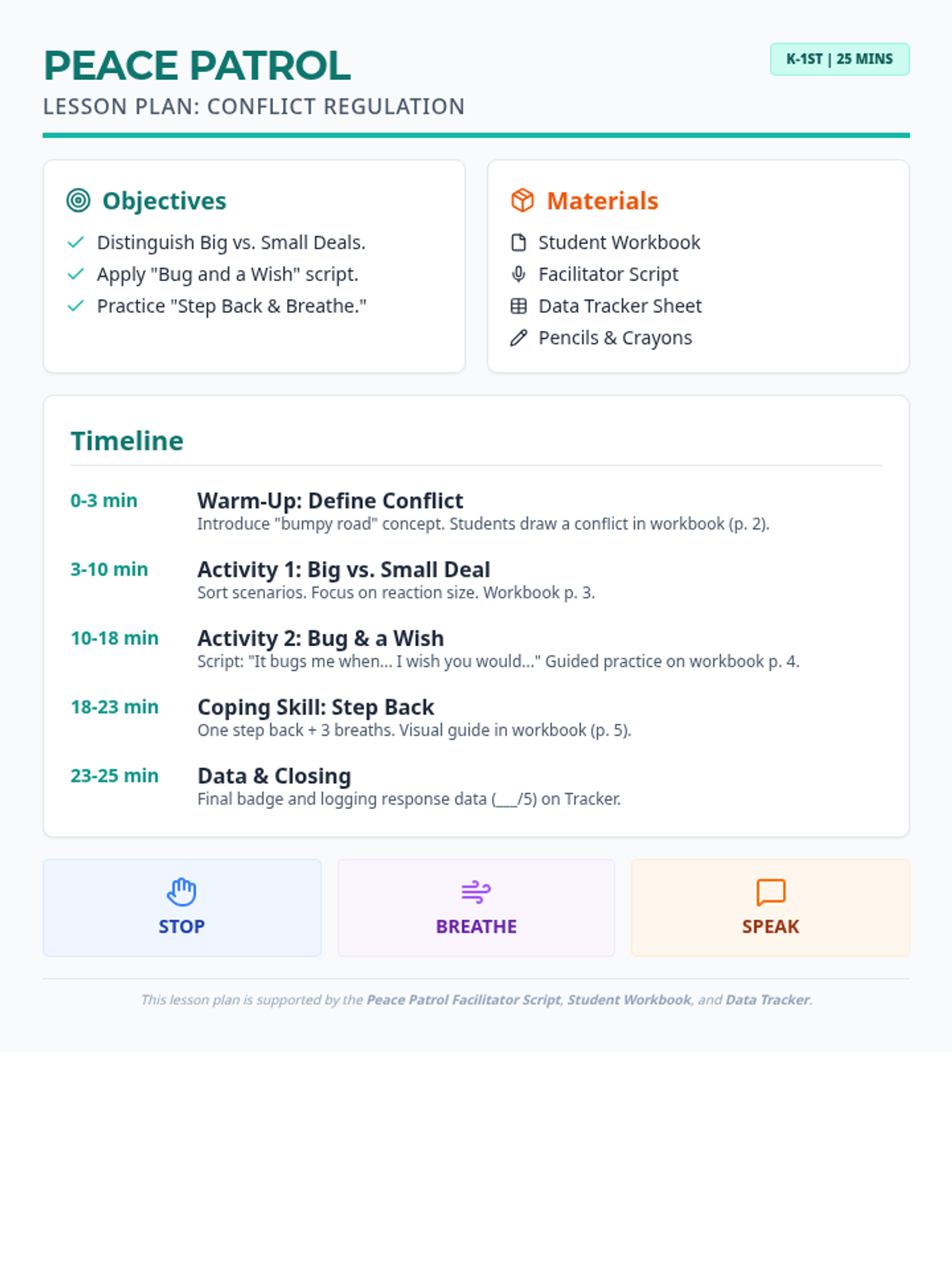
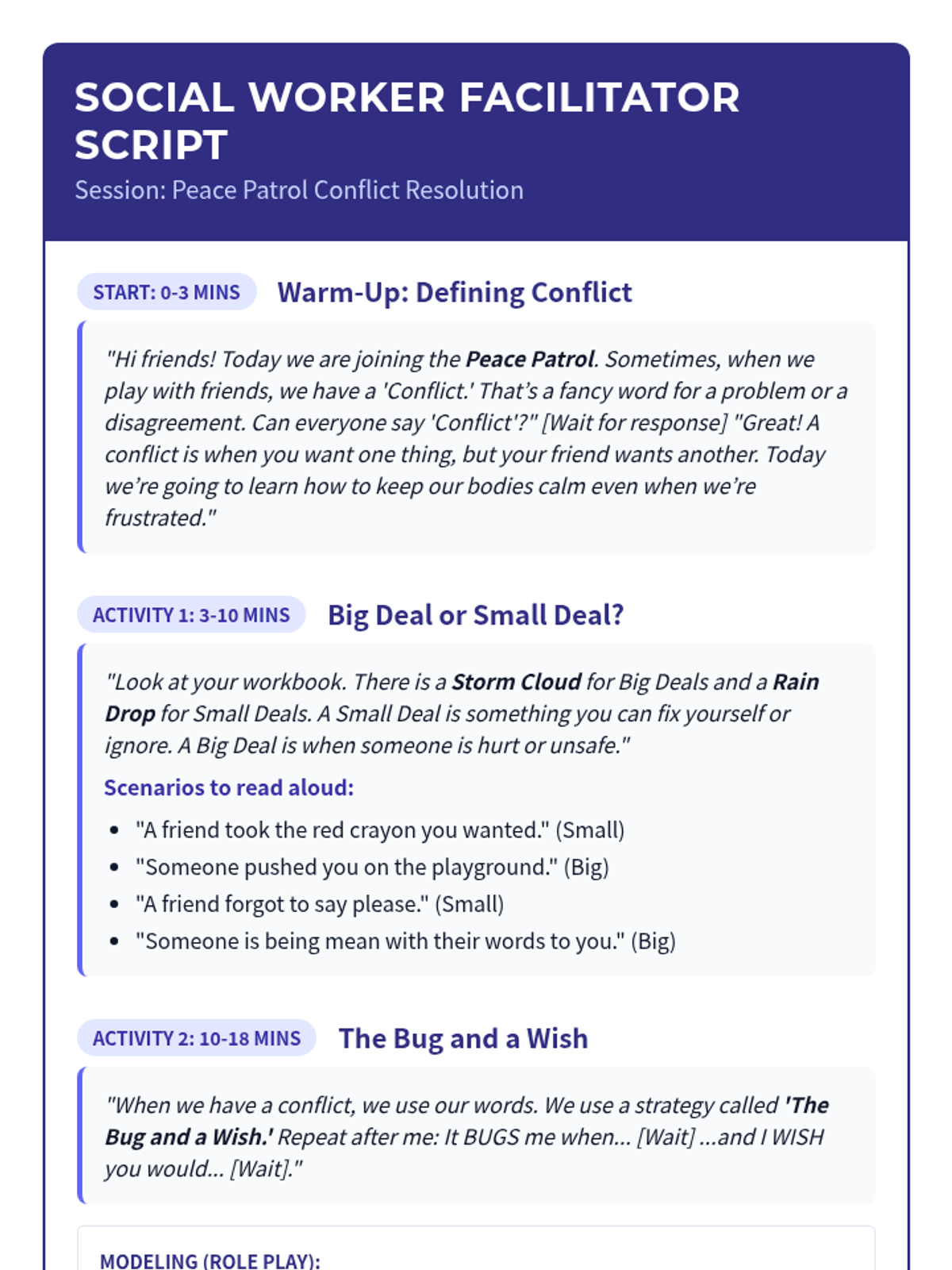
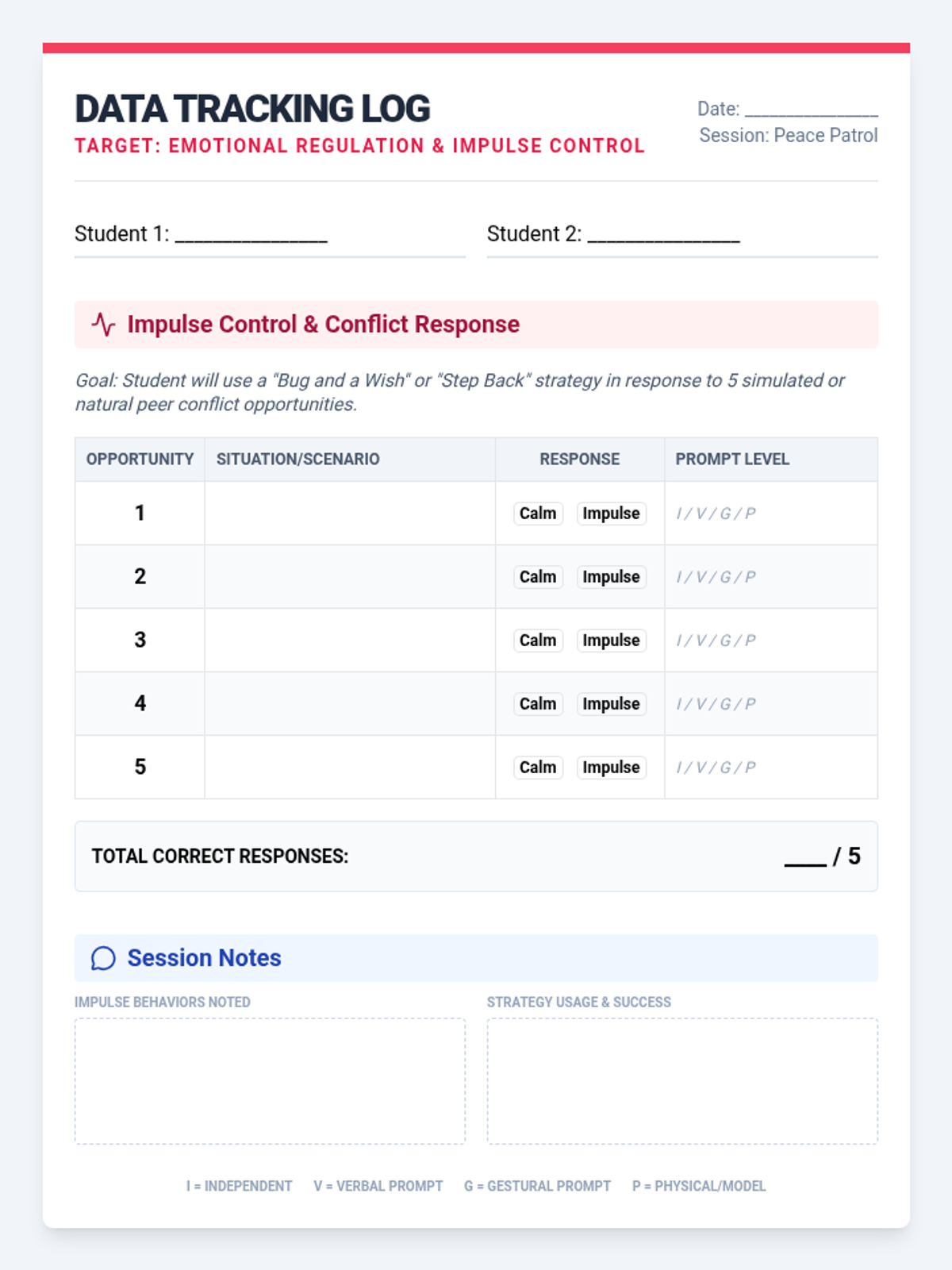
A social-emotional learning lesson for K-1 students focused on managing impulses and staying calm during peer conflicts using the 'Bug and a Wish' and 'Stop and Breathe' techniques.
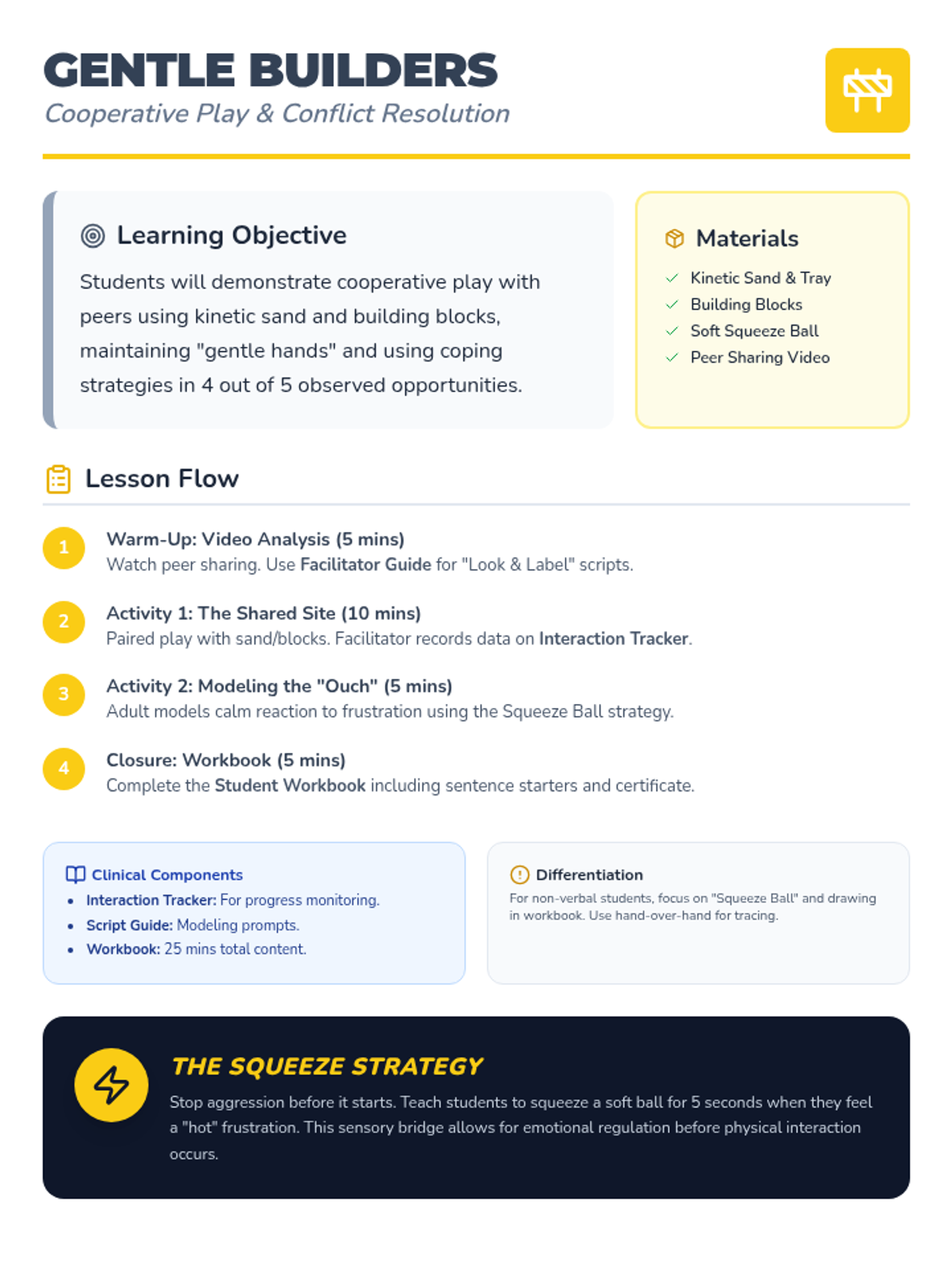
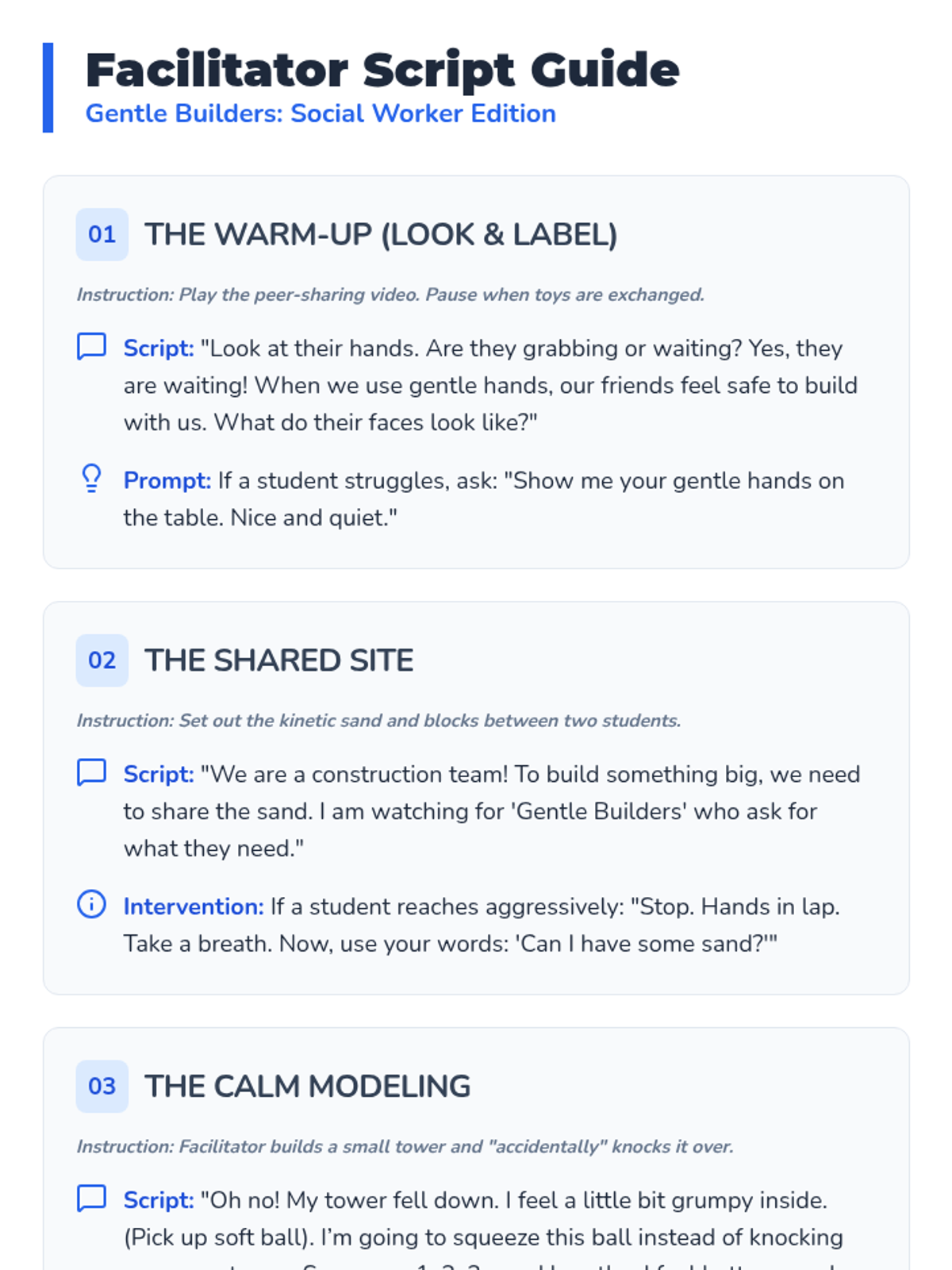
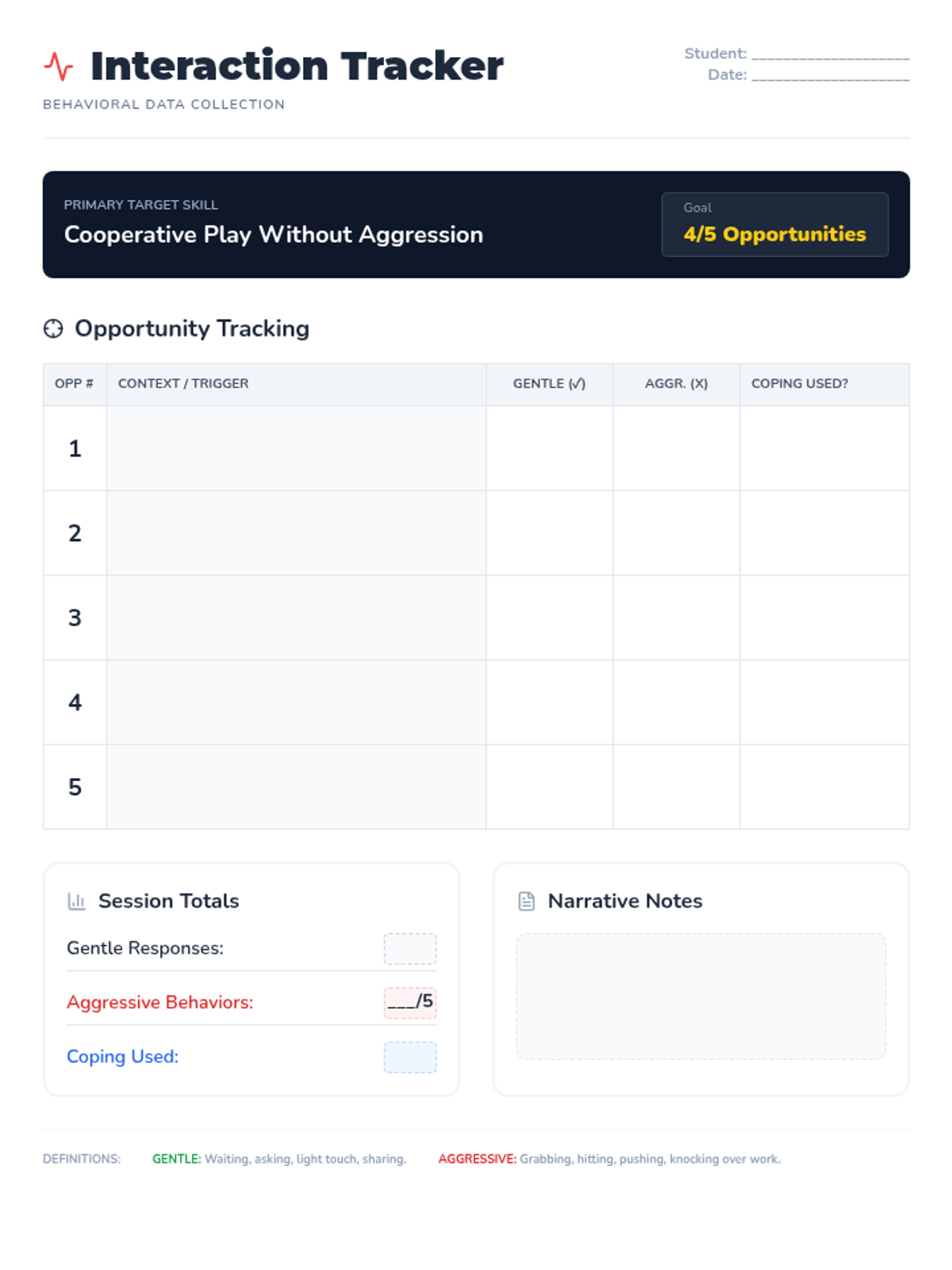
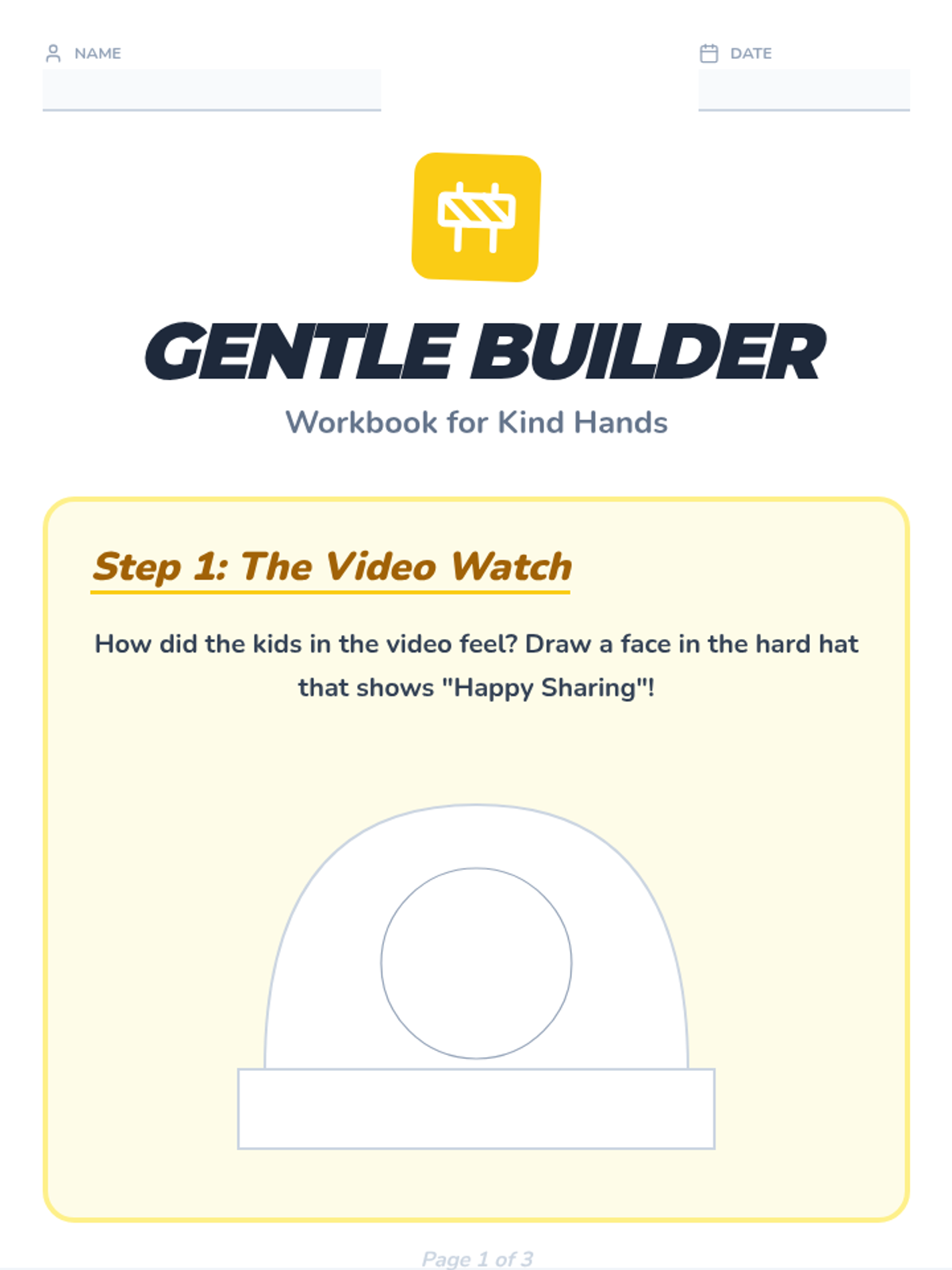
A social-emotional learning lesson focused on cooperative play using kinetic sand and building blocks, teaching students to interact without aggression through modeling and coping strategies.
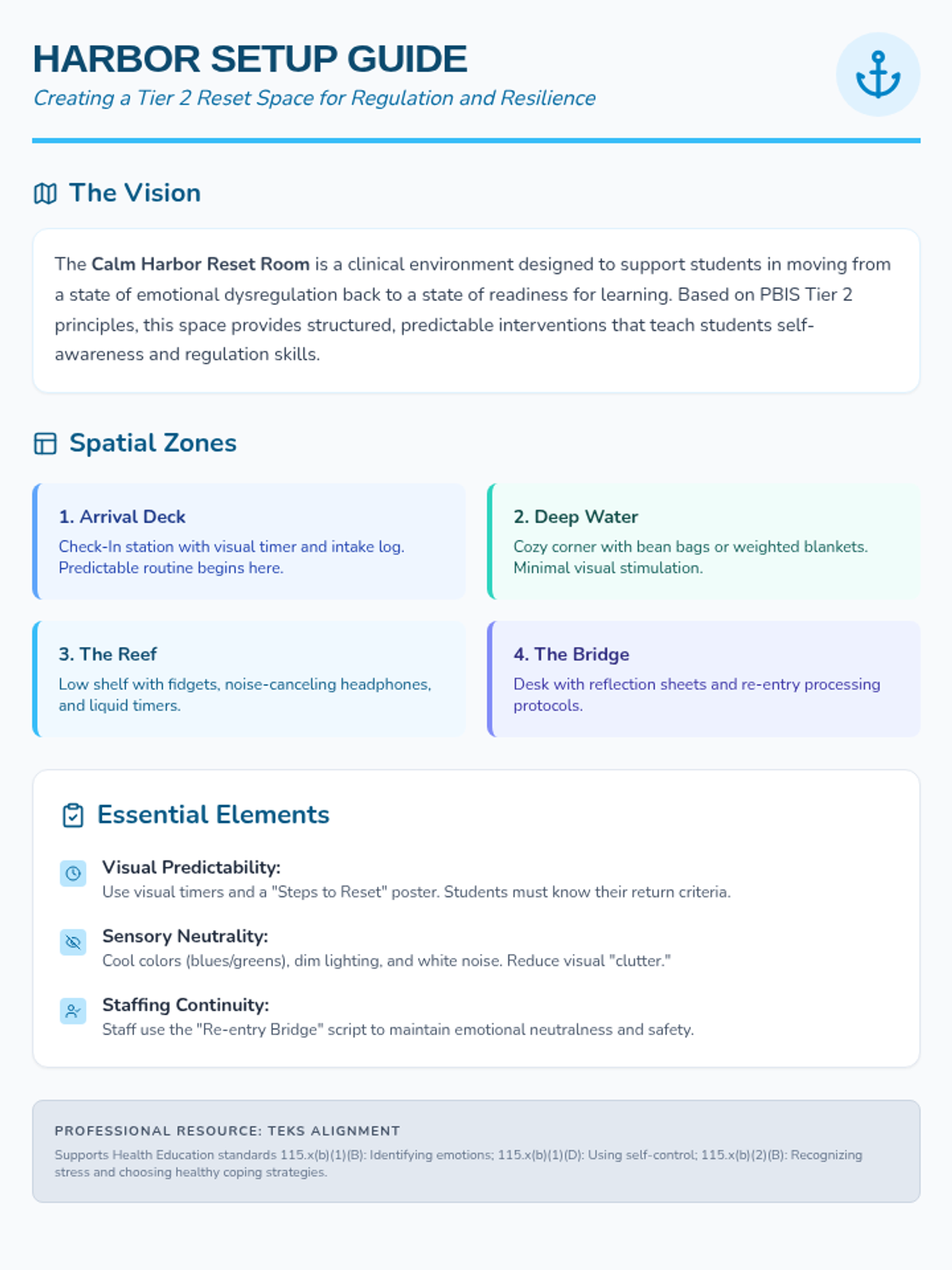
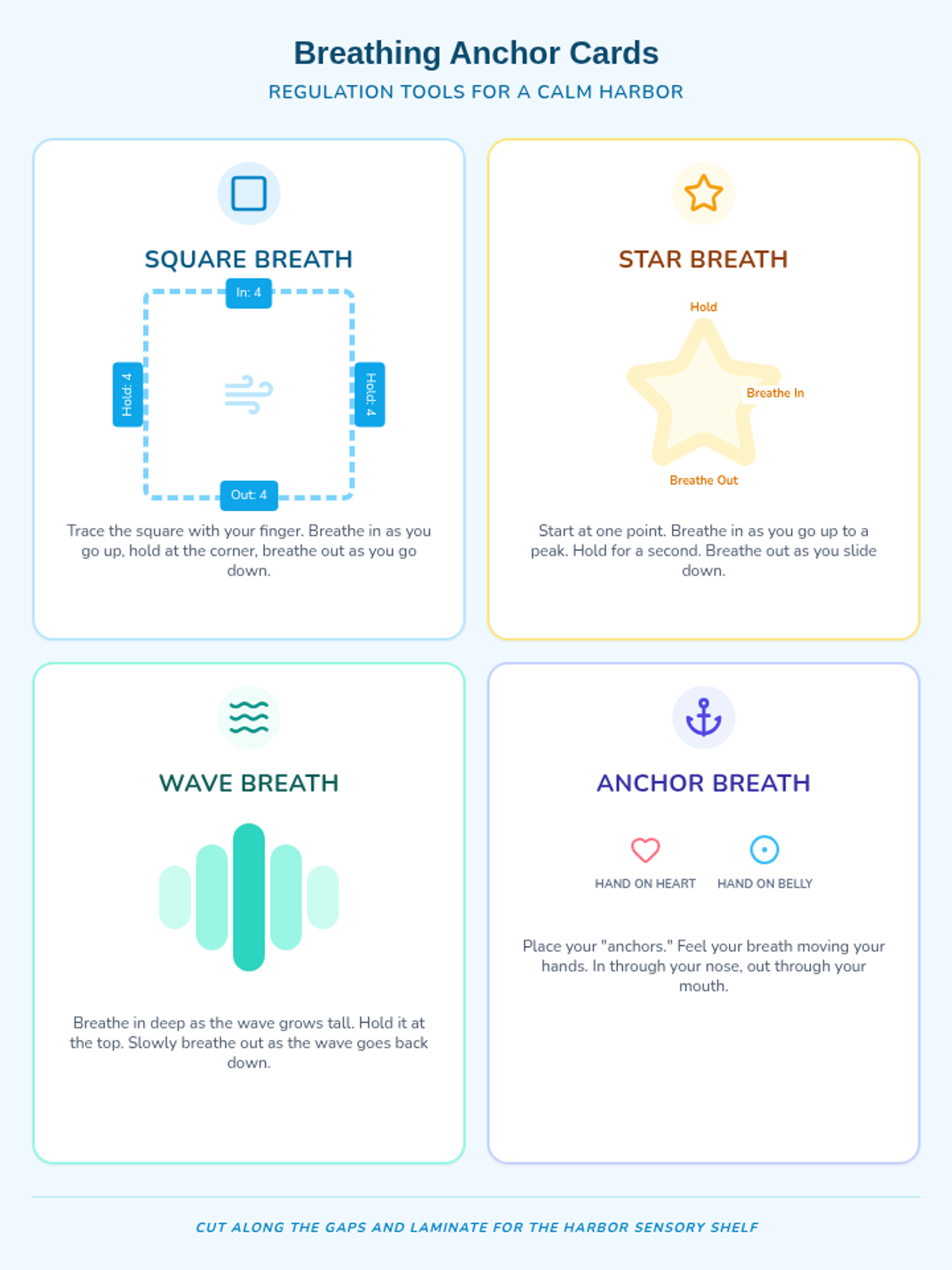
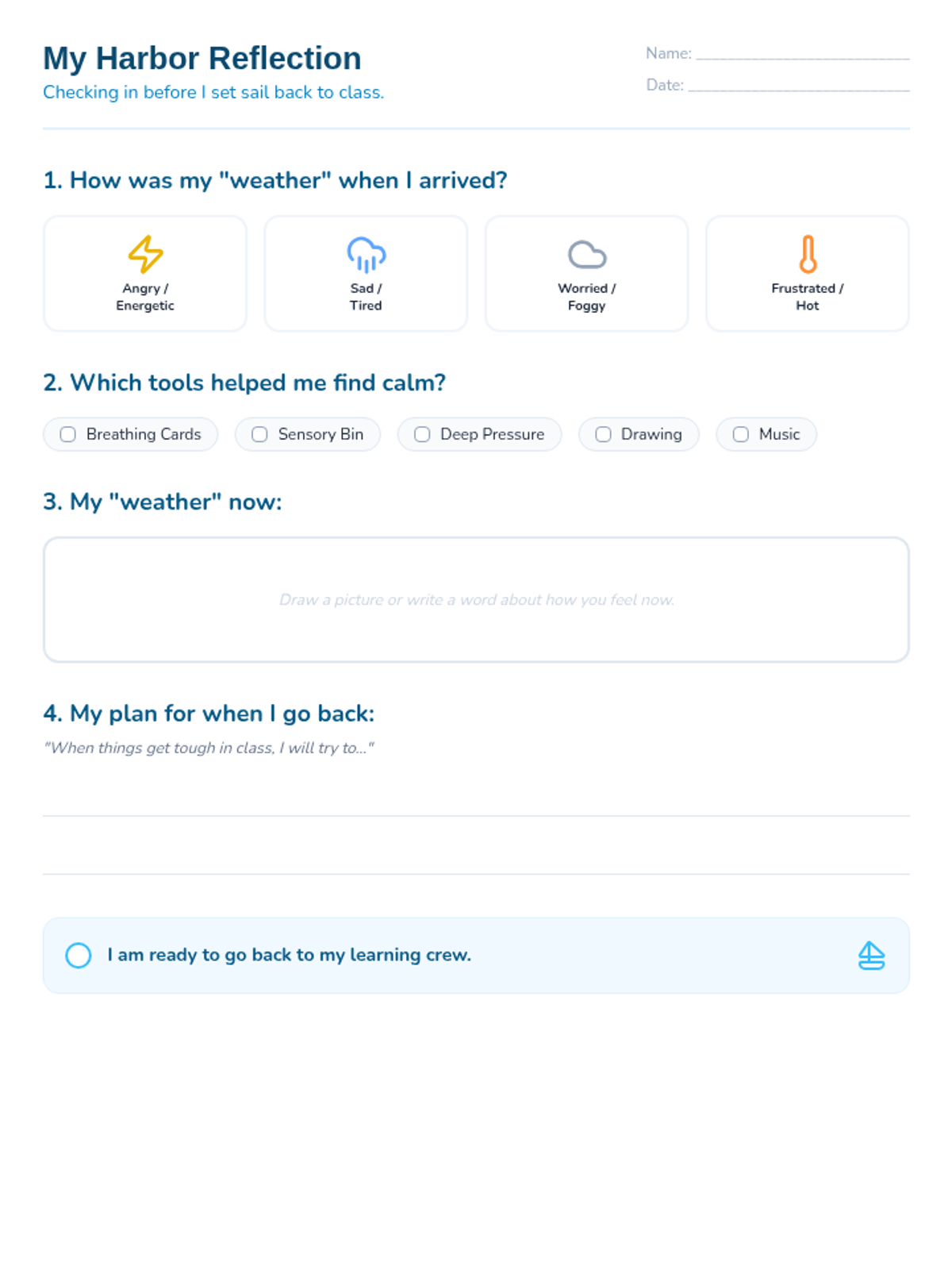
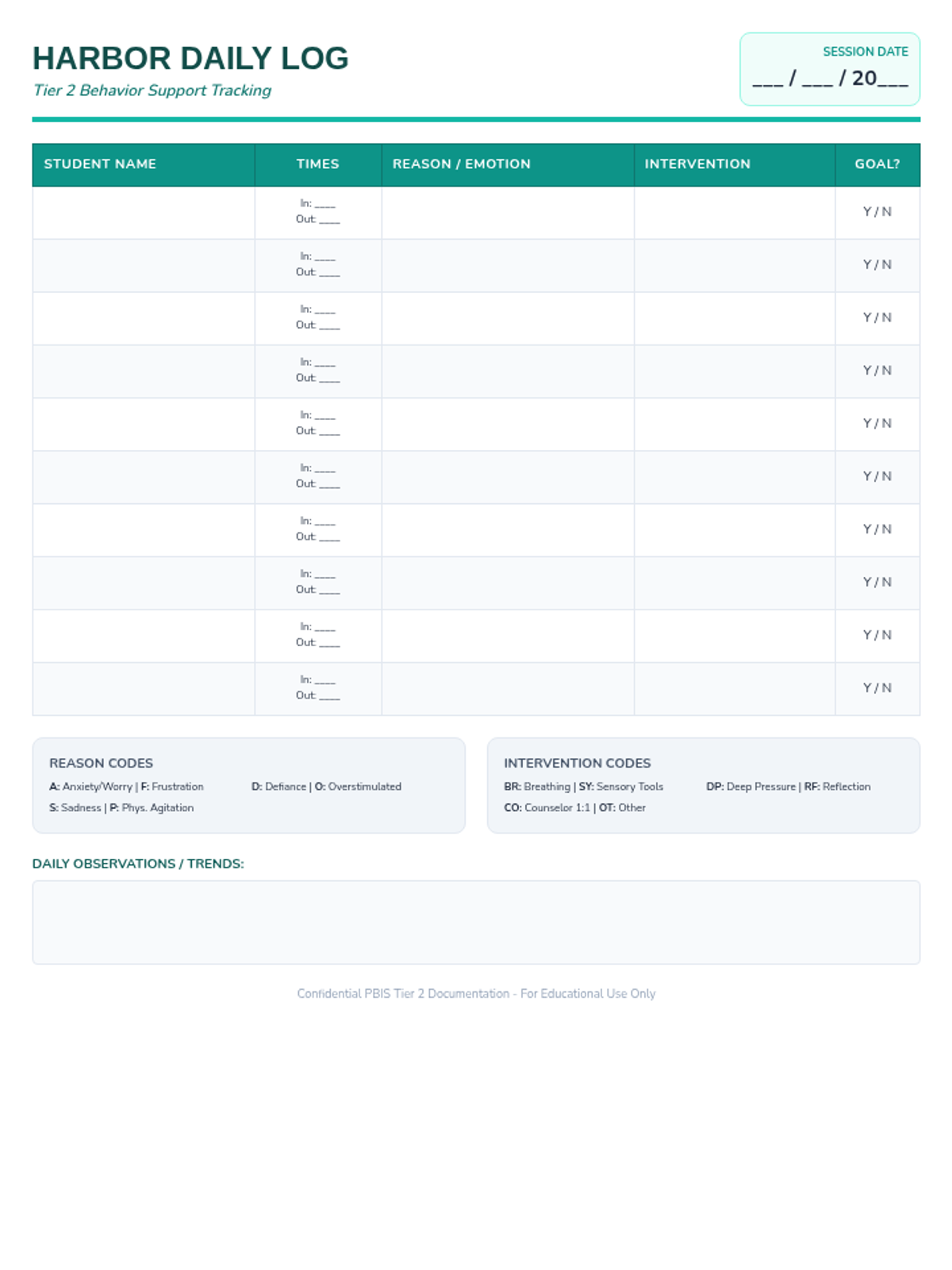
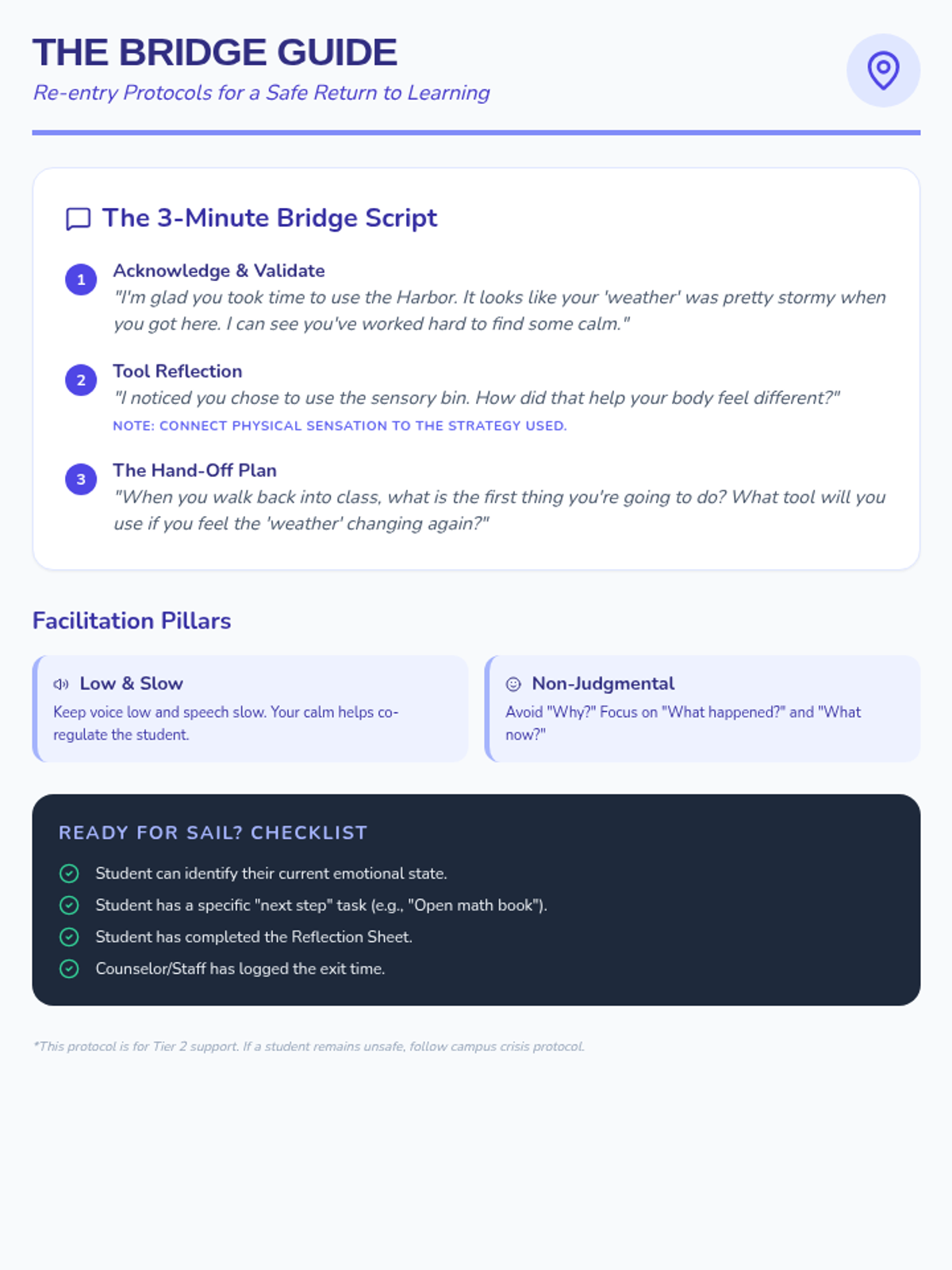
A comprehensive suite of resources for implementing a Tier 2 Behavior Reset Room, including spatial design, regulation tools, and re-entry protocols.
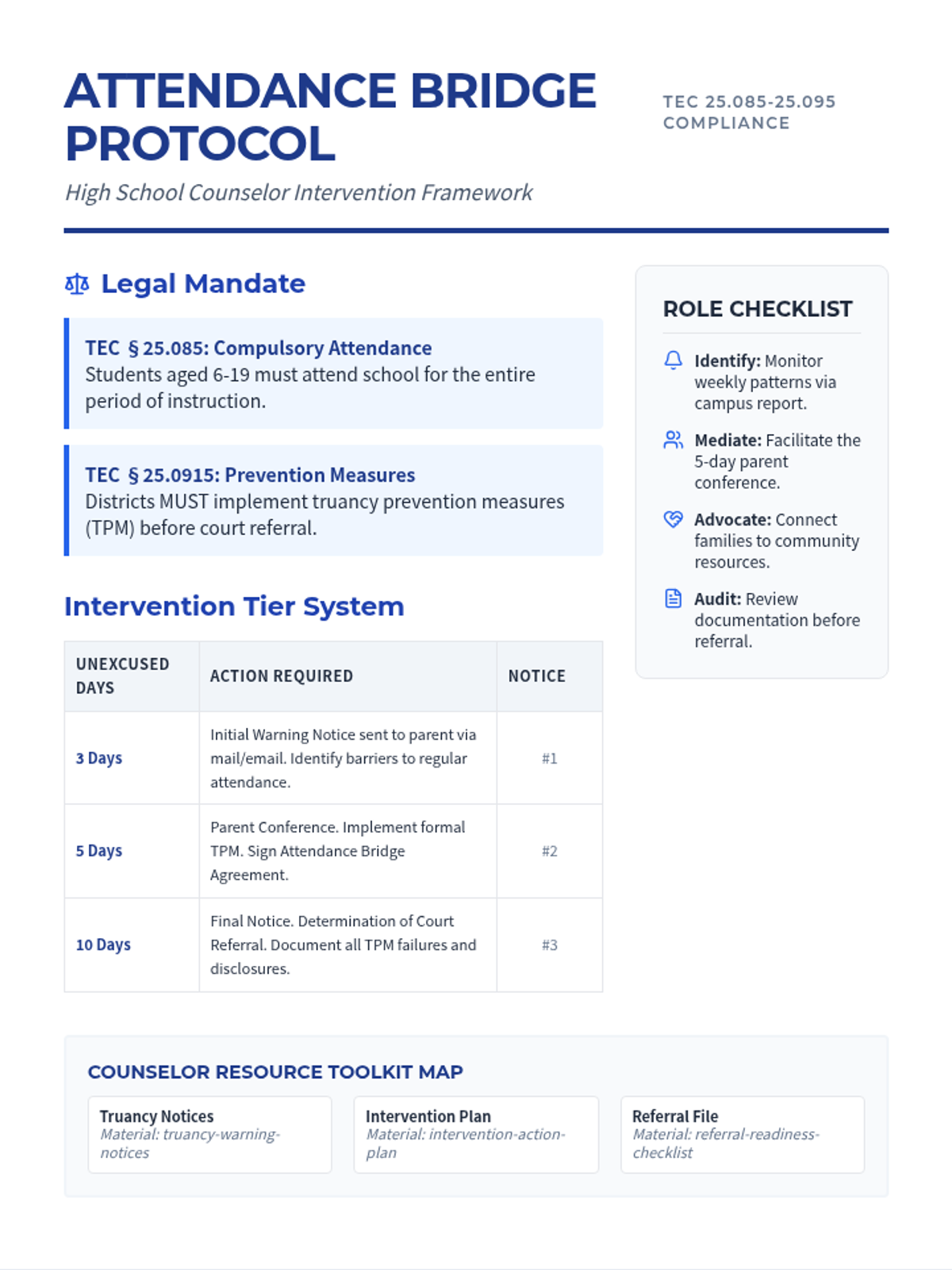
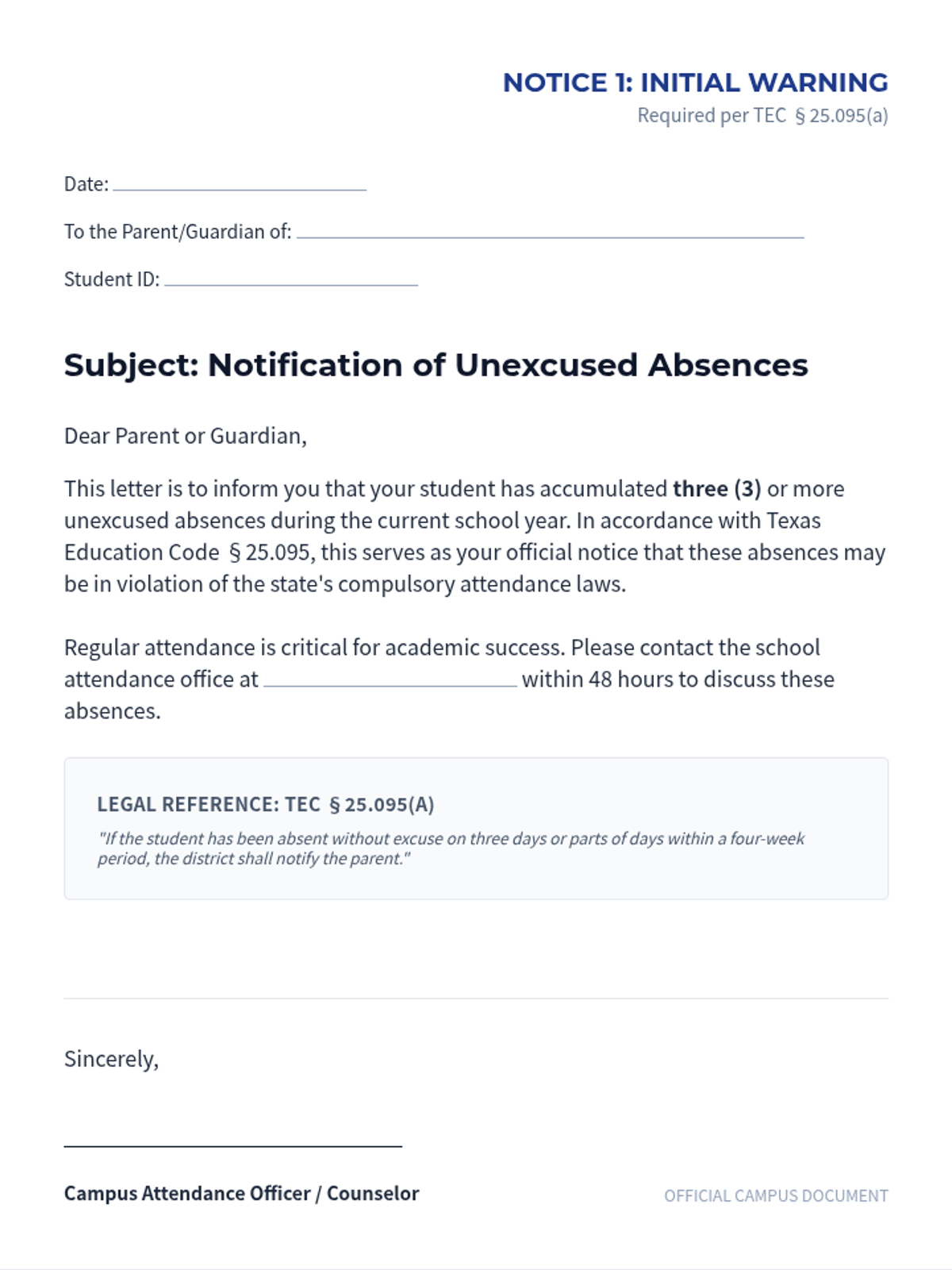
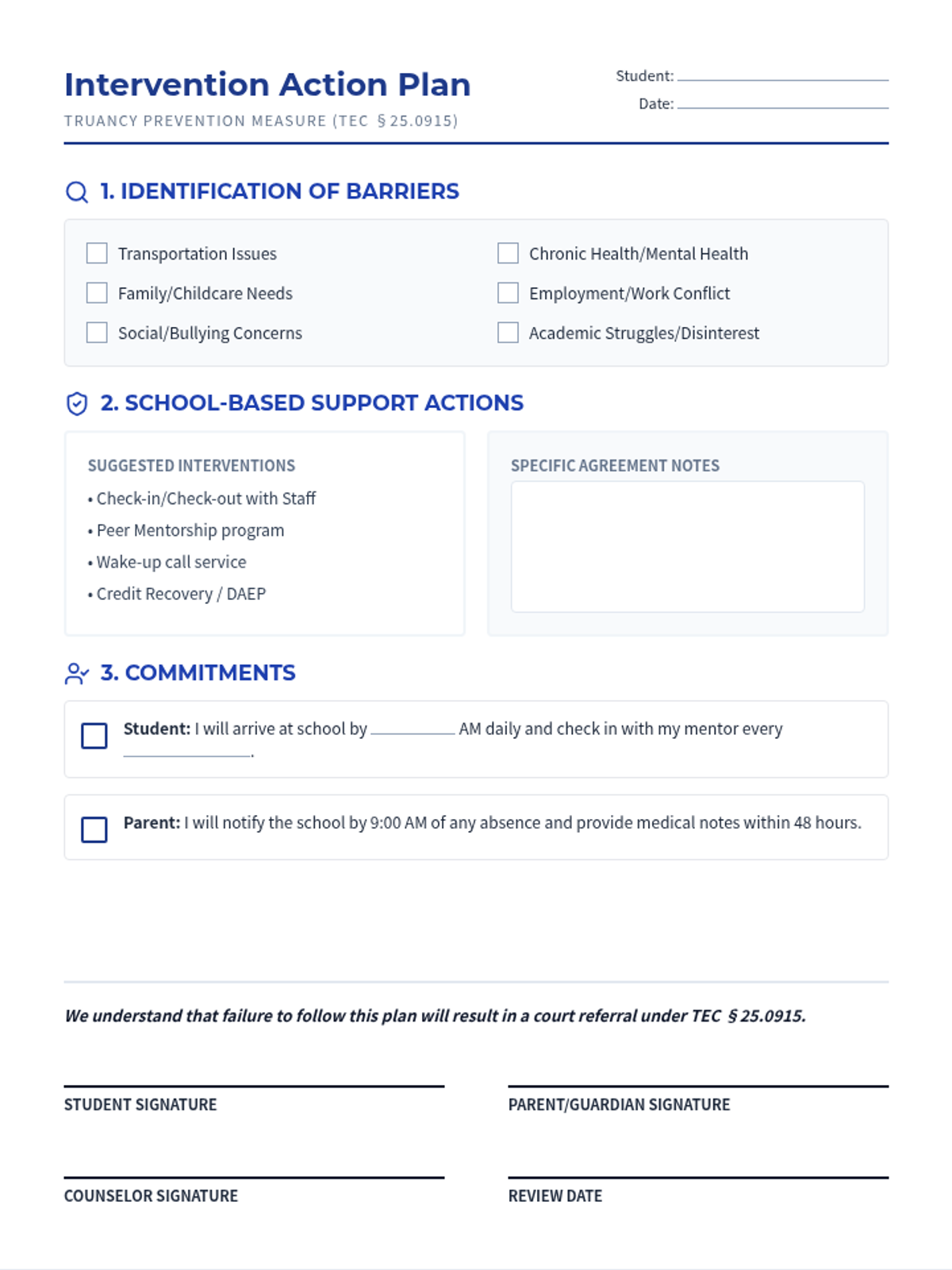
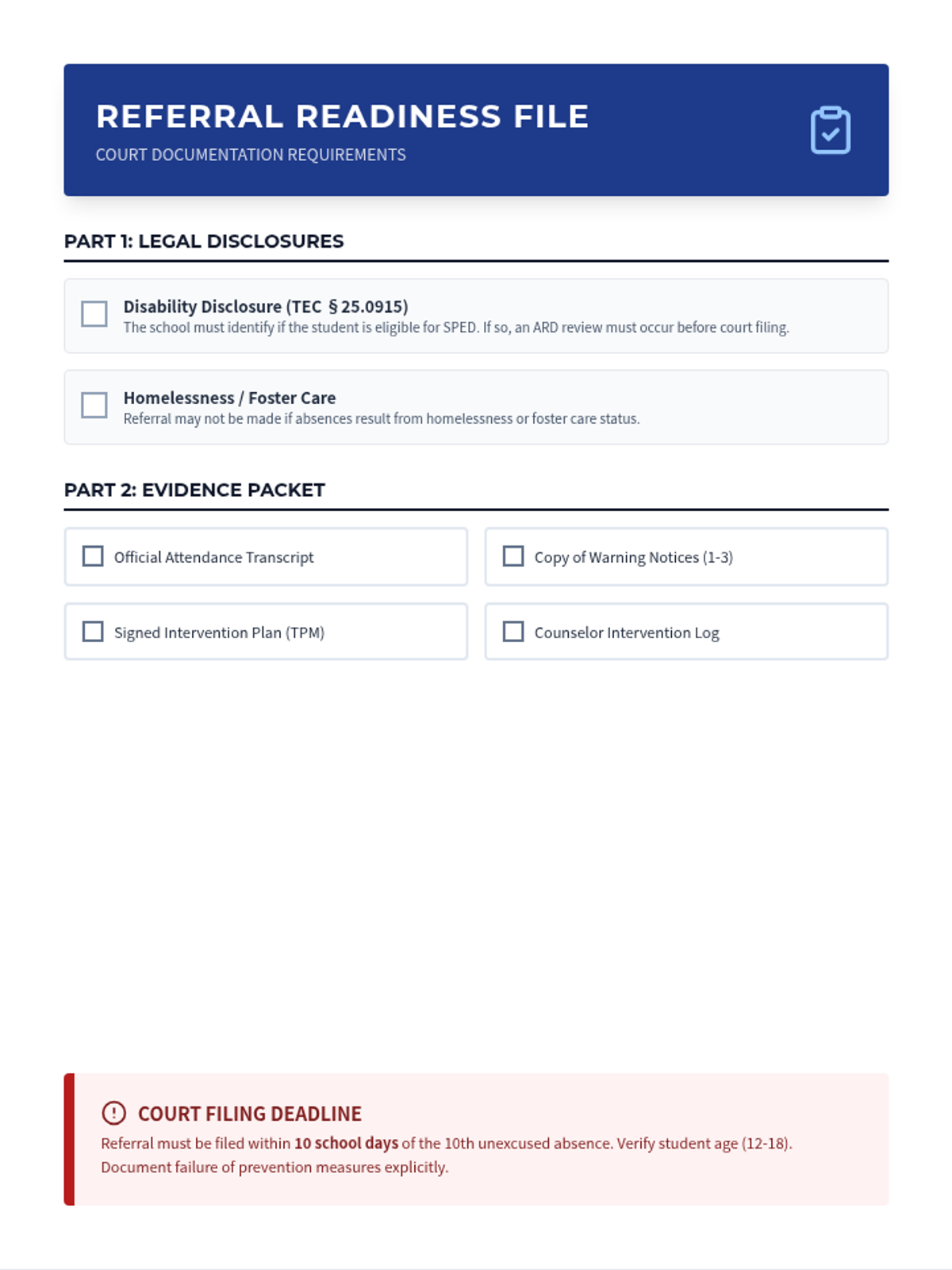
A comprehensive toolkit for high school counselors to manage truancy prevention and intervention in compliance with Texas Education Code. This resource includes legal protocols, warning templates, intervention plans, and court referral documentation.
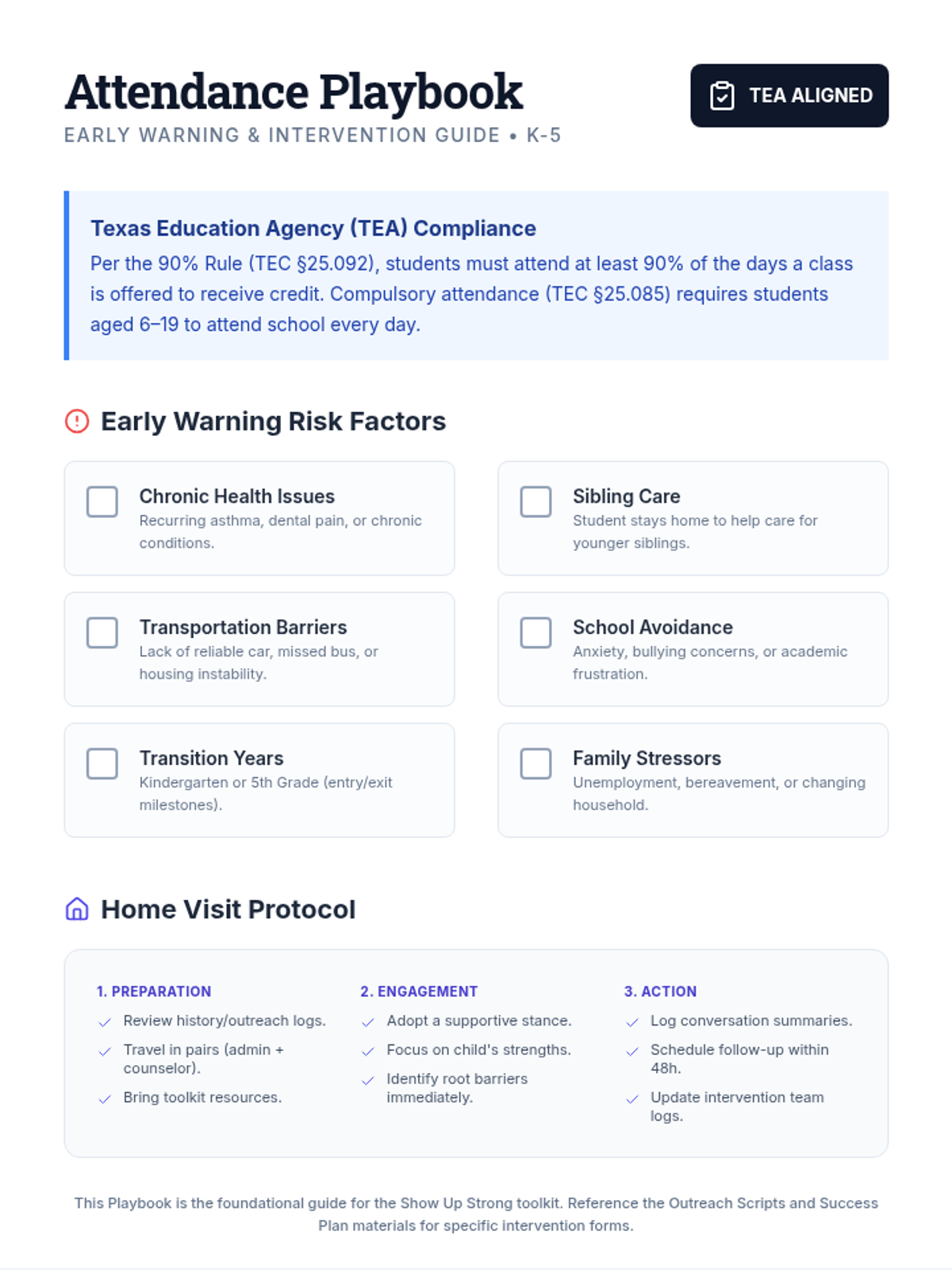
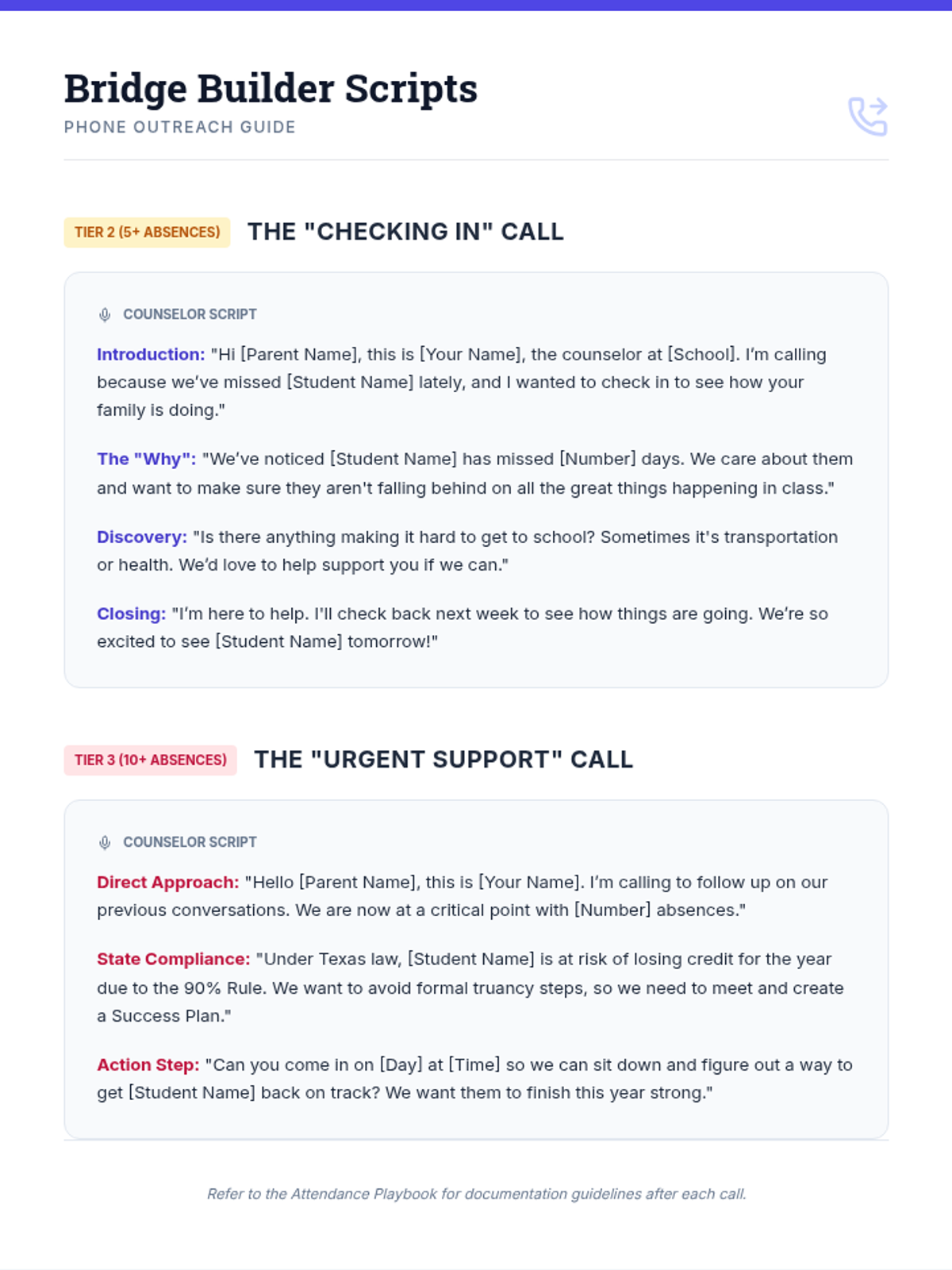
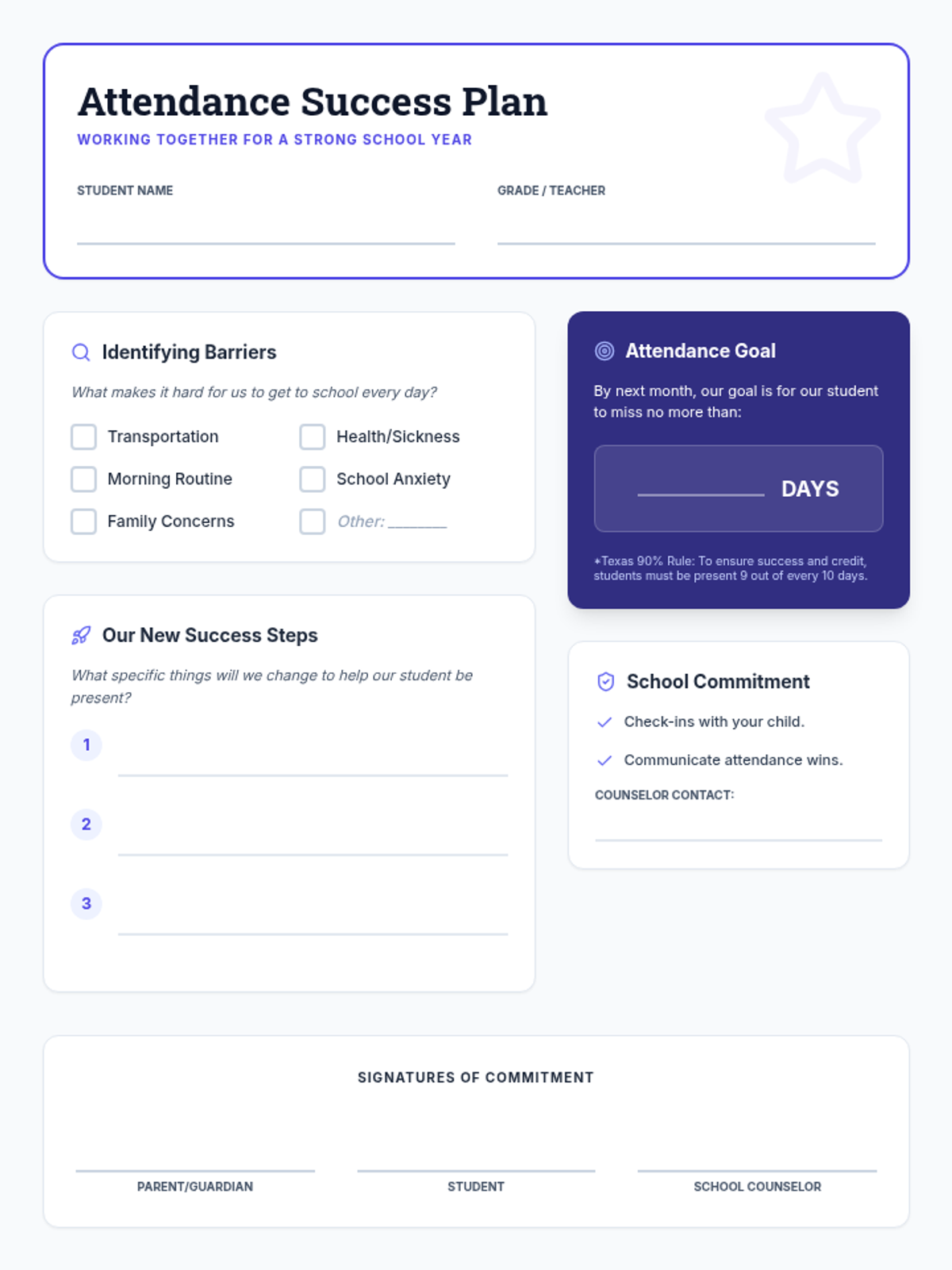
A comprehensive toolkit for elementary school counselors to identify, track, and intervene with student attendance concerns using TEA-aligned strategies and supportive family outreach.
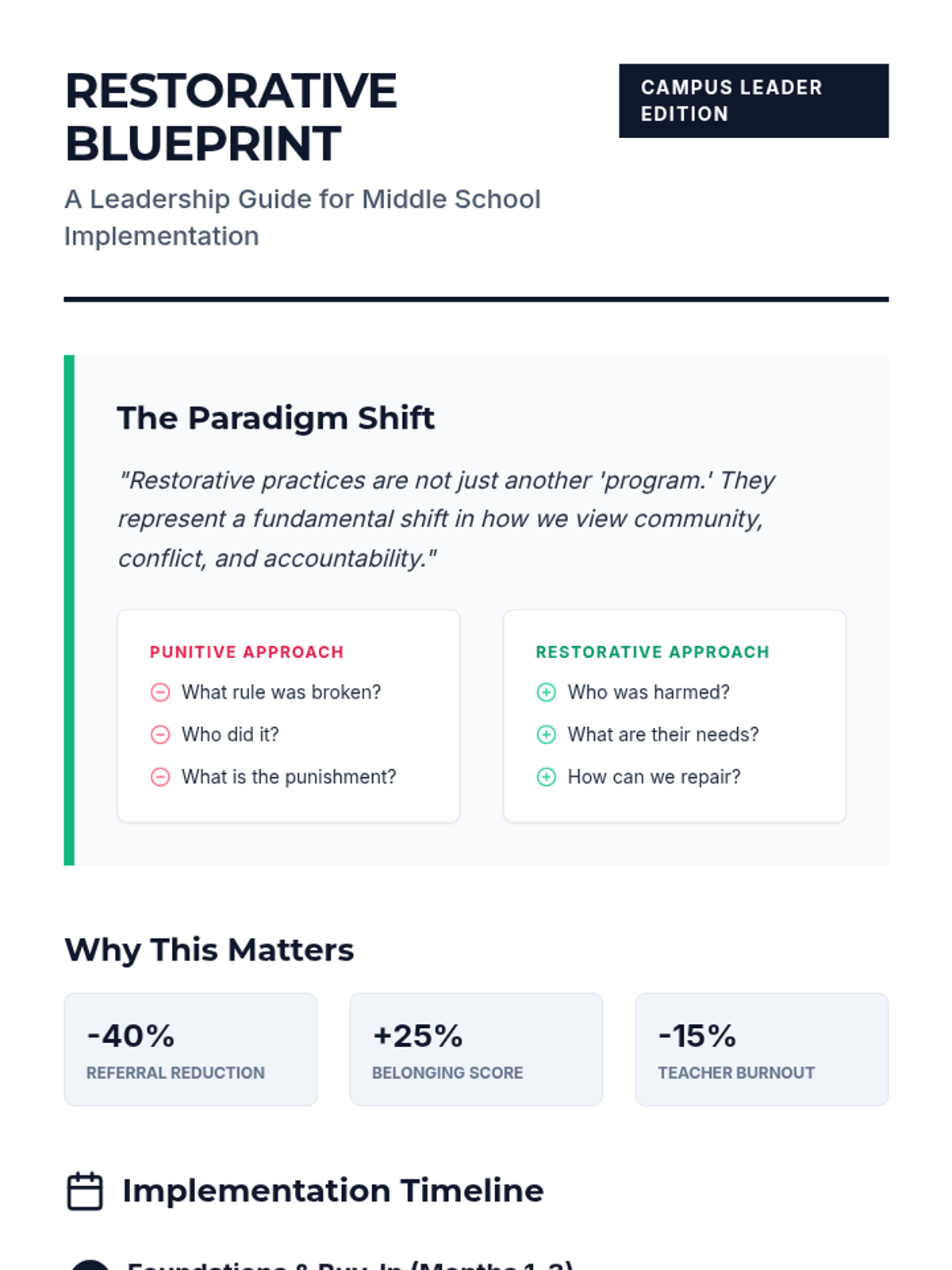
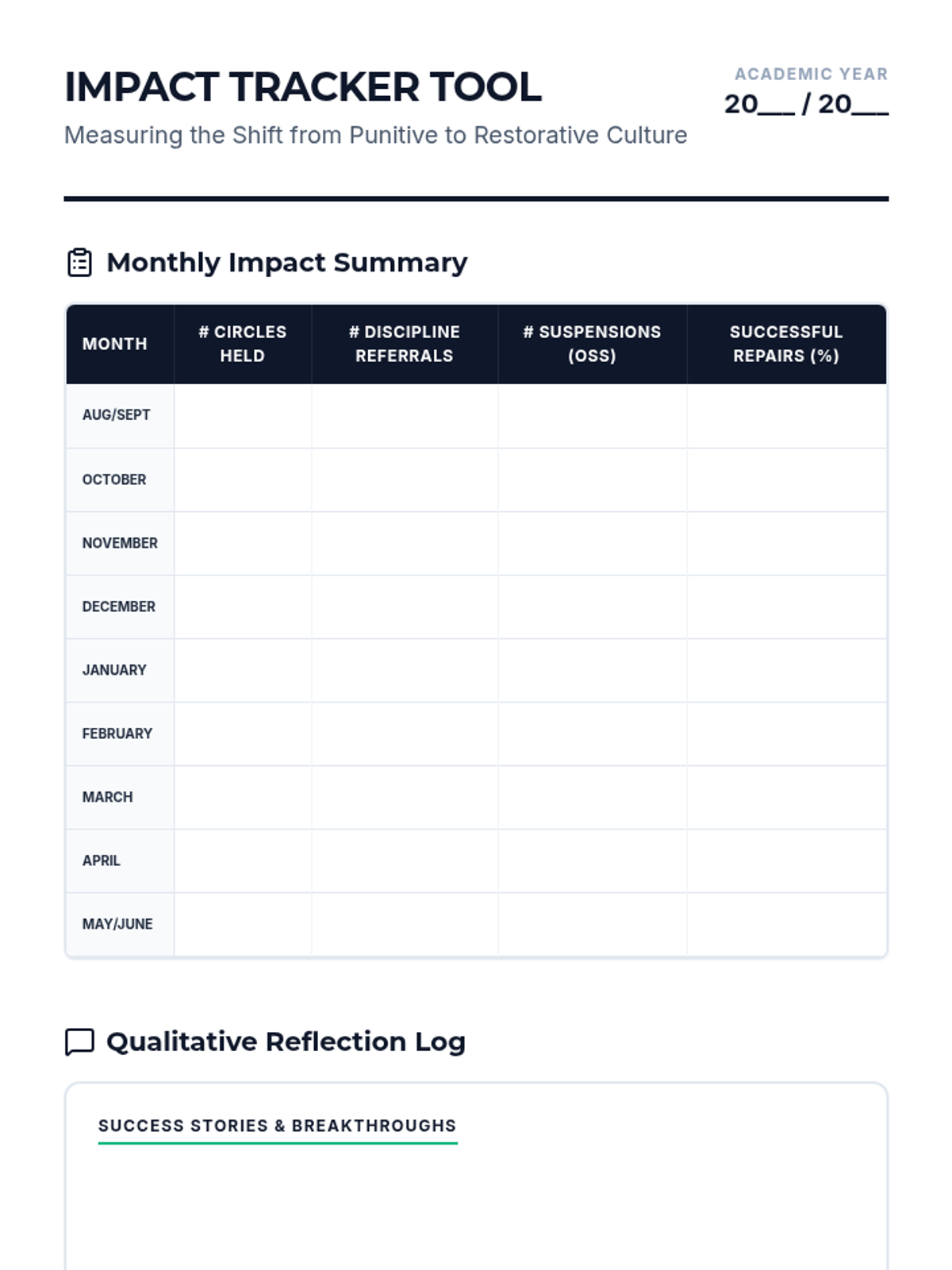
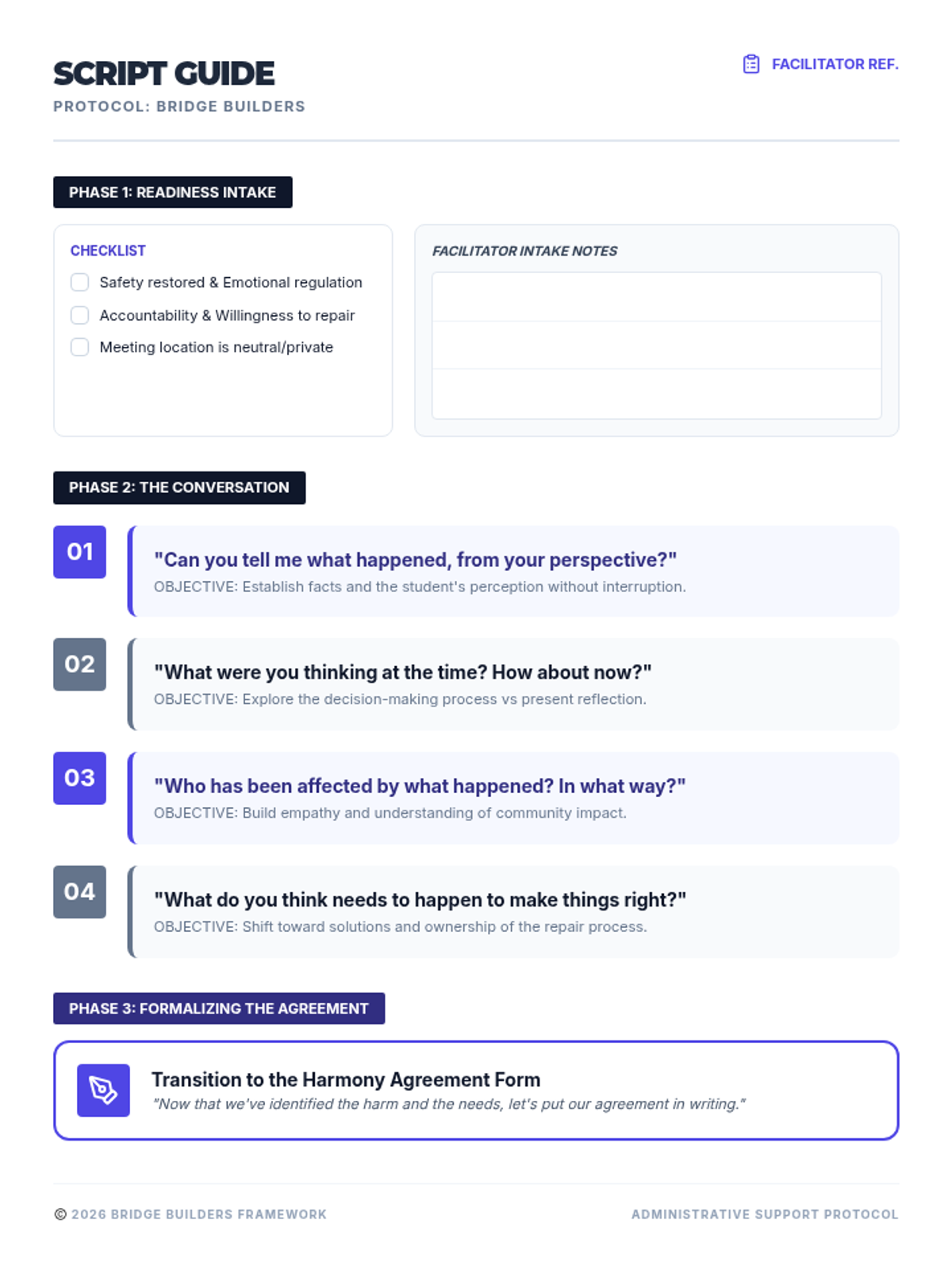
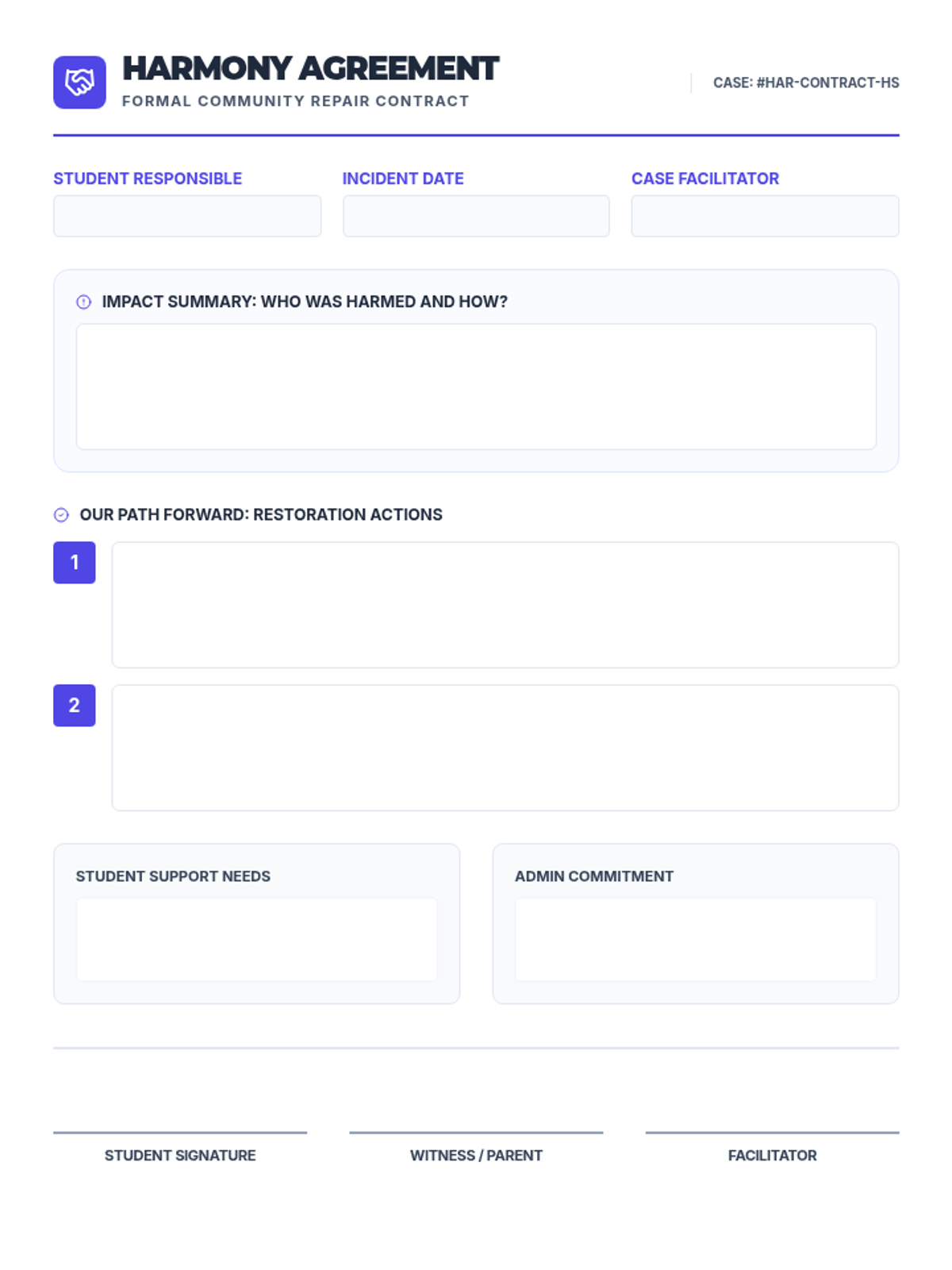
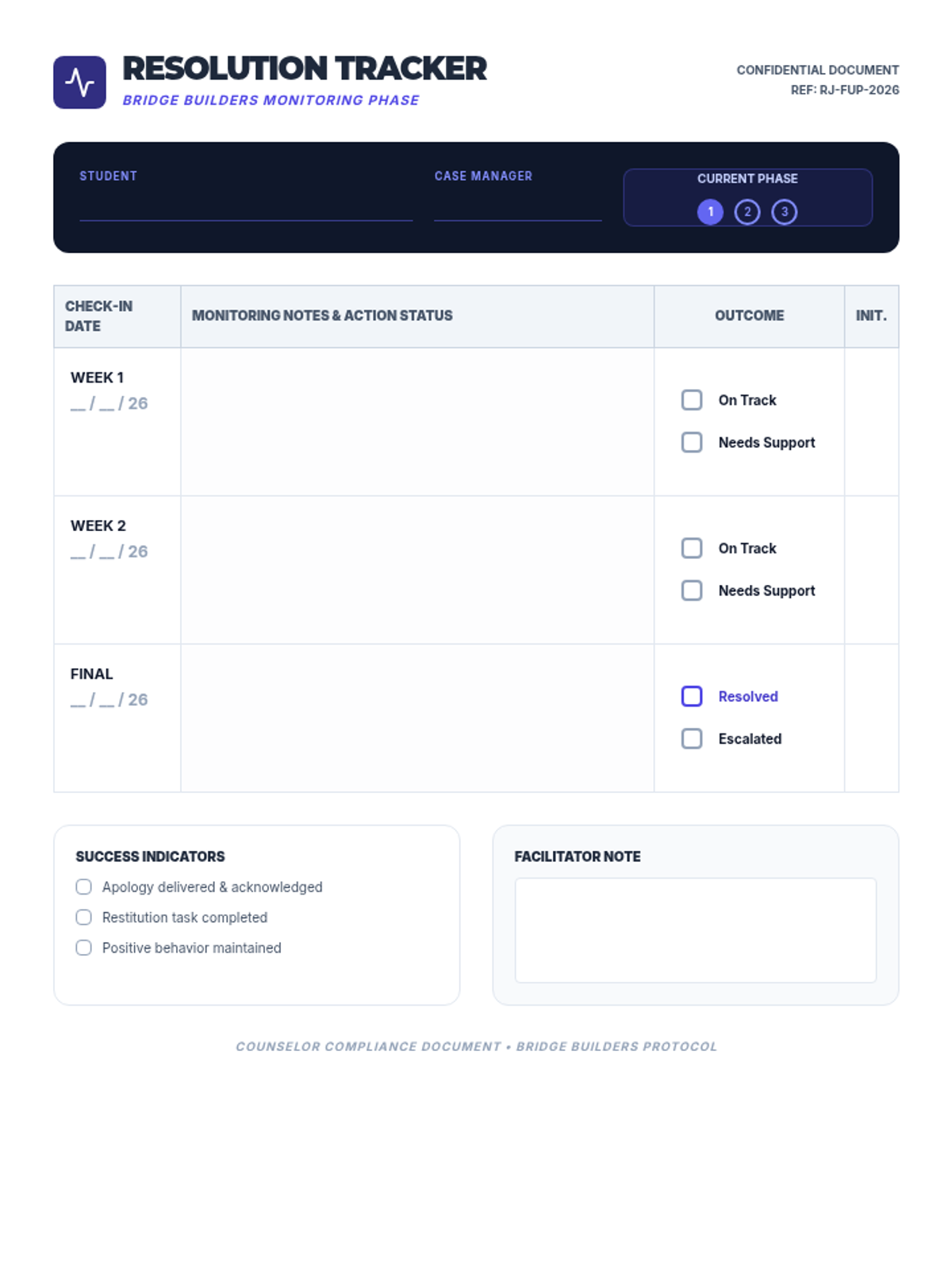
A comprehensive resource suite for campus leaders to implement restorative practices, focusing on shifting from punitive discipline to community-centered harm repair.
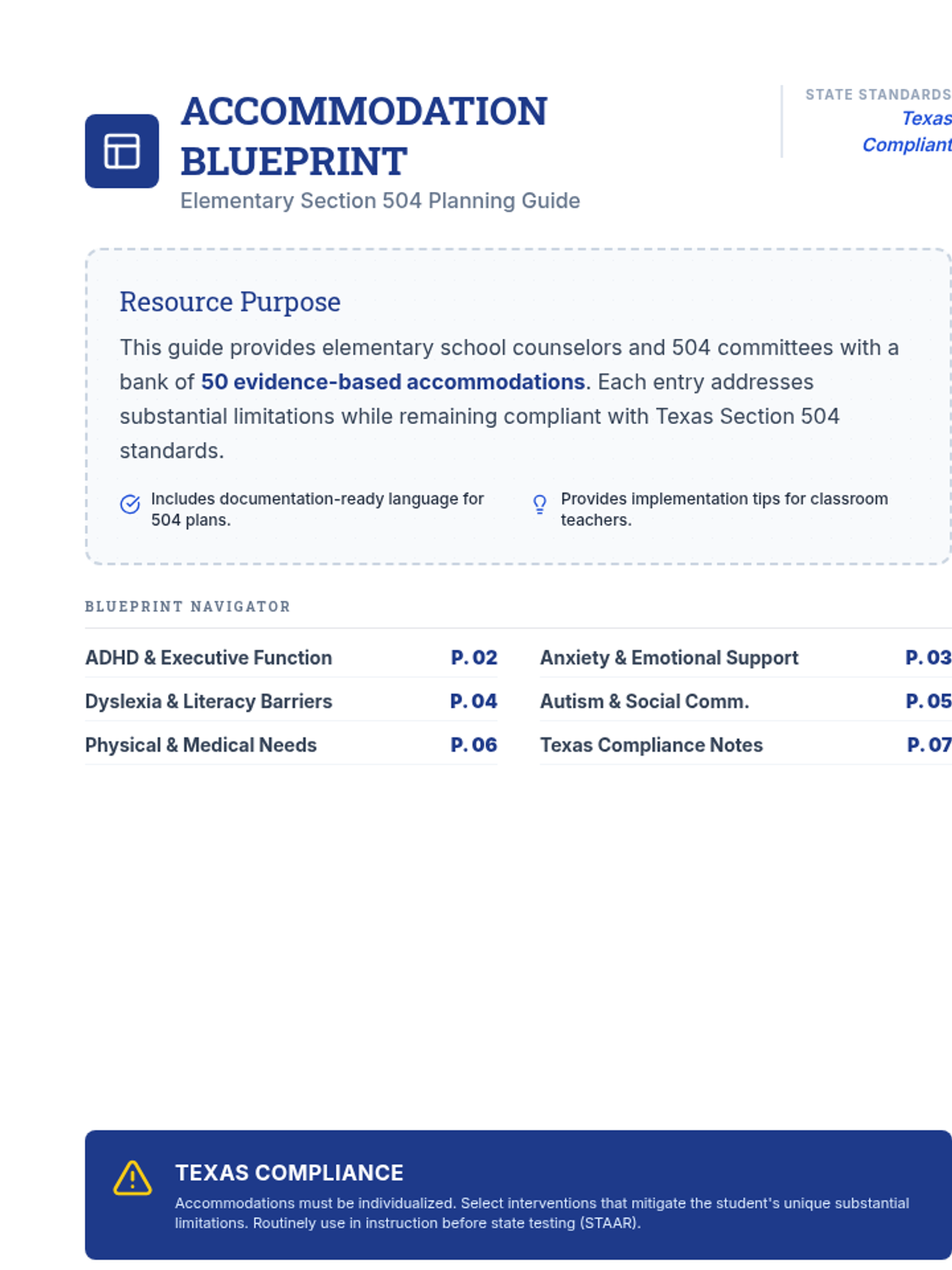
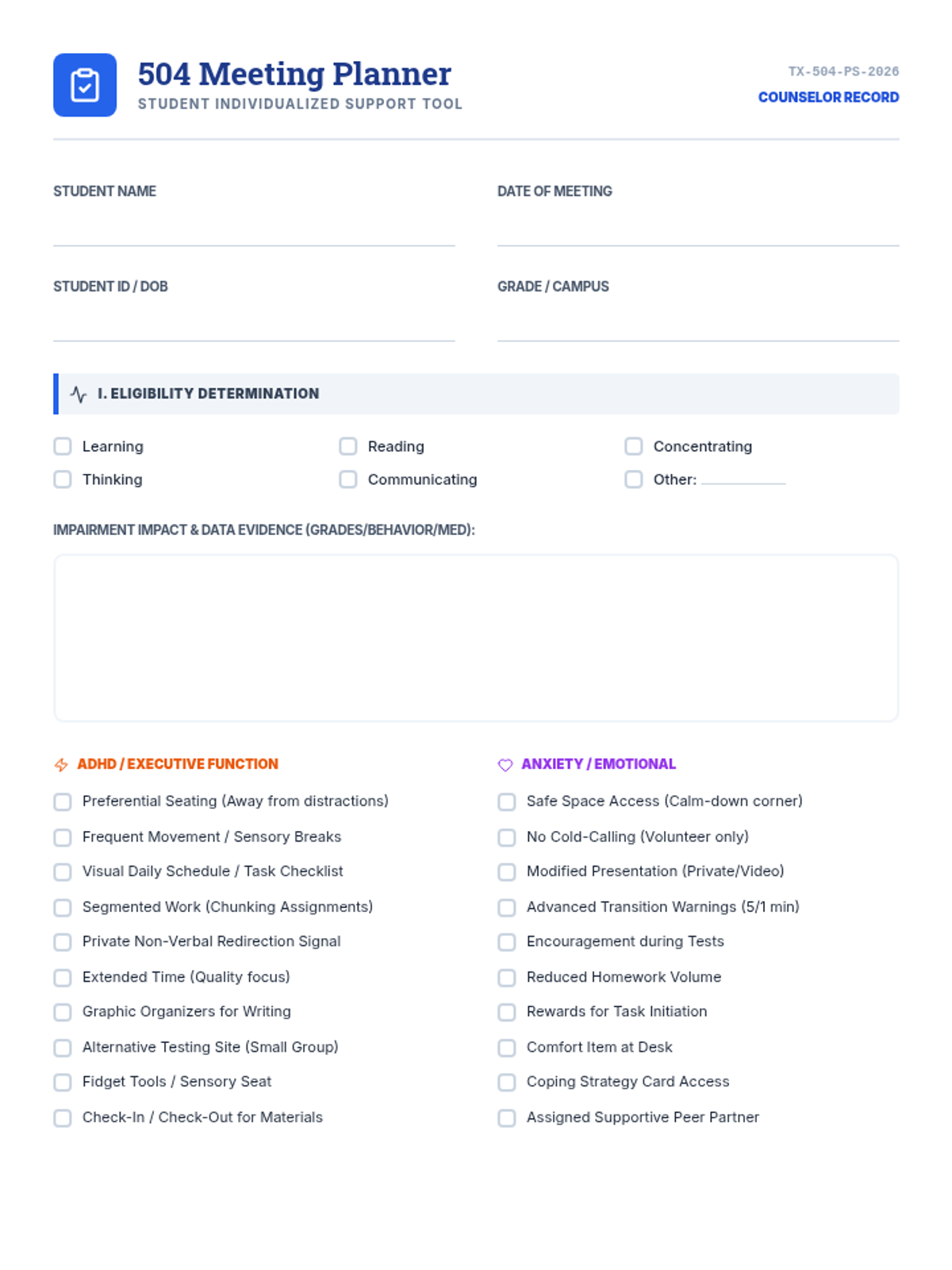
A comprehensive resource set for elementary school counselors to lead Section 504 planning, featuring an evidence-based accommodation bank and implementation strategies tailored to Texas compliance standards.
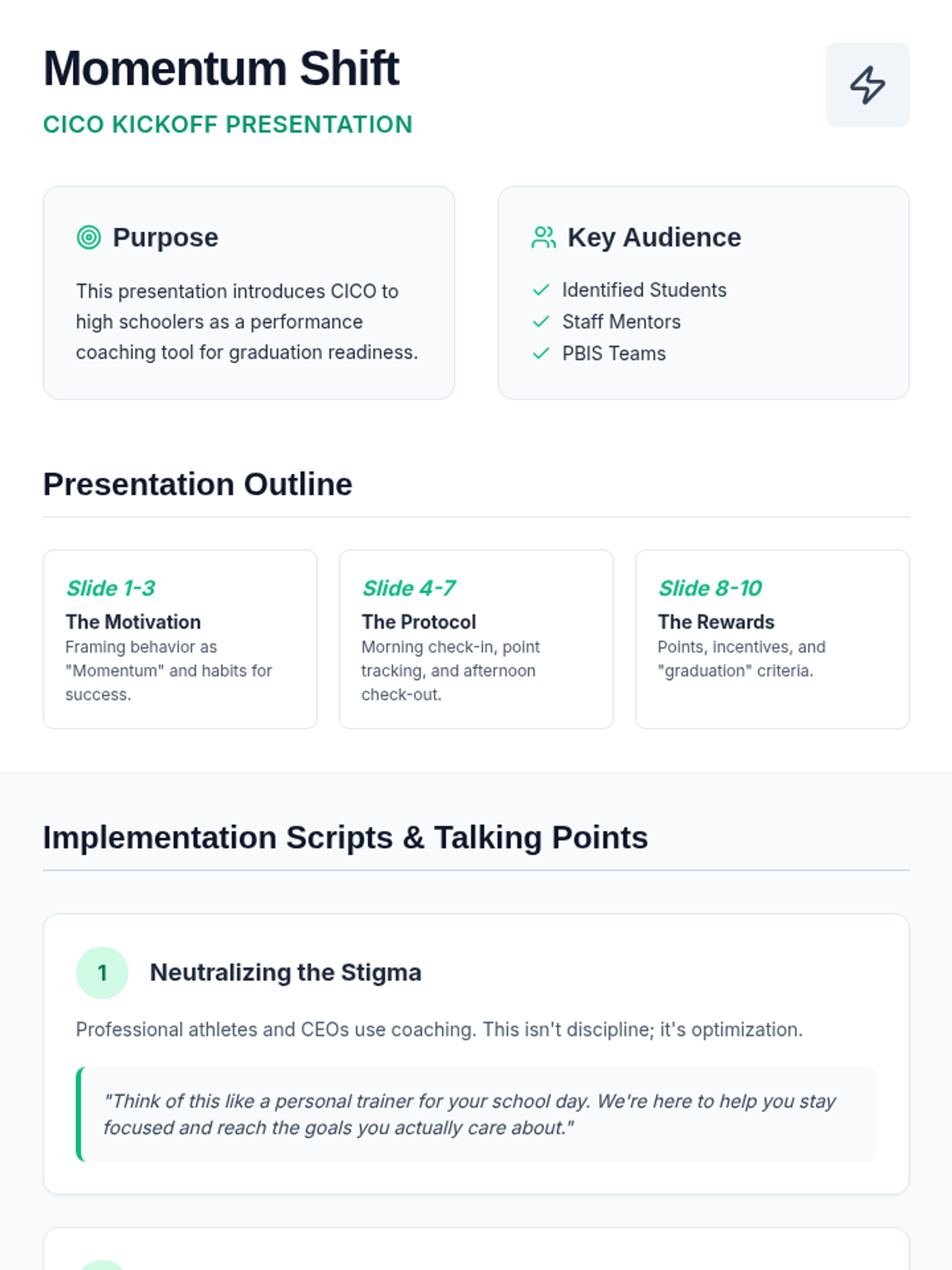
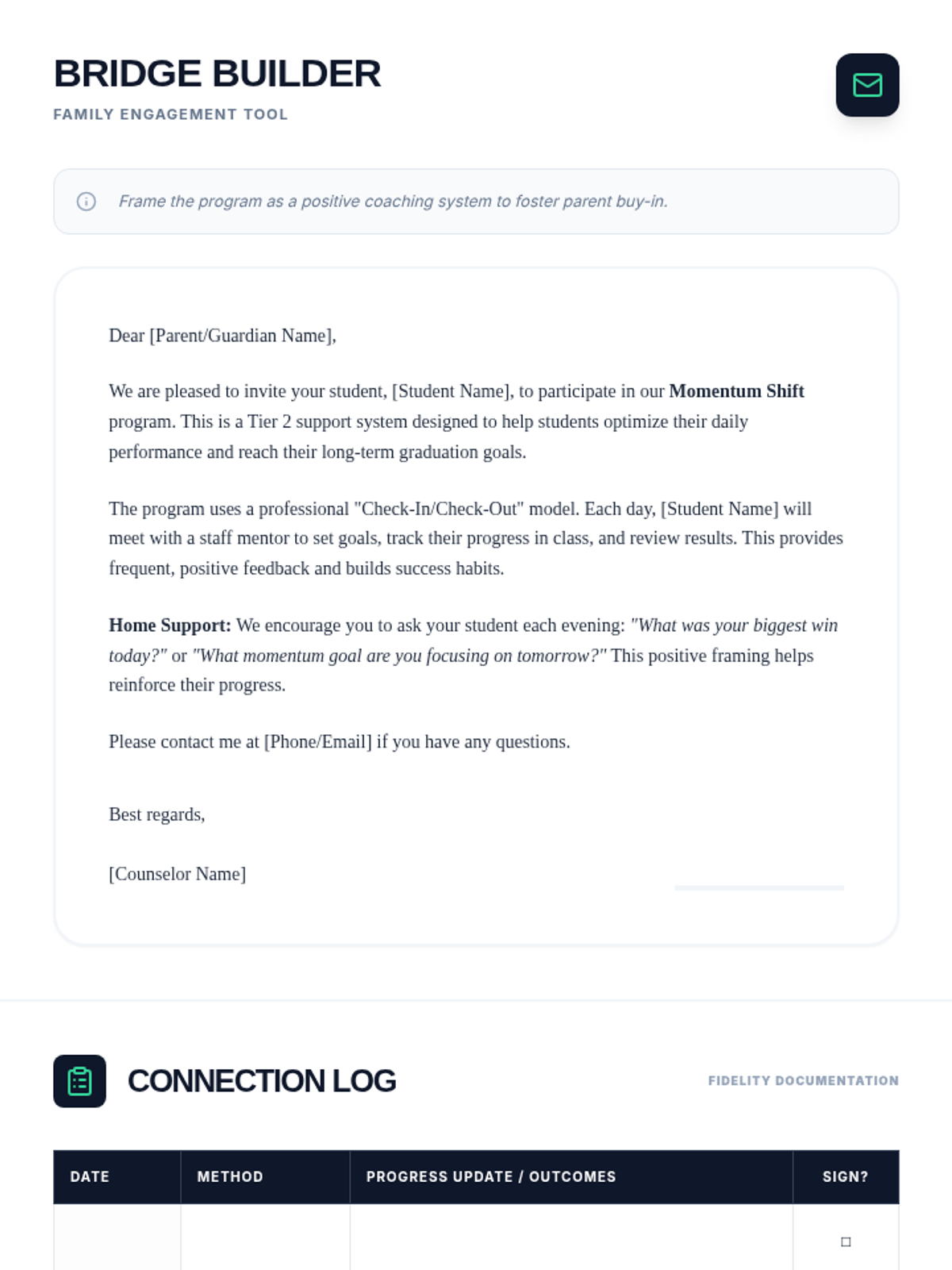
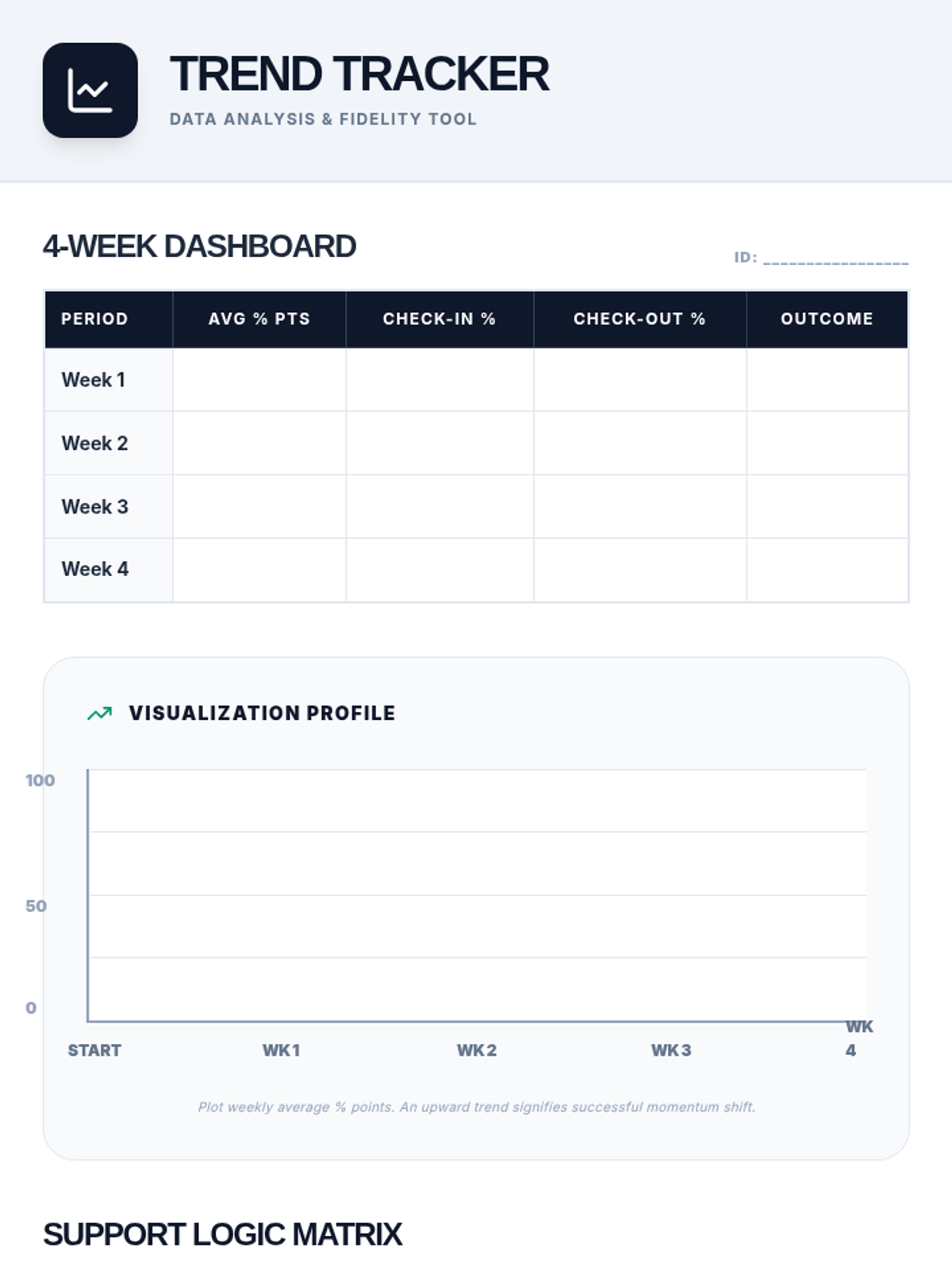
A comprehensive Check-In/Check-Out (CICO) implementation kit for high school counselors following the PBIS Tier 2 framework to support students with behavioral challenges.
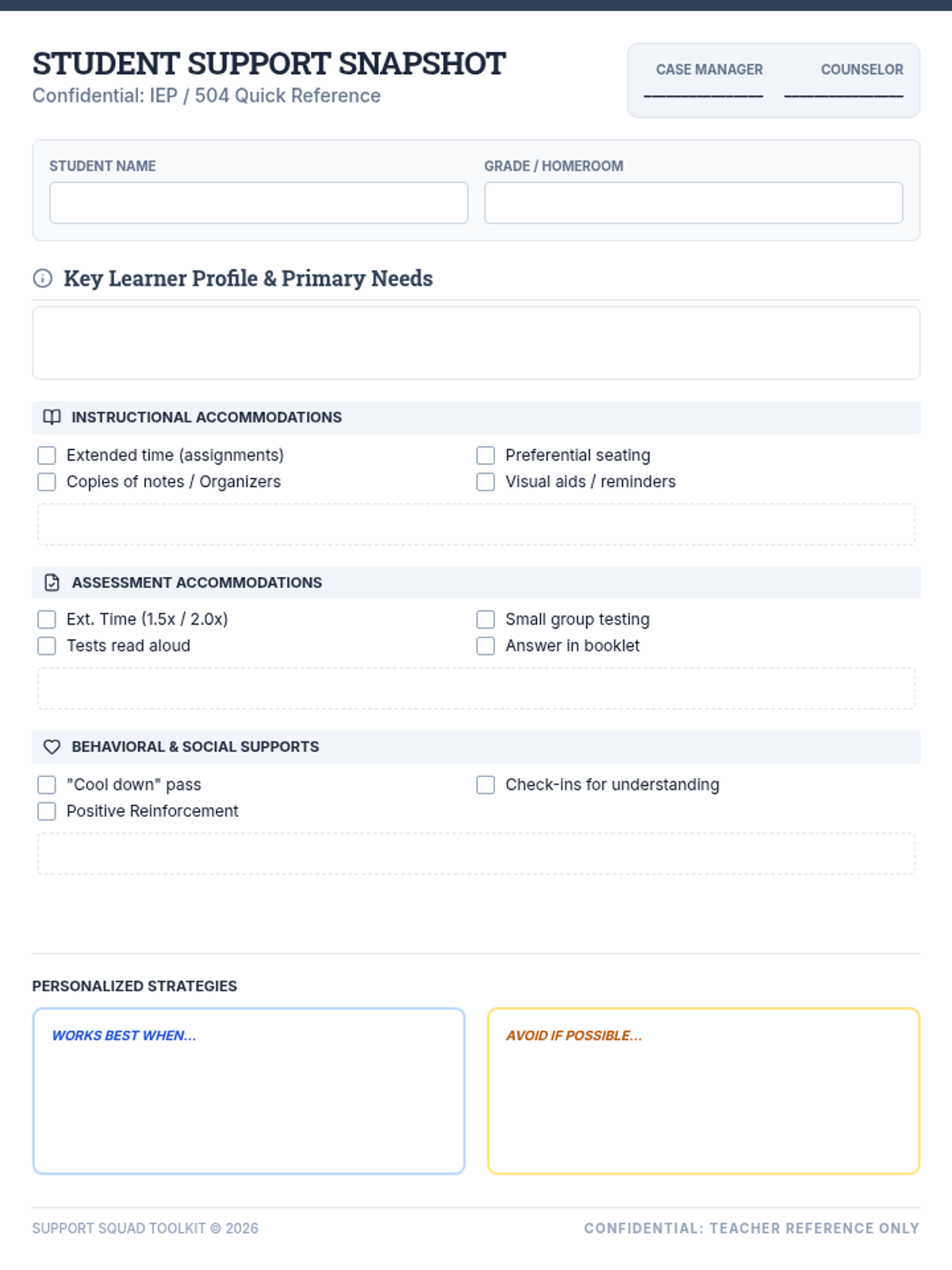
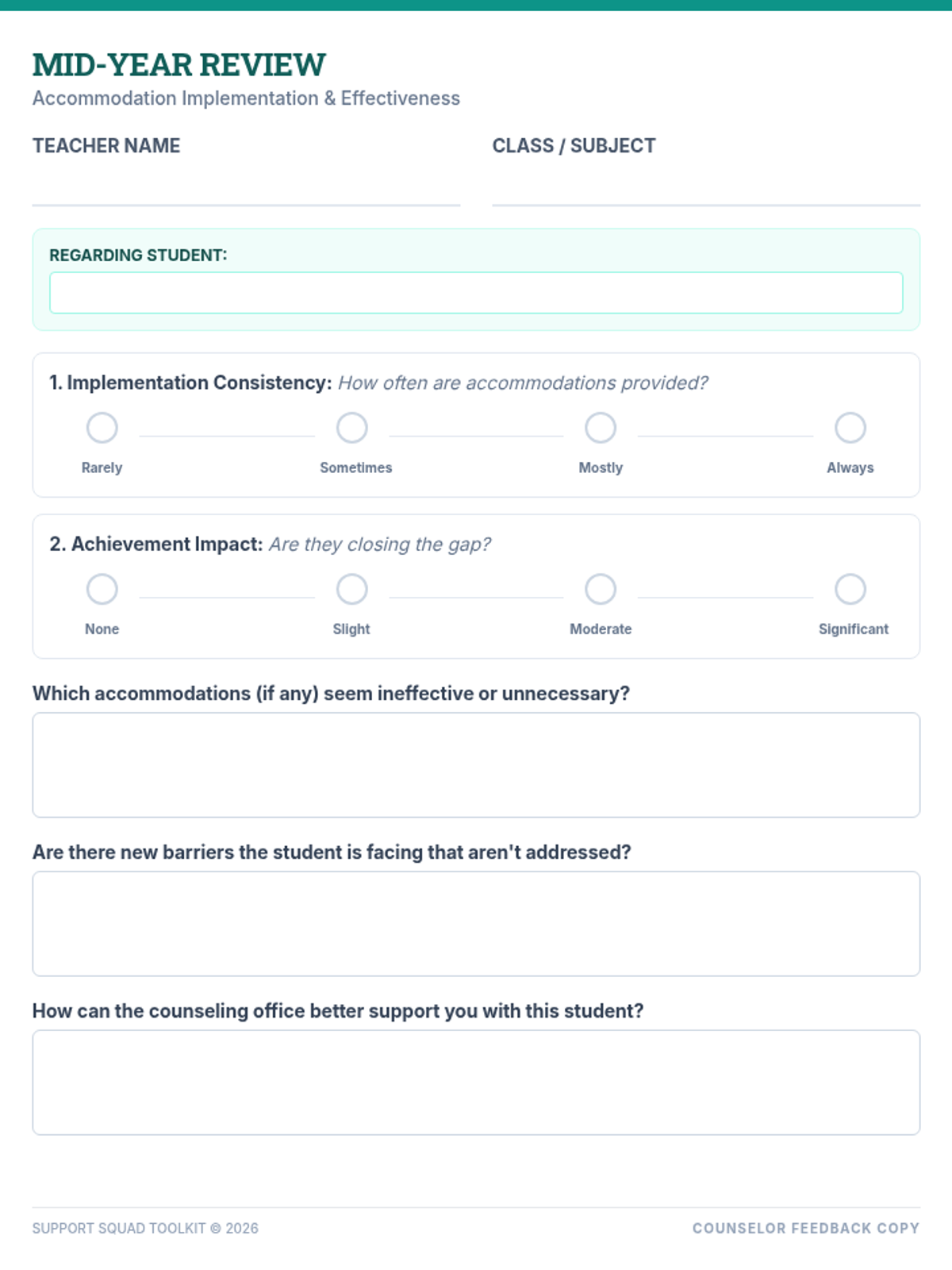
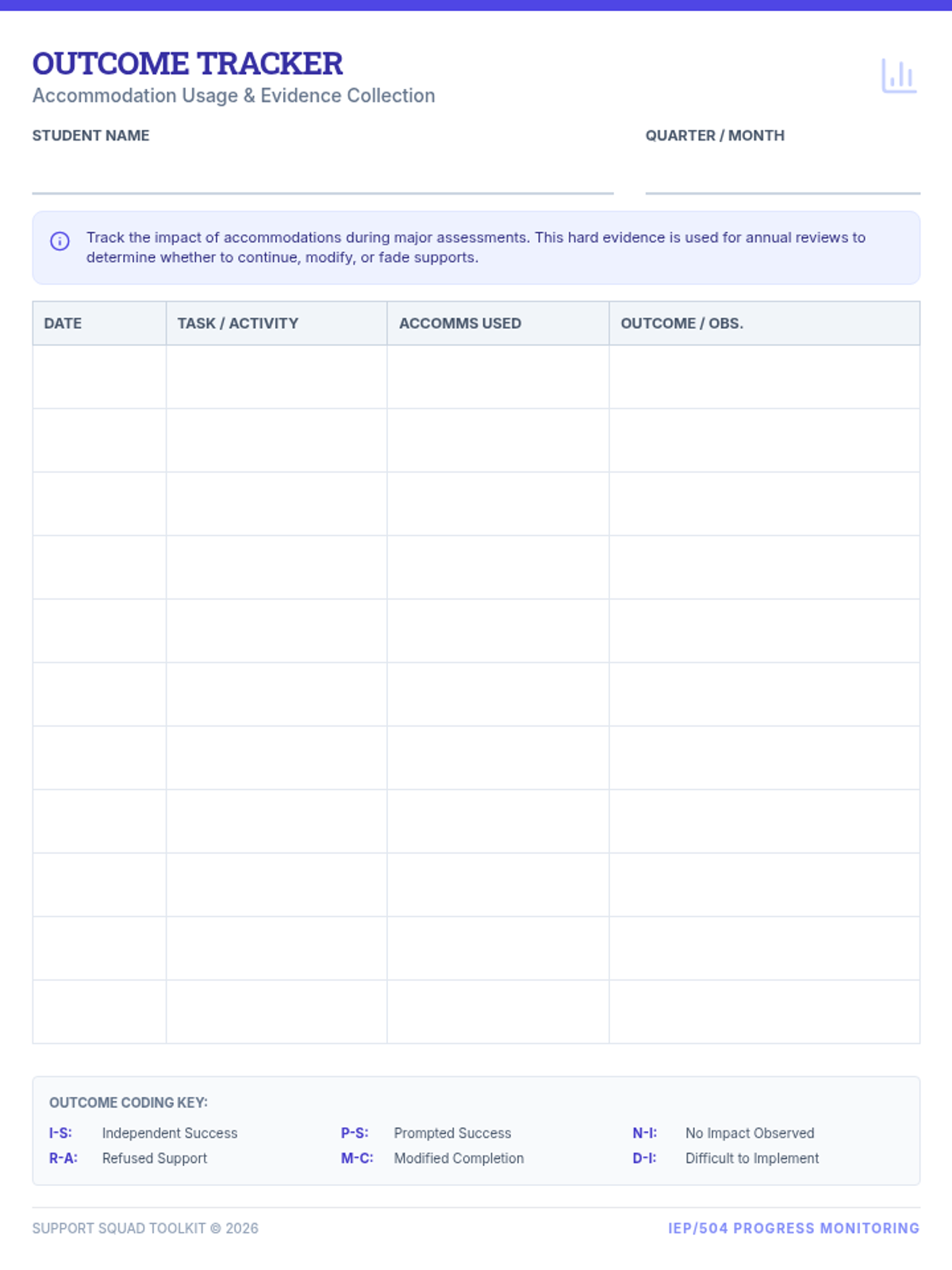
A comprehensive set of tools designed for middle school counselors to streamline communication with teachers regarding student 504 and IEP accommodations. This toolkit focuses on efficiency, clarity, and data-driven decision-making to ensure student success.
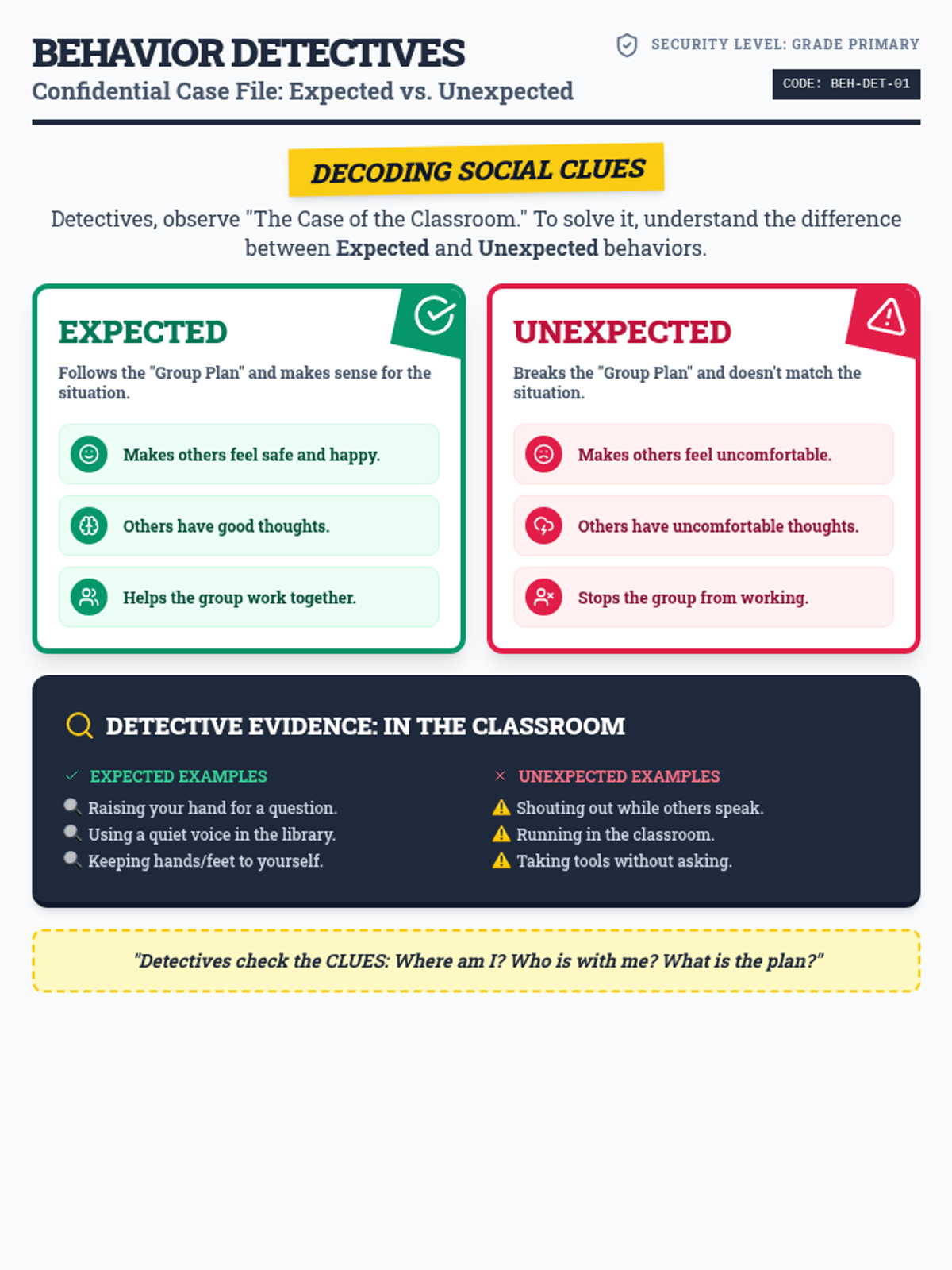
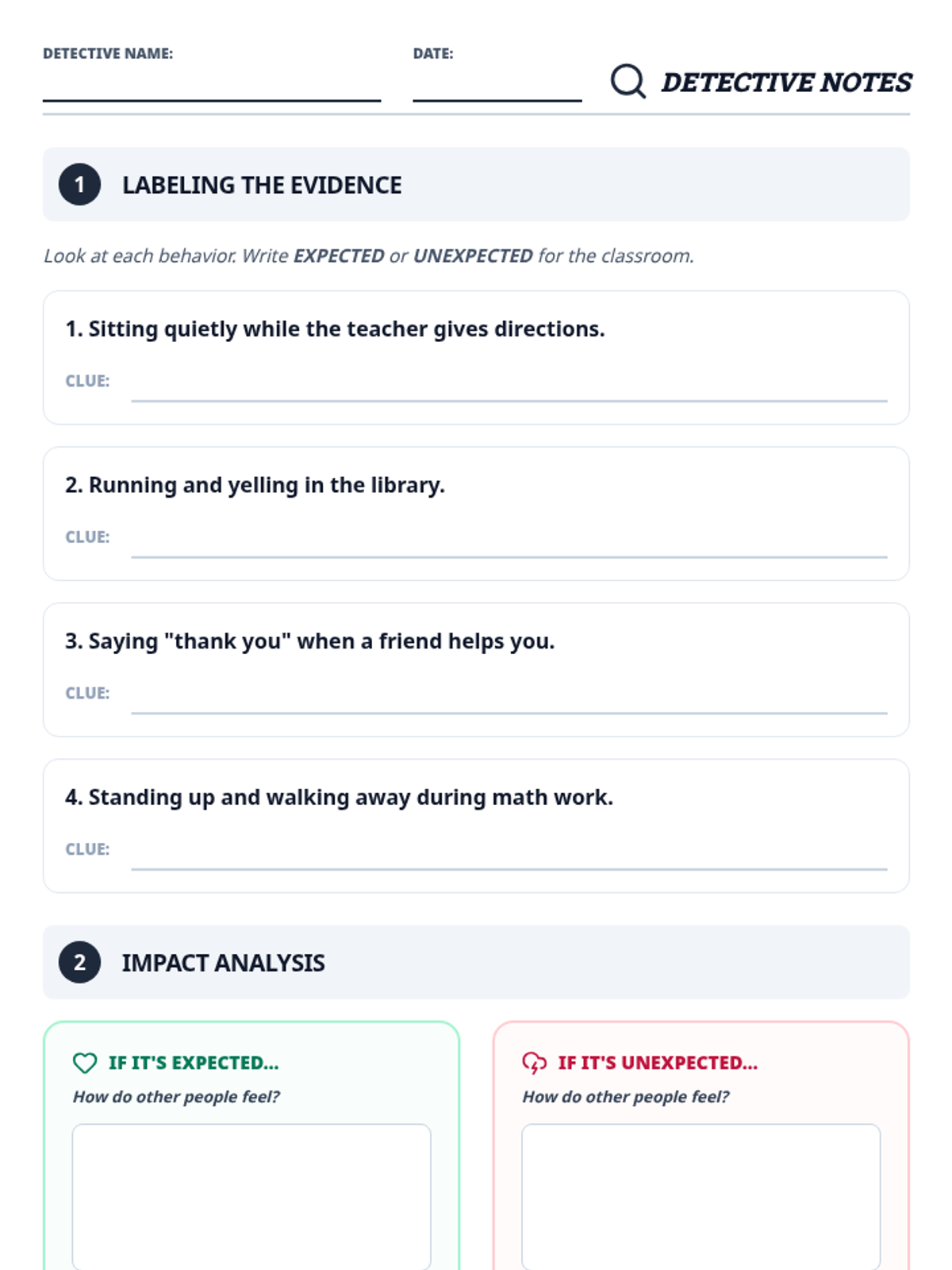
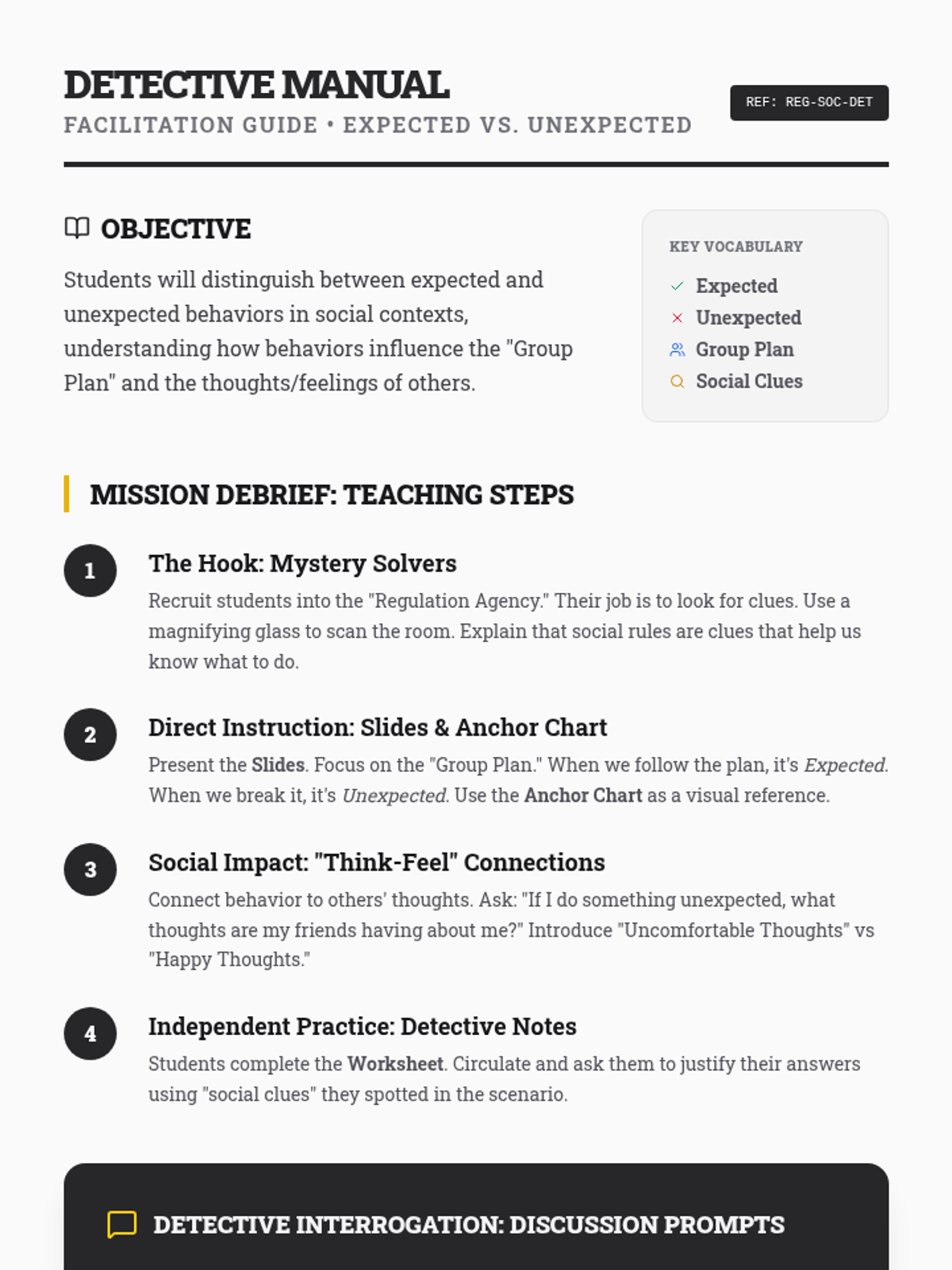
This lesson introduces students to the concepts of expected and unexpected behaviors through the lens of being 'Behavior Detectives.' Students will learn how behaviors impact others' thoughts and feelings and how to identify clues in different social situations.
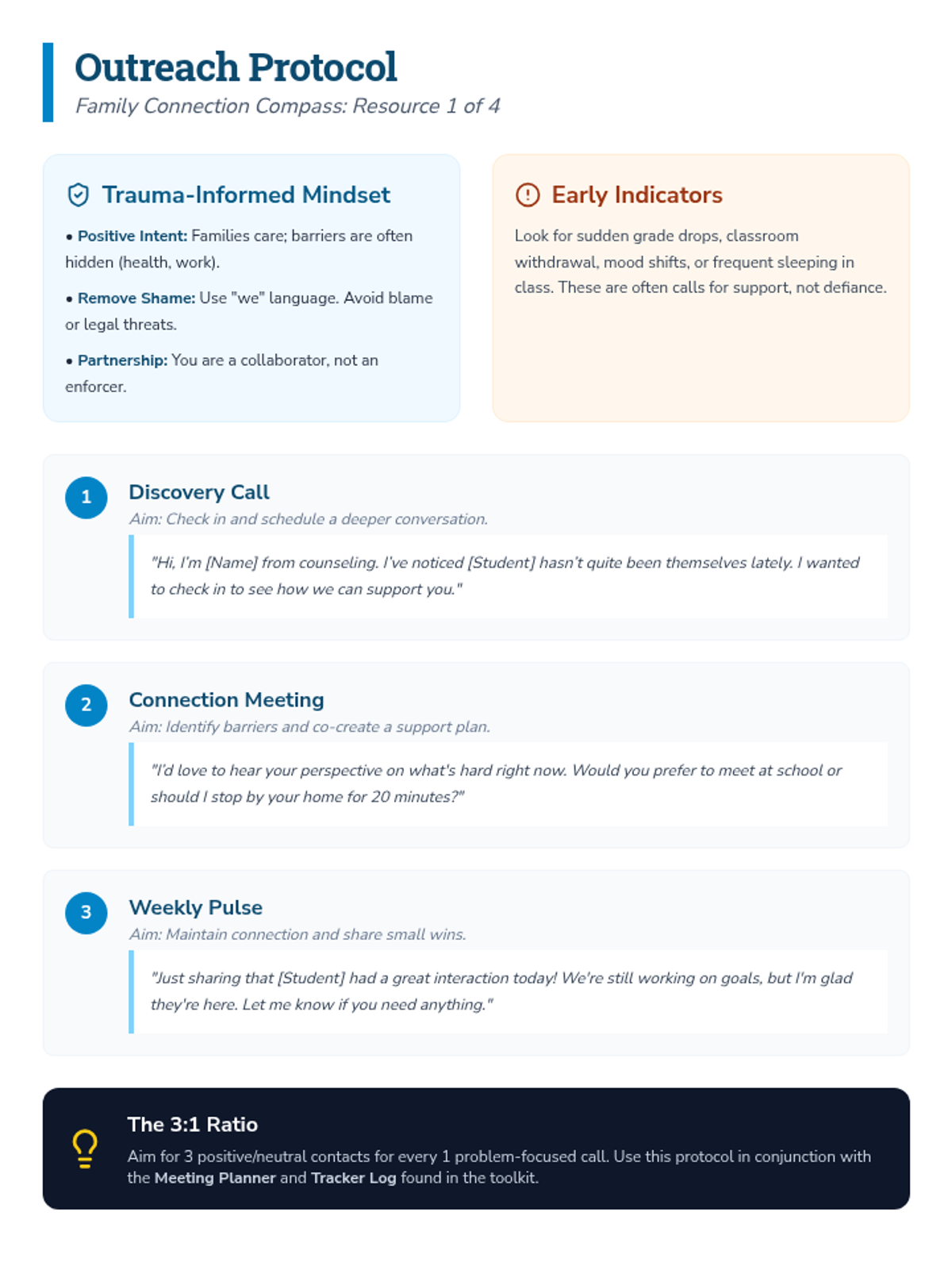
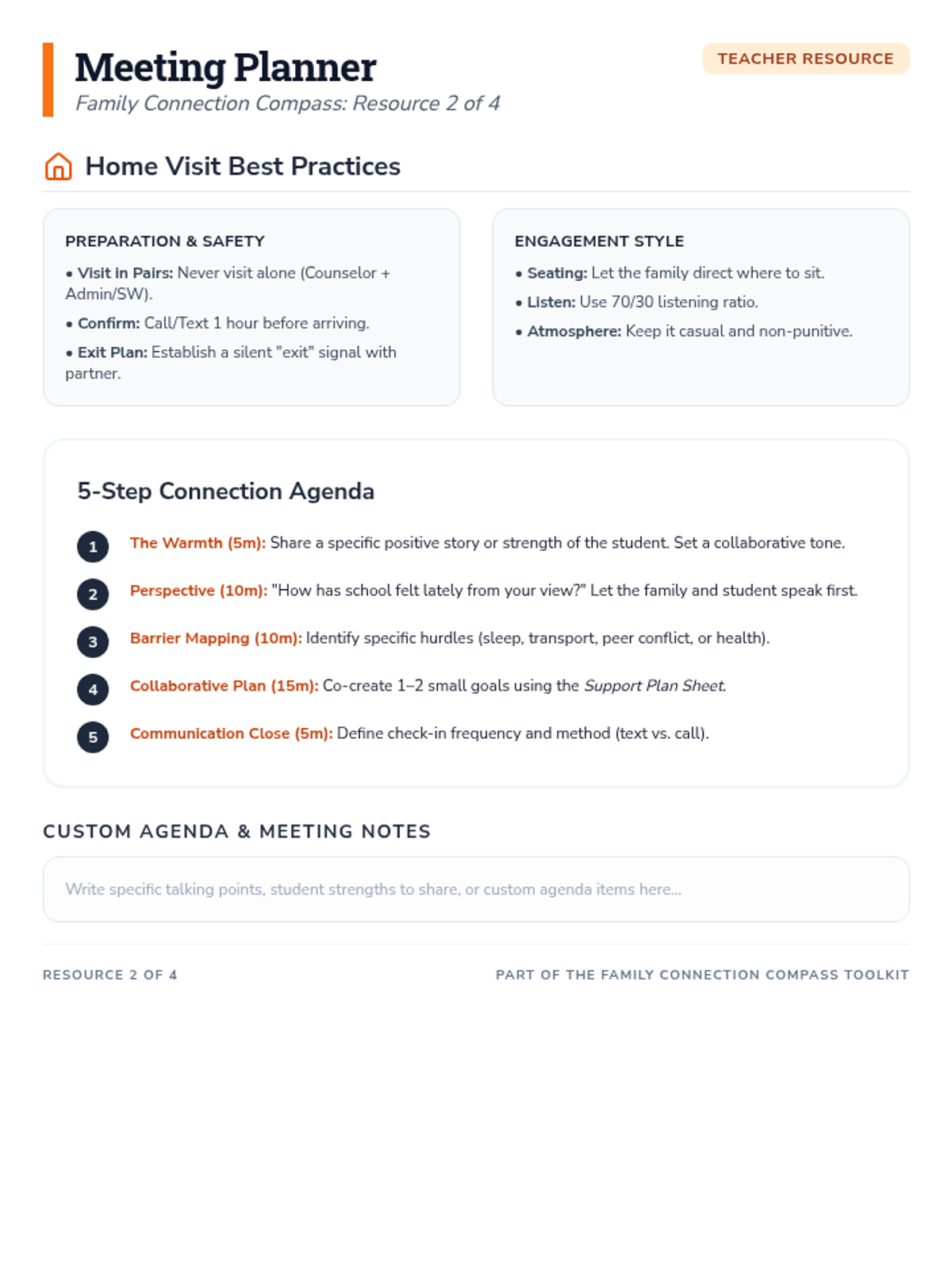
A comprehensive toolkit for middle school counselors to re-engage families of students showing early signs of disengagement through a trauma-informed lens, focusing on collaborative problem-solving.
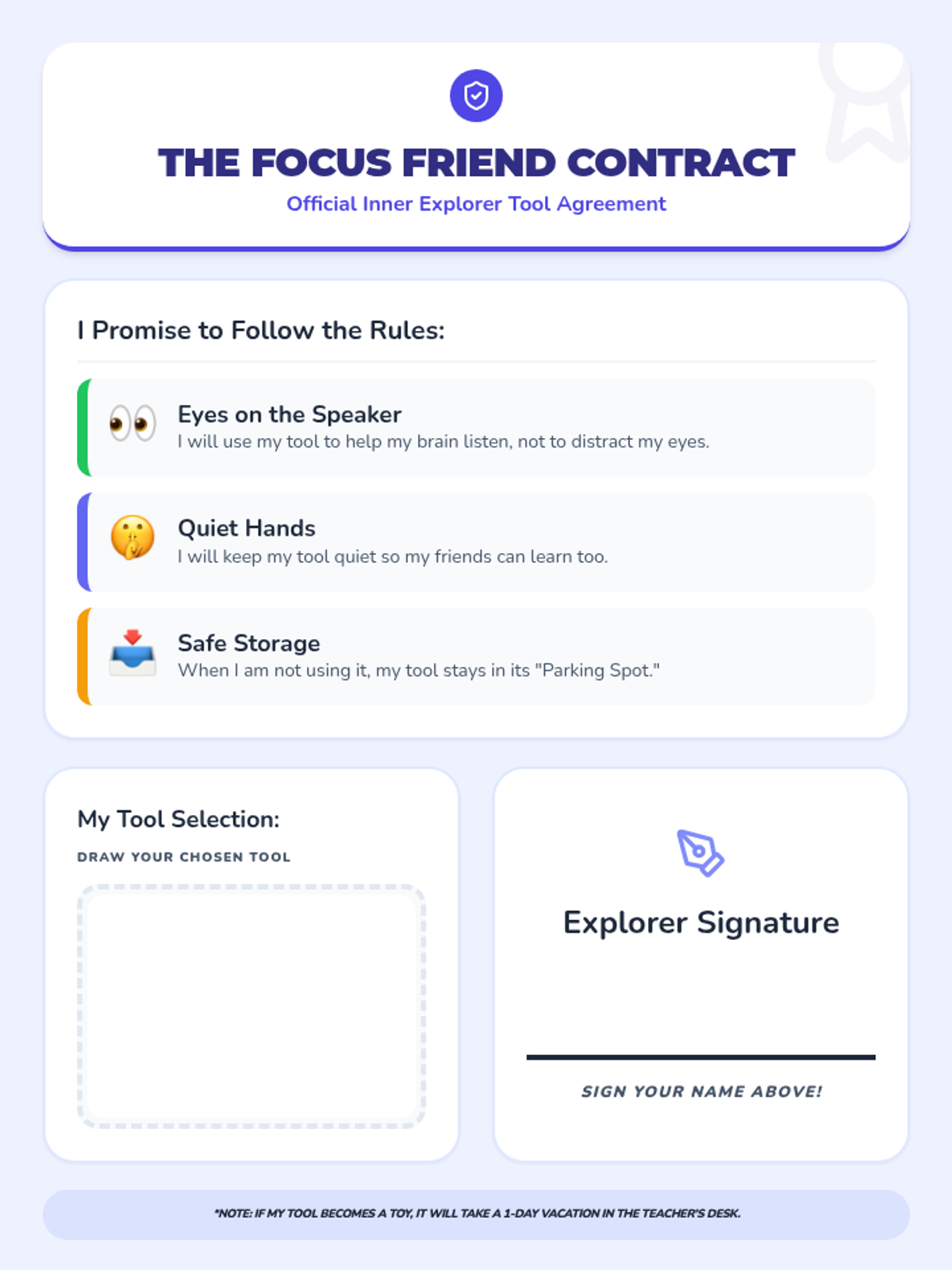
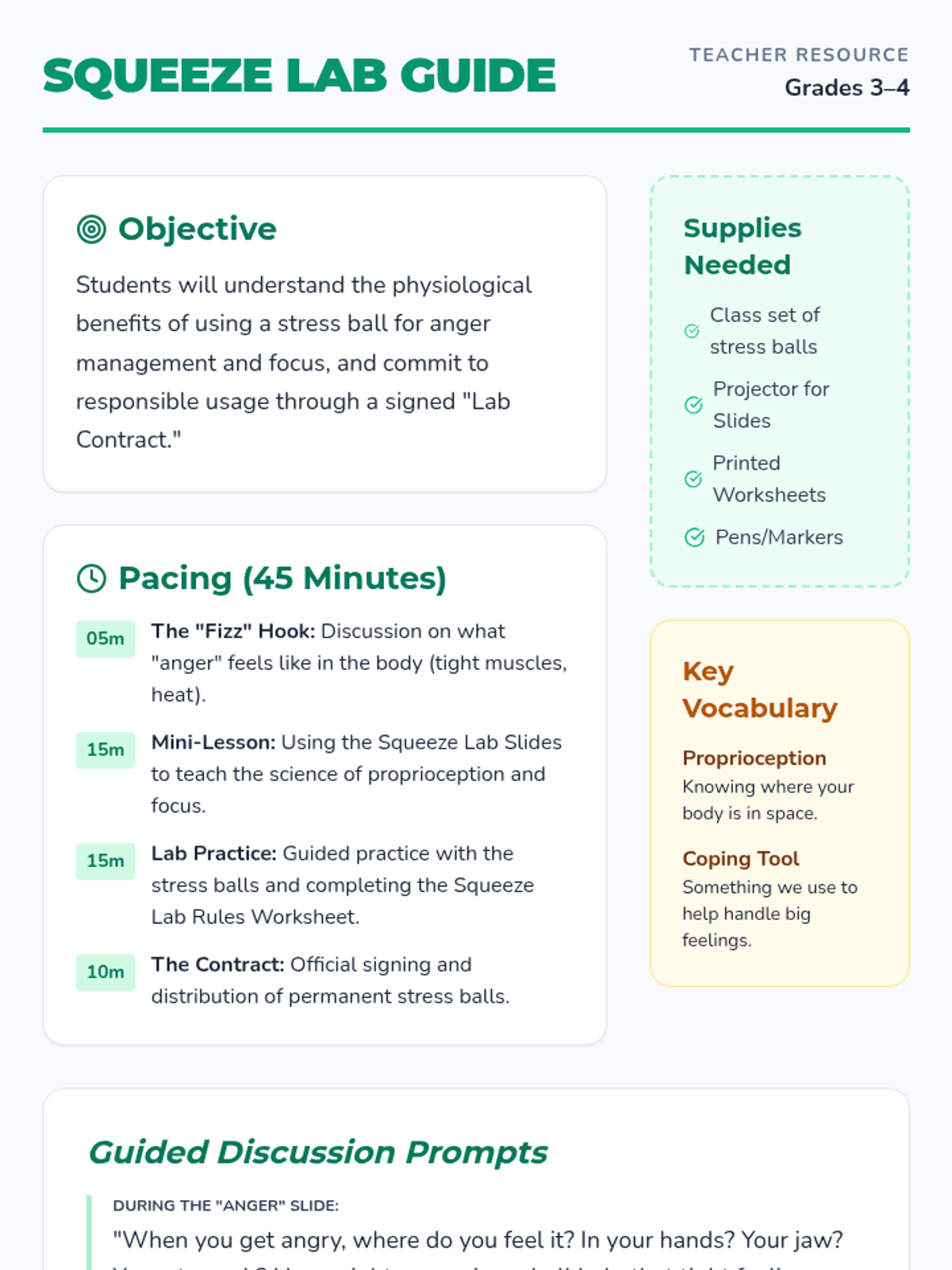
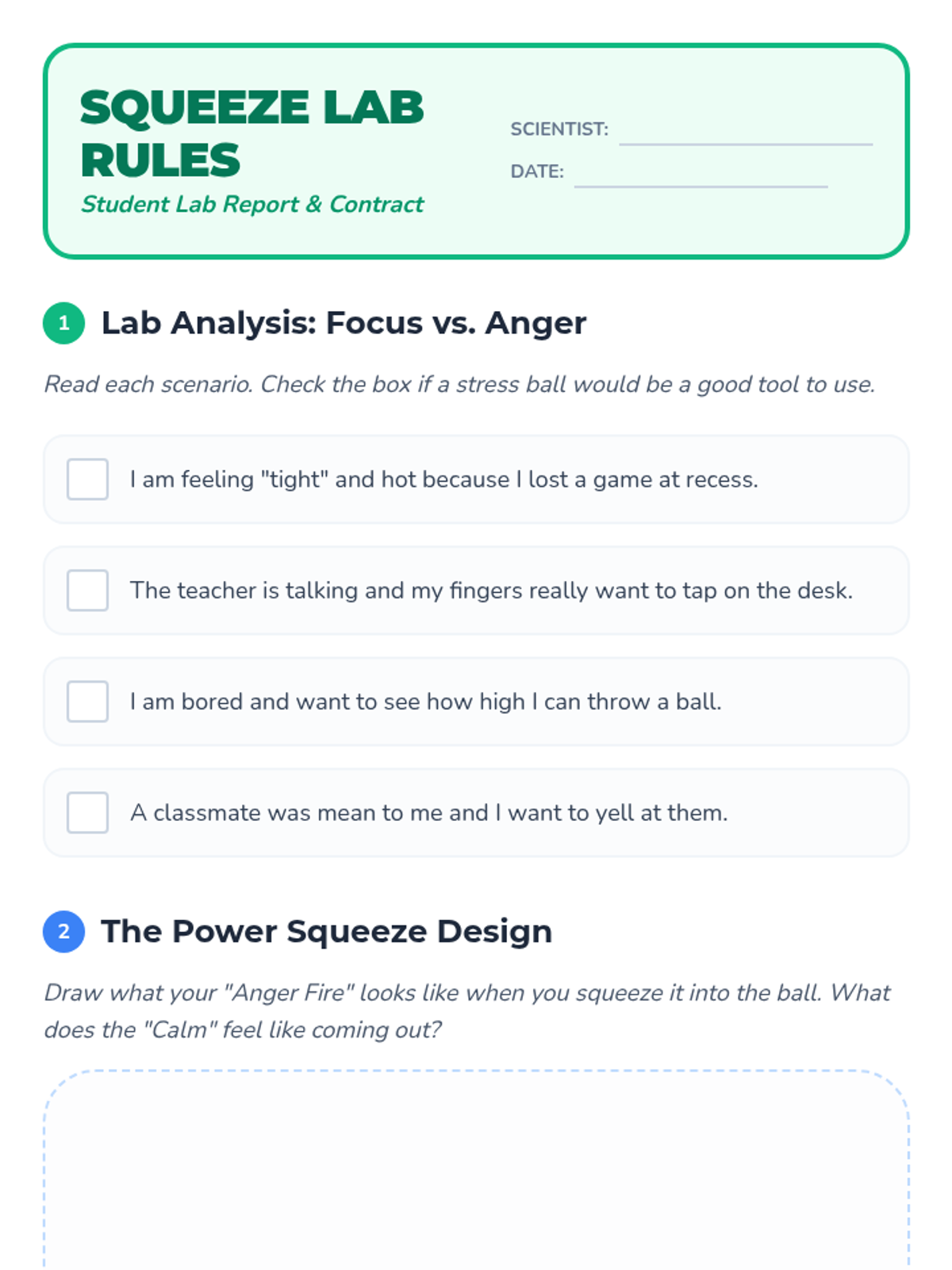
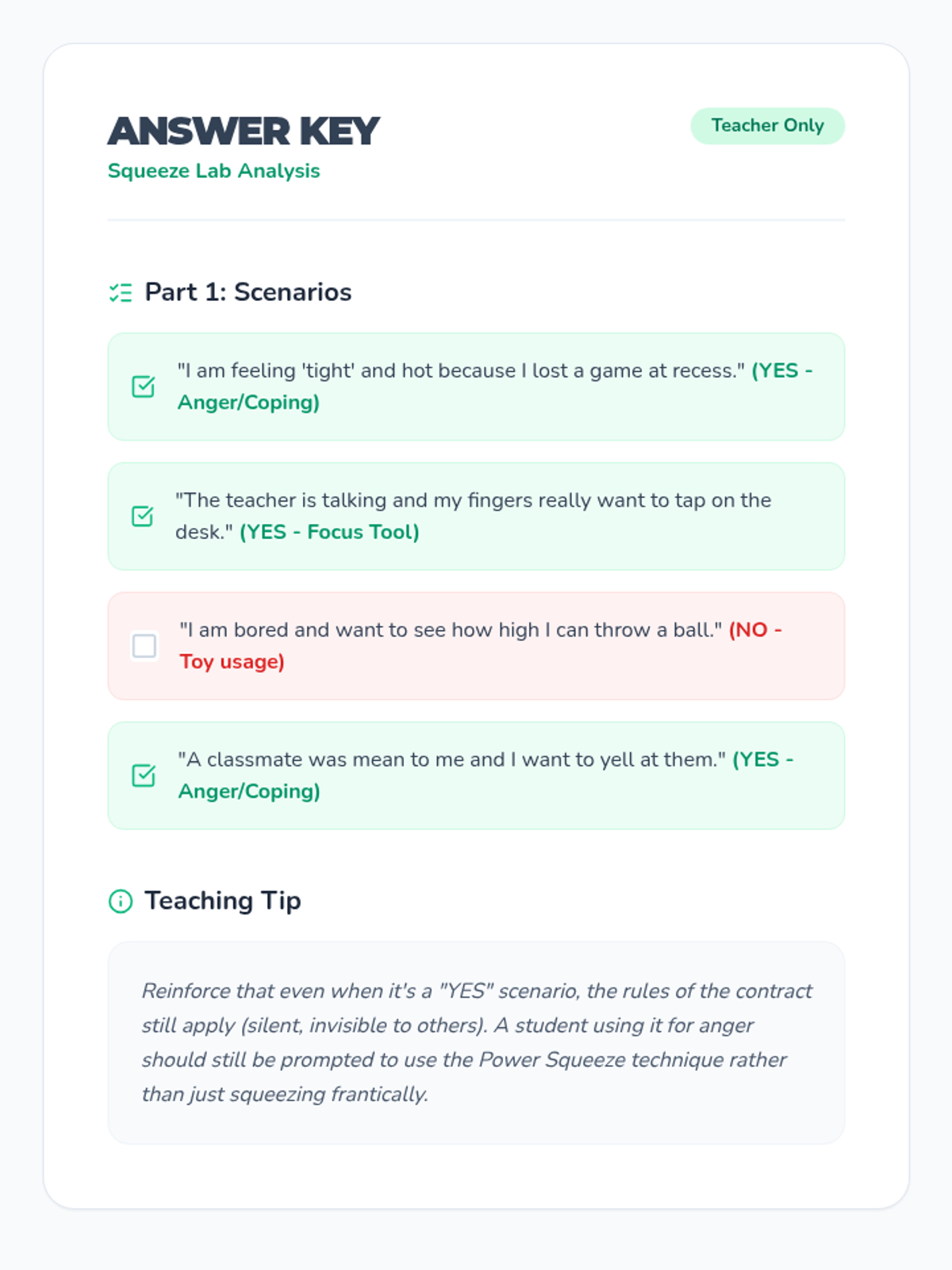
A lesson for 3rd and 4th graders on the appropriate use of stress balls as a coping mechanism for anger and a tool for increasing focus. Students learn the science behind the squeeze and sign a contract for responsible use.
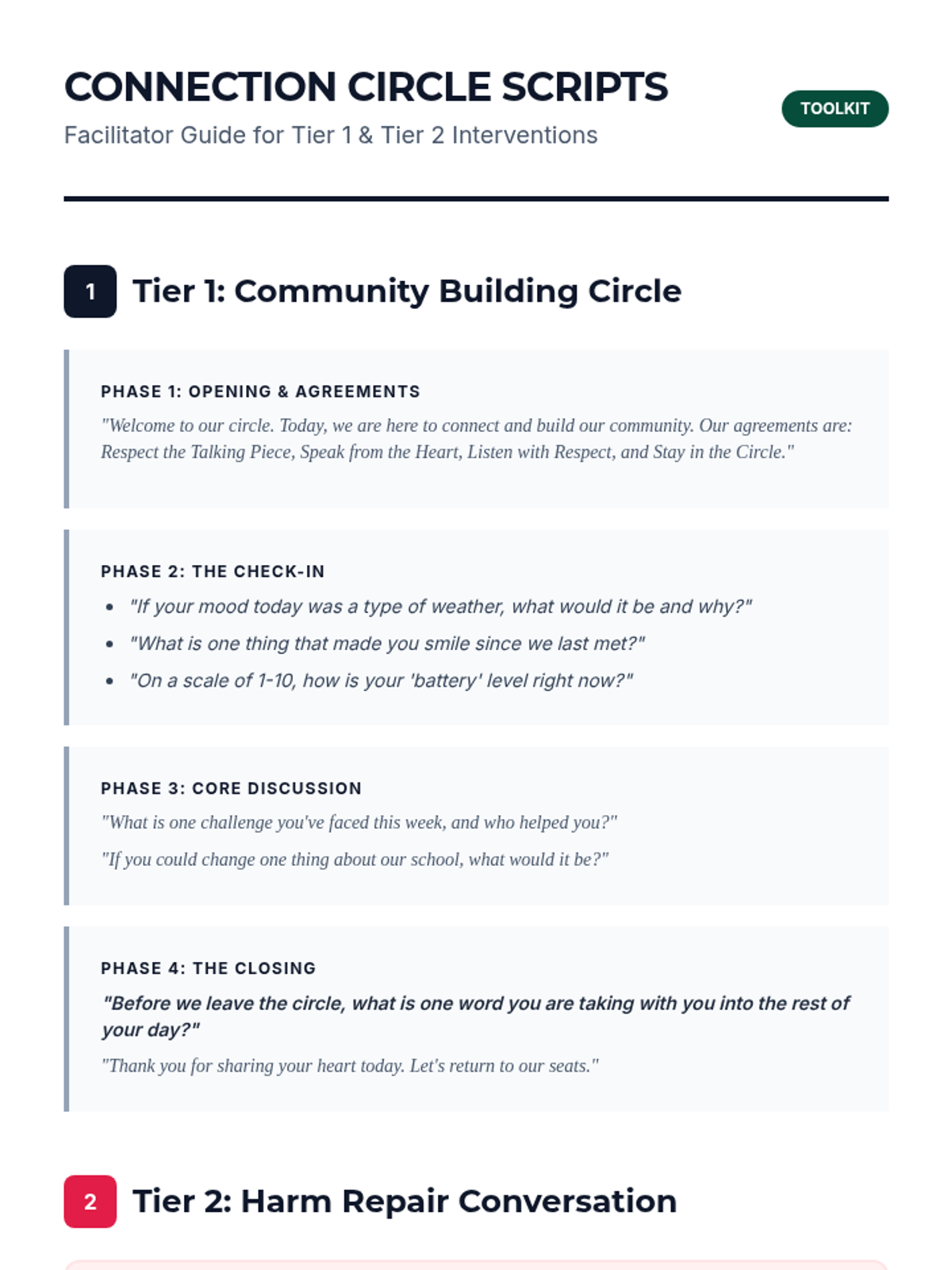
A comprehensive restorative justice framework for high school administrators and counselors, providing step-by-step protocols to repair harm and restore community after disciplinary incidents.
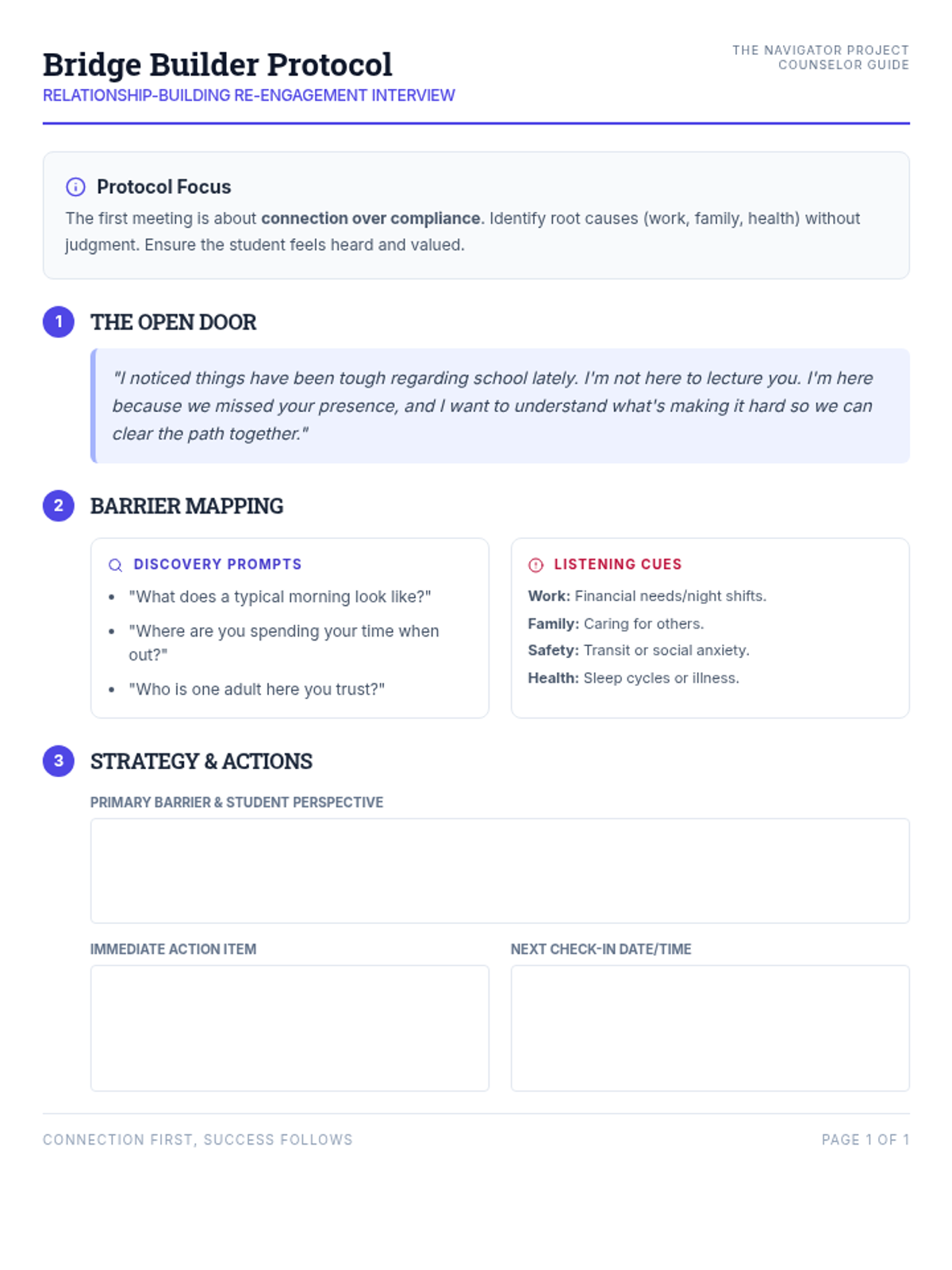
A comprehensive toolkit for high school counselors to re-engage chronically absent students through relationship-building, individualized planning, and systemic support.
High-intensity support for chronically absent students (missing 10%+). Focuses on root-cause analysis, family casework, and removing systemic barriers through community collaboration.
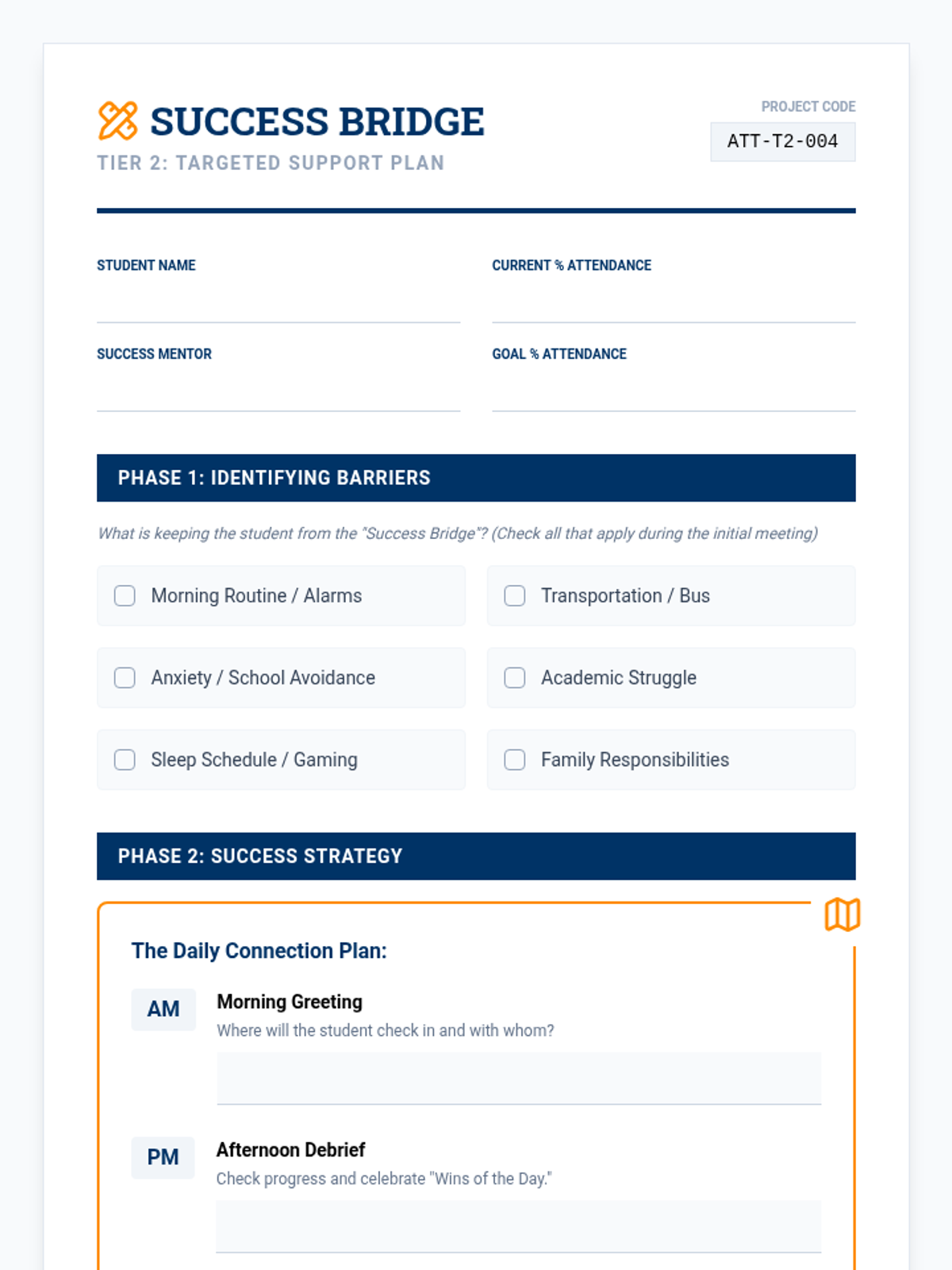
Identifying students at risk (missing 5-9% of school) and implementing early-warning interventions like Check-In/Check-Out and personalized success mapping.
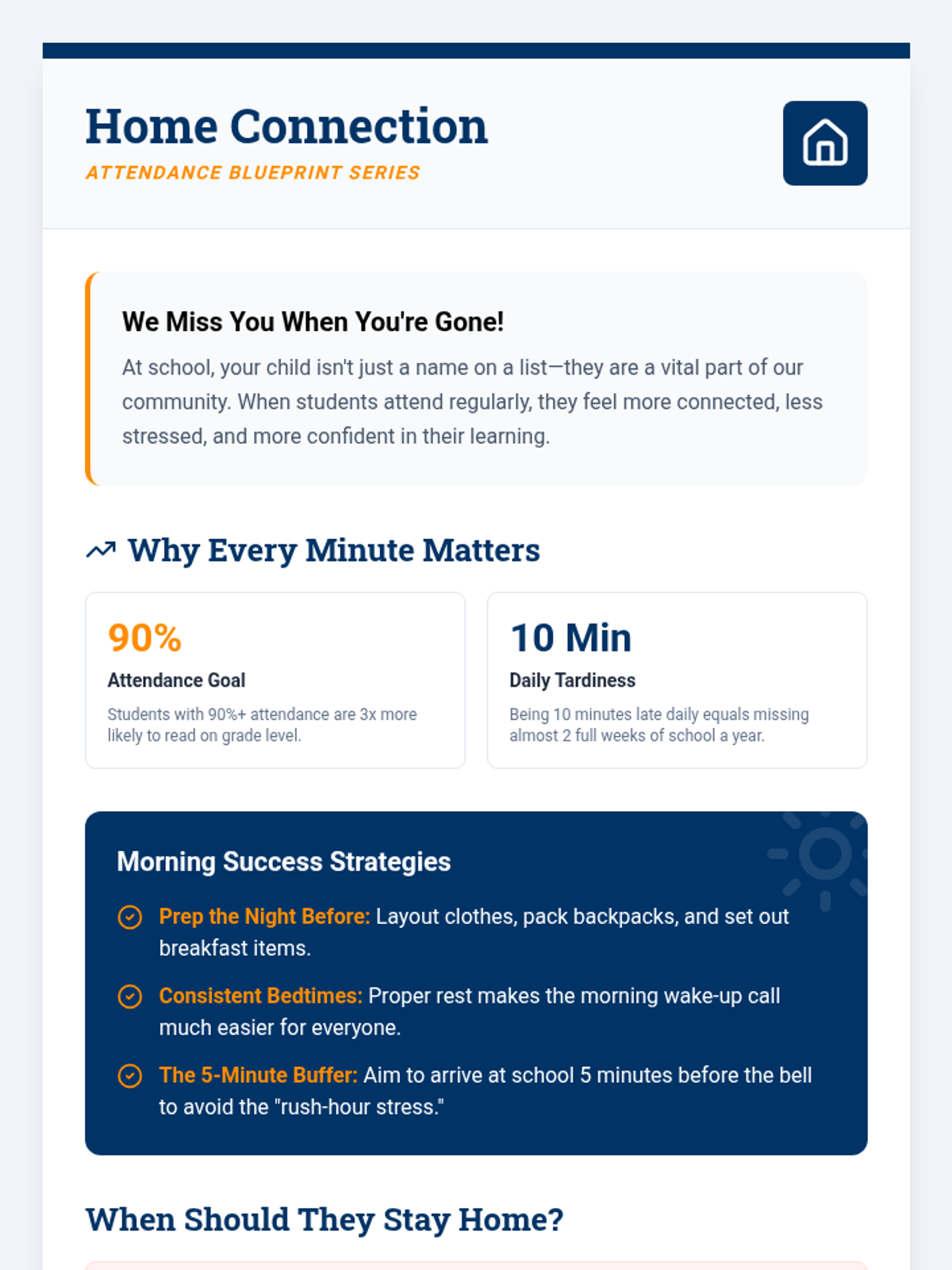
Establishing universal attendance expectations, building a culture of belonging, and communicating the "Every Minute Matters" philosophy to students and families.
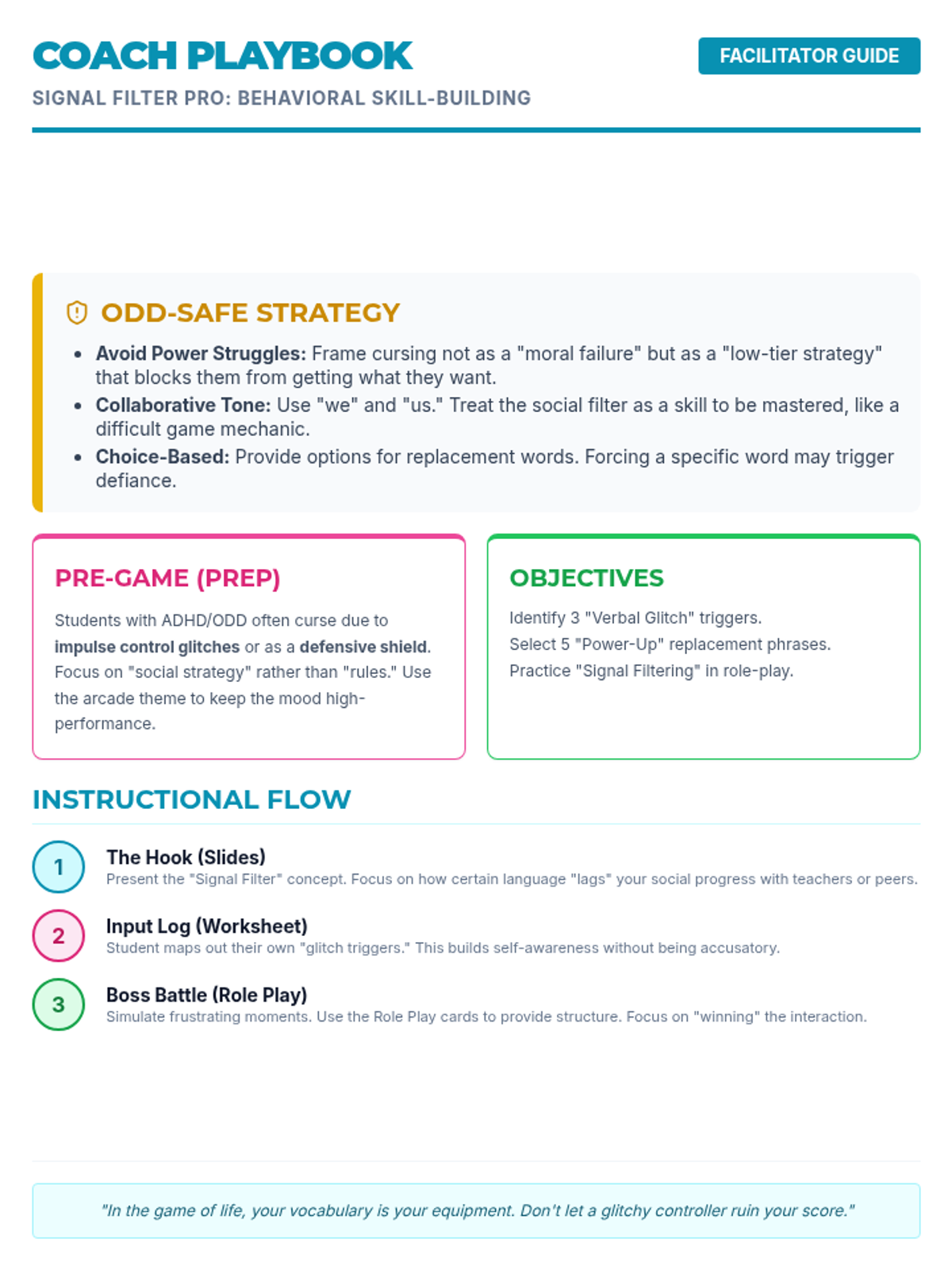
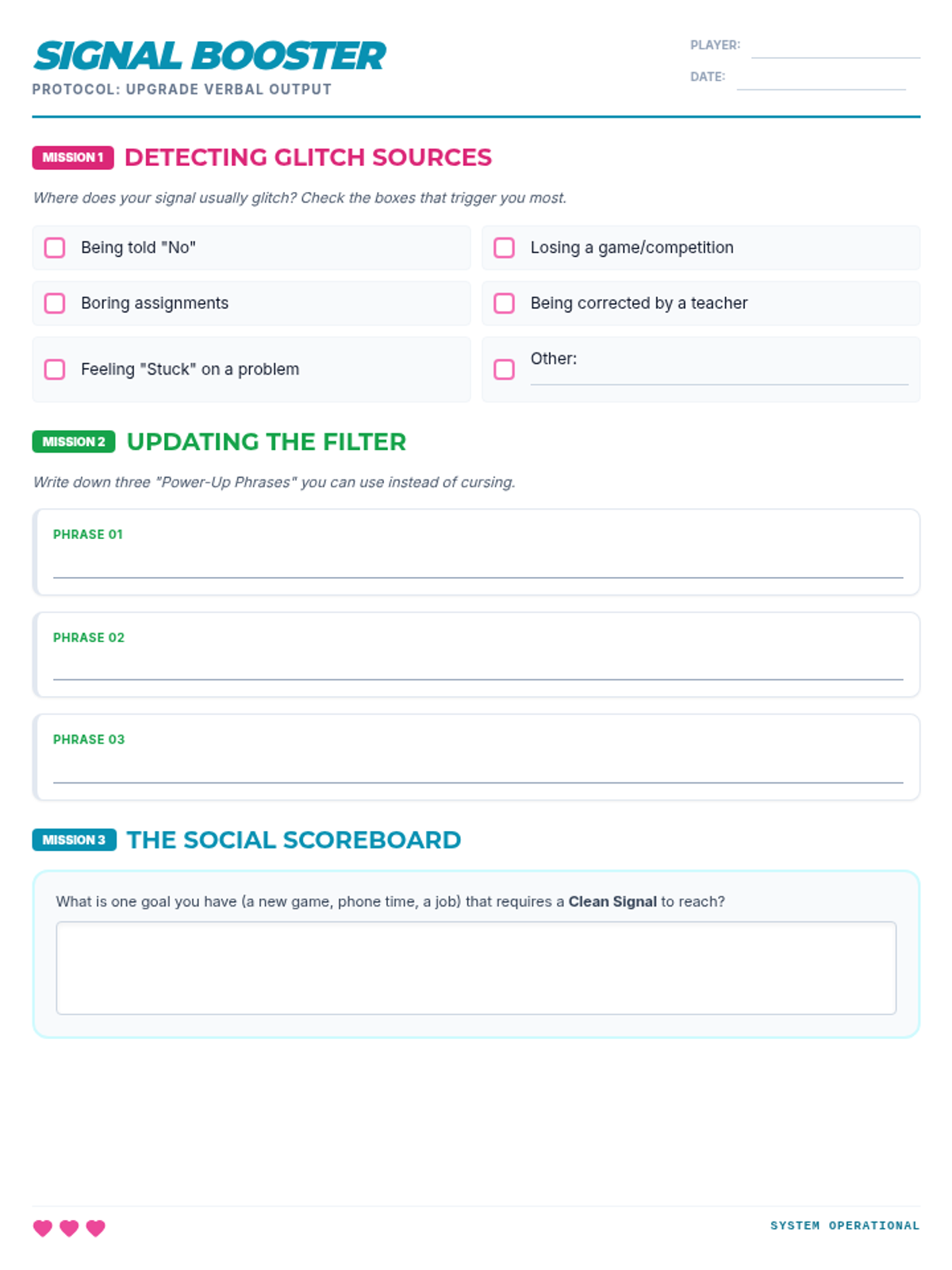
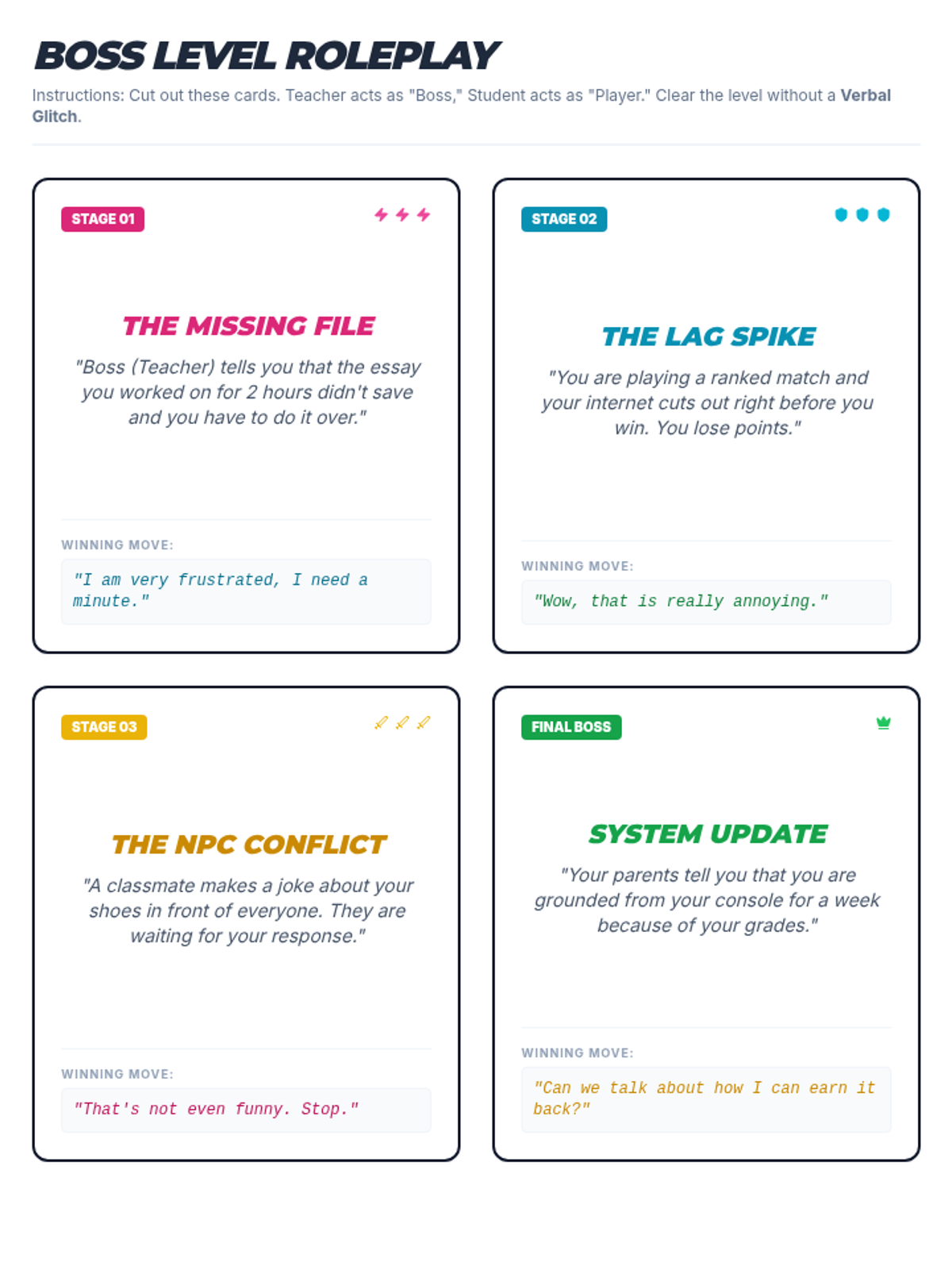
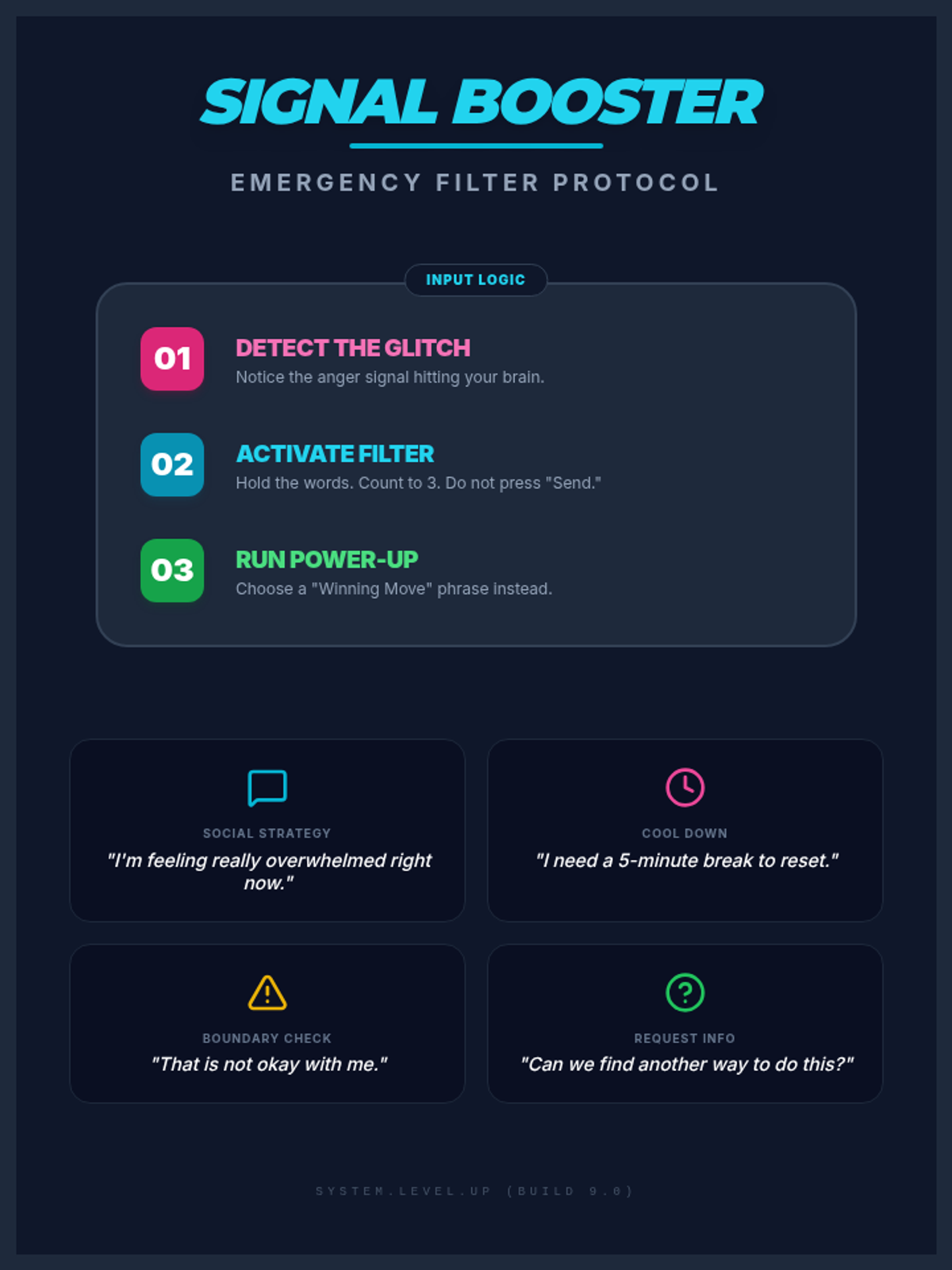
A high-engagement lesson using a retro video game theme to help students with ADHD and ODD understand the impact of cursing and develop 'Power-Up' replacement phrases for when they feel frustrated.
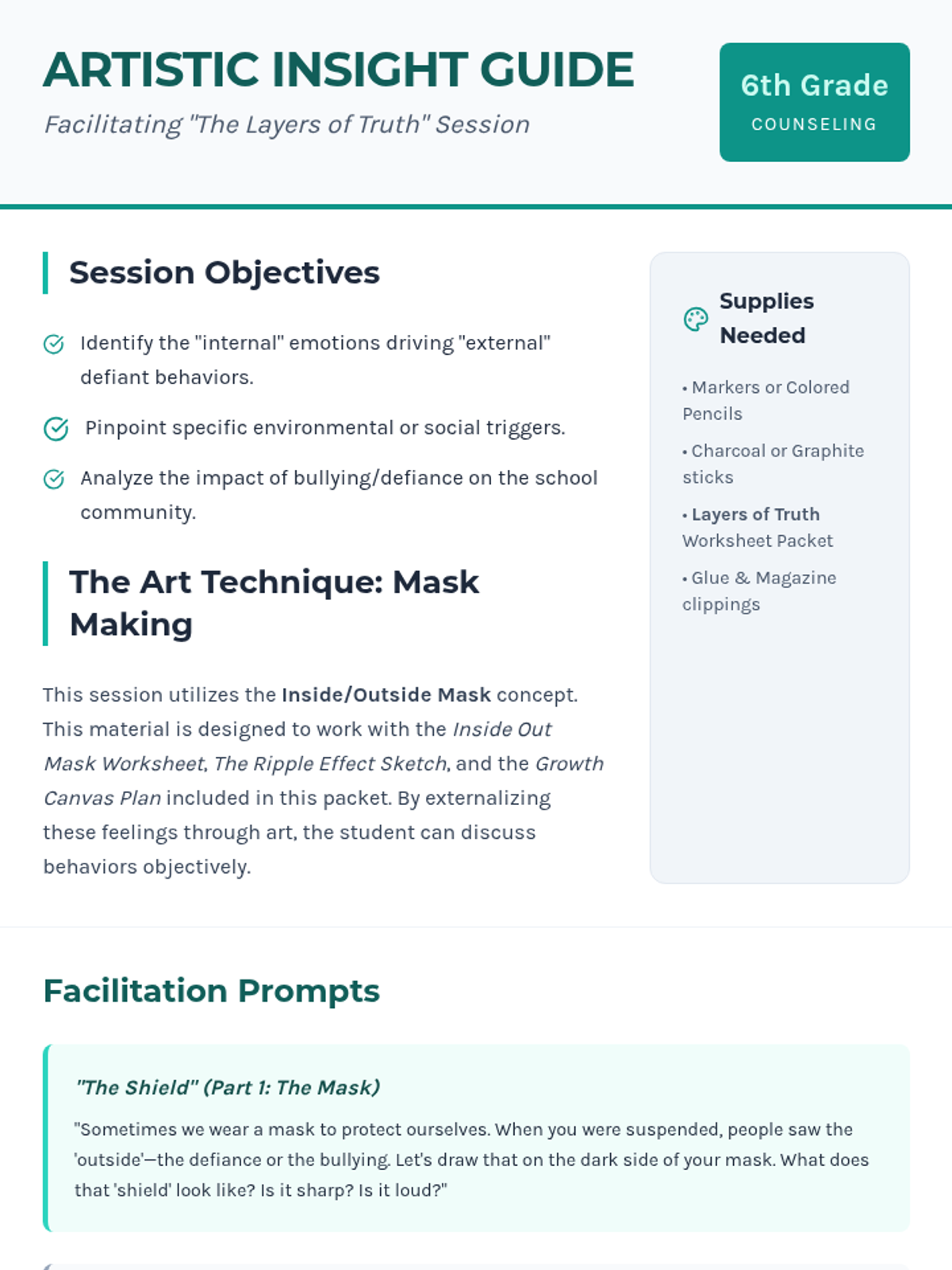
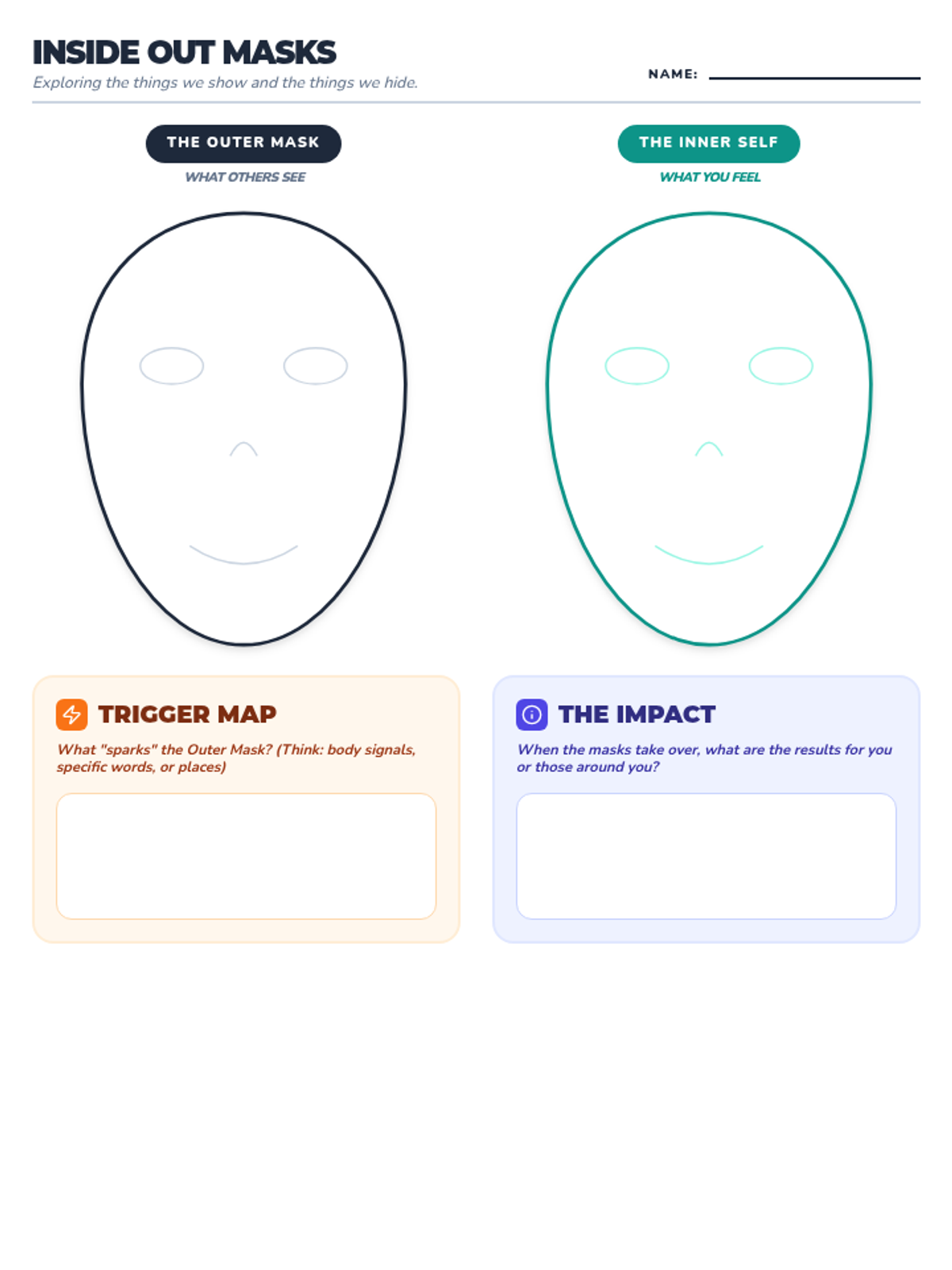
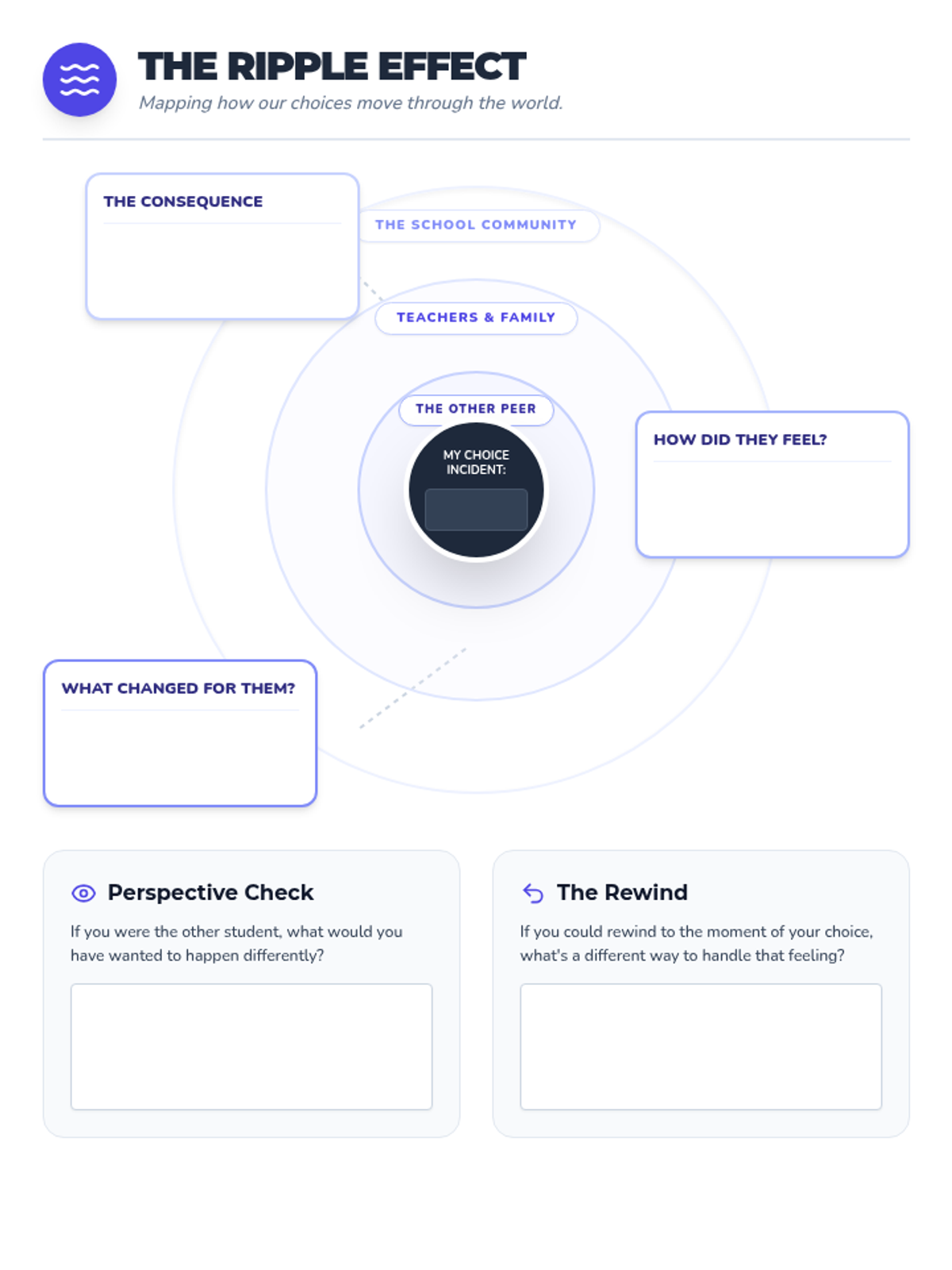
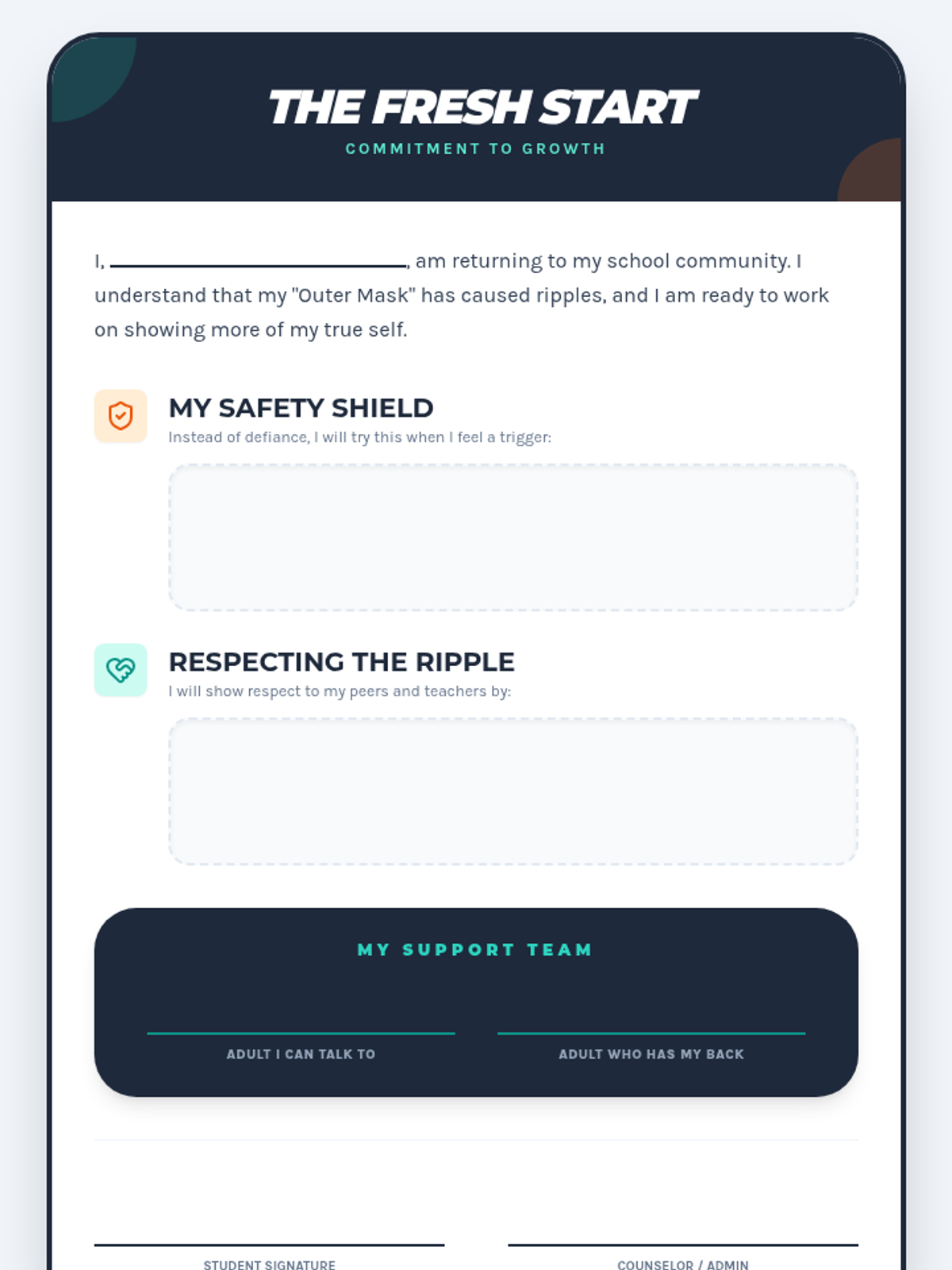
A therapeutic intervention lesson designed for a 6th-grade student returning from suspension, focusing on emotional identification and perspective-taking through art.
A comprehensive case conceptualization of Howard Hughes using a Behavioral Therapy framework, including a clinical presentation and a formal research paper.
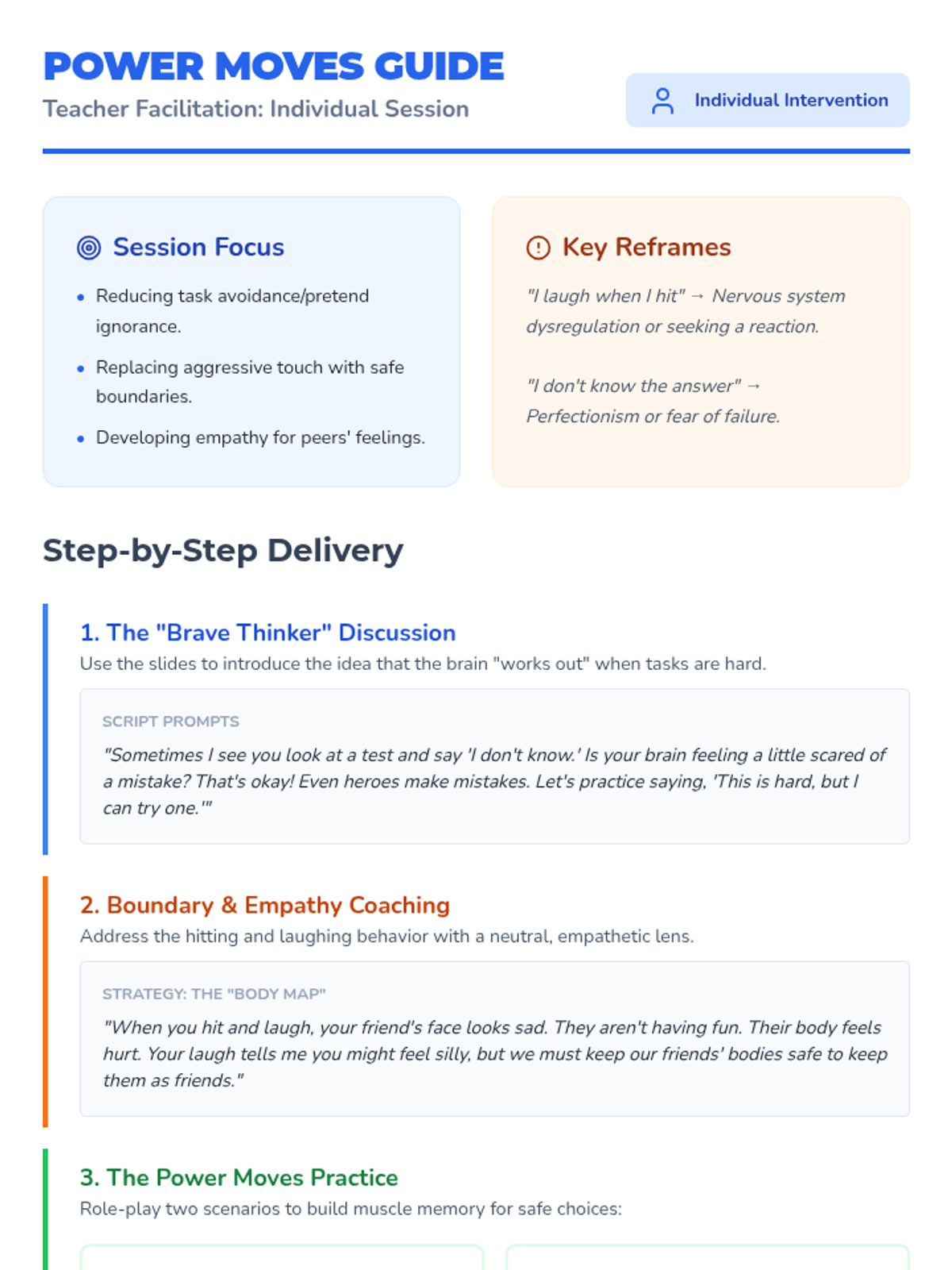
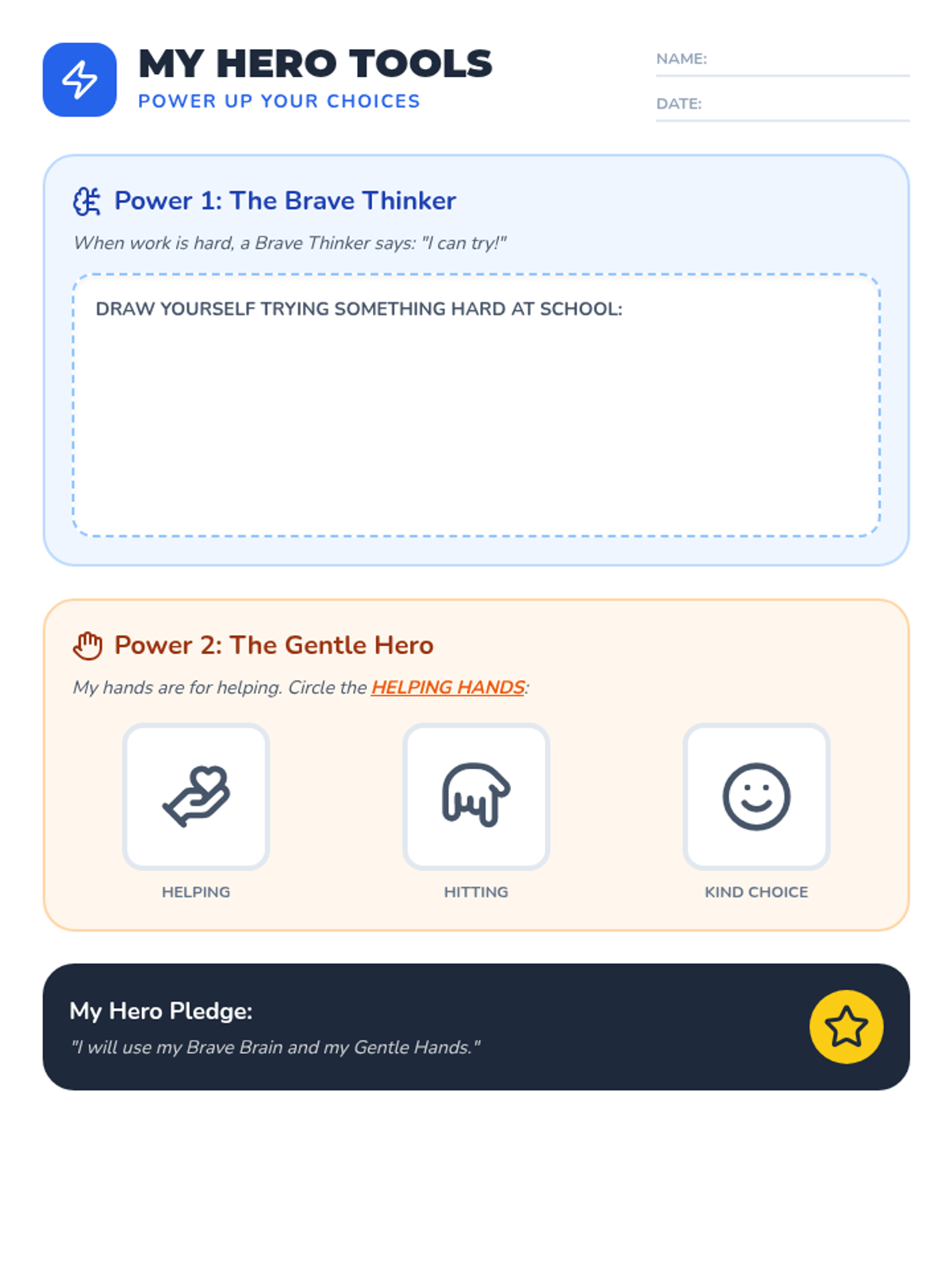
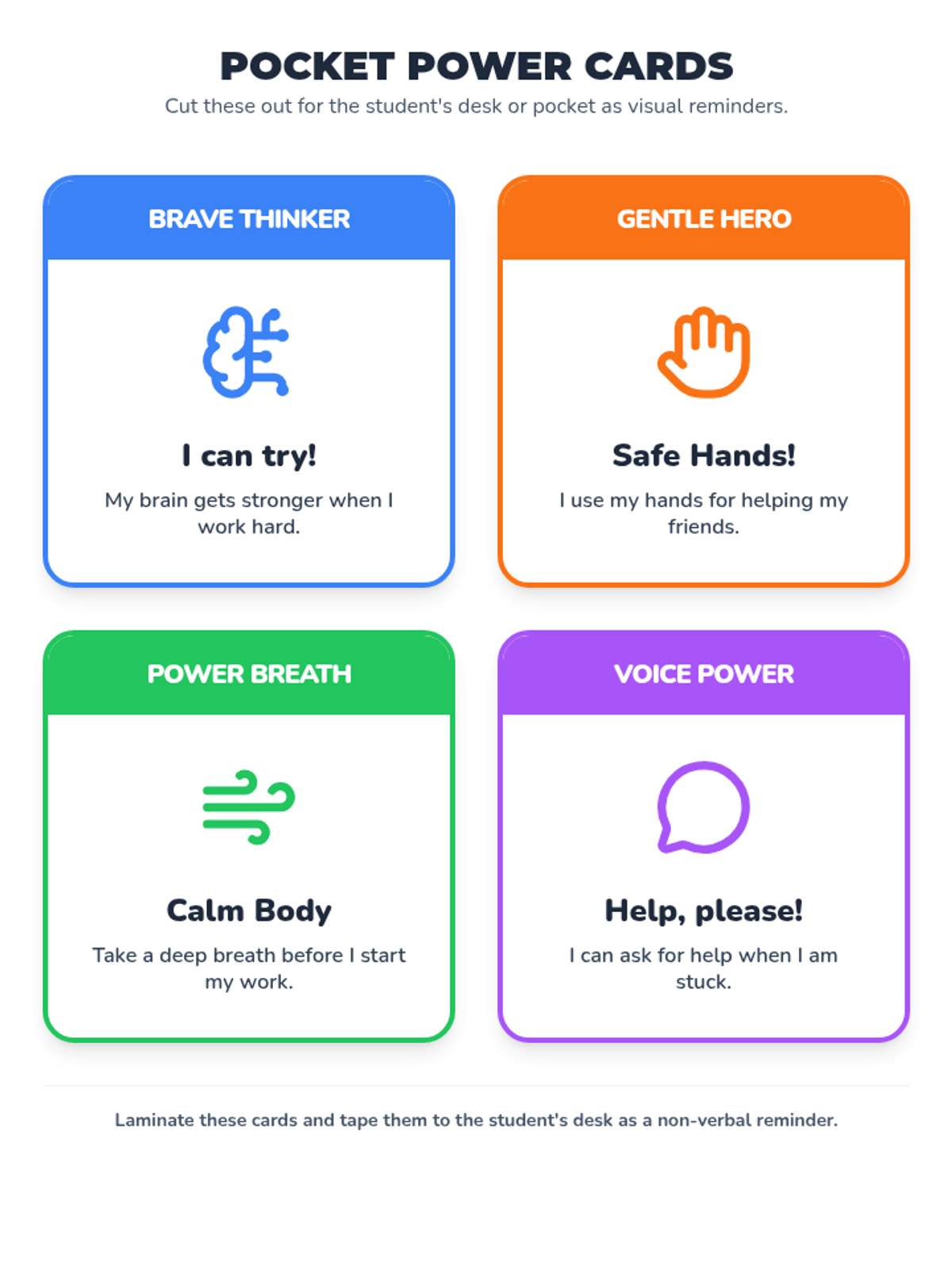
A targeted 1-on-1 intervention for kindergarten students focusing on building the confidence to attempt tasks and the empathy to maintain safe physical boundaries. Includes a social story, facilitator guide, and student reflection tools.
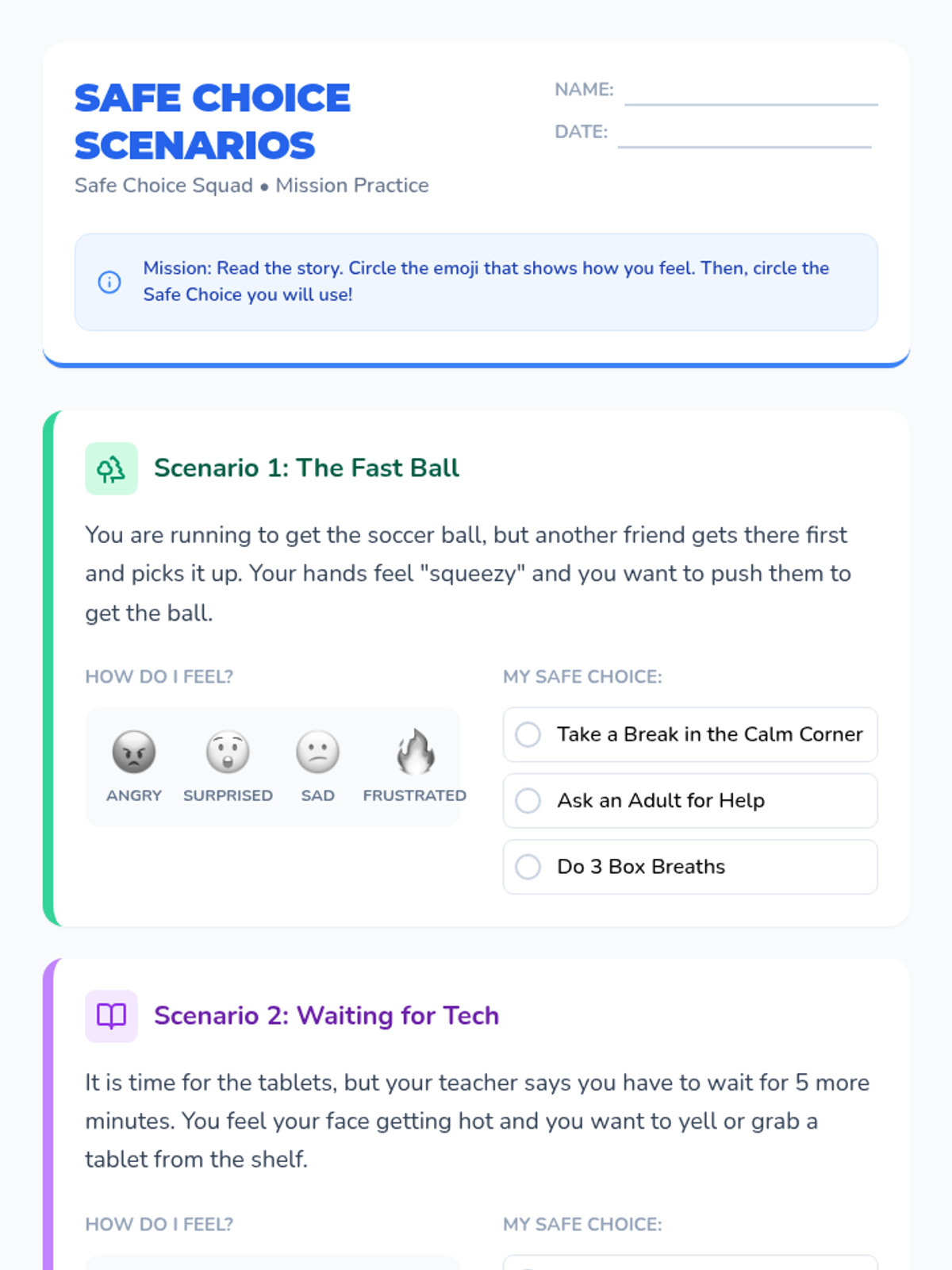
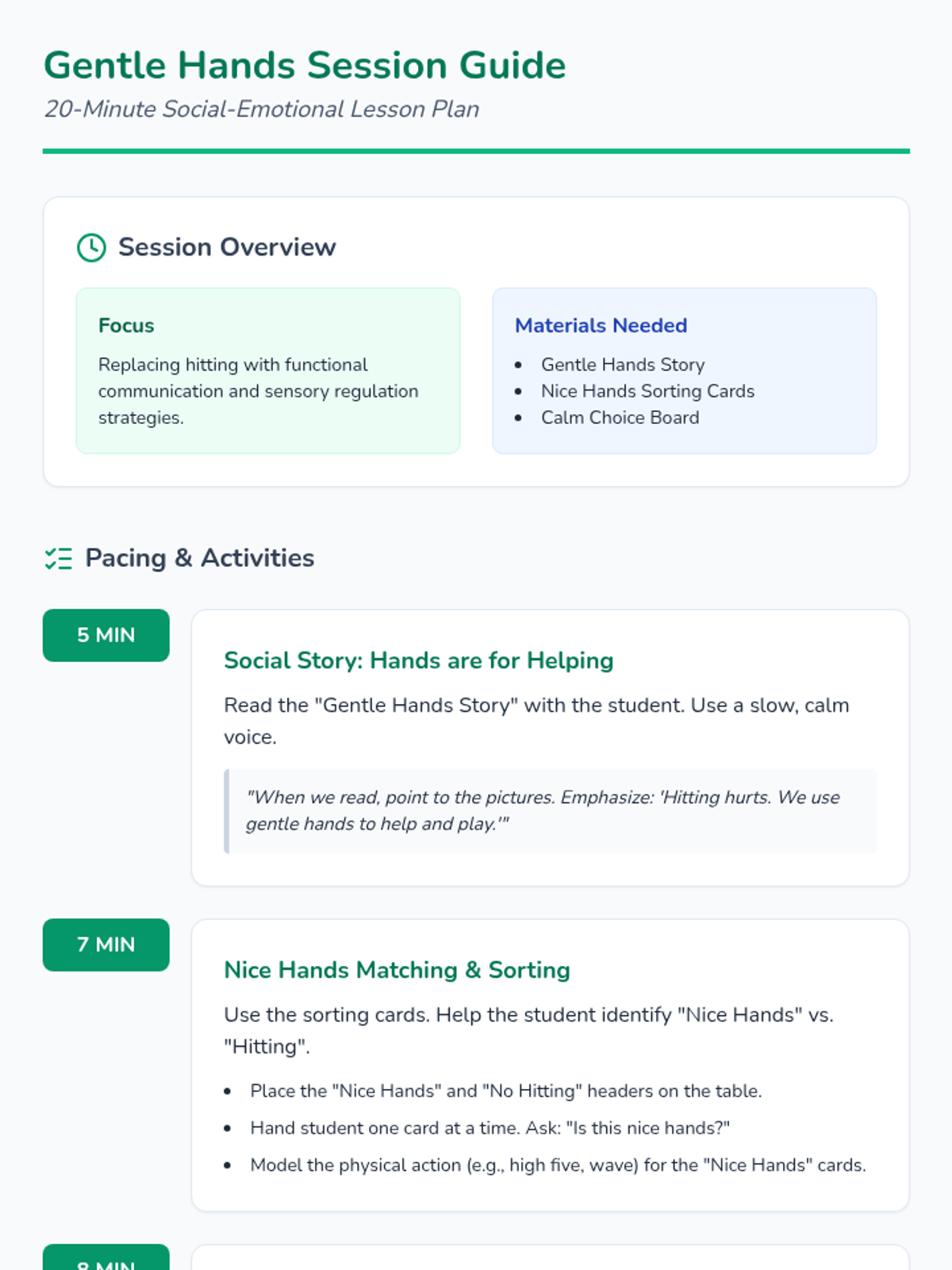
A 20-minute social-emotional learning session for high-needs students focusing on replacement behaviors for hitting through social stories and visual supports.
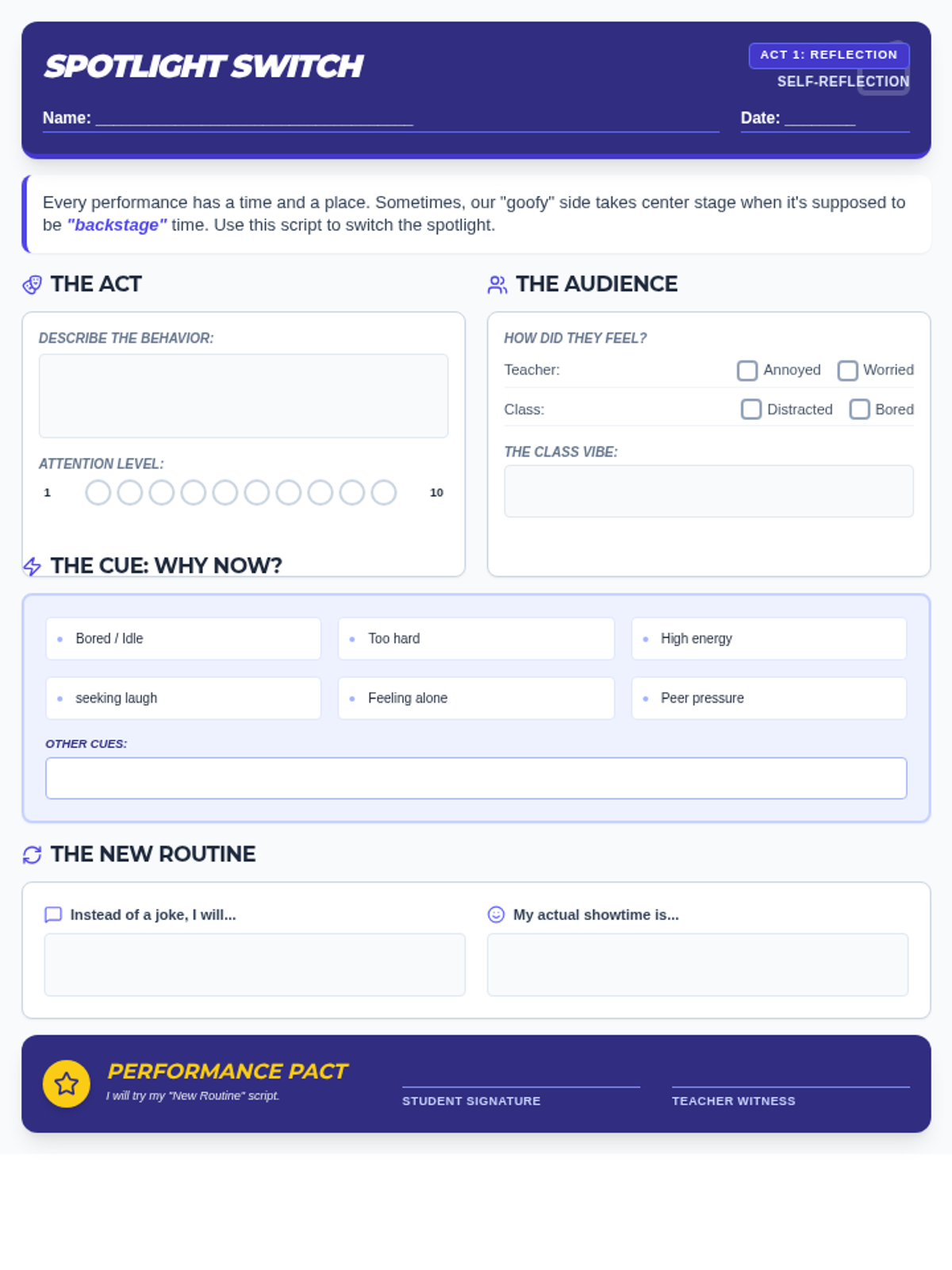
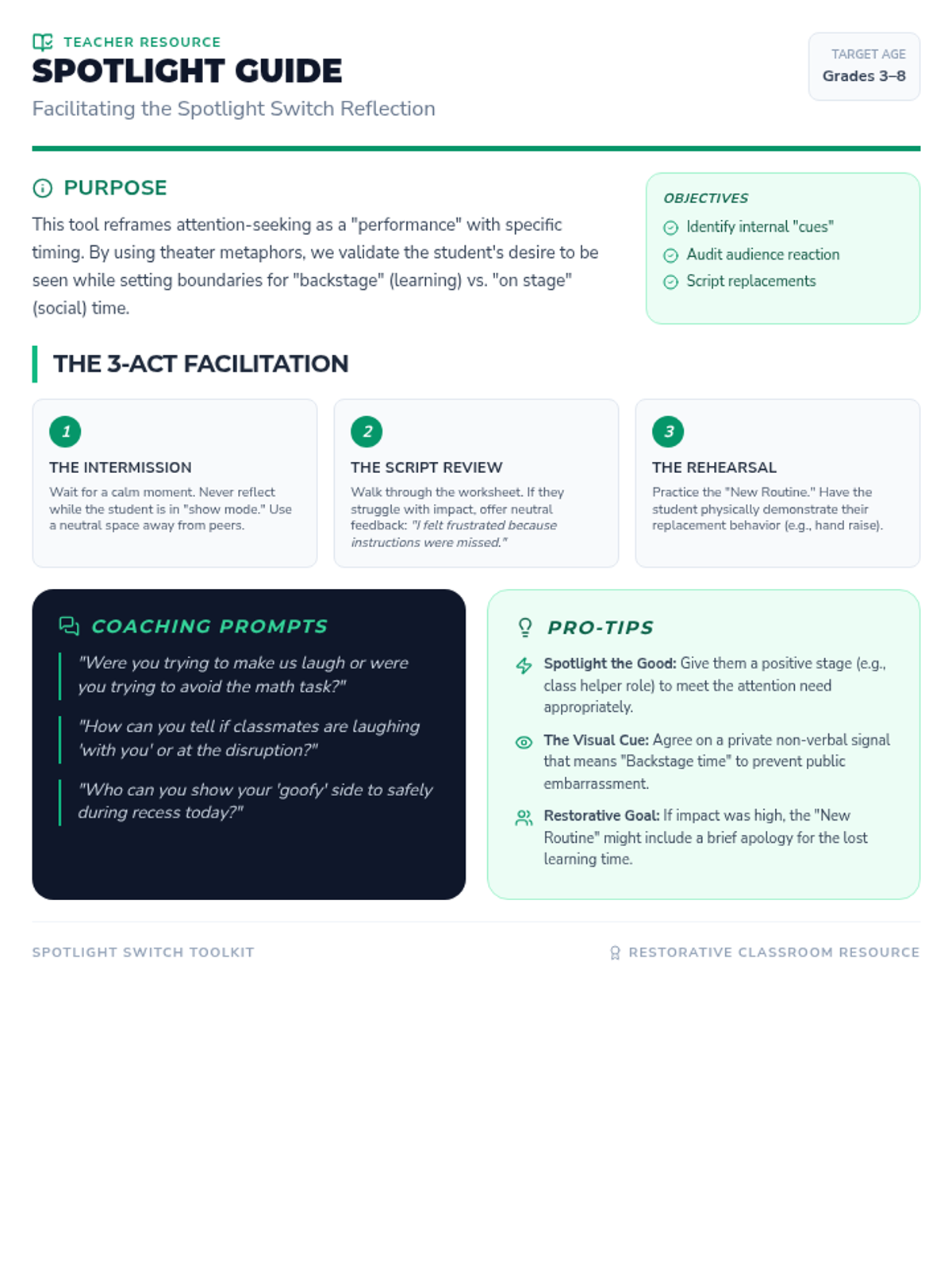
A lesson focused on helping students recognize and redirect attention-seeking behaviors by using theater-based metaphors for social awareness and self-control.
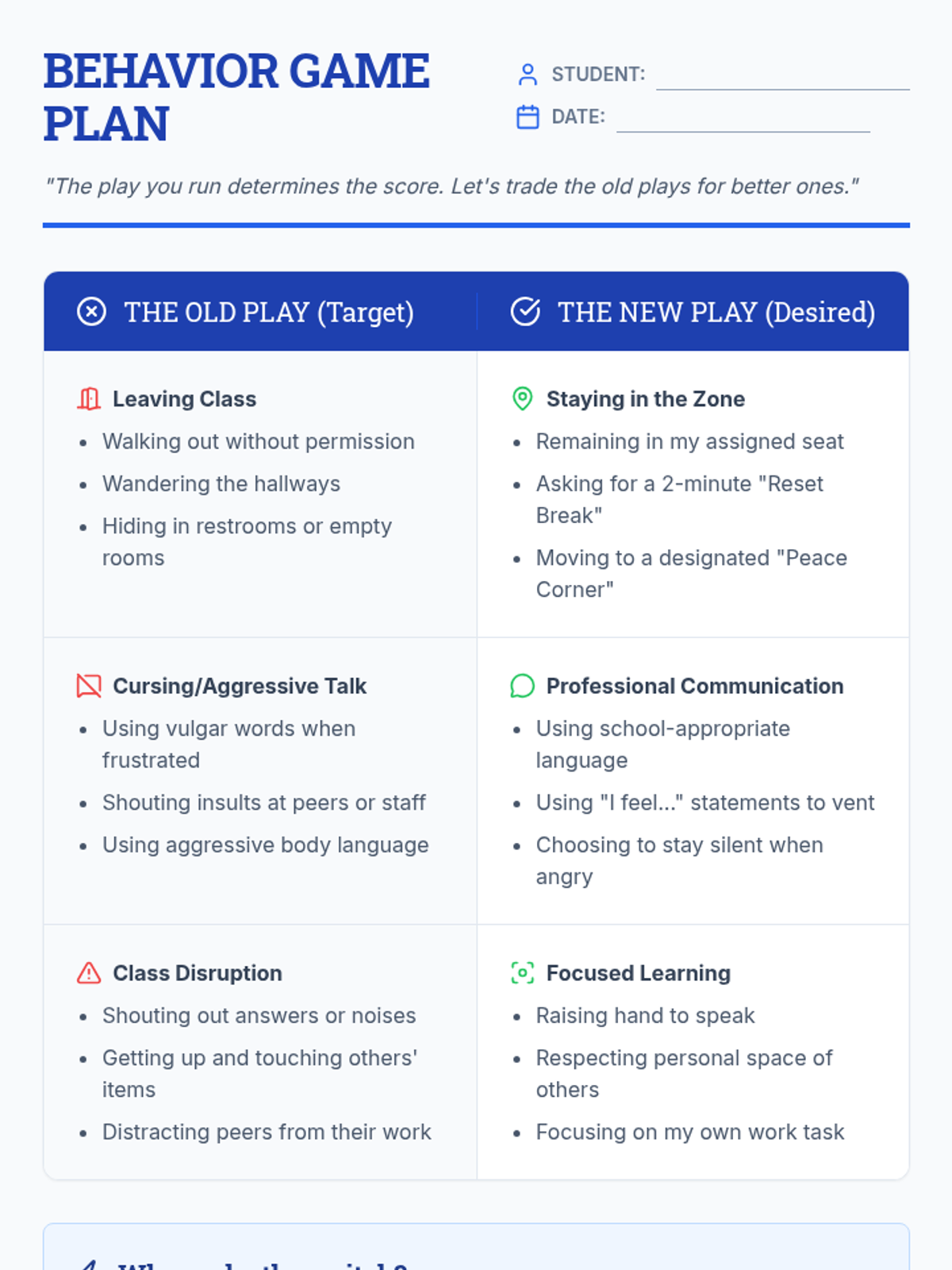
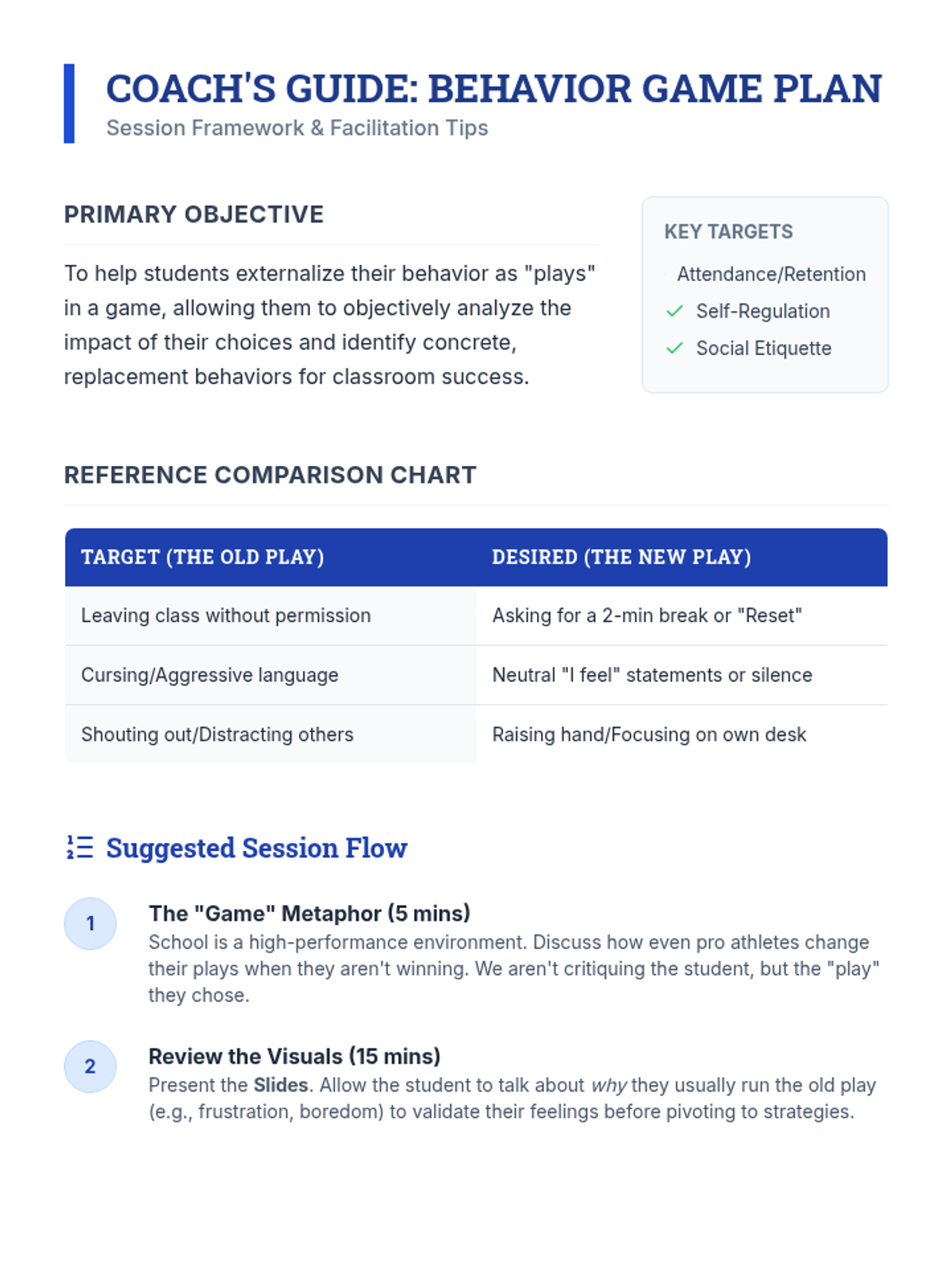
A comprehensive counseling session focused on transitioning from disruptive behaviors to successful classroom habits through a visual comparison chart and strategy discussion.
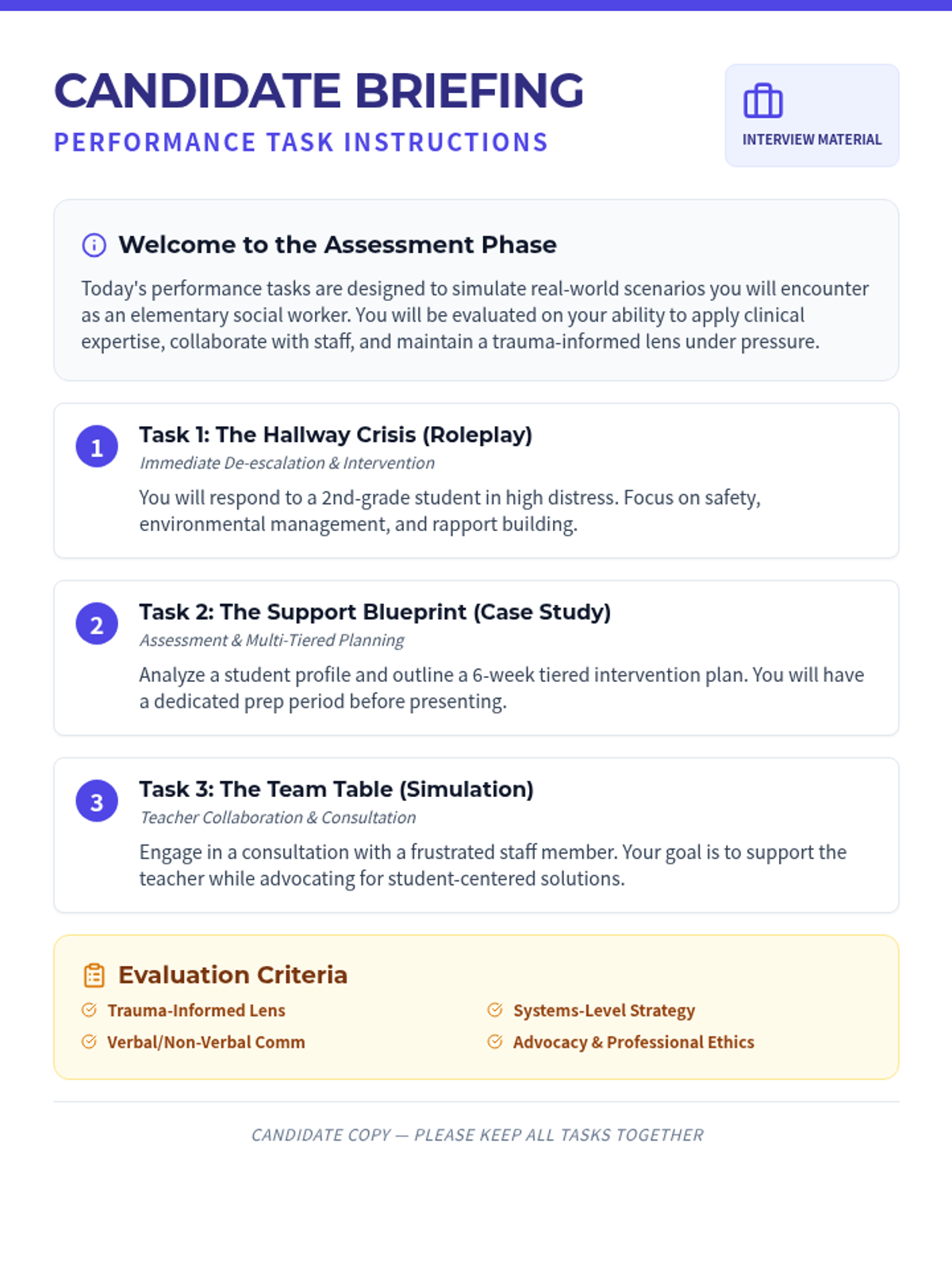
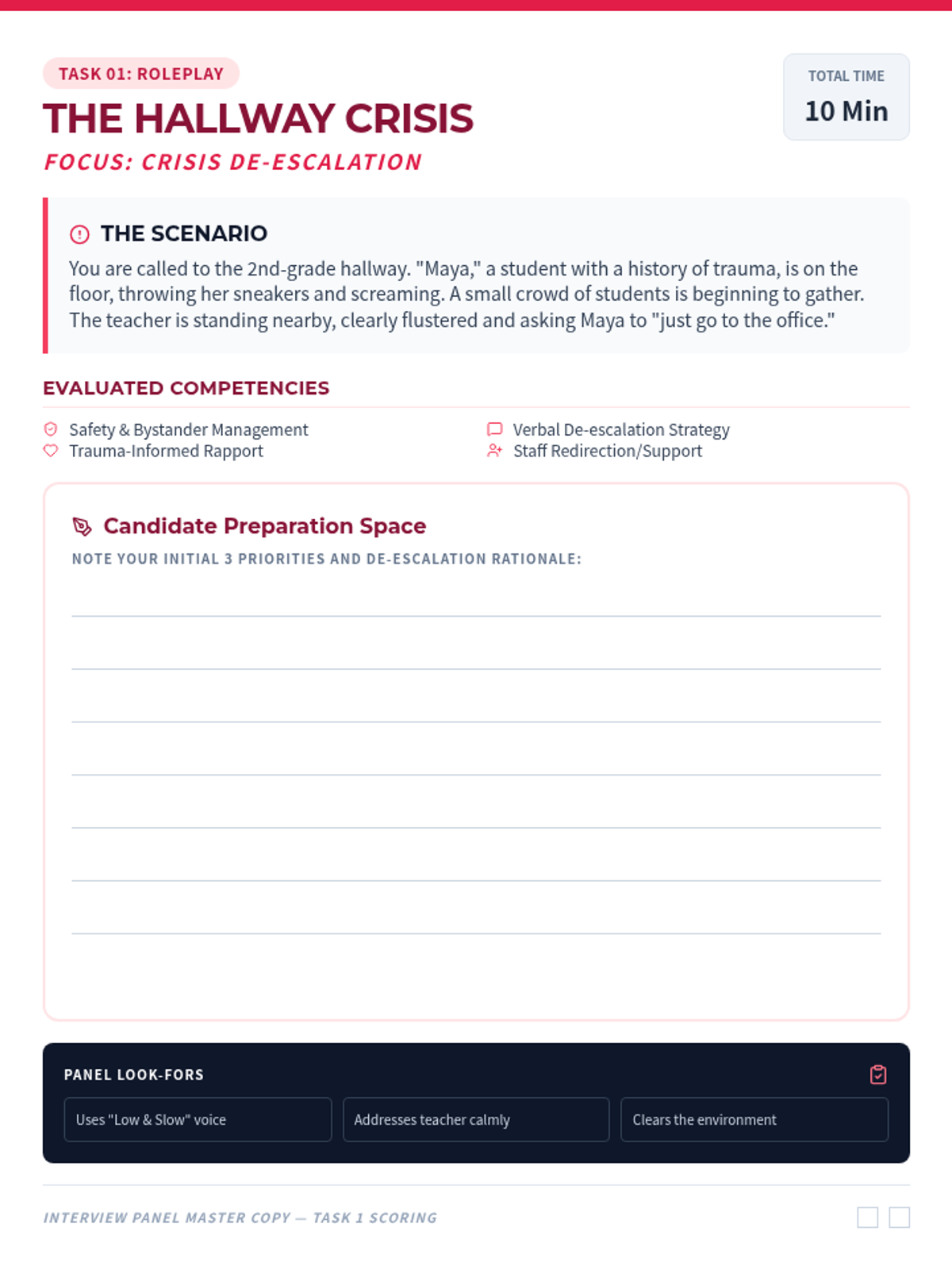
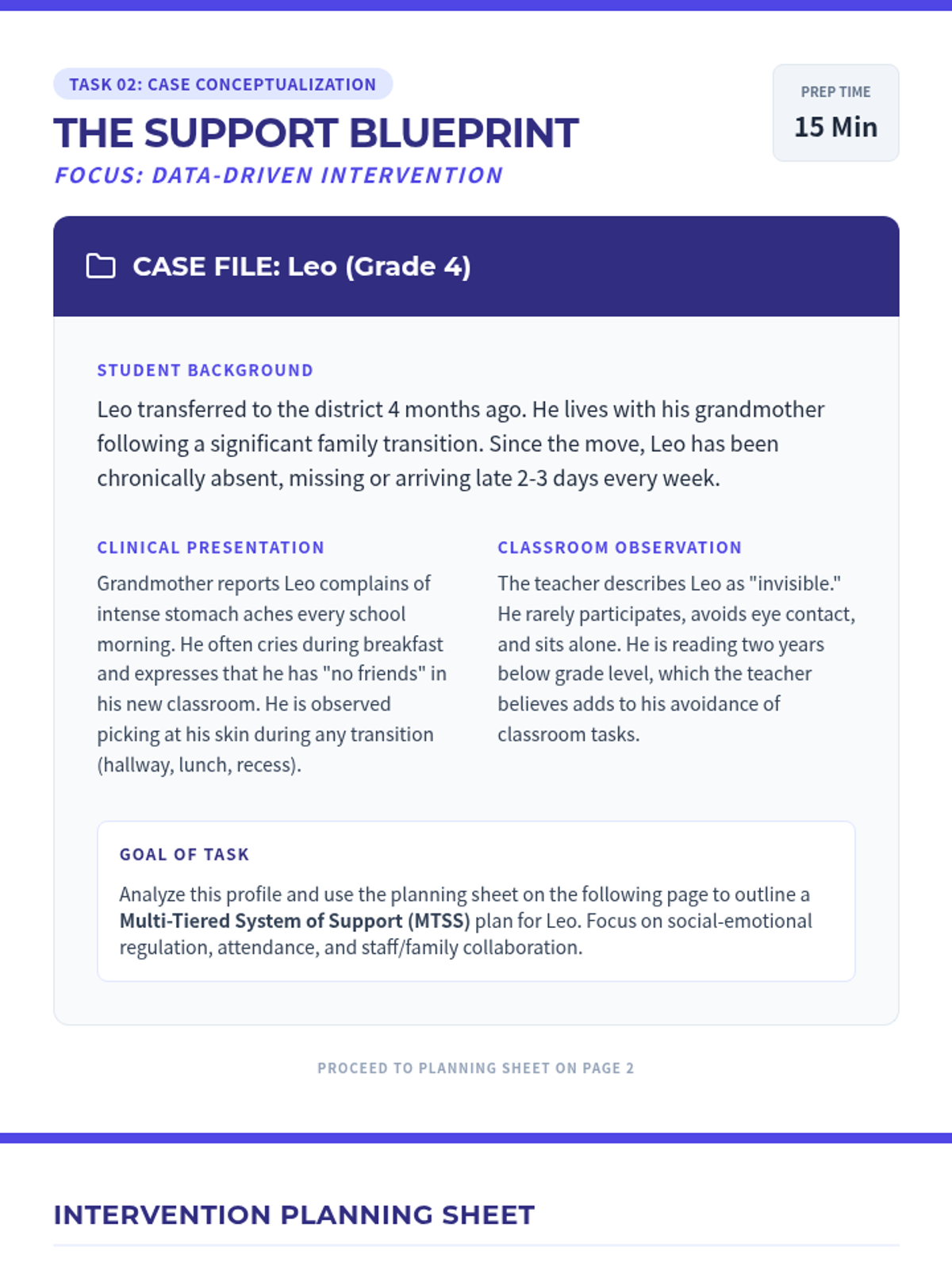
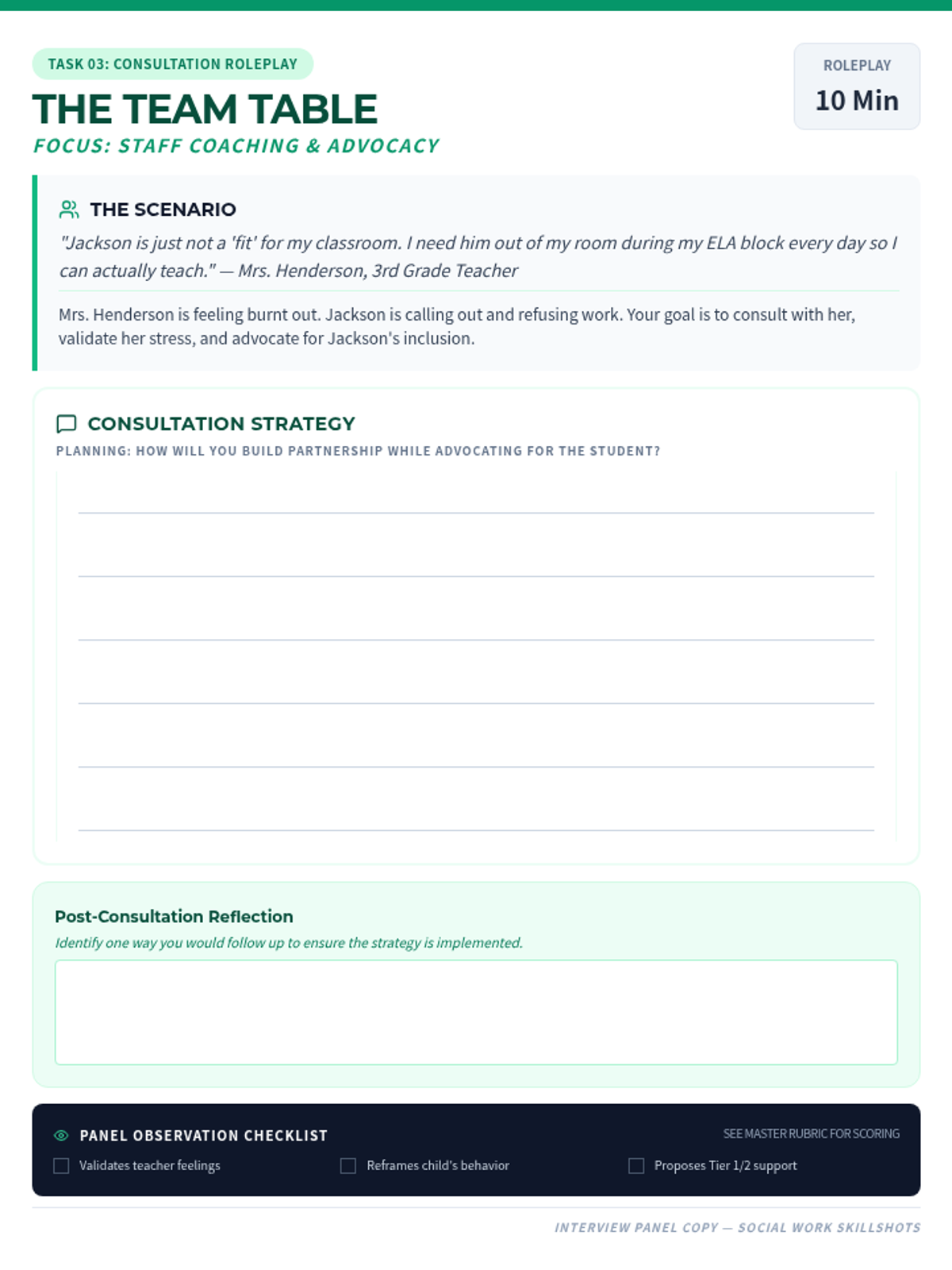
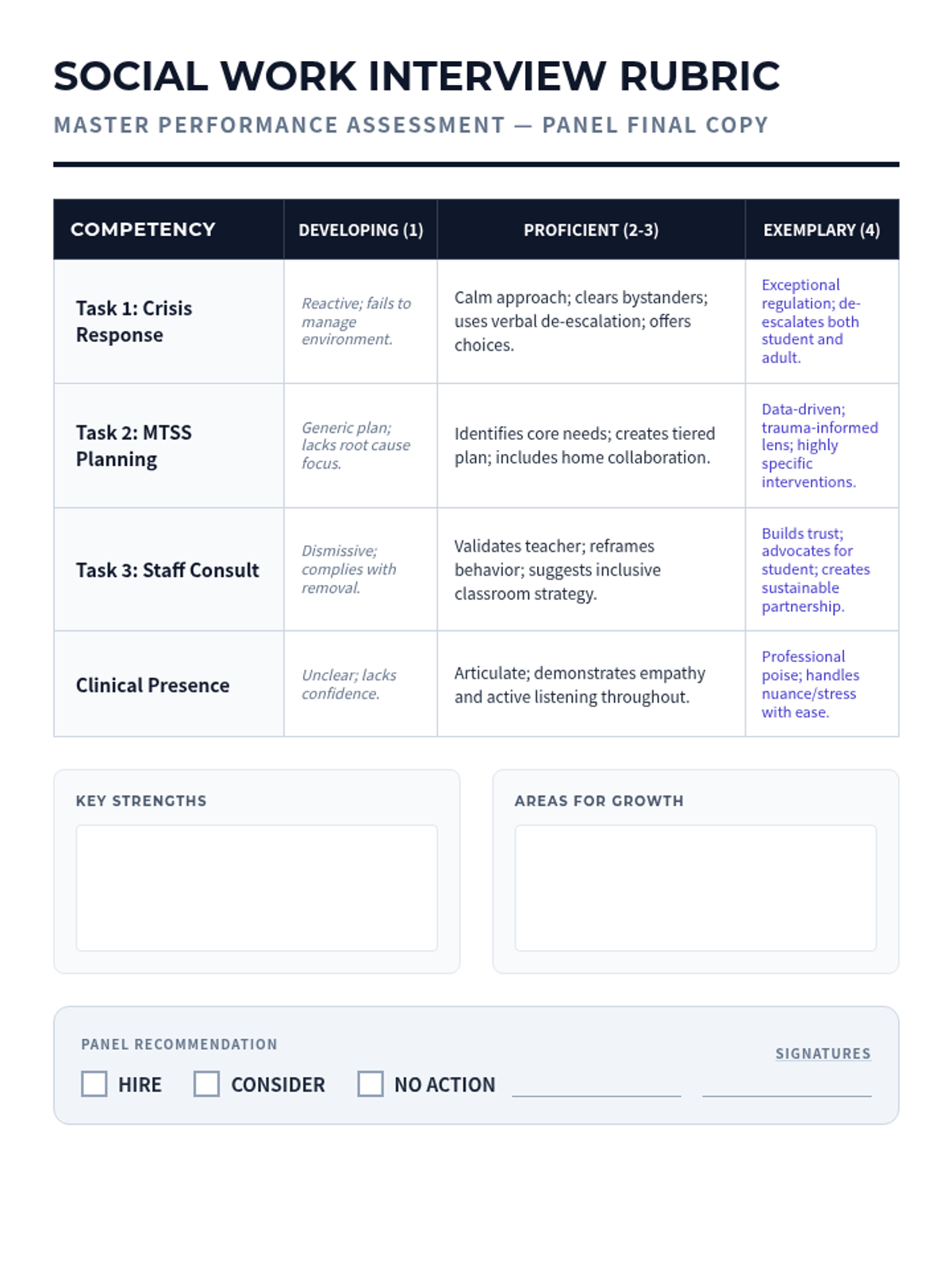
A comprehensive set of performance-based interview tasks designed to evaluate elementary social worker candidates on crisis intervention, case management, and staff collaboration.
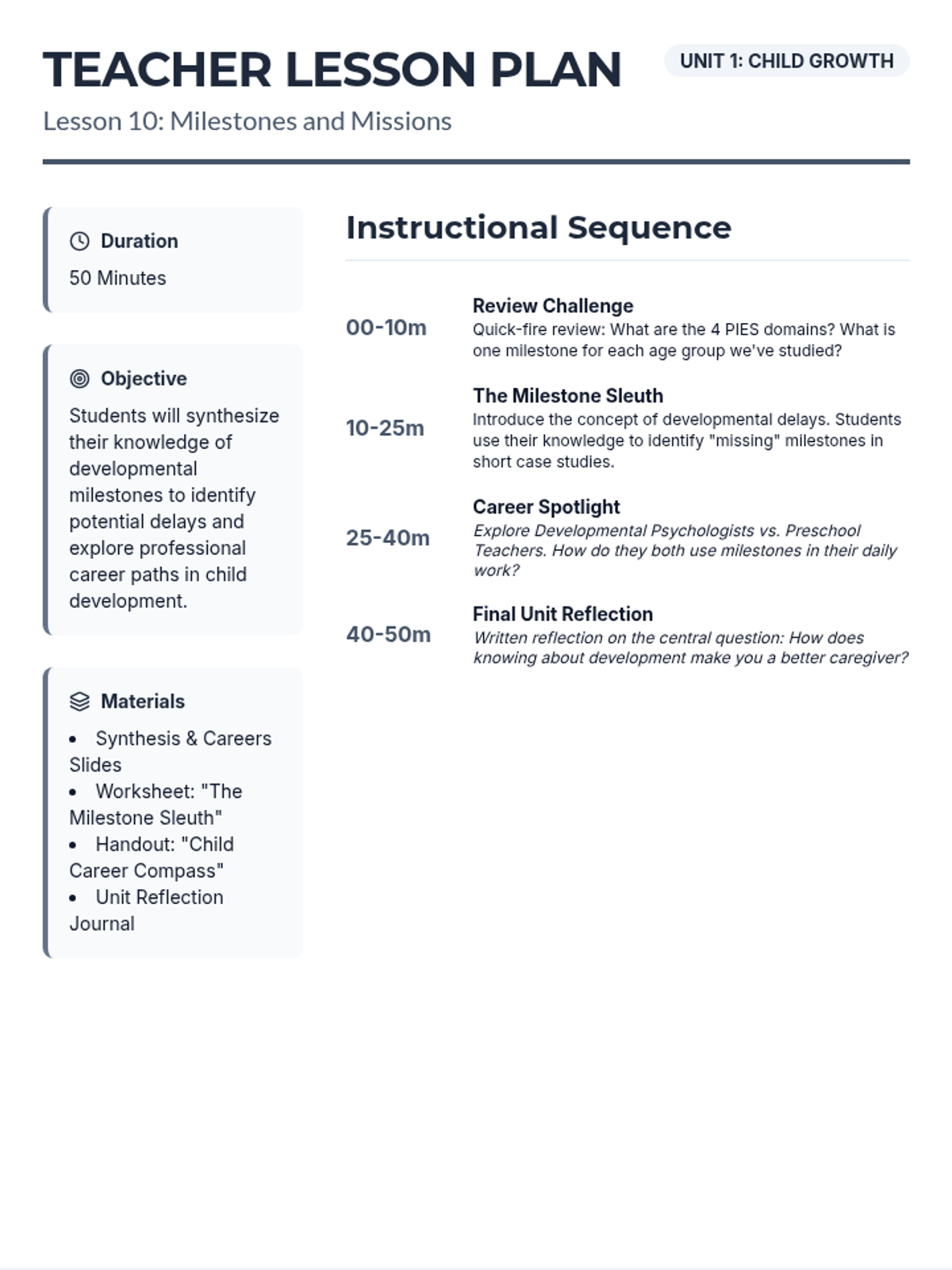
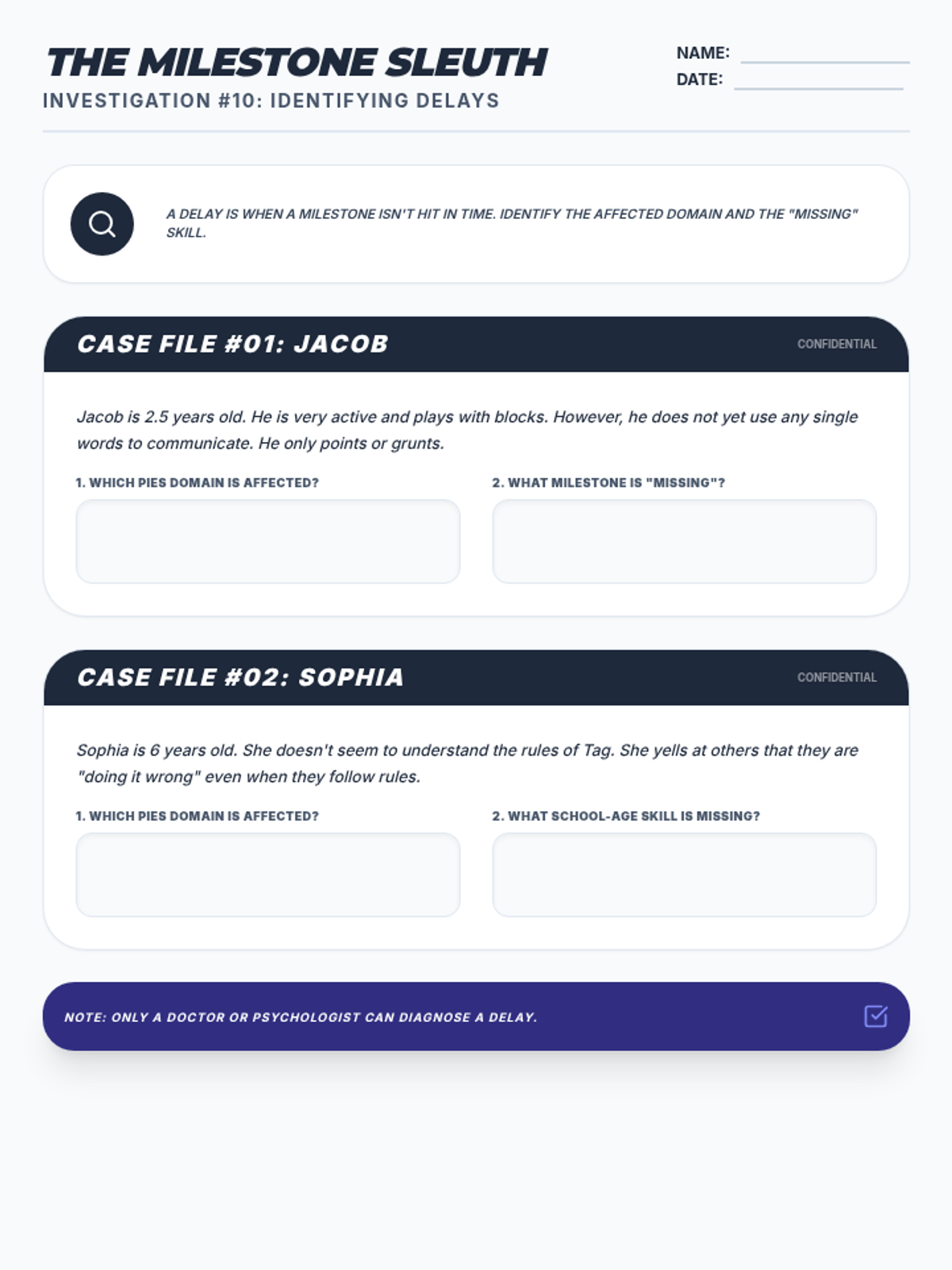
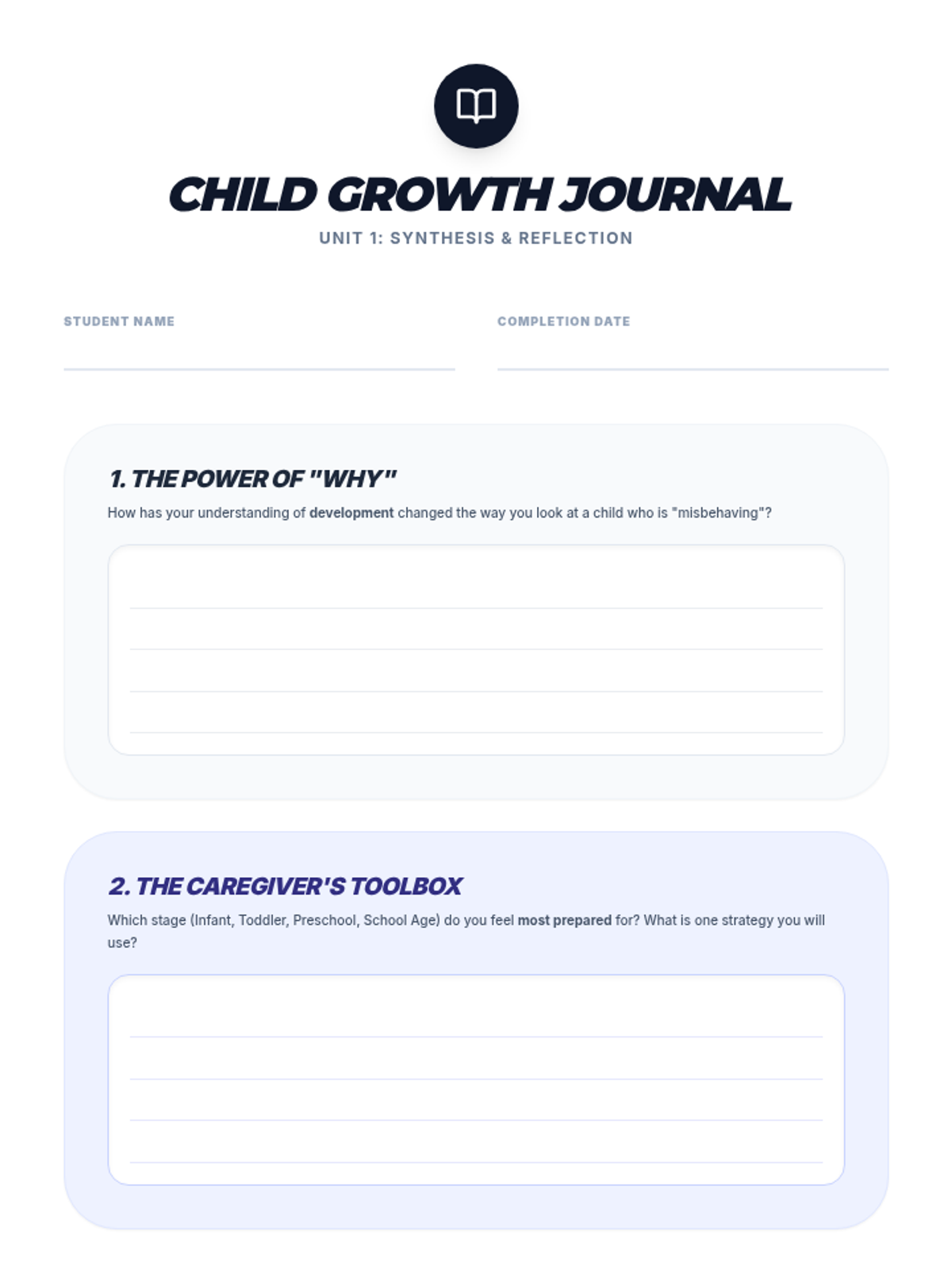
Identifying developmental delays, exploring child-focused careers, and reflecting on the importance of milestones.
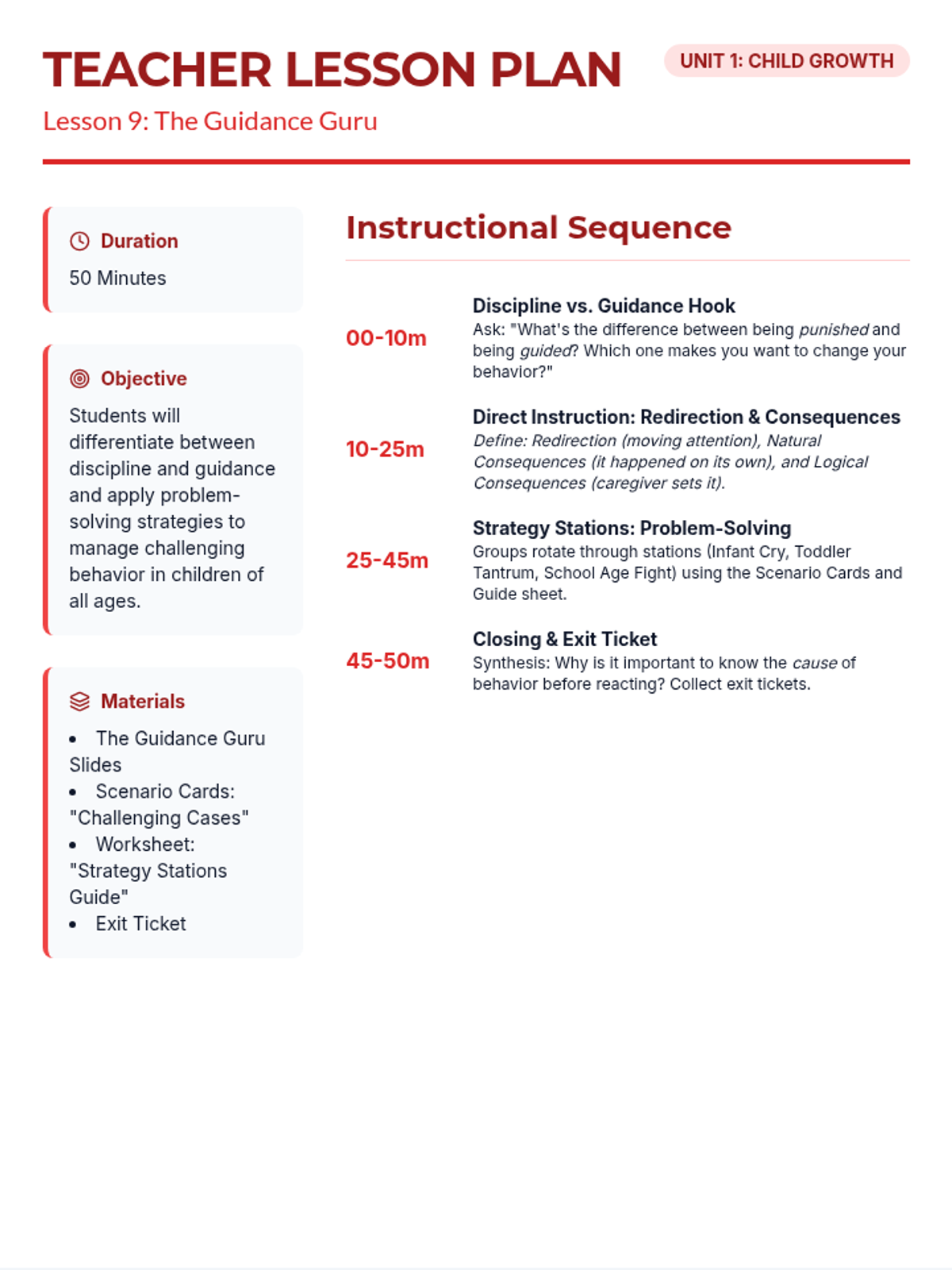
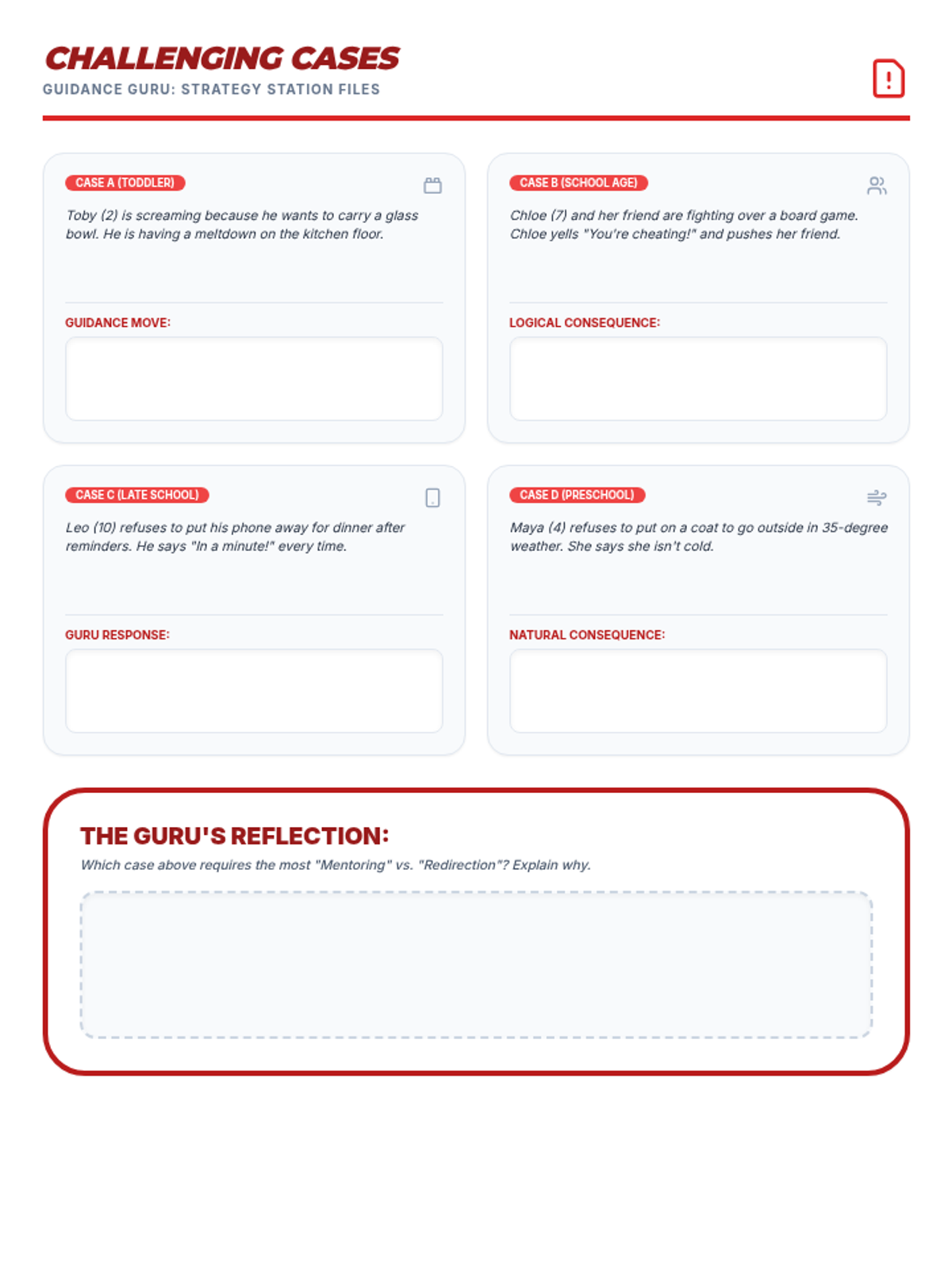
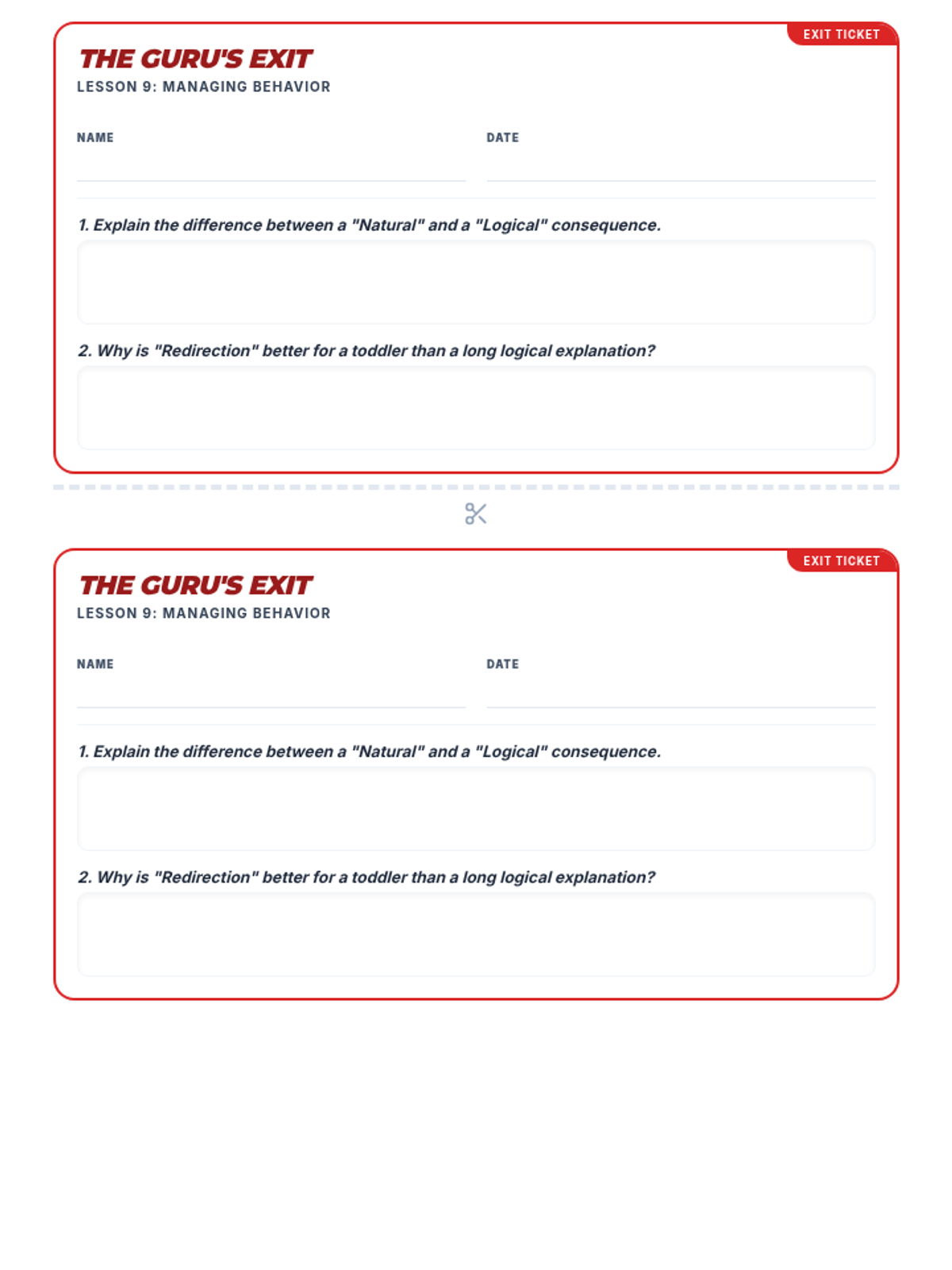
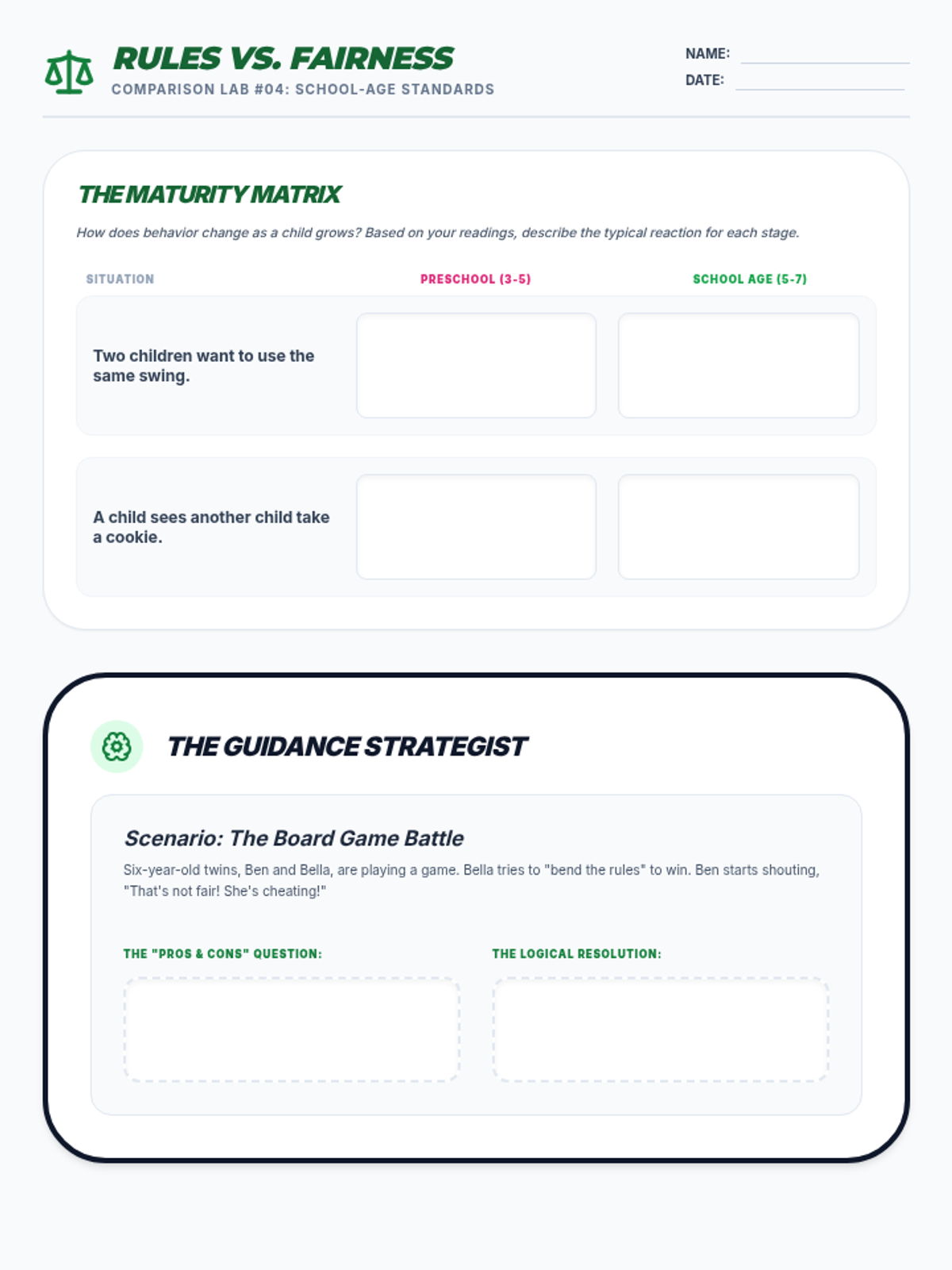
Differentiating between discipline and guidance while practicing problem-solving for challenging behavioral scenarios.
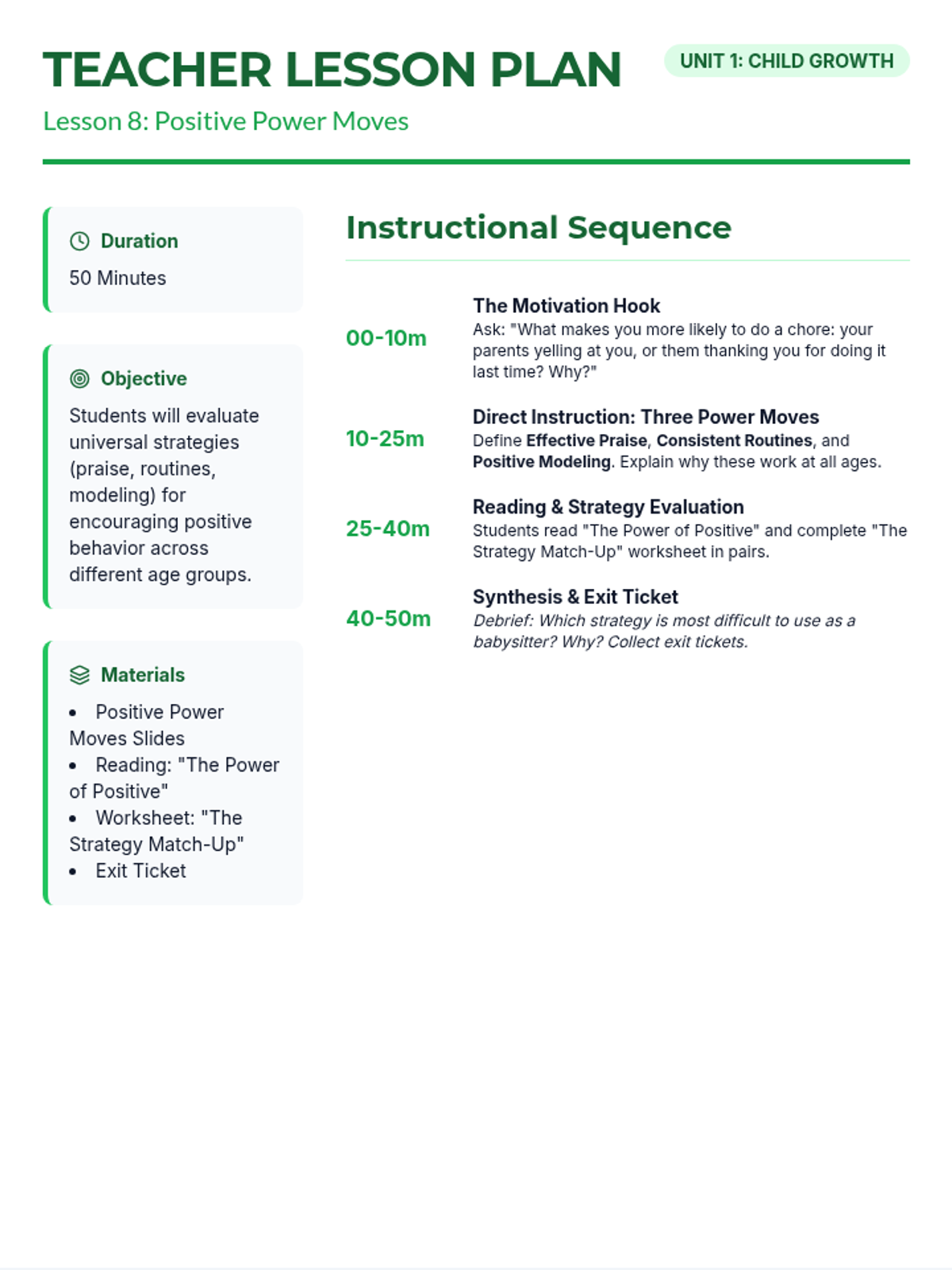
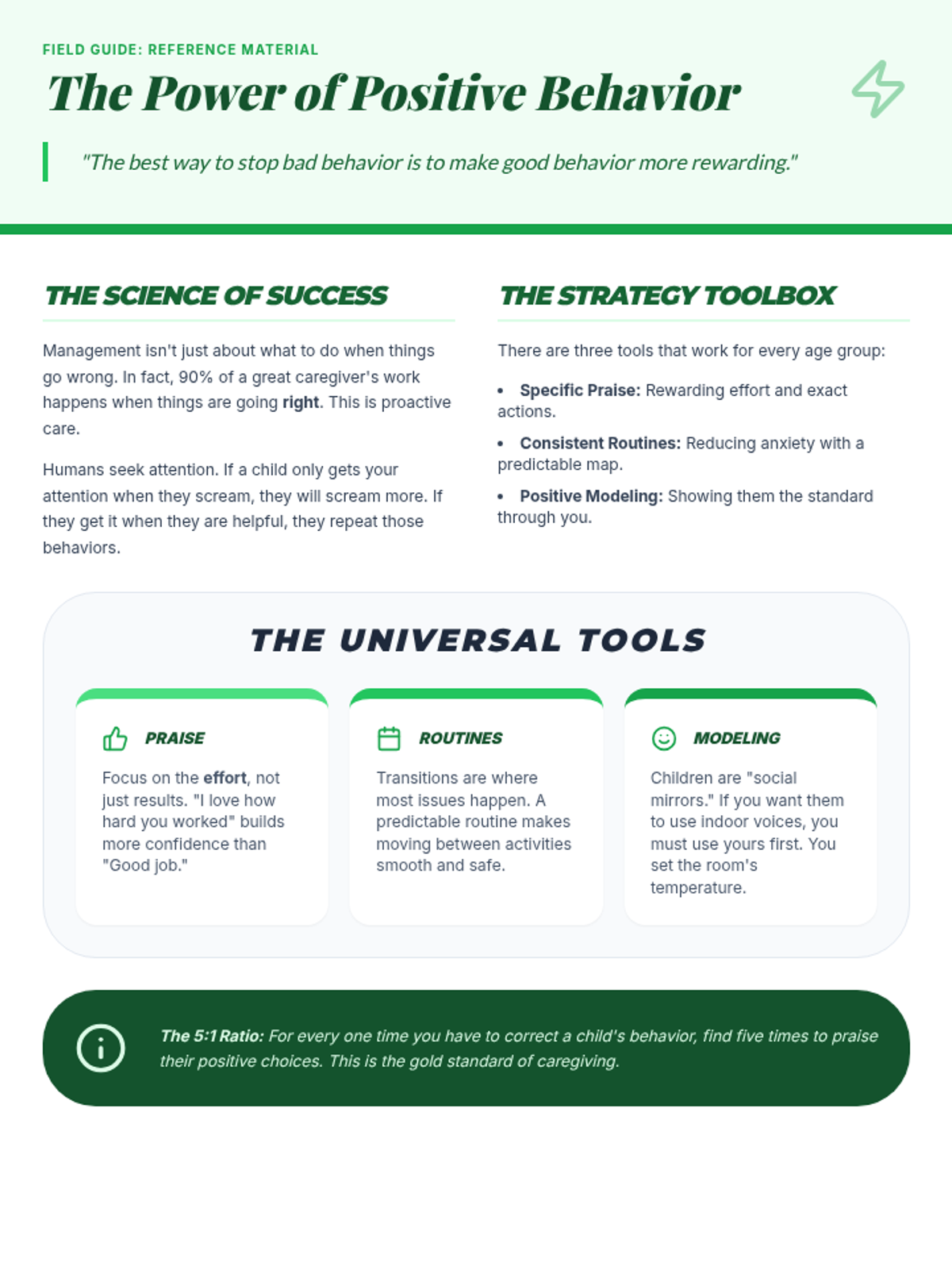
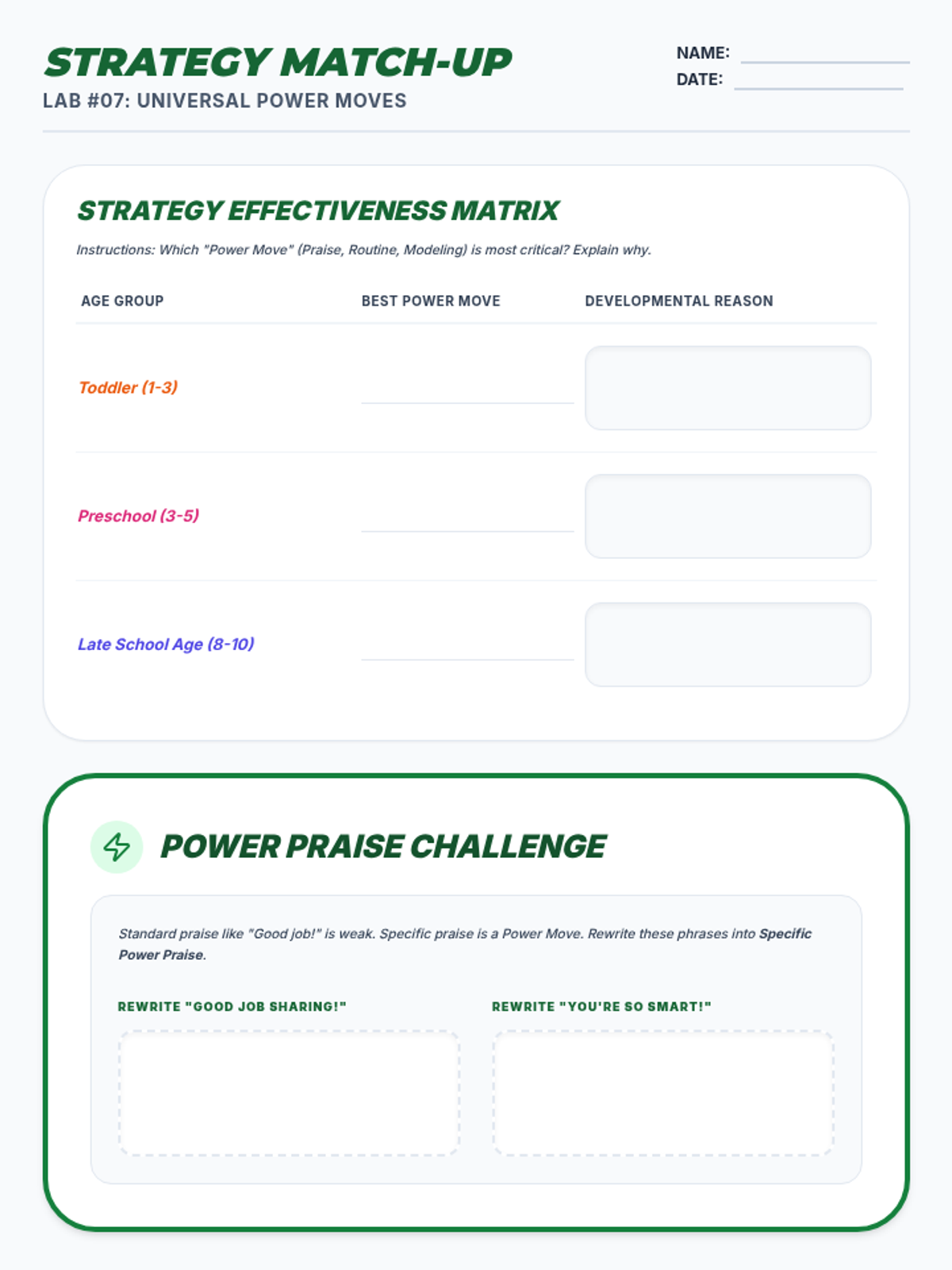
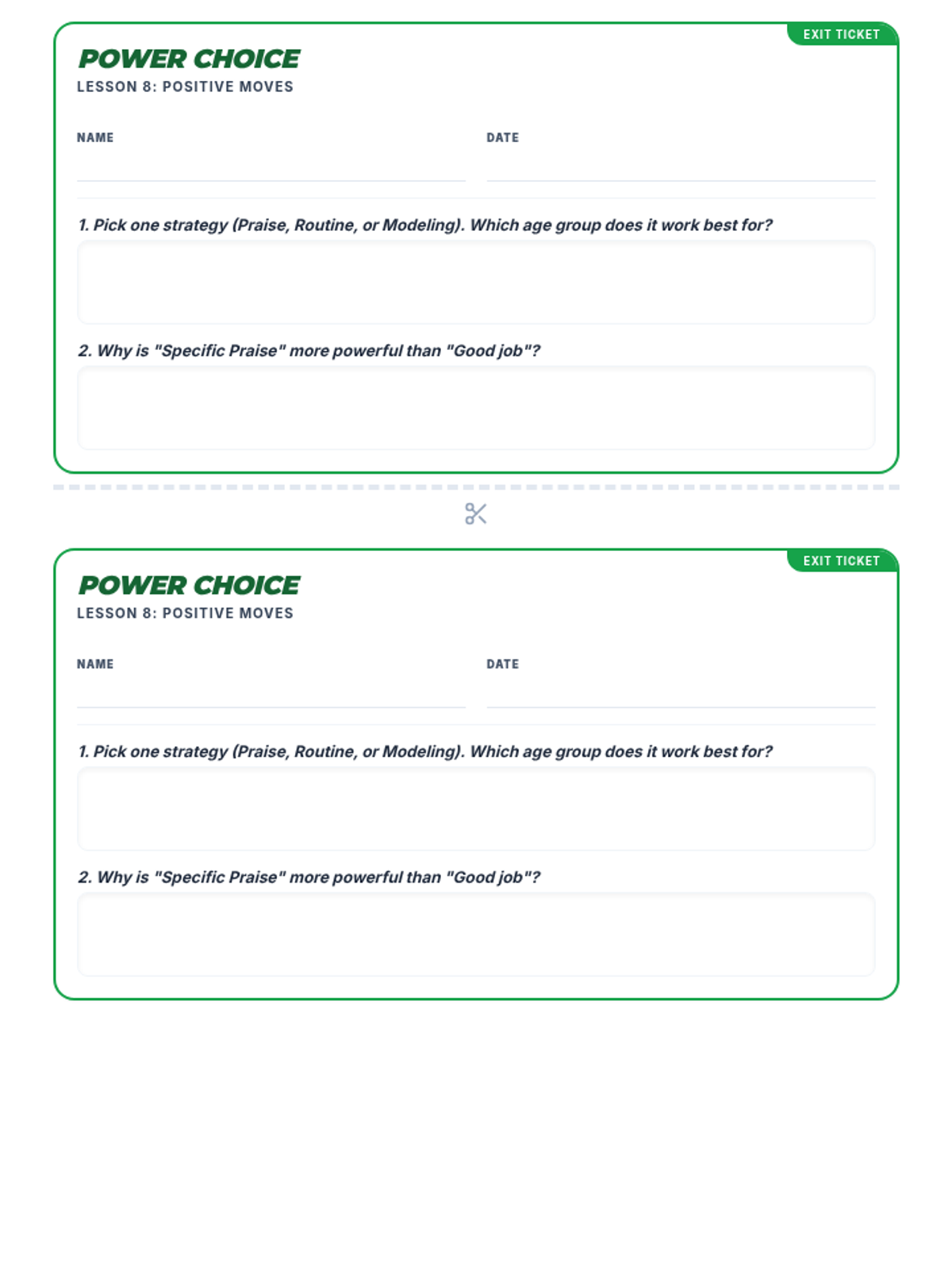
Learning universal strategies like praise, routines, and modeling to encourage positive behavior in children of all ages.
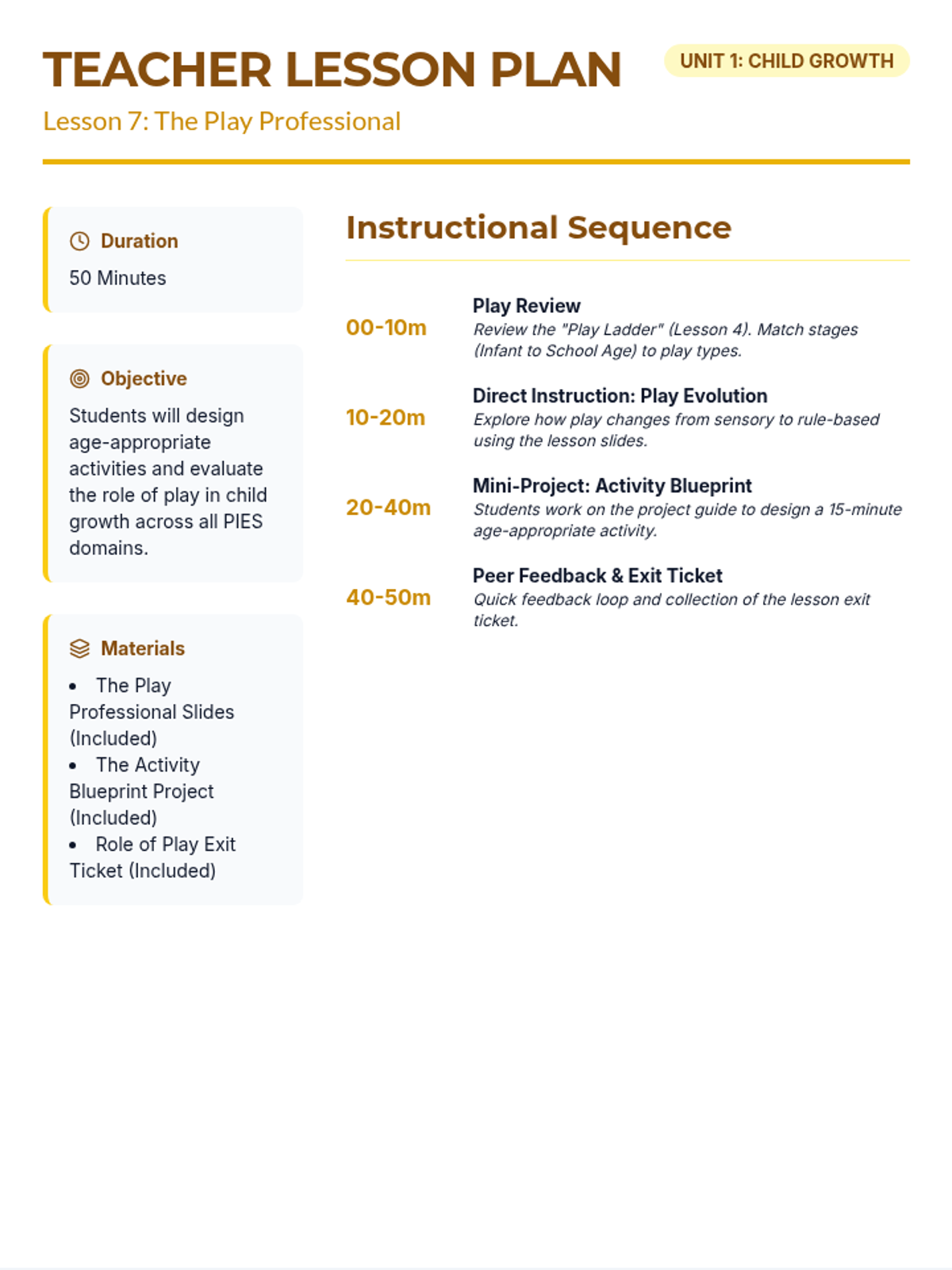
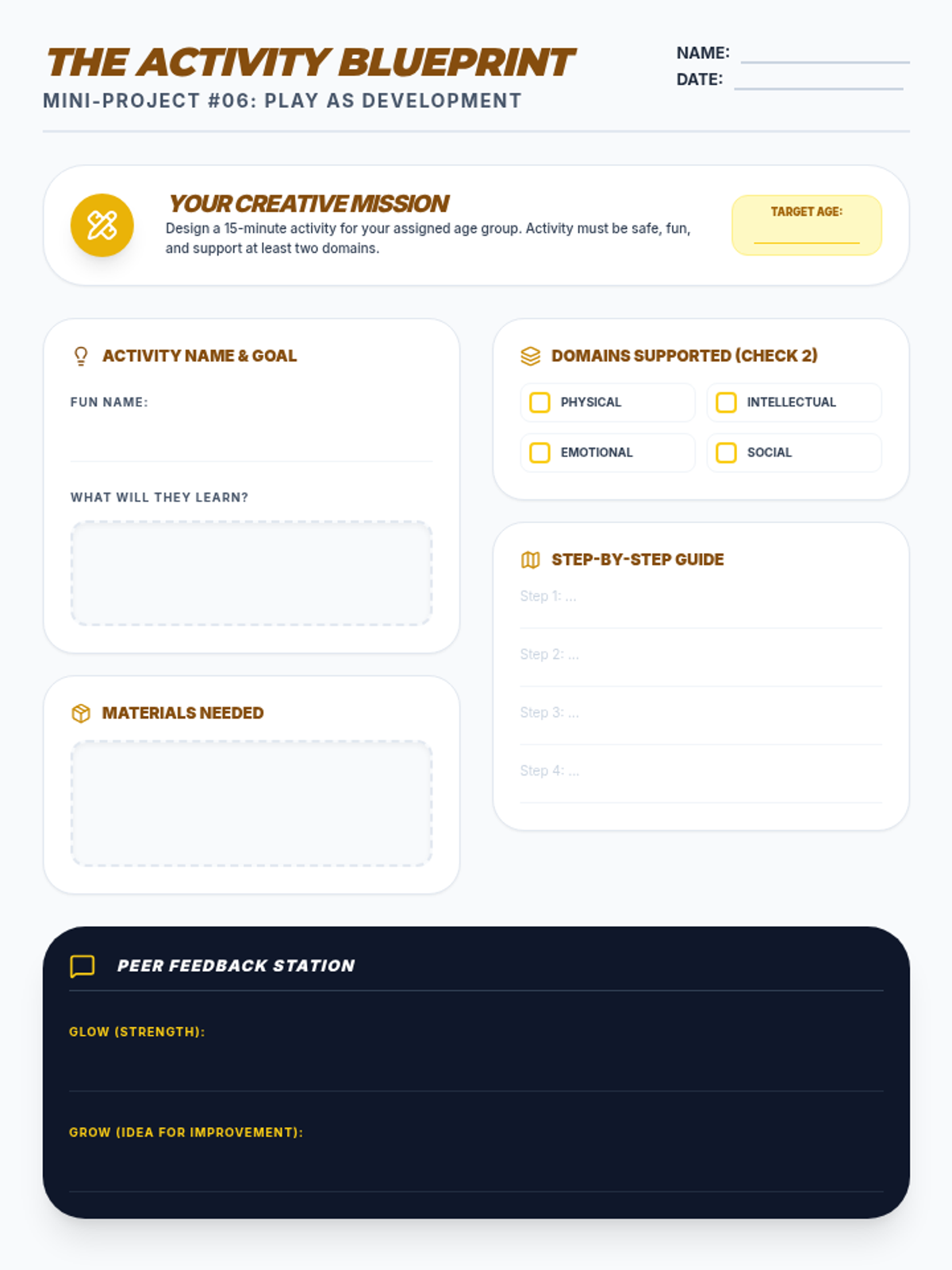
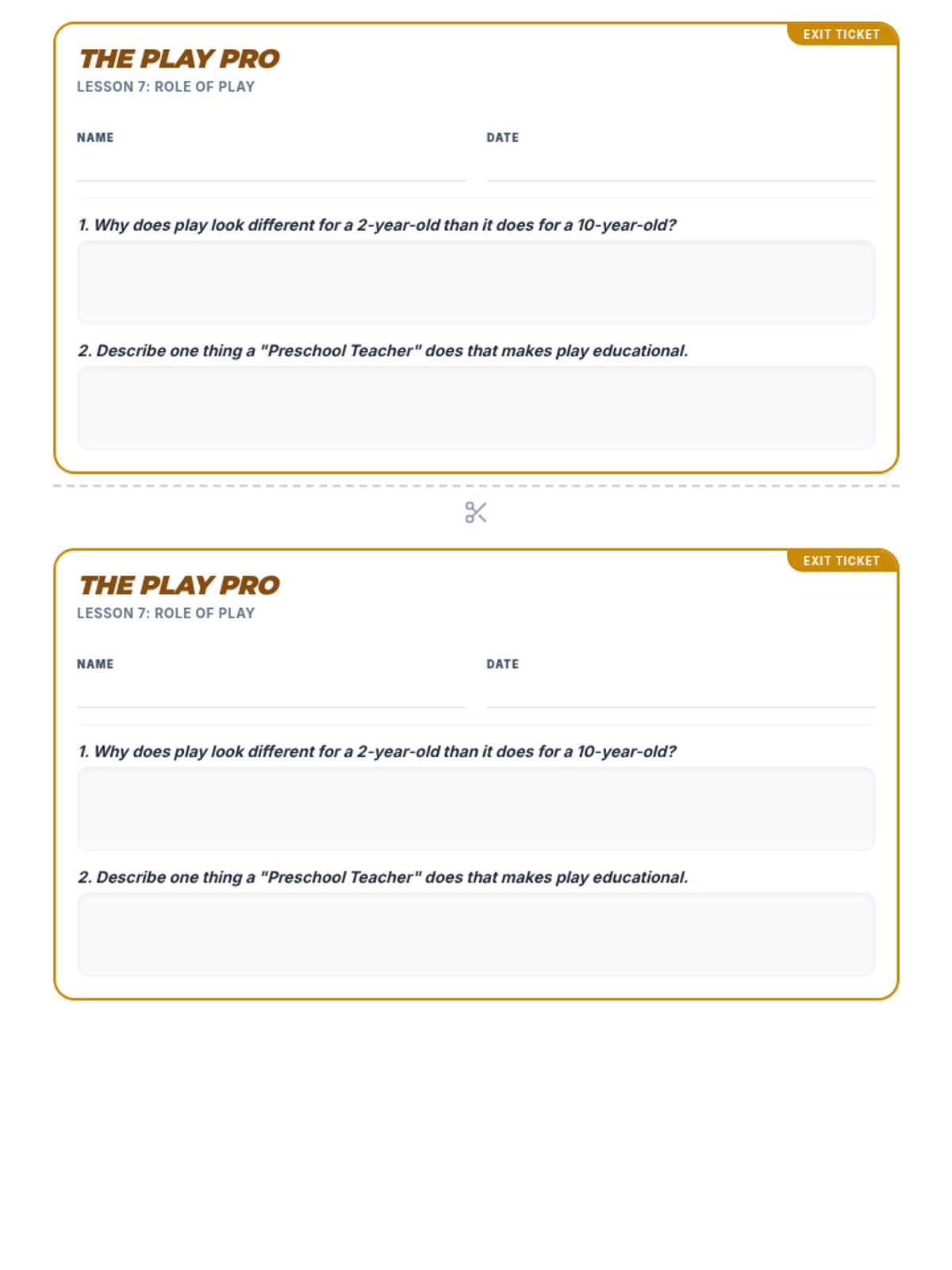
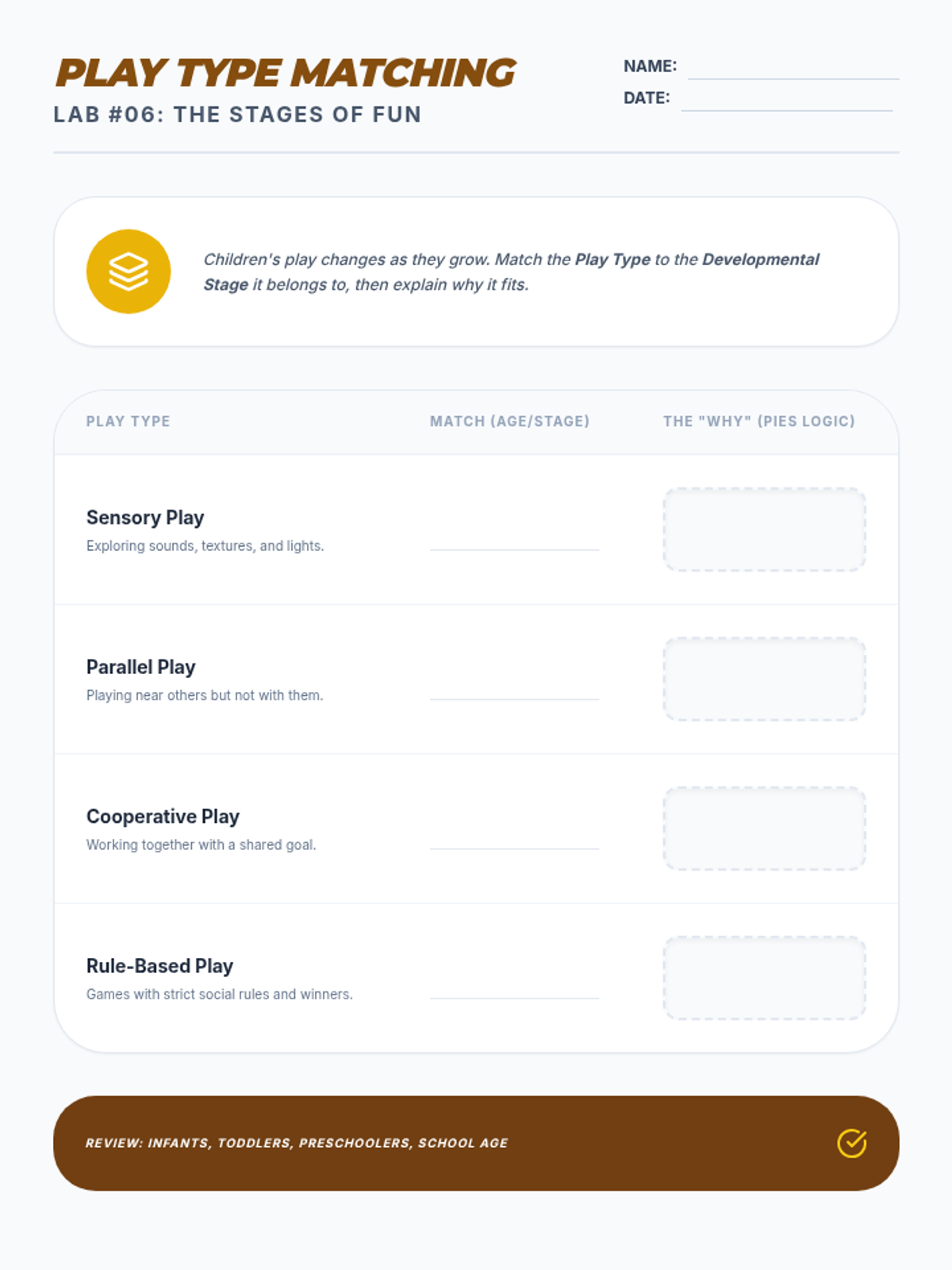
Exploring the vital role of play across all developmental stages and practicing activity design for different age groups.
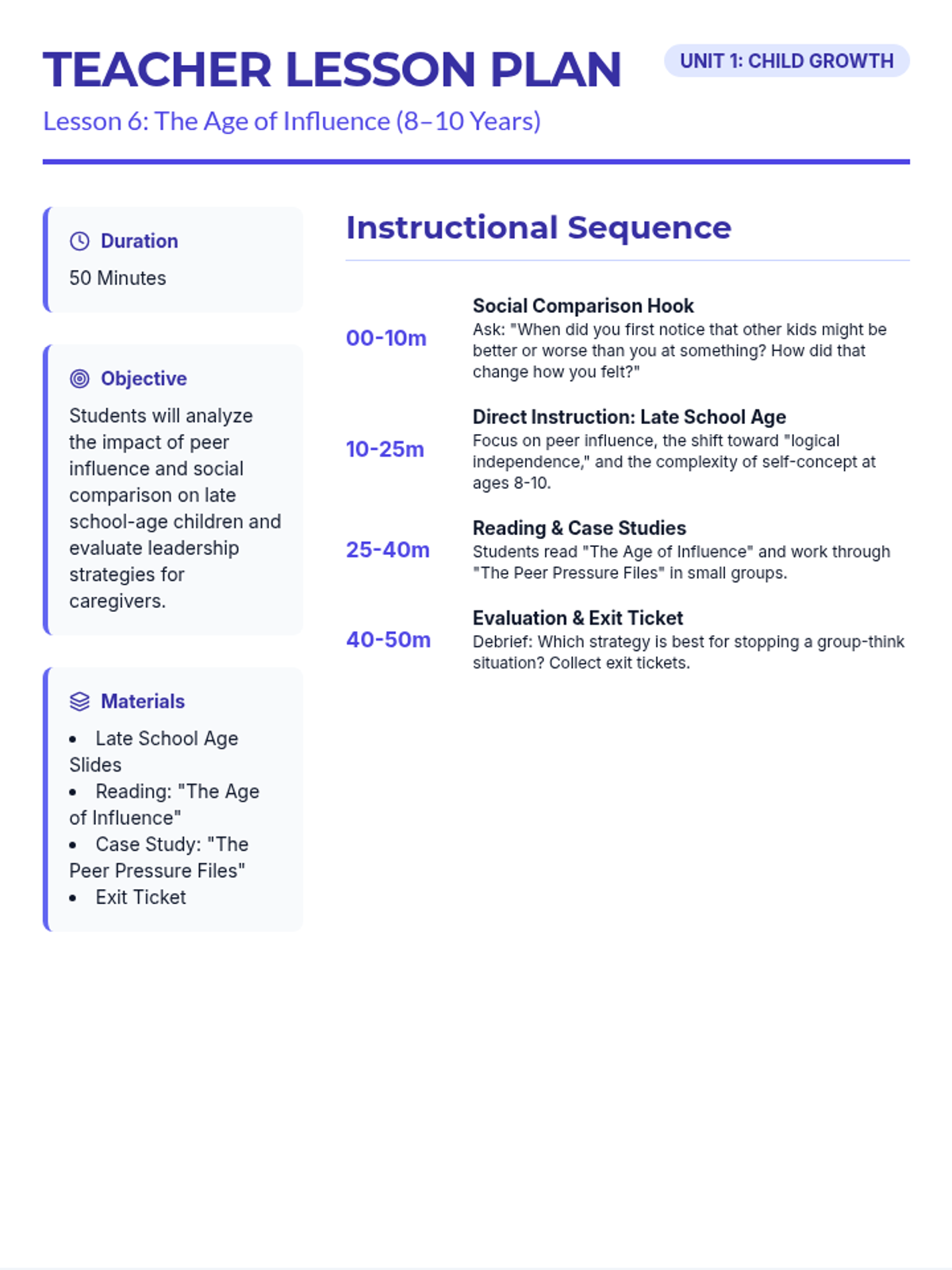
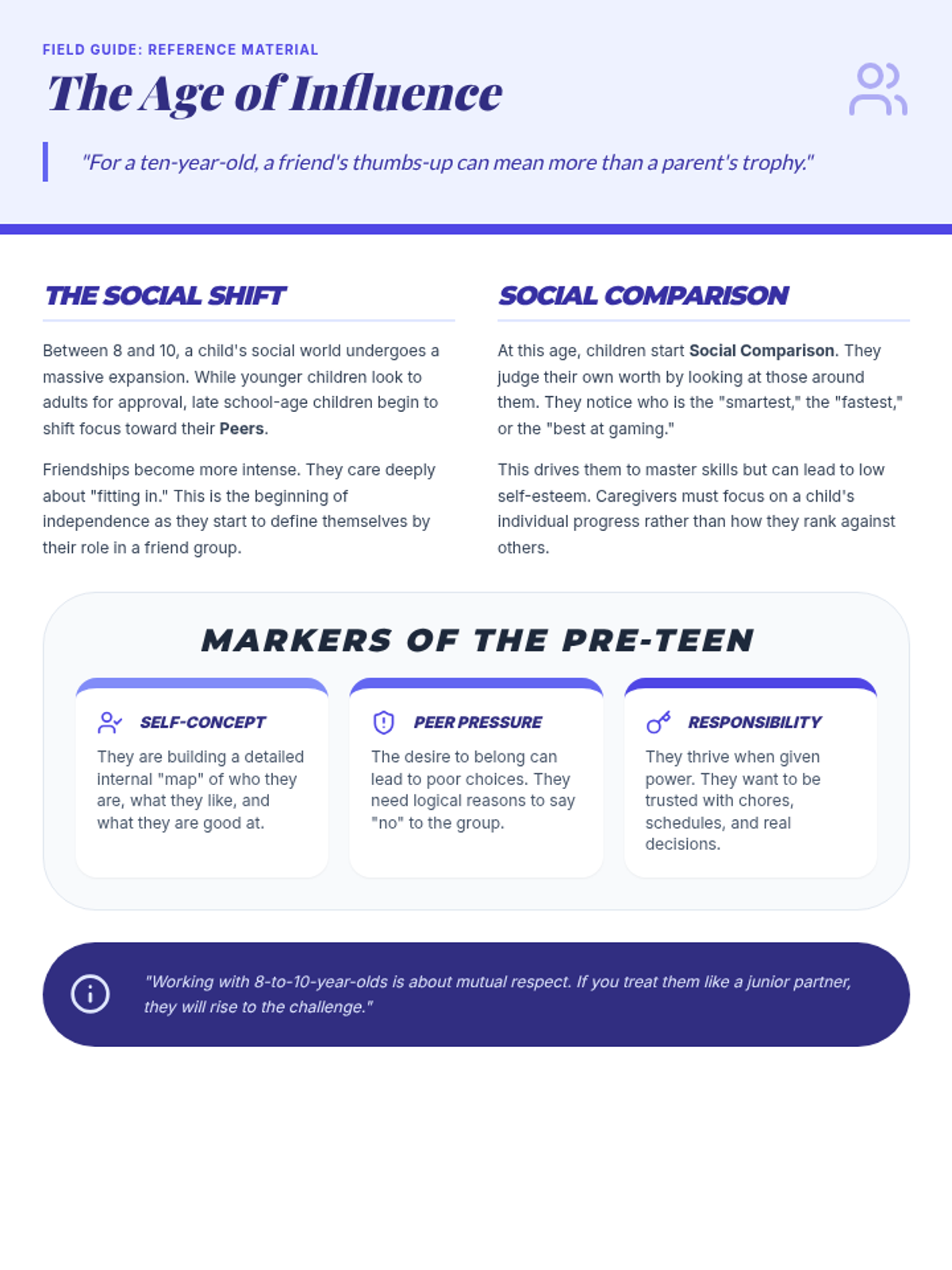
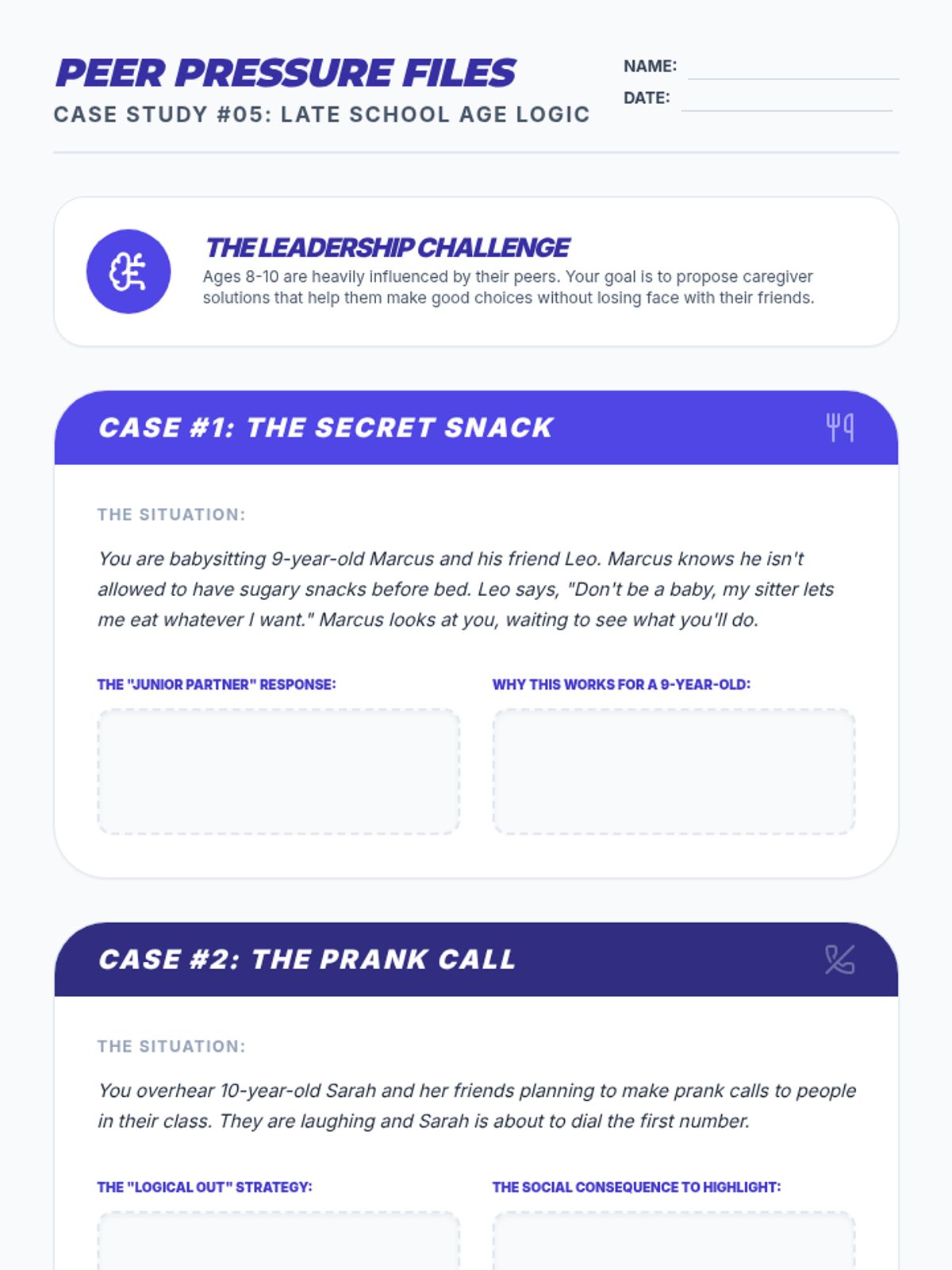
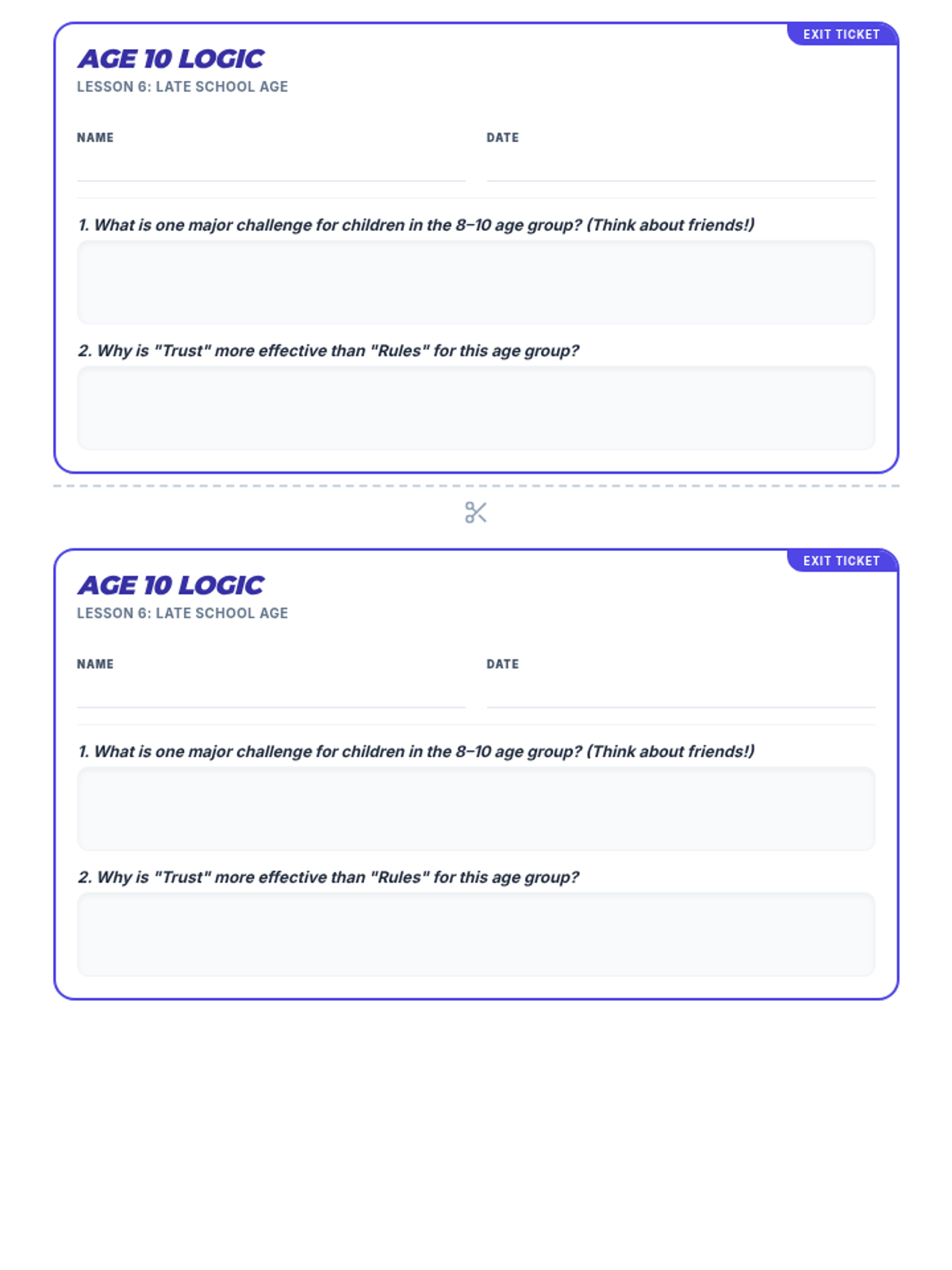
Examining late school age (8-10), focusing on peer influence, social comparison, and the transition toward independence.
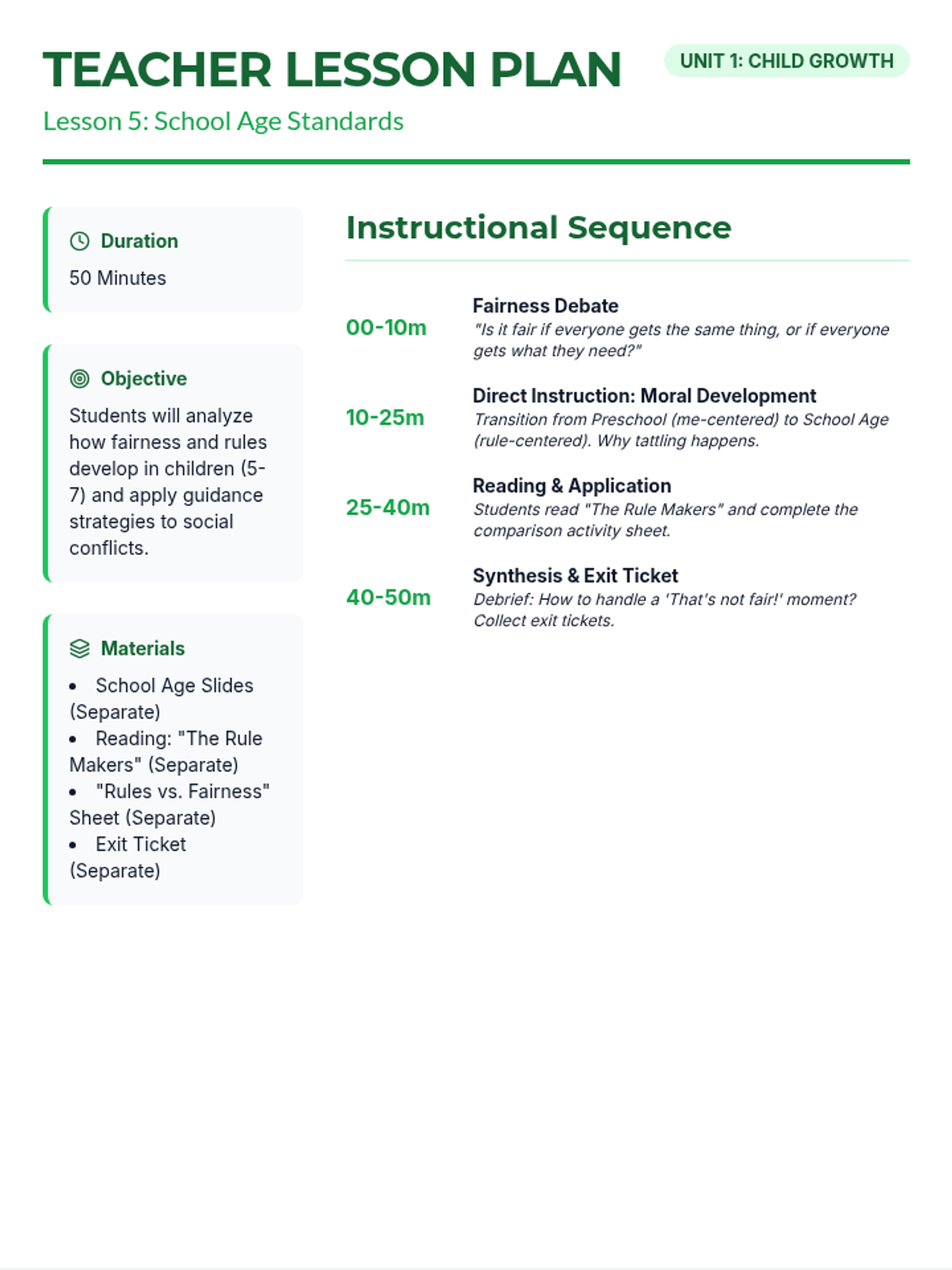
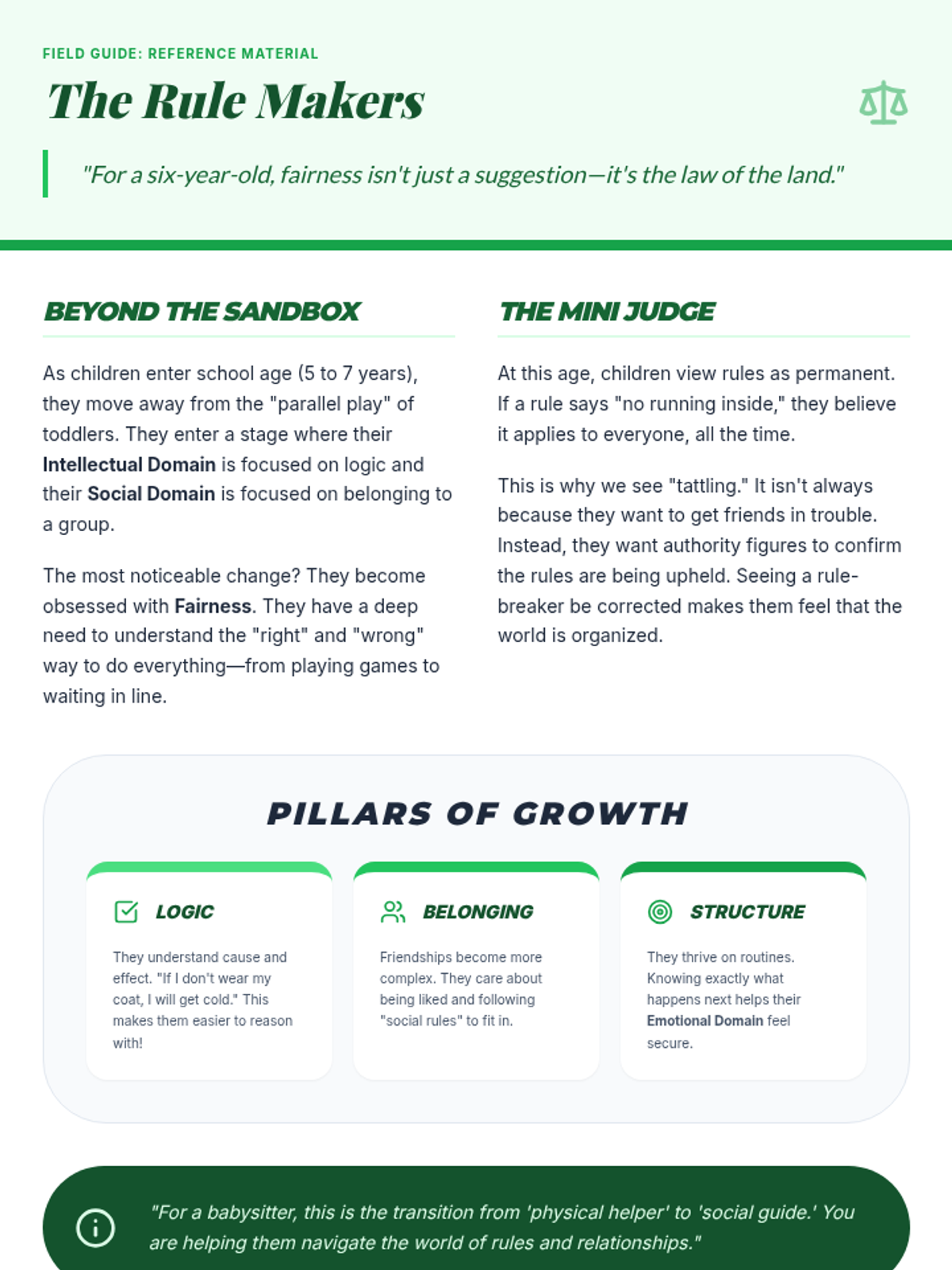
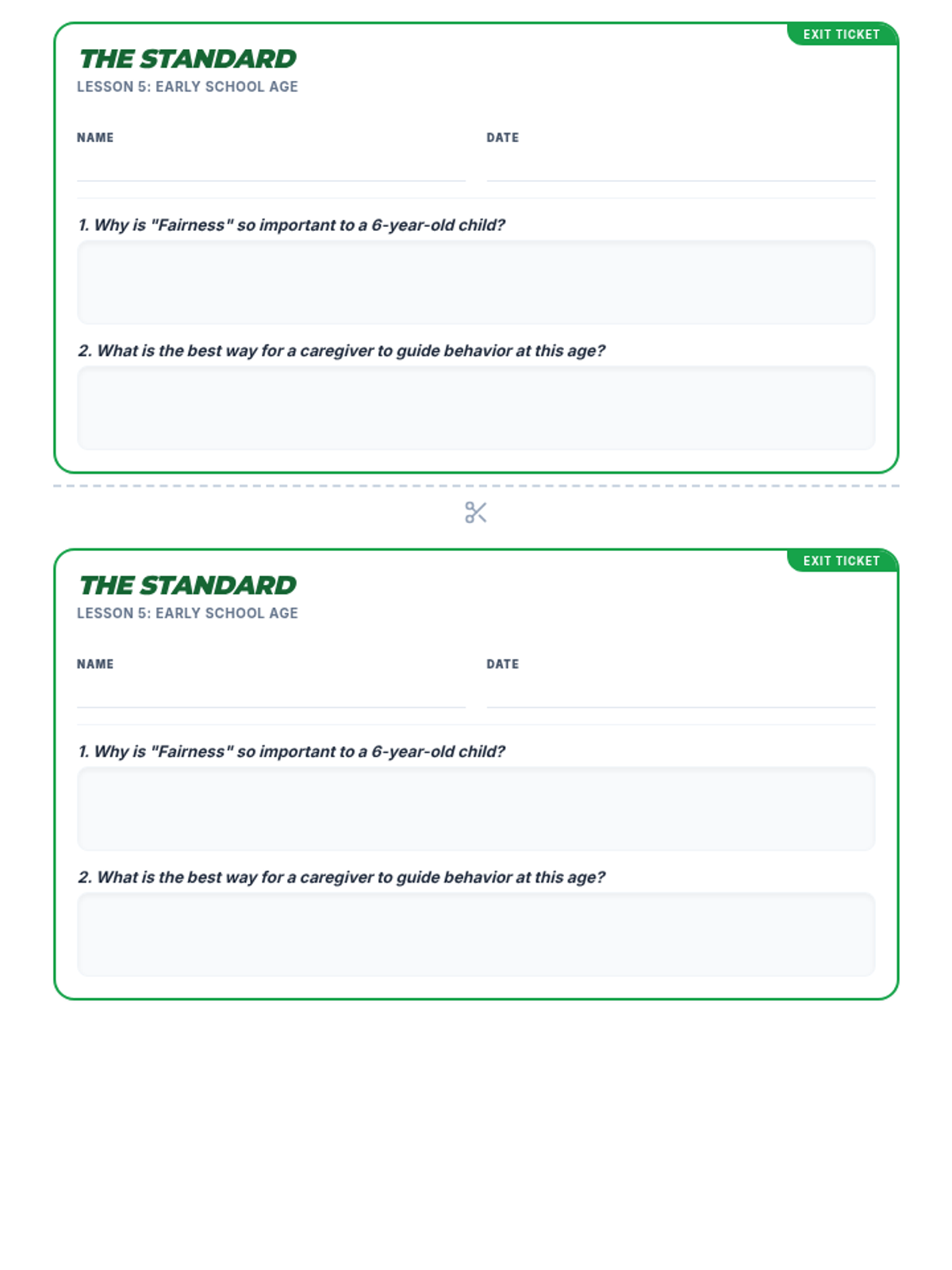
Examining the transition to school age (5-7), focusing on fairness, rule-following, and social conflict resolution.
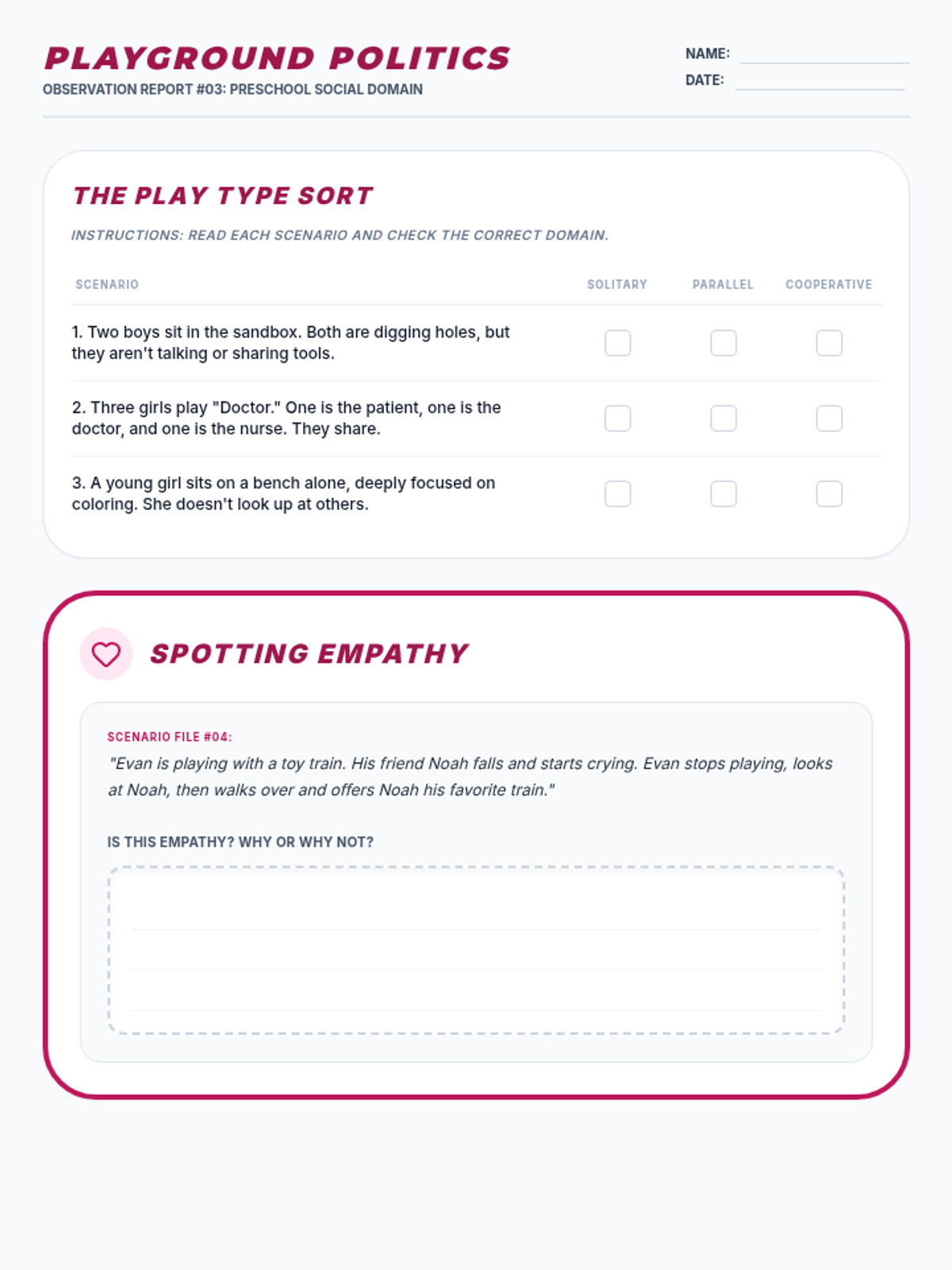
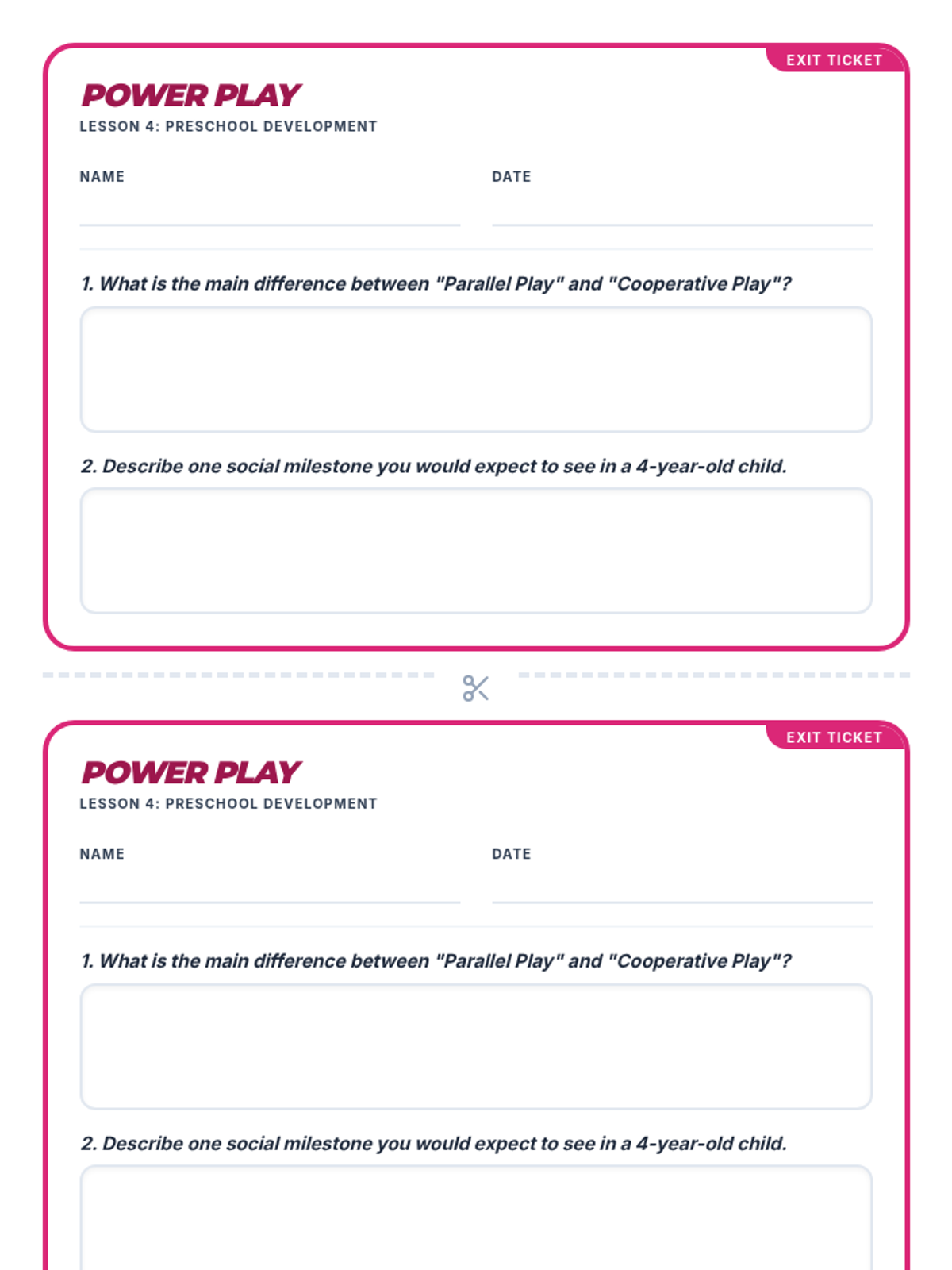
Analyzing preschool development (3-5), focusing on types of play, emerging empathy, and social interaction rules.
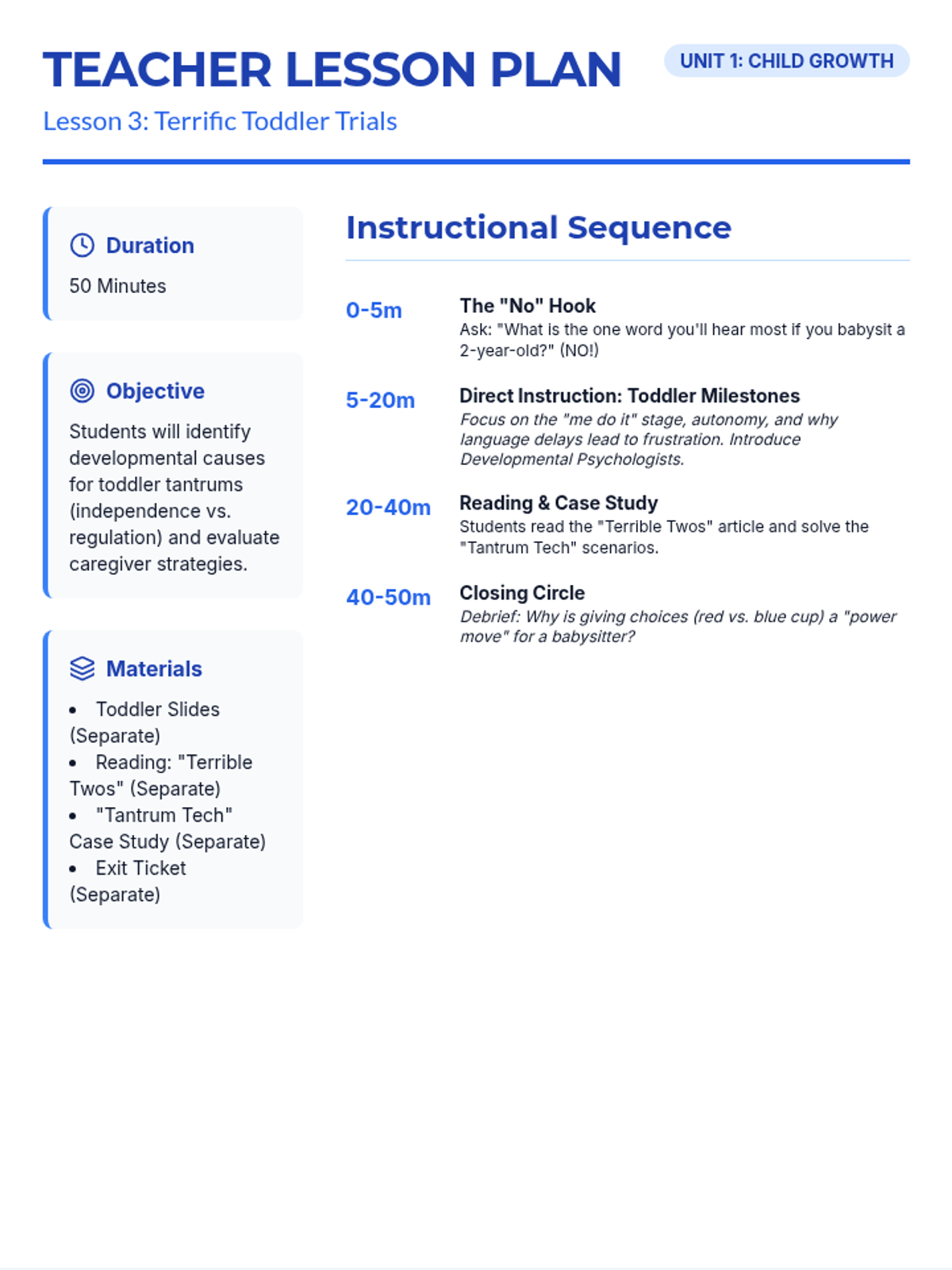
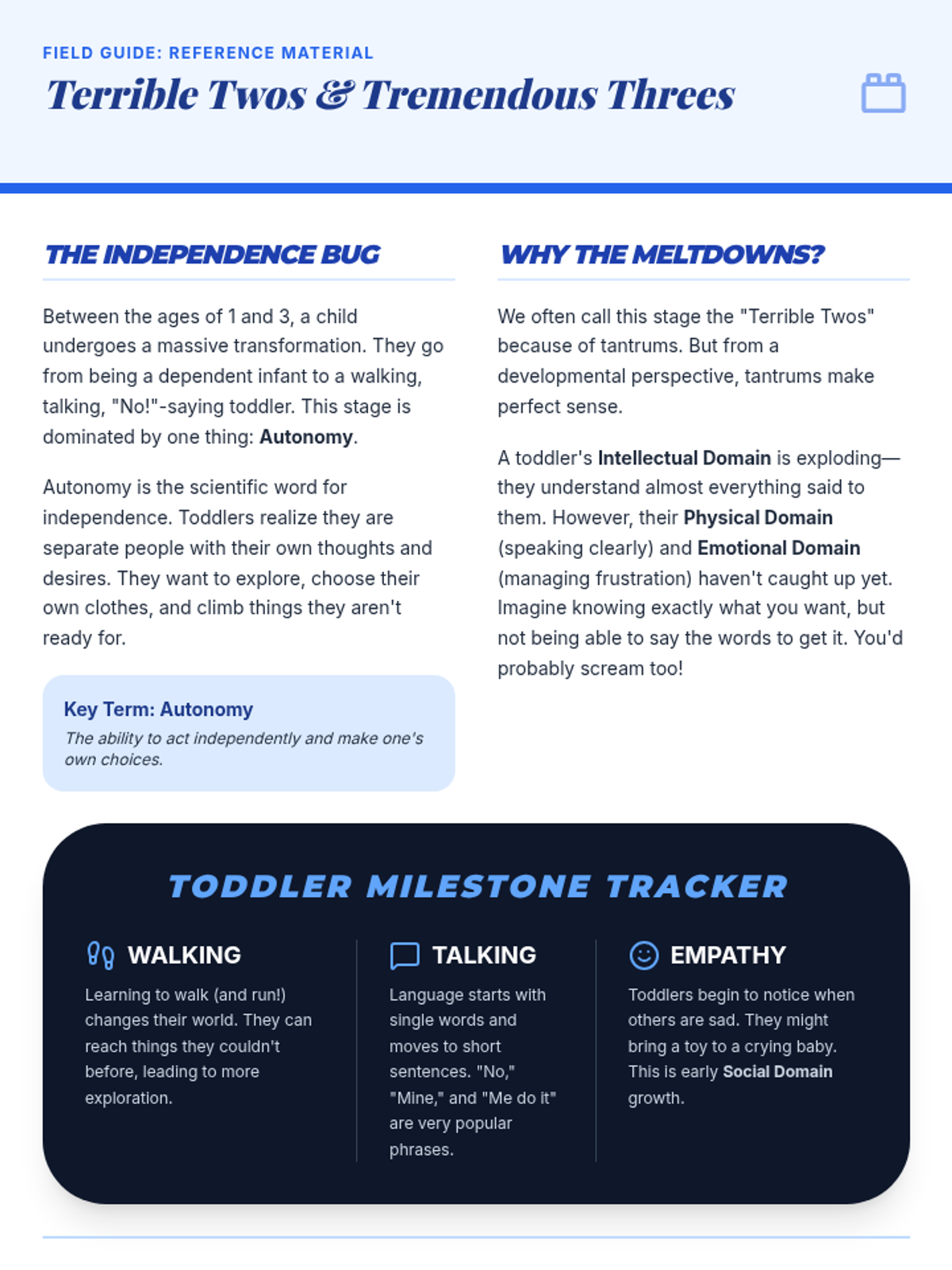
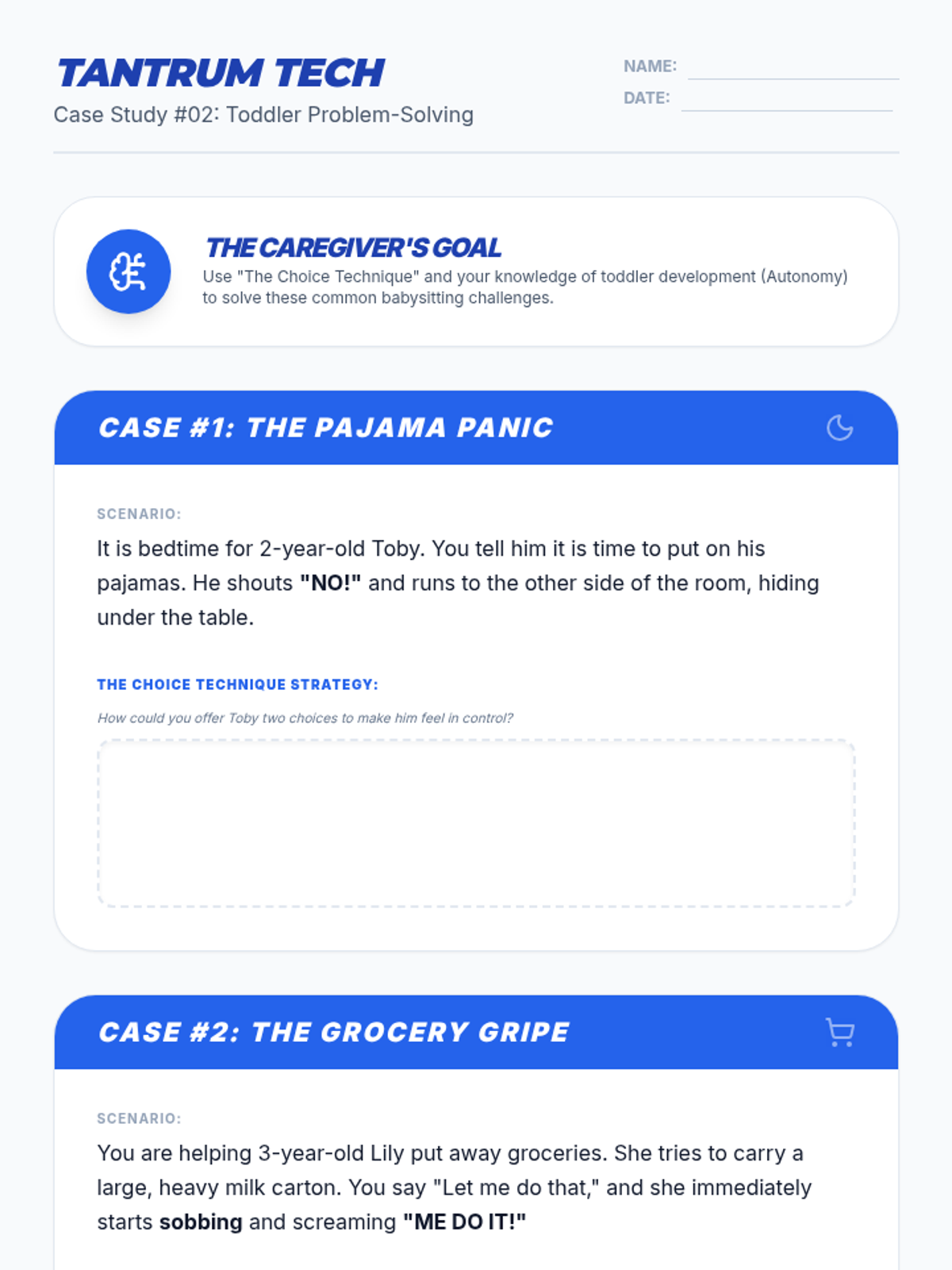
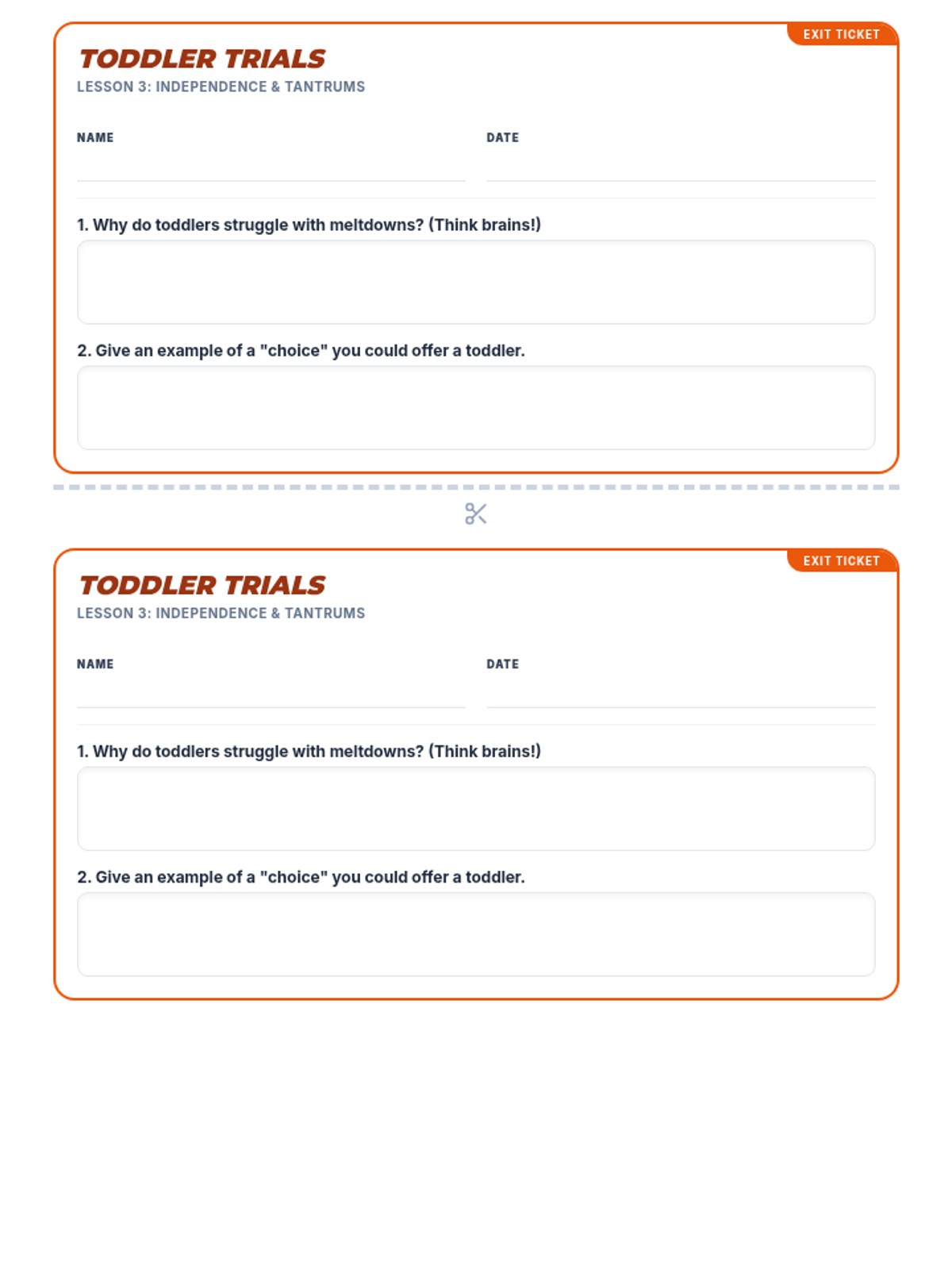
Understanding the toddler years (1-3), focusing on independence, language acquisition, and strategies for managing emotional outbursts.
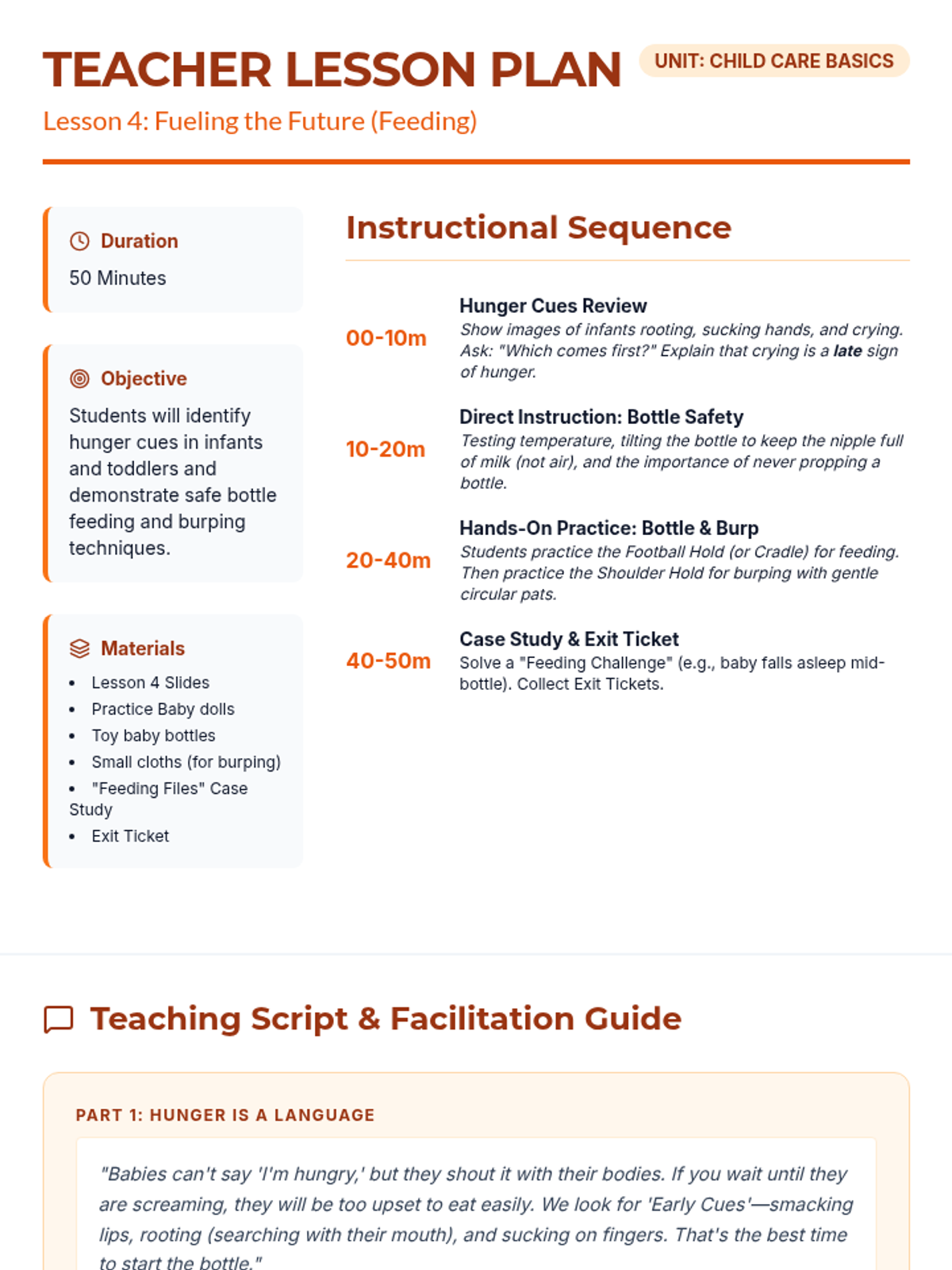
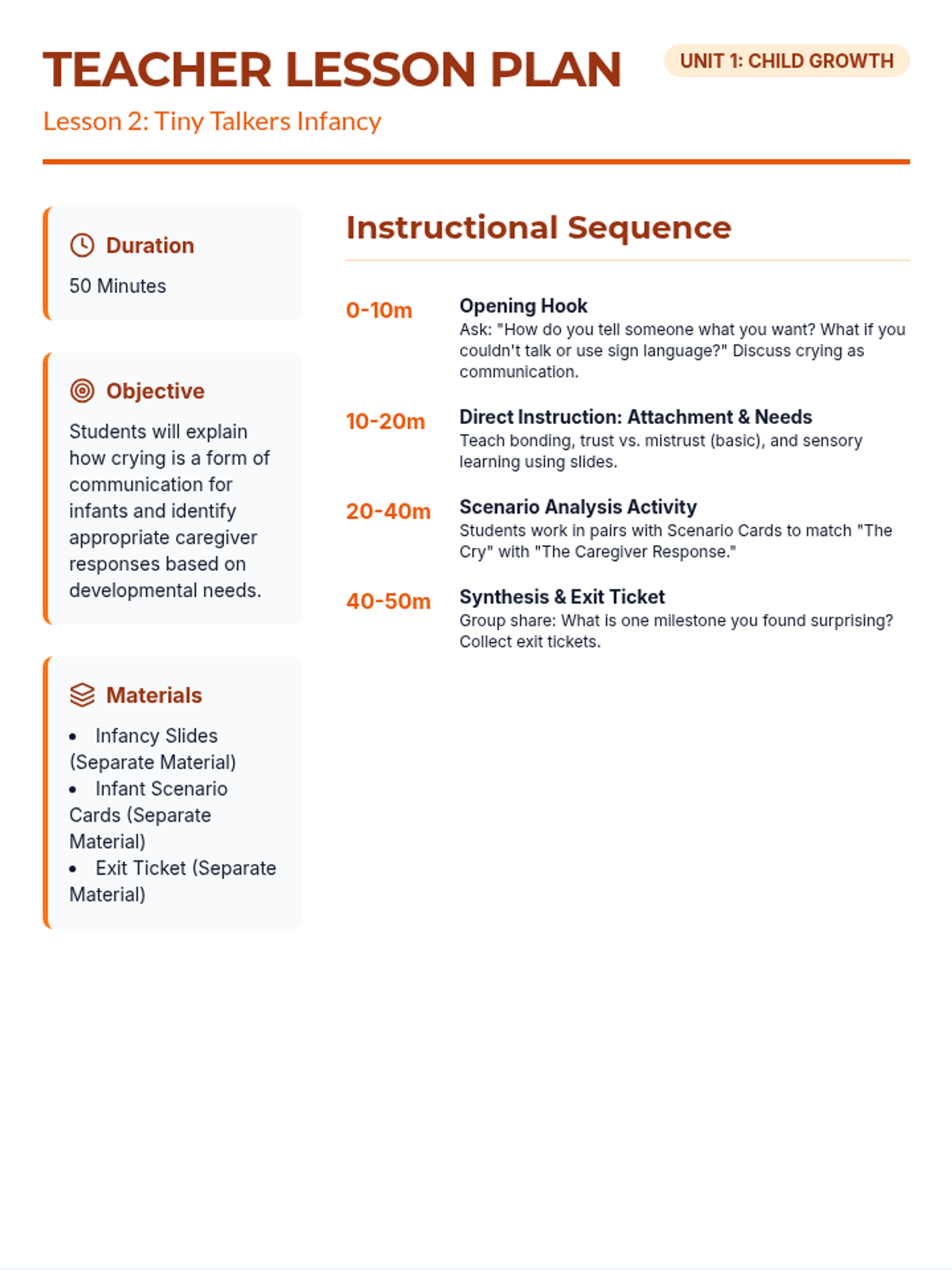
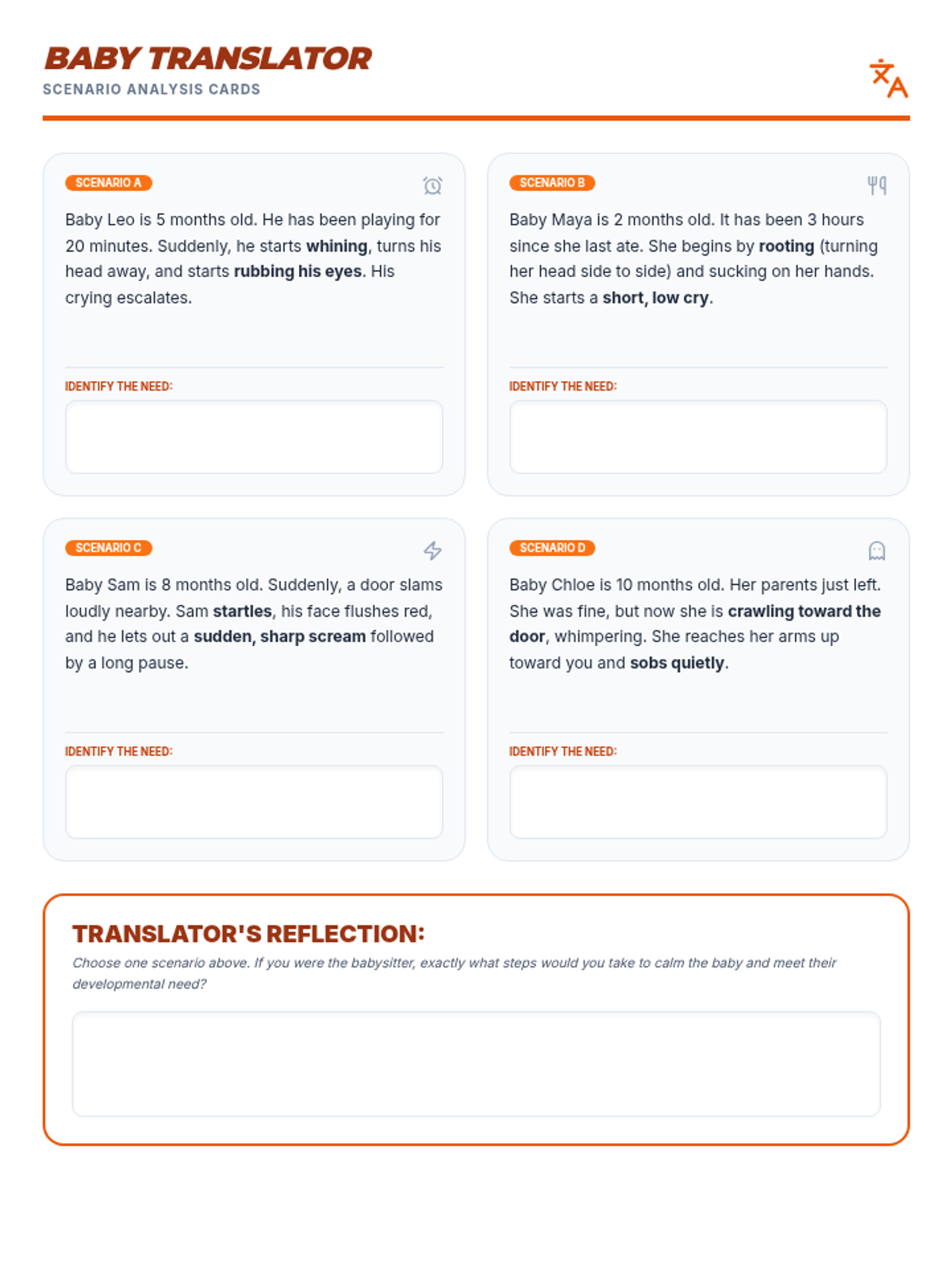
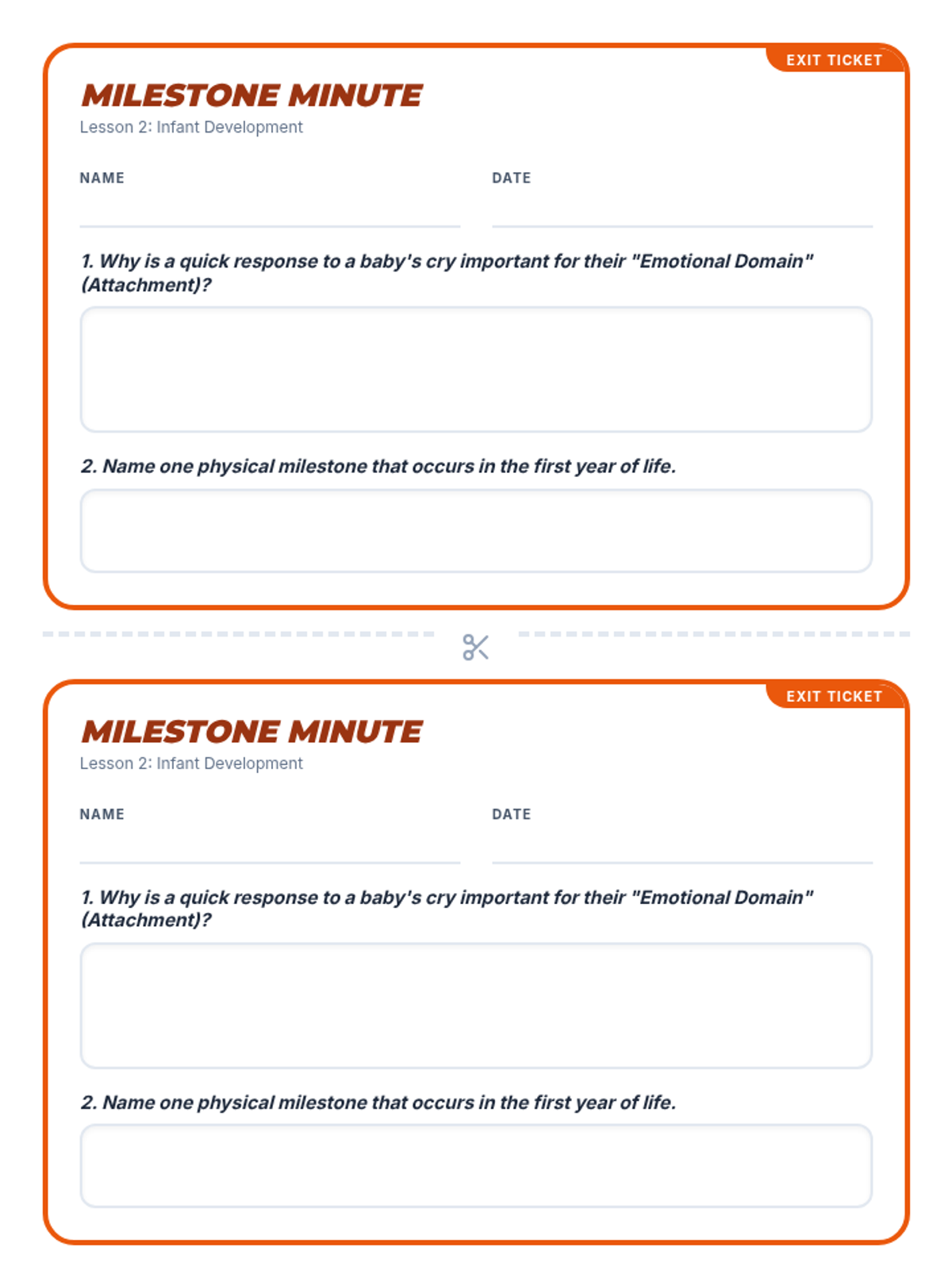
Exploring the first year of life, focusing on attachment, sensory learning, and understanding crying as a primary form of communication.
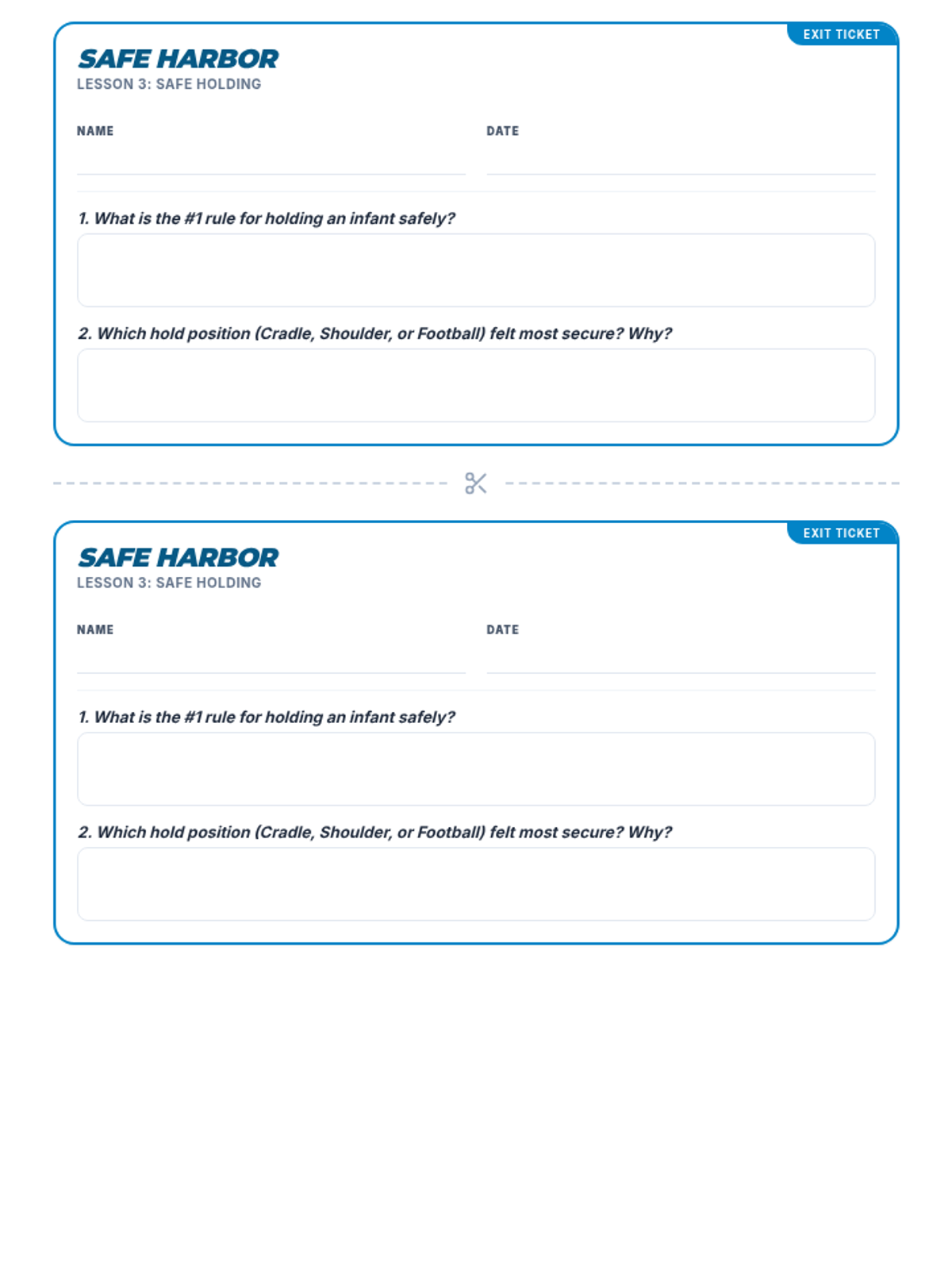
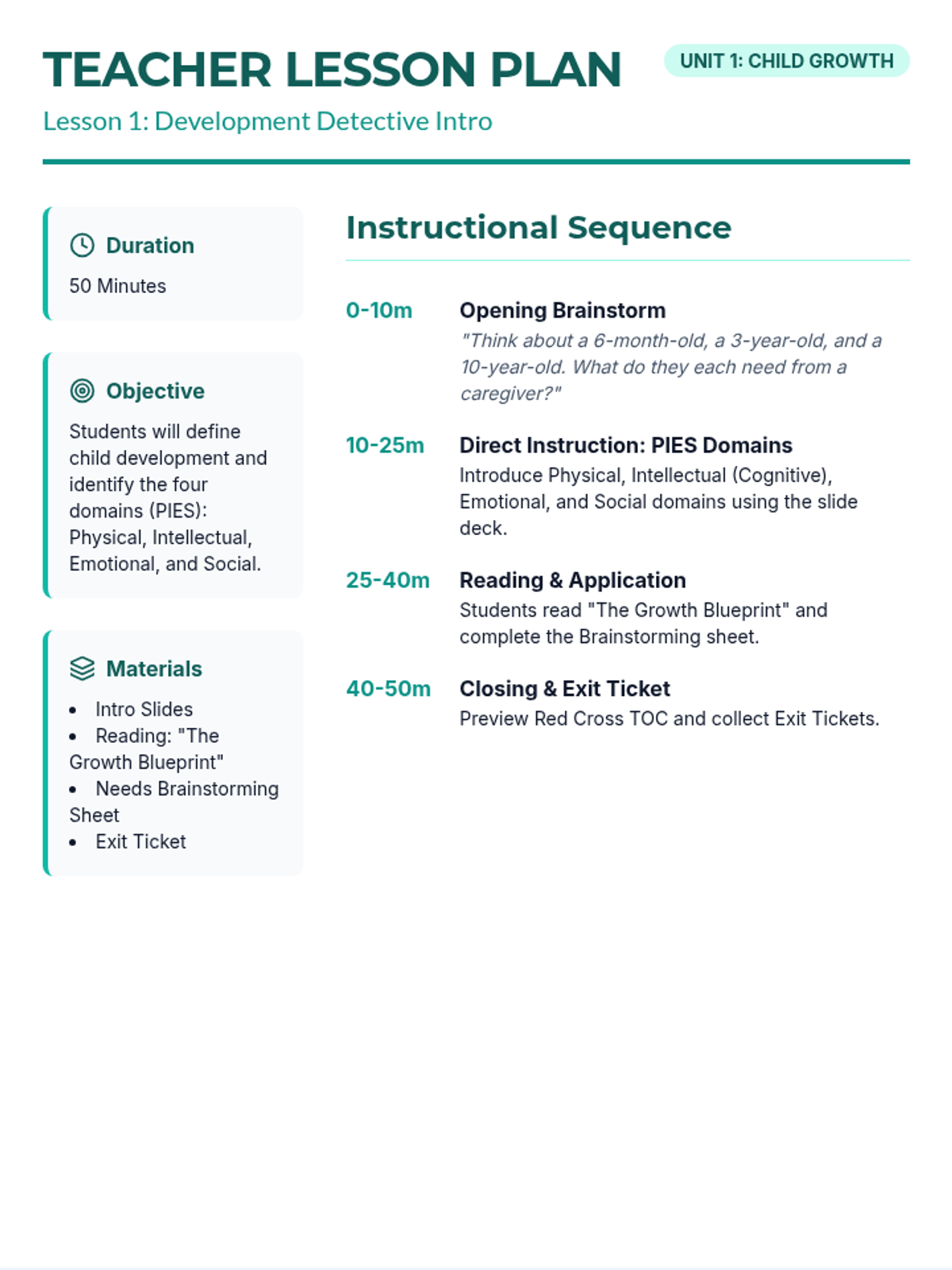
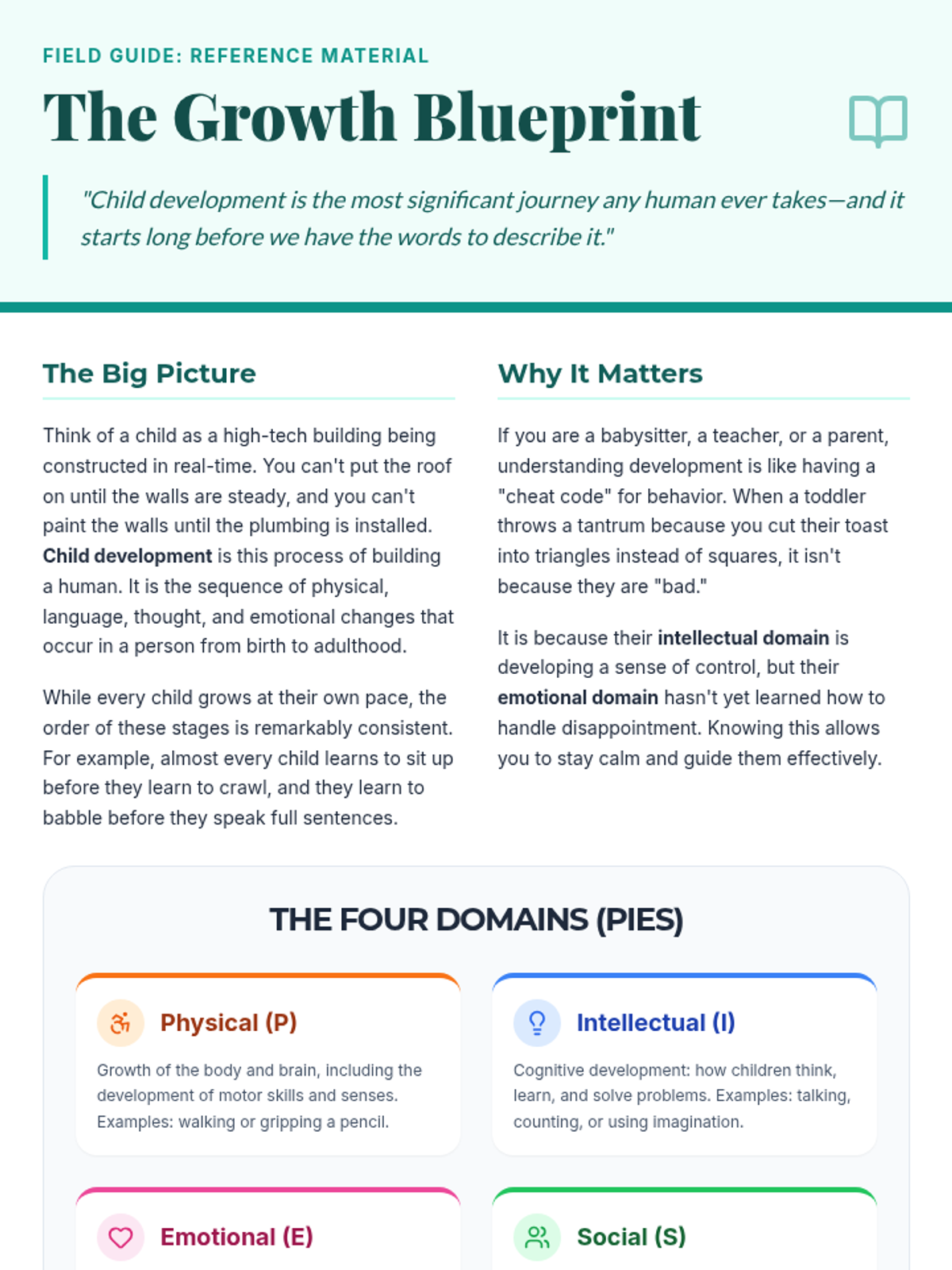
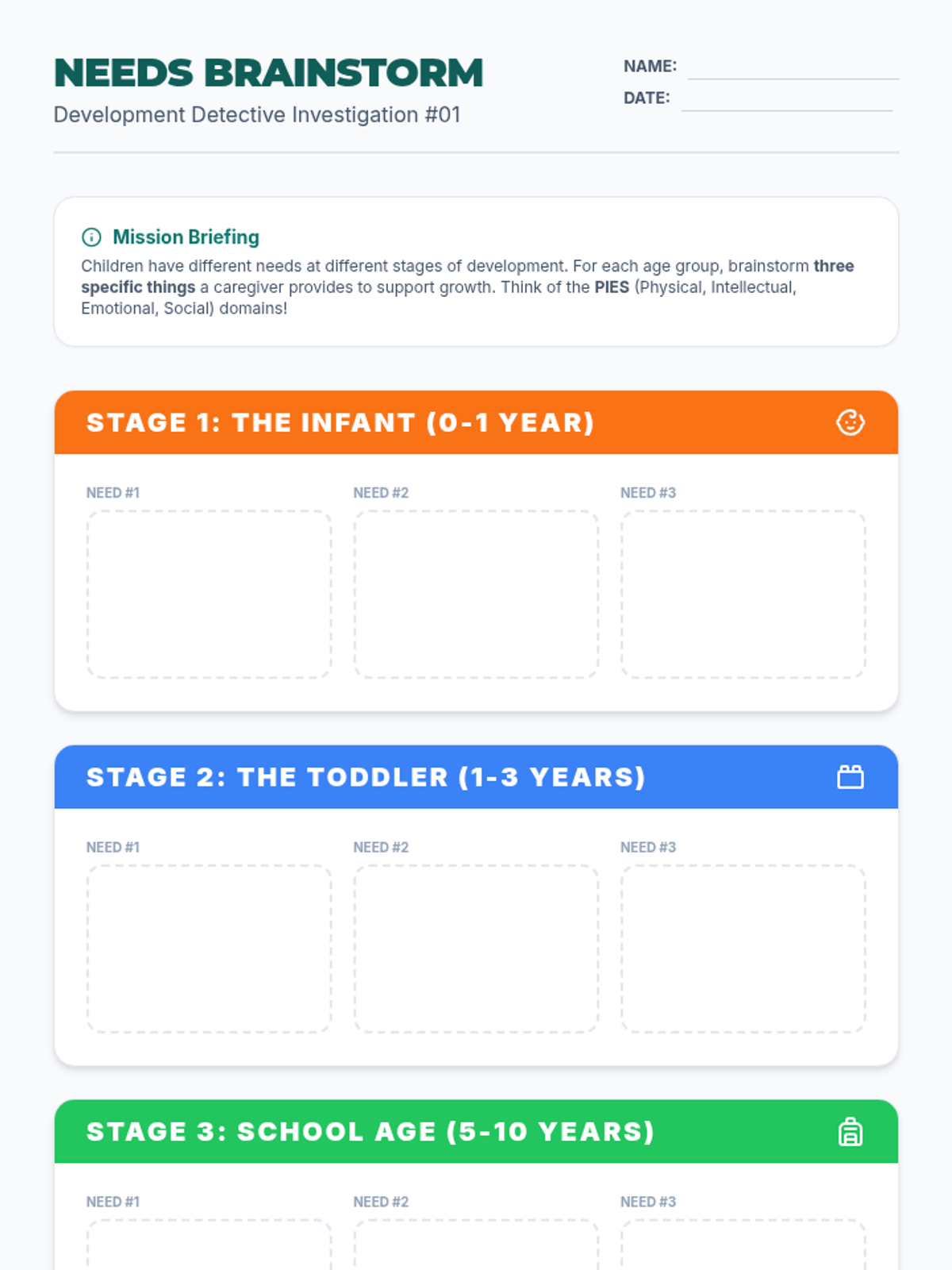
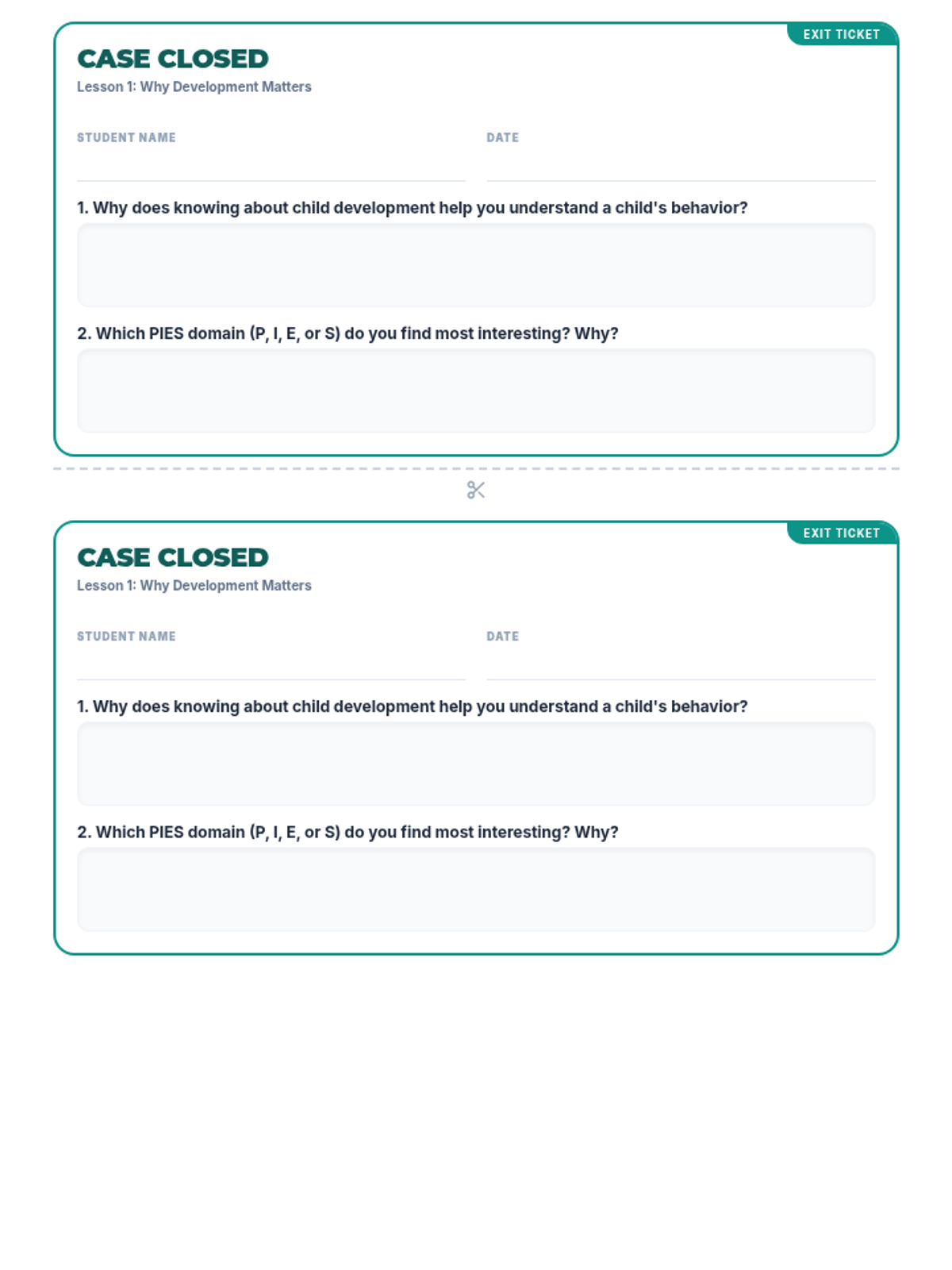
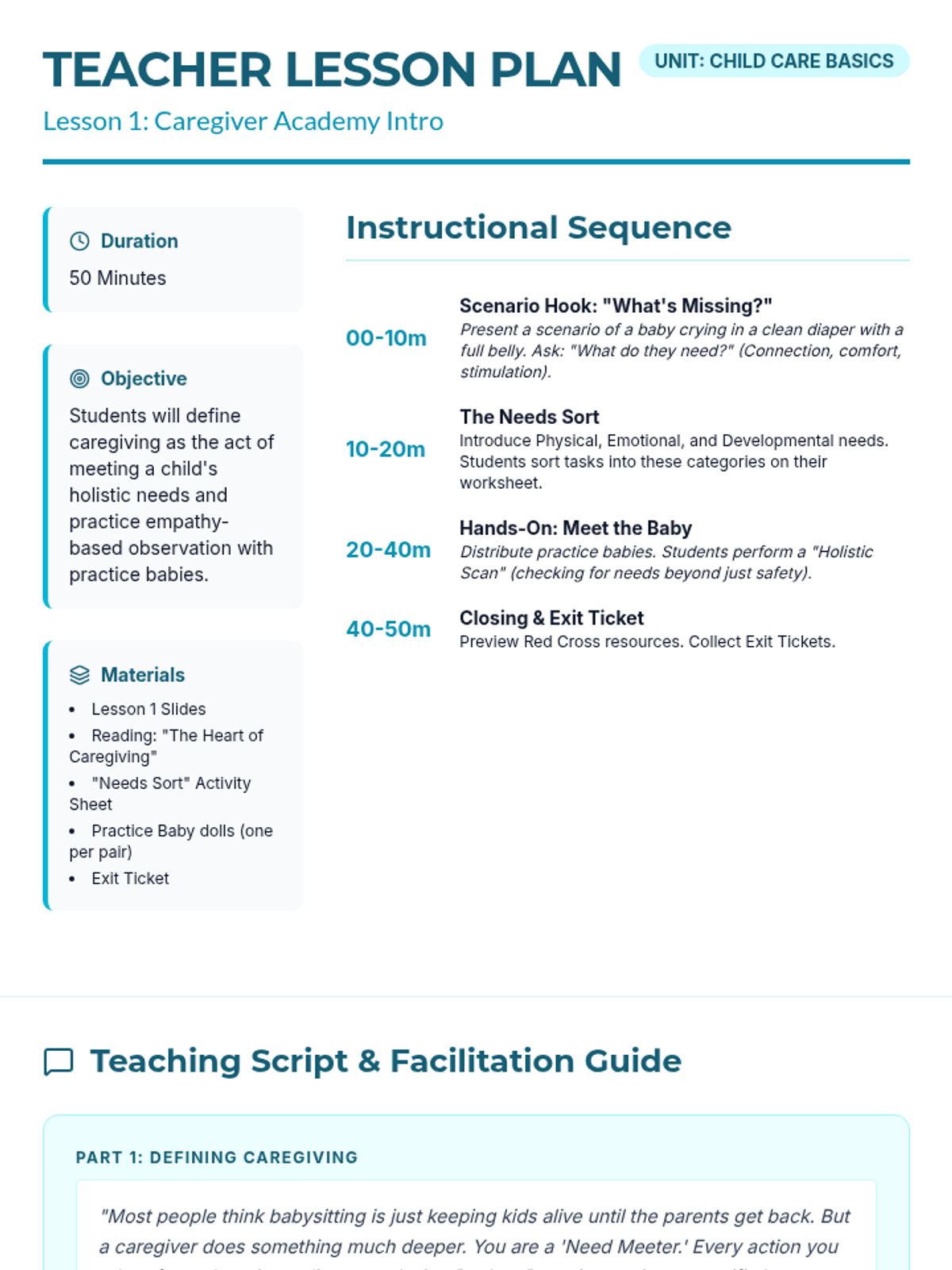
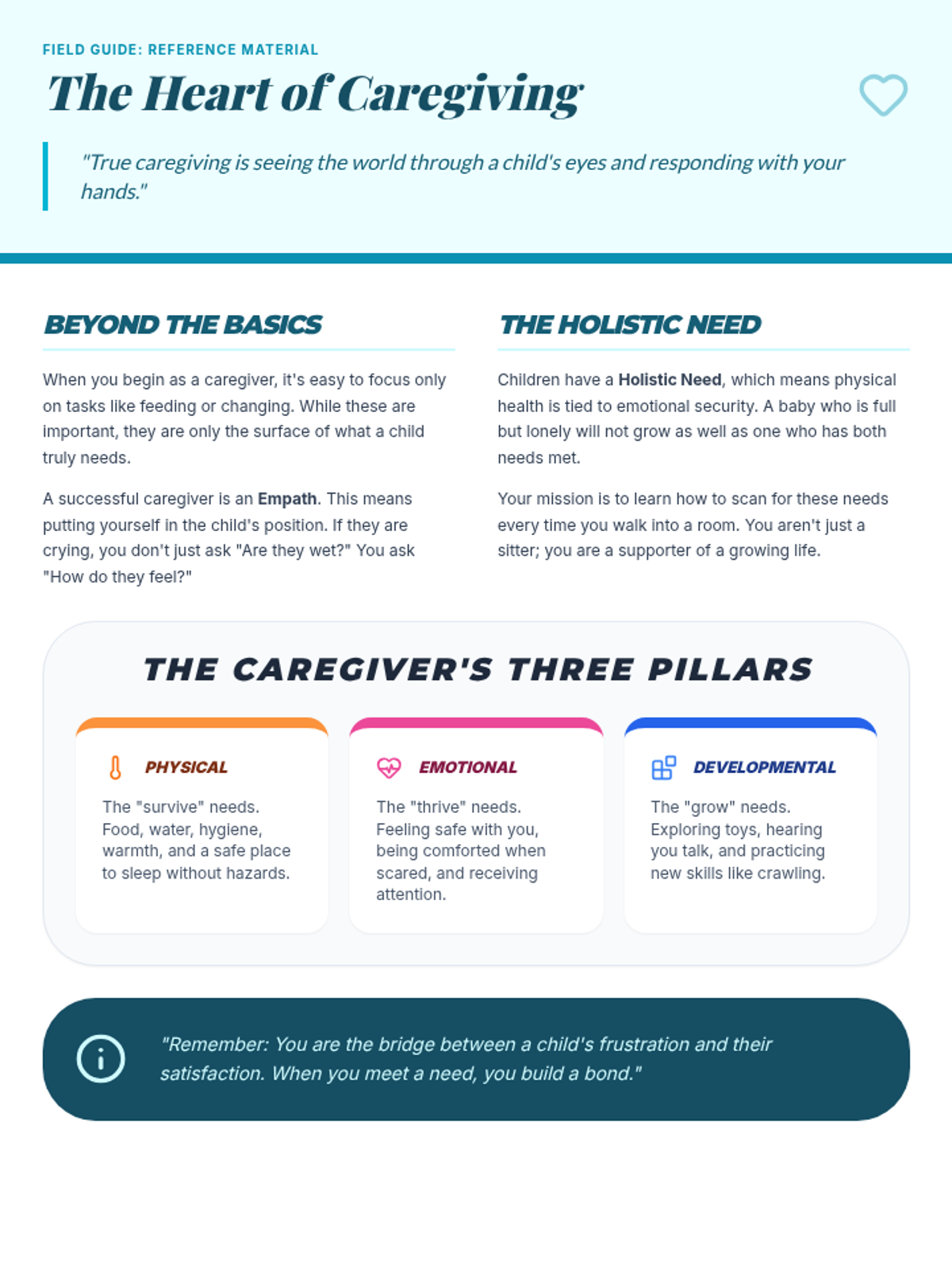
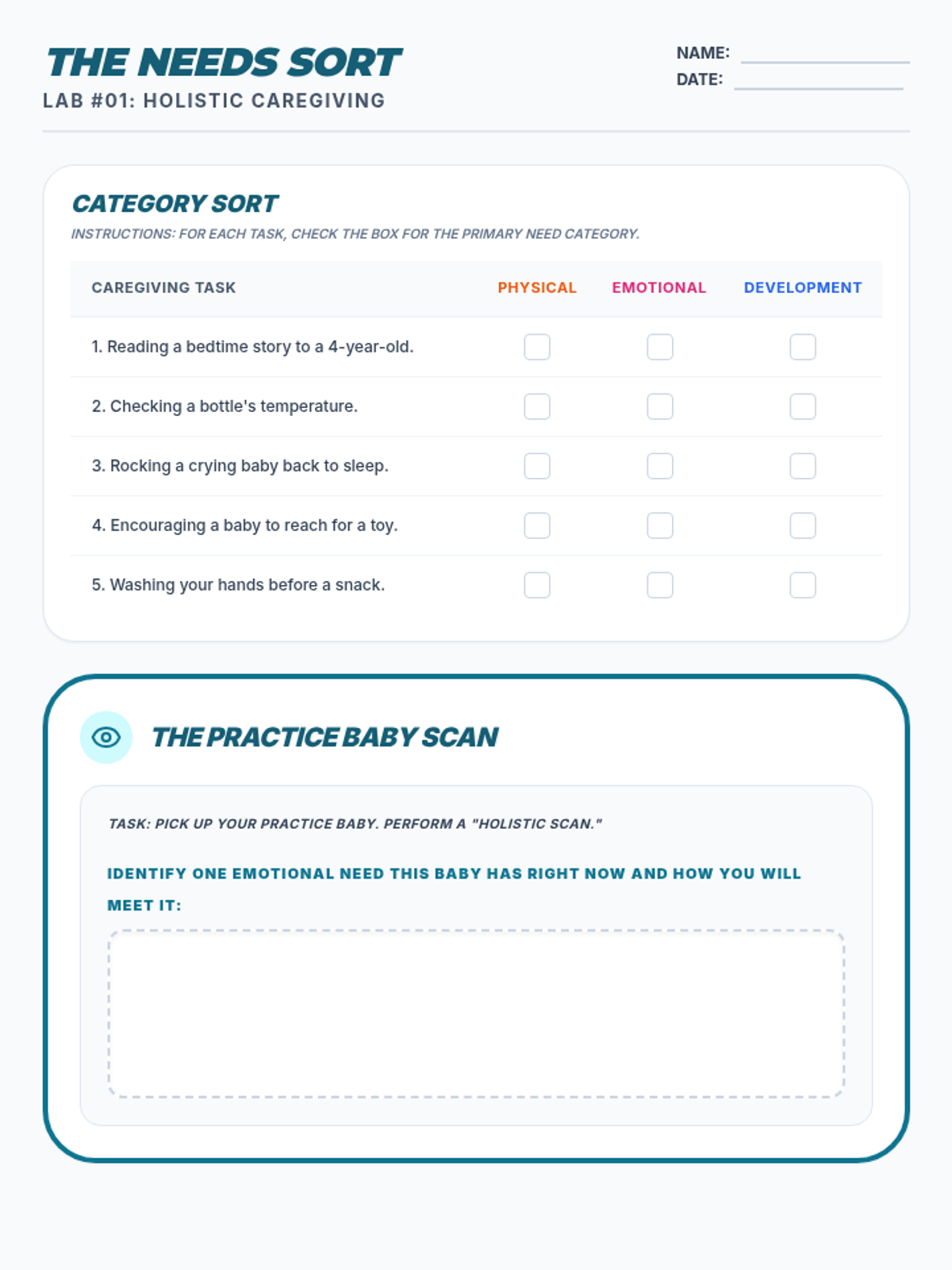
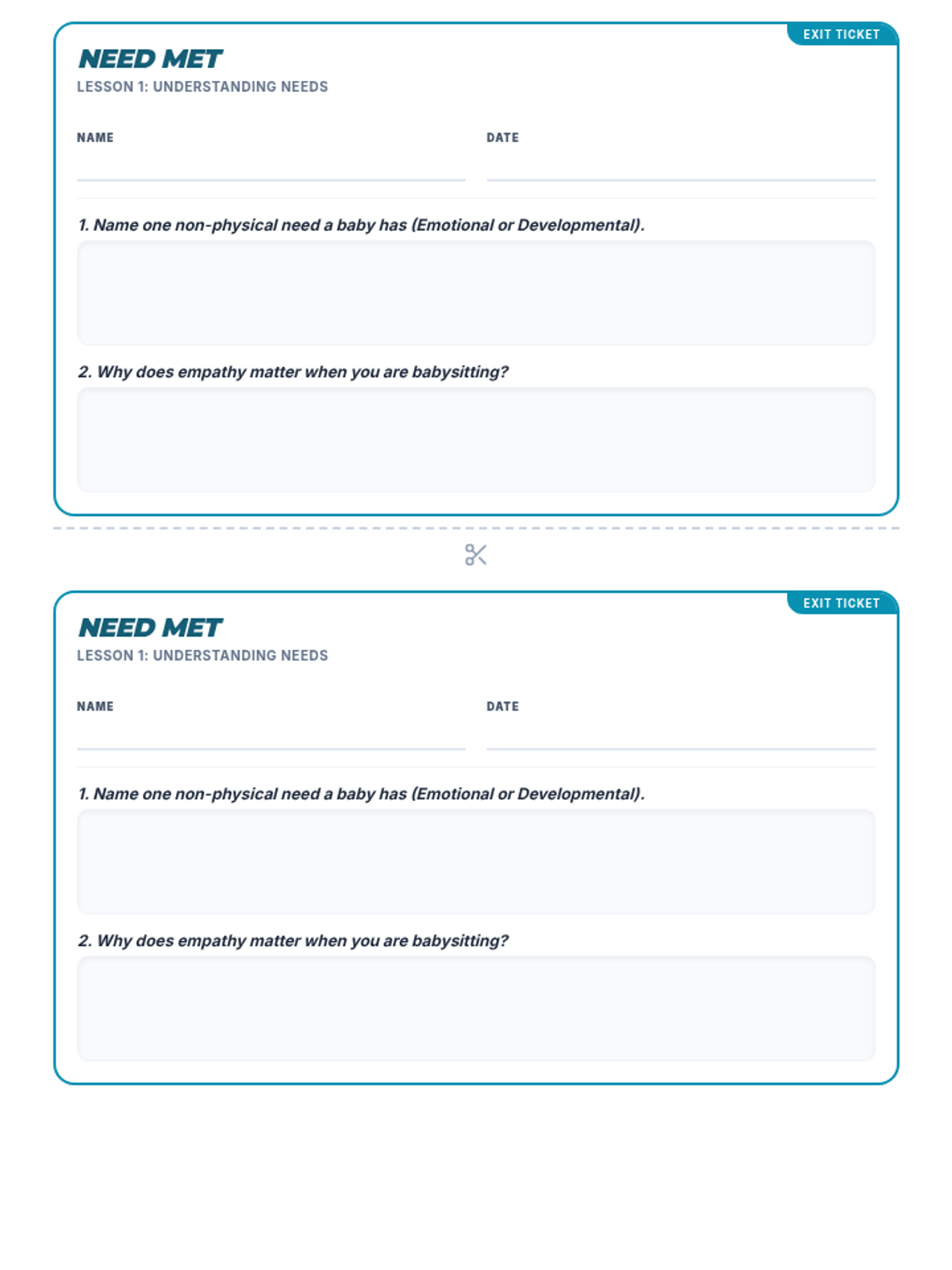
An introduction to the four domains of child development (PIES) and exploring why understanding development is crucial for caregivers and babysitters.
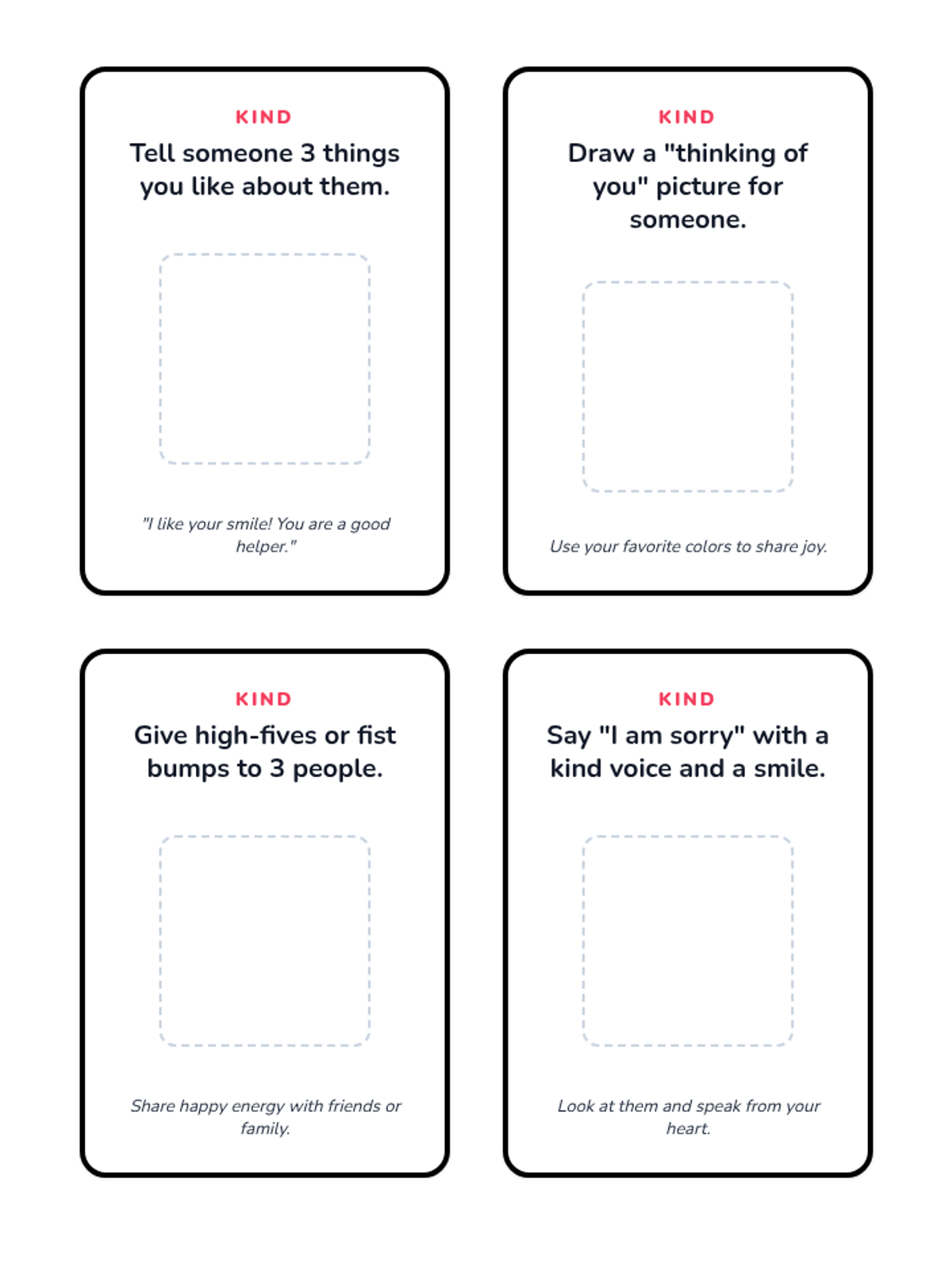
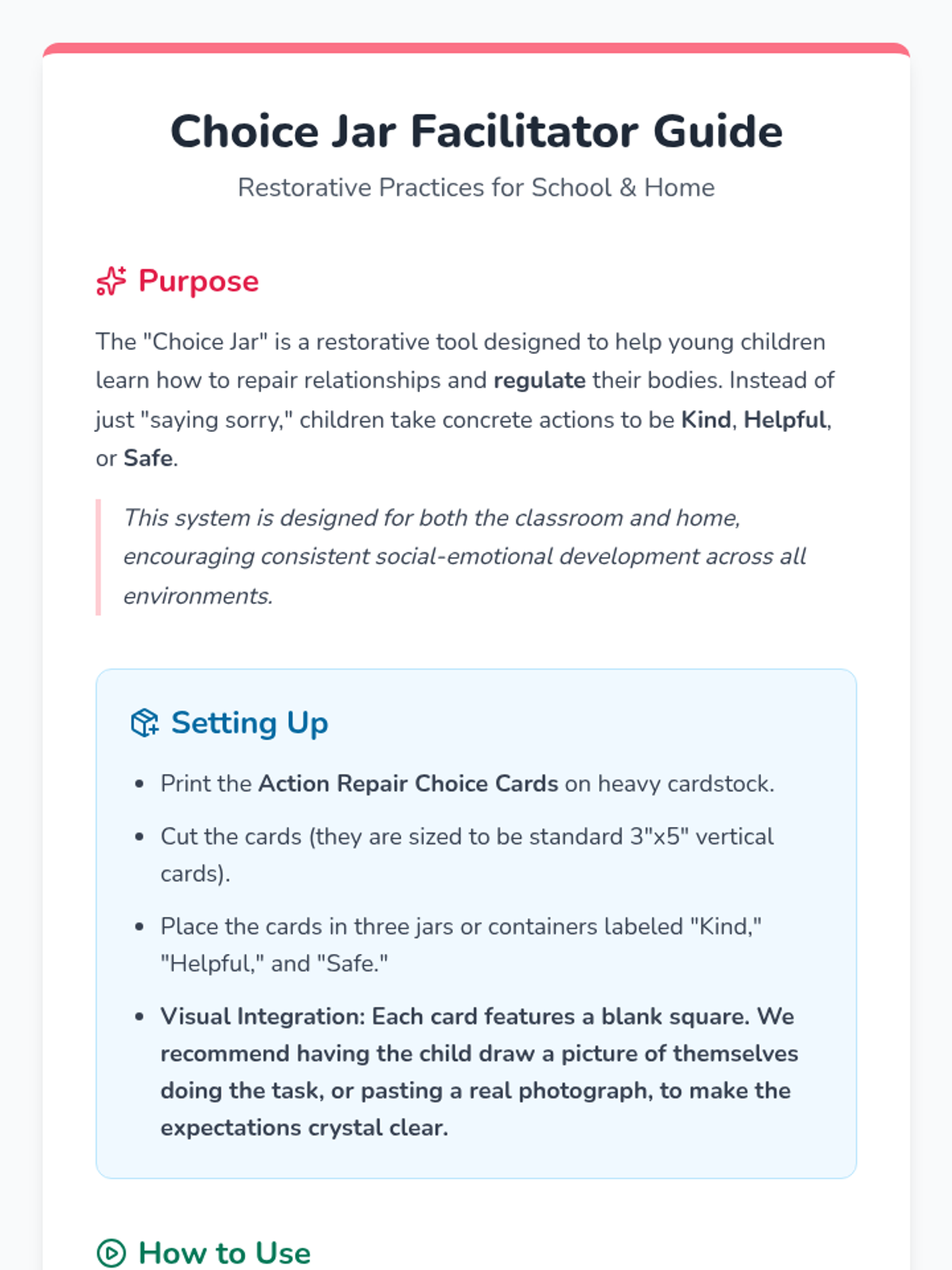
A set of behavior replacement and repair cards for preschool students, categorized into Kind, Helpful, and Safe actions to encourage positive social-emotional growth and restorative practices.
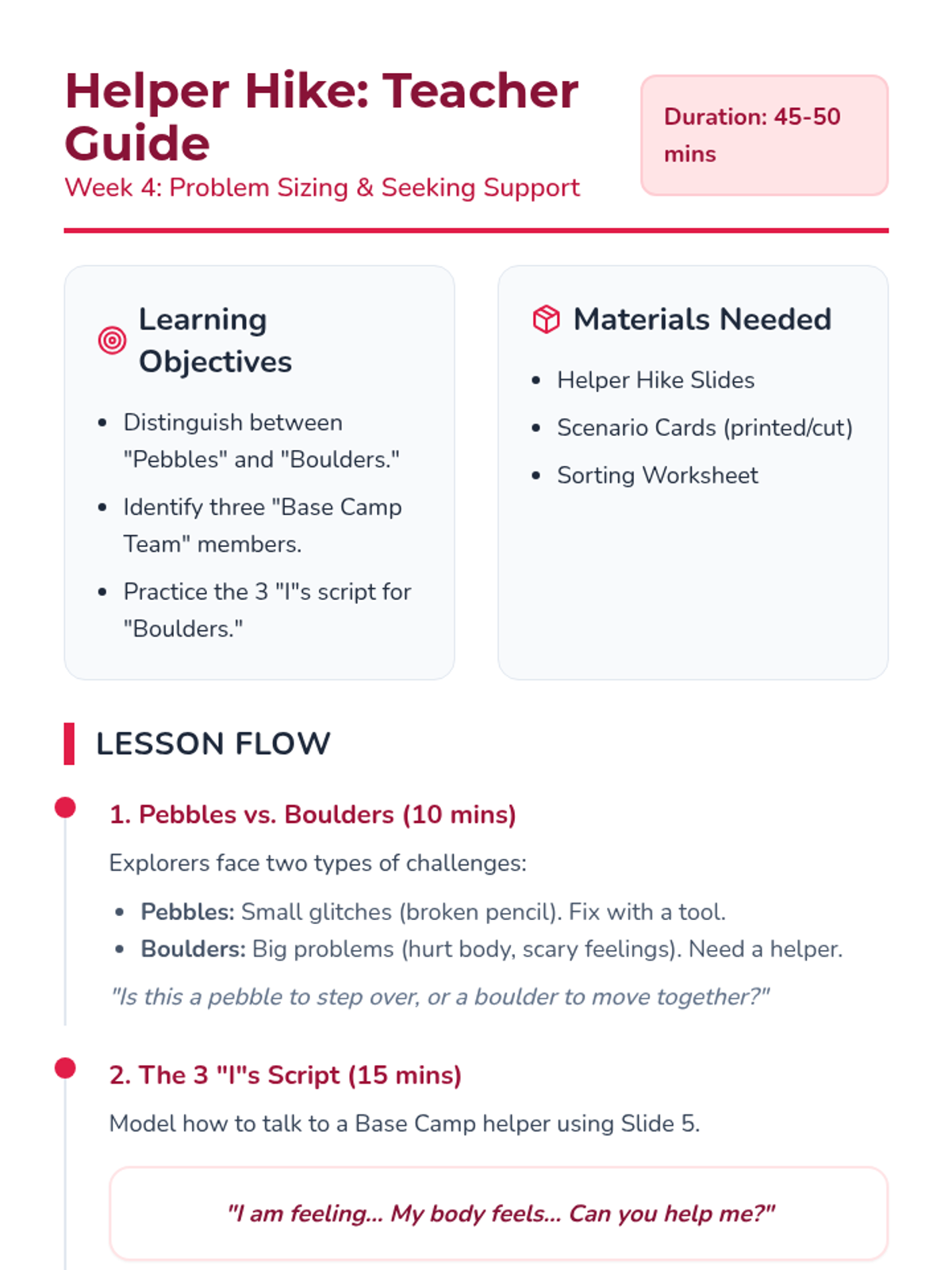
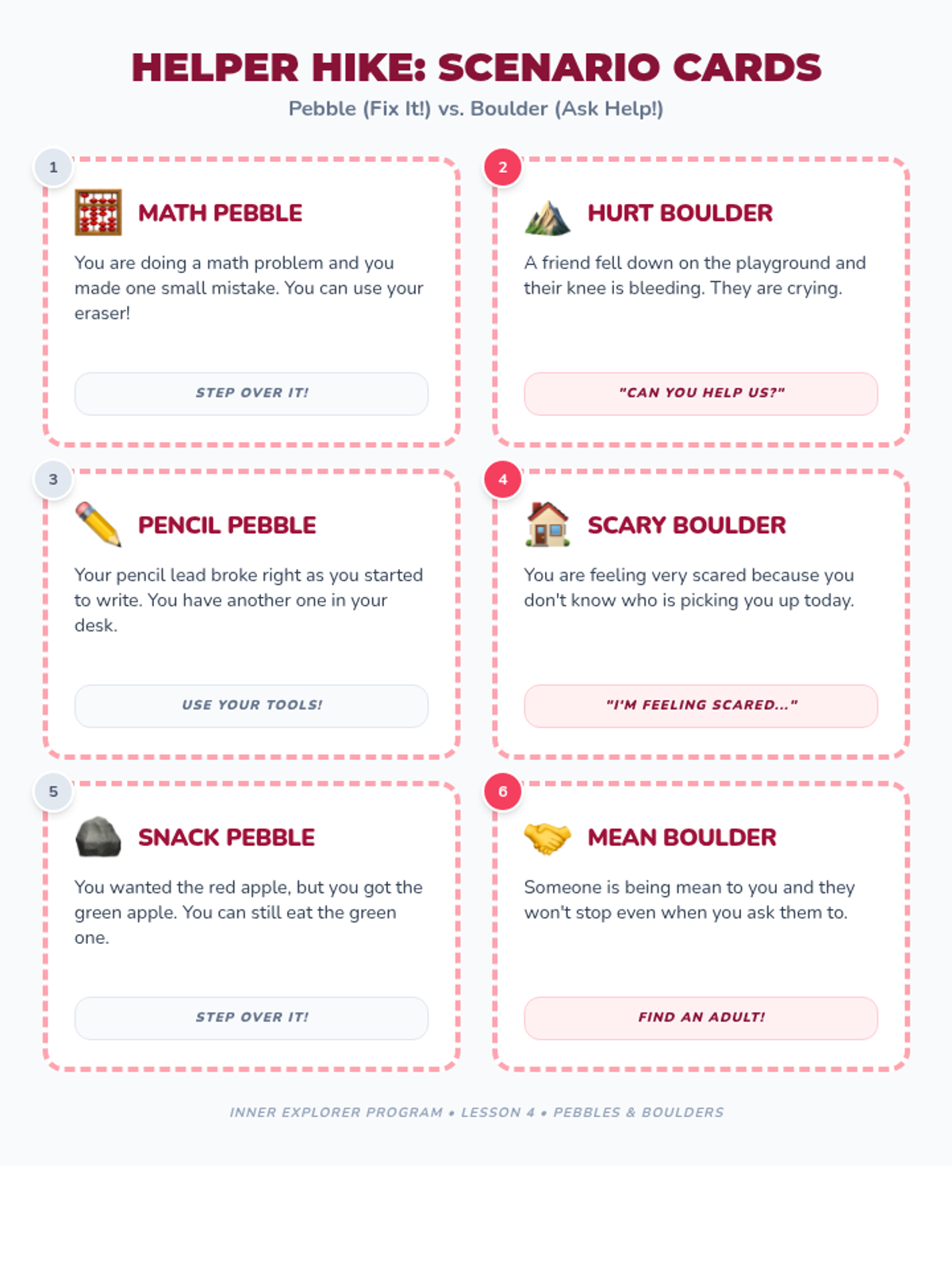
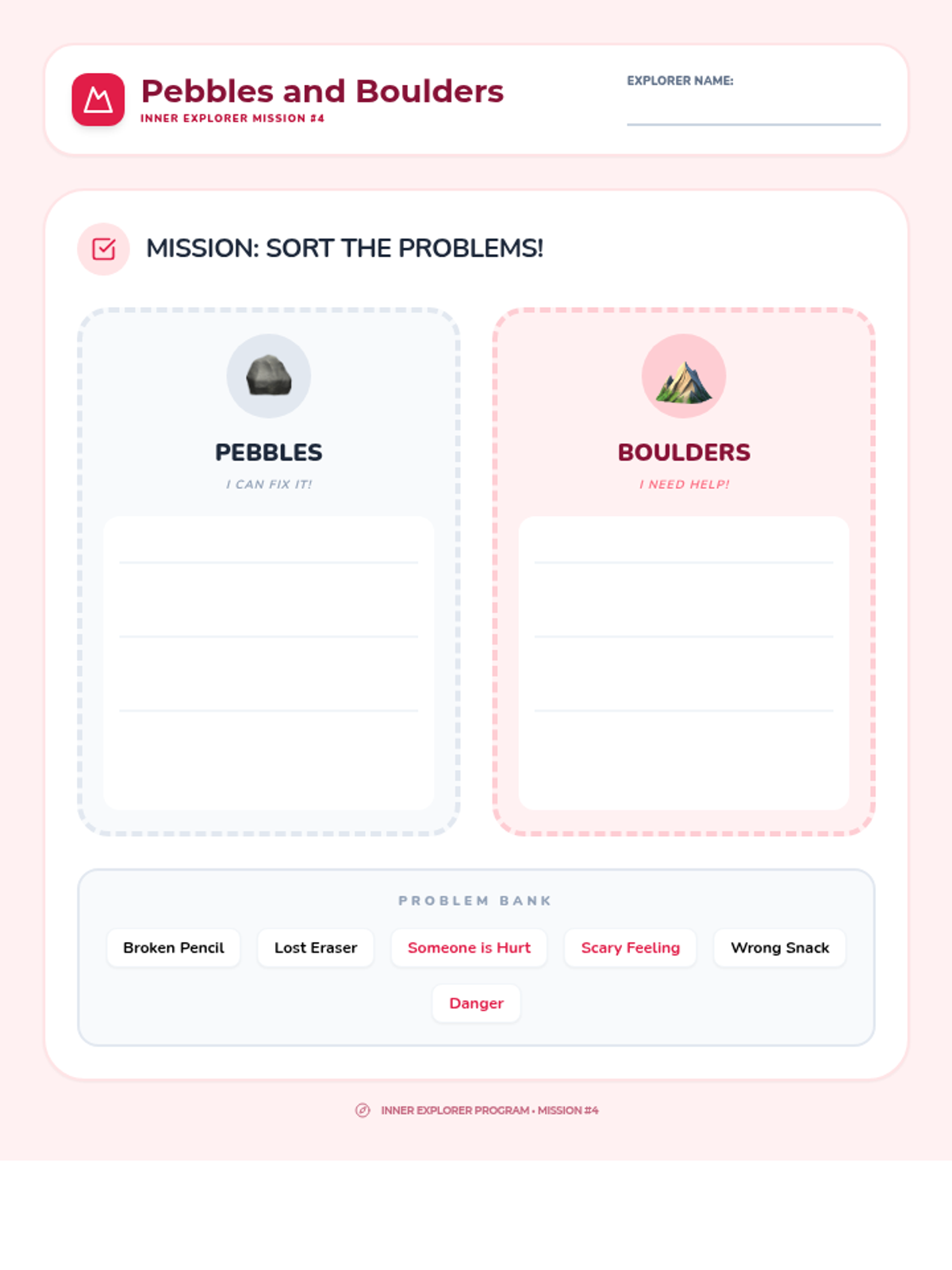
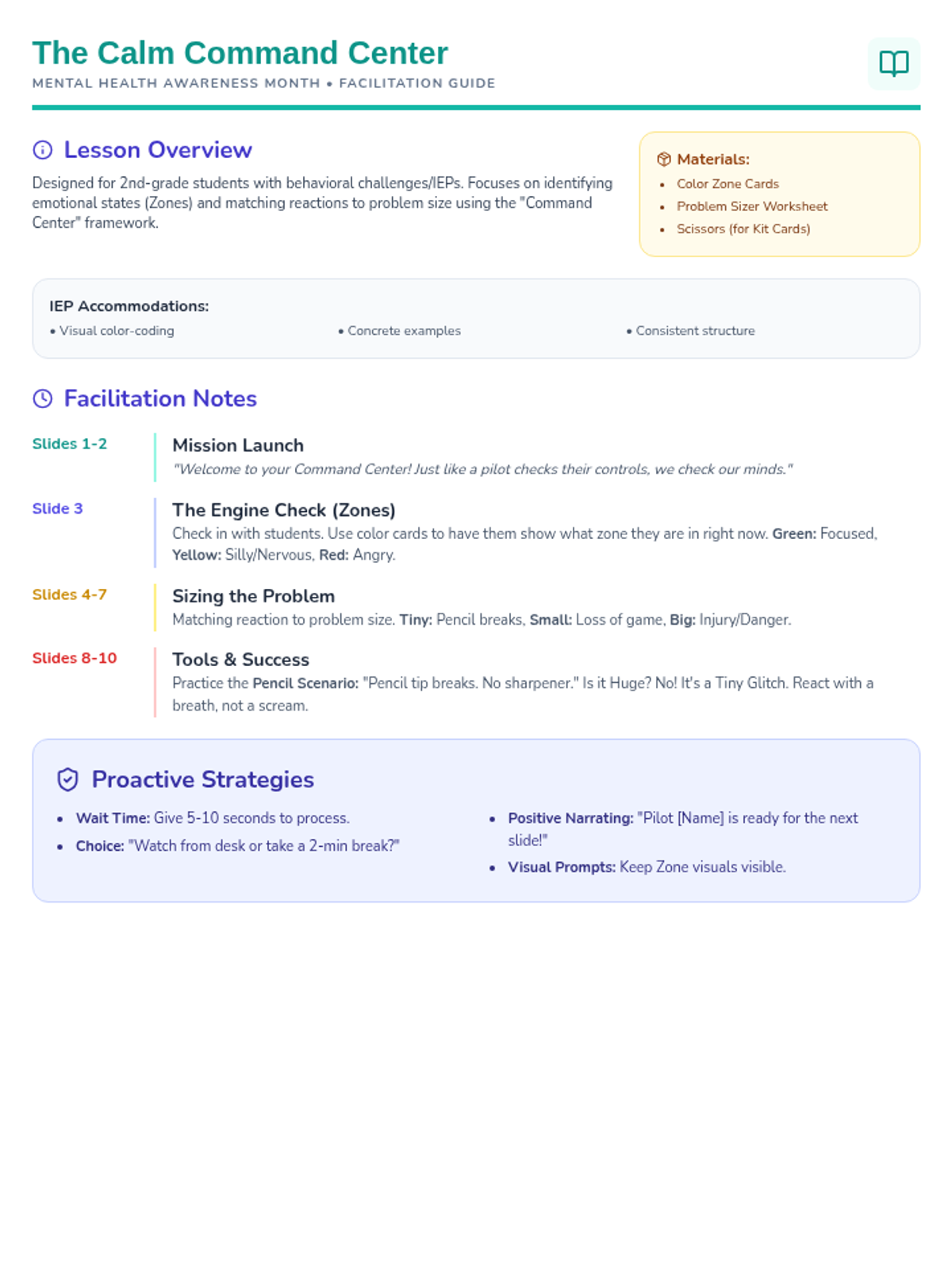
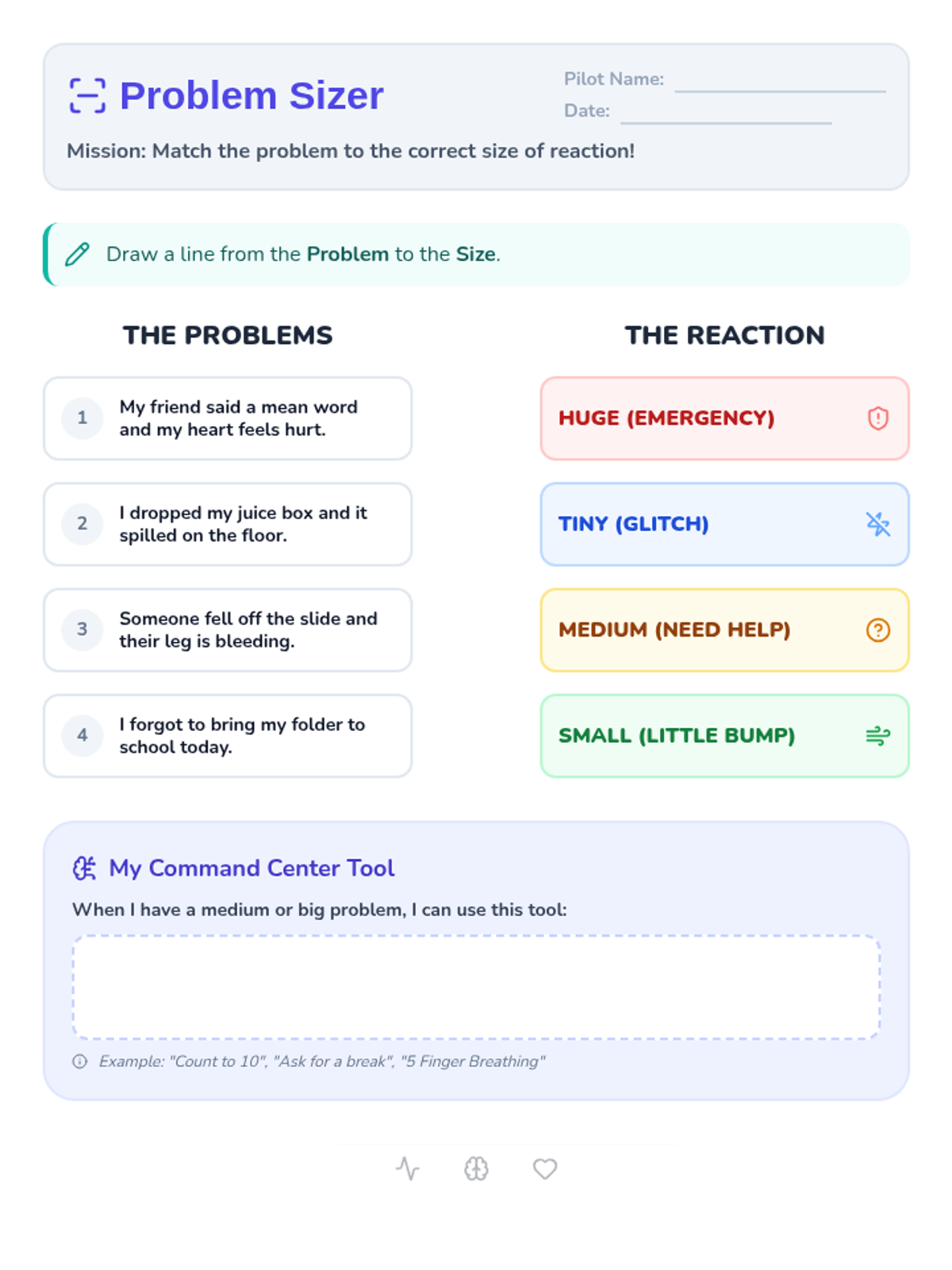
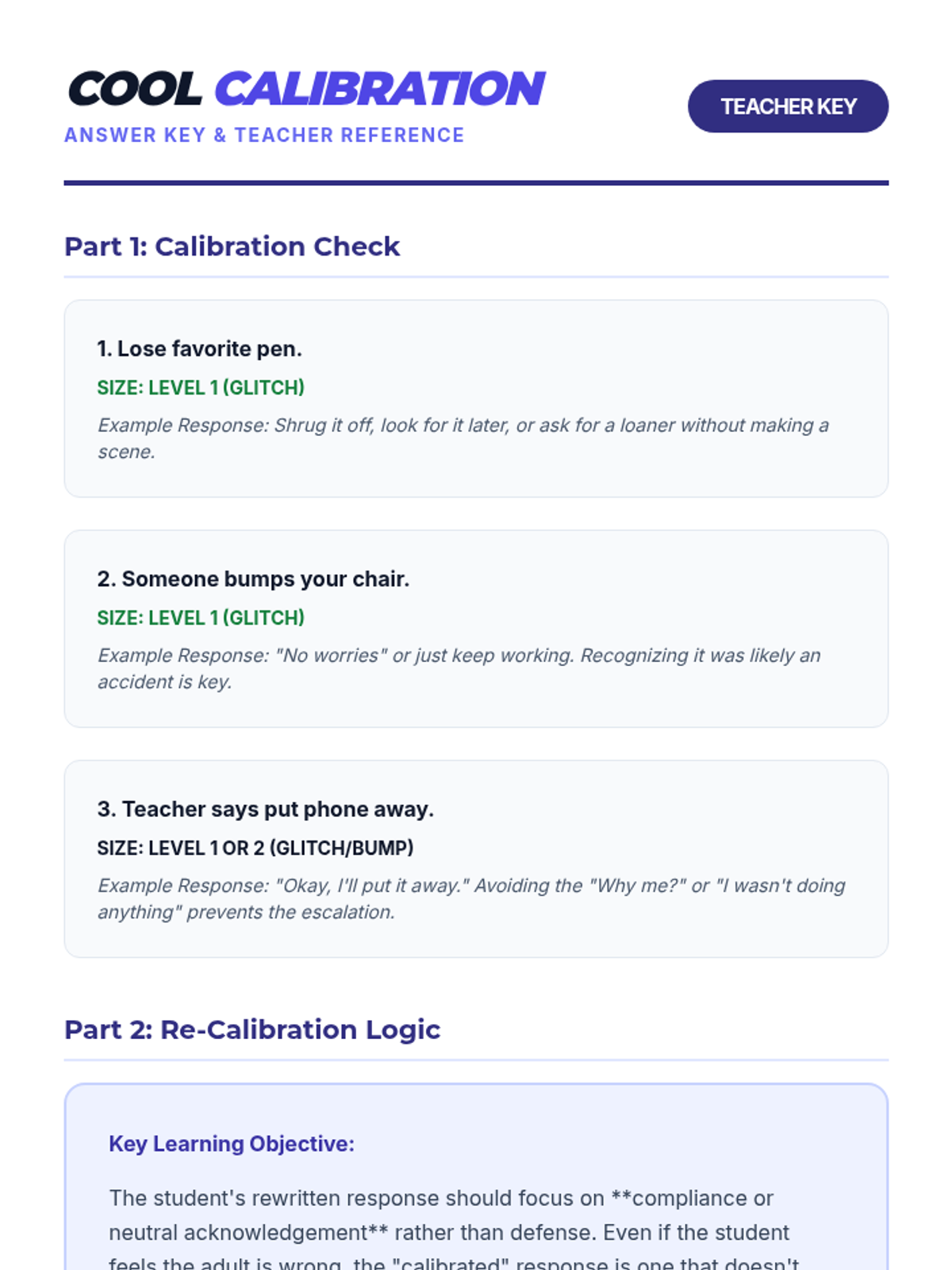
An introductory lesson focusing on identifying the size of problems and selecting appropriate self-regulation tools to manage emotions effectively in a virtual or classroom setting.
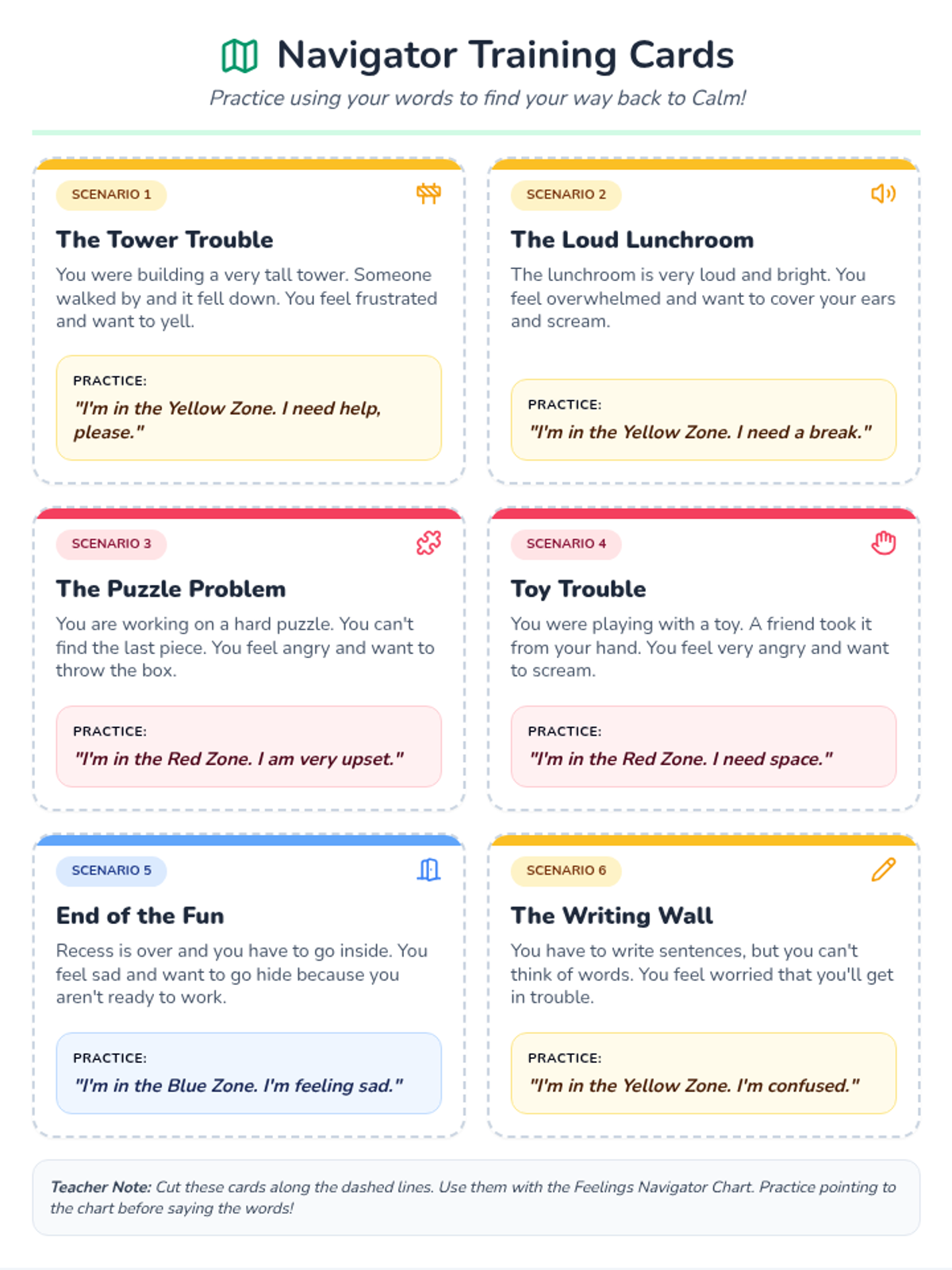
A lesson designed for two first-graders to learn how to replace screaming and eloping with verbal communication using a feelings chart. Through role-play and visual aids, students practice identifying their emotions and stating their needs.
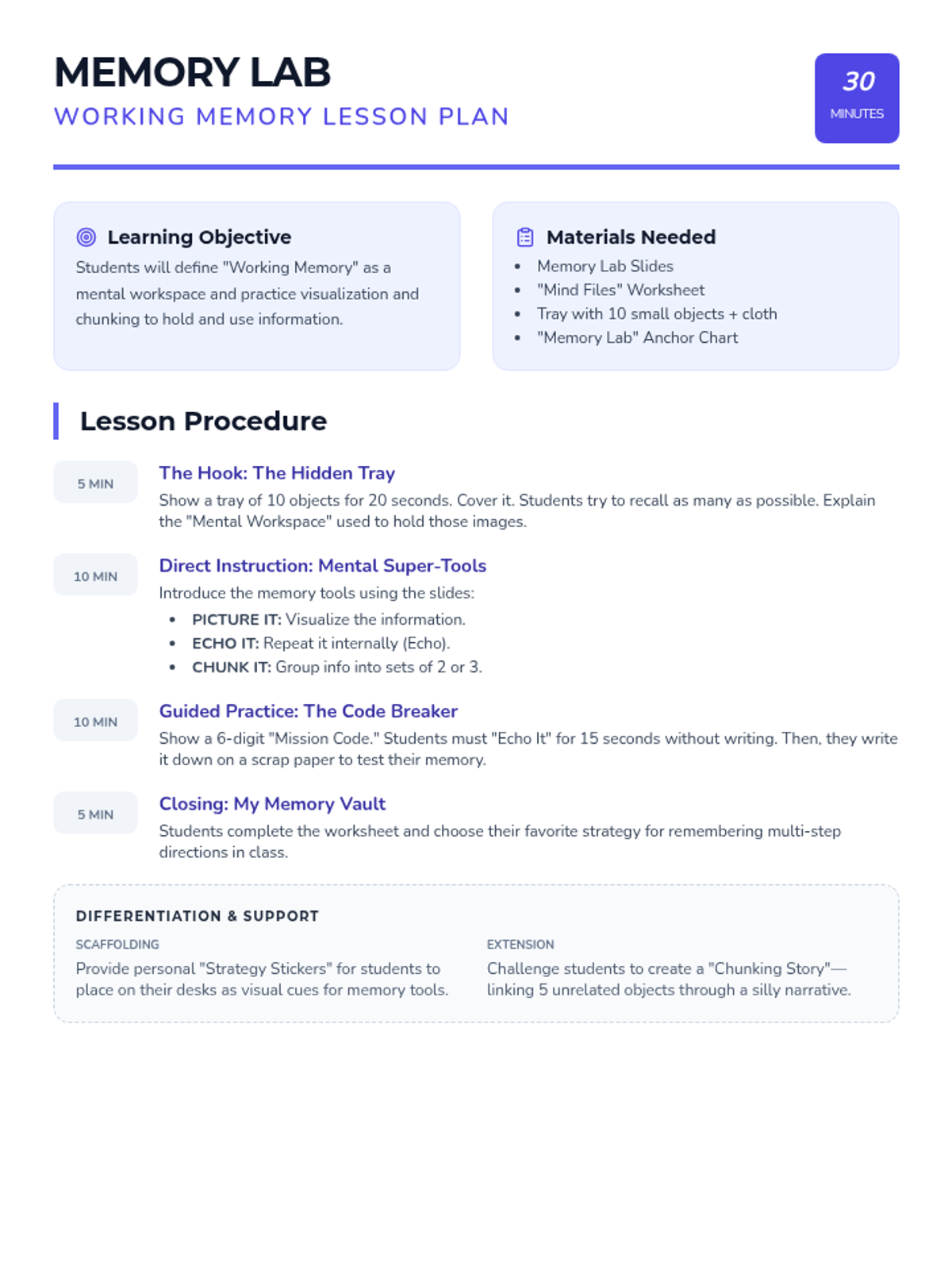
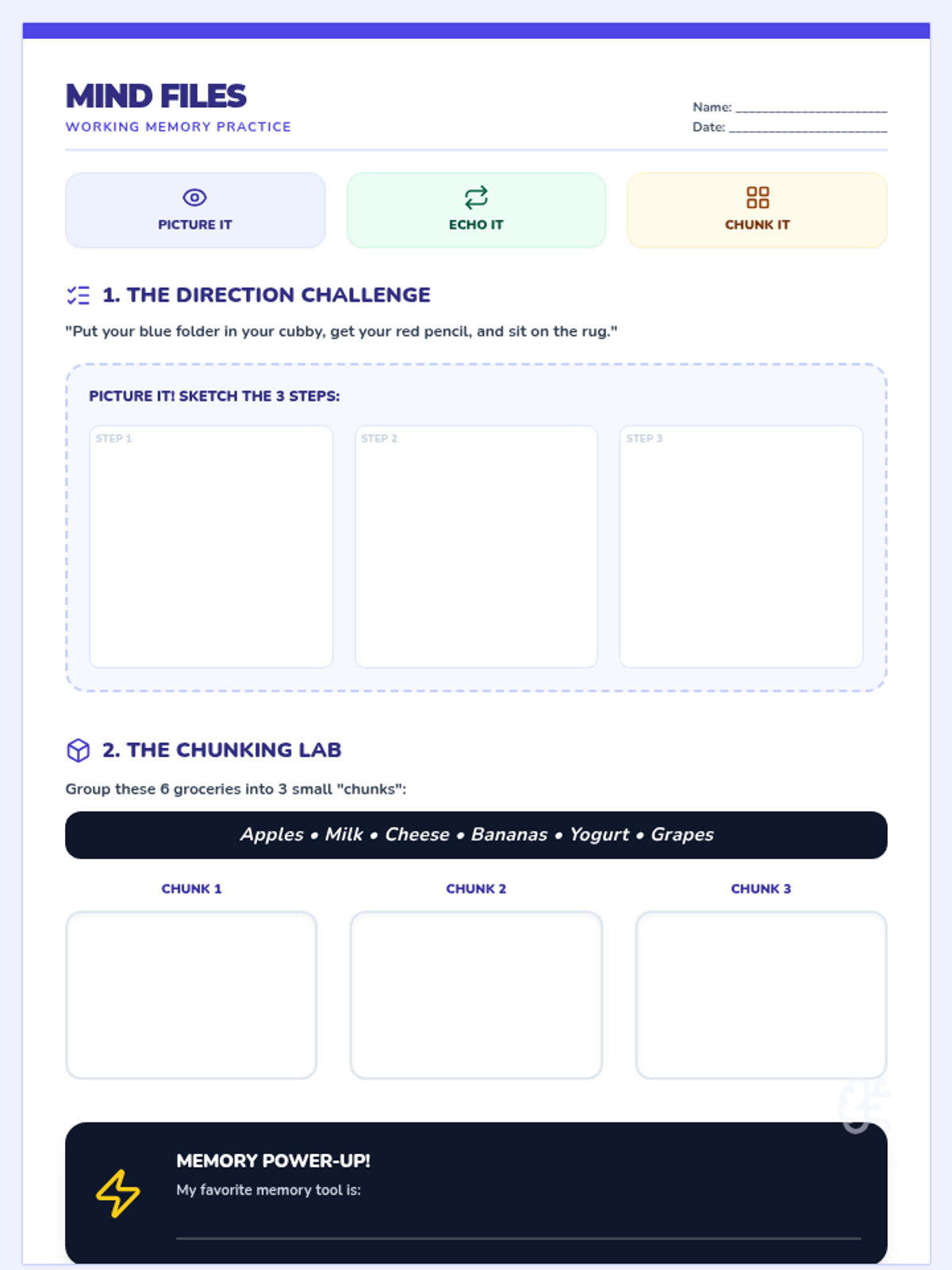
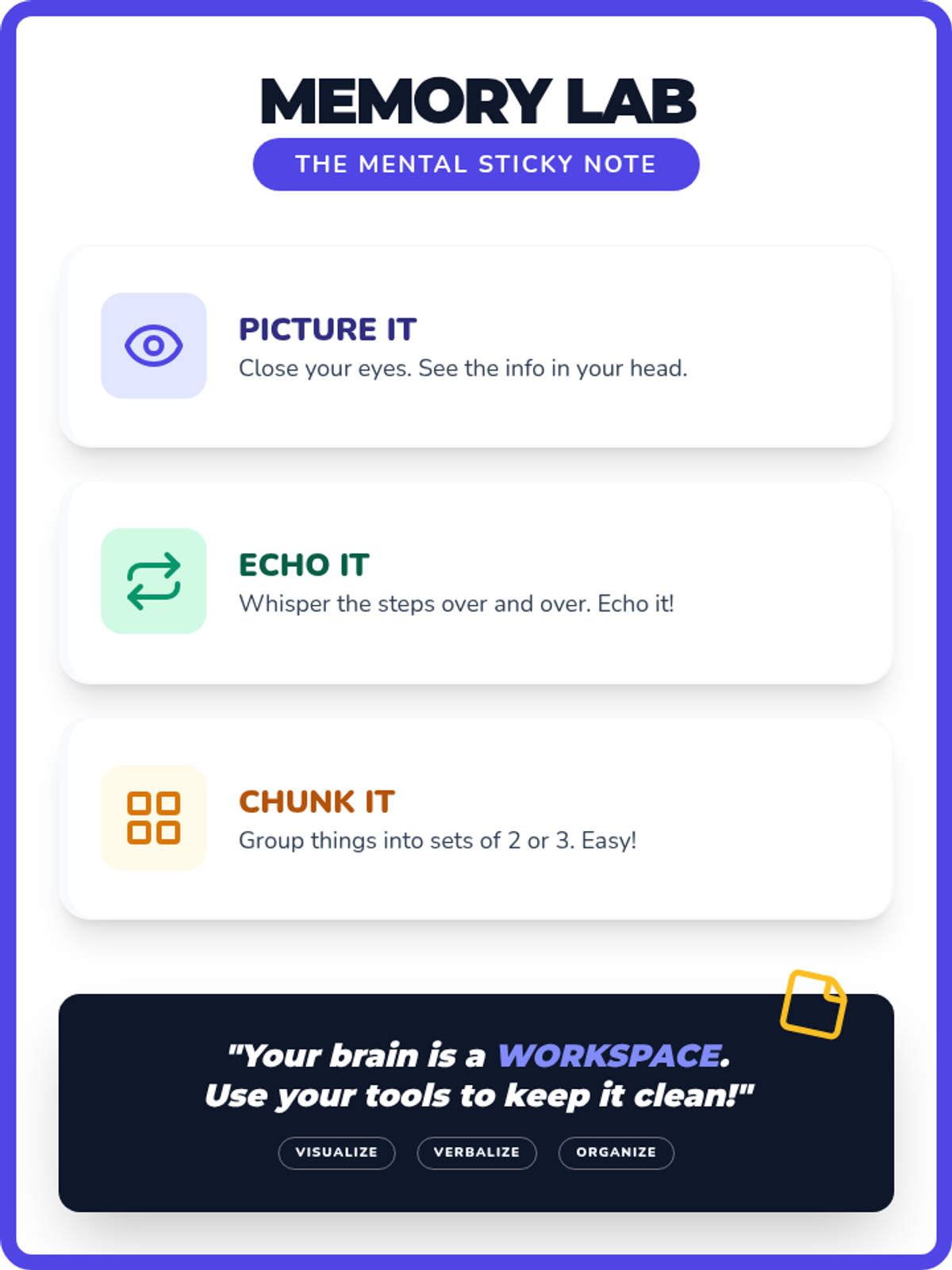
Students discover techniques like visualization and chunking to hold and manipulate information in their 'Memory Lab'.
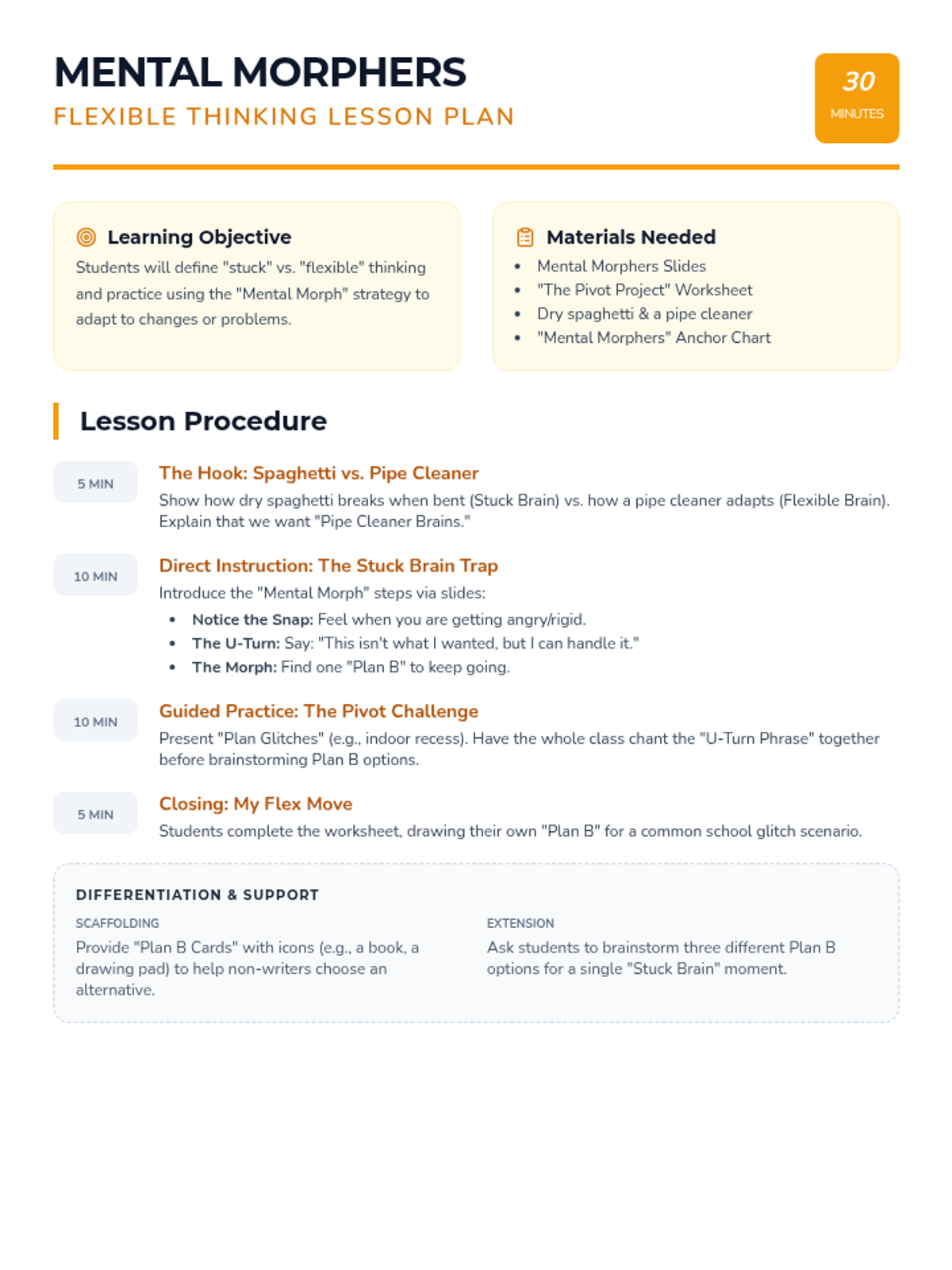
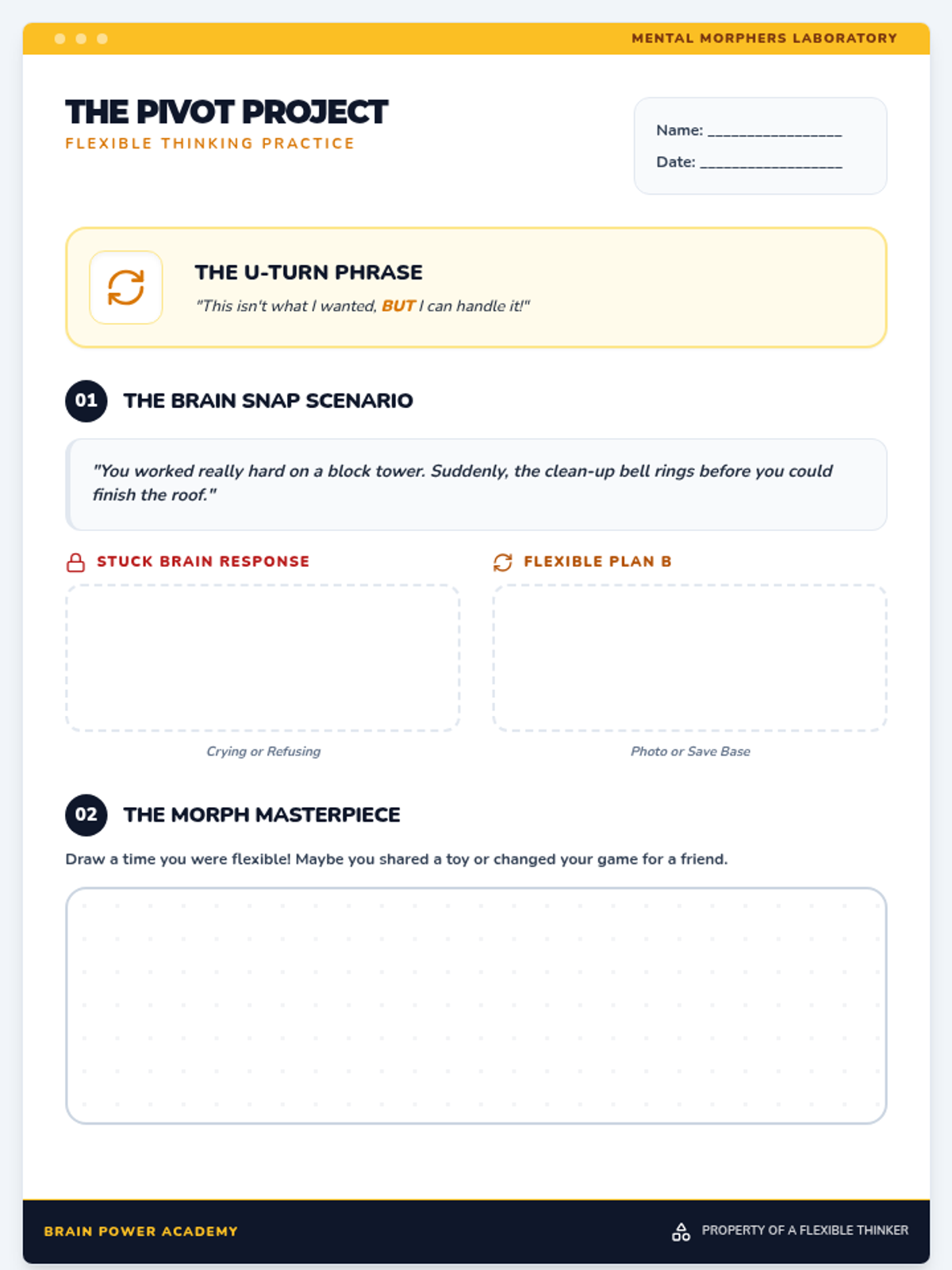
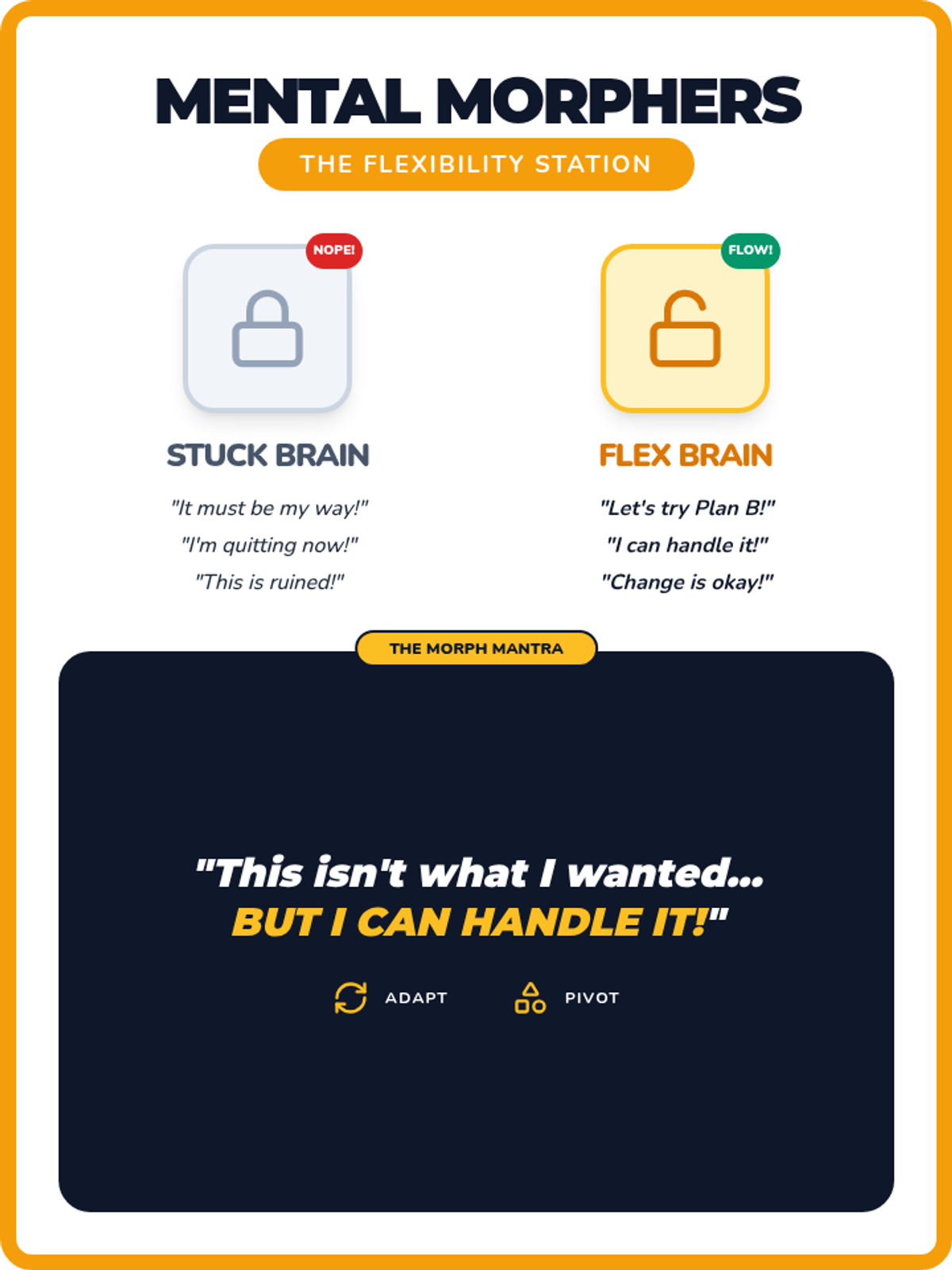
Students practice adapting to changes and seeing things from different perspectives using 'Mental Morphers' strategies.
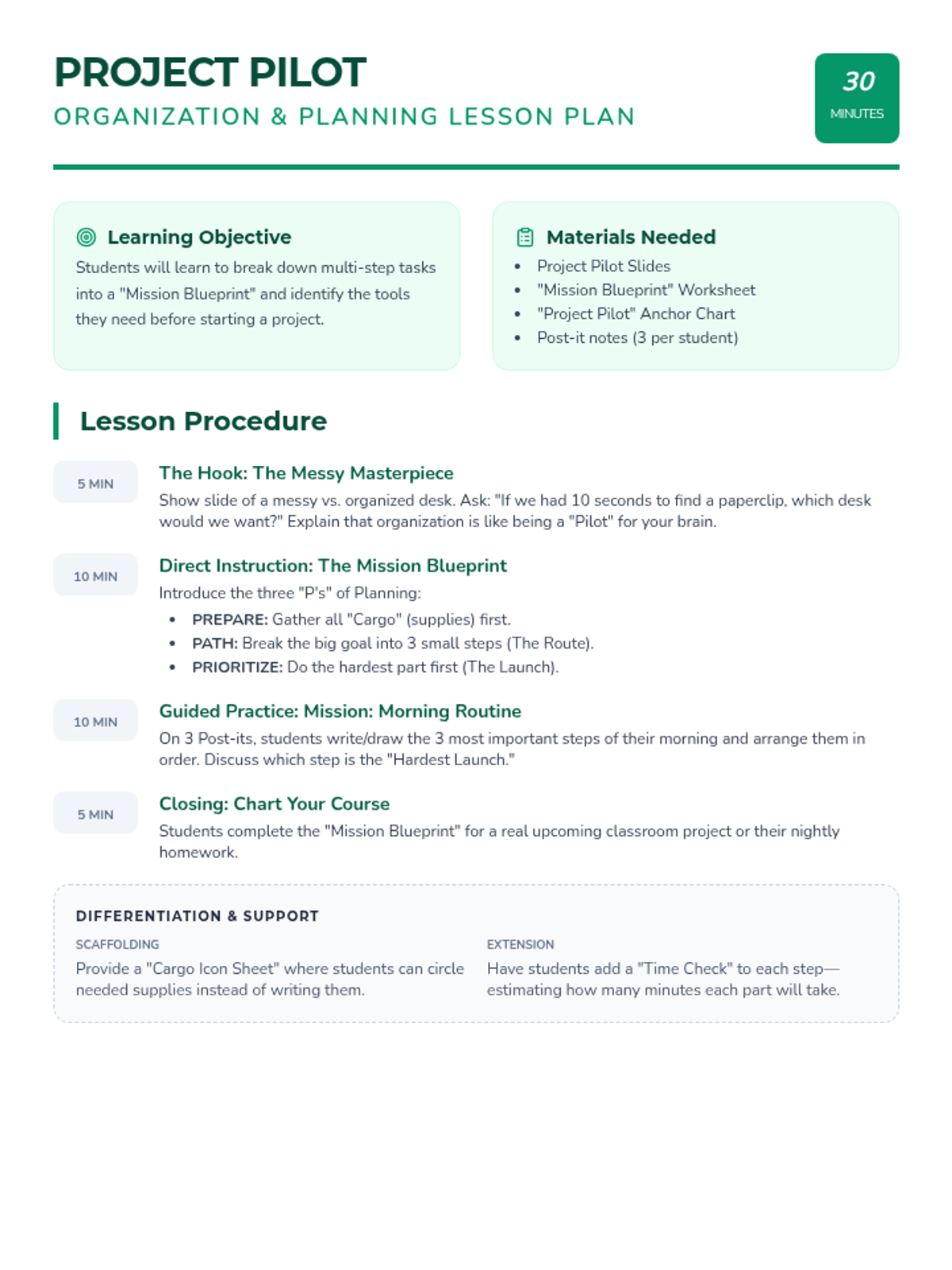
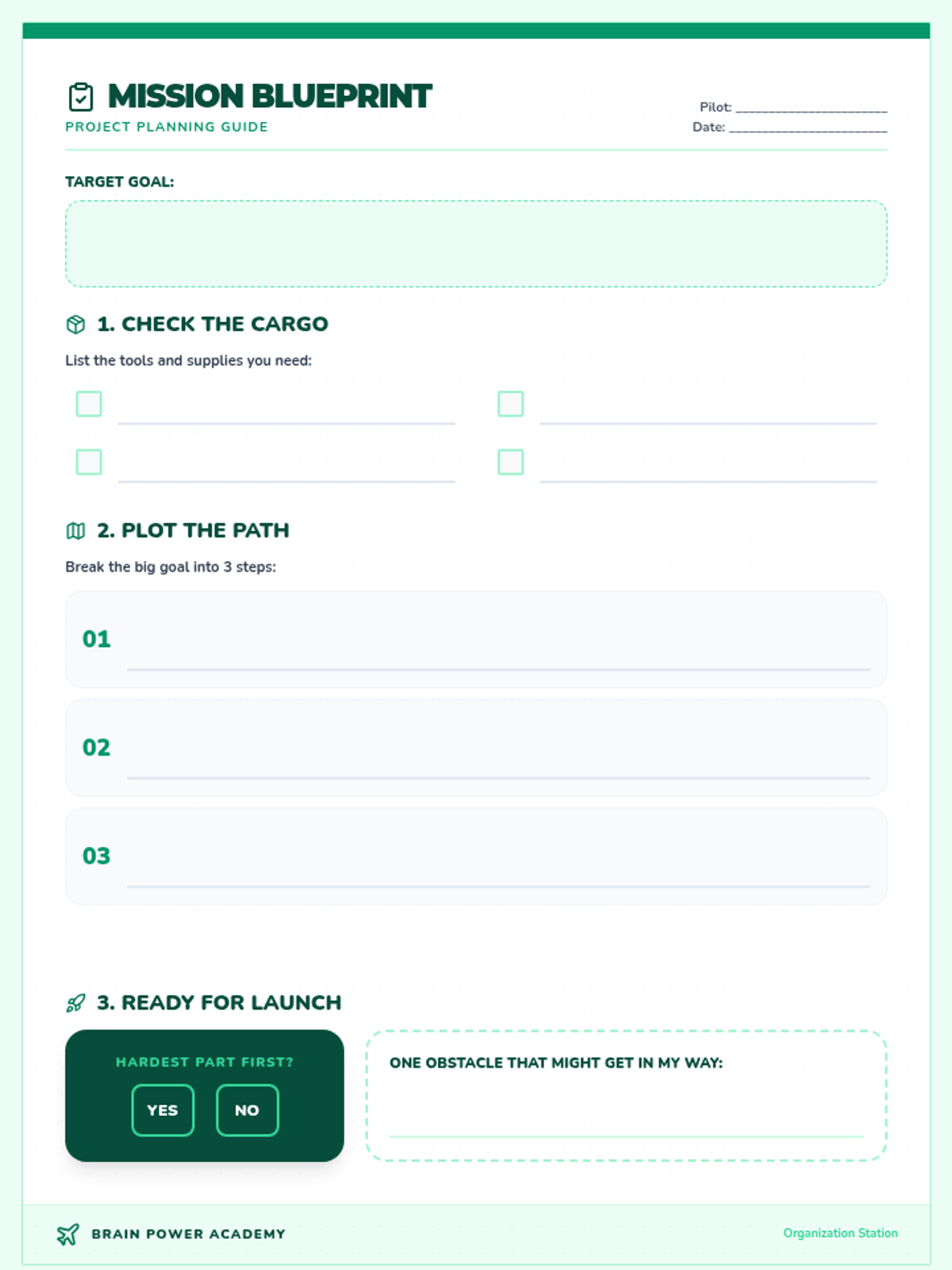
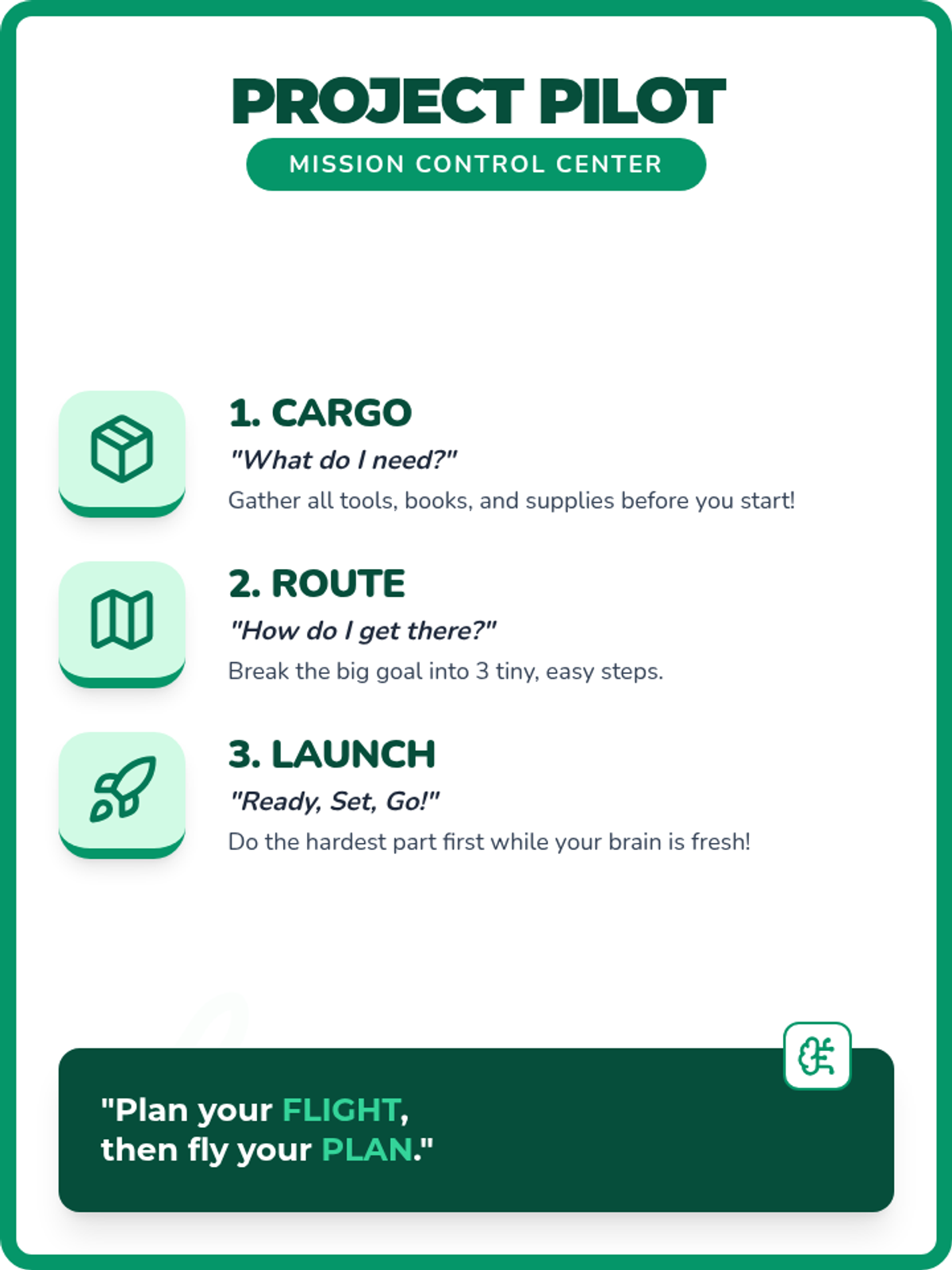
Students explore how to break big tasks into small steps and organize their tools for success using the 'Mission Blueprint' method.
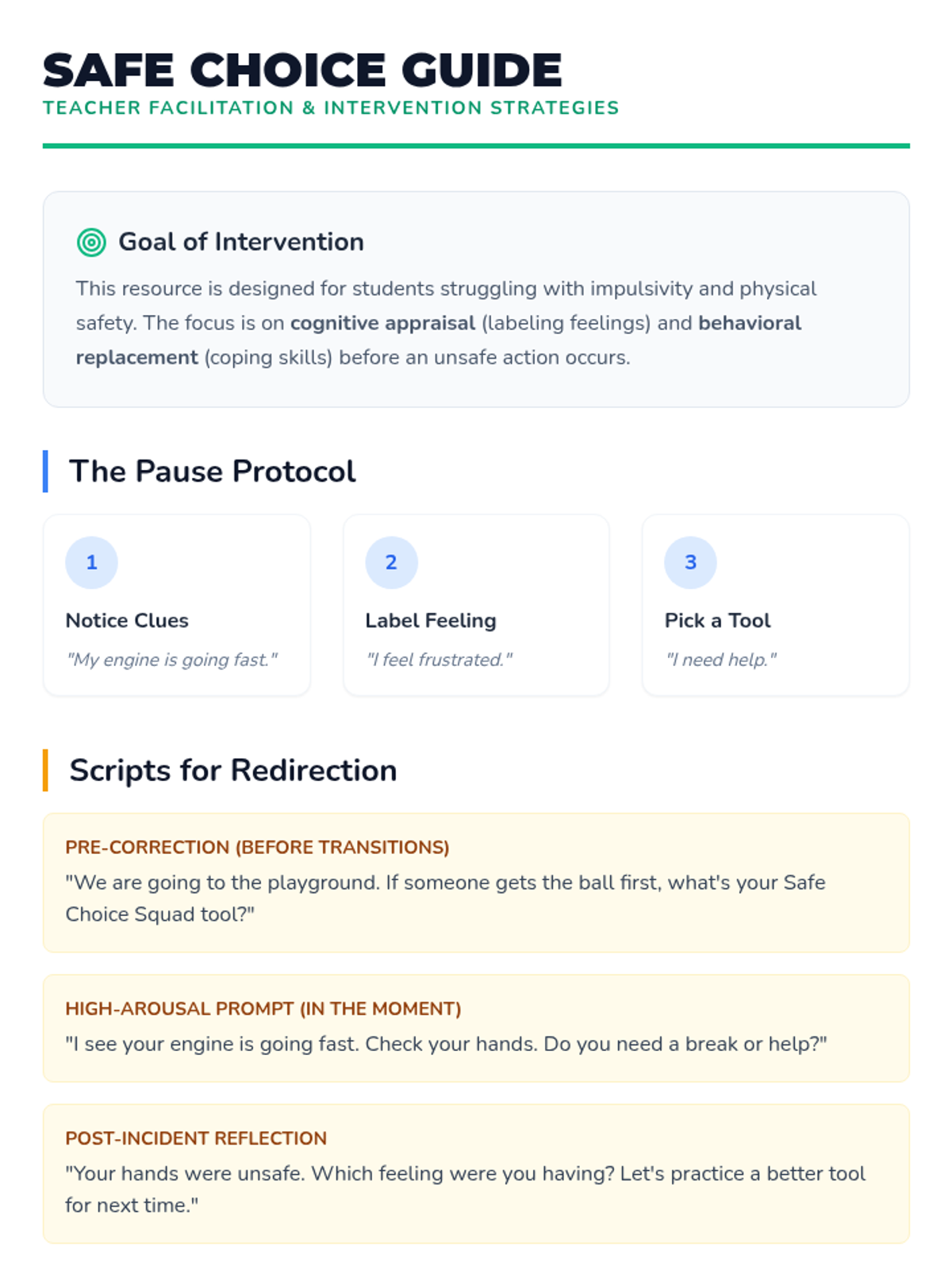
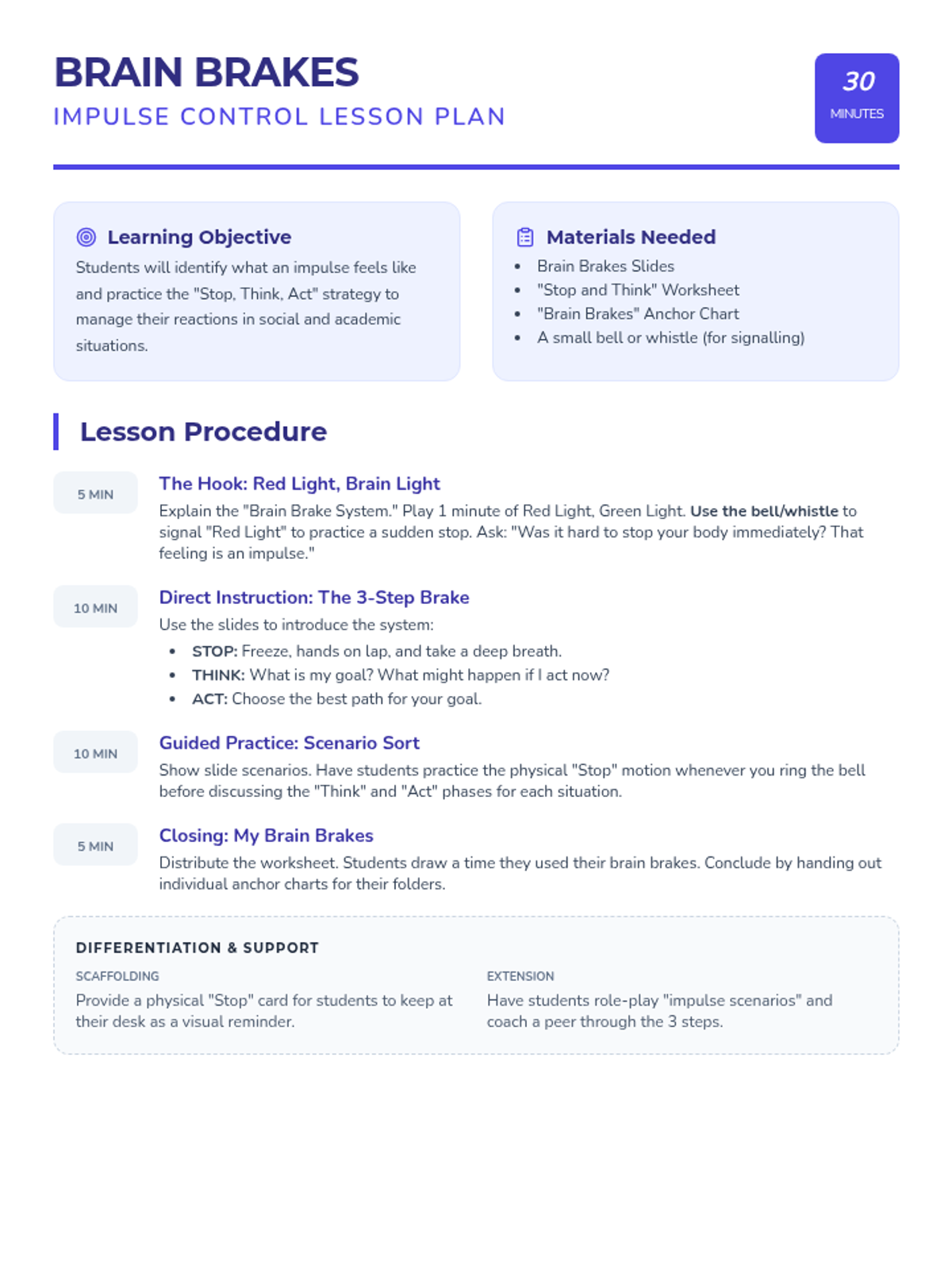
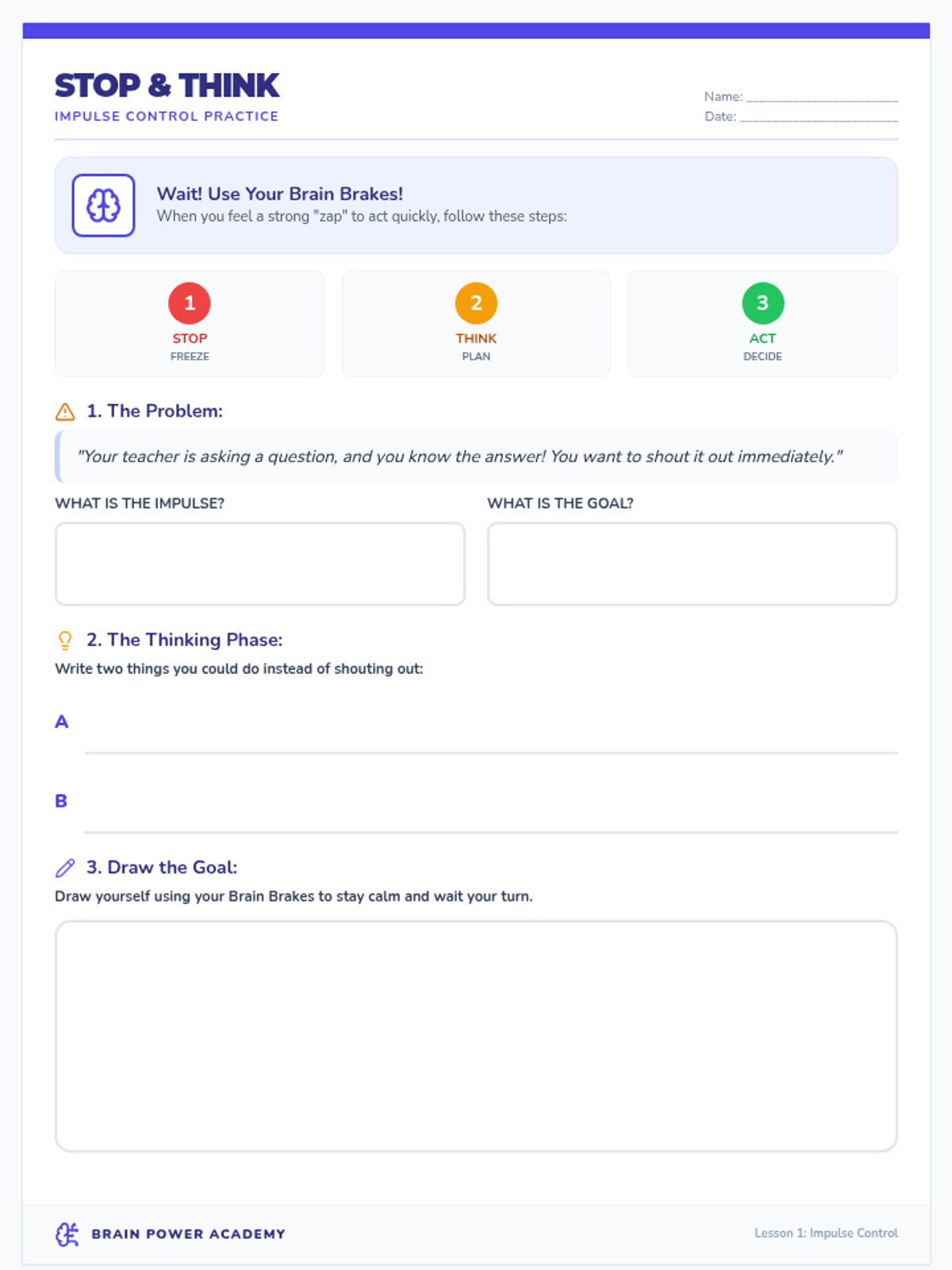
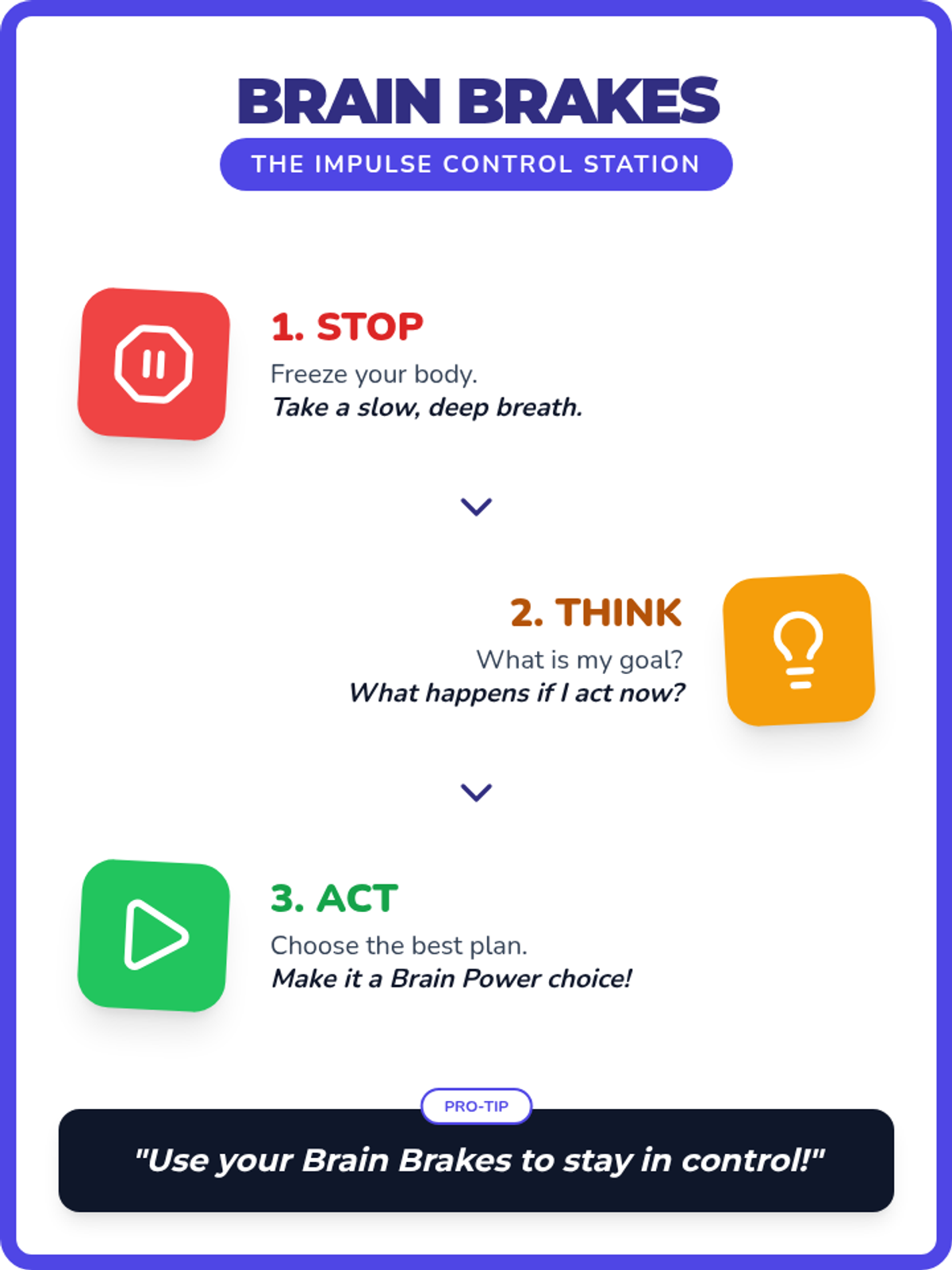
Students learn to identify impulsive urges and practice the 'Stop, Think, Act' strategy using the metaphor of 'Brain Brakes'.
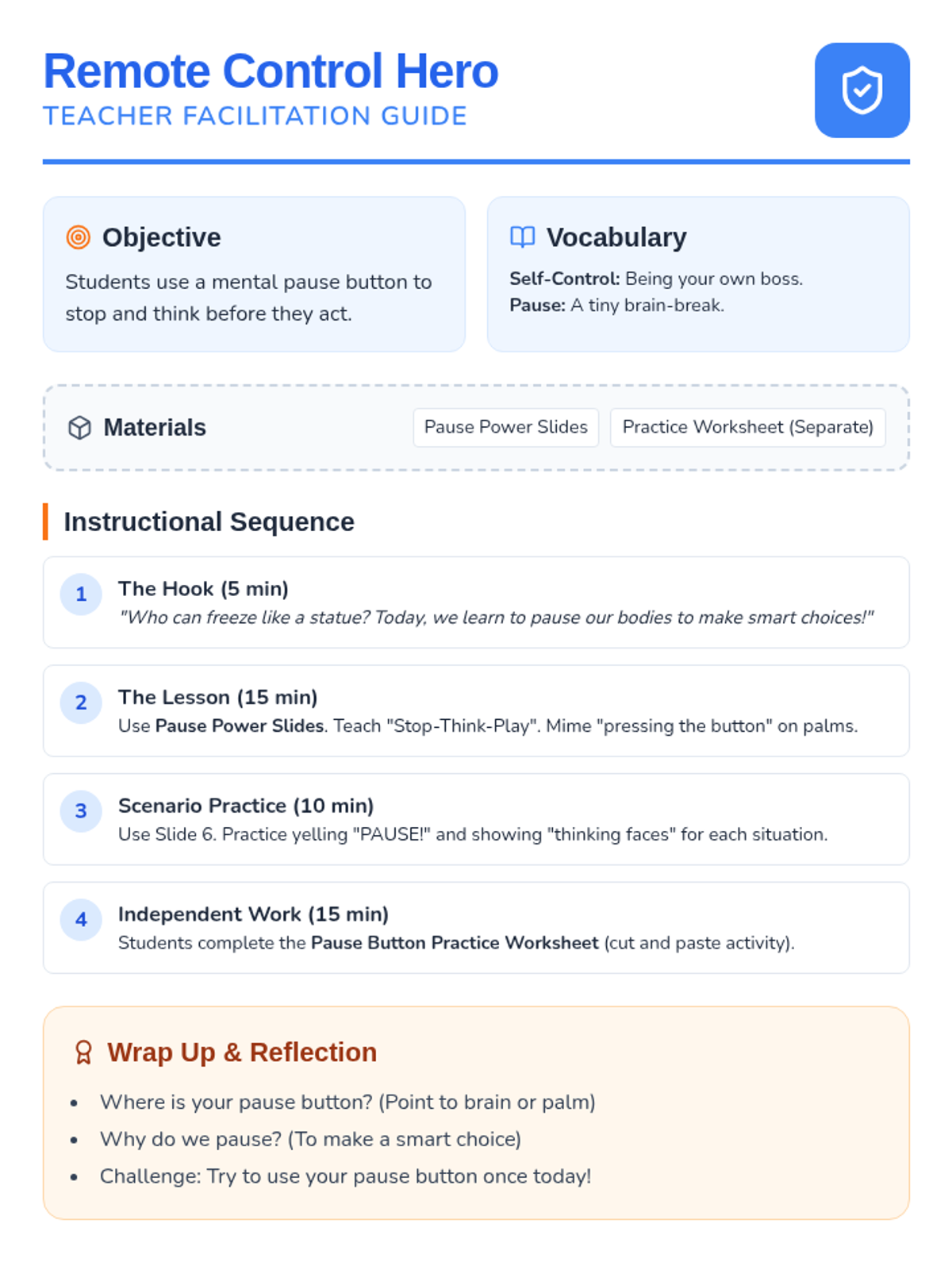
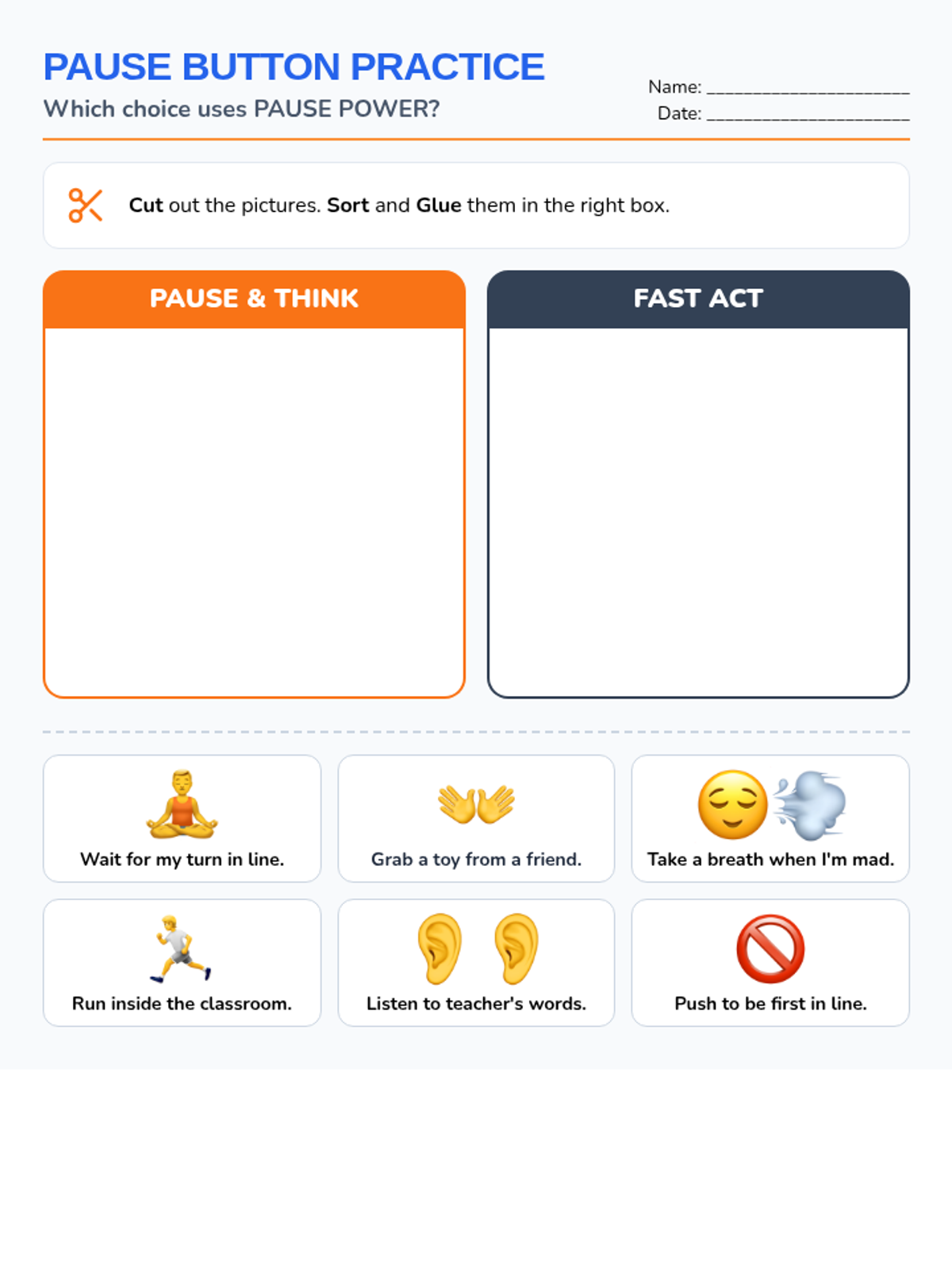
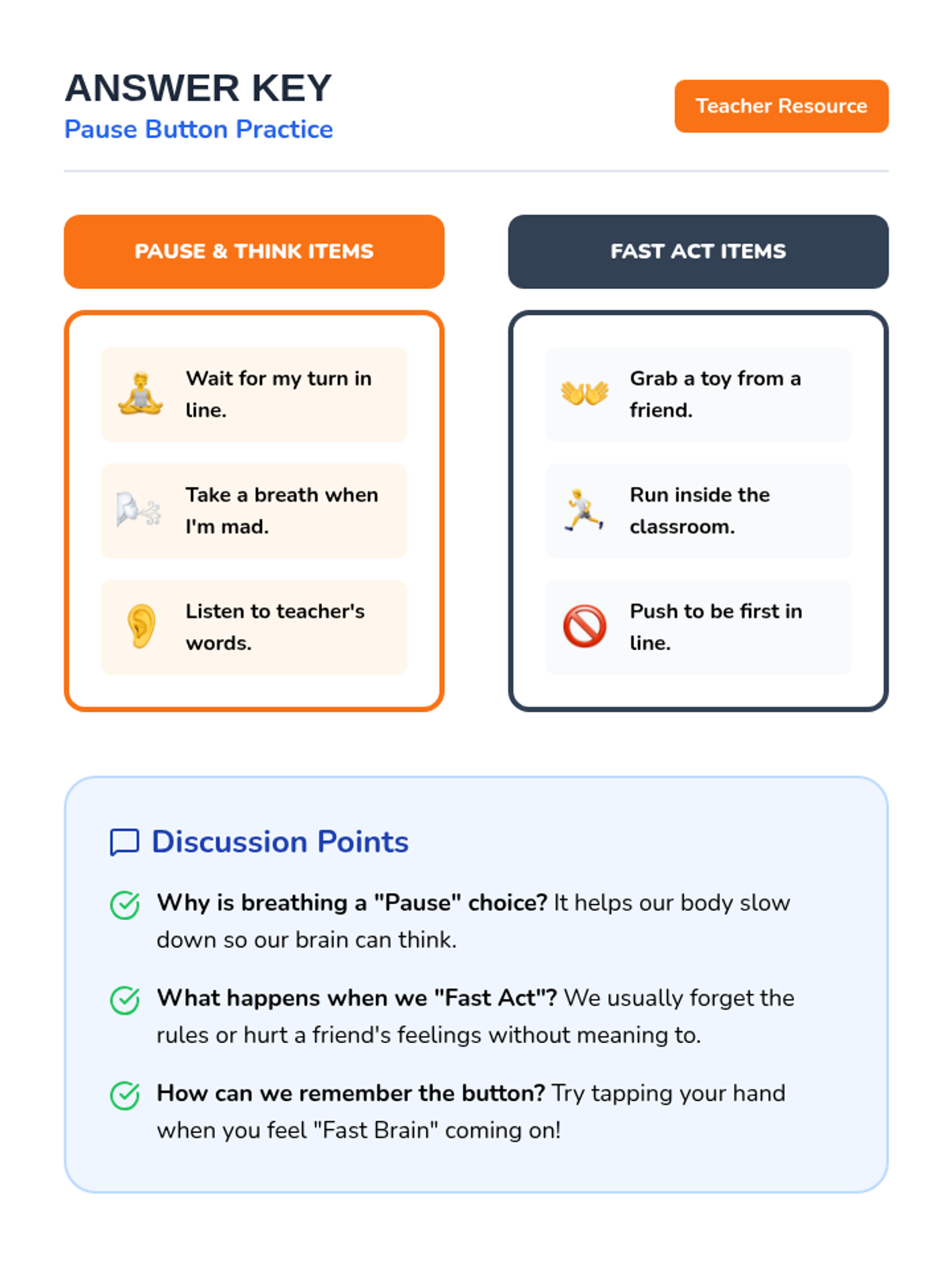
A lesson for kindergarten students to learn self-control using the 'Pause Button' strategy. Students explore how to think before they act through interactive slides and a hands-on sorting activity.
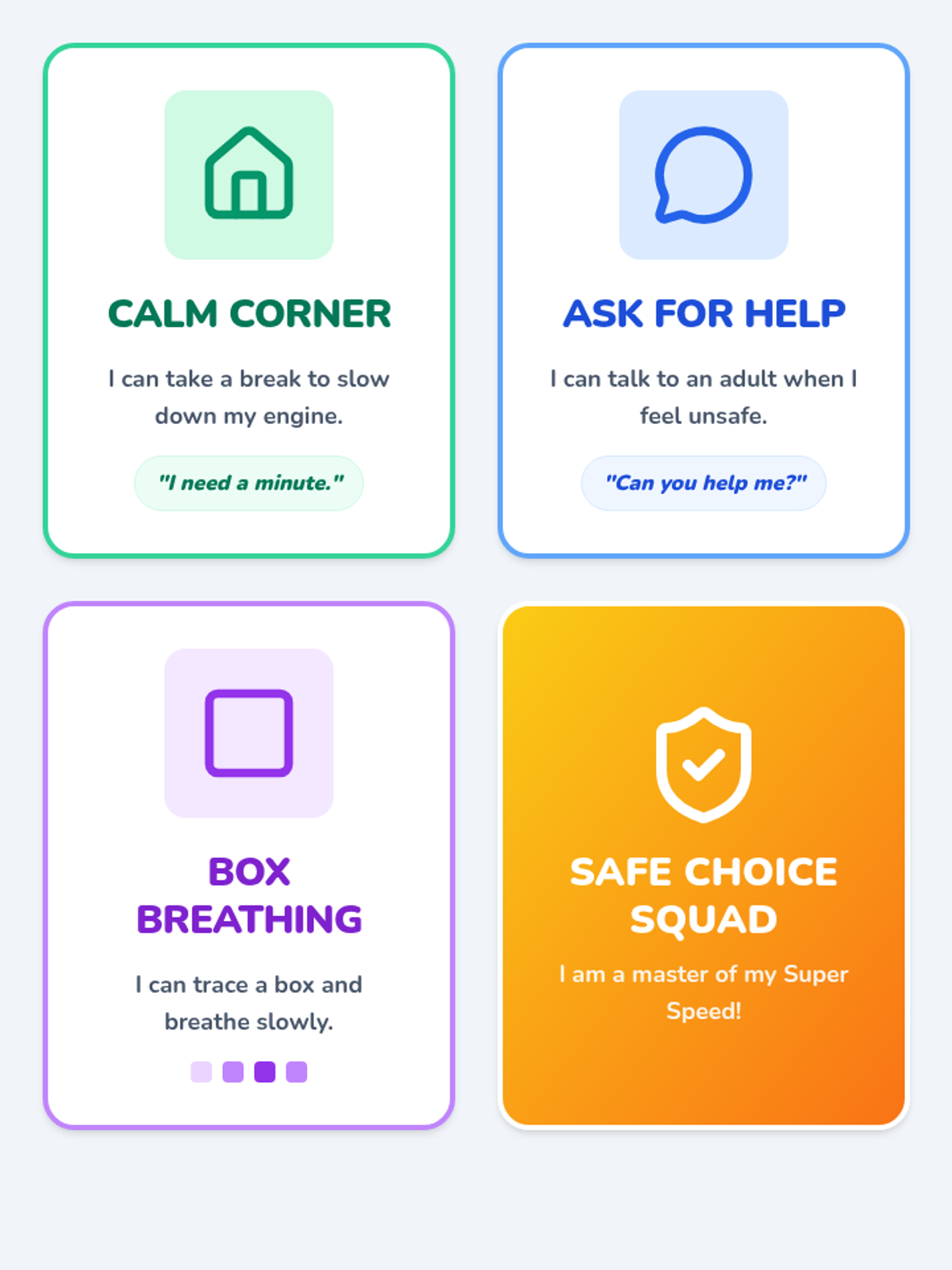
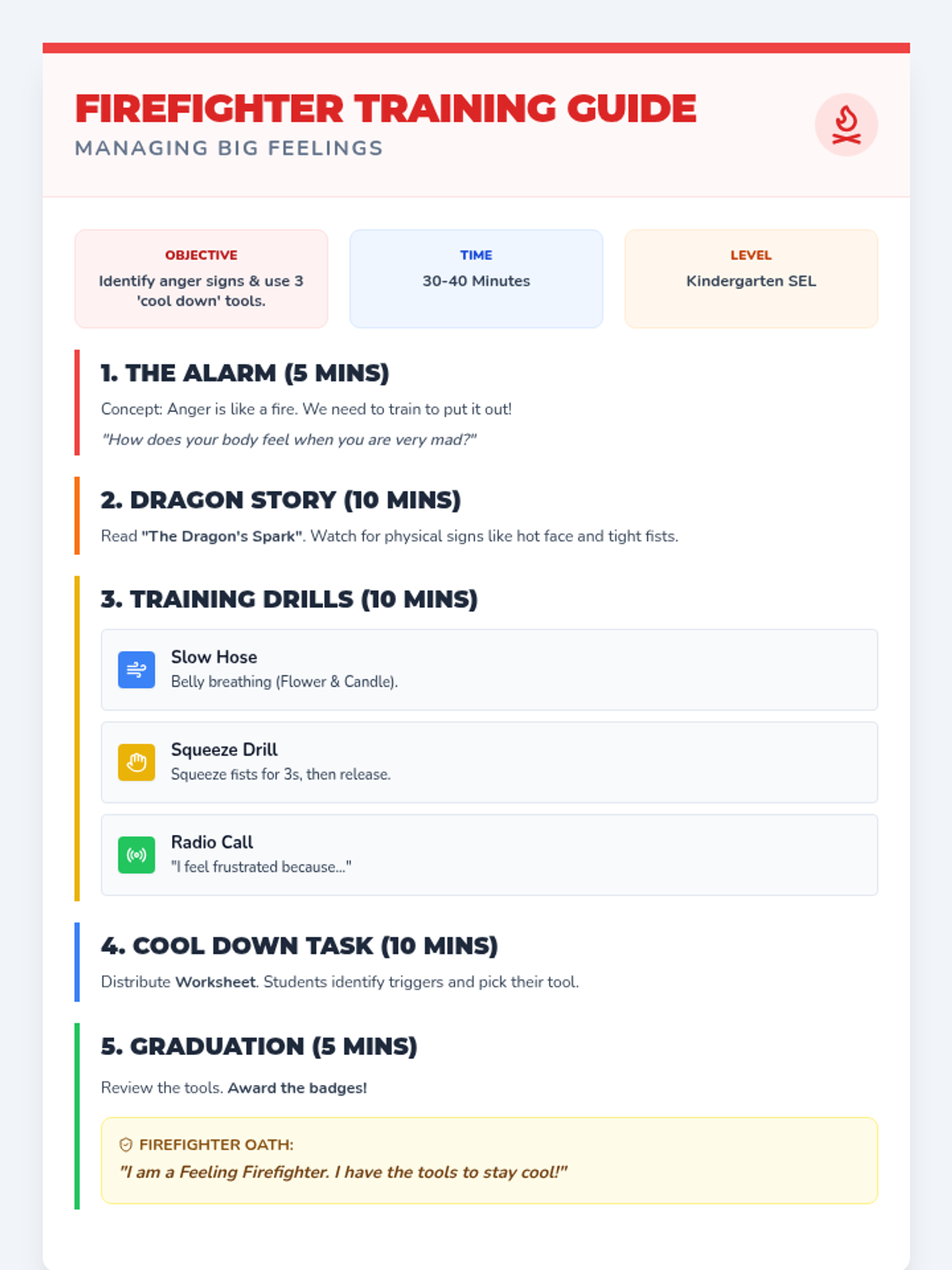
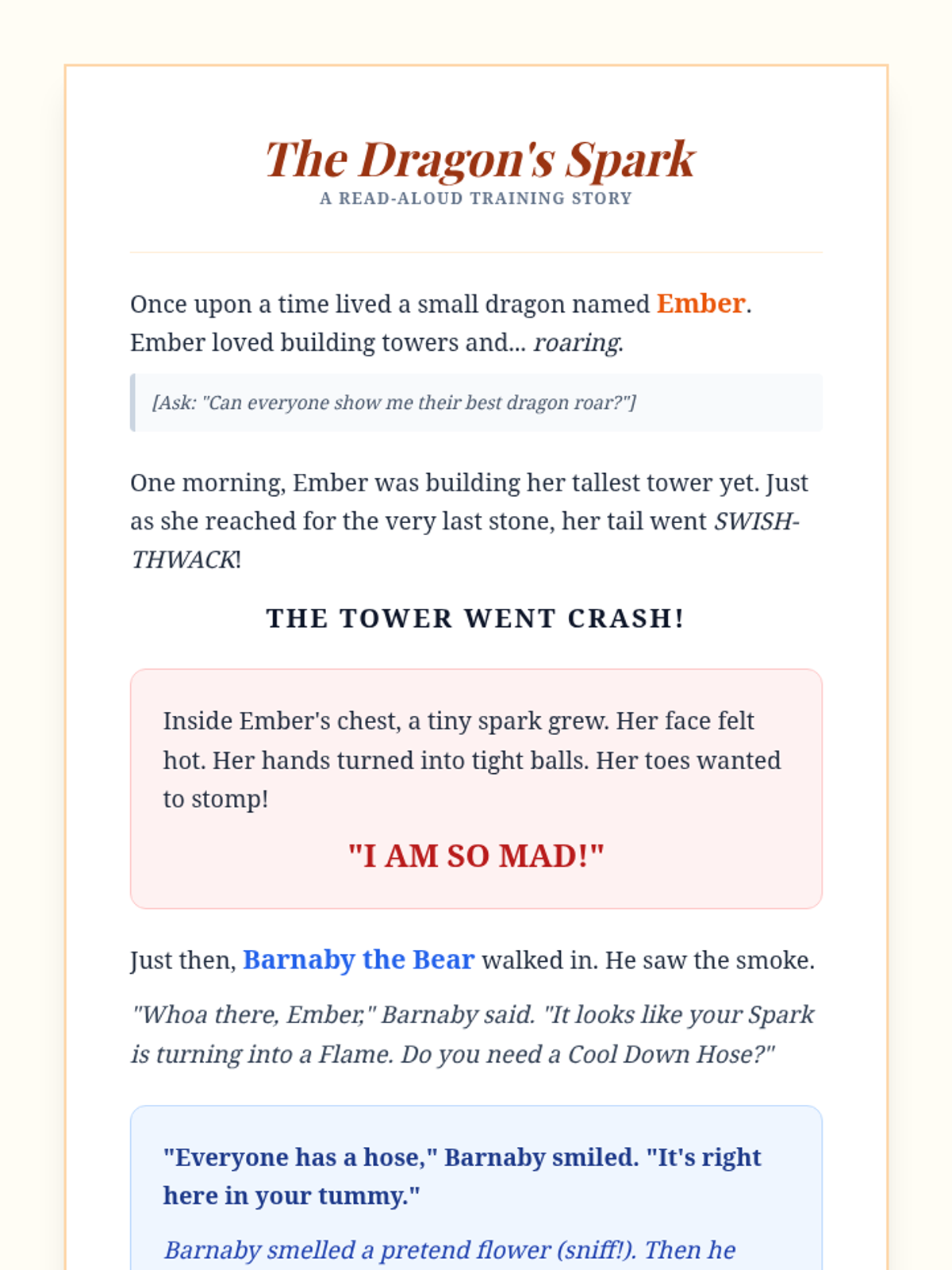
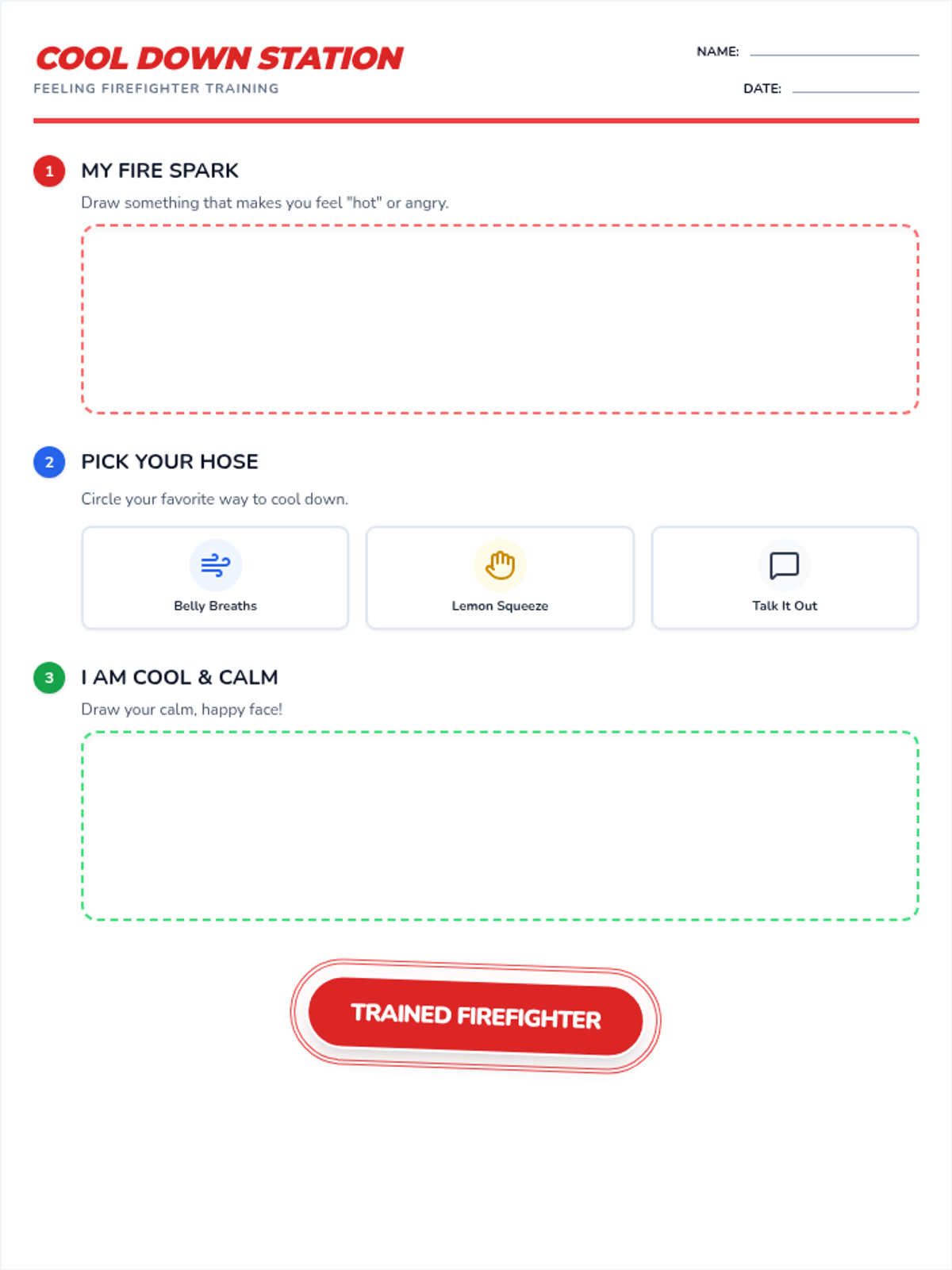
A kindergarten lesson focused on identifying and managing anger and frustration through the metaphor of 'putting out the fire' using calming strategies.
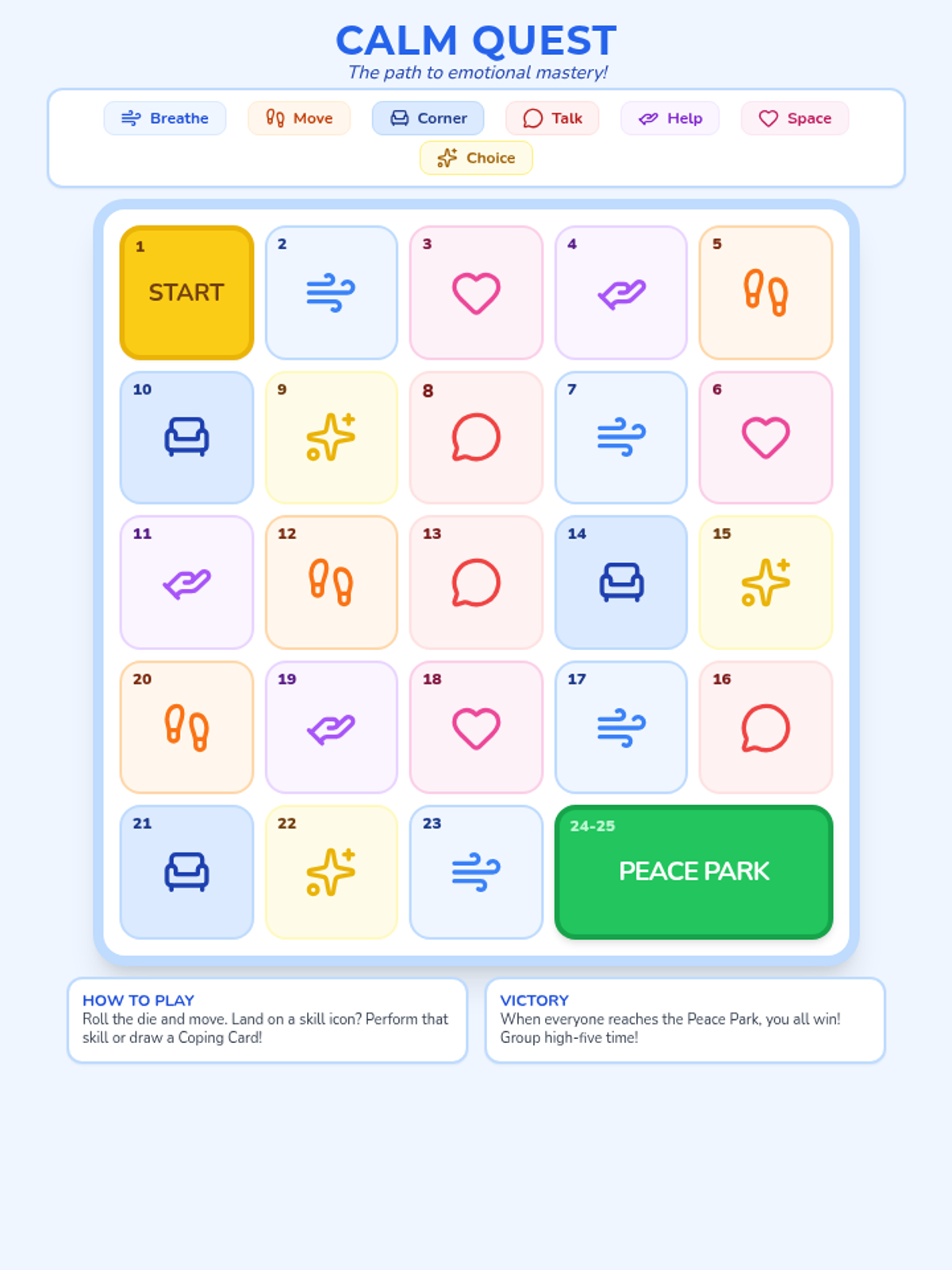
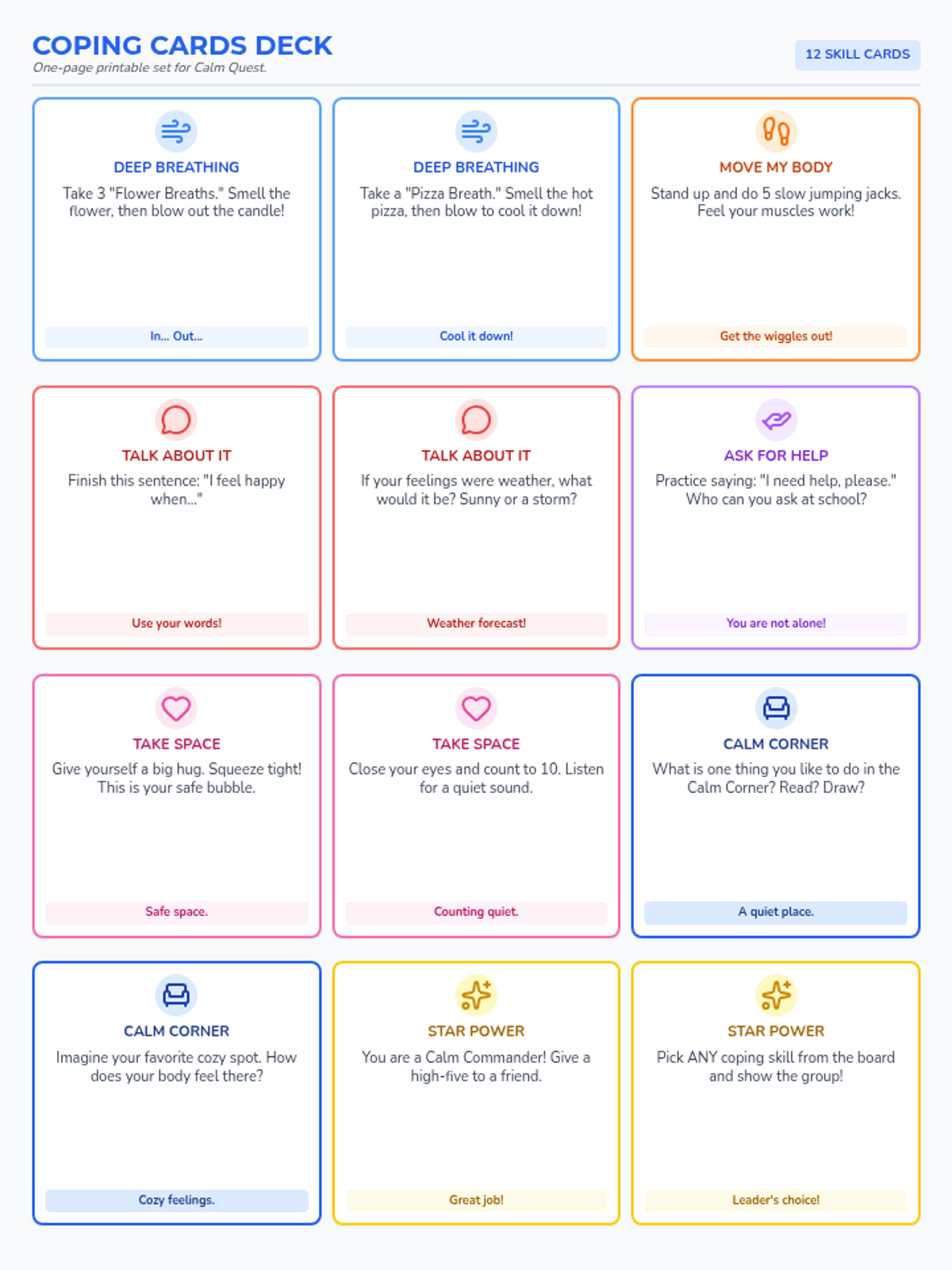
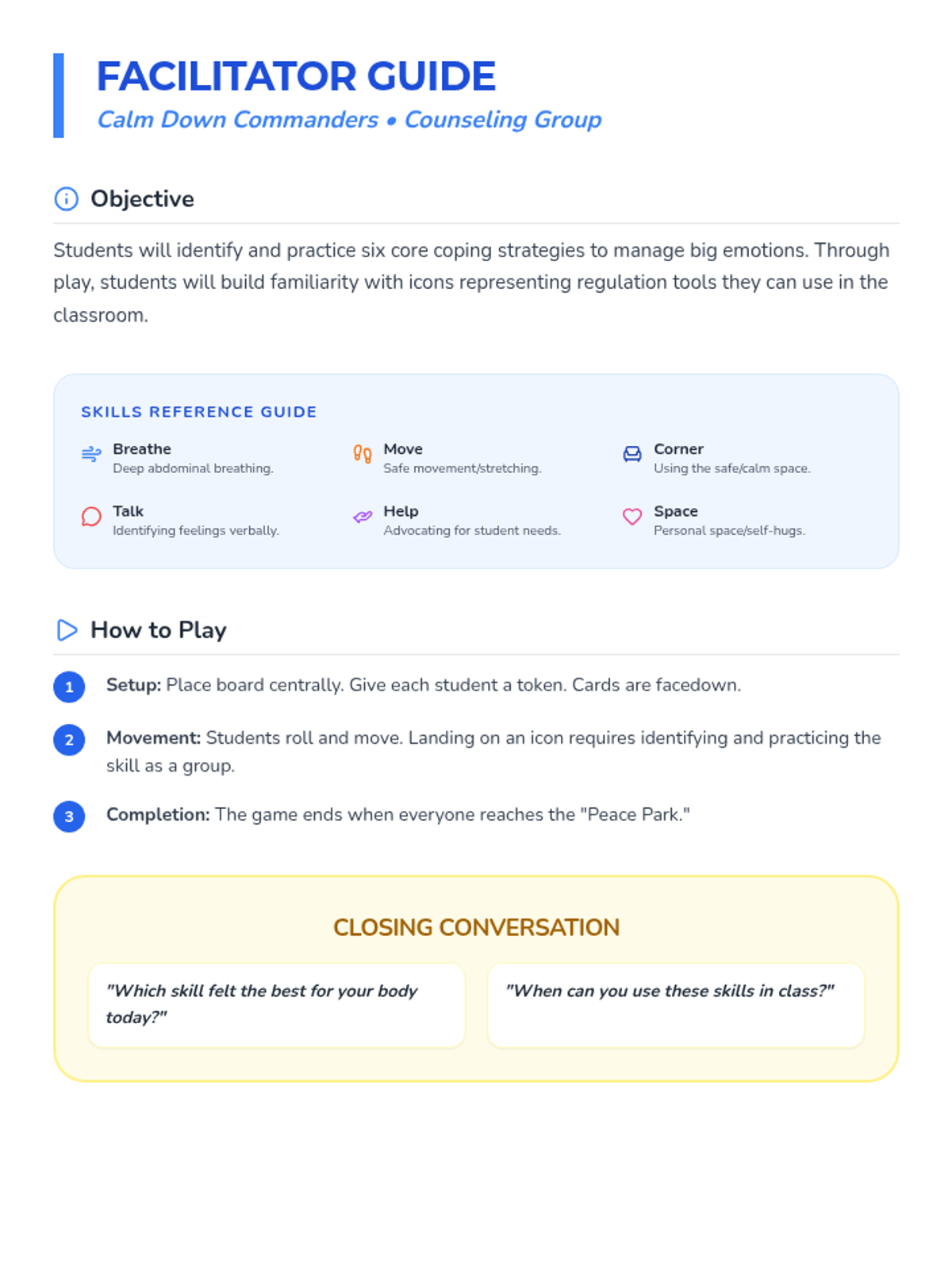
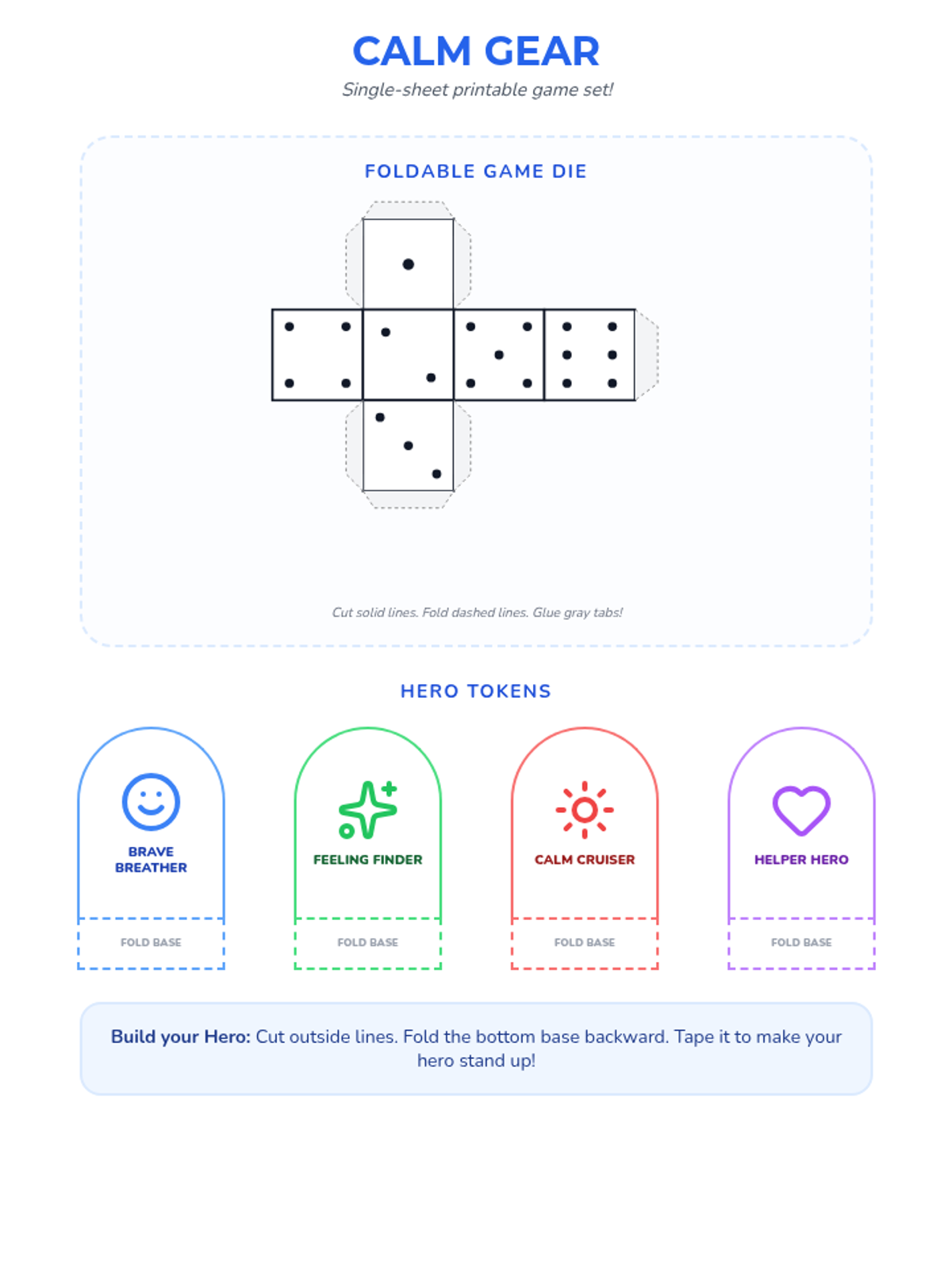
A small-group counseling lesson designed to teach Kindergarten and 1st-grade students proactive coping strategies through an interactive path board game. Students practice identifying and demonstrating various emotional regulation techniques in a supportive, play-based environment.
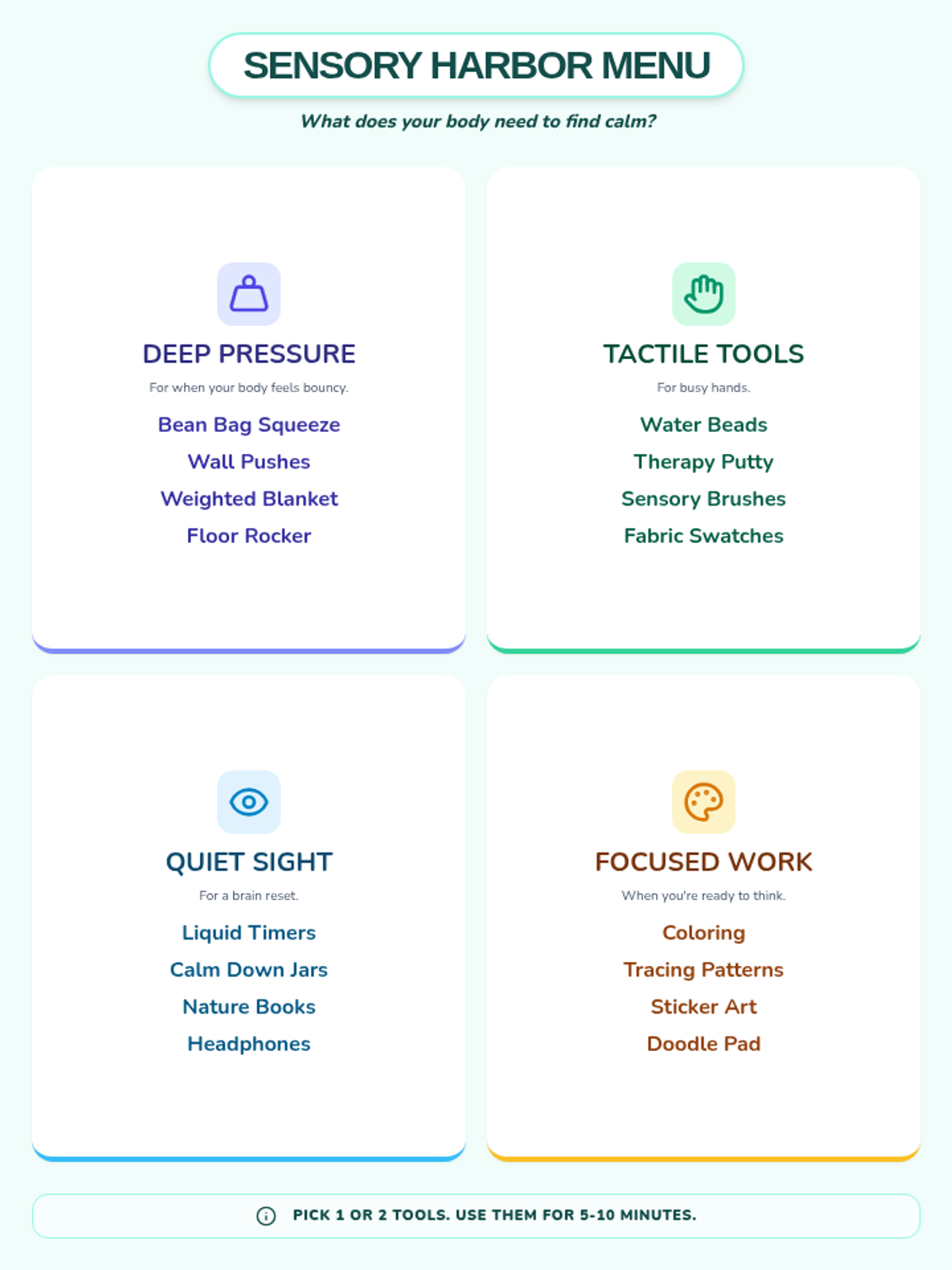
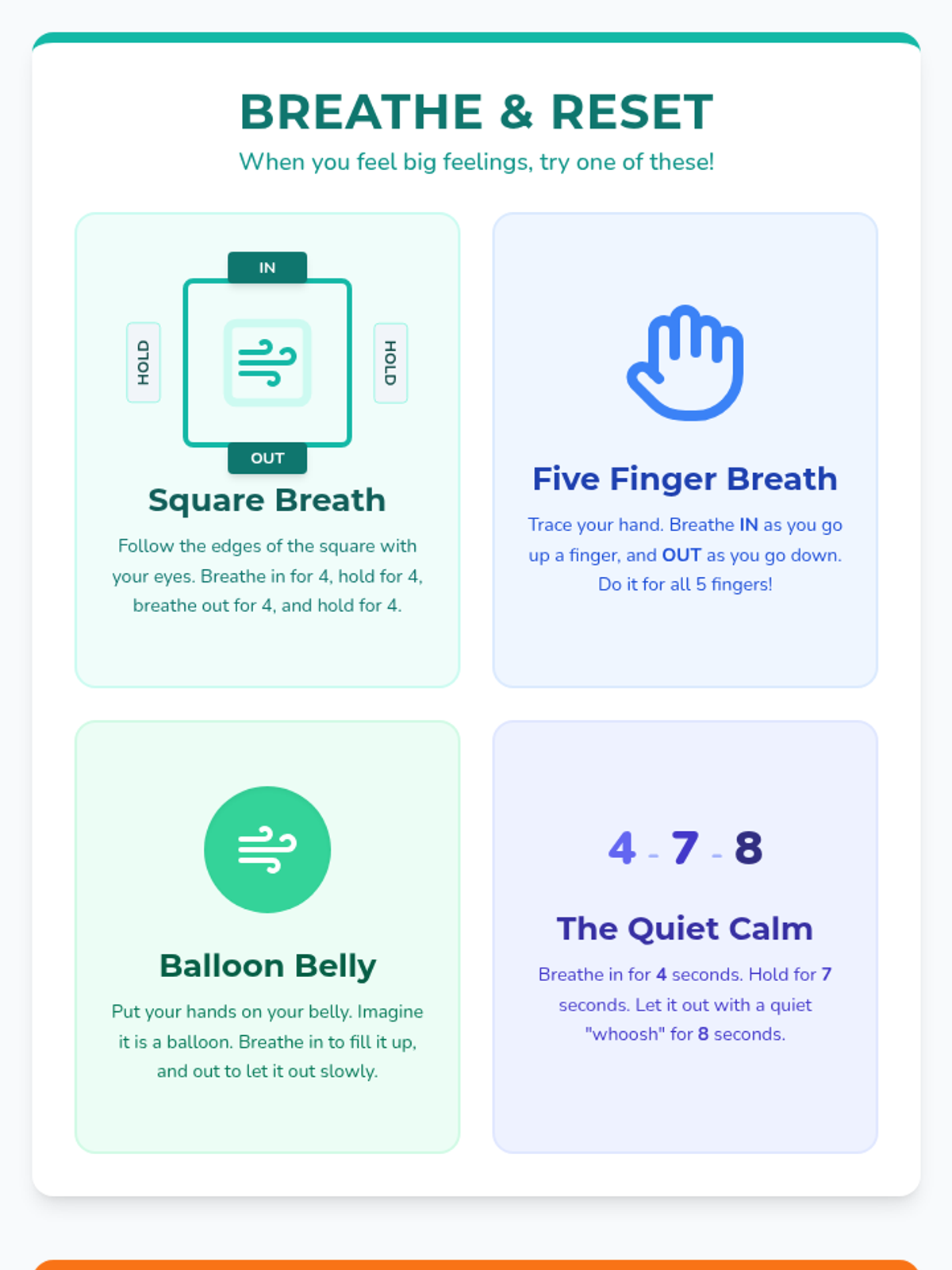
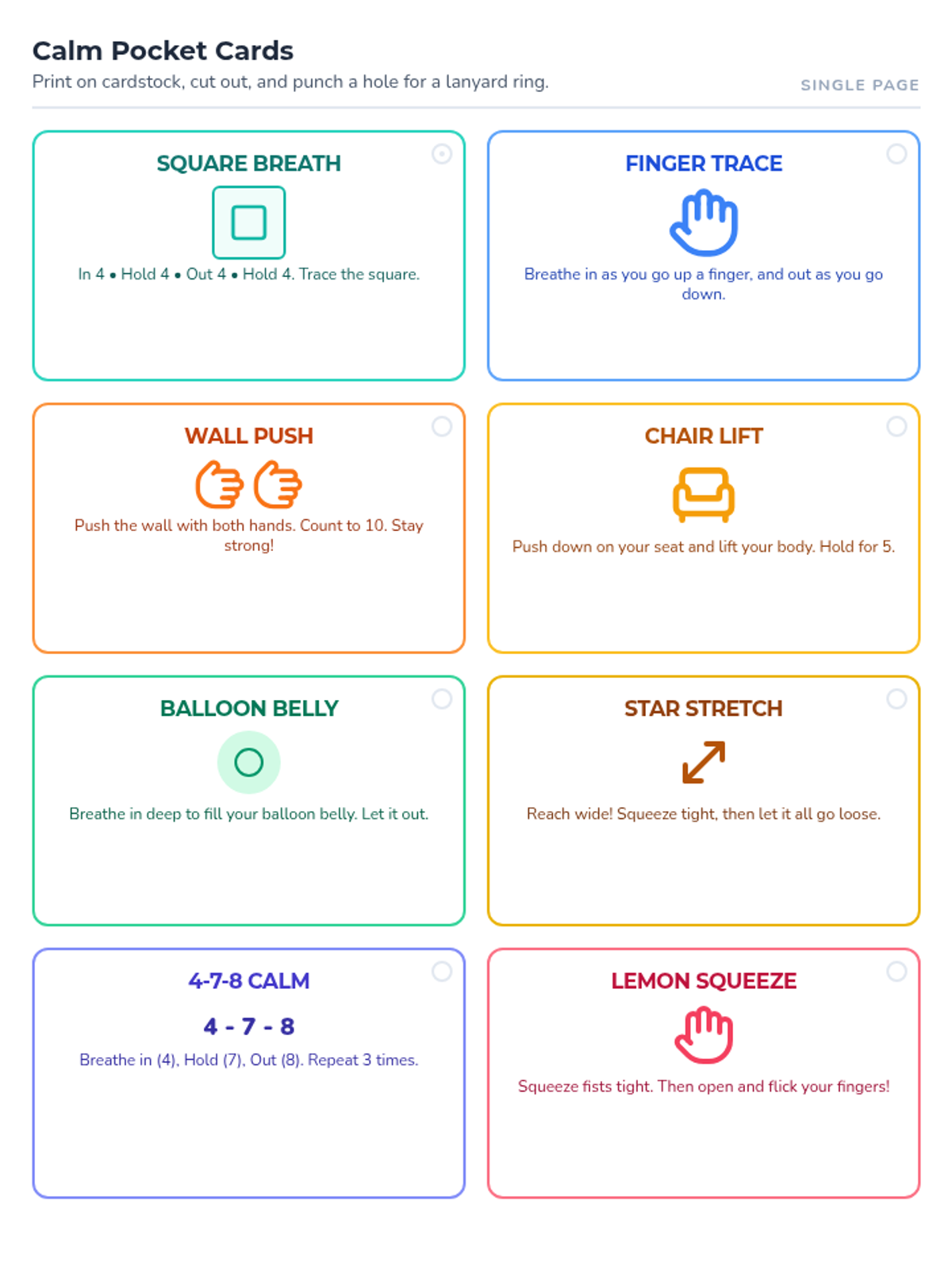
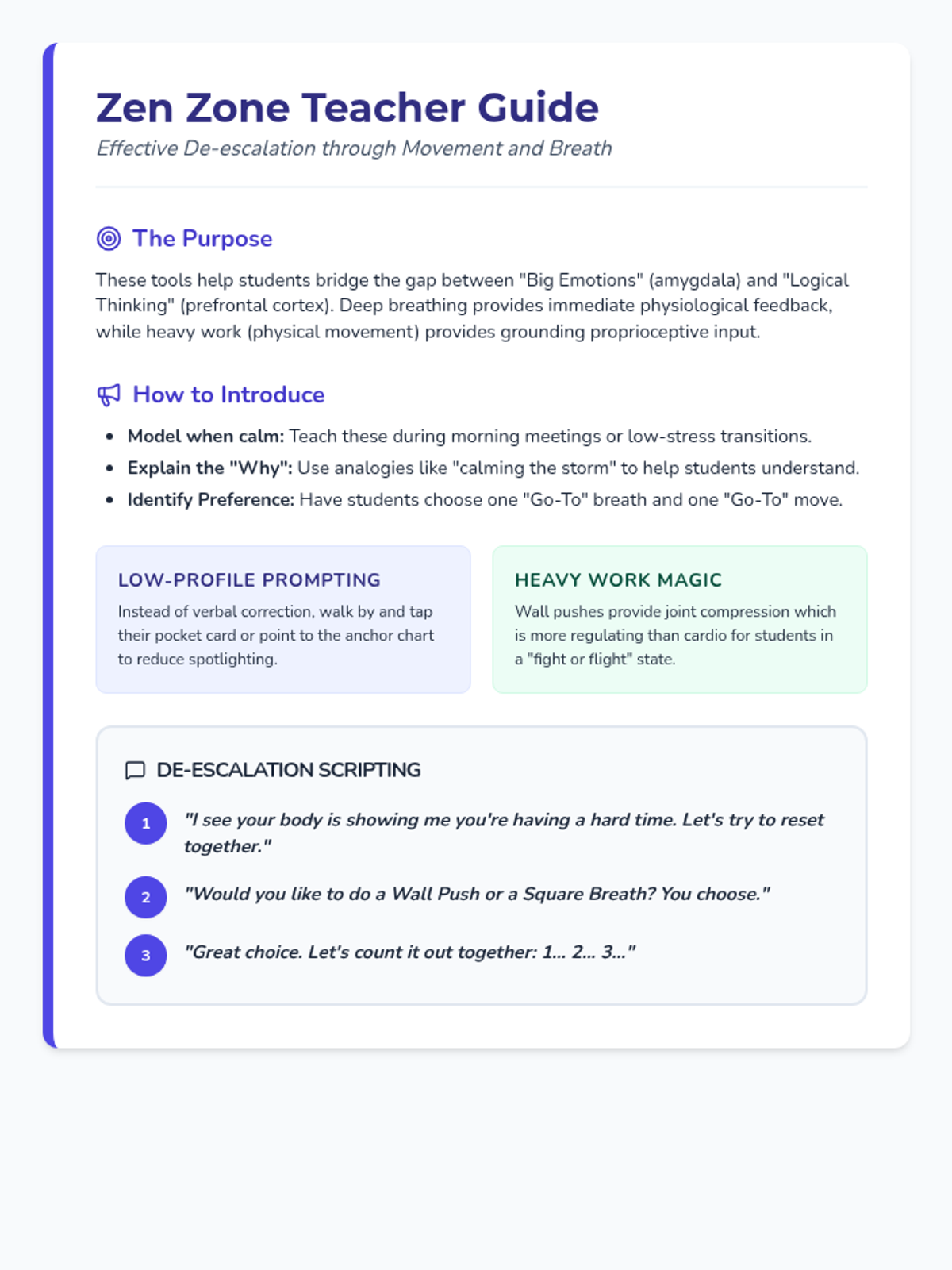
A collection of visual de-escalation resources focused on deep breathing and physical movement to help students manage big emotions and return to a state of calm.
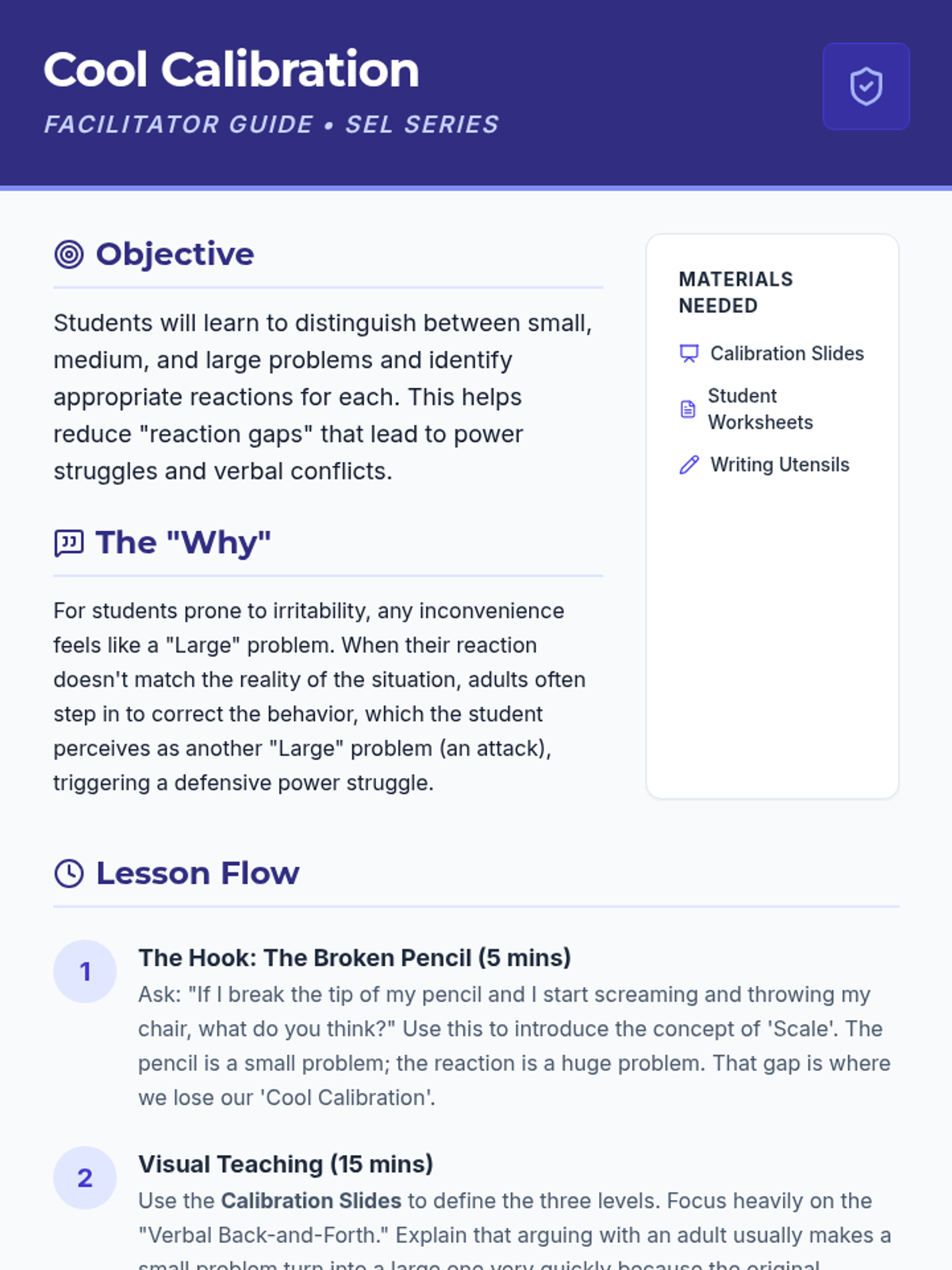
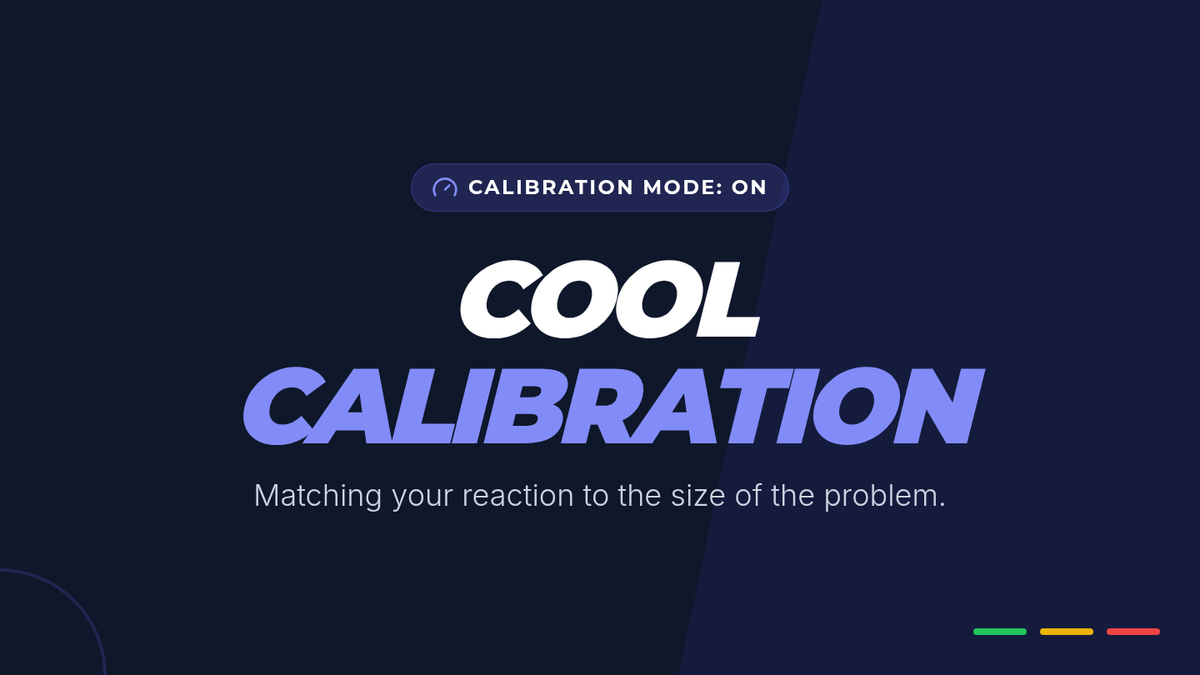
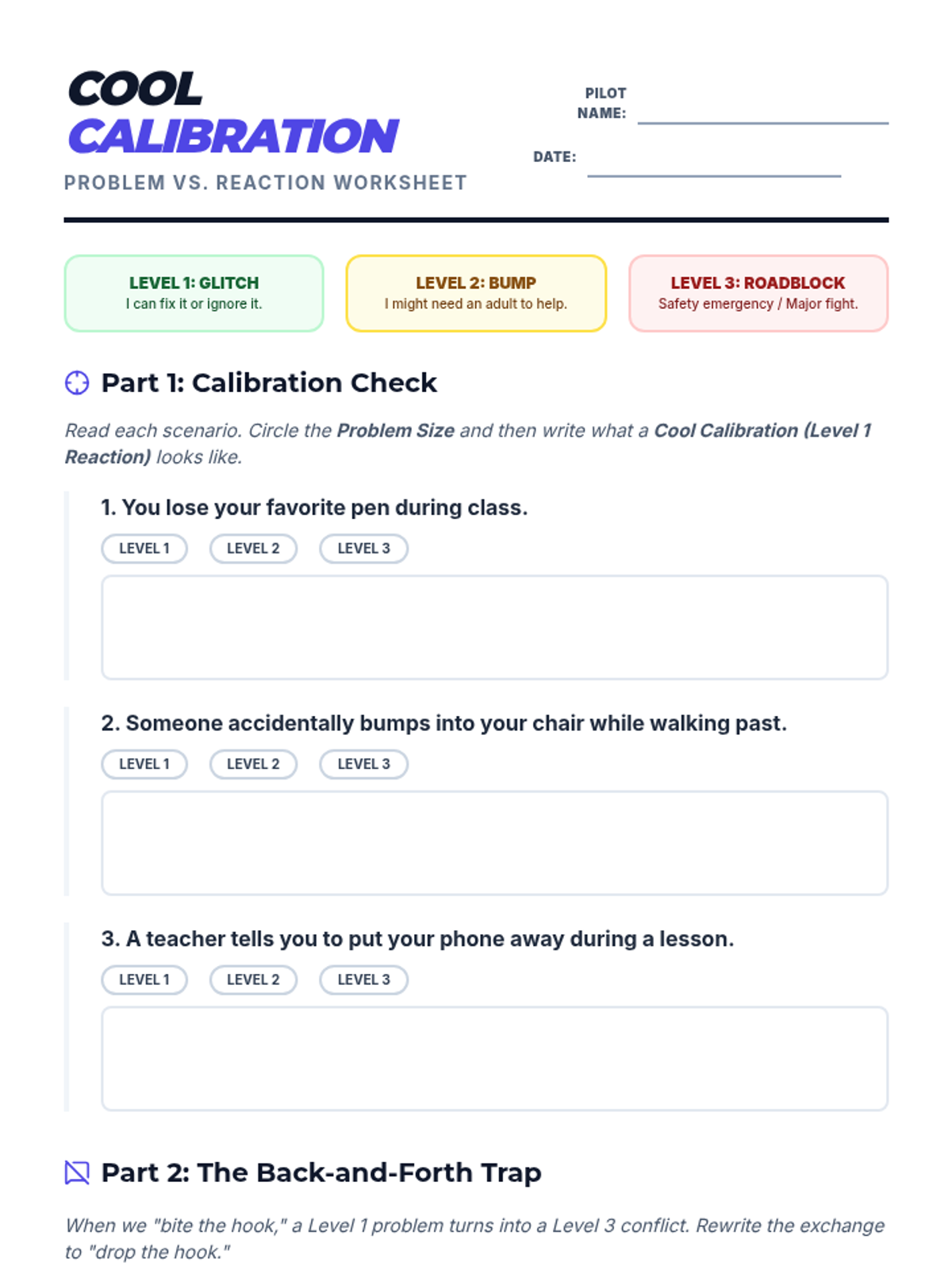
A social-emotional learning lesson focused on identifying the 'Size of the Problem' and matching it with an appropriate 'Size of Reaction' to avoid power struggles and verbal conflicts.
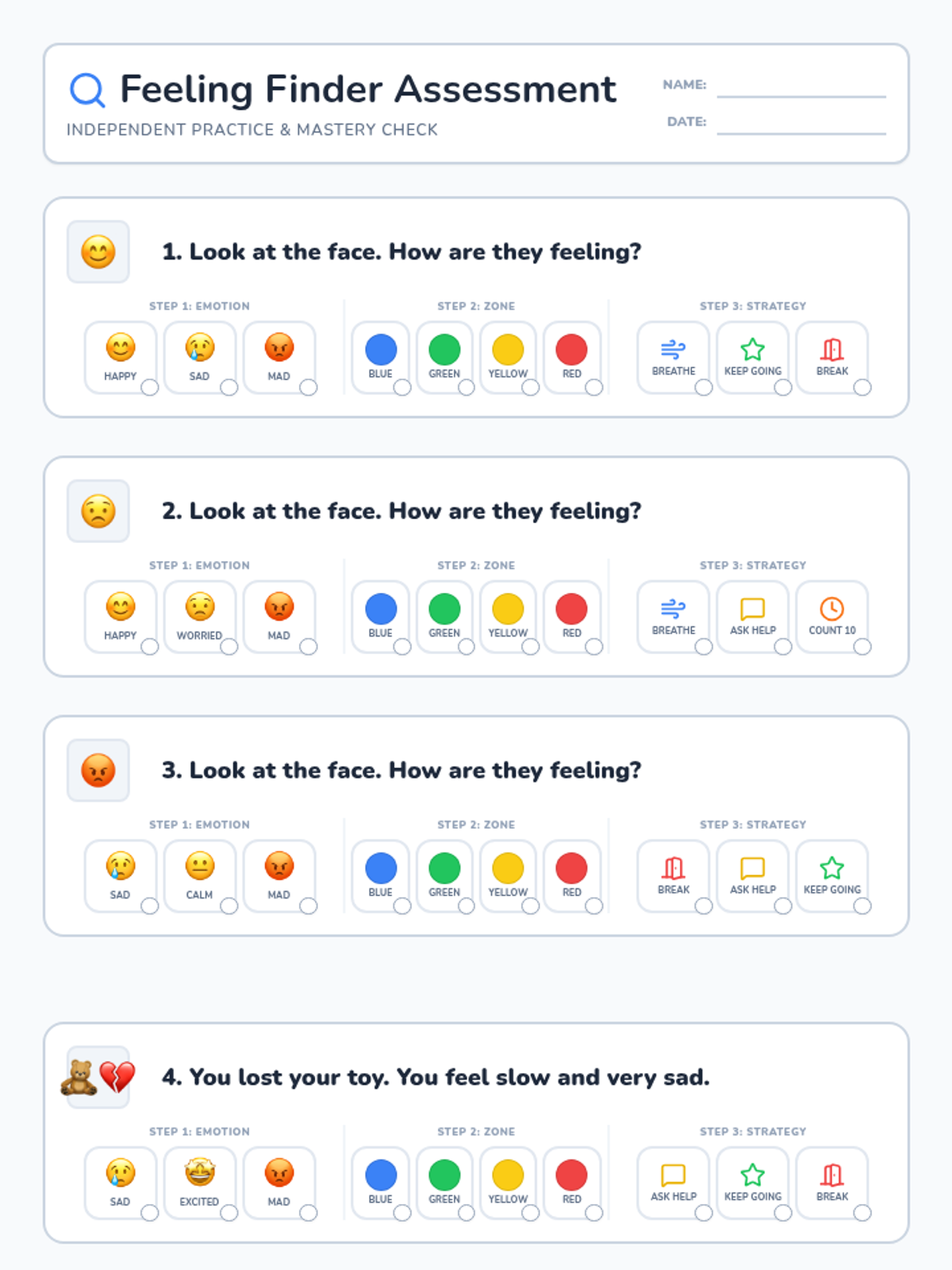
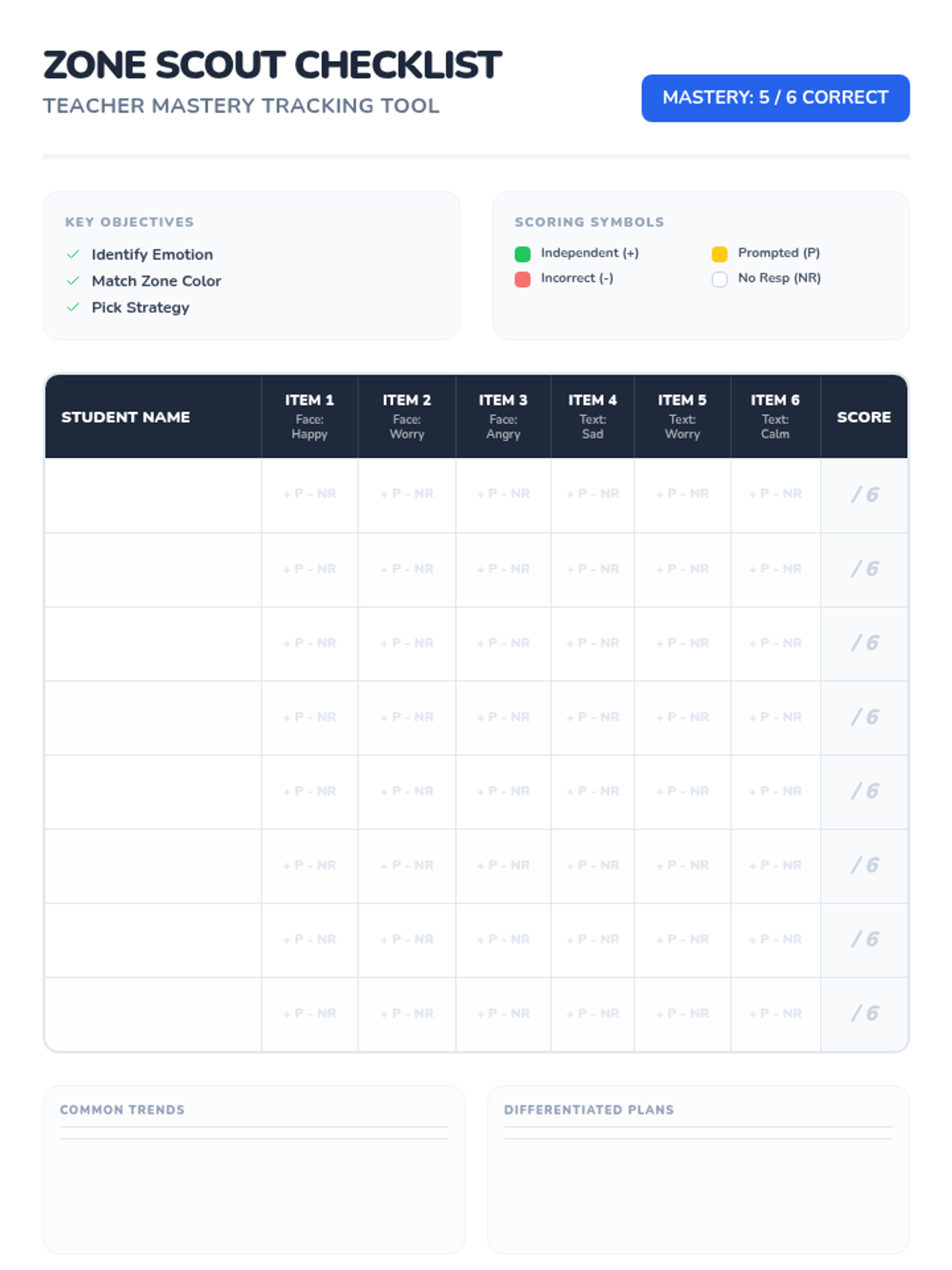
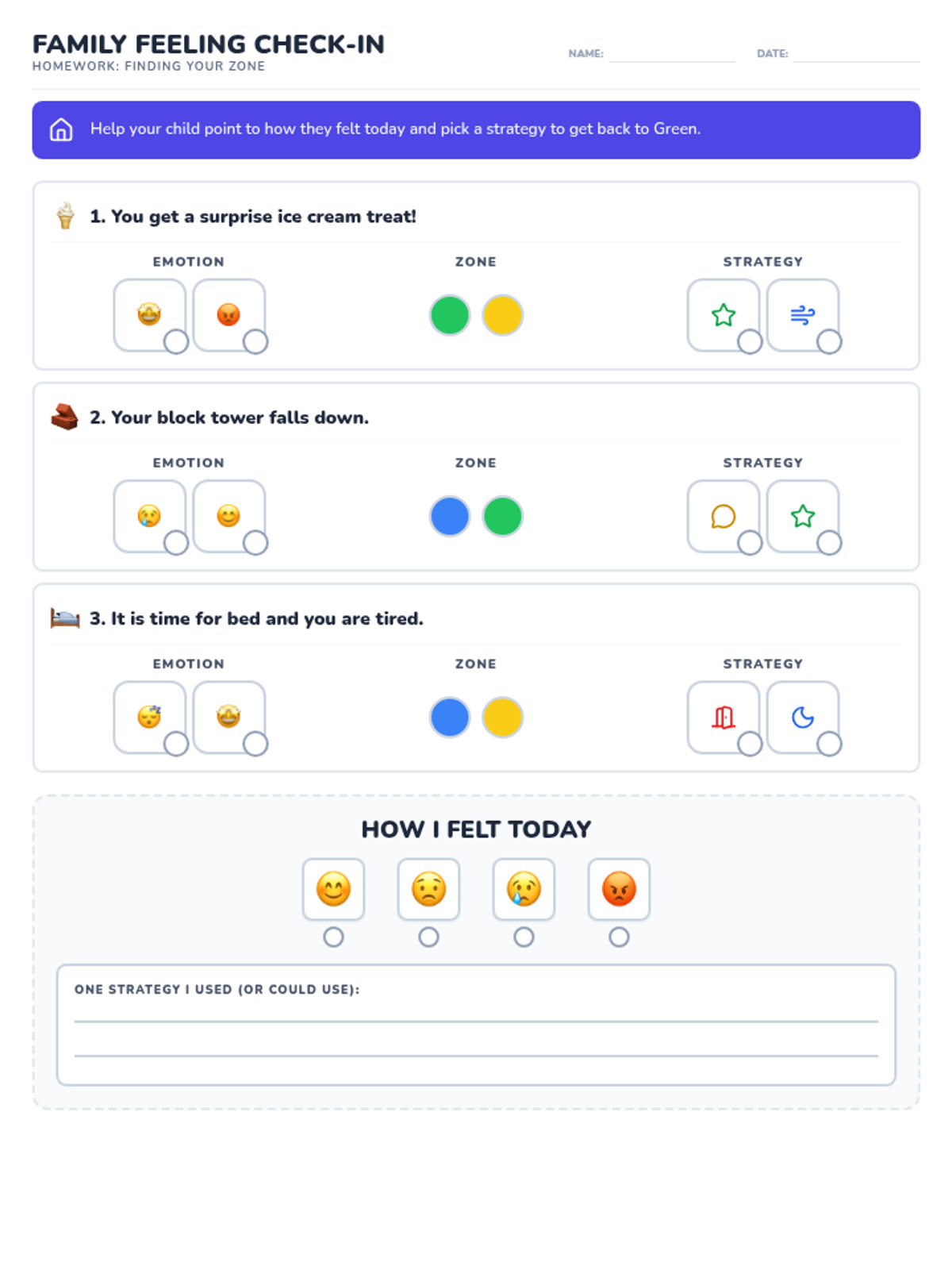
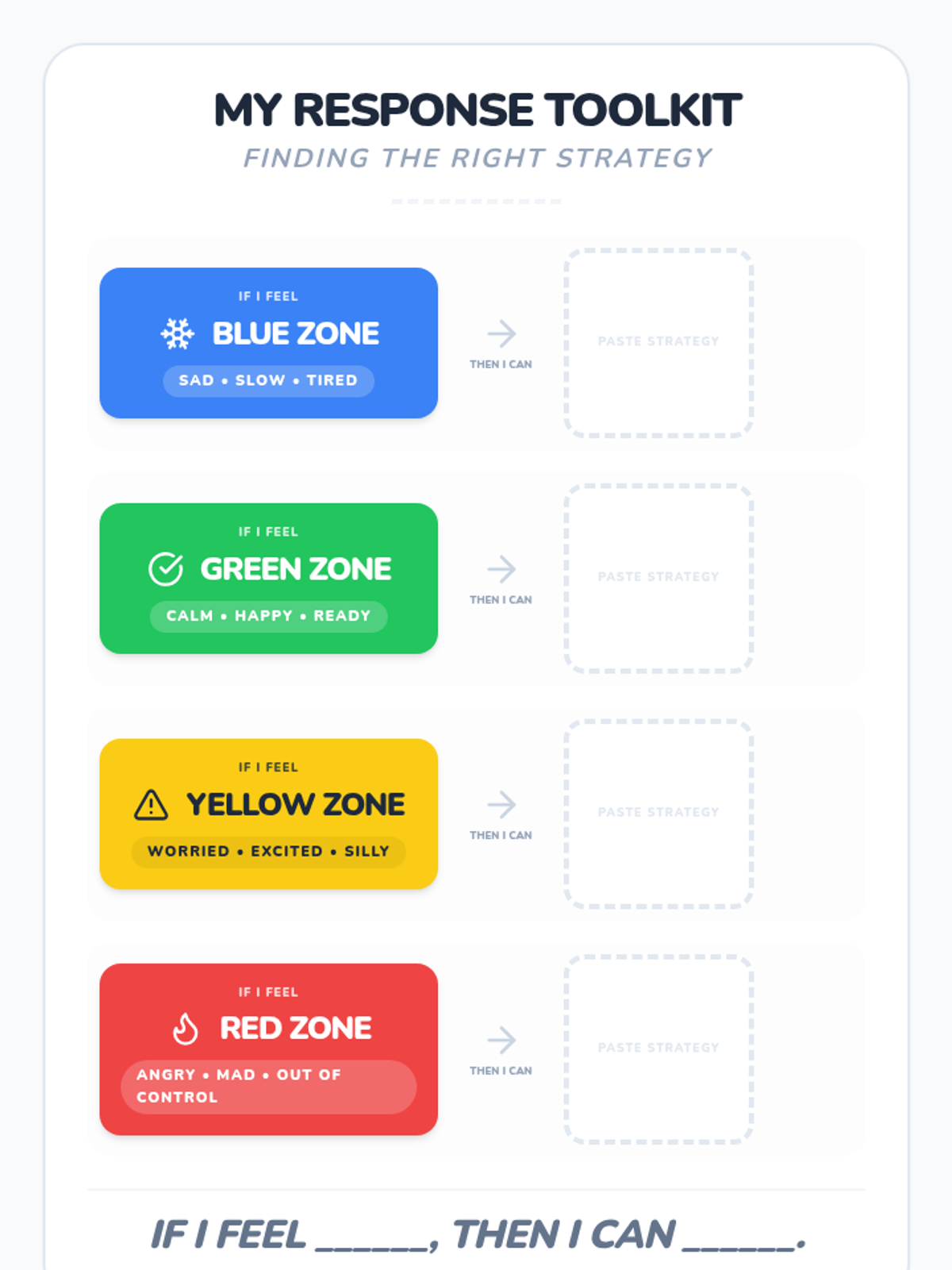
An introductory lesson to the Zones of Regulation, focusing on identifying emotions, linking them to zone colors, and selecting appropriate calming strategies using visual supports.
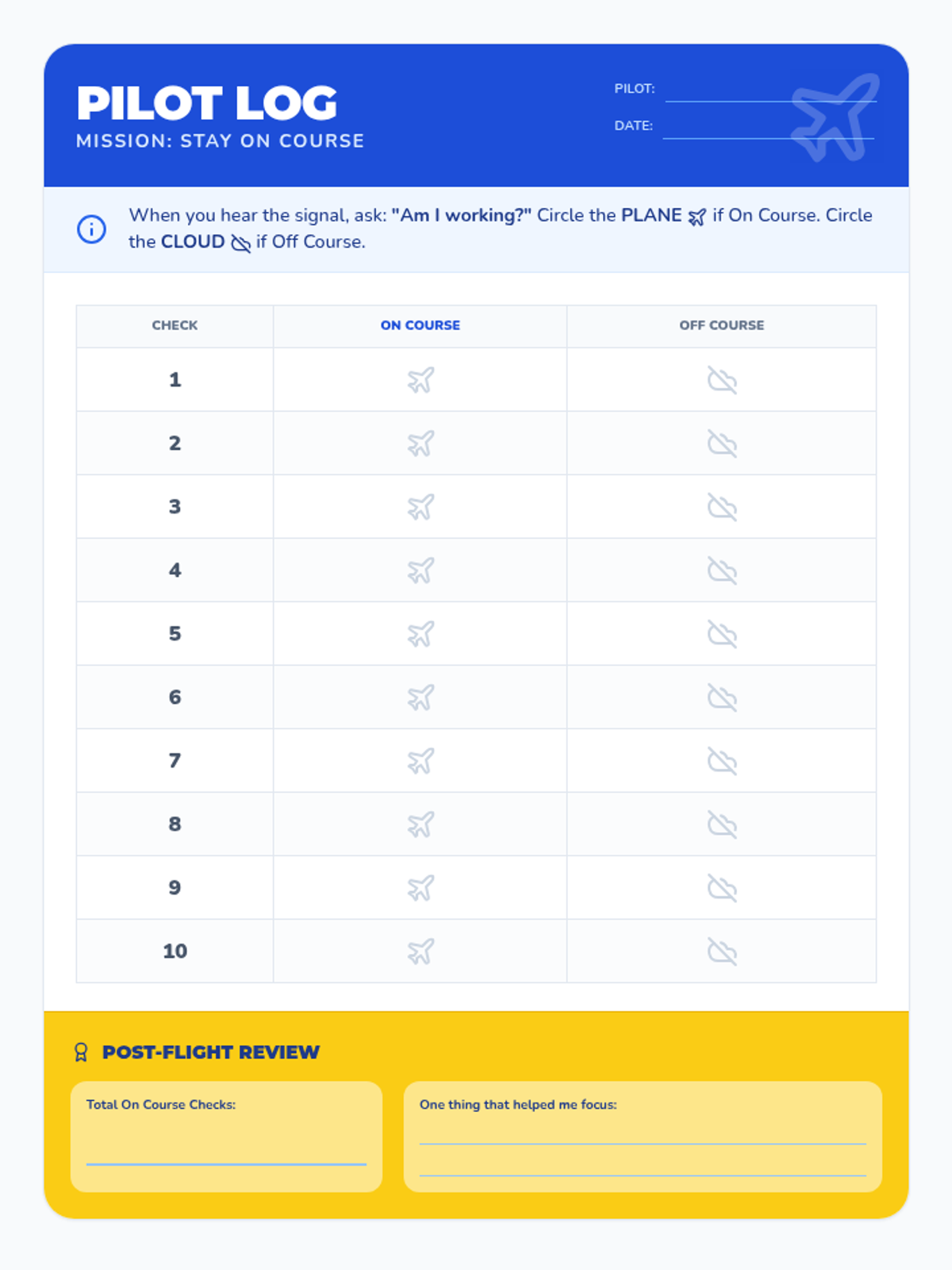
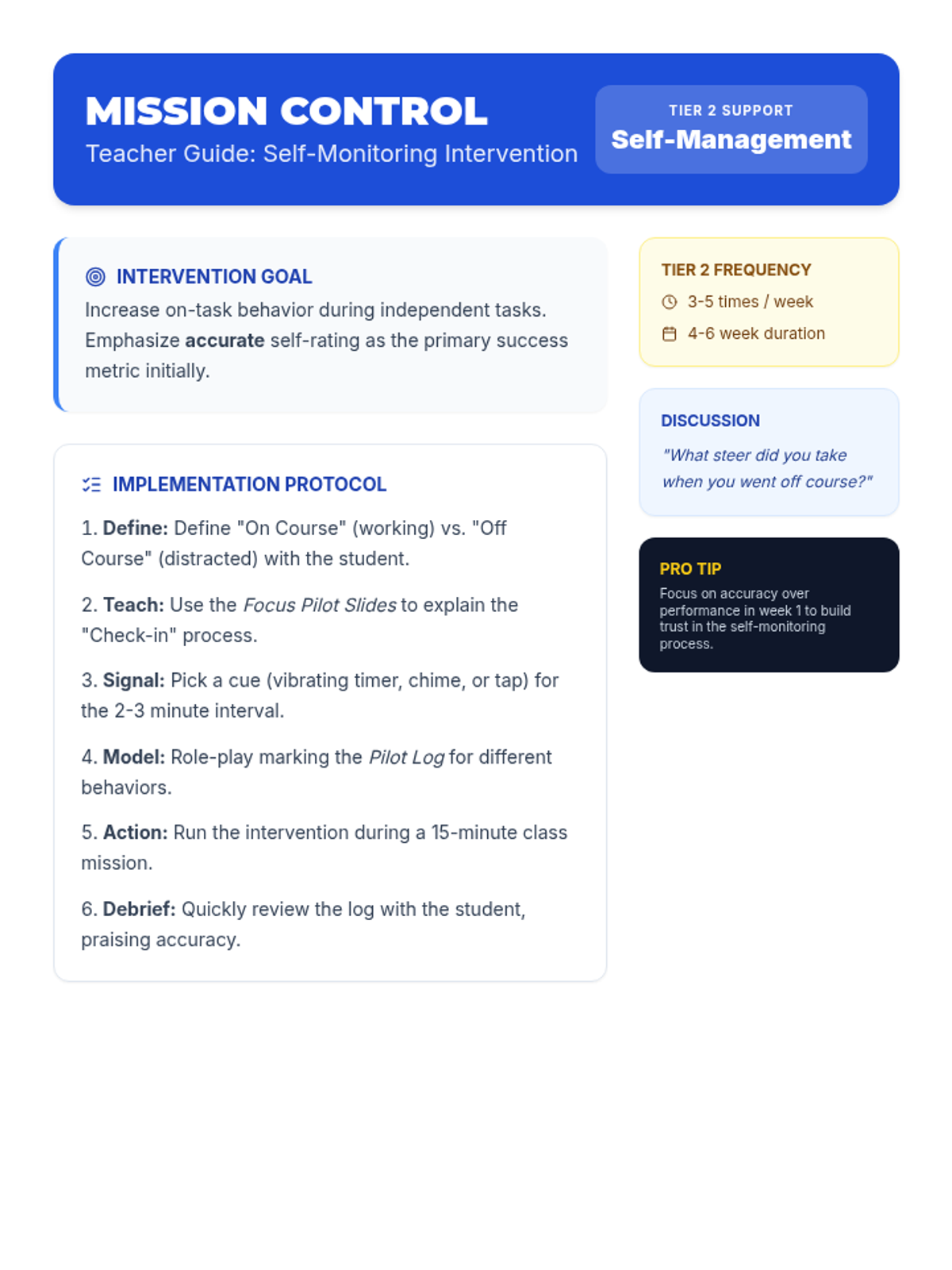
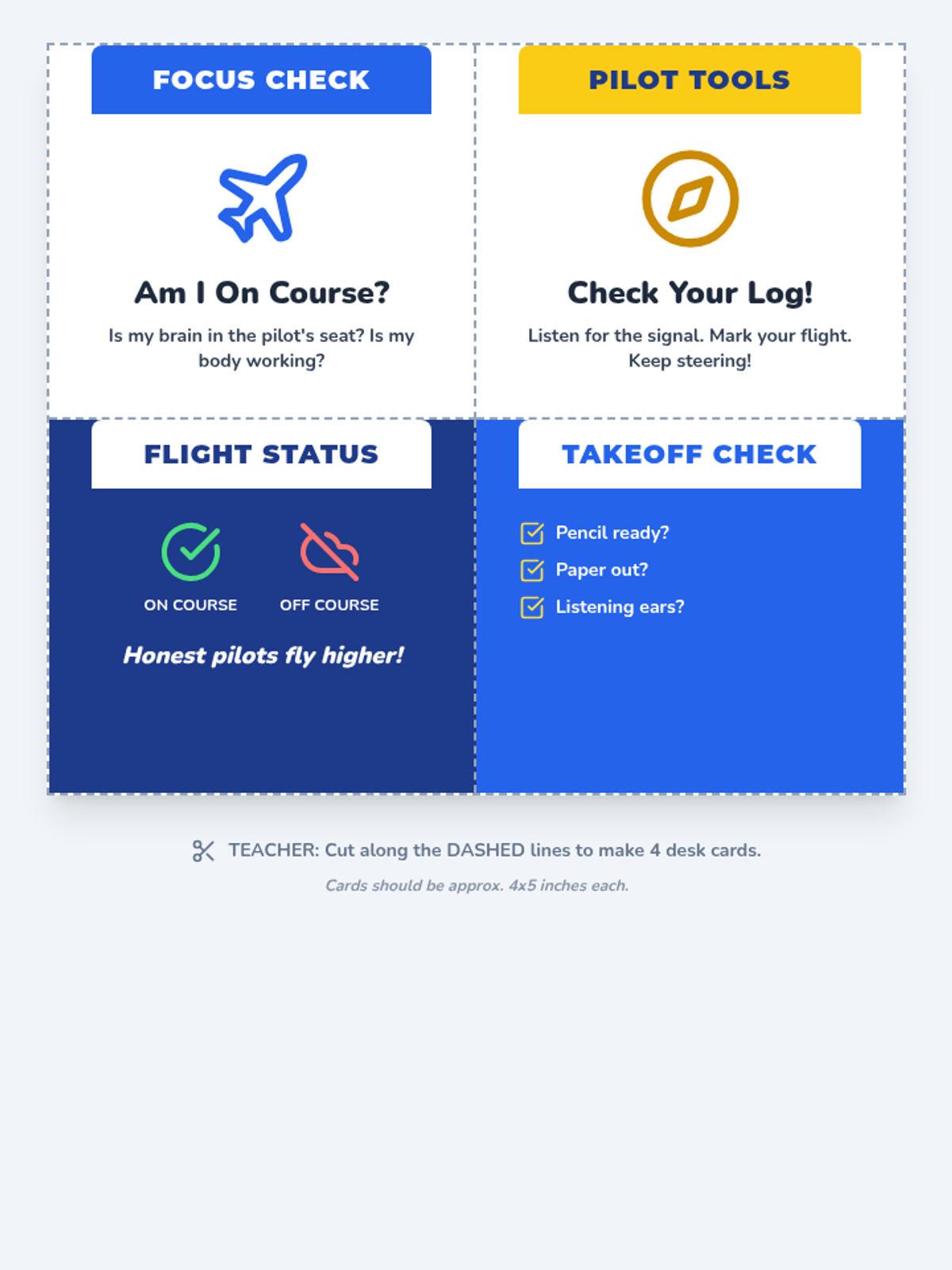
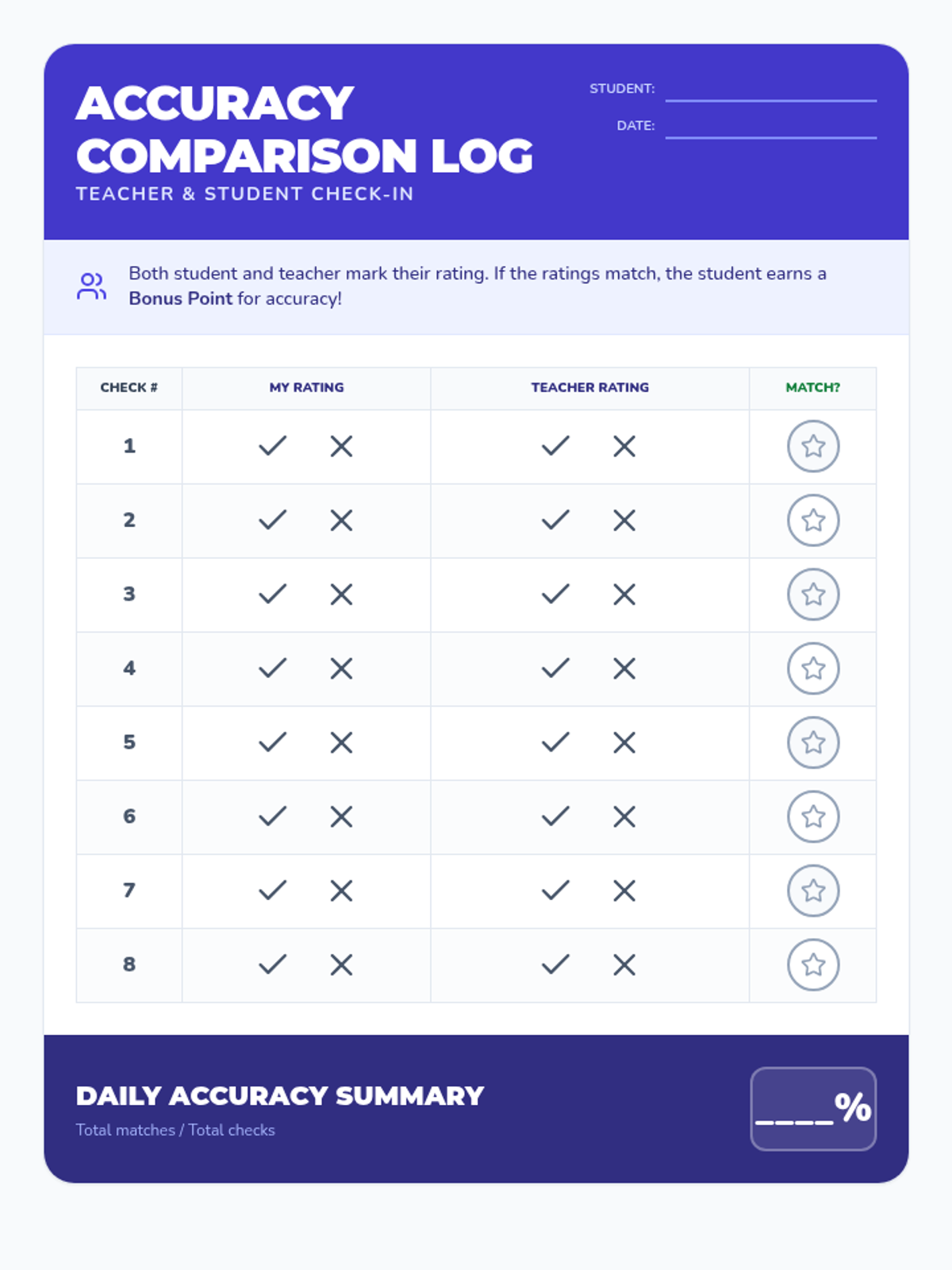
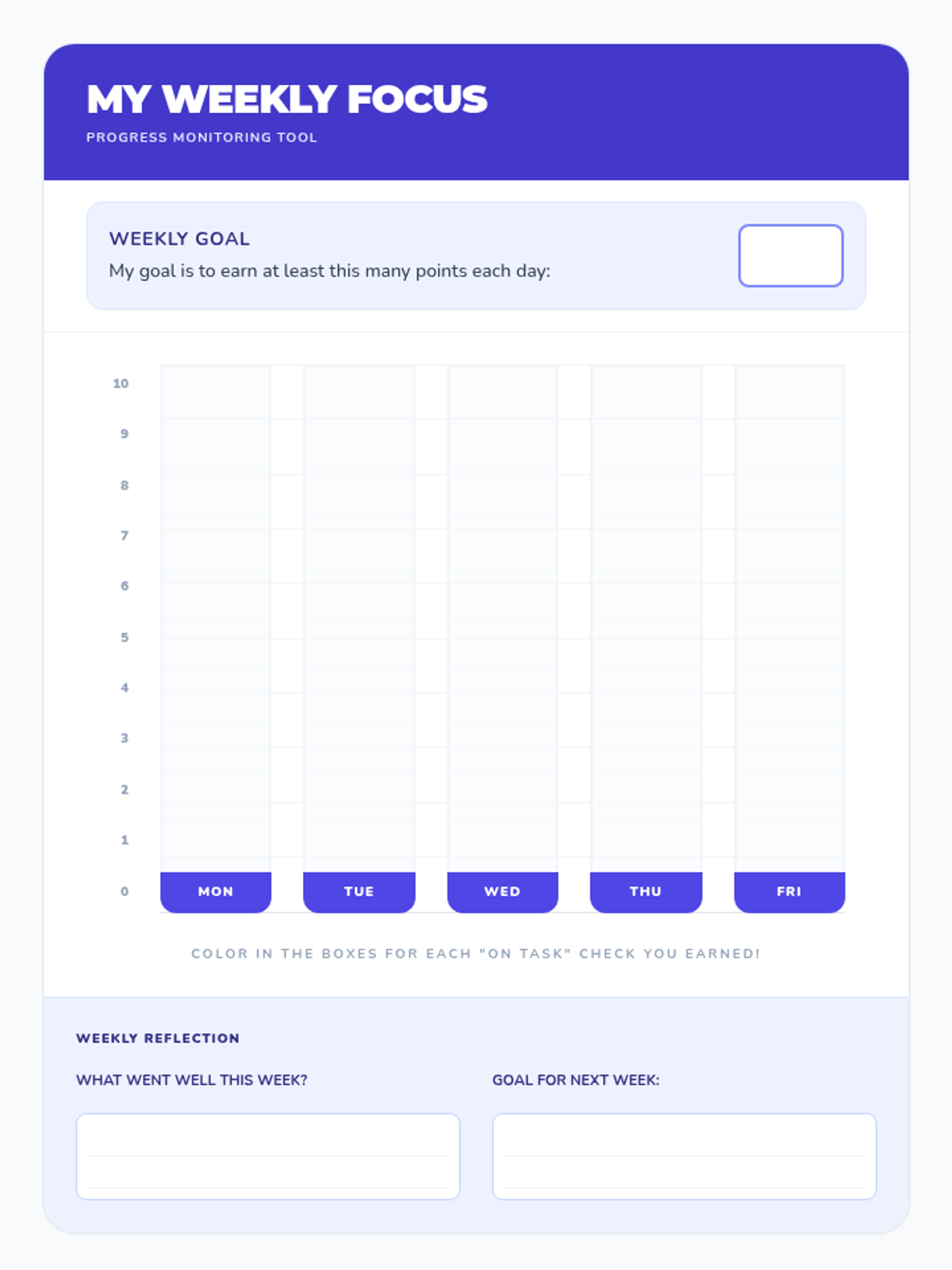
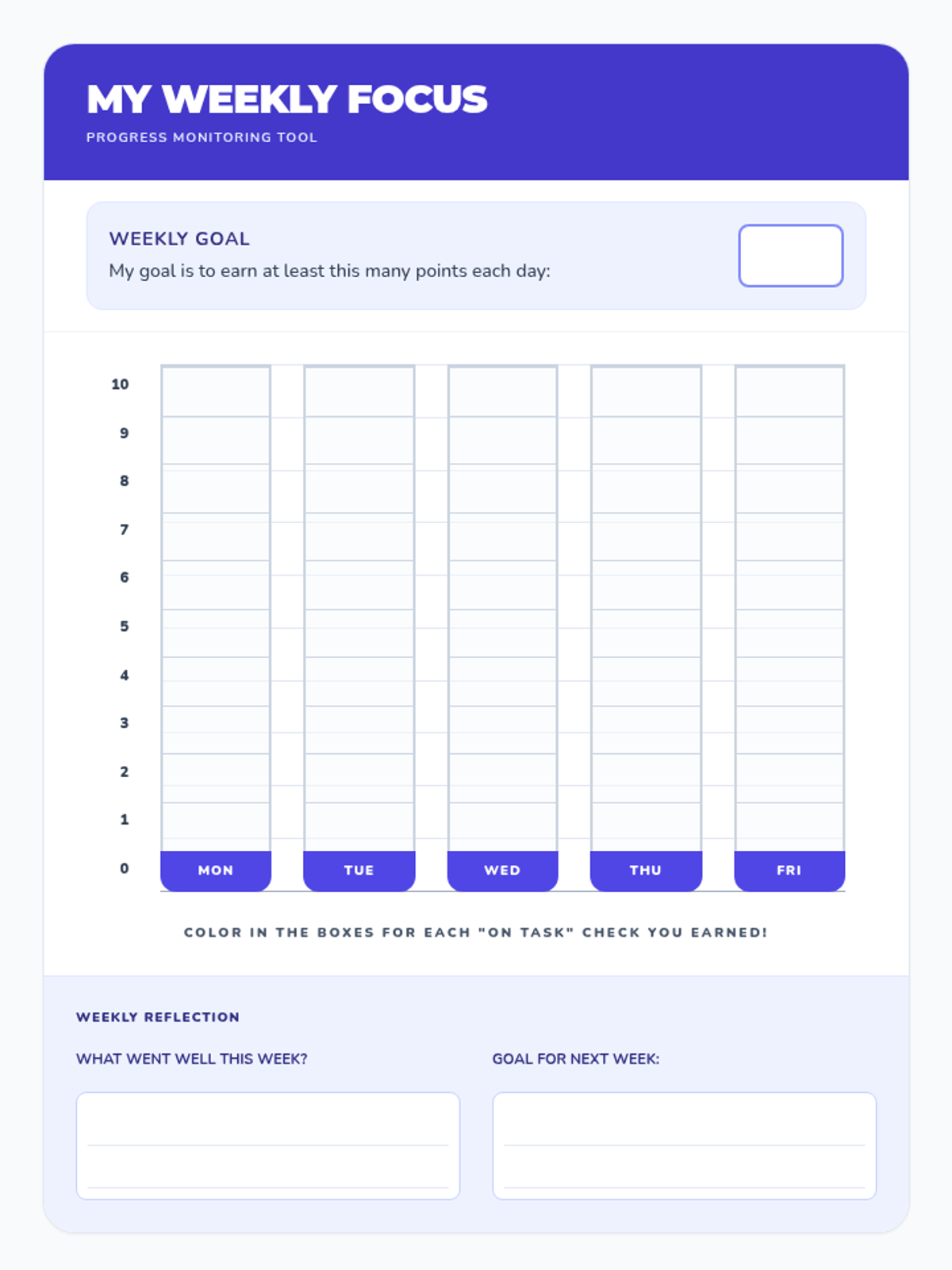
A Tier 2 self-management intervention for Grade 2 students focused on self-monitoring during classroom tasks. Students learn to identify on-task vs. off-task behavior and track their own progress using a systematic log.
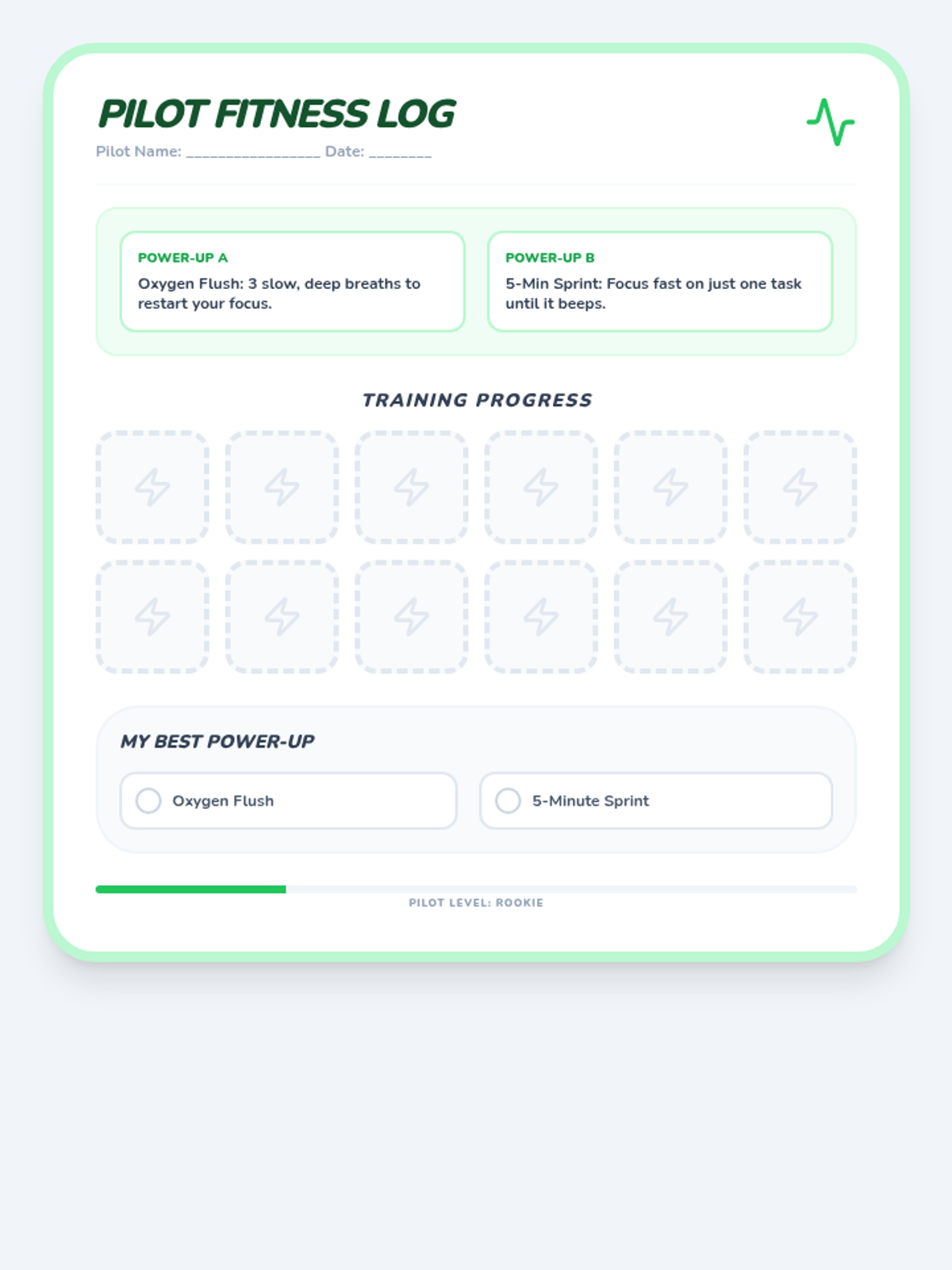
Practical 'Turbo Power-ups' to re-center focus and stay on task when things get tough.
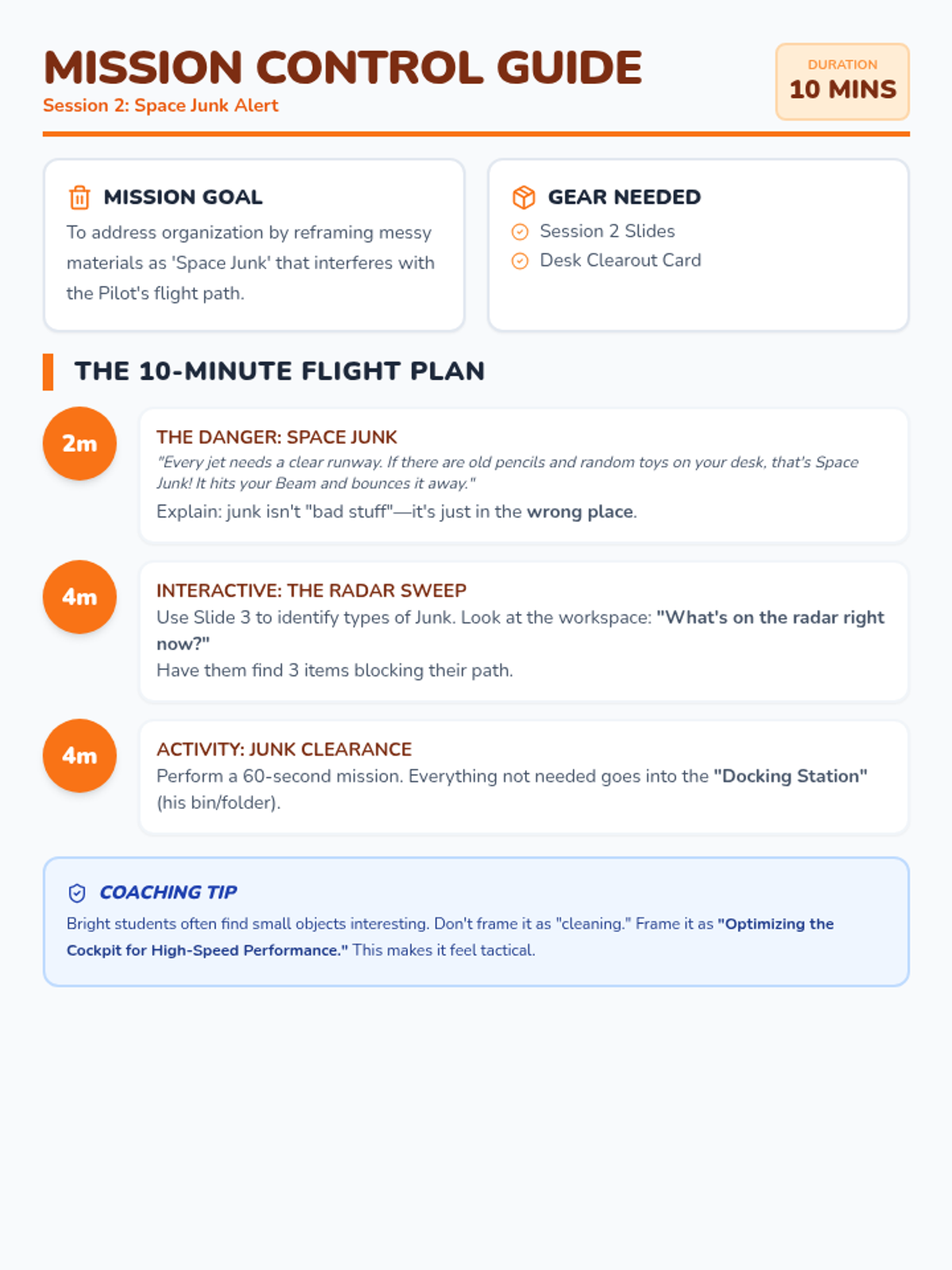
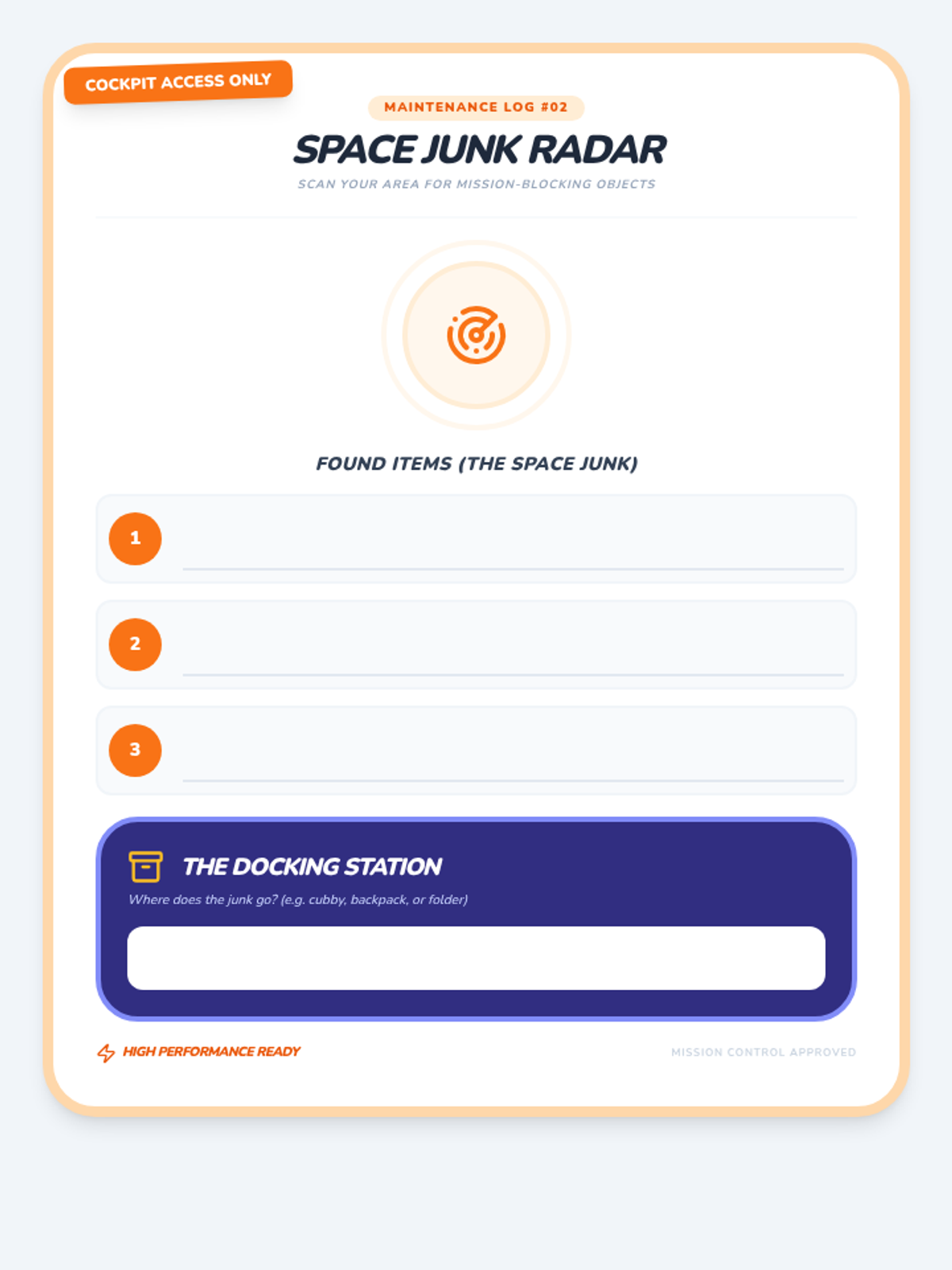
Identifying 'Space Junk' (distractions) and learning how to clear the desk and mind for a smoother flight.
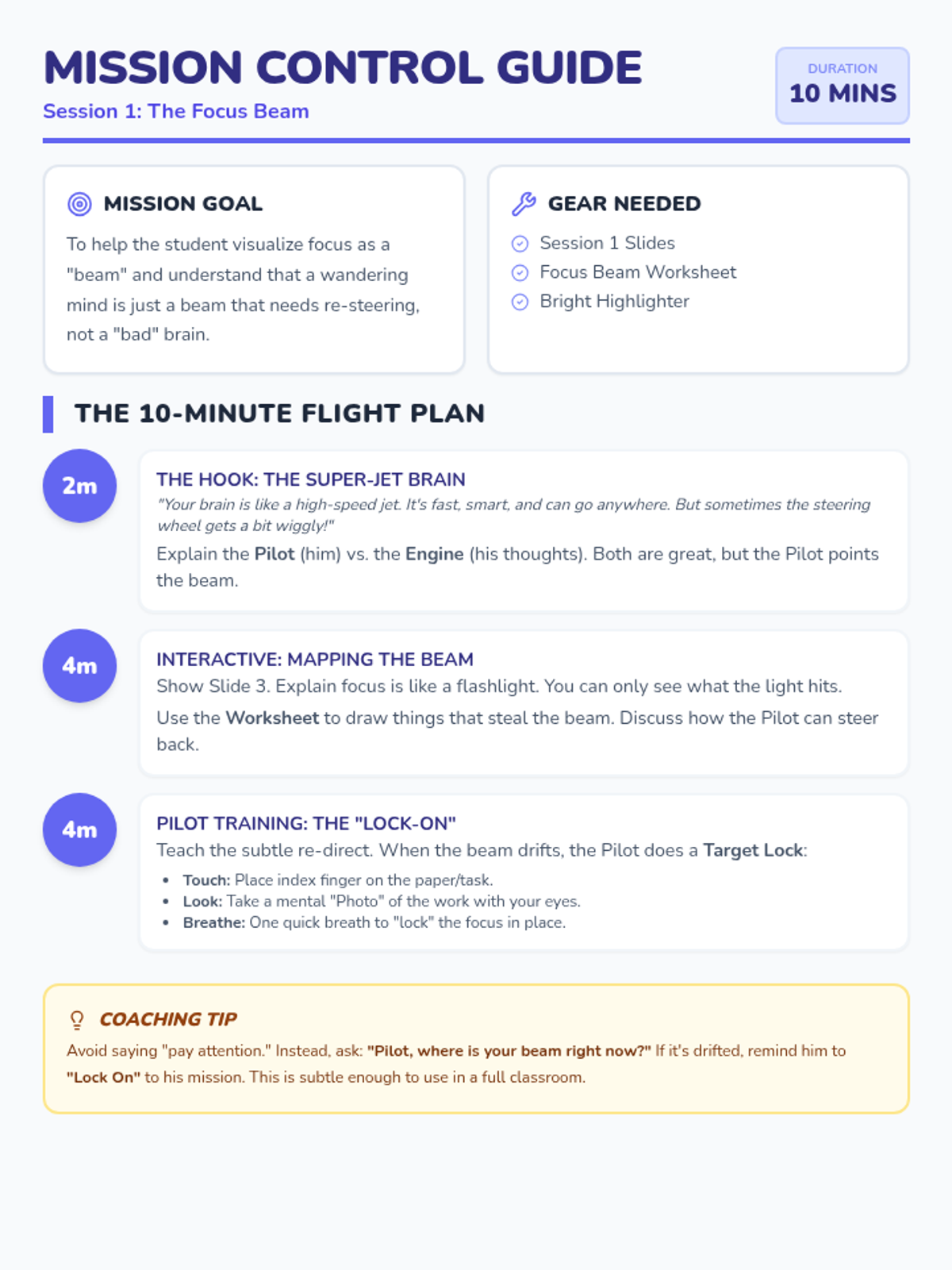
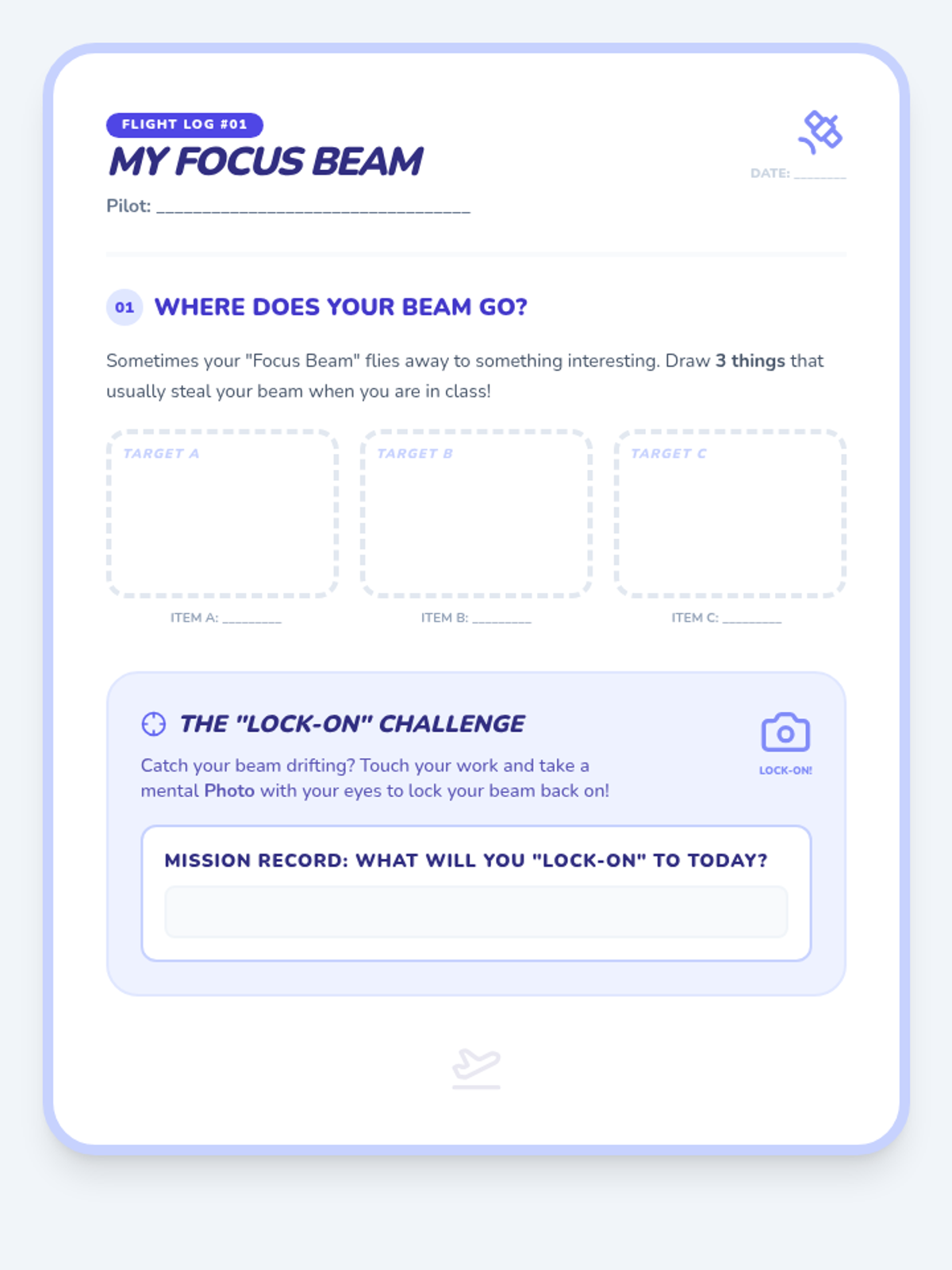
Introduction to the concept of the 'Focus Beam' and understanding how a bright brain can sometimes wander off course.
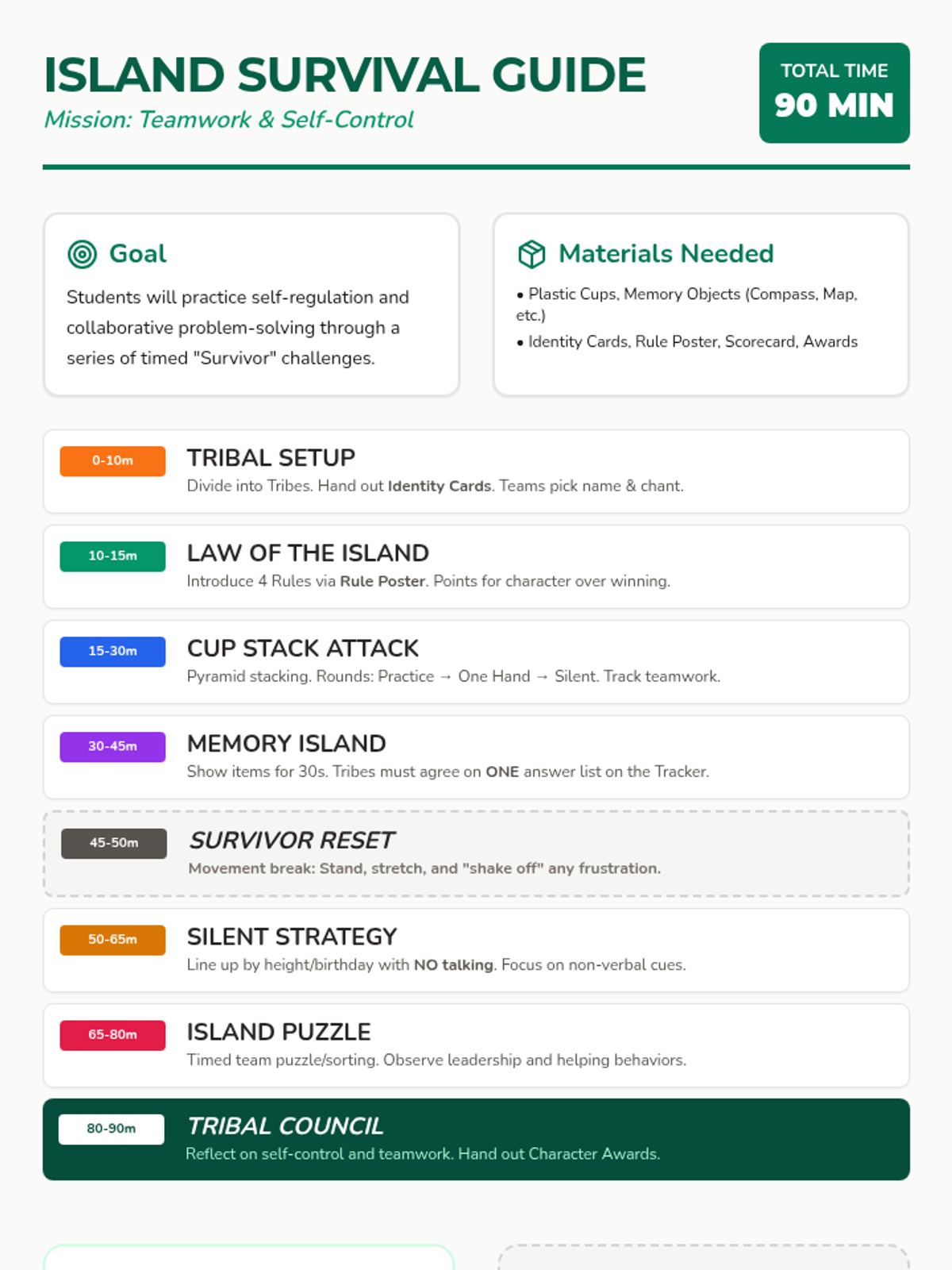
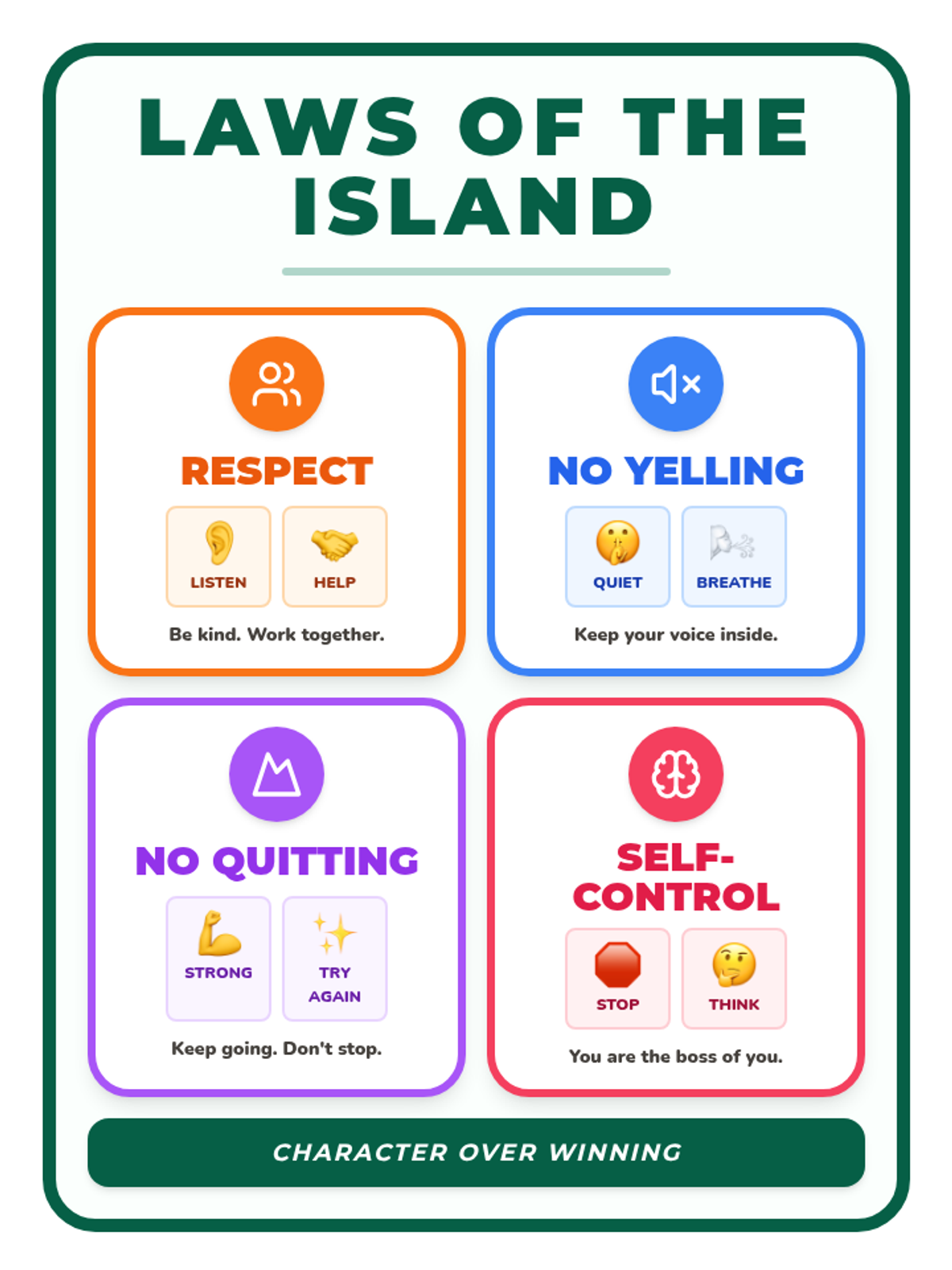
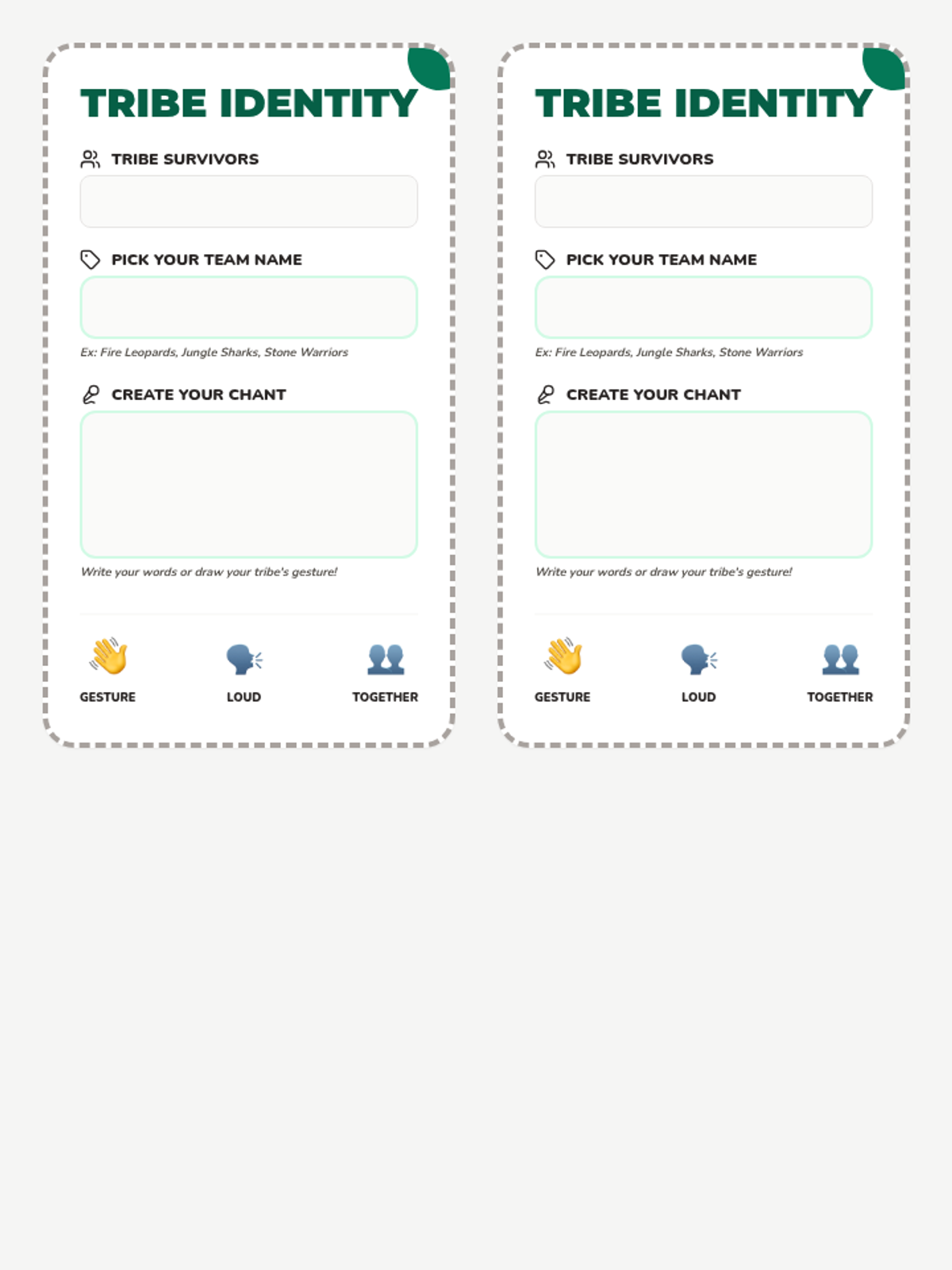
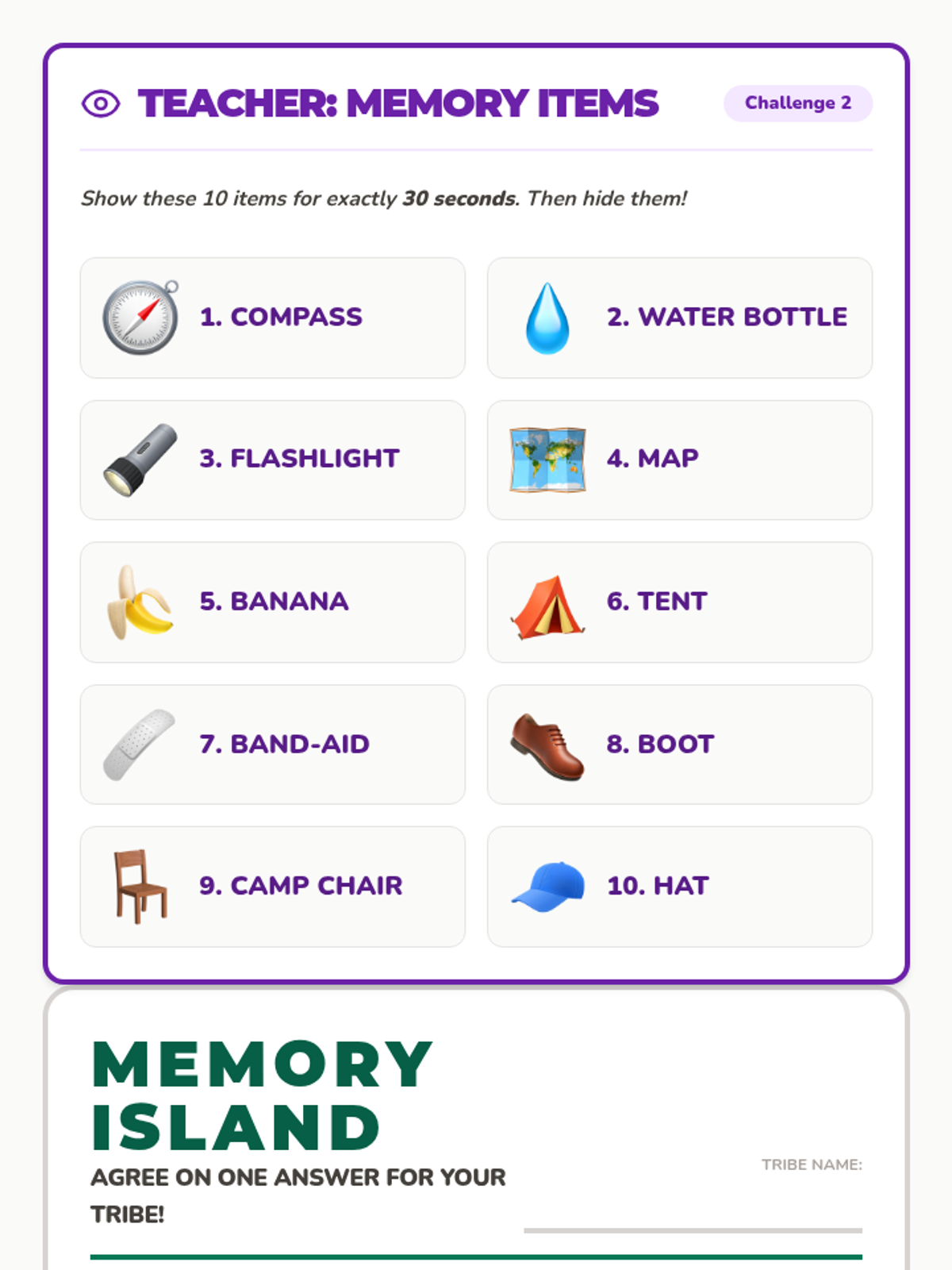
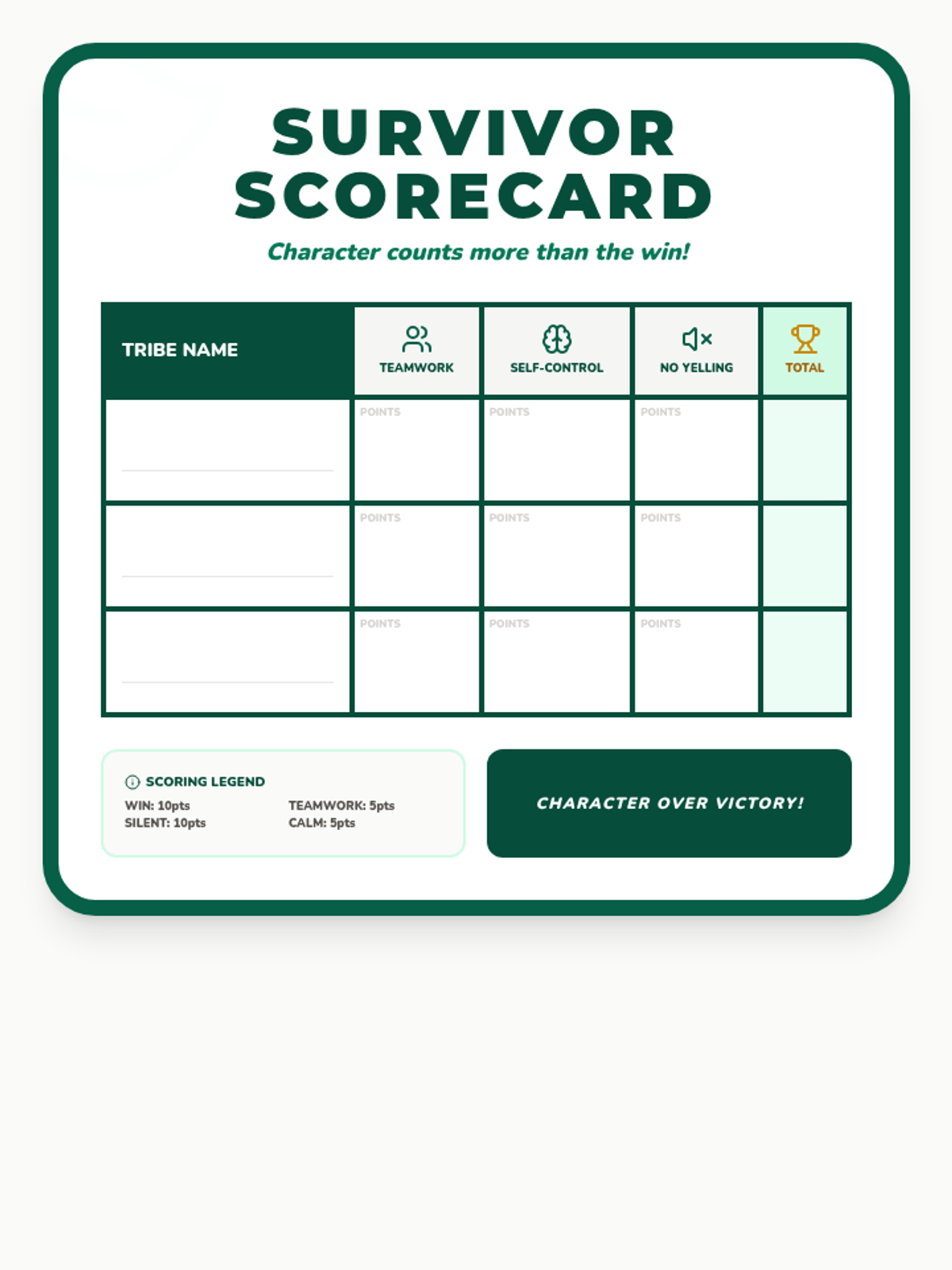
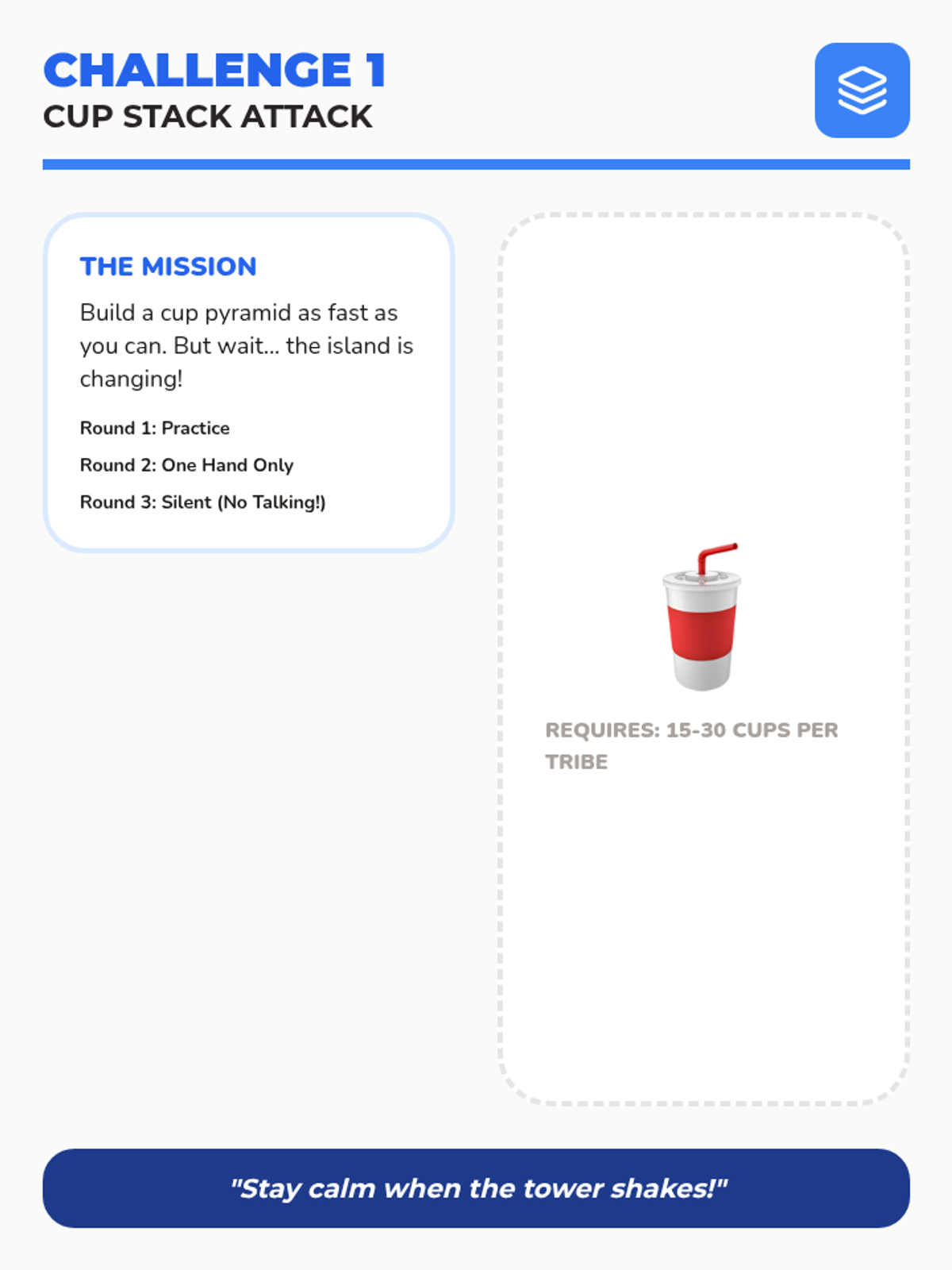
A high-energy, SEL-focused lesson where students form 'tribes' to complete challenges that test teamwork, memory, and self-control. Includes visual supports and symbol-based instructions for diverse learners.
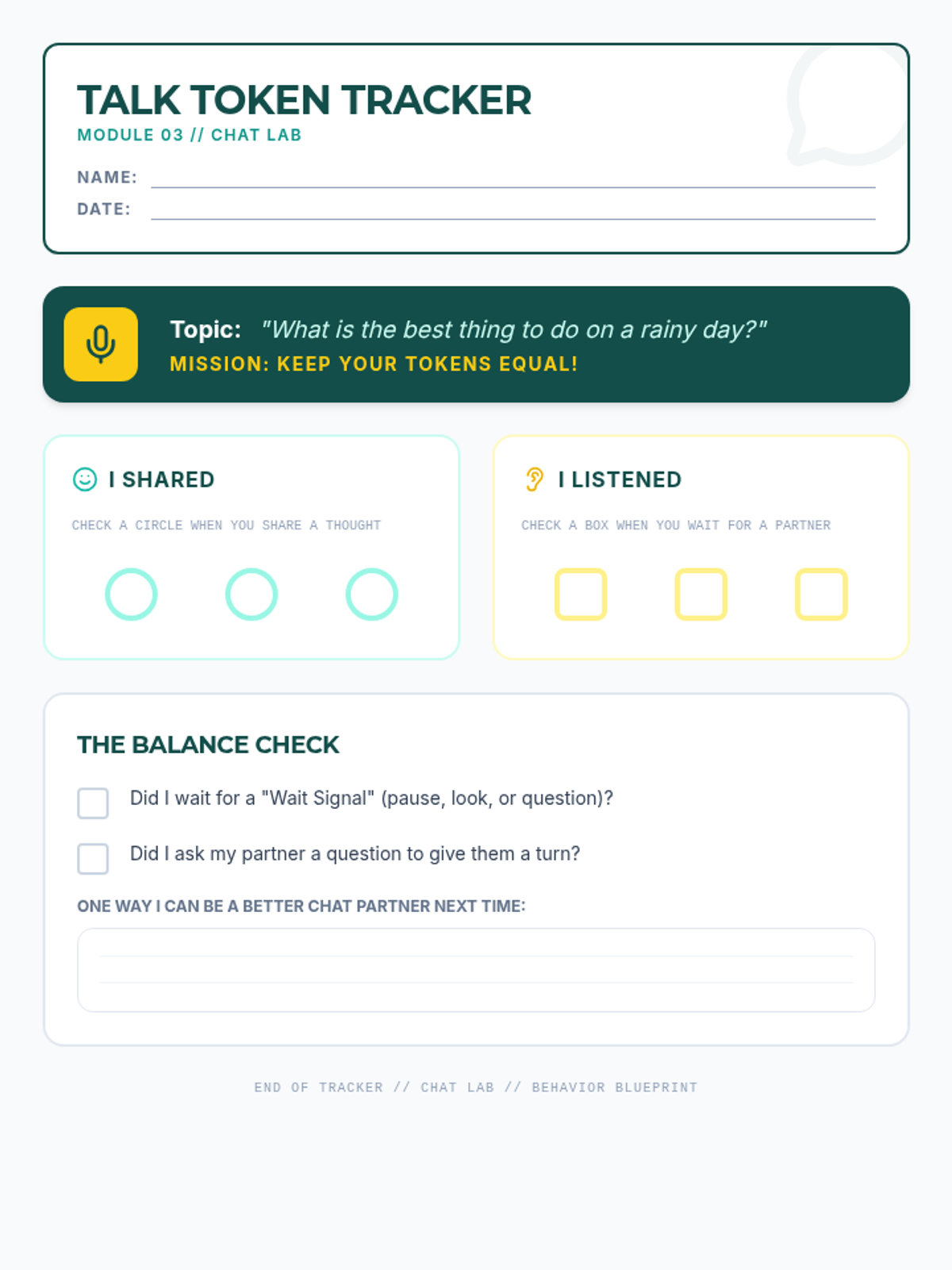
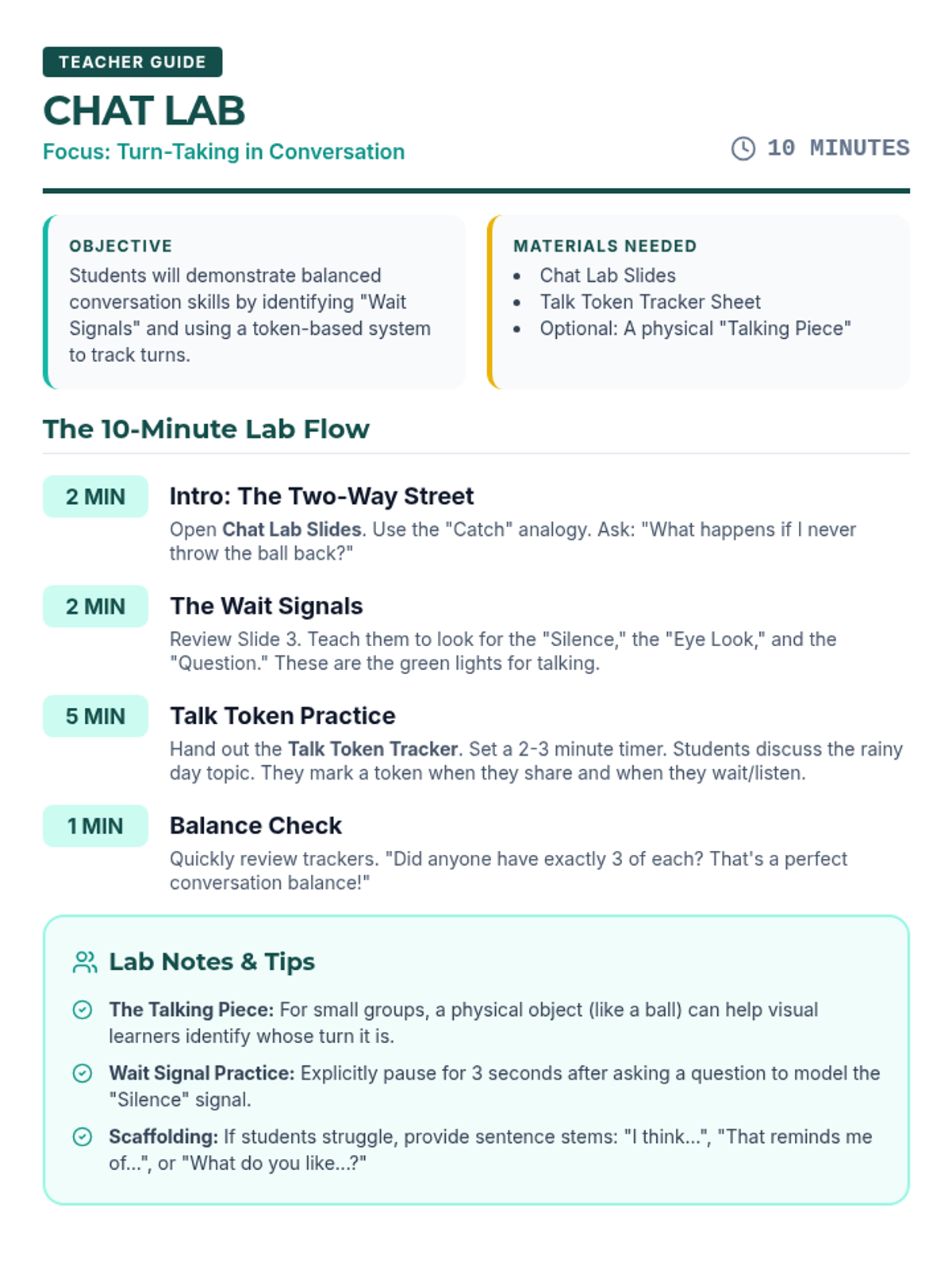
Develops skills for balanced conversation, focusing on waiting for pauses and using visual cues to take turns.
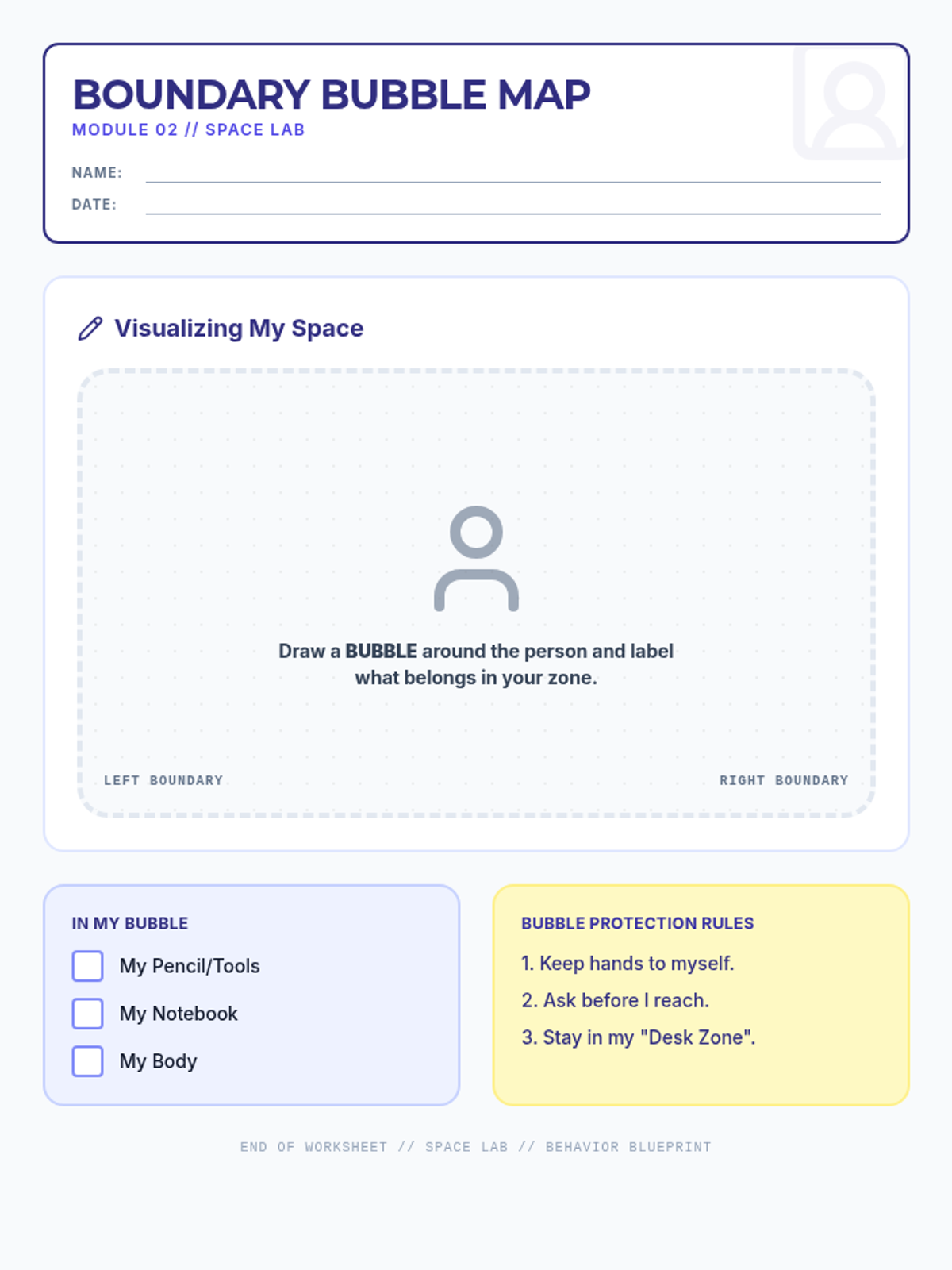
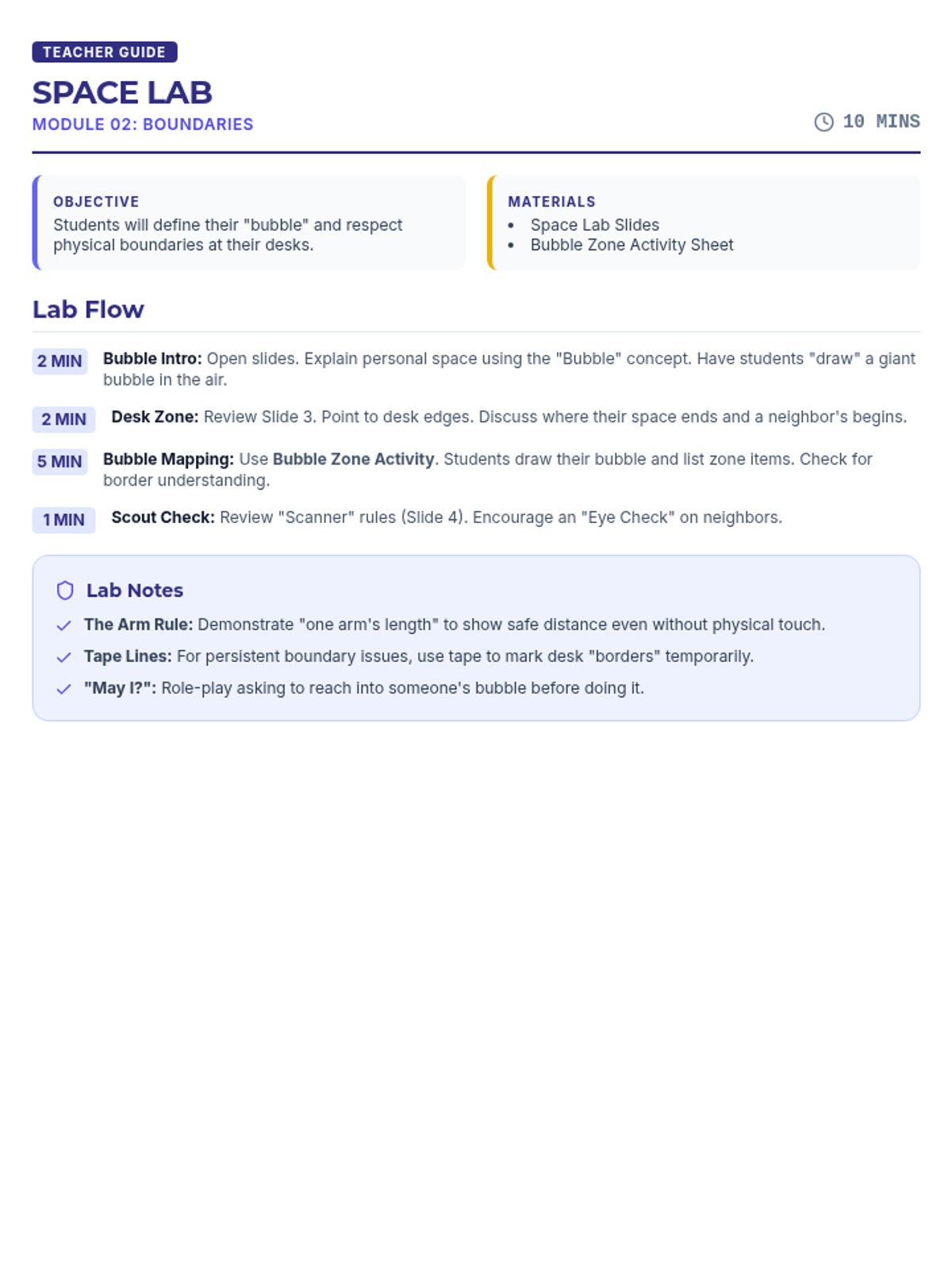
Teaches students to recognize and respect personal boundaries and physical space within their desk area and the classroom.
Focuses on the importance of active listening and immediate response to adult instructions in the classroom.
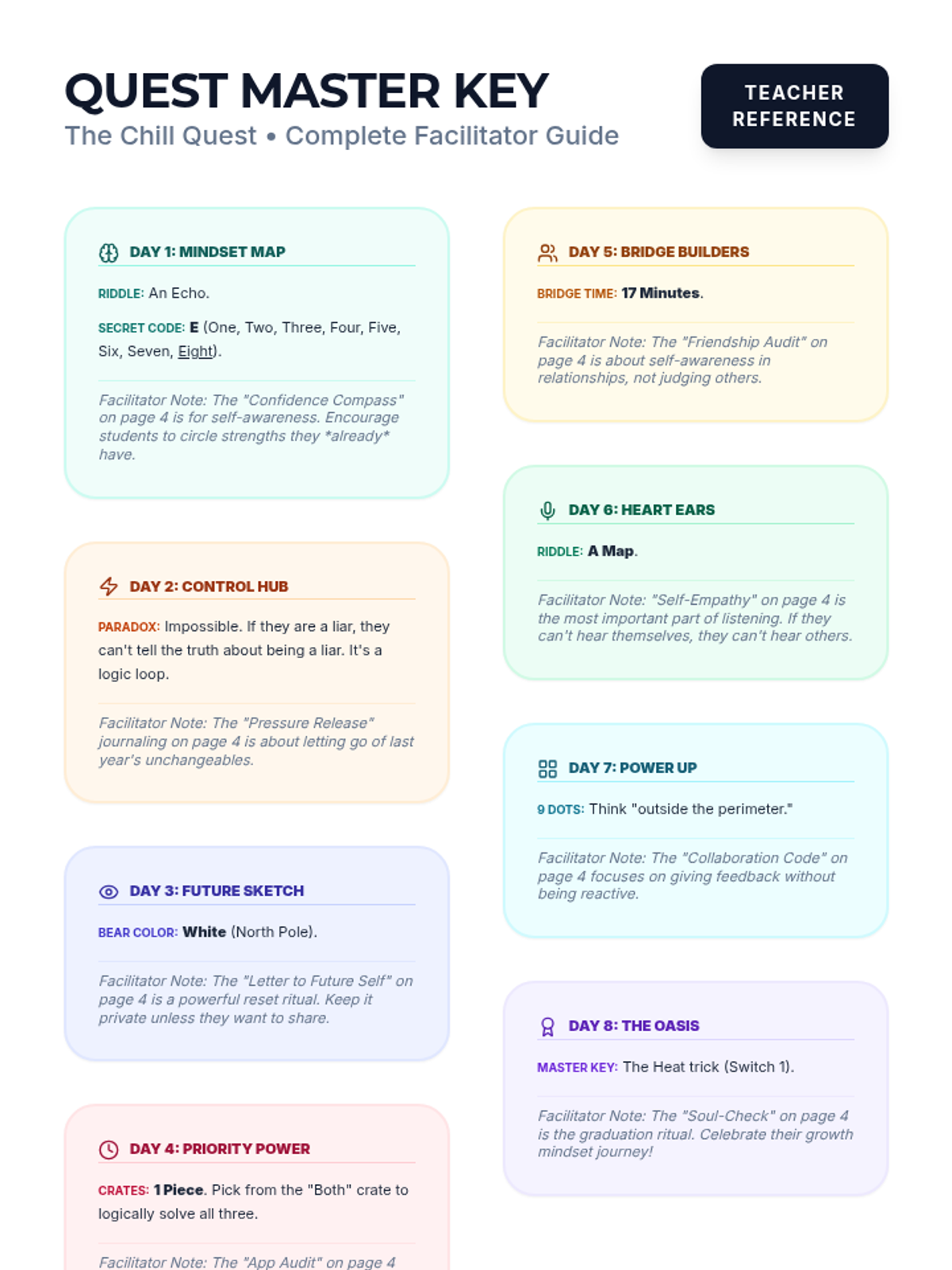
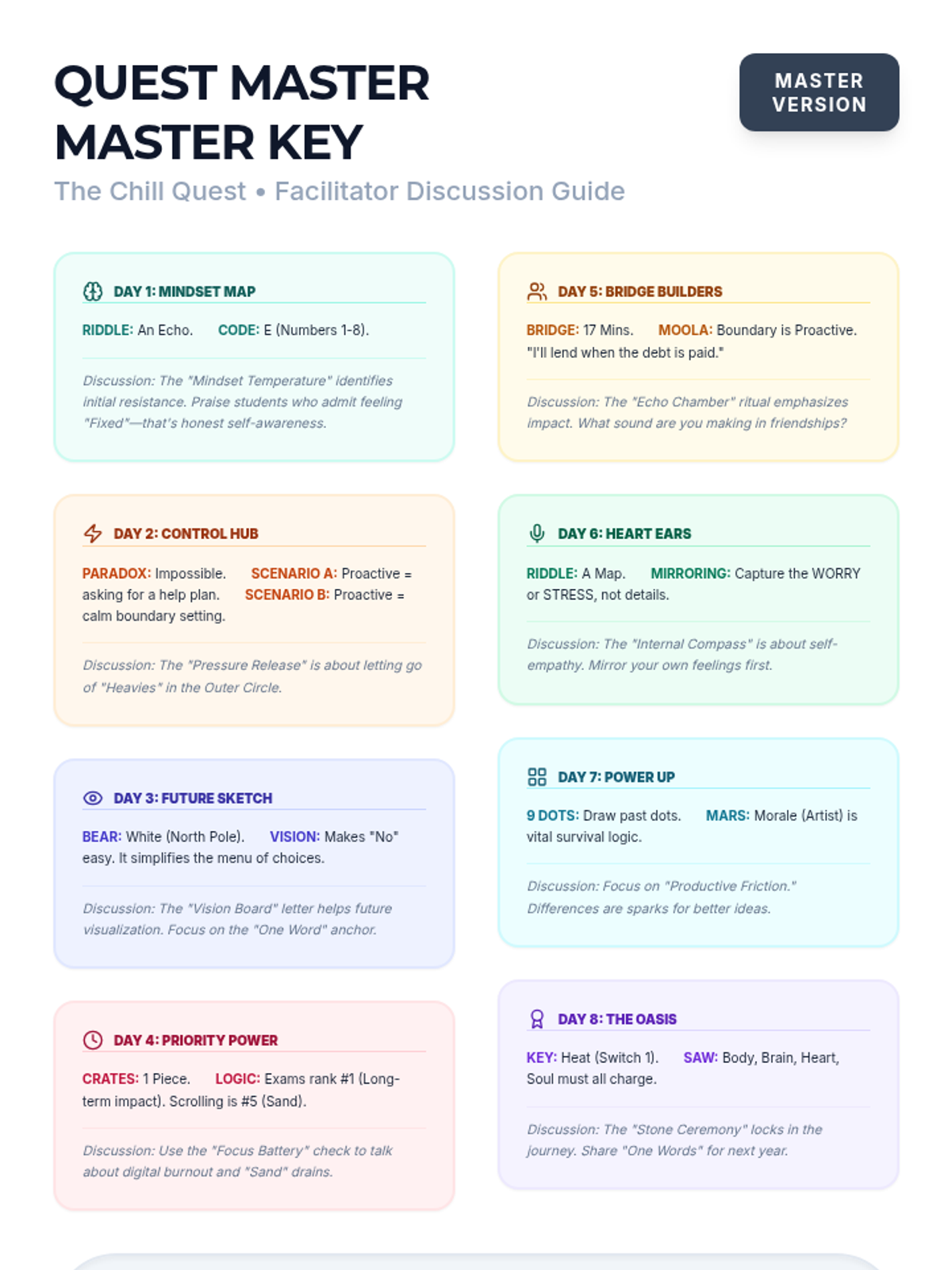
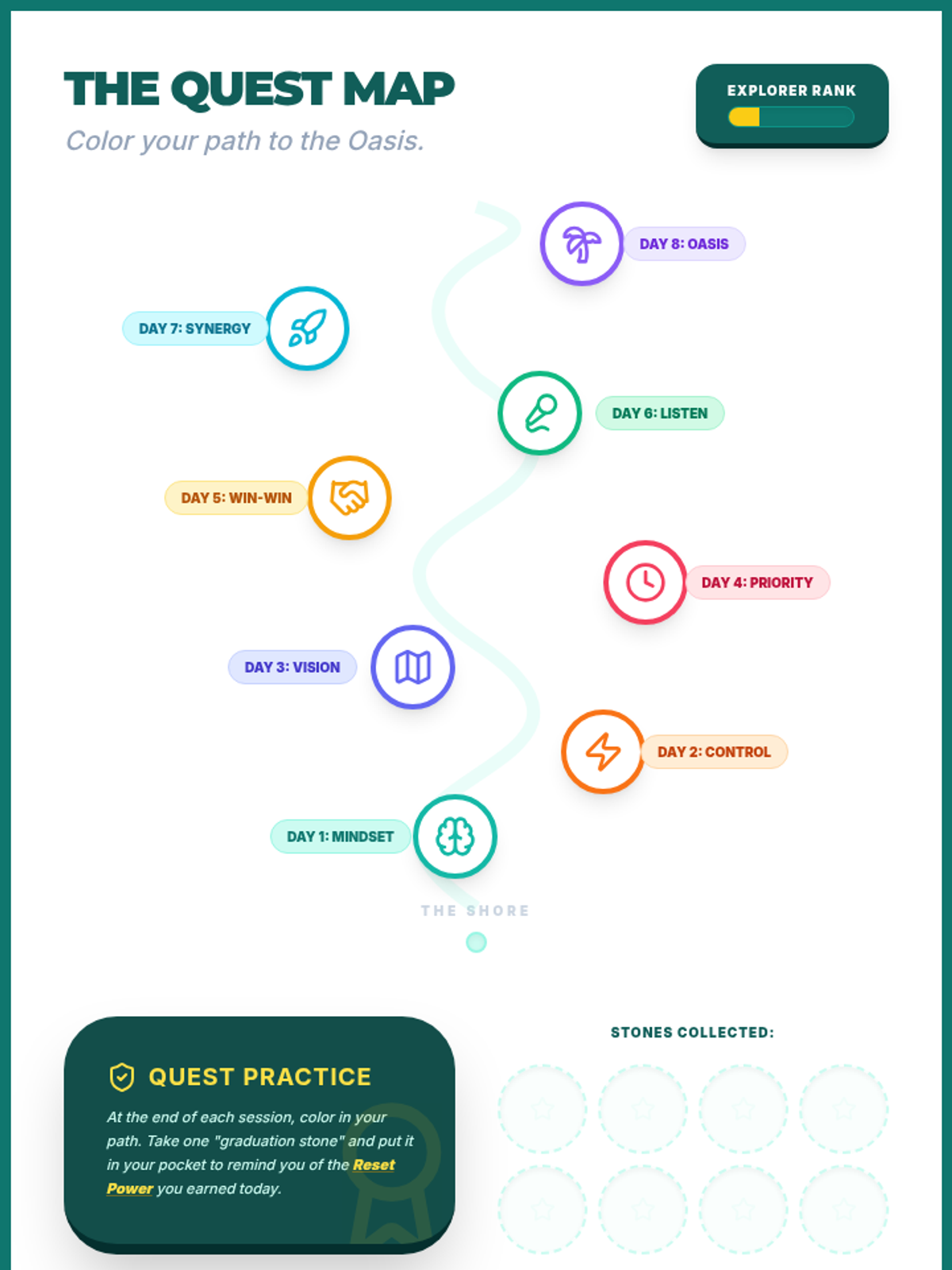
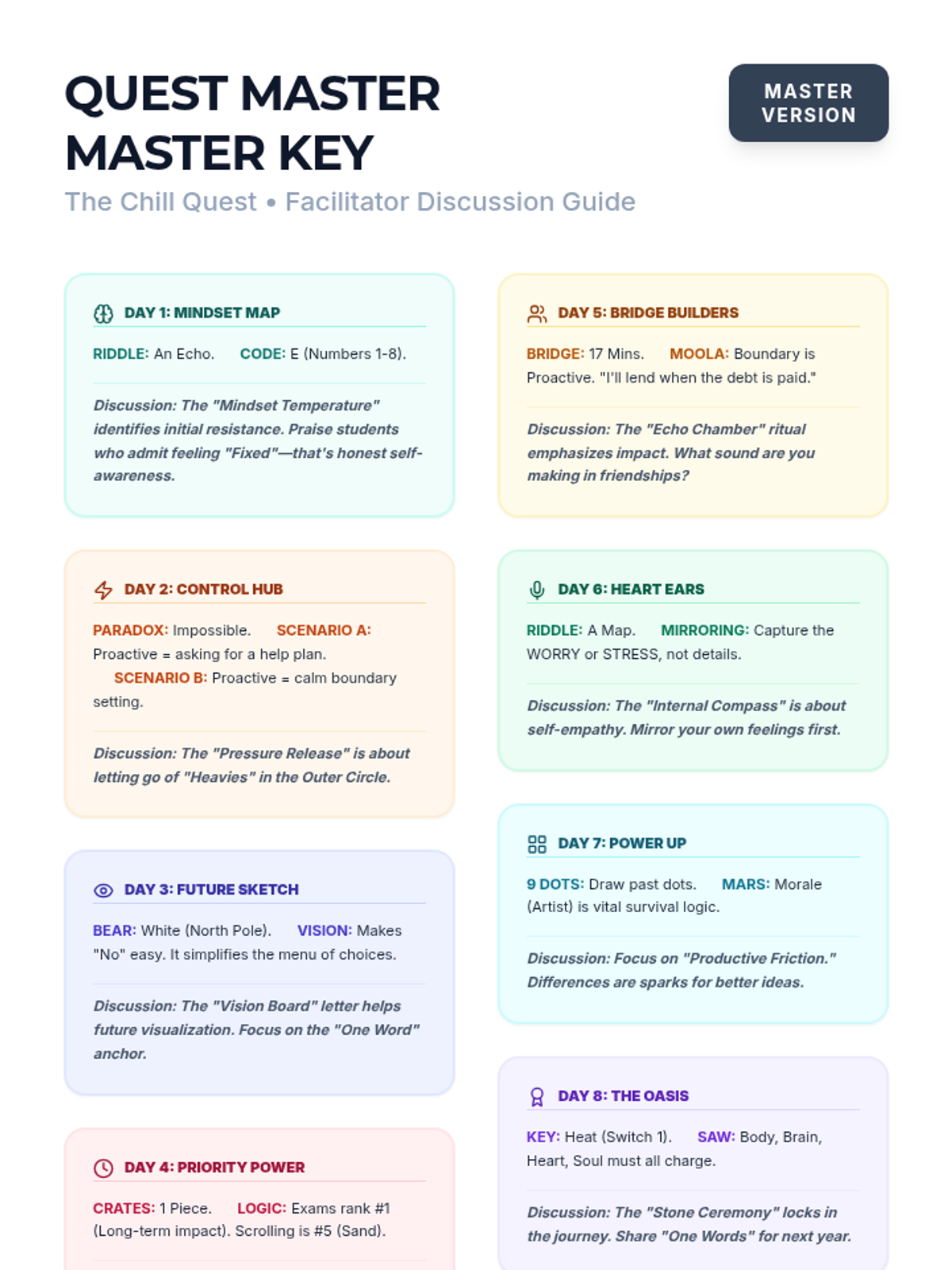
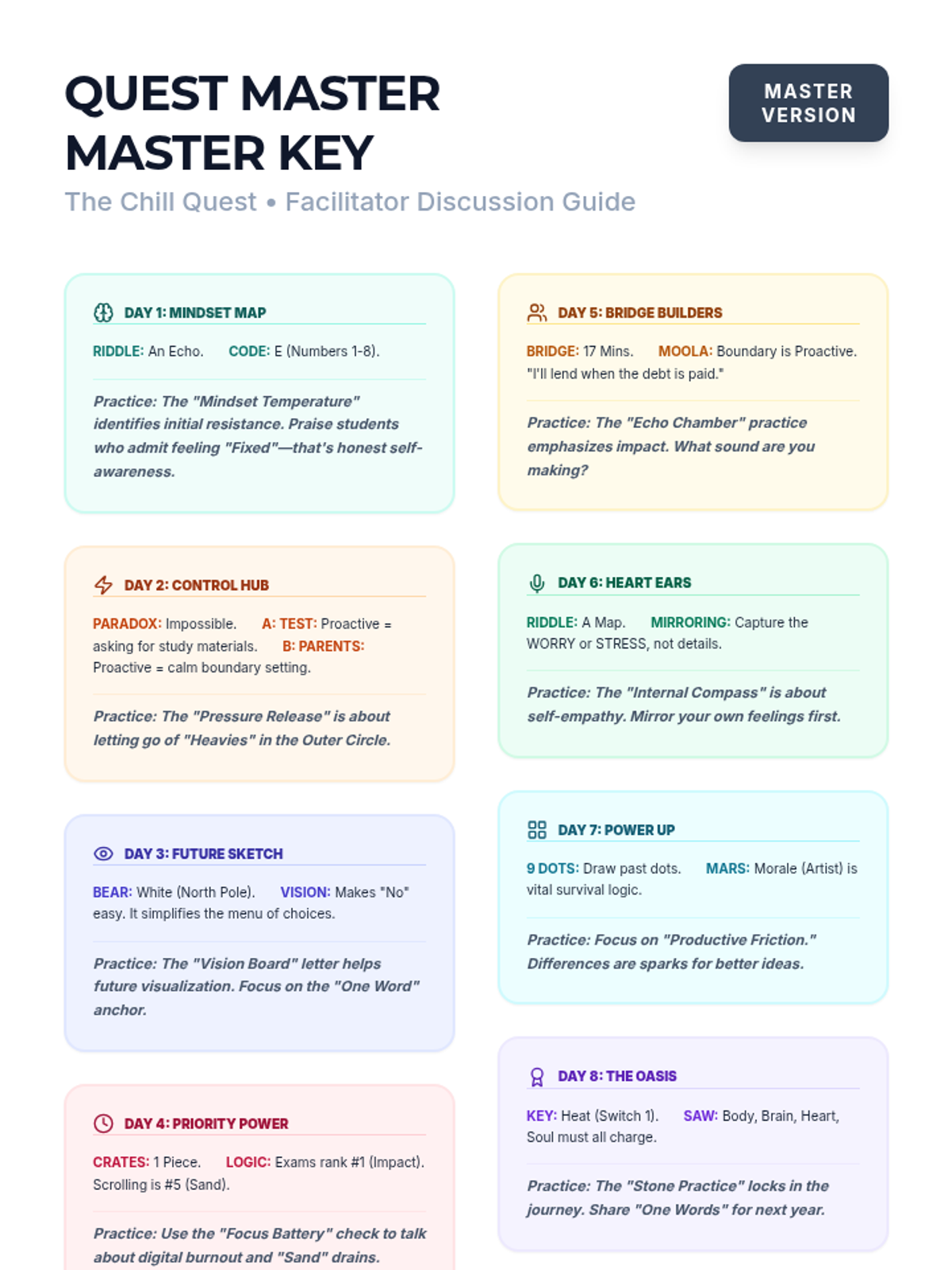
Complete Facilitator Answer Key and resources for The Chill Quest.
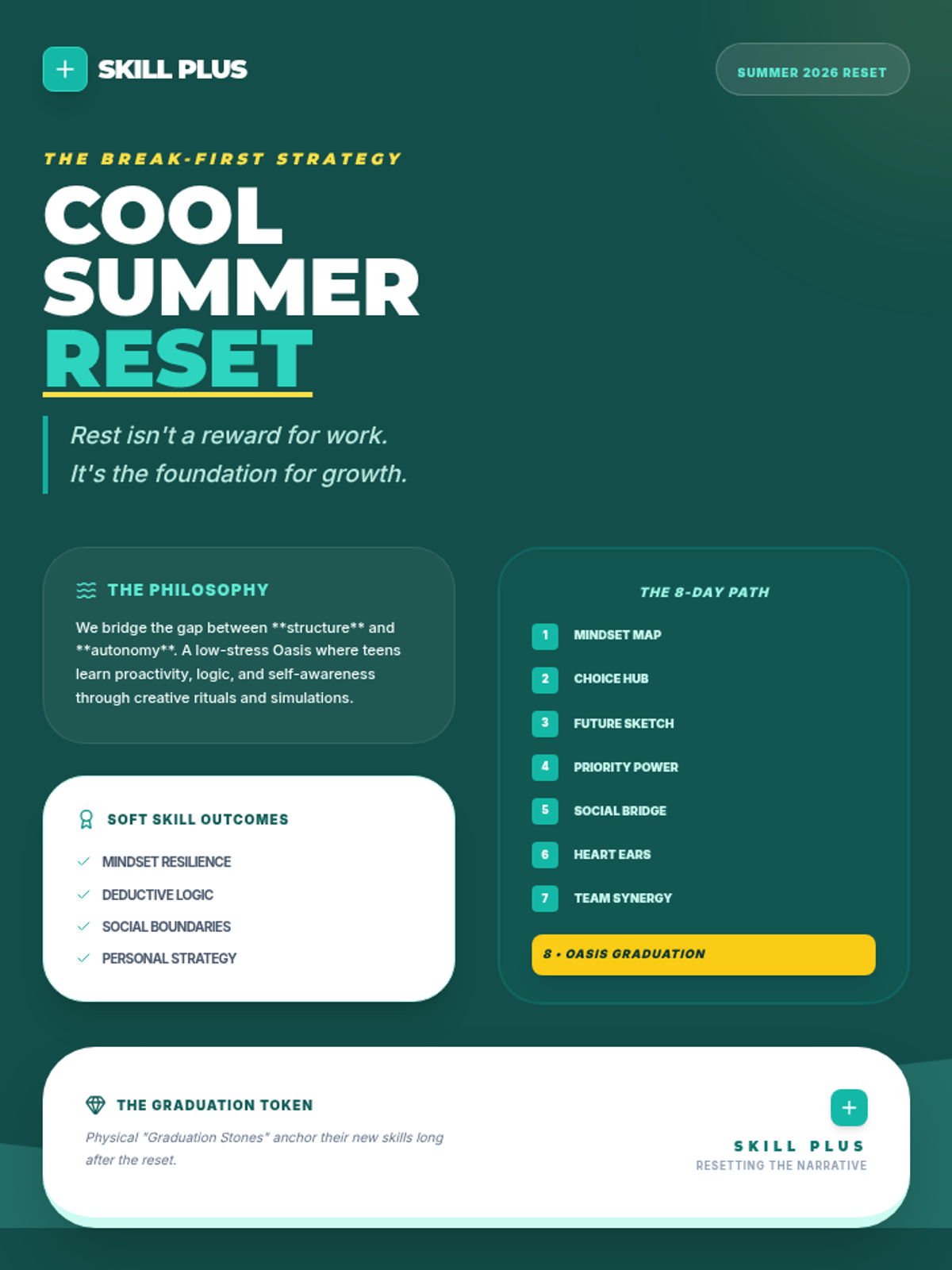
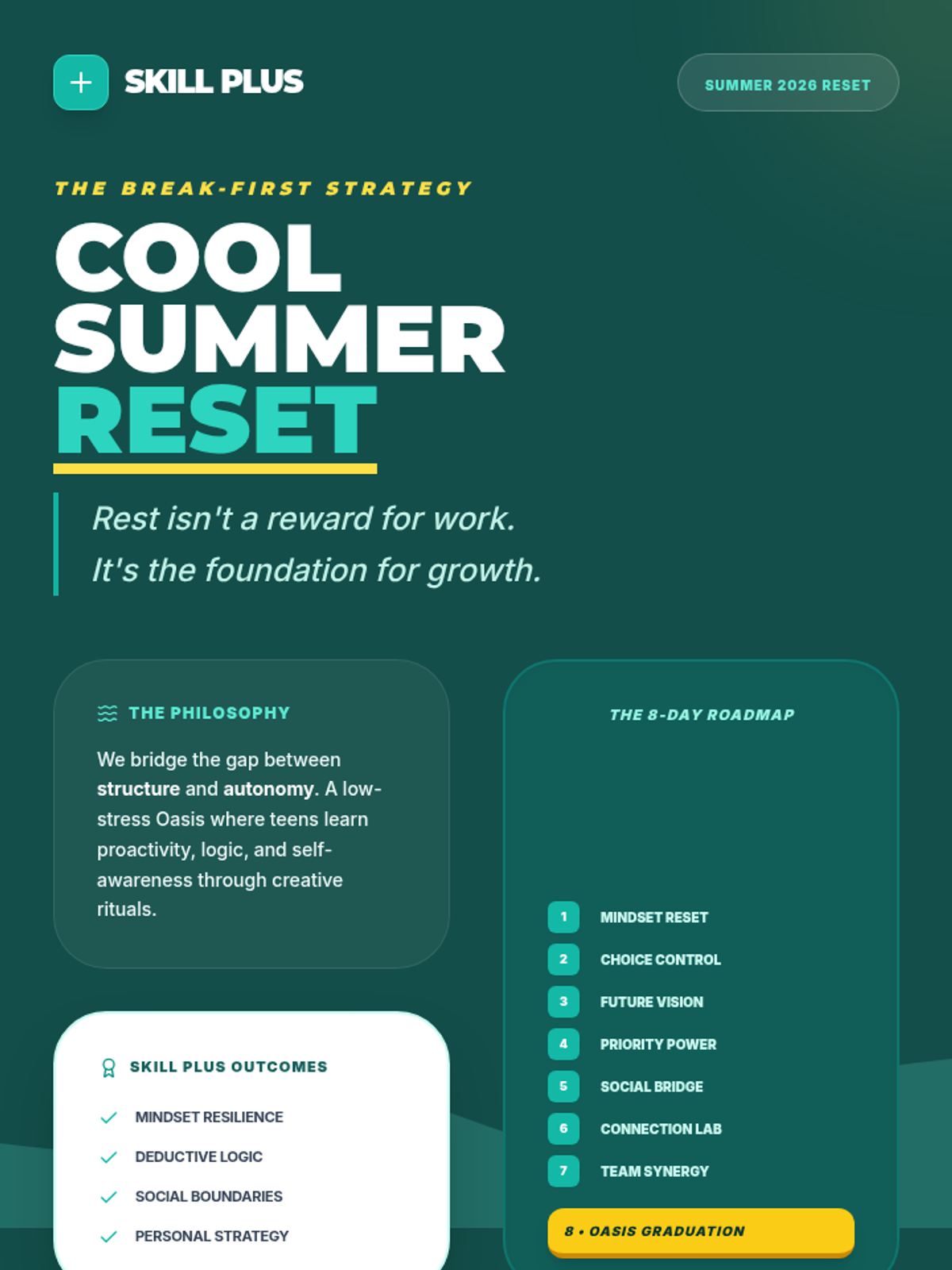
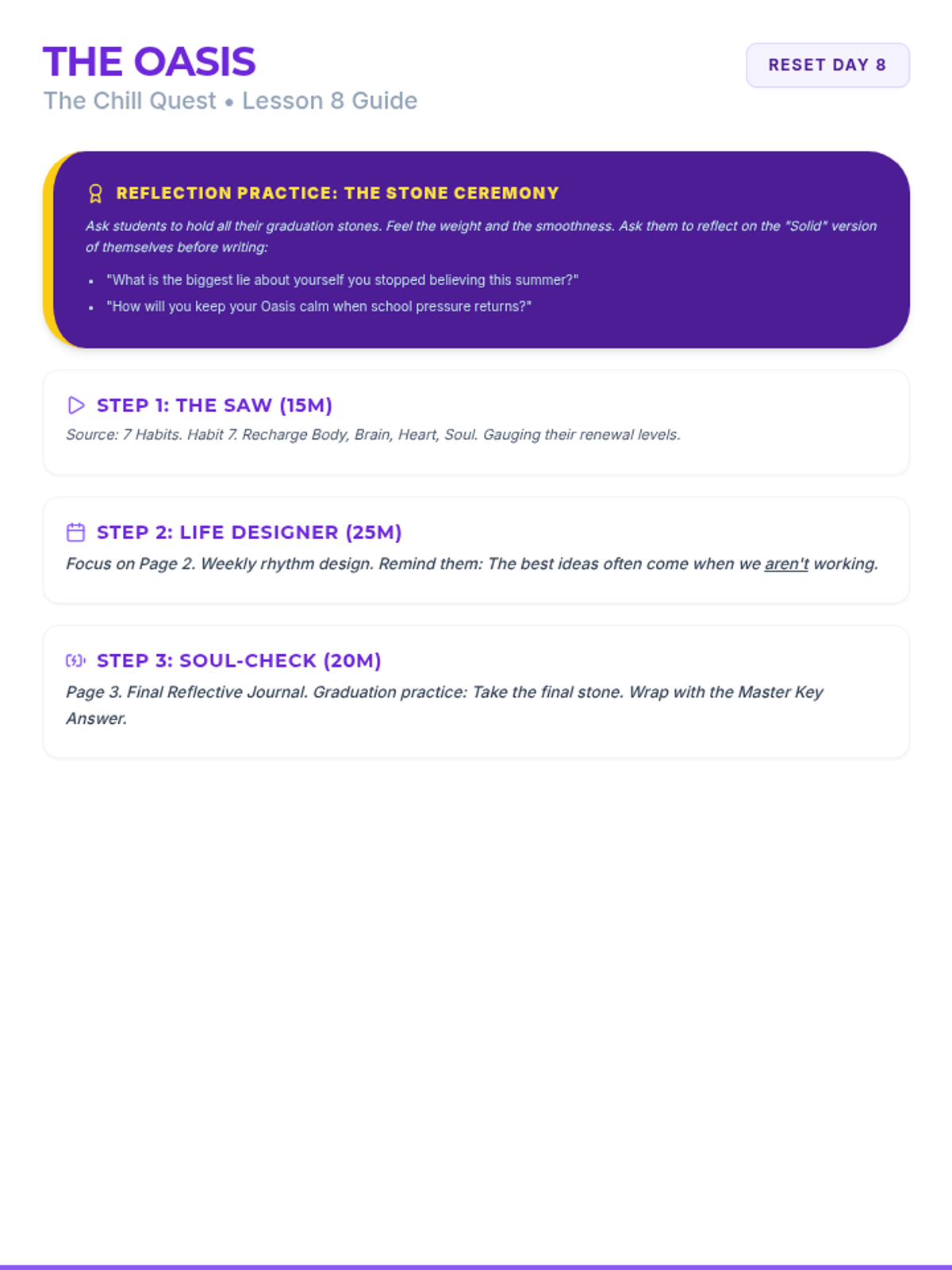
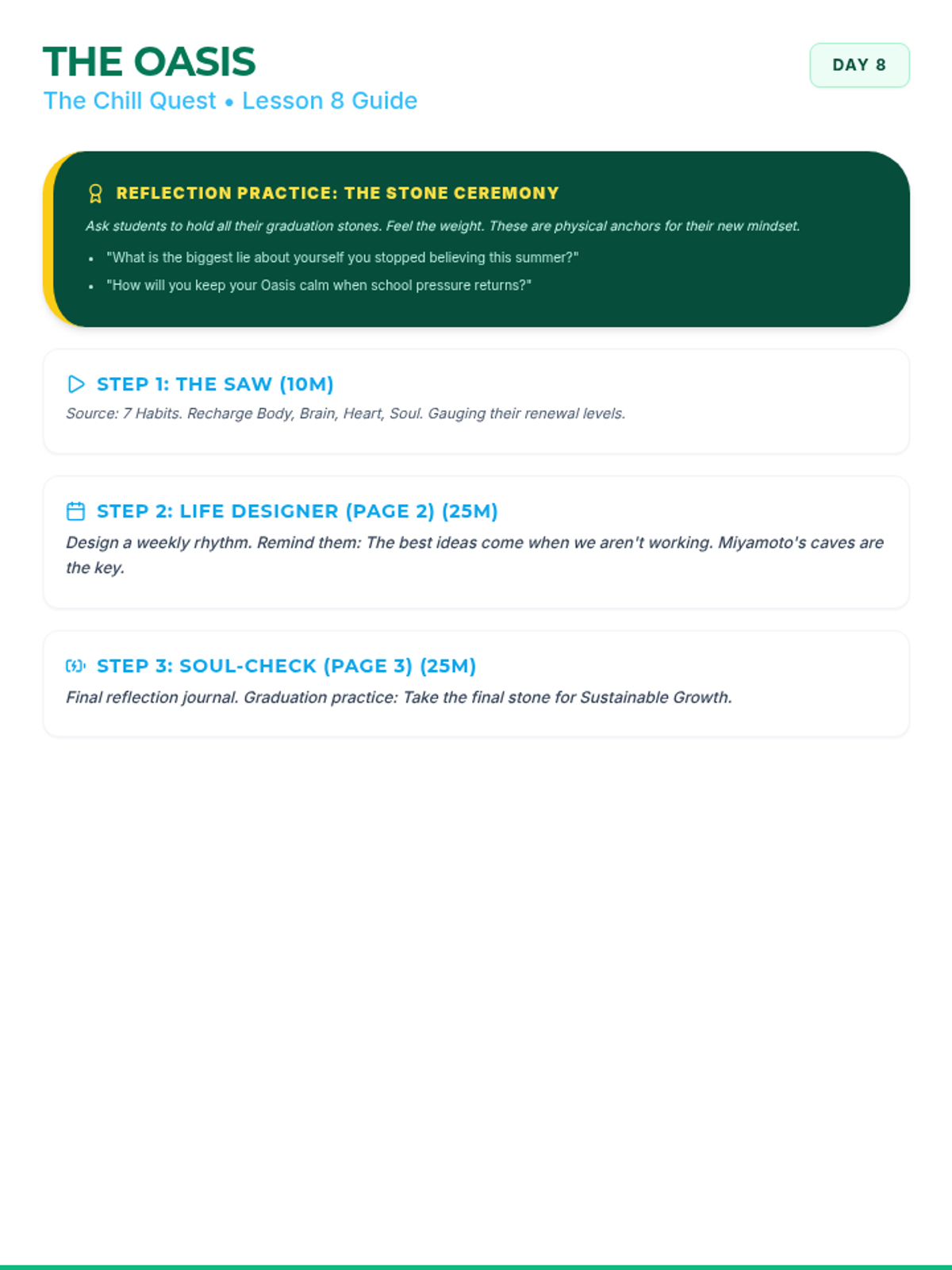
Focusing on self-care, renewal, and reflecting on the summer journey.
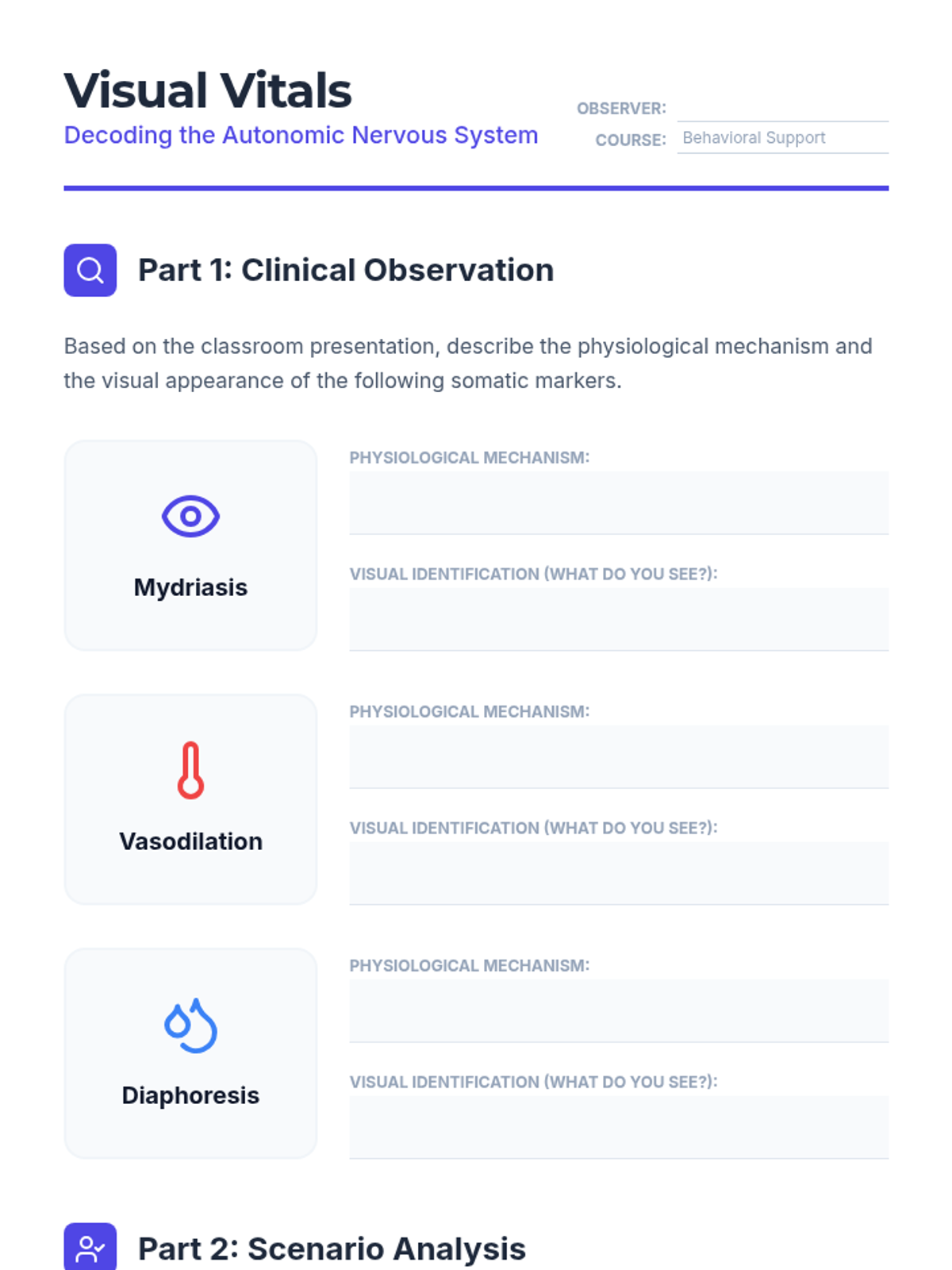
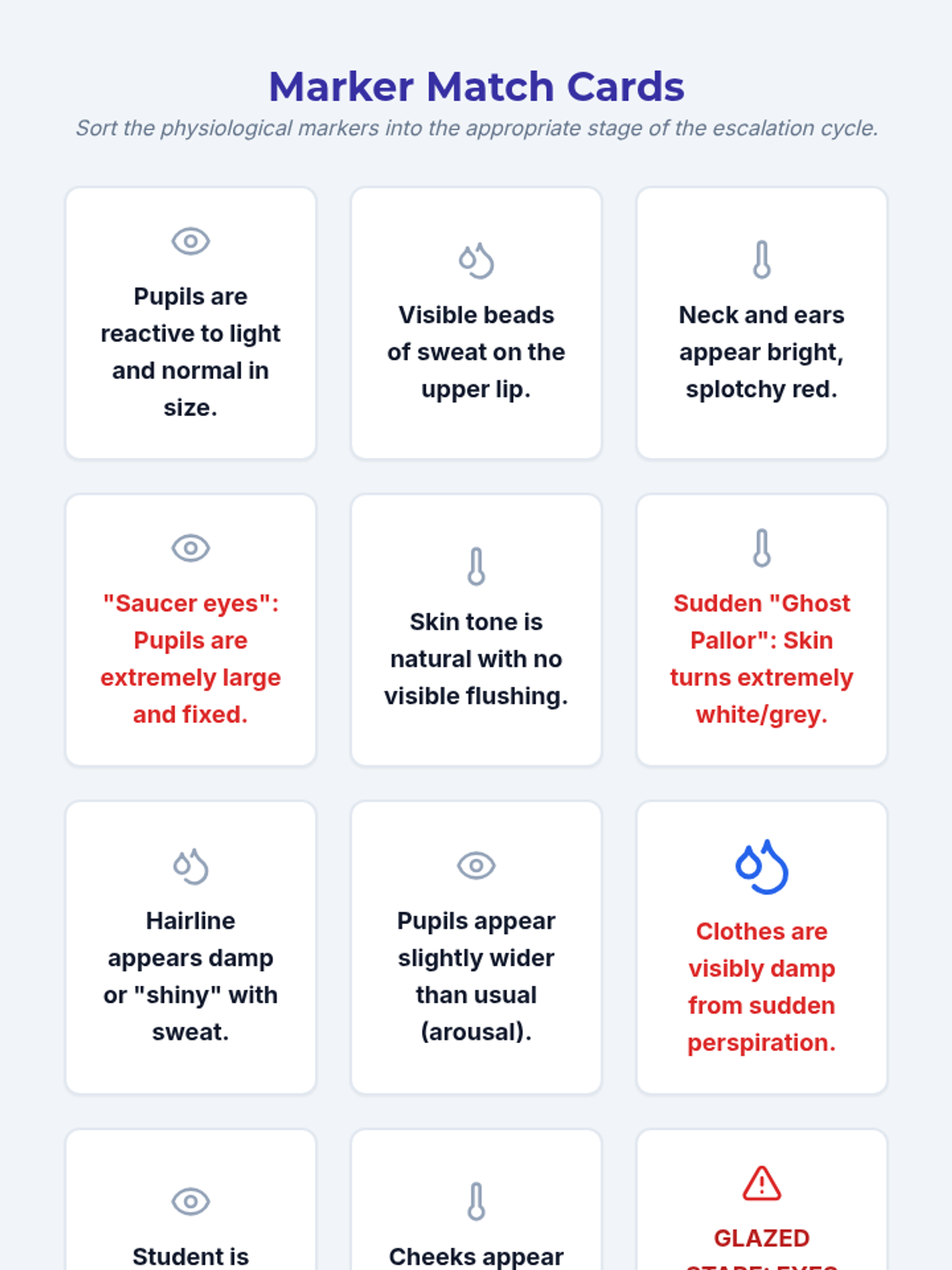
Focuses on involuntary somatic markers like skin flushing, sweating, and pupil dilation as early indicators of physiological arousal.
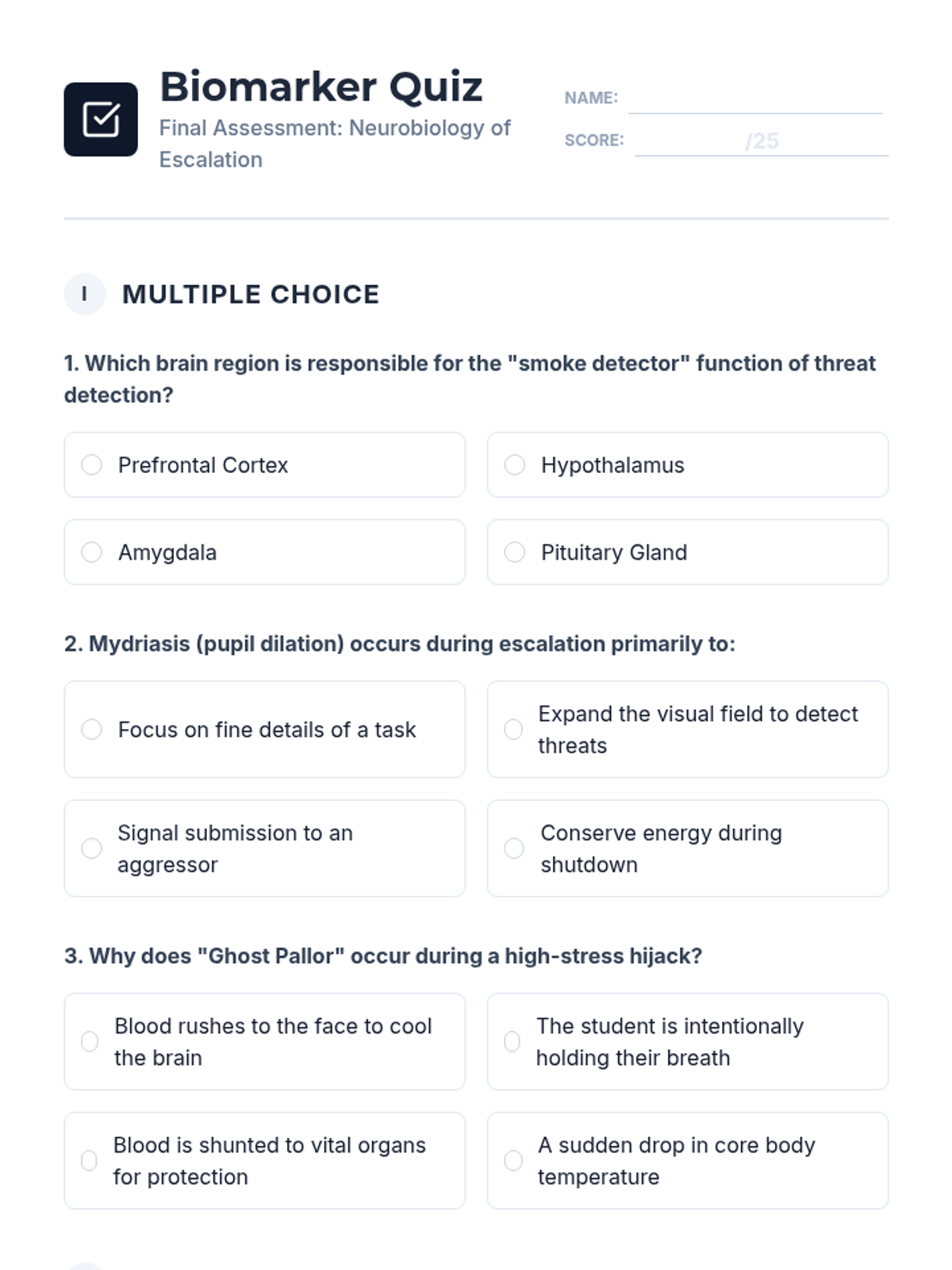
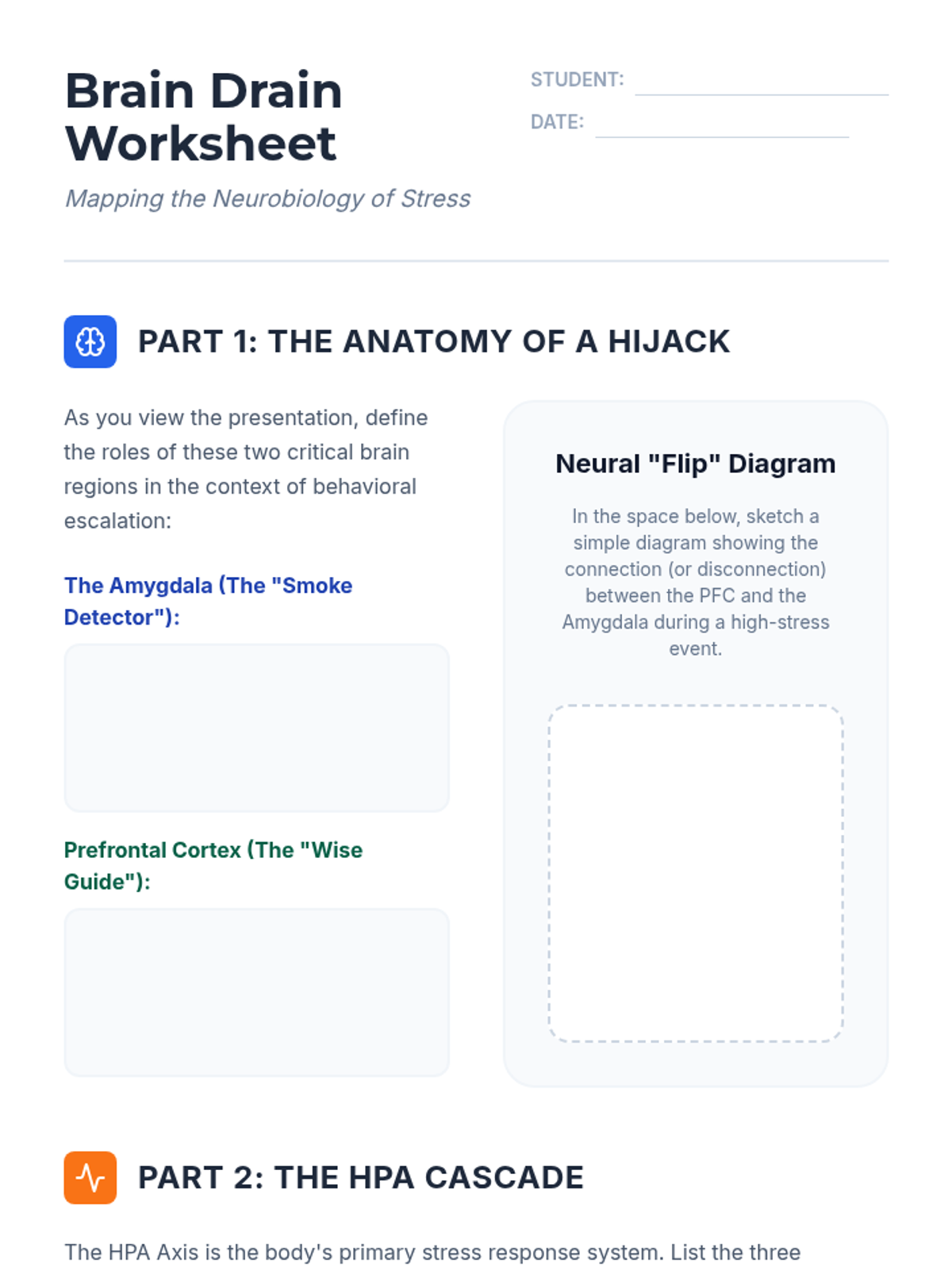
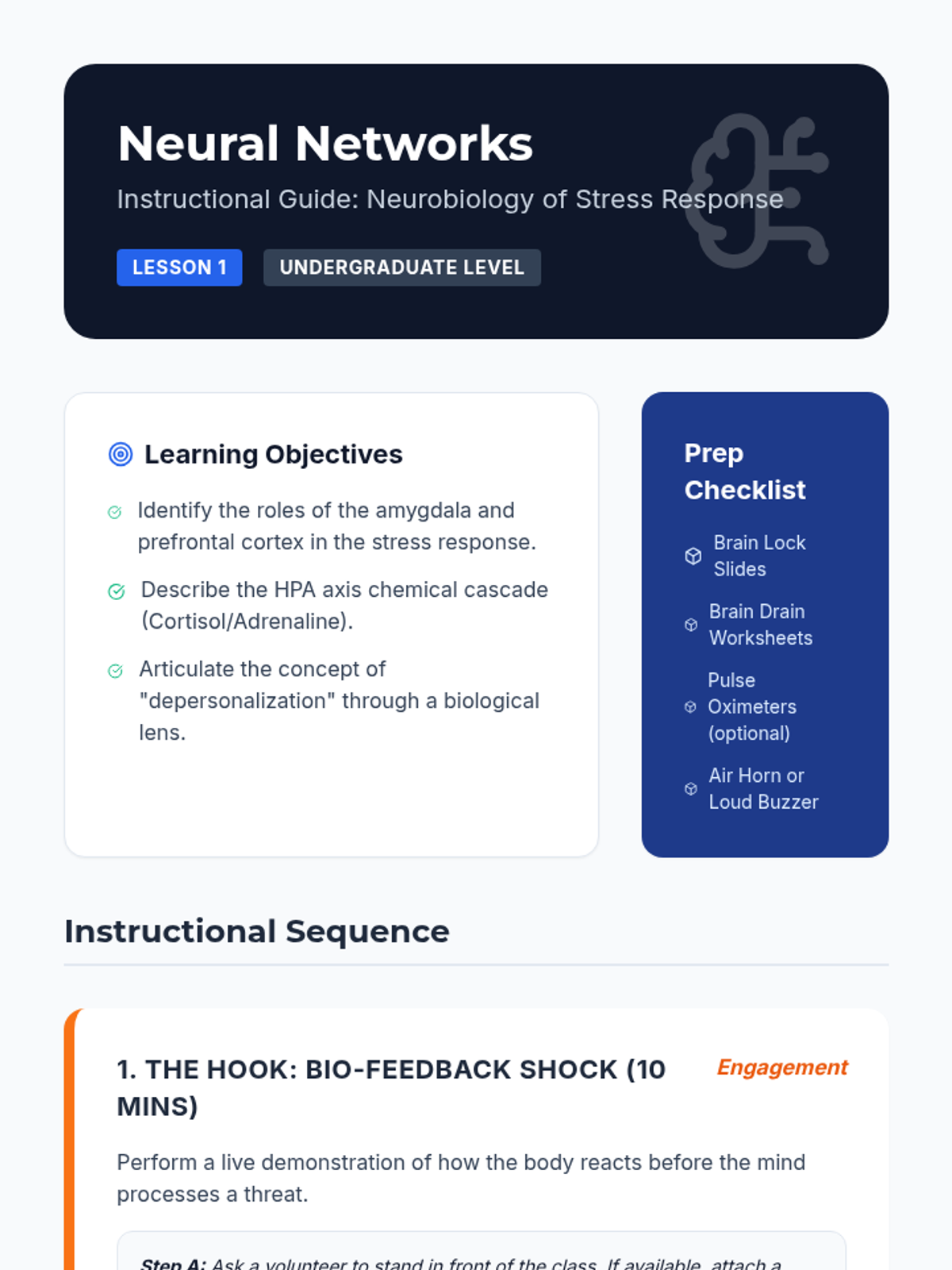
Explores the limbic system, prefrontal cortex, and the 'amygdala hijack' to understand why rational thinking fails during high-stress escalation.
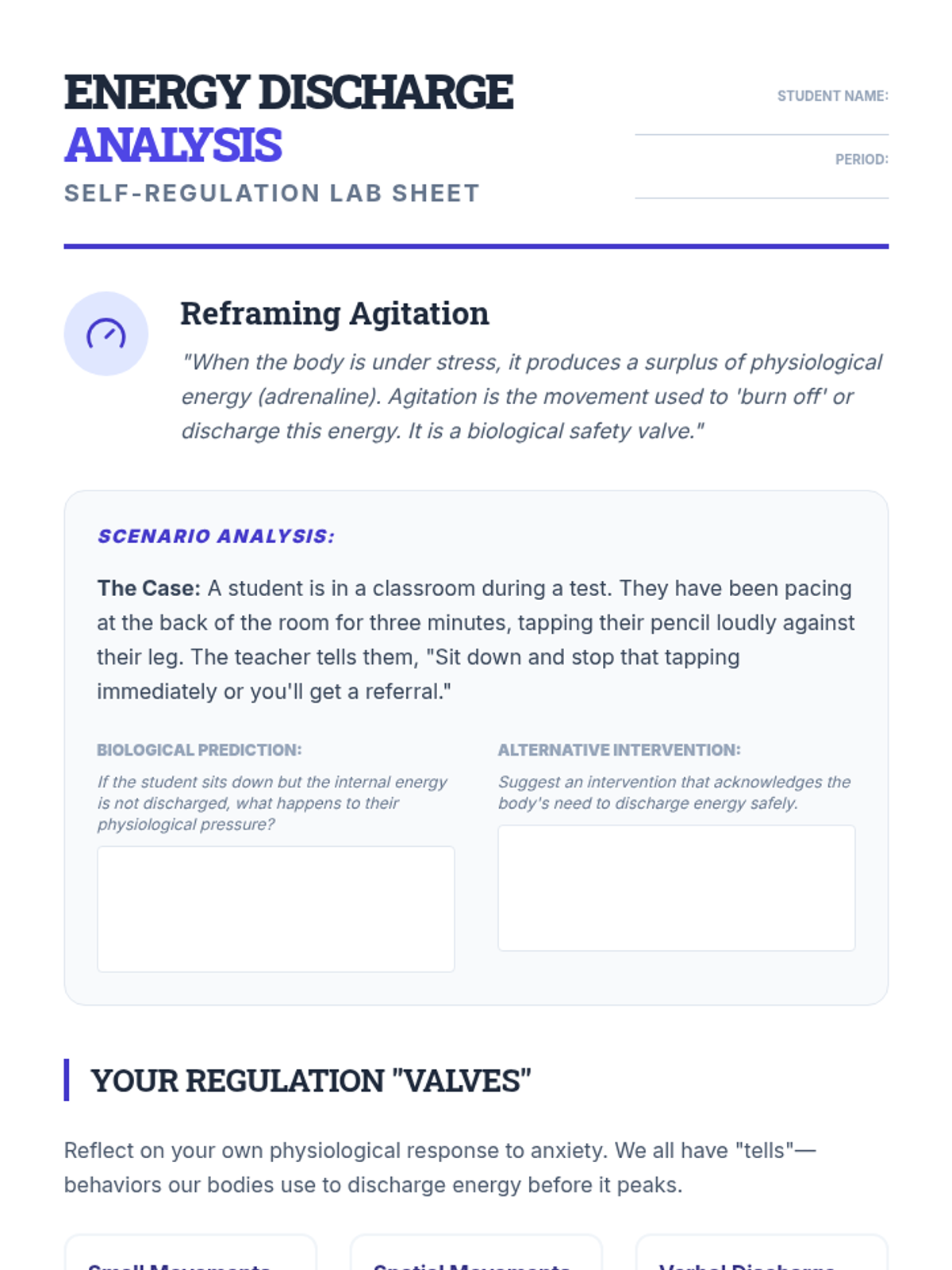
Students explore how anxiety manifests physically before turning into aggression, looking at behaviors like pacing or wringing hands as attempts to self-regulate excess energy. This reframes 'acting out' as a coping mechanism.
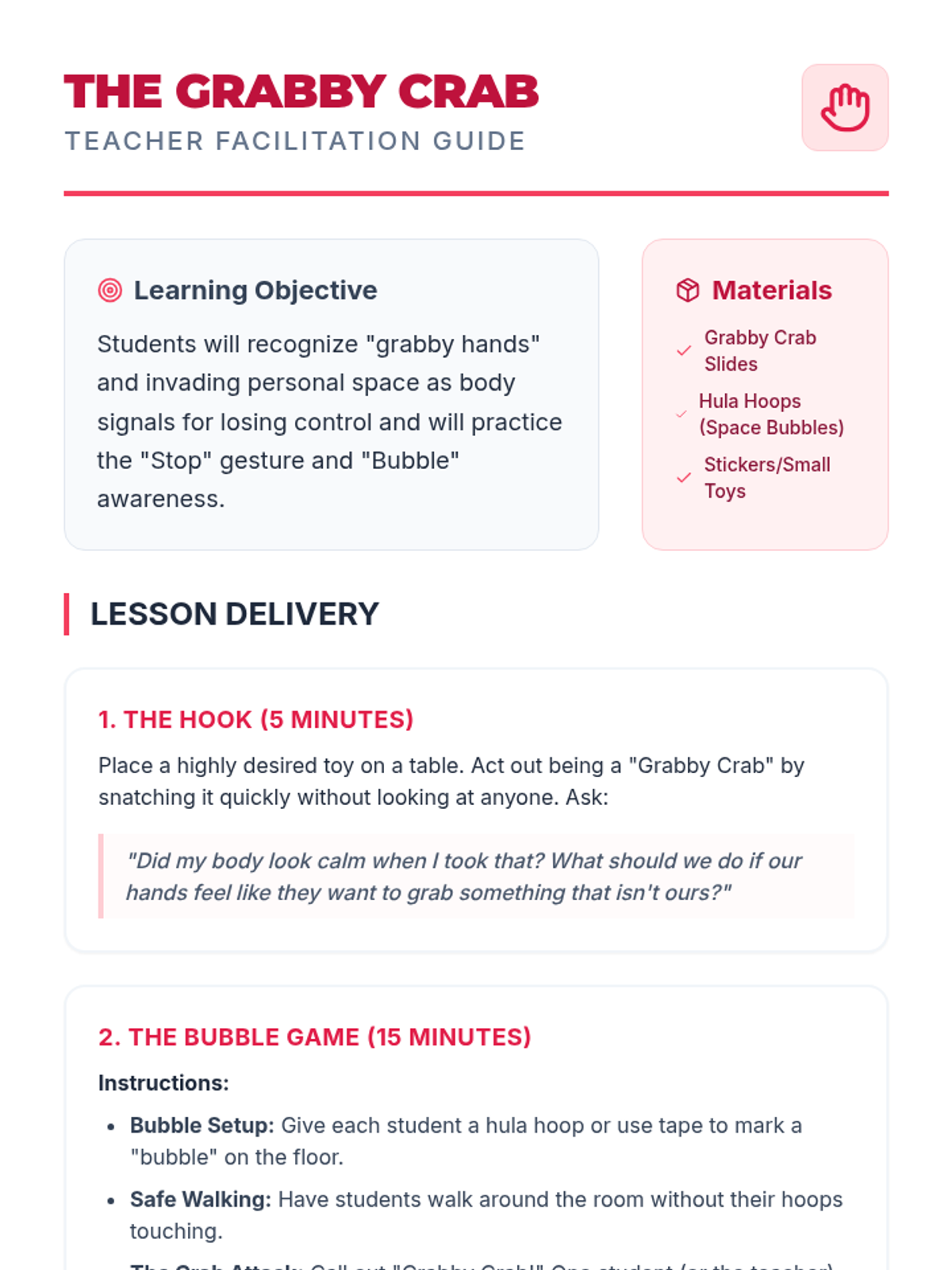
Students explore how 'grabby hands' or invading personal space can be a warning sign of losing control. They practice recognizing when their hands feel like they want to push or grab and using a 'stop' gesture instead.
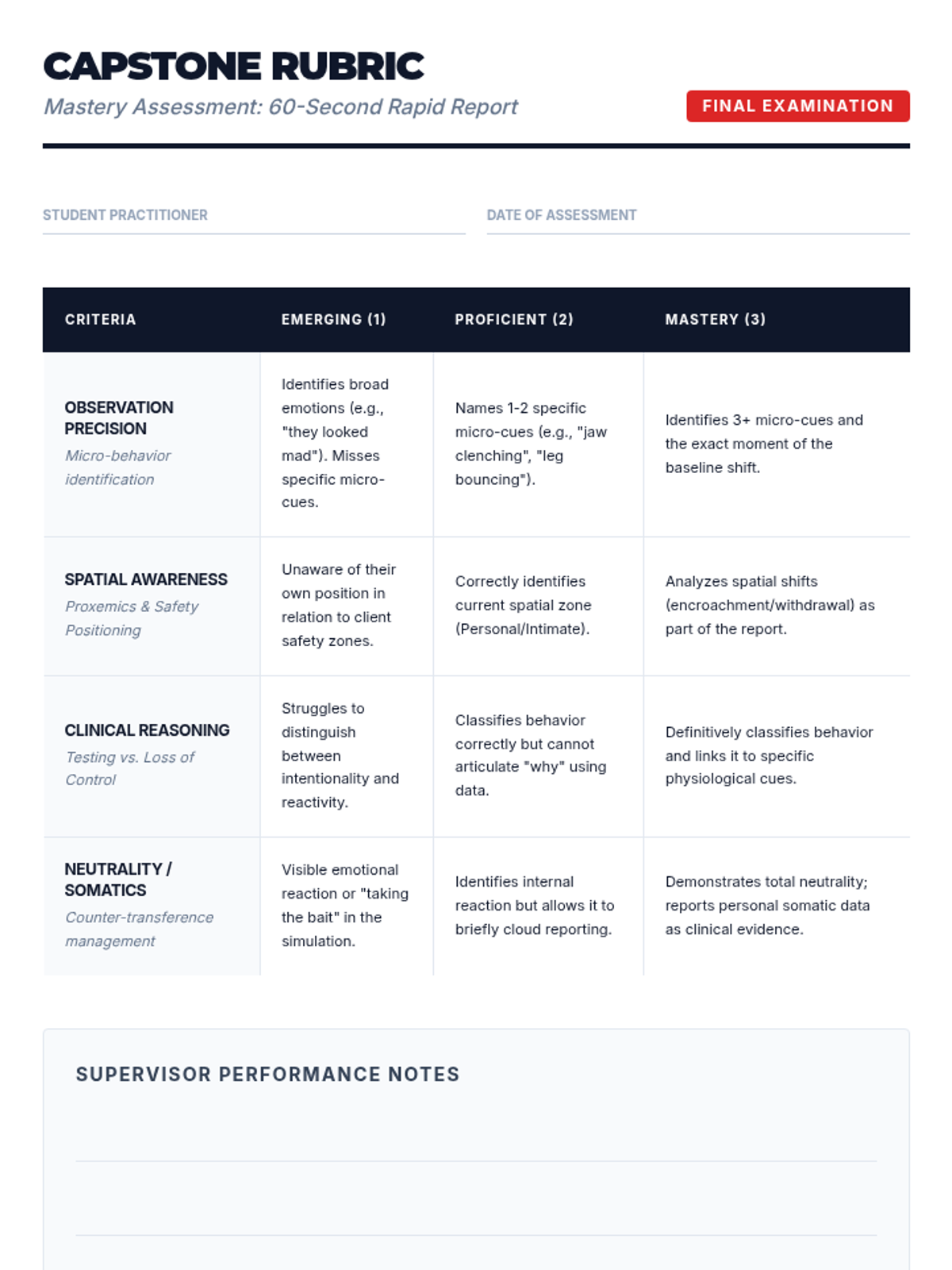
A capstone simulation where students must rapidly assess and report on a high-fidelity crisis scenario within 60 seconds.
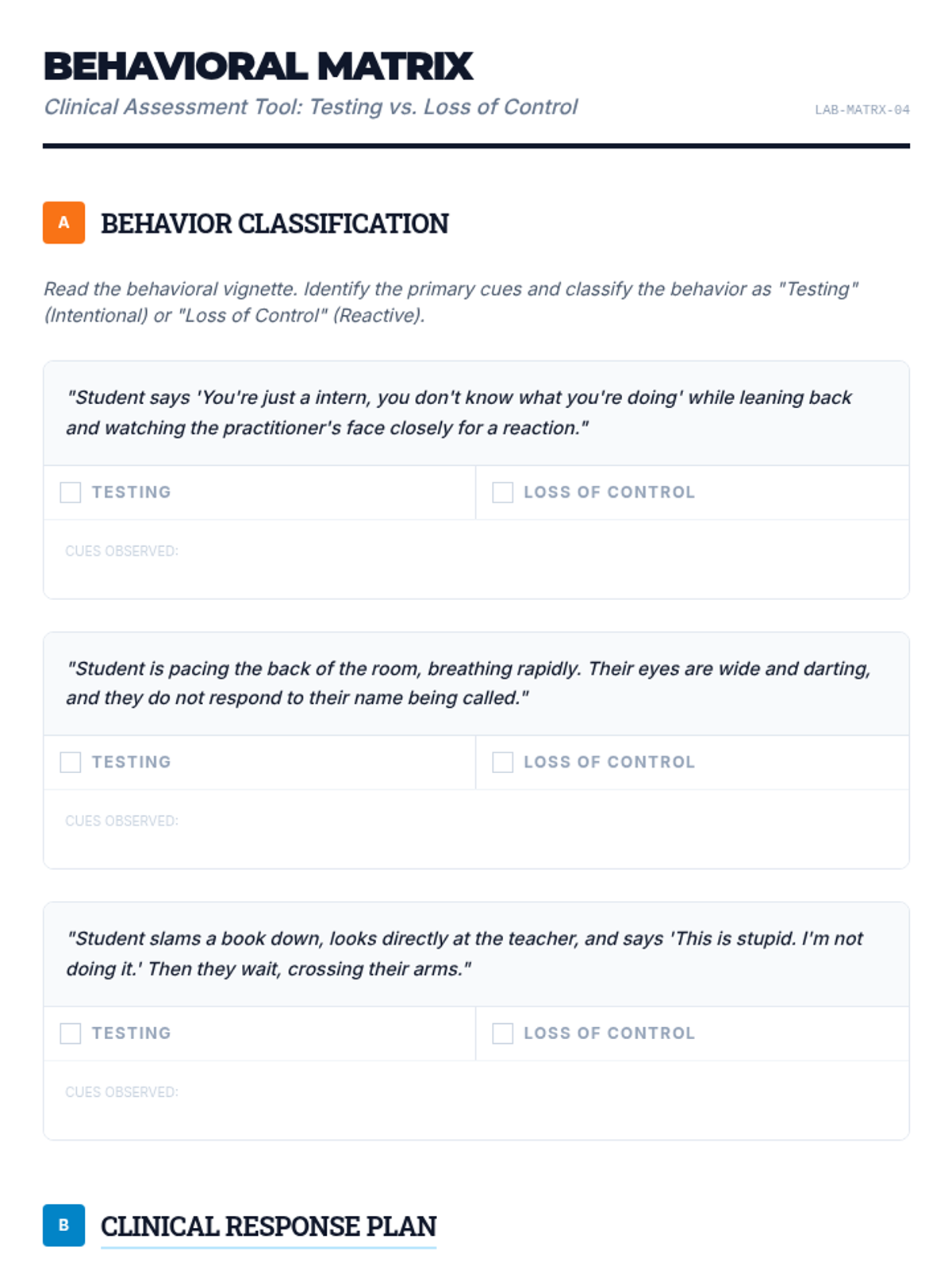
Distinguishes between intentional 'testing' behaviors/power struggles and genuine loss of emotional control.
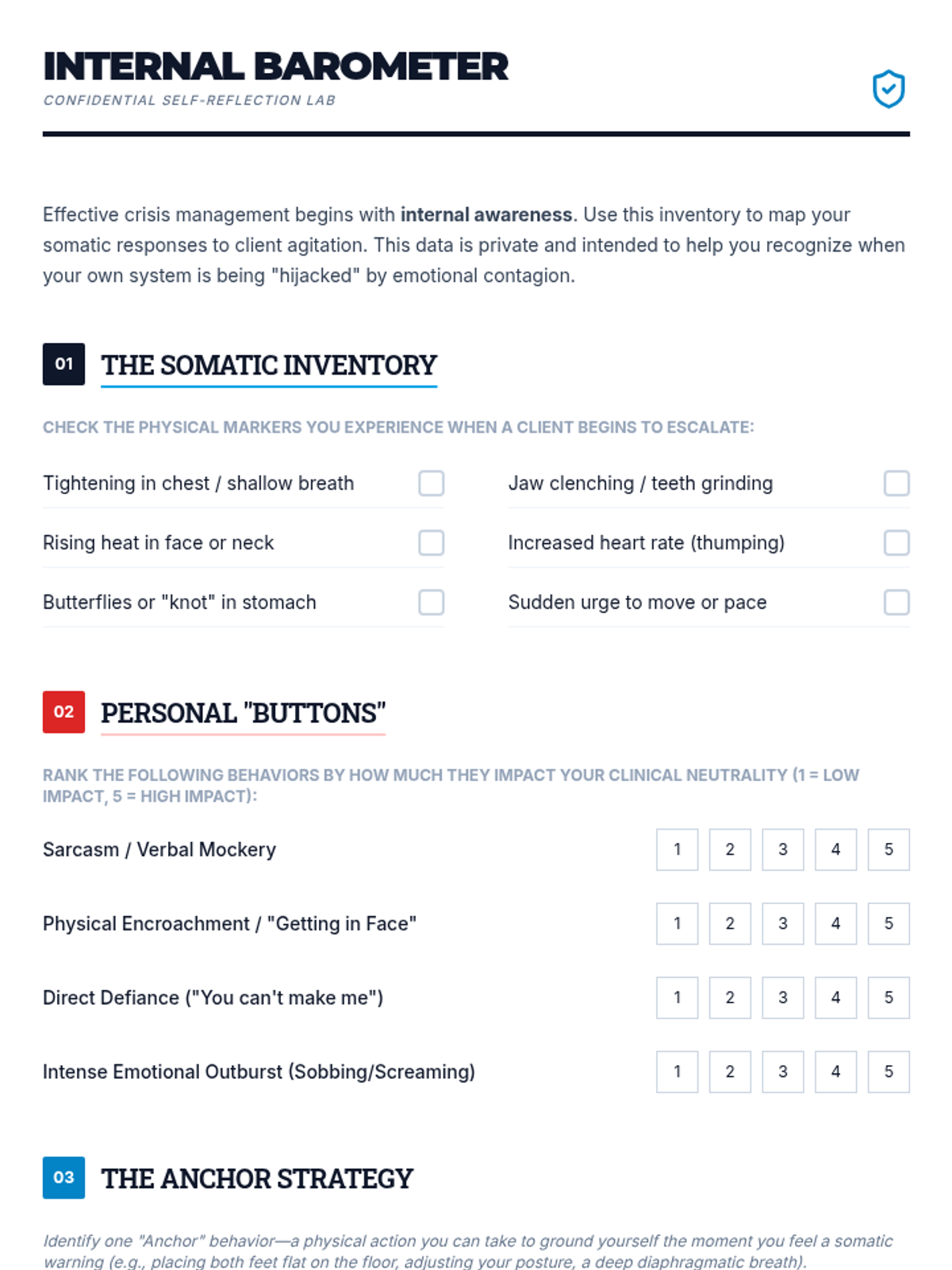
Trains students to use their own physiological and emotional reactions (counter-transference) as data points for recognizing client agitation.
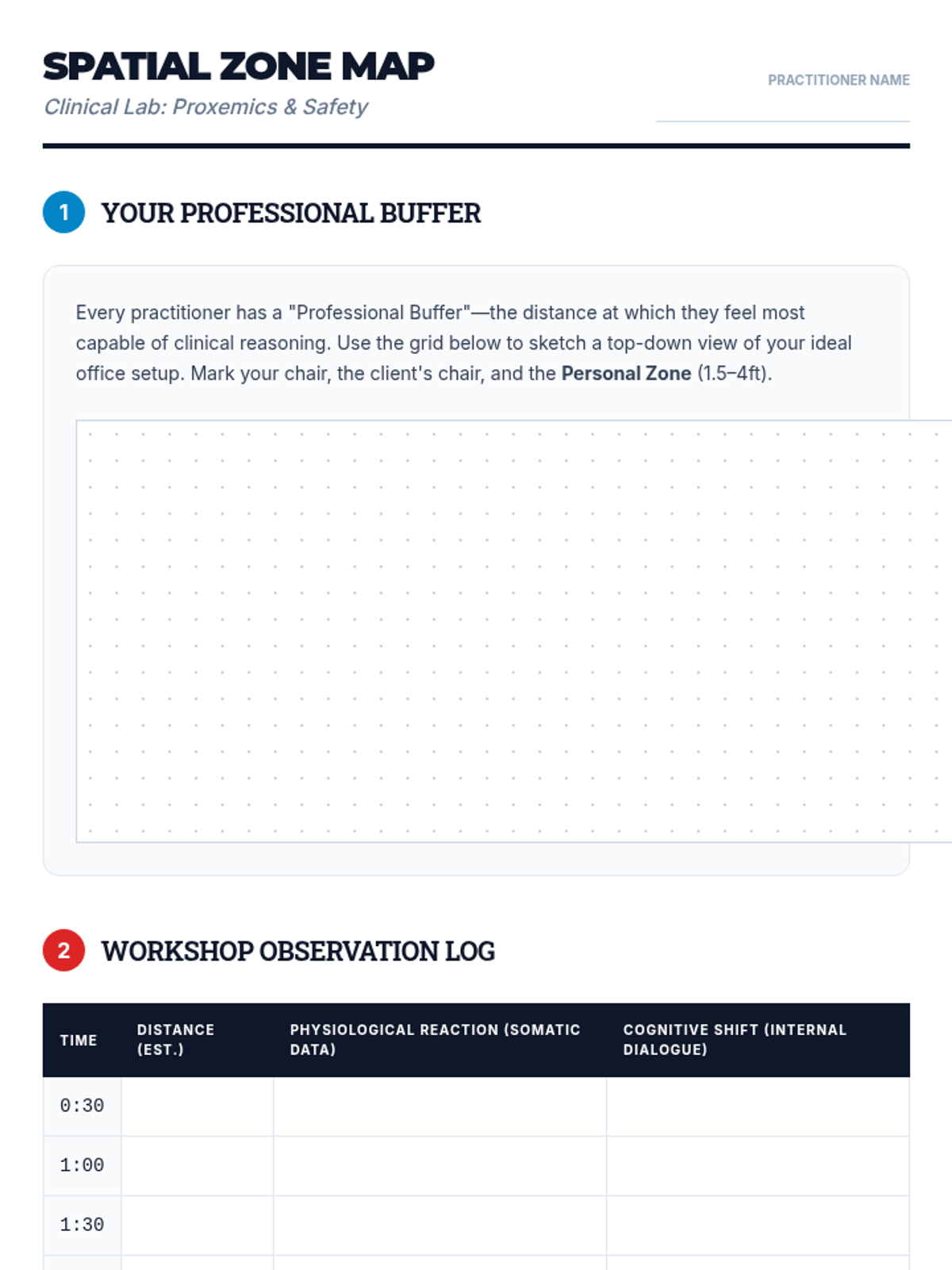
Explores the use of physical space and proxemics as a primary indicator of behavioral escalation and safety risk.
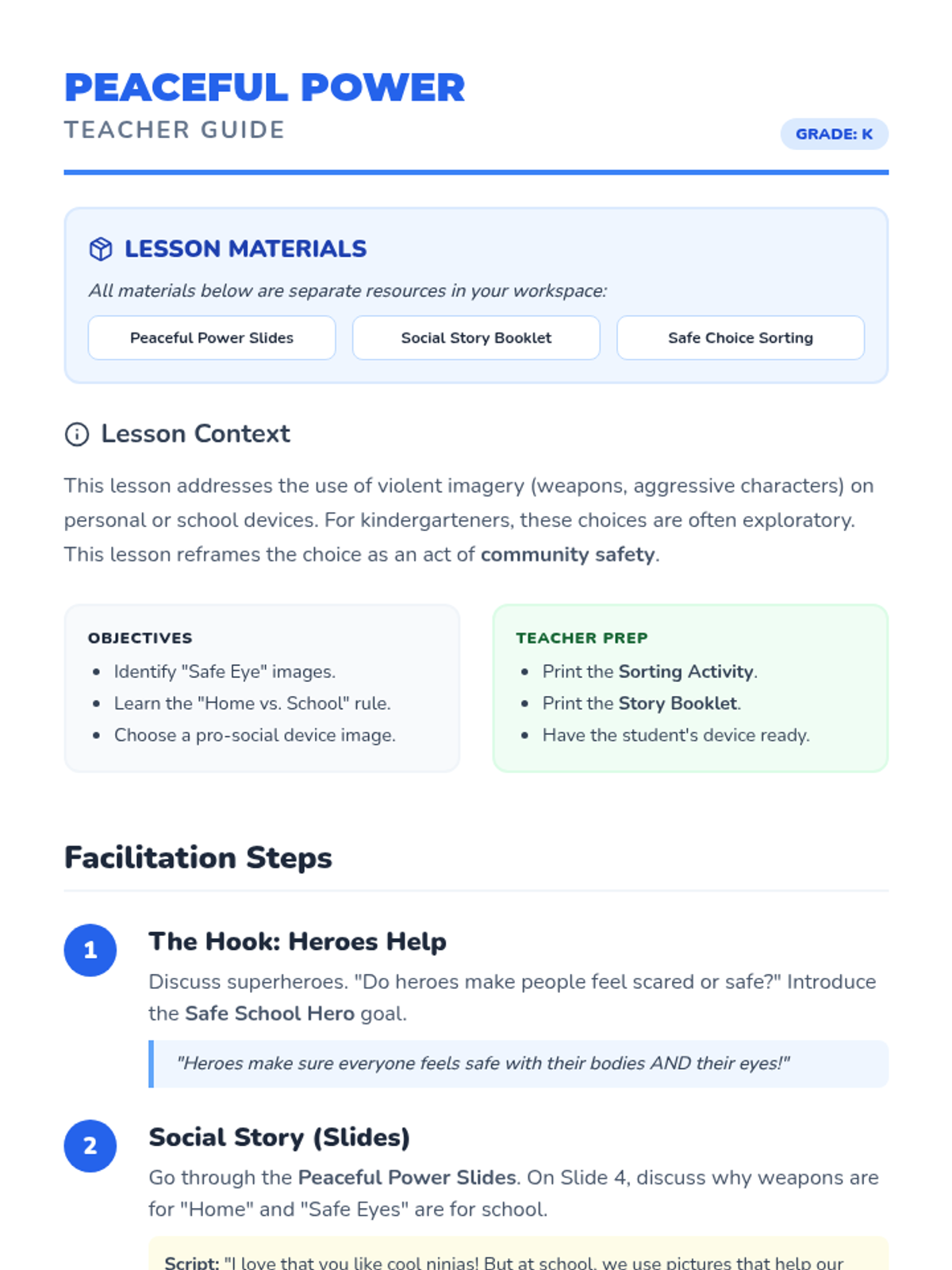
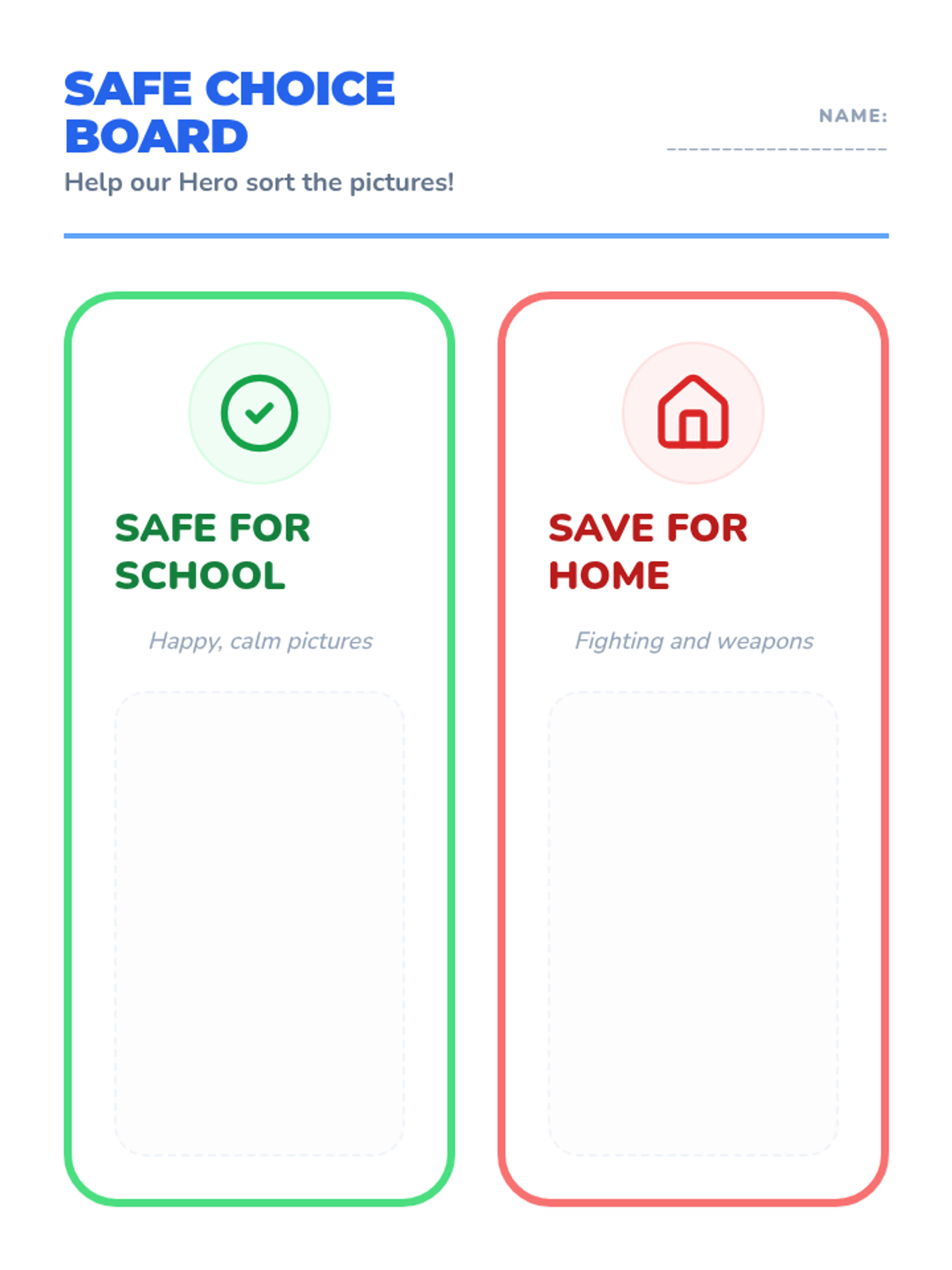
A gentle mini-lesson designed for kindergarten students to understand the importance of choosing non-violent imagery at school. Through a social story and interactive sorting, students learn how to keep school a safe and happy place for everyone's eyes and hearts.
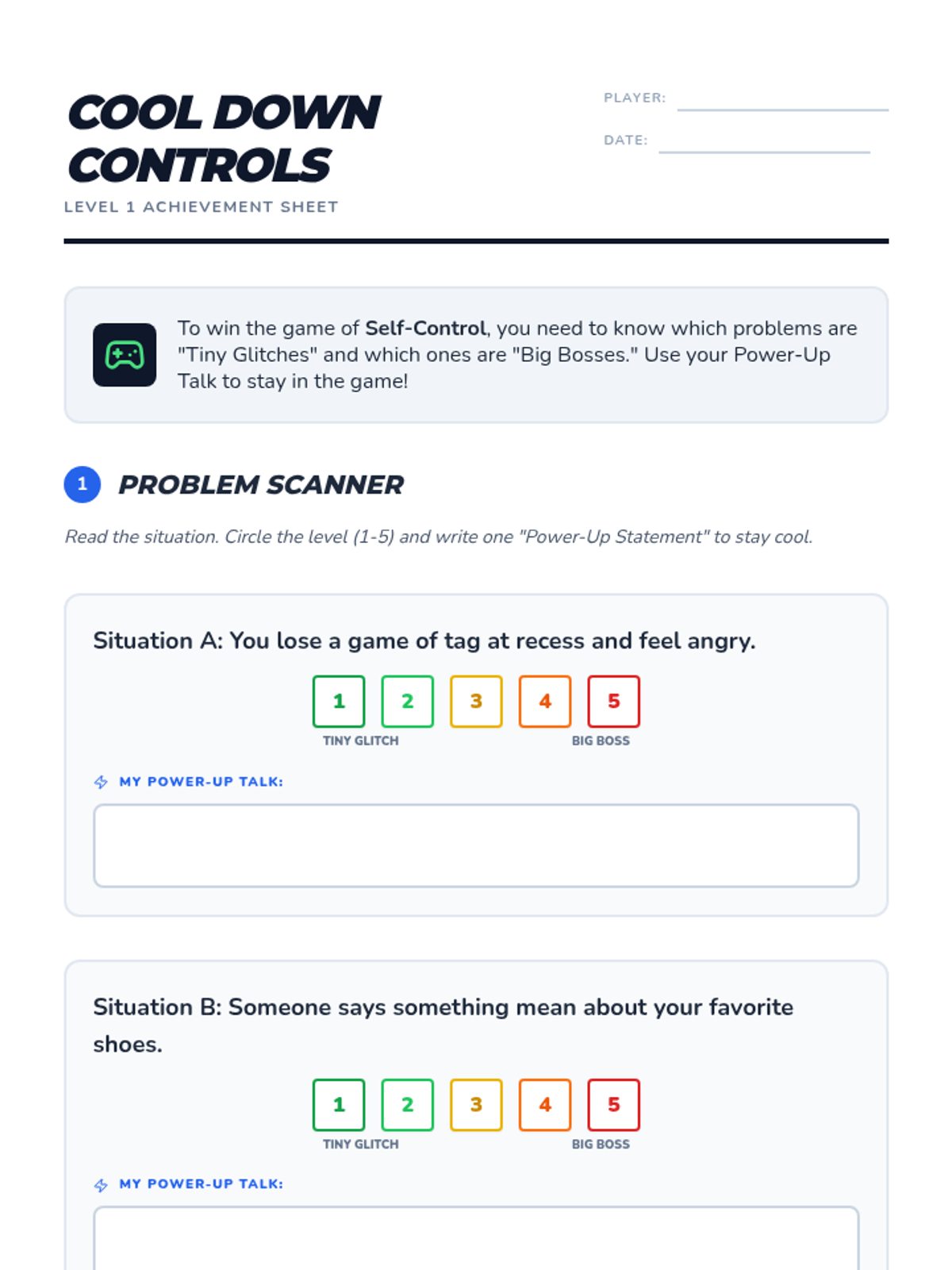
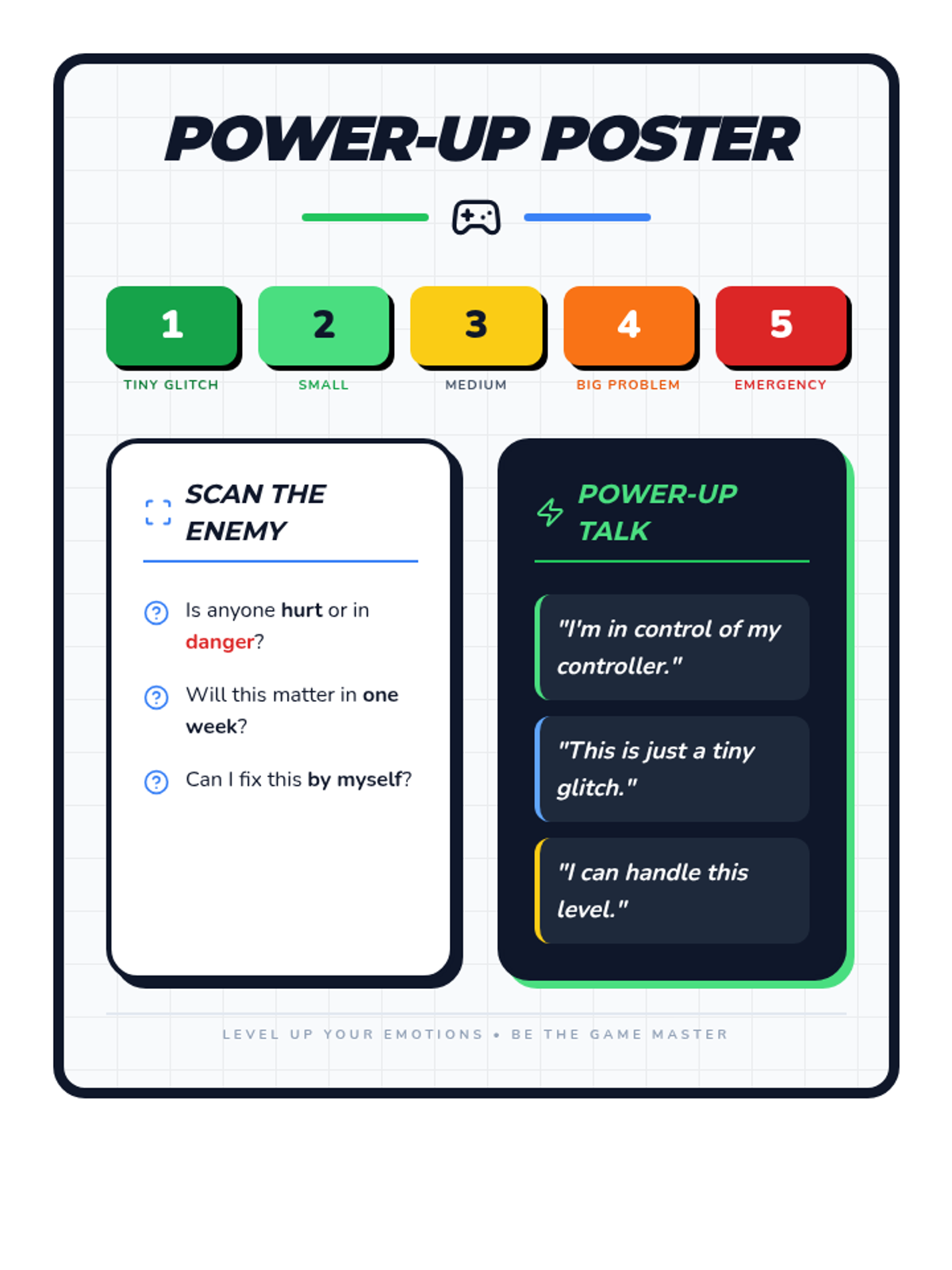
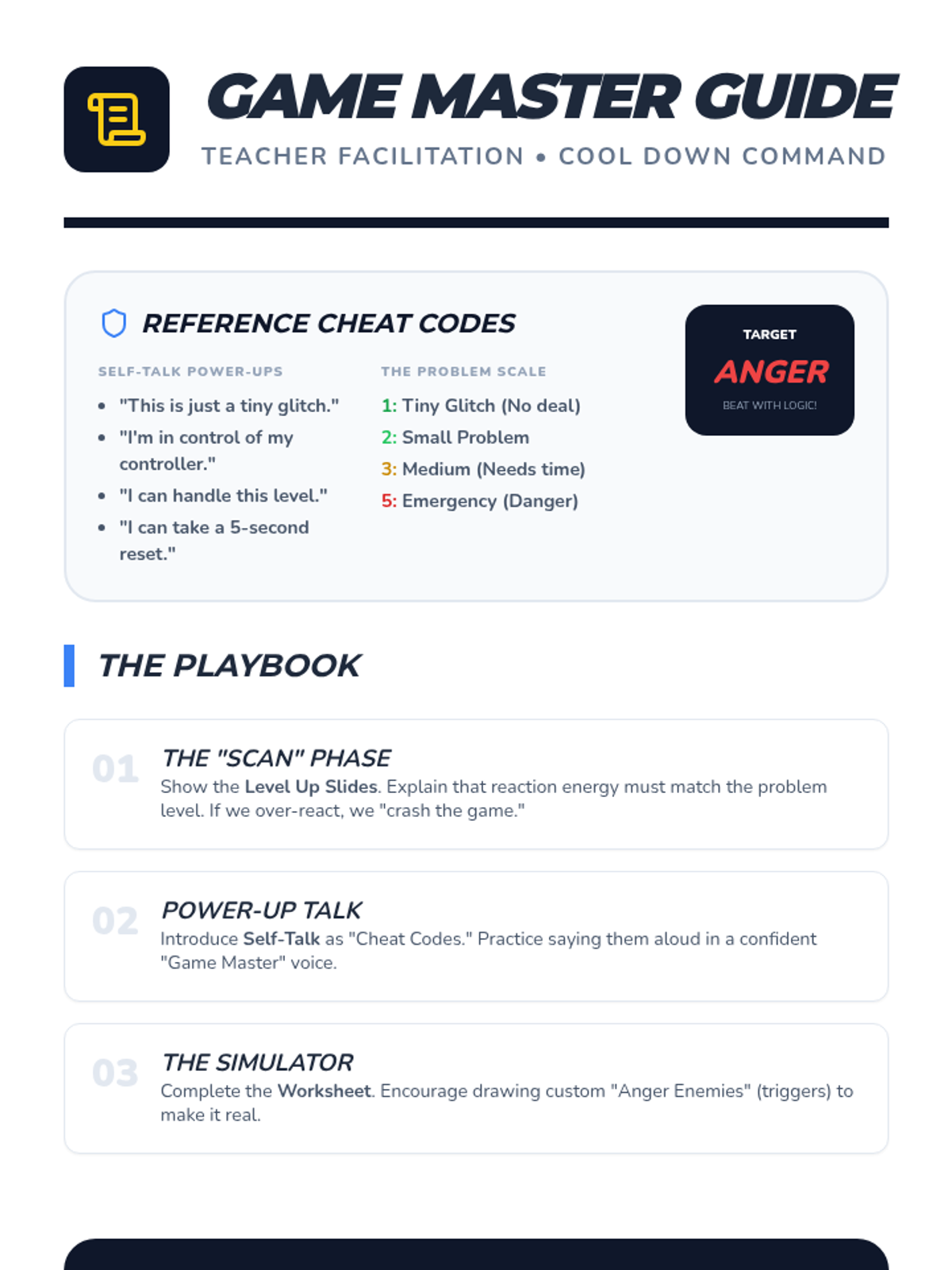
A lesson designed for 4th-grade students to learn emotional regulation through the 'Size of the Problem' scale and positive self-talk, using a retro video game theme.
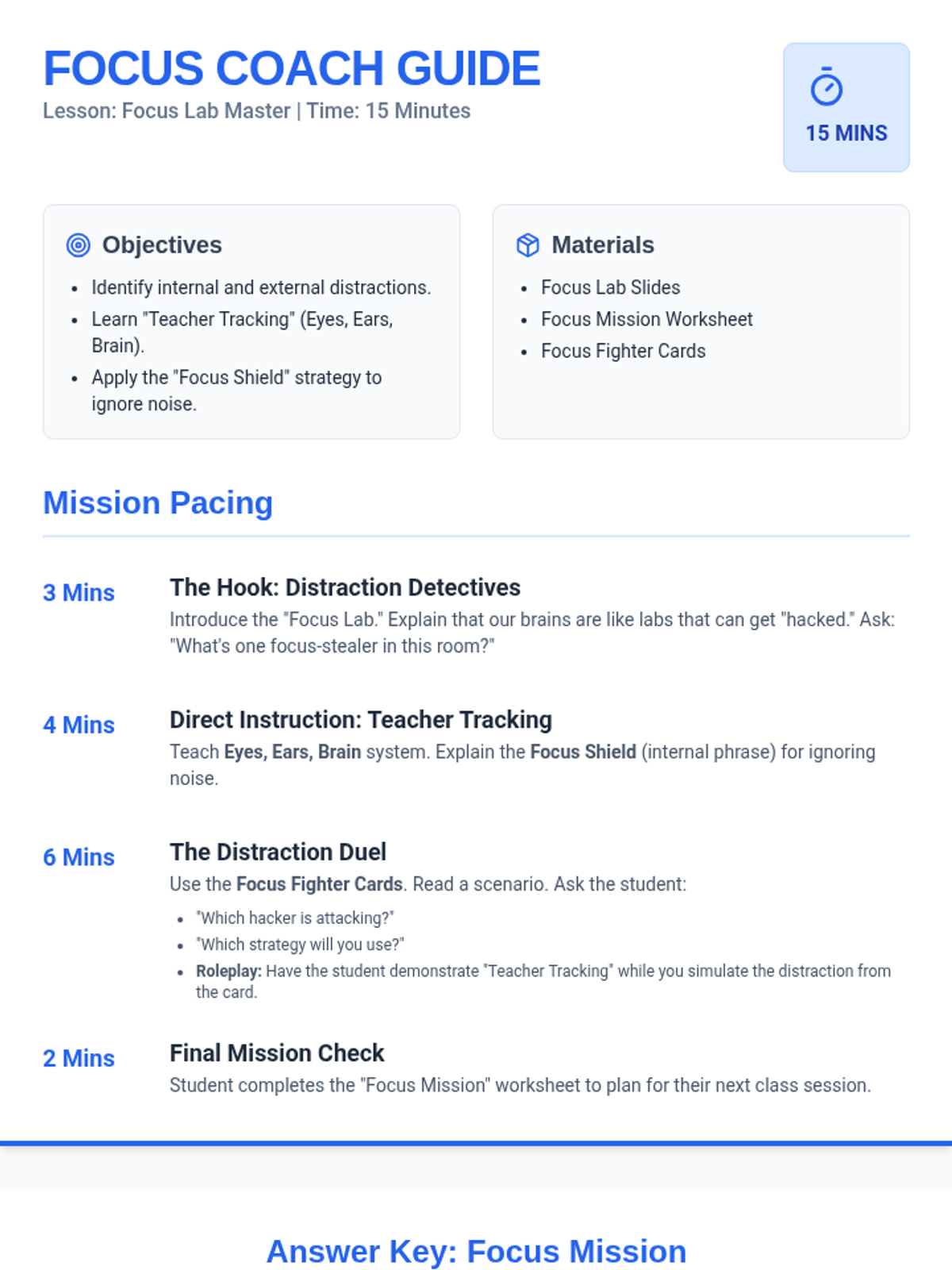
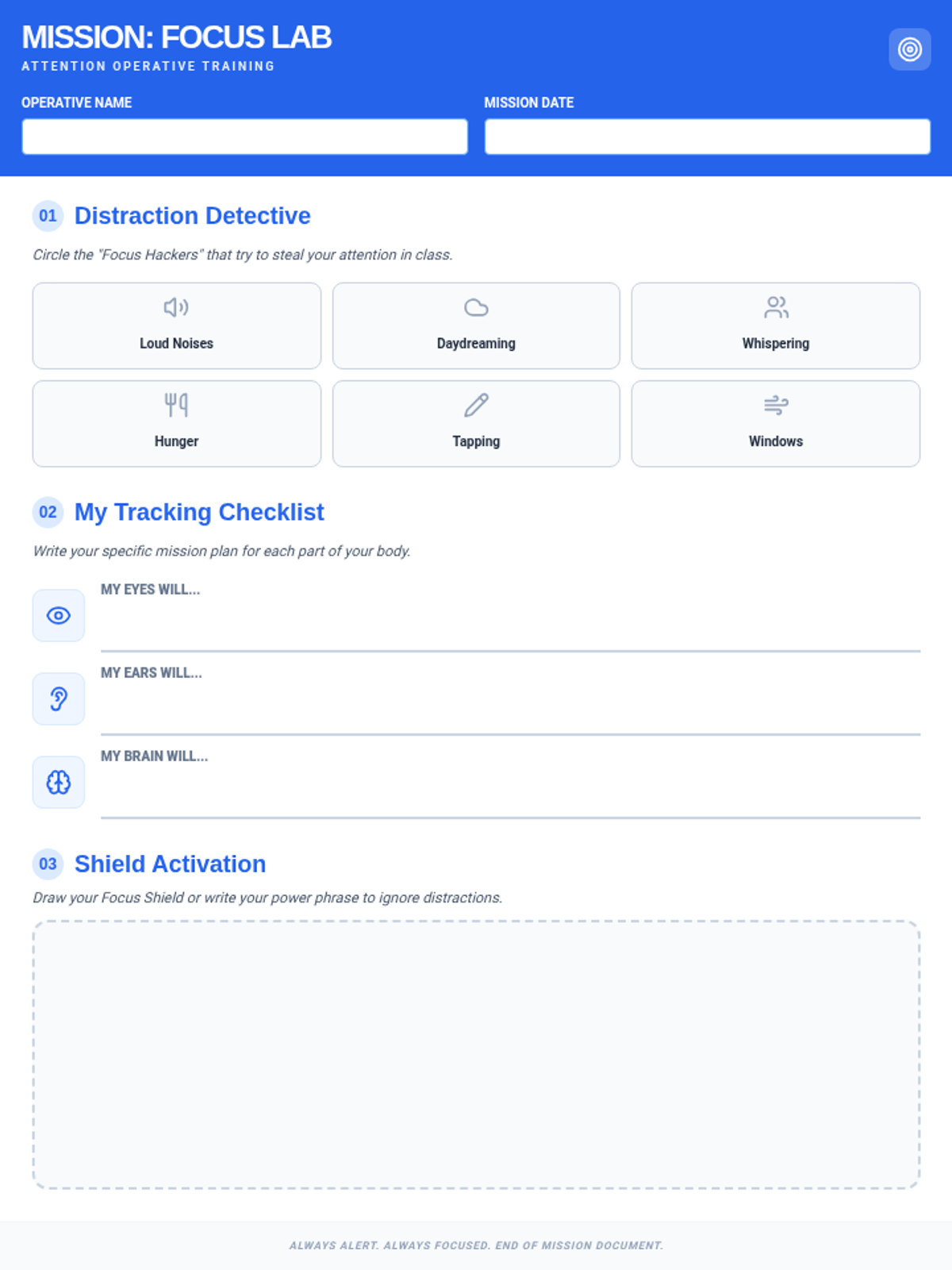
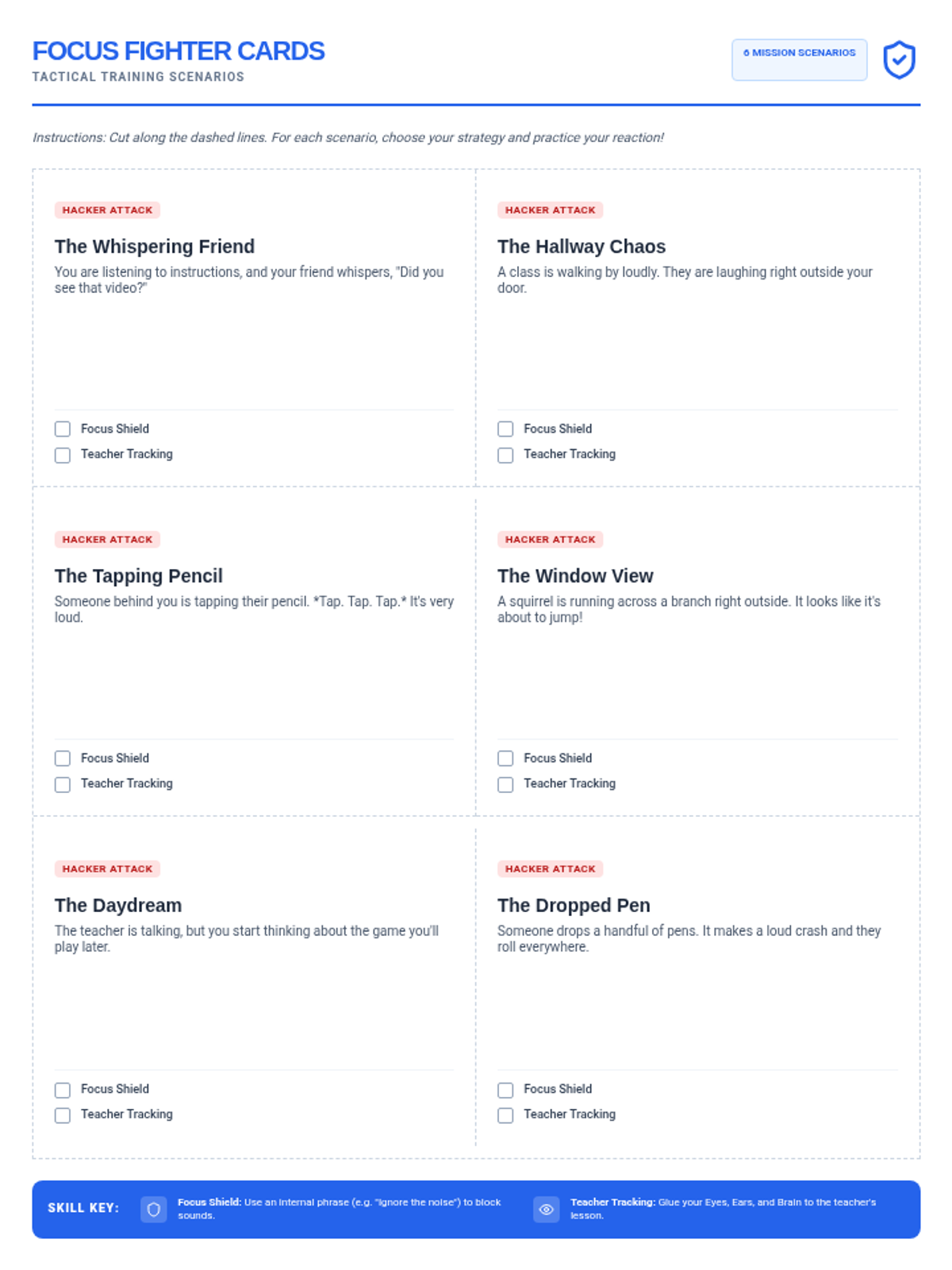
A quick, high-impact 15-minute session helping students identify common classroom distractions and master the 'Teacher Tracking' technique to stay engaged.