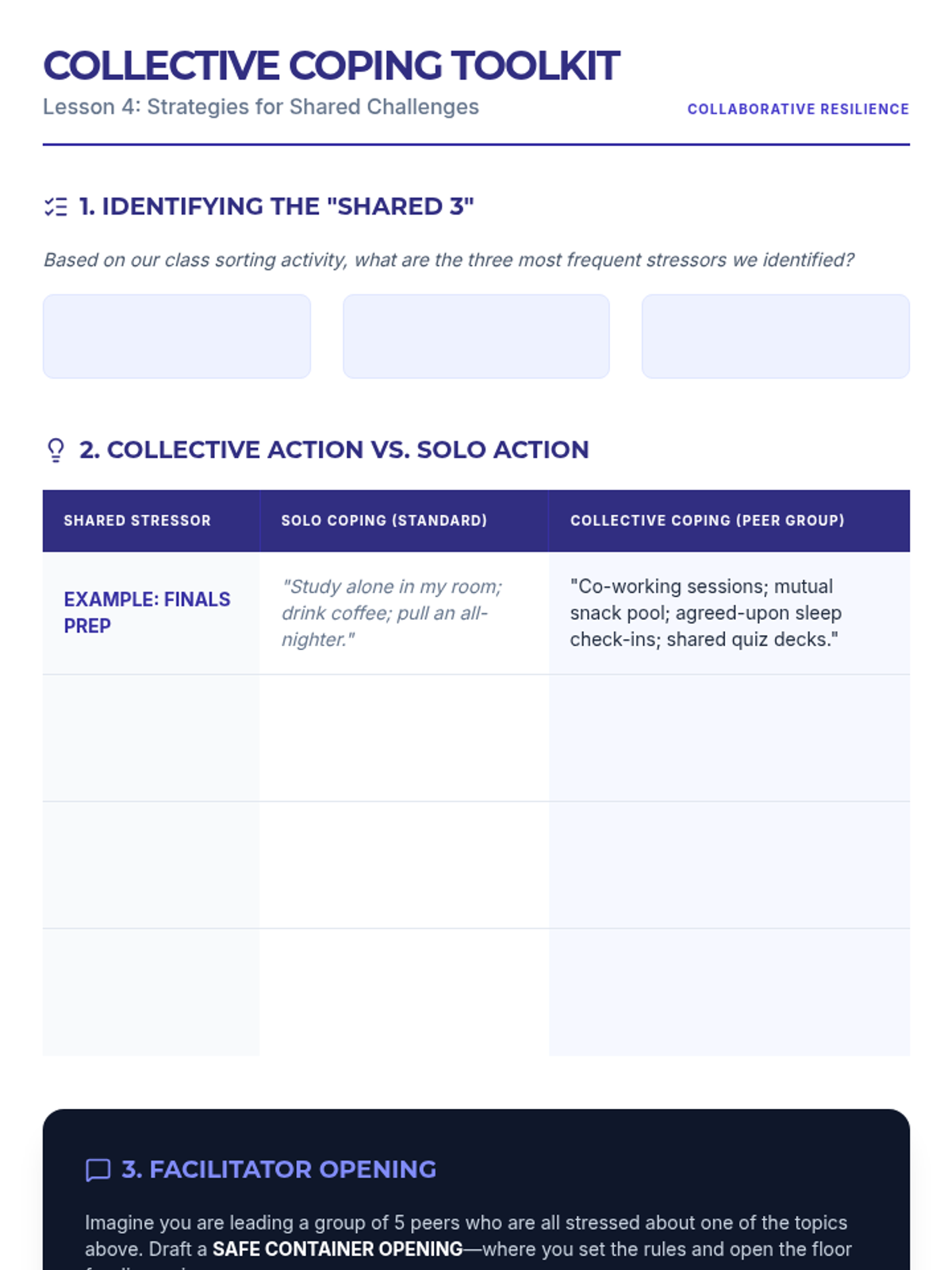
Peer relationship navigation, conversational turn-taking, and stress management strategies within supportive group settings. Develops communal belonging through shared mental health education and collaborative skill practice.
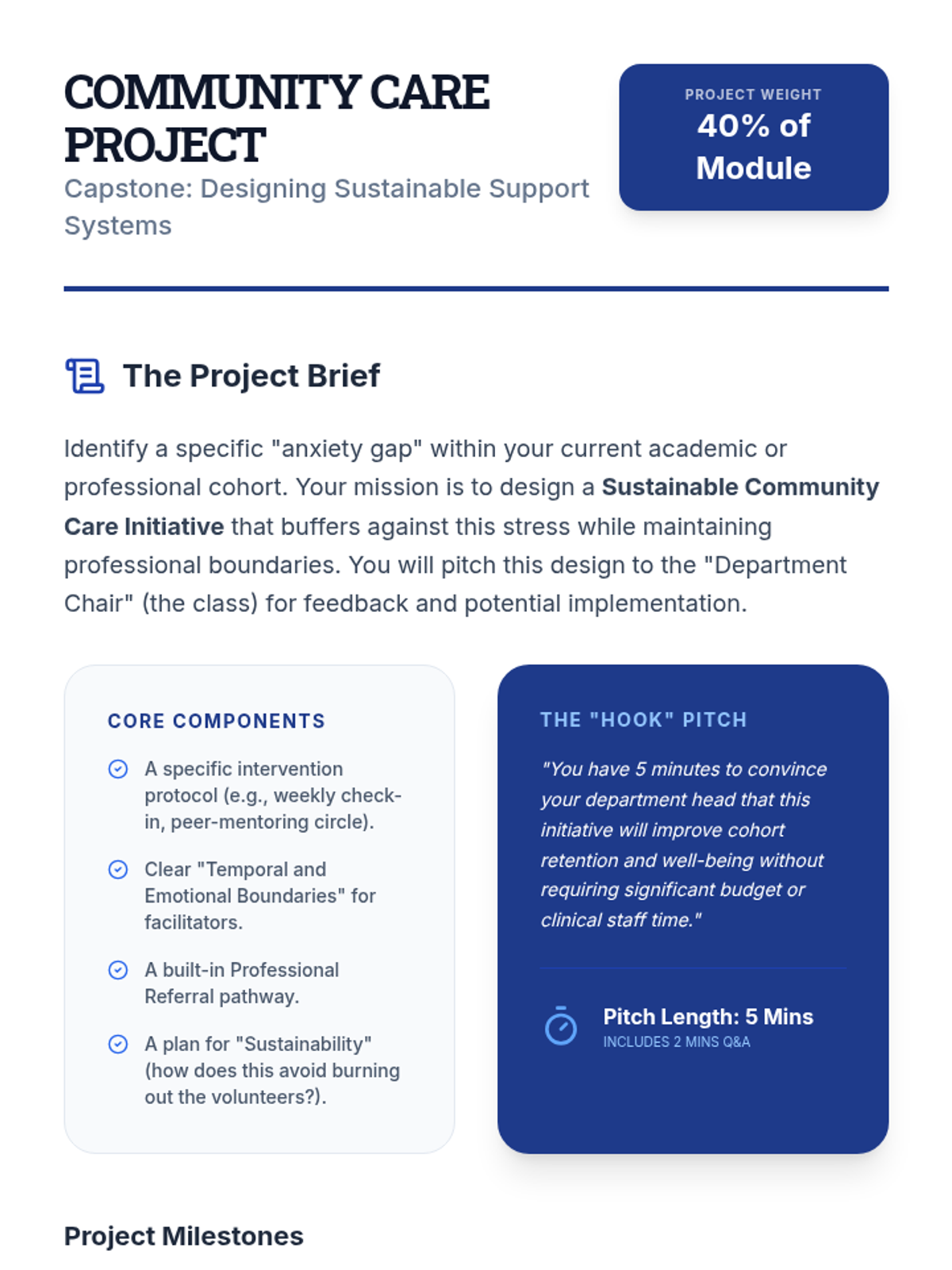
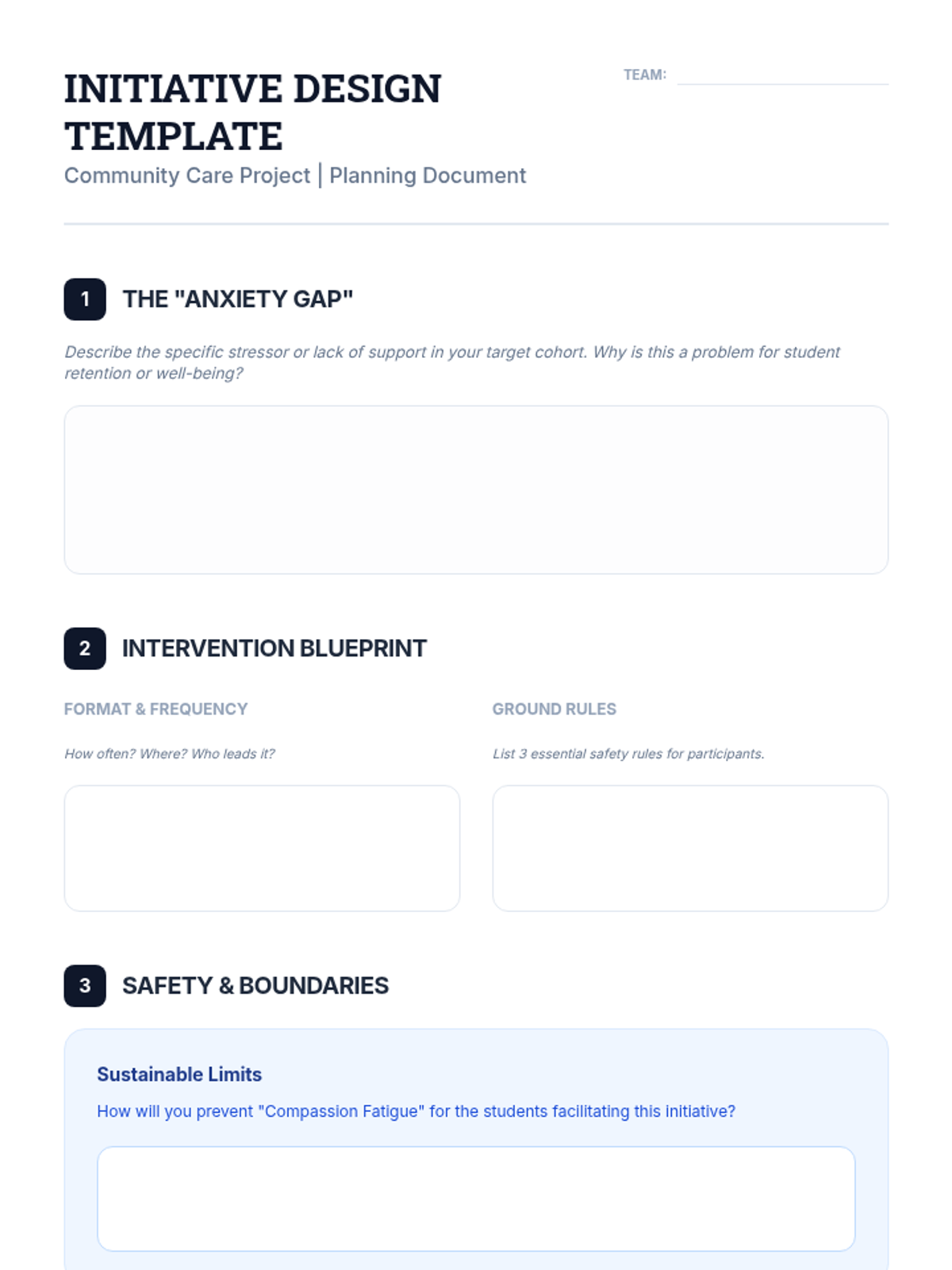
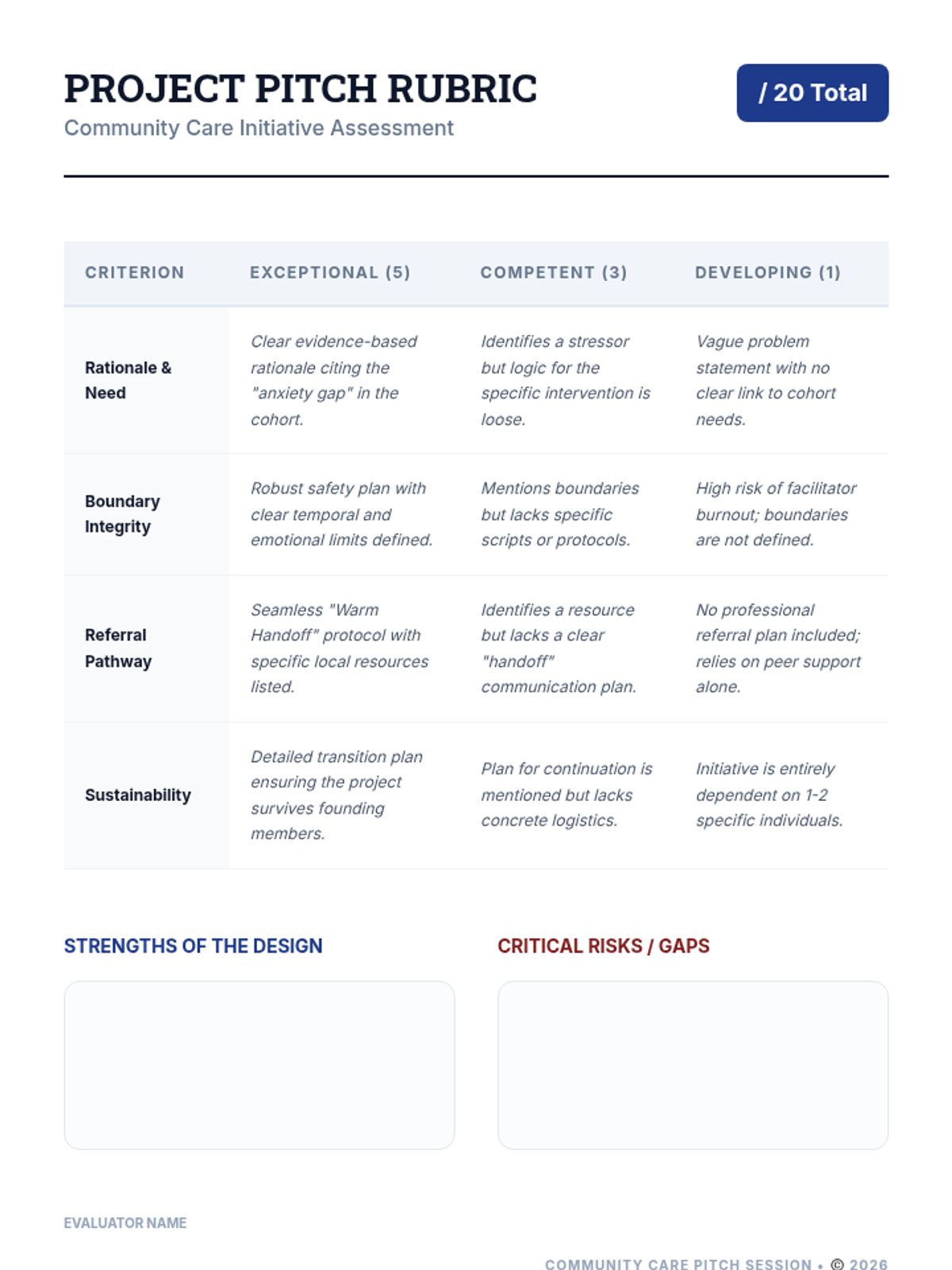
Students design and pitch a sustainable community care initiative tailored to their specific academic or professional cohort.
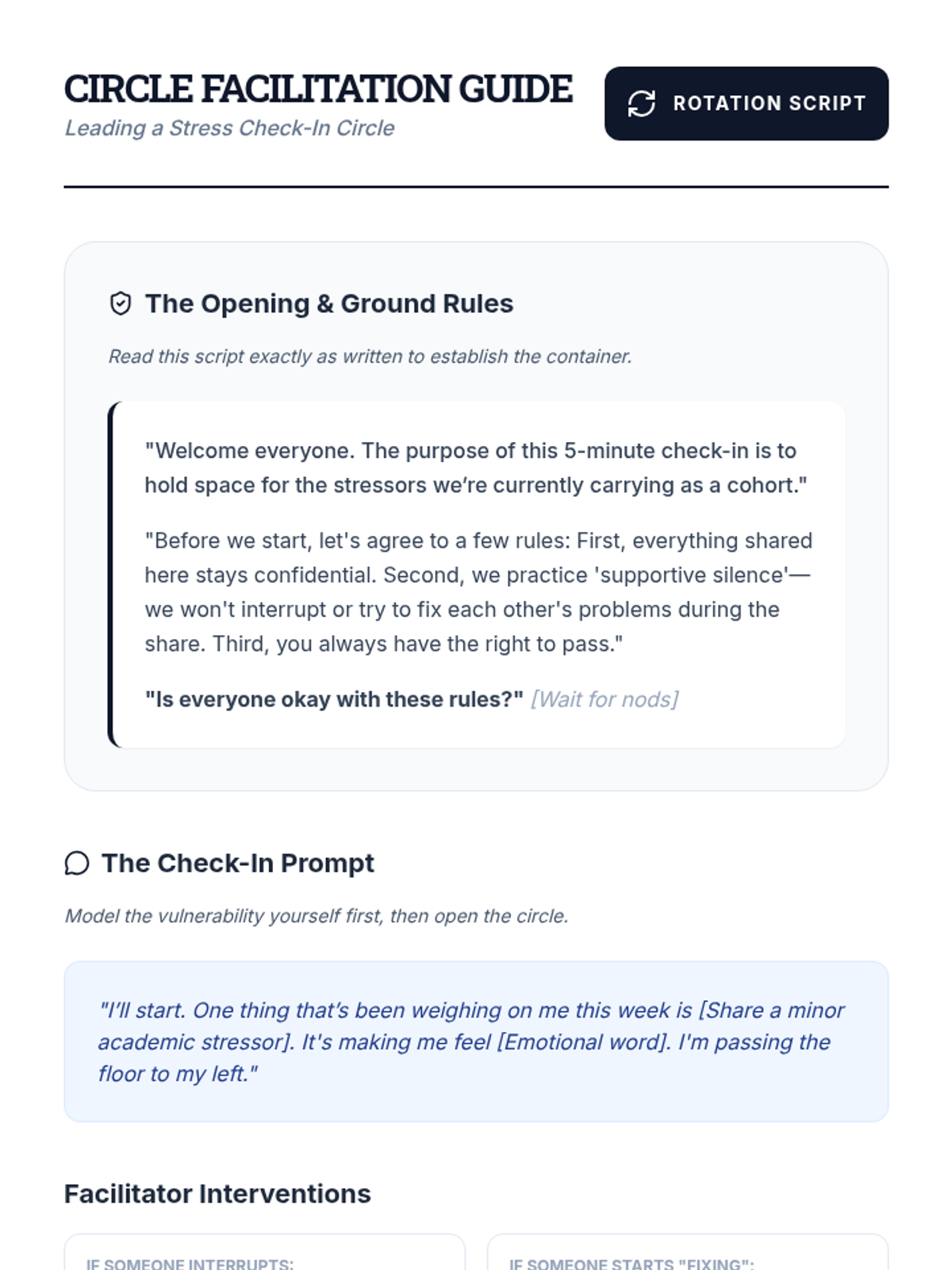
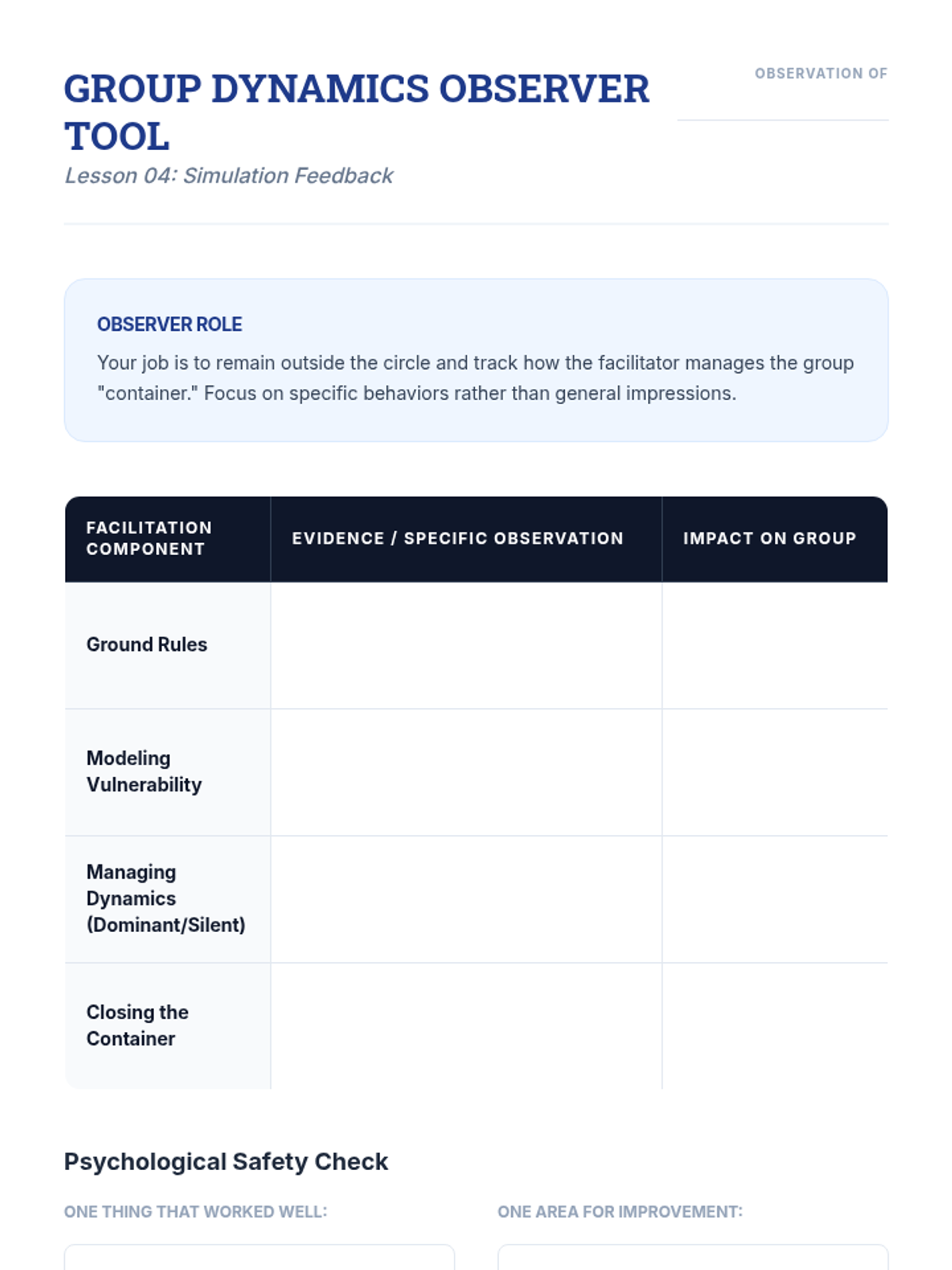
Develops skills for leading group stress check-ins, managing dynamics, and ensuring psychological safety in group settings.
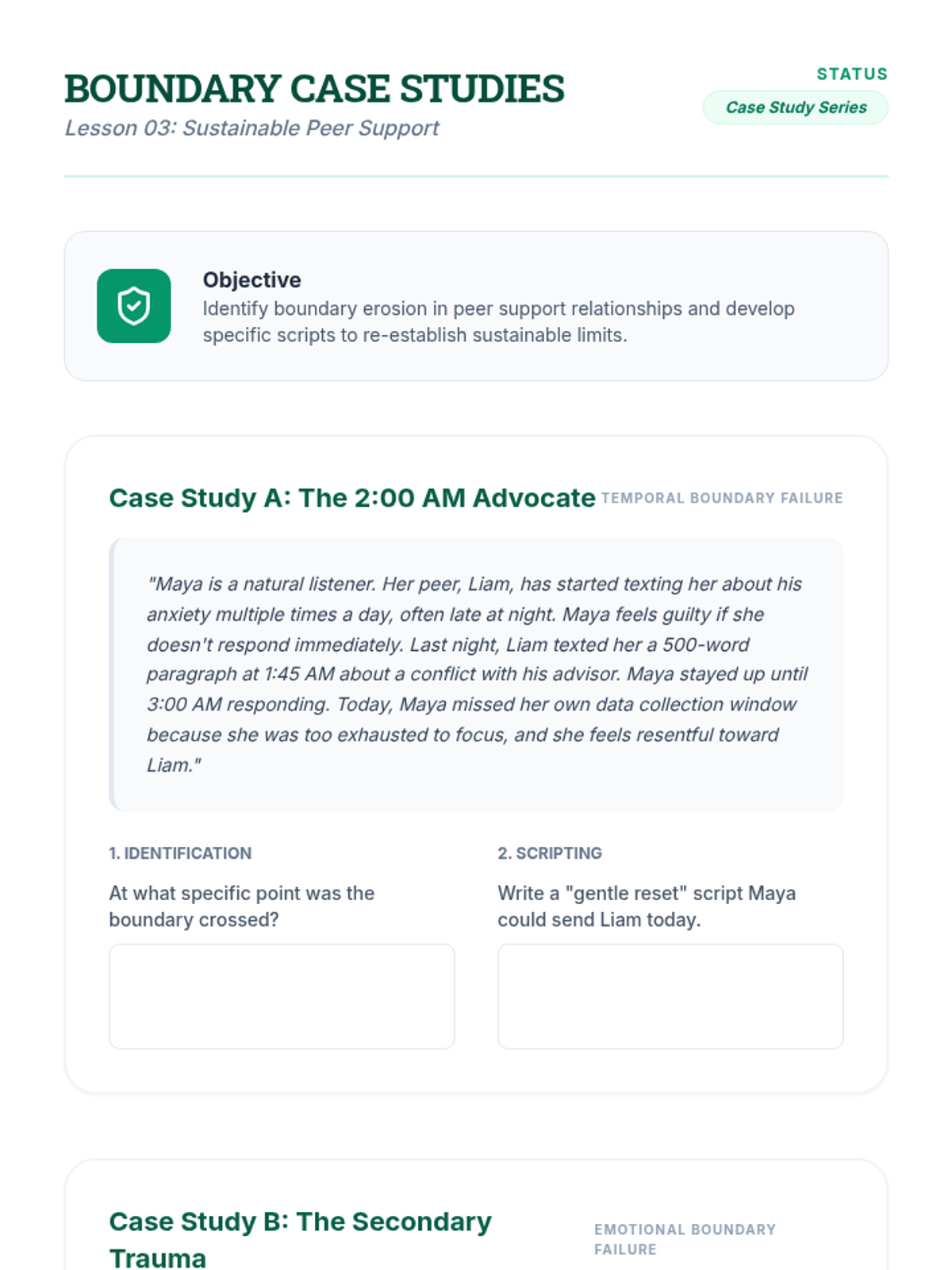
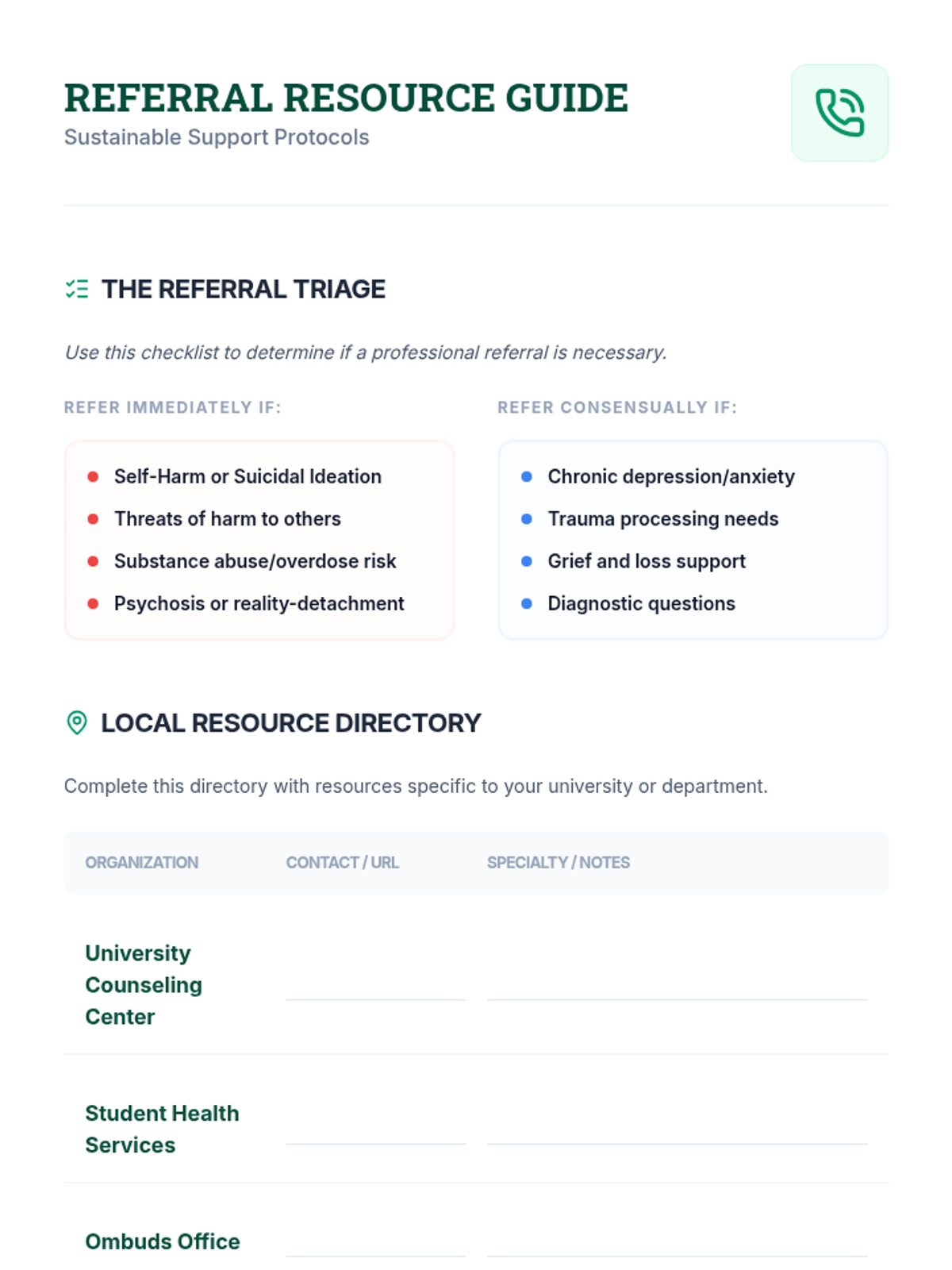
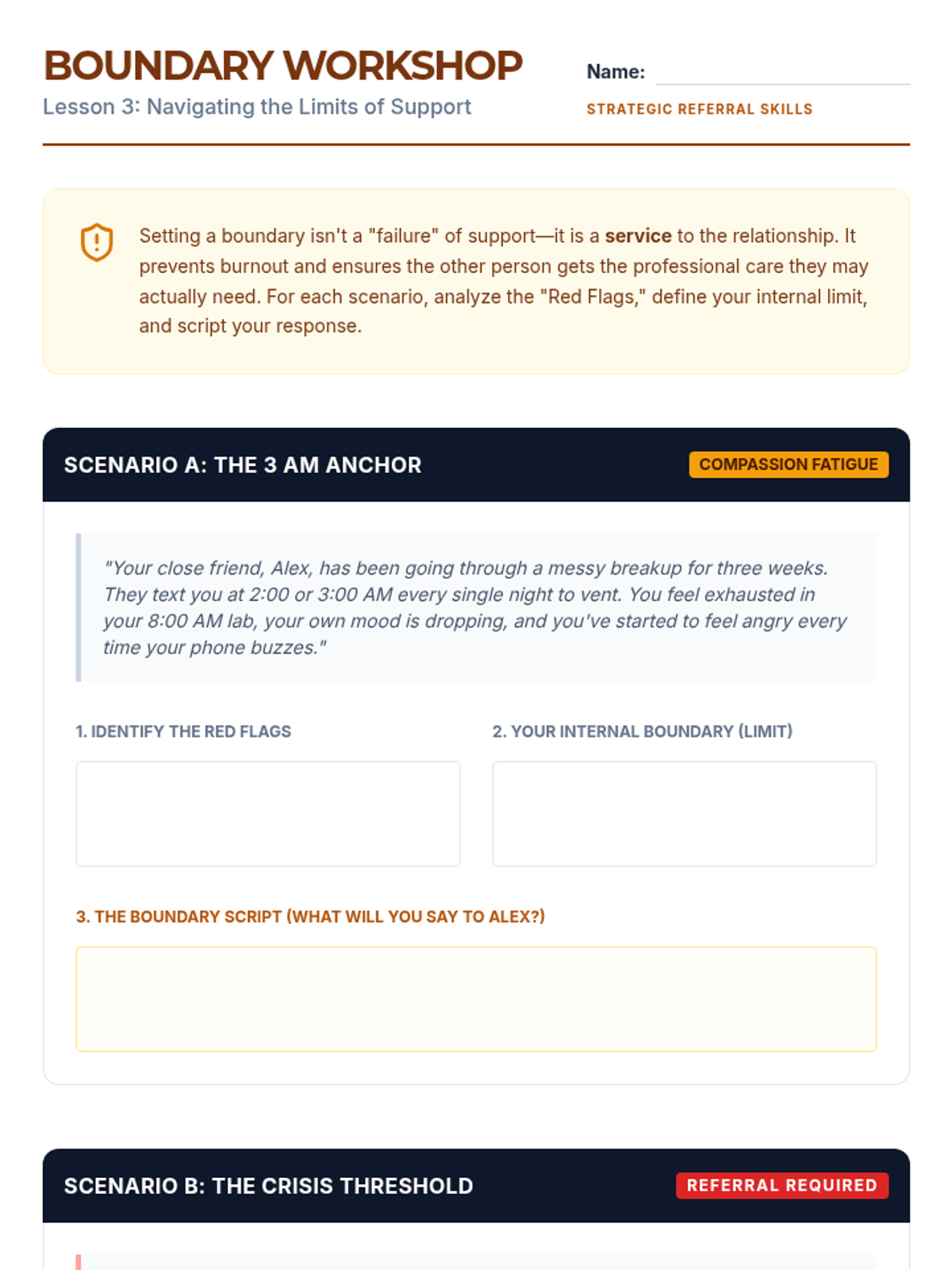
Focuses on preventing compassion fatigue through emotional and temporal boundaries and professional referral protocols.
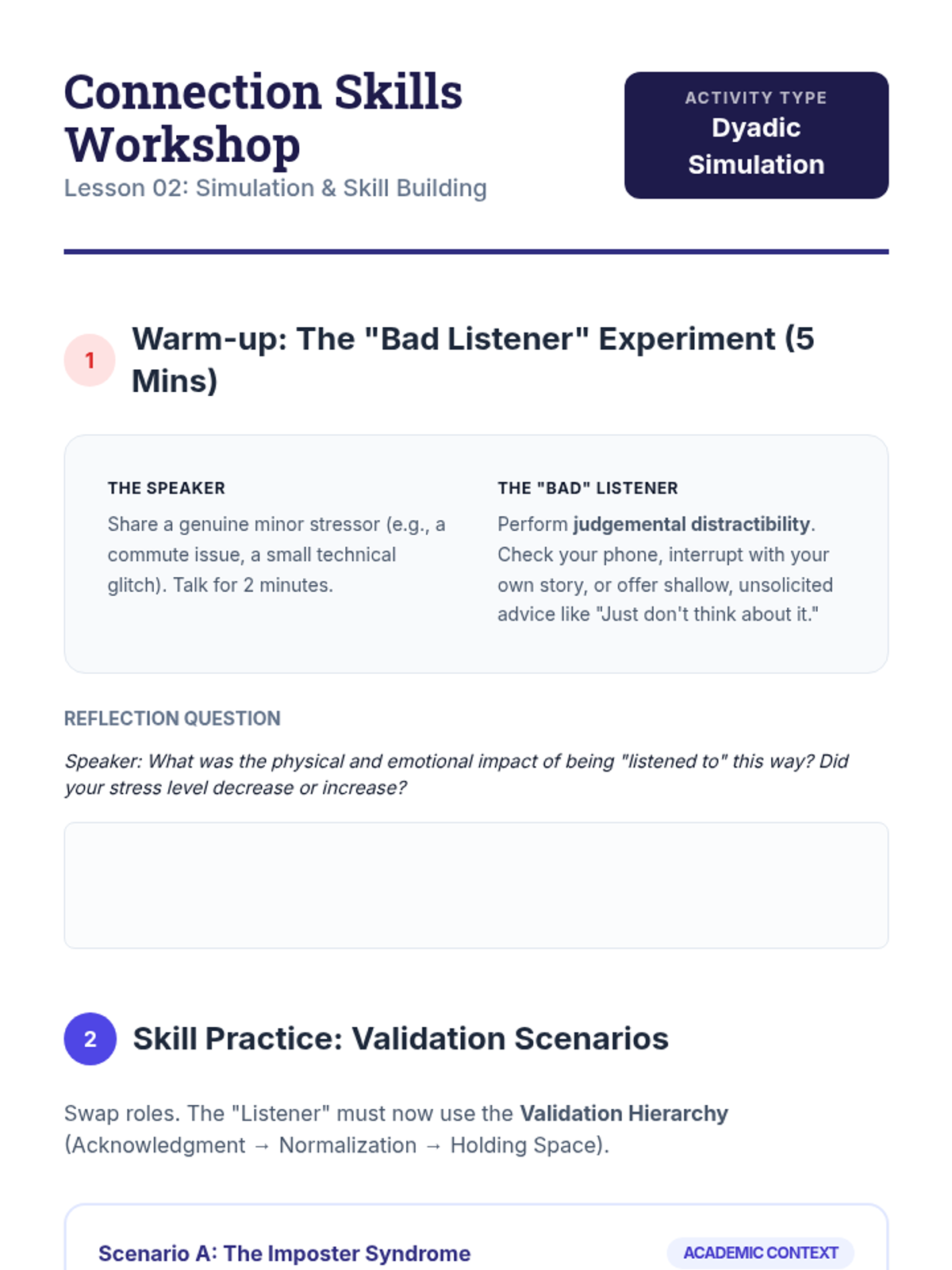
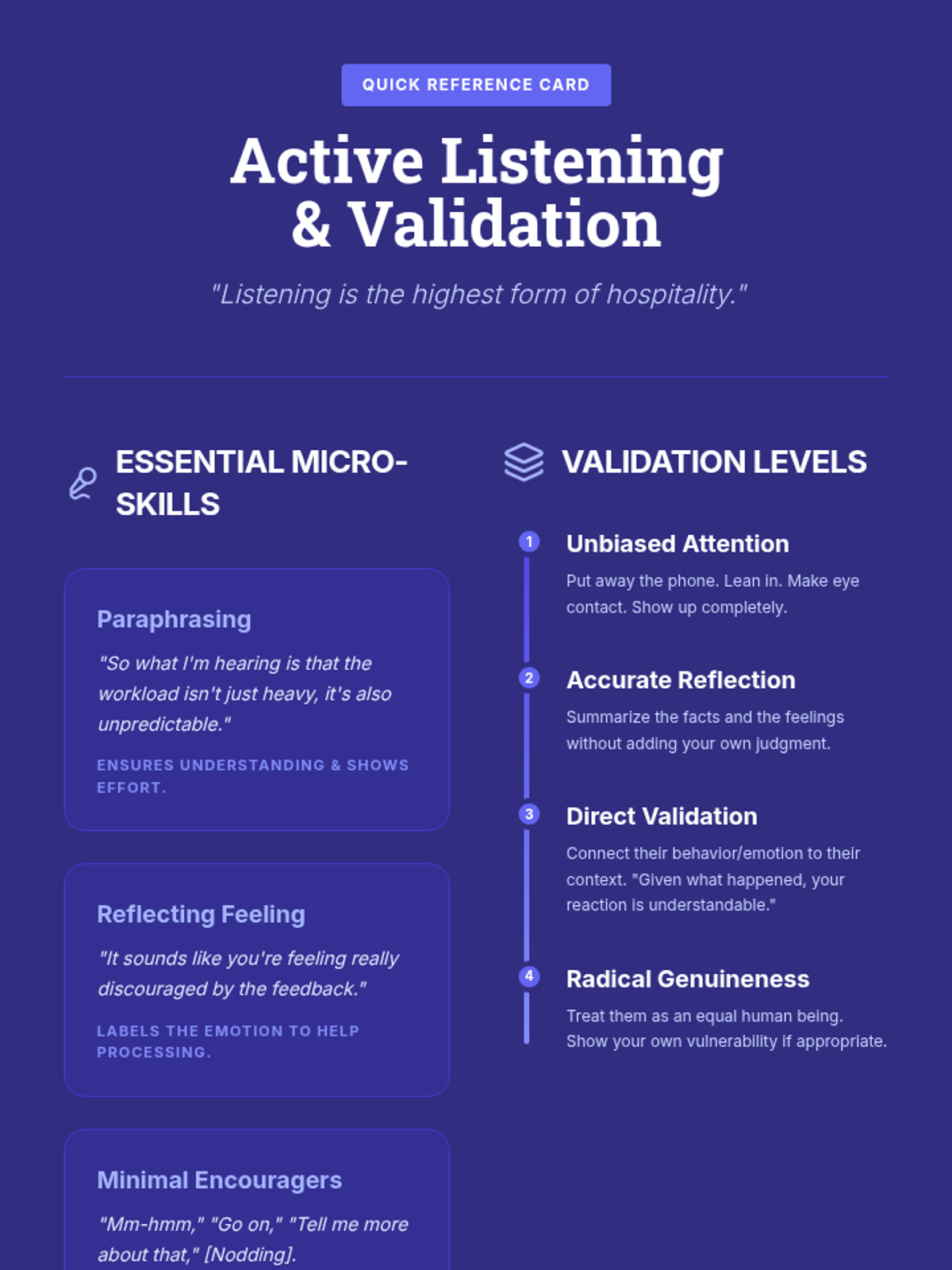
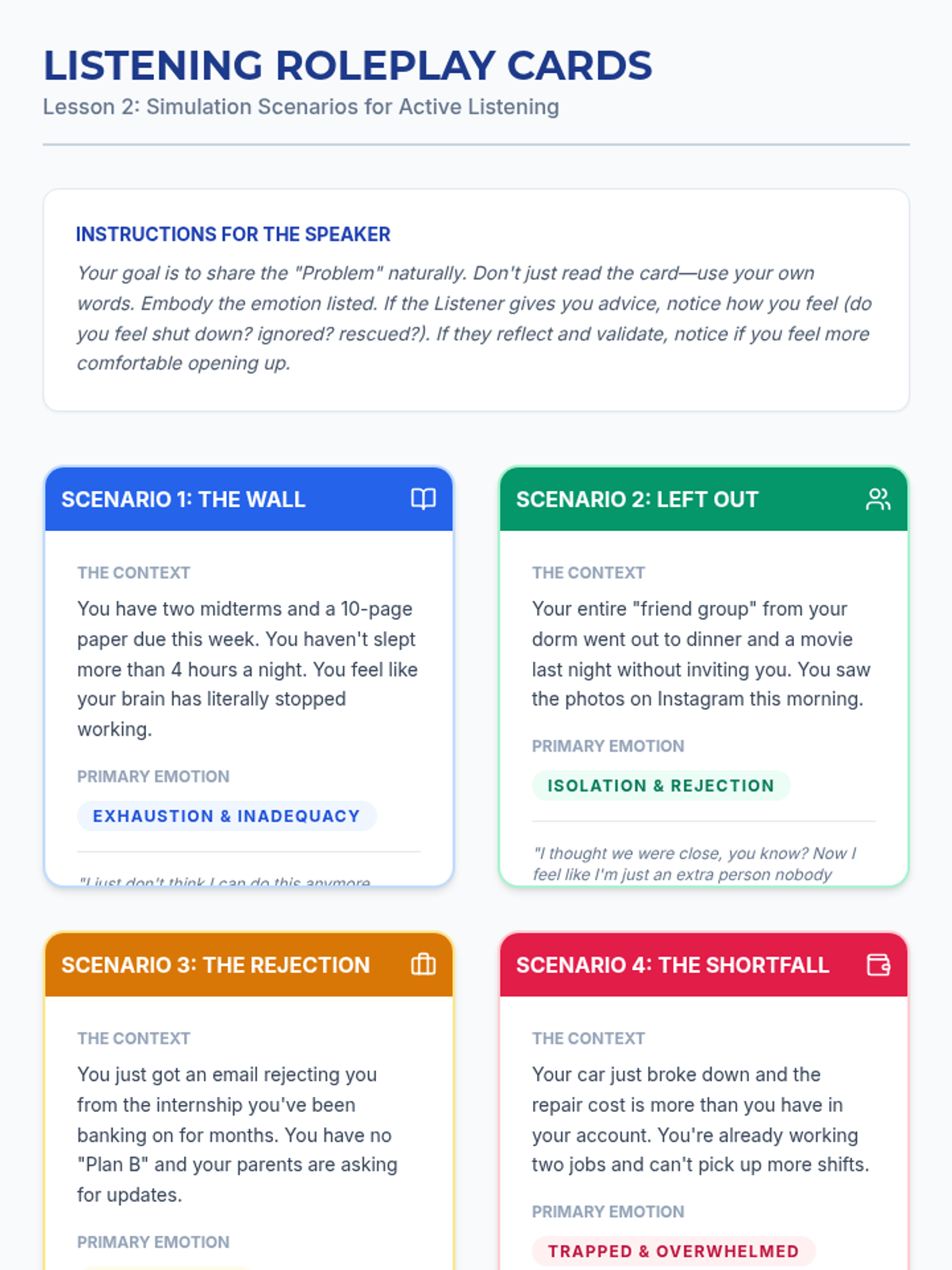
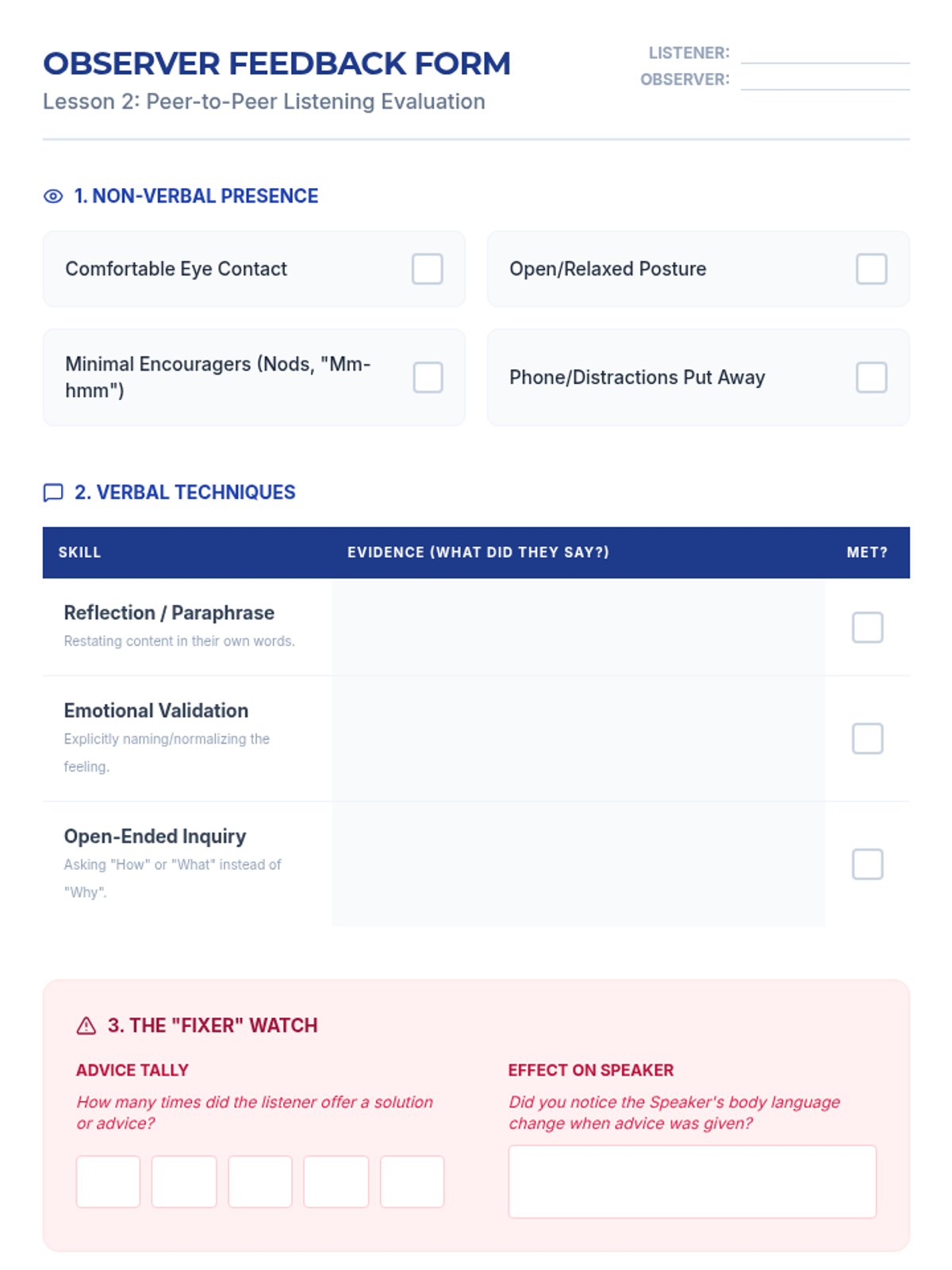
Practical workshop on active listening, validation, and holding space for peers without the pressure to provide immediate solutions.
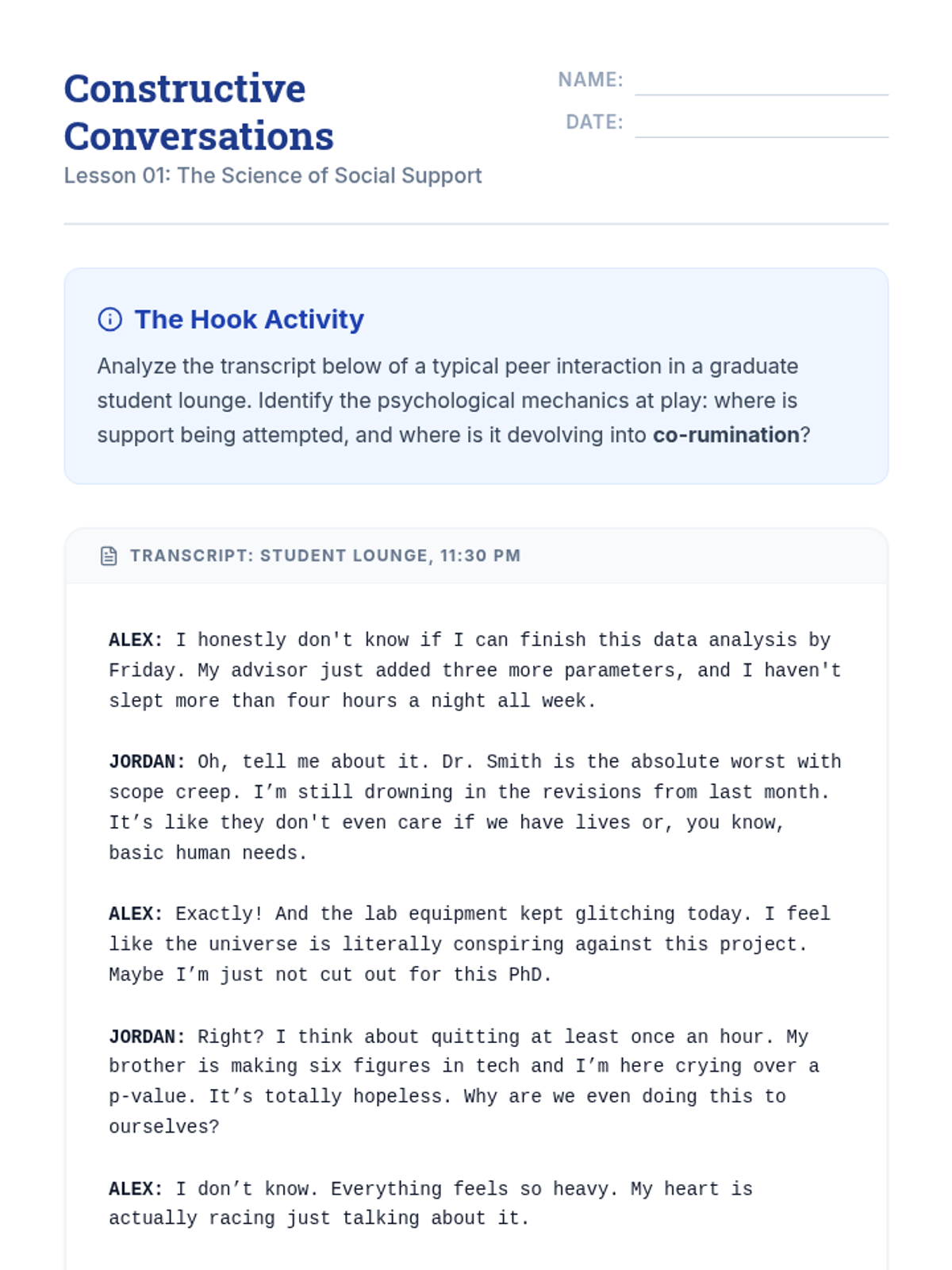
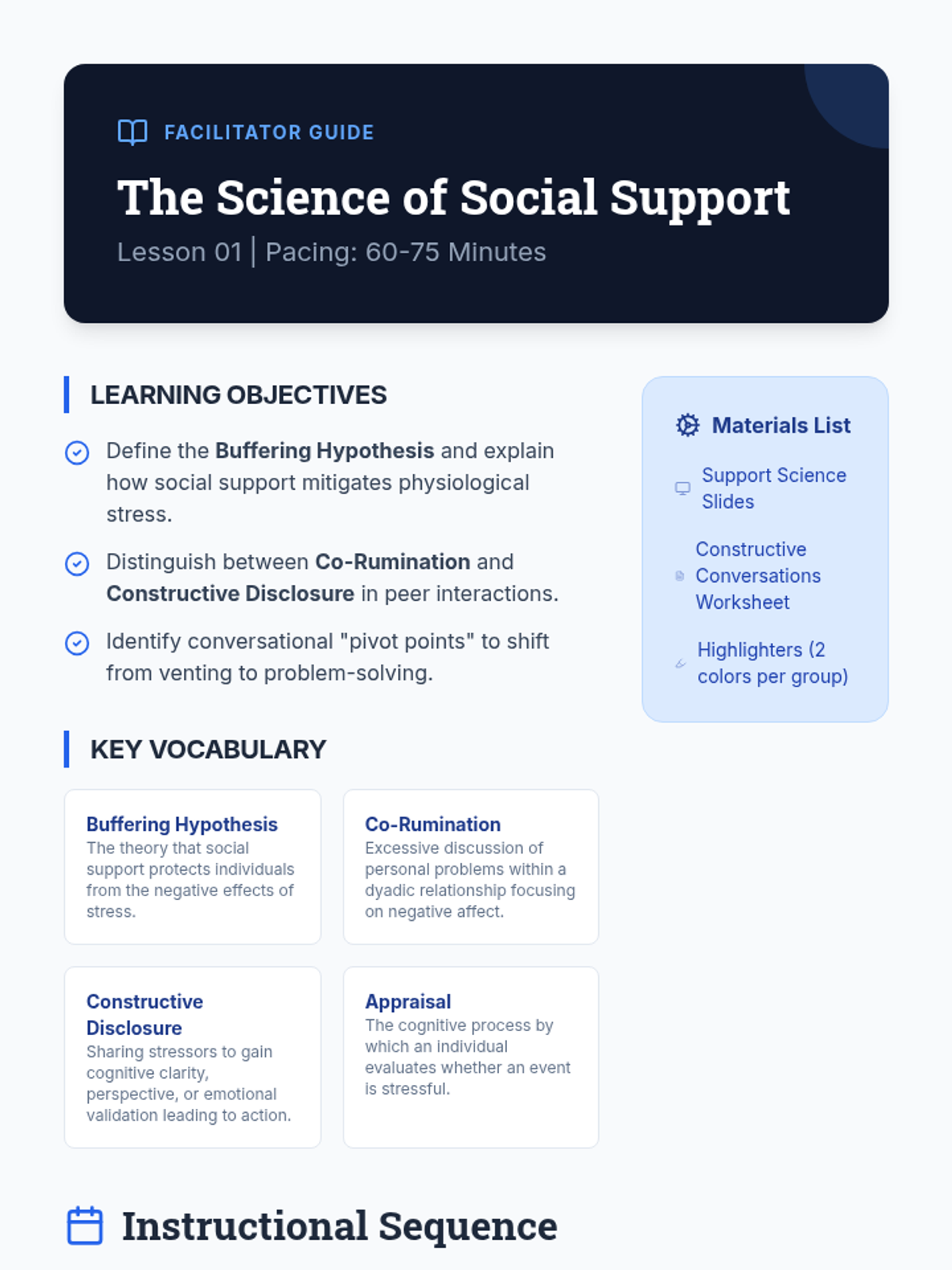
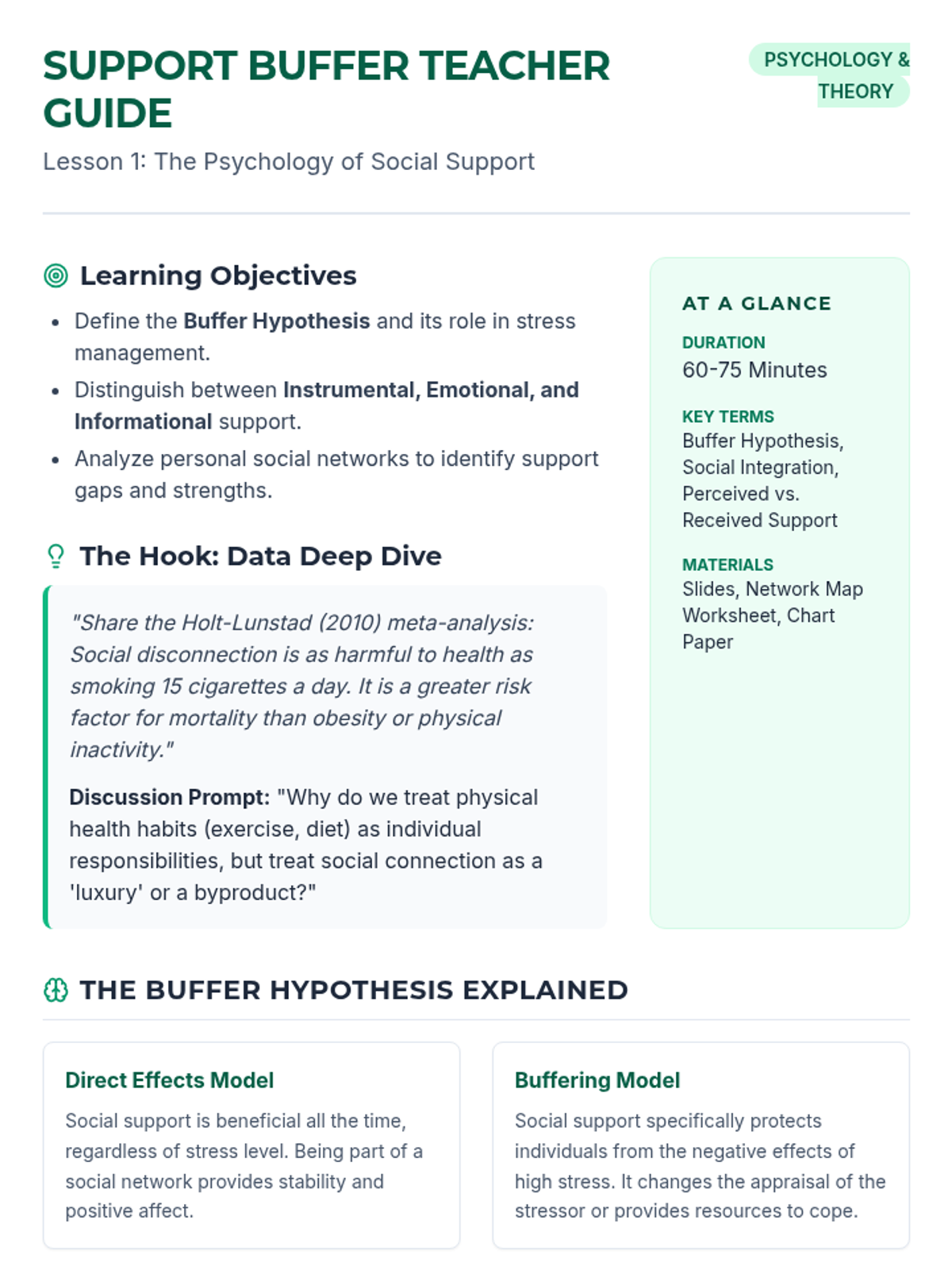
Examines the buffering hypothesis and the psychological mechanics of how social connection mitigates stress, contrasting co-rumination with constructive disclosure.
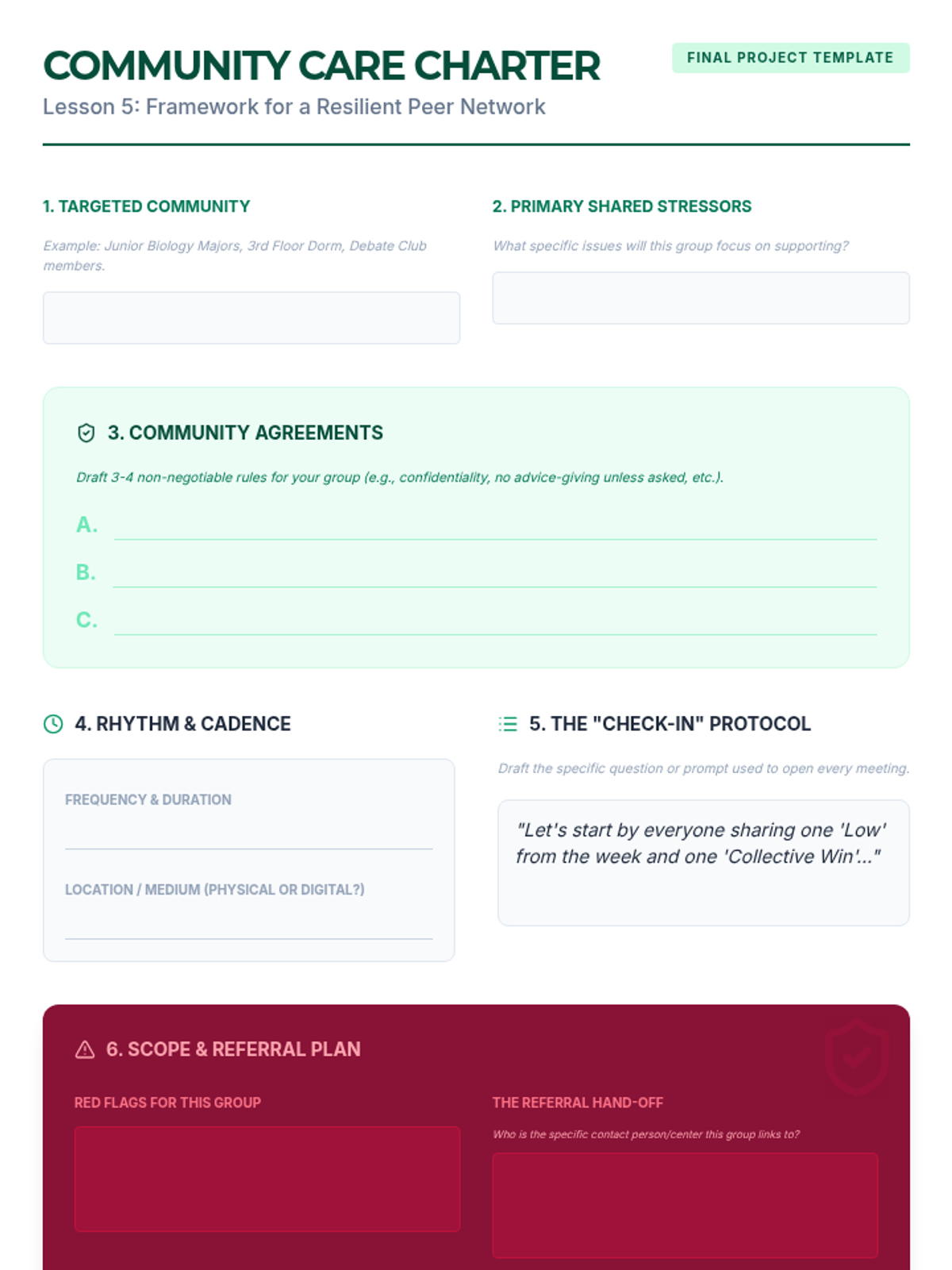
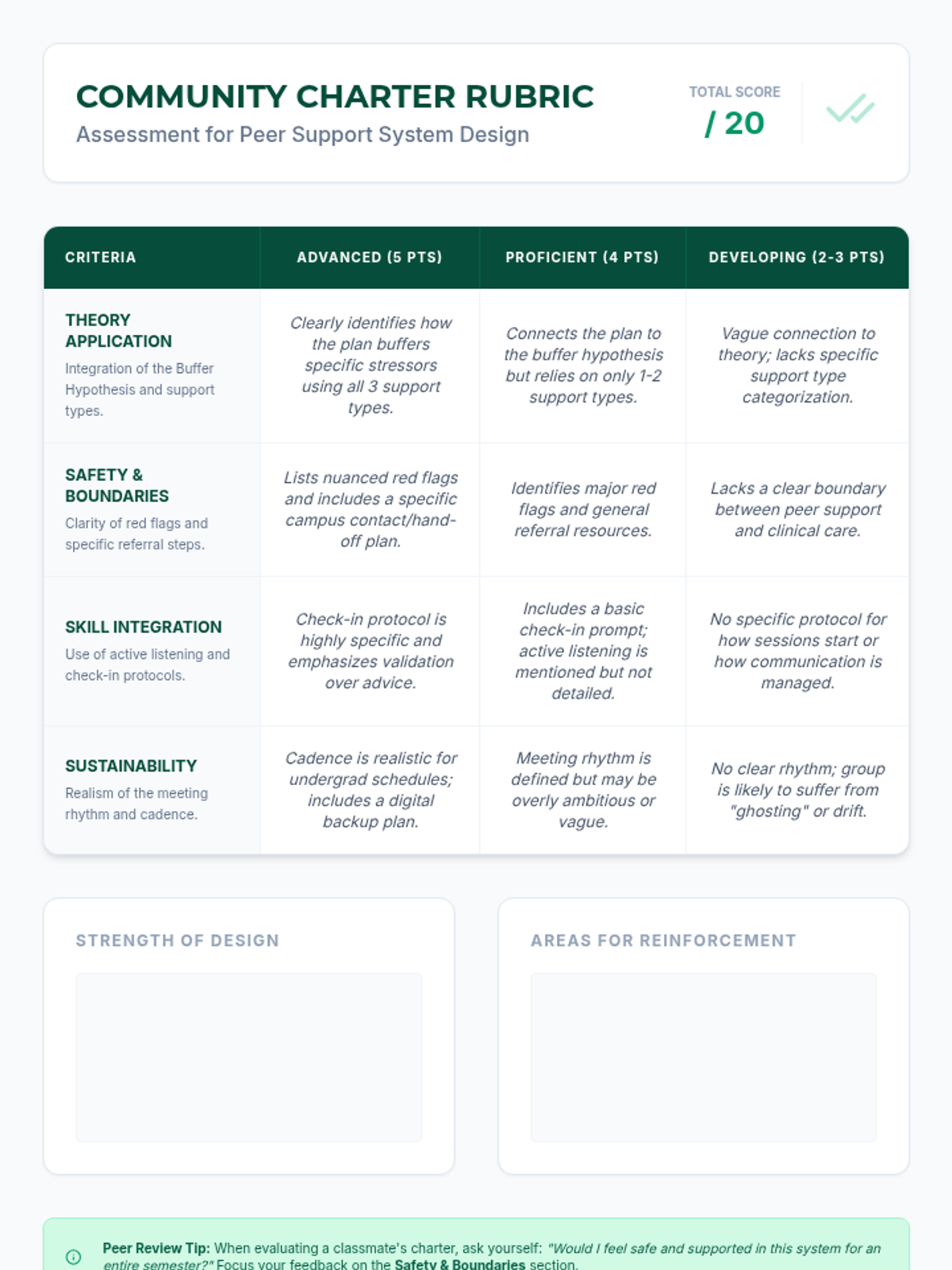
Students design a framework for a community care plan, producing a 'Community Charter' for peer support in a specific campus context.
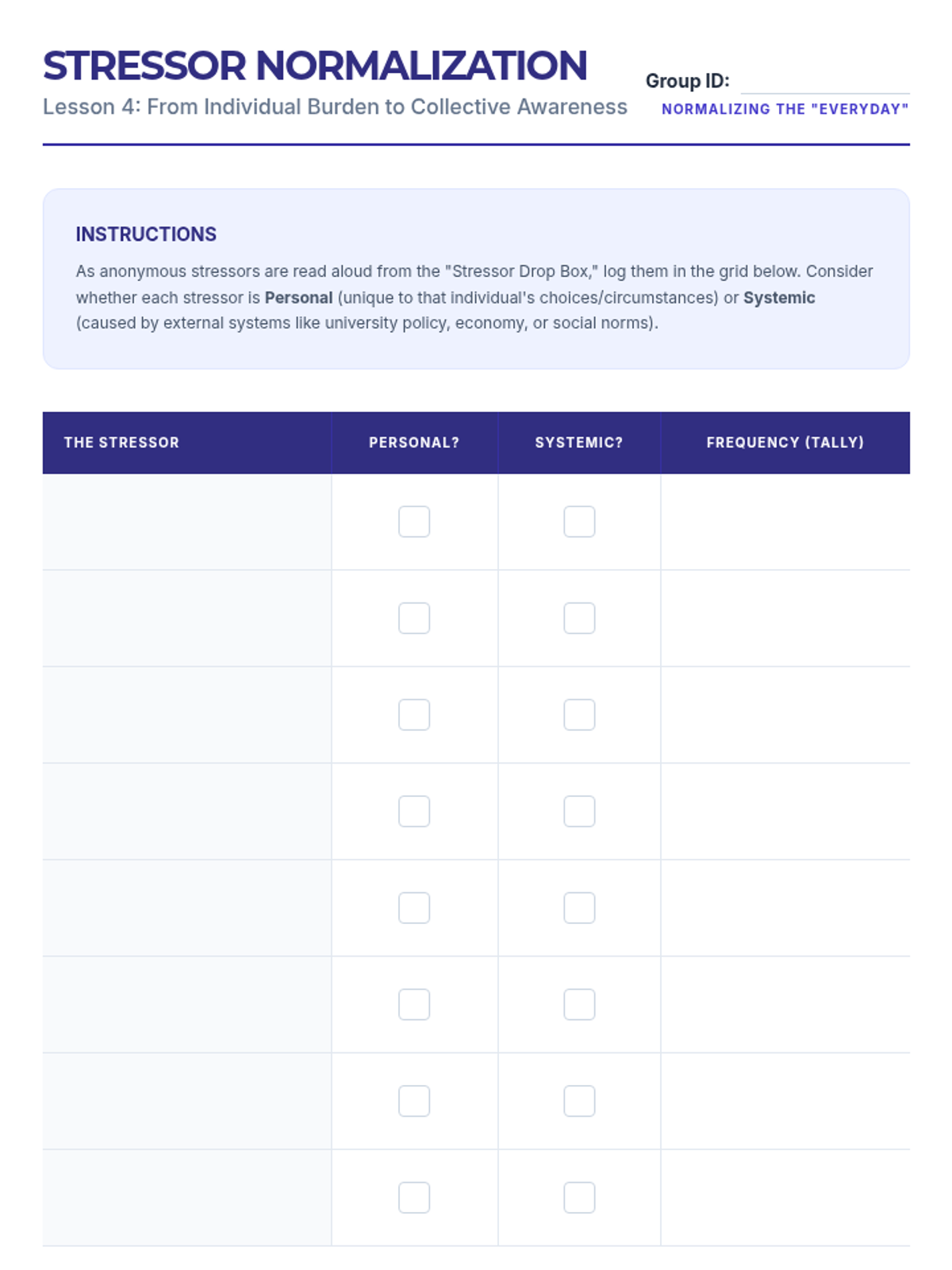
A facilitated dialogue session focusing on common undergraduate stressors, practicing normalization and collective coping strategies.
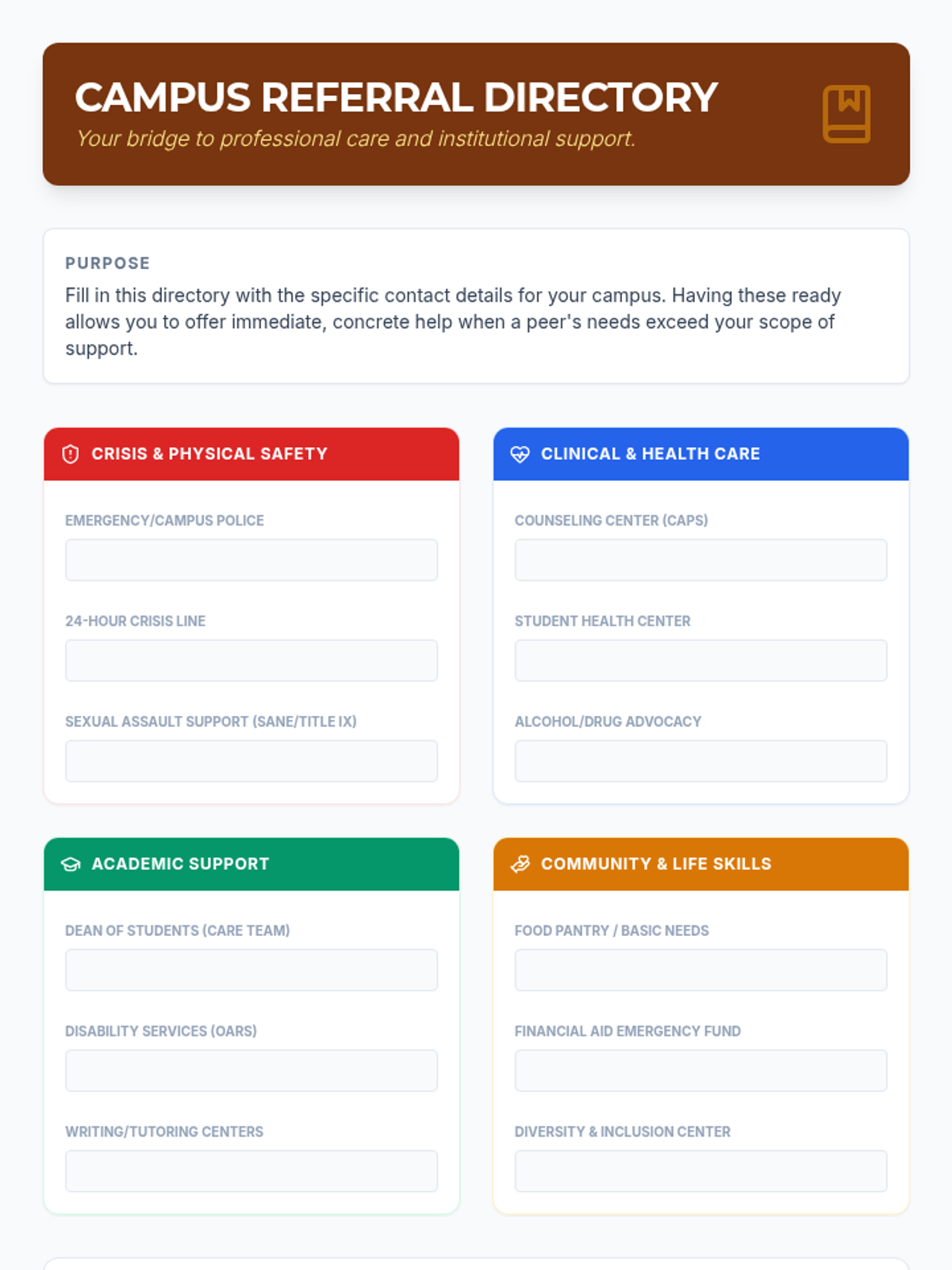
Training on recognizing the limits of peer support and when to refer to professionals, with a focus on setting emotional boundaries to prevent burnout.
A skill-building session on non-judgmental listening, reflecting, and validating emotions, focusing on 'holding space' rather than problem-solving.
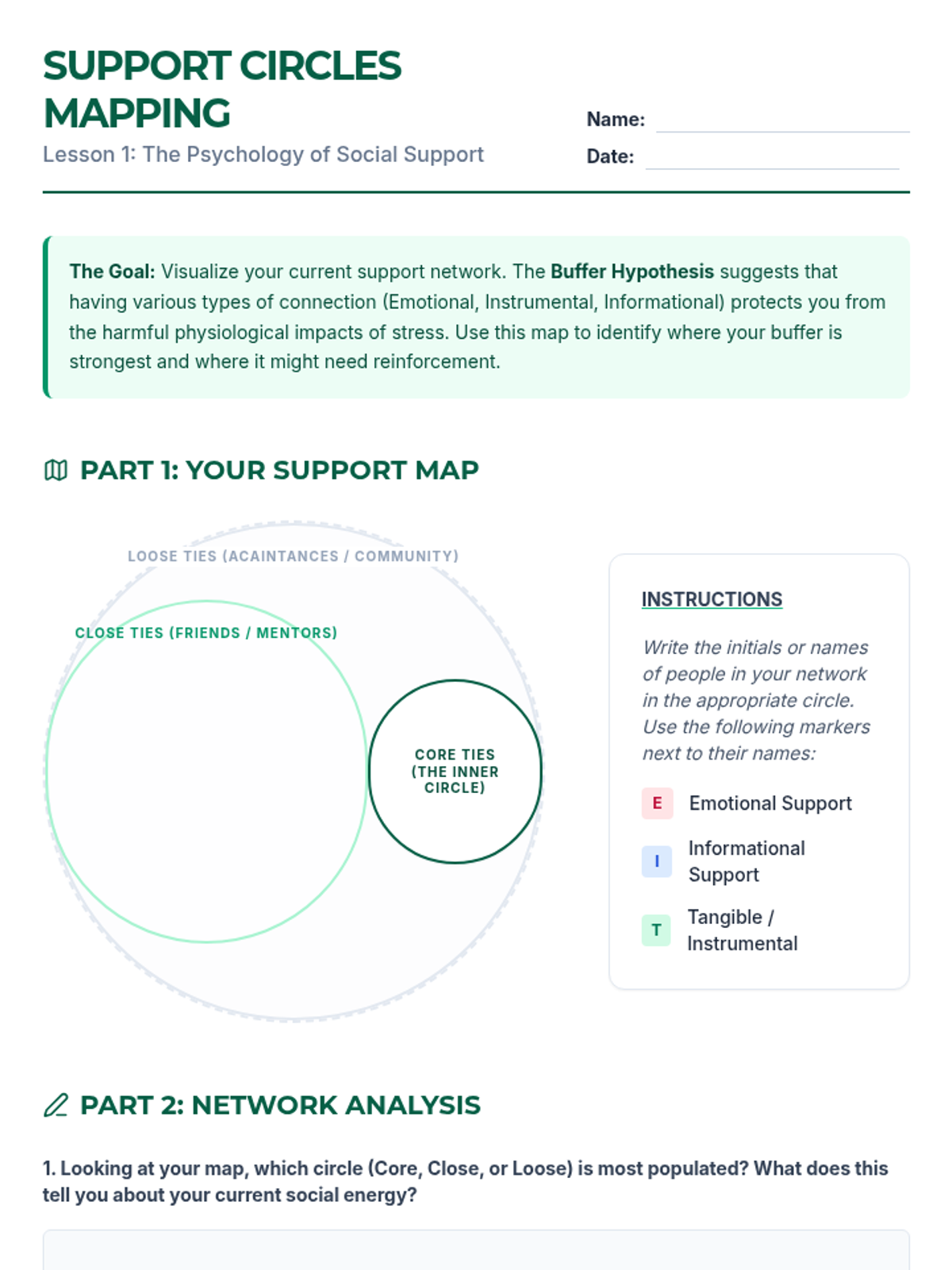
Students explore the 'Buffer Hypothesis' and how social connection mitigates the health impacts of stress, focusing on the difference between instrumental, emotional, and informational support.
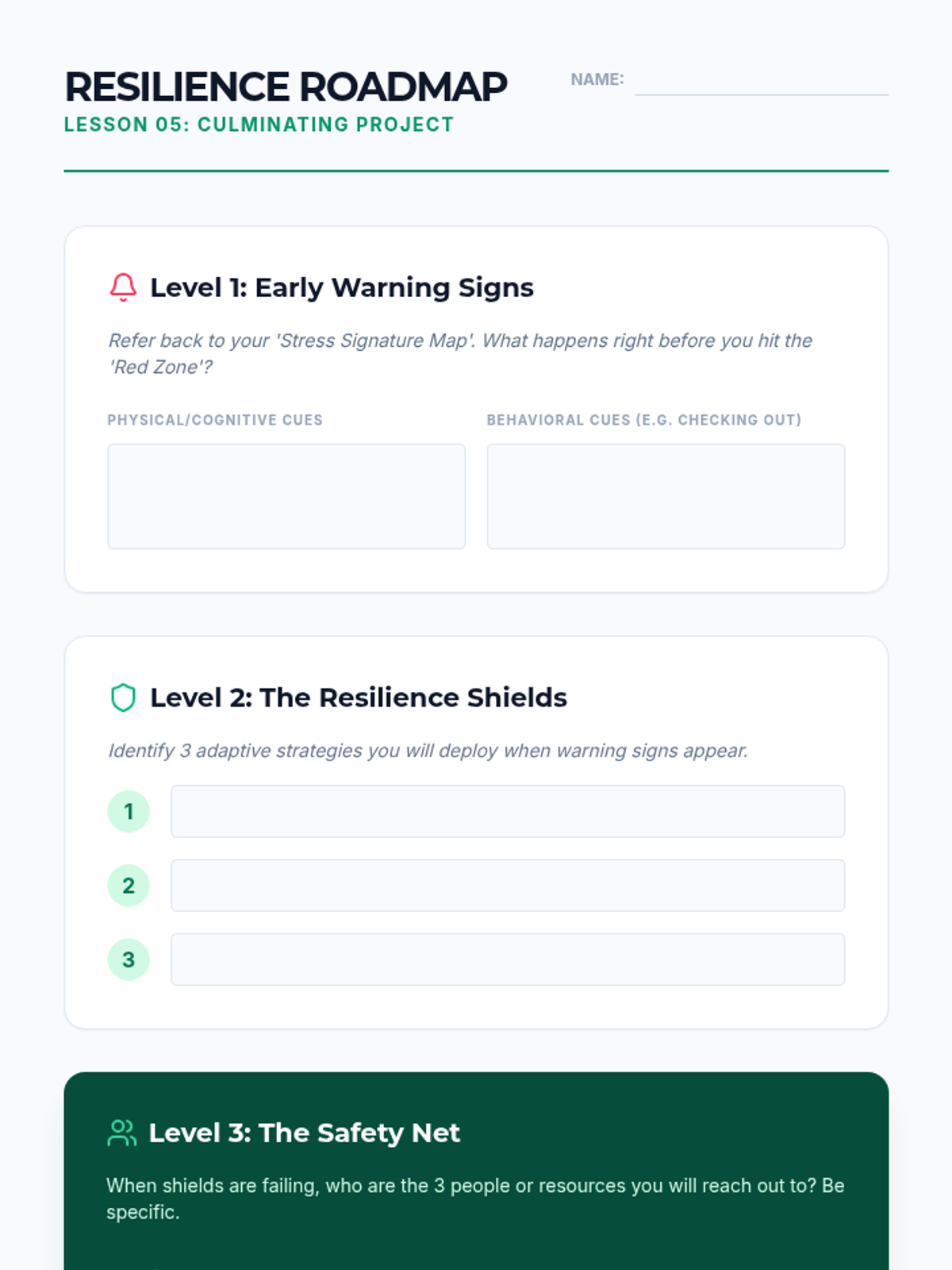
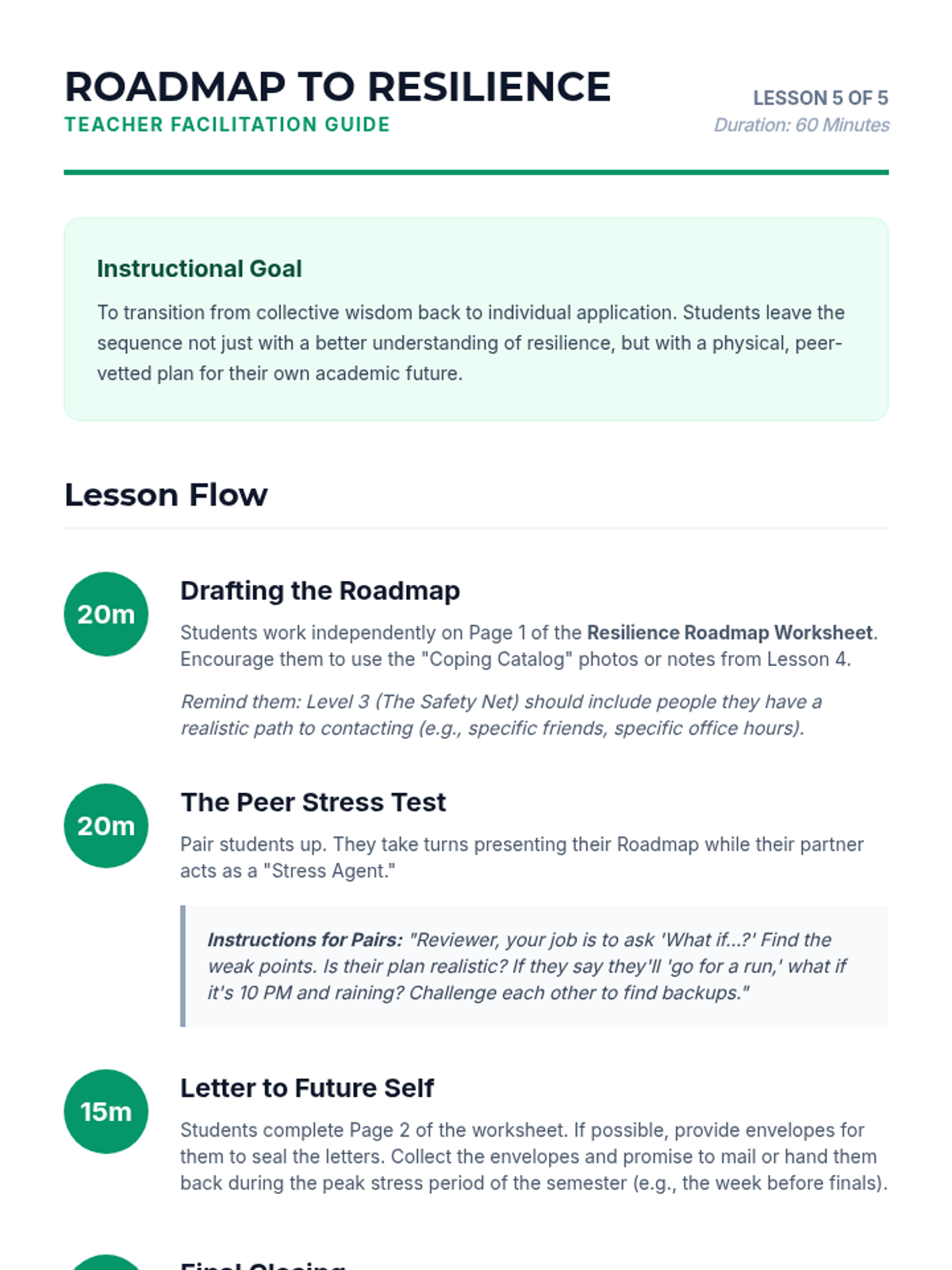
Students create a personalized resilience roadmap and write letters to their future selves to prepare for upcoming academic challenges.
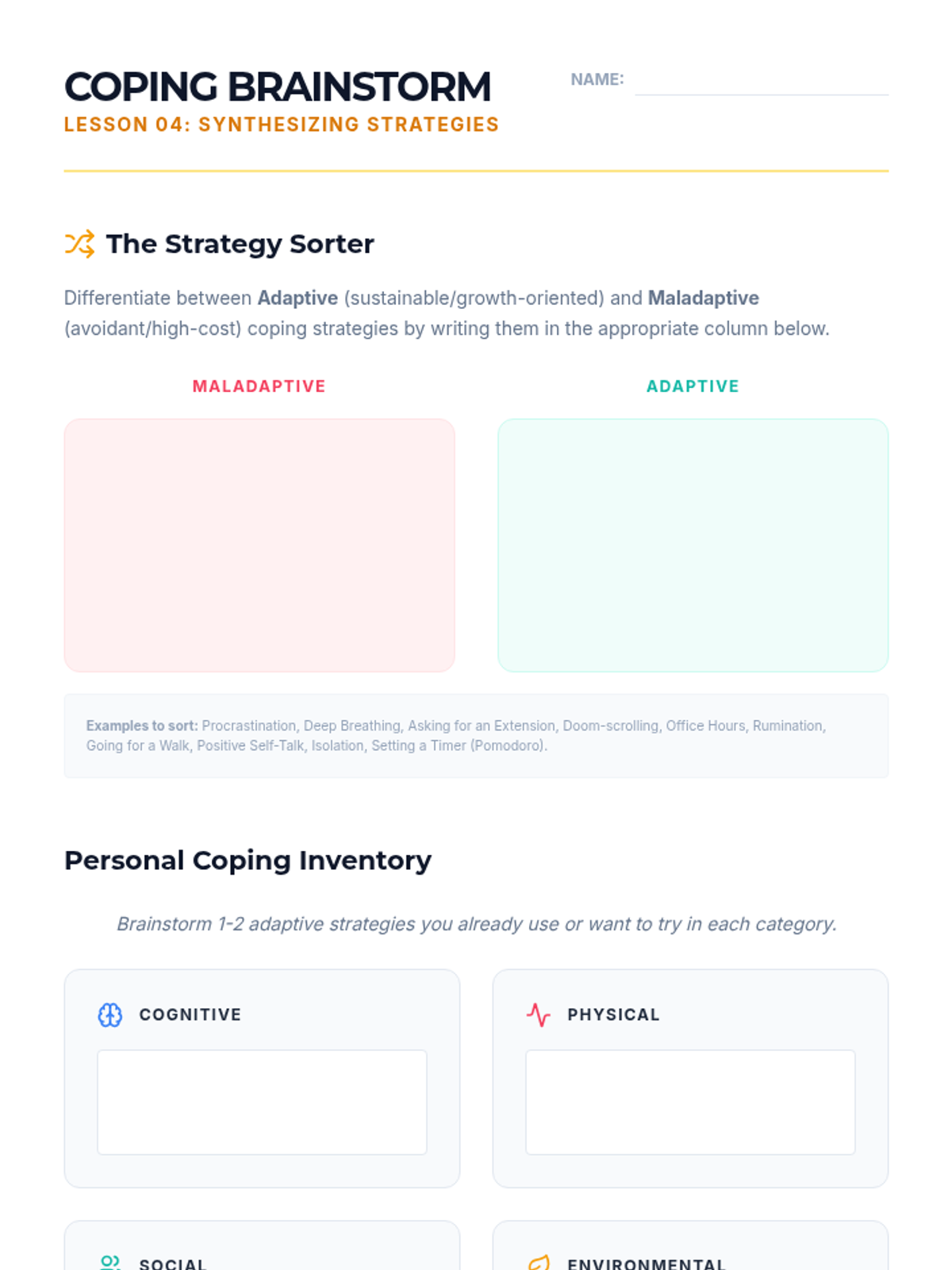
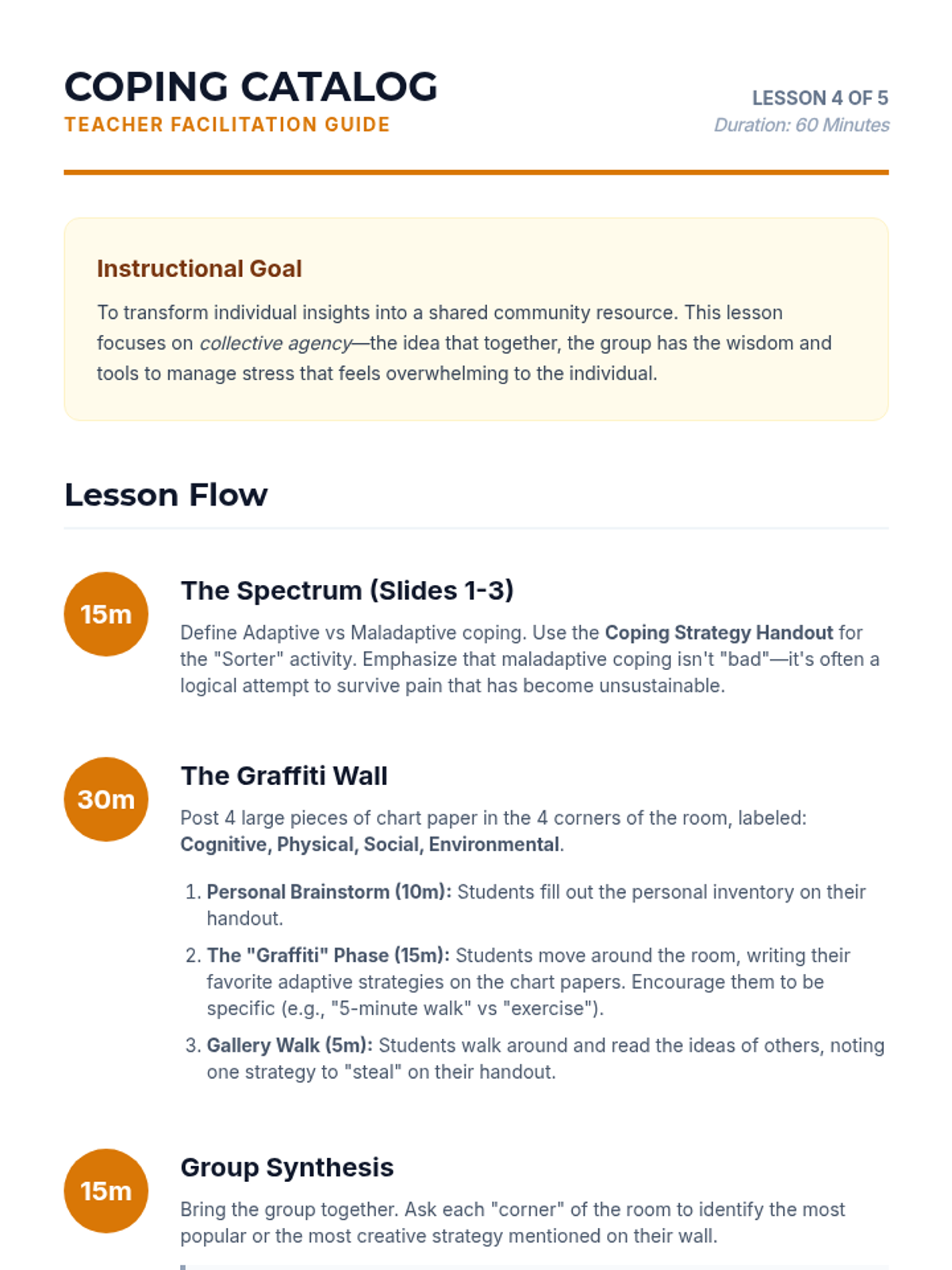
Students categorize coping mechanisms and synthesize collective wisdom into a shared resource for managing academic pressure.
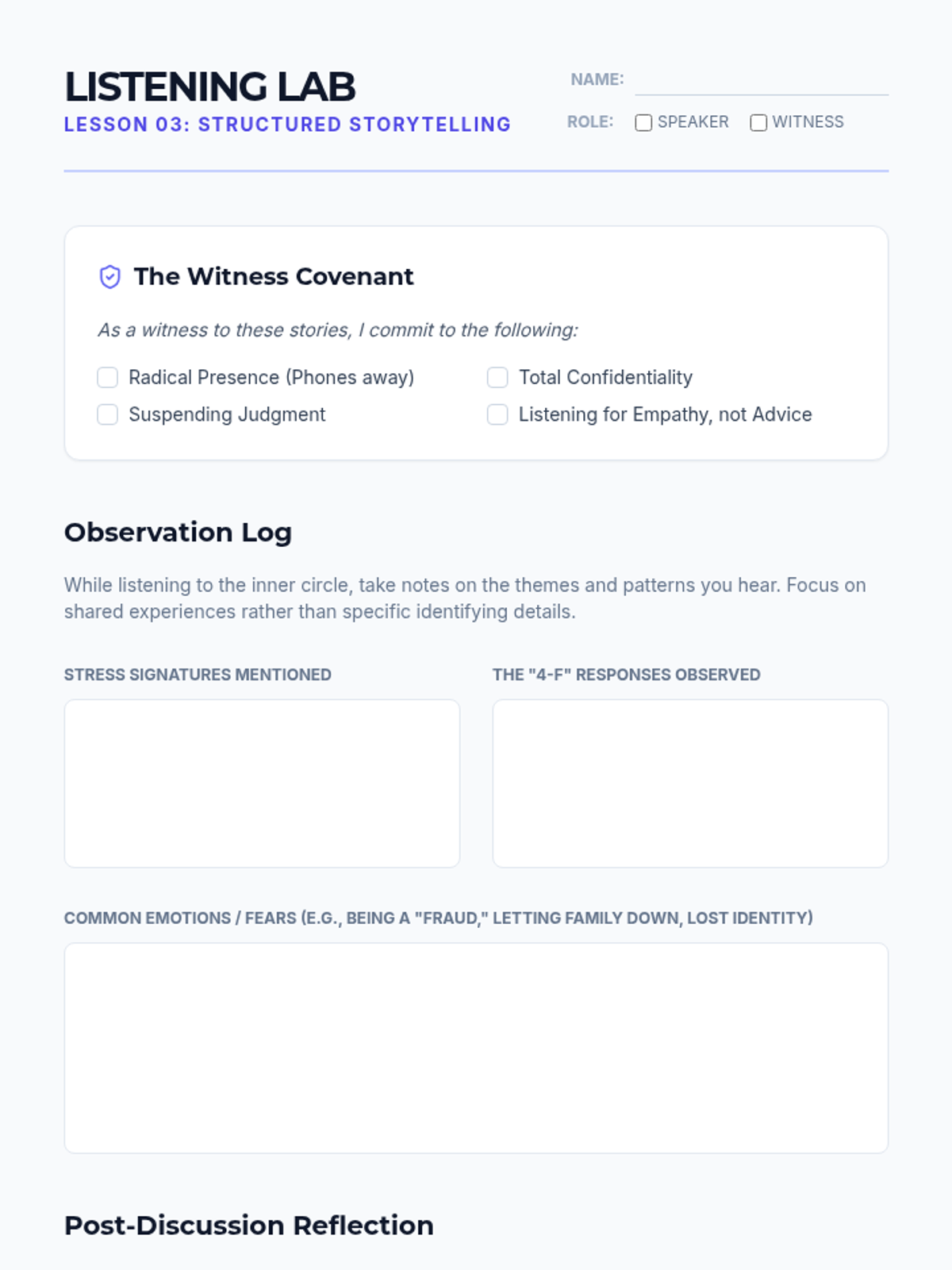
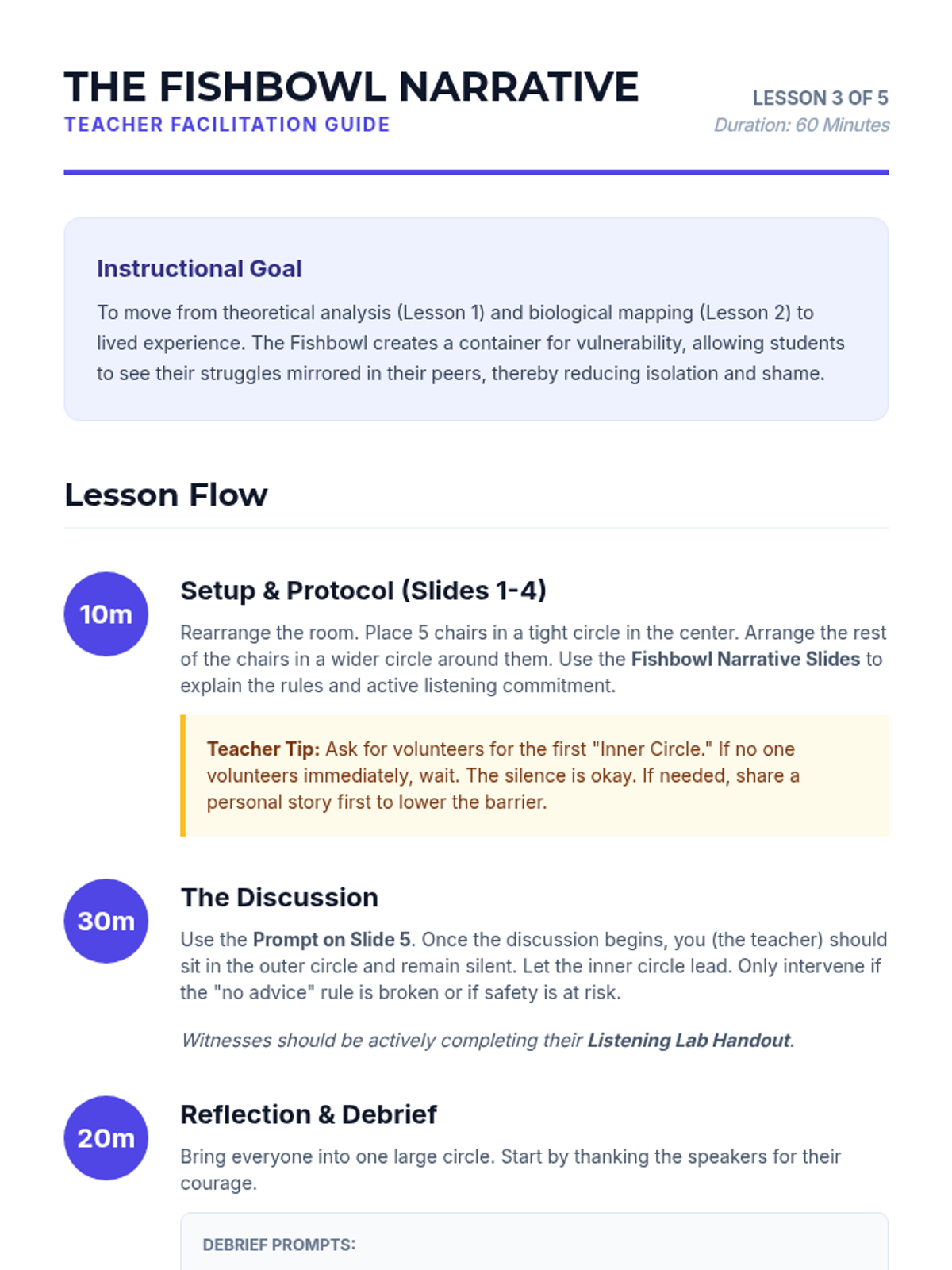
Students engage in a structured Fishbowl discussion to share personal academic struggles and practice active, non-judgmental listening.
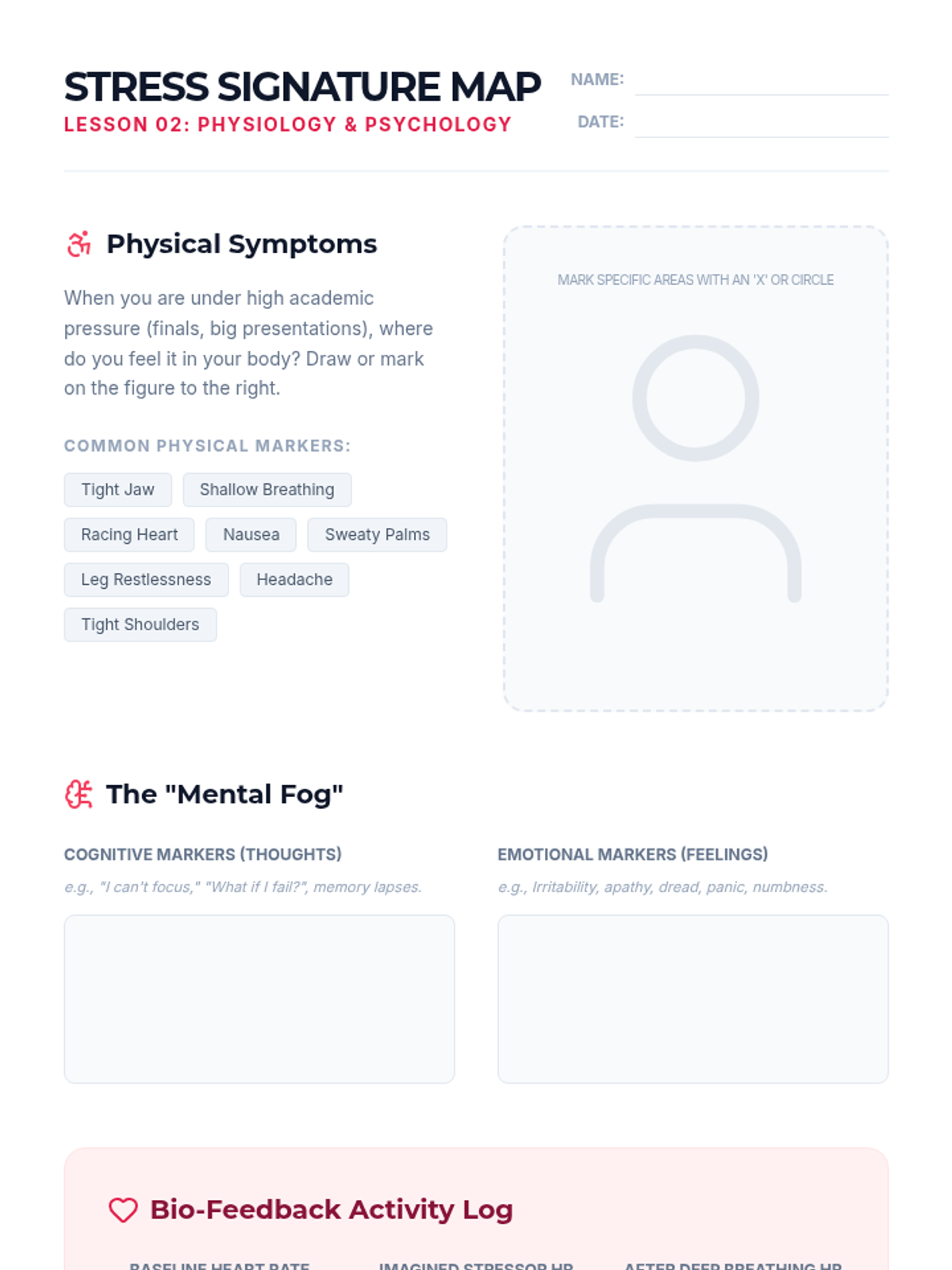
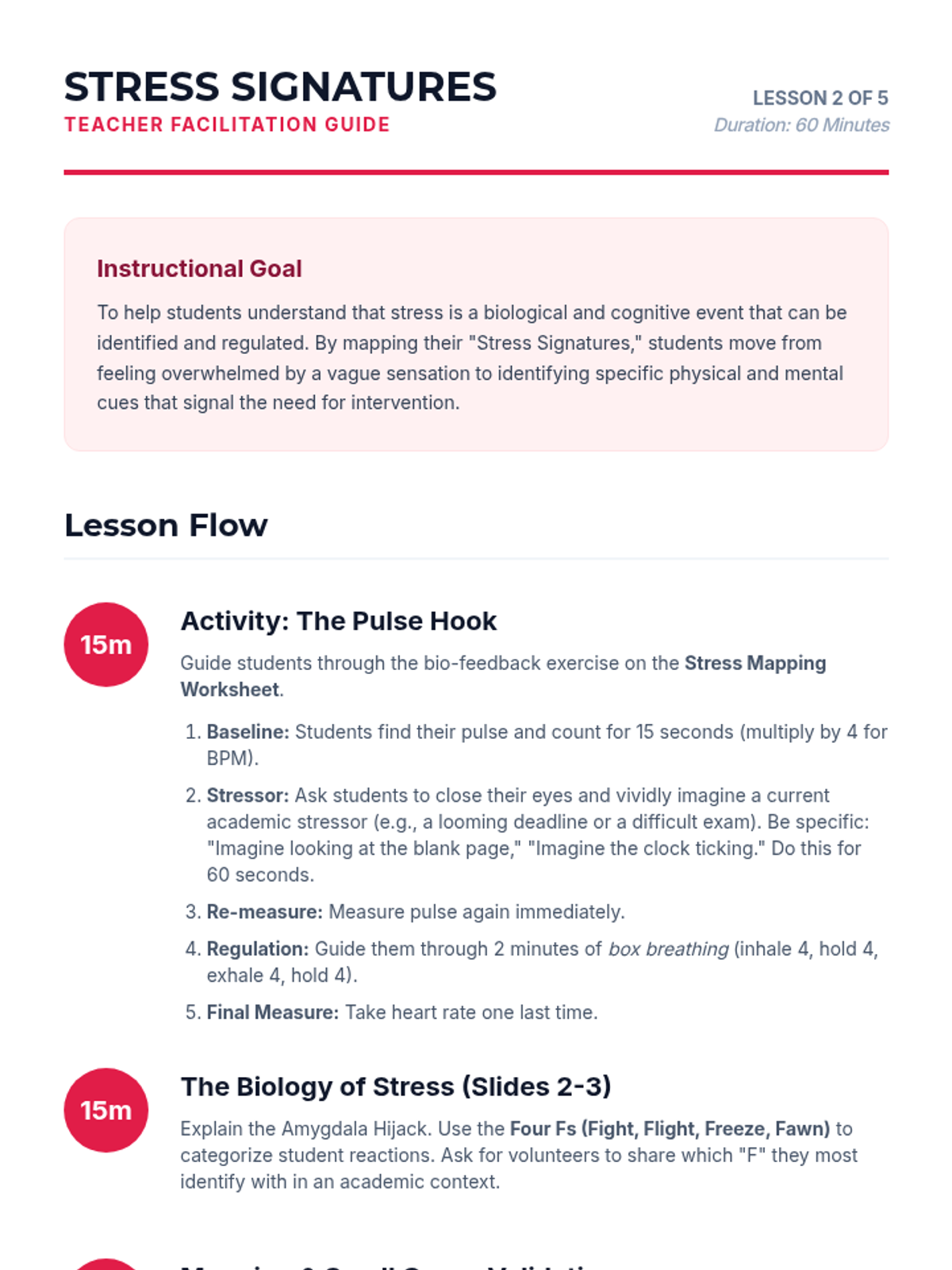
Students explore the biological markers of stress and map their own 'stress signatures' to validate and manage physical reactions to pressure.
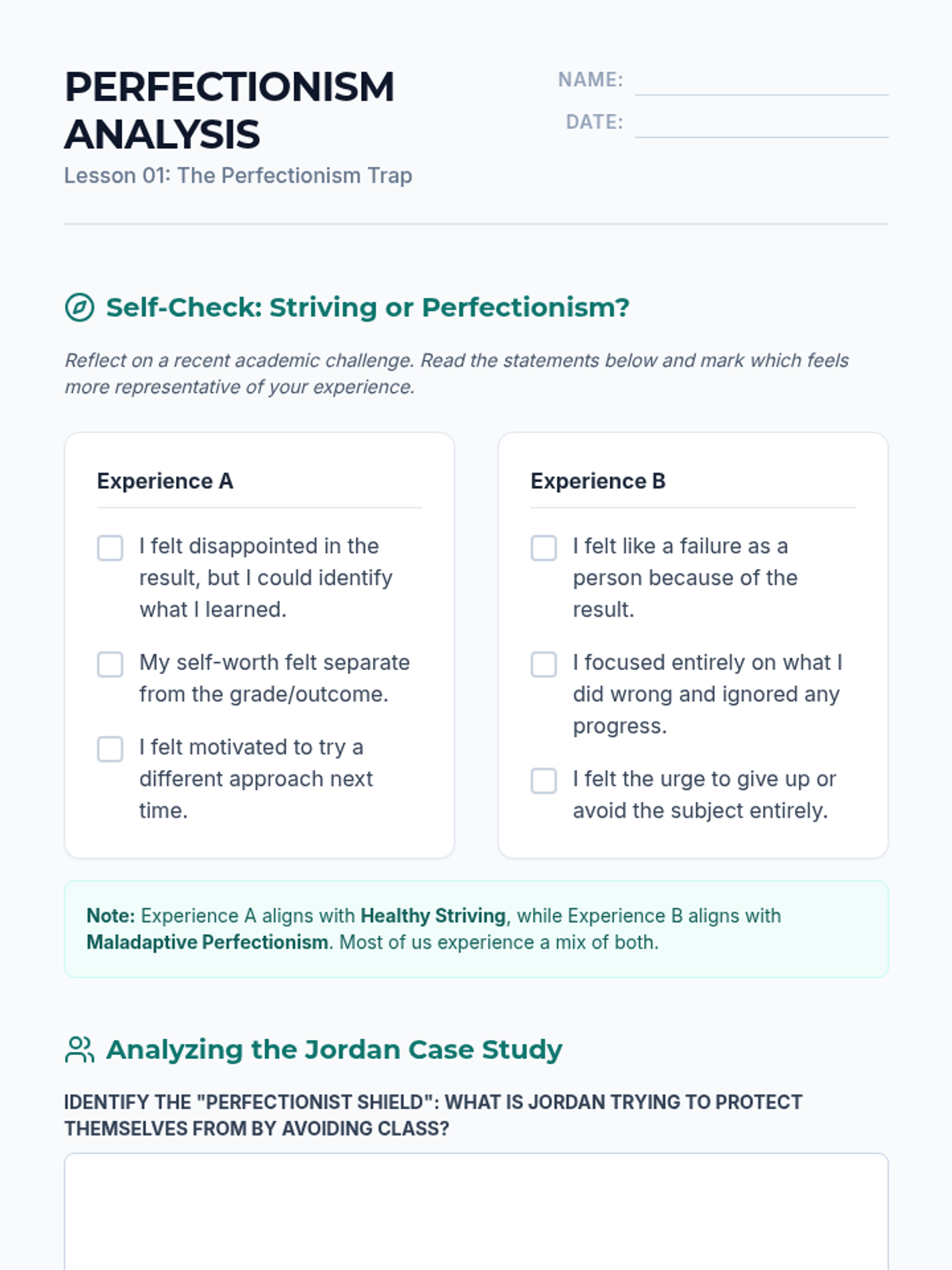
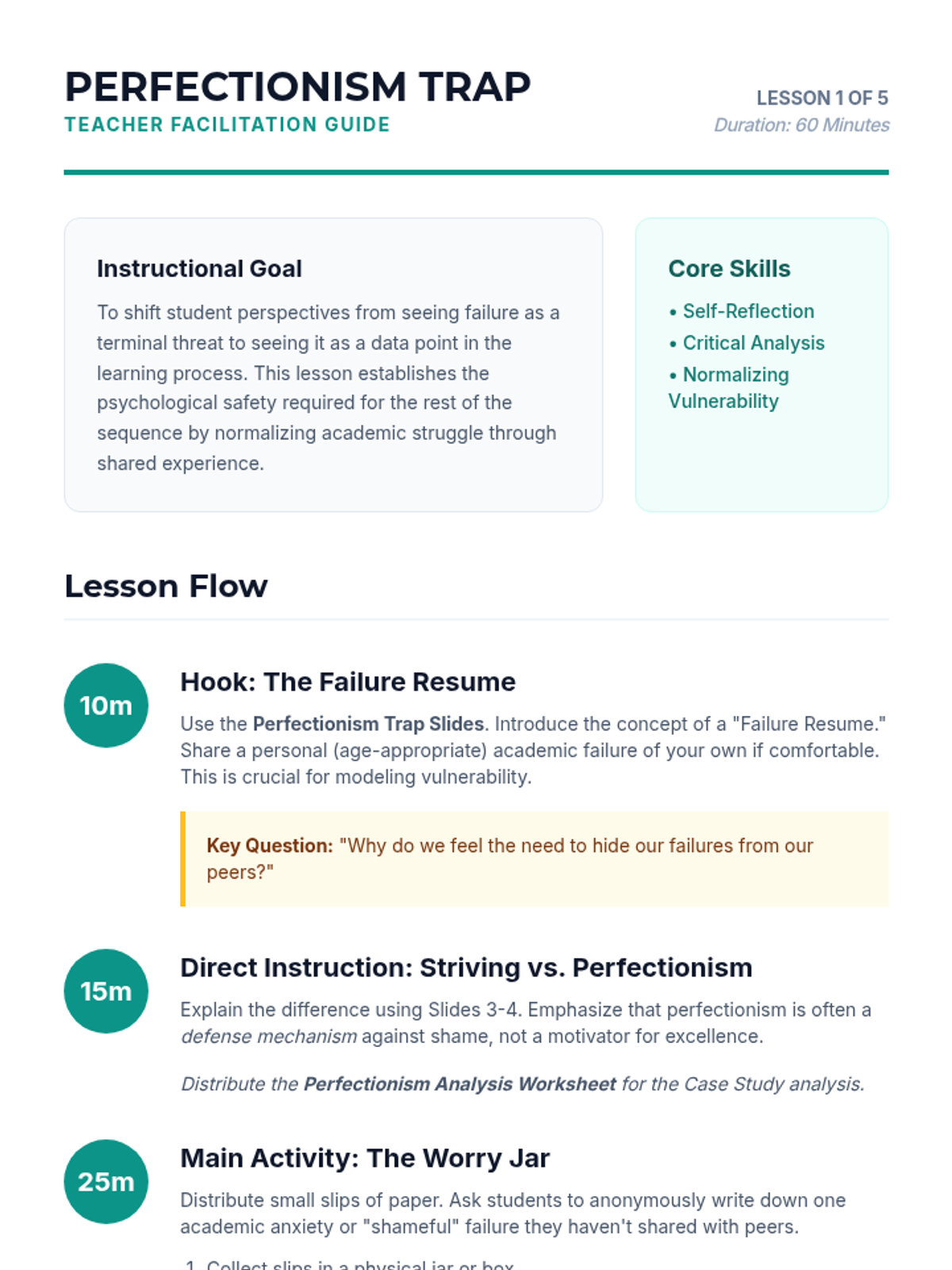
Students analyze case studies of failure and differentiate between perfectionism and healthy striving while sharing anonymous academic anxieties.
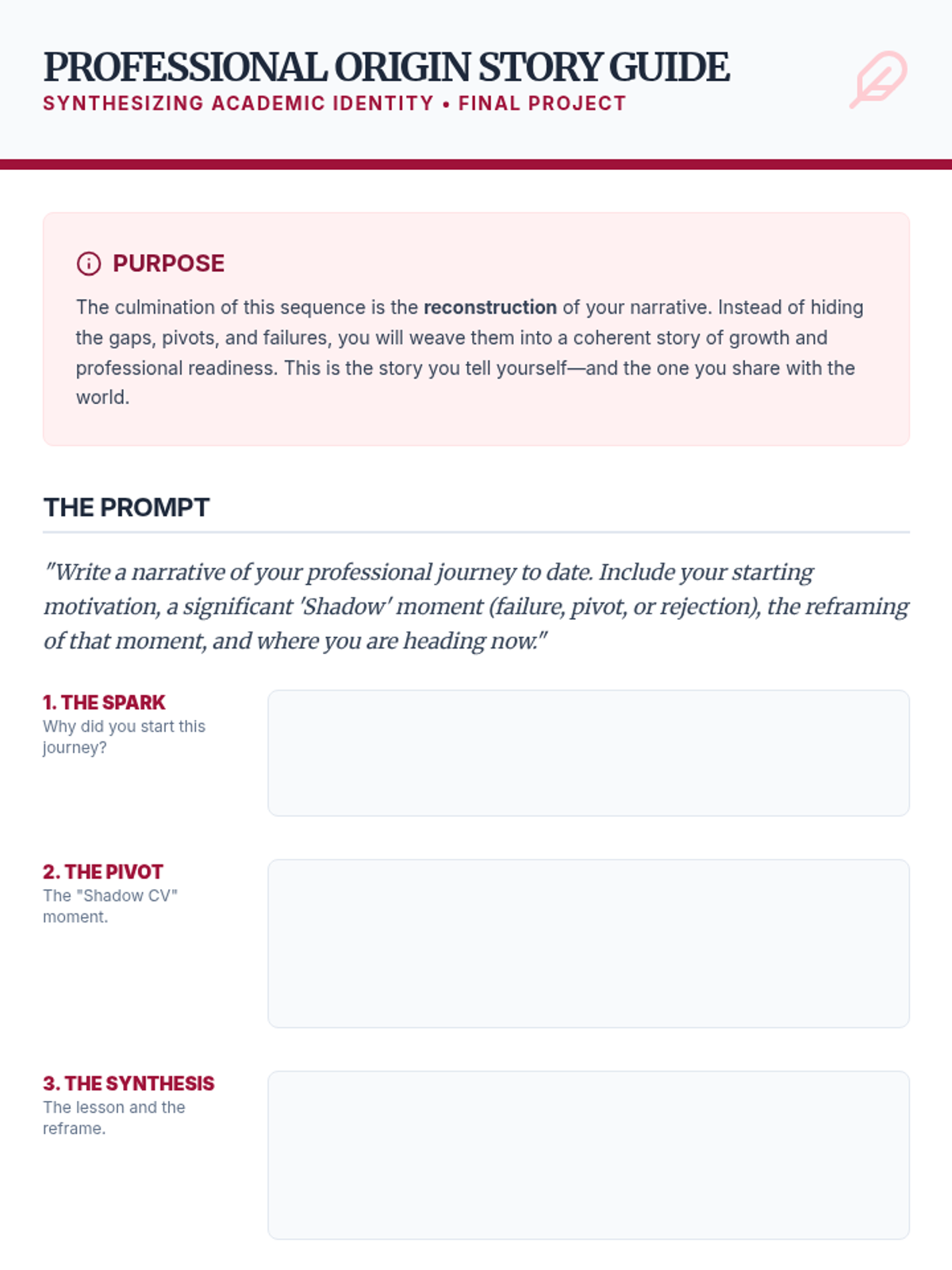
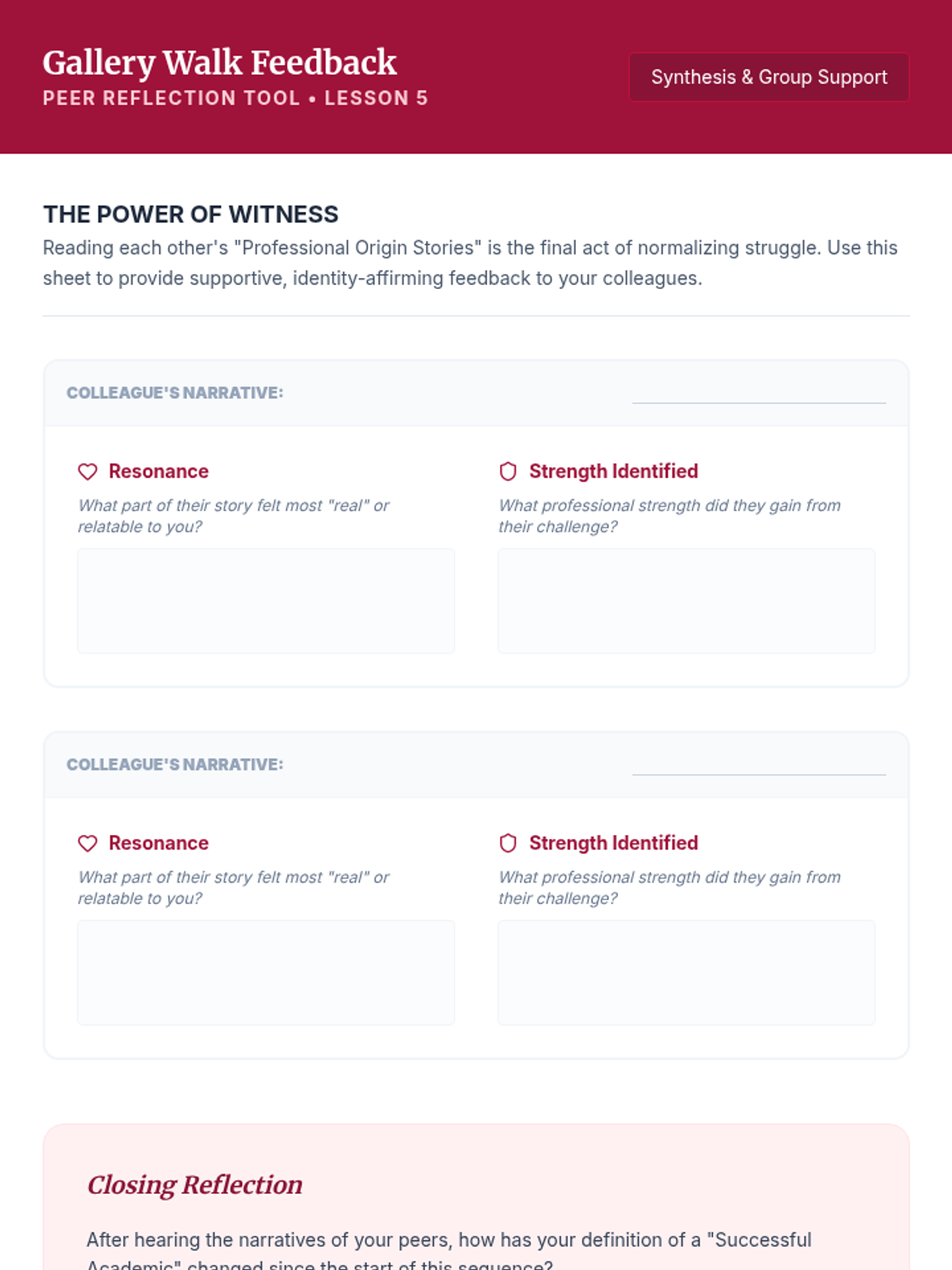
Students synthesize their learning by writing a 'Professional Origin Story' that integrates challenges as strengths, culminating in a gallery walk of new narratives.
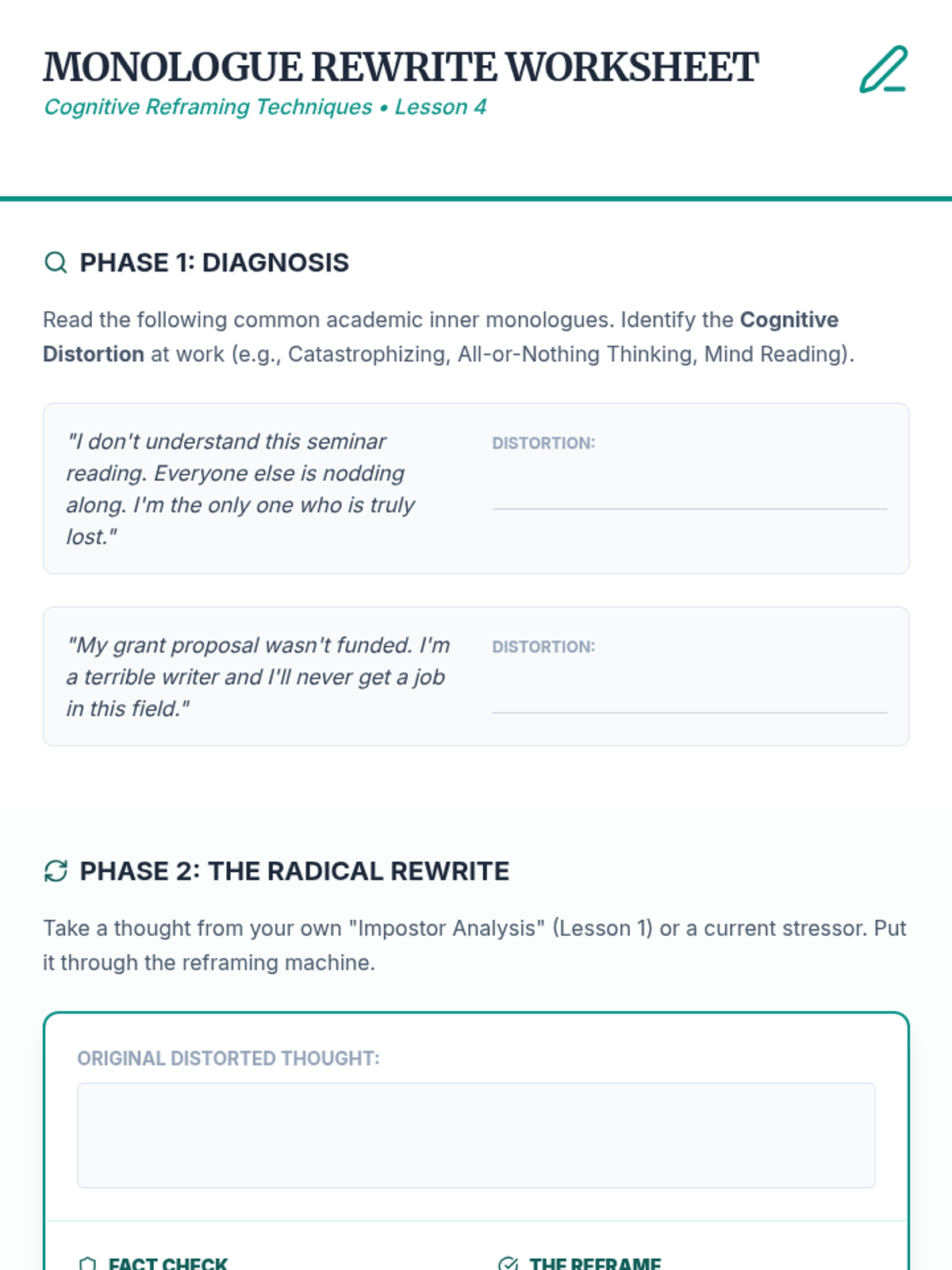
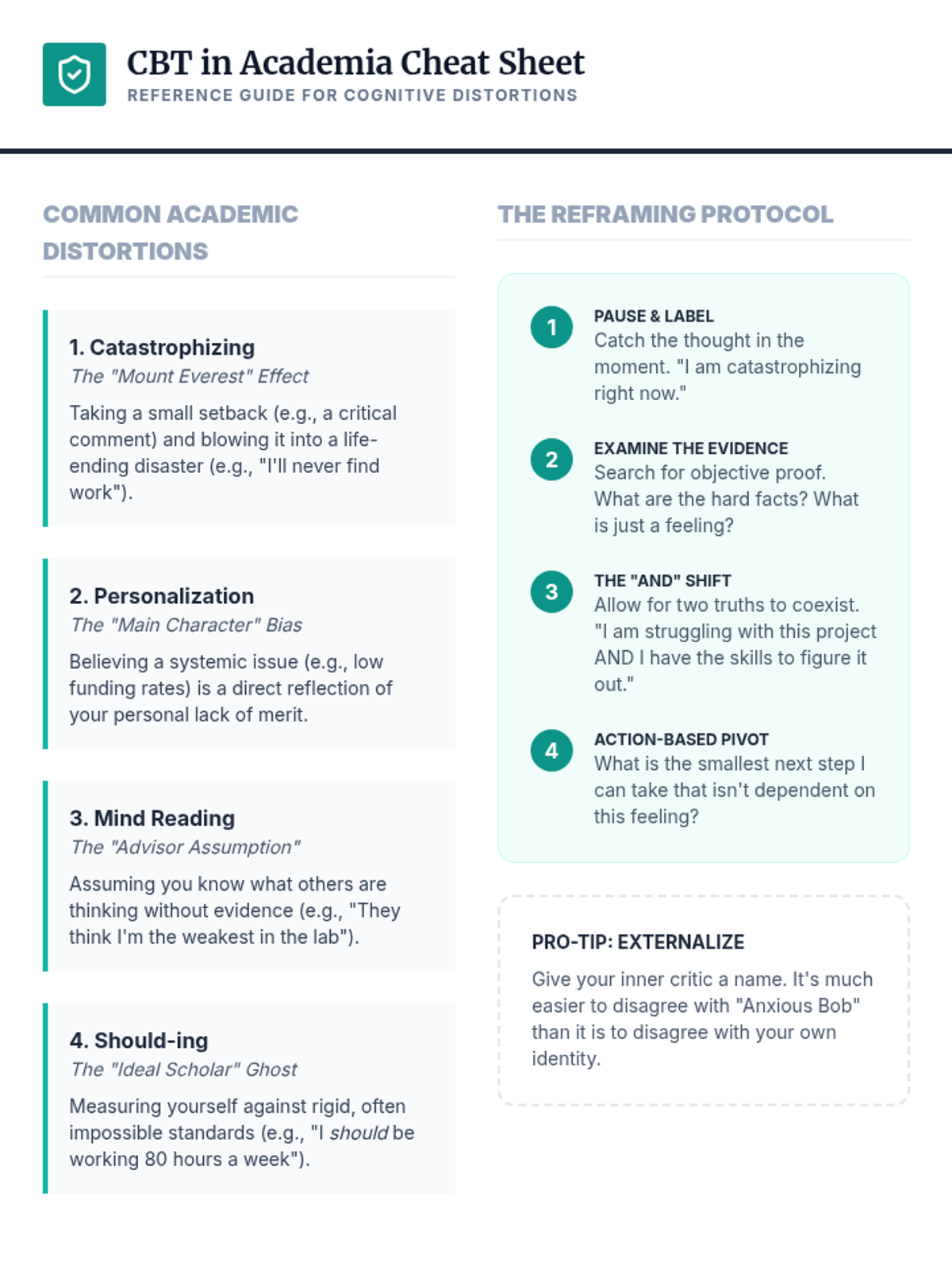
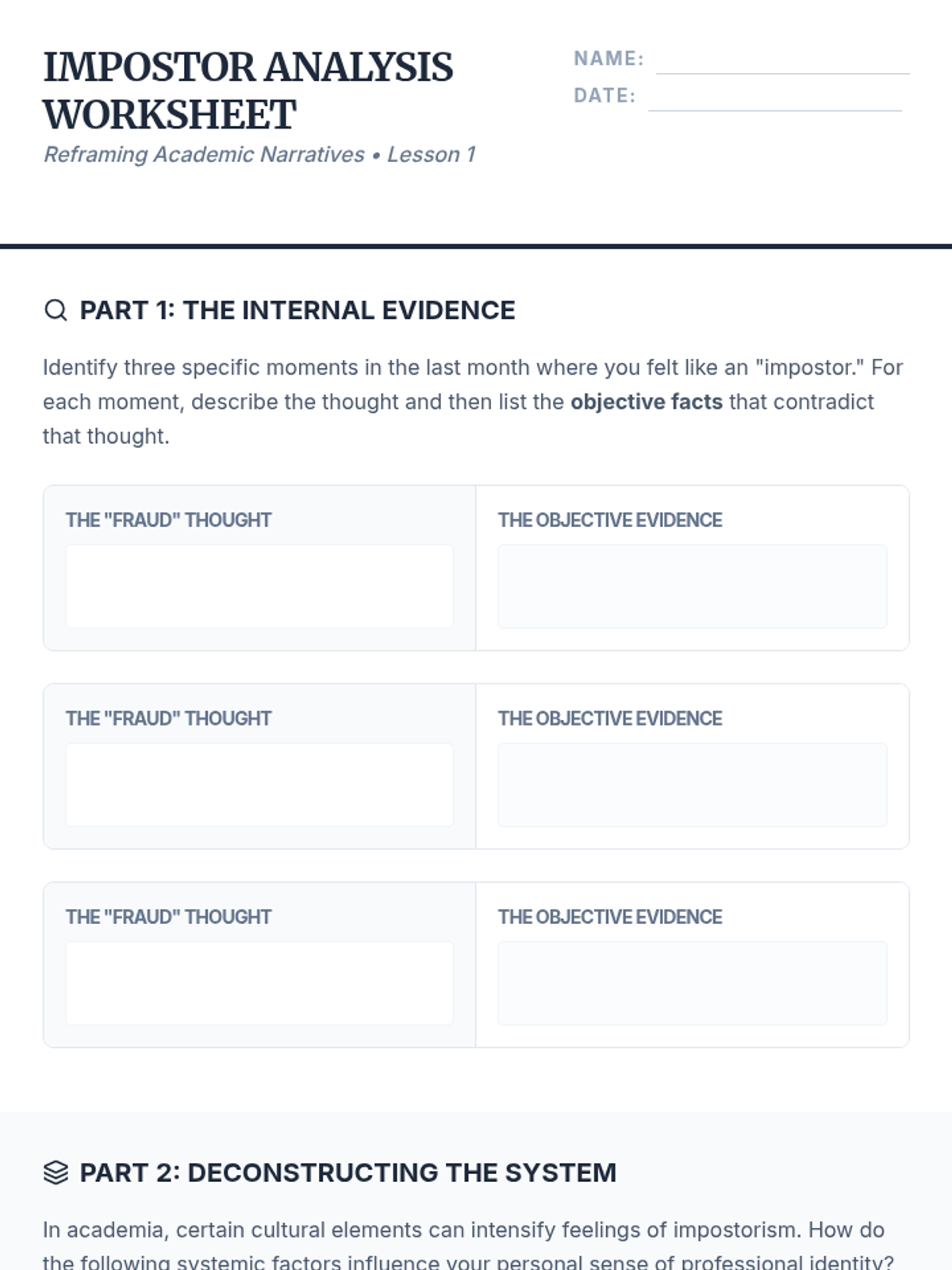
An introduction to cognitive behavioral techniques relevant to academic performance, focusing on identifying cognitive distortions and rewriting internal monologues.
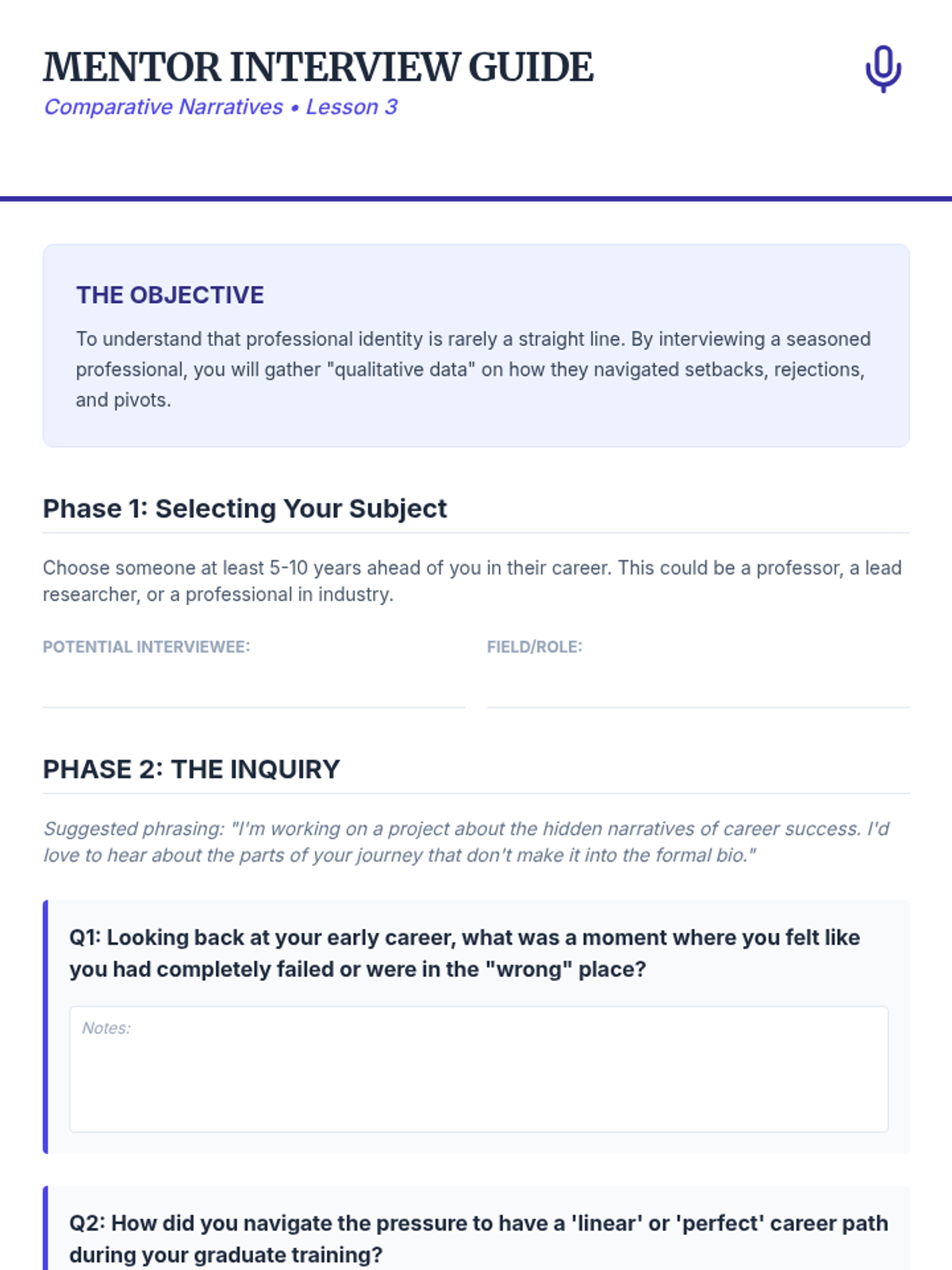
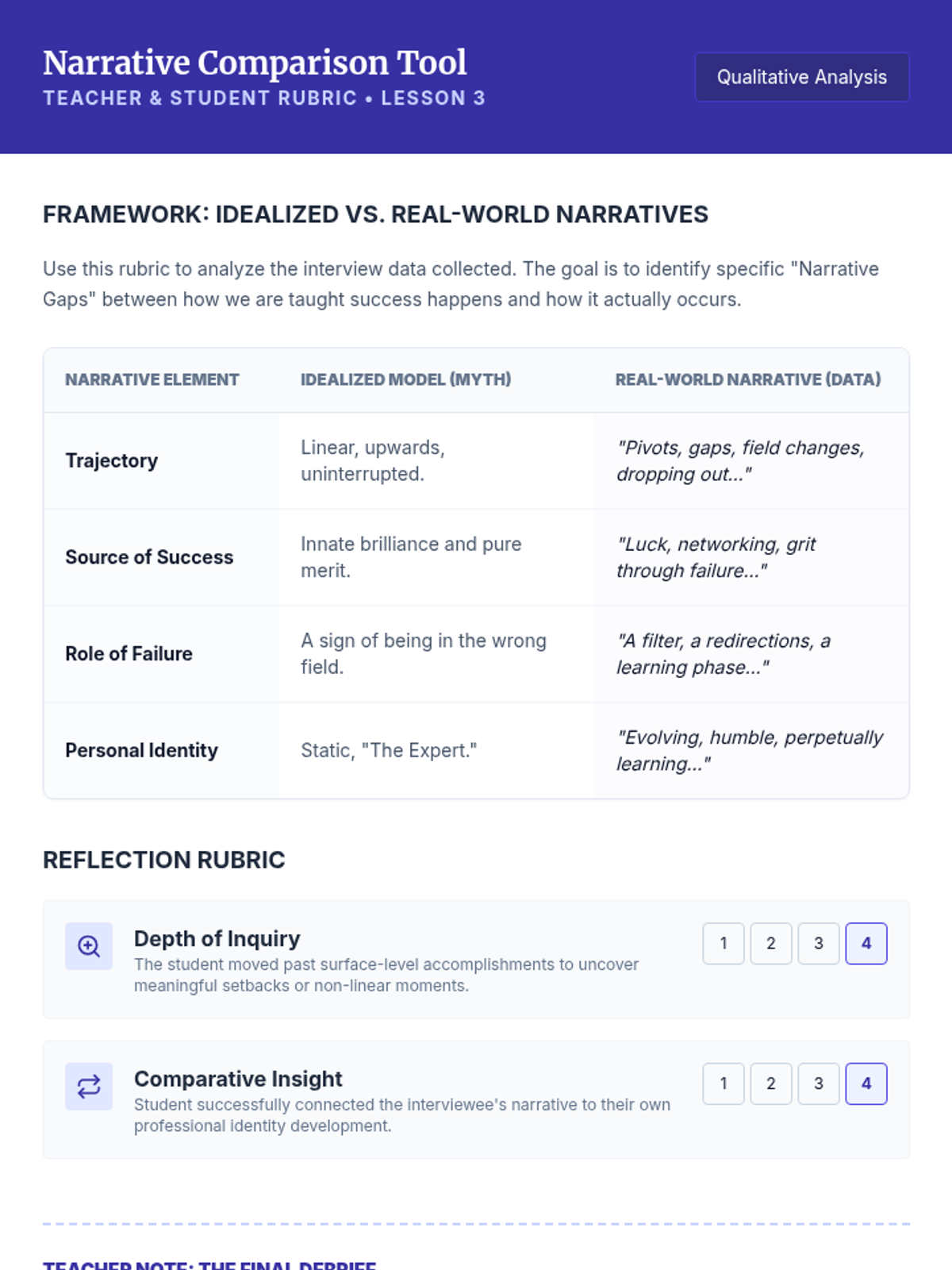
Students interview mentors about career non-linearities and setbacks, comparing real-world narratives against the idealized 'linear success' model of graduate school.
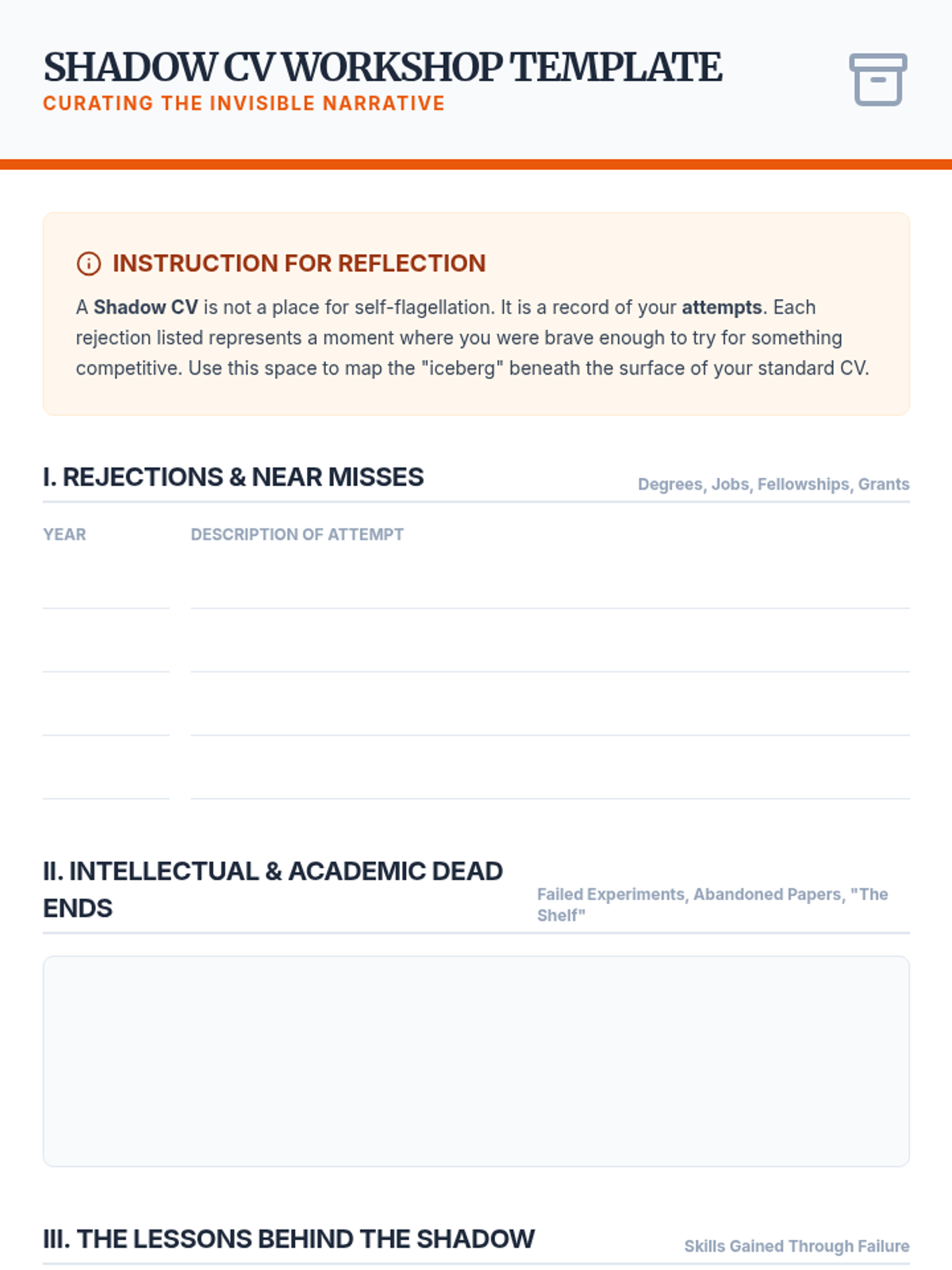
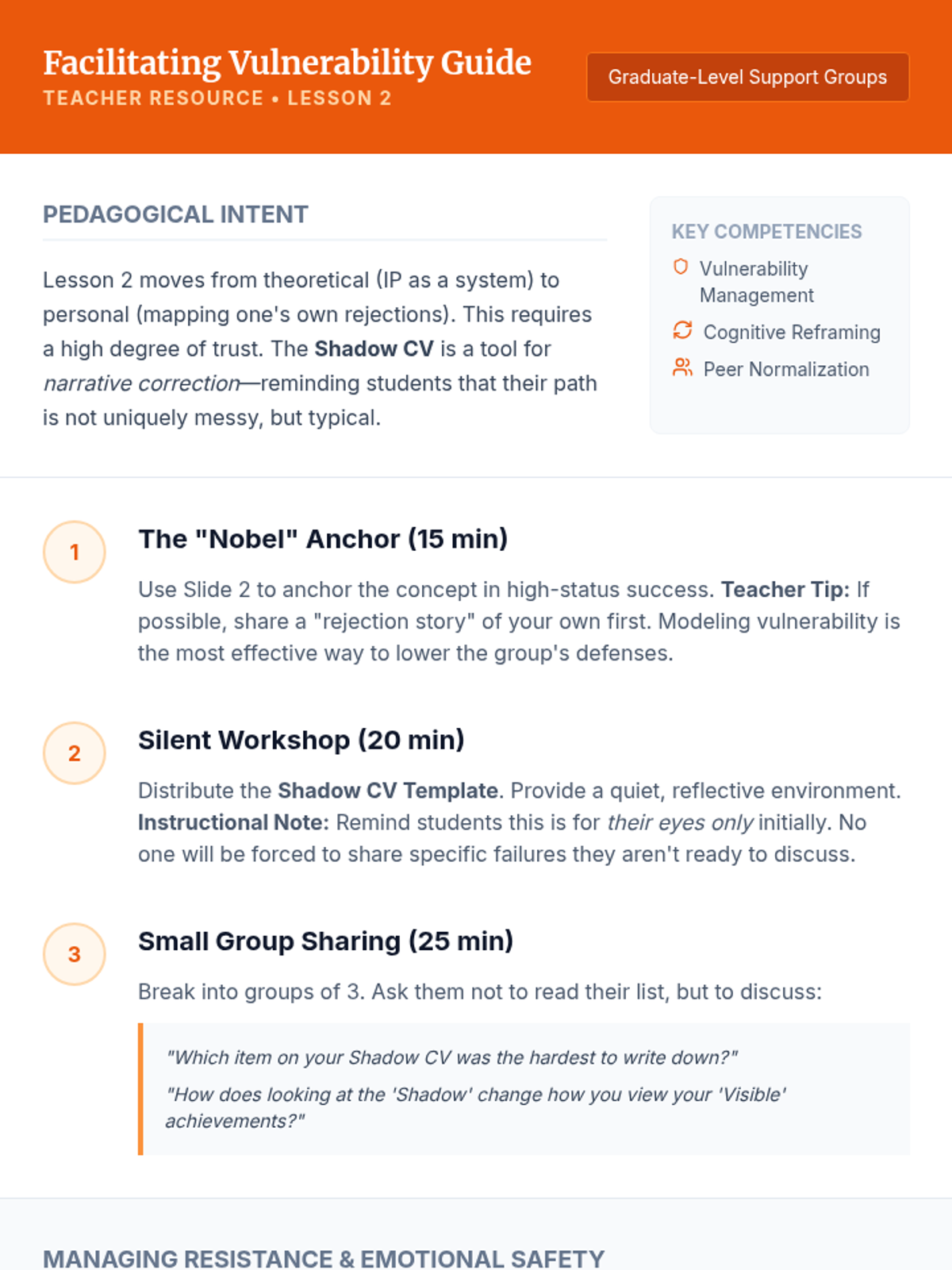
Participants study the concept of a 'CV of Failures' and draft their own Shadow CVs to visualize invisible struggles and normalize rejection in a group setting.
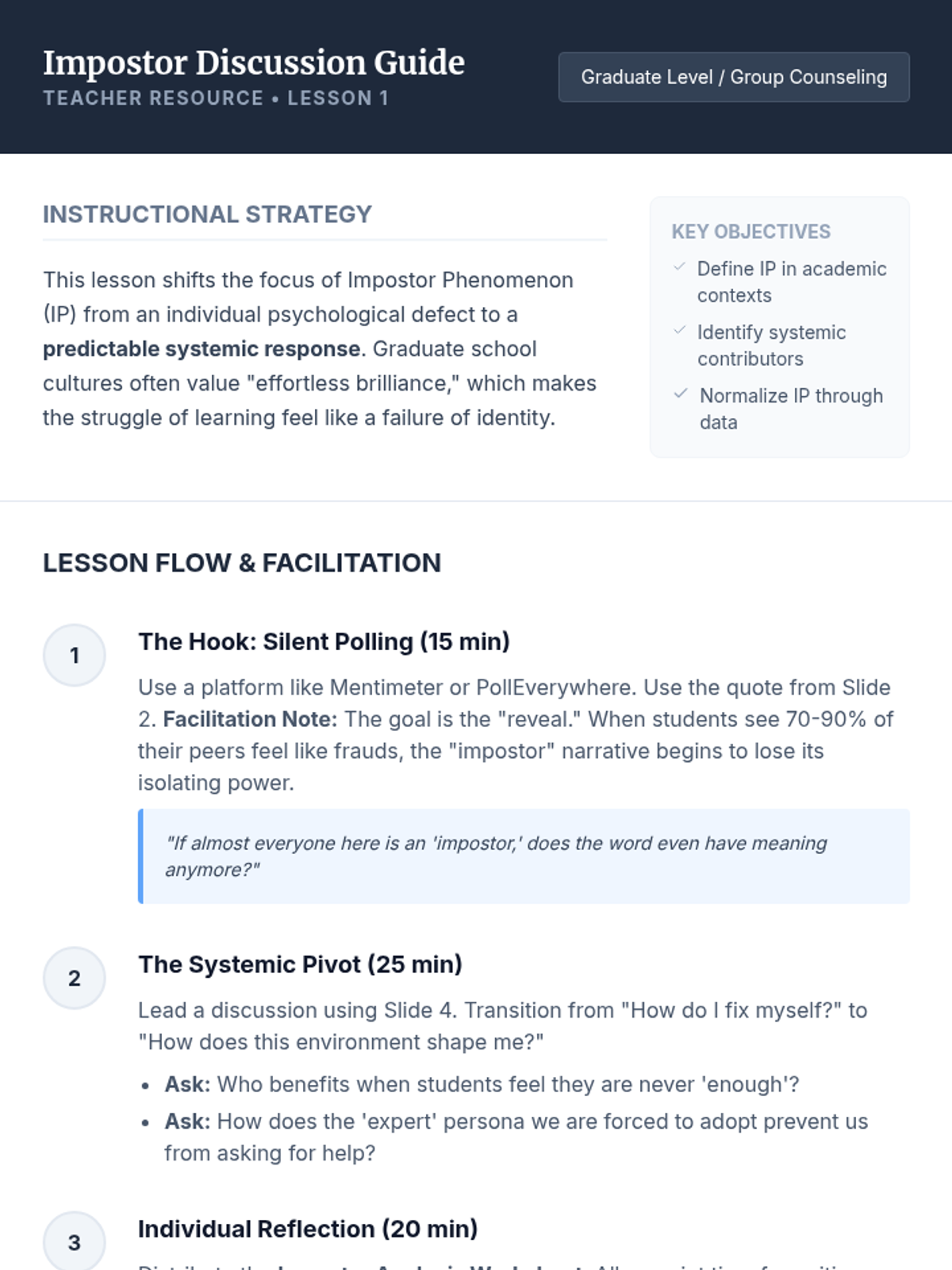
Students investigate the psychological roots of Impostor Phenomenon (IP) and review data on its prevalence in higher education, shifting the perspective from personal defect to systemic response.
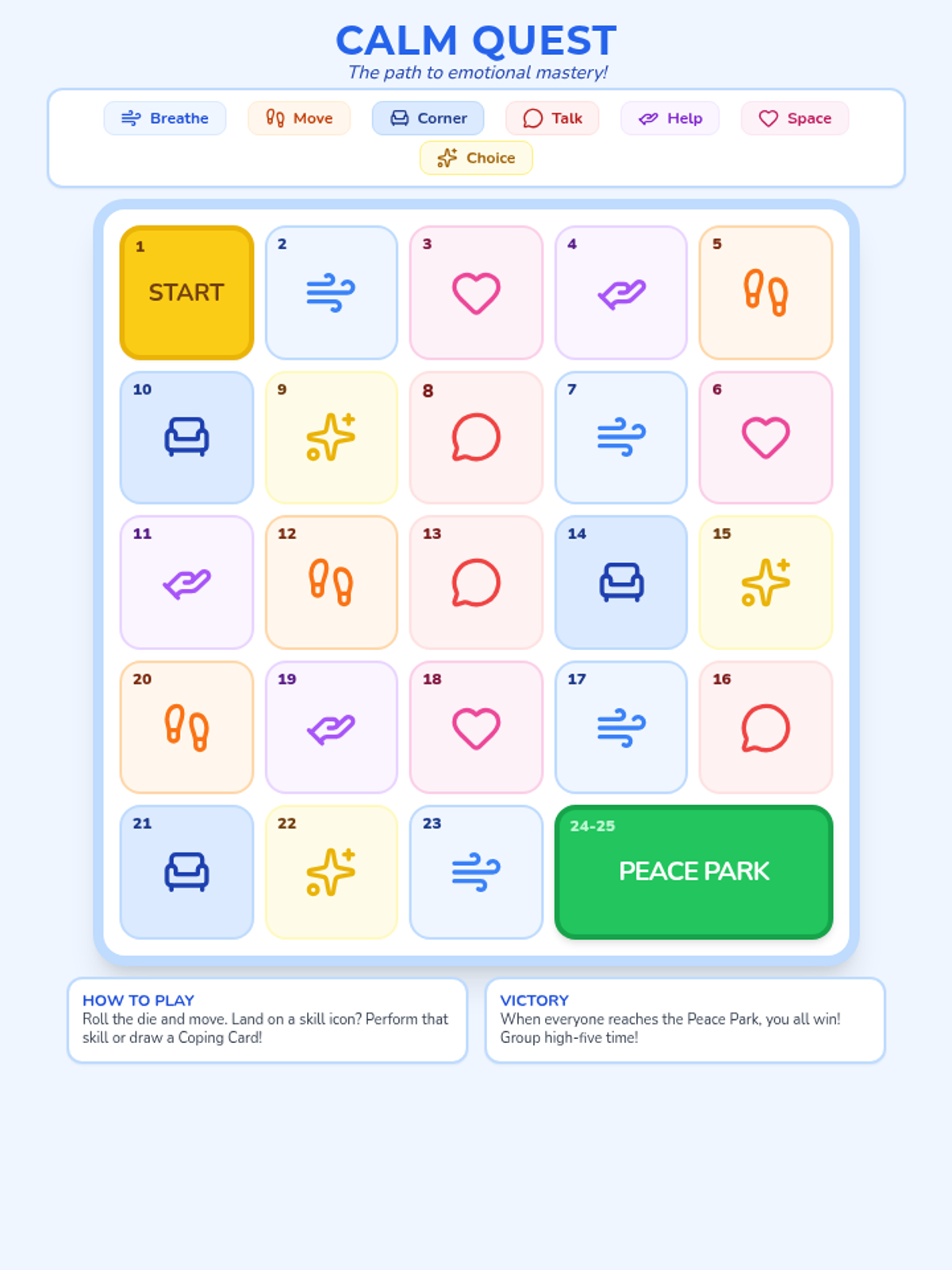
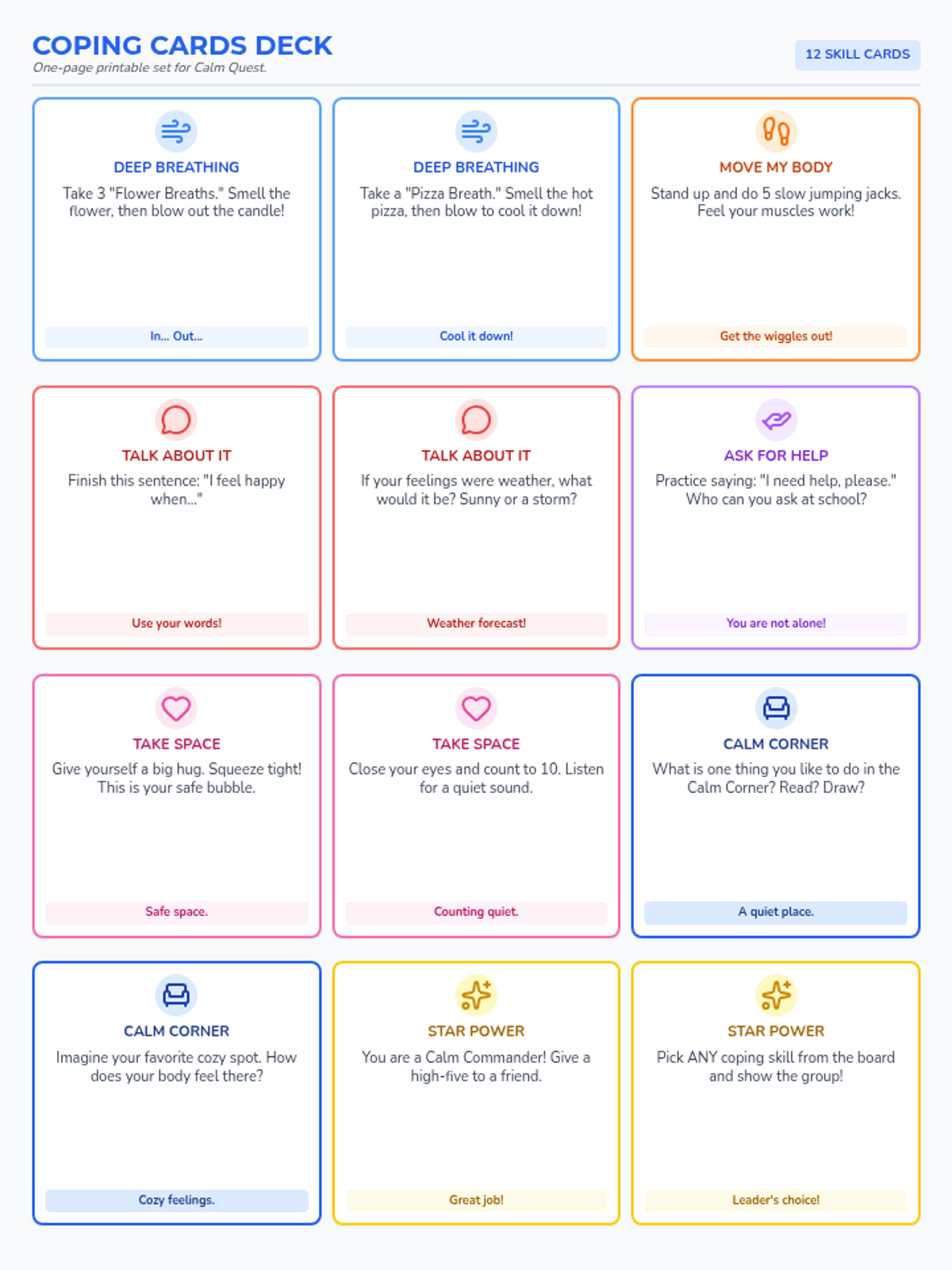
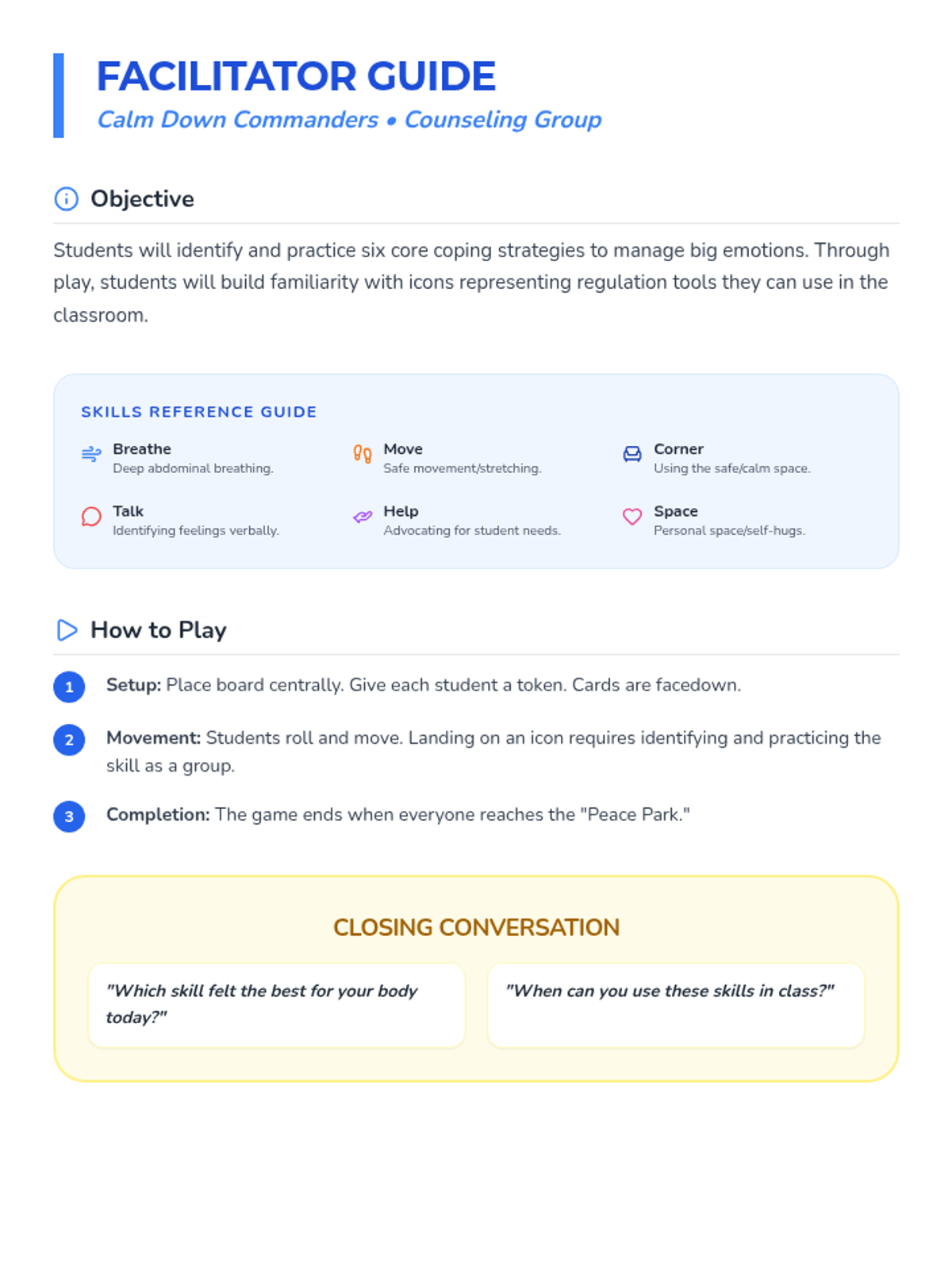
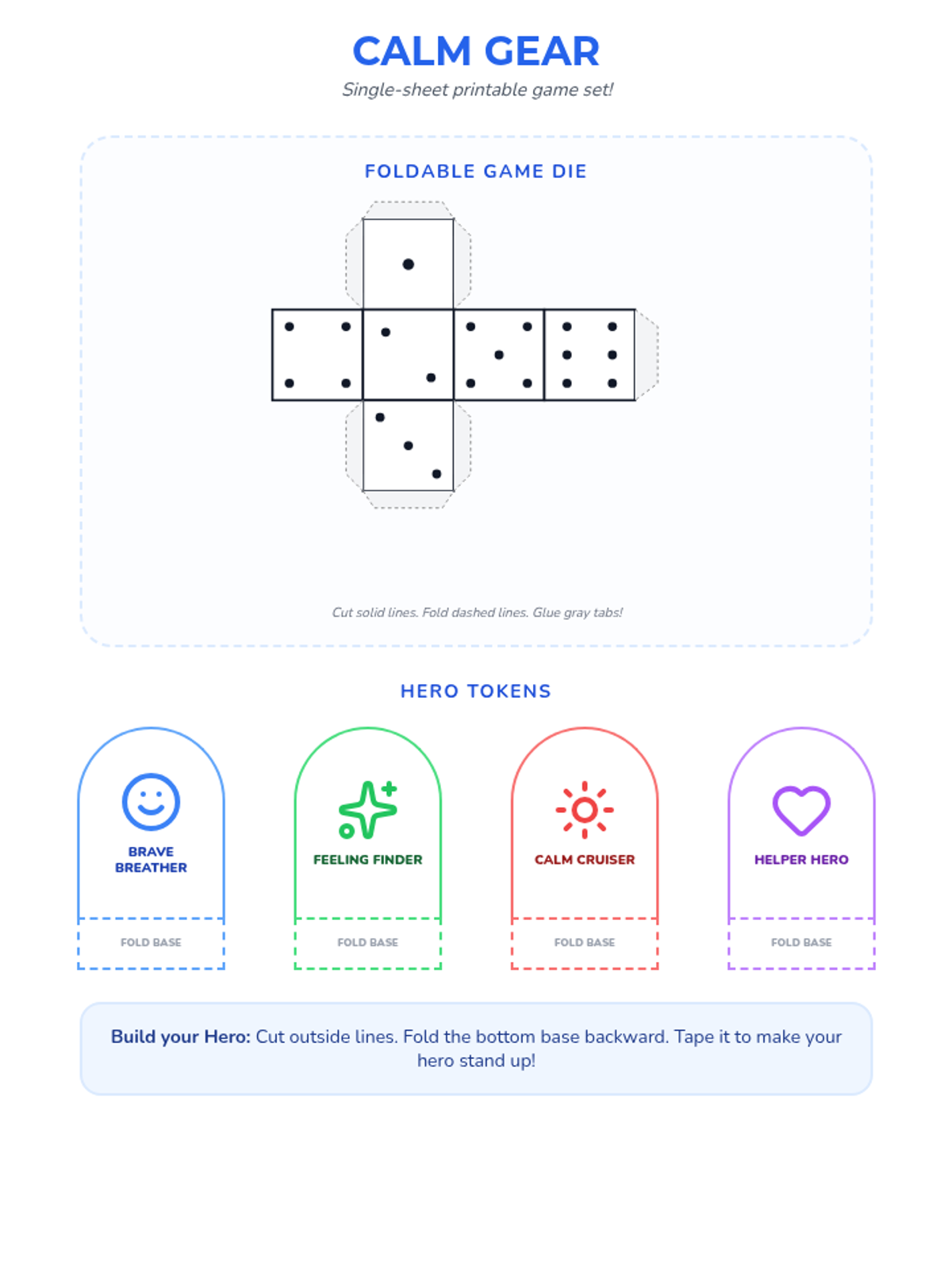
A small-group counseling lesson designed to teach Kindergarten and 1st-grade students proactive coping strategies through an interactive path board game. Students practice identifying and demonstrating various emotional regulation techniques in a supportive, play-based environment.
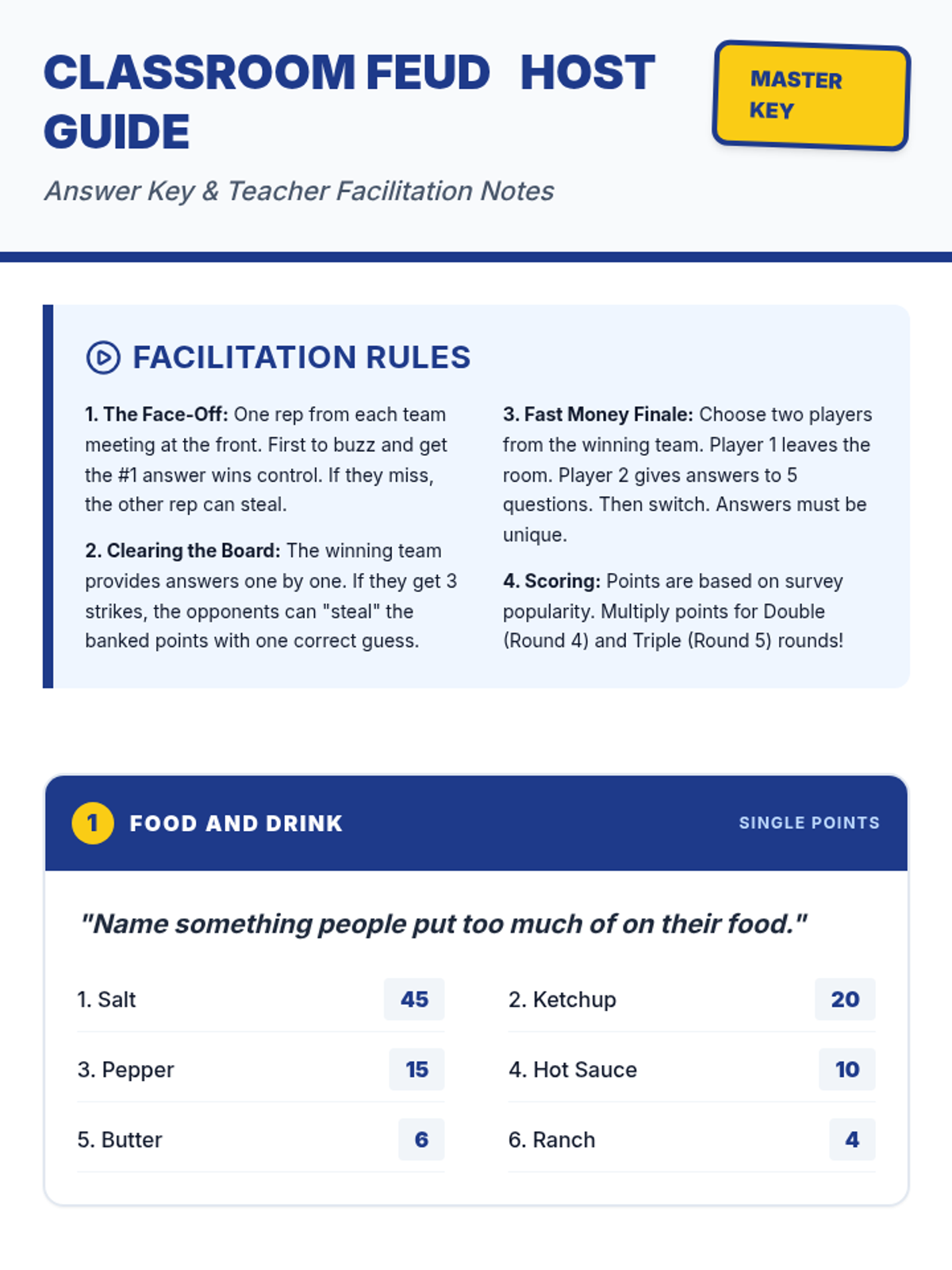
An interactive, game-show style lesson where students compete in teams to guess the most popular answers to various survey questions. This session promotes teamwork, quick thinking, and social engagement through diverse categories ranging from food to pop culture.
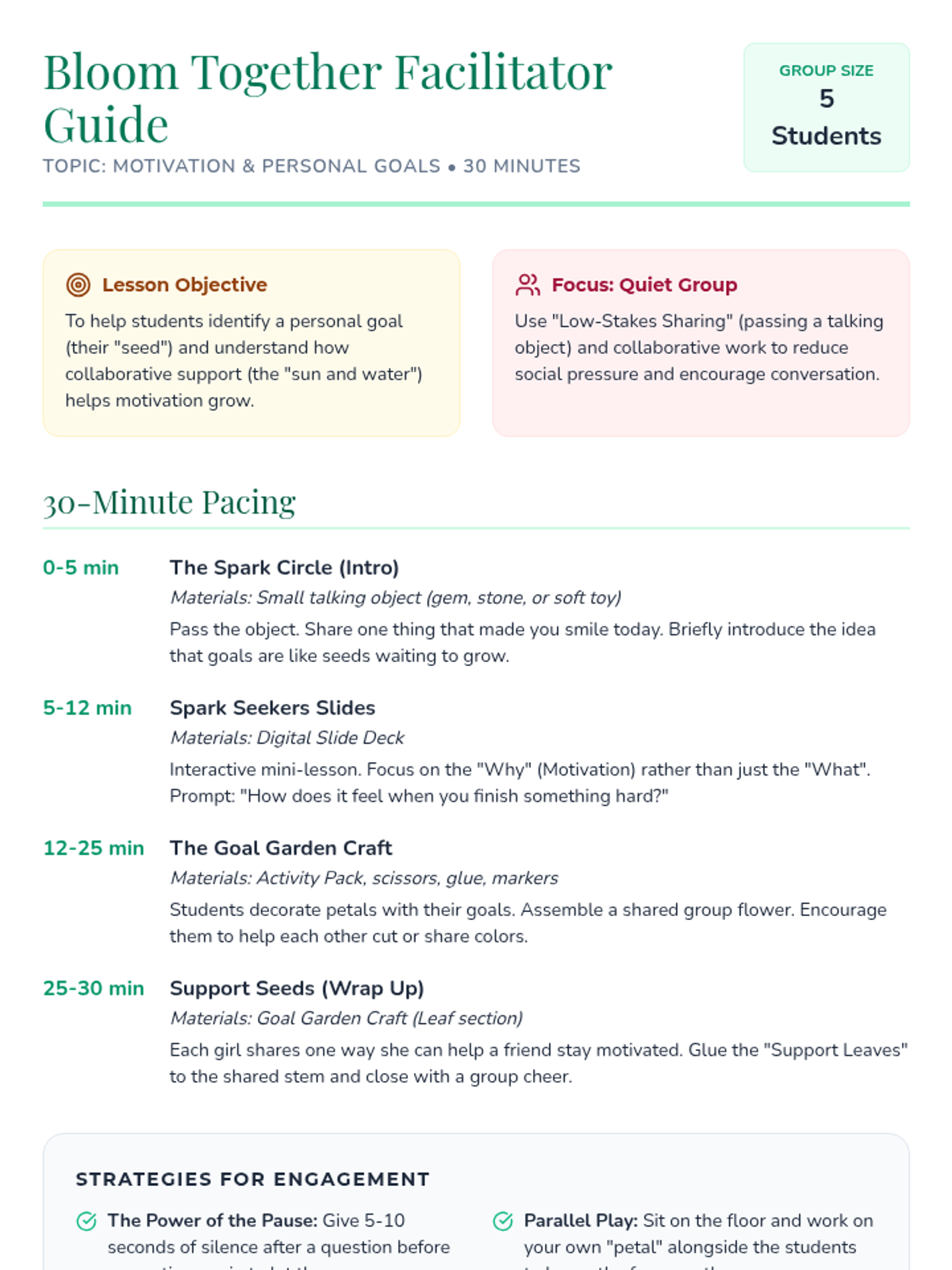
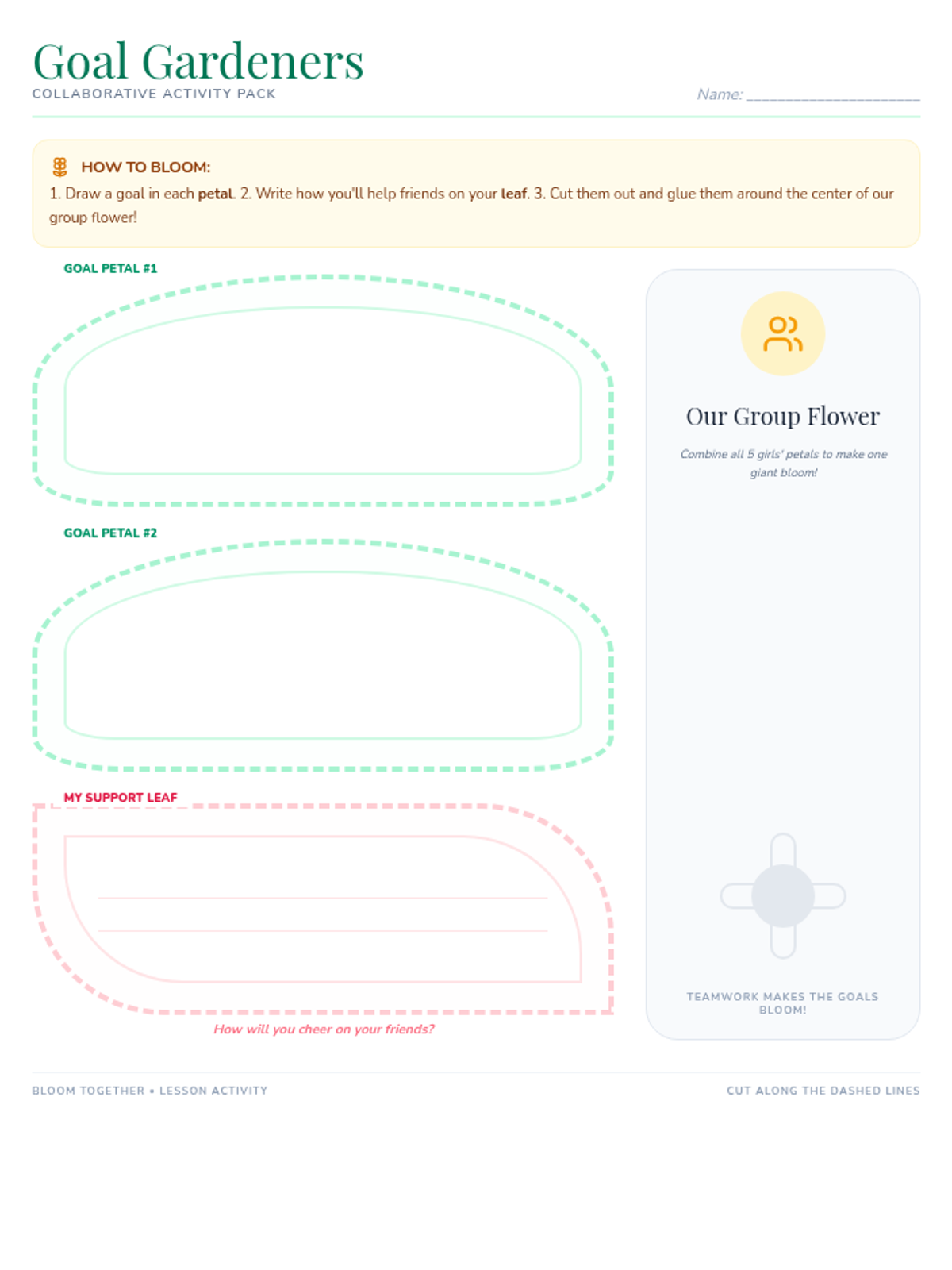
A social skills lesson designed for a small group of quiet 3rd-grade girls to explore personal goals and mutual support through a garden-themed collaborative activity.
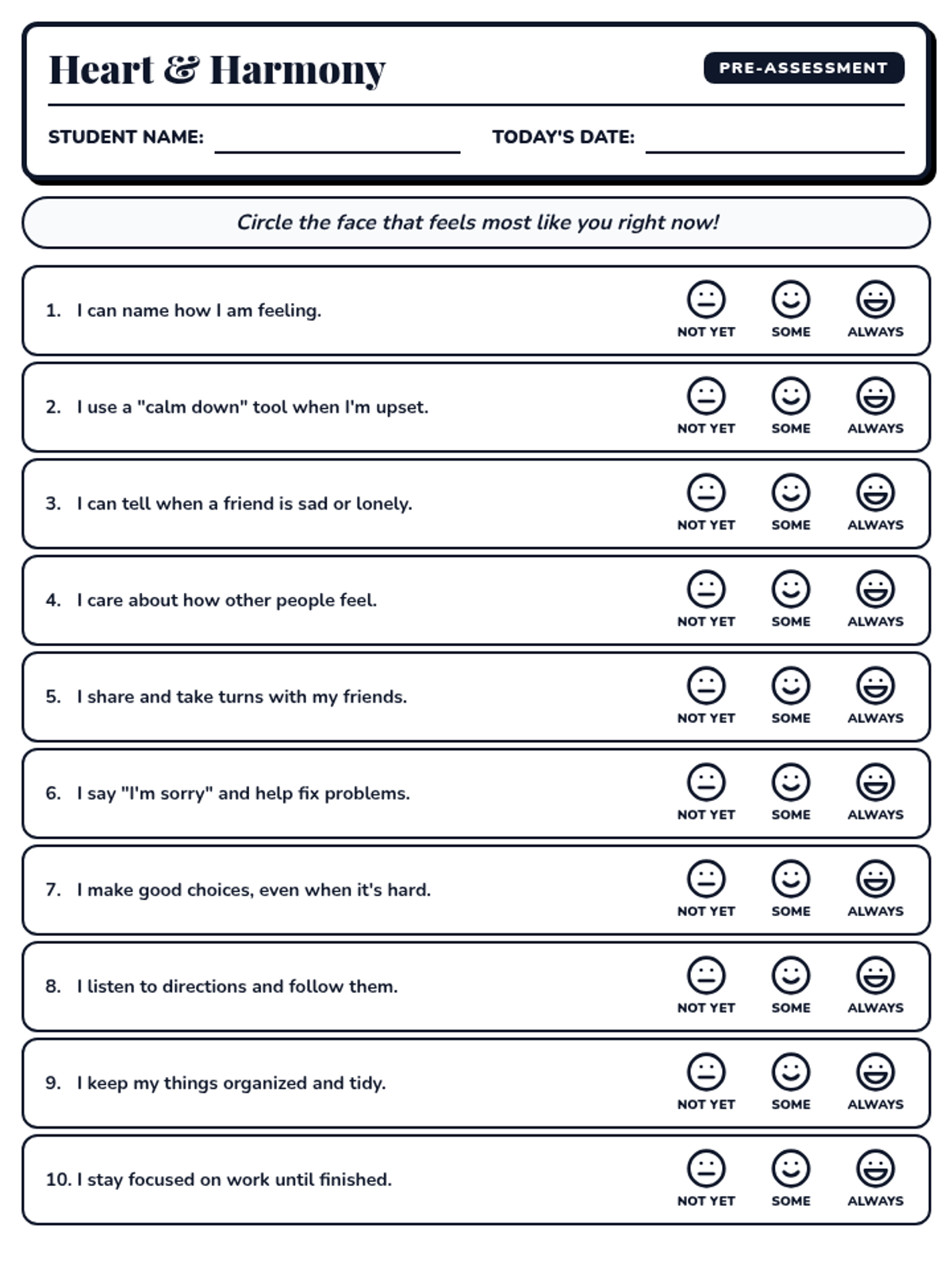
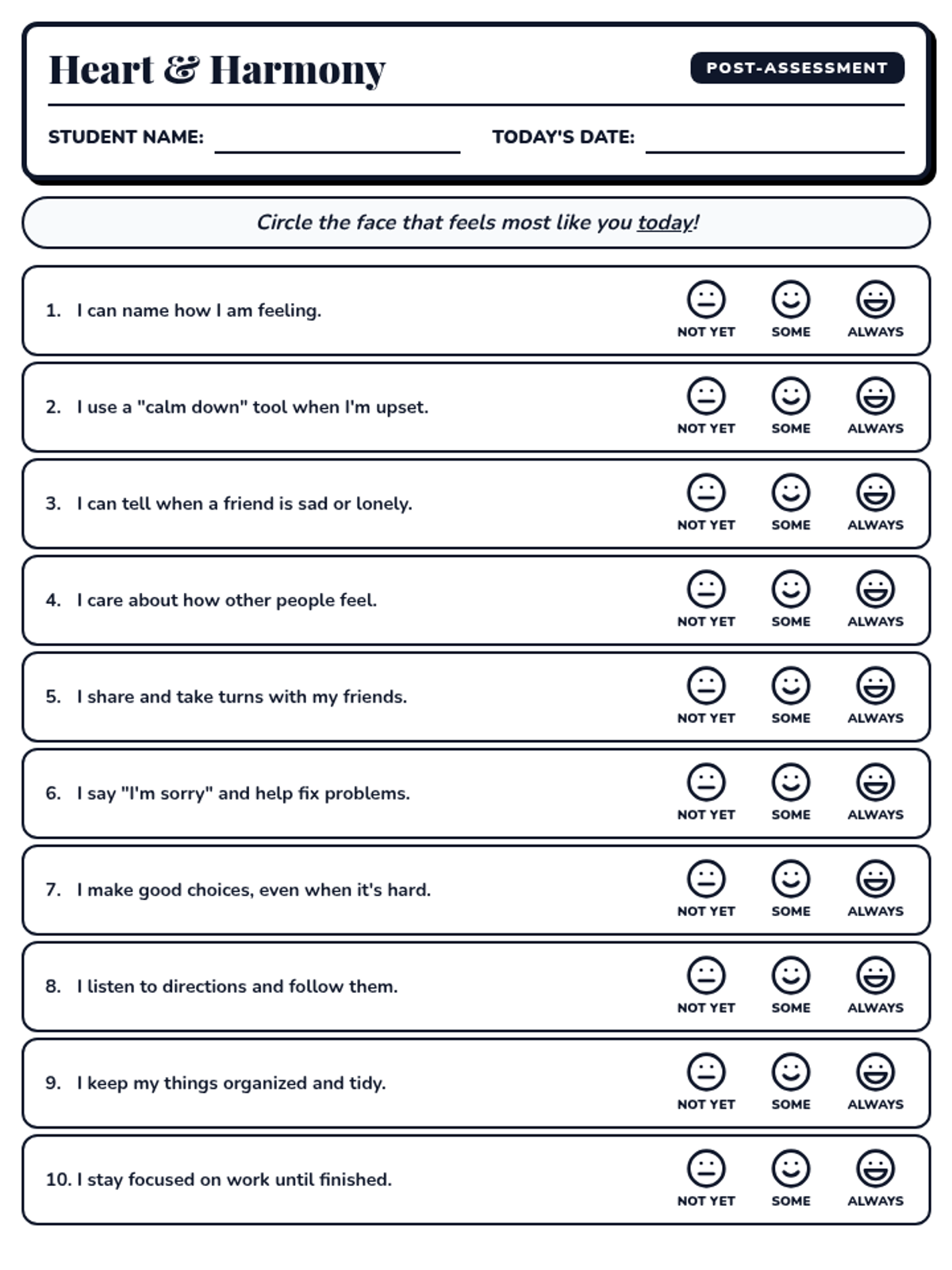
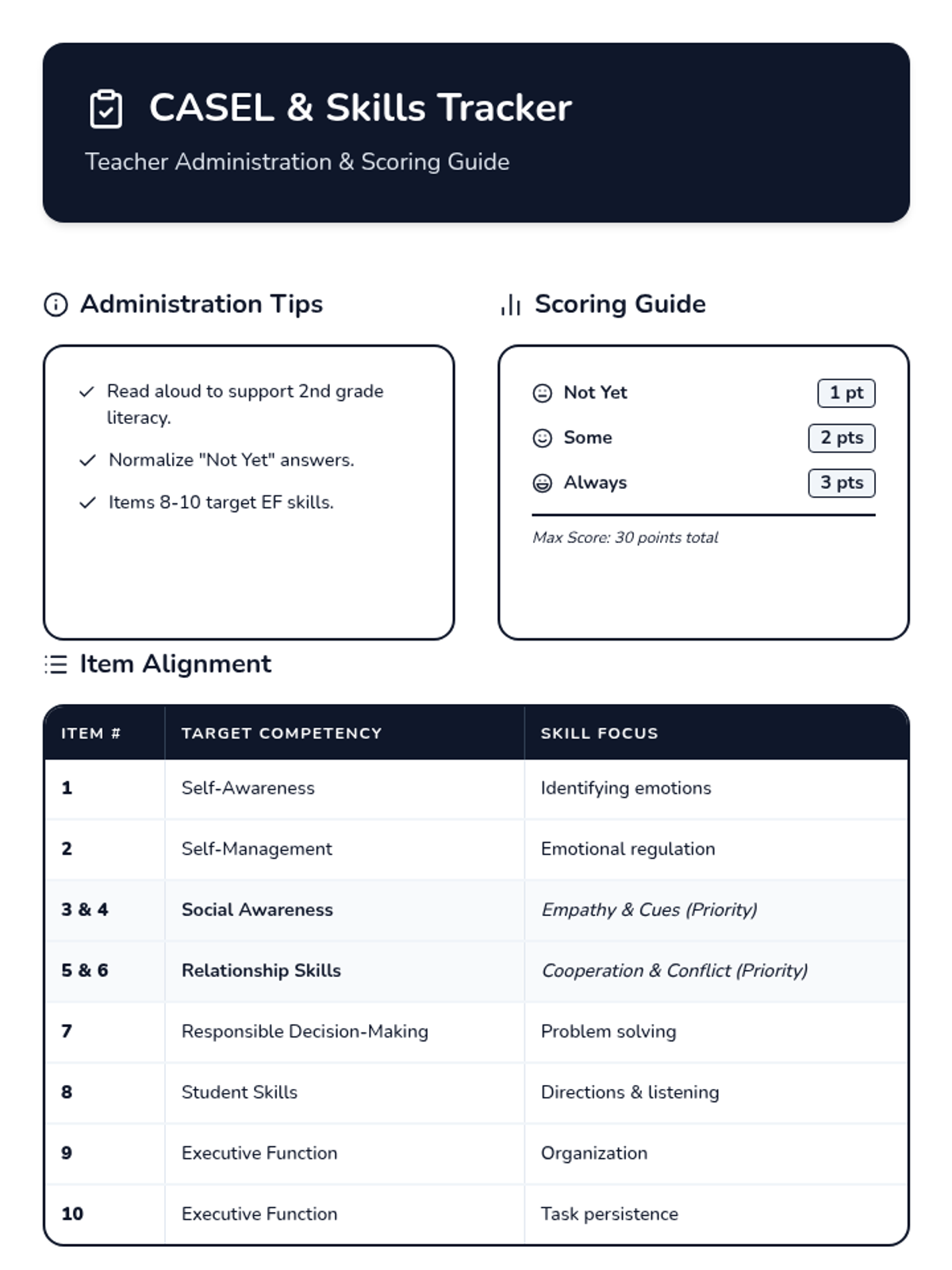
A collection of assessment tools designed for a 2nd-grade girls' SEL group, focusing on CASEL competencies with an emphasis on social awareness and relationship skills.
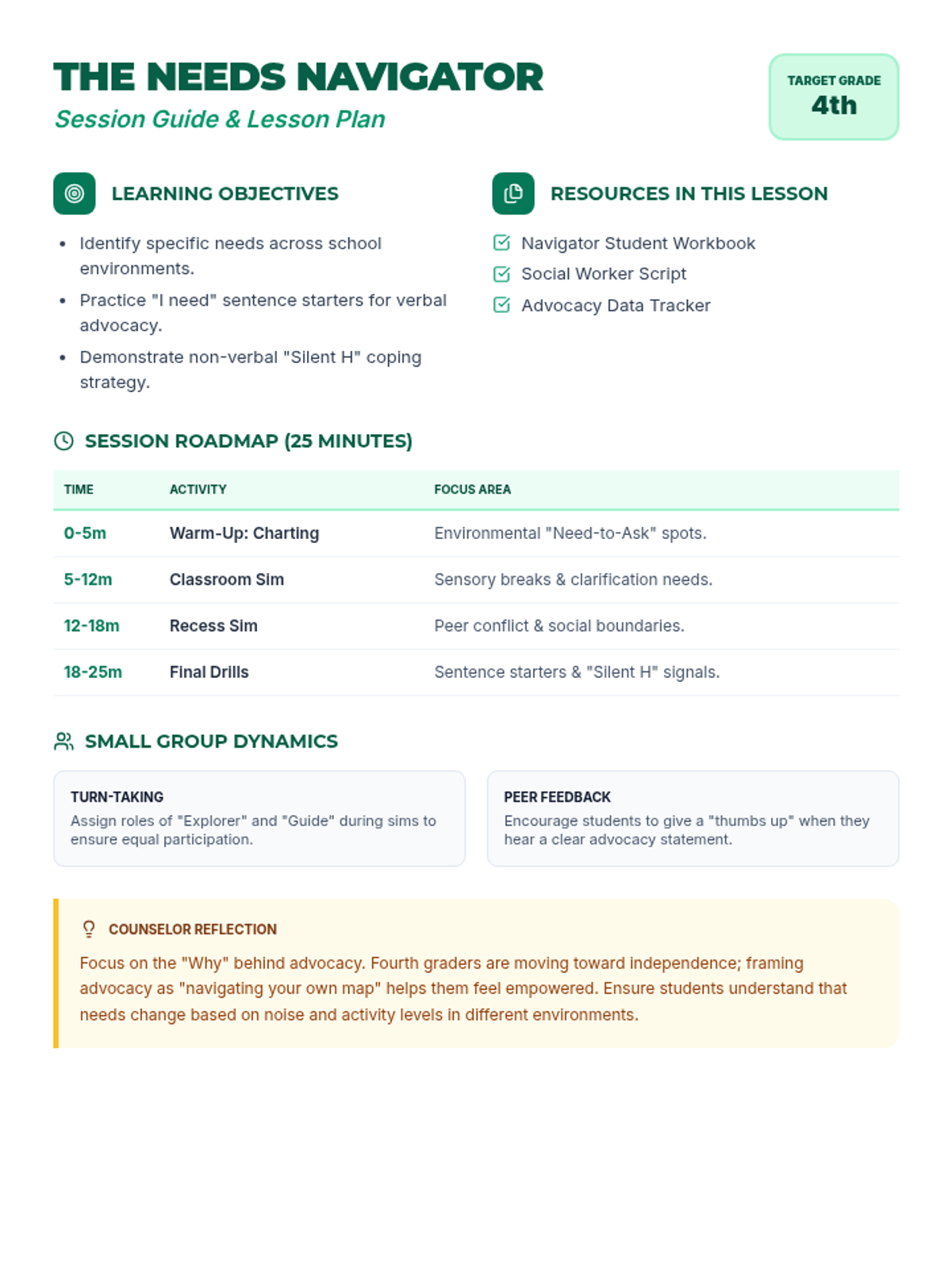
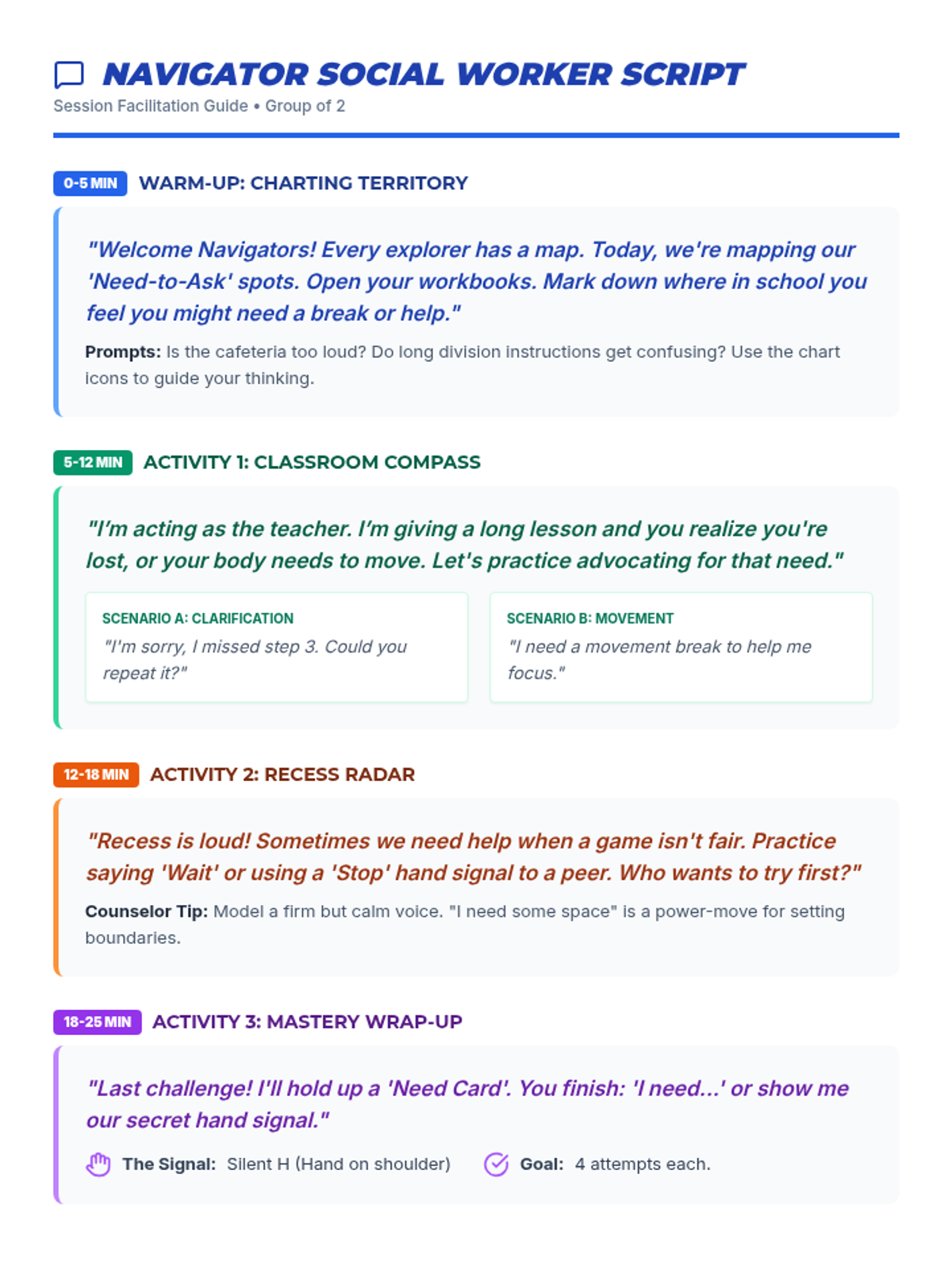
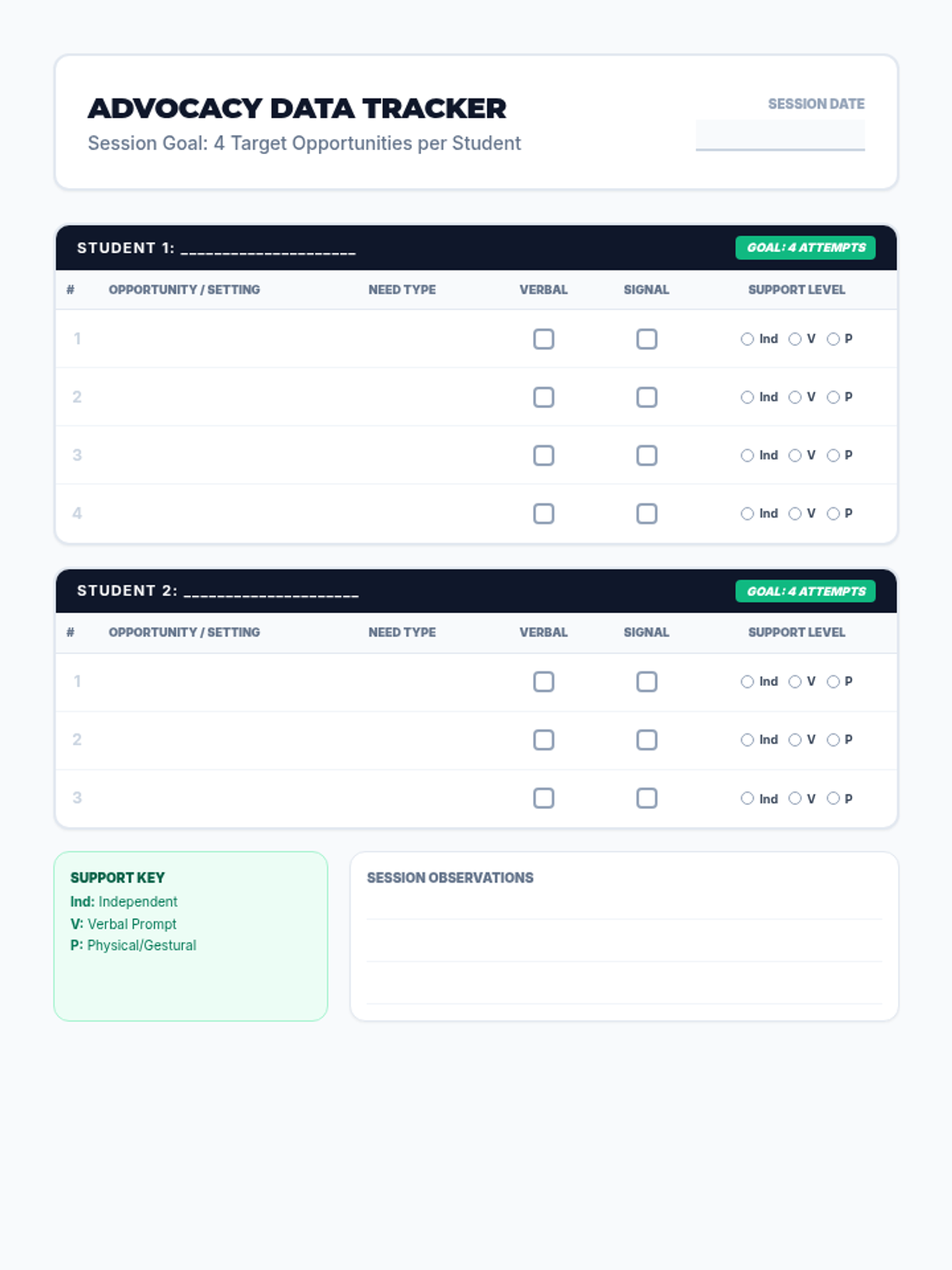
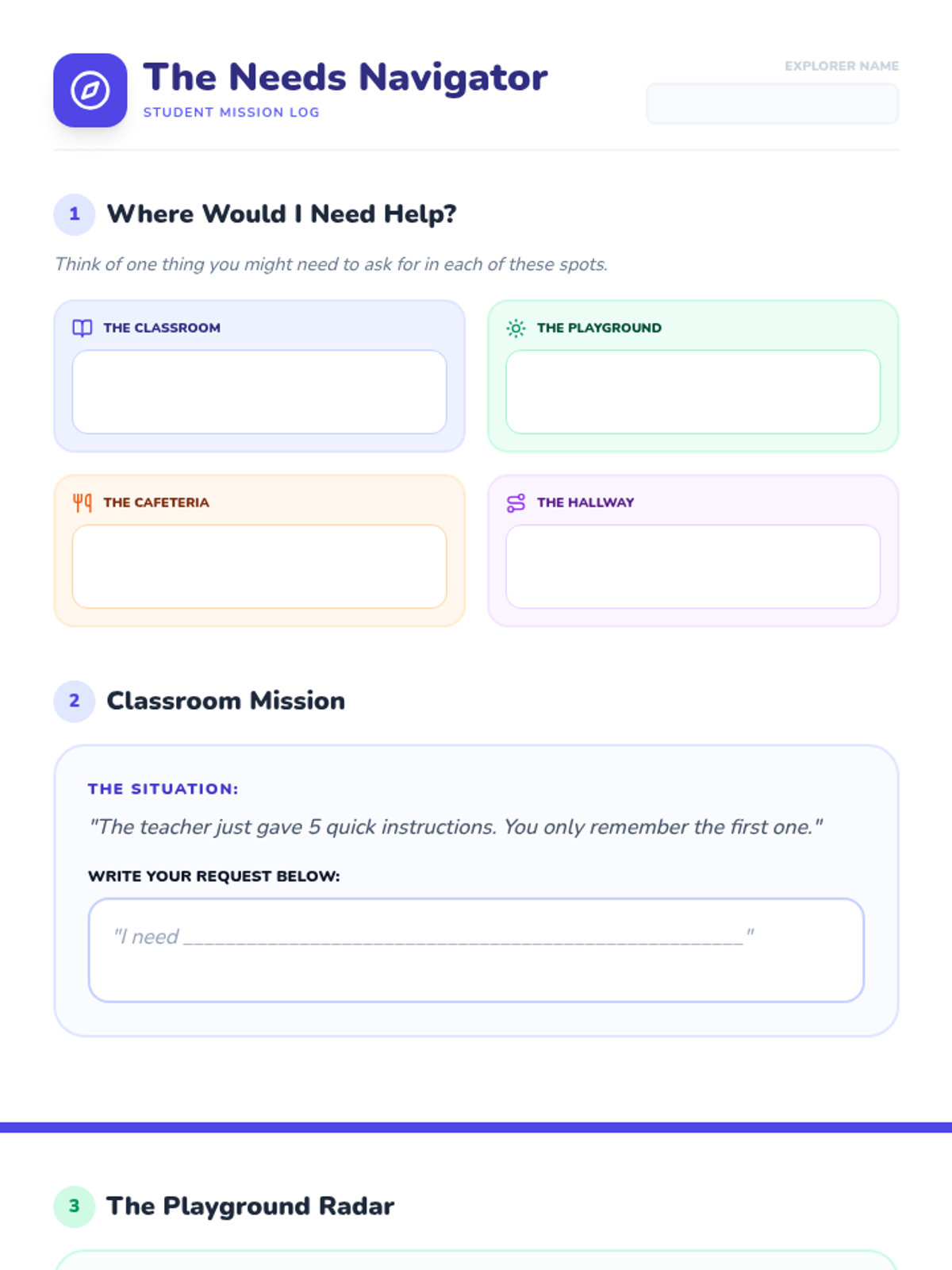
A comprehensive 4th-grade group session focused on self-advocacy skills, teaching students to identify and communicate their sensory, academic, and social needs across different environments using verbal and non-verbal strategies.
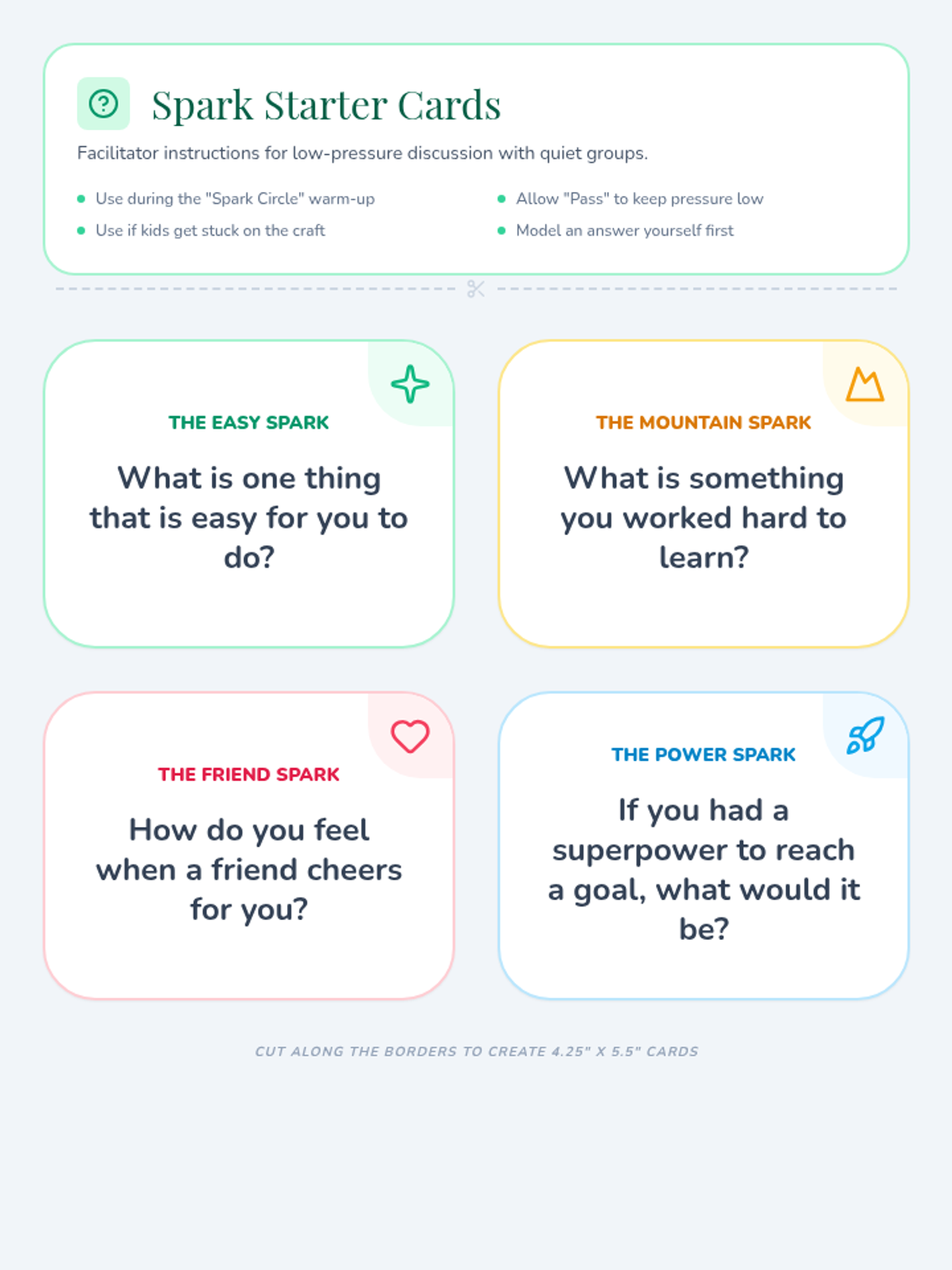
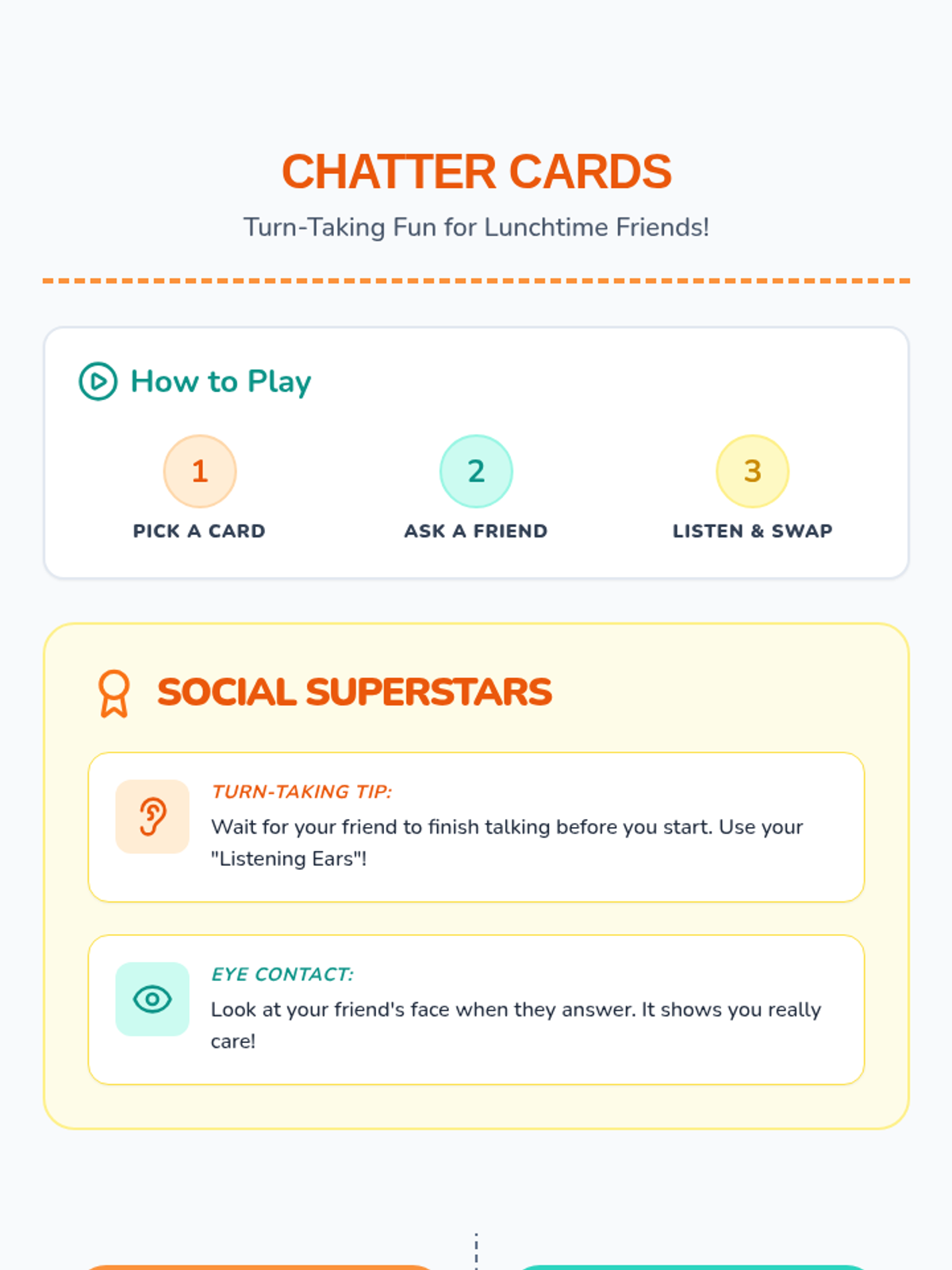
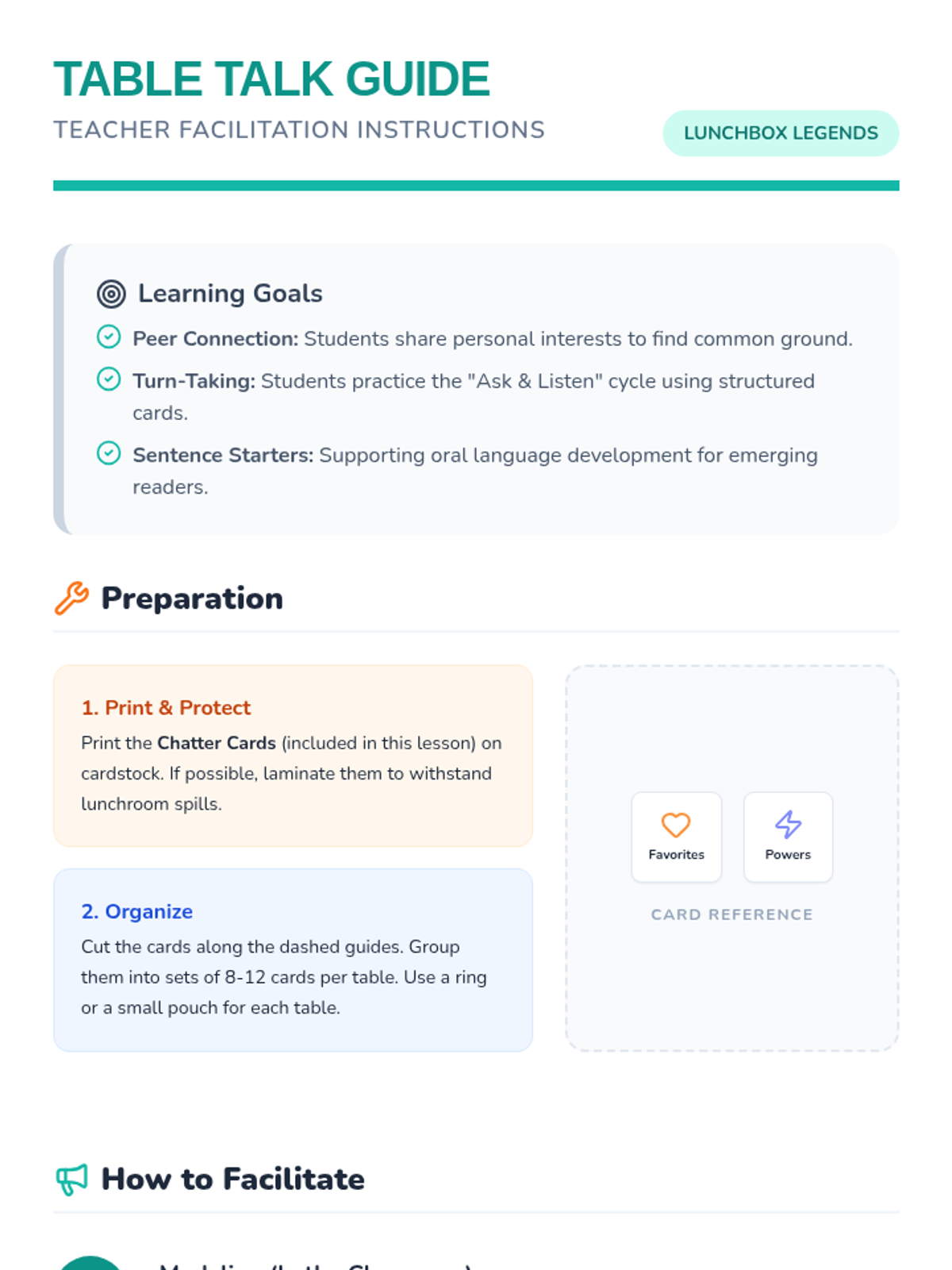
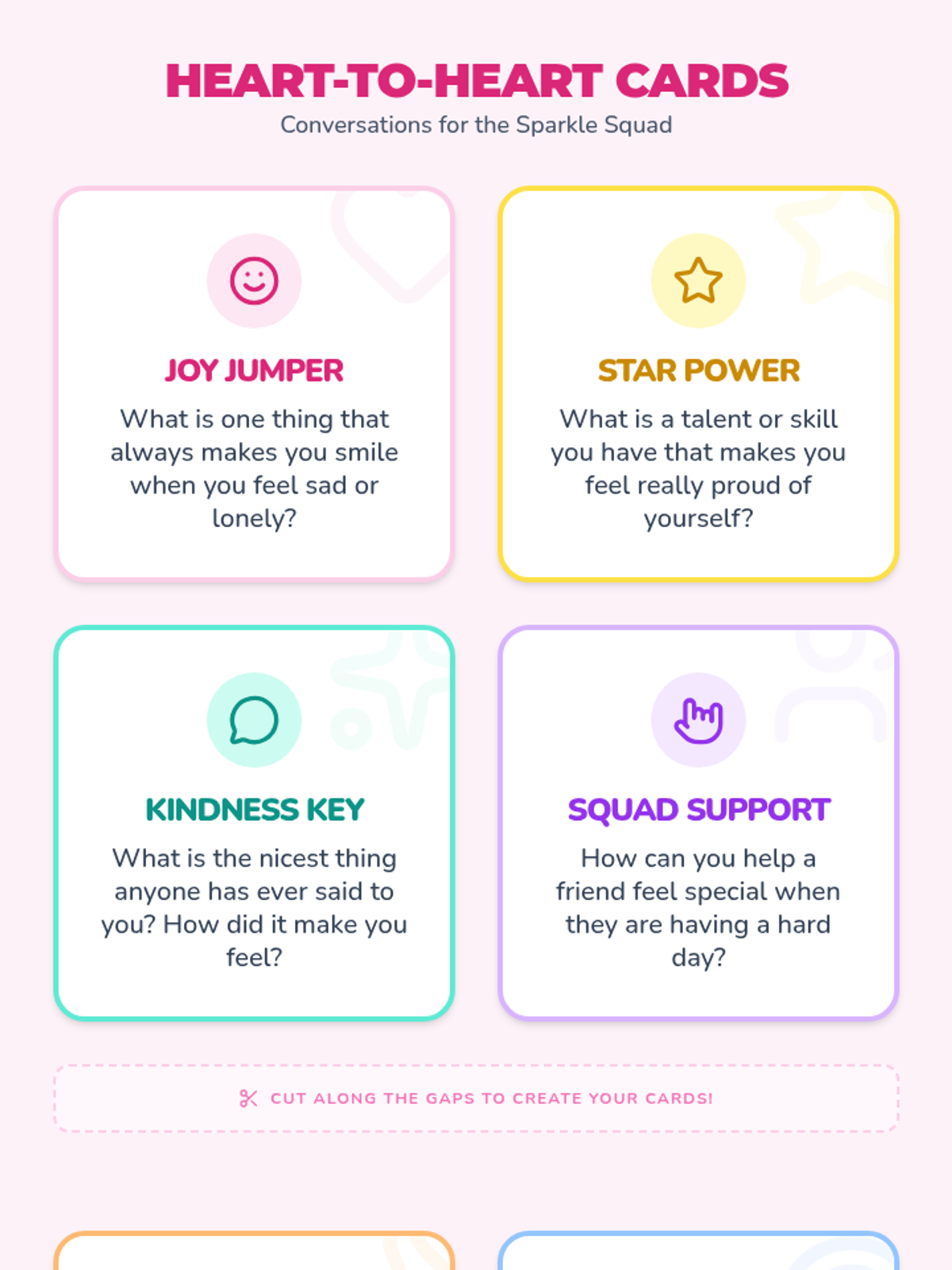
A collection of interactive conversation cards and teacher guidance designed to help first graders build peer connections and practice turn-taking during lunch.
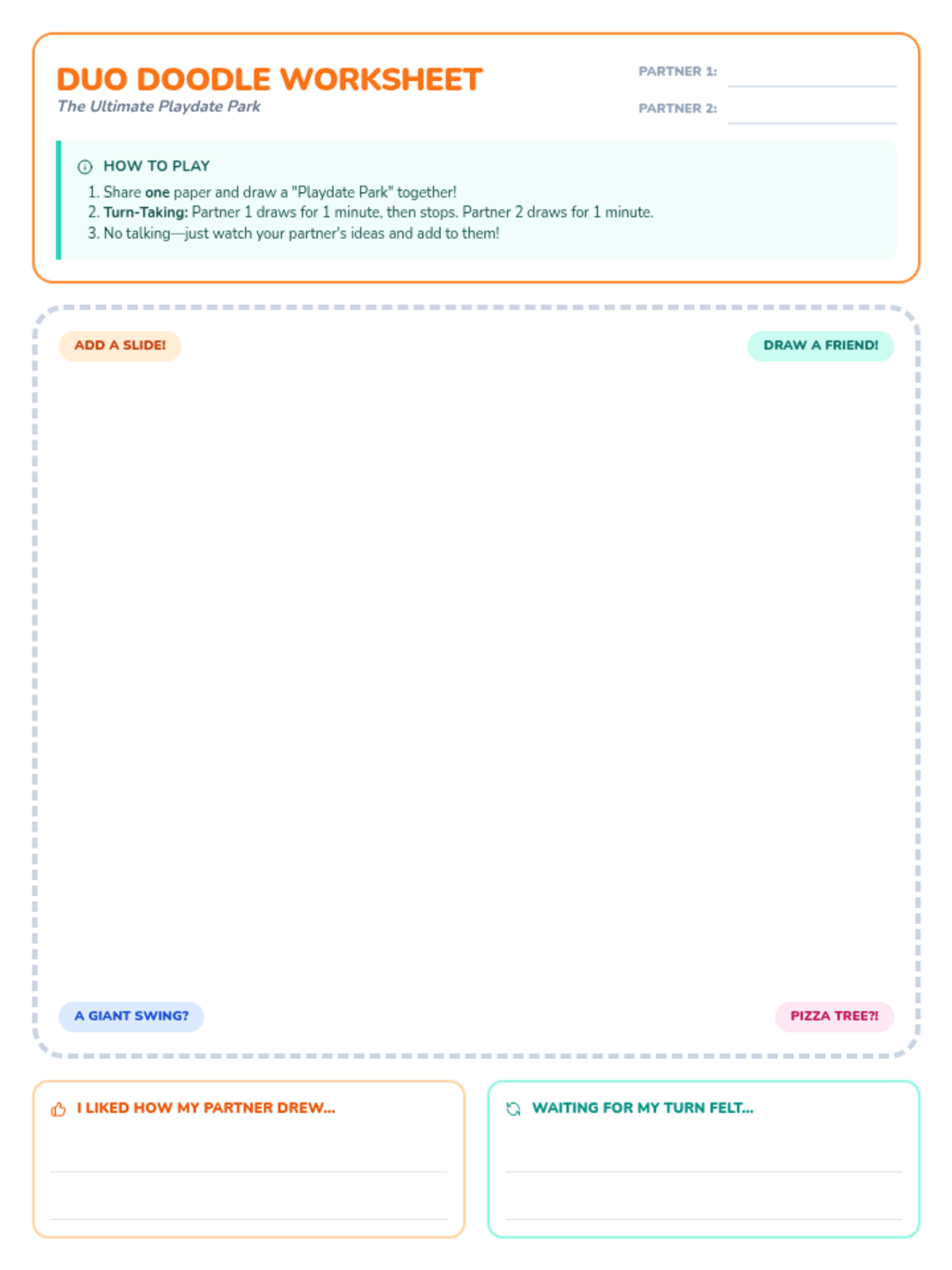
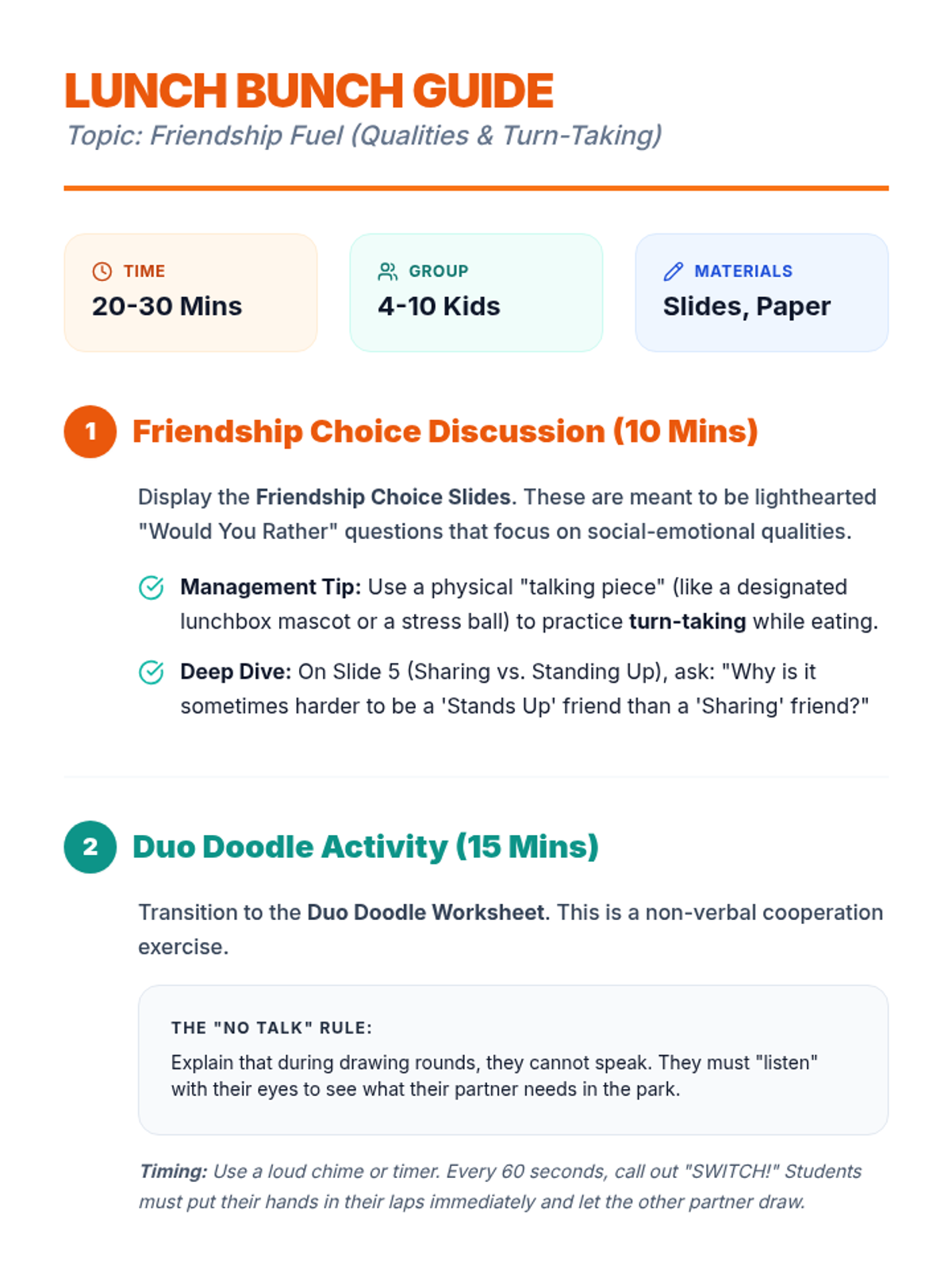
A quick, engaging lunch bunch session focused on identifying friendship qualities and practicing turn-taking through a 'Would You Rather' discussion and a collaborative drawing activity.
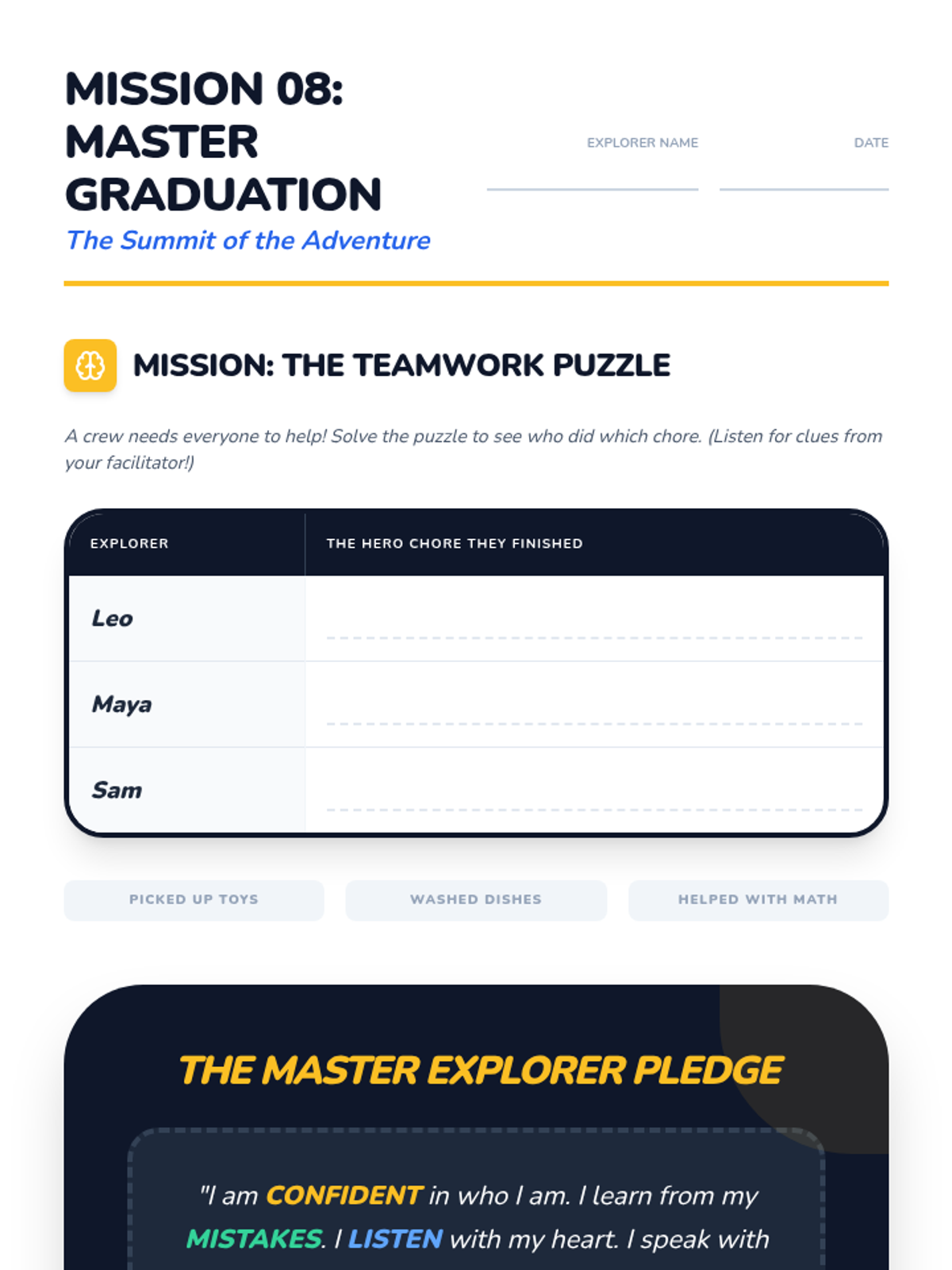
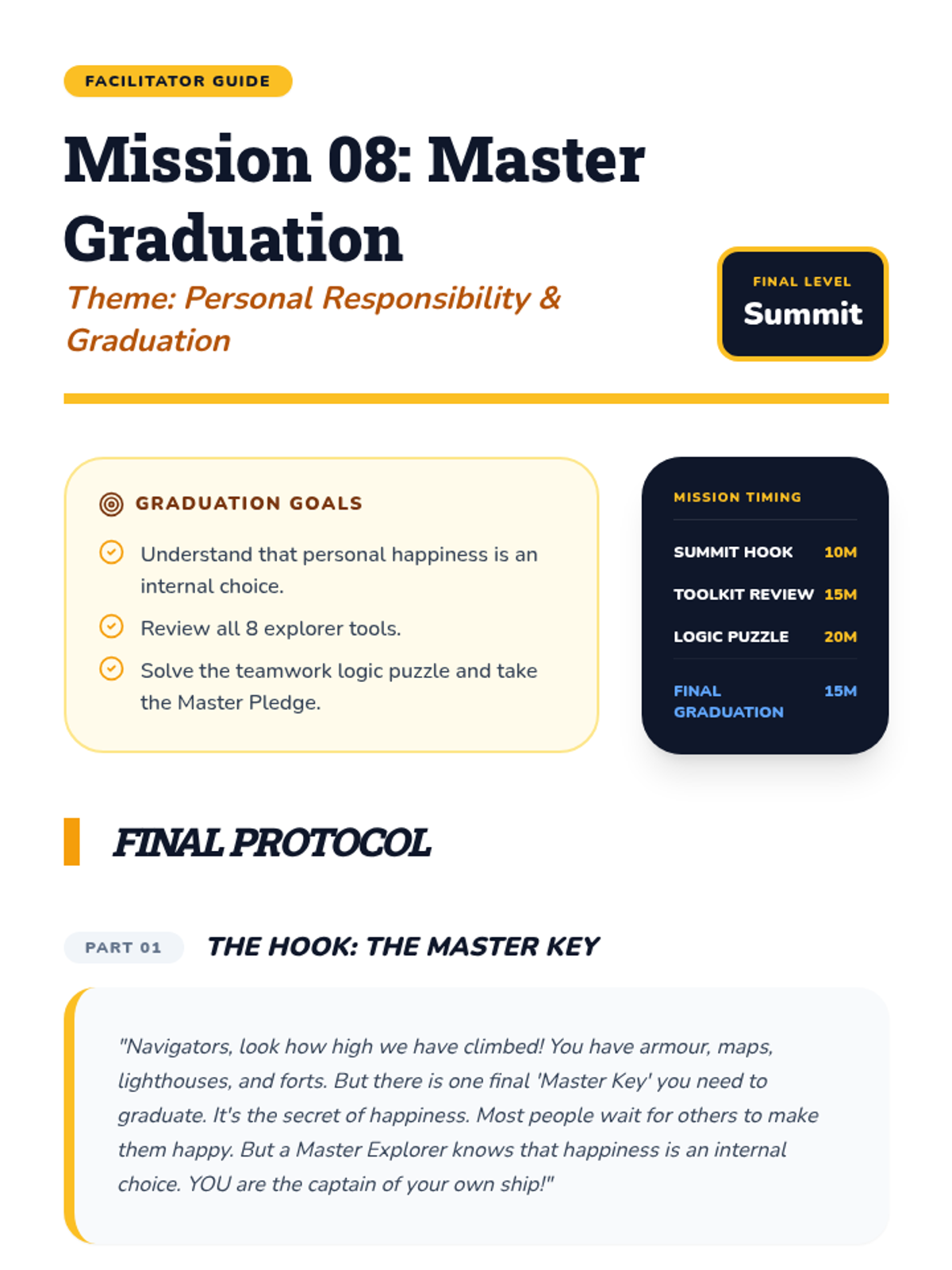
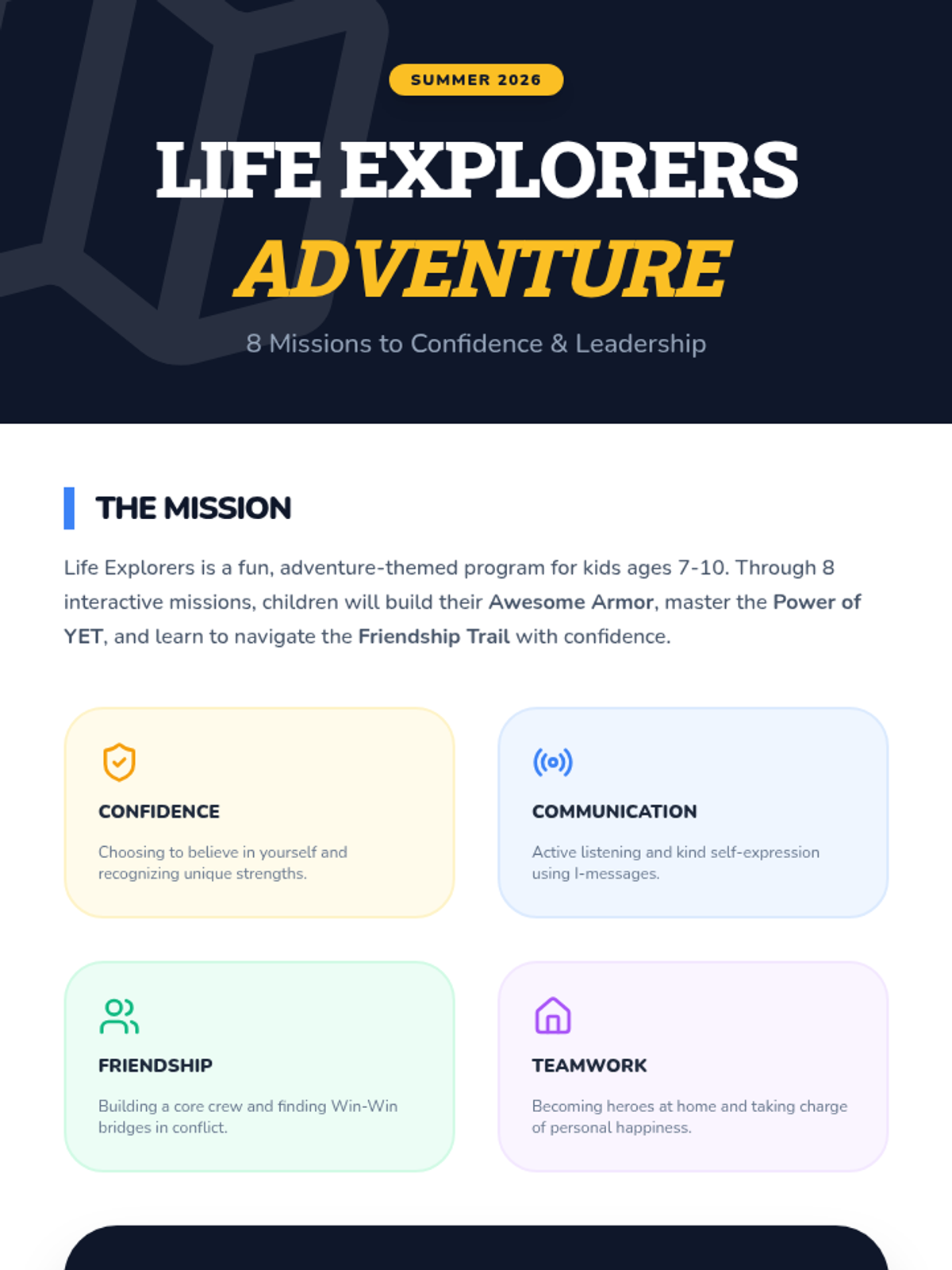
The final mission. Focuses on taking responsibility for your own happiness and graduates students as Master Explorers.
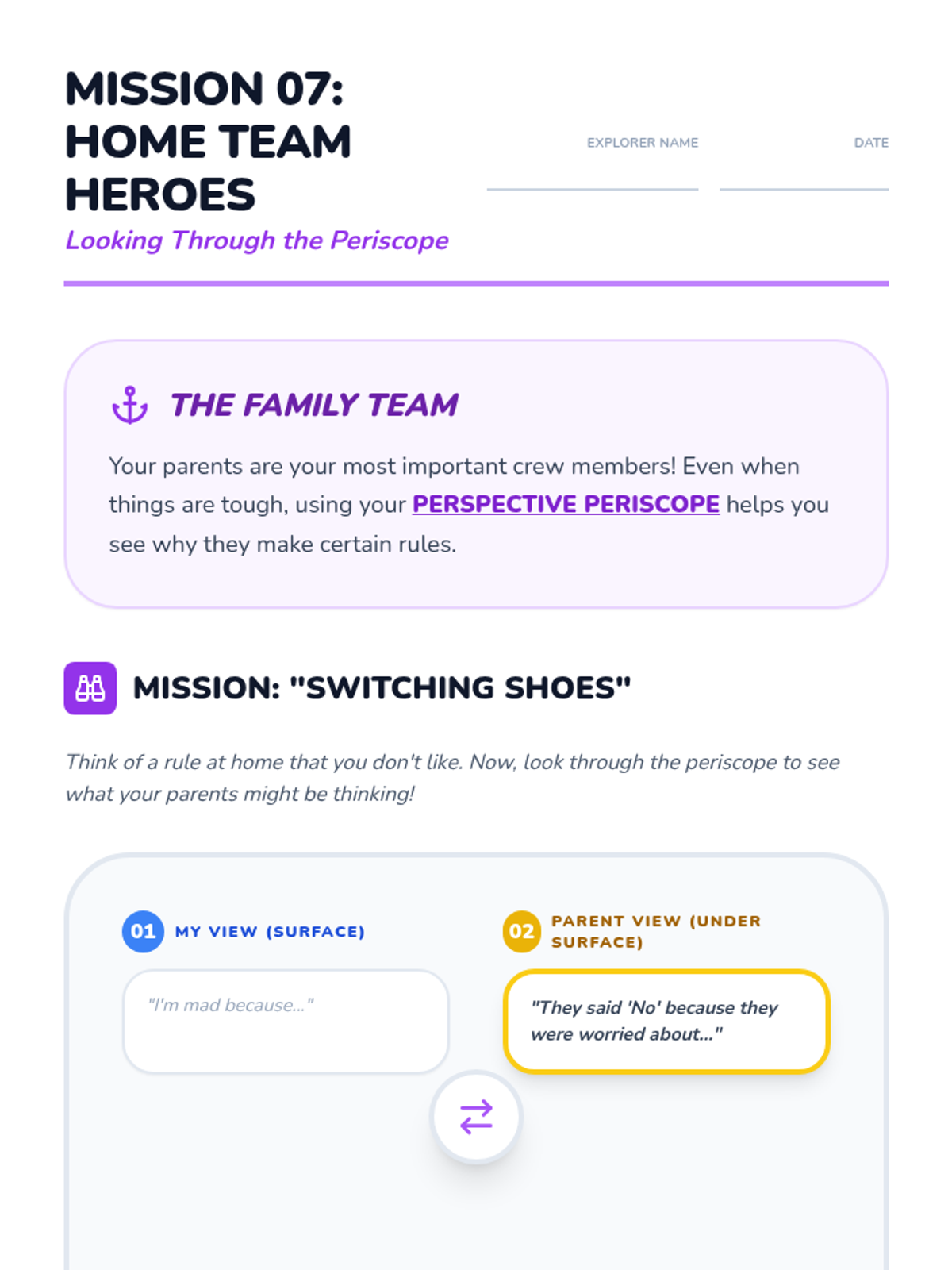
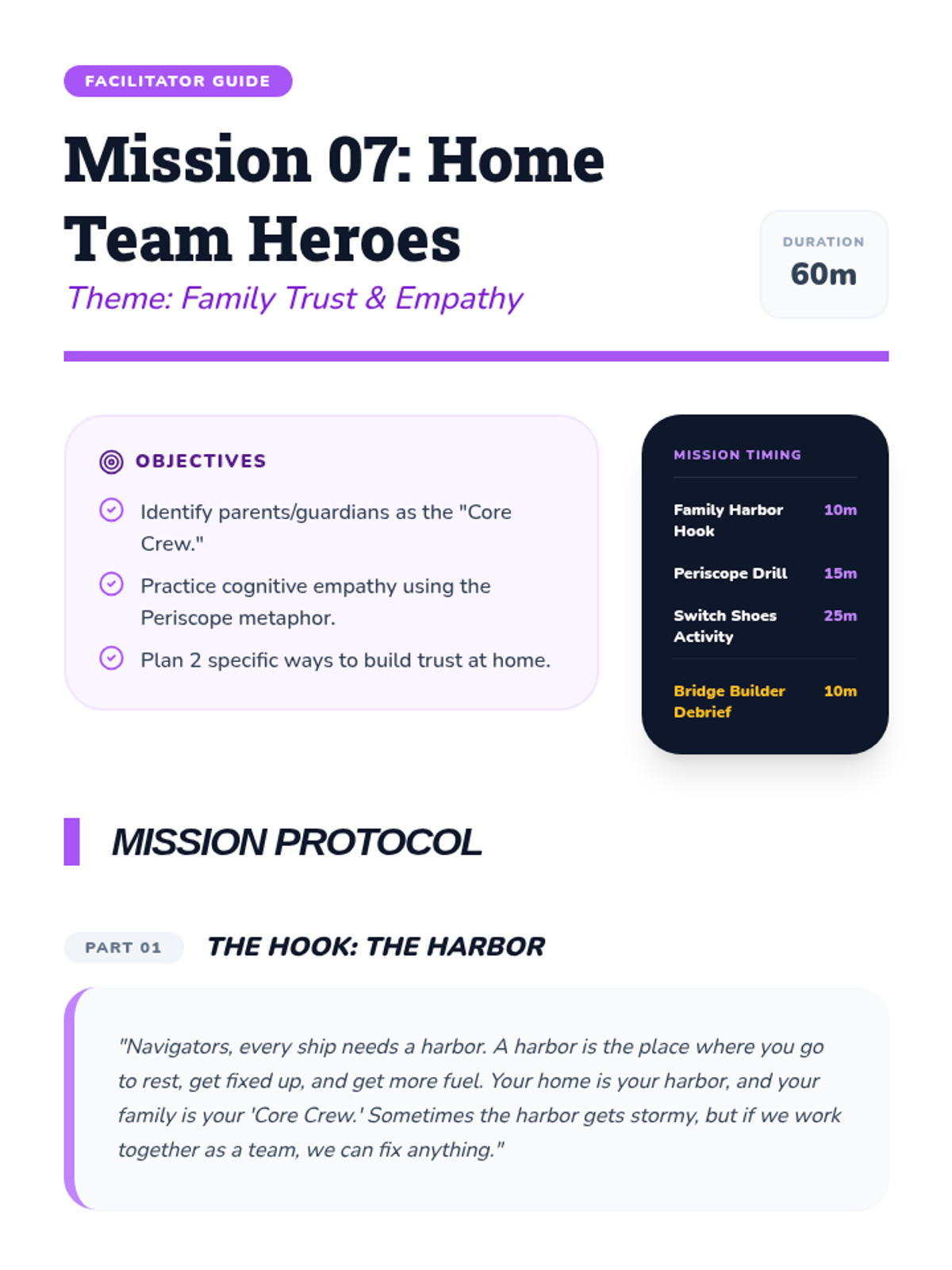
Helps kids see things from a parent's view. Introduces the 'Family Team' and how to build trust at home.
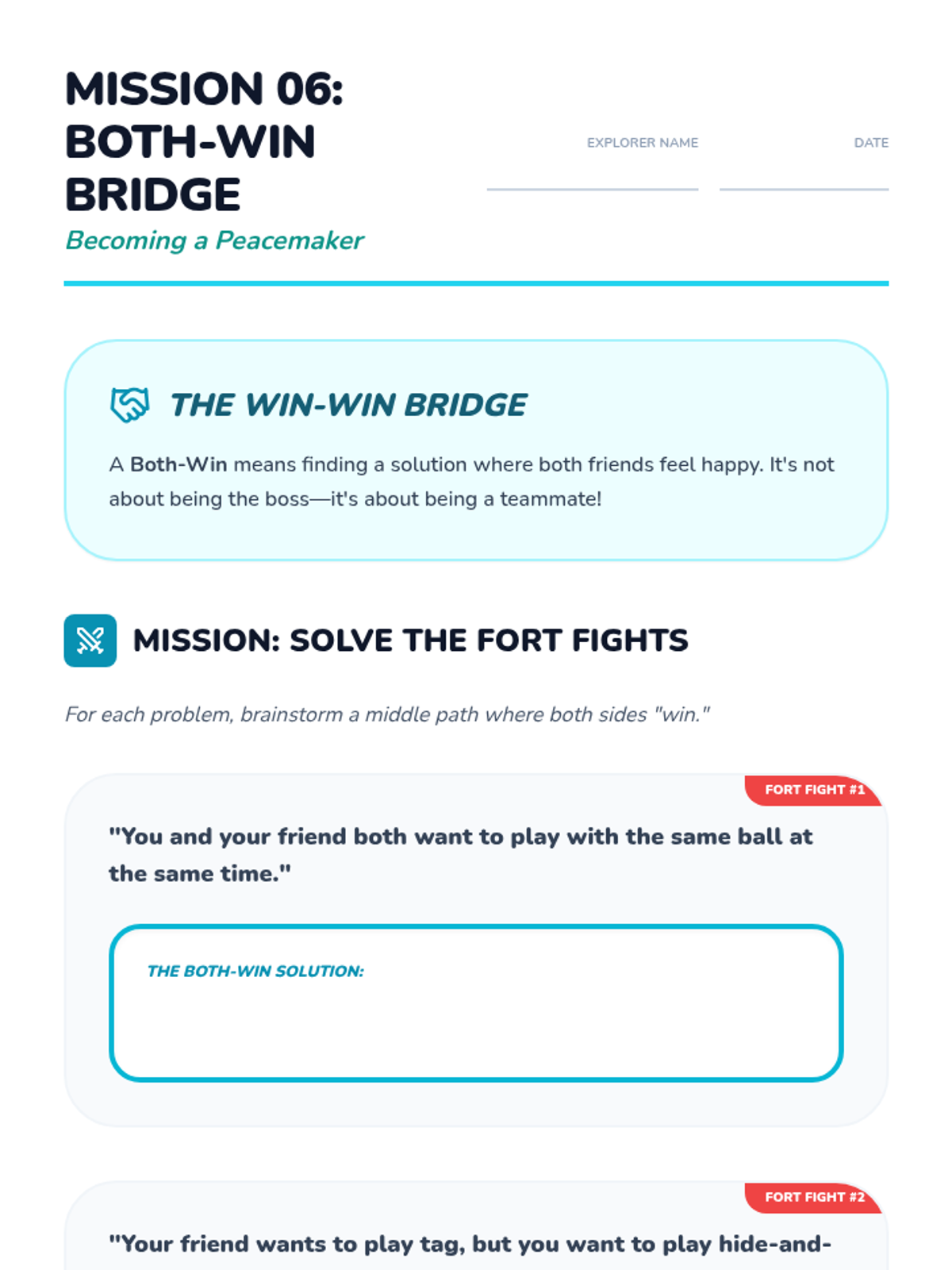
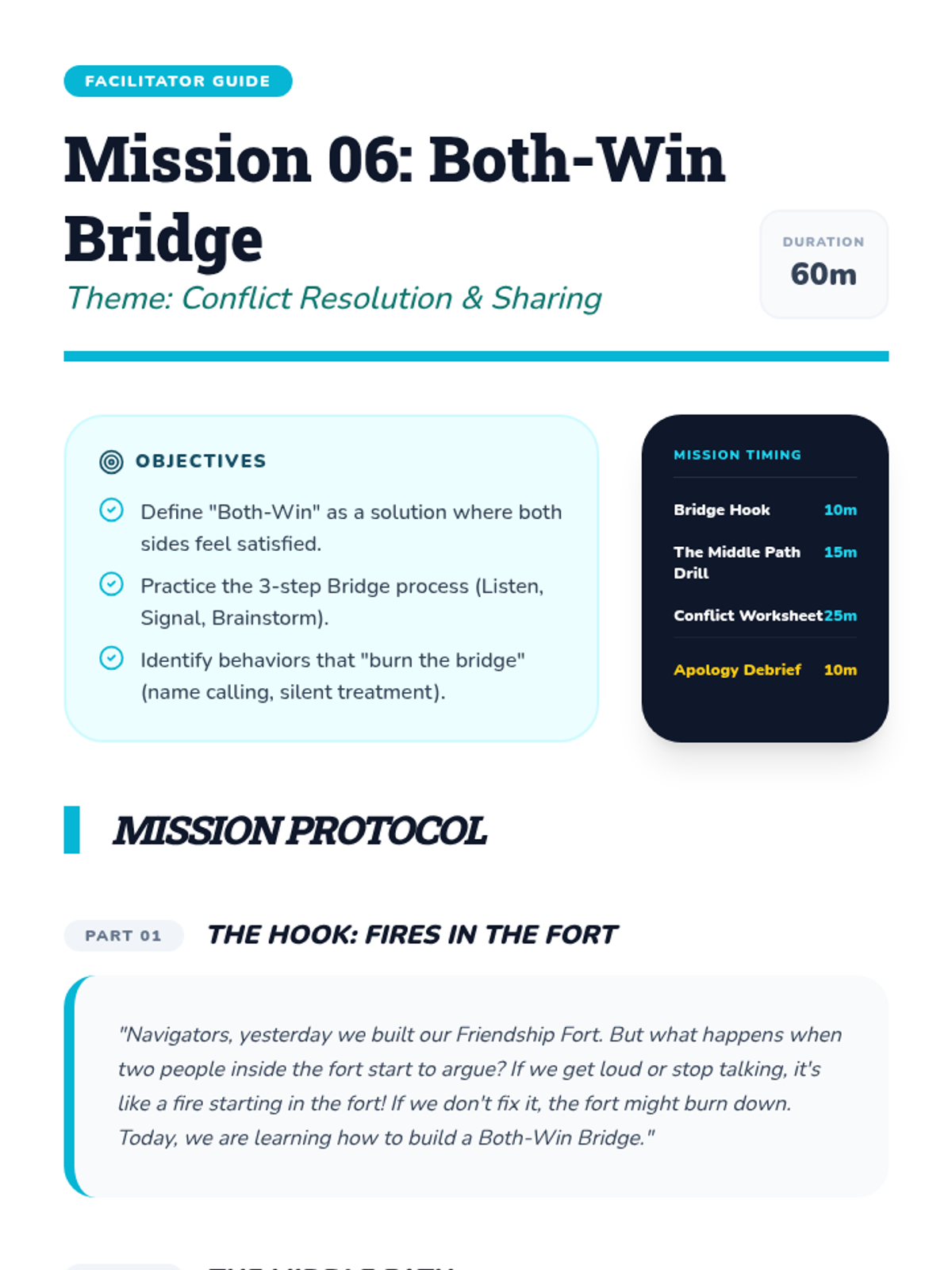
Teaches how to find a 'Both-Win' solution during a fight. Focuses on sharing and being a peacemaker.
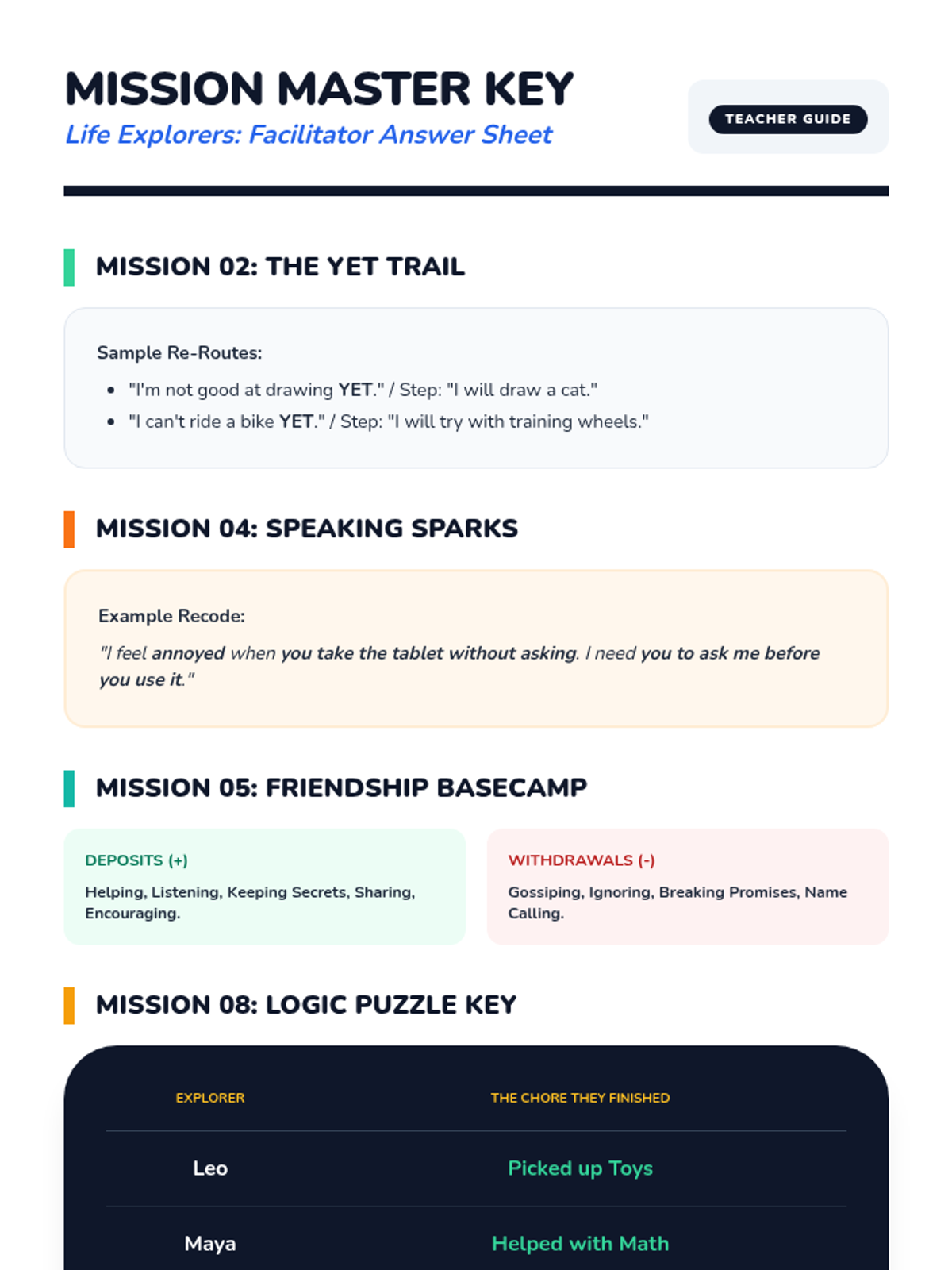
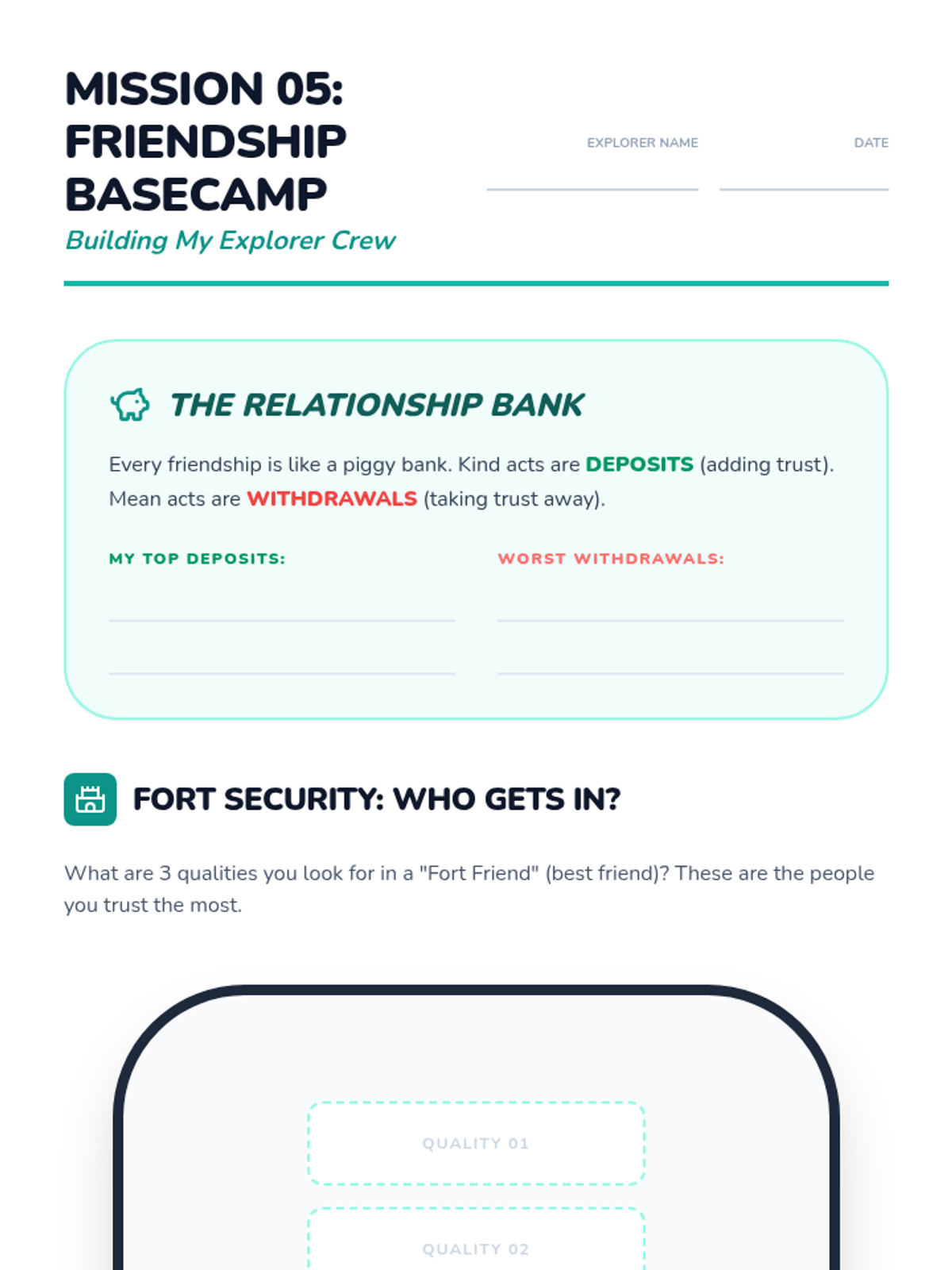
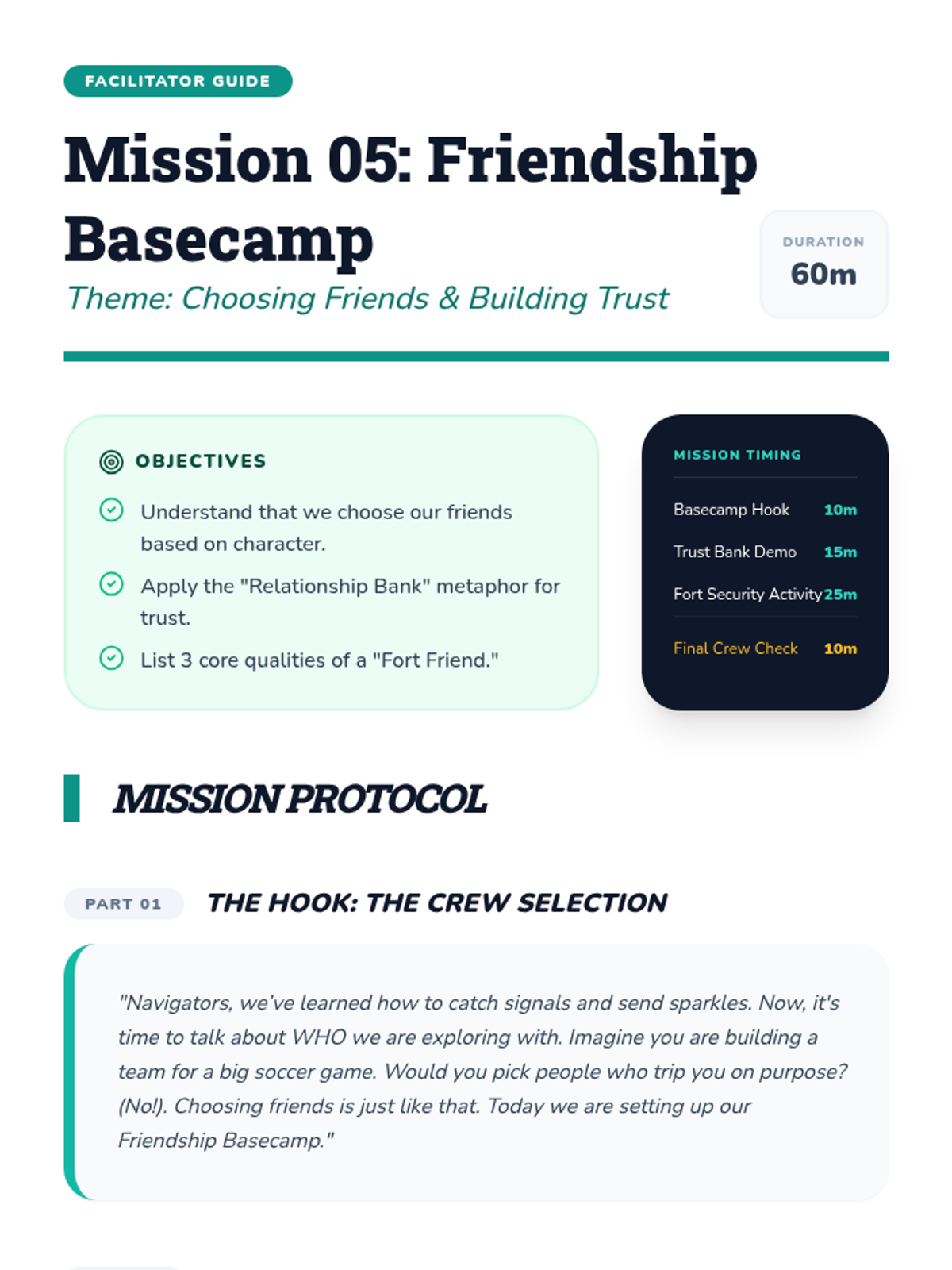
Explores how to pick good teammates. Uses the 'Relationship Bank' to teach about kindness and trust.
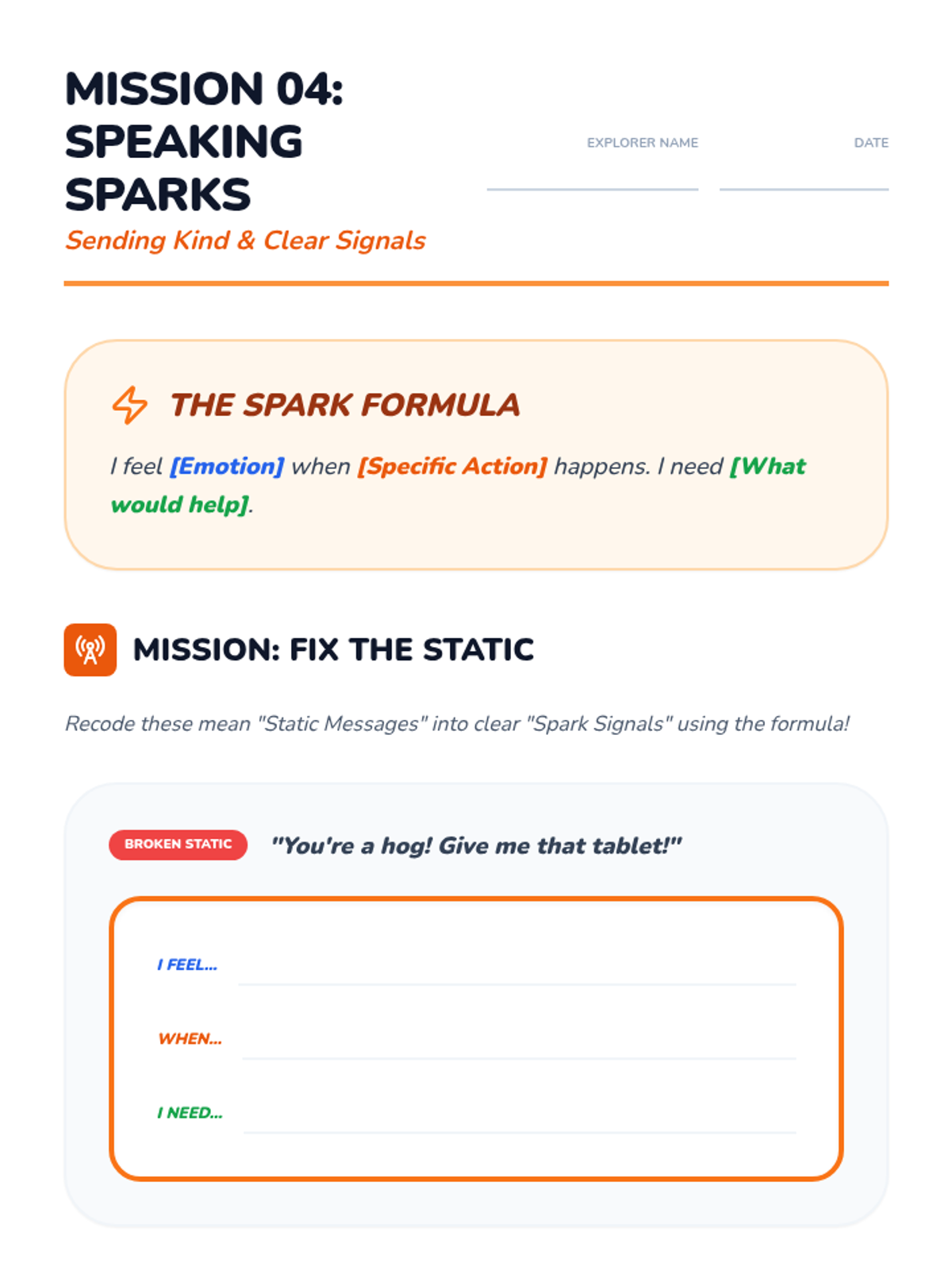
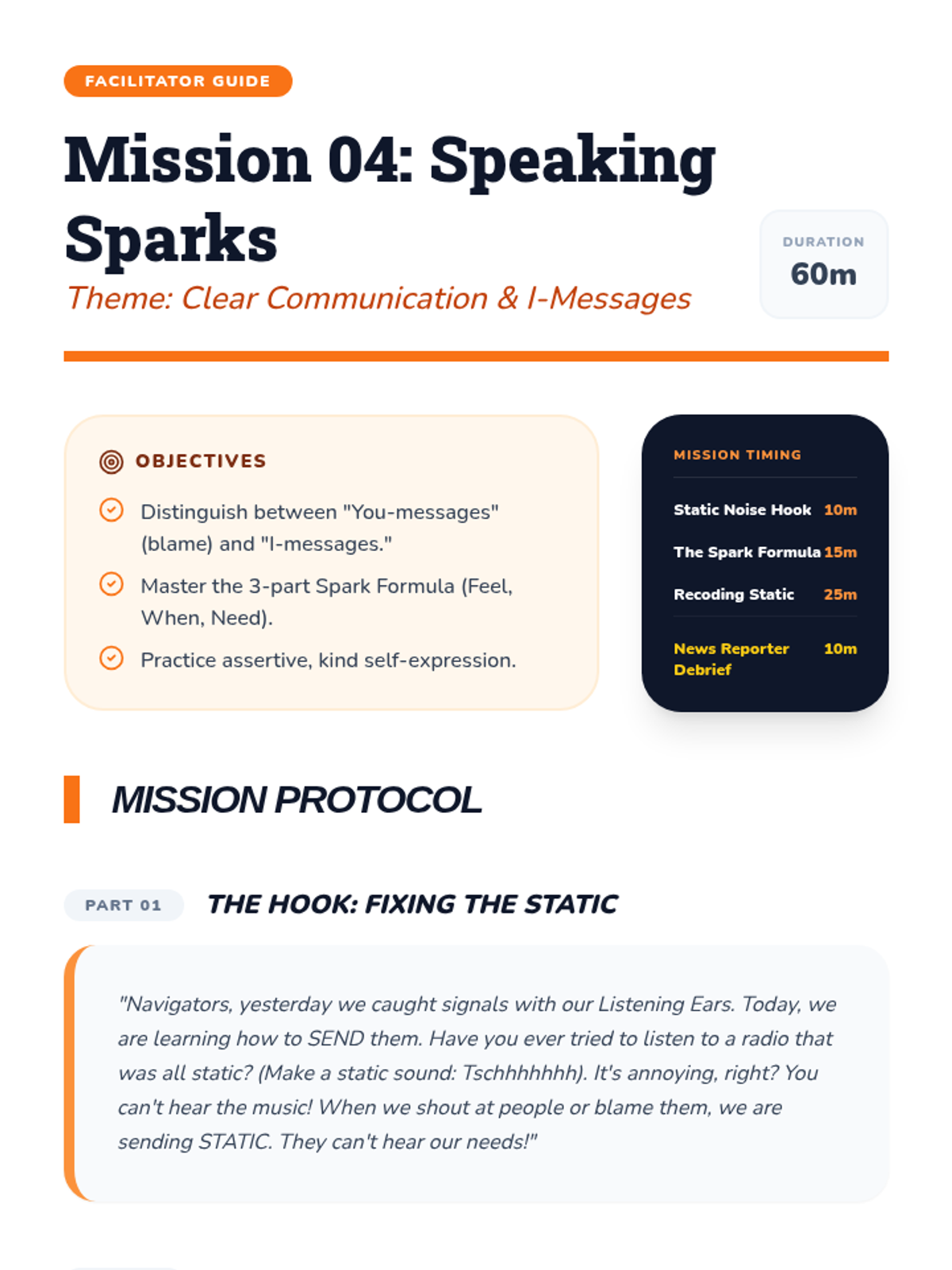
Teaches kind and clear speaking. Introduces 'I-messages' as a way to send helpful signals to others.
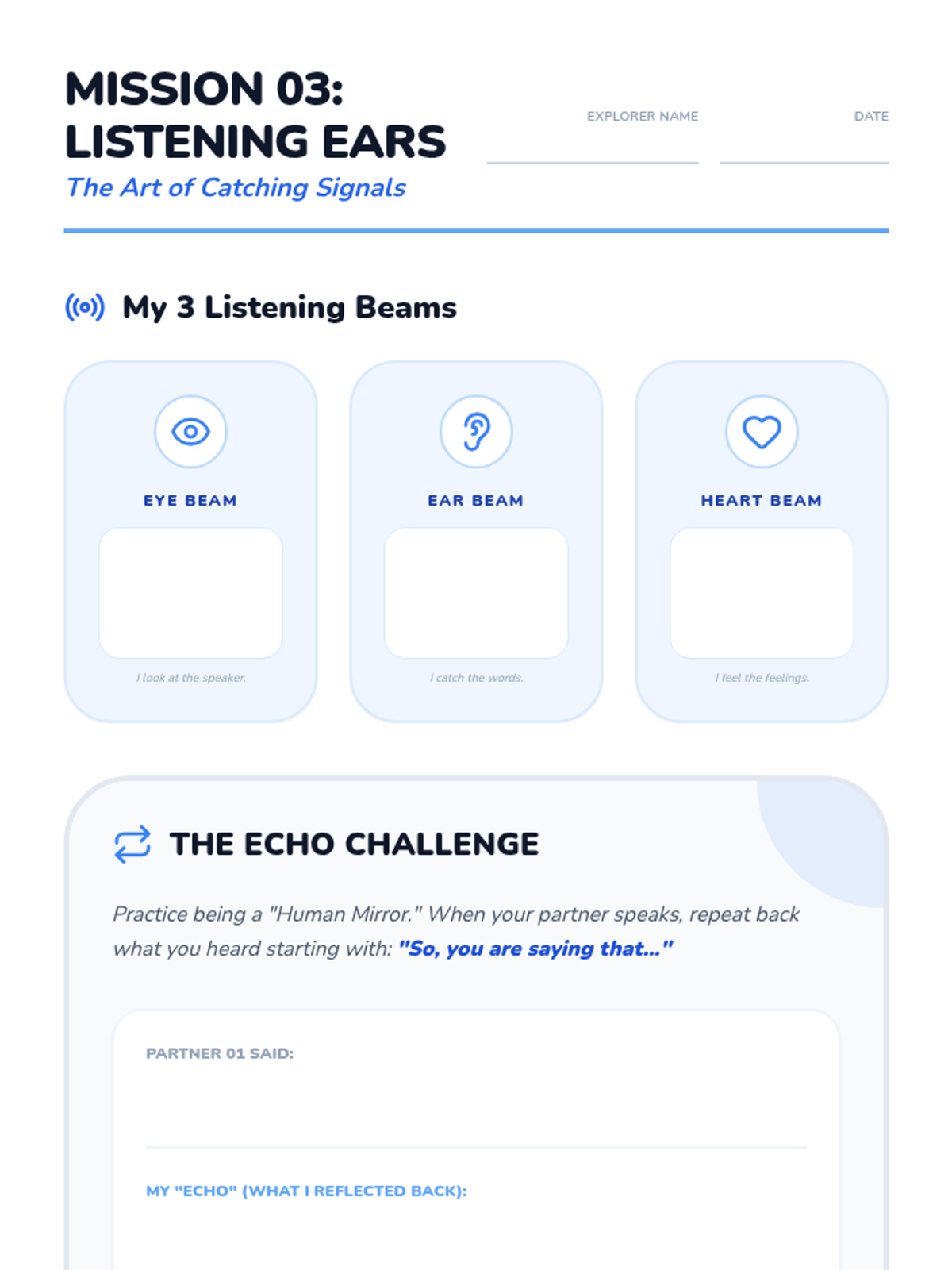
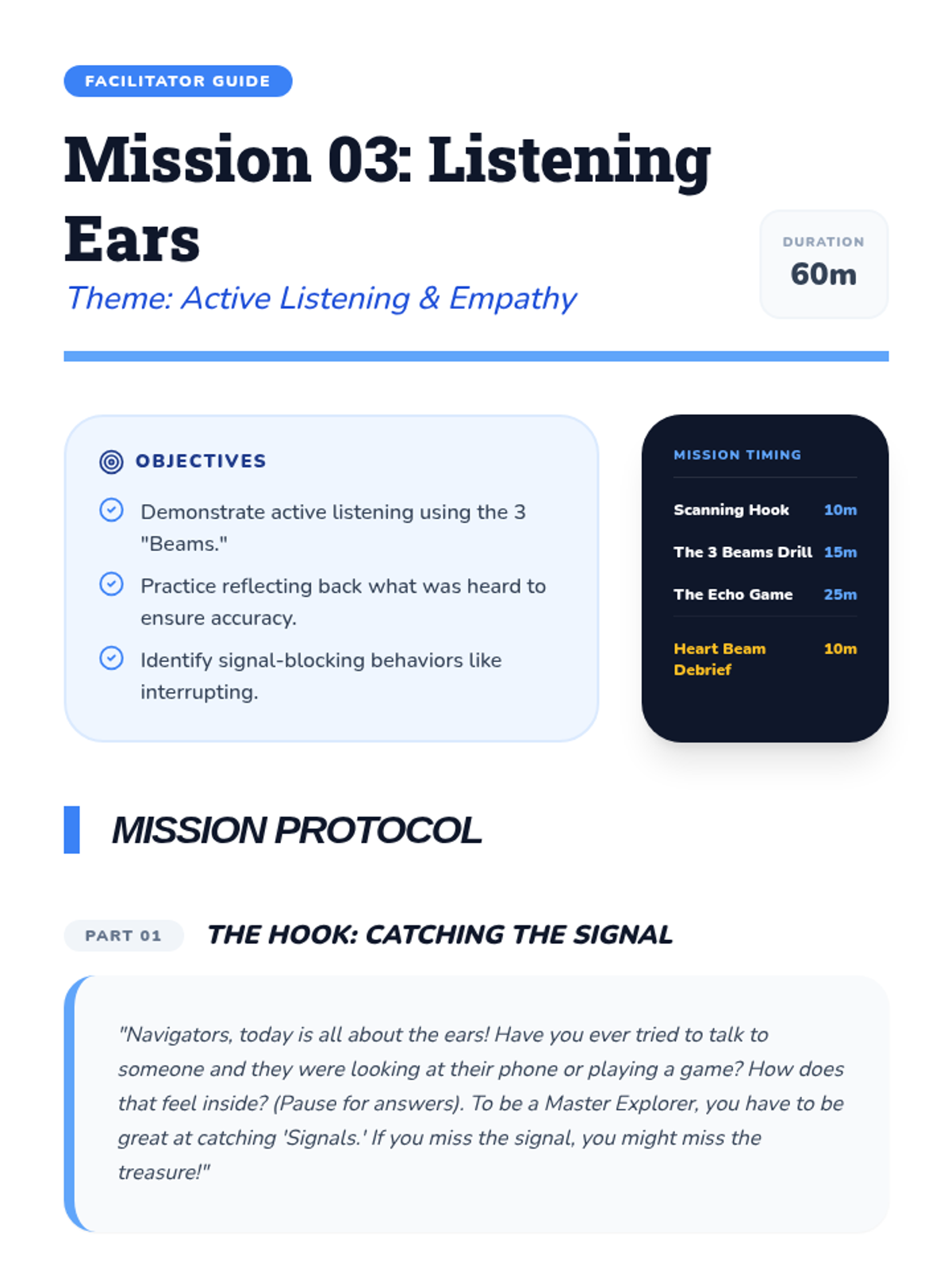
Focuses on active listening. Students learn to use their 'Listening Ears' and 'Heart' to understand others.
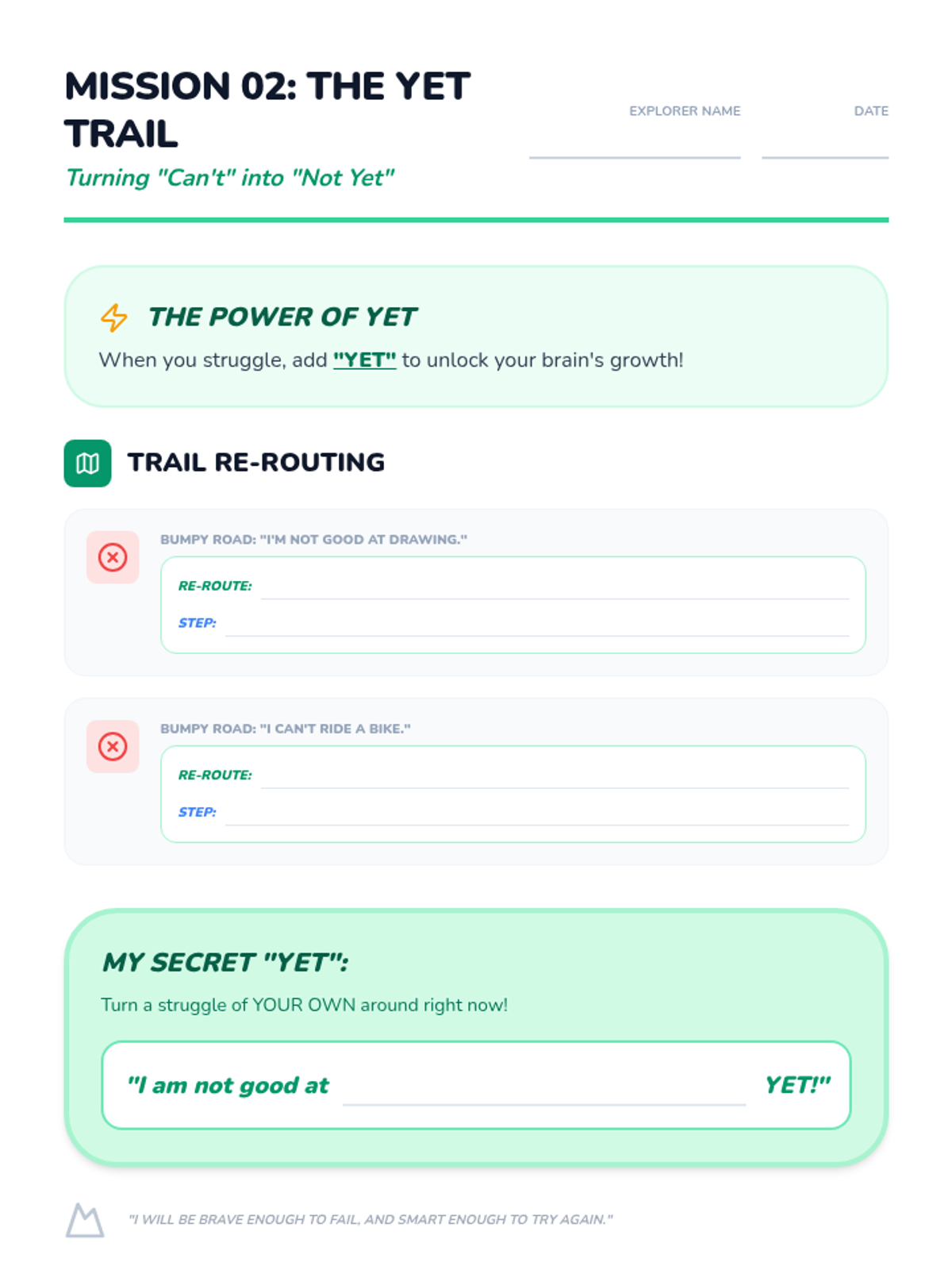
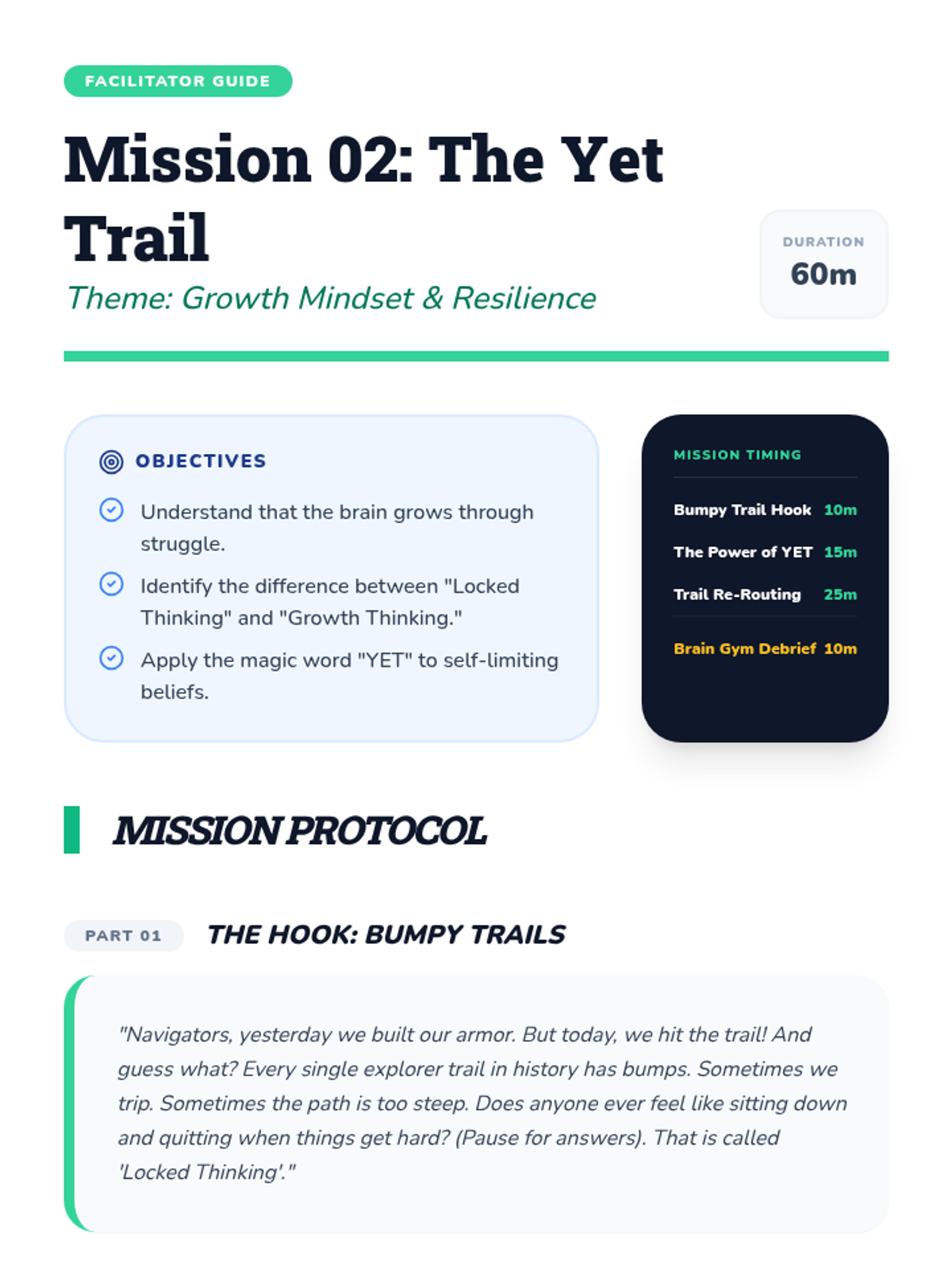
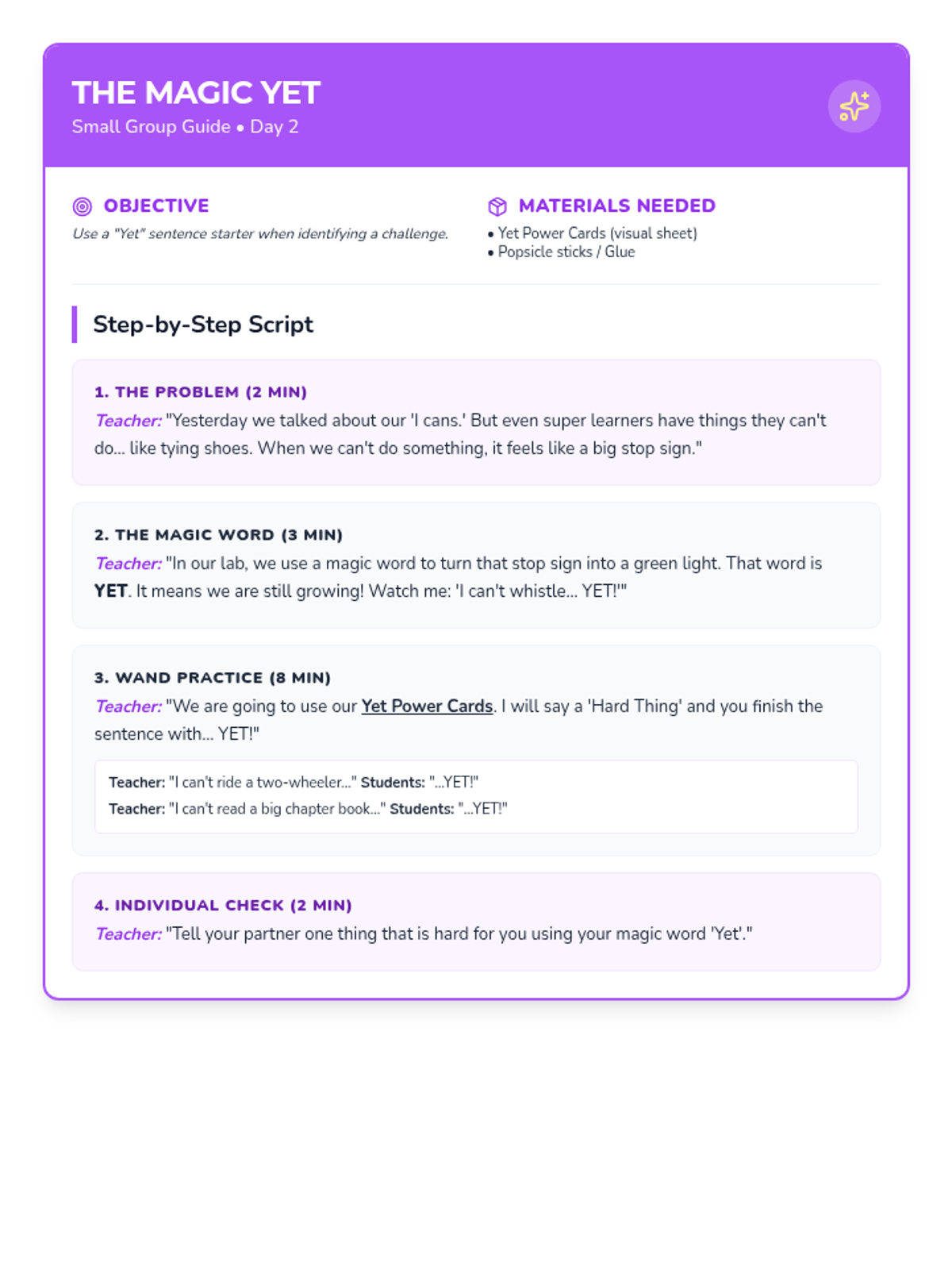
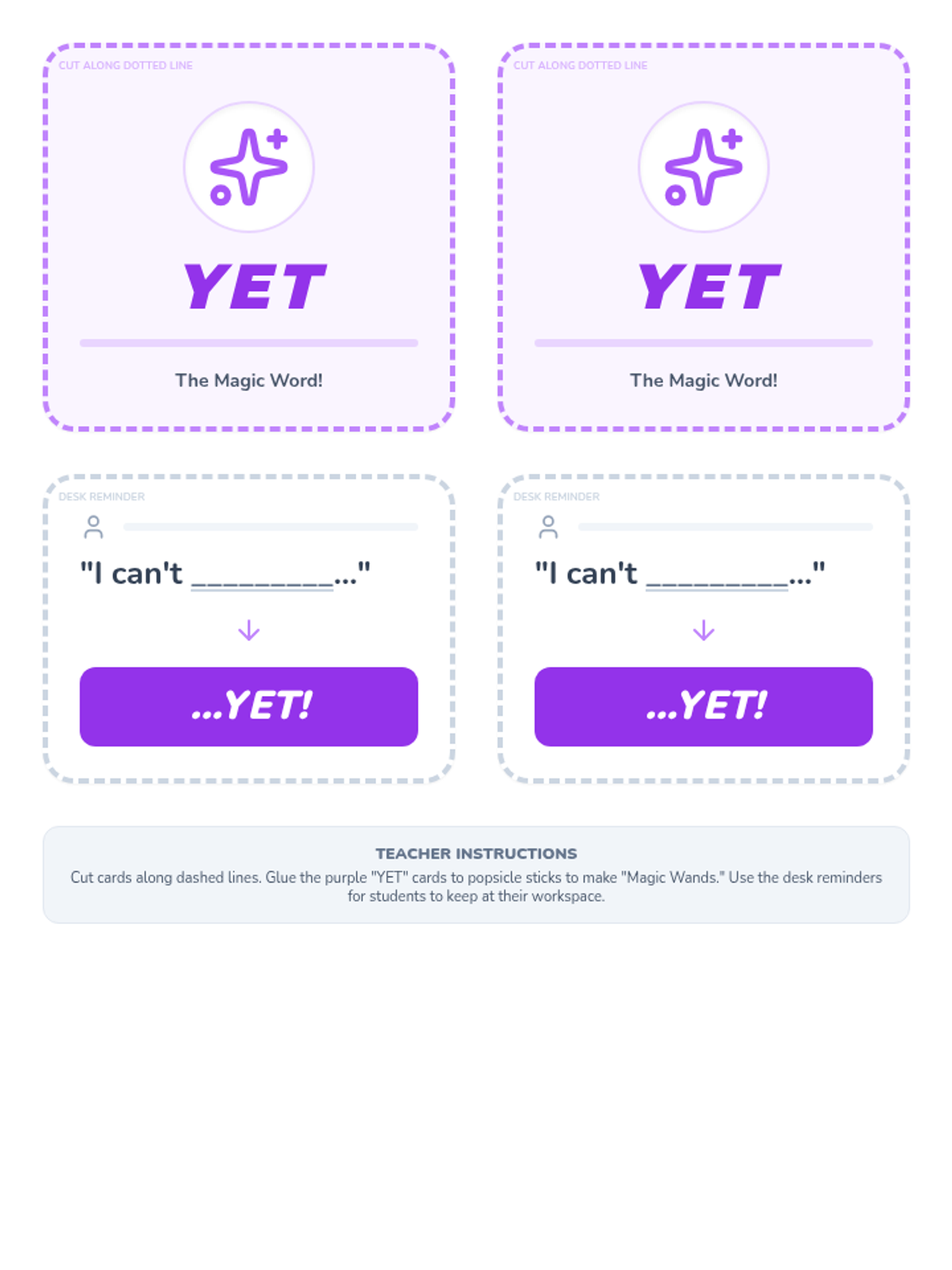
Teaches that mistakes are just part of the trail. Introduces the power of the word 'YET' to keep moving forward.
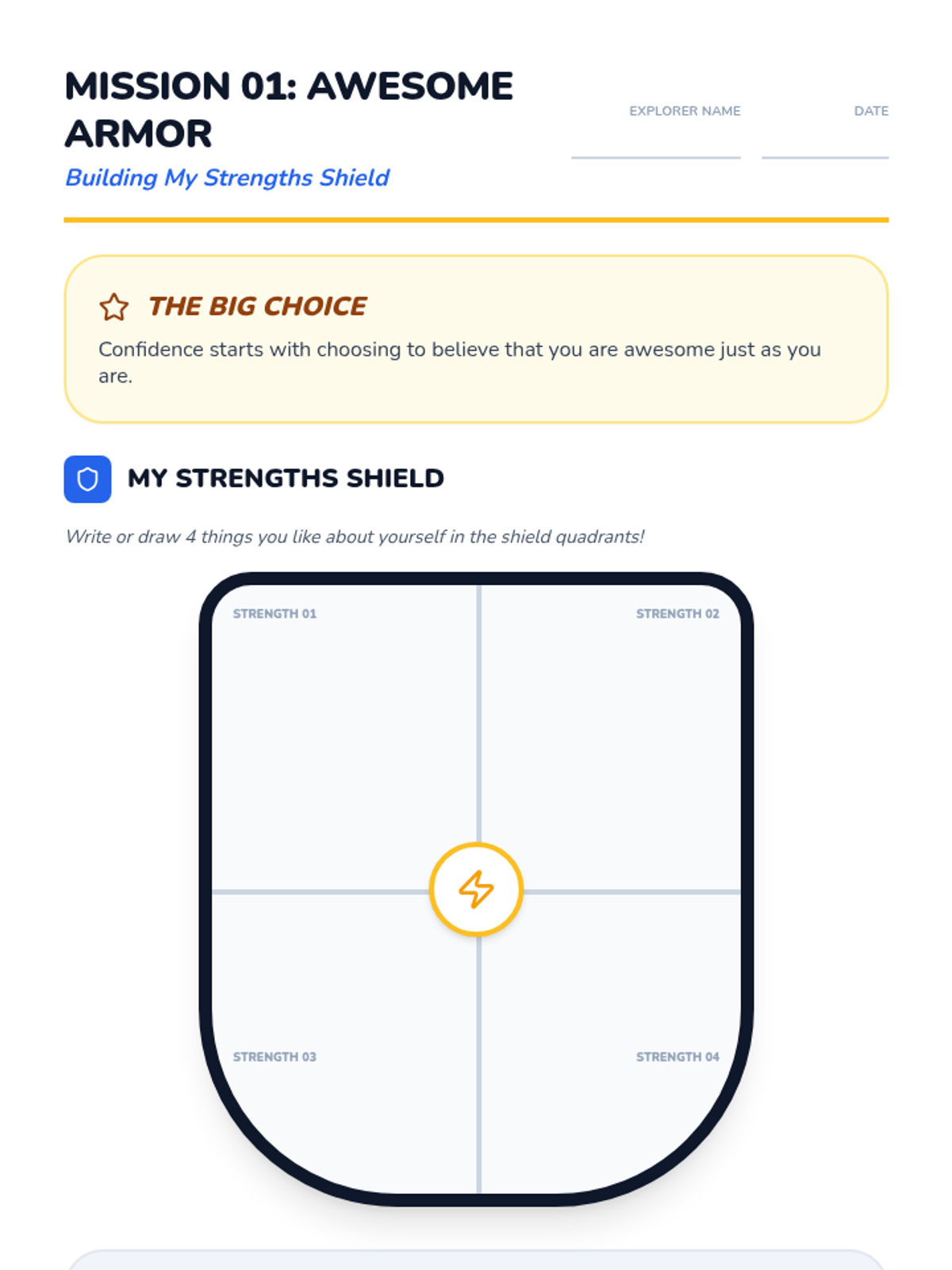
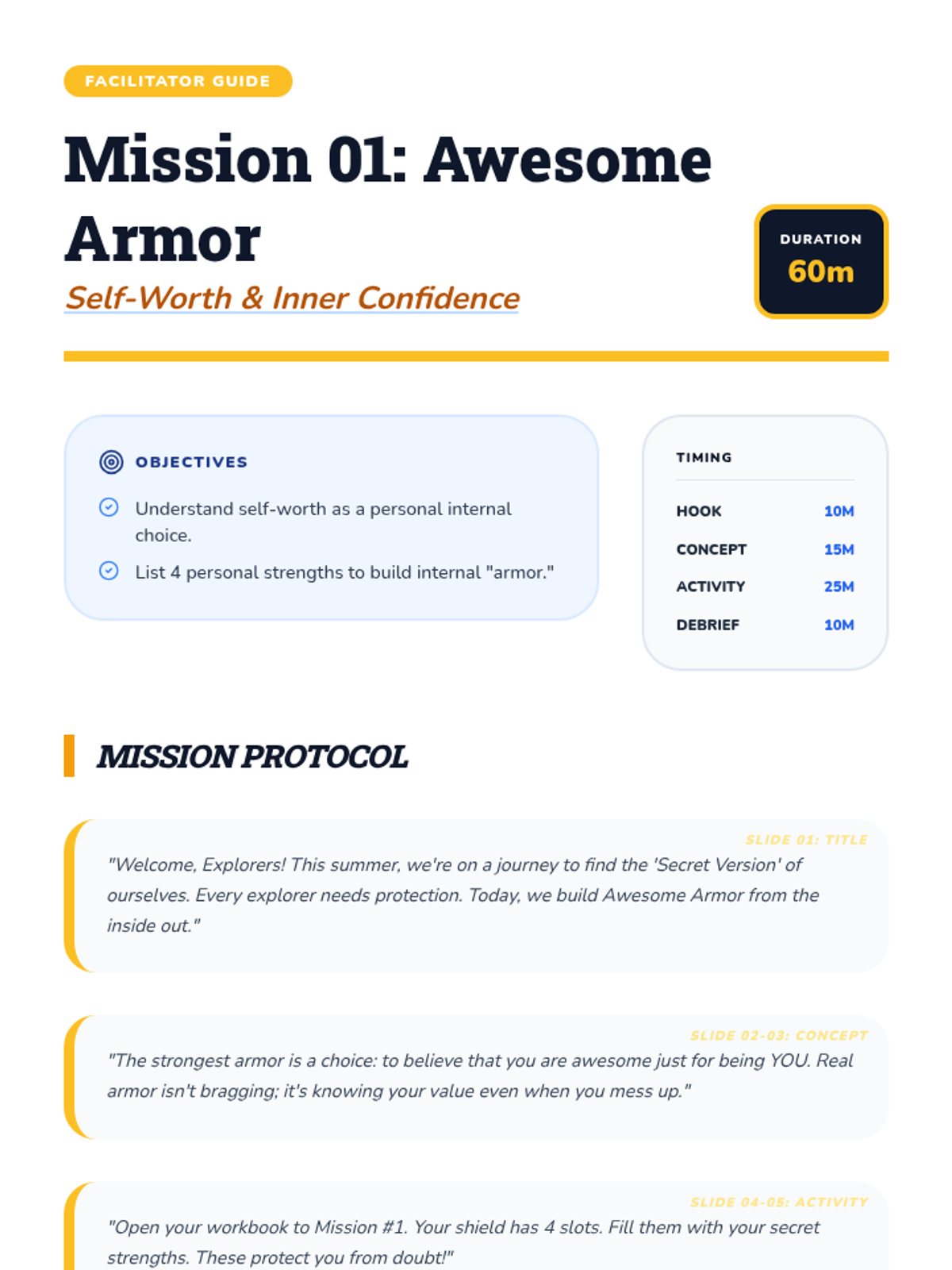
Introduces the 'Big Choice' of believing in yourself. Students build their 'Awesome Armor' by identifying their unique strengths.
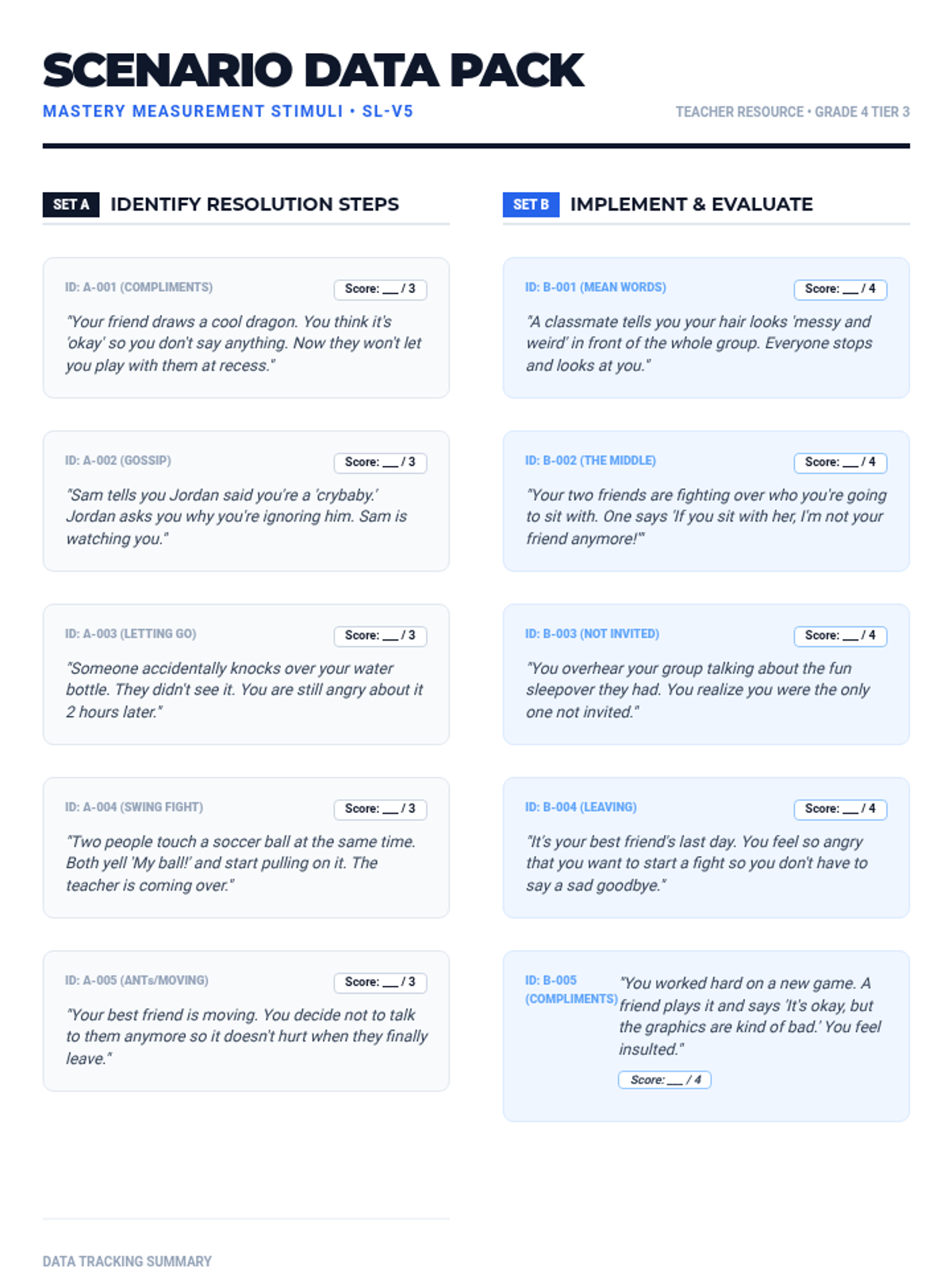
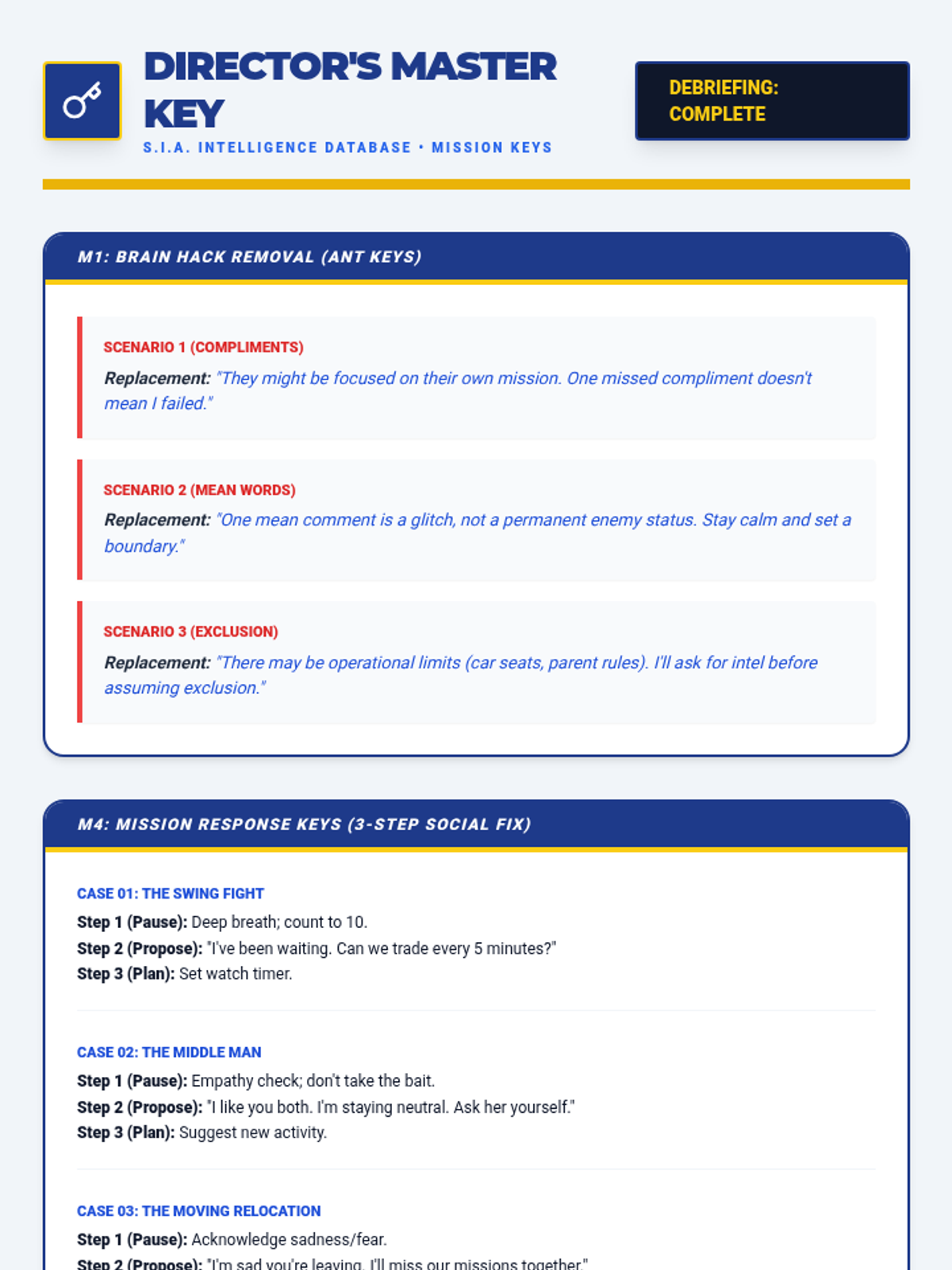
A cumulative assessment where agents demonstrate complete mastery of all S.I.A. protocols.
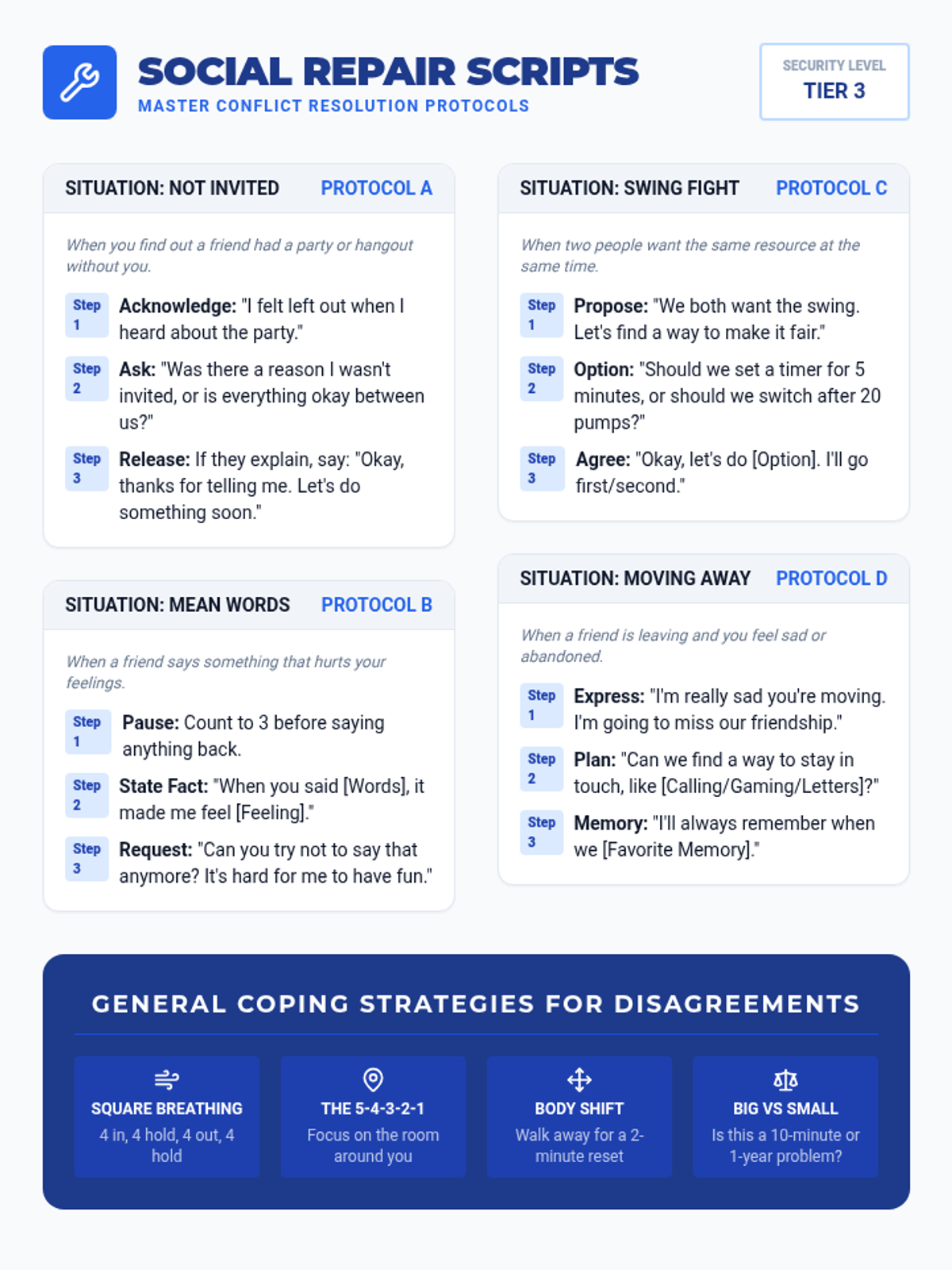
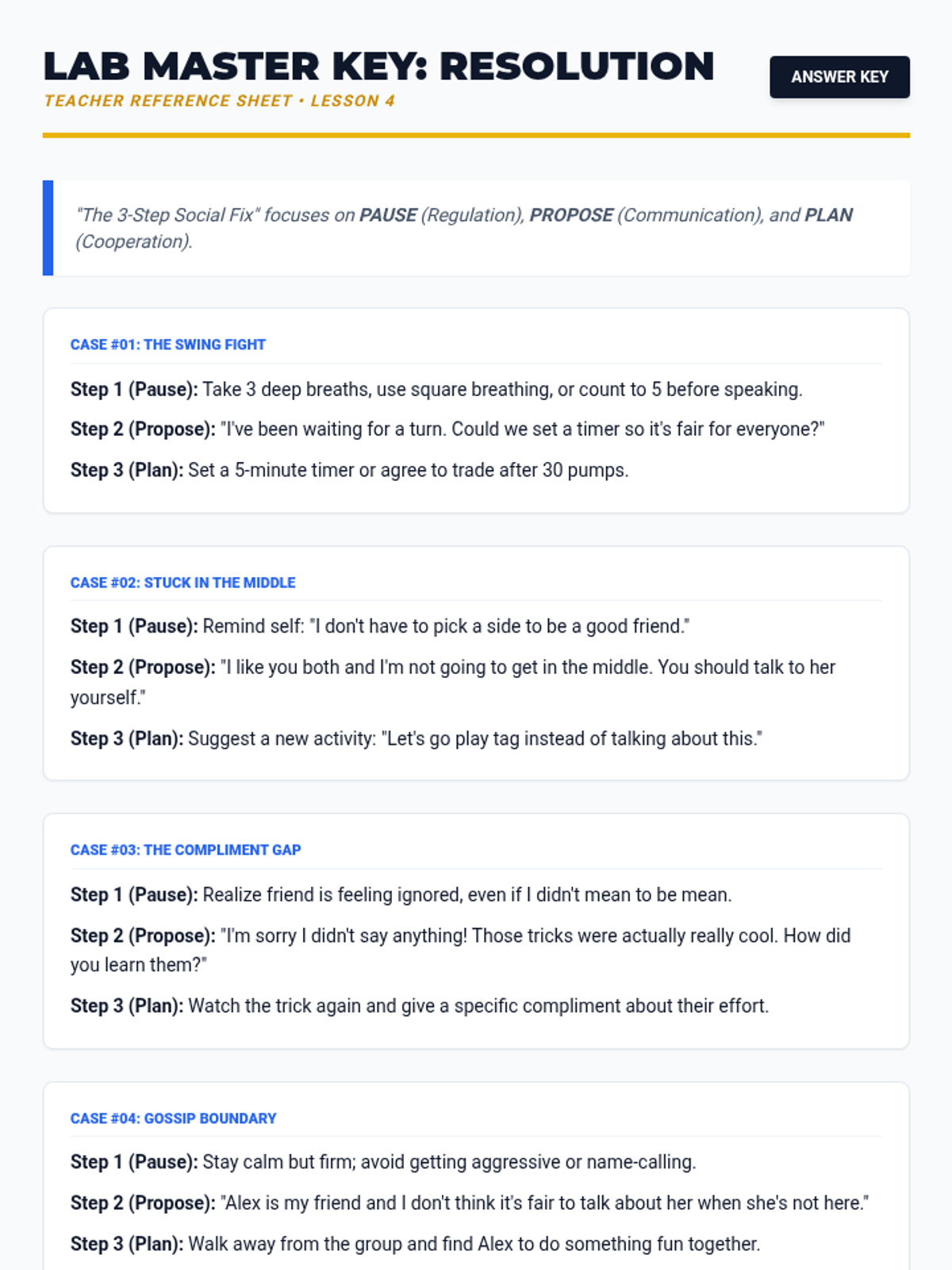
Agents evaluate their mission success and analyze the effectiveness of different resolution strategies.
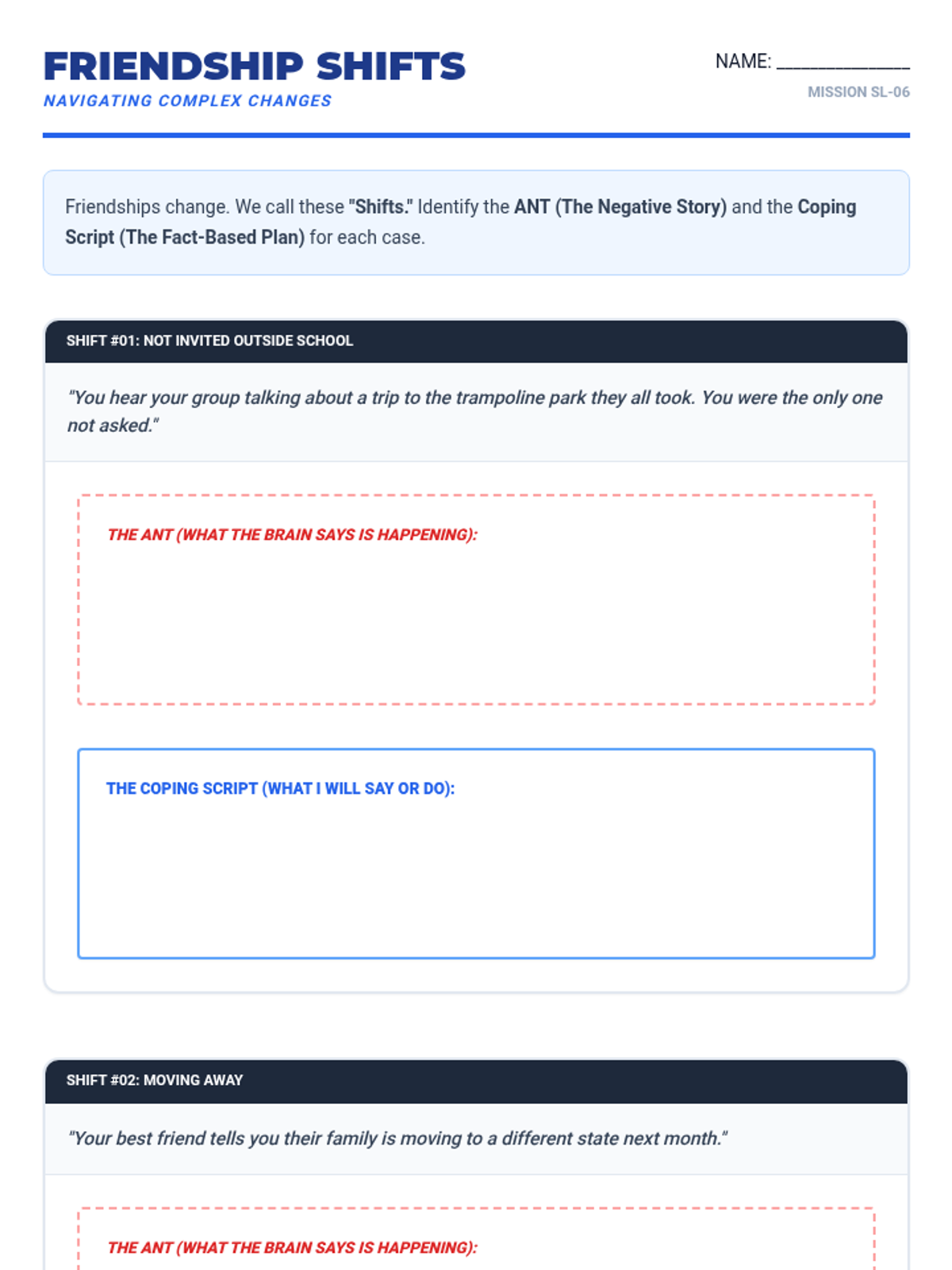
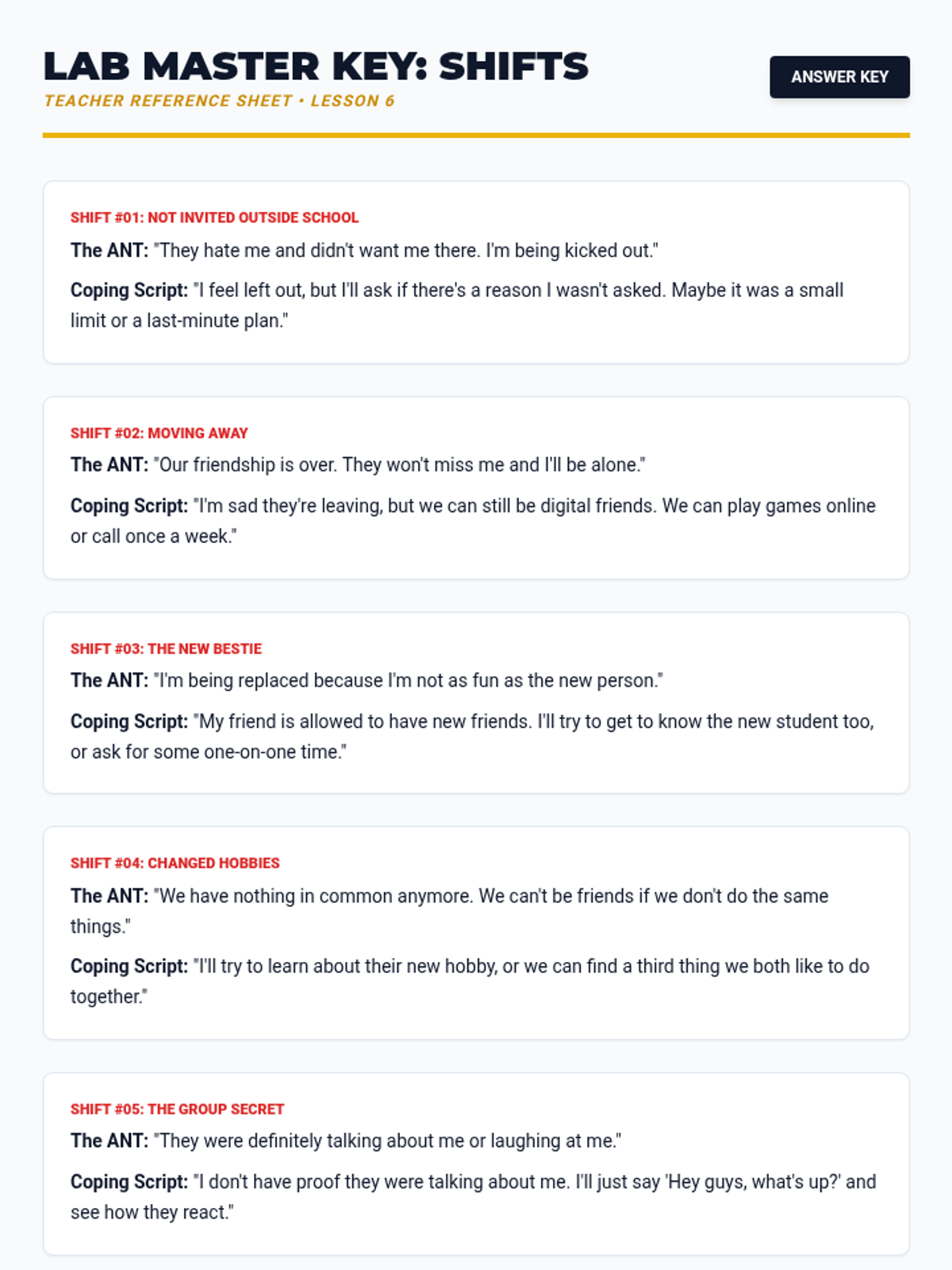
Agents navigate complex changes in the field, including friend relocations and exclusive groups.
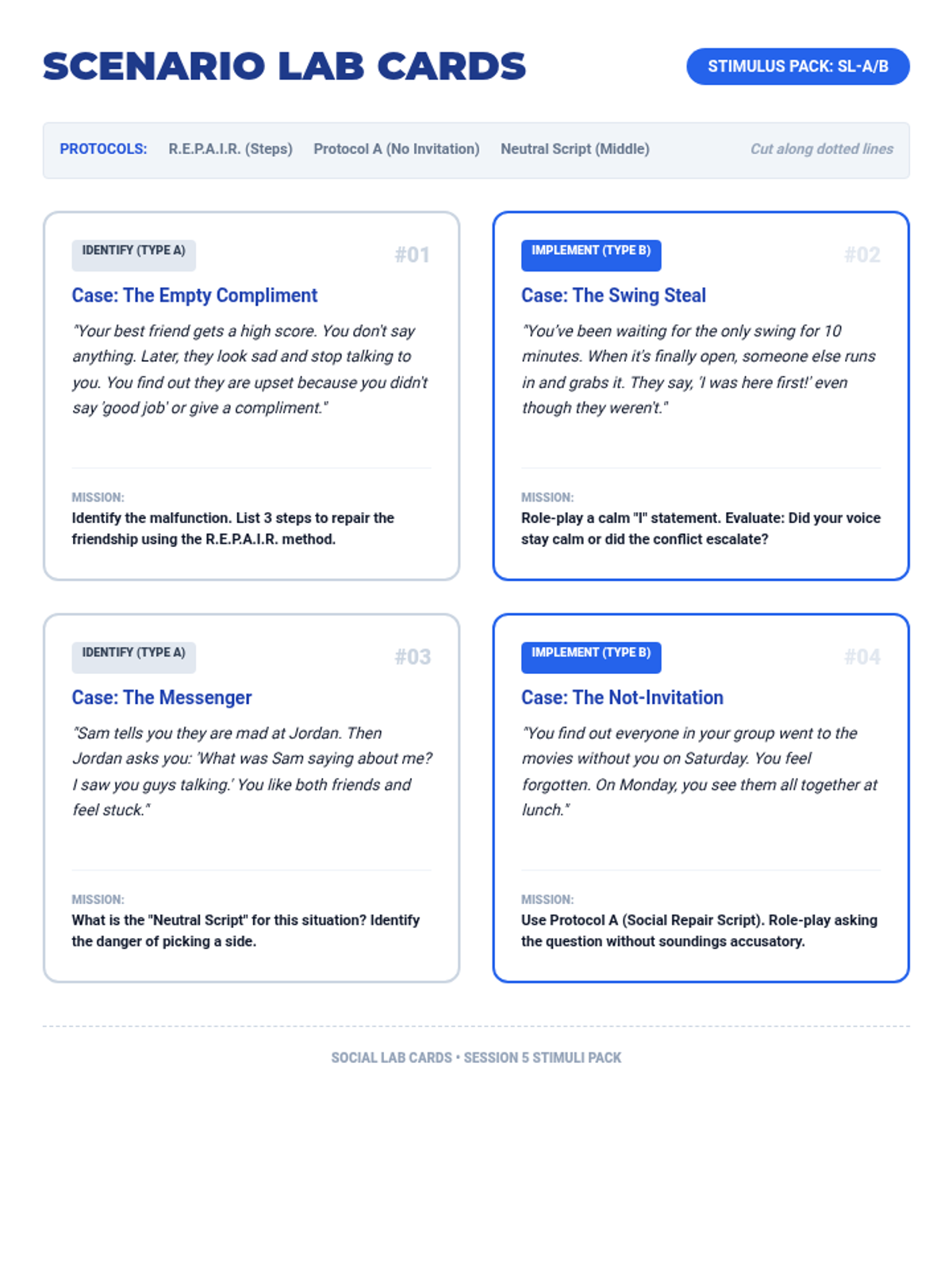
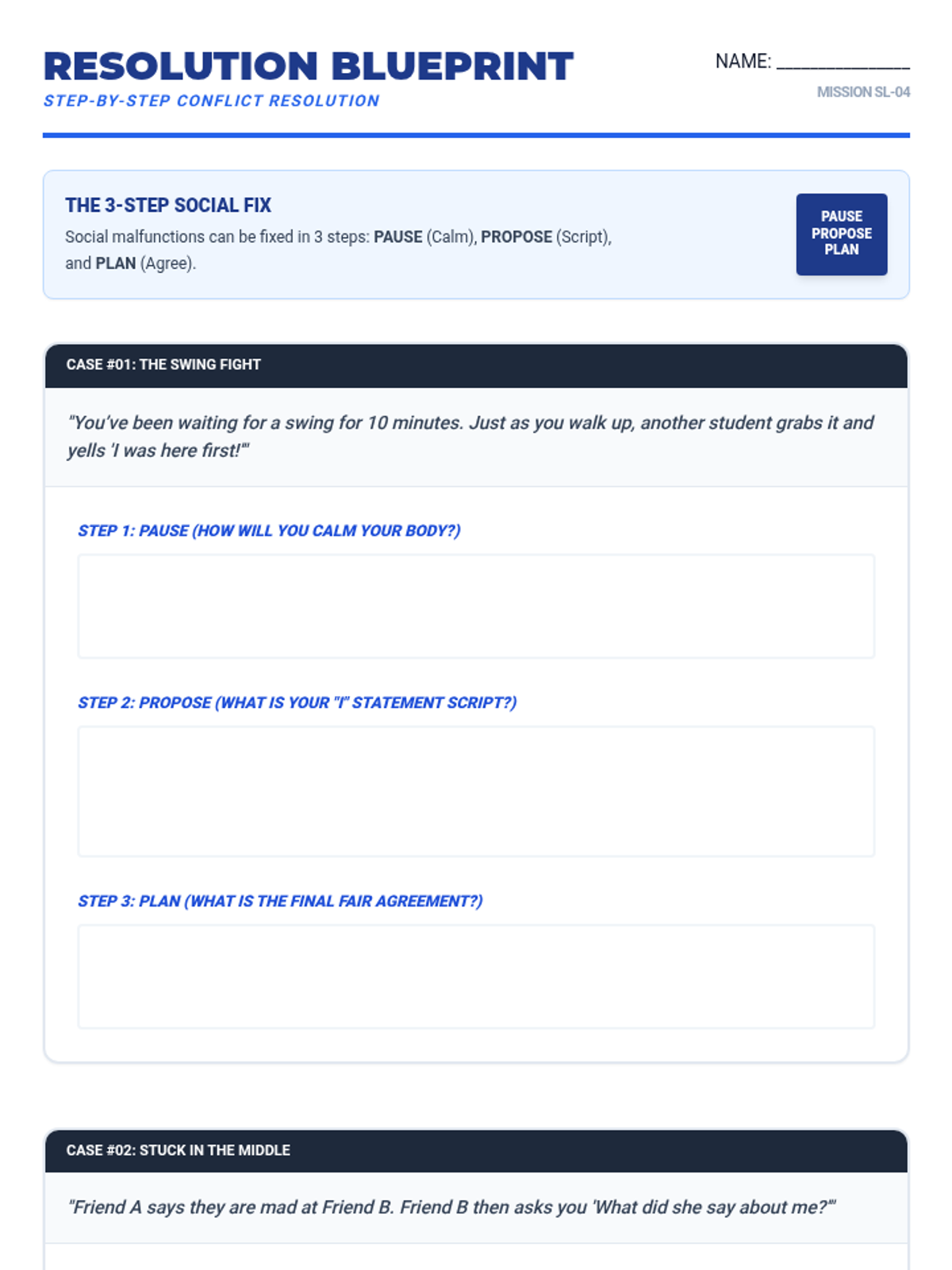
Agents apply conflict resolution strategies to high-stakes playground contexts, like shared equipment.
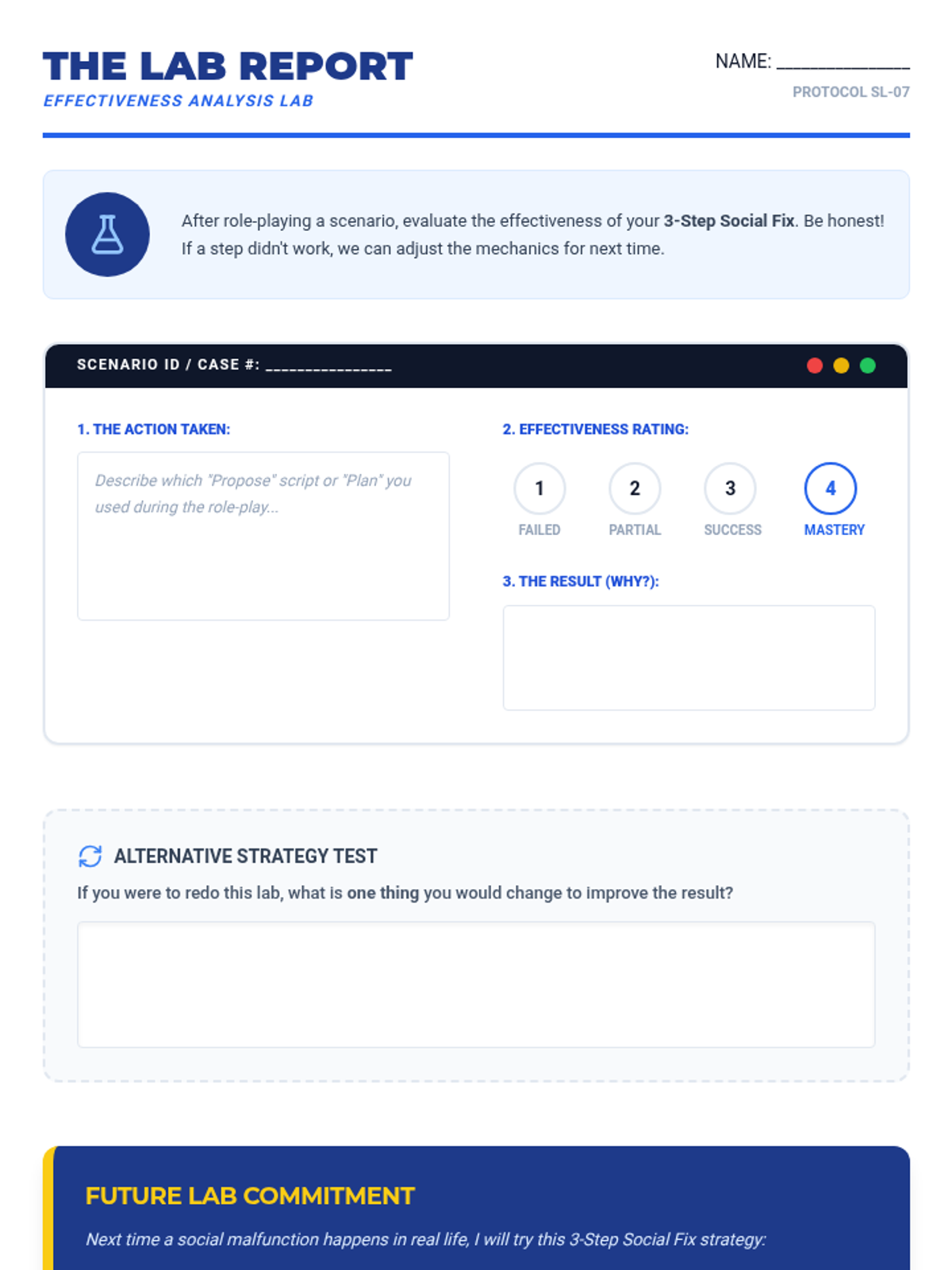
Introducing the 3-Step Social Fix: Pause, Propose, and Plan in isolation scenarios.
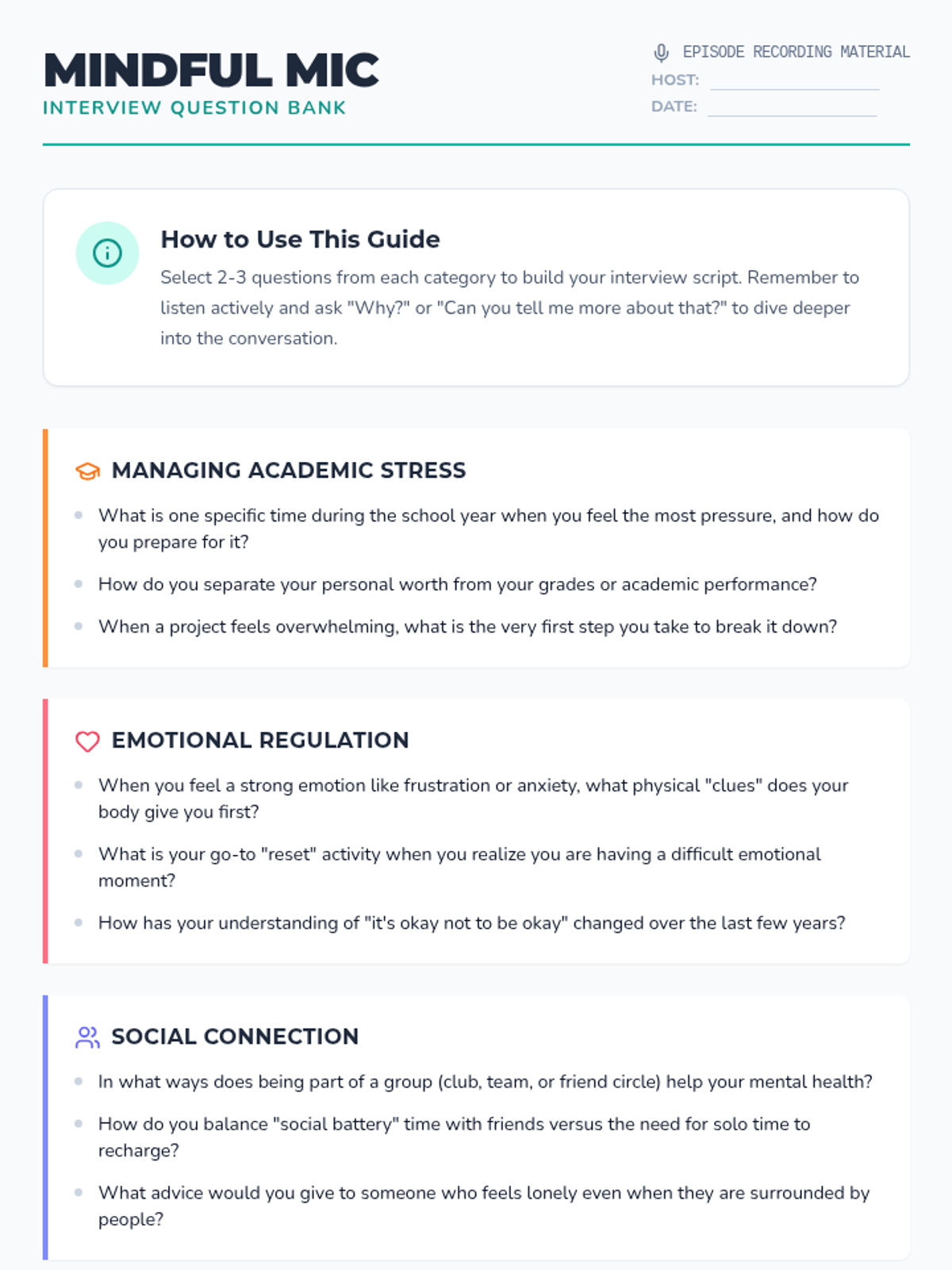
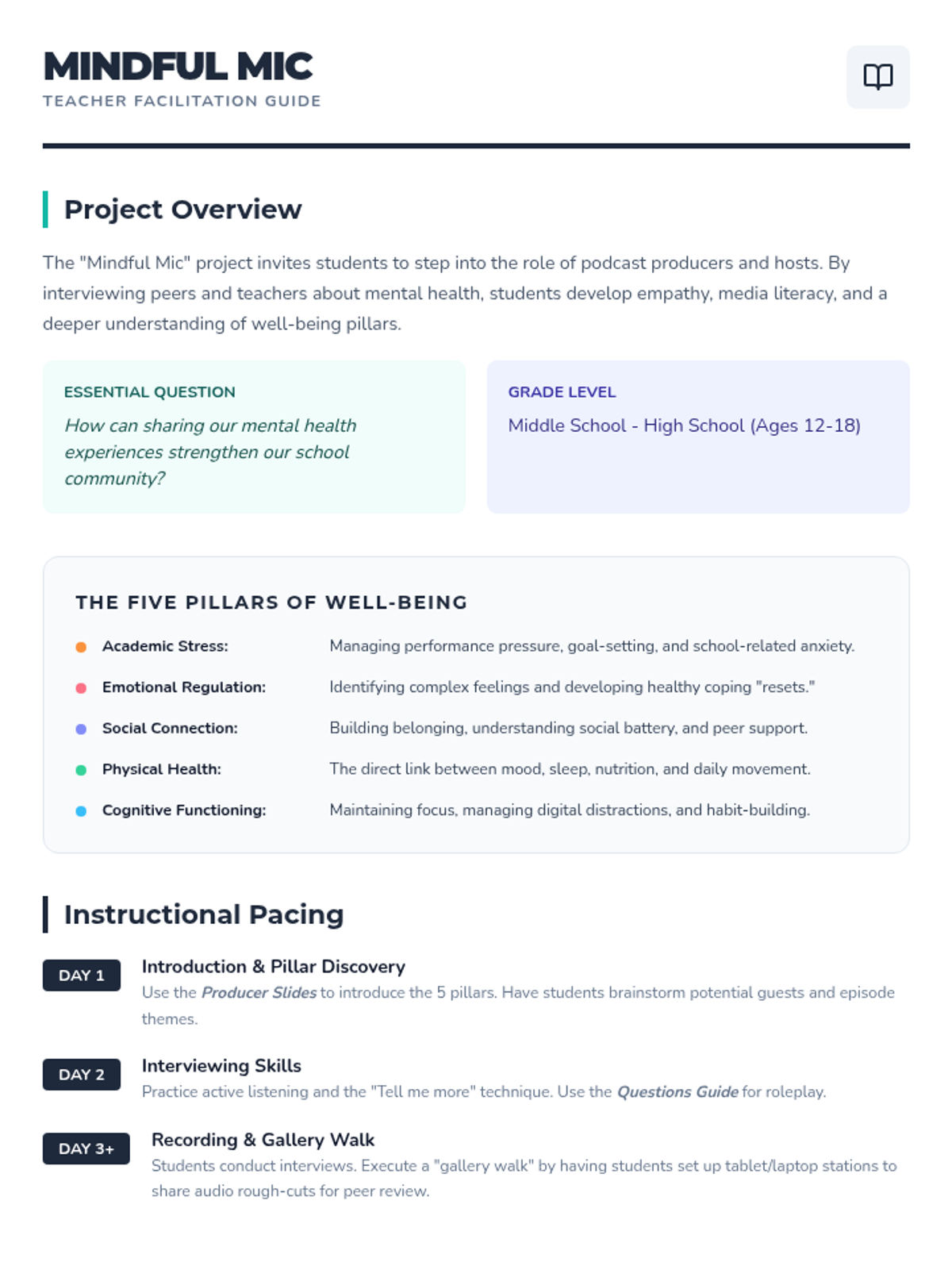
A comprehensive guide for students to produce a podcast exploring mental health through peer and teacher interviews. This lesson covers interview techniques and categorizes questions across five key pillars of well-being.
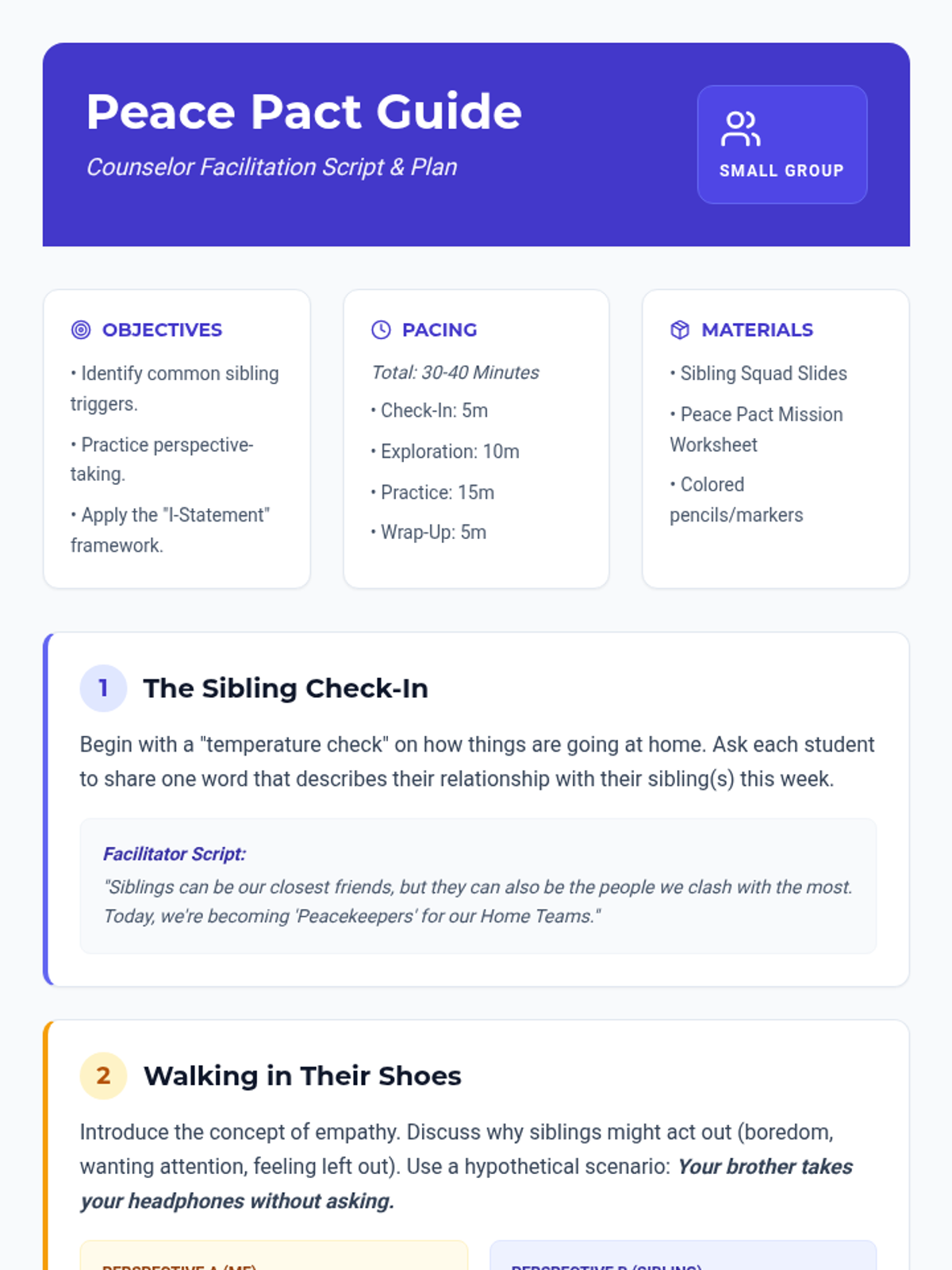
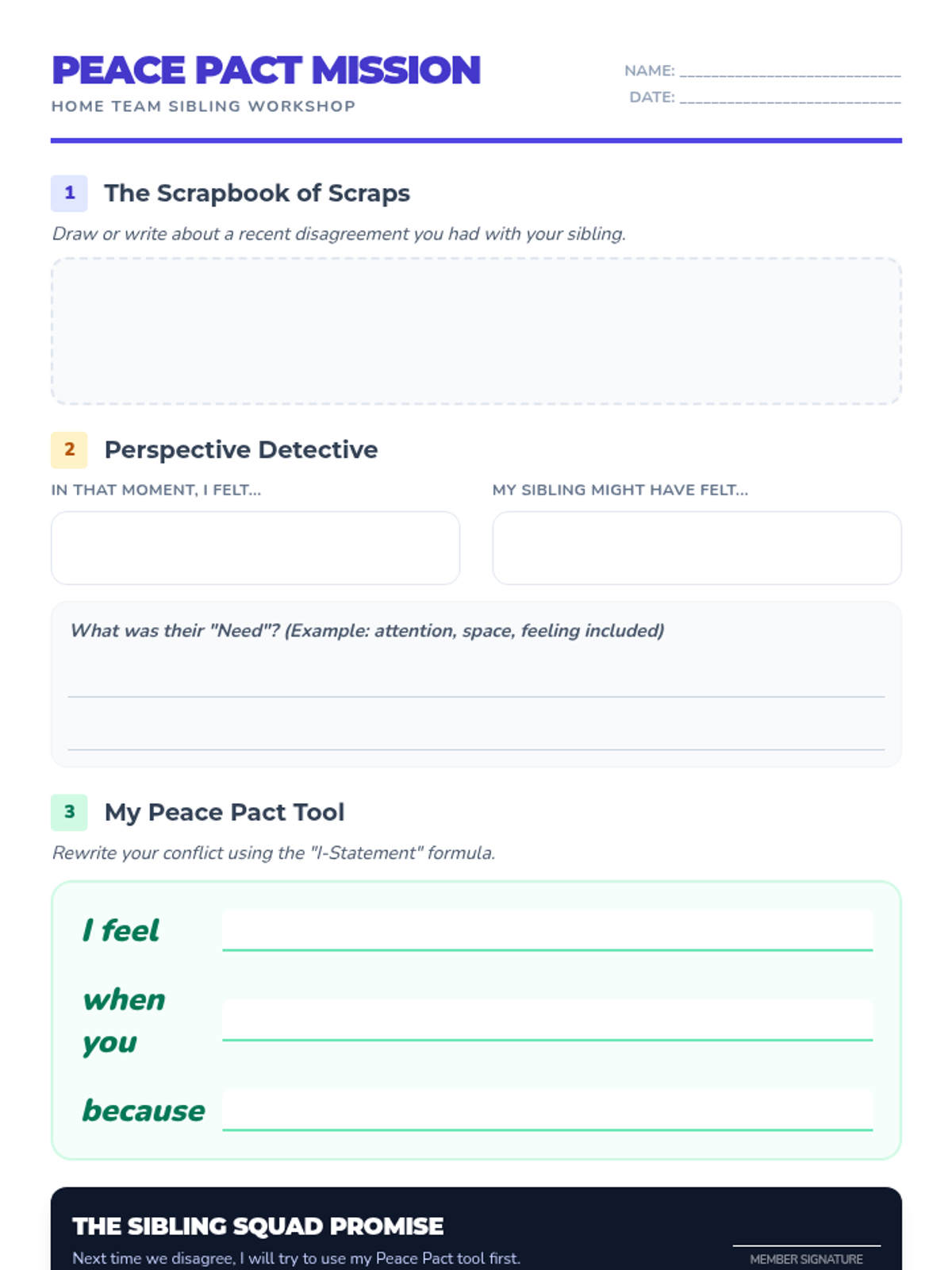
A small group counseling lesson focused on teaching students conflict resolution strategies and empathy to improve their relationships with siblings at home.
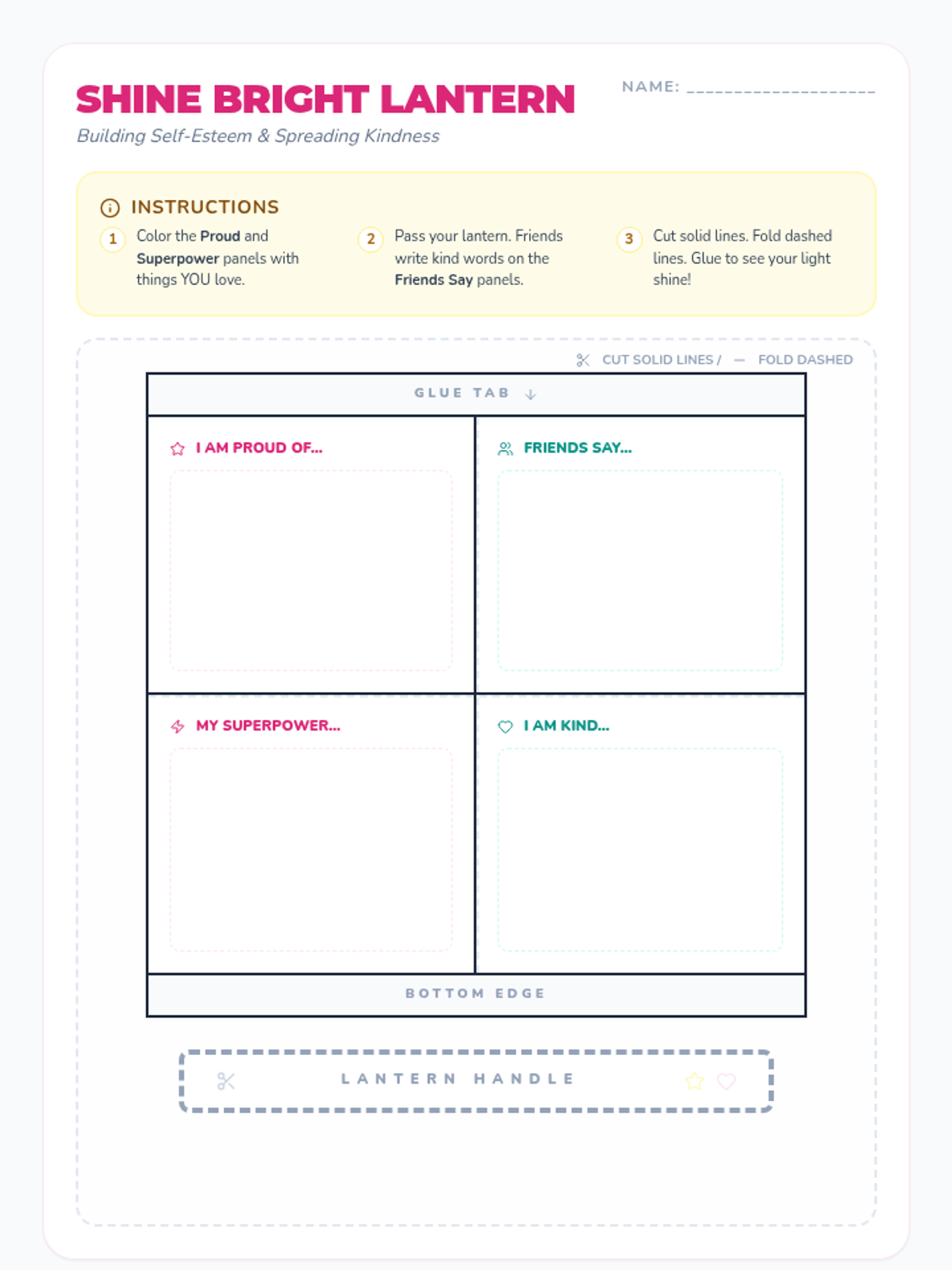
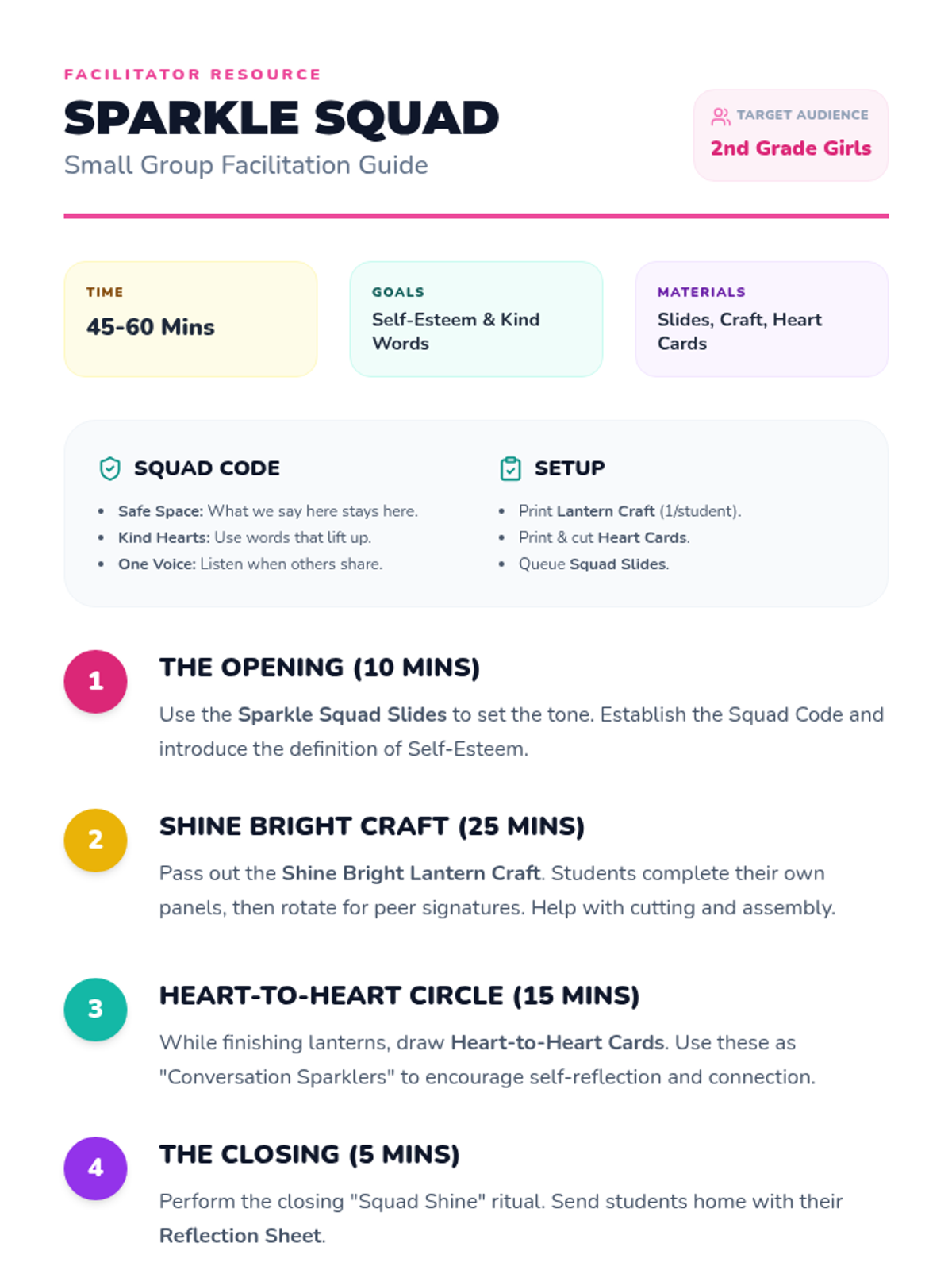
A small-group social-emotional learning lesson designed for 2nd grade girls to build self-esteem and practice using kind words through collaborative crafting and structured discussion.
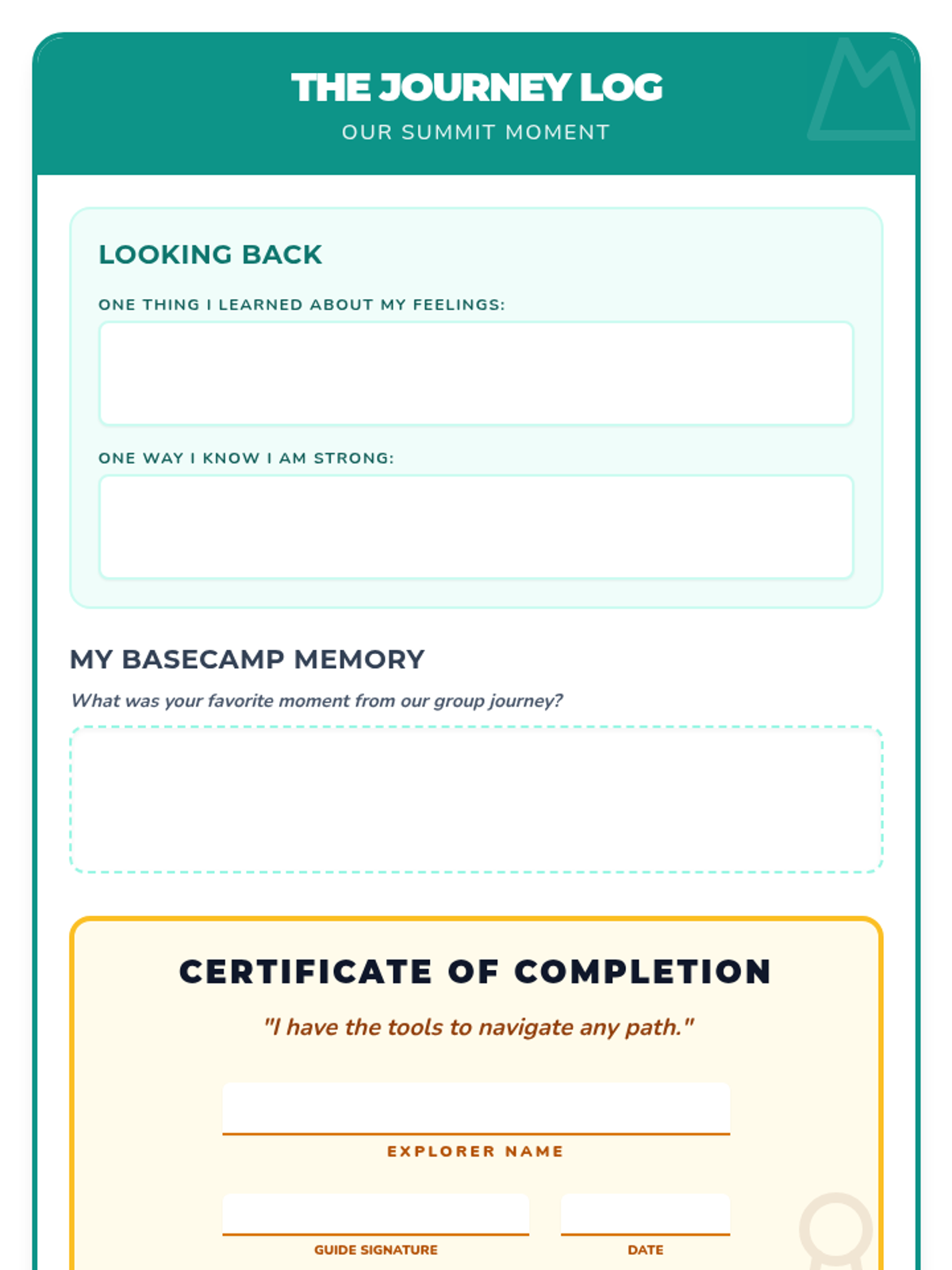
Celebrating growth, reviewing learned skills, and saying goodbye to the group while looking forward.
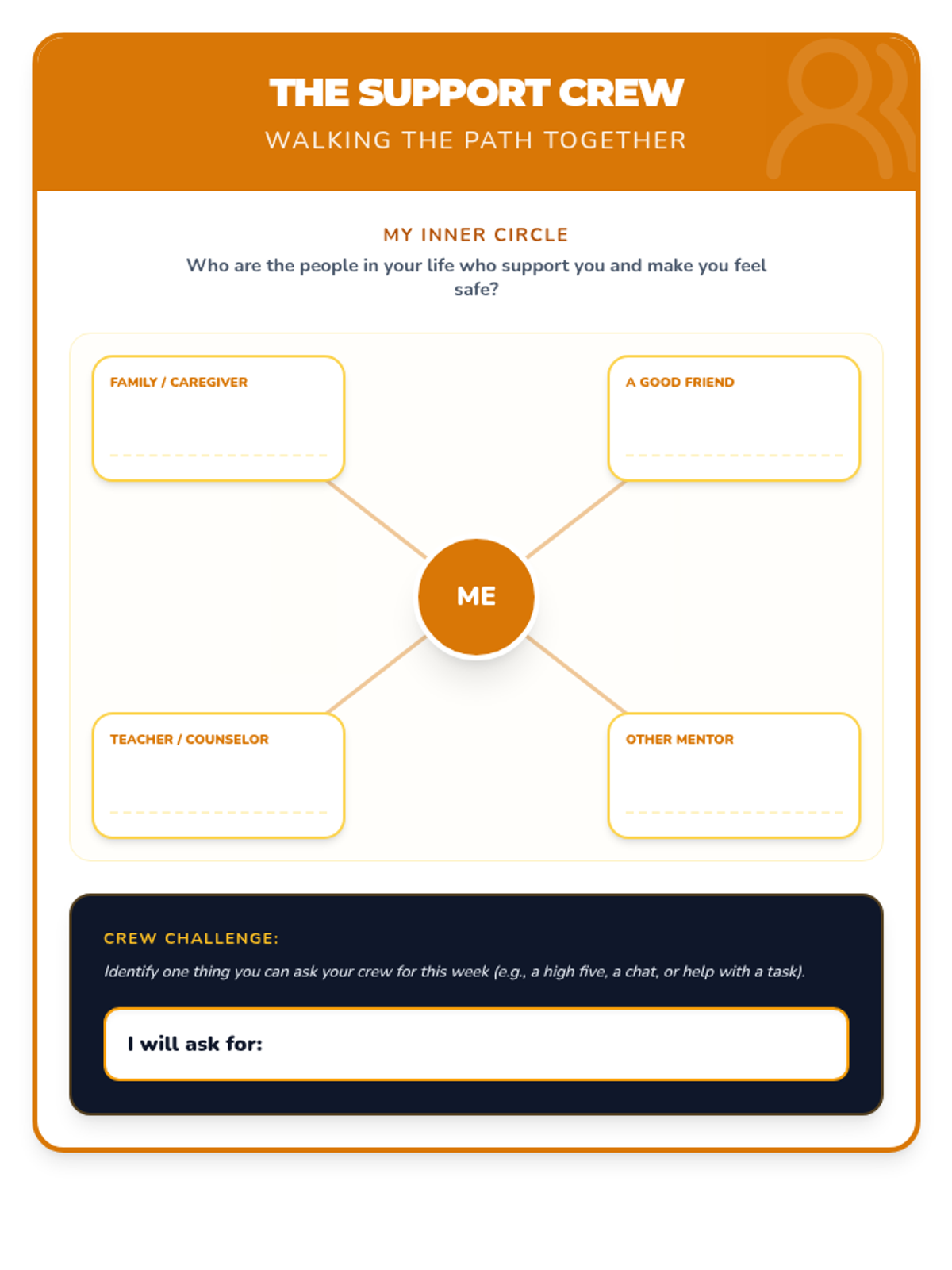
Identifying and strengthening the network of supportive adults and peers in the student's life.
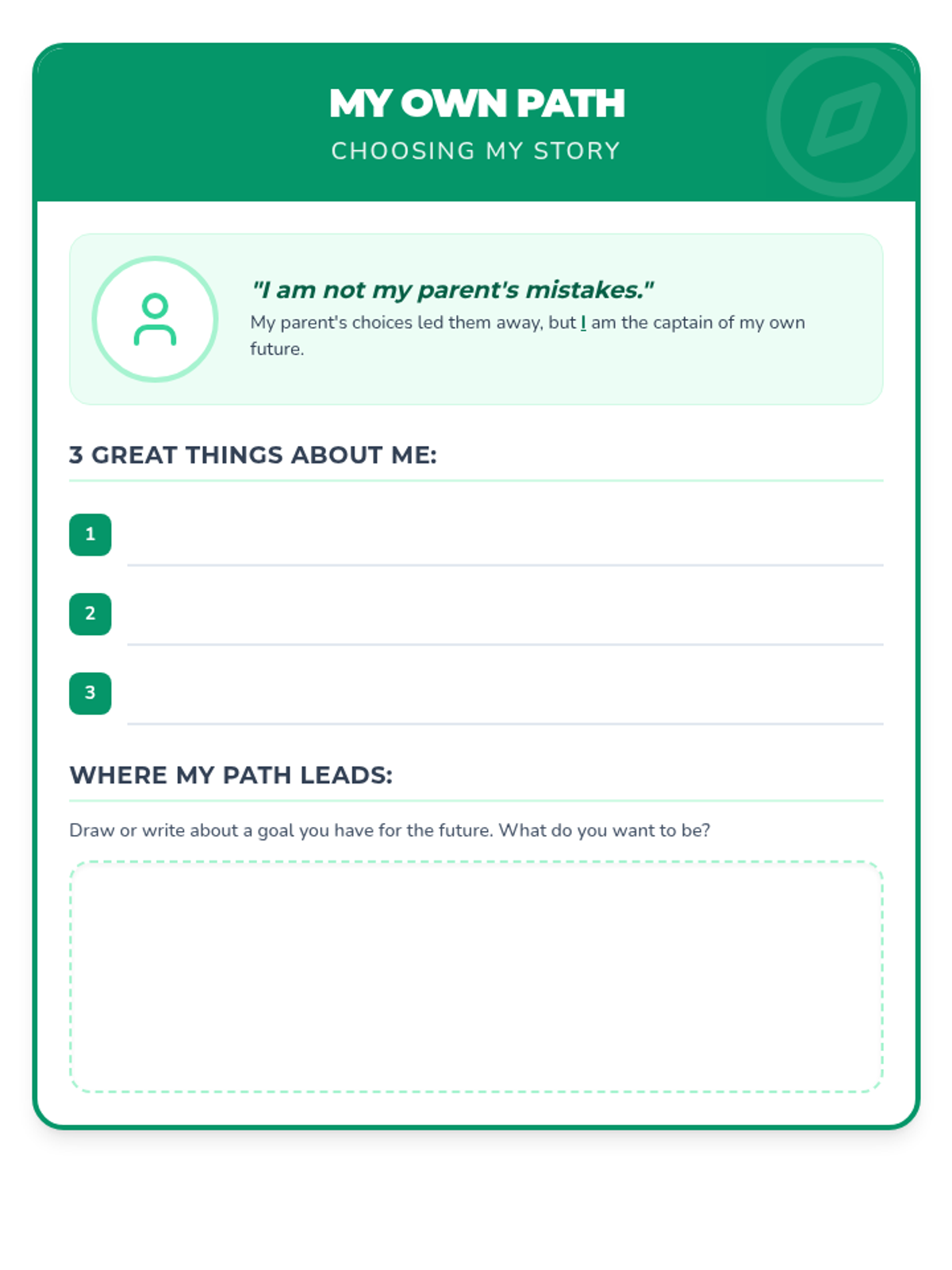
Differentiating personal identity from a parent's actions and focusing on individual strengths and future goals.
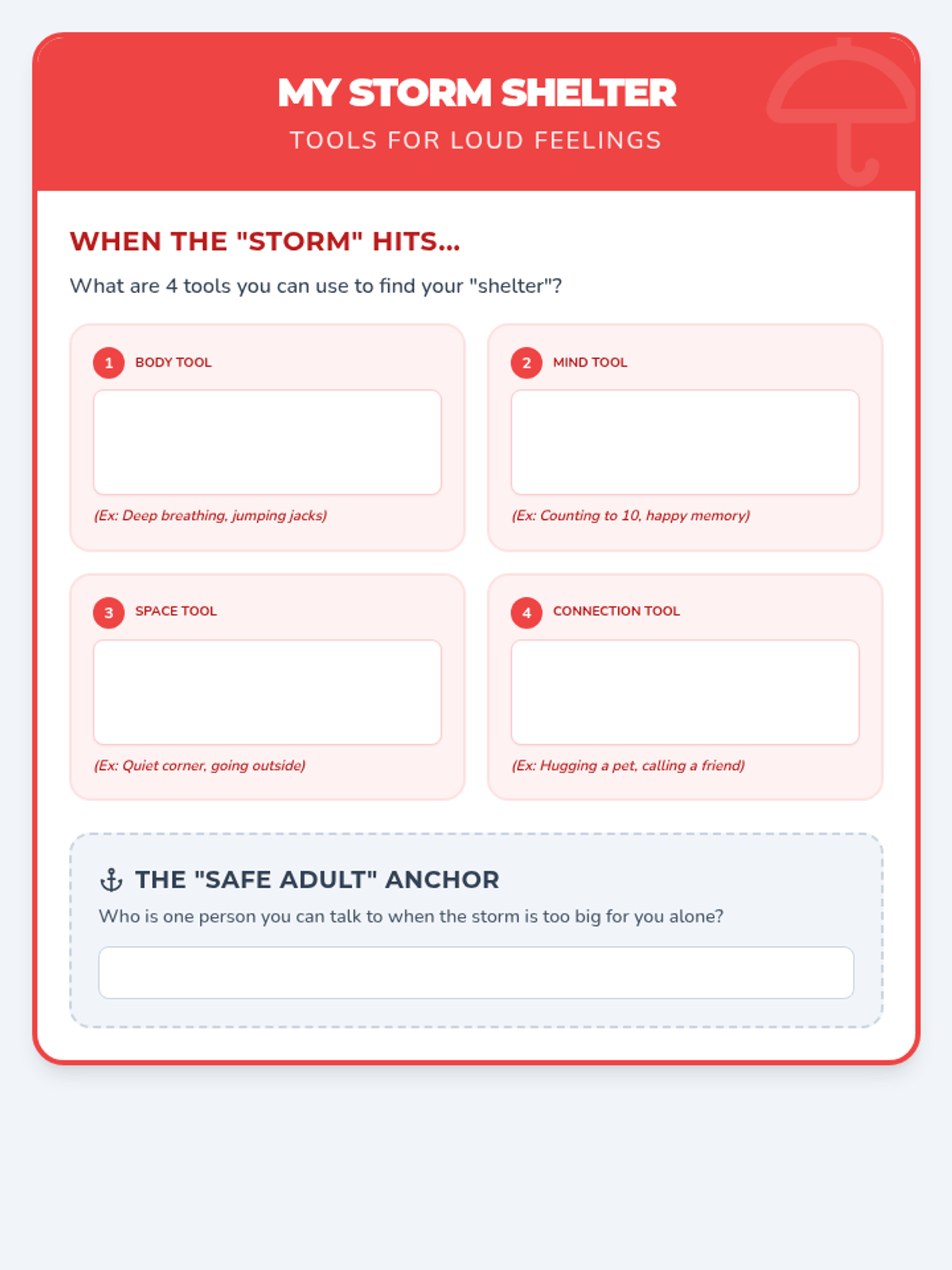
Developing personalized coping strategies and self-regulation techniques for handling difficult feelings and stressful situations.
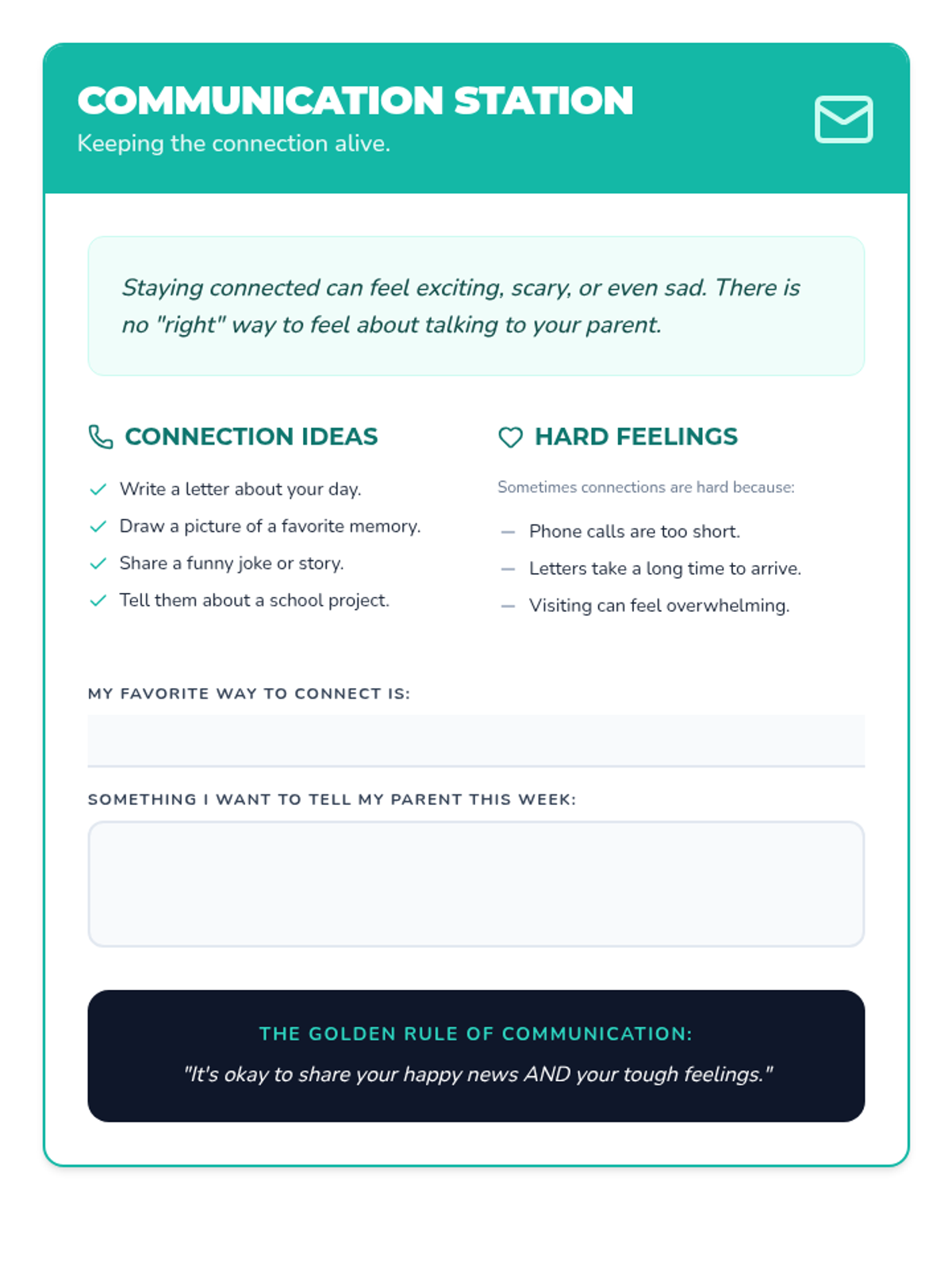
Exploring the challenges and feelings surrounding communication with an incarcerated parent, including letters, visits, and phone calls.
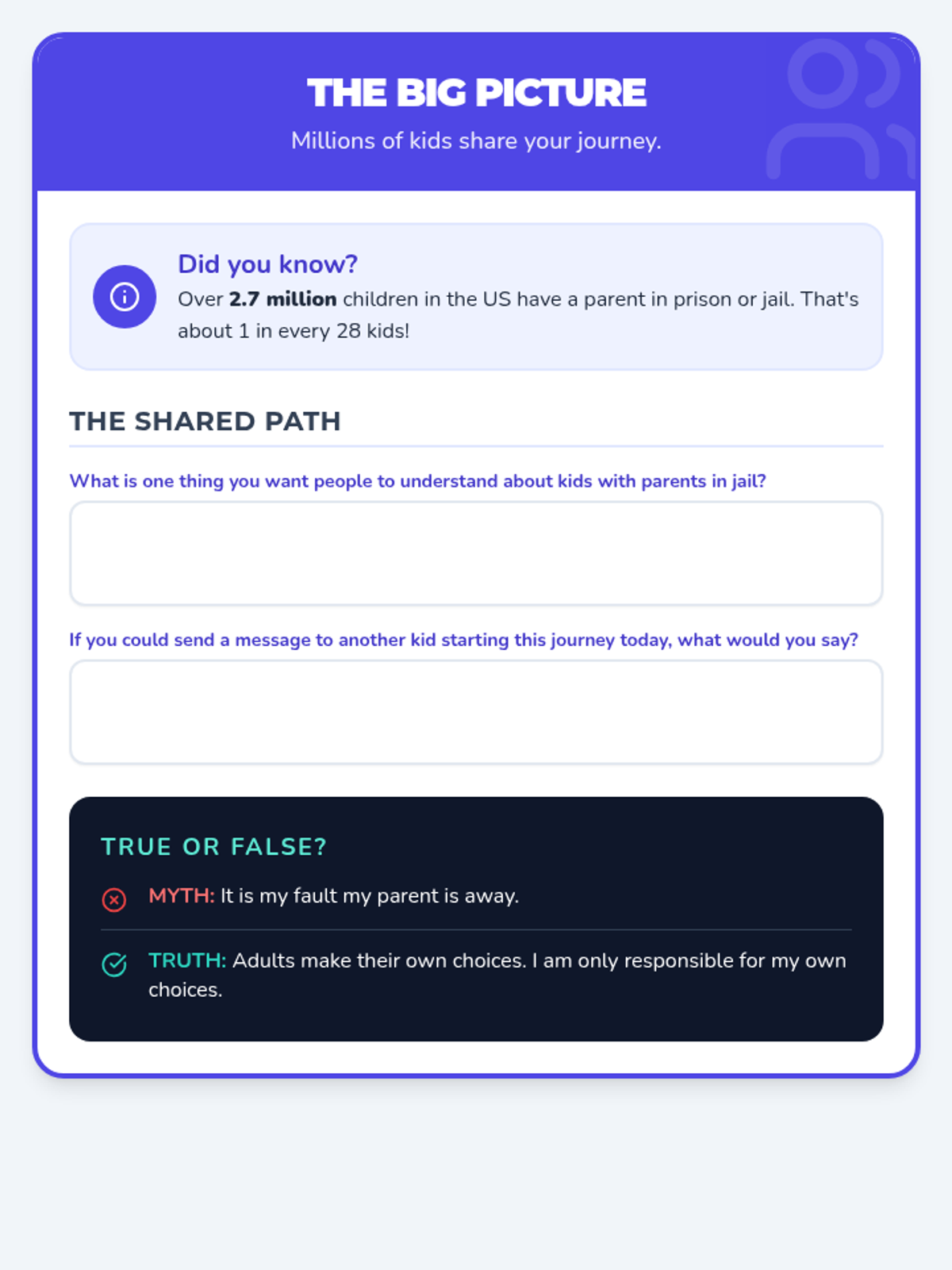
Normalizing the experience of having an incarcerated parent through shared stories and statistics to reduce shame and isolation.
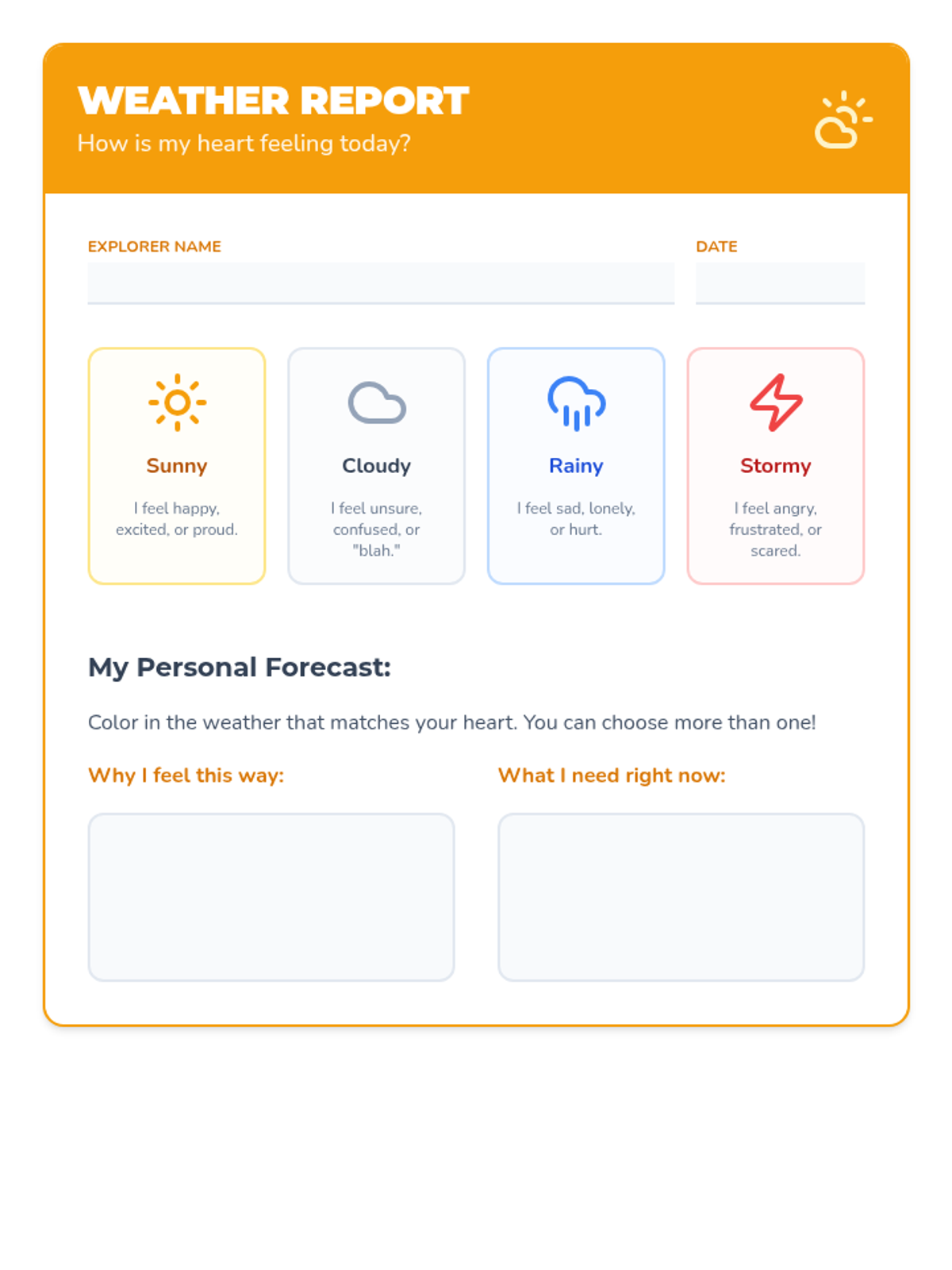
Identifying and naming complex emotions using a weather-themed framework and introducing personal emotion charts.
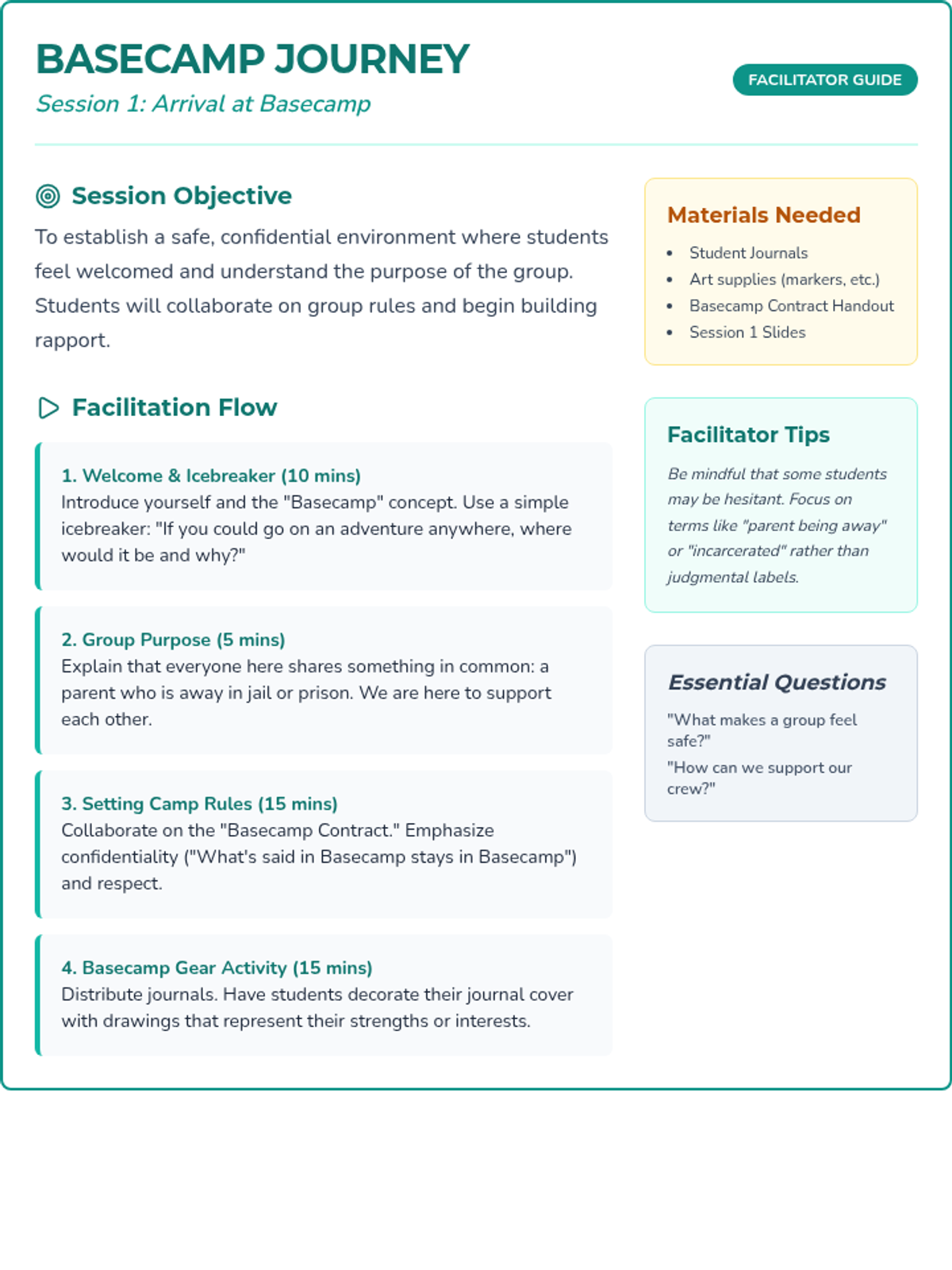
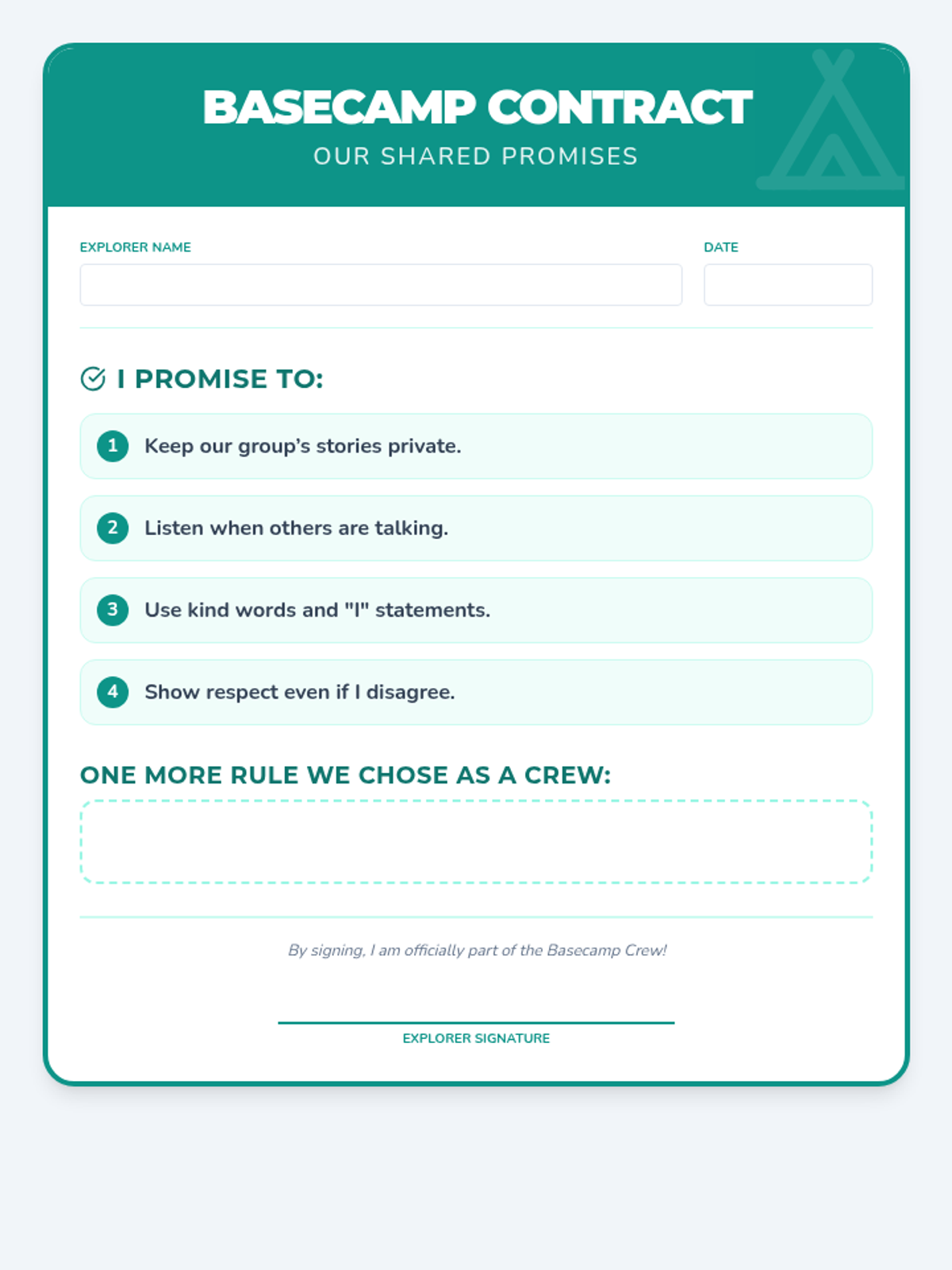
Introduction to the group, establishing safety and trust, and creating shared group agreements.
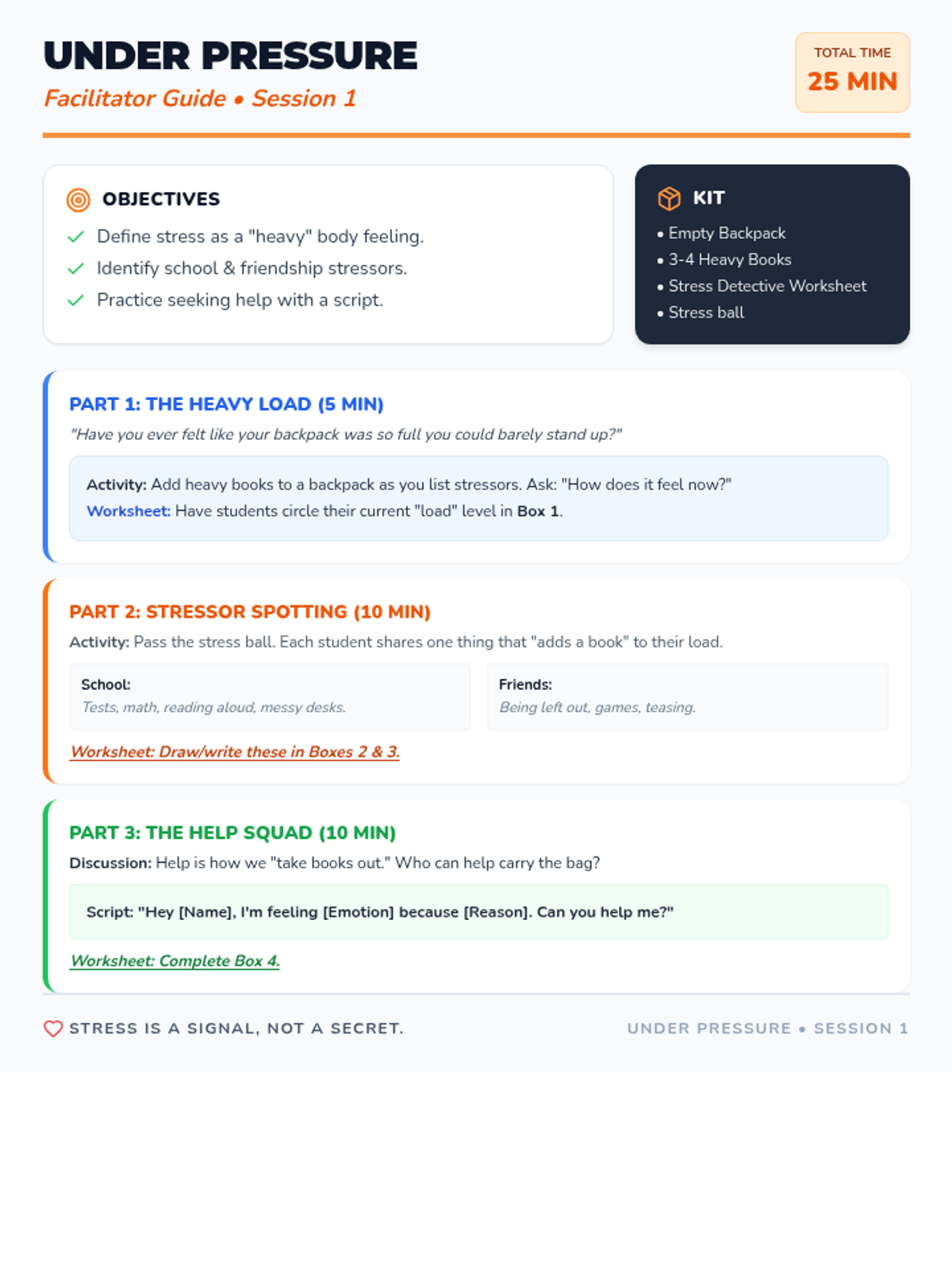
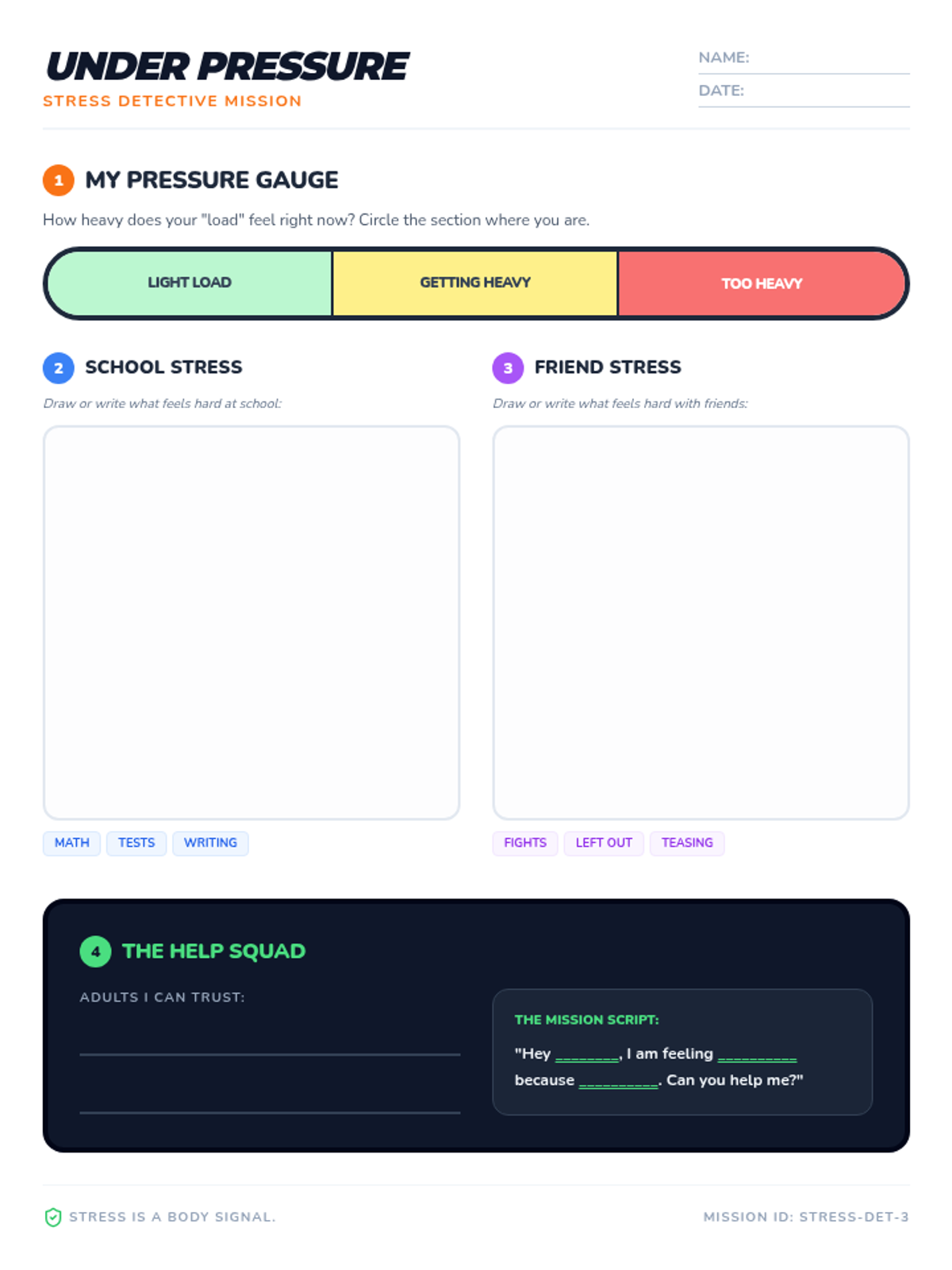
A targeted 25-minute small group session for 3rd-grade boys to understand stress, identify school and friendship stressors, and learn concrete coping and help-seeking strategies.
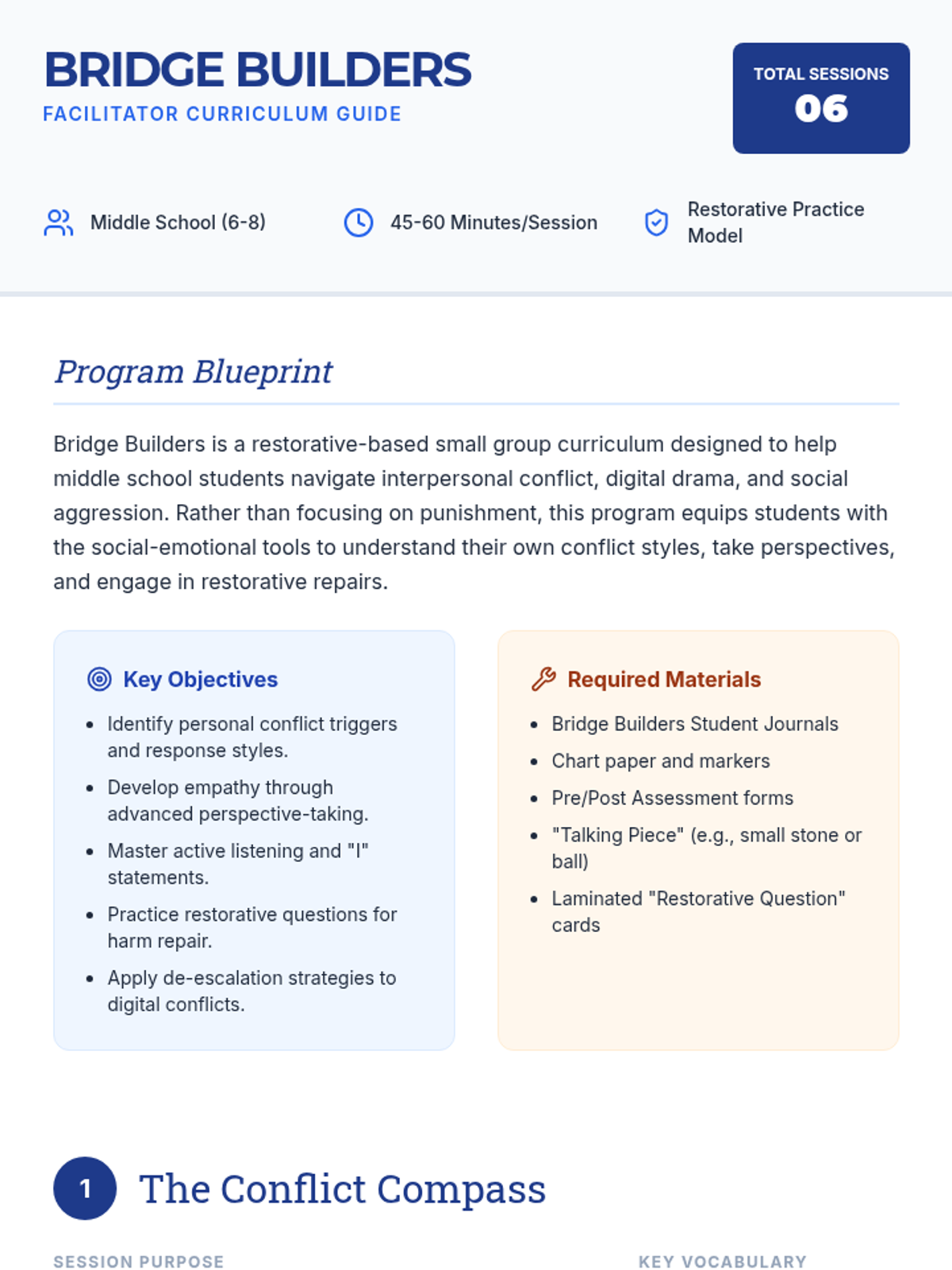
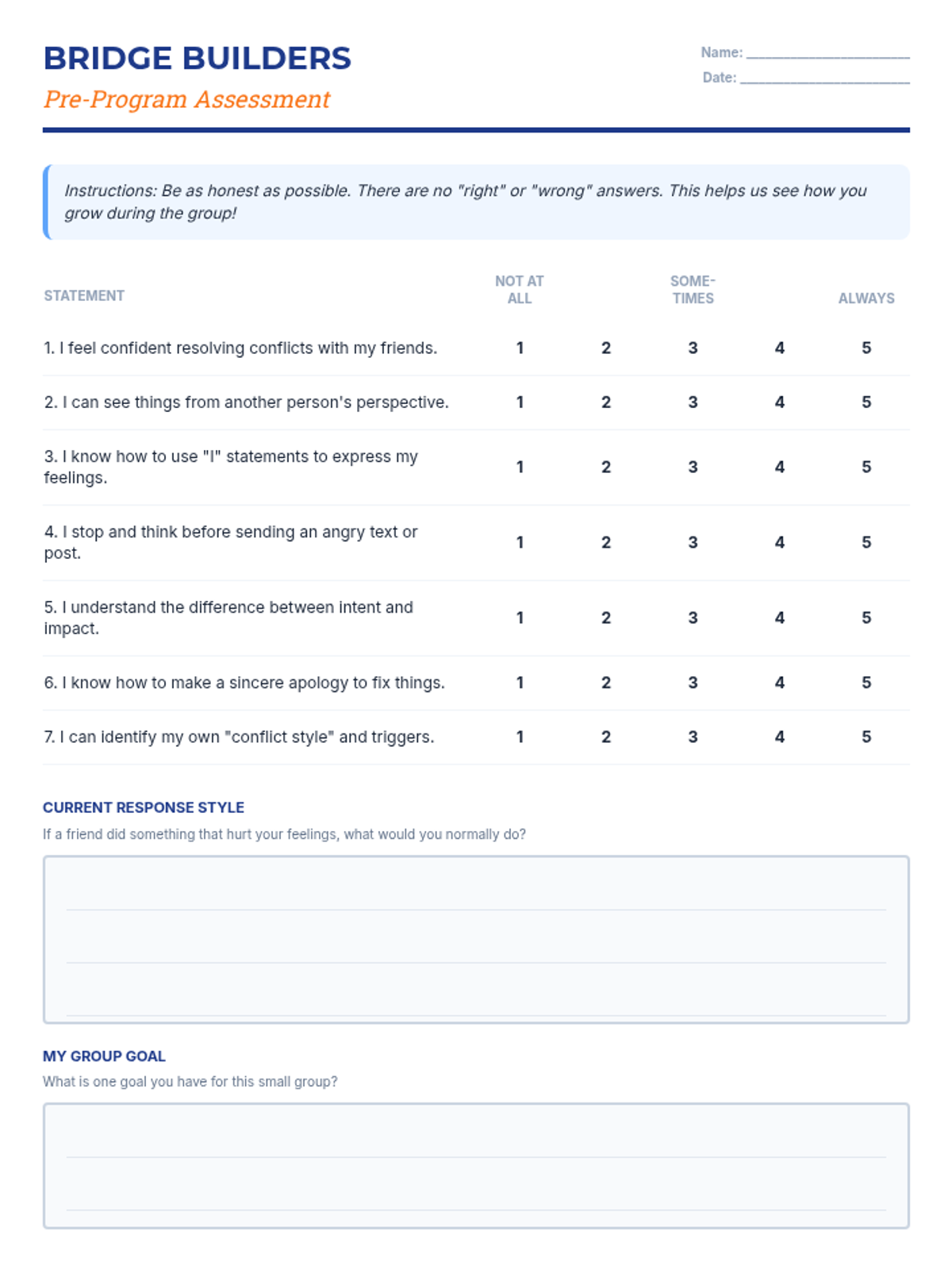
Focuses on establishing group safety, defining conflict, and identifying personal conflict styles using the 'Conflict Compass'. Students set group norms and complete the pre-program assessment.
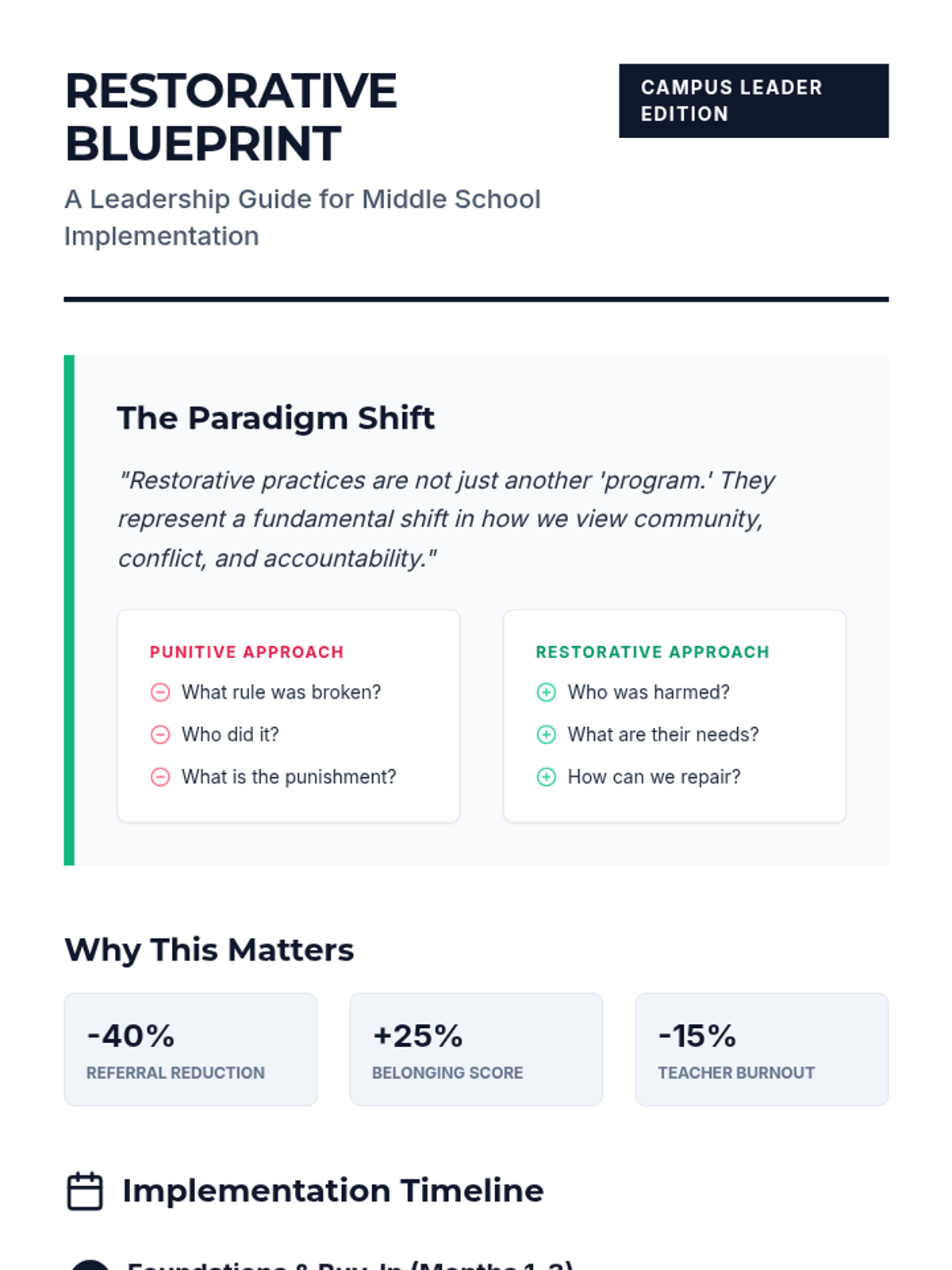
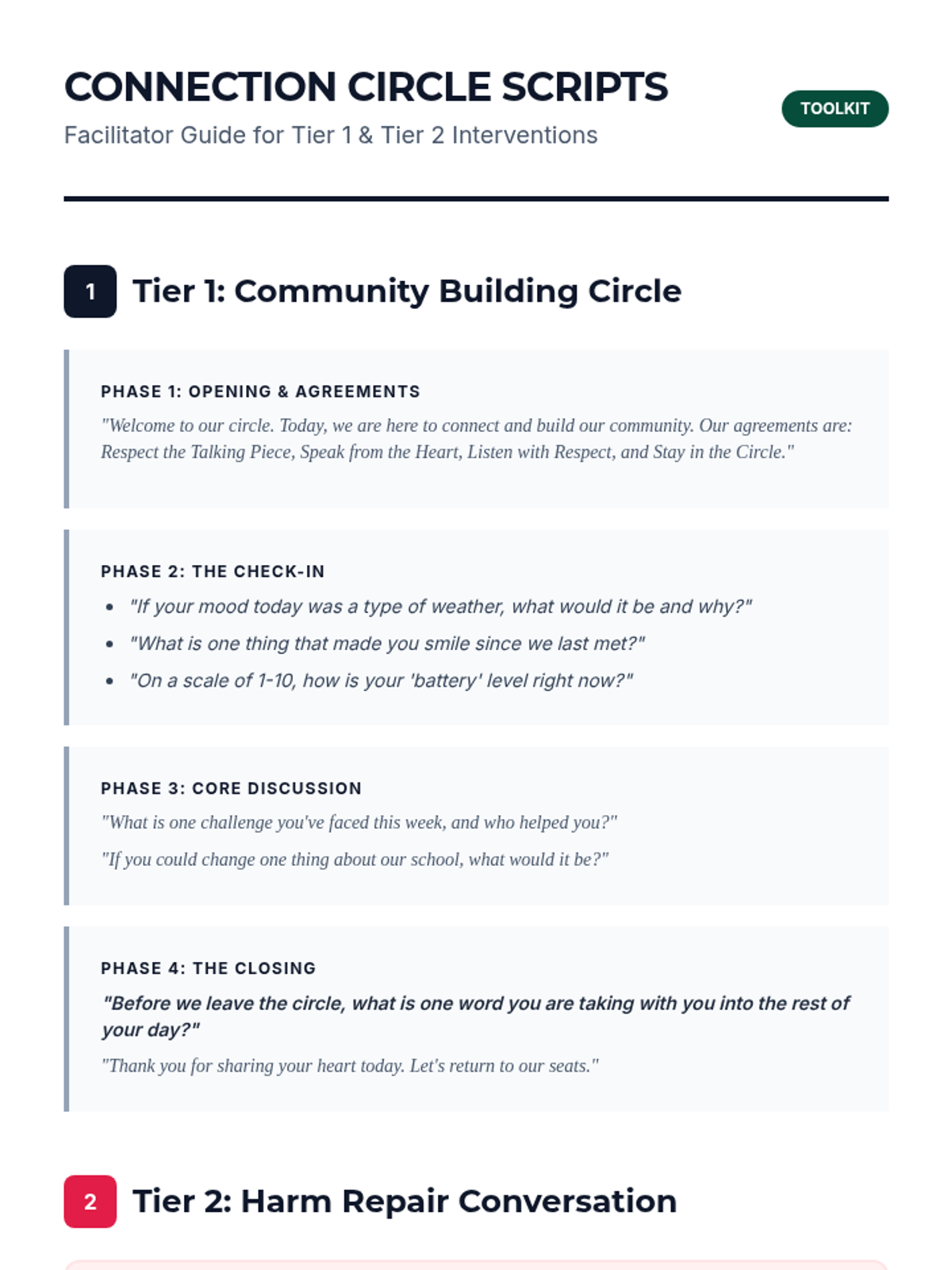
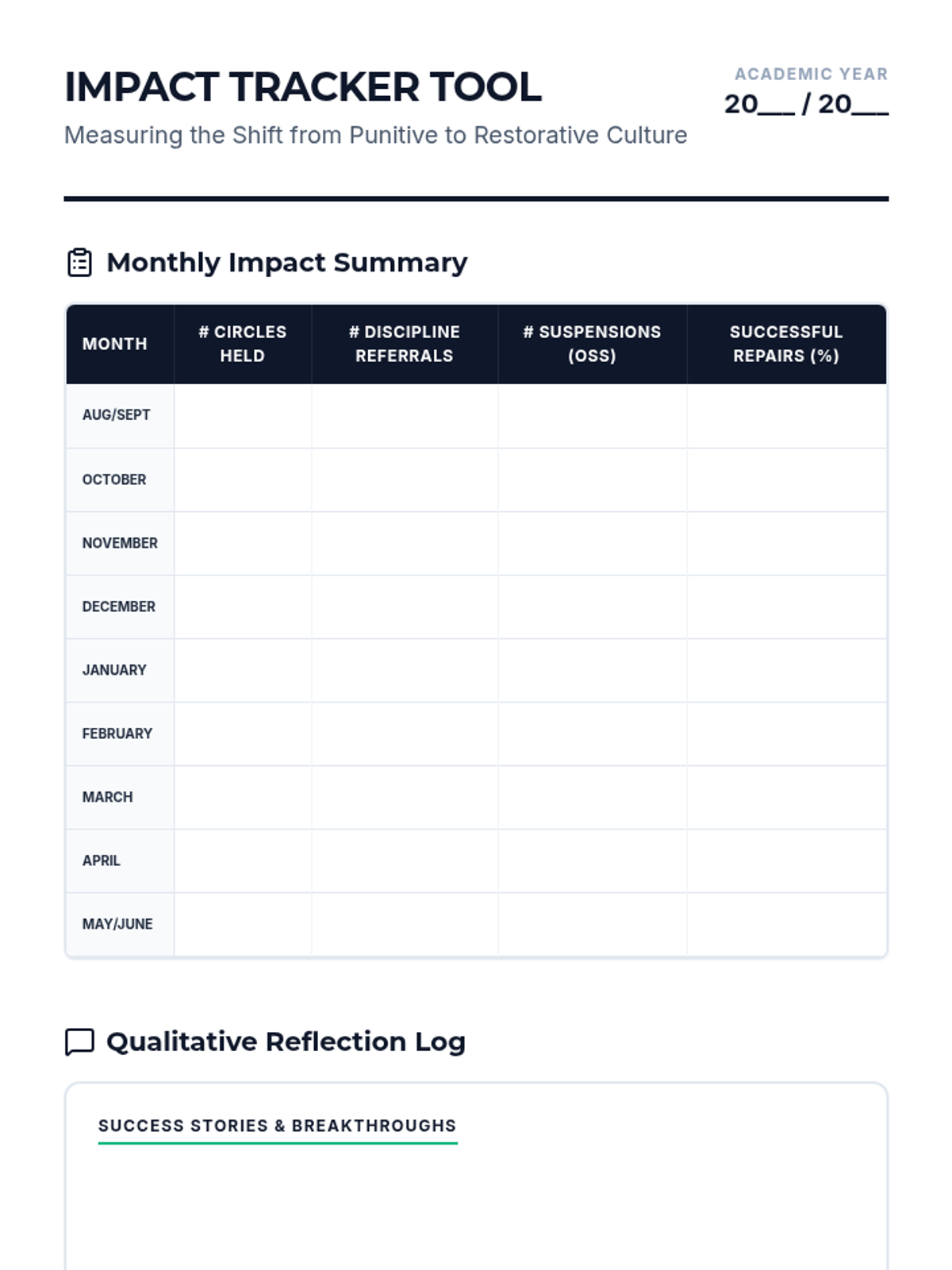
A comprehensive resource suite for campus leaders to implement restorative practices, focusing on shifting from punitive discipline to community-centered harm repair.
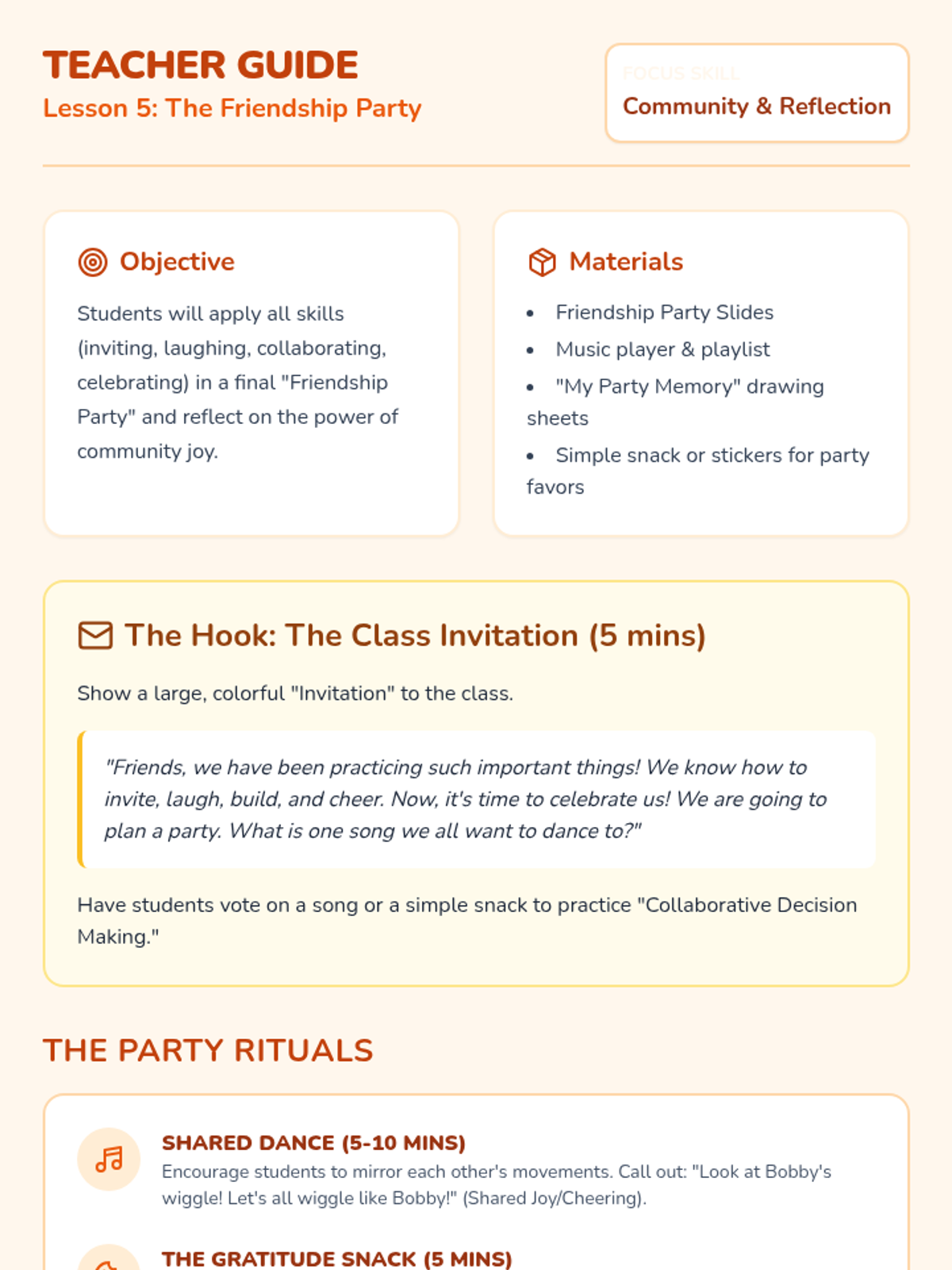
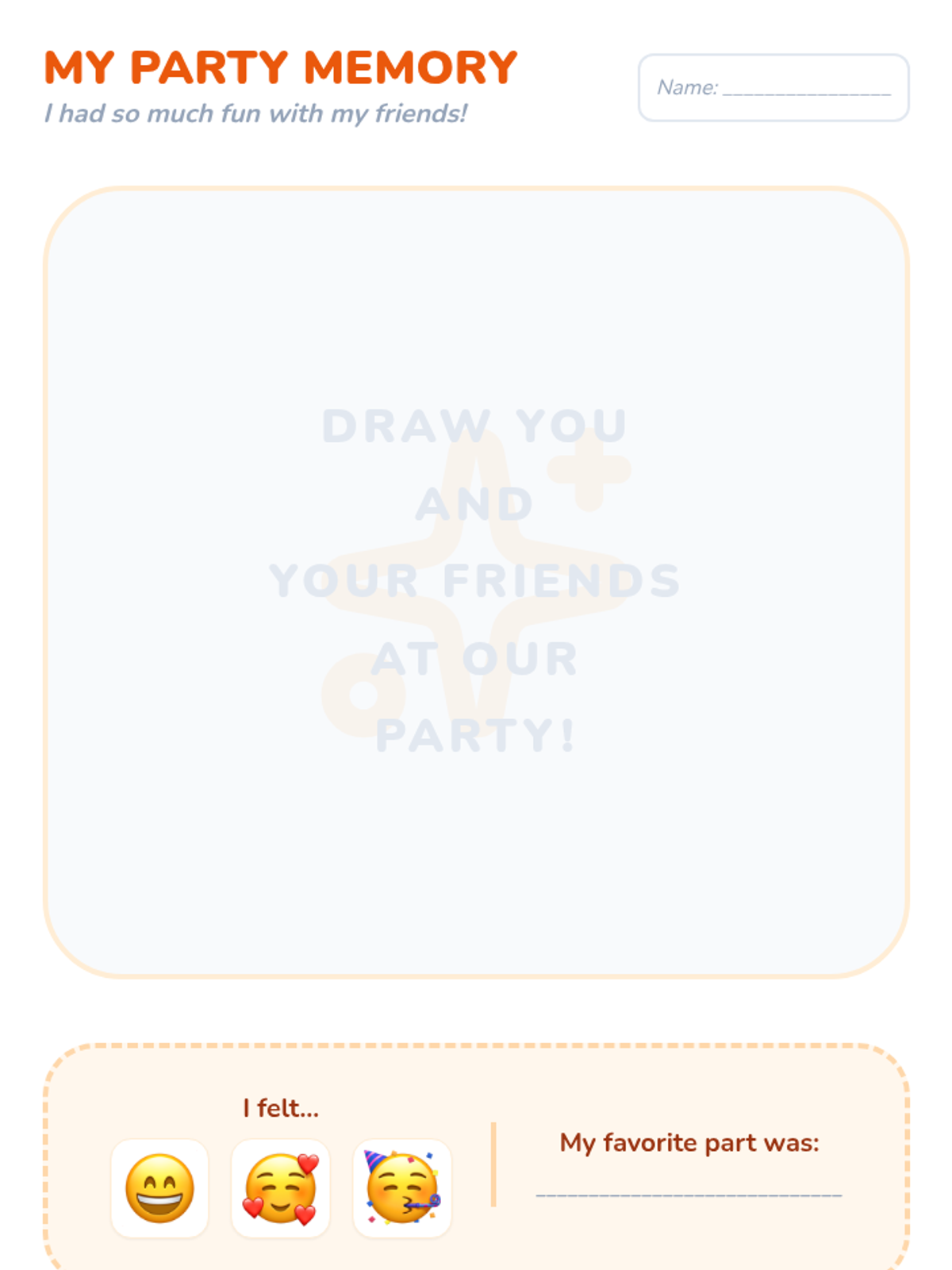
A culminating event where students plan and execute a simple shared activity (like a dance party or snack share). They reflect on how doing things together feels different than doing them alone.
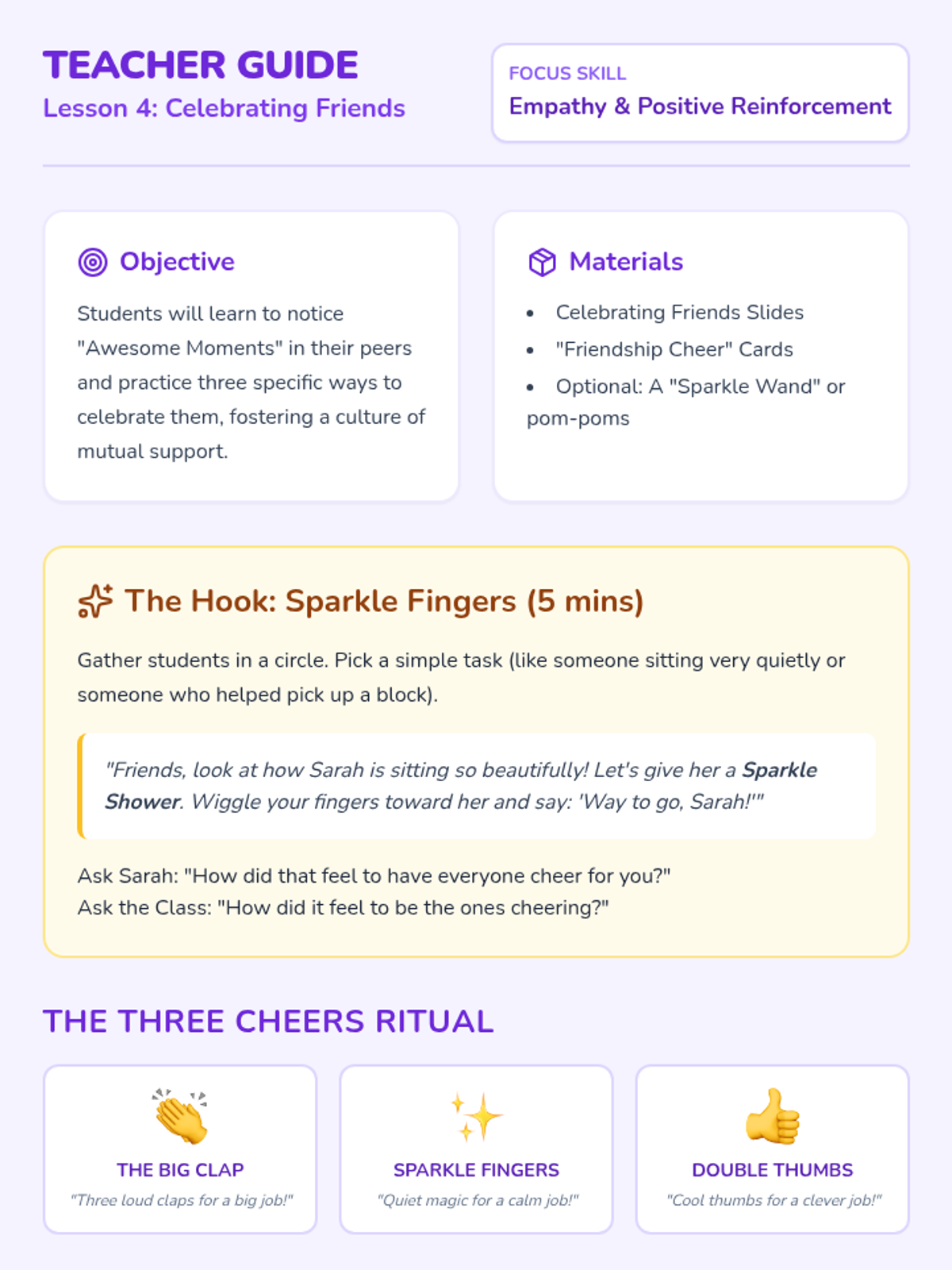
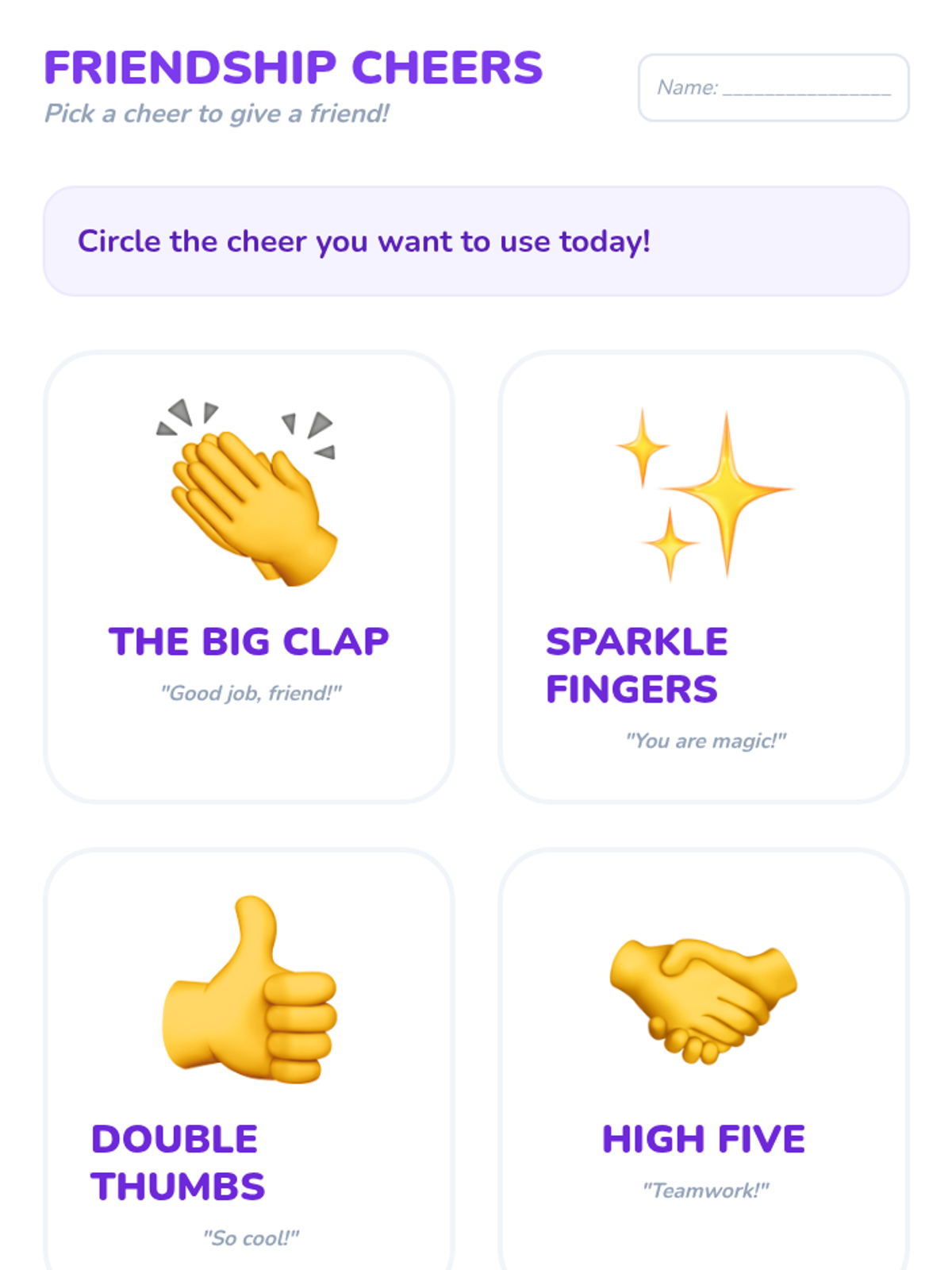
Students learn to identify when a friend does something good and how to celebrate them (clapping, cheering). This shifts focus from self-gratification to finding joy in others' success.
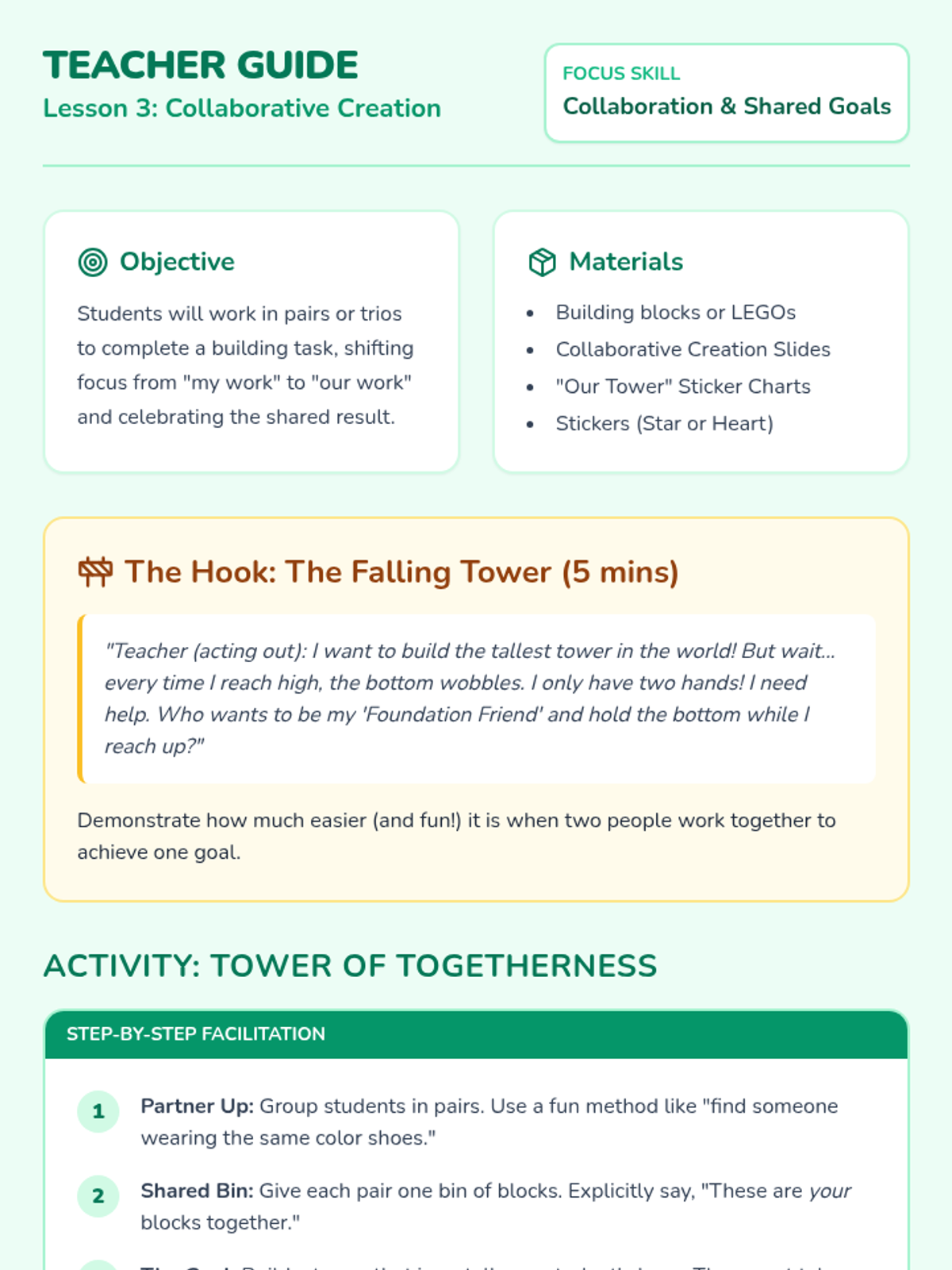
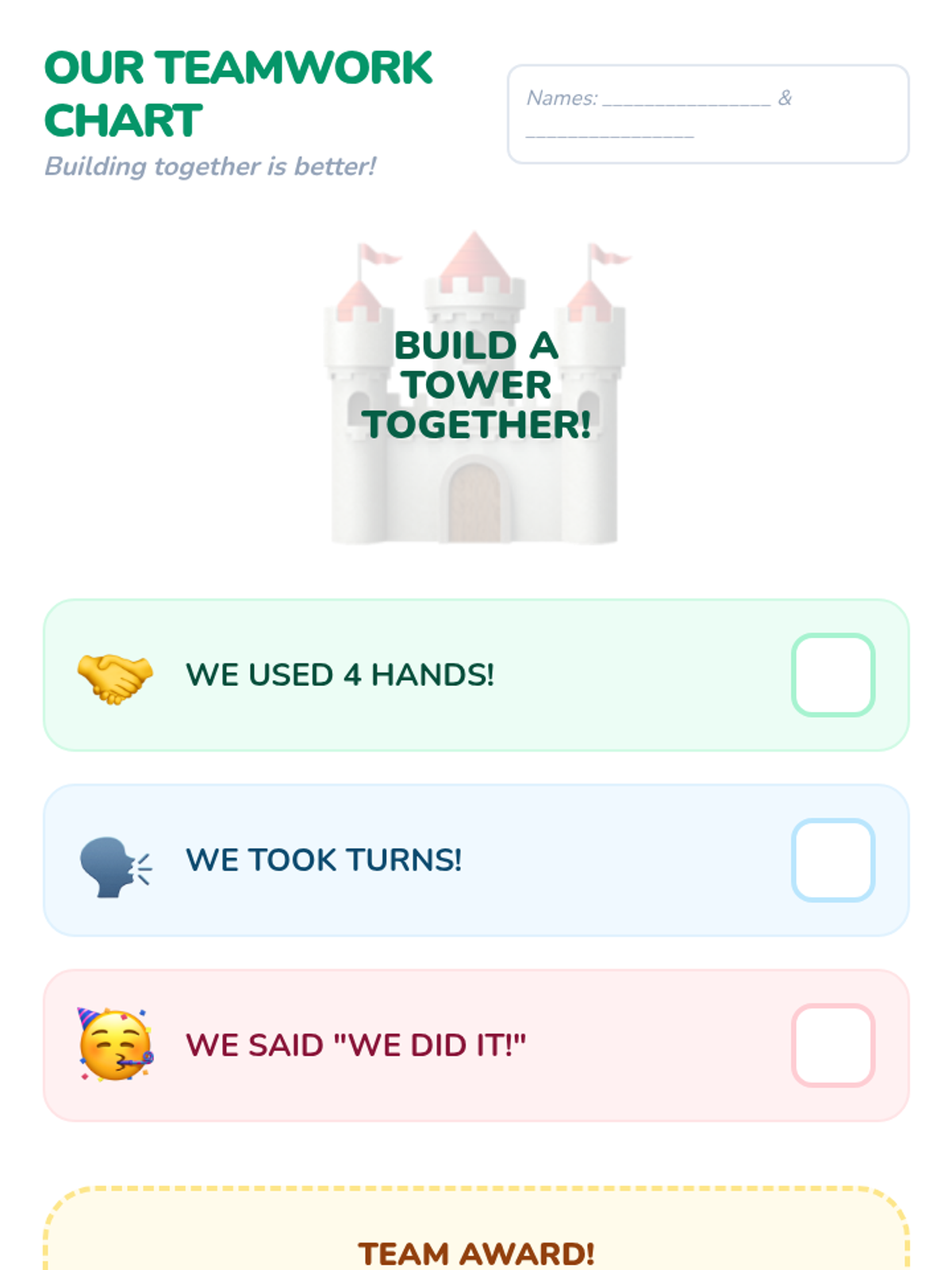
Small groups work together to build something (block tower, art piece). The focus is on the positive feeling of achieving a goal together rather than the final product.
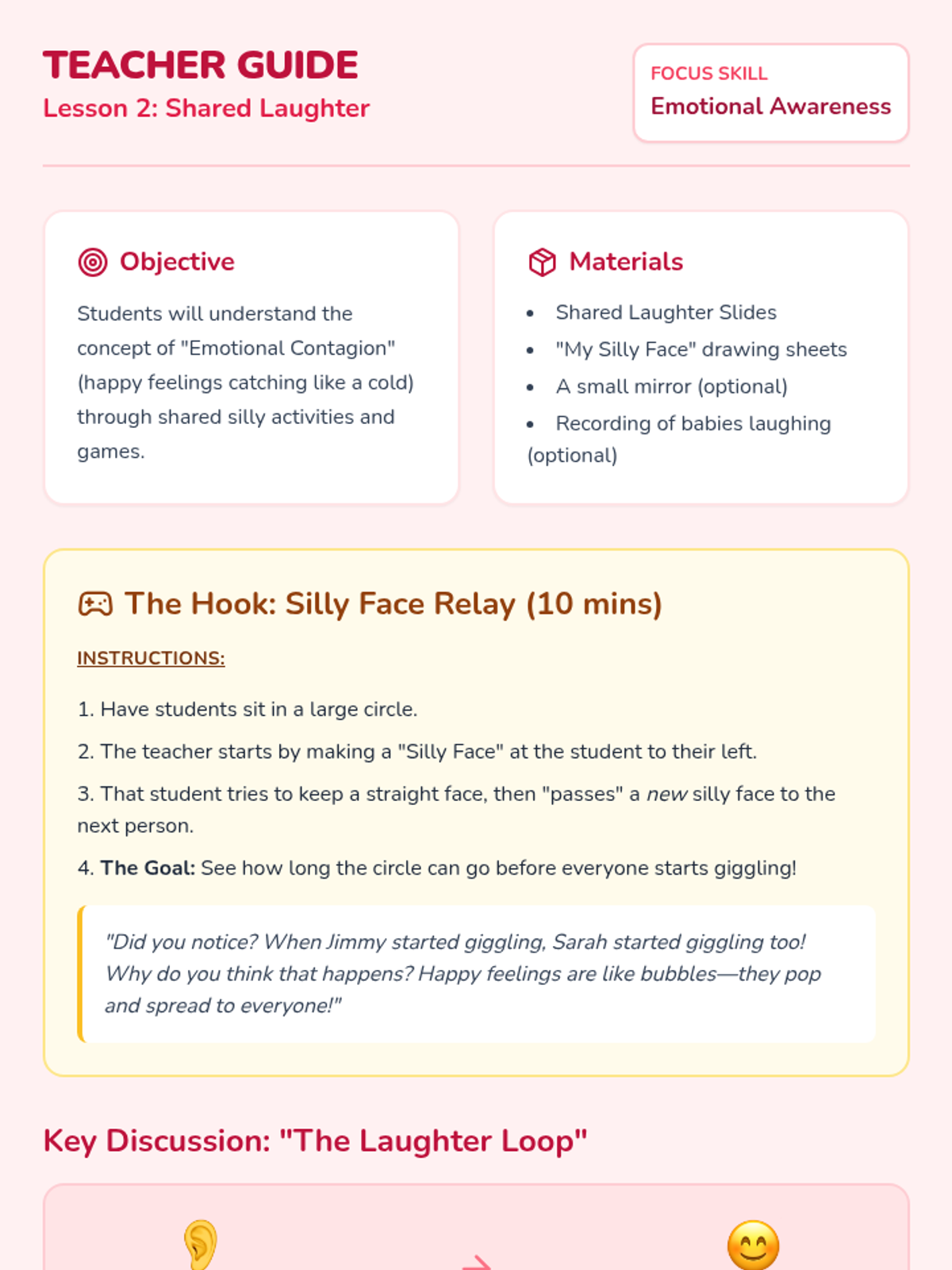
The class engages in silly activities designed solely to produce shared laughter. They discuss how hearing others laugh makes them want to laugh too, introducing the concept of emotional contagion.
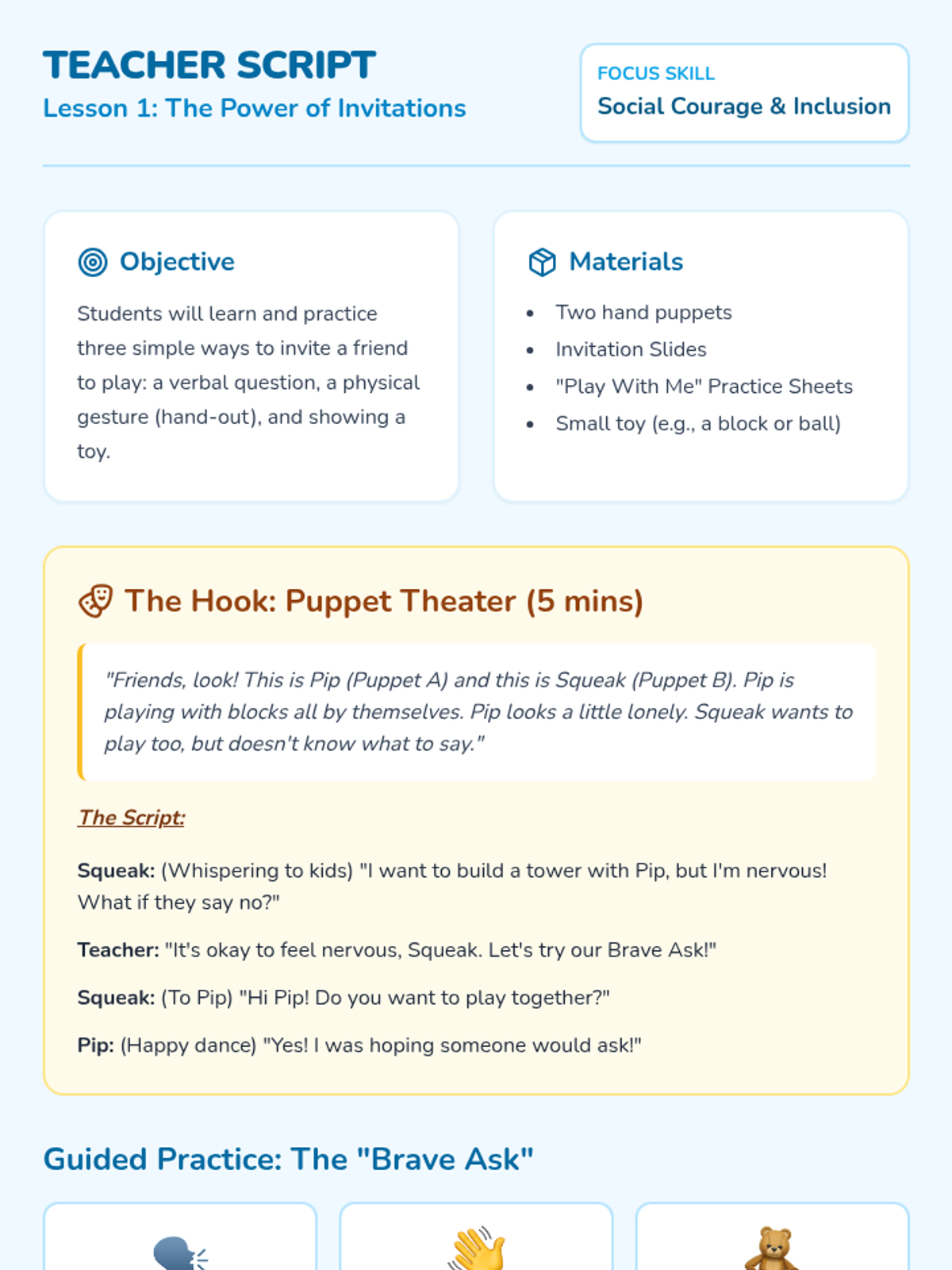
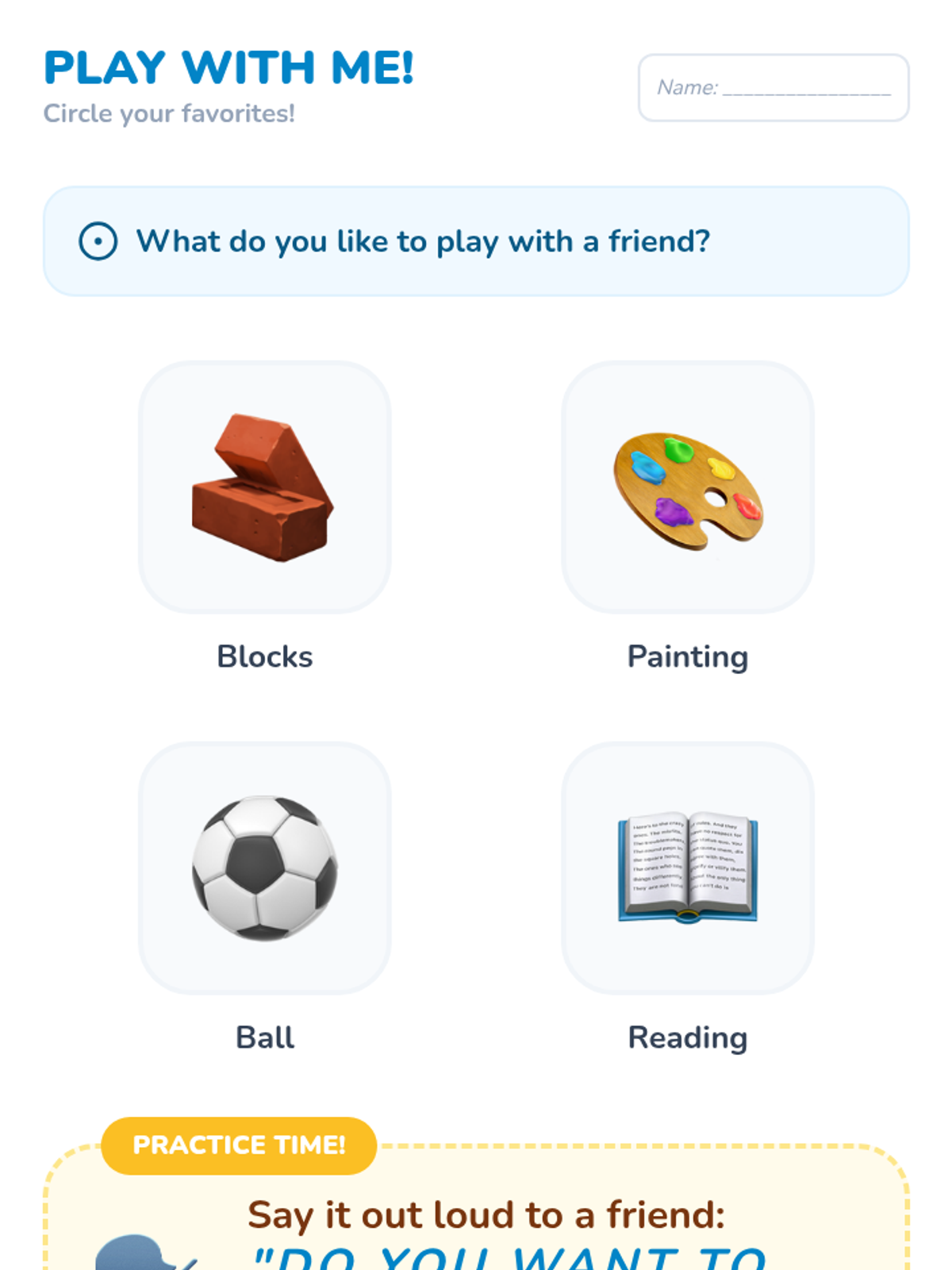
Students learn simple scripts and gestures to invite peers to join a positive activity, practicing inclusion and social courage.
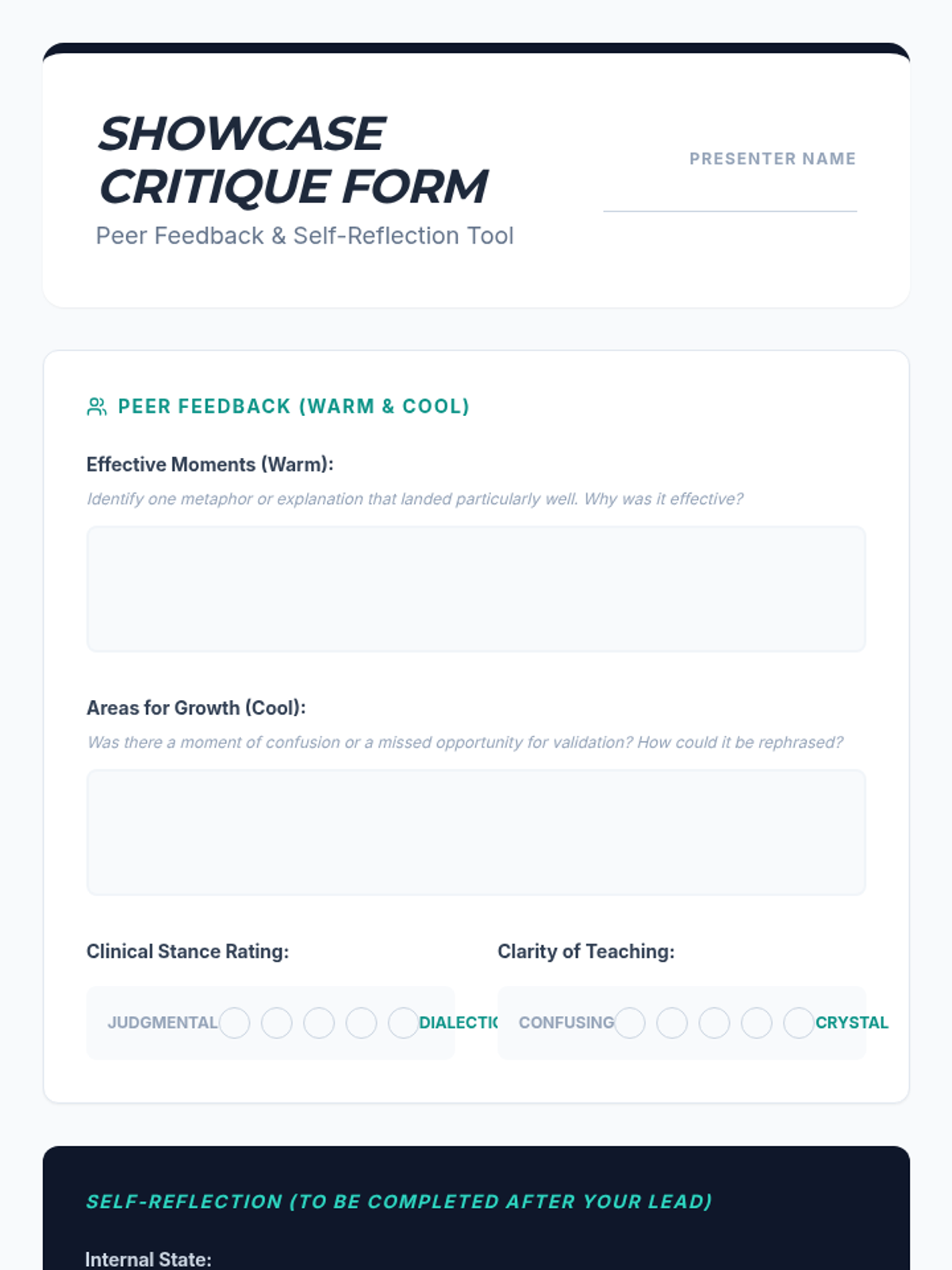
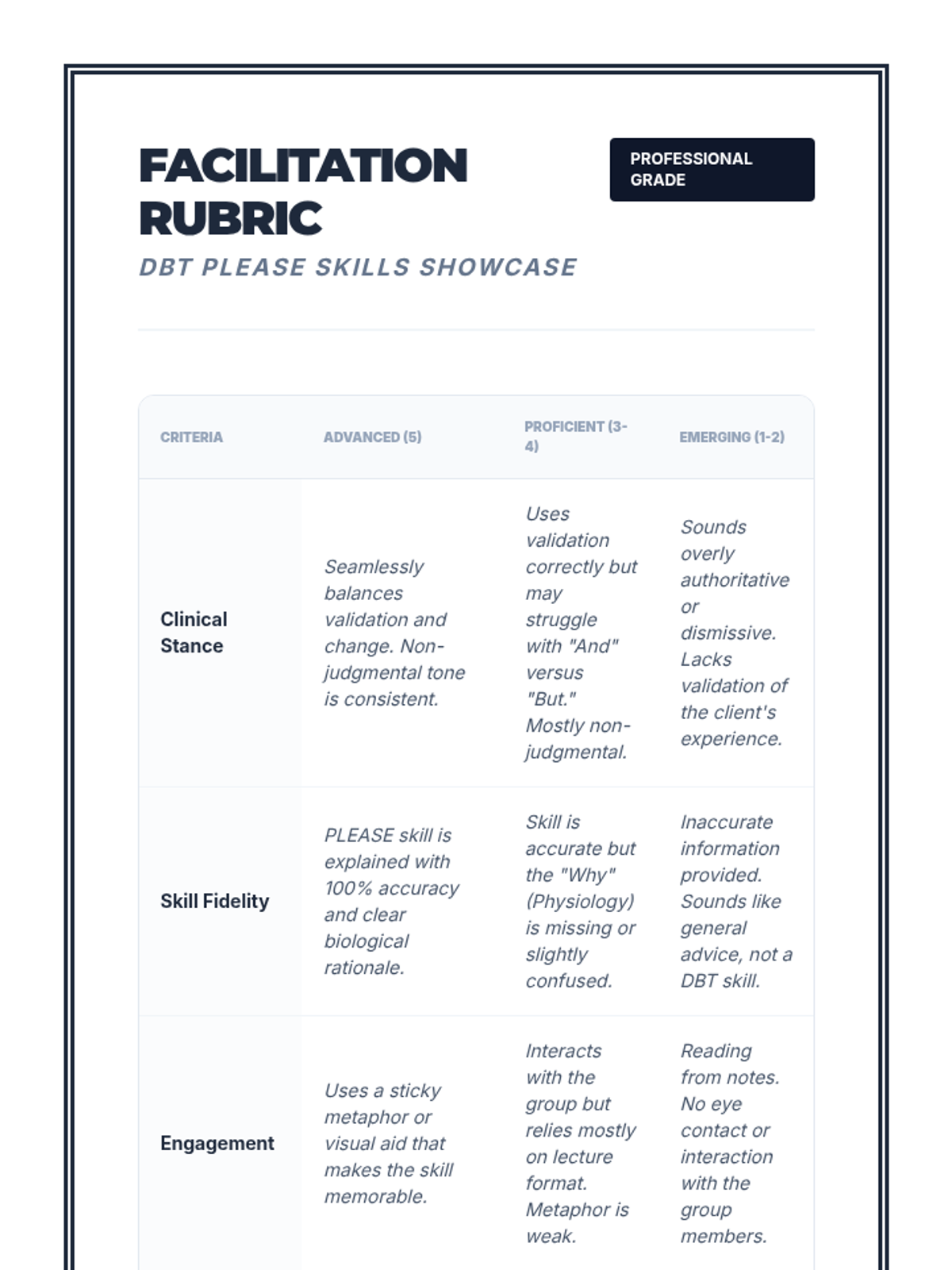
Students facilitate a mock group segment and receive professional feedback on their teaching style and clinical presence.
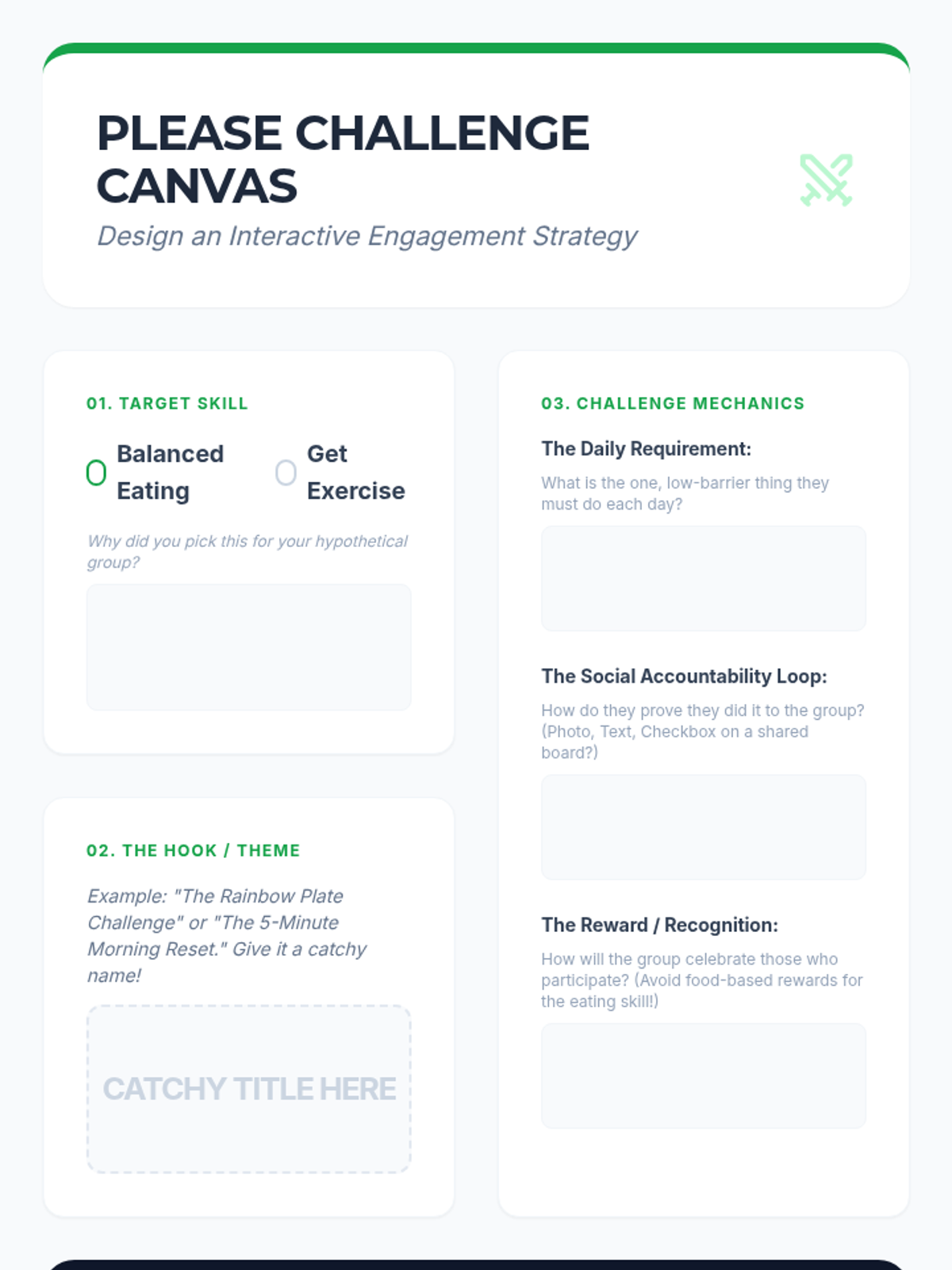
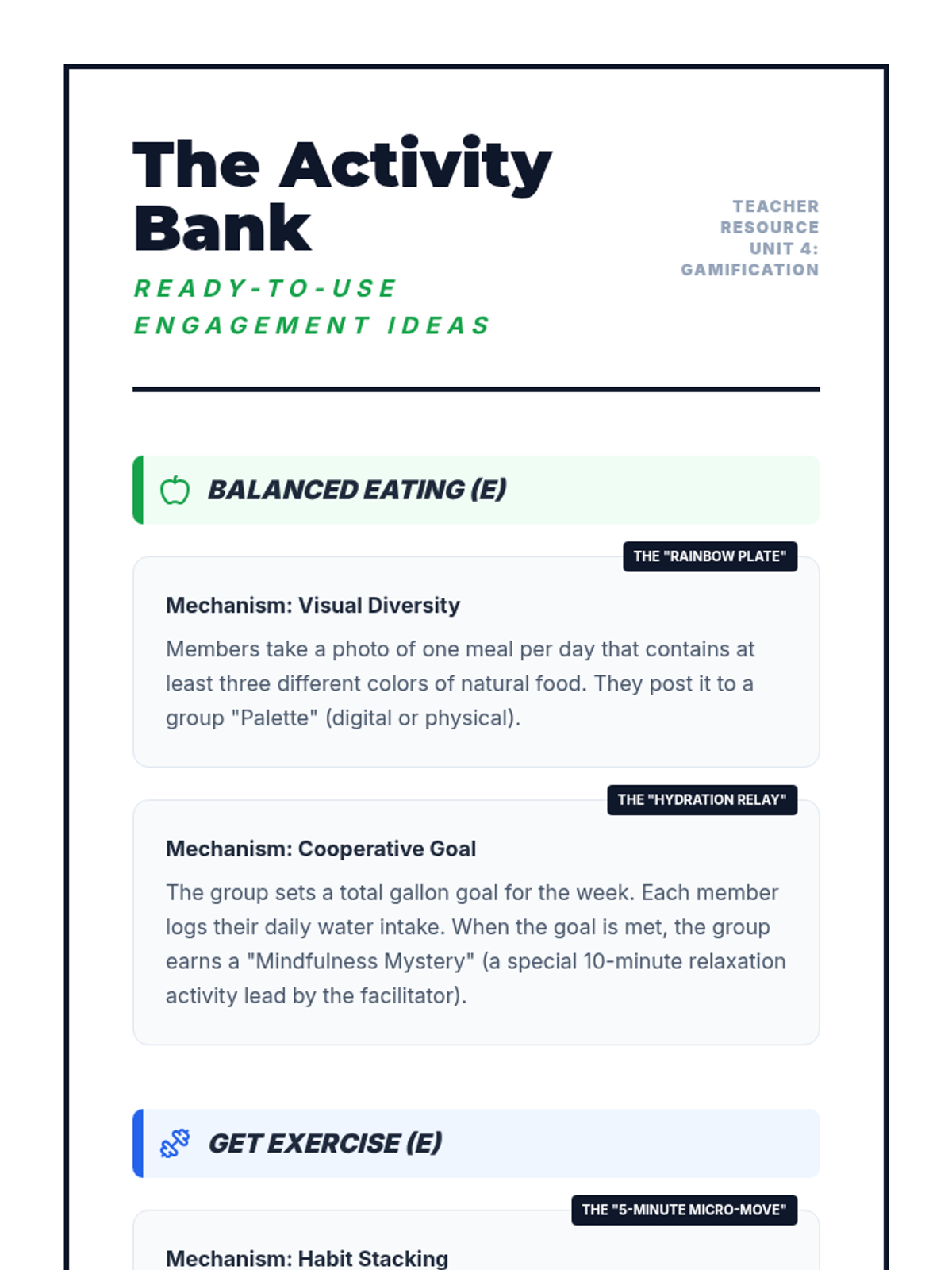
Students apply gamification and social accountability strategies to make behavioral health habits (eating and exercise) engaging for groups.
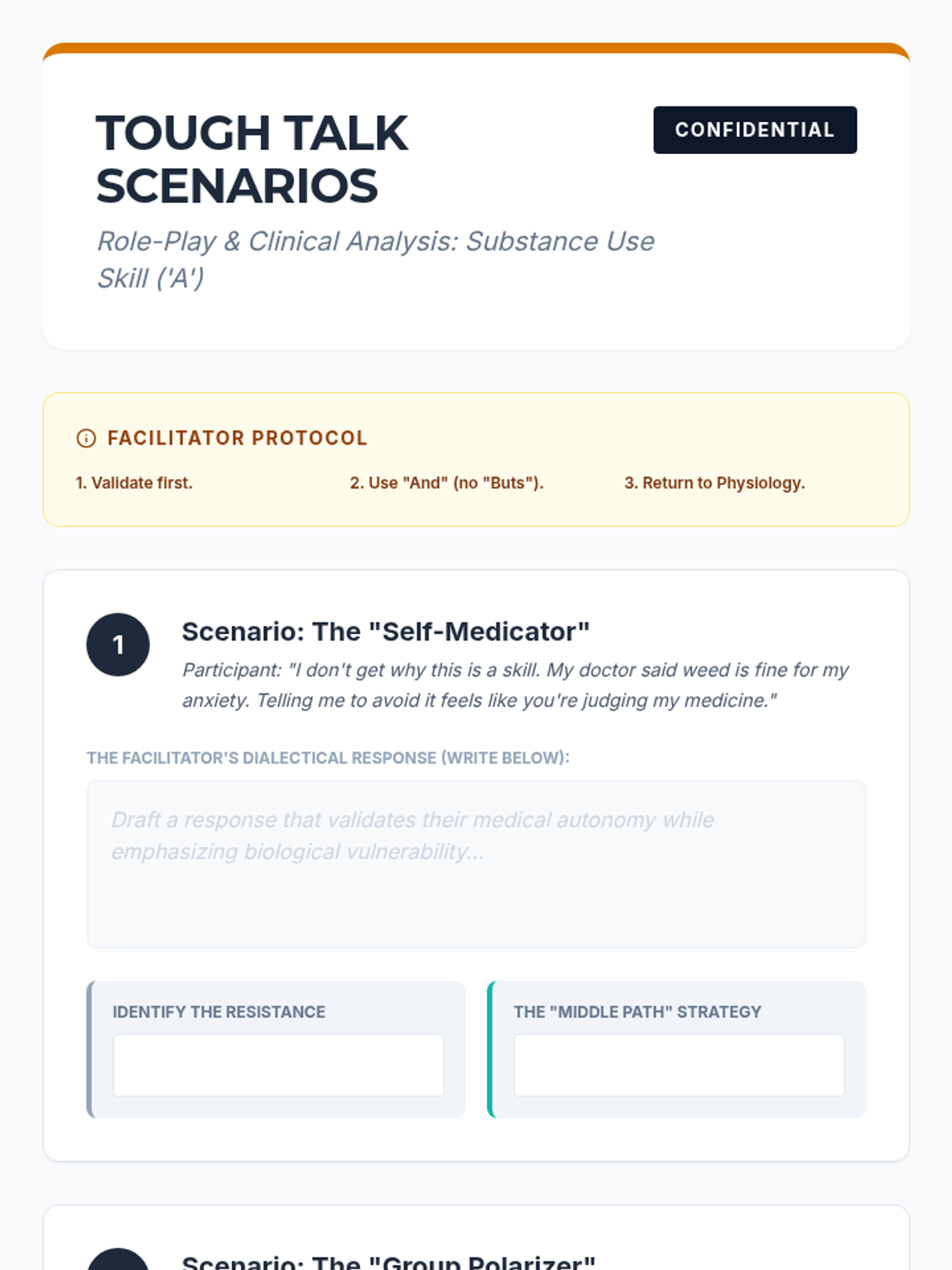
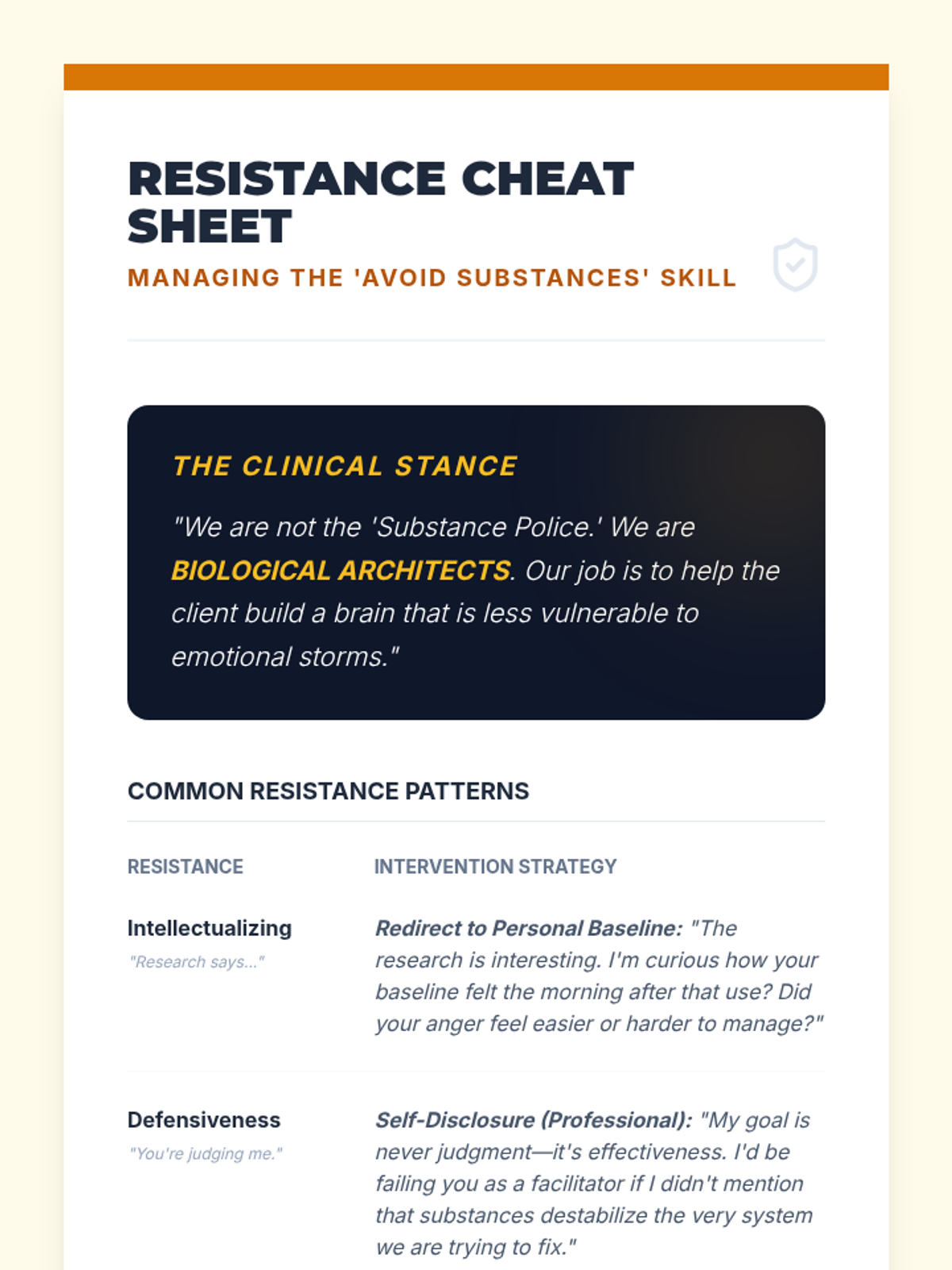
This lesson focuses on managing group resistance and sensitive dynamics around substance use and mood-altering behaviors.
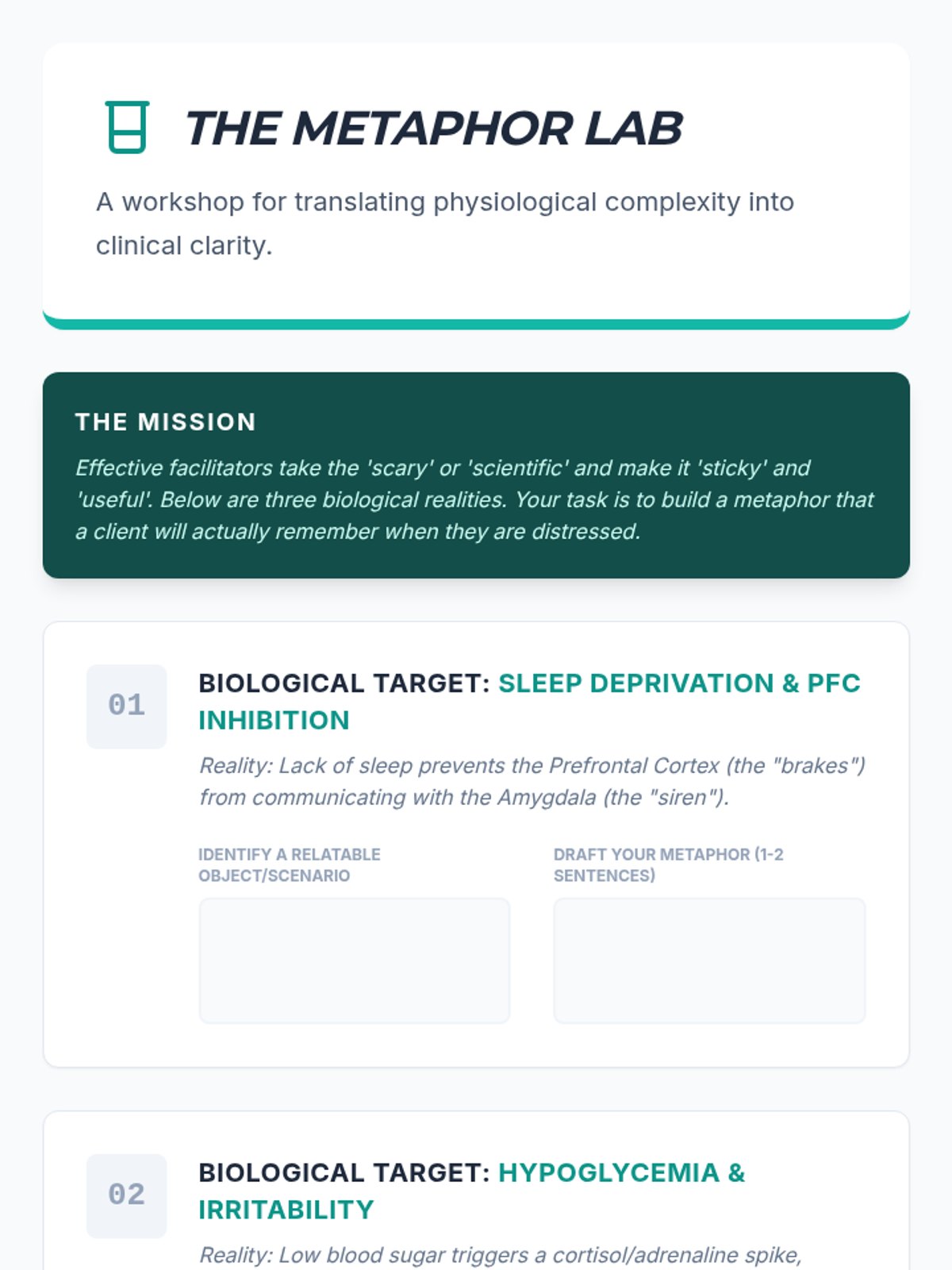
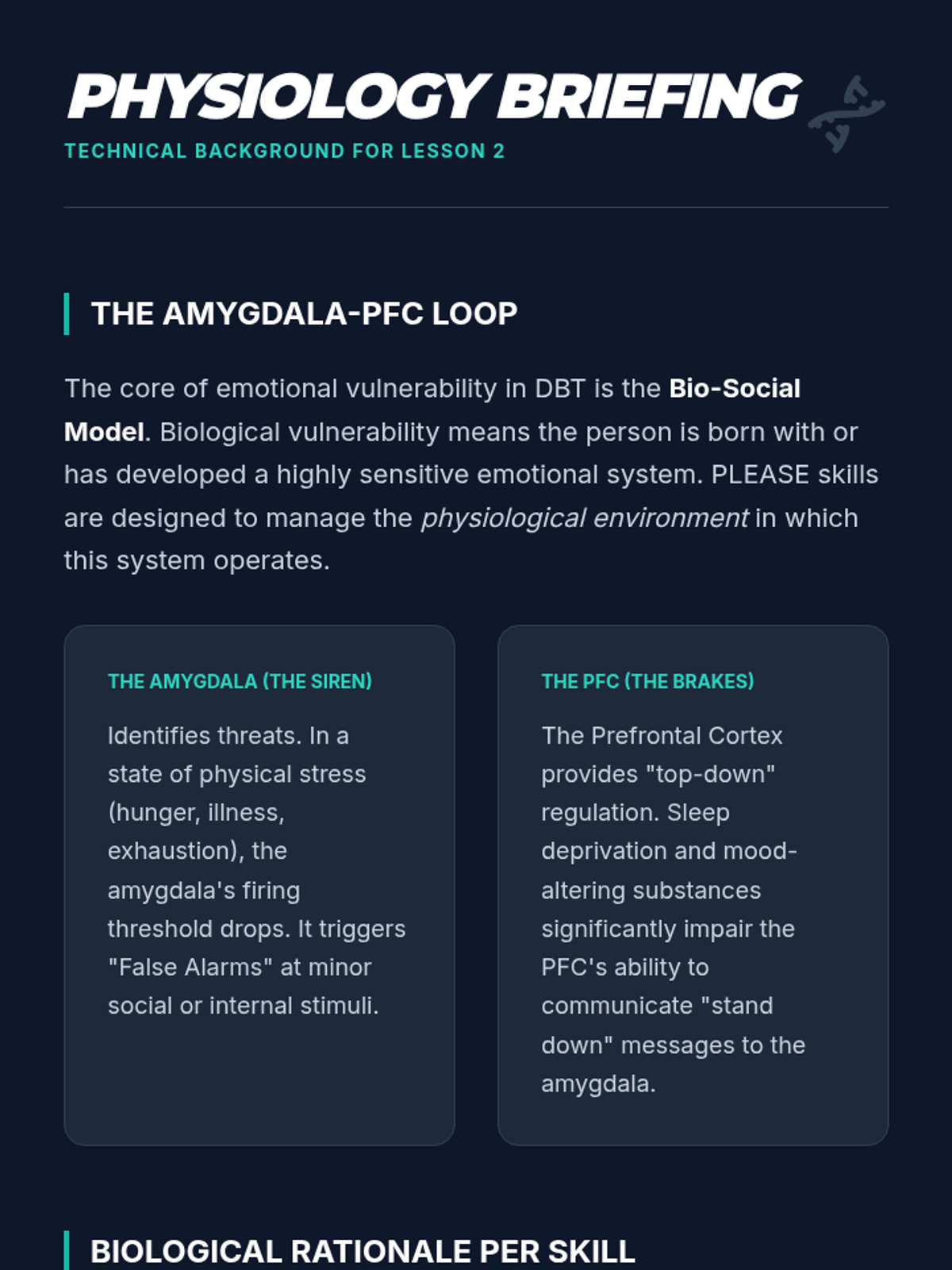
Students practice translating complex physiological concepts of emotional regulation into accessible psychoeducation for group members.
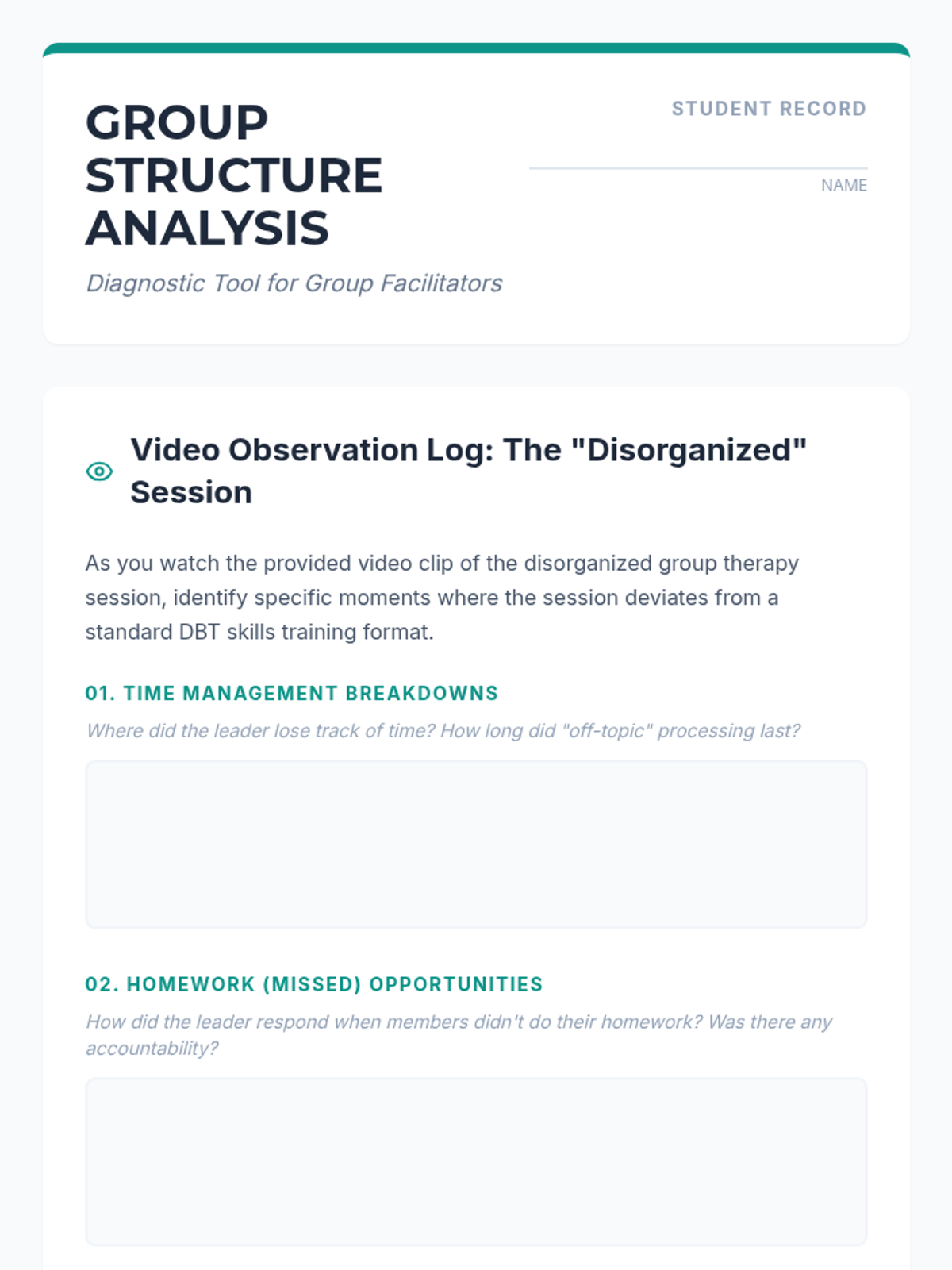
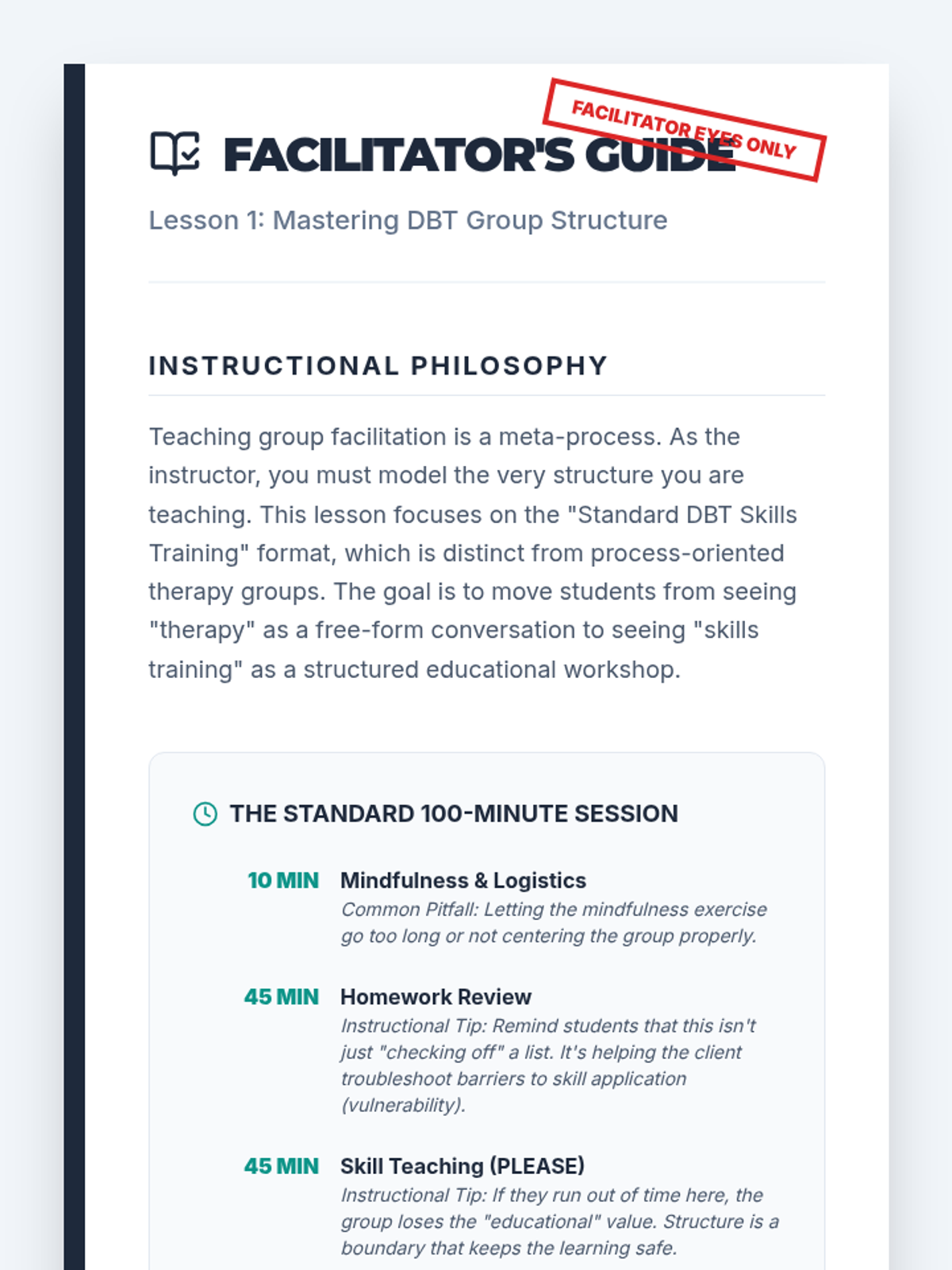
Students explore the standard DBT skills training group format, focusing on the balance between content delivery (PLEASE intro) and group processing.
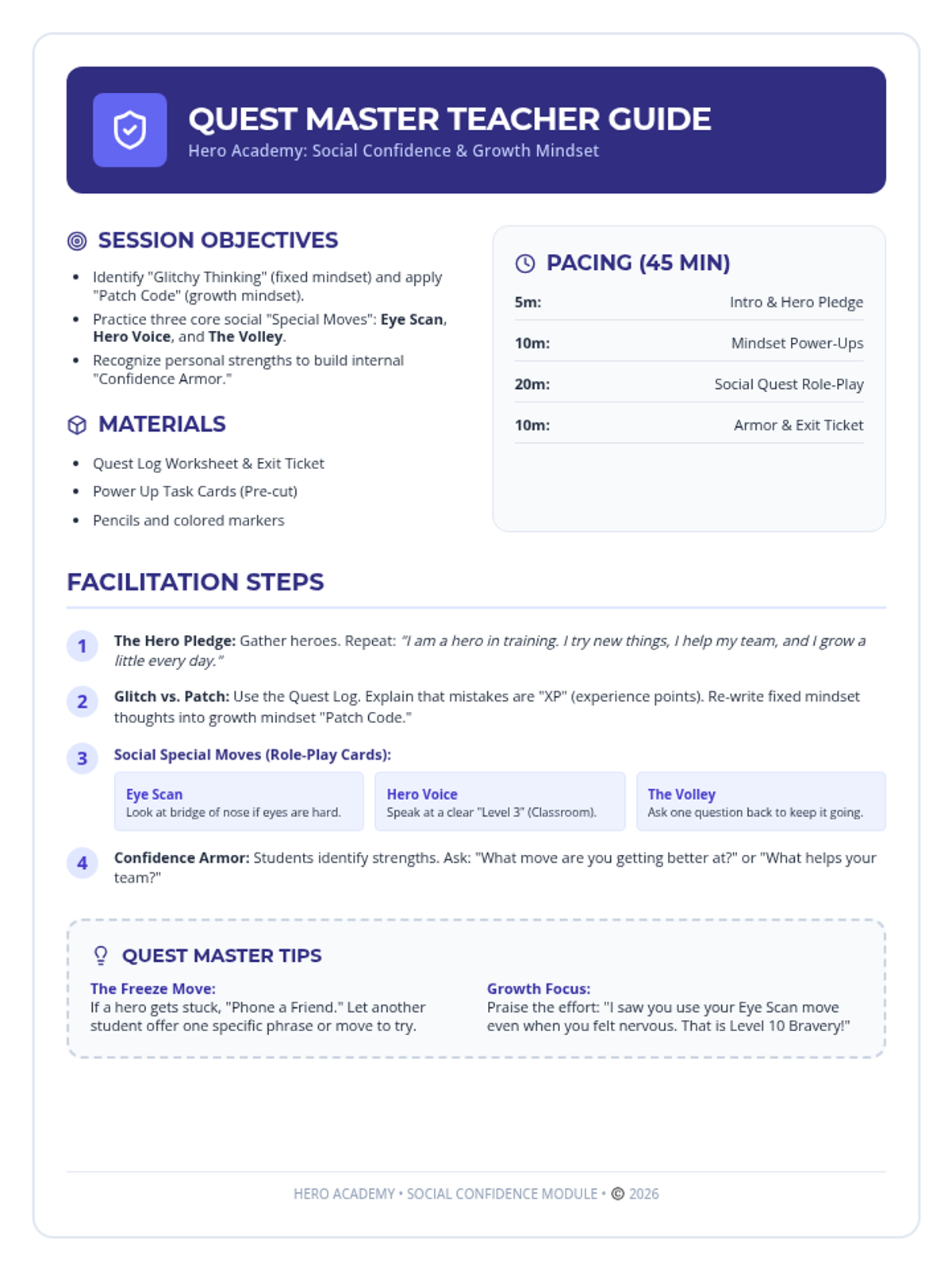
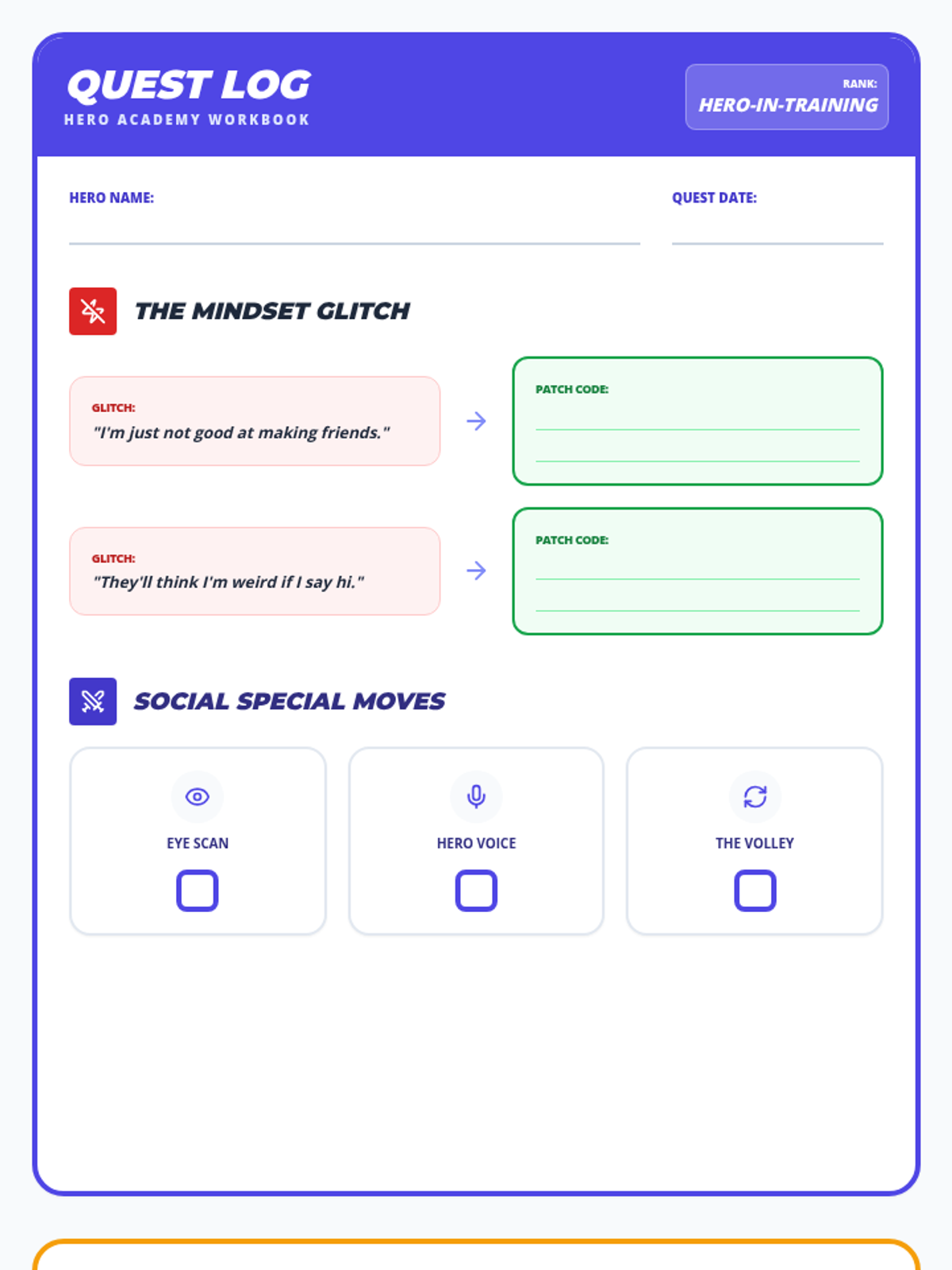
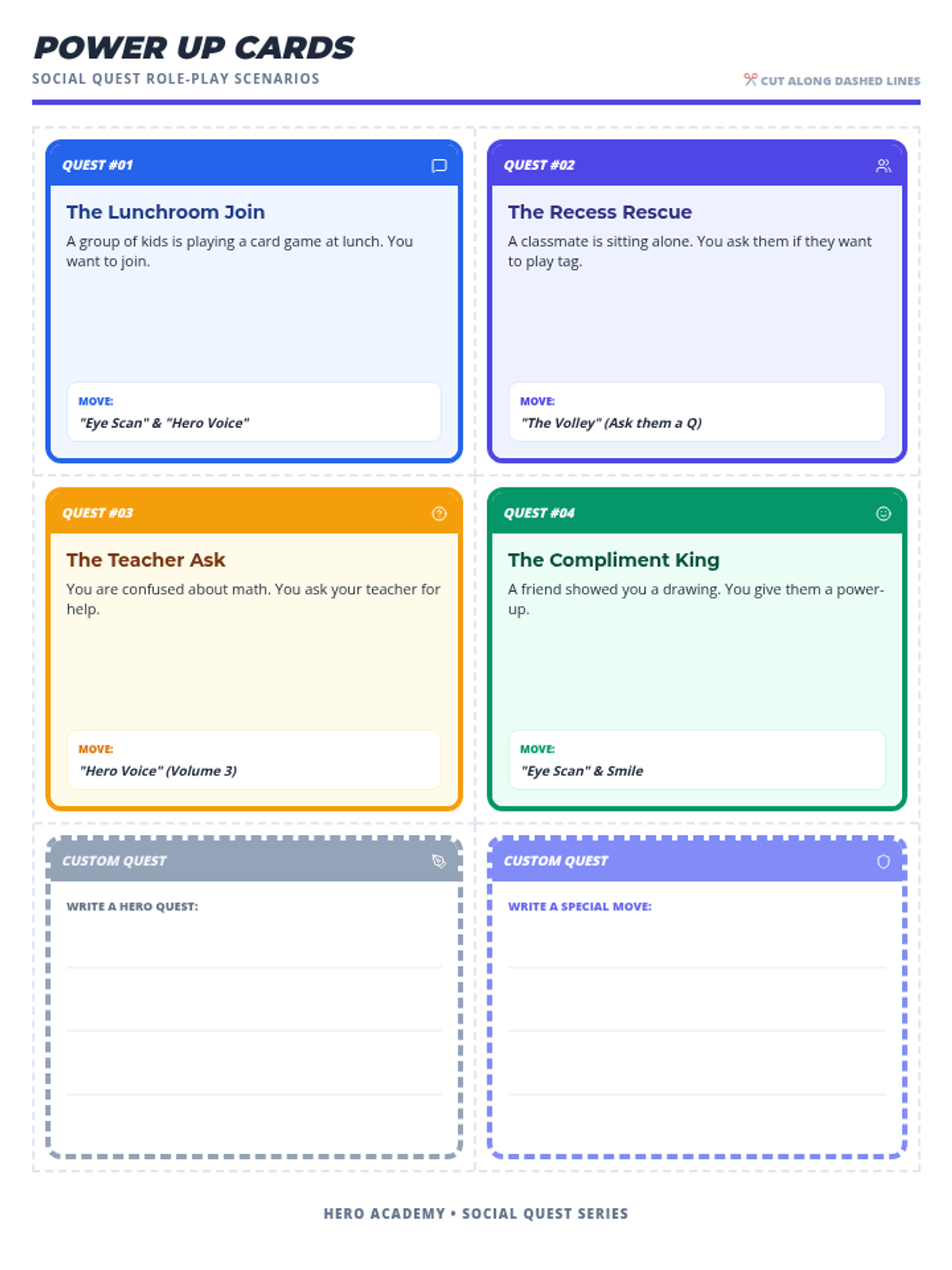
A high-energy, adventure-themed group session designed to help 3rd grade boys build social confidence and a growth mindset through 'Hero Academy' challenges.
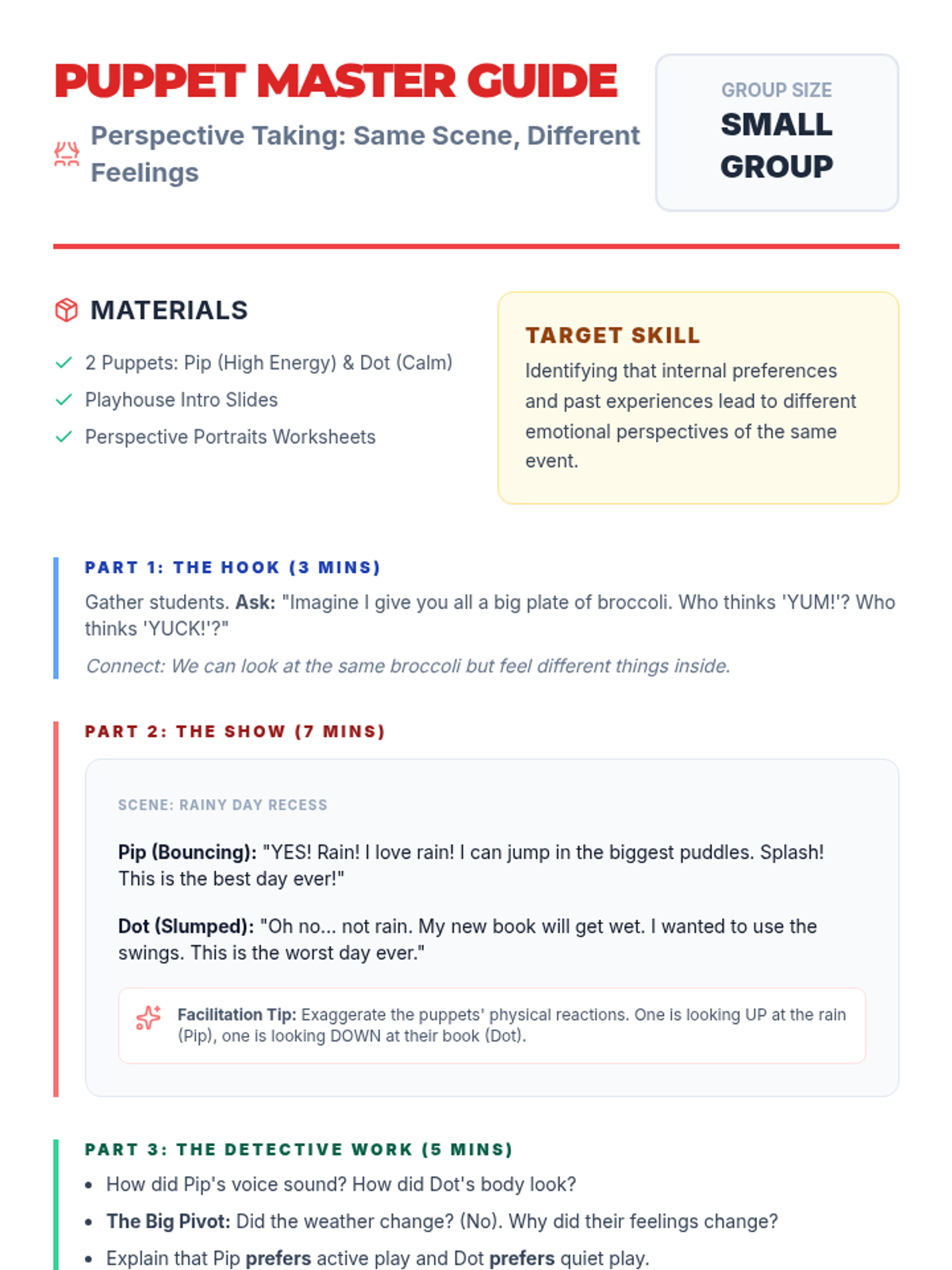
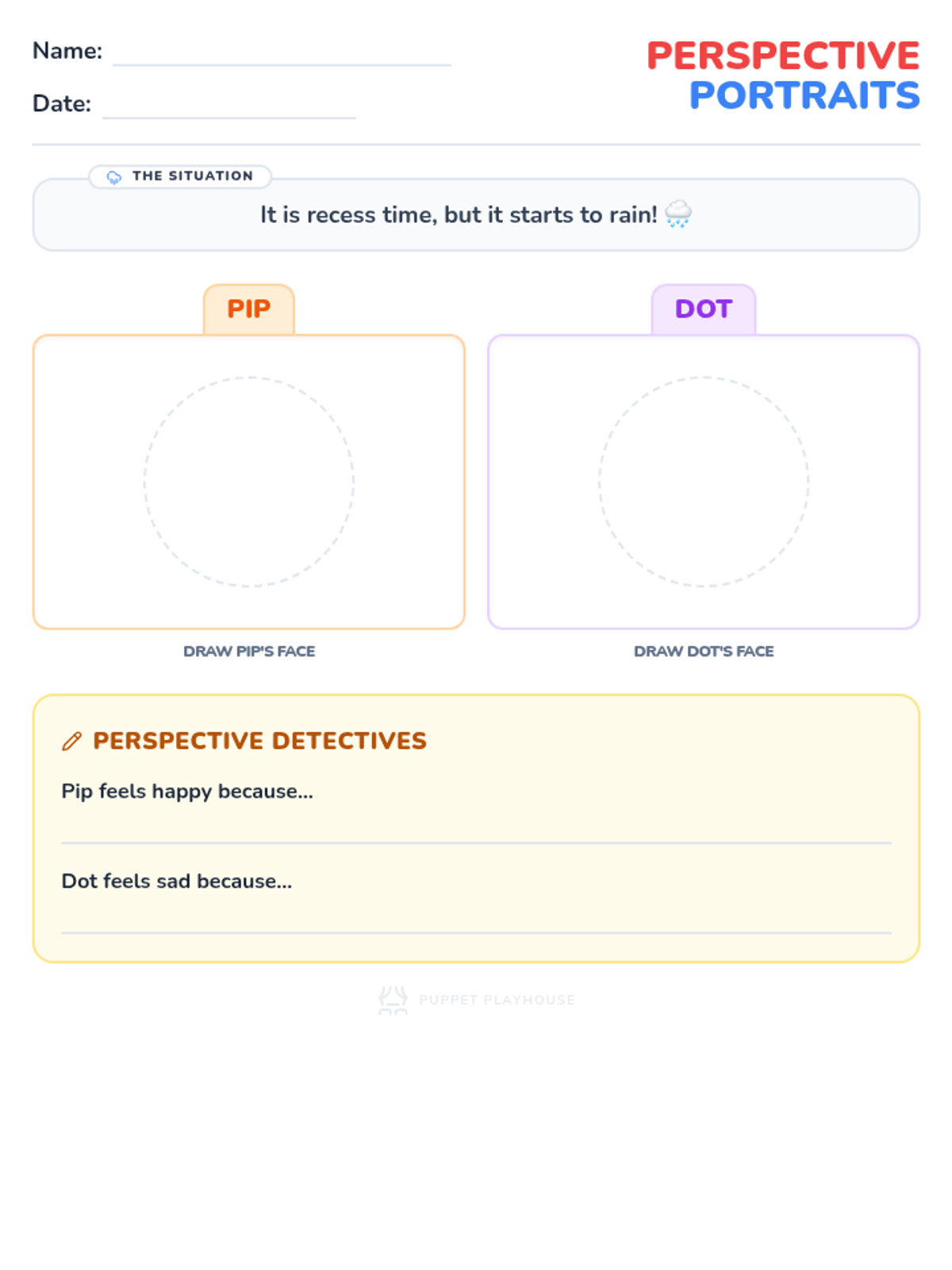
A playful, interactive small group lesson where 1st graders use puppets to explore how two people can feel very differently about the exact same situation. Students will practice identifying cues and explaining diverse emotional responses.
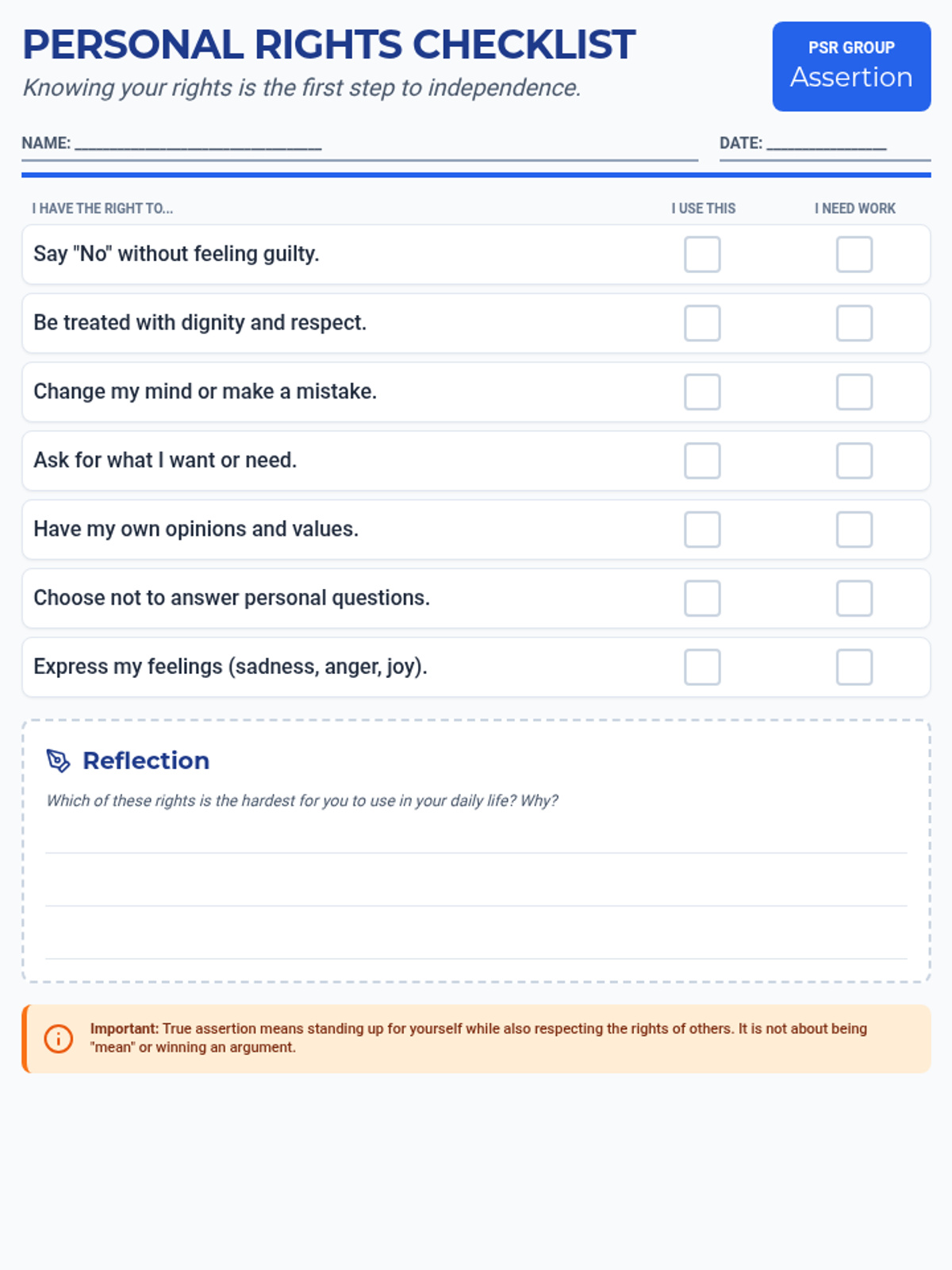
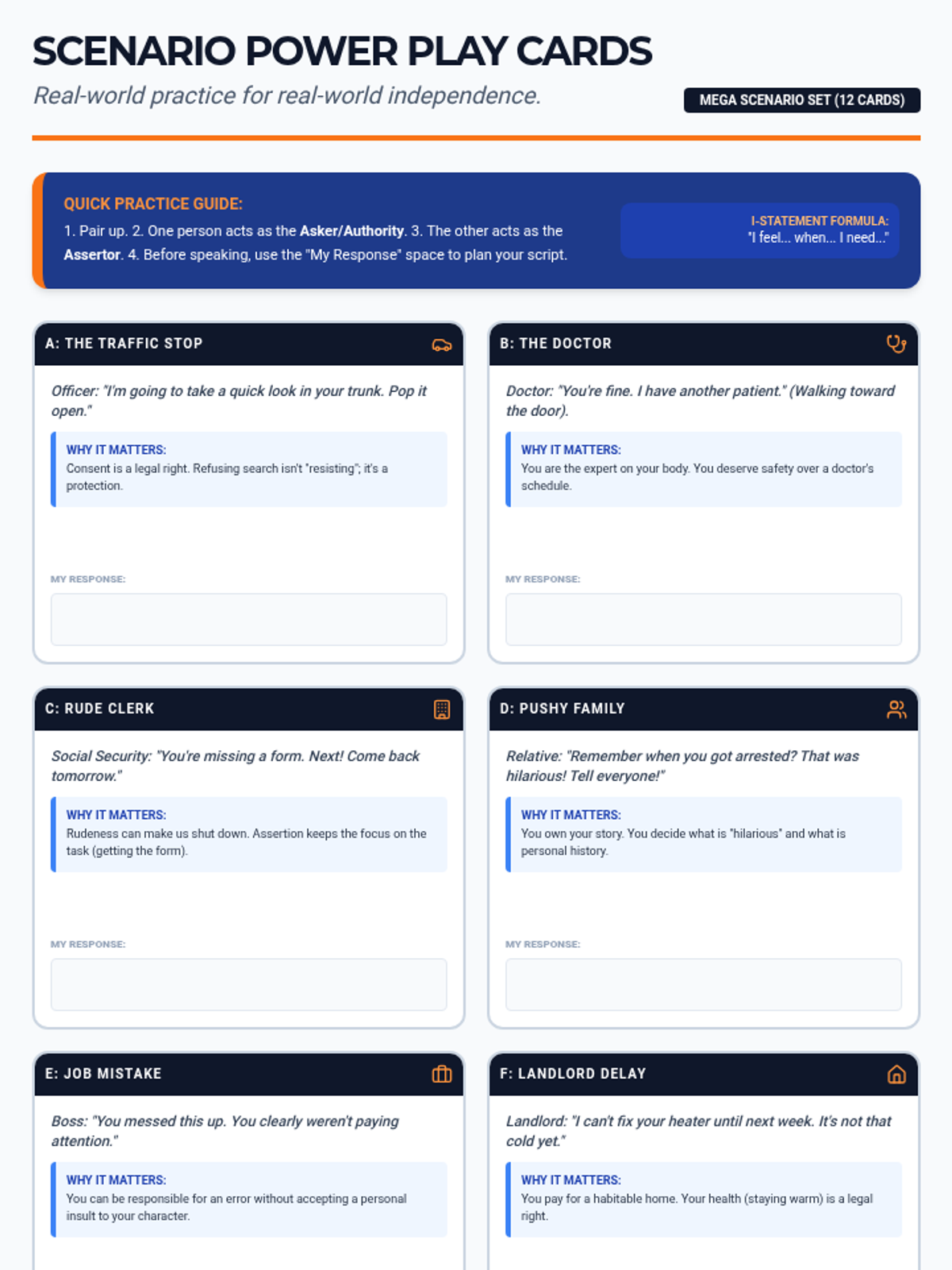
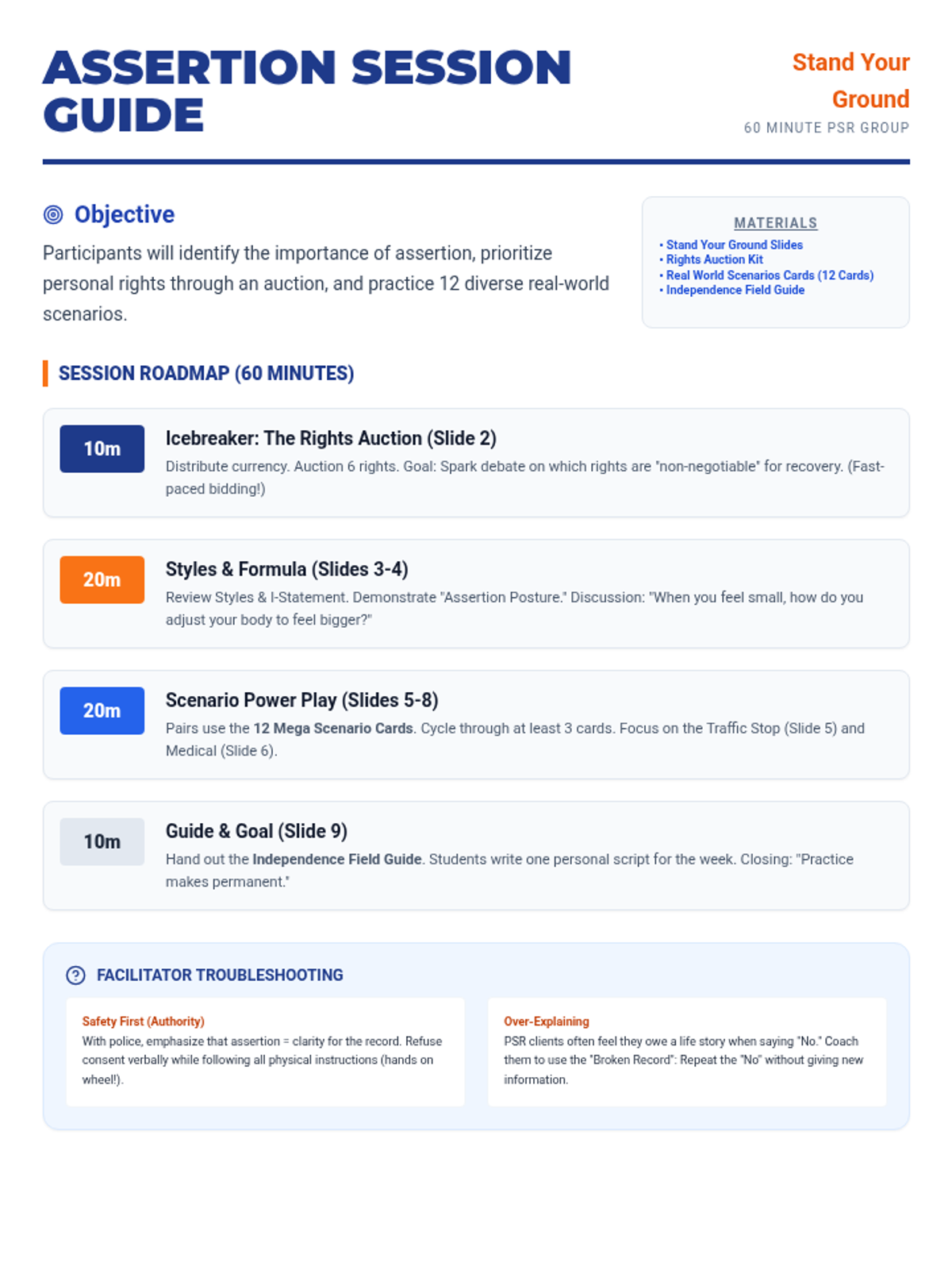
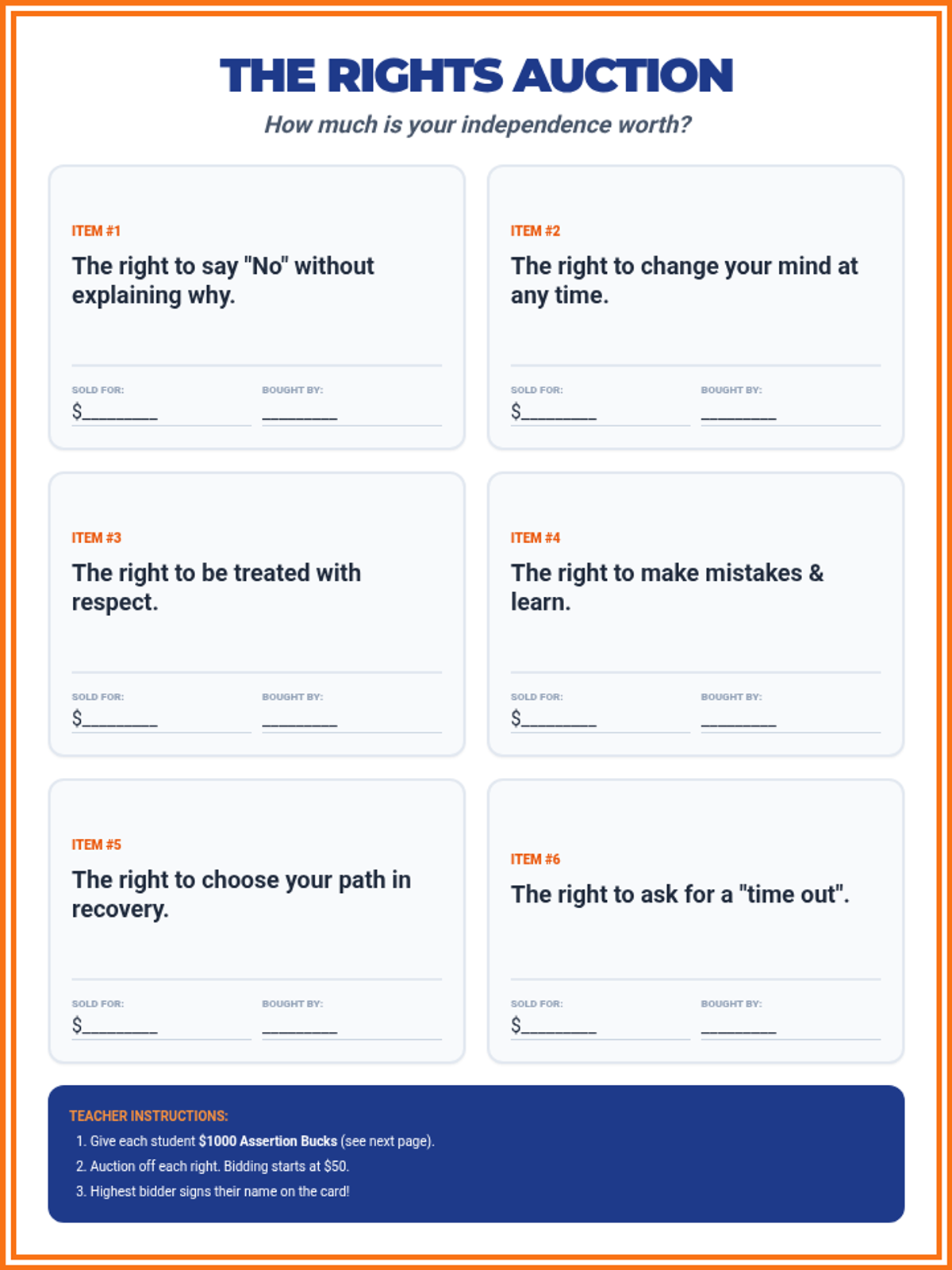
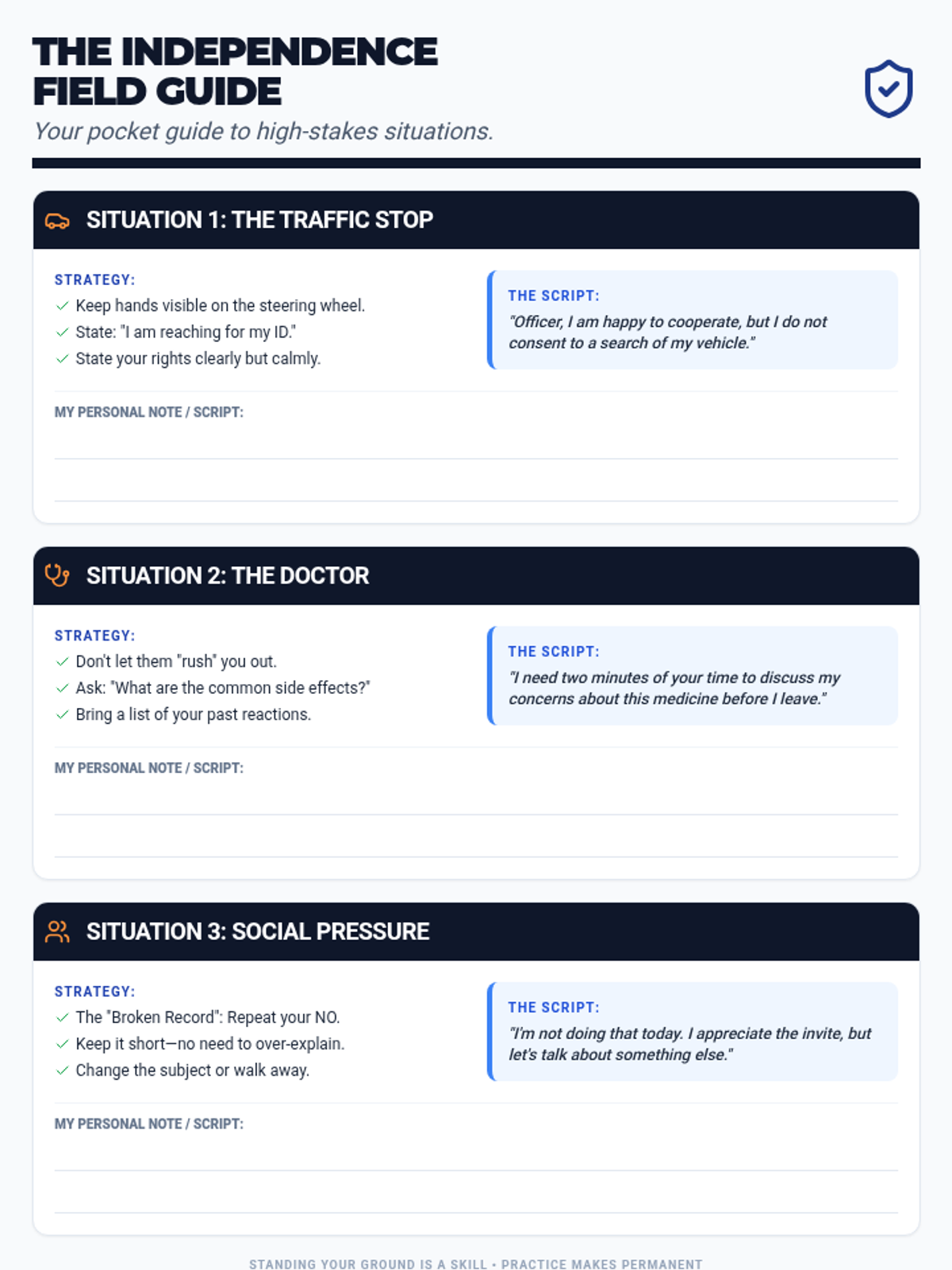
A 60-minute group session focused on empowering adults in PSR programs to understand their personal rights and practice assertive communication in real-world situations.
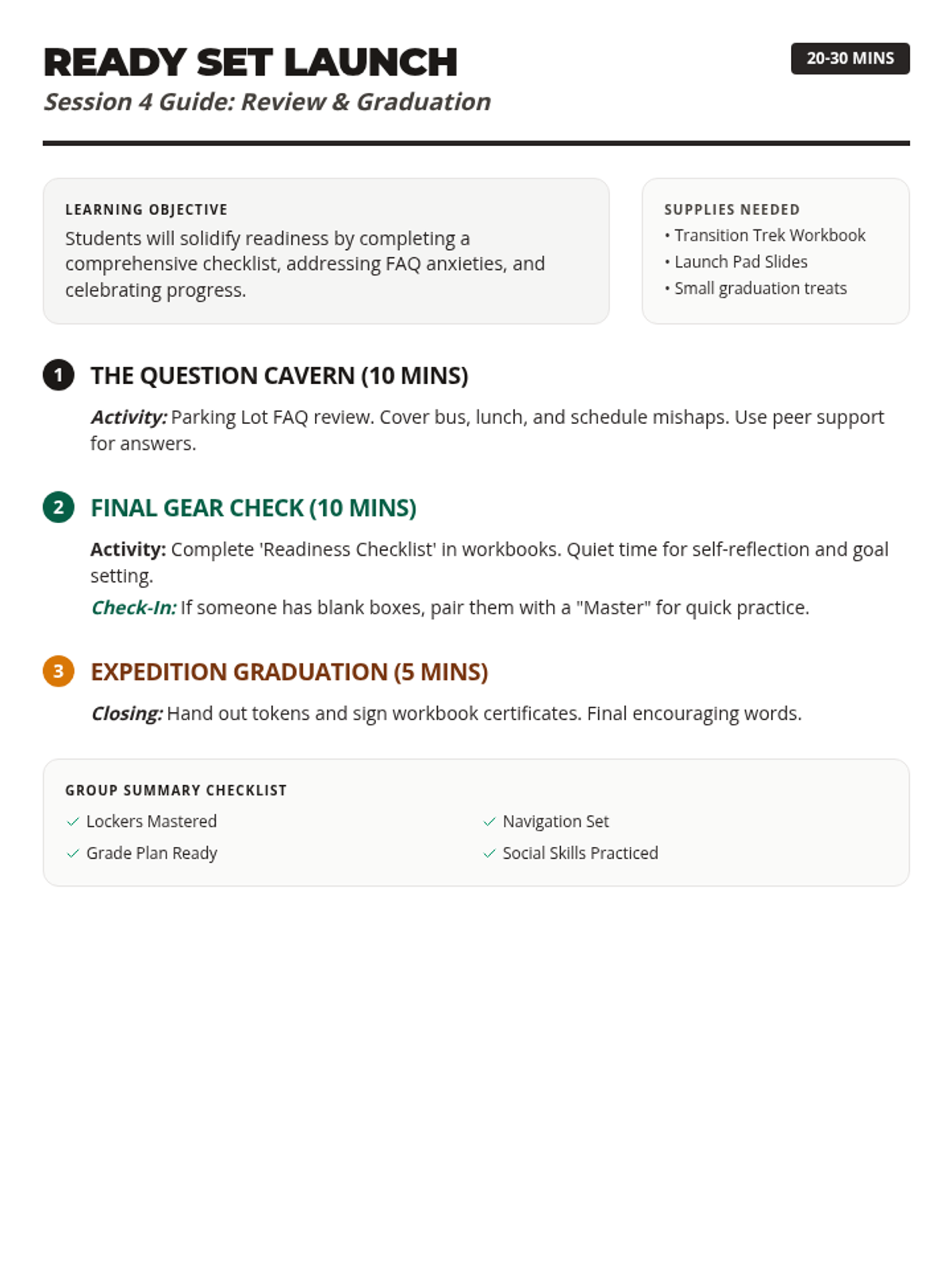
A final review session where students complete their readiness checklists, ask lingering questions, and celebrate their growth through the transition group.
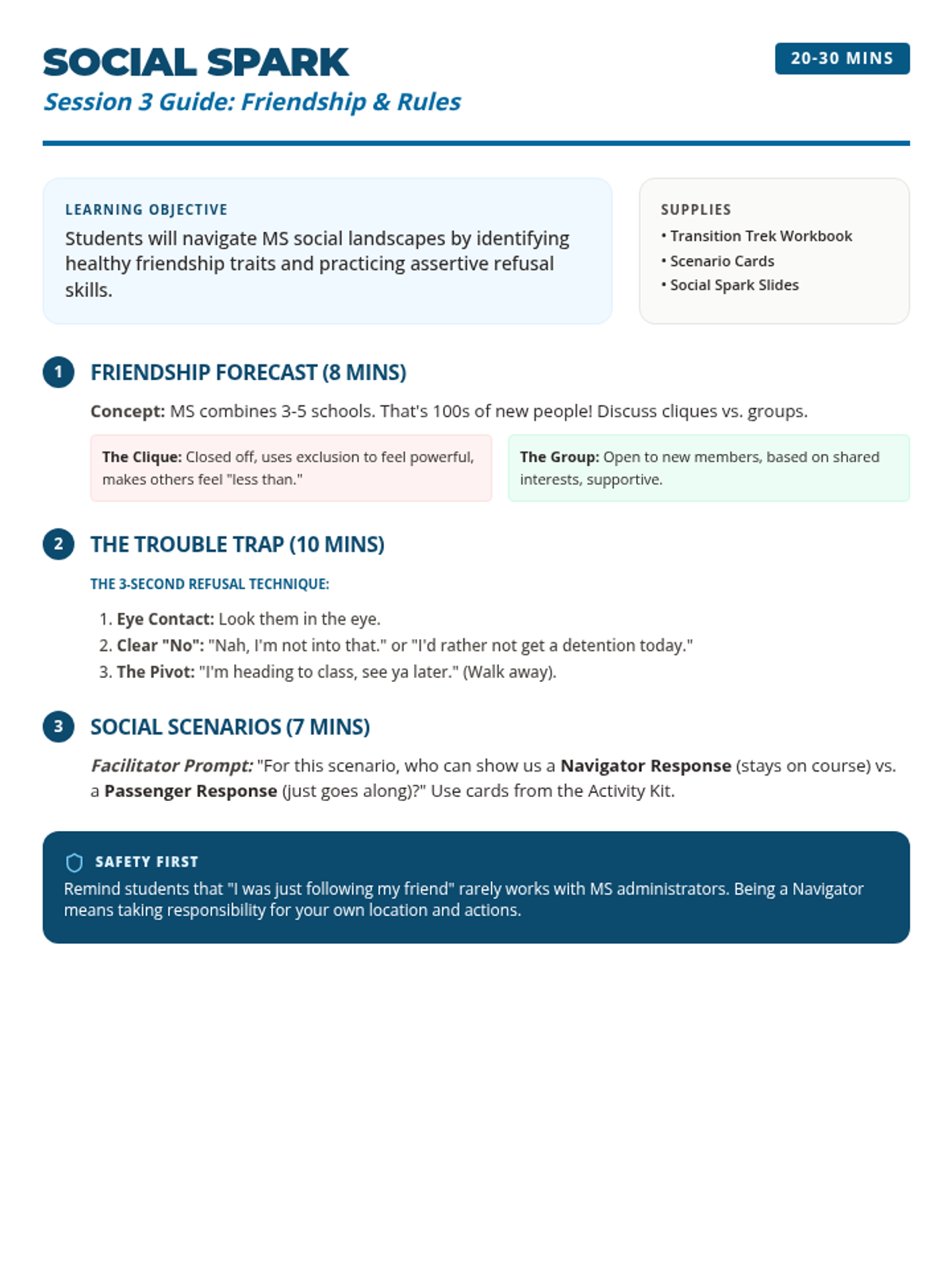
Explores the changing social landscape of middle school, including making new friends, maintaining old ones, and understanding school rules/consequences to avoid 'getting in trouble'.
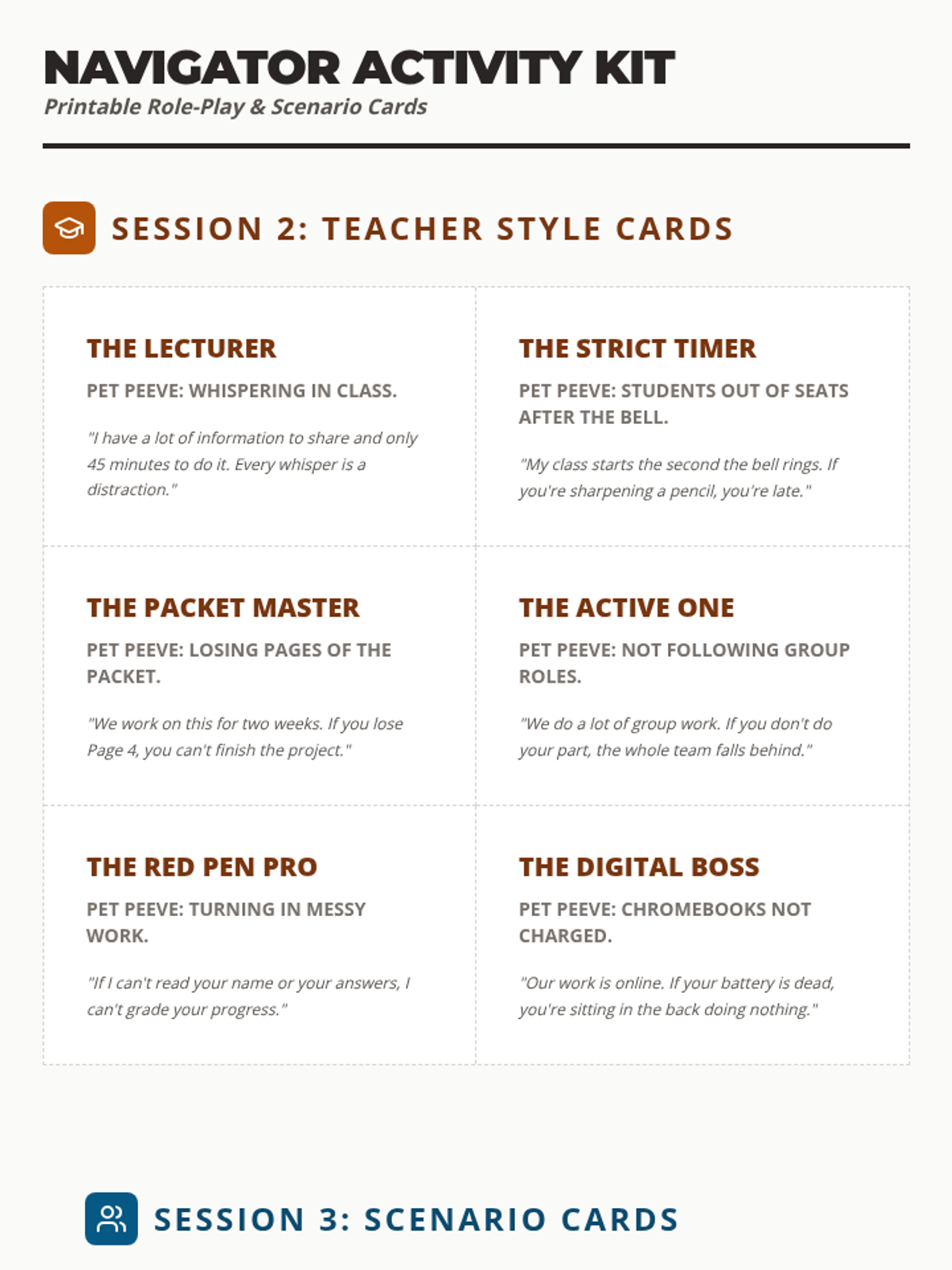
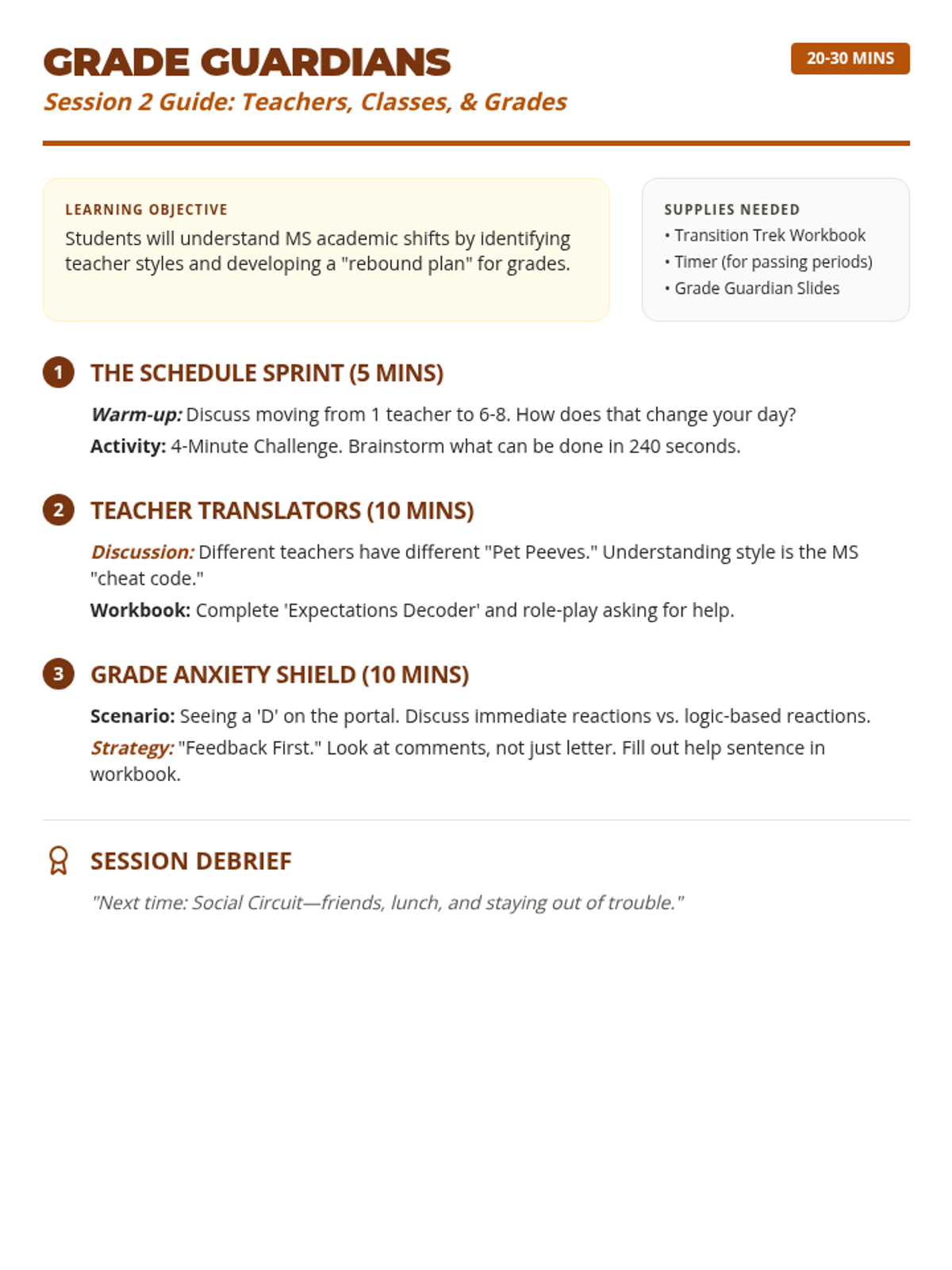
Addresses academic shifts including managing multiple teachers, understanding different class formats, and the transition to more formal grading systems. Focuses on organization and communication.
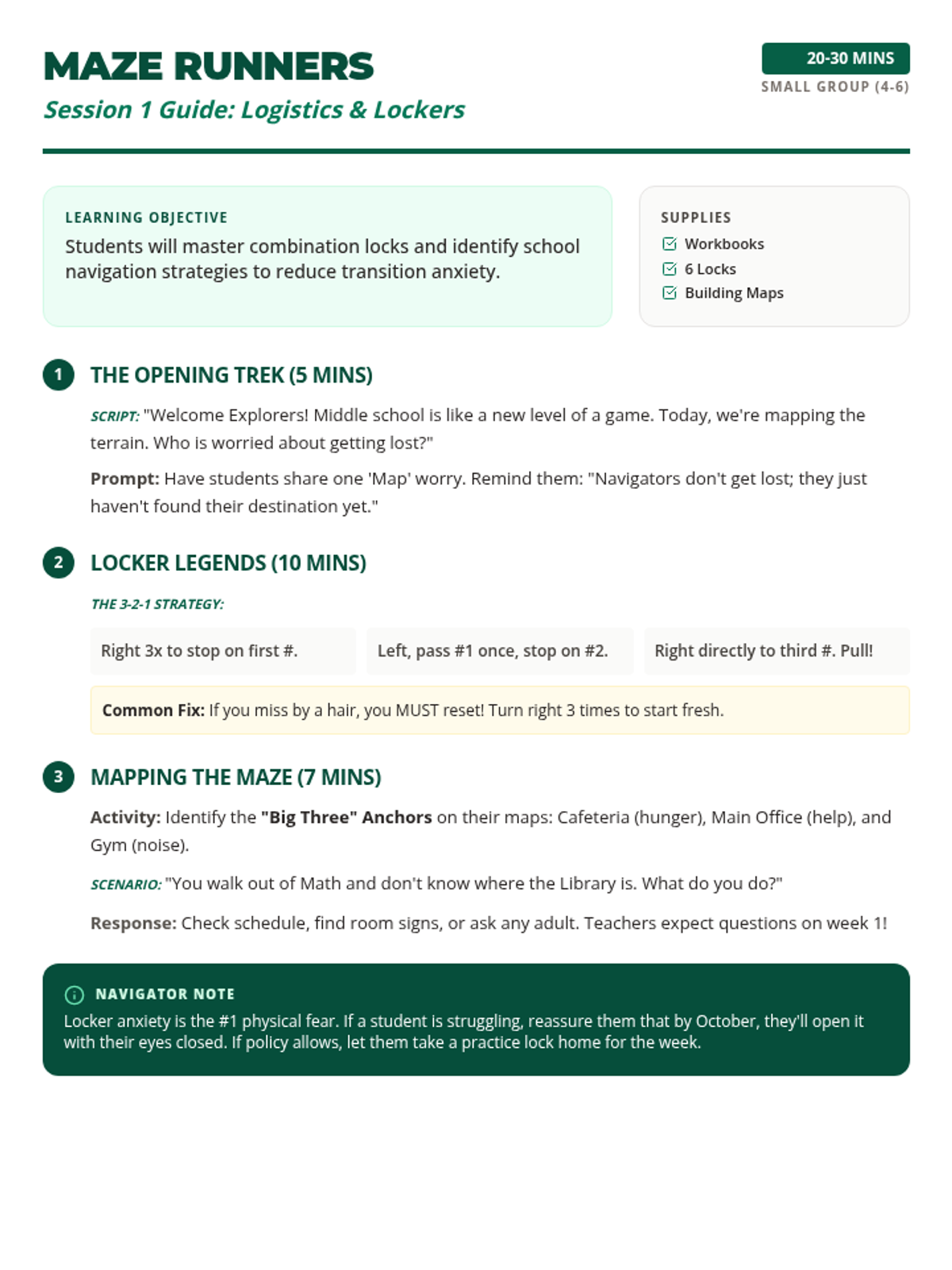
Focuses on the logistical anxieties of middle school, specifically mastering lockers and navigating a larger building without getting lost. Students practice combination locks and map-reading skills.
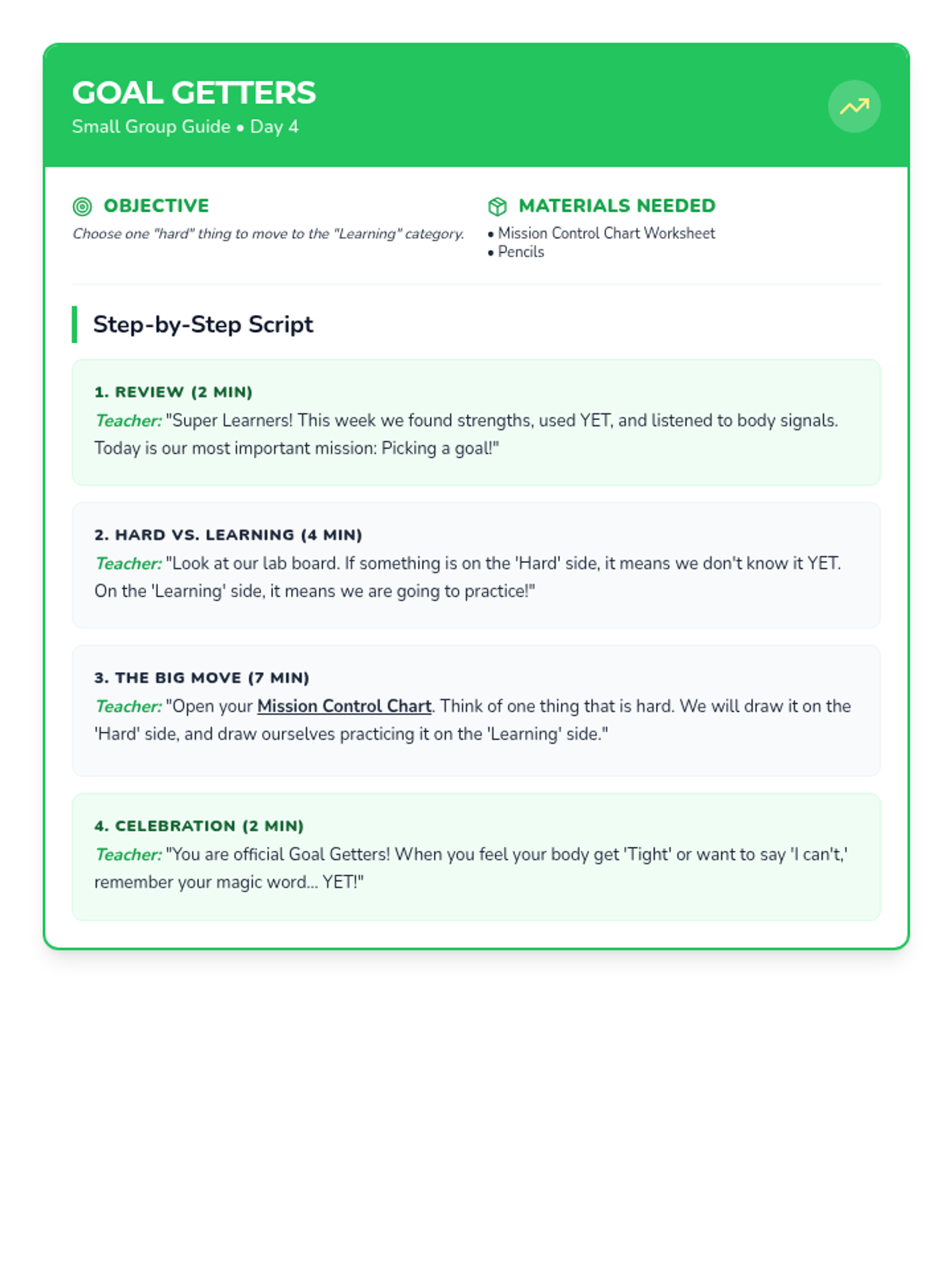
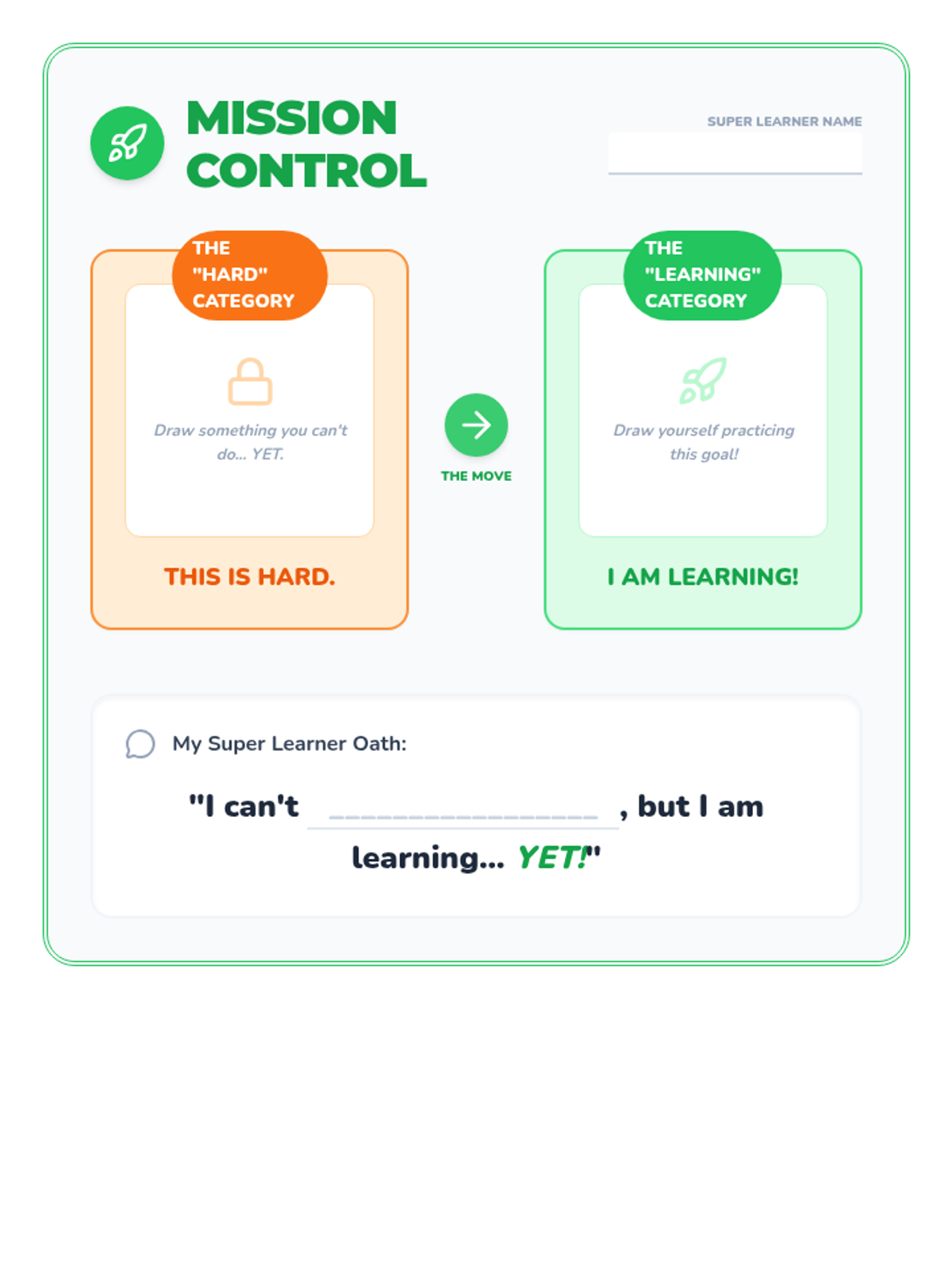
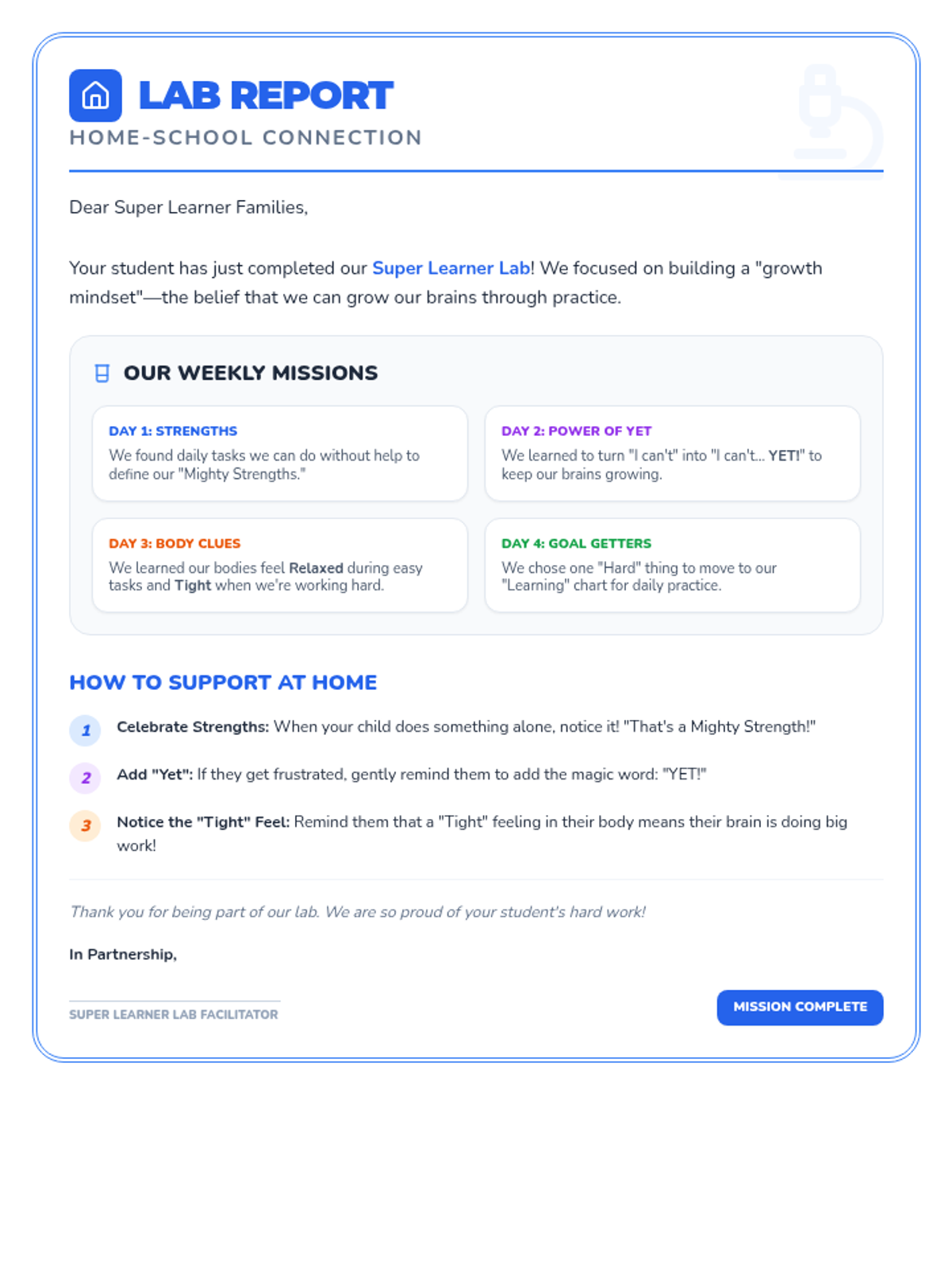
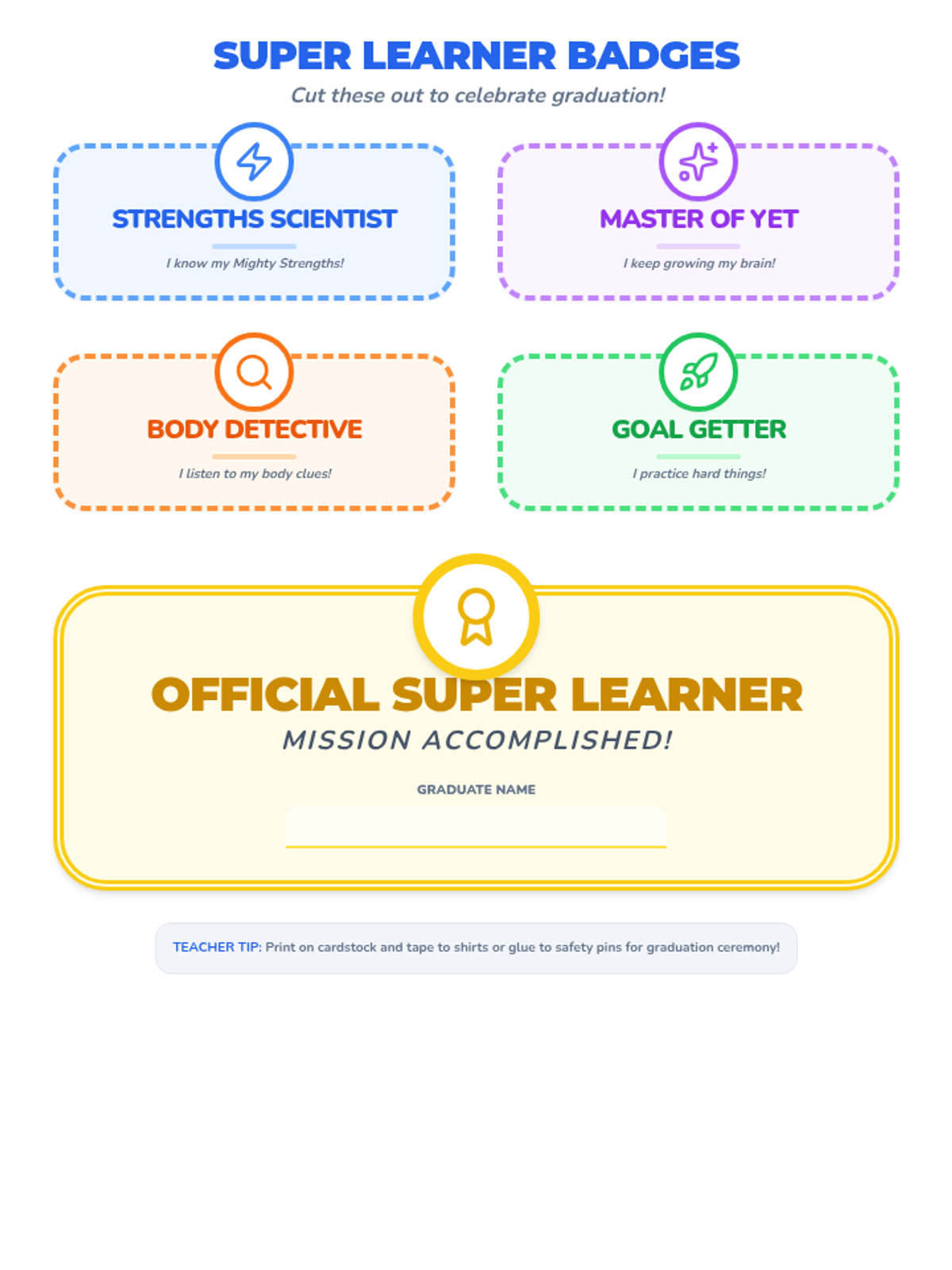
Students select a personal challenge and move it from 'Hard' to 'Learning' on their personal growth chart to set a clear goal for practice.
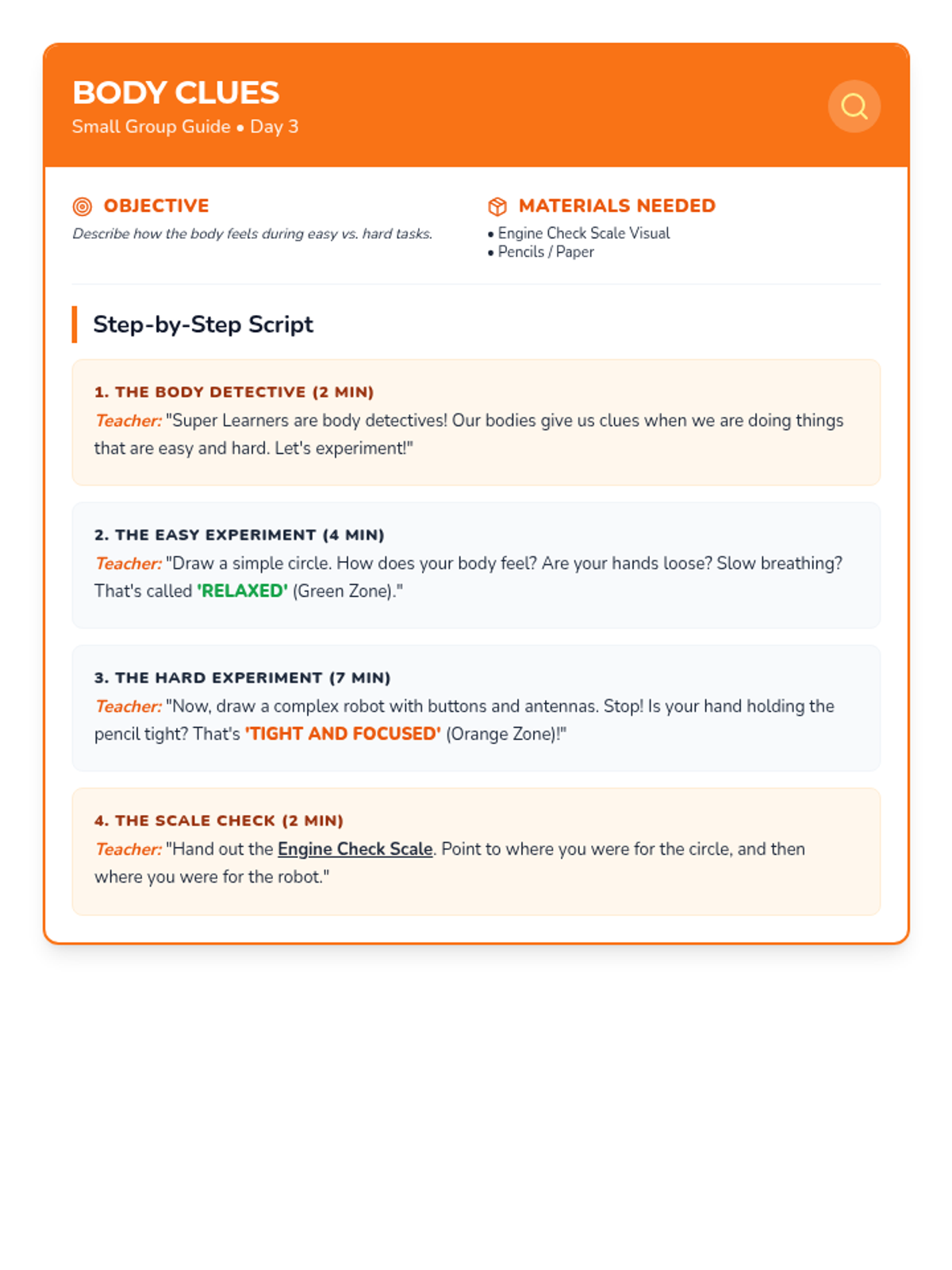
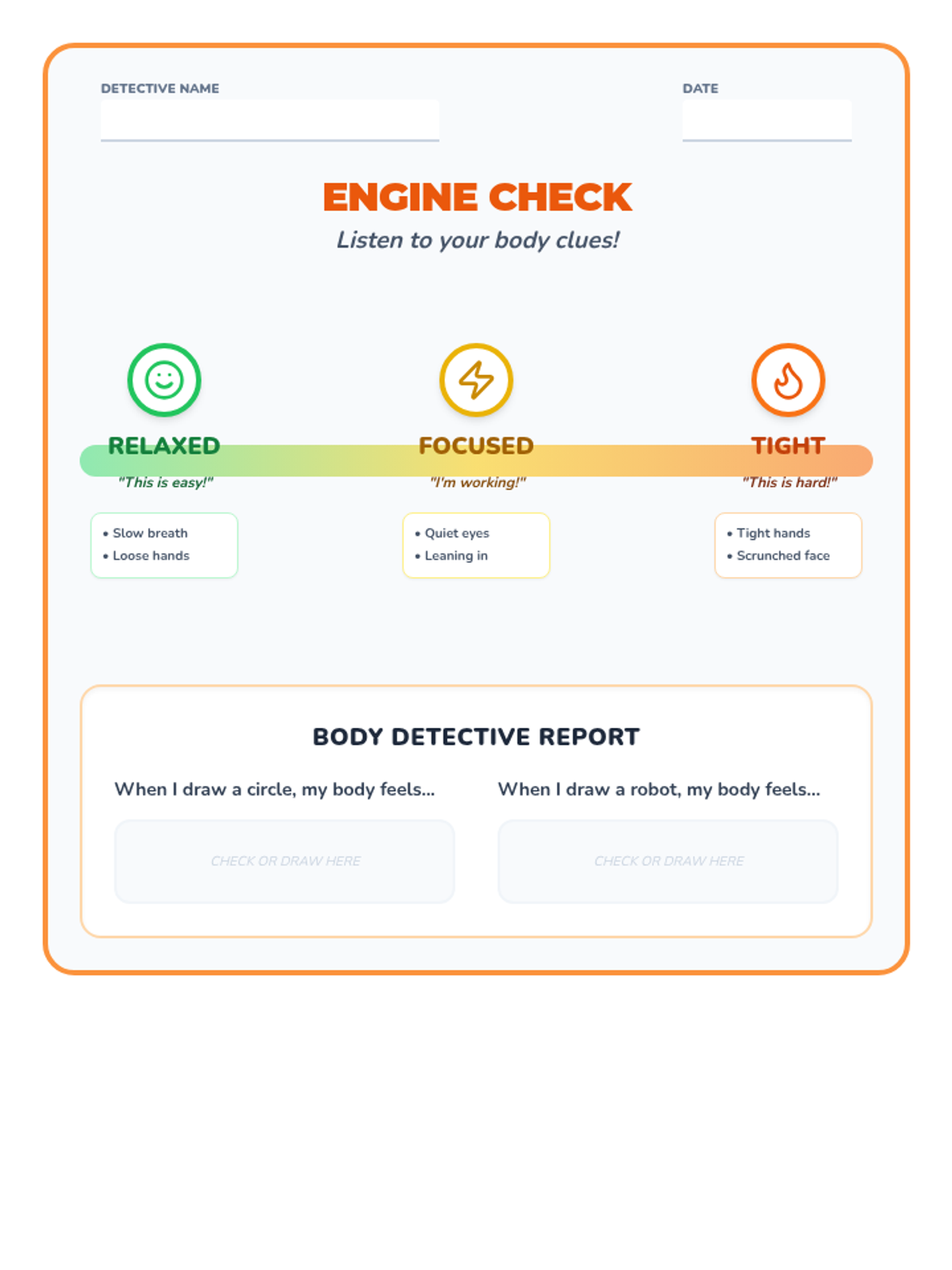
Students identify physical body signals (relaxed vs. tight) associated with easy and hard tasks using a visual engine scale.
Students learn to use the word 'yet' to transform challenges into opportunities for growth, practicing the 'Power of Yet' sentence starter.
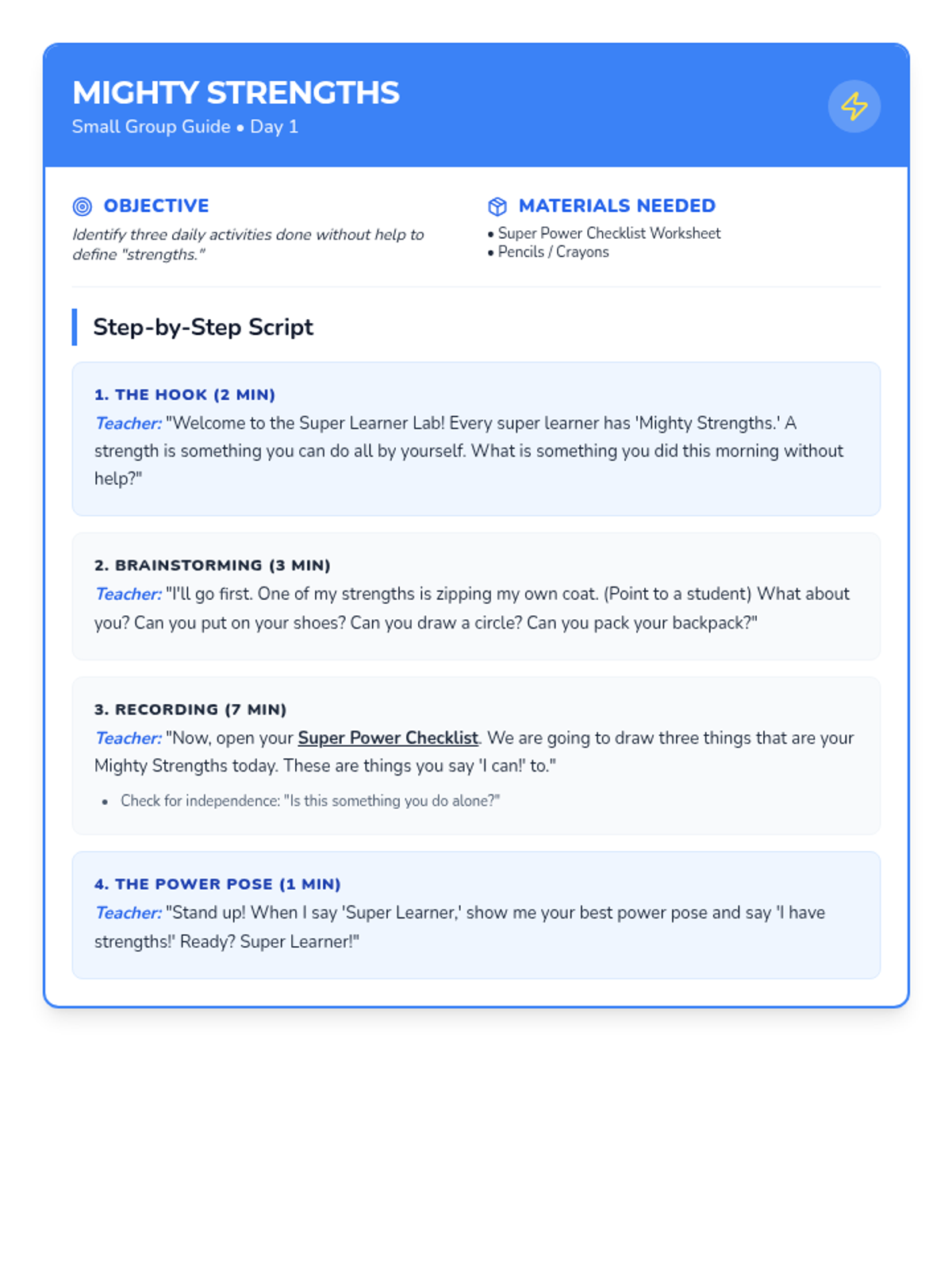
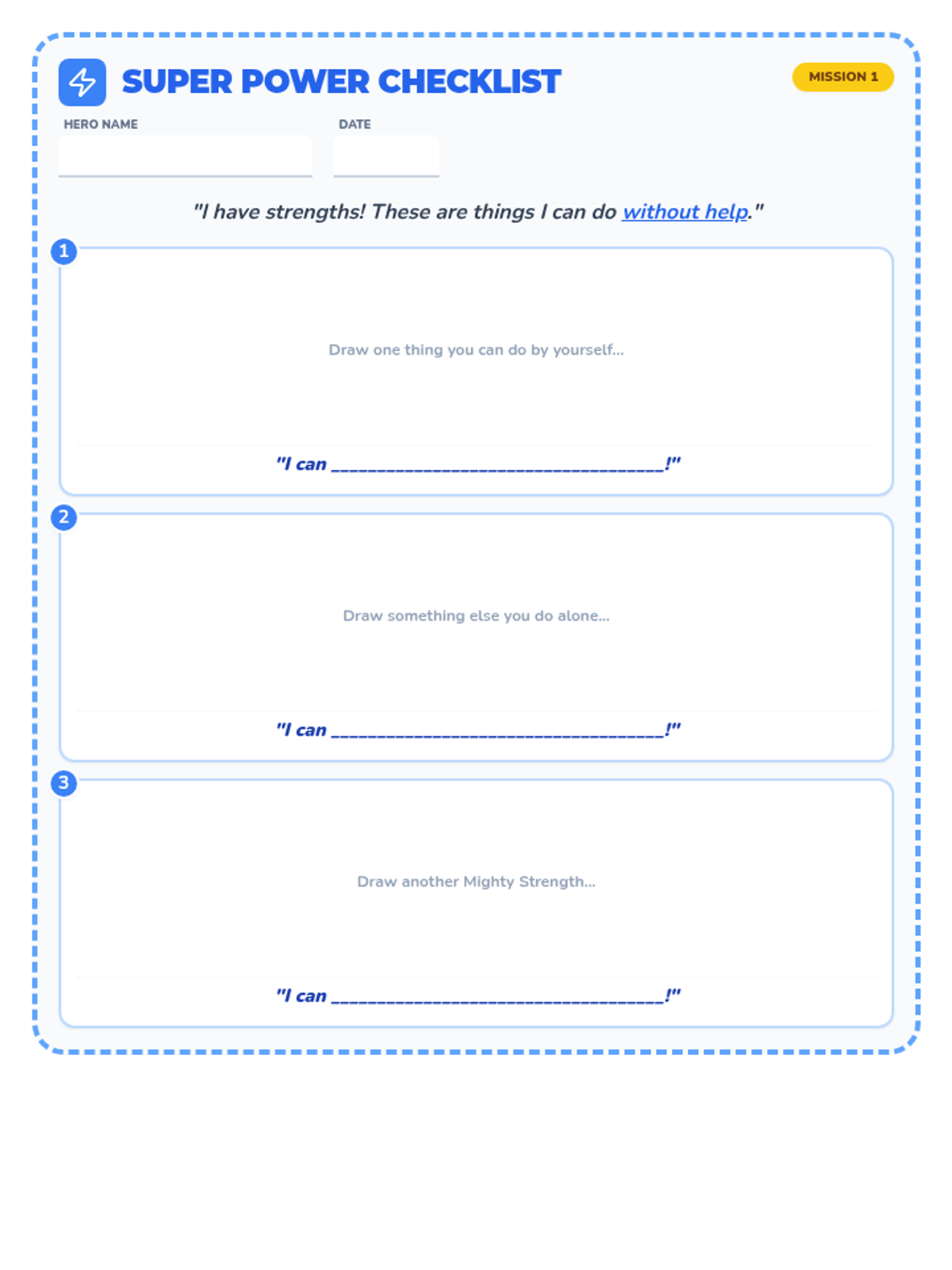
Students identify three daily activities they can perform independently to define their personal 'strengths' in the context of being a Super Learner.
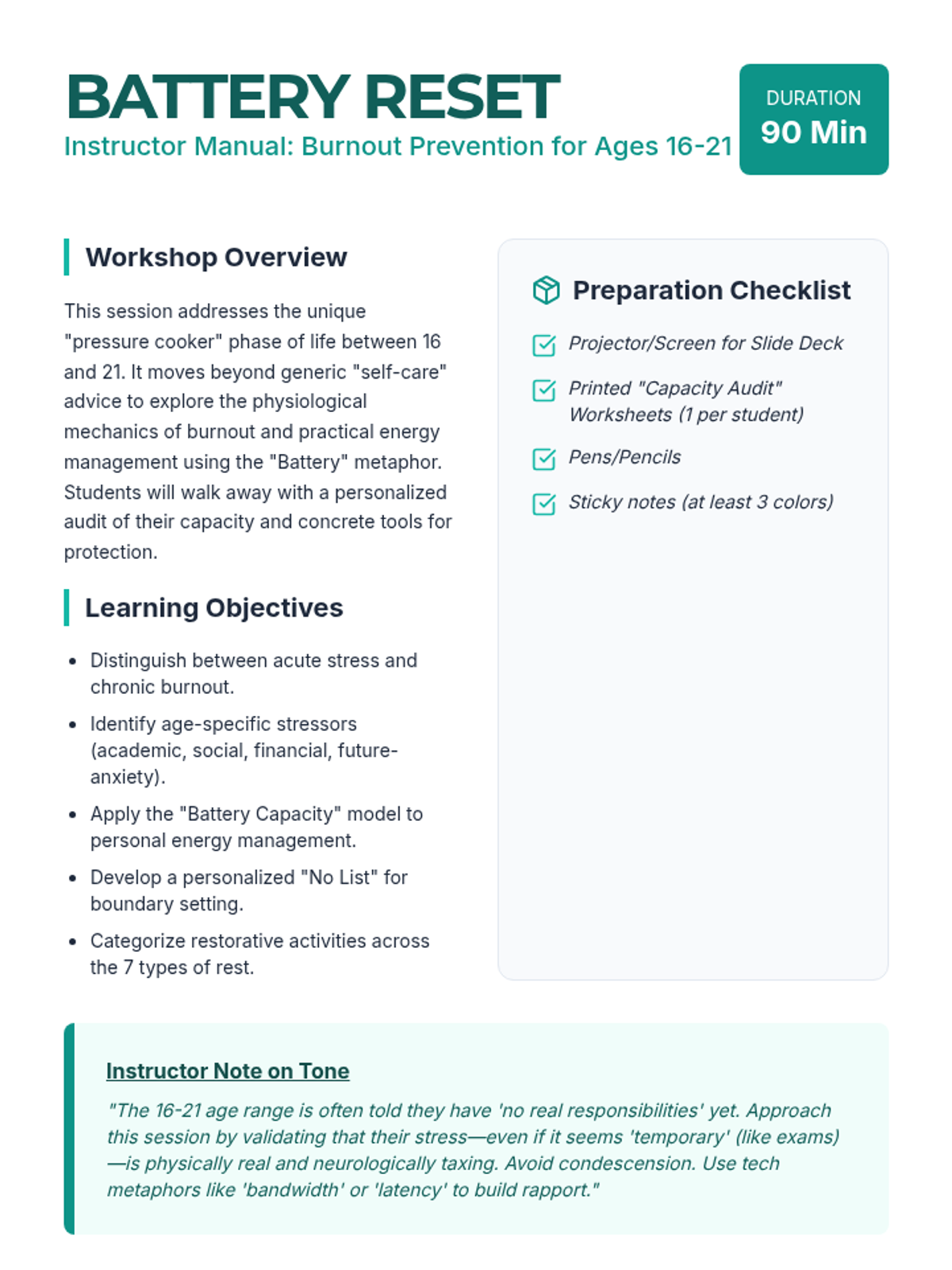
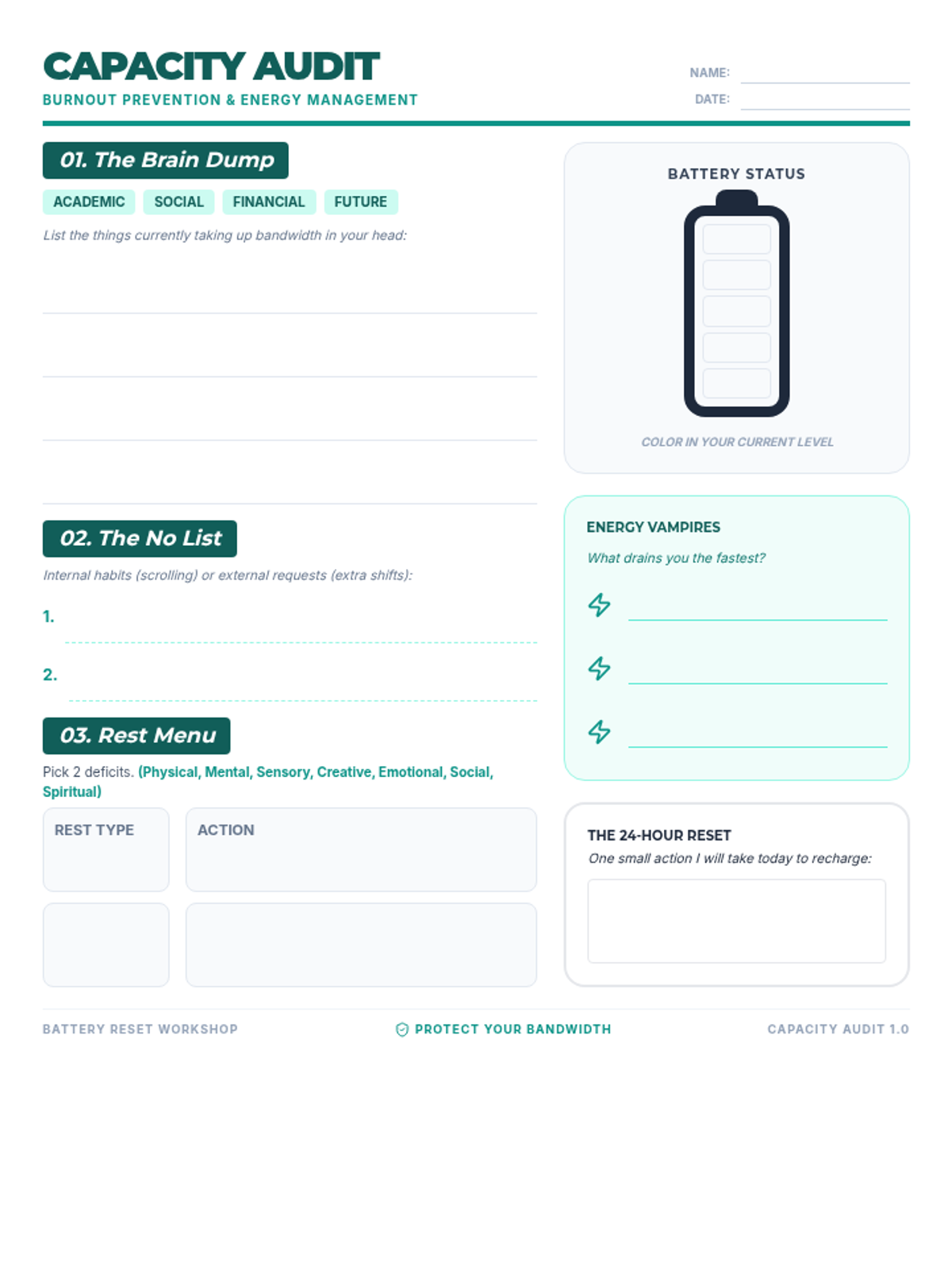
A comprehensive 90-minute workshop designed for transitional age youth (16-21) to identify stressors, understand the mechanics of burnout, and develop personalized energy management strategies.
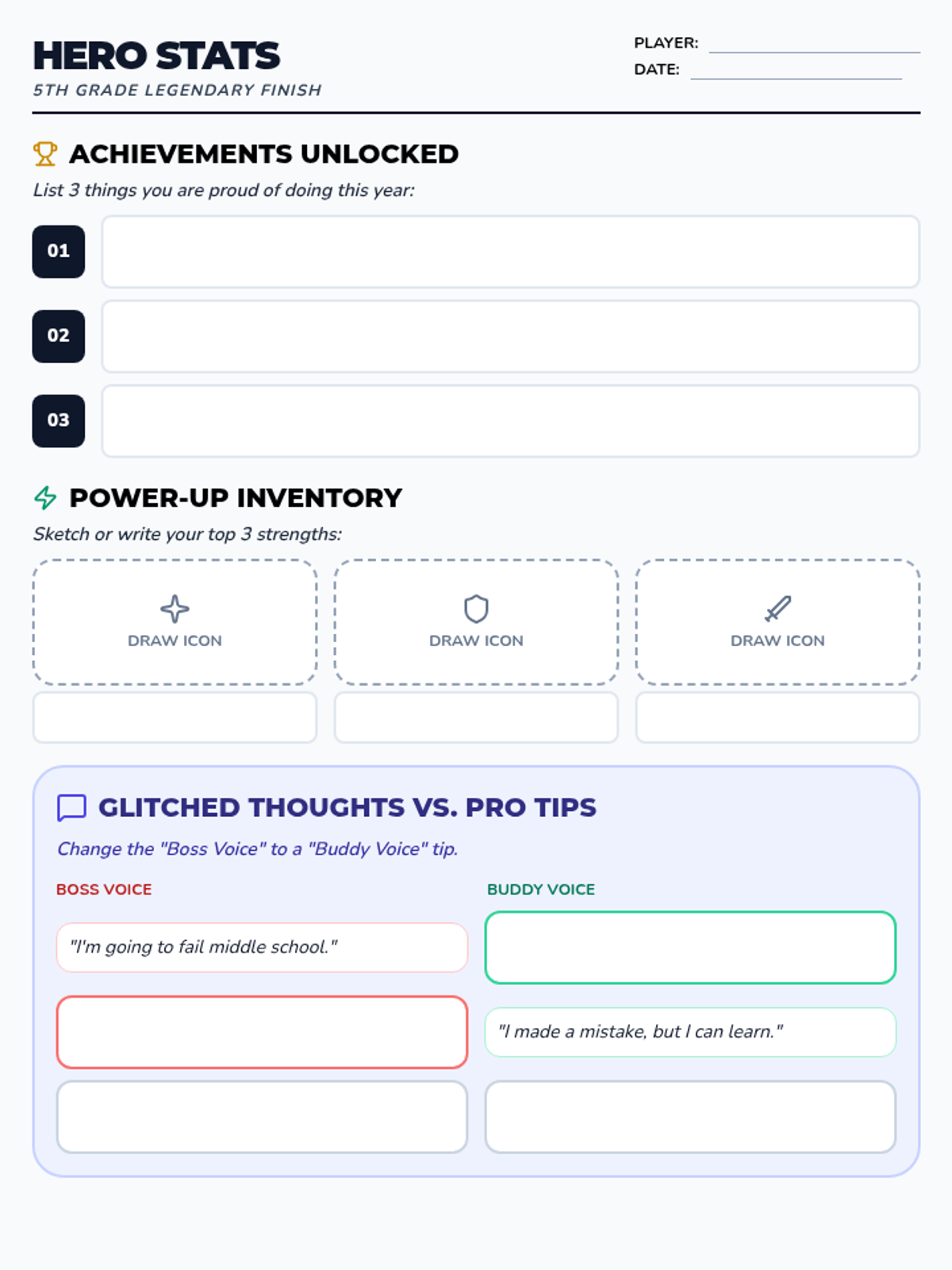
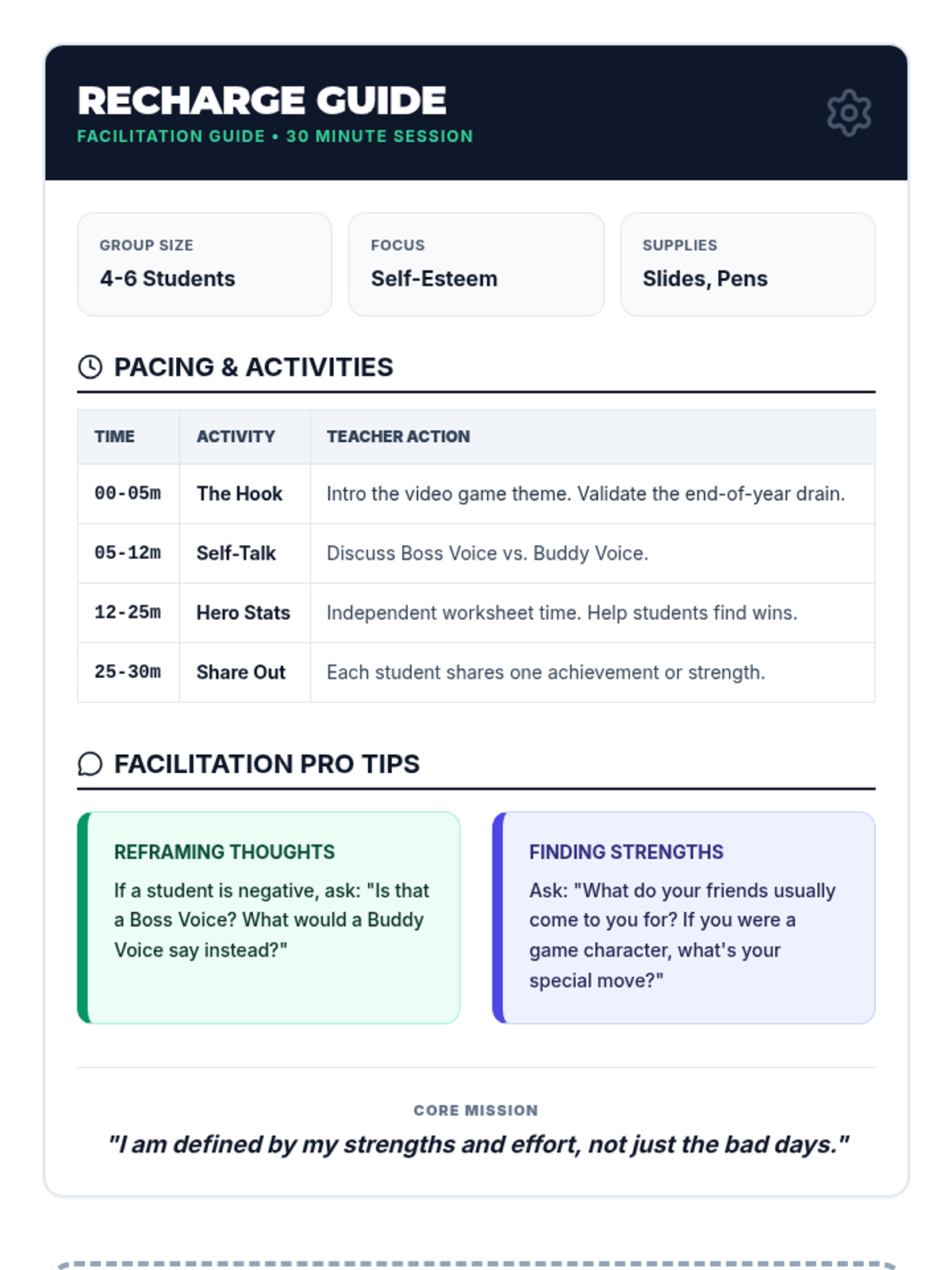
A 30-minute small group session designed to boost self-esteem and motivation for 5th-grade boys through a video-game-themed exploration of self-talk and achievements.
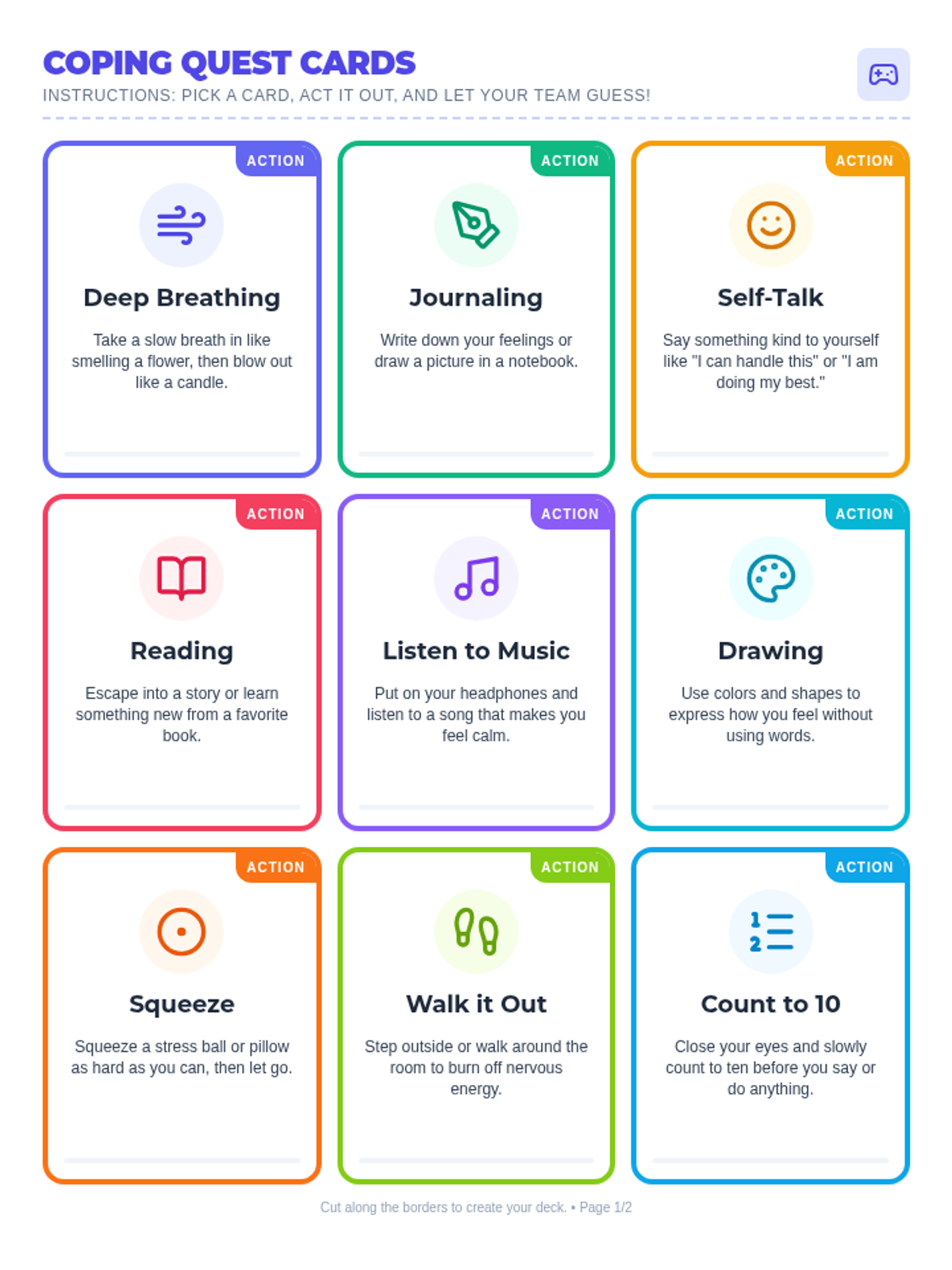
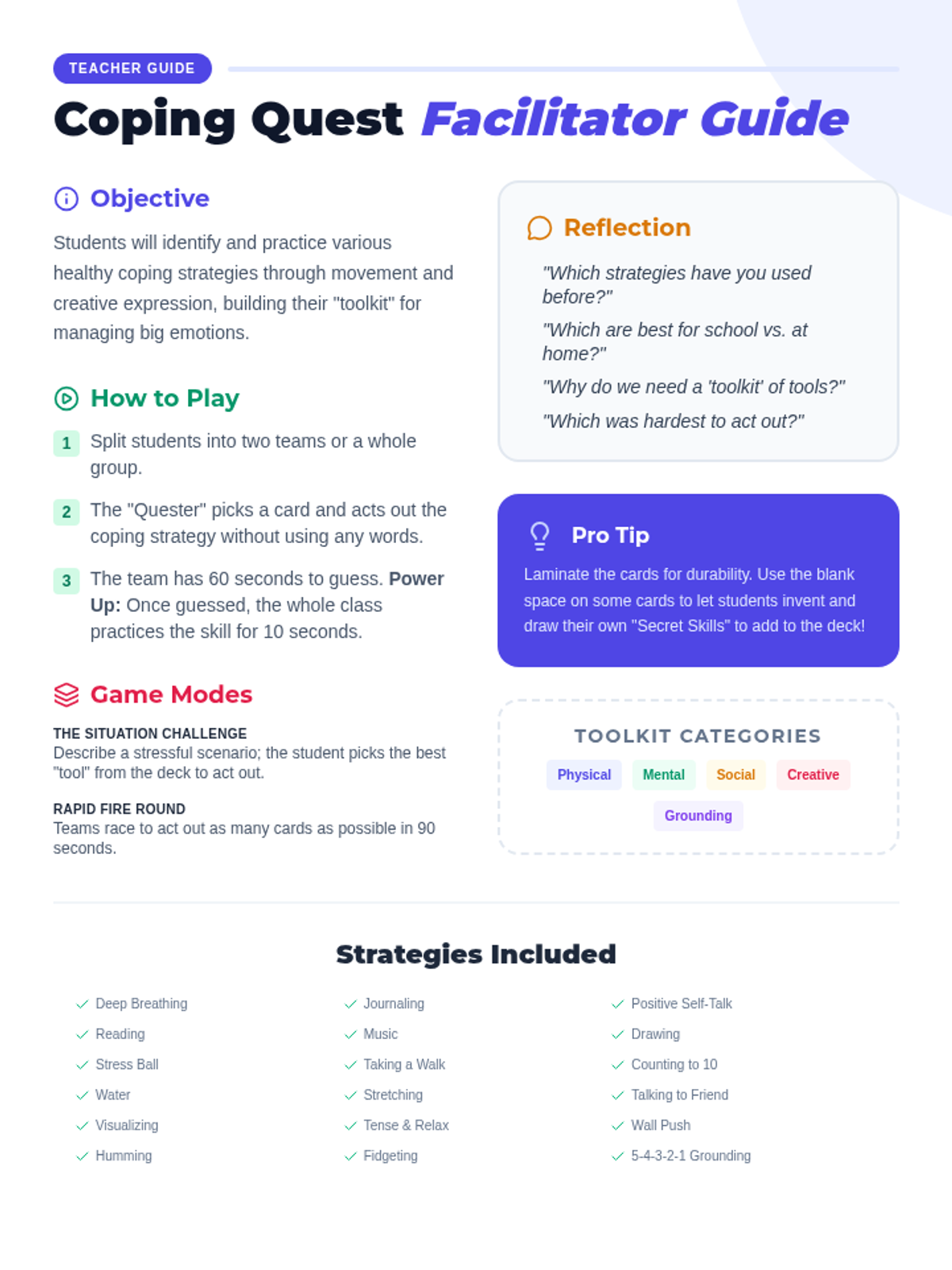
A fun, interactive game designed to help students recognize and practice healthy coping strategies through movement and acting.
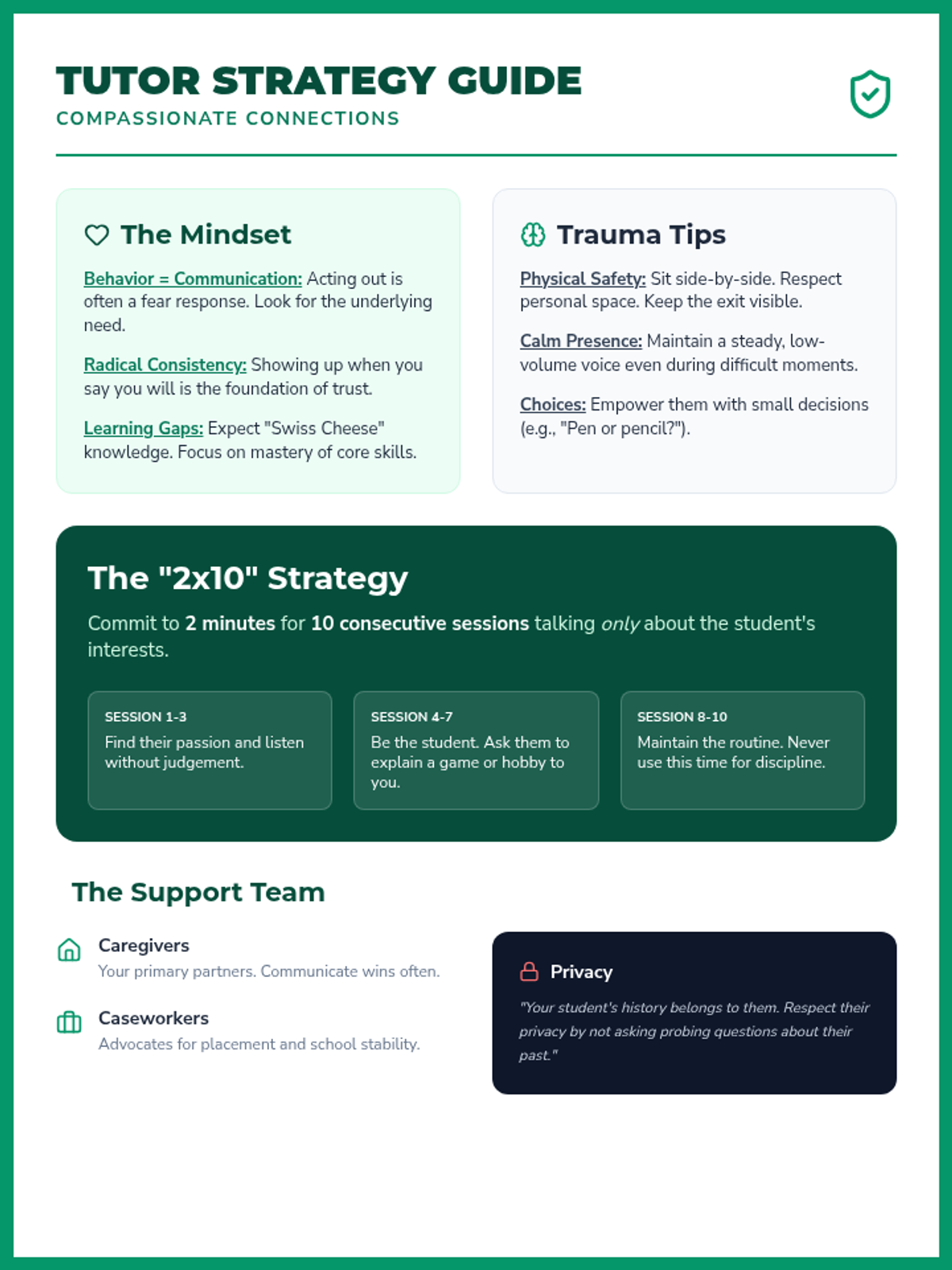
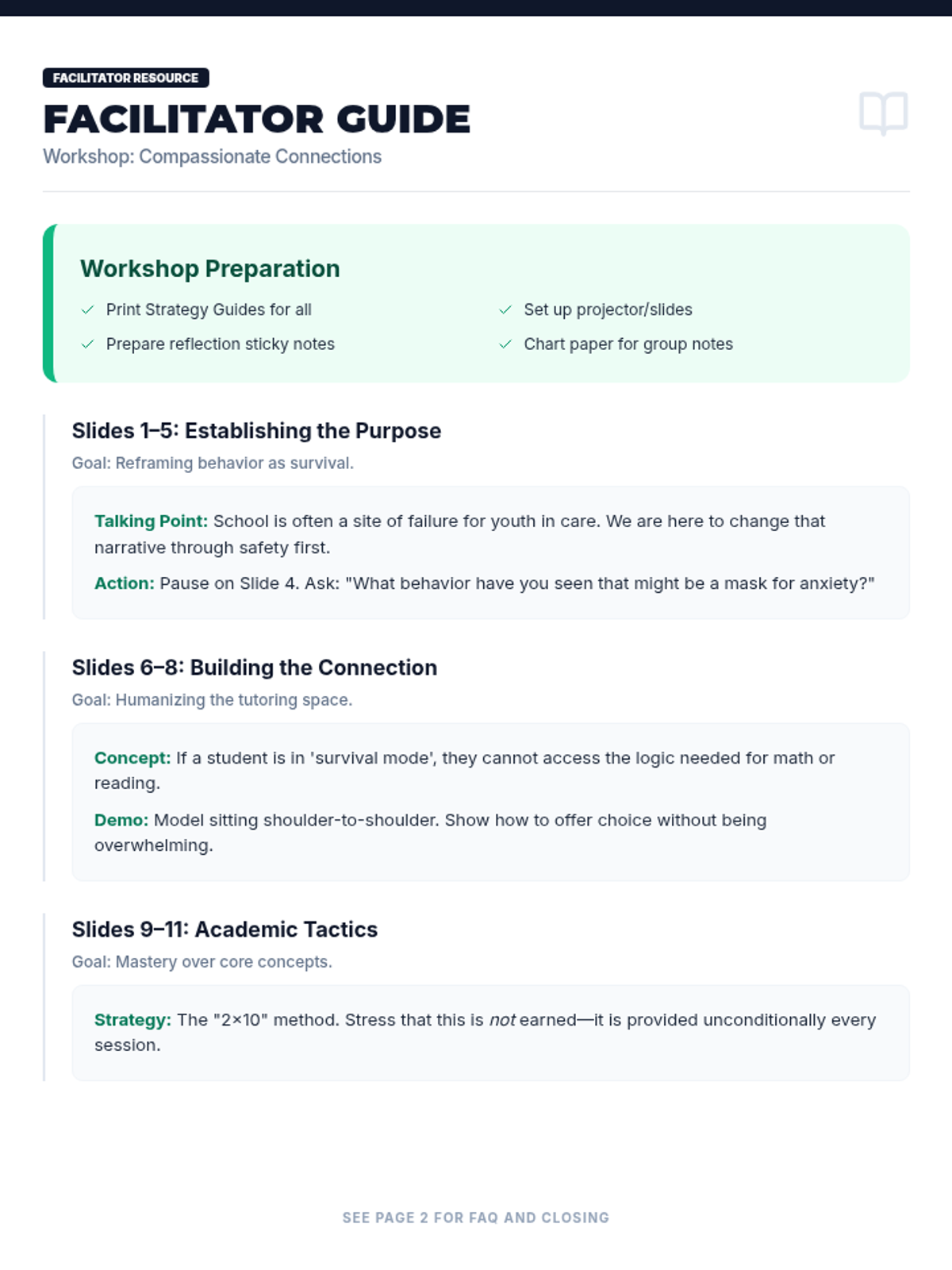
An in-depth workshop for community volunteer tutors focusing on trauma-informed strategies, building trust, and academic support for youth in foster care.
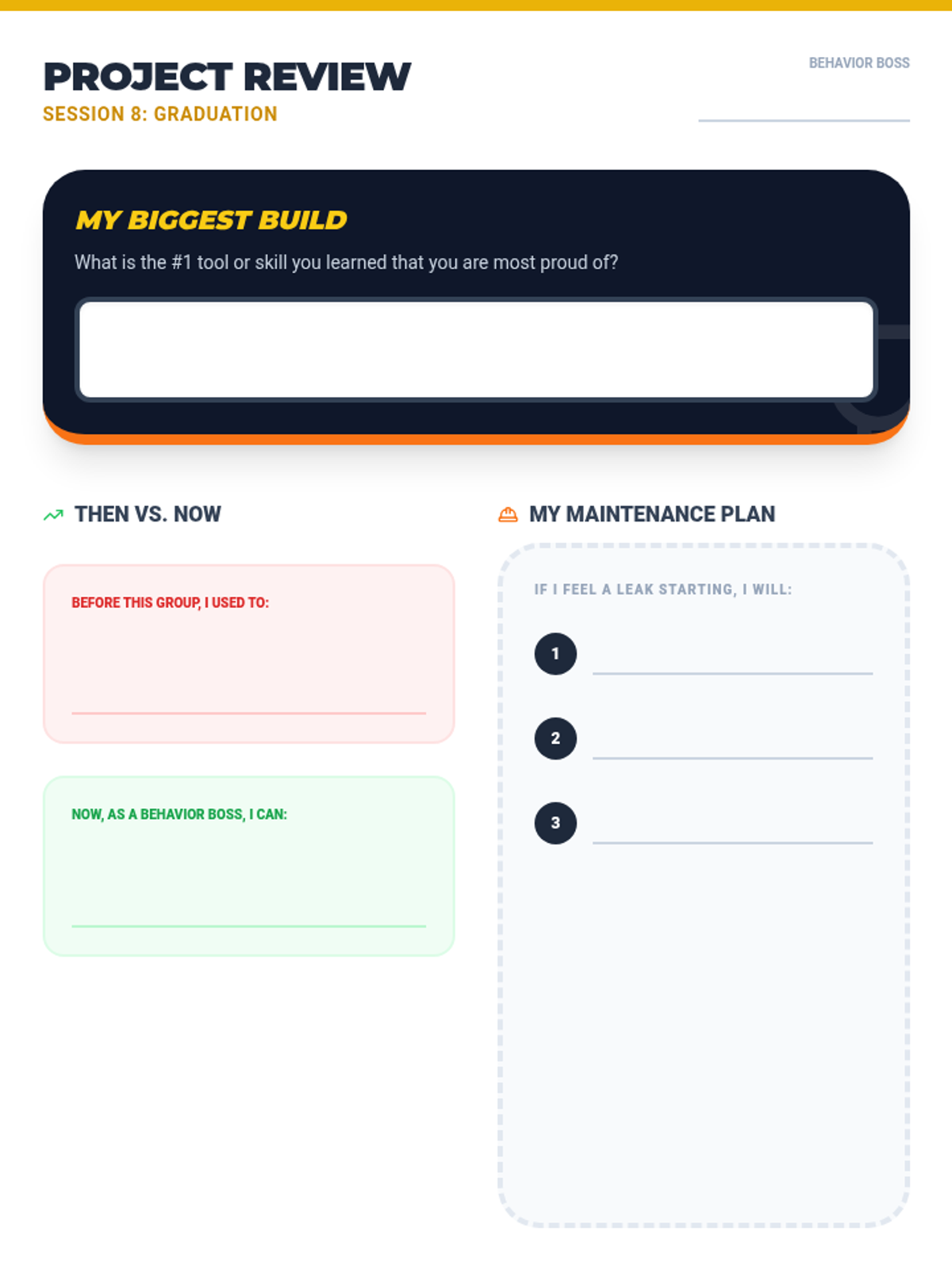
Review learned skills, celebrate progress, and create a maintenance plan for continued success back in the classroom.