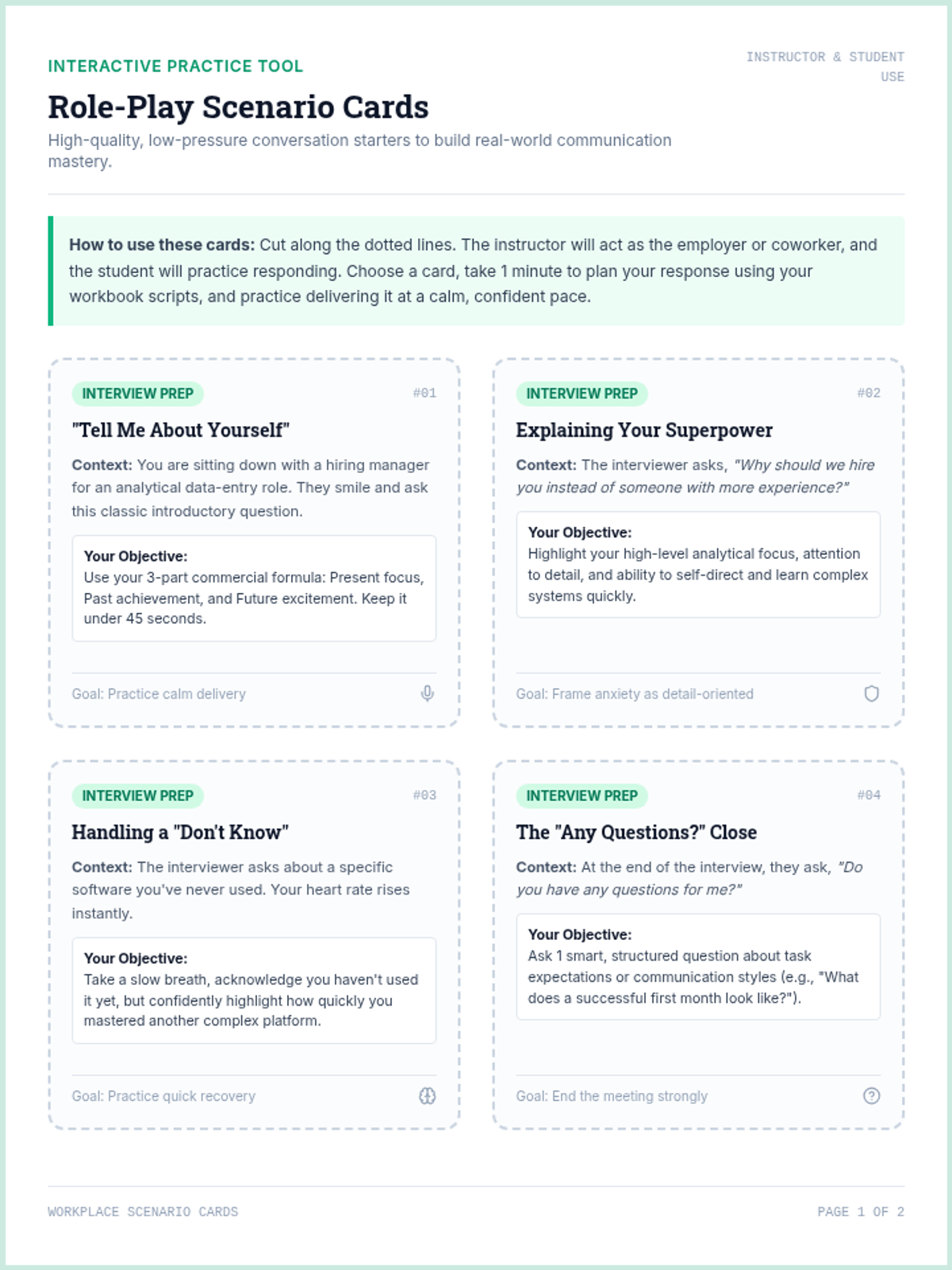
Students analyze different fellowship interview styles—panel, one-on-one, and social—and decode the underlying expectations of selection committees.
A career counseling lesson focused on the 80/10/10 rule for time management, helping students align their weekly schedules with their passions and strengths to achieve long-term professional fulfillment.
A comprehensive 2-hour training focused on identifying emerging trends in prevention science and integrating them into evidence-based strategies to maximize community impact.
A comprehensive three-hour workshop for women focusing on self-love, different types of love, and the importance of healthy relationships. Includes guided reflections, interactive scenarios, and personal growth exercises.
A comprehensive set of tools designed to help college students deconstruct a large research paper into manageable phases with a focus on time management and meeting deadlines.
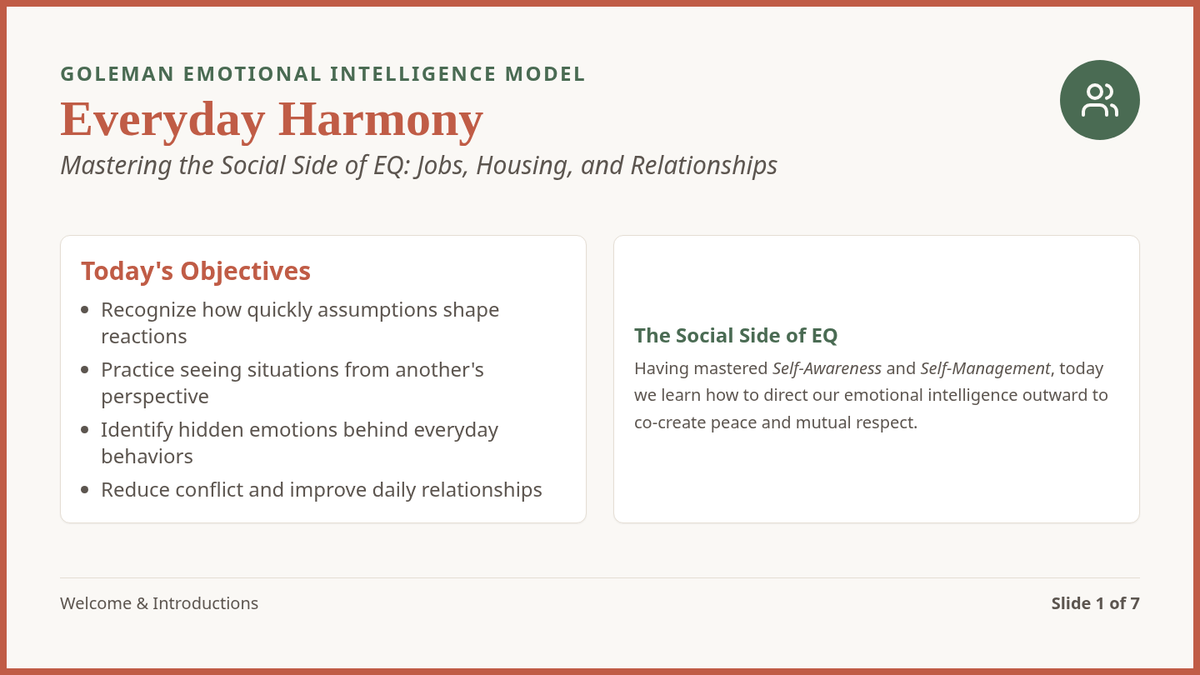
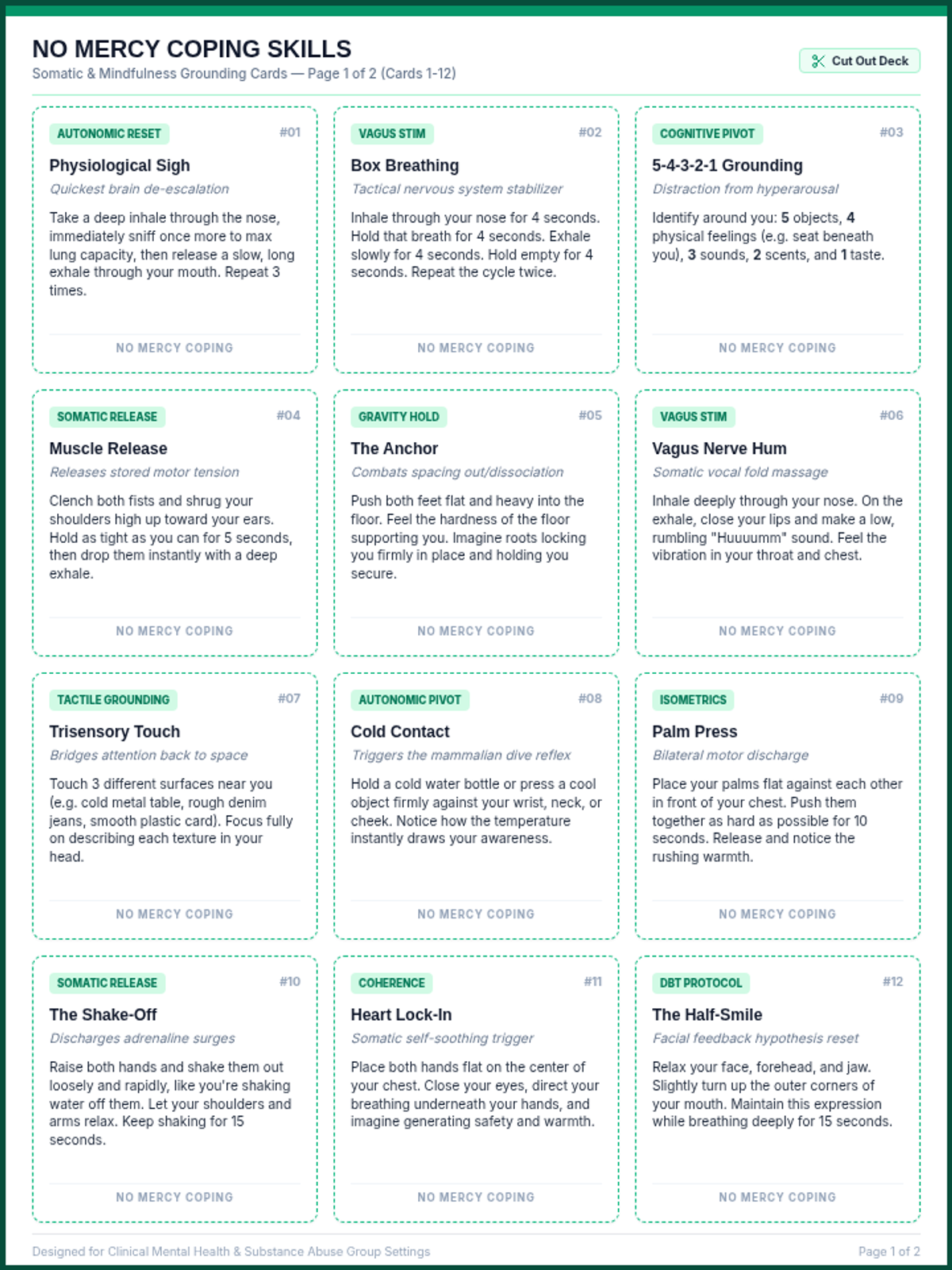
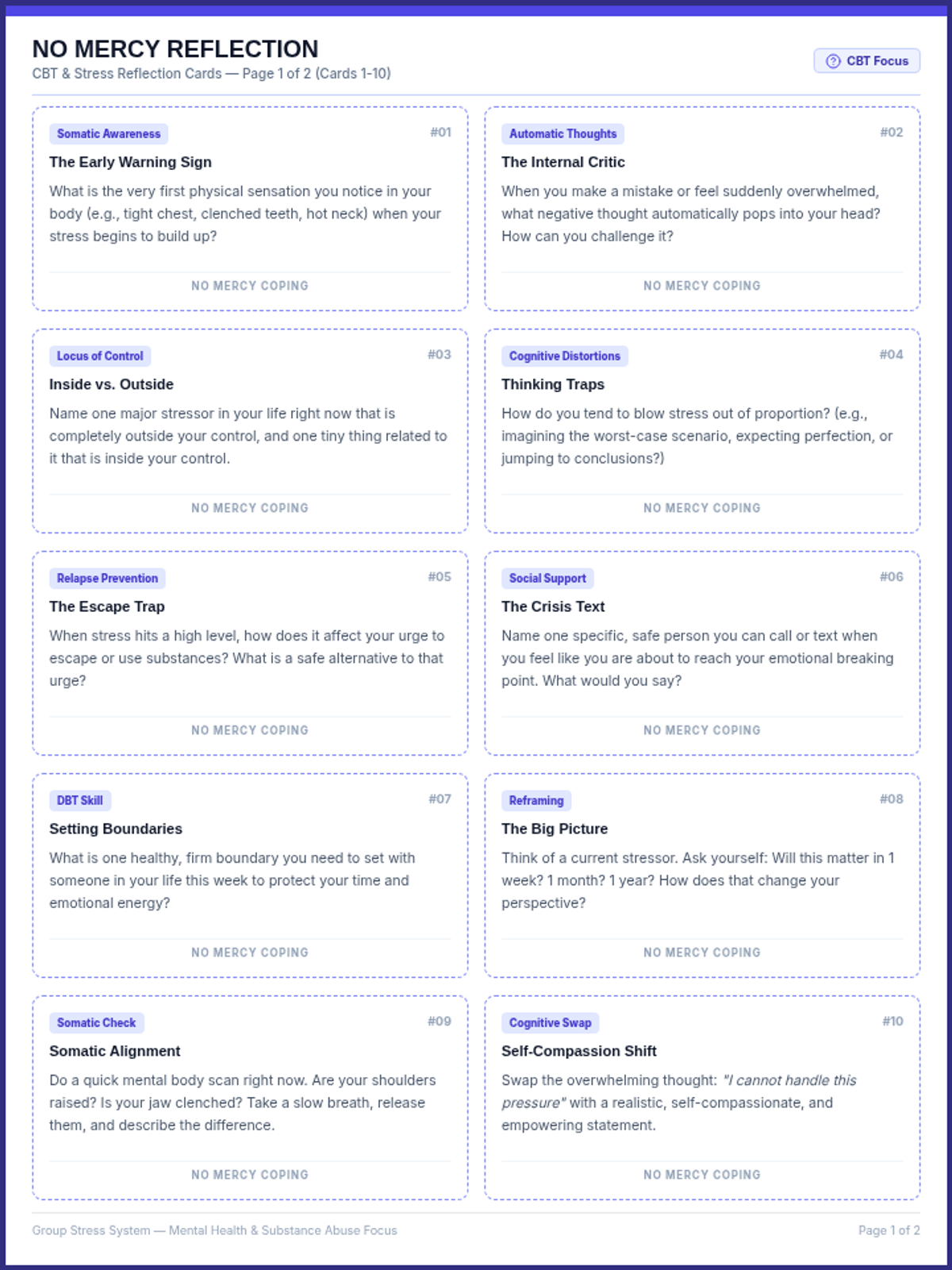
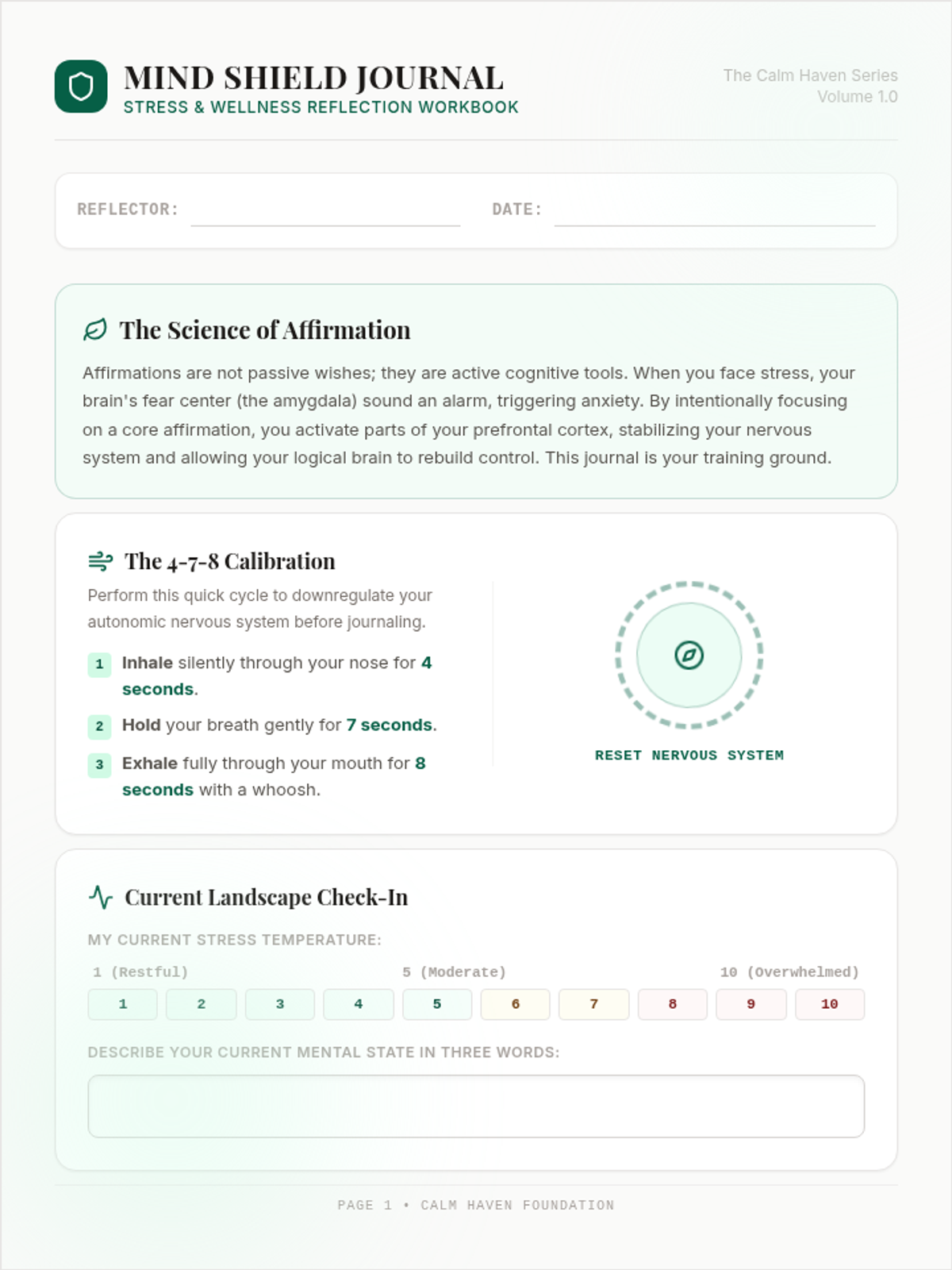
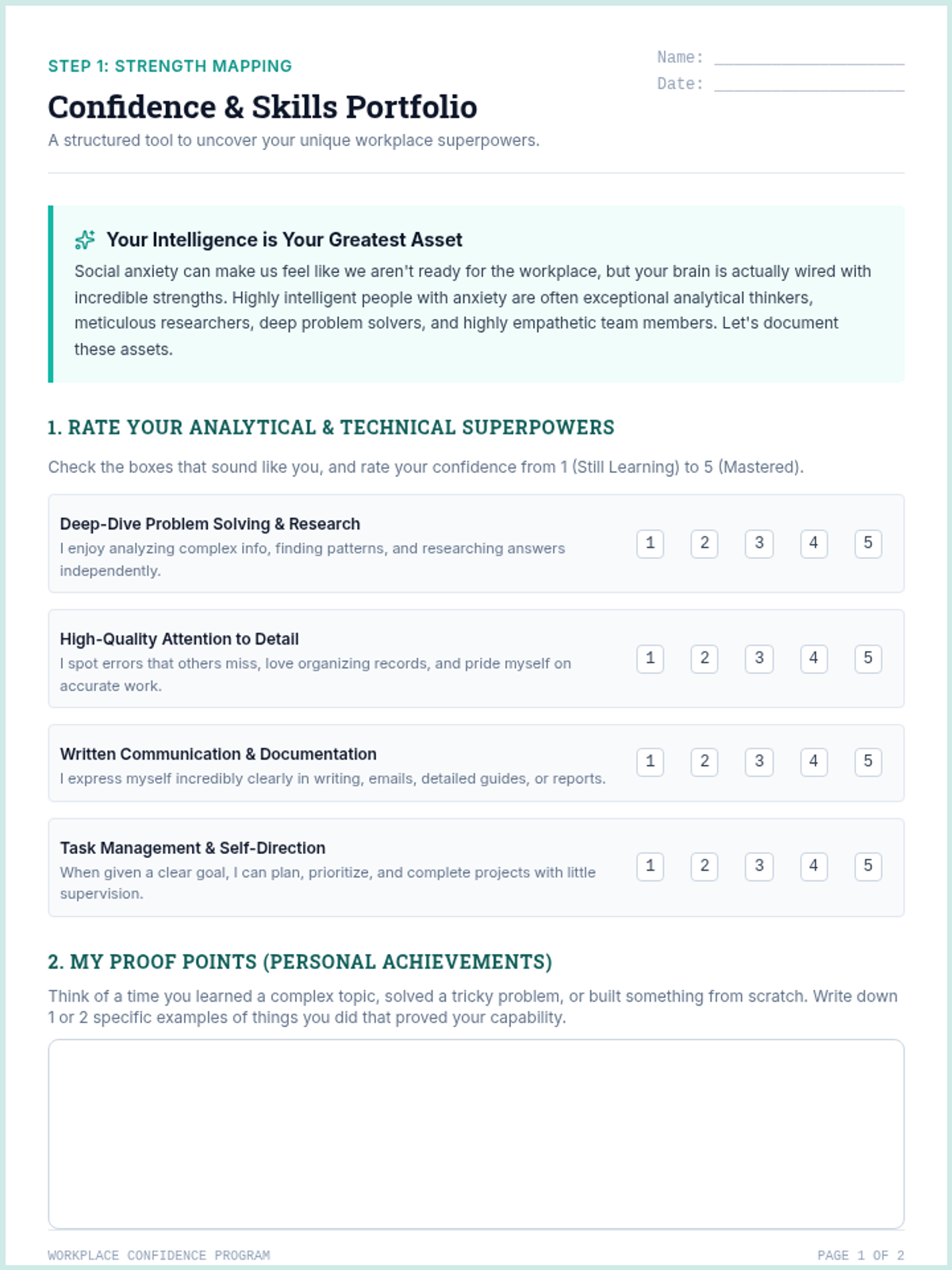
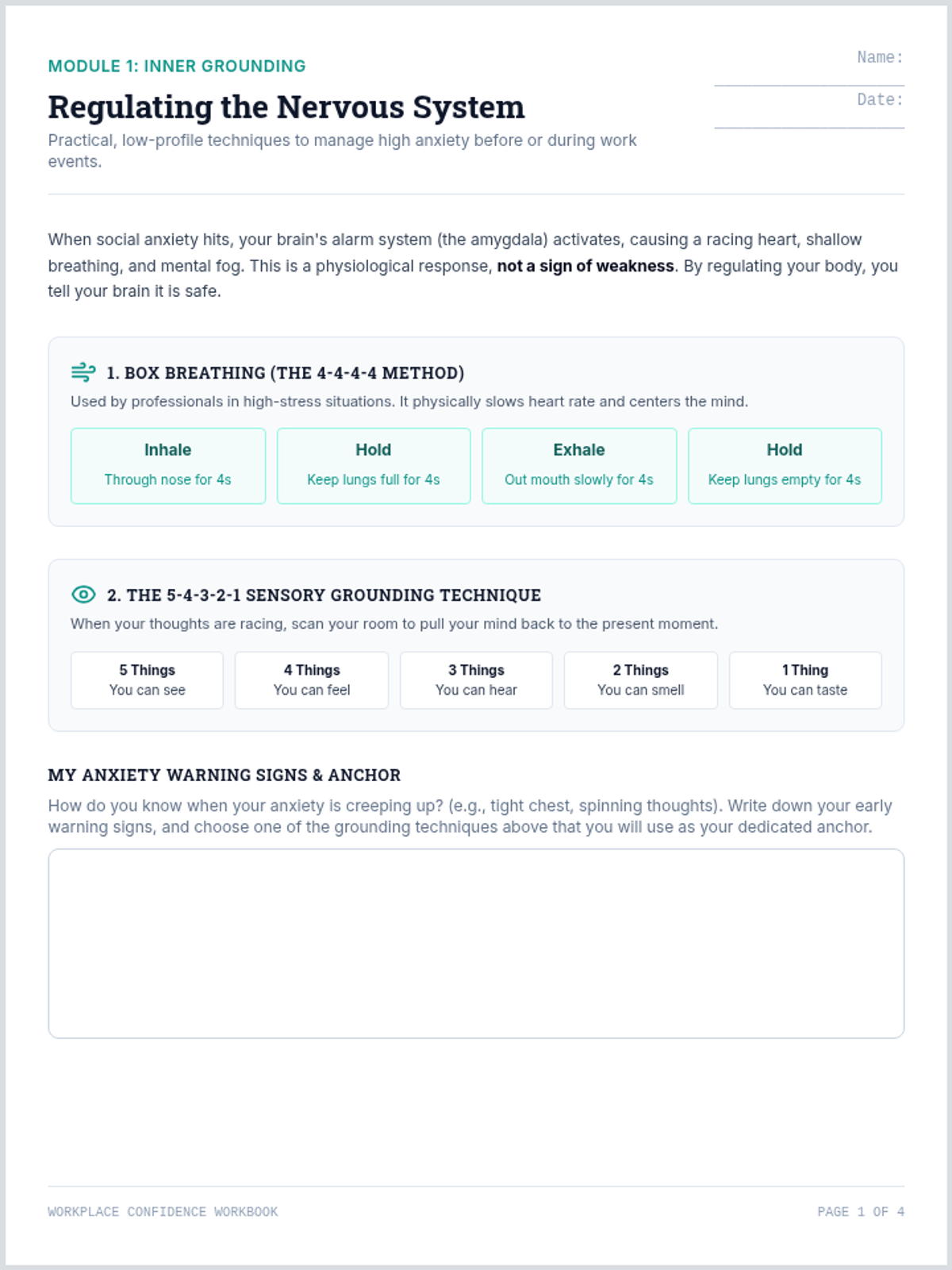
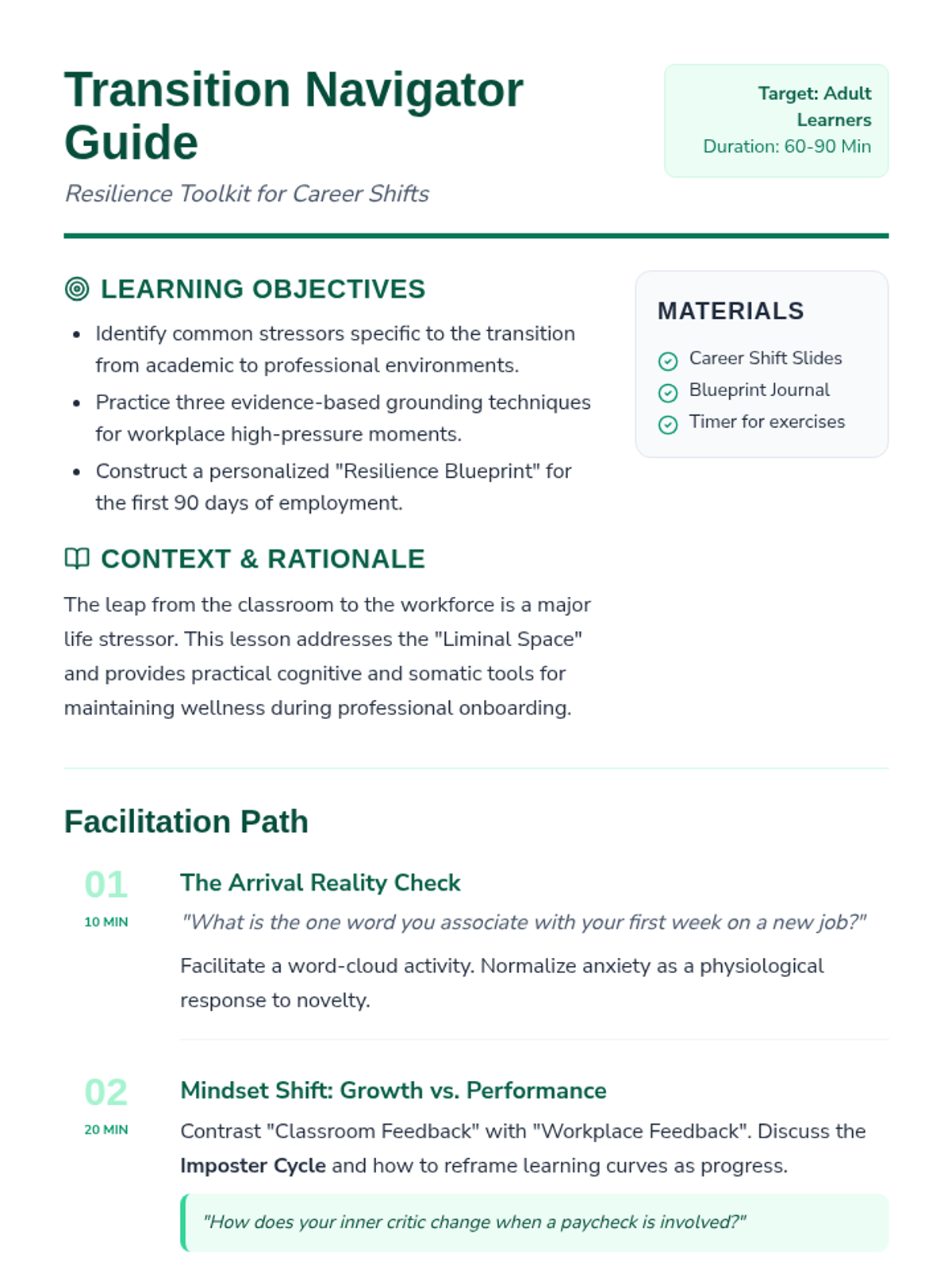
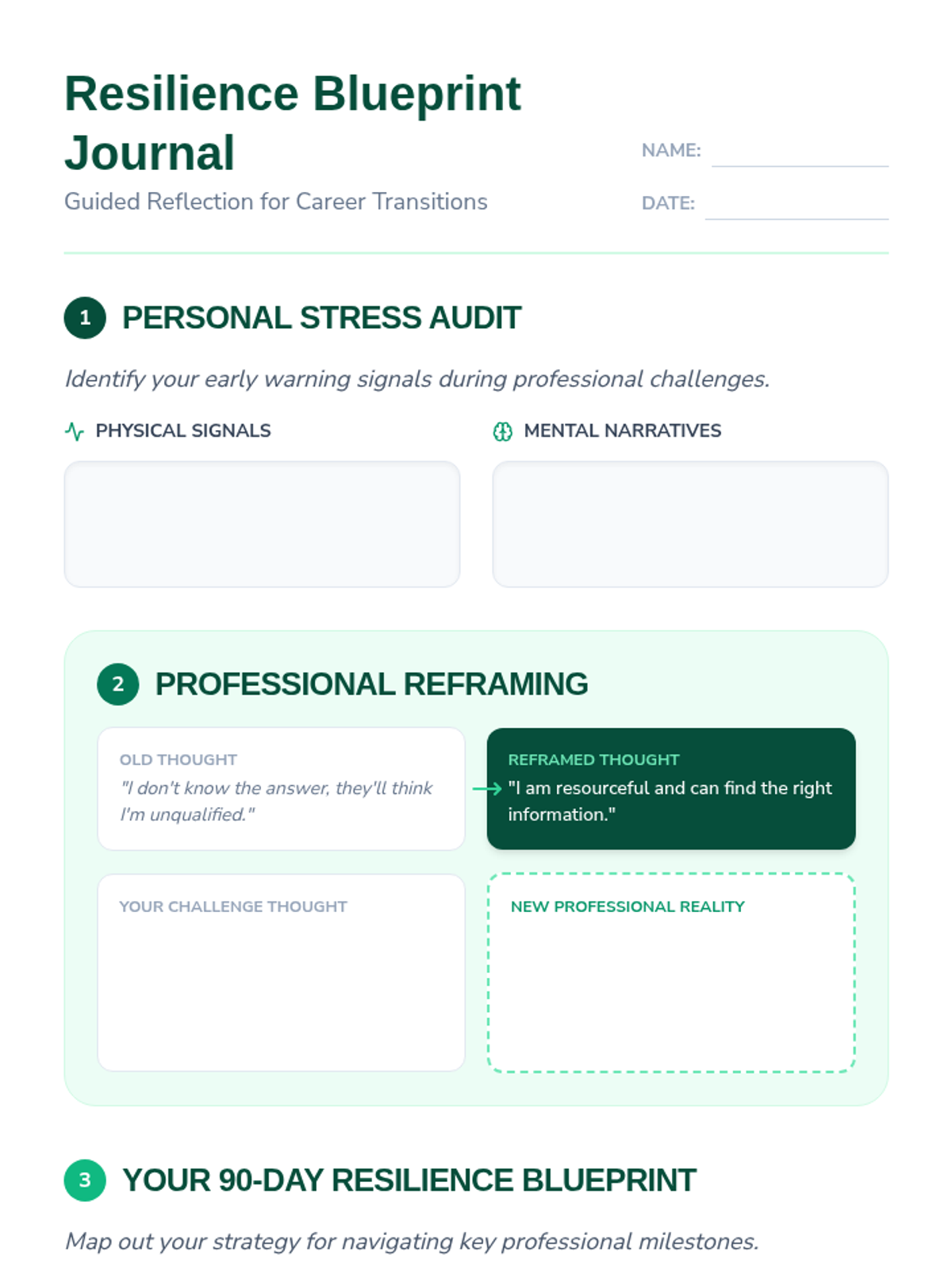
A comprehensive lesson focused on managing workplace anxiety through practical coping mechanisms like breathing, journaling, and music exploration. Students will engage with scenarios, readings, and self-reflection exercises.
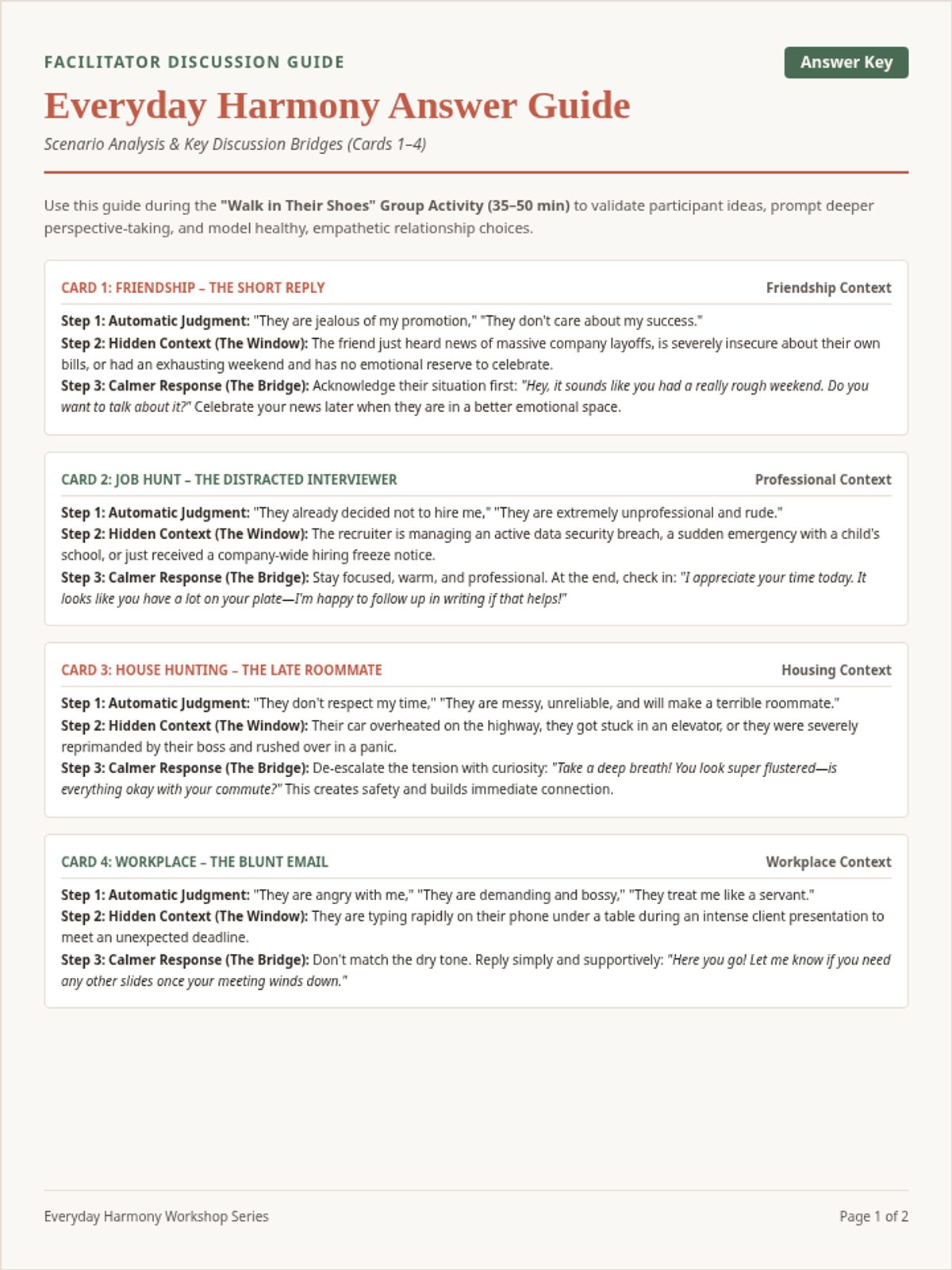
A comprehensive 120-minute training session covering self-assessment, resume building, job search strategies, and interview techniques for job seekers.
A comprehensive 120-minute training session focused on reducing over-apologizing, improving email clarity, and developing active listening skills to build professional confidence.
Develop the skills to assess community needs and assets, culminating in a professional-grade community assessment project.
Understand the principles of trauma-informed care and how to create safe, empowering environments for clients with history of trauma.
Learn the art and science of grant writing, from identifying funding sources to crafting compelling narratives for social programs.
Master evidence-based crisis intervention strategies to de-escalate high-stakes situations and ensure client safety during emergencies.
Explore complex ethical dilemmas in social work through real-world scenarios, applying the NASW Code of Ethics to determine the best course of action.