Emotion recognition ranging from basic feelings to complex nuances and mixed states. Strengthens accurate self-assessment through identity exploration, strength identification, and values-based decision making.
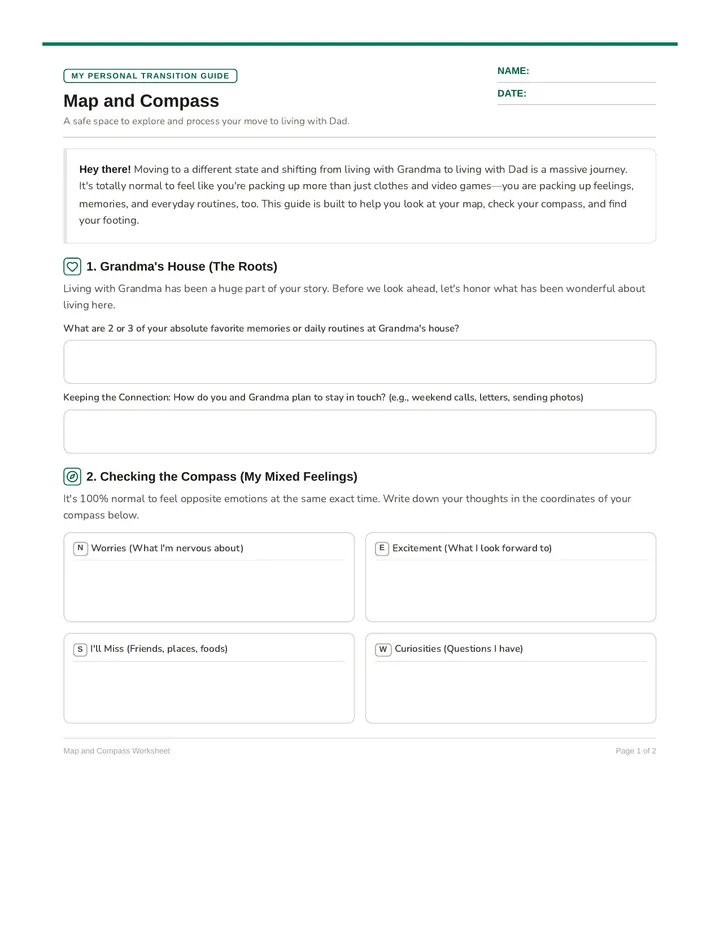
A reflective, gentle 2-page worksheet designed to help a 6th-grade student process thoughts, emotions, and practical transitions when moving from living with their grandmother to living with their dad in a new state. Fully redesigned with an ink-friendly, all-white print theme with fine borders and layout safety margins.
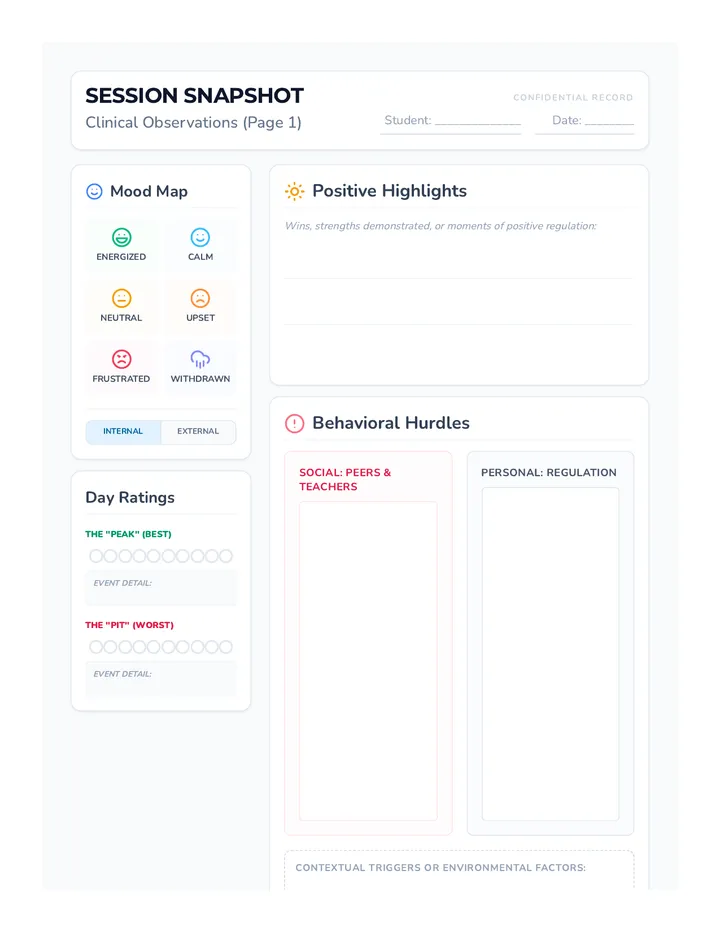
A comprehensive two-page session note-taking template for counselors. Page one tracks observation data like mood, day ratings, and behavior hurdles, while page two provides extensive space for clinical narrative, session synthesis, and planning. Strict page containment prevents messy overlap between printed pages.
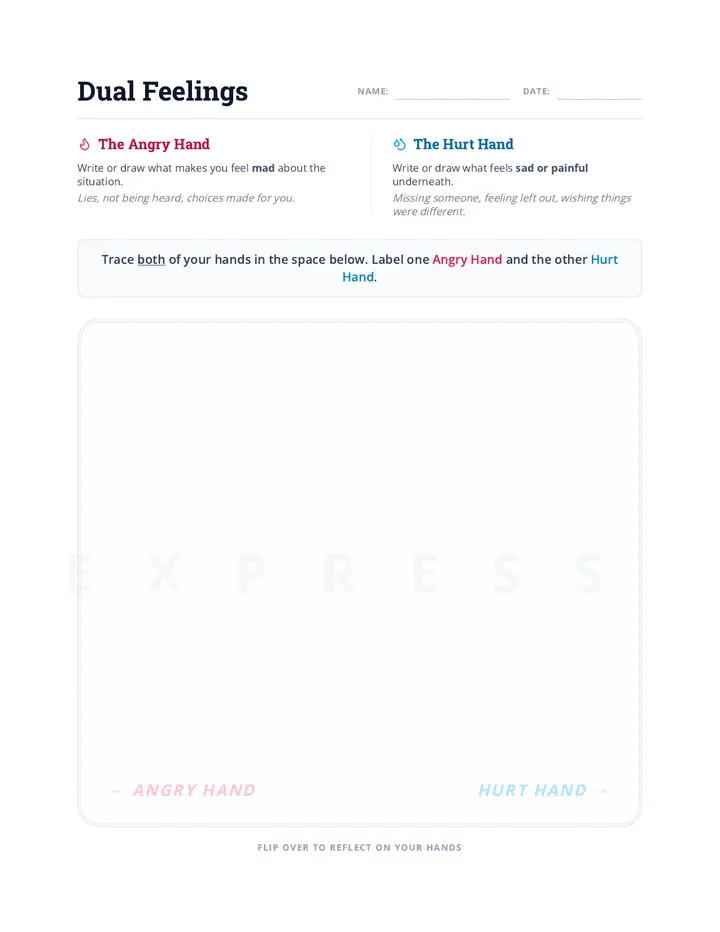
An updated dual-page handout for exploring anger and hurt. Page 1 features an expanded tracing area for teen hands with clear instructions. Page 2 provides deeper reflection questions, including a new section focused on the transition from "playing the adult" back to being a teenager.
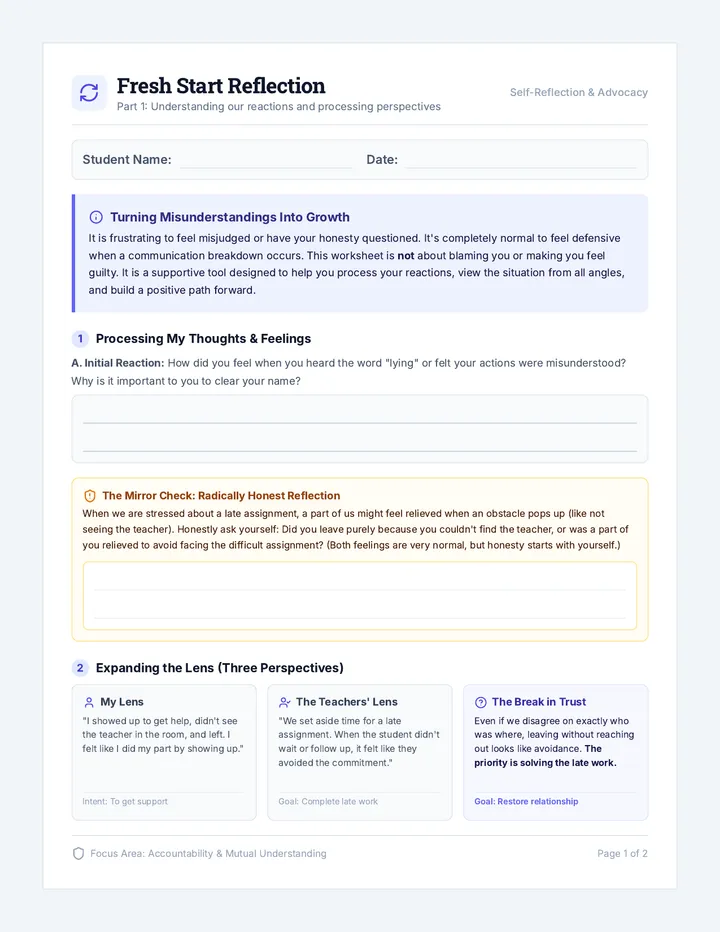
An updated two-page self-reflection worksheet adding a proactive timing section to help students recognize the value of seeking help before an assignment becomes overdue.
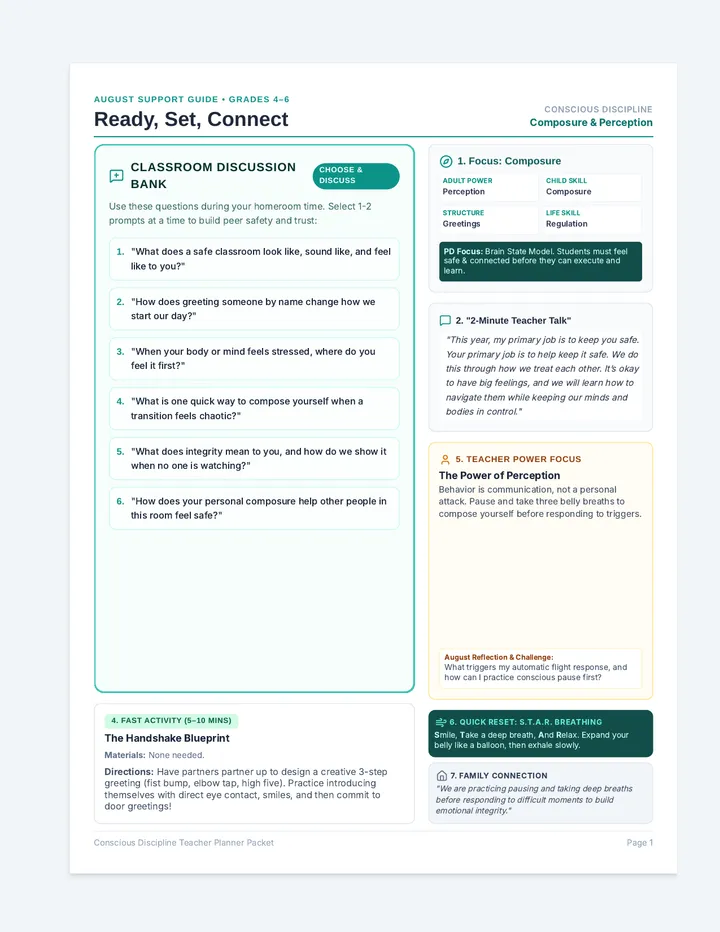
A professional, highly encouraging 9-page planner packet of monthly classroom support guides for elementary educators. Designed with the Classroom Discussion Bank as the dominant visual focal point on each page, featuring a dedicated list of highly engaging questions for grades 4–6 without subcategories, set to be utilized during homeroom time.
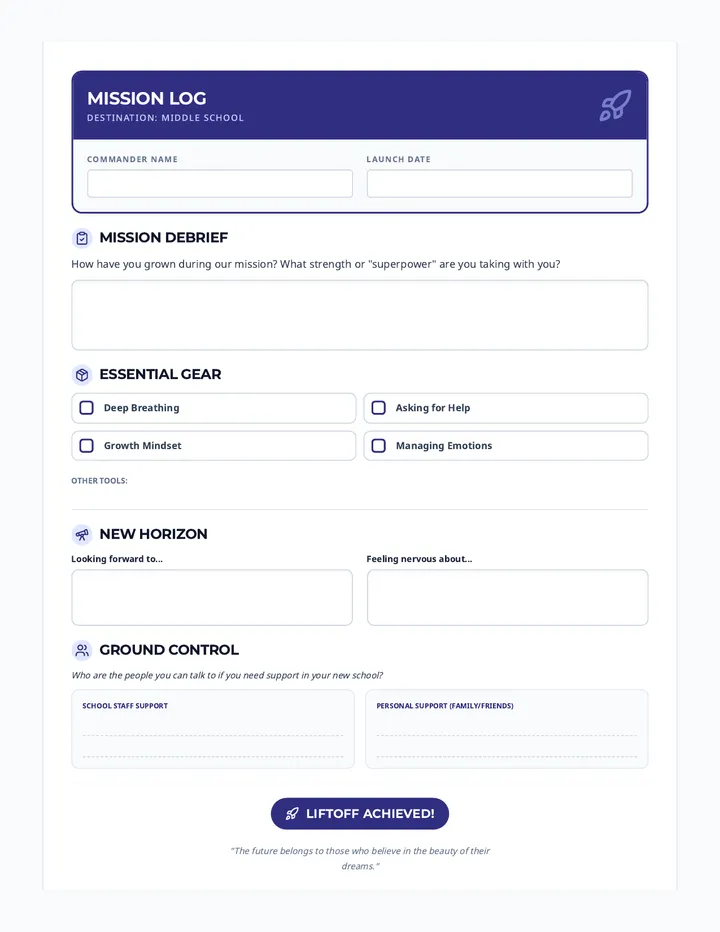
A transition activity sheet designed for elementary students finishing school counseling services as they move to middle school. It uses a space exploration theme to help students reflect on their growth, identify coping skills, and plan for their support system in their new school.
A one-page vintage map-themed handout explaining the five stages of grief. It features an illustrative map with landmarks for each stage and emphasizes the non-linear nature of the healing journey through a winding path and reflection prompts. This version is optimized for a single page.
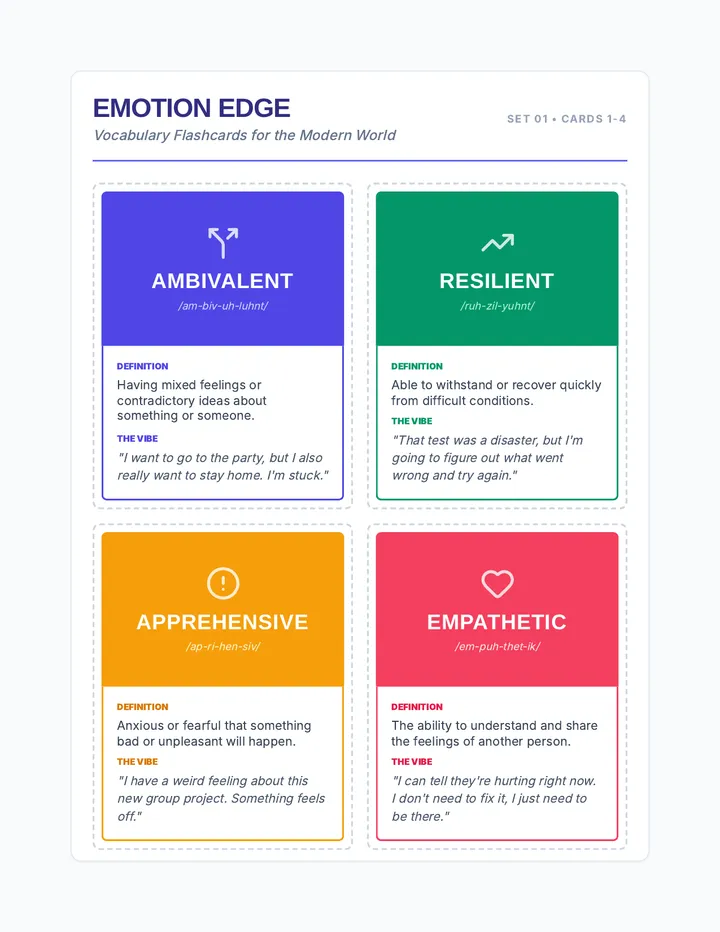
A set of 16 modern, high-contrast flashcards designed for adolescents to expand their emotional vocabulary. This expanded set includes 12 nuanced emotions and 4 foundational ones (Happy, Sad, Angry, Content), each featuring phonetic pronunciation and relatable 'vibe' scenarios.
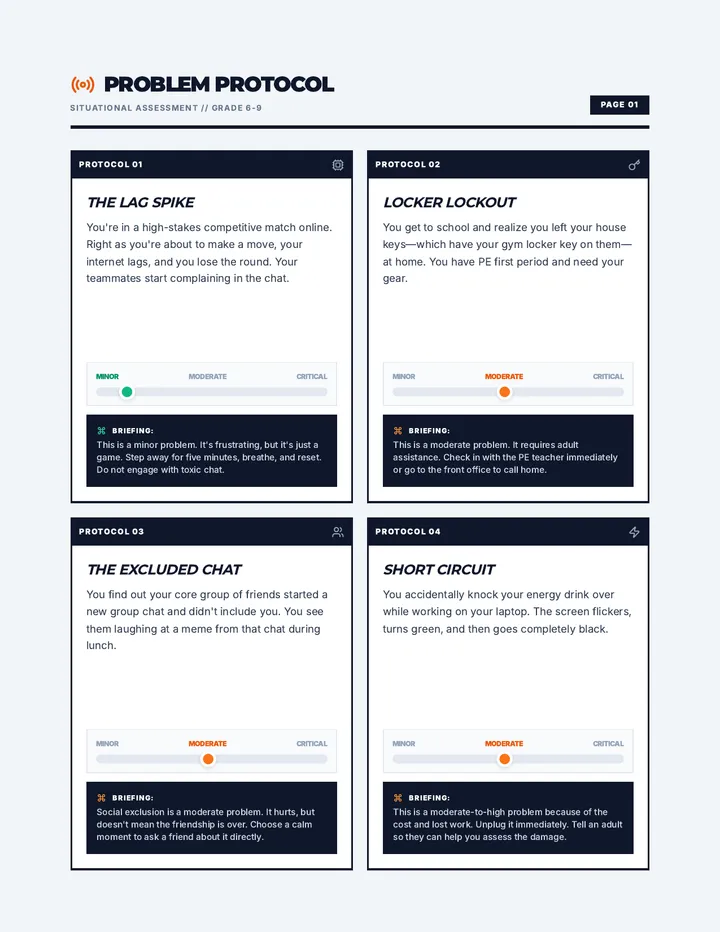
Updated set of 10 scenario cards tailored for older boys (grades 6-9), focusing on social dynamics, technology, sports, and safety. The design uses a technical 'Problem Protocol' theme with a sleek industrial aesthetic, featuring clear situational assessments and teacher-facilitated briefings.
A high-energy, football-themed mood meter worksheet featuring six player personas on page one and a 'Playbook' reflection section on page two to ensure clean printing.
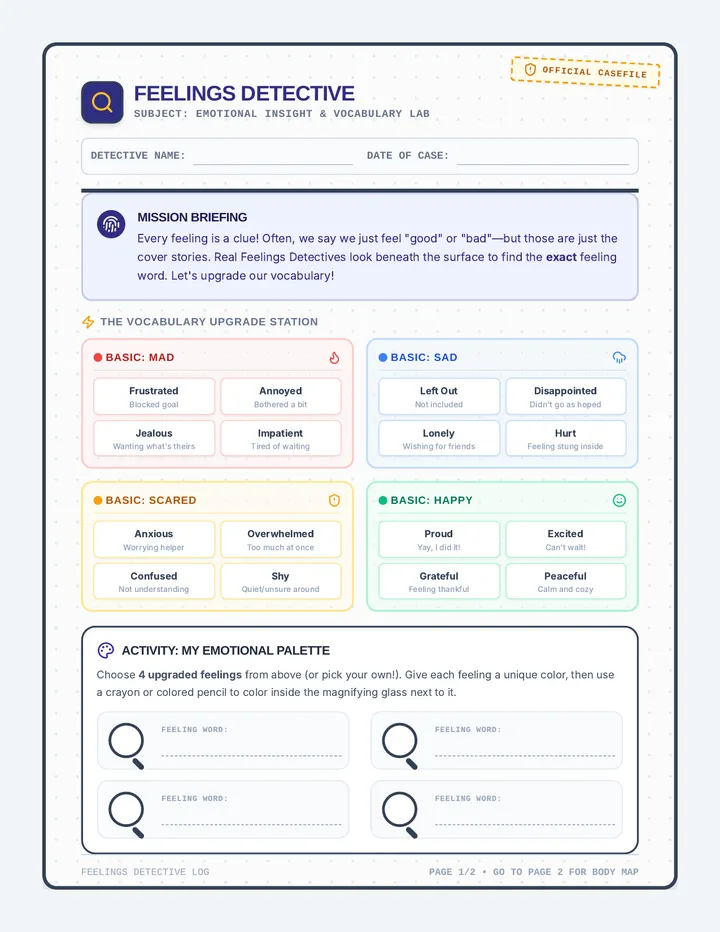
A double-sided feelings workbook for a 4th-grade student that teaches emotional vocabulary and somatic body awareness through a playful 'Feelings Detective' theme. It includes a color-coded vocabulary builder, a somatic body mapping activity, and a scaffolded Case File section to practice I-statements.
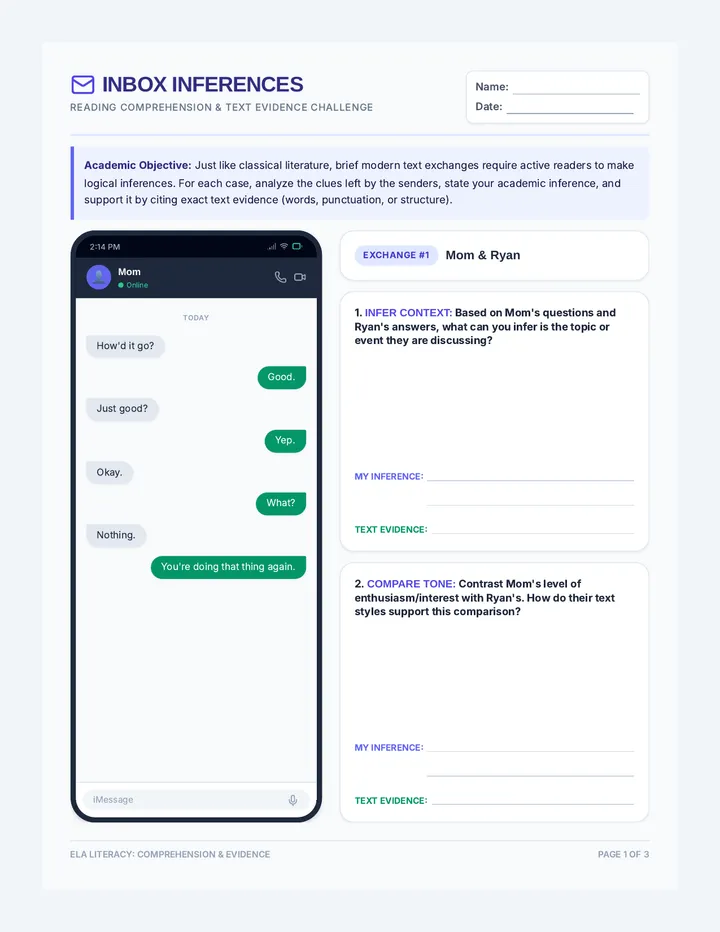
A 3-page academic ELA reading comprehension worksheet called 'Inbox Inferences Worksheet' focused purely on inferencing, tone, character analysis, and citing text evidence from text message exchanges, ending with an academic synthesis activity.
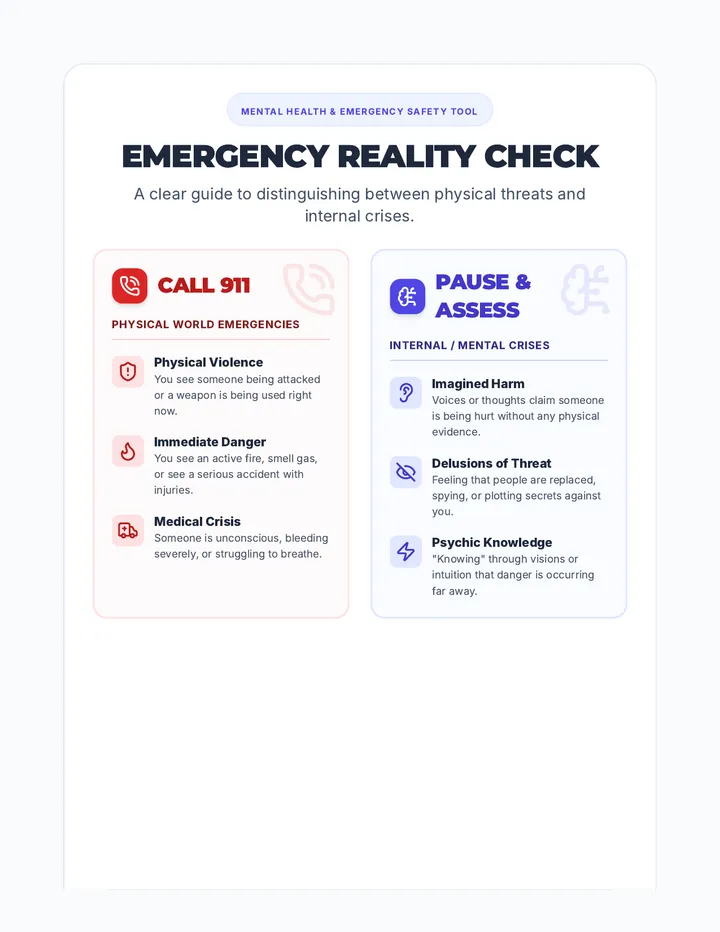
A refined, high-contrast one-page infographic for adults in mental health contexts. Optimized with page-break protection (break-inside-avoid) on all major objects to ensure clean printing on standard or legal sized paper. Includes actionable reality-checking steps and a personalized support network area.
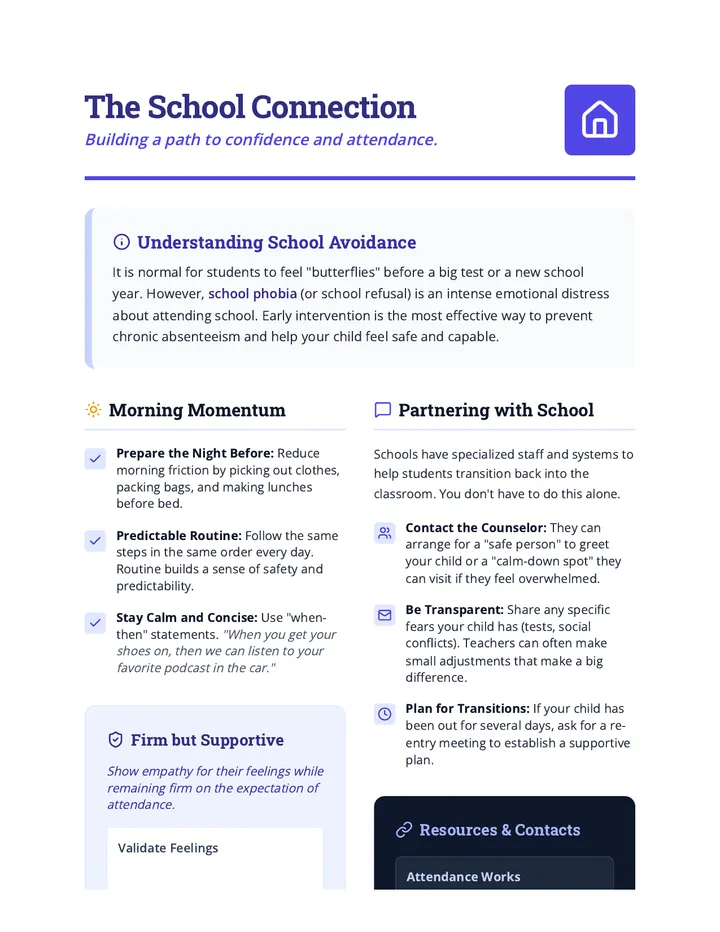
A refined one-page parent guide on school phobia and chronic absenteeism, featuring strategies for routines, supportive home environments, and school partnership with dedicated space for contact info.
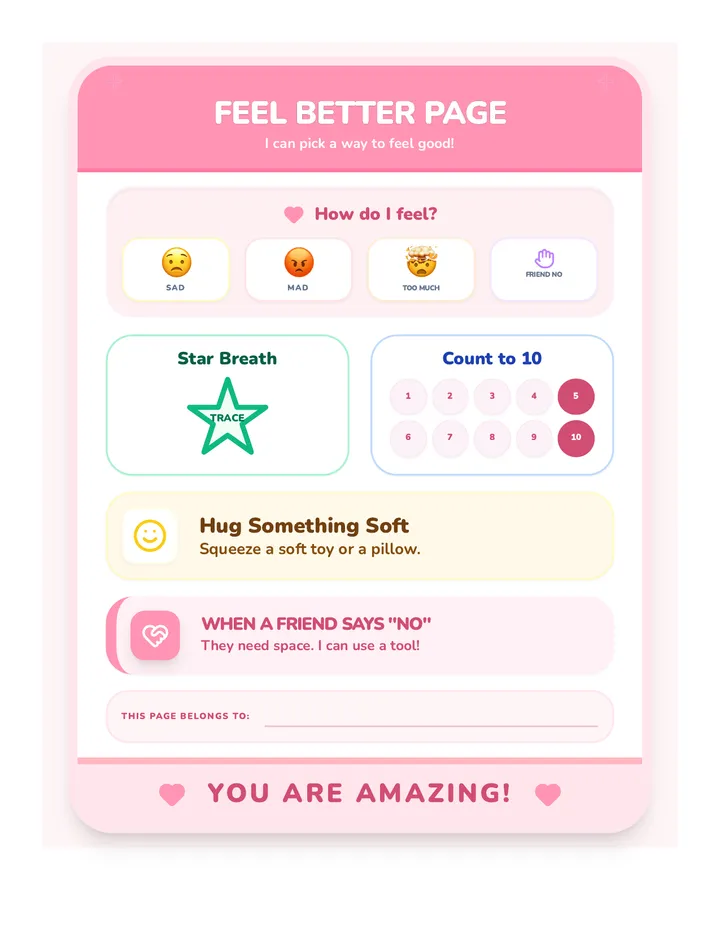
A child-friendly 'Feel Better Page' for a 2nd-grade girl, highly optimized for strict single-page printing by maintaining a total container height under standard margins. Features soft pink tones, simplified language, and sensory coping strategies (star breathing, heart counting, soft hugs) to help with emotional regulation and peer boundary sensitivity.
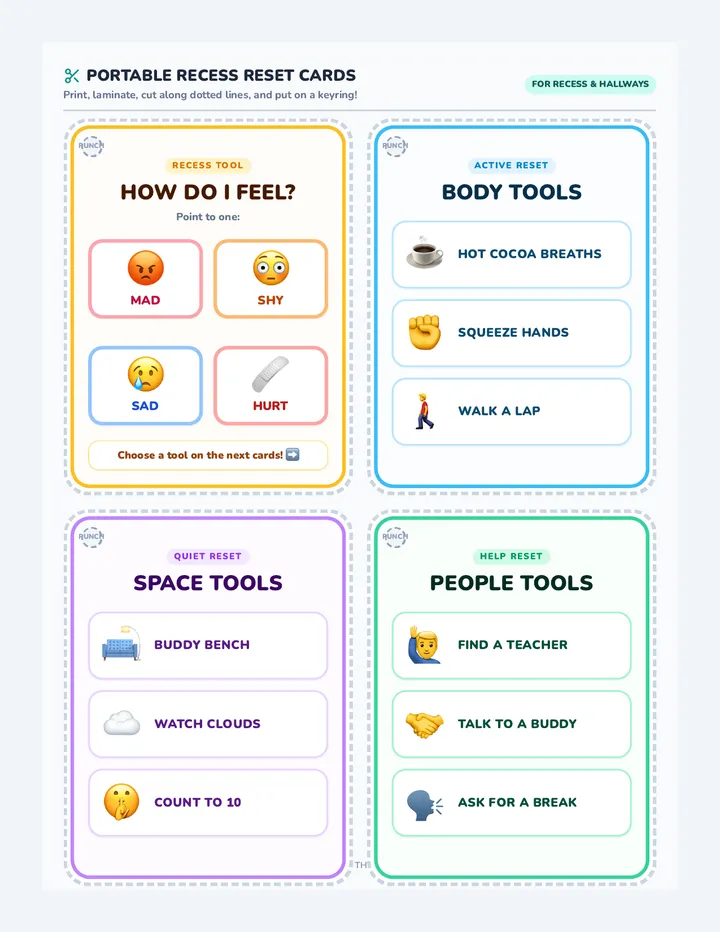
A highly simplified set of 4 pocket-sized visual cards with all subtext removed, optimized for minimal words, and featuring larger, highly prominent emoji illustrations (scaled up to text-5xl) for maximum clarity and engagement with first-grade students. Card 2 uses 'Deep Breaths' and Card 3 uses 'Walk Away'.
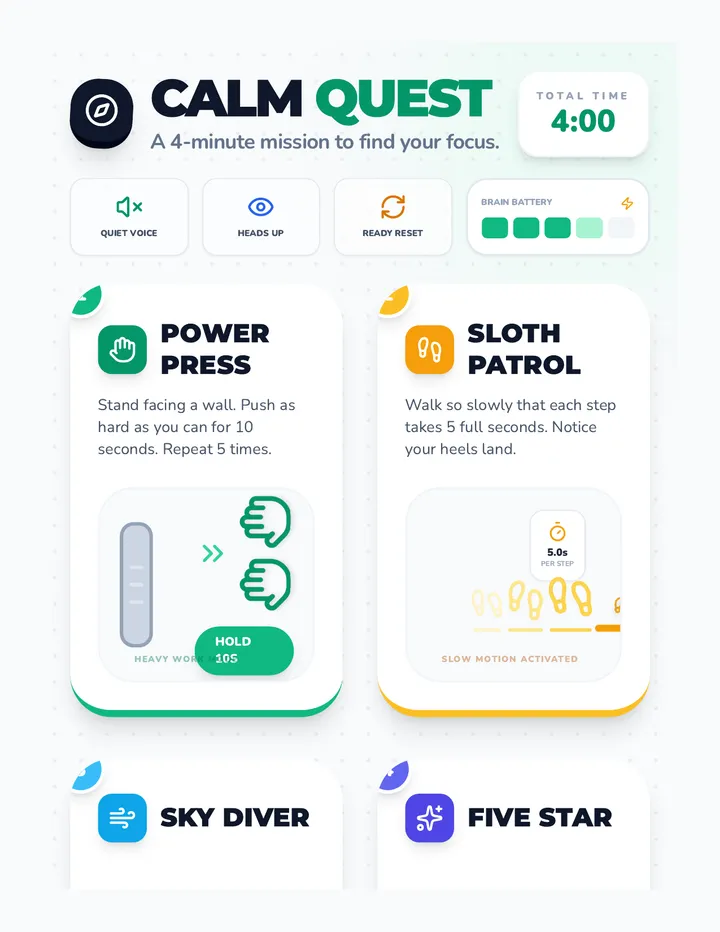
An enhanced visual graphic featuring four specific movement and breathing exercises designed for students to use in the hallway. The updated design includes larger, more detailed visual diagrams for each exercise and a quest-style layout.
A set of 10 printable emotion emoji cards (Happy, Sad, Angry, Surprised, etc.) for students to use in identifying and sharing their feelings.
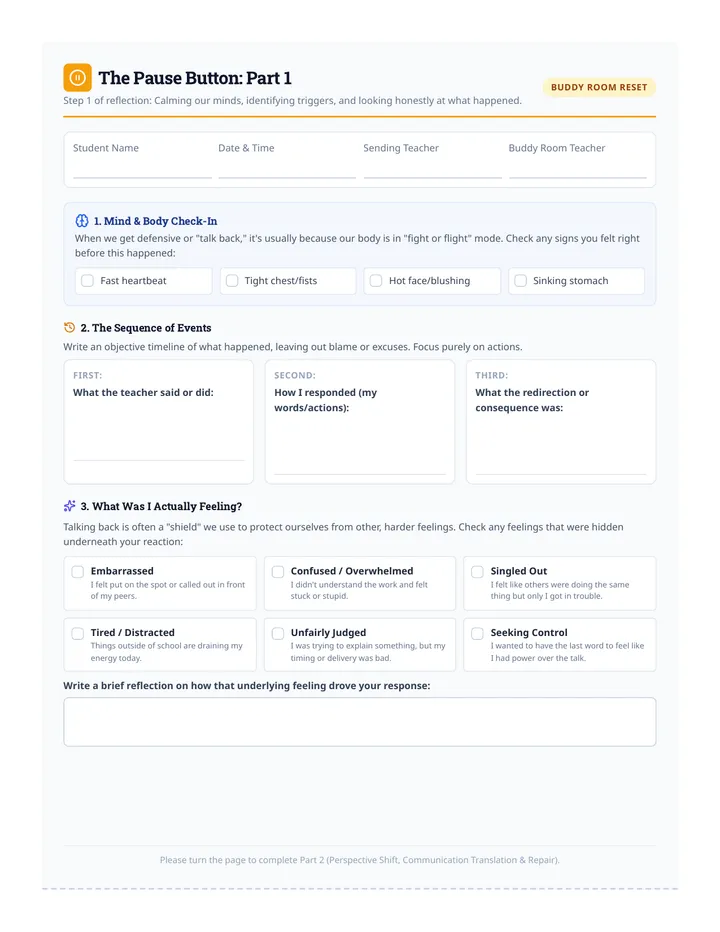
An expanded two-page restorative reflection workbook for students in a buddy room due to disrespectful language or talking back. It guides students through somatic cooling-off, objective timeline sequencing, uncovering underlying feelings (embarrassment, overwhelm, singling out), perspective shifting, translating statements into respectful communication, and drafting a concrete re-entry repair plan.
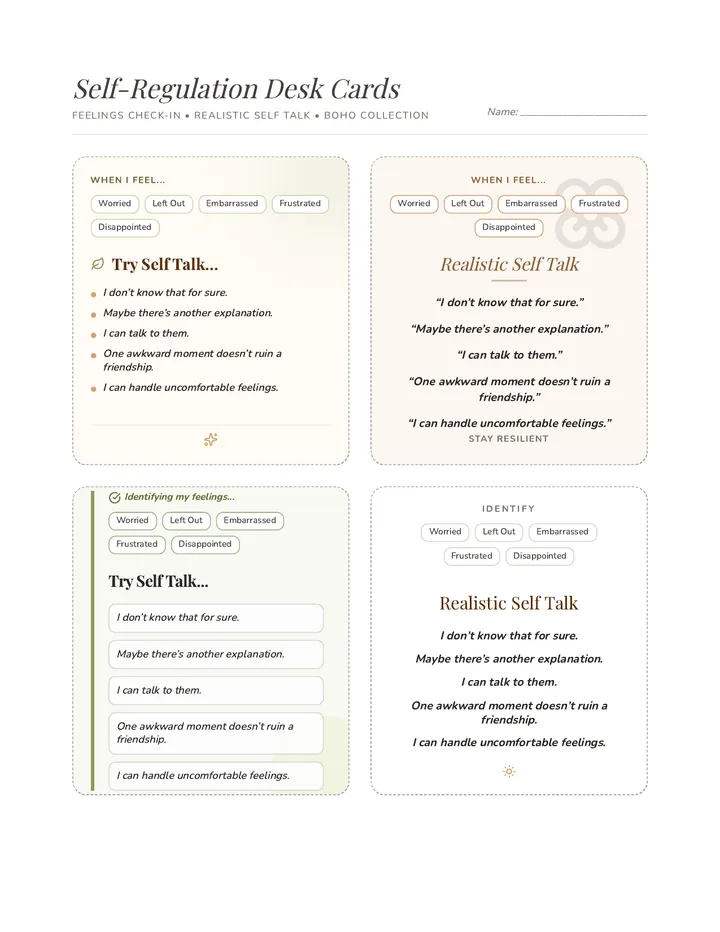
A collection of four printable boho-chic desk reference cards featuring an emotional identification section and realistic self-talk prompts. Designed for a mature elementary student to support emotional regulation and resilience. Optimized for 8.5x11 printing.
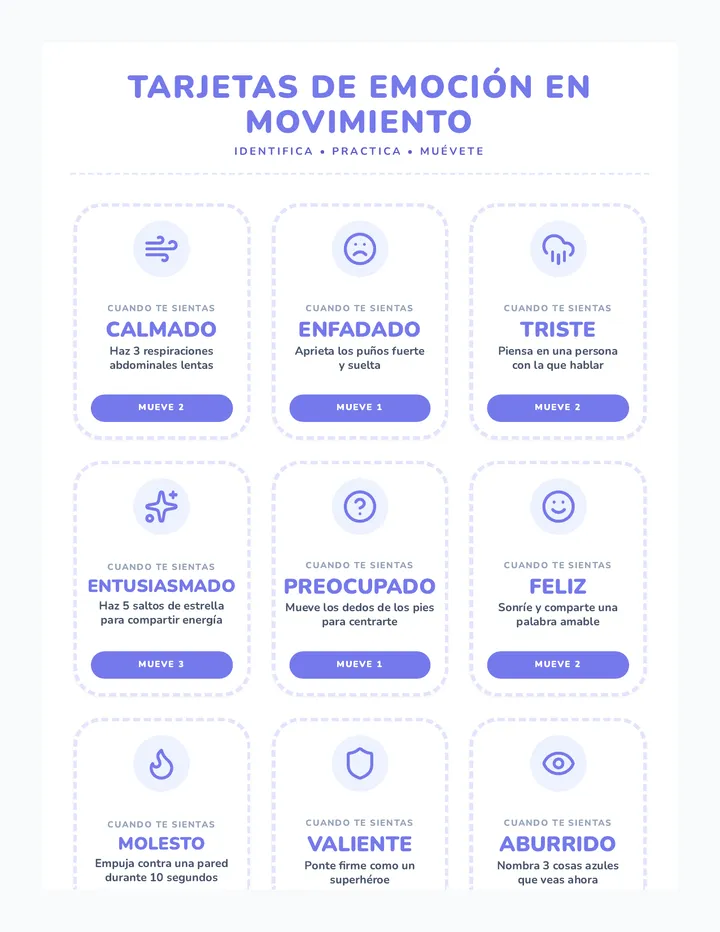
A set of 18 printable activity cards in #7579EB tones, designed for elementary counseling to help students identify emotions and practice specific coping strategies through movement and reflection.
The ultimate compact version of the Adulting Celebration Chart with ultra-reduced line spacing and minimal vertical gaps. It utilizes tiny icons, condensed font sizes, and tight leading to provide a high-density workplace tracking experience that fits multiple players and comprehensive metrics in a single printable view. It moves metric descriptions inline to save vertical space.
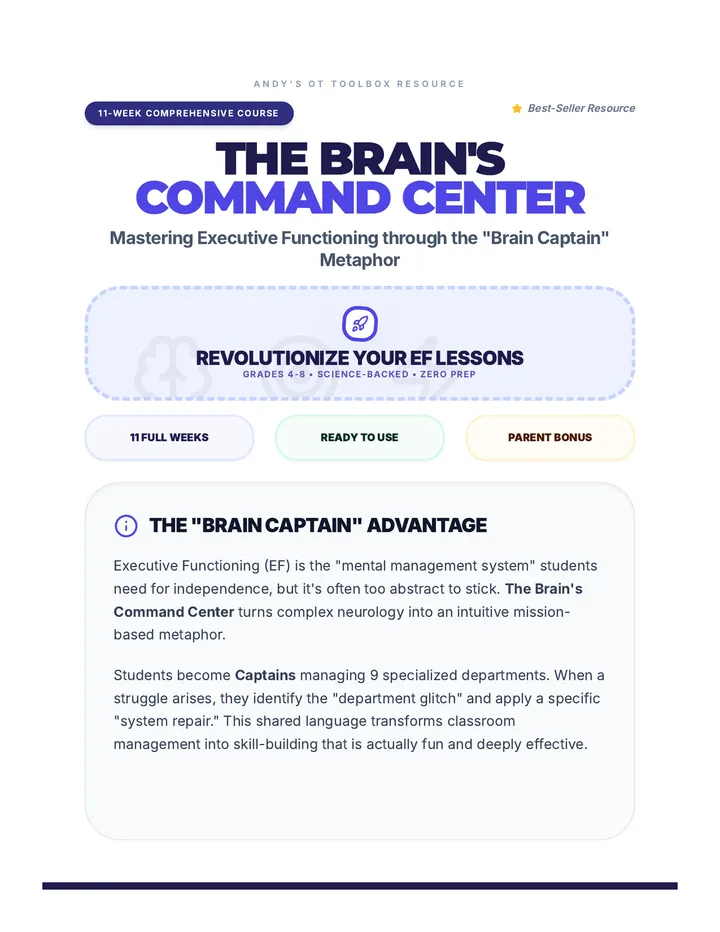
A 5-page Teachers Pay Teachers (TpT) product page for an 11-week Executive Functioning course, featuring a bold 'Command Center' theme, departmental skill highlights, parent guide mockups, and testimonials. Page 4 has been adjusted to ensure the 'missions' text is fully visible without cutoff.
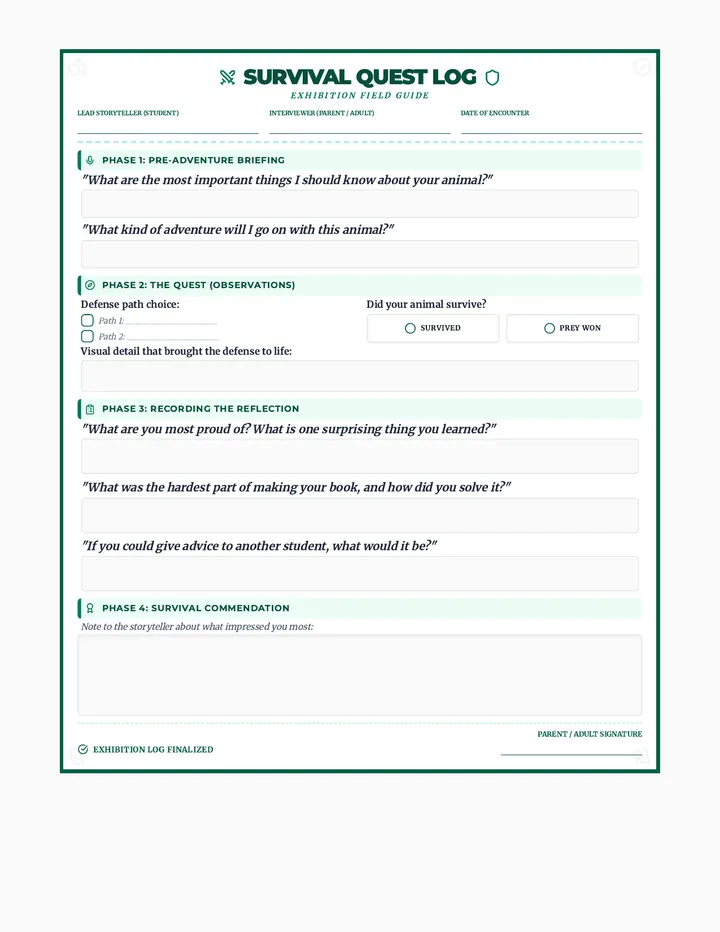
Final one-page Survival Quest parent feedback form. Optimized with a constrained 820px height and tightened vertical spacing to guarantee it fits on a single printed page while maintaining readable font sizes for the interview and reflection questions.
A single-page choice board designed for high visibility on an 11x17 poster, featuring bold titles and clear game descriptions in a compact layout.
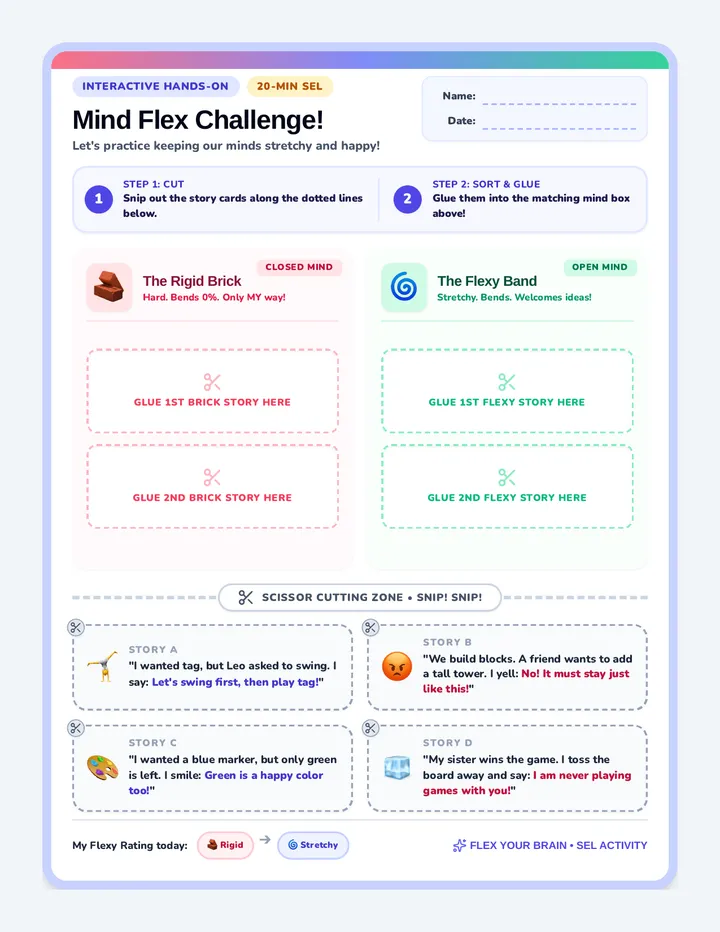
An interactive, hands-on 'Mind Flex Challenge' worksheet designed for 1st and 2nd graders with enlarged fonts, cards, and drop-zones for easier reading, cutting, and handling. This 20-minute SEL activity features a cut-and-paste sort where students categorize real-world recess and classroom scenarios into 'Rigid Brick' (Closed Mind) or 'Flexy Band' (Open Mind) categories.
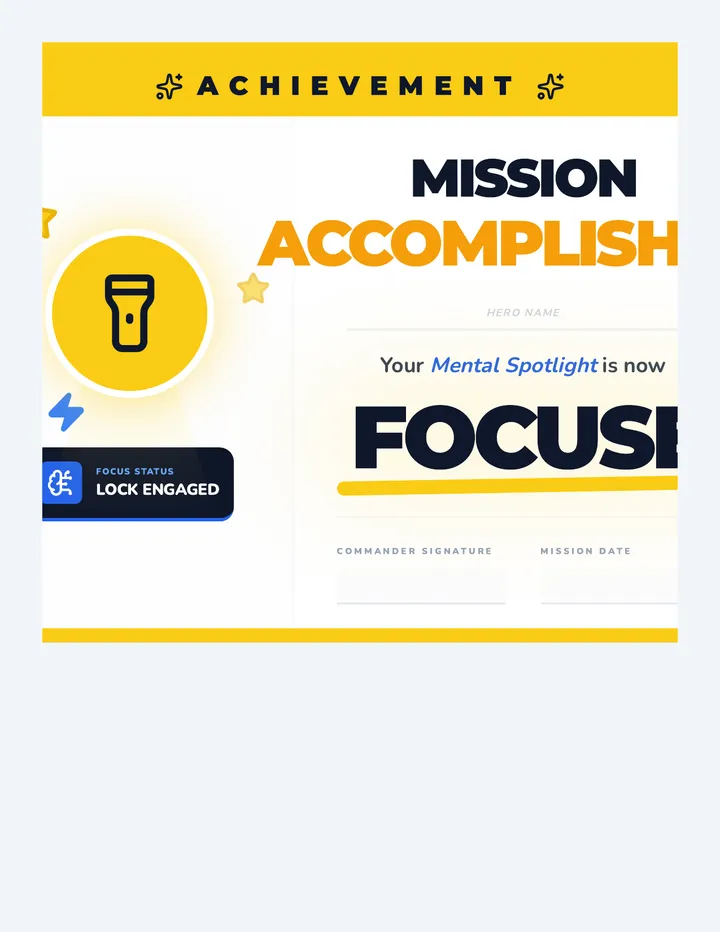
A high-impact award card for students in landscape orientation. It features a bold 'FOCUSED!' headline, a spotlight graphic, and designated areas for recipient name, teacher signature, and date. Optimized for a single-page landscape printout.
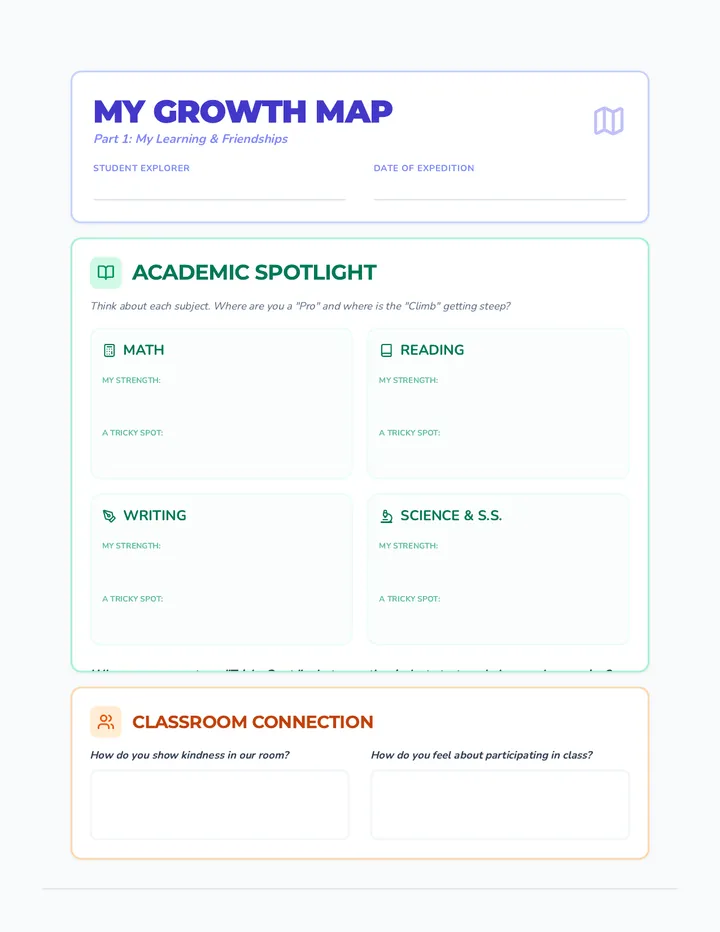
A comprehensive mid-year reflection worksheet for 5th graders, covering academic growth, social interactions, mindset, and goal-setting with both open-ended questions and rating scales. Now includes a Subject Spotlight for core subjects. Now expanded to a two-page layout for more reflection space.
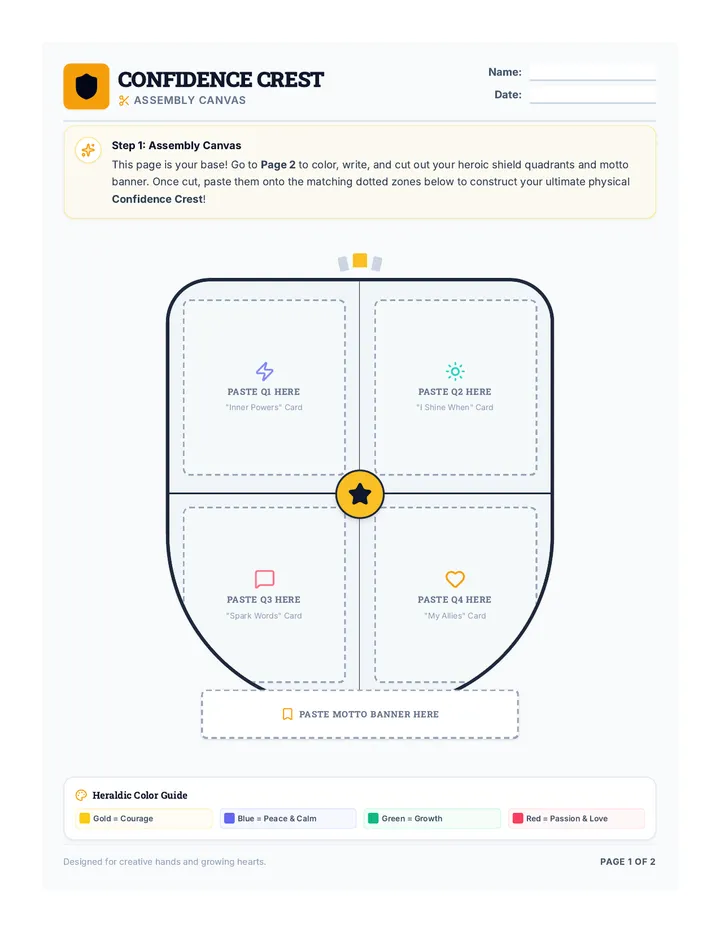
A highly interactive, 2-page self-esteem 'Confidence Crest' craft activity. Page 1 acts as the main shield assembly canvas, and Page 2 features beautifully designed cut-out quadrants (Inner Powers, Allies, Shine, and Spark Words), a battle motto banner, and bonus color-and-paste power badges.
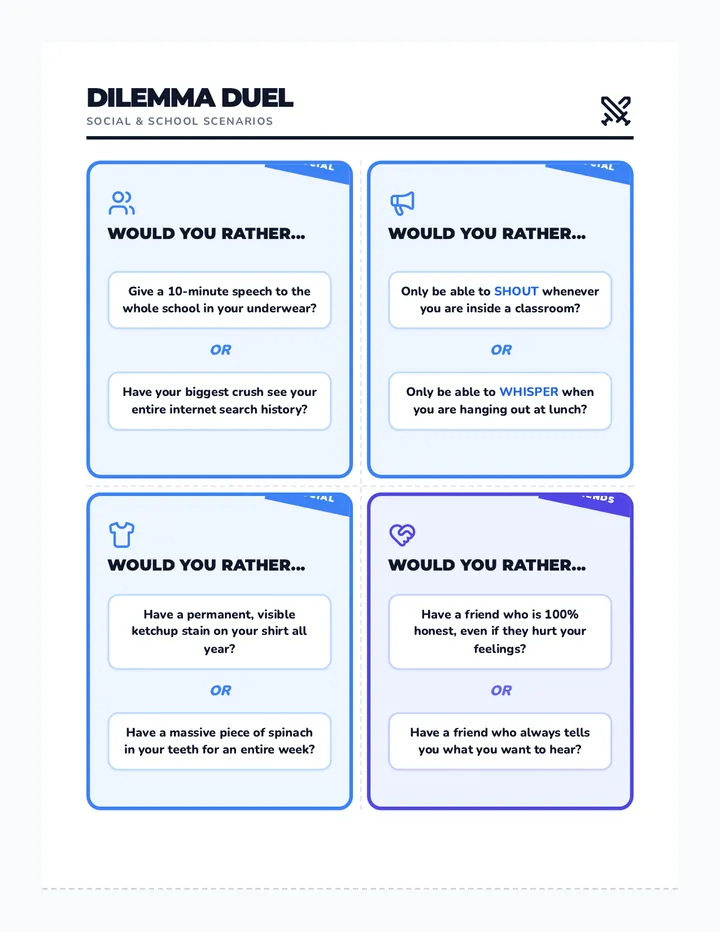
An expanded set of 16 high-energy Would You Rather cards designed for 6th-grade boys, now including deeper scenarios on peer relationships and self-esteem. Layout adjusted with larger margins for safer printing.
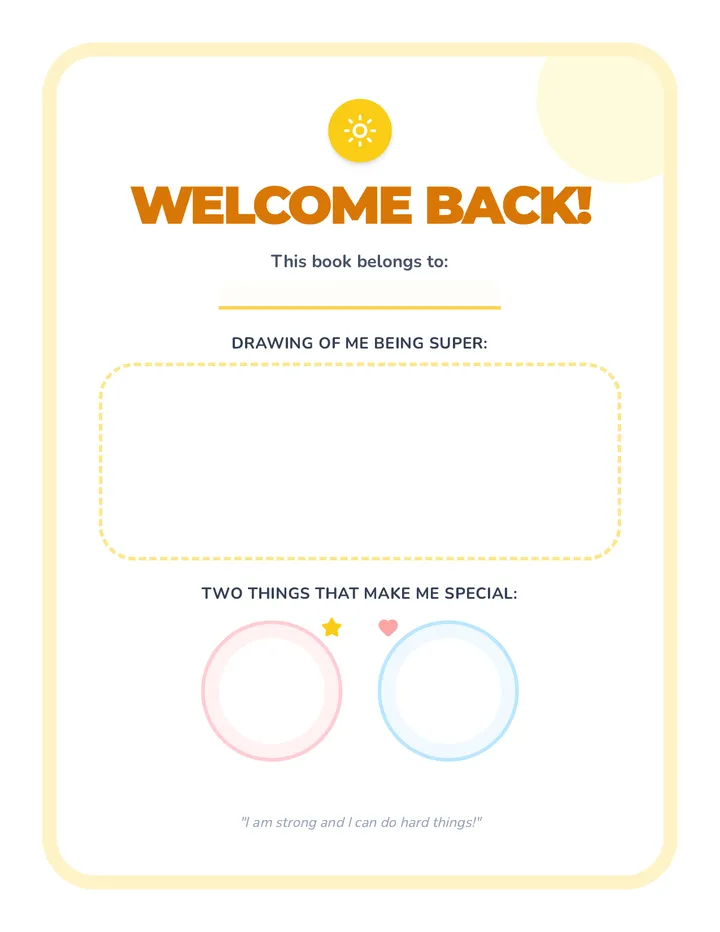
A 2-page 'Welcome Back' mini-book for a Year 2 student. Page 1 includes a cover, drawing area for strengths, and special qualities. Page 2 identifies school support people and sets a small daily goal. Designed for a 20-minute session.
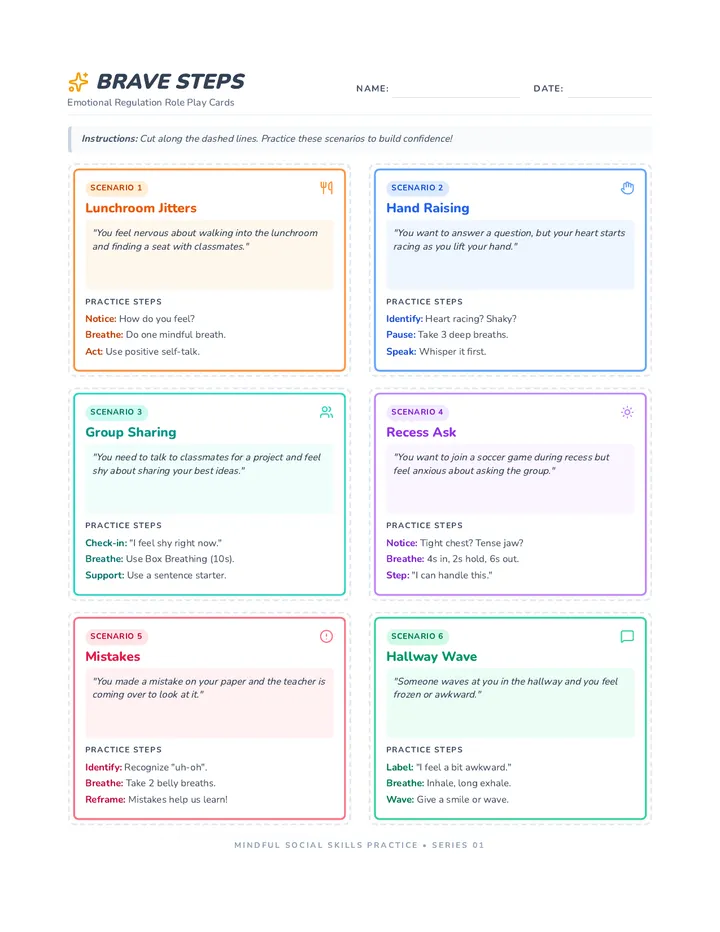
A printable 8.5x11 inch page featuring six detailed role-play scenario cards designed to help students practice emotional regulation and mindful breathing in common school situations. Each card includes a specific scenario, practice steps, and visual icons to guide student engagement. Updated to fit all content on a single page with improved readability.
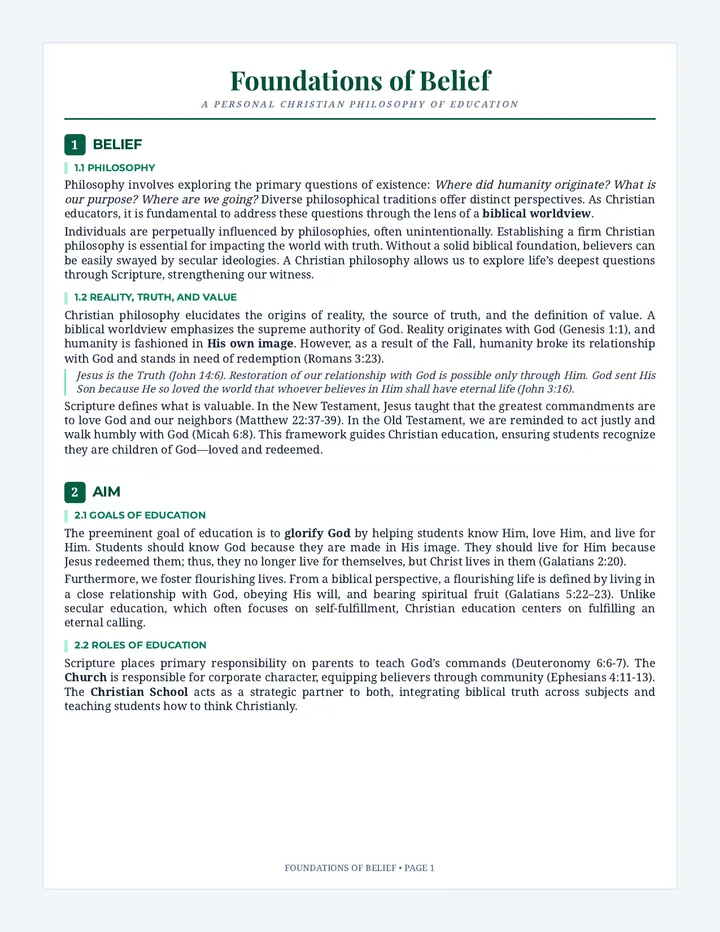
A professionally proofread and formatted 2-page Christian Philosophy of Education titled "Foundations of Belief." This version uses a 13px font size and optimized spacing to fit all content, including teacher responsibilities and a personal commitment, perfectly onto two pages. It features an academic tone suitable for colleagues.
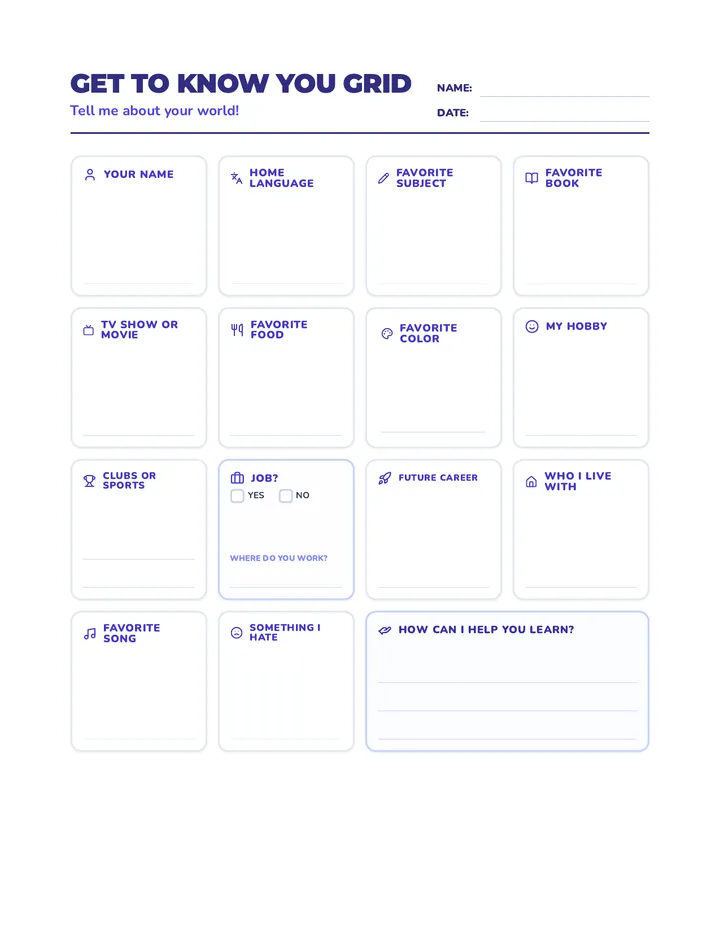
A compact 15-item 'Get to Know You Grid' optimized to fit on a single page. It features a smaller title font, reduced header spacing, and shortened grid heights while maintaining clear writing lines and supporting icons for ELL students.
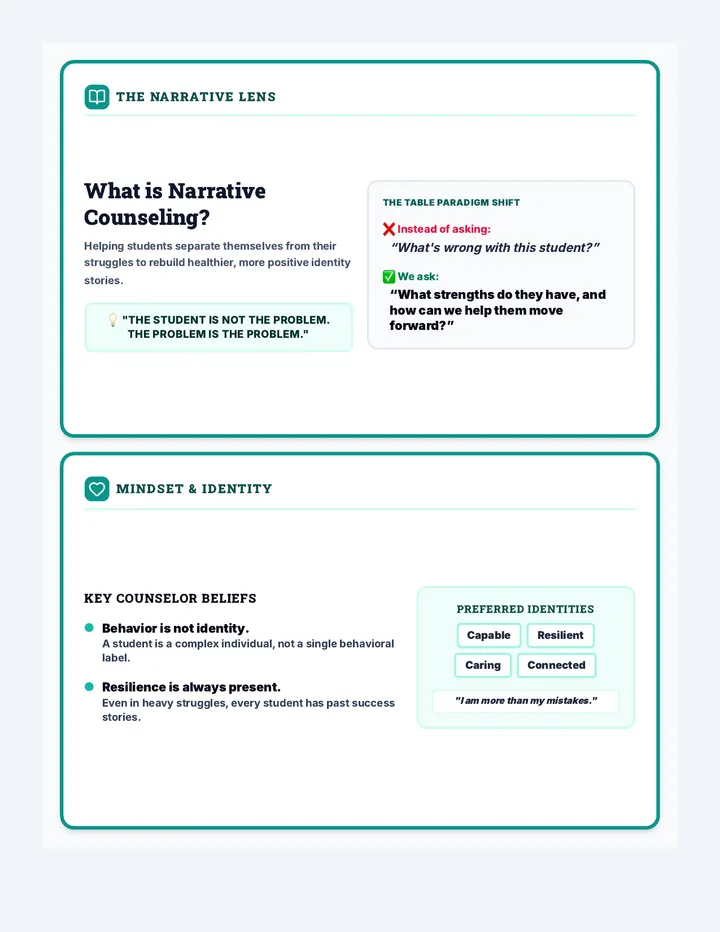
A high-quality 2-page printable layout designed to be cut in half to create four distinct 5.5x8.5" landscape handouts. The toolkit covers the paradigm shift, core beliefs, practical applications (externalizing the problem, exceptions), and why it matters in school settings. It contains clear cut-lines and large, readable, table-friendly card visual styles.
Lengthened the blank bubble on the title slide to w-[600px] to accommodate long URL placements, while keeping it entirely free of text and symbols. All other slide content, including references and citations, remains intact.
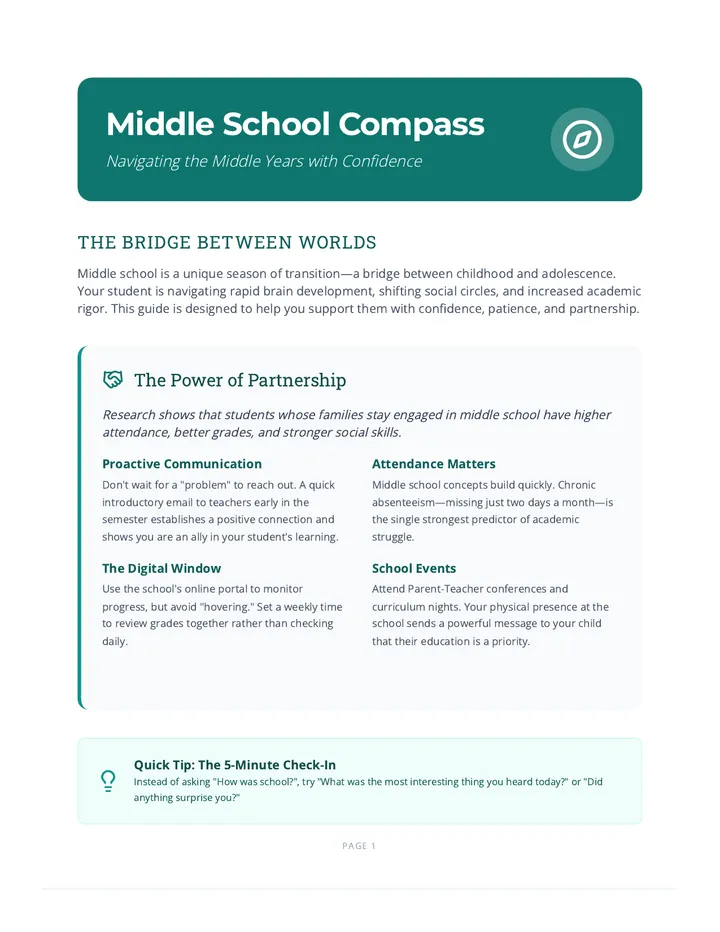
A comprehensive 5-page parent resource guide for middle school families, covering academic organization, social dynamics, healthy habits (sleep, nutrition, movement), digital safety, and drug awareness.
A refined, black-and-white minimalist worksheet for the Family Culture Scale, featuring nine reflection questions with structured response options and improved page-break handling.
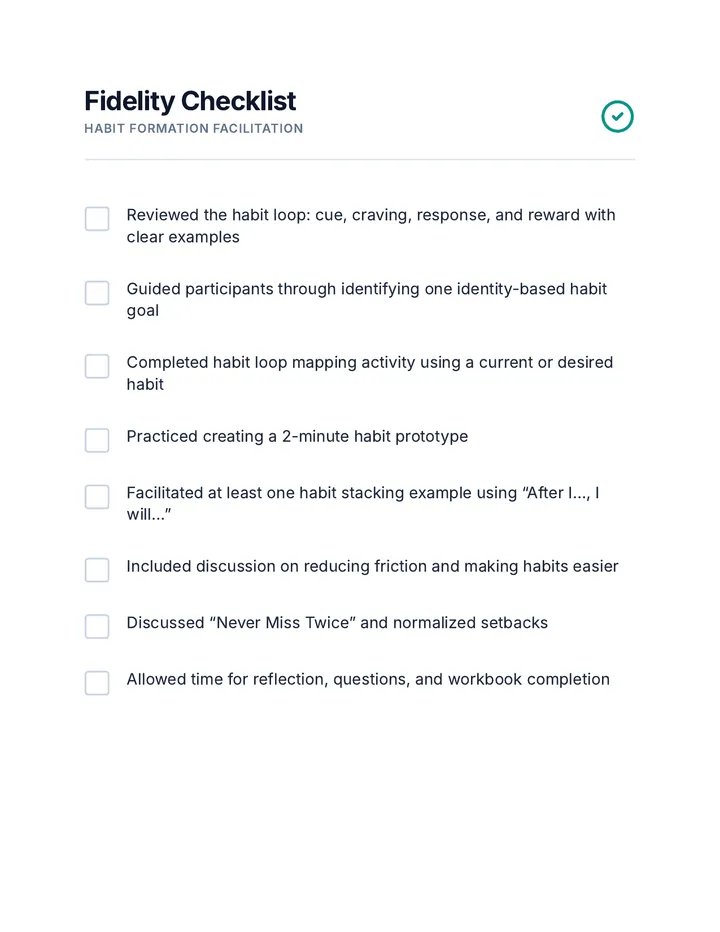
A minimal fidelity checklist for habit-formation workshops, containing only the core delivery requirements in a clean, professional layout.
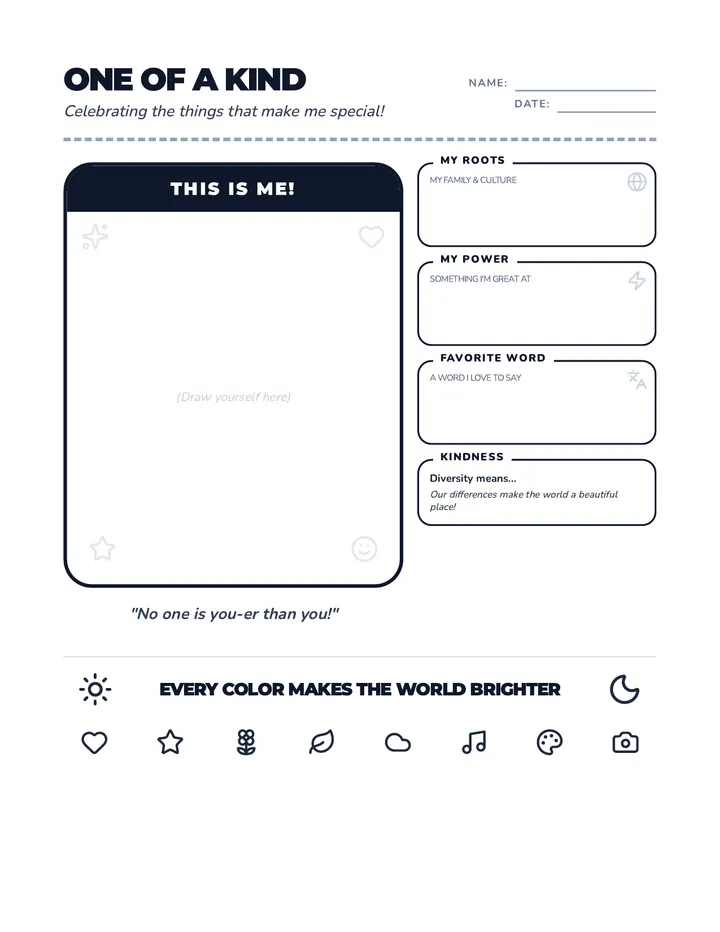
A vibrant, elementary-level coloring sheet designed to celebrate diversity and individuality. It features sections for students to draw themselves and highlight their unique heritage, talents, and favorite words, all framed with encouraging quotes and playful doodles.
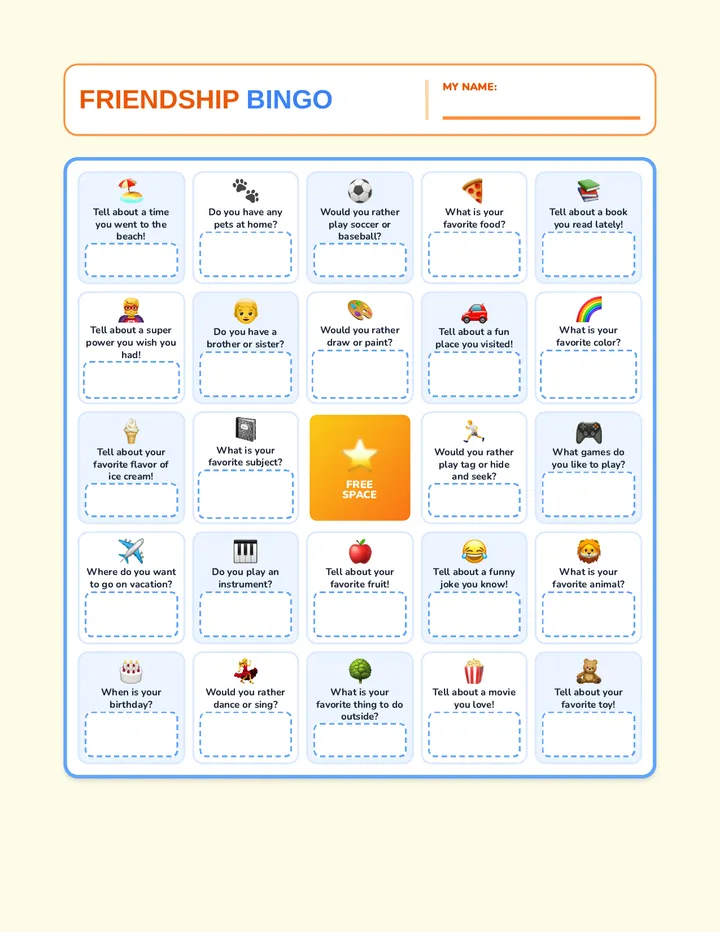
A vibrant 5x5 'Get to Know You' Bingo worksheet for 2nd grade students titled Friendship Bingo, featuring summer, hobby, and school-themed squares reframed as questions and prompts. Optimized for a single page with large signature boxes and no footer instructions.
An updated 10-page clinical handbook for adjustment counselors, now including a concise overview of the 5 Stages of Grief (Kübler-Ross) integrated with modern meaning-making models and school-based interventions.
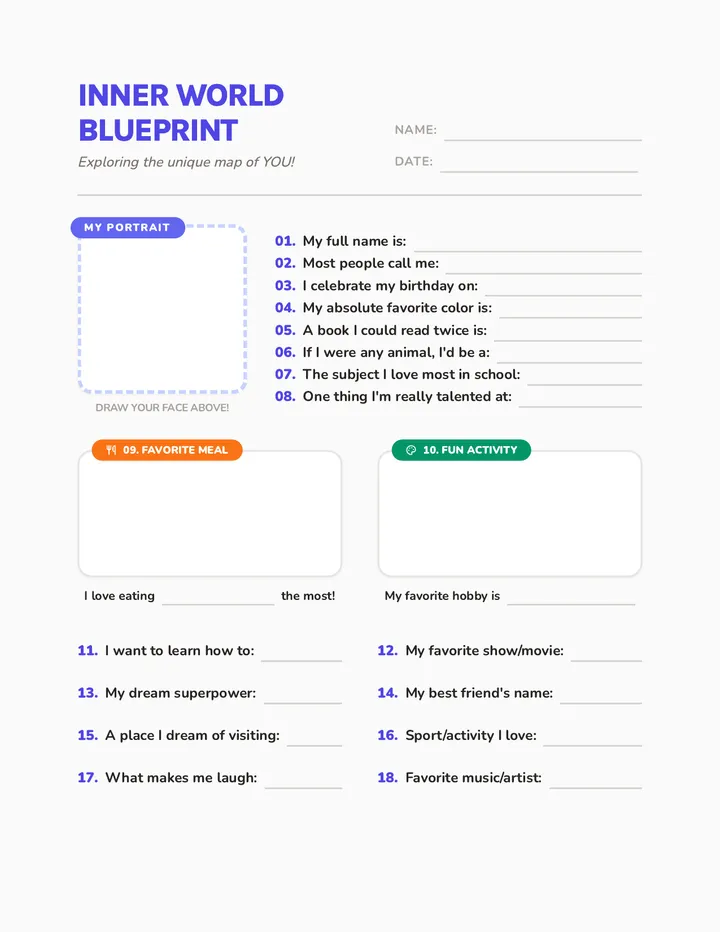
A creative one-page all-about-me worksheet for 5th-grade students featuring 20 prompts and designated drawing spaces for self-portraits, hobbies, and future goals.
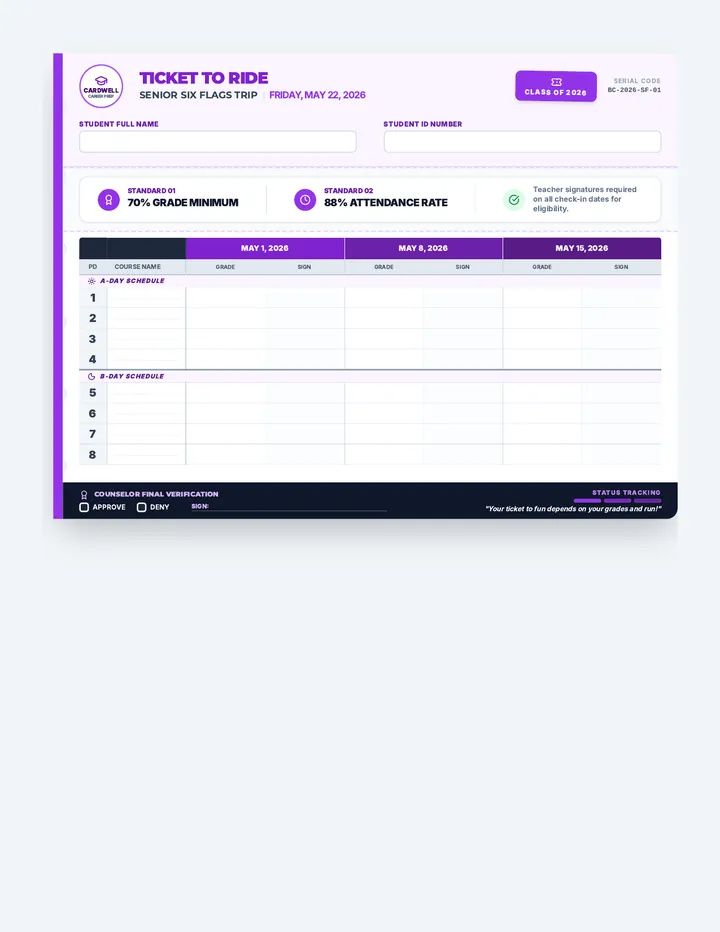
A senior grade tracking sheet designed for the Six Flags field trip eligibility, now in landscape orientation. This version repositions the eligibility requirements into a prominent, full-width banner between the student information section and the tracking spreadsheet, emphasizing the 70% grade and 88% attendance rules while maintaining the purple theme-park ticket aesthetic.
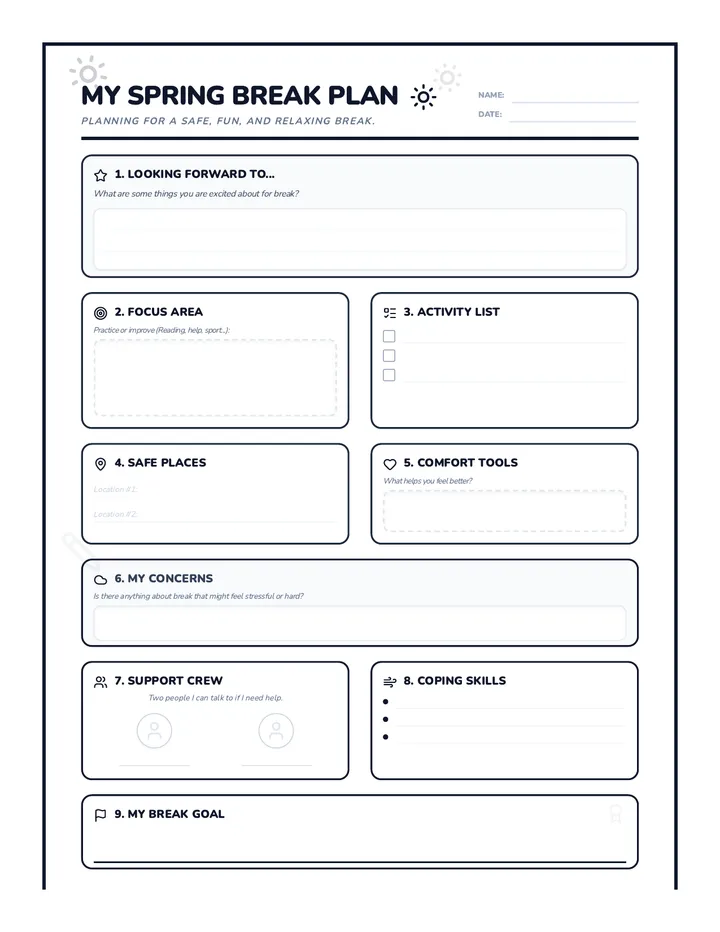
A finalized, single-page Spring Break Planner for middle school counseling. It features 9 journal-style sections optimized for black and white printing with a sun-themed aesthetic and explicitly listed crisis resources in a discrete footer.
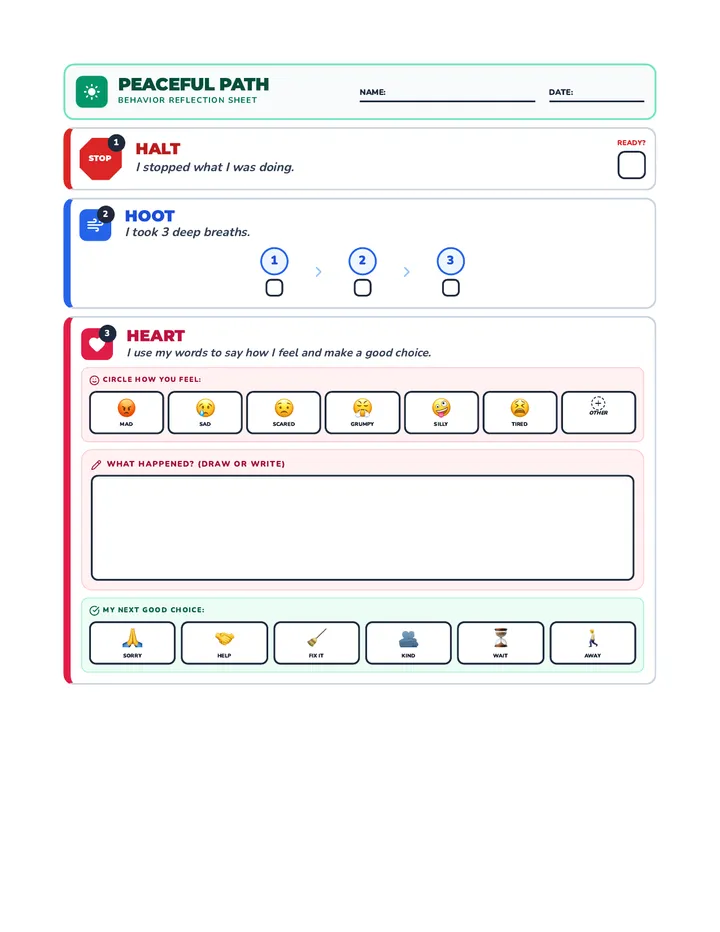
A highly optimized behavior reflection sheet for K-2 students. Uses flexbox to guarantee all content fits on one printable page, including a large "Draw or Write" section and dark slate borders (border-slate-800) for maximum print visibility and reliability.
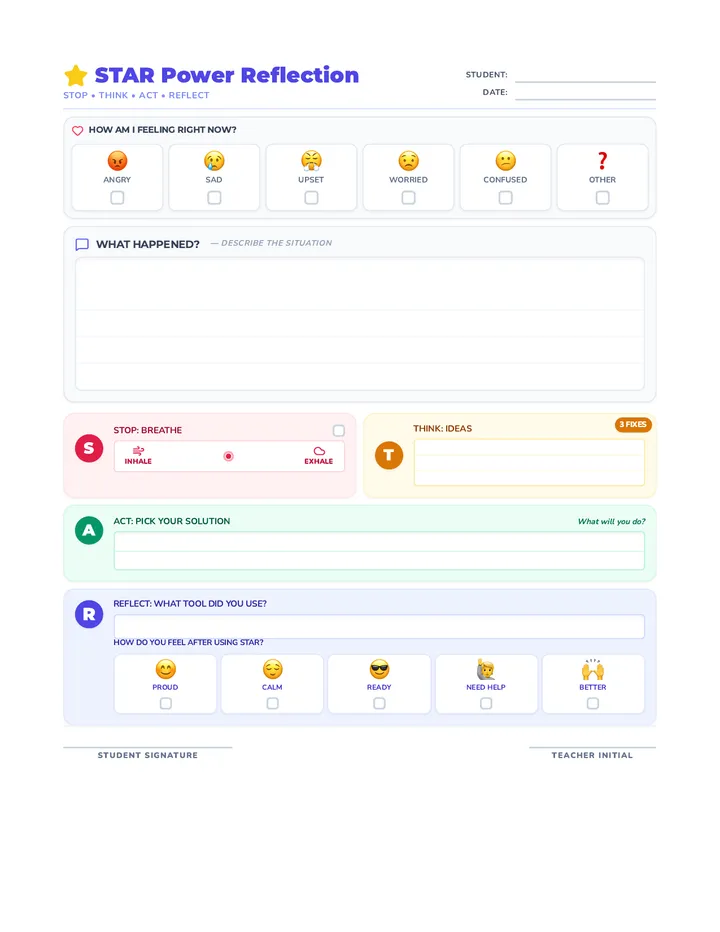
Updated STAR strategy reflection sheet. The "What happened?" section is expanded by reducing the size of feeling check-in boxes and tightening vertical spacing, providing more room for student writing. Includes a "3 Fixes" badge for student ideas.
A compressed, bistro-styled worksheet explicitly designed to fit on a single 8.5x11 page. Vertical spacing, margins, and content height have been reduced to ensure a perfect one-page printout.
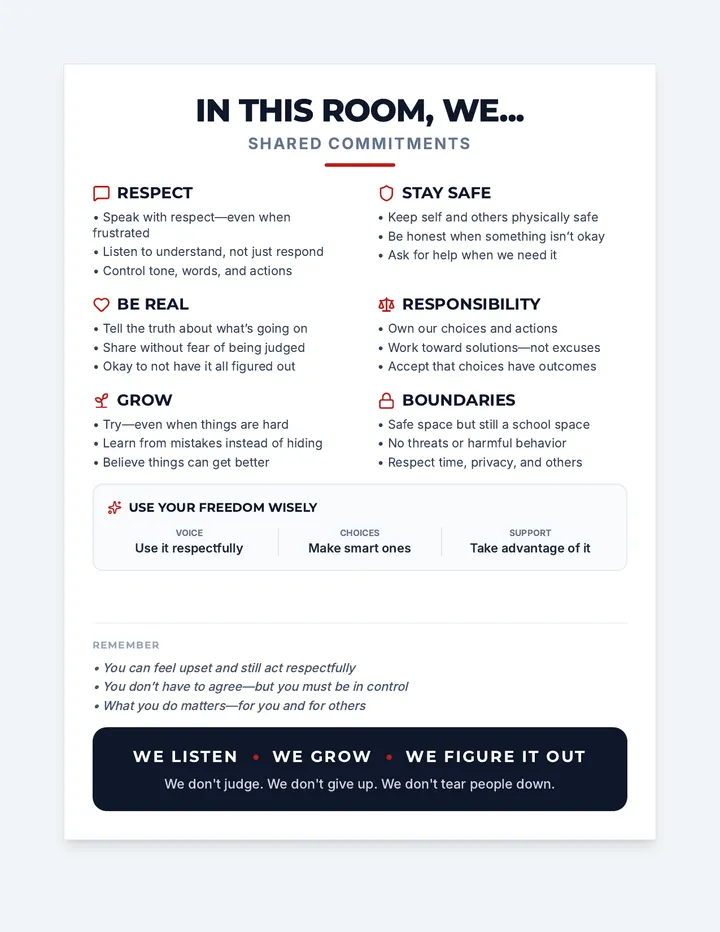
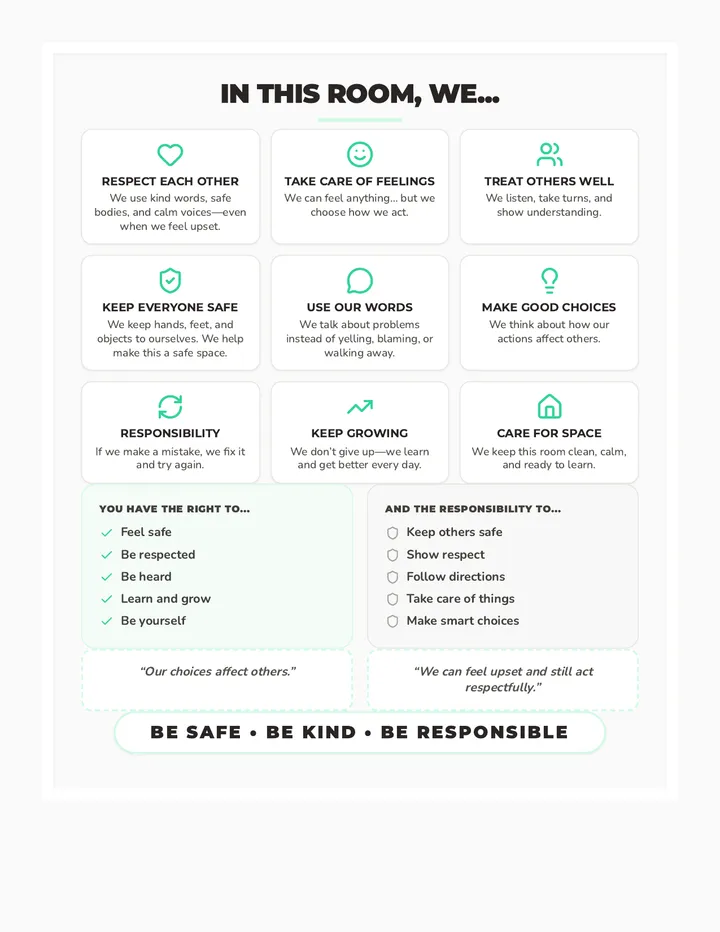
A professional and calming 11x17 office poster for a high school social worker, featuring shared commitments for respect, safety, and personal growth.
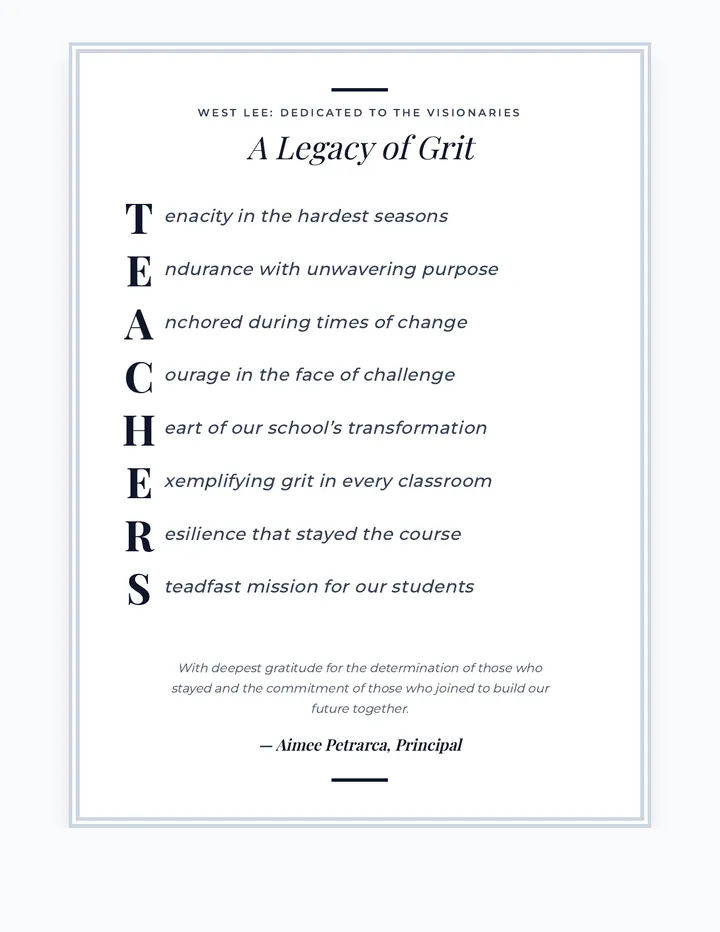
A professional and appreciative acrostic poster for a staff lounge, celebrating teachers at West Lee who demonstrate grit and determination during a school's transformation, from Principal Aimee Petrarca.
A softer, calmer minimalist poster for a school social worker's office. It uses a sage and stone color palette with muted tones to create a peaceful environment while clearly communicating expectations.
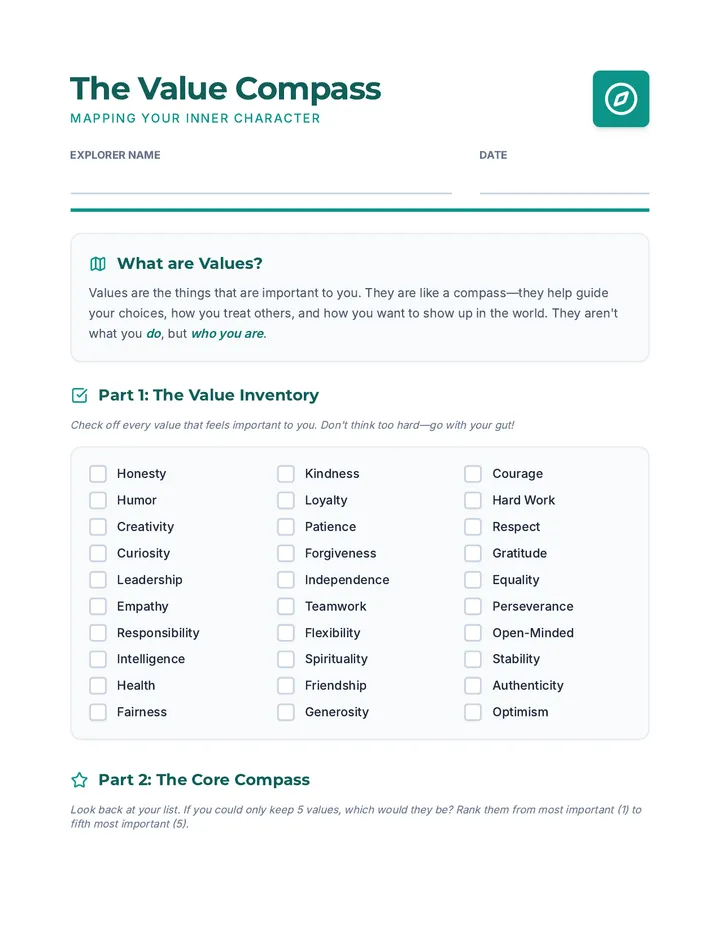
A comprehensive value identification worksheet for middle schoolers featuring a 30-item character trait checklist, a top-5 ranking system, and reflection prompts to help students map their personal compass.
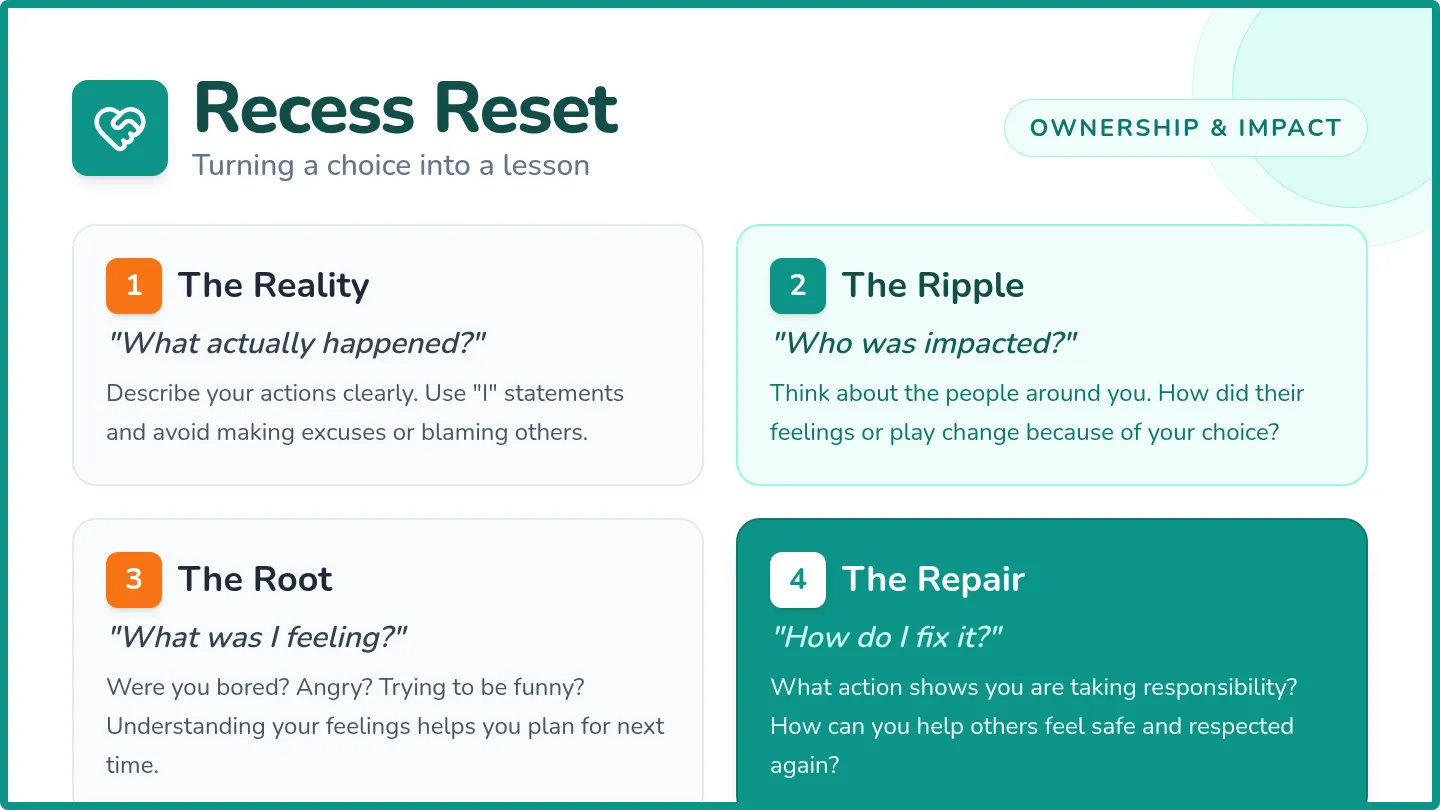
An updated restorative slide focusing on the '4 Rs' of ownership: Reality, Ripple, Root, and Repair, specifically designed for a student recognizing the impact of bullying behavior. All font sizes have been increased to ensure visibility and legibility.
A 3-page printable set of 18 total recognition cards for students to give to staff members. Includes 14 unique positive prompts and 4 blank cards for custom messages, with spaces for staff names and student signatures.
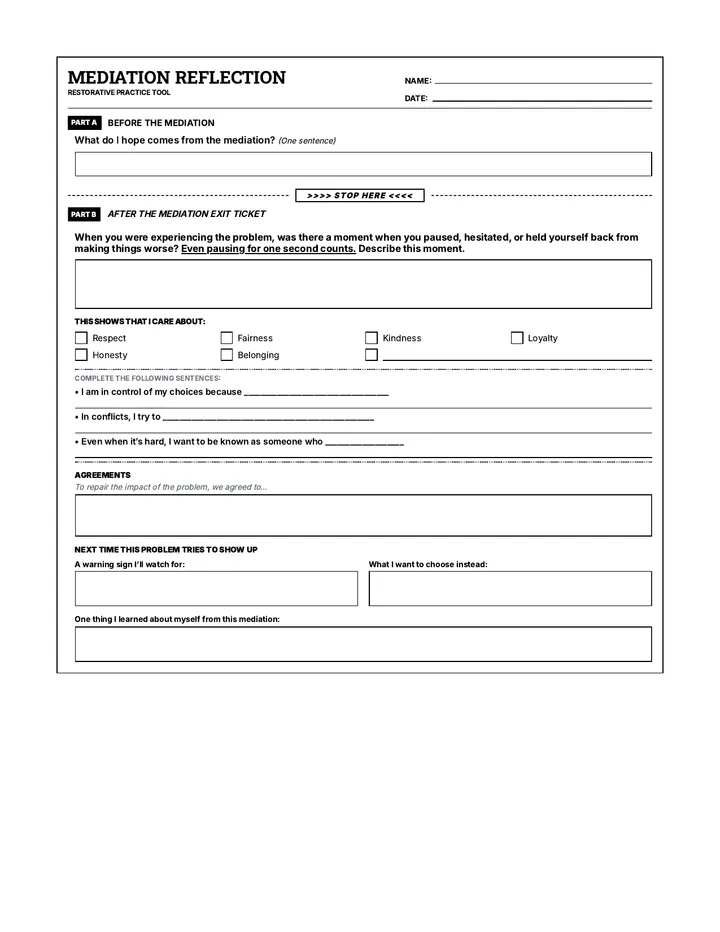
A strictly black-and-white, one-page restorative practice mediation worksheet. Compacted vertical spacing and refined layouts guarantee single-page printing on 8.5x11 paper while maintaining maximum writing area for students.