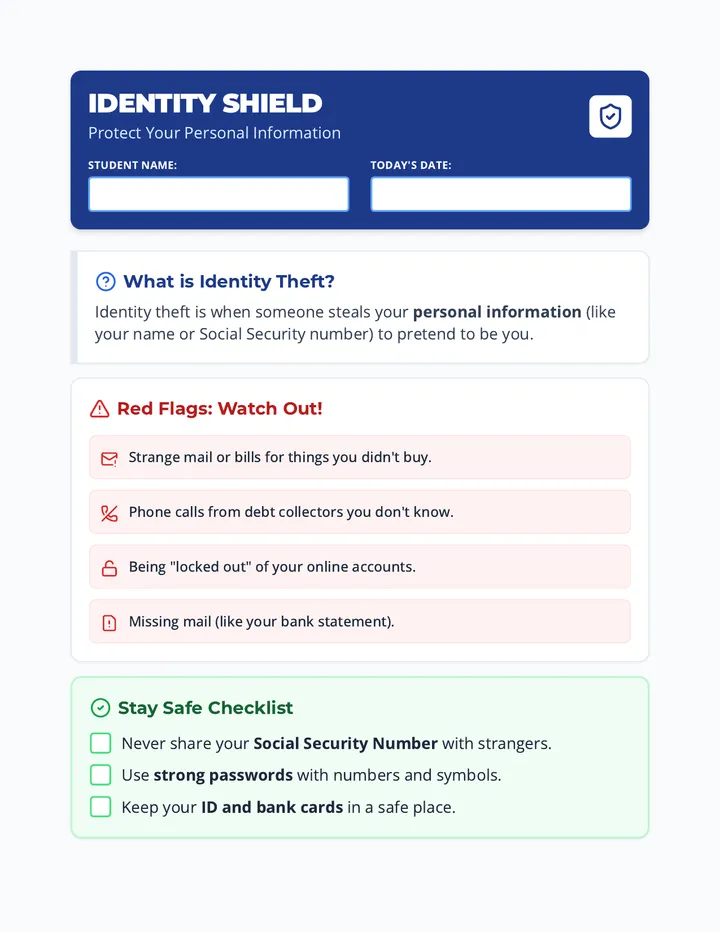
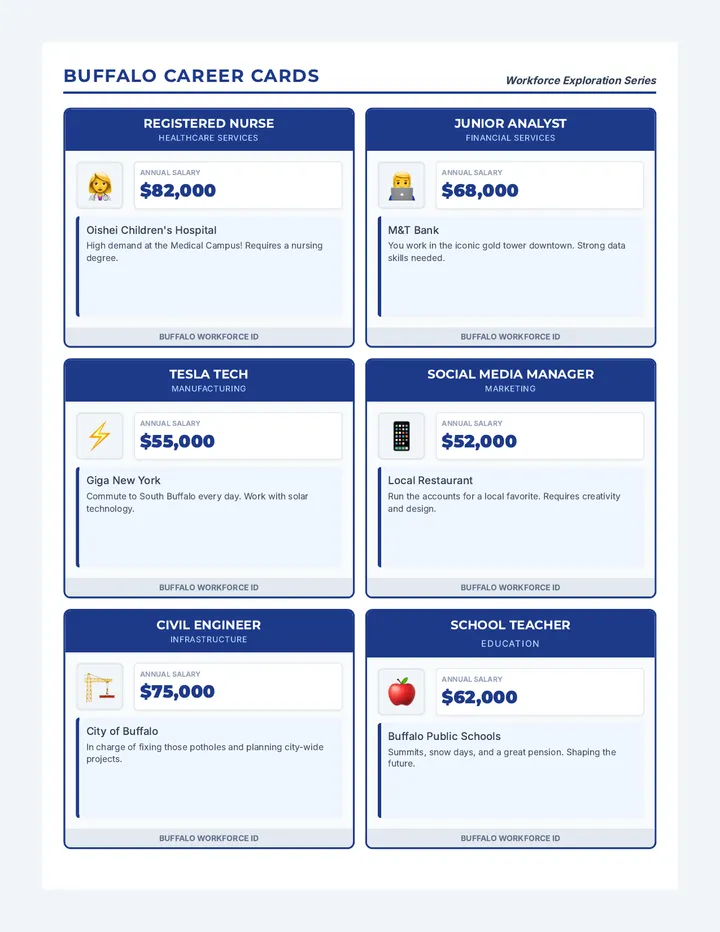
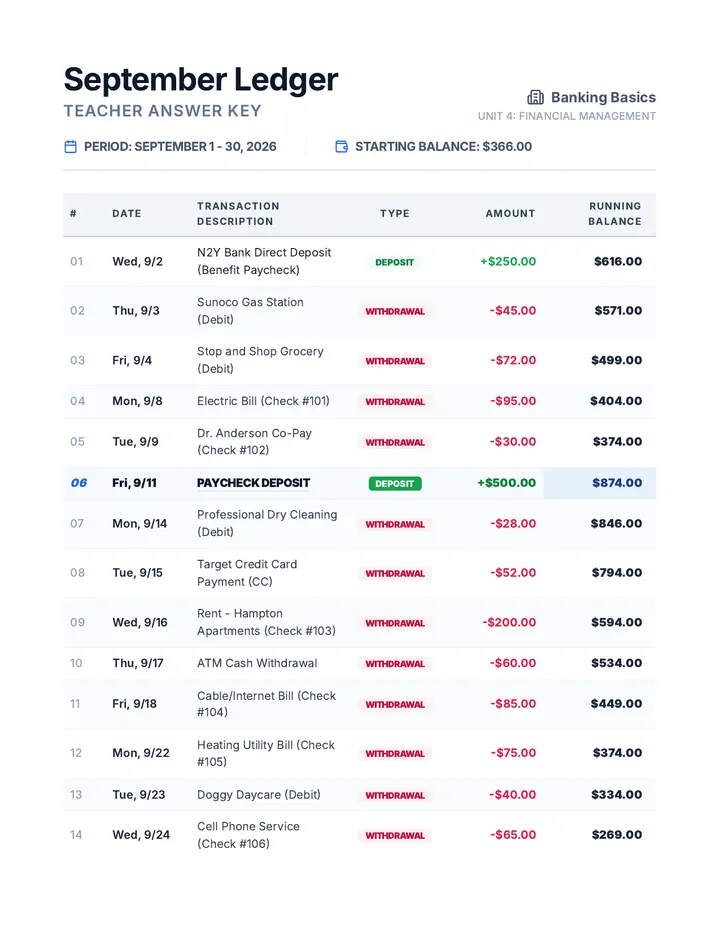
Budgeting, saving, and investment strategies alongside practical skills for managing credit, taxes, and banking. Addresses insurance needs, employment income, and major purchase decisions to support comprehensive long-term financial planning.
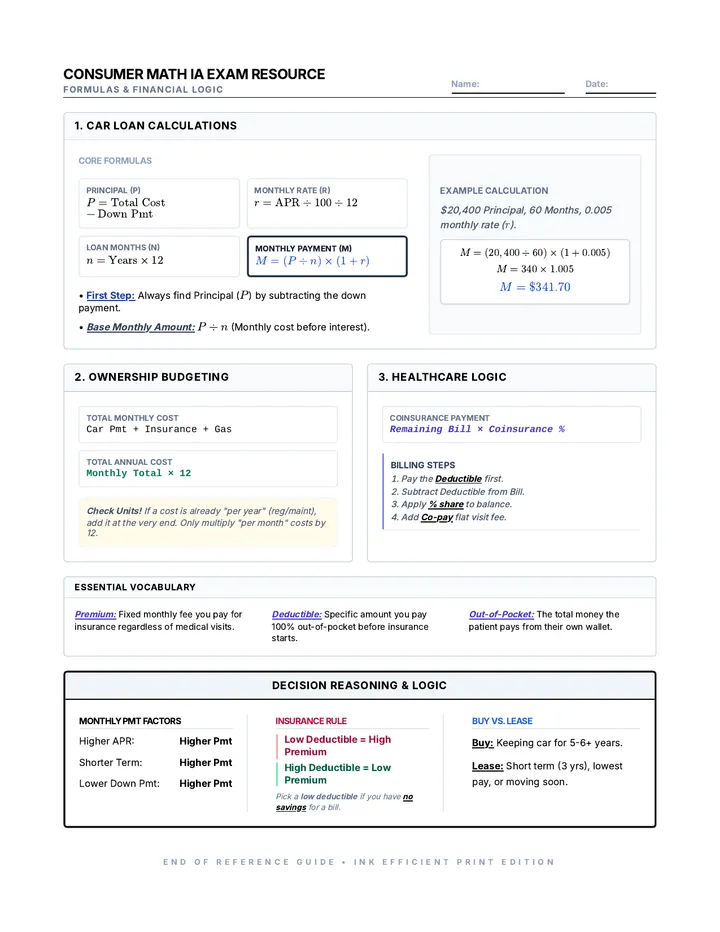
A quick-reference guide for students summarizing core workplace fundamentals including the CTC communication framework, digital etiquette, professional habits, and ethics.
A comprehensive workbook containing seven mini-projects (The Inbox Challenge, Ethics Case Studies, Income Investigation, Time Audit, Credit Logic, Housing Basics, and Insurance 101) designed to build core life skills fundamentals.
A comprehensive student checklist for tracking deliverables across the Foundational Prep and Career Simulation phases of the Life Launchpad project. Now includes the Priority Matrix task.
Foundational slides covering the 'unwritten rules' of workplace ethics, the CTC communication framework, and the distinction between net and gross income.
A structured budgeting worksheet designed for students to calculate net income, categorize fixed and variable expenses, and apply the 50/30/20 rule to their simulated life plans.
A comprehensive project-based learning guide for students to design a 'Life Blueprint,' covering lifestyle vision, financial engineering, wellness, and community involvement.
An updated teacher's guide for the Career and Life Simulation, now integrating the Life Blueprint project, updated timeline, and expanded rubric.
A visual roadmap template for students to chart their career progression, identify required skills and education, and plan for potential professional obstacles.
A comprehensive multi-stage simulation logbook for students to track financial data, respond to workplace ethical dilemmas, and practice professional communication across three simulated career stages. Updated with a Crisis event and Civic Duty scenario.
A high-energy, blueprint-themed introductory slide deck for the Career and Life Simulation project, updated to include the Life Blueprint component along with workplace ethics and professional communication. All text meets a minimum size of 24px for accessibility.
A compact, one-page exit ticket for the Money Moves lesson, featuring streamlined questions and writing space.
A 2-page Lexile 875 story with a continuous flow and 12pt Times Roman style font. Features an integrated student response area at the end.
A visual presentation to introduce the concepts of spending, saving, and investing, while teaching students how to distinguish between arguments and evidence.
An updated answer key for the Cash Clash Card Sort, displaying the correct matches between claims and evidence with dimensions that match the student handout.
A one-page version of the Cash Clash Card Sort, featuring the sorting board and cut-out evidence cards on a single sheet with a compact header.
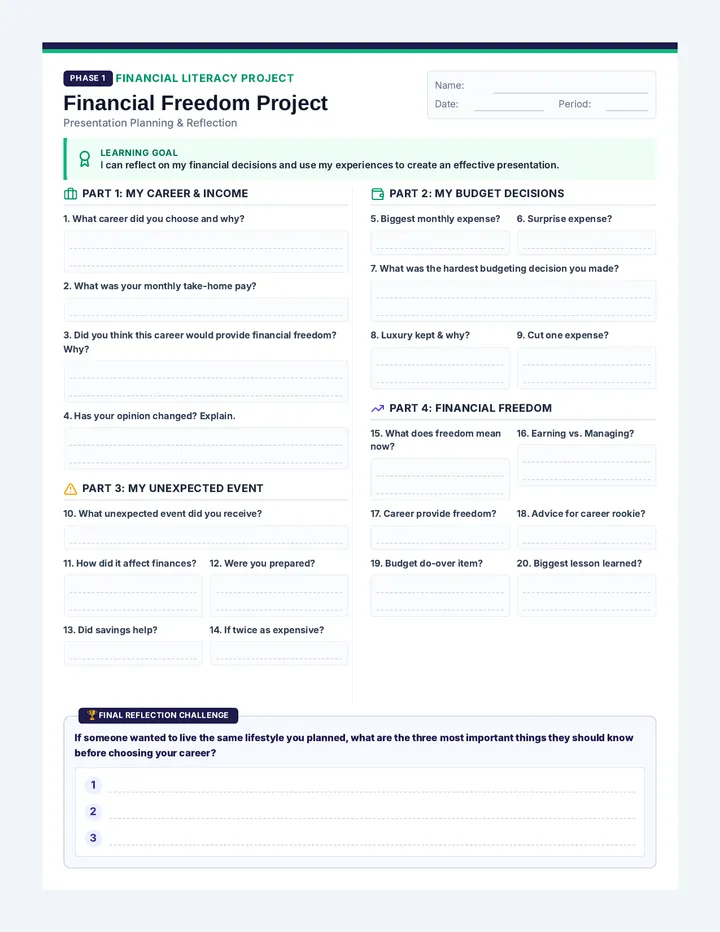
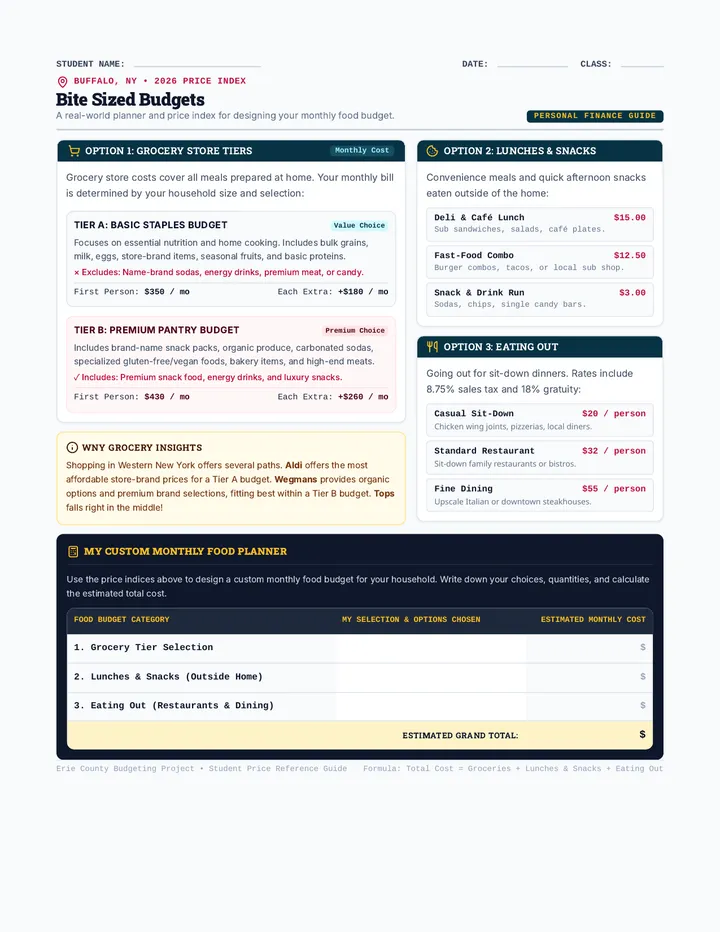
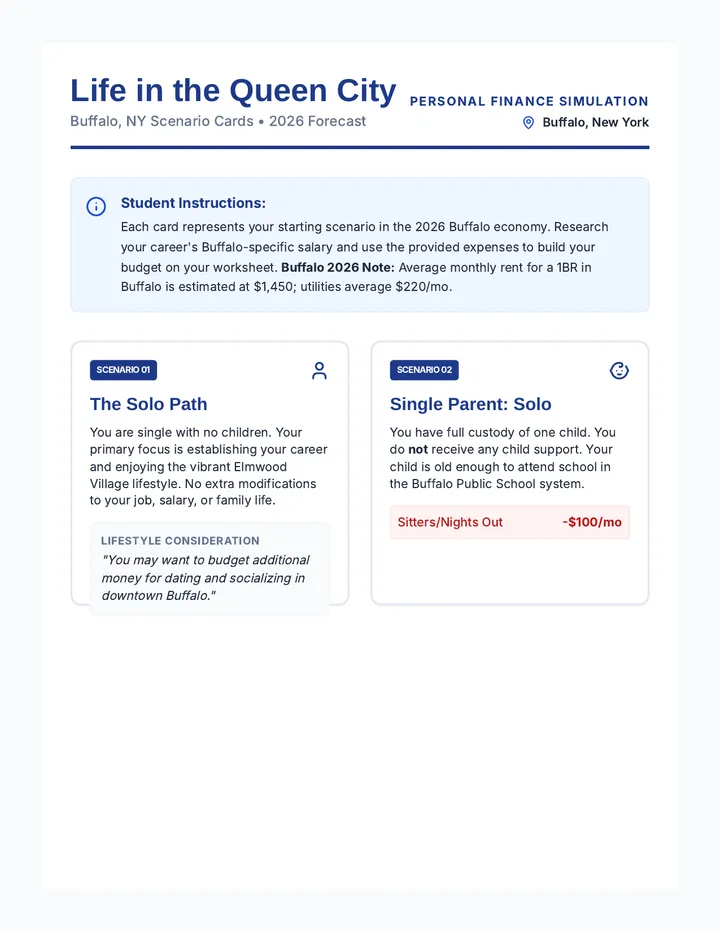
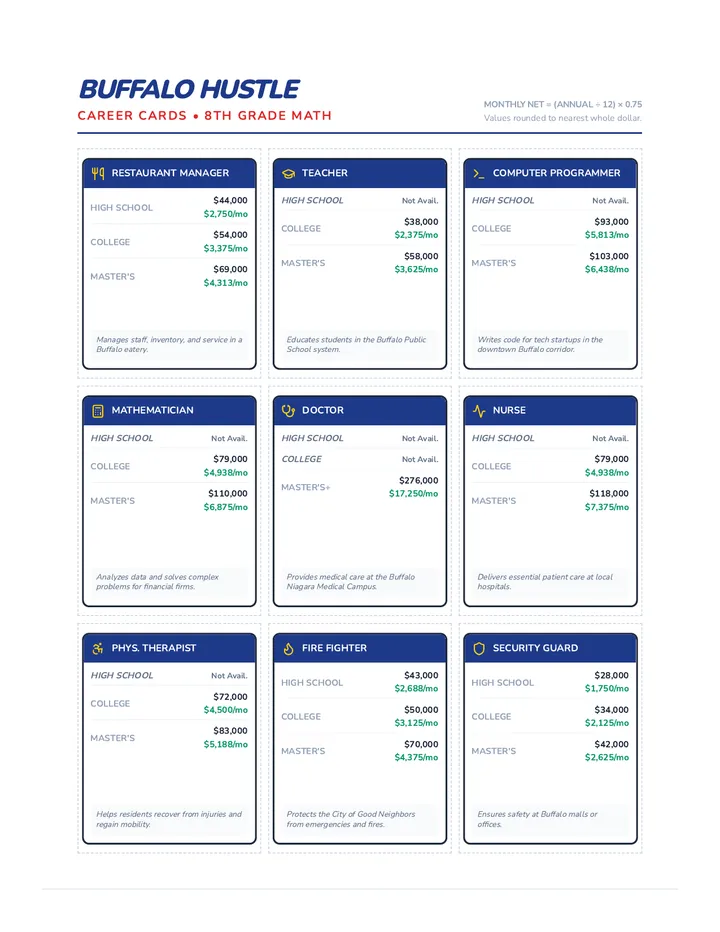
A summative assessment project where students research their future career and cost of living to create a personalized 50/30/20 financial blueprint.
A set of discussion cards designed to spark debate and critical thinking about financial values, debt, and the trade-offs of the 50/30/20 rule.
The teacher answer key for the Budget Builder worksheet, providing calculated gross/net income figures and categorized expense totals for the Alex persona.
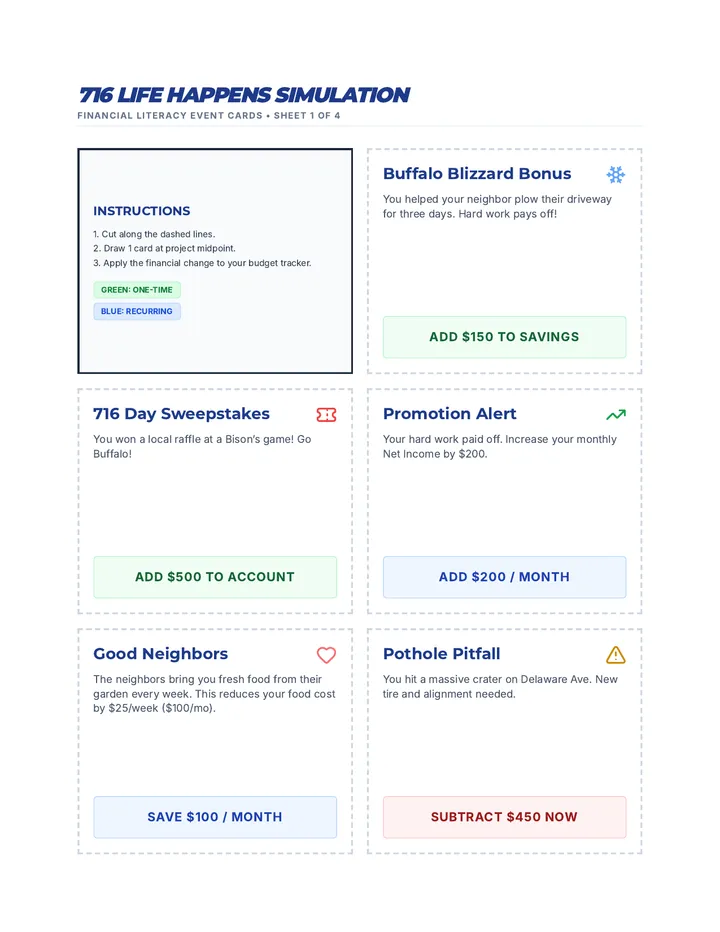
A set of 'Reality Check' scenario cards for a collaborative activity where students must adjust Alex's budget based on unexpected life events.
A practical student worksheet where students calculate gross/net income for a persona named Alex and apply the 50/30/20 rule to categorize expenses and suggest improvements.
An advocacy toolkit for students featuring scripts for three common scenarios: asking for cleaning supplies, requesting help or time, and addressing safety concerns. Includes a blank practice area for students to draft their own scripts.
A structured student checklist for spring cleaning tasks by zone, including a mental health reflection area and a supply inventory/budgeting table to help students plan their cleaning projects.
Instructional slides for the Fresh Start lesson, covering mental health benefits, chemical safety, budgeting, and self-advocacy scripts. Includes 7 embedded YouTube videos for further demonstration and exploration. Updated Video 4 to include the history of spring cleaning. Now includes interactive advocacy scenarios and suggested answers. All advocacy components are placed after the videos.
A comprehensive teacher guide for leading the Fresh Start Advocacy lesson, including learning objectives, vocabulary, facilitation steps, and discussion prompts focused on the link between environment and mental health.
A presentation slide deck to introduce the Budget Priority Diamond Nine activity. It covers the definitions of needs versus wants, instructions for the activity, and guidelines for group discussion.
A comprehensive facilitation guide for teachers including learning objectives, a step-by-step lesson procedure, and high-level discussion prompts to help students think critically about their budgeting priorities.
A Diamond Nine template for students to organize and rank their budget priority cards. The layout features a 1-2-3-2-1 grid with clear labels for importance and reflective questions to assess student reasoning.
A printable set of nine cards for students to cut out, each representing a different personal budgeting decision ranging from basic needs to luxury wants. Each card features a title, a brief description, and a matching icon.
Teacher answer key for the Week 6 Life Measures workbook, including recipe scaling, flooring estimates, commuter gas costs, and road trip budgeting. Adjusted to prevent content overlap.
Teacher answer key for the Week 5 Home Base workbook, including total move-in cost calculations, utility bill analysis, and square footage value comparisons. Adjusted to prevent content overlap.
Teacher answer key for the Week 4 Shopping Savvy workbook, providing solutions for unit price comparisons, sales tax calculations, and party budget logic. Adjusted to prevent content overlap.
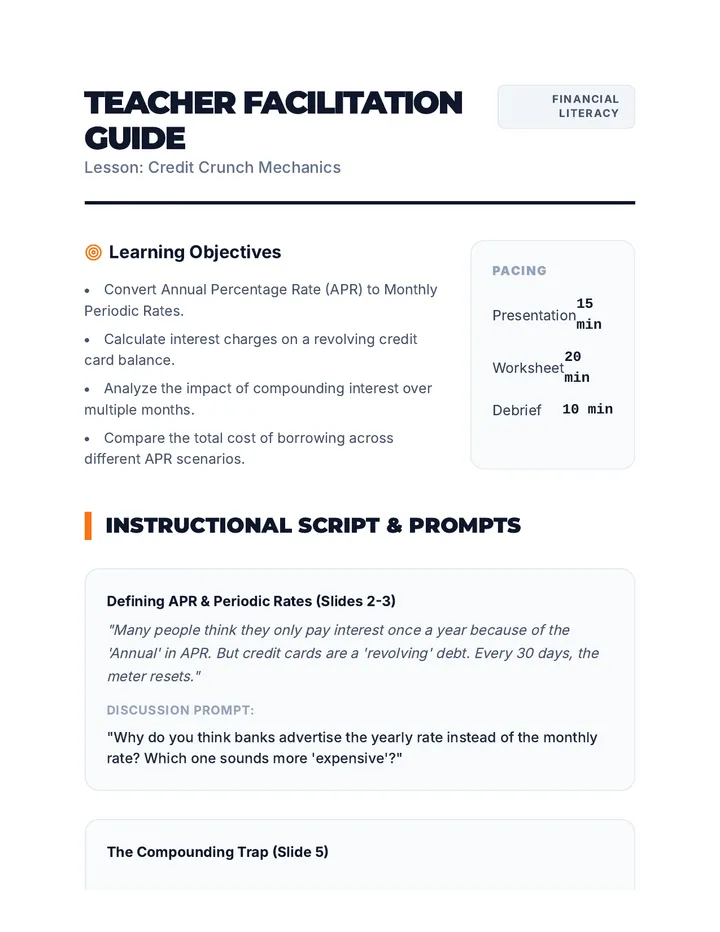
Teacher answer key for the Week 3 Credit Crush workbook, including APR calculations, statement decoding, and the total cost comparison of debt. Adjusted to prevent content overlap.
Teacher answer key for the Week 2 Budget Blueprint workbook, providing detailed solutions for fixed/variable expenses, the 50/30/20 rule, and Marcus's budget analysis. Adjusted to prevent content overlap.
Teacher answer key for the Week 1 Paycheck Power workbook, providing detailed solutions and mathematical breakdowns for all exercises and the job offer challenge. Adjusted to prevent content overlap.
A comprehensive student guide to credit scores, covering the FICO range, the five components of a credit score, the financial impact of interest rates, and practical maintenance tips.
A revised financial planning worksheet focusing on SMART goals, emergency funds, and compound interest, with improved student work areas for legibility.
Week 6 workbook applying geometry and arithmetic to real-world tasks like cooking, home DIY projects, and travel planning. Adjusted to prevent content overlap.
Week 5 workbook focusing on the financial aspects of independent living, including renting, utilities, and move-in costs. Adjusted to prevent content overlap.
Week 4 workbook covering practical consumer math like sales tax, discounts, tips, and unit pricing through real-world scenarios. Adjusted to prevent content overlap.
Week 3 workbook exploring credit card math, APR, interest calculation, and the financial impact of making only minimum payments. Adjusted to prevent content overlap.
Week 2 workbook focusing on budgeting skills, including fixed/variable expenses, the 50/30/20 rule, and a personal budget creation challenge. Adjusted to prevent content overlap.
A comprehensive 4-page workbook for Week 1, covering the math of paychecks, including gross vs. net pay, tax deductions, paystub analysis, and a job offer comparison challenge. Adjusted to prevent content overlap.
A case study activity where students analyze a disorganized student calendar to identify critical time-management and project-management errors in the scholarship application process.
An alignment worksheet for students to research donor mission statements and justify how their personal brand connects to the funding organization's goals.
A comprehensive tracking worksheet for managing multiple scholarship deadlines, requirements, and recommender communication.
Instructional slides for Lesson 3, focusing on the concept of 'hourly rate' for scholarship applications and differentiating between high-competition and niche grants.
Instructional slides for Lesson 5, focusing on donor mission alignment and how to research organizations beyond their basic homepage.
A case study activity where students analyze three scholarship listings to identify legitimate opportunities versus scams and data-mining traps.
Instructional slides for Lesson 4, covering building a tracking system, managing recommenders, and the importance of application infrastructure.
A decision-making worksheet for evaluating scholarships based on award amount, estimated effort, and eligibility odds to determine a student's personal ROI strategy.
Instructional slides for Lesson 2, covering database types, advanced Boolean search techniques, and red-flag detection for scholarship scams.
Instructional slides for Lesson 1, focusing on debunking scholarship myths, identifying 'Search DNA' (Identity, Interests, Geography), and conducting a financial gap analysis.
A comprehensive self-audit worksheet for undergraduate students to identify financial gaps, demographic traits, and niche interests for scholarship targeting.
Scenarios and response prompts for roleplaying self-advocacy meetings with college disability services or IT departments.
A comprehensive project template for students to synthesize their research into a final assistive technology proposal for college or career.
A physical planning sheet that mimics a digital spreadsheet, helping students organize their first 5 scholarship opportunities before building a digital tracker.
A slide deck focusing on post-secondary transition, finding funding, and self-advocacy strategies for assistive technology.
A quick-reference checklist for students to use when evaluating the legitimacy of scholarship opportunities, featuring red flag phrases and safety rules.
An introductory slide deck for the 'Building an Application Tracker' lesson, covering the importance of organization and the structure of an effective scholarship spreadsheet.
A visual hardware selection guide matching specific student profiles and environments with appropriate microphone technology.
A reference guide showing the rubric and criteria that scholarship committees use to evaluate and score applications.
A lab report worksheet for students to record and analyze dictation accuracy across different environments and hardware configurations.
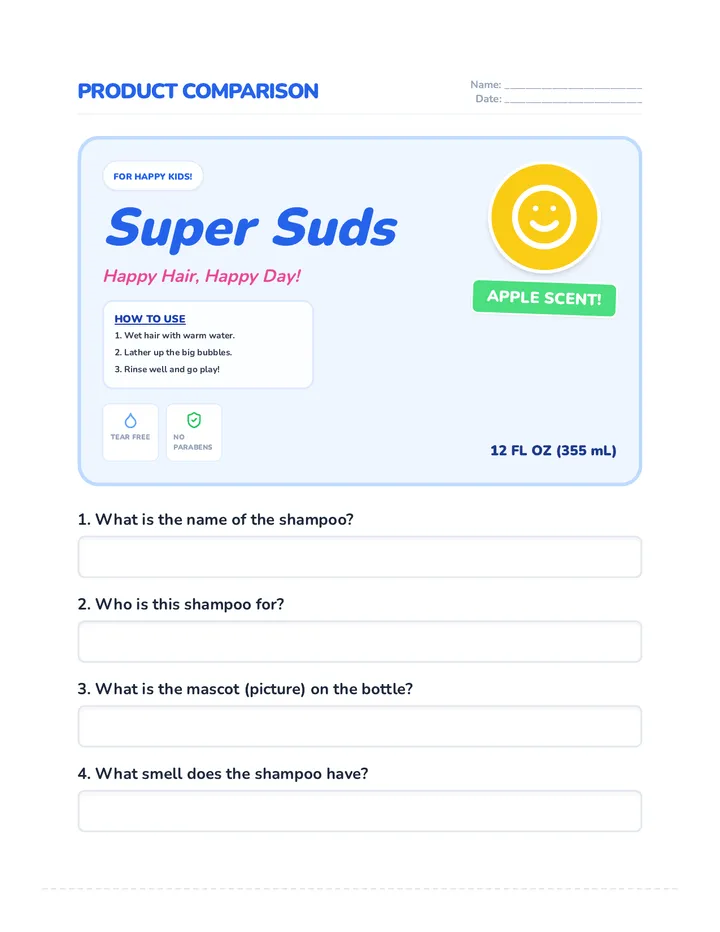
A student-facing worksheet covering independent living logistics, including rent budgeting, lease true/false, grocery store unit price math, and phone script drafting.
A visually rich slide deck for teaching the fundamentals of independent living, focusing on hidden costs of rent, the 30% budget rule, grocery shopping strategies, and professional communication skills.
A teacher-facing guide for the Adulting Atlas lesson, including learning objectives, a timed lesson sequence, instructional strategies for teaching rent budgeting, and 'adulting scripts' for phone roleplay.
A structured student worksheet for self-auditing time usage, practicing prioritization with the Eisenhower Matrix, and planning specific Deep Work study sessions.
A visually engaging slide deck covering the fundamentals of budgeting, the 50/30/20 rule, gross vs. net income, and the power of compound interest.
A detailed teacher lesson plan for the Wealth Blueprint series, including learning objectives, common misconceptions, and a step-by-step instructional sequence for budgeting.
Modèle de devis professionnel vierge pour le projet Photobooth, permettant aux élèves de formaliser une offre commerciale réelle.
Fiche d'exercices complète pour le projet Photobooth, incluant le tableau de dépenses, l'analyse de rentabilité et la stratégie commerciale.
Comprehensive teacher answer key for the 5-day Morning Flex series. Reformatted into two dense pages to ensure it fits without bleeding over when printed. Solutions included for error analysis, logic puzzles, and Wordles. Reduced heights to fit one page per sheet.
Revised Day 5 Morning Flex worksheet with the four-section structure: Error Detective (Operations), Logic Lab (Sibling riddle), Daily Wordle (SMART), and Reality Check (Talent Show schedule). Expanded to two pages for student work. Reduced heights to fit one page per sheet.
Revised Day 4 Morning Flex worksheet with the four-section structure: Error Detective (Correlation), Logic Lab (The Race), Daily Wordle (LOGIC), and Reality Check (Garden optimization). Expanded to two pages for student workspace. Reduced heights to fit one page per sheet.
Revised Day 3 Morning Flex worksheet with the four-section structure: Error Detective (Averages), Logic Lab (Pet Parade), Daily Wordle (FOCUS), and Reality Check (Backpack weight). Expanded to two pages for student workspace. Reduced heights to fit one page per sheet.
Revised Day 2 Morning Flex worksheet with the four-section structure: Error Detective (Discounts), Logic Lab (Lunch Table), Daily Wordle (BRAIN), and Reality Check (Commute timing). Expanded to two pages for clarity and workspace. Reduced heights to fit one page per sheet.
Day 1 Morning Flex Worksheet reformatted to fit within 840px height to strictly prevent print bleed. Spacing and element sizes reduced for safe printing across all devices.
Introductory slide deck for Lesson 1 of the Future Blueprint sequence. Focuses on the Iowa ICAP framework and self-discovery tools like Xello's Matchmaker and Personality assessments.
A financial planning worksheet for Lesson 5. Helps students calculate the cost of their chosen postsecondary path and evaluate the return on investment (ROI) using Xello data.
A 4-year high school course planning worksheet designed to help students align their elective choices with their career goals. Includes a teacher checklist for ICAP compliance.