Mindful breathing and body scan meditation techniques integrated with daily self-care routines. Develops strategies for balancing life demands and advocating for personal wellness needs.
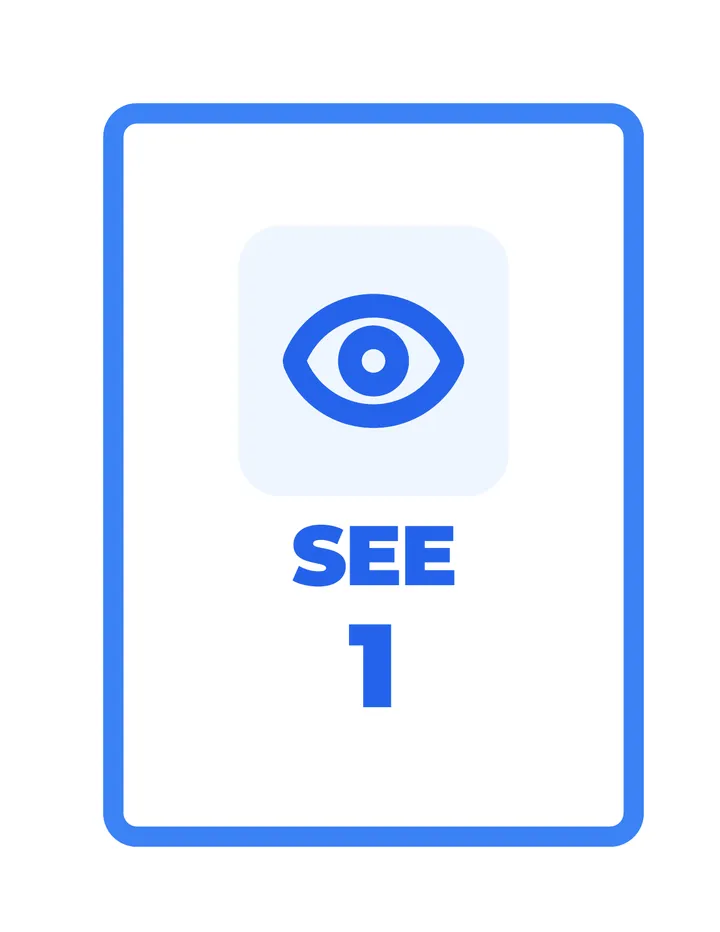
A set of ten high-impact, full-page classroom labels (See, Feel, Touch, Smell, Anchor) designed for sensory grounding. The first five pages feature the number '1' below the word, and the following five pages feature the number '2' below the word. Each page is color-coded and framed by a thick matching border.
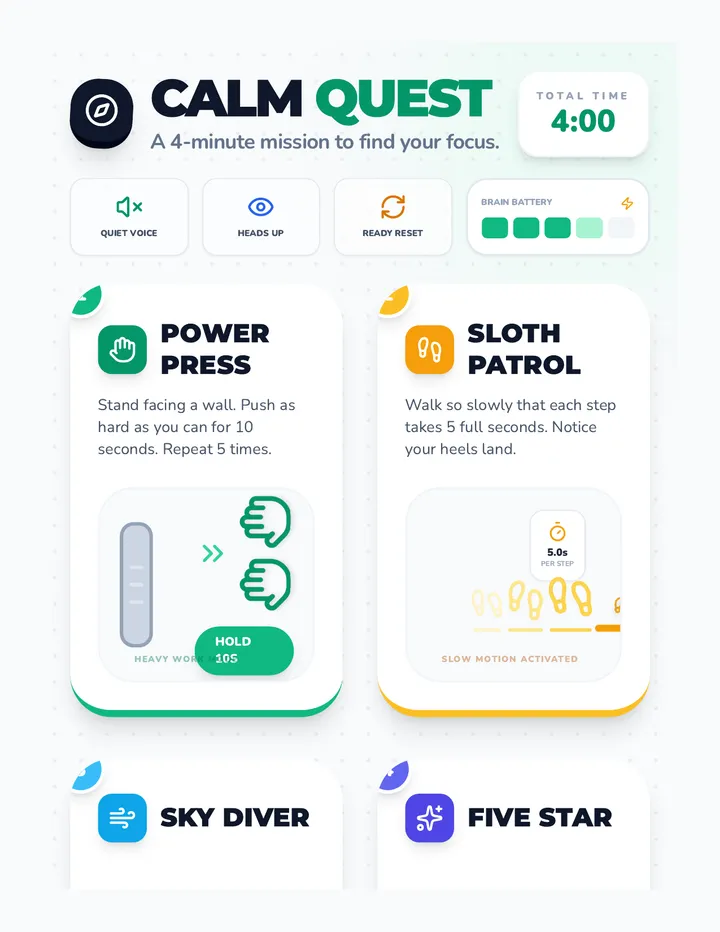
An enhanced visual graphic featuring four specific movement and breathing exercises designed for students to use in the hallway. The updated design includes larger, more detailed visual diagrams for each exercise and a quest-style layout.
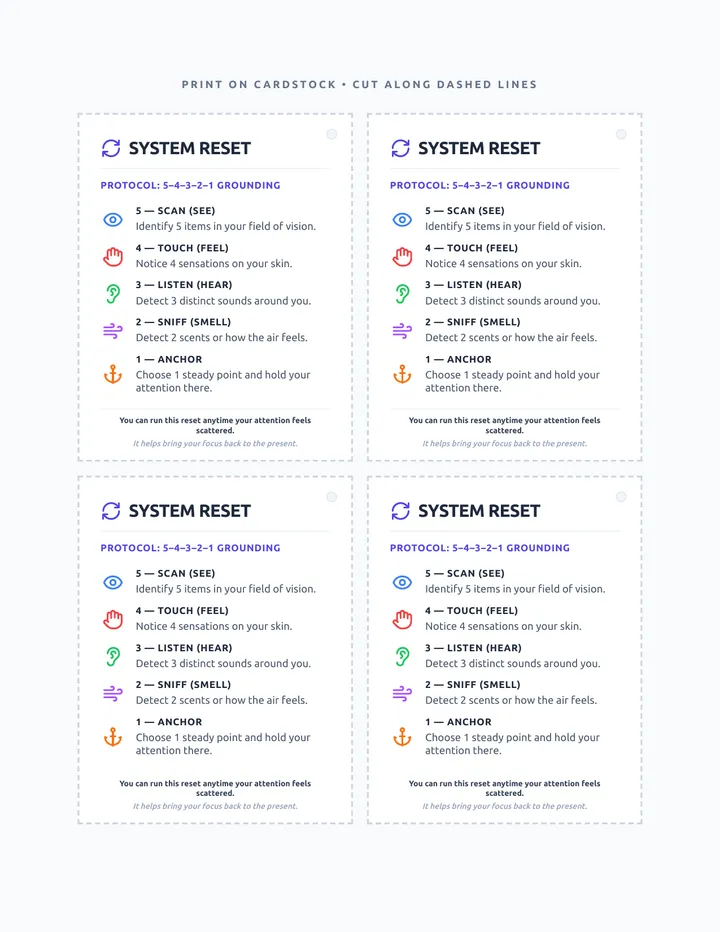
A printable set of 4 'System Reset' grounding cards with updated text, colored icons for each sensory step, and a clear 5-4-3-2-1 protocol layout.
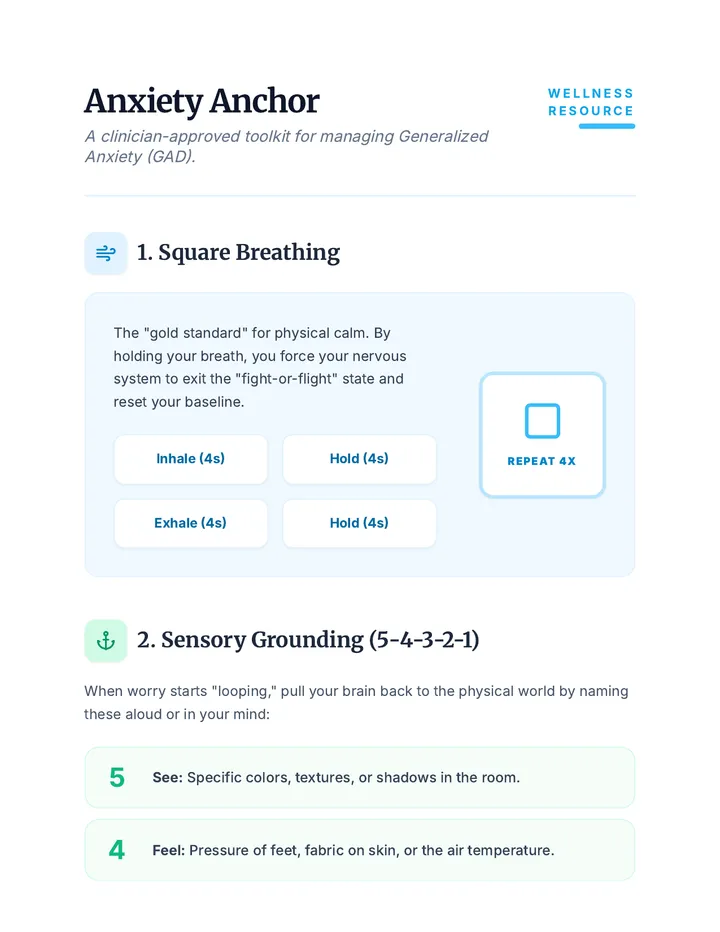
Updated 2-page GAD handout with concise definitions for daily micro-practices and significantly improved readability with 14-16px body text. Features a structured 3-step Worry Window protocol and physical grounding exercises.
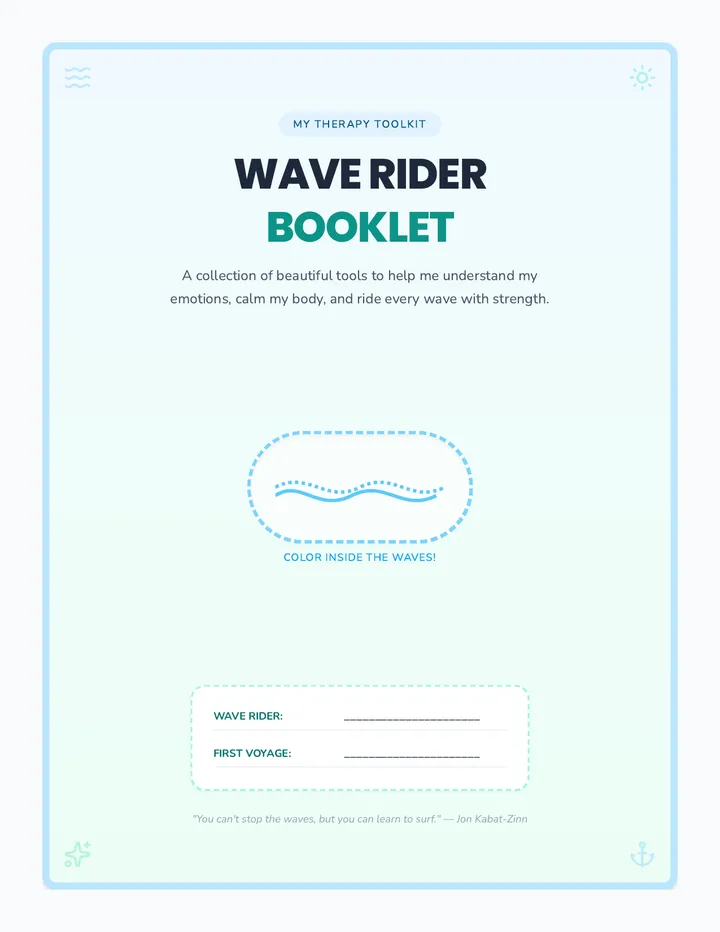
A beautiful 6-page therapeutic workbook and anchor chart styled around a calming wave theme. It features interactive worksheets, tracing guides, emotions charts showing adaptive and normative focuses, progressive muscle relaxation exercises, 5-4-3-2-1 grounding, and help-seeking sentence stems, with a dedicated second page of positive affirmations.
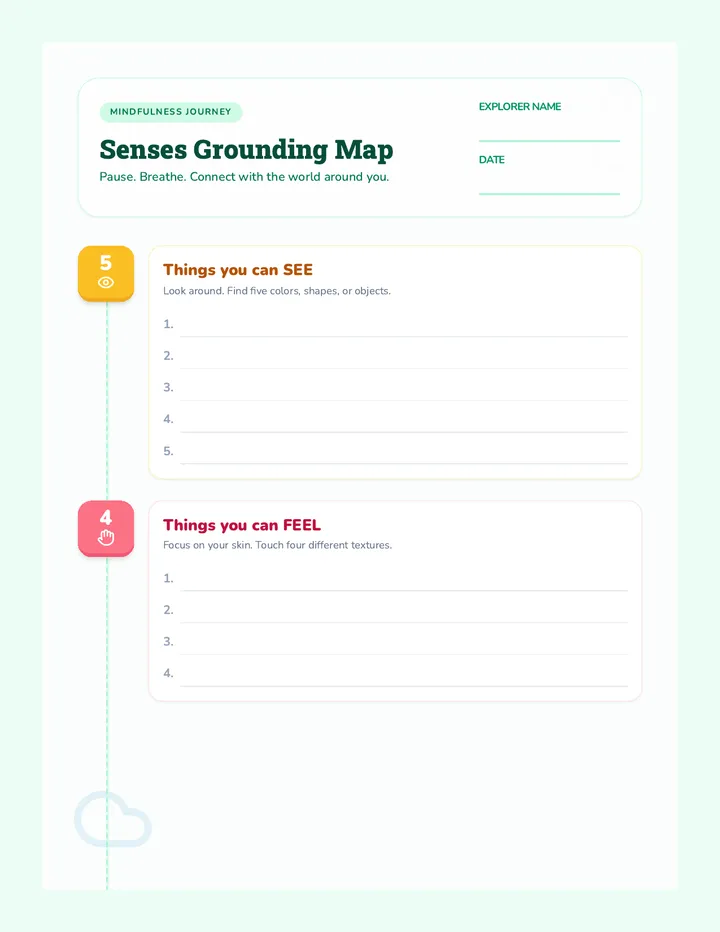
A colorful, nature-themed grounding worksheet for the 5-4-3-2-1 exercise. Features distinct sensory cards with vibrant icons, a playful map-like layout, and dedicated reflection space for mindfulness practice.
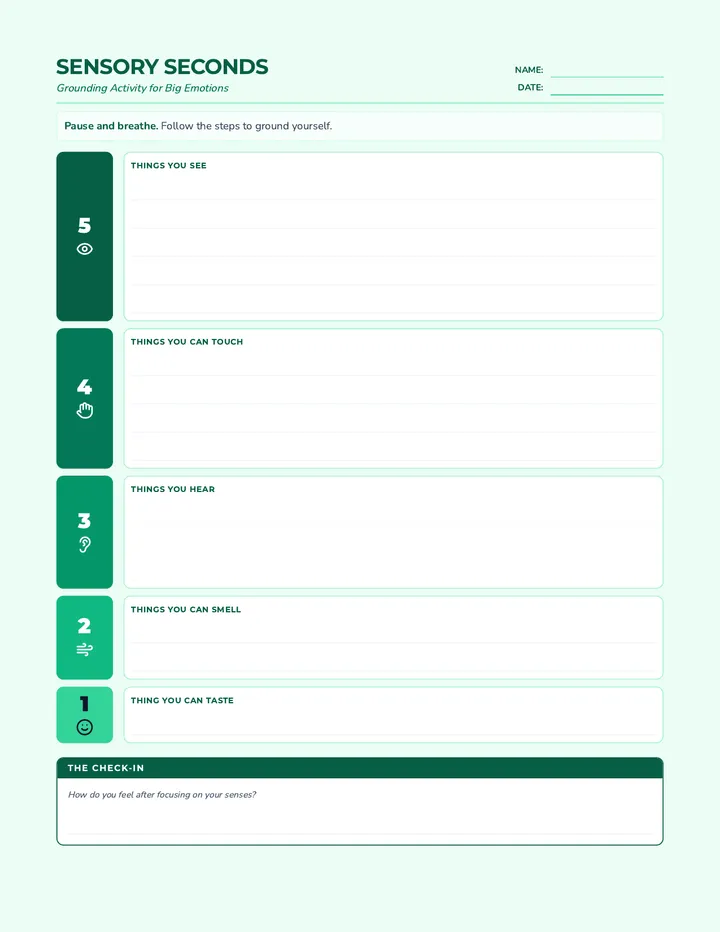
A mindfulness worksheet based on the 5-4-3-2-1 grounding technique, designed to help students manage anger by engaging their senses. Revised for maximum handwriting space and a single-page layout.
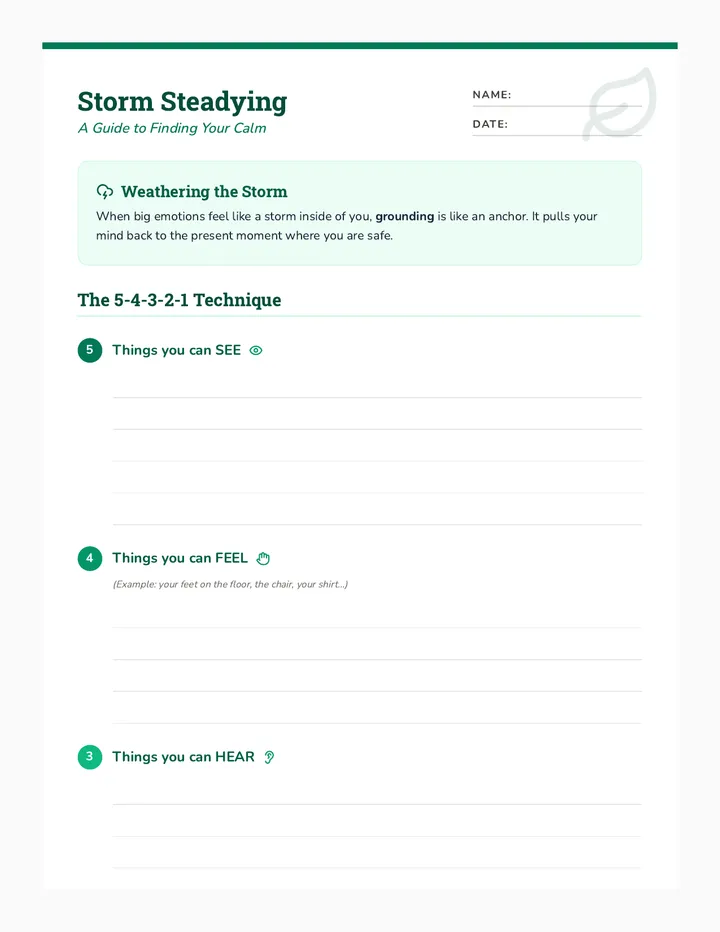
A two-page student worksheet for a counseling session focused on the 5-4-3-2-1 grounding technique. It features a calming "nature notebook" aesthetic with sections for students to record their sensory observations and reflect on their emotional state.
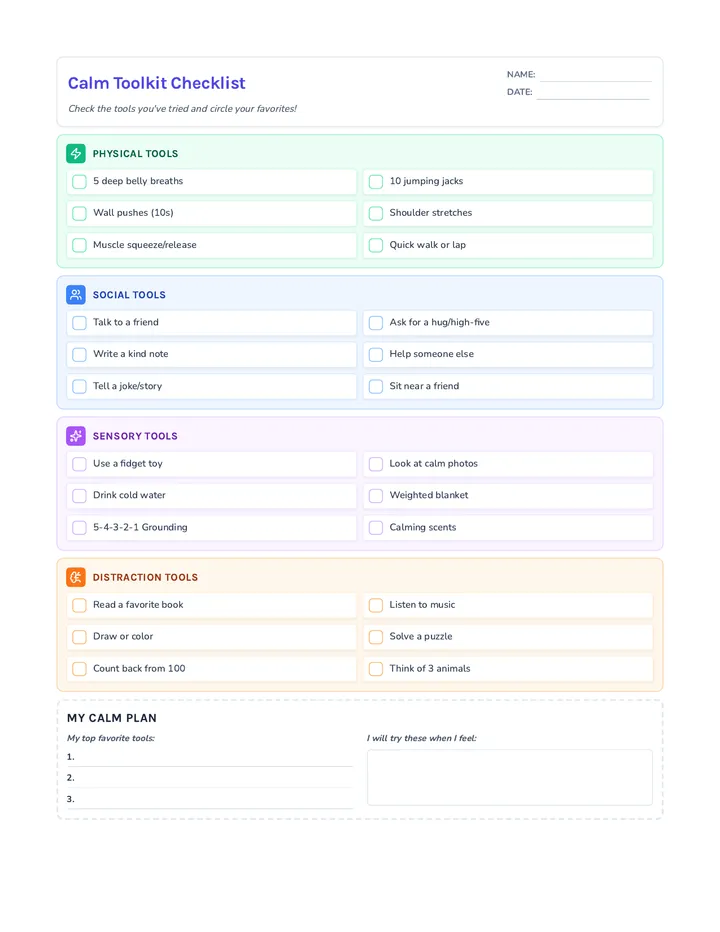
A compact, one-page student-friendly checklist for identifying coping skills across physical, social, sensory, and distraction categories. Designed to fit on a single page with a clear visual hierarchy and reflection space.
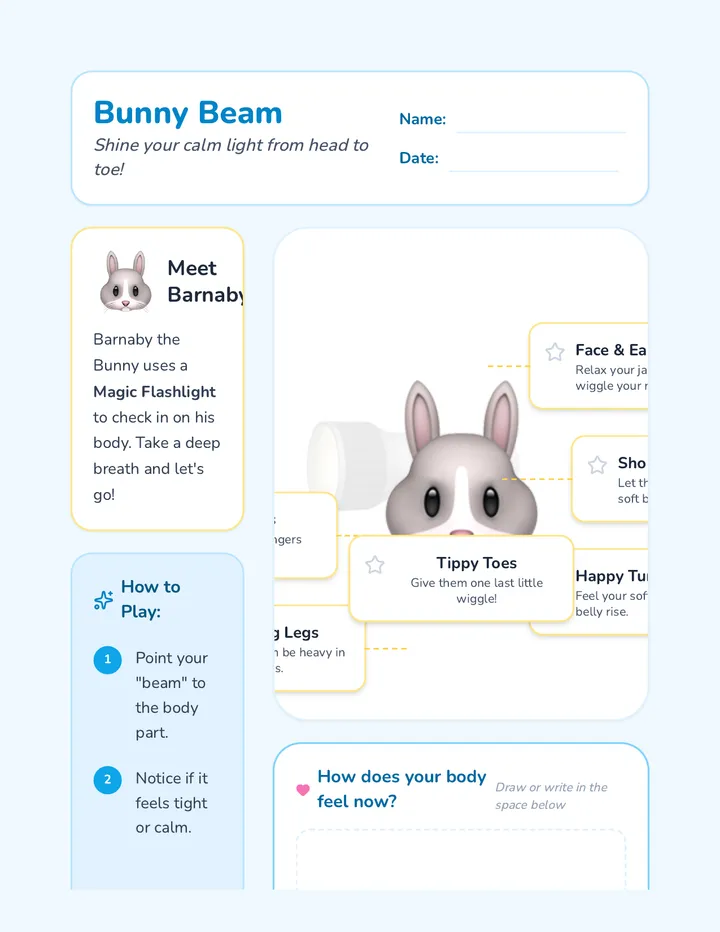
A single-page body scan handout for second graders featuring Barnaby the Bunny and a flashlight beam metaphor. Includes interactive stars to color and a reflection space.
A set of four modern, bold strategy cards for high school students corresponding to the Mood Meter domains. Each card provides academic-focused resets and mindfulness techniques tailored to specific emotional states.
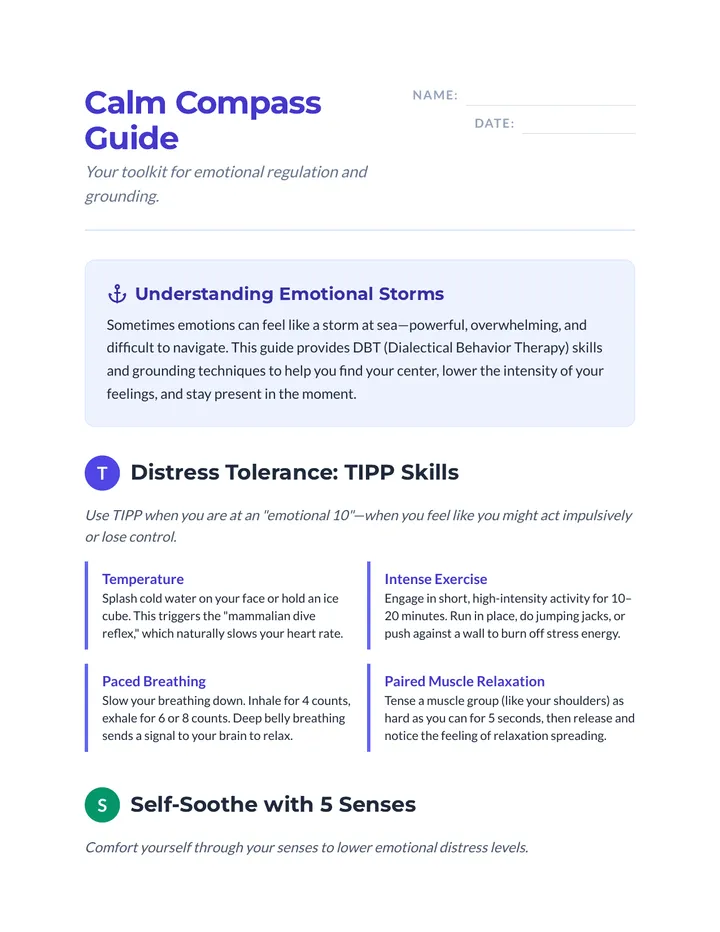
A comprehensive 4-page guide covering DBT emotion regulation skills (TIPP, PLEASE, Opposite Action) and grounding techniques (5-4-3-2-1, square breathing, PMR, cognitive defusion). Designed with a soothing blue and indigo theme for emotional support contexts.
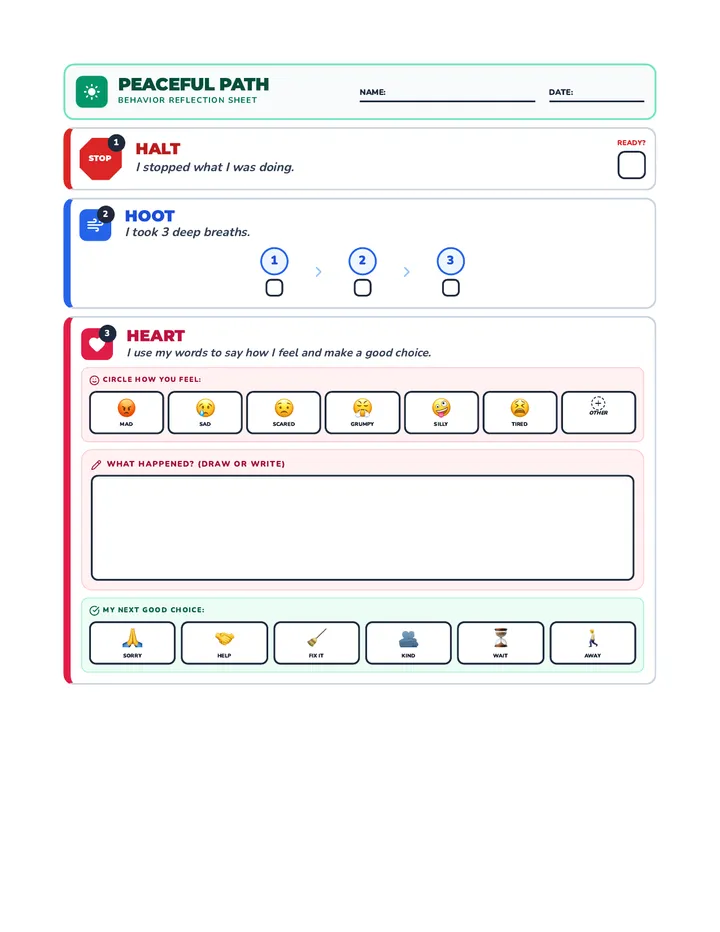
A highly optimized behavior reflection sheet for K-2 students. Uses flexbox to guarantee all content fits on one printable page, including a large "Draw or Write" section and dark slate borders (border-slate-800) for maximum print visibility and reliability.
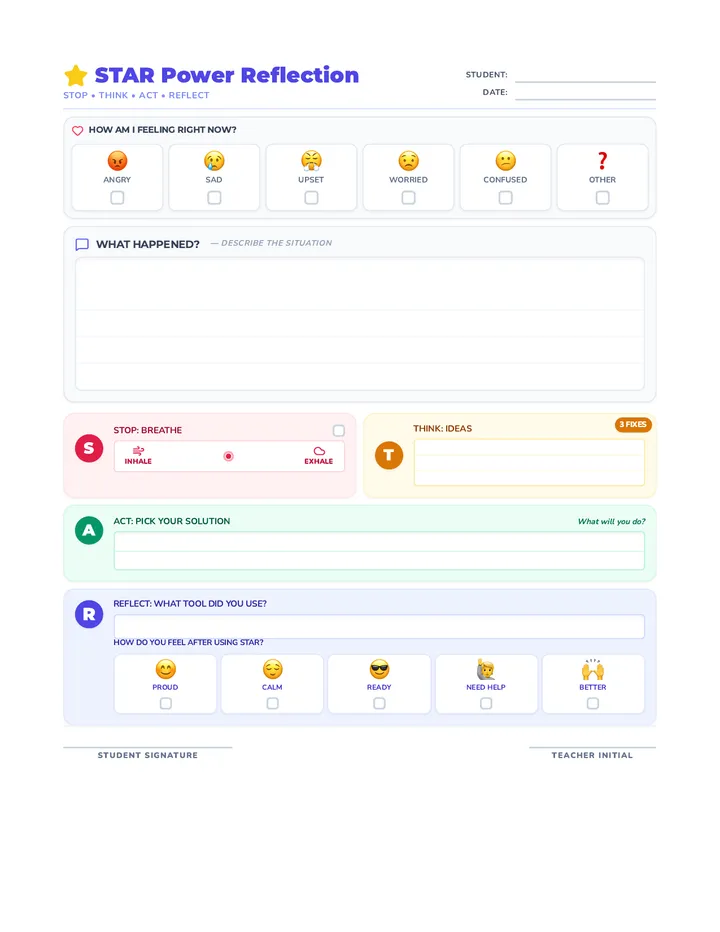
Updated STAR strategy reflection sheet. The "What happened?" section is expanded by reducing the size of feeling check-in boxes and tightening vertical spacing, providing more room for student writing. Includes a "3 Fixes" badge for student ideas.
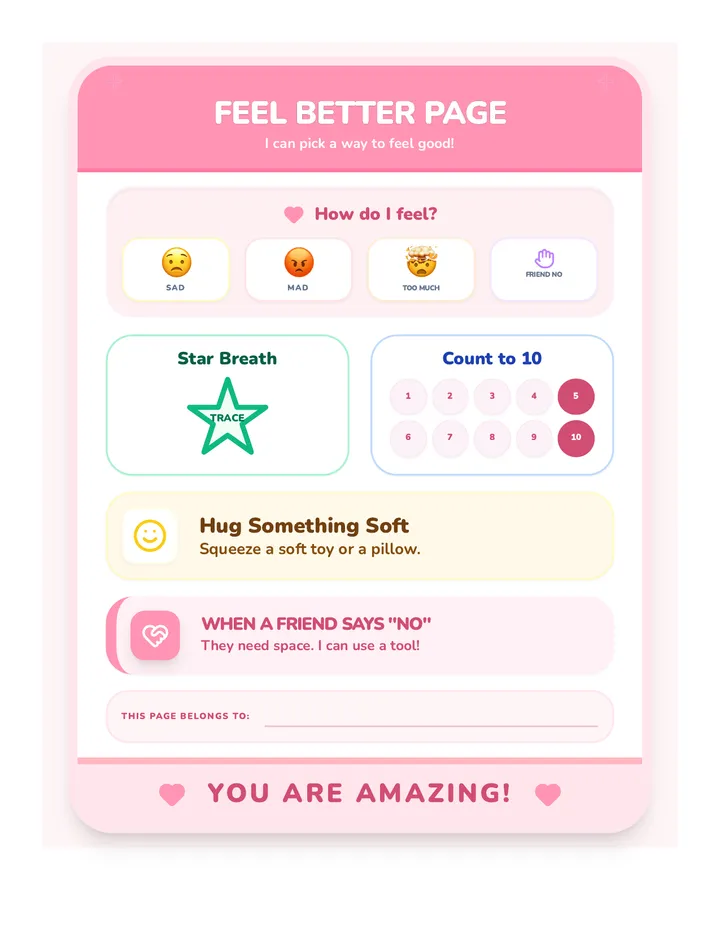
A child-friendly 'Feel Better Page' for a 2nd-grade girl, highly optimized for strict single-page printing by maintaining a total container height under standard margins. Features soft pink tones, simplified language, and sensory coping strategies (star breathing, heart counting, soft hugs) to help with emotional regulation and peer boundary sensitivity.
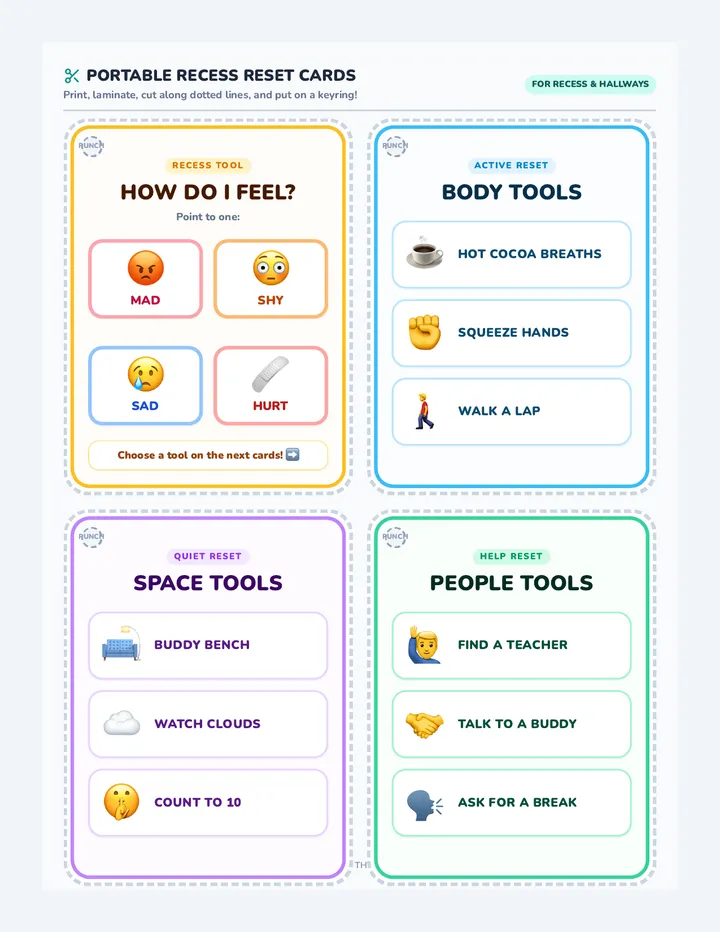
A highly simplified set of 4 pocket-sized visual cards with all subtext removed, optimized for minimal words, and featuring larger, highly prominent emoji illustrations (scaled up to text-5xl) for maximum clarity and engagement with first-grade students. Card 2 uses 'Deep Breaths' and Card 3 uses 'Walk Away'.
A vibrant, high-contrast one-page infographic for high school students. Features deeply color-coded zones for executive functioning strategies with a modern, checklist-style layout and a bold, professional aesthetic. Optimized for one-page printing with improved contrast and consistent styling.
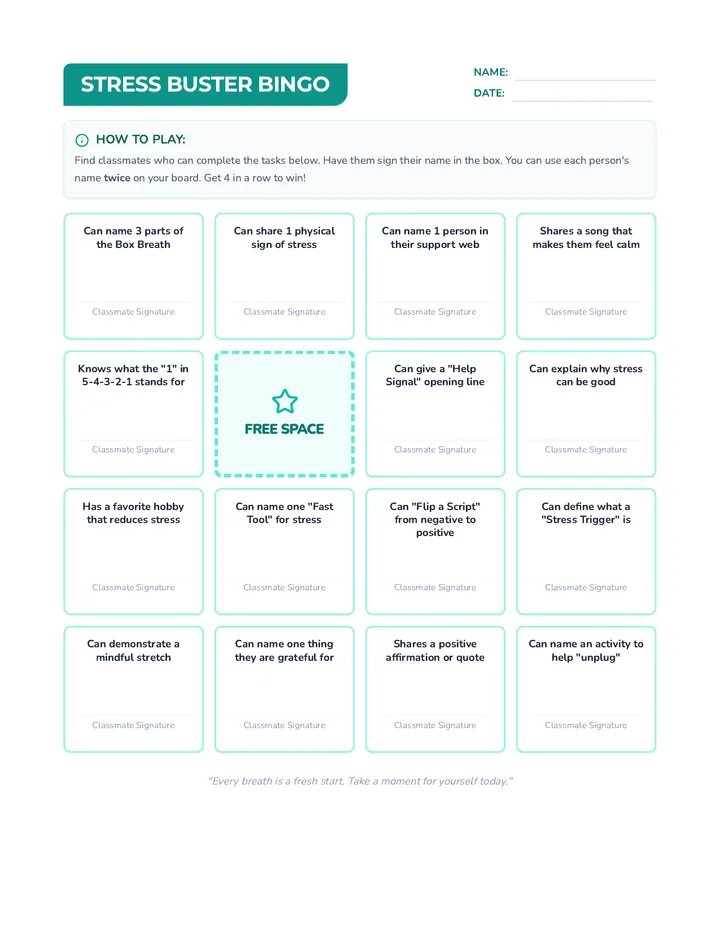
A revised 4x4 Human Bingo board activity designed to help students interact while reviewing stress-management strategies. Optimized for single-page printing and readability.
A compact grounding reference sheet featuring the 5-4-3-2-1 technique, square breathing visual, a mantra writing area, and a "Just 5 Minutes" challenge. Designed to fit easily on a single page for quick student reference.
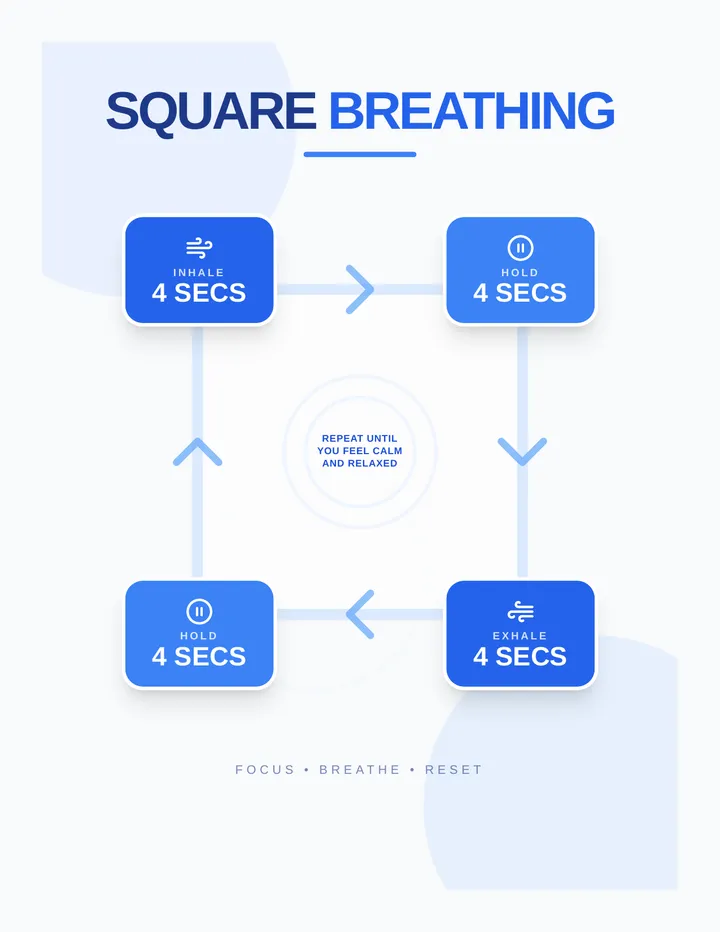
A modern square breathing infographic with instructional labels placed at the four corners, oversized directional arrows, and a central instruction to repeat for relaxation. It features a blue theme and bold typography for high school students.
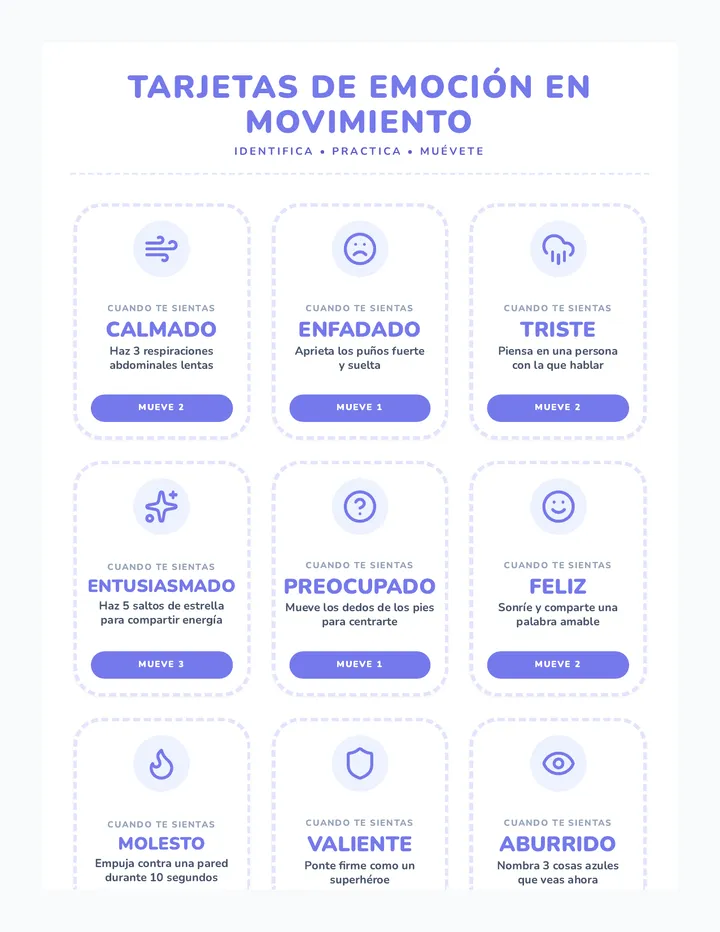
A set of 18 printable activity cards in #7579EB tones, designed for elementary counseling to help students identify emotions and practice specific coping strategies through movement and reflection.
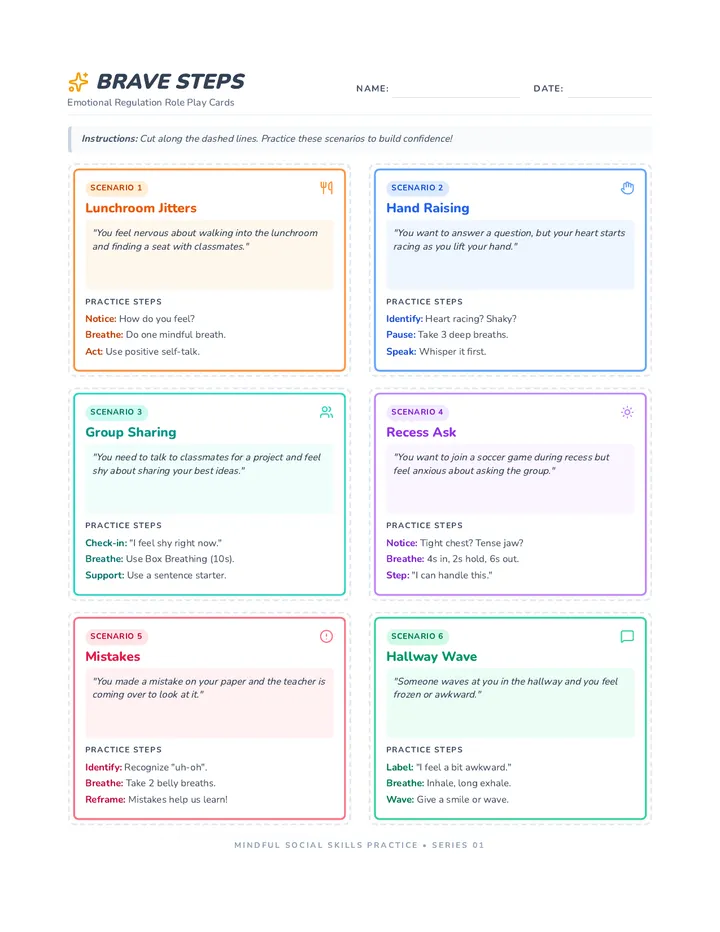
A printable 8.5x11 inch page featuring six detailed role-play scenario cards designed to help students practice emotional regulation and mindful breathing in common school situations. Each card includes a specific scenario, practice steps, and visual icons to guide student engagement. Updated to fit all content on a single page with improved readability.
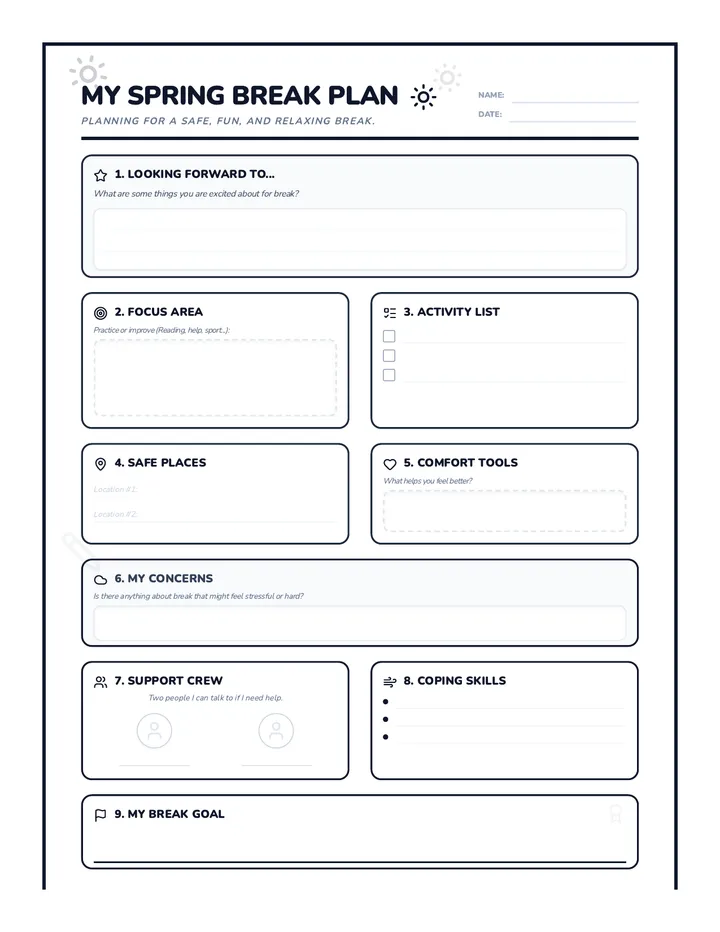
A finalized, single-page Spring Break Planner for middle school counseling. It features 9 journal-style sections optimized for black and white printing with a sun-themed aesthetic and explicitly listed crisis resources in a discrete footer.
The ultimate compact version of the Adulting Celebration Chart with ultra-reduced line spacing and minimal vertical gaps. It utilizes tiny icons, condensed font sizes, and tight leading to provide a high-density workplace tracking experience that fits multiple players and comprehensive metrics in a single printable view. It moves metric descriptions inline to save vertical space.
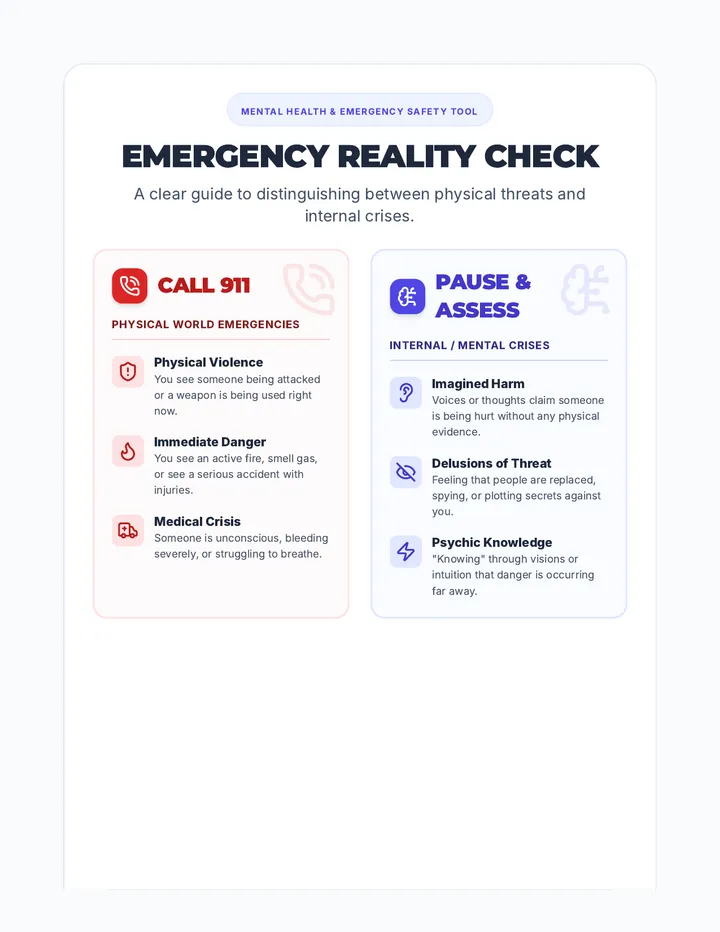
A refined, high-contrast one-page infographic for adults in mental health contexts. Optimized with page-break protection (break-inside-avoid) on all major objects to ensure clean printing on standard or legal sized paper. Includes actionable reality-checking steps and a personalized support network area.
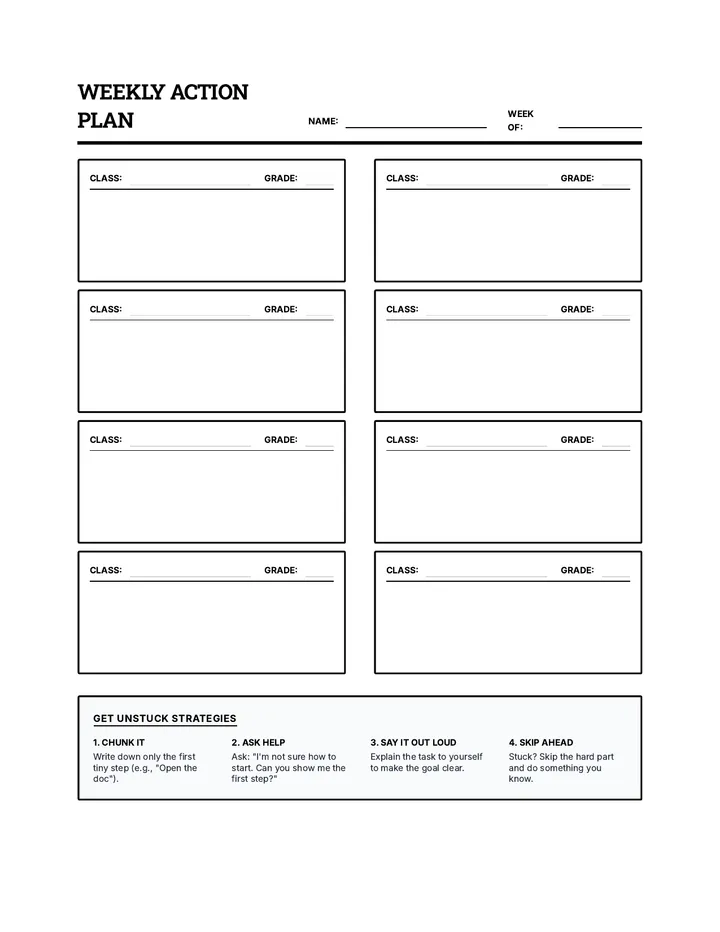
A highly efficient, single-page Weekly Action Plan designed for students with executive functioning needs. It features 8 streamlined class boxes with space for subjects and grades, plus a concise footer with 'Get Unstuck' strategies, all formatted to fit within a single printable page.
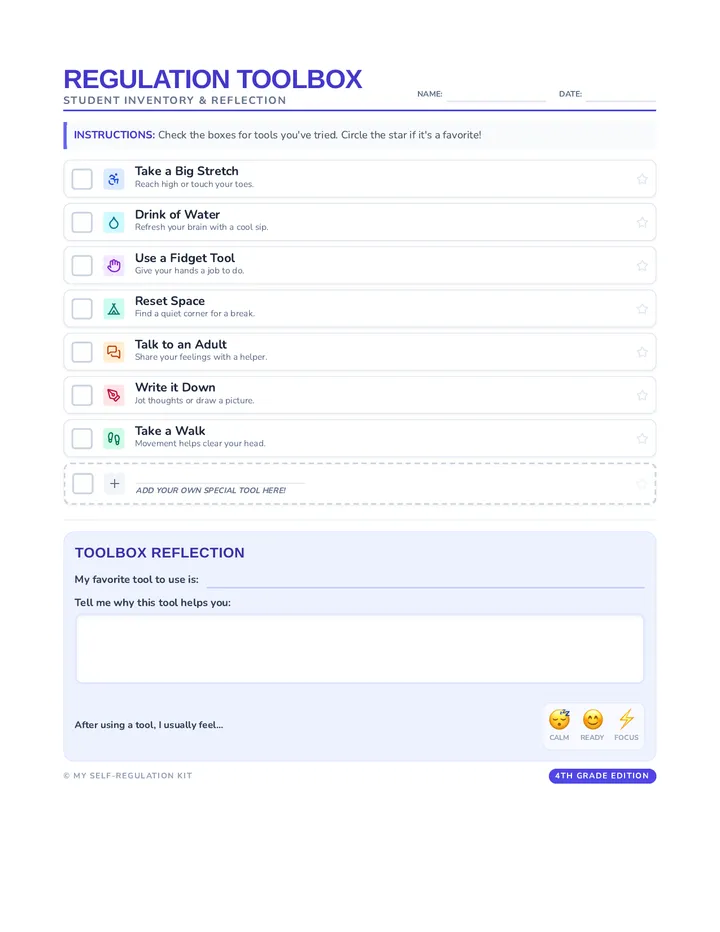
A one-page regulation inventory for 4th graders, updated with an open-ended reflection area for students to name their favorite tool and explain how it helps them. Includes a customizable blank slot in the checklist for students to add their own unique tool.
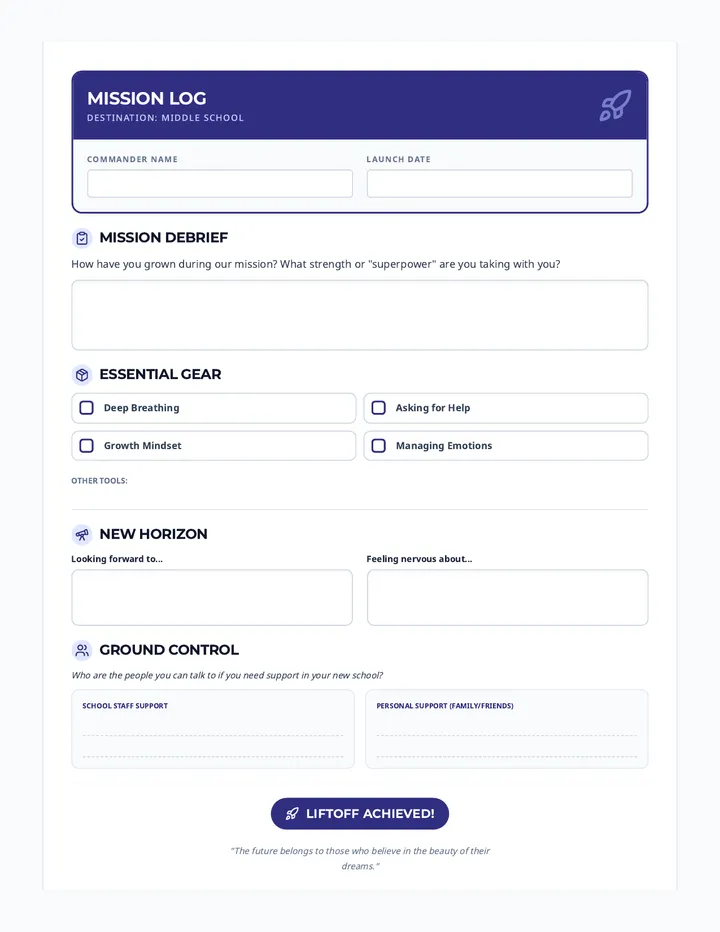
A transition activity sheet designed for elementary students finishing school counseling services as they move to middle school. It uses a space exploration theme to help students reflect on their growth, identify coping skills, and plan for their support system in their new school.
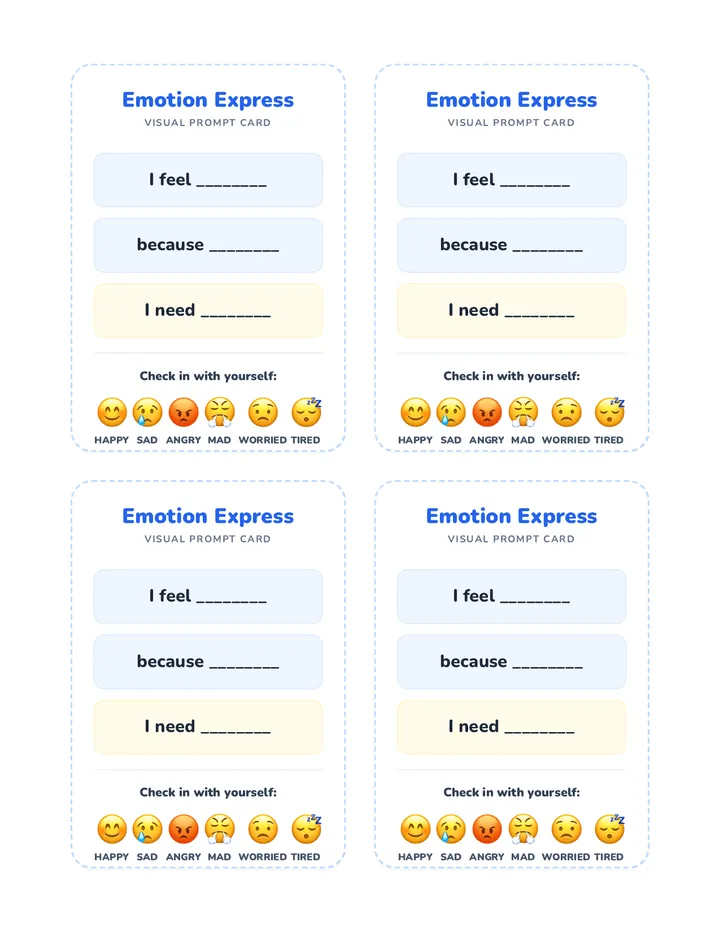
A two-page printable document. Page one features four small "Emotion Express" cards for desk use. Page two features a single large, full-page version of the visual prompt card for classroom display or whole-group instruction. Layout adjusted for better page fit and usage of space.
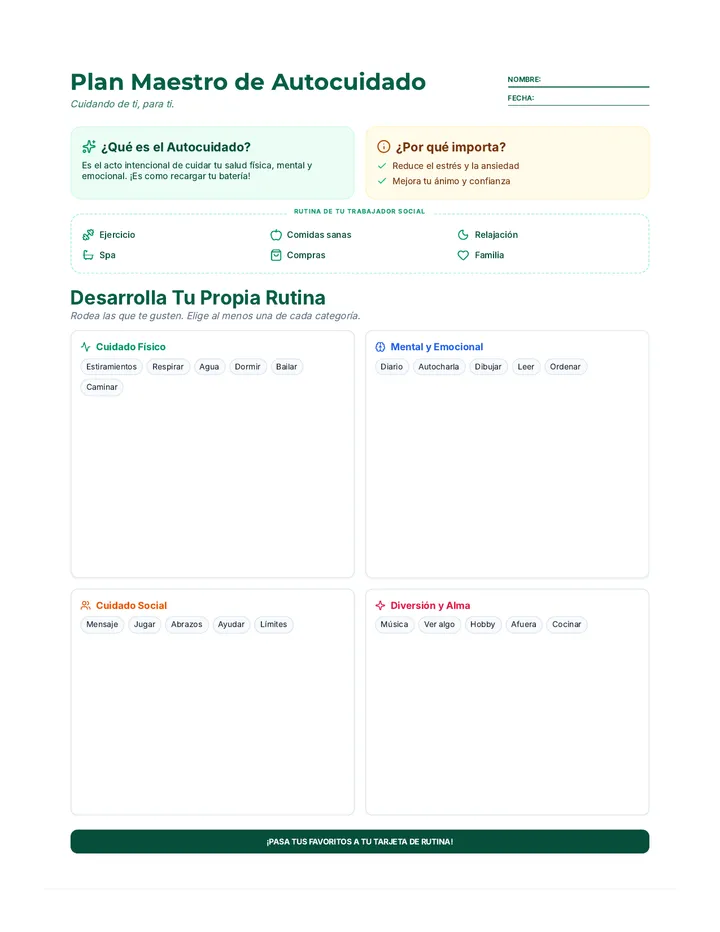
A Spanish translation of the Self-Care Blueprint toolkit. Page 1 helps students identify self-care practices across four categories, while Page 2 provides a significantly enlarged personal wellness ritual card with larger fonts and writing areas for better accessibility. Spacing and scale have been optimized to maximize the usable writing area on the second page.