Compound Interest Miracle Slides Lesson 01
THE COMPOUND
INTEREST MIRACLE
How your first paycheck can become a million dollars (if you play your cards right).
Future Wealth Blueprints
The Million Dollar Race
EARLY EDDIE
• Starts saving at Age 22
• Saves $500/month for 10 years
• Stops at age 32
• Total Invested: $60,000
LATE LARRY
• Starts saving at Age 32
• Saves $500/month for 33 years
• Never Stops until retirement
• Total Invested: $198,000
Who do you think has more money at Age 65?
The Result (7% Annual Return)
$1,023,000+
EARLY EDDIE Invested $60k
$725,000+
LATE LARRY Invested $198k
Eddie invested $138,000 LESS than Larry, but ended up with $300,000 MORE.
Time is your greatest asset.
Compound Interest Defined
Compound Interest is interest calculated on the initial principal and also on the accumulated interest of previous periods.
1
You invest money (Principal).
2
That money earns interest.
3
The interest itself starts earning interest.
The Formula
\[ A = P(1 + \frac{r}{n})^{nt} \]
Don't worry, we'll use calculators for this!
The Cost of Waiting
Every year you delay starting your retirement savings, you aren't just losing that year's contributions...
THE REALITY CHECK
Waiting until age 32 instead of 22 could cost you
$300,000+ AT RETIREMENT.
That is roughly $30,000 PER YEAR you "lost" by not saving $500/month.
Time to Model
What factors change the growth?
Time (t)
How many years you let it sit.
Rate (r)
Annual return (Avg. Stock Market = 7-10%).
Frequency (n)
How often it compounds (monthly is common).
Open your "Wealth Growth Lab" Worksheets now.
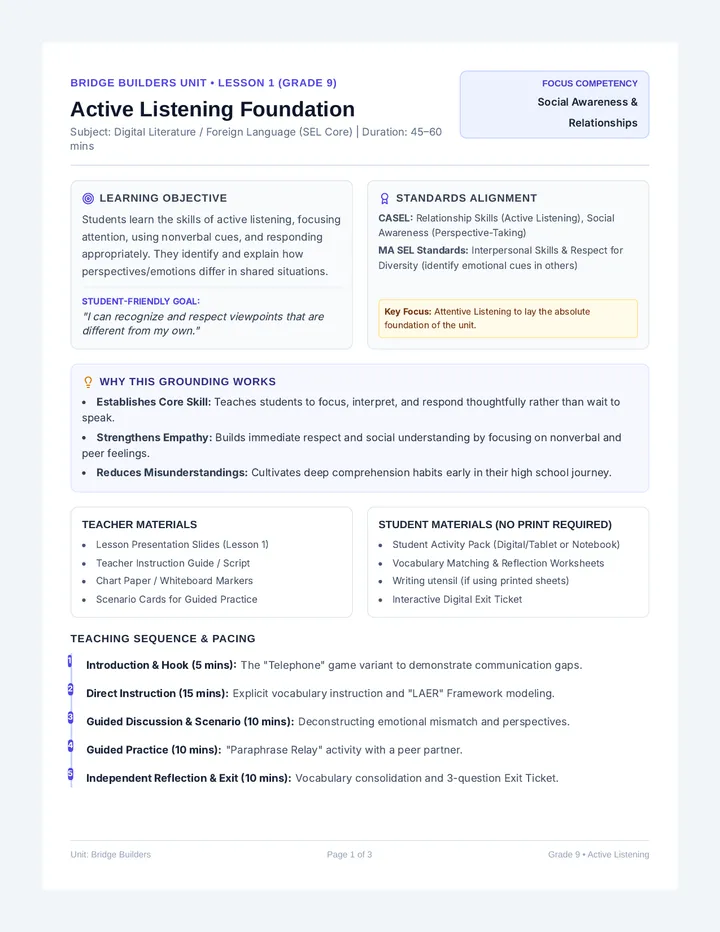
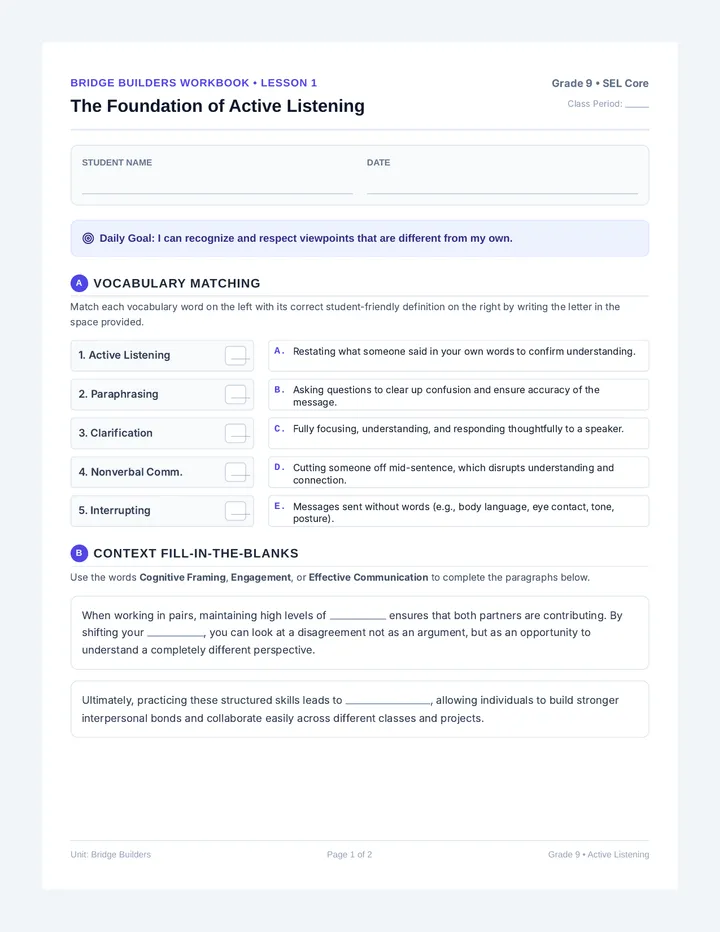
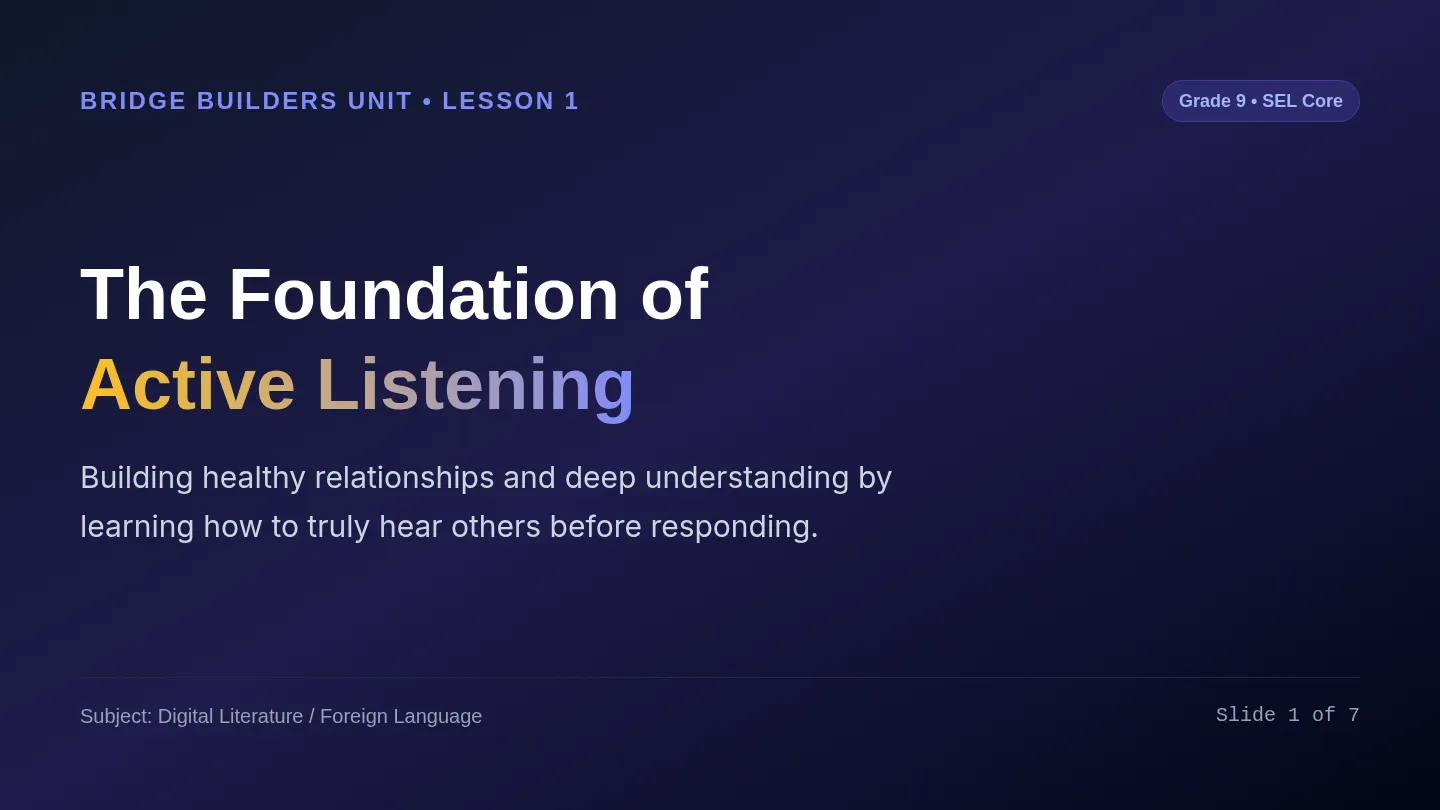
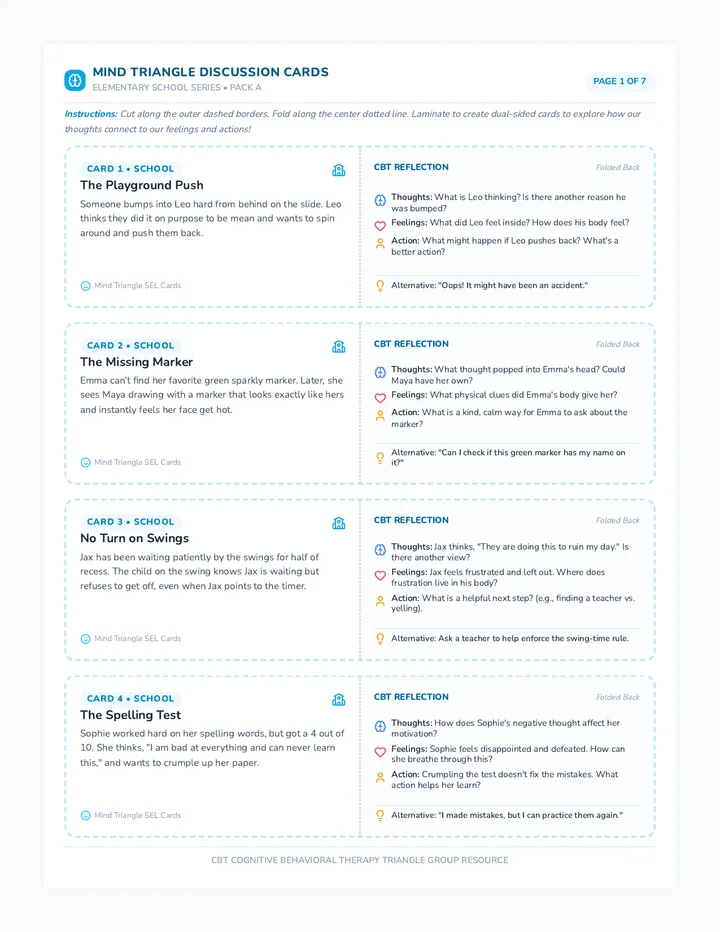
Wealth Growth Lab Worksheet Wealth Growth Lab
Lesson 01: The Compound Interest Miracle
Name:
Date:
1
The Compound Interest Engine
Use the formula below to identify the variables for Early Eddie's first year of saving.
\[ A = P(1 + \frac{r}{n})^{nt} \]
P (Principal - starting amount) ________
r (Annual Interest Rate as decimal) ________
n (Compounding frequency - monthly) ________
t (Time in years) ________
2
The Million Dollar Race Data
Using a compound interest calculator or spreadsheet, model the growth of Early Eddie and Late Larry. Assume a 7% annual return compounded monthly.
Age Range Early Eddie (Saves $500/mo) Late Larry (Saves $0) Age 22 (Start) $0 $0 Age 27 (5 years in) $0 Age 32 (10 years in) $0 Pivot Point: Eddie stops contributing. Larry starts contributing $500/mo. Age 42 Age 52 Age 65 (Retire)
3
Analysis & Strategy
1. Compare the total "Out-of-Pocket" investment for both characters. Who spent more of their own money to build their nest egg?
2. Eddie stopped saving at age 32. Why did his account balance continue to grow so significantly between age 32 and 65?
3. The "Cost of Waiting": If Larry wanted to catch up to Eddie's final total at age 65, what would he need to change about his saving habits? (Increase amount? Work longer? Better return?)
The "65-Year-Old You" Reflection
Imagine you graduate and get your first job this year. You find you have an extra $200 per month after expenses. Based on what you've seen today, what is your plan for that money, and why is "I'll wait until I'm 30 and have a better job" a dangerous strategy?
Free Money Hack Slides Lesson 02
THE FREE MONEY
HACK
Understanding Employer Matching: The only legal way to double your money instantly.
Future Wealth Blueprints
The Sidewalk Test
$100
If you saw a $100 bill on the sidewalk, would you keep walking or pick it up?
"Not taking an employer 401(k) match is like walking past a $100 bill every single paycheck."
The 401(k) Match
The Definition
Your employer contributes money to your retirement account only if you contribute first.
The Benefit
It is a 100% or 50% instant return on your investment. No stock market gain can beat that on day one.
A Common Example
YOU
Invest $1.00
BOSS
Invests $1.00
$2.00 TOTAL
Instant 100% Profit
The "Match Ceiling"
Companies don't match unlimited money. They use a Cap.
"We match 50% up to 6%"
The 50% Rule:
For every dollar you put in, they put in 50 cents.
The 6% Cap:
They only do this until your contribution reaches 6% of your salary.
STRATEGY: Never contribute less than the Cap.
Calculating Your Return
In the stock market, a 10% return in a year is considered very good.
THE MATCH ROI:
100% INSTANTLY
Calculated as: (Employer Match / Your Contribution) × 100
Pro Tip
The match isn't just "extra" money. It compounds just like your money, making your final retirement nest egg double in size.
Matching Workshop
Grab your "Free Money Hack" worksheet. We're going to calculate how much money you're leaving on the sidewalk in different job scenarios.
STEP 1
Find the Cap
STEP 2
Calc Contribution
STEP 3
Pick Up the Cash
Free Money Workshop Worksheet Free Money Workshop
Lesson 02: Maximizing Employer Matching
Name:
Date:
1
The Basics of Picking Up Cash
Your new job at TechGenix offers a 100% match up to 5% of your salary. Your starting salary is $50,000 per year.
Calculation A
What is 5% of your annual salary?
$ ________
Calculation B
If you contribute that full 5%, how much does TechGenix put in?
$ ________
Total money added to your account this year: $ ________
2
Leaving Money on the Sidewalk
Scenario: You decide to contribute only 3% of your $50,000 salary because you want more "spending money" now.
Your 3% Contribution
$ ________
The Company Match
$ ________
The "Free Money" Lost
$ ________
Analysis: Why is contributing only 3% mathematically worse than contributing the full 5%, even if you need cash now?
3
The Employer Match Challenge
Job A: Creative Co.
Salary: $40,000 | Match: 50% up to 6%
Contribution needed for max match ($):
Employer match amount ($):
Job B: Data Pro
Salary: $60,000 | Match: 100% up to 4%
Contribution needed for max match ($):
Employer match amount ($):
Strategic Move
If you are comparing two job offers with identical base salaries, but Job A matches 6% and Job B matches 3%, how would you describe the difference in "Total Compensation" to a friend?
Seed or Harvest Slides Lesson 03
SEED OR
HARVEST
Traditional vs. Roth: Choosing when to pay the IRS.
Future Wealth Blueprints
The Farmer's Choice
TAX THE SEED
You pay tax on the small bag of seeds you buy today.
ROTH 401(k)
TAX THE HARVEST
You pay tax on the massive field of wheat you grow later.
TRADITIONAL 401(k)
Which sounds like a better deal for you?
Traditional 401(k)
1
Pre-Tax Contributions
Money comes out of your check before Uncle Sam takes his cut.
2
Tax Deduction Today
It lowers your taxable income right now, meaning you pay less in taxes this year.
!
Taxed in the Future
When you withdraw money at age 65, it is taxed as regular income.
Perfect For:
People who are in a high tax bracket now, but will be in a lower one during retirement.
Roth 401(k)
Perfect For:
Young workers in entry-level jobs.
You are likely in the lowest tax bracket of your life right now. Pay the tax while it's cheap!
1
Post-Tax Contributions
You pay tax on the money before it goes into the account.
Tax-Free Growth
All that compound interest growth we talked about? You never pay a penny of tax on it.
Tax-Free Withdrawals
At age 65, every dollar you take out is yours to keep. The IRS gets nothing.
Seed vs. Harvest Math
TRADITIONAL
Invest: $10,000
Tax Paid Now: $0
Growth over 40 years...
$150,000
IRS Takes 25%: -$37,500
NET: $112,500
ROTH
Invest: $10,000
Tax Paid Now (12%): -$1,200
Growth over 40 years...
$150,000
IRS Takes: $0
NET: $150,000
THE TAX DEBATE
"I want my tax break NOW so I can invest even more money."
Vs.
"I want to be DONE with taxes today so I never have to worry about the IRS raising tax rates in the future."
Open your case studies to decide.
Tax Strategy Case Study Worksheet Tax Strategy Case Study
Lesson 03: Traditional vs. Roth Decision
Name:
Case 1: Maya the New Grad
Age: 22 | Career: Graphic Designer | Starting Salary: $38,000
The Situation
Maya is in a low tax bracket (12%). She expects her income to grow significantly as she becomes a Creative Director.
The Goal
She wants to maximize her wealth at age 65 and is okay with having slightly less spending money now.
The Question
Should Maya choose Traditional or Roth? Explain using the "Taxing the Seed" analogy.
Case 2: Marcus the Mid-Career Pro
Age: 45 | Career: Senior Engineer | Salary: $165,000
The Situation
Marcus is in a high tax bracket (24%). He plans to retire in a smaller house with fewer expenses, needing less income later.
The Goal
He wants to lower his tax bill today because he feels he is overpaying for services he doesn't use.
The Question
Should Marcus choose Traditional or Roth? Why is "Taxing the Harvest" better for him?
The Tax Logic Lab
1. The Future Variable: If tax rates in the US increase significantly across the board in 30 years, which account type (Traditional or Roth) was the safer bet? Why?
Summary Decision Matrix
CHOOSE TRADITIONAL IF...
CHOOSE ROTH IF...
3. The Matching Exception: Note that employer matches are always put into a Traditional account by the company (even if you contribute to a Roth). Why do you think the IRS requires this?
Vesting Countdown Slides Lesson 04
THE VESTING
COUNTDOWN
When do you actually OWN your employer's money?
Future Wealth Blueprints
The $5,000 Week
Sarah has been at her job for 2 years and 51 weeks.
She gets a new job offer and quits one week early.
Account Balance:
Your Money: $8,000
Company Match: $5,000
Total she leaves with?
$8,000
The $5,000 match stayed with the company because she wasn't VESTED.
Vesting Defined
The Rule
Vesting is the process by which an employee earns ownership of employer-contributed funds.
YOUR MONEY
The money YOU contribute is 100% Vested immediately. You take it whenever you leave.
THEIR MONEY
The match money belongs to the Company until you satisfy the vesting schedule.
The Cliff Schedule
You are 0% vested until a specific date, at which point you jump to 100%.
Standard Example:
3-Year Cliff
• Quit at Year 2: You get $0 match.
• Quit at Year 3: You get 100% match.
Year 1
Year 2
Year 3!
Ownership Jump
Graded Schedule
20%
40%
60%
80%
100%
You earn a percentage of the match for each year of service.
The logic:
Even if you leave early, you get something. This is often seen as "fairer" to employees who don't plan to stay for 5-10 years.
The Strategy
Before you quit a job, check your Vesting Status.
Staying for an extra two weeks could be the difference between a $2,000 exit and a $10,000 exit.
Time for the Simulation
Vesting Simulation Worksheet The Vesting Simulation
Lesson 04: Career Timing & Ownership
Name:
1
Schedule Analysis
Company A: TechFlow
"3-Year Cliff Vesting"
Years of Service % Vested
1 Year ________
2 Years ________
3 Years ________
Company B: GreenGrid
"5-Year Graded (20% per year)"
Years of Service % Vested
1 Year ________
3 Years ________
5 Years ________
2
Simulation: The Exit Interview
"Alex has been at Company B for exactly 3 years. They have $12,000 of their own money in the 401(k) and the company has added $6,000 in matching funds. Alex just got a job offer from a competitor that starts immediately."
Alex's Contribution
$ 12,000
Ownership: 100%
Company Match
$ 6,000
Ownership: _____%
Total Alex Takes
$ ________
Calculate: How much money does Alex forfeit (leave behind) if they quit today?
$ ________
Decision Strategy: If the new job offers a $2,000 signing bonus but requires Alex to start today, should Alex take it? Why or why not?
3
The Long-Term Impact
Imagine you are 25 years old. You've worked at a company for 4 years out of a 5-year graded vesting schedule. You are unhappy and want to quit, but you have $10,000 in unvested match money.
Reflect: Is "happiness" worth $10,000? How would you weigh the emotional cost of staying versus the financial cost of leaving?
Your Future Self Roadmap Project Final Synthesis Project
The Future Self
Roadmap
Owner:
"Wealth is the ability to fully experience life."
01
Phase 1: The Reality Check
Job Scenario
Starting Salary: $48,000 / year
Monthly Gross Pay: $4,000
Company Match: 100% up to 6%
Monthly Living Expenses
Rent & Utilities: $1,400
Student Loans: $350
Food & Transport: $800
Insurance/Other: $450
Total Expenses: $3,000
02
Phase 2: The Contribution
How much will you contribute monthly? (Remember the 6% match ceiling!)
_____%
of salary =
$ ______
Strategy Choice: Will this be Traditional or Roth? Justify your choice based on your current age and tax bracket.
The Match Result
$ ________
The amount your company adds to your wealth every single month for FREE.
03
Phase 3: The 40-Year Horizon
Using a 7% average annual return and your monthly contribution (including match), calculate your estimated retirement balance after 40 years.
Final Nest Egg at Age 65
$ ____________
Vesting Risk Assessment
Your company uses a 3-year cliff vesting schedule. How does this impact your decision to look for a new job in the first two years of your career?
04
Phase 4: Letter to 65-Year-Old You
STAMP
Write a brief note to your future self. Explain the sacrifices you are making today (at 18-22 years old) to ensure they are financially secure. What do you hope they are doing with the money you've built for them?
Dear Future Me,
Signed,