Healing Forgiveness Lesson Plan
The Healing Power of Forgiveness
Teacher Instruction Guide • Grade 9
45 Minutes
Tier 1 Instruction
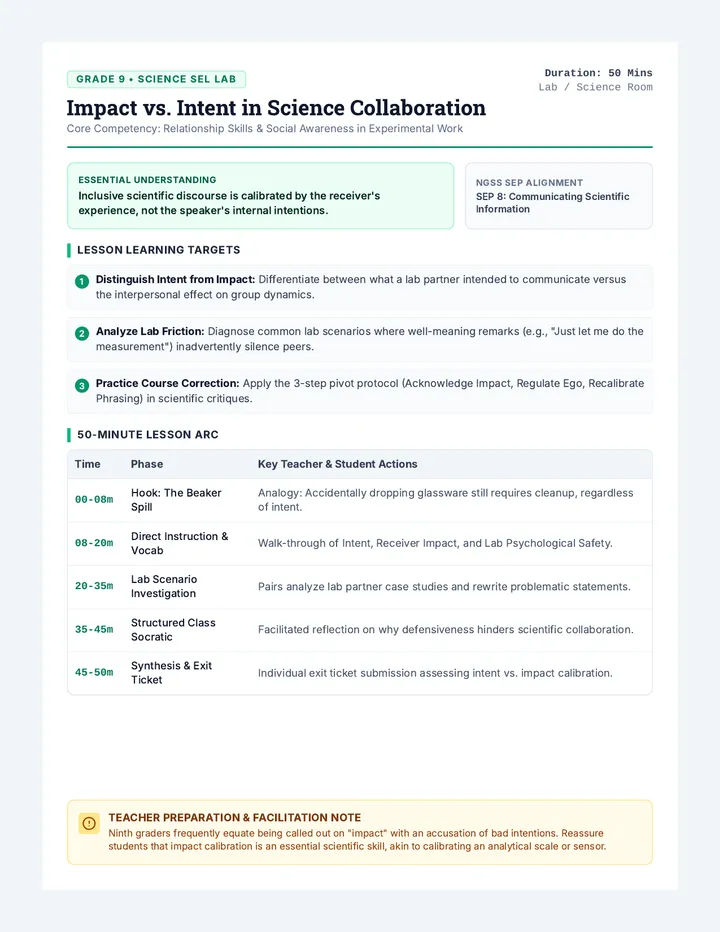
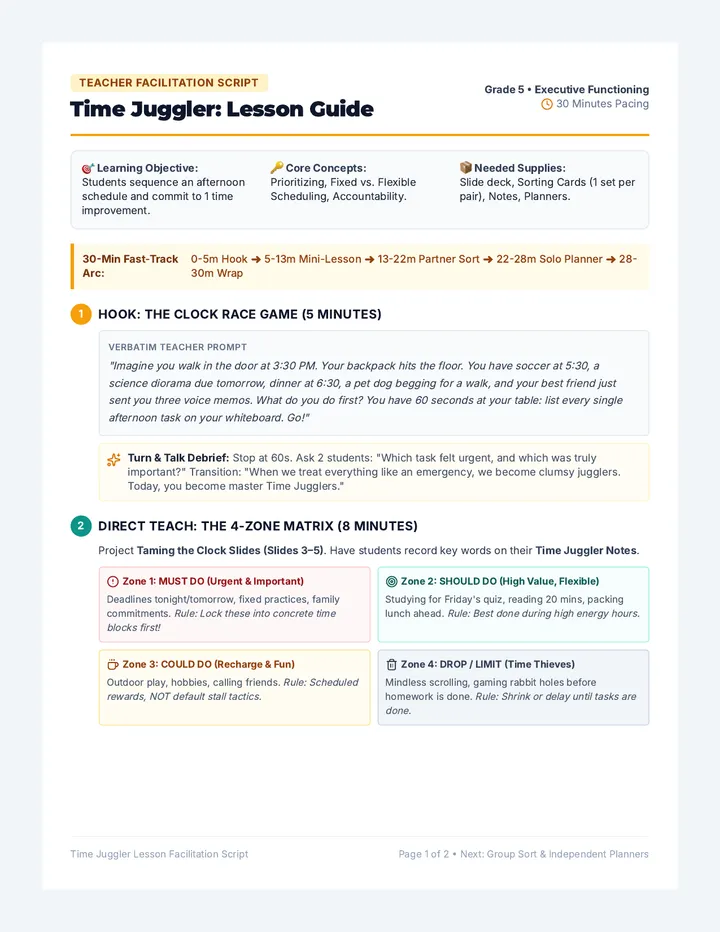
Lesson Objective
Students will explore the concept of forgiveness and its impact on emotional health. By the end of this lesson, students will be able to identify the personal benefits of letting go of grudges and understand how forgiveness can transform relationships and foster growth.
Materials
- Forgiveness Story Handout
- Storytelling Worksheet
- Discussion Guide
- Reflection Cards
Instructional Sequence
10 MIN
Introduction & Grounding
- Begin with a brief introduction to the concept of forgiveness: the conscious, deliberate decision to release feelings of resentment or vengeance toward a person or group who has harmed you.
- Read the Forgiveness Story (Sarah and Emily) aloud to the class to illustrate the emotional weight of a grudge and the relief of letting go.
- Quick Poll: Ask students to share 1-2 words they associate with the word "forgiveness."
15 MIN
Creative Storytelling
- Distribute the Storytelling Worksheet.
- Have students write a short narrative (or bulleted reflection) about a time they forgave someone or were forgiven.
- Encourage them to focus on the sensory details of the experience: How did the grudge feel physically? How did the forgiveness feel?
10 MIN
Group Socratic Seminar
- Use the Discussion Guide to facilitate a conversation.
- Focus on the "difficulties" of forgiveness—acknowledge that it isn't always easy or immediate.
- Highlight the health benefits: reduced stress, improved mental clarity, and stronger connections.
5 MIN
Reflection Cards
- Distribute Reflection Cards. These can be cut out or kept as a sheet.
- Ask students to complete the prompts honestly and keep them as a personal reminder.
5 MIN
Closure
Summarize the lesson: Forgiveness is a gift you give yourself. It doesn't mean forgetting or excusing bad behavior, but it does mean reclaiming your peace.
Pro-Tips for Facilitation
"Students may bring up complex situations where forgiveness feels impossible or unsafe (e.g., systemic harm or ongoing abuse). Clarify that forgiveness is a personal choice and differs from reconciliation. One can forgive for their own peace without necessarily returning to a harmful relationship."
Heart to Heart Discussion Guide
Heart to Heart
Discussion Guide
Facilitating meaningful dialogue on the transformative power of letting go.
Facilitator Note: Create a safe, non-judgmental space. Remind students that they only need to share what they are comfortable with. Validate that forgiveness is a process, not a one-time event.
1
What does forgiveness mean to you?
Discussion Prompts:
- Is forgiveness about the other person, or about yourself?
- Does forgiving someone mean that what they did was "okay"?
- Can you forgive someone without telling them directly?
2
How can forgiveness impact relationships?
Discussion Prompts:
- Think about the "weight" of a grudge. How does that weight affect how friends interact?
- How does trust change after forgiveness? Can it be fully restored?
- What happens to a relationship if one person forgives but the other doesn't change?
3
Why is it sometimes difficult to forgive?
Discussion Prompts:
- What emotions get in the way (anger, pride, fear)?
- Does our ego play a role in holding onto a grudge?
- How does the "fear of being hurt again" stop us from forgiving?
Key Takeaway for Students
"Forgiveness is not about letting the other person off the hook; it's about letting yourself off the hook of bitterness."
Unburdened Heart Worksheet
The Unburdened Heart
Storytelling & Reflection Activity
Student Name
Date
Your Story Matters
Think of a moment when you chose to forgive someone, or a time when someone offered forgiveness to you. Reflect on how that moment changed the atmosphere between you and the other person, and how it changed you internally.
1. Describe a time you forgave someone or were forgiven. What led to the conflict? How did the act of forgiveness happen? What emotions were you carrying before and after?
2. What did you learn from this experience? Reflect on your personal growth and any changes in the relationship following the forgiveness.
The Bridge of Forgiveness Reading
The Bridge of Forgiveness
A Short Story for Reflection
Once upon a time, in a small, quiet village nestled between rolling hills, lived two inseparable friends named Sarah and Emily. They had grown up together, sharing everything from childhood secrets to dreams of the future. Their friendship was like a sturdy bridge, weathered but strong, until one afternoon, a sharp misunderstanding tore it apart.
It started with a simple miscommunication—a word taken the wrong way, a secret accidentally shared. The resulting argument was louder and colder than either had ever imagined possible. Both Sarah and Emily felt deeply betrayed, and their pride quickly built a wall where their friendship once stood. They stopped talking, choosing different paths to school and avoiding the places they used to love.
The weeks that followed were heavy. Sarah felt a constant weight in her chest, like a stone she couldn't set down. Emily, too, found that her anger had slowly turned into a quiet, persistent sadness.
One rainy Tuesday, Sarah found a envelope waiting on her porch. Inside was a letter from Emily. It wasn't defensive or angry. Instead, Emily apologized for her part in the argument and expressed how much she missed their laughter. She wrote, "I realized that our friendship is worth more than my need to be right."
As Sarah read the words, the wall she had built began to crumble. She realized that she had been holding onto her hurt like a shield, but it was only making her tired. She decided to let it go.
They met at their old spot by the river that evening. No many words were needed; the act of showing up was the bridge being rebuilt. They talked, they listened, and they truly forgave each other. They realized that forgiveness wasn't about forgetting what happened, but about valuing their bond more than their pride. This act of forgiveness not only healed their hearts but taught the entire village that empathy is the most powerful tool for restoration.
Reflect & Discuss
What was the "weight" that Sarah and Emily were carrying? Why was the letter a crucial first step in the healing process?