A 30-minute introductory lesson for 3rd graders to identify common and personal stress triggers through discussion and creative expression.
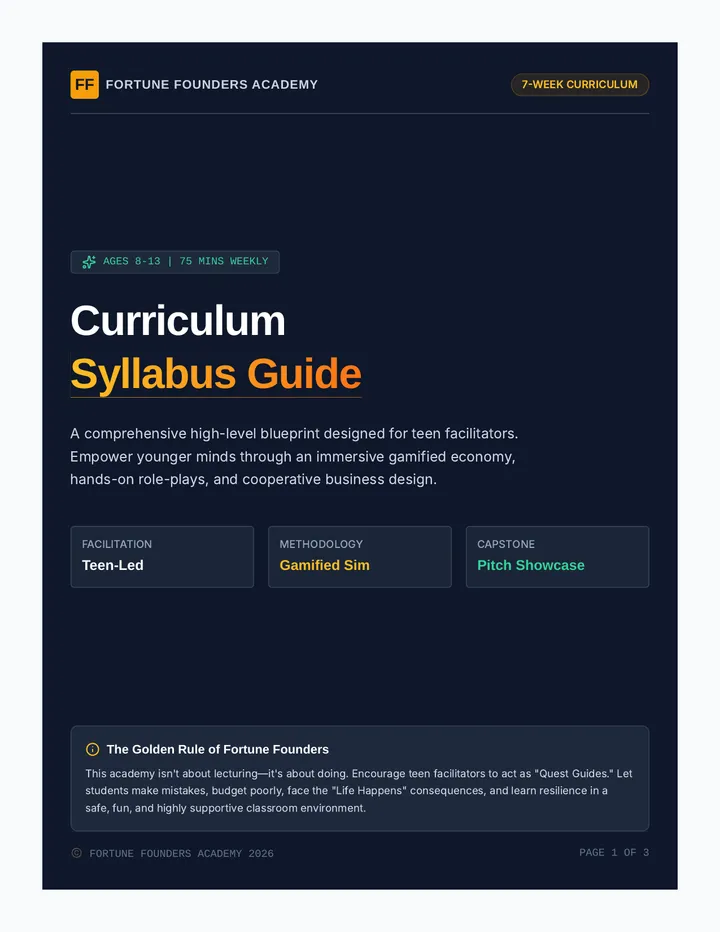
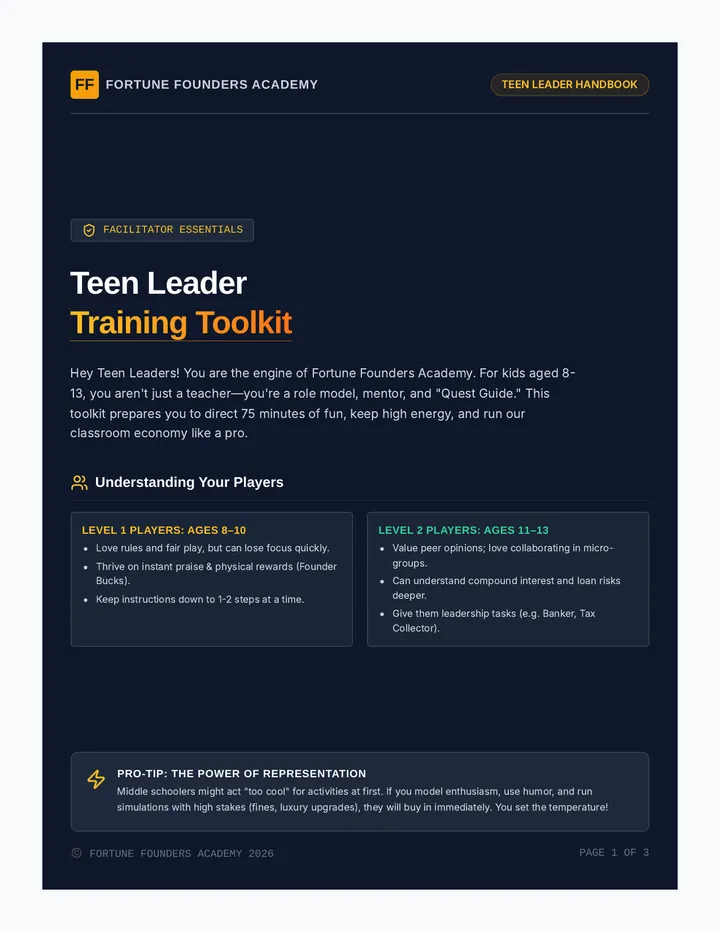
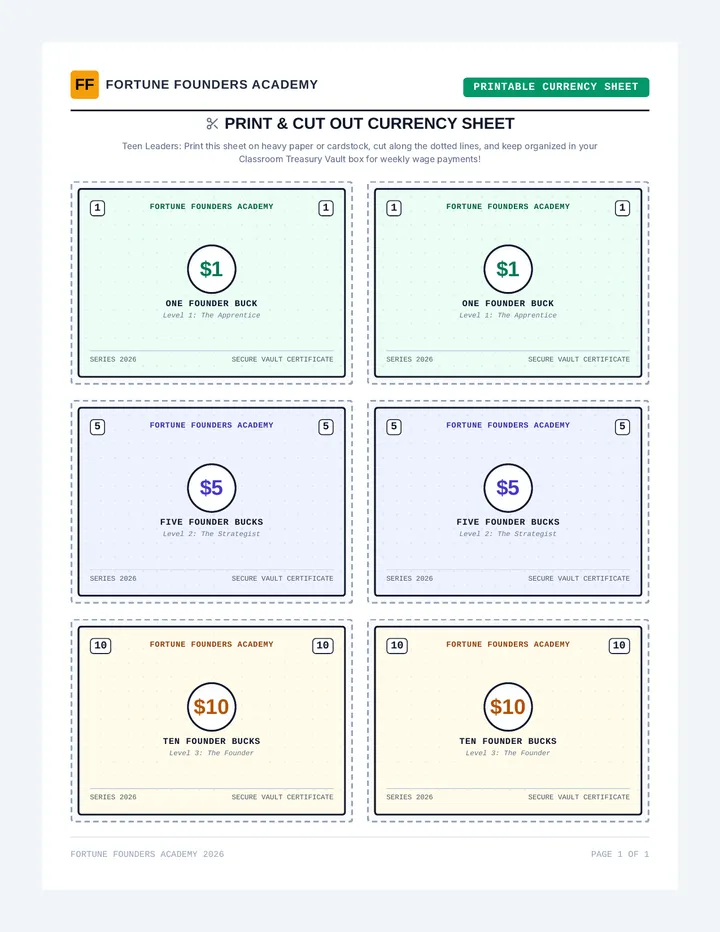
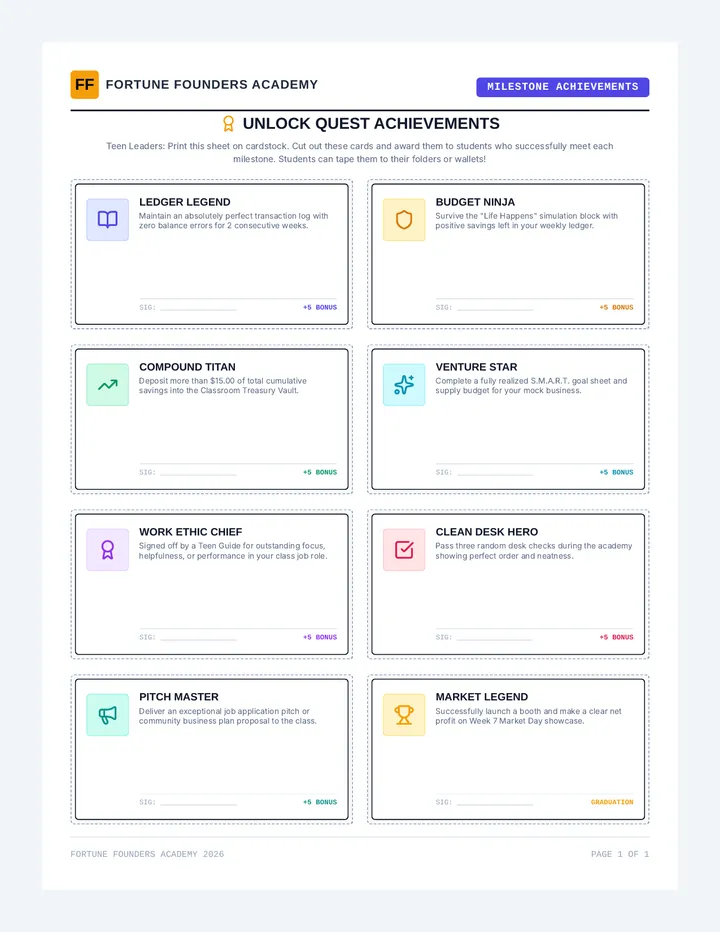
Fortune Founders Academy is a 7-week interactive financial literacy program for youth ages 8-13, facilitated by teen leaders. It features a game-based classroom economy, hands-on role-play, and a final community business showcase project.
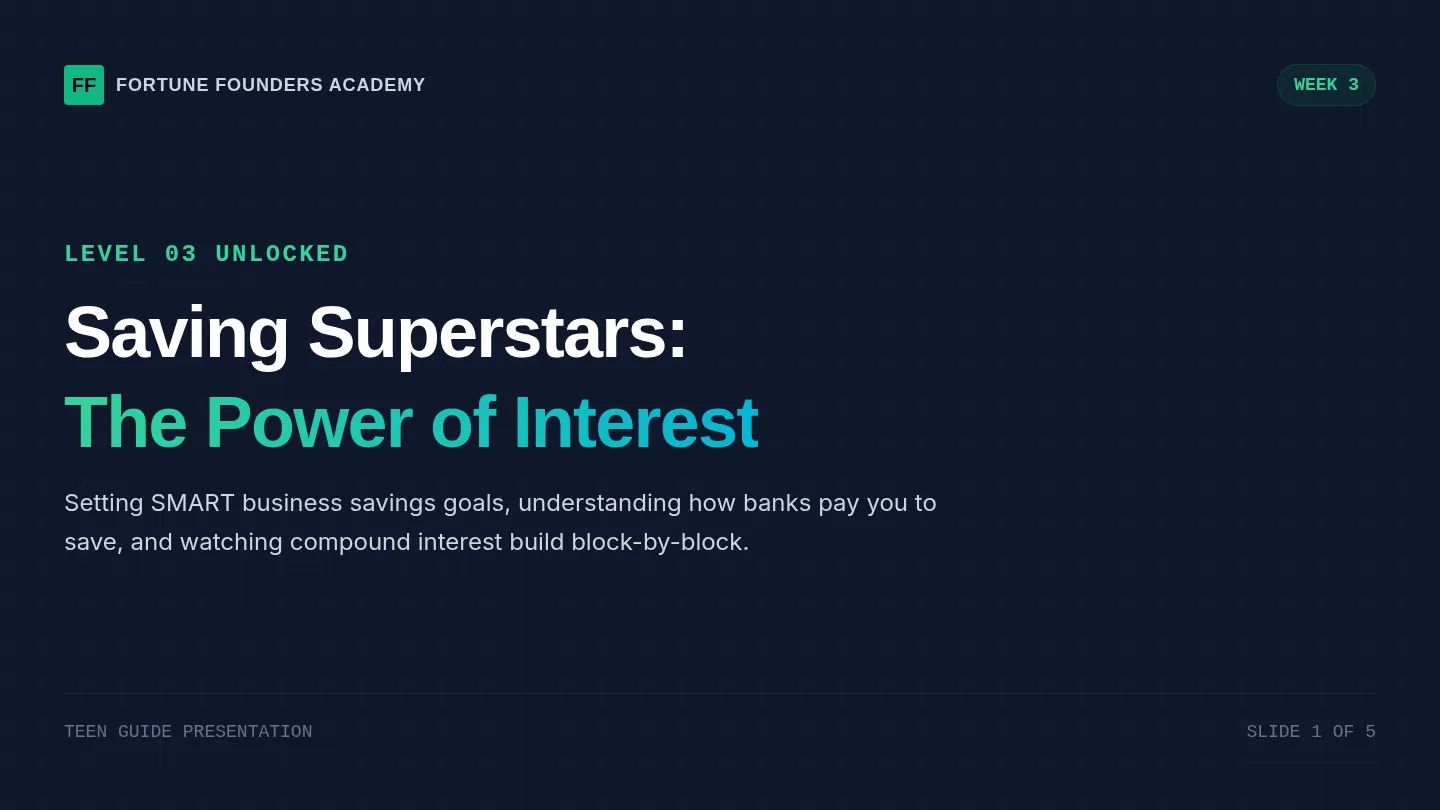
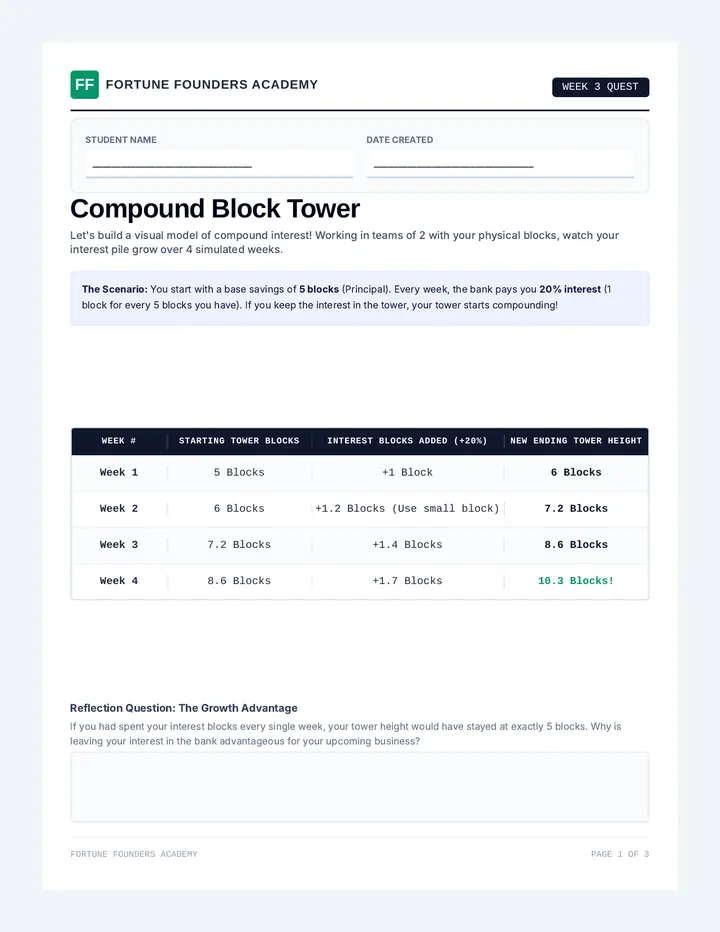
Students learn the power of compound interest, set SMART savings goals for their mock businesses, and explore the concept of banking. They design a custom piggy bank or digital tracker.
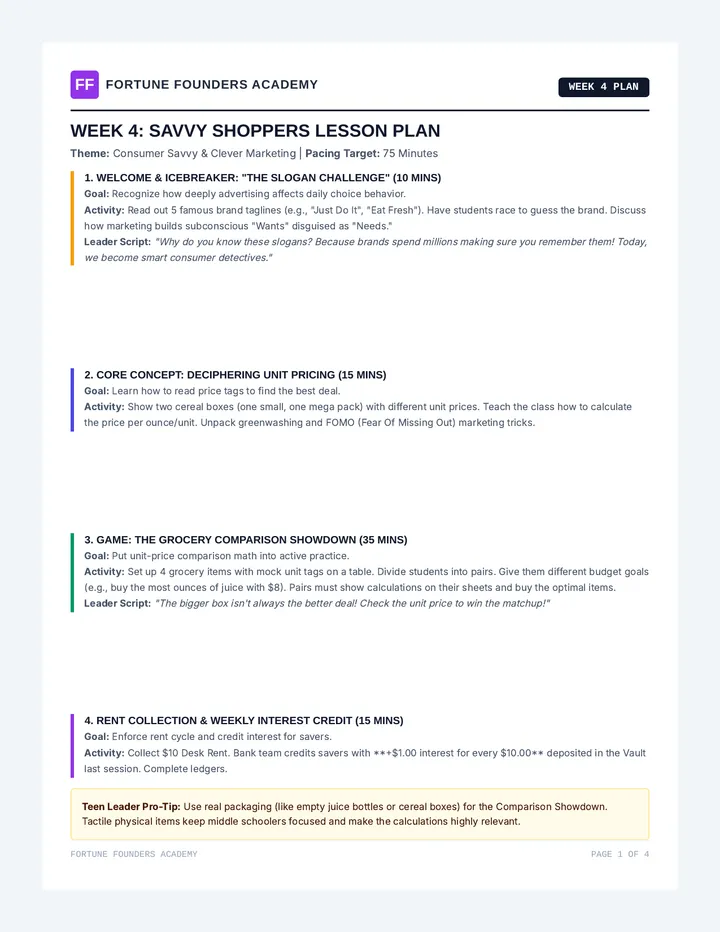
A 4-page detailed facilitation guide outlining complete weekly lesson plans for Weeks 4, 5, 6, and 7. Each lesson plan includes specific icebreakers, simulation game mechanics, guided worksheet activities, and scripts for teen leaders.
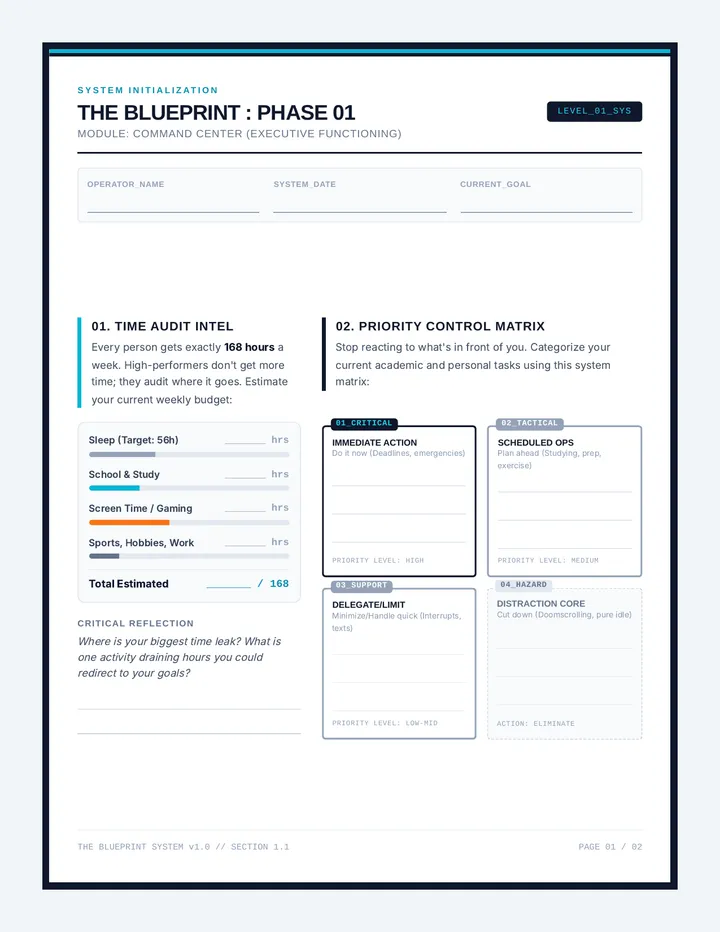
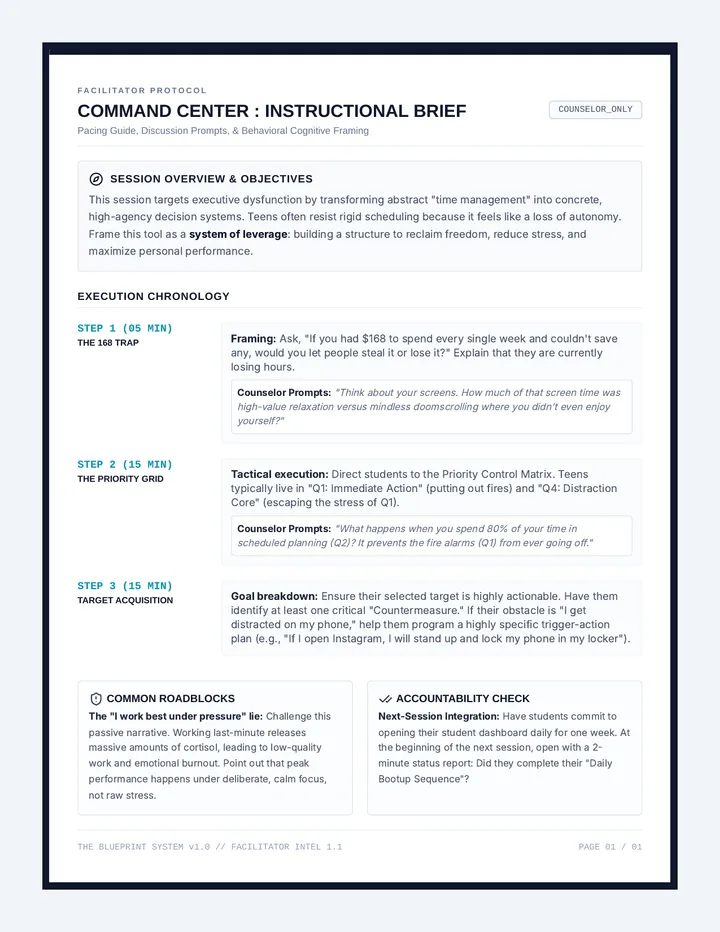
A tactical, gamified life-skills guide designed for older teens to transition into independent young adults. Covers executive functioning, social-emotional coping, daily living, and communication through structured self-reflection and counselor-led discussions.
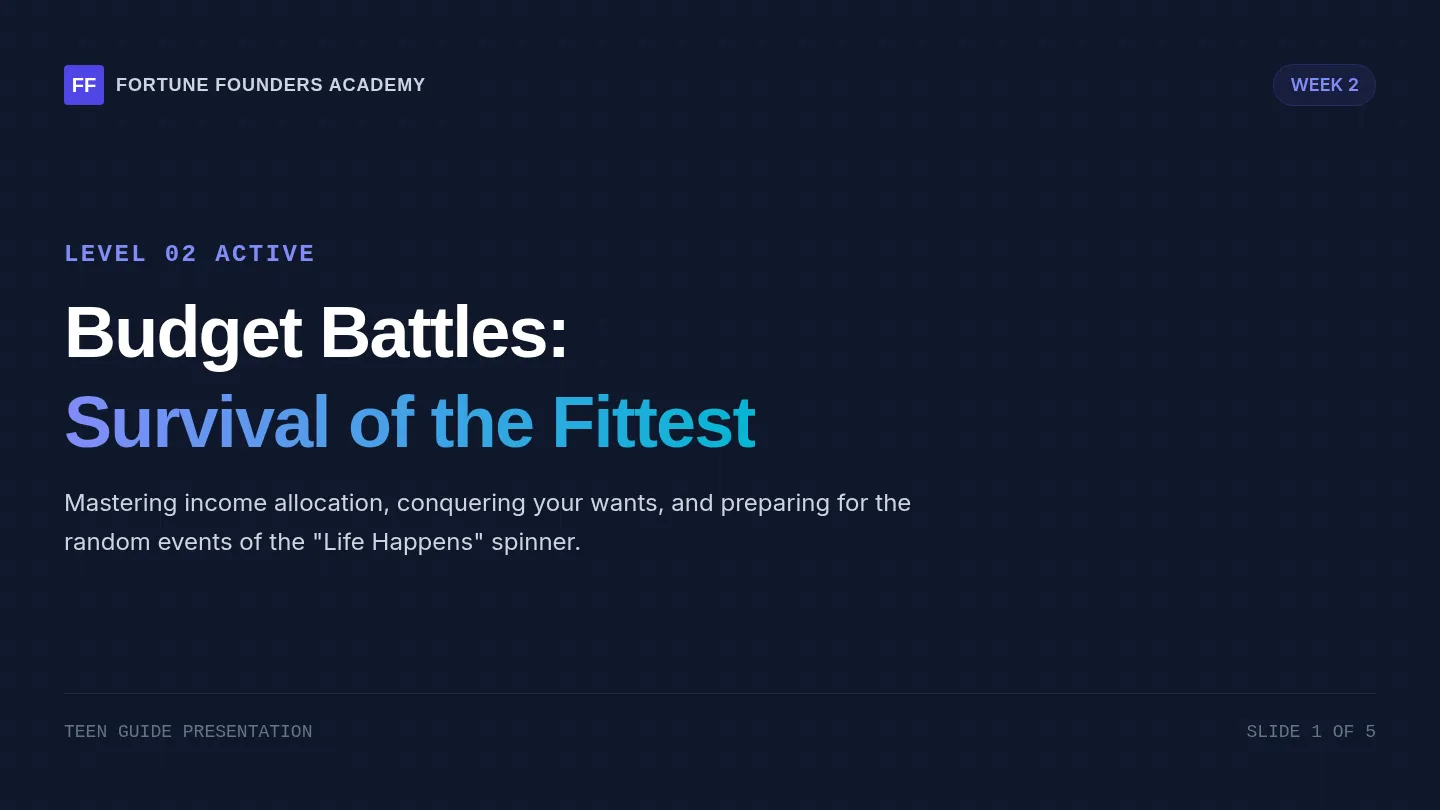
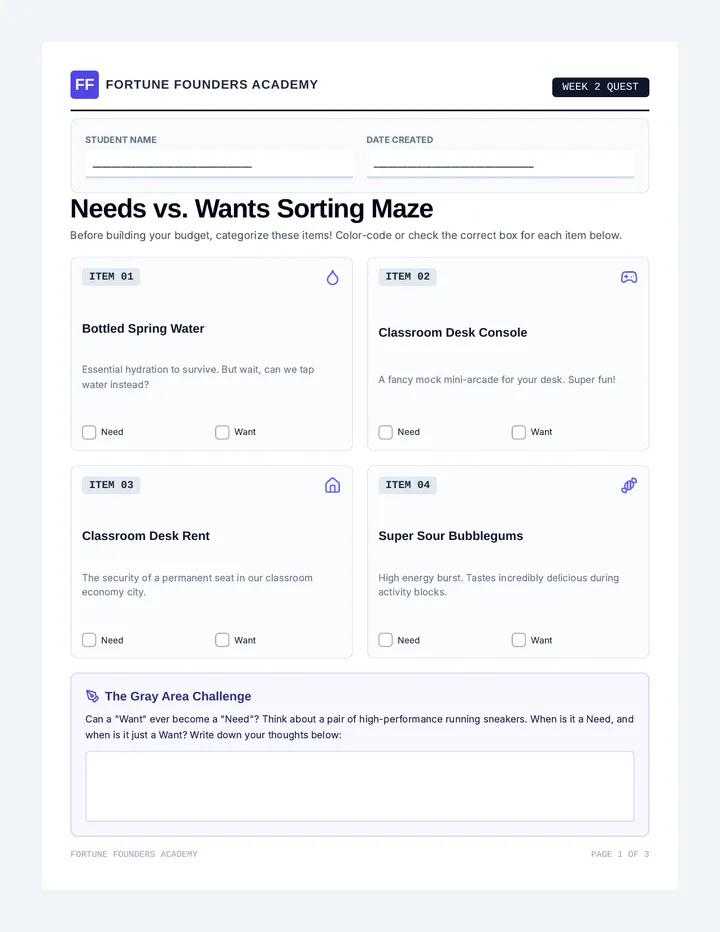
Students face off in budgeting challenges, learning to separate needs from wants and allocate income. They participate in the 'Life Happens' random event simulation that tests their financial resilience.
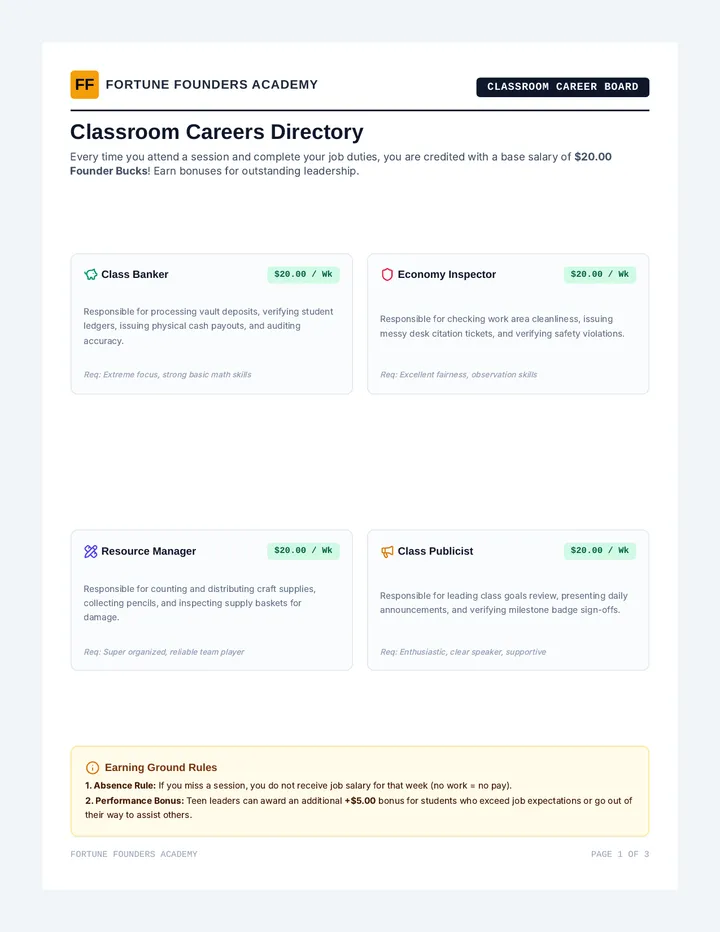
A 3-page classroom-ready Career Catalog and Cost-of-Living Tariff guide. It lists student job salaries, desk rent, pencil license fees, supply taxes, behavioral citation fines, and a complete snack shop menu.
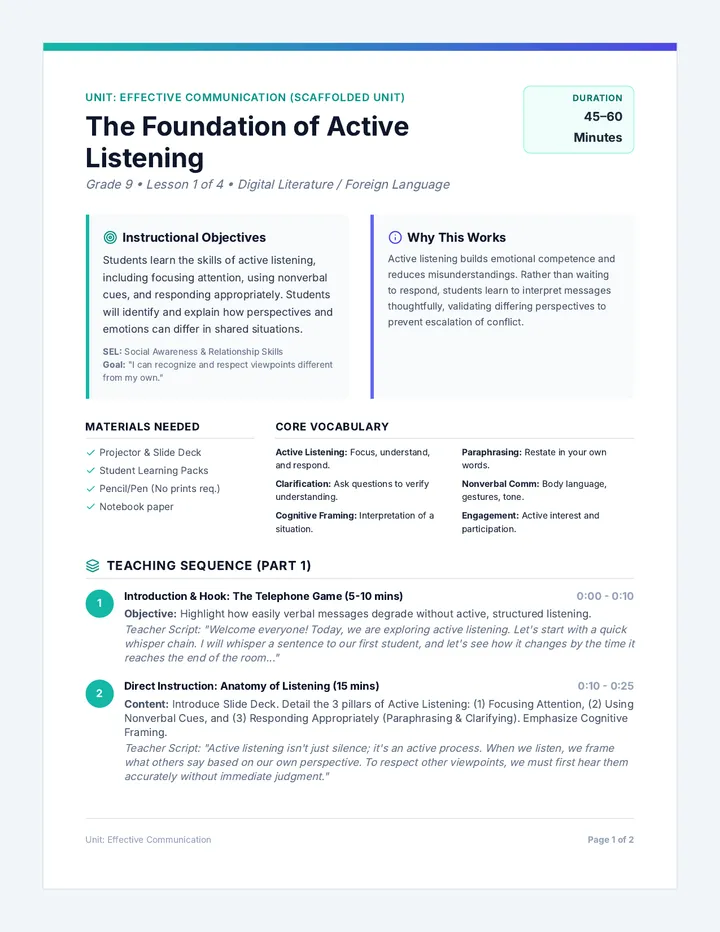
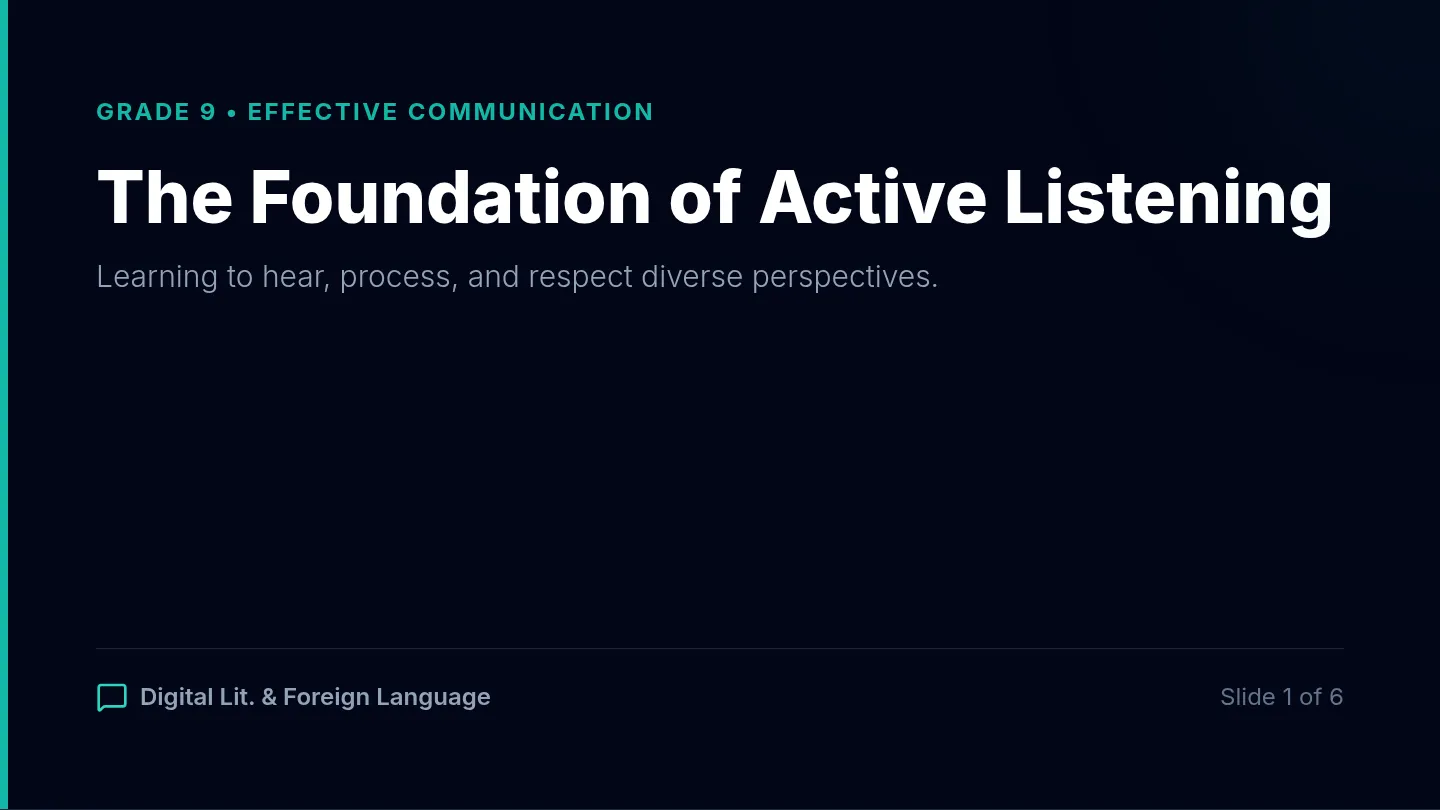
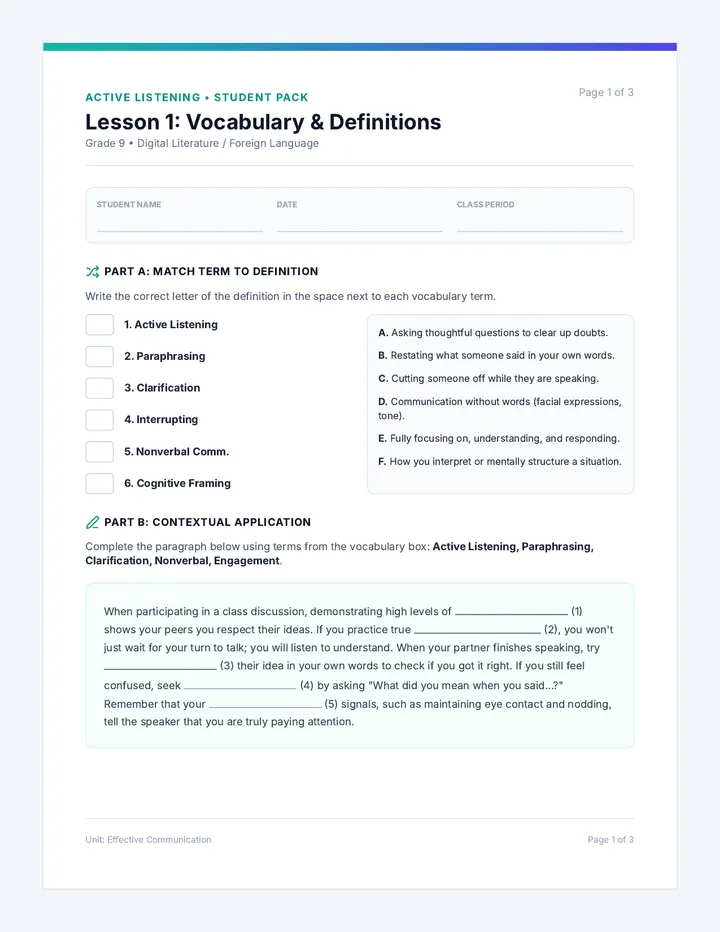
A four-grade scaffolded unit (Grades 9-12) focused on developing essential communication skills: Active Listening (Grade 9), Clarity & Purpose (Grade 10), Empathetic Self-Expression (Grade 11), and Constructive Feedback (Grade 12). This unit prepares high school students for collaborative success, emotional competence, and interpersonal growth in academic and professional settings.
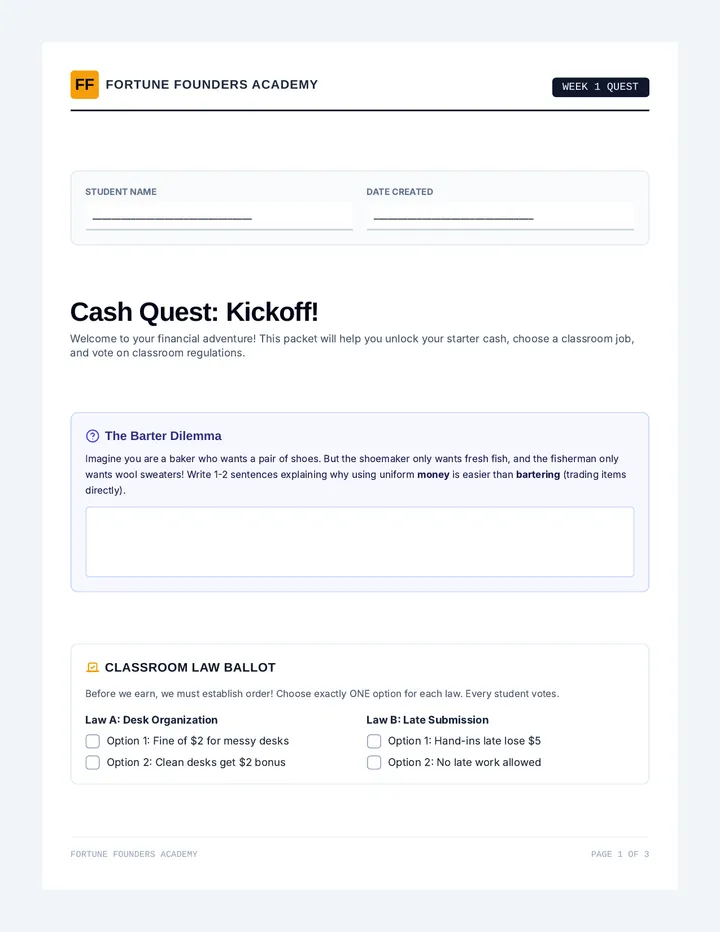
Students learn about earning money, exploring careers, and starting the program's interactive classroom economy. They complete job applications, elect leaders, and receive their first wallet and Founder Bucks.
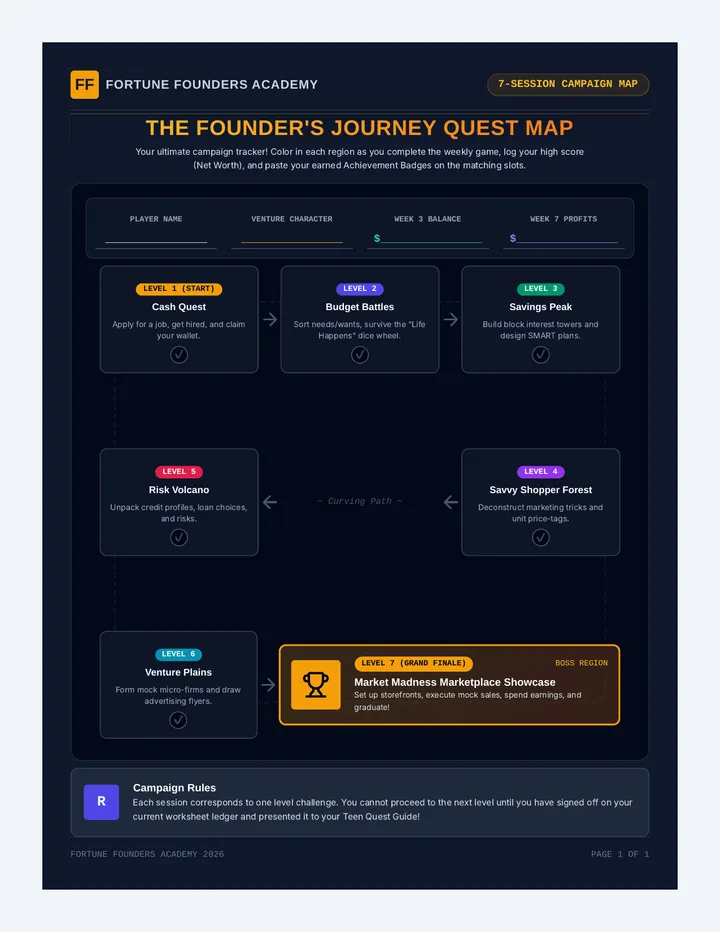
A 1-page printable tabletop quest map board game tracking student level ups, high scores, and achievement badge slots across the 7 sessions.
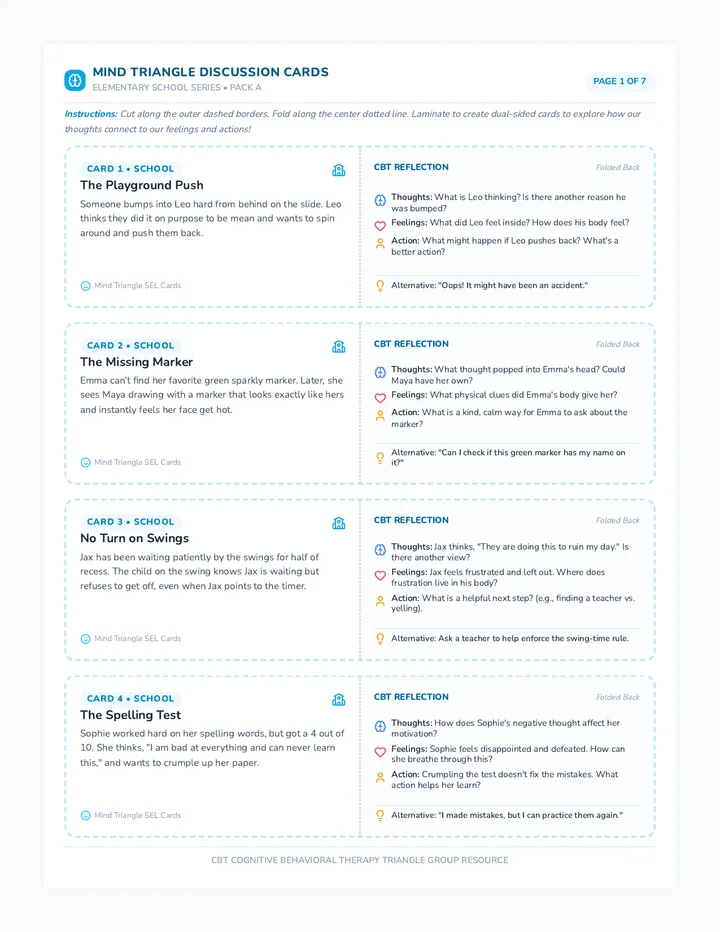
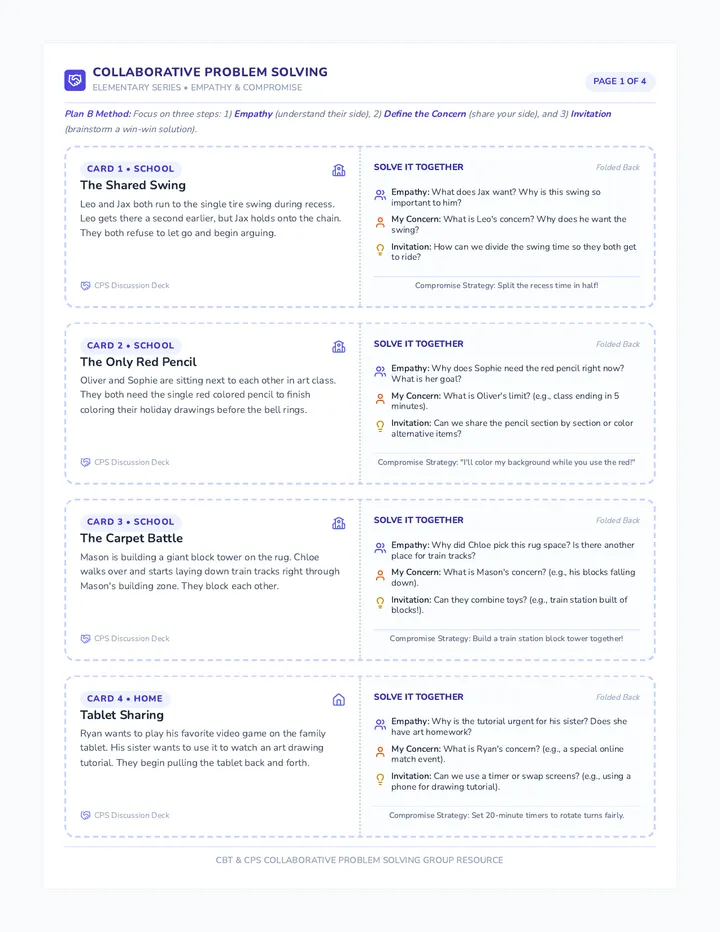
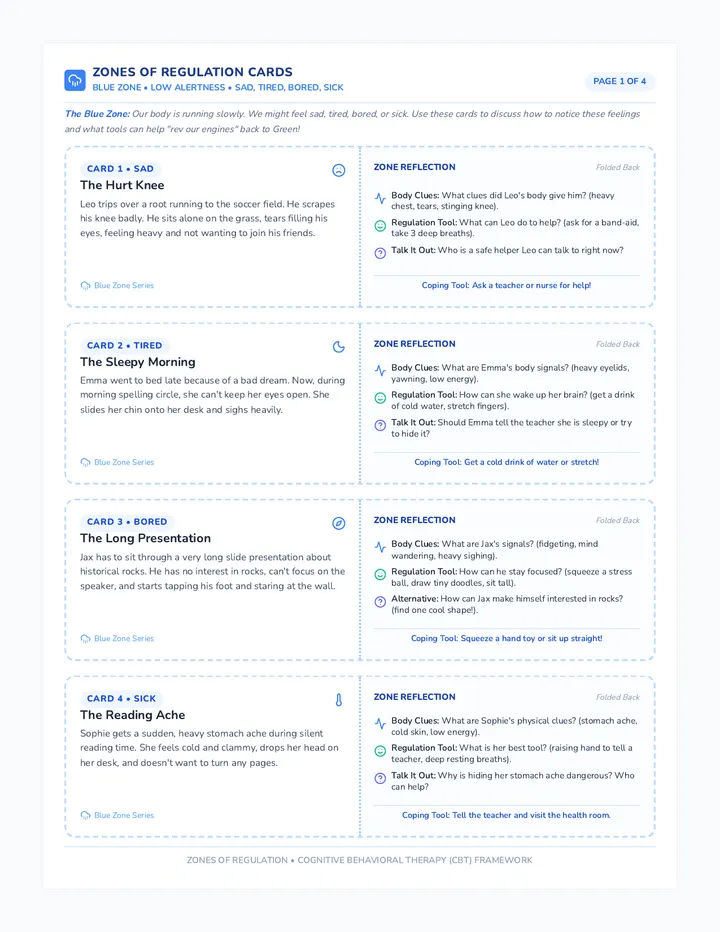
A comprehensive suite of SEL scenario cards spanning Elementary, Middle, and High School, guided by the CBT Triangle framework. Helps students analyze perspective, thoughts, feelings, and behaviors.
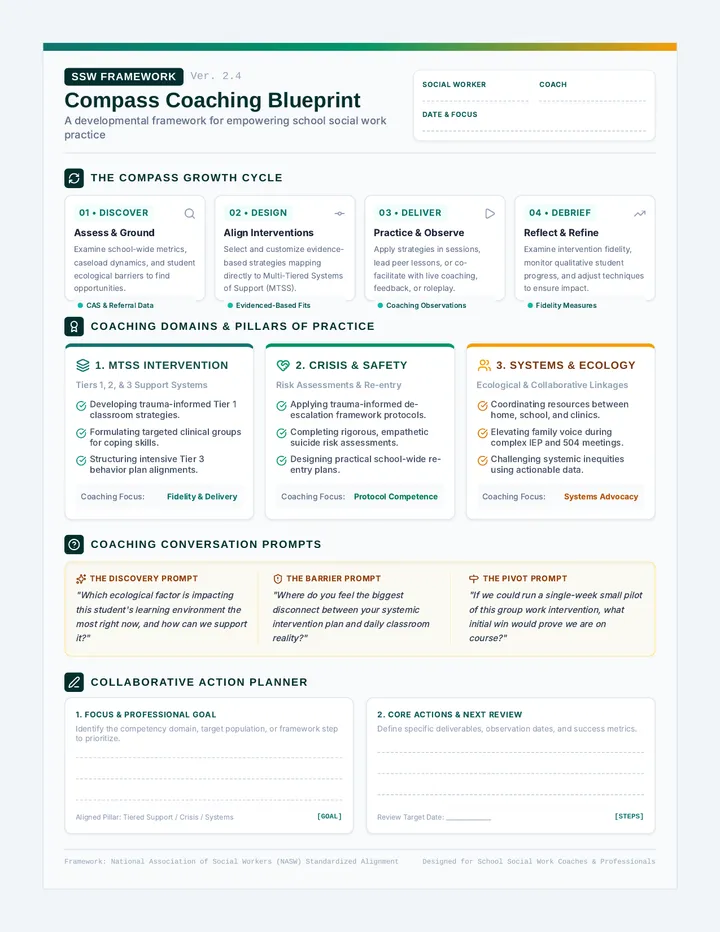
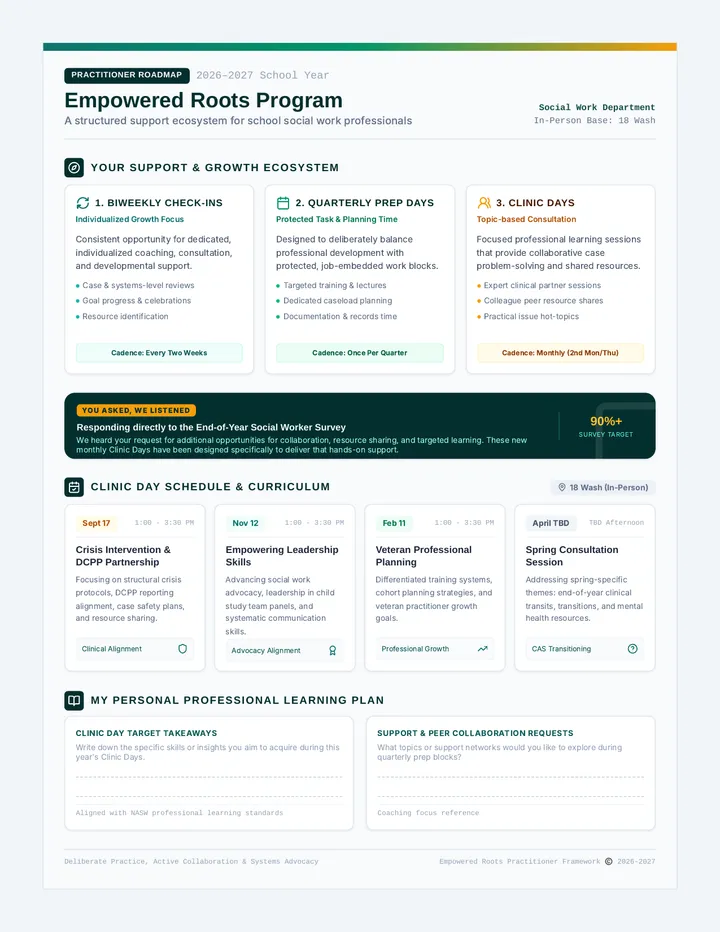
A comprehensive support, coaching, and professional development program designed to empower school social workers. It integrates biweekly individual coaching, quarterly prep days, and bimonthly clinic learning days into a single practitioner roadmap.
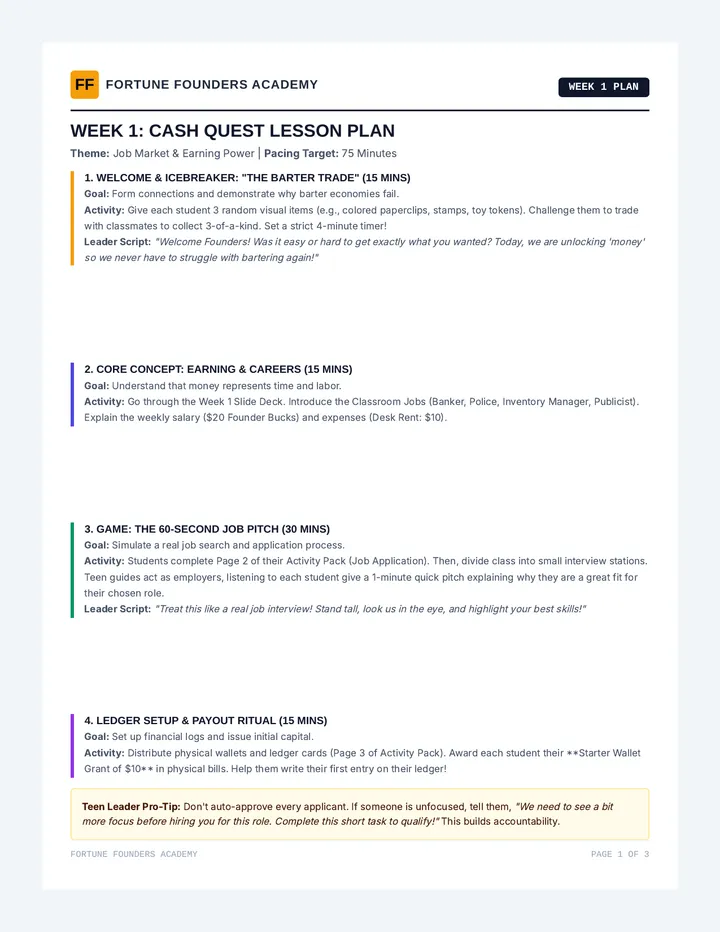
A 3-page detailed facilitation guide outlining complete weekly lesson plans for Weeks 1, 2, and 3. Each lesson plan includes specific icebreakers, simulation game mechanics, guided worksheet activities, and scripts for teen leaders.