Lenny.com
Explore
Create
ActivitiesNewMathEnglish Language ArtsScience & EngineeringSocial StudiesGlobal LanguagesHealth & Physical EducationSpecial EducationCounseling & Life SkillsArts & CreativityESL
Lenny.com
Lenny.com
Explore
Create
ActivitiesNewMathEnglish Language ArtsScience & EngineeringSocial StudiesGlobal LanguagesHealth & Physical EducationSpecial EducationCounseling & Life SkillsArts & CreativityESL
Lenny.com
Lenny.com

Solutions

Lenny for EducatorsLenny for SchoolsLenny for Districts

Product

ExploreSign inCreateSupportAbout

Resources

Getting startedMTSS Acceleration Program

Newsletters

School Funding Newsletter

© 2026 Lenny Learning Inc.

TermsPrivacyAccessibility
LinkedInInstagramX
Lenny
Counseling & Life SkillsSelf-AwarenessBasic Emotion RecognitionComplex Emotion IdentificationEmotional Nuance & Mixed FeelingsBuilding Positive Self-ImageRecognizing Strengths & Growth AreasAccurate Self-AssessmentPersonal Values IdentificationCultural & Individual Identity ExplorationValues-Based Decision MakingSelf-ManagementStop-and-Think StrategiesDelaying GratificationIndependent Impulse ManagementIdentifying Stress TriggersShort-Term Goal SettingSMART Goals DevelopmentGoal Monitoring & AdjustmentBuilding Perseverance & ResilienceInternal Motivation DevelopmentComprehensive Stress Reduction PlanningSocial AwarenessRecognizing Others' FeelingsDemonstrating EmpathyRespecting Individual DifferencesUnderstanding Cultural DiversityComplex Empathetic ResponsesMultiple Viewpoint ConsiderationMulti-Perspective AnalysisChallenging Stereotypes & BiasRelationship SkillsActive ListeningClear Verbal & Nonverbal CommunicationBuilding Positive FriendshipsWorking Cooperatively in GroupsCommunicating Personal BoundariesRespecting Others' BoundariesAssertive ExpressionPeaceful Problem-SolvingContributing to Team GoalsComplex Conflict NavigationMediation & NegotiationHealthy Romantic RelationshipsResponsible Decision-MakingDaily Problem IdentificationBrainstorming Multiple SolutionsEvaluating Pros & ConsRecognizing Risks & ConsequencesApplying Ethical FrameworksInformed Risk-Benefit DecisionsRoot Cause AnalysisMindfulnessMindful BreathingBody Scan MeditationDaily Mindfulness ApplicationDaily Self-Care RoutinesBalancing Life DemandsAdvocating for Wellness NeedsMental Health SupportUnderstanding Anxiety SymptomsWorry Management StrategiesProgressive Muscle RelaxationRecognizing Depression SignsBuilding Mood-Supporting RoutinesBehavioral Activation for MoodUnderstanding Grief StagesHealthy Grief CopingCreative Expression of LossBehavioral SupportDaily Check-In ProceduresDaily Goal Setting & ReviewRecognizing Escalation Warning SignsRequesting Breaks & SupportSelf-Calming During DistressUnderstanding Positive ReinforcementToken Economy ImplementationBehavior Chart TrackingAnalyzing Behavior PatternsIdentifying Antecedents & ConsequencesDetermining Behavior FunctionFunction-Based InterventionsIndividualized Behavior ContractsData-Driven Behavior AdjustmentTherapeutic ApproachesThoughts-Feelings-Behaviors ConnectionRecognizing Thinking PatternsChallenging Negative ThoughtsPositive Self-Talk PracticeThought Record TrackingAdvanced Cognitive RestructuringComprehensive CBT PlansBehavioral Activation TechniquesBuilding Positive ExperiencesExposure Hierarchies for AnxietyPresent-Moment AwarenessNon-Judgmental ObservationSelf-Soothing & DistractionComplex Emotion LabelingReducing Emotional Vulnerability (PLEASE)DEAR MAN CommunicationGIVE Skills for RelationshipsFAST Skills for Self-RespectRadical Acceptance PracticeCrisis Survival Skills (TIPP)Understanding Trauma EffectsTrauma Responses & TriggersIdentifying Trauma FeelingsGrounding TechniquesRegulation During Trauma DistressSafe Place VisualizationProcessing Through NarrativeDeveloping Trauma StoryPersonalized Safety PlanningGroup SupportTurn-Taking & SharingGroup Conversation SkillsSharing in Supportive EnvironmentLearning from Similar ChallengesBuilding Community & BelongingNavigating Peer RelationshipsGroup Skill PracticeGroup Mental Health EducationStress & Anxiety UnderstandingCrisis Support & SafetyKnowing When to Seek HelpIdentifying Mental Health CrisesGrounding During CrisisUsing Crisis HotlinesBuilding Support NetworksAccessing Mental Health ResourcesWarning Signs & Coping StrategiesDeveloping Personal Safety PlansUnderstanding Suicide Warning SignsGatekeeper Skills for PeersDigital LiteracySocial MediaTechnology BasicsProductivity ToolsInternet and Online ResearchWeb Design and PublishingDigital CitizenshipOnline Safety and PrivacyEmerging TechnologiesFinancial LiteracyMaking Financial DecisionsBanking and AccountsConsumer SkillsSaving and InvestingCredit and DebtEmployment and IncomeTaxesInsuranceMajor PurchasesEconomic ConceptsFinancial PlanningCollege & Post-Secondary PlanningCareer ExplorationUnderstanding Post-Secondary OptionsCollege Research & SelectionAdmission RequirementsCollege Application ProcessPersonal Statement WritingFAFSA CompletionScholarship Search & ApplicationsUnderstanding Student LoansContinuing Education PlanningInterview PreparationResearching EmployersCommon Interview QuestionsSTAR Method ResponsesProfessional Interview PresenceVirtual Interview SkillsInterview Follow-UpJob Search SkillsUnderstanding Job PostingsEffective Job Search StrategiesNetworking for OpportunitiesResume Writing BasicsAction Verbs & AchievementsTailoring Resumes to JobsCover Letter WritingProfessional ReferencesProfessional CommunicationBusiness Email EtiquettePhone & Voicemail ProfessionalismMeeting ParticipationPresentation SkillsProfessional Work EthicTime Management & ProductivityTeamwork & CollaborationAdaptability & FlexibilityProblem-Solving at WorkConstructive FeedbackWorkplace RightsUnderstanding Employment LawsPay & Benefits UnderstandingWorkplace SafetyAnti-Discrimination & Harassment

Ready and Resilient

A compassionate, solution-focused workshop for families of middle and high schoolers struggling with school anxiety and avoidance. This lesson equips facilitators and parents with actionable strategies, somatic-symptom coping tools, and collaboratively built routines to make school days feel safe, predictable, and manageable.

GRGaea Ray

Out the Door:

AM

Arrive on time to eat breakfast and connect before class.

Benefits for the Kid

Calm mornings instead of late-panic. Getting to eat breakfast at school, bonding with classmate friends, and taking part in restorative morning community lessons.

My favorite part of on-time breakfast / morning connection:

Benefits for the Parent

Predictability in your morning, less rushing, and deep peace of mind. Consistent routines eliminate early battles and establish a steady, calm home environment.

A personal morning habit that brings me calm:

Consistency Commitment

We co-designed this schedule to build calm morning habits together. We will check in this Sunday on our progress, celebrating effort over perfect academic scores.

Student Sign:

Parent Sign:

Ready and Resilient Attendance Series Co-Created Routines Lead to Success

Ready and Resilient

Family Toolkit • Page 3

Support Village & Coping Cards

It takes a village. School site support staff, district mental health teams, and safe adults are on your side. Cut out these cards, and build your supportive network.

Engaging Our Campus Support Team

School site teams are here to help you solve morning obstacles, not penalize you. Write down the contacts of your village partners:

Priority 1

Designated Safe Adult

A trusted teacher or staff member student greets upon arrival.

Name:

Priority 2

Site Support Staff

Can coordinate morning entries, clinic rests, or cool-down plans.

Contact:

Priority 3

District Mental Health

District resource clinicians who support complex school anxieties.

Contact:

Pocket Coping Cards (Cut & Keep)

Breathe First Somatic

SQUARE BREATH

Inhale 4s, Hold 4s, Exhale 4s, Hold 4s. This calms physical tummy alarms.

"I can pause and breathe anytime."

Belonging My Team

I BELONG HERE

My school village has my back. If I need a minute, I can use my school site cool-down pass.

"My team is on my side."

Our Step-by-Step Exposure Ladder

We make progress step-by-step. Let's design small mornings steps together.

5

Target:

Arrive on time for breakfast & SEL bonding

3

Step 3:

1

Step 1:

Ready and Resilient Attendance Series One Safe Step At A Time

Ready and Resilient

Family Toolkit • Page 4

Celebrate Good Attendance!

Consistency deserves recognition! Use this tiered reward builder to incentivize your student's progress and attendance milestones.

Tiered Positive Motivation Menu

Tier 1 • Simple Daily Recognition

Praise daily effort, celebrate simple wins with words of validation, or leave positive morning sticky notes.

Direct verbal praise Positive sticky notes

Tier 2 • Weekly Weekend Privileges

Earned independence rewards for completing a solid, on-time school week.

Stay up 1 extra hour on weekend night 1 extra hour of weekend screen time

Tier 3 • Monthly Connection Rewards

Fun family experiences to link consistent attendance habits to shared joy.

DIY Sunday Ice Cream Sundae bar Pizza and Family Game Night

What Works For Your Family?

Design your co-created milestone rewards. Record what motivates your student:

1. Weekend Privilege Target (e.g., stay up extra hour for on-time week):

2. Connection Milestone Reward (e.g., DIY Sundae Night):

Ready and Resilient Attendance Series Shared Milestones, Shared Joy

SLIDE 5: Routines Benefit Parents & Kids Est. Time: 8 mins

"Structure gives parents peace of mind, predictability, and emotional regulation. Setting evening screen rules and establishing a 15-minute morning buffer lowers cortisol levels for everyone."

SLIDE 6: Somatic Alarms & Calming Resets Est. Time: 10 mins

"When morning tummy aches or headaches flare, do not argue logic. Acknowledge and validate the physical symptom, then do a somatic breathing or ice reset to bring their amygdala offline."

SLIDE 7: It Takes a Village (School Site Support) Est. Time: 10 mins

Focus on partnering. List support staff first, district mental health teams second, and proactive solutions third.

"Reach out to school site support staff first to establish a designated safe adult greet. Tap district mental health teams for cool-down passes. Proactive solution communication avoids legal truancy friction."

SLIDE 8: Action Plan & Toolkit Roll-Out Est. Time: 5 mins

"Tonight, sit down with your teen. Complete Page 1 (Somatic mapping), Page 2 (Routines), and Page 3 (Pocket Coping cards). Let them have equal agency in building this plan."

Parent Co-Regulation Reflection

Prompt parents to share with their neighborhood tables:

Prompt A: Somatic Warning Signs

"What are the physical symptoms you notice most in your teen on hard mornings?"

Prompt B: Parent Regulation

"How would a calm morning routine change your own stress and peace of mind at work?"

Ready and Resilient Attendance Series Session Facilitation Guide

Facilitator Resource

Workshop Guide • Page 3

Celebration, Closing & FAQ

Guidance for attendance celebrations, closing Slide 10, and navigating district support staff procedures.

SLIDES 9 & 10: Celebrate Attendance & Close

Key Objective: Teach the progressive reward system: start with the simplest (verbal praise, sticky notes), move to weekend privileges (staying up 1 hr later, 1 hr screen time), then family connections (sundaes, pizza).

"Host simple celebrations. First, give words of praise. Next, grant minor privileges like staying up an extra hour on Saturday. Lastly, host Sunday sundae bars or pizza movie nights. Find what works for your family on Page 4 of the Toolkit. We are building long-term resilience, not just academic compliance. Thank you."

Reframing Complex Barriers

Objection: "Our site doesn't have a designated counselor."

Response: Counselors aren't everywhere. Guide parents to connect with our general "school site support staff" (teachers, advisors, clinic nurses) first. They can coordinate site-level supports. Use district mental health team resources for complex cases.

Objection: "My teen isn't motivated by family park trips anymore."

Response: That is completely normal for middle and high schoolers. Pivot to Tier 2: weekend privileges, like staying up an extra hour on weekend nights or an extra hour of tech time. Let them co-design what minor incentives actually work.

Active Connection Workflow

1. Designated Adult Connect with a trusted teacher or advisor to greet your student.

2. Mental Health Tap district mental health clinicians for cool-down cards and passes.

3. Proactive Solves Share co-created exposure schedules to transform administrative warnings.

Ready and Resilient Attendance Series Supportive, Solution-Focused Frameworks

SEL & Emotional Habits

First-thing morning SEL and community-building lessons help teens transition. This structured start builds healthier habits, specifically supporting ongoing emotional regulation.

Relaxation Over Late Panic

Walking in late triggers performance panic—all eyes turning to the door. Arriving on-time gives a sense of quiet accomplishment and lets students ease comfortably and calmly into class.

On-time attendance is a gentle runway. It ensures students feel like valued insiders on their campus.

Slide 4 of 10


Predictability & Peace

Structured Routines Benefit Parents & Teens

Family Co-Regulation

Benefits for the Student

Predictability & Autopilot

  • ✓ Emotional Regulation: Predictable mornings calm the brain's stress alarms.
  • ✓ A Sense of Accomplishment: Starting structured builds confidence.
  • ✓ Skills Beyond School: Serves their mental health, life skills, and beyond to college and career.

Benefits for the Parent

Relaxed Mornings & Peace

  • ✓ Personal Peace of Mind: No more screaming or starting your workday in panic.
  • ✓ Predictable Days: Automated evenings mean cleaner, peaceful routines at home.
  • ✓ Emotional Regulation: Predictability reduces parent burnout and models calm.

Life-Long Impact: Morning and evening routines build neural habits of structure and emotional stability that serve students far beyond school years.

Slide 5 of 10


The Mind-Body Connection

Listening to Somatic Warning Signs

Body Alarm

Somatic Warnings are Real

Morning tummy aches, headaches, nausea, or a "heavy limb" feel are physiological alarm indicators. Shouting or logical arguing only raises fight-or-flight hormones.

Somatic Resets First

Resynchronize the nervous system before attempting reason:

  • Square Breath: Inhale 4s, Hold 4s, Exhale 4s, Hold 4s.
  • Cold Shock: Splash freezing cold water or hold an ice cube.

Goal: Progress Over Perfection

Dethroning Pure Academic Stress

Do not let homework backlog stop morning entry. Attendance is about connection, building social networks, and mental well-being first. We celebrate the effort to cross the threshold, regardless of grades!

"We show up to connect and grow—not to be perfect."

Somatic Rule: When stress is screaming, reasoning is offline. Calm the body system first, address schedules second.

Slide 6 of 10


We Are Here For You

Engage Your Support Team: It Takes a Village

Site Support Network

Priority 1

Designated Site Adults

Identify one trusted teacher, nurse, or advisor at your school site. Having a designated safe adult greet your teen upon arrival creates immediate, warm connection and safety.

Priority 2

District Mental Health Team

Connect with our district-wide mental health team and school site support staff. They are equipped to arrange site-level solutions if morning anxiety flares.

Priority 3

Proactive Solutions

Reach out early if you face morning hurdles. Proactively sharing your family's routine and exposure ladder with site staff transforms administrative friction into collaborative safety nets.

Community Focus: Older students thrive when they see school staff and families aligning to build restorative solutions rather than punishments.

Slide 7 of 10


Action Plan

What to Try Tonight

Family Toolkit

1. Map Somatic Warning Signs

Sit down with your student tonight. Fill out page 1 of the Family Toolkit. Map tummy aches and headaches, and identify which grounding tool they feel safe trying.

Practice during calm, resting hours.

2. Design Your Routine

Co-create the evening and morning schedule builder on page 2. Program outfits, pack backpack items, and screen charging stations the night before.

Include on-time arrival breakfast buffers.

3. Define Your Village

Complete page 3 and Page 4. Secure contact info for site support staff, and agree on a milestone reward system that fits your home.

Email your plan directly to the site team.

Key Tip: Never launch the plan on a high-stress morning. Always co-design and practice on relaxed, neutral evenings.

Slide 8 of 10


Positive Reinforcement

Celebrate Good Attendance!

Progressive Rewards

Tier 1 • Small Wins

Simple Recognitions

Start with the simplest things: direct words of praise, positive morning notes, and verbal validation of their effort when they make it out the door.

Validation builds internal safety.

Tier 2 • Weekend Privileges

Minor Privileges

Incentivize consistent weekly effort with simple weekend adjustments, like staying up an extra hour on Friday night, or an extra hour of screen time on Saturday.

Earned independence works well for teens.

Tier 3 • Family Connections

Connection Rewards

Reward monthly milestones with fun bonding: an extra-tasty treat, a family game night, a visit to a favorite park, or a movie night.

Links attendance to shared family joy.

What works for your family? Celebrating consistency together builds student motivation, boosts the whole family, and links attendance to shared joy.

Slide 9 of 10


Ready and Resilient

Our Supportive Goal

Connection Today,

Resilience Tomorrow

Our goal is simple: support, warmth, and safe routines. Consistent habits help older students feel comfortable, find their footing, and build lifelong stability.

Progress Over Perfection • Every Step Counts

Your Immediate Steps:

  • • Complete the Family Toolkit sheets tonight.
  • • Identify your student's school safe adult.
  • • Celebrate every step of consistent progress!

Thank you for being part of our supportive family community. You are doing a wonderful job.

Slide 10 of 10
You might also like

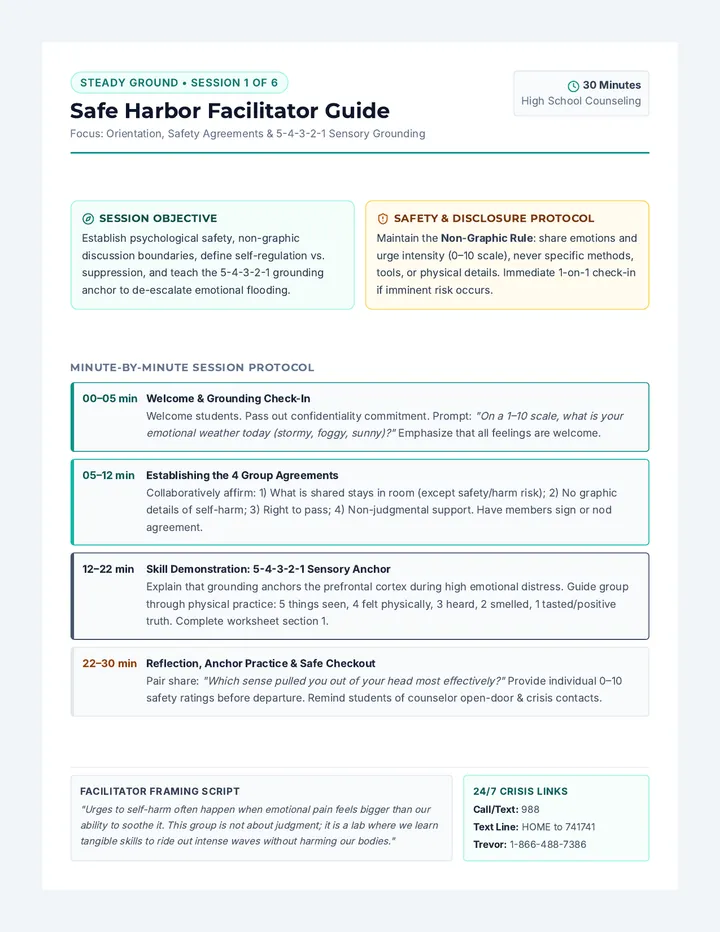
Safe Harbor Facilitator Guide

Steady Ground

A 6-session dialectical emotion-regulation and distress-tolerance group counseling curriculum designed for high school counselors supporting students struggling with self-harm urges. Each 30-minute session delivers targeted grounding practices, physiological resets, urge-surfing tools, and safety planning.

SL

Sofia Lopez

12
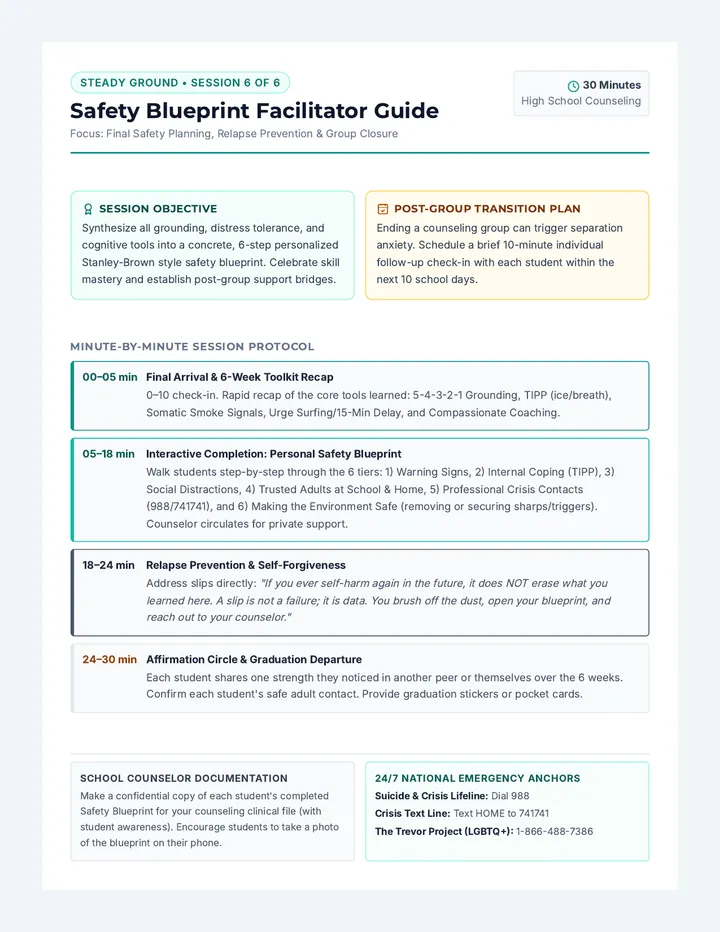
Safety Blueprint Facilitator Guide

Safety Blueprint

Synthesizes all skills into a personalized pocket crisis and regulation blueprint. Students identify safe adults, rehearse escalation protocols, and celebrate progress as the group concludes.

SL

Sofia Lopez

2
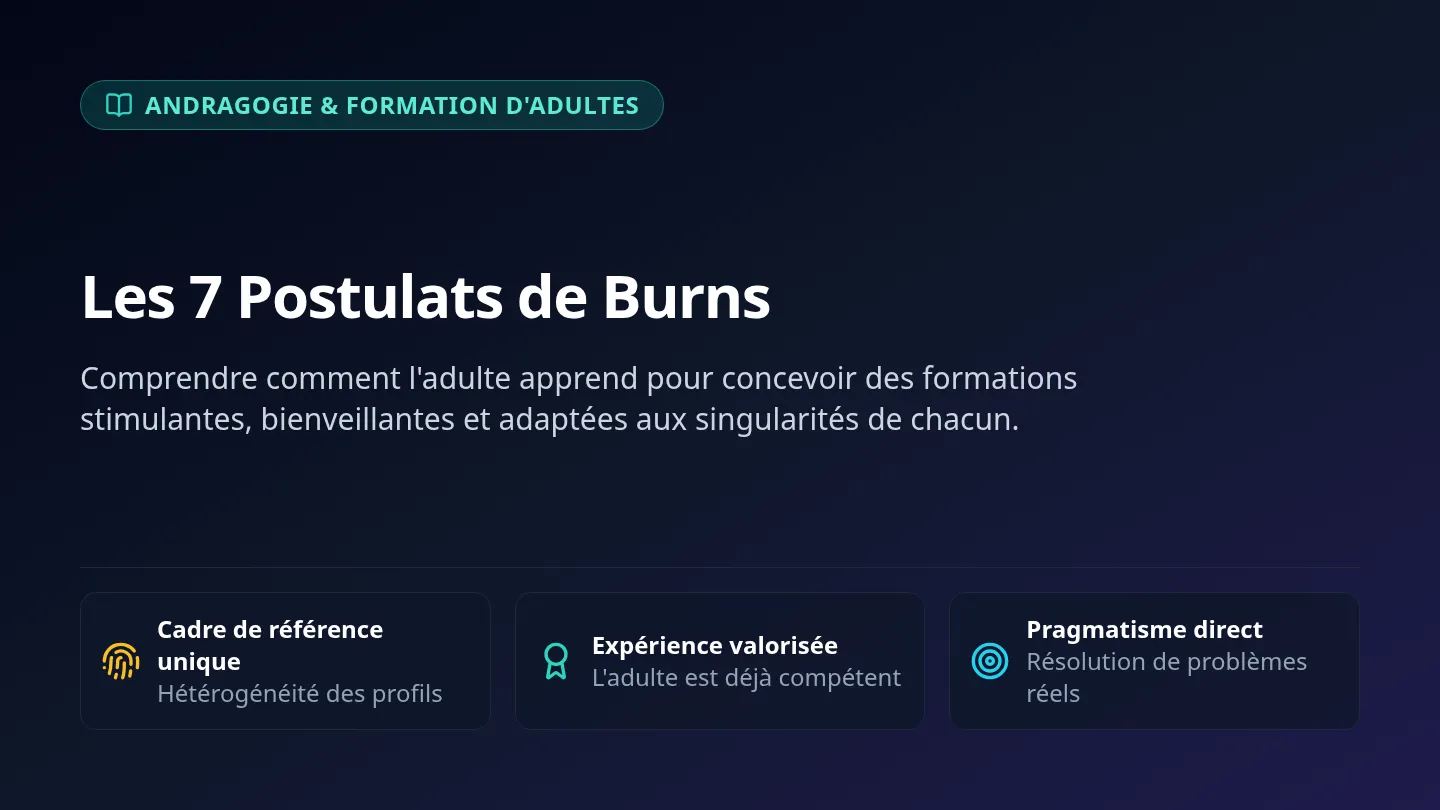
Postulats Burns Slides

Postulats Burns Slides

Une présentation slide par slide des 7 postulats de Robert Burns en andragogie. Elle détaille les caractéristiques spécifiques de l'apprenant adulte, l'importance des cadres de référence individuels et la posture d'animation adaptée pour le formateur.

HT

Herve TEKNIA

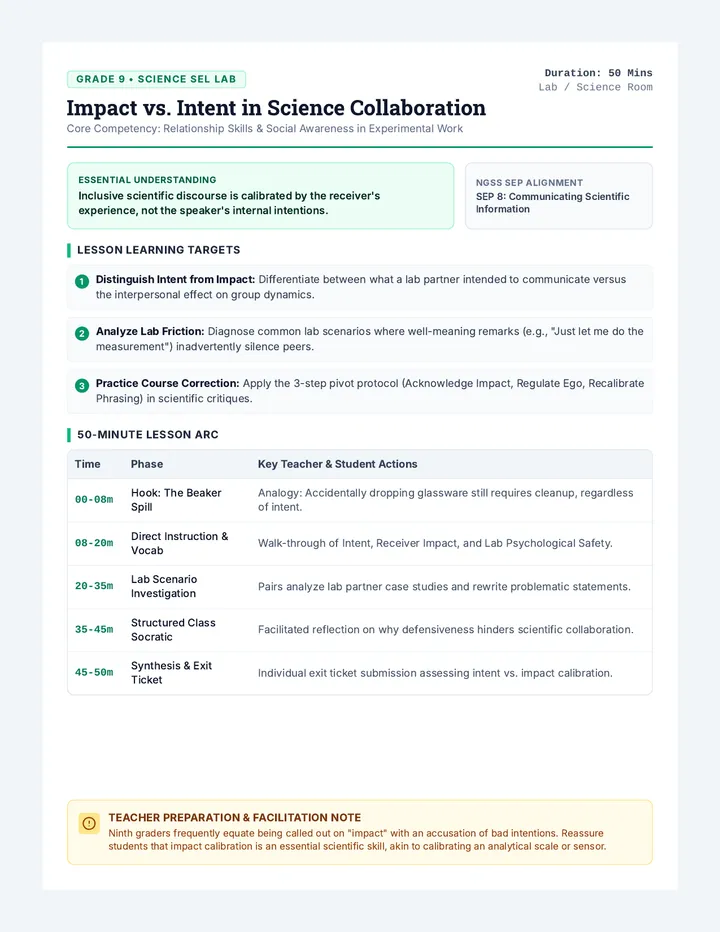
Impact Intent Teacher Guide

Science Lab Dialogue

A high school science SEL sequence that fosters inclusive collaboration, empathetic communication, and barrier-free scientific discourse across grades 9 through 11.

YB

Yna Bersales

27
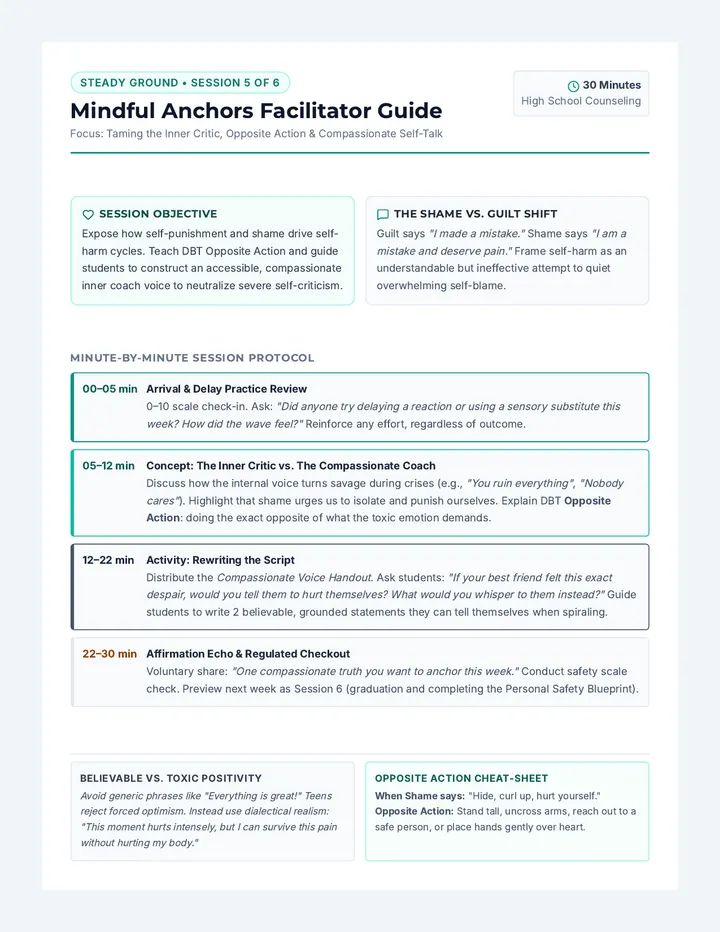
Mindful Anchors Facilitator Guide

Mindful Anchors

Explores the relationship between harsh self-criticism, overwhelming emotion, and self-harming behavior. Students practice dialectical opposite action and develop compassionate self-coaching scripts.

SL

Sofia Lopez

2
Self Advocacy Presentation Slides

Self Advocacy Presentation Slides

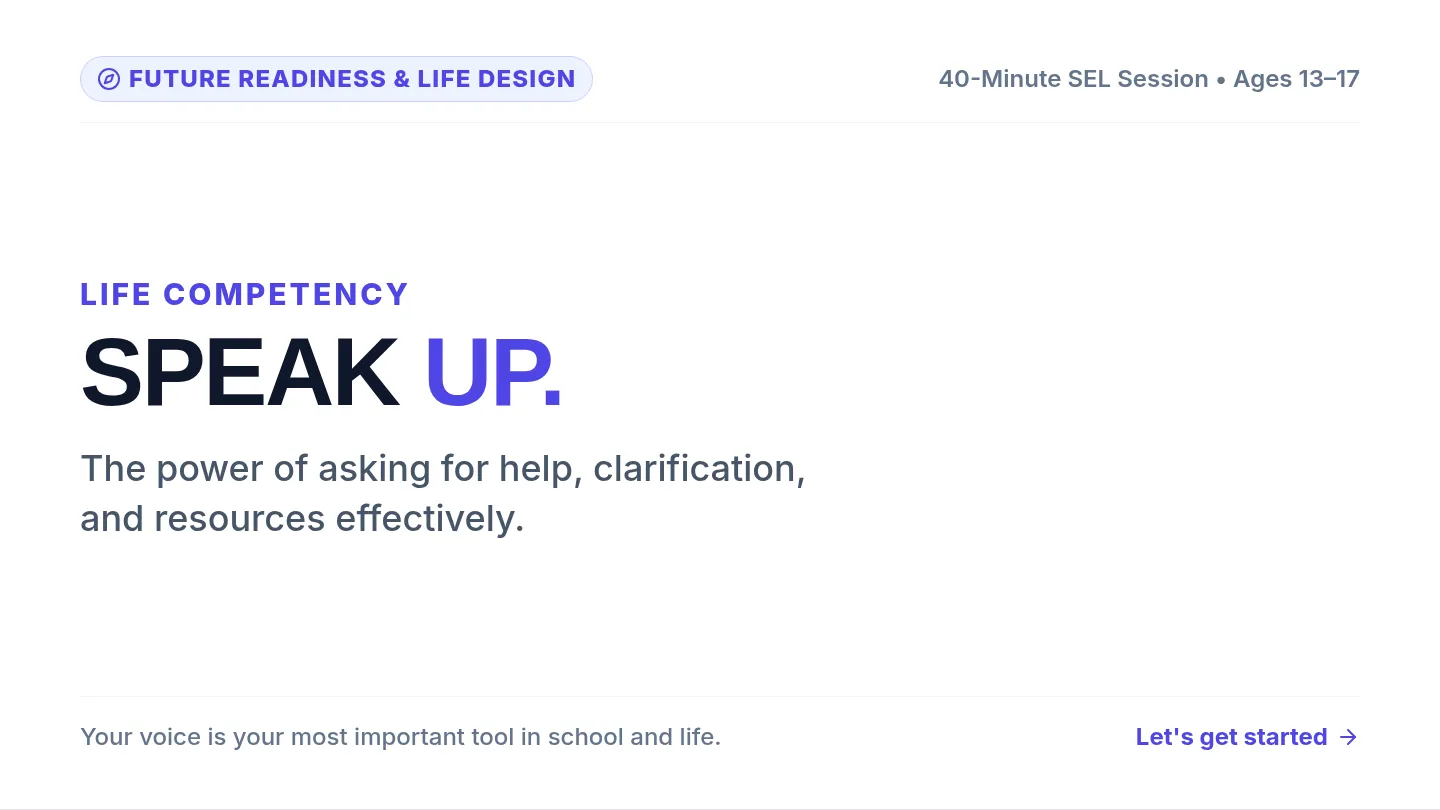
A 9-slide presentation for a 40-minute youth SEL session on self-advocacy. Features two dedicated warmer scenario slides (The Confusing Assignment and The Missing Resource) for chat polls, followed by a dedicated slide introducing the topic and core definition, the 3A Method, sentence starters, live chat practice, pair role-play, and exit reflection.

CR

Cassia Ruby Luke A/P Rudolf Luke Anthoni

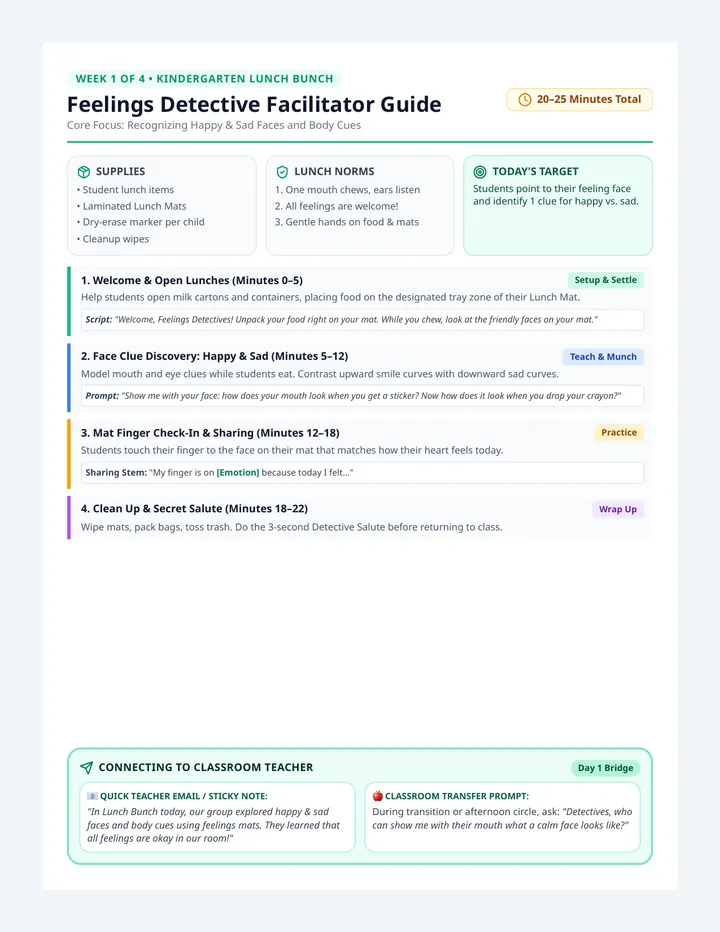
Feelings Detective Facilitator Guide

Feelings Crew

A four-week social-emotional lunch bunch sequence for Kindergarten students focusing on identifying core feelings and learning foundational calming strategies. Designed specifically for brief 20-30 minute lunchtime group sessions with high-engagement visuals and low-mess activities.

SS

Samantha Stagles

12
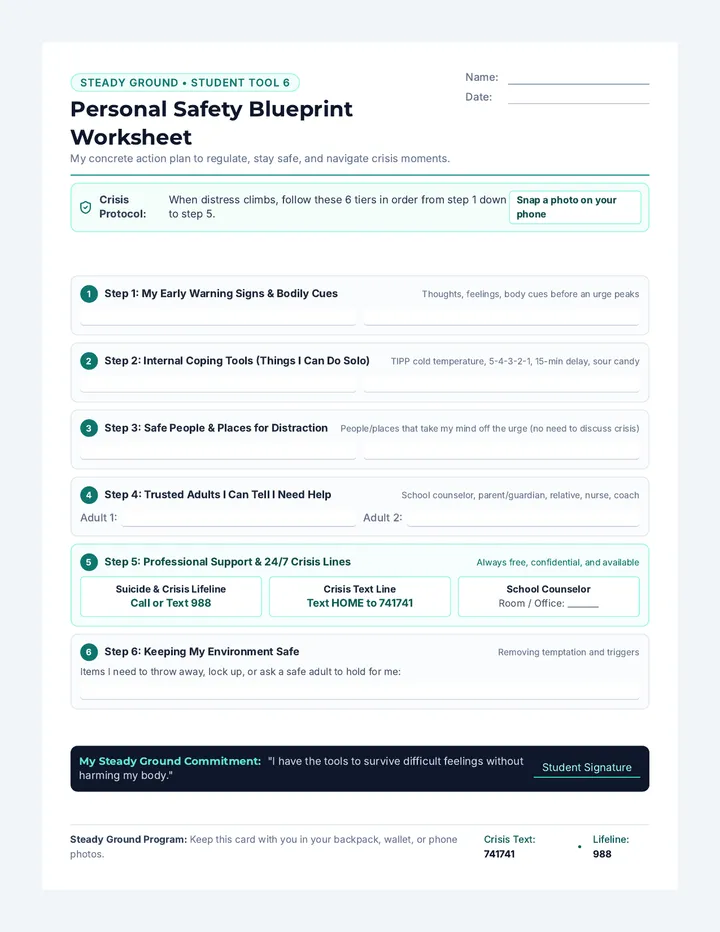
Personal Safety Blueprint Worksheet

Personal Safety Blueprint Worksheet

A personalized 6-step crisis regulation and safety blueprint documenting early warning signs, coping skills, safe contacts, and environmental safety.

SL

Sofia Lopez

Safety Blueprint Facilitator Guide

Safety Blueprint Facilitator Guide

A 30-minute counselor facilitation protocol for Session 6, guiding closure, relapse prevention, individual check-in scheduling, and personalized crisis safety blueprint completion.

SL

Sofia Lopez