Lenny.com
Explore
Create
ActivitiesNewMathEnglish Language ArtsScience & EngineeringSocial StudiesGlobal LanguagesHealth & Physical EducationSpecial EducationCounseling & Life SkillsArts & CreativityESL
Lenny.com
Lenny.com
Explore
Create
ActivitiesNewMathEnglish Language ArtsScience & EngineeringSocial StudiesGlobal LanguagesHealth & Physical EducationSpecial EducationCounseling & Life SkillsArts & CreativityESL
Lenny.com
Lenny.com

Solutions

Lenny for EducatorsLenny for SchoolsLenny for Districts

Product

ExploreSign inCreateSupportAbout

Resources

Getting startedMTSS Acceleration Program

© 2026 Lenny Learning Inc.

TermsPrivacyAccessibility
LinkedInInstagramX
Lenny

Radical Acceptance Practice

Techniques for acknowledging reality without judgment to reduce emotional suffering and psychological resistance. Develops distress tolerance skills through mindfulness, cognitive reframing, and acceptance-based coping strategies.

Counseling & Life SkillsSelf-AwarenessBasic Emotion RecognitionComplex Emotion IdentificationEmotional Nuance & Mixed FeelingsBuilding Positive Self-ImageRecognizing Strengths & Growth AreasAccurate Self-AssessmentPersonal Values IdentificationCultural & Individual Identity ExplorationValues-Based Decision MakingSelf-ManagementStop-and-Think StrategiesDelaying GratificationIndependent Impulse ManagementIdentifying Stress TriggersShort-Term Goal SettingSMART Goals DevelopmentGoal Monitoring & AdjustmentBuilding Perseverance & ResilienceInternal Motivation DevelopmentComprehensive Stress Reduction PlanningSocial AwarenessRecognizing Others' FeelingsDemonstrating EmpathyRespecting Individual DifferencesUnderstanding Cultural DiversityComplex Empathetic ResponsesMultiple Viewpoint ConsiderationMulti-Perspective AnalysisChallenging Stereotypes & BiasRelationship SkillsActive ListeningClear Verbal & Nonverbal CommunicationBuilding Positive FriendshipsWorking Cooperatively in GroupsCommunicating Personal BoundariesRespecting Others' BoundariesAssertive ExpressionPeaceful Problem-SolvingContributing to Team GoalsComplex Conflict NavigationMediation & NegotiationHealthy Romantic RelationshipsResponsible Decision-MakingDaily Problem IdentificationBrainstorming Multiple SolutionsEvaluating Pros & ConsRecognizing Risks & ConsequencesApplying Ethical FrameworksInformed Risk-Benefit DecisionsRoot Cause AnalysisMindfulnessMindful BreathingBody Scan MeditationDaily Mindfulness ApplicationDaily Self-Care RoutinesBalancing Life DemandsAdvocating for Wellness NeedsMental Health SupportUnderstanding Anxiety SymptomsWorry Management StrategiesProgressive Muscle RelaxationRecognizing Depression SignsBuilding Mood-Supporting RoutinesBehavioral Activation for MoodUnderstanding Grief StagesHealthy Grief CopingCreative Expression of LossBehavioral SupportDaily Check-In ProceduresDaily Goal Setting & ReviewRecognizing Escalation Warning SignsRequesting Breaks & SupportSelf-Calming During DistressUnderstanding Positive ReinforcementToken Economy ImplementationBehavior Chart TrackingAnalyzing Behavior PatternsIdentifying Antecedents & ConsequencesDetermining Behavior FunctionFunction-Based InterventionsIndividualized Behavior ContractsData-Driven Behavior AdjustmentTherapeutic ApproachesThoughts-Feelings-Behaviors ConnectionRecognizing Thinking PatternsChallenging Negative ThoughtsPositive Self-Talk PracticeThought Record TrackingAdvanced Cognitive RestructuringComprehensive CBT PlansBehavioral Activation TechniquesBuilding Positive ExperiencesExposure Hierarchies for AnxietyPresent-Moment AwarenessNon-Judgmental ObservationSelf-Soothing & DistractionComplex Emotion LabelingReducing Emotional Vulnerability (PLEASE)DEAR MAN CommunicationGIVE Skills for RelationshipsFAST Skills for Self-RespectRadical Acceptance PracticeCrisis Survival Skills (TIPP)Understanding Trauma EffectsTrauma Responses & TriggersIdentifying Trauma FeelingsGrounding TechniquesRegulation During Trauma DistressSafe Place VisualizationProcessing Through NarrativeDeveloping Trauma StoryPersonalized Safety PlanningGroup SupportTurn-Taking & SharingGroup Conversation SkillsSharing in Supportive EnvironmentLearning from Similar ChallengesBuilding Community & BelongingNavigating Peer RelationshipsGroup Skill PracticeGroup Mental Health EducationStress & Anxiety UnderstandingCrisis Support & SafetyKnowing When to Seek HelpIdentifying Mental Health CrisesGrounding During CrisisUsing Crisis HotlinesBuilding Support NetworksAccessing Mental Health ResourcesWarning Signs & Coping StrategiesDeveloping Personal Safety PlansUnderstanding Suicide Warning SignsGatekeeper Skills for PeersDigital LiteracySocial MediaTechnology BasicsProductivity ToolsInternet and Online ResearchWeb Design and PublishingDigital CitizenshipOnline Safety and PrivacyEmerging TechnologiesFinancial LiteracyMaking Financial DecisionsBanking and AccountsConsumer SkillsSaving and InvestingCredit and DebtEmployment and IncomeTaxesInsuranceMajor PurchasesEconomic ConceptsFinancial PlanningCollege & Post-Secondary PlanningCareer ExplorationUnderstanding Post-Secondary OptionsCollege Research & SelectionAdmission RequirementsCollege Application ProcessPersonal Statement WritingFAFSA CompletionScholarship Search & ApplicationsUnderstanding Student LoansContinuing Education PlanningInterview PreparationResearching EmployersCommon Interview QuestionsSTAR Method ResponsesProfessional Interview PresenceVirtual Interview SkillsInterview Follow-UpJob Search SkillsUnderstanding Job PostingsEffective Job Search StrategiesNetworking for OpportunitiesResume Writing BasicsAction Verbs & AchievementsTailoring Resumes to JobsCover Letter WritingProfessional ReferencesProfessional CommunicationBusiness Email EtiquettePhone & Voicemail ProfessionalismMeeting ParticipationPresentation SkillsProfessional Work EthicTime Management & ProductivityTeamwork & CollaborationAdaptability & FlexibilityProblem-Solving at WorkConstructive FeedbackWorkplace RightsUnderstanding Employment LawsPay & Benefits UnderstandingWorkplace SafetyAnti-Discrimination & Harassment

Videos

Body Positivity or Body Obsession? Learning to See More & Be More | Lindsay Kite | TEDxSaltLakeCity

Body Positivity or Body Obsession? Learning to See More & Be More | Lindsay Kite | TEDxSaltLakeCity

In this compelling TEDx talk, Lindsay Kite, PhD, challenges the traditional narrative of body positivity. Rather than simply widening the definition of beauty to include more shapes and sizes, Kite argues for a more radical shift: moving away from defining women by their appearance entirely. She shares her personal journey from quitting competitive swimming as a teenager due to body shame to reclaiming her power as an adult, illustrating how we can transition from viewing our bodies as ornaments to be looked at, to instruments for our use. The video dives deep into the psychological concept of "self-objectification"—the habitual monitoring of one's body from an outsider's perspective—and explains how this mental energy drain negatively impacts physical and cognitive performance. Kite introduces the framework of "Body Image Resilience," outlining three distinct paths people take when facing body shame: sinking into harmful behaviors, hiding and fixing (the status quo), or rising with resilience to repurpose the pain into power. This resource is highly valuable for high school and collegiate health, psychology, and sociology classrooms. It moves beyond superficial "love yourself" messaging to provide concrete theoretical frameworks and actionable strategies for mental health. Teachers can use this video to spark critical discussions about media literacy, the difference between health and aesthetics, and practical coping mechanisms for anxiety and shame.

TEDx TalksTEDx Talks

16mins 48s

Materials

Life Games Choice Board Poster

Life Games Choice Board Poster

A single-page choice board designed for high visibility on an 11x17 poster, featuring bold titles and clear game descriptions in a compact layout.

LG

Lucas Grant

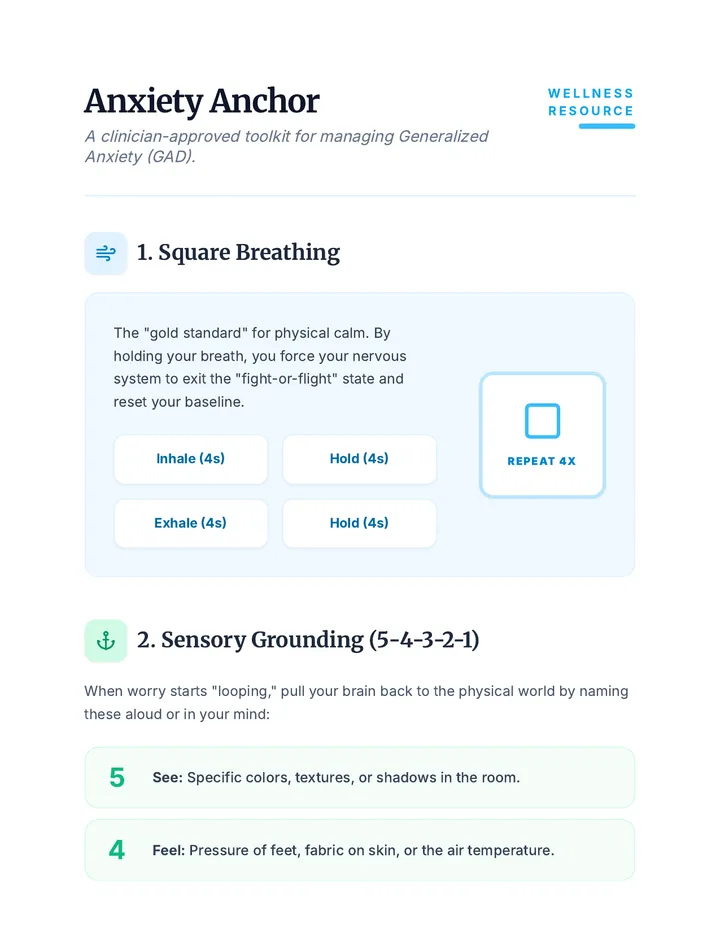
Anxiety Anchor Master Handout

Anxiety Anchor Master Handout

Updated 2-page GAD handout with concise definitions for daily micro-practices and significantly improved readability with 14-16px body text. Features a structured 3-step Worry Window protocol and physical grounding exercises.

S

sjwilmot

Sticky Thoughts Teen Workbook

Sticky Thoughts Teen Workbook

A super cute, interactive 5-page mental health workbook for teens exploring intrusive thoughts through ACT defusion, self-compassion scripts, guided scenarios, and an expanded collection of 8 cut-out pocket coping cards and stickers.

AC

Anita Cepeda

Mind Gym Worksheet Space Saver

Mind Gym Worksheet Space Saver

A refined single-page worksheet for building mental flexibility. Features evocative titles like 'The Perspective Pivot' and 'Philosophical Heavy Lifting' alongside the 'Guest Room' metaphor to help students entertain opposing viewpoints across real-world and philosophical scenarios.

T

thomas.dadmun

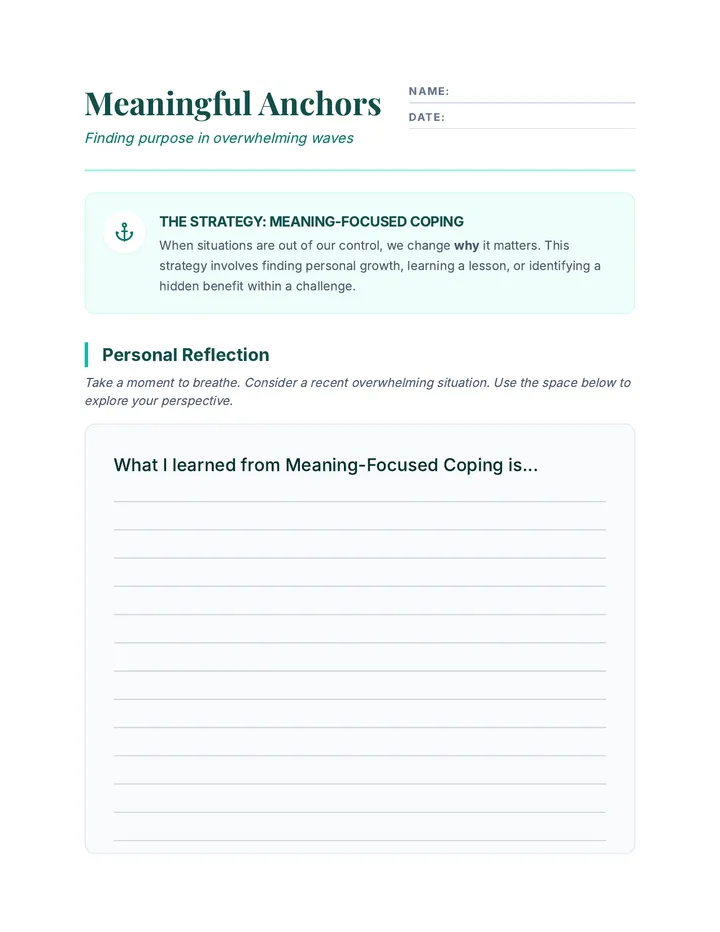
Meaningful Anchors Worksheet

Meaningful Anchors Worksheet

A two-page reflective worksheet on Meaning-Focused Coping. Page 1 features an introductory explanation and a substantial reflective response area. Page 2 provides guided application exercises for identifying growth and value alignment in overwhelming situations.

V

Vincent.Landfair

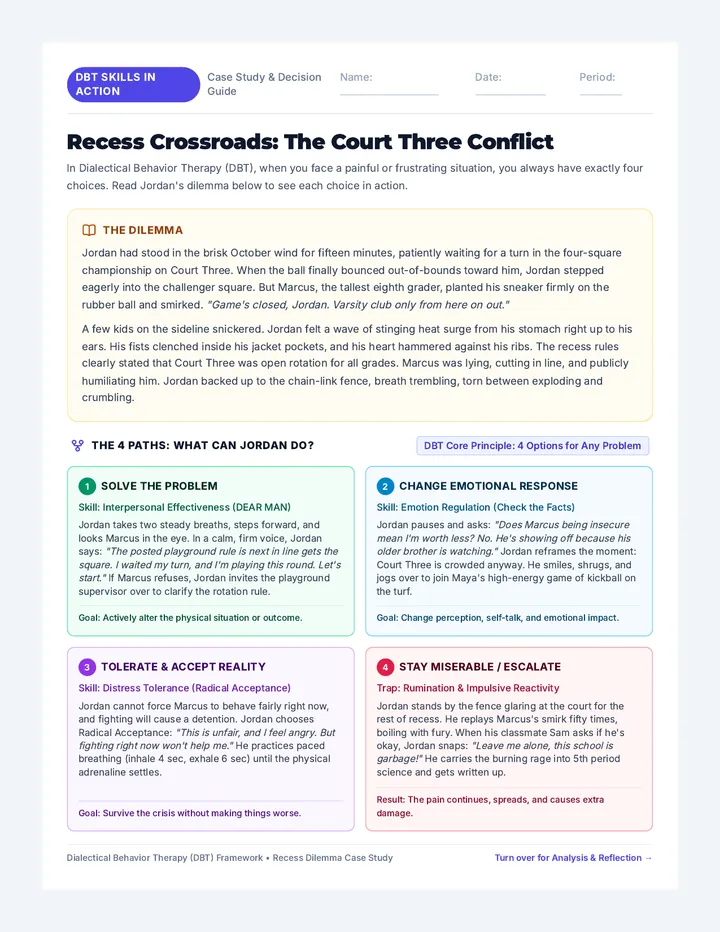
Recess Crossroads Story Handout

Recess Crossroads Story Handout

A narrative case study and DBT skills analysis worksheet following a middle school student who faces unfair exclusion on the playground and evaluates the four DBT problem-solving pathways.

AS

Adam Slansky

Sequences

Empowering You Teacher Guide

DBT Skills Empowering You

A 5-week individual lesson series for 8th-grade students with social-emotional disabilities, introducing core DBT modules: Mindfulness, Distress Tolerance, Emotion Regulation, Interpersonal Effectiveness, and Walking the Middle Path.

B

bbeldenscott

38
Emergency Brake Lab Log

The Conflict Resolution Lab

A 6-week curriculum for 11th and 12th graders focused on practical conflict resolution strategies with peers, teachers, parents, and romantic partners.

JZ

Janice Zimmerman

24
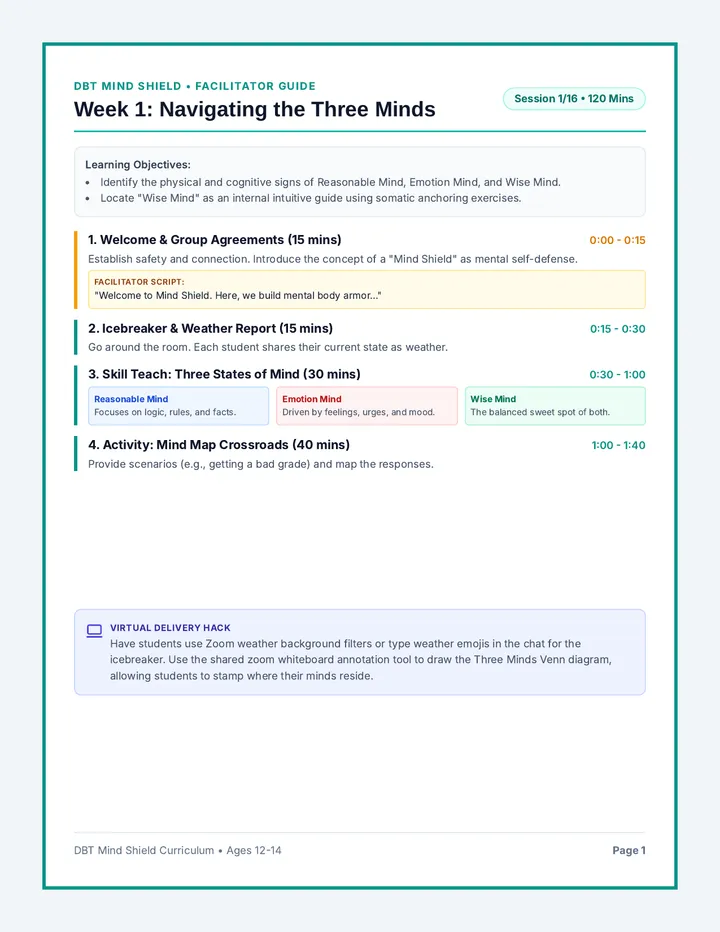
Mindfulness Facilitator Guide

DBT Mind Shield

A comprehensive multi-age Dialectical Behavior Therapy (DBT) skills training curriculum. Includes a 16-week master curriculum for middle schoolers (ages 12-14, 2-hour sessions) and an 8-week 'Greatest Hits' curriculum for children (ages 8-11, 1.5-hour sessions) with in-person and online adaptation tracks.

LG

Lisa Griffiths

36
DBT Group Teacher Guide

DBT Group Skills

A comprehensive 13-week curriculum for middle school students focused on the four core modules of Dialectical Behavior Therapy: Mindfulness, Interpersonal Effectiveness, Emotion Regulation, and Distress Tolerance. Students learn and practice key coping strategies in a supportive group setting.

IY

ilana yakubovich

23
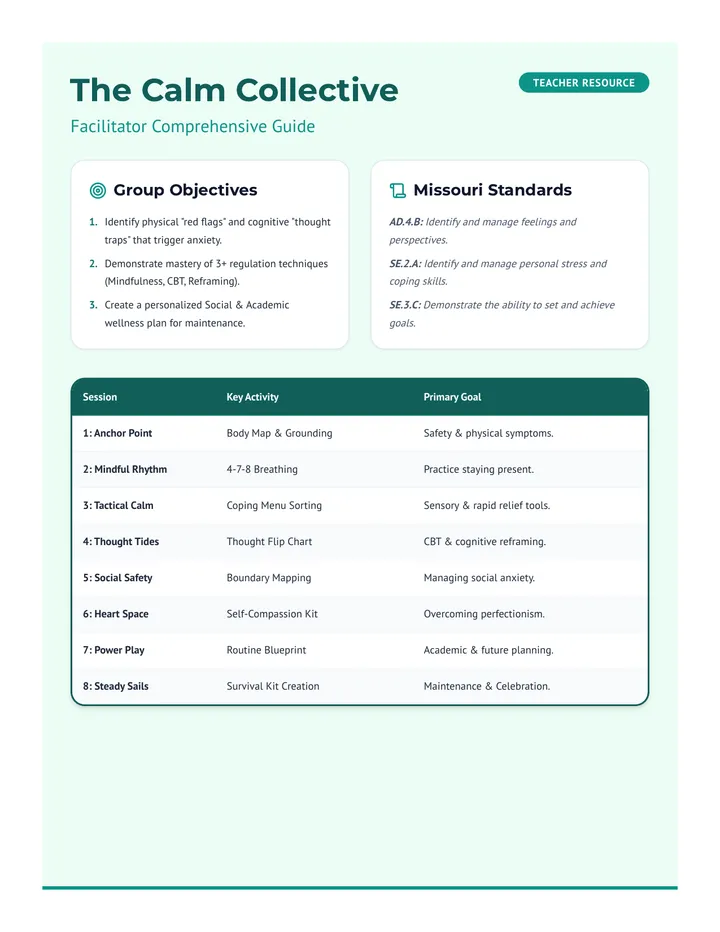
Collective Facilitator Guide

The Calm Collective

An 8-session small group counseling program for high school girls focused on identifying anxiety triggers, practicing mindfulness, cognitive reframing, and developing a personalized toolkit of coping strategies. The sequence emphasizes peer support, empowerment, and practical application within the school environment.

MW

Mallory Watkins

28
Sonar Scan Counselor Guide

Survival and Salvage DBT

A comprehensive 16-week DBT program adapted for children with high-functioning autism, using shipwrecks and plane crashes as high-interest metaphors for emotional regulation, mindfulness, and distress tolerance. Each week includes a counselor guide, parent guide, and client worksheet themed around historical salvage and survival missions.

JR

James Rogers

49

Lessons

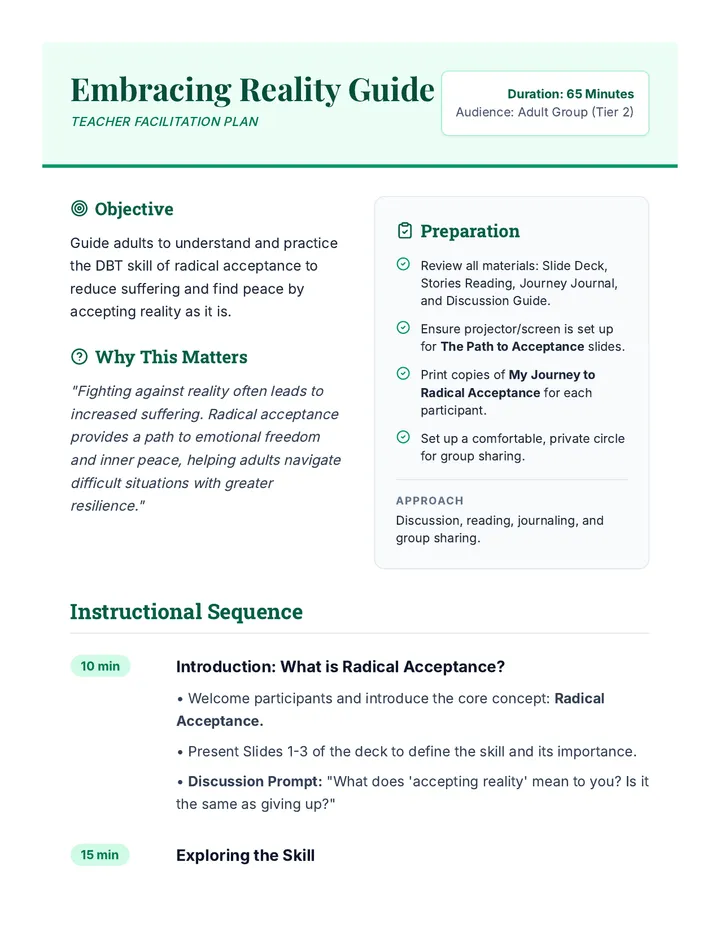
Embracing Reality Guide Lesson Plan

Radical Acceptance

A 65-minute DBT-based lesson for adults focusing on the skill of Radical Acceptance to reduce suffering and find emotional freedom. Participants will explore the difference between pain and suffering, distinguish willingness from willfulness, and apply acceptance to personal life situations.

JS

Julie Smith

5
Swamp Guide Therapist Pack

Swamp Sanity

A clinical anger management session guide using Shrek characters and themes (the Onion Model, Fiona's masking, Donkey's verbal processing, and Farquaad's rigid control) to teach emotional regulation, primary emotion discovery, and healthy communication.

NW

Nicholas Wren

4
Willingness Facilitator Guide

Willingness Compass

This lesson covers the ACT core process of Willingness (Acceptance), providing a mini-lesson on the 'Window of Tolerance' to distinguish between helpful stretching (willingness) and overwhelming distress (flooding).

MV

Melanie Vohs

5
Vibe Shift Slides

Vibe Shift Resilience

An engaging, perspective-shifting lesson for 8th graders that introduces three 'Coping Questions' to build emotional resilience through relatable scenarios and interactive challenges.

LG

Lucas Grant

3
Calm Cards Match Game Slice-and-Dice

Calm Command Center

A lesson focused on developing emotional intelligence through identifying and practicing various coping strategies and regulation techniques.

ZG

Zyra Guyon

2
Compass Guide Lesson Plan

Self Kindness Compass

A lesson focused on developing self-compassion and emotional resilience through the metaphor of a compass, helping students navigate their inner dialogue with kindness.

A

Andrea

5