Lenny.com
Explore
Create
ActivitiesNewMathEnglish Language ArtsScience & EngineeringSocial StudiesGlobal LanguagesHealth & Physical EducationSpecial EducationCounseling & Life SkillsArts & CreativityESL
Lenny.com
Lenny.com
Explore
Create
ActivitiesNewMathEnglish Language ArtsScience & EngineeringSocial StudiesGlobal LanguagesHealth & Physical EducationSpecial EducationCounseling & Life SkillsArts & CreativityESL
Lenny.com
Lenny.com

Solutions

Lenny for EducatorsLenny for SchoolsLenny for Districts

Product

ExploreSign inCreateSupportAbout

Resources

Getting startedMTSS Acceleration Program

© 2026 Lenny Learning Inc.

TermsPrivacyAccessibility
LinkedInInstagramX
Lenny
Counseling & Life SkillsSelf-AwarenessBasic Emotion RecognitionComplex Emotion IdentificationEmotional Nuance & Mixed FeelingsBuilding Positive Self-ImageRecognizing Strengths & Growth AreasAccurate Self-AssessmentPersonal Values IdentificationCultural & Individual Identity ExplorationValues-Based Decision MakingSelf-ManagementStop-and-Think StrategiesDelaying GratificationIndependent Impulse ManagementIdentifying Stress TriggersShort-Term Goal SettingSMART Goals DevelopmentGoal Monitoring & AdjustmentBuilding Perseverance & ResilienceInternal Motivation DevelopmentComprehensive Stress Reduction PlanningSocial AwarenessRecognizing Others' FeelingsDemonstrating EmpathyRespecting Individual DifferencesUnderstanding Cultural DiversityComplex Empathetic ResponsesMultiple Viewpoint ConsiderationMulti-Perspective AnalysisChallenging Stereotypes & BiasRelationship SkillsActive ListeningClear Verbal & Nonverbal CommunicationBuilding Positive FriendshipsWorking Cooperatively in GroupsCommunicating Personal BoundariesRespecting Others' BoundariesAssertive ExpressionPeaceful Problem-SolvingContributing to Team GoalsComplex Conflict NavigationMediation & NegotiationHealthy Romantic RelationshipsResponsible Decision-MakingDaily Problem IdentificationBrainstorming Multiple SolutionsEvaluating Pros & ConsRecognizing Risks & ConsequencesApplying Ethical FrameworksInformed Risk-Benefit DecisionsRoot Cause AnalysisMindfulnessMindful BreathingBody Scan MeditationDaily Mindfulness ApplicationDaily Self-Care RoutinesBalancing Life DemandsAdvocating for Wellness NeedsMental Health SupportUnderstanding Anxiety SymptomsWorry Management StrategiesProgressive Muscle RelaxationRecognizing Depression SignsBuilding Mood-Supporting RoutinesBehavioral Activation for MoodUnderstanding Grief StagesHealthy Grief CopingCreative Expression of LossBehavioral SupportDaily Check-In ProceduresDaily Goal Setting & ReviewRecognizing Escalation Warning SignsRequesting Breaks & SupportSelf-Calming During DistressUnderstanding Positive ReinforcementToken Economy ImplementationBehavior Chart TrackingAnalyzing Behavior PatternsIdentifying Antecedents & ConsequencesDetermining Behavior FunctionFunction-Based InterventionsIndividualized Behavior ContractsData-Driven Behavior AdjustmentTherapeutic ApproachesThoughts-Feelings-Behaviors ConnectionRecognizing Thinking PatternsChallenging Negative ThoughtsPositive Self-Talk PracticeThought Record TrackingAdvanced Cognitive RestructuringComprehensive CBT PlansBehavioral Activation TechniquesBuilding Positive ExperiencesExposure Hierarchies for AnxietyPresent-Moment AwarenessNon-Judgmental ObservationSelf-Soothing & DistractionComplex Emotion LabelingReducing Emotional Vulnerability (PLEASE)DEAR MAN CommunicationGIVE Skills for RelationshipsFAST Skills for Self-RespectRadical Acceptance PracticeCrisis Survival Skills (TIPP)Understanding Trauma EffectsTrauma Responses & TriggersIdentifying Trauma FeelingsGrounding TechniquesRegulation During Trauma DistressSafe Place VisualizationProcessing Through NarrativeDeveloping Trauma StoryPersonalized Safety PlanningGroup SupportTurn-Taking & SharingGroup Conversation SkillsSharing in Supportive EnvironmentLearning from Similar ChallengesBuilding Community & BelongingNavigating Peer RelationshipsGroup Skill PracticeGroup Mental Health EducationStress & Anxiety UnderstandingCrisis Support & SafetyKnowing When to Seek HelpIdentifying Mental Health CrisesGrounding During CrisisUsing Crisis HotlinesBuilding Support NetworksAccessing Mental Health ResourcesWarning Signs & Coping StrategiesDeveloping Personal Safety PlansUnderstanding Suicide Warning SignsGatekeeper Skills for PeersDigital LiteracySocial MediaTechnology BasicsProductivity ToolsInternet and Online ResearchWeb Design and PublishingDigital CitizenshipOnline Safety and PrivacyEmerging TechnologiesFinancial LiteracyMaking Financial DecisionsBanking and AccountsConsumer SkillsSaving and InvestingCredit and DebtEmployment and IncomeTaxesInsuranceMajor PurchasesEconomic ConceptsFinancial PlanningCollege & Post-Secondary PlanningCareer ExplorationUnderstanding Post-Secondary OptionsCollege Research & SelectionAdmission RequirementsCollege Application ProcessPersonal Statement WritingFAFSA CompletionScholarship Search & ApplicationsUnderstanding Student LoansContinuing Education PlanningInterview PreparationResearching EmployersCommon Interview QuestionsSTAR Method ResponsesProfessional Interview PresenceVirtual Interview SkillsInterview Follow-UpJob Search SkillsUnderstanding Job PostingsEffective Job Search StrategiesNetworking for OpportunitiesResume Writing BasicsAction Verbs & AchievementsTailoring Resumes to JobsCover Letter WritingProfessional ReferencesProfessional CommunicationBusiness Email EtiquettePhone & Voicemail ProfessionalismMeeting ParticipationPresentation SkillsProfessional Work EthicTime Management & ProductivityTeamwork & CollaborationAdaptability & FlexibilityProblem-Solving at WorkConstructive FeedbackWorkplace RightsUnderstanding Employment LawsPay & Benefits UnderstandingWorkplace SafetyAnti-Discrimination & Harassment

Performance Appraisal Protocol

A business communication and workplace simulation lesson where students analyze an employee case study, apply professional performance standards, and produce evidence-based evaluations with constructive coaching plans.

Performance Appraisal Protocol

A business communication and workplace simulation lesson where students analyze an employee case study, apply professional performance standards, and produce evidence-based evaluations with constructive coaching plans.

ACTIONABLE COACHING To elevate his performance to Level 3, Carlos should adopt a structured time-blocking matrix to triage competing priorities, coupled with a non-negotiable 3-point pre-submission checklist (completeness, data accuracy, spell check). Establishing these systemic guardrails will enable Carlos to sustain high accuracy without sacrificing execution speed.

Claim (Explicit Rating) Textual Evidence & Nuance Team Impact Analysis Actionable Coaching Plan

Page 2 of 2 Action Plan Solutions, Common Misconceptions & Facilitation Guide

KEY-HR-304

4. Exemplar Solutions for Part 5 (Actionable Coaching Plan)

1 Prioritization & Triage Strategy (Eisenhower Matrix / Time-Boxing) Exemplar Answer

Recommended Approach: Carlos should rank competing tasks every morning into “Urgent & Mission-Critical” versus “Routine / Flexible.” When multiple deadlines coincide, he should allocate 45-minute distraction-free blocks per task rather than multi-tasking. If workload exceeds capacity, he must notify his supervisor at least 3 hours prior to deadlines rather than turning in incomplete drafts.

2 Pre-Submission Verification Checklist (5-Minute Self-Audit) Exemplar Answer

Recommended Approach: Carlos should institute a physical or digital 3-point pre-flight checklist: 1) Scope Check: Are all prompt requirements fulfilled? 2) Data Audit: Are all numbers and client names accurate? 3) Automated Proofread: Run digital grammar/spell check followed by a 60-second read-aloud scan before hitting submit.

5. Common Analytical Traps & Grading Guidance

The “Halo Effect” Trap

Student Error: Rating Carlos Level 3 or 4 because his normal days are “flawless and early.”

Correction: Emphasize that team reliability hinges on worst-case consistency, not peak bursts.

The “Zero-Tolerance” Trap

Student Error: Rating Carlos Level 1 because he leaves tasks incomplete and makes errors.

Correction: Remind students that Carlos corrects work promptly and is independent on standard days.

The “Vague Advice” Trap

Student Error: Giving superficial feedback like “Carlos needs to focus more and work harder.”

Correction: Push for specific workplace artifacts (checklists, triage rules, timers, buffer periods).

6. Socratic Discussion Questions for Classroom Debrief

Debrief Protocol (10-15 Min)

Q1: “Why is a worker who produces 80% quality consistently often valued over one whose quality fluctuates between 50% and 100%?”

Target Insight: Predictability enables teams to schedule handoffs without building in contingency buffers or re-work cycles.

Q2: “Carlos is very polite and corrects his mistakes immediately. Why does that not completely resolve the problem?”

Target Insight: Being coachable is necessary, but relying on peers or supervisors as an external quality filter drains team bandwidth.

Performance Appraisal Protocol • Instructor Reference Material Standards: Career Readiness & Accountable Academic Discourse

You might also like

Initiation Hurdles Slides

Execution Lab

An executive functioning and work completion curriculum designed specifically for gifted middle schoolers. Students learn cognitive strategies to dismantle perfectionism paralysis, accurately pace multi-phase projects, and conquer the final submission hurdle.

MB

Michele Berning

6
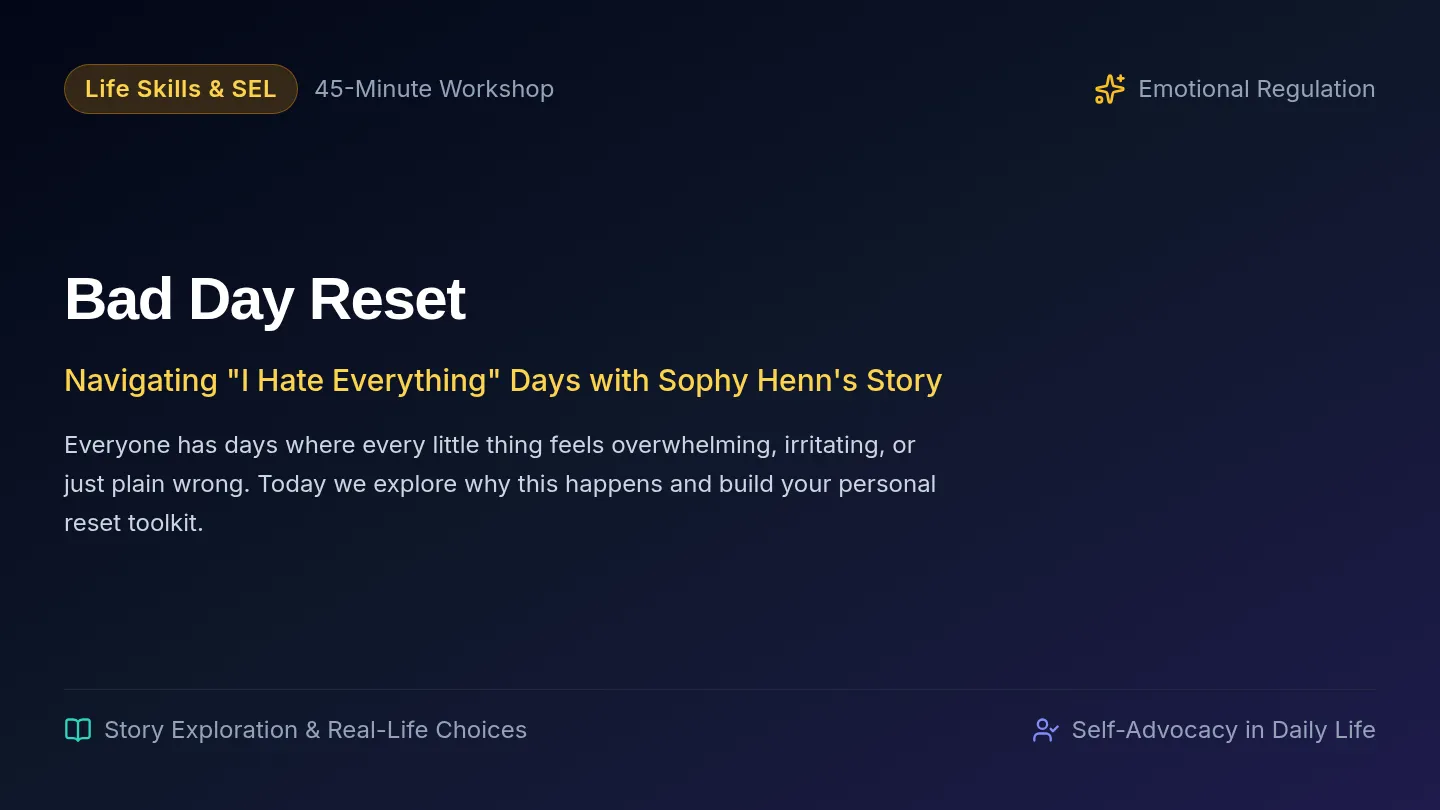
Bad Day Reset Slides

Bad Day Reset

A 45-minute High School Life Skills lesson exploring emotional regulation and self-advocacy using Sophy Henn's 'I Hate Everything'. Students analyze grumpy moods, debate relatable everyday annoyances through a Would You Rather activity, and build personal reset toolkits.

Lenny Avatar
Lenny
3
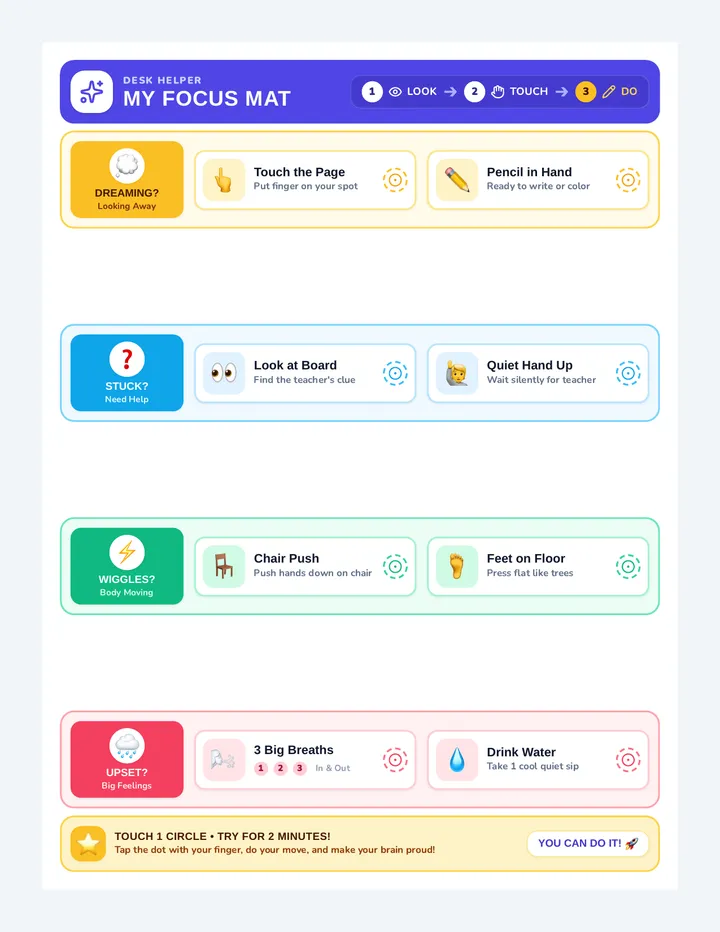
Focus Reset Desk Poster

Focus Reset Desk Poster

A picture-based desk self-regulation poster designed for non-reading elementary students, featuring large visual strategy cards, color-coded emotion cues, and minimal text to encourage independent refocusing.

CH

Christine Hammer

Leadership Playbook Curriculum Guide

Leadership Skills Program

An adaptable 8-week high school leadership and self-regulation curriculum program. Each weekly unit provides targeted facilitation, interactive labs, and student application materials for social intelligence and composure.

MP

Madison Paz

13
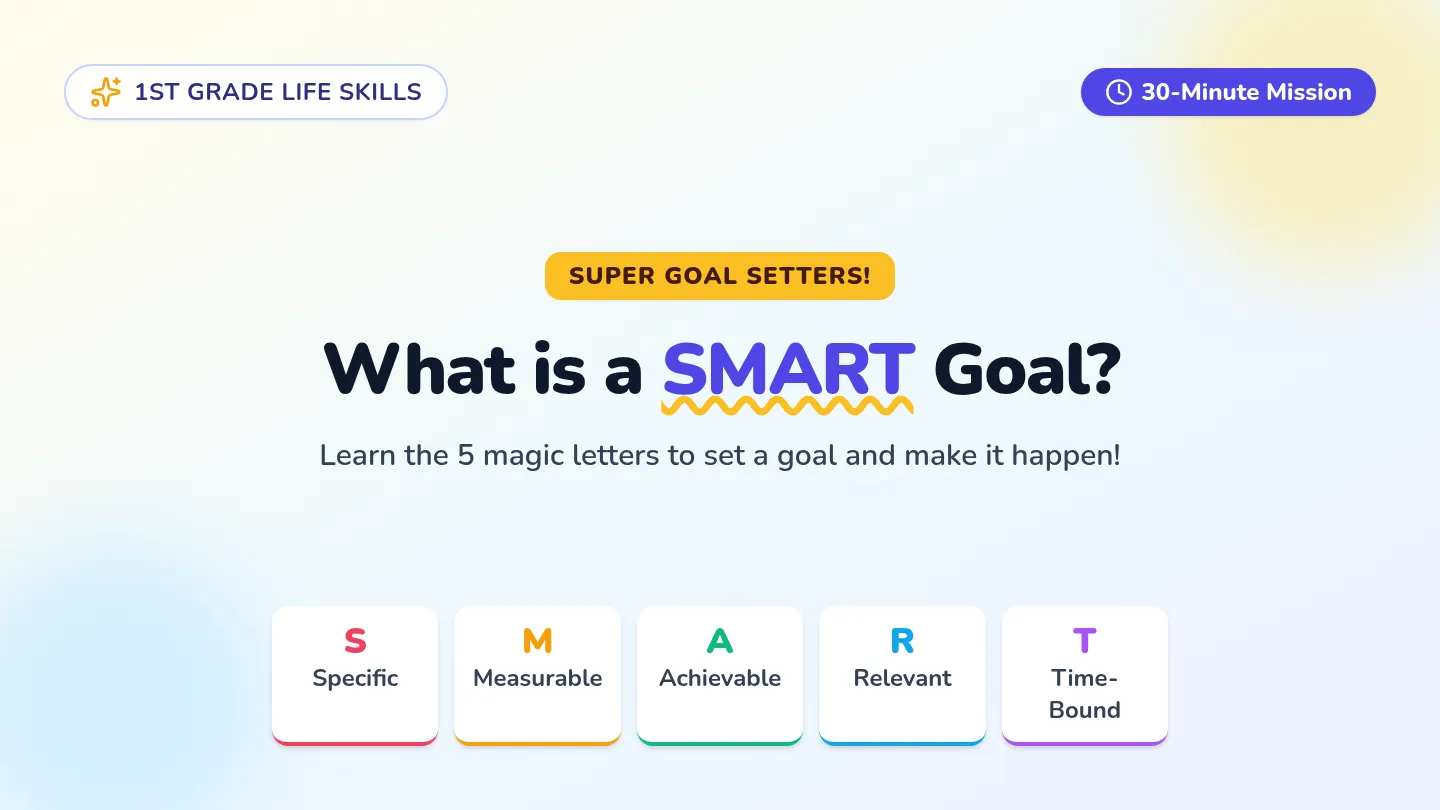
SMART Mini Lesson Slides

Goal Getters

A 30-minute first-grade foundational lesson that introduces the SMART goal framework through child-friendly vocabulary, visual icons, guided practice, and an interactive goal-setting activity.

EW

Erin Wilson

4
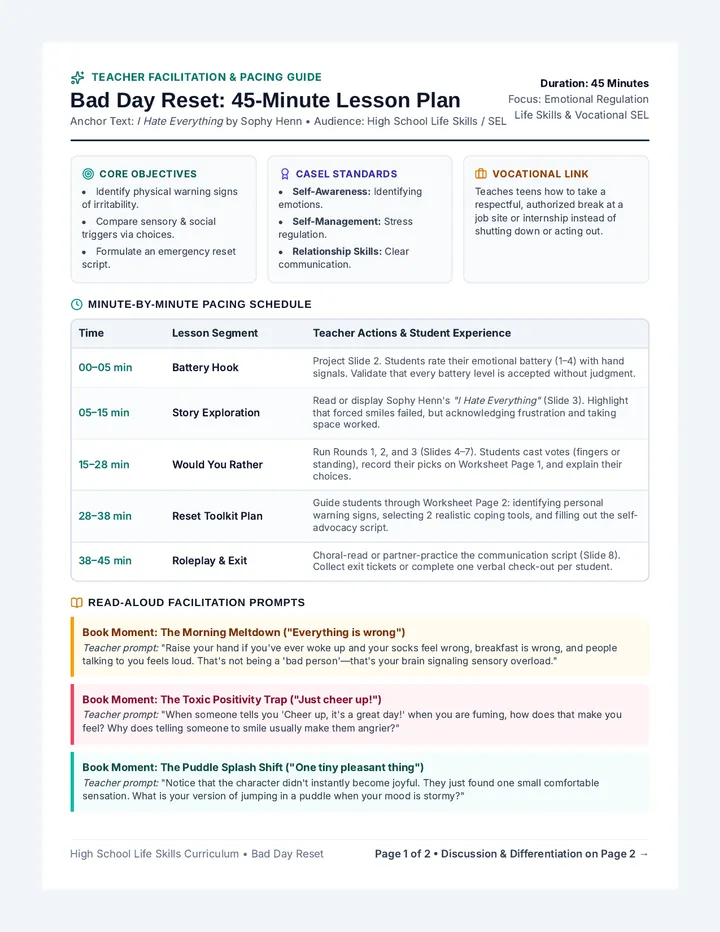
Grumpy Days Teacher Guide

Grumpy Days Teacher Guide

A comprehensive 2-page teacher lesson plan, facilitation guide, discussion key, and differentiation framework for a 45-minute high school life skills lesson on emotional regulation and Sophy Henn's 'I Hate Everything'.

Lenny Avatar
Lenny
Launch Ignition Slides

Spark to Finish

A structured multi-day sequence designed to build executive function routines, overcome task initiation friction, sustain momentum through completion, and cultivate self-confidence.

MB

Michele Berning

9
Problem Detective Slides

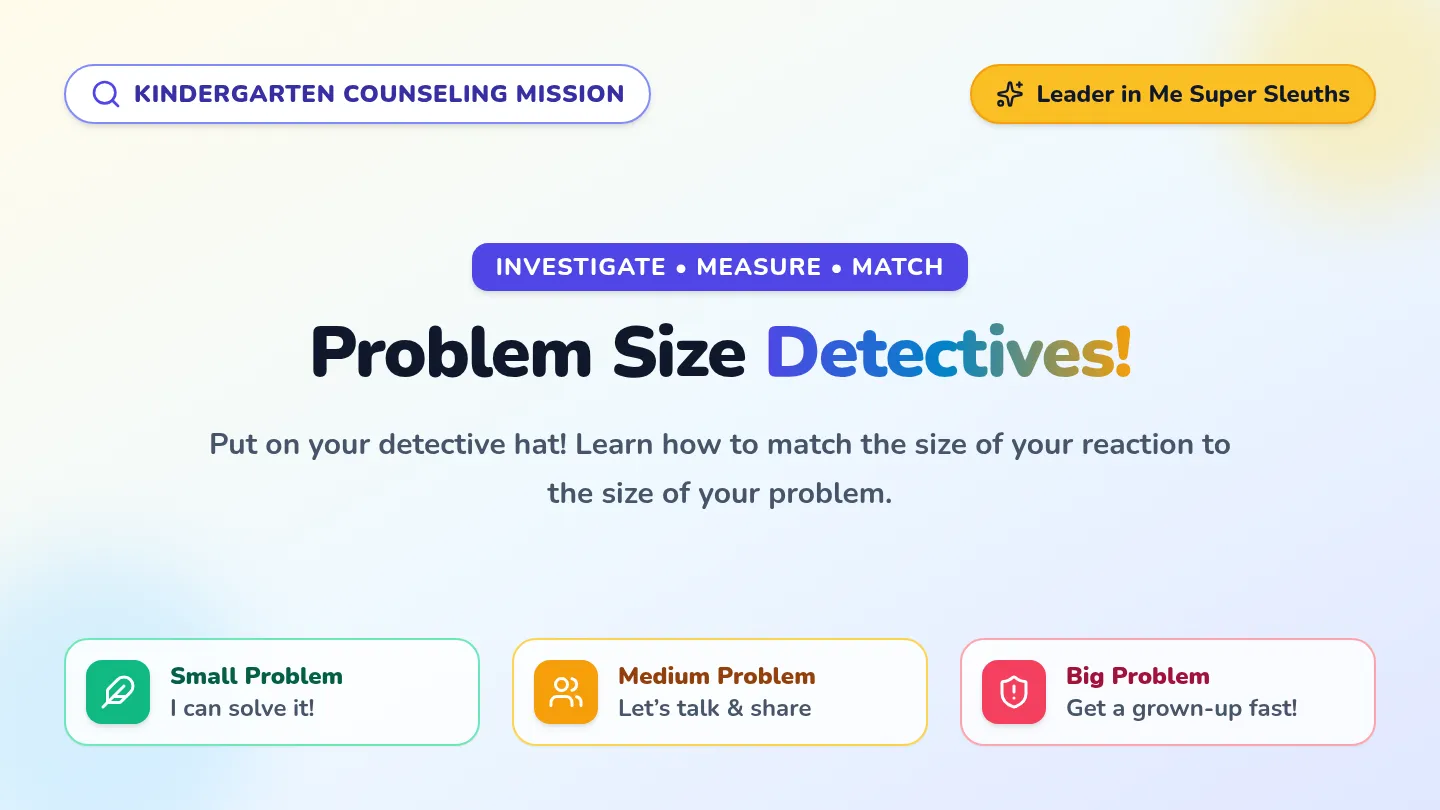
Problem Size Detectives

A 30-minute kindergarten school counseling lesson introducing problem sizes (small, medium, big) and matching reaction scales using Leader in Me Habits 1, 2, and 3 through a playful detective lens.

MC

melissa copeland

3
Mood Resetters Student Worksheet

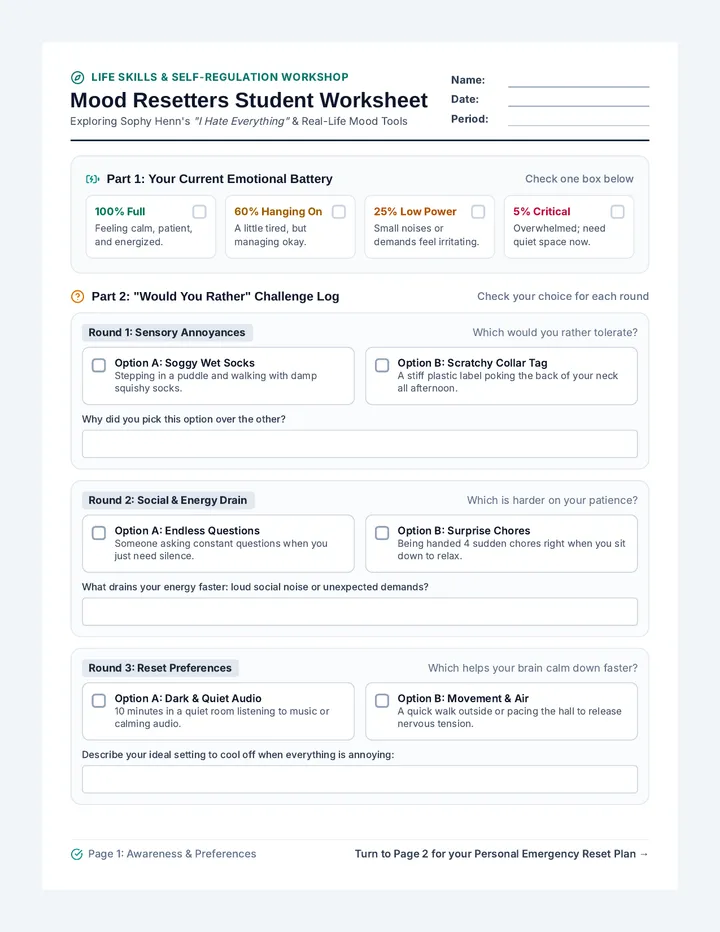
Mood Resetters Student Worksheet

A 2-page printable student response sheet for high school life skills learners. Features an emotional battery check-in, Would You Rather choice logs, personal trigger identification, and an emergency reset self-advocacy plan.

Lenny Avatar
Lenny
Freshman Launch Slides

Mindset to Mastery

A four-year developmental progression of academic study skills designed for high school educators. Guides students through foundational habits, active memory encoding, sustained project management, and college-ready metacognition.

S

smikamo

8
Gig Economy Activity Packet

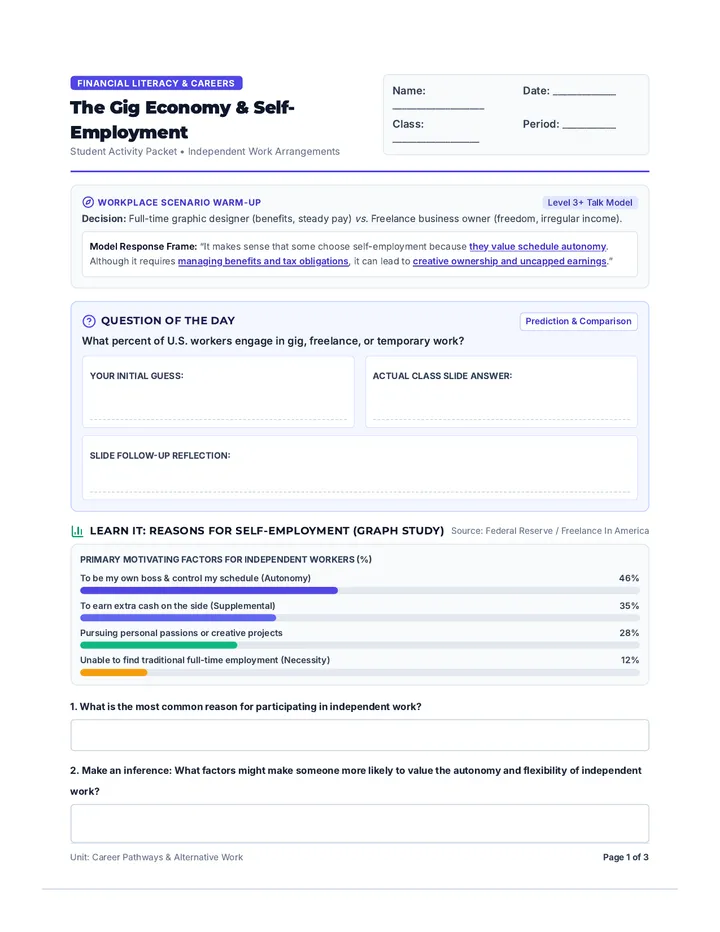
Gig Economy Pathways

A comprehensive personal finance and careers lesson examining independent contracting, app-based gig work, tax obligations, and the trade-offs of self-employment.

Lenny Avatar
Lenny
2
Bad Day Reset Slides

Bad Day Reset Slides

An engaging 8-slide classroom presentation for high school life skills students exploring emotional regulation through Sophy Henn's book 'I Hate Everything'. Features interactive 'Would You Rather' scenarios, battery check-ins, and actionable reset strategies.

Lenny Avatar
Lenny