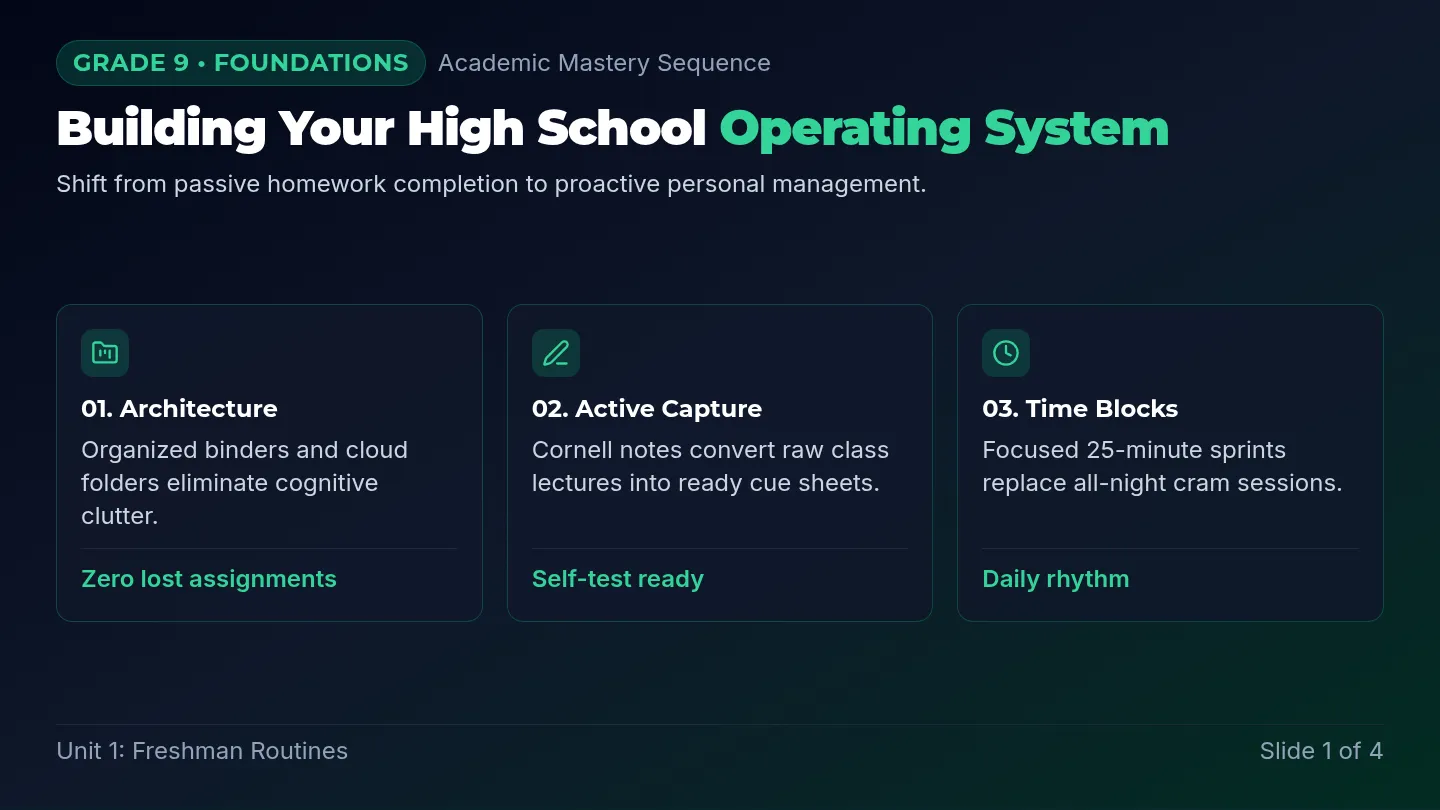
Bad Day Reset Slides
Life Skills & SEL 45-Minute Workshop
Emotional Regulation
Bad Day Reset
Navigating "I Hate Everything" Days with Sophy Henn's Story
Everyone has days where every little thing feels overwhelming, irritating, or just plain wrong. Today we explore why this happens and build your personal reset toolkit.
Story Exploration & Real-Life Choices
Self-Advocacy in Daily Life
Check-In
What is Your Battery Level?
Level 4: Fully Charged
Feeling good, ready to learn, easy to laugh and roll with surprises.
Level 3: Hanging In There
A bit tired or distracted, but capable of handling the routine.
Level 2: Low Power Mode
Small noises, requests, or tasks feel extra annoying or draining.
Level 1: "I Hate Everything"
Overwhelmed, irritable, need quiet space, everything feels like too much.
Reminder: Every battery level is normal. Knowing your level helps you choose what you need.
Story Spotlight
"I Hate Everything" by Sophy Henn
The Grumpy Cloud
The main character wakes up irritable. Breakfast is wrong. Boots are wrong. Sunshine is irritating.
"Nothing is working today!"
Pressure Backfires
When people say "Cheer up!" or force fun, it makes the character feel even more misunderstood and defensive.
"Don't tell me to smile!"
The Real Shift
Acceptance, space to feel annoyed, and one tiny comfortable thing (jumping in a puddle) begin to break the fog.
"A small reset is enough."
Discussion: Can anyone force you out of a bad mood, or does it take your own time and space?
Would You Rather • Round 1
Sensory Irritations
Choose 1 or 2
OPTION 1
Soggy Wet Socks
Stepping directly into a cold puddle and having squishy damp socks inside your shoes for two hours.
Hold up 1 finger if you'd choose this
OPTION 2
Scratchy Neck Tag
A stiff plastic clothing label stabbing the back of your neck all day with no scissors around.
Hold up 2 fingers if you'd choose this
Life Skill Takeaway: Physical discomfort instantly shrinks our patience. Checking physical needs is step one!
Would You Rather • Round 2
Social & Mental Overload
Choose 1 or 2
OPTION 1
Non-Stop Small Talk
Being trapped with someone asking you rapid-fire questions when your social battery is at zero percent.
Vote 1 finger
OPTION 2
Piled-Up Surprise Chores
Arriving home completely exhausted, only to be handed a surprise list of 4 urgent household tasks.
Vote 2 fingers
Life Skill Takeaway: Notice what overwhelms you: Is it too much noise/people or too many tasks/demands?
Regulation Strategy
The 4-Step Bad Day Reset
1. Notice
Name the feeling: "I'm in I Hate Everything mode right now." No guilt.
Acknowledge
2. Pause
Take 3 slow breaths before answering or reacting to others.
Cool Down
3. Speak Up
Use a script: "I'm overwhelmed. I need 5 minutes of quiet time."
Self-Advocate
4. Micro-Reset
Pick ONE tiny comfort: cold water, favorite track, stretching.
Small Win
Key Truth: You don't have to fix the whole day. You only need to survive the next 10 minutes safely.
Would You Rather • Round 3
Which Reset Suits You Best?
Personal Style
OPTION 1
The Solo Sound Sanctuary
Sitting in a dim, cozy corner with noise-canceling headphones listening to your favorite playlist or white noise for 10 minutes.
Vote 1: Sensory Quiet
OPTION 2
The Kinetic Fresh Air Walk
Taking a quick, brisk walk down the hallway or outside in the fresh breeze to shake physical restlessness out of your body.
Vote 2: Physical Movement
Reflection: Different people reset differently! What calms your friend might annoy you.
Worksheet Time
Your Personal Emergency Reset Plan
My Triggers
What usually tips you into "I hate everything" mode? Loud noises? Hunger? Tiredness? Unfair tasks?
My 2 Resets
Pick 2 realistic tools you can use at school or at home (sensory tool, water sip, breathing, movement).
My Script
Practice one respectful sentence to tell a teacher, boss, or family member when you need a pause.
Complete your student response sheet and share one reset tool with a partner.
You've got this!
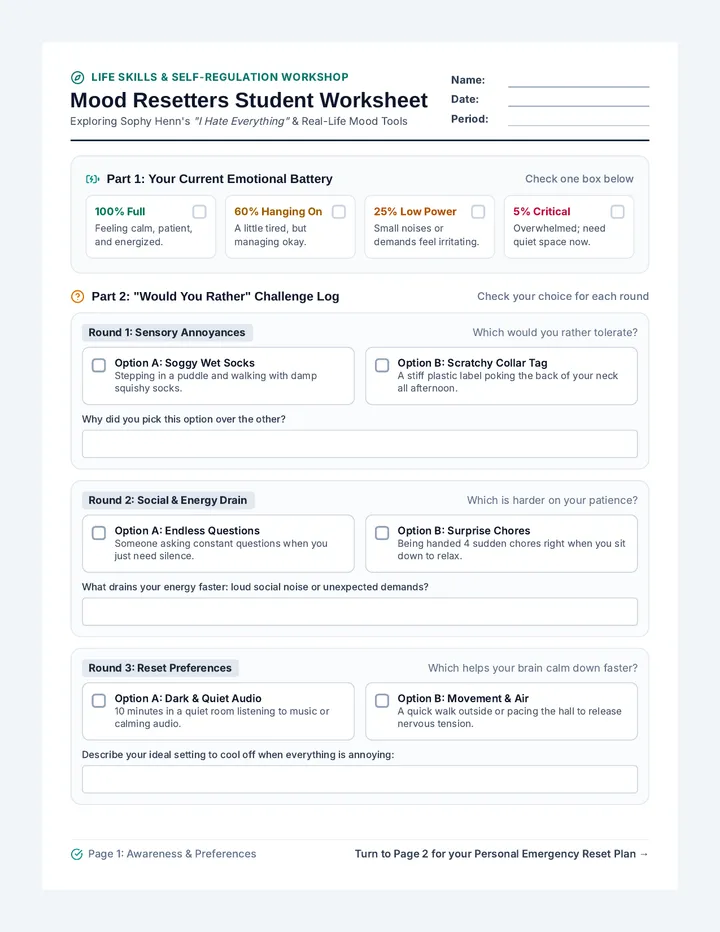
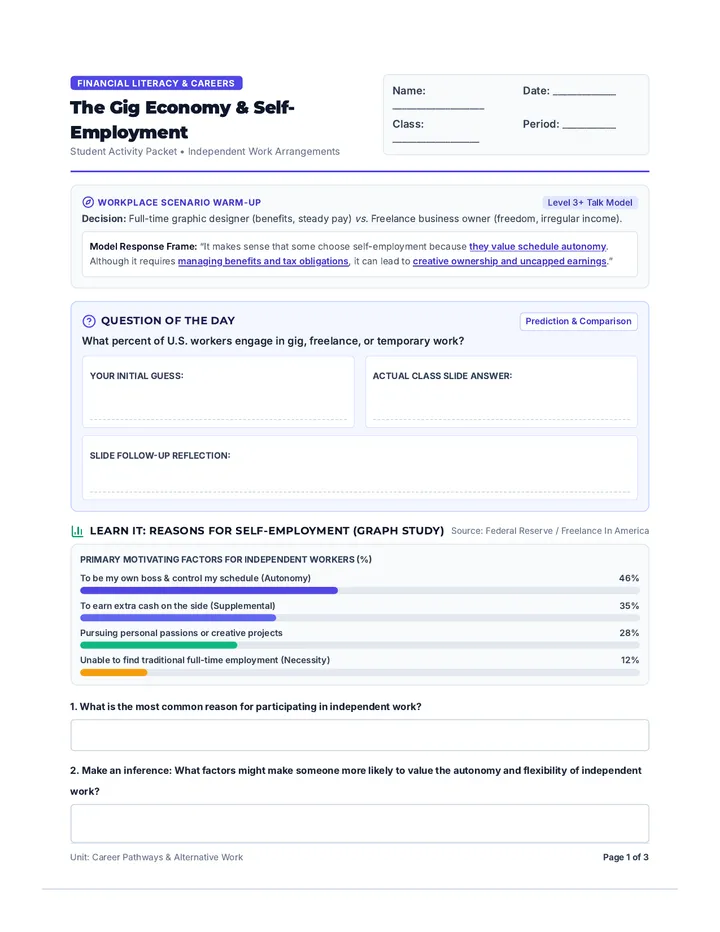
Mood Resetters Student Worksheet
Life Skills & Self-Regulation Workshop
Mood Resetters Student Worksheet
Exploring Sophy Henn's "I Hate Everything" & Real-Life Mood Tools
Name:
Date:
Period:
Part 1: Your Current Emotional Battery
Check one box below
100% Full
Feeling calm, patient, and energized.
60% Hanging On
A little tired, but managing okay.
25% Low Power
Small noises or demands feel irritating.
5% Critical
Overwhelmed; need quiet space now.
Part 2: "Would You Rather" Challenge Log
Check your choice for each round
Round 1: Sensory Annoyances Which would you rather tolerate?
Option A: Soggy Wet Socks
Stepping in a puddle and walking with damp squishy socks.
Option B: Scratchy Collar Tag
A stiff plastic label poking the back of your neck all afternoon.
Why did you pick this option over the other?
Round 2: Social & Energy Drain Which is harder on your patience?
Option A: Endless Questions
Someone asking constant questions when you just need silence.
Option B: Surprise Chores
Being handed 4 sudden chores right when you sit down to relax.
What drains your energy faster: loud social noise or unexpected demands?
Round 3: Reset Preferences Which helps your brain calm down faster?
Option A: Dark & Quiet Audio
10 minutes in a quiet room listening to music or calming audio.
Option B: Movement & Air
A quick walk outside or pacing the hall to release nervous tension.
Describe your ideal setting to cool off when everything is annoying:
Page 1: Awareness & Preferences Turn to Page 2 for your Personal Emergency Reset Plan →
Self-Advocacy & Action
My Emergency Reset Plan
Student Name:
Part 3: My "Grumpy Cloud" Warning Signals
Body Signals (Check all you notice):
Clenched jaw / fists Heavy sighing Stomach ache Fast breathing Headache / tight head Slumped posture
Top Daily Triggers (Check 2 or 3):
Hungry / skipped meal Crowded hallways Lack of sleep Unexpected schedule shift Rushed or pushed for time Feeling criticized
Part 4: My 2 Go-To Reset Tools
In the story, forced smiling failed, but a simple sensory shift (puddle splash) helped. Choose two realistic resets you can do at school or work:
Grumpy Days Teacher Guide
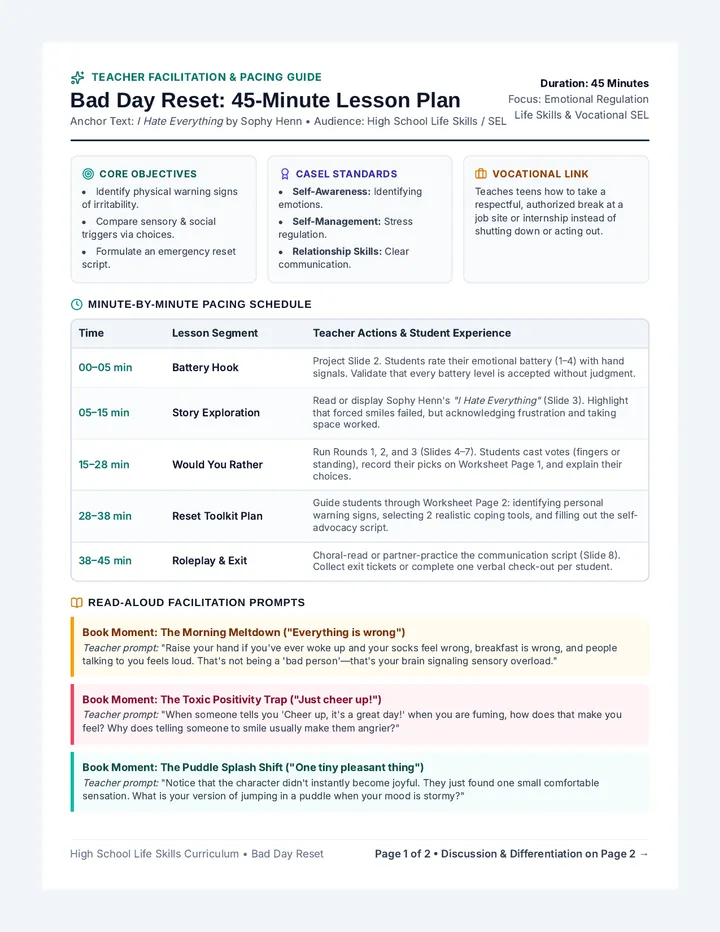
Teacher Facilitation & Pacing Guide
Bad Day Reset: 45-Minute Lesson Plan
Anchor Text: I Hate Everything by Sophy Henn • Audience: High School Life Skills / SEL
Duration: 45 Minutes
Focus: Emotional Regulation
Life Skills & Vocational SEL
Core Objectives
- Identify physical warning signs of irritability.
- Compare sensory & social triggers via choices.
- Formulate an emergency reset script.
CASEL Standards
- Self-Awareness: Identifying emotions.
- Self-Management: Stress regulation.
- Relationship Skills: Clear communication.
Vocational Link
Teaches teens how to take a respectful, authorized break at a job site or internship instead of shutting down or acting out.
Minute-by-Minute Pacing Schedule
Time
Lesson Segment
Teacher Actions & Student Experience
00–05 min
Battery Hook
Project Slide 2. Students rate their emotional battery (1–4) with hand signals. Validate that every battery level is accepted without judgment.
05–15 min
Story Exploration
Read or display Sophy Henn's "I Hate Everything" (Slide 3). Highlight that forced smiles failed, but acknowledging frustration and taking space worked.
15–28 min
Would You Rather
Run Rounds 1, 2, and 3 (Slides 4–7). Students cast votes (fingers or standing), record their picks on Worksheet Page 1, and explain their choices.
28–38 min
Reset Toolkit Plan
Guide students through Worksheet Page 2: identifying personal warning signs, selecting 2 realistic coping tools, and filling out the self-advocacy script.
38–45 min
Roleplay & Exit
Choral-read or partner-practice the communication script (Slide 8). Collect exit tickets or complete one verbal check-out per student.
Read-Aloud Facilitation Prompts
Book Moment: The Morning Meltdown ("Everything is wrong")
Teacher prompt: "Raise your hand if you've ever woke up and your socks feel wrong, breakfast is wrong, and people talking to you feels loud. That's not being a 'bad person'—that's your brain signaling sensory overload."
Book Moment: The Toxic Positivity Trap ("Just cheer up!")
Teacher prompt: "When someone tells you 'Cheer up, it's a great day!' when you are fuming, how does that make you feel? Why does telling someone to smile usually make them angrier?"