Impulse Control Toolkit Lesson Plan Impulse Control Toolkit
Tier 3 Individual Coaching Session
Duration
25 Minutes
WHY IT MATTERS
Impulse control helps students make thoughtful decisions, reduce impulsive reactions, and improve focus and relationships in academic and social settings.
OBJECTIVE
Students will learn two impulse-control strategies—Pause & Plan and Stop-Think-Act—and practice them through guided scenarios.
Teacher Preparation
Review the Pause & Plan Strategies slide deck to understand each step.
Read through the One-on-One Coaching Script for guided prompts.
Preview scenarios in the Stop-Think-Act Drills to anticipate student responses.
Skim the Impulse Reflection Journal to familiarize yourself with the reflection prompts.
Session Materials
Pause & Plan Slides
One-on-One Coaching Script
Stop-Think-Act Drills
Impulse Reflection Journal
Session Flow
3 min
Warm-Up & Goal Setting
Greet the student and explain the session’s purpose. Ask for a recent moment they acted on impulse and its outcome. Confirm today’s goal.
5 min
Introduce Pause & Plan
Present the steps (Pause, Notice, Plan) via slide deck. Model an example like being teased. Have the student restate the steps.
10 min
Guided Stop-Think-Act Drills
Practice 3-4 scenarios using the activity sheet and coaching script. Guide the student through the Stop, Think, Act process verbally.
5 min
Reflection & Journaling
Prompt the student to write about one drill. Discuss their entry and praise their thoughtful approach.
2 min
Wrap-Up & Next Steps
Summarize strategies. Plan a follow-up check-in for next week.
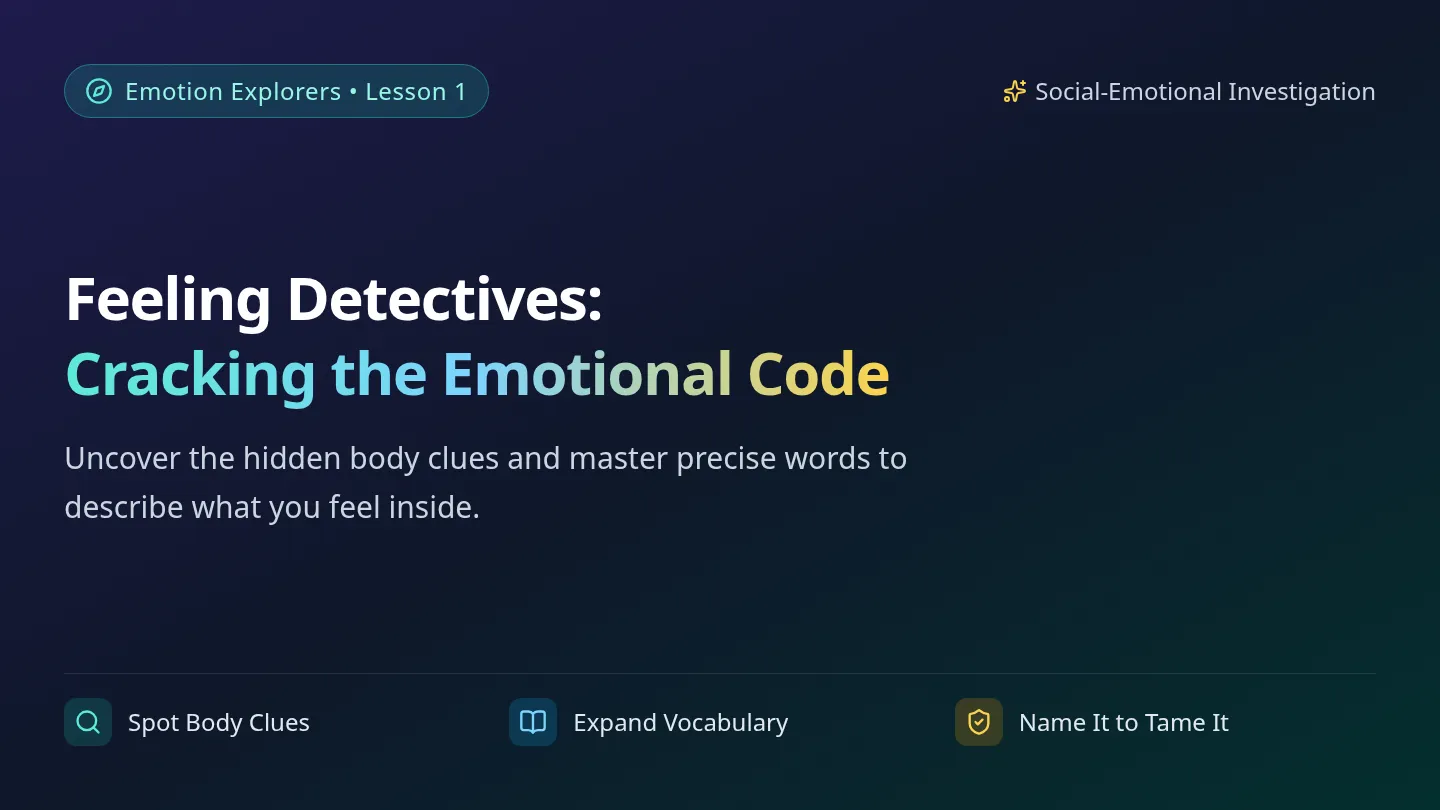
Pause & Plan Strategies Slides Pause & Plan
Strategies
Learn a simple, three-step approach to manage impulses and make thoughtful choices.
Step 1: Pause
Step 2: Notice
Step 3: Plan
Why Pause & Plan?
Helps you stop and think instead of acting on a feeling immediately.
Builds self-control and reduces regrets later.
Improves focus, relationships, and your problem-solving skills.
The Process
Step 1: Pause
Stop what you’re doing
Take a slow, deep breath
Give yourself a moment to step back
Pro Tip
The pause only needs to last for 3 seconds to change how your brain reacts!
The Process
Step 2: Notice
Identify the feeling or urge you have.
Ask: "What am I feeling right now?"
Anger Frustration Sadness Excitement Confusion Fear
The Process
Step 3: Plan
Decide on a helpful action in response.
Ask: “What can I do instead of reacting?”
Positive Action Ideas:
Count to 10
Ask for a break or help
Use kind but firm words
Let's Try It!
"You are teased by a classmate."
1
Pause
Stop and take a breath.
2
Notice
You feel hurt and angry.
3
Plan
Say "Please stop" or walk away.
One-on-One Coaching Script Guide One-on-One Coaching Script
Impulse Mastery Session • 25 Minutes
Date
This script is a guide for your session. Use the prompts provided, but feel free to adjust based on student responses. Recording the student's thoughts helps track progress over time.
3 MIN
Warm-Up & Goal Setting
Teacher:
"Hi [Student Name], it’s great to see you! Today, we’re going to practice impulse control—learning to pause and think before we act. To start, can you tell me about a time you acted on impulse recently? What happened?"
Notes:
Teacher:
"Thank you for sharing. Our goal for today is to learn two strategies—Pause & Plan and Stop-Think-Act—to help you pause before reacting. Does that sound good?"
Notes:
5 MIN
Introduce Pause & Plan
Teacher:
"Let’s look at our Pause & Plan Strategies slide deck. This simple three-step method helps you make thoughtful choices."
Step 1: Pause
Model taking a breath. Ask the student to practice.
Step 2: Notice
"What am I feeling right now?" Record student's example emotion.
Step 3: Plan
Identify a positive action (count to 10, ask for help, etc).
Teacher:
"Awesome! To check your understanding, I’ll say each step, and you repeat: Pause… Notice… Plan."
Notes:
10 MIN
Stop-Think-Act Drills
Guide the student through the three scenarios on their worksheet. Focus on the Stop → Think → Act progression.
Scenario 1: Classmate accidentally bumps you
Stop
Think
Act
Scenario 2: You forgot your homework at home
Stop
Think
Act
Scenario 3: A friend says something hurtful
Stop
Think
Act
5 MIN
Reflection
Guide the student to complete their journal. Ask:
What happened?
Which strategy did you use?
How did it feel to pause?
2 MIN
Wrap-Up
"Today we practiced Pause & Plan and Stop-Think-Act. These tools help you feel calmer and make better decisions. Use them this week!"
Stop-Think-Act Drills Activity Sheet Stop-Think-Act Drills
Impulse Control Practice
Name:
Date:
Use these scenarios to practice pausing, thinking, and choosing a positive action before you react. For each situation, fill in how you will Stop , Think , and Act .
Scenario 1: A classmate accidentally bumps you in the hallway.
Stop
Think
Act
Scenario 2: You realize you forgot your homework at home.
Stop
Think
Act
Scenario 3: A friend says something hurtful.
Stop
Think
Act
Teacher Tip: Speak each step aloud before writing to strengthen neural pathways.
Impulse Reflection Journal Document Impulse Reflection Journal
Pause. Think. Reflect. Grow.
Name:
Date:
"Use this journal to reflect on moments you practiced impulse control. Self-reflection is like a workout for your brain—it makes your self-control stronger every time you do it. Write thoughtfully and honestly."
1 Describe a recent situation when you felt the urge to react immediately. What happened?
2 Which strategy did you use—Pause & Plan or Stop-Think-Act? Why did you choose that strategy?
3 Step-by-Step: Walk through each part of the strategy you used.
• If you used Pause & Plan , write how you paused, what you noticed, and the action you planned.Stop-Think-Act , explain how you stopped, what you noticed, and the action you chose.
4 What happened after you used the strategy? How did it affect the outcome—and how did it make you feel?
5 Looking forward: If a similar situation arises, what might you do differently—or what other action could you try?
6 Creative Practice: Imagine a new challenge.
1. Briefly describe your imagined scenario (e.g., feeling left out, receiving a low grade, or a disagreement):
2. Plan your impulse-control steps (Pause/Stop, Notice/Think, Plan/Act):
3. Reflect on how using this strategy could help you feel more in control:
Keep Growing! You're in control.