Lenny.com
Explore
Create
ActivitiesNewMathEnglish Language ArtsScience & EngineeringSocial StudiesGlobal LanguagesHealth & Physical EducationSpecial EducationCounseling & Life SkillsArts & CreativityESL
Lenny.com
Lenny.com
Explore
Create
ActivitiesNewMathEnglish Language ArtsScience & EngineeringSocial StudiesGlobal LanguagesHealth & Physical EducationSpecial EducationCounseling & Life SkillsArts & CreativityESL
Lenny.com
Lenny.com

Solutions

Lenny for EducatorsLenny for SchoolsLenny for Districts

Product

ExploreSign inCreateSupportAbout

Resources

Getting startedMTSS Acceleration Program

© 2026 Lenny Learning Inc.

TermsPrivacyAccessibility
LinkedInInstagramX
Lenny

Complex Empathetic Responses

Nuanced perspective-taking strategies and the integration of cognitive and affective empathy. Develops skills for identifying subtle social cues and validating multifaceted emotional experiences.

Counseling & Life SkillsSelf-AwarenessBasic Emotion RecognitionComplex Emotion IdentificationEmotional Nuance & Mixed FeelingsBuilding Positive Self-ImageRecognizing Strengths & Growth AreasAccurate Self-AssessmentPersonal Values IdentificationCultural & Individual Identity ExplorationValues-Based Decision MakingSelf-ManagementStop-and-Think StrategiesDelaying GratificationIndependent Impulse ManagementIdentifying Stress TriggersShort-Term Goal SettingSMART Goals DevelopmentGoal Monitoring & AdjustmentBuilding Perseverance & ResilienceInternal Motivation DevelopmentComprehensive Stress Reduction PlanningSocial AwarenessRecognizing Others' FeelingsDemonstrating EmpathyRespecting Individual DifferencesUnderstanding Cultural DiversityComplex Empathetic ResponsesMultiple Viewpoint ConsiderationMulti-Perspective AnalysisChallenging Stereotypes & BiasRelationship SkillsActive ListeningClear Verbal & Nonverbal CommunicationBuilding Positive FriendshipsWorking Cooperatively in GroupsCommunicating Personal BoundariesRespecting Others' BoundariesAssertive ExpressionPeaceful Problem-SolvingContributing to Team GoalsComplex Conflict NavigationMediation & NegotiationHealthy Romantic RelationshipsResponsible Decision-MakingDaily Problem IdentificationBrainstorming Multiple SolutionsEvaluating Pros & ConsRecognizing Risks & ConsequencesApplying Ethical FrameworksInformed Risk-Benefit DecisionsRoot Cause AnalysisMindfulnessMindful BreathingBody Scan MeditationDaily Mindfulness ApplicationDaily Self-Care RoutinesBalancing Life DemandsAdvocating for Wellness NeedsMental Health SupportUnderstanding Anxiety SymptomsWorry Management StrategiesProgressive Muscle RelaxationRecognizing Depression SignsBuilding Mood-Supporting RoutinesBehavioral Activation for MoodUnderstanding Grief StagesHealthy Grief CopingCreative Expression of LossBehavioral SupportDaily Check-In ProceduresDaily Goal Setting & ReviewRecognizing Escalation Warning SignsRequesting Breaks & SupportSelf-Calming During DistressUnderstanding Positive ReinforcementToken Economy ImplementationBehavior Chart TrackingAnalyzing Behavior PatternsIdentifying Antecedents & ConsequencesDetermining Behavior FunctionFunction-Based InterventionsIndividualized Behavior ContractsData-Driven Behavior AdjustmentTherapeutic ApproachesThoughts-Feelings-Behaviors ConnectionRecognizing Thinking PatternsChallenging Negative ThoughtsPositive Self-Talk PracticeThought Record TrackingAdvanced Cognitive RestructuringComprehensive CBT PlansBehavioral Activation TechniquesBuilding Positive ExperiencesExposure Hierarchies for AnxietyPresent-Moment AwarenessNon-Judgmental ObservationSelf-Soothing & DistractionComplex Emotion LabelingReducing Emotional Vulnerability (PLEASE)DEAR MAN CommunicationGIVE Skills for RelationshipsFAST Skills for Self-RespectRadical Acceptance PracticeCrisis Survival Skills (TIPP)Understanding Trauma EffectsTrauma Responses & TriggersIdentifying Trauma FeelingsGrounding TechniquesRegulation During Trauma DistressSafe Place VisualizationProcessing Through NarrativeDeveloping Trauma StoryPersonalized Safety PlanningGroup SupportTurn-Taking & SharingGroup Conversation SkillsSharing in Supportive EnvironmentLearning from Similar ChallengesBuilding Community & BelongingNavigating Peer RelationshipsGroup Skill PracticeGroup Mental Health EducationStress & Anxiety UnderstandingCrisis Support & SafetyKnowing When to Seek HelpIdentifying Mental Health CrisesGrounding During CrisisUsing Crisis HotlinesBuilding Support NetworksAccessing Mental Health ResourcesWarning Signs & Coping StrategiesDeveloping Personal Safety PlansUnderstanding Suicide Warning SignsGatekeeper Skills for PeersDigital LiteracySocial MediaTechnology BasicsProductivity ToolsInternet and Online ResearchWeb Design and PublishingDigital CitizenshipOnline Safety and PrivacyEmerging TechnologiesFinancial LiteracyMaking Financial DecisionsBanking and AccountsConsumer SkillsSaving and InvestingCredit and DebtEmployment and IncomeTaxesInsuranceMajor PurchasesEconomic ConceptsFinancial PlanningCollege & Post-Secondary PlanningCareer ExplorationUnderstanding Post-Secondary OptionsCollege Research & SelectionAdmission RequirementsCollege Application ProcessPersonal Statement WritingFAFSA CompletionScholarship Search & ApplicationsUnderstanding Student LoansContinuing Education PlanningInterview PreparationResearching EmployersCommon Interview QuestionsSTAR Method ResponsesProfessional Interview PresenceVirtual Interview SkillsInterview Follow-UpJob Search SkillsUnderstanding Job PostingsEffective Job Search StrategiesNetworking for OpportunitiesResume Writing BasicsAction Verbs & AchievementsTailoring Resumes to JobsCover Letter WritingProfessional ReferencesProfessional CommunicationBusiness Email EtiquettePhone & Voicemail ProfessionalismMeeting ParticipationPresentation SkillsProfessional Work EthicTime Management & ProductivityTeamwork & CollaborationAdaptability & FlexibilityProblem-Solving at WorkConstructive FeedbackWorkplace RightsUnderstanding Employment LawsPay & Benefits UnderstandingWorkplace SafetyAnti-Discrimination & Harassment

Sequences

Session 1 Lesson Plan Document

Real Talk Relationships

A 10-session course for high school students exploring communication, boundaries, consent, and conflict resolution across romantic, platonic, and digital relationships.

R

Rebecca.Bibeau

51
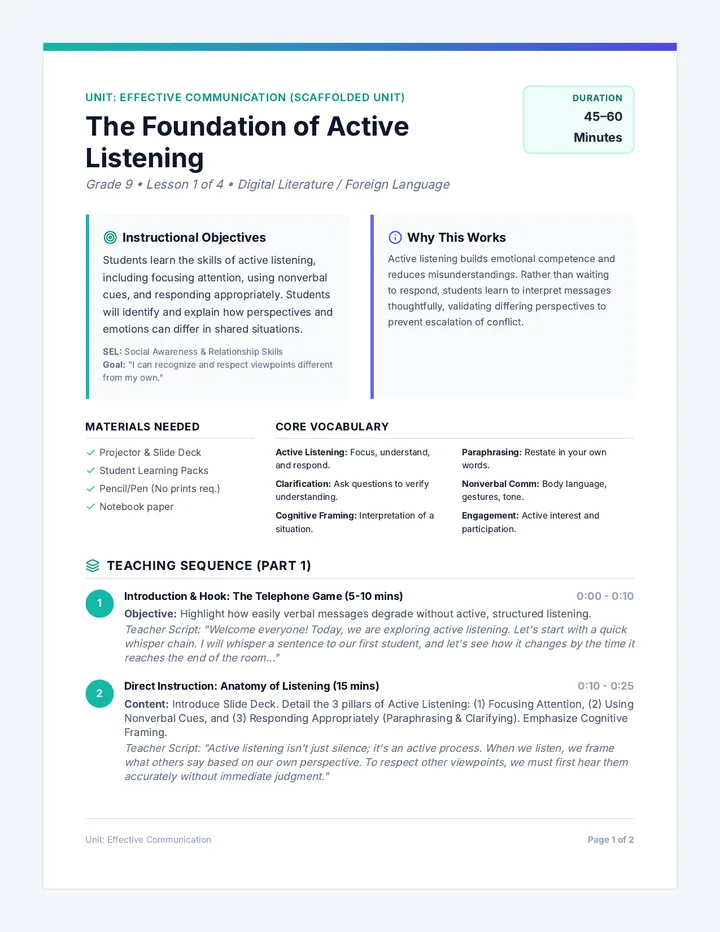
Active Listening Teacher Guide

Effective Communication

A four-grade scaffolded unit (Grades 9-12) focused on developing essential communication skills: Active Listening (Grade 9), Clarity & Purpose (Grade 10), Empathetic Self-Expression (Grade 11), and Constructive Feedback (Grade 12). This unit prepares high school students for collaborative success, emotional competence, and interpersonal growth in academic and professional settings.

J

jtoomey

37
Knowing Yourself Teacher Guide

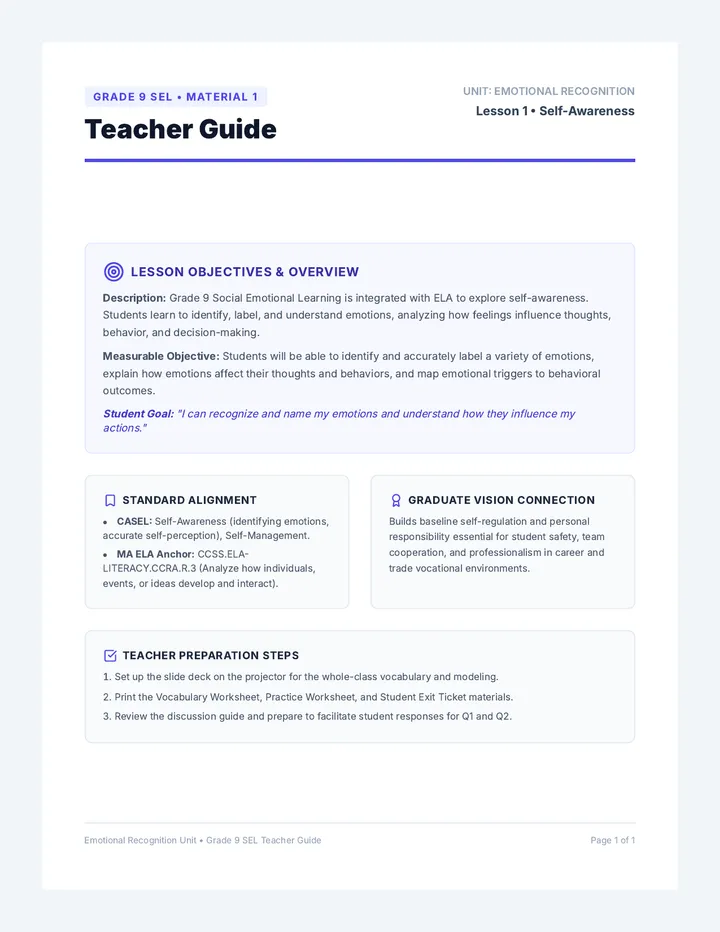
Emotional Recognition

A four-lesson developmental SEL unit designed for Grades 9-12. The unit scaffolds from self-awareness to self-management, social awareness, and final mastery of emotional intelligence, aligned with the Northeast Metropolitan Regional Vocational High School graduate vision.

J

jtoomey

36
Intent Impact Slides

Repairing Relationships Sequence

A 5-lesson sequence for 7th grade students focusing on restorative practices, the difference between intent and impact, crafting genuine apologies, and the long-term process of rebuilding trust after conflict.

15
Iceberg Logic Slides

Social Fabric Restoration

This sequence explores complex conflict navigation for 12th graders, moving from the psychological roots of identity-based conflict to the practical application of restorative circles and sustainable resolution design.

14
Iceberg Presentation Slides

Conflict Navigator Sequence

A comprehensive 6th-grade sequence on conflict navigation, teaching students to identify root causes, recognize personal conflict styles, practice perspective-taking, understand escalation, and diagnose complex disputes.

15

Lessons

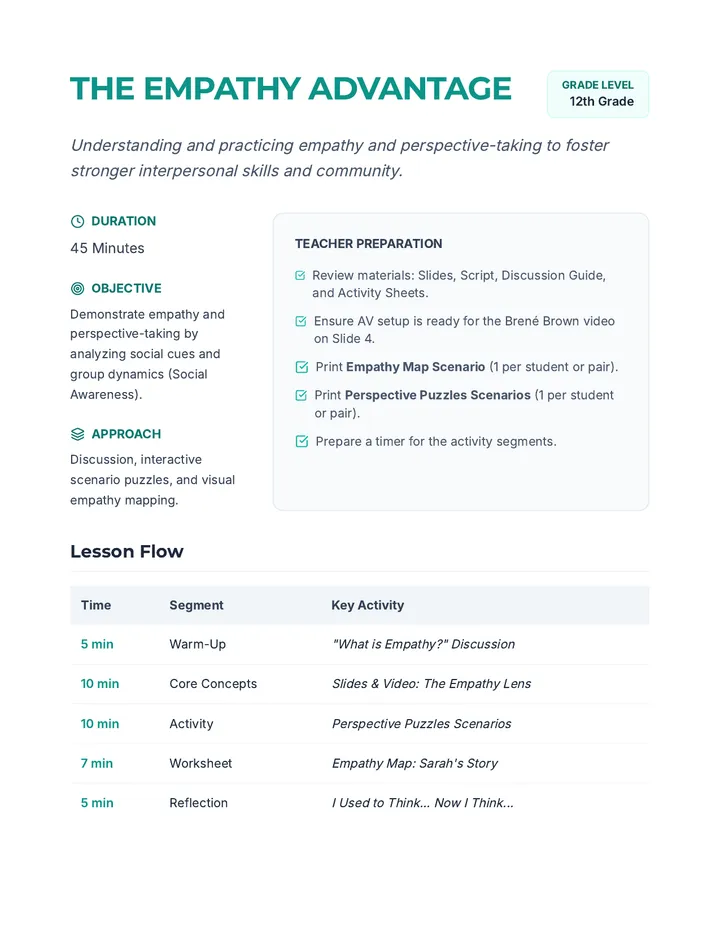
The Empathy Advantage Lesson Plan

The Empathy Advantage

A 45-minute Social-Emotional Learning lesson for 12th graders focused on developing empathy and perspective-taking through scenario analysis and active listening. Students explore the 'Empathy Advantage' by distinguishing empathy from sympathy and applying tools like Empathy Maps to real-world social dynamics.

J

jtoomey

8
Consequences Lesson Plan

Consequences What If

A 1-hour lesson for IGCSE students focusing on the consequences of actions and decisions through the metaphor of the ripple effect. Students engage in discussions, scenario mapping, and reflective activities to develop responsible decision-making skills.

C

ConceptX

15
Emotion Explorers Lesson Plan

Emotion Explorers

Students explore the Wheel of Emotions to categorize feelings and develop emotional intelligence through interactive scenarios and discussions.

CL

Courtenay Labson

6
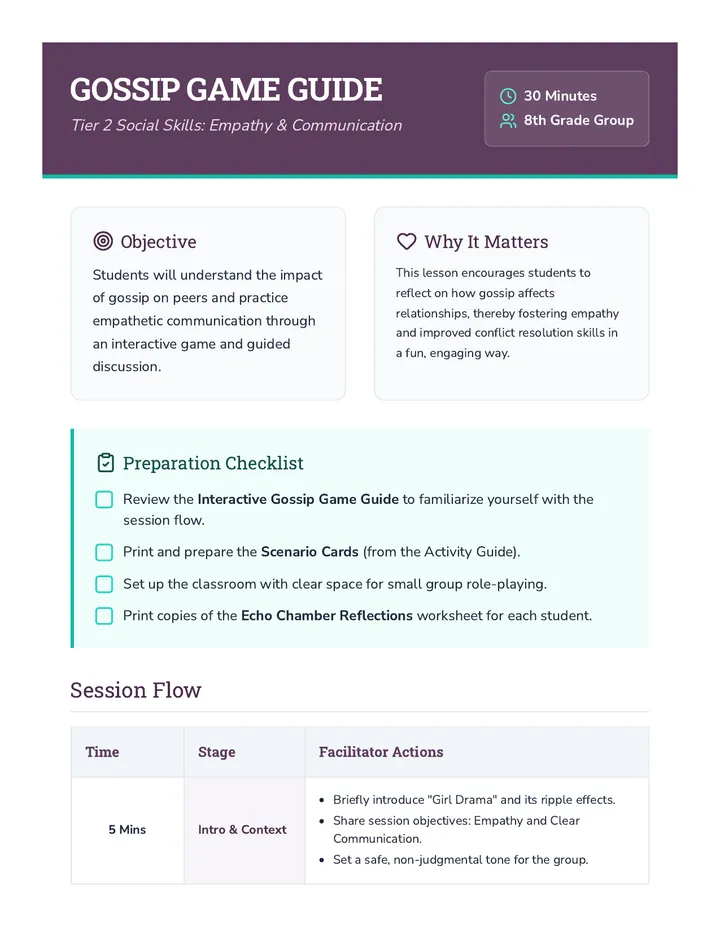
Gossip Game Facilitator Guide

The Gossip Game

A 30-minute Tier 2 group lesson for 8th graders designed to dismantle 'Girl Drama' through role-play and reflective discussion, focusing on empathy and the real-world impact of gossip.

B

bhale

3
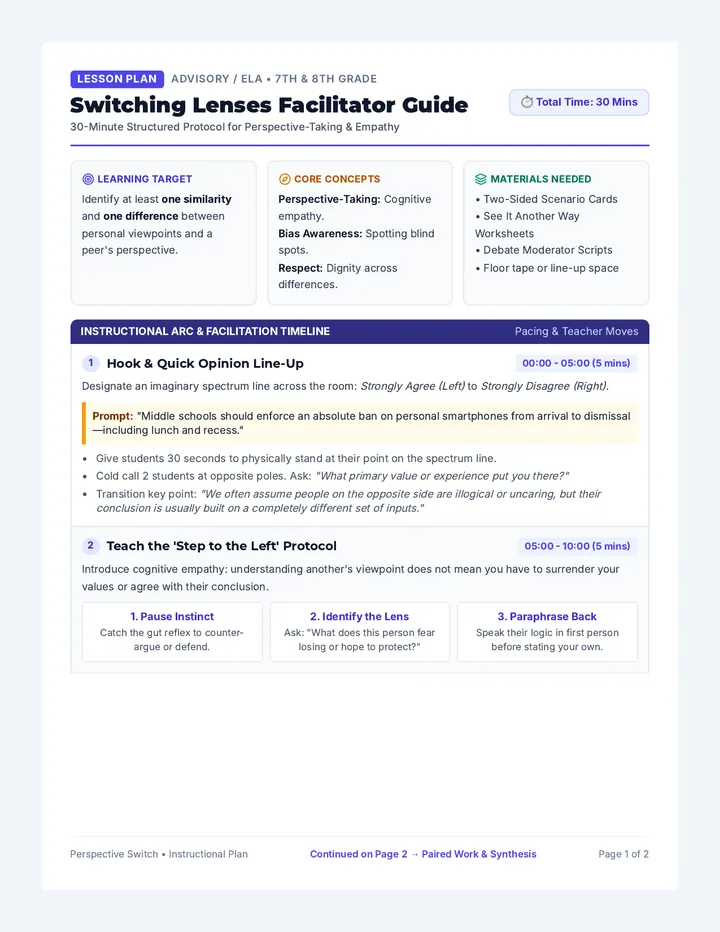
Switching Lenses Lesson Plan

Perspective Switch

A dynamic 30-minute lesson for 7th and 8th graders on perspective-taking, bias awareness, and mutual respect. Students engage in opinion line-ups, practice the 'step to the left' role-reversal protocol, and analyze nuanced scenarios to find common ground.

ES

Eulanda Seals-King

4
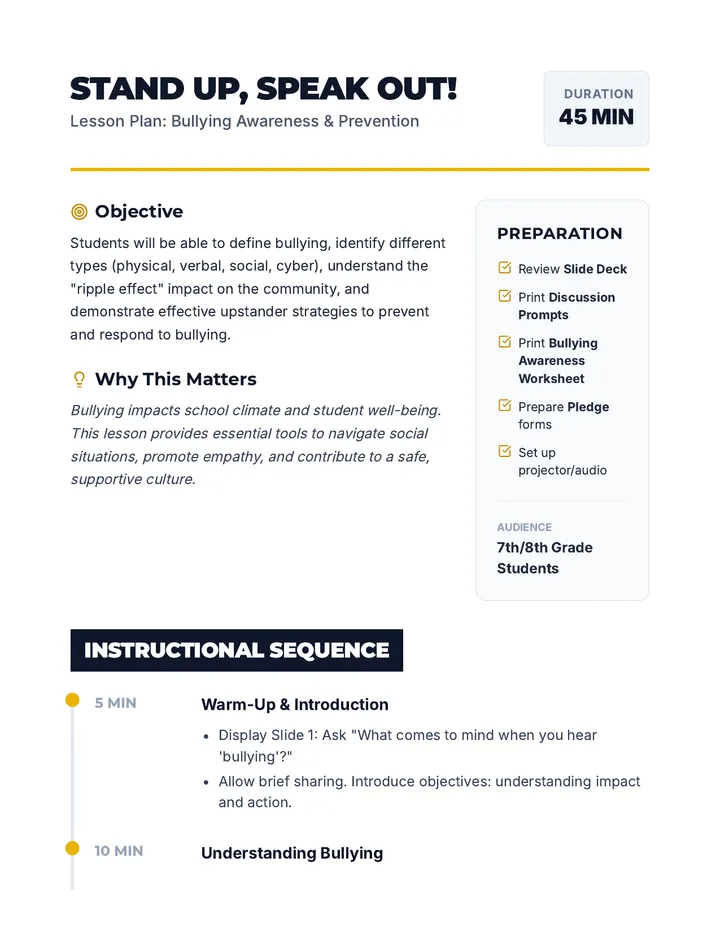
Stand Up Speak Out Lesson Plan

Stand Up Speak Out

A 45-minute lesson designed for 8th-grade students to recognize, respond to, and prevent bullying through interactive discussion and role-play. Students develop empathy and actionable strategies to foster a safer, more inclusive school environment.

TP

Teresa Paz

7