Stand Up Speak Out Lesson Plan Stand Up, Speak Out!
Lesson Plan: Bullying Awareness & Prevention
Duration
45 MIN
Objective
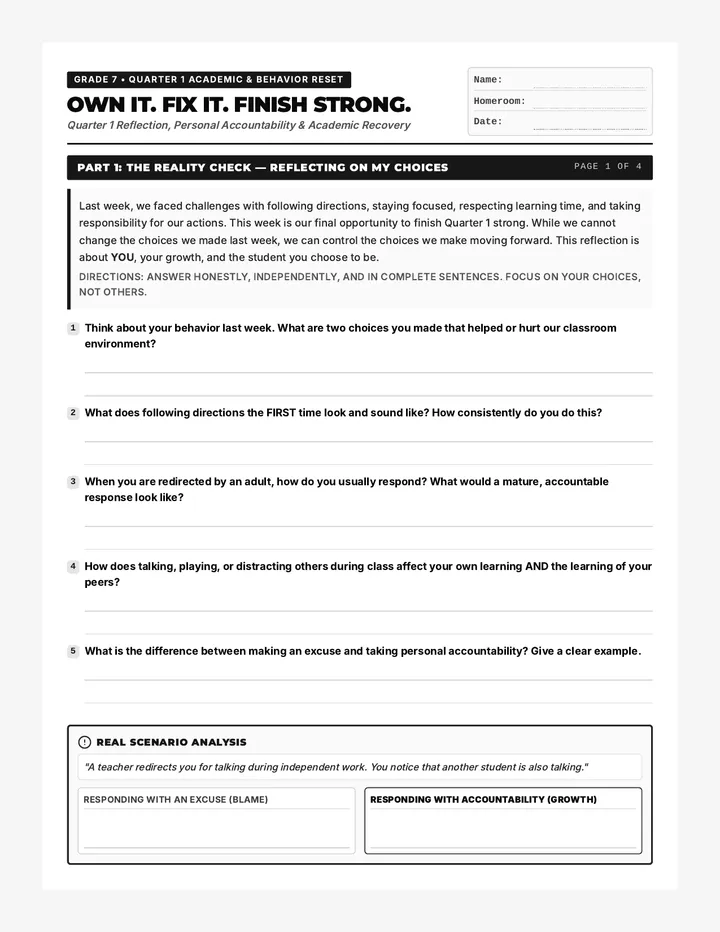
Students will be able to define bullying, identify different types (physical, verbal, social, cyber), understand the "ripple effect" impact on the community, and demonstrate effective upstander strategies to prevent and respond to bullying.
Why This Matters
Bullying impacts school climate and student well-being. This lesson provides essential tools to navigate social situations, promote empathy, and contribute to a safe, supportive culture.
Preparation
Review Slide Deck
Print Discussion Prompts
Print Bullying Awareness Worksheet
Prepare Pledge forms
Set up projector/audio
Audience
7th/8th Grade Students
Instructional Sequence
5 MIN
Warm-Up & Introduction
Display Slide 1: Ask "What comes to mind when you hear 'bullying'?"
Allow brief sharing. Introduce objectives: understanding impact and action.
10 MIN
Understanding Bullying
Use Slide Deck to define bullying (Power Imbalance + Repetition).
Cover the 4 forms: Physical, Verbal, Social, and Cyber.
Quick Q&A check for understanding.
15 MIN
Discussion: Bullying Scenarios
Groups of 3-4. Distribute Discussion Prompts .
Students identify the bullying type and potential impact.
Whole-group share-out: One key takeaway per group.
10 MIN
Activity: Ripple Effect Role-Play
Explain the "Ripple Effect" on bystanders and community.
Volunteers act out a scenario with different bystander responses.
Discuss how actions (reporting, supporting, ignoring) change the outcome.
5 MIN
Cool Down & Conclusion
Distribute My Pledge Against Bullying .
Students write personal commitments.
Reinforce the value of a safe and respectful school.
Extensions & Assessment
Optional Worksheet
Use the Bullying Awareness Worksheet as homework or for students who finish role-play early.
Post-Test
Administer the Post-Test (15-20 min) to formally assess comprehension of key concepts.
Stand Up Speak Out Presentation Slides STAND UP,
SPEAK OUT!
Building a Safer School Community
Slide 01
Let's Talk
What comes to mind when you hear the word "bullying"?
Think of words, feelings, or actions that stand out to you.
Our Goals Today
1
Define what bullying really is.
2
Identify different types of bullying.
3
Understand the impact of bullying.
4
Learn strategies to prevent and respond effectively.
What is Bullying?
"Unwanted, aggressive behavior that involves a real or perceived power imbalance and is repeated over time."
Aggressive
Intended to cause physical or emotional harm.
Power Imbalance
Difference in strength, status, or influence.
Repetition
Happens more than once (or potential for it).
Types of Bullying
Verbal
Teasing, name-calling, inappropriate comments, threats.
Physical
Hitting, kicking, tripping, taking/breaking someone's things.
Social / Relational
Spreading rumors, excluding others, embarrassing in public.
Cyberbullying
Online hurtful posts, rumors via text or social media.
The Ripple Effect
Target
Sadness, anxiety, fear, trouble focusing.
Bully
Disciplinary action, struggles with empathy.
Bystanders
Guilt, fear, feeling powerless to help.
School
Creates an unsafe and unwelcoming culture.
Group Discussion
"What Would You Do?"
Identify the type of bullying.
Consider everyone's feelings.
Find positive ways to respond.
Ripple Effect Role-Play
We'll explore how bystander responses change everything.
Your actions have a ripple effect!
Role-Play Area
Be an Upstander!
Speak Up
Tell an adult or speak directly to the person if safe.
Support
Offer kindness, invite the target to join you, or just listen.
Report
Let a trusted teacher, counselor, or parent know what's happening.
Bullying Scenarios Discussion Handout Discussion Scenarios
Stand Up, Speak Out!
Group Members
Instructions
In your groups, read each scenario carefully. Discuss the questions that follow and record your key points. Be prepared to share one specific response strategy with the class.
01
The Excluded Friend
"Maria notices that a group of her friends has started to intentionally leave out another classmate, Sarah, from their lunch table and group chats. They whisper and laugh when Sarah tries to join them. Sarah looks increasingly sad and isolated."
1. What type of bullying is this? Explain your reasoning.
2. How is Sarah feeling?
3. How might Maria feel?
4. If you were Maria, what is one action you could take? What is a potential challenge?
02
The Online Attack
"David sees a private group chat where some students are sharing embarrassing photos of another student, Leo, and making fun of his appearance. David knows Leo, and they have a few classes together. David feels uncomfortable but doesn't want to get involved and risk becoming a target himself."
1. What type of bullying is this? Why is it particularly harmful?
2. What are the potential short-term and long-term impacts on Leo?
3. What would be the most responsible action for David to take, and why?
03
The Persistent Teasing
"Every day during gym class, a few students make fun of Alex for not being good at basketball. They call him names like 'clumsy' and 'benchwarmer.' Alex tries to ignore them, but he's started to dread gym class and sometimes pretends to be sick to avoid it."
1. Is this bullying? What elements (Power, Repetition) are present?
2. How might this affect Alex's confidence and enjoyment of school?
3. If you witnessed this, what could you say to support Alex or stop the behavior?
Ripple Effect Role Play Activity Guide Activity Guide:
The Ripple Effect Role-Play
Classroom Activity Guide
The Objective
This activity demonstrates how bullying creates a "ripple effect" that impacts the entire school community. By acting out different bystander responses, students will see the immediate difference between ignoring, joining, and standing up.
Key Concept
"One person's choice to speak up can change the entire dynamic of a situation."
Roles Needed
The Target
The Bully
The Bystander(s)
Core Scenario
"During lunch, a student loudly criticizes another student's artwork, calling it 'silly' or 'trash.' The student with the artwork looks visibly upset and starts to pack it away while others watch."
Bystander Response Variations
Variation A: Ignoring
The Action:
Bystanders look away or continue talking to each other as if nothing happened.
The Ripple:
The bully feels empowered by the silence; the target feels invisible and unsupported.
Variation B: Joining In
The Action:
Bystanders laugh or add their own small criticism of the artwork.
The Ripple:
The situation escalates quickly; the target feels ganged up on and humiliated.
Variation C: Direct Support
The Action:
A bystander says, "I actually think the colors are cool. Can I see the rest of your sketchbook?"
The Ripple:
The power shifts away from the bully; the target feels seen and valued.
Variation D: The Upstander
The Action:
A bystander says, "Hey, that's not cool. There's no reason to be mean about it."
The Ripple:
Sets a social standard that bullying is not acceptable behavior in this group.
Debrief Questions
How did the energy in the room change with each response?
Which response felt the most "risky"? Which felt most effective?
How can we support each other in being Upstanders?
My Pledge Reflection Sheet MY PLEDGE
AGAINST BULLYING
Personal Commitment Reflection
Reflection Guide
What specific actions will you take?
How will you support someone?
How will you report what you see?
How will you promote kindness?
I,
pledge to:
"I believe that a safe school is a place where everyone feels valued and respected. I commit to doing my part to make our school a bullying-free zone."
Student Signature
Date
Stand Up • Speak Out • Be a Champion
Bullying Awareness Worksheet Handout Bullying Awareness
Review & Reinforcement
Name:
Date:
PART 1
Understanding the Basics
1. In your own words, what is bullying? What are the three main characteristics that define it?
2. Why is it important to clearly understand what bullying is?
PART 2
Identifying Types
"Sarah's classmates constantly post mean comments and spread false rumors about her on social media. They also share unflattering photos of her without her permission."
Type of Bullying:
Explanation:
"Mark is new to the school. During lunch, a group of students purposely blocks him from sitting at their table and tells other students not to talk to him."
Type of Bullying:
Explanation:
"Every time Maya walks by a particular locker, a student trips her and pushes her books out of her hands, then laughs about it with their friends."
Type of Bullying:
Explanation:
PART 3
Responding to Bullying
1. Imagine you witness someone being verbally bullied. What are two different actions you could take to help, and what might be the impact of each?
2. Why is it important for bystanders to speak up or get help when they see bullying happening?
3. Write one sentence describing a personal commitment you will make to help prevent bullying in our school.
Stand Up • Speak Out • Awareness Worksheet
Stand Up Speak Out Post Test Handout Assessment
Post-Test
Stand Up, Speak Out!
Name:
Score:
/ 25
01
Define bullying and explain the three key characteristics (Power Imbalance, Repetition, and Intent) that differentiate it from other unkind acts.
02
List three different types of bullying and provide a unique, realistic example for each.
Type 1:
Type name...
Type 2:
Type name...
Type 3:
Type name...
03
Explain the "ripple effect" of bullying. Beyond the target and the bully, who else is impacted and how?
04
Imagine you see a friend being socially bullied (intentionally excluded from a group). What specific, safe steps could you take to support them?
05
Reflecting on today's lesson, what is the most important takeaway for you about fostering a safer school environment?
Think deeply • Write clearly • Speak out