Lenny.com
Explore
Create
ActivitiesNewMathEnglish Language ArtsScience & EngineeringSocial StudiesGlobal LanguagesHealth & Physical EducationSpecial EducationCounseling & Life SkillsArts & CreativityESL
Lenny.com
Lenny.com
Explore
Create
ActivitiesNewMathEnglish Language ArtsScience & EngineeringSocial StudiesGlobal LanguagesHealth & Physical EducationSpecial EducationCounseling & Life SkillsArts & CreativityESL
Lenny.com
Lenny.com

Solutions

Lenny for EducatorsLenny for SchoolsLenny for Districts

Product

ExploreSign inCreateSupportAbout

Resources

Getting startedMTSS Acceleration Program

© 2026 Lenny Learning Inc.

TermsPrivacyAccessibility
LinkedInInstagramX
Lenny

Mindful Breathing

Fundamental breath awareness techniques including diaphragmatic and rhythmic breathing for self-regulation. Develops immediate grounding skills to manage stress and increase present-moment focus.

Counseling & Life SkillsSelf-AwarenessBasic Emotion RecognitionComplex Emotion IdentificationEmotional Nuance & Mixed FeelingsBuilding Positive Self-ImageRecognizing Strengths & Growth AreasAccurate Self-AssessmentPersonal Values IdentificationCultural & Individual Identity ExplorationValues-Based Decision MakingSelf-ManagementStop-and-Think StrategiesDelaying GratificationIndependent Impulse ManagementIdentifying Stress TriggersShort-Term Goal SettingSMART Goals DevelopmentGoal Monitoring & AdjustmentBuilding Perseverance & ResilienceInternal Motivation DevelopmentComprehensive Stress Reduction PlanningSocial AwarenessRecognizing Others' FeelingsDemonstrating EmpathyRespecting Individual DifferencesUnderstanding Cultural DiversityComplex Empathetic ResponsesMultiple Viewpoint ConsiderationMulti-Perspective AnalysisChallenging Stereotypes & BiasRelationship SkillsActive ListeningClear Verbal & Nonverbal CommunicationBuilding Positive FriendshipsWorking Cooperatively in GroupsCommunicating Personal BoundariesRespecting Others' BoundariesAssertive ExpressionPeaceful Problem-SolvingContributing to Team GoalsComplex Conflict NavigationMediation & NegotiationHealthy Romantic RelationshipsResponsible Decision-MakingDaily Problem IdentificationBrainstorming Multiple SolutionsEvaluating Pros & ConsRecognizing Risks & ConsequencesApplying Ethical FrameworksInformed Risk-Benefit DecisionsRoot Cause AnalysisMindfulnessMindful BreathingBody Scan MeditationDaily Mindfulness ApplicationDaily Self-Care RoutinesBalancing Life DemandsAdvocating for Wellness NeedsMental Health SupportUnderstanding Anxiety SymptomsWorry Management StrategiesProgressive Muscle RelaxationRecognizing Depression SignsBuilding Mood-Supporting RoutinesBehavioral Activation for MoodUnderstanding Grief StagesHealthy Grief CopingCreative Expression of LossBehavioral SupportDaily Check-In ProceduresDaily Goal Setting & ReviewRecognizing Escalation Warning SignsRequesting Breaks & SupportSelf-Calming During DistressUnderstanding Positive ReinforcementToken Economy ImplementationBehavior Chart TrackingAnalyzing Behavior PatternsIdentifying Antecedents & ConsequencesDetermining Behavior FunctionFunction-Based InterventionsIndividualized Behavior ContractsData-Driven Behavior AdjustmentTherapeutic ApproachesThoughts-Feelings-Behaviors ConnectionRecognizing Thinking PatternsChallenging Negative ThoughtsPositive Self-Talk PracticeThought Record TrackingAdvanced Cognitive RestructuringComprehensive CBT PlansBehavioral Activation TechniquesBuilding Positive ExperiencesExposure Hierarchies for AnxietyPresent-Moment AwarenessNon-Judgmental ObservationSelf-Soothing & DistractionComplex Emotion LabelingReducing Emotional Vulnerability (PLEASE)DEAR MAN CommunicationGIVE Skills for RelationshipsFAST Skills for Self-RespectRadical Acceptance PracticeCrisis Survival Skills (TIPP)Understanding Trauma EffectsTrauma Responses & TriggersIdentifying Trauma FeelingsGrounding TechniquesRegulation During Trauma DistressSafe Place VisualizationProcessing Through NarrativeDeveloping Trauma StoryPersonalized Safety PlanningGroup SupportTurn-Taking & SharingGroup Conversation SkillsSharing in Supportive EnvironmentLearning from Similar ChallengesBuilding Community & BelongingNavigating Peer RelationshipsGroup Skill PracticeGroup Mental Health EducationStress & Anxiety UnderstandingCrisis Support & SafetyKnowing When to Seek HelpIdentifying Mental Health CrisesGrounding During CrisisUsing Crisis HotlinesBuilding Support NetworksAccessing Mental Health ResourcesWarning Signs & Coping StrategiesDeveloping Personal Safety PlansUnderstanding Suicide Warning SignsGatekeeper Skills for PeersDigital LiteracySocial MediaTechnology BasicsProductivity ToolsInternet and Online ResearchWeb Design and PublishingDigital CitizenshipOnline Safety and PrivacyEmerging TechnologiesFinancial LiteracyMaking Financial DecisionsBanking and AccountsConsumer SkillsSaving and InvestingCredit and DebtEmployment and IncomeTaxesInsuranceMajor PurchasesEconomic ConceptsFinancial PlanningCollege & Post-Secondary PlanningCareer ExplorationUnderstanding Post-Secondary OptionsCollege Research & SelectionAdmission RequirementsCollege Application ProcessPersonal Statement WritingFAFSA CompletionScholarship Search & ApplicationsUnderstanding Student LoansContinuing Education PlanningInterview PreparationResearching EmployersCommon Interview QuestionsSTAR Method ResponsesProfessional Interview PresenceVirtual Interview SkillsInterview Follow-UpJob Search SkillsUnderstanding Job PostingsEffective Job Search StrategiesNetworking for OpportunitiesResume Writing BasicsAction Verbs & AchievementsTailoring Resumes to JobsCover Letter WritingProfessional ReferencesProfessional CommunicationBusiness Email EtiquettePhone & Voicemail ProfessionalismMeeting ParticipationPresentation SkillsProfessional Work EthicTime Management & ProductivityTeamwork & CollaborationAdaptability & FlexibilityProblem-Solving at WorkConstructive FeedbackWorkplace RightsUnderstanding Employment LawsPay & Benefits UnderstandingWorkplace SafetyAnti-Discrimination & Harassment

Videos

What Happens to Your Body When You Get Angry

What Happens to Your Body When You Get Angry

This educational video explores the biological and psychological mechanisms behind anger, helping children understand why they feel mad and how their bodies react. Host Jessi and her robot mouse friend Squeaks begin by identifying facial expressions associated with different emotions, transitioning into a detailed explanation of the physiological "fight" response. The video explains that anger is actually the brain's way of preparing the body to face a perceived threat, triggering reactions like rapid breathing, muscle tension, and the release of adrenaline. The content breaks down complex biological concepts—such as the fight-or-flight response and adrenaline release—into kid-friendly terms, using clear animations and examples. It compares human reactions to animal behaviors, noting how dogs growl or cats arch their backs for similar reasons. The narrative emphasizes that while this response was useful for survival against physical threats, it often activates today during non-dangerous situations, like losing a game or being told "no." Ideally suited for Social-Emotional Learning (SEL) and elementary science curriculums, this resource provides practical strategies for emotional regulation. The video concludes by teaching students specific techniques to manage their anger, such as deep breathing, counting to ten, and ensuring they are well-rested and fed. It serves as an excellent tool for normalizing difficult emotions while empowering students with the science behind their feelings and the tools to control them.

SciShow KidsSciShow Kids

4mins 34s

How to cope with stress

How to cope with stress

This educational video provides a comprehensive overview of managing stress through practical coping mechanisms and long-term habits. It begins by defining stress as a natural part of life that becomes problematic when constant or overwhelming. The narrator distinguishes between immediate coping mechanisms—like deep breathing or walking—and ongoing stress management strategies that help prevent stress from accumulating.

Brain Health BootcampBrain Health Bootcamp

3mins 41s

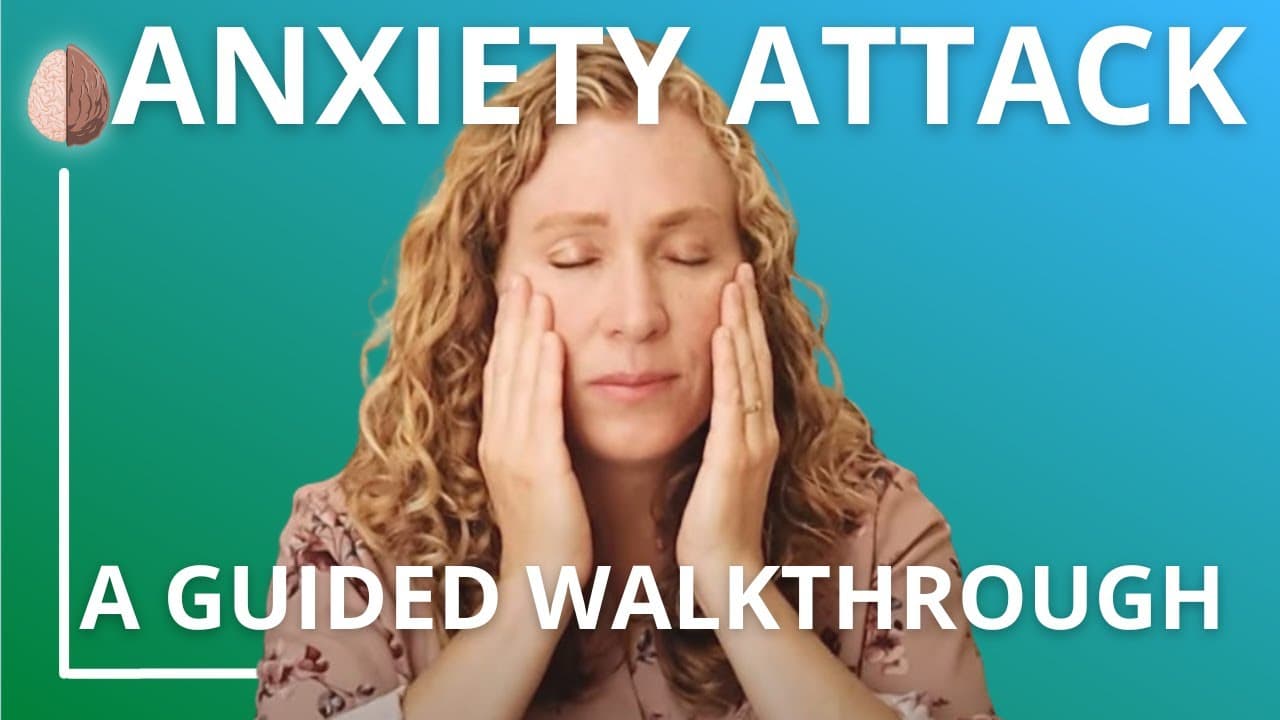
So, You're Having an Anxiety Attack (The Calm-Down Method for Stopping Anxiety Attacks)

So, You're Having an Anxiety Attack (The Calm-Down Method for Stopping Anxiety Attacks)

This video serves as a real-time guided intervention for individuals experiencing an anxiety or panic attack. Rather than just explaining the theory of anxiety, the presenter, a licensed therapist, walks the viewer through immediate, practical grounding techniques designed to down-regulate the nervous system. The video uses a slow, calming pace to help viewers regain control of their physical and emotional state. The content explores key themes of emotional regulation, sensory grounding, and the physiological response to stress. It validates the scary physical sensations of panic (shaking, nausea, fear) while reassuring the viewer of their safety. The video introduces specific techniques such as the '5-4-3-2-1' sensory method (modified here for immediate impact), cold water immersion for the diving reflex, and visualization of a safe place. For educators, this is a vital tool for social-emotional learning (SEL) and crisis management. It can be used proactively to teach students coping mechanisms or reactively as a resource when a student is overwhelmed. It demystifies the experience of panic, reducing the shame often associated with it, and provides a concrete 'break glass in case of emergency' toolkit that students can use in the classroom or at home.

Therapy in a NutshellTherapy in a Nutshell

5mins 23s

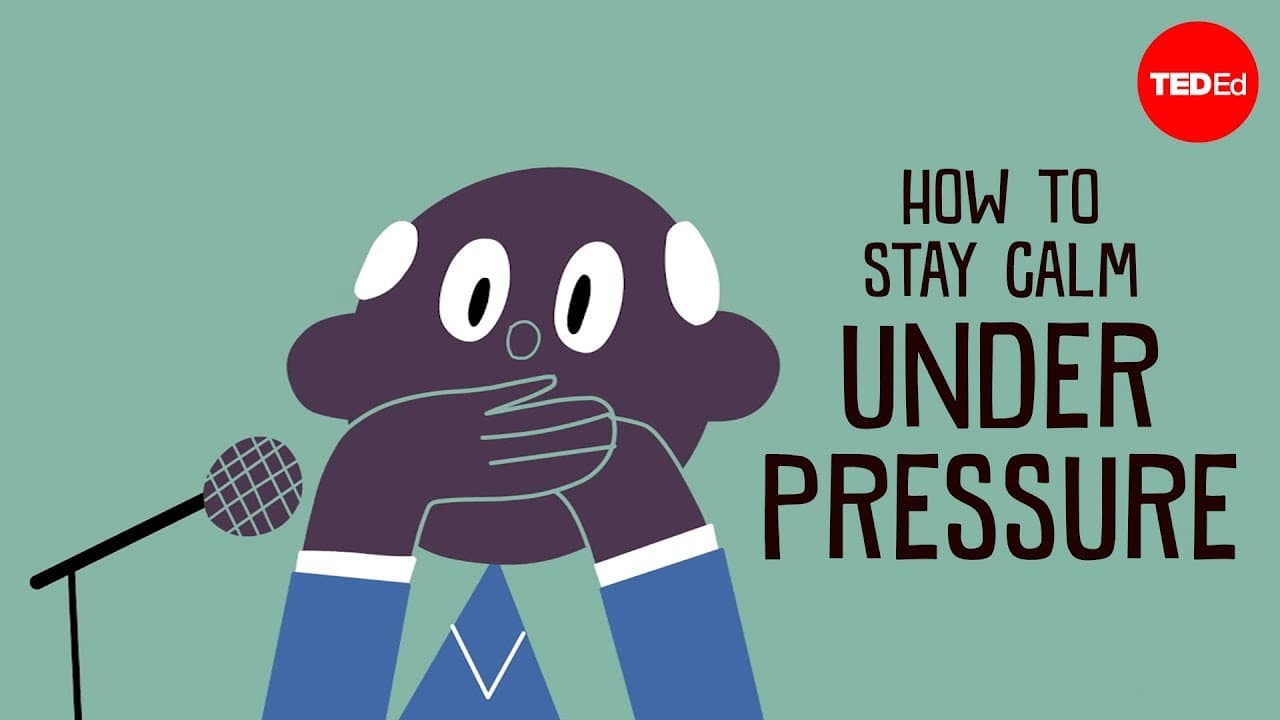
How to stay calm under pressure - Noa Kageyama and Pen-Pen Chen

How to stay calm under pressure - Noa Kageyama and Pen-Pen Chen

This animated video explores the psychological phenomenon of "choking" under pressure—failing to perform a mastered skill when it matters most. It examines why highly skilled individuals, from Olympic athletes to spelling bee champions, sometimes falter despite months or years of preparation. The video breaks down the science behind performance anxiety, distinguishing between common nervousness and the specific mental blocks that interfere with execution. The content delves into two primary theories explaining why choking happens: Distraction Theories and Explicit Monitoring Theories. It explains how high-pressure situations can overload "working memory," impacting cognitive tasks, or cause individuals to overthink automatic physical movements, disrupting muscle memory. The narrative uses accessible analogies and cites psychological studies involving math students and golfers to illustrate these concepts. For educators, this video is an excellent resource for Social-Emotional Learning (SEL), psychology, public speaking, and physical education. It offers practical, evidence-based strategies for students to manage anxiety, such as practicing under simulated pressure, developing pre-performance rituals, and shifting focus from internal mechanics to external goals. These tools are directly applicable to test-taking, sports, and classroom presentations.

TED-EdTED-Ed

4mins 29s

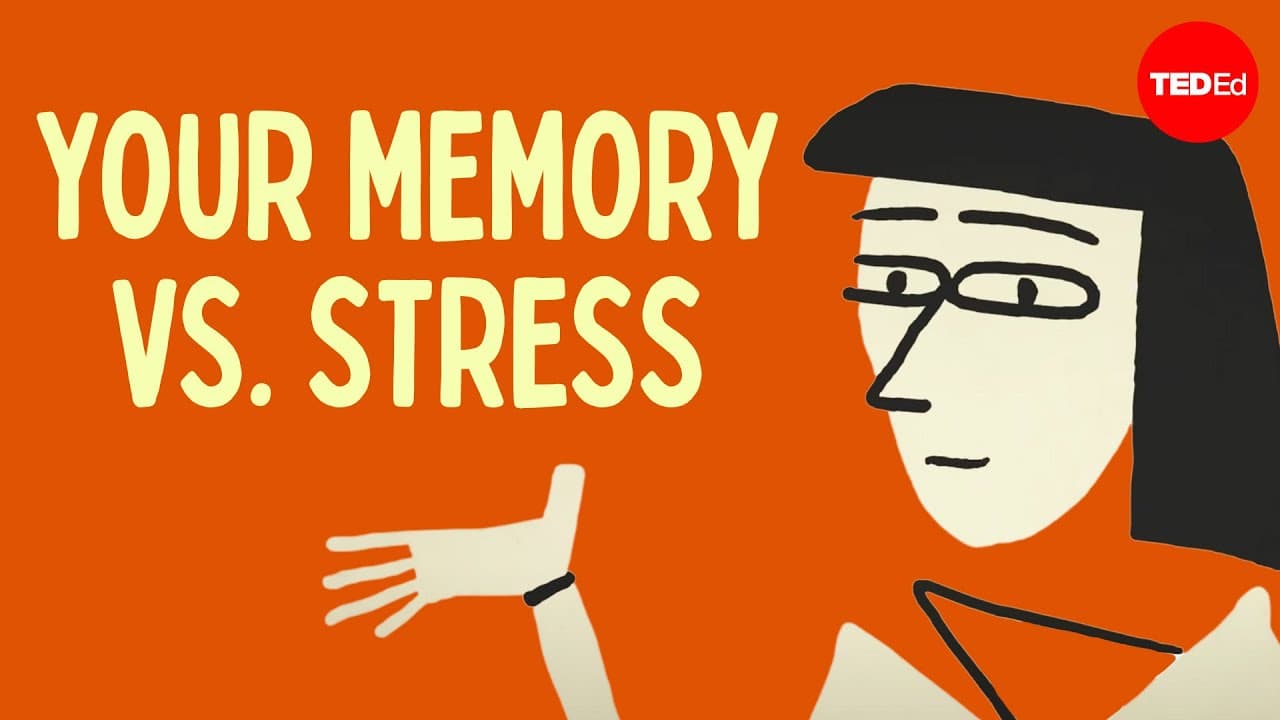
Does stress affect your memory? - Elizabeth Cox

Does stress affect your memory? - Elizabeth Cox

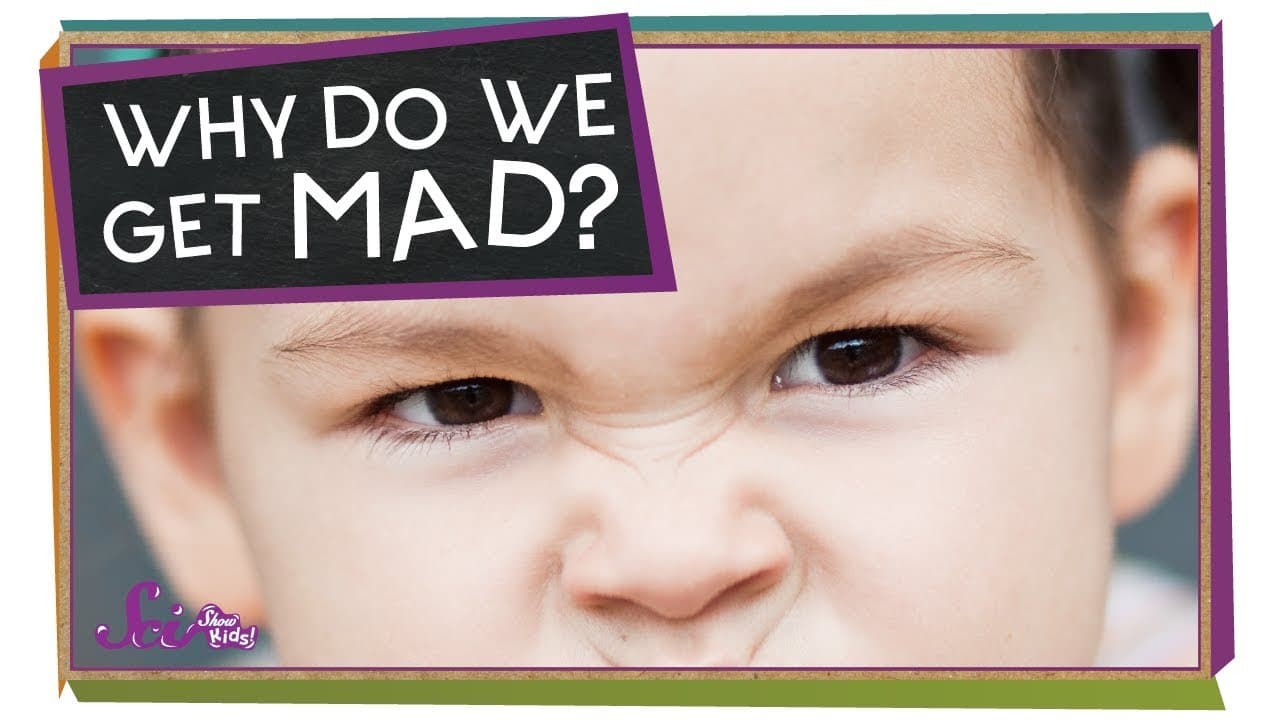
This animated lesson explores the complex biological relationship between stress and memory, specifically focusing on why our minds sometimes go blank during high-pressure situations like exams. It breaks down the three stages of memory formation—acquisition, consolidation, and retrieval—and explains how different levels of stress impact each stage. The video uses clear metaphors and character-driven animations to visualize how brain structures like the hippocampus, amygdala, and prefrontal cortex interact under pressure. The video distinguishes between moderate stress, which can actually aid memory formation, and chronic or extreme stress, which hinders it. It introduces the biological mechanism where stress hormones (corticosteroids) activate the amygdala's threat response, subsequently inhibiting the prefrontal cortex—the area responsible for reasoned thought and memory retrieval. This biological override explains the "fight, flight, or freeze" response that causes test anxiety. For educators, this video is an invaluable tool for social-emotional learning and study skills. It not only explains the science behind test anxiety but offers concrete, actionable strategies for students to manage it, such as simulating test conditions, exercising, and deep breathing. By understanding the biology of their own reactions, students can destigmatize their anxiety and learn practical techniques to regain control during stressful moments.
TED-EdTED-Ed

4mins 44s

Relax Your Body & Your Mind ~ 5 Minute Guided Meditation

Relax Your Body & Your Mind ~ 5 Minute Guided Meditation

This video is a calming, five-minute guided meditation designed to help viewers achieve a state of physical and mental relaxation. Through a soothing voiceover and gentle background music, the narrator guides the audience through deep breathing exercises, a body scan to release muscle tension, and visualization techniques to quiet the mind. The visual component features a serene animation of a woman meditating against a mountainous backdrop, providing a steady focal point for those who prefer to keep their eyes open. The content explores key themes of mindfulness, self-regulation, and the mind-body connection. It specifically addresses the concept of "holding space" for oneself and normalizes the experience of a wandering mind, encouraging viewers to gently return their focus without judgment. The meditation emphasizes the use of gravity and breath as tools to ground oneself in the present moment. For educators, this video serves as an excellent tool for social-emotional learning (SEL) and classroom management. It is particularly useful for transitioning students between high-energy activities and focused work, alleviating test anxiety, or starting the day with a positive mindset. The short duration makes it practical for classroom integration, allowing teachers to teach self-soothing techniques that students can utilize independently to manage stress and emotions.

Great MeditationGreat Meditation

5mins 35s

Materials

Uno Regulate Coping Cards

Uno Regulate Coping Cards

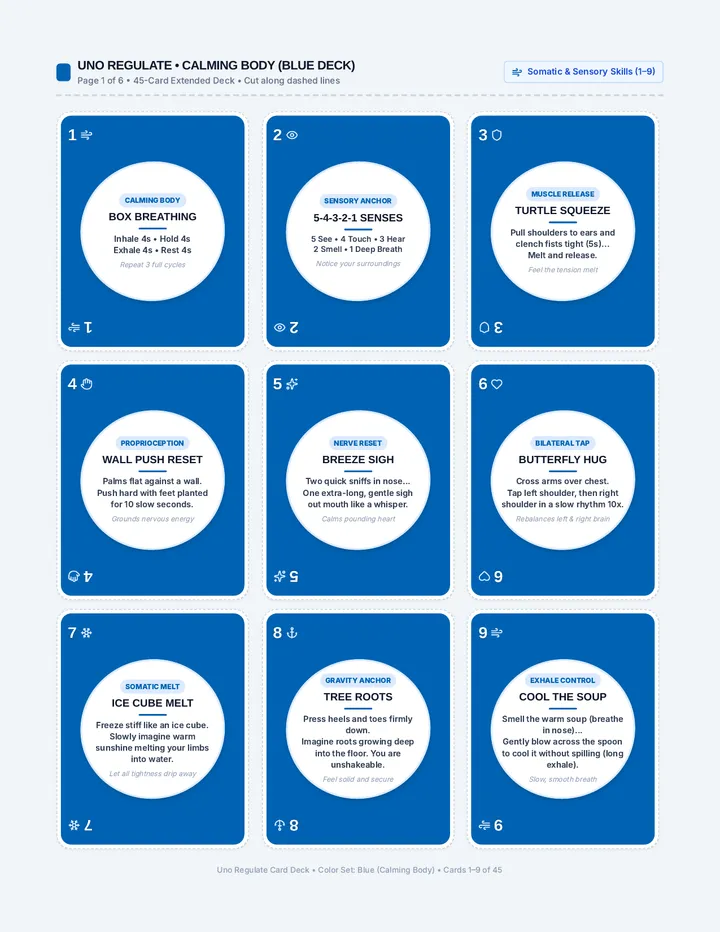
An expanded 6-page printable coping skills and self-regulation card deck styled after Uno, featuring 45 total cut-apart cards (complete 1–9 sets for all 4 color domains plus action and wild cards) and an in-depth gameplay and facilitation rulebook for classroom and small-group play.

RG

Rachel Garbutt

Calm Control Desk Checklists

Calm Control Desk Checklists

A high-contrast, printable 4-up student desk checklist for emotional regulation and self-soothing. Features a clear visual check-in scale (Red/Yellow/Green), actionable step-by-step coping strategies, and custom cutting guides for easy printing and lamination.

LR

La'Shauna Reid

Peaceful Path Reflection Sheet Printable

Peaceful Path Reflection Sheet Printable

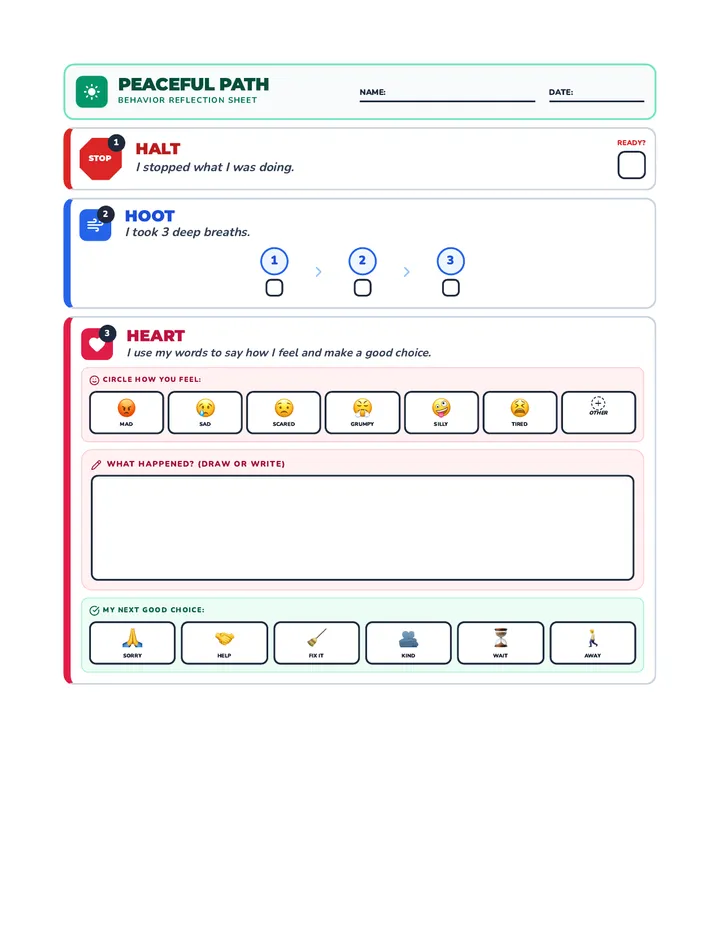
A highly optimized behavior reflection sheet for K-2 students. Uses flexbox to guarantee all content fits on one printable page, including a large "Draw or Write" section and dark slate borders (border-slate-800) for maximum print visibility and reliability.

CO

Christy Olivieri

Calm Pocket Ring Cards

Calm Pocket Ring Cards

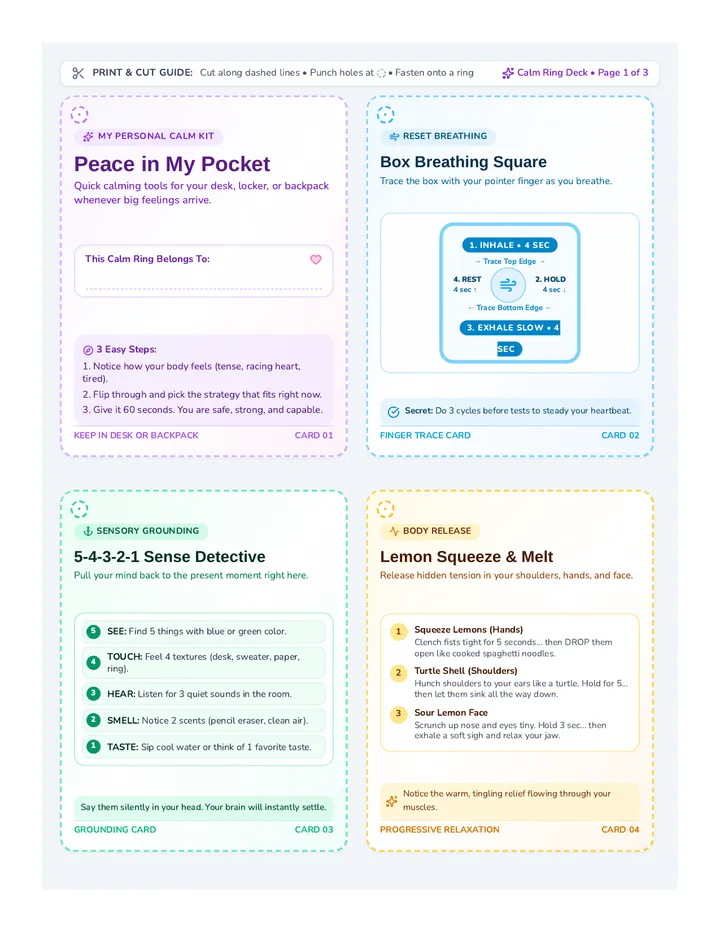
A 20-card printable ring deck featuring evidence-based calming strategies, sensory grounding, muscle release, and boy-friendly action resets (Dino Stomp, Ninja Stealth, Pit Stop, Wall Push, Gamer Reboot) tailored for 2nd grade. Includes hole-punch marks and cut guides for easy assembly into a pocket or backpack flip ring.

RF

Rebecca Farnham

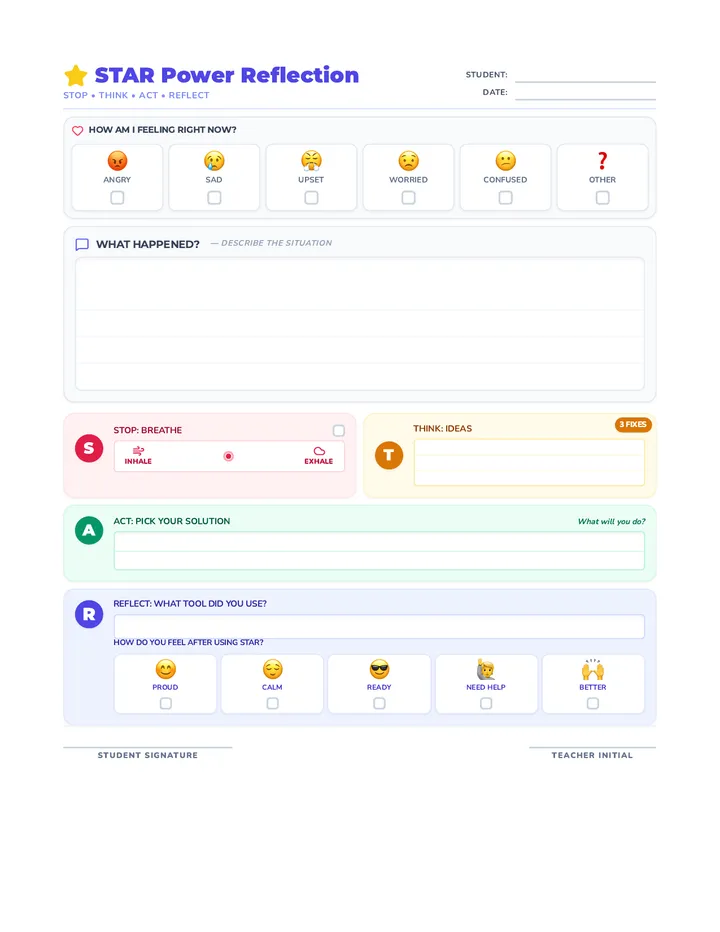
Star Power Reflection Sheet Project

Star Power Reflection Sheet Project

Updated STAR strategy reflection sheet. The "What happened?" section is expanded by reducing the size of feeling check-in boxes and tightening vertical spacing, providing more room for student writing. Includes a "3 Fixes" badge for student ideas.

CO

Christy Olivieri

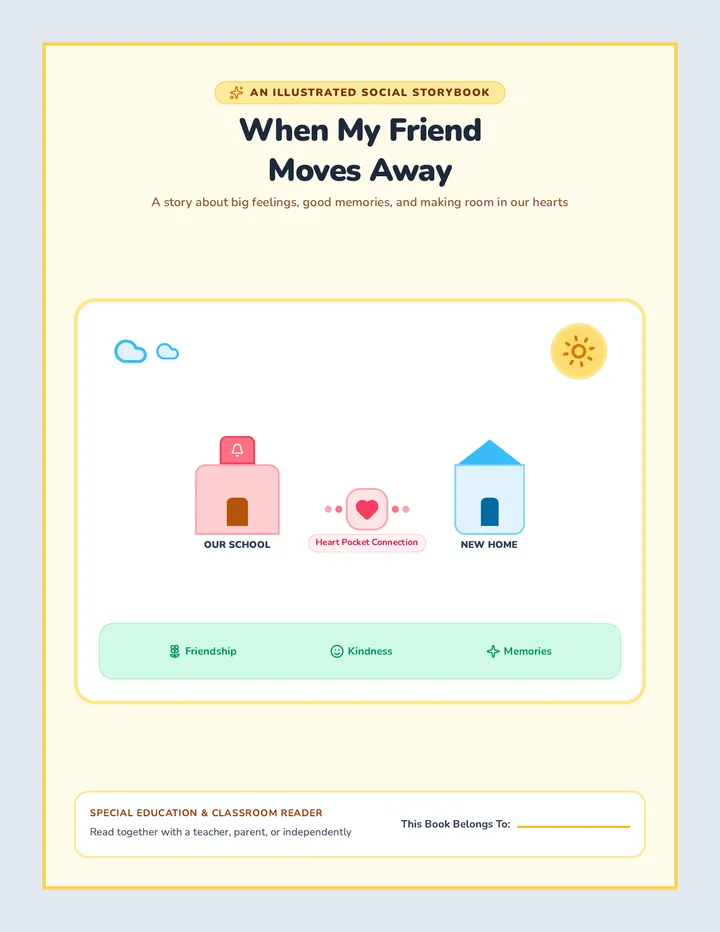
Friend Moves Storybook

Friend Moves Storybook

A 7-page illustrated children's picture-book social story titled 'When My Friend Moves Away', featuring rich full-page storybook illustrations, gentle narrative chapters, and an interactive reflection page.

M

mstacey

Sequences

Orientation Key Points Visual v2

DBT Skills for Young Explorers

A comprehensive DBT skills training sequence for elementary schools, split into K-2 and 3-5 curricula. This program covers Mindfulness, Distress Tolerance, Emotion Regulation, and Interpersonal Effectiveness using age-appropriate activities and narratives.

MB

Megan Bjork

173
Empowering You Teacher Guide

DBT Skills Empowering You

A 5-week individual lesson series for 8th-grade students with social-emotional disabilities, introducing core DBT modules: Mindfulness, Distress Tolerance, Emotion Regulation, Interpersonal Effectiveness, and Walking the Middle Path.

B

bbeldenscott

38
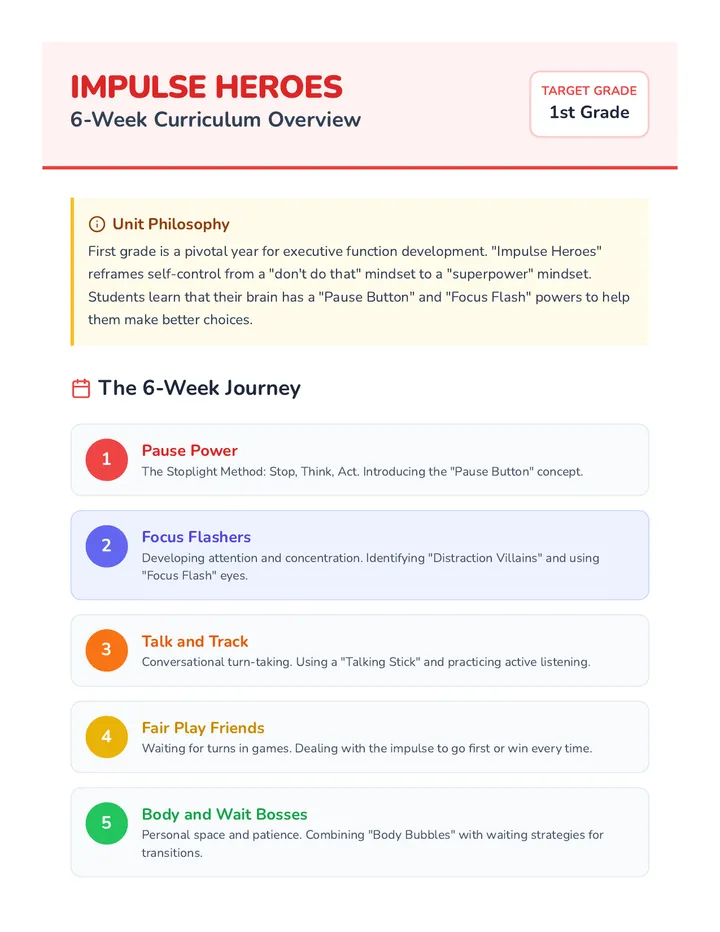
Impulse Heroes Teacher Guide

True North Identity Lab

A 6-week identity and self-esteem program for 5th graders titled 'True North: The Identity Lab.' Students explore their core values, strengths, mindset, and authentic selves through a scientific 'discovery' theme, preparing them for the social transitions of middle school.

BR

Beverly Rogers

41
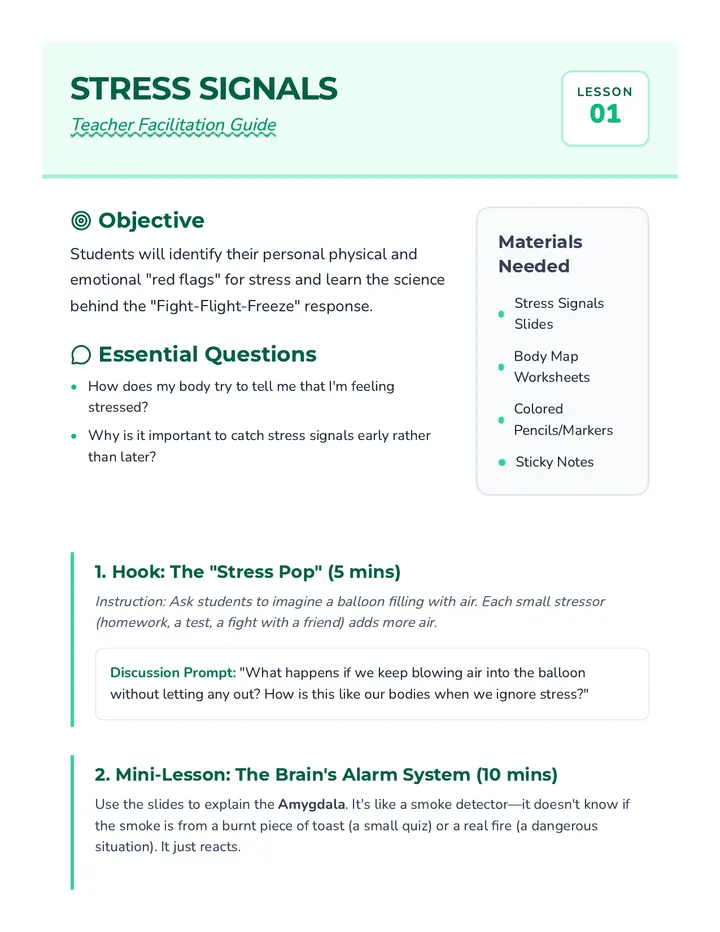
Stress Signals Teacher Guide

Mindful Masters

A 3-week comprehensive curriculum for middle schoolers focusing on identifying stress signals, developing healthy coping mechanisms, mastering positive self-talk, and building long-term resilience through interactive group activities and personal reflection.

KJ

Kayle Jordan

27
Body Scan Activity Sheet

Inner Strength Lab

A comprehensive 9-week social-emotional learning curriculum for 8th graders focusing on anxiety, self-esteem, and healthy relationships. Designed for two 2-hour sessions per week, with structured instruction on Day 1 and independent creative or research projects on Day 2.

D

dmartinez

37
Impulse Control Facilitator Guide

Impulse Control Fun

An 8-week series for 2nd graders to develop impulse control, self-regulation, and decision-making skills through interactive activities and reflection.

VC

Victoria Claas

25