Clinical Skills Roadmap Document Clinical Roadmap
Vital Signs for Life: CMA Life Skills Sequence
Status CORE
Program Mission
To transition CMA students from clinical competence to professional excellence. This roadmap focuses on the "vital signs" of a healthcare career: time management, communication, resilience, and ethics.
1. Clock Watchers
Triage Prioritization: Learning to categorize clinic tasks by urgency.Workflow Optimization: Strategies for rooming patients efficiently.The 2-Minute Rule: Managing documentation in real-time.
2. Bedside Manner
Active Listening: Validating patient concerns without over-committing time.De-escalation: Handling difficult patients and high-emotion family members.Inter-professional Communication: Efficient hand-offs to providers.
3. Calm Clinic
Stress Response: Identifying personal "red zones" in busy shifts.Boundaries: The importance of "switching off" after a shift.Micro-Restoration: Practical techniques for 30-second resets.
4. Professional Pulse
Ethics & HIPAA: Navigating social media and casual conversations.Reliability: Impact of attendance and punctuality on patient care.Career Pathways: Beyond the back office—specialties and advancement.
L1
Detailed Plan: Clock Watchers
Major Section 1: Time Management in the Clinic
Duration
90 Minutes
Target Skill
Task Prioritization
Assessment
"Shift Simulation" Log
Phase 1: The Morning Huddle (15 min)
Kickoff with "The Domino Effect" discussion—how one delay cascades.
Phase 2: Triage Theory (25 min)
Introduction of the Eisenhower Matrix for clinical workflows.
Phase 3: The Lab Race Simulation (35 min)
Interactive sorting game: Which patient comes first? Which lab is urgent?
Phase 4: Debrief & Decompress (15 min)
Identifying one "time thief" to eliminate in their next clinical rotation.
L2
Detailed Plan: Bedside Manner
Major Section 2: Communication & Interaction
Duration
120 Minutes
Target Skill
Active Listening & De-escalation
Assessment
Roleplay Video Review
Phase 1: The First Impression (20 min)
The "7-Second Rule." Body language analysis of CMA-patient interactions.
Phase 2: Validation Techniques (30 min)
Instruction on the HEAT method (Hear, Empathize, Apologize, Take Action).
Phase 3: The Difficult Room (50 min)
Scenario-based roleplay. Dealing with the "Angry Attender" or "Non-Compliant Patient."
Phase 4: Closure (20 min)
Professional hand-offs (SBAR) to the provider.
L3
Detailed Plan: Calm Clinic
Major Section 3: Stress & Resilience
Duration
60 Minutes
Target Skill
Micro-Resilience
Assessment
Self-Care Personal Action Plan
Phase 1: Burnout Biosensor (10 min)
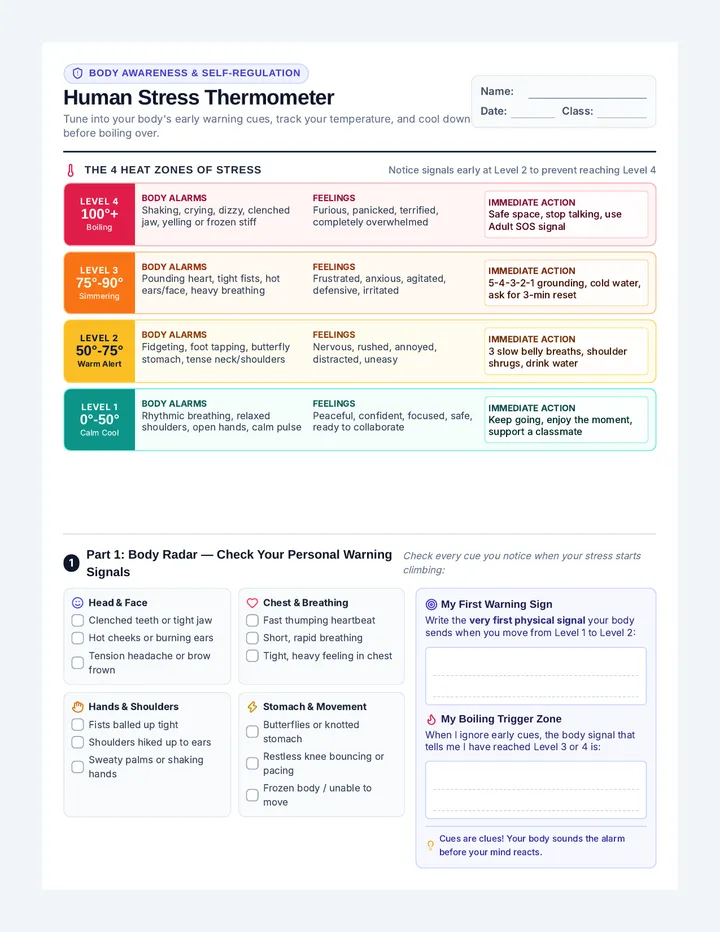
Identifying physical signs of high-stress shifts before they peak.
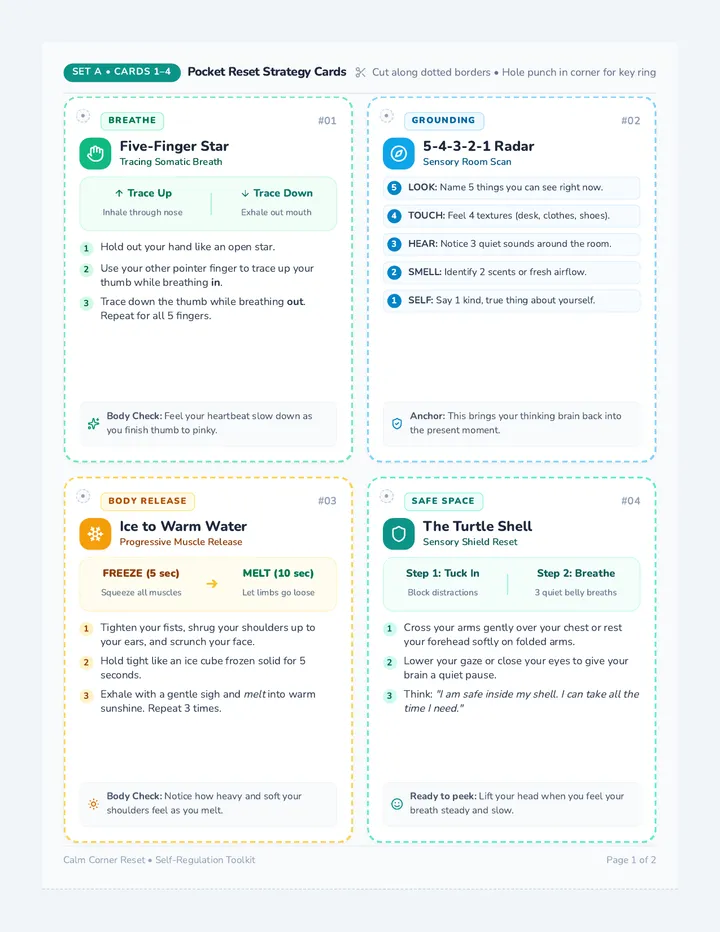
Phase 2: Box Breathing & Resets (15 min)
Practical exercises for the supply room or bathroom break resets.
Phase 3: Psychological Scrub (20 min)
Visualizing the removal of the day's stress when changing out of scrubs.
Phase 4: The Buddy System (15 min)
How to support a teammate during a crisis.
L4
Detailed Plan: Professional Pulse
Major Section 4: Ethics & Long-term Growth
Duration
90 Minutes
Target Skill
Professional Reliability
Assessment
Career Pathway Map
Phase 1: The Digital Footprint (20 min)
Analyzing social media risks and HIPAA violations in "innocent" posts.
Phase 2: Reliability & Reputation (25 min)
Discussion: Why "on time" is "late" in clinical settings.
Phase 3: The 5-Year Pulse (30 min)
Guest speaker (video) or research on specialties (Dermatology vs. Pediatrics vs. Surgery).
Phase 4: Commitment (15 min)
Signing the "Professional Vitality Pledge."
Clock Watchers Slides Module 1: Life Skills
Clock Watchers
Mastering the High-Speed Clinic Workflow
The Domino Effect
The 5-Min Delay
CMA is late rooming the first 9:00 AM patient because they were checking email.
The Cascade
The Physician is idle for 5 mins, then hits a logjam. 10:00 AM patients are now 15 mins late.
The Fallout
Patient satisfaction drops. Staff stress rises. Errors become 2x more likely.
Clinical Triage Matrix
Urgent & Important
Rooming patients, STAT labs, handling medical emergencies.
Important, Not Urgent
Documentation, stocking supplies, non-STAT referrals.
"If everything is a priority, nothing is a priority."
As a CMA, your day is a constant cycle of re-sorting these boxes.
Eliminating Empty Motion
1
The Supply Check
Never enter a room without a "pre-flight" supply check. Running back for a specimen cup wastes 3 minutes.
2
Real-Time Documentation
Finish the vitals entry *before* leaving the room. "Batching" notes at noon is a recipe for errors.
3
The 2-Minute Rule
If a task takes < 2 mins (like answering a simple provider question), do it immediately rather than putting it on a list.
Let's Triage
Open your "Clinical Priority Worksheet." We are going to simulate a chaotic 30-minute block at a busy multi-provider clinic.
Ready?
Triage Matrix Worksheet The Triage Matrix
Lesson 1: Clinical Time Management Simulation
NAME:
DATE:
The Scenario: 10:15 AM Jam
You are the only CMA on the floor for 5 minutes while your partner is on break. You have three patients in rooms, one patient checking in, and a ringing phone. Use the matrix below to categorize the following tasks.
1. Patient in Room 4 is ready for a STAT EKG.
2. Front desk says a walk-in is complaining of chest pain.
3. Dr. Smith needs Room 2 restocked with gauze.
4. Pharmacy is on the phone for a non-urgent refill.
5. You need to enter vitals for Room 1 (who just left).
6. Lab results arrived via fax and need filing.
URGENT & IMPORTANT (STAT)
IMPORTANT, NOT URGENT (WORKFLOW)
URGENT, NOT IMPORTANT (INTERRUPTIONS)
NEITHER (TRASH/FILE)
Strategy Reflection
In the scenario above, what is the very first action you take, and why?
Clinical Skills Roadmap Document Updated Clinical Roadmap
Vital Signs for Life: CMA Life Skills Sequence
Status COMPLETE
Program Mission
To transition CMA students from clinical competence to professional excellence. This roadmap focuses on the "vital signs" of a healthcare career: time management, communication, resilience, ethics, and career placement.
1. Clock Watchers
Time Management & Workflow
• Triage Matrix: STAT vs. Routine
• Rooming efficiency hacks
2. Bedside Manner
Patient & Provider Comm.
• HEAT method for de-escalation
• SBAR clinical hand-offs
3. Calm Clinic
Resilience & Burnout
• Identifying "Red Zone" triggers
• 30-second micro-resets
4. Professional Pulse
Ethics & HIPAA
• Digital footprint & social media
• Long-term career pathways
5. Candidate Edge
Workforce Readiness & Interview Lab
• STAR Interview Method
• Healthcare Resume Branding
• Soft-Skill "Vital Signs"
L1
Plan: Clock Watchers
Time Management & Workflow
Phase 1: The Domino Effect (15 min)
Discussion on how one 5-minute delay creates a 2-hour clinical backlog.
Phase 2: Triage Theory (25 min)
Teaching the Clinical Eisenhower Matrix (Urgent vs Important).
Phase 3: Lab Race Simulation (35 min)
Sorting worksheet activity to simulate a chaotic clinic morning.
Phase 4: Debrief (15 min)
Identifying "empty motion" to eliminate in current rotations.
L2
Plan: Bedside Manner
Communication & Interaction
Phase 1: The First 7 Seconds (20 min)
Analyzing body language and professional greetings.
Phase 2: The HEAT Method (30 min)
Instruction on Hear, Empathize, Apologize, Take Action.
Phase 3: Roleplay Cards (50 min)
Pair activity: Handling the "Googler," the "Angry Attender," etc.
Phase 4: SBAR Wrap-up (20 min)
Efficient provider hand-offs for high-pressure rooms.
L3
Plan: Calm Clinic
Stress & Resilience
Phase 1: Physical Red Zones (10 min)
Identifying individual physiological stress responses.
Triage Matrix Answer Key Answer Key
Triage Matrix Worksheet (Lesson 1)
TEACHER REFERENCE
URGENT & IMPORTANT (STAT)
Task 2: Walk-in with chest pain.
Rationale: Potential cardiac emergency. This takes precedence over all other routine clinical tasks.
Task 1: Patient in Room 4 ready for a STAT EKG.
Rationale: STAT orders require immediate action for diagnosis/treatment decisions.
IMPORTANT, NOT URGENT (WORKFLOW)
Task 5: Enter vitals for Room 1 (who just left).
Rationale: Documentation is legally required and critical, but does not need to happen while an emergency (chest pain) is occurring.
Task 3: Dr. Smith needs Room 2 restocked with gauze.
Rationale: Necessary for the next patient encounter, but not a life-safety priority.
URGENT, NOT IMPORTANT (INTERRUPTIONS)
Task 4: Pharmacy is on the phone for a non-urgent refill.
Rationale: The phone ringing is "urgent" because it is a demand on attention, but the content is non-urgent. Ask them to hold or take a message.
NEITHER (ADMIN/FILE)
Task 6: Lab results arrived via fax and need filing.
Rationale: Routine admin task. Save for "quiet" times or end of shift.
Reflection Key: "What is the very first action?"
Correct Answer: Attend to the walk-in with chest pain (Task 2).
Why: Safety first. In any clinical triage, life-threatening symptoms (Chest pain, difficulty breathing, active bleeding) always "break the matrix" and come first. Once they are stabilized or handed to a provider/nurse, the CMA can return to STAT orders.
Bedside Manner Slides Module 2: Life Skills
Bedside Manner
The Art of High-Impact Communication
The 7-Second Rule
First Impressions
Patients form an opinion of the entire clinic based on your first 7 seconds of interaction.
Eye Contact (at their level)
Professional Grooming
Authentic Greeting
Handling Difficult Situations
H
Hear
Listen without interruption. Let them vent the initial emotion.
E
Empathize
"I understand why that would be frustrating for you."
A
Apologize
"I'm sorry for the wait," even if it wasn't your fault.
T
Take Action
"Let me check with the provider right now."
The Professional Hand-off
Provider time is your most expensive clinic resource. Use SBAR to communicate efficiently:
S Situation: Why is the patient here?
B Background: Relevant medical history.
A Assessment: Vitals and your observations.
R Recommendation: What do you need from the Dr.?
Example:
"Dr. Miller, I have Mrs. Jones in Room 3 (S). She's here for follow-up on her BP (B). Her reading today is 160/95 (A). Should I re-check it or wait for you? (R)"
Clinic Roleplay
Grab your "Scenario Cards." We're practicing the HEAT method with the toughest patients in the system.
Action!
Bedside Manner Scenario Cards Scenario Cards
Lesson 2: Bedside Manner & Communication
ROLEPLAY ACTIVITY
Instructions: Work in pairs. One student acts as the CMA, the other as the Patient. Use the HEAT method (Hear, Empathize, Apologize, Take Action) to resolve each situation.
SCENARIO A
The Angry Delayer
Mr. Henderson has been in the waiting room for 45 minutes. When you finally call him back, he refuses to give you his vitals, saying, "Why bother? I'm just going to leave. My time is just as valuable as the doctor's!"
CMA Goal
Acknowledge the wait without making excuses. Get the vitals efficiently.
SCENARIO B
The Distracted Parent
Ms. Garcia is on a loud phone call while you are trying to confirm her medications. Her two small children are running around the exam room, and she is ignoring your questions.
CMA Goal
Politely but firmly redirect the focus to the medical encounter for safety.
SCENARIO C
The Googler
Patient arrives with a 5-page printout from a medical website. They insist they have a rare tropical disease and want to skip the vitals to "talk to the doctor about treatment immediately."
CMA Goal
Validate their concern while maintaining the clinical protocol of the intake.
SCENARIO D
The Emotional News
A patient has just been told they need a major surgery. They are crying in the exam room after the doctor leaves. You need to provide them with the referral paperwork and schedule a follow-up.
CMA Goal
Demonstrate empathy and patience while ensuring they have the necessary info.
Self-Reflection
Which scenario was the hardest for you to handle? Why?
Write one specific "validation phrase" you used today:
CNA Scenario Cards CNA Care Scenarios
Certified Nursing Assistant: Communication & Interaction
Roleplay Activity
Instructions: Work in pairs. One student acts as the CNA, the other as the Resident/Patient. Focus on patient dignity , safety , and effective redirection .
SCENARIO 1
The Bath Refusal
Mrs. Gable is scheduled for a shower. She is stubborn and tells you, "I'm not getting wet today, and you can't make me!" She hasn't had a full bath in three days and is starting to have skin redness in her folds.
CNA Goal
Respect her autonomy while explaining the importance of skin integrity. Try to find a compromise (e.g., partial bed bath).
SCENARIO 2
Sundowning Confusion
It is 7:00 PM. Mr. Miller, who has moderate dementia, is standing by the exit with his coat on. He insists he needs to go catch the bus to work. He is becoming agitated and trying to push past the keypad.
CNA Goal
Use validation therapy. Do not argue about the time or his job. Redirect his attention to a safe activity or snack.
SCENARIO 3
The Demanding Family
A resident's daughter corners you in the hallway. She is upset and wants to know exactly what the doctor said about her mother's new heart medication and why the nurse hasn't called her back yet.
CNA Goal
Maintain HIPAA and professional scope. Politely explain that you cannot discuss medications and offer to find the nurse for her.
SCENARIO 4
Privacy Breach
You are providing pericare for a resident in a semi-private room. The roommate's visitors walk in and start chatting loudly, pulling back the curtain slightly to "see what's going on."
CNA Goal
Protect the resident's dignity immediately. Firmly but professionally request that the visitors wait in the lounge until care is finished.
Resident-Centered Feedback
How did you maintain the resident's dignity during the most difficult part of the roleplay?
What "redirection" strategy worked best for the confused resident?
Calm Clinic Slides Module 3: Life Skills
Calm Clinic
Stress Management & Burnout Prevention
Identifying the "Red Zone"
Stress isn't just a feeling—it's a physiological event. If you don't catch it early, it leads to Clinical Tunnel Vision.
Warning Signs
Shallow breathing
"Short" temper with peers
Forgetting simple steps
Tight jaw/shoulders
The Goal
RESPONSE
over
REACTION
The 30-Second Reset
Box Breathing
4s In / 4s Hold / 4s Out / 4s Hold. Repeat twice in the supply room.
Physical Grounding
Wash your hands with cold water. Focus entirely on the temperature.
Mental Anchor
Recall your "Why." Why did you choose healthcare? (Hint: It wasn't for the paperwork).
Leaving Work at Work
Transition Rituals
CMAs often carry patient trauma home. You need a boundary ritual.
The Scrub Change
When you take off your uniform, visualize taking off the day's burden.
The Commute Cone
No medical podcasts or phone calls. Use the drive for silence or music only.
The Threshold Check
Pause at your front door. Exhale the clinic; inhale your home life.
Your Resilience Plan
Let's build your personal self-care protocol. This is your "stat order" for your own mental health.
Resilience Toolkit Worksheet Clinical Resilience Plan
Lesson 3: Stress Management & Burnout Prevention
NAME:
1. My Stress Map
Everyone reacts differently to clinical pressure. Identify your personal "warning lights."
Physical Signs
(e.g., headache, sweating, fast heart rate, tapping foot)
Behavioral Signs
(e.g., snapping at peers, rushing charting, silence, irritability)
2. The 30-Second "STAT" Reset
When you feel yourself entering the "Red Zone," which technique will you use? Explain how you will perform it in a busy clinic.
BOX BREATHING
HAND WASHING SENSORY
GROUNDING (5-4-3-2-1)
3. The Boundary Ritual
What is one specific action you will take the moment you clock out to ensure you don't carry the stress home?
"When I leave the clinic today, I will ____________________________________________________________________ __________________________________________________________________________________________________________."
4. The Buddy Check-In
Identify one peer in your cohort. What is a "code word" or signal you can use to let them know you need a 2-minute break?
Buddy Name:
Signal/Code:
Professional Pulse Slides Module 4: Life Skills
Professional Pulse
Ethics, HIPAA, and Your Career Growth
The Social Media Trap
Wait! Don't Post.
Even if you don't use a patient's name, these can be HIPAA violations:
A photo of your lunch with a patient's chart visible in the background.
"Crazy day! Had a patient with [Specific Rare Condition] today. Wow."
Ranting about a "difficult patient" who happens to be a local celebrity.
"If you wouldn't say it in front of the HIPAA auditor, don't type it in a caption."
Your digital footprint is permanent. Future employers WILL look.
Reliability is a Vital Sign
Clinic-Ready
Arriving 15 mins early to check your schedule and stock your rooms.
Accountability
Owning your mistakes. In healthcare, a hidden error is a dangerous error.
Continuous Learning
New protocols, new tech, new EHRs. Flexibility is your best asset.
Where Can You Go?
Being a CMA is just the beginning. The "Vitality" of your career depends on growth.
Specialty Certification (e.g., Derm, Podiatry)
Clinic Management
Nursing/Physician Assistant Track
The Pulse
Keep it strong. Your reputation is built one shift at a time.
The HIPAA Detective
Let's look at some "real world" scenarios. Can you spot the ethical violation before it costs someone their job?
Case Closed
HIPAA Detective Worksheet The HIPAA Detective
Lesson 4: Ethics & Professional Boundaries
NAME:
Incident Report Review
Review the following real-world clinical scenarios. For each, determine if a HIPAA or Ethical violation occurred, and explain how the CMA should have handled it differently.
CASE 01 The Grocery Store Run-In
You see a favorite patient at the grocery store. They are with their spouse. You walk up and say, "Hi Mrs. Smith! So glad to see you're out and about after that procedure last week. How is the wound healing?"
Violation?
Yes
No
The Fix
CASE 02 The Lunchtime Vent
At lunch in the staff breakroom, you are telling another CMA about a patient who was very rude. You don't use their name, but you mention they were the "one in Room 4 with the red hat."
Violation?
Yes
No
The Fix
CASE 03 The Family Connection
Your cousin is coming in for a check-up. You aren't their CMA today, but you're curious about their results, so you quickly log into the EHR to check if their lab work came back okay so you can text them.
Violation?
Yes
No
The Fix
"Professionalism is doing the right thing even when the patient isn't looking."
HIPAA Detective Answer Key Answer Key
HIPAA Detective Worksheet (Lesson 4)
TEACHER REFERENCE
CASE 01 The Grocery Store Run-In
Violation Status
YES - VIOLATION
Rationale
Mentioning a "procedure" or "wound" in front of a third party (even a spouse) without the patient's explicit consent is a HIPAA breach. The patient may not have shared their medical details with their spouse.
The Professional Fix:
"Wait for the patient to acknowledge you first. If they do, keep the conversation strictly social ('Hi, great to see you!'). Never bring up clinical information outside the clinic walls."
CASE 02 The Lunchtime Vent
Violation Status
YES - VIOLATION
Rationale
"Incidental identification" occurred. By providing a room number and a specific physical descriptor ("red hat"), the patient can be identified by anyone else in the breakroom who sees them. HIPAA protects "identifiable" info, not just names.
The Professional Fix:
"Venting is natural, but keep it general. Remove all 'tags' (room numbers, physical traits). 'I had a really difficult encounter with a patient today' is sufficient."
CASE 03 The Family Connection
Violation Status
YES - VIOLATION
Rationale
Accessing an EHR without a clinical "need to know" for your assigned duties is a massive violation. Most facilities track EHR access; accessing a relative's file is often grounds for immediate termination.
The Professional Fix:
"Wait for your cousin to tell you the results personally. Your access to medical records is for work-assigned patients only."
Candidate Edge Slides Module 5: Career Readiness
Clinic Candidate Edge
From Application to Professional Excellence
The Hiring "Vital Signs"
Adaptability
Shifting from a slow morning to a "STAT" emergency without losing your cool.
Reliability
Being "Clinic-Ready" 15 minutes before your shift starts. Every single day.
Coachability
The ability to take clinical feedback and immediately apply it to patient care.
The Clinical Resume
In healthcare, your resume is a legal summary of your scope of practice .
Must-Haves:
• Certification Status (CCMA, RMA, CMA-AAMA)
• Externship Site & Specialty Hours
• Proficiency in EHRs (Epic, eCW, Athena)
• Phlebotomy & EKG Proficiency
The "Hook" Cover Letter
Don't just list skills. Mention the clinic's specific mission (e.g., "I admire your clinic's commitment to underserved pediatric populations").
Your Digital Pulse
The LinkedIn Advantage
Healthcare recruiters use LinkedIn to verify your professional identity.
Headshot: Clean, professional, solid background. No scrubs with logos.Headline: "Certified Medical Assistant | Specialized in OB/GYN Care"Network: Connect with clinical instructors and former preceptors.
The Privacy Audit
Google yourself today. If a patient can find your "party photos," so can the HIPAA compliance officer.
The Bridge: Externship
"The 160-Hour Interview"
Most CMAs find their first job at their externship site. Your behavior is your application.
How to Secure the Offer:
• Be the first one in and the last one out.
• Ask: "What else can I stock/clean/help with?"
• Request a Letter of Rec. on your last day.
The Clinical Interview
Clinical interviews focus on Decision Making and Clinical Judgment.
Common Questions:
• "Tell me about a time you had a difficult patient."
• "How do you prioritize 4 stat orders at once?"
• "Describe a time you caught a clinical error."
The Secret: Show, Don't Tell
"Instead of saying 'I am detail-oriented,' talk about how you double-checked a patient's allergies before the doctor entered the room."
STAR Strategy Worksheet STAR Strategy Builder
Lesson 5: Workforce Readiness & Interview Prep
NAME:
Your Professional Arsenal
In a clinical interview, managers want to hear about real experiences. Use the STAR format below to draft one powerful response for a common interview prompt.
THE PROMPT
"Tell me about a time you had to deal with a high-pressure situation in a clinic or school setting."
S
Situation
Briefly describe the setting and the time.
T
Task
What was the challenge or specific goal you needed to meet?
A
Action
CRITICAL: What steps did YOU specifically take? Focus on your clinical skills.
R
Result
What was the outcome? What did you learn or how was the patient helped?
Interview Checklist
Clinical Attire (Ironed Scrubs)
3 Copies of Printed Resume
Arrived 15 Mins Early
Researched Clinic Specialties
Life Skills Facilitation Guide Facilitation Guide
Resilience Toolkit & STAR Strategy
Resource TEACHER ONLY
Purpose
This guide provides instructional scaffolding for the two most personal materials in the sequence. These activities require students to move from "academic learning" to "personal application," which can sometimes cause anxiety or resistance.
Facilitating the Resilience Toolkit
The "Stress Map" Discussion
Students often feel that showing stress is a sign of clinical weakness. Facilitator Tip: Share a personal story of a time you were "in the Red Zone" early in your career. Normalizing the physical response (sweaty palms, rapid heart rate) reduces the stigma.
The 30-Second Reset Demo
Don't just talk about Box Breathing—do it with them. Lead the class through two full cycles of 4-4-4-4 breathing. Have them notice the silence in the room. This demonstrates that "30 seconds" is actually a substantial amount of time for a reset.
Common Student Roadblocks
"I don't have time to stop." Explain that a 30-second reset prevents a 30-minute recovery from a clinical error later in the shift."My family won't let me leave work at work." Help them draft a "commute script" where they tell their family they need 15 minutes of quiet when they first walk in.
Facilitating the STAR Builder
Action vs. Task Distinction
Students struggle most with the Action section. They tend to say "we" or "the doctor did."
Wrong: "We saw the patient and the doctor ordered an EKG."
Right: "I recognized the patient's symptoms, prepared the EKG machine, and ensured the lead placement was accurate before the doctor arrived."
The "Win" Mining Activity
Many students think they don't have a "story." Exercise: Have them look through their clinical check-offs or rotation logs. Ask: "When did you feel most proud?" or "When did a patient thank you?" These are their STAR stories.
Peer Review Lab
Have students read their STAR drafts to a partner. The partner should listen for clinical keywords (EHR, vitals, phlebotomy, privacy, HIPAA). If keywords are missing, the "Action" isn't specific enough.
Module Implementation Timeline
Timeline Activity Focus Key Facilitation Question Module 3 (Stress)
Externship Success Slides Externship Excellence
Success Strategies
Mastering the Clinical Evaluation and Securing the Job
The 160-Hour Interview
What are they looking for?
Technical skills are expected, but Soft Skills determine your hireability. Your preceptor is evaluating your character just as much as your vitals check.
80%
Of hiring managers prioritize Reliability over advanced clinical speed.
92%
Say Attitude and Initiative are the top factors in externship hires.
Pillar 1: Professional Image
In a clinical environment, your appearance communicates competence and hygiene .
Ironed, clean scrubs (no wrinkles)
Closed-toe clinical shoes (clean)
Minimal jewelry & short/clean nails
Tattoos covered per site policy
The "Zero-Phone" Policy
If your phone is seen by a patient or preceptor, you are perceived as distracted. Leave it in your locker or car.
Pillar 2: Reliability & Punctuality
The "15 Min" Rule
Arrive 15 minutes early. Use this time to stock your assigned rooms and check the provider's schedule.
Zero Absences
Treat your externship like a trial employment. An absence without a doctor's note is often a disqualifier for hire.
The Follow-Through
If a nurse asks you to check a room, do it immediately and report back. Never leave a task "hanging."
Pillar 3: Clinical Initiative
Don't wait to be told what to do. The best externs anticipate the needs of the clinic.
"What Else?" Thinking:
• "The provider is running late, can I offer the patient water?"
• "Room 2 is empty, I'll go sanitize and restock the gauze."
• "Can I shadow you while you perform that dressing change?"
Be Indispensable
By week 3, you should know exactly what the clinic needs before they ask you for it.
Pillar 4: Coachability
Taking Feedback
You will make mistakes. It is expected. The evaluation looks at how you respond to correction.
"Thank you for showing me that."
"I'll make sure to do it that way from now on."
The Red Flag:
Defensiveness. "I already knew that" or "That's not what I was taught" are phrases that signal you are difficult to train.
Externship Evaluation Rubric Clinical Externship Evaluation
Vital Signs for Life: Performance Review
Status OFFICIAL
Student Name:
Clinical Site:
Preceptor:
Dates:
Grading Scale: Please rate the student's performance in each category from 1 to 5.
1: Needs Improvement 3: Satisfactory 5: Excellent
Category Score (1-5) Appearance & Grooming
Uniform clean/pressed, hygiene, professional image.
| _____ / 5 |
|
Attendance & Punctuality
Arrives ready to work, minimal/zero absences.
| _____ / 5 |
|
Relationships with Patients/Staff
Courtesy, communication, team-player mindset.
| _____ / 5 |
|
Attitude
Coachability, enthusiasm, response to feedback.
| _____ / 5 |
|
Quantity of Work
Pacing, initiative to assist others, time management.
| _____ / 5 |
|
Quality of Work
Clinical accuracy, thoroughness, attention to detail.
| _____ / 5 |
|
Safety
HIPAA compliance, sharps safety, infection control.
| _____ / 5 |
General Comments & Feedback:
Please describe specific strengths or areas for professional growth...
Preceptor Signature / Date
Student Signature / Date
Mock Interview Rubric Mock Interview Rubric
Lesson 5: Candidate Edge Interview Lab
Resource TEACHER USE
Candidate:
Interviewer:
Criteria Developing (1-2) Proficient (3-4) Exemplary (5) First Impression & Image Unpressed scrubs; weak eye contact; soft handshake. Professional attire; steady eye contact; polite greeting. Impeccable clinical image; projects immediate confidence and warmth. STAR Strategy Usage Answers are vague; missing clear results; "we" instead of "I." Follows STAR format; clear actions; specific results shown. Masterful clinical stories; highlights specific equipment/EHR used. Clinical Knowledge Struggles with clinical terminology; unsure of scope. Uses correct terminology; understands CMA/CNA boundaries. Deep understanding of site specialties; discusses safety & HIPAA. Soft Skills / Empathy Focuses purely on tasks; misses the patient perspective. Discusses patient comfort; shows empathy in scenarios. Demonstrates high EQ; prioritizes patient dignity and safety. Initiative & Closing No questions for the interviewer; passive presence. Asks 1-2 relevant questions; expresses clear interest. Asks high-level questions about clinic culture and growth.
Clinical Strengths
Growth Opportunities
Overall Hireability Rating
Do Not Hire
Trainable
Strong Candidate
MUST HIRE
SCORE: _____ / 25
Professionalism Self-Audit Worksheet Professionalism Self-Audit
Externship Preparation & Tracker
Status STUDENT
Student Instructions
Before you step into the clinic for your 160-hour externship, audit yourself against the metrics your preceptor will use. Be honest—this tool is for your growth , not a grade.
Pillar 1: Reliability & Image
My clinical attire is clean, wrinkle-free, and professional.
NO
YES
I have a reliable plan to arrive 15 minutes BEFORE my shift starts.
NO
YES
My phone is stored in my locker or car and is never on the floor.
NO
YES
Pillar 2: Attitude & Relationships
I can accept clinical correction without becoming defensive.
NO
YES
I consistently say "Thank you" and "What else can I help with?"
NO
YES
Pillar 3: Initiative & Safety
I am proactive in stocking rooms and sanitizing without being asked.
NO
YES
I have a deep commitment to HIPAA and patient privacy at all times.
NO
YES
My Externship Commitment
Identify the ONE area above where you most want to improve during your first week:
Life Skills Facilitation Guide Complete Facilitation Guide
Vital Signs for Life: Full Sequence Scaffolding
Resource TEACHER ONLY
Program Philosophy
This program transitions students from "Technical Competence" to "Professional Vitality." Use these facilitation strategies to bridge the gap between classroom theory and clinical reality.
Module 1: Clock Watchers (Time Management)
Key Strategy: The "Domino" Discussion
Ask students to map out what happens if they are 10 minutes late rooming their first patient. Push them to think past the provider's schedule to the patient's anxiety levels and the front-desk's workload.
Matrix Tip
Common error: Students label phone calls as "Important." Remind them that most calls can be messaged. The person in the room is the clinical priority.
Module 2: Bedside Manner (Communication)
Roleplay Management
Roleplay can be silly or awkward. Set a "Clinical Protocol" rule: pairs must stand and greet as if they are in a real exam room. Use the HEAT method as a literal checklist.
Validation vs. Agreement
Teach students that "I understand you're frustrated" is NOT the same as "You are right to be angry." Validation is clinical de-escalation.
Module 3: Calm Clinic (Resilience)
The "Red Zone" Vulnerability
Normalize stress. Ask: "What is your 'clinical tell'?" (e.g., tapping a pen, fast talking). Recognizing the physical signal is the first step to a micro-reset.
Micro-Reset Demo
Lead a 30-second Box Breath. Notice the silence. Prove to them that 30 seconds is enough to drop a heart rate.
Module 4: Professional Pulse (Ethics/HIPAA)
The Digital Footprint
Have students search their own social media for 2 minutes. Ask: "Would a HIPAA auditor see a violation in your background?" This makes the danger feel immediate and real.
The "Fix" Challenge
During the worksheet, challenge students to find a fix that doesn't just "follow the law" but "preserves the relationship."
Module 5: Candidate Edge (Career Readiness)
The STAR Builder
Students often say "we did" or "I helped." Force them to use Clinical Keywords (EKG, Vitals, HIPAA, Charting). If the story doesn't have a specific clinical action, it won't land the job.
The "First 90 Days" Talk
Remind them: Attendance is the greatest credential. 90 days with zero absences creates a permanent reputation for reliability.
Program Implementation Timeline