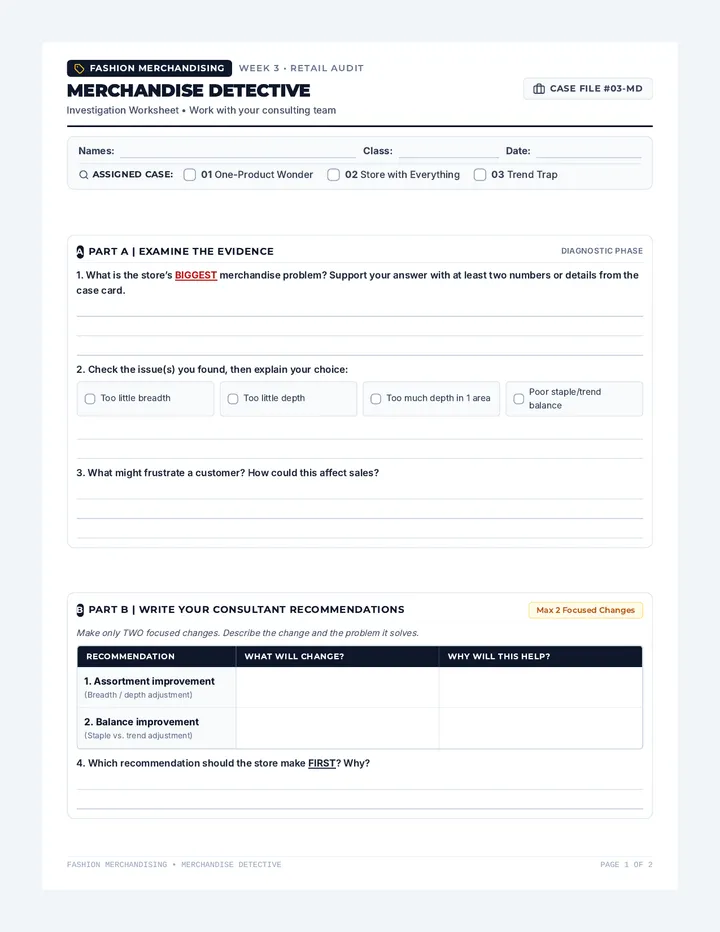
Milieu Disruption Case Worksheet
Psychiatric Milieu & Behavioral Safety CLINICAL SIMULATION 04
Milieu Disruption Case Worksheet
Environmental containment, crisis triage, and least restrictive interventions in behavioral health units.
Page 1 of 2
Student Clinician:
Date:
Clinical Rotation:
Part 1: The Therapeutic Milieu & Environmental Triggers
In an inpatient psychiatric facility, the physical and psychosocial environment (the milieu) serves as a primary therapeutic instrument. Disruptions can jeopardize safety and rapidly destabilize co-patients through emotional contagion.
Acoustic / Sensory Overload
Persistent phone rings, medical alarms, loud television, or reverberant voices trigger hypervigilance and sensory distress.
Spatial / Proxemic Tension
Crowded dayrooms, blocked egress paths, lack of personal space, and perceived boundary violations provoke territorial panic.
Predictability Disruption
Unscheduled medication delays, abrupt shift handoffs, locked common doors, or inconsistent enforcement of unit norms.
Clinical Vignette: Incident on Acute Behavioral Unit 3-South (14:30 Hours) Acuity: Red
During shift report crossover, 14 patients are gathered in the open dayroom. The television is blaring sports commentary while an automated medication cart chime beeps continuously. Patient R (experiencing acute persecutory delusions) accuses Patient D of "staring through my soul" and forcefully kicks over a heavy dining chair, sending it skidding into a wall. Patient R advances toward Patient D with clenched fists, breathing rapidly and shouting obscenities. Three nearby patients jump up in panic, two start crying near the nurses' station window, and another patient begins pacing agitatedly toward the perimeter door while banging on the security glass.
1 Environmental Triage & Immediate Safety Actions (First 60 Seconds)
Identify 3 immediate non-physical environmental interventions to halt escalating contagion and safeguard all unit occupants:
2 Safeguarding Bystanders & Bystander Milieu Containment
How should the secondary nurse direct, relocate, or support the unaffected and hyperventilating clients in the dayroom?
Psychiatric-Mental Health Nursing Competency • Therapeutic Environment & Milieu Management Document Ref: PPN-MIL-2026
Unit Stabilization Protocol
Milieu Recovery & Environmental Stabilization
Page 2 of 2
Part 2: De-escalation & Environmental Modification Matrix
Analyze root environmental vulnerabilities from the vignette
| Environmental Factor | Immediate Corrective Modification | Therapeutic Rationale (Patient Impact) |
|---|
| 1. Acoustic Auditory Volume | | |
| TV loud, chiming med cart | | |
| | |
| 2. Proxemics & Escape Egress
Kicked chair, blocked doorways
| | |
| 3. Staff Transition Gap
All staff inside report room
| | |
3 Sensory Room Integration vs. Physical Containment
Patient R is verbally receptive to a nurse offering a low-stimulus space. Detail how you would transition Patient R into a Sensory Comfort Room rather than initiating seclusion or chemical restraints:
4 Post-Crisis Milieu Reset & Community Meeting
Thirty minutes post-incident, the dayroom remains tense and hyper-alert. Outline 3 specific steps for facilitating an impromptu community debrief meeting to restore collective psychological safety:
Inpatient Environment Clinical Safety Verification Checklist
Sightlines: Unobstructed view of common dayroom from nurse station
Acoustic Control: TV capped at 50dB; alarm volume minimized
Ligature & Projectile Check: Chairs weighted or tamper-resistant
Staff Staggering: Minimum 1 staff actively monitoring milieu during handoff
Joint Commission National Patient Safety Goal (NPSG 15.01.01) Environmental Risk Compliance Evaluation Score: _____ / 100