Trade Tactics Board
Player 2 Space
Step 1: Check In How do you feel about this trade?
Offer Zone Place Your Fidget Toy or Token Here Make sure your partner can see it clearly!
Social Radar
Look at your partner's face
Are they smiling or hesitant?
Speak with a friendly voice
😊 😐 😟
Be fair • Be kind • Take turns TRADE TACTICS BOARD
ADD MORE "Can we add a little more to make it fair?"
SWAP
PHYSICAL ZONE
DECLINE "No thank you, but thanks for offering!"
ZONE
TAP TO ACT
ACCEPT "Deal! Thanks for trading with me."
Player 1 Space
Step 1: Check In How do you feel about this trade?
Offer Zone Place Your Fidget Toy or Token Here Make sure your partner can see it clearly!
Social Radar
Look at your partner's face
Are they smiling or hesitant?
Speak with a friendly voice
😊 😐 😟
Be fair • Be kind • Take turns TRADE TACTICS BOARD
Resource Sheet • Part 1
Fidget Value & Rarity System
✂️ Cut-Out Resource
Use these cards to designate the status of fidgets, helping students practice pricing fairness and express their emotional connection to their items.
The Value Ladder:
Common
Rare
Legendary
Sentimental
#01
COMMON STATUS
Easy to Trade
Great for trying new things! This item is widely available and easily replaceable. It's perfect for quick, fun, low-stress practice rounds.
Tactics Tip: Use this to make simple and straightforward fair deals.
#02
RARE STATUS
Harder to Find
A prized item with interesting texture, lights, or design. Requires extra consideration! It is worth more than a standard common.
Tactics Tip: Maybe trade a Rare for two Commons, or another Rare fidget!
#03
LEGENDARY STATUS
Ultimate Rarity
Incredible or unique features! It is super hard to get. The trade value of this item is very high, so think very carefully.
Tactics Tip: Double-check your feelings. Ensure you really want to let it go!
#04
SENTIMENTAL STATUS
Special to Me
This item was a gift, or holds special memories. It might not be rare to others, but it is extremely precious to you.
Tactics Tip: It's completely okay to say "This one is not for trade"!
#05
SAFE KEEPER
Off the Table
Place this card next to your fidget collection to indicate that these specific items are for display or visual fun only, and are NOT up for trade.
Tactics Tip: Setting boundaries is a healthy and great communication skill!
#06
COACH CARD
Active Negotiation
Keep this card on the table as a reminder to take three deep breaths, make sure both eyes are looking at your partner, and ask: "Are you ready to share?"
Tactics Tip: Trading is 50% about fidgets, and 50% about positive friendship!
Instructions: Cut along the dotted lines using safety scissors. TRADE TACTICS CARDS
Resource Sheet • Part 2
Social Cue Challenge Cards
✂️ Action Prompts
Cut these cards out and stack them beside the board. Draw a card during a trade to practice real-time social coaching, communication, and emotional regulation.
Social Cue Challenge
EYE CONTACT DETECTIVE
Before proposing your next trade, look at your partner’s eyes and smile. Say: "I like that item! Are you open to trading it?"
Skill focus: Building connection & asking politely.
Social Cue Challenge
THE POLITE PASS
Practice declining a trade using a calm, friendly voice. Say: "No thank you, but I really appreciate you showing me!" Then high-five.
Skill focus: Setting clear and respectful boundaries.
Social Cue Challenge
BODY DETECTIVE
Look at your partner's body language. Are they leaning forward (interested) or pulling away (uncomfortable)? Ask: "How do you feel about this?"
Skill focus: Reading non-verbal empathy cues.
Social Cue Challenge
TONE MATCHER
Say "Let's trade!" in a kind, welcoming voice. Then explain why you like your item, keeping your voice volume at a friendly Level 2.
Skill focus: Tone of voice and situational volume control.
Social Cue Challenge
WIN-WIN COMPROMISE
If a trade is uneven, propose an addition. Say: "What if I add this small common token so both of us walk away super happy?"
Skill focus: Active problem-solving and compromise.
Social Cue Challenge
GRATITUDE GURU
Even if a trade falls through or doesn't happen, shake hands or give a friendly wave and say: "Thank you for the opportunity anyway!"
Skill focus: Handling disappointment with grace.
Social Cue Challenge
PATIENCE PAUSE
Give your partner at least 15 seconds of complete silence to think over their offer. No rush, no pressure, just patient breathing.
Skill focus: Turn-taking and space-giving.
Social Cue Challenge
EMOTION CHECK-IN
Before tapping "ACCEPT", ask your partner directly: "Are you 100% happy with this, or are you feeling a little sad to say goodbye?"
Skill focus: Caring for another's emotional comfort.
Instructions: Cut along the dotted lines using safety scissors. TRADE TACTICS SOCIAL CARDS
Trade Tactics Slides
Social Skills Lab
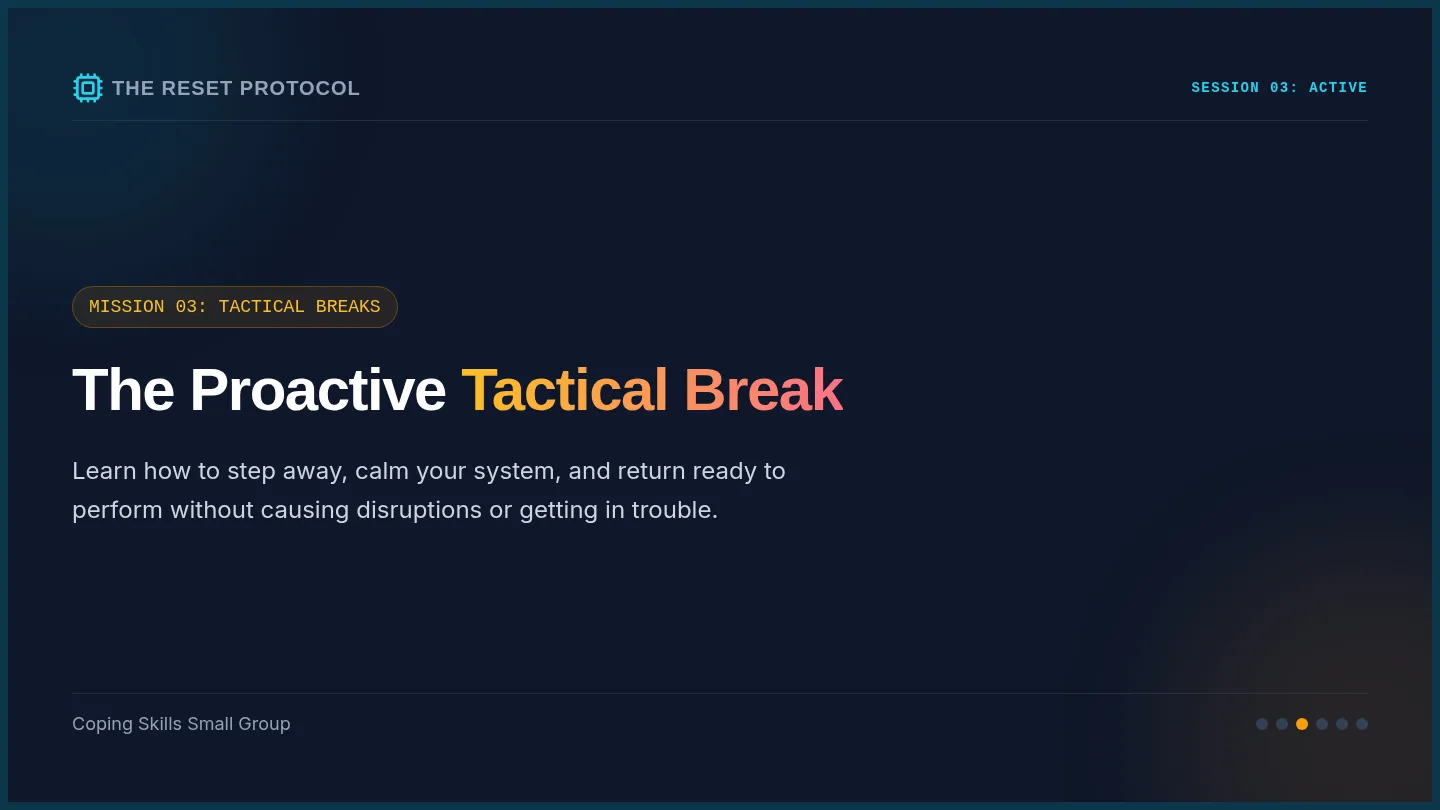
SLIDE 01/06
THE ART OF THE SWAP
TRADE TACTICS
A gamified guide to sharing, setting healthy boundaries, taking turns, and reading non-verbal cues.
🤝 Respect • 💬 Dialogue • 😊 Empathy
Let's get started!
Rule #1: Connection First SLIDE 02/06
Trading is About Friendship, Not Just Fidgets!
Every time we make a deal or swap objects, we are really practicing how to communicate our feelings, respect what other people want, and make choices together.
"A successful trade is when both people walk away smiling!"
Check In
Are both people 100% comfortable? Never pressure anyone to trade.
Talk It Out
Share details about why your item is fun. Use your friendly voice.
Always play nicely Respecting boundaries makes trades safe and fun!
Social Radar Skills SLIDE 03/06
Become a Body Language Detective!
Most of our communication happens without speaking. Look for these visual clues before making an offer!
Green Light
Smiling face, relaxed posture, body leaning forward. They are excited and ready to cooperate!
"Go for it!"
Yellow Light
Quiet voice, head tilted, looking away, holding item close. They might be unsure or need more time.
"Ask how they feel"
Red Light
Arms crossed tightly, frowning, turning body away, saying "no". They do not want to trade right now.
"Stop & respect"
Read the room Always check in with your eyes and ears before pressing accept!
Board Rules SLIDE 04/06
Master the Three Magic Buttons
The physical board has three actionable sections. Here is exactly what they mean and how to speak when using them:
ADD MORE
Tap this space if the trade feels slightly uneven and you want to ask for another small item.
"Could we add a small coin or token to make this even?"
DECLINE
Tap this space if you are not interested in the deal or want to start completely fresh.
"No thank you, but I'm super glad you shared that with me!"
ACCEPT
Tap this space ONLY when both players are 100% happy with the items and ready to trade.
"Deal! Thank you for swapping fidgets with me today!"
Action stations Never force your partner's hand onto a button! Let them choose!
Trading Boundaries SLIDE 05/06
How to Set Healthy Boundaries
Trade Tactics Facilitator Playbook
Therapeutic & Social Skills Lesson Plan
Trade Tactics Playbook
Target Skills Social Cues & Negotiation
Grade Band Grades 2 - 6 (Ages 7-12)
Group Size Pairs (2-4 per board)
Duration 30 - 45 Minutes
Materials Fidgets, Boards, Scissors
Fidget trading is a popular organic playground activity. This therapeutic lesson leverages that intrinsic motivation to teach self-regulation, cooperative negotiation, active perspective-taking, and boundary recognition under the structured guidance of a facilitator.
Session Pacing Blueprint
1
The Setup & Interactive Slides 10 Minutes
Display the Trade Tactics Slides to set positive intentions. Read through "The Body Language Detective" and discuss the differences between "Green", "Yellow", and "Red" social lights. Distribute printed boards, tokens, and social cards, then allow students to cut them out.
2
Facilitator-Guided Demonstration 5 Minutes
Model a complete trading sequence with a co-facilitator or student volunteer. Intentionally demonstrate: (a) requesting an addition politely using Add More, (b) setting a boundary by utilizing the Safe Keeper card, and (c) declining an offer in a kind tone of voice.
3
Guided Practice & Cue Challenges 20 Minutes
Pairs sit opposite each other with the board placed between them. Instruct students to draw one Social Cue Card before each offer. Facilitators should move around the room, prompting students to notice non-verbal signs ("Look at their eyes! Are they ready or unsure?").
4
Reflective Circle & Clean Up 5 Minutes
Conclude by asking: "Who set a strong boundary today? Who accepted a 'no thank you' with a smile? How did practicing these skills make the trading session feel safer and more comfortable than playground swaps?" Ensure all fidgets are safely returned to pockets.
Prompting Questions for Reflection
Empathy & Perspective: "How can you tell if someone is giving up an item only because they feel forced? What does their face look like?"
Healthy Boundaries: "How did it feel to use the Safe Keeper card? Was it easy or hard to tell a friend that your favorite fidget wasn't up for grabs?"
Trade Tactics Counselor Toolkit Page 1 of 2
Therapeutic Facilitator Resource
Coaching Strategies & Data
Part 2 of 2
Handling Tough Social Scenarios
Scenario: One student keeps offering uneven or "unfair" trades MEDITATION ACTION