An introductory CBT-based lesson for high schoolers to understand and manage sadness through the 3-component model, myth-busting, and cognitive restructuring.
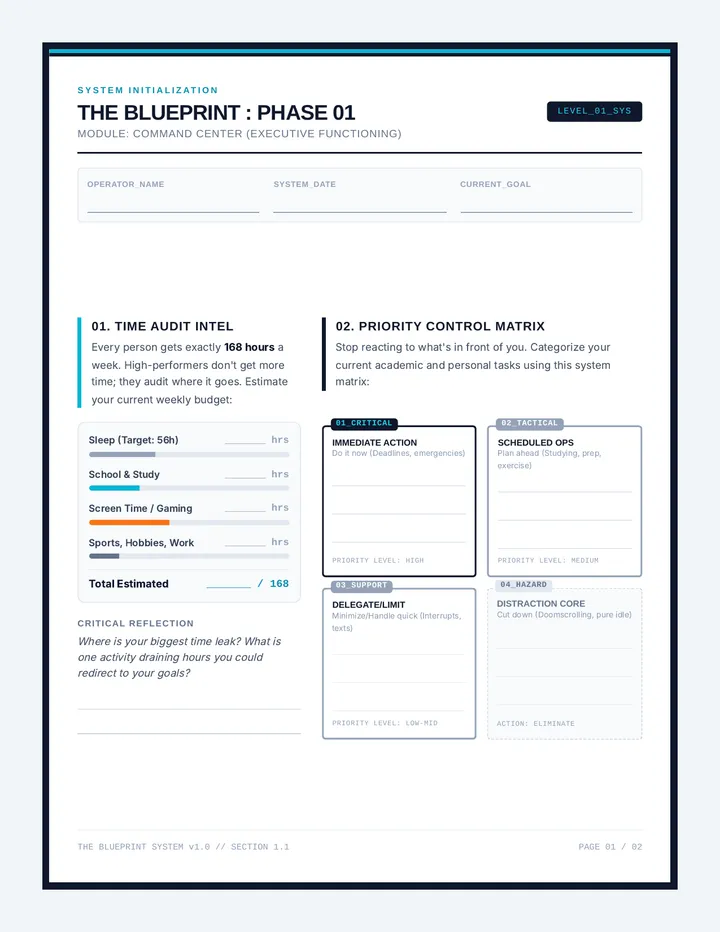
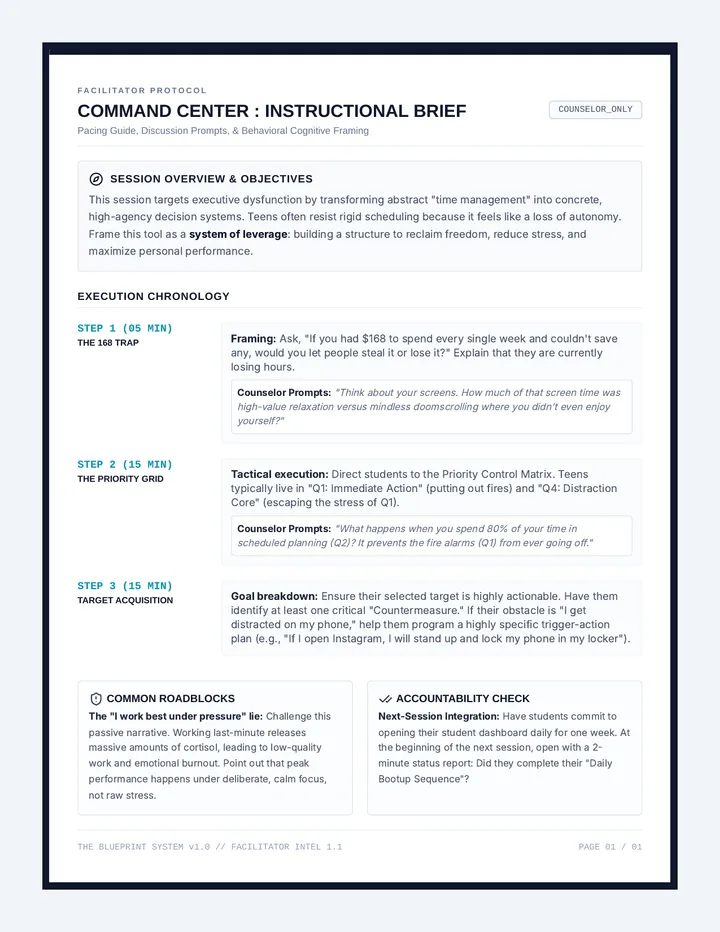
A tactical, gamified life-skills guide designed for older teens to transition into independent young adults. Covers executive functioning, social-emotional coping, daily living, and communication through structured self-reflection and counselor-led discussions.
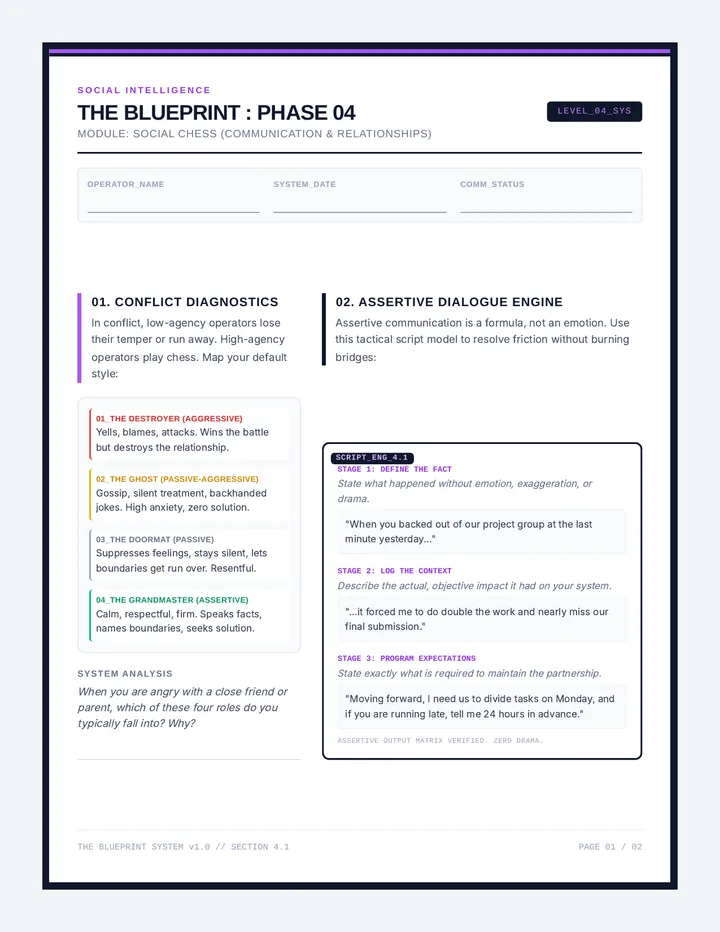
Addresses conflict resolution, boundaries, and building quality relationships. Teens learn to read social dynamics, have difficult conversations, and protect their peace.
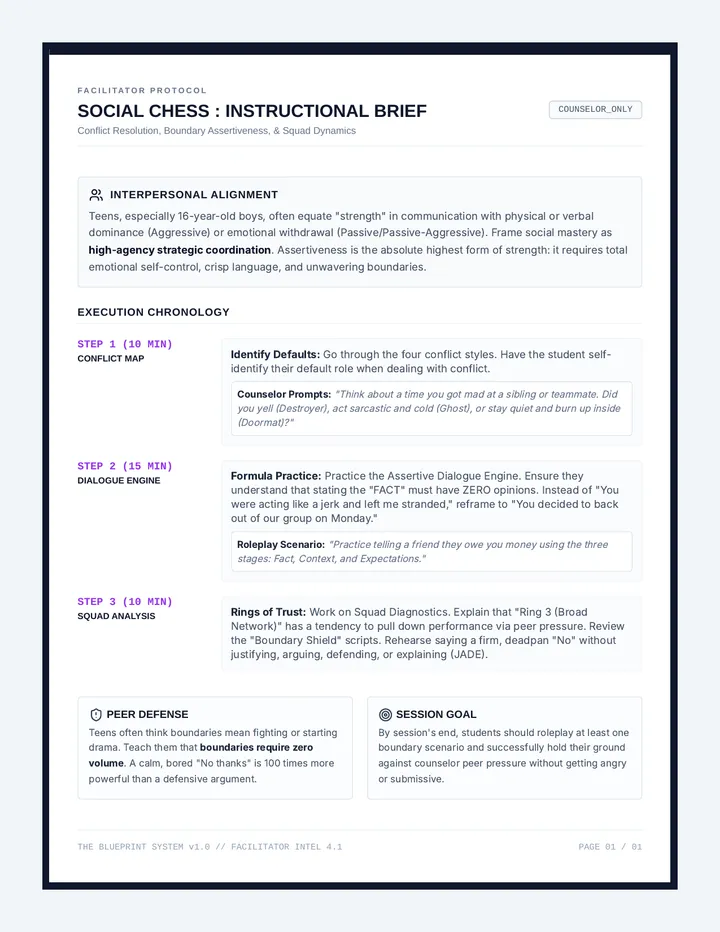
Counselor lesson guide for Lesson 4: Social Chess. Includes facilitation points for conflict styles, active communication, roleplay boundary shielding, and social network diagnostic support.
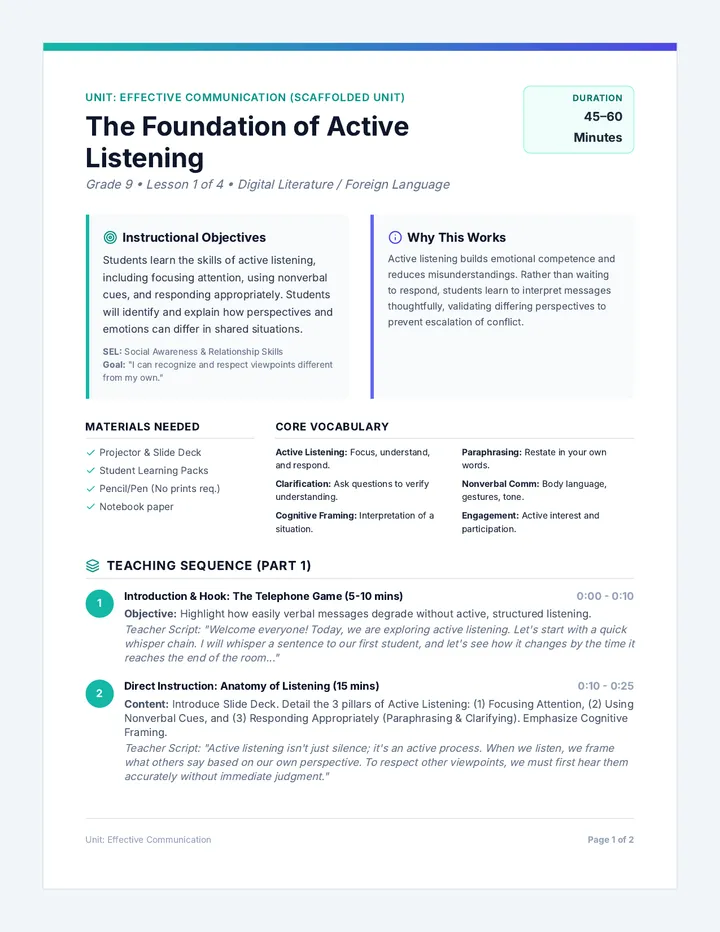
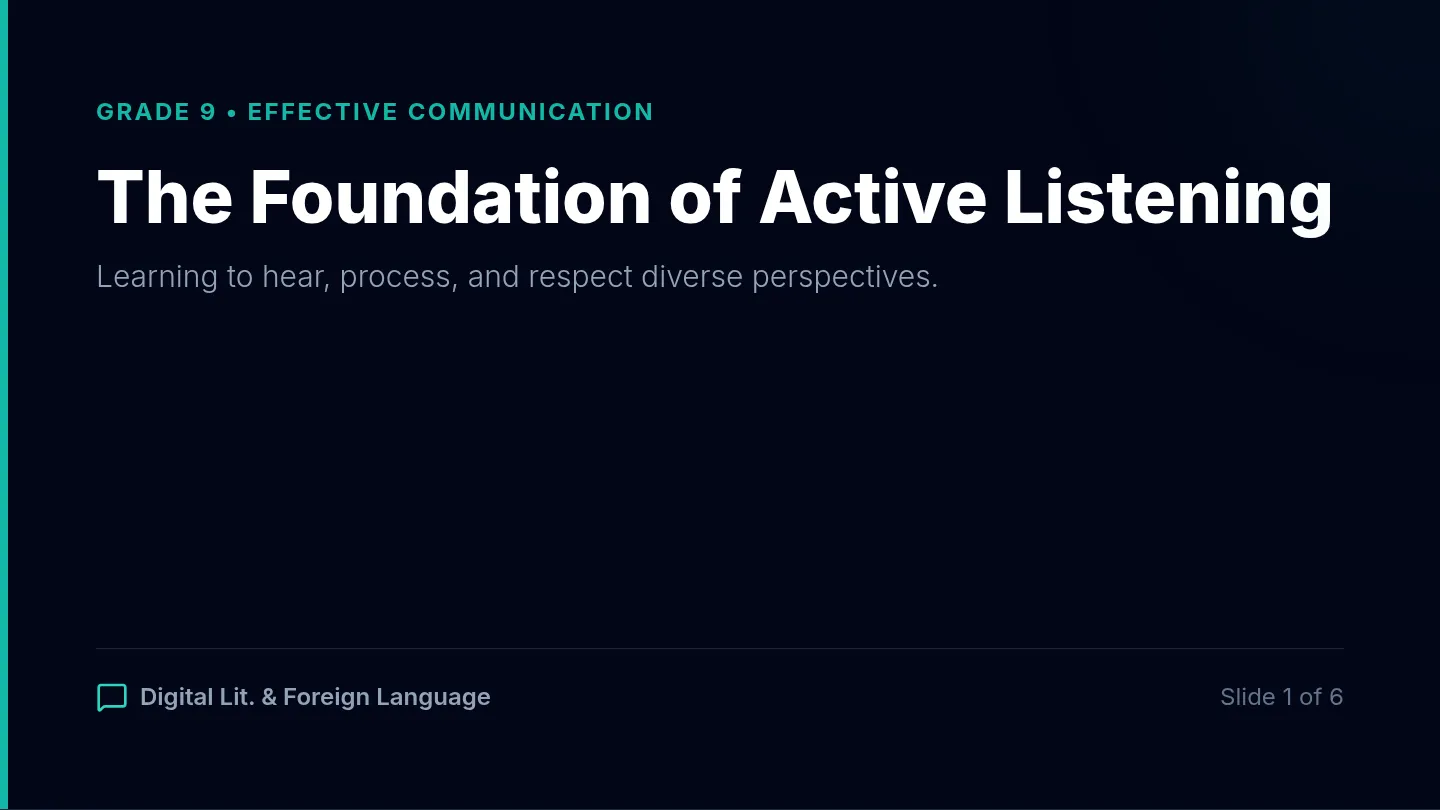
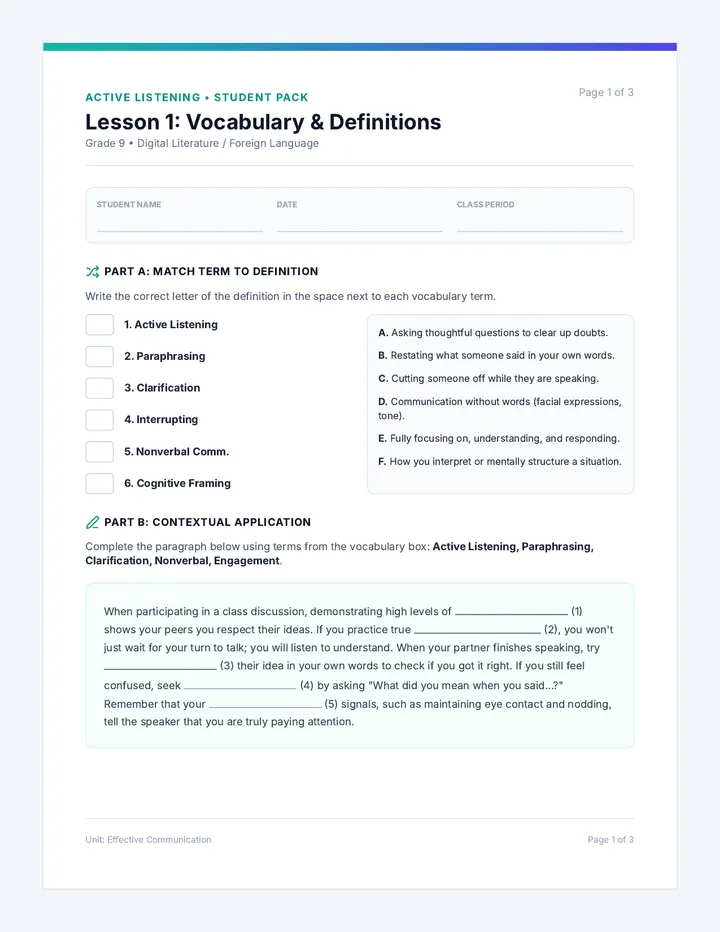
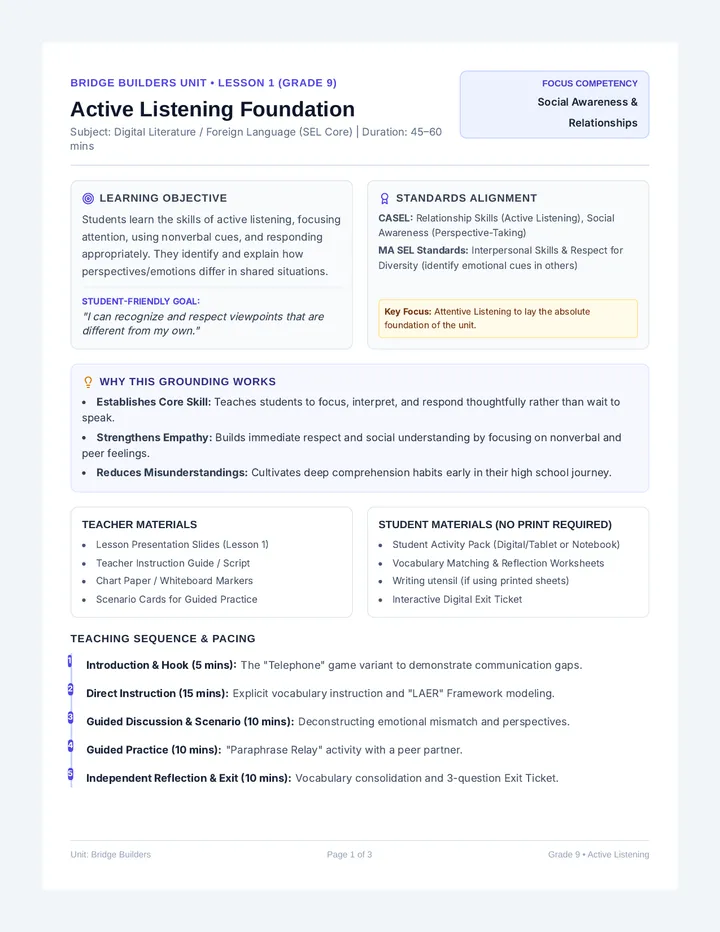
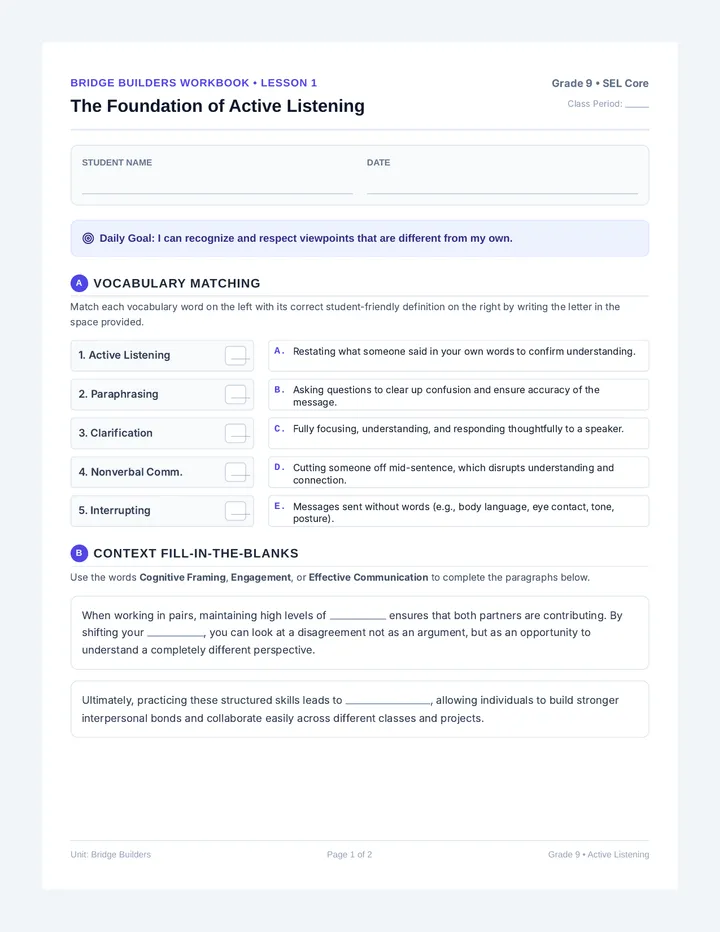
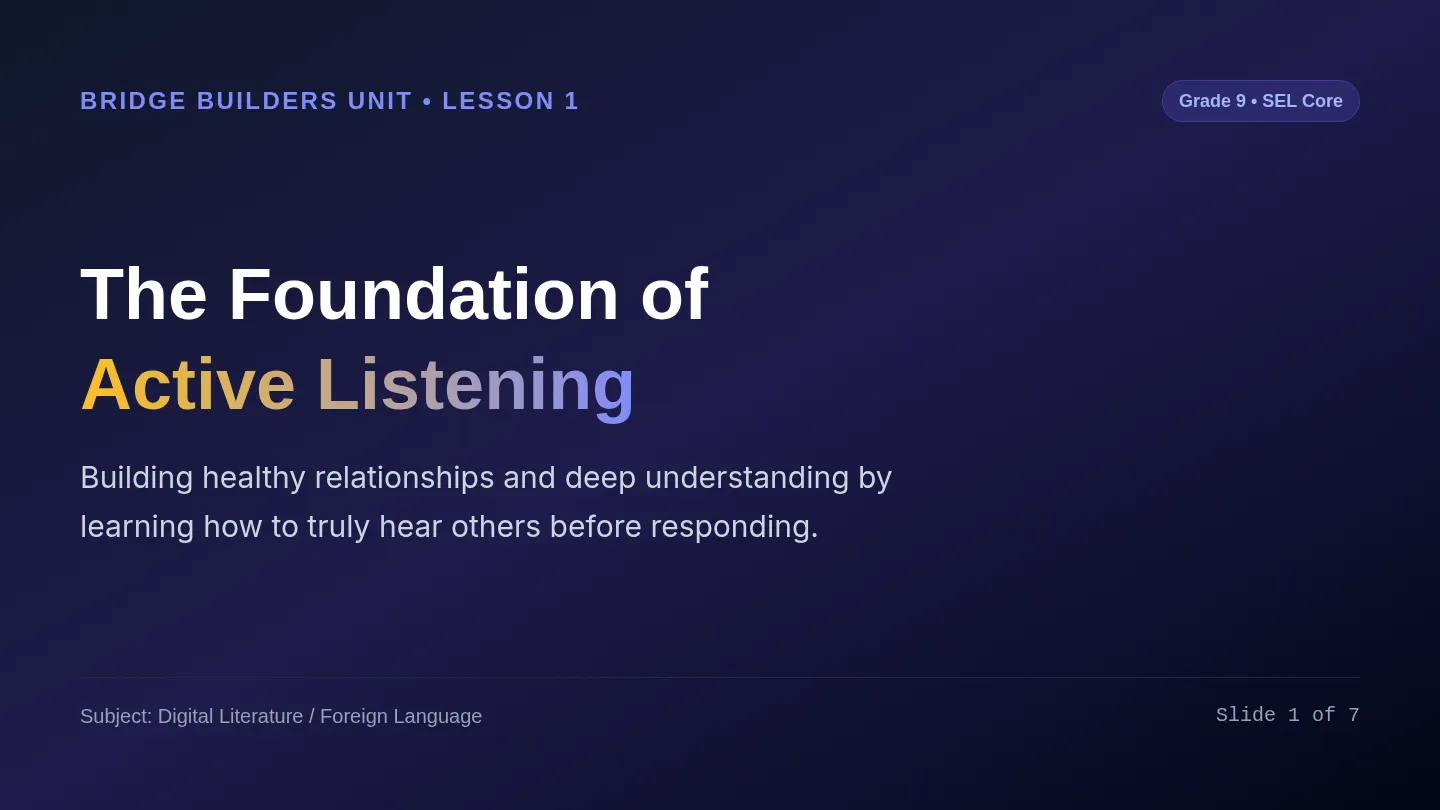
A four-grade scaffolded unit (Grades 9-12) focused on developing essential communication skills: Active Listening (Grade 9), Clarity & Purpose (Grade 10), Empathetic Self-Expression (Grade 11), and Constructive Feedback (Grade 12). This unit prepares high school students for collaborative success, emotional competence, and interpersonal growth in academic and professional settings.
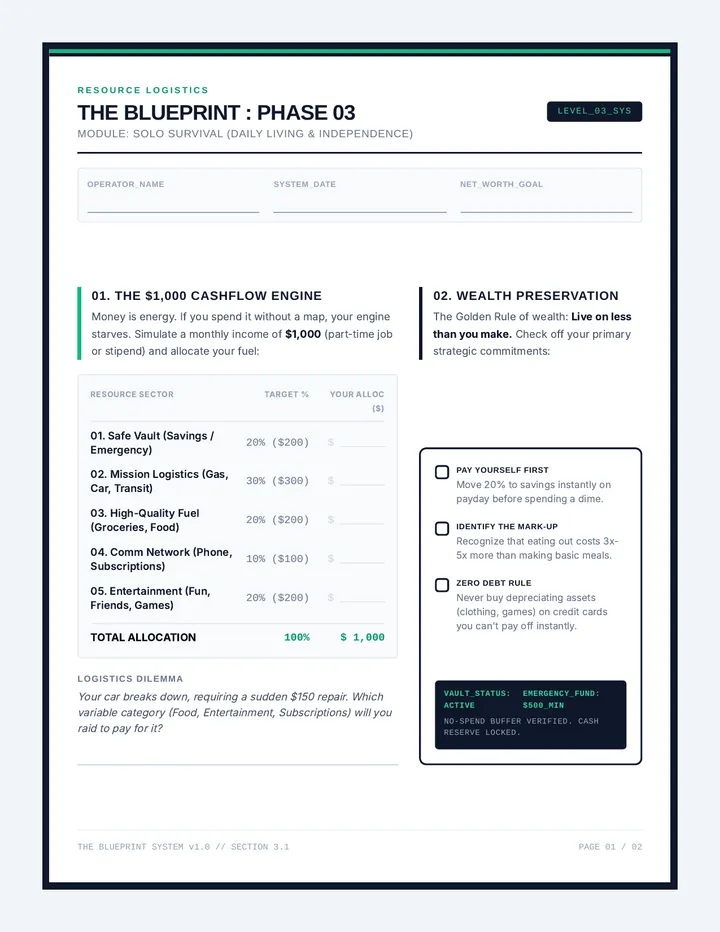
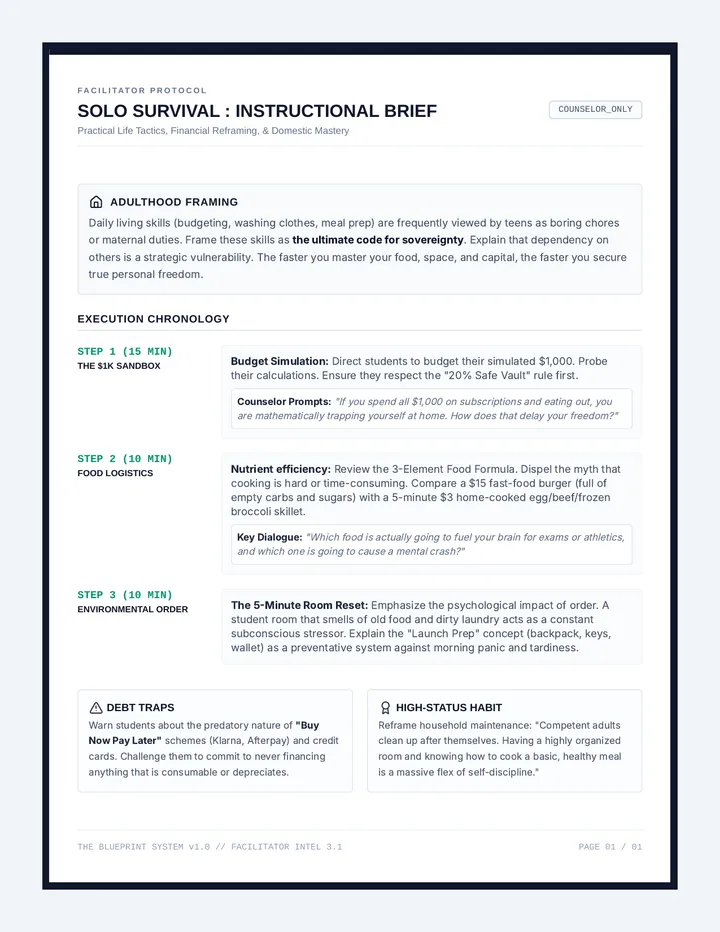
Teaches critical independent living skills, including basic budgeting, meal prep, laundry hacks, and simple car/home maintenance. High-impact tactical training for real life.
Student workbook for Lesson 4: Social Chess. Features conflict style mapping, critical conversation templates, boundary scripts, and a rings-of-trust relationship diagnostic.
A comprehensive four-year high school SEL and communication unit. It scaffolds key communication skills from active listening in Grade 9 to feedback collaboration in Grade 12, preparing students to be empathetic and effective communicators.
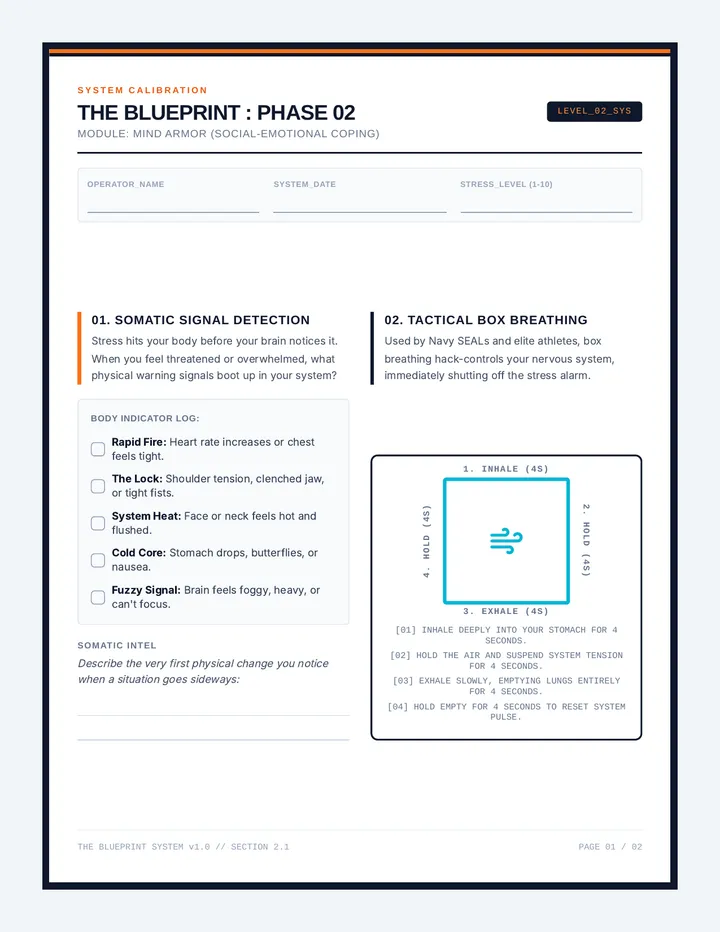
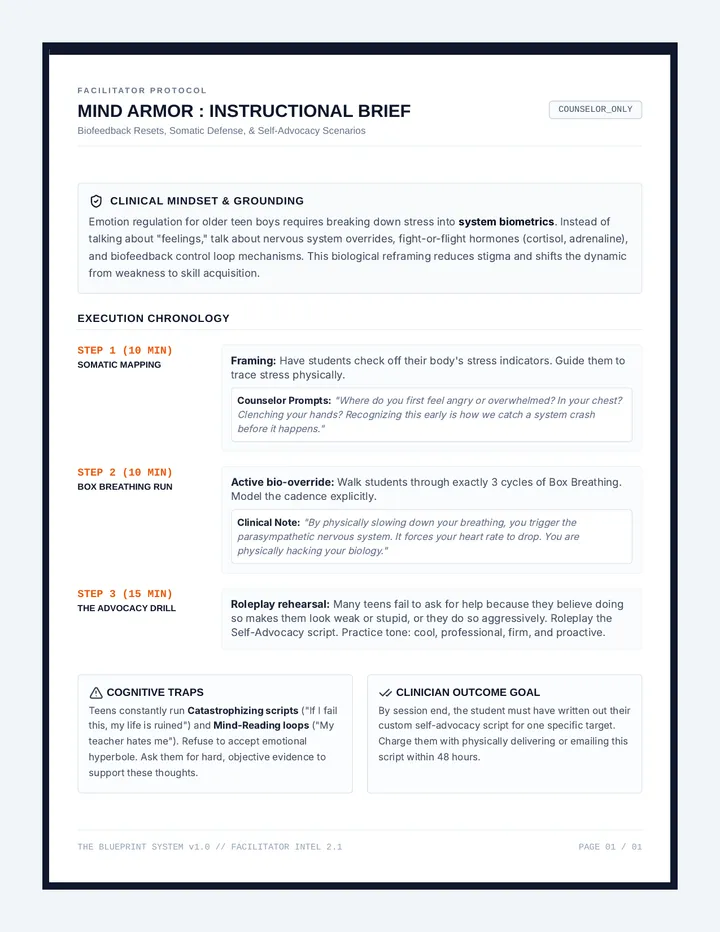
Focuses on stress management, emotional regulation, and self-advocacy. Teens learn tactical breathing, cognitive reappraisal, and how to speak up for their needs.
Counselor lesson guide for Lesson 3: Solo Survival. Includes facilitation points for budgeting, reframing independence, domestic self-sufficiency, and nutritional awareness.
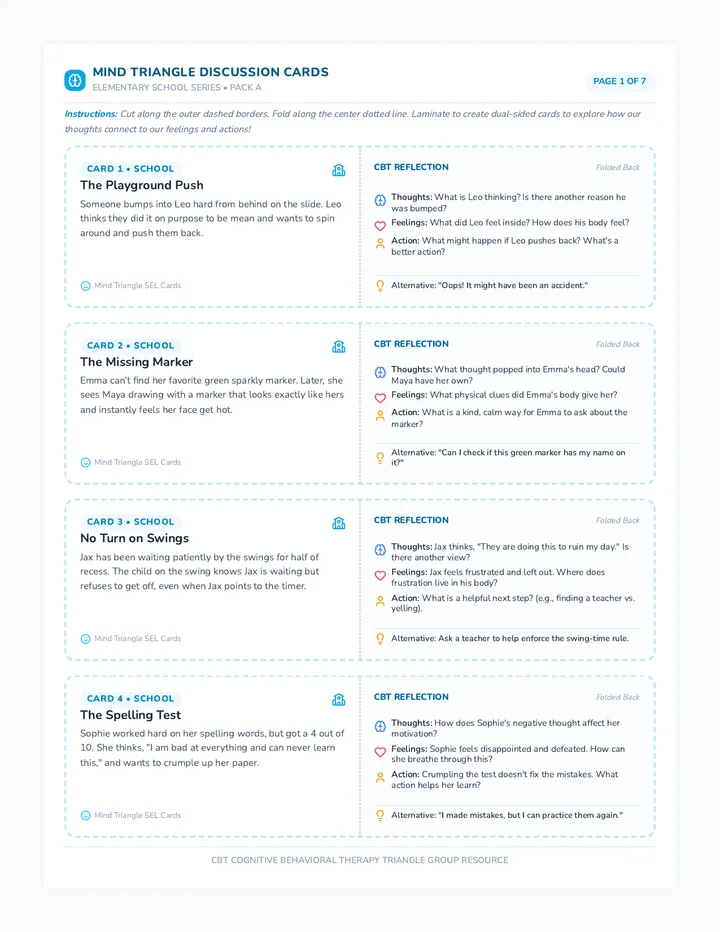
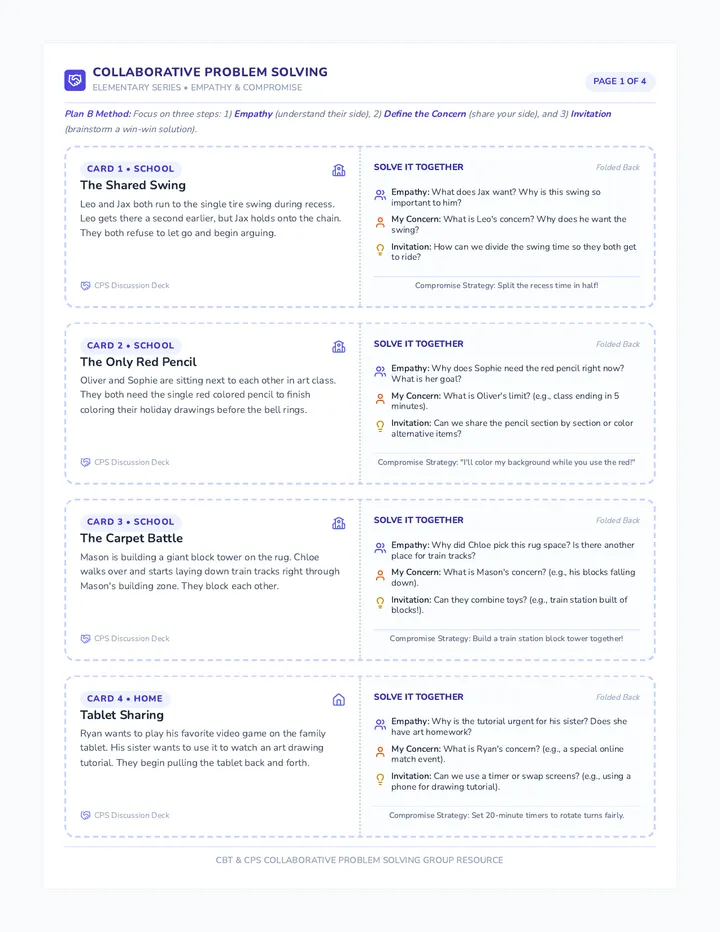
A comprehensive suite of SEL scenario cards spanning Elementary, Middle, and High School, guided by the CBT Triangle framework. Helps students analyze perspective, thoughts, feelings, and behaviors.