Peace Patrol Teacher Guide Unit: Emotional Tools
Peace Patrol
Teacher Facilitation & Lesson Guide (Grades 2-3)
Target Concept
Conflict Resolution
Lesson Big Idea
Conflicts are natural. This lesson teaches 2nd-3rd graders to recognize emotional "storms" (high dysregulation), use concrete physical calming tools to lower physiological arousal, and then utilize a simple 3-step compromise formula to resolve conflicts.
Companion Resources
Peace Patrol Presentation Slides
Cool Down Wheel Poster
Peace Maker Desk Mat
Calm Down Strategy Cards
Lesson Sequence & Pacing (40 Minutes)
0-8m
Hook: The Emotional Storm
Shake a closed bottle of bubbly water. Explain that feelings are like this water—when conflicts occur, we get shaken up. If we open the bottle immediately, it explodes! We must wait and use our cool-down strategies first.
Teacher Script: "What happens if we open a shaken soda? It sprays! Our brains do the same thing when we are angry. We need a calm-down choice first."
8-20m
Direct Instruction: Stop, Spin, & Step
Introduce the Cool Down Wheel . Teach students that before we talk, we must calm down. Guide students through modeling 3 choices from the wheel: Deep Breaths, Squeezing Hands, and counting backwards. Introduce the 3-step Peace Path formula .
1. Stop & Breathe
2. Share Feelings
3. Find a Middle
20-35m
Guided Practice: Scenario Solvers
Divide students into pairs. Give them the Peace Maker Desk Mat . Read a common playground scenario (e.g., 'Someone takes your swing' or 'A friend doesn't want to share the red crayon'). Have partners use the talking stems on their desk mats to practice.
Monitor Checklist: Look for eye contact, calm speaking voices, and students successfully stating "I feel..." and proposing one option from the compromise menu.
35-40m
Reflective Wrap-up & Peace Pledge
Review the core strategies. Distribute the Calm Down Strategy Cards for students to store in their desks or pockets. Have students stand and raise their right hand to state the daily Peace Patrol pledge.
Common Misconceptions
"Compromise is losing:" Explain that compromise is a win-win because you both save the friendship and get a part of what you wanted."Talking immediately:" Students try to solve conflicts while still in the "emotional storm." Reiterate that calming down first is a non-negotiable step.
Differentiation Strategies
For English Learners / Emerging Readers: Utilize the emoji symbols on the Desk Mat and Strategy Cards. Allow students to point to their emotion/choice before stating it.For Advanced Leaders: Have them act as "Peace Patrol Captains" during recess, modeling how to assist peers in initiating a neutral conversation using the cards.
Quick-Response Verbal Prompts
"I see a stormy weather brain right now. Let's take a 30-second tour of our Cool Down Wheel before we speak."
Key Mantra
Peace Patrol Slides Peace Patrol
Grades 2-3 Conflict Resolution
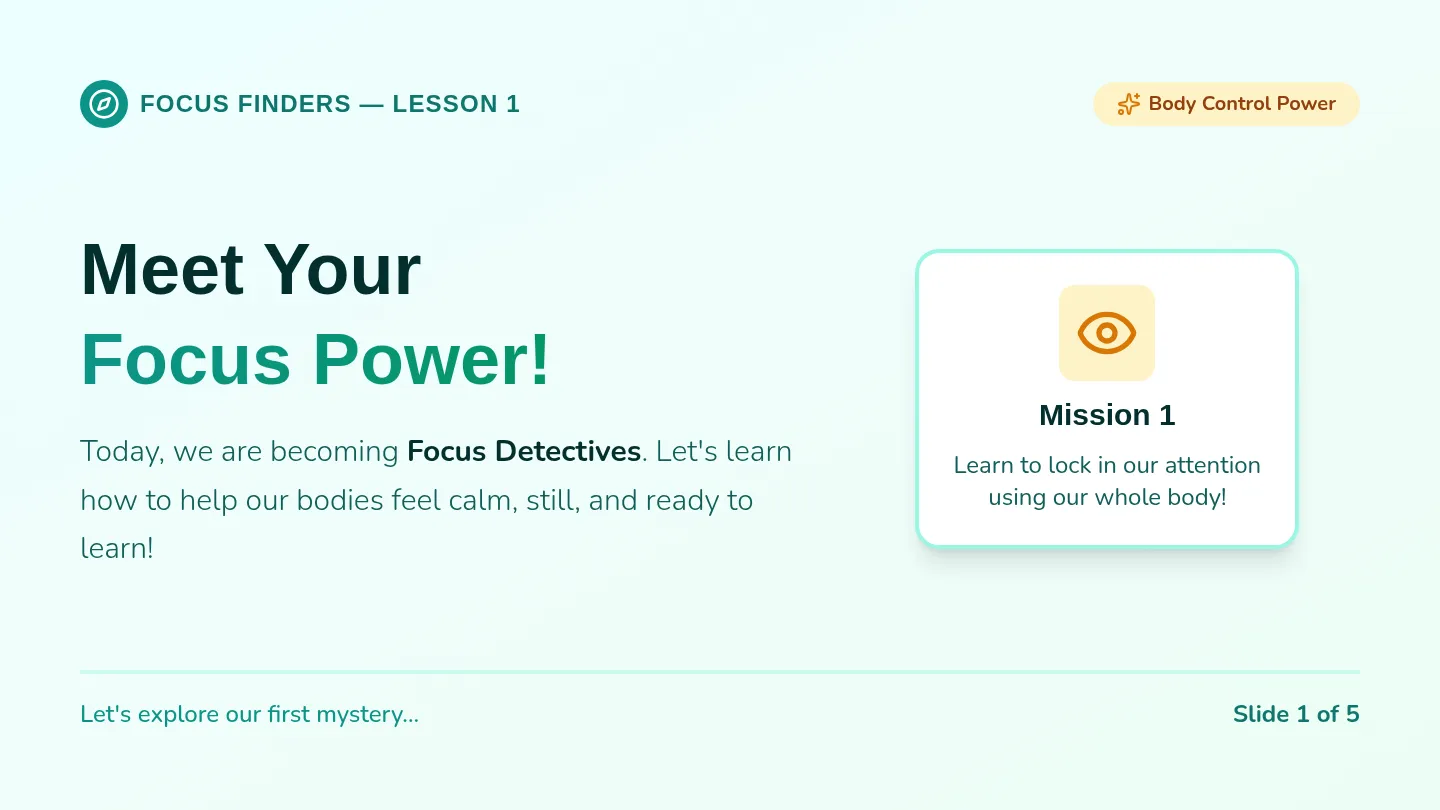
Be a Peace Patrol Leader!
Learn how to cool down emotional storms and solve peer conflicts with simple talking tools.
Ready to keep our classroom cool?
Slide 1 of 5
The Stormy Brain
Step 1: Check Your Weather
The Stormy Mind
When we are angry or upset, our brain feels like a storm. We might feel like yelling, grabbing, or pushing.
Never open a shaken bottle of soda! Let it calm down first.
The Calm Mind
A calm mind is ready to listen and talk. We can think clearly, solve problems, and keep our friends happy.
We MUST get to a calm mind before we talk!
Is your brain currently Stormy or Sunny?
Slide 2 of 5
Stop & Spin
Step 2: Choose a Calm Down Strategy
How to Calm the Storm
Our Cool Down Wheel gives us choices to calm our bodies down quickly.
1
Take 3 very slow, deep balloon breaths.
2
Squeeze your desk or a squishy ball tightly.
3
Count slowly backward from 10 to 1.
Take 3 Breaths
Count to 10
Squeeze Tight
Ask for Break
Which strategy do you think is your favorite?
Slide 3 of 5
The Peace Path
Step 3: Resolve the Conflict
The 3-Step Talk Formula
1
"I feel..."
State your honest emotion without pointing fingers. Use calm, steady words.
"I feel sad..."
2
"When you..."
State what specific action caused the issue so they understand clearly.
"...when you took the swing."
3
"Can we try..."
Offer a compromise option so everyone wins and feels happy.
"...can we try taking turns?"
Practicing this formula keeps small problems small!
Slide 4 of 5
Let's Practice!
Classroom Scenarios
Scenario A: Shared Crayons
Your partner is using the only red crayon and you need it to finish your holiday picture.
Try saying: "I feel frustrated when you hold the crayon. Can we try sharing it?"
Scenario B: Recess Game
Your friend says you are
Cool Down Wheel Poster Peace Patrol Tool
Cool Down Wheel
Feeling shaken up like a soda bottle? Stop, pick a calm-down tool, and get back to your sunny weather brain!
1. Deep Breaths
Take 3 slow balloon breaths.
2. Count to 10
Slowly count backwards 10 to 1.
3. Squeeze
Squeeze hands or a desk tightly.
4. Go to Zone
Sit in our classroom calm zone.
5. Draw Storm
Draw your angry feelings on paper.
6. Happy Place
Close eyes and picture a happy day.
SPIN
1
Recognize "I'm Stormy!"
2
Pick Tool Choose 1 action
3
Calm Down Lower the weather
4
Talk Out Use Peace Path
Peace Maker Desk Mat Peace Patrol Officer Mat
Grades 2-3 Conflict Tool
Officer Name:
Date:
Mini Cool Down
Circle the weather of your brain right now:
Sunny
Cloudy
Stormy
Quick Desk Choices:
3 Slow Balloon Breaths
Count Backwards 10 to 1
Squeeze your desk tight
The Peace Path Script
Use these prompts to solve a problem with a partner:
1
"I feel ___________________"
State your feeling: mad, sad, worried, or left out.
2
"When you _________________"
State the action: took the toy, ran away, spoke loudly.
3
"Can we try ________________?"
Offer a compromise: share, take turns, use a timer.
My Calm Strategy Pledge
Draw or write about your favorite calm-down tool inside the box below to sign your contract.
My Work Area
"Peace Patrol officers listen with their ears, look with their eyes, and solve with their words."
Calm Down Strategy Cards Peace Patrol Strategy Cards
Cut along the dotted lines. Keep these cards in your desk or pocket!
Print & Cut
Calm Strategy 1
Balloon Breaths
Breathe in slowly to fill your belly like a giant colorful balloon, hold it, and let the air out with a soft "whoosh."
Repeat 3 times
Calm Strategy 2
Count to 10
Close your eyes. Count backwards slowly from 10 to 1, picturing a space rocket landing safely on the ground.
Take your time
Calm Strategy 3
The Desk Squeeze
Press your palms together as hard as you can, or squeeze the sides of your desk for 5 seconds, then let your hands go loose.
Squeeze & Release
Calm Strategy 4
Quiet Sketch
Grab a piece of scratch paper and scribble or draw out your angry stormy thoughts. When you are done, crumple it up and toss it.
Draw & Let Go
Calm Strategy 5
The Calm Zone
Point to this card to show your teacher. Take 2 quiet minutes in the classroom calm-down corner to gather your thoughts.
Ask for permission
Calm Strategy 6
Silly Shakes
Shake your hands, wiggle your fingers, and gently roll your shoulders. Let all of that tight energy wiggle out of your body.
Shake it out
Calm Strategy 7
Happy Place
Close your eyes and think of a favorite memory—playing with a pet, riding a bike, or eating a giant delicious ice cream cone.
Close your eyes
Calm Strategy 8
Peace Talker
Now that you are calm, use your Peace Path words with your partner: "I feel... when you... can we try...?" You are ready!
Solve together
Peace Patrol Tools © 2026. Keep Calming!