Calm Wave Slides
Calm Waves
2nd Grade Coping Lesson
🌊 Catch the Wave of Calm!
My Calm Wave
How to feel cool, happy, and in control when anger gets too big!
Let's learn together!
Slide 1 of 8
The Big Question
Slide 2 of 8
What are Coping Skills?
Coping skills are special tools you can use in your mind and body.
Just like an umbrella keeps you dry in the rain, coping skills keep you safe and calm when a big angry storm rolls in!
Your Calm Toolbox
You can use them at school, at home, or on the playground!
Feel in Charge
They help you choose kind words and make smart choices.
💡 Think about it: What makes you feel calm?
Perfect Timing
Slide 3 of 8
When do we use Coping Skills?
We use them BEFORE our anger gets too big! Catch it when it is still small.
1
Cool Wave
You feel relaxed, happy, and ready to learn.
Feeling Great!
2
Warm Spark
Tight fists, fast breathing, heavy frowning.
⏰ USE SKILLS NOW!
3
Hot Volcano
Screaming, throwing, stomping, crying.
Too Hot to Think
💡 Talk about it: How does your body feel when you are in the "Warm Spark" zone?
Strategy 1
Slide 4 of 8
🌬️ Deep Breathing & Calming
Balloon Breathing & Square Tracing
Deep breathing helps calm your nervous system. Taking slow, deep breaths tells your brain and body that you are safe, allowing your anger to decrease.
"Inhale slowly through your nose for 4 seconds, hold for 4 seconds, and exhale slowly through your mouth for 4 seconds."
Let's Try Square Tracing!
Use your finger to trace the magic square in the air:
Breathe In (4s)
Hold (4s)
Breathe Out (4s)
Hold (4s)
💪 Practice together: Let's do 2 full square breaths right now!
Strategy 2
Slide 5 of 8
🟠
Squeeze a Stress Ball
Squeeze it super hard, then let go! Feel your hands relax.
🦒
The Giraffe Stretch
Reach your hands as high as you can to stretch the anger away.
🧱
Wall Pushes
Push flat against a sturdy wall for 10 seconds to burn off steam.
💪 Physical & Sensory Outlets
Squeeze and Release!
Sometimes, anger gets trapped in our muscles. That makes us want to stomp or yell!
Instead of hurting others or things, we can use safe physical outlets to push that energy out safely!
💪 Try it: Squeeze your fists tight for 5 seconds... now let them go completely floppy!
Strategy 3
Slide 6 of 8
🧠 Reframing & Self-Talk
Helpful Thoughts
When we are angry, our brain might say:
"This is terrible! I'm so mad!"
We can whisper helpful thoughts to ourselves instead. This is called self-talk, and it is a super power!
"I can handle this."
Takes away the feeling of being stuck.
"It is okay to make mistakes."
Helps when schoolwork gets frustrating.
"I can take a calm breath."
A perfect reminder to slow down.
💡 Talk about it: Which of these 3 thoughts do you like the best?
Strategy 4
Slide 7 of 8
🏫
At School
The library corner, a quiet desk, or walking with a pass.
🏠
At Home
Your bedroom, a cozy beanbag, or the family couch with a book.
🛋️ Taking a Safe Break
Your Cozy Cool-Down Spot
Sometimes you just need to step away from the noise to let your heart rate slow down.
Taking a safe break means sitting in a comfortable spot until you feel like yourself again.
💡 Talk about it: Where is a cozy, quiet spot you could go when you're angry?
My Calm Wave Guide
Slide 8 of 8
Staying in Control 🌊
Remember to use your coping tools whenever you feel your body getting angry or triggered!
⚡ 1. Identify Your Triggers
A trigger is anything that starts to make you feel angry, like:
- When schoolwork feels too hard.
- When you lose a game.
- When someone interrupts you.
⏱️ 2. Listen to Your Body
Use a coping skill immediately when you feel "Warm Spark" signs:
- Tight fists or heavy breathing.
- Frowning or hot cheeks.
- A fast heartbeat.
Catch the warm feeling early and ride the Calm Wave to safety!
You are in charge of your calm! 🌟
Calm Wave Worksheet
My Calm Wave Map
🌊 2nd Grade Coping Plan
Name:
Date:
⏰
Step 1: Spot the "Warm Spark" (Before I get too mad!)
How does your body feel when you are starting to feel angry? Check the ones you feel:
Tight fists ✊ Fast heartbeat 💓 Frowning face 😠 Hot cheeks 🥵 Heavy breathing 😤 Stomping feet 👣
🛠️
Step 2: My Favorite Coping Tools
Tool 1: Square Breathing
Trace with your pencil to slow down!
Breathe In Hold Breathe Out Hold
Tool 2: Mind Power
Circle the helpful thought you like most:
💬 "I can handle this."
💬 "It is okay to make mistakes."
💬 "I can take a calm breath."
🛋️
Step 3: Draw My Cozy Break Spots
Draw a picture of a quiet, safe spot where you can go to cool down:
🏫 My School Break Spot
🏠 My Home Break Spot
My Calm Wave Reminder
"I will use my coping skills as soon as I spot a trigger or feel my body get warm!"
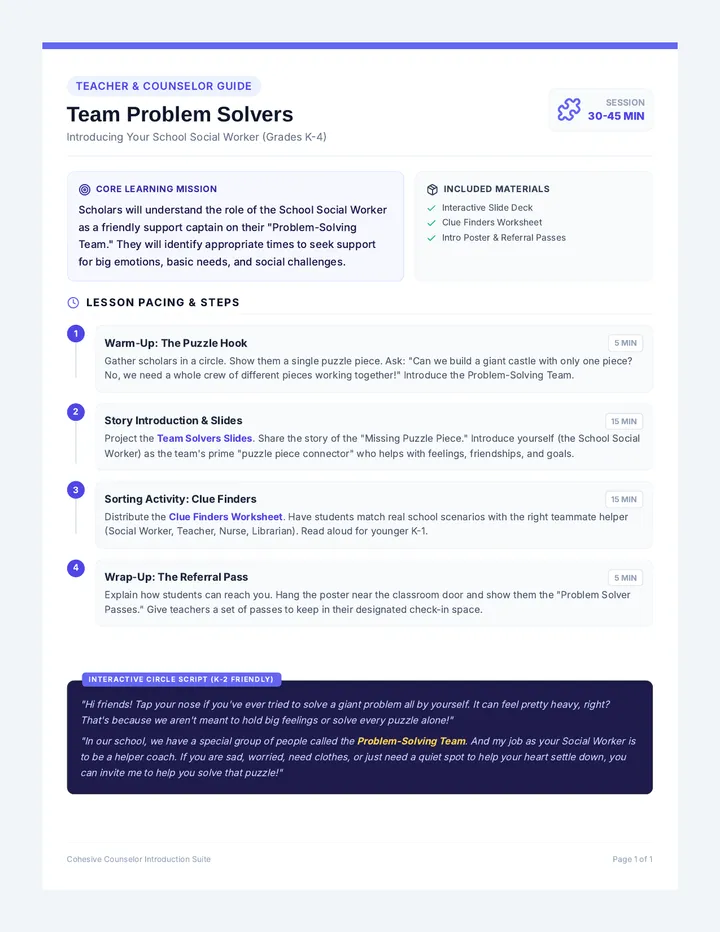
Calm Wave Teacher Guide
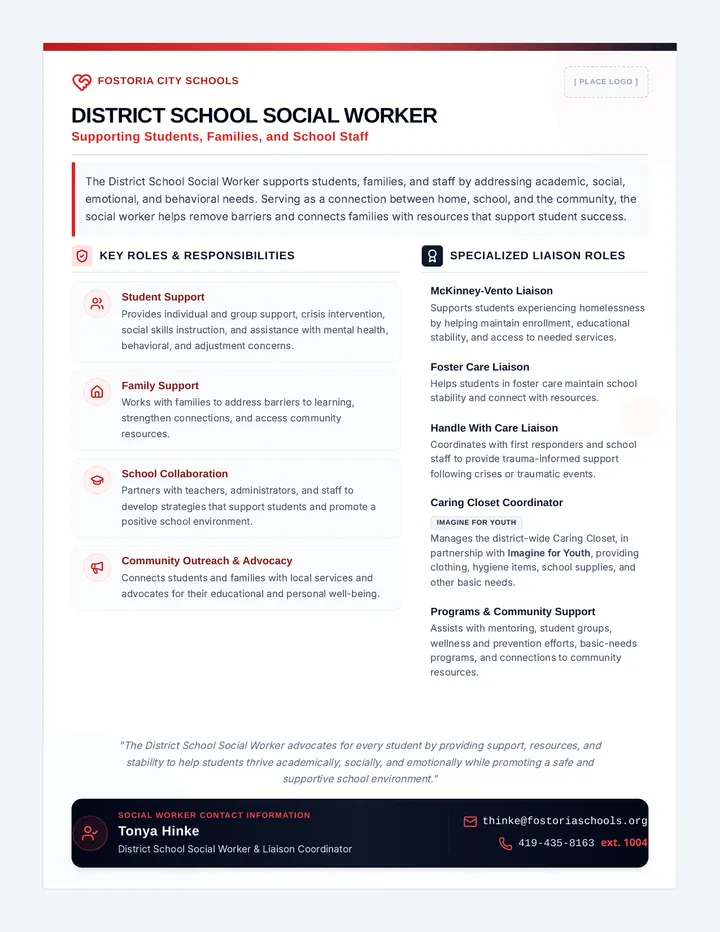
Calm Wave Teacher Guide
Instructional Pacing & Facilitation Blueprint • Grade 2 SEL
Teacher Resource
Suggested Pacing: 30-45 Mins
Core Objectives
- Identify: Define coping skills and recognize bodily warning signs of anger ("Warm Spark").
- Select: Map out at least 2 personalized calming strategies for school and home.
Setup & Materials
- Project the Calm Wave Slides.
- Print 1 copy of the Calm Wave Worksheet per student.
- Have crayons, colored pencils, and a sample stress ball on hand.
Presentation Guide & Script
🌊 Part 1: Introduction & Pacing (Slides 1 - 3) 10 Mins
Slide 1 & 2: Introduce coping skills using the umbrella/rain analogy. Ask: "Who has ever felt a giant wave of anger? Is it okay to feel angry? Yes! But how we handle it is what matters."
Slide 3 (Anger Scale): Emphasize catching anger at Level 2 (Warm Spark). Once we reach Level 3 (Hot Volcano), our thinking brain turns off. Have students practice noticing tight fists or hot cheeks.
🛠️ Part 2: The Calming Strategies (Slides 4 - 7) 15 Mins
Slide 4 (Breathing): Lead the group in "Square Breathing." Trace the air together. Emphasize breathing slowly to lower heart rate and calm the body's nervous system.
Slide 5 (Physical): Practice the "squeeze and release" technique. Instruct: "Squeeze your face, hands, and shoulders like a rock... now relax like a warm noodle!"
Slide 6 (Self-Talk): Choral read the helpful thoughts. Explain that what we tell ourselves changes how we feel.
Slide 7 (Break Spots): Brainstorm safe break zones. Define classroom parameters for the "cozy corner."
✍️ Part 3: Guided Practice & Worksheet Completion 15 Mins
Worksheet & Reset: Hand out worksheets. Guide students through Step 1 (checking bodily signals), Step 2 (self-talk), and Step 3 (drawing cool-down spots). Conclude the lesson by reviewing Slide 8 (Staying in Control) to reinforce trigger identification and physiological warning signals.
Supporting Kids "In the Moment"
When you notice a student escalating into the "Warm Spark" zone:
- Whisper Connection: Get on eye level. Gently remind them: