Lenny.com
Explore
Create
ActivitiesNewMathEnglish Language ArtsScience & EngineeringSocial StudiesGlobal LanguagesHealth & Physical EducationSpecial EducationCounseling & Life SkillsArts & CreativityESL
Lenny.com
Lenny.com
Explore
Create
ActivitiesNewMathEnglish Language ArtsScience & EngineeringSocial StudiesGlobal LanguagesHealth & Physical EducationSpecial EducationCounseling & Life SkillsArts & CreativityESL
Lenny.com
Lenny.com

Solutions

Lenny for EducatorsLenny for SchoolsLenny for Districts

Product

ExploreSign inCreateSupportAbout

Resources

Getting startedMTSS Acceleration Program

Newsletters

School Funding Newsletter

© 2026 Lenny Learning Inc.

TermsPrivacyAccessibility
LinkedInInstagramX
Lenny
Counseling & Life SkillsSelf-AwarenessBasic Emotion RecognitionComplex Emotion IdentificationEmotional Nuance & Mixed FeelingsBuilding Positive Self-ImageRecognizing Strengths & Growth AreasAccurate Self-AssessmentPersonal Values IdentificationCultural & Individual Identity ExplorationValues-Based Decision MakingSelf-ManagementStop-and-Think StrategiesDelaying GratificationIndependent Impulse ManagementIdentifying Stress TriggersShort-Term Goal SettingSMART Goals DevelopmentGoal Monitoring & AdjustmentBuilding Perseverance & ResilienceInternal Motivation DevelopmentComprehensive Stress Reduction PlanningSocial AwarenessRecognizing Others' FeelingsDemonstrating EmpathyRespecting Individual DifferencesUnderstanding Cultural DiversityComplex Empathetic ResponsesMultiple Viewpoint ConsiderationMulti-Perspective AnalysisChallenging Stereotypes & BiasRelationship SkillsActive ListeningClear Verbal & Nonverbal CommunicationBuilding Positive FriendshipsWorking Cooperatively in GroupsCommunicating Personal BoundariesRespecting Others' BoundariesAssertive ExpressionPeaceful Problem-SolvingContributing to Team GoalsComplex Conflict NavigationMediation & NegotiationHealthy Romantic RelationshipsResponsible Decision-MakingDaily Problem IdentificationBrainstorming Multiple SolutionsEvaluating Pros & ConsRecognizing Risks & ConsequencesApplying Ethical FrameworksInformed Risk-Benefit DecisionsRoot Cause AnalysisMindfulnessMindful BreathingBody Scan MeditationDaily Mindfulness ApplicationDaily Self-Care RoutinesBalancing Life DemandsAdvocating for Wellness NeedsMental Health SupportUnderstanding Anxiety SymptomsWorry Management StrategiesProgressive Muscle RelaxationRecognizing Depression SignsBuilding Mood-Supporting RoutinesBehavioral Activation for MoodUnderstanding Grief StagesHealthy Grief CopingCreative Expression of LossBehavioral SupportDaily Check-In ProceduresDaily Goal Setting & ReviewRecognizing Escalation Warning SignsRequesting Breaks & SupportSelf-Calming During DistressUnderstanding Positive ReinforcementToken Economy ImplementationBehavior Chart TrackingAnalyzing Behavior PatternsIdentifying Antecedents & ConsequencesDetermining Behavior FunctionFunction-Based InterventionsIndividualized Behavior ContractsData-Driven Behavior AdjustmentTherapeutic ApproachesThoughts-Feelings-Behaviors ConnectionRecognizing Thinking PatternsChallenging Negative ThoughtsPositive Self-Talk PracticeThought Record TrackingAdvanced Cognitive RestructuringComprehensive CBT PlansBehavioral Activation TechniquesBuilding Positive ExperiencesExposure Hierarchies for AnxietyPresent-Moment AwarenessNon-Judgmental ObservationSelf-Soothing & DistractionComplex Emotion LabelingReducing Emotional Vulnerability (PLEASE)DEAR MAN CommunicationGIVE Skills for RelationshipsFAST Skills for Self-RespectRadical Acceptance PracticeCrisis Survival Skills (TIPP)Understanding Trauma EffectsTrauma Responses & TriggersIdentifying Trauma FeelingsGrounding TechniquesRegulation During Trauma DistressSafe Place VisualizationProcessing Through NarrativeDeveloping Trauma StoryPersonalized Safety PlanningGroup SupportTurn-Taking & SharingGroup Conversation SkillsSharing in Supportive EnvironmentLearning from Similar ChallengesBuilding Community & BelongingNavigating Peer RelationshipsGroup Skill PracticeGroup Mental Health EducationStress & Anxiety UnderstandingCrisis Support & SafetyKnowing When to Seek HelpIdentifying Mental Health CrisesGrounding During CrisisUsing Crisis HotlinesBuilding Support NetworksAccessing Mental Health ResourcesWarning Signs & Coping StrategiesDeveloping Personal Safety PlansUnderstanding Suicide Warning SignsGatekeeper Skills for PeersDigital LiteracySocial MediaTechnology BasicsProductivity ToolsInternet and Online ResearchWeb Design and PublishingDigital CitizenshipOnline Safety and PrivacyEmerging TechnologiesFinancial LiteracyMaking Financial DecisionsBanking and AccountsConsumer SkillsSaving and InvestingCredit and DebtEmployment and IncomeTaxesInsuranceMajor PurchasesEconomic ConceptsFinancial PlanningCollege & Post-Secondary PlanningCareer ExplorationUnderstanding Post-Secondary OptionsCollege Research & SelectionAdmission RequirementsCollege Application ProcessPersonal Statement WritingFAFSA CompletionScholarship Search & ApplicationsUnderstanding Student LoansContinuing Education PlanningInterview PreparationResearching EmployersCommon Interview QuestionsSTAR Method ResponsesProfessional Interview PresenceVirtual Interview SkillsInterview Follow-UpJob Search SkillsUnderstanding Job PostingsEffective Job Search StrategiesNetworking for OpportunitiesResume Writing BasicsAction Verbs & AchievementsTailoring Resumes to JobsCover Letter WritingProfessional ReferencesProfessional CommunicationBusiness Email EtiquettePhone & Voicemail ProfessionalismMeeting ParticipationPresentation SkillsProfessional Work EthicTime Management & ProductivityTeamwork & CollaborationAdaptability & FlexibilityProblem-Solving at WorkConstructive FeedbackWorkplace RightsUnderstanding Employment LawsPay & Benefits UnderstandingWorkplace SafetyAnti-Discrimination & Harassment

Mind Over Machine

A comprehensive 75-90 minute lesson guiding secondary students through ethical, safe, and effective artificial intelligence usage. Students evaluate real-world scenarios across academic honesty, algorithmic bias, hallucination detection, and data privacy.

RCRobin Cronin

Mind Over Machine

A comprehensive 75-90 minute lesson guiding secondary students through ethical, safe, and effective artificial intelligence usage. Students evaluate real-world scenarios across academic honesty, algorithmic bias, hallucination detection, and data privacy.

RCRobin Cronin

A. Spot the Hallucination:

Arthur C. Henderson and the "Orbital Vector Matrix" do not exist! Why did AI invent this?

B. Spot the Bias / Missing Perspective:

What vital groups (e.g., Katherine Johnson and human computers) were erased here?

4

PART 4: Prompt Transformation Forge

Turn an inappropriate "cognitive replacement" prompt into a high-leverage "thought partner" prompt that deepens your own thinking.

Lazy Replacement Prompt Assignment: Analyzing Character Motivation in The Great Gatsby

"Write a thesis statement and 3 body paragraphs explaining why Gatsby is obsessed with Daisy."

Your Transformed Socratic Thought-Partner Prompt:

5

PART 5: Personal AI Code of Conduct

Write two concrete rules you will personally follow when using AI tools for academic work this school year.

Rule 1 (Honesty & Verification):

Rule 2 (Privacy & Ethics):

Mind Over Machine • Student Activity Guide Page 2 of 2

Reality:

Mind Over Machine • Instructional Facilitation Guide Page 1 of 2

Teacher Master Key & Facilitation Nuances

Classroom Support Notes

Worksheet Answer Keys & Scoring Guidance

Part 1: Traffic Light Sorter

  • A. [R] Red Light: Severe privacy and FERPA violation. Student exposed a classmate's identifiable educational record without consent to a third-party server.
  • B. [G] Green Light: Exemplary thought partnership. Sofia uses AI as an interactive tutor/flashcard coach. Student retains all cognitive effort.
  • C. [Y] Yellow Light: Caution zone. Permissible only if the teacher allows grammar/style assistance. Student wrote original thought, but should cite tool use.
  • D. [R] Red Light: Direct academic dishonesty and intentional deception. Submitting ghostwritten AI material disguised through paraphrase spinners is plagiarism.

Part 2: Case Investigation (Jordan)

1. Where it crossed the line: When Jordan prompted AI to "Draft two body paragraphs analyzing this impact" and submitted it with minor edits. Generating argument structure and evidence synthesis is the core learning objective being evaluated.

2. Green Light Rewrite: "I wrote these two paragraphs about urban sanitation [paste text]. Act as a history teacher: what counterarguments might an opponent raise against my claim?"

Part 3: Hallucination & Bias Lab

A. Hallucination Cause: AI generates high-probability linguistic structures. "Arthur C. Henderson" sounds like a mid-century aerospace engineer; AI invented the name and formula to fulfill the prompt convincingly.

B. Missing Perspectives: Complete erasure of African American women mathematicians (Katherine Johnson, Dorothy Vaughan, Mary Jackson) and civilian contractors who calculated orbital trajectories.

Socratic Discussion Moves (Handling Pushback)

When students say: "Everyone uses it to write essays anyway."

Move: "Using a calculator doesn't teach you number sense when you're 7, and using an LLM doesn't teach you how to organize an argument at 15. The assignment isn't to create words—it's to build your neural wiring."

When students say: "Why shouldn't I use it if my teacher can't prove it?"

Move: "Cheating isn't wrong because you get caught; it's self-sabotage because you graduate without the critical thinking skills future employers and colleges demand."

Differentiation & Extension

Support / Multilingual Provide sentence frames for the Traffic Light justifications (e.g., "This is Red Light because it shares private data without...").

Grade-Level Mastery Pairs independently roleplay an "AI Ethics Board" voting on hypothetical school policy rules.

Advanced / Honors Conduct a live stress-test: prompt an AI to generate a bibliography on a niche topic, then cross-reference each DOI in library databases.

Mind Over Machine • Instructional Facilitation Guide Page 2 of 2

Standard AI Disclosure Statement (Add to Works Cited):

"AI Tool [Name] was used on [Date] to [Specific task, e.g., brainstorm counterarguments]. All analysis and final writing are original human work."

100% Transparent

Mind Over Machine • Student AI Protocol & Reference Guide Permanent Binder Resource
You might also like

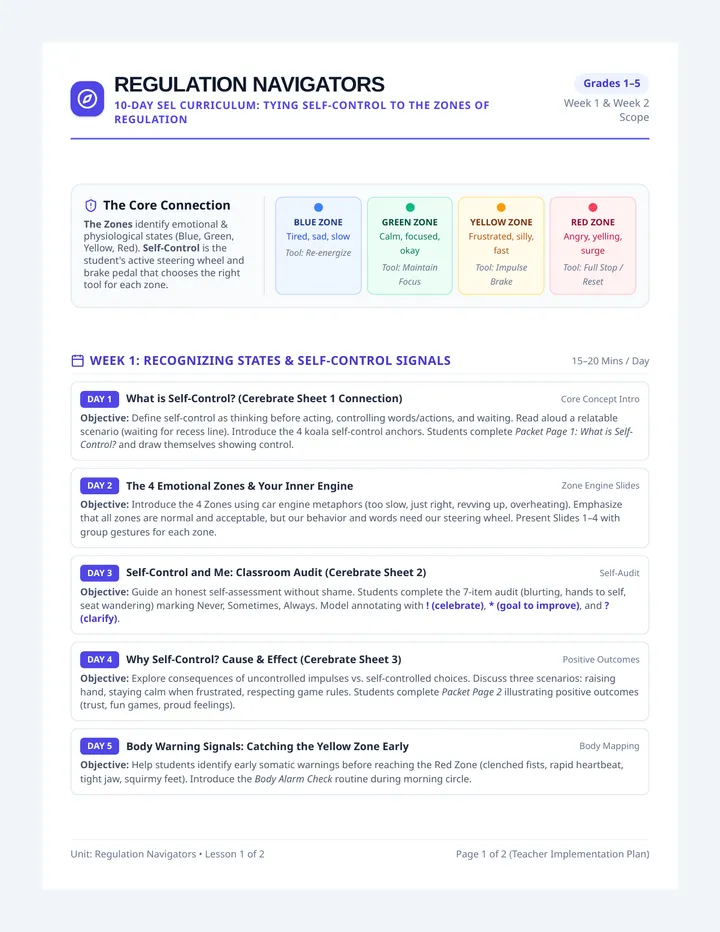
Regulation Navigators Teacher Guide

Regulation Navigators

A two-week social-emotional learning unit connecting self-control strategies with the Zones of Regulation, guiding elementary students from emotional awareness to active behavioral regulation.

KR

Kate Roy

6
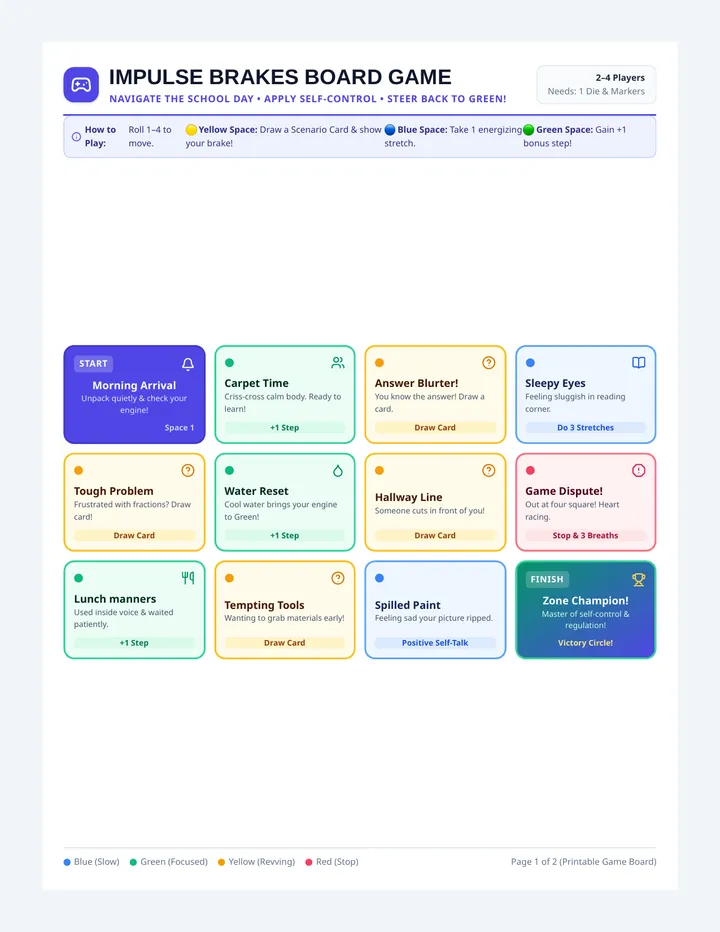
Impulse Brakes Board Game

Strategy Station

Week 2 equips students with actionable calming strategies, impulse-control games, and a structured daily goal tracking system to maintain regulation across settings.

KR

Kate Roy

3
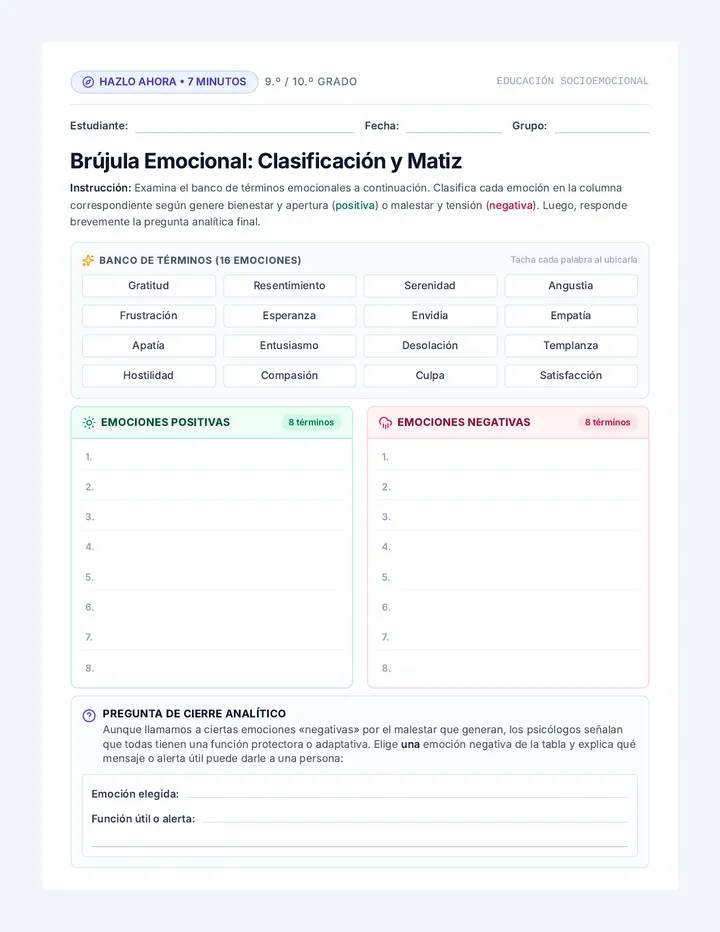
Brújula Emocional Hazlo Ahora

Brújula Emocional Hazlo Ahora

Actividad breve de inicio (Hazlo ahora / Bellringer) para 9.º y 10.º grado con vocabulario socioemocional matizado. Incluye un banco de 16 emociones complejas, una tabla comparativa de clasificación y una pregunta de reflexión analítica sobre la función adaptativa de las emociones.

BR

Berkys Ramirez Diaz

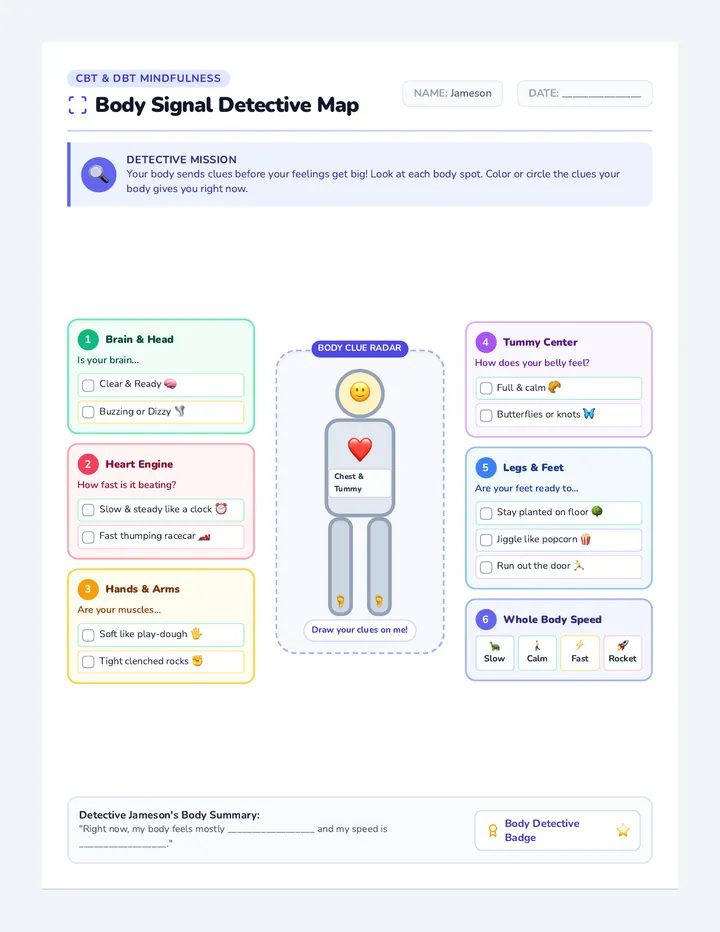
Body Signal Detective Worksheet

Jameson Regulation Quest

An 8-month school-based CBT and DBT self-regulation curriculum designed for a first-grade student transitioning from staff co-regulation to independent emotional awareness. The curriculum moves through four 8-week developmental phases integrating body mapping, distress tolerance anti-elopement tools, cognitive reframing role-play, and classroom generalization.

H

hsmith

8
Regulation Navigators Teacher Guide

Zone Detectives

Week 1 focuses on identifying internal emotional zones (Blue, Green, Yellow, Red) and understanding how self-control serves as the body's steering wheel during daily school moments.

KR

Kate Roy

3
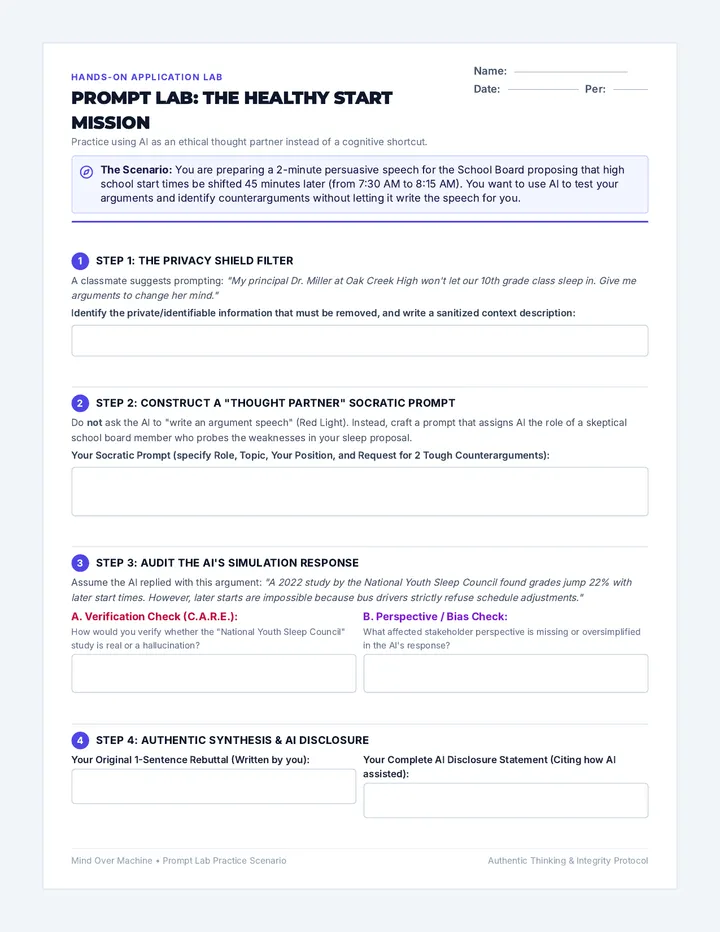
Prompt Lab Practice Activity

Prompt Lab Practice Activity

A 1-page hands-on practice activity guide where students apply AI ethics to a realistic scenario: debating school start times while navigating safe prompting, hallucination checks, bias detection, and ethical attribution.

RC

Robin Cronin

Role Recon Slides

Interview Edge

A multi-day career readiness sequence equipping high school students with essential interview preparation, professional communication, behavioral storytelling, and simulation practice. Students progress from dissecting job requirements to executing realistic peer mock interviews and professional follow-ups.

YG

Yolanda Greene

6
Campus Talk Slides

Words That Work

A dynamic social-emotional and academic communication lesson equipping students with practical strategies for respectful tone, structured help-seeking, and situational awareness across campus interactions.

SS

Shelby Scott

4
Connection Circle Slides

Belonging Blueprint

A foundational multi-day classroom culture sequence rooted in restorative practices and ASCA student behavior standards. Students cultivate relational trust, practice active empathy, and co-create enduring community agreements that foster emotional safety and shared belonging.

NF

Natalie Frahm

6
Claim Check Slides

Claim Check

A restorative middle school lesson exploring personal boundaries, the ethics of property, and the ripple effects of taking items without permission. Students analyze everyday scenarios, develop empathy for victims of theft, and learn concrete steps to make things right.

MC

Marcia Cullinane

3
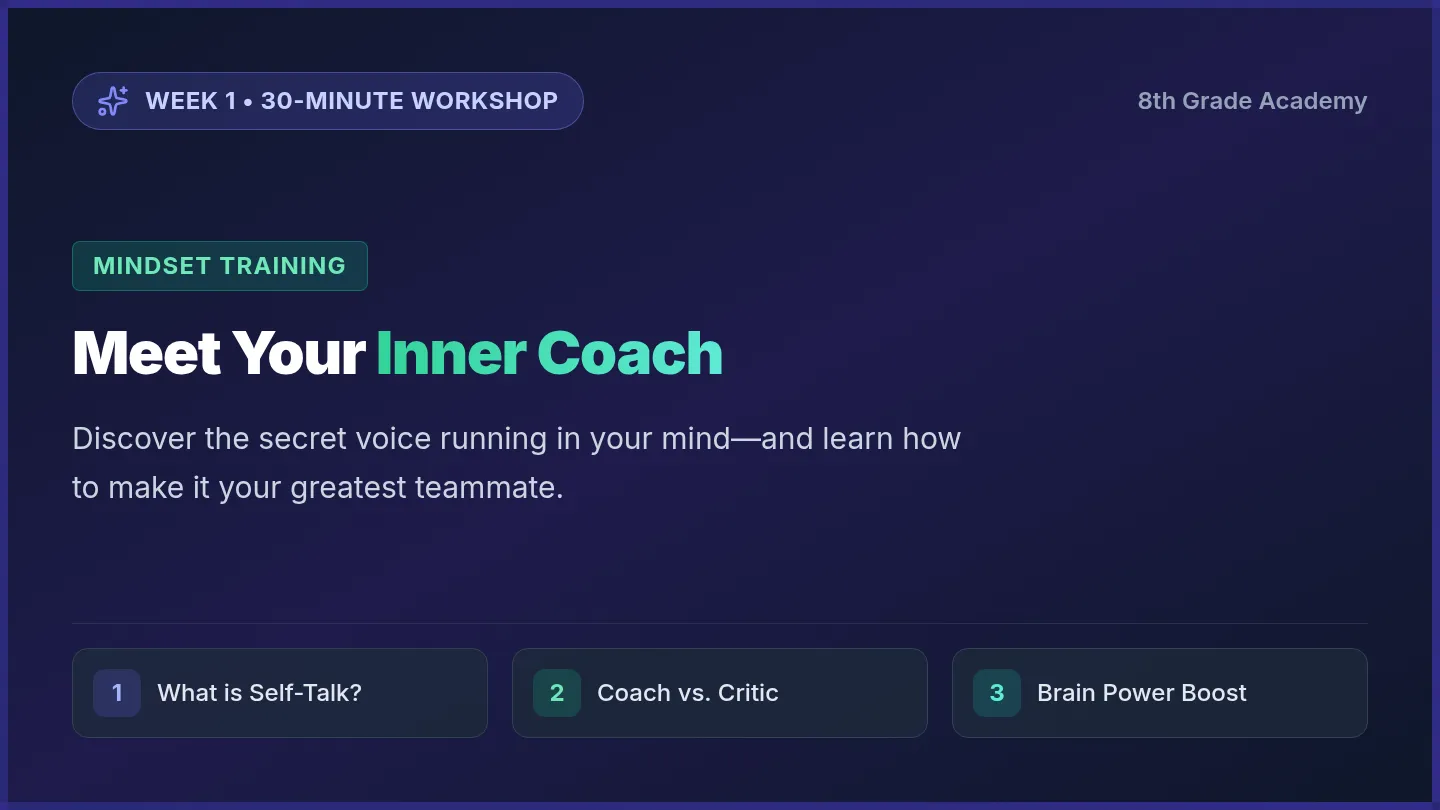
Inner Coach Slides

Inner Coach Academy

A 4-week small-group intervention sequence designed for 8th grade students (ASD and IDML) to understand, build, and apply positive self-talk. Each 30-minute session uses visual anchors, concrete scripts, and guided practice to transform inner criticism into empowering self-advocacy.

LS

Laura-Ashley Shury

9
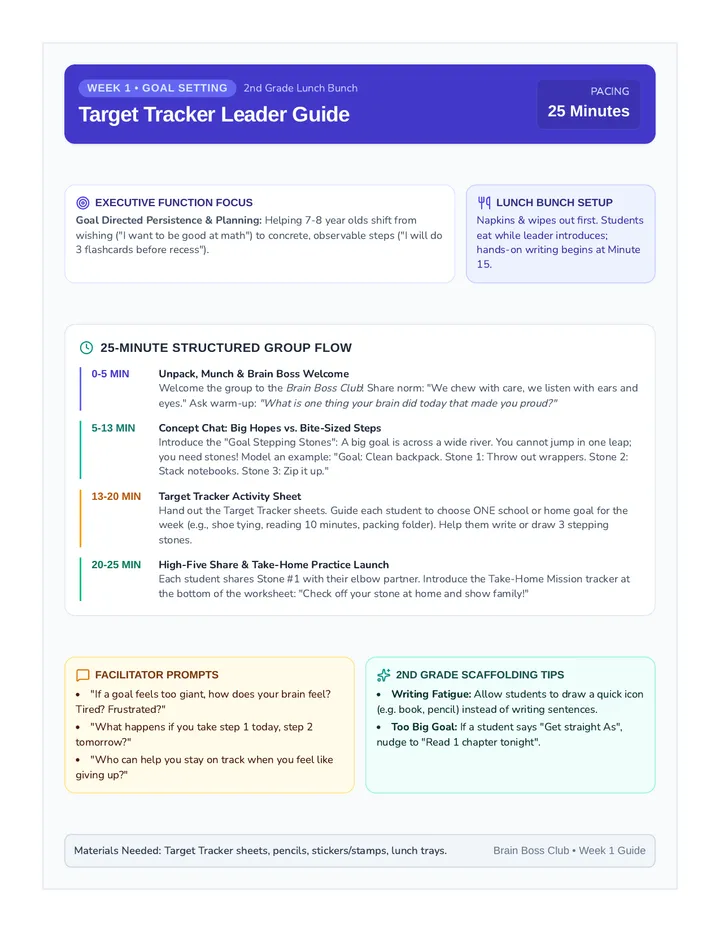
Target Tracker Leader Guide

Brain Boss Club

A 6-week lunchtime executive functioning curriculum for second graders focusing on goal setting, time awareness, decision making, problem solving, focus, and self-reflection.

K

Kathryn.Sanders

13