Help! I Need Somebody! Lesson Plan Help! I Need Somebody!
Lesson Plan
TIME: 30 MINUTES AUDIENCE: 9TH GRADE
Learning Objective
Students will be able to identify signs that they need help (academic, social, emotional) and confidently use effective strategies to ask for support from teachers, counselors, or other school staff.
Why This Matters
Learning to ask for help is a crucial life skill that empowers students to overcome challenges, build resilience, and succeed academically and personally. It teaches self-advocacy and fosters a supportive school environment.
Preparation
1
Review & Prep: Review the Help! I Need Somebody! Slide Deck and familiarize yourself with the content (15 mins).
2
Print Resources: Prepare one copy per student of the When and How to Ask for Help Handout and one set per group of the Role-Play Scenarios.
3
Setup: Ensure your projector is ready for the slides and arrange desks for easy pair-sharing or small group role-play.
Materials
Slide Deck
Help Handout
Scenario Cards
Display Setup
Instructional Flow
5 MIN
Warm-Up: Think-Pair-Share
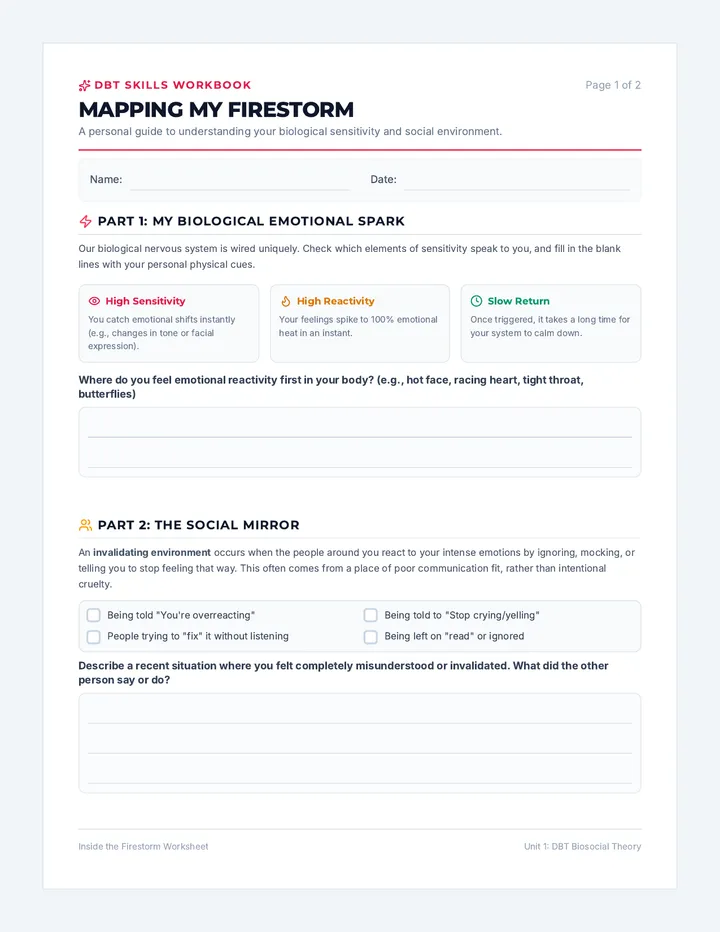
Display Slide 2. Ask: "Think about a time you needed help with something but didn't ask. What happened?"
Reflect: 1 minute of private individual reflection.
Pair: 2 minutes of sharing with a partner. Ask them to discuss why they didn't ask.
Share: Briefly bring the class together for 1-2 volunteers to share.
10 MIN
Guided Instruction: Red Flags & Strategies
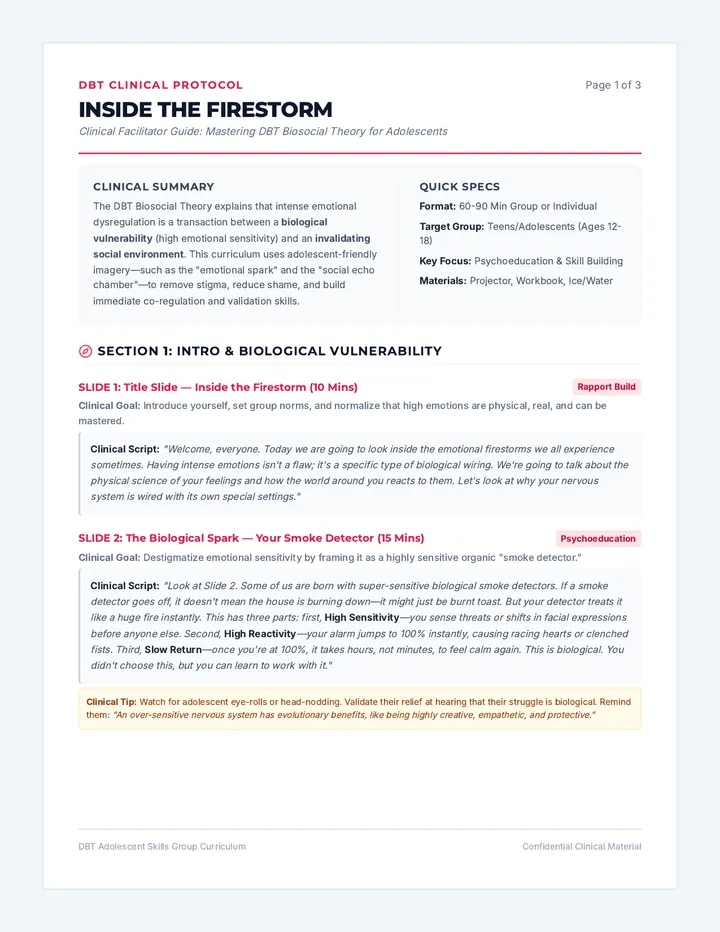
Use Slides 3-6 to cover types of help (Academic vs. Social-Emotional) and the "Red Flags" indicating help is needed.
Focus on Specificity: Emphasize that "I don't get 'x'" is much better than "I don't get anything."
Discuss Timing: Encourage students to identify the best "window" for asking (office hours, email, after class).
10 MIN
Group Activity: Role-Play Practice
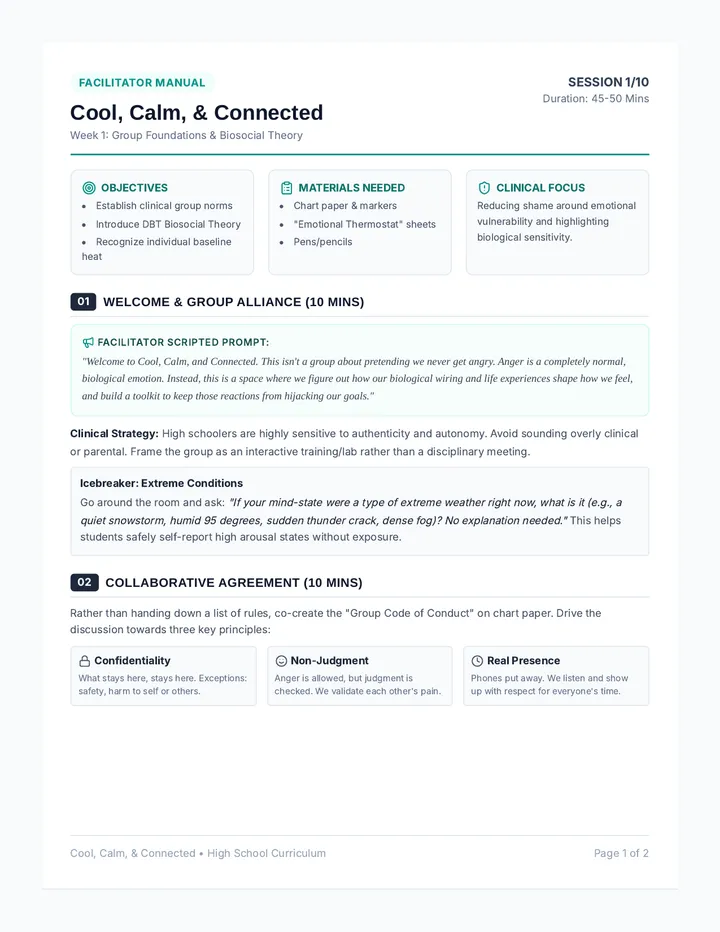
Divide students into groups of 2-3 and distribute the Role-Play Scenarios .
Students should act out the scenario focusing on: starting clear, explaining what they tried, and suggesting next steps.
Circulate to provide guidance and ensure respectful, professional tone is practiced.
5 MIN
Wrap-Up & Reflection
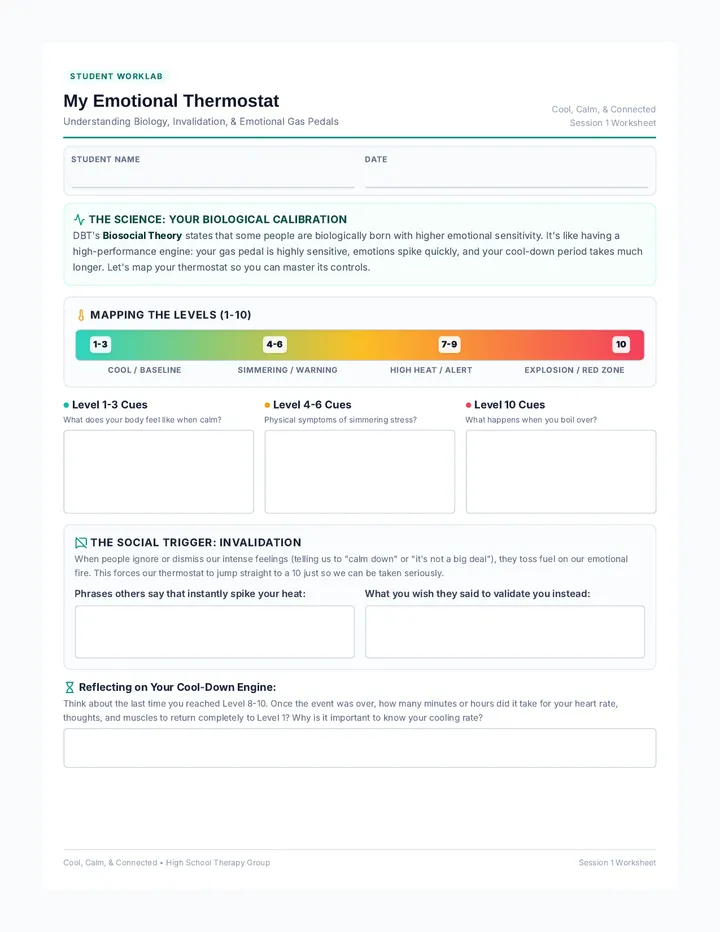
Distribute the Help Handout as a take-home resource.
Final Reflection: Have students write down one specific strategy they will try next time they feel overwhelmed.
Help! I Need Somebody! Slide Deck Help! I Need
Somebody!
Navigating School: When and How to Ask for Support
Knowing how to ask for help is a superpower.
Warm-Up: Think-Pair-Share
Think
Think about a time you needed help but didn't ask. What happened?
Pair
Turn to a partner and share your experience. Why didn't you ask?
Share
A few volunteers will share their insights with the class.
When Do You Need Help?
Academic Help
Confused by a topic or task
Falling behind in class
Trouble understanding instructions
Overwhelmed by workload
Social/Emotional Help
Feeling stressed or anxious
Trouble with friends/classmates
Feeling lonely or isolated
Feeling bullied or unsafe
Spotting the "Red Flags"
You're Confused
Rereading notes multiple times and still not getting it.
Frustration
Feeling really stressed, angry, or wanting to give up.
Avoidance
Procrastinating because the task feels too big or hard.
Physical Signs
Headaches or stomachaches when thinking about school.
How to Ask for Help: The Basics
1
Identify WHAT you need help with
Be specific! "I don't get x" vs "I don't get anything."
2
Identify WHO can help
(Teacher, Counselor, Friend, Parent)
3
Choose the right TIME and PLACE
(Office hours, after class, email)
4
Be RESPECTFUL and POLITE
(Your tone matters!)
Crafting Your Request
Script Ingredients:
Start Clear: "I'm struggling with..."
Explain Effort: "I've tried X, but I'm still confused..."
Be Specific: "Can you explain the difference between X and Y?"
Next Steps: "Can we meet during lunch or after class?"
Gratitude: "Thank you for your time."
Activity: Practice!
Work in small groups with your scenarios.
Read the situation
Role-play the conversation
Be specific and respectful
Give each other feedback
When and How to Ask for Help Handout Name:
Date:
Your Help Guide
When and How to Ask for Support
PART 1
When Do You Need Help?
It's not just about homework! Here are common areas where help can make a huge difference.
Academic Help
Confusion: You've tried to understand (read, listened, watched), but it's still unclear.
Falling Behind: You're missing assignments or struggling to keep up with the pace.
Overwhelm: The workload feels too big or a subject feels too hard to tackle alone.
Low Grades: Your scores are dropping or you're consistently performing below potential.
Social/Emotional Help
Stress/Anxiety: You feel constantly worried, nervous, or overwhelmed by pressure.
Relationship Issues: Trouble with friends, conflict, or feeling left out.
Feeling Unsafe: Experiencing bullying, harassment, or any form of discomfort.
Behavior Changes: Sleeping more/less, losing interest in hobbies, or withdrawing.
PART 2
Spotting Your "Red Flags"
Constant Confusion
Rereading notes and still not grasping concepts.
Frustration
Easily irritated or upset when working on school tasks.
Avoidance
Putting off tasks because they seem too difficult.
PART 3
How to Ask for Help Effectively
1
Be Specific About the Need
Identify exactly what is confusing you.
Weak: "I don't get math."
Strong: "I'm struggling with setting up equations for word problems."
2
Identify the Right Person
Consider teachers, counselors, peer tutors, coaches, or parents.
3
Choose the Timing
Email, office hours, or brief check-ins after class are usually best.
The "Help Script" Template
Start Clear: "Mr./Ms. [Name], I'm hoping you could help me with something..."
Explain Effort: "I've tried [reading/watching X], but I'm still not understanding [Concept]."
State Question: "Could you walk me through an example or explain [Concept] in a different way?"
Next Steps: "Would you have a few minutes after class today or during lunch on Tuesday?"
Gratitude: "Thank you for your time and help."
Asking for help is a sign of strength, not weakness.
Asking for Help Role-Play Scenarios Practice Scenarios
Asking for Help Role-Play
Small Group Activity
Instructions
In your groups, read each scenario. Choose roles (Student and Helper ) and act out how the student would effectively ask for help. Use the "Help Script" from your handout!
Be specific about the problem
Explain what you've already tried
Suggest a time/place to meet
Keep a respectful, professional tone
Scenario 1: Academic Confusion
Helper: Teacher
Alex is in Geometry and is completely lost on the current unit about proofs. They've tried reading the textbook and looking at their notes, but the concepts just aren't clicking. A big quiz is coming up next week.
Role-Play Prep: What will Alex say?
Feedback: What went well?
Scenario 2: Overwhelmed Workload
Helper: School Counselor
Maya is usually organized, but this week she feels buried under assignments from three different classes. She's starting to feel anxious and worried she won't be able to turn everything in on time.
Role-Play Prep: What will Maya say?
Feedback: What went well?
Practice Scenarios Continued...
Scenario 3: Social Discomfort
Helper: Trusted Adult (Coach)
Sam has noticed a group of students making uncomfortable jokes about their appearance during lunch. Sam feels hurt and doesn't want to go to the cafeteria, but doesn't want to "seem weak" by telling someone.
Role-Play Prep: What will Sam say?
Feedback: What went well?
Scenario 4: Group Project Struggle
Helper: Subject Teacher
Jamie is working on a history project with Chris. Jamie feels like they are doing all the work, and Chris is not contributing. Jamie is worried about their grade but doesn't want to cause conflict.
Role-Play Prep: What will Jamie say?
Feedback: What went well?
Post-Activity Discussion
• What challenges might arise in these situations?
• How did the tone of the request change the helper's response?
• Which scenario felt the most difficult to role-play?
• How can we support each other in asking for help?