Lenny.com
Explore
Create
ActivitiesNewMathEnglish Language ArtsScience & EngineeringSocial StudiesGlobal LanguagesHealth & Physical EducationSpecial EducationCounseling & Life SkillsArts & CreativityESL
Lenny.com
Lenny.com
Explore
Create
ActivitiesNewMathEnglish Language ArtsScience & EngineeringSocial StudiesGlobal LanguagesHealth & Physical EducationSpecial EducationCounseling & Life SkillsArts & CreativityESL
Lenny.com
Lenny.com

Solutions

Lenny for EducatorsLenny for SchoolsLenny for Districts

Product

ExploreSign inCreateSupportAbout

Resources

Getting startedMTSS Acceleration Program

© 2026 Lenny Learning Inc.

TermsPrivacyAccessibility
LinkedInInstagramX
Lenny
Counseling & Life SkillsSelf-AwarenessBasic Emotion RecognitionComplex Emotion IdentificationEmotional Nuance & Mixed FeelingsBuilding Positive Self-ImageRecognizing Strengths & Growth AreasAccurate Self-AssessmentPersonal Values IdentificationCultural & Individual Identity ExplorationValues-Based Decision MakingSelf-ManagementStop-and-Think StrategiesDelaying GratificationIndependent Impulse ManagementIdentifying Stress TriggersShort-Term Goal SettingSMART Goals DevelopmentGoal Monitoring & AdjustmentBuilding Perseverance & ResilienceInternal Motivation DevelopmentComprehensive Stress Reduction PlanningSocial AwarenessRecognizing Others' FeelingsDemonstrating EmpathyRespecting Individual DifferencesUnderstanding Cultural DiversityComplex Empathetic ResponsesMultiple Viewpoint ConsiderationMulti-Perspective AnalysisChallenging Stereotypes & BiasRelationship SkillsActive ListeningClear Verbal & Nonverbal CommunicationBuilding Positive FriendshipsWorking Cooperatively in GroupsCommunicating Personal BoundariesRespecting Others' BoundariesAssertive ExpressionPeaceful Problem-SolvingContributing to Team GoalsComplex Conflict NavigationMediation & NegotiationHealthy Romantic RelationshipsResponsible Decision-MakingDaily Problem IdentificationBrainstorming Multiple SolutionsEvaluating Pros & ConsRecognizing Risks & ConsequencesApplying Ethical FrameworksInformed Risk-Benefit DecisionsRoot Cause AnalysisMindfulnessMindful BreathingBody Scan MeditationDaily Mindfulness ApplicationDaily Self-Care RoutinesBalancing Life DemandsAdvocating for Wellness NeedsMental Health SupportUnderstanding Anxiety SymptomsWorry Management StrategiesProgressive Muscle RelaxationRecognizing Depression SignsBuilding Mood-Supporting RoutinesBehavioral Activation for MoodUnderstanding Grief StagesHealthy Grief CopingCreative Expression of LossBehavioral SupportDaily Check-In ProceduresDaily Goal Setting & ReviewRecognizing Escalation Warning SignsRequesting Breaks & SupportSelf-Calming During DistressUnderstanding Positive ReinforcementToken Economy ImplementationBehavior Chart TrackingAnalyzing Behavior PatternsIdentifying Antecedents & ConsequencesDetermining Behavior FunctionFunction-Based InterventionsIndividualized Behavior ContractsData-Driven Behavior AdjustmentTherapeutic ApproachesThoughts-Feelings-Behaviors ConnectionRecognizing Thinking PatternsChallenging Negative ThoughtsPositive Self-Talk PracticeThought Record TrackingAdvanced Cognitive RestructuringComprehensive CBT PlansBehavioral Activation TechniquesBuilding Positive ExperiencesExposure Hierarchies for AnxietyPresent-Moment AwarenessNon-Judgmental ObservationSelf-Soothing & DistractionComplex Emotion LabelingReducing Emotional Vulnerability (PLEASE)DEAR MAN CommunicationGIVE Skills for RelationshipsFAST Skills for Self-RespectRadical Acceptance PracticeCrisis Survival Skills (TIPP)Understanding Trauma EffectsTrauma Responses & TriggersIdentifying Trauma FeelingsGrounding TechniquesRegulation During Trauma DistressSafe Place VisualizationProcessing Through NarrativeDeveloping Trauma StoryPersonalized Safety PlanningGroup SupportTurn-Taking & SharingGroup Conversation SkillsSharing in Supportive EnvironmentLearning from Similar ChallengesBuilding Community & BelongingNavigating Peer RelationshipsGroup Skill PracticeGroup Mental Health EducationStress & Anxiety UnderstandingCrisis Support & SafetyKnowing When to Seek HelpIdentifying Mental Health CrisesGrounding During CrisisUsing Crisis HotlinesBuilding Support NetworksAccessing Mental Health ResourcesWarning Signs & Coping StrategiesDeveloping Personal Safety PlansUnderstanding Suicide Warning SignsGatekeeper Skills for PeersDigital LiteracySocial MediaTechnology BasicsProductivity ToolsInternet and Online ResearchWeb Design and PublishingDigital CitizenshipOnline Safety and PrivacyEmerging TechnologiesFinancial LiteracyMaking Financial DecisionsBanking and AccountsConsumer SkillsSaving and InvestingCredit and DebtEmployment and IncomeTaxesInsuranceMajor PurchasesEconomic ConceptsFinancial PlanningCollege & Post-Secondary PlanningCareer ExplorationUnderstanding Post-Secondary OptionsCollege Research & SelectionAdmission RequirementsCollege Application ProcessPersonal Statement WritingFAFSA CompletionScholarship Search & ApplicationsUnderstanding Student LoansContinuing Education PlanningInterview PreparationResearching EmployersCommon Interview QuestionsSTAR Method ResponsesProfessional Interview PresenceVirtual Interview SkillsInterview Follow-UpJob Search SkillsUnderstanding Job PostingsEffective Job Search StrategiesNetworking for OpportunitiesResume Writing BasicsAction Verbs & AchievementsTailoring Resumes to JobsCover Letter WritingProfessional ReferencesProfessional CommunicationBusiness Email EtiquettePhone & Voicemail ProfessionalismMeeting ParticipationPresentation SkillsProfessional Work EthicTime Management & ProductivityTeamwork & CollaborationAdaptability & FlexibilityProblem-Solving at WorkConstructive FeedbackWorkplace RightsUnderstanding Employment LawsPay & Benefits UnderstandingWorkplace SafetyAnti-Discrimination & Harassment

Feelings Detectives

A social-emotional learning lesson for elementary students focused on empathy, perspective-taking, and respectful school behavior. Students learn to spot emotional clues, step into their classmates' shoes, and respond with kindness.

RSRyan Sowell

Feelings Detectives

A social-emotional learning lesson for elementary students focused on empathy, perspective-taking, and respectful school behavior. Students learn to spot emotional clues, step into their classmates' shoes, and respond with kindness.

RSRyan Sowell

Feelings Detectives • Grade 3 SEL Resource Page 1 of 2

Classroom Facilitation & Differentiation

Deepening Understanding, Addressing Misconceptions, and Assessment

Teacher Guide

Common Student Misconceptions & How to Reframe

Misconception 1: "It’s funny when people mess up."

Reframing: Address nervous laughter explicitly. Explain that people often laugh because they feel startled or awkward, but to the person who tripped or spilled, it feels like teasing. Practice replacing laughter with the "Rescue Reflex" (stepping up to assist).

Misconception 2: "They want to be alone if they look sad."

Reframing: Some kids are shy or feel embarrassed to ask to play. Teach students the "Gentle Check-in": "I noticed you are sitting here. Would you like some company, or would you like quiet time?" It respects privacy while offering safety.

2-Minute Quick Role-Play Exercises

Scenario A: The Last One Picked for Dodgeball Pairs Practice

Prompt: Partner 1 stands with crossed arms and head down. Partner 2 is a Feelings Detective.
Target Action: Partner 2 walks over, gives high-five or gentle wave, and says: "Hey, want to be on my side? We're glad you're here!"

Scenario B: The Tricky Math Worksheet Pairs Practice

Prompt: Partner 1 erases vigorously and sighs heavily with head resting on desk.
Target Action: Partner 2 notices the sigh and says: "This problem was tricky for me too. Do you want to look at number three together?"

Differentiation & Accessibility (2nd/3rd Grade Level)

Emergent Readers

Allow students to draw facial expressions and emoji clues instead of writing full sentences. Pair with a reading buddy to read scenario text aloud.

Neurodiverse Learners

Provide visual emotion wheels or picture cards. Some students may struggle reading subtle facial cues; explicitly identify concrete cues like tears, loud sighs, or turning away.

Extensions & Fast Finishers

Have students write a "Kindness Prescription" coupon to give to a classmate, or create their own Case #4 scenario based on a real school event.

Student Mastery Checklist

Identifies at least two nonverbal clues for sadness/upset.

Articulates how another person feels using perspective ("In their shoes").

Suggests a respectful, prosocial response to resolve loneliness or accidents.

Feelings Detectives • Grade 3 SEL Resource Page 2 of 2
You might also like

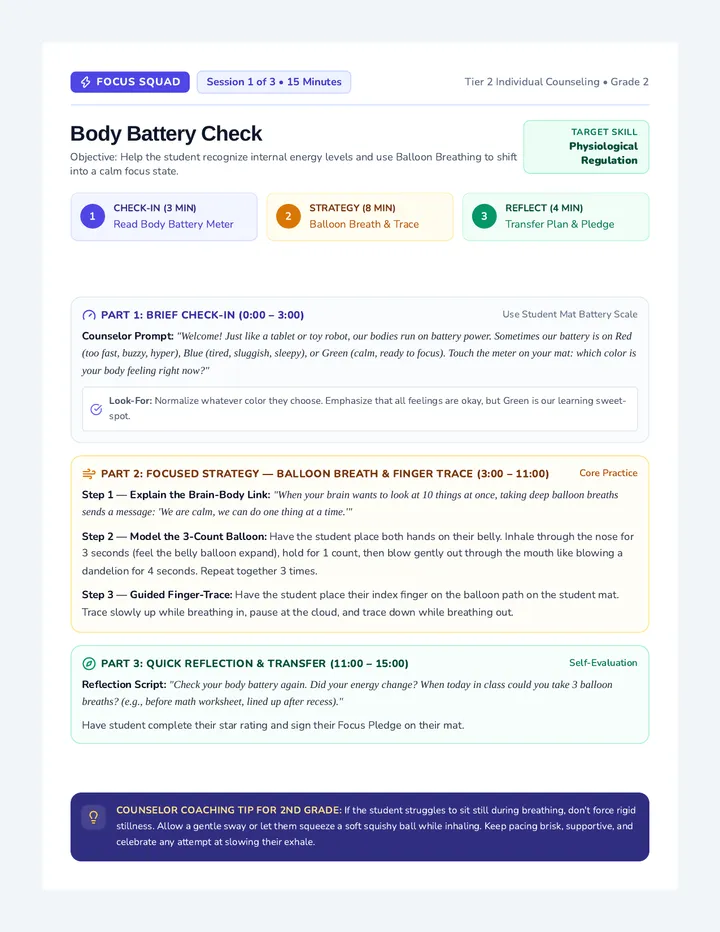
Body Battery Counselor Guide

Focus Squad

A three-session Tier 2 counseling sequence designed for second grade students to cultivate focus, self-regulation, and sustained attention. Each 15-minute session pairs an actionable counselor guide with an engaging student tool mat following a check-in, strategy, and reflection framework.

NF

Natalie Frahm

6
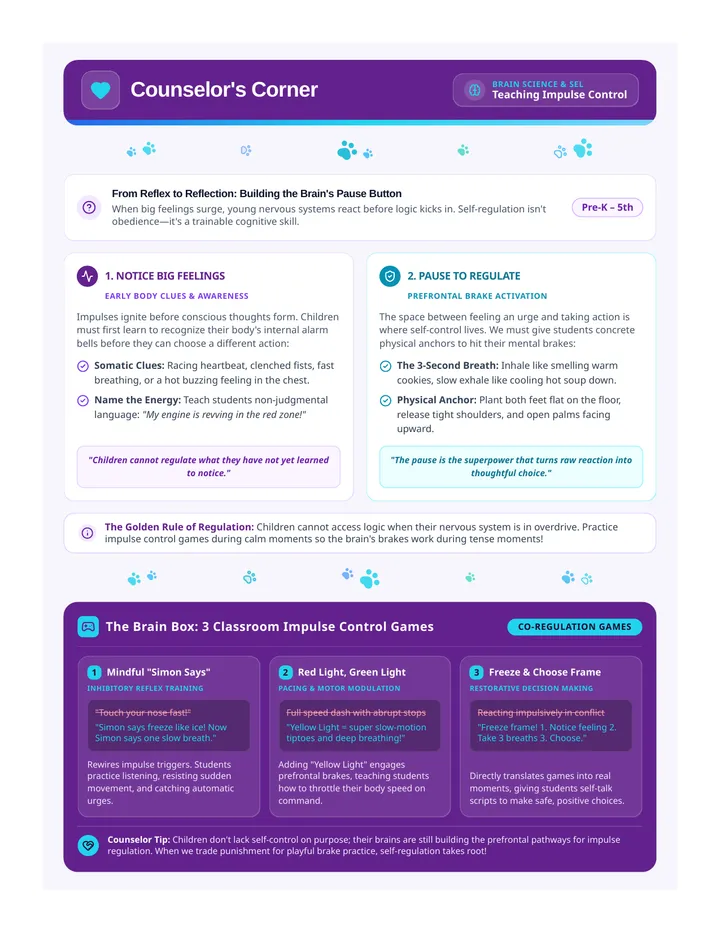
Impulse Control Newsletter Page

Counselor Corner Series

A collection of printable school counselor newsletter editions providing teachers with actionable SEL strategies, restorative scripts, and classroom tools.

E

elizabeth.graham

2
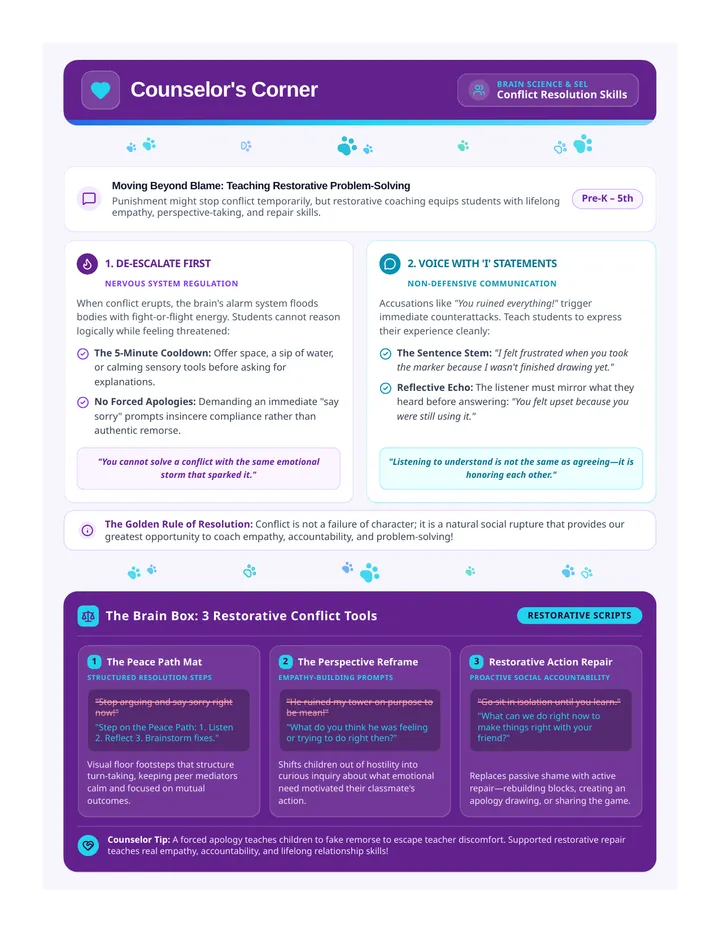
Conflict Resolution Newsletter Page

Conflict Resolution Newsletter Page

A printable school counselor newsletter page focused on classroom conflict resolution, featuring the signature Counselor's Corner purple banner, blue heart, ombre bar, pawprints, and restorative problem-solving frameworks.

E

elizabeth.graham

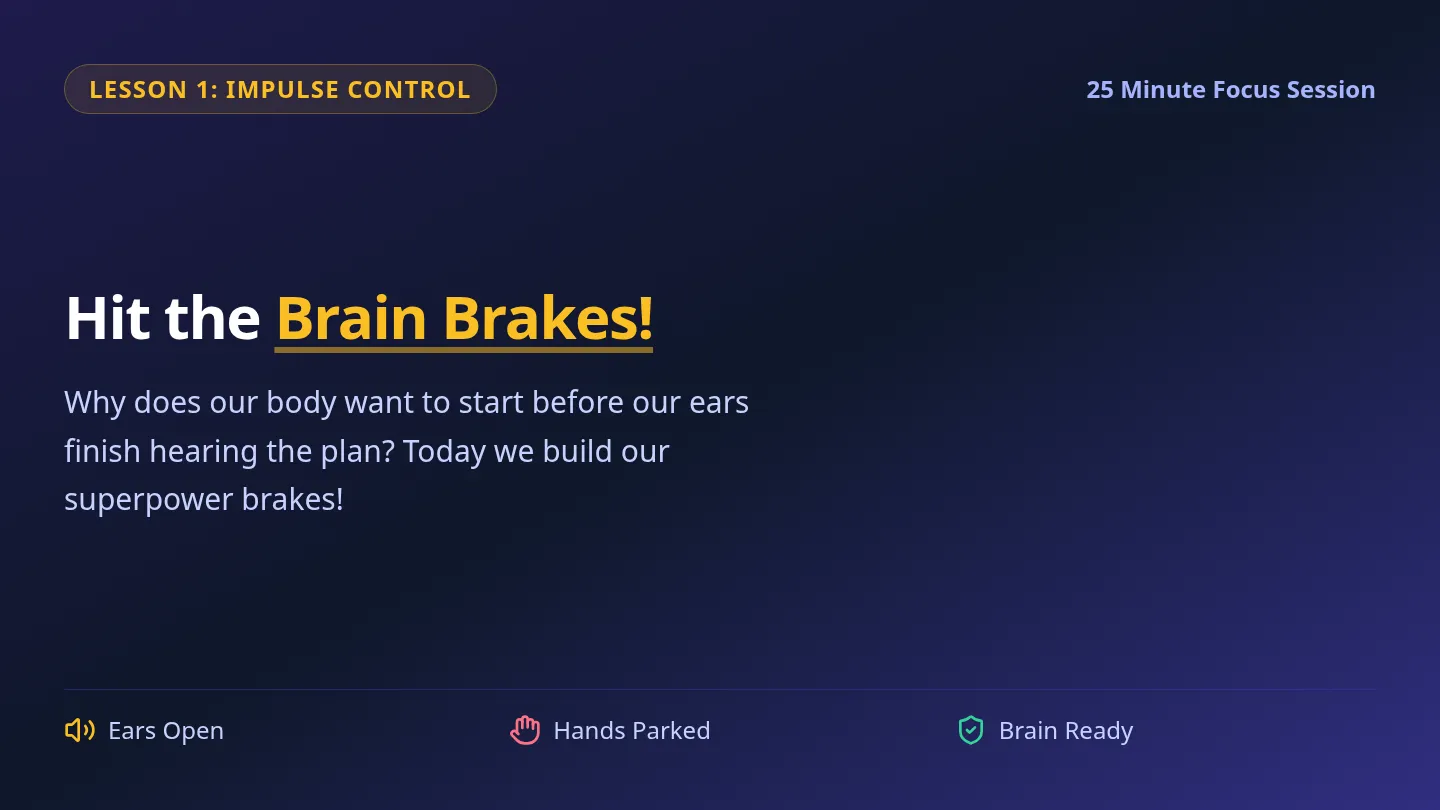
Hit the Brakes Slides

Pause and Power Up

A targeted 5-part executive functioning sequence for 2nd graders to master impulse control, active listening, and following multi-step directions. Students progress from physical self-stopping strategies to verbal rehearsal and independent classroom task execution.

NC

Nadine Cenord

10
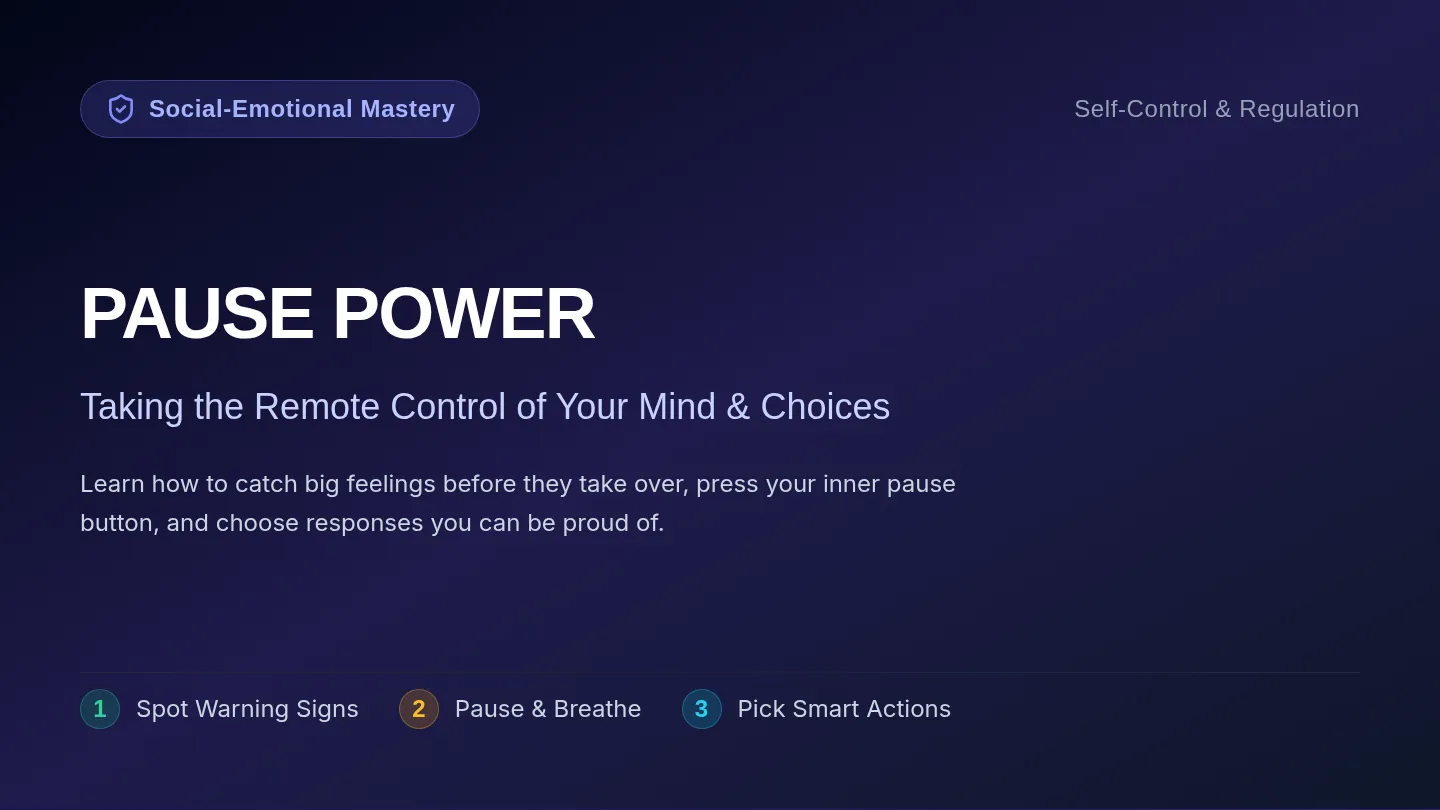
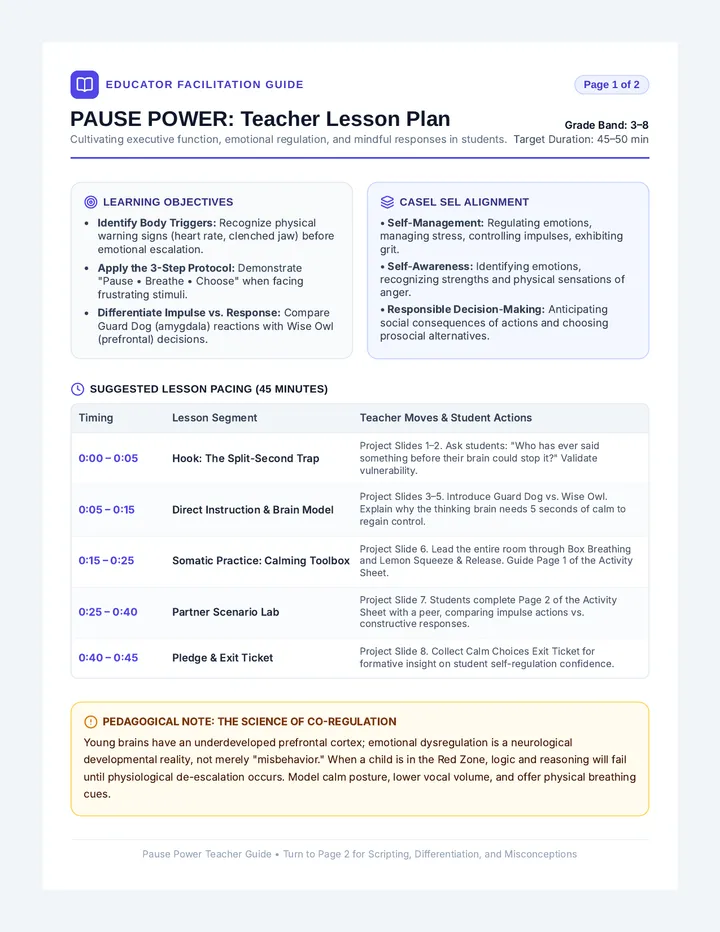
Pause Power Slides

Pause Power

A comprehensive social-emotional learning lesson that equips students with actionable self-control tools, the "Pause-Breathe-Choose" technique, and emotional regulation strategies for high-stress moments.

JD

Julie Donovan

4
Inner Control Teacher Guide

Inner Control Teacher Guide

A comprehensive 2-page instructional guide for teachers containing lesson objectives, brain science explanations, a detailed 45-minute pacing guide, scripted facilitation prompts, common misconceptions, and differentiation strategies.

JD

Julie Donovan

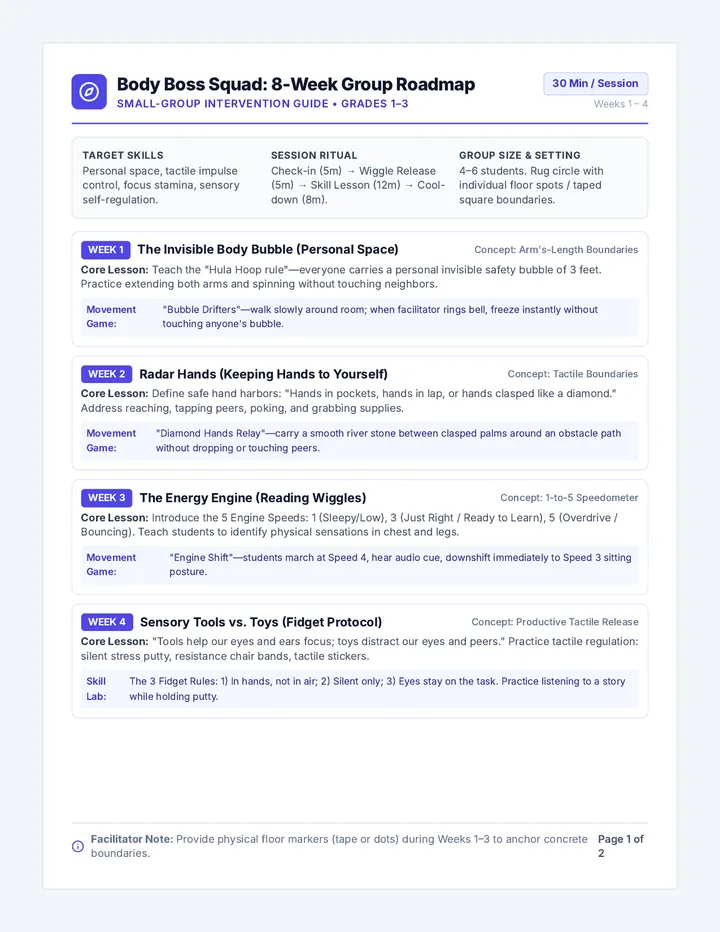
Group Roadmap Facilitator Guide

Body Bubble Squad

A comprehensive behavioral and self-regulation curriculum tailored for 1st to 3rd graders struggling with hyperactivity, personal space, and task focus. The program features an 8-week structured small-group roadmap alongside an actionable, single-day SEL immersion lesson.

PF

Patricia Farias

5
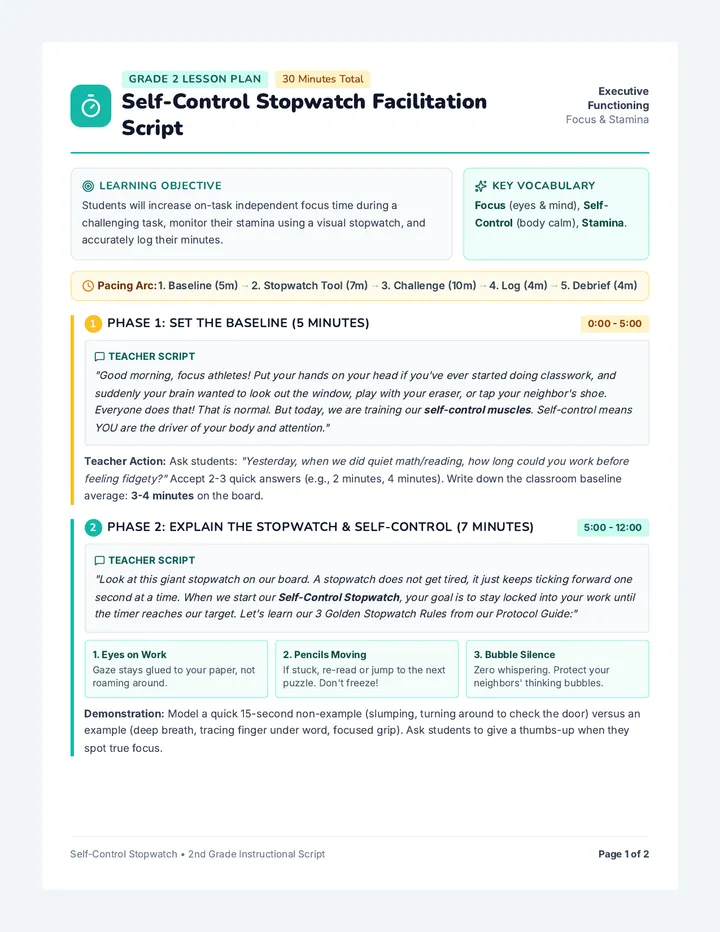
Stopwatch Sprint Teacher Script

Self-Control Stopwatch

A 30-minute executive functioning and social-emotional lesson for 2nd graders to develop on-task stamina and self-control. Students understand visual time tracking, test their focus with a timed challenge, log their active minutes, and reflect on strategies to manage distractions.

SB

Severa Beltran

4
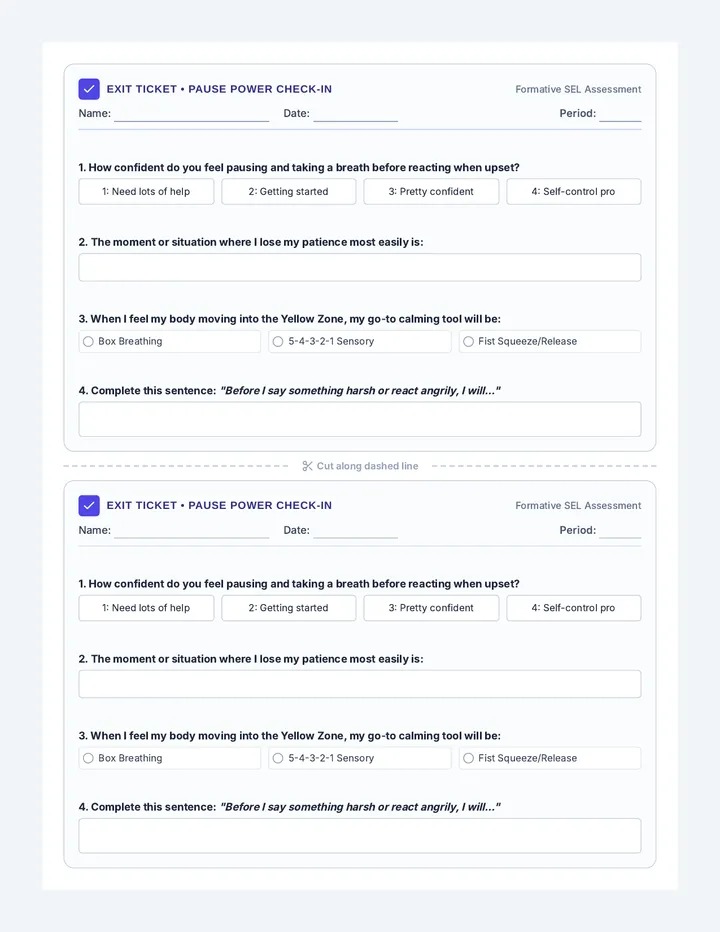
Calm Choices Exit Ticket

Calm Choices Exit Ticket

A 1-page printable double exit ticket (2 per page with cut line) featuring student self-assessment on self-control readiness, trigger identification, and concrete calming action plans.

JD

Julie Donovan

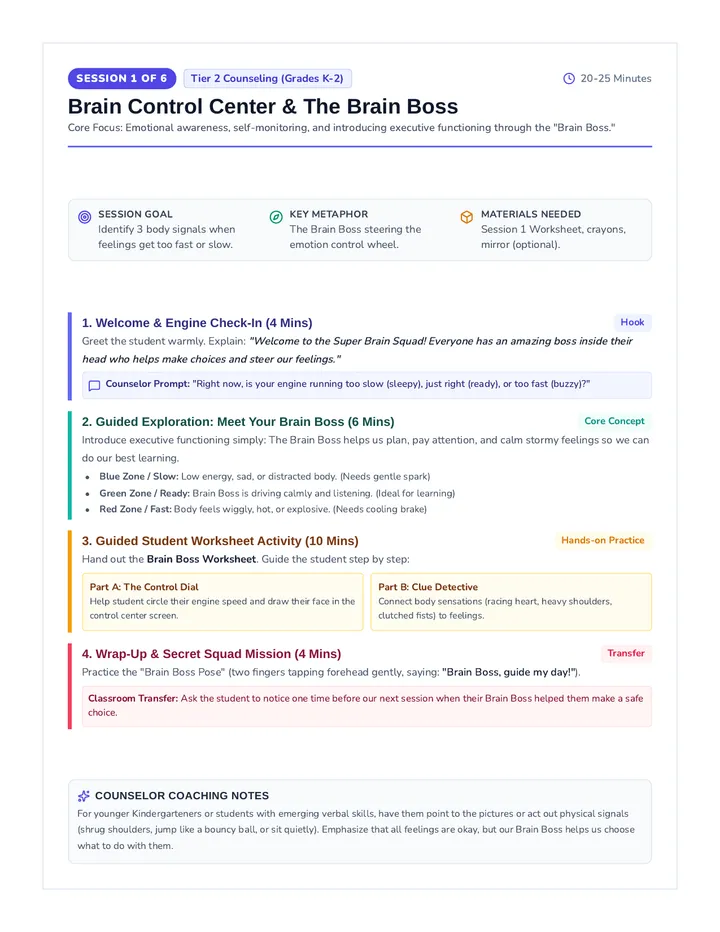
Brain Boss Counselor Guide

Super Brain Squad

A 6-session brief counseling sequence designed for early elementary students to build emotional regulation and core executive functioning skills. Students learn to recognize emotional states, practice impulse control, break down tasks, manage materials, and adapt flexibly to daily school challenges.

U

12
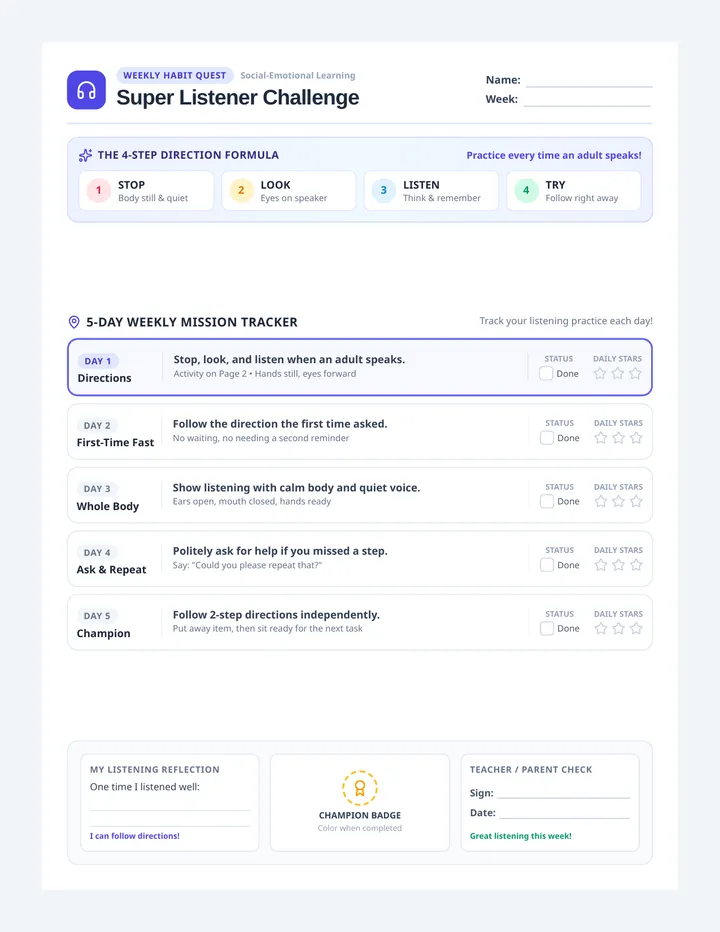
Super Listener Challenge Tracker

Calm Listener Habits

A multi-week social-emotional learning series focused on following directions, emotional regulation, and positive behavior choices. Each week equips students with a 5-day habit tracker and interactive scenario labs.

A

acrisafulli

2
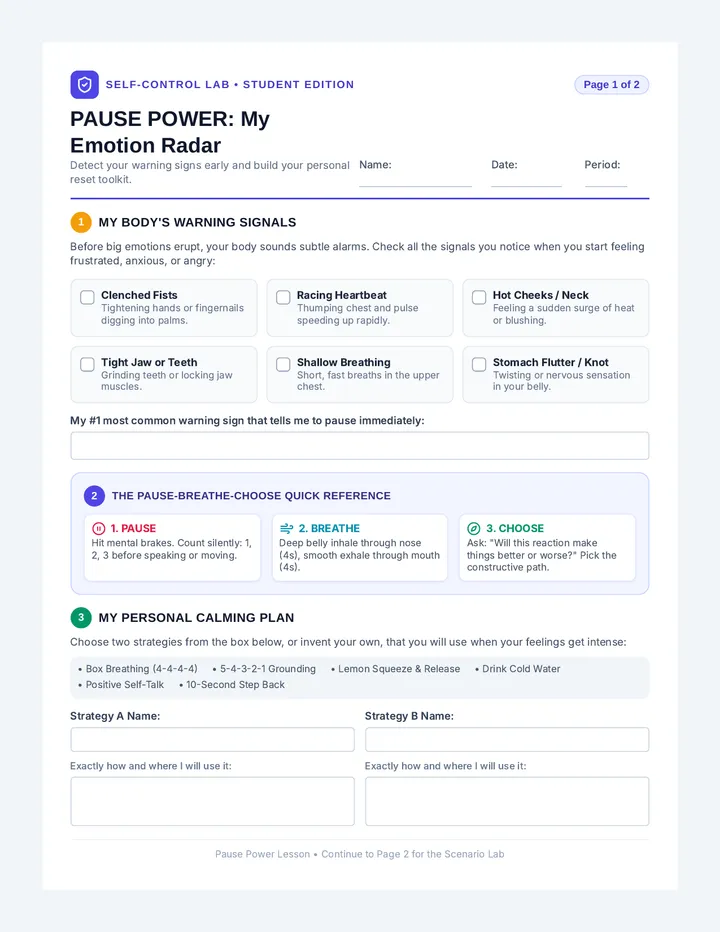
Pause Power Activity Sheet

Pause Power Activity Sheet

A 2-page printable student worksheet featuring an emotional early-warning radar, impulse analysis, calming toolkit planner, and real-life scenario lab for practicing the Pause-Breathe-Choose protocol.

JD

Julie Donovan