Self-Compassion Lesson Plan Self-Compassion Lesson Plan
Cultivating a Kinder Inner Voice
Target Audience
High School Students
Duration
50-60 Minutes
Approach
Reflective & Practical
Objective
Develop Self-Kindness
Why This Matters
Developing self-compassion is crucial for mental well-being, resilience, and personal growth. It helps students navigate challenges, reduce self-criticism, and foster a more positive self-image, leading to improved emotional regulation and overall happiness.
Materials Needed
Whiteboard or projector
Markers or pens
Copies of Inner Dialogue Duel Activity
Copies of Compassion Compass Journal
Teacher Preparation
• Review lesson plan and generated materials (15 mins).
• Prepare whiteboard for displaying key terms (Self-Kindness, Common Humanity, Mindfulness, Inner Critic, Inner Coach).
• Arrange seating to facilitate discussion and reflection.
Learning Objective
Students will identify their inner dialogue, practice self-affirmation, and apply self-compassion techniques to treat themselves with kindness while recognizing both strengths and areas for growth.
Instructional Roadmap
What is Self-Compassion?
10 MINS
• Ask students what comes to mind when they hear the word 'compassion.' Discuss responses.
• Introduce self-compassion: treating ourselves with the same kindness we would offer a good friend.
• Explain the three components: self-kindness, common humanity, and mindfulness.
• Discussion Prompt: "Why do you think it's important to be kind to ourselves?"
Inner Critic vs. Inner Coach
15 MINS
• Distribute the Inner Dialogue Duel Activity.
• Explain that everyone has an 'inner critic' (judging harshly) and an 'inner coach' (offering encouragement).
• Guide students through the activity, allowing time to reflect and write examples of their inner critic's messages and how an inner coach might reframe them.
• Ask for voluntary sharing of insights.
Practicing Kindness
15 MINS
• Guided Reflection: Close eyes. Bring to mind a recent challenge. Imagine a kind friend offering comfort. Direct that same voice toward yourself.
• Debrief: "How did it feel to offer yourself kindness instead of criticism?"
• Affirmation Brainstorm: Have students brainstorm phrases like "I am doing my best" or "I am worthy of kindness."
The Compassion Compass Journal
10 MINS
• Distribute the Compassion Compass Journal.
• Introduce the first prompt. Allow time to write.
• Emphasize that there are no right or wrong answers in this personal space.
Wrap-up & Ongoing Practice
5 MINS
• Reiterate that self-compassion is an ongoing skill.
• Assign the journal as a tool for future reflection.
• Remind students to treat themselves as they would a dear friend.
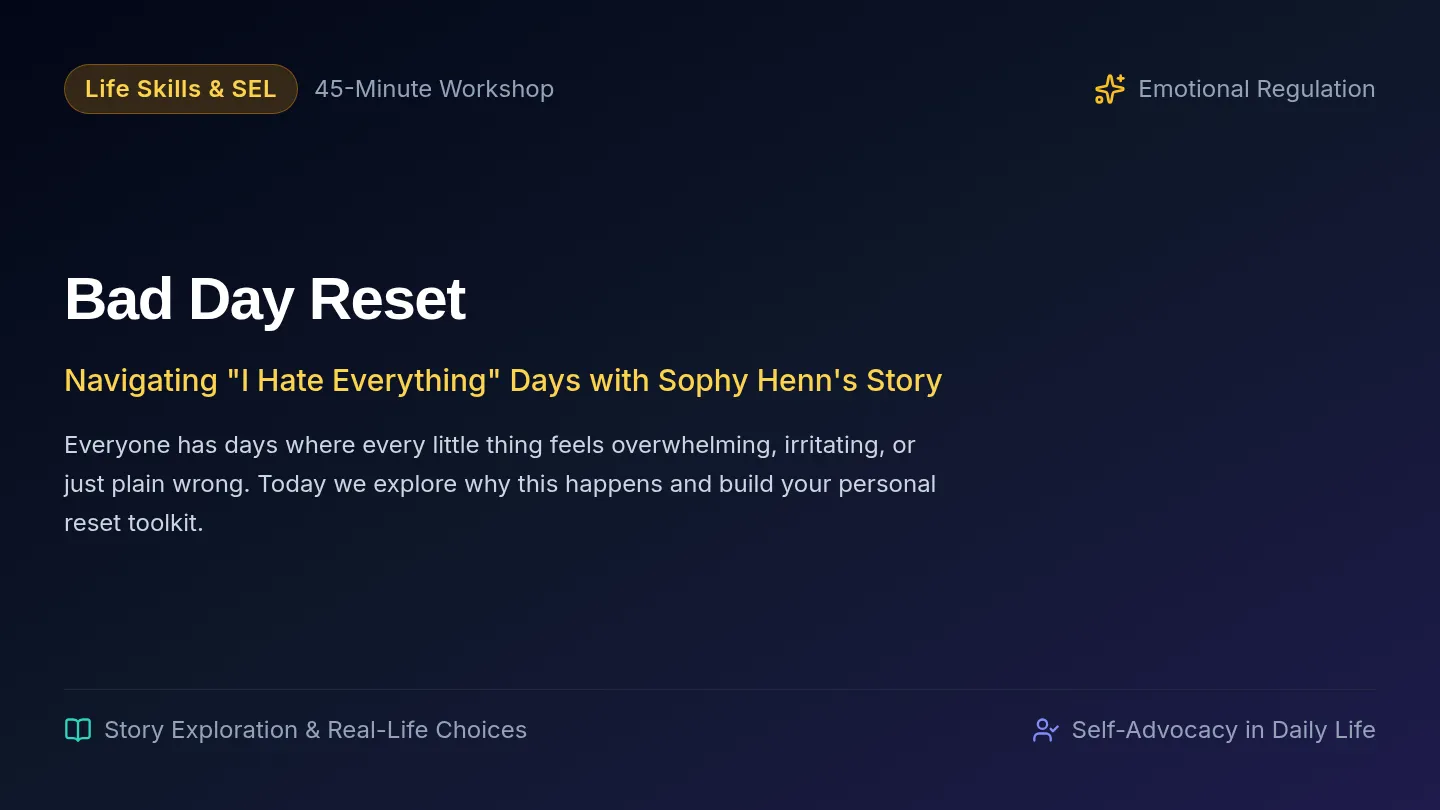
Kindness Catalyst Slides Kindness Catalyst
Building resilience through the practice of self-compassion.
What is Self-Compassion?
Treating yourself with the same kindness and understanding you would offer a good friend.
Key Components
Self-Kindness
Common Humanity
Mindfulness
Discussion
"Why is it important to be kind to ourselves, especially when things are difficult?"
Your Inner Dialogue
The Inner Critic
The voice that judges, blames, and finds fault.
"You always mess up."
"That was a stupid thing to do."
The Inner Coach
The voice that offers encouragement and support.
"It's okay to make mistakes; you can learn."
"You're doing your best right now."
Be Your Own Best Friend
Guided Reflection
Think of a challenging moment. How would a kind friend respond to you? Now, offer yourself that same kindness.
Self-Affirmations
"I am capable." "I am worthy of respect." "I can handle this."
The Journey Ahead
The Compassion Compass Journal is your personal space for growth.
"Describe a time you showed yourself kindness. What did it feel like?"
This is a personal journey. There are no right or wrong answers—only your authentic self.
Keep Practicing!
Be Mindful
Notice your inner voice.
Challenge
Switch from Critic to Coach.
Kindness
Treat yourself like a friend.
Self-compassion is a skill that grows with you.
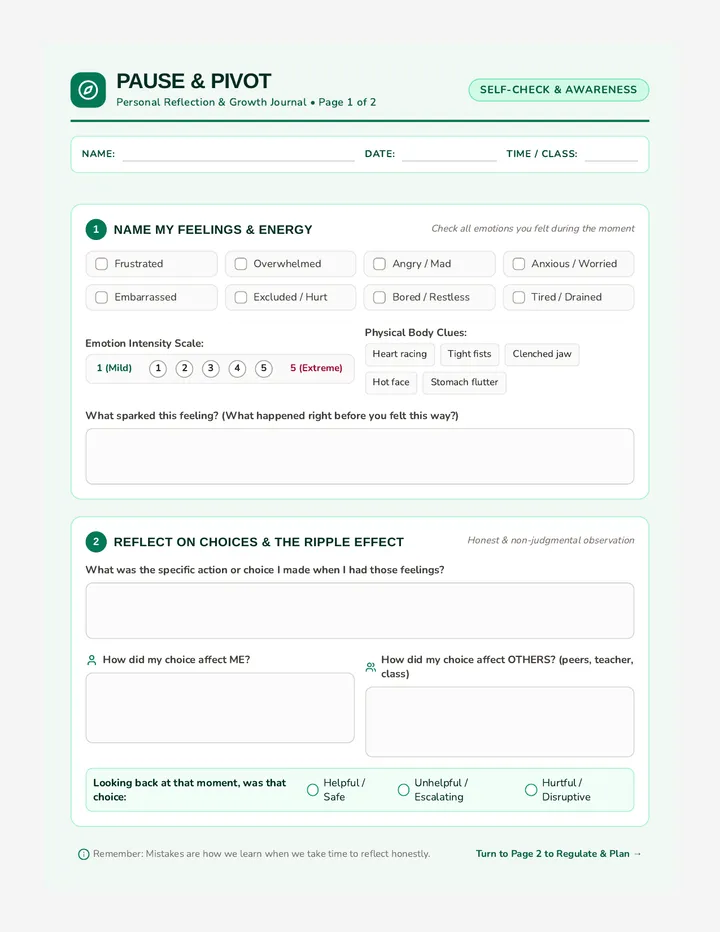
Inner Dialogue Duel Activity Inner Dialogue Duel
Reframing the voice inside your head
NAME:
DATE:
Everyone has an inner voice. Sometimes it’s kind and supportive, and other times it’s harsh and critical. By noticing these voices, we can start to choose which one we listen to.
Part 1: Your Inner Critic
Think about times when you've been hard on yourself. What does your inner critic say? Write down some common phrases or thoughts your inner critic uses. (Example: "You're not good enough.")
Part 2: Your Inner Coach
Now, imagine you are talking to a good friend who is struggling with these same thoughts. Rewrite your phrases from above into compassionate statements from your inner coach. (Example: "You are capable and you are learning.")
Reflection
Which voice do you listen to more often? How does each voice make you feel?
What is one small step you can take today to encourage your inner coach to speak up more often?
Compassion Compass Journal Compassion Compass
A Personal Guide to Self-Kindness
Name:
Starting Date:
"This journal is a space for you to practice self-kindness, understanding, and acceptance. There are no right or wrong answers. Just be honest with yourself."
1
Self-Kindness in Action
Describe a time recently when you treated yourself with kindness, even when things were difficult. What happened? How did it feel?
2
Common Humanity
Think about a mistake you've made. How might other people feel in similar situations? How does realizing this connect you to others?
3
Mindful Observation
Notice your thoughts without judgment. Are there any critical thoughts present? Acknowledge them and breathe. Describe this experience.
4
Letter from the Coach
Write a letter to yourself from the perspective of your inner coach. What encouraging words would it offer you right now?
5
Daily Compassion Practice
What is one small way you can practice self-compassion today? (A kind thought, gentle breathing, etc.)