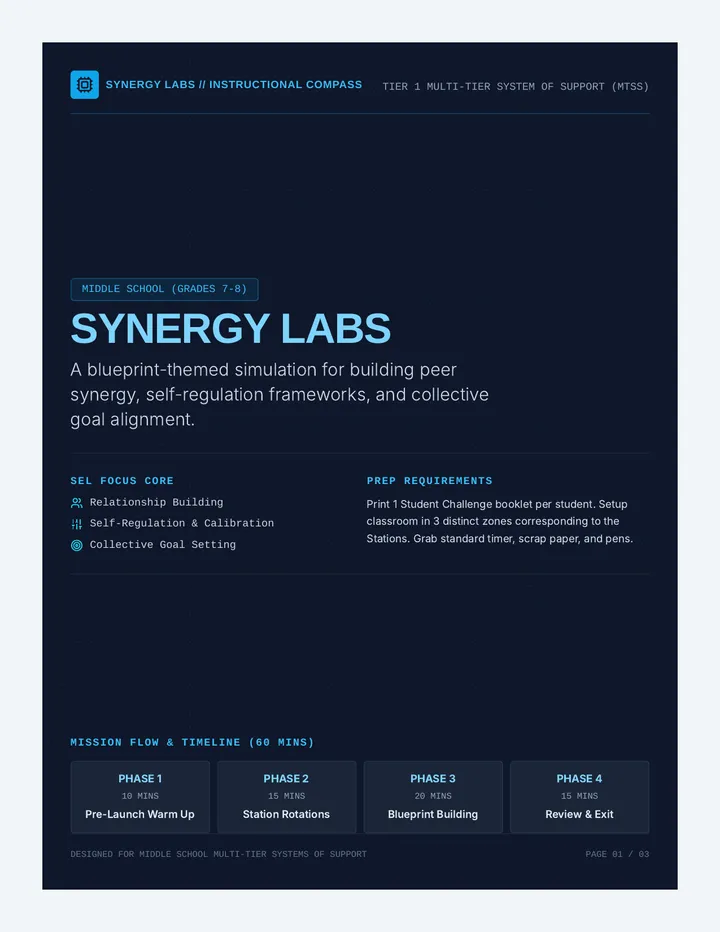
A high-stakes team-building lesson where students practice collaborative consensus-building, active listening, and compromise to survive a shipwreck scenario. Through individual planning, group negotiation, and reflective debriefing, students learn the dynamics of collective decision-making.
Critical Priority: Hydration. Human survival is limited to ~3 days without water. This is a volcanic island with no natural streams; dehydration is the immediate killer.
2
Heavy-Duty Pocket Mirror
Critical Priority: Signaling. The primary way to get rescued is by attracting flying aircraft. A mirror flash is the most powerful daytime signal and can be seen for up to 30 miles.
3
Red Flare Gun & 3 Shells
Secondary Signaling / Warning. Essential for night-time signaling of rescuers or ships. Also highly useful as a warning device or for generating an emergency fire.
4
Large Canvas Tarp (12'x12')
Critical Shelter / Water Harvest. Provides critical shelter against high heat index, UV rays, and severe storms. Can also be pitched to harvest rainwater.
5
Case of Dehydrated Food
Secondary Priority: Energy. Humans can survive up to 3 weeks without food. This food is dehydrated, which means consuming it without drinking water actually drains internal body moisture.
6
Pocket Knife & Multi-tool
Utility Tool. Excellent multi-purpose asset for preparing kindling, cutting rope, modifying materials, opening coconuts, and crafting defensive stakes if needed.
7
50-Foot Nylon Rope
Utility Binder. Useful for rigging the tarp to shelter supports, climbing rocky cliffs, or tying items together. Non-essential for initial basic survival.
8
Magnetic Compass
Useless / Detrimental. In a rescue situation, stay at your location so planes can spot the wreck. Attempting to navigate in a life raft across an ocean with a compass is lethal.
Structured Debrief Script
Ask these exact sequence questions to transition student gameplay into high-impact self-reflection:
Q1: "Did anyone have a lower score independently than their team? Why did your group talk you out of correct priorities?"
Q2: "What behaviors in your group built trust? Which ones shut down discussion or bred frustration?"
Q3: "How did your crew resolve disputes where people were 100% convinced of opposite things? (e.g. Compass vs Water)"
Q4: "Why did the Coast Guard put the mirror above food and rope? How does this teach us about aligning on big-picture goals?"
Castaway Consensus Classroom Simulator Page 2 of 2
Debrief Query B
Resolving Conflict
How did your team handle situations where two members were 100% convinced of totally opposite survival priorities?
Next Step: Complete your individual Crew Reflection Rubric handout!
Turn in both worksheet and reflection sheets when finished Slide 5 of 5