Relationship Roadmap Lesson Plan Relationship Roadmap
Building Connections in Career & Technical Education
Duration
60 MIN
Core Objective
Equip 9th-grade students with effective communication skills, empathy, and conflict resolution strategies to build supportive connections in peer and mentor relationships.
The "Why"
Fostering healthy relationships is crucial for success in both personal life and career/technical environments, enhancing teamwork and overall well-being. This lesson directly supports student success in their chosen career paths.
Preparation
15 minutes setup
Review Slide Deck, Activity scenarios, and Discussion prompts.
Prepare projector/smartboard for the slide deck.
Arrange classroom for small group work (3-4 students).
Toolkit:
Smartboard/Projector
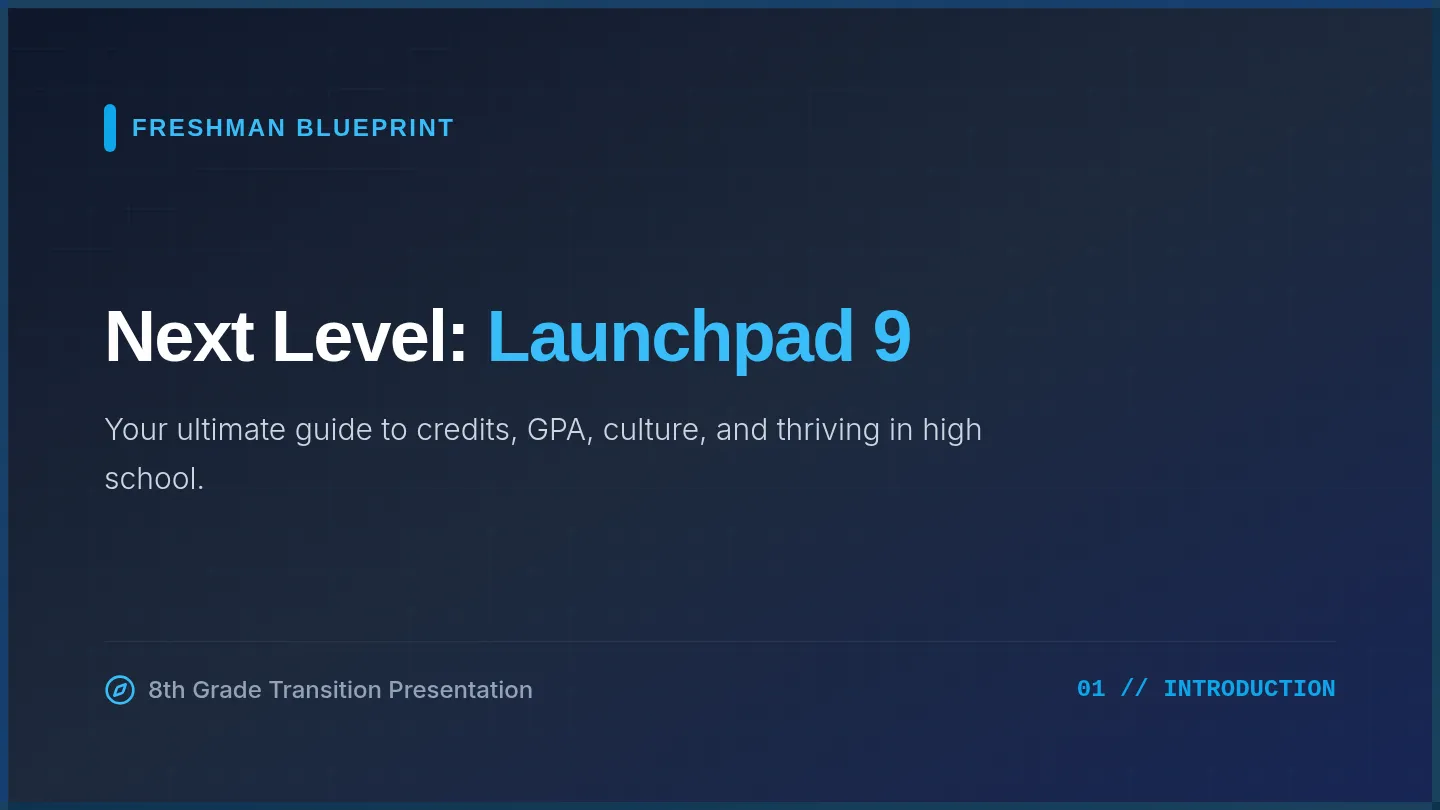
Connect & Communicate Slides
Role-Play Activity Sheets
Discussion Guide
Toolkit Worksheet
Instructional Sequence
5m
START
Introduction: Why Relationships Matter
Begin by displaying the title slide from Connect & Communicate. Engage the class by asking: “Why are good relationships important in school, with friends, and especially in a future career?” Briefly explain the lesson’s objective and relevance to their CTE pathway.
15m
TEACH
Understanding Connection & Communication
Present slides 2-5, covering key concepts: Active Listening, Empathy, and Clear Communication.
Facilitate brief Q&A after each concept to check for understanding.
Introduce conflict resolution as a key career communication skill.
20m
DO
Activity: Role-Play Real Talk
Divide students into small groups (3-4). Distribute Role-Play Real Talk handouts.
Explain scenarios and guidelines for positive communication and conflict resolution.
Circulate among groups to offer guidance and observe interactions.
10m
CHAT
Discussion: Trust & Respect
Bring the class back together. Lead a discussion using prompts from the Trust & Respect guide.
Focus on how empathy builds trust in personal and professional settings.
Encourage students to share insights and challenges from their role-plays.
10m
EXIT
Wrap-Up & Reflection
Distribute the My Relationship Toolkit worksheet.
Instruct students to complete reflections individually.
Review key takeaways and assign as homework if not finished.
Connect & Communicate Slides Connect & Communicate
Building Positive Relationships in CTE
Why healthy relationships matter for YOU!
TEACHER NOTES: Welcome students and introduce the lesson. Emphasize the relevance of positive relationships in their daily lives and future careers.
Why Do Relationships Matter?
In School
Teamwork, learning, and support.
With Friends
Trust, fun, and your support system.
In Your Career
Collaboration, networking, and success.
Good relationships help you succeed everywhere!
TEACHER NOTES: Ask students to brainstorm why good relationships are important in different areas of their lives. Connect this to their career and technical pathways.
Skill 1: Active Listening
COMMUNICATION
What is it?
Giving someone your full attention when they speak.
How to do it:
Eye Contact: Show you're engaged.
Cues: Nod or say "Mm-hmm."
Listen: Don't interrupt them.
Summarize: Repeat what you heard.
TEACHER NOTES: Introduce active listening as a foundational skill. Encourage students to share what they think active listening looks like.
Skill 2: Empathy
CONNECTION
What is it?
Understanding and sharing the feelings of another person.
"Putting yourself in someone else's shoes."
Why it's important:
Helps you connect with others
Builds deep trust
Essential for team solving
Empathy is the bridge between you and others.
TEACHER NOTES: Discuss empathy and its role in understanding different perspectives. Ask for examples of when showing empathy was helpful.
Skill 3: Clear Communication
CLARITY
What is it?
Expressing your thoughts and feelings in a way that is easy to understand.
Key Elements:
Be Direct: Say what you mean.
Respectful Tone: Even in disagreement.
The "I" Statement
Focus on YOUR feelings, not THEIR faults.
Avoid This:
"You always ignore me!"
Try This:
"I feel unheard when you look at your phone while I'm talking."
TEACHER NOTES: Explain clear communication, focusing on 'I' statements and respect. Highlight how miscommunication can lead to problems.
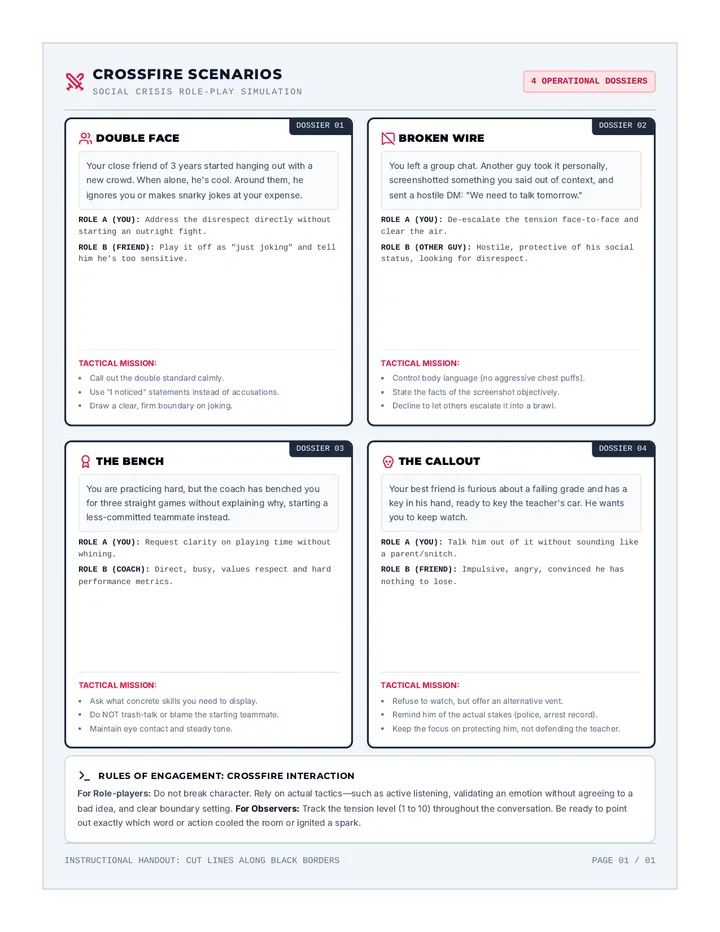
Role-Play Real Talk Activity Role-Play Real Talk
Practicing Relationship Skills in CTE
Mission Instructions
1 Form small groups (3-4 students).
2 Choose ONE scenario below to act out.
3 Assign roles (Alex, Sam, Mentor, etc.).
4 Use your skills: Active Listening & "I" Statements.
5 Aim for a "Win-Win" conflict resolution.
6 Discuss: What went well? What was hard?
1
Group Project Gone Wrong
Situation: You are working on a team project in your CTE class. One team member (Alex) isn't pulling their weight, and the deadline is approaching fast. Another team member (Sam) is getting frustrated.
Roles: Alex, Sam, 3rd Facilitator
Goal: Communicate frustration & respond constructively
2
Disagreement with a Mentor
Situation: You feel like your mentor gave you unclear instructions for a task, and you ended up making a mistake. You're nervous to talk to them, but you need clarification for future tasks.
Roles: Student, Mentor
Goal: Communicate confusion & seek clarity respectfully
3
Misunderstanding with a Peer
Situation: A peer in your class borrowed a tool from you without asking and accidentally broke it. You're upset because it was a valuable tool for your project.
Roles: Tool Owner, Peer
Goal: Express feelings & find a way to make amends
Trust & Respect Discussion Guide Trust & Respect
Class Facilitation & Discussion Guide
1 Reflecting on Role-Plays
Ask the Class:
What did you notice about the communication in your scenarios? Was it easy or difficult to use active listening, empathy, and clear communication?
Can anyone share a brief example where effective communication directly helped resolve a sticky situation?
2 Building Trust
Ask the Class:
How do active listening and empathy build trust? Why does "being heard" make us trust someone more?
Why is trust vital in a classroom? In a future workplace or technical team?
3 Showing Respect
Ask the Class:
What does it mean to show respect to someone even if you completely disagree with them?
How does using "I" statements and conflict resolution strategies demonstrate respect for the other person?
4 Real-World Connections
Wrap Up Questions:
Think of a situation you've seen where things went wrong. How could better communication have changed the outcome?
How will developing these relationship skills benefit you specifically in your chosen career pathway (e.g., healthcare, automotive, IT)?
Pro-Tip: Encourage students to use specific examples from their future career goals to make the discussion feel relevant to their professional growth.
My Relationship Toolkit Worksheet My Relationship Toolkit
Reflect, apply, and build your professional connections.
Student Name
Date
The Mission: Reflect on today's lesson and the skills we discussed. Answer the questions below to build your personal relationship toolkit for success in school and your future career.
1. Active Listening Check-In
Describe in your own words what "active listening" means to you now:
What is one specific action you can take to be a better active listener in your next conversation?
2. Empathy in Action
Why is it important to try and understand someone else's feelings, even if you don't agree with their opinion?
Think of a situation (school, home, or a future job) where showing empathy could make a big difference. Briefly describe it:
3. Clear Communication Strategies
When you need to express your feelings or needs, an "I" statement is a powerful tool. Write an "I" statement for a situation where you feel a team member isn't helping with a project:
Example: "I feel stressed when I have to do extra work because I want our project to be high quality."
What is the goal of "Win-Win" conflict resolution? How does it differ from just "winning" an argument?
My Key Takeaway
Of everything we talked about today, what is the #1 most important thing you want to remember for your future career?