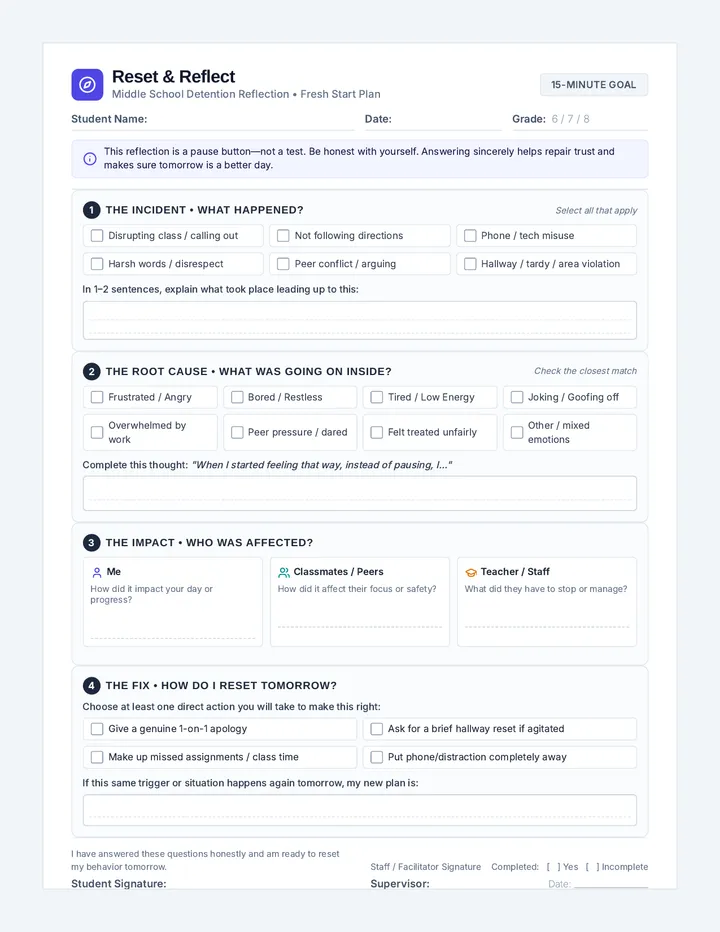
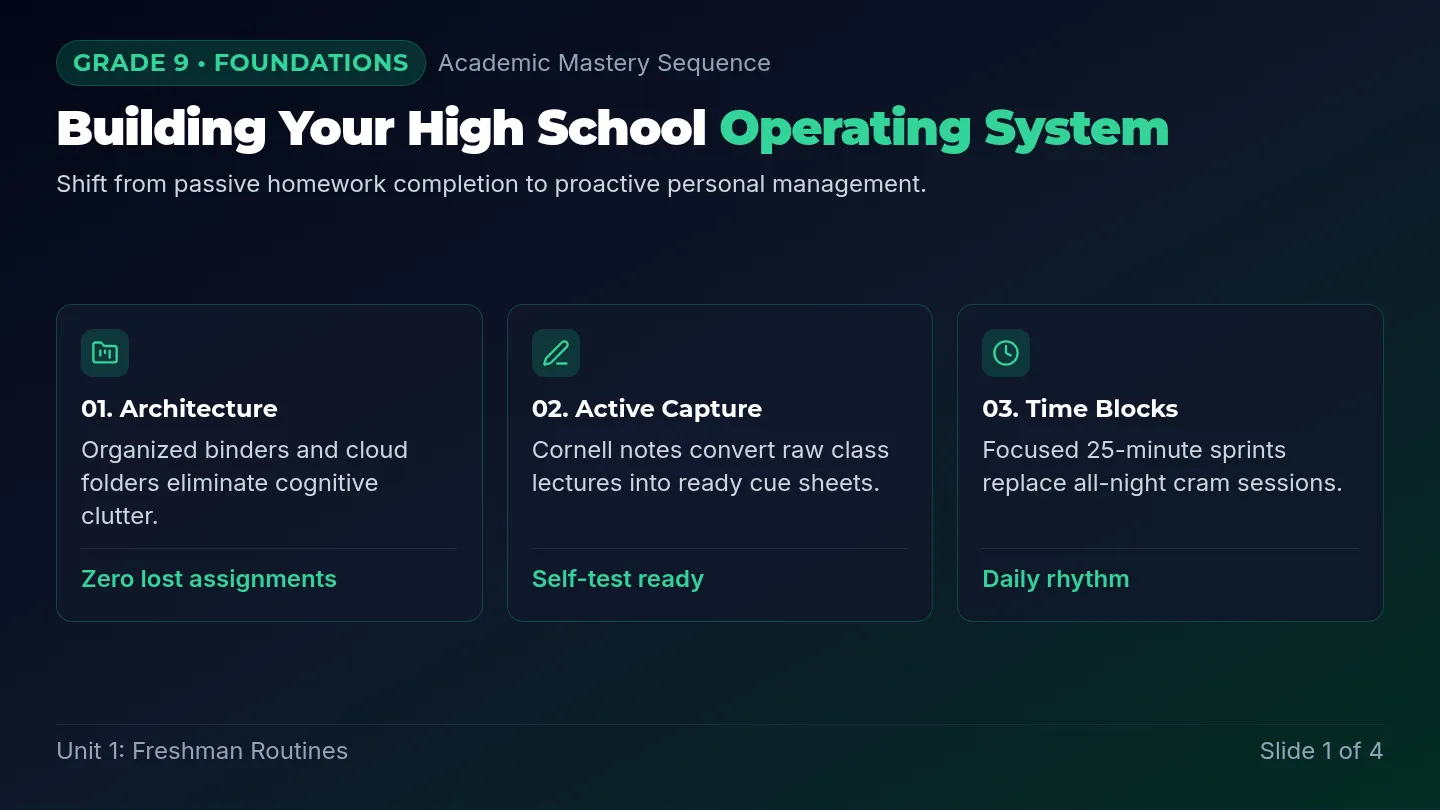
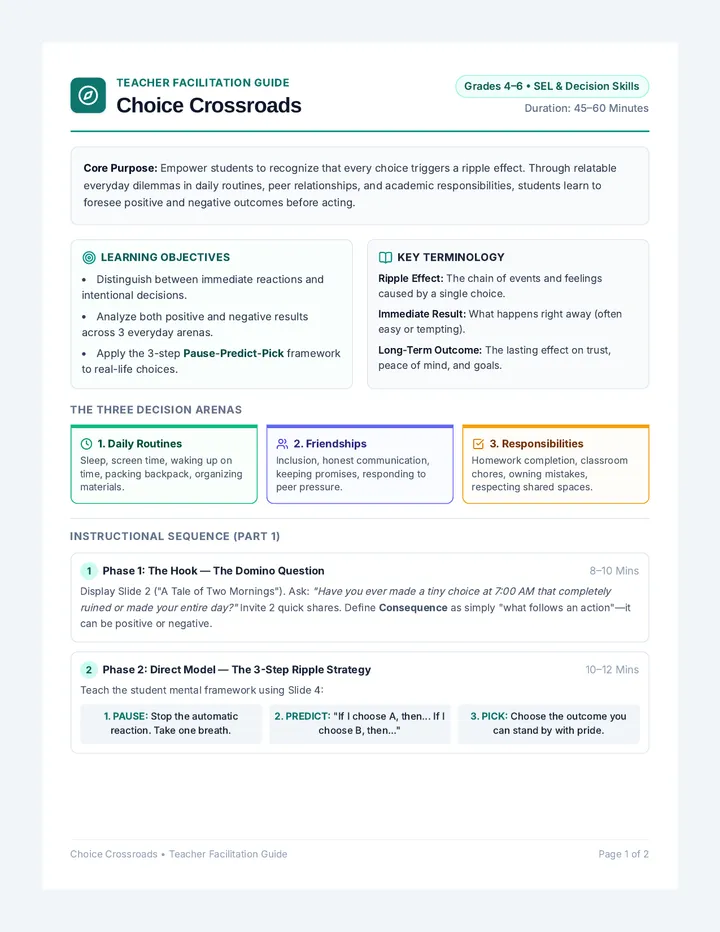
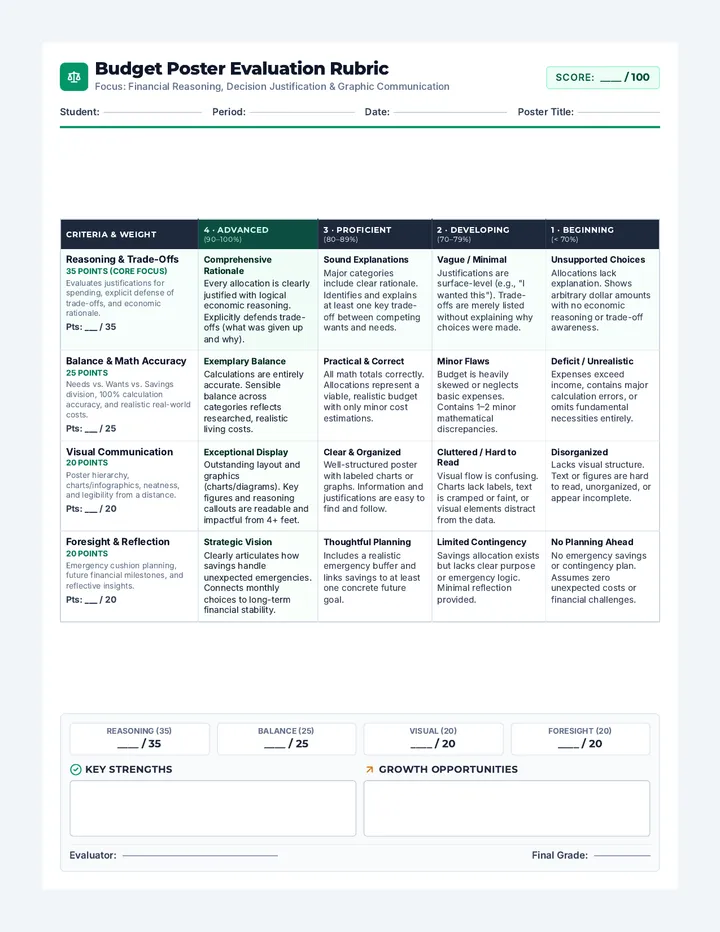
Reconstruction Slides THOUGHT RECONSTRUCTION
The Skill of Cognitive Restructuring
Project: Mind Mechanics
THE FAULTY WIRING
Our brains are like complex machines. Sometimes, the wiring gets crossed, and we fall into Thinking Traps.
"I'm going to fail this test because I'm just not smart."
Does this thought help you or hold you back?
System Error: Distortion Detected
THE BLUEPRINT
Cognitive Restructuring
The process of identifying, challenging, and changing unhelpful or "distorted" thoughts into more balanced and realistic ones.
Identify
Catch the unhelpful thought.
Challenge
Check for distortions.
Reconstruct
Create a new, balanced thought.
COMMON DISTORTIONS
Catastrophizing
Imagining the worst-case scenario and assuming it will happen.
"If I miss this goal, I'll be kicked off the team and never play again."
All-or-Nothing
Seeing things in black and white. If you're not perfect, you're a total failure.
"I got one B. I'm a terrible student."
Mind Reading
Assuming you know what others are thinking without proof.
"They didn't wave back. They must be angry with me."
Emotional Reasoning
Assuming that because you feel a certain way, it must be true.
"I feel awkward, so I must be an awkward person."
REPAIR STEPS
1
Notice the Thought
"What am I telling myself right now?"
2
Check the Evidence
"Is this 100% true? What proof do I have for and against it?"
3
Find a Balanced Thought
"What is a more realistic way to look at this?"
THE REPAIR IN ACTION
Broken Thought
"Everyone else is smarter than me in this class. I don't belong here."
Distortion: All-or-Nothing / Mind Reading
Reconstructed Thought
"This class is challenging for me, but that doesn't mean I'm not smart. I'm here to learn just like everyone else."
Balanced & Realistic
TIME TO REBUILD
Grab your Thought Repair Sheets. We're going to dive into some common scenarios and fix the wiring together.
Goal 1
Identify the distortion type.
Goal 2
Draft a reconstructed thought.
Mind Mechanic Guide Mind Mechanics
Thought Reconstruction
Teacher Facilitation Guide
Estimated Time
45 Minutes
Lesson Objectives
Students will identify common cognitive distortions in hypothetical and personal scenarios.
Students will learn the "Notice-Check-Change" method for restructuring thoughts.
Students will practice reframing negative thoughts into more balanced, evidence-based alternatives.
Preparation & Materials
Digital Presentation
Reconstruction Slides
Student Handouts
Distortion Decoder, Thought Repair Sheet
MECHANIC'S TIP
Emphasize that distortions are not mistakes —they are normal survival mechanisms the brain uses. Our goal is not to "think positive," but to think realistically .
Instructional Blueprint
05
Minutes
Introduction: The System Check
Begin with a "Mindful Check-In". Ask students to notice one thought they've had since arriving at school today. Was it helpful, unhelpful, or neutral?
Key Script:
"Our thoughts act as the 'wiring' for how we feel and behave. Sometimes that wiring gets a bit crossed—we call these thinking traps or distortions."
15
Minutes
Direct Instruction: Identifying Faulty Wiring
Use the Reconstruction Slides and Distortion Decoder Handout to introduce the concepts.
Distortion Gallery: Walk through the 4 core distortions: Catastrophizing, All-or-Nothing, Mind Reading, and Emotional Reasoning.
The 3-Step Repair: Teach the process:1. Notice (Catch the thought)2. Check (Identify the distortion & evidence)3. Change (Reconstruct into a balanced thought)
20
Minutes
Guided & Independent Practice: Reconstruction Site
Distribute the Thought Repair Sheet .
Step 1 (Guided): Model the first scenario on the board. Ask: "Is this 100% true? What would a friend say about this?"
Step 2 (Independent): Students complete the remaining scenarios. Circulate the room to help identify distortions.
Step 3 (Personal): Students attempt to reframe one of their own recent unhelpful thoughts.
05
Minutes
Wrap-Up: System Reboot
Close the lesson by asking students: "Which distortion do you catch yourself using the most?" and "How does catching it change how you feel?"
Distortion Decoder Handout System Diagnostics
Distortion Decoder
Your field guide to identifying faulty thought wiring.
Subject:
Thinking Traps
What is a Distortion?
A cognitive distortion is a biased way of thinking. They aren't "facts," but they can feel very true. When we identify them, we can begin to reconstruct our thoughts into something more realistic.
Catastrophizing
TRAP 01
Viewing a situation as a total disaster or assuming the worst possible outcome will occur, even if it's unlikely.
Signal Sentence:
"If I don't get this right, everything is ruined and I'll never succeed again."
All-or-Nothing
TRAP 02
Seeing things in black and white categories. If your performance falls short of perfect, you see yourself as a total failure.
Signal Sentence:
"I messed up that one conversation. I'm completely antisocial."
Mind Reading
TRAP 03
Arbitrarily concluding that someone is reacting negatively to you, and not bothering to check it out.
Signal Sentence:
"She didn't text me back because she's annoyed with me and thinks I'm annoying."
Emotional Reasoning
TRAP 04
Assuming that your negative emotions necessarily reflect the way things really are: "I feel it, therefore it must be true."
Signal Sentence:
"I feel overwhelmed, so this situation must be impossible to handle."
Personalization
TRAP 05
Taking responsibility for events outside of your control, or assuming others' behavior is focused on you.
Signal Sentence:
"My team lost because I didn't cheer loud enough. It's all my fault."
Mental Filter
TRAP 06
Focusing exclusively on one negative detail while ignoring all the positive things that happened.
Signal Sentence:
"I got 10 compliments today, but I'm obsessed with the one person who looked bored."
The Reconstruction Protocol
1
Notice
Catch the thought as it happens.
2
Check
Identify the trap and the evidence.
3
Change
Find a more balanced perspective.
Thought Repair Sheet Maintenance Report
Thought Repair Sheet
Mechanic Name:
Service Date:
REPAIR PROTOCOL
For each scenario, identify the Thinking Trap using your Distortion Decoder. Then, write a Reconstructed Thought that is balanced, realistic, and based on evidence.
01
The Social Slip-Up
Unhelpful Thought:
"I stuttered when I spoke in class. Everyone thinks I'm an idiot now."
Identify Distortion:
Mind Reading / All-or-Nothing
Reconstructed Thought (Evidence-Based):
"I stuttered once, but most people probably didn't notice or care. Stuttering doesn't define my intelligence."
02
The Text Silence
Unhelpful Thought:
"My friend hasn't replied to my text for 3 hours. They must be mad at me and don't want to be my friend anymore."
Identify Distortion:
Reconstructed Thought:
03
The Bad Grade
Unhelpful Thought:
"I got a D on this math quiz. I'm going to fail the whole course and never get into college."
Identify Distortion:
Reconstructed Thought:
Personal System Maintenance
Think of an unhelpful thought you’ve had recently. Apply the 3-step repair process to it.
Step 1: Notice (What was the thought?)
Step 2a: Check (What trap is this?)
Step 2b: Evidence (Is it 100% true?)
Step 3: Change (The Reconstructed Thought)
Repair Shop Key Administrator Access
Repair Shop Key
Answer Key & Facilitation Examples for Thought Repair
Status:
AUTHORIZED
01
The Social Slip-Up
"I stuttered when I spoke in class. Everyone thinks I'm an idiot now."
Distortion Identification:
Mind Reading / All-or-Nothing
The student is assuming they know what classmates think (Mind Reading) and viewing one mistake as a total failure of intelligence (All-or-Nothing).
Ideal Reconstruction:
"I stuttered, which feels embarrassing, but it doesn't mean I'm not smart. Most people were likely focused on their own work and won't remember it in five minutes."
02
The Text Silence
"My friend hasn't replied to my text for 3 hours. They must be mad at me..."
Distortion Identification:
Mind Reading / Catastrophizing
Assuming negative intent (Mind Reading) and jumping to the worst-case scenario about the friendship (Catastrophizing).
Ideal Reconstruction:
"There are many reasons someone might not reply—they could be busy, driving, or their phone might be dead. I don't have any evidence that they are actually mad."
03
The Bad Grade
"I got a D on this math quiz. I'm going to fail the whole course and never get into college."
Distortion Identification:
Catastrophizing / All-or-Nothing
Exaggerating the long-term impact of a single quiz (Catastrophizing) and seeing a low grade as a total academic failure (All-or-Nothing).
Ideal Reconstruction:
"I didn't do well on this quiz, which is disappointing. However, this is just one grade. I can talk to the teacher and study harder for the next one to bring my average up."
GRADING & FEEDBACK NOTES
Varied Answers: Students may identify different distortions than those listed above (e.g., Personalization). As long as they can justify their choice using the definitions, accept the answer.Balanced Thinking: Ensure reconstructed thoughts aren't "toxic positivity." "I'm the best student ever" is just as unrealistic as "I'm an idiot." Look for realistic , evidence-based reframes.Personal Reflection: Respect student privacy on the second page. Focus on whether they followed the 3-step process correctly rather than the content of their personal thought. Diagnostics Slides Emotional Diagnostics
Reading the Dashboard of the Mind
Project: Mind Mechanics | Module 02
SYSTEM SIGNALS
Emotions aren't just "feelings"—they are data points. They tell us how our environment is impacting our system.
Diagnostic Question:
"What is this feeling trying to tell me right now?"
THE INTENSITY GAUGE
1-3
4-6
7-8
9-10
Low Idle
Noticeable but manageable.
Steady Run
Affecting your focus.
High Rev
Hard to ignore or control.
Redline
System overload / Emergency.
PHYSICAL READOUTS
Engine Heat
Tight chest, fast heartbeat, or feeling "hot."
Fluid Pressure
Stomach knots, lump in throat, or "butterflies."
Static Charge
Muscle tension, clenched jaw, or shaky hands.
Sensory analysis: Identifying where the signal is strongest.
DIAGNOSTIC STEPS
1
Locate
Where do I feel this in my body?
2
Label
What name would I give this signal? (e.g., Frustration, Dread, Joy)
3
Level
What's the intensity from 1 to 10?
RUNNING A SCAN
Grab your Diagnostic Logs. We're going to practice identifying our system signals in real-time.
"The better we can read the dashboard, the better we can drive the machine."
Diagnostics Teacher Guide Mind Mechanics
Emotional Diagnostics
Teacher Facilitation Guide
Estimated Time
30-40 Minutes
Lesson Objectives
Students will understand emotions as internal 'data signals' rather than just abstract feelings.
Students will identify where in their bodies they experience specific emotions (physical readouts).
Students will practice rating emotional intensity using a 1-10 'Diagnostic Gauge'.
Materials
Diagnostics Slides
Visual aid for instruction
Diagnostic Log Sheet
Student activity worksheet
MECHANIC'S NOTE
Avoid labeling emotions as "good" or "bad." Instead, use "high intensity" or "low intensity." This helps reduce the stigma and allows students to view feelings objectively as information.
Instructional Blueprint
05
Minutes
Warm-Up: The Daily Dashboard
Ask students: "If your mood today was a dashboard light in a car, what color would it be and what would it be labeled?"
"Just like a car has gauges to tell us about oil or gas, our bodies have gauges to tell us about our emotions. Today, we're learning to read them accurately."
15
Minutes
Concept: Physical Readouts
Use the slides to explain how emotions manifest in the body. Lead a "Body Scan" exercise:
Locate: "Close your eyes. Where do you feel tension? Heat? Stillness?"
Intensity: Introduce the 1-10 scale. Use examples (e.g., getting a 100% on a test = 9/10 Joy; dropping your phone = 6/10 Annoyance).
15
Minutes
Practice: Running the Scan
Distribute the Diagnostic Log Sheet .
"We're going to look at common 'System Errors'—scenarios that trigger emotions. Your job is to predict the physical readout and the intensity level for yourself."
05
Minutes
Closure: Calibration Check
Remind students: "Next time you feel a 'strong signal,' don't react immediately. Pause and check your dashboard. Is it a 3 or an 8?"
Diagnostic Log Sheet Mind Mechanics Diagnostics
System Log
Operator ID:
Shift Date:
Instruction Manual
Treat your emotions like dashboard signals. For each scenario, analyze the Physical Readout (body sensations), assign an Intensity Level (1-10), and Label the signal.
Triggering Scenario
Physical Readout (Sensations)
Intensity (1-10)
Signal Label
You just found out there's a surprise presentation today.
Someone cuts in front of you in the lunch line.
You finally finish a project you've worked on for weeks.
Real-Time Scan
Close your eyes for 10 seconds. Focus on your internal dashboard right now.
Locate: Where is the signal strongest?
Label: What would you name this feeling?
Intensity Gauge (Mark Your Level)
0 (IDLE) 5 (STEADY) 10 (MAX)
Action Overdrive Slides Action Overdrive
Rewiring the Behavioral Circuit
Project: Mind Mechanics | Module 03
THE FEEDBACK LOOP
THOUGHT
"I'm too tired."
FEELING
Unmotivated/Bored
ACTION
Staying in bed
When one part changes, the whole system reacts.
SHORT-CIRCUIT: AVOIDANCE
The Trap
We avoid things to feel better in the short term. But avoidance keeps us stuck in a low-power mode in the long term.
"Avoidance is like putting a band-aid on a broken engine."
System Status: Stalled
ACTION OVERDRIVE
The Secret
Action First, Motivation Second.
You don't need to feel like doing it to do it. Starting the action often "jump-starts" the engine of motivation.
#JumpStart #BehaviorFirst #MindMechanics
MAINTENANCE PROTOCOL
Select Task
Pick a small, manageable activity (Mastery or Pleasure).
Schedule It
Don't wait for the "right time." Put it on the clock.
Execute
Focus only on the first 5 minutes. Just start.
START THE OVERDRIVE
Time to build your Maintenance Plans. We're choosing one task to jump-start our system today.
Pleasure Activity
Something you actually enjoy.
Mastery Activity
Something that gives you a sense of achievement.
Action Plan Worksheet Mind Mechanics Maintenance
System Jump-Start
Task ID: BA-301
Action Overdrive
Part 1: The Stuck Cycle
Think of a time recently when you felt "stuck" (unmotivated, bored, or low). Fill in the cycle details below.
Automatic Thought
"What was your brain saying?"
Emotion Signal
"How did you feel?"
The Action (or Inaction)
"What did you do (or avoid)?"
Part 2: Planning the Jump-Start
Choose one small task you can do this week to change your mood engine. It doesn't have to be big—it just has to be an action.
Mastery Task (Achievement)
Example: Clearing my desk, finishing one math problem.
Pleasure Task (Enjoyment)
Example: Listening to one favorite song, drawing for 5 mins.
Final Maintenance Schedule
I WILL DO:
WHEN (DATE/TIME):
OBSTACLE DETECTED:
Blueprinting Slides Master Blueprinting
Analyzing the Core Beliefs System
Project: Mind Mechanics | Module 04
THE FOUNDATION
What is a Core Belief?
Underneath our everyday thoughts lies a Master Blueprint—deeply held beliefs about ourselves, others, and the world.
Example Beliefs:
"I am capable." vs. "I am incompetent."
"The world is safe." vs. "The world is dangerous."
Foundation: Core Beliefs
THE LENS EFFECT
"Core beliefs act like colored lenses. They tint everything we see and how we interpret the world around us."
Belief: "I'm Unlikable"
A friend is busy and can't hang out.
Interpretation: "They hate me."
Belief: "I'm Worthy"
A friend is busy and can't hang out.
Interpretation: "They must be busy today."
SYSTEM OVERHAUL
How to Update?
Search for the "Master File" (identify the core belief).
Check the Log (look for evidence against it).
Write a New Blueprint (create a balanced core belief).
BLUEPRINT CHECK
Core beliefs are old programs, but you are the administrator. You can rewrite the code any time you find it's out of date.
Workshop Task:
Open your Master Blueprint Analysis and find one old file to upgrade.
Maintenance Slides Resilience Maintenance
Assembling Your Master Toolkit
Project: Mind Mechanics | Final Module
SYSTEM COMPLETE
Reconstruction
Fixing faulty thought wiring.
Diagnostics
Reading emotional signals.
Overdrive
Jump-starting behavior.
Blueprinting
Updating core foundations.
"Resilience isn't not breaking; it's knowing how to repair yourself."
FUTURE PROOFING
Machines need maintenance before they break. How will you keep your Mind Mechanics sharp?
Routine Check-Up:
Daily Signal Scans
Weekly Overdrive Tasks
THE MECHANIC'S VOW
You are now a certified Mind Mechanic. You have the tools to analyze, dismantle, and rebuild your mental system.
Next Step:
Complete your Personal Maintenance Toolkit and keep it in your locker, bag, or desk.
Personal Toolkit Handout Master Certification
Personal Toolkit
Mind Mechanic ID: 001-RES
"This is your master reference for maintaining your mental system. Use these tools whenever you detect a system error, low power, or faulty wiring."
Tool 01: The Reconstructor
Standard Procedure:
1. Catch the unhelpful thought.
2. Identify the distortion trap.
3. Create a balanced, evidence-based reframe.
Favorite Reframe (Write yours):
Tool 02: The Signal Scanner
Standard Procedure:
1. Locate the physical sensation.
2. Label the emotion.
3. Rate intensity (1-10) to calibrate response.
Common 10/10 Signal:
Tool 03: The Jump-Starter
Standard Procedure:
1. Identify avoidance behavior.
2. Select a Mastery or Pleasure task.
3. Execute for 5 mins (Action First).
Emergency 5-Min Task:
Tool 04: The Architect
Standard Procedure:
1. Identify recurring deep beliefs.
2. Challenge the "Foundation" evidence.
3. Update to a more helpful Master Blueprint.
Master Blueprint Affirmation:
Scheduled Maintenance
Daily Scan
"Check dashboard signals at 8 PM tonight."
Weekly Overhaul
"Review thoughts from the week on Sunday."
Emergency Service
"Call a support mechanic if intensity hits 9+."