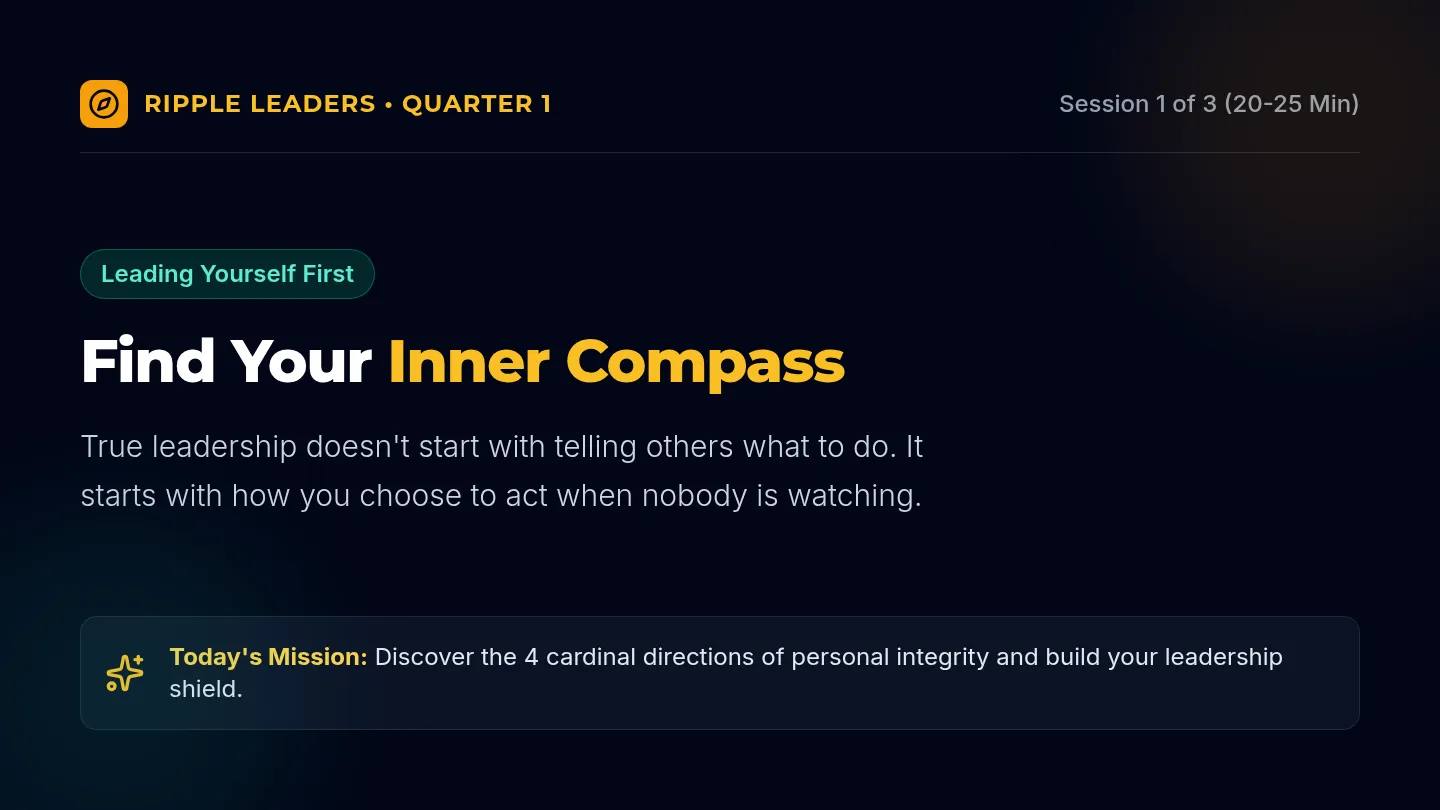
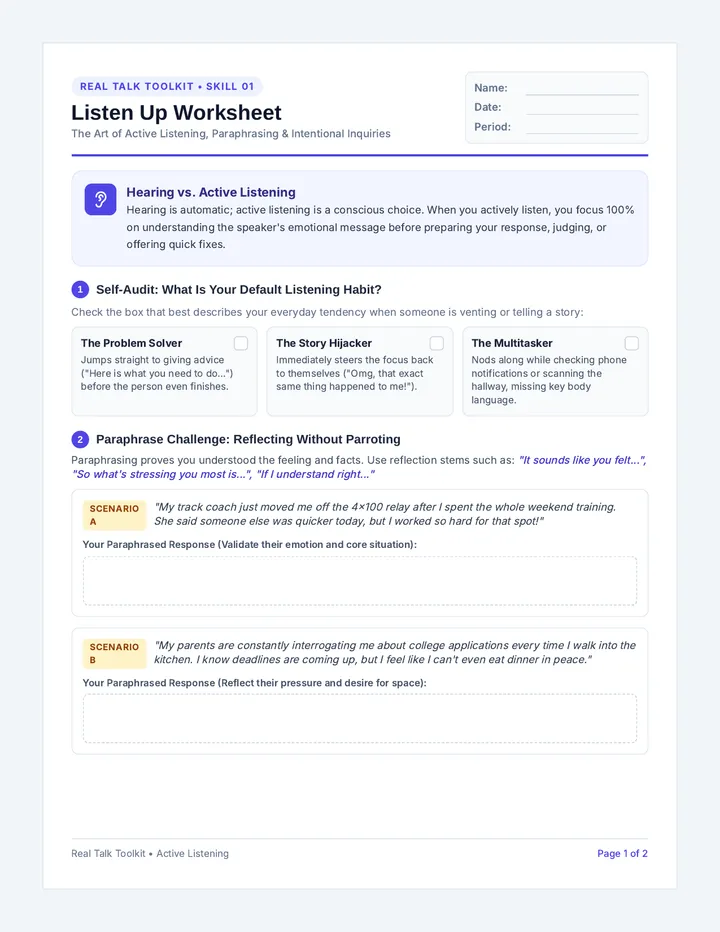
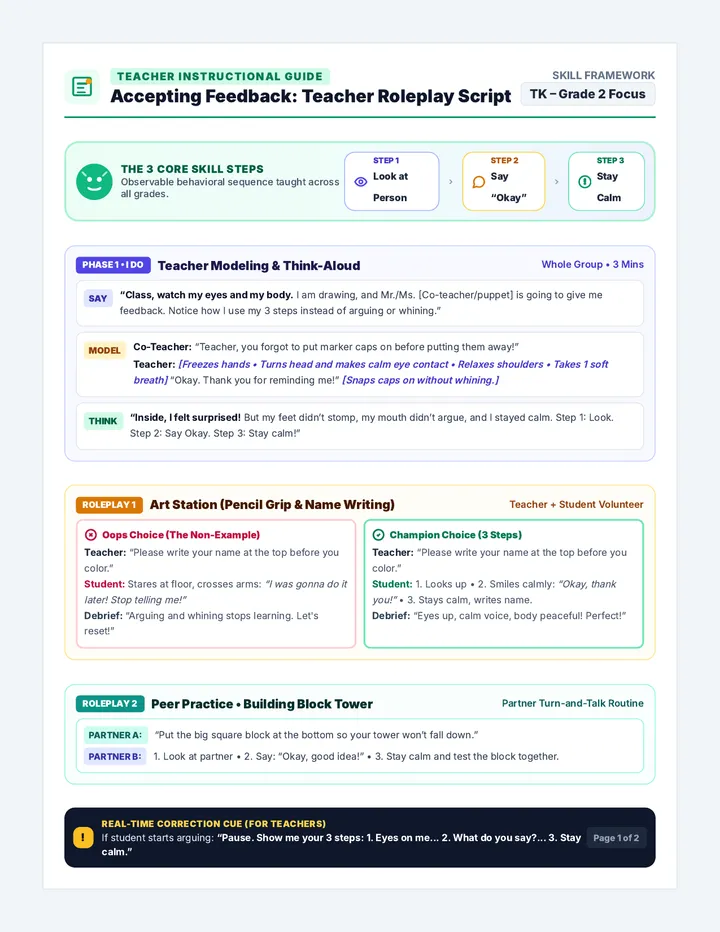
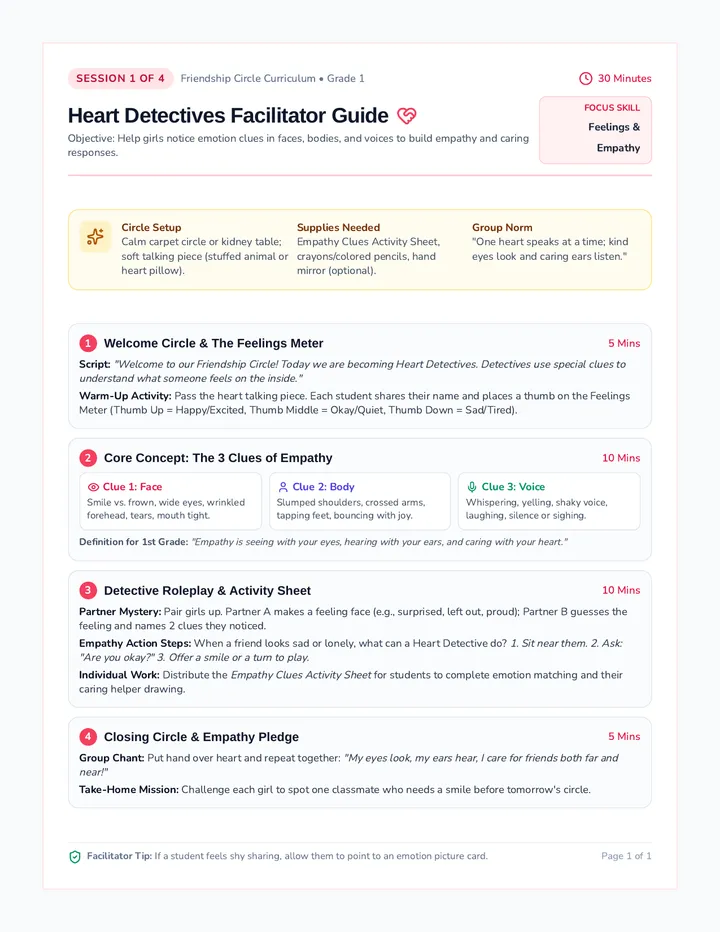
Icebreaker Launch Slides Lunch Table Tactics • Session 1
Social Skills Sequence
Icebreaker Launch
How to read open tables, approach with confidence, and spark fun lunch conversations.
1. Read the Signs
•
2. Make Your Move
•
3. Drop an Anchor
1
Step 1: Read the Table Signs
Look Before You Walk
Green Light: Open Vibe
Eye contact and relaxed smiling faces
Visible empty chair with room to slide in
Body posture angled outward to the room
👉 Great time to step forward and ask to join!
Orange Light: Busy Vibe
Deep cramming for an urgent test
Both earbuds in or intense private whisper
Backs turned tightly inward with zero space
👉 Try another friendly table or wait for a pause!
Reading cues protects your energy and helps you find welcoming peers quickly.
2
Step 2: The 3-Second Approach
Short, Polite & Confident
1. Warm Greeting
Make quick eye contact and give a friendly nod or smile.
"Hey everyone!"
2. The Chair Check
Ask a direct, low-pressure question before pulling out the chair.
"Is this seat free?"
3. Settle In
Place your tray, sit down calmly, and tune in to their vibe.
"Thanks, appreciate it!"
Golden Rule: Asking permission shows high respect and makes peers instantly comfortable.
3
Step 3: Drop a Conversation Anchor
3 Easy Starter Formulas
The Compliment
Notice something genuine and specific.
"That drawing on your notebook is sick. How long have you been sketching?"
The Shared Moment
Connect on a class, assignment, or event.
"Did you guys finish that science lab today? That chemical reaction was wild."
The Fun Question
Ask a low-stakes 'would you rather' or favorite.
"If you could only eat one lunch item for the rest of the semester, what is it?"
Keep it relaxed. You don't need a whole speech—just one curious question opens the door.
Turn & Talk Practice Challenge
2-Minute Partner Drill
A
Partner A: The Table Host
Show open body language (smile, turn toward partner, make space on the desk).
B
Partner B: The New Arrival
Walk up, ask "Is this seat taken?", sit down, and try out one conversation anchor!
60 Seconds Partner A & B Roleplay
Switch Roles Repeat with new anchor
Ready? Find a partner, set your lunch tray, and let's practice!
Table Starter Pocket Guide Session 1 Lunch Table Tactics
Table Starter Pocket Guide
Name:
Date:
The 3-Step Group Entry Routine
1. Scan & Spot
Look for open chairs, outward body posture, and relaxed eyes. Avoid tight huddles.
2. Check & Land
Smile and ask: "Hey, is anyone sitting here?" Sit smoothly once cleared.
3. Drop the Anchor
Open with an observation or low-stakes question within the first 60 seconds.
Ready-to-Use Pocket Cards (Keep in Your Pocket or ID Badge)
Dotted lines show folds/cuts
Card A • Compliment Anchor Quick Win
"That sticker / jacket / notebook is awesome. Where did you get it?"
Pro Tip: Focus on things people choose (gear, drawing, shoes) rather than physical looks.
Card B • School Buzz Safe Shared
"Did you understand that last question on the review sheet? That was tricky."
Pro Tip: Shared classes create instant connection because everyone is in it together.
Card C • Pop & Play Fun & Casual
"Are you playing anything good on console/phone right now? I need recommendations."
Pro Tip: Asking for recommendations makes the other person feel like an expert!
Card D • Would You Rather High Energy
"Quick debate: infinite cafeteria pizza forever, or no homework on Fridays forever?"
Pro Tip: Debates get 3-4 people at the table laughing and answering together.
Draft Your Personal Starters (Write 2 starters you feel natural saying)
1. School or Hobby Starter (Something you actually care about):
2. Food or Weekend Question (Low pressure):
Today's Mission: Scouted an open table Asked politely to sit Used 1 anchor starter
Keep in folder for Session 2!
Conversation Rally Slides Lunch Table Tactics • Session 2
Active Listening & Sharing
Conversation Rally
How to take turns, show real interest, and keep the cafeteria conversation flowing back and forth.
Volleyball vs. Bowling
•
Active Listening Cues
•
The Bounce-Back Rule
1
Conversational Volleyball
Passing the Mic
Conversation Bowling
Throwing a heavy topic at people or monologuing for 5 minutes without letting anyone else speak.
"Me me me... and then I... and then I..."
⚠️ Result: Others tune out or feel ignored.
Conversational Rally
You hit the ball over the net (share a thought), and pass it back (ask their opinion) so everyone plays.
"I loved that scene! What did you think?"
✨ Result: Everyone feels included and energized!
Aim for a 50/50 balance of listening and sharing across the table.
2
The 3-Part Bounce-Back Formula
Never Drop the Ball
1
Answer Direct
Answer the question they just asked you honestly.
"Yeah, I went to soccer practice yesterday..."
2
Add One Detail
Give them something interesting to grab onto.
"...and our goalie made an impossible bicycle save."
3
Bounce It Back
Ask a question back to return the conversational turn!
"Do you play soccer or follow any teams?"
Avoid Dead Ends: Answering with just "Yeah" or "Nothing" drops the ball. Always add a detail + bounce back!
3
The HEAR Cues: Show You Care
Silent Signals
H
Head Nod
A gentle nod confirms you're locked in and tracking their words.
E
Eye Contact
Look up from your food or phone when they hit an important point.
A
Audible React
Quick verbal sparks: "No way!", "That's awesome!", "Seriously?"
R
Reflect Back
Repeat a key word: "Wait, so your flight got delayed 4 hours?!"
People love talking to listeners who make them feel heard and validated.
The 60-Second Rally Challenge
Partner Game
Your Goal:
Keep a conversation going for a full 60 seconds. Each person must get at least 3 passes!
Active Listening Tracker Session 2 Lunch Table Tactics
Active Listening Tracker
Name:
Date:
The 3-Part Bounce-Back Rule
1. Direct Answer Say what happened directly.
2. Add One Detail Share something interesting or funny.
3. Bounce It Back Ask a question to hand back the turn.
Bounce-Back Lab: Repairing Dead-End Answers
Peer asks: "Did you play any video games or do anything fun this weekend?" Dead End: "Not really."
Your Turn: Upgrade this to a 3-part Bounce-Back (Answer + Detail + Question Back):
Peer asks: "Are you ready for the science presentation next period?" Dead End: "Yeah, kinda."
Your Turn: Upgrade this to a 3-part Bounce-Back (Answer + Detail + Question Back):
Partner Rally Scorecard (Practice with a Partner)
Goal: 6+ total passes without a drop
Rally 1: Favorite Food / Snack Tally passes below:
Passes:
1 2 3 4 5 6+
HEAR Signals used: Nod [ ] Eye Contact [ ] Reacted [ ]
Rally 2: Music / Hobbies Tally passes below:
Passes:
1 2 3 4 5 6+
HEAR Signals used: Nod [ ] Eye Contact [ ] Reacted [ ]
My Lunch Airtime Commitment
If you tend to talk a lot, your goal may be asking 2 follow-up questions. If you tend to be quiet, your goal may be adding 1 extra detail to every answer.
Lunch Table Tactics • Active Listening & Turn-Taking Ready for Session 3: Cafeteria Calm!
Cafeteria Calm Slides Lunch Table Tactics • Session 3
Managing Conflict & Friction
Cafeteria Calm
How to handle awkward moments, de-escalate heated debates, and repair cafeteria misunderstandings with poise.
1. Pause the Impulse
•
2. Pivot the Topic
•
3. Make Peace & Reset
P3
The Pause • Pivot • Peace Framework
When Sparks Fly
1. PAUSE
Take a breath before reacting. Don't match anger with anger or snap back immediately.
"Check your temperature first."
2. PIVOT
Change the angle. Shift the topic away from the danger zone or change physical space.
"Let's change gears before this gets sour."
3. PEACE
Protect everyone's dignity. You don't have to 'win' every argument to maintain a good lunch.
"We can disagree and still chill."
A 5-second pause saves you from an entire afternoon of lunch table drama.
Dilemma 1: "Sorry, That Seat Is Saved"
Handling Awkward Rejection
The Trap (Panic Mode)
Taking It as an Attack
Freezing up, getting visibly defensive, rolling eyes, or slinking away feeling ashamed.
"Fine, I didn't want to sit here anyway!"
The Pro Move (Cool Poise)
The Graceful Pivot
Smile calmly, nod, and step toward another open spot without taking it personally.
"All good! Catch you guys later."
Remember: People save seats for friends arriving from the hot lunch line all the time. It is rarely personal!
Dilemma 2: When Debates Turn Sour
De-escalation Tools
The Soft Flag
Call out the intensity without attacking the person.
"Whoa, hold up—we're getting way too fired up over this!"
The Humor Defuser
Use lighthearted humor to release the table tension.
"At this rate, the cafeteria fries are gonna revolt. Let's agree to disagree."
The Subject Bridge
Throw in a fresh, neutral question immediately.
"Anyway, did anyone see that rally yesterday during advisory?"
Being the person who cools down the temperature makes you a respected leader at any table.
The 10-Second Table Repair
Making It Right
Everyone makes lunch blunders (spilling a drink, talking over someone, or an accidental insensitive comment). Here is how to fix it fast:
Conflict Rescue Action Sheet Session 3 Lunch Table Tactics
Conflict Rescue Action Sheet
Name:
Date:
The P3 Protocol: Pause • Pivot • Peace
1. Pause Take a 3-second breath before speaking. Don't mirror hostility.
2. Pivot Change topic, redirect attention, or step to a different table.
3. Peace Protect everyone's dignity: "All good, let's agree to disagree."
Cafeteria Triage: Script Your Rescue Moves
Scenario 1: The "Seat Taken" Moment Social Boundary
You pull out a chair and someone snaps: "Hey, my best friend is sitting there, you can't sit here!"
Your Script (Keep dignity, avoid fighting, and make a smooth exit):
Scenario 2: The Heated Argument Table Tension
Two peers are yelling over a basketball play. Voices are getting loud and mean personal insults start flying.
Your Script (Use the Soft Flag or Subject Bridge to de-escalate):
Scenario 3: The Blunder / Accidental Hurt Fast Repair
You made a sarcastic joke about someone's lunch shoes, and you instantly realize their face fell and they went quiet.
Your Script (Use the 10-Second Repair: Own it + apologize + reset):
My Cafeteria Leadership Commitment
Check all 3 when committed
I will take 3 seconds before reacting when feeling annoyed. I will welcome peers looking for an open seat at my table. I will apologize fast if I say something careless.
Lunch Table Tactics • Managing Conflict & Friction Completed 3-Part Social Series!
Lunch Bunch Coach Guide Educator Resource Lunch Table Tactics
Lunch Bunch Coach Guide
3-Session Scope & Sequence Advisory • Counseling • Social Skills
Session Pacing & Objectives Recommended: 20-30 min per session
Session 1: Starting Conversations
Teach 'Read, Approach, Anchor'. Practice reading body language and selecting low-stakes starter scripts.
Pocket Starter Guide
Session 2: Listening & Sharing
Teach conversational volleyball, the 3-part Bounce-Back formula, and the HEAR non-verbal listening cues.
Rally Tracker Sheet
Session 3: Managing Conflict
Teach the 'Pause, Pivot, Peace' protocol, graceful exit scripts, subject bridging, and the 10-second mistake repair.
Conflict Action Sheet
Room Staging & Simulation
• Cluster Desks in 4s: Mimic real cafeteria table geometry rather than an auditorium circle so students face peer angles.
• Use Real Trays / Props: Having students carry a tray or lunch bag normalizes motor steps when practicing approaches.
• Low-Stakes Low-Stress: Frame drills as sports scrimmage ("We are just practicing passes before game day").
Differentiated Coaching
• For Anxious / Shy Peers: Give them the role of "Host" first or pair them with a prepped peer ally before cold approaches.
• For Mic-Dominators: Introduce the "Three-Sentence Rule"—say your point in 3 sentences, then hit the ball over the net.
• Rejection Coaching: Normalize that empty chairs are often truly held; reframe walking away as poise, not defeat.
Cafeteria Interaction Observational Rubric Use during cafeteria walkthroughs or lunch bunch
Skill Area Developing (1) Proficient (2) Advanced / Peer Leader (3) Initiating & Joining Sits in silence or interrupts ongoing private talks. Scans for open chairs and asks permission politely. Drops anchor questions and actively invites isolated peers to sit. Listening & Turn-Taking One-word replies or monologuing over others. Answers with details and asks back (50/50 share). Uses HEAR cues, draws out quieter students at the table. Handling Friction Snaps back, pouts, or escalates teasing.