Zones Self-Awareness Guide
Curriculum Quick Overview
Self-Awareness in The Zones of Regulation
Before students can self-regulate, they must recognize what they feel, why they feel it, and how it shows up in their bodies and thoughts. These five curriculum parts directly build self-awareness.
1. The Four Zones Framework
Lessons 1–3 • Posters & Bingo
Sorts emotions and energy levels into four color-coded states (Blue, Green, Yellow, Red), giving students neutral language to name how they feel.
Student Skill: Matching facial cues and feelings to a Zone.
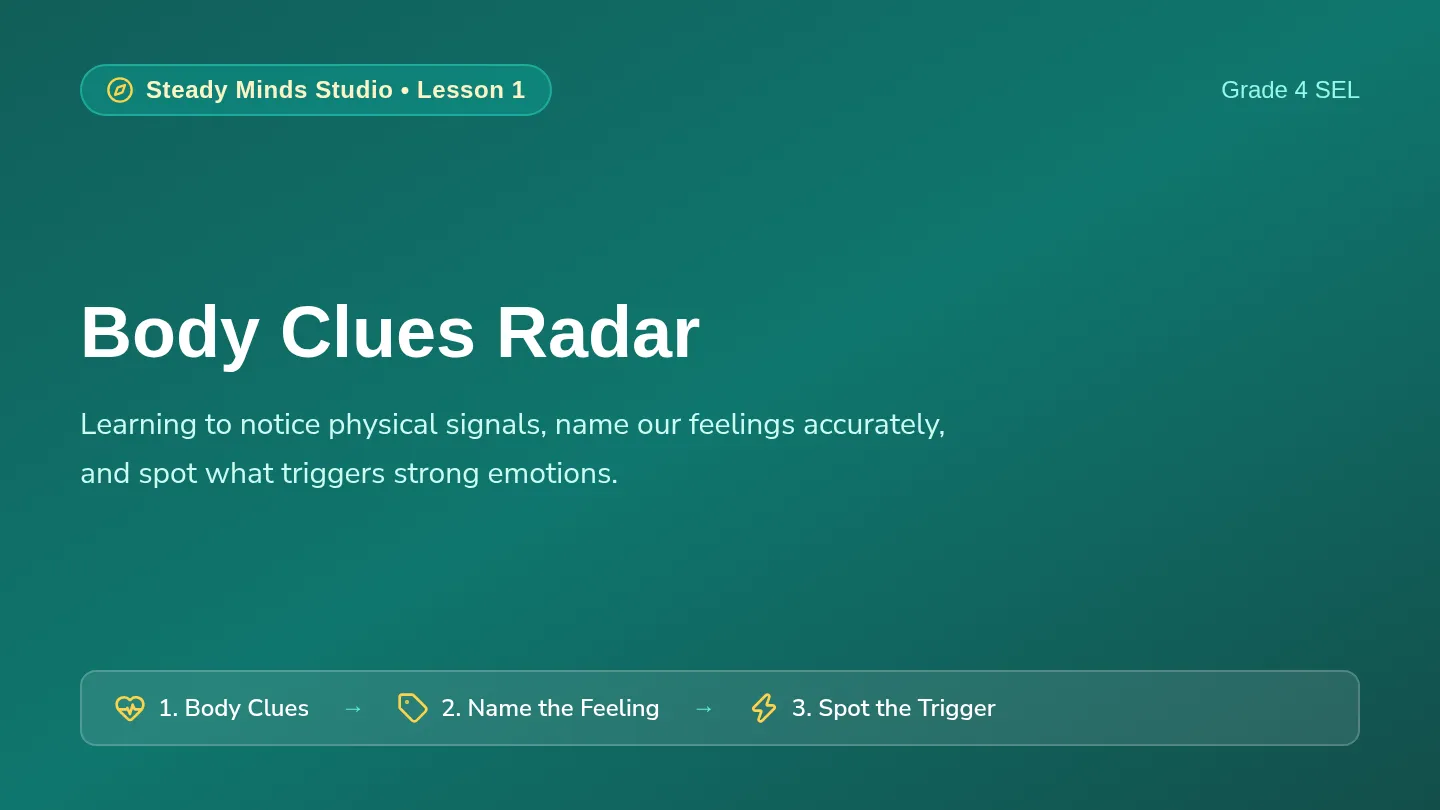
2. Body Signals & Interoception
Lesson 4 • The Zones in Me
Guides students to scan internal physical cues—heart rate, muscle tension, breathing, and stomach sensations—to detect shifts in alertness early.
Student Skill: Noticing body clues before behavior escalates.
3. Triggers & Problem Size
Lessons 7–8 • Triggers & Sizing
Helps students identify personal stressors and sensory triggers that push them out of the Green Zone, while comparing reaction size to problem size.
Student Skill: Recognizing triggers and reaction proportionality.
4. Inner Coach vs. Critic
Lesson 11 • Thinking Strategies
Builds metacognitive awareness by teaching students to spot rigid self-talk (Inner Critic) and reframe it with flexible thoughts (Inner Coach).
Student Skill: Monitoring and reframing internal self-talk.
5. Tracking My Zones Across the Day
Lesson 6 • Me in My Zones & Check-Ins
Uses visual timelines, daily check-ins, and reflection logs so students observe how their Zones shift across times, subjects, and settings—revealing patterns in energy and mood rather than seeing emotions as sudden.
Key Instructional Takeaway
All Zones are normal and expected—self-awareness grows when adults validate every Zone without judgment and prompt students to connect body cues + triggers + thoughts before choosing a tool.