Smart Spender Response Card
Smart Spender Response Card
Financial Education Workshop • Class Comment Drop
Student: _______________
Date: _______________
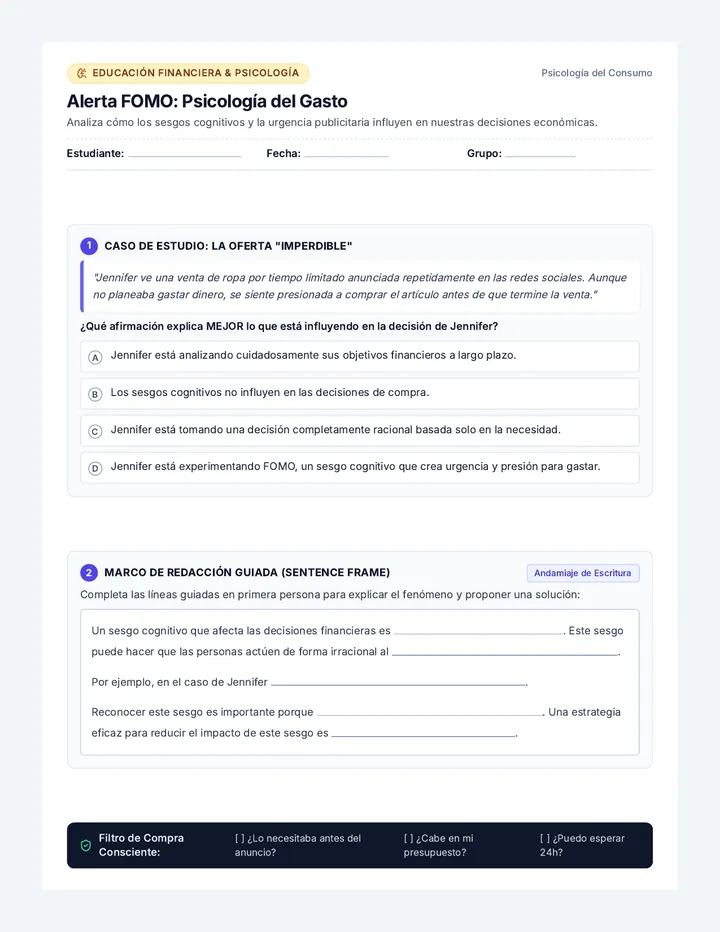
Discussion Prompt & Scenario
Scenario: A student feels strong pressure to buy the newest phone because friends have it, even though their current phone works well.
Prompt: How can cognitive biases like FOMO cause irrational decisions? Why is recognizing them important? Provide one example.
S
Student Discussion Post Ready to Submit
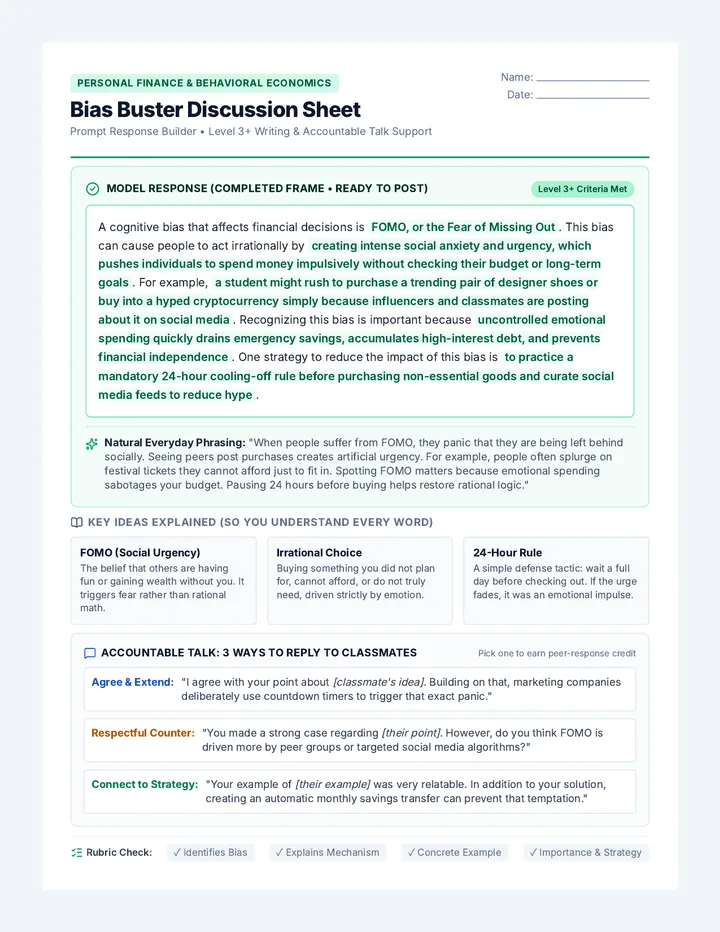
Level 3+ Response
A cognitive bias that affects financial decisions is FOMO, which stands for the fear of missing out. This bias can cause people to act irrationally by making them spend money quickly just to feel included by their friends. For example, a student might buy an expensive new phone with borrowed money even though their old phone works fine, simply because everyone around them has the new model. Recognizing this bias is important because it protects our savings and keeps us from going into stressful debt. One strategy to reduce the impact of this bias is the 24-hour rule, which means waiting a full day before buying something expensive to see if we truly need it.
Sentence Frame Alignment
Frame 1: Identifies the bias: Names FOMO (Fear of Missing Out) clearly and simply.
Frame 2: Explains irrationality: Shows that social pressure leads to rushed, unneeded purchases.
Frame 3: Specific example: Upgrading a working phone solely to match peers.
Frame 4: Why it matters: Protects hard-earned savings and avoids unnecessary debt.
Frame 5: Actionable strategy: Introduces the 24-hour waiting rule before checking out.
Helpful Vocabulary
- Cognitive Bias: A mental shortcut or pattern in our thinking.
- FOMO: Anxiety that other people are enjoying things without you.
- Irrational Decision: A choice driven by emotion rather than logic.
Accountable Talk Starters
Use these stems when replying to a classmate:
“I agree with your point because...”
“Another example of this bias is...”
My Discussion Notes / Custom Response Handwriting space