SEL Spark Topic List
Educator Planning Guide • Whole-Class Lessons
SEL Spark Topic List
Engaging, developmentally tailored Social-Emotional Learning topics for Kindergarten, 2nd Grade, and 4th Grade.
SEL Pillars:
Self-Awareness Self-Management Social Awareness Relationship Skills Decision-Making
Kindergarten: Big Feelings & Little Citizens
Focus: Naming emotions, body awareness, sharing, and classroom belonging (15–20 min)
Grade K
1. My Feelings Weather Report
Self-Awareness
Whole-Class Hook: Connect emotions to weather (sunny = happy, cloudy = worried, stormy = mad). Have students act out each weather pattern with their faces and hands, then point to today’s inner weather.
Circle Prompt: “What does your face or tummy feel like when you have a rainy-day feeling?”
2. The Belly-Breathing Balloon
Self-Management
Whole-Class Hook: Practice “smell the flower, blow out the candle” while holding hands on bellies like inflating a giant balloon. Pair with a freeze-dance game where students calm their bodies when the music stops.
Circle Prompt: “When is a good time during our school day to use balloon breaths?”
3. Whole-Body Listening Detectives
Social Awareness
Whole-Class Hook: Use puppets or role-play to show “listening” vs. “distracted” bodies. Teach the 5 clues: eyes watching, ears listening, voice quiet, body still, and heart caring.
Circle Prompt: “How can you tell when a friend is really listening to your story?”
4. Kindness Bucket Fillers
Relationship Skills
Whole-Class Hook: Place a real bucket in the center of the rug. Read quick classroom scenarios and let students drop a pom-pom in the bucket whenever an action “fills” someone’s heart.
Circle Prompt: “What is one tiny, kind thing you can do for a classmate today?”
5. Share, Trade, or Wait-My-Turn
Decision-Making
Whole-Class Hook: Act out a common toy conflict (two friends want the same red truck). Brainstorm and rehearse three friendly solutions using sentence stems: “Can I have a turn next?”
Circle Prompt: “What helps you stay patient while waiting for a turn?”
2nd Grade: Empathy, Teamwork & Self-Control
Focus: Growth mindset, perspective-taking, conflict repair, and friendship skills (20–25 min)
Grade 2
1. The Power of “Yet” (Brain Stretchers)
Self-Awareness
Whole-Class Hook: Write fixed-mindset statements on the board (“I can’t do this math”) and have the class shout “YET!” while adding a sticky note with the word to transform the sentence.
Circle Prompt: “What is something that felt super hard in 1st grade that you can do easily now?”
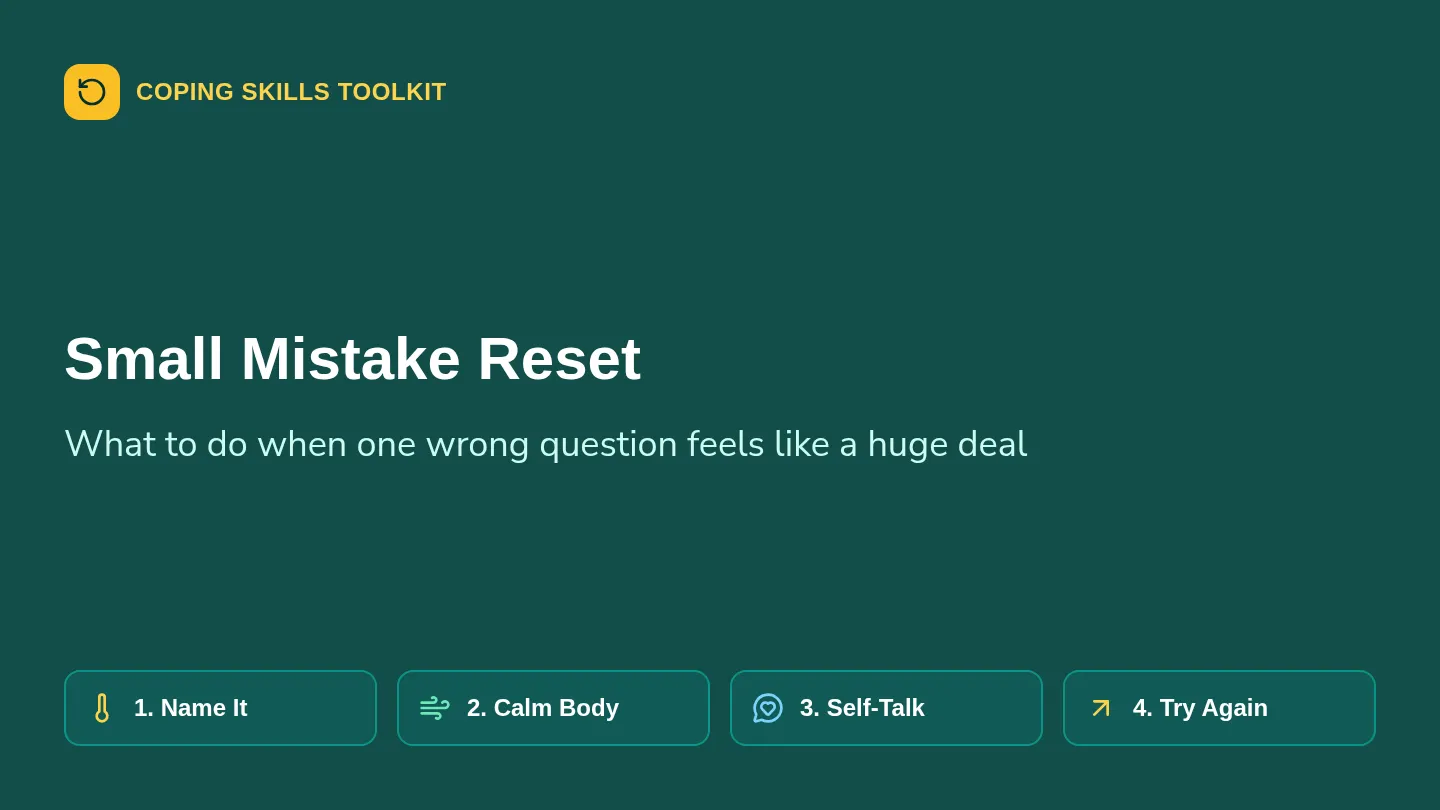
2. Size of the Problem vs. Size of the Reaction
Self-Management
Whole-Class Hook: Sort everyday mishaps (broken pencil, scraped knee, losing a game) into “Glitch,” “Medium Problem,” or “Emergency.” Match each level to an appropriate calm-down or help-seeking response.
Circle Prompt: “Why does matching our reaction to the size of the problem help our whole class?”
3. Walking in Someone Else’s Shoes
Social Awareness
Whole-Class Hook: Show an ambiguous picture (e.g., a kid sitting alone at lunch). Ask the class to guess three different reasons they might feel that way, practicing curiosity before jumping to conclusions.
Circle Prompt: “What can you say or do if you notice a classmate sitting by themselves?”
4. “I-Message” Conflict Builders
Relationship Skills
Whole-Class Hook: Teach the 3-part formula: “I feel ___ when ___ because ___. Next time, please ___.” Have pairs practice turning blaming statements into respectful I-Messages.
Circle Prompt: “Why is it easier to listen when someone uses an I-Message instead of yelling?”
5. Stop, Think, Choose!
Decision-Making
Whole-Class Hook: Use a traffic-light visual (Red = Stop & Breathe, Yellow = Think of 2 Choices, Green = Pick the Safe/Kind Choice) to solve rapid-fire recess dilemmas together.
Circle Prompt: “What is one clue that tells you it’s time to hit the red light and pause?”
Whole-Class Routine Tip: The 3-Step Circle
Keep 2nd-grade lessons predictable: 1) Check-In (thumb-o-meter or 1-word mood), 2) Active Hook (role-play, sort, or story), and 3) Commitment (students whisper one goal to a partner before transitioning).
4th Grade: Identity, Boundaries & Upstanders
Focus: Stress tools, peer pressure, digital citizenship, and inclusive leadership (25–30 min)
Grade 4
1. Strengths, Values & Identity Webs
Self-Awareness
Whole-Class Hook: Create a class “Superpower Wall” where students identify non-academic strengths (humor, patience, creativity, fairness) and notice how diverse strengths make a stronger team.
Discussion Prompt: “Which of your personal strengths helps you most when group work gets tricky?”
2. Stress Signals & Reset Toolkits
Self-Management
Whole-Class Hook: Map out how stress shows up (racing heart, tight shoulders, negative self-talk) and test 3 quick resets together: box breathing, 5-4-3-2-1 grounding, and positive reframing.
Discussion Prompt: “Which reset tool feels realistic to use right before a tough test or presentation?”
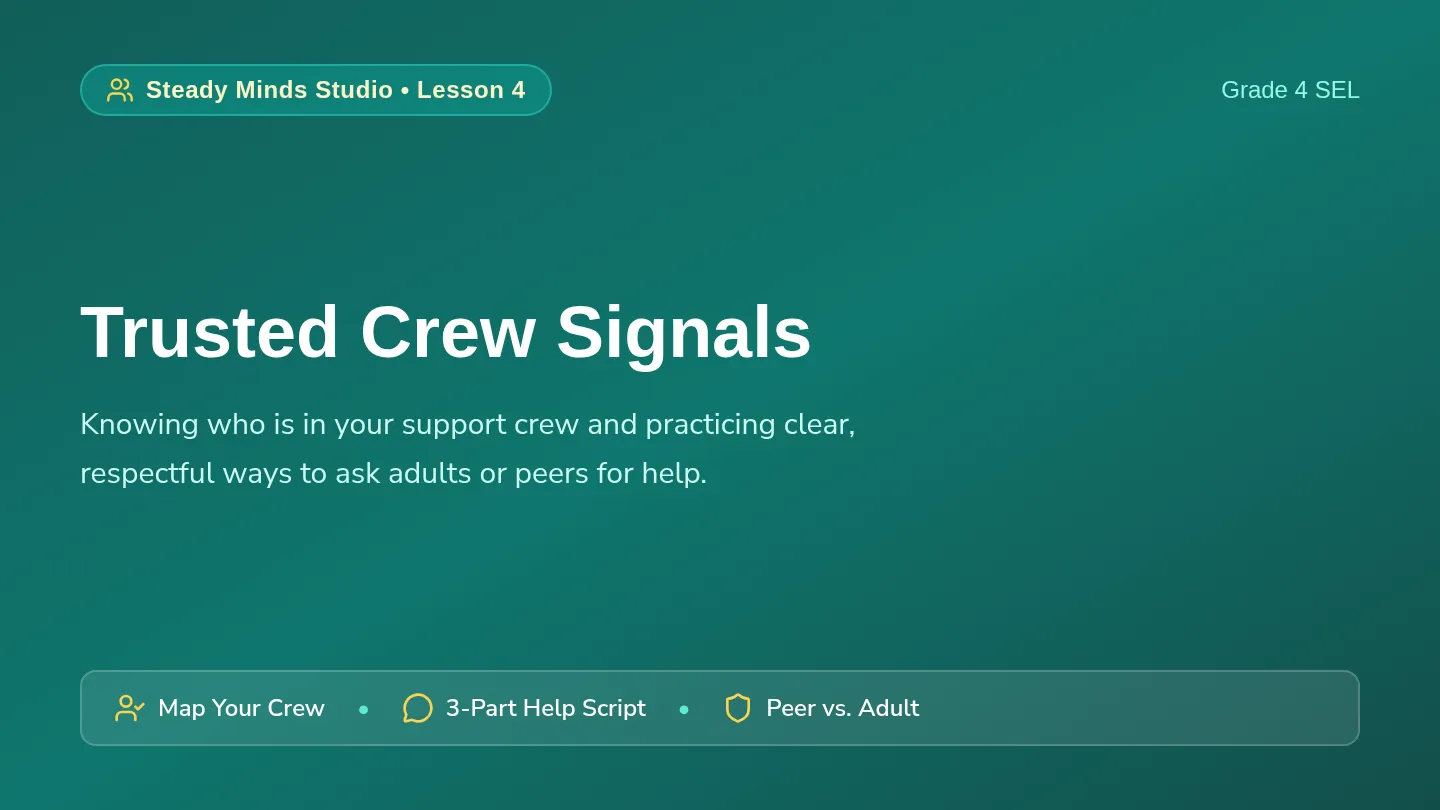
3. Bystander vs. Upstander Moves
Social Awareness
Whole-Class Hook: Analyze realistic 4th-grade teasing or exclusion scenarios in small groups. Practice 4 safe upstander strategies: distract, invite in, speak up calmly, or get an adult.
Discussion Prompt: “Why is it sometimes hard to be an upstander, and what makes it easier?”
4. Setting & Respecting Healthy Boundaries
Relationship Skills
Whole-Class Hook: Role-play how to say “no” or ask for space without hurting feelings (“I like playing with you, but I need quiet reading time right now”) and how to accept a friend’s boundary gracefully.
Discussion Prompt: “How do clear boundaries actually make friendships stronger and safer?”
5. Digital Footprints & Group-Chat Kindness
Decision-Making
Whole-Class Hook: Compare how a message sounds in person vs. on a screen without tone or facial expressions. Apply the THINK filter (True, Helpful, Inspiring, Necessary, Kind) to sample chat messages.
Discussion Prompt: “What should you do if a group chat or game lobby starts feeling unkind?”
Across All Grades: Make It Stick
Use consistent shared language all week (e.g., “balloon breath,” “glitch vs. big problem,” or “upstander move”) during morning meetings and transitions so SEL skills transfer into real classroom moments.