Behind the Behavior Lesson Plan
Behind the Behavior
Teacher Lesson Plan
Time: 30 Minutes
Audience: Grades 6-8
Objective
Students will be able to identify common reasons why individuals "act out" and begin to understand the connection between emotions and behavior. Students will also be introduced to initial strategies for recognizing triggers and practicing self-regulation.
Why This Matters
"Understanding why we act the way we do is crucial for personal growth and developing healthy relationships. This lesson provides students with foundational knowledge about emotional intelligence and equips them with tools to manage their reactions constructively."
Prep & Materials
- Review the Presentation Slides
- Set up projector/Smartboard
- Whiteboard markers ready
- Reflection Sheets (optional)
Instructional Steps
01 5 min
Introduction: Defining "Acting Out"
- Ask students what comes to mind when they hear the phrase "acting out."
- Use Slides 1 & 2 to guide the conversation.
- Encourage examples (no names!) or general observations.
- Clarify: "Acting out" isn't always negative—it's observable behavior that signals an inner feeling.
02 10 min
Exploring the "Why": Video Analysis
- Introduce the concept: Behaviors are signals.
- Play the video on Slide 3 (reasons for emotional outbursts).
- Use Slide 4 for a post-video debrief.
- Ask: "What emotions led to these behaviors?" "What did the characters actually need?"
03 10 min
Identifying Triggers and Signals
- Use Slide 5 to define Triggers (external causes) and Signals (internal body physical sensations).
- Ask students to think about situations that make them feel like "acting out."
- Brainstorm common class triggers and physical signals on the whiteboard.
- Summarize using Slide 6.
04 5 min
Wrap-Up: Emotional Detectives
- Conclude with Slide 7 on self-awareness.
- Introduce Self-Regulation: learning to manage our feelings and reactions.
- Set the 24-hour challenge: observe your own feelings like a "detective."
- Distribute the Reflection Sheet for a quick cool-down.
Behind the Behavior Slides
Behind the Behavior
Understanding why we "act out" and how to become an emotional detective.
Question 1
What does "acting out" mean to you?
Question 2
When have you seen someone "act out"?
Question 3
Is it always a negative thing?
What Does It Look Like?
"Acting out" isn't just one thing. It's an outward signal of an inward feeling.
- Disruptive behavior in class
- Talking back or being loud
- Withdrawal or total silence
- Not following instructions
Think: What else might this look like in your world?
Behind the Behavior: The "Why"
Behaviors are signals. Let's watch to explore the reasons behind them.
Embedded media
What Did We Learn?
"Based on the video and your experiences, what are some common reasons people 'act out'?"
Key Observations:
- What emotions did you see?
- What do you think the characters needed?
- How does this relate to school?
Frustration or Anger
Sadness or Hurt
Stress or Anxiety
Seeking Attention
Feeling Misunderstood
Triggers
The Spark: Situations, words, or feelings that set off a strong reaction.
What makes YOU feel like "acting out"?
Signals
The Alarm: How your body tells you that you're getting upset.
- 🔥 Heart racing
- ✊ Clenched fists
- 🌡️ Feeling hot
- 🤢 Stomach ache
Class Brainstorm
Common Triggers
(Note ideas on whiteboard)
Body Signals
(Note ideas on whiteboard)
The Power of Self-Awareness
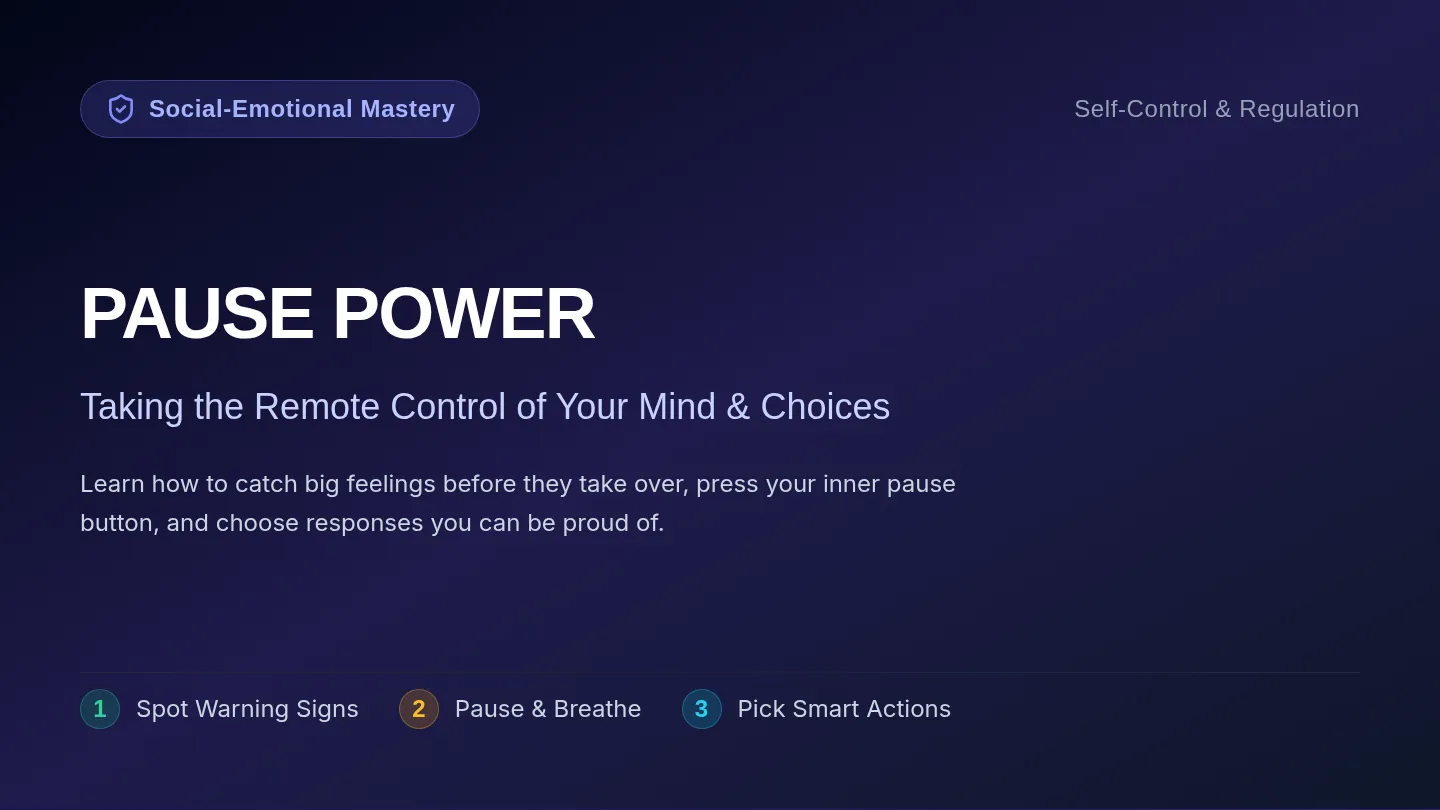
When we understand WHY we feel and act the way we do, we can start to choose HOW we respond.
Self-Regulation
Learning to manage our emotions and behaviors instead of letting them control us.
Challenge!
Over the next 24 hours, be an Emotional Detective. Notice one trigger and one body signal.
Behind the Behavior Reflection Sheet
Emotional Detective Reflection
Case No. SEL-01
Agent Name
Date
Take a moment to look back at today's lesson. Use this page to reflect on your own "behind the scenes" emotions and behaviors.
01 One new thing I learned today about why people (or I) might "act out" is...
02 One feeling that sometimes makes me want to "act out" (like frustration, stress, or hurt) is...
03 One way my body tells me I'm starting to feel that emotion (my "Body Signal") is...
Case Closed
Investigation in Progress