Launch Pad Slides Senior Transition Module
THE LAUNCH
PAD
Building your resilience blueprint for life after graduation.
The Big Shift
Graduation isn't just a ceremony; it's a structural change to your daily environment.
New Social Dynamics
Increased Autonomy
Academic/Work Pressure
"Anxiety is the dizziness of freedom."
— Søren Kierkegaard
Normalizing the Noise
73%
of college students report feeling "overwhelming anxiety" at some point in the year.
It's Biological
Your brain craves predictability. Change signals "threat" to the nervous system.
The "Highlight Reel"
Social media makes it look like everyone else is thriving instantly. They aren't.
Feeling unsettled isn't a sign of failure; it's a sign of growth.
Your Stress Map
Where does the "Structural Stress" show up for you?
01
The Calendar
Managing a new schedule without high school's rigidity.
02
The Crowd
Being in spaces where you don't know anyone yet.
03
The Stakes
Making "adult" decisions (money, health, career).
04
The Silences
Solitude or the lack of familiar support networks nearby.
THE TOOLBOX
Resilience isn't "toughness." It's having the right tools for the job.
01. Maintenance
These keep the system running. Without them, other tools fail.
Sleep Hygiene (7-9 hours)
Consistent Fueling (Meals)
Movement (Any form)
HALT Check
Never make a big decision or spiral when you are:
Hungry
Angry
Lonely
Tired
02. Connections
The "Safe Harbor"
People you can call who knew you "before."
Action: Schedule a weekly check-in with one hometown friend or family member for the first month.
The "New Crew"
Finding community in your new environment.
Tip: Join one low-stakes club (hiking, gaming, volunteer) where participation is key, not performance.
03. Perspective
Reframing
Switching "I have to..." to "I get to..." or "I'm learning to..."
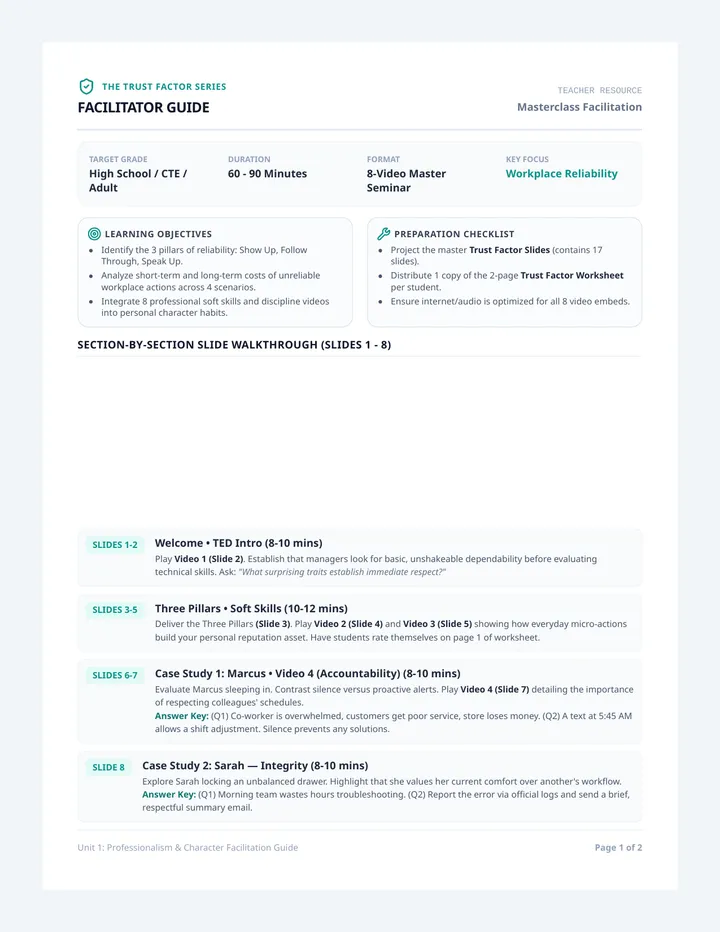
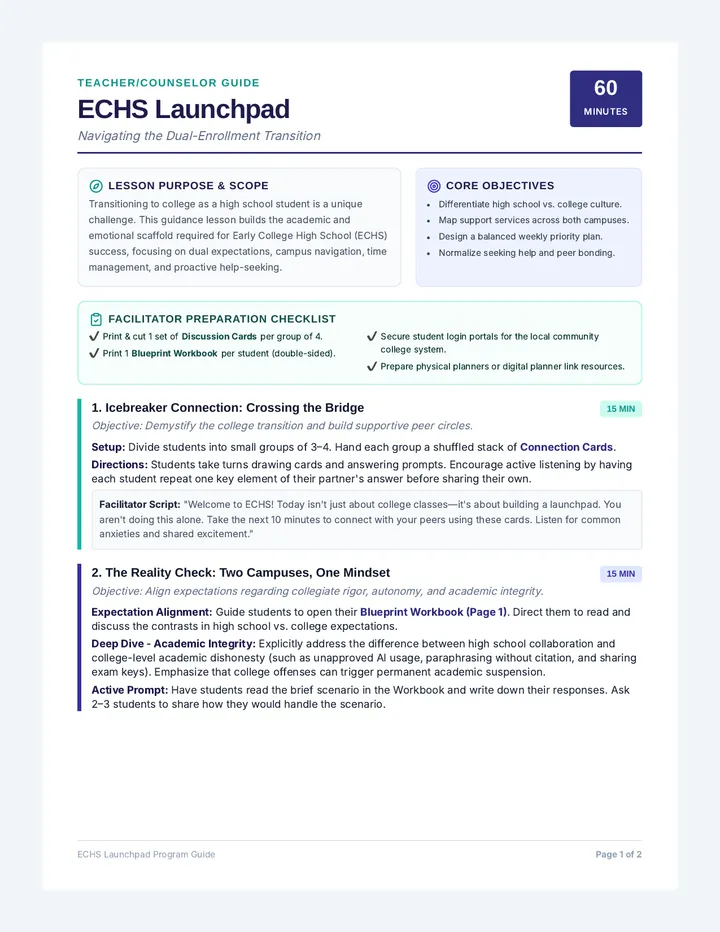
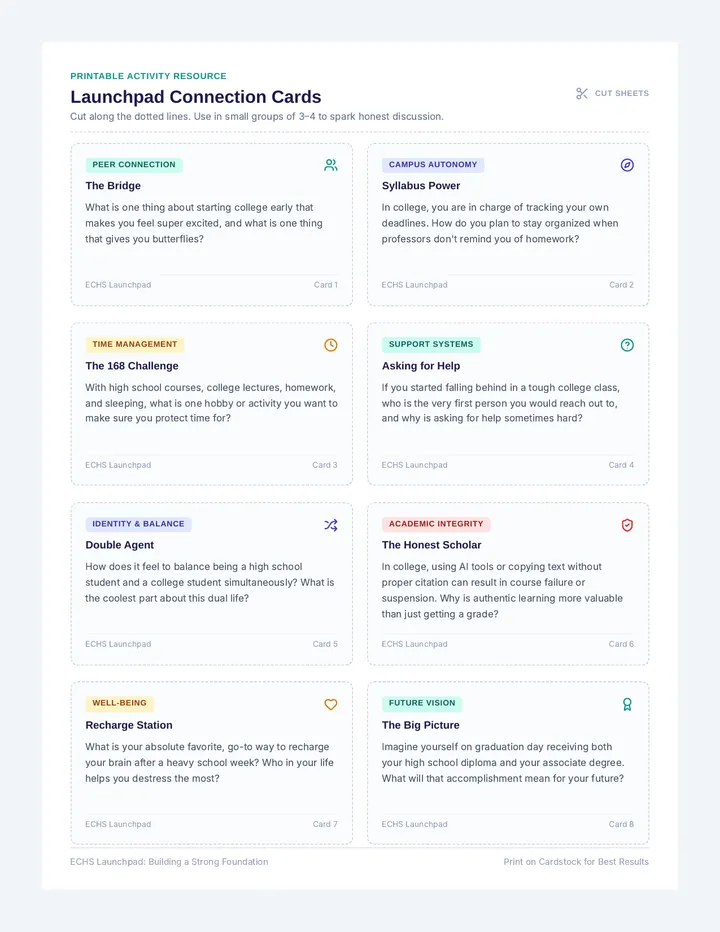
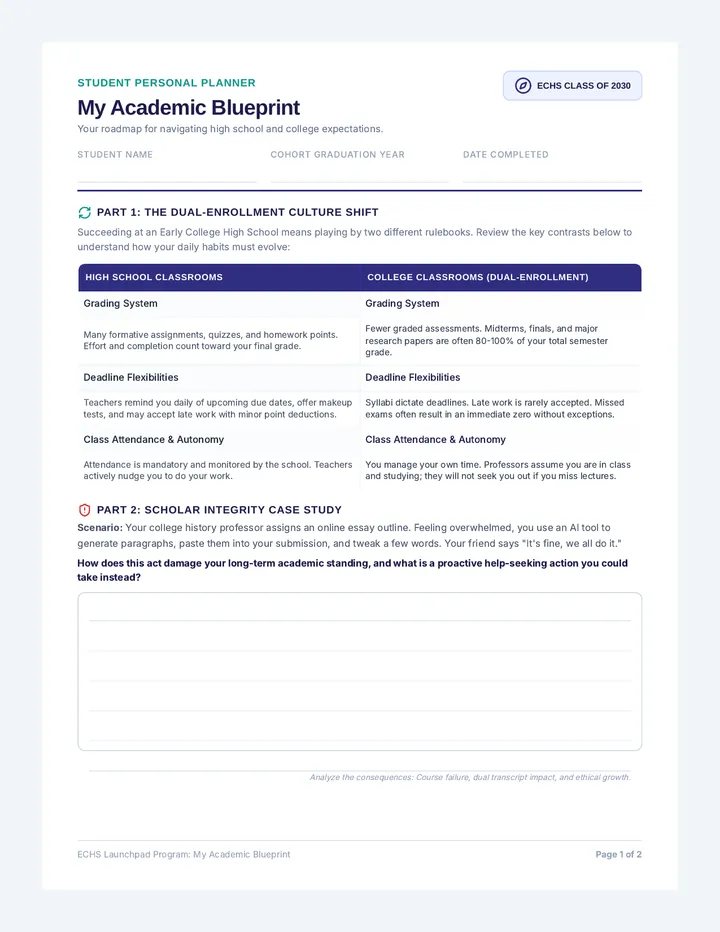
The 10-10-10 Rule
Will this matter in 10 minutes? 10 months? 10 years?
Box Breathing
Inhale (4), Hold (4), Exhale (4), Hold (4). Resetting the nervous system.
Blueprint Reflection
Open your Inner Compass Journal.
"Which one of these areas feels the most unstable right now?"
Your First 30 Days
Week 1: Observe
Don't try to solve everything. Just notice what feels hard.
Week 2: Reach Out
Contact one person from your "Safe Harbor" group.
Week 3: Tool Check
Use one "Maintenance" tool consistently (e.g., set a bedtime).
Week 4: Evaluate
What worked? What needs a different tool?
"You cannot control the waves, but you can learn to surf."
— Jon Kabat-Zinn
Inner Compass Journal Confidential Log
Inner
Compass
Transition Resilience Module
Student Journal v.1.0
Name
Date
Navigating the Gap
The time between high school graduation and the next step is often called "the liminal space." It's a threshold—you've left one world but haven't fully entered the next. This journal is your space to map out that territory.
Resilience Training
Post-Grad Preparedness
01
The Stress Map
In the slides, we discussed "Structural Stress." Below, identify three specific situations in your upcoming year (college, trade school, work, or gap year) that feel like potential "triggers" for anxiety.
Potential Trigger #1:
How it feels in my body:
A "Tool" I might use:
Potential Trigger #2:
How it feels in my body:
A "Tool" I might use:
Potential Trigger #3:
How it feels in my body:
A "Tool" I might use:
02
The Foundation
"Resilience is not the absence of struggle. It is the memory of having survived it."
Historical Proof:
Describe a time in the last 4 years when you faced a major change or setback. How did you handle the first few weeks? What did you learn about yourself?
Unsung Strengths:
What is a quality you have that people might not see immediately, but helps you survive tough times?
The "Why":
When things get hard next year, what is the core reason or goal that will keep you going?
03
The Time Capsule
Write a short note to yourself for October 15th of next year. By then, the "honeymoon phase" of your new life might be over. What do you want that version of yourself to remember?
Module Complete
Stay Resilient.
Resilience Blueprint Activity The Resilience Blueprint
Active Transition Toolkit
Class of 20_____
Survival Component 04
Subject Name:
01. Maintenance
Daily habits that keep your nervous system stable.
Sleep Anchor (Time to be in bed):
Movement Method (Gym, walk, sport):
One "Non-Negotiable" Daily Habit:
02. Connections
People who provide safety and perspective.
The "911" Contact (Hometown):
The Peer Contact (New Place):
Scheduled Check-in Day/Time:
03. Perspective
Mental shifts for when the "dizziness" sets in.
Go-To Grounding Phrase:
Mental Exit Route (Safe place):
Reframing Quote/Thought:
04. Red Zone
Immediate action for total overwhelm.
Perform Box Breathing (4-4-4-4)
Leave the room / situation immediately
Emergency Call / Text To:
Print this sheet and post it on your door or desk.
Reference during Weeks 1-4 of transition.
Class of 20_____ Resilience Blueprint
Transition Toolbox Lesson Plan Lesson Plan
The Transition Toolbox: Resilience for Post-Grad Life
Target Audience
12th Grade Students
Duration
60 - 90 Minutes
Subject Area
Social-Emotional Learning
Learning Objectives
Identify specific personal stress triggers related to the post-graduation transition.
Analyze past experiences of resilience to build self-efficacy for future challenges.
Develop a personalized "Resilience Blueprint" containing maintenance, connection, and perspective tools.
Normalize the experience of transition anxiety through shared group discussion.
Materials Needed
Launch Pad Slides (Digital presentation)
Inner Compass Journal (One per student)
Resilience Blueprint Activity (One per student)
Facilitator Script (For the educator)
Writing utensils and a quiet environment for reflection.
© 2026 Resilience Blueprint Series
Page 1 of 3
Procedure Overview
00-10 min
The Hook & Normalization
Introduce the concept of "Structural Stress." Use Slides 1-3 to normalize the anxiety of the transition. Students share initial thoughts.
10-25 min
Identifying Triggers
Interactive slide discussion on common triggers. Students complete Page 2 of the Inner Compass Journal individually.
25-45 min
The Toolbox Concept
Present Maintenance, Connection, and Perspective strategies (Slides 5-8). Group brainstorm for local/specific resources.
45-75 min
The Build (Activity)
Students complete the physical Resilience Blueprint activity sheet. Focus on concrete, actionable details for the first 30 days.
75-90 min
Closing Circle & Note to Self
Students write their 'Time Capsule' letter in the journal. Small group sharing of one committed strategy.
© 2026 Resilience Blueprint Series
Page 2 of 3
Implementation & Differentiation
Psychological Safety
Ensure students know they only have to share what they are comfortable with. If a student reveals significant distress or trauma beyond typical transition anxiety, follow school mental health protocols immediately.
Key Discussion Prompts
Transition Talks Script Facilitator Script
Transition Resilience Module
Facilitator Note:
This script is a guide. Use your own voice, but ensure you maintain a tone that is validating, calm, and proactive . The goal is to move students from "anxious about the unknown" to "equipped for the challenge."
Slide 1-2
The Hook & The Shift
"Welcome, everyone. We’re standing at the edge of a massive structural change. In a few weeks, the 'grid' of high school—the schedules, the social circles—will dissolve. It’s normal to feel excited. It’s also completely normal to feel a bit dizzy."
Key Point:
Emphasize that transition anxiety is a biological response to change, not a personal flaw. Freedom actually causes stress because it requires more decision-making.
Slide 3-4
Normalization & Triggers
"Look at these stats. If you're feeling unsettled next year, you're in the majority. Let's look at Page 2 of your journals. What are the 'triggers' waiting for you? Is it the silence of a dorm room? Is it the pressure of a new job?"
Action:
Give students 5 quiet minutes to work on Page 2 of the Inner Compass Journal . Walk around and offer support for those who seem stuck or overwhelmed.
Slide 5-8
The Toolbox Categories
"Resilience isn't a superpower. It's a set of tools. We break them into three categories: Maintenance, Connections, and Perspective. If one tool breaks, you reach for another."
Discussion Prompt:
"Which of these feels easiest for you to manage right now? Which one do you usually forget when you're stressed?"
Slide 9-10
The Build & Timeline
"Now, we're going to build your actual blueprint. Take the 'Resilience Blueprint' sheet. This is your reference guide for your first 30 days. Be specific. Don't just say 'Call friends.' Say 'Call Sarah on Tuesday nights.'"
Activity Guidance:
Ensure students are being concrete . Vague goals are harder to stick to when stressed. The "Red Zone" section is critical—it’s their emergency break.
Slide 11
The Close
"Finally, flip to the last page of your journal. Write to yourself. Write to the person you'll be in October. You’re going to be okay, but it’s helpful to hear that from the 'you' who is currently preparing."
Closing Circle:
End by asking students to share one 'Maintenance' tool they are committing to. End with a positive, empowering message.
Troubleshooting Tips
If a student says 'I don't have triggers': Ask them what they'll miss most about their current routine. The loss of that comfort is usually a trigger.